window.__IS_SSR__=true
window.__INITIAL_STATE__={
"attachmentsReducer": {
"audio_0": {
"type": "attachments",
"id": "audio_0",
"imgSizes": {
"kqedFullSize": {
"file": "https://ww2.kqed.org/news/wp-content/themes/KQED-unified/img/audio_bgs/background0.jpg"
}
}
},
"audio_1": {
"type": "attachments",
"id": "audio_1",
"imgSizes": {
"kqedFullSize": {
"file": "https://ww2.kqed.org/news/wp-content/themes/KQED-unified/img/audio_bgs/background1.jpg"
}
}
},
"audio_2": {
"type": "attachments",
"id": "audio_2",
"imgSizes": {
"kqedFullSize": {
"file": "https://ww2.kqed.org/news/wp-content/themes/KQED-unified/img/audio_bgs/background2.jpg"
}
}
},
"audio_3": {
"type": "attachments",
"id": "audio_3",
"imgSizes": {
"kqedFullSize": {
"file": "https://ww2.kqed.org/news/wp-content/themes/KQED-unified/img/audio_bgs/background3.jpg"
}
}
},
"audio_4": {
"type": "attachments",
"id": "audio_4",
"imgSizes": {
"kqedFullSize": {
"file": "https://ww2.kqed.org/news/wp-content/themes/KQED-unified/img/audio_bgs/background4.jpg"
}
}
},
"placeholder": {
"type": "attachments",
"id": "placeholder",
"imgSizes": {
"thumbnail": {
"file": "https://cdn.kqed.org/wp-content/uploads/2024/12/KQED-Default-Image-816638274-2000x1333-1-160x107.jpg",
"width": 160,
"height": 107,
"mimeType": "image/jpeg"
},
"medium": {
"file": "https://cdn.kqed.org/wp-content/uploads/2024/12/KQED-Default-Image-816638274-2000x1333-1-800x533.jpg",
"width": 800,
"height": 533,
"mimeType": "image/jpeg"
},
"medium_large": {
"file": "https://cdn.kqed.org/wp-content/uploads/2024/12/KQED-Default-Image-816638274-2000x1333-1-768x512.jpg",
"width": 768,
"height": 512,
"mimeType": "image/jpeg"
},
"large": {
"file": "https://cdn.kqed.org/wp-content/uploads/2024/12/KQED-Default-Image-816638274-2000x1333-1-1020x680.jpg",
"width": 1020,
"height": 680,
"mimeType": "image/jpeg"
},
"1536x1536": {
"file": "https://cdn.kqed.org/wp-content/uploads/2024/12/KQED-Default-Image-816638274-2000x1333-1-1536x1024.jpg",
"width": 1536,
"height": 1024,
"mimeType": "image/jpeg"
},
"fd-lrg": {
"file": "https://cdn.kqed.org/wp-content/uploads/2024/12/KQED-Default-Image-816638274-2000x1333-1-1536x1024.jpg",
"width": 1536,
"height": 1024,
"mimeType": "image/jpeg"
},
"fd-med": {
"file": "https://cdn.kqed.org/wp-content/uploads/2024/12/KQED-Default-Image-816638274-2000x1333-1-1020x680.jpg",
"width": 1020,
"height": 680,
"mimeType": "image/jpeg"
},
"fd-sm": {
"file": "https://cdn.kqed.org/wp-content/uploads/2024/12/KQED-Default-Image-816638274-2000x1333-1-800x533.jpg",
"width": 800,
"height": 533,
"mimeType": "image/jpeg"
},
"post-thumbnail": {
"file": "https://cdn.kqed.org/wp-content/uploads/2024/12/KQED-Default-Image-816638274-2000x1333-1-672x372.jpg",
"width": 672,
"height": 372,
"mimeType": "image/jpeg"
},
"twentyfourteen-full-width": {
"file": "https://cdn.kqed.org/wp-content/uploads/2024/12/KQED-Default-Image-816638274-2000x1333-1-1038x576.jpg",
"width": 1038,
"height": 576,
"mimeType": "image/jpeg"
},
"xxsmall": {
"file": "https://cdn.kqed.org/wp-content/uploads/2024/12/KQED-Default-Image-816638274-2000x1333-1-160x107.jpg",
"width": 160,
"height": 107,
"mimeType": "image/jpeg"
},
"xsmall": {
"file": "https://cdn.kqed.org/wp-content/uploads/2024/12/KQED-Default-Image-816638274-2000x1333-1-672x372.jpg",
"width": 672,
"height": 372,
"mimeType": "image/jpeg"
},
"small": {
"file": "https://cdn.kqed.org/wp-content/uploads/2024/12/KQED-Default-Image-816638274-2000x1333-1-672x372.jpg",
"width": 672,
"height": 372,
"mimeType": "image/jpeg"
},
"xlarge": {
"file": "https://cdn.kqed.org/wp-content/uploads/2024/12/KQED-Default-Image-816638274-2000x1333-1-1020x680.jpg",
"width": 1020,
"height": 680,
"mimeType": "image/jpeg"
},
"full-width": {
"file": "https://cdn.kqed.org/wp-content/uploads/2024/12/KQED-Default-Image-816638274-2000x1333-1-1920x1280.jpg",
"width": 1920,
"height": 1280,
"mimeType": "image/jpeg"
},
"guest-author-32": {
"file": "https://cdn.kqed.org/wp-content/uploads/2025/01/KQED-Default-Image-816638274-1333x1333-1-160x160.jpg",
"width": 32,
"height": 32,
"mimeType": "image/jpeg"
},
"guest-author-50": {
"file": "https://cdn.kqed.org/wp-content/uploads/2025/01/KQED-Default-Image-816638274-1333x1333-1-160x160.jpg",
"width": 50,
"height": 50,
"mimeType": "image/jpeg"
},
"guest-author-64": {
"file": "https://cdn.kqed.org/wp-content/uploads/2025/01/KQED-Default-Image-816638274-1333x1333-1-160x160.jpg",
"width": 64,
"height": 64,
"mimeType": "image/jpeg"
},
"guest-author-96": {
"file": "https://cdn.kqed.org/wp-content/uploads/2025/01/KQED-Default-Image-816638274-1333x1333-1-160x160.jpg",
"width": 96,
"height": 96,
"mimeType": "image/jpeg"
},
"guest-author-128": {
"file": "https://cdn.kqed.org/wp-content/uploads/2025/01/KQED-Default-Image-816638274-1333x1333-1-160x160.jpg",
"width": 128,
"height": 128,
"mimeType": "image/jpeg"
},
"detail": {
"file": "https://cdn.kqed.org/wp-content/uploads/2025/01/KQED-Default-Image-816638274-1333x1333-1-160x160.jpg",
"width": 160,
"height": 160,
"mimeType": "image/jpeg"
},
"kqedFullSize": {
"file": "https://cdn.kqed.org/wp-content/uploads/2024/12/KQED-Default-Image-816638274-2000x1333-1.jpg",
"width": 2000,
"height": 1333
}
}
},
"mindshift_55354": {
"type": "attachments",
"id": "mindshift_55354",
"meta": {
"index": "attachments_1716263798",
"site": "mindshift",
"id": "55354",
"found": true
},
"parent": 55327,
"imgSizes": {
"twentyfourteen-full-width": {
"file": "https://ww2.kqed.org/app/uploads/sites/23/2020/02/pbl-math-1038x576.jpg",
"width": 1038,
"mimeType": "image/jpeg",
"height": 576
},
"thumbnail": {
"file": "https://ww2.kqed.org/app/uploads/sites/23/2020/02/pbl-math-160x90.jpg",
"width": 160,
"mimeType": "image/jpeg",
"height": 90
},
"post-thumbnail": {
"file": "https://ww2.kqed.org/app/uploads/sites/23/2020/02/pbl-math-672x372.jpg",
"width": 672,
"mimeType": "image/jpeg",
"height": 372
},
"kqedFullSize": {
"file": "https://ww2.kqed.org/app/uploads/sites/23/2020/02/pbl-math.jpg",
"width": 1920,
"height": 1080
},
"large": {
"file": "https://ww2.kqed.org/app/uploads/sites/23/2020/02/pbl-math-1020x574.jpg",
"width": 1020,
"mimeType": "image/jpeg",
"height": 574
},
"full-width": {
"file": "https://ww2.kqed.org/app/uploads/sites/23/2020/02/pbl-math-1920x1080.jpg",
"width": 1920,
"mimeType": "image/jpeg",
"height": 1080
},
"medium": {
"file": "https://ww2.kqed.org/app/uploads/sites/23/2020/02/pbl-math-800x450.jpg",
"width": 800,
"mimeType": "image/jpeg",
"height": 450
},
"medium_large": {
"file": "https://ww2.kqed.org/app/uploads/sites/23/2020/02/pbl-math-768x432.jpg",
"width": 768,
"mimeType": "image/jpeg",
"height": 432
}
},
"publishDate": 1582078959,
"modified": 1582079282,
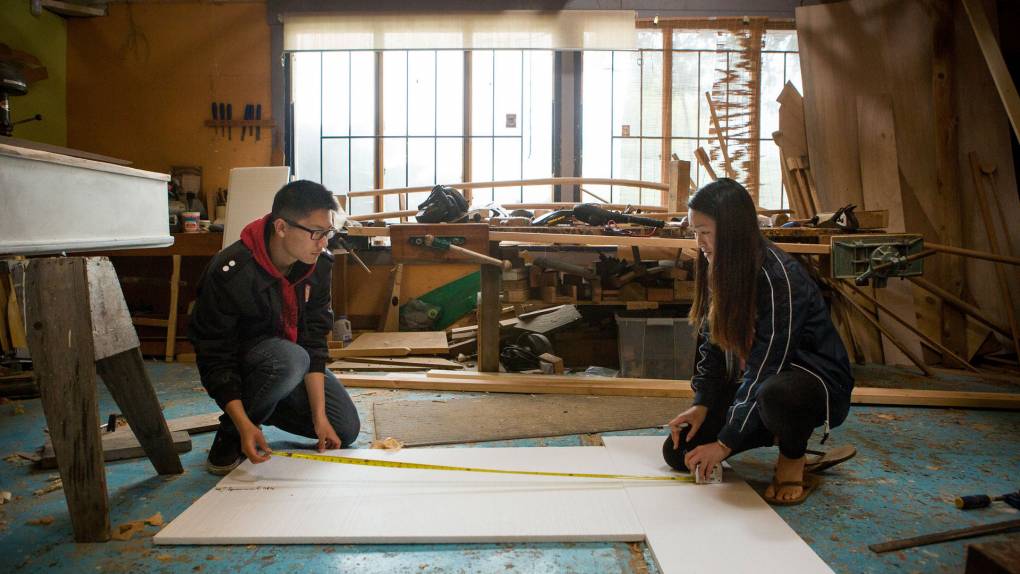
"caption": "Students measure pieces of Styrofoam to fit a boat they are building.",
"description": "Students measure pieces of Styrofoam to fit a boat they are building.",
"title": "pbl-math",
"credit": "\u003ca href=\"https://www.flickr.com/photos/all4ed/36106846690/\">Courtesy of Allison Shelley/The Verbatim Agency for American Education: Images of Teachers and Students in Action\u003c/a>",
"status": "inherit",
"isLoading": false,
"fetchFailed": false
},
"mindshift_55363": {
"type": "attachments",
"id": "mindshift_55363",
"meta": {
"index": "attachments_1716263798",
"site": "mindshift",
"id": "55363",
"found": true
},
"parent": 55329,
"imgSizes": {
"twentyfourteen-full-width": {
"file": "https://ww2.kqed.org/app/uploads/sites/23/2020/02/inclusion-math-tiles-1038x576.jpg",
"width": 1038,
"mimeType": "image/jpeg",
"height": 576
},
"thumbnail": {
"file": "https://ww2.kqed.org/app/uploads/sites/23/2020/02/inclusion-math-tiles-160x90.jpg",
"width": 160,
"mimeType": "image/jpeg",
"height": 90
},
"post-thumbnail": {
"file": "https://ww2.kqed.org/app/uploads/sites/23/2020/02/inclusion-math-tiles-672x372.jpg",
"width": 672,
"mimeType": "image/jpeg",
"height": 372
},
"kqedFullSize": {
"file": "https://ww2.kqed.org/app/uploads/sites/23/2020/02/inclusion-math-tiles.jpg",
"width": 2048,
"height": 1152
},
"large": {
"file": "https://ww2.kqed.org/app/uploads/sites/23/2020/02/inclusion-math-tiles-1020x574.jpg",
"width": 1020,
"mimeType": "image/jpeg",
"height": 574
},
"full-width": {
"file": "https://ww2.kqed.org/app/uploads/sites/23/2020/02/inclusion-math-tiles-1920x1080.jpg",
"width": 1920,
"mimeType": "image/jpeg",
"height": 1080
},
"medium": {
"file": "https://ww2.kqed.org/app/uploads/sites/23/2020/02/inclusion-math-tiles-800x450.jpg",
"width": 800,
"mimeType": "image/jpeg",
"height": 450
},
"medium_large": {
"file": "https://ww2.kqed.org/app/uploads/sites/23/2020/02/inclusion-math-tiles-768x432.jpg",
"width": 768,
"mimeType": "image/jpeg",
"height": 432
}
},
"publishDate": 1582155040,
"modified": 1582155132,
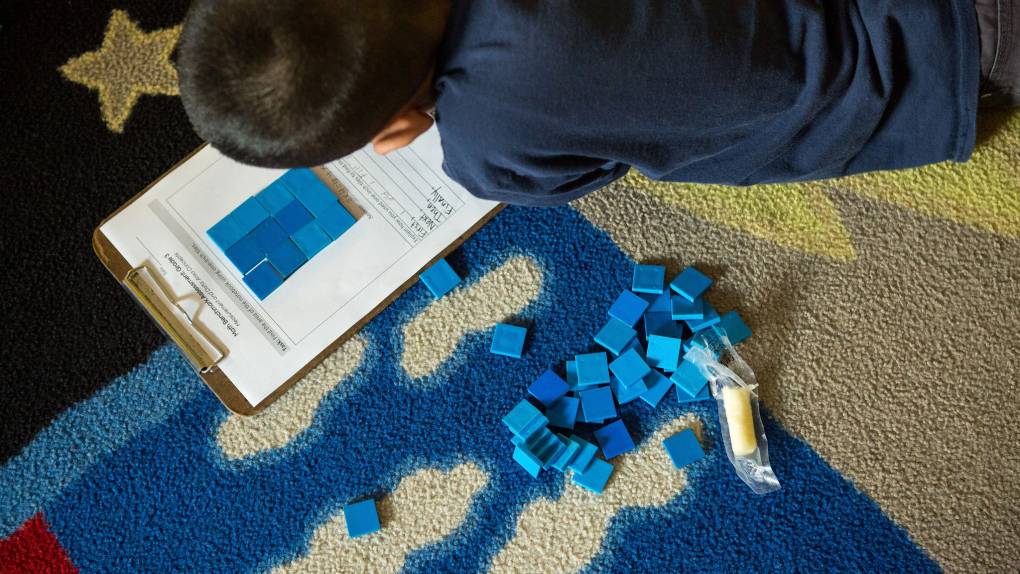
"caption": "Close-up of student working on assignment with tiles.",
"description": "Close-up of student working on assignment with tiles.",
"title": "inclusion-math-tiles",
"credit": "\u003ca href=\"https://www.flickr.com/photos/all4ed/35667750334/in/album-72157687475899455/\">Courtesy of Allison Shelley/The Verbatim Agency for American Education: Images of Teachers and Students in Action\u003c/a>",
"status": "inherit",
"isLoading": false,
"fetchFailed": false
},
"mindshift_55322": {
"type": "attachments",
"id": "mindshift_55322",
"meta": {
"index": "attachments_1716263798",
"site": "mindshift",
"id": "55322",
"found": true
},
"parent": 55318,
"imgSizes": {
"twentyfourteen-full-width": {
"file": "https://ww2.kqed.org/app/uploads/sites/23/2020/02/iStock-1163192821-1038x576.jpg",
"width": 1038,
"mimeType": "image/jpeg",
"height": 576
},
"thumbnail": {
"file": "https://ww2.kqed.org/app/uploads/sites/23/2020/02/iStock-1163192821-160x107.jpg",
"width": 160,
"mimeType": "image/jpeg",
"height": 107
},
"post-thumbnail": {
"file": "https://ww2.kqed.org/app/uploads/sites/23/2020/02/iStock-1163192821-672x372.jpg",
"width": 672,
"mimeType": "image/jpeg",
"height": 372
},
"kqedFullSize": {
"file": "https://ww2.kqed.org/app/uploads/sites/23/2020/02/iStock-1163192821-e1581666652569.jpg",
"width": 1920,
"height": 1280
},
"large": {
"file": "https://ww2.kqed.org/app/uploads/sites/23/2020/02/iStock-1163192821-1020x680.jpg",
"width": 1020,
"mimeType": "image/jpeg",
"height": 680
},
"full-width": {
"file": "https://ww2.kqed.org/app/uploads/sites/23/2020/02/iStock-1163192821-1920x1280.jpg",
"width": 1920,
"mimeType": "image/jpeg",
"height": 1280
},
"medium": {
"file": "https://ww2.kqed.org/app/uploads/sites/23/2020/02/iStock-1163192821-800x533.jpg",
"width": 800,
"mimeType": "image/jpeg",
"height": 533
},
"medium_large": {
"file": "https://ww2.kqed.org/app/uploads/sites/23/2020/02/iStock-1163192821-768x512.jpg",
"width": 768,
"mimeType": "image/jpeg",
"height": 512
}
},
"publishDate": 1581666623,
"modified": 1581666647,
"caption": null,
"description": null,
"title": "iStock-1163192821",
"credit": "Sneksy/iStock",
"status": "inherit",
"isLoading": false,
"fetchFailed": false
},
"mindshift_55281": {
"type": "attachments",
"id": "mindshift_55281",
"meta": {
"index": "attachments_1716263798",
"site": "mindshift",
"id": "55281",
"found": true
},
"parent": 53553,
"imgSizes": {
"twentyfourteen-full-width": {
"file": "https://ww2.kqed.org/app/uploads/sites/23/2020/02/2212063669_8999014e2d_k-1038x576.jpg",
"width": 1038,
"mimeType": "image/jpeg",
"height": 576
},
"thumbnail": {
"file": "https://ww2.kqed.org/app/uploads/sites/23/2020/02/2212063669_8999014e2d_k-160x115.jpg",
"width": 160,
"mimeType": "image/jpeg",
"height": 115
},
"post-thumbnail": {
"file": "https://ww2.kqed.org/app/uploads/sites/23/2020/02/2212063669_8999014e2d_k-672x372.jpg",
"width": 672,
"mimeType": "image/jpeg",
"height": 372
},
"kqedFullSize": {
"file": "https://ww2.kqed.org/app/uploads/sites/23/2020/02/2212063669_8999014e2d_k-e1580974643102.jpg",
"width": 1920,
"height": 1378
},
"large": {
"file": "https://ww2.kqed.org/app/uploads/sites/23/2020/02/2212063669_8999014e2d_k-1020x732.jpg",
"width": 1020,
"mimeType": "image/jpeg",
"height": 732
},
"full-width": {
"file": "https://ww2.kqed.org/app/uploads/sites/23/2020/02/2212063669_8999014e2d_k-1920x1378.jpg",
"width": 1920,
"mimeType": "image/jpeg",
"height": 1378
},
"medium": {
"file": "https://ww2.kqed.org/app/uploads/sites/23/2020/02/2212063669_8999014e2d_k-800x574.jpg",
"width": 800,
"mimeType": "image/jpeg",
"height": 574
},
"medium_large": {
"file": "https://ww2.kqed.org/app/uploads/sites/23/2020/02/2212063669_8999014e2d_k-768x551.jpg",
"width": 768,
"mimeType": "image/jpeg",
"height": 551
}
},
"publishDate": 1580974619,
"modified": 1580974638,
"caption": null,
"description": null,
"title": "2212063669_8999014e2d_k",
"credit": "\u003ca href “https://www.flickr.com/photos/loresjoberg/2212063669/in/photolist-4ntpsM-9bTjQd-6jVWRU-8YpQ1R-84gRmk-8YsRLf-7PTZMv-9bTg3S-8Urpw8-bnUnf7-9bTfYG-84gRca-2hPGvvL-9bQbET-7HiQ9v-gmf1AA-9R6bYe-4pB7q6-7HnK75-2hPkQ7Y-8rFmE1-8HbXez-8HbXhH-4xGXBs-6TPAe5-8Hf5P3-79wHGo-8rCgzV-7BEpJR-84gRe4-8HbXfv-8UuuE3-8xwhk5-6g6w2Q-86wiY6-8vKECN-8w7Q3W-8UrpxD-9F5DVy-mqWqjJ-9ysCYs-8vGCQ4-b5jHGV-8Hf5Sw-e6d9L2-9hgV6f-8zpupc-8zpujX-2hPvWho-4pQVMp”>Flickr/Lore Sjoberg \u003c/a>",
"status": "inherit",
"isLoading": false,
"fetchFailed": false
},
"mindshift_55087": {
"type": "attachments",
"id": "mindshift_55087",
"meta": {
"index": "attachments_1716263798",
"site": "mindshift",
"id": "55087",
"found": true
},
"parent": 55081,
"imgSizes": {
"twentyfourteen-full-width": {
"file": "https://ww2.kqed.org/app/uploads/sites/23/2019/12/creative-teachers-coding-1038x576.jpg",
"width": 1038,
"mimeType": "image/jpeg",
"height": 576
},
"thumbnail": {
"file": "https://ww2.kqed.org/app/uploads/sites/23/2019/12/creative-teachers-coding-160x118.jpg",
"width": 160,
"mimeType": "image/jpeg",
"height": 118
},
"post-thumbnail": {
"file": "https://ww2.kqed.org/app/uploads/sites/23/2019/12/creative-teachers-coding-672x372.jpg",
"width": 672,
"mimeType": "image/jpeg",
"height": 372
},
"kqedFullSize": {
"file": "https://ww2.kqed.org/app/uploads/sites/23/2019/12/creative-teachers-coding-e1580714165315.jpg",
"width": 1920,
"height": 1420
},
"large": {
"file": "https://ww2.kqed.org/app/uploads/sites/23/2019/12/creative-teachers-coding-1020x754.jpg",
"width": 1020,
"mimeType": "image/jpeg",
"height": 754
},
"complete_open_graph": {
"file": "https://ww2.kqed.org/app/uploads/sites/23/2019/12/creative-teachers-coding-1200x887.jpg",
"width": 1200,
"mimeType": "image/jpeg",
"height": 887
},
"full-width": {
"file": "https://ww2.kqed.org/app/uploads/sites/23/2019/12/creative-teachers-coding-1920x1420.jpg",
"width": 1920,
"mimeType": "image/jpeg",
"height": 1420
},
"medium": {
"file": "https://ww2.kqed.org/app/uploads/sites/23/2019/12/creative-teachers-coding-800x591.jpg",
"width": 800,
"mimeType": "image/jpeg",
"height": 591
},
"medium_large": {
"file": "https://ww2.kqed.org/app/uploads/sites/23/2019/12/creative-teachers-coding-768x568.jpg",
"width": 768,
"mimeType": "image/jpeg",
"height": 568
}
},
"publishDate": 1576630232,
"modified": 1576630315,
"caption": "Karen Brennan makes the case that when teachers discover their own creativity they're more able to protect space for student creativity in their classrooms.",
"description": "Karen Brennan makes the case that when teachers discover their own creativity they're more able to protect space for student creativity in their classrooms.",
"title": "creative-teachers-coding",
"credit": "iStock/luckyvector",
"status": "inherit",
"isLoading": false,
"fetchFailed": false
},
"mindshift_54759": {
"type": "attachments",
"id": "mindshift_54759",
"meta": {
"index": "attachments_1716263798",
"site": "mindshift",
"id": "54759",
"found": true
},
"parent": 54750,
"imgSizes": {
"twentyfourteen-full-width": {
"file": "https://ww2.kqed.org/app/uploads/sites/23/2019/11/adult-learning-culture-1038x576.jpg",
"width": 1038,
"mimeType": "image/jpeg",
"height": 576
},
"thumbnail": {
"file": "https://ww2.kqed.org/app/uploads/sites/23/2019/11/adult-learning-culture-160x160.jpg",
"width": 160,
"mimeType": "image/jpeg",
"height": 160
},
"post-thumbnail": {
"file": "https://ww2.kqed.org/app/uploads/sites/23/2019/11/adult-learning-culture-672x372.jpg",
"width": 672,
"mimeType": "image/jpeg",
"height": 372
},
"kqedFullSize": {
"file": "https://ww2.kqed.org/app/uploads/sites/23/2019/11/adult-learning-culture.jpg",
"width": 1732,
"height": 1732
},
"large": {
"file": "https://ww2.kqed.org/app/uploads/sites/23/2019/11/adult-learning-culture-1020x1020.jpg",
"width": 1020,
"mimeType": "image/jpeg",
"height": 1020
},
"complete_open_graph": {
"file": "https://ww2.kqed.org/app/uploads/sites/23/2019/11/adult-learning-culture-1200x1200.jpg",
"width": 1200,
"mimeType": "image/jpeg",
"height": 1200
},
"medium": {
"file": "https://ww2.kqed.org/app/uploads/sites/23/2019/11/adult-learning-culture-800x800.jpg",
"width": 800,
"mimeType": "image/jpeg",
"height": 800
},
"medium_large": {
"file": "https://ww2.kqed.org/app/uploads/sites/23/2019/11/adult-learning-culture-768x768.jpg",
"width": 768,
"mimeType": "image/jpeg",
"height": 768
}
},
"publishDate": 1572989632,
"modified": 1572989666,
"caption": null,
"description": null,
"title": "Young People Collective Learning, Exam Preparation",
"credit": "iStock/Tera Vector",
"status": "inherit",
"isLoading": false,
"fetchFailed": false
},
"mindshift_55236": {
"type": "attachments",
"id": "mindshift_55236",
"meta": {
"index": "attachments_1716263798",
"site": "mindshift",
"id": "55236",
"found": true
},
"parent": 55231,
"imgSizes": {
"twentyfourteen-full-width": {
"file": "https://ww2.kqed.org/app/uploads/sites/23/2020/01/iStock-1095455844-1038x576.jpg",
"width": 1038,
"mimeType": "image/jpeg",
"height": 576
},
"thumbnail": {
"file": "https://ww2.kqed.org/app/uploads/sites/23/2020/01/iStock-1095455844-160x107.jpg",
"width": 160,
"mimeType": "image/jpeg",
"height": 107
},
"post-thumbnail": {
"file": "https://ww2.kqed.org/app/uploads/sites/23/2020/01/iStock-1095455844-672x372.jpg",
"width": 672,
"mimeType": "image/jpeg",
"height": 372
},
"kqedFullSize": {
"file": "https://ww2.kqed.org/app/uploads/sites/23/2020/01/iStock-1095455844-e1579850688111.jpg",
"width": 1920,
"height": 1281
},
"large": {
"file": "https://ww2.kqed.org/app/uploads/sites/23/2020/01/iStock-1095455844-1020x681.jpg",
"width": 1020,
"mimeType": "image/jpeg",
"height": 681
},
"full-width": {
"file": "https://ww2.kqed.org/app/uploads/sites/23/2020/01/iStock-1095455844-1920x1281.jpg",
"width": 1920,
"mimeType": "image/jpeg",
"height": 1281
},
"medium": {
"file": "https://ww2.kqed.org/app/uploads/sites/23/2020/01/iStock-1095455844-800x534.jpg",
"width": 800,
"mimeType": "image/jpeg",
"height": 534
},
"medium_large": {
"file": "https://ww2.kqed.org/app/uploads/sites/23/2020/01/iStock-1095455844-768x512.jpg",
"width": 768,
"mimeType": "image/jpeg",
"height": 512
}
},
"publishDate": 1579850672,
"modified": 1579850716,
"caption": "Statue of Liberty",
"description": null,
"title": "Statue of Liberty, New York City - shot from below",
"credit": "Jonathan Barbour/iStock",
"status": "inherit",
"isLoading": false,
"fetchFailed": false
},
"mindshift_55149": {
"type": "attachments",
"id": "mindshift_55149",
"meta": {
"index": "attachments_1716263798",
"site": "mindshift",
"id": "55149",
"found": true
},
"parent": 55144,
"imgSizes": {
"twentyfourteen-full-width": {
"file": "https://ww2.kqed.org/app/uploads/sites/23/2020/01/dad-kid-silloutte-1038x576.jpg",
"width": 1038,
"mimeType": "image/jpeg",
"height": 576
},
"thumbnail": {
"file": "https://ww2.kqed.org/app/uploads/sites/23/2020/01/dad-kid-silloutte-160x90.jpg",
"width": 160,
"mimeType": "image/jpeg",
"height": 90
},
"post-thumbnail": {
"file": "https://ww2.kqed.org/app/uploads/sites/23/2020/01/dad-kid-silloutte-672x372.jpg",
"width": 672,
"mimeType": "image/jpeg",
"height": 372
},
"kqedFullSize": {
"file": "https://ww2.kqed.org/app/uploads/sites/23/2020/01/dad-kid-silloutte-e1579236848161.jpg",
"width": 1920,
"height": 1081
},
"large": {
"file": "https://ww2.kqed.org/app/uploads/sites/23/2020/01/dad-kid-silloutte-1020x574.jpg",
"width": 1020,
"mimeType": "image/jpeg",
"height": 574
},
"complete_open_graph": {
"file": "https://ww2.kqed.org/app/uploads/sites/23/2020/01/dad-kid-silloutte-1200x676.jpg",
"width": 1200,
"mimeType": "image/jpeg",
"height": 676
},
"full-width": {
"file": "https://ww2.kqed.org/app/uploads/sites/23/2020/01/dad-kid-silloutte-1920x1081.jpg",
"width": 1920,
"mimeType": "image/jpeg",
"height": 1081
},
"medium": {
"file": "https://ww2.kqed.org/app/uploads/sites/23/2020/01/dad-kid-silloutte-800x450.jpg",
"width": 800,
"mimeType": "image/jpeg",
"height": 450
},
"medium_large": {
"file": "https://ww2.kqed.org/app/uploads/sites/23/2020/01/dad-kid-silloutte-768x432.jpg",
"width": 768,
"mimeType": "image/jpeg",
"height": 432
}
},
"publishDate": 1578618576,
"modified": 1578618627,
"caption": null,
"description": null,
"title": "dad-kid-silloutte",
"credit": "iStock/ChristinLola",
"status": "inherit",
"isLoading": false,
"fetchFailed": false
},
"mindshift_55153": {
"type": "attachments",
"id": "mindshift_55153",
"meta": {
"index": "attachments_1716263798",
"site": "mindshift",
"id": "55153",
"found": true
},
"parent": 55152,
"imgSizes": {
"twentyfourteen-full-width": {
"file": "https://ww2.kqed.org/app/uploads/sites/23/2020/01/erwin05_slide-90fa305716e957f2e6a1fd7fe17c57664713753e-1038x576.jpg",
"width": 1038,
"mimeType": "image/jpeg",
"height": 576
},
"thumbnail": {
"file": "https://ww2.kqed.org/app/uploads/sites/23/2020/01/erwin05_slide-90fa305716e957f2e6a1fd7fe17c57664713753e-160x107.jpg",
"width": 160,
"mimeType": "image/jpeg",
"height": 107
},
"post-thumbnail": {
"file": "https://ww2.kqed.org/app/uploads/sites/23/2020/01/erwin05_slide-90fa305716e957f2e6a1fd7fe17c57664713753e-672x372.jpg",
"width": 672,
"mimeType": "image/jpeg",
"height": 372
},
"kqedFullSize": {
"file": "https://ww2.kqed.org/app/uploads/sites/23/2020/01/erwin05_slide-90fa305716e957f2e6a1fd7fe17c57664713753e-e1578920456943.jpg",
"width": 1920,
"height": 1280
},
"large": {
"file": "https://ww2.kqed.org/app/uploads/sites/23/2020/01/erwin05_slide-90fa305716e957f2e6a1fd7fe17c57664713753e-1020x680.jpg",
"width": 1020,
"mimeType": "image/jpeg",
"height": 680
},
"complete_open_graph": {
"file": "https://ww2.kqed.org/app/uploads/sites/23/2020/01/erwin05_slide-90fa305716e957f2e6a1fd7fe17c57664713753e-1200x800.jpg",
"width": 1200,
"mimeType": "image/jpeg",
"height": 800
},
"full-width": {
"file": "https://ww2.kqed.org/app/uploads/sites/23/2020/01/erwin05_slide-90fa305716e957f2e6a1fd7fe17c57664713753e-1920x1280.jpg",
"width": 1920,
"mimeType": "image/jpeg",
"height": 1280
},
"medium": {
"file": "https://ww2.kqed.org/app/uploads/sites/23/2020/01/erwin05_slide-90fa305716e957f2e6a1fd7fe17c57664713753e-800x533.jpg",
"width": 800,
"mimeType": "image/jpeg",
"height": 533
},
"medium_large": {
"file": "https://ww2.kqed.org/app/uploads/sites/23/2020/01/erwin05_slide-90fa305716e957f2e6a1fd7fe17c57664713753e-768x512.jpg",
"width": 768,
"mimeType": "image/jpeg",
"height": 512
}
},
"publishDate": 1578920393,
"modified": 1578920482,
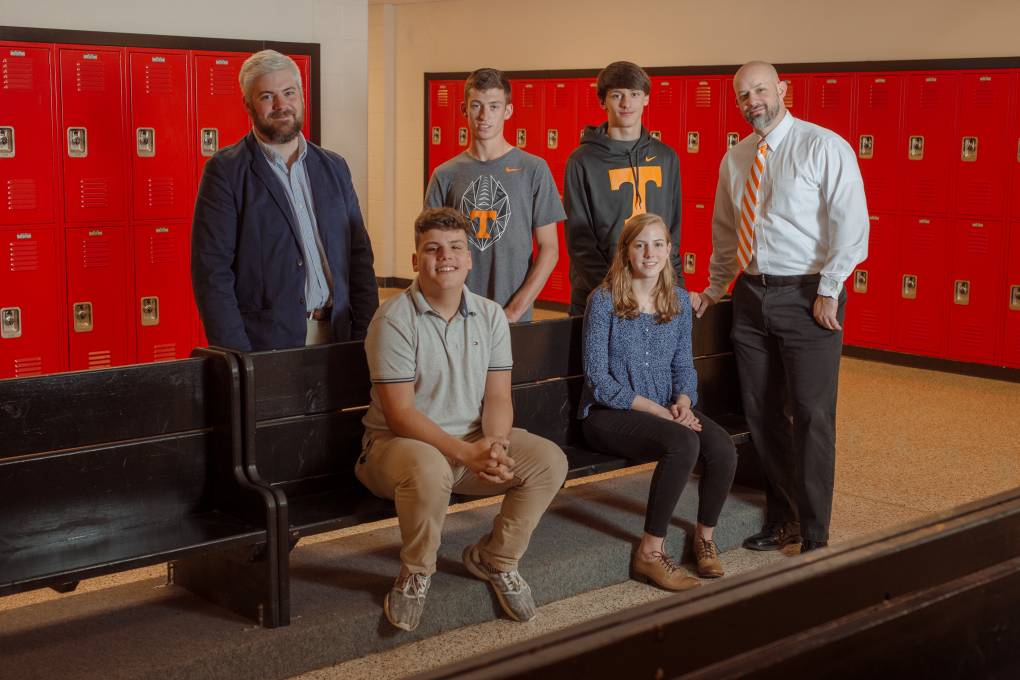
"caption": "From left, the team of teacher Tim Wasem; students Caleb Miller, Jaxton Holly, John Gouge and Deanna Hull; and teacher Alex Campbell won the NPR Student Podcast Challenge.\n",
"description": null,
"title": "From left, the team of teacher Tim Wasem; students Caleb Miller, Jaxton Holly, John Gouge and Deanna Hull; and teacher Alex Campbell won the NPR Student Podcast Challenge.",
"credit": "Mike Belleme for NPR",
"status": "inherit",
"isLoading": false,
"fetchFailed": false
},
"mindshift_55121": {
"type": "attachments",
"id": "mindshift_55121",
"meta": {
"index": "attachments_1716263798",
"site": "mindshift",
"id": "55121",
"found": true
},
"parent": 55039,
"imgSizes": {
"twentyfourteen-full-width": {
"file": "https://ww2.kqed.org/app/uploads/sites/23/2020/01/Disrupt-1038x576.png",
"width": 1038,
"mimeType": "image/png",
"height": 576
},
"thumbnail": {
"file": "https://ww2.kqed.org/app/uploads/sites/23/2020/01/Disrupt-160x105.png",
"width": 160,
"mimeType": "image/png",
"height": 105
},
"post-thumbnail": {
"file": "https://ww2.kqed.org/app/uploads/sites/23/2020/01/Disrupt-672x372.png",
"width": 672,
"mimeType": "image/png",
"height": 372
},
"kqedFullSize": {
"file": "https://ww2.kqed.org/app/uploads/sites/23/2020/01/Disrupt.png",
"width": 1920,
"height": 1265
},
"large": {
"file": "https://ww2.kqed.org/app/uploads/sites/23/2020/01/Disrupt-1020x672.png",
"width": 1020,
"mimeType": "image/png",
"height": 672
},
"complete_open_graph": {
"file": "https://ww2.kqed.org/app/uploads/sites/23/2020/01/Disrupt-1200x791.png",
"width": 1200,
"mimeType": "image/png",
"height": 791
},
"full-width": {
"file": "https://ww2.kqed.org/app/uploads/sites/23/2020/01/Disrupt-1920x1265.png",
"width": 1920,
"mimeType": "image/png",
"height": 1265
},
"medium": {
"file": "https://ww2.kqed.org/app/uploads/sites/23/2020/01/Disrupt-800x527.png",
"width": 800,
"mimeType": "image/png",
"height": 527
},
"medium_large": {
"file": "https://ww2.kqed.org/app/uploads/sites/23/2020/01/Disrupt-768x506.png",
"width": 768,
"mimeType": "image/png",
"height": 506
}
},
"publishDate": 1578292292,
"modified": 1578292309,
"caption": null,
"description": null,
"title": "Disrupt",
"credit": "@nenagerman/Twitter",
"status": "inherit",
"isLoading": false,
"fetchFailed": false
},
"mindshift_55056": {
"type": "attachments",
"id": "mindshift_55056",
"meta": {
"index": "attachments_1716263798",
"site": "mindshift",
"id": "55056",
"found": true
},
"parent": 55052,
"imgSizes": {
"twentyfourteen-full-width": {
"file": "https://ww2.kqed.org/app/uploads/sites/23/2019/12/iStock-820815104-1038x576.jpg",
"width": 1038,
"mimeType": "image/jpeg",
"height": 576
},
"thumbnail": {
"file": "https://ww2.kqed.org/app/uploads/sites/23/2019/12/iStock-820815104-160x161.jpg",
"width": 160,
"mimeType": "image/jpeg",
"height": 161
},
"post-thumbnail": {
"file": "https://ww2.kqed.org/app/uploads/sites/23/2019/12/iStock-820815104-672x372.jpg",
"width": 672,
"mimeType": "image/jpeg",
"height": 372
},
"kqedFullSize": {
"file": "https://ww2.kqed.org/app/uploads/sites/23/2019/12/iStock-820815104.jpg",
"width": 1725,
"height": 1738
},
"large": {
"file": "https://ww2.kqed.org/app/uploads/sites/23/2019/12/iStock-820815104-1020x1028.jpg",
"width": 1020,
"mimeType": "image/jpeg",
"height": 1028
},
"complete_open_graph": {
"file": "https://ww2.kqed.org/app/uploads/sites/23/2019/12/iStock-820815104-1191x1200.jpg",
"width": 1191,
"mimeType": "image/jpeg",
"height": 1200
},
"medium": {
"file": "https://ww2.kqed.org/app/uploads/sites/23/2019/12/iStock-820815104-800x806.jpg",
"width": 800,
"mimeType": "image/jpeg",
"height": 806
},
"medium_large": {
"file": "https://ww2.kqed.org/app/uploads/sites/23/2019/12/iStock-820815104-768x774.jpg",
"width": 768,
"mimeType": "image/jpeg",
"height": 774
}
},
"publishDate": 1576480836,
"modified": 1576480934,
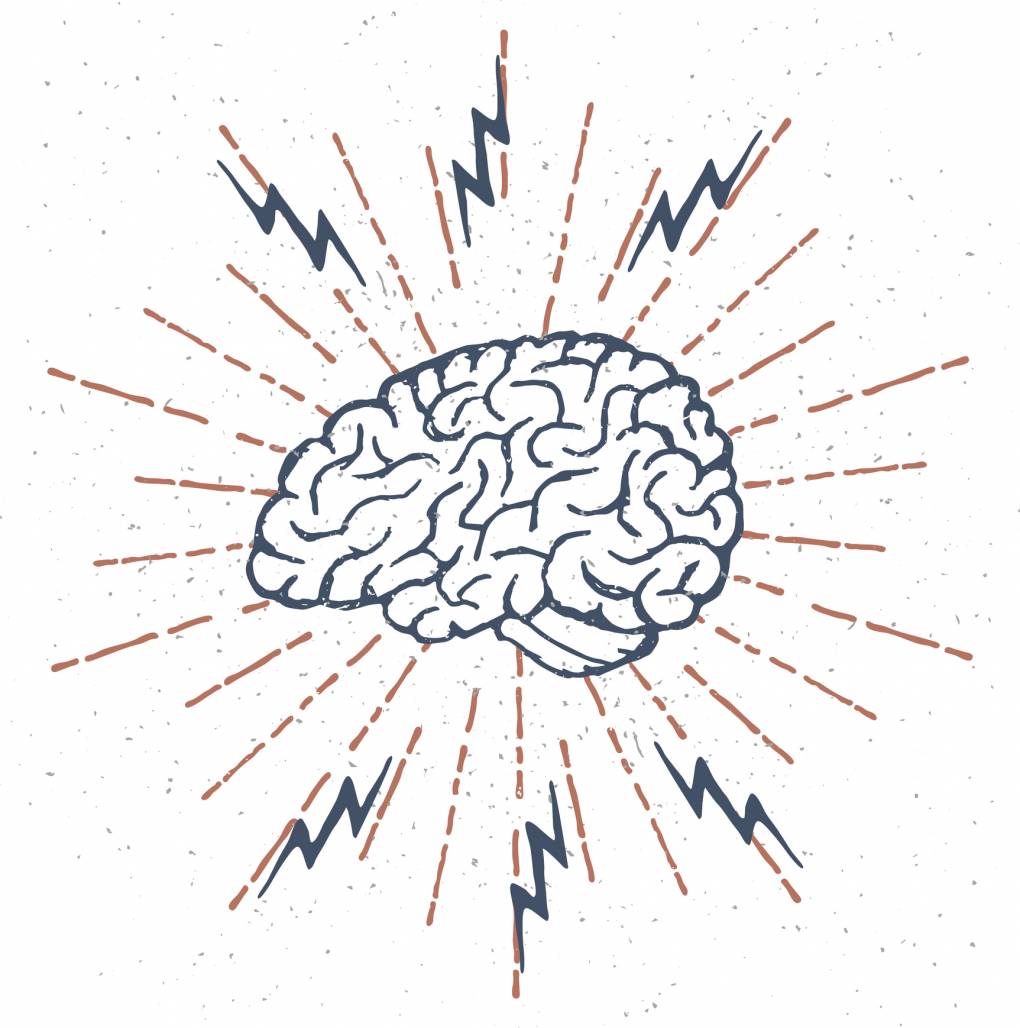
"caption": "Hand Drawn Brain Lightning Bolts. Vector illustration",
"description": null,
"title": "Hand Drawn Brain Lightning Bolts. Vector",
"credit": "idimair/iStock",
"status": "inherit",
"isLoading": false,
"fetchFailed": false
},
"mindshift_54975": {
"type": "attachments",
"id": "mindshift_54975",
"meta": {
"index": "attachments_1716263798",
"site": "mindshift",
"id": "54975",
"found": true
},
"parent": 54968,
"imgSizes": {
"twentyfourteen-full-width": {
"file": "https://ww2.kqed.org/app/uploads/sites/23/2019/12/iStock-677080112-e1575442864539-1038x576.jpg",
"width": 1038,
"mimeType": "image/jpeg",
"height": 576
},
"thumbnail": {
"file": "https://ww2.kqed.org/app/uploads/sites/23/2019/12/iStock-677080112-e1575442864539-160x117.jpg",
"width": 160,
"mimeType": "image/jpeg",
"height": 117
},
"post-thumbnail": {
"file": "https://ww2.kqed.org/app/uploads/sites/23/2019/12/iStock-677080112-e1575442864539-672x372.jpg",
"width": 672,
"mimeType": "image/jpeg",
"height": 372
},
"kqedFullSize": {
"file": "https://ww2.kqed.org/app/uploads/sites/23/2019/12/iStock-677080112-e1575442864539.jpg",
"width": 1732,
"height": 1268
},
"large": {
"file": "https://ww2.kqed.org/app/uploads/sites/23/2019/12/iStock-677080112-e1575442864539-1020x747.jpg",
"width": 1020,
"mimeType": "image/jpeg",
"height": 747
},
"complete_open_graph": {
"file": "https://ww2.kqed.org/app/uploads/sites/23/2019/12/iStock-677080112-e1575442864539-1200x879.jpg",
"width": 1200,
"mimeType": "image/jpeg",
"height": 879
},
"medium": {
"file": "https://ww2.kqed.org/app/uploads/sites/23/2019/12/iStock-677080112-e1575442864539-800x586.jpg",
"width": 800,
"mimeType": "image/jpeg",
"height": 586
},
"medium_large": {
"file": "https://ww2.kqed.org/app/uploads/sites/23/2019/12/iStock-677080112-e1575442864539-768x562.jpg",
"width": 768,
"mimeType": "image/jpeg",
"height": 562
}
},
"publishDate": 1575410439,
"modified": 1575442955,
"caption": null,
"description": null,
"title": null,
"credit": "frimages/iStock",
"status": "inherit",
"isLoading": false,
"fetchFailed": false
}
},
"audioPlayerReducer": {
"postId": "stream_live",
"isPaused": true,
"isPlaying": false,
"pfsActive": false,
"pledgeModalIsOpen": true,
"playerDrawerIsOpen": false,
"liveAudioPlayStartedAt": 0,
"liveAudioPlayContext": ""
},
"authorsReducer": {
"byline_mindshift_55329": {
"type": "authors",
"id": "byline_mindshift_55329",
"meta": {
"override": true
},
"slug": "byline_mindshift_55329",
"name": "Melanie Asmar, Chalkbeat Colorado",
"isLoading": false
},
"byline_mindshift_55231": {
"type": "authors",
"id": "byline_mindshift_55231",
"meta": {
"override": true
},
"slug": "byline_mindshift_55231",
"name": "\u003ca href=\"https://www.gse.harvard.edu/\">Emily Boudreau, Usable Knowledge\u003c/a>",
"isLoading": false
},
"byline_mindshift_55152": {
"type": "authors",
"id": "byline_mindshift_55152",
"meta": {
"override": true
},
"slug": "byline_mindshift_55152",
"name": "Cory Turner and Elissa Nadworny ",
"isLoading": false
},
"byline_mindshift_55052": {
"type": "authors",
"id": "byline_mindshift_55052",
"meta": {
"override": true
},
"slug": "byline_mindshift_55052",
"name": "\u003ca href=\"https://www.gse.harvard.edu/news/uk/19/12/novice-expert-shift\">Emily Boudreau, Usable Knowledge\u003c/a>",
"isLoading": false
},
"katrinaschwartz": {
"type": "authors",
"id": "234",
"meta": {
"index": "authors_1716337520",
"id": "234",
"found": true
},
"name": "Katrina Schwartz",
"firstName": "Katrina",
"lastName": "Schwartz",
"slug": "katrinaschwartz",
"email": "kschwartz@kqed.org",
"display_author_email": false,
"staff_mastheads": [
"news"
],
"title": "Producer",
"bio": "Katrina Schwartz is a journalist based in San Francisco. She's worked at KPCC public radio in LA and has reported on air and online for KQED since 2010. She covered how teaching and learning is changing for MindShift between 2012 and 2020. She is the co-host of the MindShift podcast and now produces KQED's Bay Curious podcast.",
"avatar": "https://secure.gravatar.com/avatar/edb4ee79070447a018538c9aae6eeecf28786515b8a0c30e43b6b7dce5aa44c8?s=600&d=blank&r=g",
"twitter": "kschwart",
"bluesky": null,
"facebook": null,
"instagram": null,
"linkedin": null,
"sites": [
{
"site": "",
"roles": [
"editor"
]
},
{
"site": "news",
"roles": [
"editor"
]
},
{
"site": "mindshift",
"roles": [
"administrator"
]
},
{
"site": "stateofhealth",
"roles": [
"author"
]
},
{
"site": "science",
"roles": [
"editor"
]
}
],
"headData": {
"title": "Katrina Schwartz | KQED",
"description": "Producer",
"ogImgSrc": "https://secure.gravatar.com/avatar/edb4ee79070447a018538c9aae6eeecf28786515b8a0c30e43b6b7dce5aa44c8?s=600&d=blank&r=g",
"twImgSrc": "https://secure.gravatar.com/avatar/edb4ee79070447a018538c9aae6eeecf28786515b8a0c30e43b6b7dce5aa44c8?s=600&d=blank&r=g"
},
"isLoading": false,
"link": "/author/katrinaschwartz"
},
"hollykorbey": {
"type": "authors",
"id": "4445",
"meta": {
"index": "authors_1716337520",
"id": "4445",
"found": true
},
"name": "Holly Korbey",
"firstName": "Holly",
"lastName": "Korbey",
"slug": "hollykorbey",
"email": "holly@hollykorbey.com",
"display_author_email": false,
"staff_mastheads": [],
"title": null,
"bio": "Holly Korbey's work on parenting and education has appeared in The New York Times, The Atlantic, Babble, Brain, Child Magazine, and others. She lives in Nashville with her family. Follow her on Twitter: @HKorbey",
"avatar": "https://secure.gravatar.com/avatar/f385f7a3b90e52ecd5e85c24fbd0a363?s=600&d=blank&r=g",
"twitter": null,
"facebook": null,
"instagram": null,
"linkedin": null,
"sites": [
{
"site": "mindshift",
"roles": [
"contributor"
]
}
],
"headData": {
"title": "Holly Korbey | KQED",
"description": null,
"ogImgSrc": "https://secure.gravatar.com/avatar/f385f7a3b90e52ecd5e85c24fbd0a363?s=600&d=blank&r=g",
"twImgSrc": "https://secure.gravatar.com/avatar/f385f7a3b90e52ecd5e85c24fbd0a363?s=600&d=blank&r=g"
},
"isLoading": false,
"link": "/author/hollykorbey"
},
"pauldarvasi": {
"type": "authors",
"id": "11107",
"meta": {
"index": "authors_1716337520",
"id": "11107",
"found": true
},
"name": "Paul Darvasi",
"firstName": "Paul",
"lastName": "Darvasi",
"slug": "pauldarvasi",
"email": "pauldarvasi@gmail.com",
"display_author_email": false,
"staff_mastheads": [],
"title": null,
"bio": "Paul Darvasi is an experienced educator whose research, speaking and writing explore the intersections of learning, technology, narrative and games. You can follow him on Twitter:\u003ca href=\"https://twitter.com/PaulDarvasi\"> @pauldarvasi\u003c/a>",
"avatar": "https://secure.gravatar.com/avatar/df387897a1bf0cd4b720b8175112731a?s=600&d=blank&r=g",
"twitter": "pauldarvasi",
"facebook": null,
"instagram": null,
"linkedin": null,
"sites": [
{
"site": "mindshift",
"roles": [
"contributor"
]
}
],
"headData": {
"title": "Paul Darvasi | KQED",
"description": null,
"ogImgSrc": "https://secure.gravatar.com/avatar/df387897a1bf0cd4b720b8175112731a?s=600&d=blank&r=g",
"twImgSrc": "https://secure.gravatar.com/avatar/df387897a1bf0cd4b720b8175112731a?s=600&d=blank&r=g"
},
"isLoading": false,
"link": "/author/pauldarvasi"
},
"kdnewhouse": {
"type": "authors",
"id": "11487",
"meta": {
"index": "authors_1716337520",
"id": "11487",
"found": true
},
"name": "Kara Newhouse",
"firstName": "Kara",
"lastName": "Newhouse",
"slug": "kdnewhouse",
"email": "knewhouse@kqed.org",
"display_author_email": false,
"staff_mastheads": [],
"title": "MindShift Editor",
"bio": null,
"avatar": "https://secure.gravatar.com/avatar/3dceed6fb271527113abfa9a8e9df34e?s=600&d=blank&r=g",
"twitter": null,
"facebook": null,
"instagram": null,
"linkedin": null,
"sites": [
{
"site": "",
"roles": [
"editor"
]
},
{
"site": "mindshift",
"roles": []
}
],
"headData": {
"title": "Kara Newhouse | KQED",
"description": "MindShift Editor",
"ogImgSrc": "https://secure.gravatar.com/avatar/3dceed6fb271527113abfa9a8e9df34e?s=600&d=blank&r=g",
"twImgSrc": "https://secure.gravatar.com/avatar/3dceed6fb271527113abfa9a8e9df34e?s=600&d=blank&r=g"
},
"isLoading": false,
"link": "/author/kdnewhouse"
}
},
"pagesReducer": {
"mindshift_category_teaching-strategies": {
"type": "terms",
"id": "mindshift_193",
"meta": {
"index": "terms_1716263798",
"site": "mindshift",
"id": "193",
"score": 14.406956
},
"featImg": null,
"name": "Teaching Strategies",
"description": "Innovative ideas - projects, processes, curricula, and more - that are transforming how we teach and learn.",
"taxonomy": "category",
"headData": {
"twImgId": null,
"twTitle": null,
"ogTitle": null,
"ogImgId": null,
"twDescription": null,
"description": "Innovative ideas - projects, processes, curricula, and more - that are transforming how we teach and learn.",
"title": "Teaching Strategies Archives | KQED Mindshift",
"ogDescription": null
},
"ttid": 193,
"slug": "teaching-strategies",
"isLoading": false,
"title": "Teaching Strategies",
"pageMeta": {
"site": "mindshift",
"WpPageTemplate": "page-topic-editorial",
"currentPage": 16
},
"blocks": [
{
"blockName": "kqed/company-paragraph",
"content": "Innovative ideas - projects, processes, curricula, and more - that are transforming how we teach and learn."
},
{
"blockName": "kqed/post-list",
"attrs": {
"layout": "cardArticle2",
"query": "posts/mindshift?category=teaching-strategies",
"seeMore": false,
"paginated": true,
"page": 16
}
},
{
"blockName": "kqed/ad"
}
]
}
},
"pfsSessionReducer": {},
"postsReducer": {
"stream_live": {
"type": "live",
"id": "stream_live",
"audioUrl": "https://streams.kqed.org/kqedradio",
"title": "Live Stream",
"excerpt": "Live Stream information currently unavailable.",
"link": "/radio",
"featImg": "",
"label": {
"name": "KQED Live",
"link": "/"
}
},
"stream_kqedNewscast": {
"type": "posts",
"id": "stream_kqedNewscast",
"audioUrl": "https://www.kqed.org/.stream/anon/radio/RDnews/newscast.mp3?_=1",
"title": "KQED Newscast",
"featImg": "",
"label": {
"name": "88.5 FM",
"link": "/"
}
},
"mindshift_55327": {
"type": "posts",
"id": "mindshift_55327",
"meta": {
"index": "posts_1716263798",
"site": "mindshift",
"id": "55327",
"score": null,
"sort": [
1582265844000
]
},
"parent": 0,
"labelTerm": {
"site": "mindshift"
},
"blocks": [],
"publishDate": 1582265844,
"format": "standard",
"disqusTitle": "How Hands-On Projects Can Deepen Math Learning for Teens",
"title": "How Hands-On Projects Can Deepen Math Learning for Teens",
"headTitle": "MindShift | KQED News",
"content": "\u003cp class=\"p4\">\u003cspan class=\"s1\">On math worksheets, numbers are usually neat and tidy. In the real world, not so much. Whether it’s polling data, analysis of investment options or calculations for timed traffic lights, real-world math can be messy. “If you give those kinds of numbers in homework you’re a mean teacher,” said teacher Victor Hernández. Fortunately, he doesn’t have to worry about that complaint much. Hernández works at \u003ca href=\"https://scienceleadership.org/\">\u003cspan class=\"s2\">Science Leadership Academy\u003c/span>\u003c/a>, a public magnet school in Philadelphia, where students gather and apply real data to hands-on projects throughout the curriculum. In January, Hernández and two colleagues shared some of the benefits of \u003ca href=\"https://www.kqed.org/mindshift/tag/project-based-learning\">\u003cspan class=\"s2\">project-based learning\u003c/span>\u003c/a> with math teachers attending EduCon 2020, SLA’s annual school innovation conference.\u003c/span>\u003c/p>\n\u003cp class=\"p4\">\u003cspan class=\"s1\">In addition to incorporating real data, applied projects can bring meaning to the \u003ca href=\"https://www.kqed.org/mindshift/48014/how-schools-can-help-students-develop-a-greater-sense-of-purpose\">\u003cspan class=\"s2\">purpose\u003c/span>\u003c/a> of math. SLA teacher Jonathan Estey said that authenticity is often lacking for students. If you ask a struggling math student how many quarters make 75 cents, he noted, “they’ll know it, because they have to use money.” Similarly, by \u003ca href=\"https://drive.google.com/file/d/0B1etwTlTzTXCRkIxUFptZ1J0eTg/view\">\u003cspan class=\"s2\">building a catapult\u003c/span>\u003c/a> or \u003ca href=\"https://docs.google.com/document/d/1CDfjV8nglz3KhP-7SG7XLsz1VzdpOkeDtsdBgix-kZ8/edit\">\u003cspan class=\"s2\">telling a story with equations\u003c/span>\u003c/a>, students can see how their calculation and formulas translate to contexts beyond a whiteboard. That authenticity yields stronger engagement, especially when projects allow teenagers to connect to their interests. “Even when students complain about the amount of work, it’s a lot more motivating for them to believe they have something to say at the end of a math project,” said Estey.\u003c/span>\u003c/p>\n\u003cp class=\"p2\">\u003cspan class=\"s1\"> Along with authentic applications and higher engagement comes deeper understanding of math concepts. Take interquartile range, for example. In a typical textbook problem, the data set is small enough to simply count to find quartiles. In a \u003ca href=\"https://docs.google.com/document/d/1lkNjGjgRkMq33mZrD8ZfQRDJzvMqRmewe-Ez_CYHb_0/edit\">\u003cspan class=\"s2\">polling project\u003c/span>\u003c/a> this year, Estey’s classes collected data from more than 100 SLA students. Thus, when determining interquartile range, students needed to use computation to identify quartiles. That required a more clear understanding of the concept, and it also resulted in greater accuracy, Estey said.\u003c/span>\u003c/p>\n\u003cp class=\"p4\">\u003cspan class=\"s1\">Another benefit, according to Hernández, is that students gain knowledge that would not be part of a traditional unit. He discussed a project in which students, working in pairs, \u003ca href=\"https://drive.google.com/file/d/1ETZG0BkQQNO3vgQckRpz90JNgWmas13-/view\">\u003cspan class=\"s2\">created personal financial plans\u003c/span>\u003c/a> for one another’s post-secondary plans. Their predictions required an understanding of exponential functions, but they also learned, for example, the difference between subsidized and unsubsidized loans. As Hernández and Estey shared these and other \u003ca href=\"https://docs.google.com/spreadsheets/d/1aN7Rlk6Aamqy5JlAuVC19P35lhi-IC3v7yaeM-lgB-o/edit?usp=sharing\">\u003cspan class=\"s2\">examples\u003c/span>\u003c/a> from their classrooms, they offered \u003ca href=\"https://www.kqed.org/mindshift/50530/the-six-must-have-elements-of-high-quality-project-based-learning\">\u003cspan class=\"s2\">tips on project-based learning\u003c/span>\u003c/a> for other math educators.\u003c/span>\u003c/p>\n\u003ch2 class=\"p5\">\u003cspan class=\"s1\">\u003cb>Tips for Project-Based Learning in Math\u003c/b>\u003c/span>\u003c/h2>\n\u003cp>\u003ci>\u003c/i>\u003cspan class=\"s1\">\u003cstrong>1. Know your students. \u003c/strong>\u003c/span>\u003cspan class=\"s1\">A few years ago, Estey developed a project that required students to compare costs and carbon footprints of conventional and alternative energy sources. He said the project would have worked great when he taught in Hood River, Oregon, but he realized it was a bad fit in Philadelphia after spending more time teaching what a wood stove is than teaching math. By contrast, a project that \u003ca href=\"https://docs.google.com/document/d/1RPxYpOu9Wlbay-sd82Dj5pooxSXQkcEzHIuevDKa97I/edit\">\u003cspan class=\"s2\">examines inequality through ratios and proportions\u003c/span>\u003c/a> works well at SLA because students are \u003ca href=\"https://www.kqed.org/mindshift/53955/where-did-all-these-teen-activists-come-from\">\u003cspan class=\"s2\">passionate about social justice\u003c/span>\u003c/a>. “They get to tailor it to whichever cause they care about, and because they’re invested in having this message, they’re invested in getting the math right,” said Estey.\u003c/span>\u003cspan class=\"s3\">\u003cb>\u003ci>\u003cbr>\n\u003c/i>\u003c/b>\u003c/span>\u003ci>\u003c/i>\u003ci>\u003c/i>\u003ci>\u003c/i>\u003c/p>\n\u003cp>[ad fullwidth]\u003c/p>\n\u003cp>\u003cspan class=\"s1\">\u003cstrong>2.\u003c/strong> \u003cstrong>Avoid group grades.\u003c/strong> Many adults and kids can recall working on a class project where some people pulled more of the weight than others. Although project-based learning often involves teamwork, the SLA math teachers said they do not assign group grades. \u003c/span>\u003cspan class=\"s3\">\u003cb>\u003cbr>\n\u003c/b>\u003c/span>\u003c/p>\n\u003cp class=\"p6\">\u003cspan class=\"s1\">They grade students on five domains for each project: design, knowledge, application, presentation and process. While the first three domains relate more to the actual math, the final two relate to how well the student \u003ca href=\"https://www.kqed.org/mindshift/53524/how-revising-math-exams-turns-students-into-learners-not-processors\">\u003cspan class=\"s2\">explained the work\u003c/span>\u003c/a>, how they collaborated with teammates and whether they kept up with the project in and out of class. A student might have strong math skills but wait till the last minute to complete a project, for example. Another might follow all the right steps but commit calculation errors. The first student would receive higher marks in “knowledge,” while the second would earn higher marks in “process.”\u003c/span>\u003c/p>\n\u003cp>\u003ci>\u003c/i>\u003cspan class=\"s1\">\u003cstrong>3. Prepare students to work outside of class.\u003c/strong> Project-based learning does not mean that students are always doing hands-on activities in class. “If it’s a project that’s extended over two weeks, no way are we suspending instruction for two weeks,” said Estey. An SLA student at the EduCon session explained that in the “nitty gritty part of a project,” a teacher might start class by addressing questions that have been coming up, but mostly they’re working on projects after school or during free periods. Hernández said he uses nightly checkpoints to ensure projects are progressing, and Estey said that with freshmen he works hard to ensure that they seek additional support when needed because they’re accustomed to getting by on in-class work in middle school.\u003ci>\u003cbr>\n\u003c/i>\u003c/span>\u003c/p>\n\u003cp>\u003cspan class=\"s1\">\u003cstrong>4. Keep it simple.\u003c/strong> Hernández and Estey said their biggest challenges with project-based learning have come from making projects too complex. For example, in previous years, Estey’s students chose different topics for the polling project, which meant 30 different surveys were flying around. This year, they all focused on one topic — building issues at the school — and proposed various questions to ask their peers. Estey culled the questions to avoid repetition and ensure they would yield usable data.“Every year I ask myself how I can make this simpler,” he said.\u003c/span>\u003cspan class=\"s3\">\u003cb>\u003ci>\u003cbr>\n\u003c/i>\u003c/b>\u003c/span>\u003c/p>\n\u003cp>\u003c/p>\n\u003cp class=\"p7\">\u003cspan class=\"s1\">\u003cstrong>5. Don’t be afraid of what’s unfamiliar.\u003c/strong> EduCon participants said that some teachers are afraid to try project-based learning because it’s not the way they were taught. Hernández said that need not be a barrier. His job interview at SLA required him to plan a hands-on student project, so he gave it a go. “I would be bored if I taught the way I was taught,” he said.\u003c/span>\u003c/p>\n\n",
"disqusIdentifier": "55327 https://ww2.kqed.org/mindshift/?p=55327",
"disqusUrl": "https://ww2.kqed.org/mindshift/2020/02/20/how-hands-on-projects-can-deepen-math-learning-for-teens/",
"stats": {
"hasVideo": false,
"hasChartOrMap": false,
"hasAudio": false,
"hasPolis": false,
"wordCount": 1040,
"hasGoogleForm": false,
"hasGallery": false,
"hasHearkenModule": false,
"iframeSrcs": [],
"paragraphCount": 6
},
"modified": 1582311952,
"excerpt": "When students build a catapult or tell a story with equations they can see how their calculation and formulas translate to contexts beyond a whiteboard.",
"headData": {
"twImgId": "",
"twTitle": "",
"ogTitle": "",
"ogImgId": "",
"twDescription": "",
"description": "When students build a catapult or tell a story with equations they can see how their calculation and formulas translate to contexts beyond a whiteboard.",
"title": "How Hands-On Projects Can Deepen Math Learning for Teens | KQED",
"ogDescription": "",
"schema": {
"@context": "https://schema.org",
"@type": "Article",
"headline": "How Hands-On Projects Can Deepen Math Learning for Teens",
"datePublished": "2020-02-20T22:17:24-08:00",
"dateModified": "2020-02-21T11:05:52-08:00",
"image": "https://cdn.kqed.org/wp-content/uploads/2020/02/KQED-OG-Image@1x.png"
}
},
"guestAuthors": [],
"slug": "how-hands-on-projects-can-deepen-math-learning-for-teens",
"status": "publish",
"path": "/mindshift/55327/how-hands-on-projects-can-deepen-math-learning-for-teens",
"audioTrackLength": null,
"parsedContent": [
{
"type": "contentString",
"content": "\u003cdiv class=\"post-body\">\u003cp>\u003cp class=\"p4\">\u003cspan class=\"s1\">On math worksheets, numbers are usually neat and tidy. In the real world, not so much. Whether it’s polling data, analysis of investment options or calculations for timed traffic lights, real-world math can be messy. “If you give those kinds of numbers in homework you’re a mean teacher,” said teacher Victor Hernández. Fortunately, he doesn’t have to worry about that complaint much. Hernández works at \u003ca href=\"https://scienceleadership.org/\">\u003cspan class=\"s2\">Science Leadership Academy\u003c/span>\u003c/a>, a public magnet school in Philadelphia, where students gather and apply real data to hands-on projects throughout the curriculum. In January, Hernández and two colleagues shared some of the benefits of \u003ca href=\"https://www.kqed.org/mindshift/tag/project-based-learning\">\u003cspan class=\"s2\">project-based learning\u003c/span>\u003c/a> with math teachers attending EduCon 2020, SLA’s annual school innovation conference.\u003c/span>\u003c/p>\n\u003cp class=\"p4\">\u003cspan class=\"s1\">In addition to incorporating real data, applied projects can bring meaning to the \u003ca href=\"https://www.kqed.org/mindshift/48014/how-schools-can-help-students-develop-a-greater-sense-of-purpose\">\u003cspan class=\"s2\">purpose\u003c/span>\u003c/a> of math. SLA teacher Jonathan Estey said that authenticity is often lacking for students. If you ask a struggling math student how many quarters make 75 cents, he noted, “they’ll know it, because they have to use money.” Similarly, by \u003ca href=\"https://drive.google.com/file/d/0B1etwTlTzTXCRkIxUFptZ1J0eTg/view\">\u003cspan class=\"s2\">building a catapult\u003c/span>\u003c/a> or \u003ca href=\"https://docs.google.com/document/d/1CDfjV8nglz3KhP-7SG7XLsz1VzdpOkeDtsdBgix-kZ8/edit\">\u003cspan class=\"s2\">telling a story with equations\u003c/span>\u003c/a>, students can see how their calculation and formulas translate to contexts beyond a whiteboard. That authenticity yields stronger engagement, especially when projects allow teenagers to connect to their interests. “Even when students complain about the amount of work, it’s a lot more motivating for them to believe they have something to say at the end of a math project,” said Estey.\u003c/span>\u003c/p>\n\u003cp class=\"p2\">\u003cspan class=\"s1\"> Along with authentic applications and higher engagement comes deeper understanding of math concepts. Take interquartile range, for example. In a typical textbook problem, the data set is small enough to simply count to find quartiles. In a \u003ca href=\"https://docs.google.com/document/d/1lkNjGjgRkMq33mZrD8ZfQRDJzvMqRmewe-Ez_CYHb_0/edit\">\u003cspan class=\"s2\">polling project\u003c/span>\u003c/a> this year, Estey’s classes collected data from more than 100 SLA students. Thus, when determining interquartile range, students needed to use computation to identify quartiles. That required a more clear understanding of the concept, and it also resulted in greater accuracy, Estey said.\u003c/span>\u003c/p>\n\u003cp class=\"p4\">\u003cspan class=\"s1\">Another benefit, according to Hernández, is that students gain knowledge that would not be part of a traditional unit. He discussed a project in which students, working in pairs, \u003ca href=\"https://drive.google.com/file/d/1ETZG0BkQQNO3vgQckRpz90JNgWmas13-/view\">\u003cspan class=\"s2\">created personal financial plans\u003c/span>\u003c/a> for one another’s post-secondary plans. Their predictions required an understanding of exponential functions, but they also learned, for example, the difference between subsidized and unsubsidized loans. As Hernández and Estey shared these and other \u003ca href=\"https://docs.google.com/spreadsheets/d/1aN7Rlk6Aamqy5JlAuVC19P35lhi-IC3v7yaeM-lgB-o/edit?usp=sharing\">\u003cspan class=\"s2\">examples\u003c/span>\u003c/a> from their classrooms, they offered \u003ca href=\"https://www.kqed.org/mindshift/50530/the-six-must-have-elements-of-high-quality-project-based-learning\">\u003cspan class=\"s2\">tips on project-based learning\u003c/span>\u003c/a> for other math educators.\u003c/span>\u003c/p>\n\u003ch2 class=\"p5\">\u003cspan class=\"s1\">\u003cb>Tips for Project-Based Learning in Math\u003c/b>\u003c/span>\u003c/h2>\n\u003cp>\u003ci>\u003c/i>\u003cspan class=\"s1\">\u003cstrong>1. Know your students. \u003c/strong>\u003c/span>\u003cspan class=\"s1\">A few years ago, Estey developed a project that required students to compare costs and carbon footprints of conventional and alternative energy sources. He said the project would have worked great when he taught in Hood River, Oregon, but he realized it was a bad fit in Philadelphia after spending more time teaching what a wood stove is than teaching math. By contrast, a project that \u003ca href=\"https://docs.google.com/document/d/1RPxYpOu9Wlbay-sd82Dj5pooxSXQkcEzHIuevDKa97I/edit\">\u003cspan class=\"s2\">examines inequality through ratios and proportions\u003c/span>\u003c/a> works well at SLA because students are \u003ca href=\"https://www.kqed.org/mindshift/53955/where-did-all-these-teen-activists-come-from\">\u003cspan class=\"s2\">passionate about social justice\u003c/span>\u003c/a>. “They get to tailor it to whichever cause they care about, and because they’re invested in having this message, they’re invested in getting the math right,” said Estey.\u003c/span>\u003cspan class=\"s3\">\u003cb>\u003ci>\u003cbr>\n\u003c/i>\u003c/b>\u003c/span>\u003ci>\u003c/i>\u003ci>\u003c/i>\u003ci>\u003c/i>\u003c/p>\n\u003cp>\u003c/p>\u003c/div>",
"attributes": {
"named": {},
"numeric": []
}
},
{
"type": "component",
"content": "",
"name": "ad",
"attributes": {
"named": {
"label": "fullwidth"
},
"numeric": [
"fullwidth"
]
}
},
{
"type": "contentString",
"content": "\u003cdiv class=\"post-body\">\u003cp>\u003c/p>\n\u003cp>\u003cspan class=\"s1\">\u003cstrong>2.\u003c/strong> \u003cstrong>Avoid group grades.\u003c/strong> Many adults and kids can recall working on a class project where some people pulled more of the weight than others. Although project-based learning often involves teamwork, the SLA math teachers said they do not assign group grades. \u003c/span>\u003cspan class=\"s3\">\u003cb>\u003cbr>\n\u003c/b>\u003c/span>\u003c/p>\n\u003cp class=\"p6\">\u003cspan class=\"s1\">They grade students on five domains for each project: design, knowledge, application, presentation and process. While the first three domains relate more to the actual math, the final two relate to how well the student \u003ca href=\"https://www.kqed.org/mindshift/53524/how-revising-math-exams-turns-students-into-learners-not-processors\">\u003cspan class=\"s2\">explained the work\u003c/span>\u003c/a>, how they collaborated with teammates and whether they kept up with the project in and out of class. A student might have strong math skills but wait till the last minute to complete a project, for example. Another might follow all the right steps but commit calculation errors. The first student would receive higher marks in “knowledge,” while the second would earn higher marks in “process.”\u003c/span>\u003c/p>\n\u003cp>\u003ci>\u003c/i>\u003cspan class=\"s1\">\u003cstrong>3. Prepare students to work outside of class.\u003c/strong> Project-based learning does not mean that students are always doing hands-on activities in class. “If it’s a project that’s extended over two weeks, no way are we suspending instruction for two weeks,” said Estey. An SLA student at the EduCon session explained that in the “nitty gritty part of a project,” a teacher might start class by addressing questions that have been coming up, but mostly they’re working on projects after school or during free periods. Hernández said he uses nightly checkpoints to ensure projects are progressing, and Estey said that with freshmen he works hard to ensure that they seek additional support when needed because they’re accustomed to getting by on in-class work in middle school.\u003ci>\u003cbr>\n\u003c/i>\u003c/span>\u003c/p>\n\u003cp>\u003cspan class=\"s1\">\u003cstrong>4. Keep it simple.\u003c/strong> Hernández and Estey said their biggest challenges with project-based learning have come from making projects too complex. For example, in previous years, Estey’s students chose different topics for the polling project, which meant 30 different surveys were flying around. This year, they all focused on one topic — building issues at the school — and proposed various questions to ask their peers. Estey culled the questions to avoid repetition and ensure they would yield usable data.“Every year I ask myself how I can make this simpler,” he said.\u003c/span>\u003cspan class=\"s3\">\u003cb>\u003ci>\u003cbr>\n\u003c/i>\u003c/b>\u003c/span>\u003c/p>\n\u003cp>\u003c/p>\n\u003cp class=\"p7\">\u003cspan class=\"s1\">\u003cstrong>5. Don’t be afraid of what’s unfamiliar.\u003c/strong> EduCon participants said that some teachers are afraid to try project-based learning because it’s not the way they were taught. Hernández said that need not be a barrier. His job interview at SLA required him to plan a hands-on student project, so he gave it a go. “I would be bored if I taught the way I was taught,” he said.\u003c/span>\u003c/p>\n\n\u003c/div>\u003c/p>",
"attributes": {
"named": {},
"numeric": []
}
}
],
"link": "/mindshift/55327/how-hands-on-projects-can-deepen-math-learning-for-teens",
"authors": [
"11487"
],
"categories": [
"mindshift_193"
],
"tags": [
"mindshift_997",
"mindshift_20784",
"mindshift_1040",
"mindshift_20762",
"mindshift_392",
"mindshift_20893",
"mindshift_256",
"mindshift_956",
"mindshift_21159"
],
"featImg": "mindshift_55354",
"label": "mindshift"
},
"mindshift_55329": {
"type": "posts",
"id": "mindshift_55329",
"meta": {
"index": "posts_1716263798",
"site": "mindshift",
"id": "55329",
"score": null,
"sort": [
1582181843000
]
},
"parent": 0,
"labelTerm": {
"site": "mindshift"
},
"blocks": [],
"publishDate": 1582181843,
"format": "standard",
"title": "How These Denver Schools Include Students with Disabilities, and Why More Could Follow",
"headTitle": "How These Denver Schools Include Students with Disabilities, and Why More Could Follow | KQED",
"content": "\u003cp>\u003cem>Originally posted on \u003ca href=\"https://chalkbeat.org/posts/co/2020/02/06/denver-public-schools-inclusion-students-with-disabilities/?utm_source=republish&utm_medium=web&utm_campaign=republish\">Chalkbeat\u003c/a> by Melanie Asmar on February 6, 2020\u003c/em>\u003c/p>\n\u003cp>Principal Blake Hammond slips into the back of a quiet fifth-grade classroom.\u003c/p>\n\u003cp>“Second row in,” he whispers. “He’s one of our kids.”\u003c/p>\n\u003cp>The boy is sitting next to an aide, a blank worksheet on his desk. The teacher is in the middle of a writing lesson. “What’s the difference,” she asks the class, “between revising and editing?”\u003c/p>\n\u003cp>The boy in the second row stands up. He walks to the front of the classroom and stops in front of the board so that his head and shoulders are blocking his classmates’ view. He’s there to fish around in a small blue bucket filled with sharpened No. 2 pencils. The pencils, pointed upward like flowers in a flower pot, rattle against the sides of the bucket.\u003c/p>\n\u003cp>[ad fullwidth]\u003c/p>\n\u003cp>Class continues. Students don’t complain that they can’t see the board. The teacher doesn’t tell the boy to sit down. Raised voices, the principal whispers, are a trigger for the boy, who before coming to Denver’s Green Valley Elementary was in a separate program for students with emotional disabilities. After about a minute and a half of softly jangling the pencils, the boy picks one. He calmly returns to his seat — and with his new pencil, begins his worksheet.\u003c/p>\n\u003cp>This is what inclusive practices look like at a Denver elementary school that is educating students with disabilities in general education classrooms, as opposed to separate special education classrooms, nearly all of the time. Denver Public Schools wants to move all of its schools in the same direction.\u003c/p>\n\u003ch3>A districtwide goal\u003c/h3>\n\u003cp>In June, the school board passed \u003ca href=\"https://go.boarddocs.com/co/dpsk12/Board.nsf/files/BD4VUF826E1D/%24file/Board%20Resolution%20Inclusion_61219.pdf\" target=\"_blank\" rel=\"noopener noreferrer\">a resolution\u003c/a> committing the district to becoming “a model … in the nation” for inclusive practices. The resolution was inspired by a task force of parents, educators, and advocates. Their overarching \u003ca href=\"https://chalkbeat.org/posts/co/2019/03/18/improving-special-education-denver-task-force-suggests-more-screening-less-segregation/\" target=\"_blank\" rel=\"noopener noreferrer\">recommendation\u003c/a>: Stop segregating students with disabilities when research shows including them benefits all students.\u003c/p>\n\u003cp>But Denver, like most districts, has a long way to go to get there. Only about 65% of the more than 10,000 Denver students identified as having a disability are included in the general education classroom more than 80% of the time, according to district data.\u003c/p>\n\u003cp>The district uses what it calls “center programs” to serve students with significant cognitive and emotional disabilities. The centers are separate classrooms, staffed by special education teachers and aides, where students do most of their learning. They may join their peers for lunch or recess, or for non-academic subjects like art. If they’re strong in math, they might go to the general education classroom for math lessons, but return to the center for reading.\u003c/p>\n\u003cp>A growing chorus of voices in Denver wants to blow up that model. District officials want to improve \u003ca href=\"https://chalkbeat.org/posts/co/2018/04/26/only-33-black-students-with-disabilities-in-denver-met-expectations-on-state-tests/\" target=\"_blank\" rel=\"noopener noreferrer\">startlingly low test scores\u003c/a> for students with disabilities. A majority of parents of students with disabilities said in a survey they want their child to spend more time in the general education classroom.\u003c/p>\n\u003cp>“If they’re just visiting classrooms once in a while for the projects people think they can handle, they will always be just outsiders looking in,” said Taryn Omran, whose 6-year-old daughter Maayan has Down syndrome and attends Willow Elementary, an exemplar for inclusive practices.\u003c/p>\n\u003cp>There was no public opposition to the resolution calling for Denver to become a national model for inclusion. But principals at schools experienced with it say some teachers initially worried if they’d be able to serve all students, especially those whose behavior could be disruptive.\u003c/p>\n\u003cp>“They were unaware and uneasy about, ‘How am I going to support a student of this severe need?’” said Hammond of Green Valley Elementary. “We had a conversation with staff the next year to say, ‘This is where we’re moving. If you want to be on board, stay with us. If it’s not something you’re interested in, there are other opportunities out there we can help you find.’”\u003c/p>\n\u003cp>Now, three years in, Hammond said the staff is committed. That was driven home recently, he said, when he heard a second-grade teacher say about one of her students with significant disabilities, “That’s my baby.” Hammond said it brought tears to his eyes.\u003c/p>\n\u003cp>“What a world we would be in if every person thought about kids as, ‘That’s my baby,’” he said. “If you take that mindset into the work that we do, there is no other way but inclusion.”\u003c/p>\n\u003ch3>The ‘why’ and the ‘how’\u003c/h3>\n\u003cp>Special Education Director Robert Frantum-Allen is tasked with shepherding the change at the district level. He is a former Denver teacher of the deaf and hard of hearing, and he has a disability — dyslexia — himself. He thinks most educators believe in inclusion, at least in theory.\u003c/p>\n\u003cp>“I think the community is compelled to understand the ‘why,’” Frantum-Allen said. “Where they struggle is ‘how.’ How do I do this when we have high-stakes testing?…How do we have diverse learners in classrooms and be able to meet the rigorous standards out there?”\u003c/p>\n\u003cp>Rather than starting with a mandate that all schools adopt inclusive practices immediately, Frantum-Allen is focusing this year on changing educators’ mindsets.\u003c/p>\n\u003cp>Over the summer, the district trained all principals on the basics of inclusive practices. Principals also completed a self-evaluation and chose one or two goals to work toward. This semester, principals will read a book on inclusive practices and discuss it.\u003c/p>\n\u003cp>“Some schools might perceive that they can’t serve these kids,” Frantum-Allen said. In those cases, the student is transferred from their neighborhood school to a school with a center program, which might require a long bus ride and separate the student from siblings.\u003c/p>\n\u003cp>“We want the attitude or belief to be, ‘We’re going to try everything we can to keep them at this school before we make an attempt to move them,’” Frantum-Allen said.\u003c/p>\n\u003ch3>Exemplar schools\u003c/h3>\n\u003cp>A handful of schools are already doing that. They include Green Valley and Willow, both in northeast Denver. (Willow was formerly called High Tech Elementary.) Rather than having a center program that serves students with one type of disability, such as autism, the schools take a “cross-categorical” approach to serve students with a range of disabilities. Every student is rostered to a general education classroom, where they spend as much of their day as possible.\u003c/p>\n\u003cp>“It’s an expectation they participate in everything,” said Hammond.\u003c/p>\n\u003cp>Green Valley made the switch to inclusive practices after the elementary school, the city’s biggest and perennially bursting at the seams, ran out of room for its center program. The school didn’t want to lose those students, so it began exploring what it would take to keep them.\u003c/p>\n\u003cp>By contrast, Willow was fully inclusive from the start. It opened in 2014 to serve a growing neighborhood, and its founding principal, Amy Gile, is a former special education teacher. She knew how isolating special education could be, and she didn’t want that for her school.\u003c/p>\n\u003cp>“In my previous experience, we’d have a mindset of, ‘We will include students with significant disabilities when they show us they’re ready for that,’” Gile said. “It seemed to me to perpetuate some of the isolation. … We’ve reached a place where that’s not happening.”\u003c/p>\n\u003cp>Willow has two classrooms that in a typical school would be set aside for center programming. But they’re not used that way. One is full of gym and play equipment, including a trampoline, a giant swing, and kid-sized tents filled with stuffed animals. Any student, whether they have a disability or not, can go there with an adult if they need a break.\u003c/p>\n\u003cp>The other is used by teachers to meet with students in small groups. The school has an innovative practice called “walk to read,” wherein every student, across grade levels, gets up and walks to a small group for instruction based on their academic level. The idea is to reduce the stigma of students with disabilities being the ones to leave the classroom for extra help.\u003c/p>\n\u003cp>Willow aims to further reduce that stigma by having special education teachers co-teach math lessons alongside classroom teachers, rather than focus on helping a single student.\u003c/p>\n\u003cp>“I’ve been in places in the past where it’s like, ‘You’re Amy’s teacher. You’re here for Amy,’” said Janis Dickman, who started at Willow as a special education teacher and is now the school’s director of culture. When a special education teacher shows up under the co-teaching model, she said, “it’s like ‘You’re here because it’s math time and you teach math.’”\u003c/p>\n\u003ch3>‘He’s going to be OK’\u003c/h3>\n\u003cp>Parents of students with disabilities appreciate Willow’s approach. Sharon Alvarez’s son Maurice has been at Willow since it opened. Alvarez adopted Maurice out of foster care when he was 3, and she said he’s always struggled with anger and impulse control.\u003c/p>\n\u003cp>He went to a different Denver public school for preschool, but Alvarez said that school told her it wouldn’t be able to handle Maurice in the more academic setting of kindergarten. A district administrator told Alvarez about Willow, and because the school was still under construction, Alvarez met Gile at a Starbucks. Gile, she said, told her she’d love to have Maurice.\u003c/p>\n\u003cp>And Maurice has thrived there, Alvarez said. While he still struggles with impulse control, he’s improving all the time. He has teachers he connects with, and friends who don’t ostracize him.\u003c/p>\n\u003cp>“He was a child that most people would have never let in their school because he’d be so out of control,” Alvarez said. At Willow, she said, “they’d just call me and we’d work through it. I’d be so upset, thinking they’re going to kick him out. They’ve never done that.\u003c/p>\n\u003cp>“They’ve always made me feel that he’s going to be OK.”\u003c/p>\n\u003cp>[ad floatright]\u003c/p>\n\u003cp>\u003cem>\u003ca href=\"https://chalkbeat.org\">Chalkbeat\u003c/a> is a nonprofit news site covering educational change in public schools.\u003c/em>\u003c/p>\n\n",
"stats": {
"hasVideo": false,
"hasChartOrMap": false,
"hasAudio": false,
"hasPolis": false,
"wordCount": 1815,
"hasGoogleForm": false,
"hasGallery": false,
"hasHearkenModule": false,
"iframeSrcs": [],
"paragraphCount": 39
},
"modified": 1707838649,
"excerpt": "Rather than having a center program that serves students with one type of disability, such as autism, every student is rostered to a general education classroom, where they spend as much of their day as possible.",
"headData": {
"twImgId": "",
"twTitle": "",
"ogTitle": "",
"ogImgId": "",
"twDescription": "",
"description": "Rather than having a center program that serves students with one type of disability, such as autism, every student is rostered to a general education classroom, where they spend as much of their day as possible.",
"title": "How These Denver Schools Include Students with Disabilities, and Why More Could Follow | KQED",
"ogDescription": "",
"schema": {
"@context": "https://schema.org",
"@type": "Article",
"headline": "How These Denver Schools Include Students with Disabilities, and Why More Could Follow",
"datePublished": "2020-02-19T22:57:23-08:00",
"dateModified": "2024-02-13T07:37:29-08:00",
"image": "https://cdn.kqed.org/wp-content/uploads/2020/02/KQED-OG-Image@1x.png"
}
},
"guestAuthors": [],
"slug": "how-these-denver-schools-include-students-with-disabilities-and-why-more-could-follow",
"status": "publish",
"nprByline": "Melanie Asmar, Chalkbeat Colorado",
"excludeFromSiteSearch": "Include",
"sticky": false,
"showOnAuthorArchivePages": "No",
"articleAge": "0",
"path": "/mindshift/55329/how-these-denver-schools-include-students-with-disabilities-and-why-more-could-follow",
"audioTrackLength": null,
"parsedContent": [
{
"type": "contentString",
"content": "\u003cdiv class=\"post-body\">\u003cp>\u003cp>\u003cem>Originally posted on \u003ca href=\"https://chalkbeat.org/posts/co/2020/02/06/denver-public-schools-inclusion-students-with-disabilities/?utm_source=republish&utm_medium=web&utm_campaign=republish\">Chalkbeat\u003c/a> by Melanie Asmar on February 6, 2020\u003c/em>\u003c/p>\n\u003cp>Principal Blake Hammond slips into the back of a quiet fifth-grade classroom.\u003c/p>\n\u003cp>“Second row in,” he whispers. “He’s one of our kids.”\u003c/p>\n\u003cp>The boy is sitting next to an aide, a blank worksheet on his desk. The teacher is in the middle of a writing lesson. “What’s the difference,” she asks the class, “between revising and editing?”\u003c/p>\n\u003cp>The boy in the second row stands up. He walks to the front of the classroom and stops in front of the board so that his head and shoulders are blocking his classmates’ view. He’s there to fish around in a small blue bucket filled with sharpened No. 2 pencils. The pencils, pointed upward like flowers in a flower pot, rattle against the sides of the bucket.\u003c/p>\n\u003cp>\u003c/p>\u003c/div>",
"attributes": {
"named": {},
"numeric": []
}
},
{
"type": "component",
"content": "",
"name": "ad",
"attributes": {
"named": {
"label": "fullwidth"
},
"numeric": [
"fullwidth"
]
}
},
{
"type": "contentString",
"content": "\u003cdiv class=\"post-body\">\u003cp>\u003c/p>\n\u003cp>Class continues. Students don’t complain that they can’t see the board. The teacher doesn’t tell the boy to sit down. Raised voices, the principal whispers, are a trigger for the boy, who before coming to Denver’s Green Valley Elementary was in a separate program for students with emotional disabilities. After about a minute and a half of softly jangling the pencils, the boy picks one. He calmly returns to his seat — and with his new pencil, begins his worksheet.\u003c/p>\n\u003cp>This is what inclusive practices look like at a Denver elementary school that is educating students with disabilities in general education classrooms, as opposed to separate special education classrooms, nearly all of the time. Denver Public Schools wants to move all of its schools in the same direction.\u003c/p>\n\u003ch3>A districtwide goal\u003c/h3>\n\u003cp>In June, the school board passed \u003ca href=\"https://go.boarddocs.com/co/dpsk12/Board.nsf/files/BD4VUF826E1D/%24file/Board%20Resolution%20Inclusion_61219.pdf\" target=\"_blank\" rel=\"noopener noreferrer\">a resolution\u003c/a> committing the district to becoming “a model … in the nation” for inclusive practices. The resolution was inspired by a task force of parents, educators, and advocates. Their overarching \u003ca href=\"https://chalkbeat.org/posts/co/2019/03/18/improving-special-education-denver-task-force-suggests-more-screening-less-segregation/\" target=\"_blank\" rel=\"noopener noreferrer\">recommendation\u003c/a>: Stop segregating students with disabilities when research shows including them benefits all students.\u003c/p>\n\u003cp>But Denver, like most districts, has a long way to go to get there. Only about 65% of the more than 10,000 Denver students identified as having a disability are included in the general education classroom more than 80% of the time, according to district data.\u003c/p>\n\u003cp>The district uses what it calls “center programs” to serve students with significant cognitive and emotional disabilities. The centers are separate classrooms, staffed by special education teachers and aides, where students do most of their learning. They may join their peers for lunch or recess, or for non-academic subjects like art. If they’re strong in math, they might go to the general education classroom for math lessons, but return to the center for reading.\u003c/p>\n\u003cp>A growing chorus of voices in Denver wants to blow up that model. District officials want to improve \u003ca href=\"https://chalkbeat.org/posts/co/2018/04/26/only-33-black-students-with-disabilities-in-denver-met-expectations-on-state-tests/\" target=\"_blank\" rel=\"noopener noreferrer\">startlingly low test scores\u003c/a> for students with disabilities. A majority of parents of students with disabilities said in a survey they want their child to spend more time in the general education classroom.\u003c/p>\n\u003cp>“If they’re just visiting classrooms once in a while for the projects people think they can handle, they will always be just outsiders looking in,” said Taryn Omran, whose 6-year-old daughter Maayan has Down syndrome and attends Willow Elementary, an exemplar for inclusive practices.\u003c/p>\n\u003cp>There was no public opposition to the resolution calling for Denver to become a national model for inclusion. But principals at schools experienced with it say some teachers initially worried if they’d be able to serve all students, especially those whose behavior could be disruptive.\u003c/p>\n\u003cp>“They were unaware and uneasy about, ‘How am I going to support a student of this severe need?’” said Hammond of Green Valley Elementary. “We had a conversation with staff the next year to say, ‘This is where we’re moving. If you want to be on board, stay with us. If it’s not something you’re interested in, there are other opportunities out there we can help you find.’”\u003c/p>\n\u003cp>Now, three years in, Hammond said the staff is committed. That was driven home recently, he said, when he heard a second-grade teacher say about one of her students with significant disabilities, “That’s my baby.” Hammond said it brought tears to his eyes.\u003c/p>\n\u003cp>“What a world we would be in if every person thought about kids as, ‘That’s my baby,’” he said. “If you take that mindset into the work that we do, there is no other way but inclusion.”\u003c/p>\n\u003ch3>The ‘why’ and the ‘how’\u003c/h3>\n\u003cp>Special Education Director Robert Frantum-Allen is tasked with shepherding the change at the district level. He is a former Denver teacher of the deaf and hard of hearing, and he has a disability — dyslexia — himself. He thinks most educators believe in inclusion, at least in theory.\u003c/p>\n\u003cp>“I think the community is compelled to understand the ‘why,’” Frantum-Allen said. “Where they struggle is ‘how.’ How do I do this when we have high-stakes testing?…How do we have diverse learners in classrooms and be able to meet the rigorous standards out there?”\u003c/p>\n\u003cp>Rather than starting with a mandate that all schools adopt inclusive practices immediately, Frantum-Allen is focusing this year on changing educators’ mindsets.\u003c/p>\n\u003cp>Over the summer, the district trained all principals on the basics of inclusive practices. Principals also completed a self-evaluation and chose one or two goals to work toward. This semester, principals will read a book on inclusive practices and discuss it.\u003c/p>\n\u003cp>“Some schools might perceive that they can’t serve these kids,” Frantum-Allen said. In those cases, the student is transferred from their neighborhood school to a school with a center program, which might require a long bus ride and separate the student from siblings.\u003c/p>\n\u003cp>“We want the attitude or belief to be, ‘We’re going to try everything we can to keep them at this school before we make an attempt to move them,’” Frantum-Allen said.\u003c/p>\n\u003ch3>Exemplar schools\u003c/h3>\n\u003cp>A handful of schools are already doing that. They include Green Valley and Willow, both in northeast Denver. (Willow was formerly called High Tech Elementary.) Rather than having a center program that serves students with one type of disability, such as autism, the schools take a “cross-categorical” approach to serve students with a range of disabilities. Every student is rostered to a general education classroom, where they spend as much of their day as possible.\u003c/p>\n\u003cp>“It’s an expectation they participate in everything,” said Hammond.\u003c/p>\n\u003cp>Green Valley made the switch to inclusive practices after the elementary school, the city’s biggest and perennially bursting at the seams, ran out of room for its center program. The school didn’t want to lose those students, so it began exploring what it would take to keep them.\u003c/p>\n\u003cp>By contrast, Willow was fully inclusive from the start. It opened in 2014 to serve a growing neighborhood, and its founding principal, Amy Gile, is a former special education teacher. She knew how isolating special education could be, and she didn’t want that for her school.\u003c/p>\n\u003cp>“In my previous experience, we’d have a mindset of, ‘We will include students with significant disabilities when they show us they’re ready for that,’” Gile said. “It seemed to me to perpetuate some of the isolation. … We’ve reached a place where that’s not happening.”\u003c/p>\n\u003cp>Willow has two classrooms that in a typical school would be set aside for center programming. But they’re not used that way. One is full of gym and play equipment, including a trampoline, a giant swing, and kid-sized tents filled with stuffed animals. Any student, whether they have a disability or not, can go there with an adult if they need a break.\u003c/p>\n\u003cp>The other is used by teachers to meet with students in small groups. The school has an innovative practice called “walk to read,” wherein every student, across grade levels, gets up and walks to a small group for instruction based on their academic level. The idea is to reduce the stigma of students with disabilities being the ones to leave the classroom for extra help.\u003c/p>\n\u003cp>Willow aims to further reduce that stigma by having special education teachers co-teach math lessons alongside classroom teachers, rather than focus on helping a single student.\u003c/p>\n\u003cp>“I’ve been in places in the past where it’s like, ‘You’re Amy’s teacher. You’re here for Amy,’” said Janis Dickman, who started at Willow as a special education teacher and is now the school’s director of culture. When a special education teacher shows up under the co-teaching model, she said, “it’s like ‘You’re here because it’s math time and you teach math.’”\u003c/p>\n\u003ch3>‘He’s going to be OK’\u003c/h3>\n\u003cp>Parents of students with disabilities appreciate Willow’s approach. Sharon Alvarez’s son Maurice has been at Willow since it opened. Alvarez adopted Maurice out of foster care when he was 3, and she said he’s always struggled with anger and impulse control.\u003c/p>\n\u003cp>He went to a different Denver public school for preschool, but Alvarez said that school told her it wouldn’t be able to handle Maurice in the more academic setting of kindergarten. A district administrator told Alvarez about Willow, and because the school was still under construction, Alvarez met Gile at a Starbucks. Gile, she said, told her she’d love to have Maurice.\u003c/p>\n\u003cp>And Maurice has thrived there, Alvarez said. While he still struggles with impulse control, he’s improving all the time. He has teachers he connects with, and friends who don’t ostracize him.\u003c/p>\n\u003cp>“He was a child that most people would have never let in their school because he’d be so out of control,” Alvarez said. At Willow, she said, “they’d just call me and we’d work through it. I’d be so upset, thinking they’re going to kick him out. They’ve never done that.\u003c/p>\n\u003cp>“They’ve always made me feel that he’s going to be OK.”\u003c/p>\n\u003cp>\u003c/p>\u003c/div>",
"attributes": {
"named": {},
"numeric": []
}
},
{
"type": "component",
"content": "",
"name": "ad",
"attributes": {
"named": {
"label": "floatright"
},
"numeric": [
"floatright"
]
}
},
{
"type": "contentString",
"content": "\u003cdiv class=\"post-body\">\u003cp>\u003c/p>\n\u003cp>\u003cem>\u003ca href=\"https://chalkbeat.org\">Chalkbeat\u003c/a> is a nonprofit news site covering educational change in public schools.\u003c/em>\u003c/p>\n\n\u003c/div>\u003c/p>",
"attributes": {
"named": {},
"numeric": []
}
}
],
"link": "/mindshift/55329/how-these-denver-schools-include-students-with-disabilities-and-why-more-could-follow",
"authors": [
"byline_mindshift_55329"
],
"categories": [
"mindshift_193"
],
"tags": [
"mindshift_20784",
"mindshift_1040",
"mindshift_21223",
"mindshift_20934",
"mindshift_20933"
],
"featImg": "mindshift_55363",
"label": "mindshift"
},
"mindshift_55318": {
"type": "posts",
"id": "mindshift_55318",
"meta": {
"index": "posts_1716263798",
"site": "mindshift",
"id": "55318",
"score": null,
"sort": [
1581669253000
]
},
"parent": 0,
"labelTerm": {
"site": "mindshift"
},
"blocks": [],
"publishDate": 1581669253,
"format": "standard",
"disqusTitle": "How More Teachers are Being Trained in the Science of Reading",
"title": "How More Teachers are Being Trained in the Science of Reading",
"headTitle": "MindShift | KQED News",
"content": "\u003cp>\u003cspan style=\"font-weight: 400\">Hannah Hughes is playing a game with a group of second graders at Johnson Elementary School in Kingsport, Tennessee, who are still working on their reading skills. Hughes shows the group the word “bright,” but then takes a card and covers up the letter “b.” \u003c/span>\u003c/p>\n\u003cp>\u003cspan style=\"font-weight: 400\">“What does the word say now?” she asks. “Right!” Students shout. For students still sounding out words letter by letter, learning this skill, called \u003c/span>\u003ci>\u003cspan style=\"font-weight: 400\">chunking,\u003c/span>\u003c/i>\u003cspan style=\"font-weight: 400\"> helps kids practice combining letters and sounds together to make reading words more efficient. \u003c/span>\u003c/p>\n\u003cp>\u003cspan style=\"font-weight: 400\">Hughes, a first-year teacher, said she learned how to teach this important decoding skill to help struggling readers in her pre-service training. In her undergraduate studies at Eastern Tennessee State University, early elementary reading courses focused on science-based reading methods like chunking. And a new report suggests that her students’ future reading success might rely, in part, to that training. \u003c/span>\u003c/p>\n\u003cp>\u003cspan style=\"font-weight: 400\">According to the \u003c/span>\u003ca href=\"https://www.nctq.org/publications/2020-Teacher-Prep-Review:-Program-Performance-in-Early-Reading-Instruction\">\u003cspan style=\"font-weight: 400\">“Teacher Prep Review: Program Performance in Early Reading Instruction,” \u003c/span>\u003c/a>\u003cspan style=\"font-weight: 400\">released by the National Council on Teacher Quality (NCTQ), teacher preparation programs are catching up to the scientific evidence on how the brain learns to read. The teacher preparation research group reports that in 2019, more than half of teacher training programs now teach the “Science of Reading,” compared to 35% just a few years ago, in 2013. \u003c/span>\u003c/p>\n\u003cp>\u003cspan style=\"font-weight: 400\">In order to earn an “A” grade from NCTQ, programs had to show that they thoroughly and explicitly covered what’s commonly called the “five pillars” of learning to read—phonemic awareness, phonics, fluency, vocabulary, and comprehension. Textbooks had to be aligned with the science of reading; discussion and lecture had to include “explicit and repeated” instruction in the five components. And teachers needed to be able to display their mastery of the concepts, not just through assignments and tests, but also through practice teaching them in classrooms. \u003c/span>\u003c/p>\n\u003cp>[ad fullwidth]\u003c/p>\n\u003cp>\u003cspan style=\"font-weight: 400\">NCTQ considered fifteen programs as exceptional, ones that ranged from Arkansas Tech University, the University of Florida, to two programs in Utah and Mississippi, respectively. They found that undergraduate university education programs were more likely to offer scientific-based courses, with 57% earning an “A” or “B” rating. Graduate programs lagged behind with 33% earning a top mark.\u003c/span>\u003c/p>\n\u003cp>\u003cspan style=\"font-weight: 400\">While NCTQ is encouraged by the uptick in evidence-backed reading programs, president Kate Walsh said she hopes that news of the report puts pressure on even more to join them. \u003c/span>\u003c/p>\n\u003cp>\u003cspan style=\"font-weight: 400\">“Getting programs to the halfway mark means that half of all programs \u003c/span>\u003ci>\u003cspan style=\"font-weight: 400\">aren’t\u003c/span>\u003c/i>\u003cspan style=\"font-weight: 400\"> doing this,” she said. “We hope that by the next time we release new findings, we will make much more significant progress.” \u003c/span>\u003c/p>\n\u003ch2>\u003cb>How the brain learns to read\u003c/b>\u003c/h2>\n\u003cp>\u003cspan style=\"font-weight: 400\">The report outlines the importance of providing teachers who teach reading with the understanding of how the brain learns to read. Learning to read is a function of spoken language, in which the brain connects the speech sounds of spoken language to the visual written “code” of letters and words. When a child learns to read, according to \u003c/span>\u003ca href=\"https://blog.learnfasthq.com/how-the-brain-learns-to-read-professor-stanislaus-dehaene\">\u003cspan style=\"font-weight: 400\">cognitive scientist Stanislas Dehaene\u003c/span>\u003c/a>\u003cspan style=\"font-weight: 400\">, author of \u003c/span>\u003ci>\u003cspan style=\"font-weight: 400\">Reading and the Brain\u003c/span>\u003c/i>\u003cspan style=\"font-weight: 400\">, the brain essentially creates an “interface between your vision system in your brain and your spoken language system.” \u003c/span>\u003c/p>\n\u003cp>\u003cspan style=\"font-weight: 400\">Creating this “interface” involves making the connections between the speech sounds (that she already knows from spoken language) and the sounds that letters and letter combinations make. Though some children make those connections without much help, most kids need explicit instruction in \u003c/span>\u003ca href=\"https://www.apmreports.org/story/2018/09/10/hard-words-why-american-kids-arent-being-taught-to-read\">\u003ci>\u003cspan style=\"font-weight: 400\">phonics\u003c/span>\u003c/i>\u003c/a>\u003cspan style=\"font-weight: 400\"> to learn the relationship between spoken language sounds and written letters and words. \u003c/span>\u003c/p>\n\u003cp>\u003cspan style=\"font-weight: 400\">But for decades, most classrooms haven’t focused on phonemic awareness (the ability to hear, recognize and apply the individual units of sound in speech) and phonics (connecting sounds to letters) as the first crucial step in learning to read. Instead, teachers were teaching reading based on philosophies they learned in their training programs, most commonly called “whole language” and “balanced literacy.” \u003c/span>\u003c/p>\n\u003cp>\u003cspan style=\"font-weight: 400\">And it turns out most teachers are teaching reading this way. Of the 674 K-2 and special education elementary teachers surveyed by the \u003c/span>\u003ca href=\"https://www.edweek.org/media/ed%20week%20reading%20instruction%20survey%20report-final%201.24.20.pdf\">\u003cspan style=\"font-weight: 400\">EdWeek Research Center\u003c/span>\u003c/a>\u003cspan style=\"font-weight: 400\">, 72 percent said their schools use balanced literacy. While phonics is a part of balanced literacy programs, the report found that balanced literacy “has been criticized for paying insufficient attention to explicit, systematic instruction” of phonics. \u003c/span>\u003c/p>\n\u003cp>\u003cspan style=\"font-weight: 400\">These philosophies, unsupported by scientific evidence on how the brain learns to read, emphasized that kids didn’t really need much phonics if they had plenty of good books to read. They argued that there are several strategies that kids can rely on if they come to a word they don’t know--like looking at the pictures or re-reading the sentence and guess what word made sense. If children had lots of exposure to printed words, they asserted, the rest would take care of itself. \u003c/span>\u003c/p>\n\u003cp>\u003cspan style=\"font-weight: 400\">But for many children those methods don't work, because the brain needs explicit instruction to learn the sound/letter connections to read words correctly. National reading scores reflect this disconnect. The most recent \u003c/span>\u003ca href=\"https://www.nytimes.com/2019/10/30/us/reading-scores-national-exam.html\">\u003cspan style=\"font-weight: 400\">national reading scores\u003c/span>\u003c/a>\u003cspan style=\"font-weight: 400\"> from 2019 show that overall reading proficiency dropped, and essentially two-thirds of American kids cannot read at a proficient level.\u003c/span>\u003c/p>\n\u003cp>\u003cspan style=\"font-weight: 400\">“Surrounding kids with good books is a great idea,” reports journalist Emily Hanford in her documentary “\u003c/span>\u003ca href=\"https://www.apmreports.org/story/2018/09/10/hard-words-why-american-kids-arent-being-taught-to-read\">\u003cspan style=\"font-weight: 400\">Hard Words\u003c/span>\u003c/a>\u003cspan style=\"font-weight: 400\">,” “but it's not the same as teaching children to read.”\u003c/span>\u003c/p>\n\u003ch2>\u003cb>Training teachers before they head into classrooms\u003c/b>\u003c/h2>\n\u003cp>\u003cspan style=\"font-weight: 400\">Though how the brain learns to read has been well-established in the scientific community for years and is backed by thousands of studies, many teacher preparation programs don’t include the mountain of research on reading instruction in their programs. Sometimes they have actively \u003c/span>\u003ca href=\"http://blogs.edweek.org/teachers/teaching_now/2019/12/richard_allington_denies_dyslexia_exists_says_shoot_whoever_wrote_law.html?override=web\">\u003cspan style=\"font-weight: 400\">resisted it.\u003c/span>\u003c/a>\u003c/p>\n\u003cp>\u003cspan style=\"font-weight: 400\">But recent attention from frustrated parent groups and the media has put the spotlight on asking why so many young American readers struggle, and has put pressure on teacher prep programs to re-evaluate how they prepare teachers heading into classrooms. \u003c/span>\u003c/p>\n\u003cp>\u003cspan style=\"font-weight: 400\">Both NCTQ and universities recognize the role that teacher training plays in ensuring teachers are equipped with knowledge of the science. \u003c/span>\u003c/p>\n\u003cp>\u003cspan style=\"font-weight: 400\">Eastern Tennessee State University, in Johnson City, Tennessee, where Hughes graduated in 2019, earned NCTQ’s highest grade—an A+. But that’s due to completely revamping their reading courses in 2015. Karen Keith, who became the elementary education department’s chair that same year, said she and her team quickly realized that their reading courses needed a reboot.\u003c/span>\u003c/p>\n\u003cp>\u003cspan style=\"font-weight: 400\">They replaced existing courses they felt weren’t serving students with evidence-based reading courses. For example, Keith said a course that taught undergrads how to write about general issues in education was replaced with a “foundations of literacy” course. The foundations course provided students with a deep dive into the brain science and the five pillars of reading. Then they created a second course that built on the foundations course, on how to use assessment data and differentiated instruction to target students who were struggling. \u003c/span>\u003c/p>\n\u003cp>\u003cspan style=\"font-weight: 400\">Teachers-in-training then have a chance to practice what they’ve learned at the on-campus lab school, as well as out in the field through student teaching. Hughes was placed in a fourth grade class for her student teaching, helping struggling readers. “We can learn definitions all day, but putting it into practice is the hard part,” Hughes said. “There are so many needs, which is challenging. But then it’s so rewarding when students are using the strategies you’ve taught them.” \u003c/span>\u003c/p>\n\u003cp>\u003cspan style=\"font-weight: 400\">Education school leaders recognize how aligning teacher practice with methods backed by scientific research might start to crack the fortress of American illiteracy that many view as a crisis.\u003c/span>\u003c/p>\n\u003cp>\u003cspan style=\"font-weight: 400\">“It’s a very clear cycle,” said Merideth Van Namen, the Chair of Teacher Education, Leadership, and Research at Delta State University in Cleveland, Mississippi, which also earned an A+ rating in the NCTQ report. “If we are better preparing teacher candidates when they enter the field, it’s assumed that then they would better prepare those students to be fluent readers.” \u003c/span>\u003c/p>\n\u003ch2>\u003cb>Could teacher training change how many American kids are able to read well?\u003c/b>\u003cspan style=\"font-weight: 400\"> \u003c/span>\u003c/h2>\n\u003cp>\u003cspan style=\"font-weight: 400\">For many years, Mississippi ranked at the bottom of national rankings for state education, but the most recent \u003c/span>\u003ca href=\"https://www.mdek12.org/OSA/NAEP\">\u003cspan style=\"font-weight: 400\">National Assessment of Educational Progress\u003c/span>\u003c/a>\u003cspan style=\"font-weight: 400\"> test scores showed that Mississippi was the only state to make big reading gains. \u003c/span>\u003c/p>\n\u003cp>\u003cspan style=\"font-weight: 400\">Some \u003c/span>\u003ca href=\"https://www.nytimes.com/2019/12/05/opinion/mississippi-schools-naep.html\">\u003cspan style=\"font-weight: 400\">have speculated\u003c/span>\u003c/a>\u003cspan style=\"font-weight: 400\"> that Mississippi’s big gains in reading are connected to a reboot of their teacher training programs. The NCTQ report rewards two Mississippi schools, Delta State University and the University of Mississippi, with an “A+” rating, and two more get an “A.” \u003c/span>\u003c/p>\n\u003cp>\u003cspan style=\"font-weight: 400\">Van Namen said the university has had a long legacy of teaching the science of reading, even when it wasn’t popular to do so. But they recently strengthened the program that was already working, and have helped lead a statewide effort to get every Mississippi teacher trained. \u003c/span>\u003c/p>\n\u003cp>\u003cspan style=\"font-weight: 400\">“For the past several years, Mississippi institutions have collaborated through many efforts to enhance teacher preparation in the area of early literacy,” as well, Van Namen said. “No one is working in isolation, and that’s a likely factor [for the statewide gains]. We are all going in the same direction.” \u003c/span>\u003c/p>\n\u003cp>\u003cspan style=\"font-weight: 400\">While NCTQ’s rising numbers show promise, some teacher educators are skeptical about measuring something as broad and unruly as how teacher training translates into student achievement.\u003c/span>\u003c/p>\n\u003cp>\u003cspan style=\"font-weight: 400\">Researchers have been trying to untie that knot for years, said Nathan Stevenson, assistant professor of special education at Kent State University. Though research points to which instructional practices and strategies raise achievement, there are still many questions on how to scale them effectively. \u003c/span>\u003c/p>\n\u003cp>\u003cspan style=\"font-weight: 400\">“So then when you step back another level and say, how are we going to rank institutions that are producing these teachers that are trying to affect change for students?” Stevenson said, “You add a layer of complexity. We already didn’t have a clean way to investigate these problems, not to mention doing it on a national scale. It's hard to capture what’s really going on.”\u003c/span>\u003c/p>\n\u003cp>\u003cspan style=\"font-weight: 400\">Teachers themselves seem to recognize that, even with good training, reaching individual students who struggle to read isn’t easy. Hannah Hughes feels confident in her understanding of reading, but her students come to school with their own challenges. She has noticed, she said, that her struggling readers often don’t read outside of school or are dealing with issues related to poverty—something over which she has little control. \u003c/span>\u003c/p>\n\u003cp>\u003cspan style=\"font-weight: 400\">Yet Hughes’s training provided her with enough background knowledge to address some of those reading challenges, and she said her students have seen growth so far this year. Some of her “bubble kids”—students reading well who still need help with specific deficits— started the year at 40 words per minute and are now reading about 70 words per minute. \u003c/span>\u003c/p>\n\u003cp>\u003cspan style=\"font-weight: 400\">Karen Keith feels hopeful that the work that the university has put into giving teachers science-backed reading instruction methods will transform students’ lives. \u003c/span>\u003c/p>\n\u003cp>[ad floatright]\u003c/p>\n\u003cp>\u003cspan style=\"font-weight: 400\">“I convey this to faculty all the time,” Keith said. “What you are doing is changing the lives of the people of this region and beyond.” \u003c/span>\u003c/p>\n\n",
"disqusIdentifier": "55318 https://ww2.kqed.org/mindshift/?p=55318",
"disqusUrl": "https://ww2.kqed.org/mindshift/2020/02/14/how-more-teachers-are-being-trained-in-the-science-of-reading/",
"stats": {
"hasVideo": false,
"hasChartOrMap": false,
"hasAudio": false,
"hasPolis": false,
"wordCount": 1964,
"hasGoogleForm": false,
"hasGallery": false,
"hasHearkenModule": false,
"iframeSrcs": [],
"paragraphCount": 36
},
"modified": 1581702981,
"excerpt": "Will the gains in teacher training outlined in a new report translate into more American kids learning to read? ",
"headData": {
"twImgId": "",
"twTitle": "",
"ogTitle": "",
"ogImgId": "",
"twDescription": "",
"description": "Will the gains in teacher training outlined in a new report translate into more American kids learning to read? ",
"title": "How More Teachers are Being Trained in the Science of Reading | KQED",
"ogDescription": "",
"schema": {
"@context": "https://schema.org",
"@type": "Article",
"headline": "How More Teachers are Being Trained in the Science of Reading",
"datePublished": "2020-02-14T00:34:13-08:00",
"dateModified": "2020-02-14T09:56:21-08:00",
"image": "https://cdn.kqed.org/wp-content/uploads/2020/02/KQED-OG-Image@1x.png"
}
},
"guestAuthors": [],
"slug": "how-more-teachers-are-being-trained-in-the-science-of-reading",
"status": "publish",
"path": "/mindshift/55318/how-more-teachers-are-being-trained-in-the-science-of-reading",
"audioTrackLength": null,
"parsedContent": [
{
"type": "contentString",
"content": "\u003cdiv class=\"post-body\">\u003cp>\u003cp>\u003cspan style=\"font-weight: 400\">Hannah Hughes is playing a game with a group of second graders at Johnson Elementary School in Kingsport, Tennessee, who are still working on their reading skills. Hughes shows the group the word “bright,” but then takes a card and covers up the letter “b.” \u003c/span>\u003c/p>\n\u003cp>\u003cspan style=\"font-weight: 400\">“What does the word say now?” she asks. “Right!” Students shout. For students still sounding out words letter by letter, learning this skill, called \u003c/span>\u003ci>\u003cspan style=\"font-weight: 400\">chunking,\u003c/span>\u003c/i>\u003cspan style=\"font-weight: 400\"> helps kids practice combining letters and sounds together to make reading words more efficient. \u003c/span>\u003c/p>\n\u003cp>\u003cspan style=\"font-weight: 400\">Hughes, a first-year teacher, said she learned how to teach this important decoding skill to help struggling readers in her pre-service training. In her undergraduate studies at Eastern Tennessee State University, early elementary reading courses focused on science-based reading methods like chunking. And a new report suggests that her students’ future reading success might rely, in part, to that training. \u003c/span>\u003c/p>\n\u003cp>\u003cspan style=\"font-weight: 400\">According to the \u003c/span>\u003ca href=\"https://www.nctq.org/publications/2020-Teacher-Prep-Review:-Program-Performance-in-Early-Reading-Instruction\">\u003cspan style=\"font-weight: 400\">“Teacher Prep Review: Program Performance in Early Reading Instruction,” \u003c/span>\u003c/a>\u003cspan style=\"font-weight: 400\">released by the National Council on Teacher Quality (NCTQ), teacher preparation programs are catching up to the scientific evidence on how the brain learns to read. The teacher preparation research group reports that in 2019, more than half of teacher training programs now teach the “Science of Reading,” compared to 35% just a few years ago, in 2013. \u003c/span>\u003c/p>\n\u003cp>\u003cspan style=\"font-weight: 400\">In order to earn an “A” grade from NCTQ, programs had to show that they thoroughly and explicitly covered what’s commonly called the “five pillars” of learning to read—phonemic awareness, phonics, fluency, vocabulary, and comprehension. Textbooks had to be aligned with the science of reading; discussion and lecture had to include “explicit and repeated” instruction in the five components. And teachers needed to be able to display their mastery of the concepts, not just through assignments and tests, but also through practice teaching them in classrooms. \u003c/span>\u003c/p>\n\u003cp>\u003c/p>\u003c/div>",
"attributes": {
"named": {},
"numeric": []
}
},
{
"type": "component",
"content": "",
"name": "ad",
"attributes": {
"named": {
"label": "fullwidth"
},
"numeric": [
"fullwidth"
]
}
},
{
"type": "contentString",
"content": "\u003cdiv class=\"post-body\">\u003cp>\u003c/p>\n\u003cp>\u003cspan style=\"font-weight: 400\">NCTQ considered fifteen programs as exceptional, ones that ranged from Arkansas Tech University, the University of Florida, to two programs in Utah and Mississippi, respectively. They found that undergraduate university education programs were more likely to offer scientific-based courses, with 57% earning an “A” or “B” rating. Graduate programs lagged behind with 33% earning a top mark.\u003c/span>\u003c/p>\n\u003cp>\u003cspan style=\"font-weight: 400\">While NCTQ is encouraged by the uptick in evidence-backed reading programs, president Kate Walsh said she hopes that news of the report puts pressure on even more to join them. \u003c/span>\u003c/p>\n\u003cp>\u003cspan style=\"font-weight: 400\">“Getting programs to the halfway mark means that half of all programs \u003c/span>\u003ci>\u003cspan style=\"font-weight: 400\">aren’t\u003c/span>\u003c/i>\u003cspan style=\"font-weight: 400\"> doing this,” she said. “We hope that by the next time we release new findings, we will make much more significant progress.” \u003c/span>\u003c/p>\n\u003ch2>\u003cb>How the brain learns to read\u003c/b>\u003c/h2>\n\u003cp>\u003cspan style=\"font-weight: 400\">The report outlines the importance of providing teachers who teach reading with the understanding of how the brain learns to read. Learning to read is a function of spoken language, in which the brain connects the speech sounds of spoken language to the visual written “code” of letters and words. When a child learns to read, according to \u003c/span>\u003ca href=\"https://blog.learnfasthq.com/how-the-brain-learns-to-read-professor-stanislaus-dehaene\">\u003cspan style=\"font-weight: 400\">cognitive scientist Stanislas Dehaene\u003c/span>\u003c/a>\u003cspan style=\"font-weight: 400\">, author of \u003c/span>\u003ci>\u003cspan style=\"font-weight: 400\">Reading and the Brain\u003c/span>\u003c/i>\u003cspan style=\"font-weight: 400\">, the brain essentially creates an “interface between your vision system in your brain and your spoken language system.” \u003c/span>\u003c/p>\n\u003cp>\u003cspan style=\"font-weight: 400\">Creating this “interface” involves making the connections between the speech sounds (that she already knows from spoken language) and the sounds that letters and letter combinations make. Though some children make those connections without much help, most kids need explicit instruction in \u003c/span>\u003ca href=\"https://www.apmreports.org/story/2018/09/10/hard-words-why-american-kids-arent-being-taught-to-read\">\u003ci>\u003cspan style=\"font-weight: 400\">phonics\u003c/span>\u003c/i>\u003c/a>\u003cspan style=\"font-weight: 400\"> to learn the relationship between spoken language sounds and written letters and words. \u003c/span>\u003c/p>\n\u003cp>\u003cspan style=\"font-weight: 400\">But for decades, most classrooms haven’t focused on phonemic awareness (the ability to hear, recognize and apply the individual units of sound in speech) and phonics (connecting sounds to letters) as the first crucial step in learning to read. Instead, teachers were teaching reading based on philosophies they learned in their training programs, most commonly called “whole language” and “balanced literacy.” \u003c/span>\u003c/p>\n\u003cp>\u003cspan style=\"font-weight: 400\">And it turns out most teachers are teaching reading this way. Of the 674 K-2 and special education elementary teachers surveyed by the \u003c/span>\u003ca href=\"https://www.edweek.org/media/ed%20week%20reading%20instruction%20survey%20report-final%201.24.20.pdf\">\u003cspan style=\"font-weight: 400\">EdWeek Research Center\u003c/span>\u003c/a>\u003cspan style=\"font-weight: 400\">, 72 percent said their schools use balanced literacy. While phonics is a part of balanced literacy programs, the report found that balanced literacy “has been criticized for paying insufficient attention to explicit, systematic instruction” of phonics. \u003c/span>\u003c/p>\n\u003cp>\u003cspan style=\"font-weight: 400\">These philosophies, unsupported by scientific evidence on how the brain learns to read, emphasized that kids didn’t really need much phonics if they had plenty of good books to read. They argued that there are several strategies that kids can rely on if they come to a word they don’t know--like looking at the pictures or re-reading the sentence and guess what word made sense. If children had lots of exposure to printed words, they asserted, the rest would take care of itself. \u003c/span>\u003c/p>\n\u003cp>\u003cspan style=\"font-weight: 400\">But for many children those methods don't work, because the brain needs explicit instruction to learn the sound/letter connections to read words correctly. National reading scores reflect this disconnect. The most recent \u003c/span>\u003ca href=\"https://www.nytimes.com/2019/10/30/us/reading-scores-national-exam.html\">\u003cspan style=\"font-weight: 400\">national reading scores\u003c/span>\u003c/a>\u003cspan style=\"font-weight: 400\"> from 2019 show that overall reading proficiency dropped, and essentially two-thirds of American kids cannot read at a proficient level.\u003c/span>\u003c/p>\n\u003cp>\u003cspan style=\"font-weight: 400\">“Surrounding kids with good books is a great idea,” reports journalist Emily Hanford in her documentary “\u003c/span>\u003ca href=\"https://www.apmreports.org/story/2018/09/10/hard-words-why-american-kids-arent-being-taught-to-read\">\u003cspan style=\"font-weight: 400\">Hard Words\u003c/span>\u003c/a>\u003cspan style=\"font-weight: 400\">,” “but it's not the same as teaching children to read.”\u003c/span>\u003c/p>\n\u003ch2>\u003cb>Training teachers before they head into classrooms\u003c/b>\u003c/h2>\n\u003cp>\u003cspan style=\"font-weight: 400\">Though how the brain learns to read has been well-established in the scientific community for years and is backed by thousands of studies, many teacher preparation programs don’t include the mountain of research on reading instruction in their programs. Sometimes they have actively \u003c/span>\u003ca href=\"http://blogs.edweek.org/teachers/teaching_now/2019/12/richard_allington_denies_dyslexia_exists_says_shoot_whoever_wrote_law.html?override=web\">\u003cspan style=\"font-weight: 400\">resisted it.\u003c/span>\u003c/a>\u003c/p>\n\u003cp>\u003cspan style=\"font-weight: 400\">But recent attention from frustrated parent groups and the media has put the spotlight on asking why so many young American readers struggle, and has put pressure on teacher prep programs to re-evaluate how they prepare teachers heading into classrooms. \u003c/span>\u003c/p>\n\u003cp>\u003cspan style=\"font-weight: 400\">Both NCTQ and universities recognize the role that teacher training plays in ensuring teachers are equipped with knowledge of the science. \u003c/span>\u003c/p>\n\u003cp>\u003cspan style=\"font-weight: 400\">Eastern Tennessee State University, in Johnson City, Tennessee, where Hughes graduated in 2019, earned NCTQ’s highest grade—an A+. But that’s due to completely revamping their reading courses in 2015. Karen Keith, who became the elementary education department’s chair that same year, said she and her team quickly realized that their reading courses needed a reboot.\u003c/span>\u003c/p>\n\u003cp>\u003cspan style=\"font-weight: 400\">They replaced existing courses they felt weren’t serving students with evidence-based reading courses. For example, Keith said a course that taught undergrads how to write about general issues in education was replaced with a “foundations of literacy” course. The foundations course provided students with a deep dive into the brain science and the five pillars of reading. Then they created a second course that built on the foundations course, on how to use assessment data and differentiated instruction to target students who were struggling. \u003c/span>\u003c/p>\n\u003cp>\u003cspan style=\"font-weight: 400\">Teachers-in-training then have a chance to practice what they’ve learned at the on-campus lab school, as well as out in the field through student teaching. Hughes was placed in a fourth grade class for her student teaching, helping struggling readers. “We can learn definitions all day, but putting it into practice is the hard part,” Hughes said. “There are so many needs, which is challenging. But then it’s so rewarding when students are using the strategies you’ve taught them.” \u003c/span>\u003c/p>\n\u003cp>\u003cspan style=\"font-weight: 400\">Education school leaders recognize how aligning teacher practice with methods backed by scientific research might start to crack the fortress of American illiteracy that many view as a crisis.\u003c/span>\u003c/p>\n\u003cp>\u003cspan style=\"font-weight: 400\">“It’s a very clear cycle,” said Merideth Van Namen, the Chair of Teacher Education, Leadership, and Research at Delta State University in Cleveland, Mississippi, which also earned an A+ rating in the NCTQ report. “If we are better preparing teacher candidates when they enter the field, it’s assumed that then they would better prepare those students to be fluent readers.” \u003c/span>\u003c/p>\n\u003ch2>\u003cb>Could teacher training change how many American kids are able to read well?\u003c/b>\u003cspan style=\"font-weight: 400\"> \u003c/span>\u003c/h2>\n\u003cp>\u003cspan style=\"font-weight: 400\">For many years, Mississippi ranked at the bottom of national rankings for state education, but the most recent \u003c/span>\u003ca href=\"https://www.mdek12.org/OSA/NAEP\">\u003cspan style=\"font-weight: 400\">National Assessment of Educational Progress\u003c/span>\u003c/a>\u003cspan style=\"font-weight: 400\"> test scores showed that Mississippi was the only state to make big reading gains. \u003c/span>\u003c/p>\n\u003cp>\u003cspan style=\"font-weight: 400\">Some \u003c/span>\u003ca href=\"https://www.nytimes.com/2019/12/05/opinion/mississippi-schools-naep.html\">\u003cspan style=\"font-weight: 400\">have speculated\u003c/span>\u003c/a>\u003cspan style=\"font-weight: 400\"> that Mississippi’s big gains in reading are connected to a reboot of their teacher training programs. The NCTQ report rewards two Mississippi schools, Delta State University and the University of Mississippi, with an “A+” rating, and two more get an “A.” \u003c/span>\u003c/p>\n\u003cp>\u003cspan style=\"font-weight: 400\">Van Namen said the university has had a long legacy of teaching the science of reading, even when it wasn’t popular to do so. But they recently strengthened the program that was already working, and have helped lead a statewide effort to get every Mississippi teacher trained. \u003c/span>\u003c/p>\n\u003cp>\u003cspan style=\"font-weight: 400\">“For the past several years, Mississippi institutions have collaborated through many efforts to enhance teacher preparation in the area of early literacy,” as well, Van Namen said. “No one is working in isolation, and that’s a likely factor [for the statewide gains]. We are all going in the same direction.” \u003c/span>\u003c/p>\n\u003cp>\u003cspan style=\"font-weight: 400\">While NCTQ’s rising numbers show promise, some teacher educators are skeptical about measuring something as broad and unruly as how teacher training translates into student achievement.\u003c/span>\u003c/p>\n\u003cp>\u003cspan style=\"font-weight: 400\">Researchers have been trying to untie that knot for years, said Nathan Stevenson, assistant professor of special education at Kent State University. Though research points to which instructional practices and strategies raise achievement, there are still many questions on how to scale them effectively. \u003c/span>\u003c/p>\n\u003cp>\u003cspan style=\"font-weight: 400\">“So then when you step back another level and say, how are we going to rank institutions that are producing these teachers that are trying to affect change for students?” Stevenson said, “You add a layer of complexity. We already didn’t have a clean way to investigate these problems, not to mention doing it on a national scale. It's hard to capture what’s really going on.”\u003c/span>\u003c/p>\n\u003cp>\u003cspan style=\"font-weight: 400\">Teachers themselves seem to recognize that, even with good training, reaching individual students who struggle to read isn’t easy. Hannah Hughes feels confident in her understanding of reading, but her students come to school with their own challenges. She has noticed, she said, that her struggling readers often don’t read outside of school or are dealing with issues related to poverty—something over which she has little control. \u003c/span>\u003c/p>\n\u003cp>\u003cspan style=\"font-weight: 400\">Yet Hughes’s training provided her with enough background knowledge to address some of those reading challenges, and she said her students have seen growth so far this year. Some of her “bubble kids”—students reading well who still need help with specific deficits— started the year at 40 words per minute and are now reading about 70 words per minute. \u003c/span>\u003c/p>\n\u003cp>\u003cspan style=\"font-weight: 400\">Karen Keith feels hopeful that the work that the university has put into giving teachers science-backed reading instruction methods will transform students’ lives. \u003c/span>\u003c/p>\n\u003cp>\u003c/p>\u003c/div>",
"attributes": {
"named": {},
"numeric": []
}
},
{
"type": "component",
"content": "",
"name": "ad",
"attributes": {
"named": {
"label": "floatright"
},
"numeric": [
"floatright"
]
}
},
{
"type": "contentString",
"content": "\u003cdiv class=\"post-body\">\u003cp>\u003c/p>\n\u003cp>\u003cspan style=\"font-weight: 400\">“I convey this to faculty all the time,” Keith said. “What you are doing is changing the lives of the people of this region and beyond.” \u003c/span>\u003c/p>\n\n\u003c/div>\u003c/p>",
"attributes": {
"named": {},
"numeric": []
}
}
],
"link": "/mindshift/55318/how-more-teachers-are-being-trained-in-the-science-of-reading",
"authors": [
"4445"
],
"categories": [
"mindshift_193"
],
"tags": [
"mindshift_20784",
"mindshift_1040",
"mindshift_21335",
"mindshift_21241",
"mindshift_550",
"mindshift_21128",
"mindshift_21254"
],
"featImg": "mindshift_55322",
"label": "mindshift"
},
"mindshift_53553": {
"type": "posts",
"id": "mindshift_53553",
"meta": {
"index": "posts_1716263798",
"site": "mindshift",
"id": "53553",
"score": null,
"sort": [
1580976895000
]
},
"parent": 0,
"labelTerm": {
"site": "mindshift"
},
"blocks": [],
"publishDate": 1580976895,
"format": "standard",
"disqusTitle": "Five Best Practices Teachers Can Learn from Dungeon Masters",
"title": "Five Best Practices Teachers Can Learn from Dungeon Masters",
"headTitle": "MindShift | KQED News",
"content": "\u003cp>“Being a good teacher is exactly like being a good Dungeon Master, but with far more pressure,” said Kade Wells, who uses \u003cem>Dungeons & Dragons\u003c/em> with his high school students. As a preservice teacher he was struck by how much lesson planning felt like preparing for a \u003cem>D&D\u003c/em> campaign and, ever since, he’s plotted his classes with a Dungeon Master’s cunning.\u003c/p>\n\u003cp>The Dungeon Master (DM) is the popular role-playing game’s chief storyteller and referee. A DM designs and administers the medieval fantasy world where a party of player-adventurers quest for loot and glory. It’s a big job: they plan and narrate the story, enforce rules, settle disputes, draft floor plans and accommodate players’ whims. Like teachers, DMs aim to guide, challenge and engage.\u003c/p>\n\u003cp>This series has looked at how \u003cem>Dungeons & Dragons\u003c/em> and similar role-playing games (RPGs) have been used for learning. Be it in classrooms or afterschool clubs, \u003cem>D&D\u003c/em> has been used to\u003ca href=\"https://www.kqed.org/mindshift/51787/leveraging-the-lore-of-dungeons-and-dragons-to-motivate-students-to-read-and-write\"> support literacy\u003c/a>, \u003ca href=\"https://www.kqed.org/mindshift/51784/how-dungeons-dragons-can-help-kids-develop-social-emotional-learning-skills\">s\u003c/a>\u003ca href=\"https://www.kqed.org/mindshift/51784/how-dungeons-dragons-can-help-kids-develop-social-emotional-learning-skills\">ocial emotional development\u003c/a>, \u003ca href=\"https://www.kqed.org/mindshift/51790/how-dungeons-dragons-primes-students-for-interdisciplinary-learning-including-stem\">interdisciplinary studies\u003c/a> and to inspire teachers to structure their \u003ca href=\"https://www.kqed.org/mindshift/53071/how-schools-spark-excitement-for-learning-with-role-playing-games\">classes as games\u003c/a>. In all of these cases, teachers and professors channeled their inner Dungeon Master to reimagine how learning takes place in their classes and schools.\u003c/p>\n\u003cp>But what, specifically, are the Dungeon Master skills that can lead to fruitful implementations in education?\u003c/p>\n\u003cp>What follows are five DM practices that are compatible with teaching and learning objectives. Their application, whether with games or otherwise, can help make classes more fun, challenging, socially cohesive, personalized and, yes, epic.\u003c/p>\n\u003ch2>\u003cstrong>1. DESIGN FOR EXPERIENCE\u003c/strong>\u003c/h2>\n\u003cp>When it comes to preparing a successful class or planning a good game, design is king. A Dungeon Master’s focus on player-centred experiences can yield big learning dividends when applied to instructional design, which is why many educators who integrate RPGs in their practice plunder the DM’s bag of tricks for inspiration and ideas to power-up their lessons.\u003c/p>\n\u003cp>[ad fullwidth]\u003c/p>\n\u003cp>Sarah Roman, who uses \u003cem>D&D\u003c/em> with high school English students, draws parallels between the work of DMs and teachers.\u003c/p>\n\u003cfigure id=\"attachment_52305\" class=\"wp-caption alignright\" style=\"max-width: 640px\">\u003cimg class=\"wp-image-52305 size-large\" src=\"https://ww2.kqed.org/app/uploads/sites/23/2018/10/39198010181_c92257f585_k-1020x1530.jpg\" alt=\"\" width=\"640\" height=\"960\" srcset=\"https://ww2.kqed.org/app/uploads/sites/23/2018/10/39198010181_c92257f585_k-1020x1530.jpg 1020w, https://ww2.kqed.org/app/uploads/sites/23/2018/10/39198010181_c92257f585_k-160x240.jpg 160w, https://ww2.kqed.org/app/uploads/sites/23/2018/10/39198010181_c92257f585_k-800x1200.jpg 800w, https://ww2.kqed.org/app/uploads/sites/23/2018/10/39198010181_c92257f585_k-768x1152.jpg 768w, https://ww2.kqed.org/app/uploads/sites/23/2018/10/39198010181_c92257f585_k-1180x1770.jpg 1180w, https://ww2.kqed.org/app/uploads/sites/23/2018/10/39198010181_c92257f585_k-960x1440.jpg 960w, https://ww2.kqed.org/app/uploads/sites/23/2018/10/39198010181_c92257f585_k-240x360.jpg 240w, https://ww2.kqed.org/app/uploads/sites/23/2018/10/39198010181_c92257f585_k-375x563.jpg 375w, https://ww2.kqed.org/app/uploads/sites/23/2018/10/39198010181_c92257f585_k-520x780.jpg 520w, https://ww2.kqed.org/app/uploads/sites/23/2018/10/39198010181_c92257f585_k.jpg 1365w\" sizes=\"(max-width: 640px) 100vw, 640px\">\u003cfigcaption class=\"wp-caption-text\">Sarah Roman teaching students how to play Dungeons & Dragons. \u003ccite>(New Jersey Education Association)\u003c/cite>\u003c/figcaption>\u003c/figure>\n\u003cp>“You essentially progress with the same practices and ideas for getting a group of people to come together to work towards a common goal,” said Roman. “You set aside time to craft a campaign (lessons), put in roadblocks and problems (individual lessons), craft puzzles and dungeons that scale in difficulty (tests), all while making sure to understand the people with whom you’re working. In both cases, you become the leader and entryway to a world that they’ve never experienced.”\u003c/p>\n\u003cp>Michael Matera, who runs his middle-school \u003ca href=\"https://www.kqed.org/mindshift/53071/how-schools-spark-excitement-for-learning-with-role-playing-games\">social studies classes as games\u003c/a> synthesizes lesson planning with game design.\u003c/p>\n\u003cp>“When you think about the central points to building a good game, they share many with the core strategies for building successful instruction,” said Matera. “By creating an experience, we as the game designers for our classroom worlds venture into their worlds as students. Our efforts to design a great game are well returned by students who will work hard within the game environment.”\u003c/p>\n\u003cp>Matera designs for experience, an approach that aligns with \u003ca href=\"http://sydney.edu.au/education_social_work/learning_teaching/ict/theory/constructivism.shtml\">constructivist learning theories\u003c/a> that maintain that students learn better by \u003cem>doing\u003c/em> rather than as passive recipients of information. Dungeon Masters only design for experience, and educators who want to do the same can tap into their extensive resource toolbox for ideas and inspiration. There are virtually endless \u003ca href=\"https://en.wikipedia.org/wiki/Dungeon_Master%27s_Guide\">guides\u003c/a>, \u003ca href=\"https://en.wikipedia.org/wiki/Dungeon_Master%27s_Design_Kit\">manuals\u003c/a>, \u003ca href=\"http://www.dndadventure.com/dnda_dm_resources.html\">sheets and tables\u003c/a>, \u003ca href=\"https://geekdad.com/2016/02/easy-dungeon-master-preparation/\">blogs\u003c/a>, \u003ca href=\"https://geekandsundry.com/7-helpful-apps-for-dungeon-masters/\">apps\u003c/a>, \u003ca href=\"http://themagictreerpg.blogspot.com/2008/10/gms-ten-commandments.html\">commandments\u003c/a>, \u003ca href=\"http://themagictreerpg.blogspot.com/2008/10/gms-ten-commandments.html\">websites\u003c/a> and even a \u003ca href=\"http://dnd.wizards.com/articles/features/dm-support-group\">support group\u003c/a> to help DMs produce exciting experiences.\u003c/p>\n\u003cp>University of Connecticut assistant professor \u003ca href=\"https://education.uconn.edu/person/stephen-slota/\">Stephen Slota\u003c/a> encourages teachers to not only pick and glean from DMs, but from the wider design universe at large, whether video games, gardening or architecture. “Don’t reinvent the wheel,” said Slota. “If a design strategy exists and has been used in another realm but not yours, repurpose it - with appropriate attribution, of course. No one will worry that it’s been done before as long as the design works.”\u003c/p>\n\u003ch2>2. WRAP IT IN A STORY\u003c/h2>\n\u003cp>Stories shape our self-perception, help us organize knowledge and make sense of a chaotic world. From the tribal campfire to Netflix binges, stories and storytelling are intimately bound with human culture and society. A story’s narrative patterns and ability to arouse emotions make them ideal memory aids, which is why \u003ca href=\"https://www.nyu.edu/faculty/teaching-and-learning-resources/strategies-for-teaching-with-tech/storytelling-teching-and-learning.html\">stories and learning have been intertwined\u003c/a> throughout human history.\u003c/p>\n\u003cp>A Dungeon Master conjures a living world through narratives, and teachers who follow suit can also make learning more meaningful and memorable. When using \u003cem>D&D\u003c/em> or other RPGs \u003ca href=\"https://www.kqed.org/mindshift/51781/hacking-the-education-narrative-with-dungeons-dragons\">in their classes\u003c/a>, or investing courses with \u003ca href=\"https://www.kqed.org/mindshift/51787/leveraging-the-lore-of-dungeons-and-dragons-to-motivate-students-to-read-and-write\">thematic narratives\u003c/a>, teachers should not only seek to \u003ca href=\"https://www.edutopia.org/blog/storytelling-in-the-classroom-matters-matthew-friday\">leverage the power of story\u003c/a>, but can also recruit students in the storytelling process.\u003c/p>\n\u003cp>Famed Dungeon Master Matthew Mercer explains, the DM’s job is not just to tell a good story, but to lead a collaborative storytelling experience. “A Dungeon Master creates and directs a story for your friends to live and play in, and working with their ideas, collaborates with them in real time to write the next chapter together,” said Mercer, the star of \u003ca href=\"https://critrole.com/shows/critical-role/\">Critical Role\u003c/a>, which streams celebrity D&D campaigns. “Consider narratives that emphasize relationship and enable them to put their skills and teamwork together to surmount a challenge and really appreciate each other.”\u003c/p>\n\u003cp>But where do these stories come from? What if the creative well is dry?\u003c/p>\n\u003cp>“Steal relentlessly,” advises \u003ca href=\"https://kotaku.com/how-to-be-a-great-dungeon-master-1766262559\">Kotaku’s\u003c/a> Tim Colwill. “Steal from TV and movies. Steal from books and comics. Steal from another D&D game you watched on Twitch. I am deadly serious and it will make you a better Dungeon Master [and teacher] if you do this.”\u003c/p>\n\u003ch2>\u003cstrong>3. OFFER CHOICE\u003c/strong>\u003c/h2>\n\u003cp>Like classrooms, games operate with rules and constraints but, within those boundaries, they afford players interactivity and choice. In fact, \u003cem>The Guardian\u003c/em>’s Keith Stuart \u003ca href=\"https://www.theguardian.com/technology/2015/oct/16/video-games-power-agency-control\">argues that choice\u003c/a> may be the single biggest factor producing enjoyment in video games. We like to feel like masters of our destiny, and meaningful choices produce a sense of control that increases the likelihood of becoming invested in an experience. The absence of choice, however, can lead to the opposite.\u003c/p>\n\u003cp>“When a DM is the only one who makes decisions, we call it railroading and it’s no fun for anyone but the DM. Games are about meaningful choices,” said Scott Price at the \u003cspan class=\"s1\">Connected Learning Summit in 2018 when he was the director of product at BrainPOP. He said it's important to \u003c/span>include agency when designing a compelling experience.\u003cspan class=\"s1\"> “Good role-playing game experiences are player-driven, individualized, adaptive, meaningful and contextualized,” he said and stressed that the qualities that make a successful game also make a great class.\u003c/span>\u003c/p>\n\u003cp>It’s not a revelation that students are engaged by choice, as it’s the magic ingredient in approaches like inquiry-based learning, project-based learning, passion projects, genius hours and learning pathways. However, to offer choice, educators must be willing to give up some control.\u003c/p>\n\u003cp>“When I finally started and let go of control and many of the anticipated outcomes, I quickly realized how the students can really drive the learning in a powerful and fun way,\" said Steve Isaacs, who offers his middle-school game design students branching quests that allow them to choose \u003ca href=\"https://www.kqed.org/mindshift/53071/how-schools-spark-excitement-for-learning-with-role-playing-games\">personal learning paths\u003c/a>. \"Giving choice allowed me to step back and support students rather than ‘teach’.”\u003c/p>\n\u003cp>When choices and options are built into the curriculum, whether in homework, assignments, classroom roles, or even assessment, students can enjoy a more personalized and meaningful learning experience.\u003c/p>\n\u003cp>https://www.youtube.com/watch?v=2PEt5RdNHNw&feature=youtu.be\u003c/p>\n\u003ch2>\u003cstrong>4. REWARD RISK AND NORMALIZE FAILURE \u003c/strong>\u003c/h2>\n\u003cp>For a while now, the edusphere has been buzzing about the importance of inviting risks and embracing failure. In reality, many schools are competitive systems that rewards success and, especially when grades and standardized tests are involved, leave little allowance for meaningful failure.\u003c/p>\n\u003cp>Many games let players safely fail and try again, and encourage progression through risk-taking and iterative cycles of trial and error. Gamers naturally apply and practice a \u003ca href=\"http://nytimesineducation.com/spotlight/facing-failure-and-breeding-success/\">growth mindset\u003c/a> because they must constantly adjust their play tactics in response to mistakes and setbacks.\u003c/p>\n\u003cp>Using games and making classes more game-like can help educators genuinely embrace risk and failure. Michael Matera, for example, found that using\u003ca href=\"https://www.kqed.org/mindshift/53071/how-schools-spark-excitement-for-learning-with-role-playing-games\"> RPG elements\u003c/a> cultivates a forgiving classroom culture that embraces risk-taking.\u003c/p>\n\u003cp>“I am constantly amazed at how they thrive in my risk-rich classroom environment. As these are not graded in the traditional sense students can take a risk, tackle new challenges and grow as a learners,” said Matera.“When we are empowered as learners, as gamers, we win. Maybe not the game, but the war over wisdom. We learn from our failures, and when we are empowered, are able to pick ourselves up to learn even more.”\u003c/p>\n\u003cp>It’s also important to remember that game designers don’t build risk and failure into their games to edify and educate - they just know that overcoming adversity can be a lot of fun. A prize is all the more valuable for the obstacles surpassed to attain it, so a good DM aims for the Goldilocks sweet spot between too hard and too easy, where advancement is possible but challenging. This design principle coincides with Vygotsky’s \u003ca href=\"https://www.simplypsychology.org/Zone-of-Proximal-Development.html\">zone of proximal development\u003c/a>, thus synthesizing best practices for entertainment and learning.\u003c/p>\n\u003cp>But it’s not just the students who should take risks. Using a game in a class or, even more daunting, turning a class into a game also involves risk for the instructor. What if it’s boring? What if it doesn’t work? What if they hate it? It takes moxie, but educators can grow from silencing the voices of doubt and model risk taking for their students.\u003c/p>\n\u003cp>“Just know that the students often love you and are very willing to try new things,” said Roman. “Sometimes it won’t work or you’ll have days where it seems difficult due to timing and preparedness. They’ll see that you’re putting in effort into something new and they appreciate that regardless of the outcome.”\u003c/p>\n\u003ch2>\u003cstrong>5. PROVOKE EMOTIONS\u003c/strong>\u003c/h2>\n\u003cp>The \u003ca href=\"https://www.kqed.org/mindshift/51784/how-dungeons-dragons-can-help-kids-develop-social-emotional-learning-skills\">social and emotional benefits\u003c/a> of playing \u003cem>Dungeons & Dragons\u003c/em> were addressed in an earlier installment in this series, but games can also produce memorable emotional moments within the safety of the magic circle of play.\u003c/p>\n\u003cp>Trent Hergenrader, a professor at the Rochester Institute of Technology, describes how RPGs produce powerful emotions in his creative writing classes.\u003c/p>\n\u003cp>“We reach a momentous point in the story that requires a dice roll. Every time, the room goes quiet as the player shakes the dice in their hands and then release them, clattering on the table. I swear, the whole room sucks in a breath as we all lean in to see the result and, success or failure, there’s an explosion of hooting, hollering, laughing, groaning. In those moments, no one in that room would want to be anywhere else in the world, it’s that good. And of course that energy then translates into their work,” said Hergenrader.\u003c/p>\n\u003cp>Cheers, laughter, anticipation and surprise can all help in the absorption of knowledge and may be essential ingredients to create an experience that students will never forget.\u003c/p>\n\u003ch2>\u003cstrong>The Benevolent Subversions of the Chaotic Good\u003c/strong>\u003c/h2>\n\u003cp>The educators who have experimented with \u003cem>D&D\u003c/em> in their practice are also players who have experienced the force of shaping and reshaping stories. Whether deliberately or inadvertently, they use the power learned in the realms of fantasy to hack an all too real educational narrative. In \u003cem>Dungeons & Dragons\u003c/em> parlance, their race is Human, their class is Pedagog, and their moral alignment is clearly Chaotic Good, whose description in the \u003ca href=\"http://dnd.wizards.com/products/tabletop-games/rpg-products/rpg_playershandbook\">\u003cem>Player’s Handbook\u003c/em>\u003c/a> is eerily suitable:\u003c/p>\n\u003cblockquote>\u003cp>\u003cem>A chaotic good character does what is necessary to bring about change for the better, disdains bureaucratic organizations that get in the way of social improvement, and places a high value on personal freedom, not only for oneself, but for others as well.\u003c/em>\u003c/p>\u003c/blockquote>\n\u003cp>\u003cem>Dungeons & Dragons \u003c/em>is a salient example of an imaginative and timely intervention, but sword-and-sorcery is not for everybody. The plasticity of RPG systems allows for the implementation of any theme or setting, and students can be recruited to help design the games around a specific topic. Also, teachers are not only using RPGs in their classes, but turning their \u003ca href=\"https://www.kqed.org/mindshift/53071/how-schools-spark-excitement-for-learning-with-role-playing-games\">classes into role-playing games\u003c/a> which further challenges the status quo of our education system.\u003c/p>\n\u003cp>[ad floatright]\u003c/p>\n\u003cp>Ultimately, whether using games, RPGs, or any other initiatives, teachers have an unprecedented opportunity to exercise and model creativity, passion, problem-solving and courage to re-author their personal and institutional narratives. Armed with these mildly subversive but benevolent grassroots interventions they can rewrite the story of student, teacher and school as a legendary epic for the ages, and perhaps save the world along the way.\u003c/p>\n\n",
"disqusIdentifier": "53553 https://ww2.kqed.org/mindshift/?p=53553",
"disqusUrl": "https://ww2.kqed.org/mindshift/2020/02/06/five-best-practices-teachers-can-learn-from-dungeon-masters/",
"stats": {
"hasVideo": true,
"hasChartOrMap": false,
"hasAudio": false,
"hasPolis": false,
"wordCount": 2232,
"hasGoogleForm": false,
"hasGallery": false,
"hasHearkenModule": false,
"iframeSrcs": [],
"paragraphCount": 39
},
"modified": 1581103181,
"excerpt": "Being a great Dungeons & Dragons Dungeon Master has a lot of parallels to being a great teacher. That's why the role-playing game can be an effective teaching tool in the classroom.",
"headData": {
"twImgId": "",
"twTitle": "",
"ogTitle": "",
"ogImgId": "",
"twDescription": "",
"description": "Being a great Dungeons & Dragons Dungeon Master has a lot of parallels to being a great teacher. That's why the role-playing game can be an effective teaching tool in the classroom.",
"title": "Five Best Practices Teachers Can Learn from Dungeon Masters |",
"ogDescription": "",
"schema": {
"@context": "https://schema.org",
"@type": "Article",
"headline": "Five Best Practices Teachers Can Learn from Dungeon Masters",
"datePublished": "2020-02-06T00:14:55-08:00",
"dateModified": "2020-02-07T11:19:41-08:00",
"image": "https://cdn.kqed.org/wp-content/uploads/2020/02/KQED-OG-Image@1x.png"
}
},
"guestAuthors": [],
"slug": "five-best-practices-teachers-can-learn-from-dungeon-masters",
"status": "publish",
"path": "/mindshift/53553/five-best-practices-teachers-can-learn-from-dungeon-masters",
"audioTrackLength": null,
"parsedContent": [
{
"type": "contentString",
"content": "\u003cdiv class=\"post-body\">\u003cp>\u003cp>“Being a good teacher is exactly like being a good Dungeon Master, but with far more pressure,” said Kade Wells, who uses \u003cem>Dungeons & Dragons\u003c/em> with his high school students. As a preservice teacher he was struck by how much lesson planning felt like preparing for a \u003cem>D&D\u003c/em> campaign and, ever since, he’s plotted his classes with a Dungeon Master’s cunning.\u003c/p>\n\u003cp>The Dungeon Master (DM) is the popular role-playing game’s chief storyteller and referee. A DM designs and administers the medieval fantasy world where a party of player-adventurers quest for loot and glory. It’s a big job: they plan and narrate the story, enforce rules, settle disputes, draft floor plans and accommodate players’ whims. Like teachers, DMs aim to guide, challenge and engage.\u003c/p>\n\u003cp>This series has looked at how \u003cem>Dungeons & Dragons\u003c/em> and similar role-playing games (RPGs) have been used for learning. Be it in classrooms or afterschool clubs, \u003cem>D&D\u003c/em> has been used to\u003ca href=\"https://www.kqed.org/mindshift/51787/leveraging-the-lore-of-dungeons-and-dragons-to-motivate-students-to-read-and-write\"> support literacy\u003c/a>, \u003ca href=\"https://www.kqed.org/mindshift/51784/how-dungeons-dragons-can-help-kids-develop-social-emotional-learning-skills\">s\u003c/a>\u003ca href=\"https://www.kqed.org/mindshift/51784/how-dungeons-dragons-can-help-kids-develop-social-emotional-learning-skills\">ocial emotional development\u003c/a>, \u003ca href=\"https://www.kqed.org/mindshift/51790/how-dungeons-dragons-primes-students-for-interdisciplinary-learning-including-stem\">interdisciplinary studies\u003c/a> and to inspire teachers to structure their \u003ca href=\"https://www.kqed.org/mindshift/53071/how-schools-spark-excitement-for-learning-with-role-playing-games\">classes as games\u003c/a>. In all of these cases, teachers and professors channeled their inner Dungeon Master to reimagine how learning takes place in their classes and schools.\u003c/p>\n\u003cp>But what, specifically, are the Dungeon Master skills that can lead to fruitful implementations in education?\u003c/p>\n\u003cp>What follows are five DM practices that are compatible with teaching and learning objectives. Their application, whether with games or otherwise, can help make classes more fun, challenging, socially cohesive, personalized and, yes, epic.\u003c/p>\n\u003ch2>\u003cstrong>1. DESIGN FOR EXPERIENCE\u003c/strong>\u003c/h2>\n\u003cp>When it comes to preparing a successful class or planning a good game, design is king. A Dungeon Master’s focus on player-centred experiences can yield big learning dividends when applied to instructional design, which is why many educators who integrate RPGs in their practice plunder the DM’s bag of tricks for inspiration and ideas to power-up their lessons.\u003c/p>\n\u003cp>\u003c/p>\u003c/div>",
"attributes": {
"named": {},
"numeric": []
}
},
{
"type": "component",
"content": "",
"name": "ad",
"attributes": {
"named": {
"label": "fullwidth"
},
"numeric": [
"fullwidth"
]
}
},
{
"type": "contentString",
"content": "\u003cdiv class=\"post-body\">\u003cp>\u003c/p>\n\u003cp>Sarah Roman, who uses \u003cem>D&D\u003c/em> with high school English students, draws parallels between the work of DMs and teachers.\u003c/p>\n\u003cfigure id=\"attachment_52305\" class=\"wp-caption alignright\" style=\"max-width: 640px\">\u003cimg class=\"wp-image-52305 size-large\" src=\"https://ww2.kqed.org/app/uploads/sites/23/2018/10/39198010181_c92257f585_k-1020x1530.jpg\" alt=\"\" width=\"640\" height=\"960\" srcset=\"https://ww2.kqed.org/app/uploads/sites/23/2018/10/39198010181_c92257f585_k-1020x1530.jpg 1020w, https://ww2.kqed.org/app/uploads/sites/23/2018/10/39198010181_c92257f585_k-160x240.jpg 160w, https://ww2.kqed.org/app/uploads/sites/23/2018/10/39198010181_c92257f585_k-800x1200.jpg 800w, https://ww2.kqed.org/app/uploads/sites/23/2018/10/39198010181_c92257f585_k-768x1152.jpg 768w, https://ww2.kqed.org/app/uploads/sites/23/2018/10/39198010181_c92257f585_k-1180x1770.jpg 1180w, https://ww2.kqed.org/app/uploads/sites/23/2018/10/39198010181_c92257f585_k-960x1440.jpg 960w, https://ww2.kqed.org/app/uploads/sites/23/2018/10/39198010181_c92257f585_k-240x360.jpg 240w, https://ww2.kqed.org/app/uploads/sites/23/2018/10/39198010181_c92257f585_k-375x563.jpg 375w, https://ww2.kqed.org/app/uploads/sites/23/2018/10/39198010181_c92257f585_k-520x780.jpg 520w, https://ww2.kqed.org/app/uploads/sites/23/2018/10/39198010181_c92257f585_k.jpg 1365w\" sizes=\"(max-width: 640px) 100vw, 640px\">\u003cfigcaption class=\"wp-caption-text\">Sarah Roman teaching students how to play Dungeons & Dragons. \u003ccite>(New Jersey Education Association)\u003c/cite>\u003c/figcaption>\u003c/figure>\n\u003cp>“You essentially progress with the same practices and ideas for getting a group of people to come together to work towards a common goal,” said Roman. “You set aside time to craft a campaign (lessons), put in roadblocks and problems (individual lessons), craft puzzles and dungeons that scale in difficulty (tests), all while making sure to understand the people with whom you’re working. In both cases, you become the leader and entryway to a world that they’ve never experienced.”\u003c/p>\n\u003cp>Michael Matera, who runs his middle-school \u003ca href=\"https://www.kqed.org/mindshift/53071/how-schools-spark-excitement-for-learning-with-role-playing-games\">social studies classes as games\u003c/a> synthesizes lesson planning with game design.\u003c/p>\n\u003cp>“When you think about the central points to building a good game, they share many with the core strategies for building successful instruction,” said Matera. “By creating an experience, we as the game designers for our classroom worlds venture into their worlds as students. Our efforts to design a great game are well returned by students who will work hard within the game environment.”\u003c/p>\n\u003cp>Matera designs for experience, an approach that aligns with \u003ca href=\"http://sydney.edu.au/education_social_work/learning_teaching/ict/theory/constructivism.shtml\">constructivist learning theories\u003c/a> that maintain that students learn better by \u003cem>doing\u003c/em> rather than as passive recipients of information. Dungeon Masters only design for experience, and educators who want to do the same can tap into their extensive resource toolbox for ideas and inspiration. There are virtually endless \u003ca href=\"https://en.wikipedia.org/wiki/Dungeon_Master%27s_Guide\">guides\u003c/a>, \u003ca href=\"https://en.wikipedia.org/wiki/Dungeon_Master%27s_Design_Kit\">manuals\u003c/a>, \u003ca href=\"http://www.dndadventure.com/dnda_dm_resources.html\">sheets and tables\u003c/a>, \u003ca href=\"https://geekdad.com/2016/02/easy-dungeon-master-preparation/\">blogs\u003c/a>, \u003ca href=\"https://geekandsundry.com/7-helpful-apps-for-dungeon-masters/\">apps\u003c/a>, \u003ca href=\"http://themagictreerpg.blogspot.com/2008/10/gms-ten-commandments.html\">commandments\u003c/a>, \u003ca href=\"http://themagictreerpg.blogspot.com/2008/10/gms-ten-commandments.html\">websites\u003c/a> and even a \u003ca href=\"http://dnd.wizards.com/articles/features/dm-support-group\">support group\u003c/a> to help DMs produce exciting experiences.\u003c/p>\n\u003cp>University of Connecticut assistant professor \u003ca href=\"https://education.uconn.edu/person/stephen-slota/\">Stephen Slota\u003c/a> encourages teachers to not only pick and glean from DMs, but from the wider design universe at large, whether video games, gardening or architecture. “Don’t reinvent the wheel,” said Slota. “If a design strategy exists and has been used in another realm but not yours, repurpose it - with appropriate attribution, of course. No one will worry that it’s been done before as long as the design works.”\u003c/p>\n\u003ch2>2. WRAP IT IN A STORY\u003c/h2>\n\u003cp>Stories shape our self-perception, help us organize knowledge and make sense of a chaotic world. From the tribal campfire to Netflix binges, stories and storytelling are intimately bound with human culture and society. A story’s narrative patterns and ability to arouse emotions make them ideal memory aids, which is why \u003ca href=\"https://www.nyu.edu/faculty/teaching-and-learning-resources/strategies-for-teaching-with-tech/storytelling-teching-and-learning.html\">stories and learning have been intertwined\u003c/a> throughout human history.\u003c/p>\n\u003cp>A Dungeon Master conjures a living world through narratives, and teachers who follow suit can also make learning more meaningful and memorable. When using \u003cem>D&D\u003c/em> or other RPGs \u003ca href=\"https://www.kqed.org/mindshift/51781/hacking-the-education-narrative-with-dungeons-dragons\">in their classes\u003c/a>, or investing courses with \u003ca href=\"https://www.kqed.org/mindshift/51787/leveraging-the-lore-of-dungeons-and-dragons-to-motivate-students-to-read-and-write\">thematic narratives\u003c/a>, teachers should not only seek to \u003ca href=\"https://www.edutopia.org/blog/storytelling-in-the-classroom-matters-matthew-friday\">leverage the power of story\u003c/a>, but can also recruit students in the storytelling process.\u003c/p>\n\u003cp>Famed Dungeon Master Matthew Mercer explains, the DM’s job is not just to tell a good story, but to lead a collaborative storytelling experience. “A Dungeon Master creates and directs a story for your friends to live and play in, and working with their ideas, collaborates with them in real time to write the next chapter together,” said Mercer, the star of \u003ca href=\"https://critrole.com/shows/critical-role/\">Critical Role\u003c/a>, which streams celebrity D&D campaigns. “Consider narratives that emphasize relationship and enable them to put their skills and teamwork together to surmount a challenge and really appreciate each other.”\u003c/p>\n\u003cp>But where do these stories come from? What if the creative well is dry?\u003c/p>\n\u003cp>“Steal relentlessly,” advises \u003ca href=\"https://kotaku.com/how-to-be-a-great-dungeon-master-1766262559\">Kotaku’s\u003c/a> Tim Colwill. “Steal from TV and movies. Steal from books and comics. Steal from another D&D game you watched on Twitch. I am deadly serious and it will make you a better Dungeon Master [and teacher] if you do this.”\u003c/p>\n\u003ch2>\u003cstrong>3. OFFER CHOICE\u003c/strong>\u003c/h2>\n\u003cp>Like classrooms, games operate with rules and constraints but, within those boundaries, they afford players interactivity and choice. In fact, \u003cem>The Guardian\u003c/em>’s Keith Stuart \u003ca href=\"https://www.theguardian.com/technology/2015/oct/16/video-games-power-agency-control\">argues that choice\u003c/a> may be the single biggest factor producing enjoyment in video games. We like to feel like masters of our destiny, and meaningful choices produce a sense of control that increases the likelihood of becoming invested in an experience. The absence of choice, however, can lead to the opposite.\u003c/p>\n\u003cp>“When a DM is the only one who makes decisions, we call it railroading and it’s no fun for anyone but the DM. Games are about meaningful choices,” said Scott Price at the \u003cspan class=\"s1\">Connected Learning Summit in 2018 when he was the director of product at BrainPOP. He said it's important to \u003c/span>include agency when designing a compelling experience.\u003cspan class=\"s1\"> “Good role-playing game experiences are player-driven, individualized, adaptive, meaningful and contextualized,” he said and stressed that the qualities that make a successful game also make a great class.\u003c/span>\u003c/p>\n\u003cp>It’s not a revelation that students are engaged by choice, as it’s the magic ingredient in approaches like inquiry-based learning, project-based learning, passion projects, genius hours and learning pathways. However, to offer choice, educators must be willing to give up some control.\u003c/p>\n\u003cp>“When I finally started and let go of control and many of the anticipated outcomes, I quickly realized how the students can really drive the learning in a powerful and fun way,\" said Steve Isaacs, who offers his middle-school game design students branching quests that allow them to choose \u003ca href=\"https://www.kqed.org/mindshift/53071/how-schools-spark-excitement-for-learning-with-role-playing-games\">personal learning paths\u003c/a>. \"Giving choice allowed me to step back and support students rather than ‘teach’.”\u003c/p>\n\u003cp>When choices and options are built into the curriculum, whether in homework, assignments, classroom roles, or even assessment, students can enjoy a more personalized and meaningful learning experience.\u003c/p>\u003c/p>\u003cp>\u003cspan class='utils-parseShortcode-shortcodes-__youtubeShortcode__embedYoutube'>\n \u003cspan class='utils-parseShortcode-shortcodes-__youtubeShortcode__embedYoutubeInside'>\n \u003ciframe\n loading='lazy'\n class='utils-parseShortcode-shortcodes-__youtubeShortcode__youtubePlayer'\n type='text/html'\n src='//www.youtube.com/embed/2PEt5RdNHNw'\n title='//www.youtube.com/embed/2PEt5RdNHNw'\n allowfullscreen='true'\n style='border:0;'>\u003c/iframe>\n \u003c/span>\n \u003c/span>\u003c/p>\u003cp>\u003ch2>\u003cstrong>4. REWARD RISK AND NORMALIZE FAILURE \u003c/strong>\u003c/h2>\n\u003cp>For a while now, the edusphere has been buzzing about the importance of inviting risks and embracing failure. In reality, many schools are competitive systems that rewards success and, especially when grades and standardized tests are involved, leave little allowance for meaningful failure.\u003c/p>\n\u003cp>Many games let players safely fail and try again, and encourage progression through risk-taking and iterative cycles of trial and error. Gamers naturally apply and practice a \u003ca href=\"http://nytimesineducation.com/spotlight/facing-failure-and-breeding-success/\">growth mindset\u003c/a> because they must constantly adjust their play tactics in response to mistakes and setbacks.\u003c/p>\n\u003cp>Using games and making classes more game-like can help educators genuinely embrace risk and failure. Michael Matera, for example, found that using\u003ca href=\"https://www.kqed.org/mindshift/53071/how-schools-spark-excitement-for-learning-with-role-playing-games\"> RPG elements\u003c/a> cultivates a forgiving classroom culture that embraces risk-taking.\u003c/p>\n\u003cp>“I am constantly amazed at how they thrive in my risk-rich classroom environment. As these are not graded in the traditional sense students can take a risk, tackle new challenges and grow as a learners,” said Matera.“When we are empowered as learners, as gamers, we win. Maybe not the game, but the war over wisdom. We learn from our failures, and when we are empowered, are able to pick ourselves up to learn even more.”\u003c/p>\n\u003cp>It’s also important to remember that game designers don’t build risk and failure into their games to edify and educate - they just know that overcoming adversity can be a lot of fun. A prize is all the more valuable for the obstacles surpassed to attain it, so a good DM aims for the Goldilocks sweet spot between too hard and too easy, where advancement is possible but challenging. This design principle coincides with Vygotsky’s \u003ca href=\"https://www.simplypsychology.org/Zone-of-Proximal-Development.html\">zone of proximal development\u003c/a>, thus synthesizing best practices for entertainment and learning.\u003c/p>\n\u003cp>But it’s not just the students who should take risks. Using a game in a class or, even more daunting, turning a class into a game also involves risk for the instructor. What if it’s boring? What if it doesn’t work? What if they hate it? It takes moxie, but educators can grow from silencing the voices of doubt and model risk taking for their students.\u003c/p>\n\u003cp>“Just know that the students often love you and are very willing to try new things,” said Roman. “Sometimes it won’t work or you’ll have days where it seems difficult due to timing and preparedness. They’ll see that you’re putting in effort into something new and they appreciate that regardless of the outcome.”\u003c/p>\n\u003ch2>\u003cstrong>5. PROVOKE EMOTIONS\u003c/strong>\u003c/h2>\n\u003cp>The \u003ca href=\"https://www.kqed.org/mindshift/51784/how-dungeons-dragons-can-help-kids-develop-social-emotional-learning-skills\">social and emotional benefits\u003c/a> of playing \u003cem>Dungeons & Dragons\u003c/em> were addressed in an earlier installment in this series, but games can also produce memorable emotional moments within the safety of the magic circle of play.\u003c/p>\n\u003cp>Trent Hergenrader, a professor at the Rochester Institute of Technology, describes how RPGs produce powerful emotions in his creative writing classes.\u003c/p>\n\u003cp>“We reach a momentous point in the story that requires a dice roll. Every time, the room goes quiet as the player shakes the dice in their hands and then release them, clattering on the table. I swear, the whole room sucks in a breath as we all lean in to see the result and, success or failure, there’s an explosion of hooting, hollering, laughing, groaning. In those moments, no one in that room would want to be anywhere else in the world, it’s that good. And of course that energy then translates into their work,” said Hergenrader.\u003c/p>\n\u003cp>Cheers, laughter, anticipation and surprise can all help in the absorption of knowledge and may be essential ingredients to create an experience that students will never forget.\u003c/p>\n\u003ch2>\u003cstrong>The Benevolent Subversions of the Chaotic Good\u003c/strong>\u003c/h2>\n\u003cp>The educators who have experimented with \u003cem>D&D\u003c/em> in their practice are also players who have experienced the force of shaping and reshaping stories. Whether deliberately or inadvertently, they use the power learned in the realms of fantasy to hack an all too real educational narrative. In \u003cem>Dungeons & Dragons\u003c/em> parlance, their race is Human, their class is Pedagog, and their moral alignment is clearly Chaotic Good, whose description in the \u003ca href=\"http://dnd.wizards.com/products/tabletop-games/rpg-products/rpg_playershandbook\">\u003cem>Player’s Handbook\u003c/em>\u003c/a> is eerily suitable:\u003c/p>\n\u003cblockquote>\u003cp>\u003cem>A chaotic good character does what is necessary to bring about change for the better, disdains bureaucratic organizations that get in the way of social improvement, and places a high value on personal freedom, not only for oneself, but for others as well.\u003c/em>\u003c/p>\u003c/blockquote>\n\u003cp>\u003cem>Dungeons & Dragons \u003c/em>is a salient example of an imaginative and timely intervention, but sword-and-sorcery is not for everybody. The plasticity of RPG systems allows for the implementation of any theme or setting, and students can be recruited to help design the games around a specific topic. Also, teachers are not only using RPGs in their classes, but turning their \u003ca href=\"https://www.kqed.org/mindshift/53071/how-schools-spark-excitement-for-learning-with-role-playing-games\">classes into role-playing games\u003c/a> which further challenges the status quo of our education system.\u003c/p>\n\u003cp>\u003c/p>\u003c/div>",
"attributes": {
"named": {},
"numeric": []
}
},
{
"type": "component",
"content": "",
"name": "ad",
"attributes": {
"named": {
"label": "floatright"
},
"numeric": [
"floatright"
]
}
},
{
"type": "contentString",
"content": "\u003cdiv class=\"post-body\">\u003cp>\u003c/p>\n\u003cp>Ultimately, whether using games, RPGs, or any other initiatives, teachers have an unprecedented opportunity to exercise and model creativity, passion, problem-solving and courage to re-author their personal and institutional narratives. Armed with these mildly subversive but benevolent grassroots interventions they can rewrite the story of student, teacher and school as a legendary epic for the ages, and perhaps save the world along the way.\u003c/p>\n\n\u003c/div>\u003c/p>",
"attributes": {
"named": {},
"numeric": []
}
}
],
"link": "/mindshift/53553/five-best-practices-teachers-can-learn-from-dungeon-masters",
"authors": [
"11107"
],
"categories": [
"mindshift_193"
],
"tags": [
"mindshift_21211",
"mindshift_20784",
"mindshift_1040",
"mindshift_20790",
"mindshift_20774",
"mindshift_943",
"mindshift_21166",
"mindshift_20931"
],
"featImg": "mindshift_55281",
"label": "mindshift"
},
"mindshift_55081": {
"type": "posts",
"id": "mindshift_55081",
"meta": {
"index": "posts_1716263798",
"site": "mindshift",
"id": "55081",
"score": null,
"sort": [
1580714244000
]
},
"parent": 0,
"labelTerm": {
"site": "mindshift"
},
"blocks": [],
"publishDate": 1580714244,
"format": "standard",
"disqusTitle": "When Teachers Make Room For Their Own Curiosity They Defend It For Children",
"title": "When Teachers Make Room For Their Own Curiosity They Defend It For Children",
"headTitle": "MindShift | KQED News",
"content": "\u003cp>\u003ca href=\"https://scholar.harvard.edu/kbrennan/home\">Dr. Karen Brennan\u003c/a> has long been fascinated by learning environments that encourage kids to be curious. She’s spent her career thinking about how students develop \u003ca href=\"http://scratched.gse.harvard.edu/guide/\">computational thinking\u003c/a>, and what makes a learning environment fertile for kids to show their ingenuity. She developed \u003ca href=\"https://scratched.gse.harvard.edu/\">ScratchEd\u003c/a>, an online platform to support educators using Scratch in their classrooms, and has studied elements of effective teaching through \u003ca href=\"https://www.media.mit.edu/groups/lifelong-kindergarten/overview/\">MIT Media Lab's Lifelong Kindergarten\u003c/a> research group. Now she's a faculty member at the Harvard Graduate School of Education, leading the \u003ca href=\"http://creativecomputing.gse.harvard.edu/\">Creative Computing Lab.\u003c/a>\u003c/p>\n\u003cp>Since Scratch launched 12 years ago, users have created 43 million projects. That’s a lot of creativity on display. From studying the way kids use the platform, as well as effective classrooms, Brennan has seen four crucial ingredients to curiosity:\u003c/p>\n\u003cul>\n\u003cli>Pursue a question that matters to the learner\u003c/li>\n\u003cli>Create different representations of an evolving understanding\u003c/li>\n\u003cli>Participate in a community of learners\u003c/li>\n\u003cli>Constantly reflect on the learning\u003c/li>\n\u003c/ul>\n\u003cp>\u003ca href=\"https://www.kqed.org/mindshift/48684/mits-scratch-program-is-evolving-for-greater-more-mobile-creativity\">Scratch is an interactive community\u003c/a> where kids can use evolving programming skills to showcase their creativity. But not every child has access to Scratch or to environments that foster this type of curiosity and independence. That’s where teachers come in.\u003c/p>\n\u003cblockquote class=\"twitter-tweet\" data-theme=\"light\">\n\u003cp dir=\"ltr\" lang=\"en\">Great keynote by \u003ca href=\"https://twitter.com/karen_brennan?ref_src=twsrc%5Etfw\">@karen_brennan\u003c/a> and engaging conversations! \u003ca href=\"https://twitter.com/hashtag/BLC19?src=hash&ref_src=twsrc%5Etfw\">#BLC19\u003c/a> \u003ca href=\"https://twitter.com/PeelSchools?ref_src=twsrc%5Etfw\">@PeelSchools\u003c/a> \u003ca href=\"https://twitter.com/hashtag/boston?src=hash&ref_src=twsrc%5Etfw\">#boston\u003c/a> \u003ca href=\"https://t.co/QS04qRcmAO\">pic.twitter.com/QS04qRcmAO\u003c/a>\u003c/p>\n\u003cp>— J Varriano (@j_varriano) \u003ca href=\"https://twitter.com/j_varriano/status/1151498071454486530?ref_src=twsrc%5Etfw\">July 17, 2019\u003c/a>\u003c/p>\u003c/blockquote>\n\u003cp>“The role of the teacher is essential if we really want to make this learning accessible to everyone,” Brennan said at the \u003ca href=\"https://novemberlearning.com/education-conference/\">Building Learning Communities\u003c/a> conference. She cited a seminal book on teaching by Neil Postman and Charles Weingartner, \u003cem>\u003ca href=\"https://www.amazon.com/Teaching-Subversive-Activity-Neil-Postman/dp/0385290098\">Teaching as a Subversive Activity\u003c/a>\u003c/em>:\u003c/p>\n\u003cblockquote>\u003cp>\"There can be no significant innovation in education that does not have at its center the attitudes of teachers, and it is an illusion to think otherwise. The beliefs, feelings, and assumptions of teachers are the air of a learning environment; they determine the quality of life within it.\"\u003c/p>\u003c/blockquote>\n\u003cp>Given the critical role teachers play in creating spaces where curiosity thrives, Brennan has spent years observing skilled teachers as they do the work. She noticed that in the most creative, curiosity-filled classrooms teachers actively design opportunities to:\u003c/p>\n\u003cul>\n\u003cli>Cultivate curiosity – Are young people designing questions, asking questions?\u003c/li>\n\u003cli>Create – This could take many forms.\u003c/li>\n\u003cli>Collaborate – Learn from and with others\u003c/li>\n\u003cli>Contemplate – \"We know there's no learning without reflection,\" Brennan said. \"What are the opportunities to think about their thinking?\"\u003c/li>\n\u003c/ul>\n\u003cp>But it’s much easier to list elements of a creative classroom than to deal with the common roadblocks to creating that space. Brennan put forward three scenarios in which a teacher encounters a stumbling block, as well as some strategies teachers she has worked with used to get past them.\u003c/p>\n\u003cp>[ad fullwidth]\u003c/p>\n\u003cp>\u003cstrong>\u003ca href=\"https://padlet.com/karen_brennan/BLC1\">Case Study #1\u003c/a>: \u003c/strong>\u003cbr>\n\u003cem>\u003cbr>\nAngela has just introduced her class of 7th-grade students to Scratch, offering them a brief introduction to how Scratch works and then inviting them to create an interactive book report based on something they have read this year. She expects the project to take several days and is excited to see which books her students will choose and how they will bring them to life with Scratch. At the end of the first day, Angela tours the classroom to see how projects are progressing. She talks with a student who has stopped working on their project and is playing a game. When she asks how things are going, the student—who has created a somewhat minimal project—proclaims, “I’m finished!” What advice would you give Angela?\u003c/em>\u003c/p>\n\u003cp>Asking the simple question: \"And what else could you do?\" had impressive effects in the classrooms Brennan observed. It was the nudge students needed to think more expansively.\u003c/p>\n\u003cp>\"That simple act of intervening with a question led to much more detail in the project,\" Brennan said. \"Suddenly you've got interactive sound, lightning bolts, a 'Fancy mode.'\"\u003c/p>\n\u003cp>Another technique successful teachers employed was to \u003ca href=\"https://hbr.org/2016/12/embracing-bad-ideas-to-get-to-good-ideas\">offer bad ideas\u003c/a>. The teacher offers the worst ideas they can think of to the student, paradoxically sparking more ingenuity.\u003c/p>\n\u003cp>\"What was so interesting about this strategy is it connects to business literature that bad ideas lead to good ideas,\" Brennan said.\u003c/p>\n\u003cp>\u003cstrong>\u003ca href=\"https://padlet.com/karen_brennan/BLC2\">Case Study #2\u003c/a>: \u003c/strong>\u003c/p>\n\u003cp>\u003cem>Guillermo has recently started teaching his first high school computer science course: a visual-arts-based introduction to programming with the Processing language. He has enjoyed preparing for the course, learning programming as he goes, and wants his students to enjoy the same type of creative exploration. Each day, Guillermo introduces a new concept and the students create self-directed projects based on the concept. As the course progresses and the concepts become more complicated, his students have an increasing number of questions—questions that he sometimes does not know how to answer. He is committed to open-ended work, but is anxious about not being able to help all students. What advice would you give Guillermo?\u003c/em>\u003c/p>\n\u003cp>This scenario is all too common in classrooms, especially when a teacher is new to a course. And it often makes many educators nervous. But it’s also the perfect opportunity to go on a learning journey together, modeling how to find quality resources and information when stuck.\u003c/p>\n\u003cp>Brennan’s research showed two strategies in particular helped with this type of situation. First, have students help one another. It takes the pressure off of the teacher as the \"one who knows,\" and encourages collaboration, communication and creativity among peers. One way to do this might be with snowball sharing, soliciting ideas on the problem from peers.\u003c/p>\n\u003cp>The second strategy that worked was \"midnight notes,\" stickies left on projects that pointed to a resource or idea that would further the project. This worked especially well when students were encouraged to leave midnight notes on one another's projects.\u003c/p>\n\u003cp>In the last scenario, a grade three teacher was having difficulty getting students to incorporate feedback into their projects.\u003c/p>\n\u003cp>Brennan’s research found that when students have an \u003ca href=\"https://www.kqed.org/mindshift/50443/whats-so-different-about-high-tech-high-anyway\">authentic audience\u003c/a> for their work they were more likely to incorporate feedback. One teacher developed a “works in progress showcase” just before the end of the project, when parents, community members and administration came into the classroom and talked with students about their projects. Afterwards, the students still had time to change their projects based on their interactions and feedback.\u003c/p>\n\u003cp>Other teachers gave each student a list of questions to reflect on in whatever modality they chose: writing, drawing, making a video. This helped them keep a running journal of how their learning was progressing.\u003c/p>\n\u003cblockquote class=\"twitter-tweet\">\n\u003cp dir=\"ltr\" lang=\"en\">Reflecting on \u003ca href=\"https://twitter.com/karen_brennan?ref_src=twsrc%5Etfw\">@karen_brennan\u003c/a>'s \u003ca href=\"https://twitter.com/hashtag/BLC19?src=hash&ref_src=twsrc%5Etfw\">#BLC19\u003c/a> keynote. One of my favorite things Karen said: \"Designing for students' curiosity depends on you designing for *your own* curiosity!\" I think this freedom to explore/implement/assess/iterate is one of my favorite things about being a teacher. \u003ca href=\"https://t.co/tePyhp7U53\">pic.twitter.com/tePyhp7U53\u003c/a>\u003c/p>\n\u003cp>— Stacey Roshan (@buddyxo) \u003ca href=\"https://twitter.com/buddyxo/status/1153011734044708865?ref_src=twsrc%5Etfw\">July 21, 2019\u003c/a>\u003c/p>\u003c/blockquote>\n\u003cp>Brennan believes \u003ca href=\"https://www.kqed.org/mindshift/34481/can-creativity-truly-be-fostered-in-classrooms-of-today\">fostering creativity\u003c/a> is an important goal in classrooms. Along with other researchers and economic analysts, she sees \u003ca href=\"https://www.kqed.org/mindshift/36412/employers-challenge-to-educators-make-school-relevant-to-students-lives\">the world changing\u003c/a>, requiring more flexible thinking, ingenuity, communication and collaboration skills. She also understands how mandates and required curricula can work against creativity, which is why she urges teachers who want to see more creative thinking in their students to first start with themselves.\u003c/p>\n\u003cp>“You need to design opportunities for yourself or for the teachers you support,” Brennan said, because without curiosity in teachers’ lives, it’s difficult to create that type of environment for students. In fact, her last recommendation to the teachers gathered at BLC quoted a teacher from the Bronx who said:\u003c/p>\n\u003cp>[ad floatright]\u003c/p>\n\u003cp>“Find your own voice, find your own path, find your own creativity. And then be willing to stand up and defend it for students.”\u003c/p>\n\n",
"disqusIdentifier": "55081 https://ww2.kqed.org/mindshift/?p=55081",
"disqusUrl": "https://ww2.kqed.org/mindshift/2020/02/02/when-teachers-make-room-for-their-own-curiosity-they-defend-it-for-children/",
"stats": {
"hasVideo": false,
"hasChartOrMap": false,
"hasAudio": false,
"hasPolis": false,
"wordCount": 1294,
"hasGoogleForm": false,
"hasGallery": false,
"hasHearkenModule": false,
"iframeSrcs": [],
"paragraphCount": 27
},
"modified": 1580744705,
"excerpt": "Harvard professor Dr. Karen Brennan makes the case that when teachers cultivate their own creativity they're more able to protect spaces in their classrooms for student creativity.",
"headData": {
"twImgId": "",
"twTitle": "",
"ogTitle": "",
"ogImgId": "",
"twDescription": "",
"description": "Harvard professor Dr. Karen Brennan makes the case that when teachers cultivate their own creativity they're more able to protect spaces in their classrooms for student creativity.",
"title": "When Teachers Make Room For Their Own Curiosity They Defend It For Children | KQED",
"ogDescription": "",
"schema": {
"@context": "https://schema.org",
"@type": "Article",
"headline": "When Teachers Make Room For Their Own Curiosity They Defend It For Children",
"datePublished": "2020-02-02T23:17:24-08:00",
"dateModified": "2020-02-03T07:45:05-08:00",
"image": "https://cdn.kqed.org/wp-content/uploads/2020/02/KQED-OG-Image@1x.png"
}
},
"guestAuthors": [],
"slug": "when-teachers-make-room-for-their-own-curiosity-they-defend-it-for-children",
"status": "publish",
"path": "/mindshift/55081/when-teachers-make-room-for-their-own-curiosity-they-defend-it-for-children",
"audioTrackLength": null,
"parsedContent": [
{
"type": "contentString",
"content": "\u003cdiv class=\"post-body\">\u003cp>\u003cp>\u003ca href=\"https://scholar.harvard.edu/kbrennan/home\">Dr. Karen Brennan\u003c/a> has long been fascinated by learning environments that encourage kids to be curious. She’s spent her career thinking about how students develop \u003ca href=\"http://scratched.gse.harvard.edu/guide/\">computational thinking\u003c/a>, and what makes a learning environment fertile for kids to show their ingenuity. She developed \u003ca href=\"https://scratched.gse.harvard.edu/\">ScratchEd\u003c/a>, an online platform to support educators using Scratch in their classrooms, and has studied elements of effective teaching through \u003ca href=\"https://www.media.mit.edu/groups/lifelong-kindergarten/overview/\">MIT Media Lab's Lifelong Kindergarten\u003c/a> research group. Now she's a faculty member at the Harvard Graduate School of Education, leading the \u003ca href=\"http://creativecomputing.gse.harvard.edu/\">Creative Computing Lab.\u003c/a>\u003c/p>\n\u003cp>Since Scratch launched 12 years ago, users have created 43 million projects. That’s a lot of creativity on display. From studying the way kids use the platform, as well as effective classrooms, Brennan has seen four crucial ingredients to curiosity:\u003c/p>\n\u003cul>\n\u003cli>Pursue a question that matters to the learner\u003c/li>\n\u003cli>Create different representations of an evolving understanding\u003c/li>\n\u003cli>Participate in a community of learners\u003c/li>\n\u003cli>Constantly reflect on the learning\u003c/li>\n\u003c/ul>\n\u003cp>\u003ca href=\"https://www.kqed.org/mindshift/48684/mits-scratch-program-is-evolving-for-greater-more-mobile-creativity\">Scratch is an interactive community\u003c/a> where kids can use evolving programming skills to showcase their creativity. But not every child has access to Scratch or to environments that foster this type of curiosity and independence. That’s where teachers come in.\u003c/p>\n\u003cblockquote class=\"twitter-tweet\" data-theme=\"light\">\n\u003cp dir=\"ltr\" lang=\"en\">Great keynote by \u003ca href=\"https://twitter.com/karen_brennan?ref_src=twsrc%5Etfw\">@karen_brennan\u003c/a> and engaging conversations! \u003ca href=\"https://twitter.com/hashtag/BLC19?src=hash&ref_src=twsrc%5Etfw\">#BLC19\u003c/a> \u003ca href=\"https://twitter.com/PeelSchools?ref_src=twsrc%5Etfw\">@PeelSchools\u003c/a> \u003ca href=\"https://twitter.com/hashtag/boston?src=hash&ref_src=twsrc%5Etfw\">#boston\u003c/a> \u003ca href=\"https://t.co/QS04qRcmAO\">pic.twitter.com/QS04qRcmAO\u003c/a>\u003c/p>\n\u003cp>— J Varriano (@j_varriano) \u003ca href=\"https://twitter.com/j_varriano/status/1151498071454486530?ref_src=twsrc%5Etfw\">July 17, 2019\u003c/a>\u003c/p>\u003c/blockquote>\n\u003cp>“The role of the teacher is essential if we really want to make this learning accessible to everyone,” Brennan said at the \u003ca href=\"https://novemberlearning.com/education-conference/\">Building Learning Communities\u003c/a> conference. She cited a seminal book on teaching by Neil Postman and Charles Weingartner, \u003cem>\u003ca href=\"https://www.amazon.com/Teaching-Subversive-Activity-Neil-Postman/dp/0385290098\">Teaching as a Subversive Activity\u003c/a>\u003c/em>:\u003c/p>\n\u003cblockquote>\u003cp>\"There can be no significant innovation in education that does not have at its center the attitudes of teachers, and it is an illusion to think otherwise. The beliefs, feelings, and assumptions of teachers are the air of a learning environment; they determine the quality of life within it.\"\u003c/p>\u003c/blockquote>\n\u003cp>Given the critical role teachers play in creating spaces where curiosity thrives, Brennan has spent years observing skilled teachers as they do the work. She noticed that in the most creative, curiosity-filled classrooms teachers actively design opportunities to:\u003c/p>\n\u003cul>\n\u003cli>Cultivate curiosity – Are young people designing questions, asking questions?\u003c/li>\n\u003cli>Create – This could take many forms.\u003c/li>\n\u003cli>Collaborate – Learn from and with others\u003c/li>\n\u003cli>Contemplate – \"We know there's no learning without reflection,\" Brennan said. \"What are the opportunities to think about their thinking?\"\u003c/li>\n\u003c/ul>\n\u003cp>But it’s much easier to list elements of a creative classroom than to deal with the common roadblocks to creating that space. Brennan put forward three scenarios in which a teacher encounters a stumbling block, as well as some strategies teachers she has worked with used to get past them.\u003c/p>\n\u003cp>\u003c/p>\u003c/div>",
"attributes": {
"named": {},
"numeric": []
}
},
{
"type": "component",
"content": "",
"name": "ad",
"attributes": {
"named": {
"label": "fullwidth"
},
"numeric": [
"fullwidth"
]
}
},
{
"type": "contentString",
"content": "\u003cdiv class=\"post-body\">\u003cp>\u003c/p>\n\u003cp>\u003cstrong>\u003ca href=\"https://padlet.com/karen_brennan/BLC1\">Case Study #1\u003c/a>: \u003c/strong>\u003cbr>\n\u003cem>\u003cbr>\nAngela has just introduced her class of 7th-grade students to Scratch, offering them a brief introduction to how Scratch works and then inviting them to create an interactive book report based on something they have read this year. She expects the project to take several days and is excited to see which books her students will choose and how they will bring them to life with Scratch. At the end of the first day, Angela tours the classroom to see how projects are progressing. She talks with a student who has stopped working on their project and is playing a game. When she asks how things are going, the student—who has created a somewhat minimal project—proclaims, “I’m finished!” What advice would you give Angela?\u003c/em>\u003c/p>\n\u003cp>Asking the simple question: \"And what else could you do?\" had impressive effects in the classrooms Brennan observed. It was the nudge students needed to think more expansively.\u003c/p>\n\u003cp>\"That simple act of intervening with a question led to much more detail in the project,\" Brennan said. \"Suddenly you've got interactive sound, lightning bolts, a 'Fancy mode.'\"\u003c/p>\n\u003cp>Another technique successful teachers employed was to \u003ca href=\"https://hbr.org/2016/12/embracing-bad-ideas-to-get-to-good-ideas\">offer bad ideas\u003c/a>. The teacher offers the worst ideas they can think of to the student, paradoxically sparking more ingenuity.\u003c/p>\n\u003cp>\"What was so interesting about this strategy is it connects to business literature that bad ideas lead to good ideas,\" Brennan said.\u003c/p>\n\u003cp>\u003cstrong>\u003ca href=\"https://padlet.com/karen_brennan/BLC2\">Case Study #2\u003c/a>: \u003c/strong>\u003c/p>\n\u003cp>\u003cem>Guillermo has recently started teaching his first high school computer science course: a visual-arts-based introduction to programming with the Processing language. He has enjoyed preparing for the course, learning programming as he goes, and wants his students to enjoy the same type of creative exploration. Each day, Guillermo introduces a new concept and the students create self-directed projects based on the concept. As the course progresses and the concepts become more complicated, his students have an increasing number of questions—questions that he sometimes does not know how to answer. He is committed to open-ended work, but is anxious about not being able to help all students. What advice would you give Guillermo?\u003c/em>\u003c/p>\n\u003cp>This scenario is all too common in classrooms, especially when a teacher is new to a course. And it often makes many educators nervous. But it’s also the perfect opportunity to go on a learning journey together, modeling how to find quality resources and information when stuck.\u003c/p>\n\u003cp>Brennan’s research showed two strategies in particular helped with this type of situation. First, have students help one another. It takes the pressure off of the teacher as the \"one who knows,\" and encourages collaboration, communication and creativity among peers. One way to do this might be with snowball sharing, soliciting ideas on the problem from peers.\u003c/p>\n\u003cp>The second strategy that worked was \"midnight notes,\" stickies left on projects that pointed to a resource or idea that would further the project. This worked especially well when students were encouraged to leave midnight notes on one another's projects.\u003c/p>\n\u003cp>In the last scenario, a grade three teacher was having difficulty getting students to incorporate feedback into their projects.\u003c/p>\n\u003cp>Brennan’s research found that when students have an \u003ca href=\"https://www.kqed.org/mindshift/50443/whats-so-different-about-high-tech-high-anyway\">authentic audience\u003c/a> for their work they were more likely to incorporate feedback. One teacher developed a “works in progress showcase” just before the end of the project, when parents, community members and administration came into the classroom and talked with students about their projects. Afterwards, the students still had time to change their projects based on their interactions and feedback.\u003c/p>\n\u003cp>Other teachers gave each student a list of questions to reflect on in whatever modality they chose: writing, drawing, making a video. This helped them keep a running journal of how their learning was progressing.\u003c/p>\n\u003cblockquote class=\"twitter-tweet\">\n\u003cp dir=\"ltr\" lang=\"en\">Reflecting on \u003ca href=\"https://twitter.com/karen_brennan?ref_src=twsrc%5Etfw\">@karen_brennan\u003c/a>'s \u003ca href=\"https://twitter.com/hashtag/BLC19?src=hash&ref_src=twsrc%5Etfw\">#BLC19\u003c/a> keynote. One of my favorite things Karen said: \"Designing for students' curiosity depends on you designing for *your own* curiosity!\" I think this freedom to explore/implement/assess/iterate is one of my favorite things about being a teacher. \u003ca href=\"https://t.co/tePyhp7U53\">pic.twitter.com/tePyhp7U53\u003c/a>\u003c/p>\n\u003cp>— Stacey Roshan (@buddyxo) \u003ca href=\"https://twitter.com/buddyxo/status/1153011734044708865?ref_src=twsrc%5Etfw\">July 21, 2019\u003c/a>\u003c/p>\u003c/blockquote>\n\u003cp>Brennan believes \u003ca href=\"https://www.kqed.org/mindshift/34481/can-creativity-truly-be-fostered-in-classrooms-of-today\">fostering creativity\u003c/a> is an important goal in classrooms. Along with other researchers and economic analysts, she sees \u003ca href=\"https://www.kqed.org/mindshift/36412/employers-challenge-to-educators-make-school-relevant-to-students-lives\">the world changing\u003c/a>, requiring more flexible thinking, ingenuity, communication and collaboration skills. She also understands how mandates and required curricula can work against creativity, which is why she urges teachers who want to see more creative thinking in their students to first start with themselves.\u003c/p>\n\u003cp>“You need to design opportunities for yourself or for the teachers you support,” Brennan said, because without curiosity in teachers’ lives, it’s difficult to create that type of environment for students. In fact, her last recommendation to the teachers gathered at BLC quoted a teacher from the Bronx who said:\u003c/p>\n\u003cp>\u003c/p>\u003c/div>",
"attributes": {
"named": {},
"numeric": []
}
},
{
"type": "component",
"content": "",
"name": "ad",
"attributes": {
"named": {
"label": "floatright"
},
"numeric": [
"floatright"
]
}
},
{
"type": "contentString",
"content": "\u003cdiv class=\"post-body\">\u003cp>\u003c/p>\n\u003cp>“Find your own voice, find your own path, find your own creativity. And then be willing to stand up and defend it for students.”\u003c/p>\n\n\u003c/div>\u003c/p>",
"attributes": {
"named": {},
"numeric": []
}
}
],
"link": "/mindshift/55081/when-teachers-make-room-for-their-own-curiosity-they-defend-it-for-children",
"authors": [
"234"
],
"categories": [
"mindshift_193"
],
"tags": [
"mindshift_20730",
"mindshift_862",
"mindshift_20784",
"mindshift_1040",
"mindshift_556",
"mindshift_500"
],
"featImg": "mindshift_55087",
"label": "mindshift"
},
"mindshift_54750": {
"type": "posts",
"id": "mindshift_54750",
"meta": {
"index": "posts_1716263798",
"site": "mindshift",
"id": "54750",
"score": null,
"sort": [
1580110176000
]
},
"parent": 0,
"labelTerm": {
"site": "mindshift"
},
"blocks": [],
"publishDate": 1580110176,
"format": "standard",
"disqusTitle": "Why Focusing On Adult Learning Builds A School Culture Where Students Thrive",
"title": "Why Focusing On Adult Learning Builds A School Culture Where Students Thrive",
"headTitle": "MindShift | KQED News",
"content": "\u003cp>When policymakers and school leaders talk about improving schools, much of the focus is on test scores, teaching strategies, curriculum and other services consumed directly by students. Often less attention is paid to the culture of adult learning in a school building, but maybe it’s time that changed. Harvard researchers have been studying the impact of what they call a “growth culture” on the effectiveness and productivity of companies. Now, they’re expanding that work into schools.\u003c/p>\n\u003cp>“Schools if they’re doing a good job, they’re really designed to be places where kids can learn and grow in powerful ways,” said \u003ca href=\"https://www.gse.harvard.edu/faculty/deborah-helsing\" target=\"_blank\" rel=\"noopener noreferrer\">Deb Helsing\u003c/a>, co-author of \"\u003ca href=\"https://ssir.org/articles/entry/becoming_a_deliberately_developmental_organization\" target=\"_blank\" rel=\"noopener noreferrer\">An Everyone Culture: Becoming a Deliberately Developmental Organization\u003c/a>\" and a Harvard Graduate School of Education lecturer. “We just haven’t ever thought that the adult learning and development happening in schools is a necessary and integral part of creating powerful environments for kids.”\u003c/p>\n\u003cp>Helsing and her colleagues, Robert Kegan and Lisa Lahey, found that \u003ca href=\"https://hbr.org/2016/10/the-key-to-adaptable-companies-is-relentlessly-developing-people\" target=\"_blank\" rel=\"noopener noreferrer\">when adults continue to learn at their jobs they are better at creating that experience for other people\u003c/a>. She says if schools are going to be places where students consistently push against the edge of what they don’t know, testing new theories, and trying things out while learning from mistakes, those same qualities must be present for their teachers. It’s difficult for a teacher to facilitate that type of learning environment if they haven’t experienced it themselves.\u003c/p>\n\u003cp>“If you are experiencing learning that in some way connects to or challenges fundamental assumptions you are making about yourself and the world, that’s when it’s going to be the most powerful,” Helsing said.\u003c/p>\n\u003cp>To get to that place, adults need to be part of a community of colleagues who support their growth. They need to feel safe to be vulnerable, to admit failings or mistakes and to trust that their colleagues are giving feedback in order to help them improve. But it also requires that adults are consistently pushing against the edge of what they don’t know.\u003c/p>\n\u003cp>[ad fullwidth]\u003c/p>\n\u003cp>“How do you create the kind of challenge so people don’t get comfortable, but are constantly identifying new growth edges that challenge basic assumptions they have?” Helsing asked.\u003c/p>\n\u003cp>Working right at that edge, where fundamental beliefs and mindsets surface and can be examined, is how adults move forward in their learning, said Helsing. This theory of change recognizes that those beliefs may have served the person well for most of their career, but have now become a hindrance to growth. Having time and space to look at those values within the context of their work can help people see that and move forward.\u003c/p>\n\u003cp>And for a growth culture to truly take hold and become self-perpetuating, the system needs to have structures that support this work as part of the day-to-day functioning of the school or district. Pushing at growth edges has to become a regular part of how the work gets done for it to become cultural change.\u003c/p>\n\u003cp>These three areas, what Helsing calls “home, edge and groove,” are crucial to a growth culture in any workplace, including schools. But schools are not businesses and don’t operate in the same way as for-profit companies. To test whether this model could help a district change its adult learning culture, Pivot Learning has been working with \u003ca href=\"https://www.mpusd.net/\" target=\"_blank\" rel=\"noopener noreferrer\">Monterey Peninsula Unified School District\u003c/a> to gather data on the current culture and improve upon it.\u003c/p>\n\u003cp>“The key thing is how do we make sure this connects with the mission critical work the schools are already doing? This can’t be extra,” said Robert Curtis, vice president of education programs at Pivot Learning.\u003c/p>\n\u003cp>Curtis understands that teachers and schools already have too many demands on their time. For a growth culture to take hold and actually change how adult learning in the district happens, it can’t be extra work. Instead, Curtis and others encouraged the four schools and one district department who volunteered to participate in the study to consider this a way to move forward on the issues that are already central to them.\u003c/p>\n\u003cp>“We’re trying to build the internal capacity for them to learn together and create a safe space for leaders to try things out,” Curtis said.\u003c/p>\n\u003cp>Pivot Learning chose Monterey for \u003ca href=\"https://www.pivotlearning.org/wp-content/uploads/2019/09/pivot-growth-culture-whitepaper.pdf\" target=\"_blank\" rel=\"noopener noreferrer\">this study\u003c/a> because it’s superintendent \u003ca href=\"https://www.mpusd.net/apps/pages/index.jsp?uREC_ID=1006811&type=d&pREC_ID=1318042\" target=\"_blank\" rel=\"noopener noreferrer\">PK Diffenbaugh\u003c/a> went through the Harvard leadership training and already believes in the power of growth culture. He was looking for ways to better \u003ca href=\"https://drive.google.com/file/d/1FqjDgISU8rBn1RlJIiSVFsCosuXSC9Xv/view\" target=\"_blank\" rel=\"noopener noreferrer\">support his staff to continue their learning journey\u003c/a>, convinced by research that shows higher teacher satisfaction, retention and success when a school has a strong adult learning culture.\u003c/p>\n\u003cp>\u003cstrong>Monte Vista Elementary School\u003c/strong>\u003c/p>\n\u003cp>One of the first things Pivot Learning did was conduct a survey of district staff about how they perceive the adult learning culture in the district. The survey asked questions about how safe people felt trying new things or being vulnerable with co-workers; whether there were internal processes to surface feedback to leaders; are there clear processes for improving the work everyone does?\u003c/p>\n\u003cp>Of the 1,100 staff in the district 770 completed the survey, which showed Monterey was like many other places – it had room to improve. Then district leadership and Pivot looked for teams interested in working on improving their cultures, eventually recruiting four schools and the human resource department to participate in the study.\u003c/p>\n\u003cp>\u003ca href=\"https://montevista.mpusd.net/\" target=\"_blank\" rel=\"noopener noreferrer\">Monte Vista Elementary\u003c/a> was a clear outlier in the district from survey responses. It was clear that principal Joe Ashby had already been working to create a strong school culture, which was reflected in the survey responses from his staff. His school was also improving more rapidly than schools with lower culture scores.\u003c/p>\n\u003cp>“Put your teachers through experiences that create special places,” Ashby said. “When you come together as a staff, anchor them in a purpose, build connections and create a space for vulnerability.”\u003c/p>\n\u003cp>When Ashby became principal five years ago he had done his own survey of his staff. He found they were thirsty for professional development that would connect directly to what they were doing in the classroom. Ashby came in with a strong vision of using student data, instructional rounds and teacher-leaders to improve student achievement. He then worked with teacher leaders to align professional development to those goals. He conducted one-on-ones with staff and helped grade level teams set goals.\u003c/p>\n\u003cp>“Anything that I was putting out wasn’t just coming from me,” Ashby said. “It was coming from their fellow teachers.”\u003c/p>\n\u003cp>Ashby’s leadership style naturally aligned with many of the principles of a growth culture, one reason why his school’s staff responses were more positive than other parts of the district. But he wanted to get even better, so he volunteered to participate in the Pivot Learning trainings around growth culture with key members of his leadership team.\u003c/p>\n\u003cp>\u003cstrong>Strategies to Build a Growth Culture\u003c/strong>\u003c/p>\n\u003cp>Once a month, the participating schools and human resources department would convene to learn together and try out \u003ca href=\"https://drive.google.com/drive/folders/1Cd1-1ThUbNDebzL88e5EJtte4VwA7xLo\" target=\"_blank\" rel=\"noopener noreferrer\">strategies\u003c/a> for building culture. They shared with one another how activities went with their school site staff and got ideas from one another.\u003c/p>\n\u003cp>“We tried to anchor this in what we want for students,” Curtis said. Pivot Learning shared tools and strategies to create space for staff vulnerability and feedback and helped leaders to articulate how individual goals connect to larger shared goals.\u003c/p>\n\u003cp>They used the Youth Truth survey to bring student feedback into their conversations about improvement. That survey revealed that a majority of students didn’t feel known by their teachers or felt that teachers held low expectations for them. That data got school leaders thinking about how to help their staff build relationships with students.\u003c/p>\n\u003cp>One practice that Curtis encouraged at every professional development session was a check-in – a chance for each person to say what’s on their mind and what they need to let go of in their personal lives in order to focus on the work at hand. It’s a protocol that acknowledges that every professional has a personal life too. Principals decided to bring that protocol back to their schools to try with teachers during staff meetings. If it was successful there, they hoped teachers would then do something similar with students.\u003c/p>\n\u003cp>In another activity that school leaders tested in the Pivot Learning professional development, each person had to \u003ca href=\"https://docs.google.com/presentation/d/1hH_hEL-_1EPbgvSV4D0MdPU9wJHuNkTUQ-P2slr7hKA/edit#slide=id.p1\" target=\"_blank\" rel=\"noopener noreferrer\">create a user manual\u003c/a> for working with them. Curtis encouraged the principals to reflect on how they like to communicate, what their values are, how others can help or support them and what people commonly misunderstand about them. Practicing the activity together empowered principals and the head of human resources to bring the activity back to their employees.\u003c/p>\n\u003cp>Along the way, leaders were confronting their own mindsets and how they might get in the way of the work. For example, leaders often thought they were clearly communicating one message to their staff, only to find out through survey responses that staff disagreed.\u003c/p>\n\u003cp>“There were a lot of assumptions, that they thought they were vulnerable, but then they took the survey and were surprised that most of the staff didn’t think they were open to feedback,” Curtis said.\u003c/p>\n\u003cp>That was often hard for principals like Ashby to hear, but forced them to reevaluate how they were communicating their own professional goals to staff. It wasn’t clear enough that they truly desired feedback in order to reach those goals. They had to rethink how to open up lines of communication and actively work to make staff feel more comfortable giving them honest feedback.\u003c/p>\n\u003cp>Realizations like this are central to the growth culture theory of change. It’s only when working right up against the edge of the unknown that that these types of mindsets surface. And only when they are clearly getting in the way of a leader or teacher’s goals, will they be addressed.\u003c/p>\n\u003cp>“If you’re pouring in resources and time and you’re not addressing underlying beliefs and culture then I don’t think many of these things are going to be successful,” Curtis said of school improvement efforts.\u003c/p>\n\u003cp>After \u003ca href=\"https://docs.google.com/presentation/d/1sEW113-CIGzrlfWdF6_qJo3JSgNnLn71z53pmyTVJ_E/edit#slide=id.g63a3ce1e1e_2_185\" target=\"_blank\" rel=\"noopener noreferrer\">spending a year with the leadership teams\u003c/a> working on strategies to develop a growth culture and encouraging those leaders to use those strategies with staff, Pivot Learning gave Monterey Unified staff another survey to see if they had improved. All the participating sites showed some improvement on the post-survey and the district overall saw a slight improvement.\u003c/p>\n\u003cp>“The principals are still getting together and continuing to work on this,” Curtis said. “There’s a huge value in the network and having allies across the district that you can connect with.”\u003c/p>\n\u003cp>One of the biggest unexpected wins for principals may lie with the transformation in the human resources department. As a central office department, the human resources staff didn’t normally get to participate in professional development of this type. But members of that department experienced some of the most tremendous improvement in creating a growth culture of any of the pilot sites. Perhaps more importantly, they were in the same room with principals and teachers as they made themselves vulnerable. They heard the reports from leaders each week about what strategies worked well and which ones didn’t. All that collaborative work gave the human resources professionals a much better idea of who to look for when the district hires.\u003c/p>\n\u003cp>“Learning is really the engine here and it’s hard,” said Deb Hesling, the Harvard professor whose work, along with colleagues, inspired this approach to professional development. “You’re getting out to the edge of what you know, and you’re testing new ideas out, and making mistakes and learning from those mistakes.”\u003c/p>\n\u003cp>[ad floatright]\u003c/p>\n\u003cp>A big takeaway from this pilot study is that leaders must lead the work in a transparent way. And they have to challenge their own assumptions about how their staff perceive them. For many teachers, a principal who encourages risk taking, failure and learning may feel very different and a bit scary. Leaders can’t assume that all teachers will take them at their word when they say they invite feedback. And when they get negative feedback, they have to model graciously accepting it and making visible steps towards using it.\u003c/p>\n\n",
"disqusIdentifier": "54750 https://ww2.kqed.org/mindshift/?p=54750",
"disqusUrl": "https://ww2.kqed.org/mindshift/2020/01/26/why-focusing-on-adult-learning-builds-a-school-culture-where-students-thrive/",
"stats": {
"hasVideo": false,
"hasChartOrMap": false,
"hasAudio": false,
"hasPolis": false,
"wordCount": 2129,
"hasGoogleForm": false,
"hasGallery": false,
"hasHearkenModule": false,
"iframeSrcs": [],
"paragraphCount": 39
},
"modified": 1580110176,
"excerpt": "Teachers and administrators in Monterey, California experimented with strategies to build school cultures where the adults are always learning and transferring that excitement and willingness to take risks to students.",
"headData": {
"twImgId": "",
"twTitle": "",
"ogTitle": "",
"ogImgId": "",
"twDescription": "",
"description": "Teachers and administrators in Monterey, California experimented with strategies to build school cultures where the adults are always learning and transferring that excitement and willingness to take risks to students.",
"title": "Why Focusing On Adult Learning Builds A School Culture Where Students Thrive | KQED",
"ogDescription": "",
"schema": {
"@context": "https://schema.org",
"@type": "Article",
"headline": "Why Focusing On Adult Learning Builds A School Culture Where Students Thrive",
"datePublished": "2020-01-26T23:29:36-08:00",
"dateModified": "2020-01-26T23:29:36-08:00",
"image": "https://cdn.kqed.org/wp-content/uploads/2020/02/KQED-OG-Image@1x.png"
}
},
"guestAuthors": [],
"slug": "why-focusing-on-adult-learning-builds-a-school-culture-where-students-thrive",
"status": "publish",
"path": "/mindshift/54750/why-focusing-on-adult-learning-builds-a-school-culture-where-students-thrive",
"audioTrackLength": null,
"parsedContent": [
{
"type": "contentString",
"content": "\u003cdiv class=\"post-body\">\u003cp>\u003cp>When policymakers and school leaders talk about improving schools, much of the focus is on test scores, teaching strategies, curriculum and other services consumed directly by students. Often less attention is paid to the culture of adult learning in a school building, but maybe it’s time that changed. Harvard researchers have been studying the impact of what they call a “growth culture” on the effectiveness and productivity of companies. Now, they’re expanding that work into schools.\u003c/p>\n\u003cp>“Schools if they’re doing a good job, they’re really designed to be places where kids can learn and grow in powerful ways,” said \u003ca href=\"https://www.gse.harvard.edu/faculty/deborah-helsing\" target=\"_blank\" rel=\"noopener noreferrer\">Deb Helsing\u003c/a>, co-author of \"\u003ca href=\"https://ssir.org/articles/entry/becoming_a_deliberately_developmental_organization\" target=\"_blank\" rel=\"noopener noreferrer\">An Everyone Culture: Becoming a Deliberately Developmental Organization\u003c/a>\" and a Harvard Graduate School of Education lecturer. “We just haven’t ever thought that the adult learning and development happening in schools is a necessary and integral part of creating powerful environments for kids.”\u003c/p>\n\u003cp>Helsing and her colleagues, Robert Kegan and Lisa Lahey, found that \u003ca href=\"https://hbr.org/2016/10/the-key-to-adaptable-companies-is-relentlessly-developing-people\" target=\"_blank\" rel=\"noopener noreferrer\">when adults continue to learn at their jobs they are better at creating that experience for other people\u003c/a>. She says if schools are going to be places where students consistently push against the edge of what they don’t know, testing new theories, and trying things out while learning from mistakes, those same qualities must be present for their teachers. It’s difficult for a teacher to facilitate that type of learning environment if they haven’t experienced it themselves.\u003c/p>\n\u003cp>“If you are experiencing learning that in some way connects to or challenges fundamental assumptions you are making about yourself and the world, that’s when it’s going to be the most powerful,” Helsing said.\u003c/p>\n\u003cp>To get to that place, adults need to be part of a community of colleagues who support their growth. They need to feel safe to be vulnerable, to admit failings or mistakes and to trust that their colleagues are giving feedback in order to help them improve. But it also requires that adults are consistently pushing against the edge of what they don’t know.\u003c/p>\n\u003cp>\u003c/p>\u003c/div>",
"attributes": {
"named": {},
"numeric": []
}
},
{
"type": "component",
"content": "",
"name": "ad",
"attributes": {
"named": {
"label": "fullwidth"
},
"numeric": [
"fullwidth"
]
}
},
{
"type": "contentString",
"content": "\u003cdiv class=\"post-body\">\u003cp>\u003c/p>\n\u003cp>“How do you create the kind of challenge so people don’t get comfortable, but are constantly identifying new growth edges that challenge basic assumptions they have?” Helsing asked.\u003c/p>\n\u003cp>Working right at that edge, where fundamental beliefs and mindsets surface and can be examined, is how adults move forward in their learning, said Helsing. This theory of change recognizes that those beliefs may have served the person well for most of their career, but have now become a hindrance to growth. Having time and space to look at those values within the context of their work can help people see that and move forward.\u003c/p>\n\u003cp>And for a growth culture to truly take hold and become self-perpetuating, the system needs to have structures that support this work as part of the day-to-day functioning of the school or district. Pushing at growth edges has to become a regular part of how the work gets done for it to become cultural change.\u003c/p>\n\u003cp>These three areas, what Helsing calls “home, edge and groove,” are crucial to a growth culture in any workplace, including schools. But schools are not businesses and don’t operate in the same way as for-profit companies. To test whether this model could help a district change its adult learning culture, Pivot Learning has been working with \u003ca href=\"https://www.mpusd.net/\" target=\"_blank\" rel=\"noopener noreferrer\">Monterey Peninsula Unified School District\u003c/a> to gather data on the current culture and improve upon it.\u003c/p>\n\u003cp>“The key thing is how do we make sure this connects with the mission critical work the schools are already doing? This can’t be extra,” said Robert Curtis, vice president of education programs at Pivot Learning.\u003c/p>\n\u003cp>Curtis understands that teachers and schools already have too many demands on their time. For a growth culture to take hold and actually change how adult learning in the district happens, it can’t be extra work. Instead, Curtis and others encouraged the four schools and one district department who volunteered to participate in the study to consider this a way to move forward on the issues that are already central to them.\u003c/p>\n\u003cp>“We’re trying to build the internal capacity for them to learn together and create a safe space for leaders to try things out,” Curtis said.\u003c/p>\n\u003cp>Pivot Learning chose Monterey for \u003ca href=\"https://www.pivotlearning.org/wp-content/uploads/2019/09/pivot-growth-culture-whitepaper.pdf\" target=\"_blank\" rel=\"noopener noreferrer\">this study\u003c/a> because it’s superintendent \u003ca href=\"https://www.mpusd.net/apps/pages/index.jsp?uREC_ID=1006811&type=d&pREC_ID=1318042\" target=\"_blank\" rel=\"noopener noreferrer\">PK Diffenbaugh\u003c/a> went through the Harvard leadership training and already believes in the power of growth culture. He was looking for ways to better \u003ca href=\"https://drive.google.com/file/d/1FqjDgISU8rBn1RlJIiSVFsCosuXSC9Xv/view\" target=\"_blank\" rel=\"noopener noreferrer\">support his staff to continue their learning journey\u003c/a>, convinced by research that shows higher teacher satisfaction, retention and success when a school has a strong adult learning culture.\u003c/p>\n\u003cp>\u003cstrong>Monte Vista Elementary School\u003c/strong>\u003c/p>\n\u003cp>One of the first things Pivot Learning did was conduct a survey of district staff about how they perceive the adult learning culture in the district. The survey asked questions about how safe people felt trying new things or being vulnerable with co-workers; whether there were internal processes to surface feedback to leaders; are there clear processes for improving the work everyone does?\u003c/p>\n\u003cp>Of the 1,100 staff in the district 770 completed the survey, which showed Monterey was like many other places – it had room to improve. Then district leadership and Pivot looked for teams interested in working on improving their cultures, eventually recruiting four schools and the human resource department to participate in the study.\u003c/p>\n\u003cp>\u003ca href=\"https://montevista.mpusd.net/\" target=\"_blank\" rel=\"noopener noreferrer\">Monte Vista Elementary\u003c/a> was a clear outlier in the district from survey responses. It was clear that principal Joe Ashby had already been working to create a strong school culture, which was reflected in the survey responses from his staff. His school was also improving more rapidly than schools with lower culture scores.\u003c/p>\n\u003cp>“Put your teachers through experiences that create special places,” Ashby said. “When you come together as a staff, anchor them in a purpose, build connections and create a space for vulnerability.”\u003c/p>\n\u003cp>When Ashby became principal five years ago he had done his own survey of his staff. He found they were thirsty for professional development that would connect directly to what they were doing in the classroom. Ashby came in with a strong vision of using student data, instructional rounds and teacher-leaders to improve student achievement. He then worked with teacher leaders to align professional development to those goals. He conducted one-on-ones with staff and helped grade level teams set goals.\u003c/p>\n\u003cp>“Anything that I was putting out wasn’t just coming from me,” Ashby said. “It was coming from their fellow teachers.”\u003c/p>\n\u003cp>Ashby’s leadership style naturally aligned with many of the principles of a growth culture, one reason why his school’s staff responses were more positive than other parts of the district. But he wanted to get even better, so he volunteered to participate in the Pivot Learning trainings around growth culture with key members of his leadership team.\u003c/p>\n\u003cp>\u003cstrong>Strategies to Build a Growth Culture\u003c/strong>\u003c/p>\n\u003cp>Once a month, the participating schools and human resources department would convene to learn together and try out \u003ca href=\"https://drive.google.com/drive/folders/1Cd1-1ThUbNDebzL88e5EJtte4VwA7xLo\" target=\"_blank\" rel=\"noopener noreferrer\">strategies\u003c/a> for building culture. They shared with one another how activities went with their school site staff and got ideas from one another.\u003c/p>\n\u003cp>“We tried to anchor this in what we want for students,” Curtis said. Pivot Learning shared tools and strategies to create space for staff vulnerability and feedback and helped leaders to articulate how individual goals connect to larger shared goals.\u003c/p>\n\u003cp>They used the Youth Truth survey to bring student feedback into their conversations about improvement. That survey revealed that a majority of students didn’t feel known by their teachers or felt that teachers held low expectations for them. That data got school leaders thinking about how to help their staff build relationships with students.\u003c/p>\n\u003cp>One practice that Curtis encouraged at every professional development session was a check-in – a chance for each person to say what’s on their mind and what they need to let go of in their personal lives in order to focus on the work at hand. It’s a protocol that acknowledges that every professional has a personal life too. Principals decided to bring that protocol back to their schools to try with teachers during staff meetings. If it was successful there, they hoped teachers would then do something similar with students.\u003c/p>\n\u003cp>In another activity that school leaders tested in the Pivot Learning professional development, each person had to \u003ca href=\"https://docs.google.com/presentation/d/1hH_hEL-_1EPbgvSV4D0MdPU9wJHuNkTUQ-P2slr7hKA/edit#slide=id.p1\" target=\"_blank\" rel=\"noopener noreferrer\">create a user manual\u003c/a> for working with them. Curtis encouraged the principals to reflect on how they like to communicate, what their values are, how others can help or support them and what people commonly misunderstand about them. Practicing the activity together empowered principals and the head of human resources to bring the activity back to their employees.\u003c/p>\n\u003cp>Along the way, leaders were confronting their own mindsets and how they might get in the way of the work. For example, leaders often thought they were clearly communicating one message to their staff, only to find out through survey responses that staff disagreed.\u003c/p>\n\u003cp>“There were a lot of assumptions, that they thought they were vulnerable, but then they took the survey and were surprised that most of the staff didn’t think they were open to feedback,” Curtis said.\u003c/p>\n\u003cp>That was often hard for principals like Ashby to hear, but forced them to reevaluate how they were communicating their own professional goals to staff. It wasn’t clear enough that they truly desired feedback in order to reach those goals. They had to rethink how to open up lines of communication and actively work to make staff feel more comfortable giving them honest feedback.\u003c/p>\n\u003cp>Realizations like this are central to the growth culture theory of change. It’s only when working right up against the edge of the unknown that that these types of mindsets surface. And only when they are clearly getting in the way of a leader or teacher’s goals, will they be addressed.\u003c/p>\n\u003cp>“If you’re pouring in resources and time and you’re not addressing underlying beliefs and culture then I don’t think many of these things are going to be successful,” Curtis said of school improvement efforts.\u003c/p>\n\u003cp>After \u003ca href=\"https://docs.google.com/presentation/d/1sEW113-CIGzrlfWdF6_qJo3JSgNnLn71z53pmyTVJ_E/edit#slide=id.g63a3ce1e1e_2_185\" target=\"_blank\" rel=\"noopener noreferrer\">spending a year with the leadership teams\u003c/a> working on strategies to develop a growth culture and encouraging those leaders to use those strategies with staff, Pivot Learning gave Monterey Unified staff another survey to see if they had improved. All the participating sites showed some improvement on the post-survey and the district overall saw a slight improvement.\u003c/p>\n\u003cp>“The principals are still getting together and continuing to work on this,” Curtis said. “There’s a huge value in the network and having allies across the district that you can connect with.”\u003c/p>\n\u003cp>One of the biggest unexpected wins for principals may lie with the transformation in the human resources department. As a central office department, the human resources staff didn’t normally get to participate in professional development of this type. But members of that department experienced some of the most tremendous improvement in creating a growth culture of any of the pilot sites. Perhaps more importantly, they were in the same room with principals and teachers as they made themselves vulnerable. They heard the reports from leaders each week about what strategies worked well and which ones didn’t. All that collaborative work gave the human resources professionals a much better idea of who to look for when the district hires.\u003c/p>\n\u003cp>“Learning is really the engine here and it’s hard,” said Deb Hesling, the Harvard professor whose work, along with colleagues, inspired this approach to professional development. “You’re getting out to the edge of what you know, and you’re testing new ideas out, and making mistakes and learning from those mistakes.”\u003c/p>\n\u003cp>\u003c/p>\u003c/div>",
"attributes": {
"named": {},
"numeric": []
}
},
{
"type": "component",
"content": "",
"name": "ad",
"attributes": {
"named": {
"label": "floatright"
},
"numeric": [
"floatright"
]
}
},
{
"type": "contentString",
"content": "\u003cdiv class=\"post-body\">\u003cp>\u003c/p>\n\u003cp>A big takeaway from this pilot study is that leaders must lead the work in a transparent way. And they have to challenge their own assumptions about how their staff perceive them. For many teachers, a principal who encourages risk taking, failure and learning may feel very different and a bit scary. Leaders can’t assume that all teachers will take them at their word when they say they invite feedback. And when they get negative feedback, they have to model graciously accepting it and making visible steps towards using it.\u003c/p>\n\n\u003c/div>\u003c/p>",
"attributes": {
"named": {},
"numeric": []
}
}
],
"link": "/mindshift/54750/why-focusing-on-adult-learning-builds-a-school-culture-where-students-thrive",
"authors": [
"234"
],
"categories": [
"mindshift_192",
"mindshift_193"
],
"tags": [
"mindshift_37",
"mindshift_21178",
"mindshift_20784",
"mindshift_1040",
"mindshift_20512",
"mindshift_1041",
"mindshift_96",
"mindshift_21049",
"mindshift_486"
],
"featImg": "mindshift_54759",
"label": "mindshift"
},
"mindshift_55231": {
"type": "posts",
"id": "mindshift_55231",
"meta": {
"index": "posts_1716263798",
"site": "mindshift",
"id": "55231",
"score": null,
"sort": [
1579850819000
]
},
"parent": 0,
"labelTerm": {
"site": "mindshift"
},
"blocks": [],
"publishDate": 1579850819,
"format": "standard",
"disqusTitle": "How 'Slow Looking' Can Help Students Develop Skills Across Disciplines",
"title": "How 'Slow Looking' Can Help Students Develop Skills Across Disciplines",
"headTitle": "MindShift | KQED News",
"content": "\u003cdiv class=\"field-item even\">\n\u003cdiv class=\"entity entity-paragraphs-item paragraphs-item-body-content standard\">\n\u003cdiv class=\"content\">\n\u003cdiv class=\"field field-name-field-body field-type-text-long field-label-hidden\">\n\u003cdiv class=\"field-items\">\n\u003cdiv class=\"field-item even\">\n\u003cp>Eight seconds — that’s the latest \u003ca href=\"https://www.nytimes.com/2016/01/22/opinion/the-eight-second-attention-span.html\">estimate\u003c/a> of the length of the human attention span. The push to \u003ca href=\"http://www.ascd.org/publications/educational-leadership/feb08/vol65/num05/Cover-the-Material%E2%80%94Or-Teach-Students-to-Think%C2%A2.aspx\">cover more material\u003c/a> in the same amount of classroom time also provides a challenge, especially when teachers are told that the skills (like critical thinking and creativity) their students \u003ca href=\"https://learningpolicyinstitute.org/topic/deeper-learning\">will need\u003c/a> in order to compete in the 21st century are ones that take time to develop. For educators working with a new generation \u003ca href=\"https://www.forbes.com/sites/julianvigo/2019/08/31/generation-z-and-new-technologys-effect-on-culture/#4b9552615c2a\">raised\u003c/a> in a world of rapid information exchange, it may seem difficult to hold students’ attention when it comes time for extended observation.\u003c/p>\n\u003cp>As an antidote, Project Zero researcher \u003ca href=\"https://www.gse.harvard.edu/faculty/shari-tishman\">Shari Tishman\u003c/a> offers “\u003ca href=\"http://www.pz.harvard.edu/resources/slow-looking-the-art-and-practice-of-learning-through-observation\">slow looking\u003c/a>\" — the practice of observing detail over time to move beyond a first impression and create a more immersive experience with a text, an idea, a piece of art, or any other kind of object. It’s a practice that clears a space for students to hold and appreciate the richness of the world we live in.\u003c/p>\n\u003ch2>How \"Slow Looking\" Can Support Students\u003c/h2>\n\u003ch2>Slow looking helps students navigate complex systems and build connections\u003c/h2>\n\u003cp>\u003ci>Activity: Take something apart, whether it’s a physical object or an idea like “family.” What are the different components and how do they function together?\u003c/i>\u003c/p>\n\u003cp>“Looking at physical or conceptual systems and how they’re put together and how they can be taken apart is a powerful strategy for close looking,” says Tishman, the author of \u003ca href=\"http://www.pz.harvard.edu/resources/slow-looking-the-art-and-practice-of-learning-through-observation\">\u003cem>Slow Looking: The Art and Practice of Learning Through Observation\u003c/em>\u003c/a>. Tishman has her graduate students take apart everyday objects in small groups, think about the purpose of the different parts, and make an inventory of the pieces they find. In this activity, students develop an appreciation for complexity and how small pieces can come together to form a larger whole — and in turn, can inspire students to use what they know to design new systems.\u003c/p>\n\u003ch2>Slow looking fuels empathy and self-awareness\u003c/h2>\n\u003cp>\u003ci>Activity:\u003c/i> \u003ci>Change your vantage point. That might mean looking with the naked eye and then through a microscope, asking students to think about what a glass of water might look like to an ant, or examining eating utensils from around the world.\u003c/i>\u003c/p>\n\u003cp>“When you look for a while, you become aware of how a thing might look to somebody else; you also become aware of your own lens,” says Tishman. Through slow looking, “students come to an understanding of the multi-perspectival nature of knowing things in our world.” Slow looking allows students to understand how they see something through their own lens — and opens them up to how others in the world and in the classroom may see the same object or idea differently. It also provides a space for them to notice the commonalities in different perspectives.\u003c/p>\n\u003c/div>\n\u003c/div>\n\u003c/div>\n\u003c/div>\n\u003c/div>\n\u003c/div>\n\u003cdiv class=\"field-item even\">\n\u003cdiv class=\"entity entity-paragraphs-item paragraphs-item-body-content standard\">\n\u003cdiv class=\"content\">\n\u003cdiv class=\"field field-name-field-body field-type-text-long field-label-hidden\">\n\u003cdiv class=\"field-items\">\n\u003cdiv class=\"field-item even\">\n\u003ch2>Students can build off the ideas of others and think together\u003c/h2>\n\u003cp>\u003ci>Activity: Have the class look at an object or image. Go around and have students each say one thing they notice about that object. They can’t repeat, but they can add on to what a classmate has said. Reflect on what students have picked up on: What’s the same or different? What questions do they have?\u003c/i>\u003c/p>\n\u003cp>“Many of the slow looking experiences are really powerful when they’re done in groups because it builds on the excitement that gets generated when it’s your turn or you hear what other people have to say,” Tishman says. Often, a member of the community will share something that will spark new thinking or bring eyes to something other people may not have picked up on originally.\u003c/p>\n\u003ch2>Students learn to describe in detail\u003c/h2>\n\u003cp>\u003ci>Activity: Descriptions don’t just have to be written. Have your students draw something multiple times. What did they notice the first time? Was there something they picked up on the second time? What did they notice as they kept studying the object?\u003c/i>\u003c/p>\n\u003cp>“Sometimes, slow looking can take the form of finding more and more things to notice,” Tishman says. “You might look for things that come forward across time. Notice what strikes you as obvious, your first impression, what’s hidden, what you can discover.” While instructors may often ask students to write down these observations, drawing can provide the same kinds of meaningful insights, especially if you emphasize that the point of the activity isn’t to draw an accurate picture, it’s to notice more detail. You may even ask students to turn their drawings into a written piece that includes the same level of detail as the drawing.\u003c/p>\n\u003cp>\u003cem>This post originally appeared in \u003ca href=\"https://www.gse.harvard.edu/uk\">Usable Knowledge\u003c/a>, which translates education research and well-tested practices so they're accessible to practitioners, policymakers, and parents. \u003ca href=\"https://www.gse.harvard.edu/uk\">Usable Knowledge \u003c/a>is based at the Harvard Graduate School of Education. \u003c/em>\u003c/p>\n\u003c/div>\n\u003c/div>\n\u003c/div>\n\u003c/div>\n\u003c/div>\n\u003c/div>\n\u003cp>[ad fullwidth]\u003c/p>\u003cp>\u003c/p>\n",
"disqusIdentifier": "55231 https://ww2.kqed.org/mindshift/?p=55231",
"disqusUrl": "https://ww2.kqed.org/mindshift/2020/01/23/how-slow-looking-can-help-students-develop-skills-across-disciplines/",
"stats": {
"hasVideo": false,
"hasChartOrMap": false,
"hasAudio": false,
"hasPolis": false,
"wordCount": 835,
"hasGoogleForm": false,
"hasGallery": false,
"hasHearkenModule": false,
"iframeSrcs": [],
"paragraphCount": 13
},
"modified": 1579850819,
"excerpt": "The practice of observing detail over time, analyzing deeply and applying different perspectives helps students appreciate the richness of the world we live in.",
"headData": {
"twImgId": "",
"twTitle": "",
"ogTitle": "",
"ogImgId": "",
"twDescription": "",
"description": "The practice of observing detail over time, analyzing deeply and applying different perspectives helps students appreciate the richness of the world we live in.",
"title": "How 'Slow Looking' Can Help Students Develop Skills Across Disciplines | KQED",
"ogDescription": "",
"schema": {
"@context": "https://schema.org",
"@type": "Article",
"headline": "How 'Slow Looking' Can Help Students Develop Skills Across Disciplines",
"datePublished": "2020-01-23T23:26:59-08:00",
"dateModified": "2020-01-23T23:26:59-08:00",
"image": "https://cdn.kqed.org/wp-content/uploads/2020/02/KQED-OG-Image@1x.png"
}
},
"guestAuthors": [],
"slug": "how-slow-looking-can-help-students-develop-skills-across-disciplines",
"status": "publish",
"nprByline": "\u003ca href=\"https://www.gse.harvard.edu/\">Emily Boudreau, Usable Knowledge\u003c/a>",
"path": "/mindshift/55231/how-slow-looking-can-help-students-develop-skills-across-disciplines",
"audioTrackLength": null,
"parsedContent": [
{
"type": "contentString",
"content": "\u003cdiv class=\"post-body\">\u003cp>\u003cdiv class=\"field-item even\">\n\u003cdiv class=\"entity entity-paragraphs-item paragraphs-item-body-content standard\">\n\u003cdiv class=\"content\">\n\u003cdiv class=\"field field-name-field-body field-type-text-long field-label-hidden\">\n\u003cdiv class=\"field-items\">\n\u003cdiv class=\"field-item even\">\n\u003cp>Eight seconds — that’s the latest \u003ca href=\"https://www.nytimes.com/2016/01/22/opinion/the-eight-second-attention-span.html\">estimate\u003c/a> of the length of the human attention span. The push to \u003ca href=\"http://www.ascd.org/publications/educational-leadership/feb08/vol65/num05/Cover-the-Material%E2%80%94Or-Teach-Students-to-Think%C2%A2.aspx\">cover more material\u003c/a> in the same amount of classroom time also provides a challenge, especially when teachers are told that the skills (like critical thinking and creativity) their students \u003ca href=\"https://learningpolicyinstitute.org/topic/deeper-learning\">will need\u003c/a> in order to compete in the 21st century are ones that take time to develop. For educators working with a new generation \u003ca href=\"https://www.forbes.com/sites/julianvigo/2019/08/31/generation-z-and-new-technologys-effect-on-culture/#4b9552615c2a\">raised\u003c/a> in a world of rapid information exchange, it may seem difficult to hold students’ attention when it comes time for extended observation.\u003c/p>\n\u003cp>As an antidote, Project Zero researcher \u003ca href=\"https://www.gse.harvard.edu/faculty/shari-tishman\">Shari Tishman\u003c/a> offers “\u003ca href=\"http://www.pz.harvard.edu/resources/slow-looking-the-art-and-practice-of-learning-through-observation\">slow looking\u003c/a>\" — the practice of observing detail over time to move beyond a first impression and create a more immersive experience with a text, an idea, a piece of art, or any other kind of object. It’s a practice that clears a space for students to hold and appreciate the richness of the world we live in.\u003c/p>\n\u003ch2>How \"Slow Looking\" Can Support Students\u003c/h2>\n\u003ch2>Slow looking helps students navigate complex systems and build connections\u003c/h2>\n\u003cp>\u003ci>Activity: Take something apart, whether it’s a physical object or an idea like “family.” What are the different components and how do they function together?\u003c/i>\u003c/p>\n\u003cp>“Looking at physical or conceptual systems and how they’re put together and how they can be taken apart is a powerful strategy for close looking,” says Tishman, the author of \u003ca href=\"http://www.pz.harvard.edu/resources/slow-looking-the-art-and-practice-of-learning-through-observation\">\u003cem>Slow Looking: The Art and Practice of Learning Through Observation\u003c/em>\u003c/a>. Tishman has her graduate students take apart everyday objects in small groups, think about the purpose of the different parts, and make an inventory of the pieces they find. In this activity, students develop an appreciation for complexity and how small pieces can come together to form a larger whole — and in turn, can inspire students to use what they know to design new systems.\u003c/p>\n\u003ch2>Slow looking fuels empathy and self-awareness\u003c/h2>\n\u003cp>\u003ci>Activity:\u003c/i> \u003ci>Change your vantage point. That might mean looking with the naked eye and then through a microscope, asking students to think about what a glass of water might look like to an ant, or examining eating utensils from around the world.\u003c/i>\u003c/p>\n\u003cp>“When you look for a while, you become aware of how a thing might look to somebody else; you also become aware of your own lens,” says Tishman. Through slow looking, “students come to an understanding of the multi-perspectival nature of knowing things in our world.” Slow looking allows students to understand how they see something through their own lens — and opens them up to how others in the world and in the classroom may see the same object or idea differently. It also provides a space for them to notice the commonalities in different perspectives.\u003c/p>\n\u003c/div>\n\u003c/div>\n\u003c/div>\n\u003c/div>\n\u003c/div>\n\u003c/div>\n\u003cdiv class=\"field-item even\">\n\u003cdiv class=\"entity entity-paragraphs-item paragraphs-item-body-content standard\">\n\u003cdiv class=\"content\">\n\u003cdiv class=\"field field-name-field-body field-type-text-long field-label-hidden\">\n\u003cdiv class=\"field-items\">\n\u003cdiv class=\"field-item even\">\n\u003ch2>Students can build off the ideas of others and think together\u003c/h2>\n\u003cp>\u003ci>Activity: Have the class look at an object or image. Go around and have students each say one thing they notice about that object. They can’t repeat, but they can add on to what a classmate has said. Reflect on what students have picked up on: What’s the same or different? What questions do they have?\u003c/i>\u003c/p>\n\u003cp>“Many of the slow looking experiences are really powerful when they’re done in groups because it builds on the excitement that gets generated when it’s your turn or you hear what other people have to say,” Tishman says. Often, a member of the community will share something that will spark new thinking or bring eyes to something other people may not have picked up on originally.\u003c/p>\n\u003ch2>Students learn to describe in detail\u003c/h2>\n\u003cp>\u003ci>Activity: Descriptions don’t just have to be written. Have your students draw something multiple times. What did they notice the first time? Was there something they picked up on the second time? What did they notice as they kept studying the object?\u003c/i>\u003c/p>\n\u003cp>“Sometimes, slow looking can take the form of finding more and more things to notice,” Tishman says. “You might look for things that come forward across time. Notice what strikes you as obvious, your first impression, what’s hidden, what you can discover.” While instructors may often ask students to write down these observations, drawing can provide the same kinds of meaningful insights, especially if you emphasize that the point of the activity isn’t to draw an accurate picture, it’s to notice more detail. You may even ask students to turn their drawings into a written piece that includes the same level of detail as the drawing.\u003c/p>\n\u003cp>\u003cem>This post originally appeared in \u003ca href=\"https://www.gse.harvard.edu/uk\">Usable Knowledge\u003c/a>, which translates education research and well-tested practices so they're accessible to practitioners, policymakers, and parents. \u003ca href=\"https://www.gse.harvard.edu/uk\">Usable Knowledge \u003c/a>is based at the Harvard Graduate School of Education. \u003c/em>\u003c/p>\n\u003c/div>\n\u003c/div>\n\u003c/div>\n\u003c/div>\n\u003c/div>\n\u003c/div>\n\u003cp>\u003c/p>\u003c/div>",
"attributes": {
"named": {},
"numeric": []
}
},
{
"type": "component",
"content": "",
"name": "ad",
"attributes": {
"named": {
"label": "fullwidth"
},
"numeric": [
"fullwidth"
]
}
},
{
"type": "contentString",
"content": "\u003cdiv class=\"post-body\">\u003cp>\u003c/p>\u003cp>\u003c/p>\n\u003c/div>\u003c/p>",
"attributes": {
"named": {},
"numeric": []
}
}
],
"link": "/mindshift/55231/how-slow-looking-can-help-students-develop-skills-across-disciplines",
"authors": [
"byline_mindshift_55231"
],
"categories": [
"mindshift_193"
],
"tags": [
"mindshift_939",
"mindshift_20784",
"mindshift_1040",
"mindshift_819",
"mindshift_967",
"mindshift_20727",
"mindshift_21327"
],
"featImg": "mindshift_55236",
"label": "mindshift"
},
"mindshift_55144": {
"type": "posts",
"id": "mindshift_55144",
"meta": {
"index": "posts_1716263798",
"site": "mindshift",
"id": "55144",
"score": null,
"sort": [
1579237055000
]
},
"parent": 0,
"labelTerm": {
"site": "mindshift"
},
"blocks": [],
"publishDate": 1579237055,
"format": "standard",
"disqusTitle": "Relationships Are Important. How Do We Build Them Effectively With Kids?",
"title": "Relationships Are Important. How Do We Build Them Effectively With Kids?",
"headTitle": "MindShift | KQED News",
"content": "\u003cp>\u003ca href=\"https://www.search-institute.org/about-us/staff/kent-pekel/\">Kent Pekel\u003c/a> realized the importance of relationships in his own life in a new way when his wife passed away after losing a fight with breast cancer. He was left to parent three young children on his own. His children's preschool teacher gave him a piece of advice that changed the course of his life and career: \"From now on, it all depends on the relationships – your relationships with those three kids. The relationship is a thing.\"\u003c/p>\n\u003cp>He knew it was important advice, but wasn't quite sure how to follow it. Over his career as an educator at all levels and now as the president and CEO of the \u003ca href=\"https://www.search-institute.org/about-us/\">Search Institute\u003c/a>, Pekel has been trying to pry open the \"black box\" of relationships to figure out how we form strong, developmental relationships with kids.\u003c/p>\n\u003cp>\"A gigantic body of research shows that the relationships in a kid's life are like the roots of a tree,\" Pekel said during a TEDx talk. \"When kids have strong roots they can grow, they can thrive, they can withstand the storms life throws at them.\"\u003c/p>\n\u003cp>But many kids are growing up in soil that is not rich and may even have toxins in it. The Search Institute researches relationships and has come up with \u003ca href=\"https://www.search-institute.org/developmental-relationships/developmental-relationships-framework/\">five key elements\u003c/a> that are essential to the type of relationship building that helps kids grow into healthy adults.\u003c/p>\n\u003cp>\u003cstrong>1. Express Care\u003c/strong>\u003c/p>\n\u003cp>[ad fullwidth]\u003c/p>\n\u003cp>\"The goal is not just a nice relationship, it's a developmental relationship,\"Pekel said. And while caring is a necessary requirement for a developmental relationship, it isn't enough.\u003c/p>\n\u003cp>\u003cstrong>2. Challenge Growth\u003c/strong>\u003c/p>\n\u003cp>\"There's always a propulsive element to a developmental relationships,\" Pekel said. These adults are constantly pushing young people to grow.\u003c/p>\n\u003cp>\u003cstrong>3. Provide Support\u003c/strong>\u003c/p>\n\u003cp>Support doesn't mean becoming a helicopter parent and taking away all opportunity for kids to attempt something on their own and fail. The independence to make mistakes is important, but kids also need someone there who can talk through the mistake and what they might try next. They can't be left completely alone, which also happens to some kids.\u003c/p>\n\u003cp>\u003cstrong>4. Sharing Power\u003c/strong>\u003c/p>\n\u003cp>As a former high school teacher, Pekel knows this one scares a lot of people who work with large groups of kids.\u003c/p>\n\u003cp>\"It doesn't mean relinquishing power,\" Pekel said. \"It means giving kids voice and choice and letting them lead in moments that are appropriate and in ways that reflect their developmental stages.\"\u003c/p>\n\u003cp>\u003cstrong>5. Expanding Possibilities\u003c/strong>\u003c/p>\n\u003cp>Kids need to be exposed to things outside their limited world view. \"Introduce them to new people, new places, new concepts,\" Pekel said.\u003c/p>\n\u003cp>\u003c!-- iframe plugin v.4.3 wordpress.org/plugins/iframe/ -->\u003cbr>\n\u003ciframe width=\"640\" height=\"360\" src=\"https://www.youtube.com/embed/xGHC4k82aeU\" frameborder=\"0\" allow=\"accelerometer; autoplay; encrypted-media; gyroscope; picture-in-picture\" scrolling=\"yes\" class=\"iframe-class\">\u003c/iframe>\u003c/p>\n\u003cp>When kids have relationships that reflect these elements, \"their outcomes are dramatically better.\" They are more likely to be motivated, socially responsible, ethical and empathetic. They're also more likely to get good grades and stay away from risky behaviors like alcohol, drugs and suicide.\u003c/p>\n\u003cp>[mindshift-podcast]\u003c/p>\n\u003cp>\"Unfortunately, our research is also showing that there's a small but very significant group of kids in our country today who are not experiencing developmental relationships with adults,\" Pekel said. Search Institute surveys of students show that one in five kids report no developmental relationship, and another 20 percent say they have one person who meets the description.\u003c/p>\n\u003cp>Given how important relationships are to setting a kid on a positive trajectory, Pekel says society needs to be talking not just about an \"achievement gap,\" but about the \"relationship gap\" that is likely part of the problem.\u003c/p>\n\u003cp>There are lots of reasons for this relationships gap, but Pekel said Search Institute research is showing \"pretty much everyone who works with kids -- and for a significant extent parents too -- knows that relationships matter.\" Everyone talks about the importance or relationships, \"but the reality is the day in day out investment we make in relationships doesn't reflect the reality,\" Pekel said.\u003c/p>\n\u003cp>He's not blaming teachers or after school workers. He's worked with enough schools and teachers to know many building leaders emphasize the \u003ca href=\"https://www.kqed.org/mindshift/53091/why-schools-should-be-organized-to-prioritize-relationships\">importance of building strong relationships\u003c/a>. And teachers agree. But when Pekel asks them if they are given \u003ca href=\"https://www.kqed.org/mindshift/53092/strategies-schools-can-use-to-become-more-trauma-informed\">time to work on relationships\u003c/a>, professional development around how to build and deepen them, or even data on what's working and what isn't, far fewer people raise their hands.\u003c/p>\n\u003cp>But there is \u003ca href=\"https://www.search-institute.org/developmental-relationships/ideas-building-developmental-relationships/\">research on what works\u003c/a>. Pekel shared just one tool his staff have used in many different settings with young people called the \"Four S's interview.\" It can take as little as 15 minutes or as long as an hour.\u003c/p>\n\u003cp>Sit down with a kid and ask to understand their \"Four S's:\u003c/p>\n\u003cp>\u003cstrong>1. Sparks\u003c/strong> - These are the things that get a person up in the morning, their passions.\u003c/p>\n\u003cp>\u003cstrong>2. Strengths\u003c/strong> - These are the abilities or values that a person loves about themselves\u003c/p>\n\u003cp>\u003cstrong>3. Struggles\u003c/strong> - These are the challenges, the things that keep us up at night. They could be typical growing up things or more substantial trauma a student may be dealing with.\u003c/p>\n\u003cp>\u003cstrong>4. Supports\u003c/strong> - These are the people and environments that make a person feel accepted and like they can be themselves.\u003c/p>\n\u003cp>Pekel stresses that before an adult jumps into asking a young person these questions they need to explain the four parts of the protocol, and why they are doing it.\u003c/p>\n\u003cp>\"You want to convey to that young person that 'I want to know your whole self.'\" Pekel said. \"'I want to know what's great about you and where you're struggling.'\"\u003c/p>\n\u003cp>Setting the conversation up carefully also conveys to the student that the adult is leading them through a process. And the order matters. Students are much more likely to open up about something they love or are passionate about. And it's nice to talk about strengths too. That builds some rapport to get into challenges, but talking about support reminds students they aren't alone with those challenges. There are people and places where they feel safe, hopefully.\u003c/p>\n\u003cp>If done successfully, Pekel said, \"You will have an understanding of that kid that can propel a relationship that can be truly powerful and developmental.\"\u003c/p>\n\u003cp>He knows this sounds exhausting, especially to teachers who may see hundreds of students in a day, year after year. But, he said, investing in this way is worth it. And with relationships, \u003ca href=\"https://www.kqed.org/mindshift/52413/how-teachers-designed-a-school-centered-on-caring-relationships\">there aren't corners to cut\u003c/a>.\u003c/p>\n\u003cp>\"I'm sorry, but that's what it takes,\" Pekel said. \"It does take that level of effort. It takes that level of intentionality about relationships.\"\u003c/p>\n\u003cp>[ad floatright]\u003c/p>\n\u003cp>Building developmental relationships will not only help kids, but it will also be rewarding for the adult. Deciding not to invest in relationships yields trees whose roots are so malnourished they struggle to stay standing. And that's difficult for everyone.\u003c/p>\n\n",
"disqusIdentifier": "55144 https://ww2.kqed.org/mindshift/?p=55144",
"disqusUrl": "https://ww2.kqed.org/mindshift/2020/01/16/relationships-are-important-how-do-we-build-them-effectively-with-kids/",
"stats": {
"hasVideo": true,
"hasChartOrMap": false,
"hasAudio": false,
"hasPolis": false,
"wordCount": 1128,
"hasGoogleForm": false,
"hasGallery": false,
"hasHearkenModule": false,
"iframeSrcs": [],
"paragraphCount": 37
},
"modified": 1596148989,
"excerpt": "It's an education cliche to say that relationships are at the center of learning. But what tools can teachers use to actually build strong relationships with their students? Kent Pekel of the Search Institute has spent his life researching that question.",
"headData": {
"twImgId": "",
"twTitle": "",
"ogTitle": "",
"ogImgId": "",
"twDescription": "",
"description": "It's an education cliche to say that relationships are at the center of learning. But what tools can teachers use to actually build strong relationships with their students? Kent Pekel of the Search Institute has spent his life researching that question.",
"title": "Relationships Are Important. How Do We Build Them Effectively With Kids? - MindShift",
"ogDescription": "",
"schema": {
"@context": "https://schema.org",
"@type": "Article",
"headline": "Relationships Are Important. How Do We Build Them Effectively With Kids?",
"datePublished": "2020-01-16T20:57:35-08:00",
"dateModified": "2020-07-30T15:43:09-07:00",
"image": "https://cdn.kqed.org/wp-content/uploads/2020/02/KQED-OG-Image@1x.png"
}
},
"guestAuthors": [],
"slug": "relationships-are-important-how-do-we-build-them-effectively-with-kids",
"status": "publish",
"path": "/mindshift/55144/relationships-are-important-how-do-we-build-them-effectively-with-kids",
"audioTrackLength": null,
"parsedContent": [
{
"type": "contentString",
"content": "\u003cdiv class=\"post-body\">\u003cp>\u003cp>\u003ca href=\"https://www.search-institute.org/about-us/staff/kent-pekel/\">Kent Pekel\u003c/a> realized the importance of relationships in his own life in a new way when his wife passed away after losing a fight with breast cancer. He was left to parent three young children on his own. His children's preschool teacher gave him a piece of advice that changed the course of his life and career: \"From now on, it all depends on the relationships – your relationships with those three kids. The relationship is a thing.\"\u003c/p>\n\u003cp>He knew it was important advice, but wasn't quite sure how to follow it. Over his career as an educator at all levels and now as the president and CEO of the \u003ca href=\"https://www.search-institute.org/about-us/\">Search Institute\u003c/a>, Pekel has been trying to pry open the \"black box\" of relationships to figure out how we form strong, developmental relationships with kids.\u003c/p>\n\u003cp>\"A gigantic body of research shows that the relationships in a kid's life are like the roots of a tree,\" Pekel said during a TEDx talk. \"When kids have strong roots they can grow, they can thrive, they can withstand the storms life throws at them.\"\u003c/p>\n\u003cp>But many kids are growing up in soil that is not rich and may even have toxins in it. The Search Institute researches relationships and has come up with \u003ca href=\"https://www.search-institute.org/developmental-relationships/developmental-relationships-framework/\">five key elements\u003c/a> that are essential to the type of relationship building that helps kids grow into healthy adults.\u003c/p>\n\u003cp>\u003cstrong>1. Express Care\u003c/strong>\u003c/p>\n\u003cp>\u003c/p>\u003c/div>",
"attributes": {
"named": {},
"numeric": []
}
},
{
"type": "component",
"content": "",
"name": "ad",
"attributes": {
"named": {
"label": "fullwidth"
},
"numeric": [
"fullwidth"
]
}
},
{
"type": "contentString",
"content": "\u003cdiv class=\"post-body\">\u003cp>\u003c/p>\n\u003cp>\"The goal is not just a nice relationship, it's a developmental relationship,\"Pekel said. And while caring is a necessary requirement for a developmental relationship, it isn't enough.\u003c/p>\n\u003cp>\u003cstrong>2. Challenge Growth\u003c/strong>\u003c/p>\n\u003cp>\"There's always a propulsive element to a developmental relationships,\" Pekel said. These adults are constantly pushing young people to grow.\u003c/p>\n\u003cp>\u003cstrong>3. Provide Support\u003c/strong>\u003c/p>\n\u003cp>Support doesn't mean becoming a helicopter parent and taking away all opportunity for kids to attempt something on their own and fail. The independence to make mistakes is important, but kids also need someone there who can talk through the mistake and what they might try next. They can't be left completely alone, which also happens to some kids.\u003c/p>\n\u003cp>\u003cstrong>4. Sharing Power\u003c/strong>\u003c/p>\n\u003cp>As a former high school teacher, Pekel knows this one scares a lot of people who work with large groups of kids.\u003c/p>\n\u003cp>\"It doesn't mean relinquishing power,\" Pekel said. \"It means giving kids voice and choice and letting them lead in moments that are appropriate and in ways that reflect their developmental stages.\"\u003c/p>\n\u003cp>\u003cstrong>5. Expanding Possibilities\u003c/strong>\u003c/p>\n\u003cp>Kids need to be exposed to things outside their limited world view. \"Introduce them to new people, new places, new concepts,\" Pekel said.\u003c/p>\n\u003cp>\u003c!-- iframe plugin v.4.3 wordpress.org/plugins/iframe/ -->\u003cbr>\n\u003ciframe width=\"640\" height=\"360\" src=\"https://www.youtube.com/embed/xGHC4k82aeU\" frameborder=\"0\" allow=\"accelerometer; autoplay; encrypted-media; gyroscope; picture-in-picture\" scrolling=\"yes\" class=\"iframe-class\">\u003c/iframe>\u003c/p>\n\u003cp>When kids have relationships that reflect these elements, \"their outcomes are dramatically better.\" They are more likely to be motivated, socially responsible, ethical and empathetic. They're also more likely to get good grades and stay away from risky behaviors like alcohol, drugs and suicide.\u003c/p>\n\u003cp>\u003c/p>\u003cp>\u003caside class=\"alignleft utils-parseShortcode-shortcodes-__mindshiftPodcastShortcode__mindshift\">\u003cimg src=https://cdn.kqed.org/wp-content/uploads/2023/02/mindshiftLogo.png alt=\"Bay Curious Podcast\" loading=\"lazy\" />\n \u003ca href=\"/mindshift/category/mindshiftpodcast\">MindShift\u003c/a> has a podcast! Listen on Apple Podcasts, Google Podcasts, NPR One or your favorite podcast app.\n Subscribe on \u003ca href=\"https://podcasts.apple.com/us/podcast/stories-teachers-share-mindshift/id1078765985\" target=\"_blank\" rel=\"noopener noreferrer\">Apple Podcasts\u003c/a>,\n \u003ca href=\"https://play.google.com/music/listen?u=0#/ps/I4hhfs3azg3avjzbuowzeal5sze\" target=\"_blank\" rel=\"noopener noreferrer\">Google Podcasts\u003c/a>,\n \u003ca href=\"https://one.npr.org/?sharedMediaId=669511148:669511150\" target=\"_blank\" rel=\"noopener noreferrer\">NPR One\u003c/a>,\n \u003ca href=\"https://www.stitcher.com/podcast/kqed/stories-teachers-share\" target=\"_blank\" rel=\"noopener noreferrer\">Stitcher\u003c/a>,\n \u003ca href=\"https://open.spotify.com/show/0MxSpNYZKNprFLCl7eEtyx\" target=\"_blank\" rel=\"noopener noreferrer\">Spotify\u003c/a> or your favorite podcast platform.\u003c/aside>\u003c/p>\u003cp>\u003c/p>\n\u003cp>\"Unfortunately, our research is also showing that there's a small but very significant group of kids in our country today who are not experiencing developmental relationships with adults,\" Pekel said. Search Institute surveys of students show that one in five kids report no developmental relationship, and another 20 percent say they have one person who meets the description.\u003c/p>\n\u003cp>Given how important relationships are to setting a kid on a positive trajectory, Pekel says society needs to be talking not just about an \"achievement gap,\" but about the \"relationship gap\" that is likely part of the problem.\u003c/p>\n\u003cp>There are lots of reasons for this relationships gap, but Pekel said Search Institute research is showing \"pretty much everyone who works with kids -- and for a significant extent parents too -- knows that relationships matter.\" Everyone talks about the importance or relationships, \"but the reality is the day in day out investment we make in relationships doesn't reflect the reality,\" Pekel said.\u003c/p>\n\u003cp>He's not blaming teachers or after school workers. He's worked with enough schools and teachers to know many building leaders emphasize the \u003ca href=\"https://www.kqed.org/mindshift/53091/why-schools-should-be-organized-to-prioritize-relationships\">importance of building strong relationships\u003c/a>. And teachers agree. But when Pekel asks them if they are given \u003ca href=\"https://www.kqed.org/mindshift/53092/strategies-schools-can-use-to-become-more-trauma-informed\">time to work on relationships\u003c/a>, professional development around how to build and deepen them, or even data on what's working and what isn't, far fewer people raise their hands.\u003c/p>\n\u003cp>But there is \u003ca href=\"https://www.search-institute.org/developmental-relationships/ideas-building-developmental-relationships/\">research on what works\u003c/a>. Pekel shared just one tool his staff have used in many different settings with young people called the \"Four S's interview.\" It can take as little as 15 minutes or as long as an hour.\u003c/p>\n\u003cp>Sit down with a kid and ask to understand their \"Four S's:\u003c/p>\n\u003cp>\u003cstrong>1. Sparks\u003c/strong> - These are the things that get a person up in the morning, their passions.\u003c/p>\n\u003cp>\u003cstrong>2. Strengths\u003c/strong> - These are the abilities or values that a person loves about themselves\u003c/p>\n\u003cp>\u003cstrong>3. Struggles\u003c/strong> - These are the challenges, the things that keep us up at night. They could be typical growing up things or more substantial trauma a student may be dealing with.\u003c/p>\n\u003cp>\u003cstrong>4. Supports\u003c/strong> - These are the people and environments that make a person feel accepted and like they can be themselves.\u003c/p>\n\u003cp>Pekel stresses that before an adult jumps into asking a young person these questions they need to explain the four parts of the protocol, and why they are doing it.\u003c/p>\n\u003cp>\"You want to convey to that young person that 'I want to know your whole self.'\" Pekel said. \"'I want to know what's great about you and where you're struggling.'\"\u003c/p>\n\u003cp>Setting the conversation up carefully also conveys to the student that the adult is leading them through a process. And the order matters. Students are much more likely to open up about something they love or are passionate about. And it's nice to talk about strengths too. That builds some rapport to get into challenges, but talking about support reminds students they aren't alone with those challenges. There are people and places where they feel safe, hopefully.\u003c/p>\n\u003cp>If done successfully, Pekel said, \"You will have an understanding of that kid that can propel a relationship that can be truly powerful and developmental.\"\u003c/p>\n\u003cp>He knows this sounds exhausting, especially to teachers who may see hundreds of students in a day, year after year. But, he said, investing in this way is worth it. And with relationships, \u003ca href=\"https://www.kqed.org/mindshift/52413/how-teachers-designed-a-school-centered-on-caring-relationships\">there aren't corners to cut\u003c/a>.\u003c/p>\n\u003cp>\"I'm sorry, but that's what it takes,\" Pekel said. \"It does take that level of effort. It takes that level of intentionality about relationships.\"\u003c/p>\n\u003cp>\u003c/p>\u003c/div>",
"attributes": {
"named": {},
"numeric": []
}
},
{
"type": "component",
"content": "",
"name": "ad",
"attributes": {
"named": {
"label": "floatright"
},
"numeric": [
"floatright"
]
}
},
{
"type": "contentString",
"content": "\u003cdiv class=\"post-body\">\u003cp>\u003c/p>\n\u003cp>Building developmental relationships will not only help kids, but it will also be rewarding for the adult. Deciding not to invest in relationships yields trees whose roots are so malnourished they struggle to stay standing. And that's difficult for everyone.\u003c/p>\n\n\u003c/div>\u003c/p>",
"attributes": {
"named": {},
"numeric": []
}
}
],
"link": "/mindshift/55144/relationships-are-important-how-do-we-build-them-effectively-with-kids",
"authors": [
"234"
],
"categories": [
"mindshift_193"
],
"tags": [
"mindshift_20784",
"mindshift_1040",
"mindshift_21213",
"mindshift_944",
"mindshift_943",
"mindshift_21326"
],
"featImg": "mindshift_55149",
"label": "mindshift"
},
"mindshift_55152": {
"type": "posts",
"id": "mindshift_55152",
"meta": {
"index": "posts_1716263798",
"site": "mindshift",
"id": "55152",
"score": null,
"sort": [
1578920889000
]
},
"parent": 0,
"labelTerm": {
"site": "mindshift"
},
"blocks": [],
"publishDate": 1578920889,
"format": "standard",
"disqusTitle": "How Making A Podcast Enriched Students' Lives",
"title": "How Making A Podcast Enriched Students' Lives",
"headTitle": "MindShift | KQED News",
"content": "\u003cp>English teacher Tim Wasem says he's still getting his head around it.\u003c/p>\n\u003cp>\"I have students coming in this semester ... who are asking, like, 'When are we gonna do the podcast challenge? When's that gonna happen?' \"\u003c/p>\n\u003cp>That's because a year ago, an unlikely team of 11th-graders at Elizabethton High School in east Tennessee won NPR's first-ever Student Podcast Challenge. Their 11-minute entry told the story of how the nearby town of Erwin is trying to rehabilitate its image a century after hanging an elephant. They called their podcast \"\u003ca href=\"https://www.npr.org/2019/05/15/722236763/the-town-that-hanged-an-elephant-is-now-working-to-save-them\">Murderous Mary & The RISE Of Erwin\u003c/a>.\"\u003c/p>\n\u003cp>As the \u003ca href=\"https://www.npr.org/2018/11/15/650500116/npr-student-podcast-challenge-home\">Student Podcast Challenge \u003c/a>opens this month for its second year and as our \u003ca href=\"https://www.npr.org/podcasts/510354/student-podcast-challenge\">new podcast about the contest \u003c/a>launches Monday, we've checked back in with last year's two grand-prize winners to see how the experience changed their learning, and their lives.\u003c/p>\n\u003cp>The Tennessee students, along with a team of eighth-grade girls from Bronx Prep Middle School in New York City, were the grand-prize winners. Along with 40 finalists and some 300 honorable mentions, their podcasts were chosen from nearly 6,000 entries, from all 50 states and the District of Columbia.\u003c/p>\n\u003cp>[ad fullwidth]\u003c/p>\n\u003cp>\u003cstrong>A shot of self-confidence\u003c/strong>\u003c/p>\n\u003cp>[soundcloud url=\"https://api.soundcloud.com/tracks/596227095\" params=\"color=#ff5500&auto_play=false&hide_related=false&show_comments=true&show_user=true&show_reposts=false&show_teaser=true\" width=\"100%\" height=\"166\" iframe=\"true\" /]\u003c/p>\n\u003cp>Deanna Hull was a driving force behind \"Murderous Mary.\" She says the experience gave a big boost to her \"internal confidence as a student and just as a person in general.\"\u003c/p>\n\u003cp>Now a senior, Hull is making college plans, and she says winning the contest helped her see what she's truly capable of. \"I'm typically very self-critical of my work. I can't really see what everyone else sees. ... But then when we found out we'd won, I was like, 'Whoa, O.K.' \"\u003c/p>\n\u003cp>Hull admits that she and her classmates took a few weeks to find their footing. Wasem and fellow teacher Alex Campbell assigned the teams themselves, often avoiding friend groups and forcing unlikely collaborations. And Hull says that while she was proud of the finished project, she never imagined it could win.\u003c/p>\n\u003cp>The podcast project didn't just help Hull and her team; it also changed the lives of some of their classmates who didn't win.\u003c/p>\n\u003cp>\"The most amazing thing that came from the podcast experience of that class is how many of them found their passion through this project,\" Campbell says, \"and how this project helped them connect to people and learn how to tell someone else's story.\"\u003c/p>\n\u003cp>He singles out another group of students, who devoted their podcast entry to telling the story of Helen Fetzer, a 101-year-old woman who served in the Women's Army Corps during World War II. Fetzer lives in a nearby assisted-living facility, and Campbell says the team was so moved by her story and the time they spent interviewing her that they've since begun a new community service project called Operation G.R.A.N.D. (Generations Reconnecting And New Discoveries).\u003c/p>\n\u003cfigure id=\"attachment_55154\" class=\"wp-caption alignnone\" style=\"max-width: 1920px\">\u003cimg class=\"size-full wp-image-55154\" src=\"https://ww2.kqed.org/app/uploads/sites/23/2020/01/sm2_190502nadworny_bronx602_slide-c5b2663df014e02f2e0e4734f77cad390739c429-e1578920723933.jpg\" alt=\"\" width=\"1920\" height=\"1279\">\u003cfigcaption class=\"wp-caption-text\">English teacher Shehtaz Huq and the eighth-graders at Bronx Prep Middle School behind the winning podcast \"Sssh! Periods.\" \u003ccite>(Elissa Nadworny/NPR)\u003c/cite>\u003c/figcaption>\u003c/figure>\n\u003cp>[soundcloud url=\"https://api.soundcloud.com/tracks/598440468\" params=\"color=#ff5500&auto_play=false&hide_related=false&show_comments=true&show_user=true&show_reposts=false&show_teaser=true\" width=\"100%\" height=\"166\" iframe=\"true\" /]\u003c/p>\n\u003cp>\"These students realized they had a passion for working with the elderly,\" Campbell says. \"This year, in an advanced projects class, they created a group that does programming at that assisted-living center at nights. They do music, painting, bingo, etc. They always have food and mixers to get young and old interacting. They even include students from other local high schools. You really just have to be there to see the impact this is having.\"\u003c/p>\n\u003cp>\u003cstrong>Victory in the Bronx\u003c/strong>\u003c/p>\n\u003cp>At Bronx Prep Middle School in New York City, victory in the Student Podcast Challenge led to an appearance on the NBC \u003cem>Today \u003c/em>show, a national sponsorship to continue their podcast and, most importantly, direct changes in policy at their school.\u003c/p>\n\u003cp>Let's back up a second. For their podcast, the girls chose to talk about something they'd felt they couldn't talk about before: their periods. In it, they described their frustrations with the school policy that meant they had to use a code word for pads and tampons: \"marshmallow.\"\u003c/p>\n\u003cp>After they won the contest, school officials announced they were phasing out \"marshmallow\" and adding free pads and tampons in all the girls bathrooms. When she heard that news, teacher Shehtaz Huq says, she choked up. \"I actually started to cry because I'm like, 'This was all we wanted: to stop making these girls feel bad about their periods.' \"\u003c/p>\n\u003cp>Both Huq in New York and Wasem in Tennessee say they plan to have students compete in the Student Podcast Challenge again this year.\u003c/p>\n\u003cp>This time around, we've got lots more support and advice for \u003ca href=\"https://www.npr.org/2018/10/30/662116901/teaching-podcasting-a-curriculum-guide-for-educators\">teachers \u003c/a>and \u003ca href=\"https://www.npr.org/2018/10/30/662070097/starting-your-podcast-a-guide-for-students\">students\u003c/a>, starting with \u003ca href=\"https://www.npr.org/2020/01/10/794201416/how-a-pillow-fort-can-make-your-podcast-sound-better\">this video gem\u003c/a> about making good sound from \u003ca href=\"https://www.npr.org/people/2781501/don-gonyea\">Don Gonyea\u003c/a>, a veteran NPR correspondent who has filed stories from all over the world.\u003c/p>\n\u003cp>\u003c/p>\n\u003cp>The NPR Student Podcast Challenge is open to students in two categories: grades five through eight and grades nine through 12. The official rules, entry guidelines, training tips and resources for teachers and students can be found at the \u003ca href=\"https://www.npr.org/2018/11/15/650500116/npr-student-podcast-challenge-home\">contest's homepage\u003c/a>. And you can sign up for the contest's newsletter above.\u003c/p>\n\u003cdiv class=\"fullattribution\">Copyright 2020 NPR. To see more, visit https://www.npr.org.\u003cimg src=\"https://www.google-analytics.com/__utm.gif?utmac=UA-5828686-4&utmdt=How+Making+A+Podcast+Enriched+Students%27+Lives&utme=8(APIKey)9(MDAxOTAwOTE4MDEyMTkxMDAzNjczZDljZA004)\">\u003c/div>\n\n",
"disqusIdentifier": "55152 https://ww2.kqed.org/mindshift/?p=55152",
"disqusUrl": "https://ww2.kqed.org/mindshift/2020/01/13/how-making-a-podcast-enriched-students-lives/",
"stats": {
"hasVideo": false,
"hasChartOrMap": false,
"hasAudio": false,
"hasPolis": false,
"wordCount": 949,
"hasGoogleForm": false,
"hasGallery": false,
"hasHearkenModule": false,
"iframeSrcs": [],
"paragraphCount": 24
},
"modified": 1578921169,
"excerpt": "As NPR rolls out the second annual Student Podcast Challenge, we check in with last year's winners to see what they learned and how the contest made a difference.",
"headData": {
"twImgId": "",
"twTitle": "",
"ogTitle": "",
"ogImgId": "",
"twDescription": "",
"description": "As NPR rolls out the second annual Student Podcast Challenge, we check in with last year's winners to see what they learned and how the contest made a difference.",
"title": "How Making A Podcast Enriched Students' Lives | KQED",
"ogDescription": "",
"schema": {
"@context": "https://schema.org",
"@type": "Article",
"headline": "How Making A Podcast Enriched Students' Lives",
"datePublished": "2020-01-13T05:08:09-08:00",
"dateModified": "2020-01-13T05:12:49-08:00",
"image": "https://cdn.kqed.org/wp-content/uploads/2020/02/KQED-OG-Image@1x.png"
}
},
"guestAuthors": [],
"slug": "how-making-a-podcast-enriched-students-lives",
"status": "publish",
"nprApiLink": "http://api.npr.org/query?id=794899020&apiKey=MDAxOTAwOTE4MDEyMTkxMDAzNjczZDljZA004",
"nprByline": "Cory Turner and Elissa Nadworny ",
"nprStoryDate": "Mon, 13 Jan 2020 06:00:30 -0500",
"nprLastModifiedDate": "Mon, 13 Jan 2020 06:00:30 -0500",
"nprHtmlLink": "https://www.npr.org/2020/01/13/794899020/how-making-a-podcast-enriched-students-lives?ft=nprml&f=794899020",
"nprImageAgency": "Mike Belleme for NPR",
"nprStoryId": "794899020",
"nprRetrievedStory": "1",
"nprPubDate": "Mon, 13 Jan 2020 06:00:00 -0500",
"path": "/mindshift/55152/how-making-a-podcast-enriched-students-lives",
"audioTrackLength": null,
"parsedContent": [
{
"type": "contentString",
"content": "\u003cdiv class=\"post-body\">\u003cp>\u003cp>English teacher Tim Wasem says he's still getting his head around it.\u003c/p>\n\u003cp>\"I have students coming in this semester ... who are asking, like, 'When are we gonna do the podcast challenge? When's that gonna happen?' \"\u003c/p>\n\u003cp>That's because a year ago, an unlikely team of 11th-graders at Elizabethton High School in east Tennessee won NPR's first-ever Student Podcast Challenge. Their 11-minute entry told the story of how the nearby town of Erwin is trying to rehabilitate its image a century after hanging an elephant. They called their podcast \"\u003ca href=\"https://www.npr.org/2019/05/15/722236763/the-town-that-hanged-an-elephant-is-now-working-to-save-them\">Murderous Mary & The RISE Of Erwin\u003c/a>.\"\u003c/p>\n\u003cp>As the \u003ca href=\"https://www.npr.org/2018/11/15/650500116/npr-student-podcast-challenge-home\">Student Podcast Challenge \u003c/a>opens this month for its second year and as our \u003ca href=\"https://www.npr.org/podcasts/510354/student-podcast-challenge\">new podcast about the contest \u003c/a>launches Monday, we've checked back in with last year's two grand-prize winners to see how the experience changed their learning, and their lives.\u003c/p>\n\u003cp>The Tennessee students, along with a team of eighth-grade girls from Bronx Prep Middle School in New York City, were the grand-prize winners. Along with 40 finalists and some 300 honorable mentions, their podcasts were chosen from nearly 6,000 entries, from all 50 states and the District of Columbia.\u003c/p>\n\u003cp>\u003c/p>\u003c/div>",
"attributes": {
"named": {},
"numeric": []
}
},
{
"type": "component",
"content": "",
"name": "ad",
"attributes": {
"named": {
"label": "fullwidth"
},
"numeric": [
"fullwidth"
]
}
},
{
"type": "contentString",
"content": "\u003cdiv class=\"post-body\">\u003cp>\u003c/p>\n\u003cp>\u003cstrong>A shot of self-confidence\u003c/strong>\u003c/p>\n\u003cp>\u003c/p>\u003cp>\u003cdiv class='utils-parseShortcode-shortcodes-__shortcodes__shortcodeWrapper'>\n \u003ciframe width='100%' height='166'\n scrolling='no' frameborder='no'\n src='https://w.soundcloud.com/player/?url=https://api.soundcloud.com/tracks/596227095&visual=true&color=#ff5500&auto_play=false&hide_related=false&show_comments=true&show_user=true&show_reposts=false&show_teaser=true'\n title='https://api.soundcloud.com/tracks/596227095'>\n \u003c/iframe>\n \u003c/div>\u003c/p>\u003cp>\u003c/p>\n\u003cp>Deanna Hull was a driving force behind \"Murderous Mary.\" She says the experience gave a big boost to her \"internal confidence as a student and just as a person in general.\"\u003c/p>\n\u003cp>Now a senior, Hull is making college plans, and she says winning the contest helped her see what she's truly capable of. \"I'm typically very self-critical of my work. I can't really see what everyone else sees. ... But then when we found out we'd won, I was like, 'Whoa, O.K.' \"\u003c/p>\n\u003cp>Hull admits that she and her classmates took a few weeks to find their footing. Wasem and fellow teacher Alex Campbell assigned the teams themselves, often avoiding friend groups and forcing unlikely collaborations. And Hull says that while she was proud of the finished project, she never imagined it could win.\u003c/p>\n\u003cp>The podcast project didn't just help Hull and her team; it also changed the lives of some of their classmates who didn't win.\u003c/p>\n\u003cp>\"The most amazing thing that came from the podcast experience of that class is how many of them found their passion through this project,\" Campbell says, \"and how this project helped them connect to people and learn how to tell someone else's story.\"\u003c/p>\n\u003cp>He singles out another group of students, who devoted their podcast entry to telling the story of Helen Fetzer, a 101-year-old woman who served in the Women's Army Corps during World War II. Fetzer lives in a nearby assisted-living facility, and Campbell says the team was so moved by her story and the time they spent interviewing her that they've since begun a new community service project called Operation G.R.A.N.D. (Generations Reconnecting And New Discoveries).\u003c/p>\n\u003cfigure id=\"attachment_55154\" class=\"wp-caption alignnone\" style=\"max-width: 1920px\">\u003cimg class=\"size-full wp-image-55154\" src=\"https://ww2.kqed.org/app/uploads/sites/23/2020/01/sm2_190502nadworny_bronx602_slide-c5b2663df014e02f2e0e4734f77cad390739c429-e1578920723933.jpg\" alt=\"\" width=\"1920\" height=\"1279\">\u003cfigcaption class=\"wp-caption-text\">English teacher Shehtaz Huq and the eighth-graders at Bronx Prep Middle School behind the winning podcast \"Sssh! Periods.\" \u003ccite>(Elissa Nadworny/NPR)\u003c/cite>\u003c/figcaption>\u003c/figure>\n\u003cp>\u003c/p>\u003cp>\u003cdiv class='utils-parseShortcode-shortcodes-__shortcodes__shortcodeWrapper'>\n \u003ciframe width='100%' height='166'\n scrolling='no' frameborder='no'\n src='https://w.soundcloud.com/player/?url=https://api.soundcloud.com/tracks/598440468&visual=true&color=#ff5500&auto_play=false&hide_related=false&show_comments=true&show_user=true&show_reposts=false&show_teaser=true'\n title='https://api.soundcloud.com/tracks/598440468'>\n \u003c/iframe>\n \u003c/div>\u003c/p>\u003cp>\u003c/p>\n\u003cp>\"These students realized they had a passion for working with the elderly,\" Campbell says. \"This year, in an advanced projects class, they created a group that does programming at that assisted-living center at nights. They do music, painting, bingo, etc. They always have food and mixers to get young and old interacting. They even include students from other local high schools. You really just have to be there to see the impact this is having.\"\u003c/p>\n\u003cp>\u003cstrong>Victory in the Bronx\u003c/strong>\u003c/p>\n\u003cp>At Bronx Prep Middle School in New York City, victory in the Student Podcast Challenge led to an appearance on the NBC \u003cem>Today \u003c/em>show, a national sponsorship to continue their podcast and, most importantly, direct changes in policy at their school.\u003c/p>\n\u003cp>Let's back up a second. For their podcast, the girls chose to talk about something they'd felt they couldn't talk about before: their periods. In it, they described their frustrations with the school policy that meant they had to use a code word for pads and tampons: \"marshmallow.\"\u003c/p>\n\u003cp>After they won the contest, school officials announced they were phasing out \"marshmallow\" and adding free pads and tampons in all the girls bathrooms. When she heard that news, teacher Shehtaz Huq says, she choked up. \"I actually started to cry because I'm like, 'This was all we wanted: to stop making these girls feel bad about their periods.' \"\u003c/p>\n\u003cp>Both Huq in New York and Wasem in Tennessee say they plan to have students compete in the Student Podcast Challenge again this year.\u003c/p>\n\u003cp>This time around, we've got lots more support and advice for \u003ca href=\"https://www.npr.org/2018/10/30/662116901/teaching-podcasting-a-curriculum-guide-for-educators\">teachers \u003c/a>and \u003ca href=\"https://www.npr.org/2018/10/30/662070097/starting-your-podcast-a-guide-for-students\">students\u003c/a>, starting with \u003ca href=\"https://www.npr.org/2020/01/10/794201416/how-a-pillow-fort-can-make-your-podcast-sound-better\">this video gem\u003c/a> about making good sound from \u003ca href=\"https://www.npr.org/people/2781501/don-gonyea\">Don Gonyea\u003c/a>, a veteran NPR correspondent who has filed stories from all over the world.\u003c/p>\n\u003cp>\u003c/p>\n\u003cp>The NPR Student Podcast Challenge is open to students in two categories: grades five through eight and grades nine through 12. The official rules, entry guidelines, training tips and resources for teachers and students can be found at the \u003ca href=\"https://www.npr.org/2018/11/15/650500116/npr-student-podcast-challenge-home\">contest's homepage\u003c/a>. And you can sign up for the contest's newsletter above.\u003c/p>\n\u003cdiv class=\"fullattribution\">Copyright 2020 NPR. To see more, visit https://www.npr.org.\u003cimg src=\"https://www.google-analytics.com/__utm.gif?utmac=UA-5828686-4&utmdt=How+Making+A+Podcast+Enriched+Students%27+Lives&utme=8(APIKey)9(MDAxOTAwOTE4MDEyMTkxMDAzNjczZDljZA004)\">\u003c/div>\n\n\u003c/div>\u003c/p>",
"attributes": {
"named": {},
"numeric": []
}
}
],
"link": "/mindshift/55152/how-making-a-podcast-enriched-students-lives",
"authors": [
"byline_mindshift_55152"
],
"categories": [
"mindshift_193"
],
"tags": [
"mindshift_20822",
"mindshift_20784",
"mindshift_1040",
"mindshift_20965",
"mindshift_74"
],
"featImg": "mindshift_55153",
"label": "mindshift"
},
"mindshift_55039": {
"type": "posts",
"id": "mindshift_55039",
"meta": {
"index": "posts_1716263798",
"site": "mindshift",
"id": "55039",
"score": null,
"sort": [
1578291079000
]
},
"parent": 0,
"labelTerm": {
"site": "mindshift"
},
"blocks": [],
"publishDate": 1578291079,
"format": "standard",
"title": "How the #DisruptTexts Movement Can Help English Teachers Be More Inclusive",
"headTitle": "How the #DisruptTexts Movement Can Help English Teachers Be More Inclusive | KQED",
"content": "\u003cp>Most English teachers love to read and share the literature that has touched them over the years. They want their students to value and love reading, too. But sometimes the books adults love aren’t the stories that resonate with young people, for all kinds of reasons. As U.S. classrooms become more racially and culturally diverse, many students don’t see themselves reflected in the literature their teachers hold up as worthy of study.\u003c/p>\n\u003cp>But that’s slowly changing. The recent \u003ca href=\"http://www2.ncte.org/\">National Council of Teachers of English\u003c/a> (NCTE) conference offered numerous sessions featuring authors with traditionally marginalized identities, as well as teachers who are working hard to change how and what they teach. Almost every session with this focus emphasized that educators interested in doing this work need to first\u003ca href=\"https://triciaebarvia.org/2018/07/27/we-teach-who-we-are-unpacking-our-identities/\"> examine their own beliefs\u003c/a> and biases before jumping into the work.\u003c/p>\n\u003cp>Some of the leaders of \u003ca href=\"https://disrupttexts.org/how-to-participate/\">this conversation\u003c/a> are four educators of color– \u003ca href=\"https://twitter.com/triciaebarvia?ref_src=twsrc%5Egoogle%7Ctwcamp%5Eserp%7Ctwgr%5Eauthor\">Tricia Ebarvia\u003c/a>, \u003ca href=\"https://twitter.com/nenagerman?s=20\">Lorena Germán\u003c/a>, \u003ca href=\"https://twitter.com/TchKimPossible?s=20\">Kim Parker\u003c/a> and \u003ca href=\"https://twitter.com/juliaerin80?lang=en\">Julia Torres\u003c/a>. They’re the founders of the #DisruptTexts Twitter chats and \u003ca href=\"https://disrupttexts.org/\">website\u003c/a>, and authors of a forthcoming book. Every Monday, they post reflection questions about texts commonly taught in high school under the hashtag \u003ca href=\"https://twitter.com/search?q=%23DisruptTexts&src=hashtag_click\">#DisruptTexts\u003c/a>. Over the course of the week, teachers respond to the questions, and engage with one another, in a “slow chat” that doesn’t require everyone to be online at the same time. When the chat is over, the organizers archive the chat and summarize some of the reflections and ideas that emerged.\u003c/p>\n\u003cp>“It’s about creating an equitable and inclusive curriculum, notice that I did not say diverse,” said high school English teacher Tricia Ebarvia, as she kicked off a session about the core values of the #DisruptTexts movement in a packed ballroom at NCTE.\u003c/p>\n\u003cp>This movement is not about exchanging a more contemporary title for a traditional one, even if the new author is a woman. Ebarvia cautioned educators against making a false equivalency between sexism and racism. Instead, she urged educators to think carefully about the message their current curriculum sends to students about whose voices and stories are worthy of academic study.\u003c/p>\n\u003cp>[ad fullwidth]\u003c/p>\n\u003cp>Ebarvia and the other founders have seen enough interest in \u003ca href=\"https://disrupttexts.org/lets-get-to-work/\">this conversation\u003c/a> that they’ve distilled it into four key values that also speak to some of the common misconceptions among colleagues.\u003c/p>\n\u003cp>\u003cstrong>Pillar #1: Continuously interrogate our own biases to understand how they inform our teaching.\u003c/strong>\u003c/p>\n\u003cp>“Folks tend to skip over the necessary stage of interrogating themselves before jumping into diverse texts,” said Julia Torres, a #DisruptTexts founder and teacher-librarian in Colorado.\u003c/p>\n\u003cp>[aside label=’Reading List’ link1=’https://www.amazon.com/Teaching-Transgress-Education-Practice-Translation/dp/0415908086,Teaching To Transgress by bell hooks’ link2=’https://www.bloomsbury.com/us/white-rage-9781632864123/,White Rage by Carol Anderson’ link3=’https://www.quartoknows.com/books/9780711245211/This-Book-Is-Anti-Racist.html,This Book Is Anti Racist by Tiffany Jewell and Aurelia Durand’ link4=’https://www.amazon.com/Borderlands-Frontera-Mestiza-Gloria-Anzald%C3%BAa/dp/1879960850, Borderlands/La Frontera by Gloria Anzaldua’ link5=’https://www.amazon.com/Free-Within-Ourselves-Development-Literature/dp/0325071357, Free Within Ourselves by Rudine S Bishop’ link6=’https://www.sealpress.com/titles/ijeoma-oluo/so-you-want-to-talk-about-race/9781580056779/, So You Want To Talk About Race by Ijeoma Oluo’ link7=’https://www.amazon.com/How-Be-Antiracist-Ibram-Kendi/dp/0525509283,How To Be an Antiracist by Ibram X. Kendi’ link8=’https://www.amazon.com/Stamped-Antiracism-National-Award-winning-Beginning/dp/0316453692, Stamped by Ibram X Kendi and Jason Reynolds’]\u003c/p>\n\u003cp>Bias often shows up in knee-jerk reactions to discussions about changing the texts students read. And if teachers haven’t considered the factors that influence their thinking, or how their experiences and upbringing might inform what they do in the classroom, then adding new texts to the curriculum won’t be as transformative for students as it could be. After all, teachers set the tone; they’re the models and wield power over students’ lives.\u003c/p>\n\u003cp>Torres explained that a core part of this work is recognizing that every text has a particular perspective and was written at a particular time. That’s not necessarily good or bad, but teachers must recognize that context, and help students to interrogate what it could mean for the text. She points out that literature cannot be divorced from the social, political and cultural context in which it was made. So when teachers have nostalgia for certain texts, it comes with more weight than they may at first realize.\u003c/p>\n\u003cp>“Literature written by white authors tends to exclude or misrepresent the experiences of BIPOC (Black, Indigenous, People of Color),” Torres said. “We want own-voices texts. And there are lots of authors who will back up that desire.”\u003c/p>\n\u003cp>She also urged teachers to think carefully about how much space they create in their classrooms for students to voice discomfort with specific texts or their opinions about alternatives. “We have to really consider how are we rewarding conformity and punishing resistance,” Torres said.\u003c/p>\n\u003cp>As teachers dig into self-exploration work at the foundation of the #DisruptTexts movement, Torres boils it down to five points:\u003c/p>\n\u003col>\n\u003cli>Figure out where you are. Be honest about where you are. Recognize people won’t all be in the same place.\u003c/li>\n\u003cli>Look for tools that will help you expand your world with your students. Listen to students.\u003c/li>\n\u003cli>Be honest with yourself about whether you’re creating ways for students to push back safely.\u003c/li>\n\u003cli>Consider ways to empower students by involving them in the practice of decolonizing thinking.\u003c/li>\n\u003cli>Recognize the ways we are all complicit in perpetuating systemic oppression and consequently responsible for dismantling it.\u003c/li>\n\u003c/ol>\n\u003cp>“This is not work that someone else needs to do,” Torres said. “This is work we all need to do.”\u003c/p>\n\u003cp>\u003cstrong>Pillar #2: Center black, Indigenous, and voices of color in literature\u003c/strong>\u003c/p>\n\u003cp>A quick search of the most commonly read high school texts turns up a lot of white male authors: Fitzgerald, Shakespeare, Golding, Hawthorne. No one is saying some of these texts aren’t worthy of study. The concern is that there isn’t balance.\u003c/p>\n\u003cp>“So much of our literary canon is centered on the white gaze and written by white male authors,” said Lorena Germán.\u003c/p>\n\u003cp>“The issue is when the curriculum is all of that, and when the canon is mostly that.” Sometimes that white gaze has even been internalized by authors of color, which is why it’s important to remember the vast diversity of experience within communities of color. Just as one white man doesn’t speak for all white people, one black author does not speak to the experiences of all black people.\u003c/p>\n\u003cp>The dominance of white-authored texts in the curriculum is a problem for Germán and the other #DisruptTexts founders. They don’t see those stories connecting with their students, and worse, some of those stories actively exclude their students.\u003c/p>\n\u003cp>“It is for white people, by white people, and about white people,” Germán said. “That is the message that is received. That is the message I received in school.”\u003c/p>\n\u003cp>Germán urged teachers to find books that explore “the intersections and the margins,” to look for complex identities that resist stereotypes. She’d like to see teachers fill what \u003ca href=\"https://www.gse.upenn.edu/academics/faculty-directory/thomas\">Ebony Elizabeth Thomas\u003c/a> calls the “racial imagination gap,” the implicit message, even in fantastical works, that people of color are the villains and monsters.\u003c/p>\n\u003cp>To center BIPOC voices and narratives Germán suggests:\u003c/p>\n\u003cul>\n\u003cli>Strategic pairing. Put texts in conversation with one another. Ask: How does one text fill the gaps of another?\u003c/li>\n\u003cli>Intentionally replace some texts. “There are some books that in and of themselves are problematic,” Germán said. “They feature characters that are straight-up racist or sexist. That is true. We can replace those texts.”\u003c/li>\n\u003cli>Strategically create counternarratives. Push against tendencies to put people in boxes. Instead, think of ways to add complexity and change perceptions.\u003c/li>\n\u003c/ul>\n\u003cp>\u003cstrong>\u003cbr>\nPillar #3: Apply a critical literacy lens to our teaching practices\u003c/strong>\u003c/p>\n\u003cp>“It’s not just about having a checklist of diverse books,” said Tricia Ebarvia. She referenced \u003ca href=\"http://www.imaginelit.com/news/2017/11/21/there-is-no-diverse-book\">Chad Everett’s work\u003c/a> when she said, “There is no such thing as a diverse book. When you say diverse book, diverse for whom?”\u003c/p>\n\u003cp>Ebarvia explained that at its core, critical literacy is understanding that the world is a socially constructed text that can be read and analyzed like other texts. “There is no neutral,” Ebarvia said, which means school is not about acquiring knowledge, but rather thinking deeply about the meaning we ascribe to that knowledge.\u003c/p>\n\u003cp>\u003ca href=\"https://triciaebarvia.org/2018/07/11/disrupting-texts-as-a-restorative-practice/\">Critical literacy\u003c/a> is not a unit of study, but rather a way of reading the world. When teachers help students to read the world critically it can open up powerful conversations. It may even give students permission to share their lived experiences, or ways they do and don’t see themselves in school texts, in unexpected ways. And, it highlights the systems in which we work, live and read.\u003c/p>\n\u003cp>Ebarvia described some ways she teaches critical literacy with her high school students. She assigns the introductory essay in Kareem Abdul-Jabbar’s book \u003ca href=\"https://shop.kareemabduljabbar.com/collections/shopbooks/products/writings-on-the-wall\">“Writing on the Wall”\u003c/a> to students. In it he describes how most people look at him and see only a basketball player. They don’t know that he’s also an \u003ca href=\"https://kareemabduljabbar.com/books/\">author\u003c/a>, a historian and a social justice ambassador. Through this essay, Ebarvia introduces students to the idea of what’s “above the line and below the line.” In this example, basketball is “above the line,” it’s what people know about Abdul-Jabbar. The other aspects of his identity are “below the line.”\u003c/p>\n\u003cp>This simple formulation works for all kinds of analysis. Ebarvia asks students to think about their school. What’s the above the line information? And because they are insiders there, what’s below the line, that maybe Ebarvia, as a teacher, doesn’t know?\u003c/p>\n\u003cp>Ebarvia likes this exercise because it gets students thinking about the dominant narrative and the less explicit ones. It allows her to teach books like \u003cem>\u003ca href=\"https://disrupttexts.org/2018/05/13/disrupting-the-great-gatsby/\">The Great Gatsby\u003c/a>\u003c/em> with integrity. If the dominant narrative in \u003cem>The Great Gatsby\u003c/em> is about “the American Dream,” what is the non-dominant narrative? Whose dream? What characters are centered? Who is at the margin and why? What points of view can she bring in from outside the text?\u003c/p>\n\u003cp>Ebarvia tries to build text sets that are diverse and inclusive. She recommends asking for students’ help building those text sets. Think expansively about what constitutes “text.” Maybe a rap song speaks to the gaps of experience and perception in a white-authored text, for example.\u003c/p>\n\u003cp>Another exercise \u003ca href=\"https://triciaebarvia.org/2017/03/11/slice-of-life-11-self-reflection-and-identity-as-a-path-to-critical-inquiry/\">Ebarvia does with students is a writing reflection\u003c/a> that asks students to reflect on who they are and how that identity and lived experience affects how they read the text. But she also pushes them to think beyond their own frame.\u003c/p>\n\u003cp>As a __________ (identity), I see __________ (issue) with/as __________ (opinion/perspective) because in my experience,__________ (support).\u003c/p>\n\u003cp>However, I recognize that that my view may be limited because__________.\u003c/p>\n\u003cp>In order to deepen my understanding of this issue, here are some of the questions I need to explore: __________.\u003c/p>\n\u003cp>\u003cstrong>Pillar #4: Work in community with others, especially BIPOC\u003c/strong>\u003c/p>\n\u003cp>“Community is built on accountability,” said Dr. Kim Parker. She urged educators to work at de-centering whiteness in schools and in the curriculum. She called on white educator allies to lift up the voices of BIPOC colleagues, especially those who don’t already get a lot of attention.\u003c/p>\n\u003cp>“We’re not trying to save anyone,” Parker said. “We’re trying to be in service with.”\u003c/p>\n\u003cp>That means honoring the knowledge and power in the community, the connectors and the ways of getting things done. Be humble. Listen.\u003c/p>\n\u003cp>She called on white educators who believe in this work to stand up for it to administrators, parents and other teachers. “For the white people in the room, your voices carry so much more weight than ours do, honestly,” Parker said.\u003c/p>\n\u003cp>And she referenced Elena Aguilar’s theory about \u003ca href=\"https://www.onwardthebook.com/understanding-your-influence/\">“spheres of control.”\u003c/a> What can you control? The internal work is something each person can control. What can you influence? Teachers influence students and colleagues all around them, and some push beyond that to Twitter, conferences and the broader education community. Everything else is outside your control.\u003c/p>\n\u003cp>[ad floatright]\u003c/p>\n\u003cp>Parker ended her portion of the presentation with a Toni Morrison quote: “I get angry about things, then go on and work.”\u003c/p>\n\n",
"stats": {
"hasVideo": false,
"hasChartOrMap": false,
"hasAudio": false,
"hasPolis": false,
"wordCount": 2205,
"hasGoogleForm": false,
"hasGallery": false,
"hasHearkenModule": false,
"iframeSrcs": [],
"paragraphCount": 44
},
"modified": 1702043033,
"excerpt": "The dominance of white-authored texts in school curriculum makes it hard for students of color and those in underrepresented groups to connect with the stories. The #DisruptTexts movement seeks to guide educators to develop a more inclusive and relevant canon. ",
"headData": {
"twImgId": "",
"twTitle": "",
"ogTitle": "",
"ogImgId": "",
"twDescription": "",
"description": "The dominance of white-authored texts in school curriculum makes it hard for students of color and those in underrepresented groups to connect with the stories. The #DisruptTexts movement seeks to guide educators to develop a more inclusive and relevant canon. ",
"title": "How the #DisruptTexts Movement Can Help English Teachers Be More Inclusive | KQED",
"ogDescription": "",
"schema": {
"@context": "https://schema.org",
"@type": "Article",
"headline": "How the #DisruptTexts Movement Can Help English Teachers Be More Inclusive",
"datePublished": "2020-01-05T22:11:19-08:00",
"dateModified": "2023-12-08T05:43:53-08:00",
"image": "https://cdn.kqed.org/wp-content/uploads/2020/02/KQED-OG-Image@1x.png"
}
},
"guestAuthors": [],
"slug": "how-the-disrupttexts-movement-can-help-english-teachers-be-more-inclusive",
"status": "publish",
"sticky": false,
"path": "/mindshift/55039/how-the-disrupttexts-movement-can-help-english-teachers-be-more-inclusive",
"audioTrackLength": null,
"parsedContent": [
{
"type": "contentString",
"content": "\u003cdiv class=\"post-body\">\u003cp>\u003cp>Most English teachers love to read and share the literature that has touched them over the years. They want their students to value and love reading, too. But sometimes the books adults love aren’t the stories that resonate with young people, for all kinds of reasons. As U.S. classrooms become more racially and culturally diverse, many students don’t see themselves reflected in the literature their teachers hold up as worthy of study.\u003c/p>\n\u003cp>But that’s slowly changing. The recent \u003ca href=\"http://www2.ncte.org/\">National Council of Teachers of English\u003c/a> (NCTE) conference offered numerous sessions featuring authors with traditionally marginalized identities, as well as teachers who are working hard to change how and what they teach. Almost every session with this focus emphasized that educators interested in doing this work need to first\u003ca href=\"https://triciaebarvia.org/2018/07/27/we-teach-who-we-are-unpacking-our-identities/\"> examine their own beliefs\u003c/a> and biases before jumping into the work.\u003c/p>\n\u003cp>Some of the leaders of \u003ca href=\"https://disrupttexts.org/how-to-participate/\">this conversation\u003c/a> are four educators of color– \u003ca href=\"https://twitter.com/triciaebarvia?ref_src=twsrc%5Egoogle%7Ctwcamp%5Eserp%7Ctwgr%5Eauthor\">Tricia Ebarvia\u003c/a>, \u003ca href=\"https://twitter.com/nenagerman?s=20\">Lorena Germán\u003c/a>, \u003ca href=\"https://twitter.com/TchKimPossible?s=20\">Kim Parker\u003c/a> and \u003ca href=\"https://twitter.com/juliaerin80?lang=en\">Julia Torres\u003c/a>. They’re the founders of the #DisruptTexts Twitter chats and \u003ca href=\"https://disrupttexts.org/\">website\u003c/a>, and authors of a forthcoming book. Every Monday, they post reflection questions about texts commonly taught in high school under the hashtag \u003ca href=\"https://twitter.com/search?q=%23DisruptTexts&src=hashtag_click\">#DisruptTexts\u003c/a>. Over the course of the week, teachers respond to the questions, and engage with one another, in a “slow chat” that doesn’t require everyone to be online at the same time. When the chat is over, the organizers archive the chat and summarize some of the reflections and ideas that emerged.\u003c/p>\n\u003cp>“It’s about creating an equitable and inclusive curriculum, notice that I did not say diverse,” said high school English teacher Tricia Ebarvia, as she kicked off a session about the core values of the #DisruptTexts movement in a packed ballroom at NCTE.\u003c/p>\n\u003cp>This movement is not about exchanging a more contemporary title for a traditional one, even if the new author is a woman. Ebarvia cautioned educators against making a false equivalency between sexism and racism. Instead, she urged educators to think carefully about the message their current curriculum sends to students about whose voices and stories are worthy of academic study.\u003c/p>\n\u003cp>\u003c/p>\u003c/div>",
"attributes": {
"named": {},
"numeric": []
}
},
{
"type": "component",
"content": "",
"name": "ad",
"attributes": {
"named": {
"label": "fullwidth"
},
"numeric": [
"fullwidth"
]
}
},
{
"type": "contentString",
"content": "\u003cdiv class=\"post-body\">\u003cp>\u003c/p>\n\u003cp>Ebarvia and the other founders have seen enough interest in \u003ca href=\"https://disrupttexts.org/lets-get-to-work/\">this conversation\u003c/a> that they’ve distilled it into four key values that also speak to some of the common misconceptions among colleagues.\u003c/p>\n\u003cp>\u003cstrong>Pillar #1: Continuously interrogate our own biases to understand how they inform our teaching.\u003c/strong>\u003c/p>\n\u003cp>“Folks tend to skip over the necessary stage of interrogating themselves before jumping into diverse texts,” said Julia Torres, a #DisruptTexts founder and teacher-librarian in Colorado.\u003c/p>\n\u003cp>\u003c/p>\u003c/div>",
"attributes": {
"named": {},
"numeric": []
}
},
{
"type": "component",
"content": "",
"name": "aside",
"attributes": {
"named": {
"label": "Reading List To Transgress by bell hooks Rage by Carol Anderson Book Is Anti Racist by Tiffany Jewell and Aurelia Durand Borderlands/La Frontera by Gloria Anzaldua Free Within Ourselves by Rudine S Bishop So You Want To Talk About Race by Ijeoma Oluo To Be an Antiracist by Ibram X. Kendi Stamped by Ibram X Kendi and Jason Reynolds",
"link1": "’https://www.amazon.com/Teaching-Transgress-Education-Practice-Translation/dp/0415908086,Teaching",
"link2": "’https://www.bloomsbury.com/us/white-rage-9781632864123/,White",
"link3": "’https://www.quartoknows.com/books/9780711245211/This-Book-Is-Anti-Racist.html,This",
"link4": "’https://www.amazon.com/Borderlands-Frontera-Mestiza-Gloria-Anzald%C3%BAa/dp/1879960850,",
"link5": "’https://www.amazon.com/Free-Within-Ourselves-Development-Literature/dp/0325071357,",
"link6": "’https://www.sealpress.com/titles/ijeoma-oluo/so-you-want-to-talk-about-race/9781580056779/,",
"link7": "’https://www.amazon.com/How-Be-Antiracist-Ibram-Kendi/dp/0525509283,How",
"link8": "’https://www.amazon.com/Stamped-Antiracism-National-Award-winning-Beginning/dp/0316453692,"
},
"numeric": [
"List’",
"To",
"Transgress",
"by",
"bell",
"hooks’",
"Rage",
"by",
"Carol",
"Anderson’",
"Book",
"Is",
"Anti",
"Racist",
"by",
"Tiffany",
"Jewell",
"and",
"Aurelia",
"Durand’",
"Borderlands/La",
"Frontera",
"by",
"Gloria",
"Anzaldua’",
"Free",
"Within",
"Ourselves",
"by",
"Rudine",
"S",
"Bishop’",
"So",
"You",
"Want",
"To",
"Talk",
"About",
"Race",
"by",
"Ijeoma",
"Oluo’",
"To",
"Be",
"an",
"Antiracist",
"by",
"Ibram",
"X.",
"Kendi’",
"Stamped",
"by",
"Ibram",
"X",
"Kendi",
"and",
"Jason",
"Reynolds’"
]
}
},
{
"type": "contentString",
"content": "\u003cdiv class=\"post-body\">\u003cp>\u003c/p>\n\u003cp>Bias often shows up in knee-jerk reactions to discussions about changing the texts students read. And if teachers haven’t considered the factors that influence their thinking, or how their experiences and upbringing might inform what they do in the classroom, then adding new texts to the curriculum won’t be as transformative for students as it could be. After all, teachers set the tone; they’re the models and wield power over students’ lives.\u003c/p>\n\u003cp>Torres explained that a core part of this work is recognizing that every text has a particular perspective and was written at a particular time. That’s not necessarily good or bad, but teachers must recognize that context, and help students to interrogate what it could mean for the text. She points out that literature cannot be divorced from the social, political and cultural context in which it was made. So when teachers have nostalgia for certain texts, it comes with more weight than they may at first realize.\u003c/p>\n\u003cp>“Literature written by white authors tends to exclude or misrepresent the experiences of BIPOC (Black, Indigenous, People of Color),” Torres said. “We want own-voices texts. And there are lots of authors who will back up that desire.”\u003c/p>\n\u003cp>She also urged teachers to think carefully about how much space they create in their classrooms for students to voice discomfort with specific texts or their opinions about alternatives. “We have to really consider how are we rewarding conformity and punishing resistance,” Torres said.\u003c/p>\n\u003cp>As teachers dig into self-exploration work at the foundation of the #DisruptTexts movement, Torres boils it down to five points:\u003c/p>\n\u003col>\n\u003cli>Figure out where you are. Be honest about where you are. Recognize people won’t all be in the same place.\u003c/li>\n\u003cli>Look for tools that will help you expand your world with your students. Listen to students.\u003c/li>\n\u003cli>Be honest with yourself about whether you’re creating ways for students to push back safely.\u003c/li>\n\u003cli>Consider ways to empower students by involving them in the practice of decolonizing thinking.\u003c/li>\n\u003cli>Recognize the ways we are all complicit in perpetuating systemic oppression and consequently responsible for dismantling it.\u003c/li>\n\u003c/ol>\n\u003cp>“This is not work that someone else needs to do,” Torres said. “This is work we all need to do.”\u003c/p>\n\u003cp>\u003cstrong>Pillar #2: Center black, Indigenous, and voices of color in literature\u003c/strong>\u003c/p>\n\u003cp>A quick search of the most commonly read high school texts turns up a lot of white male authors: Fitzgerald, Shakespeare, Golding, Hawthorne. No one is saying some of these texts aren’t worthy of study. The concern is that there isn’t balance.\u003c/p>\n\u003cp>“So much of our literary canon is centered on the white gaze and written by white male authors,” said Lorena Germán.\u003c/p>\n\u003cp>“The issue is when the curriculum is all of that, and when the canon is mostly that.” Sometimes that white gaze has even been internalized by authors of color, which is why it’s important to remember the vast diversity of experience within communities of color. Just as one white man doesn’t speak for all white people, one black author does not speak to the experiences of all black people.\u003c/p>\n\u003cp>The dominance of white-authored texts in the curriculum is a problem for Germán and the other #DisruptTexts founders. They don’t see those stories connecting with their students, and worse, some of those stories actively exclude their students.\u003c/p>\n\u003cp>“It is for white people, by white people, and about white people,” Germán said. “That is the message that is received. That is the message I received in school.”\u003c/p>\n\u003cp>Germán urged teachers to find books that explore “the intersections and the margins,” to look for complex identities that resist stereotypes. She’d like to see teachers fill what \u003ca href=\"https://www.gse.upenn.edu/academics/faculty-directory/thomas\">Ebony Elizabeth Thomas\u003c/a> calls the “racial imagination gap,” the implicit message, even in fantastical works, that people of color are the villains and monsters.\u003c/p>\n\u003cp>To center BIPOC voices and narratives Germán suggests:\u003c/p>\n\u003cul>\n\u003cli>Strategic pairing. Put texts in conversation with one another. Ask: How does one text fill the gaps of another?\u003c/li>\n\u003cli>Intentionally replace some texts. “There are some books that in and of themselves are problematic,” Germán said. “They feature characters that are straight-up racist or sexist. That is true. We can replace those texts.”\u003c/li>\n\u003cli>Strategically create counternarratives. Push against tendencies to put people in boxes. Instead, think of ways to add complexity and change perceptions.\u003c/li>\n\u003c/ul>\n\u003cp>\u003cstrong>\u003cbr>\nPillar #3: Apply a critical literacy lens to our teaching practices\u003c/strong>\u003c/p>\n\u003cp>“It’s not just about having a checklist of diverse books,” said Tricia Ebarvia. She referenced \u003ca href=\"http://www.imaginelit.com/news/2017/11/21/there-is-no-diverse-book\">Chad Everett’s work\u003c/a> when she said, “There is no such thing as a diverse book. When you say diverse book, diverse for whom?”\u003c/p>\n\u003cp>Ebarvia explained that at its core, critical literacy is understanding that the world is a socially constructed text that can be read and analyzed like other texts. “There is no neutral,” Ebarvia said, which means school is not about acquiring knowledge, but rather thinking deeply about the meaning we ascribe to that knowledge.\u003c/p>\n\u003cp>\u003ca href=\"https://triciaebarvia.org/2018/07/11/disrupting-texts-as-a-restorative-practice/\">Critical literacy\u003c/a> is not a unit of study, but rather a way of reading the world. When teachers help students to read the world critically it can open up powerful conversations. It may even give students permission to share their lived experiences, or ways they do and don’t see themselves in school texts, in unexpected ways. And, it highlights the systems in which we work, live and read.\u003c/p>\n\u003cp>Ebarvia described some ways she teaches critical literacy with her high school students. She assigns the introductory essay in Kareem Abdul-Jabbar’s book \u003ca href=\"https://shop.kareemabduljabbar.com/collections/shopbooks/products/writings-on-the-wall\">“Writing on the Wall”\u003c/a> to students. In it he describes how most people look at him and see only a basketball player. They don’t know that he’s also an \u003ca href=\"https://kareemabduljabbar.com/books/\">author\u003c/a>, a historian and a social justice ambassador. Through this essay, Ebarvia introduces students to the idea of what’s “above the line and below the line.” In this example, basketball is “above the line,” it’s what people know about Abdul-Jabbar. The other aspects of his identity are “below the line.”\u003c/p>\n\u003cp>This simple formulation works for all kinds of analysis. Ebarvia asks students to think about their school. What’s the above the line information? And because they are insiders there, what’s below the line, that maybe Ebarvia, as a teacher, doesn’t know?\u003c/p>\n\u003cp>Ebarvia likes this exercise because it gets students thinking about the dominant narrative and the less explicit ones. It allows her to teach books like \u003cem>\u003ca href=\"https://disrupttexts.org/2018/05/13/disrupting-the-great-gatsby/\">The Great Gatsby\u003c/a>\u003c/em> with integrity. If the dominant narrative in \u003cem>The Great Gatsby\u003c/em> is about “the American Dream,” what is the non-dominant narrative? Whose dream? What characters are centered? Who is at the margin and why? What points of view can she bring in from outside the text?\u003c/p>\n\u003cp>Ebarvia tries to build text sets that are diverse and inclusive. She recommends asking for students’ help building those text sets. Think expansively about what constitutes “text.” Maybe a rap song speaks to the gaps of experience and perception in a white-authored text, for example.\u003c/p>\n\u003cp>Another exercise \u003ca href=\"https://triciaebarvia.org/2017/03/11/slice-of-life-11-self-reflection-and-identity-as-a-path-to-critical-inquiry/\">Ebarvia does with students is a writing reflection\u003c/a> that asks students to reflect on who they are and how that identity and lived experience affects how they read the text. But she also pushes them to think beyond their own frame.\u003c/p>\n\u003cp>As a __________ (identity), I see __________ (issue) with/as __________ (opinion/perspective) because in my experience,__________ (support).\u003c/p>\n\u003cp>However, I recognize that that my view may be limited because__________.\u003c/p>\n\u003cp>In order to deepen my understanding of this issue, here are some of the questions I need to explore: __________.\u003c/p>\n\u003cp>\u003cstrong>Pillar #4: Work in community with others, especially BIPOC\u003c/strong>\u003c/p>\n\u003cp>“Community is built on accountability,” said Dr. Kim Parker. She urged educators to work at de-centering whiteness in schools and in the curriculum. She called on white educator allies to lift up the voices of BIPOC colleagues, especially those who don’t already get a lot of attention.\u003c/p>\n\u003cp>“We’re not trying to save anyone,” Parker said. “We’re trying to be in service with.”\u003c/p>\n\u003cp>That means honoring the knowledge and power in the community, the connectors and the ways of getting things done. Be humble. Listen.\u003c/p>\n\u003cp>She called on white educators who believe in this work to stand up for it to administrators, parents and other teachers. “For the white people in the room, your voices carry so much more weight than ours do, honestly,” Parker said.\u003c/p>\n\u003cp>And she referenced Elena Aguilar’s theory about \u003ca href=\"https://www.onwardthebook.com/understanding-your-influence/\">“spheres of control.”\u003c/a> What can you control? The internal work is something each person can control. What can you influence? Teachers influence students and colleagues all around them, and some push beyond that to Twitter, conferences and the broader education community. Everything else is outside your control.\u003c/p>\n\u003cp>\u003c/p>\u003c/div>",
"attributes": {
"named": {},
"numeric": []
}
},
{
"type": "component",
"content": "",
"name": "ad",
"attributes": {
"named": {
"label": "floatright"
},
"numeric": [
"floatright"
]
}
},
{
"type": "contentString",
"content": "\u003cdiv class=\"post-body\">\u003cp>\u003c/p>\n\u003cp>Parker ended her portion of the presentation with a Toni Morrison quote: “I get angry about things, then go on and work.”\u003c/p>\n\n\u003c/div>\u003c/p>",
"attributes": {
"named": {},
"numeric": []
}
}
],
"link": "/mindshift/55039/how-the-disrupttexts-movement-can-help-english-teachers-be-more-inclusive",
"authors": [
"234"
],
"categories": [
"mindshift_193"
],
"tags": [
"mindshift_21319",
"mindshift_20818",
"mindshift_21126",
"mindshift_20646",
"mindshift_20784",
"mindshift_1040",
"mindshift_21862",
"mindshift_21859",
"mindshift_21861",
"mindshift_21284",
"mindshift_21317",
"mindshift_21860"
],
"featImg": "mindshift_55121",
"label": "mindshift"
},
"mindshift_55052": {
"type": "posts",
"id": "mindshift_55052",
"meta": {
"index": "posts_1716263798",
"site": "mindshift",
"id": "55052",
"score": null,
"sort": [
1576481265000
]
},
"parent": 0,
"labelTerm": {
"site": "mindshift"
},
"blocks": [],
"publishDate": 1576481265,
"format": "standard",
"disqusTitle": "Six Thinking Scaffolds That Can Move Students Toward Deeper Levels of Understanding",
"title": "Six Thinking Scaffolds That Can Move Students Toward Deeper Levels of Understanding",
"headTitle": "MindShift | KQED News",
"content": "\u003cdiv class=\"field field-name-field-sub-headline field-type-text field-label-hidden\">\n\u003cdiv class=\"field-items\">\n\u003cdiv>In the field of instructional design, experts have \u003ca id=\"E191\" href=\"https://stanfordreview.org/the-debate-within-the-classroom/\" target=\"_blank\" rel=\"noopener noreferrer\">debated\u003c/a> whether student-led, problem-based approaches — what researchers call “constructivist” approaches — work. In a new study, cognitive scientist \u003ca id=\"E200\" href=\"https://www.gse.harvard.edu/faculty/tina-grotzer\" target=\"_blank\" rel=\"noopener noreferrer\">Tina Grotzer\u003c/a> and her research partners found further evidence of the \u003ca id=\"E206\" href=\"https://eric.ed.gov/?id=EJ732415\" target=\"_blank\" rel=\"noopener noreferrer\">effectiveness\u003c/a> of structured problem-based learning, in which educators can support students in moving from novice toward expert-level understanding.\u003c/div>\n\u003c/div>\n\u003cdiv>\n\u003cp id=\"E218\">Grotzer and a team (Nancy Oriol, Stephanie Kang, Colby Moore Reilly, and Julie Joyal) looked at the \u003ca id=\"E229\" href=\"http://hmsmedscience.org/\" target=\"_blank\" rel=\"noopener noreferrer\">Harvard Medical School MEDscience\u003c/a> curriculum, founded by Oriol, that uses technology-mediated, problem-based learning simulations to enrich the experience of high school biology students.\u003c/p>\n\u003cp id=\"E248\">\u003ca id=\"E249\" href=\"https://www.gse.harvard.edu/news/everyday-heroes-julie-joyal-mowschenson-edm08\" target=\"_blank\" rel=\"noopener noreferrer\">Joyal\u003c/a> — executive director for MEDscience — and the team noticed that as their problem-based curriculum progressed, students changed the way they approached problems. Rather than waiting for the teacher to give them answers, they made hypotheses based on existing knowledge, discussed their thoughts with their teams, and took risks — all signs of deeper-level \u003ca id=\"E264\" href=\"https://www.gse.harvard.edu/news/uk/19/04/teaching-deeper-learning\" target=\"_blank\" rel=\"noopener noreferrer\">learning\u003c/a>.\u003c/p>\n\u003cp id=\"E267\">To study this shift in classroom behavior, Joyal, \u003ca href=\"http://hmsmedscience.org/our-team\">Moore Reilly\u003c/a>, and Grotzer used a sample of 21 students from a range of public and private schools in the Boston. The research team \u003ca id=\"E277\" href=\"https://onlinelibrary.wiley.com/doi/full/10.1111/bjet.12843\" target=\"_blank\" rel=\"noopener noreferrer\">found\u003c/a> that the thinking scaffolds — the prompts and support instructors used to guide students through the curriculum and activities — were instrumental in generating a shift towards more expert-level reasoning.\u003c/p>\n\u003cp id=\"E291\">“We know that experts pay attention to a very different set of patterns than novices often do. Novices get caught up in the surface features and can’t necessarily see the deep principles,” Grotzer says. “It’s really important to think what kind of scaffolding helps people take steps towards greater expertise in their thinking and reasoning.”\u003c/p>\n\u003ch3>Taking Students from Novice to Expert\u003c/h3>\n\u003cp>Here are some takeaways from the study that can be used by educators to help move their students from novice to expert level:\u003c/p>\n\u003cp>\u003cstrong>Prompt students to include context: \u003c/strong>Ask questions that prompt students to include what they know already and emphasize the need to seek out further information or clarification. Get them to take a step back from the problem at hand and make connections. “Having students pause to think about the context of the problem — what they already know about it, what questions they have, and with humility, to consider what they don’t know — helps them to be open to other patterns and possibilities,” Grotzer says.\u003c/p>\n\u003cp>\u003cem>Try: What information led you to that conclusion? Is there anything that you don’t know yet or that you can wonder about?\u003c/em>\u003c/p>\n\u003cp>\u003cstrong>Ask open-ended questions: \u003c/strong>Guide students to reconsider an idea without explicitly correcting them. Generic probes work well but more targeted questions also work. “Students are solving [open-ended] problems the moment they come in [to the MedScience simulation space], and I will say that can be a little uncomfortable at first. It’s stressful being in this situation. But there’s research that [essentially] says if you keep kids on their toes, the information becomes sticky and much more retainable,” Joyal says.\u003c/p>\n\u003cp>\u003cem>Try: What do you mean? Can you say more about that?\u003c/em>\u003c/p>\n\u003cp>\u003cstrong>Help students transfer knowledge and experience: \u003c/strong>Have students think back to past experiences and information sources like classroom learning. Also encourage them to consider what is happening in the present moment. “[This is a] pedagogical move that says all of the information and experience you have is useful and you can bring it bear,” Grotzer says.\u003c/p>\n\u003cp>\u003cem>Try: Is there anything that you already understand that might help you here? \u003c/em>\u003c/p>\n\u003cp>\u003cstrong>Leave room for student ownership:\u003c/strong> Signal that the choices students make are up to them — the role of the teacher is not to make decisions about what to do next or execute. “Instructors model for students what an expert does but not in a way that takes over,” Grotzer says.\u003c/p>\n\u003cp>\u003cem>Try: That’s up to you. I don’t know the patient. How are you going to handle that?\u003c/em>\u003c/p>\n\u003cp>\u003cstrong>Invite and manage risk: \u003c/strong>Allow students to take risks by not immediately dismissing “wrong” answers. This fosters a strong classroom culture where students are willing to try new methods. “When the kids walk in, we tell them ‘This is Harvard Medical School and we have rules. The rules are there are no wrong answers, there’s no raising your hand, and if you have a thought, you’re going to say it out loud,’” Joyal says, noting that these rules set the tone for the learning environment.\u003c/p>\n\u003cp>\u003cem>Try: That’s a good idea worthy of further discussion.\u003c/em>\u003c/p>\n\u003cp>\u003cstrong>Encourage reflection:\u003c/strong> Students need to be reminded that they are not just participants but also learners in this process. “Leaving time for a debrief at the end of each class allows the group to circle back to questions from the class introduction and go deeper,” Says Moore Reilly. Instructors can ask students about their performance, thought process, the outcomes, and their feelings.\u003c/p>\n\u003cp>\u003cem>Try: How did it go for your team? How are you managing your learning?\u003c/em>\u003c/p>\n\u003c/div>\n\u003c/div>\n\u003cp>[ad fullwidth]\u003c/p>\u003cp>\u003c/p>\n",
"disqusIdentifier": "55052 https://ww2.kqed.org/mindshift/?p=55052",
"disqusUrl": "https://ww2.kqed.org/mindshift/2019/12/15/six-thinking-scaffolds-that-can-move-students-toward-deeper-levels-of-understanding/",
"stats": {
"hasVideo": false,
"hasChartOrMap": false,
"hasAudio": false,
"hasPolis": false,
"wordCount": 884,
"hasGoogleForm": false,
"hasGallery": false,
"hasHearkenModule": false,
"iframeSrcs": [],
"paragraphCount": 15
},
"modified": 1576481265,
"excerpt": "A change in a prompt can influence how a student responds thinks. A study found that using a problem-based curriculum can help students develop their own hypotheses and take risks — all signs of deeper-level learning.",
"headData": {
"twImgId": "",
"twTitle": "",
"ogTitle": "",
"ogImgId": "",
"twDescription": "",
"description": "A change in a prompt can influence how a student responds thinks. A study found that using a problem-based curriculum can help students develop their own hypotheses and take risks — all signs of deeper-level learning.",
"title": "Six Thinking Scaffolds That Can Move Students Toward Deeper Levels of Understanding | KQED",
"ogDescription": "",
"schema": {
"@context": "https://schema.org",
"@type": "Article",
"headline": "Six Thinking Scaffolds That Can Move Students Toward Deeper Levels of Understanding",
"datePublished": "2019-12-15T23:27:45-08:00",
"dateModified": "2019-12-15T23:27:45-08:00",
"image": "https://cdn.kqed.org/wp-content/uploads/2020/02/KQED-OG-Image@1x.png"
}
},
"guestAuthors": [],
"slug": "six-thinking-scaffolds-that-can-move-students-toward-deeper-levels-of-understanding",
"status": "publish",
"nprByline": "\u003ca href=\"https://www.gse.harvard.edu/news/uk/19/12/novice-expert-shift\">Emily Boudreau, Usable Knowledge\u003c/a>",
"path": "/mindshift/55052/six-thinking-scaffolds-that-can-move-students-toward-deeper-levels-of-understanding",
"audioTrackLength": null,
"parsedContent": [
{
"type": "contentString",
"content": "\u003cdiv class=\"post-body\">\u003cp>\u003cdiv class=\"field field-name-field-sub-headline field-type-text field-label-hidden\">\n\u003cdiv class=\"field-items\">\n\u003cdiv>In the field of instructional design, experts have \u003ca id=\"E191\" href=\"https://stanfordreview.org/the-debate-within-the-classroom/\" target=\"_blank\" rel=\"noopener noreferrer\">debated\u003c/a> whether student-led, problem-based approaches — what researchers call “constructivist” approaches — work. In a new study, cognitive scientist \u003ca id=\"E200\" href=\"https://www.gse.harvard.edu/faculty/tina-grotzer\" target=\"_blank\" rel=\"noopener noreferrer\">Tina Grotzer\u003c/a> and her research partners found further evidence of the \u003ca id=\"E206\" href=\"https://eric.ed.gov/?id=EJ732415\" target=\"_blank\" rel=\"noopener noreferrer\">effectiveness\u003c/a> of structured problem-based learning, in which educators can support students in moving from novice toward expert-level understanding.\u003c/div>\n\u003c/div>\n\u003cdiv>\n\u003cp id=\"E218\">Grotzer and a team (Nancy Oriol, Stephanie Kang, Colby Moore Reilly, and Julie Joyal) looked at the \u003ca id=\"E229\" href=\"http://hmsmedscience.org/\" target=\"_blank\" rel=\"noopener noreferrer\">Harvard Medical School MEDscience\u003c/a> curriculum, founded by Oriol, that uses technology-mediated, problem-based learning simulations to enrich the experience of high school biology students.\u003c/p>\n\u003cp id=\"E248\">\u003ca id=\"E249\" href=\"https://www.gse.harvard.edu/news/everyday-heroes-julie-joyal-mowschenson-edm08\" target=\"_blank\" rel=\"noopener noreferrer\">Joyal\u003c/a> — executive director for MEDscience — and the team noticed that as their problem-based curriculum progressed, students changed the way they approached problems. Rather than waiting for the teacher to give them answers, they made hypotheses based on existing knowledge, discussed their thoughts with their teams, and took risks — all signs of deeper-level \u003ca id=\"E264\" href=\"https://www.gse.harvard.edu/news/uk/19/04/teaching-deeper-learning\" target=\"_blank\" rel=\"noopener noreferrer\">learning\u003c/a>.\u003c/p>\n\u003cp id=\"E267\">To study this shift in classroom behavior, Joyal, \u003ca href=\"http://hmsmedscience.org/our-team\">Moore Reilly\u003c/a>, and Grotzer used a sample of 21 students from a range of public and private schools in the Boston. The research team \u003ca id=\"E277\" href=\"https://onlinelibrary.wiley.com/doi/full/10.1111/bjet.12843\" target=\"_blank\" rel=\"noopener noreferrer\">found\u003c/a> that the thinking scaffolds — the prompts and support instructors used to guide students through the curriculum and activities — were instrumental in generating a shift towards more expert-level reasoning.\u003c/p>\n\u003cp id=\"E291\">“We know that experts pay attention to a very different set of patterns than novices often do. Novices get caught up in the surface features and can’t necessarily see the deep principles,” Grotzer says. “It’s really important to think what kind of scaffolding helps people take steps towards greater expertise in their thinking and reasoning.”\u003c/p>\n\u003ch3>Taking Students from Novice to Expert\u003c/h3>\n\u003cp>Here are some takeaways from the study that can be used by educators to help move their students from novice to expert level:\u003c/p>\n\u003cp>\u003cstrong>Prompt students to include context: \u003c/strong>Ask questions that prompt students to include what they know already and emphasize the need to seek out further information or clarification. Get them to take a step back from the problem at hand and make connections. “Having students pause to think about the context of the problem — what they already know about it, what questions they have, and with humility, to consider what they don’t know — helps them to be open to other patterns and possibilities,” Grotzer says.\u003c/p>\n\u003cp>\u003cem>Try: What information led you to that conclusion? Is there anything that you don’t know yet or that you can wonder about?\u003c/em>\u003c/p>\n\u003cp>\u003cstrong>Ask open-ended questions: \u003c/strong>Guide students to reconsider an idea without explicitly correcting them. Generic probes work well but more targeted questions also work. “Students are solving [open-ended] problems the moment they come in [to the MedScience simulation space], and I will say that can be a little uncomfortable at first. It’s stressful being in this situation. But there’s research that [essentially] says if you keep kids on their toes, the information becomes sticky and much more retainable,” Joyal says.\u003c/p>\n\u003cp>\u003cem>Try: What do you mean? Can you say more about that?\u003c/em>\u003c/p>\n\u003cp>\u003cstrong>Help students transfer knowledge and experience: \u003c/strong>Have students think back to past experiences and information sources like classroom learning. Also encourage them to consider what is happening in the present moment. “[This is a] pedagogical move that says all of the information and experience you have is useful and you can bring it bear,” Grotzer says.\u003c/p>\n\u003cp>\u003cem>Try: Is there anything that you already understand that might help you here? \u003c/em>\u003c/p>\n\u003cp>\u003cstrong>Leave room for student ownership:\u003c/strong> Signal that the choices students make are up to them — the role of the teacher is not to make decisions about what to do next or execute. “Instructors model for students what an expert does but not in a way that takes over,” Grotzer says.\u003c/p>\n\u003cp>\u003cem>Try: That’s up to you. I don’t know the patient. How are you going to handle that?\u003c/em>\u003c/p>\n\u003cp>\u003cstrong>Invite and manage risk: \u003c/strong>Allow students to take risks by not immediately dismissing “wrong” answers. This fosters a strong classroom culture where students are willing to try new methods. “When the kids walk in, we tell them ‘This is Harvard Medical School and we have rules. The rules are there are no wrong answers, there’s no raising your hand, and if you have a thought, you’re going to say it out loud,’” Joyal says, noting that these rules set the tone for the learning environment.\u003c/p>\n\u003cp>\u003cem>Try: That’s a good idea worthy of further discussion.\u003c/em>\u003c/p>\n\u003cp>\u003cstrong>Encourage reflection:\u003c/strong> Students need to be reminded that they are not just participants but also learners in this process. “Leaving time for a debrief at the end of each class allows the group to circle back to questions from the class introduction and go deeper,” Says Moore Reilly. Instructors can ask students about their performance, thought process, the outcomes, and their feelings.\u003c/p>\n\u003cp>\u003cem>Try: How did it go for your team? How are you managing your learning?\u003c/em>\u003c/p>\n\u003c/div>\n\u003c/div>\n\u003cp>\u003c/p>\u003c/div>",
"attributes": {
"named": {},
"numeric": []
}
},
{
"type": "component",
"content": "",
"name": "ad",
"attributes": {
"named": {
"label": "fullwidth"
},
"numeric": [
"fullwidth"
]
}
},
{
"type": "contentString",
"content": "\u003cdiv class=\"post-body\">\u003cp>\u003c/p>\u003cp>\u003c/p>\n\u003c/div>\u003c/p>",
"attributes": {
"named": {},
"numeric": []
}
}
],
"link": "/mindshift/55052/six-thinking-scaffolds-that-can-move-students-toward-deeper-levels-of-understanding",
"authors": [
"byline_mindshift_55052"
],
"categories": [
"mindshift_193"
],
"tags": [
"mindshift_939",
"mindshift_20784",
"mindshift_1040",
"mindshift_797",
"mindshift_20703",
"mindshift_21320",
"mindshift_20690"
],
"featImg": "mindshift_55056",
"label": "mindshift"
},
"mindshift_54968": {
"type": "posts",
"id": "mindshift_54968",
"meta": {
"index": "posts_1716263798",
"site": "mindshift",
"id": "54968",
"score": null,
"sort": [
1575443931000
]
},
"parent": 0,
"labelTerm": {
"site": "mindshift"
},
"blocks": [],
"publishDate": 1575443931,
"format": "standard",
"disqusTitle": "How Classroom Political Discussions — Controversies, Too — Prepare Students for Needed Civic Participation",
"title": "How Classroom Political Discussions — Controversies, Too — Prepare Students for Needed Civic Participation",
"headTitle": "MindShift | KQED News",
"content": "\u003cdiv>\n\u003cp>\u003cem>Excerpted from \u003ca href=\"https://www.amazon.com/Building-Better-Citizens-Civics-Education/dp/1475843445\">Building Better Citizens: A New Civics Education for All\u003c/a> by Holly Korbey. \u003c/em>\u003c/p>\n\u003ch2 class=\"p1\">\u003cspan class=\"s1\">A Twenty-first Century Guide to Politics in the Classroom \u003c/span>\u003c/h2>\n\u003cp class=\"p1\">\u003cspan class=\"s1\">In a four-year study of classroom political discussions between 2005 and 2009, Diana Hess, dean of University of Wisconsin–Madison’s School of Education, and Paula McAvoy, assistant professor of Social Studies Education at the North Carolina State University, set out to examine what students learned from classroom political discussions, and whether those experiences influenced their future civic engagement and behavior. In addition, they wanted to study the teachers providing the “high quality” discussions to find out what they were doing right. \u003c/span>\u003c/p>\n\u003cp class=\"p1\">\u003cspan class=\"s1\">In their book about the research, \u003cem>\u003ca href=\"http://thepoliticalclassroom.com/\">The Political Classroom\u003c/a>\u003c/em>, Hess and McAvoy argue that schools, in order to fulfill their democratic mission, should be political (though not partisan). Political classrooms “seek to teach young people to see each other as political equals and to inculcate them into the practice of reason-giving and considering how their views and behaviors affect others.” In political classrooms, students learn how to discuss topics that have multiple, competing views, and practice listening and questioning. \u003c/span>\u003c/p>\n\u003cp class=\"p1\">\u003cspan class=\"s1\">Creating the kind of political classrooms and democratic education that students need has always been difficult, but is now even more so in our current highly polarized climate. McAvoy and Hess note that often teachers choose to avoid having political discussions in classes that are teaching the lessons of politics (like history, government, and civics) because facilitating talks about controversial topics is full of pedagogical challenges—navigating students’ family cultural and religious values, the polarized political climate outside of school, and the fear of parent backlash all make creating a positive environment for political discussions much more difficult. \u003c/span>\u003c/p>\n\u003cp class=\"p1\">\u003cspan class=\"s1\">Teachers are also wary—rightfully—of how their attitudes and personal opinions can influence the developing ideas of impressionable young people, and must also be aware that students have more first amendment rights to free speech than they do as state employees. “Teachers are in a position of authority and can dramatically affect the life prospects of students [who] understandably will self-censor to avoid offending the person who controls their grade,” wrote political science professor Joshua Dunn at University of Colorado Colorado Springs in the upcoming essay collection \u003cem>Talking Out of Turn: Teacher Speech for Hire\u003c/em>. All around, classroom political discussions can be fraught with minefields. \u003c/span>\u003c/p>\n\u003cp class=\"p1\">\u003cspan class=\"s1\">But that shouldn’t discourage teachers from holding political discussions in class. When done well, Hess and McAvoy argue, allowing students to talk to each other about controversial topics has the potential to increase civic knowledge, skills, and dispositions that lead to adult civic engagement. The key to creating a positive environment for discussion, they found, was guidance by a well-prepared and knowledgeable teacher. \u003c/span>\u003c/p>\n\u003ch2 class=\"p1\">\u003cspan class=\"s1\">\u003cb>Best Practice Educators\u003c/b> \u003c/span>\u003c/h2>\n\u003cp class=\"p1\">\u003cspan class=\"s1\">To find out what was happening inside classrooms where students learned the most from discussing controversial topics, McAvoy and Hess studied the work of 35 social studies, history, and government educators, some that used curriculum that focused on deliberation of controversial political issues and some that taught lecture style. Then they compared the two types of teachers to see how they engaged students and what students learned. \u003c/span>\u003c/p>\n\u003cp class=\"p1\">\u003cspan class=\"s1\">All of the teachers they studied had quite a bit of teaching experience, and the majority had degrees in history or political science. Out of this group, the researchers found 10 to 12 teachers they labeled “Best Practice teachers,” who conducted political discussions where students learned a lot and later showed indications of increased civic knowledge and engagement. These Best Practice educators held discussions of controversial topics at least once a week in class, were all politically aware and engaged themselves, and often shared that knowledge and enthusiasm with their students. \u003c/span>\u003c/p>\n\u003cp class=\"p1\">\u003cspan class=\"s1\">McAvoy said in an interview that Best Practice teachers also had a lot of support and professional development to learn how to conduct classroom political discussions. Teachers sometimes assume, McAvoy said, that classroom discussions don’t require much preparation upfront, but the opposite is true. Good discussions have lots of upfront preparation, including the teacher creating discussable questions, students reading something in advance, incorporating discussions into a unit of study, and educators making sure that students are talking to each other, not the teacher. \u003c/span>\u003c/p>\n\u003cp class=\"p1\">\u003cspan class=\"s1\">Surprise discussions sprung on students can go off the rails quickly. “If the Monday morning after the Charlottesville riots a teacher just walks into her classroom and asks the students, ‘Well, what did you guys think of that?’ That’s going to be a disaster,” McAvoy said. An open discussion right after a tragic event, with questions like “how do you feel about this situation?” or “do you have questions?” allows students to process—but it’s not the time to debate free speech, or what to do about monuments. “If you let kids just shoot from the hip, it will be divisive and will allow students to just state their biases and their prejudices without any guidance,” McAvoy notes. Using discussion strategies like role-playing, supporting statements with text and research, and student understanding of knowing how and when they are supposed to participate will make a discussion more productive and effective. \u003c/span>\u003c/p>\n\u003cp class=\"p1\">\u003cspan class=\"s1\">Best Practice teachers also know how to push student thinking, especially if, like many American schools today that are “sorted” into more like-minded groups, the class mostly agrees with one another on certain topics. In their book, McAvoy and Hess describe how social studies teacher Joel Kushner at Academy High School plays “devil’s advocate” to his left-leaning students on topics like abortion, trying to nudge them to understand the pro-life point of view and see there are reasonable competing ideas on both sides of the issue. Kushner said, \u003c/span>\u003c/p>\n\u003cblockquote>\n\u003cp class=\"p1\">\u003cspan class=\"s1\">With abortion, I try to make the arguments as best I can. I divide it up: today is the pro-choice view, today is the pro-life view, and I get the strongest arguments I can. I think Don Marquis has a good secular pro-life argument, and some of my very good students picked up on that. . . . So [some students] in the end were giving a pro-life argument and it was very interesting and got a little heated. So that’s what I do: I make the best arguments that I can, and I actually enjoy it. It’s a challenge for me. \u003c/span>\u003c/p>\n\u003c/blockquote>\n\u003cp class=\"p1\">\u003cspan class=\"s1\">McAvoy and Hess found that students who participated in well-planned, controversial political discussions benefitted in multiple ways. One big benefit was that discussions allowed students to realize, often for the first time, that their peers disagreed with them, a key part of being a citizen in a democracy. The researchers worry that the twenty-first-century polarized climate creates many more like-minded schools in which teachers and students see the world more or less the same way—a big problem for democracy. \u003c/span>\u003c/p>\n\u003cp class=\"p1\">\u003cspan class=\"s1\">For like-minded schools, encouraging discussions about opposing points of view becomes even more important. Students who practiced discussion also became more interested in politics in a social way, and shared political thoughts with family, friends, and coworkers. And perhaps most importantly, students who participated in Best Practice discussions were more likely to display the kind of interest in political activities—from reading the news to listening to people with different views to being more interested in politics in general—that predict future civic and political engagement. \u003c/span>\u003c/p>\n\u003cp class=\"p1\">\u003cspan class=\"s1\">McAvoy and Hess argue strongly for more classes serving a wider range of students to engage in the kind of deliberations that prepare young people for participating in democracy. “Democratic education requires teachers to create a political classroom in which young people develop the skills, knowledge, and dispositions that allow them to collectively make decisions about how we ought to live together,” they wrote.\u003c/span>\u003c/p>\n\u003ch2 class=\"p1\">\u003cspan class=\"s1\">Debate Team for the Twenty-first Century \u003c/span>\u003c/h2>\n\u003cp class=\"p1\">\u003cspan class=\"s1\">In his first years as debate coach, high school English teacher Scott Wunn approached debate team in the same way he did when he coached wrestling: both wrestling and debate were competitions that required intense focus and fierce collective energy in order to win. They appeared to be individual competitions, but couldn’t be further from the truth—both fed off the energy and experience of the whole group. Both required resistance training and development of core skills to succeed. And in order to win a debate or a wrestling match, the opponent must not be ignored or circumvented, but overcome. \u003c/span>\u003c/p>\n\u003cp class=\"p1\">\u003cspan class=\"s1\">But in the 10 years he coached debate at a high school in Des Moines, Iowa, Wunn found the more he immersed himself in the team, the more he learned. Unlike wrestling matches, each academic debate was unique and brought new challenges—how to make a point, a counterpoint, how to support an argument—and Wunn found himself a more well-rounded thinker. His teaching practice improved, and so did his research skills. \u003c/span>\u003c/p>\n\u003cp class=\"p1\">\u003cspan class=\"s1\">\u003ca href=\"https://www.amazon.com/Building-Better-Citizens-Civics-Education/dp/1475843445\">\u003cimg class=\"alignleft size-full wp-image-54971\" src=\"https://ww2.kqed.org/app/uploads/sites/23/2019/12/BBC.jpeg\" alt=\"\" width=\"178\" height=\"283\" srcset=\"https://ww2.kqed.org/app/uploads/sites/23/2019/12/BBC.jpeg 178w, https://ww2.kqed.org/app/uploads/sites/23/2019/12/BBC-160x254.jpeg 160w\" sizes=\"(max-width: 178px) 100vw, 178px\">\u003c/a>Helping students prepare to argue both sides of an assigned topic nuanced his worldview, providing Wunn with what he calls “a stronger understanding of the gray area of life.” Debate and wrestling weren’t as alike as he first thought, and he figured that the skills he was gaining must also be happening with his students. Over the years, a more complex view took shape regarding the skills that debate provided for kids, bigger than simply winning or losing a well-planned argument. Wunn noticed that debaters picked up crucial skills that colleges and businesses alike said they were looking for in young people, like the ability to collaborate with team members and think critically about a topic—often this happened not in the library but on their feet, responding to an opponent during a debate. The twenty-first-century skills making headlines were developed naturally during the process of researching, preparing, and participating in a debate. \u003c/span>\u003c/p>\n\u003cp class=\"p1\">\u003cspan class=\"s1\">In addition, the new millennium brought digital technology to debate topics and gave debaters greater access to information than ever before. Access to the internet made student arguments more nuanced and more complex, the depth of analysis more robust. Information gave students power; debates at the turn of the new century, Wunn said, became much more real, and students found the immediacy of bringing current events scraped off the web into their debates intoxicating.\u003c/span>\u003c/p>\n\u003cp class=\"p1\">\u003cspan class=\"s1\">All of these collective factors put together have ignited a large debate revival, one that’s remodeled itself for the new century. Wunn became executive director of the National Speech and Debate Association in 2003, and began working to transform the association, adding 60,000 students nationwide to the association’s membership as well as adding a popular new category of debate that focuses on issues surrounding current events. \u003c/span>\u003c/p>\n\u003cp class=\"p1\">\u003cspan class=\"s1\">Under Wunn’s direction, an after-school club with a reputation for incubating future Alex P. Keatons—argumentative young men in nubucks and ties, interested in the intricacies of international policy—has opened its once-closed circle to increasing numbers of young women and people of color. The association hosts an annual national tournament with more than 3,000 students participating, and now sponsors a global debate team of 12 high schoolers that travel the world. They’ve qualified for the World Schools Debating Championship, what Wunn called the “Olympics” of debate. \u003c/span>\u003c/p>\n\u003cp class=\"p1\">\u003cspan class=\"s1\">Though Wunn has been working toward debate domination for more than 15 years, he said the biggest surge of interest has come in the last four or five as polarization has increased and political rhetoric in the public eye has gotten more heated. In debate, Wunn noted, debaters must be prepared to argue both sides of an issue in order to win, which he said gives them a piece currently missing from political conversations they might encounter on social media. \u003c/span>\u003c/p>\n\u003cp class=\"p1\">\u003cspan class=\"s1\">More educators have reached out to the group because they’re concerned about civic engagement skills and civil discourse, as well as teaching students the importance of face-to-face communication. It didn’t hurt that Parkland activist David Hogg kept referring to himself as a “debate nerd,” either. Every middle and high school in Broward County, Florida, where Parkland is located, has a debate program, and debate instruction begins in fourth grade. With a new category called Public Forum, Wunn has worked to make debate more classroom-friendly. Teachers can have two teams of two students debate a current event topic such as immigration or health care for 40 minutes and still have time left over for reflection and discussion. \u003c/span>\u003c/p>\n\u003cp class=\"p1\">\u003cspan class=\"s1\">Some have suggested that debate not be relegated to social studies class or an after-school club, but be integrated into every subject. Economist Robert Litan has argued for a “counterintuitive” solution to nationwide polarization and cable TV shouting matches: “debatify” more subjects, and allow students to treat other subjects—science, literature—with the same rigorous research and argumentation practices given to world politics and policies. Litan argues that debate isn’t only fun, but also provides a kind of resilience training for hearing other points of view. \u003c/span>\u003c/p>\n\u003cp class=\"p1\">\u003cspan class=\"s1\">Expanding debate’s reach isn’t easy, as it still remains largely an activity for whiter, wealthier kids. But recent research has shown the promise of debate in urban minority communities; in one 2011 study of the Chicago Urban Debate League, debaters were more likely “to graduate from high school, performed better on the ACT, and showed greater gains in cumulative GPA relative to similar comparison students,” even after researchers controlled for self-selection into the activity. \u003c/span>\u003c/p>\n\u003cp class=\"p1\">\u003cspan class=\"s1\">But Wunn wants to make debate even more inclusive. In Wunn’s perfect world, all young people, no matter their background, would be equipped with the skills debate provides—civil discourse and the ability to see and understand key arguments about both sides of pressing issues. Debaters don’t flinch when information is thrown at them, he said. They know how to use information, how to substantiate their arguments, how to understand the legitimate positions of all sides. To be citizens of the twenty-first century, to have the focus to overcome opponents, to win. Like the verbal version of wrestling—except with more informed citizens and a more equitable democracy as the prize at the end of a match.\u003c/span>\u003c/p>\n\u003c/div>\n\u003cdiv>\u003c/div>\n\u003cdiv>\u003cimg class=\"alignleft size-full wp-image-54970\" src=\"https://ww2.kqed.org/app/uploads/sites/23/2019/12/Holly-Headshot-Select-150dpi-e1575357056430.jpg\" alt=\"\" width=\"250\" height=\"292\">\u003cem>Holly Korbey is an education and parenting journalist and the author of \u003ca href=\"https://www.hollykorbey.com/buildingbettercitizens\">Building Better Citizens\u003c/a>. Her work has appeared in The Washington Post, The New York Times, The Atlantic, The Boston Globe, and others. She is a regular contributor on education for Edutopia and MindShift. Follow her on Twitter \u003ca href=\"https://twitter.com/HKorbey\">@hkorbey. \u003c/a>\u003c/em>\u003c/div>\n\u003cdiv>\u003c/div>\n\u003cdiv>\u003c/div>\n\u003cdiv>\n\u003cdiv>\u003c/div>\n\u003c/div>\n\u003cp>[ad fullwidth]\u003c/p>\u003cp>[ad floatright]\u003c/p>\n",
"disqusIdentifier": "54968 https://ww2.kqed.org/mindshift/?p=54968",
"disqusUrl": "https://ww2.kqed.org/mindshift/2019/12/03/how-classroom-political-discussions-controversies-too-prepare-students-for-needed-civic-participation/",
"stats": {
"hasVideo": false,
"hasChartOrMap": false,
"hasAudio": false,
"hasPolis": false,
"wordCount": 2482,
"hasGoogleForm": false,
"hasGallery": false,
"hasHearkenModule": false,
"iframeSrcs": [],
"paragraphCount": 3
},
"modified": 1575443931,
"excerpt": "Students who participate in well-planned discussions about controversial issues at school are better prepared for civic participation than those who stay unchallenged within echo chambers. ",
"headData": {
"twImgId": "",
"twTitle": "",
"ogTitle": "",
"ogImgId": "",
"twDescription": "",
"description": "Students who participate in well-planned discussions about controversial issues at school are better prepared for civic participation than those who stay unchallenged within echo chambers. ",
"title": "How Classroom Political Discussions — Controversies, Too — Prepare Students for Needed Civic Participation | KQED",
"ogDescription": "",
"schema": {
"@context": "https://schema.org",
"@type": "Article",
"headline": "How Classroom Political Discussions — Controversies, Too — Prepare Students for Needed Civic Participation",
"datePublished": "2019-12-03T23:18:51-08:00",
"dateModified": "2019-12-03T23:18:51-08:00",
"image": "https://cdn.kqed.org/wp-content/uploads/2020/02/KQED-OG-Image@1x.png"
}
},
"guestAuthors": [],
"slug": "how-classroom-political-discussions-controversies-too-prepare-students-for-needed-civic-participation",
"status": "publish",
"path": "/mindshift/54968/how-classroom-political-discussions-controversies-too-prepare-students-for-needed-civic-participation",
"audioTrackLength": null,
"parsedContent": [
{
"type": "contentString",
"content": "\u003cdiv class=\"post-body\">\u003cp>\u003cdiv>\n\u003cp>\u003cem>Excerpted from \u003ca href=\"https://www.amazon.com/Building-Better-Citizens-Civics-Education/dp/1475843445\">Building Better Citizens: A New Civics Education for All\u003c/a> by Holly Korbey. \u003c/em>\u003c/p>\n\u003ch2 class=\"p1\">\u003cspan class=\"s1\">A Twenty-first Century Guide to Politics in the Classroom \u003c/span>\u003c/h2>\n\u003cp class=\"p1\">\u003cspan class=\"s1\">In a four-year study of classroom political discussions between 2005 and 2009, Diana Hess, dean of University of Wisconsin–Madison’s School of Education, and Paula McAvoy, assistant professor of Social Studies Education at the North Carolina State University, set out to examine what students learned from classroom political discussions, and whether those experiences influenced their future civic engagement and behavior. In addition, they wanted to study the teachers providing the “high quality” discussions to find out what they were doing right. \u003c/span>\u003c/p>\n\u003cp class=\"p1\">\u003cspan class=\"s1\">In their book about the research, \u003cem>\u003ca href=\"http://thepoliticalclassroom.com/\">The Political Classroom\u003c/a>\u003c/em>, Hess and McAvoy argue that schools, in order to fulfill their democratic mission, should be political (though not partisan). Political classrooms “seek to teach young people to see each other as political equals and to inculcate them into the practice of reason-giving and considering how their views and behaviors affect others.” In political classrooms, students learn how to discuss topics that have multiple, competing views, and practice listening and questioning. \u003c/span>\u003c/p>\n\u003cp class=\"p1\">\u003cspan class=\"s1\">Creating the kind of political classrooms and democratic education that students need has always been difficult, but is now even more so in our current highly polarized climate. McAvoy and Hess note that often teachers choose to avoid having political discussions in classes that are teaching the lessons of politics (like history, government, and civics) because facilitating talks about controversial topics is full of pedagogical challenges—navigating students’ family cultural and religious values, the polarized political climate outside of school, and the fear of parent backlash all make creating a positive environment for political discussions much more difficult. \u003c/span>\u003c/p>\n\u003cp class=\"p1\">\u003cspan class=\"s1\">Teachers are also wary—rightfully—of how their attitudes and personal opinions can influence the developing ideas of impressionable young people, and must also be aware that students have more first amendment rights to free speech than they do as state employees. “Teachers are in a position of authority and can dramatically affect the life prospects of students [who] understandably will self-censor to avoid offending the person who controls their grade,” wrote political science professor Joshua Dunn at University of Colorado Colorado Springs in the upcoming essay collection \u003cem>Talking Out of Turn: Teacher Speech for Hire\u003c/em>. All around, classroom political discussions can be fraught with minefields. \u003c/span>\u003c/p>\n\u003cp class=\"p1\">\u003cspan class=\"s1\">But that shouldn’t discourage teachers from holding political discussions in class. When done well, Hess and McAvoy argue, allowing students to talk to each other about controversial topics has the potential to increase civic knowledge, skills, and dispositions that lead to adult civic engagement. The key to creating a positive environment for discussion, they found, was guidance by a well-prepared and knowledgeable teacher. \u003c/span>\u003c/p>\n\u003ch2 class=\"p1\">\u003cspan class=\"s1\">\u003cb>Best Practice Educators\u003c/b> \u003c/span>\u003c/h2>\n\u003cp class=\"p1\">\u003cspan class=\"s1\">To find out what was happening inside classrooms where students learned the most from discussing controversial topics, McAvoy and Hess studied the work of 35 social studies, history, and government educators, some that used curriculum that focused on deliberation of controversial political issues and some that taught lecture style. Then they compared the two types of teachers to see how they engaged students and what students learned. \u003c/span>\u003c/p>\n\u003cp class=\"p1\">\u003cspan class=\"s1\">All of the teachers they studied had quite a bit of teaching experience, and the majority had degrees in history or political science. Out of this group, the researchers found 10 to 12 teachers they labeled “Best Practice teachers,” who conducted political discussions where students learned a lot and later showed indications of increased civic knowledge and engagement. These Best Practice educators held discussions of controversial topics at least once a week in class, were all politically aware and engaged themselves, and often shared that knowledge and enthusiasm with their students. \u003c/span>\u003c/p>\n\u003cp class=\"p1\">\u003cspan class=\"s1\">McAvoy said in an interview that Best Practice teachers also had a lot of support and professional development to learn how to conduct classroom political discussions. Teachers sometimes assume, McAvoy said, that classroom discussions don’t require much preparation upfront, but the opposite is true. Good discussions have lots of upfront preparation, including the teacher creating discussable questions, students reading something in advance, incorporating discussions into a unit of study, and educators making sure that students are talking to each other, not the teacher. \u003c/span>\u003c/p>\n\u003cp class=\"p1\">\u003cspan class=\"s1\">Surprise discussions sprung on students can go off the rails quickly. “If the Monday morning after the Charlottesville riots a teacher just walks into her classroom and asks the students, ‘Well, what did you guys think of that?’ That’s going to be a disaster,” McAvoy said. An open discussion right after a tragic event, with questions like “how do you feel about this situation?” or “do you have questions?” allows students to process—but it’s not the time to debate free speech, or what to do about monuments. “If you let kids just shoot from the hip, it will be divisive and will allow students to just state their biases and their prejudices without any guidance,” McAvoy notes. Using discussion strategies like role-playing, supporting statements with text and research, and student understanding of knowing how and when they are supposed to participate will make a discussion more productive and effective. \u003c/span>\u003c/p>\n\u003cp class=\"p1\">\u003cspan class=\"s1\">Best Practice teachers also know how to push student thinking, especially if, like many American schools today that are “sorted” into more like-minded groups, the class mostly agrees with one another on certain topics. In their book, McAvoy and Hess describe how social studies teacher Joel Kushner at Academy High School plays “devil’s advocate” to his left-leaning students on topics like abortion, trying to nudge them to understand the pro-life point of view and see there are reasonable competing ideas on both sides of the issue. Kushner said, \u003c/span>\u003c/p>\n\u003cblockquote>\n\u003cp class=\"p1\">\u003cspan class=\"s1\">With abortion, I try to make the arguments as best I can. I divide it up: today is the pro-choice view, today is the pro-life view, and I get the strongest arguments I can. I think Don Marquis has a good secular pro-life argument, and some of my very good students picked up on that. . . . So [some students] in the end were giving a pro-life argument and it was very interesting and got a little heated. So that’s what I do: I make the best arguments that I can, and I actually enjoy it. It’s a challenge for me. \u003c/span>\u003c/p>\n\u003c/blockquote>\n\u003cp class=\"p1\">\u003cspan class=\"s1\">McAvoy and Hess found that students who participated in well-planned, controversial political discussions benefitted in multiple ways. One big benefit was that discussions allowed students to realize, often for the first time, that their peers disagreed with them, a key part of being a citizen in a democracy. The researchers worry that the twenty-first-century polarized climate creates many more like-minded schools in which teachers and students see the world more or less the same way—a big problem for democracy. \u003c/span>\u003c/p>\n\u003cp class=\"p1\">\u003cspan class=\"s1\">For like-minded schools, encouraging discussions about opposing points of view becomes even more important. Students who practiced discussion also became more interested in politics in a social way, and shared political thoughts with family, friends, and coworkers. And perhaps most importantly, students who participated in Best Practice discussions were more likely to display the kind of interest in political activities—from reading the news to listening to people with different views to being more interested in politics in general—that predict future civic and political engagement. \u003c/span>\u003c/p>\n\u003cp class=\"p1\">\u003cspan class=\"s1\">McAvoy and Hess argue strongly for more classes serving a wider range of students to engage in the kind of deliberations that prepare young people for participating in democracy. “Democratic education requires teachers to create a political classroom in which young people develop the skills, knowledge, and dispositions that allow them to collectively make decisions about how we ought to live together,” they wrote.\u003c/span>\u003c/p>\n\u003ch2 class=\"p1\">\u003cspan class=\"s1\">Debate Team for the Twenty-first Century \u003c/span>\u003c/h2>\n\u003cp class=\"p1\">\u003cspan class=\"s1\">In his first years as debate coach, high school English teacher Scott Wunn approached debate team in the same way he did when he coached wrestling: both wrestling and debate were competitions that required intense focus and fierce collective energy in order to win. They appeared to be individual competitions, but couldn’t be further from the truth—both fed off the energy and experience of the whole group. Both required resistance training and development of core skills to succeed. And in order to win a debate or a wrestling match, the opponent must not be ignored or circumvented, but overcome. \u003c/span>\u003c/p>\n\u003cp class=\"p1\">\u003cspan class=\"s1\">But in the 10 years he coached debate at a high school in Des Moines, Iowa, Wunn found the more he immersed himself in the team, the more he learned. Unlike wrestling matches, each academic debate was unique and brought new challenges—how to make a point, a counterpoint, how to support an argument—and Wunn found himself a more well-rounded thinker. His teaching practice improved, and so did his research skills. \u003c/span>\u003c/p>\n\u003cp class=\"p1\">\u003cspan class=\"s1\">\u003ca href=\"https://www.amazon.com/Building-Better-Citizens-Civics-Education/dp/1475843445\">\u003cimg class=\"alignleft size-full wp-image-54971\" src=\"https://ww2.kqed.org/app/uploads/sites/23/2019/12/BBC.jpeg\" alt=\"\" width=\"178\" height=\"283\" srcset=\"https://ww2.kqed.org/app/uploads/sites/23/2019/12/BBC.jpeg 178w, https://ww2.kqed.org/app/uploads/sites/23/2019/12/BBC-160x254.jpeg 160w\" sizes=\"(max-width: 178px) 100vw, 178px\">\u003c/a>Helping students prepare to argue both sides of an assigned topic nuanced his worldview, providing Wunn with what he calls “a stronger understanding of the gray area of life.” Debate and wrestling weren’t as alike as he first thought, and he figured that the skills he was gaining must also be happening with his students. Over the years, a more complex view took shape regarding the skills that debate provided for kids, bigger than simply winning or losing a well-planned argument. Wunn noticed that debaters picked up crucial skills that colleges and businesses alike said they were looking for in young people, like the ability to collaborate with team members and think critically about a topic—often this happened not in the library but on their feet, responding to an opponent during a debate. The twenty-first-century skills making headlines were developed naturally during the process of researching, preparing, and participating in a debate. \u003c/span>\u003c/p>\n\u003cp class=\"p1\">\u003cspan class=\"s1\">In addition, the new millennium brought digital technology to debate topics and gave debaters greater access to information than ever before. Access to the internet made student arguments more nuanced and more complex, the depth of analysis more robust. Information gave students power; debates at the turn of the new century, Wunn said, became much more real, and students found the immediacy of bringing current events scraped off the web into their debates intoxicating.\u003c/span>\u003c/p>\n\u003cp class=\"p1\">\u003cspan class=\"s1\">All of these collective factors put together have ignited a large debate revival, one that’s remodeled itself for the new century. Wunn became executive director of the National Speech and Debate Association in 2003, and began working to transform the association, adding 60,000 students nationwide to the association’s membership as well as adding a popular new category of debate that focuses on issues surrounding current events. \u003c/span>\u003c/p>\n\u003cp class=\"p1\">\u003cspan class=\"s1\">Under Wunn’s direction, an after-school club with a reputation for incubating future Alex P. Keatons—argumentative young men in nubucks and ties, interested in the intricacies of international policy—has opened its once-closed circle to increasing numbers of young women and people of color. The association hosts an annual national tournament with more than 3,000 students participating, and now sponsors a global debate team of 12 high schoolers that travel the world. They’ve qualified for the World Schools Debating Championship, what Wunn called the “Olympics” of debate. \u003c/span>\u003c/p>\n\u003cp class=\"p1\">\u003cspan class=\"s1\">Though Wunn has been working toward debate domination for more than 15 years, he said the biggest surge of interest has come in the last four or five as polarization has increased and political rhetoric in the public eye has gotten more heated. In debate, Wunn noted, debaters must be prepared to argue both sides of an issue in order to win, which he said gives them a piece currently missing from political conversations they might encounter on social media. \u003c/span>\u003c/p>\n\u003cp class=\"p1\">\u003cspan class=\"s1\">More educators have reached out to the group because they’re concerned about civic engagement skills and civil discourse, as well as teaching students the importance of face-to-face communication. It didn’t hurt that Parkland activist David Hogg kept referring to himself as a “debate nerd,” either. Every middle and high school in Broward County, Florida, where Parkland is located, has a debate program, and debate instruction begins in fourth grade. With a new category called Public Forum, Wunn has worked to make debate more classroom-friendly. Teachers can have two teams of two students debate a current event topic such as immigration or health care for 40 minutes and still have time left over for reflection and discussion. \u003c/span>\u003c/p>\n\u003cp class=\"p1\">\u003cspan class=\"s1\">Some have suggested that debate not be relegated to social studies class or an after-school club, but be integrated into every subject. Economist Robert Litan has argued for a “counterintuitive” solution to nationwide polarization and cable TV shouting matches: “debatify” more subjects, and allow students to treat other subjects—science, literature—with the same rigorous research and argumentation practices given to world politics and policies. Litan argues that debate isn’t only fun, but also provides a kind of resilience training for hearing other points of view. \u003c/span>\u003c/p>\n\u003cp class=\"p1\">\u003cspan class=\"s1\">Expanding debate’s reach isn’t easy, as it still remains largely an activity for whiter, wealthier kids. But recent research has shown the promise of debate in urban minority communities; in one 2011 study of the Chicago Urban Debate League, debaters were more likely “to graduate from high school, performed better on the ACT, and showed greater gains in cumulative GPA relative to similar comparison students,” even after researchers controlled for self-selection into the activity. \u003c/span>\u003c/p>\n\u003cp class=\"p1\">\u003cspan class=\"s1\">But Wunn wants to make debate even more inclusive. In Wunn’s perfect world, all young people, no matter their background, would be equipped with the skills debate provides—civil discourse and the ability to see and understand key arguments about both sides of pressing issues. Debaters don’t flinch when information is thrown at them, he said. They know how to use information, how to substantiate their arguments, how to understand the legitimate positions of all sides. To be citizens of the twenty-first century, to have the focus to overcome opponents, to win. Like the verbal version of wrestling—except with more informed citizens and a more equitable democracy as the prize at the end of a match.\u003c/span>\u003c/p>\n\u003c/div>\n\u003cdiv>\u003c/div>\n\u003cdiv>\u003cimg class=\"alignleft size-full wp-image-54970\" src=\"https://ww2.kqed.org/app/uploads/sites/23/2019/12/Holly-Headshot-Select-150dpi-e1575357056430.jpg\" alt=\"\" width=\"250\" height=\"292\">\u003cem>Holly Korbey is an education and parenting journalist and the author of \u003ca href=\"https://www.hollykorbey.com/buildingbettercitizens\">Building Better Citizens\u003c/a>. Her work has appeared in The Washington Post, The New York Times, The Atlantic, The Boston Globe, and others. She is a regular contributor on education for Edutopia and MindShift. Follow her on Twitter \u003ca href=\"https://twitter.com/HKorbey\">@hkorbey. \u003c/a>\u003c/em>\u003c/div>\n\u003cdiv>\u003c/div>\n\u003cdiv>\u003c/div>\n\u003cdiv>\n\u003cdiv>\u003c/div>\n\u003c/div>\n\u003cp>\u003c/p>\u003c/div>",
"attributes": {
"named": {},
"numeric": []
}
},
{
"type": "component",
"content": "",
"name": "ad",
"attributes": {
"named": {
"label": "fullwidth"
},
"numeric": [
"fullwidth"
]
}
},
{
"type": "contentString",
"content": "\u003cdiv class=\"post-body\">\u003cp>\u003c/p>\u003cp>\u003c/p>\u003c/div>",
"attributes": {
"named": {},
"numeric": []
}
},
{
"type": "component",
"content": "",
"name": "ad",
"attributes": {
"named": {
"label": "floatright"
},
"numeric": [
"floatright"
]
}
},
{
"type": "contentString",
"content": "\u003cdiv class=\"post-body\">\u003cp>\u003c/p>\n\u003c/div>\u003c/p>",
"attributes": {
"named": {},
"numeric": []
}
}
],
"link": "/mindshift/54968/how-classroom-political-discussions-controversies-too-prepare-students-for-needed-civic-participation",
"authors": [
"4445"
],
"categories": [
"mindshift_192",
"mindshift_193"
],
"tags": [
"mindshift_20533",
"mindshift_21233",
"mindshift_20784",
"mindshift_1040",
"mindshift_21022",
"mindshift_21314",
"mindshift_419",
"mindshift_20615"
],
"featImg": "mindshift_54975",
"label": "mindshift"
}
},
"podcastsReducer": {
"isFetching": false,
"fetchFailed": false,
"hasFetched": false,
"podcasts": {}
},
"radioProgramsReducer": {
"isFetching": false,
"fetchFailed": false,
"hasFetched": false,
"radioPrograms": {}
},
"radioSearchSegmentsReducer": {},
"programsReducer": {
"all-things-considered": {
"id": "all-things-considered",
"title": "All Things Considered",
"info": "Every weekday, \u003cem>All Things Considered\u003c/em> hosts Robert Siegel, Audie Cornish, Ari Shapiro, and Kelly McEvers present the program's trademark mix of news, interviews, commentaries, reviews, and offbeat features. Michel Martin hosts on the weekends.",
"airtime": "MON-FRI 1pm-2pm, 4:30pm-6:30pm\u003cbr />SAT-SUN 5pm-6pm",
"imageSrc": "https://cdn.kqed.org/wp-content/uploads/2024/04/All-Things-Considered-Podcast-Tile-360x360-1.jpg",
"officialWebsiteLink": "https://www.npr.org/programs/all-things-considered/",
"meta": {
"site": "news",
"source": "npr"
},
"link": "/radio/program/all-things-considered"
},
"american-suburb-podcast": {
"id": "american-suburb-podcast",
"title": "American Suburb: The Podcast",
"tagline": "The flip side of gentrification, told through one town",
"info": "Gentrification is changing cities across America, forcing people from neighborhoods they have long called home. Call them the displaced. Now those priced out of the Bay Area are looking for a better life in an unlikely place. American Suburb follows this migration to one California town along the Delta, 45 miles from San Francisco. But is this once sleepy suburb ready for them?",
"imageSrc": "https://cdn.kqed.org/wp-content/uploads/2024/04/American-Suburb-Podcast-Tile-703x703-1.jpg",
"officialWebsiteLink": "/news/series/american-suburb-podcast",
"meta": {
"site": "news",
"source": "kqed",
"order": 19
},
"link": "/news/series/american-suburb-podcast/",
"subscribe": {
"npr": "https://rpb3r.app.goo.gl/RBrW",
"apple": "https://itunes.apple.com/WebObjects/MZStore.woa/wa/viewPodcast?mt=2&id=1287748328",
"tuneIn": "https://tunein.com/radio/American-Suburb-p1086805/",
"rss": "https://ww2.kqed.org/news/series/american-suburb-podcast/feed/podcast",
"google": "https://podcasts.google.com/feed/aHR0cHM6Ly9mZWVkcy5tZWdhcGhvbmUuZm0vS1FJTkMzMDExODgxNjA5"
}
},
"baycurious": {
"id": "baycurious",
"title": "Bay Curious",
"tagline": "Exploring the Bay Area, one question at a time",
"info": "KQED’s new podcast, Bay Curious, gets to the bottom of the mysteries — both profound and peculiar — that give the Bay Area its unique identity. And we’ll do it with your help! You ask the questions. You decide what Bay Curious investigates. And you join us on the journey to find the answers.",
"imageSrc": "https://cdn.kqed.org/wp-content/uploads/2024/04/Bay-Curious-Podcast-Tile-703x703-1.jpg",
"imageAlt": "KQED Bay Curious",
"officialWebsiteLink": "/news/series/baycurious",
"meta": {
"site": "news",
"source": "kqed",
"order": 3
},
"link": "/podcasts/baycurious",
"subscribe": {
"apple": "https://podcasts.apple.com/us/podcast/bay-curious/id1172473406",
"npr": "https://www.npr.org/podcasts/500557090/bay-curious",
"rss": "https://ww2.kqed.org/news/category/bay-curious-podcast/feed/podcast",
"amazon": "https://music.amazon.com/podcasts/9a90d476-aa04-455d-9a4c-0871ed6216d4/bay-curious",
"stitcher": "https://www.stitcher.com/podcast/kqed/bay-curious",
"spotify": "https://open.spotify.com/show/6O76IdmhixfijmhTZLIJ8k"
}
},
"bbc-world-service": {
"id": "bbc-world-service",
"title": "BBC World Service",
"info": "The day's top stories from BBC News compiled twice daily in the week, once at weekends.",
"airtime": "MON-FRI 9pm-10pm, TUE-FRI 1am-2am",
"imageSrc": "https://cdn.kqed.org/wp-content/uploads/2024/04/BBC-World-Service-Podcast-Tile-360x360-1.jpg",
"officialWebsiteLink": "https://www.bbc.co.uk/sounds/play/live:bbc_world_service",
"meta": {
"site": "news",
"source": "BBC World Service"
},
"link": "/radio/program/bbc-world-service",
"subscribe": {
"apple": "https://itunes.apple.com/us/podcast/global-news-podcast/id135067274?mt=2",
"tuneIn": "https://tunein.com/radio/BBC-World-Service-p455581/",
"rss": "https://podcasts.files.bbci.co.uk/p02nq0gn.rss"
}
},
"californiareport": {
"id": "californiareport",
"title": "The California Report",
"tagline": "California, day by day",
"info": "KQED’s statewide radio news program providing daily coverage of issues, trends and public policy decisions.",
"imageSrc": "https://cdn.kqed.org/wp-content/uploads/2024/04/The-California-Report-Podcast-Tile-703x703-1.jpg",
"imageAlt": "KQED The California Report",
"officialWebsiteLink": "/californiareport",
"meta": {
"site": "news",
"source": "kqed",
"order": 8
},
"link": "/californiareport",
"subscribe": {
"apple": "https://podcasts.apple.com/us/podcast/kqeds-the-california-report/id79681292",
"amazon": "https://music.amazon.com/podcasts/26099305-72af-4542-9dde-ac1807fe36d5/kqed-s-the-california-report",
"npr": "https://www.npr.org/podcasts/432285393/the-california-report",
"stitcher": "https://www.stitcher.com/podcast/kqedfm-kqeds-the-california-report-podcast-8838",
"rss": "https://ww2.kqed.org/news/tag/tcram/feed/podcast"
}
},
"californiareportmagazine": {
"id": "californiareportmagazine",
"title": "The California Report Magazine",
"tagline": "Your state, your stories",
"info": "Every week, The California Report Magazine takes you on a road trip for the ears: to visit the places and meet the people who make California unique. The in-depth storytelling podcast from the California Report.",
"airtime": "FRI 4:30pm-5pm, 6:30pm-7pm, 11pm-11:30pm",
"imageSrc": "https://cdn.kqed.org/wp-content/uploads/2024/04/The-California-Report-Magazine-Podcast-Tile-703x703-1.jpg",
"imageAlt": "KQED The California Report Magazine",
"officialWebsiteLink": "/californiareportmagazine",
"meta": {
"site": "news",
"source": "kqed",
"order": 10
},
"link": "/californiareportmagazine",
"subscribe": {
"apple": "https://podcasts.apple.com/us/podcast/the-california-report-magazine/id1314750545",
"google": "https://podcasts.google.com/feed/aHR0cHM6Ly9mZWVkcy5tZWdhcGhvbmUuZm0vS1FJTkM3NjkwNjk1OTAz",
"npr": "https://www.npr.org/podcasts/564733126/the-california-report-magazine",
"stitcher": "https://www.stitcher.com/podcast/kqed/the-california-report-magazine",
"rss": "https://ww2.kqed.org/news/tag/tcrmag/feed/podcast"
}
},
"city-arts": {
"id": "city-arts",
"title": "City Arts & Lectures",
"info": "A one-hour radio program to hear celebrated writers, artists and thinkers address contemporary ideas and values, often discussing the creative process. Please note: tapes or transcripts are not available",
"imageSrc": "https://ww2.kqed.org/radio/wp-content/uploads/sites/50/2018/05/cityartsandlecture-300x300.jpg",
"officialWebsiteLink": "https://www.cityarts.net/",
"airtime": "SUN 1pm-2pm, TUE 10pm, WED 1am",
"meta": {
"site": "news",
"source": "City Arts & Lectures"
},
"link": "https://www.cityarts.net",
"subscribe": {
"tuneIn": "https://tunein.com/radio/City-Arts-and-Lectures-p692/",
"rss": "https://www.cityarts.net/feed/"
}
},
"closealltabs": {
"id": "closealltabs",
"title": "Close All Tabs",
"tagline": "Your irreverent guide to the trends redefining our world",
"info": "Close All Tabs breaks down how digital culture shapes our world through thoughtful insights and irreverent humor.",
"imageSrc": "https://cdn.kqed.org/wp-content/uploads/2025/02/CAT_2_Tile-scaled.jpg",
"imageAlt": "KQED Close All Tabs",
"officialWebsiteLink": "/podcasts/closealltabs",
"meta": {
"site": "news",
"source": "kqed",
"order": 1
},
"link": "/podcasts/closealltabs",
"subscribe": {
"apple": "https://podcasts.apple.com/us/podcast/close-all-tabs/id214663465",
"rss": "https://feeds.megaphone.fm/KQINC6993880386",
"amazon": "https://music.amazon.com/podcasts/92d9d4ac-67a3-4eed-b10a-fb45d45b1ef2/close-all-tabs",
"spotify": "https://open.spotify.com/show/6LAJFHnGK1pYXYzv6SIol6?si=deb0cae19813417c"
}
},
"code-switch-life-kit": {
"id": "code-switch-life-kit",
"title": "Code Switch / Life Kit",
"info": "\u003cem>Code Switch\u003c/em>, which listeners will hear in the first part of the hour, has fearless and much-needed conversations about race. Hosted by journalists of color, the show tackles the subject of race head-on, exploring how it impacts every part of society — from politics and pop culture to history, sports and more.\u003cbr />\u003cbr />\u003cem>Life Kit\u003c/em>, which will be in the second part of the hour, guides you through spaces and feelings no one prepares you for — from finances to mental health, from workplace microaggressions to imposter syndrome, from relationships to parenting. The show features experts with real world experience and shares their knowledge. Because everyone needs a little help being human.\u003cbr />\u003cbr />\u003ca href=\"https://www.npr.org/podcasts/510312/codeswitch\">\u003cem>Code Switch\u003c/em> offical site and podcast\u003c/a>\u003cbr />\u003ca href=\"https://www.npr.org/lifekit\">\u003cem>Life Kit\u003c/em> offical site and podcast\u003c/a>\u003cbr />",
"airtime": "SUN 9pm-10pm",
"imageSrc": "https://cdn.kqed.org/wp-content/uploads/2024/04/Code-Switch-Life-Kit-Podcast-Tile-360x360-1.jpg",
"meta": {
"site": "radio",
"source": "npr"
},
"link": "/radio/program/code-switch-life-kit",
"subscribe": {
"apple": "https://podcasts.apple.com/podcast/1112190608?mt=2&at=11l79Y&ct=nprdirectory",
"google": "https://podcasts.google.com/feed/aHR0cHM6Ly93d3cubnByLm9yZy9yc3MvcG9kY2FzdC5waHA_aWQ9NTEwMzEy",
"spotify": "https://open.spotify.com/show/3bExJ9JQpkwNhoHvaIIuyV",
"rss": "https://feeds.npr.org/510312/podcast.xml"
}
},
"commonwealth-club": {
"id": "commonwealth-club",
"title": "Commonwealth Club of California Podcast",
"info": "The Commonwealth Club of California is the nation's oldest and largest public affairs forum. As a non-partisan forum, The Club brings to the public airwaves diverse viewpoints on important topics. The Club's weekly radio broadcast - the oldest in the U.S., dating back to 1924 - is carried across the nation on public radio stations and is now podcasting. Our website archive features audio of our recent programs, as well as selected speeches from our long and distinguished history. This podcast feed is usually updated twice a week and is always un-edited.",
"airtime": "THU 10pm, FRI 1am",
"imageSrc": "https://cdn.kqed.org/wp-content/uploads/2024/04/Commonwealth-Club-Podcast-Tile-360x360-1.jpg",
"officialWebsiteLink": "https://www.commonwealthclub.org/podcasts",
"meta": {
"site": "news",
"source": "Commonwealth Club of California"
},
"link": "/radio/program/commonwealth-club",
"subscribe": {
"apple": "https://itunes.apple.com/us/podcast/commonwealth-club-of-california-podcast/id976334034?mt=2",
"google": "https://podcasts.google.com/feed/aHR0cDovL3d3dy5jb21tb253ZWFsdGhjbHViLm9yZy9hdWRpby9wb2RjYXN0L3dlZWtseS54bWw",
"tuneIn": "https://tunein.com/radio/Commonwealth-Club-of-California-p1060/"
}
},
"forum": {
"id": "forum",
"title": "Forum",
"tagline": "The conversation starts here",
"info": "KQED’s live call-in program discussing local, state, national and international issues, as well as in-depth interviews.",
"airtime": "MON-FRI 9am-11am, 10pm-11pm",
"imageSrc": "https://cdn.kqed.org/wp-content/uploads/2024/04/Forum-Podcast-Tile-703x703-1.jpg",
"imageAlt": "KQED Forum with Mina Kim and Alexis Madrigal",
"officialWebsiteLink": "/forum",
"meta": {
"site": "news",
"source": "kqed",
"order": 9
},
"link": "/forum",
"subscribe": {
"apple": "https://podcasts.apple.com/us/podcast/kqeds-forum/id73329719",
"google": "https://podcasts.google.com/feed/aHR0cHM6Ly9mZWVkcy5tZWdhcGhvbmUuZm0vS1FJTkM5NTU3MzgxNjMz",
"npr": "https://www.npr.org/podcasts/432307980/forum",
"stitcher": "https://www.stitcher.com/podcast/kqedfm-kqeds-forum-podcast",
"rss": "https://feeds.megaphone.fm/KQINC9557381633"
}
},
"freakonomics-radio": {
"id": "freakonomics-radio",
"title": "Freakonomics Radio",
"info": "Freakonomics Radio is a one-hour award-winning podcast and public-radio project hosted by Stephen Dubner, with co-author Steve Levitt as a regular guest. It is produced in partnership with WNYC.",
"imageSrc": "https://ww2.kqed.org/news/wp-content/uploads/sites/10/2018/05/freakonomicsRadio.png",
"officialWebsiteLink": "http://freakonomics.com/",
"airtime": "SUN 1am-2am, SAT 3pm-4pm",
"meta": {
"site": "radio",
"source": "WNYC"
},
"link": "/radio/program/freakonomics-radio",
"subscribe": {
"npr": "https://rpb3r.app.goo.gl/4s8b",
"apple": "https://itunes.apple.com/us/podcast/freakonomics-radio/id354668519",
"tuneIn": "https://tunein.com/podcasts/WNYC-Podcasts/Freakonomics-Radio-p272293/",
"rss": "https://feeds.feedburner.com/freakonomicsradio"
}
},
"fresh-air": {
"id": "fresh-air",
"title": "Fresh Air",
"info": "Hosted by Terry Gross, \u003cem>Fresh Air from WHYY\u003c/em> is the Peabody Award-winning weekday magazine of contemporary arts and issues. One of public radio's most popular programs, Fresh Air features intimate conversations with today's biggest luminaries.",
"airtime": "MON-FRI 7pm-8pm",
"imageSrc": "https://cdn.kqed.org/wp-content/uploads/2024/04/Fresh-Air-Podcast-Tile-360x360-1.jpg",
"officialWebsiteLink": "https://www.npr.org/programs/fresh-air/",
"meta": {
"site": "radio",
"source": "npr"
},
"link": "/radio/program/fresh-air",
"subscribe": {
"npr": "https://rpb3r.app.goo.gl/4s8b",
"apple": "https://itunes.apple.com/WebObjects/MZStore.woa/wa/viewPodcast?s=143441&mt=2&id=214089682&at=11l79Y&ct=nprdirectory",
"tuneIn": "https://tunein.com/radio/Fresh-Air-p17/",
"rss": "https://feeds.npr.org/381444908/podcast.xml"
}
},
"here-and-now": {
"id": "here-and-now",
"title": "Here & Now",
"info": "A live production of NPR and WBUR Boston, in collaboration with stations across the country, Here & Now reflects the fluid world of news as it's happening in the middle of the day, with timely, in-depth news, interviews and conversation. Hosted by Robin Young, Jeremy Hobson and Tonya Mosley.",
"airtime": "MON-THU 11am-12pm",
"imageSrc": "https://cdn.kqed.org/wp-content/uploads/2024/04/Here-And-Now-Podcast-Tile-360x360-1.jpg",
"officialWebsiteLink": "http://www.wbur.org/hereandnow",
"meta": {
"site": "news",
"source": "npr"
},
"link": "/radio/program/here-and-now",
"subsdcribe": {
"apple": "https://itunes.apple.com/WebObjects/MZStore.woa/wa/viewPodcast?mt=2&id=426698661",
"tuneIn": "https://tunein.com/radio/Here--Now-p211/",
"rss": "https://feeds.npr.org/510051/podcast.xml"
}
},
"hidden-brain": {
"id": "hidden-brain",
"title": "Hidden Brain",
"info": "Shankar Vedantam uses science and storytelling to reveal the unconscious patterns that drive human behavior, shape our choices and direct our relationships.",
"imageSrc": "https://ww2.kqed.org/radio/wp-content/uploads/sites/50/2018/05/hiddenbrain.jpg",
"officialWebsiteLink": "https://www.npr.org/series/423302056/hidden-brain",
"airtime": "SUN 7pm-8pm",
"meta": {
"site": "news",
"source": "NPR"
},
"link": "/radio/program/hidden-brain",
"subscribe": {
"apple": "https://itunes.apple.com/us/podcast/hidden-brain/id1028908750?mt=2",
"tuneIn": "https://tunein.com/podcasts/Science-Podcasts/Hidden-Brain-p787503/",
"rss": "https://feeds.npr.org/510308/podcast.xml"
}
},
"how-i-built-this": {
"id": "how-i-built-this",
"title": "How I Built This with Guy Raz",
"info": "Guy Raz dives into the stories behind some of the world's best known companies. How I Built This weaves a narrative journey about innovators, entrepreneurs and idealists—and the movements they built.",
"imageSrc": "https://ww2.kqed.org/news/wp-content/uploads/sites/10/2018/05/howIBuiltThis.png",
"officialWebsiteLink": "https://www.npr.org/podcasts/510313/how-i-built-this",
"airtime": "SUN 7:30pm-8pm",
"meta": {
"site": "news",
"source": "npr"
},
"link": "/radio/program/how-i-built-this",
"subscribe": {
"npr": "https://rpb3r.app.goo.gl/3zxy",
"apple": "https://itunes.apple.com/us/podcast/how-i-built-this-with-guy-raz/id1150510297?mt=2",
"tuneIn": "https://tunein.com/podcasts/Arts--Culture-Podcasts/How-I-Built-This-p910896/",
"rss": "https://feeds.npr.org/510313/podcast.xml"
}
},
"hyphenacion": {
"id": "hyphenacion",
"title": "Hyphenación",
"tagline": "Where conversation and cultura meet",
"info": "What kind of no sabo word is Hyphenación? For us, it’s about living within a hyphenation. Like being a third-gen Mexican-American from the Texas border now living that Bay Area Chicano life. Like Xorje! Each week we bring together a couple of hyphenated Latinos to talk all about personal life choices: family, careers, relationships, belonging … everything is on the table. ",
"imageSrc": "https://cdn.kqed.org/wp-content/uploads/2025/03/Hyphenacion_FinalAssets_PodcastTile.png",
"imageAlt": "KQED Hyphenación",
"officialWebsiteLink": "/podcasts/hyphenacion",
"meta": {
"site": "news",
"source": "kqed",
"order": 15
},
"link": "/podcasts/hyphenacion",
"subscribe": {
"apple": "https://podcasts.apple.com/us/podcast/hyphenaci%C3%B3n/id1191591838",
"spotify": "https://open.spotify.com/show/2p3Fifq96nw9BPcmFdIq0o?si=39209f7b25774f38",
"youtube": "https://www.youtube.com/c/kqedarts",
"amazon": "https://music.amazon.com/podcasts/6c3dd23c-93fb-4aab-97ba-1725fa6315f1/hyphenaci%C3%B3n",
"rss": "https://feeds.megaphone.fm/KQINC2275451163"
}
},
"jerrybrown": {
"id": "jerrybrown",
"title": "The Political Mind of Jerry Brown",
"tagline": "Lessons from a lifetime in politics",
"info": "The Political Mind of Jerry Brown brings listeners the wisdom of the former Governor, Mayor, and presidential candidate. Scott Shafer interviewed Brown for more than 40 hours, covering the former governor's life and half-century in the political game – and Brown has some lessons he'd like to share. ",
"imageSrc": "https://cdn.kqed.org/wp-content/uploads/2024/04/The-Political-Mind-of-Jerry-Brown-Podcast-Tile-703x703-1.jpg",
"imageAlt": "KQED The Political Mind of Jerry Brown",
"officialWebsiteLink": "/podcasts/jerrybrown",
"meta": {
"site": "news",
"source": "kqed",
"order": 18
},
"link": "/podcasts/jerrybrown",
"subscribe": {
"npr": "https://www.npr.org/podcasts/790253322/the-political-mind-of-jerry-brown",
"apple": "https://itunes.apple.com/us/podcast/id1492194549",
"rss": "https://ww2.kqed.org/news/series/jerrybrown/feed/podcast/",
"tuneIn": "http://tun.in/pjGcK",
"stitcher": "https://www.stitcher.com/podcast/kqed/the-political-mind-of-jerry-brown",
"spotify": "https://open.spotify.com/show/54C1dmuyFyKMFttY6X2j6r?si=K8SgRCoISNK6ZbjpXrX5-w",
"amazon": "https://music.amazon.com/podcasts/44420f75-3b0e-4301-ab3b-16da6b09e543/the-political-mind-of-jerry-brown"
}
},
"latino-usa": {
"id": "latino-usa",
"title": "Latino USA",
"airtime": "MON 1am-2am, SUN 6pm-7pm",
"info": "Latino USA, the radio journal of news and culture, is the only national, English-language radio program produced from a Latino perspective.",
"imageSrc": "https://ww2.kqed.org/radio/wp-content/uploads/sites/50/2018/04/latinoUsa.jpg",
"officialWebsiteLink": "http://latinousa.org/",
"meta": {
"site": "news",
"source": "npr"
},
"link": "/radio/program/latino-usa",
"subscribe": {
"npr": "https://rpb3r.app.goo.gl/xtTd",
"apple": "https://itunes.apple.com/WebObjects/MZStore.woa/wa/viewPodcast?s=143441&mt=2&id=79681317&at=11l79Y&ct=nprdirectory",
"tuneIn": "https://tunein.com/radio/Latino-USA-p621/",
"rss": "https://feeds.npr.org/510016/podcast.xml"
}
},
"marketplace": {
"id": "marketplace",
"title": "Marketplace",
"info": "Our flagship program, helmed by Kai Ryssdal, examines what the day in money delivered, through stories, conversations, newsworthy numbers and more. Updated Monday through Friday at about 3:30 p.m. PT.",
"airtime": "MON-FRI 4pm-4:30pm, MON-WED 6:30pm-7pm",
"imageSrc": "https://cdn.kqed.org/wp-content/uploads/2024/04/Marketplace-Podcast-Tile-360x360-1.jpg",
"officialWebsiteLink": "https://www.marketplace.org/",
"meta": {
"site": "news",
"source": "American Public Media"
},
"link": "/radio/program/marketplace",
"subscribe": {
"apple": "https://itunes.apple.com/WebObjects/MZStore.woa/wa/viewPodcast?s=143441&mt=2&id=201853034&at=11l79Y&ct=nprdirectory",
"tuneIn": "https://tunein.com/radio/APM-Marketplace-p88/",
"rss": "https://feeds.publicradio.org/public_feeds/marketplace-pm/rss/rss"
}
},
"masters-of-scale": {
"id": "masters-of-scale",
"title": "Masters of Scale",
"info": "Masters of Scale is an original podcast in which LinkedIn co-founder and Greylock Partner Reid Hoffman sets out to describe and prove theories that explain how great entrepreneurs take their companies from zero to a gazillion in ingenious fashion.",
"airtime": "Every other Wednesday June 12 through October 16 at 8pm (repeats Thursdays at 2am)",
"imageSrc": "https://cdn.kqed.org/wp-content/uploads/2024/04/Masters-of-Scale-Podcast-Tile-360x360-1.jpg",
"officialWebsiteLink": "https://mastersofscale.com/",
"meta": {
"site": "radio",
"source": "WaitWhat"
},
"link": "/radio/program/masters-of-scale",
"subscribe": {
"apple": "http://mastersofscale.app.link/",
"rss": "https://rss.art19.com/masters-of-scale"
}
},
"mindshift": {
"id": "mindshift",
"title": "MindShift",
"tagline": "A podcast about the future of learning and how we raise our kids",
"info": "The MindShift podcast explores the innovations in education that are shaping how kids learn. Hosts Ki Sung and Katrina Schwartz introduce listeners to educators, researchers, parents and students who are developing effective ways to improve how kids learn. We cover topics like how fed-up administrators are developing surprising tactics to deal with classroom disruptions; how listening to podcasts are helping kids develop reading skills; the consequences of overparenting; and why interdisciplinary learning can engage students on all ends of the traditional achievement spectrum. This podcast is part of the MindShift education site, a division of KQED News. KQED is an NPR/PBS member station based in San Francisco. You can also visit the MindShift website for episodes and supplemental blog posts or tweet us \u003ca href=\"https://twitter.com/MindShiftKQED\">@MindShiftKQED\u003c/a> or visit us at \u003ca href=\"/mindshift\">MindShift.KQED.org\u003c/a>",
"imageSrc": "https://cdn.kqed.org/wp-content/uploads/2024/04/Mindshift-Podcast-Tile-703x703-1.jpg",
"imageAlt": "KQED MindShift: How We Will Learn",
"officialWebsiteLink": "/mindshift/",
"meta": {
"site": "news",
"source": "kqed",
"order": 12
},
"link": "/podcasts/mindshift",
"subscribe": {
"apple": "https://podcasts.apple.com/us/podcast/mindshift-podcast/id1078765985",
"google": "https://podcasts.google.com/feed/aHR0cHM6Ly9mZWVkcy5tZWdhcGhvbmUuZm0vS1FJTkM1NzY0NjAwNDI5",
"npr": "https://www.npr.org/podcasts/464615685/mind-shift-podcast",
"stitcher": "https://www.stitcher.com/podcast/kqed/stories-teachers-share",
"spotify": "https://open.spotify.com/show/0MxSpNYZKNprFLCl7eEtyx"
}
},
"morning-edition": {
"id": "morning-edition",
"title": "Morning Edition",
"info": "\u003cem>Morning Edition\u003c/em> takes listeners around the country and the world with multi-faceted stories and commentaries every weekday. Hosts Steve Inskeep, David Greene and Rachel Martin bring you the latest breaking news and features to prepare you for the day.",
"airtime": "MON-FRI 3am-9am",
"imageSrc": "https://cdn.kqed.org/wp-content/uploads/2024/04/Morning-Edition-Podcast-Tile-360x360-1.jpg",
"officialWebsiteLink": "https://www.npr.org/programs/morning-edition/",
"meta": {
"site": "news",
"source": "npr"
},
"link": "/radio/program/morning-edition"
},
"onourwatch": {
"id": "onourwatch",
"title": "On Our Watch",
"tagline": "Deeply-reported investigative journalism",
"info": "For decades, the process for how police police themselves has been inconsistent – if not opaque. In some states, like California, these proceedings were completely hidden. After a new police transparency law unsealed scores of internal affairs files, our reporters set out to examine these cases and the shadow world of police discipline. On Our Watch brings listeners into the rooms where officers are questioned and witnesses are interrogated to find out who this system is really protecting. Is it the officers, or the public they've sworn to serve?",
"imageSrc": "https://cdn.kqed.org/wp-content/uploads/2024/04/On-Our-Watch-Podcast-Tile-703x703-1.jpg",
"imageAlt": "On Our Watch from NPR and KQED",
"officialWebsiteLink": "/podcasts/onourwatch",
"meta": {
"site": "news",
"source": "kqed",
"order": 11
},
"link": "/podcasts/onourwatch",
"subscribe": {
"apple": "https://podcasts.apple.com/podcast/id1567098962",
"google": "https://podcasts.google.com/feed/aHR0cHM6Ly9mZWVkcy5ucHIub3JnLzUxMDM2MC9wb2RjYXN0LnhtbD9zYz1nb29nbGVwb2RjYXN0cw",
"npr": "https://rpb3r.app.goo.gl/onourwatch",
"spotify": "https://open.spotify.com/show/0OLWoyizopu6tY1XiuX70x",
"tuneIn": "https://tunein.com/radio/On-Our-Watch-p1436229/",
"stitcher": "https://www.stitcher.com/show/on-our-watch",
"rss": "https://feeds.npr.org/510360/podcast.xml"
}
},
"on-the-media": {
"id": "on-the-media",
"title": "On The Media",
"info": "Our weekly podcast explores how the media 'sausage' is made, casts an incisive eye on fluctuations in the marketplace of ideas, and examines threats to the freedom of information and expression in America and abroad. For one hour a week, the show tries to lift the veil from the process of \"making media,\" especially news media, because it's through that lens that we see the world and the world sees us",
"airtime": "SUN 2pm-3pm, MON 12am-1am",
"imageSrc": "https://ww2.kqed.org/radio/wp-content/uploads/sites/50/2018/04/onTheMedia.png",
"officialWebsiteLink": "https://www.wnycstudios.org/shows/otm",
"meta": {
"site": "news",
"source": "wnyc"
},
"link": "/radio/program/on-the-media",
"subscribe": {
"apple": "https://itunes.apple.com/us/podcast/on-the-media/id73330715?mt=2",
"tuneIn": "https://tunein.com/radio/On-the-Media-p69/",
"rss": "http://feeds.wnyc.org/onthemedia"
}
},
"pbs-newshour": {
"id": "pbs-newshour",
"title": "PBS NewsHour",
"info": "Analysis, background reports and updates from the PBS NewsHour putting today's news in context.",
"airtime": "MON-FRI 3pm-4pm",
"imageSrc": "https://cdn.kqed.org/wp-content/uploads/2024/04/PBS-News-Hour-Podcast-Tile-360x360-1.jpg",
"officialWebsiteLink": "https://www.pbs.org/newshour/",
"meta": {
"site": "news",
"source": "pbs"
},
"link": "/radio/program/pbs-newshour",
"subscribe": {
"apple": "https://itunes.apple.com/us/podcast/pbs-newshour-full-show/id394432287?mt=2",
"tuneIn": "https://tunein.com/radio/PBS-NewsHour---Full-Show-p425698/",
"rss": "https://www.pbs.org/newshour/feeds/rss/podcasts/show"
}
},
"perspectives": {
"id": "perspectives",
"title": "Perspectives",
"tagline": "KQED's series of daily listener commentaries since 1991",
"info": "KQED's series of daily listener commentaries since 1991.",
"imageSrc": "https://cdn.kqed.org/wp-content/uploads/2025/01/Perspectives_Tile_Final.jpg",
"imageAlt": "KQED Perspectives",
"officialWebsiteLink": "/perspectives/",
"meta": {
"site": "radio",
"source": "kqed",
"order": 14
},
"link": "/perspectives",
"subscribe": {
"apple": "https://podcasts.apple.com/us/podcast/id73801135",
"npr": "https://www.npr.org/podcasts/432309616/perspectives",
"rss": "https://ww2.kqed.org/perspectives/category/perspectives/feed/",
"google": "https://podcasts.google.com/feed/aHR0cHM6Ly93dzIua3FlZC5vcmcvcGVyc3BlY3RpdmVzL2NhdGVnb3J5L3BlcnNwZWN0aXZlcy9mZWVkLw"
}
},
"planet-money": {
"id": "planet-money",
"title": "Planet Money",
"info": "The economy explained. Imagine you could call up a friend and say, Meet me at the bar and tell me what's going on with the economy. Now imagine that's actually a fun evening.",
"airtime": "SUN 3pm-4pm",
"imageSrc": "https://ww2.kqed.org/radio/wp-content/uploads/sites/50/2018/04/planetmoney.jpg",
"officialWebsiteLink": "https://www.npr.org/sections/money/",
"meta": {
"site": "news",
"source": "npr"
},
"link": "/radio/program/planet-money",
"subscribe": {
"npr": "https://rpb3r.app.goo.gl/M4f5",
"apple": "https://itunes.apple.com/us/podcast/planet-money/id290783428?mt=2",
"tuneIn": "https://tunein.com/podcasts/Business--Economics-Podcasts/Planet-Money-p164680/",
"rss": "https://feeds.npr.org/510289/podcast.xml"
}
},
"politicalbreakdown": {
"id": "politicalbreakdown",
"title": "Political Breakdown",
"tagline": "Politics from a personal perspective",
"info": "Political Breakdown is a new series that explores the political intersection of California and the nation. Each week hosts Scott Shafer and Marisa Lagos are joined with a new special guest to unpack politics -- with personality — and offer an insider’s glimpse at how politics happens.",
"airtime": "THU 6:30pm-7pm",
"imageSrc": "https://cdn.kqed.org/wp-content/uploads/2024/04/Political-Breakdown-2024-Podcast-Tile-703x703-1.jpg",
"imageAlt": "KQED Political Breakdown",
"officialWebsiteLink": "/podcasts/politicalbreakdown",
"meta": {
"site": "radio",
"source": "kqed",
"order": 5
},
"link": "/podcasts/politicalbreakdown",
"subscribe": {
"apple": "https://podcasts.apple.com/us/podcast/political-breakdown/id1327641087",
"amazon": "https://music.amazon.com/podcasts/e0c2d153-ad36-4c8d-901d-f1da6a724824/political-breakdown",
"npr": "https://www.npr.org/podcasts/572155894/political-breakdown",
"stitcher": "https://www.stitcher.com/podcast/kqed/political-breakdown",
"spotify": "https://open.spotify.com/show/07RVyIjIdk2WDuVehvBMoN",
"rss": "https://ww2.kqed.org/news/tag/political-breakdown/feed/podcast"
}
},
"possible": {
"id": "possible",
"title": "Possible",
"info": "Possible is hosted by entrepreneur Reid Hoffman and writer Aria Finger. Together in Possible, Hoffman and Finger lead enlightening discussions about building a brighter collective future. The show features interviews with visionary guests like Trevor Noah, Sam Altman and Janette Sadik-Khan. Possible paints an optimistic portrait of the world we can create through science, policy, business, art and our shared humanity. It asks: What if everything goes right for once? How can we get there? Each episode also includes a short fiction story generated by advanced AI GPT-4, serving as a thought-provoking springboard to speculate how humanity could leverage technology for good.",
"airtime": "SUN 2pm",
"imageSrc": "https://cdn.kqed.org/wp-content/uploads/2024/04/Possible-Podcast-Tile-360x360-1.jpg",
"officialWebsiteLink": "https://www.possible.fm/",
"meta": {
"site": "news",
"source": "Possible"
},
"link": "/radio/program/possible",
"subscribe": {
"apple": "https://podcasts.apple.com/us/podcast/possible/id1677184070",
"spotify": "https://open.spotify.com/show/730YpdUSNlMyPQwNnyjp4k"
}
},
"pri-the-world": {
"id": "pri-the-world",
"title": "PRI's The World: Latest Edition",
"info": "Each weekday, host Marco Werman and his team of producers bring you the world's most interesting stories in an hour of radio that reminds us just how small our planet really is.",
"airtime": "MON-FRI 2pm-3pm",
"imageSrc": "https://cdn.kqed.org/wp-content/uploads/2024/04/The-World-Podcast-Tile-360x360-1.jpg",
"officialWebsiteLink": "https://www.pri.org/programs/the-world",
"meta": {
"site": "news",
"source": "PRI"
},
"link": "/radio/program/pri-the-world",
"subscribe": {
"apple": "https://itunes.apple.com/us/podcast/pris-the-world-latest-edition/id278196007?mt=2",
"tuneIn": "https://tunein.com/podcasts/News--Politics-Podcasts/PRIs-The-World-p24/",
"rss": "http://feeds.feedburner.com/pri/theworld"
}
},
"radiolab": {
"id": "radiolab",
"title": "Radiolab",
"info": "A two-time Peabody Award-winner, Radiolab is an investigation told through sounds and stories, and centered around one big idea. In the Radiolab world, information sounds like music and science and culture collide. Hosted by Jad Abumrad and Robert Krulwich, the show is designed for listeners who demand skepticism, but appreciate wonder. WNYC Studios is the producer of other leading podcasts including Freakonomics Radio, Death, Sex & Money, On the Media and many more.",
"airtime": "SUN 12am-1am, SAT 2pm-3pm",
"imageSrc": "https://ww2.kqed.org/radio/wp-content/uploads/sites/50/2018/04/radiolab1400.png",
"officialWebsiteLink": "https://www.wnycstudios.org/shows/radiolab/",
"meta": {
"site": "science",
"source": "WNYC"
},
"link": "/radio/program/radiolab",
"subscribe": {
"apple": "https://itunes.apple.com/us/podcast/radiolab/id152249110?mt=2",
"tuneIn": "https://tunein.com/radio/RadioLab-p68032/",
"rss": "https://feeds.wnyc.org/radiolab"
}
},
"reveal": {
"id": "reveal",
"title": "Reveal",
"info": "Created by The Center for Investigative Reporting and PRX, Reveal is public radios first one-hour weekly radio show and podcast dedicated to investigative reporting. Credible, fact based and without a partisan agenda, Reveal combines the power and artistry of driveway moment storytelling with data-rich reporting on critically important issues. The result is stories that inform and inspire, arming our listeners with information to right injustices, hold the powerful accountable and improve lives.Reveal is hosted by Al Letson and showcases the award-winning work of CIR and newsrooms large and small across the nation. In a radio and podcast market crowded with choices, Reveal focuses on important and often surprising stories that illuminate the world for our listeners.",
"airtime": "SAT 4pm-5pm",
"imageSrc": "https://ww2.kqed.org/radio/wp-content/uploads/sites/50/2018/04/reveal300px.png",
"officialWebsiteLink": "https://www.revealnews.org/episodes/",
"meta": {
"site": "news",
"source": "npr"
},
"link": "/radio/program/reveal",
"subscribe": {
"apple": "https://itunes.apple.com/us/podcast/reveal/id886009669",
"tuneIn": "https://tunein.com/radio/Reveal-p679597/",
"rss": "http://feeds.revealradio.org/revealpodcast"
}
},
"rightnowish": {
"id": "rightnowish",
"title": "Rightnowish",
"tagline": "Art is where you find it",
"info": "Rightnowish digs into life in the Bay Area right now… ish. Journalist Pendarvis Harshaw takes us to galleries painted on the sides of liquor stores in West Oakland. We'll dance in warehouses in the Bayview, make smoothies with kids in South Berkeley, and listen to classical music in a 1984 Cutlass Supreme in Richmond. Every week, Pen talks to movers and shakers about how the Bay Area shapes what they create, and how they shape the place we call home.",
"imageSrc": "https://cdn.kqed.org/wp-content/uploads/2024/04/Rightnowish-Podcast-Tile-500x500-1.jpg",
"imageAlt": "KQED Rightnowish with Pendarvis Harshaw",
"officialWebsiteLink": "/podcasts/rightnowish",
"meta": {
"site": "arts",
"source": "kqed",
"order": 16
},
"link": "/podcasts/rightnowish",
"subscribe": {
"npr": "https://www.npr.org/podcasts/721590300/rightnowish",
"rss": "https://ww2.kqed.org/arts/programs/rightnowish/feed/podcast",
"apple": "https://podcasts.apple.com/us/podcast/rightnowish/id1482187648",
"stitcher": "https://www.stitcher.com/podcast/kqed/rightnowish",
"google": "https://podcasts.google.com/feed/aHR0cHM6Ly9mZWVkcy5tZWdhcGhvbmUuZm0vS1FJTkMxMjU5MTY3NDc4",
"spotify": "https://open.spotify.com/show/7kEJuafTzTVan7B78ttz1I"
}
},
"science-friday": {
"id": "science-friday",
"title": "Science Friday",
"info": "Science Friday is a weekly science talk show, broadcast live over public radio stations nationwide. Each week, the show focuses on science topics that are in the news and tries to bring an educated, balanced discussion to bear on the scientific issues at hand. Panels of expert guests join host Ira Flatow, a veteran science journalist, to discuss science and to take questions from listeners during the call-in portion of the program.",
"airtime": "FRI 11am-1pm",
"imageSrc": "https://cdn.kqed.org/wp-content/uploads/2024/04/Science-Friday-Podcast-Tile-360x360-1.jpg",
"officialWebsiteLink": "https://www.wnycstudios.org/shows/science-friday",
"meta": {
"site": "news",
"source": "npr"
},
"link": "/radio/program/science-friday",
"subscribe": {
"apple": "https://itunes.apple.com/WebObjects/MZStore.woa/wa/viewPodcast?s=143441&mt=2&id=73329284&at=11l79Y&ct=nprdirectory",
"tuneIn": "https://tunein.com/radio/Science-Friday-p394/",
"rss": "http://feeds.wnyc.org/science-friday"
}
},
"snap-judgment": {
"id": "snap-judgment",
"title": "Snap Judgment",
"tagline": "Real stories with killer beats",
"info": "The Snap Judgment radio show and podcast mixes real stories with killer beats to produce cinematic, dramatic radio. Snap's musical brand of storytelling dares listeners to see the world through the eyes of another. This is storytelling... with a BEAT!! Snap first aired on public radio stations nationwide in July 2010. Today, Snap Judgment airs on over 450 public radio stations and is brought to the airwaves by KQED & PRX.",
"airtime": "SAT 1pm-2pm, 9pm-10pm",
"imageSrc": "https://cdn.kqed.org/wp-content/uploads/2024/05/Snap-Judgment-Podcast-Tile-703x703-1.jpg",
"imageAlt": "KQED Snap Judgment",
"officialWebsiteLink": "https://snapjudgment.org",
"meta": {
"site": "arts",
"source": "kqed",
"order": 4
},
"link": "https://snapjudgment.org",
"subscribe": {
"apple": "https://podcasts.apple.com/us/podcast/snap-judgment/id283657561",
"npr": "https://www.npr.org/podcasts/449018144/snap-judgment",
"stitcher": "https://www.pandora.com/podcast/snap-judgment/PC:241?source=stitcher-sunset",
"spotify": "https://open.spotify.com/show/3Cct7ZWmxHNAtLgBTqjC5v",
"rss": "https://snap.feed.snapjudgment.org/"
}
},
"soldout": {
"id": "soldout",
"title": "SOLD OUT: Rethinking Housing in America",
"tagline": "A new future for housing",
"info": "Sold Out: Rethinking Housing in America",
"imageSrc": "https://cdn.kqed.org/wp-content/uploads/2024/04/Sold-Out-Podcast-Tile-703x703-1.jpg",
"imageAlt": "KQED Sold Out: Rethinking Housing in America",
"officialWebsiteLink": "/podcasts/soldout",
"meta": {
"site": "news",
"source": "kqed",
"order": 13
},
"link": "/podcasts/soldout",
"subscribe": {
"npr": "https://www.npr.org/podcasts/911586047/s-o-l-d-o-u-t-a-new-future-for-housing",
"apple": "https://podcasts.apple.com/us/podcast/introducing-sold-out-rethinking-housing-in-america/id1531354937",
"rss": "https://feeds.megaphone.fm/soldout",
"spotify": "https://open.spotify.com/show/38dTBSk2ISFoPiyYNoKn1X",
"stitcher": "https://www.stitcher.com/podcast/kqed/sold-out-rethinking-housing-in-america",
"tunein": "https://tunein.com/radio/SOLD-OUT-Rethinking-Housing-in-America-p1365871/"
}
},
"spooked": {
"id": "spooked",
"title": "Spooked",
"tagline": "True-life supernatural stories",
"info": "",
"imageSrc": "https://cdn.kqed.org/wp-content/uploads/2024/10/Spooked-Podcast-Tile-703x703-1.jpg",
"imageAlt": "KQED Spooked",
"officialWebsiteLink": "https://spookedpodcast.org/",
"meta": {
"site": "news",
"source": "kqed",
"order": 7
},
"link": "https://spookedpodcast.org/",
"subscribe": {
"apple": "https://podcasts.apple.com/us/podcast/spooked/id1279361017",
"npr": "https://www.npr.org/podcasts/549547848/snap-judgment-presents-spooked",
"spotify": "https://open.spotify.com/show/76571Rfl3m7PLJQZKQIGCT",
"rss": "https://feeds.simplecast.com/TBotaapn"
}
},
"tech-nation": {
"id": "tech-nation",
"title": "Tech Nation Radio Podcast",
"info": "Tech Nation is a weekly public radio program, hosted by Dr. Moira Gunn. Founded in 1993, it has grown from a simple interview show to a multi-faceted production, featuring conversations with noted technology and science leaders, and a weekly science and technology-related commentary.",
"airtime": "FRI 10pm",
"imageSrc": "https://cdn.kqed.org/wp-content/uploads/2024/04/Tech-Nation-Radio-Podcast-Tile-360x360-1.jpg",
"officialWebsiteLink": "http://technation.podomatic.com/",
"meta": {
"site": "science",
"source": "Tech Nation Media"
},
"link": "/radio/program/tech-nation",
"subscribe": {
"rss": "https://technation.podomatic.com/rss2.xml"
}
},
"ted-radio-hour": {
"id": "ted-radio-hour",
"title": "TED Radio Hour",
"info": "The TED Radio Hour is a journey through fascinating ideas, astonishing inventions, fresh approaches to old problems, and new ways to think and create.",
"airtime": "SUN 3pm-4pm, SAT 10pm-11pm",
"imageSrc": "https://ww2.kqed.org/radio/wp-content/uploads/sites/50/2018/04/tedRadioHour.jpg",
"officialWebsiteLink": "https://www.npr.org/programs/ted-radio-hour/?showDate=2018-06-22",
"meta": {
"site": "news",
"source": "npr"
},
"link": "/radio/program/ted-radio-hour",
"subscribe": {
"npr": "https://rpb3r.app.goo.gl/8vsS",
"apple": "https://itunes.apple.com/WebObjects/MZStore.woa/wa/viewPodcast?s=143441&mt=2&id=523121474&at=11l79Y&ct=nprdirectory",
"tuneIn": "https://tunein.com/radio/TED-Radio-Hour-p418021/",
"rss": "https://feeds.npr.org/510298/podcast.xml"
}
},
"thebay": {
"id": "thebay",
"title": "The Bay",
"tagline": "Local news to keep you rooted",
"info": "Host Devin Katayama walks you through the biggest story of the day with reporters and newsmakers.",
"imageSrc": "https://cdn.kqed.org/wp-content/uploads/2024/04/The-Bay-Podcast-Tile-703x703-1.jpg",
"imageAlt": "KQED The Bay",
"officialWebsiteLink": "/podcasts/thebay",
"meta": {
"site": "radio",
"source": "kqed",
"order": 2
},
"link": "/podcasts/thebay",
"subscribe": {
"apple": "https://podcasts.apple.com/us/podcast/the-bay/id1350043452",
"amazon": "https://music.amazon.com/podcasts/d800ea4c-7a2c-42f2-b861-edaf78a5db0b/the-bay",
"npr": "https://www.npr.org/podcasts/586725995/the-bay",
"stitcher": "https://www.stitcher.com/podcast/kqed/the-bay",
"spotify": "https://open.spotify.com/show/4BIKBKIujizLHlIlBNaAqQ",
"rss": "https://feeds.megaphone.fm/KQINC8259786327"
}
},
"thelatest": {
"id": "thelatest",
"title": "The Latest",
"tagline": "Trusted local news in real time",
"info": "",
"imageSrc": "https://cdn.kqed.org/wp-content/uploads/2025/05/The-Latest-2025-Podcast-Tile-703x703-1.jpg",
"imageAlt": "KQED The Latest",
"officialWebsiteLink": "/thelatest",
"meta": {
"site": "news",
"source": "kqed",
"order": 6
},
"link": "/thelatest",
"subscribe": {
"apple": "https://podcasts.apple.com/us/podcast/the-latest-from-kqed/id1197721799",
"npr": "https://www.npr.org/podcasts/1257949365/the-latest-from-k-q-e-d",
"spotify": "https://open.spotify.com/show/5KIIXMgM9GTi5AepwOYvIZ?si=bd3053fec7244dba",
"rss": "https://feeds.megaphone.fm/KQINC9137121918"
}
},
"theleap": {
"id": "theleap",
"title": "The Leap",
"tagline": "What if you closed your eyes, and jumped?",
"info": "Stories about people making dramatic, risky changes, told by award-winning public radio reporter Judy Campbell.",
"imageSrc": "https://cdn.kqed.org/wp-content/uploads/2024/04/The-Leap-Podcast-Tile-703x703-1.jpg",
"imageAlt": "KQED The Leap",
"officialWebsiteLink": "/podcasts/theleap",
"meta": {
"site": "news",
"source": "kqed",
"order": 17
},
"link": "/podcasts/theleap",
"subscribe": {
"apple": "https://podcasts.apple.com/us/podcast/the-leap/id1046668171",
"npr": "https://www.npr.org/podcasts/447248267/the-leap",
"stitcher": "https://www.stitcher.com/podcast/kqed/the-leap",
"spotify": "https://open.spotify.com/show/3sSlVHHzU0ytLwuGs1SD1U",
"rss": "https://ww2.kqed.org/news/programs/the-leap/feed/podcast"
}
},
"the-moth-radio-hour": {
"id": "the-moth-radio-hour",
"title": "The Moth Radio Hour",
"info": "Since its launch in 1997, The Moth has presented thousands of true stories, told live and without notes, to standing-room-only crowds worldwide. Moth storytellers stand alone, under a spotlight, with only a microphone and a roomful of strangers. The storyteller and the audience embark on a high-wire act of shared experience which is both terrifying and exhilarating. Since 2008, The Moth podcast has featured many of our favorite stories told live on Moth stages around the country. For information on all of our programs and live events, visit themoth.org.",
"airtime": "SAT 8pm-9pm and SUN 11am-12pm",
"imageSrc": "https://ww2.kqed.org/radio/wp-content/uploads/sites/50/2018/04/theMoth.jpg",
"officialWebsiteLink": "https://themoth.org/",
"meta": {
"site": "arts",
"source": "prx"
},
"link": "/radio/program/the-moth-radio-hour",
"subscribe": {
"apple": "https://itunes.apple.com/us/podcast/the-moth-podcast/id275699983?mt=2",
"tuneIn": "https://tunein.com/radio/The-Moth-p273888/",
"rss": "http://feeds.themoth.org/themothpodcast"
}
},
"the-new-yorker-radio-hour": {
"id": "the-new-yorker-radio-hour",
"title": "The New Yorker Radio Hour",
"info": "The New Yorker Radio Hour is a weekly program presented by the magazine's editor, David Remnick, and produced by WNYC Studios and The New Yorker. Each episode features a diverse mix of interviews, profiles, storytelling, and an occasional burst of humor inspired by the magazine, and shaped by its writers, artists, and editors. This isn't a radio version of a magazine, but something all its own, reflecting the rich possibilities of audio storytelling and conversation. Theme music for the show was composed and performed by Merrill Garbus of tUnE-YArDs.",
"airtime": "SAT 10am-11am",
"imageSrc": "https://cdn.kqed.org/wp-content/uploads/2024/04/The-New-Yorker-Podcast-Tile-360x360-1.jpg",
"officialWebsiteLink": "https://www.wnycstudios.org/shows/tnyradiohour",
"meta": {
"site": "arts",
"source": "WNYC"
},
"link": "/radio/program/the-new-yorker-radio-hour",
"subscribe": {
"apple": "https://itunes.apple.com/us/podcast/id1050430296",
"tuneIn": "https://tunein.com/podcasts/WNYC-Podcasts/New-Yorker-Radio-Hour-p803804/",
"rss": "https://feeds.feedburner.com/newyorkerradiohour"
}
},
"the-sam-sanders-show": {
"id": "the-sam-sanders-show",
"title": "The Sam Sanders Show",
"info": "One of public radio's most dynamic voices, Sam Sanders helped launch The NPR Politics Podcast and hosted NPR's hit show It's Been A Minute. Now, the award-winning host returns with something brand new, The Sam Sanders Show. Every week, Sam Sanders and friends dig into the culture that shapes our lives: what's driving the biggest trends, how artists really think, and even the memes you can't stop scrolling past. Sam is beloved for his way of unpacking the world and bringing you up close to fresh currents and engaging conversations. The Sam Sanders Show is smart, funny and always a good time.",
"airtime": "FRI 12-1pm AND SAT 11am-12pm",
"imageSrc": "https://cdn.kqed.org/wp-content/uploads/2025/11/The-Sam-Sanders-Show-Podcast-Tile-400x400-1.jpg",
"officialWebsiteLink": "https://www.kcrw.com/shows/the-sam-sanders-show/latest",
"meta": {
"site": "arts",
"source": "KCRW"
},
"link": "https://www.kcrw.com/shows/the-sam-sanders-show/latest",
"subscribe": {
"rss": "https://feed.cdnstream1.com/zjb/feed/download/ac/28/59/ac28594c-e1d0-4231-8728-61865cdc80e8.xml"
}
},
"the-splendid-table": {
"id": "the-splendid-table",
"title": "The Splendid Table",
"info": "\u003cem>The Splendid Table\u003c/em> hosts our nation's conversations about cooking, sustainability and food culture.",
"imageSrc": "https://cdn.kqed.org/wp-content/uploads/2024/04/The-Splendid-Table-Podcast-Tile-360x360-1.jpg",
"officialWebsiteLink": "https://www.splendidtable.org/",
"airtime": "SUN 10-11 pm",
"meta": {
"site": "radio",
"source": "npr"
},
"link": "/radio/program/the-splendid-table"
},
"this-american-life": {
"id": "this-american-life",
"title": "This American Life",
"info": "This American Life is a weekly public radio show, heard by 2.2 million people on more than 500 stations. Another 2.5 million people download the weekly podcast. It is hosted by Ira Glass, produced in collaboration with Chicago Public Media, delivered to stations by PRX The Public Radio Exchange, and has won all of the major broadcasting awards.",
"airtime": "SAT 12pm-1pm, 7pm-8pm",
"imageSrc": "https://ww2.kqed.org/radio/wp-content/uploads/sites/50/2018/04/thisAmericanLife.png",
"officialWebsiteLink": "https://www.thisamericanlife.org/",
"meta": {
"site": "news",
"source": "wbez"
},
"link": "/radio/program/this-american-life",
"subscribe": {
"apple": "https://itunes.apple.com/WebObjects/MZStore.woa/wa/viewPodcast?s=143441&mt=2&id=201671138&at=11l79Y&ct=nprdirectory",
"rss": "https://www.thisamericanlife.org/podcast/rss.xml"
}
},
"tinydeskradio": {
"id": "tinydeskradio",
"title": "Tiny Desk Radio",
"info": "We're bringing the best of Tiny Desk to the airwaves, only on public radio.",
"airtime": "SUN 8pm and SAT 9pm",
"imageSrc": "https://cdn.kqed.org/wp-content/uploads/2025/04/300x300-For-Member-Station-Logo-Tiny-Desk-Radio-@2x.png",
"officialWebsiteLink": "https://www.npr.org/series/g-s1-52030/tiny-desk-radio",
"meta": {
"site": "news",
"source": "npr"
},
"link": "/radio/program/tinydeskradio",
"subscribe": {
"rss": "https://feeds.npr.org/g-s1-52030/rss.xml"
}
},
"wait-wait-dont-tell-me": {
"id": "wait-wait-dont-tell-me",
"title": "Wait Wait... Don't Tell Me!",
"info": "Peter Sagal and Bill Kurtis host the weekly NPR News quiz show alongside some of the best and brightest news and entertainment personalities.",
"airtime": "SUN 10am-11am, SAT 11am-12pm, SAT 6pm-7pm",
"imageSrc": "https://cdn.kqed.org/wp-content/uploads/2024/04/Wait-Wait-Podcast-Tile-300x300-1.jpg",
"officialWebsiteLink": "https://www.npr.org/programs/wait-wait-dont-tell-me/",
"meta": {
"site": "news",
"source": "npr"
},
"link": "/radio/program/wait-wait-dont-tell-me",
"subscribe": {
"npr": "https://rpb3r.app.goo.gl/Xogv",
"apple": "https://itunes.apple.com/WebObjects/MZStore.woa/wa/viewPodcast?s=143441&mt=2&id=121493804&at=11l79Y&ct=nprdirectory",
"tuneIn": "https://tunein.com/radio/Wait-Wait-Dont-Tell-Me-p46/",
"rss": "https://feeds.npr.org/344098539/podcast.xml"
}
},
"weekend-edition-saturday": {
"id": "weekend-edition-saturday",
"title": "Weekend Edition Saturday",
"info": "Weekend Edition Saturday wraps up the week's news and offers a mix of analysis and features on a wide range of topics, including arts, sports, entertainment, and human interest stories. The two-hour program is hosted by NPR's Peabody Award-winning Scott Simon.",
"airtime": "SAT 5am-10am",
"imageSrc": "https://cdn.kqed.org/wp-content/uploads/2024/04/Weekend-Edition-Podcast-Tile-360x360-1.jpg",
"officialWebsiteLink": "https://www.npr.org/programs/weekend-edition-saturday/",
"meta": {
"site": "news",
"source": "npr"
},
"link": "/radio/program/weekend-edition-saturday"
},
"weekend-edition-sunday": {
"id": "weekend-edition-sunday",
"title": "Weekend Edition Sunday",
"info": "Weekend Edition Sunday features interviews with newsmakers, artists, scientists, politicians, musicians, writers, theologians and historians. The program has covered news events from Nelson Mandela's 1990 release from a South African prison to the capture of Saddam Hussein.",
"airtime": "SUN 5am-10am",
"imageSrc": "https://cdn.kqed.org/wp-content/uploads/2024/04/Weekend-Edition-Podcast-Tile-360x360-1.jpg",
"officialWebsiteLink": "https://www.npr.org/programs/weekend-edition-sunday/",
"meta": {
"site": "news",
"source": "npr"
},
"link": "/radio/program/weekend-edition-sunday"
}
},
"racesReducer": {},
"racesGenElectionReducer": {},
"racesGenElection2026Reducer": {},
"racesGenElection2026PresidentialReducer": {},
"radioSchedulesReducer": {},
"listsReducer": {
"posts/mindshift?category=teaching-strategies": {
"isFetching": false,
"latestQuery": {
"from": 180,
"size": 12
},
"vitalsOnly": false,
"totalRequested": 12,
"isLoading": false,
"isLoadingMore": true,
"total": {
"value": 1188,
"relation": "eq"
},
"items": [
"mindshift_55327",
"mindshift_55329",
"mindshift_55318",
"mindshift_53553",
"mindshift_55081",
"mindshift_54750",
"mindshift_55231",
"mindshift_55144",
"mindshift_55152",
"mindshift_55039",
"mindshift_55052",
"mindshift_54968"
],
"complete": true
}
},
"recallGuideReducer": {
"intros": {},
"policy": {},
"candidates": {}
},
"savedArticleReducer": {
"articles": [],
"status": {}
},
"newslettersReducer": {
"isFetching": false,
"fetchFailed": false,
"hasFetched": false,
"newsletters": {},
"isSubscribing": false,
"isUnsubscribing": false,
"subscribedNewsletters": {}
},
"termsReducer": {
"about": {
"name": "About",
"type": "terms",
"id": "about",
"slug": "about",
"link": "/about",
"taxonomy": "site"
},
"arts": {
"name": "Arts & Culture",
"grouping": [
"arts",
"pop",
"trulyca"
],
"description": "KQED Arts provides daily in-depth coverage of the Bay Area's music, art, film, performing arts, literature and arts news, as well as cultural commentary and criticism.",
"type": "terms",
"id": "arts",
"slug": "arts",
"link": "/arts",
"taxonomy": "site"
},
"artschool": {
"name": "Art School",
"parent": "arts",
"type": "terms",
"id": "artschool",
"slug": "artschool",
"link": "/artschool",
"taxonomy": "site"
},
"bayareabites": {
"name": "KQED food",
"grouping": [
"food",
"bayareabites",
"checkplease"
],
"parent": "food",
"type": "terms",
"id": "bayareabites",
"slug": "bayareabites",
"link": "/food",
"taxonomy": "site"
},
"bayareahiphop": {
"name": "Bay Area Hiphop",
"type": "terms",
"id": "bayareahiphop",
"slug": "bayareahiphop",
"link": "/bayareahiphop",
"taxonomy": "site"
},
"campaign21": {
"name": "Campaign 21",
"type": "terms",
"id": "campaign21",
"slug": "campaign21",
"link": "/campaign21",
"taxonomy": "site"
},
"careers": {
"name": "Careers",
"type": "terms",
"id": "careers",
"slug": "careers",
"link": "/careers",
"taxonomy": "site"
},
"checkplease": {
"name": "KQED food",
"grouping": [
"food",
"bayareabites",
"checkplease"
],
"parent": "food",
"type": "terms",
"id": "checkplease",
"slug": "checkplease",
"link": "/food",
"taxonomy": "site"
},
"education": {
"name": "Education",
"grouping": [
"education"
],
"type": "terms",
"id": "education",
"slug": "education",
"link": "/education",
"taxonomy": "site"
},
"elections": {
"name": "Elections",
"type": "terms",
"id": "elections",
"slug": "elections",
"link": "/elections",
"taxonomy": "site"
},
"events": {
"name": "Events",
"type": "terms",
"id": "events",
"slug": "events",
"link": "/events",
"taxonomy": "site"
},
"event": {
"name": "Event",
"alias": "events",
"type": "terms",
"id": "event",
"slug": "event",
"link": "/event",
"taxonomy": "site"
},
"filmschoolshorts": {
"name": "Film School Shorts",
"type": "terms",
"id": "filmschoolshorts",
"slug": "filmschoolshorts",
"link": "/filmschoolshorts",
"taxonomy": "site"
},
"food": {
"name": "KQED food",
"grouping": [
"food",
"bayareabites",
"checkplease"
],
"type": "terms",
"id": "food",
"slug": "food",
"link": "/food",
"taxonomy": "site"
},
"forum": {
"name": "Forum",
"relatedContentQuery": "posts/forum?",
"parent": "news",
"type": "terms",
"id": "forum",
"slug": "forum",
"link": "/forum",
"taxonomy": "site"
},
"futureofyou": {
"name": "Future of You",
"grouping": [
"science",
"futureofyou"
],
"parent": "science",
"type": "terms",
"id": "futureofyou",
"slug": "futureofyou",
"link": "/futureofyou",
"taxonomy": "site"
},
"jpepinheart": {
"name": "KQED food",
"relatedContentQuery": "posts/food,bayareabites,checkplease",
"parent": "food",
"type": "terms",
"id": "jpepinheart",
"slug": "jpepinheart",
"link": "/food",
"taxonomy": "site"
},
"liveblog": {
"name": "Live Blog",
"type": "terms",
"id": "liveblog",
"slug": "liveblog",
"link": "/liveblog",
"taxonomy": "site"
},
"livetv": {
"name": "Live TV",
"parent": "tv",
"type": "terms",
"id": "livetv",
"slug": "livetv",
"link": "/livetv",
"taxonomy": "site"
},
"lowdown": {
"name": "The Lowdown",
"relatedContentQuery": "posts/lowdown?",
"parent": "news",
"type": "terms",
"id": "lowdown",
"slug": "lowdown",
"link": "/lowdown",
"taxonomy": "site"
},
"mindshift": {
"name": "Mindshift",
"parent": "news",
"description": "MindShift explores the future of education by highlighting the innovative – and sometimes counterintuitive – ways educators and parents are helping all children succeed.",
"type": "terms",
"id": "mindshift",
"slug": "mindshift",
"link": "/mindshift",
"taxonomy": "site"
},
"news": {
"name": "News",
"grouping": [
"news",
"forum"
],
"type": "terms",
"id": "news",
"slug": "news",
"link": "/news",
"taxonomy": "site"
},
"newsletters": {
"name": "newsletters",
"type": "terms",
"id": "newsletters",
"slug": "newsletters",
"link": "/newsletters",
"taxonomy": "site"
},
"perspectives": {
"name": "Perspectives",
"parent": "radio",
"type": "terms",
"id": "perspectives",
"slug": "perspectives",
"link": "/perspectives",
"taxonomy": "site"
},
"podcasts": {
"name": "Podcasts",
"type": "terms",
"id": "podcasts",
"slug": "podcasts",
"link": "/podcasts",
"taxonomy": "site"
},
"pop": {
"name": "Pop",
"parent": "arts",
"type": "terms",
"id": "pop",
"slug": "pop",
"link": "/pop",
"taxonomy": "site"
},
"pressroom": {
"name": "Pressroom",
"type": "terms",
"id": "pressroom",
"slug": "pressroom",
"link": "/pressroom",
"taxonomy": "site"
},
"quest": {
"name": "Quest",
"parent": "science",
"type": "terms",
"id": "quest",
"slug": "quest",
"link": "/quest",
"taxonomy": "site"
},
"radio": {
"name": "Radio",
"grouping": [
"forum",
"perspectives"
],
"description": "Listen to KQED Public Radio – home of Forum and The California Report – on 88.5 FM in San Francisco, 89.3 FM in Sacramento, 88.3 FM in Santa Rosa and 88.1 FM in Martinez.",
"type": "terms",
"id": "radio",
"slug": "radio",
"link": "/radio",
"taxonomy": "site"
},
"root": {
"name": "KQED",
"image": "https://ww2.kqed.org/app/uploads/2020/02/KQED-OG-Image@1x.png",
"imageWidth": 1200,
"imageHeight": 630,
"headData": {
"title": "KQED | News, Radio, Podcasts, TV | Public Media for Northern California",
"description": "KQED provides public radio, television, and independent reporting on issues that matter to the Bay Area. We’re the NPR and PBS member station for Northern California."
},
"type": "terms",
"id": "root",
"slug": "root",
"link": "/root",
"taxonomy": "site"
},
"science": {
"name": "Science",
"grouping": [
"science",
"futureofyou"
],
"description": "KQED Science brings you award-winning science and environment coverage from the Bay Area and beyond.",
"type": "terms",
"id": "science",
"slug": "science",
"link": "/science",
"taxonomy": "site"
},
"stateofhealth": {
"name": "State of Health",
"parent": "science",
"type": "terms",
"id": "stateofhealth",
"slug": "stateofhealth",
"link": "/stateofhealth",
"taxonomy": "site"
},
"support": {
"name": "Support",
"type": "terms",
"id": "support",
"slug": "support",
"link": "/support",
"taxonomy": "site"
},
"thedolist": {
"name": "The Do List",
"parent": "arts",
"type": "terms",
"id": "thedolist",
"slug": "thedolist",
"link": "/thedolist",
"taxonomy": "site"
},
"trulyca": {
"name": "Truly CA",
"grouping": [
"arts",
"pop",
"trulyca"
],
"parent": "arts",
"type": "terms",
"id": "trulyca",
"slug": "trulyca",
"link": "/trulyca",
"taxonomy": "site"
},
"tv": {
"name": "TV",
"type": "terms",
"id": "tv",
"slug": "tv",
"link": "/tv",
"taxonomy": "site"
},
"voterguide": {
"name": "Voter Guide",
"parent": "elections",
"alias": "elections",
"type": "terms",
"id": "voterguide",
"slug": "voterguide",
"link": "/voterguide",
"taxonomy": "site"
},
"guiaelectoral": {
"name": "Guia Electoral",
"parent": "elections",
"alias": "elections",
"type": "terms",
"id": "guiaelectoral",
"slug": "guiaelectoral",
"link": "/guiaelectoral",
"taxonomy": "site"
},
"mindshift_category_teaching-strategies": {
"isLoading": true
},
"mindshift_193": {
"type": "terms",
"id": "mindshift_193",
"meta": {
"index": "terms_1716263798",
"site": "mindshift",
"id": "193",
"found": true
},
"relationships": {},
"featImg": null,
"name": "Teaching Strategies",
"description": "Innovative ideas - projects, processes, curricula, and more - that are transforming how we teach and learn.",
"taxonomy": "category",
"headData": {
"twImgId": null,
"twTitle": null,
"ogTitle": null,
"ogImgId": null,
"twDescription": null,
"description": "Innovative ideas - projects, processes, curricula, and more - that are transforming how we teach and learn.",
"title": "Teaching Strategies Archives | KQED Mindshift",
"ogDescription": null
},
"ttid": 193,
"slug": "teaching-strategies",
"isLoading": false,
"link": "/mindshift/category/teaching-strategies"
},
"mindshift_997": {
"type": "terms",
"id": "mindshift_997",
"meta": {
"index": "terms_1716263798",
"site": "mindshift",
"id": "997",
"found": true
},
"relationships": {},
"featImg": null,
"name": "Educon",
"description": null,
"taxonomy": "tag",
"headData": {
"twImgId": null,
"twTitle": null,
"ogTitle": null,
"ogImgId": null,
"twDescription": null,
"description": null,
"title": "Educon Archives | KQED Mindshift",
"ogDescription": null
},
"ttid": 1002,
"slug": "educon",
"isLoading": false,
"link": "/mindshift/tag/educon"
},
"mindshift_20784": {
"type": "terms",
"id": "mindshift_20784",
"meta": {
"index": "terms_1716263798",
"site": "mindshift",
"id": "20784",
"found": true
},
"relationships": {},
"featImg": null,
"name": "featured",
"description": null,
"taxonomy": "tag",
"headData": {
"twImgId": null,
"twTitle": null,
"ogTitle": null,
"ogImgId": null,
"twDescription": null,
"description": null,
"title": "featured Archives | KQED Mindshift",
"ogDescription": null
},
"ttid": 20061,
"slug": "featured",
"isLoading": false,
"link": "/mindshift/tag/featured"
},
"mindshift_1040": {
"type": "terms",
"id": "mindshift_1040",
"meta": {
"index": "terms_1716263798",
"site": "mindshift",
"id": "1040",
"found": true
},
"relationships": {},
"featImg": null,
"name": "full-image",
"description": null,
"taxonomy": "tag",
"headData": {
"twImgId": null,
"twTitle": null,
"ogTitle": null,
"ogImgId": null,
"twDescription": null,
"description": null,
"title": "full-image Archives | KQED Mindshift",
"ogDescription": null
},
"ttid": 1045,
"slug": "full-image",
"isLoading": false,
"link": "/mindshift/tag/full-image"
},
"mindshift_20762": {
"type": "terms",
"id": "mindshift_20762",
"meta": {
"index": "terms_1716263798",
"site": "mindshift",
"id": "20762",
"found": true
},
"relationships": {},
"featImg": null,
"name": "group learning",
"description": null,
"taxonomy": "tag",
"headData": {
"twImgId": null,
"twTitle": null,
"ogTitle": null,
"ogImgId": null,
"twDescription": null,
"description": null,
"title": "group learning Archives | KQED Mindshift",
"ogDescription": null
},
"ttid": 20039,
"slug": "group-learning",
"isLoading": false,
"link": "/mindshift/tag/group-learning"
},
"mindshift_392": {
"type": "terms",
"id": "mindshift_392",
"meta": {
"index": "terms_1716263798",
"site": "mindshift",
"id": "392",
"found": true
},
"relationships": {},
"featImg": null,
"name": "math",
"description": null,
"taxonomy": "tag",
"headData": {
"twImgId": null,
"twTitle": null,
"ogTitle": null,
"ogImgId": null,
"twDescription": null,
"description": null,
"title": "math Archives - KQED Mindshift",
"ogDescription": null
},
"ttid": 393,
"slug": "math",
"isLoading": false,
"link": "/mindshift/tag/math"
},
"mindshift_20893": {
"type": "terms",
"id": "mindshift_20893",
"meta": {
"index": "terms_1716263798",
"site": "mindshift",
"id": "20893",
"found": true
},
"relationships": {},
"featImg": null,
"name": "math anxiety",
"description": null,
"taxonomy": "tag",
"headData": {
"twImgId": null,
"twTitle": null,
"ogTitle": null,
"ogImgId": null,
"twDescription": null,
"description": null,
"title": "math anxiety Archives | KQED Mindshift",
"ogDescription": null
},
"ttid": 20171,
"slug": "math-anxiety",
"isLoading": false,
"link": "/mindshift/tag/math-anxiety"
},
"mindshift_256": {
"type": "terms",
"id": "mindshift_256",
"meta": {
"index": "terms_1716263798",
"site": "mindshift",
"id": "256",
"found": true
},
"relationships": {},
"featImg": null,
"name": "Project Based Learning",
"description": "Educators use Project Based Learning to allow students to make projects as they learn certain subjects.",
"taxonomy": "tag",
"headData": {
"twImgId": null,
"twTitle": null,
"ogTitle": null,
"ogImgId": null,
"twDescription": null,
"description": "Educators use Project Based Learning to allow students to make projects as they learn certain subjects.",
"title": "Project Based Learning Archives - KQED Mindshift",
"ogDescription": null
},
"ttid": 256,
"slug": "project-based-learning",
"isLoading": false,
"link": "/mindshift/tag/project-based-learning"
},
"mindshift_956": {
"type": "terms",
"id": "mindshift_956",
"meta": {
"index": "terms_1716263798",
"site": "mindshift",
"id": "956",
"found": true
},
"relationships": {},
"featImg": null,
"name": "Science Leadership Academy",
"description": null,
"taxonomy": "tag",
"headData": {
"twImgId": null,
"twTitle": null,
"ogTitle": null,
"ogImgId": null,
"twDescription": null,
"description": null,
"title": "Science Leadership Academy Archives | KQED Mindshift",
"ogDescription": null
},
"ttid": 961,
"slug": "science-leadership-academy",
"isLoading": false,
"link": "/mindshift/tag/science-leadership-academy"
},
"mindshift_21159": {
"type": "terms",
"id": "mindshift_21159",
"meta": {
"index": "terms_1716263798",
"site": "mindshift",
"id": "21159",
"found": true
},
"relationships": {},
"featImg": null,
"name": "teenage brain",
"description": null,
"taxonomy": "tag",
"headData": {
"twImgId": null,
"twTitle": null,
"ogTitle": null,
"ogImgId": null,
"twDescription": null,
"description": null,
"title": "teenage brain Archives | KQED Mindshift",
"ogDescription": null
},
"ttid": 20431,
"slug": "teenage-brain",
"isLoading": false,
"link": "/mindshift/tag/teenage-brain"
},
"mindshift_21223": {
"type": "terms",
"id": "mindshift_21223",
"meta": {
"index": "terms_1716263798",
"site": "mindshift",
"id": "21223",
"found": true
},
"relationships": {},
"featImg": null,
"name": "inclusion",
"description": null,
"taxonomy": "tag",
"headData": {
"twImgId": null,
"twTitle": null,
"ogTitle": null,
"ogImgId": null,
"twDescription": null,
"description": null,
"title": "inclusion Archives | KQED Mindshift",
"ogDescription": null
},
"ttid": 20495,
"slug": "inclusion",
"isLoading": false,
"link": "/mindshift/tag/inclusion"
},
"mindshift_20934": {
"type": "terms",
"id": "mindshift_20934",
"meta": {
"index": "terms_1716263798",
"site": "mindshift",
"id": "20934",
"found": true
},
"relationships": {},
"featImg": null,
"name": "special education",
"description": null,
"taxonomy": "tag",
"headData": {
"twImgId": null,
"twTitle": null,
"ogTitle": null,
"ogImgId": null,
"twDescription": null,
"description": null,
"title": "special education Archives | KQED Mindshift",
"ogDescription": null
},
"ttid": 20206,
"slug": "special-education",
"isLoading": false,
"link": "/mindshift/tag/special-education"
},
"mindshift_20933": {
"type": "terms",
"id": "mindshift_20933",
"meta": {
"index": "terms_1716263798",
"site": "mindshift",
"id": "20933",
"found": true
},
"relationships": {},
"featImg": null,
"name": "special needs",
"description": null,
"taxonomy": "tag",
"headData": {
"twImgId": null,
"twTitle": null,
"ogTitle": null,
"ogImgId": null,
"twDescription": null,
"description": null,
"title": "special needs Archives | KQED Mindshift",
"ogDescription": null
},
"ttid": 20205,
"slug": "special-needs",
"isLoading": false,
"link": "/mindshift/tag/special-needs"
},
"mindshift_21335": {
"type": "terms",
"id": "mindshift_21335",
"meta": {
"index": "terms_1716263798",
"site": "mindshift",
"id": "21335",
"found": true
},
"relationships": {},
"featImg": null,
"name": "phonemic awareness",
"description": null,
"taxonomy": "tag",
"headData": {
"twImgId": null,
"twTitle": null,
"ogTitle": null,
"ogImgId": null,
"twDescription": null,
"description": null,
"title": "phonemic awareness Archives | KQED Mindshift",
"ogDescription": null
},
"ttid": 20607,
"slug": "phonemic-awareness",
"isLoading": false,
"link": "/mindshift/tag/phonemic-awareness"
},
"mindshift_21241": {
"type": "terms",
"id": "mindshift_21241",
"meta": {
"index": "terms_1716263798",
"site": "mindshift",
"id": "21241",
"found": true
},
"relationships": {},
"featImg": null,
"name": "phonics",
"description": null,
"taxonomy": "tag",
"headData": {
"twImgId": null,
"twTitle": null,
"ogTitle": null,
"ogImgId": null,
"twDescription": null,
"description": null,
"title": "phonics Archives | KQED Mindshift",
"ogDescription": null
},
"ttid": 20513,
"slug": "phonics",
"isLoading": false,
"link": "/mindshift/tag/phonics"
},
"mindshift_550": {
"type": "terms",
"id": "mindshift_550",
"meta": {
"index": "terms_1716263798",
"site": "mindshift",
"id": "550",
"found": true
},
"relationships": {},
"featImg": null,
"name": "Reading",
"description": null,
"taxonomy": "tag",
"headData": {
"twImgId": null,
"twTitle": null,
"ogTitle": null,
"ogImgId": null,
"twDescription": null,
"description": null,
"title": "Reading Archives | KQED Mindshift",
"ogDescription": null
},
"ttid": 553,
"slug": "reading",
"isLoading": false,
"link": "/mindshift/tag/reading"
},
"mindshift_21128": {
"type": "terms",
"id": "mindshift_21128",
"meta": {
"index": "terms_1716263798",
"site": "mindshift",
"id": "21128",
"found": true
},
"relationships": {},
"featImg": null,
"name": "reading comprehension",
"description": null,
"taxonomy": "tag",
"headData": {
"twImgId": null,
"twTitle": null,
"ogTitle": null,
"ogImgId": null,
"twDescription": null,
"description": null,
"title": "reading comprehension Archives | KQED Mindshift",
"ogDescription": null
},
"ttid": 20400,
"slug": "reading-comprehension",
"isLoading": false,
"link": "/mindshift/tag/reading-comprehension"
},
"mindshift_21254": {
"type": "terms",
"id": "mindshift_21254",
"meta": {
"index": "terms_1716263798",
"site": "mindshift",
"id": "21254",
"found": true
},
"relationships": {},
"featImg": null,
"name": "reading proficiency",
"description": null,
"taxonomy": "tag",
"headData": {
"twImgId": null,
"twTitle": null,
"ogTitle": null,
"ogImgId": null,
"twDescription": null,
"description": null,
"title": "reading proficiency Archives | KQED Mindshift",
"ogDescription": null
},
"ttid": 20526,
"slug": "reading-proficiency",
"isLoading": false,
"link": "/mindshift/tag/reading-proficiency"
},
"mindshift_21211": {
"type": "terms",
"id": "mindshift_21211",
"meta": {
"index": "terms_1716263798",
"site": "mindshift",
"id": "21211",
"found": true
},
"relationships": {},
"featImg": null,
"name": "Dungeons & Dragons",
"description": null,
"taxonomy": "tag",
"headData": {
"twImgId": null,
"twTitle": null,
"ogTitle": null,
"ogImgId": null,
"twDescription": null,
"description": null,
"title": "Dungeons & Dragons Archives | KQED Mindshift",
"ogDescription": null
},
"ttid": 20483,
"slug": "dungeons-dragons",
"isLoading": false,
"link": "/mindshift/tag/dungeons-dragons"
},
"mindshift_20790": {
"type": "terms",
"id": "mindshift_20790",
"meta": {
"index": "terms_1716263798",
"site": "mindshift",
"id": "20790",
"found": true
},
"relationships": {},
"featImg": null,
"name": "metacognition",
"description": null,
"taxonomy": "tag",
"headData": {
"twImgId": null,
"twTitle": null,
"ogTitle": null,
"ogImgId": null,
"twDescription": null,
"description": null,
"title": "metacognition Archives | KQED Mindshift",
"ogDescription": null
},
"ttid": 20067,
"slug": "metacognition",
"isLoading": false,
"link": "/mindshift/tag/metacognition"
},
"mindshift_20774": {
"type": "terms",
"id": "mindshift_20774",
"meta": {
"index": "terms_1716263798",
"site": "mindshift",
"id": "20774",
"found": true
},
"relationships": {},
"featImg": null,
"name": "role-playing games",
"description": null,
"taxonomy": "tag",
"headData": {
"twImgId": null,
"twTitle": null,
"ogTitle": null,
"ogImgId": null,
"twDescription": null,
"description": null,
"title": "role-playing games Archives | KQED Mindshift",
"ogDescription": null
},
"ttid": 20051,
"slug": "role-playing-games",
"isLoading": false,
"link": "/mindshift/tag/role-playing-games"
},
"mindshift_943": {
"type": "terms",
"id": "mindshift_943",
"meta": {
"index": "terms_1716263798",
"site": "mindshift",
"id": "943",
"found": true
},
"relationships": {},
"featImg": null,
"name": "social emotional learning",
"description": null,
"taxonomy": "tag",
"headData": {
"twImgId": null,
"twTitle": null,
"ogTitle": null,
"ogImgId": null,
"twDescription": null,
"description": null,
"title": "social emotional learning Archives - KQED Mindshift",
"ogDescription": null
},
"ttid": 948,
"slug": "social-emotional-learning",
"isLoading": false,
"link": "/mindshift/tag/social-emotional-learning"
},
"mindshift_21166": {
"type": "terms",
"id": "mindshift_21166",
"meta": {
"index": "terms_1716263798",
"site": "mindshift",
"id": "21166",
"found": true
},
"relationships": {},
"featImg": null,
"name": "storytelling",
"description": null,
"taxonomy": "tag",
"headData": {
"twImgId": null,
"twTitle": null,
"ogTitle": null,
"ogImgId": null,
"twDescription": null,
"description": null,
"title": "storytelling Archives | KQED Mindshift",
"ogDescription": null
},
"ttid": 20438,
"slug": "storytelling",
"isLoading": false,
"link": "/mindshift/tag/storytelling"
},
"mindshift_20931": {
"type": "terms",
"id": "mindshift_20931",
"meta": {
"index": "terms_1716263798",
"site": "mindshift",
"id": "20931",
"found": true
},
"relationships": {},
"featImg": null,
"name": "tabletop role-playing games",
"description": null,
"taxonomy": "tag",
"headData": {
"twImgId": null,
"twTitle": null,
"ogTitle": null,
"ogImgId": null,
"twDescription": null,
"description": null,
"title": "tabletop role-playing games Archives | KQED Mindshift",
"ogDescription": null
},
"ttid": 20203,
"slug": "tabletop-role-playing-games",
"isLoading": false,
"link": "/mindshift/tag/tabletop-role-playing-games"
},
"mindshift_20730": {
"type": "terms",
"id": "mindshift_20730",
"meta": {
"index": "terms_1716263798",
"site": "mindshift",
"id": "20730",
"found": true
},
"relationships": {},
"featImg": null,
"name": "computational thinking",
"description": null,
"taxonomy": "tag",
"headData": {
"twImgId": null,
"twTitle": null,
"ogTitle": null,
"ogImgId": null,
"twDescription": null,
"description": null,
"title": "computational thinking Archives | KQED Mindshift",
"ogDescription": null
},
"ttid": 20007,
"slug": "computational-thinking",
"isLoading": false,
"link": "/mindshift/tag/computational-thinking"
},
"mindshift_862": {
"type": "terms",
"id": "mindshift_862",
"meta": {
"index": "terms_1716263798",
"site": "mindshift",
"id": "862",
"found": true
},
"relationships": {},
"featImg": null,
"name": "creativity",
"description": null,
"taxonomy": "tag",
"headData": {
"twImgId": null,
"twTitle": null,
"ogTitle": null,
"ogImgId": null,
"twDescription": null,
"description": null,
"title": "creativity Archives | KQED Mindshift",
"ogDescription": null
},
"ttid": 865,
"slug": "creativity",
"isLoading": false,
"link": "/mindshift/tag/creativity"
},
"mindshift_556": {
"type": "terms",
"id": "mindshift_556",
"meta": {
"index": "terms_1716263798",
"site": "mindshift",
"id": "556",
"found": true
},
"relationships": {},
"featImg": null,
"name": "MIT",
"description": null,
"taxonomy": "tag",
"headData": {
"twImgId": null,
"twTitle": null,
"ogTitle": null,
"ogImgId": null,
"twDescription": null,
"description": null,
"title": "MIT Archives | KQED Mindshift",
"ogDescription": null
},
"ttid": 559,
"slug": "mit",
"isLoading": false,
"link": "/mindshift/tag/mit"
},
"mindshift_500": {
"type": "terms",
"id": "mindshift_500",
"meta": {
"index": "terms_1716263798",
"site": "mindshift",
"id": "500",
"found": true
},
"relationships": {},
"featImg": null,
"name": "Scratch",
"description": null,
"taxonomy": "tag",
"headData": {
"twImgId": null,
"twTitle": null,
"ogTitle": null,
"ogImgId": null,
"twDescription": null,
"description": null,
"title": "Scratch Archives | KQED Mindshift",
"ogDescription": null
},
"ttid": 503,
"slug": "scratch",
"isLoading": false,
"link": "/mindshift/tag/scratch"
},
"mindshift_192": {
"type": "terms",
"id": "mindshift_192",
"meta": {
"index": "terms_1716263798",
"site": "mindshift",
"id": "192",
"found": true
},
"relationships": {},
"featImg": null,
"name": "Big Ideas",
"description": "The latest findings from experts in the field related to the future of learning.",
"taxonomy": "category",
"headData": {
"twImgId": null,
"twTitle": null,
"ogTitle": null,
"ogImgId": null,
"twDescription": null,
"description": "The latest findings from experts in the field related to the future of learning.",
"title": "Big Ideas Archives | KQED Mindshift",
"ogDescription": null
},
"ttid": 192,
"slug": "big-ideas",
"isLoading": false,
"link": "/mindshift/category/big-ideas"
},
"mindshift_37": {
"type": "terms",
"id": "mindshift_37",
"meta": {
"index": "terms_1716263798",
"site": "mindshift",
"id": "37",
"found": true
},
"relationships": {},
"featImg": null,
"name": "Adult education",
"description": null,
"taxonomy": "tag",
"headData": {
"twImgId": null,
"twTitle": null,
"ogTitle": null,
"ogImgId": null,
"twDescription": null,
"description": null,
"title": "Adult education Archives | KQED Mindshift",
"ogDescription": null
},
"ttid": 37,
"slug": "adult-education",
"isLoading": false,
"link": "/mindshift/tag/adult-education"
},
"mindshift_21178": {
"type": "terms",
"id": "mindshift_21178",
"meta": {
"index": "terms_1716263798",
"site": "mindshift",
"id": "21178",
"found": true
},
"relationships": {},
"featImg": null,
"name": "change",
"description": null,
"taxonomy": "tag",
"headData": {
"twImgId": null,
"twTitle": null,
"ogTitle": null,
"ogImgId": null,
"twDescription": null,
"description": null,
"title": "change Archives | KQED Mindshift",
"ogDescription": null
},
"ttid": 20450,
"slug": "change",
"isLoading": false,
"link": "/mindshift/tag/change"
},
"mindshift_20512": {
"type": "terms",
"id": "mindshift_20512",
"meta": {
"index": "terms_1716263798",
"site": "mindshift",
"id": "20512",
"found": true
},
"relationships": {},
"featImg": null,
"name": "growth mindset",
"description": null,
"taxonomy": "tag",
"headData": {
"twImgId": null,
"twTitle": null,
"ogTitle": null,
"ogImgId": null,
"twDescription": null,
"description": null,
"title": "growth mindset Archives - KQED Mindshift",
"ogDescription": null
},
"ttid": 19789,
"slug": "growth-mindset",
"isLoading": false,
"link": "/mindshift/tag/growth-mindset"
},
"mindshift_1041": {
"type": "terms",
"id": "mindshift_1041",
"meta": {
"index": "terms_1716263798",
"site": "mindshift",
"id": "1041",
"found": true
},
"relationships": {},
"featImg": null,
"name": "leadership",
"description": null,
"taxonomy": "tag",
"headData": {
"twImgId": null,
"twTitle": null,
"ogTitle": null,
"ogImgId": null,
"twDescription": null,
"description": null,
"title": "leadership Archives | KQED Mindshift",
"ogDescription": null
},
"ttid": 1046,
"slug": "leadership",
"isLoading": false,
"link": "/mindshift/tag/leadership"
},
"mindshift_96": {
"type": "terms",
"id": "mindshift_96",
"meta": {
"index": "terms_1716263798",
"site": "mindshift",
"id": "96",
"found": true
},
"relationships": {},
"featImg": null,
"name": "professional development",
"description": null,
"taxonomy": "tag",
"headData": {
"twImgId": null,
"twTitle": null,
"ogTitle": null,
"ogImgId": null,
"twDescription": null,
"description": null,
"title": "professional development Archives | KQED Mindshift",
"ogDescription": null
},
"ttid": 96,
"slug": "professional-development",
"isLoading": false,
"link": "/mindshift/tag/professional-development"
},
"mindshift_21049": {
"type": "terms",
"id": "mindshift_21049",
"meta": {
"index": "terms_1716263798",
"site": "mindshift",
"id": "21049",
"found": true
},
"relationships": {},
"featImg": null,
"name": "school climate",
"description": null,
"taxonomy": "tag",
"headData": {
"twImgId": null,
"twTitle": null,
"ogTitle": null,
"ogImgId": null,
"twDescription": null,
"description": null,
"title": "school climate Archives | KQED Mindshift",
"ogDescription": null
},
"ttid": 20321,
"slug": "school-climate",
"isLoading": false,
"link": "/mindshift/tag/school-climate"
},
"mindshift_486": {
"type": "terms",
"id": "mindshift_486",
"meta": {
"index": "terms_1716263798",
"site": "mindshift",
"id": "486",
"found": true
},
"relationships": {},
"featImg": null,
"name": "school culture",
"description": null,
"taxonomy": "tag",
"headData": {
"twImgId": null,
"twTitle": null,
"ogTitle": null,
"ogImgId": null,
"twDescription": null,
"description": null,
"title": "school culture Archives | KQED Mindshift",
"ogDescription": null
},
"ttid": 489,
"slug": "school-culture",
"isLoading": false,
"link": "/mindshift/tag/school-culture"
},
"mindshift_939": {
"type": "terms",
"id": "mindshift_939",
"meta": {
"index": "terms_1716263798",
"site": "mindshift",
"id": "939",
"found": true
},
"relationships": {},
"featImg": null,
"name": "deeper learning",
"description": null,
"taxonomy": "tag",
"headData": {
"twImgId": null,
"twTitle": null,
"ogTitle": null,
"ogImgId": null,
"twDescription": null,
"description": null,
"title": "deeper learning Archives | KQED Mindshift",
"ogDescription": null
},
"ttid": 944,
"slug": "deeper-learning",
"isLoading": false,
"link": "/mindshift/tag/deeper-learning"
},
"mindshift_819": {
"type": "terms",
"id": "mindshift_819",
"meta": {
"index": "terms_1716263798",
"site": "mindshift",
"id": "819",
"found": true
},
"relationships": {},
"featImg": null,
"name": "Harvard",
"description": null,
"taxonomy": "tag",
"headData": {
"twImgId": null,
"twTitle": null,
"ogTitle": null,
"ogImgId": null,
"twDescription": null,
"description": null,
"title": "Harvard Archives | KQED Mindshift",
"ogDescription": null
},
"ttid": 822,
"slug": "harvard",
"isLoading": false,
"link": "/mindshift/tag/harvard"
},
"mindshift_967": {
"type": "terms",
"id": "mindshift_967",
"meta": {
"index": "terms_1716263798",
"site": "mindshift",
"id": "967",
"found": true
},
"relationships": {},
"featImg": null,
"name": "Project Zero",
"description": null,
"taxonomy": "tag",
"headData": {
"twImgId": null,
"twTitle": null,
"ogTitle": null,
"ogImgId": null,
"twDescription": null,
"description": null,
"title": "Project Zero Archives | KQED Mindshift",
"ogDescription": null
},
"ttid": 972,
"slug": "project-zero",
"isLoading": false,
"link": "/mindshift/tag/project-zero"
},
"mindshift_20727": {
"type": "terms",
"id": "mindshift_20727",
"meta": {
"index": "terms_1716263798",
"site": "mindshift",
"id": "20727",
"found": true
},
"relationships": {},
"featImg": null,
"name": "slow education",
"description": null,
"taxonomy": "tag",
"headData": {
"twImgId": null,
"twTitle": null,
"ogTitle": null,
"ogImgId": null,
"twDescription": null,
"description": null,
"title": "slow education Archives | KQED Mindshift",
"ogDescription": null
},
"ttid": 20004,
"slug": "slow-education",
"isLoading": false,
"link": "/mindshift/tag/slow-education"
},
"mindshift_21327": {
"type": "terms",
"id": "mindshift_21327",
"meta": {
"index": "terms_1716263798",
"site": "mindshift",
"id": "21327",
"found": true
},
"relationships": {},
"featImg": null,
"name": "slow looking",
"description": null,
"taxonomy": "tag",
"headData": {
"twImgId": null,
"twTitle": null,
"ogTitle": null,
"ogImgId": null,
"twDescription": null,
"description": null,
"title": "slow looking Archives | KQED Mindshift",
"ogDescription": null
},
"ttid": 20599,
"slug": "slow-looking",
"isLoading": false,
"link": "/mindshift/tag/slow-looking"
},
"mindshift_21213": {
"type": "terms",
"id": "mindshift_21213",
"meta": {
"index": "terms_1716263798",
"site": "mindshift",
"id": "21213",
"found": true
},
"relationships": {},
"featImg": null,
"name": "relationships",
"description": null,
"taxonomy": "tag",
"headData": {
"twImgId": null,
"twTitle": null,
"ogTitle": null,
"ogImgId": null,
"twDescription": null,
"description": null,
"title": "relationships Archives - KQED Mindshift",
"ogDescription": null
},
"ttid": 20485,
"slug": "relationships",
"isLoading": false,
"link": "/mindshift/tag/relationships"
},
"mindshift_944": {
"type": "terms",
"id": "mindshift_944",
"meta": {
"index": "terms_1716263798",
"site": "mindshift",
"id": "944",
"found": true
},
"relationships": {},
"featImg": null,
"name": "SEL",
"description": null,
"taxonomy": "tag",
"headData": {
"twImgId": null,
"twTitle": null,
"ogTitle": null,
"ogImgId": null,
"twDescription": null,
"description": null,
"title": "SEL Archives | KQED Mindshift",
"ogDescription": null
},
"ttid": 949,
"slug": "sel",
"isLoading": false,
"link": "/mindshift/tag/sel"
},
"mindshift_21326": {
"type": "terms",
"id": "mindshift_21326",
"meta": {
"index": "terms_1716263798",
"site": "mindshift",
"id": "21326",
"found": true
},
"relationships": {},
"featImg": null,
"name": "TEDx",
"description": null,
"taxonomy": "tag",
"headData": {
"twImgId": null,
"twTitle": null,
"ogTitle": null,
"ogImgId": null,
"twDescription": null,
"description": null,
"title": "TEDx Archives | KQED Mindshift",
"ogDescription": null
},
"ttid": 20598,
"slug": "tedx",
"isLoading": false,
"link": "/mindshift/tag/tedx"
},
"mindshift_20822": {
"type": "terms",
"id": "mindshift_20822",
"meta": {
"index": "terms_1716263798",
"site": "mindshift",
"id": "20822",
"found": true
},
"relationships": {},
"featImg": null,
"name": "audio",
"description": null,
"taxonomy": "tag",
"headData": {
"twImgId": null,
"twTitle": null,
"ogTitle": null,
"ogImgId": null,
"twDescription": null,
"description": null,
"title": "audio Archives | KQED Mindshift",
"ogDescription": null
},
"ttid": 20099,
"slug": "audio",
"isLoading": false,
"link": "/mindshift/tag/audio"
},
"mindshift_20965": {
"type": "terms",
"id": "mindshift_20965",
"meta": {
"index": "terms_1716263798",
"site": "mindshift",
"id": "20965",
"found": true
},
"relationships": {},
"featImg": null,
"name": "podcast",
"description": null,
"taxonomy": "tag",
"headData": {
"twImgId": null,
"twTitle": null,
"ogTitle": null,
"ogImgId": null,
"twDescription": null,
"description": null,
"title": "podcast Archives | KQED Mindshift",
"ogDescription": null
},
"ttid": 20237,
"slug": "podcast",
"isLoading": false,
"link": "/mindshift/tag/podcast"
},
"mindshift_74": {
"type": "terms",
"id": "mindshift_74",
"meta": {
"index": "terms_1716263798",
"site": "mindshift",
"id": "74",
"found": true
},
"relationships": {},
"featImg": null,
"name": "Podcasts",
"description": null,
"taxonomy": "tag",
"headData": {
"twImgId": null,
"twTitle": null,
"ogTitle": null,
"ogImgId": null,
"twDescription": null,
"description": null,
"title": "Podcasts Archives | KQED Mindshift",
"ogDescription": null
},
"ttid": 74,
"slug": "podcasts",
"isLoading": false,
"link": "/mindshift/tag/podcasts"
},
"mindshift_21319": {
"type": "terms",
"id": "mindshift_21319",
"meta": {
"index": "terms_1716263798",
"site": "mindshift",
"id": "21319",
"found": true
},
"relationships": {},
"featImg": null,
"name": "#DisruptTexts",
"description": null,
"taxonomy": "tag",
"headData": {
"twImgId": null,
"twTitle": null,
"ogTitle": null,
"ogImgId": null,
"twDescription": null,
"description": null,
"title": "#DisruptTexts Archives | KQED Mindshift",
"ogDescription": null
},
"ttid": 20591,
"slug": "disrupttexts",
"isLoading": false,
"link": "/mindshift/tag/disrupttexts"
},
"mindshift_20818": {
"type": "terms",
"id": "mindshift_20818",
"meta": {
"index": "terms_1716263798",
"site": "mindshift",
"id": "20818",
"found": true
},
"relationships": {},
"featImg": null,
"name": "bias",
"description": null,
"taxonomy": "tag",
"headData": {
"twImgId": null,
"twTitle": null,
"ogTitle": null,
"ogImgId": null,
"twDescription": null,
"description": null,
"title": "bias Archives | KQED Mindshift",
"ogDescription": null
},
"ttid": 20095,
"slug": "bias",
"isLoading": false,
"link": "/mindshift/tag/bias"
},
"mindshift_21126": {
"type": "terms",
"id": "mindshift_21126",
"meta": {
"index": "terms_1716263798",
"site": "mindshift",
"id": "21126",
"found": true
},
"relationships": {},
"featImg": null,
"name": "culturally responsive teaching",
"description": null,
"taxonomy": "tag",
"headData": {
"twImgId": null,
"twTitle": null,
"ogTitle": null,
"ogImgId": null,
"twDescription": null,
"description": null,
"title": "culturally responsive teaching Archives | KQED Mindshift",
"ogDescription": null
},
"ttid": 20398,
"slug": "culturally-responsive-teaching",
"isLoading": false,
"link": "/mindshift/tag/culturally-responsive-teaching"
},
"mindshift_20646": {
"type": "terms",
"id": "mindshift_20646",
"meta": {
"index": "terms_1716263798",
"site": "mindshift",
"id": "20646",
"found": true
},
"relationships": {},
"featImg": null,
"name": "English Language Arts",
"description": null,
"taxonomy": "tag",
"headData": {
"twImgId": null,
"twTitle": null,
"ogTitle": null,
"ogImgId": null,
"twDescription": null,
"description": null,
"title": "English Language Arts Archives | KQED Mindshift",
"ogDescription": null
},
"ttid": 19923,
"slug": "english-language-arts",
"isLoading": false,
"link": "/mindshift/tag/english-language-arts"
},
"mindshift_21862": {
"type": "terms",
"id": "mindshift_21862",
"meta": {
"index": "terms_1716263798",
"site": "mindshift",
"id": "21862",
"found": true
},
"relationships": {},
"featImg": null,
"name": "Julia Torres",
"description": null,
"taxonomy": "tag",
"headData": {
"twImgId": null,
"twTitle": null,
"ogTitle": null,
"ogImgId": null,
"twDescription": null,
"description": null,
"title": "Julia Torres Archives - KQED Mindshift",
"ogDescription": null
},
"ttid": 21134,
"slug": "julia-torres",
"isLoading": false,
"link": "/mindshift/tag/julia-torres"
},
"mindshift_21859": {
"type": "terms",
"id": "mindshift_21859",
"meta": {
"index": "terms_1716263798",
"site": "mindshift",
"id": "21859",
"found": true
},
"relationships": {},
"featImg": null,
"name": "Kimberly Parker",
"description": null,
"taxonomy": "tag",
"headData": {
"twImgId": null,
"twTitle": null,
"ogTitle": null,
"ogImgId": null,
"twDescription": null,
"description": null,
"title": "Kimberly Parker Archives - KQED Mindshift",
"ogDescription": null
},
"ttid": 21131,
"slug": "kimberly-parker",
"isLoading": false,
"link": "/mindshift/tag/kimberly-parker"
},
"mindshift_21861": {
"type": "terms",
"id": "mindshift_21861",
"meta": {
"index": "terms_1716263798",
"site": "mindshift",
"id": "21861",
"found": true
},
"relationships": {},
"featImg": null,
"name": "Lorena Germán",
"description": null,
"taxonomy": "tag",
"headData": {
"twImgId": null,
"twTitle": null,
"ogTitle": null,
"ogImgId": null,
"twDescription": null,
"description": null,
"title": "Lorena Germán Archives - KQED Mindshift",
"ogDescription": null
},
"ttid": 21133,
"slug": "lorena-german",
"isLoading": false,
"link": "/mindshift/tag/lorena-german"
},
"mindshift_21284": {
"type": "terms",
"id": "mindshift_21284",
"meta": {
"index": "terms_1716263798",
"site": "mindshift",
"id": "21284",
"found": true
},
"relationships": {},
"featImg": null,
"name": "race",
"description": null,
"taxonomy": "tag",
"headData": {
"twImgId": null,
"twTitle": null,
"ogTitle": null,
"ogImgId": null,
"twDescription": null,
"description": null,
"title": "race Archives | KQED Mindshift",
"ogDescription": null
},
"ttid": 20556,
"slug": "race",
"isLoading": false,
"link": "/mindshift/tag/race"
},
"mindshift_21317": {
"type": "terms",
"id": "mindshift_21317",
"meta": {
"index": "terms_1716263798",
"site": "mindshift",
"id": "21317",
"found": true
},
"relationships": {},
"featImg": null,
"name": "racism",
"description": null,
"taxonomy": "tag",
"headData": {
"twImgId": null,
"twTitle": null,
"ogTitle": null,
"ogImgId": null,
"twDescription": null,
"description": null,
"title": "racism Archives | KQED Mindshift",
"ogDescription": null
},
"ttid": 20589,
"slug": "racism",
"isLoading": false,
"link": "/mindshift/tag/racism"
},
"mindshift_21860": {
"type": "terms",
"id": "mindshift_21860",
"meta": {
"index": "terms_1716263798",
"site": "mindshift",
"id": "21860",
"found": true
},
"relationships": {},
"featImg": null,
"name": "Tricia Ebarvia",
"description": null,
"taxonomy": "tag",
"headData": {
"twImgId": null,
"twTitle": null,
"ogTitle": null,
"ogImgId": null,
"twDescription": null,
"description": null,
"title": "Tricia Ebarvia Archives - KQED Mindshift",
"ogDescription": null
},
"ttid": 21132,
"slug": "tricia-ebarvia",
"isLoading": false,
"link": "/mindshift/tag/tricia-ebarvia"
},
"mindshift_797": {
"type": "terms",
"id": "mindshift_797",
"meta": {
"index": "terms_1716263798",
"site": "mindshift",
"id": "797",
"found": true
},
"relationships": {},
"featImg": null,
"name": "inquiry learning",
"description": null,
"taxonomy": "tag",
"headData": {
"twImgId": null,
"twTitle": null,
"ogTitle": null,
"ogImgId": null,
"twDescription": null,
"description": null,
"title": "inquiry learning Archives - KQED Mindshift",
"ogDescription": null
},
"ttid": 800,
"slug": "inquiry-learning",
"isLoading": false,
"link": "/mindshift/tag/inquiry-learning"
},
"mindshift_20703": {
"type": "terms",
"id": "mindshift_20703",
"meta": {
"index": "terms_1716263798",
"site": "mindshift",
"id": "20703",
"found": true
},
"relationships": {},
"featImg": null,
"name": "problem solving",
"description": null,
"taxonomy": "tag",
"headData": {
"twImgId": null,
"twTitle": null,
"ogTitle": null,
"ogImgId": null,
"twDescription": null,
"description": null,
"title": "problem solving Archives | KQED Mindshift",
"ogDescription": null
},
"ttid": 19980,
"slug": "problem-solving",
"isLoading": false,
"link": "/mindshift/tag/problem-solving"
},
"mindshift_21320": {
"type": "terms",
"id": "mindshift_21320",
"meta": {
"index": "terms_1716263798",
"site": "mindshift",
"id": "21320",
"found": true
},
"relationships": {},
"featImg": null,
"name": "problem-based learning",
"description": null,
"taxonomy": "tag",
"headData": {
"twImgId": null,
"twTitle": null,
"ogTitle": null,
"ogImgId": null,
"twDescription": null,
"description": null,
"title": "problem-based learning Archives | KQED Mindshift",
"ogDescription": null
},
"ttid": 20592,
"slug": "problem-based-learning",
"isLoading": false,
"link": "/mindshift/tag/problem-based-learning"
},
"mindshift_20690": {
"type": "terms",
"id": "mindshift_20690",
"meta": {
"index": "terms_1716263798",
"site": "mindshift",
"id": "20690",
"found": true
},
"relationships": {},
"featImg": null,
"name": "scaffold",
"description": null,
"taxonomy": "tag",
"headData": {
"twImgId": null,
"twTitle": null,
"ogTitle": null,
"ogImgId": null,
"twDescription": null,
"description": null,
"title": "scaffold Archives | KQED Mindshift",
"ogDescription": null
},
"ttid": 19967,
"slug": "scaffold",
"isLoading": false,
"link": "/mindshift/tag/scaffold"
},
"mindshift_20533": {
"type": "terms",
"id": "mindshift_20533",
"meta": {
"index": "terms_1716263798",
"site": "mindshift",
"id": "20533",
"found": true
},
"relationships": {},
"featImg": null,
"name": "civics",
"description": null,
"taxonomy": "tag",
"headData": {
"twImgId": null,
"twTitle": null,
"ogTitle": null,
"ogImgId": null,
"twDescription": null,
"description": null,
"title": "civics Archives | KQED Mindshift",
"ogDescription": null
},
"ttid": 19810,
"slug": "civics",
"isLoading": false,
"link": "/mindshift/tag/civics"
},
"mindshift_21233": {
"type": "terms",
"id": "mindshift_21233",
"meta": {
"index": "terms_1716263798",
"site": "mindshift",
"id": "21233",
"found": true
},
"relationships": {},
"featImg": null,
"name": "debate",
"description": null,
"taxonomy": "tag",
"headData": {
"twImgId": null,
"twTitle": null,
"ogTitle": null,
"ogImgId": null,
"twDescription": null,
"description": null,
"title": "debate Archives | KQED Mindshift",
"ogDescription": null
},
"ttid": 20505,
"slug": "debate",
"isLoading": false,
"link": "/mindshift/tag/debate"
},
"mindshift_21022": {
"type": "terms",
"id": "mindshift_21022",
"meta": {
"index": "terms_1716263798",
"site": "mindshift",
"id": "21022",
"found": true
},
"relationships": {},
"featImg": null,
"name": "perspective taking",
"description": null,
"taxonomy": "tag",
"headData": {
"twImgId": null,
"twTitle": null,
"ogTitle": null,
"ogImgId": null,
"twDescription": null,
"description": null,
"title": "perspective taking Archives | KQED Mindshift",
"ogDescription": null
},
"ttid": 20294,
"slug": "perspective-taking",
"isLoading": false,
"link": "/mindshift/tag/perspective-taking"
},
"mindshift_21314": {
"type": "terms",
"id": "mindshift_21314",
"meta": {
"index": "terms_1716263798",
"site": "mindshift",
"id": "21314",
"found": true
},
"relationships": {},
"featImg": null,
"name": "politics",
"description": null,
"taxonomy": "tag",
"headData": {
"twImgId": null,
"twTitle": null,
"ogTitle": null,
"ogImgId": null,
"twDescription": null,
"description": null,
"title": "politics Archives | KQED Mindshift",
"ogDescription": null
},
"ttid": 20586,
"slug": "politics",
"isLoading": false,
"link": "/mindshift/tag/politics"
},
"mindshift_419": {
"type": "terms",
"id": "mindshift_419",
"meta": {
"index": "terms_1716263798",
"site": "mindshift",
"id": "419",
"found": true
},
"relationships": {},
"featImg": null,
"name": "social learning",
"description": null,
"taxonomy": "tag",
"headData": {
"twImgId": null,
"twTitle": null,
"ogTitle": null,
"ogImgId": null,
"twDescription": null,
"description": null,
"title": "social learning Archives | KQED Mindshift",
"ogDescription": null
},
"ttid": 420,
"slug": "social-learning",
"isLoading": false,
"link": "/mindshift/tag/social-learning"
},
"mindshift_20615": {
"type": "terms",
"id": "mindshift_20615",
"meta": {
"index": "terms_1716263798",
"site": "mindshift",
"id": "20615",
"found": true
},
"relationships": {},
"featImg": null,
"name": "social studies",
"description": null,
"taxonomy": "tag",
"headData": {
"twImgId": null,
"twTitle": null,
"ogTitle": null,
"ogImgId": null,
"twDescription": null,
"description": null,
"title": "social studies Archives | KQED Mindshift",
"ogDescription": null
},
"ttid": 19892,
"slug": "social-studies",
"isLoading": false,
"link": "/mindshift/tag/social-studies"
}
},
"userPermissionsReducer": {
"wpLoggedIn": false
},
"eventsReducer": {},
"fssReducer": {},
"tvDailyScheduleReducer": {},
"tvWeeklyScheduleReducer": {},
"tvPrimetimeScheduleReducer": {},
"tvMonthlyScheduleReducer": {},
"userAccountReducer": {
"user": {
"email": null,
"emailStatus": "EMAIL_UNVALIDATED",
"loggedStatus": "LOGGED_OUT",
"loggingChecked": false,
"articles": [],
"firstName": null,
"lastName": null,
"phoneNumber": null,
"fetchingMembership": false,
"membershipError": false,
"memberships": [
{
"id": null,
"startDate": null,
"firstName": null,
"lastName": null,
"familyNumber": null,
"memberNumber": null,
"memberSince": null,
"expirationDate": null,
"pfsEligible": false,
"isSustaining": false,
"membershipLevel": "Prospect",
"membershipStatus": "Non Member",
"lastGiftDate": null,
"renewalDate": null,
"lastDonationAmount": null
}
]
},
"authModal": {
"isOpen": false,
"view": "LANDING_VIEW"
},
"error": null
},
"youthMediaReducer": {},
"checkPleaseReducer": {
"filterData": {
"region": {
"key": "Restaurant Region",
"filters": [
"Any Region"
]
},
"cuisine": {
"key": "Restaurant Cuisine",
"filters": [
"Any Cuisine"
]
}
},
"restaurantDataById": {},
"restaurantIdsSorted": [],
"error": null
},
"userAgentReducer": {
"userAgent": "Mozilla/5.0 AppleWebKit/537.36 (KHTML, like Gecko; compatible; ClaudeBot/1.0; +claudebot@anthropic.com)",
"isBot": true
},
"requestOutcomesReducer": {
"notFound": []
}
}