window.__IS_SSR__=true
window.__INITIAL_STATE__={
"attachmentsReducer": {
"audio_0": {
"type": "attachments",
"id": "audio_0",
"imgSizes": {
"kqedFullSize": {
"file": "https://ww2.kqed.org/news/wp-content/themes/KQED-unified/img/audio_bgs/background0.jpg"
}
}
},
"audio_1": {
"type": "attachments",
"id": "audio_1",
"imgSizes": {
"kqedFullSize": {
"file": "https://ww2.kqed.org/news/wp-content/themes/KQED-unified/img/audio_bgs/background1.jpg"
}
}
},
"audio_2": {
"type": "attachments",
"id": "audio_2",
"imgSizes": {
"kqedFullSize": {
"file": "https://ww2.kqed.org/news/wp-content/themes/KQED-unified/img/audio_bgs/background2.jpg"
}
}
},
"audio_3": {
"type": "attachments",
"id": "audio_3",
"imgSizes": {
"kqedFullSize": {
"file": "https://ww2.kqed.org/news/wp-content/themes/KQED-unified/img/audio_bgs/background3.jpg"
}
}
},
"audio_4": {
"type": "attachments",
"id": "audio_4",
"imgSizes": {
"kqedFullSize": {
"file": "https://ww2.kqed.org/news/wp-content/themes/KQED-unified/img/audio_bgs/background4.jpg"
}
}
},
"placeholder": {
"type": "attachments",
"id": "placeholder",
"imgSizes": {
"thumbnail": {
"file": "https://cdn.kqed.org/wp-content/uploads/2024/12/KQED-Default-Image-816638274-2000x1333-1-160x107.jpg",
"width": 160,
"height": 107,
"mimeType": "image/jpeg"
},
"medium": {
"file": "https://cdn.kqed.org/wp-content/uploads/2024/12/KQED-Default-Image-816638274-2000x1333-1-800x533.jpg",
"width": 800,
"height": 533,
"mimeType": "image/jpeg"
},
"medium_large": {
"file": "https://cdn.kqed.org/wp-content/uploads/2024/12/KQED-Default-Image-816638274-2000x1333-1-768x512.jpg",
"width": 768,
"height": 512,
"mimeType": "image/jpeg"
},
"large": {
"file": "https://cdn.kqed.org/wp-content/uploads/2024/12/KQED-Default-Image-816638274-2000x1333-1-1020x680.jpg",
"width": 1020,
"height": 680,
"mimeType": "image/jpeg"
},
"1536x1536": {
"file": "https://cdn.kqed.org/wp-content/uploads/2024/12/KQED-Default-Image-816638274-2000x1333-1-1536x1024.jpg",
"width": 1536,
"height": 1024,
"mimeType": "image/jpeg"
},
"fd-lrg": {
"file": "https://cdn.kqed.org/wp-content/uploads/2024/12/KQED-Default-Image-816638274-2000x1333-1-1536x1024.jpg",
"width": 1536,
"height": 1024,
"mimeType": "image/jpeg"
},
"fd-med": {
"file": "https://cdn.kqed.org/wp-content/uploads/2024/12/KQED-Default-Image-816638274-2000x1333-1-1020x680.jpg",
"width": 1020,
"height": 680,
"mimeType": "image/jpeg"
},
"fd-sm": {
"file": "https://cdn.kqed.org/wp-content/uploads/2024/12/KQED-Default-Image-816638274-2000x1333-1-800x533.jpg",
"width": 800,
"height": 533,
"mimeType": "image/jpeg"
},
"post-thumbnail": {
"file": "https://cdn.kqed.org/wp-content/uploads/2024/12/KQED-Default-Image-816638274-2000x1333-1-672x372.jpg",
"width": 672,
"height": 372,
"mimeType": "image/jpeg"
},
"twentyfourteen-full-width": {
"file": "https://cdn.kqed.org/wp-content/uploads/2024/12/KQED-Default-Image-816638274-2000x1333-1-1038x576.jpg",
"width": 1038,
"height": 576,
"mimeType": "image/jpeg"
},
"xxsmall": {
"file": "https://cdn.kqed.org/wp-content/uploads/2024/12/KQED-Default-Image-816638274-2000x1333-1-160x107.jpg",
"width": 160,
"height": 107,
"mimeType": "image/jpeg"
},
"xsmall": {
"file": "https://cdn.kqed.org/wp-content/uploads/2024/12/KQED-Default-Image-816638274-2000x1333-1-672x372.jpg",
"width": 672,
"height": 372,
"mimeType": "image/jpeg"
},
"small": {
"file": "https://cdn.kqed.org/wp-content/uploads/2024/12/KQED-Default-Image-816638274-2000x1333-1-672x372.jpg",
"width": 672,
"height": 372,
"mimeType": "image/jpeg"
},
"xlarge": {
"file": "https://cdn.kqed.org/wp-content/uploads/2024/12/KQED-Default-Image-816638274-2000x1333-1-1020x680.jpg",
"width": 1020,
"height": 680,
"mimeType": "image/jpeg"
},
"full-width": {
"file": "https://cdn.kqed.org/wp-content/uploads/2024/12/KQED-Default-Image-816638274-2000x1333-1-1920x1280.jpg",
"width": 1920,
"height": 1280,
"mimeType": "image/jpeg"
},
"guest-author-32": {
"file": "https://cdn.kqed.org/wp-content/uploads/2025/01/KQED-Default-Image-816638274-1333x1333-1-160x160.jpg",
"width": 32,
"height": 32,
"mimeType": "image/jpeg"
},
"guest-author-50": {
"file": "https://cdn.kqed.org/wp-content/uploads/2025/01/KQED-Default-Image-816638274-1333x1333-1-160x160.jpg",
"width": 50,
"height": 50,
"mimeType": "image/jpeg"
},
"guest-author-64": {
"file": "https://cdn.kqed.org/wp-content/uploads/2025/01/KQED-Default-Image-816638274-1333x1333-1-160x160.jpg",
"width": 64,
"height": 64,
"mimeType": "image/jpeg"
},
"guest-author-96": {
"file": "https://cdn.kqed.org/wp-content/uploads/2025/01/KQED-Default-Image-816638274-1333x1333-1-160x160.jpg",
"width": 96,
"height": 96,
"mimeType": "image/jpeg"
},
"guest-author-128": {
"file": "https://cdn.kqed.org/wp-content/uploads/2025/01/KQED-Default-Image-816638274-1333x1333-1-160x160.jpg",
"width": 128,
"height": 128,
"mimeType": "image/jpeg"
},
"detail": {
"file": "https://cdn.kqed.org/wp-content/uploads/2025/01/KQED-Default-Image-816638274-1333x1333-1-160x160.jpg",
"width": 160,
"height": 160,
"mimeType": "image/jpeg"
},
"kqedFullSize": {
"file": "https://cdn.kqed.org/wp-content/uploads/2024/12/KQED-Default-Image-816638274-2000x1333-1.jpg",
"width": 2000,
"height": 1333
}
}
},
"mindshift_16570": {
"type": "attachments",
"id": "mindshift_16570",
"meta": {
"index": "attachments_1716263798",
"site": "mindshift",
"id": "16570",
"found": true
},
"parent": 16539,
"imgSizes": {
"kqedFullSize": {
"file": "https://ww2.kqed.org/app/uploads/sites/23/2011/11/MT_home_SM.png",
"width": 300,
"height": 331
},
"guest-author-96": {
"file": "https://ww2.kqed.org/app/uploads/sites/23/2011/11/MT_home_SM-96x96.png",
"width": 96,
"mimeType": "image/png",
"height": 96
},
"guest-author-64": {
"file": "https://ww2.kqed.org/app/uploads/sites/23/2011/11/MT_home_SM-64x64.png",
"width": 64,
"mimeType": "image/png",
"height": 64
},
"detail": {
"file": "https://ww2.kqed.org/app/uploads/sites/23/2011/11/MT_home_SM-75x75.png",
"width": 75,
"mimeType": "image/png",
"height": 75
},
"guest-author-32": {
"file": "https://ww2.kqed.org/app/uploads/sites/23/2011/11/MT_home_SM-32x32.png",
"width": 32,
"mimeType": "image/png",
"height": 32
},
"guest-author-128": {
"file": "https://ww2.kqed.org/app/uploads/sites/23/2011/11/MT_home_SM-128x128.png",
"width": 128,
"mimeType": "image/png",
"height": 128
}
},
"publishDate": 1320177271,
"modified": 1320177271,
"caption": null,
"description": null,
"title": "MT_home_SM",
"credit": null,
"status": "inherit",
"isLoading": false,
"fetchFailed": false
},
"mindshift_16542": {
"type": "attachments",
"id": "mindshift_16542",
"meta": {
"index": "attachments_1716263798",
"site": "mindshift",
"id": "16542",
"found": true
},
"parent": 16541,
"imgSizes": {
"kqedFullSize": {
"file": "https://ww2.kqed.org/app/uploads/sites/23/2011/10/worldreader.jpg",
"width": 300,
"height": 152
},
"guest-author-96": {
"file": "https://ww2.kqed.org/app/uploads/sites/23/2011/10/worldreader-96x96.jpg",
"width": 96,
"mimeType": "image/jpeg",
"height": 96
},
"guest-author-64": {
"file": "https://ww2.kqed.org/app/uploads/sites/23/2011/10/worldreader-64x64.jpg",
"width": 64,
"mimeType": "image/jpeg",
"height": 64
},
"detail": {
"file": "https://ww2.kqed.org/app/uploads/sites/23/2011/10/worldreader-75x75.jpg",
"width": 75,
"mimeType": "image/jpeg",
"height": 75
},
"guest-author-32": {
"file": "https://ww2.kqed.org/app/uploads/sites/23/2011/10/worldreader-32x32.jpg",
"width": 32,
"mimeType": "image/jpeg",
"height": 32
},
"guest-author-128": {
"file": "https://ww2.kqed.org/app/uploads/sites/23/2011/10/worldreader-128x128.jpg",
"width": 128,
"mimeType": "image/jpeg",
"height": 128
}
},
"publishDate": 1320120495,
"modified": 1320120495,
"caption": null,
"description": null,
"title": "worldreader",
"credit": null,
"status": "inherit",
"isLoading": false,
"fetchFailed": false
},
"mindshift_16524": {
"type": "attachments",
"id": "mindshift_16524",
"meta": {
"index": "attachments_1716263798",
"site": "mindshift",
"id": "16524",
"found": true
},
"parent": 16520,
"imgSizes": {
"thumbnail": {
"file": "https://ww2.kqed.org/app/uploads/sites/23/2011/10/Jac1-400x267.jpeg",
"width": 400,
"mimeType": "image/jpeg",
"height": 267
},
"fd-sm": {
"file": "https://ww2.kqed.org/app/uploads/sites/23/2011/10/Jac1-320x214.jpeg",
"width": 320,
"mimeType": "image/jpeg",
"height": 214
},
"post-thumbnail": {
"file": "https://ww2.kqed.org/app/uploads/sites/23/2011/10/Jac1-640x372.jpeg",
"width": 640,
"mimeType": "image/jpeg",
"height": 372
},
"kqedFullSize": {
"file": "https://ww2.kqed.org/app/uploads/sites/23/2011/10/Jac1.jpeg",
"width": 640,
"height": 427
},
"guest-author-96": {
"file": "https://ww2.kqed.org/app/uploads/sites/23/2011/10/Jac1-96x96.jpeg",
"width": 96,
"mimeType": "image/jpeg",
"height": 96
},
"guest-author-64": {
"file": "https://ww2.kqed.org/app/uploads/sites/23/2011/10/Jac1-64x64.jpeg",
"width": 64,
"mimeType": "image/jpeg",
"height": 64
},
"detail": {
"file": "https://ww2.kqed.org/app/uploads/sites/23/2011/10/Jac1-75x75.jpeg",
"width": 75,
"mimeType": "image/jpeg",
"height": 75
},
"guest-author-32": {
"file": "https://ww2.kqed.org/app/uploads/sites/23/2011/10/Jac1-32x32.jpeg",
"width": 32,
"mimeType": "image/jpeg",
"height": 32
},
"guest-author-128": {
"file": "https://ww2.kqed.org/app/uploads/sites/23/2011/10/Jac1-128x128.jpeg",
"width": 128,
"mimeType": "image/jpeg",
"height": 128
}
},
"publishDate": 1320091680,
"modified": 1320091680,
"caption": null,
"description": null,
"title": "Jac",
"credit": null,
"status": "inherit",
"isLoading": false,
"fetchFailed": false
},
"mindshift_16502": {
"type": "attachments",
"id": "mindshift_16502",
"meta": {
"index": "attachments_1716263798",
"site": "mindshift",
"id": "16502",
"found": true
},
"parent": 16501,
"imgSizes": {
"fd-sm": {
"file": "https://ww2.kqed.org/app/uploads/sites/23/2011/10/trapped-320x240.jpg",
"width": 320,
"mimeType": "image/jpeg",
"height": 240
},
"kqedFullSize": {
"file": "https://ww2.kqed.org/app/uploads/sites/23/2011/10/trapped.jpg",
"width": 350,
"height": 262
},
"guest-author-96": {
"file": "https://ww2.kqed.org/app/uploads/sites/23/2011/10/trapped-96x96.jpg",
"width": 96,
"mimeType": "image/jpeg",
"height": 96
},
"guest-author-64": {
"file": "https://ww2.kqed.org/app/uploads/sites/23/2011/10/trapped-64x64.jpg",
"width": 64,
"mimeType": "image/jpeg",
"height": 64
},
"detail": {
"file": "https://ww2.kqed.org/app/uploads/sites/23/2011/10/trapped-75x75.jpg",
"width": 75,
"mimeType": "image/jpeg",
"height": 75
},
"guest-author-32": {
"file": "https://ww2.kqed.org/app/uploads/sites/23/2011/10/trapped-32x32.jpg",
"width": 32,
"mimeType": "image/jpeg",
"height": 32
},
"guest-author-128": {
"file": "https://ww2.kqed.org/app/uploads/sites/23/2011/10/trapped-128x128.jpg",
"width": 128,
"mimeType": "image/jpeg",
"height": 128
}
},
"publishDate": 1320007078,
"modified": 1320007078,
"caption": null,
"description": null,
"title": "trapped",
"credit": null,
"status": "inherit",
"isLoading": false,
"fetchFailed": false
},
"mindshift_16472": {
"type": "attachments",
"id": "mindshift_16472",
"meta": {
"index": "attachments_1716263798",
"site": "mindshift",
"id": "16472",
"found": true
},
"parent": 16471,
"imgSizes": {
"kqedFullSize": {
"file": "https://ww2.kqed.org/app/uploads/sites/23/2011/10/littlebits.jpg",
"width": 300,
"height": 167
},
"guest-author-96": {
"file": "https://ww2.kqed.org/app/uploads/sites/23/2011/10/littlebits-96x96.jpg",
"width": 96,
"mimeType": "image/jpeg",
"height": 96
},
"guest-author-64": {
"file": "https://ww2.kqed.org/app/uploads/sites/23/2011/10/littlebits-64x64.jpg",
"width": 64,
"mimeType": "image/jpeg",
"height": 64
},
"detail": {
"file": "https://ww2.kqed.org/app/uploads/sites/23/2011/10/littlebits-75x75.jpg",
"width": 75,
"mimeType": "image/jpeg",
"height": 75
},
"guest-author-32": {
"file": "https://ww2.kqed.org/app/uploads/sites/23/2011/10/littlebits-32x32.jpg",
"width": 32,
"mimeType": "image/jpeg",
"height": 32
},
"guest-author-128": {
"file": "https://ww2.kqed.org/app/uploads/sites/23/2011/10/littlebits-128x128.jpg",
"width": 128,
"mimeType": "image/jpeg",
"height": 128
}
},
"publishDate": 1319778828,
"modified": 1319778828,
"caption": null,
"description": null,
"title": "littlebits",
"credit": null,
"status": "inherit",
"isLoading": false,
"fetchFailed": false
},
"mindshift_16476": {
"type": "attachments",
"id": "mindshift_16476",
"meta": {
"index": "attachments_1716263798",
"site": "mindshift",
"id": "16476",
"found": true
},
"parent": 16475,
"imgSizes": {
"thumbnail": {
"file": "https://ww2.kqed.org/app/uploads/sites/23/2011/10/4501562959_07311317d0_z-400x359.jpg",
"width": 400,
"mimeType": "image/jpeg",
"height": 359
},
"fd-sm": {
"file": "https://ww2.kqed.org/app/uploads/sites/23/2011/10/4501562959_07311317d0_z-320x287.jpg",
"width": 320,
"mimeType": "image/jpeg",
"height": 287
},
"post-thumbnail": {
"file": "https://ww2.kqed.org/app/uploads/sites/23/2011/10/4501562959_07311317d0_z-640x372.jpg",
"width": 640,
"mimeType": "image/jpeg",
"height": 372
},
"kqedFullSize": {
"file": "https://ww2.kqed.org/app/uploads/sites/23/2011/10/4501562959_07311317d0_z.jpg",
"width": 640,
"height": 574
},
"guest-author-96": {
"file": "https://ww2.kqed.org/app/uploads/sites/23/2011/10/4501562959_07311317d0_z-96x96.jpg",
"width": 96,
"mimeType": "image/jpeg",
"height": 96
},
"guest-author-64": {
"file": "https://ww2.kqed.org/app/uploads/sites/23/2011/10/4501562959_07311317d0_z-64x64.jpg",
"width": 64,
"mimeType": "image/jpeg",
"height": 64
},
"detail": {
"file": "https://ww2.kqed.org/app/uploads/sites/23/2011/10/4501562959_07311317d0_z-75x75.jpg",
"width": 75,
"mimeType": "image/jpeg",
"height": 75
},
"guest-author-32": {
"file": "https://ww2.kqed.org/app/uploads/sites/23/2011/10/4501562959_07311317d0_z-32x32.jpg",
"width": 32,
"mimeType": "image/jpeg",
"height": 32
},
"guest-author-128": {
"file": "https://ww2.kqed.org/app/uploads/sites/23/2011/10/4501562959_07311317d0_z-128x128.jpg",
"width": 128,
"mimeType": "image/jpeg",
"height": 128
}
},
"publishDate": 1319819322,
"modified": 1319819322,
"caption": "Print books wil always have a place in our lives, but e-books can come in handy, too.",
"description": null,
"title": "4501562959_07311317d0_z",
"credit": null,
"status": "inherit",
"isLoading": false,
"fetchFailed": false
},
"mindshift_16464": {
"type": "attachments",
"id": "mindshift_16464",
"meta": {
"index": "attachments_1716263798",
"site": "mindshift",
"id": "16464",
"found": true
},
"parent": 16459,
"imgSizes": {
"thumbnail": {
"file": "https://ww2.kqed.org/app/uploads/sites/23/2011/10/FontFont-400x266.jpg",
"width": 400,
"mimeType": "image/jpeg",
"height": 266
},
"fd-sm": {
"file": "https://ww2.kqed.org/app/uploads/sites/23/2011/10/FontFont-320x213.jpg",
"width": 320,
"mimeType": "image/jpeg",
"height": 213
},
"kqedFullSize": {
"file": "https://ww2.kqed.org/app/uploads/sites/23/2011/10/FontFont.jpg",
"width": 500,
"height": 333
},
"guest-author-96": {
"file": "https://ww2.kqed.org/app/uploads/sites/23/2011/10/FontFont-96x96.jpg",
"width": 96,
"mimeType": "image/jpeg",
"height": 96
},
"guest-author-64": {
"file": "https://ww2.kqed.org/app/uploads/sites/23/2011/10/FontFont-64x64.jpg",
"width": 64,
"mimeType": "image/jpeg",
"height": 64
},
"detail": {
"file": "https://ww2.kqed.org/app/uploads/sites/23/2011/10/FontFont-75x75.jpg",
"width": 75,
"mimeType": "image/jpeg",
"height": 75
},
"guest-author-32": {
"file": "https://ww2.kqed.org/app/uploads/sites/23/2011/10/FontFont-32x32.jpg",
"width": 32,
"mimeType": "image/jpeg",
"height": 32
},
"guest-author-128": {
"file": "https://ww2.kqed.org/app/uploads/sites/23/2011/10/FontFont-128x128.jpg",
"width": 128,
"mimeType": "image/jpeg",
"height": 128
}
},
"publishDate": 1319749188,
"modified": 1319749188,
"caption": null,
"description": null,
"title": "FontFont",
"credit": null,
"status": "inherit",
"isLoading": false,
"fetchFailed": false
},
"mindshift_16092": {
"type": "attachments",
"id": "mindshift_16092",
"meta": {
"index": "attachments_1716263798",
"site": "mindshift",
"id": "16092",
"found": true
},
"parent": 16091,
"imgSizes": {
"fd-sm": {
"file": "https://ww2.kqed.org/app/uploads/sites/23/2011/10/cord-320x213.jpg",
"width": 320,
"mimeType": "image/jpeg",
"height": 213
},
"kqedFullSize": {
"file": "https://ww2.kqed.org/app/uploads/sites/23/2011/10/cord.jpg",
"width": 350,
"height": 233
},
"guest-author-96": {
"file": "https://ww2.kqed.org/app/uploads/sites/23/2011/10/cord-96x96.jpg",
"width": 96,
"mimeType": "image/jpeg",
"height": 96
},
"guest-author-64": {
"file": "https://ww2.kqed.org/app/uploads/sites/23/2011/10/cord-64x64.jpg",
"width": 64,
"mimeType": "image/jpeg",
"height": 64
},
"detail": {
"file": "https://ww2.kqed.org/app/uploads/sites/23/2011/10/cord-75x75.jpg",
"width": 75,
"mimeType": "image/jpeg",
"height": 75
},
"guest-author-32": {
"file": "https://ww2.kqed.org/app/uploads/sites/23/2011/10/cord-32x32.jpg",
"width": 32,
"mimeType": "image/jpeg",
"height": 32
},
"guest-author-128": {
"file": "https://ww2.kqed.org/app/uploads/sites/23/2011/10/cord-128x128.jpg",
"width": 128,
"mimeType": "image/jpeg",
"height": 128
}
},
"publishDate": 1318573666,
"modified": 1318573666,
"caption": null,
"description": null,
"title": "cord",
"credit": null,
"status": "inherit",
"isLoading": false,
"fetchFailed": false
},
"mindshift_16388": {
"type": "attachments",
"id": "mindshift_16388",
"meta": {
"index": "attachments_1716263798",
"site": "mindshift",
"id": "16388",
"found": true
},
"parent": 16370,
"imgSizes": {
"twentyfourteen-full-width": {
"file": "https://ww2.kqed.org/app/uploads/sites/23/2011/10/kidsworking-1038x576.jpg",
"width": 1038,
"mimeType": "image/jpeg",
"height": 576
},
"thumbnail": {
"file": "https://ww2.kqed.org/app/uploads/sites/23/2011/10/kidsworking-400x400.jpg",
"width": 400,
"mimeType": "image/jpeg",
"height": 400
},
"fd-sm": {
"file": "https://ww2.kqed.org/app/uploads/sites/23/2011/10/kidsworking-320x320.jpg",
"width": 320,
"mimeType": "image/jpeg",
"height": 320
},
"post-thumbnail": {
"file": "https://ww2.kqed.org/app/uploads/sites/23/2011/10/kidsworking-672x372.jpg",
"width": 672,
"mimeType": "image/jpeg",
"height": 372
},
"kqedFullSize": {
"file": "https://ww2.kqed.org/app/uploads/sites/23/2011/10/kidsworking.jpg",
"width": 1280,
"height": 1280
},
"guest-author-96": {
"file": "https://ww2.kqed.org/app/uploads/sites/23/2011/10/kidsworking-96x96.jpg",
"width": 96,
"mimeType": "image/jpeg",
"height": 96
},
"medium": {
"file": "https://ww2.kqed.org/app/uploads/sites/23/2011/10/kidsworking-800x800.jpg",
"width": 800,
"mimeType": "image/jpeg",
"height": 800
},
"guest-author-64": {
"file": "https://ww2.kqed.org/app/uploads/sites/23/2011/10/kidsworking-64x64.jpg",
"width": 64,
"mimeType": "image/jpeg",
"height": 64
},
"guest-author-32": {
"file": "https://ww2.kqed.org/app/uploads/sites/23/2011/10/kidsworking-32x32.jpg",
"width": 32,
"mimeType": "image/jpeg",
"height": 32
},
"fd-lrg": {
"file": "https://ww2.kqed.org/app/uploads/sites/23/2011/10/kidsworking-1180x1180.jpg",
"width": 1180,
"mimeType": "image/jpeg",
"height": 1180
},
"fd-med": {
"file": "https://ww2.kqed.org/app/uploads/sites/23/2011/10/kidsworking-768x768.jpg",
"width": 768,
"mimeType": "image/jpeg",
"height": 768
},
"detail": {
"file": "https://ww2.kqed.org/app/uploads/sites/23/2011/10/kidsworking-75x75.jpg",
"width": 75,
"mimeType": "image/jpeg",
"height": 75
},
"guest-author-128": {
"file": "https://ww2.kqed.org/app/uploads/sites/23/2011/10/kidsworking-128x128.jpg",
"width": 128,
"mimeType": "image/jpeg",
"height": 128
}
},
"publishDate": 1319647836,
"modified": 1319647836,
"caption": "Students at Rocketship Mateo Elementary working in the Learning Lab.",
"description": null,
"title": "kidsworking",
"credit": null,
"status": "inherit",
"isLoading": false,
"fetchFailed": false
},
"mindshift_15000": {
"type": "attachments",
"id": "mindshift_15000",
"meta": {
"index": "attachments_1716263798",
"site": "mindshift",
"id": "15000",
"found": true
},
"parent": 14998,
"imgSizes": {
"thumbnail": {
"file": "https://ww2.kqed.org/app/uploads/sites/23/2011/09/getty-400x267.jpg",
"width": 400,
"mimeType": "image/jpeg",
"height": 267
},
"fd-sm": {
"file": "https://ww2.kqed.org/app/uploads/sites/23/2011/09/getty-320x214.jpg",
"width": 320,
"mimeType": "image/jpeg",
"height": 214
},
"kqedFullSize": {
"file": "https://ww2.kqed.org/app/uploads/sites/23/2011/09/getty.jpg",
"width": 506,
"height": 338
},
"guest-author-96": {
"file": "https://ww2.kqed.org/app/uploads/sites/23/2011/09/getty-96x96.jpg",
"width": 96,
"mimeType": "image/jpeg",
"height": 96
},
"guest-author-64": {
"file": "https://ww2.kqed.org/app/uploads/sites/23/2011/09/getty-64x64.jpg",
"width": 64,
"mimeType": "image/jpeg",
"height": 64
},
"detail": {
"file": "https://ww2.kqed.org/app/uploads/sites/23/2011/09/getty-75x75.jpg",
"width": 75,
"mimeType": "image/jpeg",
"height": 75
},
"guest-author-32": {
"file": "https://ww2.kqed.org/app/uploads/sites/23/2011/09/getty-32x32.jpg",
"width": 32,
"mimeType": "image/jpeg",
"height": 32
},
"guest-author-128": {
"file": "https://ww2.kqed.org/app/uploads/sites/23/2011/09/getty-128x128.jpg",
"width": 128,
"mimeType": "image/jpeg",
"height": 128
}
},
"publishDate": 1314917627,
"modified": 1314917627,
"caption": null,
"description": "Close-up of padlock and chain around laptop computer",
"title": "getty",
"credit": null,
"status": "inherit",
"isLoading": false,
"fetchFailed": false
},
"mindshift_16321": {
"type": "attachments",
"id": "mindshift_16321",
"meta": {
"index": "attachments_1716263798",
"site": "mindshift",
"id": "16321",
"found": true
},
"parent": 16303,
"imgSizes": {
"thumbnail": {
"file": "https://ww2.kqed.org/app/uploads/sites/23/2011/10/Screen-shot-2011-10-24-at-10.41.49-AM-400x224.png",
"width": 400,
"mimeType": "image/png",
"height": 224
},
"fd-sm": {
"file": "https://ww2.kqed.org/app/uploads/sites/23/2011/10/Screen-shot-2011-10-24-at-10.41.49-AM-320x179.png",
"width": 320,
"mimeType": "image/png",
"height": 179
},
"kqedFullSize": {
"file": "https://ww2.kqed.org/app/uploads/sites/23/2011/10/Screen-shot-2011-10-24-at-10.41.49-AM.png",
"width": 639,
"height": 358
},
"guest-author-96": {
"file": "https://ww2.kqed.org/app/uploads/sites/23/2011/10/Screen-shot-2011-10-24-at-10.41.49-AM-96x96.png",
"width": 96,
"mimeType": "image/png",
"height": 96
},
"guest-author-64": {
"file": "https://ww2.kqed.org/app/uploads/sites/23/2011/10/Screen-shot-2011-10-24-at-10.41.49-AM-64x64.png",
"width": 64,
"mimeType": "image/png",
"height": 64
},
"detail": {
"file": "https://ww2.kqed.org/app/uploads/sites/23/2011/10/Screen-shot-2011-10-24-at-10.41.49-AM-75x75.png",
"width": 75,
"mimeType": "image/png",
"height": 75
},
"guest-author-32": {
"file": "https://ww2.kqed.org/app/uploads/sites/23/2011/10/Screen-shot-2011-10-24-at-10.41.49-AM-32x32.png",
"width": 32,
"mimeType": "image/png",
"height": 32
},
"guest-author-128": {
"file": "https://ww2.kqed.org/app/uploads/sites/23/2011/10/Screen-shot-2011-10-24-at-10.41.49-AM-128x128.png",
"width": 128,
"mimeType": "image/png",
"height": 128
}
},
"publishDate": 1319478193,
"modified": 1319478193,
"caption": null,
"description": null,
"title": "Screen shot 2011-10-24 at 10.41.49 AM",
"credit": null,
"status": "inherit",
"isLoading": false,
"fetchFailed": false
}
},
"audioPlayerReducer": {
"postId": "stream_live",
"isPaused": true,
"isPlaying": false,
"pfsActive": false,
"pledgeModalIsOpen": true,
"playerDrawerIsOpen": false,
"liveAudioPlayStartedAt": 0,
"liveAudioPlayContext": ""
},
"authorsReducer": {
"tbarseghian": {
"type": "authors",
"id": "180",
"meta": {
"index": "authors_1716337520",
"id": "180",
"found": true
},
"name": "Tina Barseghian",
"firstName": "Tina",
"lastName": "Barseghian",
"slug": "tbarseghian",
"email": "tbarseghian@kqed.org",
"display_author_email": false,
"staff_mastheads": [],
"title": null,
"bio": null,
"avatar": "https://secure.gravatar.com/avatar/de7e6ced1239b7018fe4d2b61f723c90?s=600&d=blank&r=g",
"twitter": null,
"facebook": null,
"instagram": null,
"linkedin": null,
"sites": [
{
"site": "styleguide",
"roles": [
"contributor"
]
},
{
"site": "news",
"roles": [
"subscriber"
]
},
{
"site": "mindshift",
"roles": [
"subscriber"
]
},
{
"site": "bayareabites",
"roles": [
"subscriber"
]
}
],
"headData": {
"title": "Tina Barseghian | KQED",
"description": null,
"ogImgSrc": "https://secure.gravatar.com/avatar/de7e6ced1239b7018fe4d2b61f723c90?s=600&d=blank&r=g",
"twImgSrc": "https://secure.gravatar.com/avatar/de7e6ced1239b7018fe4d2b61f723c90?s=600&d=blank&r=g"
},
"isLoading": false,
"link": "/author/tbarseghian"
},
"awatters": {
"type": "authors",
"id": "4352",
"meta": {
"index": "authors_1716337520",
"id": "4352",
"found": true
},
"name": "Audrey Watters",
"firstName": "Audrey",
"lastName": "Watters",
"slug": "awatters",
"email": "awatters@kqed.org",
"display_author_email": false,
"staff_mastheads": [],
"title": null,
"bio": null,
"avatar": "https://secure.gravatar.com/avatar/fb6ac91bb93632725bfa683c1de71bee?s=600&d=blank&r=g",
"twitter": null,
"facebook": null,
"instagram": null,
"linkedin": null,
"sites": [
{
"site": "mindshift",
"roles": [
"subscriber"
]
}
],
"headData": {
"title": "Audrey Watters | KQED",
"description": null,
"ogImgSrc": "https://secure.gravatar.com/avatar/fb6ac91bb93632725bfa683c1de71bee?s=600&d=blank&r=g",
"twImgSrc": "https://secure.gravatar.com/avatar/fb6ac91bb93632725bfa683c1de71bee?s=600&d=blank&r=g"
},
"isLoading": false,
"link": "/author/awatters"
}
},
"pagesReducer": {
"mindshift_category_digital-tools": {
"type": "terms",
"id": "mindshift_195",
"meta": {
"index": "terms_1716263798",
"site": "mindshift",
"id": "195",
"score": 14.406237
},
"featImg": null,
"name": "Digital Tools",
"description": "How devices, software, and the Internet are changing the classroom dynamic.",
"taxonomy": "category",
"headData": {
"twImgId": null,
"twTitle": null,
"ogTitle": null,
"ogImgId": null,
"twDescription": null,
"description": "How devices, software, and the Internet are changing the classroom dynamic.",
"title": "Digital Tools Archives | KQED Mindshift",
"ogDescription": null
},
"ttid": 195,
"slug": "digital-tools",
"isLoading": false,
"title": "Digital Tools",
"pageMeta": {
"site": "mindshift",
"WpPageTemplate": "page-topic-editorial",
"currentPage": 45
},
"blocks": [
{
"blockName": "kqed/company-paragraph",
"content": "How devices, software, and the Internet are changing the classroom dynamic."
},
{
"blockName": "kqed/post-list",
"attrs": {
"layout": "cardArticle2",
"query": "posts/mindshift?category=digital-tools",
"seeMore": false,
"paginated": true,
"page": 45
}
},
{
"blockName": "kqed/ad"
}
]
}
},
"pfsSessionReducer": {},
"postsReducer": {
"stream_live": {
"type": "live",
"id": "stream_live",
"audioUrl": "https://streams.kqed.org/kqedradio",
"title": "Live Stream",
"excerpt": "Live Stream information currently unavailable.",
"link": "/radio",
"featImg": "",
"label": {
"name": "KQED Live",
"link": "/"
}
},
"stream_kqedNewscast": {
"type": "posts",
"id": "stream_kqedNewscast",
"audioUrl": "https://www.kqed.org/.stream/anon/radio/RDnews/newscast.mp3?_=1",
"title": "KQED Newscast",
"featImg": "",
"label": {
"name": "88.5 FM",
"link": "/"
}
},
"mindshift_16602": {
"type": "posts",
"id": "mindshift_16602",
"meta": {
"index": "posts_1716263798",
"site": "mindshift",
"id": "16602",
"score": null,
"sort": [
1320273985000
]
},
"parent": 0,
"labelTerm": {
"site": "mindshift"
},
"blocks": [],
"publishDate": 1320273985,
"format": "aside",
"disqusTitle": "Technology Adds Spark to Science Education",
"title": "Technology Adds Spark to Science Education",
"headTitle": "MindShift | KQED News",
"content": "\u003cp>The word \"cyberlearning\" evokes a lot of different images.\u003c/p>\n\u003cp>It can mean using an augmented reality app on a mobile phone to learn about a city's history. It can mean working with a remote science lab clear across the world to conduct scientific research about measuring cell phone radiation. For some students, it's a way to teach other kids about things like astronomy through video games.\u003c/p>\n\u003cp>In this video, produced by \u003ca href=\"http://www.kqed.org/education/\">KQED Education\u003c/a> in conjunction with \u003ca href=\"http://osep.northwestern.edu/projects/ilab\">Northwestern University's iLab\u003c/a>, which helped organize the \u003ca href=\"http://live.cyberlearningstem.org/\">Conference on Cyberlearning Tools for STEM Education,\u003c/a> we see how technology adds the fuel and fire to science and math education.\u003c/p>\n\u003cp>Check out the different stories.\u003c/p>\n\u003cp>http://youtu.be/gu5eEF9-r2k\u003c/p>\n\u003cp>[ad fullwidth]\u003c/p>\n\u003cp>[Produced by Kelly Whalen.]\u003c/p>\n\u003cp> \u003c/p>\n\u003cp>\u003c/p>\n\u003cp>Read more about innovative science education:\u003c/p>\n\u003cul>\n\u003cli>\u003ca href=\"http://ww2.kqed.org/mindshift/2011/04/can-cell-phones-fry-your-brain-ask-student-scientists/\">Can Cell Phones Fry Your Brain? Ask Students\u003c/a>\u003c/li>\n\u003cli>\u003ca href=\"http://ww2.kqed.org/mindshift/2011/03/science-math-and-fan-fiction-whats-worth-learning/\">Science, Math, Fan Fiction: What's Worth Learning?\u003c/a>\u003c/li>\n\u003cli>\u003ca href=\"http://ww2.kqed.org/mindshift/2011/03/video-games-and-simulations-bring-science-to-life/\">Video Games and Simulations Bring Science to Life\u003c/a>\u003c/li>\n\u003c/ul>\n\n",
"disqusIdentifier": "16602 http://blogs.kqed.org/mindshift/?p=16602",
"disqusUrl": "https://ww2.kqed.org/mindshift/2011/11/02/technology-adds-spark-to-science-education/",
"stats": {
"hasVideo": false,
"hasChartOrMap": false,
"hasAudio": false,
"hasPolis": false,
"wordCount": 154,
"hasGoogleForm": false,
"hasGallery": false,
"hasHearkenModule": false,
"iframeSrcs": [],
"paragraphCount": 8
},
"modified": 1320279137,
"excerpt": null,
"headData": {
"twImgId": "",
"twTitle": "",
"ogTitle": "",
"ogImgId": "",
"twDescription": "",
"description": "The word "cyberlearning" evokes a lot of different images. It can mean using an augmented reality app on a mobile phone to learn about a city's history. It can mean working with a remote science lab clear across the world to conduct scientific research about measuring cell phone radiation. For some students, it's a way",
"title": "Technology Adds Spark to Science Education | KQED",
"ogDescription": "",
"schema": {
"@context": "https://schema.org",
"@type": "Article",
"headline": "Technology Adds Spark to Science Education",
"datePublished": "2011-11-02T15:46:25-07:00",
"dateModified": "2011-11-02T17:12:17-07:00",
"image": "https://cdn.kqed.org/wp-content/uploads/2020/02/KQED-OG-Image@1x.png"
}
},
"guestAuthors": [],
"slug": "technology-adds-spark-to-science-education",
"status": "publish",
"path": "/mindshift/16602/technology-adds-spark-to-science-education",
"audioTrackLength": null,
"parsedContent": [
{
"type": "contentString",
"content": "\u003cdiv class=\"post-body\">\u003cp>\u003cp>The word \"cyberlearning\" evokes a lot of different images.\u003c/p>\n\u003cp>It can mean using an augmented reality app on a mobile phone to learn about a city's history. It can mean working with a remote science lab clear across the world to conduct scientific research about measuring cell phone radiation. For some students, it's a way to teach other kids about things like astronomy through video games.\u003c/p>\n\u003cp>In this video, produced by \u003ca href=\"http://www.kqed.org/education/\">KQED Education\u003c/a> in conjunction with \u003ca href=\"http://osep.northwestern.edu/projects/ilab\">Northwestern University's iLab\u003c/a>, which helped organize the \u003ca href=\"http://live.cyberlearningstem.org/\">Conference on Cyberlearning Tools for STEM Education,\u003c/a> we see how technology adds the fuel and fire to science and math education.\u003c/p>\n\u003cp>Check out the different stories.\u003c/p>\u003c/p>\u003cp>\u003cspan class='utils-parseShortcode-shortcodes-__youtubeShortcode__embedYoutube'>\n \u003cspan class='utils-parseShortcode-shortcodes-__youtubeShortcode__embedYoutubeInside'>\n \u003ciframe\n loading='lazy'\n class='utils-parseShortcode-shortcodes-__youtubeShortcode__youtubePlayer'\n type='text/html'\n src='//www.youtube.com/embed/gu5eEF9-r2k'\n title='//www.youtube.com/embed/gu5eEF9-r2k'\n allowfullscreen='true'\n style='border:0;'>\u003c/iframe>\n \u003c/span>\n \u003c/span>\u003c/p>\u003cp>\u003cp>\u003c/p>\u003c/div>",
"attributes": {
"named": {},
"numeric": []
}
},
{
"type": "component",
"content": "",
"name": "ad",
"attributes": {
"named": {
"label": "fullwidth"
},
"numeric": [
"fullwidth"
]
}
},
{
"type": "contentString",
"content": "\u003cdiv class=\"post-body\">\u003cp>\u003c/p>\n\u003cp>[Produced by Kelly Whalen.]\u003c/p>\n\u003cp> \u003c/p>\n\u003cp>\u003c/p>\n\u003cp>Read more about innovative science education:\u003c/p>\n\u003cul>\n\u003cli>\u003ca href=\"http://ww2.kqed.org/mindshift/2011/04/can-cell-phones-fry-your-brain-ask-student-scientists/\">Can Cell Phones Fry Your Brain? Ask Students\u003c/a>\u003c/li>\n\u003cli>\u003ca href=\"http://ww2.kqed.org/mindshift/2011/03/science-math-and-fan-fiction-whats-worth-learning/\">Science, Math, Fan Fiction: What's Worth Learning?\u003c/a>\u003c/li>\n\u003cli>\u003ca href=\"http://ww2.kqed.org/mindshift/2011/03/video-games-and-simulations-bring-science-to-life/\">Video Games and Simulations Bring Science to Life\u003c/a>\u003c/li>\n\u003c/ul>\n\n\u003c/div>\u003c/p>",
"attributes": {
"named": {},
"numeric": []
}
}
],
"link": "/mindshift/16602/technology-adds-spark-to-science-education",
"authors": [
"180"
],
"categories": [
"mindshift_195",
"mindshift_193"
],
"tags": [
"mindshift_366",
"mindshift_47"
],
"label": "mindshift"
},
"mindshift_16539": {
"type": "posts",
"id": "mindshift_16539",
"meta": {
"index": "posts_1716263798",
"site": "mindshift",
"id": "16539",
"score": null,
"sort": [
1320178156000
]
},
"parent": 0,
"labelTerm": {
"site": "mindshift"
},
"blocks": [],
"publishDate": 1320178156,
"format": "aside",
"disqusTitle": "What Do Wii Remotes Have to Do With Science? Ask Sixth-Graders",
"title": "What Do Wii Remotes Have to Do With Science? Ask Sixth-Graders",
"headTitle": "MindShift | KQED News",
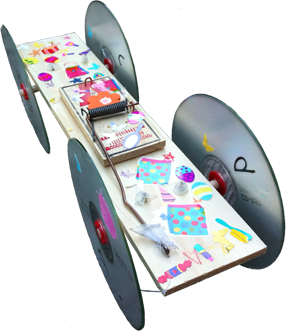
"content": "\u003cfigure id=\"attachment_16570\" class=\"wp-caption alignright\" style=\"max-width: 300px\">\u003cimg class=\"size-full wp-image-16570\" src=\"http://ww2.kqed.org/mindshift/wp-content/uploads/sites/23/2011/11/MT_home_SM.png\" alt=\"\" width=\"300\" height=\"331\">\u003cfigcaption class=\"wp-caption-text\"> \u003c/figcaption>\u003c/figure>\n\u003cp>Amidst \u003ca href=\"http://www.latimes.com/news/local/la-me-science-20111031,0,3957251.story\">grim reports\u003c/a> this week that California schools are \"failing to invest enough time, money and training to teach science well,\" and that only \u003ca href=\"http://www.cftl.org/Whats__New.htm\">one out of 10 elementary school students\u003c/a> gets to play with hands-on science experiments, a shining counter-example is happening at the \u003ca href=\"http://nuevaschool.org/\">Nueva School\u003c/a> in the wealthy San Francisco suburb of Hillsborough.\u003c/p>\n\u003cp>Sixth-grade students are using Wii remote controls to collect scientific data on things like positive and negative acceleration and thinking about conceptual issues like the difference between engineering and science.\u003c/p>\n\u003cp>Led by Stanford researchers, the class is using Wii remote controls (available online for anywhere from $15 to $40) to create things like a rat-trap car, a marble roller-coaster, and balloon-powered vehicle to test different theories.\u003c/p>\n\u003cp>With the rat-trap car, students have created a Wii-strapped vehicle with CDs as wheels, like a skateboard. They've already experimented with smaller mousetraps and lighter batteries to see if the cars would go faster, but landed on the rat trap as the best way to measure the information they needed.\u003c/p>\n\u003cp>The main objective of the experiment is not necessarily to measure speed, but to show students \u003cem>how\u003c/em> to capture data like scientists do. Kids are typically confused by graphs, but with the Wii experiment, they could see the horizontal, vertical, and lateral aspects of the accelerometer.\u003c/p>\n\u003caside class=\"pullquote alignleft\">With the Wii remotes, students are using interesting new technology and participating in the creation of their own designs.\u003c/aside>\n\u003cp>\"Kids see patterns in data,\" said Wendy Ju, one of the Stanford researchers working with the students at the \u003ca href=\"http://www.innovativelearningconference.org/\">Innovative Learning Conference\u003c/a> held at Nueva recently. \"What does that data do to \u003c!--more-->contribute to their designs?\"\u003c/p>\n\u003cp>[ad fullwidth]\u003c/p>\n\u003cp>With the marble roller coaster, students used the Wii remotes to test their theories on speed. They designed the roller coaster, then used the infrared camera in front of the Wii remote to see where in the structure the marbles would role by the fastest. The same idea was used to test the speed of the balloon-powered cars.\u003c/p>\n\u003cp>During the course of the classes, the Stanford researchers have been surprised by students' reactions: The students were more interested in the \u003cem>designing\u003c/em> phase than by the measuring phase.\u003c/p>\n\u003cp>\"Students had a hard time letting go of the engineering,\" Ju said. \"They wanted to keep redesigning things. The moments of talking about measuring stuff was interrupted by trying to find ways of redesigning and changing things.\"\u003c/p>\n\u003cp>This tension between science and engineering is one of the ideas being explored through the eyes of sixth-graders. \"Science labs are often really engineering projects in drag,\" said Stanford computer science professor Terry Winograd. \"You make it work, but you don’t think about how you got there. There’s a feat, but not a deep understanding of what’s going on. You don’t get to probe the phenomenon.\"\u003c/p>\n\u003cp>The Nueva kids are lucky. For most students, should they be lucky enough to have time to conduct science experiments in class, it's typically completed in 15 minutes and has a preordained outcome. \"You can see where all the right answers are, and from the perspective of science, it's too neat,\" Winograd said. \"It just tests whether you can follow instructions.\"\u003c/p>\n\u003cp>That's not the best way of teaching science and scientific inquiry, he said. With the Wii remotes, students are using interesting new technology and participating in the creation of their own designs. They're actually helping researchers develop tools that can be used by other kids, and they've been incredibly vocal about what methods to use.\u003c/p>\n\u003cp>Researchers have been operating video cameras throughout the workshops, and have hundreds of hours of footage of the kids' experiments. \"You can see where kids think something else is going on and they argue about it amongst themselves, and talk about what they think \u003cem>should\u003c/em> happen,\" Ju said.\u003c/p>\n\u003cp>This is the third year of the \u003ca href=\"http://wiiscience.org/\">WiiScience\u003c/a> program at Nueva. How amazing would it be to see the proliferation of a class like this in all elementary schools.\u003c/p>\n\u003cp>\u003c/p>\n\u003cp> \u003c/p>\n\n",
"disqusIdentifier": "16539 http://blogs.kqed.org/mindshift/?p=16539",
"disqusUrl": "https://ww2.kqed.org/mindshift/2011/11/01/what-do-wii-remotes-have-to-do-with-science-ask-sixth-graders/",
"stats": {
"hasVideo": false,
"hasChartOrMap": false,
"hasAudio": false,
"hasPolis": false,
"wordCount": 683,
"hasGoogleForm": false,
"hasGallery": false,
"hasHearkenModule": false,
"iframeSrcs": [],
"paragraphCount": 16
},
"modified": 1320178156,
"excerpt": null,
"headData": {
"twImgId": "",
"twTitle": "",
"ogTitle": "",
"ogImgId": "",
"twDescription": "",
"description": "Amidst grim reports this week that California schools are "failing to invest enough time, money and training to teach science well," and that only one out of 10 elementary school students gets to play with hands-on science experiments, a shining counter-example is happening at the Nueva School in the wealthy San Francisco suburb of Hillsborough.",
"title": "What Do Wii Remotes Have to Do With Science? Ask Sixth-Graders | KQED",
"ogDescription": "",
"schema": {
"@context": "https://schema.org",
"@type": "Article",
"headline": "What Do Wii Remotes Have to Do With Science? Ask Sixth-Graders",
"datePublished": "2011-11-01T13:09:16-07:00",
"dateModified": "2011-11-01T13:09:16-07:00",
"image": "https://cdn.kqed.org/wp-content/uploads/2020/02/KQED-OG-Image@1x.png"
}
},
"guestAuthors": [],
"slug": "what-do-wii-remotes-have-to-do-with-science-ask-sixth-graders",
"status": "publish",
"path": "/mindshift/16539/what-do-wii-remotes-have-to-do-with-science-ask-sixth-graders",
"audioTrackLength": null,
"parsedContent": [
{
"type": "contentString",
"content": "\u003cdiv class=\"post-body\">\u003cp>\u003cfigure id=\"attachment_16570\" class=\"wp-caption alignright\" style=\"max-width: 300px\">\u003cimg class=\"size-full wp-image-16570\" src=\"http://ww2.kqed.org/mindshift/wp-content/uploads/sites/23/2011/11/MT_home_SM.png\" alt=\"\" width=\"300\" height=\"331\">\u003cfigcaption class=\"wp-caption-text\"> \u003c/figcaption>\u003c/figure>\n\u003cp>Amidst \u003ca href=\"http://www.latimes.com/news/local/la-me-science-20111031,0,3957251.story\">grim reports\u003c/a> this week that California schools are \"failing to invest enough time, money and training to teach science well,\" and that only \u003ca href=\"http://www.cftl.org/Whats__New.htm\">one out of 10 elementary school students\u003c/a> gets to play with hands-on science experiments, a shining counter-example is happening at the \u003ca href=\"http://nuevaschool.org/\">Nueva School\u003c/a> in the wealthy San Francisco suburb of Hillsborough.\u003c/p>\n\u003cp>Sixth-grade students are using Wii remote controls to collect scientific data on things like positive and negative acceleration and thinking about conceptual issues like the difference between engineering and science.\u003c/p>\n\u003cp>Led by Stanford researchers, the class is using Wii remote controls (available online for anywhere from $15 to $40) to create things like a rat-trap car, a marble roller-coaster, and balloon-powered vehicle to test different theories.\u003c/p>\n\u003cp>With the rat-trap car, students have created a Wii-strapped vehicle with CDs as wheels, like a skateboard. They've already experimented with smaller mousetraps and lighter batteries to see if the cars would go faster, but landed on the rat trap as the best way to measure the information they needed.\u003c/p>\n\u003cp>The main objective of the experiment is not necessarily to measure speed, but to show students \u003cem>how\u003c/em> to capture data like scientists do. Kids are typically confused by graphs, but with the Wii experiment, they could see the horizontal, vertical, and lateral aspects of the accelerometer.\u003c/p>\n\u003caside class=\"pullquote alignleft\">With the Wii remotes, students are using interesting new technology and participating in the creation of their own designs.\u003c/aside>\n\u003cp>\"Kids see patterns in data,\" said Wendy Ju, one of the Stanford researchers working with the students at the \u003ca href=\"http://www.innovativelearningconference.org/\">Innovative Learning Conference\u003c/a> held at Nueva recently. \"What does that data do to \u003c!--more-->contribute to their designs?\"\u003c/p>\n\u003cp>\u003c/p>\u003c/div>",
"attributes": {
"named": {},
"numeric": []
}
},
{
"type": "component",
"content": "",
"name": "ad",
"attributes": {
"named": {
"label": "fullwidth"
},
"numeric": [
"fullwidth"
]
}
},
{
"type": "contentString",
"content": "\u003cdiv class=\"post-body\">\u003cp>\u003c/p>\n\u003cp>With the marble roller coaster, students used the Wii remotes to test their theories on speed. They designed the roller coaster, then used the infrared camera in front of the Wii remote to see where in the structure the marbles would role by the fastest. The same idea was used to test the speed of the balloon-powered cars.\u003c/p>\n\u003cp>During the course of the classes, the Stanford researchers have been surprised by students' reactions: The students were more interested in the \u003cem>designing\u003c/em> phase than by the measuring phase.\u003c/p>\n\u003cp>\"Students had a hard time letting go of the engineering,\" Ju said. \"They wanted to keep redesigning things. The moments of talking about measuring stuff was interrupted by trying to find ways of redesigning and changing things.\"\u003c/p>\n\u003cp>This tension between science and engineering is one of the ideas being explored through the eyes of sixth-graders. \"Science labs are often really engineering projects in drag,\" said Stanford computer science professor Terry Winograd. \"You make it work, but you don’t think about how you got there. There’s a feat, but not a deep understanding of what’s going on. You don’t get to probe the phenomenon.\"\u003c/p>\n\u003cp>The Nueva kids are lucky. For most students, should they be lucky enough to have time to conduct science experiments in class, it's typically completed in 15 minutes and has a preordained outcome. \"You can see where all the right answers are, and from the perspective of science, it's too neat,\" Winograd said. \"It just tests whether you can follow instructions.\"\u003c/p>\n\u003cp>That's not the best way of teaching science and scientific inquiry, he said. With the Wii remotes, students are using interesting new technology and participating in the creation of their own designs. They're actually helping researchers develop tools that can be used by other kids, and they've been incredibly vocal about what methods to use.\u003c/p>\n\u003cp>Researchers have been operating video cameras throughout the workshops, and have hundreds of hours of footage of the kids' experiments. \"You can see where kids think something else is going on and they argue about it amongst themselves, and talk about what they think \u003cem>should\u003c/em> happen,\" Ju said.\u003c/p>\n\u003cp>This is the third year of the \u003ca href=\"http://wiiscience.org/\">WiiScience\u003c/a> program at Nueva. How amazing would it be to see the proliferation of a class like this in all elementary schools.\u003c/p>\n\u003cp>\u003c/p>\n\u003cp> \u003c/p>\n\n\u003c/div>\u003c/p>",
"attributes": {
"named": {},
"numeric": []
}
}
],
"link": "/mindshift/16539/what-do-wii-remotes-have-to-do-with-science-ask-sixth-graders",
"authors": [
"180"
],
"categories": [
"mindshift_195",
"mindshift_193"
],
"tags": [
"mindshift_20902",
"mindshift_114",
"mindshift_759",
"mindshift_758"
],
"featImg": "mindshift_16570",
"label": "mindshift"
},
"mindshift_16541": {
"type": "posts",
"id": "mindshift_16541",
"meta": {
"index": "posts_1716263798",
"site": "mindshift",
"id": "16541",
"score": null,
"sort": [
1320167288000
]
},
"parent": 0,
"labelTerm": {
"site": "mindshift"
},
"blocks": [],
"publishDate": 1320167288,
"format": "aside",
"disqusTitle": "E-Readers Help Spread Literacy, No Apps Needed",
"title": "E-Readers Help Spread Literacy, No Apps Needed",
"headTitle": "MindShift | KQED News",
"content": "\u003cdiv class=\"module image alignleft mceTemp\" style=\"width: 300px\">\u003ca href=\"http://www.worldreader.org/uploads/index_81_324169727.jpg\">\u003cimg class=\"size-full wp-image-16542\" src=\"http://ww2.kqed.org/mindshift/wp-content/uploads/sites/23/2011/10/worldreader.jpg\" alt=\"\" width=\"300\" height=\"152\">\u003c/a>\n\u003cp class=\"wp-media-credit\">Worldreader\u003c/p>\n\u003c/div>\n\u003cp>We often talk about the power of the Internet to spread knowledge and information globally, to make digital content accessible and affordable. But as we're also often caught up in the \"latest and greatest\" gadgetry, sometimes we overlook that broad promise of global education and accessibility.\u003c/p>\n\u003cp>Such is the case, one might argue, with the news last week from \u003ca href=\"http://www.commonsensemedia.org/\">Common Sense Media\u003c/a> about the so-called \"\u003ca href=\"http://www.nytimes.com/2011/10/25/us/screen-time-higher-than-ever-for-children-study-finds.html\">app gap\u003c/a>\" -- the disparity between children in low-income and higher income families and their access to mobile applications.\u003c/p>\n\u003cp>There's little denying that the popularity of mobile devices -- Androids and iPhones and tablets -- has afforded a concurrent explosion in exciting new educational apps. The touchscreen screens, the accelerometers, the size, and the portability of these devices has enabled whole new genres of software and of imaginative and educational gameplay.\u003c/p>\n\u003cp>But if we focus on the \"app gap\" -- those who have iPads and those who do not -- are we ignoring or obscuring other aspects of the digital divide? Are we overlooking the potential for widespread \u003c!--more-->dissemination of and access to information by rushing to prioritize that information bundled in the shiniest new package?\u003c/p>\n\u003cp>While many schools in the U.S. are rushing to embrace iPads, other types of e-readers haven't been widely adopted -- even though they cost less and display digital textbooks, which is one of the rationales for transitioning from print books to tablets. But a non-profit organization called \u003ca href=\"http://worldreader.org\">Worldreader\u003c/a> is demonstrating how utterly transformative e-readers can actually be, even without apps and videos.\u003c/p>\n\u003cp>[ad fullwidth]\u003c/p>\n\u003cp>Worldreader distributes Kindle devices to students in sub-Saharan Africa. The devices are pre-loaded with e-books -- some 63,000 e-books all told have been distributed through the program (including the \u003ca href=\"http://blog.worldreader.org/2011/10/11/meet-worldreaders-new-friends-charlie-james-and-matilda/\">recent addition\u003c/a> to the Worldreader catalog of several of the best-known titles by children's author Roald Dahl).\u003c/p>\n\u003cp>The e-readers offer a huge advantage over their printed counterparts. There's the ability to put an entire library onto one device. A child can be given the e-reader at school and that device can be circulated throughout her or his family or village. There's the ability to distribute those devices to the most remote villages without additional shipping costs of thousands of titles. Plus, the cost of e-readers continue to fall. Furthermore, there are thousands upon thousands of titles available for free.\u003c/p>\n\u003cp>While e-readers don't have all the apps and features of tablets, they do contain some. They all include dictionaries. They often have 3G or WiFi capabilities. They have Web browsers. And they allow for the subscription to other news forms -- magazines, newspapers, and newsletters for example. These devices also tend to have extraordinarily good battery life, which is necessary in regions that don't have reliable electricity.\u003c/p>\n\u003cp>\u003c/p>\n\u003cp>Literacy is one of the most important drivers of economic growth. Rather than concern over the \"app gap\" -- over who has access to iPads and who doesn't -- Worldreader highlights how the discussions around access to the Internet and to digital content still needs to address some of the more fundamental \"haves and have-nots.\"\u003c/p>\n\n",
"disqusIdentifier": "16541 http://blogs.kqed.org/mindshift/?p=16541",
"disqusUrl": "https://ww2.kqed.org/mindshift/2011/11/01/e-readers-help-spread-literacy-no-apps-needed/",
"stats": {
"hasVideo": false,
"hasChartOrMap": false,
"hasAudio": false,
"hasPolis": false,
"wordCount": 522,
"hasGoogleForm": false,
"hasGallery": false,
"hasHearkenModule": false,
"iframeSrcs": [],
"paragraphCount": 11
},
"modified": 1320167288,
"excerpt": null,
"headData": {
"twImgId": "",
"twTitle": "",
"ogTitle": "",
"ogImgId": "",
"twDescription": "",
"description": "Worldreader We often talk about the power of the Internet to spread knowledge and information globally, to make digital content accessible and affordable. But as we're also often caught up in the "latest and greatest" gadgetry, sometimes we overlook that broad promise of global education and accessibility. Such is the case, one might argue, with",
"title": "E-Readers Help Spread Literacy, No Apps Needed | KQED",
"ogDescription": "",
"schema": {
"@context": "https://schema.org",
"@type": "Article",
"headline": "E-Readers Help Spread Literacy, No Apps Needed",
"datePublished": "2011-11-01T10:08:08-07:00",
"dateModified": "2011-11-01T10:08:08-07:00",
"image": "https://cdn.kqed.org/wp-content/uploads/2020/02/KQED-OG-Image@1x.png"
}
},
"guestAuthors": [],
"slug": "e-readers-help-spread-literacy-no-apps-needed",
"status": "publish",
"path": "/mindshift/16541/e-readers-help-spread-literacy-no-apps-needed",
"audioTrackLength": null,
"parsedContent": [
{
"type": "contentString",
"content": "\u003cdiv class=\"post-body\">\u003cp>\u003cdiv class=\"module image alignleft mceTemp\" style=\"width: 300px\">\u003ca href=\"http://www.worldreader.org/uploads/index_81_324169727.jpg\">\u003cimg class=\"size-full wp-image-16542\" src=\"http://ww2.kqed.org/mindshift/wp-content/uploads/sites/23/2011/10/worldreader.jpg\" alt=\"\" width=\"300\" height=\"152\">\u003c/a>\n\u003cp class=\"wp-media-credit\">Worldreader\u003c/p>\n\u003c/div>\n\u003cp>We often talk about the power of the Internet to spread knowledge and information globally, to make digital content accessible and affordable. But as we're also often caught up in the \"latest and greatest\" gadgetry, sometimes we overlook that broad promise of global education and accessibility.\u003c/p>\n\u003cp>Such is the case, one might argue, with the news last week from \u003ca href=\"http://www.commonsensemedia.org/\">Common Sense Media\u003c/a> about the so-called \"\u003ca href=\"http://www.nytimes.com/2011/10/25/us/screen-time-higher-than-ever-for-children-study-finds.html\">app gap\u003c/a>\" -- the disparity between children in low-income and higher income families and their access to mobile applications.\u003c/p>\n\u003cp>There's little denying that the popularity of mobile devices -- Androids and iPhones and tablets -- has afforded a concurrent explosion in exciting new educational apps. The touchscreen screens, the accelerometers, the size, and the portability of these devices has enabled whole new genres of software and of imaginative and educational gameplay.\u003c/p>\n\u003cp>But if we focus on the \"app gap\" -- those who have iPads and those who do not -- are we ignoring or obscuring other aspects of the digital divide? Are we overlooking the potential for widespread \u003c!--more-->dissemination of and access to information by rushing to prioritize that information bundled in the shiniest new package?\u003c/p>\n\u003cp>While many schools in the U.S. are rushing to embrace iPads, other types of e-readers haven't been widely adopted -- even though they cost less and display digital textbooks, which is one of the rationales for transitioning from print books to tablets. But a non-profit organization called \u003ca href=\"http://worldreader.org\">Worldreader\u003c/a> is demonstrating how utterly transformative e-readers can actually be, even without apps and videos.\u003c/p>\n\u003cp>\u003c/p>\u003c/div>",
"attributes": {
"named": {},
"numeric": []
}
},
{
"type": "component",
"content": "",
"name": "ad",
"attributes": {
"named": {
"label": "fullwidth"
},
"numeric": [
"fullwidth"
]
}
},
{
"type": "contentString",
"content": "\u003cdiv class=\"post-body\">\u003cp>\u003c/p>\n\u003cp>Worldreader distributes Kindle devices to students in sub-Saharan Africa. The devices are pre-loaded with e-books -- some 63,000 e-books all told have been distributed through the program (including the \u003ca href=\"http://blog.worldreader.org/2011/10/11/meet-worldreaders-new-friends-charlie-james-and-matilda/\">recent addition\u003c/a> to the Worldreader catalog of several of the best-known titles by children's author Roald Dahl).\u003c/p>\n\u003cp>The e-readers offer a huge advantage over their printed counterparts. There's the ability to put an entire library onto one device. A child can be given the e-reader at school and that device can be circulated throughout her or his family or village. There's the ability to distribute those devices to the most remote villages without additional shipping costs of thousands of titles. Plus, the cost of e-readers continue to fall. Furthermore, there are thousands upon thousands of titles available for free.\u003c/p>\n\u003cp>While e-readers don't have all the apps and features of tablets, they do contain some. They all include dictionaries. They often have 3G or WiFi capabilities. They have Web browsers. And they allow for the subscription to other news forms -- magazines, newspapers, and newsletters for example. These devices also tend to have extraordinarily good battery life, which is necessary in regions that don't have reliable electricity.\u003c/p>\n\u003cp>\u003c/p>\n\u003cp>Literacy is one of the most important drivers of economic growth. Rather than concern over the \"app gap\" -- over who has access to iPads and who doesn't -- Worldreader highlights how the discussions around access to the Internet and to digital content still needs to address some of the more fundamental \"haves and have-nots.\"\u003c/p>\n\n\u003c/div>\u003c/p>",
"attributes": {
"named": {},
"numeric": []
}
}
],
"link": "/mindshift/16541/e-readers-help-spread-literacy-no-apps-needed",
"authors": [
"4352"
],
"categories": [
"mindshift_195"
],
"tags": [
"mindshift_198",
"mindshift_81",
"mindshift_131",
"mindshift_757"
],
"featImg": "mindshift_16542",
"label": "mindshift"
},
"mindshift_16520": {
"type": "posts",
"id": "mindshift_16520",
"meta": {
"index": "posts_1716263798",
"site": "mindshift",
"id": "16520",
"score": null,
"sort": [
1320091855000
]
},
"parent": 0,
"labelTerm": {
"site": "mindshift"
},
"blocks": [],
"publishDate": 1320091855,
"format": "aside",
"disqusTitle": "Mixed Perceptions About Kids Using Digital Media",
"title": "Mixed Perceptions About Kids Using Digital Media",
"headTitle": "MindShift | KQED News",
"content": "\u003cp>\u003ca href=\"http://ww2.kqed.org/mindshift/2011/10/mixed-perceptions-about-kids-using-digital-media/jac-2/\" rel=\"attachment wp-att-16524\">\u003cimg class=\"alignleft size-medium wp-image-16524\" src=\"http://ww2.kqed.org/mindshift/wp-content/uploads/sites/23/2011/10/Jac1-300x200.jpg\" alt=\"\" width=\"300\" height=\"200\">\u003c/a>\u003c/p>\n\u003cp>\u003cem>The subject of kids and media -- how much they consume, what's \"good\" for them, what parents' role should be -- is a broad and complicated topic. New studies are continually released with a wide range of advice and information.\u003c/em>\u003c/p>\n\u003cp>\u003cem>The \u003ca href=\"http://www.joanganzcooneycenter.org/\" target=\"_blank\">Joan Ganz Cooney Center \u003c/a>is a great resource of illuminating research, and recently completed a comprehensive report called \u003ca href=\"http://www.joanganzcooneycenter.org/Reports-29.html\" target=\"_blank\">Family Matters: Designing Media for a Digital Age\u003c/a>. The report is packed full of interesting (and sometimes counter-intuitive) information, including \u003ca href=\"http://www.huffingtonpost.com/michael-levine/headsup-media-producers-f_b_871744.html\" target=\"_blank\">the following\u003c/a>:\u003c/em>\u003c/p>\n\u003cul>\n\u003cli>\u003cem>More than a third of parents have learned something technical from their child.\u003c/em>\u003c/li>\n\u003cli>\u003cem>Most believe that video games help children foster skills that are important to their academic achievement.\u003c/em>\u003c/li>\n\u003cli>\u003cem>57% recognize that digital media presents ways for children to converse and connect with friends and family.\u003c/em>\u003c/li>\n\u003c/ul>\n\u003cp>\u003cem>Those are just some of the positive perspectives from the report. But it's a lot more nuanced than that. Here's more about the study.\u003c/em>\u003c/p>\n\u003ch5>By \u003cstrong>Eleanor Yang Su,\u003c/strong> \u003ca href=\"http://californiawatch.org/dailyreport/perceptions-mixed-kids-use-digital-media-13305\" target=\"_blank\">California Watch\u003c/a>\u003cstrong>\u003c/strong>\u003c/h5>\n\u003cp>A majority of American parents say they are concerned that digital media is interfering with childhood development. Yet most do not think their own children spend too much time with electronic devices.\u003c/p>\n\u003cp>[ad fullwidth]\u003c/p>\n\u003cp>That’s according to a recent \u003ca href=\"http://www.joanganzcooneycenter.org/upload_kits/jgcc_familiesmatter.pdf\" target=\"_blank\">report [PDF]\u003c/a> by the \u003ca href=\"http://www.joanganzcooneycenter.org/\">Joan Ganz Cooney Center\u003c/a> at Sesame Workshop. The nonprofit research lab analyzed surveys of 810 parents with children ages 3 through 10 and reported some seemingly paradoxical findings:\u003c/p>\n\u003cul>\n\u003cli>About 59 percent of parents say their children’s digital media use prevents them from getting physical exercise.\u003c/li>\n\u003cli>More than half (53 percent) say the media use can pose a threat for online safety and privacy.\u003c/li>\n\u003cli>About 40 percent of parents say digital media infringes on time their children would otherwise spend in face-to-face interactions.\u003c/li>\n\u003cli>Only 18 percent of parents believe their own children spend too much time with digital media.\u003c/li>\n\u003c/ul>\n\u003caside class=\"pullquote alignleft\">“If kids start using computers before they get to school, they’ll be at an academic advantage because they’ll be more comfortable with the tool.”\u003c/aside>\n\u003cp>Why the apparent contradiction? Researchers say it’s likely because the nature of digital devices today is more private and portable. Parents may not be aware of just how much time their little ones are spending in their rooms, using social networks or playing video games.\u003c/p>\n\u003cp>Some childhood experts said the findings are not surprising, considering earlier reports on media use. Children ages 8 to 18 are spending an average of 7½ hours a day with digital media, including\u003c!--more-->TV, computers and video games, according to a \u003ca href=\"http://www.kff.org/entmedia/mh012010pkg.cfm\" target=\"_blank\">study\u003c/a> released last year by the Kaiser Family Foundation.\u003c/p>\n\u003cp>Parents need to consider what sort of activities their children are missing out on when they spend so much time with electronics, said Peter Mangione, co-director of the Center for Child & Family Studies at WestEd. The San Francisco-based nonprofit provides research, development and services to improve learning outcomes.\u003c/p>\n\u003cp>“I would not want a child spending half their free time on digital media,” Mangione said. “When they’re in the middle of the childhood period – age 7 through 10 – they’re meant to be engaged: talking with people face to face, working in groups, collaborating, learning how to regulate behavior. Those are the things that have an impact on how well the child will function later on.”\u003c/p>\n\u003cp>While many groups have blamed digital media for hindering family relationships and infringing on children’s physical activities, the Cooney Center researchers are cautiously optimistic about its potential to educate.\u003c/p>\n\u003cp>“It’s a digital world, so at some point, kids are going to use digital media, whether by choice or not,” said Lori Takeuchi, author of the Cooney Center report. “If kids start using computers before they get to school, they’ll be at an academic advantage because they’ll be more comfortable with the tool.”\u003c/p>\n\u003cp>Takeuchi added that social media can help expose children to other cultures and viewpoints.\u003c/p>\n\u003cp>“It gives kids this idea that they can communicate with the world outside their home,” she said. “So you can raise them to care about the planet and world issues.”\u003c/p>\n\u003cp>But, she said, that potential will be realized only once television producers, video game makers and other media producers create better-quality educational programs.\u003c/p>\n\u003cp>Unlike movies and TV shows with broader appeal, many video games tend to target just children or adults. There is an optimal period, around the time when children are 6 or 7, when they want to engage in games with their parents and could stand to learn something, Takeuchi said.\u003c/p>\n\u003cp>In the report, she made recommendations to those in the industry to innovate and create new programs and applications that would give children a chance to use their digital media to socialize, exercise and play with others.\u003c/p>\n\u003cp>As for her advice for parents, Takeuchi suggests that they make screen time into family time by watching TV or playing video games with their kids. That would help inform parents about how much digital media their kids are consuming and make it a more enriching experience.\u003c/p>\n\u003cp>“Research has found that kids learn a lot more when a parent is watching TV with their child and is there to explain what’s going on,” Takeuchi said. “Parents can be open-minded and seek out information about the potential of using digital media for learning.”\u003c/p>\n\u003cp>\u003c/p>\n\u003cp>\u003cem>Eleanor Yang Su is a contributor for \u003ca href=\"http://www.californiawatch.org\">California Watch\u003c/a>, the state’s largest investigative reporting team and part of the Center for Investigative Reporting. Learn more at www.californiawatch.org\u003c/em>\u003c/p>\n\n",
"disqusIdentifier": "16520 http://blogs.kqed.org/mindshift/?p=16520",
"disqusUrl": "https://ww2.kqed.org/mindshift/2011/10/31/mixed-perceptions-about-kids-using-digital-media/",
"stats": {
"hasVideo": false,
"hasChartOrMap": false,
"hasAudio": false,
"hasPolis": false,
"wordCount": 944,
"hasGoogleForm": false,
"hasGallery": false,
"hasHearkenModule": false,
"iframeSrcs": [],
"paragraphCount": 22
},
"modified": 1320094157,
"excerpt": null,
"headData": {
"twImgId": "",
"twTitle": "",
"ogTitle": "",
"ogImgId": "",
"twDescription": "",
"description": "The subject of kids and media -- how much they consume, what's "good" for them, what parents' role should be -- is a broad and complicated topic. New studies are continually released with a wide range of advice and information. The Joan Ganz Cooney Center is a great resource of illuminating research, and recently completed",
"title": "Mixed Perceptions About Kids Using Digital Media | KQED",
"ogDescription": "",
"schema": {
"@context": "https://schema.org",
"@type": "Article",
"headline": "Mixed Perceptions About Kids Using Digital Media",
"datePublished": "2011-10-31T13:10:55-07:00",
"dateModified": "2011-10-31T13:49:17-07:00",
"image": "https://cdn.kqed.org/wp-content/uploads/2020/02/KQED-OG-Image@1x.png"
}
},
"guestAuthors": [],
"slug": "mixed-perceptions-about-kids-using-digital-media",
"status": "publish",
"path": "/mindshift/16520/mixed-perceptions-about-kids-using-digital-media",
"audioTrackLength": null,
"parsedContent": [
{
"type": "contentString",
"content": "\u003cdiv class=\"post-body\">\u003cp>\u003cp>\u003ca href=\"http://ww2.kqed.org/mindshift/2011/10/mixed-perceptions-about-kids-using-digital-media/jac-2/\" rel=\"attachment wp-att-16524\">\u003cimg class=\"alignleft size-medium wp-image-16524\" src=\"http://ww2.kqed.org/mindshift/wp-content/uploads/sites/23/2011/10/Jac1-300x200.jpg\" alt=\"\" width=\"300\" height=\"200\">\u003c/a>\u003c/p>\n\u003cp>\u003cem>The subject of kids and media -- how much they consume, what's \"good\" for them, what parents' role should be -- is a broad and complicated topic. New studies are continually released with a wide range of advice and information.\u003c/em>\u003c/p>\n\u003cp>\u003cem>The \u003ca href=\"http://www.joanganzcooneycenter.org/\" target=\"_blank\">Joan Ganz Cooney Center \u003c/a>is a great resource of illuminating research, and recently completed a comprehensive report called \u003ca href=\"http://www.joanganzcooneycenter.org/Reports-29.html\" target=\"_blank\">Family Matters: Designing Media for a Digital Age\u003c/a>. The report is packed full of interesting (and sometimes counter-intuitive) information, including \u003ca href=\"http://www.huffingtonpost.com/michael-levine/headsup-media-producers-f_b_871744.html\" target=\"_blank\">the following\u003c/a>:\u003c/em>\u003c/p>\n\u003cul>\n\u003cli>\u003cem>More than a third of parents have learned something technical from their child.\u003c/em>\u003c/li>\n\u003cli>\u003cem>Most believe that video games help children foster skills that are important to their academic achievement.\u003c/em>\u003c/li>\n\u003cli>\u003cem>57% recognize that digital media presents ways for children to converse and connect with friends and family.\u003c/em>\u003c/li>\n\u003c/ul>\n\u003cp>\u003cem>Those are just some of the positive perspectives from the report. But it's a lot more nuanced than that. Here's more about the study.\u003c/em>\u003c/p>\n\u003ch5>By \u003cstrong>Eleanor Yang Su,\u003c/strong> \u003ca href=\"http://californiawatch.org/dailyreport/perceptions-mixed-kids-use-digital-media-13305\" target=\"_blank\">California Watch\u003c/a>\u003cstrong>\u003c/strong>\u003c/h5>\n\u003cp>A majority of American parents say they are concerned that digital media is interfering with childhood development. Yet most do not think their own children spend too much time with electronic devices.\u003c/p>\n\u003cp>\u003c/p>\u003c/div>",
"attributes": {
"named": {},
"numeric": []
}
},
{
"type": "component",
"content": "",
"name": "ad",
"attributes": {
"named": {
"label": "fullwidth"
},
"numeric": [
"fullwidth"
]
}
},
{
"type": "contentString",
"content": "\u003cdiv class=\"post-body\">\u003cp>\u003c/p>\n\u003cp>That’s according to a recent \u003ca href=\"http://www.joanganzcooneycenter.org/upload_kits/jgcc_familiesmatter.pdf\" target=\"_blank\">report [PDF]\u003c/a> by the \u003ca href=\"http://www.joanganzcooneycenter.org/\">Joan Ganz Cooney Center\u003c/a> at Sesame Workshop. The nonprofit research lab analyzed surveys of 810 parents with children ages 3 through 10 and reported some seemingly paradoxical findings:\u003c/p>\n\u003cul>\n\u003cli>About 59 percent of parents say their children’s digital media use prevents them from getting physical exercise.\u003c/li>\n\u003cli>More than half (53 percent) say the media use can pose a threat for online safety and privacy.\u003c/li>\n\u003cli>About 40 percent of parents say digital media infringes on time their children would otherwise spend in face-to-face interactions.\u003c/li>\n\u003cli>Only 18 percent of parents believe their own children spend too much time with digital media.\u003c/li>\n\u003c/ul>\n\u003caside class=\"pullquote alignleft\">“If kids start using computers before they get to school, they’ll be at an academic advantage because they’ll be more comfortable with the tool.”\u003c/aside>\n\u003cp>Why the apparent contradiction? Researchers say it’s likely because the nature of digital devices today is more private and portable. Parents may not be aware of just how much time their little ones are spending in their rooms, using social networks or playing video games.\u003c/p>\n\u003cp>Some childhood experts said the findings are not surprising, considering earlier reports on media use. Children ages 8 to 18 are spending an average of 7½ hours a day with digital media, including\u003c!--more-->TV, computers and video games, according to a \u003ca href=\"http://www.kff.org/entmedia/mh012010pkg.cfm\" target=\"_blank\">study\u003c/a> released last year by the Kaiser Family Foundation.\u003c/p>\n\u003cp>Parents need to consider what sort of activities their children are missing out on when they spend so much time with electronics, said Peter Mangione, co-director of the Center for Child & Family Studies at WestEd. The San Francisco-based nonprofit provides research, development and services to improve learning outcomes.\u003c/p>\n\u003cp>“I would not want a child spending half their free time on digital media,” Mangione said. “When they’re in the middle of the childhood period – age 7 through 10 – they’re meant to be engaged: talking with people face to face, working in groups, collaborating, learning how to regulate behavior. Those are the things that have an impact on how well the child will function later on.”\u003c/p>\n\u003cp>While many groups have blamed digital media for hindering family relationships and infringing on children’s physical activities, the Cooney Center researchers are cautiously optimistic about its potential to educate.\u003c/p>\n\u003cp>“It’s a digital world, so at some point, kids are going to use digital media, whether by choice or not,” said Lori Takeuchi, author of the Cooney Center report. “If kids start using computers before they get to school, they’ll be at an academic advantage because they’ll be more comfortable with the tool.”\u003c/p>\n\u003cp>Takeuchi added that social media can help expose children to other cultures and viewpoints.\u003c/p>\n\u003cp>“It gives kids this idea that they can communicate with the world outside their home,” she said. “So you can raise them to care about the planet and world issues.”\u003c/p>\n\u003cp>But, she said, that potential will be realized only once television producers, video game makers and other media producers create better-quality educational programs.\u003c/p>\n\u003cp>Unlike movies and TV shows with broader appeal, many video games tend to target just children or adults. There is an optimal period, around the time when children are 6 or 7, when they want to engage in games with their parents and could stand to learn something, Takeuchi said.\u003c/p>\n\u003cp>In the report, she made recommendations to those in the industry to innovate and create new programs and applications that would give children a chance to use their digital media to socialize, exercise and play with others.\u003c/p>\n\u003cp>As for her advice for parents, Takeuchi suggests that they make screen time into family time by watching TV or playing video games with their kids. That would help inform parents about how much digital media their kids are consuming and make it a more enriching experience.\u003c/p>\n\u003cp>“Research has found that kids learn a lot more when a parent is watching TV with their child and is there to explain what’s going on,” Takeuchi said. “Parents can be open-minded and seek out information about the potential of using digital media for learning.”\u003c/p>\n\u003cp>\u003c/p>\n\u003cp>\u003cem>Eleanor Yang Su is a contributor for \u003ca href=\"http://www.californiawatch.org\">California Watch\u003c/a>, the state’s largest investigative reporting team and part of the Center for Investigative Reporting. Learn more at www.californiawatch.org\u003c/em>\u003c/p>\n\n\u003c/div>\u003c/p>",
"attributes": {
"named": {},
"numeric": []
}
}
],
"link": "/mindshift/16520/mixed-perceptions-about-kids-using-digital-media",
"authors": [
"180"
],
"categories": [
"mindshift_194",
"mindshift_195",
"mindshift_193"
],
"tags": [
"mindshift_200"
],
"featImg": "mindshift_16524",
"label": "mindshift"
},
"mindshift_16501": {
"type": "posts",
"id": "mindshift_16501",
"meta": {
"index": "posts_1716263798",
"site": "mindshift",
"id": "16501",
"score": null,
"sort": [
1320079453000
]
},
"parent": 0,
"labelTerm": {
"site": "mindshift"
},
"blocks": [],
"publishDate": 1320079453,
"format": "aside",
"disqusTitle": "Great New Apps for Music, Middle School, Math, And More ",
"title": "Great New Apps for Music, Middle School, Math, And More ",
"headTitle": "MindShift | KQED News",
"content": "\u003cp>\u003cem>Continuing our monthly \u003ca href=\"http://ww2.kqed.org/mindshift/feature/educational-apps/\">Educational Apps\u003c/a> series, here are some of the new iOS, Android, and Web-based educational apps that caught our eye this month:\u003c/em>\u003c/p>\n\u003cp>\u003cstrong>THE WORMWORLD SAGA\u003c/strong>\u003c/p>\n\u003cp>\u003ca href=\"http://wormworldsaga.com\">\u003cimg class=\"alignleft size-medium wp-image-16502\" src=\"http://ww2.kqed.org/mindshift/wp-content/uploads/sites/23/2011/10/trapped-300x224.jpg\" alt=\"\" width=\"300\" height=\"224\">\u003c/a>\u003ca href=\"http://www.wormworldsaga.com/\">The Wormworld Saga\u003c/a> is an online graphic novel about Jonas Berg, a young boy who enters an alternative fantasy world through a magical painting. Author and artist Dan Lieske held a successful \u003ca href=\"http://kickstarter.com\">Kickstarter\u003c/a> campaign to fund the graphic novel's creation, and the response was \u003ca href=\"http://www.kickstarter.com/projects/daniellieske/the-wormworld-saga-app\">overwhelming\u003c/a> -- almost doubling Lieske's original funding request and enabling him to focus fulltime on the project. The Wormworld Saga has been available on the Web for a while, but it entered the iTunes store (\u003ca href=\"http://itunes.apple.com/us/app/the-wormworld-saga/id453680677?mt=8\">link\u003c/a>) this month with an iPad app that's perfect for its vision of a continuous-scrolling story. (iOS, free with in-app purchases for additional chapters)\u003c/p>\n\u003cp>\u003cstrong>KILL MATH\u003c/strong>\u003c/p>\n\u003cp>Bret Victor has collected his ideas about making math more meaningful to learners and designed \u003ca href=\"http://worrydream.com/KillMath/\">Kill Math\u003c/a> around the idea. \"We are no longer constrained by pencil and paper,\" he writes. \"The symbolic shuffle should no longer be taken for granted as the fundamental mechanism for understanding quantity and change. Math needs a new interface.\" In thinking what this new \u003c!--more-->interface might entail, Kill Math offers a number of projects and ideas, including a \u003ca href=\"http://worrydream.com/ScrubbingCalculator\">Scrubbing Calculator\u003c/a> and an \u003ca href=\"http://worrydream.com/LadderOfAbstraction\">interactive essay\u003c/a> about using visualizations. (Web, free)\u003c/p>\n\u003cp>[ad fullwidth]\u003c/p>\n\u003cp>\u003cstrong>SCRIBBLENAUTS\u003c/strong>\u003c/p>\n\u003cp>\u003ca href=\"http://ww2.kqed.org/mindshift/2011/10/great-new-apps-for-music-middle-school-math-and-more/scribblenaut/\" rel=\"attachment wp-att-16508\">\u003cimg class=\"alignright size-medium wp-image-16508\" src=\"http://ww2.kqed.org/mindshift/wp-content/uploads/sites/23/2011/10/scribblenaut-300x199.png\" alt=\"\" width=\"300\" height=\"199\">\u003c/a>\u003ca href=\"http://games.kidswb.com/official-site/scribblenauts/\">Scribblenauts\u003c/a> isn't a new game, but it's new to iPhone and iPad this month. Scribblenauts was originally created for Nintendo DS and received a lot of praise for its open-ended gaming. The game is rather unique insofar as it lets players create almost any item they can think of in order to help the main character, Maxwell, complete the various challenges. \u003ca href=\"http://itunes.apple.com/us/app/scribblenauts-remix/id444844790?mt=8\">link\u003c/a> (iOS, $4.99)\u003c/p>\n\u003cp>\u003cstrong>INSTINCT\u003c/strong>\u003c/p>\n\u003cp>Still in private beta, \u003ca href=\"http://getinstinct.com/\">Instinct\u003c/a> offers a Web-based tool for learning how to play the guitar. The Web site shows you how to play a piece of music -- with visual instructions on fingering, strings and the fretboard, you follow along on your own instrument, and the app uses your computer's microphone to help give you instant feedback. (Web, beta)\u003c/p>\n\u003cp>\u003cstrong>CODIFY\u003c/strong>\u003c/p>\n\u003cp>\u003ca href=\"http://twolivesleft.com/Codify/\">\u003cimg class=\"alignleft size-full wp-image-16504\" src=\"http://ww2.kqed.org/mindshift/wp-content/uploads/sites/23/2011/10/codify.jpg\" alt=\"\" width=\"262\" height=\"350\">\u003c/a>Remember the argument when the iPad was first released that it was just a tool for consumption and not creation? Here's more proof that that argument was wrong: \u003ca href=\"http://twolivesleft.com/Codify/\">Codify\u003c/a>. The new app lets you write software and build games and simulations on your iPad. The app uses the Lua programming language and takes advantage of the tablet's multitouch screen to help you easily edit your code. \u003ca href=\"http://itunes.apple.com/us/app/codify/id439571171?mt=8\">link\u003c/a> (iOS, $7.99)\u003c/p>\n\u003cp>\u003cstrong>MIDDLE SCHOOL CONFIDENTIAL\u003c/strong>\u003c/p>\n\u003cp>The popular series \u003ca href=\"http://www.middleschoolconfidential.com/\">Middle School Confidential\u003c/a> has released an app, bringing a book about character-building and self-confidence to iOS and to the Nook Color (\u003ca href=\"http://itunes.apple.com/us/app/be-confident-in-who-you-are/id428588931?mt=8\">link\u003c/a>). As with other titles in the series, the book provides advice for common middle school issues, made accessible via its graphic novel format. ($2.99, iOS and Nook)\u003c/p>\n\u003cp>\u003cstrong>MINDNODE\u003c/strong>\u003c/p>\n\u003cp>\u003ca href=\"http://mindnode.com\">MindNode\u003c/a> allows users to organize their ideas via mindmaps (\u003ca href=\"http://itunes.apple.com/us/app/mindnode/id312220102?mt=8\">link\u003c/a>). The app allows users to brainstorm, plan, and research. There are also Mac versions of the app should you want to share the files between your mobile device and laptop, but the touchscreen of the iPhone or iPad are well-suited for pulling out and scrolling to different \"nodes.\" (iOS, $9.99)\u003c/p>\n\u003cp>\u003cstrong>GEOLOQI\u003c/strong>\u003c/p>\n\u003cp>\u003ca href=\"http://geoloqi.com\">\u003cimg class=\"alignright size-full wp-image-16506\" src=\"http://ww2.kqed.org/mindshift/wp-content/uploads/sites/23/2011/10/geoloqi_wikipedia.jpg\" alt=\"\" width=\"210\" height=\"350\">\u003c/a>The location-based platform \u003ca href=\"https://geoloqi.com/\">Geoloqi\u003c/a> added an incredibly cool new feature this month to its mobile app (\u003ca href=\"http://itunes.apple.com/us/app/geoloqi/id415603875?mt=8\">link\u003c/a>): \u003ca href=\"https://geoloqi.com/blog/2011/10/bring-wikipedia-to-life-with-geoloqi-real-time-content-based-on-your-location/\">a Wikipedia layer\u003c/a>. You can now turn on a feature with the app so that you get push notifications, based on content from Wikipedia articles, when you're in certain areas. This isn't just information of the \"across the street is a good restaurant\" sort, but rather historical and contextual information for the places you visit. (iOS, free)\u003c/p>\n\u003cp>\u003cstrong>VOICETHREAD\u003c/strong>\u003c/p>\n\u003cp>\u003c/p>\n\u003cp>\u003ca href=\"http://voicethread.com\">VoiceThread\u003c/a> is a popular Web-based tool that allows you to build collaborative presentations with text, images, videos, and yes, voice. The company has just released an iPhone app that makes it easier to snap photos for VoiceThreads with your camera, to narrate or annotate slides, and to share them with others. (\u003ca href=\"http://itunes.apple.com/us/app/voicethread/id465159110?mt=8\">link\u003c/a>) (iOS, free with in-app purchases)\u003c/p>\n\n",
"disqusIdentifier": "16501 http://blogs.kqed.org/mindshift/?p=16501",
"disqusUrl": "https://ww2.kqed.org/mindshift/2011/10/31/great-new-apps-for-music-middle-school-math-and-more/",
"stats": {
"hasVideo": false,
"hasChartOrMap": false,
"hasAudio": false,
"hasPolis": false,
"wordCount": 687,
"hasGoogleForm": false,
"hasGallery": false,
"hasHearkenModule": false,
"iframeSrcs": [],
"paragraphCount": 21
},
"modified": 1320079456,
"excerpt": null,
"headData": {
"twImgId": "",
"twTitle": "",
"ogTitle": "",
"ogImgId": "",
"twDescription": "",
"description": "Continuing our monthly Educational Apps series, here are some of the new iOS, Android, and Web-based educational apps that caught our eye this month: THE WORMWORLD SAGA The Wormworld Saga is an online graphic novel about Jonas Berg, a young boy who enters an alternative fantasy world through a magical painting. Author and artist Dan",
"title": "Great New Apps for Music, Middle School, Math, And More | KQED",
"ogDescription": "",
"schema": {
"@context": "https://schema.org",
"@type": "Article",
"headline": "Great New Apps for Music, Middle School, Math, And More ",
"datePublished": "2011-10-31T09:44:13-07:00",
"dateModified": "2011-10-31T09:44:16-07:00",
"image": "https://cdn.kqed.org/wp-content/uploads/2020/02/KQED-OG-Image@1x.png"
}
},
"guestAuthors": [],
"slug": "great-new-apps-for-music-middle-school-math-and-more",
"status": "publish",
"path": "/mindshift/16501/great-new-apps-for-music-middle-school-math-and-more",
"audioTrackLength": null,
"parsedContent": [
{
"type": "contentString",
"content": "\u003cdiv class=\"post-body\">\u003cp>\u003cp>\u003cem>Continuing our monthly \u003ca href=\"http://ww2.kqed.org/mindshift/feature/educational-apps/\">Educational Apps\u003c/a> series, here are some of the new iOS, Android, and Web-based educational apps that caught our eye this month:\u003c/em>\u003c/p>\n\u003cp>\u003cstrong>THE WORMWORLD SAGA\u003c/strong>\u003c/p>\n\u003cp>\u003ca href=\"http://wormworldsaga.com\">\u003cimg class=\"alignleft size-medium wp-image-16502\" src=\"http://ww2.kqed.org/mindshift/wp-content/uploads/sites/23/2011/10/trapped-300x224.jpg\" alt=\"\" width=\"300\" height=\"224\">\u003c/a>\u003ca href=\"http://www.wormworldsaga.com/\">The Wormworld Saga\u003c/a> is an online graphic novel about Jonas Berg, a young boy who enters an alternative fantasy world through a magical painting. Author and artist Dan Lieske held a successful \u003ca href=\"http://kickstarter.com\">Kickstarter\u003c/a> campaign to fund the graphic novel's creation, and the response was \u003ca href=\"http://www.kickstarter.com/projects/daniellieske/the-wormworld-saga-app\">overwhelming\u003c/a> -- almost doubling Lieske's original funding request and enabling him to focus fulltime on the project. The Wormworld Saga has been available on the Web for a while, but it entered the iTunes store (\u003ca href=\"http://itunes.apple.com/us/app/the-wormworld-saga/id453680677?mt=8\">link\u003c/a>) this month with an iPad app that's perfect for its vision of a continuous-scrolling story. (iOS, free with in-app purchases for additional chapters)\u003c/p>\n\u003cp>\u003cstrong>KILL MATH\u003c/strong>\u003c/p>\n\u003cp>Bret Victor has collected his ideas about making math more meaningful to learners and designed \u003ca href=\"http://worrydream.com/KillMath/\">Kill Math\u003c/a> around the idea. \"We are no longer constrained by pencil and paper,\" he writes. \"The symbolic shuffle should no longer be taken for granted as the fundamental mechanism for understanding quantity and change. Math needs a new interface.\" In thinking what this new \u003c!--more-->interface might entail, Kill Math offers a number of projects and ideas, including a \u003ca href=\"http://worrydream.com/ScrubbingCalculator\">Scrubbing Calculator\u003c/a> and an \u003ca href=\"http://worrydream.com/LadderOfAbstraction\">interactive essay\u003c/a> about using visualizations. (Web, free)\u003c/p>\n\u003cp>\u003c/p>\u003c/div>",
"attributes": {
"named": {},
"numeric": []
}
},
{
"type": "component",
"content": "",
"name": "ad",
"attributes": {
"named": {
"label": "fullwidth"
},
"numeric": [
"fullwidth"
]
}
},
{
"type": "contentString",
"content": "\u003cdiv class=\"post-body\">\u003cp>\u003c/p>\n\u003cp>\u003cstrong>SCRIBBLENAUTS\u003c/strong>\u003c/p>\n\u003cp>\u003ca href=\"http://ww2.kqed.org/mindshift/2011/10/great-new-apps-for-music-middle-school-math-and-more/scribblenaut/\" rel=\"attachment wp-att-16508\">\u003cimg class=\"alignright size-medium wp-image-16508\" src=\"http://ww2.kqed.org/mindshift/wp-content/uploads/sites/23/2011/10/scribblenaut-300x199.png\" alt=\"\" width=\"300\" height=\"199\">\u003c/a>\u003ca href=\"http://games.kidswb.com/official-site/scribblenauts/\">Scribblenauts\u003c/a> isn't a new game, but it's new to iPhone and iPad this month. Scribblenauts was originally created for Nintendo DS and received a lot of praise for its open-ended gaming. The game is rather unique insofar as it lets players create almost any item they can think of in order to help the main character, Maxwell, complete the various challenges. \u003ca href=\"http://itunes.apple.com/us/app/scribblenauts-remix/id444844790?mt=8\">link\u003c/a> (iOS, $4.99)\u003c/p>\n\u003cp>\u003cstrong>INSTINCT\u003c/strong>\u003c/p>\n\u003cp>Still in private beta, \u003ca href=\"http://getinstinct.com/\">Instinct\u003c/a> offers a Web-based tool for learning how to play the guitar. The Web site shows you how to play a piece of music -- with visual instructions on fingering, strings and the fretboard, you follow along on your own instrument, and the app uses your computer's microphone to help give you instant feedback. (Web, beta)\u003c/p>\n\u003cp>\u003cstrong>CODIFY\u003c/strong>\u003c/p>\n\u003cp>\u003ca href=\"http://twolivesleft.com/Codify/\">\u003cimg class=\"alignleft size-full wp-image-16504\" src=\"http://ww2.kqed.org/mindshift/wp-content/uploads/sites/23/2011/10/codify.jpg\" alt=\"\" width=\"262\" height=\"350\">\u003c/a>Remember the argument when the iPad was first released that it was just a tool for consumption and not creation? Here's more proof that that argument was wrong: \u003ca href=\"http://twolivesleft.com/Codify/\">Codify\u003c/a>. The new app lets you write software and build games and simulations on your iPad. The app uses the Lua programming language and takes advantage of the tablet's multitouch screen to help you easily edit your code. \u003ca href=\"http://itunes.apple.com/us/app/codify/id439571171?mt=8\">link\u003c/a> (iOS, $7.99)\u003c/p>\n\u003cp>\u003cstrong>MIDDLE SCHOOL CONFIDENTIAL\u003c/strong>\u003c/p>\n\u003cp>The popular series \u003ca href=\"http://www.middleschoolconfidential.com/\">Middle School Confidential\u003c/a> has released an app, bringing a book about character-building and self-confidence to iOS and to the Nook Color (\u003ca href=\"http://itunes.apple.com/us/app/be-confident-in-who-you-are/id428588931?mt=8\">link\u003c/a>). As with other titles in the series, the book provides advice for common middle school issues, made accessible via its graphic novel format. ($2.99, iOS and Nook)\u003c/p>\n\u003cp>\u003cstrong>MINDNODE\u003c/strong>\u003c/p>\n\u003cp>\u003ca href=\"http://mindnode.com\">MindNode\u003c/a> allows users to organize their ideas via mindmaps (\u003ca href=\"http://itunes.apple.com/us/app/mindnode/id312220102?mt=8\">link\u003c/a>). The app allows users to brainstorm, plan, and research. There are also Mac versions of the app should you want to share the files between your mobile device and laptop, but the touchscreen of the iPhone or iPad are well-suited for pulling out and scrolling to different \"nodes.\" (iOS, $9.99)\u003c/p>\n\u003cp>\u003cstrong>GEOLOQI\u003c/strong>\u003c/p>\n\u003cp>\u003ca href=\"http://geoloqi.com\">\u003cimg class=\"alignright size-full wp-image-16506\" src=\"http://ww2.kqed.org/mindshift/wp-content/uploads/sites/23/2011/10/geoloqi_wikipedia.jpg\" alt=\"\" width=\"210\" height=\"350\">\u003c/a>The location-based platform \u003ca href=\"https://geoloqi.com/\">Geoloqi\u003c/a> added an incredibly cool new feature this month to its mobile app (\u003ca href=\"http://itunes.apple.com/us/app/geoloqi/id415603875?mt=8\">link\u003c/a>): \u003ca href=\"https://geoloqi.com/blog/2011/10/bring-wikipedia-to-life-with-geoloqi-real-time-content-based-on-your-location/\">a Wikipedia layer\u003c/a>. You can now turn on a feature with the app so that you get push notifications, based on content from Wikipedia articles, when you're in certain areas. This isn't just information of the \"across the street is a good restaurant\" sort, but rather historical and contextual information for the places you visit. (iOS, free)\u003c/p>\n\u003cp>\u003cstrong>VOICETHREAD\u003c/strong>\u003c/p>\n\u003cp>\u003c/p>\n\u003cp>\u003ca href=\"http://voicethread.com\">VoiceThread\u003c/a> is a popular Web-based tool that allows you to build collaborative presentations with text, images, videos, and yes, voice. The company has just released an iPhone app that makes it easier to snap photos for VoiceThreads with your camera, to narrate or annotate slides, and to share them with others. (\u003ca href=\"http://itunes.apple.com/us/app/voicethread/id465159110?mt=8\">link\u003c/a>) (iOS, free with in-app purchases)\u003c/p>\n\n\u003c/div>\u003c/p>",
"attributes": {
"named": {},
"numeric": []
}
}
],
"link": "/mindshift/16501/great-new-apps-for-music-middle-school-math-and-more",
"authors": [
"4352"
],
"categories": [
"mindshift_195"
],
"featImg": "mindshift_16502",
"label": "mindshift"
},
"mindshift_16471": {
"type": "posts",
"id": "mindshift_16471",
"meta": {
"index": "posts_1716263798",
"site": "mindshift",
"id": "16471",
"score": null,
"sort": [
1319838410000
]
},
"parent": 0,
"labelTerm": {
"site": "mindshift"
},
"blocks": [],
"publishDate": 1319838410,
"format": "aside",
"disqusTitle": "Not Ready to Hack Into Your Smartphone? Start Here.",
"title": "Not Ready to Hack Into Your Smartphone? Start Here.",
"headTitle": "MindShift | KQED News",
"content": "\u003cp>\u003ca href=\"http://littlebits.cc/about\">\u003cimg class=\"alignleft size-full wp-image-16472\" src=\"http://ww2.kqed.org/mindshift/wp-content/uploads/sites/23/2011/10/littlebits.jpg\" alt=\"\" width=\"300\" height=\"167\">\u003c/a>For those looking to tinker with electronics, add buzzers, lights or sensors to an object, or teach kids (or themselves) the basics of circuitry, programming, and micro-controllers, it's not as hard as you might think.\u003c/p>\n\u003cp>There are a number of kits available that make such projects relatively easy and accessible. \u003ca href=\"http://www.arduino.cc/\">Arduino\u003c/a>, for example, offers a fairly simple hardware and software platform for people to get started.\u003c/p>\n\u003cp>But even with the simplicity of Arduino, there's still a rather huge barrier to entry when it comes to working with hardware and software at this level -- particularly for those with no engineering\u003c/p>\n\u003caside class=\"pullquote alignleft\">\"[This is] to enable people with little expertise in the field to be able to speak the language.\"\u003c/aside>\n\u003cp>background. Despite the openness of platforms like Arduino, the idea of wiring, soldering, and programming can be overwhelming.\u003c/p>\n\u003cp>As the electronics we use in our daily lives get more complicated, this turning away -- in frustration, ignorance, or fear -- is increasingly troublesome. We rely more on the very devices that are becoming like \"black boxes\": impenetrable. We don't understand what goes on \"under the hood\" \u003c!--more-->of many of the objects that are most important to our lives (our cars, our smartphones).\u003c/p>\n\u003cp>[ad fullwidth]\u003c/p>\n\u003cp>As an antidote, the \u003ca href=\"http://radar.oreilly.com/2008/01/maker-movement-gaining-recogni.html\">Maker Movement\u003c/a> -- led by the people behind the \u003ca href=\"http://makerfaire.com\">Maker Faire\u003c/a> -- and its call for hands-on experimentation is working to encourage the general public to start making things by hand, as are platforms like Arduino.\u003c/p>\n\u003cp>A newcomer to the movement is \u003ca href=\"http://littlebits.cc/\">littleBits\u003c/a>, a library of pre-assembled circuit boards that snap together with tiny magnets. There's no soldering, no wiring and no programming required. The circuit boards in a littleBits kit have unique functions -- a power component, a pressure sensor, a button, for example -- that can simply be snapped together.\u003c/p>\n\u003cp>Founder Ayah Bdeir, who's just been named a \u003ca href=\"http://blog.ted.com/2011/10/25/meet-the-ted2012-fellows/\">2012 TED Fellow\u003c/a>, told me that she wanted to break down some of the concepts behind building electronics -- things like electricity and interaction -- and instead focus on a \"simple, playful building box.\" She said that she wanted littleBits to be able to \"enable people with little expertise in the field to be able to speak the language.\"\u003c/p>\n\u003cp>An artist and an engineer, Bdeir worked on a similar project to littleBits during her tenure at \u003ca href=\"media.mit.edu\">MIT Media Lab\u003c/a> but realized after working with other artists and designers with no experience in electronics but with a desire to build complex electronic installations that these people didn't want to learn about schematics. They just wanted to \"make it work.\"\u003c/p>\n\u003cp>But with an easy way to make these sorts of projects work, littleBits also provides a great on-ramp for people who might otherwise be too intimidated to learn more about tinkering. And by creating such simple and easy-to-use tools, littleBits may be empowering a whole new group of people to realize that they can actually make, build, and use these tools in their creative endeavors.\u003c/p>\n\u003cp>\u003c/p>\n\u003cp>It's much like using Popsicle sticks and pipe cleaners to teach kids how to build on a small, easy scale. Except these little magnetic circuits fast-forward building to the 21st century.\u003c/p>\n\n",
"disqusIdentifier": "16471 http://blogs.kqed.org/mindshift/?p=16471",
"disqusUrl": "https://ww2.kqed.org/mindshift/2011/10/28/not-ready-to-dismantle-your-smartphone-start-here/",
"stats": {
"hasVideo": false,
"hasChartOrMap": false,
"hasAudio": false,
"hasPolis": false,
"wordCount": 525,
"hasGoogleForm": false,
"hasGallery": false,
"hasHearkenModule": false,
"iframeSrcs": [],
"paragraphCount": 13
},
"modified": 1319838580,
"excerpt": null,
"headData": {
"twImgId": "",
"twTitle": "",
"ogTitle": "",
"ogImgId": "",
"twDescription": "",
"description": "For those looking to tinker with electronics, add buzzers, lights or sensors to an object, or teach kids (or themselves) the basics of circuitry, programming, and micro-controllers, it's not as hard as you might think. There are a number of kits available that make such projects relatively easy and accessible. Arduino, for example, offers a",
"title": "Not Ready to Hack Into Your Smartphone? Start Here. | KQED",
"ogDescription": "",
"schema": {
"@context": "https://schema.org",
"@type": "Article",
"headline": "Not Ready to Hack Into Your Smartphone? Start Here.",
"datePublished": "2011-10-28T14:46:50-07:00",
"dateModified": "2011-10-28T14:49:40-07:00",
"image": "https://cdn.kqed.org/wp-content/uploads/2020/02/KQED-OG-Image@1x.png"
}
},
"guestAuthors": [],
"slug": "not-ready-to-dismantle-your-smartphone-start-here",
"status": "publish",
"path": "/mindshift/16471/not-ready-to-dismantle-your-smartphone-start-here",
"audioTrackLength": null,
"parsedContent": [
{
"type": "contentString",
"content": "\u003cdiv class=\"post-body\">\u003cp>\u003cp>\u003ca href=\"http://littlebits.cc/about\">\u003cimg class=\"alignleft size-full wp-image-16472\" src=\"http://ww2.kqed.org/mindshift/wp-content/uploads/sites/23/2011/10/littlebits.jpg\" alt=\"\" width=\"300\" height=\"167\">\u003c/a>For those looking to tinker with electronics, add buzzers, lights or sensors to an object, or teach kids (or themselves) the basics of circuitry, programming, and micro-controllers, it's not as hard as you might think.\u003c/p>\n\u003cp>There are a number of kits available that make such projects relatively easy and accessible. \u003ca href=\"http://www.arduino.cc/\">Arduino\u003c/a>, for example, offers a fairly simple hardware and software platform for people to get started.\u003c/p>\n\u003cp>But even with the simplicity of Arduino, there's still a rather huge barrier to entry when it comes to working with hardware and software at this level -- particularly for those with no engineering\u003c/p>\n\u003caside class=\"pullquote alignleft\">\"[This is] to enable people with little expertise in the field to be able to speak the language.\"\u003c/aside>\n\u003cp>background. Despite the openness of platforms like Arduino, the idea of wiring, soldering, and programming can be overwhelming.\u003c/p>\n\u003cp>As the electronics we use in our daily lives get more complicated, this turning away -- in frustration, ignorance, or fear -- is increasingly troublesome. We rely more on the very devices that are becoming like \"black boxes\": impenetrable. We don't understand what goes on \"under the hood\" \u003c!--more-->of many of the objects that are most important to our lives (our cars, our smartphones).\u003c/p>\n\u003cp>\u003c/p>\u003c/div>",
"attributes": {
"named": {},
"numeric": []
}
},
{
"type": "component",
"content": "",
"name": "ad",
"attributes": {
"named": {
"label": "fullwidth"
},
"numeric": [
"fullwidth"
]
}
},
{
"type": "contentString",
"content": "\u003cdiv class=\"post-body\">\u003cp>\u003c/p>\n\u003cp>As an antidote, the \u003ca href=\"http://radar.oreilly.com/2008/01/maker-movement-gaining-recogni.html\">Maker Movement\u003c/a> -- led by the people behind the \u003ca href=\"http://makerfaire.com\">Maker Faire\u003c/a> -- and its call for hands-on experimentation is working to encourage the general public to start making things by hand, as are platforms like Arduino.\u003c/p>\n\u003cp>A newcomer to the movement is \u003ca href=\"http://littlebits.cc/\">littleBits\u003c/a>, a library of pre-assembled circuit boards that snap together with tiny magnets. There's no soldering, no wiring and no programming required. The circuit boards in a littleBits kit have unique functions -- a power component, a pressure sensor, a button, for example -- that can simply be snapped together.\u003c/p>\n\u003cp>Founder Ayah Bdeir, who's just been named a \u003ca href=\"http://blog.ted.com/2011/10/25/meet-the-ted2012-fellows/\">2012 TED Fellow\u003c/a>, told me that she wanted to break down some of the concepts behind building electronics -- things like electricity and interaction -- and instead focus on a \"simple, playful building box.\" She said that she wanted littleBits to be able to \"enable people with little expertise in the field to be able to speak the language.\"\u003c/p>\n\u003cp>An artist and an engineer, Bdeir worked on a similar project to littleBits during her tenure at \u003ca href=\"media.mit.edu\">MIT Media Lab\u003c/a> but realized after working with other artists and designers with no experience in electronics but with a desire to build complex electronic installations that these people didn't want to learn about schematics. They just wanted to \"make it work.\"\u003c/p>\n\u003cp>But with an easy way to make these sorts of projects work, littleBits also provides a great on-ramp for people who might otherwise be too intimidated to learn more about tinkering. And by creating such simple and easy-to-use tools, littleBits may be empowering a whole new group of people to realize that they can actually make, build, and use these tools in their creative endeavors.\u003c/p>\n\u003cp>\u003c/p>\n\u003cp>It's much like using Popsicle sticks and pipe cleaners to teach kids how to build on a small, easy scale. Except these little magnetic circuits fast-forward building to the 21st century.\u003c/p>\n\n\u003c/div>\u003c/p>",
"attributes": {
"named": {},
"numeric": []
}
}
],
"link": "/mindshift/16471/not-ready-to-dismantle-your-smartphone-start-here",
"authors": [
"4352"
],
"categories": [
"mindshift_195"
],
"tags": [
"mindshift_501",
"mindshift_756",
"mindshift_100"
],
"featImg": "mindshift_16472",
"label": "mindshift"
},
"mindshift_16475": {
"type": "posts",
"id": "mindshift_16475",
"meta": {
"index": "posts_1716263798",
"site": "mindshift",
"id": "16475",
"score": null,
"sort": [
1319822062000
]
},
"parent": 0,
"labelTerm": {
"site": "mindshift"
},
"blocks": [],
"publishDate": 1319822062,
"format": "aside",
"disqusTitle": "5 Reasons E-Books Are Awesome - Even for the Most Reluctant",
"title": "5 Reasons E-Books Are Awesome - Even for the Most Reluctant",
"headTitle": "MindShift | KQED News",
"content": "\u003cfigure id=\"attachment_16476\" class=\"wp-caption alignright\" style=\"max-width: 300px\">\u003ca href=\"http://www.flickr.com/photos/tapiolankirjasto/4501562959/sizes/z/in/photostream/\">\u003cimg class=\"size-medium wp-image-16476\" src=\"http://ww2.kqed.org/mindshift/wp-content/uploads/sites/23/2011/10/4501562959_07311317d0_z-300x269.jpg\" alt=\"\" width=\"300\" height=\"269\">\u003c/a>\u003cfigcaption class=\"wp-caption-text\">Print books will always have a place in our lives, but e-books can come in handy, too.\u003c/figcaption>\u003c/figure>\n\u003ch5>By \u003ca href=\"http://www.pbs.org/mediashift/jenny-shank/\">Jenny Shank\u003c/a>\u003c/h5>\n\u003cp>When Amazon first introduced the Kindle in 2007, I had no desire to own one. I was happy with regular papery books. When the iPad went on sale in 2010, it was harder for me to resist.\u003c/p>\n\u003cp>I've been using Macs, and Macs only, since I was a 6-year-old trying to ford a river in the game \u003ca href=\"http://en.wikipedia.org/wiki/The_Oregon_Trail_%28video_game%29\">Oregon Trail\u003c/a> on my school's Apple II. I bought an iPad within a few months of its release, and I find it as loveable and gee-whiz-cool as every other Apple product has been. Still, old habits die hard. When I hit the couch at the end of the day to read, it's usually with an old-fashioned book.\u003c/p>\n\u003cp>E-books have nothing on regular books for reading in the bathtub, in the rain while you're pushing your kid on the playground swing, and with your toddler in the rocking chair so he can learn to use his chubby fingers to turn the page, not to mention enjoy books with pop-ups, cut-outs, and other surprises. Regular books autographed by a favorite author make a perfect souvenir of an enjoyable\u003c/p>\n\u003caside class=\"pullquote alignleft\">There are some books that I maybe don't need to own a printed copy of.\u003c/aside>\n\u003cp>night out at the bookstore. I write all over my books, make notes in the margins, and star and underline things. Ideas for my own writing come to me while I'm reading, and I scrawl these in the back blank pages of novels. Still, I have to admit that e-books are better than paper books in some situations. Here are five reasons I've switched to e-books, some of the time:\u003c/p>\n\u003cp>\u003cstrong>1. E-BOOKS ARE HELPFUL TO PARENTS. \u003c/strong>\u003c/p>\n\u003cp>[ad fullwidth]\u003c/p>\n\u003cp>\u003cstrong>\u003c/strong>Becoming a parent did not decrease my desire to read, but it did reduce the amount of time available for reading. I have to be creative about sneaking in reading, and the iPad has helped on several occasions. For example, on a recent vacation, my husband and two kids and I were staying together in one hotel room, and the only way to get the kids to go to bed at a reasonable hour was \u003c!--more-->to turn all the lights out at nine, leaving us all in the dark. I happily spent the time reading on the iPad, whose subtle glow didn't bother the kids. I've tried reading with regular books and book lights or flashlights in similar situations in the past, but the lights never illuminate the book well enough, and I'm always dropping, losing or breaking them. Plus, the sensation of whooshing the page away with a swipe of a finger across the iPad is great fun, and it's silent, a bonus when the kids are asleep.\u003c/p>\n\u003cp>My friend Jennifer Sullivan, who is a mother of twins, tells me that there's only one way for a book-loving mom to cope with endless bouts of nursing two kids at once -- reading on a Kindle. It has only one button to press, so it works better than turning pages when your arms are full.\u003c/p>\n\u003cp>\u003cstrong>2. IT'S EASIER TO SEARCH AN E-BOOK.\u003cbr>\n\u003c/strong>\u003c/p>\n\u003cp>I've been a book reviewer for a number of newspapers and websites for more than a decade, and I always use lots of quotes from the book. Sometimes I can't find the quote I want, no matter how many times I flip through the review copy, looking for that pencil mark I made. But if I can remember even a word or two from the quote, I can find the passage instantly in an e-book or through Amazon's \"Search Inside This Book\" feature.\u003c/p>\n\u003cp>My husband has been trying to read my novel on his iPad, but he's making slow progress because he says it's too long and there are too many characters. (He's a minimalist; I'm a maximalist: There you have it.) Whenever he comes across a character name that he can't remember, he searches for the first time the character was introduced to refresh his memory.\u003c/p>\n\u003cp>\u003cstrong>3. SOME APPS ARE IRRESISTIBLE\u003cbr>\n\u003c/strong>\u003c/p>\n\u003cp>Usually the only magic I want from a book is the kind I conjure in my own mind when I am transported by an incredible story. But some designers are coming up with fascinating reading apps. My favorite is the \u003ca href=\"http://itunes.apple.com/us/app/the-new-yorker-magazine/id370614765?mt=8\">The New Yorker app\u003c/a> for the iPad, which comes free with a magazine subscription. On the iPad, I enjoy reading those front parts of The New Yorker that appear in please-don't-read-me small print in the magazine. I don't feel guilty when I skip parts, which for some reason I do with the magazine. (Is this a Catholic thing?) When you come to a cartoon in the app, you can go ahead and gorge on all the cartoons in a row first, which is what I like to do with the magazine anyway. Also, seeing The New Yorker issues that I haven't read yet arrayed on the iPad does not induce the flurry of panic, shame, and existential dread that seeing the decaying pile of printed New Yorkers in the corner of my living room does. I try not to visit that corner.\u003c/p>\n\u003cp>\u003cstrong>4. IT'S EASIER TO FIND FOREIGN-LANGUAGE BOOKS\u003cbr>\n\u003c/strong>\u003c/p>\n\u003cp>My husband has been raising our kids to speak French, his mother language, and one of the challenges of this is finding plenty of books and DVDs for them to enjoy. We have a sizable collection, but still, the kids get bored. Often my daughter would rather read the new books in English that we checked out from the library than the same old books in French. There are lots of Spanish language materials available here in Colorado, but for any other language, it's tricky. The library only has a few dozen books in French that we've checked out so often the kids have them memorized. Ordering books from France is expensive, and carting them home after we visit family there is difficult.\u003c/p>\n\u003cp>Recently, my husband discovered a trove of children's story e-books in French from GoodBye Paper Éditions. They are fun, interactive stories that include games, so my daughter doesn't drag her feet anymore when it's French story time. (Our favorite: \"Marcel, le cochon qui avait peur de se salir\" -- that's, \"Marcel, the Pig Afraid of Getting Himself Dirty.\")\u003c/p>\n\u003cp>\u003cstrong>5. EASIER TO KEEP NEAT\u003cbr>\n\u003c/strong>\u003c/p>\n\u003cdiv class=\"module image alignright mceTemp\" style=\"width: 300px\">\u003cimg class=\"size-medium wp-image-16479\" src=\"http://ww2.kqed.org/mindshift/wp-content/uploads/sites/23/2011/10/desk2-300x225.jpg\" alt=\"\" width=\"300\" height=\"225\">\n\u003cp class=\"wp-media-credit\">Jenny Shank\u003c/p>\n\u003c/div>\n\u003cp>I've been using these books you see piled around my computer to write book reviews, research author interviews and an anthology I'm helping with, and study for the writing class I teach. I can tell by the publication dates of the lower strata that some of these books have been on my desk since February. I need to move them somewhere -- but there is no remaining bookshelf space. I need to buy a new bookshelf, which I've learned over the years only inevitably leads me to buying another bookshelf.\u003c/p>\n\u003cp>When former Apple CEO Steve Jobs died, my husband showed me a photo of Jobs in his 20s, sitting in a room furnished only with a lamp, a stereo, and a cup of tea. \"This is how we should live,\" my husband said.\u003c/p>\n\u003cp>In my case, it would have to be the lamp, the tea, the stereo, and a couple thousand books. I love books. I will never stop bringing them into the house, but yeah, there are some books that I maybe don't need to own a printed copy of.\u003c/p>\n\u003cp>\u003cem>Jenny Shank is the author of the novel \"The Ringer\" (The Permanent Press, 2011). The Ringer was a finalist for the \u003ca href=\"http://bit.ly/mRhXT4\">Reading the West Book Awards\u003c/a>, sponsored by the Mountains & Plains Independent Booksellers Association, and is a Tattered Cover Book Store \u003ca href=\"http://www.tatteredcover.com/summer-reading-list-2011\">Summer Reading 2011\u003c/a> selection. \u003c/em>\u003c/p>\n\u003cp>\u003ca href=\"http://ww2.kqed.org/mindshift/2011/10/5-reasons-e-books-are-awesome-even-for-the-most-reluctant/pbs-mediashift-logo-final-8/\" rel=\"attachment wp-att-16478\">\u003cimg class=\"alignleft size-thumbnail wp-image-16478\" src=\"http://ww2.kqed.org/mindshift/wp-content/uploads/sites/23/2011/10/pbs-mediashift-logo-final2-140x140.jpg\" alt=\"\" width=\"55\" height=\"55\">\u003c/a>\u003cem>This story was originally published by\u003ca href=\"http://www.pbs.org/mediashift/2011/05/childrens-magazines-cater-to-true-early-adopters-with-mobile-apps137.html\"> PBS MediaShift\u003c/a>, covering the intersection of \u003c/em>\u003cem> \u003c/em>\u003cem>media and technology. Follow \u003ca href=\"http://twitter.com/#%21/pbsmediashift\">@PBSMediaShift\u003c/a> for Twitter updates, or join us on \u003ca href=\"https://www.facebook.com/mediashift\">Facebook\u003c/a>.\u003c/em>\u003cem> Read more in the \u003ca href=\"http://www.pbs.org/mediashift/2011/08/special-series-kids-media214.html\">Kids & Media series\u003c/a> on MediaShift.\u003c/em>\u003c/p>\n\u003cp>[ad floatright]\u003c/p>\n\u003cp> \u003c/p>\n\n",
"disqusIdentifier": "16475 http://blogs.kqed.org/mindshift/?p=16475",
"disqusUrl": "https://ww2.kqed.org/mindshift/2011/10/28/5-reasons-e-books-are-awesome-even-for-the-most-reluctant/",
"stats": {
"hasVideo": false,
"hasChartOrMap": false,
"hasAudio": false,
"hasPolis": false,
"wordCount": 1375,
"hasGoogleForm": false,
"hasGallery": false,
"hasHearkenModule": false,
"iframeSrcs": [],
"paragraphCount": 23
},
"modified": 1319838869,
"excerpt": null,
"headData": {
"twImgId": "",
"twTitle": "",
"ogTitle": "",
"ogImgId": "",
"twDescription": "",
"description": "By Jenny Shank When Amazon first introduced the Kindle in 2007, I had no desire to own one. I was happy with regular papery books. When the iPad went on sale in 2010, it was harder for me to resist. I've been using Macs, and Macs only, since I was a 6-year-old trying to ford",
"title": "5 Reasons E-Books Are Awesome - Even for the Most Reluctant | KQED",
"ogDescription": "",
"schema": {
"@context": "https://schema.org",
"@type": "Article",
"headline": "5 Reasons E-Books Are Awesome - Even for the Most Reluctant",
"datePublished": "2011-10-28T10:14:22-07:00",
"dateModified": "2011-10-28T14:54:29-07:00",
"image": "https://cdn.kqed.org/wp-content/uploads/2020/02/KQED-OG-Image@1x.png"
}
},
"guestAuthors": [],
"slug": "5-reasons-e-books-are-awesome-even-for-the-most-reluctant",
"status": "publish",
"path": "/mindshift/16475/5-reasons-e-books-are-awesome-even-for-the-most-reluctant",
"audioTrackLength": null,
"parsedContent": [
{
"type": "contentString",
"content": "\u003cdiv class=\"post-body\">\u003cp>\u003cfigure id=\"attachment_16476\" class=\"wp-caption alignright\" style=\"max-width: 300px\">\u003ca href=\"http://www.flickr.com/photos/tapiolankirjasto/4501562959/sizes/z/in/photostream/\">\u003cimg class=\"size-medium wp-image-16476\" src=\"http://ww2.kqed.org/mindshift/wp-content/uploads/sites/23/2011/10/4501562959_07311317d0_z-300x269.jpg\" alt=\"\" width=\"300\" height=\"269\">\u003c/a>\u003cfigcaption class=\"wp-caption-text\">Print books will always have a place in our lives, but e-books can come in handy, too.\u003c/figcaption>\u003c/figure>\n\u003ch5>By \u003ca href=\"http://www.pbs.org/mediashift/jenny-shank/\">Jenny Shank\u003c/a>\u003c/h5>\n\u003cp>When Amazon first introduced the Kindle in 2007, I had no desire to own one. I was happy with regular papery books. When the iPad went on sale in 2010, it was harder for me to resist.\u003c/p>\n\u003cp>I've been using Macs, and Macs only, since I was a 6-year-old trying to ford a river in the game \u003ca href=\"http://en.wikipedia.org/wiki/The_Oregon_Trail_%28video_game%29\">Oregon Trail\u003c/a> on my school's Apple II. I bought an iPad within a few months of its release, and I find it as loveable and gee-whiz-cool as every other Apple product has been. Still, old habits die hard. When I hit the couch at the end of the day to read, it's usually with an old-fashioned book.\u003c/p>\n\u003cp>E-books have nothing on regular books for reading in the bathtub, in the rain while you're pushing your kid on the playground swing, and with your toddler in the rocking chair so he can learn to use his chubby fingers to turn the page, not to mention enjoy books with pop-ups, cut-outs, and other surprises. Regular books autographed by a favorite author make a perfect souvenir of an enjoyable\u003c/p>\n\u003caside class=\"pullquote alignleft\">There are some books that I maybe don't need to own a printed copy of.\u003c/aside>\n\u003cp>night out at the bookstore. I write all over my books, make notes in the margins, and star and underline things. Ideas for my own writing come to me while I'm reading, and I scrawl these in the back blank pages of novels. Still, I have to admit that e-books are better than paper books in some situations. Here are five reasons I've switched to e-books, some of the time:\u003c/p>\n\u003cp>\u003cstrong>1. E-BOOKS ARE HELPFUL TO PARENTS. \u003c/strong>\u003c/p>\n\u003cp>\u003c/p>\u003c/div>",
"attributes": {
"named": {},
"numeric": []
}
},
{
"type": "component",
"content": "",
"name": "ad",
"attributes": {
"named": {
"label": "fullwidth"
},
"numeric": [
"fullwidth"
]
}
},
{
"type": "contentString",
"content": "\u003cdiv class=\"post-body\">\u003cp>\u003c/p>\n\u003cp>\u003cstrong>\u003c/strong>Becoming a parent did not decrease my desire to read, but it did reduce the amount of time available for reading. I have to be creative about sneaking in reading, and the iPad has helped on several occasions. For example, on a recent vacation, my husband and two kids and I were staying together in one hotel room, and the only way to get the kids to go to bed at a reasonable hour was \u003c!--more-->to turn all the lights out at nine, leaving us all in the dark. I happily spent the time reading on the iPad, whose subtle glow didn't bother the kids. I've tried reading with regular books and book lights or flashlights in similar situations in the past, but the lights never illuminate the book well enough, and I'm always dropping, losing or breaking them. Plus, the sensation of whooshing the page away with a swipe of a finger across the iPad is great fun, and it's silent, a bonus when the kids are asleep.\u003c/p>\n\u003cp>My friend Jennifer Sullivan, who is a mother of twins, tells me that there's only one way for a book-loving mom to cope with endless bouts of nursing two kids at once -- reading on a Kindle. It has only one button to press, so it works better than turning pages when your arms are full.\u003c/p>\n\u003cp>\u003cstrong>2. IT'S EASIER TO SEARCH AN E-BOOK.\u003cbr>\n\u003c/strong>\u003c/p>\n\u003cp>I've been a book reviewer for a number of newspapers and websites for more than a decade, and I always use lots of quotes from the book. Sometimes I can't find the quote I want, no matter how many times I flip through the review copy, looking for that pencil mark I made. But if I can remember even a word or two from the quote, I can find the passage instantly in an e-book or through Amazon's \"Search Inside This Book\" feature.\u003c/p>\n\u003cp>My husband has been trying to read my novel on his iPad, but he's making slow progress because he says it's too long and there are too many characters. (He's a minimalist; I'm a maximalist: There you have it.) Whenever he comes across a character name that he can't remember, he searches for the first time the character was introduced to refresh his memory.\u003c/p>\n\u003cp>\u003cstrong>3. SOME APPS ARE IRRESISTIBLE\u003cbr>\n\u003c/strong>\u003c/p>\n\u003cp>Usually the only magic I want from a book is the kind I conjure in my own mind when I am transported by an incredible story. But some designers are coming up with fascinating reading apps. My favorite is the \u003ca href=\"http://itunes.apple.com/us/app/the-new-yorker-magazine/id370614765?mt=8\">The New Yorker app\u003c/a> for the iPad, which comes free with a magazine subscription. On the iPad, I enjoy reading those front parts of The New Yorker that appear in please-don't-read-me small print in the magazine. I don't feel guilty when I skip parts, which for some reason I do with the magazine. (Is this a Catholic thing?) When you come to a cartoon in the app, you can go ahead and gorge on all the cartoons in a row first, which is what I like to do with the magazine anyway. Also, seeing The New Yorker issues that I haven't read yet arrayed on the iPad does not induce the flurry of panic, shame, and existential dread that seeing the decaying pile of printed New Yorkers in the corner of my living room does. I try not to visit that corner.\u003c/p>\n\u003cp>\u003cstrong>4. IT'S EASIER TO FIND FOREIGN-LANGUAGE BOOKS\u003cbr>\n\u003c/strong>\u003c/p>\n\u003cp>My husband has been raising our kids to speak French, his mother language, and one of the challenges of this is finding plenty of books and DVDs for them to enjoy. We have a sizable collection, but still, the kids get bored. Often my daughter would rather read the new books in English that we checked out from the library than the same old books in French. There are lots of Spanish language materials available here in Colorado, but for any other language, it's tricky. The library only has a few dozen books in French that we've checked out so often the kids have them memorized. Ordering books from France is expensive, and carting them home after we visit family there is difficult.\u003c/p>\n\u003cp>Recently, my husband discovered a trove of children's story e-books in French from GoodBye Paper Éditions. They are fun, interactive stories that include games, so my daughter doesn't drag her feet anymore when it's French story time. (Our favorite: \"Marcel, le cochon qui avait peur de se salir\" -- that's, \"Marcel, the Pig Afraid of Getting Himself Dirty.\")\u003c/p>\n\u003cp>\u003cstrong>5. EASIER TO KEEP NEAT\u003cbr>\n\u003c/strong>\u003c/p>\n\u003cdiv class=\"module image alignright mceTemp\" style=\"width: 300px\">\u003cimg class=\"size-medium wp-image-16479\" src=\"http://ww2.kqed.org/mindshift/wp-content/uploads/sites/23/2011/10/desk2-300x225.jpg\" alt=\"\" width=\"300\" height=\"225\">\n\u003cp class=\"wp-media-credit\">Jenny Shank\u003c/p>\n\u003c/div>\n\u003cp>I've been using these books you see piled around my computer to write book reviews, research author interviews and an anthology I'm helping with, and study for the writing class I teach. I can tell by the publication dates of the lower strata that some of these books have been on my desk since February. I need to move them somewhere -- but there is no remaining bookshelf space. I need to buy a new bookshelf, which I've learned over the years only inevitably leads me to buying another bookshelf.\u003c/p>\n\u003cp>When former Apple CEO Steve Jobs died, my husband showed me a photo of Jobs in his 20s, sitting in a room furnished only with a lamp, a stereo, and a cup of tea. \"This is how we should live,\" my husband said.\u003c/p>\n\u003cp>In my case, it would have to be the lamp, the tea, the stereo, and a couple thousand books. I love books. I will never stop bringing them into the house, but yeah, there are some books that I maybe don't need to own a printed copy of.\u003c/p>\n\u003cp>\u003cem>Jenny Shank is the author of the novel \"The Ringer\" (The Permanent Press, 2011). The Ringer was a finalist for the \u003ca href=\"http://bit.ly/mRhXT4\">Reading the West Book Awards\u003c/a>, sponsored by the Mountains & Plains Independent Booksellers Association, and is a Tattered Cover Book Store \u003ca href=\"http://www.tatteredcover.com/summer-reading-list-2011\">Summer Reading 2011\u003c/a> selection. \u003c/em>\u003c/p>\n\u003cp>\u003ca href=\"http://ww2.kqed.org/mindshift/2011/10/5-reasons-e-books-are-awesome-even-for-the-most-reluctant/pbs-mediashift-logo-final-8/\" rel=\"attachment wp-att-16478\">\u003cimg class=\"alignleft size-thumbnail wp-image-16478\" src=\"http://ww2.kqed.org/mindshift/wp-content/uploads/sites/23/2011/10/pbs-mediashift-logo-final2-140x140.jpg\" alt=\"\" width=\"55\" height=\"55\">\u003c/a>\u003cem>This story was originally published by\u003ca href=\"http://www.pbs.org/mediashift/2011/05/childrens-magazines-cater-to-true-early-adopters-with-mobile-apps137.html\"> PBS MediaShift\u003c/a>, covering the intersection of \u003c/em>\u003cem> \u003c/em>\u003cem>media and technology. Follow \u003ca href=\"http://twitter.com/#%21/pbsmediashift\">@PBSMediaShift\u003c/a> for Twitter updates, or join us on \u003ca href=\"https://www.facebook.com/mediashift\">Facebook\u003c/a>.\u003c/em>\u003cem> Read more in the \u003ca href=\"http://www.pbs.org/mediashift/2011/08/special-series-kids-media214.html\">Kids & Media series\u003c/a> on MediaShift.\u003c/em>\u003c/p>\n\u003cp>\u003c/p>\u003c/div>",
"attributes": {
"named": {},
"numeric": []
}
},
{
"type": "component",
"content": "",
"name": "ad",
"attributes": {
"named": {
"label": "floatright"
},
"numeric": [
"floatright"
]
}
},
{
"type": "contentString",
"content": "\u003cdiv class=\"post-body\">\u003cp>\u003c/p>\n\u003cp> \u003c/p>\n\n\u003c/div>\u003c/p>",
"attributes": {
"named": {},
"numeric": []
}
}
],
"link": "/mindshift/16475/5-reasons-e-books-are-awesome-even-for-the-most-reluctant",
"authors": [
"180"
],
"categories": [
"mindshift_194",
"mindshift_195"
],
"tags": [
"mindshift_33",
"mindshift_81",
"mindshift_131"
],
"featImg": "mindshift_16476",
"label": "mindshift"
},
"mindshift_16459": {
"type": "posts",
"id": "mindshift_16459",
"meta": {
"index": "posts_1716263798",
"site": "mindshift",
"id": "16459",
"score": null,
"sort": [
1319749836000
]
},
"parent": 0,
"labelTerm": {
"site": "mindshift"
},
"blocks": [],
"publishDate": 1319749836,
"format": "aside",
"disqusTitle": "Open Education Sites Offer Free Content for All",
"title": "Open Education Sites Offer Free Content for All",
"headTitle": "MindShift | KQED News",
"content": "\u003cdiv class=\"module image alignleft mceTemp\" style=\"width: 300px\">\u003cimg class=\"size-medium wp-image-16464\" src=\"http://ww2.kqed.org/mindshift/wp-content/uploads/sites/23/2011/10/FontFont-300x199.jpg\" alt=\"\" width=\"300\" height=\"199\">\n\u003cp class=\"wp-media-credit\">Flickr:FontFont\u003c/p>\n\u003c/div>\n\u003cp>Open education sites exemplify how technology is democratizing education. These sites allow both learners and teachers to create their own curriculum, whether it's used in or out of the classroom.\u003c/p>\n\u003cp>Here's a comprehensive list of open education sites MindShift has covered. As always, we love to hear about sites that aren't included in the list, so add them to the comments!\u003c/p>\n\u003cul>\n\u003cli>\u003ca href=\"http://ocw.mit.edu/index.htm\" target=\"_blank\">MIT Open CourseWare\u003c/a>: The Massachusetts Institute of Technology publishes nearly all of its course content on this site, from videos to lecture notes to exams, all free of charge and open to the public. Many other universities are doing the same, often using the content management system \u003ca href=\"http://educommons.com/\" target=\"_blank\">EduCommons\u003c/a>. Read about how this seminal project \u003ca href=\"http://ww2.kqed.org/mindshift/tag/open-educational-resources/\">changed the education landscape\u003c/a>.\u003cstrong>\u003c/strong>\u003c/li>\n\u003cli>Wikis (a.k.a. collaborative Web pages) and nonprofits devoted to enabling open-source curricula are springing up everywhere. One of the most well-known, \u003ca href=\"http://www.curriki.org/xwiki/bin/view/Main/About\" target=\"_blank\">Curriki\u003c/a>, encourages teachers to both publish and download materials -- anything from a vocabulary quiz to a full biology textbook -- and vets its content through member ratings and incentives such as the annual \u003ca href=\"http://www.curriki.org/xwiki/bin/view/Demo/SOCGrantees2010\" target=\"_blank\">Summer of Content Awards\u003c/a>, which offers grants for specific contributions.\u003c/li>\n\u003c/ul>\n\u003cul>\n\u003cli>\u003cstrong>\u003ca href=\"http://www.oercommons.org/\" target=\"_blank\">Open Educational Resources (OER) Commons\u003c/a>\u003c/strong>: Created by the \u003ca href=\"http://www.iskme.org/\" target=\"_blank\">Institute for the Study of Knowledge Management in Education\u003c/a> (ISKME), OER is a rich and comprehensive landing site for open source education software, from peer-reviewed e-textbooks to lesson plans, video lectures to worksheets. Almost everything is Creative Commons licensed and open for \u003c!--more-->modification and adaptation. You can follow their blog or find them on Twitter, and the \u003ca href=\"http://wiki.oercommons.org/mediawiki/index.php/Projects\" target=\"_blank\">OER Commons Initiative\u003c/a> is also hard at work developing training programs and collaborative projects with teachers, students, and schools.\u003cstrong>\u003c/strong>\u003c/li>\n\u003cli>\u003cstrong>\u003ca href=\"http://oerconsortium.org/\" target=\"_blank\">Community College Consortium for Open Educational Resources\u003c/a>\u003c/strong>: A branch of the OER movement with the goal of growing and improving open textbooks for use in community colleges. Established in 2007 by the Foothill-De Anza Community College District, this is a community-college destination page for networking with colleagues and using and editing instructional materials in everything from anthropology to physics. Similarly, the \u003ca href=\"http://collegeopentextbooks.org/home.html\" target=\"_blank\">Community College Open Textbook Collaborative\u003c/a> catalogs textbooks by subject alongside reviews of those textbooks. Colleges, governmental agencies, and other education organizations belong to this group, which also provides training for instructors aiming to adopt and adapt open resources.\u003c/li>\n\u003cli>\u003cstrong>\u003ca href=\"http://www.flatworldknowledge.com/\" target=\"_blank\">Flat World Knowledge\u003c/a>\u003c/strong>: One of the leading organizations in the open textbook movement, this for-profit company provides online versions of their Creative Commons-licensed material to anyone free of charge (with the ability to customize and modify it), but sells print and downloadable versions of their books to keep business afloat. Also available: Audio books, study guides, and Webinars.\u003cstrong>\u003c/strong>\u003c/li>\n\u003cli>\u003cstrong>\u003ca href=\"http://www.hippocampus.org/\" target=\"_blank\">HippoCampus\u003c/a>\u003c/strong>: A project of the \u003ca href=\"http://www.montereyinstitute.org/\" target=\"_blank\">Monterey Institute for Technology and Education\u003c/a>, this affectionately-termed resource page is a one-stop shop for high school and college students looking for study and homework help, and for instructors interested in supplementing their course materials. The site includes multimedia lessons, complete courses, and study aids on a variety of topics.\u003cstrong>\u003c/strong>\u003c/li>\n\u003cli>\u003cstrong>\u003ca href=\"http://www.studentpirgs.org/open-textbooks/catalog\" target=\"_blank\">Open Textbook Catalog\u003c/a>\u003c/strong>: College students, professors, and the rest of the globe can access this collection of customizable, printable online textbooks. There’s still a disclaimer in place, though, since this site is organized by a student group that doesn’t have the resources or expertise to review and rate every listing extensively. Their \u003ca href=\"http://www.studentpirgs.org/open-textbooks/resources\" target=\"_blank\">Open Textbook Resources\u003c/a> page is a great spot for information and links to additional organizations, however.\u003c/li>\n\u003c/ul>\n\u003cul>\n\u003cli>\u003ca href=\"http://p2pu.org/\">P2PU\u003c/a>: The Peer 2 Peer University is a grassroots open education project in which anyone can participate. Volunteers facilitate the courses, but the learners are in charge. P2PU leverages both open content and the open social web, with a model for lifelong learning.\u003c/li>\n\u003cli>\u003ca href=\"http://openstudy.com/\">OpenStudy\u003c/a>: OpenStudy is a social learning network where independent learners and traditional students can come together in a massively-multiplayer study group. Through OpenStudy, learners can find other working in similar content areas in order to support each other and answer each others’ questions. OpenStudy supports a number of study groups, including those focused on several MIT OCW courses.\u003c/li>\n\u003cli>\u003ca href=\"http://www.nixty.com/\">NITXY\u003c/a>: NIXTY is building a learning management platform that supports open education resources. Rather than an LMS that closes off both academic resources and academic progress, NIXTY is designed to support open courses so that schools, teachers, and students’ work is not necessarily closed off from the rest of the Web.\u003c/li>\n\u003cli>\u003ca href=\"http://www.oerglue.com/\">OER Glue\u003c/a>: Still under development, OER Glue will be a site to watch. The Utah-based startup is building a browser-based tool that will allow students and teachers to “glue” together OER resources online. Rather than having to copy-and-paste resources into a new setting, OER Glue will reuse and integrate resources.\u003c/li>\n\u003cli>\u003ca href=\"http://iuniv.tv/\">iUniv\u003c/a>: iUniv is a Japanese startup that is building web and mobile apps to support and make social video and audio OCW content. Resources can be shared to Twitter, Facebook, and Evernote so that students can actively engage in discussions around OCW content.\u003c/li>\n\u003cli>\u003ca href=\"http://www.ocwsearch.com/\">OCWSearch\u003c/a>: OCW Search is a search engine dedicated, as the name suggests, to helping learners find OCW content. The project is, unfortunately, no longer under development, but it does index ten universities’ OCW content, including MIT, Notre Dame, and The Open University UK.\u003c/li>\n\u003cli>\u003ca href=\"http://smarthistory.org/\">Smarthistory\u003c/a>: Smarthistory is a free and open multimedia website that demonstrates how very heavy, pricey, and obsolete the traditional art history textbook is.\u003c/li>\n\u003cli>\u003ca href=\"http://www.ck12.org/\">CK-12\u003c/a>: The CK-12 Foundation’s Flexbook platform provides free, collaboratively-built and openly-licensed digital textbooks for K-12. Much of the content is standards based.\u003c/li>\n\u003cli>\u003ca href=\"http://www.flatworldknowledge.com/\">Flat World Knowledge\u003c/a>: [UPDATED] The company offers digital content for college students published under an open license. This allows professors to customize the books they order – edit, add to, mix-up – or use as-is. Students can access the books online for free or can pay $29.95 for unlimited digital access to their textbook in different formats: e-books, audiobooks, downloadable PDFs and interactive study aids. The material is free of digital rights management (DRM) restrictions and never expires.\u003c/li>\n\u003cli>\u003ca href=\"http://www.cnx.org/\">Connexions\u003c/a>: Connexions is a repository of educational content, containing over 17,000 openly licensed learning modules. Teachers, students, and professionals can search and contribute scholarly content, organized into \"modules\" or topic areas instead of entire textbooks.\u003cimg src=\"http://ww2.kqed.org/mindshift/wp-includes/js/tinymce/plugins/wordpress/img/trans.gif\" alt=\"\">\u003c/li>\n\u003cli>\u003ca href=\"http://www.ck12.org/flexr/\">CK12 FlexBooks:\u003c/a> A nonprofit that aims to reduce the cost of textbook materials by encouraging the development of what they call the \"FlexBook.\" Anyone can view or help create these standards-based, customizable, collaborative texts.\u003c/li>\n\u003cli>\u003ca href=\"http://www.shmoop.com/\" target=\"_blank\">Shmoop\u003c/a>: An up-and-coming collection of freely shared, expert-written content (most Shmoop authors are Ph.D.s and high school or college-level educators) with the goal of inspiring students and providing tons of free resources to teachers that include writing guides, analyses, and discussions.\u003c/li>\n\u003cli>\u003ca href=\"http://hulk03.princeton.edu:8080/WebMedia/lectures/\">Princeton University\u003c/a>: The university's faculty is posting its lectures online for free.\u003c/li>\n\u003c/ul>\n\u003cp> \u003c/p>\n\u003cp>[ad fullwidth]\u003c/p>\u003cp>[ad floatright]\u003c/p>\n",
"disqusIdentifier": "16459 http://blogs.kqed.org/mindshift/?p=16459",
"disqusUrl": "https://ww2.kqed.org/mindshift/2011/10/27/open-education-sites-offer-free-content-for-all/",
"stats": {
"hasVideo": false,
"hasChartOrMap": false,
"hasAudio": false,
"hasPolis": false,
"wordCount": 1136,
"hasGoogleForm": false,
"hasGallery": false,
"hasHearkenModule": false,
"iframeSrcs": [],
"paragraphCount": 4
},
"modified": 1346966044,
"excerpt": null,
"headData": {
"twImgId": "",
"twTitle": "",
"ogTitle": "",
"ogImgId": "",
"twDescription": "",
"description": "Flickr:FontFont Open education sites exemplify how technology is democratizing education. These sites allow both learners and teachers to create their own curriculum, whether it's used in or out of the classroom. Here's a comprehensive list of open education sites MindShift has covered. As always, we love to hear about sites that aren't included in the",
"title": "Open Education Sites Offer Free Content for All | KQED",
"ogDescription": "",
"schema": {
"@context": "https://schema.org",
"@type": "Article",
"headline": "Open Education Sites Offer Free Content for All",
"datePublished": "2011-10-27T14:10:36-07:00",
"dateModified": "2012-09-06T14:14:04-07:00",
"image": "https://cdn.kqed.org/wp-content/uploads/2020/02/KQED-OG-Image@1x.png"
}
},
"guestAuthors": [],
"slug": "open-education-sites-offer-free-content-for-all",
"status": "publish",
"path": "/mindshift/16459/open-education-sites-offer-free-content-for-all",
"audioTrackLength": null,
"parsedContent": [
{
"type": "contentString",
"content": "\u003cdiv class=\"post-body\">\u003cp>\u003cdiv class=\"module image alignleft mceTemp\" style=\"width: 300px\">\u003cimg class=\"size-medium wp-image-16464\" src=\"http://ww2.kqed.org/mindshift/wp-content/uploads/sites/23/2011/10/FontFont-300x199.jpg\" alt=\"\" width=\"300\" height=\"199\">\n\u003cp class=\"wp-media-credit\">Flickr:FontFont\u003c/p>\n\u003c/div>\n\u003cp>Open education sites exemplify how technology is democratizing education. These sites allow both learners and teachers to create their own curriculum, whether it's used in or out of the classroom.\u003c/p>\n\u003cp>Here's a comprehensive list of open education sites MindShift has covered. As always, we love to hear about sites that aren't included in the list, so add them to the comments!\u003c/p>\n\u003cul>\n\u003cli>\u003ca href=\"http://ocw.mit.edu/index.htm\" target=\"_blank\">MIT Open CourseWare\u003c/a>: The Massachusetts Institute of Technology publishes nearly all of its course content on this site, from videos to lecture notes to exams, all free of charge and open to the public. Many other universities are doing the same, often using the content management system \u003ca href=\"http://educommons.com/\" target=\"_blank\">EduCommons\u003c/a>. Read about how this seminal project \u003ca href=\"http://ww2.kqed.org/mindshift/tag/open-educational-resources/\">changed the education landscape\u003c/a>.\u003cstrong>\u003c/strong>\u003c/li>\n\u003cli>Wikis (a.k.a. collaborative Web pages) and nonprofits devoted to enabling open-source curricula are springing up everywhere. One of the most well-known, \u003ca href=\"http://www.curriki.org/xwiki/bin/view/Main/About\" target=\"_blank\">Curriki\u003c/a>, encourages teachers to both publish and download materials -- anything from a vocabulary quiz to a full biology textbook -- and vets its content through member ratings and incentives such as the annual \u003ca href=\"http://www.curriki.org/xwiki/bin/view/Demo/SOCGrantees2010\" target=\"_blank\">Summer of Content Awards\u003c/a>, which offers grants for specific contributions.\u003c/li>\n\u003c/ul>\n\u003cul>\n\u003cli>\u003cstrong>\u003ca href=\"http://www.oercommons.org/\" target=\"_blank\">Open Educational Resources (OER) Commons\u003c/a>\u003c/strong>: Created by the \u003ca href=\"http://www.iskme.org/\" target=\"_blank\">Institute for the Study of Knowledge Management in Education\u003c/a> (ISKME), OER is a rich and comprehensive landing site for open source education software, from peer-reviewed e-textbooks to lesson plans, video lectures to worksheets. Almost everything is Creative Commons licensed and open for \u003c!--more-->modification and adaptation. You can follow their blog or find them on Twitter, and the \u003ca href=\"http://wiki.oercommons.org/mediawiki/index.php/Projects\" target=\"_blank\">OER Commons Initiative\u003c/a> is also hard at work developing training programs and collaborative projects with teachers, students, and schools.\u003cstrong>\u003c/strong>\u003c/li>\n\u003cli>\u003cstrong>\u003ca href=\"http://oerconsortium.org/\" target=\"_blank\">Community College Consortium for Open Educational Resources\u003c/a>\u003c/strong>: A branch of the OER movement with the goal of growing and improving open textbooks for use in community colleges. Established in 2007 by the Foothill-De Anza Community College District, this is a community-college destination page for networking with colleagues and using and editing instructional materials in everything from anthropology to physics. Similarly, the \u003ca href=\"http://collegeopentextbooks.org/home.html\" target=\"_blank\">Community College Open Textbook Collaborative\u003c/a> catalogs textbooks by subject alongside reviews of those textbooks. Colleges, governmental agencies, and other education organizations belong to this group, which also provides training for instructors aiming to adopt and adapt open resources.\u003c/li>\n\u003cli>\u003cstrong>\u003ca href=\"http://www.flatworldknowledge.com/\" target=\"_blank\">Flat World Knowledge\u003c/a>\u003c/strong>: One of the leading organizations in the open textbook movement, this for-profit company provides online versions of their Creative Commons-licensed material to anyone free of charge (with the ability to customize and modify it), but sells print and downloadable versions of their books to keep business afloat. Also available: Audio books, study guides, and Webinars.\u003cstrong>\u003c/strong>\u003c/li>\n\u003cli>\u003cstrong>\u003ca href=\"http://www.hippocampus.org/\" target=\"_blank\">HippoCampus\u003c/a>\u003c/strong>: A project of the \u003ca href=\"http://www.montereyinstitute.org/\" target=\"_blank\">Monterey Institute for Technology and Education\u003c/a>, this affectionately-termed resource page is a one-stop shop for high school and college students looking for study and homework help, and for instructors interested in supplementing their course materials. The site includes multimedia lessons, complete courses, and study aids on a variety of topics.\u003cstrong>\u003c/strong>\u003c/li>\n\u003cli>\u003cstrong>\u003ca href=\"http://www.studentpirgs.org/open-textbooks/catalog\" target=\"_blank\">Open Textbook Catalog\u003c/a>\u003c/strong>: College students, professors, and the rest of the globe can access this collection of customizable, printable online textbooks. There’s still a disclaimer in place, though, since this site is organized by a student group that doesn’t have the resources or expertise to review and rate every listing extensively. Their \u003ca href=\"http://www.studentpirgs.org/open-textbooks/resources\" target=\"_blank\">Open Textbook Resources\u003c/a> page is a great spot for information and links to additional organizations, however.\u003c/li>\n\u003c/ul>\n\u003cul>\n\u003cli>\u003ca href=\"http://p2pu.org/\">P2PU\u003c/a>: The Peer 2 Peer University is a grassroots open education project in which anyone can participate. Volunteers facilitate the courses, but the learners are in charge. P2PU leverages both open content and the open social web, with a model for lifelong learning.\u003c/li>\n\u003cli>\u003ca href=\"http://openstudy.com/\">OpenStudy\u003c/a>: OpenStudy is a social learning network where independent learners and traditional students can come together in a massively-multiplayer study group. Through OpenStudy, learners can find other working in similar content areas in order to support each other and answer each others’ questions. OpenStudy supports a number of study groups, including those focused on several MIT OCW courses.\u003c/li>\n\u003cli>\u003ca href=\"http://www.nixty.com/\">NITXY\u003c/a>: NIXTY is building a learning management platform that supports open education resources. Rather than an LMS that closes off both academic resources and academic progress, NIXTY is designed to support open courses so that schools, teachers, and students’ work is not necessarily closed off from the rest of the Web.\u003c/li>\n\u003cli>\u003ca href=\"http://www.oerglue.com/\">OER Glue\u003c/a>: Still under development, OER Glue will be a site to watch. The Utah-based startup is building a browser-based tool that will allow students and teachers to “glue” together OER resources online. Rather than having to copy-and-paste resources into a new setting, OER Glue will reuse and integrate resources.\u003c/li>\n\u003cli>\u003ca href=\"http://iuniv.tv/\">iUniv\u003c/a>: iUniv is a Japanese startup that is building web and mobile apps to support and make social video and audio OCW content. Resources can be shared to Twitter, Facebook, and Evernote so that students can actively engage in discussions around OCW content.\u003c/li>\n\u003cli>\u003ca href=\"http://www.ocwsearch.com/\">OCWSearch\u003c/a>: OCW Search is a search engine dedicated, as the name suggests, to helping learners find OCW content. The project is, unfortunately, no longer under development, but it does index ten universities’ OCW content, including MIT, Notre Dame, and The Open University UK.\u003c/li>\n\u003cli>\u003ca href=\"http://smarthistory.org/\">Smarthistory\u003c/a>: Smarthistory is a free and open multimedia website that demonstrates how very heavy, pricey, and obsolete the traditional art history textbook is.\u003c/li>\n\u003cli>\u003ca href=\"http://www.ck12.org/\">CK-12\u003c/a>: The CK-12 Foundation’s Flexbook platform provides free, collaboratively-built and openly-licensed digital textbooks for K-12. Much of the content is standards based.\u003c/li>\n\u003cli>\u003ca href=\"http://www.flatworldknowledge.com/\">Flat World Knowledge\u003c/a>: [UPDATED] The company offers digital content for college students published under an open license. This allows professors to customize the books they order – edit, add to, mix-up – or use as-is. Students can access the books online for free or can pay $29.95 for unlimited digital access to their textbook in different formats: e-books, audiobooks, downloadable PDFs and interactive study aids. The material is free of digital rights management (DRM) restrictions and never expires.\u003c/li>\n\u003cli>\u003ca href=\"http://www.cnx.org/\">Connexions\u003c/a>: Connexions is a repository of educational content, containing over 17,000 openly licensed learning modules. Teachers, students, and professionals can search and contribute scholarly content, organized into \"modules\" or topic areas instead of entire textbooks.\u003cimg src=\"http://ww2.kqed.org/mindshift/wp-includes/js/tinymce/plugins/wordpress/img/trans.gif\" alt=\"\">\u003c/li>\n\u003cli>\u003ca href=\"http://www.ck12.org/flexr/\">CK12 FlexBooks:\u003c/a> A nonprofit that aims to reduce the cost of textbook materials by encouraging the development of what they call the \"FlexBook.\" Anyone can view or help create these standards-based, customizable, collaborative texts.\u003c/li>\n\u003cli>\u003ca href=\"http://www.shmoop.com/\" target=\"_blank\">Shmoop\u003c/a>: An up-and-coming collection of freely shared, expert-written content (most Shmoop authors are Ph.D.s and high school or college-level educators) with the goal of inspiring students and providing tons of free resources to teachers that include writing guides, analyses, and discussions.\u003c/li>\n\u003cli>\u003ca href=\"http://hulk03.princeton.edu:8080/WebMedia/lectures/\">Princeton University\u003c/a>: The university's faculty is posting its lectures online for free.\u003c/li>\n\u003c/ul>\n\u003cp> \u003c/p>\n\u003cp>\u003c/p>\u003c/div>",
"attributes": {
"named": {},
"numeric": []
}
},
{
"type": "component",
"content": "",
"name": "ad",
"attributes": {
"named": {
"label": "fullwidth"
},
"numeric": [
"fullwidth"
]
}
},
{
"type": "contentString",
"content": "\u003cdiv class=\"post-body\">\u003cp>\u003c/p>\u003cp>\u003c/p>\u003c/div>",
"attributes": {
"named": {},
"numeric": []
}
},
{
"type": "component",
"content": "",
"name": "ad",
"attributes": {
"named": {
"label": "floatright"
},
"numeric": [
"floatright"
]
}
},
{
"type": "contentString",
"content": "\u003cdiv class=\"post-body\">\u003cp>\u003c/p>\n\u003c/div>\u003c/p>",
"attributes": {
"named": {},
"numeric": []
}
}
],
"link": "/mindshift/16459/open-education-sites-offer-free-content-for-all",
"authors": [
"180"
],
"categories": [
"mindshift_194",
"mindshift_195"
],
"tags": [
"mindshift_755",
"mindshift_159",
"mindshift_76"
],
"featImg": "mindshift_16464",
"label": "mindshift"
},
"mindshift_16419": {
"type": "posts",
"id": "mindshift_16419",
"meta": {
"index": "posts_1716263798",
"site": "mindshift",
"id": "16419",
"score": null,
"sort": [
1319736816000
]
},
"parent": 0,
"labelTerm": {
"site": "mindshift"
},
"blocks": [],
"publishDate": 1319736816,
"format": "aside",
"disqusTitle": "Schools and Libraries Still Living in Dial-Up Age",
"title": "Schools and Libraries Still Living in Dial-Up Age",
"headTitle": "MindShift | KQED News",
"content": "\u003cdiv class=\"module image left mceTemp\" style=\"width: 300px\">\u003ca href=\"http://ww2.kqed.org/mindshift/2011/10/weekly-news-roundup-29/cord/\" rel=\"attachment wp-att-16092\">\u003cimg class=\"size-medium wp-image-16092\" src=\"http://ww2.kqed.org/mindshift/wp-content/uploads/sites/23/2011/10/cord-300x199.jpg\" alt=\"\" width=\"300\" height=\"199\">\u003c/a>\n\u003cp class=\"wp-media-credit\">Brad Parbs\u003c/p>\n\u003c/div>\n\u003cp>Remember the agony of waiting for a Web site to load, before broadband was widely available? According to a recent survey, a lot of American schools and libraries are still living in that era.\u003c/p>\n\u003cp>Only 35% of public libraries have broadband speeds between 1.5 Mbps and 10 Mbps (a rather broad range); 34.7% have speeds lower than 1.5 Mbps, and only 24.9% have broadband speeds higher than 10 Mbps, according to data from the American Library Assocation's Public Library Funding & Technology Access Survey (\u003ca href=\"http://www.plinternetsurvey.org/sites/default/images/Briefs/BroadbandBrief2011.pdf\">PDF\u003c/a>). As a comparison, Netflix says that an Internet connection of at least 1.5 Mbps is necessary to stream videos at the lowest possible quality.\u003c/p>\n\u003cp>But keeping up with the requisite Internet speed isn't the only challenge that schools and libraries face. With the increasing demands for data, there are also challenges of bandwidth. Multiple users on multiple machines -- whether accessing the Internet through hardwire or wireless -- put \u003c!--more-->additional strains on resources, so that even if a library or school has high-speed broadband, a user experiences dial-up-like speeds.\u003c/p>\n\u003cp>The \u003ca href=\"http://fcc.gov\">FCC\u003c/a> has made broadband access the focus of some of its efforts over the last few years, arguing for its importance to the U.S. economy and education. It's pushing for better access across the board, but also recognizing the importance of high-speed Internet specifically at schools and libraries.\u003c/p>\n\u003cp>Universities tend to have better-than-average speeds, and the FCC is urging these schools to help extend these speeds to the communities around them. The agency also wants to make sure that access to broadband at school extends to the home.\u003c/p>\n\u003cp>[ad fullwidth]\u003c/p>\n\u003cp>But this is still a long way off, if you consider another recent report from the Internet content delivery company \u003ca href=\"http://www.akamai.com/\">Akamai, \u003c/a>which reveals that the U.S. ranks 13th in the world in broadband adoption, trailing behind a number of European and Asian countries. Akamai released its quarterly \u003ca href=\"http://www.akamai.com/stateoftheinternet/\">State of the Internet\u003c/a> report this week detailing the amount of traffic, speed, and penetration of the Internet throughout the world, including broadband and mobile access and usage.\u003c/p>\n\u003cp>The Netherlands unseated South Korea this quarter for the country with the highest broadband connectivity, with some 68% of its population having access to Internet at speeds higher than 5 Mbps.\u003c/p>\n\u003cp>Coming in at number 13 isn't that impressive a showing for the U.S., but broadband adoption here has for the first time broken the 40% threshold, with 42% of Americans having access to high-speed Internet.\u003c/p>\n\u003cp>Why is knowing broadband speed important? It gives us insight into how much access to the online world Americans have. Broadband is a crucial piece of infrastructure for communication. At this point, there are plenty of Web sites and online services that simply can't be uploaded or fully accessed with just dial-up Internet access anymore. Broadband is required to stream movies, to use VOIP (voice over Internet protocol) services like Skype, to shop and surf and, of course, study. And even with broadband capabilities, low Internet speeds make all these things incredibly frustrating.\u003c/p>\n\u003cp>Akamai's statistics are averages for countries and states, and in some ways these averages obscure some of the vast differences within geographic areas. Within states, there are cities and neighborhoods where Internet speeds and broadband penetration are high; there are places where they're frightfully low.\u003c/p>\n\u003cp>On a state-by-state level, Rhode Island overtook Delaware this past quarter as the state with the fastest average connection speed: 8.2 Mbps. That's up 21% from the last quarterly report. Delaware's average is 8.1 Mbps, followed by DC at 7.5 Mpbs, and Utah at 7 Mbps. The slowest state: Arkansas, with an average of 3.3 Mbps.\u003c/p>\n\u003cp>Interested in learning more about your city's and your local schools' broadband speeds? You can visit the Department of Education's interactive map \u003ca href=\"http://maps.ed.gov/broadband/\">here\u003c/a> for more details.\u003c/p>\n\u003cp>\u003c/p>\n\u003cp style=\"text-align: center\">\u003ca href=\"http://ww2.kqed.org/mindshift/2011/10/schools-and-libraries-still-living-in-dial-up-age/broadband_1/\" rel=\"attachment wp-att-16420\">\u003cimg class=\"aligncenter size-full wp-image-16420\" src=\"http://ww2.kqed.org/mindshift/wp-content/uploads/sites/23/2011/10/Broadband_1.jpg\" alt=\"\" width=\"460\" height=\"249\" srcset=\"https://ww2.kqed.org/app/uploads/sites/23/2011/10/Broadband_1.jpg 575w, https://ww2.kqed.org/app/uploads/sites/23/2011/10/Broadband_1-400x216.jpg 400w, https://ww2.kqed.org/app/uploads/sites/23/2011/10/Broadband_1-320x173.jpg 320w\" sizes=\"(max-width: 460px) 100vw, 460px\">\u003c/a>\u003c/p>\n\n",
"disqusIdentifier": "16419 http://blogs.kqed.org/mindshift/?p=16419",
"disqusUrl": "https://ww2.kqed.org/mindshift/2011/10/27/schools-and-libraries-still-living-in-dial-up-age/",
"stats": {
"hasVideo": false,
"hasChartOrMap": false,
"hasAudio": false,
"hasPolis": false,
"wordCount": 659,
"hasGoogleForm": false,
"hasGallery": false,
"hasHearkenModule": false,
"iframeSrcs": [],
"paragraphCount": 14
},
"modified": 1319736823,
"excerpt": null,
"headData": {
"twImgId": "",
"twTitle": "",
"ogTitle": "",
"ogImgId": "",
"twDescription": "",
"description": "Brad Parbs Remember the agony of waiting for a Web site to load, before broadband was widely available? According to a recent survey, a lot of American schools and libraries are still living in that era. Only 35% of public libraries have broadband speeds between 1.5 Mbps and 10 Mbps (a rather broad range); 34.7%",
"title": "Schools and Libraries Still Living in Dial-Up Age | KQED",
"ogDescription": "",
"schema": {
"@context": "https://schema.org",
"@type": "Article",
"headline": "Schools and Libraries Still Living in Dial-Up Age",
"datePublished": "2011-10-27T10:33:36-07:00",
"dateModified": "2011-10-27T10:33:43-07:00",
"image": "https://cdn.kqed.org/wp-content/uploads/2020/02/KQED-OG-Image@1x.png"
}
},
"guestAuthors": [],
"slug": "schools-and-libraries-still-living-in-dial-up-age",
"status": "publish",
"path": "/mindshift/16419/schools-and-libraries-still-living-in-dial-up-age",
"audioTrackLength": null,
"parsedContent": [
{
"type": "contentString",
"content": "\u003cdiv class=\"post-body\">\u003cp>\u003cdiv class=\"module image left mceTemp\" style=\"width: 300px\">\u003ca href=\"http://ww2.kqed.org/mindshift/2011/10/weekly-news-roundup-29/cord/\" rel=\"attachment wp-att-16092\">\u003cimg class=\"size-medium wp-image-16092\" src=\"http://ww2.kqed.org/mindshift/wp-content/uploads/sites/23/2011/10/cord-300x199.jpg\" alt=\"\" width=\"300\" height=\"199\">\u003c/a>\n\u003cp class=\"wp-media-credit\">Brad Parbs\u003c/p>\n\u003c/div>\n\u003cp>Remember the agony of waiting for a Web site to load, before broadband was widely available? According to a recent survey, a lot of American schools and libraries are still living in that era.\u003c/p>\n\u003cp>Only 35% of public libraries have broadband speeds between 1.5 Mbps and 10 Mbps (a rather broad range); 34.7% have speeds lower than 1.5 Mbps, and only 24.9% have broadband speeds higher than 10 Mbps, according to data from the American Library Assocation's Public Library Funding & Technology Access Survey (\u003ca href=\"http://www.plinternetsurvey.org/sites/default/images/Briefs/BroadbandBrief2011.pdf\">PDF\u003c/a>). As a comparison, Netflix says that an Internet connection of at least 1.5 Mbps is necessary to stream videos at the lowest possible quality.\u003c/p>\n\u003cp>But keeping up with the requisite Internet speed isn't the only challenge that schools and libraries face. With the increasing demands for data, there are also challenges of bandwidth. Multiple users on multiple machines -- whether accessing the Internet through hardwire or wireless -- put \u003c!--more-->additional strains on resources, so that even if a library or school has high-speed broadband, a user experiences dial-up-like speeds.\u003c/p>\n\u003cp>The \u003ca href=\"http://fcc.gov\">FCC\u003c/a> has made broadband access the focus of some of its efforts over the last few years, arguing for its importance to the U.S. economy and education. It's pushing for better access across the board, but also recognizing the importance of high-speed Internet specifically at schools and libraries.\u003c/p>\n\u003cp>Universities tend to have better-than-average speeds, and the FCC is urging these schools to help extend these speeds to the communities around them. The agency also wants to make sure that access to broadband at school extends to the home.\u003c/p>\n\u003cp>\u003c/p>\u003c/div>",
"attributes": {
"named": {},
"numeric": []
}
},
{
"type": "component",
"content": "",
"name": "ad",
"attributes": {
"named": {
"label": "fullwidth"
},
"numeric": [
"fullwidth"
]
}
},
{
"type": "contentString",
"content": "\u003cdiv class=\"post-body\">\u003cp>\u003c/p>\n\u003cp>But this is still a long way off, if you consider another recent report from the Internet content delivery company \u003ca href=\"http://www.akamai.com/\">Akamai, \u003c/a>which reveals that the U.S. ranks 13th in the world in broadband adoption, trailing behind a number of European and Asian countries. Akamai released its quarterly \u003ca href=\"http://www.akamai.com/stateoftheinternet/\">State of the Internet\u003c/a> report this week detailing the amount of traffic, speed, and penetration of the Internet throughout the world, including broadband and mobile access and usage.\u003c/p>\n\u003cp>The Netherlands unseated South Korea this quarter for the country with the highest broadband connectivity, with some 68% of its population having access to Internet at speeds higher than 5 Mbps.\u003c/p>\n\u003cp>Coming in at number 13 isn't that impressive a showing for the U.S., but broadband adoption here has for the first time broken the 40% threshold, with 42% of Americans having access to high-speed Internet.\u003c/p>\n\u003cp>Why is knowing broadband speed important? It gives us insight into how much access to the online world Americans have. Broadband is a crucial piece of infrastructure for communication. At this point, there are plenty of Web sites and online services that simply can't be uploaded or fully accessed with just dial-up Internet access anymore. Broadband is required to stream movies, to use VOIP (voice over Internet protocol) services like Skype, to shop and surf and, of course, study. And even with broadband capabilities, low Internet speeds make all these things incredibly frustrating.\u003c/p>\n\u003cp>Akamai's statistics are averages for countries and states, and in some ways these averages obscure some of the vast differences within geographic areas. Within states, there are cities and neighborhoods where Internet speeds and broadband penetration are high; there are places where they're frightfully low.\u003c/p>\n\u003cp>On a state-by-state level, Rhode Island overtook Delaware this past quarter as the state with the fastest average connection speed: 8.2 Mbps. That's up 21% from the last quarterly report. Delaware's average is 8.1 Mbps, followed by DC at 7.5 Mpbs, and Utah at 7 Mbps. The slowest state: Arkansas, with an average of 3.3 Mbps.\u003c/p>\n\u003cp>Interested in learning more about your city's and your local schools' broadband speeds? You can visit the Department of Education's interactive map \u003ca href=\"http://maps.ed.gov/broadband/\">here\u003c/a> for more details.\u003c/p>\n\u003cp>\u003c/p>\n\u003cp style=\"text-align: center\">\u003ca href=\"http://ww2.kqed.org/mindshift/2011/10/schools-and-libraries-still-living-in-dial-up-age/broadband_1/\" rel=\"attachment wp-att-16420\">\u003cimg class=\"aligncenter size-full wp-image-16420\" src=\"http://ww2.kqed.org/mindshift/wp-content/uploads/sites/23/2011/10/Broadband_1.jpg\" alt=\"\" width=\"460\" height=\"249\" srcset=\"https://ww2.kqed.org/app/uploads/sites/23/2011/10/Broadband_1.jpg 575w, https://ww2.kqed.org/app/uploads/sites/23/2011/10/Broadband_1-400x216.jpg 400w, https://ww2.kqed.org/app/uploads/sites/23/2011/10/Broadband_1-320x173.jpg 320w\" sizes=\"(max-width: 460px) 100vw, 460px\">\u003c/a>\u003c/p>\n\n\u003c/div>\u003c/p>",
"attributes": {
"named": {},
"numeric": []
}
}
],
"link": "/mindshift/16419/schools-and-libraries-still-living-in-dial-up-age",
"authors": [
"4352"
],
"categories": [
"mindshift_195"
],
"tags": [
"mindshift_753",
"mindshift_410",
"mindshift_375"
],
"featImg": "mindshift_16092",
"label": "mindshift"
},
"mindshift_16370": {
"type": "posts",
"id": "mindshift_16370",
"meta": {
"index": "posts_1716263798",
"site": "mindshift",
"id": "16370",
"score": null,
"sort": [
1319647956000
]
},
"parent": 0,
"labelTerm": {
"site": "mindshift"
},
"blocks": [],
"publishDate": 1319647956,
"format": "aside",
"disqusTitle": "Are Online Math Programs Better Than Literacy?",
"title": "Are Online Math Programs Better Than Literacy?",
"headTitle": "MindShift | KQED News",
"content": "\u003cfigure id=\"attachment_16388\" class=\"wp-caption alignright\" style=\"max-width: 300px\">\u003cimg class=\"size-medium wp-image-16388\" src=\"http://ww2.kqed.org/mindshift/wp-content/uploads/sites/23/2011/10/kidsworking-300x300.jpg\" alt=\"\" width=\"300\" height=\"300\">\u003cfigcaption class=\"wp-caption-text\">Students at Rocketship Mateo Elementary working in the Learning Lab.\u003c/figcaption>\u003c/figure>\n\u003cp>When it comes to math and literacy software, the choices are vast and varied. But over the past months, I've heard a recurring complaint from different school administrators: The quality of literacy software is not as high as that of math.\u003c/p>\n\u003cp>Why is this the case?\u003c/p>\n\u003cp>I spoke to Aylan Samouha, chief schools officer at \u003ca href=\"http://www.rsed.org/\">Rocketship Education\u003c/a>, a network of charter elementary schools in San Jose that allots 25 percent of students' time at school in the computer lab, where they use \u003ca href=\"http://ww2.kqed.org/mindshift/2011/05/hybrid-learning-comes-to-life-at-rocketship/\">math and literacy software\u003c/a> for basic skills mastery. Time in classroom with their teacher is spent on what they call \"higher-order thinking\" and collaborative projects.\u003c/p>\n\u003caside class=\"pullquote alignleft\">\"There are aspects of math, particularly at the elementary school level, that lend themselves to online learning more easily.\"\u003c/aside>\n\u003cp>For math, Rocketship uses \u003ca href=\"http://www.dreambox.com\">Dreambox Learning\u003c/a>, \u003ca href=\"http://www.stmath.com\">ST Math\u003c/a>, \u003ca href=\"http://www.tenmarks.com\">TenMarks\u003c/a> and \u003ca href=\"http://luckybirdgames.com/\">Equatia\u003c/a>. For literacy, \u003ca href=\"http://www.compasslearning.com/\">Compass Learning\u003c/a> is used for vocabulary and \u003ca href=\"http://www.rosettastone.com/\">Rosetta Stone\u003c/a> for English language learners. Students also have independent reading time, for which they're given \"comprehension quizzes.\" For both math and literacy, students who need more individualized help work in small groups of four or five with math and literacy specialists.\u003c/p>\n\u003cp>Samouha, who's in charge of what software the school uses, says that the math software is \"much further along than literacy.\"\u003c/p>\n\u003cp>[ad fullwidth]\u003c/p>\n\u003cp>\"It's not like people aren't trying to crack the code,\" he says. \"But the truth is that there are aspects of math, particularly at the elementary school level, that lend themselves to online learning more easily.\"\u003c/p>\n\u003cp>In general, he points out, with any form of learning -- online or otherwise -- basic skills are easier to teach, grasp, and to measure than higher-order thinking and concepts. And although math does \u003c!--more-->involve conceptual thinking, even at the elementary level, it's easier to break out conceptual skills than in literacy.\u003c/p>\n\u003cp>Take, for example, multiplication. A student can practice and master multiplication and make improvement on basic skills with varying degrees of understanding of the concept. \"A kid can spit out five-times-five quickly, whether they understand what that means,\" he says.\u003c/p>\n\u003cp>But literacy is a different animal. When it comes to vocabulary, the definition of a word is not a simple mathematical equation. A word has different meanings in different contexts, and some have multiple meanings. \"To isolate the basic skill of literacy is just much trickier to do,\" Samouha says.\u003c/p>\n\u003cp>What's more, the successful math software can scaffold the process, working on basic skills that lead to conceptualization, whereas in literacy the conceptualization process is immediate. \"Anytime you're starting to read a sentence, you're already in the world of conceptual understanding,\" he says.\u003c/p>\n\u003cp>What do they want to accomplish with literacy software? Two things: Comprehension and expression -- and \"almost everything falls under those big buckets,\" Samouha says.\u003c/p>\n\u003cp>\"We want a child to be able to read a text and derive meaning from that, literally understand what the author is trying to say, make connections between the text and their own experiences, and other text they’ve read,\" he says. \"That’s what real literacy mastery looks like with comprehension.\"\u003c/p>\n\u003cp>With expression, the goal is for the student to be able to communicate verbally and with writing -- the ability to express oneself in ways that are grammatically correct, interesting to read, presenting a logical point of view, showing a connection between what they're reading to their own experiences, all while being as descriptive as possible.\u003c/p>\n\u003cp>Of course, educators do just that -- they isolate each one of those skills and help students work on them individually. \"But for a computer to know whether or not there's a proper self-to-text connection is a lot trickier than finding out if they have the right answer to math problem,\" he says. \"We are much more cautious and protective on the literacy side. If we saw there was software that was just as effective as Dreambox is in math, we’d do that.\"\u003c/p>\n\u003cp>Which begs the question: Why are we using software to teach literacy, if it's not as effective.\u003c/p>\n\u003cp>Samouha says we need \u003cem>both\u003c/em> teachers and great software.\u003c/p>\n\u003caside class=\"pullquote alignleft\">Why are we using software to teach literacy if it's not as effective?\u003c/aside>\n\u003cp>\"Learning happens best when human beings are freed up to do what they’re best at,\" he says. \"Teachers didn’t sign up to teach so they can teach short vowel sounds for four months. Or do times table recitation with kids. They're teachers because they want to teach concepts and ideas.\"\u003c/p>\n\u003cp>And especially in under-served communities, where basic skills are typically in need of \"shoring up to such degree that teachers get stuck there, it’s not good for kids or teachers.\"\u003c/p>\n\u003cp>All that said, Compass Learning does have an engaging program, and it's shown to increase students' \u003ca href=\"http://www.nwea.org/\">Northwestern Evaluation Association \u003c/a>scores, according to Samouha, who describes assessment as a reliable adaptive diagnostic test.\u003c/p>\n\u003cp>\u003c/p>\n\u003cp>\"For the very basic parts of literacy, it's starting to make itself valuable in the process,\" he says. \"We're starting to see benefits, but it’s at early stages. But literacy software right now doesn’t have as much lift as math.\"\u003c/p>\n\n",
"disqusIdentifier": "16370 http://blogs.kqed.org/mindshift/?p=16370",
"disqusUrl": "https://ww2.kqed.org/mindshift/2011/10/26/are-online-math-programs-better-than-literacy/",
"stats": {
"hasVideo": false,
"hasChartOrMap": false,
"hasAudio": false,
"hasPolis": false,
"wordCount": 882,
"hasGoogleForm": false,
"hasGallery": false,
"hasHearkenModule": false,
"iframeSrcs": [],
"paragraphCount": 22
},
"modified": 1319750127,
"excerpt": null,
"headData": {
"twImgId": "",
"twTitle": "",
"ogTitle": "",
"ogImgId": "",
"twDescription": "",
"description": "When it comes to math and literacy software, the choices are vast and varied. But over the past months, I've heard a recurring complaint from different school administrators: The quality of literacy software is not as high as that of math. Why is this the case? I spoke to Aylan Samouha, chief schools officer at",
"title": "Are Online Math Programs Better Than Literacy? | KQED",
"ogDescription": "",
"schema": {
"@context": "https://schema.org",
"@type": "Article",
"headline": "Are Online Math Programs Better Than Literacy?",
"datePublished": "2011-10-26T09:52:36-07:00",
"dateModified": "2011-10-27T14:15:27-07:00",
"image": "https://cdn.kqed.org/wp-content/uploads/2020/02/KQED-OG-Image@1x.png"
}
},
"guestAuthors": [],
"slug": "are-online-math-programs-better-than-literacy",
"status": "publish",
"path": "/mindshift/16370/are-online-math-programs-better-than-literacy",
"audioTrackLength": null,
"parsedContent": [
{
"type": "contentString",
"content": "\u003cdiv class=\"post-body\">\u003cp>\u003cfigure id=\"attachment_16388\" class=\"wp-caption alignright\" style=\"max-width: 300px\">\u003cimg class=\"size-medium wp-image-16388\" src=\"http://ww2.kqed.org/mindshift/wp-content/uploads/sites/23/2011/10/kidsworking-300x300.jpg\" alt=\"\" width=\"300\" height=\"300\">\u003cfigcaption class=\"wp-caption-text\">Students at Rocketship Mateo Elementary working in the Learning Lab.\u003c/figcaption>\u003c/figure>\n\u003cp>When it comes to math and literacy software, the choices are vast and varied. But over the past months, I've heard a recurring complaint from different school administrators: The quality of literacy software is not as high as that of math.\u003c/p>\n\u003cp>Why is this the case?\u003c/p>\n\u003cp>I spoke to Aylan Samouha, chief schools officer at \u003ca href=\"http://www.rsed.org/\">Rocketship Education\u003c/a>, a network of charter elementary schools in San Jose that allots 25 percent of students' time at school in the computer lab, where they use \u003ca href=\"http://ww2.kqed.org/mindshift/2011/05/hybrid-learning-comes-to-life-at-rocketship/\">math and literacy software\u003c/a> for basic skills mastery. Time in classroom with their teacher is spent on what they call \"higher-order thinking\" and collaborative projects.\u003c/p>\n\u003caside class=\"pullquote alignleft\">\"There are aspects of math, particularly at the elementary school level, that lend themselves to online learning more easily.\"\u003c/aside>\n\u003cp>For math, Rocketship uses \u003ca href=\"http://www.dreambox.com\">Dreambox Learning\u003c/a>, \u003ca href=\"http://www.stmath.com\">ST Math\u003c/a>, \u003ca href=\"http://www.tenmarks.com\">TenMarks\u003c/a> and \u003ca href=\"http://luckybirdgames.com/\">Equatia\u003c/a>. For literacy, \u003ca href=\"http://www.compasslearning.com/\">Compass Learning\u003c/a> is used for vocabulary and \u003ca href=\"http://www.rosettastone.com/\">Rosetta Stone\u003c/a> for English language learners. Students also have independent reading time, for which they're given \"comprehension quizzes.\" For both math and literacy, students who need more individualized help work in small groups of four or five with math and literacy specialists.\u003c/p>\n\u003cp>Samouha, who's in charge of what software the school uses, says that the math software is \"much further along than literacy.\"\u003c/p>\n\u003cp>\u003c/p>\u003c/div>",
"attributes": {
"named": {},
"numeric": []
}
},
{
"type": "component",
"content": "",
"name": "ad",
"attributes": {
"named": {
"label": "fullwidth"
},
"numeric": [
"fullwidth"
]
}
},
{
"type": "contentString",
"content": "\u003cdiv class=\"post-body\">\u003cp>\u003c/p>\n\u003cp>\"It's not like people aren't trying to crack the code,\" he says. \"But the truth is that there are aspects of math, particularly at the elementary school level, that lend themselves to online learning more easily.\"\u003c/p>\n\u003cp>In general, he points out, with any form of learning -- online or otherwise -- basic skills are easier to teach, grasp, and to measure than higher-order thinking and concepts. And although math does \u003c!--more-->involve conceptual thinking, even at the elementary level, it's easier to break out conceptual skills than in literacy.\u003c/p>\n\u003cp>Take, for example, multiplication. A student can practice and master multiplication and make improvement on basic skills with varying degrees of understanding of the concept. \"A kid can spit out five-times-five quickly, whether they understand what that means,\" he says.\u003c/p>\n\u003cp>But literacy is a different animal. When it comes to vocabulary, the definition of a word is not a simple mathematical equation. A word has different meanings in different contexts, and some have multiple meanings. \"To isolate the basic skill of literacy is just much trickier to do,\" Samouha says.\u003c/p>\n\u003cp>What's more, the successful math software can scaffold the process, working on basic skills that lead to conceptualization, whereas in literacy the conceptualization process is immediate. \"Anytime you're starting to read a sentence, you're already in the world of conceptual understanding,\" he says.\u003c/p>\n\u003cp>What do they want to accomplish with literacy software? Two things: Comprehension and expression -- and \"almost everything falls under those big buckets,\" Samouha says.\u003c/p>\n\u003cp>\"We want a child to be able to read a text and derive meaning from that, literally understand what the author is trying to say, make connections between the text and their own experiences, and other text they’ve read,\" he says. \"That’s what real literacy mastery looks like with comprehension.\"\u003c/p>\n\u003cp>With expression, the goal is for the student to be able to communicate verbally and with writing -- the ability to express oneself in ways that are grammatically correct, interesting to read, presenting a logical point of view, showing a connection between what they're reading to their own experiences, all while being as descriptive as possible.\u003c/p>\n\u003cp>Of course, educators do just that -- they isolate each one of those skills and help students work on them individually. \"But for a computer to know whether or not there's a proper self-to-text connection is a lot trickier than finding out if they have the right answer to math problem,\" he says. \"We are much more cautious and protective on the literacy side. If we saw there was software that was just as effective as Dreambox is in math, we’d do that.\"\u003c/p>\n\u003cp>Which begs the question: Why are we using software to teach literacy, if it's not as effective.\u003c/p>\n\u003cp>Samouha says we need \u003cem>both\u003c/em> teachers and great software.\u003c/p>\n\u003caside class=\"pullquote alignleft\">Why are we using software to teach literacy if it's not as effective?\u003c/aside>\n\u003cp>\"Learning happens best when human beings are freed up to do what they’re best at,\" he says. \"Teachers didn’t sign up to teach so they can teach short vowel sounds for four months. Or do times table recitation with kids. They're teachers because they want to teach concepts and ideas.\"\u003c/p>\n\u003cp>And especially in under-served communities, where basic skills are typically in need of \"shoring up to such degree that teachers get stuck there, it’s not good for kids or teachers.\"\u003c/p>\n\u003cp>All that said, Compass Learning does have an engaging program, and it's shown to increase students' \u003ca href=\"http://www.nwea.org/\">Northwestern Evaluation Association \u003c/a>scores, according to Samouha, who describes assessment as a reliable adaptive diagnostic test.\u003c/p>\n\u003cp>\u003c/p>\n\u003cp>\"For the very basic parts of literacy, it's starting to make itself valuable in the process,\" he says. \"We're starting to see benefits, but it’s at early stages. But literacy software right now doesn’t have as much lift as math.\"\u003c/p>\n\n\u003c/div>\u003c/p>",
"attributes": {
"named": {},
"numeric": []
}
}
],
"link": "/mindshift/16370/are-online-math-programs-better-than-literacy",
"authors": [
"180"
],
"categories": [
"mindshift_195",
"mindshift_193"
],
"tags": [
"mindshift_485",
"mindshift_752",
"mindshift_726",
"mindshift_444",
"mindshift_392"
],
"featImg": "mindshift_16388",
"label": "mindshift"
},
"mindshift_16297": {
"type": "posts",
"id": "mindshift_16297",
"meta": {
"index": "posts_1716263798",
"site": "mindshift",
"id": "16297",
"score": null,
"sort": [
1319561959000
]
},
"parent": 0,
"labelTerm": {
"site": "mindshift"
},
"blocks": [],
"publishDate": 1319561959,
"format": "aside",
"disqusTitle": "When School Web Filtering Comes Home",
"title": "When School Web Filtering Comes Home",
"headTitle": "MindShift | KQED News",
"content": "\u003cdiv class=\"module image alignleft mceTemp\" style=\"width: 300px\">\u003ca href=\"http://ww2.kqed.org/mindshift/2011/09/facebook-students-and-teachers-a-question-of-free-speech/getty-5/\" rel=\"attachment wp-att-15000\">\u003cimg class=\"size-medium wp-image-15000\" src=\"http://ww2.kqed.org/mindshift/wp-content/uploads/sites/23/2011/09/getty-300x200.jpg\" alt=\"\" width=\"300\" height=\"200\">\u003c/a>\n\u003cp class=\"wp-media-credit\">Getty\u003c/p>\n\u003c/div>\n\u003cp>Schools that receive discounts for Internet access through the federal \u003ca href=\"http://transition.fcc.gov/learnnet/\">E-rate funding\u003c/a> are required to implement a number of measures, like creating an Internet safety policy and filtering and blocking access to certain types of online content. To that end, The Children's Internet Protection Act, \u003ca href=\"http://www.fcc.gov/guides/childrens-internet-protection-act\">CIPA\u003c/a>, addresses concerns about the type of online materials that children can access at school.\u003c/p>\n\u003cp>We've written several times about some of the \u003ca href=\"http://ww2.kqed.org/mindshift/2011/04/eight-surprising-webites-schools-cant-access/\">frustration and confusion\u003c/a> that CIPA and filtering causes, and we've talked to the Department of Education's Karen Cator for \u003ca href=\"http://ww2.kqed.org/mindshift/2011/04/straight-from-the-doe-facts-about-blocking-sites-in-schools/\">clarification\u003c/a> about what the law really requires.\u003c/p>\n\u003cp>But as more schools begin to implement one-to-one computer programs, providing each student with a laptop or a net-book or even an iPad, there are new wrinkles in thinking about CIPA. After all, these devices are meant to be used at school \u003cem>and\u003c/em> at home.\u003c/p>\n\u003caside class=\"pullquote alignleft\">But are schools actually \u003cem>required\u003c/em> to install filtering on computing devices that head home?\u003c/aside>\n\u003cp>Currently most schools filter their network. There are a number of ways in which they do this, and a number of companies that they turn to for the technology to do so.\u003c/p>\n\u003cp>But if schools are just filtering the Internet on the premises, what happens when students take their computers home? How do schools monitor or block access to Web sites when students are using\u003c!--more--> their school-provided laptops on their family's home networks? And are they even required to do so?\u003c/p>\n\u003cp>[ad fullwidth]\u003c/p>\n\u003cp>Some schools with one-to-one programs have installed filtering software onto the devices they send home. Such is the case beginning this year for the laptops that are distributed to students in Casper, Wyoming's Natrona County School District. The school district has had a one-to-one program for a number of years. In the past, the permission slips that went home with the devices at the beginning of the school year made certain that parents were aware that the devices had no filtering software installed. Parents had to sign that they \"accept full responsibility for supervision when my child's Internet use is not in a school setting.\"\u003c/p>\n\u003cp>But the school district has opted this year to \u003ca href=\"http://trib.com/opinion/editorial/article_b57e9a4d-29d0-5219-841c-2364b21a2158.html\">expand its filtering efforts\u003c/a> by adding social networking sites to the list of blocked sites, and by installing filtering software directly onto every Apple laptop that each 6th- through 12th-grader receives. That means that when those district-owned computers are at home, the filtering is still in place.\u003c/p>\n\u003cp>According to Mark Antrim, Associate Superintendent for Facilities and Technology, the change in the way in which Natrona County School District handles its filtering was largely a response to parents' concerns about what their children were doing on the Internet at home.\u003c/p>\n\u003cp>But are schools actually \u003cem>required\u003c/em> to install filtering on computing devices that head home?\u003c/p>\n\u003cp>While CIPA does make it clear about the requirements to filter the Internet at schools and at libraries, it's not clear if this applies to the computers themselves. If schools are paying for 3G connectivity on these devices, then yes, CIPA applies. Otherwise \"it's a gray area,\" a spokesperson from the FCC told me. The agency is working on clarifying how the rules on filtering apply in these sorts of cases.\u003c/p>\n\u003cp>It's going to be an increasingly important issue that the FCC tackles, particularly as one-to-one programs proliferate. As it currently stands, different schools are adopting different approaches to filtering on one-to-one devices, some opting to install software on the devices, others leaving it up to parents to monitor what kids do when they're using the computers at home.\u003c/p>\n\u003cp>\u003c/p>\n\u003cp>We'd love to hear from readers what policies come with their take-home devices.\u003c/p>\n\n",
"disqusIdentifier": "16297 http://blogs.kqed.org/mindshift/?p=16297",
"disqusUrl": "https://ww2.kqed.org/mindshift/2011/10/25/when-school-web-filtering-comes-home/",
"stats": {
"hasVideo": false,
"hasChartOrMap": false,
"hasAudio": false,
"hasPolis": false,
"wordCount": 624,
"hasGoogleForm": false,
"hasGallery": false,
"hasHearkenModule": false,
"iframeSrcs": [],
"paragraphCount": 14
},
"modified": 1319561966,
"excerpt": null,
"headData": {
"twImgId": "",
"twTitle": "",
"ogTitle": "",
"ogImgId": "",
"twDescription": "",
"description": "Getty Schools that receive discounts for Internet access through the federal E-rate funding are required to implement a number of measures, like creating an Internet safety policy and filtering and blocking access to certain types of online content. To that end, The Children's Internet Protection Act, CIPA, addresses concerns about the type of online materials",
"title": "When School Web Filtering Comes Home | KQED",
"ogDescription": "",
"schema": {
"@context": "https://schema.org",
"@type": "Article",
"headline": "When School Web Filtering Comes Home",
"datePublished": "2011-10-25T09:59:19-07:00",
"dateModified": "2011-10-25T09:59:26-07:00",
"image": "https://cdn.kqed.org/wp-content/uploads/2020/02/KQED-OG-Image@1x.png"
}
},
"guestAuthors": [],
"slug": "when-school-web-filtering-comes-home",
"status": "publish",
"path": "/mindshift/16297/when-school-web-filtering-comes-home",
"audioTrackLength": null,
"parsedContent": [
{
"type": "contentString",
"content": "\u003cdiv class=\"post-body\">\u003cp>\u003cdiv class=\"module image alignleft mceTemp\" style=\"width: 300px\">\u003ca href=\"http://ww2.kqed.org/mindshift/2011/09/facebook-students-and-teachers-a-question-of-free-speech/getty-5/\" rel=\"attachment wp-att-15000\">\u003cimg class=\"size-medium wp-image-15000\" src=\"http://ww2.kqed.org/mindshift/wp-content/uploads/sites/23/2011/09/getty-300x200.jpg\" alt=\"\" width=\"300\" height=\"200\">\u003c/a>\n\u003cp class=\"wp-media-credit\">Getty\u003c/p>\n\u003c/div>\n\u003cp>Schools that receive discounts for Internet access through the federal \u003ca href=\"http://transition.fcc.gov/learnnet/\">E-rate funding\u003c/a> are required to implement a number of measures, like creating an Internet safety policy and filtering and blocking access to certain types of online content. To that end, The Children's Internet Protection Act, \u003ca href=\"http://www.fcc.gov/guides/childrens-internet-protection-act\">CIPA\u003c/a>, addresses concerns about the type of online materials that children can access at school.\u003c/p>\n\u003cp>We've written several times about some of the \u003ca href=\"http://ww2.kqed.org/mindshift/2011/04/eight-surprising-webites-schools-cant-access/\">frustration and confusion\u003c/a> that CIPA and filtering causes, and we've talked to the Department of Education's Karen Cator for \u003ca href=\"http://ww2.kqed.org/mindshift/2011/04/straight-from-the-doe-facts-about-blocking-sites-in-schools/\">clarification\u003c/a> about what the law really requires.\u003c/p>\n\u003cp>But as more schools begin to implement one-to-one computer programs, providing each student with a laptop or a net-book or even an iPad, there are new wrinkles in thinking about CIPA. After all, these devices are meant to be used at school \u003cem>and\u003c/em> at home.\u003c/p>\n\u003caside class=\"pullquote alignleft\">But are schools actually \u003cem>required\u003c/em> to install filtering on computing devices that head home?\u003c/aside>\n\u003cp>Currently most schools filter their network. There are a number of ways in which they do this, and a number of companies that they turn to for the technology to do so.\u003c/p>\n\u003cp>But if schools are just filtering the Internet on the premises, what happens when students take their computers home? How do schools monitor or block access to Web sites when students are using\u003c!--more--> their school-provided laptops on their family's home networks? And are they even required to do so?\u003c/p>\n\u003cp>\u003c/p>\u003c/div>",
"attributes": {
"named": {},
"numeric": []
}
},
{
"type": "component",
"content": "",
"name": "ad",
"attributes": {
"named": {
"label": "fullwidth"
},
"numeric": [
"fullwidth"
]
}
},
{
"type": "contentString",
"content": "\u003cdiv class=\"post-body\">\u003cp>\u003c/p>\n\u003cp>Some schools with one-to-one programs have installed filtering software onto the devices they send home. Such is the case beginning this year for the laptops that are distributed to students in Casper, Wyoming's Natrona County School District. The school district has had a one-to-one program for a number of years. In the past, the permission slips that went home with the devices at the beginning of the school year made certain that parents were aware that the devices had no filtering software installed. Parents had to sign that they \"accept full responsibility for supervision when my child's Internet use is not in a school setting.\"\u003c/p>\n\u003cp>But the school district has opted this year to \u003ca href=\"http://trib.com/opinion/editorial/article_b57e9a4d-29d0-5219-841c-2364b21a2158.html\">expand its filtering efforts\u003c/a> by adding social networking sites to the list of blocked sites, and by installing filtering software directly onto every Apple laptop that each 6th- through 12th-grader receives. That means that when those district-owned computers are at home, the filtering is still in place.\u003c/p>\n\u003cp>According to Mark Antrim, Associate Superintendent for Facilities and Technology, the change in the way in which Natrona County School District handles its filtering was largely a response to parents' concerns about what their children were doing on the Internet at home.\u003c/p>\n\u003cp>But are schools actually \u003cem>required\u003c/em> to install filtering on computing devices that head home?\u003c/p>\n\u003cp>While CIPA does make it clear about the requirements to filter the Internet at schools and at libraries, it's not clear if this applies to the computers themselves. If schools are paying for 3G connectivity on these devices, then yes, CIPA applies. Otherwise \"it's a gray area,\" a spokesperson from the FCC told me. The agency is working on clarifying how the rules on filtering apply in these sorts of cases.\u003c/p>\n\u003cp>It's going to be an increasingly important issue that the FCC tackles, particularly as one-to-one programs proliferate. As it currently stands, different schools are adopting different approaches to filtering on one-to-one devices, some opting to install software on the devices, others leaving it up to parents to monitor what kids do when they're using the computers at home.\u003c/p>\n\u003cp>\u003c/p>\n\u003cp>We'd love to hear from readers what policies come with their take-home devices.\u003c/p>\n\n\u003c/div>\u003c/p>",
"attributes": {
"named": {},
"numeric": []
}
}
],
"link": "/mindshift/16297/when-school-web-filtering-comes-home",
"authors": [
"4352"
],
"categories": [
"mindshift_195"
],
"tags": [
"mindshift_427",
"mindshift_227",
"mindshift_750"
],
"featImg": "mindshift_15000",
"label": "mindshift"
},
"mindshift_16303": {
"type": "posts",
"id": "mindshift_16303",
"meta": {
"index": "posts_1716263798",
"site": "mindshift",
"id": "16303",
"score": null,
"sort": [
1319478548000
]
},
"parent": 0,
"labelTerm": {
"site": "mindshift"
},
"blocks": [],
"publishDate": 1319478548,
"format": "aside",
"disqusTitle": "Hacker and Teacher: The Perfect Match",
"title": "Hacker and Teacher: The Perfect Match",
"headTitle": "MindShift | KQED News",
"content": "\u003cdiv class=\"module image alignleft mceTemp\" style=\"width: 300px\">\n\u003cp>\u003cimg class=\"size-medium wp-image-16321\" src=\"http://ww2.kqed.org/mindshift/wp-content/uploads/sites/23/2011/10/Screen-shot-2011-10-24-at-10.41.49-AM-300x168.png\" alt=\"\" width=\"300\" height=\"168\">\u003c/p>\n\u003cp class=\"wp-media-credit\">Startup Weekend EDU San Francisco\u003c/p>\n\u003c/div>\n\u003cp>Last weekend, at the Washington, DC \u003ca href=\"http://edu.startupweekend.org/\">Startup Weekend EDU\u003c/a>, it was clear that teachers are starting to play a more important role in these intense entrepreneur-fests.\u003c/p>\n\u003cp>For those unfamiliar with Startup Weekend, \u003ca href=\"http://ww2.kqed.org/mindshift/2011/06/you-have-54-hours-quick-build-an-ed-tech-startup/\">here's the general idea\u003c/a>: entrepreneurs have 54 hours — from Friday night until Sunday afternoon — to pitch an idea, assemble a team, and build and demo a product. The pitch is judged on a number of factors, including whether it's been vetted by the community, the strength of the business model, and, of course, whether the actual product works.\u003c/p>\n\u003cp>The good news for the education community is that the Startup Weekend enterprise has recently made the \u003ca href=\"http://www.hackeducation.com/2011/09/08/get-ready-for-a-lot-more-startup-weekend-edus-a-lot-more-ed-tech-startups/\">commitment\u003c/a> to hold events specifically addressing education issues.\u003c/p>\n\u003cp>But what can you build in 54 hours, you might wonder? Turns out, a whole lot.\u003c/p>\n\u003caside class=\"pullquote alignleft\">How do you bridge the cultural divides between entrepreneurs and educators, between hackers and high school teachers?\u003c/aside>\n\u003cp>Since 2007, when the idea of these weekend-long events started, thousands of startups have been created, and least one-third of those are still working on their idea months after their individual Startup Weekend.\u003c/p>\n\u003cp>[ad fullwidth]\u003c/p>\n\u003cp>But the move to create a series of Startup Weekends focused solely on education comes with its own set of challenges. Chief among these: how do you make sure to include educators? After all, if the goal is to help launch new education startups or to foster education innovation, how can those who are integral to the process -- those with the most extensive \"domain \u003c!--more-->expertise,\" those who know both the problems and what the potential solutions might look like -- feel welcome?\u003c/p>\n\u003cp>Watching Startup Weekend EDU develop over the course of the last few events, it's clear that the organizers are working hard to make sure that educators are not just present (reaching out to various teacher list-serves, for example, to encourage participation) but that their voice there is really recognized. After the pitches on Friday nights, for example, the educators present received special \"teacher approved\" stickers during the voting process, and they were asked to say why they thought some ideas were particularly important, needed, or doable.\u003c/p>\n\u003cp>But there is still lots of work to be done to make this event really \"work.\" How do you bridge the cultural divides -- perceived and real -- between entrepreneurs and educators, between hackers and high school teachers? How do you convince educators, already overworked, to spend 54 hours over the course of a weekend working on building an education technology startup?\u003c/p>\n\u003cp>In some ways, the emphasis on \"building a startup\" might be the wrong thing to tout. There are viable ideas that come out of the weekend. (\u003ca href=\"http://lessoncast.org/\">LessonCast\u003c/a>, for example, a startup that was founded back at the first Startup Weekend EDU in San Francisco in \u003ca href=\"http://ww2.kqed.org/mindshift/2011/06/you-have-54-hours-quick-build-an-ed-tech-startup/\">June\u003c/a> and that I covered back in \u003ca href=\"http://ww2.kqed.org/mindshift/2011/07/a-teacher-built-technology-tool/\">July\u003c/a>, is still going strong.) But the most valuable outcome of Startup Weekends aren't just the products built or the startups launched. It's the process itself.\u003c/p>\n\u003cp>And it is an intensive learning process. For many who participate, it's their first hands-on experience in product pitching, product design, customer validation, and business model creation. It's a hands-on learning experience in what it means to build a tech product and potentially a tech company. That might sound appealing to the entrepreneurs and engineers who participate, but for the classroom teacher (particularly one with no intention to leave the field to start a business), not so much.\u003c/p>\n\u003cp>But if you ask teachers, there actually \u003cem>is\u003c/em> a reward. \"It was the most incredible and immersive learning experience I have ever have,\" said Sharon Grimes, from Baltimore County Schools.\u003c/p>\n\u003cp>Despite all the talk about implementing \"project-based learning\" in the classroom, much of educators' own professional development still looks a lot like the sorts of teaching practices and experiences that are beginning to be eschewed in the classroom: lectures, the \"sage on the stage,\" no participation, little to no interactivity, no opportunity to identify a problem let alone work towards designing or implementing a solution. Participating in Startup Weekend, on the other hand, provides a project-based learning opportunity, one where teams must be coordinated through research, development, and marketing -- something that educators may be incredibly well-suited to do here.\u003c/p>\n\u003cp>Some of the startups that were pitched last night at the end of the DC Startup Weekend EDU were clearly teacher-driven projects: a tool to translate student data into easy-to-read and actionable infographics for parents, an openly licensed bank of assessments created for teachers by teachers, an app to make the notion of \"our global world\" more engaging for students based on their own interests, a browser-based plug-in for language-learning.\u003c/p>\n\u003cp>Again, it's the experience itself, not just the products that were built over the course of the last 54 hours -- \u003cem>that's\u003c/em> what Startup Weekend EDU seems to be working towards. It isn't simply launching startups; it's building a network of educators, engineers, and entrepreneurs who've worked together and who are beginning to think through problem-solving and hands-on building in order to address needs in education.\u003c/p>\n\u003cp>Check out this quick overview video to get a sense of what these startup weekends are about.\u003c/p>\n\u003cp>\u003c/p>\n\u003cp>http://youtu.be/jjgg63cGRLY\u003c/p>\n\n",
"disqusIdentifier": "16303 http://blogs.kqed.org/mindshift/?p=16303",
"disqusUrl": "https://ww2.kqed.org/mindshift/2011/10/24/hacker-and-teacher-the-perfect-match/",
"stats": {
"hasVideo": false,
"hasChartOrMap": false,
"hasAudio": false,
"hasPolis": false,
"wordCount": 887,
"hasGoogleForm": false,
"hasGallery": false,
"hasHearkenModule": false,
"iframeSrcs": [],
"paragraphCount": 18
},
"modified": 1319478548,
"excerpt": null,
"headData": {
"twImgId": "",
"twTitle": "",
"ogTitle": "",
"ogImgId": "",
"twDescription": "",
"description": "Startup Weekend EDU San Francisco Last weekend, at the Washington, DC Startup Weekend EDU, it was clear that teachers are starting to play a more important role in these intense entrepreneur-fests. For those unfamiliar with Startup Weekend, here's the general idea: entrepreneurs have 54 hours — from Friday night until Sunday afternoon — to pitch",
"title": "Hacker and Teacher: The Perfect Match | KQED",
"ogDescription": "",
"schema": {
"@context": "https://schema.org",
"@type": "Article",
"headline": "Hacker and Teacher: The Perfect Match",
"datePublished": "2011-10-24T10:49:08-07:00",
"dateModified": "2011-10-24T10:49:08-07:00",
"image": "https://cdn.kqed.org/wp-content/uploads/2020/02/KQED-OG-Image@1x.png"
}
},
"guestAuthors": [],
"slug": "hacker-and-teacher-the-perfect-match",
"status": "publish",
"path": "/mindshift/16303/hacker-and-teacher-the-perfect-match",
"audioTrackLength": null,
"parsedContent": [
{
"type": "contentString",
"content": "\u003cdiv class=\"post-body\">\u003cp>\u003cdiv class=\"module image alignleft mceTemp\" style=\"width: 300px\">\n\u003cp>\u003cimg class=\"size-medium wp-image-16321\" src=\"http://ww2.kqed.org/mindshift/wp-content/uploads/sites/23/2011/10/Screen-shot-2011-10-24-at-10.41.49-AM-300x168.png\" alt=\"\" width=\"300\" height=\"168\">\u003c/p>\n\u003cp class=\"wp-media-credit\">Startup Weekend EDU San Francisco\u003c/p>\n\u003c/div>\n\u003cp>Last weekend, at the Washington, DC \u003ca href=\"http://edu.startupweekend.org/\">Startup Weekend EDU\u003c/a>, it was clear that teachers are starting to play a more important role in these intense entrepreneur-fests.\u003c/p>\n\u003cp>For those unfamiliar with Startup Weekend, \u003ca href=\"http://ww2.kqed.org/mindshift/2011/06/you-have-54-hours-quick-build-an-ed-tech-startup/\">here's the general idea\u003c/a>: entrepreneurs have 54 hours — from Friday night until Sunday afternoon — to pitch an idea, assemble a team, and build and demo a product. The pitch is judged on a number of factors, including whether it's been vetted by the community, the strength of the business model, and, of course, whether the actual product works.\u003c/p>\n\u003cp>The good news for the education community is that the Startup Weekend enterprise has recently made the \u003ca href=\"http://www.hackeducation.com/2011/09/08/get-ready-for-a-lot-more-startup-weekend-edus-a-lot-more-ed-tech-startups/\">commitment\u003c/a> to hold events specifically addressing education issues.\u003c/p>\n\u003cp>But what can you build in 54 hours, you might wonder? Turns out, a whole lot.\u003c/p>\n\u003caside class=\"pullquote alignleft\">How do you bridge the cultural divides between entrepreneurs and educators, between hackers and high school teachers?\u003c/aside>\n\u003cp>Since 2007, when the idea of these weekend-long events started, thousands of startups have been created, and least one-third of those are still working on their idea months after their individual Startup Weekend.\u003c/p>\n\u003cp>\u003c/p>\u003c/div>",
"attributes": {
"named": {},
"numeric": []
}
},
{
"type": "component",
"content": "",
"name": "ad",
"attributes": {
"named": {
"label": "fullwidth"
},
"numeric": [
"fullwidth"
]
}
},
{
"type": "contentString",
"content": "\u003cdiv class=\"post-body\">\u003cp>\u003c/p>\n\u003cp>But the move to create a series of Startup Weekends focused solely on education comes with its own set of challenges. Chief among these: how do you make sure to include educators? After all, if the goal is to help launch new education startups or to foster education innovation, how can those who are integral to the process -- those with the most extensive \"domain \u003c!--more-->expertise,\" those who know both the problems and what the potential solutions might look like -- feel welcome?\u003c/p>\n\u003cp>Watching Startup Weekend EDU develop over the course of the last few events, it's clear that the organizers are working hard to make sure that educators are not just present (reaching out to various teacher list-serves, for example, to encourage participation) but that their voice there is really recognized. After the pitches on Friday nights, for example, the educators present received special \"teacher approved\" stickers during the voting process, and they were asked to say why they thought some ideas were particularly important, needed, or doable.\u003c/p>\n\u003cp>But there is still lots of work to be done to make this event really \"work.\" How do you bridge the cultural divides -- perceived and real -- between entrepreneurs and educators, between hackers and high school teachers? How do you convince educators, already overworked, to spend 54 hours over the course of a weekend working on building an education technology startup?\u003c/p>\n\u003cp>In some ways, the emphasis on \"building a startup\" might be the wrong thing to tout. There are viable ideas that come out of the weekend. (\u003ca href=\"http://lessoncast.org/\">LessonCast\u003c/a>, for example, a startup that was founded back at the first Startup Weekend EDU in San Francisco in \u003ca href=\"http://ww2.kqed.org/mindshift/2011/06/you-have-54-hours-quick-build-an-ed-tech-startup/\">June\u003c/a> and that I covered back in \u003ca href=\"http://ww2.kqed.org/mindshift/2011/07/a-teacher-built-technology-tool/\">July\u003c/a>, is still going strong.) But the most valuable outcome of Startup Weekends aren't just the products built or the startups launched. It's the process itself.\u003c/p>\n\u003cp>And it is an intensive learning process. For many who participate, it's their first hands-on experience in product pitching, product design, customer validation, and business model creation. It's a hands-on learning experience in what it means to build a tech product and potentially a tech company. That might sound appealing to the entrepreneurs and engineers who participate, but for the classroom teacher (particularly one with no intention to leave the field to start a business), not so much.\u003c/p>\n\u003cp>But if you ask teachers, there actually \u003cem>is\u003c/em> a reward. \"It was the most incredible and immersive learning experience I have ever have,\" said Sharon Grimes, from Baltimore County Schools.\u003c/p>\n\u003cp>Despite all the talk about implementing \"project-based learning\" in the classroom, much of educators' own professional development still looks a lot like the sorts of teaching practices and experiences that are beginning to be eschewed in the classroom: lectures, the \"sage on the stage,\" no participation, little to no interactivity, no opportunity to identify a problem let alone work towards designing or implementing a solution. Participating in Startup Weekend, on the other hand, provides a project-based learning opportunity, one where teams must be coordinated through research, development, and marketing -- something that educators may be incredibly well-suited to do here.\u003c/p>\n\u003cp>Some of the startups that were pitched last night at the end of the DC Startup Weekend EDU were clearly teacher-driven projects: a tool to translate student data into easy-to-read and actionable infographics for parents, an openly licensed bank of assessments created for teachers by teachers, an app to make the notion of \"our global world\" more engaging for students based on their own interests, a browser-based plug-in for language-learning.\u003c/p>\n\u003cp>Again, it's the experience itself, not just the products that were built over the course of the last 54 hours -- \u003cem>that's\u003c/em> what Startup Weekend EDU seems to be working towards. It isn't simply launching startups; it's building a network of educators, engineers, and entrepreneurs who've worked together and who are beginning to think through problem-solving and hands-on building in order to address needs in education.\u003c/p>\n\u003cp>Check out this quick overview video to get a sense of what these startup weekends are about.\u003c/p>\n\u003cp>\u003c/p>\u003c/p>\u003cp>\u003cspan class='utils-parseShortcode-shortcodes-__youtubeShortcode__embedYoutube'>\n \u003cspan class='utils-parseShortcode-shortcodes-__youtubeShortcode__embedYoutubeInside'>\n \u003ciframe\n loading='lazy'\n class='utils-parseShortcode-shortcodes-__youtubeShortcode__youtubePlayer'\n type='text/html'\n src='//www.youtube.com/embed/jjgg63cGRLY'\n title='//www.youtube.com/embed/jjgg63cGRLY'\n allowfullscreen='true'\n style='border:0;'>\u003c/iframe>\n \u003c/span>\n \u003c/span>\u003c/p>\u003cp>\n\u003c/div>\u003c/p>",
"attributes": {
"named": {},
"numeric": []
}
}
],
"link": "/mindshift/16303/hacker-and-teacher-the-perfect-match",
"authors": [
"4352"
],
"categories": [
"mindshift_194",
"mindshift_195"
],
"tags": [
"mindshift_749"
],
"featImg": "mindshift_16321",
"label": "mindshift"
}
},
"podcastsReducer": {
"isFetching": false,
"fetchFailed": false,
"hasFetched": false,
"podcasts": {}
},
"radioProgramsReducer": {
"isFetching": false,
"fetchFailed": false,
"hasFetched": false,
"radioPrograms": {}
},
"radioSearchSegmentsReducer": {},
"programsReducer": {
"all-things-considered": {
"id": "all-things-considered",
"title": "All Things Considered",
"info": "Every weekday, \u003cem>All Things Considered\u003c/em> hosts Robert Siegel, Audie Cornish, Ari Shapiro, and Kelly McEvers present the program's trademark mix of news, interviews, commentaries, reviews, and offbeat features. Michel Martin hosts on the weekends.",
"airtime": "MON-FRI 1pm-2pm, 4:30pm-6:30pm\u003cbr />SAT-SUN 5pm-6pm",
"imageSrc": "https://cdn.kqed.org/wp-content/uploads/2024/04/All-Things-Considered-Podcast-Tile-360x360-1.jpg",
"officialWebsiteLink": "https://www.npr.org/programs/all-things-considered/",
"meta": {
"site": "news",
"source": "npr"
},
"link": "/radio/program/all-things-considered"
},
"american-suburb-podcast": {
"id": "american-suburb-podcast",
"title": "American Suburb: The Podcast",
"tagline": "The flip side of gentrification, told through one town",
"info": "Gentrification is changing cities across America, forcing people from neighborhoods they have long called home. Call them the displaced. Now those priced out of the Bay Area are looking for a better life in an unlikely place. American Suburb follows this migration to one California town along the Delta, 45 miles from San Francisco. But is this once sleepy suburb ready for them?",
"imageSrc": "https://cdn.kqed.org/wp-content/uploads/2024/04/American-Suburb-Podcast-Tile-703x703-1.jpg",
"officialWebsiteLink": "/news/series/american-suburb-podcast",
"meta": {
"site": "news",
"source": "kqed",
"order": 19
},
"link": "/news/series/american-suburb-podcast/",
"subscribe": {
"npr": "https://rpb3r.app.goo.gl/RBrW",
"apple": "https://itunes.apple.com/WebObjects/MZStore.woa/wa/viewPodcast?mt=2&id=1287748328",
"tuneIn": "https://tunein.com/radio/American-Suburb-p1086805/",
"rss": "https://ww2.kqed.org/news/series/american-suburb-podcast/feed/podcast",
"google": "https://podcasts.google.com/feed/aHR0cHM6Ly9mZWVkcy5tZWdhcGhvbmUuZm0vS1FJTkMzMDExODgxNjA5"
}
},
"baycurious": {
"id": "baycurious",
"title": "Bay Curious",
"tagline": "Exploring the Bay Area, one question at a time",
"info": "KQED’s new podcast, Bay Curious, gets to the bottom of the mysteries — both profound and peculiar — that give the Bay Area its unique identity. And we’ll do it with your help! You ask the questions. You decide what Bay Curious investigates. And you join us on the journey to find the answers.",
"imageSrc": "https://cdn.kqed.org/wp-content/uploads/2024/04/Bay-Curious-Podcast-Tile-703x703-1.jpg",
"imageAlt": "KQED Bay Curious",
"officialWebsiteLink": "/news/series/baycurious",
"meta": {
"site": "news",
"source": "kqed",
"order": 3
},
"link": "/podcasts/baycurious",
"subscribe": {
"apple": "https://podcasts.apple.com/us/podcast/bay-curious/id1172473406",
"npr": "https://www.npr.org/podcasts/500557090/bay-curious",
"rss": "https://ww2.kqed.org/news/category/bay-curious-podcast/feed/podcast",
"amazon": "https://music.amazon.com/podcasts/9a90d476-aa04-455d-9a4c-0871ed6216d4/bay-curious",
"stitcher": "https://www.stitcher.com/podcast/kqed/bay-curious",
"spotify": "https://open.spotify.com/show/6O76IdmhixfijmhTZLIJ8k"
}
},
"bbc-world-service": {
"id": "bbc-world-service",
"title": "BBC World Service",
"info": "The day's top stories from BBC News compiled twice daily in the week, once at weekends.",
"airtime": "MON-FRI 9pm-10pm, TUE-FRI 1am-2am",
"imageSrc": "https://cdn.kqed.org/wp-content/uploads/2024/04/BBC-World-Service-Podcast-Tile-360x360-1.jpg",
"officialWebsiteLink": "https://www.bbc.co.uk/sounds/play/live:bbc_world_service",
"meta": {
"site": "news",
"source": "BBC World Service"
},
"link": "/radio/program/bbc-world-service",
"subscribe": {
"apple": "https://itunes.apple.com/us/podcast/global-news-podcast/id135067274?mt=2",
"tuneIn": "https://tunein.com/radio/BBC-World-Service-p455581/",
"rss": "https://podcasts.files.bbci.co.uk/p02nq0gn.rss"
}
},
"californiareport": {
"id": "californiareport",
"title": "The California Report",
"tagline": "California, day by day",
"info": "KQED’s statewide radio news program providing daily coverage of issues, trends and public policy decisions.",
"imageSrc": "https://cdn.kqed.org/wp-content/uploads/2024/04/The-California-Report-Podcast-Tile-703x703-1.jpg",
"imageAlt": "KQED The California Report",
"officialWebsiteLink": "/californiareport",
"meta": {
"site": "news",
"source": "kqed",
"order": 8
},
"link": "/californiareport",
"subscribe": {
"apple": "https://podcasts.apple.com/us/podcast/kqeds-the-california-report/id79681292",
"amazon": "https://music.amazon.com/podcasts/26099305-72af-4542-9dde-ac1807fe36d5/kqed-s-the-california-report",
"npr": "https://www.npr.org/podcasts/432285393/the-california-report",
"stitcher": "https://www.stitcher.com/podcast/kqedfm-kqeds-the-california-report-podcast-8838",
"rss": "https://ww2.kqed.org/news/tag/tcram/feed/podcast"
}
},
"californiareportmagazine": {
"id": "californiareportmagazine",
"title": "The California Report Magazine",
"tagline": "Your state, your stories",
"info": "Every week, The California Report Magazine takes you on a road trip for the ears: to visit the places and meet the people who make California unique. The in-depth storytelling podcast from the California Report.",
"airtime": "FRI 4:30pm-5pm, 6:30pm-7pm, 11pm-11:30pm",
"imageSrc": "https://cdn.kqed.org/wp-content/uploads/2024/04/The-California-Report-Magazine-Podcast-Tile-703x703-1.jpg",
"imageAlt": "KQED The California Report Magazine",
"officialWebsiteLink": "/californiareportmagazine",
"meta": {
"site": "news",
"source": "kqed",
"order": 10
},
"link": "/californiareportmagazine",
"subscribe": {
"apple": "https://podcasts.apple.com/us/podcast/the-california-report-magazine/id1314750545",
"google": "https://podcasts.google.com/feed/aHR0cHM6Ly9mZWVkcy5tZWdhcGhvbmUuZm0vS1FJTkM3NjkwNjk1OTAz",
"npr": "https://www.npr.org/podcasts/564733126/the-california-report-magazine",
"stitcher": "https://www.stitcher.com/podcast/kqed/the-california-report-magazine",
"rss": "https://ww2.kqed.org/news/tag/tcrmag/feed/podcast"
}
},
"city-arts": {
"id": "city-arts",
"title": "City Arts & Lectures",
"info": "A one-hour radio program to hear celebrated writers, artists and thinkers address contemporary ideas and values, often discussing the creative process. Please note: tapes or transcripts are not available",
"imageSrc": "https://ww2.kqed.org/radio/wp-content/uploads/sites/50/2018/05/cityartsandlecture-300x300.jpg",
"officialWebsiteLink": "https://www.cityarts.net/",
"airtime": "SUN 1pm-2pm, TUE 10pm, WED 1am",
"meta": {
"site": "news",
"source": "City Arts & Lectures"
},
"link": "https://www.cityarts.net",
"subscribe": {
"tuneIn": "https://tunein.com/radio/City-Arts-and-Lectures-p692/",
"rss": "https://www.cityarts.net/feed/"
}
},
"closealltabs": {
"id": "closealltabs",
"title": "Close All Tabs",
"tagline": "Your irreverent guide to the trends redefining our world",
"info": "Close All Tabs breaks down how digital culture shapes our world through thoughtful insights and irreverent humor.",
"imageSrc": "https://cdn.kqed.org/wp-content/uploads/2025/02/CAT_2_Tile-scaled.jpg",
"imageAlt": "KQED Close All Tabs",
"officialWebsiteLink": "/podcasts/closealltabs",
"meta": {
"site": "news",
"source": "kqed",
"order": 1
},
"link": "/podcasts/closealltabs",
"subscribe": {
"apple": "https://podcasts.apple.com/us/podcast/close-all-tabs/id214663465",
"rss": "https://feeds.megaphone.fm/KQINC6993880386",
"amazon": "https://music.amazon.com/podcasts/92d9d4ac-67a3-4eed-b10a-fb45d45b1ef2/close-all-tabs",
"spotify": "https://open.spotify.com/show/6LAJFHnGK1pYXYzv6SIol6?si=deb0cae19813417c"
}
},
"code-switch-life-kit": {
"id": "code-switch-life-kit",
"title": "Code Switch / Life Kit",
"info": "\u003cem>Code Switch\u003c/em>, which listeners will hear in the first part of the hour, has fearless and much-needed conversations about race. Hosted by journalists of color, the show tackles the subject of race head-on, exploring how it impacts every part of society — from politics and pop culture to history, sports and more.\u003cbr />\u003cbr />\u003cem>Life Kit\u003c/em>, which will be in the second part of the hour, guides you through spaces and feelings no one prepares you for — from finances to mental health, from workplace microaggressions to imposter syndrome, from relationships to parenting. The show features experts with real world experience and shares their knowledge. Because everyone needs a little help being human.\u003cbr />\u003cbr />\u003ca href=\"https://www.npr.org/podcasts/510312/codeswitch\">\u003cem>Code Switch\u003c/em> offical site and podcast\u003c/a>\u003cbr />\u003ca href=\"https://www.npr.org/lifekit\">\u003cem>Life Kit\u003c/em> offical site and podcast\u003c/a>\u003cbr />",
"airtime": "SUN 9pm-10pm",
"imageSrc": "https://cdn.kqed.org/wp-content/uploads/2024/04/Code-Switch-Life-Kit-Podcast-Tile-360x360-1.jpg",
"meta": {
"site": "radio",
"source": "npr"
},
"link": "/radio/program/code-switch-life-kit",
"subscribe": {
"apple": "https://podcasts.apple.com/podcast/1112190608?mt=2&at=11l79Y&ct=nprdirectory",
"google": "https://podcasts.google.com/feed/aHR0cHM6Ly93d3cubnByLm9yZy9yc3MvcG9kY2FzdC5waHA_aWQ9NTEwMzEy",
"spotify": "https://open.spotify.com/show/3bExJ9JQpkwNhoHvaIIuyV",
"rss": "https://feeds.npr.org/510312/podcast.xml"
}
},
"commonwealth-club": {
"id": "commonwealth-club",
"title": "Commonwealth Club of California Podcast",
"info": "The Commonwealth Club of California is the nation's oldest and largest public affairs forum. As a non-partisan forum, The Club brings to the public airwaves diverse viewpoints on important topics. The Club's weekly radio broadcast - the oldest in the U.S., dating back to 1924 - is carried across the nation on public radio stations and is now podcasting. Our website archive features audio of our recent programs, as well as selected speeches from our long and distinguished history. This podcast feed is usually updated twice a week and is always un-edited.",
"airtime": "THU 10pm, FRI 1am",
"imageSrc": "https://cdn.kqed.org/wp-content/uploads/2024/04/Commonwealth-Club-Podcast-Tile-360x360-1.jpg",
"officialWebsiteLink": "https://www.commonwealthclub.org/podcasts",
"meta": {
"site": "news",
"source": "Commonwealth Club of California"
},
"link": "/radio/program/commonwealth-club",
"subscribe": {
"apple": "https://itunes.apple.com/us/podcast/commonwealth-club-of-california-podcast/id976334034?mt=2",
"google": "https://podcasts.google.com/feed/aHR0cDovL3d3dy5jb21tb253ZWFsdGhjbHViLm9yZy9hdWRpby9wb2RjYXN0L3dlZWtseS54bWw",
"tuneIn": "https://tunein.com/radio/Commonwealth-Club-of-California-p1060/"
}
},
"forum": {
"id": "forum",
"title": "Forum",
"tagline": "The conversation starts here",
"info": "KQED’s live call-in program discussing local, state, national and international issues, as well as in-depth interviews.",
"airtime": "MON-FRI 9am-11am, 10pm-11pm",
"imageSrc": "https://cdn.kqed.org/wp-content/uploads/2024/04/Forum-Podcast-Tile-703x703-1.jpg",
"imageAlt": "KQED Forum with Mina Kim and Alexis Madrigal",
"officialWebsiteLink": "/forum",
"meta": {
"site": "news",
"source": "kqed",
"order": 9
},
"link": "/forum",
"subscribe": {
"apple": "https://podcasts.apple.com/us/podcast/kqeds-forum/id73329719",
"google": "https://podcasts.google.com/feed/aHR0cHM6Ly9mZWVkcy5tZWdhcGhvbmUuZm0vS1FJTkM5NTU3MzgxNjMz",
"npr": "https://www.npr.org/podcasts/432307980/forum",
"stitcher": "https://www.stitcher.com/podcast/kqedfm-kqeds-forum-podcast",
"rss": "https://feeds.megaphone.fm/KQINC9557381633"
}
},
"freakonomics-radio": {
"id": "freakonomics-radio",
"title": "Freakonomics Radio",
"info": "Freakonomics Radio is a one-hour award-winning podcast and public-radio project hosted by Stephen Dubner, with co-author Steve Levitt as a regular guest. It is produced in partnership with WNYC.",
"imageSrc": "https://ww2.kqed.org/news/wp-content/uploads/sites/10/2018/05/freakonomicsRadio.png",
"officialWebsiteLink": "http://freakonomics.com/",
"airtime": "SUN 1am-2am, SAT 3pm-4pm",
"meta": {
"site": "radio",
"source": "WNYC"
},
"link": "/radio/program/freakonomics-radio",
"subscribe": {
"npr": "https://rpb3r.app.goo.gl/4s8b",
"apple": "https://itunes.apple.com/us/podcast/freakonomics-radio/id354668519",
"tuneIn": "https://tunein.com/podcasts/WNYC-Podcasts/Freakonomics-Radio-p272293/",
"rss": "https://feeds.feedburner.com/freakonomicsradio"
}
},
"fresh-air": {
"id": "fresh-air",
"title": "Fresh Air",
"info": "Hosted by Terry Gross, \u003cem>Fresh Air from WHYY\u003c/em> is the Peabody Award-winning weekday magazine of contemporary arts and issues. One of public radio's most popular programs, Fresh Air features intimate conversations with today's biggest luminaries.",
"airtime": "MON-FRI 7pm-8pm",
"imageSrc": "https://cdn.kqed.org/wp-content/uploads/2024/04/Fresh-Air-Podcast-Tile-360x360-1.jpg",
"officialWebsiteLink": "https://www.npr.org/programs/fresh-air/",
"meta": {
"site": "radio",
"source": "npr"
},
"link": "/radio/program/fresh-air",
"subscribe": {
"npr": "https://rpb3r.app.goo.gl/4s8b",
"apple": "https://itunes.apple.com/WebObjects/MZStore.woa/wa/viewPodcast?s=143441&mt=2&id=214089682&at=11l79Y&ct=nprdirectory",
"tuneIn": "https://tunein.com/radio/Fresh-Air-p17/",
"rss": "https://feeds.npr.org/381444908/podcast.xml"
}
},
"here-and-now": {
"id": "here-and-now",
"title": "Here & Now",
"info": "A live production of NPR and WBUR Boston, in collaboration with stations across the country, Here & Now reflects the fluid world of news as it's happening in the middle of the day, with timely, in-depth news, interviews and conversation. Hosted by Robin Young, Jeremy Hobson and Tonya Mosley.",
"airtime": "MON-THU 11am-12pm",
"imageSrc": "https://cdn.kqed.org/wp-content/uploads/2024/04/Here-And-Now-Podcast-Tile-360x360-1.jpg",
"officialWebsiteLink": "http://www.wbur.org/hereandnow",
"meta": {
"site": "news",
"source": "npr"
},
"link": "/radio/program/here-and-now",
"subsdcribe": {
"apple": "https://itunes.apple.com/WebObjects/MZStore.woa/wa/viewPodcast?mt=2&id=426698661",
"tuneIn": "https://tunein.com/radio/Here--Now-p211/",
"rss": "https://feeds.npr.org/510051/podcast.xml"
}
},
"hidden-brain": {
"id": "hidden-brain",
"title": "Hidden Brain",
"info": "Shankar Vedantam uses science and storytelling to reveal the unconscious patterns that drive human behavior, shape our choices and direct our relationships.",
"imageSrc": "https://ww2.kqed.org/radio/wp-content/uploads/sites/50/2018/05/hiddenbrain.jpg",
"officialWebsiteLink": "https://www.npr.org/series/423302056/hidden-brain",
"airtime": "SUN 7pm-8pm",
"meta": {
"site": "news",
"source": "NPR"
},
"link": "/radio/program/hidden-brain",
"subscribe": {
"apple": "https://itunes.apple.com/us/podcast/hidden-brain/id1028908750?mt=2",
"tuneIn": "https://tunein.com/podcasts/Science-Podcasts/Hidden-Brain-p787503/",
"rss": "https://feeds.npr.org/510308/podcast.xml"
}
},
"how-i-built-this": {
"id": "how-i-built-this",
"title": "How I Built This with Guy Raz",
"info": "Guy Raz dives into the stories behind some of the world's best known companies. How I Built This weaves a narrative journey about innovators, entrepreneurs and idealists—and the movements they built.",
"imageSrc": "https://ww2.kqed.org/news/wp-content/uploads/sites/10/2018/05/howIBuiltThis.png",
"officialWebsiteLink": "https://www.npr.org/podcasts/510313/how-i-built-this",
"airtime": "SUN 7:30pm-8pm",
"meta": {
"site": "news",
"source": "npr"
},
"link": "/radio/program/how-i-built-this",
"subscribe": {
"npr": "https://rpb3r.app.goo.gl/3zxy",
"apple": "https://itunes.apple.com/us/podcast/how-i-built-this-with-guy-raz/id1150510297?mt=2",
"tuneIn": "https://tunein.com/podcasts/Arts--Culture-Podcasts/How-I-Built-This-p910896/",
"rss": "https://feeds.npr.org/510313/podcast.xml"
}
},
"hyphenacion": {
"id": "hyphenacion",
"title": "Hyphenación",
"tagline": "Where conversation and cultura meet",
"info": "What kind of no sabo word is Hyphenación? For us, it’s about living within a hyphenation. Like being a third-gen Mexican-American from the Texas border now living that Bay Area Chicano life. Like Xorje! Each week we bring together a couple of hyphenated Latinos to talk all about personal life choices: family, careers, relationships, belonging … everything is on the table. ",
"imageSrc": "https://cdn.kqed.org/wp-content/uploads/2025/03/Hyphenacion_FinalAssets_PodcastTile.png",
"imageAlt": "KQED Hyphenación",
"officialWebsiteLink": "/podcasts/hyphenacion",
"meta": {
"site": "news",
"source": "kqed",
"order": 15
},
"link": "/podcasts/hyphenacion",
"subscribe": {
"apple": "https://podcasts.apple.com/us/podcast/hyphenaci%C3%B3n/id1191591838",
"spotify": "https://open.spotify.com/show/2p3Fifq96nw9BPcmFdIq0o?si=39209f7b25774f38",
"youtube": "https://www.youtube.com/c/kqedarts",
"amazon": "https://music.amazon.com/podcasts/6c3dd23c-93fb-4aab-97ba-1725fa6315f1/hyphenaci%C3%B3n",
"rss": "https://feeds.megaphone.fm/KQINC2275451163"
}
},
"jerrybrown": {
"id": "jerrybrown",
"title": "The Political Mind of Jerry Brown",
"tagline": "Lessons from a lifetime in politics",
"info": "The Political Mind of Jerry Brown brings listeners the wisdom of the former Governor, Mayor, and presidential candidate. Scott Shafer interviewed Brown for more than 40 hours, covering the former governor's life and half-century in the political game – and Brown has some lessons he'd like to share. ",
"imageSrc": "https://cdn.kqed.org/wp-content/uploads/2024/04/The-Political-Mind-of-Jerry-Brown-Podcast-Tile-703x703-1.jpg",
"imageAlt": "KQED The Political Mind of Jerry Brown",
"officialWebsiteLink": "/podcasts/jerrybrown",
"meta": {
"site": "news",
"source": "kqed",
"order": 18
},
"link": "/podcasts/jerrybrown",
"subscribe": {
"npr": "https://www.npr.org/podcasts/790253322/the-political-mind-of-jerry-brown",
"apple": "https://itunes.apple.com/us/podcast/id1492194549",
"rss": "https://ww2.kqed.org/news/series/jerrybrown/feed/podcast/",
"tuneIn": "http://tun.in/pjGcK",
"stitcher": "https://www.stitcher.com/podcast/kqed/the-political-mind-of-jerry-brown",
"spotify": "https://open.spotify.com/show/54C1dmuyFyKMFttY6X2j6r?si=K8SgRCoISNK6ZbjpXrX5-w",
"amazon": "https://music.amazon.com/podcasts/44420f75-3b0e-4301-ab3b-16da6b09e543/the-political-mind-of-jerry-brown"
}
},
"latino-usa": {
"id": "latino-usa",
"title": "Latino USA",
"airtime": "MON 1am-2am, SUN 6pm-7pm",
"info": "Latino USA, the radio journal of news and culture, is the only national, English-language radio program produced from a Latino perspective.",
"imageSrc": "https://ww2.kqed.org/radio/wp-content/uploads/sites/50/2018/04/latinoUsa.jpg",
"officialWebsiteLink": "http://latinousa.org/",
"meta": {
"site": "news",
"source": "npr"
},
"link": "/radio/program/latino-usa",
"subscribe": {
"npr": "https://rpb3r.app.goo.gl/xtTd",
"apple": "https://itunes.apple.com/WebObjects/MZStore.woa/wa/viewPodcast?s=143441&mt=2&id=79681317&at=11l79Y&ct=nprdirectory",
"tuneIn": "https://tunein.com/radio/Latino-USA-p621/",
"rss": "https://feeds.npr.org/510016/podcast.xml"
}
},
"marketplace": {
"id": "marketplace",
"title": "Marketplace",
"info": "Our flagship program, helmed by Kai Ryssdal, examines what the day in money delivered, through stories, conversations, newsworthy numbers and more. Updated Monday through Friday at about 3:30 p.m. PT.",
"airtime": "MON-FRI 4pm-4:30pm, MON-WED 6:30pm-7pm",
"imageSrc": "https://cdn.kqed.org/wp-content/uploads/2024/04/Marketplace-Podcast-Tile-360x360-1.jpg",
"officialWebsiteLink": "https://www.marketplace.org/",
"meta": {
"site": "news",
"source": "American Public Media"
},
"link": "/radio/program/marketplace",
"subscribe": {
"apple": "https://itunes.apple.com/WebObjects/MZStore.woa/wa/viewPodcast?s=143441&mt=2&id=201853034&at=11l79Y&ct=nprdirectory",
"tuneIn": "https://tunein.com/radio/APM-Marketplace-p88/",
"rss": "https://feeds.publicradio.org/public_feeds/marketplace-pm/rss/rss"
}
},
"masters-of-scale": {
"id": "masters-of-scale",
"title": "Masters of Scale",
"info": "Masters of Scale is an original podcast in which LinkedIn co-founder and Greylock Partner Reid Hoffman sets out to describe and prove theories that explain how great entrepreneurs take their companies from zero to a gazillion in ingenious fashion.",
"airtime": "Every other Wednesday June 12 through October 16 at 8pm (repeats Thursdays at 2am)",
"imageSrc": "https://cdn.kqed.org/wp-content/uploads/2024/04/Masters-of-Scale-Podcast-Tile-360x360-1.jpg",
"officialWebsiteLink": "https://mastersofscale.com/",
"meta": {
"site": "radio",
"source": "WaitWhat"
},
"link": "/radio/program/masters-of-scale",
"subscribe": {
"apple": "http://mastersofscale.app.link/",
"rss": "https://rss.art19.com/masters-of-scale"
}
},
"mindshift": {
"id": "mindshift",
"title": "MindShift",
"tagline": "A podcast about the future of learning and how we raise our kids",
"info": "The MindShift podcast explores the innovations in education that are shaping how kids learn. Hosts Ki Sung and Katrina Schwartz introduce listeners to educators, researchers, parents and students who are developing effective ways to improve how kids learn. We cover topics like how fed-up administrators are developing surprising tactics to deal with classroom disruptions; how listening to podcasts are helping kids develop reading skills; the consequences of overparenting; and why interdisciplinary learning can engage students on all ends of the traditional achievement spectrum. This podcast is part of the MindShift education site, a division of KQED News. KQED is an NPR/PBS member station based in San Francisco. You can also visit the MindShift website for episodes and supplemental blog posts or tweet us \u003ca href=\"https://twitter.com/MindShiftKQED\">@MindShiftKQED\u003c/a> or visit us at \u003ca href=\"/mindshift\">MindShift.KQED.org\u003c/a>",
"imageSrc": "https://cdn.kqed.org/wp-content/uploads/2024/04/Mindshift-Podcast-Tile-703x703-1.jpg",
"imageAlt": "KQED MindShift: How We Will Learn",
"officialWebsiteLink": "/mindshift/",
"meta": {
"site": "news",
"source": "kqed",
"order": 12
},
"link": "/podcasts/mindshift",
"subscribe": {
"apple": "https://podcasts.apple.com/us/podcast/mindshift-podcast/id1078765985",
"google": "https://podcasts.google.com/feed/aHR0cHM6Ly9mZWVkcy5tZWdhcGhvbmUuZm0vS1FJTkM1NzY0NjAwNDI5",
"npr": "https://www.npr.org/podcasts/464615685/mind-shift-podcast",
"stitcher": "https://www.stitcher.com/podcast/kqed/stories-teachers-share",
"spotify": "https://open.spotify.com/show/0MxSpNYZKNprFLCl7eEtyx"
}
},
"morning-edition": {
"id": "morning-edition",
"title": "Morning Edition",
"info": "\u003cem>Morning Edition\u003c/em> takes listeners around the country and the world with multi-faceted stories and commentaries every weekday. Hosts Steve Inskeep, David Greene and Rachel Martin bring you the latest breaking news and features to prepare you for the day.",
"airtime": "MON-FRI 3am-9am",
"imageSrc": "https://cdn.kqed.org/wp-content/uploads/2024/04/Morning-Edition-Podcast-Tile-360x360-1.jpg",
"officialWebsiteLink": "https://www.npr.org/programs/morning-edition/",
"meta": {
"site": "news",
"source": "npr"
},
"link": "/radio/program/morning-edition"
},
"onourwatch": {
"id": "onourwatch",
"title": "On Our Watch",
"tagline": "Deeply-reported investigative journalism",
"info": "For decades, the process for how police police themselves has been inconsistent – if not opaque. In some states, like California, these proceedings were completely hidden. After a new police transparency law unsealed scores of internal affairs files, our reporters set out to examine these cases and the shadow world of police discipline. On Our Watch brings listeners into the rooms where officers are questioned and witnesses are interrogated to find out who this system is really protecting. Is it the officers, or the public they've sworn to serve?",
"imageSrc": "https://cdn.kqed.org/wp-content/uploads/2024/04/On-Our-Watch-Podcast-Tile-703x703-1.jpg",
"imageAlt": "On Our Watch from NPR and KQED",
"officialWebsiteLink": "/podcasts/onourwatch",
"meta": {
"site": "news",
"source": "kqed",
"order": 11
},
"link": "/podcasts/onourwatch",
"subscribe": {
"apple": "https://podcasts.apple.com/podcast/id1567098962",
"google": "https://podcasts.google.com/feed/aHR0cHM6Ly9mZWVkcy5ucHIub3JnLzUxMDM2MC9wb2RjYXN0LnhtbD9zYz1nb29nbGVwb2RjYXN0cw",
"npr": "https://rpb3r.app.goo.gl/onourwatch",
"spotify": "https://open.spotify.com/show/0OLWoyizopu6tY1XiuX70x",
"tuneIn": "https://tunein.com/radio/On-Our-Watch-p1436229/",
"stitcher": "https://www.stitcher.com/show/on-our-watch",
"rss": "https://feeds.npr.org/510360/podcast.xml"
}
},
"on-the-media": {
"id": "on-the-media",
"title": "On The Media",
"info": "Our weekly podcast explores how the media 'sausage' is made, casts an incisive eye on fluctuations in the marketplace of ideas, and examines threats to the freedom of information and expression in America and abroad. For one hour a week, the show tries to lift the veil from the process of \"making media,\" especially news media, because it's through that lens that we see the world and the world sees us",
"airtime": "SUN 2pm-3pm, MON 12am-1am",
"imageSrc": "https://ww2.kqed.org/radio/wp-content/uploads/sites/50/2018/04/onTheMedia.png",
"officialWebsiteLink": "https://www.wnycstudios.org/shows/otm",
"meta": {
"site": "news",
"source": "wnyc"
},
"link": "/radio/program/on-the-media",
"subscribe": {
"apple": "https://itunes.apple.com/us/podcast/on-the-media/id73330715?mt=2",
"tuneIn": "https://tunein.com/radio/On-the-Media-p69/",
"rss": "http://feeds.wnyc.org/onthemedia"
}
},
"pbs-newshour": {
"id": "pbs-newshour",
"title": "PBS NewsHour",
"info": "Analysis, background reports and updates from the PBS NewsHour putting today's news in context.",
"airtime": "MON-FRI 3pm-4pm",
"imageSrc": "https://cdn.kqed.org/wp-content/uploads/2024/04/PBS-News-Hour-Podcast-Tile-360x360-1.jpg",
"officialWebsiteLink": "https://www.pbs.org/newshour/",
"meta": {
"site": "news",
"source": "pbs"
},
"link": "/radio/program/pbs-newshour",
"subscribe": {
"apple": "https://itunes.apple.com/us/podcast/pbs-newshour-full-show/id394432287?mt=2",
"tuneIn": "https://tunein.com/radio/PBS-NewsHour---Full-Show-p425698/",
"rss": "https://www.pbs.org/newshour/feeds/rss/podcasts/show"
}
},
"perspectives": {
"id": "perspectives",
"title": "Perspectives",
"tagline": "KQED's series of daily listener commentaries since 1991",
"info": "KQED's series of daily listener commentaries since 1991.",
"imageSrc": "https://cdn.kqed.org/wp-content/uploads/2025/01/Perspectives_Tile_Final.jpg",
"imageAlt": "KQED Perspectives",
"officialWebsiteLink": "/perspectives/",
"meta": {
"site": "radio",
"source": "kqed",
"order": 14
},
"link": "/perspectives",
"subscribe": {
"apple": "https://podcasts.apple.com/us/podcast/id73801135",
"npr": "https://www.npr.org/podcasts/432309616/perspectives",
"rss": "https://ww2.kqed.org/perspectives/category/perspectives/feed/",
"google": "https://podcasts.google.com/feed/aHR0cHM6Ly93dzIua3FlZC5vcmcvcGVyc3BlY3RpdmVzL2NhdGVnb3J5L3BlcnNwZWN0aXZlcy9mZWVkLw"
}
},
"planet-money": {
"id": "planet-money",
"title": "Planet Money",
"info": "The economy explained. Imagine you could call up a friend and say, Meet me at the bar and tell me what's going on with the economy. Now imagine that's actually a fun evening.",
"airtime": "SUN 3pm-4pm",
"imageSrc": "https://ww2.kqed.org/radio/wp-content/uploads/sites/50/2018/04/planetmoney.jpg",
"officialWebsiteLink": "https://www.npr.org/sections/money/",
"meta": {
"site": "news",
"source": "npr"
},
"link": "/radio/program/planet-money",
"subscribe": {
"npr": "https://rpb3r.app.goo.gl/M4f5",
"apple": "https://itunes.apple.com/us/podcast/planet-money/id290783428?mt=2",
"tuneIn": "https://tunein.com/podcasts/Business--Economics-Podcasts/Planet-Money-p164680/",
"rss": "https://feeds.npr.org/510289/podcast.xml"
}
},
"politicalbreakdown": {
"id": "politicalbreakdown",
"title": "Political Breakdown",
"tagline": "Politics from a personal perspective",
"info": "Political Breakdown is a new series that explores the political intersection of California and the nation. Each week hosts Scott Shafer and Marisa Lagos are joined with a new special guest to unpack politics -- with personality — and offer an insider’s glimpse at how politics happens.",
"airtime": "THU 6:30pm-7pm",
"imageSrc": "https://cdn.kqed.org/wp-content/uploads/2024/04/Political-Breakdown-2024-Podcast-Tile-703x703-1.jpg",
"imageAlt": "KQED Political Breakdown",
"officialWebsiteLink": "/podcasts/politicalbreakdown",
"meta": {
"site": "radio",
"source": "kqed",
"order": 5
},
"link": "/podcasts/politicalbreakdown",
"subscribe": {
"apple": "https://podcasts.apple.com/us/podcast/political-breakdown/id1327641087",
"amazon": "https://music.amazon.com/podcasts/e0c2d153-ad36-4c8d-901d-f1da6a724824/political-breakdown",
"npr": "https://www.npr.org/podcasts/572155894/political-breakdown",
"stitcher": "https://www.stitcher.com/podcast/kqed/political-breakdown",
"spotify": "https://open.spotify.com/show/07RVyIjIdk2WDuVehvBMoN",
"rss": "https://ww2.kqed.org/news/tag/political-breakdown/feed/podcast"
}
},
"possible": {
"id": "possible",
"title": "Possible",
"info": "Possible is hosted by entrepreneur Reid Hoffman and writer Aria Finger. Together in Possible, Hoffman and Finger lead enlightening discussions about building a brighter collective future. The show features interviews with visionary guests like Trevor Noah, Sam Altman and Janette Sadik-Khan. Possible paints an optimistic portrait of the world we can create through science, policy, business, art and our shared humanity. It asks: What if everything goes right for once? How can we get there? Each episode also includes a short fiction story generated by advanced AI GPT-4, serving as a thought-provoking springboard to speculate how humanity could leverage technology for good.",
"airtime": "SUN 2pm",
"imageSrc": "https://cdn.kqed.org/wp-content/uploads/2024/04/Possible-Podcast-Tile-360x360-1.jpg",
"officialWebsiteLink": "https://www.possible.fm/",
"meta": {
"site": "news",
"source": "Possible"
},
"link": "/radio/program/possible",
"subscribe": {
"apple": "https://podcasts.apple.com/us/podcast/possible/id1677184070",
"spotify": "https://open.spotify.com/show/730YpdUSNlMyPQwNnyjp4k"
}
},
"pri-the-world": {
"id": "pri-the-world",
"title": "PRI's The World: Latest Edition",
"info": "Each weekday, host Marco Werman and his team of producers bring you the world's most interesting stories in an hour of radio that reminds us just how small our planet really is.",
"airtime": "MON-FRI 2pm-3pm",
"imageSrc": "https://cdn.kqed.org/wp-content/uploads/2024/04/The-World-Podcast-Tile-360x360-1.jpg",
"officialWebsiteLink": "https://www.pri.org/programs/the-world",
"meta": {
"site": "news",
"source": "PRI"
},
"link": "/radio/program/pri-the-world",
"subscribe": {
"apple": "https://itunes.apple.com/us/podcast/pris-the-world-latest-edition/id278196007?mt=2",
"tuneIn": "https://tunein.com/podcasts/News--Politics-Podcasts/PRIs-The-World-p24/",
"rss": "http://feeds.feedburner.com/pri/theworld"
}
},
"radiolab": {
"id": "radiolab",
"title": "Radiolab",
"info": "A two-time Peabody Award-winner, Radiolab is an investigation told through sounds and stories, and centered around one big idea. In the Radiolab world, information sounds like music and science and culture collide. Hosted by Jad Abumrad and Robert Krulwich, the show is designed for listeners who demand skepticism, but appreciate wonder. WNYC Studios is the producer of other leading podcasts including Freakonomics Radio, Death, Sex & Money, On the Media and many more.",
"airtime": "SUN 12am-1am, SAT 2pm-3pm",
"imageSrc": "https://ww2.kqed.org/radio/wp-content/uploads/sites/50/2018/04/radiolab1400.png",
"officialWebsiteLink": "https://www.wnycstudios.org/shows/radiolab/",
"meta": {
"site": "science",
"source": "WNYC"
},
"link": "/radio/program/radiolab",
"subscribe": {
"apple": "https://itunes.apple.com/us/podcast/radiolab/id152249110?mt=2",
"tuneIn": "https://tunein.com/radio/RadioLab-p68032/",
"rss": "https://feeds.wnyc.org/radiolab"
}
},
"reveal": {
"id": "reveal",
"title": "Reveal",
"info": "Created by The Center for Investigative Reporting and PRX, Reveal is public radios first one-hour weekly radio show and podcast dedicated to investigative reporting. Credible, fact based and without a partisan agenda, Reveal combines the power and artistry of driveway moment storytelling with data-rich reporting on critically important issues. The result is stories that inform and inspire, arming our listeners with information to right injustices, hold the powerful accountable and improve lives.Reveal is hosted by Al Letson and showcases the award-winning work of CIR and newsrooms large and small across the nation. In a radio and podcast market crowded with choices, Reveal focuses on important and often surprising stories that illuminate the world for our listeners.",
"airtime": "SAT 4pm-5pm",
"imageSrc": "https://ww2.kqed.org/radio/wp-content/uploads/sites/50/2018/04/reveal300px.png",
"officialWebsiteLink": "https://www.revealnews.org/episodes/",
"meta": {
"site": "news",
"source": "npr"
},
"link": "/radio/program/reveal",
"subscribe": {
"apple": "https://itunes.apple.com/us/podcast/reveal/id886009669",
"tuneIn": "https://tunein.com/radio/Reveal-p679597/",
"rss": "http://feeds.revealradio.org/revealpodcast"
}
},
"rightnowish": {
"id": "rightnowish",
"title": "Rightnowish",
"tagline": "Art is where you find it",
"info": "Rightnowish digs into life in the Bay Area right now… ish. Journalist Pendarvis Harshaw takes us to galleries painted on the sides of liquor stores in West Oakland. We'll dance in warehouses in the Bayview, make smoothies with kids in South Berkeley, and listen to classical music in a 1984 Cutlass Supreme in Richmond. Every week, Pen talks to movers and shakers about how the Bay Area shapes what they create, and how they shape the place we call home.",
"imageSrc": "https://cdn.kqed.org/wp-content/uploads/2024/04/Rightnowish-Podcast-Tile-500x500-1.jpg",
"imageAlt": "KQED Rightnowish with Pendarvis Harshaw",
"officialWebsiteLink": "/podcasts/rightnowish",
"meta": {
"site": "arts",
"source": "kqed",
"order": 16
},
"link": "/podcasts/rightnowish",
"subscribe": {
"npr": "https://www.npr.org/podcasts/721590300/rightnowish",
"rss": "https://ww2.kqed.org/arts/programs/rightnowish/feed/podcast",
"apple": "https://podcasts.apple.com/us/podcast/rightnowish/id1482187648",
"stitcher": "https://www.stitcher.com/podcast/kqed/rightnowish",
"google": "https://podcasts.google.com/feed/aHR0cHM6Ly9mZWVkcy5tZWdhcGhvbmUuZm0vS1FJTkMxMjU5MTY3NDc4",
"spotify": "https://open.spotify.com/show/7kEJuafTzTVan7B78ttz1I"
}
},
"science-friday": {
"id": "science-friday",
"title": "Science Friday",
"info": "Science Friday is a weekly science talk show, broadcast live over public radio stations nationwide. Each week, the show focuses on science topics that are in the news and tries to bring an educated, balanced discussion to bear on the scientific issues at hand. Panels of expert guests join host Ira Flatow, a veteran science journalist, to discuss science and to take questions from listeners during the call-in portion of the program.",
"airtime": "FRI 11am-1pm",
"imageSrc": "https://cdn.kqed.org/wp-content/uploads/2024/04/Science-Friday-Podcast-Tile-360x360-1.jpg",
"officialWebsiteLink": "https://www.wnycstudios.org/shows/science-friday",
"meta": {
"site": "news",
"source": "npr"
},
"link": "/radio/program/science-friday",
"subscribe": {
"apple": "https://itunes.apple.com/WebObjects/MZStore.woa/wa/viewPodcast?s=143441&mt=2&id=73329284&at=11l79Y&ct=nprdirectory",
"tuneIn": "https://tunein.com/radio/Science-Friday-p394/",
"rss": "http://feeds.wnyc.org/science-friday"
}
},
"snap-judgment": {
"id": "snap-judgment",
"title": "Snap Judgment",
"tagline": "Real stories with killer beats",
"info": "The Snap Judgment radio show and podcast mixes real stories with killer beats to produce cinematic, dramatic radio. Snap's musical brand of storytelling dares listeners to see the world through the eyes of another. This is storytelling... with a BEAT!! Snap first aired on public radio stations nationwide in July 2010. Today, Snap Judgment airs on over 450 public radio stations and is brought to the airwaves by KQED & PRX.",
"airtime": "SAT 1pm-2pm, 9pm-10pm",
"imageSrc": "https://cdn.kqed.org/wp-content/uploads/2024/05/Snap-Judgment-Podcast-Tile-703x703-1.jpg",
"imageAlt": "KQED Snap Judgment",
"officialWebsiteLink": "https://snapjudgment.org",
"meta": {
"site": "arts",
"source": "kqed",
"order": 4
},
"link": "https://snapjudgment.org",
"subscribe": {
"apple": "https://podcasts.apple.com/us/podcast/snap-judgment/id283657561",
"npr": "https://www.npr.org/podcasts/449018144/snap-judgment",
"stitcher": "https://www.pandora.com/podcast/snap-judgment/PC:241?source=stitcher-sunset",
"spotify": "https://open.spotify.com/show/3Cct7ZWmxHNAtLgBTqjC5v",
"rss": "https://snap.feed.snapjudgment.org/"
}
},
"soldout": {
"id": "soldout",
"title": "SOLD OUT: Rethinking Housing in America",
"tagline": "A new future for housing",
"info": "Sold Out: Rethinking Housing in America",
"imageSrc": "https://cdn.kqed.org/wp-content/uploads/2024/04/Sold-Out-Podcast-Tile-703x703-1.jpg",
"imageAlt": "KQED Sold Out: Rethinking Housing in America",
"officialWebsiteLink": "/podcasts/soldout",
"meta": {
"site": "news",
"source": "kqed",
"order": 13
},
"link": "/podcasts/soldout",
"subscribe": {
"npr": "https://www.npr.org/podcasts/911586047/s-o-l-d-o-u-t-a-new-future-for-housing",
"apple": "https://podcasts.apple.com/us/podcast/introducing-sold-out-rethinking-housing-in-america/id1531354937",
"rss": "https://feeds.megaphone.fm/soldout",
"spotify": "https://open.spotify.com/show/38dTBSk2ISFoPiyYNoKn1X",
"stitcher": "https://www.stitcher.com/podcast/kqed/sold-out-rethinking-housing-in-america",
"tunein": "https://tunein.com/radio/SOLD-OUT-Rethinking-Housing-in-America-p1365871/"
}
},
"spooked": {
"id": "spooked",
"title": "Spooked",
"tagline": "True-life supernatural stories",
"info": "",
"imageSrc": "https://cdn.kqed.org/wp-content/uploads/2024/10/Spooked-Podcast-Tile-703x703-1.jpg",
"imageAlt": "KQED Spooked",
"officialWebsiteLink": "https://spookedpodcast.org/",
"meta": {
"site": "news",
"source": "kqed",
"order": 7
},
"link": "https://spookedpodcast.org/",
"subscribe": {
"apple": "https://podcasts.apple.com/us/podcast/spooked/id1279361017",
"npr": "https://www.npr.org/podcasts/549547848/snap-judgment-presents-spooked",
"spotify": "https://open.spotify.com/show/76571Rfl3m7PLJQZKQIGCT",
"rss": "https://feeds.simplecast.com/TBotaapn"
}
},
"tech-nation": {
"id": "tech-nation",
"title": "Tech Nation Radio Podcast",
"info": "Tech Nation is a weekly public radio program, hosted by Dr. Moira Gunn. Founded in 1993, it has grown from a simple interview show to a multi-faceted production, featuring conversations with noted technology and science leaders, and a weekly science and technology-related commentary.",
"airtime": "FRI 10pm",
"imageSrc": "https://cdn.kqed.org/wp-content/uploads/2024/04/Tech-Nation-Radio-Podcast-Tile-360x360-1.jpg",
"officialWebsiteLink": "http://technation.podomatic.com/",
"meta": {
"site": "science",
"source": "Tech Nation Media"
},
"link": "/radio/program/tech-nation",
"subscribe": {
"rss": "https://technation.podomatic.com/rss2.xml"
}
},
"ted-radio-hour": {
"id": "ted-radio-hour",
"title": "TED Radio Hour",
"info": "The TED Radio Hour is a journey through fascinating ideas, astonishing inventions, fresh approaches to old problems, and new ways to think and create.",
"airtime": "SUN 3pm-4pm, SAT 10pm-11pm",
"imageSrc": "https://ww2.kqed.org/radio/wp-content/uploads/sites/50/2018/04/tedRadioHour.jpg",
"officialWebsiteLink": "https://www.npr.org/programs/ted-radio-hour/?showDate=2018-06-22",
"meta": {
"site": "news",
"source": "npr"
},
"link": "/radio/program/ted-radio-hour",
"subscribe": {
"npr": "https://rpb3r.app.goo.gl/8vsS",
"apple": "https://itunes.apple.com/WebObjects/MZStore.woa/wa/viewPodcast?s=143441&mt=2&id=523121474&at=11l79Y&ct=nprdirectory",
"tuneIn": "https://tunein.com/radio/TED-Radio-Hour-p418021/",
"rss": "https://feeds.npr.org/510298/podcast.xml"
}
},
"thebay": {
"id": "thebay",
"title": "The Bay",
"tagline": "Local news to keep you rooted",
"info": "Host Devin Katayama walks you through the biggest story of the day with reporters and newsmakers.",
"imageSrc": "https://cdn.kqed.org/wp-content/uploads/2024/04/The-Bay-Podcast-Tile-703x703-1.jpg",
"imageAlt": "KQED The Bay",
"officialWebsiteLink": "/podcasts/thebay",
"meta": {
"site": "radio",
"source": "kqed",
"order": 2
},
"link": "/podcasts/thebay",
"subscribe": {
"apple": "https://podcasts.apple.com/us/podcast/the-bay/id1350043452",
"amazon": "https://music.amazon.com/podcasts/d800ea4c-7a2c-42f2-b861-edaf78a5db0b/the-bay",
"npr": "https://www.npr.org/podcasts/586725995/the-bay",
"stitcher": "https://www.stitcher.com/podcast/kqed/the-bay",
"spotify": "https://open.spotify.com/show/4BIKBKIujizLHlIlBNaAqQ",
"rss": "https://feeds.megaphone.fm/KQINC8259786327"
}
},
"thelatest": {
"id": "thelatest",
"title": "The Latest",
"tagline": "Trusted local news in real time",
"info": "",
"imageSrc": "https://cdn.kqed.org/wp-content/uploads/2025/05/The-Latest-2025-Podcast-Tile-703x703-1.jpg",
"imageAlt": "KQED The Latest",
"officialWebsiteLink": "/thelatest",
"meta": {
"site": "news",
"source": "kqed",
"order": 6
},
"link": "/thelatest",
"subscribe": {
"apple": "https://podcasts.apple.com/us/podcast/the-latest-from-kqed/id1197721799",
"npr": "https://www.npr.org/podcasts/1257949365/the-latest-from-k-q-e-d",
"spotify": "https://open.spotify.com/show/5KIIXMgM9GTi5AepwOYvIZ?si=bd3053fec7244dba",
"rss": "https://feeds.megaphone.fm/KQINC9137121918"
}
},
"theleap": {
"id": "theleap",
"title": "The Leap",
"tagline": "What if you closed your eyes, and jumped?",
"info": "Stories about people making dramatic, risky changes, told by award-winning public radio reporter Judy Campbell.",
"imageSrc": "https://cdn.kqed.org/wp-content/uploads/2024/04/The-Leap-Podcast-Tile-703x703-1.jpg",
"imageAlt": "KQED The Leap",
"officialWebsiteLink": "/podcasts/theleap",
"meta": {
"site": "news",
"source": "kqed",
"order": 17
},
"link": "/podcasts/theleap",
"subscribe": {
"apple": "https://podcasts.apple.com/us/podcast/the-leap/id1046668171",
"npr": "https://www.npr.org/podcasts/447248267/the-leap",
"stitcher": "https://www.stitcher.com/podcast/kqed/the-leap",
"spotify": "https://open.spotify.com/show/3sSlVHHzU0ytLwuGs1SD1U",
"rss": "https://ww2.kqed.org/news/programs/the-leap/feed/podcast"
}
},
"the-moth-radio-hour": {
"id": "the-moth-radio-hour",
"title": "The Moth Radio Hour",
"info": "Since its launch in 1997, The Moth has presented thousands of true stories, told live and without notes, to standing-room-only crowds worldwide. Moth storytellers stand alone, under a spotlight, with only a microphone and a roomful of strangers. The storyteller and the audience embark on a high-wire act of shared experience which is both terrifying and exhilarating. Since 2008, The Moth podcast has featured many of our favorite stories told live on Moth stages around the country. For information on all of our programs and live events, visit themoth.org.",
"airtime": "SAT 8pm-9pm and SUN 11am-12pm",
"imageSrc": "https://ww2.kqed.org/radio/wp-content/uploads/sites/50/2018/04/theMoth.jpg",
"officialWebsiteLink": "https://themoth.org/",
"meta": {
"site": "arts",
"source": "prx"
},
"link": "/radio/program/the-moth-radio-hour",
"subscribe": {
"apple": "https://itunes.apple.com/us/podcast/the-moth-podcast/id275699983?mt=2",
"tuneIn": "https://tunein.com/radio/The-Moth-p273888/",
"rss": "http://feeds.themoth.org/themothpodcast"
}
},
"the-new-yorker-radio-hour": {
"id": "the-new-yorker-radio-hour",
"title": "The New Yorker Radio Hour",
"info": "The New Yorker Radio Hour is a weekly program presented by the magazine's editor, David Remnick, and produced by WNYC Studios and The New Yorker. Each episode features a diverse mix of interviews, profiles, storytelling, and an occasional burst of humor inspired by the magazine, and shaped by its writers, artists, and editors. This isn't a radio version of a magazine, but something all its own, reflecting the rich possibilities of audio storytelling and conversation. Theme music for the show was composed and performed by Merrill Garbus of tUnE-YArDs.",
"airtime": "SAT 10am-11am",
"imageSrc": "https://cdn.kqed.org/wp-content/uploads/2024/04/The-New-Yorker-Podcast-Tile-360x360-1.jpg",
"officialWebsiteLink": "https://www.wnycstudios.org/shows/tnyradiohour",
"meta": {
"site": "arts",
"source": "WNYC"
},
"link": "/radio/program/the-new-yorker-radio-hour",
"subscribe": {
"apple": "https://itunes.apple.com/us/podcast/id1050430296",
"tuneIn": "https://tunein.com/podcasts/WNYC-Podcasts/New-Yorker-Radio-Hour-p803804/",
"rss": "https://feeds.feedburner.com/newyorkerradiohour"
}
},
"the-sam-sanders-show": {
"id": "the-sam-sanders-show",
"title": "The Sam Sanders Show",
"info": "One of public radio's most dynamic voices, Sam Sanders helped launch The NPR Politics Podcast and hosted NPR's hit show It's Been A Minute. Now, the award-winning host returns with something brand new, The Sam Sanders Show. Every week, Sam Sanders and friends dig into the culture that shapes our lives: what's driving the biggest trends, how artists really think, and even the memes you can't stop scrolling past. Sam is beloved for his way of unpacking the world and bringing you up close to fresh currents and engaging conversations. The Sam Sanders Show is smart, funny and always a good time.",
"airtime": "FRI 12-1pm AND SAT 11am-12pm",
"imageSrc": "https://cdn.kqed.org/wp-content/uploads/2025/11/The-Sam-Sanders-Show-Podcast-Tile-400x400-1.jpg",
"officialWebsiteLink": "https://www.kcrw.com/shows/the-sam-sanders-show/latest",
"meta": {
"site": "arts",
"source": "KCRW"
},
"link": "https://www.kcrw.com/shows/the-sam-sanders-show/latest",
"subscribe": {
"rss": "https://feed.cdnstream1.com/zjb/feed/download/ac/28/59/ac28594c-e1d0-4231-8728-61865cdc80e8.xml"
}
},
"the-splendid-table": {
"id": "the-splendid-table",
"title": "The Splendid Table",
"info": "\u003cem>The Splendid Table\u003c/em> hosts our nation's conversations about cooking, sustainability and food culture.",
"imageSrc": "https://cdn.kqed.org/wp-content/uploads/2024/04/The-Splendid-Table-Podcast-Tile-360x360-1.jpg",
"officialWebsiteLink": "https://www.splendidtable.org/",
"airtime": "SUN 10-11 pm",
"meta": {
"site": "radio",
"source": "npr"
},
"link": "/radio/program/the-splendid-table"
},
"this-american-life": {
"id": "this-american-life",
"title": "This American Life",
"info": "This American Life is a weekly public radio show, heard by 2.2 million people on more than 500 stations. Another 2.5 million people download the weekly podcast. It is hosted by Ira Glass, produced in collaboration with Chicago Public Media, delivered to stations by PRX The Public Radio Exchange, and has won all of the major broadcasting awards.",
"airtime": "SAT 12pm-1pm, 7pm-8pm",
"imageSrc": "https://ww2.kqed.org/radio/wp-content/uploads/sites/50/2018/04/thisAmericanLife.png",
"officialWebsiteLink": "https://www.thisamericanlife.org/",
"meta": {
"site": "news",
"source": "wbez"
},
"link": "/radio/program/this-american-life",
"subscribe": {
"apple": "https://itunes.apple.com/WebObjects/MZStore.woa/wa/viewPodcast?s=143441&mt=2&id=201671138&at=11l79Y&ct=nprdirectory",
"rss": "https://www.thisamericanlife.org/podcast/rss.xml"
}
},
"tinydeskradio": {
"id": "tinydeskradio",
"title": "Tiny Desk Radio",
"info": "We're bringing the best of Tiny Desk to the airwaves, only on public radio.",
"airtime": "SUN 8pm and SAT 9pm",
"imageSrc": "https://cdn.kqed.org/wp-content/uploads/2025/04/300x300-For-Member-Station-Logo-Tiny-Desk-Radio-@2x.png",
"officialWebsiteLink": "https://www.npr.org/series/g-s1-52030/tiny-desk-radio",
"meta": {
"site": "news",
"source": "npr"
},
"link": "/radio/program/tinydeskradio",
"subscribe": {
"rss": "https://feeds.npr.org/g-s1-52030/rss.xml"
}
},
"wait-wait-dont-tell-me": {
"id": "wait-wait-dont-tell-me",
"title": "Wait Wait... Don't Tell Me!",
"info": "Peter Sagal and Bill Kurtis host the weekly NPR News quiz show alongside some of the best and brightest news and entertainment personalities.",
"airtime": "SUN 10am-11am, SAT 11am-12pm, SAT 6pm-7pm",
"imageSrc": "https://cdn.kqed.org/wp-content/uploads/2024/04/Wait-Wait-Podcast-Tile-300x300-1.jpg",
"officialWebsiteLink": "https://www.npr.org/programs/wait-wait-dont-tell-me/",
"meta": {
"site": "news",
"source": "npr"
},
"link": "/radio/program/wait-wait-dont-tell-me",
"subscribe": {
"npr": "https://rpb3r.app.goo.gl/Xogv",
"apple": "https://itunes.apple.com/WebObjects/MZStore.woa/wa/viewPodcast?s=143441&mt=2&id=121493804&at=11l79Y&ct=nprdirectory",
"tuneIn": "https://tunein.com/radio/Wait-Wait-Dont-Tell-Me-p46/",
"rss": "https://feeds.npr.org/344098539/podcast.xml"
}
},
"weekend-edition-saturday": {
"id": "weekend-edition-saturday",
"title": "Weekend Edition Saturday",
"info": "Weekend Edition Saturday wraps up the week's news and offers a mix of analysis and features on a wide range of topics, including arts, sports, entertainment, and human interest stories. The two-hour program is hosted by NPR's Peabody Award-winning Scott Simon.",
"airtime": "SAT 5am-10am",
"imageSrc": "https://cdn.kqed.org/wp-content/uploads/2024/04/Weekend-Edition-Podcast-Tile-360x360-1.jpg",
"officialWebsiteLink": "https://www.npr.org/programs/weekend-edition-saturday/",
"meta": {
"site": "news",
"source": "npr"
},
"link": "/radio/program/weekend-edition-saturday"
},
"weekend-edition-sunday": {
"id": "weekend-edition-sunday",
"title": "Weekend Edition Sunday",
"info": "Weekend Edition Sunday features interviews with newsmakers, artists, scientists, politicians, musicians, writers, theologians and historians. The program has covered news events from Nelson Mandela's 1990 release from a South African prison to the capture of Saddam Hussein.",
"airtime": "SUN 5am-10am",
"imageSrc": "https://cdn.kqed.org/wp-content/uploads/2024/04/Weekend-Edition-Podcast-Tile-360x360-1.jpg",
"officialWebsiteLink": "https://www.npr.org/programs/weekend-edition-sunday/",
"meta": {
"site": "news",
"source": "npr"
},
"link": "/radio/program/weekend-edition-sunday"
}
},
"racesReducer": {},
"racesGenElectionReducer": {},
"racesGenElection2026Reducer": {},
"racesGenElection2026PresidentialReducer": {},
"radioSchedulesReducer": {},
"listsReducer": {
"posts/mindshift?category=digital-tools": {
"isFetching": false,
"latestQuery": {
"from": 528,
"size": 12
},
"vitalsOnly": false,
"totalRequested": 12,
"isLoading": false,
"isLoadingMore": true,
"total": {
"value": 747,
"relation": "eq"
},
"items": [
"mindshift_16602",
"mindshift_16539",
"mindshift_16541",
"mindshift_16520",
"mindshift_16501",
"mindshift_16471",
"mindshift_16475",
"mindshift_16459",
"mindshift_16419",
"mindshift_16370",
"mindshift_16297",
"mindshift_16303"
],
"complete": true
}
},
"recallGuideReducer": {
"intros": {},
"policy": {},
"candidates": {}
},
"savedArticleReducer": {
"articles": [],
"status": {}
},
"newslettersReducer": {
"isFetching": false,
"fetchFailed": false,
"hasFetched": false,
"newsletters": {},
"isSubscribing": false,
"isUnsubscribing": false,
"subscribedNewsletters": {}
},
"termsReducer": {
"about": {
"name": "About",
"type": "terms",
"id": "about",
"slug": "about",
"link": "/about",
"taxonomy": "site"
},
"arts": {
"name": "Arts & Culture",
"grouping": [
"arts",
"pop",
"trulyca"
],
"description": "KQED Arts provides daily in-depth coverage of the Bay Area's music, art, film, performing arts, literature and arts news, as well as cultural commentary and criticism.",
"type": "terms",
"id": "arts",
"slug": "arts",
"link": "/arts",
"taxonomy": "site"
},
"artschool": {
"name": "Art School",
"parent": "arts",
"type": "terms",
"id": "artschool",
"slug": "artschool",
"link": "/artschool",
"taxonomy": "site"
},
"bayareabites": {
"name": "KQED food",
"grouping": [
"food",
"bayareabites",
"checkplease"
],
"parent": "food",
"type": "terms",
"id": "bayareabites",
"slug": "bayareabites",
"link": "/food",
"taxonomy": "site"
},
"bayareahiphop": {
"name": "Bay Area Hiphop",
"type": "terms",
"id": "bayareahiphop",
"slug": "bayareahiphop",
"link": "/bayareahiphop",
"taxonomy": "site"
},
"campaign21": {
"name": "Campaign 21",
"type": "terms",
"id": "campaign21",
"slug": "campaign21",
"link": "/campaign21",
"taxonomy": "site"
},
"careers": {
"name": "Careers",
"type": "terms",
"id": "careers",
"slug": "careers",
"link": "/careers",
"taxonomy": "site"
},
"checkplease": {
"name": "KQED food",
"grouping": [
"food",
"bayareabites",
"checkplease"
],
"parent": "food",
"type": "terms",
"id": "checkplease",
"slug": "checkplease",
"link": "/food",
"taxonomy": "site"
},
"education": {
"name": "Education",
"grouping": [
"education"
],
"type": "terms",
"id": "education",
"slug": "education",
"link": "/education",
"taxonomy": "site"
},
"elections": {
"name": "Elections",
"type": "terms",
"id": "elections",
"slug": "elections",
"link": "/elections",
"taxonomy": "site"
},
"events": {
"name": "Events",
"type": "terms",
"id": "events",
"slug": "events",
"link": "/events",
"taxonomy": "site"
},
"event": {
"name": "Event",
"alias": "events",
"type": "terms",
"id": "event",
"slug": "event",
"link": "/event",
"taxonomy": "site"
},
"filmschoolshorts": {
"name": "Film School Shorts",
"type": "terms",
"id": "filmschoolshorts",
"slug": "filmschoolshorts",
"link": "/filmschoolshorts",
"taxonomy": "site"
},
"food": {
"name": "KQED food",
"grouping": [
"food",
"bayareabites",
"checkplease"
],
"type": "terms",
"id": "food",
"slug": "food",
"link": "/food",
"taxonomy": "site"
},
"forum": {
"name": "Forum",
"relatedContentQuery": "posts/forum?",
"parent": "news",
"type": "terms",
"id": "forum",
"slug": "forum",
"link": "/forum",
"taxonomy": "site"
},
"futureofyou": {
"name": "Future of You",
"grouping": [
"science",
"futureofyou"
],
"parent": "science",
"type": "terms",
"id": "futureofyou",
"slug": "futureofyou",
"link": "/futureofyou",
"taxonomy": "site"
},
"jpepinheart": {
"name": "KQED food",
"relatedContentQuery": "posts/food,bayareabites,checkplease",
"parent": "food",
"type": "terms",
"id": "jpepinheart",
"slug": "jpepinheart",
"link": "/food",
"taxonomy": "site"
},
"liveblog": {
"name": "Live Blog",
"type": "terms",
"id": "liveblog",
"slug": "liveblog",
"link": "/liveblog",
"taxonomy": "site"
},
"livetv": {
"name": "Live TV",
"parent": "tv",
"type": "terms",
"id": "livetv",
"slug": "livetv",
"link": "/livetv",
"taxonomy": "site"
},
"lowdown": {
"name": "The Lowdown",
"relatedContentQuery": "posts/lowdown?",
"parent": "news",
"type": "terms",
"id": "lowdown",
"slug": "lowdown",
"link": "/lowdown",
"taxonomy": "site"
},
"mindshift": {
"name": "Mindshift",
"parent": "news",
"description": "MindShift explores the future of education by highlighting the innovative – and sometimes counterintuitive – ways educators and parents are helping all children succeed.",
"type": "terms",
"id": "mindshift",
"slug": "mindshift",
"link": "/mindshift",
"taxonomy": "site"
},
"news": {
"name": "News",
"grouping": [
"news",
"forum"
],
"type": "terms",
"id": "news",
"slug": "news",
"link": "/news",
"taxonomy": "site"
},
"newsletters": {
"name": "newsletters",
"type": "terms",
"id": "newsletters",
"slug": "newsletters",
"link": "/newsletters",
"taxonomy": "site"
},
"perspectives": {
"name": "Perspectives",
"parent": "radio",
"type": "terms",
"id": "perspectives",
"slug": "perspectives",
"link": "/perspectives",
"taxonomy": "site"
},
"podcasts": {
"name": "Podcasts",
"type": "terms",
"id": "podcasts",
"slug": "podcasts",
"link": "/podcasts",
"taxonomy": "site"
},
"pop": {
"name": "Pop",
"parent": "arts",
"type": "terms",
"id": "pop",
"slug": "pop",
"link": "/pop",
"taxonomy": "site"
},
"pressroom": {
"name": "Pressroom",
"type": "terms",
"id": "pressroom",
"slug": "pressroom",
"link": "/pressroom",
"taxonomy": "site"
},
"quest": {
"name": "Quest",
"parent": "science",
"type": "terms",
"id": "quest",
"slug": "quest",
"link": "/quest",
"taxonomy": "site"
},
"radio": {
"name": "Radio",
"grouping": [
"forum",
"perspectives"
],
"description": "Listen to KQED Public Radio – home of Forum and The California Report – on 88.5 FM in San Francisco, 89.3 FM in Sacramento, 88.3 FM in Santa Rosa and 88.1 FM in Martinez.",
"type": "terms",
"id": "radio",
"slug": "radio",
"link": "/radio",
"taxonomy": "site"
},
"root": {
"name": "KQED",
"image": "https://ww2.kqed.org/app/uploads/2020/02/KQED-OG-Image@1x.png",
"imageWidth": 1200,
"imageHeight": 630,
"headData": {
"title": "KQED | News, Radio, Podcasts, TV | Public Media for Northern California",
"description": "KQED provides public radio, television, and independent reporting on issues that matter to the Bay Area. We’re the NPR and PBS member station for Northern California."
},
"type": "terms",
"id": "root",
"slug": "root",
"link": "/root",
"taxonomy": "site"
},
"science": {
"name": "Science",
"grouping": [
"science",
"futureofyou"
],
"description": "KQED Science brings you award-winning science and environment coverage from the Bay Area and beyond.",
"type": "terms",
"id": "science",
"slug": "science",
"link": "/science",
"taxonomy": "site"
},
"stateofhealth": {
"name": "State of Health",
"parent": "science",
"type": "terms",
"id": "stateofhealth",
"slug": "stateofhealth",
"link": "/stateofhealth",
"taxonomy": "site"
},
"support": {
"name": "Support",
"type": "terms",
"id": "support",
"slug": "support",
"link": "/support",
"taxonomy": "site"
},
"thedolist": {
"name": "The Do List",
"parent": "arts",
"type": "terms",
"id": "thedolist",
"slug": "thedolist",
"link": "/thedolist",
"taxonomy": "site"
},
"trulyca": {
"name": "Truly CA",
"grouping": [
"arts",
"pop",
"trulyca"
],
"parent": "arts",
"type": "terms",
"id": "trulyca",
"slug": "trulyca",
"link": "/trulyca",
"taxonomy": "site"
},
"tv": {
"name": "TV",
"type": "terms",
"id": "tv",
"slug": "tv",
"link": "/tv",
"taxonomy": "site"
},
"voterguide": {
"name": "Voter Guide",
"parent": "elections",
"alias": "elections",
"type": "terms",
"id": "voterguide",
"slug": "voterguide",
"link": "/voterguide",
"taxonomy": "site"
},
"guiaelectoral": {
"name": "Guia Electoral",
"parent": "elections",
"alias": "elections",
"type": "terms",
"id": "guiaelectoral",
"slug": "guiaelectoral",
"link": "/guiaelectoral",
"taxonomy": "site"
},
"mindshift_category_digital-tools": {
"isLoading": true
},
"mindshift_195": {
"type": "terms",
"id": "mindshift_195",
"meta": {
"index": "terms_1716263798",
"site": "mindshift",
"id": "195",
"found": true
},
"relationships": {},
"featImg": null,
"name": "Digital Tools",
"description": "How devices, software, and the Internet are changing the classroom dynamic.",
"taxonomy": "category",
"headData": {
"twImgId": null,
"twTitle": null,
"ogTitle": null,
"ogImgId": null,
"twDescription": null,
"description": "How devices, software, and the Internet are changing the classroom dynamic.",
"title": "Digital Tools Archives | KQED Mindshift",
"ogDescription": null
},
"ttid": 195,
"slug": "digital-tools",
"isLoading": false,
"link": "/mindshift/category/digital-tools"
},
"mindshift_193": {
"type": "terms",
"id": "mindshift_193",
"meta": {
"index": "terms_1716263798",
"site": "mindshift",
"id": "193",
"found": true
},
"relationships": {},
"featImg": null,
"name": "Teaching Strategies",
"description": "Innovative ideas - projects, processes, curricula, and more - that are transforming how we teach and learn.",
"taxonomy": "category",
"headData": {
"twImgId": null,
"twTitle": null,
"ogTitle": null,
"ogImgId": null,
"twDescription": null,
"description": "Innovative ideas - projects, processes, curricula, and more - that are transforming how we teach and learn.",
"title": "Teaching Strategies Archives | KQED Mindshift",
"ogDescription": null
},
"ttid": 193,
"slug": "teaching-strategies",
"isLoading": false,
"link": "/mindshift/category/teaching-strategies"
},
"mindshift_366": {
"type": "terms",
"id": "mindshift_366",
"meta": {
"index": "terms_1716263798",
"site": "mindshift",
"id": "366",
"found": true
},
"relationships": {},
"featImg": null,
"name": "cytse",
"description": null,
"taxonomy": "tag",
"headData": {
"twImgId": null,
"twTitle": null,
"ogTitle": null,
"ogImgId": null,
"twDescription": null,
"description": null,
"title": "cytse Archives | KQED Mindshift",
"ogDescription": null
},
"ttid": 367,
"slug": "cytse",
"isLoading": false,
"link": "/mindshift/tag/cytse"
},
"mindshift_47": {
"type": "terms",
"id": "mindshift_47",
"meta": {
"index": "terms_1716263798",
"site": "mindshift",
"id": "47",
"found": true
},
"relationships": {},
"featImg": null,
"name": "STEM",
"description": null,
"taxonomy": "tag",
"headData": {
"twImgId": null,
"twTitle": null,
"ogTitle": null,
"ogImgId": null,
"twDescription": null,
"description": null,
"title": "STEM Archives - KQED Mindshift",
"ogDescription": null
},
"ttid": 47,
"slug": "stem",
"isLoading": false,
"link": "/mindshift/tag/stem"
},
"mindshift_20902": {
"type": "terms",
"id": "mindshift_20902",
"meta": {
"index": "terms_1716263798",
"site": "mindshift",
"id": "20902",
"found": true
},
"relationships": {},
"featImg": null,
"name": "Games",
"description": null,
"taxonomy": "tag",
"headData": {
"twImgId": null,
"twTitle": null,
"ogTitle": null,
"ogImgId": null,
"twDescription": null,
"description": null,
"title": "Games Archives - KQED Mindshift",
"ogDescription": null
},
"ttid": 67,
"slug": "games",
"isLoading": false,
"link": "/mindshift/tag/games"
},
"mindshift_114": {
"type": "terms",
"id": "mindshift_114",
"meta": {
"index": "terms_1716263798",
"site": "mindshift",
"id": "114",
"found": true
},
"relationships": {},
"featImg": null,
"name": "video games",
"description": null,
"taxonomy": "tag",
"headData": {
"twImgId": null,
"twTitle": null,
"ogTitle": null,
"ogImgId": null,
"twDescription": null,
"description": null,
"title": "video games Archives | KQED Mindshift",
"ogDescription": null
},
"ttid": 114,
"slug": "video-games",
"isLoading": false,
"link": "/mindshift/tag/video-games"
},
"mindshift_759": {
"type": "terms",
"id": "mindshift_759",
"meta": {
"index": "terms_1716263798",
"site": "mindshift",
"id": "759",
"found": true
},
"relationships": {},
"featImg": null,
"name": "Wii",
"description": null,
"taxonomy": "tag",
"headData": {
"twImgId": null,
"twTitle": null,
"ogTitle": null,
"ogImgId": null,
"twDescription": null,
"description": null,
"title": "Wii Archives | KQED Mindshift",
"ogDescription": null
},
"ttid": 762,
"slug": "wii",
"isLoading": false,
"link": "/mindshift/tag/wii"
},
"mindshift_758": {
"type": "terms",
"id": "mindshift_758",
"meta": {
"index": "terms_1716263798",
"site": "mindshift",
"id": "758",
"found": true
},
"relationships": {},
"featImg": null,
"name": "WiiScience",
"description": null,
"taxonomy": "tag",
"headData": {
"twImgId": null,
"twTitle": null,
"ogTitle": null,
"ogImgId": null,
"twDescription": null,
"description": null,
"title": "WiiScience Archives | KQED Mindshift",
"ogDescription": null
},
"ttid": 761,
"slug": "wiiscience",
"isLoading": false,
"link": "/mindshift/tag/wiiscience"
},
"mindshift_198": {
"type": "terms",
"id": "mindshift_198",
"meta": {
"index": "terms_1716263798",
"site": "mindshift",
"id": "198",
"found": true
},
"relationships": {},
"featImg": null,
"name": "e-readers",
"description": null,
"taxonomy": "tag",
"headData": {
"twImgId": null,
"twTitle": null,
"ogTitle": null,
"ogImgId": null,
"twDescription": null,
"description": null,
"title": "e-readers Archives | KQED Mindshift",
"ogDescription": null
},
"ttid": 198,
"slug": "e-readers",
"isLoading": false,
"link": "/mindshift/tag/e-readers"
},
"mindshift_81": {
"type": "terms",
"id": "mindshift_81",
"meta": {
"index": "terms_1716263798",
"site": "mindshift",
"id": "81",
"found": true
},
"relationships": {},
"featImg": null,
"name": "iPad",
"description": null,
"taxonomy": "tag",
"headData": {
"twImgId": null,
"twTitle": null,
"ogTitle": null,
"ogImgId": null,
"twDescription": null,
"description": null,
"title": "iPad Archives | KQED Mindshift",
"ogDescription": null
},
"ttid": 81,
"slug": "ipad",
"isLoading": false,
"link": "/mindshift/tag/ipad"
},
"mindshift_131": {
"type": "terms",
"id": "mindshift_131",
"meta": {
"index": "terms_1716263798",
"site": "mindshift",
"id": "131",
"found": true
},
"relationships": {},
"featImg": null,
"name": "kindle",
"description": null,
"taxonomy": "tag",
"headData": {
"twImgId": null,
"twTitle": null,
"ogTitle": null,
"ogImgId": null,
"twDescription": null,
"description": null,
"title": "kindle Archives | KQED Mindshift",
"ogDescription": null
},
"ttid": 131,
"slug": "kindle",
"isLoading": false,
"link": "/mindshift/tag/kindle"
},
"mindshift_757": {
"type": "terms",
"id": "mindshift_757",
"meta": {
"index": "terms_1716263798",
"site": "mindshift",
"id": "757",
"found": true
},
"relationships": {},
"featImg": null,
"name": "Worldreader",
"description": null,
"taxonomy": "tag",
"headData": {
"twImgId": null,
"twTitle": null,
"ogTitle": null,
"ogImgId": null,
"twDescription": null,
"description": null,
"title": "Worldreader Archives | KQED Mindshift",
"ogDescription": null
},
"ttid": 760,
"slug": "worldreader",
"isLoading": false,
"link": "/mindshift/tag/worldreader"
},
"mindshift_194": {
"type": "terms",
"id": "mindshift_194",
"meta": {
"index": "terms_1716263798",
"site": "mindshift",
"id": "194",
"found": true
},
"relationships": {},
"featImg": null,
"name": "Culture",
"description": "How trends in technology – social networks, Internet privacy, cyberbullying – influence education.",
"taxonomy": "category",
"headData": {
"twImgId": null,
"twTitle": null,
"ogTitle": null,
"ogImgId": null,
"twDescription": null,
"description": "How trends in technology – social networks, Internet privacy, cyberbullying – influence education.",
"title": "Culture Archives | KQED Mindshift",
"ogDescription": null
},
"ttid": 194,
"slug": "culture",
"isLoading": false,
"link": "/mindshift/category/culture"
},
"mindshift_200": {
"type": "terms",
"id": "mindshift_200",
"meta": {
"index": "terms_1716263798",
"site": "mindshift",
"id": "200",
"found": true
},
"relationships": {},
"featImg": null,
"name": "Joan Ganz Cooney Center",
"description": null,
"taxonomy": "tag",
"headData": {
"twImgId": null,
"twTitle": null,
"ogTitle": null,
"ogImgId": null,
"twDescription": null,
"description": null,
"title": "Joan Ganz Cooney Center Archives | KQED Mindshift",
"ogDescription": null
},
"ttid": 200,
"slug": "joan-ganz-cooney-center",
"isLoading": false,
"link": "/mindshift/tag/joan-ganz-cooney-center"
},
"mindshift_501": {
"type": "terms",
"id": "mindshift_501",
"meta": {
"index": "terms_1716263798",
"site": "mindshift",
"id": "501",
"found": true
},
"relationships": {},
"featImg": null,
"name": "Arduino",
"description": null,
"taxonomy": "tag",
"headData": {
"twImgId": null,
"twTitle": null,
"ogTitle": null,
"ogImgId": null,
"twDescription": null,
"description": null,
"title": "Arduino Archives | KQED Mindshift",
"ogDescription": null
},
"ttid": 504,
"slug": "arduino",
"isLoading": false,
"link": "/mindshift/tag/arduino"
},
"mindshift_756": {
"type": "terms",
"id": "mindshift_756",
"meta": {
"index": "terms_1716263798",
"site": "mindshift",
"id": "756",
"found": true
},
"relationships": {},
"featImg": null,
"name": "littleBits",
"description": null,
"taxonomy": "tag",
"headData": {
"twImgId": null,
"twTitle": null,
"ogTitle": null,
"ogImgId": null,
"twDescription": null,
"description": null,
"title": "littleBits Archives | KQED Mindshift",
"ogDescription": null
},
"ttid": 759,
"slug": "littlebits",
"isLoading": false,
"link": "/mindshift/tag/littlebits"
},
"mindshift_100": {
"type": "terms",
"id": "mindshift_100",
"meta": {
"index": "terms_1716263798",
"site": "mindshift",
"id": "100",
"found": true
},
"relationships": {},
"featImg": null,
"name": "Maker Faire",
"description": null,
"taxonomy": "tag",
"headData": {
"twImgId": null,
"twTitle": null,
"ogTitle": null,
"ogImgId": null,
"twDescription": null,
"description": null,
"title": "Maker Faire Archives | KQED Mindshift",
"ogDescription": null
},
"ttid": 100,
"slug": "maker-faire",
"isLoading": false,
"link": "/mindshift/tag/maker-faire"
},
"mindshift_33": {
"type": "terms",
"id": "mindshift_33",
"meta": {
"index": "terms_1716263798",
"site": "mindshift",
"id": "33",
"found": true
},
"relationships": {},
"featImg": null,
"name": "digital textbooks",
"description": null,
"taxonomy": "tag",
"headData": {
"twImgId": null,
"twTitle": null,
"ogTitle": null,
"ogImgId": null,
"twDescription": null,
"description": null,
"title": "digital textbooks Archives | KQED Mindshift",
"ogDescription": null
},
"ttid": 33,
"slug": "digital-textbooks",
"isLoading": false,
"link": "/mindshift/tag/digital-textbooks"
},
"mindshift_755": {
"type": "terms",
"id": "mindshift_755",
"meta": {
"index": "terms_1716263798",
"site": "mindshift",
"id": "755",
"found": true
},
"relationships": {},
"featImg": null,
"name": "open content",
"description": null,
"taxonomy": "tag",
"headData": {
"twImgId": null,
"twTitle": null,
"ogTitle": null,
"ogImgId": null,
"twDescription": null,
"description": null,
"title": "open content Archives | KQED Mindshift",
"ogDescription": null
},
"ttid": 758,
"slug": "open-content",
"isLoading": false,
"link": "/mindshift/tag/open-content"
},
"mindshift_159": {
"type": "terms",
"id": "mindshift_159",
"meta": {
"index": "terms_1716263798",
"site": "mindshift",
"id": "159",
"found": true
},
"relationships": {},
"featImg": null,
"name": "open education resources",
"description": null,
"taxonomy": "tag",
"headData": {
"twImgId": null,
"twTitle": null,
"ogTitle": null,
"ogImgId": null,
"twDescription": null,
"description": null,
"title": "open education resources Archives | KQED Mindshift",
"ogDescription": null
},
"ttid": 159,
"slug": "open-education-resources",
"isLoading": false,
"link": "/mindshift/tag/open-education-resources"
},
"mindshift_76": {
"type": "terms",
"id": "mindshift_76",
"meta": {
"index": "terms_1716263798",
"site": "mindshift",
"id": "76",
"found": true
},
"relationships": {},
"featImg": null,
"name": "Open Source",
"description": null,
"taxonomy": "tag",
"headData": {
"twImgId": null,
"twTitle": null,
"ogTitle": null,
"ogImgId": null,
"twDescription": null,
"description": null,
"title": "Open Source Archives | KQED Mindshift",
"ogDescription": null
},
"ttid": 76,
"slug": "open-source",
"isLoading": false,
"link": "/mindshift/tag/open-source"
},
"mindshift_753": {
"type": "terms",
"id": "mindshift_753",
"meta": {
"index": "terms_1716263798",
"site": "mindshift",
"id": "753",
"found": true
},
"relationships": {},
"featImg": null,
"name": "Akamai",
"description": null,
"taxonomy": "tag",
"headData": {
"twImgId": null,
"twTitle": null,
"ogTitle": null,
"ogImgId": null,
"twDescription": null,
"description": null,
"title": "Akamai Archives | KQED Mindshift",
"ogDescription": null
},
"ttid": 756,
"slug": "akamai",
"isLoading": false,
"link": "/mindshift/tag/akamai"
},
"mindshift_410": {
"type": "terms",
"id": "mindshift_410",
"meta": {
"index": "terms_1716263798",
"site": "mindshift",
"id": "410",
"found": true
},
"relationships": {},
"featImg": null,
"name": "broadband",
"description": null,
"taxonomy": "tag",
"headData": {
"twImgId": null,
"twTitle": null,
"ogTitle": null,
"ogImgId": null,
"twDescription": null,
"description": null,
"title": "broadband Archives | KQED Mindshift",
"ogDescription": null
},
"ttid": 411,
"slug": "broadband",
"isLoading": false,
"link": "/mindshift/tag/broadband"
},
"mindshift_375": {
"type": "terms",
"id": "mindshift_375",
"meta": {
"index": "terms_1716263798",
"site": "mindshift",
"id": "375",
"found": true
},
"relationships": {},
"featImg": null,
"name": "fcc",
"description": null,
"taxonomy": "tag",
"headData": {
"twImgId": null,
"twTitle": null,
"ogTitle": null,
"ogImgId": null,
"twDescription": null,
"description": null,
"title": "fcc Archives | KQED Mindshift",
"ogDescription": null
},
"ttid": 376,
"slug": "fcc",
"isLoading": false,
"link": "/mindshift/tag/fcc"
},
"mindshift_485": {
"type": "terms",
"id": "mindshift_485",
"meta": {
"index": "terms_1716263798",
"site": "mindshift",
"id": "485",
"found": true
},
"relationships": {},
"featImg": null,
"name": "adaptive",
"description": null,
"taxonomy": "tag",
"headData": {
"twImgId": null,
"twTitle": null,
"ogTitle": null,
"ogImgId": null,
"twDescription": null,
"description": null,
"title": "adaptive Archives | KQED Mindshift",
"ogDescription": null
},
"ttid": 487,
"slug": "adaptive",
"isLoading": false,
"link": "/mindshift/tag/adaptive"
},
"mindshift_752": {
"type": "terms",
"id": "mindshift_752",
"meta": {
"index": "terms_1716263798",
"site": "mindshift",
"id": "752",
"found": true
},
"relationships": {},
"featImg": null,
"name": "Compass Learning",
"description": null,
"taxonomy": "tag",
"headData": {
"twImgId": null,
"twTitle": null,
"ogTitle": null,
"ogImgId": null,
"twDescription": null,
"description": null,
"title": "Compass Learning Archives | KQED Mindshift",
"ogDescription": null
},
"ttid": 755,
"slug": "compass-learning",
"isLoading": false,
"link": "/mindshift/tag/compass-learning"
},
"mindshift_726": {
"type": "terms",
"id": "mindshift_726",
"meta": {
"index": "terms_1716263798",
"site": "mindshift",
"id": "726",
"found": true
},
"relationships": {},
"featImg": null,
"name": "Dreambox",
"description": null,
"taxonomy": "tag",
"headData": {
"twImgId": null,
"twTitle": null,
"ogTitle": null,
"ogImgId": null,
"twDescription": null,
"description": null,
"title": "Dreambox Archives | KQED Mindshift",
"ogDescription": null
},
"ttid": 729,
"slug": "dreambox",
"isLoading": false,
"link": "/mindshift/tag/dreambox"
},
"mindshift_444": {
"type": "terms",
"id": "mindshift_444",
"meta": {
"index": "terms_1716263798",
"site": "mindshift",
"id": "444",
"found": true
},
"relationships": {},
"featImg": null,
"name": "literacy",
"description": null,
"taxonomy": "tag",
"headData": {
"twImgId": null,
"twTitle": null,
"ogTitle": null,
"ogImgId": null,
"twDescription": null,
"description": null,
"title": "literacy Archives | KQED Mindshift",
"ogDescription": null
},
"ttid": 446,
"slug": "literacy",
"isLoading": false,
"link": "/mindshift/tag/literacy"
},
"mindshift_392": {
"type": "terms",
"id": "mindshift_392",
"meta": {
"index": "terms_1716263798",
"site": "mindshift",
"id": "392",
"found": true
},
"relationships": {},
"featImg": null,
"name": "math",
"description": null,
"taxonomy": "tag",
"headData": {
"twImgId": null,
"twTitle": null,
"ogTitle": null,
"ogImgId": null,
"twDescription": null,
"description": null,
"title": "math Archives - KQED Mindshift",
"ogDescription": null
},
"ttid": 393,
"slug": "math",
"isLoading": false,
"link": "/mindshift/tag/math"
},
"mindshift_427": {
"type": "terms",
"id": "mindshift_427",
"meta": {
"index": "terms_1716263798",
"site": "mindshift",
"id": "427",
"found": true
},
"relationships": {},
"featImg": null,
"name": "cipa",
"description": null,
"taxonomy": "tag",
"headData": {
"twImgId": null,
"twTitle": null,
"ogTitle": null,
"ogImgId": null,
"twDescription": null,
"description": null,
"title": "cipa Archives | KQED Mindshift",
"ogDescription": null
},
"ttid": 428,
"slug": "cipa",
"isLoading": false,
"link": "/mindshift/tag/cipa"
},
"mindshift_227": {
"type": "terms",
"id": "mindshift_227",
"meta": {
"index": "terms_1716263798",
"site": "mindshift",
"id": "227",
"found": true
},
"relationships": {},
"featImg": null,
"name": "Internet filtering",
"description": null,
"taxonomy": "tag",
"headData": {
"twImgId": null,
"twTitle": null,
"ogTitle": null,
"ogImgId": null,
"twDescription": null,
"description": null,
"title": "Internet filtering Archives | KQED Mindshift",
"ogDescription": null
},
"ttid": 227,
"slug": "internet-filtering",
"isLoading": false,
"link": "/mindshift/tag/internet-filtering"
},
"mindshift_750": {
"type": "terms",
"id": "mindshift_750",
"meta": {
"index": "terms_1716263798",
"site": "mindshift",
"id": "750",
"found": true
},
"relationships": {},
"featImg": null,
"name": "one-to-one",
"description": null,
"taxonomy": "tag",
"headData": {
"twImgId": null,
"twTitle": null,
"ogTitle": null,
"ogImgId": null,
"twDescription": null,
"description": null,
"title": "one-to-one Archives | KQED Mindshift",
"ogDescription": null
},
"ttid": 753,
"slug": "one-to-one",
"isLoading": false,
"link": "/mindshift/tag/one-to-one"
},
"mindshift_749": {
"type": "terms",
"id": "mindshift_749",
"meta": {
"index": "terms_1716263798",
"site": "mindshift",
"id": "749",
"found": true
},
"relationships": {},
"featImg": null,
"name": "Startup Weekend EDU",
"description": null,
"taxonomy": "tag",
"headData": {
"twImgId": null,
"twTitle": null,
"ogTitle": null,
"ogImgId": null,
"twDescription": null,
"description": null,
"title": "Startup Weekend EDU Archives | KQED Mindshift",
"ogDescription": null
},
"ttid": 752,
"slug": "startup-weekend-edu",
"isLoading": false,
"link": "/mindshift/tag/startup-weekend-edu"
}
},
"userPermissionsReducer": {
"wpLoggedIn": false
},
"eventsReducer": {},
"fssReducer": {},
"tvDailyScheduleReducer": {},
"tvWeeklyScheduleReducer": {},
"tvPrimetimeScheduleReducer": {},
"tvMonthlyScheduleReducer": {},
"userAccountReducer": {
"user": {
"email": null,
"emailStatus": "EMAIL_UNVALIDATED",
"loggedStatus": "LOGGED_OUT",
"loggingChecked": false,
"articles": [],
"firstName": null,
"lastName": null,
"phoneNumber": null,
"fetchingMembership": false,
"membershipError": false,
"memberships": [
{
"id": null,
"startDate": null,
"firstName": null,
"lastName": null,
"familyNumber": null,
"memberNumber": null,
"memberSince": null,
"expirationDate": null,
"pfsEligible": false,
"isSustaining": false,
"membershipLevel": "Prospect",
"membershipStatus": "Non Member",
"lastGiftDate": null,
"renewalDate": null,
"lastDonationAmount": null
}
]
},
"authModal": {
"isOpen": false,
"view": "LANDING_VIEW"
},
"error": null
},
"youthMediaReducer": {},
"checkPleaseReducer": {
"filterData": {
"region": {
"key": "Restaurant Region",
"filters": [
"Any Region"
]
},
"cuisine": {
"key": "Restaurant Cuisine",
"filters": [
"Any Cuisine"
]
}
},
"restaurantDataById": {},
"restaurantIdsSorted": [],
"error": null
},
"userAgentReducer": {
"userAgent": "Mozilla/5.0 AppleWebKit/537.36 (KHTML, like Gecko; compatible; ClaudeBot/1.0; +claudebot@anthropic.com)",
"isBot": true
},
"requestOutcomesReducer": {
"notFound": []
}
}