window.__IS_SSR__=true
window.__INITIAL_STATE__={
"attachmentsReducer": {
"audio_0": {
"type": "attachments",
"id": "audio_0",
"imgSizes": {
"kqedFullSize": {
"file": "https://ww2.kqed.org/news/wp-content/themes/KQED-unified/img/audio_bgs/background0.jpg"
}
}
},
"audio_1": {
"type": "attachments",
"id": "audio_1",
"imgSizes": {
"kqedFullSize": {
"file": "https://ww2.kqed.org/news/wp-content/themes/KQED-unified/img/audio_bgs/background1.jpg"
}
}
},
"audio_2": {
"type": "attachments",
"id": "audio_2",
"imgSizes": {
"kqedFullSize": {
"file": "https://ww2.kqed.org/news/wp-content/themes/KQED-unified/img/audio_bgs/background2.jpg"
}
}
},
"audio_3": {
"type": "attachments",
"id": "audio_3",
"imgSizes": {
"kqedFullSize": {
"file": "https://ww2.kqed.org/news/wp-content/themes/KQED-unified/img/audio_bgs/background3.jpg"
}
}
},
"audio_4": {
"type": "attachments",
"id": "audio_4",
"imgSizes": {
"kqedFullSize": {
"file": "https://ww2.kqed.org/news/wp-content/themes/KQED-unified/img/audio_bgs/background4.jpg"
}
}
},
"placeholder": {
"type": "attachments",
"id": "placeholder",
"imgSizes": {
"thumbnail": {
"file": "https://cdn.kqed.org/wp-content/uploads/2024/12/KQED-Default-Image-816638274-2000x1333-1-160x107.jpg",
"width": 160,
"height": 107,
"mimeType": "image/jpeg"
},
"medium": {
"file": "https://cdn.kqed.org/wp-content/uploads/2024/12/KQED-Default-Image-816638274-2000x1333-1-800x533.jpg",
"width": 800,
"height": 533,
"mimeType": "image/jpeg"
},
"medium_large": {
"file": "https://cdn.kqed.org/wp-content/uploads/2024/12/KQED-Default-Image-816638274-2000x1333-1-768x512.jpg",
"width": 768,
"height": 512,
"mimeType": "image/jpeg"
},
"large": {
"file": "https://cdn.kqed.org/wp-content/uploads/2024/12/KQED-Default-Image-816638274-2000x1333-1-1020x680.jpg",
"width": 1020,
"height": 680,
"mimeType": "image/jpeg"
},
"1536x1536": {
"file": "https://cdn.kqed.org/wp-content/uploads/2024/12/KQED-Default-Image-816638274-2000x1333-1-1536x1024.jpg",
"width": 1536,
"height": 1024,
"mimeType": "image/jpeg"
},
"fd-lrg": {
"file": "https://cdn.kqed.org/wp-content/uploads/2024/12/KQED-Default-Image-816638274-2000x1333-1-1536x1024.jpg",
"width": 1536,
"height": 1024,
"mimeType": "image/jpeg"
},
"fd-med": {
"file": "https://cdn.kqed.org/wp-content/uploads/2024/12/KQED-Default-Image-816638274-2000x1333-1-1020x680.jpg",
"width": 1020,
"height": 680,
"mimeType": "image/jpeg"
},
"fd-sm": {
"file": "https://cdn.kqed.org/wp-content/uploads/2024/12/KQED-Default-Image-816638274-2000x1333-1-800x533.jpg",
"width": 800,
"height": 533,
"mimeType": "image/jpeg"
},
"post-thumbnail": {
"file": "https://cdn.kqed.org/wp-content/uploads/2024/12/KQED-Default-Image-816638274-2000x1333-1-672x372.jpg",
"width": 672,
"height": 372,
"mimeType": "image/jpeg"
},
"twentyfourteen-full-width": {
"file": "https://cdn.kqed.org/wp-content/uploads/2024/12/KQED-Default-Image-816638274-2000x1333-1-1038x576.jpg",
"width": 1038,
"height": 576,
"mimeType": "image/jpeg"
},
"xxsmall": {
"file": "https://cdn.kqed.org/wp-content/uploads/2024/12/KQED-Default-Image-816638274-2000x1333-1-160x107.jpg",
"width": 160,
"height": 107,
"mimeType": "image/jpeg"
},
"xsmall": {
"file": "https://cdn.kqed.org/wp-content/uploads/2024/12/KQED-Default-Image-816638274-2000x1333-1-672x372.jpg",
"width": 672,
"height": 372,
"mimeType": "image/jpeg"
},
"small": {
"file": "https://cdn.kqed.org/wp-content/uploads/2024/12/KQED-Default-Image-816638274-2000x1333-1-672x372.jpg",
"width": 672,
"height": 372,
"mimeType": "image/jpeg"
},
"xlarge": {
"file": "https://cdn.kqed.org/wp-content/uploads/2024/12/KQED-Default-Image-816638274-2000x1333-1-1020x680.jpg",
"width": 1020,
"height": 680,
"mimeType": "image/jpeg"
},
"full-width": {
"file": "https://cdn.kqed.org/wp-content/uploads/2024/12/KQED-Default-Image-816638274-2000x1333-1-1920x1280.jpg",
"width": 1920,
"height": 1280,
"mimeType": "image/jpeg"
},
"guest-author-32": {
"file": "https://cdn.kqed.org/wp-content/uploads/2025/01/KQED-Default-Image-816638274-1333x1333-1-160x160.jpg",
"width": 32,
"height": 32,
"mimeType": "image/jpeg"
},
"guest-author-50": {
"file": "https://cdn.kqed.org/wp-content/uploads/2025/01/KQED-Default-Image-816638274-1333x1333-1-160x160.jpg",
"width": 50,
"height": 50,
"mimeType": "image/jpeg"
},
"guest-author-64": {
"file": "https://cdn.kqed.org/wp-content/uploads/2025/01/KQED-Default-Image-816638274-1333x1333-1-160x160.jpg",
"width": 64,
"height": 64,
"mimeType": "image/jpeg"
},
"guest-author-96": {
"file": "https://cdn.kqed.org/wp-content/uploads/2025/01/KQED-Default-Image-816638274-1333x1333-1-160x160.jpg",
"width": 96,
"height": 96,
"mimeType": "image/jpeg"
},
"guest-author-128": {
"file": "https://cdn.kqed.org/wp-content/uploads/2025/01/KQED-Default-Image-816638274-1333x1333-1-160x160.jpg",
"width": 128,
"height": 128,
"mimeType": "image/jpeg"
},
"detail": {
"file": "https://cdn.kqed.org/wp-content/uploads/2025/01/KQED-Default-Image-816638274-1333x1333-1-160x160.jpg",
"width": 160,
"height": 160,
"mimeType": "image/jpeg"
},
"kqedFullSize": {
"file": "https://cdn.kqed.org/wp-content/uploads/2024/12/KQED-Default-Image-816638274-2000x1333-1.jpg",
"width": 2000,
"height": 1333
}
}
},
"mindshift_40142": {
"type": "attachments",
"id": "mindshift_40142",
"meta": {
"index": "attachments_1716263798",
"site": "mindshift",
"id": "40142",
"found": true
},
"parent": 40102,
"imgSizes": {
"twentyfourteen-full-width": {
"file": "https://ww2.kqed.org/app/uploads/sites/23/2015/04/HS-Chinese-1038x576.jpg",
"width": 1038,
"mimeType": "image/jpeg",
"height": 576
},
"thumbnail": {
"file": "https://ww2.kqed.org/app/uploads/sites/23/2015/04/HS-Chinese-400x225.jpg",
"width": 400,
"mimeType": "image/jpeg",
"height": 225
},
"fd-sm": {
"file": "https://ww2.kqed.org/app/uploads/sites/23/2015/04/HS-Chinese-320x180.jpg",
"width": 320,
"mimeType": "image/jpeg",
"height": 180
},
"post-thumbnail": {
"file": "https://ww2.kqed.org/app/uploads/sites/23/2015/04/HS-Chinese-672x372.jpg",
"width": 672,
"mimeType": "image/jpeg",
"height": 372
},
"kqedFullSize": {
"file": "https://ww2.kqed.org/app/uploads/sites/23/2015/04/HS-Chinese.jpg",
"width": 1920,
"height": 1080
},
"large": {
"file": "https://ww2.kqed.org/app/uploads/sites/23/2015/04/HS-Chinese-1440x810.jpg",
"width": 1440,
"mimeType": "image/jpeg",
"height": 810
},
"guest-author-96": {
"file": "https://ww2.kqed.org/app/uploads/sites/23/2015/04/HS-Chinese-96x96.jpg",
"width": 96,
"mimeType": "image/jpeg",
"height": 96
},
"medium": {
"file": "https://ww2.kqed.org/app/uploads/sites/23/2015/04/HS-Chinese-800x450.jpg",
"width": 800,
"mimeType": "image/jpeg",
"height": 450
},
"guest-author-64": {
"file": "https://ww2.kqed.org/app/uploads/sites/23/2015/04/HS-Chinese-64x64.jpg",
"width": 64,
"mimeType": "image/jpeg",
"height": 64
},
"guest-author-32": {
"file": "https://ww2.kqed.org/app/uploads/sites/23/2015/04/HS-Chinese-32x32.jpg",
"width": 32,
"mimeType": "image/jpeg",
"height": 32
},
"cat_post_thumb_sizecategory-posts-2": {
"file": "https://ww2.kqed.org/app/uploads/sites/23/2015/04/HS-Chinese-50x50.jpg",
"width": 50,
"mimeType": "image/jpeg",
"height": 50
},
"fd-lrg": {
"file": "https://ww2.kqed.org/app/uploads/sites/23/2015/04/HS-Chinese-1180x664.jpg",
"width": 1180,
"mimeType": "image/jpeg",
"height": 664
},
"fd-med": {
"file": "https://ww2.kqed.org/app/uploads/sites/23/2015/04/HS-Chinese-768x432.jpg",
"width": 768,
"mimeType": "image/jpeg",
"height": 432
},
"detail": {
"file": "https://ww2.kqed.org/app/uploads/sites/23/2015/04/HS-Chinese-75x75.jpg",
"width": 75,
"mimeType": "image/jpeg",
"height": 75
},
"guest-author-128": {
"file": "https://ww2.kqed.org/app/uploads/sites/23/2015/04/HS-Chinese-128x128.jpg",
"width": 128,
"mimeType": "image/jpeg",
"height": 128
}
},
"publishDate": 1429204620,
"modified": 1429204670,
"caption": "Screenshot from Middlebury Interactive Languages' high school Chinese curriculum",
"description": null,
"title": "HS-Chinese",
"credit": "Middlebury Interactive Languages",
"status": "inherit",
"isLoading": false,
"fetchFailed": false
},
"mindshift_40179": {
"type": "attachments",
"id": "mindshift_40179",
"meta": {
"index": "attachments_1716263798",
"site": "mindshift",
"id": "40179",
"found": true
},
"parent": 40078,
"imgSizes": {
"twentyfourteen-full-width": {
"file": "https://ww2.kqed.org/app/uploads/sites/23/2015/04/Stars-by-Westy-1038x576.jpg",
"width": 1038,
"mimeType": "image/jpeg",
"height": 576
},
"thumbnail": {
"file": "https://ww2.kqed.org/app/uploads/sites/23/2015/04/Stars-by-Westy-400x225.jpg",
"width": 400,
"mimeType": "image/jpeg",
"height": 225
},
"fd-sm": {
"file": "https://ww2.kqed.org/app/uploads/sites/23/2015/04/Stars-by-Westy-320x180.jpg",
"width": 320,
"mimeType": "image/jpeg",
"height": 180
},
"post-thumbnail": {
"file": "https://ww2.kqed.org/app/uploads/sites/23/2015/04/Stars-by-Westy-672x372.jpg",
"width": 672,
"mimeType": "image/jpeg",
"height": 372
},
"kqedFullSize": {
"file": "https://ww2.kqed.org/app/uploads/sites/23/2015/04/Stars-by-Westy.jpg",
"width": 1920,
"height": 1081
},
"large": {
"file": "https://ww2.kqed.org/app/uploads/sites/23/2015/04/Stars-by-Westy-1440x811.jpg",
"width": 1440,
"mimeType": "image/jpeg",
"height": 811
},
"guest-author-96": {
"file": "https://ww2.kqed.org/app/uploads/sites/23/2015/04/Stars-by-Westy-96x96.jpg",
"width": 96,
"mimeType": "image/jpeg",
"height": 96
},
"medium": {
"file": "https://ww2.kqed.org/app/uploads/sites/23/2015/04/Stars-by-Westy-800x450.jpg",
"width": 800,
"mimeType": "image/jpeg",
"height": 450
},
"guest-author-64": {
"file": "https://ww2.kqed.org/app/uploads/sites/23/2015/04/Stars-by-Westy-64x64.jpg",
"width": 64,
"mimeType": "image/jpeg",
"height": 64
},
"guest-author-32": {
"file": "https://ww2.kqed.org/app/uploads/sites/23/2015/04/Stars-by-Westy-32x32.jpg",
"width": 32,
"mimeType": "image/jpeg",
"height": 32
},
"cat_post_thumb_sizecategory-posts-2": {
"file": "https://ww2.kqed.org/app/uploads/sites/23/2015/04/Stars-by-Westy-50x50.jpg",
"width": 50,
"mimeType": "image/jpeg",
"height": 50
},
"fd-lrg": {
"file": "https://ww2.kqed.org/app/uploads/sites/23/2015/04/Stars-by-Westy-1180x664.jpg",
"width": 1180,
"mimeType": "image/jpeg",
"height": 664
},
"fd-med": {
"file": "https://ww2.kqed.org/app/uploads/sites/23/2015/04/Stars-by-Westy-768x432.jpg",
"width": 768,
"mimeType": "image/jpeg",
"height": 432
},
"detail": {
"file": "https://ww2.kqed.org/app/uploads/sites/23/2015/04/Stars-by-Westy-75x75.jpg",
"width": 75,
"mimeType": "image/jpeg",
"height": 75
},
"guest-author-128": {
"file": "https://ww2.kqed.org/app/uploads/sites/23/2015/04/Stars-by-Westy-128x128.jpg",
"width": 128,
"mimeType": "image/jpeg",
"height": 128
}
},
"publishDate": 1429550230,
"modified": 1429550240,
"caption": null,
"description": null,
"title": "Stars-by-Westy",
"credit": "westy/Flickr",
"status": "inherit",
"isLoading": false,
"fetchFailed": false
},
"mindshift_40028": {
"type": "attachments",
"id": "mindshift_40028",
"meta": {
"index": "attachments_1716263798",
"site": "mindshift",
"id": "40028",
"found": true
},
"parent": 40025,
"imgSizes": {
"twentyfourteen-full-width": {
"file": "https://ww2.kqed.org/app/uploads/sites/23/2015/04/Tea-ceremony-1038x576.jpg",
"width": 1038,
"mimeType": "image/jpeg",
"height": 576
},
"thumbnail": {
"file": "https://ww2.kqed.org/app/uploads/sites/23/2015/04/Tea-ceremony-400x267.jpg",
"width": 400,
"mimeType": "image/jpeg",
"height": 267
},
"fd-sm": {
"file": "https://ww2.kqed.org/app/uploads/sites/23/2015/04/Tea-ceremony-320x214.jpg",
"width": 320,
"mimeType": "image/jpeg",
"height": 214
},
"post-thumbnail": {
"file": "https://ww2.kqed.org/app/uploads/sites/23/2015/04/Tea-ceremony-672x372.jpg",
"width": 672,
"mimeType": "image/jpeg",
"height": 372
},
"kqedFullSize": {
"file": "https://ww2.kqed.org/app/uploads/sites/23/2015/04/Tea-ceremony.jpg",
"width": 1438,
"height": 960
},
"guest-author-96": {
"file": "https://ww2.kqed.org/app/uploads/sites/23/2015/04/Tea-ceremony-96x96.jpg",
"width": 96,
"mimeType": "image/jpeg",
"height": 96
},
"medium": {
"file": "https://ww2.kqed.org/app/uploads/sites/23/2015/04/Tea-ceremony-800x534.jpg",
"width": 800,
"mimeType": "image/jpeg",
"height": 534
},
"guest-author-64": {
"file": "https://ww2.kqed.org/app/uploads/sites/23/2015/04/Tea-ceremony-64x64.jpg",
"width": 64,
"mimeType": "image/jpeg",
"height": 64
},
"guest-author-32": {
"file": "https://ww2.kqed.org/app/uploads/sites/23/2015/04/Tea-ceremony-32x32.jpg",
"width": 32,
"mimeType": "image/jpeg",
"height": 32
},
"cat_post_thumb_sizecategory-posts-2": {
"file": "https://ww2.kqed.org/app/uploads/sites/23/2015/04/Tea-ceremony-50x50.jpg",
"width": 50,
"mimeType": "image/jpeg",
"height": 50
},
"fd-lrg": {
"file": "https://ww2.kqed.org/app/uploads/sites/23/2015/04/Tea-ceremony-1180x788.jpg",
"width": 1180,
"mimeType": "image/jpeg",
"height": 788
},
"fd-med": {
"file": "https://ww2.kqed.org/app/uploads/sites/23/2015/04/Tea-ceremony-768x513.jpg",
"width": 768,
"mimeType": "image/jpeg",
"height": 513
},
"detail": {
"file": "https://ww2.kqed.org/app/uploads/sites/23/2015/04/Tea-ceremony-75x75.jpg",
"width": 75,
"mimeType": "image/jpeg",
"height": 75
},
"guest-author-128": {
"file": "https://ww2.kqed.org/app/uploads/sites/23/2015/04/Tea-ceremony-128x128.jpg",
"width": 128,
"mimeType": "image/jpeg",
"height": 128
}
},
"publishDate": 1428411023,
"modified": 1428411143,
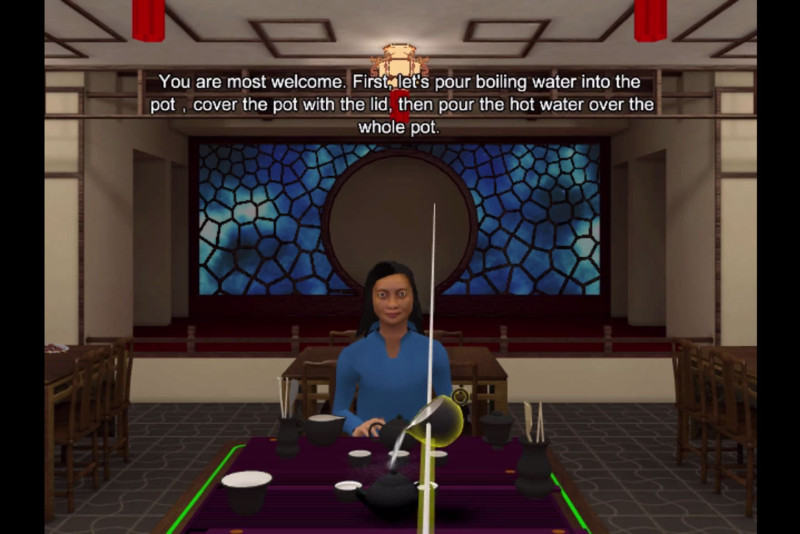
"caption": "A scene from the tea ceremony scene in The Lost Manuscript game at Rensselaer Polytechnic Institute. ",
"description": null,
"title": "Tea-ceremony",
"credit": "Ben Chang",
"status": "inherit",
"isLoading": false,
"fetchFailed": false
},
"mindshift_39961": {
"type": "attachments",
"id": "mindshift_39961",
"meta": {
"index": "attachments_1716263798",
"site": "mindshift",
"id": "39961",
"found": true
},
"parent": 39704,
"imgSizes": {
"twentyfourteen-full-width": {
"file": "https://ww2.kqed.org/app/uploads/sites/23/2015/03/Robert-Young-Pandemic-1038x576.jpg",
"width": 1038,
"mimeType": "image/jpeg",
"height": 576
},
"thumbnail": {
"file": "https://ww2.kqed.org/app/uploads/sites/23/2015/03/Robert-Young-Pandemic-400x267.jpg",
"width": 400,
"mimeType": "image/jpeg",
"height": 267
},
"fd-sm": {
"file": "https://ww2.kqed.org/app/uploads/sites/23/2015/03/Robert-Young-Pandemic-320x214.jpg",
"width": 320,
"mimeType": "image/jpeg",
"height": 214
},
"post-thumbnail": {
"file": "https://ww2.kqed.org/app/uploads/sites/23/2015/03/Robert-Young-Pandemic-672x372.jpg",
"width": 672,
"mimeType": "image/jpeg",
"height": 372
},
"kqedFullSize": {
"file": "https://ww2.kqed.org/app/uploads/sites/23/2015/03/Robert-Young-Pandemic.jpg",
"width": 1438,
"height": 960
},
"guest-author-96": {
"file": "https://ww2.kqed.org/app/uploads/sites/23/2015/03/Robert-Young-Pandemic-96x96.jpg",
"width": 96,
"mimeType": "image/jpeg",
"height": 96
},
"medium": {
"file": "https://ww2.kqed.org/app/uploads/sites/23/2015/03/Robert-Young-Pandemic-800x534.jpg",
"width": 800,
"mimeType": "image/jpeg",
"height": 534
},
"guest-author-64": {
"file": "https://ww2.kqed.org/app/uploads/sites/23/2015/03/Robert-Young-Pandemic-64x64.jpg",
"width": 64,
"mimeType": "image/jpeg",
"height": 64
},
"guest-author-32": {
"file": "https://ww2.kqed.org/app/uploads/sites/23/2015/03/Robert-Young-Pandemic-32x32.jpg",
"width": 32,
"mimeType": "image/jpeg",
"height": 32
},
"cat_post_thumb_sizecategory-posts-2": {
"file": "https://ww2.kqed.org/app/uploads/sites/23/2015/03/Robert-Young-Pandemic-50x50.jpg",
"width": 50,
"mimeType": "image/jpeg",
"height": 50
},
"fd-lrg": {
"file": "https://ww2.kqed.org/app/uploads/sites/23/2015/03/Robert-Young-Pandemic-1180x788.jpg",
"width": 1180,
"mimeType": "image/jpeg",
"height": 788
},
"fd-med": {
"file": "https://ww2.kqed.org/app/uploads/sites/23/2015/03/Robert-Young-Pandemic-768x513.jpg",
"width": 768,
"mimeType": "image/jpeg",
"height": 513
},
"detail": {
"file": "https://ww2.kqed.org/app/uploads/sites/23/2015/03/Robert-Young-Pandemic-75x75.jpg",
"width": 75,
"mimeType": "image/jpeg",
"height": 75
},
"guest-author-128": {
"file": "https://ww2.kqed.org/app/uploads/sites/23/2015/03/Robert-Young-Pandemic-128x128.jpg",
"width": 128,
"mimeType": "image/jpeg",
"height": 128
}
},
"publishDate": 1427840803,
"modified": 1427840828,
"caption": "Robert Young/Flickr",
"description": "https://www.flickr.com/photos/robertpaulyoung/4267416420",
"title": "Robert-Young-Pandemic",
"credit": null,
"status": "inherit",
"isLoading": false,
"fetchFailed": false
},
"mindshift_39932": {
"type": "attachments",
"id": "mindshift_39932",
"meta": {
"index": "attachments_1716263798",
"site": "mindshift",
"id": "39932",
"found": true
},
"parent": 39930,
"imgSizes": {
"twentyfourteen-full-width": {
"file": "https://ww2.kqed.org/app/uploads/sites/23/2015/03/Never-Alone-trailer-1038x576.jpg",
"width": 1038,
"mimeType": "image/jpeg",
"height": 576
},
"thumbnail": {
"file": "https://ww2.kqed.org/app/uploads/sites/23/2015/03/Never-Alone-trailer-400x267.jpg",
"width": 400,
"mimeType": "image/jpeg",
"height": 267
},
"fd-sm": {
"file": "https://ww2.kqed.org/app/uploads/sites/23/2015/03/Never-Alone-trailer-320x214.jpg",
"width": 320,
"mimeType": "image/jpeg",
"height": 214
},
"post-thumbnail": {
"file": "https://ww2.kqed.org/app/uploads/sites/23/2015/03/Never-Alone-trailer-672x372.jpg",
"width": 672,
"mimeType": "image/jpeg",
"height": 372
},
"kqedFullSize": {
"file": "https://ww2.kqed.org/app/uploads/sites/23/2015/03/Never-Alone-trailer.jpg",
"width": 1438,
"height": 960
},
"guest-author-96": {
"file": "https://ww2.kqed.org/app/uploads/sites/23/2015/03/Never-Alone-trailer-96x96.jpg",
"width": 96,
"mimeType": "image/jpeg",
"height": 96
},
"medium": {
"file": "https://ww2.kqed.org/app/uploads/sites/23/2015/03/Never-Alone-trailer-800x534.jpg",
"width": 800,
"mimeType": "image/jpeg",
"height": 534
},
"guest-author-64": {
"file": "https://ww2.kqed.org/app/uploads/sites/23/2015/03/Never-Alone-trailer-64x64.jpg",
"width": 64,
"mimeType": "image/jpeg",
"height": 64
},
"guest-author-32": {
"file": "https://ww2.kqed.org/app/uploads/sites/23/2015/03/Never-Alone-trailer-32x32.jpg",
"width": 32,
"mimeType": "image/jpeg",
"height": 32
},
"cat_post_thumb_sizecategory-posts-2": {
"file": "https://ww2.kqed.org/app/uploads/sites/23/2015/03/Never-Alone-trailer-50x50.jpg",
"width": 50,
"mimeType": "image/jpeg",
"height": 50
},
"fd-lrg": {
"file": "https://ww2.kqed.org/app/uploads/sites/23/2015/03/Never-Alone-trailer-1180x788.jpg",
"width": 1180,
"mimeType": "image/jpeg",
"height": 788
},
"fd-med": {
"file": "https://ww2.kqed.org/app/uploads/sites/23/2015/03/Never-Alone-trailer-768x513.jpg",
"width": 768,
"mimeType": "image/jpeg",
"height": 513
},
"detail": {
"file": "https://ww2.kqed.org/app/uploads/sites/23/2015/03/Never-Alone-trailer-75x75.jpg",
"width": 75,
"mimeType": "image/jpeg",
"height": 75
},
"guest-author-128": {
"file": "https://ww2.kqed.org/app/uploads/sites/23/2015/03/Never-Alone-trailer-128x128.jpg",
"width": 128,
"mimeType": "image/jpeg",
"height": 128
}
},
"publishDate": 1427492639,
"modified": 1427492658,
"caption": "A screen grab from the Never Alone trailer. ",
"description": null,
"title": "Never-Alone-trailer",
"credit": null,
"status": "inherit",
"isLoading": false,
"fetchFailed": false
},
"mindshift_39846": {
"type": "attachments",
"id": "mindshift_39846",
"meta": {
"index": "attachments_1716263798",
"site": "mindshift",
"id": "39846",
"found": true
},
"parent": 39845,
"imgSizes": {
"twentyfourteen-full-width": {
"file": "https://ww2.kqed.org/app/uploads/sites/23/2015/03/student-data-security-a68dcebb859a895479da51b0759e8ba3294a9fc0-e1427221452719-1038x576.jpg",
"width": 1038,
"mimeType": "image/jpeg",
"height": 576
},
"thumbnail": {
"file": "https://ww2.kqed.org/app/uploads/sites/23/2015/03/student-data-security-a68dcebb859a895479da51b0759e8ba3294a9fc0-e1427221452719-400x300.jpg",
"width": 400,
"mimeType": "image/jpeg",
"height": 300
},
"fd-sm": {
"file": "https://ww2.kqed.org/app/uploads/sites/23/2015/03/student-data-security-a68dcebb859a895479da51b0759e8ba3294a9fc0-e1427221452719-320x240.jpg",
"width": 320,
"mimeType": "image/jpeg",
"height": 240
},
"post-thumbnail": {
"file": "https://ww2.kqed.org/app/uploads/sites/23/2015/03/student-data-security-a68dcebb859a895479da51b0759e8ba3294a9fc0-e1427221452719-672x372.jpg",
"width": 672,
"mimeType": "image/jpeg",
"height": 372
},
"kqedFullSize": {
"file": "https://ww2.kqed.org/app/uploads/sites/23/2015/03/student-data-security-a68dcebb859a895479da51b0759e8ba3294a9fc0-e1427221452719.jpg",
"width": 1440,
"height": 1080
},
"large": {
"file": "https://ww2.kqed.org/app/uploads/sites/23/2015/03/student-data-security-a68dcebb859a895479da51b0759e8ba3294a9fc0-e1427221452719-1440x1080.jpg",
"width": 1440,
"mimeType": "image/jpeg",
"height": 1080
},
"guest-author-96": {
"file": "https://ww2.kqed.org/app/uploads/sites/23/2015/03/student-data-security-a68dcebb859a895479da51b0759e8ba3294a9fc0-e1427221452719-96x96.jpg",
"width": 96,
"mimeType": "image/jpeg",
"height": 96
},
"medium": {
"file": "https://ww2.kqed.org/app/uploads/sites/23/2015/03/student-data-security-a68dcebb859a895479da51b0759e8ba3294a9fc0-e1427221452719-800x600.jpg",
"width": 800,
"mimeType": "image/jpeg",
"height": 600
},
"guest-author-64": {
"file": "https://ww2.kqed.org/app/uploads/sites/23/2015/03/student-data-security-a68dcebb859a895479da51b0759e8ba3294a9fc0-e1427221452719-64x64.jpg",
"width": 64,
"mimeType": "image/jpeg",
"height": 64
},
"guest-author-32": {
"file": "https://ww2.kqed.org/app/uploads/sites/23/2015/03/student-data-security-a68dcebb859a895479da51b0759e8ba3294a9fc0-e1427221452719-32x32.jpg",
"width": 32,
"mimeType": "image/jpeg",
"height": 32
},
"fd-lrg": {
"file": "https://ww2.kqed.org/app/uploads/sites/23/2015/03/student-data-security-a68dcebb859a895479da51b0759e8ba3294a9fc0-e1427221452719-1180x885.jpg",
"width": 1180,
"mimeType": "image/jpeg",
"height": 885
},
"fd-med": {
"file": "https://ww2.kqed.org/app/uploads/sites/23/2015/03/student-data-security-a68dcebb859a895479da51b0759e8ba3294a9fc0-e1427221452719-768x576.jpg",
"width": 768,
"mimeType": "image/jpeg",
"height": 576
},
"detail": {
"file": "https://ww2.kqed.org/app/uploads/sites/23/2015/03/student-data-security-a68dcebb859a895479da51b0759e8ba3294a9fc0-e1427221452719-75x75.jpg",
"width": 75,
"mimeType": "image/jpeg",
"height": 75
},
"guest-author-128": {
"file": "https://ww2.kqed.org/app/uploads/sites/23/2015/03/student-data-security-a68dcebb859a895479da51b0759e8ba3294a9fc0-e1427221452719-128x128.jpg",
"width": 128,
"mimeType": "image/jpeg",
"height": 128
}
},
"publishDate": 1427220547,
"modified": 1427221440,
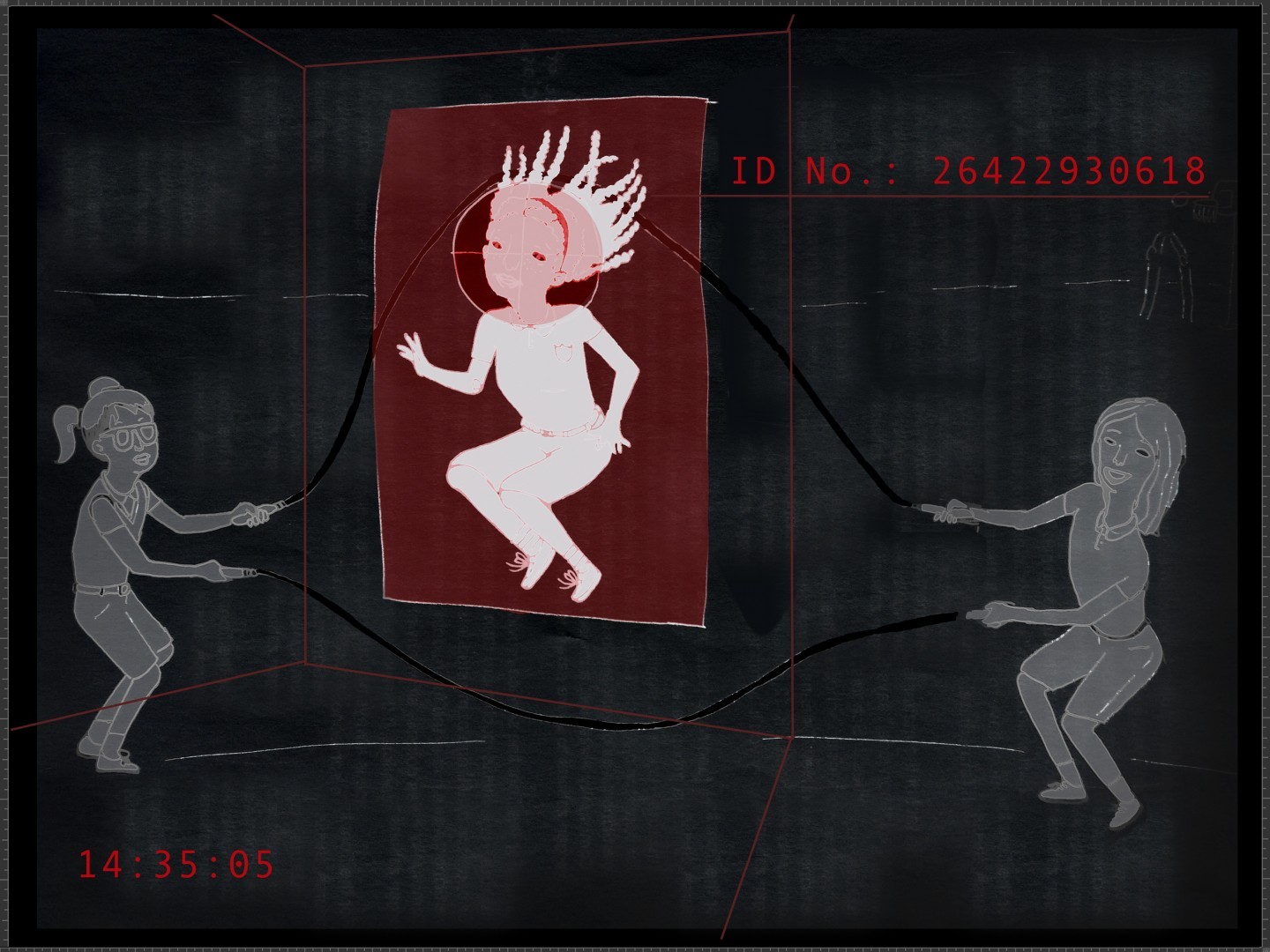
"caption": "LA Johnson/NPR",
"description": "Student Data Privacy",
"title": "Student Data Privacy",
"credit": null,
"status": "inherit",
"isLoading": false,
"fetchFailed": false
},
"mindshift_39646": {
"type": "attachments",
"id": "mindshift_39646",
"meta": {
"index": "attachments_1716263798",
"site": "mindshift",
"id": "39646",
"found": true
},
"parent": 39644,
"imgSizes": {
"twentyfourteen-full-width": {
"file": "https://ww2.kqed.org/app/uploads/sites/23/2015/03/boy-looks-at-computer-1038x576.jpg",
"width": 1038,
"mimeType": "image/jpeg",
"height": 576
},
"thumbnail": {
"file": "https://ww2.kqed.org/app/uploads/sites/23/2015/03/boy-looks-at-computer-400x225.jpg",
"width": 400,
"mimeType": "image/jpeg",
"height": 225
},
"fd-sm": {
"file": "https://ww2.kqed.org/app/uploads/sites/23/2015/03/boy-looks-at-computer-320x180.jpg",
"width": 320,
"mimeType": "image/jpeg",
"height": 180
},
"post-thumbnail": {
"file": "https://ww2.kqed.org/app/uploads/sites/23/2015/03/boy-looks-at-computer-672x372.jpg",
"width": 672,
"mimeType": "image/jpeg",
"height": 372
},
"kqedFullSize": {
"file": "https://ww2.kqed.org/app/uploads/sites/23/2015/03/boy-looks-at-computer.jpg",
"width": 3648,
"height": 2052
},
"large": {
"file": "https://ww2.kqed.org/app/uploads/sites/23/2015/03/boy-looks-at-computer-1440x810.jpg",
"width": 1440,
"mimeType": "image/jpeg",
"height": 810
},
"guest-author-96": {
"file": "https://ww2.kqed.org/app/uploads/sites/23/2015/03/boy-looks-at-computer-96x96.jpg",
"width": 96,
"mimeType": "image/jpeg",
"height": 96
},
"medium": {
"file": "https://ww2.kqed.org/app/uploads/sites/23/2015/03/boy-looks-at-computer-800x450.jpg",
"width": 800,
"mimeType": "image/jpeg",
"height": 450
},
"guest-author-64": {
"file": "https://ww2.kqed.org/app/uploads/sites/23/2015/03/boy-looks-at-computer-64x64.jpg",
"width": 64,
"mimeType": "image/jpeg",
"height": 64
},
"guest-author-32": {
"file": "https://ww2.kqed.org/app/uploads/sites/23/2015/03/boy-looks-at-computer-32x32.jpg",
"width": 32,
"mimeType": "image/jpeg",
"height": 32
},
"fd-lrg": {
"file": "https://ww2.kqed.org/app/uploads/sites/23/2015/03/boy-looks-at-computer-1180x664.jpg",
"width": 1180,
"mimeType": "image/jpeg",
"height": 664
},
"fd-med": {
"file": "https://ww2.kqed.org/app/uploads/sites/23/2015/03/boy-looks-at-computer-768x432.jpg",
"width": 768,
"mimeType": "image/jpeg",
"height": 432
},
"guest-author-128": {
"file": "https://ww2.kqed.org/app/uploads/sites/23/2015/03/boy-looks-at-computer-128x128.jpg",
"width": 128,
"mimeType": "image/jpeg",
"height": 128
}
},
"publishDate": 1426026210,
"modified": 1426026244,
"caption": "Kevin Makice/Flickr",
"description": "https://www.flickr.com/photos/kmakice/5194246422",
"title": "boy-looks-at-computer",
"credit": null,
"status": "inherit",
"isLoading": false,
"fetchFailed": false
},
"mindshift_39654": {
"type": "attachments",
"id": "mindshift_39654",
"meta": {
"index": "attachments_1716263798",
"site": "mindshift",
"id": "39654",
"found": true
},
"parent": 39461,
"imgSizes": {
"twentyfourteen-full-width": {
"file": "https://ww2.kqed.org/app/uploads/sites/23/2015/03/Serial-iPhone-1038x576.jpg",
"width": 1038,
"mimeType": "image/jpeg",
"height": 576
},
"thumbnail": {
"file": "https://ww2.kqed.org/app/uploads/sites/23/2015/03/Serial-iPhone-400x267.jpg",
"width": 400,
"mimeType": "image/jpeg",
"height": 267
},
"fd-sm": {
"file": "https://ww2.kqed.org/app/uploads/sites/23/2015/03/Serial-iPhone-320x213.jpg",
"width": 320,
"mimeType": "image/jpeg",
"height": 213
},
"post-thumbnail": {
"file": "https://ww2.kqed.org/app/uploads/sites/23/2015/03/Serial-iPhone-672x372.jpg",
"width": 672,
"mimeType": "image/jpeg",
"height": 372
},
"kqedFullSize": {
"file": "https://ww2.kqed.org/app/uploads/sites/23/2015/03/Serial-iPhone.jpg",
"width": 1440,
"height": 960
},
"large": {
"file": "https://ww2.kqed.org/app/uploads/sites/23/2015/03/Serial-iPhone-1440x960.jpg",
"width": 1440,
"mimeType": "image/jpeg",
"height": 960
},
"guest-author-96": {
"file": "https://ww2.kqed.org/app/uploads/sites/23/2015/03/Serial-iPhone-96x96.jpg",
"width": 96,
"mimeType": "image/jpeg",
"height": 96
},
"medium": {
"file": "https://ww2.kqed.org/app/uploads/sites/23/2015/03/Serial-iPhone-800x533.jpg",
"width": 800,
"mimeType": "image/jpeg",
"height": 533
},
"guest-author-64": {
"file": "https://ww2.kqed.org/app/uploads/sites/23/2015/03/Serial-iPhone-64x64.jpg",
"width": 64,
"mimeType": "image/jpeg",
"height": 64
},
"guest-author-32": {
"file": "https://ww2.kqed.org/app/uploads/sites/23/2015/03/Serial-iPhone-32x32.jpg",
"width": 32,
"mimeType": "image/jpeg",
"height": 32
},
"fd-lrg": {
"file": "https://ww2.kqed.org/app/uploads/sites/23/2015/03/Serial-iPhone-1180x787.jpg",
"width": 1180,
"mimeType": "image/jpeg",
"height": 787
},
"fd-med": {
"file": "https://ww2.kqed.org/app/uploads/sites/23/2015/03/Serial-iPhone-768x512.jpg",
"width": 768,
"mimeType": "image/jpeg",
"height": 512
},
"guest-author-128": {
"file": "https://ww2.kqed.org/app/uploads/sites/23/2015/03/Serial-iPhone-128x128.jpg",
"width": 128,
"mimeType": "image/jpeg",
"height": 128
}
},
"publishDate": 1426048741,
"modified": 1426048761,
"caption": "Casey Fiesler/Flickr",
"description": null,
"title": "Serial-iPhone",
"credit": null,
"status": "inherit",
"isLoading": false,
"fetchFailed": false
},
"mindshift_39586": {
"type": "attachments",
"id": "mindshift_39586",
"meta": {
"index": "attachments_1716263798",
"site": "mindshift",
"id": "39586",
"found": true
},
"parent": 39528,
"imgSizes": {
"twentyfourteen-full-width": {
"file": "https://ww2.kqed.org/app/uploads/sites/23/2015/02/Powering-off-phone-1-Margot-1038x576.jpg",
"width": 1038,
"mimeType": "image/jpeg",
"height": 576
},
"thumbnail": {
"file": "https://ww2.kqed.org/app/uploads/sites/23/2015/02/Powering-off-phone-1-Margot-400x267.jpg",
"width": 400,
"mimeType": "image/jpeg",
"height": 267
},
"fd-sm": {
"file": "https://ww2.kqed.org/app/uploads/sites/23/2015/02/Powering-off-phone-1-Margot-320x213.jpg",
"width": 320,
"mimeType": "image/jpeg",
"height": 213
},
"post-thumbnail": {
"file": "https://ww2.kqed.org/app/uploads/sites/23/2015/02/Powering-off-phone-1-Margot-672x372.jpg",
"width": 672,
"mimeType": "image/jpeg",
"height": 372
},
"kqedFullSize": {
"file": "https://ww2.kqed.org/app/uploads/sites/23/2015/02/Powering-off-phone-1-Margot.jpg",
"width": 1440,
"height": 960
},
"large": {
"file": "https://ww2.kqed.org/app/uploads/sites/23/2015/02/Powering-off-phone-1-Margot-1440x960.jpg",
"width": 1440,
"mimeType": "image/jpeg",
"height": 960
},
"guest-author-96": {
"file": "https://ww2.kqed.org/app/uploads/sites/23/2015/02/Powering-off-phone-1-Margot-96x96.jpg",
"width": 96,
"mimeType": "image/jpeg",
"height": 96
},
"medium": {
"file": "https://ww2.kqed.org/app/uploads/sites/23/2015/02/Powering-off-phone-1-Margot-800x533.jpg",
"width": 800,
"mimeType": "image/jpeg",
"height": 533
},
"guest-author-64": {
"file": "https://ww2.kqed.org/app/uploads/sites/23/2015/02/Powering-off-phone-1-Margot-64x64.jpg",
"width": 64,
"mimeType": "image/jpeg",
"height": 64
},
"guest-author-32": {
"file": "https://ww2.kqed.org/app/uploads/sites/23/2015/02/Powering-off-phone-1-Margot-32x32.jpg",
"width": 32,
"mimeType": "image/jpeg",
"height": 32
},
"fd-lrg": {
"file": "https://ww2.kqed.org/app/uploads/sites/23/2015/02/Powering-off-phone-1-Margot-1180x787.jpg",
"width": 1180,
"mimeType": "image/jpeg",
"height": 787
},
"fd-med": {
"file": "https://ww2.kqed.org/app/uploads/sites/23/2015/02/Powering-off-phone-1-Margot-768x512.jpg",
"width": 768,
"mimeType": "image/jpeg",
"height": 512
},
"guest-author-128": {
"file": "https://ww2.kqed.org/app/uploads/sites/23/2015/02/Powering-off-phone-1-Margot-128x128.jpg",
"width": 128,
"mimeType": "image/jpeg",
"height": 128
}
},
"publishDate": 1425592944,
"modified": 1425593025,
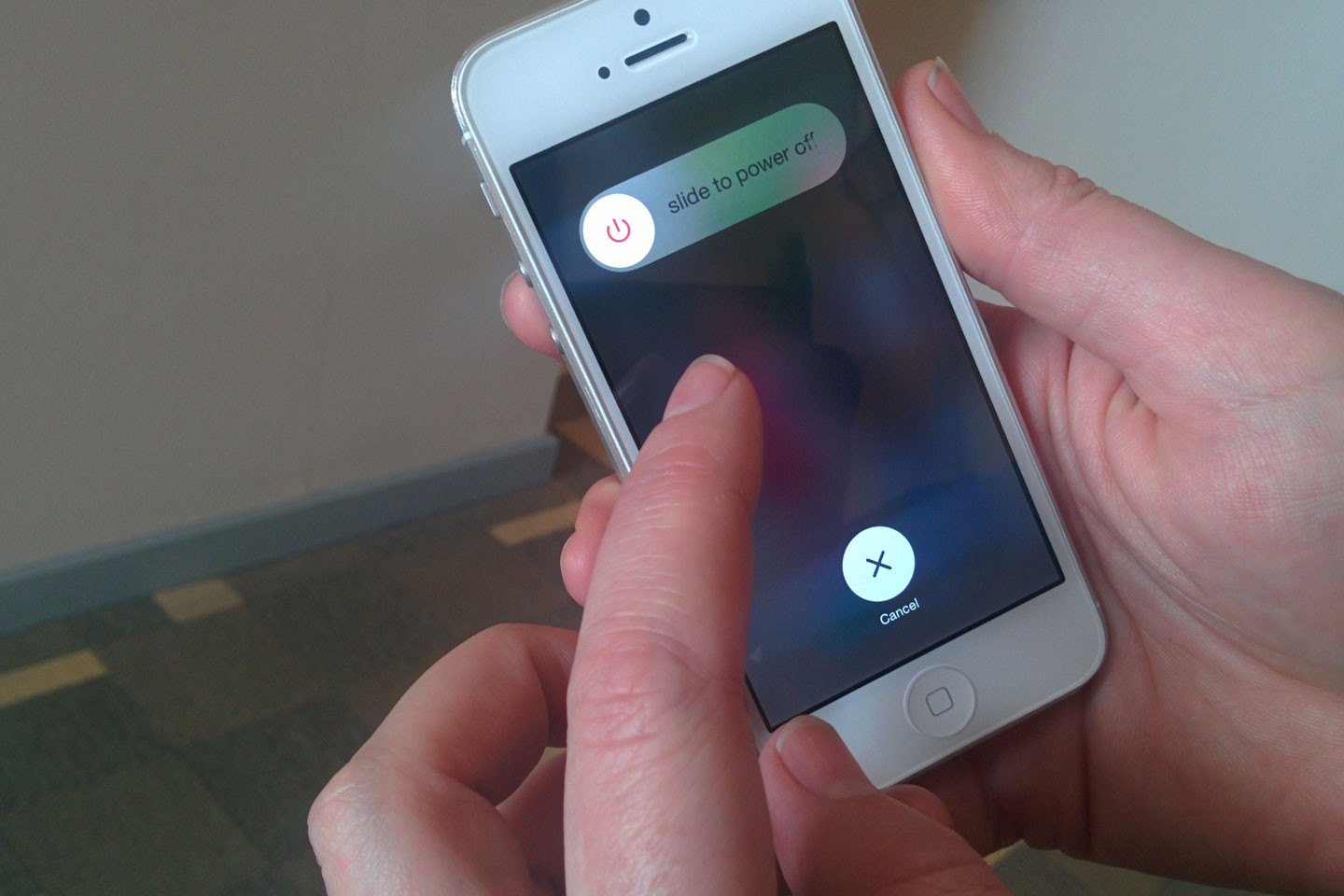
"caption": "Ki Sung/MindShift",
"description": null,
"title": "Powering-off-phone-1-Margot",
"credit": null,
"status": "inherit",
"isLoading": false,
"fetchFailed": false
},
"mindshift_39523": {
"type": "attachments",
"id": "mindshift_39523",
"meta": {
"index": "attachments_1716263798",
"site": "mindshift",
"id": "39523",
"found": true
},
"parent": 39489,
"imgSizes": {
"twentyfourteen-full-width": {
"file": "https://ww2.kqed.org/app/uploads/sites/23/2015/02/Desktop-ipads-1038x576.jpg",
"width": 1038,
"mimeType": "image/jpeg",
"height": 576
},
"thumbnail": {
"file": "https://ww2.kqed.org/app/uploads/sites/23/2015/02/Desktop-ipads-400x267.jpg",
"width": 400,
"mimeType": "image/jpeg",
"height": 267
},
"fd-sm": {
"file": "https://ww2.kqed.org/app/uploads/sites/23/2015/02/Desktop-ipads-320x214.jpg",
"width": 320,
"mimeType": "image/jpeg",
"height": 214
},
"post-thumbnail": {
"file": "https://ww2.kqed.org/app/uploads/sites/23/2015/02/Desktop-ipads-672x372.jpg",
"width": 672,
"mimeType": "image/jpeg",
"height": 372
},
"kqedFullSize": {
"file": "https://ww2.kqed.org/app/uploads/sites/23/2015/02/Desktop-ipads.jpg",
"width": 1438,
"height": 960
},
"fd-lrg": {
"file": "https://ww2.kqed.org/app/uploads/sites/23/2015/02/Desktop-ipads-1180x788.jpg",
"width": 1180,
"mimeType": "image/jpeg",
"height": 788
},
"fd-med": {
"file": "https://ww2.kqed.org/app/uploads/sites/23/2015/02/Desktop-ipads-768x513.jpg",
"width": 768,
"mimeType": "image/jpeg",
"height": 513
},
"guest-author-96": {
"file": "https://ww2.kqed.org/app/uploads/sites/23/2015/02/Desktop-ipads-96x96.jpg",
"width": 96,
"mimeType": "image/jpeg",
"height": 96
},
"medium": {
"file": "https://ww2.kqed.org/app/uploads/sites/23/2015/02/Desktop-ipads-800x534.jpg",
"width": 800,
"mimeType": "image/jpeg",
"height": 534
},
"guest-author-64": {
"file": "https://ww2.kqed.org/app/uploads/sites/23/2015/02/Desktop-ipads-64x64.jpg",
"width": 64,
"mimeType": "image/jpeg",
"height": 64
},
"guest-author-32": {
"file": "https://ww2.kqed.org/app/uploads/sites/23/2015/02/Desktop-ipads-32x32.jpg",
"width": 32,
"mimeType": "image/jpeg",
"height": 32
},
"guest-author-128": {
"file": "https://ww2.kqed.org/app/uploads/sites/23/2015/02/Desktop-ipads-128x128.jpg",
"width": 128,
"mimeType": "image/jpeg",
"height": 128
}
},
"publishDate": 1425065535,
"modified": 1425065546,
"caption": "Getty Images",
"description": null,
"title": "Desktop-ipads",
"credit": null,
"status": "inherit",
"isLoading": false,
"fetchFailed": false
},
"mindshift_38983": {
"type": "attachments",
"id": "mindshift_38983",
"meta": {
"index": "attachments_1716263798",
"site": "mindshift",
"id": "38983",
"found": true
},
"parent": 38977,
"imgSizes": {
"twentyfourteen-full-width": {
"file": "https://ww2.kqed.org/app/uploads/sites/23/2015/01/exodus-1038x576.jpg",
"width": 1038,
"mimeType": "image/jpeg",
"height": 576
},
"thumbnail": {
"file": "https://ww2.kqed.org/app/uploads/sites/23/2015/01/exodus-400x225.jpg",
"width": 400,
"mimeType": "image/jpeg",
"height": 225
},
"fd-sm": {
"file": "https://ww2.kqed.org/app/uploads/sites/23/2015/01/exodus-320x180.jpg",
"width": 320,
"mimeType": "image/jpeg",
"height": 180
},
"post-thumbnail": {
"file": "https://ww2.kqed.org/app/uploads/sites/23/2015/01/exodus-672x372.jpg",
"width": 672,
"mimeType": "image/jpeg",
"height": 372
},
"kqedFullSize": {
"file": "https://ww2.kqed.org/app/uploads/sites/23/2015/01/exodus.jpg",
"width": 1440,
"height": 810
},
"large": {
"file": "https://ww2.kqed.org/app/uploads/sites/23/2015/01/exodus-1440x810.jpg",
"width": 1440,
"mimeType": "image/jpeg",
"height": 810
},
"guest-author-96": {
"file": "https://ww2.kqed.org/app/uploads/sites/23/2015/01/exodus-96x96.jpg",
"width": 96,
"mimeType": "image/jpeg",
"height": 96
},
"medium": {
"file": "https://ww2.kqed.org/app/uploads/sites/23/2015/01/exodus-800x450.jpg",
"width": 800,
"mimeType": "image/jpeg",
"height": 450
},
"guest-author-64": {
"file": "https://ww2.kqed.org/app/uploads/sites/23/2015/01/exodus-64x64.jpg",
"width": 64,
"mimeType": "image/jpeg",
"height": 64
},
"guest-author-32": {
"file": "https://ww2.kqed.org/app/uploads/sites/23/2015/01/exodus-32x32.jpg",
"width": 32,
"mimeType": "image/jpeg",
"height": 32
},
"fd-lrg": {
"file": "https://ww2.kqed.org/app/uploads/sites/23/2015/01/exodus-1180x664.jpg",
"width": 1180,
"mimeType": "image/jpeg",
"height": 664
},
"fd-med": {
"file": "https://ww2.kqed.org/app/uploads/sites/23/2015/01/exodus-768x432.jpg",
"width": 768,
"mimeType": "image/jpeg",
"height": 432
},
"guest-author-128": {
"file": "https://ww2.kqed.org/app/uploads/sites/23/2015/01/exodus-128x128.jpg",
"width": 128,
"mimeType": "image/jpeg",
"height": 128
}
},
"publishDate": 1421108734,
"modified": 1421108768,
"caption": "Koltun-Fromm's students used Prezi to explore non-linear connections between class texts. (Courtesy Ken Koltun-Fromm)",
"description": null,
"title": "exodus",
"credit": null,
"status": "inherit",
"isLoading": false,
"fetchFailed": false
},
"mindshift_39102": {
"type": "attachments",
"id": "mindshift_39102",
"meta": {
"index": "attachments_1716263798",
"site": "mindshift",
"id": "39102",
"found": true
},
"parent": 39095,
"imgSizes": {
"twentyfourteen-full-width": {
"file": "https://ww2.kqed.org/app/uploads/sites/23/2015/01/Robot-Turtles-2-1038x576.gif",
"width": 1038,
"mimeType": "image/gif",
"height": 576
},
"thumbnail": {
"file": "https://ww2.kqed.org/app/uploads/sites/23/2015/01/Robot-Turtles-2-400x267.gif",
"width": 400,
"mimeType": "image/gif",
"height": 267
},
"fd-sm": {
"file": "https://ww2.kqed.org/app/uploads/sites/23/2015/01/Robot-Turtles-2-320x213.gif",
"width": 320,
"mimeType": "image/gif",
"height": 213
},
"post-thumbnail": {
"file": "https://ww2.kqed.org/app/uploads/sites/23/2015/01/Robot-Turtles-2-672x372.gif",
"width": 672,
"mimeType": "image/gif",
"height": 372
},
"kqedFullSize": {
"file": "https://ww2.kqed.org/app/uploads/sites/23/2015/01/Robot-Turtles-2.gif",
"width": 1440,
"height": 960
},
"large": {
"file": "https://ww2.kqed.org/app/uploads/sites/23/2015/01/Robot-Turtles-2-1440x960.gif",
"width": 1440,
"mimeType": "image/gif",
"height": 960
},
"guest-author-96": {
"file": "https://ww2.kqed.org/app/uploads/sites/23/2015/01/Robot-Turtles-2-96x96.gif",
"width": 96,
"mimeType": "image/gif",
"height": 96
},
"medium": {
"file": "https://ww2.kqed.org/app/uploads/sites/23/2015/01/Robot-Turtles-2-800x533.gif",
"width": 800,
"mimeType": "image/gif",
"height": 533
},
"guest-author-64": {
"file": "https://ww2.kqed.org/app/uploads/sites/23/2015/01/Robot-Turtles-2-64x64.gif",
"width": 64,
"mimeType": "image/gif",
"height": 64
},
"guest-author-32": {
"file": "https://ww2.kqed.org/app/uploads/sites/23/2015/01/Robot-Turtles-2-32x32.gif",
"width": 32,
"mimeType": "image/gif",
"height": 32
},
"fd-lrg": {
"file": "https://ww2.kqed.org/app/uploads/sites/23/2015/01/Robot-Turtles-2-1180x787.gif",
"width": 1180,
"mimeType": "image/gif",
"height": 787
},
"fd-med": {
"file": "https://ww2.kqed.org/app/uploads/sites/23/2015/01/Robot-Turtles-2-768x512.gif",
"width": 768,
"mimeType": "image/gif",
"height": 512
},
"guest-author-128": {
"file": "https://ww2.kqed.org/app/uploads/sites/23/2015/01/Robot-Turtles-2-128x128.gif",
"width": 128,
"mimeType": "image/gif",
"height": 128
}
},
"publishDate": 1422398150,
"modified": 1422398208,
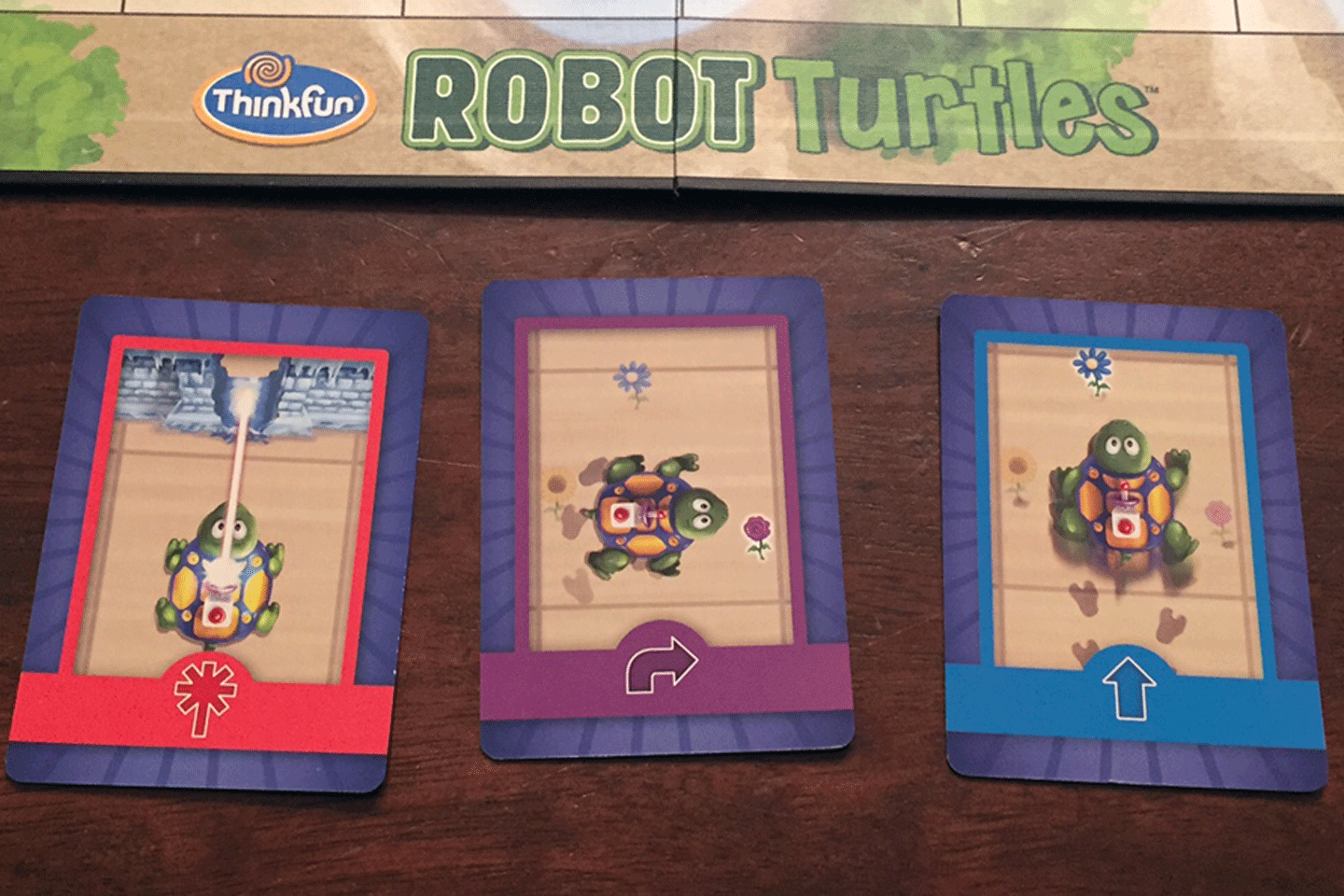
"caption": "Cards program \"Robot Turtles\" to blast, turn or proceed to their destination. (Courtesy of Matthew Farber) ",
"description": null,
"title": "Robot-Turtles-2",
"credit": null,
"status": "inherit",
"isLoading": false,
"fetchFailed": false
}
},
"audioPlayerReducer": {
"postId": "stream_live",
"isPaused": true,
"isPlaying": false,
"pfsActive": false,
"pledgeModalIsOpen": true,
"playerDrawerIsOpen": false,
"liveAudioPlayStartedAt": 0,
"liveAudioPlayContext": ""
},
"authorsReducer": {
"byline_mindshift_39845": {
"type": "authors",
"id": "byline_mindshift_39845",
"meta": {
"override": true
},
"slug": "byline_mindshift_39845",
"name": "Anya Kamenetz",
"isLoading": false
},
"katrinaschwartz": {
"type": "authors",
"id": "234",
"meta": {
"index": "authors_1716337520",
"id": "234",
"found": true
},
"name": "Katrina Schwartz",
"firstName": "Katrina",
"lastName": "Schwartz",
"slug": "katrinaschwartz",
"email": "kschwartz@kqed.org",
"display_author_email": false,
"staff_mastheads": [
"news"
],
"title": "Producer",
"bio": "Katrina Schwartz is a journalist based in San Francisco. She's worked at KPCC public radio in LA and has reported on air and online for KQED since 2010. She covered how teaching and learning is changing for MindShift between 2012 and 2020. She is the co-host of the MindShift podcast and now produces KQED's Bay Curious podcast.",
"avatar": "https://secure.gravatar.com/avatar/edb4ee79070447a018538c9aae6eeecf28786515b8a0c30e43b6b7dce5aa44c8?s=600&d=blank&r=g",
"twitter": "kschwart",
"bluesky": null,
"facebook": null,
"instagram": null,
"linkedin": null,
"sites": [
{
"site": "",
"roles": [
"editor"
]
},
{
"site": "news",
"roles": [
"editor"
]
},
{
"site": "mindshift",
"roles": [
"administrator"
]
},
{
"site": "stateofhealth",
"roles": [
"author"
]
},
{
"site": "science",
"roles": [
"editor"
]
}
],
"headData": {
"title": "Katrina Schwartz | KQED",
"description": "Producer",
"ogImgSrc": "https://secure.gravatar.com/avatar/edb4ee79070447a018538c9aae6eeecf28786515b8a0c30e43b6b7dce5aa44c8?s=600&d=blank&r=g",
"twImgSrc": "https://secure.gravatar.com/avatar/edb4ee79070447a018538c9aae6eeecf28786515b8a0c30e43b6b7dce5aa44c8?s=600&d=blank&r=g"
},
"isLoading": false,
"link": "/author/katrinaschwartz"
},
"ksung": {
"type": "authors",
"id": "4596",
"meta": {
"index": "authors_1716337520",
"id": "4596",
"found": true
},
"name": "Ki Sung",
"firstName": "Ki",
"lastName": "Sung",
"slug": "ksung",
"email": "ksung@kqed.org",
"display_author_email": false,
"staff_mastheads": [
"news"
],
"title": "KQED Contributor",
"bio": "Ki Sung is Managing Editor of Digital News at KQED. She is former Senior Editor of MindShift and worked at NPR before joining KQED in 2014.",
"avatar": "https://secure.gravatar.com/avatar/64271e01dc95486c133be56937739045b7c00c990525bf9add12d3dd4f0433c9?s=600&d=blank&r=g",
"twitter": null,
"bluesky": null,
"facebook": null,
"instagram": null,
"linkedin": null,
"sites": [
{
"site": "news",
"roles": [
"editor"
]
},
{
"site": "mindshift",
"roles": [
"administrator"
]
},
{
"site": "elections",
"roles": [
"administrator"
]
}
],
"headData": {
"title": "Ki Sung | KQED",
"description": "KQED Contributor",
"ogImgSrc": "https://secure.gravatar.com/avatar/64271e01dc95486c133be56937739045b7c00c990525bf9add12d3dd4f0433c9?s=600&d=blank&r=g",
"twImgSrc": "https://secure.gravatar.com/avatar/64271e01dc95486c133be56937739045b7c00c990525bf9add12d3dd4f0433c9?s=600&d=blank&r=g"
},
"isLoading": false,
"link": "/author/ksung"
},
"lindaflan": {
"type": "authors",
"id": "4613",
"meta": {
"index": "authors_1716337520",
"id": "4613",
"found": true
},
"name": "Linda Flanagan",
"firstName": "Linda",
"lastName": "Flanagan",
"slug": "lindaflan",
"email": "lindaflan@comcast.net",
"display_author_email": false,
"staff_mastheads": [],
"title": null,
"bio": "Linda Flanagan is a freelance writer, researcher, and editor. Her work has appeared in The Atlantic, The Wall St. Journal, Newsweek, Running Times, and Mind/Shift, and she blogs regularly for the Huffington Post. Linda writes about education, culture, athletics, youth sports, mental health, politics, college admissions, and other curiosities. She also reviews books and conducts interviews.",
"avatar": "https://secure.gravatar.com/avatar/6bca04c0736bf5eaea80654019de688f?s=600&d=blank&r=g",
"twitter": "LindaFlanagan2",
"facebook": null,
"instagram": null,
"linkedin": null,
"sites": [
{
"site": "mindshift",
"roles": [
"contributor"
]
}
],
"headData": {
"title": "Linda Flanagan | KQED",
"description": null,
"ogImgSrc": "https://secure.gravatar.com/avatar/6bca04c0736bf5eaea80654019de688f?s=600&d=blank&r=g",
"twImgSrc": "https://secure.gravatar.com/avatar/6bca04c0736bf5eaea80654019de688f?s=600&d=blank&r=g"
},
"isLoading": false,
"link": "/author/lindaflan"
},
"pauldarvasi": {
"type": "authors",
"id": "11107",
"meta": {
"index": "authors_1716337520",
"id": "11107",
"found": true
},
"name": "Paul Darvasi",
"firstName": "Paul",
"lastName": "Darvasi",
"slug": "pauldarvasi",
"email": "pauldarvasi@gmail.com",
"display_author_email": false,
"staff_mastheads": [],
"title": null,
"bio": "Paul Darvasi is an experienced educator whose research, speaking and writing explore the intersections of learning, technology, narrative and games. You can follow him on Twitter:\u003ca href=\"https://twitter.com/PaulDarvasi\"> @pauldarvasi\u003c/a>",
"avatar": "https://secure.gravatar.com/avatar/df387897a1bf0cd4b720b8175112731a?s=600&d=blank&r=g",
"twitter": "pauldarvasi",
"facebook": null,
"instagram": null,
"linkedin": null,
"sites": [
{
"site": "mindshift",
"roles": [
"contributor"
]
}
],
"headData": {
"title": "Paul Darvasi | KQED",
"description": null,
"ogImgSrc": "https://secure.gravatar.com/avatar/df387897a1bf0cd4b720b8175112731a?s=600&d=blank&r=g",
"twImgSrc": "https://secure.gravatar.com/avatar/df387897a1bf0cd4b720b8175112731a?s=600&d=blank&r=g"
},
"isLoading": false,
"link": "/author/pauldarvasi"
}
},
"pagesReducer": {
"mindshift_category_digital-tools": {
"type": "terms",
"id": "mindshift_195",
"meta": {
"index": "terms_1716263798",
"site": "mindshift",
"id": "195",
"score": 14.406026
},
"featImg": null,
"name": "Digital Tools",
"description": "How devices, software, and the Internet are changing the classroom dynamic.",
"taxonomy": "category",
"headData": {
"twImgId": null,
"twTitle": null,
"ogTitle": null,
"ogImgId": null,
"twDescription": null,
"description": "How devices, software, and the Internet are changing the classroom dynamic.",
"title": "Digital Tools Archives | KQED Mindshift",
"ogDescription": null
},
"ttid": 195,
"slug": "digital-tools",
"isLoading": false,
"title": "Digital Tools",
"pageMeta": {
"site": "mindshift",
"WpPageTemplate": "page-topic-editorial",
"currentPage": 16
},
"blocks": [
{
"blockName": "kqed/company-paragraph",
"content": "How devices, software, and the Internet are changing the classroom dynamic."
},
{
"blockName": "kqed/post-list",
"attrs": {
"layout": "cardArticle2",
"query": "posts/mindshift?category=digital-tools",
"seeMore": false,
"paginated": true,
"page": 16
}
},
{
"blockName": "kqed/ad"
}
]
}
},
"pfsSessionReducer": {},
"postsReducer": {
"stream_live": {
"type": "live",
"id": "stream_live",
"audioUrl": "https://streams.kqed.org/kqedradio",
"title": "Live Stream",
"excerpt": "Live Stream information currently unavailable.",
"link": "/radio",
"featImg": "",
"label": {
"name": "KQED Live",
"link": "/"
}
},
"stream_kqedNewscast": {
"type": "posts",
"id": "stream_kqedNewscast",
"audioUrl": "https://www.kqed.org/.stream/anon/radio/RDnews/newscast.mp3?_=1",
"title": "KQED Newscast",
"featImg": "",
"label": {
"name": "88.5 FM",
"link": "/"
}
},
"mindshift_40102": {
"type": "posts",
"id": "mindshift_40102",
"meta": {
"index": "posts_1716263798",
"site": "mindshift",
"id": "40102",
"score": null,
"sort": [
1429623185000
]
},
"parent": 0,
"labelTerm": {
"site": "mindshift"
},
"blocks": [],
"publishDate": 1429623185,
"format": "standard",
"disqusTitle": "Can Foreign Language Immersion Be Taught Effectively Online?",
"title": "Can Foreign Language Immersion Be Taught Effectively Online?",
"headTitle": "MindShift | KQED News",
"content": "\u003cp class=\"p1\">Learning to speak a second language often starts with memorizing words and phrases like colors, numbers and salutations. Soon teachers introduce present-tense verbs and students work to build simple sentences like, “I go to the store.” In the classroom, students practice dialogue with one another and the teacher, hoping that by slowly adding conjugations and more vocabulary, they’ll be able to apply the language in real life.\u003c/p>\n\u003cp class=\"p1\">Middlebury Interactive Languages is trying to flip that model on its head with an online program that expects a lot from beginners. Based in pedagogy developed at Middlebury College’s immersive summer language programs in collaboration with the technical expertise of K12 Inc., the program is trying to redefine how language has been taught for years both online and in brick-and-mortar classrooms.\u003c/p>\n\u003cp>One of the basic principles behind Middlebury’s pedagogy is that students must interact with authentic language as it is spoken in reality. To do this, course developers traveled all over the world filming real conversations between people in different countries speaking the language. For the Spanish curriculum, they might have conversations from Spain, Venezuela, Cuba, Guatemala and Argentina, demonstrating the various accents, dialects and cultures associated with the Spanish language.\u003c/p>\n\u003cp>Culture and language are inseparable in this model, which currently includes instruction in French, Spanish and Chinese.\u003c/p>\n\u003cp>The videos are the basis of all the activities in the online program. “It’s really taking what’s truly happening in an immersive situation,” said \u003ca href=\"https://www.middleburyinteractive.com/about-us/our-expertise-history/leadership-aline-germain-rutherford\" target=\"_blank\">Aline Germain-Rutherford\u003c/a>, chief academic officer of Middlebury Interactive Languages and linguistics professor at Middlebury College.\u003c/p>\n\u003caside class=\"pullquote alignright\">'We activate the normal skills that anybody has in a new situation. We really try to use everything we know in context to make sense [of the language].'\u003ccite>Aline Germain-Rutherford, Chief academic officer of Middlebury Interactive Languages\u003c/cite>\u003c/aside>\n\u003cp>These real-world interactions are not simplified or slowed down for beginner language learners. Germain-Rutherford says initially teachers often push back against the Middlebury curriculum, arguing students must learn basic building blocks of language before they can be exposed to more complicated, authentic forms of speaking. Middlebury’s program takes the opposite approach.\u003c/p>\n\u003cp>[ad fullwidth]\u003c/p>\n\u003cp>“We present the language first, and then help the student to develop learning strategies and reading and listening skills to identify key words and make sense of it,” Germain-Rutherford said. Using immersion as the point of departure, the program’s activities scaffold strategies to find meaning. And often learners have more skills to unravel language than teachers give them credit for -- after all, they learned their primary language without any trouble.\u003c/p>\n\u003cp>“We forget all the prior knowledge of the learner, all the skills we have in our first language,” Germain-Rutherford said. “We need to remember that there’s a lot of resemblance between families of languages. And when we are new to a language, we rely a lot on the resemblances. We don’t need to understand every single word in order to make sense of a situation.”\u003c/p>\n\u003cp>Teachers often think of students beginning a new language as empty vessels that need to be slowly and carefully filled with words and structures, Germain-Rutherford said. But that’s not how people learn, and there are a lot of contextual clues in a video that can help learners decipher a conversation and begin to make meaning for themselves.\u003c/p>\n\u003cp>At level one, the Middlebury curriculum has students watch a conversation between native speakers with the sound off the first time. Students are prompted to hypothesize about the conversation based on body language and other locational clues. “We activate the normal skills that anybody has in a new situation,” Germain-Rutherford said, “We really try to use everything we know in context to make sense [of the language].”\u003c/p>\n\u003cp>While the videos are never simplified or artificial, the tasks asked of students are level-appropriate. Beginners might be asked to count how many times they hear a certain word or to answer whether they think a speaker is angry or not. The tasks become progressively harder as the learner moves through the course, but the base material always features native speakers engaged in authentic conversations.\u003c/p>\n\u003cp>\u003cstrong>DO SOMETHING WITH INFORMATION\u003c/strong>\u003c/p>\n\u003cp>“We learn not just by receiving something, but by doing something with it,” Germain-Rutherford said. “So a lot of our activities are task-based.” The program tries to simulate project-based learning, which research shows both helps students internalize what they’ve learned and gets them thinking about themselves as learners.\u003c/p>\n\u003cp>A student might be asked to create an itinerary for a monthlong group visit to a country where the target language is spoken. Students must research the country on websites using that language to learn about its transportation, tourist attractions, lodging and food. Just as they would when researching in English, students have to make choices about what information is both useful and reliable.\u003c/p>\n\u003cp>[contextly_sidebar id=\"pc4q7yulLOuY5NsQV5NwYFaWtHQv7kxN\"]\u003c/p>\n\u003cp>“We have at different moments self-assessment rubrics or self-reflective rubrics, where students look at what they’ve done,” Germain-Rutherford said. These activities are intended to prompt students to think about strengths and weaknesses and find strategies to fill in gaps.\u003c/p>\n\u003cp>“The more a student is apt to monitor his learning, the more engaged he is,” she said. It’s also important to help online learners become autonomous and self-directed, as they don’t have the structure of a physical class to keep them on track.\u003c/p>\n\u003cp>One of the most difficult parts of a language class to transfer online is practice speaking. Germain-Rutherford says there’s really no substitute for engaging in real conversations with other people, which is one of the reasons she is fond of the districts that are using the Middlebury curriculum in blended learning classrooms. Still, the program tries to give students speaking practice with exercises that require students to record themselves and submit audio to their online instructor. The teacher can then send written or oral feedback on those audio clips.\u003c/p>\n\u003cp>Grammar can be a tedious part of learning a second language for many students, but Germain-Rutherford says she and the other course designers have done their best to embed grammar in interesting ways that require critical thinking, not just rote memorization. For example, the program might present a student with a transcript of a conversation with some parts highlighted. The student is asked to identify patterns in the highlighted text and make a hypothesis about a grammar rule. The program then serves up practice activities to test that hypothesis, which are immediately graded. After the student has had this chance to engage with the material, the program offers the actual grammar rule and asks the student to complete practice activities to solidify the rule. Finally, the student is asked to use the rule in relation to the authentic text or video.\u003c/p>\n\u003cfigure id=\"attachment_40144\" class=\"wp-caption alignright\" style=\"max-width: 640px\">\u003ca href=\"http://ww2.kqed.org/mindshift/wp-content/uploads/sites/23/2015/04/ELEM-French.jpg\">\u003cimg class=\"size-large wp-image-40144\" src=\"http://ww2.kqed.org/mindshift/wp-content/uploads/sites/23/2015/04/ELEM-French-1440x810.jpg\" alt=\"The elementary school curriculum consists of animated fairy tales from target language countries.\" width=\"640\" height=\"360\" srcset=\"https://ww2.kqed.org/app/uploads/sites/23/2015/04/ELEM-French-1440x810.jpg 1440w, https://ww2.kqed.org/app/uploads/sites/23/2015/04/ELEM-French-400x225.jpg 400w, https://ww2.kqed.org/app/uploads/sites/23/2015/04/ELEM-French-800x450.jpg 800w, https://ww2.kqed.org/app/uploads/sites/23/2015/04/ELEM-French-1180x664.jpg 1180w, https://ww2.kqed.org/app/uploads/sites/23/2015/04/ELEM-French-768x432.jpg 768w, https://ww2.kqed.org/app/uploads/sites/23/2015/04/ELEM-French-320x180.jpg 320w\" sizes=\"(max-width: 640px) 100vw, 640px\">\u003c/a>\u003cfigcaption class=\"wp-caption-text\">The elementary school curriculum consists of animated fairy tales from target language countries. \u003ccite>(Courtesy Middlebury Interactive Languages)\u003c/cite>\u003c/figcaption>\u003c/figure>\n\u003cp>“It is quickly put back into the reality of the context, so we never look at the language as just a combination of structures and words,” Germain-Rutherford said. “It’s a way of engaging the reasoning of the students. If it’s just receiving the explanation of the rule, the retention won’t be as great as if we have been participating in making that rule.”\u003c/p>\n\u003cp>She is adamant that if a student hasn’t helped create an understanding of the language or made something with it, then they haven’t learned it.\u003c/p>\n\u003cp>\u003cstrong>WHAT DO SCHOOLS THINK?\u003c/strong>\u003c/p>\n\u003cp>Baltimore County Public Schools are using Middlebury Interactive Languages to pilot a Spanish-language program in fourth and fifth grade. The district is making a big push to graduate students proficient in a second language by the end of high school, so they are starting language instruction earlier. As a brand-new program in just 10 pilot schools, the curriculum has been developed in tandem with Middlebury’s online content, so that two teachers can move between the 10 schools supporting students who are doing much of their learning online.\u003c/p>\n\u003cp>\u003c!-- iframe plugin v.4.3 wordpress.org/plugins/iframe/ -->\u003cbr>\n\u003ciframe src=\"https://player.vimeo.com/video/111540238?byline=0&portrait=0\" width=\"640\" height=\"360\" frameborder=\"0\" scrolling=\"yes\" class=\"iframe-class\">\u003c/iframe>\u003c/p>\n\u003cp>“Middlebury did the best job at providing opportunities for students to speak,” said Brian Schiffer, director of social studies, fine arts and world languages for the district. “Teachers can go in and hear them as they’re recording words.” The elementary school curriculum, which is new to Middlebury’s portfolio this year, is based on fairy tales from target-language countries. The stories are animated, but the speakers are still native. Schiffer said he and his colleagues like the fact that the program is both a cultural and lingual immersion.\u003c/p>\n\u003cp>In Baltimore’s blended model, students complete the Middlebury curriculum in the computer lab with another teacher there to help with any technical problems. When the language teacher is present one day a week, the focus is on speaking with one another and group work.\u003c/p>\n\u003cp>While Middlebury’s program was developed to stand alone, the company has found that increasingly districts are choosing to use the curriculum in a blended environment. “Some activities are best when you do them in class, in groups, and the teacher can go from one to another and guide the students,” Germain-Rutherford said. “However, there are other learning moments when you can individually work on it and go deep on it either in class or at home.”\u003c/p>\n\u003cp>Middlebury also contracted \u003ca href=\"https://www.middleburyinteractive.com/research-resources/research/johns-hopkins-university-center-for-research-and-reform-in-education\" target=\"_blank\">Johns Hopkins researchers to conduct a third-party evaluation \u003c/a>of the program's effectiveness, which was published in 2013. Overall, the Johns Hopkins team found that students and teachers liked the program, felt it aligned with curriculum standards and provided an engaging way to develop language competency, although it's worth noting the study was limited, based on interviews at one Kentucky school.\u003c/p>\n\u003cp>\u003cstrong>CRITICISMS\u003c/strong>\u003c/p>\n\u003cp>Language teachers use Middlebury’s pedagogy for its engaging videos, opportunities to practice speech and immersive qualities. But some are less enamored of the technology itself. Jason Noble, a high school Spanish teacher, has been using Middlebury for three years, first through a partnership with \u003ca href=\"http://www.csionline.org/home\" target=\"_blank\">Christian Schools International\u003c/a>, where he was an online teacher, and now through \u003ca href=\"http://www.iowalearningonline.org/\">Iowa Learning Online\u003c/a>, the state-supported online learning platform. He has been complaining about a glitch when students submit assignments to the program that are supposed to be auto-graded and added to the grade book, but instead disappear. It happens only to a few students and is easy for a teacher to miss.\u003c/p>\n\u003cp>“You don’t know that something didn’t get submitted until a student emails you and says it’s not showing up in the gradebook -- if the student is conscientious enough to do that,” Noble said. He complained that Middlebury’s customer support has been poor and the problem has persisted for three years.\u003c/p>\n\u003cp>\u003ca href=\"http://www.csionline.org/home\" target=\"_blank\">Christian Schools International\u003c/a> (CSI) ended up dropping Middlebury in part because of problems connecting their learning management system to the program. Teachers found grading difficult, and when Middlebury tried to improve that aspect, CSI lost some of the flexibility to change content that they liked about Middlebury in the first place, said Marita Damghani, a consultant to CSI. In the end, the consortium moved over to \u003ca href=\"http://www.sevenstar.org/\" target=\"_blank\">Sevenstar\u003c/a>, an online learning company that had the Christian content they wanted, teachers and materials all rolled into one.\u003c/p>\n\u003cp>“I am concerned if they reached out with a phone call or a chat, and they weren't told the solution,” said \u003ca href=\"https://www.middleburyinteractive.com/about-us/our-expertise-history/leadership-jane-swift\" target=\"_blank\">Jane Swift\u003c/a>, CEO of Middlebury Interactive Languages. Over the past two years, she says, the company has been adding more and better qualified customer service people to try to address complaints like Noble’s. The company has also hired regional implementation leaders with education backgrounds that make school visits to identify and solve common issues.\u003c/p>\n\u003caside class=\"pullquote alignright\">'In a perfect world, all schools in the U.S. would have perfect connectivity and modern hardware and software that could connect to ours.'\u003ccite>Reinhold Lange, Senior director of digital strategy\u003c/cite>\u003c/aside>\n\u003cp>The auto-grading problem that has so frustrated Noble is a loading issue, according to Swift. If a student clicks to another screen while an assignment is in the process of being submitted, it never gets saved. That processing time is a little longer than students expect because big audio files are bouncing between the school’s \u003ca href=\"http://ww2.kqed.org/mindshift/2015/02/13/techniques-for-unleashing-student-work-from-learning-management-systems/\" target=\"_blank\">learning management system\u003c/a>, like Blackboard or Moodle, back to Middlebury and then back to the school again. Swift says Middlebury is working to integrate more features like “the spinning wheel of death,” which gives students clues that if they move on they’ll lose their work.\u003c/p>\n\u003cp>“We’ve been monitoring our support statistics for the past two years and have seen significant improvement, both in the time it takes us to resolve a concern and being able to provide an acceptable resolution for a client,” Swift said. That’s come from a lot of hard work, and basic tech support for schools.\u003c/p>\n\u003cp>Most problems arise when the school's learning management system tries to integrate Middlebury’s platform. The company’s tech team has found that schools have different versions of software and very little technological support. While some problems originate at Middlebury, many are either a function of how the program is being used or slow Internet at the school sites. Middlebury’s program is bandwidth-intensive because of the video and audio elements, making it difficult for many schools to support it.\u003c/p>\n\u003cp>“In a perfect world, all schools in the U.S. would have perfect connectivity and modern hardware and software that could connect to ours,” said Reinhold Lange, senior director of digital strategy. “But what we have found more often than not is that there are problems downstream from our system.”\u003c/p>\n\u003cp>“If students and teachers are having challenges, we are going to be forefront in the industry to address those challenges,” Swift said.\u003c/p>\n\u003cp>[ad floatright]\u003c/p>\n\u003cp>She’s clear the mission of the company is to provide strong language pedagogy to students who might not otherwise have access. In today’s reality, that means providing a lot of tech support that could be more efficiently offered by school districts themselves.\u003c/p>\n\n",
"disqusIdentifier": "40102 http://ww2.kqed.org/mindshift/?p=40102",
"disqusUrl": "https://ww2.kqed.org/mindshift/2015/04/21/can-foreign-language-immersion-be-taught-effectively-online/",
"stats": {
"hasVideo": true,
"hasChartOrMap": true,
"hasAudio": false,
"hasPolis": false,
"wordCount": 2437,
"hasGoogleForm": false,
"hasGallery": false,
"hasHearkenModule": false,
"iframeSrcs": [
"https://player.vimeo.com/video/111540238"
],
"paragraphCount": 39
},
"modified": 1429623185,
"excerpt": "Imagine learning how to speak a language by observing body language and trying to guess what's being said. An innovative online language course is rethinking how we learn. ",
"headData": {
"twImgId": "",
"twTitle": "",
"ogTitle": "",
"ogImgId": "",
"twDescription": "",
"description": "Imagine learning how to speak a language by observing body language and trying to guess what's being said. An innovative online language course is rethinking how we learn. ",
"title": "Can Foreign Language Immersion Be Taught Effectively Online? | KQED",
"ogDescription": "",
"schema": {
"@context": "https://schema.org",
"@type": "Article",
"headline": "Can Foreign Language Immersion Be Taught Effectively Online?",
"datePublished": "2015-04-21T06:33:05-07:00",
"dateModified": "2015-04-21T06:33:05-07:00",
"image": "https://cdn.kqed.org/wp-content/uploads/2020/02/KQED-OG-Image@1x.png"
}
},
"guestAuthors": [],
"slug": "can-foreign-language-immersion-be-taught-effectively-online",
"status": "publish",
"path": "/mindshift/40102/can-foreign-language-immersion-be-taught-effectively-online",
"audioTrackLength": null,
"parsedContent": [
{
"type": "contentString",
"content": "\u003cdiv class=\"post-body\">\u003cp>\u003cp class=\"p1\">Learning to speak a second language often starts with memorizing words and phrases like colors, numbers and salutations. Soon teachers introduce present-tense verbs and students work to build simple sentences like, “I go to the store.” In the classroom, students practice dialogue with one another and the teacher, hoping that by slowly adding conjugations and more vocabulary, they’ll be able to apply the language in real life.\u003c/p>\n\u003cp class=\"p1\">Middlebury Interactive Languages is trying to flip that model on its head with an online program that expects a lot from beginners. Based in pedagogy developed at Middlebury College’s immersive summer language programs in collaboration with the technical expertise of K12 Inc., the program is trying to redefine how language has been taught for years both online and in brick-and-mortar classrooms.\u003c/p>\n\u003cp>One of the basic principles behind Middlebury’s pedagogy is that students must interact with authentic language as it is spoken in reality. To do this, course developers traveled all over the world filming real conversations between people in different countries speaking the language. For the Spanish curriculum, they might have conversations from Spain, Venezuela, Cuba, Guatemala and Argentina, demonstrating the various accents, dialects and cultures associated with the Spanish language.\u003c/p>\n\u003cp>Culture and language are inseparable in this model, which currently includes instruction in French, Spanish and Chinese.\u003c/p>\n\u003cp>The videos are the basis of all the activities in the online program. “It’s really taking what’s truly happening in an immersive situation,” said \u003ca href=\"https://www.middleburyinteractive.com/about-us/our-expertise-history/leadership-aline-germain-rutherford\" target=\"_blank\">Aline Germain-Rutherford\u003c/a>, chief academic officer of Middlebury Interactive Languages and linguistics professor at Middlebury College.\u003c/p>\n\u003caside class=\"pullquote alignright\">'We activate the normal skills that anybody has in a new situation. We really try to use everything we know in context to make sense [of the language].'\u003ccite>Aline Germain-Rutherford, Chief academic officer of Middlebury Interactive Languages\u003c/cite>\u003c/aside>\n\u003cp>These real-world interactions are not simplified or slowed down for beginner language learners. Germain-Rutherford says initially teachers often push back against the Middlebury curriculum, arguing students must learn basic building blocks of language before they can be exposed to more complicated, authentic forms of speaking. Middlebury’s program takes the opposite approach.\u003c/p>\n\u003cp>\u003c/p>\u003c/div>",
"attributes": {
"named": {},
"numeric": []
}
},
{
"type": "component",
"content": "",
"name": "ad",
"attributes": {
"named": {
"label": "fullwidth"
},
"numeric": [
"fullwidth"
]
}
},
{
"type": "contentString",
"content": "\u003cdiv class=\"post-body\">\u003cp>\u003c/p>\n\u003cp>“We present the language first, and then help the student to develop learning strategies and reading and listening skills to identify key words and make sense of it,” Germain-Rutherford said. Using immersion as the point of departure, the program’s activities scaffold strategies to find meaning. And often learners have more skills to unravel language than teachers give them credit for -- after all, they learned their primary language without any trouble.\u003c/p>\n\u003cp>“We forget all the prior knowledge of the learner, all the skills we have in our first language,” Germain-Rutherford said. “We need to remember that there’s a lot of resemblance between families of languages. And when we are new to a language, we rely a lot on the resemblances. We don’t need to understand every single word in order to make sense of a situation.”\u003c/p>\n\u003cp>Teachers often think of students beginning a new language as empty vessels that need to be slowly and carefully filled with words and structures, Germain-Rutherford said. But that’s not how people learn, and there are a lot of contextual clues in a video that can help learners decipher a conversation and begin to make meaning for themselves.\u003c/p>\n\u003cp>At level one, the Middlebury curriculum has students watch a conversation between native speakers with the sound off the first time. Students are prompted to hypothesize about the conversation based on body language and other locational clues. “We activate the normal skills that anybody has in a new situation,” Germain-Rutherford said, “We really try to use everything we know in context to make sense [of the language].”\u003c/p>\n\u003cp>While the videos are never simplified or artificial, the tasks asked of students are level-appropriate. Beginners might be asked to count how many times they hear a certain word or to answer whether they think a speaker is angry or not. The tasks become progressively harder as the learner moves through the course, but the base material always features native speakers engaged in authentic conversations.\u003c/p>\n\u003cp>\u003cstrong>DO SOMETHING WITH INFORMATION\u003c/strong>\u003c/p>\n\u003cp>“We learn not just by receiving something, but by doing something with it,” Germain-Rutherford said. “So a lot of our activities are task-based.” The program tries to simulate project-based learning, which research shows both helps students internalize what they’ve learned and gets them thinking about themselves as learners.\u003c/p>\n\u003cp>A student might be asked to create an itinerary for a monthlong group visit to a country where the target language is spoken. Students must research the country on websites using that language to learn about its transportation, tourist attractions, lodging and food. Just as they would when researching in English, students have to make choices about what information is both useful and reliable.\u003c/p>\n\u003cp>\u003c/p>\u003cp>\u003c/p>\u003cp>\u003c/p>\n\u003cp>“We have at different moments self-assessment rubrics or self-reflective rubrics, where students look at what they’ve done,” Germain-Rutherford said. These activities are intended to prompt students to think about strengths and weaknesses and find strategies to fill in gaps.\u003c/p>\n\u003cp>“The more a student is apt to monitor his learning, the more engaged he is,” she said. It’s also important to help online learners become autonomous and self-directed, as they don’t have the structure of a physical class to keep them on track.\u003c/p>\n\u003cp>One of the most difficult parts of a language class to transfer online is practice speaking. Germain-Rutherford says there’s really no substitute for engaging in real conversations with other people, which is one of the reasons she is fond of the districts that are using the Middlebury curriculum in blended learning classrooms. Still, the program tries to give students speaking practice with exercises that require students to record themselves and submit audio to their online instructor. The teacher can then send written or oral feedback on those audio clips.\u003c/p>\n\u003cp>Grammar can be a tedious part of learning a second language for many students, but Germain-Rutherford says she and the other course designers have done their best to embed grammar in interesting ways that require critical thinking, not just rote memorization. For example, the program might present a student with a transcript of a conversation with some parts highlighted. The student is asked to identify patterns in the highlighted text and make a hypothesis about a grammar rule. The program then serves up practice activities to test that hypothesis, which are immediately graded. After the student has had this chance to engage with the material, the program offers the actual grammar rule and asks the student to complete practice activities to solidify the rule. Finally, the student is asked to use the rule in relation to the authentic text or video.\u003c/p>\n\u003cfigure id=\"attachment_40144\" class=\"wp-caption alignright\" style=\"max-width: 640px\">\u003ca href=\"http://ww2.kqed.org/mindshift/wp-content/uploads/sites/23/2015/04/ELEM-French.jpg\">\u003cimg class=\"size-large wp-image-40144\" src=\"http://ww2.kqed.org/mindshift/wp-content/uploads/sites/23/2015/04/ELEM-French-1440x810.jpg\" alt=\"The elementary school curriculum consists of animated fairy tales from target language countries.\" width=\"640\" height=\"360\" srcset=\"https://ww2.kqed.org/app/uploads/sites/23/2015/04/ELEM-French-1440x810.jpg 1440w, https://ww2.kqed.org/app/uploads/sites/23/2015/04/ELEM-French-400x225.jpg 400w, https://ww2.kqed.org/app/uploads/sites/23/2015/04/ELEM-French-800x450.jpg 800w, https://ww2.kqed.org/app/uploads/sites/23/2015/04/ELEM-French-1180x664.jpg 1180w, https://ww2.kqed.org/app/uploads/sites/23/2015/04/ELEM-French-768x432.jpg 768w, https://ww2.kqed.org/app/uploads/sites/23/2015/04/ELEM-French-320x180.jpg 320w\" sizes=\"(max-width: 640px) 100vw, 640px\">\u003c/a>\u003cfigcaption class=\"wp-caption-text\">The elementary school curriculum consists of animated fairy tales from target language countries. \u003ccite>(Courtesy Middlebury Interactive Languages)\u003c/cite>\u003c/figcaption>\u003c/figure>\n\u003cp>“It is quickly put back into the reality of the context, so we never look at the language as just a combination of structures and words,” Germain-Rutherford said. “It’s a way of engaging the reasoning of the students. If it’s just receiving the explanation of the rule, the retention won’t be as great as if we have been participating in making that rule.”\u003c/p>\n\u003cp>She is adamant that if a student hasn’t helped create an understanding of the language or made something with it, then they haven’t learned it.\u003c/p>\n\u003cp>\u003cstrong>WHAT DO SCHOOLS THINK?\u003c/strong>\u003c/p>\n\u003cp>Baltimore County Public Schools are using Middlebury Interactive Languages to pilot a Spanish-language program in fourth and fifth grade. The district is making a big push to graduate students proficient in a second language by the end of high school, so they are starting language instruction earlier. As a brand-new program in just 10 pilot schools, the curriculum has been developed in tandem with Middlebury’s online content, so that two teachers can move between the 10 schools supporting students who are doing much of their learning online.\u003c/p>\n\u003cp>\u003c!-- iframe plugin v.4.3 wordpress.org/plugins/iframe/ -->\u003cbr>\n\u003ciframe src=\"https://player.vimeo.com/video/111540238?byline=0&portrait=0\" width=\"640\" height=\"360\" frameborder=\"0\" scrolling=\"yes\" class=\"iframe-class\">\u003c/iframe>\u003c/p>\n\u003cp>“Middlebury did the best job at providing opportunities for students to speak,” said Brian Schiffer, director of social studies, fine arts and world languages for the district. “Teachers can go in and hear them as they’re recording words.” The elementary school curriculum, which is new to Middlebury’s portfolio this year, is based on fairy tales from target-language countries. The stories are animated, but the speakers are still native. Schiffer said he and his colleagues like the fact that the program is both a cultural and lingual immersion.\u003c/p>\n\u003cp>In Baltimore’s blended model, students complete the Middlebury curriculum in the computer lab with another teacher there to help with any technical problems. When the language teacher is present one day a week, the focus is on speaking with one another and group work.\u003c/p>\n\u003cp>While Middlebury’s program was developed to stand alone, the company has found that increasingly districts are choosing to use the curriculum in a blended environment. “Some activities are best when you do them in class, in groups, and the teacher can go from one to another and guide the students,” Germain-Rutherford said. “However, there are other learning moments when you can individually work on it and go deep on it either in class or at home.”\u003c/p>\n\u003cp>Middlebury also contracted \u003ca href=\"https://www.middleburyinteractive.com/research-resources/research/johns-hopkins-university-center-for-research-and-reform-in-education\" target=\"_blank\">Johns Hopkins researchers to conduct a third-party evaluation \u003c/a>of the program's effectiveness, which was published in 2013. Overall, the Johns Hopkins team found that students and teachers liked the program, felt it aligned with curriculum standards and provided an engaging way to develop language competency, although it's worth noting the study was limited, based on interviews at one Kentucky school.\u003c/p>\n\u003cp>\u003cstrong>CRITICISMS\u003c/strong>\u003c/p>\n\u003cp>Language teachers use Middlebury’s pedagogy for its engaging videos, opportunities to practice speech and immersive qualities. But some are less enamored of the technology itself. Jason Noble, a high school Spanish teacher, has been using Middlebury for three years, first through a partnership with \u003ca href=\"http://www.csionline.org/home\" target=\"_blank\">Christian Schools International\u003c/a>, where he was an online teacher, and now through \u003ca href=\"http://www.iowalearningonline.org/\">Iowa Learning Online\u003c/a>, the state-supported online learning platform. He has been complaining about a glitch when students submit assignments to the program that are supposed to be auto-graded and added to the grade book, but instead disappear. It happens only to a few students and is easy for a teacher to miss.\u003c/p>\n\u003cp>“You don’t know that something didn’t get submitted until a student emails you and says it’s not showing up in the gradebook -- if the student is conscientious enough to do that,” Noble said. He complained that Middlebury’s customer support has been poor and the problem has persisted for three years.\u003c/p>\n\u003cp>\u003ca href=\"http://www.csionline.org/home\" target=\"_blank\">Christian Schools International\u003c/a> (CSI) ended up dropping Middlebury in part because of problems connecting their learning management system to the program. Teachers found grading difficult, and when Middlebury tried to improve that aspect, CSI lost some of the flexibility to change content that they liked about Middlebury in the first place, said Marita Damghani, a consultant to CSI. In the end, the consortium moved over to \u003ca href=\"http://www.sevenstar.org/\" target=\"_blank\">Sevenstar\u003c/a>, an online learning company that had the Christian content they wanted, teachers and materials all rolled into one.\u003c/p>\n\u003cp>“I am concerned if they reached out with a phone call or a chat, and they weren't told the solution,” said \u003ca href=\"https://www.middleburyinteractive.com/about-us/our-expertise-history/leadership-jane-swift\" target=\"_blank\">Jane Swift\u003c/a>, CEO of Middlebury Interactive Languages. Over the past two years, she says, the company has been adding more and better qualified customer service people to try to address complaints like Noble’s. The company has also hired regional implementation leaders with education backgrounds that make school visits to identify and solve common issues.\u003c/p>\n\u003caside class=\"pullquote alignright\">'In a perfect world, all schools in the U.S. would have perfect connectivity and modern hardware and software that could connect to ours.'\u003ccite>Reinhold Lange, Senior director of digital strategy\u003c/cite>\u003c/aside>\n\u003cp>The auto-grading problem that has so frustrated Noble is a loading issue, according to Swift. If a student clicks to another screen while an assignment is in the process of being submitted, it never gets saved. That processing time is a little longer than students expect because big audio files are bouncing between the school’s \u003ca href=\"http://ww2.kqed.org/mindshift/2015/02/13/techniques-for-unleashing-student-work-from-learning-management-systems/\" target=\"_blank\">learning management system\u003c/a>, like Blackboard or Moodle, back to Middlebury and then back to the school again. Swift says Middlebury is working to integrate more features like “the spinning wheel of death,” which gives students clues that if they move on they’ll lose their work.\u003c/p>\n\u003cp>“We’ve been monitoring our support statistics for the past two years and have seen significant improvement, both in the time it takes us to resolve a concern and being able to provide an acceptable resolution for a client,” Swift said. That’s come from a lot of hard work, and basic tech support for schools.\u003c/p>\n\u003cp>Most problems arise when the school's learning management system tries to integrate Middlebury’s platform. The company’s tech team has found that schools have different versions of software and very little technological support. While some problems originate at Middlebury, many are either a function of how the program is being used or slow Internet at the school sites. Middlebury’s program is bandwidth-intensive because of the video and audio elements, making it difficult for many schools to support it.\u003c/p>\n\u003cp>“In a perfect world, all schools in the U.S. would have perfect connectivity and modern hardware and software that could connect to ours,” said Reinhold Lange, senior director of digital strategy. “But what we have found more often than not is that there are problems downstream from our system.”\u003c/p>\n\u003cp>“If students and teachers are having challenges, we are going to be forefront in the industry to address those challenges,” Swift said.\u003c/p>\n\u003cp>\u003c/p>\u003c/div>",
"attributes": {
"named": {},
"numeric": []
}
},
{
"type": "component",
"content": "",
"name": "ad",
"attributes": {
"named": {
"label": "floatright"
},
"numeric": [
"floatright"
]
}
},
{
"type": "contentString",
"content": "\u003cdiv class=\"post-body\">\u003cp>\u003c/p>\n\u003cp>She’s clear the mission of the company is to provide strong language pedagogy to students who might not otherwise have access. In today’s reality, that means providing a lot of tech support that could be more efficiently offered by school districts themselves.\u003c/p>\n\n\u003c/div>\u003c/p>",
"attributes": {
"named": {},
"numeric": []
}
}
],
"link": "/mindshift/40102/can-foreign-language-immersion-be-taught-effectively-online",
"authors": [
"234"
],
"categories": [
"mindshift_195",
"mindshift_193"
],
"tags": [
"mindshift_399",
"mindshift_20784",
"mindshift_373",
"mindshift_1040",
"mindshift_20849",
"mindshift_122"
],
"featImg": "mindshift_40142",
"label": "mindshift"
},
"mindshift_40078": {
"type": "posts",
"id": "mindshift_40078",
"meta": {
"index": "posts_1716263798",
"site": "mindshift",
"id": "40078",
"score": null,
"sort": [
1429552892000
]
},
"parent": 0,
"labelTerm": {
"site": "mindshift"
},
"blocks": [],
"publishDate": 1429552892,
"format": "standard",
"disqusTitle": "Can Games and Badges Motivate College Students to Learn?",
"title": "Can Games and Badges Motivate College Students to Learn?",
"headTitle": "MindShift | KQED News",
"content": "\u003cp>At what point does an educator turn to games? K-12 educators have a good track record of using games to engage children, but when it comes to higher education, students are largely on their own. As these digital natives make their way through college, professors are looking to use games and digital media to help students learn. The use of games by educators is often motivated by the desire to better engage students and align instructional practices. Some educators are turning to \u003ca href=\"http://ww2.kqed.org/mindshift/series/guide-to-games-and-learning/\">game-based learning\u003c/a>, but gamification is also serving a purpose.\u003c/p>\n\u003cp>Engagement and games, however, is not without controversy. At the heart of the issue is \u003cem>gamification\u003c/em>, a term commonly defined as the addition of reward systems to non-game settings and contexts. This can take the form of airline loyalty points or gold stars. Many game designers and scholars believe that these extrinsic motivators are not games at all. Rather, they feel that good games should rely on stories, quests and intrinsic challenges. These are characteristics of gameful design or game-based learning, as opposed to the mere badging and points that characterize gamification.\u003c/p>\n\u003cp>If a class runs exactly as it always has, except that students receive badges and points in lieu of marks and grades, is it really a game? Does this question matter if student performance improves due to the draw of extrinsic lures? How does student behaviour change in a strictly gamified class?\u003c/p>\n\u003cp>[contextly_sidebar id=\"TEwRzCPI1hM7myhuskbH8AbuiMrLu5DB\"]\u003c/p>\n\u003cp>These are the questions professor \u003ca href=\"http://finearts.uvic.ca/writing/faculty/leach/\">David Leach\u003c/a> set out to answer with an experiment he conducted at the University of Victoria in British Columbia, Canada. As a prize-winning magazine writer, editor and creative writing teacher, he understands the value of narrative, but he also has an interest in games. “Further reading led me into the discussion—and controversy— around gamification in education. I read a lot of pros versus cons but not a lot of real experimental evidence for the effectiveness of these tools. The Systems CIO at our university gave me research money to run an experiment on the effectiveness of gamification.”\u003c/p>\n\u003cp>[ad fullwidth]\u003c/p>\n\u003cp>To test the advantages and disadvantages of gamification, Leach ran two parallel sections of his Human Uses of Technology course. One was taught as a regular class, while the other section used leaderboards, badges and points and, to a lesser degree, quests. “The stages of various assignments were also described as 'quests' but this was a very superficial narrative element. Mostly, the experiment’s focus was on the crudest use of popular gamification tools,” said Leach.\u003c/p>\n\u003cp>In the end, the gamification group visited the online course site twice as often and spent double the amount of time as the regular class. Their blog posts were submitted earlier and they were significantly more active on the online class forum. A post-game survey revealed that 82% of the students believed that gamification was an effective motivational tool. Surprisingly, despite their higher activity on the class site, the gamified group demonstrated no improved learning outcomes in their academic performance in the course.\u003c/p>\n\u003cp>Leach’s research paper on the experiment concludes that “gamification can offer incentives for online activity and socializing but, on its own, may have little impact on quantifiable learning outcomes.” These results might change with alterations to badge criteria and/or how points are awarded, which might impact how students distribute their efforts.\u003c/p>\n\u003cp>Fortunately, gamified and gameful designs are not mutually exclusive, and combining both may cast the widest motivational net, significantly improving chances to capture hearts and minds.\u003c/p>\n\u003cp>\u003cstrong>A Playbor of Love\u003c/strong>\u003c/p>\n\u003cp>Recasting college level classes as games can be enormously rewarding and beneficial for students and instructors but, as all genuine innovation, hurdles must be cleared.\u003c/p>\n\u003cp>“Story, I think, is the real power of game-based learning,” said Leach, but he underscores a structural challenge to implementation when he adds that “the modular set-up of most university programs — 1.5 hour classes twice per week, students taking four or five different courses at a time — undermine developing that sense of narrative engagement in a university setting.” Can multiple courses be integrated into a single game? Can schedules be abolished to make way for more sophisticated asynchronous gameplay? Time will tell.\u003c/p>\n\u003cp>Leach also believes that universities could \u003ca href=\"http://blogs.kqed.org/mindshift/2015/02/how-professors-can-bolster-inquiry-in-college-using-k-12-tech-tricks/\">look to the K-12 system\u003c/a>, where the emphasis is on pedagogy rather than research. “Mostly, I think university instructors have a lot to learn from K-12 teachers, where there is far more innovation in the fields of game-based learning. The lack of communication between the K-12 and post-secondary realms is a huge barrier to innovation.”\u003c/p>\n\u003cp>Implementing a game-based class also means an increased workload for already busy professors. \u003ca href=\"http://www.bobdeschutter.com/\">Bob De Schutter\u003c/a>, a game design professor at Miami University, writes that it can be a “long and laborious process to get it right.” However, tools like \u003ca href=\"http://3dgamelab.com/\">3D Gamelab\u003c/a>, and the benefit of tried and established models from pioneers like \u003ca href=\"http://ww2.kqed.org/mindshift/2015/04/07/how-games-can-be-used-to-teach-college-level-chinese/\">Lee Sheldon\u003c/a> and Chris Haskell, will all prove helpful to reduce the time commitment for educators who want to jump into the fray.\u003c/p>\n\u003cp>Ultimately, it might be more accurate to frame the extra work as \u003cem>playbor\u003c/em> rather than labor. “Truth of the matter is that I love doing the gameful course,” said De Schutter. “It is fun to ambush students, to bring their heroes in the conversation and to basically game-master a class, and it is just as fun for students to battle each other or slay vampire kitties. That does not necessarily make an already engaging teaching style any more engaging, but it does make your class significantly more awesome.”\u003c/p>\n\u003cp>\u003c/p>\n\u003cp> \u003c/p>\n\n",
"disqusIdentifier": "40078 http://ww2.kqed.org/mindshift/?p=40078",
"disqusUrl": "https://ww2.kqed.org/mindshift/2015/04/20/can-games-and-badges-motivate-college-students-to-learn/",
"stats": {
"hasVideo": false,
"hasChartOrMap": false,
"hasAudio": false,
"hasPolis": false,
"wordCount": 965,
"hasGoogleForm": false,
"hasGallery": false,
"hasHearkenModule": false,
"iframeSrcs": [],
"paragraphCount": 17
},
"modified": 1471385776,
"excerpt": "K-12 educators are well versed in the use of games for learning, so why don't colleges embrace the same kind of fun? ",
"headData": {
"twImgId": "",
"twTitle": "",
"ogTitle": "",
"ogImgId": "",
"twDescription": "",
"description": "K-12 educators are well versed in the use of games for learning, so why don't colleges embrace the same kind of fun? ",
"title": "Can Games and Badges Motivate College Students to Learn? | KQED",
"ogDescription": "",
"schema": {
"@context": "https://schema.org",
"@type": "Article",
"headline": "Can Games and Badges Motivate College Students to Learn?",
"datePublished": "2015-04-20T11:01:32-07:00",
"dateModified": "2016-08-16T15:16:16-07:00",
"image": "https://cdn.kqed.org/wp-content/uploads/2020/02/KQED-OG-Image@1x.png"
}
},
"guestAuthors": [],
"slug": "can-games-and-badges-motivate-college-students-to-learn",
"status": "publish",
"path": "/mindshift/40078/can-games-and-badges-motivate-college-students-to-learn",
"audioTrackLength": null,
"parsedContent": [
{
"type": "contentString",
"content": "\u003cdiv class=\"post-body\">\u003cp>\u003cp>At what point does an educator turn to games? K-12 educators have a good track record of using games to engage children, but when it comes to higher education, students are largely on their own. As these digital natives make their way through college, professors are looking to use games and digital media to help students learn. The use of games by educators is often motivated by the desire to better engage students and align instructional practices. Some educators are turning to \u003ca href=\"http://ww2.kqed.org/mindshift/series/guide-to-games-and-learning/\">game-based learning\u003c/a>, but gamification is also serving a purpose.\u003c/p>\n\u003cp>Engagement and games, however, is not without controversy. At the heart of the issue is \u003cem>gamification\u003c/em>, a term commonly defined as the addition of reward systems to non-game settings and contexts. This can take the form of airline loyalty points or gold stars. Many game designers and scholars believe that these extrinsic motivators are not games at all. Rather, they feel that good games should rely on stories, quests and intrinsic challenges. These are characteristics of gameful design or game-based learning, as opposed to the mere badging and points that characterize gamification.\u003c/p>\n\u003cp>If a class runs exactly as it always has, except that students receive badges and points in lieu of marks and grades, is it really a game? Does this question matter if student performance improves due to the draw of extrinsic lures? How does student behaviour change in a strictly gamified class?\u003c/p>\n\u003cp>\u003c/p>\u003cp>\u003c/p>\u003cp>\u003c/p>\n\u003cp>These are the questions professor \u003ca href=\"http://finearts.uvic.ca/writing/faculty/leach/\">David Leach\u003c/a> set out to answer with an experiment he conducted at the University of Victoria in British Columbia, Canada. As a prize-winning magazine writer, editor and creative writing teacher, he understands the value of narrative, but he also has an interest in games. “Further reading led me into the discussion—and controversy— around gamification in education. I read a lot of pros versus cons but not a lot of real experimental evidence for the effectiveness of these tools. The Systems CIO at our university gave me research money to run an experiment on the effectiveness of gamification.”\u003c/p>\n\u003cp>\u003c/p>\u003c/div>",
"attributes": {
"named": {},
"numeric": []
}
},
{
"type": "component",
"content": "",
"name": "ad",
"attributes": {
"named": {
"label": "fullwidth"
},
"numeric": [
"fullwidth"
]
}
},
{
"type": "contentString",
"content": "\u003cdiv class=\"post-body\">\u003cp>\u003c/p>\n\u003cp>To test the advantages and disadvantages of gamification, Leach ran two parallel sections of his Human Uses of Technology course. One was taught as a regular class, while the other section used leaderboards, badges and points and, to a lesser degree, quests. “The stages of various assignments were also described as 'quests' but this was a very superficial narrative element. Mostly, the experiment’s focus was on the crudest use of popular gamification tools,” said Leach.\u003c/p>\n\u003cp>In the end, the gamification group visited the online course site twice as often and spent double the amount of time as the regular class. Their blog posts were submitted earlier and they were significantly more active on the online class forum. A post-game survey revealed that 82% of the students believed that gamification was an effective motivational tool. Surprisingly, despite their higher activity on the class site, the gamified group demonstrated no improved learning outcomes in their academic performance in the course.\u003c/p>\n\u003cp>Leach’s research paper on the experiment concludes that “gamification can offer incentives for online activity and socializing but, on its own, may have little impact on quantifiable learning outcomes.” These results might change with alterations to badge criteria and/or how points are awarded, which might impact how students distribute their efforts.\u003c/p>\n\u003cp>Fortunately, gamified and gameful designs are not mutually exclusive, and combining both may cast the widest motivational net, significantly improving chances to capture hearts and minds.\u003c/p>\n\u003cp>\u003cstrong>A Playbor of Love\u003c/strong>\u003c/p>\n\u003cp>Recasting college level classes as games can be enormously rewarding and beneficial for students and instructors but, as all genuine innovation, hurdles must be cleared.\u003c/p>\n\u003cp>“Story, I think, is the real power of game-based learning,” said Leach, but he underscores a structural challenge to implementation when he adds that “the modular set-up of most university programs — 1.5 hour classes twice per week, students taking four or five different courses at a time — undermine developing that sense of narrative engagement in a university setting.” Can multiple courses be integrated into a single game? Can schedules be abolished to make way for more sophisticated asynchronous gameplay? Time will tell.\u003c/p>\n\u003cp>Leach also believes that universities could \u003ca href=\"http://blogs.kqed.org/mindshift/2015/02/how-professors-can-bolster-inquiry-in-college-using-k-12-tech-tricks/\">look to the K-12 system\u003c/a>, where the emphasis is on pedagogy rather than research. “Mostly, I think university instructors have a lot to learn from K-12 teachers, where there is far more innovation in the fields of game-based learning. The lack of communication between the K-12 and post-secondary realms is a huge barrier to innovation.”\u003c/p>\n\u003cp>Implementing a game-based class also means an increased workload for already busy professors. \u003ca href=\"http://www.bobdeschutter.com/\">Bob De Schutter\u003c/a>, a game design professor at Miami University, writes that it can be a “long and laborious process to get it right.” However, tools like \u003ca href=\"http://3dgamelab.com/\">3D Gamelab\u003c/a>, and the benefit of tried and established models from pioneers like \u003ca href=\"http://ww2.kqed.org/mindshift/2015/04/07/how-games-can-be-used-to-teach-college-level-chinese/\">Lee Sheldon\u003c/a> and Chris Haskell, will all prove helpful to reduce the time commitment for educators who want to jump into the fray.\u003c/p>\n\u003cp>Ultimately, it might be more accurate to frame the extra work as \u003cem>playbor\u003c/em> rather than labor. “Truth of the matter is that I love doing the gameful course,” said De Schutter. “It is fun to ambush students, to bring their heroes in the conversation and to basically game-master a class, and it is just as fun for students to battle each other or slay vampire kitties. That does not necessarily make an already engaging teaching style any more engaging, but it does make your class significantly more awesome.”\u003c/p>\n\u003cp>\u003c/p>\n\u003cp> \u003c/p>\n\n\u003c/div>\u003c/p>",
"attributes": {
"named": {},
"numeric": []
}
}
],
"link": "/mindshift/40078/can-games-and-badges-motivate-college-students-to-learn",
"authors": [
"11107"
],
"categories": [
"mindshift_195"
],
"tags": [
"mindshift_775",
"mindshift_20784",
"mindshift_1040",
"mindshift_548",
"mindshift_20655",
"mindshift_478"
],
"featImg": "mindshift_40179",
"label": "mindshift"
},
"mindshift_40025": {
"type": "posts",
"id": "mindshift_40025",
"meta": {
"index": "posts_1716263798",
"site": "mindshift",
"id": "40025",
"score": null,
"sort": [
1428414275000
]
},
"parent": 0,
"labelTerm": {
"site": "mindshift"
},
"blocks": [],
"publishDate": 1428414275,
"format": "standard",
"disqusTitle": "How Games Can Be Used To Teach College-Level Chinese Courses",
"title": "How Games Can Be Used To Teach College-Level Chinese Courses",
"headTitle": "MindShift | KQED News",
"content": "\u003cp>Tensions ran high as a stern detective interrogated a group of American students at a Beijing police station. The questions were fired in Mandarin, but the students stood their ground and responded in kind. This was not a scene from a blockbuster thriller or an episode of \u003cem>Locked Up Abroad\u003c/em>, but the final exam for the Mandarin and Chinese Culture class Lee Sheldon designed at the Rensselaer Polytechnic Institute. Using Mandarin-speaking actors and an elaborate backstory involving a stolen manuscript, Sheldon worked with the course’s instructor to deliver the class as a narrative-driven game that immersed students in Chinese culture without ever having to leave the Troy, New York campus.\u003c/p>\n\u003cp>Sheldon is no stranger to the art of crafting narratives, and his unique classes mark the convergence of his multifaceted career as a screenwriter, author, producer, game designer and academic. While working as a writer in Hollywood, he penned over 200 episodes for TV classics like \u003cem>Charlie’s Angels\u003c/em>, \u003cem>Cagney \u003c/em>and\u003cem> Lacey \u003c/em>and\u003cem> Star Trek: The Next Generation\u003c/em>. He transitioned into game design in the mid-1990s and then to academia when he accepted an offer to teach screenwriting and game design at Indiana University Bloomington.\u003c/p>\n\u003cp>“After a couple of years teaching and becoming increasingly bored—I feared my students were as well—I tried to think of a way to make the classes more interesting to all concerned,” said Sheldon. His “Aha” moment came when he thought to re-conceive his game design class as an \u003ca href=\"http://blogs.kqed.org/mindshift/2014/10/how-students-can-channel-the-odyssey-into-an-alternate-reality-epic/\">Alternate Reality Game\u003c/a> (ARG), a complex live-action game format he had experimented with during his days as a game designer.\u003c/p>\n\u003cp>A look at an \"interrogation\" and how students speak Chinese with actors in this alternate reality game:\u003c/p>\n\u003cp>https://www.youtube.com/watch?v=_5ShOX4enU8\u003c/p>\n\u003cp>[ad fullwidth]\u003c/p>\n\u003cp>The university lecture format has remained virtually unchanged since the Middle Ages, but the demands of the modern world are causing institutes of higher learning to do some serious soul searching. Efforts to innovate new models for college education have led to \u003ca href=\"http://blogs.kqed.org/mindshift/2015/02/how-professors-can-bolster-inquiry-in-college-using-k-12-tech-tricks/\">flipped classrooms\u003c/a>, in-class student respond systems, sophisticated online courses, massive open online courses (MOOCs) and multimedia lectures--and now games have joined the fray.\u003c/p>\n\u003cp>The \u003ca href=\"http://redarchive.nmc.org/publications/2014-horizon-report-higher-ed\">2014 Horizon Report on Higher Education\u003c/a>, an annual NMC publication that identifies and predicts education trends, states that games are “gaining support among educators who recognize that effectively designed games can stimulate large gains in productivity and creativity among learners.” Professors are not only using \u003ca href=\"http://www.escapistmagazine.com/news/view/120242-Study-Skyrim-at-Rice-University\">video games as course material\u003c/a>, but there has been an explosion of college-level game design courses. This speaks to the increasingly important role games play in modern society, or what professor Joost Raessens from Utrecht University terms the “\u003ca href=\"http://projects.digital-cultures.net/meson-press/files/2014/06/rethinking-gamification-raessens-the-ludification-of-culture.pdf\">ludification of culture\u003c/a>.”\u003c/p>\n\u003cp>\u003cstrong>“Good Morning. You all have an F.”\u003c/strong>\u003c/p>\n\u003cp>Sheldon would start his first game-based class by announcing “Good morning. You all have an F.” His student’s initial shock and dismay quickly gave way to enthusiasm upon further explanation. Unlike traditional grading systems that erode from a perfect score, the class would mirror the “level up” model of video game scoring. Students start at zero (the proverbial “F”) and work their way up by earning experience points for a variety of tasks and activities. The experience points system is much more forgiving of failure than traditional grading, and it encourages mastery. Students can keep working to build their score towards a respectable grade, rather than suffering permanent and potentially demoralizing setbacks from unalterable missteps.\u003c/p>\n\u003cp>The model’s success led Sheldon to write \u003ca href=\"http://www.amazon.com/The-Multiplayer-Classroom-Designing-Coursework/dp/1435458443\">\u003cem>The Multiplayer Classroom: Designing Coursework as a Game\u003c/em>,\u003c/a> which has become required reading for educators and designers who seek to deliver classes as games. The freedom to fail, rapid feedback, progression and storytelling are the most consistently engaging game elements when applied to learning environments, according to a \u003ca href=\"http://clab.iat.sfu.ca/pubs/Stott-Gamification.pdf\">2013 analysis\u003c/a> by professors Andrew Stott and Carman Neustaedter from Simon Fraser University.\u003c/p>\n\u003cp>[contextly_sidebar id=\"9cK6EuPv3aiI0fifc7srL7piya9WILFo\"]\u003c/p>\n\u003cp>Transforming the grading system in Sheldon’s class was only the beginning. Students became players, the professor was the Game Master, group work was carried out in guilds and assignments were delivered as quests, all held together by an engaging storyline. Sheldon has since designed over a dozen different classes as games, with plot lines that involve alien abductions, traditional Kung Fu tea ceremonies, a future of genetically-enhanced humans, and even a saga about an Irish family immigrating to Mars to teach engineering.\u003c/p>\n\u003cp>“The learning objectives exceeded my wildest imagination,” said Sheldon. “The average class grade went from a C to a B. The average grade for midterm exams has either been A or A-. Class attendance is almost perfect.” He noted that students were visibly more excited about their classes, carried out extra work on their own, and enthusiastically competed and collaborated. “It was so successful students not in the class were begging to be allowed to audit it,” added Sheldon.\u003c/p>\n\u003cp>One of the virtual \u003ca href=\"http://thelostmanuscriptii.wp.rpi.edu/\">elements\u003c/a> of the Mandarin Chinese class:\u003c/p>\n\u003cp>https://vimeo.com/83822569\u003c/p>\n\u003cp>\u003c/p>\n\u003cp>\u003cstrong> \u003c/strong>\u003c/p>\n\n",
"disqusIdentifier": "40025 http://ww2.kqed.org/mindshift/?p=40025",
"disqusUrl": "https://ww2.kqed.org/mindshift/2015/04/07/how-games-can-be-used-to-teach-college-level-chinese/",
"stats": {
"hasVideo": true,
"hasChartOrMap": false,
"hasAudio": false,
"hasPolis": false,
"wordCount": 866,
"hasGoogleForm": false,
"hasGallery": false,
"hasHearkenModule": false,
"iframeSrcs": [],
"paragraphCount": 15
},
"modified": 1471386128,
"excerpt": "Colleges are looking to engage their students too by applying game design and creating alternate realities for learning. ",
"headData": {
"twImgId": "",
"twTitle": "",
"ogTitle": "",
"ogImgId": "",
"twDescription": "",
"description": "Colleges are looking to engage their students too by applying game design and creating alternate realities for learning. ",
"title": "How Games Can Be Used To Teach College-Level Chinese Courses | KQED",
"ogDescription": "",
"schema": {
"@context": "https://schema.org",
"@type": "Article",
"headline": "How Games Can Be Used To Teach College-Level Chinese Courses",
"datePublished": "2015-04-07T06:44:35-07:00",
"dateModified": "2016-08-16T15:22:08-07:00",
"image": "https://cdn.kqed.org/wp-content/uploads/2020/02/KQED-OG-Image@1x.png"
}
},
"guestAuthors": [],
"slug": "how-games-can-be-used-to-teach-college-level-chinese",
"status": "publish",
"path": "/mindshift/40025/how-games-can-be-used-to-teach-college-level-chinese",
"audioTrackLength": null,
"parsedContent": [
{
"type": "contentString",
"content": "\u003cdiv class=\"post-body\">\u003cp>\u003cp>Tensions ran high as a stern detective interrogated a group of American students at a Beijing police station. The questions were fired in Mandarin, but the students stood their ground and responded in kind. This was not a scene from a blockbuster thriller or an episode of \u003cem>Locked Up Abroad\u003c/em>, but the final exam for the Mandarin and Chinese Culture class Lee Sheldon designed at the Rensselaer Polytechnic Institute. Using Mandarin-speaking actors and an elaborate backstory involving a stolen manuscript, Sheldon worked with the course’s instructor to deliver the class as a narrative-driven game that immersed students in Chinese culture without ever having to leave the Troy, New York campus.\u003c/p>\n\u003cp>Sheldon is no stranger to the art of crafting narratives, and his unique classes mark the convergence of his multifaceted career as a screenwriter, author, producer, game designer and academic. While working as a writer in Hollywood, he penned over 200 episodes for TV classics like \u003cem>Charlie’s Angels\u003c/em>, \u003cem>Cagney \u003c/em>and\u003cem> Lacey \u003c/em>and\u003cem> Star Trek: The Next Generation\u003c/em>. He transitioned into game design in the mid-1990s and then to academia when he accepted an offer to teach screenwriting and game design at Indiana University Bloomington.\u003c/p>\n\u003cp>“After a couple of years teaching and becoming increasingly bored—I feared my students were as well—I tried to think of a way to make the classes more interesting to all concerned,” said Sheldon. His “Aha” moment came when he thought to re-conceive his game design class as an \u003ca href=\"http://blogs.kqed.org/mindshift/2014/10/how-students-can-channel-the-odyssey-into-an-alternate-reality-epic/\">Alternate Reality Game\u003c/a> (ARG), a complex live-action game format he had experimented with during his days as a game designer.\u003c/p>\n\u003cp>A look at an \"interrogation\" and how students speak Chinese with actors in this alternate reality game:\u003c/p>\u003c/p>\u003cp>\u003cspan class='utils-parseShortcode-shortcodes-__youtubeShortcode__embedYoutube'>\n \u003cspan class='utils-parseShortcode-shortcodes-__youtubeShortcode__embedYoutubeInside'>\n \u003ciframe\n loading='lazy'\n class='utils-parseShortcode-shortcodes-__youtubeShortcode__youtubePlayer'\n type='text/html'\n src='//www.youtube.com/embed/_5ShOX4enU8'\n title='//www.youtube.com/embed/_5ShOX4enU8'\n allowfullscreen='true'\n style='border:0;'>\u003c/iframe>\n \u003c/span>\n \u003c/span>\u003c/p>\u003cp>\u003cp>\u003c/p>\u003c/div>",
"attributes": {
"named": {},
"numeric": []
}
},
{
"type": "component",
"content": "",
"name": "ad",
"attributes": {
"named": {
"label": "fullwidth"
},
"numeric": [
"fullwidth"
]
}
},
{
"type": "contentString",
"content": "\u003cdiv class=\"post-body\">\u003cp>\u003c/p>\n\u003cp>The university lecture format has remained virtually unchanged since the Middle Ages, but the demands of the modern world are causing institutes of higher learning to do some serious soul searching. Efforts to innovate new models for college education have led to \u003ca href=\"http://blogs.kqed.org/mindshift/2015/02/how-professors-can-bolster-inquiry-in-college-using-k-12-tech-tricks/\">flipped classrooms\u003c/a>, in-class student respond systems, sophisticated online courses, massive open online courses (MOOCs) and multimedia lectures--and now games have joined the fray.\u003c/p>\n\u003cp>The \u003ca href=\"http://redarchive.nmc.org/publications/2014-horizon-report-higher-ed\">2014 Horizon Report on Higher Education\u003c/a>, an annual NMC publication that identifies and predicts education trends, states that games are “gaining support among educators who recognize that effectively designed games can stimulate large gains in productivity and creativity among learners.” Professors are not only using \u003ca href=\"http://www.escapistmagazine.com/news/view/120242-Study-Skyrim-at-Rice-University\">video games as course material\u003c/a>, but there has been an explosion of college-level game design courses. This speaks to the increasingly important role games play in modern society, or what professor Joost Raessens from Utrecht University terms the “\u003ca href=\"http://projects.digital-cultures.net/meson-press/files/2014/06/rethinking-gamification-raessens-the-ludification-of-culture.pdf\">ludification of culture\u003c/a>.”\u003c/p>\n\u003cp>\u003cstrong>“Good Morning. You all have an F.”\u003c/strong>\u003c/p>\n\u003cp>Sheldon would start his first game-based class by announcing “Good morning. You all have an F.” His student’s initial shock and dismay quickly gave way to enthusiasm upon further explanation. Unlike traditional grading systems that erode from a perfect score, the class would mirror the “level up” model of video game scoring. Students start at zero (the proverbial “F”) and work their way up by earning experience points for a variety of tasks and activities. The experience points system is much more forgiving of failure than traditional grading, and it encourages mastery. Students can keep working to build their score towards a respectable grade, rather than suffering permanent and potentially demoralizing setbacks from unalterable missteps.\u003c/p>\n\u003cp>The model’s success led Sheldon to write \u003ca href=\"http://www.amazon.com/The-Multiplayer-Classroom-Designing-Coursework/dp/1435458443\">\u003cem>The Multiplayer Classroom: Designing Coursework as a Game\u003c/em>,\u003c/a> which has become required reading for educators and designers who seek to deliver classes as games. The freedom to fail, rapid feedback, progression and storytelling are the most consistently engaging game elements when applied to learning environments, according to a \u003ca href=\"http://clab.iat.sfu.ca/pubs/Stott-Gamification.pdf\">2013 analysis\u003c/a> by professors Andrew Stott and Carman Neustaedter from Simon Fraser University.\u003c/p>\n\u003cp>\u003c/p>\u003cp>\u003c/p>\u003cp>\u003c/p>\n\u003cp>Transforming the grading system in Sheldon’s class was only the beginning. Students became players, the professor was the Game Master, group work was carried out in guilds and assignments were delivered as quests, all held together by an engaging storyline. Sheldon has since designed over a dozen different classes as games, with plot lines that involve alien abductions, traditional Kung Fu tea ceremonies, a future of genetically-enhanced humans, and even a saga about an Irish family immigrating to Mars to teach engineering.\u003c/p>\n\u003cp>“The learning objectives exceeded my wildest imagination,” said Sheldon. “The average class grade went from a C to a B. The average grade for midterm exams has either been A or A-. Class attendance is almost perfect.” He noted that students were visibly more excited about their classes, carried out extra work on their own, and enthusiastically competed and collaborated. “It was so successful students not in the class were begging to be allowed to audit it,” added Sheldon.\u003c/p>\n\u003cp>One of the virtual \u003ca href=\"http://thelostmanuscriptii.wp.rpi.edu/\">elements\u003c/a> of the Mandarin Chinese class:\u003c/p>\u003c/p>\u003c/div>",
"attributes": {
"named": {},
"numeric": []
}
},
{
"type": "component",
"content": "",
"name": "vimeoLink",
"attributes": {
"named": {
"vimeoId": "83822569"
},
"numeric": []
}
},
{
"type": "contentString",
"content": "\u003cdiv class=\"post-body\">\u003cp>\u003cp>\u003c/p>\n\u003cp>\u003cstrong> \u003c/strong>\u003c/p>\n\n\u003c/div>\u003c/p>",
"attributes": {
"named": {},
"numeric": []
}
}
],
"link": "/mindshift/40025/how-games-can-be-used-to-teach-college-level-chinese",
"authors": [
"11107"
],
"categories": [
"mindshift_195"
],
"tags": [
"mindshift_20767",
"mindshift_20784",
"mindshift_1040",
"mindshift_548",
"mindshift_496"
],
"featImg": "mindshift_40028",
"label": "mindshift"
},
"mindshift_39704": {
"type": "posts",
"id": "mindshift_39704",
"meta": {
"index": "posts_1716263798",
"site": "mindshift",
"id": "39704",
"score": null,
"sort": [
1427895737000
]
},
"parent": 0,
"labelTerm": {
"site": "mindshift"
},
"blocks": [],
"publishDate": 1427895737,
"format": "standard",
"disqusTitle": "Three Games About Viruses That Teach Interconnectedness",
"title": "Three Games About Viruses That Teach Interconnectedness",
"headTitle": "MindShift | KQED News",
"content": "\u003cp>\u003cstrong>By \u003ca href=\"http://www.matthewfarber.com/\">Matthew Farber\u003c/a>\u003c/strong>\u003c/p>\n\u003cp class=\"dropcap-serif\">Inside a classroom, opportunities to learn about common viruses arise when illnesses cycle through, like the cold, flu and some conjunctivitis. Those ailments often come and go with students spending a couple of days recovering at home. However, the types of communicable diseases that capture the nation’s attention tend to be more deadly, such as Ebola. While students can learn about how these diseases affect the human body and communities through news, books and movies, another platform has proven itself useful as an educational tool: games. By playing games about how relationships and outcomes are tested by more deadly viruses, players are pushed to work together to ensure survival.\u003c/p>\n\u003cp>\u003cstrong>PANDEMIC\u003c/strong>\u003c/p>\n\u003cp>\u003ca href=\"http://boardgamegeek.com/boardgame/30549/pandemic\">Pandemic\u003c/a> is a tabletop game that can be used to teach themes of global interconnectedness. Players must work together to rid the board's cities of infection outbreaks. Either everyone wins together, or all is lost. Players choose role cards, each with specific abilities. For example, “Scientists” can eliminate diseases more quickly than other players and “Dispatchers” can move anyone from city to city, regardless of location on the map. In effect, each player has a “power-up” the other doesn’t. Because there is a player limit of four, it can work best when used in a learning station connected to other content strands. It takes around 30-45 minutes to play.\u003c/p>\n\u003cp>[contextly_sidebar id=\"MIdexOwf3pCjdF8iqbXVy79NAVYQa0aa\"]\u003c/p>\n\u003cp>Games tell stories with player actions (known as “core mechanics”). Matt Leacock, designer of the cooperative board game Pandemic, explained how. “I like to create emergent systems that create story hooks, different beats that you can associate meaning to,” he said. “My games try to get positive and negative beats going, one after another. Something good happens and then something bad happens. While that’s going on--the vacillation of hope and fear--I’m also trying to get that feeling of trying to get the next goal, the next rung has to be just within reach. That challenge has to be just enough to keep you in a state of flow. I think of them [games] as story engines and I try to make them hopeful.” In other words, the life-and-death scenarios in health-themed games keep players engaged in a “state of flow,” the psychological concept of being highly engaged in a task.\u003c/p>\n\u003cp>[ad fullwidth]\u003c/p>\n\u003cp>There are several games in the Pandemic universe. The dice version, \u003ca href=\"http://boardgamegeek.com/boardgame/150658/pandemic-cure\">Pandemic: The Cure\u003c/a>, sets up in minutes, making it logistically easy to integrate into a class lesson. There is no board; rather, there are six tiles, each representing a major region of the world.\u003c/p>\n\u003cp>\u003cstrong>PLAGUE, INC.\u003c/strong>\u003c/p>\n\u003cp>Playing as a pathogen presents a different viewpoint for learning. \u003ca href=\"https://www.commonsensemedia.org/app-reviews/plague-inc\">Plague, Inc.\u003c/a> is an app game in which players get to take on that role, playing as bacteria, virus and other contagions. “The world is your Petri dish, and you are in there, tweaking the variables,” said creator, James Vaughan. “It makes people look at the whole issue of infectious disease in a way they wouldn’t ordinarily do.”\u003c/p>\n\u003cp>Vaughan’s background as an economist has played a role in the game’s ultimate design. Plague, Inc. makes a game out of the world’s interconnected infrastructure systems, similar to other “fishbowl” games, like SimCity. “A lot of economics is about reducing the world down into certain models,” he said. “Then you make assumptions and adjust the models. You see the impact and then try to predict how things might work in the future.”\u003c/p>\n\u003cp>Upon first playing Plague, Inc., it is tempting to “power-up” the genetic makeup of the pathogen to be as lethal as possible. Doing so, however, can result in failure because if all of the human hosts are killed, the disease dies out. “It brings people to well-known concepts about infectious disease, but in a very different route,” Vaughan said. To succeed, players must take into account global health care systems and interconnected travel networks (airlines, shipping lanes), as well as the economies of developing nations.\u003c/p>\n\u003cp>Rather than points and badges, player performance is tracked in real-time with graphs and charts. “I wanted to see how the data in the model was changing over time,” Vaughan explained. “The graphs were something helpful when I was initially creating and balancing the model. It turned out that it was also something that players found interesting. The concept of infectious diseases is that of exponential growth. You really have to look at the graph to grasp the consequences of that.” Here, students are presented with an opportunity to work with data in a way that is meaningful and embedded to an experience.\u003c/p>\n\u003cp>\u003cstrong>POX\u003c/strong>\u003c/p>\n\u003cp>The reward mechanisms and intrinsic engagement that games offer can, theoretically, be used to teach the public about health concerns, such as the benefits of getting vaccinated from communicable diseases (especially amidst the re-emergence of measles in the U.S.). One example is \u003ca href=\"https://www.graphite.org/app/pox-save-the-people\">Pox: Save the People\u003c/a>, from the Tiltfactor studio at Dartmouth University. It is a cooperative \u003ca href=\"http://www.amazon.com/Tiltfactor-POX-Save-the-People/dp/B008I6RT5M\">board game\u003c/a> (also playable for free on iPad) in which “vaccinated” blue chips must surround “infected” red poker chips. Its core mechanic delivers this message: vaccination circles protect society from cured diseases, like polio, measles and small pox.\u003c/p>\n\u003cp>\u003cstrong> ASSESSING LEARNING\u003c/strong>\u003c/p>\n\u003cp>Authentic assessments, using open-ended questions and rubrics, can effectively gauge student learning with health-themed games. For example, players of \u003cem>Pox\u003c/em> can be asked how—and why—vaccination circles work. \u003cem>Pandemic \u003c/em>and \u003cem>Plague, Inc. \u003c/em>players can write diary and journal notes during play. What’s more, there are historic parallels to how the small pox affected Native Americans, as well as how the plague traveled along the Silk Road to medieval Europe. Connections can also be made to modern epidemics, too: from Ebola to the measles.\u003c/p>\n\u003cp>\u003cem>Pandemic \u003c/em>has expansion packs with additional role cards and scenarios, including bioterrorist attacks. Because it is a paper-based, students can easily modify (“mod”) their learning by making different versions of roles and situations. For digital learners, \u003cem>Plague, Inc. Evolved \u003c/em>(the PC and Mac version) features the Contagious Content Creator, which turns players into designers, affording an opportunity to work within Vaughan’s model. So far, the community has recreated historic plagues, like small pox and Spanish influenza, as well as modeled how infectious ideas—like democracy—spread. In 2014, there was a Christmas-themed epidemic, in which happiness spread worldwide.\u003c/p>\n\u003cp>\u003cstrong>REAL WORLD CONNECTIONS \u003c/strong>\u003c/p>\n\u003cp>When fears of Ebola in the United States rose in the fall of 2014, so did downloads of \u003cem>Plague, Inc.\u003c/em> Vaughan harnessed his player community to raise $76,000. He said, “[People] don’t always realize how a community of gamers can come together as a force for good.” Similarly, in December 2014, “Pandemic Parties” raised money and awareness for Doctors Without Borders, the international organization working to treat Ebola in West African nations. As of February 2015, Pandemic Parties collectively raised over $50,000.\u003c/p>\n\u003cp>In 2013, the Center for Disease Control (CDC) invited Vaughan to speak about public health issues. (The CDC is headquartered in Atlanta, GA, where play begins on the \u003cem>Pandemic \u003c/em>game board.) While there, Vaughan had the opportunity to speak to experts about how to use games to increase public awareness of certain health issues. “\u003cem>Plague Inc.\u003c/em> isn’t going to teach someone everything they need to know about infectious diseases,” Vaughan explained. “However, it will get people thinking about disease. That’s something the CDC has tried with the public, like with its Zombie Preparedness Kit. It’s impactful because it turns people on their heads a bit.”\u003c/p>\n\u003cp>[ad floatright]\u003c/p>\n\u003cp> \u003c/p>\n\n",
"disqusIdentifier": "39704 http://blogs.kqed.org/mindshift/?p=39704",
"disqusUrl": "https://ww2.kqed.org/mindshift/2015/04/01/three-games-about-viruses-that-teach-interconnectedness/",
"stats": {
"hasVideo": false,
"hasChartOrMap": false,
"hasAudio": false,
"hasPolis": false,
"wordCount": 1337,
"hasGoogleForm": false,
"hasGallery": false,
"hasHearkenModule": false,
"iframeSrcs": [],
"paragraphCount": 20
},
"modified": 1427908757,
"excerpt": "Games can help students understand how diseases spread and how people work together in a connected world.",
"headData": {
"twImgId": "",
"twTitle": "",
"ogTitle": "",
"ogImgId": "",
"twDescription": "",
"description": "Games can help students understand how diseases spread and how people work together in a connected world.",
"title": "Three Games About Viruses That Teach Interconnectedness | KQED",
"ogDescription": "",
"schema": {
"@context": "https://schema.org",
"@type": "Article",
"headline": "Three Games About Viruses That Teach Interconnectedness",
"datePublished": "2015-04-01T06:42:17-07:00",
"dateModified": "2015-04-01T10:19:17-07:00",
"image": "https://cdn.kqed.org/wp-content/uploads/2020/02/KQED-OG-Image@1x.png"
}
},
"guestAuthors": [],
"slug": "three-games-about-viruses-that-teach-interconnectedness",
"status": "publish",
"path": "/mindshift/39704/three-games-about-viruses-that-teach-interconnectedness",
"audioTrackLength": null,
"parsedContent": [
{
"type": "contentString",
"content": "\u003cdiv class=\"post-body\">\u003cp>\u003cp>\u003cstrong>By \u003ca href=\"http://www.matthewfarber.com/\">Matthew Farber\u003c/a>\u003c/strong>\u003c/p>\n\u003cp class=\"dropcap-serif\">Inside a classroom, opportunities to learn about common viruses arise when illnesses cycle through, like the cold, flu and some conjunctivitis. Those ailments often come and go with students spending a couple of days recovering at home. However, the types of communicable diseases that capture the nation’s attention tend to be more deadly, such as Ebola. While students can learn about how these diseases affect the human body and communities through news, books and movies, another platform has proven itself useful as an educational tool: games. By playing games about how relationships and outcomes are tested by more deadly viruses, players are pushed to work together to ensure survival.\u003c/p>\n\u003cp>\u003cstrong>PANDEMIC\u003c/strong>\u003c/p>\n\u003cp>\u003ca href=\"http://boardgamegeek.com/boardgame/30549/pandemic\">Pandemic\u003c/a> is a tabletop game that can be used to teach themes of global interconnectedness. Players must work together to rid the board's cities of infection outbreaks. Either everyone wins together, or all is lost. Players choose role cards, each with specific abilities. For example, “Scientists” can eliminate diseases more quickly than other players and “Dispatchers” can move anyone from city to city, regardless of location on the map. In effect, each player has a “power-up” the other doesn’t. Because there is a player limit of four, it can work best when used in a learning station connected to other content strands. It takes around 30-45 minutes to play.\u003c/p>\n\u003cp>\u003c/p>\u003cp>\u003c/p>\u003cp>\u003c/p>\n\u003cp>Games tell stories with player actions (known as “core mechanics”). Matt Leacock, designer of the cooperative board game Pandemic, explained how. “I like to create emergent systems that create story hooks, different beats that you can associate meaning to,” he said. “My games try to get positive and negative beats going, one after another. Something good happens and then something bad happens. While that’s going on--the vacillation of hope and fear--I’m also trying to get that feeling of trying to get the next goal, the next rung has to be just within reach. That challenge has to be just enough to keep you in a state of flow. I think of them [games] as story engines and I try to make them hopeful.” In other words, the life-and-death scenarios in health-themed games keep players engaged in a “state of flow,” the psychological concept of being highly engaged in a task.\u003c/p>\n\u003cp>\u003c/p>\u003c/div>",
"attributes": {
"named": {},
"numeric": []
}
},
{
"type": "component",
"content": "",
"name": "ad",
"attributes": {
"named": {
"label": "fullwidth"
},
"numeric": [
"fullwidth"
]
}
},
{
"type": "contentString",
"content": "\u003cdiv class=\"post-body\">\u003cp>\u003c/p>\n\u003cp>There are several games in the Pandemic universe. The dice version, \u003ca href=\"http://boardgamegeek.com/boardgame/150658/pandemic-cure\">Pandemic: The Cure\u003c/a>, sets up in minutes, making it logistically easy to integrate into a class lesson. There is no board; rather, there are six tiles, each representing a major region of the world.\u003c/p>\n\u003cp>\u003cstrong>PLAGUE, INC.\u003c/strong>\u003c/p>\n\u003cp>Playing as a pathogen presents a different viewpoint for learning. \u003ca href=\"https://www.commonsensemedia.org/app-reviews/plague-inc\">Plague, Inc.\u003c/a> is an app game in which players get to take on that role, playing as bacteria, virus and other contagions. “The world is your Petri dish, and you are in there, tweaking the variables,” said creator, James Vaughan. “It makes people look at the whole issue of infectious disease in a way they wouldn’t ordinarily do.”\u003c/p>\n\u003cp>Vaughan’s background as an economist has played a role in the game’s ultimate design. Plague, Inc. makes a game out of the world’s interconnected infrastructure systems, similar to other “fishbowl” games, like SimCity. “A lot of economics is about reducing the world down into certain models,” he said. “Then you make assumptions and adjust the models. You see the impact and then try to predict how things might work in the future.”\u003c/p>\n\u003cp>Upon first playing Plague, Inc., it is tempting to “power-up” the genetic makeup of the pathogen to be as lethal as possible. Doing so, however, can result in failure because if all of the human hosts are killed, the disease dies out. “It brings people to well-known concepts about infectious disease, but in a very different route,” Vaughan said. To succeed, players must take into account global health care systems and interconnected travel networks (airlines, shipping lanes), as well as the economies of developing nations.\u003c/p>\n\u003cp>Rather than points and badges, player performance is tracked in real-time with graphs and charts. “I wanted to see how the data in the model was changing over time,” Vaughan explained. “The graphs were something helpful when I was initially creating and balancing the model. It turned out that it was also something that players found interesting. The concept of infectious diseases is that of exponential growth. You really have to look at the graph to grasp the consequences of that.” Here, students are presented with an opportunity to work with data in a way that is meaningful and embedded to an experience.\u003c/p>\n\u003cp>\u003cstrong>POX\u003c/strong>\u003c/p>\n\u003cp>The reward mechanisms and intrinsic engagement that games offer can, theoretically, be used to teach the public about health concerns, such as the benefits of getting vaccinated from communicable diseases (especially amidst the re-emergence of measles in the U.S.). One example is \u003ca href=\"https://www.graphite.org/app/pox-save-the-people\">Pox: Save the People\u003c/a>, from the Tiltfactor studio at Dartmouth University. It is a cooperative \u003ca href=\"http://www.amazon.com/Tiltfactor-POX-Save-the-People/dp/B008I6RT5M\">board game\u003c/a> (also playable for free on iPad) in which “vaccinated” blue chips must surround “infected” red poker chips. Its core mechanic delivers this message: vaccination circles protect society from cured diseases, like polio, measles and small pox.\u003c/p>\n\u003cp>\u003cstrong> ASSESSING LEARNING\u003c/strong>\u003c/p>\n\u003cp>Authentic assessments, using open-ended questions and rubrics, can effectively gauge student learning with health-themed games. For example, players of \u003cem>Pox\u003c/em> can be asked how—and why—vaccination circles work. \u003cem>Pandemic \u003c/em>and \u003cem>Plague, Inc. \u003c/em>players can write diary and journal notes during play. What’s more, there are historic parallels to how the small pox affected Native Americans, as well as how the plague traveled along the Silk Road to medieval Europe. Connections can also be made to modern epidemics, too: from Ebola to the measles.\u003c/p>\n\u003cp>\u003cem>Pandemic \u003c/em>has expansion packs with additional role cards and scenarios, including bioterrorist attacks. Because it is a paper-based, students can easily modify (“mod”) their learning by making different versions of roles and situations. For digital learners, \u003cem>Plague, Inc. Evolved \u003c/em>(the PC and Mac version) features the Contagious Content Creator, which turns players into designers, affording an opportunity to work within Vaughan’s model. So far, the community has recreated historic plagues, like small pox and Spanish influenza, as well as modeled how infectious ideas—like democracy—spread. In 2014, there was a Christmas-themed epidemic, in which happiness spread worldwide.\u003c/p>\n\u003cp>\u003cstrong>REAL WORLD CONNECTIONS \u003c/strong>\u003c/p>\n\u003cp>When fears of Ebola in the United States rose in the fall of 2014, so did downloads of \u003cem>Plague, Inc.\u003c/em> Vaughan harnessed his player community to raise $76,000. He said, “[People] don’t always realize how a community of gamers can come together as a force for good.” Similarly, in December 2014, “Pandemic Parties” raised money and awareness for Doctors Without Borders, the international organization working to treat Ebola in West African nations. As of February 2015, Pandemic Parties collectively raised over $50,000.\u003c/p>\n\u003cp>In 2013, the Center for Disease Control (CDC) invited Vaughan to speak about public health issues. (The CDC is headquartered in Atlanta, GA, where play begins on the \u003cem>Pandemic \u003c/em>game board.) While there, Vaughan had the opportunity to speak to experts about how to use games to increase public awareness of certain health issues. “\u003cem>Plague Inc.\u003c/em> isn’t going to teach someone everything they need to know about infectious diseases,” Vaughan explained. “However, it will get people thinking about disease. That’s something the CDC has tried with the public, like with its Zombie Preparedness Kit. It’s impactful because it turns people on their heads a bit.”\u003c/p>\n\u003cp>\u003c/p>\u003c/div>",
"attributes": {
"named": {},
"numeric": []
}
},
{
"type": "component",
"content": "",
"name": "ad",
"attributes": {
"named": {
"label": "floatright"
},
"numeric": [
"floatright"
]
}
},
{
"type": "contentString",
"content": "\u003cdiv class=\"post-body\">\u003cp>\u003c/p>\n\u003cp> \u003c/p>\n\n\u003c/div>\u003c/p>",
"attributes": {
"named": {},
"numeric": []
}
}
],
"link": "/mindshift/39704/three-games-about-viruses-that-teach-interconnectedness",
"authors": [
"4354"
],
"categories": [
"mindshift_195"
],
"tags": [
"mindshift_20809",
"mindshift_20784",
"mindshift_1040",
"mindshift_548"
],
"featImg": "mindshift_39961",
"label": "mindshift"
},
"mindshift_39930": {
"type": "posts",
"id": "mindshift_39930",
"meta": {
"index": "posts_1716263798",
"site": "mindshift",
"id": "39930",
"score": null,
"sort": [
1427720487000
]
},
"parent": 0,
"labelTerm": {
"site": "mindshift"
},
"blocks": [],
"publishDate": 1427720487,
"format": "standard",
"disqusTitle": "Three Awesome Educational Games Hiding in Plain Sight",
"title": "Three Awesome Educational Games Hiding in Plain Sight",
"headTitle": "MindShift | KQED News",
"content": "\u003cp>\u003cstrong>By Tanner Higgin, \u003ca href=\"https://www.commonsense.org/education/teaching-strategies/find-the-learning-in-any-game\">Common Sense Education\u003c/a>\u003c/strong>\u003c/p>\n\u003cp>When I was in school, game-based learning was a novelty. This was the era of Math Blaster!, Lemonade Stand and Oregon Trail, when \u003ca href=\"https://www.commonsense.org/education/teaching-strategies/find-the-learning-in-any-game\">game-based learning\u003c/a> meant digitized practice problems or clunky, paper-thin simulations. Still, my classmates and I liked these games. For many of us, this was the only exposure we got to video games outside of arcades. Even as consoles increasingly took up residence in living rooms, computer games still felt special--just a bit more advanced and interesting.\u003c/p>\n\u003cp>But when my family got a computer, something changed. The edutainment we'd play in computer labs were still a nice spark in a typical school day, but the games felt different. What we were playing at school felt out of touch and out of step, not just in style and polish, but also in what they asked the player to do. While Oregon Trail might offer the appearance of a history lesson, it's hard to convince a kid of that when she's going home and designing a metropolis in SimCity, or adding another page to her notebook full of hand-drawn Metroid maps.\u003c/p>\n\u003cp>Game-based learning, and the developers who identify with it today, have come a long way since then and gotten much closer to closing the gap. And there's still a need to communicate core content through games, a need that the consumer market just doesn't have incentive to fill. Yet at \u003cspan class=\"s1\">Common Sense Education\u003c/span>, when we evaluate games for learning, what we find is that many of the highest scoring 'learning' games aren't aimed at the educational market. They're more at-home, consumer-oriented games. Because these games are free from the constraints of school standards and traditional curriculum, they flourish, featuring rich cross-disciplinary and truly 21st century learning experiences.\u003c/p>\n\u003cp>Here are just a few favorites that reviewed well on \u003cspan class=\"s1\">Common Sense Education\u003c/span> this year:\u003c/p>\n\u003cp>[ad fullwidth]\u003c/p>\n\u003cp>https://www.youtube.com/watch?v=bfps2HKE4B4\u003c/p>\n\u003cp>\u003cstrong>Elegy for a Dead World\u003c/strong>\u003c/p>\n\u003cp>Writing can feel like a chore in school when it's only ever going to be read by a teacher and maybe a classmate. \u003ca href=\"https://www.graphite.org/game/elegy-for-a-dead-world\">Elegy for a Dead World \u003c/a>gives kids an audience and an absorbing premise: the player visits alien planets (\u003ca href=\"http://www.wired.com/2015/01/elegy-dead-world/\">each inspired by a Romantic poet\u003c/a>) with long lost civilizations and must act as the storyteller of that world, drafting poetry and prose that brings to light possible pasts. This writing can then be shared with others. As a former slacker student who would sleep in English class but then go home and write pages and pages of fan faction, this is an experience that speaks to me and I know I would've loved.\u003c/p>\n\u003cp>https://www.youtube.com/watch?v=lM_80zVzwpI\u003c/p>\n\u003cp>\u003cstrong>Never Alone\u003c/strong>\u003c/p>\n\u003cp>There's little debate that games have not represented indigenous cultures well. As a result, it's been best for students to learn about topics like Native America via traditional means. \u003ca href=\"https://www.graphite.org/game/never-alone-kisima-innitchuna\">Never Alone\u003c/a>, however, sets a precedent for \u003ca href=\"http://www.newyorker.com/tech/elements/never-alone-video-game-help-preserve-inuit-culture\">respectful representation of indigenous people\u003c/a>. It was co-developed with native Alaskans, and it illuminates Inupiat stories, themes and values, weaving into play important concepts like interconnectedness and valuable skills like cooperation. Best of all, it features documentary-style videos of the Inupiat people who provide first person context for the conceptual and cultural learning embedded in the game.\u003c/p>\n\u003cp>https://www.youtube.com/watch?v=MP8q5F6dFqQ\u003c/p>\n\u003cp>\u003cstrong>Valiant Hearts\u003c/strong>\u003c/p>\n\u003cp>Look no further than the aforementioned Oregon Trail for an example of how tough it's been to teach history well through games. That's because it's next to impossible to beat a good book or primary source material when digging into the details of the past. \u003ca href=\"https://www.graphite.org/game/valiant-hearts-the-great-war\">Valiant Hearts\u003c/a> doesn't try to simulate World War I or overwhelm the player with facts; instead, it tells a deeply affecting story that builds empathy, contextualizes the war, and, most importantly, offers a thought-provoking critique of war itself. And when it does offer facts and primary materials, they're extensions--collectibles, really--that end up being far more palatable to players given the story-first approach that invests players in finding out more.\u003c/p>\n\u003cp>My intention here isn't to argue that games have learning value. Educators don't need convincing of this. Rather, what these three ostensibly 'non-educational' games show us is that there are many more options out there than we realize; we just need to shift our perspectives on what learning looks like. Our students already have, we just need to catch up.\u003c/p>\n\u003cp>\u003c/p>\n\u003cp>\u003cem>Tanner Higgin is director, education editorial strategy at \u003ca href=\"https://tely2.kqed.org/owa/redir.aspx?C=frtTj172IE2WOhWN95x36BykyXYVkFUKNVMzLQYOAaiOC8vN6NnUCA..&URL=http%3a%2f%2fwww.commonsense.org%2feducation\">Common Sense Education\u003c/a>, which helps educators find the best edtech tools, learn best practices for teaching with tech, and equip students with the skills they need to use technology thoughtfully, critically, and creatively. Go to \u003ca href=\"https://tely2.kqed.org/owa/redir.aspx?C=frtTj172IE2WOhWN95x36BykyXYVkFUKNVMzLQYOAaiOC8vN6NnUCA..&URL=http%3a%2f%2fwww.commonsense.org%2feducation\">Common Sense Education\u003c/a> for free resources, including full reviews of digital tools.\u003c/em>\u003c/p>\n\n",
"disqusIdentifier": "39930 http://ww2.kqed.org/mindshift/?p=39930",
"disqusUrl": "https://ww2.kqed.org/mindshift/2015/03/30/three-awesome-educational-games-hiding-in-plain-sight/",
"stats": {
"hasVideo": true,
"hasChartOrMap": false,
"hasAudio": false,
"hasPolis": false,
"wordCount": 817,
"hasGoogleForm": false,
"hasGallery": false,
"hasHearkenModule": false,
"iframeSrcs": [],
"paragraphCount": 15
},
"modified": 1584732858,
"excerpt": "Never Alone, Elegy for a Dead World and Valiant Hearts are powerfully educational because they're so enjoyable to play. ",
"headData": {
"twImgId": "",
"twTitle": "",
"ogTitle": "",
"ogImgId": "",
"twDescription": "",
"description": "Never Alone, Elegy for a Dead World and Valiant Hearts are powerfully educational because they're so enjoyable to play. ",
"title": "Three Awesome Educational Games Hiding in Plain Sight | KQED",
"ogDescription": "",
"schema": {
"@context": "https://schema.org",
"@type": "Article",
"headline": "Three Awesome Educational Games Hiding in Plain Sight",
"datePublished": "2015-03-30T06:01:27-07:00",
"dateModified": "2020-03-20T12:34:18-07:00",
"image": "https://cdn.kqed.org/wp-content/uploads/2020/02/KQED-OG-Image@1x.png"
}
},
"guestAuthors": [],
"slug": "three-awesome-educational-games-hiding-in-plain-sight",
"status": "publish",
"templateType": "standard",
"featuredImageType": "standard",
"path": "/mindshift/39930/three-awesome-educational-games-hiding-in-plain-sight",
"audioTrackLength": null,
"parsedContent": [
{
"type": "contentString",
"content": "\u003cdiv class=\"post-body\">\u003cp>\u003cp>\u003cstrong>By Tanner Higgin, \u003ca href=\"https://www.commonsense.org/education/teaching-strategies/find-the-learning-in-any-game\">Common Sense Education\u003c/a>\u003c/strong>\u003c/p>\n\u003cp>When I was in school, game-based learning was a novelty. This was the era of Math Blaster!, Lemonade Stand and Oregon Trail, when \u003ca href=\"https://www.commonsense.org/education/teaching-strategies/find-the-learning-in-any-game\">game-based learning\u003c/a> meant digitized practice problems or clunky, paper-thin simulations. Still, my classmates and I liked these games. For many of us, this was the only exposure we got to video games outside of arcades. Even as consoles increasingly took up residence in living rooms, computer games still felt special--just a bit more advanced and interesting.\u003c/p>\n\u003cp>But when my family got a computer, something changed. The edutainment we'd play in computer labs were still a nice spark in a typical school day, but the games felt different. What we were playing at school felt out of touch and out of step, not just in style and polish, but also in what they asked the player to do. While Oregon Trail might offer the appearance of a history lesson, it's hard to convince a kid of that when she's going home and designing a metropolis in SimCity, or adding another page to her notebook full of hand-drawn Metroid maps.\u003c/p>\n\u003cp>Game-based learning, and the developers who identify with it today, have come a long way since then and gotten much closer to closing the gap. And there's still a need to communicate core content through games, a need that the consumer market just doesn't have incentive to fill. Yet at \u003cspan class=\"s1\">Common Sense Education\u003c/span>, when we evaluate games for learning, what we find is that many of the highest scoring 'learning' games aren't aimed at the educational market. They're more at-home, consumer-oriented games. Because these games are free from the constraints of school standards and traditional curriculum, they flourish, featuring rich cross-disciplinary and truly 21st century learning experiences.\u003c/p>\n\u003cp>Here are just a few favorites that reviewed well on \u003cspan class=\"s1\">Common Sense Education\u003c/span> this year:\u003c/p>\n\u003cp>\u003c/p>\u003c/div>",
"attributes": {
"named": {},
"numeric": []
}
},
{
"type": "component",
"content": "",
"name": "ad",
"attributes": {
"named": {
"label": "fullwidth"
},
"numeric": [
"fullwidth"
]
}
},
{
"type": "contentString",
"content": "\u003cdiv class=\"post-body\">\u003cp>\u003c/p>\u003c/p>\u003cp>\u003cspan class='utils-parseShortcode-shortcodes-__youtubeShortcode__embedYoutube'>\n \u003cspan class='utils-parseShortcode-shortcodes-__youtubeShortcode__embedYoutubeInside'>\n \u003ciframe\n loading='lazy'\n class='utils-parseShortcode-shortcodes-__youtubeShortcode__youtubePlayer'\n type='text/html'\n src='//www.youtube.com/embed/bfps2HKE4B4'\n title='//www.youtube.com/embed/bfps2HKE4B4'\n allowfullscreen='true'\n style='border:0;'>\u003c/iframe>\n \u003c/span>\n \u003c/span>\u003c/p>\u003cp>\u003cp>\u003cstrong>Elegy for a Dead World\u003c/strong>\u003c/p>\n\u003cp>Writing can feel like a chore in school when it's only ever going to be read by a teacher and maybe a classmate. \u003ca href=\"https://www.graphite.org/game/elegy-for-a-dead-world\">Elegy for a Dead World \u003c/a>gives kids an audience and an absorbing premise: the player visits alien planets (\u003ca href=\"http://www.wired.com/2015/01/elegy-dead-world/\">each inspired by a Romantic poet\u003c/a>) with long lost civilizations and must act as the storyteller of that world, drafting poetry and prose that brings to light possible pasts. This writing can then be shared with others. As a former slacker student who would sleep in English class but then go home and write pages and pages of fan faction, this is an experience that speaks to me and I know I would've loved.\u003c/p>\u003c/p>\u003cp>\u003cspan class='utils-parseShortcode-shortcodes-__youtubeShortcode__embedYoutube'>\n \u003cspan class='utils-parseShortcode-shortcodes-__youtubeShortcode__embedYoutubeInside'>\n \u003ciframe\n loading='lazy'\n class='utils-parseShortcode-shortcodes-__youtubeShortcode__youtubePlayer'\n type='text/html'\n src='//www.youtube.com/embed/lM_80zVzwpI'\n title='//www.youtube.com/embed/lM_80zVzwpI'\n allowfullscreen='true'\n style='border:0;'>\u003c/iframe>\n \u003c/span>\n \u003c/span>\u003c/p>\u003cp>\u003cp>\u003cstrong>Never Alone\u003c/strong>\u003c/p>\n\u003cp>There's little debate that games have not represented indigenous cultures well. As a result, it's been best for students to learn about topics like Native America via traditional means. \u003ca href=\"https://www.graphite.org/game/never-alone-kisima-innitchuna\">Never Alone\u003c/a>, however, sets a precedent for \u003ca href=\"http://www.newyorker.com/tech/elements/never-alone-video-game-help-preserve-inuit-culture\">respectful representation of indigenous people\u003c/a>. It was co-developed with native Alaskans, and it illuminates Inupiat stories, themes and values, weaving into play important concepts like interconnectedness and valuable skills like cooperation. Best of all, it features documentary-style videos of the Inupiat people who provide first person context for the conceptual and cultural learning embedded in the game.\u003c/p>\u003c/p>\u003cp>\u003cspan class='utils-parseShortcode-shortcodes-__youtubeShortcode__embedYoutube'>\n \u003cspan class='utils-parseShortcode-shortcodes-__youtubeShortcode__embedYoutubeInside'>\n \u003ciframe\n loading='lazy'\n class='utils-parseShortcode-shortcodes-__youtubeShortcode__youtubePlayer'\n type='text/html'\n src='//www.youtube.com/embed/MP8q5F6dFqQ'\n title='//www.youtube.com/embed/MP8q5F6dFqQ'\n allowfullscreen='true'\n style='border:0;'>\u003c/iframe>\n \u003c/span>\n \u003c/span>\u003c/p>\u003cp>\u003cp>\u003cstrong>Valiant Hearts\u003c/strong>\u003c/p>\n\u003cp>Look no further than the aforementioned Oregon Trail for an example of how tough it's been to teach history well through games. That's because it's next to impossible to beat a good book or primary source material when digging into the details of the past. \u003ca href=\"https://www.graphite.org/game/valiant-hearts-the-great-war\">Valiant Hearts\u003c/a> doesn't try to simulate World War I or overwhelm the player with facts; instead, it tells a deeply affecting story that builds empathy, contextualizes the war, and, most importantly, offers a thought-provoking critique of war itself. And when it does offer facts and primary materials, they're extensions--collectibles, really--that end up being far more palatable to players given the story-first approach that invests players in finding out more.\u003c/p>\n\u003cp>My intention here isn't to argue that games have learning value. Educators don't need convincing of this. Rather, what these three ostensibly 'non-educational' games show us is that there are many more options out there than we realize; we just need to shift our perspectives on what learning looks like. Our students already have, we just need to catch up.\u003c/p>\n\u003cp>\u003c/p>\n\u003cp>\u003cem>Tanner Higgin is director, education editorial strategy at \u003ca href=\"https://tely2.kqed.org/owa/redir.aspx?C=frtTj172IE2WOhWN95x36BykyXYVkFUKNVMzLQYOAaiOC8vN6NnUCA..&URL=http%3a%2f%2fwww.commonsense.org%2feducation\">Common Sense Education\u003c/a>, which helps educators find the best edtech tools, learn best practices for teaching with tech, and equip students with the skills they need to use technology thoughtfully, critically, and creatively. Go to \u003ca href=\"https://tely2.kqed.org/owa/redir.aspx?C=frtTj172IE2WOhWN95x36BykyXYVkFUKNVMzLQYOAaiOC8vN6NnUCA..&URL=http%3a%2f%2fwww.commonsense.org%2feducation\">Common Sense Education\u003c/a> for free resources, including full reviews of digital tools.\u003c/em>\u003c/p>\n\n\u003c/div>\u003c/p>",
"attributes": {
"named": {},
"numeric": []
}
}
],
"link": "/mindshift/39930/three-awesome-educational-games-hiding-in-plain-sight",
"authors": [
"4354"
],
"categories": [
"mindshift_195"
],
"tags": [
"mindshift_20784",
"mindshift_1040",
"mindshift_548",
"mindshift_20655",
"mindshift_114"
],
"featImg": "mindshift_39932",
"label": "mindshift"
},
"mindshift_39845": {
"type": "posts",
"id": "mindshift_39845",
"meta": {
"index": "posts_1716263798",
"site": "mindshift",
"id": "39845",
"score": null,
"sort": [
1427227711000
]
},
"parent": 0,
"labelTerm": {
"site": "mindshift"
},
"blocks": [],
"publishDate": 1427227711,
"format": "aside",
"disqusTitle": "Four Student Data Privacy Issues Adults Should Be Aware Of",
"title": "Four Student Data Privacy Issues Adults Should Be Aware Of",
"headTitle": "MindShift | KQED News",
"content": "\u003cfigure id=\"attachment_39846\" class=\"wp-caption alignnone\" style=\"max-width: 640px\">\u003ca href=\"http://ww2.kqed.org/mindshift/2015/03/four-student-data-privacy-issues-adults-should-be-aware-of/student-data-privacy/\" rel=\"attachment wp-att-39846\">\u003cimg src=\"http://ww2.kqed.org/mindshift/wp-content/uploads/sites/23/2015/03/student-data-security-a68dcebb859a895479da51b0759e8ba3294a9fc0-e1427221452719.jpg\" alt=\"LA Johnson/NPR\" width=\"640\" height=\"1080\" class=\"size-full wp-image-39846\">\u003c/a>\u003cfigcaption class=\"wp-caption-text\">LA Johnson/NPR\u003c/figcaption>\u003c/figure>\n\u003cp>\u003cstrong>By Anya Kamenetz, \u003ca href=\"http://www.npr.org/blogs/ed/2015/03/23/393399168/in-congress-new-attention-to-student-privacy-fears\">NPR\u003c/a>\u003c/strong>\u003c/p>\n\u003cp>Several efforts in Washington are converging on the sensitive question of how best to safeguard the information software programs are gathering on students.\u003c/p>\n\u003cp>A proposed Student Digital Privacy and Parental Rights Act of 2015 is circulating in draft form. It has bipartisan sponsorship from Democratic Rep. Jared S. Polis of Colorado and Republican Rep. Luke Messer of Indiana.\u003c/p>\n\u003cp>Drafted with \u003ca href=\"https://www.whitehouse.gov/the-press-office/2015/01/12/fact-sheet-safeguarding-american-consumers-families\">White House\u003c/a> input, the bill joins a previous \u003ca href=\"http://www.markey.senate.gov/news/press-releases/markey-hatch-release-discussion-draft-of-legislation-addressing-student-privacy\">Senate proposal,\u003c/a> plus much \u003ca href=\"http://dataqualitycampaign.org/files/Privacy%20Legislation_Summary.pdf\">action on the state level\u003c/a>, from \u003ca href=\"http://www.ed.gov/news/press-releases/department-releases-new-guidance-protecting-student-privacy-while-using-online-educational-services\">regulators,\u003c/a> and \u003ca href=\"https://www.whitehouse.gov/sites/default/files/image/signatories_consumer_protection.pdf\">from industry\u003c/a> and \u003ca href=\"http://studentdataprinciples.org/the-principleshttp://studentdataprinciples.org/principles-supporters/\">other\u003c/a> \u003ca href=\"http://studentdataprinciples.org/principles-supporters/\">sector leaders\u003c/a>.\u003c/p>\n\u003cp>Consumer groups like Common Sense Media and companies like Microsoft have spoken positively of the bill.\u003c/p>\n\u003cp>[ad fullwidth]\u003c/p>\n\u003cp>But some student-privacy advocates are saying it doesn't go far enough in restricting what private companies can do with student data.\u003c/p>\n\u003cp>\"It is a start to try to get at a very complex issue,\" says Elana Zeide, an expert on student privacy at the Information Law Institute of New York University, who saw an earlier draft of the bill. \"But it's not going to satisfy a lot of parent advocates, because it leaves a lot of discretion to schools and companies.\"\u003c/p>\n\u003cp>[contextly_sidebar id=\"GRCwXnKxdzytrvOmRmXkYAdM9tonL0CC\"]\u003c/p>\n\u003cp>Mike Goldstein, who works with education clients at the law firm Cooley, says there's been an \"explosion\" of interest in privacy issues over the past five years. Technological advances have schools and universities outsourcing many more basic functions than in years past. Everything from grade books to tests to entire academic programs, he adds, is being handled by third-party, for-profit providers.\u003c/p>\n\u003cp>And these providers are capturing far more than names, addresses and end-of-term grades. In some cases, large amounts of student work, and literally millions of tiny interactions, are collected and stored in the cloud. Think of all the edits on a school paper written in Google Docs. Or all the interactions a student has with a Khan Academy math program.\u003c/p>\n\u003cp>The major federal student privacy law on the books, \u003ca href=\"http://www2.ed.gov/policy/gen/guid/fpco/ferpa/index.html\">FERPA\u003c/a>, doesn't have much to say about this avalanche of data. That's because it deals mainly with the security of basic demographic information collected and held by schools themselves. \"There's been a shift in focus in terms of privacy laws and regulations affecting both schools and colleges — from a focus on what the schools do, to what providers do,\" says Goldstein.\u003c/p>\n\u003cp>To understand this issue, Goldstein and Zeide say, it's important to separate out several distinct, but related, concerns that fall under the broad umbrella of student privacy.\u003c/p>\n\u003cp>\u003cstrong>1. Security. \u003c/strong>My child's information will be stolen and misused by hackers. She will be a victim of identity theft or her information will be exposed in an accidental data breach.\u003c/p>\n\u003cp>Setting rules about how long data can be stored, and who can access the information, helps security. The draft House bill contains some broad security provisions, but security, says Zeide, is also determined by good training and protocols, not just regulation.\u003c/p>\n\u003cp>\u003cstrong>2. Transparency.\u003c/strong> My child's information is being collected, circulated, stored and shared, but I don't know where or by whom or why. I won't be informed if there's a data breach.\u003c/p>\n\u003cp>This bill includes some provisions on disclosure and parental notification.\u003c/p>\n\u003cp>\u003cstrong>3. Commercialization.\u003c/strong> My child's information will be used to target online advertising or otherwise exploited for commercial gain. My child will be marketed to while she's doing her homework — or her homework will be used to sell things to other students.\u003c/p>\n\u003cp>This is where the House bill focuses. It would prohibit the sale of student information and the targeting of advertising based on a profile of a student assembled over time. It contains an exception, though, meant for companies like The College Board, which sells information on students who take the SAT to colleges, which is then used to target scholarship offers.\u003c/p>\n\u003cp>\u003cstrong>4. Reputation. \u003c/strong>My child's information will be \"out there,\" discoverable in the ether somewhere. Her youthful mistakes and foibles, her low-income or English-language-learner status will follow her around. One day, her \"permanent record\" could limit her options.\u003c/p>\n\u003cp>These \"reputational\" issues are much more complicated than the rest. They cover not only privacy, as it's been discussed here, but related situations, like the recent reports of Pearson's monitoring public posts on social media for mentions of the PARCC test by students. One day, student data could start to wield reputational power similar to what a bad credit record does for adults: It could limit your ability to get a job, not just your access to credit.\u003c/p>\n\u003cp>\u003c/p>\n\u003cp>\"There's a whole other set of more difficult, deeply troubling concerns about the use of information for educational purposes,\" that aren't addressed in the new bill -\u003cem>- \u003c/em>or in most of the proposals out there, Zeide says. \"There are harms that can happen regardless of intent.\" \u003c/p>\n\u003cdiv class=\"fullattribution\">Copyright 2015 NPR. To see more, visit http://www.npr.org/.\u003cimg src=\"http://www.google-analytics.com/__utm.gif?utmac=UA-5828686-4&utmdt=In+Congress%2C+New+Attention+To+Student-Privacy+Fears&utme=8(APIKey)9(MDAxOTAwOTE4MDEyMTkxMDAzNjczZDljZA004)\">\u003c/div>\n\n",
"disqusIdentifier": "39845 http://blogs.kqed.org/mindshift/?p=39845",
"disqusUrl": "https://ww2.kqed.org/mindshift/2015/03/24/four-student-data-privacy-issues-adults-should-be-aware-of/",
"stats": {
"hasVideo": false,
"hasChartOrMap": false,
"hasAudio": false,
"hasPolis": false,
"wordCount": 828,
"hasGoogleForm": false,
"hasGallery": false,
"hasHearkenModule": false,
"iframeSrcs": [],
"paragraphCount": 23
},
"modified": 1427227715,
"excerpt": "A House bill seeks to restrict what private companies can do with information collected on students.",
"headData": {
"twImgId": "",
"twTitle": "",
"ogTitle": "",
"ogImgId": "",
"twDescription": "",
"description": "A House bill seeks to restrict what private companies can do with information collected on students.",
"title": "Four Student Data Privacy Issues Adults Should Be Aware Of | KQED",
"ogDescription": "",
"schema": {
"@context": "https://schema.org",
"@type": "Article",
"headline": "Four Student Data Privacy Issues Adults Should Be Aware Of",
"datePublished": "2015-03-24T13:08:31-07:00",
"dateModified": "2015-03-24T13:08:35-07:00",
"image": "https://cdn.kqed.org/wp-content/uploads/2020/02/KQED-OG-Image@1x.png"
}
},
"guestAuthors": [],
"slug": "four-student-data-privacy-issues-adults-should-be-aware-of",
"status": "publish",
"nprApiLink": "http://api.npr.org/query?id=393399168&apiKey=MDAxOTAwOTE4MDEyMTkxMDAzNjczZDljZA004",
"nprByline": "Anya Kamenetz",
"nprStoryDate": "Mon, 23 Mar 2015 16:20:00 -0400",
"nprLastModifiedDate": "Tue, 24 Mar 2015 10:30:37 -0400",
"nprHtmlLink": "http://www.npr.org/blogs/ed/2015/03/23/393399168/in-congress-new-attention-to-student-privacy-fears?ft=nprml&f=393399168",
"nprStoryId": "393399168",
"nprRetrievedStory": "1",
"nprPubDate": "Tue, 24 Mar 2015 10:30:00 -0400",
"path": "/mindshift/39845/four-student-data-privacy-issues-adults-should-be-aware-of",
"audioTrackLength": null,
"parsedContent": [
{
"type": "contentString",
"content": "\u003cdiv class=\"post-body\">\u003cp>\u003cfigure id=\"attachment_39846\" class=\"wp-caption alignnone\" style=\"max-width: 640px\">\u003ca href=\"http://ww2.kqed.org/mindshift/2015/03/four-student-data-privacy-issues-adults-should-be-aware-of/student-data-privacy/\" rel=\"attachment wp-att-39846\">\u003cimg src=\"http://ww2.kqed.org/mindshift/wp-content/uploads/sites/23/2015/03/student-data-security-a68dcebb859a895479da51b0759e8ba3294a9fc0-e1427221452719.jpg\" alt=\"LA Johnson/NPR\" width=\"640\" height=\"1080\" class=\"size-full wp-image-39846\">\u003c/a>\u003cfigcaption class=\"wp-caption-text\">LA Johnson/NPR\u003c/figcaption>\u003c/figure>\n\u003cp>\u003cstrong>By Anya Kamenetz, \u003ca href=\"http://www.npr.org/blogs/ed/2015/03/23/393399168/in-congress-new-attention-to-student-privacy-fears\">NPR\u003c/a>\u003c/strong>\u003c/p>\n\u003cp>Several efforts in Washington are converging on the sensitive question of how best to safeguard the information software programs are gathering on students.\u003c/p>\n\u003cp>A proposed Student Digital Privacy and Parental Rights Act of 2015 is circulating in draft form. It has bipartisan sponsorship from Democratic Rep. Jared S. Polis of Colorado and Republican Rep. Luke Messer of Indiana.\u003c/p>\n\u003cp>Drafted with \u003ca href=\"https://www.whitehouse.gov/the-press-office/2015/01/12/fact-sheet-safeguarding-american-consumers-families\">White House\u003c/a> input, the bill joins a previous \u003ca href=\"http://www.markey.senate.gov/news/press-releases/markey-hatch-release-discussion-draft-of-legislation-addressing-student-privacy\">Senate proposal,\u003c/a> plus much \u003ca href=\"http://dataqualitycampaign.org/files/Privacy%20Legislation_Summary.pdf\">action on the state level\u003c/a>, from \u003ca href=\"http://www.ed.gov/news/press-releases/department-releases-new-guidance-protecting-student-privacy-while-using-online-educational-services\">regulators,\u003c/a> and \u003ca href=\"https://www.whitehouse.gov/sites/default/files/image/signatories_consumer_protection.pdf\">from industry\u003c/a> and \u003ca href=\"http://studentdataprinciples.org/the-principleshttp://studentdataprinciples.org/principles-supporters/\">other\u003c/a> \u003ca href=\"http://studentdataprinciples.org/principles-supporters/\">sector leaders\u003c/a>.\u003c/p>\n\u003cp>Consumer groups like Common Sense Media and companies like Microsoft have spoken positively of the bill.\u003c/p>\n\u003cp>\u003c/p>\u003c/div>",
"attributes": {
"named": {},
"numeric": []
}
},
{
"type": "component",
"content": "",
"name": "ad",
"attributes": {
"named": {
"label": "fullwidth"
},
"numeric": [
"fullwidth"
]
}
},
{
"type": "contentString",
"content": "\u003cdiv class=\"post-body\">\u003cp>\u003c/p>\n\u003cp>But some student-privacy advocates are saying it doesn't go far enough in restricting what private companies can do with student data.\u003c/p>\n\u003cp>\"It is a start to try to get at a very complex issue,\" says Elana Zeide, an expert on student privacy at the Information Law Institute of New York University, who saw an earlier draft of the bill. \"But it's not going to satisfy a lot of parent advocates, because it leaves a lot of discretion to schools and companies.\"\u003c/p>\n\u003cp>\u003c/p>\u003cp>\u003c/p>\u003cp>\u003c/p>\n\u003cp>Mike Goldstein, who works with education clients at the law firm Cooley, says there's been an \"explosion\" of interest in privacy issues over the past five years. Technological advances have schools and universities outsourcing many more basic functions than in years past. Everything from grade books to tests to entire academic programs, he adds, is being handled by third-party, for-profit providers.\u003c/p>\n\u003cp>And these providers are capturing far more than names, addresses and end-of-term grades. In some cases, large amounts of student work, and literally millions of tiny interactions, are collected and stored in the cloud. Think of all the edits on a school paper written in Google Docs. Or all the interactions a student has with a Khan Academy math program.\u003c/p>\n\u003cp>The major federal student privacy law on the books, \u003ca href=\"http://www2.ed.gov/policy/gen/guid/fpco/ferpa/index.html\">FERPA\u003c/a>, doesn't have much to say about this avalanche of data. That's because it deals mainly with the security of basic demographic information collected and held by schools themselves. \"There's been a shift in focus in terms of privacy laws and regulations affecting both schools and colleges — from a focus on what the schools do, to what providers do,\" says Goldstein.\u003c/p>\n\u003cp>To understand this issue, Goldstein and Zeide say, it's important to separate out several distinct, but related, concerns that fall under the broad umbrella of student privacy.\u003c/p>\n\u003cp>\u003cstrong>1. Security. \u003c/strong>My child's information will be stolen and misused by hackers. She will be a victim of identity theft or her information will be exposed in an accidental data breach.\u003c/p>\n\u003cp>Setting rules about how long data can be stored, and who can access the information, helps security. The draft House bill contains some broad security provisions, but security, says Zeide, is also determined by good training and protocols, not just regulation.\u003c/p>\n\u003cp>\u003cstrong>2. Transparency.\u003c/strong> My child's information is being collected, circulated, stored and shared, but I don't know where or by whom or why. I won't be informed if there's a data breach.\u003c/p>\n\u003cp>This bill includes some provisions on disclosure and parental notification.\u003c/p>\n\u003cp>\u003cstrong>3. Commercialization.\u003c/strong> My child's information will be used to target online advertising or otherwise exploited for commercial gain. My child will be marketed to while she's doing her homework — or her homework will be used to sell things to other students.\u003c/p>\n\u003cp>This is where the House bill focuses. It would prohibit the sale of student information and the targeting of advertising based on a profile of a student assembled over time. It contains an exception, though, meant for companies like The College Board, which sells information on students who take the SAT to colleges, which is then used to target scholarship offers.\u003c/p>\n\u003cp>\u003cstrong>4. Reputation. \u003c/strong>My child's information will be \"out there,\" discoverable in the ether somewhere. Her youthful mistakes and foibles, her low-income or English-language-learner status will follow her around. One day, her \"permanent record\" could limit her options.\u003c/p>\n\u003cp>These \"reputational\" issues are much more complicated than the rest. They cover not only privacy, as it's been discussed here, but related situations, like the recent reports of Pearson's monitoring public posts on social media for mentions of the PARCC test by students. One day, student data could start to wield reputational power similar to what a bad credit record does for adults: It could limit your ability to get a job, not just your access to credit.\u003c/p>\n\u003cp>\u003c/p>\n\u003cp>\"There's a whole other set of more difficult, deeply troubling concerns about the use of information for educational purposes,\" that aren't addressed in the new bill -\u003cem>- \u003c/em>or in most of the proposals out there, Zeide says. \"There are harms that can happen regardless of intent.\" \u003c/p>\n\u003cdiv class=\"fullattribution\">Copyright 2015 NPR. To see more, visit http://www.npr.org/.\u003cimg src=\"http://www.google-analytics.com/__utm.gif?utmac=UA-5828686-4&utmdt=In+Congress%2C+New+Attention+To+Student-Privacy+Fears&utme=8(APIKey)9(MDAxOTAwOTE4MDEyMTkxMDAzNjczZDljZA004)\">\u003c/div>\n\n\u003c/div>\u003c/p>",
"attributes": {
"named": {},
"numeric": []
}
}
],
"link": "/mindshift/39845/four-student-data-privacy-issues-adults-should-be-aware-of",
"authors": [
"byline_mindshift_39845"
],
"categories": [
"mindshift_195"
],
"tags": [
"mindshift_20784",
"mindshift_1040",
"mindshift_117",
"mindshift_632"
],
"featImg": "mindshift_39846",
"label": "mindshift"
},
"mindshift_39644": {
"type": "posts",
"id": "mindshift_39644",
"meta": {
"index": "posts_1716263798",
"site": "mindshift",
"id": "39644",
"score": null,
"sort": [
1426427650000
]
},
"parent": 0,
"labelTerm": {
"site": "mindshift"
},
"blocks": [],
"publishDate": 1426427650,
"format": "aside",
"disqusTitle": "Parents Struggle to Balance Screen Time Rules With Digital Homework",
"title": "Parents Struggle to Balance Screen Time Rules With Digital Homework",
"headTitle": "MindShift | KQED News",
"content": "\u003cp>As technology becomes a more common feature of classrooms and computer-based testing becomes the norm, even the youngest learners are being pushed to master keyboarding and computing skills. But what does it feel like for a kindergartener, whose family has faithfully followed the American Academy of Pediatric's suggestions to limit screen time, to arrive at school and immediately be assessed on a computer?\u003c/p>\n\u003cp>In her \u003ca href=\"http://www.pbs.org/mediashift/2015/03/how-to-unplug-your-kids-despite-schools-pushing-tech-with-common-core/\" target=\"_blank\">PBS MediaShift essay\u003c/a>, Jenny Shank describes the tensions emerging between parents with low-tech child rearing styles, teachers frantically trying to prepare students for computer-based tests that could determine the future of their careers, and districts following the latest trends. Shank's essay gives voice to that \"stuck in the middle\" feeling when a parent supports the idea of technology integration in school generally, but isn't sure she thinks it's being done well. Shank writes:\u003c/p>\n\u003cp>\"I'm all for teaching kids about technology, which will be a part of their personal and work lives forever. But shouldn’t they learn how to write software programs rather than how to scan a text and answer multiple-choice questions on a screen? Shouldn’t they learn about how to assemble computer hardware, build an object with a 3-D printer, or shoot and edit digital video footage rather than passively watch as a computer reads them a book? Many studies suggest that when people read on a screen rather than paper, they read less attentively and retain less. So why aren’t schools using computers for what these machines are actually good at instead?\"\u003c/p>\n\u003cp>http://www.pbs.org/mediashift/2015/03/how-to-unplug-your-kids-despite-schools-pushing-tech-with-common-core/\u003c/p>\n\u003cp>[ad fullwidth]\u003c/p>\u003cp>\u003c/p>\n",
"disqusIdentifier": "39644 http://blogs.kqed.org/mindshift/?p=39644",
"disqusUrl": "https://ww2.kqed.org/mindshift/2015/03/15/parents-struggle-to-balance-screen-time-rules-with-digital-homework/",
"stats": {
"hasVideo": false,
"hasChartOrMap": false,
"hasAudio": false,
"hasPolis": false,
"wordCount": 286,
"hasGoogleForm": false,
"hasGallery": false,
"hasHearkenModule": false,
"iframeSrcs": [],
"paragraphCount": 5
},
"modified": 1456262016,
"excerpt": "Parents often feel caught between schools pushing for more digital skill building and their own desire to parent in the way they see fit.",
"headData": {
"twImgId": "",
"twTitle": "",
"ogTitle": "",
"ogImgId": "",
"twDescription": "",
"description": "Parents often feel caught between schools pushing for more digital skill building and their own desire to parent in the way they see fit.",
"title": "Parents Struggle to Balance Screen Time Rules With Digital Homework | KQED",
"ogDescription": "",
"schema": {
"@context": "https://schema.org",
"@type": "Article",
"headline": "Parents Struggle to Balance Screen Time Rules With Digital Homework",
"datePublished": "2015-03-15T06:54:10-07:00",
"dateModified": "2016-02-23T13:13:36-08:00",
"image": "https://cdn.kqed.org/wp-content/uploads/2020/02/KQED-OG-Image@1x.png"
}
},
"guestAuthors": [],
"slug": "parents-struggle-to-balance-screen-time-rules-with-digital-homework",
"status": "publish",
"path": "/mindshift/39644/parents-struggle-to-balance-screen-time-rules-with-digital-homework",
"audioTrackLength": null,
"parsedContent": [
{
"type": "contentString",
"content": "\u003cdiv class=\"post-body\">\u003cp>\u003cp>As technology becomes a more common feature of classrooms and computer-based testing becomes the norm, even the youngest learners are being pushed to master keyboarding and computing skills. But what does it feel like for a kindergartener, whose family has faithfully followed the American Academy of Pediatric's suggestions to limit screen time, to arrive at school and immediately be assessed on a computer?\u003c/p>\n\u003cp>In her \u003ca href=\"http://www.pbs.org/mediashift/2015/03/how-to-unplug-your-kids-despite-schools-pushing-tech-with-common-core/\" target=\"_blank\">PBS MediaShift essay\u003c/a>, Jenny Shank describes the tensions emerging between parents with low-tech child rearing styles, teachers frantically trying to prepare students for computer-based tests that could determine the future of their careers, and districts following the latest trends. Shank's essay gives voice to that \"stuck in the middle\" feeling when a parent supports the idea of technology integration in school generally, but isn't sure she thinks it's being done well. Shank writes:\u003c/p>\n\u003cp>\"I'm all for teaching kids about technology, which will be a part of their personal and work lives forever. But shouldn’t they learn how to write software programs rather than how to scan a text and answer multiple-choice questions on a screen? Shouldn’t they learn about how to assemble computer hardware, build an object with a 3-D printer, or shoot and edit digital video footage rather than passively watch as a computer reads them a book? Many studies suggest that when people read on a screen rather than paper, they read less attentively and retain less. So why aren’t schools using computers for what these machines are actually good at instead?\"\u003c/p>\n\u003cp>http://www.pbs.org/mediashift/2015/03/how-to-unplug-your-kids-despite-schools-pushing-tech-with-common-core/\u003c/p>\n\u003cp>\u003c/p>\u003c/div>",
"attributes": {
"named": {},
"numeric": []
}
},
{
"type": "component",
"content": "",
"name": "ad",
"attributes": {
"named": {
"label": "fullwidth"
},
"numeric": [
"fullwidth"
]
}
},
{
"type": "contentString",
"content": "\u003cdiv class=\"post-body\">\u003cp>\u003c/p>\u003cp>\u003c/p>\n\u003c/div>\u003c/p>",
"attributes": {
"named": {},
"numeric": []
}
}
],
"link": "/mindshift/39644/parents-struggle-to-balance-screen-time-rules-with-digital-homework",
"authors": [
"234"
],
"categories": [
"mindshift_195"
],
"tags": [
"mindshift_20784",
"mindshift_1040",
"mindshift_20568",
"mindshift_20816"
],
"featImg": "mindshift_39646",
"label": "mindshift"
},
"mindshift_39461": {
"type": "posts",
"id": "mindshift_39461",
"meta": {
"index": "posts_1716263798",
"site": "mindshift",
"id": "39461",
"score": null,
"sort": [
1426079948000
]
},
"parent": 0,
"labelTerm": {
"site": "mindshift"
},
"blocks": [],
"publishDate": 1426079948,
"format": "aside",
"disqusTitle": "What Teens are Learning From 'Serial' and Other Podcasts",
"title": "What Teens are Learning From 'Serial' and Other Podcasts",
"headTitle": "MindShift | KQED News",
"content": "\u003cfigure id=\"attachment_39654\" class=\"wp-caption alignnone\" style=\"max-width: 640px\">\u003ca href=\"http://ww2.kqed.org/mindshift/2015/03/what-teens-are-learning-from-serial-and-other-podcasts/serial-iphone/\" rel=\"attachment wp-att-39654\">\u003cimg class=\"size-full wp-image-39654\" src=\"http://ww2.kqed.org/mindshift/wp-content/uploads/sites/23/2015/03/Serial-iPhone.jpg\" alt=\"Casey Fiesler/Flickr\" width=\"640\" height=\"960\">\u003c/a>\u003cfigcaption class=\"wp-caption-text\">\u003ca href=\"https://www.flickr.com/photos/cfiesler/16058919015\">Casey Fiesler/Flickr\u003c/a>\u003c/figcaption>\u003c/figure>\n\u003cp class=\"dropcap-serif\">It didn’t take long for Michael Godsey, an English teacher at Morro Bay High School in California, to realize that his decision to use a public radio podcast in the classroom was a wise one. It wasn’t any old podcast he was introducing to his classes. It was \"\u003ca href=\"http://serialpodcast.org/about\">Serial\u003c/a>,\" the murder-mystery phenomenon produced by reporter Sarah Koenig of \"This American Life,\" which already was transfixing a wide swath of the adult population.\u003c/p>\n\u003cp>“Even if they weren’t into it, I told them it was the most popular podcast of all time, and that was interesting,” Godsey says. He needn’t have worried. The podcast seized his five classrooms of 10th- and 11th-graders. “I had kids cutting other classes so they could come listen to it again,” he says. “Kids who were sick, who never did their homework, were listening at home.”\u003c/p>\n\u003cp>\u003cspan style=\"line-height: 1.5\">Godsey is one of a growing number of educators who are using podcasts like \"Serial\" to motivate their classrooms and address education requirements set by the Common Core state standards. Improving students’ listening skills is one of the essential components of the new education mandates, and using audio in the classroom can be an effective way to promote listening. \u003c/span>\u003c/p>\n\u003cfigure id=\"attachment_39657\" class=\"wp-caption alignleft\" style=\"max-width: 300px\">\u003ca href=\"http://ww2.kqed.org/mindshift/2015/03/what-teens-are-learning-from-serial-and-other-podcasts/serial-godsey-photo/\" rel=\"attachment wp-att-39657\">\u003cimg class=\"size-medium wp-image-39657\" src=\"http://ww2.kqed.org/mindshift/wp-content/uploads/sites/23/2015/03/Serial-Godsey-photo-300x303.jpg\" alt=\"Students in Michael Godsey's class review cell phone logs from the Serial podcast. Credit: Michael Godsey.\" width=\"300\" height=\"303\">\u003c/a>\u003cfigcaption class=\"wp-caption-text\">Students in Michael Godsey's class review cell phone logs from the Serial podcast. Credit: Michael Godsey.\u003c/figcaption>\u003c/figure>\n\u003cp>\u003cspan style=\"line-height: 1.5\">“It’s a really nice way to spend time together as a class,” says Eleanor Lear, a high school English teacher at a private all-girls school, who has been using podcasts from Chicago Public Media’s \"This American Life\" and WNYC's \"Radiolab\" for about four years. Powerful podcasts that tell good stories not only captivate students, Godsey adds, but also help them tune out the static of modern life. \u003c/span>\u003c/p>\n\u003cp>\u003cspan style=\"line-height: 1.5\">“I think the kids really appreciate getting the story told to them, as opposed to so much hitting their senses,” he says. “They’re not overstimulated by it,” he says, noting that contemporary podcasts resemble radio shows from the past.\u003c/span>\u003c/p>\n\u003cp>[ad fullwidth]\u003c/p>\n\u003cp>Learning through listening has surprising educational advantages as well. Students can listen to content two-to-three grade levels higher than they can read, according to Monica Brady-Myerov. She spent her career in public radio and now runs an online site, \u003ca href=\"https://listenwise.com/\">Listen Current\u003c/a>, to help schools make better use of public radio’s rich strain of stories.* An unfamiliar word that might stop them on the page doesn’t compel them to tune out from a story told aloud. Also, kids for whom English is a second language benefit from hearing spoken English and following along with an accompanying transcript, she says.\u003c/p>\n\u003cp>If podcasts are a modern version of old-time radio programs, then \"Serial\" is this generation’s \"War of the Worlds.\" No one has packed up a car to escape fictitious aliens, as they did after listening to Orson Welles’ tall tale, but \"Serial\" listeners of all ages have been swept up by Koenig’s investigation into a decades-old murder of a high school girl in Baltimore.\u003c/p>\n\u003cp>The podcast's first season consists of 12 40-45 minute “chapters” narrated by Koenig, involving interviews with former witnesses, detectives, lawyers and classmates of Adnan Syed. He was convicted of the murder of his ex-girlfriend, Hae Min Lee, and is now in prison. The series unfolds in real time — Koenig apparently is searching for answers along with the listeners — and challenges followers to wrestle with Adnan’s guilt, the criminal justice system and the events that unfolded around the day Lee was last seen alive, January 13, 1999. Last fall, \"Serial\" was the most popular podcast in the world, the \u003ca href=\"http://www.wsj.com/articles/serial-podcast-catches-fire-1415921853\">Wall Street Journal\u003c/a> reported, and set the iTunes record for fastest downloaded podcast.\u003c/p>\n\u003cfigure id=\"attachment_39655\" class=\"wp-caption alignnone\" style=\"max-width: 640px\">\u003ca href=\"http://ww2.kqed.org/mindshift/2015/03/what-teens-are-learning-from-serial-and-other-podcasts/serial-1/\" rel=\"attachment wp-att-39655\">\u003cimg class=\"size-full wp-image-39655\" src=\"http://ww2.kqed.org/mindshift/wp-content/uploads/sites/23/2015/03/Serial-1.jpg\" alt=\"Students at Norwalk High School discuss the Serial podcast, while images of key players loom on the wall, including Adnan Syed and Sarah Koenig. Credit: Credit: Sabrina Hiller.\" width=\"640\" height=\"960\">\u003c/a>\u003cfigcaption class=\"wp-caption-text\">Students at Norwalk High School discuss the Serial podcast, while images of key players loom on the wall, including Adnan Syed, Hae Min Lee, Jay Wilds, Sarah Koenig and Rabia Chaudry. Credit: Credit: Alexa Schlechter.\u003c/figcaption>\u003c/figure>\n\u003cp>\u003cstrong>Serial’s Appeal to Students\u003c/strong>\u003c/p>\n\u003cp>Students flock to the show for several reasons. The events took place during high school, making the subject matter feel familiar and relevant in a way that classic literature doesn’t, Godsey says, while the excellence of the storytelling takes hold of the listener. Narrator Sarah Koenig’s quick shifts in tone and perspectives -- we spend three minutes with a lawyer, say, then with a former classmate and then a detective -- is especially appealing to teenagers who bore easily, Godsey says. (“They were spaced out within three minutes of Edgar Allan Poe,” he adds, about that failed listening experiment.)\u003c/p>\n\u003cp>And \"Serial\" is novel, not only to the kids, but also to the teacher. “It was new to the world, and they were very excited that I didn’t know the outcome before they did,” Godsey says. When the semester ended, 90 percent of his students reported enjoying \"Serial,\" some suggesting that they preferred podcasts to written stories, novels or poems.\u003c/p>\n\u003cp>What do students learn from the experience? “They enjoy it so much that they don’t realize they’re learning at the highest level,” says Alexa Schlechter, a 10th-grade English teacher at Norwalk High School in Connecticut, who had never used a podcast in class before trying \"Serial.\" Listening to and engaging with \"Serial\" helps many students address one of the main challenges in developing their analytical skills: getting beyond simple explanations of what happened, and figuring out how and why an event occurred, she says. Poring over text of the transcripts in class to uncover answers, students also develop their critical reading skills, she says. (See how \u003ca href=\"http://schlechter.edublogs.org/2015/03/04/wait-a-minute/\">students answered questions \u003c/a>about discrepancies between the cell phone records and Jay's testimony at Schlechter's blog.) Students publicly debated Syed's guilt or innocence in Godsey’s classes, addressing a Common Core standard to improve speaking skills, and worked together with other students to create their own podcasts or present mock closing arguments.\u003c/p>\n\u003cp>Students also learned how to navigate Google maps, finding the exact streets in Baltimore where important events were said to have occurred, and “driving” them, virtually, to assess the evidence. And for some students, delving into \"Serial\" marked their introduction to public radio and to the adult educated world. “So often my students are disconnected from where my [adult] friends are,” Schlechter says. “Now there’s no divide.”\u003c/p>\n\u003cfigure id=\"attachment_39651\" class=\"wp-caption alignnone\" style=\"max-width: 640px\">\u003ca href=\"http://ww2.kqed.org/mindshift/2015/03/what-teens-are-learning-from-serial-and-other-podcasts/serial-2/\" rel=\"attachment wp-att-39651\">\u003cimg class=\"size-full wp-image-39651\" src=\"http://ww2.kqed.org/mindshift/wp-content/uploads/sites/23/2015/02/Serial-2.jpg\" alt=\"Students at Norwalk high School look at cell tower maps triggered by Adnan Syed's cell phone while discussing an assignment. Credit: Sabrina Hiller\" width=\"640\" height=\"960\">\u003c/a>\u003cfigcaption class=\"wp-caption-text\">Students at Norwalk High School look at \u003ca href=\"http://serialpodcast.org/maps\">cell tower maps from Serial\u003c/a> of pings triggered by Adnan Syed's cell phone while discussing discrepancies in Jay's testimony. Credit: Alexa Schlechter\u003c/figcaption>\u003c/figure>\n\u003cp>\u003cstrong>The Effect on Teachers\u003c/strong>\u003c/p>\n\u003cp>Teachers were similarly inspired, if occasionally overwhelmed by the out-of-class preparation required for such pioneering work. Godsey and Schlechter both were hooked on \"Serial\" when it dawned on them to share the learning experience with their classes, and their personal enthusiasm for the story drove their teaching. The energy and originality of the podcast inspired them as much as it did the students.\u003c/p>\n\u003cp>Because the case revolved around high school kids, teachers also were better able to appreciate their students’ contributions and point of view, in a way they might not have had they been discussing \"The Great Gatsby\" or \"War and Peace.\" In this way, \"Serial\" helped teachers better grasp their students’ fresh insights. And devoting so much class time to this one complex story triggered ideas for new ways to discuss the classics. Next semester, Godsey’s English classes are going to do their own \"Serial\"-style podcast, telling Arthur Miller’s \"The Crucible\" from Abigail’s perspective.\u003c/p>\n\u003cp>Even the violent subject matter brought unexpected grace to the class. The humanities, after all, dwell on the conflicts within and among human beings, but novels and distant nonfiction can feel unconnected from teenagers’ lives. \"Serial,\" on the other hand, with its focus on the actual murder of a young woman and the current imprisonment of her convicted killer, forces listeners to confront -- and feel -- the reality of human frailty.\u003c/p>\n\u003cp>For her part, Schlechter is determined to keep the murder victim present in her students’ minds, so that the young girl at the center of the mystery isn’t lost in the class exercises. “I keep a photo of her in the classroom, so she’s not just a subject, or a character,” Schlechter says.\u003c/p>\n\u003cp>\u003cstrong>Beyond 'Serial'\u003c/strong>\u003c/p>\n\u003cp>For those who don’t have the time or flexibility to devote to a story of such length, shorter podcasts can serve a similar purpose. Lear teaches a senior elective on racial depictions in American forms, and assigned a Radiolab story, “\u003ca href=\"http://www.radiolab.org/story/who-are-we-carlisle-carlisle-carlisle/\">Ghosts of Football Past\u003c/a>,” for its rich content. One of Godsey’s most memorable classes involved listening to \"Pardon the Interruption,\" an ESPN podcast, which addressed commentator Bill Simmons’ suspension from the sports network for slamming football commissioner Roger Goodell. In another class, Godsey put on a \"This American Life\" podcast, “\u003ca href=\"http://www.thisamericanlife.org/radio-archives/episode/538/is-this-working\">Is This Working?\u003c/a>” on discipline in school.\u003c/p>\n\u003cp>“They were totally into it,” he says, “and it inspired great conversation.”\u003c/p>\n\u003cp>As for teachers who insist on having structured lesson plans and prepared assignments to accompany a podcast, external resources are becoming available to schools. During the semester he taught \"Serial,\" Godsey created about \u003ca href=\"https://www.teacherspayteachers.com/Product/Unit-1-Serial-Podcast-Lesson-Plans-Printable-Worksheets-S1-Episode-1-1604426#\">400 pages of lesson plans on Teachers Pay Teachers to accompany the podcasts\u003c/a>, which he now sells to interested educators. Listen Current, just 2 years old, provides transcripts and lesson plans for public radio stories on a variety of subjects. Brady-Myerov estimates that 4,000 teachers used her materials last year, and that 100,000 students, middle through high school, tapped into their curated podcasts (much of the material is free.)\u003c/p>\n\u003cp>“Teachers are desperate for new resources,” she says, and public radio stories, which are known for being authentic, accurate, well told and sharply edited, are ideal for sparking student interest. For a class on the birth of the labor movement, for example, Listen Current recommends a public radio podcast that includes archival sound, music and voices.\u003c/p>\n\u003cp>“If you give teachers content-based audio, you’ll get so much more student engagement,” says Brady-Myerov.\u003c/p>\n\u003cp>To the extent that he can, Godsey is gearing up for \"Serial’s\" second season. He wonders if the first season’s rollicking success is replicable, at least for his students. Either way, the podcast has rebranded radio as the next new thing, despite the medium’s long history. For students accustomed to the flash-bang of modernity, ambling podcasts in the classroom may be just what they need.\u003c/p>\n\u003cp>\u003cem>Norwalk High School student Sabrina Hiller produced this video about how students Serial in Alexa Schlechter's class: \u003c/em>\u003c/p>\n\u003cp>[ad floatright]\u003c/p>\n\u003cp>\u003cem>*In 2016 Listen Current \u003ca href=\"https://s3.amazonaws.com/listenwise-documents/ListenwisePressRelease_Final.pdf\">changed its name\u003c/a> to Listenwise.\u003c/em>\u003c/p>\n\n",
"disqusIdentifier": "39461 http://blogs.kqed.org/mindshift/?p=39461",
"disqusUrl": "https://ww2.kqed.org/mindshift/2015/03/11/what-teens-are-learning-from-serial-and-other-podcasts/",
"stats": {
"hasVideo": false,
"hasChartOrMap": false,
"hasAudio": false,
"hasPolis": false,
"wordCount": 1848,
"hasGoogleForm": false,
"hasGallery": false,
"hasHearkenModule": false,
"iframeSrcs": [],
"paragraphCount": 28
},
"modified": 1475525455,
"excerpt": "The wildly popular podcast \"Serial\" has found relevance in high school classrooms as a way to improve listening and critical thinking skills. ",
"headData": {
"twImgId": "",
"twTitle": "",
"ogTitle": "",
"ogImgId": "",
"twDescription": "",
"description": "The wildly popular podcast "Serial" has found relevance in high school classrooms as a way to improve listening and critical thinking skills. ",
"title": "What Teens are Learning From 'Serial' and Other Podcasts | KQED",
"ogDescription": "",
"schema": {
"@context": "https://schema.org",
"@type": "Article",
"headline": "What Teens are Learning From 'Serial' and Other Podcasts",
"datePublished": "2015-03-11T06:19:08-07:00",
"dateModified": "2016-10-03T13:10:55-07:00",
"image": "https://cdn.kqed.org/wp-content/uploads/2020/02/KQED-OG-Image@1x.png"
}
},
"guestAuthors": [],
"slug": "what-teens-are-learning-from-serial-and-other-podcasts",
"status": "publish",
"path": "/mindshift/39461/what-teens-are-learning-from-serial-and-other-podcasts",
"audioTrackLength": null,
"parsedContent": [
{
"type": "contentString",
"content": "\u003cdiv class=\"post-body\">\u003cp>\u003cfigure id=\"attachment_39654\" class=\"wp-caption alignnone\" style=\"max-width: 640px\">\u003ca href=\"http://ww2.kqed.org/mindshift/2015/03/what-teens-are-learning-from-serial-and-other-podcasts/serial-iphone/\" rel=\"attachment wp-att-39654\">\u003cimg class=\"size-full wp-image-39654\" src=\"http://ww2.kqed.org/mindshift/wp-content/uploads/sites/23/2015/03/Serial-iPhone.jpg\" alt=\"Casey Fiesler/Flickr\" width=\"640\" height=\"960\">\u003c/a>\u003cfigcaption class=\"wp-caption-text\">\u003ca href=\"https://www.flickr.com/photos/cfiesler/16058919015\">Casey Fiesler/Flickr\u003c/a>\u003c/figcaption>\u003c/figure>\n\u003cp class=\"dropcap-serif\">It didn’t take long for Michael Godsey, an English teacher at Morro Bay High School in California, to realize that his decision to use a public radio podcast in the classroom was a wise one. It wasn’t any old podcast he was introducing to his classes. It was \"\u003ca href=\"http://serialpodcast.org/about\">Serial\u003c/a>,\" the murder-mystery phenomenon produced by reporter Sarah Koenig of \"This American Life,\" which already was transfixing a wide swath of the adult population.\u003c/p>\n\u003cp>“Even if they weren’t into it, I told them it was the most popular podcast of all time, and that was interesting,” Godsey says. He needn’t have worried. The podcast seized his five classrooms of 10th- and 11th-graders. “I had kids cutting other classes so they could come listen to it again,” he says. “Kids who were sick, who never did their homework, were listening at home.”\u003c/p>\n\u003cp>\u003cspan style=\"line-height: 1.5\">Godsey is one of a growing number of educators who are using podcasts like \"Serial\" to motivate their classrooms and address education requirements set by the Common Core state standards. Improving students’ listening skills is one of the essential components of the new education mandates, and using audio in the classroom can be an effective way to promote listening. \u003c/span>\u003c/p>\n\u003cfigure id=\"attachment_39657\" class=\"wp-caption alignleft\" style=\"max-width: 300px\">\u003ca href=\"http://ww2.kqed.org/mindshift/2015/03/what-teens-are-learning-from-serial-and-other-podcasts/serial-godsey-photo/\" rel=\"attachment wp-att-39657\">\u003cimg class=\"size-medium wp-image-39657\" src=\"http://ww2.kqed.org/mindshift/wp-content/uploads/sites/23/2015/03/Serial-Godsey-photo-300x303.jpg\" alt=\"Students in Michael Godsey's class review cell phone logs from the Serial podcast. Credit: Michael Godsey.\" width=\"300\" height=\"303\">\u003c/a>\u003cfigcaption class=\"wp-caption-text\">Students in Michael Godsey's class review cell phone logs from the Serial podcast. Credit: Michael Godsey.\u003c/figcaption>\u003c/figure>\n\u003cp>\u003cspan style=\"line-height: 1.5\">“It’s a really nice way to spend time together as a class,” says Eleanor Lear, a high school English teacher at a private all-girls school, who has been using podcasts from Chicago Public Media’s \"This American Life\" and WNYC's \"Radiolab\" for about four years. Powerful podcasts that tell good stories not only captivate students, Godsey adds, but also help them tune out the static of modern life. \u003c/span>\u003c/p>\n\u003cp>\u003cspan style=\"line-height: 1.5\">“I think the kids really appreciate getting the story told to them, as opposed to so much hitting their senses,” he says. “They’re not overstimulated by it,” he says, noting that contemporary podcasts resemble radio shows from the past.\u003c/span>\u003c/p>\n\u003cp>\u003c/p>\u003c/div>",
"attributes": {
"named": {},
"numeric": []
}
},
{
"type": "component",
"content": "",
"name": "ad",
"attributes": {
"named": {
"label": "fullwidth"
},
"numeric": [
"fullwidth"
]
}
},
{
"type": "contentString",
"content": "\u003cdiv class=\"post-body\">\u003cp>\u003c/p>\n\u003cp>Learning through listening has surprising educational advantages as well. Students can listen to content two-to-three grade levels higher than they can read, according to Monica Brady-Myerov. She spent her career in public radio and now runs an online site, \u003ca href=\"https://listenwise.com/\">Listen Current\u003c/a>, to help schools make better use of public radio’s rich strain of stories.* An unfamiliar word that might stop them on the page doesn’t compel them to tune out from a story told aloud. Also, kids for whom English is a second language benefit from hearing spoken English and following along with an accompanying transcript, she says.\u003c/p>\n\u003cp>If podcasts are a modern version of old-time radio programs, then \"Serial\" is this generation’s \"War of the Worlds.\" No one has packed up a car to escape fictitious aliens, as they did after listening to Orson Welles’ tall tale, but \"Serial\" listeners of all ages have been swept up by Koenig’s investigation into a decades-old murder of a high school girl in Baltimore.\u003c/p>\n\u003cp>The podcast's first season consists of 12 40-45 minute “chapters” narrated by Koenig, involving interviews with former witnesses, detectives, lawyers and classmates of Adnan Syed. He was convicted of the murder of his ex-girlfriend, Hae Min Lee, and is now in prison. The series unfolds in real time — Koenig apparently is searching for answers along with the listeners — and challenges followers to wrestle with Adnan’s guilt, the criminal justice system and the events that unfolded around the day Lee was last seen alive, January 13, 1999. Last fall, \"Serial\" was the most popular podcast in the world, the \u003ca href=\"http://www.wsj.com/articles/serial-podcast-catches-fire-1415921853\">Wall Street Journal\u003c/a> reported, and set the iTunes record for fastest downloaded podcast.\u003c/p>\n\u003cfigure id=\"attachment_39655\" class=\"wp-caption alignnone\" style=\"max-width: 640px\">\u003ca href=\"http://ww2.kqed.org/mindshift/2015/03/what-teens-are-learning-from-serial-and-other-podcasts/serial-1/\" rel=\"attachment wp-att-39655\">\u003cimg class=\"size-full wp-image-39655\" src=\"http://ww2.kqed.org/mindshift/wp-content/uploads/sites/23/2015/03/Serial-1.jpg\" alt=\"Students at Norwalk High School discuss the Serial podcast, while images of key players loom on the wall, including Adnan Syed and Sarah Koenig. Credit: Credit: Sabrina Hiller.\" width=\"640\" height=\"960\">\u003c/a>\u003cfigcaption class=\"wp-caption-text\">Students at Norwalk High School discuss the Serial podcast, while images of key players loom on the wall, including Adnan Syed, Hae Min Lee, Jay Wilds, Sarah Koenig and Rabia Chaudry. Credit: Credit: Alexa Schlechter.\u003c/figcaption>\u003c/figure>\n\u003cp>\u003cstrong>Serial’s Appeal to Students\u003c/strong>\u003c/p>\n\u003cp>Students flock to the show for several reasons. The events took place during high school, making the subject matter feel familiar and relevant in a way that classic literature doesn’t, Godsey says, while the excellence of the storytelling takes hold of the listener. Narrator Sarah Koenig’s quick shifts in tone and perspectives -- we spend three minutes with a lawyer, say, then with a former classmate and then a detective -- is especially appealing to teenagers who bore easily, Godsey says. (“They were spaced out within three minutes of Edgar Allan Poe,” he adds, about that failed listening experiment.)\u003c/p>\n\u003cp>And \"Serial\" is novel, not only to the kids, but also to the teacher. “It was new to the world, and they were very excited that I didn’t know the outcome before they did,” Godsey says. When the semester ended, 90 percent of his students reported enjoying \"Serial,\" some suggesting that they preferred podcasts to written stories, novels or poems.\u003c/p>\n\u003cp>What do students learn from the experience? “They enjoy it so much that they don’t realize they’re learning at the highest level,” says Alexa Schlechter, a 10th-grade English teacher at Norwalk High School in Connecticut, who had never used a podcast in class before trying \"Serial.\" Listening to and engaging with \"Serial\" helps many students address one of the main challenges in developing their analytical skills: getting beyond simple explanations of what happened, and figuring out how and why an event occurred, she says. Poring over text of the transcripts in class to uncover answers, students also develop their critical reading skills, she says. (See how \u003ca href=\"http://schlechter.edublogs.org/2015/03/04/wait-a-minute/\">students answered questions \u003c/a>about discrepancies between the cell phone records and Jay's testimony at Schlechter's blog.) Students publicly debated Syed's guilt or innocence in Godsey’s classes, addressing a Common Core standard to improve speaking skills, and worked together with other students to create their own podcasts or present mock closing arguments.\u003c/p>\n\u003cp>Students also learned how to navigate Google maps, finding the exact streets in Baltimore where important events were said to have occurred, and “driving” them, virtually, to assess the evidence. And for some students, delving into \"Serial\" marked their introduction to public radio and to the adult educated world. “So often my students are disconnected from where my [adult] friends are,” Schlechter says. “Now there’s no divide.”\u003c/p>\n\u003cfigure id=\"attachment_39651\" class=\"wp-caption alignnone\" style=\"max-width: 640px\">\u003ca href=\"http://ww2.kqed.org/mindshift/2015/03/what-teens-are-learning-from-serial-and-other-podcasts/serial-2/\" rel=\"attachment wp-att-39651\">\u003cimg class=\"size-full wp-image-39651\" src=\"http://ww2.kqed.org/mindshift/wp-content/uploads/sites/23/2015/02/Serial-2.jpg\" alt=\"Students at Norwalk high School look at cell tower maps triggered by Adnan Syed's cell phone while discussing an assignment. Credit: Sabrina Hiller\" width=\"640\" height=\"960\">\u003c/a>\u003cfigcaption class=\"wp-caption-text\">Students at Norwalk High School look at \u003ca href=\"http://serialpodcast.org/maps\">cell tower maps from Serial\u003c/a> of pings triggered by Adnan Syed's cell phone while discussing discrepancies in Jay's testimony. Credit: Alexa Schlechter\u003c/figcaption>\u003c/figure>\n\u003cp>\u003cstrong>The Effect on Teachers\u003c/strong>\u003c/p>\n\u003cp>Teachers were similarly inspired, if occasionally overwhelmed by the out-of-class preparation required for such pioneering work. Godsey and Schlechter both were hooked on \"Serial\" when it dawned on them to share the learning experience with their classes, and their personal enthusiasm for the story drove their teaching. The energy and originality of the podcast inspired them as much as it did the students.\u003c/p>\n\u003cp>Because the case revolved around high school kids, teachers also were better able to appreciate their students’ contributions and point of view, in a way they might not have had they been discussing \"The Great Gatsby\" or \"War and Peace.\" In this way, \"Serial\" helped teachers better grasp their students’ fresh insights. And devoting so much class time to this one complex story triggered ideas for new ways to discuss the classics. Next semester, Godsey’s English classes are going to do their own \"Serial\"-style podcast, telling Arthur Miller’s \"The Crucible\" from Abigail’s perspective.\u003c/p>\n\u003cp>Even the violent subject matter brought unexpected grace to the class. The humanities, after all, dwell on the conflicts within and among human beings, but novels and distant nonfiction can feel unconnected from teenagers’ lives. \"Serial,\" on the other hand, with its focus on the actual murder of a young woman and the current imprisonment of her convicted killer, forces listeners to confront -- and feel -- the reality of human frailty.\u003c/p>\n\u003cp>For her part, Schlechter is determined to keep the murder victim present in her students’ minds, so that the young girl at the center of the mystery isn’t lost in the class exercises. “I keep a photo of her in the classroom, so she’s not just a subject, or a character,” Schlechter says.\u003c/p>\n\u003cp>\u003cstrong>Beyond 'Serial'\u003c/strong>\u003c/p>\n\u003cp>For those who don’t have the time or flexibility to devote to a story of such length, shorter podcasts can serve a similar purpose. Lear teaches a senior elective on racial depictions in American forms, and assigned a Radiolab story, “\u003ca href=\"http://www.radiolab.org/story/who-are-we-carlisle-carlisle-carlisle/\">Ghosts of Football Past\u003c/a>,” for its rich content. One of Godsey’s most memorable classes involved listening to \"Pardon the Interruption,\" an ESPN podcast, which addressed commentator Bill Simmons’ suspension from the sports network for slamming football commissioner Roger Goodell. In another class, Godsey put on a \"This American Life\" podcast, “\u003ca href=\"http://www.thisamericanlife.org/radio-archives/episode/538/is-this-working\">Is This Working?\u003c/a>” on discipline in school.\u003c/p>\n\u003cp>“They were totally into it,” he says, “and it inspired great conversation.”\u003c/p>\n\u003cp>As for teachers who insist on having structured lesson plans and prepared assignments to accompany a podcast, external resources are becoming available to schools. During the semester he taught \"Serial,\" Godsey created about \u003ca href=\"https://www.teacherspayteachers.com/Product/Unit-1-Serial-Podcast-Lesson-Plans-Printable-Worksheets-S1-Episode-1-1604426#\">400 pages of lesson plans on Teachers Pay Teachers to accompany the podcasts\u003c/a>, which he now sells to interested educators. Listen Current, just 2 years old, provides transcripts and lesson plans for public radio stories on a variety of subjects. Brady-Myerov estimates that 4,000 teachers used her materials last year, and that 100,000 students, middle through high school, tapped into their curated podcasts (much of the material is free.)\u003c/p>\n\u003cp>“Teachers are desperate for new resources,” she says, and public radio stories, which are known for being authentic, accurate, well told and sharply edited, are ideal for sparking student interest. For a class on the birth of the labor movement, for example, Listen Current recommends a public radio podcast that includes archival sound, music and voices.\u003c/p>\n\u003cp>“If you give teachers content-based audio, you’ll get so much more student engagement,” says Brady-Myerov.\u003c/p>\n\u003cp>To the extent that he can, Godsey is gearing up for \"Serial’s\" second season. He wonders if the first season’s rollicking success is replicable, at least for his students. Either way, the podcast has rebranded radio as the next new thing, despite the medium’s long history. For students accustomed to the flash-bang of modernity, ambling podcasts in the classroom may be just what they need.\u003c/p>\n\u003cp>\u003cem>Norwalk High School student Sabrina Hiller produced this video about how students Serial in Alexa Schlechter's class: \u003c/em>\u003c/p>\n\u003cp>\u003c/p>\u003c/div>",
"attributes": {
"named": {},
"numeric": []
}
},
{
"type": "component",
"content": "",
"name": "ad",
"attributes": {
"named": {
"label": "floatright"
},
"numeric": [
"floatright"
]
}
},
{
"type": "contentString",
"content": "\u003cdiv class=\"post-body\">\u003cp>\u003c/p>\n\u003cp>\u003cem>*In 2016 Listen Current \u003ca href=\"https://s3.amazonaws.com/listenwise-documents/ListenwisePressRelease_Final.pdf\">changed its name\u003c/a> to Listenwise.\u003c/em>\u003c/p>\n\n\u003c/div>\u003c/p>",
"attributes": {
"named": {},
"numeric": []
}
}
],
"link": "/mindshift/39461/what-teens-are-learning-from-serial-and-other-podcasts",
"authors": [
"4613"
],
"categories": [
"mindshift_195"
],
"tags": [
"mindshift_20822",
"mindshift_1004",
"mindshift_20784",
"mindshift_1040",
"mindshift_20821",
"mindshift_74"
],
"featImg": "mindshift_39654",
"label": "mindshift"
},
"mindshift_39528": {
"type": "posts",
"id": "mindshift_39528",
"meta": {
"index": "posts_1716263798",
"site": "mindshift",
"id": "39528",
"score": null,
"sort": [
1425649001000
]
},
"parent": 0,
"labelTerm": {
"site": "mindshift"
},
"blocks": [],
"publishDate": 1425649001,
"format": "aside",
"disqusTitle": "What Happens When Teens Try to Disconnect From Tech For Three Days",
"title": "What Happens When Teens Try to Disconnect From Tech For Three Days",
"headTitle": "MindShift | KQED News",
"content": "\u003cfigure id=\"attachment_39586\" class=\"wp-caption alignnone\" style=\"max-width: 640px\">\u003ca href=\"http://ww2.kqed.org/mindshift/2015/03/turned-off-how-teens-respond-to-a-no-tech-challenge/powering-off-phone-1-margot/\" rel=\"attachment wp-att-39586\">\u003cimg class=\"size-full wp-image-39586\" src=\"http://ww2.kqed.org/mindshift/wp-content/uploads/sites/23/2015/02/Powering-off-phone-1-Margot.jpg\" alt=\"Ki Sung/MindShift\" width=\"640\" height=\"960\">\u003c/a>\u003cfigcaption class=\"wp-caption-text\">Ki Sung/MindShift\u003c/figcaption>\u003c/figure>\n\u003cp class=\"dropcap-serif\">Being without a phone can be an incapacitating feeling, possibly worse than leaving a wallet at home. Many adults can remember an analog era of living without a mobile phone. But for young digital natives, taking a break from the phone, where they live and socialize, can induce all kinds of emotions.\u003c/p>\n\u003cp>Recently, a line of teenage boys were frantically sending last-minute texts and posting to Facebook one final time before grabbing a manilla envelope and sealing their devices inside. These boys volunteered to abstain from using not just their phones but \u003cem>all\u003c/em> digital devices for three days to better understand the role of technology in their lives.\u003c/p>\n\u003cp>The \u003ca href=\"http://techtimeout.com/academicchallenge/\" target=\"_blank\">Tech Timeout Academic Challenge\u003c/a> was taken by boys and girls in grades 4 through 12 at Convent & Stuart Hall in San Francisco -- along with some teachers and parents -- as part of this private school’s attempt to implement its one-to-one iPad program. The idea is to recognize that technology is often a distraction from other important things, like connecting with classmates and family, enjoying the moment or being creative.\u003c/p>\n\u003caside class=\"pullquote alignleft\">'It was almost a wake-up call for how dependent we are on technology.'\u003c/aside>\n\u003cp>“This is going to be really hard for me. I think I’m going to have some pretty intense feelings of anxiety after about an hour,” said sophomore Eli Horowitz as he sealed up his phone. Other students were also apprehensive about the timeout, citing their desire to be connected to friends through social media as one of the main temptations, but some were glad for the excuse to try putting the phone away for a while.\u003c/p>\n\u003cp>“We've really accelerated how we've developed technology here [at Stuart Hall] and I think it’s good for people to take a step back and just try to look at learning and friendships and socializing culture through a different lens,” said senior Thomas Namara. In his four years at the school, technology use has increased dramatically. He’s glad the freshmen will get a small taste of what school was like before.\u003c/p>\n\u003cp>[ad fullwidth]\u003c/p>\n\u003cp>[soundcloud url=\"https://api.soundcloud.com/tracks/195568796\" params=\"color=ff5500&auto_play=false&hide_related=false&show_comments=true&show_user=true&show_reposts=false\" width=\"100%\" height=\"166\" iframe=\"true\" /]\u003cbr>\n\u003cem>Students react to the technology-free life.\u003c/em>\u003c/p>\n\u003cp>The school’s leaders expected that some students wouldn’t make it through all three days, but they felt it was important to raise students’ awareness of how they use their devices. “I have a long history of working to promote technology,” said Howard Levin, the school’s director of educational innovation and information services. ”It’s really interesting that now the issues that are the most important to me are working to promote conscious, mindful use and learning to disconnect.”\u003c/p>\n\u003cp>Levin has no doubt that the school’s iPad program is helping students be more effective producers, creators and synthesizers of information, but he’s also aware that technology has insinuated itself deeply into his students' lives and they may not even be aware of what life could be like without it. While this tech timeout is short, just three days, he says that’s enough to get kids reflecting on how they use technology. Maybe they’ll even begin strategizing ways to regularly disconnect.\u003c/p>\n\u003cp>“A lot of what we are targeting with our tech timeout is the interruptions of social media and the pingings and the notifications that interrupt attention,” Levin said. Convent & Stuart Hall allow students to use their phones and iPads anytime during school (nothing is blocked), and teachers are trying to help students build the life skill of recognizing when it’s time to pay attention and when it’s all right to zone out.\u003c/p>\n\u003cdiv style=\"float: LEFT;margin: 0 15px 5px 0\">[soundcloud url=\"https://api.soundcloud.com/tracks/193425072\" params=\"auto_play=false&hide_related=true&show_comments=true&show_user=true&show_reposts=false&visual=true\" width=\"100%\" height=\"300\" iframe=\"true\" /]\u003c/div>\n\u003cp>\u003cstrong>HOW DID THE STUDENTS DO?\u003c/strong>\u003c/p>\n\u003cp>“It made me way more creative with my time and it gave me a sense of relief,” Horowitz said. “Whereas if I had technology, I would feel like I have to check Instagram.\" It was hard to get used to not having his phone, he said. The first day he was anxious, reflexively reaching into his pocket, but by the third day he felt something akin to freedom. He went surfing, bounced on the trampoline and went on walks.\u003c/p>\n\u003cp>“I feel very addicted to social media and stuff, or dependent is a better way to describe it,” Horowitz said. “It’s like habitual dependency, and I feel like I could do without that. It was really relieving for me to not have my technology and my phone on me.” He’s glad he made it through all three days, but isn’t sure he could force himself to take more timeouts in the future.\u003c/p>\n\u003cp>Other students weren't so strong. It wasn’t as hard to abstain from technology at school, said Ryley Aceret, because he was around his friends, who were also taking the challenge. But on Friday night, when he found himself alone, the temptation was too great.\u003c/p>\n\u003cp>“On the bus home it was getting late,\" said Aceret. \"And just that temptation on the bus, [there was] no one to talk to, and so I had to pull out my phone, turn it on for the first time, rip open the seal,” he said.\u003c/p>\n\u003cp>[contextly_sidebar id=\"Ygs3I8wpkq2bkaC4rHHOPb80IzqjMmsz\"]\u003c/p>\n\u003cp>“I felt normal again,” Aceret said of regaining his phone. “When I wasn't with my phone I felt different, like I was naked all the time.” His phone makes him feel secure. He was also imagining that his friends had already caved and were back on social media without him -- he had the fear of missing out.\u003c/p>\n\u003cp>That doesn’t mean he didn’t learn some valuable lessons from the time spent tech-free. “I usually take a really long time doing homework and that’s because I get sidetracked with technology and my phone,” Aceret said.\u003c/p>\n\u003cp>Recently he’s taken to shutting his phone off and secluding himself away from TVs or other \u003ca href=\"http://ww2.kqed.org/mindshift/2013/12/age-of-distraction-why-its-crucial-for-students-to-learn-to-focus/\" target=\"_blank\">distractions so he can concentrate\u003c/a> on homework. With his technology distracting him, Aceret said homework can take up to five hours, but without it he can whip out his assignments in an hour and a half.\u003c/p>\n\u003cp>\u003cstrong>SURPRISING ANALOG CONNECTIONS\u003c/strong>\u003c/p>\n\u003cp>Technology has the odd distinction of both connecting people in unprecedented ways at the same time that it isolates them. Several students noticed that when they didn't have their phones or iPads, they were more ready to connect with friends and family, and more aware when those people were themselves wrapped up in devices.\u003c/p>\n\u003cp>“It was very ironic to see the generation that often criticizes our use of technology addicted to it when I wasn't using it,” Catherine Heinen said.\u003c/p>\n\u003cp>“It kind of changed the whole way we interact with each other,” Namara said. Because students always have their iPads or phones with them, they often play games at lunch or check fantasy sports stats. When no one had devices, Namara talked to his friends more and interacted with people he usually doesn't.\u003c/p>\n\u003cdiv style=\"float: LEFT;margin: 0 15px 5px 0\">[soundcloud url=\"https://api.soundcloud.com/tracks/193432560\" params=\"auto_play=false&hide_related=true&show_comments=true&show_user=true&show_reposts=false&visual=true\" width=\"100%\" height=\"300\" iframe=\"true\" /]\u003c/div>\n\u003cp>“I noticed interacting with people was a lot different,” Namara said. “People take out their phones as a way to mask the awkwardness of the conversation. But I noticed people looked up more.”\u003c/p>\n\u003cp>Without technology, Namara was also more dependent on his parents. His AP government teacher assigned homework to look up an interest group and be ready to explain what it was and how it got its money. Normally, Namara would just look up that information, take some notes and be done. But without technology he had to ask his mom to look it up for him.\u003c/p>\n\u003cp>“Half an hour down the line, my mother and I just had a conversation about politics,” Namara said. “And it went from special interest groups to the environment, and the economy, and what’s happening in the Middle East, and then my dad joined in. An hour in, we had a really good conversation about politics.”\u003c/p>\n\u003cp>That never would have happened normally, Namara said.\u003c/p>\n\u003cp>All the students recognized that class was different without technology, too. “It almost seemed like the whole school was on hold,” he said. “Every class we went to, it seemed like there was one point when we couldn't move on.” Instead, teachers led discussions about current events, played games requiring students to make persuasive arguments or practiced meditation.\u003c/p>\n\u003cp>“It was almost a wakeup call for how dependent we are on technology,” Namara said.\u003c/p>\n\u003cp>[ad floatright]\u003c/p>\n\u003cp>Teachers and students at Convent & Stuart Hall have become so used to using technology for everything that even when teachers knew there would be two days of class without it, the lessons stalled. Students reported enjoying the reprieve from digital notetaking, Apple TVs and online homework, but they recognized they may have been responding to the lighter load in general.\u003c/p>\n\n",
"disqusIdentifier": "39528 http://blogs.kqed.org/mindshift/?p=39528",
"disqusUrl": "https://ww2.kqed.org/mindshift/2015/03/06/turned-off-how-teens-respond-to-a-no-tech-challenge/",
"stats": {
"hasVideo": false,
"hasChartOrMap": false,
"hasAudio": false,
"hasPolis": false,
"wordCount": 1606,
"hasGoogleForm": false,
"hasGallery": false,
"hasHearkenModule": false,
"iframeSrcs": [],
"paragraphCount": 30
},
"modified": 1426193627,
"excerpt": "When students sealed up their phones in manilla envelopes for three days, they had a chance to reflect on the role of tech in their relationships and their lives.",
"headData": {
"twImgId": "",
"twTitle": "",
"ogTitle": "",
"ogImgId": "",
"twDescription": "",
"description": "When students sealed up their phones in manilla envelopes for three days, they had a chance to reflect on the role of tech in their relationships and their lives.",
"title": "What Happens When Teens Try to Disconnect From Tech For Three Days | KQED",
"ogDescription": "",
"schema": {
"@context": "https://schema.org",
"@type": "Article",
"headline": "What Happens When Teens Try to Disconnect From Tech For Three Days",
"datePublished": "2015-03-06T05:36:41-08:00",
"dateModified": "2015-03-12T13:53:47-07:00",
"image": "https://cdn.kqed.org/wp-content/uploads/2020/02/KQED-OG-Image@1x.png"
}
},
"guestAuthors": [],
"slug": "turned-off-how-teens-respond-to-a-no-tech-challenge",
"status": "publish",
"path": "/mindshift/39528/turned-off-how-teens-respond-to-a-no-tech-challenge",
"audioTrackLength": null,
"parsedContent": [
{
"type": "contentString",
"content": "\u003cdiv class=\"post-body\">\u003cp>\u003cfigure id=\"attachment_39586\" class=\"wp-caption alignnone\" style=\"max-width: 640px\">\u003ca href=\"http://ww2.kqed.org/mindshift/2015/03/turned-off-how-teens-respond-to-a-no-tech-challenge/powering-off-phone-1-margot/\" rel=\"attachment wp-att-39586\">\u003cimg class=\"size-full wp-image-39586\" src=\"http://ww2.kqed.org/mindshift/wp-content/uploads/sites/23/2015/02/Powering-off-phone-1-Margot.jpg\" alt=\"Ki Sung/MindShift\" width=\"640\" height=\"960\">\u003c/a>\u003cfigcaption class=\"wp-caption-text\">Ki Sung/MindShift\u003c/figcaption>\u003c/figure>\n\u003cp class=\"dropcap-serif\">Being without a phone can be an incapacitating feeling, possibly worse than leaving a wallet at home. Many adults can remember an analog era of living without a mobile phone. But for young digital natives, taking a break from the phone, where they live and socialize, can induce all kinds of emotions.\u003c/p>\n\u003cp>Recently, a line of teenage boys were frantically sending last-minute texts and posting to Facebook one final time before grabbing a manilla envelope and sealing their devices inside. These boys volunteered to abstain from using not just their phones but \u003cem>all\u003c/em> digital devices for three days to better understand the role of technology in their lives.\u003c/p>\n\u003cp>The \u003ca href=\"http://techtimeout.com/academicchallenge/\" target=\"_blank\">Tech Timeout Academic Challenge\u003c/a> was taken by boys and girls in grades 4 through 12 at Convent & Stuart Hall in San Francisco -- along with some teachers and parents -- as part of this private school’s attempt to implement its one-to-one iPad program. The idea is to recognize that technology is often a distraction from other important things, like connecting with classmates and family, enjoying the moment or being creative.\u003c/p>\n\u003caside class=\"pullquote alignleft\">'It was almost a wake-up call for how dependent we are on technology.'\u003c/aside>\n\u003cp>“This is going to be really hard for me. I think I’m going to have some pretty intense feelings of anxiety after about an hour,” said sophomore Eli Horowitz as he sealed up his phone. Other students were also apprehensive about the timeout, citing their desire to be connected to friends through social media as one of the main temptations, but some were glad for the excuse to try putting the phone away for a while.\u003c/p>\n\u003cp>“We've really accelerated how we've developed technology here [at Stuart Hall] and I think it’s good for people to take a step back and just try to look at learning and friendships and socializing culture through a different lens,” said senior Thomas Namara. In his four years at the school, technology use has increased dramatically. He’s glad the freshmen will get a small taste of what school was like before.\u003c/p>\n\u003cp>\u003c/p>\u003c/div>",
"attributes": {
"named": {},
"numeric": []
}
},
{
"type": "component",
"content": "",
"name": "ad",
"attributes": {
"named": {
"label": "fullwidth"
},
"numeric": [
"fullwidth"
]
}
},
{
"type": "contentString",
"content": "\u003cdiv class=\"post-body\">\u003cp>\u003c/p>\n\u003cp>\u003c/p>\u003cp>\u003cdiv class='utils-parseShortcode-shortcodes-__shortcodes__shortcodeWrapper'>\n \u003ciframe width='100%' height='166'\n scrolling='no' frameborder='no'\n src='https://w.soundcloud.com/player/?url=https://api.soundcloud.com/tracks/195568796&visual=true&color=ff5500&auto_play=false&hide_related=false&show_comments=true&show_user=true&show_reposts=false'\n title='https://api.soundcloud.com/tracks/195568796'>\n \u003c/iframe>\n \u003c/div>\u003c/p>\u003cp>\u003cbr>\n\u003cem>Students react to the technology-free life.\u003c/em>\u003c/p>\n\u003cp>The school’s leaders expected that some students wouldn’t make it through all three days, but they felt it was important to raise students’ awareness of how they use their devices. “I have a long history of working to promote technology,” said Howard Levin, the school’s director of educational innovation and information services. ”It’s really interesting that now the issues that are the most important to me are working to promote conscious, mindful use and learning to disconnect.”\u003c/p>\n\u003cp>Levin has no doubt that the school’s iPad program is helping students be more effective producers, creators and synthesizers of information, but he’s also aware that technology has insinuated itself deeply into his students' lives and they may not even be aware of what life could be like without it. While this tech timeout is short, just three days, he says that’s enough to get kids reflecting on how they use technology. Maybe they’ll even begin strategizing ways to regularly disconnect.\u003c/p>\n\u003cp>“A lot of what we are targeting with our tech timeout is the interruptions of social media and the pingings and the notifications that interrupt attention,” Levin said. Convent & Stuart Hall allow students to use their phones and iPads anytime during school (nothing is blocked), and teachers are trying to help students build the life skill of recognizing when it’s time to pay attention and when it’s all right to zone out.\u003c/p>\n\u003cdiv style=\"float: LEFT;margin: 0 15px 5px 0\">\u003c/p>\u003cp>\u003cdiv class='utils-parseShortcode-shortcodes-__shortcodes__shortcodeWrapper'>\n \u003ciframe width='100%' height='300'\n scrolling='no' frameborder='no'\n src='https://w.soundcloud.com/player/?url=https://api.soundcloud.com/tracks/193425072&visual=true&auto_play=false&hide_related=true&show_comments=true&show_user=true&show_reposts=false&visual=true'\n title='https://api.soundcloud.com/tracks/193425072'>\n \u003c/iframe>\n \u003c/div>\u003c/p>\u003cp>\u003c/div>\n\u003cp>\u003cstrong>HOW DID THE STUDENTS DO?\u003c/strong>\u003c/p>\n\u003cp>“It made me way more creative with my time and it gave me a sense of relief,” Horowitz said. “Whereas if I had technology, I would feel like I have to check Instagram.\" It was hard to get used to not having his phone, he said. The first day he was anxious, reflexively reaching into his pocket, but by the third day he felt something akin to freedom. He went surfing, bounced on the trampoline and went on walks.\u003c/p>\n\u003cp>“I feel very addicted to social media and stuff, or dependent is a better way to describe it,” Horowitz said. “It’s like habitual dependency, and I feel like I could do without that. It was really relieving for me to not have my technology and my phone on me.” He’s glad he made it through all three days, but isn’t sure he could force himself to take more timeouts in the future.\u003c/p>\n\u003cp>Other students weren't so strong. It wasn’t as hard to abstain from technology at school, said Ryley Aceret, because he was around his friends, who were also taking the challenge. But on Friday night, when he found himself alone, the temptation was too great.\u003c/p>\n\u003cp>“On the bus home it was getting late,\" said Aceret. \"And just that temptation on the bus, [there was] no one to talk to, and so I had to pull out my phone, turn it on for the first time, rip open the seal,” he said.\u003c/p>\n\u003cp>\u003c/p>\u003cp>\u003c/p>\u003cp>\u003c/p>\n\u003cp>“I felt normal again,” Aceret said of regaining his phone. “When I wasn't with my phone I felt different, like I was naked all the time.” His phone makes him feel secure. He was also imagining that his friends had already caved and were back on social media without him -- he had the fear of missing out.\u003c/p>\n\u003cp>That doesn’t mean he didn’t learn some valuable lessons from the time spent tech-free. “I usually take a really long time doing homework and that’s because I get sidetracked with technology and my phone,” Aceret said.\u003c/p>\n\u003cp>Recently he’s taken to shutting his phone off and secluding himself away from TVs or other \u003ca href=\"http://ww2.kqed.org/mindshift/2013/12/age-of-distraction-why-its-crucial-for-students-to-learn-to-focus/\" target=\"_blank\">distractions so he can concentrate\u003c/a> on homework. With his technology distracting him, Aceret said homework can take up to five hours, but without it he can whip out his assignments in an hour and a half.\u003c/p>\n\u003cp>\u003cstrong>SURPRISING ANALOG CONNECTIONS\u003c/strong>\u003c/p>\n\u003cp>Technology has the odd distinction of both connecting people in unprecedented ways at the same time that it isolates them. Several students noticed that when they didn't have their phones or iPads, they were more ready to connect with friends and family, and more aware when those people were themselves wrapped up in devices.\u003c/p>\n\u003cp>“It was very ironic to see the generation that often criticizes our use of technology addicted to it when I wasn't using it,” Catherine Heinen said.\u003c/p>\n\u003cp>“It kind of changed the whole way we interact with each other,” Namara said. Because students always have their iPads or phones with them, they often play games at lunch or check fantasy sports stats. When no one had devices, Namara talked to his friends more and interacted with people he usually doesn't.\u003c/p>\n\u003cdiv style=\"float: LEFT;margin: 0 15px 5px 0\">\u003c/p>\u003cp>\u003cdiv class='utils-parseShortcode-shortcodes-__shortcodes__shortcodeWrapper'>\n \u003ciframe width='100%' height='300'\n scrolling='no' frameborder='no'\n src='https://w.soundcloud.com/player/?url=https://api.soundcloud.com/tracks/193432560&visual=true&auto_play=false&hide_related=true&show_comments=true&show_user=true&show_reposts=false&visual=true'\n title='https://api.soundcloud.com/tracks/193432560'>\n \u003c/iframe>\n \u003c/div>\u003c/p>\u003cp>\u003c/div>\n\u003cp>“I noticed interacting with people was a lot different,” Namara said. “People take out their phones as a way to mask the awkwardness of the conversation. But I noticed people looked up more.”\u003c/p>\n\u003cp>Without technology, Namara was also more dependent on his parents. His AP government teacher assigned homework to look up an interest group and be ready to explain what it was and how it got its money. Normally, Namara would just look up that information, take some notes and be done. But without technology he had to ask his mom to look it up for him.\u003c/p>\n\u003cp>“Half an hour down the line, my mother and I just had a conversation about politics,” Namara said. “And it went from special interest groups to the environment, and the economy, and what’s happening in the Middle East, and then my dad joined in. An hour in, we had a really good conversation about politics.”\u003c/p>\n\u003cp>That never would have happened normally, Namara said.\u003c/p>\n\u003cp>All the students recognized that class was different without technology, too. “It almost seemed like the whole school was on hold,” he said. “Every class we went to, it seemed like there was one point when we couldn't move on.” Instead, teachers led discussions about current events, played games requiring students to make persuasive arguments or practiced meditation.\u003c/p>\n\u003cp>“It was almost a wakeup call for how dependent we are on technology,” Namara said.\u003c/p>\n\u003cp>\u003c/p>\u003c/div>",
"attributes": {
"named": {},
"numeric": []
}
},
{
"type": "component",
"content": "",
"name": "ad",
"attributes": {
"named": {
"label": "floatright"
},
"numeric": [
"floatright"
]
}
},
{
"type": "contentString",
"content": "\u003cdiv class=\"post-body\">\u003cp>\u003c/p>\n\u003cp>Teachers and students at Convent & Stuart Hall have become so used to using technology for everything that even when teachers knew there would be two days of class without it, the lessons stalled. Students reported enjoying the reprieve from digital notetaking, Apple TVs and online homework, but they recognized they may have been responding to the lighter load in general.\u003c/p>\n\n\u003c/div>\u003c/p>",
"attributes": {
"named": {},
"numeric": []
}
}
],
"link": "/mindshift/39528/turned-off-how-teens-respond-to-a-no-tech-challenge",
"authors": [
"234"
],
"categories": [
"mindshift_195"
],
"tags": [
"mindshift_20811",
"mindshift_822",
"mindshift_20784",
"mindshift_1040",
"mindshift_20820"
],
"featImg": "mindshift_39586",
"label": "mindshift"
},
"mindshift_39489": {
"type": "posts",
"id": "mindshift_39489",
"meta": {
"index": "posts_1716263798",
"site": "mindshift",
"id": "39489",
"score": null,
"sort": [
1425066542000
]
},
"parent": 0,
"labelTerm": {
"site": "mindshift"
},
"blocks": [],
"publishDate": 1425066542,
"format": "aside",
"disqusTitle": "How Latino Families Use Educational Content and What That Means for Communities",
"title": "How Latino Families Use Educational Content and What That Means for Communities",
"headTitle": "MindShift | KQED News",
"content": "\u003cfigure id=\"attachment_39523\" class=\"wp-caption alignnone\" style=\"max-width: 640px\">\u003ca href=\"http://ww2.kqed.org/mindshift/2015/02/how-latino-families-use-educational-content-and-what-that-means-for-communities/desktop-ipads/\" rel=\"attachment wp-att-39523\">\u003cimg src=\"http://ww2.kqed.org/mindshift/wp-content/uploads/sites/23/2015/02/Desktop-ipads.jpg\" alt=\"Getty Images\" width=\"640\" height=\"960\" class=\"size-full wp-image-39523\">\u003c/a>\u003cfigcaption class=\"wp-caption-text\">Getty Images\u003c/figcaption>\u003c/figure>\n\u003cp class=\"dropcap-serif\">Technology has enabled the spread of options for how children can learn, but in many cases, the research has yet to catch up. When it comes to educational content, not all families consume media in the same way and differences can exist within ethnic and socioeconomic groups. \u003c/p>\n\u003cp>The \u003ca href=\"http://www.joanganzcooneycenter.org/\">Joan Ganz Cooney Center at Sesame Workshop\u003c/a> released the results of a survey that takes a deeper dive into how Hispanic-Latino families use educational content and the platforms by which they experience it. The Cooney Center surveyed 682 Hispanic-Latino parents of children ages 2-10, and the results may inform the development of educational content, policy and technology.\u003c/p>\n\u003cp>According to the survey, “educational content was defined for the parent as ‘products that teach a child some type of lesson, such as an academic or social skill, or are good for a child’s learning or growth.’ ”\u003c/p>\n\u003cp> The survey was part of a larger nationally representative survey of family media use of 1,577 parents. Hispanic-Latino respondents were categorized as English-only, bilingual and Spanish-only. Here are some of the findings:\u003c/p>\n\u003cp>\u003cstrong>Spanish-only families had the least access to digital technologies.\u003cbr>\n\u003c/strong>Among Hispanic-Latino populations, 43 percent of Spanish-only parents had computers versus 98 percent English-only and 73 percent bilingual. High-speed Internet, which is crucial to connecting the devices, was used by 43 percent of Spanish-only parents versus 86 percent English-only and 68 percent bilingual. Television ownership was nearly ubiquitous at 98 percent, and that was the dominant platform for Spanish-only families to get educational content. Of those surveyed, 71 percent of Spanish-only parents had less than a high school education, compared with 30 percent of bilingual respondents and 10 percent of English-only speakers.\u003c/p>\n\u003cp>[ad fullwidth]\u003c/p>\n\u003cp>\u003cstrong>Educational television is engaging.\u003c/strong>\u003cbr>\nContrary to its perception as a passive medium (versus phones, tablets and computers that often require physical interaction with the content), educational television can be highly engaging because of the opportunities for families to sit together to talk about what they’re seeing and experiencing.\u003c/p>\n\u003cp>Through joint media engagement, families can talk about what the children are viewing and discuss how it relates to their lives. This stands in contrast to electronic devices, which can often be a solitary experience, though some activities can be shared. According to the survey, 76 percent of children who watched educational TV with a parent did so for an average of 104 minutes. On the computer, 47 percent of children shared that time with a parent for an average of 64 minutes.\u003c/p>\n\u003cp>“TV viewing looks passive. People are sitting in front of the TV and the children are not physically interactive. But it is certainly not cognitively passive,” said report co-author June Lee, describing what happens when children are watching educational content with engaged adults. \u003c/p>\n\u003cfigure id=\"attachment_39515\" class=\"wp-caption alignnone\" style=\"max-width: 1118px\">\u003ca href=\"http://ww2.kqed.org/mindshift/2015/02/how-latino-families-use-educational-content-and-what-that-means-for-communities/figure-7-aprendiendo/\" rel=\"attachment wp-att-39515\">\u003cimg src=\"http://ww2.kqed.org/mindshift/wp-content/uploads/sites/23/2015/02/Figure-7-Aprendiendo.png\" alt=\"From Aprendiendo en Casa: Media as a Resource for Learning Among Hispanic-Latino Families. \" width=\"1118\" height=\"541\" class=\"size-full wp-image-39515\" srcset=\"https://ww2.kqed.org/app/uploads/sites/23/2015/02/Figure-7-Aprendiendo.png 1118w, https://ww2.kqed.org/app/uploads/sites/23/2015/02/Figure-7-Aprendiendo-400x194.png 400w, https://ww2.kqed.org/app/uploads/sites/23/2015/02/Figure-7-Aprendiendo-800x387.png 800w, https://ww2.kqed.org/app/uploads/sites/23/2015/02/Figure-7-Aprendiendo-768x372.png 768w, https://ww2.kqed.org/app/uploads/sites/23/2015/02/Figure-7-Aprendiendo-320x155.png 320w\" sizes=\"(max-width: 1118px) 100vw, 1118px\">\u003c/a>\u003cfigcaption class=\"wp-caption-text\">From Aprendiendo en Casa: Media as a Resource for Learning Among Hispanic-Latino Families.\u003c/figcaption>\u003c/figure>\n\u003cp>\u003cstrong>Parental engagement is platform agnostic.\u003c/strong>\u003cbr>\nFor all households, discussing what is being viewed can open up opportunities to talk about language and learn new words. This can also lead to imaginative play because kids create stories out of what they saw.\u003c/p>\n\u003cp>“What we’re finding more broadly is that when there’s a common interest, there’s more conversation, and activity that’s sparked by doing that activity together,” said report co-author Brigid Barron. But the results around TV viewing don’t mean that there aren’t opportunities for families to interact on other devices. There’s a great range of resources that are available for imaginative play. People can search and find things that are aligned with their interests, according to Barron. “YouTube leads to real-world activities.”\u003c/p>\n\u003cfigure id=\"attachment_39516\" class=\"wp-caption alignnone\" style=\"max-width: 1104px\">\u003ca href=\"http://ww2.kqed.org/mindshift/2015/02/how-latino-families-use-educational-content-and-what-that-means-for-communities/cooney-figure-13-aprendiendo/\" rel=\"attachment wp-att-39516\">\u003cimg src=\"http://ww2.kqed.org/mindshift/wp-content/uploads/sites/23/2015/02/Cooney-figure-13-Aprendiendo.png\" alt=\"From Aprendiendo en Casa: Media as a Resource for Learning Among Hispanic-Latino Families.\" width=\"1104\" height=\"485\" class=\"size-full wp-image-39516\" srcset=\"https://ww2.kqed.org/app/uploads/sites/23/2015/02/Cooney-figure-13-Aprendiendo.png 1104w, https://ww2.kqed.org/app/uploads/sites/23/2015/02/Cooney-figure-13-Aprendiendo-400x176.png 400w, https://ww2.kqed.org/app/uploads/sites/23/2015/02/Cooney-figure-13-Aprendiendo-800x351.png 800w, https://ww2.kqed.org/app/uploads/sites/23/2015/02/Cooney-figure-13-Aprendiendo-768x337.png 768w, https://ww2.kqed.org/app/uploads/sites/23/2015/02/Cooney-figure-13-Aprendiendo-320x141.png 320w\" sizes=\"(max-width: 1104px) 100vw, 1104px\">\u003c/a>\u003cfigcaption class=\"wp-caption-text\">From Aprendiendo en Casa: Media as a Resource for Learning Among Hispanic-Latino Families.\u003c/figcaption>\u003c/figure>\n\u003cp>\u003cstrong>Strong desire for resources for finding educational content and understanding technology.\u003c/strong>\u003cbr>\nLatino parents are looking for help in finding educational content for their kids on all platforms. About 79 percent of Hispanic-Latino respondents said they were looking for how to find good educational content, versus 49 percent of white parents and 69 percent of black parents. Among the Hispanic-Latino respondents, 91 percent of Spanish-only speakers are looking for that help, versus 55 percent of English-only respondents.\u003c/p>\n\u003cp>On digital platforms, parents may not have the experience to judge what makes an app educational. \u003cspan style=\"line-height: 1.5\">Apps are often self-described as educational, so what constitutes educational is dependent on the company that creates the app.\u003c/span>\u003c/p>\n\u003cp>“Parents are trained to know the educational value of TV over time,” said Cooney Center executive director Michael Levine, but they may not be as experienced with evaluating apps. “The level of mistrust is well placed because a lot of the stuff that’s being developed in the apps market is not connected to the research process or an intentional educational process.”\u003c/p>\n\u003cp>Parents can turn to several educational content curation sites, such as \u003ca href=\"https://www.commonsensemedia.org\">Common Sense Media\u003c/a>, \u003ca href=\"https://www.graphite.org/\">Graphite\u003c/a> or \u003ca href=\"http://childrenstech.com/\">Children’s Technology Review\u003c/a> for guidance, according to an \u003ca href=\"http://www.joanganzcooneycenter.org/publication/digital-media-and-latino-families-new-channels-for-learning-parenting-and-organizing/\">additional report published by the Cooney Center\u003c/a>, authored by Bruce Fuller, Jose Ramon Lizarraga and James H. Gray. However, while sites offer search results in Spanish, the services are not specifically tailored to Latino students, parents or educators.\u003c/p>\n\u003cp>In addition to websites, researchers identified the role community organizations can play in sharing what content is educational and provide an opening for greater learning opportunities. “One of the things we talk about is the implications for community organizations and libraries to find ways to help everyone by learning and always being reflective of what the choices are,” said Brigid Barron. “There’s a lot of high-quality media and there’s a lot of junk.”\u003c/p>\n\u003cp>You can find the detailed reports and recommendations below:\u003c/p>\n\u003cp>\u003cstrong>\u003ca href=\"http://www.joanganzcooneycenter.org/publication/digital-media-and-latino-families-new-channels-for-learning-parenting-and-organizing/\">Digital Media and Latino Families: New Channels for Learning, Parenting, and Local Organizing\u003cbr>\n\u003c/a>\u003c/strong>\u003c/p>\n\u003cp>\u003cstrong>\u003ca href=\"http://www.joanganzcooneycenter.org/publication/aprendiendo-en-casa-media-as-a-learning-tool-among-hispanic-latino-families/\">Aprendiendo en Casa: Media as a Resource for Learning Among Hispanic-Latino Families\u003c/a>\u003c/strong>\u003c/p>\n\u003cp>\u003c/p>\n\u003cp>\u003cstrong>\u003ca href=\"http://www.joanganzcooneycenter.org/publication/connecting-to-learn-promoting-digital-equity-for-americas-hispanic-families/\">Connecting to Learn: Promoting Digital Equity for America’s Hispanic Families\u003cbr>\n\u003c/a>\u003cbr>\n\u003c/strong>\u003cstrong>\u003ca href=\"http://www.joanganzcooneycenter.org/publication/learning-at-home/\">Learning at Home: Families’ Educational Media Use in America\u003cbr>\n\u003c/a>\u003c/strong>\u003c/p>\n\n",
"disqusIdentifier": "39489 http://blogs.kqed.org/mindshift/?p=39489",
"disqusUrl": "https://ww2.kqed.org/mindshift/2015/02/27/how-latino-families-use-educational-content-and-what-that-means-for-communities/",
"stats": {
"hasVideo": false,
"hasChartOrMap": false,
"hasAudio": false,
"hasPolis": false,
"wordCount": 1049,
"hasGoogleForm": false,
"hasGallery": false,
"hasHearkenModule": false,
"iframeSrcs": [],
"paragraphCount": 20
},
"modified": 1425066545,
"excerpt": "Learning more about how Hispanic-Latino families use educational content can help inform the development of content, policy and tools. ",
"headData": {
"twImgId": "",
"twTitle": "",
"ogTitle": "",
"ogImgId": "",
"twDescription": "",
"description": "Learning more about how Hispanic-Latino families use educational content can help inform the development of content, policy and tools. ",
"title": "How Latino Families Use Educational Content and What That Means for Communities | KQED",
"ogDescription": "",
"schema": {
"@context": "https://schema.org",
"@type": "Article",
"headline": "How Latino Families Use Educational Content and What That Means for Communities",
"datePublished": "2015-02-27T11:49:02-08:00",
"dateModified": "2015-02-27T11:49:05-08:00",
"image": "https://cdn.kqed.org/wp-content/uploads/2020/02/KQED-OG-Image@1x.png"
}
},
"guestAuthors": [],
"slug": "how-latino-families-use-educational-content-and-what-that-means-for-communities",
"status": "publish",
"path": "/mindshift/39489/how-latino-families-use-educational-content-and-what-that-means-for-communities",
"audioTrackLength": null,
"parsedContent": [
{
"type": "contentString",
"content": "\u003cdiv class=\"post-body\">\u003cp>\u003cfigure id=\"attachment_39523\" class=\"wp-caption alignnone\" style=\"max-width: 640px\">\u003ca href=\"http://ww2.kqed.org/mindshift/2015/02/how-latino-families-use-educational-content-and-what-that-means-for-communities/desktop-ipads/\" rel=\"attachment wp-att-39523\">\u003cimg src=\"http://ww2.kqed.org/mindshift/wp-content/uploads/sites/23/2015/02/Desktop-ipads.jpg\" alt=\"Getty Images\" width=\"640\" height=\"960\" class=\"size-full wp-image-39523\">\u003c/a>\u003cfigcaption class=\"wp-caption-text\">Getty Images\u003c/figcaption>\u003c/figure>\n\u003cp class=\"dropcap-serif\">Technology has enabled the spread of options for how children can learn, but in many cases, the research has yet to catch up. When it comes to educational content, not all families consume media in the same way and differences can exist within ethnic and socioeconomic groups. \u003c/p>\n\u003cp>The \u003ca href=\"http://www.joanganzcooneycenter.org/\">Joan Ganz Cooney Center at Sesame Workshop\u003c/a> released the results of a survey that takes a deeper dive into how Hispanic-Latino families use educational content and the platforms by which they experience it. The Cooney Center surveyed 682 Hispanic-Latino parents of children ages 2-10, and the results may inform the development of educational content, policy and technology.\u003c/p>\n\u003cp>According to the survey, “educational content was defined for the parent as ‘products that teach a child some type of lesson, such as an academic or social skill, or are good for a child’s learning or growth.’ ”\u003c/p>\n\u003cp> The survey was part of a larger nationally representative survey of family media use of 1,577 parents. Hispanic-Latino respondents were categorized as English-only, bilingual and Spanish-only. Here are some of the findings:\u003c/p>\n\u003cp>\u003cstrong>Spanish-only families had the least access to digital technologies.\u003cbr>\n\u003c/strong>Among Hispanic-Latino populations, 43 percent of Spanish-only parents had computers versus 98 percent English-only and 73 percent bilingual. High-speed Internet, which is crucial to connecting the devices, was used by 43 percent of Spanish-only parents versus 86 percent English-only and 68 percent bilingual. Television ownership was nearly ubiquitous at 98 percent, and that was the dominant platform for Spanish-only families to get educational content. Of those surveyed, 71 percent of Spanish-only parents had less than a high school education, compared with 30 percent of bilingual respondents and 10 percent of English-only speakers.\u003c/p>\n\u003cp>\u003c/p>\u003c/div>",
"attributes": {
"named": {},
"numeric": []
}
},
{
"type": "component",
"content": "",
"name": "ad",
"attributes": {
"named": {
"label": "fullwidth"
},
"numeric": [
"fullwidth"
]
}
},
{
"type": "contentString",
"content": "\u003cdiv class=\"post-body\">\u003cp>\u003c/p>\n\u003cp>\u003cstrong>Educational television is engaging.\u003c/strong>\u003cbr>\nContrary to its perception as a passive medium (versus phones, tablets and computers that often require physical interaction with the content), educational television can be highly engaging because of the opportunities for families to sit together to talk about what they’re seeing and experiencing.\u003c/p>\n\u003cp>Through joint media engagement, families can talk about what the children are viewing and discuss how it relates to their lives. This stands in contrast to electronic devices, which can often be a solitary experience, though some activities can be shared. According to the survey, 76 percent of children who watched educational TV with a parent did so for an average of 104 minutes. On the computer, 47 percent of children shared that time with a parent for an average of 64 minutes.\u003c/p>\n\u003cp>“TV viewing looks passive. People are sitting in front of the TV and the children are not physically interactive. But it is certainly not cognitively passive,” said report co-author June Lee, describing what happens when children are watching educational content with engaged adults. \u003c/p>\n\u003cfigure id=\"attachment_39515\" class=\"wp-caption alignnone\" style=\"max-width: 1118px\">\u003ca href=\"http://ww2.kqed.org/mindshift/2015/02/how-latino-families-use-educational-content-and-what-that-means-for-communities/figure-7-aprendiendo/\" rel=\"attachment wp-att-39515\">\u003cimg src=\"http://ww2.kqed.org/mindshift/wp-content/uploads/sites/23/2015/02/Figure-7-Aprendiendo.png\" alt=\"From Aprendiendo en Casa: Media as a Resource for Learning Among Hispanic-Latino Families. \" width=\"1118\" height=\"541\" class=\"size-full wp-image-39515\" srcset=\"https://ww2.kqed.org/app/uploads/sites/23/2015/02/Figure-7-Aprendiendo.png 1118w, https://ww2.kqed.org/app/uploads/sites/23/2015/02/Figure-7-Aprendiendo-400x194.png 400w, https://ww2.kqed.org/app/uploads/sites/23/2015/02/Figure-7-Aprendiendo-800x387.png 800w, https://ww2.kqed.org/app/uploads/sites/23/2015/02/Figure-7-Aprendiendo-768x372.png 768w, https://ww2.kqed.org/app/uploads/sites/23/2015/02/Figure-7-Aprendiendo-320x155.png 320w\" sizes=\"(max-width: 1118px) 100vw, 1118px\">\u003c/a>\u003cfigcaption class=\"wp-caption-text\">From Aprendiendo en Casa: Media as a Resource for Learning Among Hispanic-Latino Families.\u003c/figcaption>\u003c/figure>\n\u003cp>\u003cstrong>Parental engagement is platform agnostic.\u003c/strong>\u003cbr>\nFor all households, discussing what is being viewed can open up opportunities to talk about language and learn new words. This can also lead to imaginative play because kids create stories out of what they saw.\u003c/p>\n\u003cp>“What we’re finding more broadly is that when there’s a common interest, there’s more conversation, and activity that’s sparked by doing that activity together,” said report co-author Brigid Barron. But the results around TV viewing don’t mean that there aren’t opportunities for families to interact on other devices. There’s a great range of resources that are available for imaginative play. People can search and find things that are aligned with their interests, according to Barron. “YouTube leads to real-world activities.”\u003c/p>\n\u003cfigure id=\"attachment_39516\" class=\"wp-caption alignnone\" style=\"max-width: 1104px\">\u003ca href=\"http://ww2.kqed.org/mindshift/2015/02/how-latino-families-use-educational-content-and-what-that-means-for-communities/cooney-figure-13-aprendiendo/\" rel=\"attachment wp-att-39516\">\u003cimg src=\"http://ww2.kqed.org/mindshift/wp-content/uploads/sites/23/2015/02/Cooney-figure-13-Aprendiendo.png\" alt=\"From Aprendiendo en Casa: Media as a Resource for Learning Among Hispanic-Latino Families.\" width=\"1104\" height=\"485\" class=\"size-full wp-image-39516\" srcset=\"https://ww2.kqed.org/app/uploads/sites/23/2015/02/Cooney-figure-13-Aprendiendo.png 1104w, https://ww2.kqed.org/app/uploads/sites/23/2015/02/Cooney-figure-13-Aprendiendo-400x176.png 400w, https://ww2.kqed.org/app/uploads/sites/23/2015/02/Cooney-figure-13-Aprendiendo-800x351.png 800w, https://ww2.kqed.org/app/uploads/sites/23/2015/02/Cooney-figure-13-Aprendiendo-768x337.png 768w, https://ww2.kqed.org/app/uploads/sites/23/2015/02/Cooney-figure-13-Aprendiendo-320x141.png 320w\" sizes=\"(max-width: 1104px) 100vw, 1104px\">\u003c/a>\u003cfigcaption class=\"wp-caption-text\">From Aprendiendo en Casa: Media as a Resource for Learning Among Hispanic-Latino Families.\u003c/figcaption>\u003c/figure>\n\u003cp>\u003cstrong>Strong desire for resources for finding educational content and understanding technology.\u003c/strong>\u003cbr>\nLatino parents are looking for help in finding educational content for their kids on all platforms. About 79 percent of Hispanic-Latino respondents said they were looking for how to find good educational content, versus 49 percent of white parents and 69 percent of black parents. Among the Hispanic-Latino respondents, 91 percent of Spanish-only speakers are looking for that help, versus 55 percent of English-only respondents.\u003c/p>\n\u003cp>On digital platforms, parents may not have the experience to judge what makes an app educational. \u003cspan style=\"line-height: 1.5\">Apps are often self-described as educational, so what constitutes educational is dependent on the company that creates the app.\u003c/span>\u003c/p>\n\u003cp>“Parents are trained to know the educational value of TV over time,” said Cooney Center executive director Michael Levine, but they may not be as experienced with evaluating apps. “The level of mistrust is well placed because a lot of the stuff that’s being developed in the apps market is not connected to the research process or an intentional educational process.”\u003c/p>\n\u003cp>Parents can turn to several educational content curation sites, such as \u003ca href=\"https://www.commonsensemedia.org\">Common Sense Media\u003c/a>, \u003ca href=\"https://www.graphite.org/\">Graphite\u003c/a> or \u003ca href=\"http://childrenstech.com/\">Children’s Technology Review\u003c/a> for guidance, according to an \u003ca href=\"http://www.joanganzcooneycenter.org/publication/digital-media-and-latino-families-new-channels-for-learning-parenting-and-organizing/\">additional report published by the Cooney Center\u003c/a>, authored by Bruce Fuller, Jose Ramon Lizarraga and James H. Gray. However, while sites offer search results in Spanish, the services are not specifically tailored to Latino students, parents or educators.\u003c/p>\n\u003cp>In addition to websites, researchers identified the role community organizations can play in sharing what content is educational and provide an opening for greater learning opportunities. “One of the things we talk about is the implications for community organizations and libraries to find ways to help everyone by learning and always being reflective of what the choices are,” said Brigid Barron. “There’s a lot of high-quality media and there’s a lot of junk.”\u003c/p>\n\u003cp>You can find the detailed reports and recommendations below:\u003c/p>\n\u003cp>\u003cstrong>\u003ca href=\"http://www.joanganzcooneycenter.org/publication/digital-media-and-latino-families-new-channels-for-learning-parenting-and-organizing/\">Digital Media and Latino Families: New Channels for Learning, Parenting, and Local Organizing\u003cbr>\n\u003c/a>\u003c/strong>\u003c/p>\n\u003cp>\u003cstrong>\u003ca href=\"http://www.joanganzcooneycenter.org/publication/aprendiendo-en-casa-media-as-a-learning-tool-among-hispanic-latino-families/\">Aprendiendo en Casa: Media as a Resource for Learning Among Hispanic-Latino Families\u003c/a>\u003c/strong>\u003c/p>\n\u003cp>\u003c/p>\n\u003cp>\u003cstrong>\u003ca href=\"http://www.joanganzcooneycenter.org/publication/connecting-to-learn-promoting-digital-equity-for-americas-hispanic-families/\">Connecting to Learn: Promoting Digital Equity for America’s Hispanic Families\u003cbr>\n\u003c/a>\u003cbr>\n\u003c/strong>\u003cstrong>\u003ca href=\"http://www.joanganzcooneycenter.org/publication/learning-at-home/\">Learning at Home: Families’ Educational Media Use in America\u003cbr>\n\u003c/a>\u003c/strong>\u003c/p>\n\n\u003c/div>\u003c/p>",
"attributes": {
"named": {},
"numeric": []
}
}
],
"link": "/mindshift/39489/how-latino-families-use-educational-content-and-what-that-means-for-communities",
"authors": [
"4596"
],
"categories": [
"mindshift_192",
"mindshift_195"
],
"tags": [
"mindshift_252",
"mindshift_397",
"mindshift_20784",
"mindshift_1040",
"mindshift_20819",
"mindshift_498"
],
"featImg": "mindshift_39523",
"label": "mindshift"
},
"mindshift_38977": {
"type": "posts",
"id": "mindshift_38977",
"meta": {
"index": "posts_1716263798",
"site": "mindshift",
"id": "38977",
"score": null,
"sort": [
1422972685000
]
},
"parent": 0,
"labelTerm": {
"site": "mindshift"
},
"blocks": [],
"publishDate": 1422972685,
"format": "aside",
"disqusTitle": "How Professors Can Bolster Inquiry in College Using K-12 Tech Tricks",
"title": "How Professors Can Bolster Inquiry in College Using K-12 Tech Tricks",
"headTitle": "MindShift | KQED News",
"content": "\u003cfigure id=\"attachment_38983\" class=\"wp-caption aligncenter\" style=\"max-width: 640px\">\u003ca href=\"http://ww2.kqed.org/mindshift/wp-content/uploads/sites/23/2015/01/exodus.jpg\">\u003cimg class=\"size-large wp-image-38983\" src=\"http://ww2.kqed.org/mindshift/wp-content/uploads/sites/23/2015/01/exodus-640x360.jpg\" alt=\"Koltun-Fromm's students used Prezi to explore non-linear connections between class texts. (Courtesy Ken Koltun-Fromm)\" width=\"640\" height=\"360\">\u003c/a>\u003cfigcaption class=\"wp-caption-text\">Koltun-Fromm's students used Prezi to explore non-linear connections between class texts. (Courtesy Ken Koltun-Fromm)\u003c/figcaption>\u003c/figure>\n\u003cp class=\"dropcap-serif\">Coverage of technology in higher education often stops at whether \u003ca href=\"http://ww2.kqed.org/mindshift/tag/mooc/\" target=\"_blank\">Massive Open Online Courses (MOOCs)\u003c/a> can be an effective way to educate hundreds of thousands of students cheaply, or focuses on the newest app to help students track their classes and homework. Much of the technology marketed to universities targets administrative tasks, things like registering students or sites like Blackboard and Moodle that make it easy for students to check assignments and download readings. But especially in a seminar setting, some professors are using technology in ways that mirror some of the \u003ca href=\"http://ww2.kqed.org/mindshift/2014/03/can-university-professors-benefit-from-k-12-progressive-teaching-tactics/\">forward-thinking practices\u003c/a> of K-12 teachers who are known for applying inquiry-based methods, accessing low-cost technology that's easy to use and making the subject relevant to students' lives.\u003c/p>\n\u003cp>\u003cstrong>EXPANDING THE CLASSROOM\u003c/strong>\u003c/p>\n\u003cp>Ken Koltun-Fromm is a religion professor at Haverford College, a small liberal arts college outside of Philadelphia (full disclosure: I attended Haverford, although I wasn’t a religion major and didn’t know Professor Koltun-Fromm as a student). He’s been experimenting with various ways to bring technology into his teaching when he thinks it could enhance the classroom experience.\u003c/p>\n\u003caside class=\"pullquote alignleft\">'Use technology as a mode of inquiry and as an object of inquiry.'\u003c/aside>\n\u003cp>When planning a course on modern Jewish thought, he wanted to capture the notion that this subject area is alive and still being developed, so he contacted colleagues in the field from universities around the country and asked them about their own research and writing. Each week he assigned his students to read a primary religious text recommend by the colleague, along with his or her analysis of that primary text. He then Skyped those colleagues into class to discuss their writings with his students.\u003c/p>\n\u003cp>“It was a way of opening up by bringing into the classroom modern Jewish thinkers who are engaged in modern Jewish thought,” Koltun-Fromm said. Students wrote their final papers about those same scholars' work, which Koltun-Fromm sent to his colleagues. He then brought them to Haverford’s campus for a symposium and organized a breakfast where students could meet and discuss their final papers directly with the authors of the texts they’d investigated.\u003c/p>\n\u003cp>[ad fullwidth]\u003c/p>\n\u003cp>Koltun-Fromm paid for the symposium with a grant from the college’s \u003ca href=\"http://www.haverford.edu/HCAH/\" target=\"_blank\">Hurford Humanities Center\u003c/a>, one of the many luxuries of a small private college, but everything else about the course design used very simple technology. The focus was on how technology could enhance human contact.\u003c/p>\n\u003cp>\u003cstrong>PUBLIC TECHNOLOGY\u003c/strong>\u003c/p>\n\u003cp>It may sound like Koltun-Fromm is a technology evangelist, but in fact, he has strict rules about the kinds of technology his students can use in class. He doesn’t allow them to bring laptops to take notes because he knows all too often they are checking email, browsing the internet or distancing themselves from the discussion in other ways. He’s much more interested in how technology can bring people together.\u003c/p>\n\u003cp>[contextly_sidebar id=\"40A8wm772TLhKa1O0cqu6ZKQFiRTtWaj\"]\u003c/p>\n\u003cp>Koltun-Fromm received a small Teaching with Technology grant from the college to buy three iPads for a class he was teaching on visual and material culture. In one class session he asked students to find representations of Jewish imagery and screencast them for the whole class to see. “I wanted to think about what it would be like to have public technology, so you couldn’t hide, you had to share,” Koltun-Fromm said.\u003c/p>\n\u003cp>While discussing the images students found, Koltun-Fromm realized many students had no idea where their images had come from, which led to an interesting discussion about Google search and images within context. In fact, using Google helped students understand the reading they had been assigned for that class, David Morgan’s “The Sacred Gaze: Religious Visual Culture in Theory and Practice.”\u003c/p>\n\u003cp>“We realized that this methodological discussion we were having didn’t apply to Google images,” Koltun-Fromm said. Google flashes images at a user and there’s no time to engage in the kind of “seeing” the theorist described. The technology actually helped students understand the core concepts better, which gets to Koltun-Fromm’s basic framework for using these tools: “use technology as a mode of inquiry and as an object of inquiry,” he said.\u003c/p>\n\u003cp>\u003cstrong>WHEN ONLINE DISCUSSION COMES BACK TO CLASS\u003c/strong>\u003c/p>\n\u003cp>Koltun-Fromm has also experimented with asking students to post reactions to readings online that can then be brought back into class discussions. At first he tried to use the blog function on \u003ca href=\"https://moodle.org/\" target=\"_blank\">Moodle\u003c/a> for this part of the class, but he quickly found that students associated Moodle with accessing and downloading assigned reading, not as a creative space. So Koltun-Fromm created another site with a layout that more resembled Twitter. His students were much more able to respond quickly and creatively on the new platform.\u003c/p>\n\u003cp>Asking students to respond to readings before class gave Koltun-Fromm an important window into what students were thinking. “Students who are shier sometimes use these blogs to articulate their voice,” Koltun-Fromm said. After reading their arguments he could draw quieter students into the conversation by validating their ideas and teasing them out more. The technology helped expand class discussion and include more students. \u003ca href=\"http://ww2.kqed.org/mindshift/2013/01/what-online-tools-work-for-language-arts/\" target=\"_blank\">This approach can also work in K-12 schools\u003c/a>.\u003c/p>\n\u003cp>Another time, Koltun-Fromm wanted to help his students make connections between texts they were reading without relying on the linear format of a class syllabus, which usually proceeds week by week. Instead, \u003ca href=\"http://dvar.haverford.edu/prezi/\" target=\"_blank\">Koltun-Fromm had students use Prezi\u003c/a>, an online presentation tool that lends itself well to visualizing connections. Students demonstrated their visual literacy skills by making connections across texts, images and other assignments. It was a relatively simple way to get them thinking about how various texts speak to one another, no matter what form they're in.\u003c/p>\n\u003cp>\u003cstrong>TO FLIP OR NOT TO FLIP\u003c/strong>\u003c/p>\n\u003cp>Professors of large survey courses are increasingly \u003ca href=\"http://ww2.kqed.org/mindshift/tag/flipped-classroom/\" target=\"_blank\">flipping their classrooms\u003c/a>, putting the lectures online and using class time for questions or experiments. But Koltun-Fromm isn’t interested in that use of technology because he says it doesn’t change the fundamental assumption that the professor is the sole force of authority.\u003c/p>\n\u003cp>“Part of using the iPads in the classroom was to democratize the learning, to make the learning more active,” Koltun-Fromm said. By allowing students to find and project images they believed fit into the discussion, they each played a more constructivist role in facilitating class, allowing Koltun-Fromm to react to individuals and their ideas. He’s intentionally trying to subtly undermine his own authority, knowing full well that his students know who ultimately gives them grades. He finds the approach lets students take more control over the experience without affecting their respect for him.\u003c/p>\n\u003cp>[ad floatright]\u003c/p>\n\u003cp>In many ways Koltun-Fromm’s forays into using technology in his classroom are very simple: Skype, screencasting, Prezi, and online blogging don’t require extensive equipment or software, but they can enhance learning when used judiciously. The principle of using technology when it is appropriate and leaving it to the side when it doesn't help fits the mentality of many teachers at all levels and disciplines. While small Haverford classes do not typify the large university experience, there are many ways professors could allow technology to influence their teachingto move more nimbly within institutions of higher education.\u003c/p>\n\n",
"disqusIdentifier": "38977 http://blogs.kqed.org/mindshift/?p=38977",
"disqusUrl": "https://ww2.kqed.org/mindshift/2015/02/03/how-professors-can-bolster-inquiry-in-college-using-k-12-tech-tricks/",
"stats": {
"hasVideo": false,
"hasChartOrMap": false,
"hasAudio": false,
"hasPolis": false,
"wordCount": 1274,
"hasGoogleForm": false,
"hasGallery": false,
"hasHearkenModule": false,
"iframeSrcs": [],
"paragraphCount": 21
},
"modified": 1422972685,
"excerpt": "Simple technology tools can enhance the learning experience in the college setting. ",
"headData": {
"twImgId": "",
"twTitle": "",
"ogTitle": "",
"ogImgId": "",
"twDescription": "",
"description": "Simple technology tools can enhance the learning experience in the college setting. ",
"title": "How Professors Can Bolster Inquiry in College Using K-12 Tech Tricks | KQED",
"ogDescription": "",
"schema": {
"@context": "https://schema.org",
"@type": "Article",
"headline": "How Professors Can Bolster Inquiry in College Using K-12 Tech Tricks",
"datePublished": "2015-02-03T06:11:25-08:00",
"dateModified": "2015-02-03T06:11:25-08:00",
"image": "https://cdn.kqed.org/wp-content/uploads/2020/02/KQED-OG-Image@1x.png"
}
},
"guestAuthors": [],
"slug": "how-professors-can-bolster-inquiry-in-college-using-k-12-tech-tricks",
"status": "publish",
"path": "/mindshift/38977/how-professors-can-bolster-inquiry-in-college-using-k-12-tech-tricks",
"audioTrackLength": null,
"parsedContent": [
{
"type": "contentString",
"content": "\u003cdiv class=\"post-body\">\u003cp>\u003cfigure id=\"attachment_38983\" class=\"wp-caption aligncenter\" style=\"max-width: 640px\">\u003ca href=\"http://ww2.kqed.org/mindshift/wp-content/uploads/sites/23/2015/01/exodus.jpg\">\u003cimg class=\"size-large wp-image-38983\" src=\"http://ww2.kqed.org/mindshift/wp-content/uploads/sites/23/2015/01/exodus-640x360.jpg\" alt=\"Koltun-Fromm's students used Prezi to explore non-linear connections between class texts. (Courtesy Ken Koltun-Fromm)\" width=\"640\" height=\"360\">\u003c/a>\u003cfigcaption class=\"wp-caption-text\">Koltun-Fromm's students used Prezi to explore non-linear connections between class texts. (Courtesy Ken Koltun-Fromm)\u003c/figcaption>\u003c/figure>\n\u003cp class=\"dropcap-serif\">Coverage of technology in higher education often stops at whether \u003ca href=\"http://ww2.kqed.org/mindshift/tag/mooc/\" target=\"_blank\">Massive Open Online Courses (MOOCs)\u003c/a> can be an effective way to educate hundreds of thousands of students cheaply, or focuses on the newest app to help students track their classes and homework. Much of the technology marketed to universities targets administrative tasks, things like registering students or sites like Blackboard and Moodle that make it easy for students to check assignments and download readings. But especially in a seminar setting, some professors are using technology in ways that mirror some of the \u003ca href=\"http://ww2.kqed.org/mindshift/2014/03/can-university-professors-benefit-from-k-12-progressive-teaching-tactics/\">forward-thinking practices\u003c/a> of K-12 teachers who are known for applying inquiry-based methods, accessing low-cost technology that's easy to use and making the subject relevant to students' lives.\u003c/p>\n\u003cp>\u003cstrong>EXPANDING THE CLASSROOM\u003c/strong>\u003c/p>\n\u003cp>Ken Koltun-Fromm is a religion professor at Haverford College, a small liberal arts college outside of Philadelphia (full disclosure: I attended Haverford, although I wasn’t a religion major and didn’t know Professor Koltun-Fromm as a student). He’s been experimenting with various ways to bring technology into his teaching when he thinks it could enhance the classroom experience.\u003c/p>\n\u003caside class=\"pullquote alignleft\">'Use technology as a mode of inquiry and as an object of inquiry.'\u003c/aside>\n\u003cp>When planning a course on modern Jewish thought, he wanted to capture the notion that this subject area is alive and still being developed, so he contacted colleagues in the field from universities around the country and asked them about their own research and writing. Each week he assigned his students to read a primary religious text recommend by the colleague, along with his or her analysis of that primary text. He then Skyped those colleagues into class to discuss their writings with his students.\u003c/p>\n\u003cp>“It was a way of opening up by bringing into the classroom modern Jewish thinkers who are engaged in modern Jewish thought,” Koltun-Fromm said. Students wrote their final papers about those same scholars' work, which Koltun-Fromm sent to his colleagues. He then brought them to Haverford’s campus for a symposium and organized a breakfast where students could meet and discuss their final papers directly with the authors of the texts they’d investigated.\u003c/p>\n\u003cp>\u003c/p>\u003c/div>",
"attributes": {
"named": {},
"numeric": []
}
},
{
"type": "component",
"content": "",
"name": "ad",
"attributes": {
"named": {
"label": "fullwidth"
},
"numeric": [
"fullwidth"
]
}
},
{
"type": "contentString",
"content": "\u003cdiv class=\"post-body\">\u003cp>\u003c/p>\n\u003cp>Koltun-Fromm paid for the symposium with a grant from the college’s \u003ca href=\"http://www.haverford.edu/HCAH/\" target=\"_blank\">Hurford Humanities Center\u003c/a>, one of the many luxuries of a small private college, but everything else about the course design used very simple technology. The focus was on how technology could enhance human contact.\u003c/p>\n\u003cp>\u003cstrong>PUBLIC TECHNOLOGY\u003c/strong>\u003c/p>\n\u003cp>It may sound like Koltun-Fromm is a technology evangelist, but in fact, he has strict rules about the kinds of technology his students can use in class. He doesn’t allow them to bring laptops to take notes because he knows all too often they are checking email, browsing the internet or distancing themselves from the discussion in other ways. He’s much more interested in how technology can bring people together.\u003c/p>\n\u003cp>\u003c/p>\u003cp>\u003c/p>\u003cp>\u003c/p>\n\u003cp>Koltun-Fromm received a small Teaching with Technology grant from the college to buy three iPads for a class he was teaching on visual and material culture. In one class session he asked students to find representations of Jewish imagery and screencast them for the whole class to see. “I wanted to think about what it would be like to have public technology, so you couldn’t hide, you had to share,” Koltun-Fromm said.\u003c/p>\n\u003cp>While discussing the images students found, Koltun-Fromm realized many students had no idea where their images had come from, which led to an interesting discussion about Google search and images within context. In fact, using Google helped students understand the reading they had been assigned for that class, David Morgan’s “The Sacred Gaze: Religious Visual Culture in Theory and Practice.”\u003c/p>\n\u003cp>“We realized that this methodological discussion we were having didn’t apply to Google images,” Koltun-Fromm said. Google flashes images at a user and there’s no time to engage in the kind of “seeing” the theorist described. The technology actually helped students understand the core concepts better, which gets to Koltun-Fromm’s basic framework for using these tools: “use technology as a mode of inquiry and as an object of inquiry,” he said.\u003c/p>\n\u003cp>\u003cstrong>WHEN ONLINE DISCUSSION COMES BACK TO CLASS\u003c/strong>\u003c/p>\n\u003cp>Koltun-Fromm has also experimented with asking students to post reactions to readings online that can then be brought back into class discussions. At first he tried to use the blog function on \u003ca href=\"https://moodle.org/\" target=\"_blank\">Moodle\u003c/a> for this part of the class, but he quickly found that students associated Moodle with accessing and downloading assigned reading, not as a creative space. So Koltun-Fromm created another site with a layout that more resembled Twitter. His students were much more able to respond quickly and creatively on the new platform.\u003c/p>\n\u003cp>Asking students to respond to readings before class gave Koltun-Fromm an important window into what students were thinking. “Students who are shier sometimes use these blogs to articulate their voice,” Koltun-Fromm said. After reading their arguments he could draw quieter students into the conversation by validating their ideas and teasing them out more. The technology helped expand class discussion and include more students. \u003ca href=\"http://ww2.kqed.org/mindshift/2013/01/what-online-tools-work-for-language-arts/\" target=\"_blank\">This approach can also work in K-12 schools\u003c/a>.\u003c/p>\n\u003cp>Another time, Koltun-Fromm wanted to help his students make connections between texts they were reading without relying on the linear format of a class syllabus, which usually proceeds week by week. Instead, \u003ca href=\"http://dvar.haverford.edu/prezi/\" target=\"_blank\">Koltun-Fromm had students use Prezi\u003c/a>, an online presentation tool that lends itself well to visualizing connections. Students demonstrated their visual literacy skills by making connections across texts, images and other assignments. It was a relatively simple way to get them thinking about how various texts speak to one another, no matter what form they're in.\u003c/p>\n\u003cp>\u003cstrong>TO FLIP OR NOT TO FLIP\u003c/strong>\u003c/p>\n\u003cp>Professors of large survey courses are increasingly \u003ca href=\"http://ww2.kqed.org/mindshift/tag/flipped-classroom/\" target=\"_blank\">flipping their classrooms\u003c/a>, putting the lectures online and using class time for questions or experiments. But Koltun-Fromm isn’t interested in that use of technology because he says it doesn’t change the fundamental assumption that the professor is the sole force of authority.\u003c/p>\n\u003cp>“Part of using the iPads in the classroom was to democratize the learning, to make the learning more active,” Koltun-Fromm said. By allowing students to find and project images they believed fit into the discussion, they each played a more constructivist role in facilitating class, allowing Koltun-Fromm to react to individuals and their ideas. He’s intentionally trying to subtly undermine his own authority, knowing full well that his students know who ultimately gives them grades. He finds the approach lets students take more control over the experience without affecting their respect for him.\u003c/p>\n\u003cp>\u003c/p>\u003c/div>",
"attributes": {
"named": {},
"numeric": []
}
},
{
"type": "component",
"content": "",
"name": "ad",
"attributes": {
"named": {
"label": "floatright"
},
"numeric": [
"floatright"
]
}
},
{
"type": "contentString",
"content": "\u003cdiv class=\"post-body\">\u003cp>\u003c/p>\n\u003cp>In many ways Koltun-Fromm’s forays into using technology in his classroom are very simple: Skype, screencasting, Prezi, and online blogging don’t require extensive equipment or software, but they can enhance learning when used judiciously. The principle of using technology when it is appropriate and leaving it to the side when it doesn't help fits the mentality of many teachers at all levels and disciplines. While small Haverford classes do not typify the large university experience, there are many ways professors could allow technology to influence their teachingto move more nimbly within institutions of higher education.\u003c/p>\n\n\u003c/div>\u003c/p>",
"attributes": {
"named": {},
"numeric": []
}
}
],
"link": "/mindshift/38977/how-professors-can-bolster-inquiry-in-college-using-k-12-tech-tricks",
"authors": [
"234"
],
"categories": [
"mindshift_195"
],
"tags": [
"mindshift_20784",
"mindshift_1040",
"mindshift_68",
"mindshift_797"
],
"featImg": "mindshift_38983",
"label": "mindshift"
},
"mindshift_39095": {
"type": "posts",
"id": "mindshift_39095",
"meta": {
"index": "posts_1716263798",
"site": "mindshift",
"id": "39095",
"score": null,
"sort": [
1422455502000
]
},
"parent": 0,
"labelTerm": {
"site": "mindshift"
},
"blocks": [],
"publishDate": 1422455502,
"format": "aside",
"disqusTitle": "No-Tech Board Games That Teach Coding Skills to Young Children",
"title": "No-Tech Board Games That Teach Coding Skills to Young Children",
"headTitle": "MindShift | KQED News",
"content": "\u003cfigure id=\"attachment_39102\" class=\"wp-caption alignnone\" style=\"max-width: 640px\">\u003ca href=\"http://ww2.kqed.org/mindshift/2015/01/no-tech-board-games-that-teach-coding-skills-to-young-children/robot-turtles-2/\" rel=\"attachment wp-att-39102\">\u003cimg class=\"size-full wp-image-39102\" src=\"http://ww2.kqed.org/mindshift/wp-content/uploads/sites/23/2015/01/Robot-Turtles-2.gif\" alt='Cards program \"Robot Turtles\" to blast, turn or proceed to their destination. (Courtesy of Matthew Farber) ' width=\"640\" height=\"960\">\u003c/a>\u003cfigcaption class=\"wp-caption-text\">Cards program \"Robot Turtles\" to blast, turn or proceed to their destination. (Courtesy of Matthew Farber)\u003c/figcaption>\u003c/figure>\n\u003cp>\u003cstrong>By \u003ca href=\"http://www.matthewfarber.com/\">Matthew Farber\u003c/a>\u003c/strong>\u003c/p>\n\u003cp>Thanks in part to STEM education initiatives and the tech boom, coding in the classroom has become more ubiquitous. Computer programming tasks students to persistently work to solve problems by thinking logically. What’s more, learning how to code is a desired 21st century career skill.\u003c/p>\n\u003cp>There are several \u003ca href=\"http://ww2.kqed.org/mindshift/2014/11/the-mindshift-guide-to-digital-games-and-learning/\">digital games\u003c/a> designed for kids as young as 5 that turn coding into a fun activity, such as \u003ca href=\"https://www.kodable.com\">Kodable\u003c/a> and \u003ca href=\"http://www.scratchjr.org\">Scratch Jr.\u003c/a> But some game designers are going further back to programming’s fundamentals by creating physical games that can’t be found in any app store.\u003c/p>\n\u003cp>[contextly_sidebar id=\"FbVeUCt3wzV8WsFvxkZZUuA2daIcpenx\"]\u003c/p>\n\u003cp>One tabletop game is \u003ca href=\"http://codemonkeyplanet.com\">Code Monkey Island\u003c/a>. It features sequencing and looping statements printed on playable cards. In effect, the cards are the language; choosing correct conditional statements correctly can leads to victory.\u003c/p>\n\u003cp>[ad fullwidth]\u003c/p>\n\u003cp>Another board game that captured imaginations, and major crowdfunding on \u003ca href=\"https://www.kickstarter.com/projects/danshapiro/robot-turtles-the-board-game-for-little-programmer\">Kickstarter\u003c/a>, is \u003ca href=\"http://www.thinkfun.com/robotturtles/\">\u003cem>Robot Turtles\u003c/em>\u003c/a>, which teaches basic coding concepts to preschoolers. Unlike other children’s games (think: \u003cem>Candyland, Chutes and Ladders\u003c/em>), the mechanic of play does not rely on luck. All cards are face up and the players work together cooperatively to win.\u003c/p>\n\u003cp>A child can build cognitive skills by playing \u003cem>Robot Turtles\u003c/em> because when a child plays, or “programs,” a card, he or she is applying logic, according to Bill Ritchie, CEO of ThinkFun, which published the game. “\u003cem>Robot Turtles\u003c/em> is a great example of what coding means for a preschooler,” Ritchie explained. “It is about sequencing instruction by instruction, and then being able to recognize the consequences. It’s a mental framework that is appropriate for a preschooler.” In other words, \u003cem>Robot Turtles \u003c/em>helps growing minds think about thinking.\u003c/p>\n\u003cp>\u003cstrong>Why Teach Coding?\u003c/strong>\u003c/p>\n\u003cp>Teaching children how to code is not new; it dates back to the 1970s and 1980s. Most notable, perhaps, are the initiatives from MIT professor Seymour Papert. His MIT lab helped bring the \u003ca href=\"http://www.logofoundation.org\">Logo language\u003c/a> into schools. In Logo, users programmed a graphical turtle on a computer’s screen. This exemplified Papert’s notion of \u003cem>constructionism\u003c/em>, the learning theory that can be summed up as “learn by making.”\u003c/p>\n\u003cp>Although the Logo language may seem crude by today’s standards, its powerful ideas still resonate. Programming a computer meant that the learner created his or her own working system. Students were learning how to think. In fact, the Logo initiative lives on — it evolved to the visual, interlocking brick language today called \u003ca href=\"http://scratch.mit.edu\">Scratch\u003c/a>, which was followed up with Scratch Jr.\u003c/p>\n\u003cp>\u003cstrong>Setting up the Game\u003c/strong>\u003c/p>\n\u003cfigure id=\"attachment_39129\" class=\"wp-caption alignright\" style=\"max-width: 300px\">\u003ca href=\"https://www.flickr.com/photos/erikbenson/16369643425\">\u003cimg src=\"http://ww2.kqed.org/mindshift/wp-content/uploads/sites/23/2015/01/Robot-Turtles-Board-300x300.gif\" alt=\"Flickr/Buster Benson\" width=\"300\" height=\"300\" class=\"size-medium wp-image-39129\">\u003c/a>\u003cfigcaption class=\"wp-caption-text\">Flickr/Buster Benson\u003c/figcaption>\u003c/figure>\n\u003cp>To start the game, the adult (parent or teacher) — known as the “Turtle Mover” -- places the Robot Turtle Card at the start square and then places the Jewel Card (the goal of the turtle’s quest) elsewhere on the board. The Turtle Mover is the only one allowed to move the turtle. He or she also provides feedback by making beeping sounds. The child — or “Turtle Master” — then selects forward, left or right directional playing cards, which serve as commands to advance the turtle to the jewel.\u003c/p>\n\u003cp>When a child wins — or “levels up” — in \u003cem>Robot Turtles\u003c/em>, additional challenges “unlock.” Obstacles include stone and ice walls, as well as wooden crates. More complex game cards include Function Frogs, which can be “coded” to repeat a series of programmed instructions. In essence, the adult is the computer to the child programmer.\u003c/p>\n\u003cp>\u003cstrong>Solving Problems Together\u003c/strong>\u003c/p>\n\u003cp>Entrepreneur \u003ca href=\"http://www.danshapiro.com/blog/\">Dan Shapiro\u003c/a> invented\u003cem> Robot Turtles\u003c/em> because he grew frustrated whenever he played board games, along with his two young children. “One of the things that led to \u003cem>Robot Turtles \u003c/em>was because [children’s] games give parents an unfair advantage,” Shapiro said. “Either the parent wins over and over again or they end up throwing the match. Part of the inspiration for \u003cem>Robot Turtles \u003c/em>was to create a game where parents and kids could come to it at their own level; the parents do one thing and the kids do a different thing.”\u003c/p>\n\u003cp>Meaningful social cooperation between parent and child superseded Shapiro’s desire to teach coding skills. “The interaction would be something really magical,” he continued. “It [\u003cem>Robot Turtles’ \u003c/em>creation] didn’t come about because I wanted to teach kids to program; it came about because I wanted a fun way for kids and parents to interact.”\u003c/p>\n\u003cp>Any programmer will tell you that coding a computer is more than entering lines of instructions. When a programmer clicks “run,” the results may fail. The next step is “debugging” — the often painstaking process of error-checking code. Debugging until a solution is found is similar to the 21st century competency of design thinking: trial and error based on a challenge.\u003c/p>\n\u003cp>In \u003cem>Robot Turtles, \u003c/em>when the child gives an adult a “wrong” card — for example, a move that takes the turtle off of the game’s board — an opportunity to learn emerges. Ritchie explained, “If a child puts down a bad set of cards, then the parent has an obligation to allow the child to own the responsibility. The child then has to make the decision to debug and to change.”\u003c/p>\n\u003cp>Rather than correcting a child’s mistake, the adult is instructed to simply make a beeping sound. The child Turtle Master can then tap on the “Bug Card,” a round card adorned with a ladybug. After announcing “Debug,” the child can adjust his or her set of commands. Here, failure becomes iteration.\u003c/p>\n\u003cp>“If you ask me the one thing I want my kids to feel about learning, it is that you cannot be afraid to try things and see what happens,” Shapiro said. “It was crucial for me to build that [debugging] into the game — more than the skill of learning about computers. The ability to undo the last move — with no penalty or loss of points — where you just try something and then try again, really gets into the heart of the educational mission of the game. It’s not about learning how to program. It’s about learning how to learn.”\u003c/p>\n\u003cp>[ad floatright]\u003c/p>\n\u003cp>[youtube http://www.youtube.com/watch?v=RHjB9XQodzE&w=560&h=315]\u003c/p>\n\n",
"disqusIdentifier": "39095 http://blogs.kqed.org/mindshift/?p=39095",
"disqusUrl": "https://ww2.kqed.org/mindshift/2015/01/28/no-tech-board-games-that-teach-coding-skills-to-young-children/",
"stats": {
"hasVideo": true,
"hasChartOrMap": false,
"hasAudio": false,
"hasPolis": false,
"wordCount": 1095,
"hasGoogleForm": false,
"hasGallery": false,
"hasHearkenModule": false,
"iframeSrcs": [],
"paragraphCount": 23
},
"modified": 1422463427,
"excerpt": "Programming for young children gets pared down to its analog basics in several board games that teach sequences of commands. ",
"headData": {
"twImgId": "",
"twTitle": "",
"ogTitle": "",
"ogImgId": "",
"twDescription": "",
"description": "Programming for young children gets pared down to its analog basics in several board games that teach sequences of commands. ",
"title": "No-Tech Board Games That Teach Coding Skills to Young Children | KQED",
"ogDescription": "",
"schema": {
"@context": "https://schema.org",
"@type": "Article",
"headline": "No-Tech Board Games That Teach Coding Skills to Young Children",
"datePublished": "2015-01-28T06:31:42-08:00",
"dateModified": "2015-01-28T08:43:47-08:00",
"image": "https://cdn.kqed.org/wp-content/uploads/2020/02/KQED-OG-Image@1x.png"
}
},
"guestAuthors": [],
"slug": "no-tech-board-games-that-teach-coding-skills-to-young-children",
"status": "publish",
"path": "/mindshift/39095/no-tech-board-games-that-teach-coding-skills-to-young-children",
"audioTrackLength": null,
"parsedContent": [
{
"type": "contentString",
"content": "\u003cdiv class=\"post-body\">\u003cp>\u003cfigure id=\"attachment_39102\" class=\"wp-caption alignnone\" style=\"max-width: 640px\">\u003ca href=\"http://ww2.kqed.org/mindshift/2015/01/no-tech-board-games-that-teach-coding-skills-to-young-children/robot-turtles-2/\" rel=\"attachment wp-att-39102\">\u003cimg class=\"size-full wp-image-39102\" src=\"http://ww2.kqed.org/mindshift/wp-content/uploads/sites/23/2015/01/Robot-Turtles-2.gif\" alt='Cards program \"Robot Turtles\" to blast, turn or proceed to their destination. (Courtesy of Matthew Farber) ' width=\"640\" height=\"960\">\u003c/a>\u003cfigcaption class=\"wp-caption-text\">Cards program \"Robot Turtles\" to blast, turn or proceed to their destination. (Courtesy of Matthew Farber)\u003c/figcaption>\u003c/figure>\n\u003cp>\u003cstrong>By \u003ca href=\"http://www.matthewfarber.com/\">Matthew Farber\u003c/a>\u003c/strong>\u003c/p>\n\u003cp>Thanks in part to STEM education initiatives and the tech boom, coding in the classroom has become more ubiquitous. Computer programming tasks students to persistently work to solve problems by thinking logically. What’s more, learning how to code is a desired 21st century career skill.\u003c/p>\n\u003cp>There are several \u003ca href=\"http://ww2.kqed.org/mindshift/2014/11/the-mindshift-guide-to-digital-games-and-learning/\">digital games\u003c/a> designed for kids as young as 5 that turn coding into a fun activity, such as \u003ca href=\"https://www.kodable.com\">Kodable\u003c/a> and \u003ca href=\"http://www.scratchjr.org\">Scratch Jr.\u003c/a> But some game designers are going further back to programming’s fundamentals by creating physical games that can’t be found in any app store.\u003c/p>\n\u003cp>\u003c/p>\u003cp>\u003c/p>\u003cp>\u003c/p>\n\u003cp>One tabletop game is \u003ca href=\"http://codemonkeyplanet.com\">Code Monkey Island\u003c/a>. It features sequencing and looping statements printed on playable cards. In effect, the cards are the language; choosing correct conditional statements correctly can leads to victory.\u003c/p>\n\u003cp>\u003c/p>\u003c/div>",
"attributes": {
"named": {},
"numeric": []
}
},
{
"type": "component",
"content": "",
"name": "ad",
"attributes": {
"named": {
"label": "fullwidth"
},
"numeric": [
"fullwidth"
]
}
},
{
"type": "contentString",
"content": "\u003cdiv class=\"post-body\">\u003cp>\u003c/p>\n\u003cp>Another board game that captured imaginations, and major crowdfunding on \u003ca href=\"https://www.kickstarter.com/projects/danshapiro/robot-turtles-the-board-game-for-little-programmer\">Kickstarter\u003c/a>, is \u003ca href=\"http://www.thinkfun.com/robotturtles/\">\u003cem>Robot Turtles\u003c/em>\u003c/a>, which teaches basic coding concepts to preschoolers. Unlike other children’s games (think: \u003cem>Candyland, Chutes and Ladders\u003c/em>), the mechanic of play does not rely on luck. All cards are face up and the players work together cooperatively to win.\u003c/p>\n\u003cp>A child can build cognitive skills by playing \u003cem>Robot Turtles\u003c/em> because when a child plays, or “programs,” a card, he or she is applying logic, according to Bill Ritchie, CEO of ThinkFun, which published the game. “\u003cem>Robot Turtles\u003c/em> is a great example of what coding means for a preschooler,” Ritchie explained. “It is about sequencing instruction by instruction, and then being able to recognize the consequences. It’s a mental framework that is appropriate for a preschooler.” In other words, \u003cem>Robot Turtles \u003c/em>helps growing minds think about thinking.\u003c/p>\n\u003cp>\u003cstrong>Why Teach Coding?\u003c/strong>\u003c/p>\n\u003cp>Teaching children how to code is not new; it dates back to the 1970s and 1980s. Most notable, perhaps, are the initiatives from MIT professor Seymour Papert. His MIT lab helped bring the \u003ca href=\"http://www.logofoundation.org\">Logo language\u003c/a> into schools. In Logo, users programmed a graphical turtle on a computer’s screen. This exemplified Papert’s notion of \u003cem>constructionism\u003c/em>, the learning theory that can be summed up as “learn by making.”\u003c/p>\n\u003cp>Although the Logo language may seem crude by today’s standards, its powerful ideas still resonate. Programming a computer meant that the learner created his or her own working system. Students were learning how to think. In fact, the Logo initiative lives on — it evolved to the visual, interlocking brick language today called \u003ca href=\"http://scratch.mit.edu\">Scratch\u003c/a>, which was followed up with Scratch Jr.\u003c/p>\n\u003cp>\u003cstrong>Setting up the Game\u003c/strong>\u003c/p>\n\u003cfigure id=\"attachment_39129\" class=\"wp-caption alignright\" style=\"max-width: 300px\">\u003ca href=\"https://www.flickr.com/photos/erikbenson/16369643425\">\u003cimg src=\"http://ww2.kqed.org/mindshift/wp-content/uploads/sites/23/2015/01/Robot-Turtles-Board-300x300.gif\" alt=\"Flickr/Buster Benson\" width=\"300\" height=\"300\" class=\"size-medium wp-image-39129\">\u003c/a>\u003cfigcaption class=\"wp-caption-text\">Flickr/Buster Benson\u003c/figcaption>\u003c/figure>\n\u003cp>To start the game, the adult (parent or teacher) — known as the “Turtle Mover” -- places the Robot Turtle Card at the start square and then places the Jewel Card (the goal of the turtle’s quest) elsewhere on the board. The Turtle Mover is the only one allowed to move the turtle. He or she also provides feedback by making beeping sounds. The child — or “Turtle Master” — then selects forward, left or right directional playing cards, which serve as commands to advance the turtle to the jewel.\u003c/p>\n\u003cp>When a child wins — or “levels up” — in \u003cem>Robot Turtles\u003c/em>, additional challenges “unlock.” Obstacles include stone and ice walls, as well as wooden crates. More complex game cards include Function Frogs, which can be “coded” to repeat a series of programmed instructions. In essence, the adult is the computer to the child programmer.\u003c/p>\n\u003cp>\u003cstrong>Solving Problems Together\u003c/strong>\u003c/p>\n\u003cp>Entrepreneur \u003ca href=\"http://www.danshapiro.com/blog/\">Dan Shapiro\u003c/a> invented\u003cem> Robot Turtles\u003c/em> because he grew frustrated whenever he played board games, along with his two young children. “One of the things that led to \u003cem>Robot Turtles \u003c/em>was because [children’s] games give parents an unfair advantage,” Shapiro said. “Either the parent wins over and over again or they end up throwing the match. Part of the inspiration for \u003cem>Robot Turtles \u003c/em>was to create a game where parents and kids could come to it at their own level; the parents do one thing and the kids do a different thing.”\u003c/p>\n\u003cp>Meaningful social cooperation between parent and child superseded Shapiro’s desire to teach coding skills. “The interaction would be something really magical,” he continued. “It [\u003cem>Robot Turtles’ \u003c/em>creation] didn’t come about because I wanted to teach kids to program; it came about because I wanted a fun way for kids and parents to interact.”\u003c/p>\n\u003cp>Any programmer will tell you that coding a computer is more than entering lines of instructions. When a programmer clicks “run,” the results may fail. The next step is “debugging” — the often painstaking process of error-checking code. Debugging until a solution is found is similar to the 21st century competency of design thinking: trial and error based on a challenge.\u003c/p>\n\u003cp>In \u003cem>Robot Turtles, \u003c/em>when the child gives an adult a “wrong” card — for example, a move that takes the turtle off of the game’s board — an opportunity to learn emerges. Ritchie explained, “If a child puts down a bad set of cards, then the parent has an obligation to allow the child to own the responsibility. The child then has to make the decision to debug and to change.”\u003c/p>\n\u003cp>Rather than correcting a child’s mistake, the adult is instructed to simply make a beeping sound. The child Turtle Master can then tap on the “Bug Card,” a round card adorned with a ladybug. After announcing “Debug,” the child can adjust his or her set of commands. Here, failure becomes iteration.\u003c/p>\n\u003cp>“If you ask me the one thing I want my kids to feel about learning, it is that you cannot be afraid to try things and see what happens,” Shapiro said. “It was crucial for me to build that [debugging] into the game — more than the skill of learning about computers. The ability to undo the last move — with no penalty or loss of points — where you just try something and then try again, really gets into the heart of the educational mission of the game. It’s not about learning how to program. It’s about learning how to learn.”\u003c/p>\n\u003cp>\u003c/p>\u003c/div>",
"attributes": {
"named": {},
"numeric": []
}
},
{
"type": "component",
"content": "",
"name": "ad",
"attributes": {
"named": {
"label": "floatright"
},
"numeric": [
"floatright"
]
}
},
{
"type": "contentString",
"content": "\u003cdiv class=\"post-body\">\u003cp>\u003c/p>\n\u003cp>\u003c/p>\u003cp>\u003cspan class='utils-parseShortcode-shortcodes-__youtubeShortcode__embedYoutube'>\n \u003cspan class='utils-parseShortcode-shortcodes-__youtubeShortcode__embedYoutubeInside'>\n \u003ciframe\n loading='lazy'\n class='utils-parseShortcode-shortcodes-__youtubeShortcode__youtubePlayer'\n type='text/html'\n src='//www.youtube.com/embed/RHjB9XQodzE'\n title='//www.youtube.com/embed/RHjB9XQodzE'\n allowfullscreen='true'\n style='border:0;'>\u003c/iframe>\n \u003c/span>\n \u003c/span>\u003c/p>\u003cp>\u003c/p>\n\n\u003c/div>\u003c/p>",
"attributes": {
"named": {},
"numeric": []
}
}
],
"link": "/mindshift/39095/no-tech-board-games-that-teach-coding-skills-to-young-children",
"authors": [
"4354"
],
"categories": [
"mindshift_195",
"mindshift_20639"
],
"tags": [
"mindshift_20809",
"mindshift_981",
"mindshift_20784",
"mindshift_1040",
"mindshift_548",
"mindshift_499"
],
"featImg": "mindshift_39102",
"label": "mindshift"
}
},
"podcastsReducer": {
"isFetching": false,
"fetchFailed": false,
"hasFetched": false,
"podcasts": {}
},
"radioProgramsReducer": {
"isFetching": false,
"fetchFailed": false,
"hasFetched": false,
"radioPrograms": {}
},
"radioSearchSegmentsReducer": {},
"programsReducer": {
"all-things-considered": {
"id": "all-things-considered",
"title": "All Things Considered",
"info": "Every weekday, \u003cem>All Things Considered\u003c/em> hosts Robert Siegel, Audie Cornish, Ari Shapiro, and Kelly McEvers present the program's trademark mix of news, interviews, commentaries, reviews, and offbeat features. Michel Martin hosts on the weekends.",
"airtime": "MON-FRI 1pm-2pm, 4:30pm-6:30pm\u003cbr />SAT-SUN 5pm-6pm",
"imageSrc": "https://cdn.kqed.org/wp-content/uploads/2024/04/All-Things-Considered-Podcast-Tile-360x360-1.jpg",
"officialWebsiteLink": "https://www.npr.org/programs/all-things-considered/",
"meta": {
"site": "news",
"source": "npr"
},
"link": "/radio/program/all-things-considered"
},
"american-suburb-podcast": {
"id": "american-suburb-podcast",
"title": "American Suburb: The Podcast",
"tagline": "The flip side of gentrification, told through one town",
"info": "Gentrification is changing cities across America, forcing people from neighborhoods they have long called home. Call them the displaced. Now those priced out of the Bay Area are looking for a better life in an unlikely place. American Suburb follows this migration to one California town along the Delta, 45 miles from San Francisco. But is this once sleepy suburb ready for them?",
"imageSrc": "https://cdn.kqed.org/wp-content/uploads/2024/04/American-Suburb-Podcast-Tile-703x703-1.jpg",
"officialWebsiteLink": "/news/series/american-suburb-podcast",
"meta": {
"site": "news",
"source": "kqed",
"order": 19
},
"link": "/news/series/american-suburb-podcast/",
"subscribe": {
"npr": "https://rpb3r.app.goo.gl/RBrW",
"apple": "https://itunes.apple.com/WebObjects/MZStore.woa/wa/viewPodcast?mt=2&id=1287748328",
"tuneIn": "https://tunein.com/radio/American-Suburb-p1086805/",
"rss": "https://ww2.kqed.org/news/series/american-suburb-podcast/feed/podcast",
"google": "https://podcasts.google.com/feed/aHR0cHM6Ly9mZWVkcy5tZWdhcGhvbmUuZm0vS1FJTkMzMDExODgxNjA5"
}
},
"baycurious": {
"id": "baycurious",
"title": "Bay Curious",
"tagline": "Exploring the Bay Area, one question at a time",
"info": "KQED’s new podcast, Bay Curious, gets to the bottom of the mysteries — both profound and peculiar — that give the Bay Area its unique identity. And we’ll do it with your help! You ask the questions. You decide what Bay Curious investigates. And you join us on the journey to find the answers.",
"imageSrc": "https://cdn.kqed.org/wp-content/uploads/2024/04/Bay-Curious-Podcast-Tile-703x703-1.jpg",
"imageAlt": "KQED Bay Curious",
"officialWebsiteLink": "/news/series/baycurious",
"meta": {
"site": "news",
"source": "kqed",
"order": 3
},
"link": "/podcasts/baycurious",
"subscribe": {
"apple": "https://podcasts.apple.com/us/podcast/bay-curious/id1172473406",
"npr": "https://www.npr.org/podcasts/500557090/bay-curious",
"rss": "https://ww2.kqed.org/news/category/bay-curious-podcast/feed/podcast",
"amazon": "https://music.amazon.com/podcasts/9a90d476-aa04-455d-9a4c-0871ed6216d4/bay-curious",
"stitcher": "https://www.stitcher.com/podcast/kqed/bay-curious",
"spotify": "https://open.spotify.com/show/6O76IdmhixfijmhTZLIJ8k"
}
},
"bbc-world-service": {
"id": "bbc-world-service",
"title": "BBC World Service",
"info": "The day's top stories from BBC News compiled twice daily in the week, once at weekends.",
"airtime": "MON-FRI 9pm-10pm, TUE-FRI 1am-2am",
"imageSrc": "https://cdn.kqed.org/wp-content/uploads/2024/04/BBC-World-Service-Podcast-Tile-360x360-1.jpg",
"officialWebsiteLink": "https://www.bbc.co.uk/sounds/play/live:bbc_world_service",
"meta": {
"site": "news",
"source": "BBC World Service"
},
"link": "/radio/program/bbc-world-service",
"subscribe": {
"apple": "https://itunes.apple.com/us/podcast/global-news-podcast/id135067274?mt=2",
"tuneIn": "https://tunein.com/radio/BBC-World-Service-p455581/",
"rss": "https://podcasts.files.bbci.co.uk/p02nq0gn.rss"
}
},
"californiareport": {
"id": "californiareport",
"title": "The California Report",
"tagline": "California, day by day",
"info": "KQED’s statewide radio news program providing daily coverage of issues, trends and public policy decisions.",
"imageSrc": "https://cdn.kqed.org/wp-content/uploads/2024/04/The-California-Report-Podcast-Tile-703x703-1.jpg",
"imageAlt": "KQED The California Report",
"officialWebsiteLink": "/californiareport",
"meta": {
"site": "news",
"source": "kqed",
"order": 8
},
"link": "/californiareport",
"subscribe": {
"apple": "https://podcasts.apple.com/us/podcast/kqeds-the-california-report/id79681292",
"amazon": "https://music.amazon.com/podcasts/26099305-72af-4542-9dde-ac1807fe36d5/kqed-s-the-california-report",
"npr": "https://www.npr.org/podcasts/432285393/the-california-report",
"stitcher": "https://www.stitcher.com/podcast/kqedfm-kqeds-the-california-report-podcast-8838",
"rss": "https://ww2.kqed.org/news/tag/tcram/feed/podcast"
}
},
"californiareportmagazine": {
"id": "californiareportmagazine",
"title": "The California Report Magazine",
"tagline": "Your state, your stories",
"info": "Every week, The California Report Magazine takes you on a road trip for the ears: to visit the places and meet the people who make California unique. The in-depth storytelling podcast from the California Report.",
"airtime": "FRI 4:30pm-5pm, 6:30pm-7pm, 11pm-11:30pm",
"imageSrc": "https://cdn.kqed.org/wp-content/uploads/2024/04/The-California-Report-Magazine-Podcast-Tile-703x703-1.jpg",
"imageAlt": "KQED The California Report Magazine",
"officialWebsiteLink": "/californiareportmagazine",
"meta": {
"site": "news",
"source": "kqed",
"order": 10
},
"link": "/californiareportmagazine",
"subscribe": {
"apple": "https://podcasts.apple.com/us/podcast/the-california-report-magazine/id1314750545",
"google": "https://podcasts.google.com/feed/aHR0cHM6Ly9mZWVkcy5tZWdhcGhvbmUuZm0vS1FJTkM3NjkwNjk1OTAz",
"npr": "https://www.npr.org/podcasts/564733126/the-california-report-magazine",
"stitcher": "https://www.stitcher.com/podcast/kqed/the-california-report-magazine",
"rss": "https://ww2.kqed.org/news/tag/tcrmag/feed/podcast"
}
},
"city-arts": {
"id": "city-arts",
"title": "City Arts & Lectures",
"info": "A one-hour radio program to hear celebrated writers, artists and thinkers address contemporary ideas and values, often discussing the creative process. Please note: tapes or transcripts are not available",
"imageSrc": "https://ww2.kqed.org/radio/wp-content/uploads/sites/50/2018/05/cityartsandlecture-300x300.jpg",
"officialWebsiteLink": "https://www.cityarts.net/",
"airtime": "SUN 1pm-2pm, TUE 10pm, WED 1am",
"meta": {
"site": "news",
"source": "City Arts & Lectures"
},
"link": "https://www.cityarts.net",
"subscribe": {
"tuneIn": "https://tunein.com/radio/City-Arts-and-Lectures-p692/",
"rss": "https://www.cityarts.net/feed/"
}
},
"closealltabs": {
"id": "closealltabs",
"title": "Close All Tabs",
"tagline": "Your irreverent guide to the trends redefining our world",
"info": "Close All Tabs breaks down how digital culture shapes our world through thoughtful insights and irreverent humor.",
"imageSrc": "https://cdn.kqed.org/wp-content/uploads/2025/02/CAT_2_Tile-scaled.jpg",
"imageAlt": "KQED Close All Tabs",
"officialWebsiteLink": "/podcasts/closealltabs",
"meta": {
"site": "news",
"source": "kqed",
"order": 1
},
"link": "/podcasts/closealltabs",
"subscribe": {
"apple": "https://podcasts.apple.com/us/podcast/close-all-tabs/id214663465",
"rss": "https://feeds.megaphone.fm/KQINC6993880386",
"amazon": "https://music.amazon.com/podcasts/92d9d4ac-67a3-4eed-b10a-fb45d45b1ef2/close-all-tabs",
"spotify": "https://open.spotify.com/show/6LAJFHnGK1pYXYzv6SIol6?si=deb0cae19813417c"
}
},
"code-switch-life-kit": {
"id": "code-switch-life-kit",
"title": "Code Switch / Life Kit",
"info": "\u003cem>Code Switch\u003c/em>, which listeners will hear in the first part of the hour, has fearless and much-needed conversations about race. Hosted by journalists of color, the show tackles the subject of race head-on, exploring how it impacts every part of society — from politics and pop culture to history, sports and more.\u003cbr />\u003cbr />\u003cem>Life Kit\u003c/em>, which will be in the second part of the hour, guides you through spaces and feelings no one prepares you for — from finances to mental health, from workplace microaggressions to imposter syndrome, from relationships to parenting. The show features experts with real world experience and shares their knowledge. Because everyone needs a little help being human.\u003cbr />\u003cbr />\u003ca href=\"https://www.npr.org/podcasts/510312/codeswitch\">\u003cem>Code Switch\u003c/em> offical site and podcast\u003c/a>\u003cbr />\u003ca href=\"https://www.npr.org/lifekit\">\u003cem>Life Kit\u003c/em> offical site and podcast\u003c/a>\u003cbr />",
"airtime": "SUN 9pm-10pm",
"imageSrc": "https://cdn.kqed.org/wp-content/uploads/2024/04/Code-Switch-Life-Kit-Podcast-Tile-360x360-1.jpg",
"meta": {
"site": "radio",
"source": "npr"
},
"link": "/radio/program/code-switch-life-kit",
"subscribe": {
"apple": "https://podcasts.apple.com/podcast/1112190608?mt=2&at=11l79Y&ct=nprdirectory",
"google": "https://podcasts.google.com/feed/aHR0cHM6Ly93d3cubnByLm9yZy9yc3MvcG9kY2FzdC5waHA_aWQ9NTEwMzEy",
"spotify": "https://open.spotify.com/show/3bExJ9JQpkwNhoHvaIIuyV",
"rss": "https://feeds.npr.org/510312/podcast.xml"
}
},
"commonwealth-club": {
"id": "commonwealth-club",
"title": "Commonwealth Club of California Podcast",
"info": "The Commonwealth Club of California is the nation's oldest and largest public affairs forum. As a non-partisan forum, The Club brings to the public airwaves diverse viewpoints on important topics. The Club's weekly radio broadcast - the oldest in the U.S., dating back to 1924 - is carried across the nation on public radio stations and is now podcasting. Our website archive features audio of our recent programs, as well as selected speeches from our long and distinguished history. This podcast feed is usually updated twice a week and is always un-edited.",
"airtime": "THU 10pm, FRI 1am",
"imageSrc": "https://cdn.kqed.org/wp-content/uploads/2024/04/Commonwealth-Club-Podcast-Tile-360x360-1.jpg",
"officialWebsiteLink": "https://www.commonwealthclub.org/podcasts",
"meta": {
"site": "news",
"source": "Commonwealth Club of California"
},
"link": "/radio/program/commonwealth-club",
"subscribe": {
"apple": "https://itunes.apple.com/us/podcast/commonwealth-club-of-california-podcast/id976334034?mt=2",
"google": "https://podcasts.google.com/feed/aHR0cDovL3d3dy5jb21tb253ZWFsdGhjbHViLm9yZy9hdWRpby9wb2RjYXN0L3dlZWtseS54bWw",
"tuneIn": "https://tunein.com/radio/Commonwealth-Club-of-California-p1060/"
}
},
"forum": {
"id": "forum",
"title": "Forum",
"tagline": "The conversation starts here",
"info": "KQED’s live call-in program discussing local, state, national and international issues, as well as in-depth interviews.",
"airtime": "MON-FRI 9am-11am, 10pm-11pm",
"imageSrc": "https://cdn.kqed.org/wp-content/uploads/2024/04/Forum-Podcast-Tile-703x703-1.jpg",
"imageAlt": "KQED Forum with Mina Kim and Alexis Madrigal",
"officialWebsiteLink": "/forum",
"meta": {
"site": "news",
"source": "kqed",
"order": 9
},
"link": "/forum",
"subscribe": {
"apple": "https://podcasts.apple.com/us/podcast/kqeds-forum/id73329719",
"google": "https://podcasts.google.com/feed/aHR0cHM6Ly9mZWVkcy5tZWdhcGhvbmUuZm0vS1FJTkM5NTU3MzgxNjMz",
"npr": "https://www.npr.org/podcasts/432307980/forum",
"stitcher": "https://www.stitcher.com/podcast/kqedfm-kqeds-forum-podcast",
"rss": "https://feeds.megaphone.fm/KQINC9557381633"
}
},
"freakonomics-radio": {
"id": "freakonomics-radio",
"title": "Freakonomics Radio",
"info": "Freakonomics Radio is a one-hour award-winning podcast and public-radio project hosted by Stephen Dubner, with co-author Steve Levitt as a regular guest. It is produced in partnership with WNYC.",
"imageSrc": "https://ww2.kqed.org/news/wp-content/uploads/sites/10/2018/05/freakonomicsRadio.png",
"officialWebsiteLink": "http://freakonomics.com/",
"airtime": "SUN 1am-2am, SAT 3pm-4pm",
"meta": {
"site": "radio",
"source": "WNYC"
},
"link": "/radio/program/freakonomics-radio",
"subscribe": {
"npr": "https://rpb3r.app.goo.gl/4s8b",
"apple": "https://itunes.apple.com/us/podcast/freakonomics-radio/id354668519",
"tuneIn": "https://tunein.com/podcasts/WNYC-Podcasts/Freakonomics-Radio-p272293/",
"rss": "https://feeds.feedburner.com/freakonomicsradio"
}
},
"fresh-air": {
"id": "fresh-air",
"title": "Fresh Air",
"info": "Hosted by Terry Gross, \u003cem>Fresh Air from WHYY\u003c/em> is the Peabody Award-winning weekday magazine of contemporary arts and issues. One of public radio's most popular programs, Fresh Air features intimate conversations with today's biggest luminaries.",
"airtime": "MON-FRI 7pm-8pm",
"imageSrc": "https://cdn.kqed.org/wp-content/uploads/2024/04/Fresh-Air-Podcast-Tile-360x360-1.jpg",
"officialWebsiteLink": "https://www.npr.org/programs/fresh-air/",
"meta": {
"site": "radio",
"source": "npr"
},
"link": "/radio/program/fresh-air",
"subscribe": {
"npr": "https://rpb3r.app.goo.gl/4s8b",
"apple": "https://itunes.apple.com/WebObjects/MZStore.woa/wa/viewPodcast?s=143441&mt=2&id=214089682&at=11l79Y&ct=nprdirectory",
"tuneIn": "https://tunein.com/radio/Fresh-Air-p17/",
"rss": "https://feeds.npr.org/381444908/podcast.xml"
}
},
"here-and-now": {
"id": "here-and-now",
"title": "Here & Now",
"info": "A live production of NPR and WBUR Boston, in collaboration with stations across the country, Here & Now reflects the fluid world of news as it's happening in the middle of the day, with timely, in-depth news, interviews and conversation. Hosted by Robin Young, Jeremy Hobson and Tonya Mosley.",
"airtime": "MON-THU 11am-12pm",
"imageSrc": "https://cdn.kqed.org/wp-content/uploads/2024/04/Here-And-Now-Podcast-Tile-360x360-1.jpg",
"officialWebsiteLink": "http://www.wbur.org/hereandnow",
"meta": {
"site": "news",
"source": "npr"
},
"link": "/radio/program/here-and-now",
"subsdcribe": {
"apple": "https://itunes.apple.com/WebObjects/MZStore.woa/wa/viewPodcast?mt=2&id=426698661",
"tuneIn": "https://tunein.com/radio/Here--Now-p211/",
"rss": "https://feeds.npr.org/510051/podcast.xml"
}
},
"hidden-brain": {
"id": "hidden-brain",
"title": "Hidden Brain",
"info": "Shankar Vedantam uses science and storytelling to reveal the unconscious patterns that drive human behavior, shape our choices and direct our relationships.",
"imageSrc": "https://ww2.kqed.org/radio/wp-content/uploads/sites/50/2018/05/hiddenbrain.jpg",
"officialWebsiteLink": "https://www.npr.org/series/423302056/hidden-brain",
"airtime": "SUN 7pm-8pm",
"meta": {
"site": "news",
"source": "NPR"
},
"link": "/radio/program/hidden-brain",
"subscribe": {
"apple": "https://itunes.apple.com/us/podcast/hidden-brain/id1028908750?mt=2",
"tuneIn": "https://tunein.com/podcasts/Science-Podcasts/Hidden-Brain-p787503/",
"rss": "https://feeds.npr.org/510308/podcast.xml"
}
},
"how-i-built-this": {
"id": "how-i-built-this",
"title": "How I Built This with Guy Raz",
"info": "Guy Raz dives into the stories behind some of the world's best known companies. How I Built This weaves a narrative journey about innovators, entrepreneurs and idealists—and the movements they built.",
"imageSrc": "https://ww2.kqed.org/news/wp-content/uploads/sites/10/2018/05/howIBuiltThis.png",
"officialWebsiteLink": "https://www.npr.org/podcasts/510313/how-i-built-this",
"airtime": "SUN 7:30pm-8pm",
"meta": {
"site": "news",
"source": "npr"
},
"link": "/radio/program/how-i-built-this",
"subscribe": {
"npr": "https://rpb3r.app.goo.gl/3zxy",
"apple": "https://itunes.apple.com/us/podcast/how-i-built-this-with-guy-raz/id1150510297?mt=2",
"tuneIn": "https://tunein.com/podcasts/Arts--Culture-Podcasts/How-I-Built-This-p910896/",
"rss": "https://feeds.npr.org/510313/podcast.xml"
}
},
"hyphenacion": {
"id": "hyphenacion",
"title": "Hyphenación",
"tagline": "Where conversation and cultura meet",
"info": "What kind of no sabo word is Hyphenación? For us, it’s about living within a hyphenation. Like being a third-gen Mexican-American from the Texas border now living that Bay Area Chicano life. Like Xorje! Each week we bring together a couple of hyphenated Latinos to talk all about personal life choices: family, careers, relationships, belonging … everything is on the table. ",
"imageSrc": "https://cdn.kqed.org/wp-content/uploads/2025/03/Hyphenacion_FinalAssets_PodcastTile.png",
"imageAlt": "KQED Hyphenación",
"officialWebsiteLink": "/podcasts/hyphenacion",
"meta": {
"site": "news",
"source": "kqed",
"order": 15
},
"link": "/podcasts/hyphenacion",
"subscribe": {
"apple": "https://podcasts.apple.com/us/podcast/hyphenaci%C3%B3n/id1191591838",
"spotify": "https://open.spotify.com/show/2p3Fifq96nw9BPcmFdIq0o?si=39209f7b25774f38",
"youtube": "https://www.youtube.com/c/kqedarts",
"amazon": "https://music.amazon.com/podcasts/6c3dd23c-93fb-4aab-97ba-1725fa6315f1/hyphenaci%C3%B3n",
"rss": "https://feeds.megaphone.fm/KQINC2275451163"
}
},
"jerrybrown": {
"id": "jerrybrown",
"title": "The Political Mind of Jerry Brown",
"tagline": "Lessons from a lifetime in politics",
"info": "The Political Mind of Jerry Brown brings listeners the wisdom of the former Governor, Mayor, and presidential candidate. Scott Shafer interviewed Brown for more than 40 hours, covering the former governor's life and half-century in the political game – and Brown has some lessons he'd like to share. ",
"imageSrc": "https://cdn.kqed.org/wp-content/uploads/2024/04/The-Political-Mind-of-Jerry-Brown-Podcast-Tile-703x703-1.jpg",
"imageAlt": "KQED The Political Mind of Jerry Brown",
"officialWebsiteLink": "/podcasts/jerrybrown",
"meta": {
"site": "news",
"source": "kqed",
"order": 18
},
"link": "/podcasts/jerrybrown",
"subscribe": {
"npr": "https://www.npr.org/podcasts/790253322/the-political-mind-of-jerry-brown",
"apple": "https://itunes.apple.com/us/podcast/id1492194549",
"rss": "https://ww2.kqed.org/news/series/jerrybrown/feed/podcast/",
"tuneIn": "http://tun.in/pjGcK",
"stitcher": "https://www.stitcher.com/podcast/kqed/the-political-mind-of-jerry-brown",
"spotify": "https://open.spotify.com/show/54C1dmuyFyKMFttY6X2j6r?si=K8SgRCoISNK6ZbjpXrX5-w",
"amazon": "https://music.amazon.com/podcasts/44420f75-3b0e-4301-ab3b-16da6b09e543/the-political-mind-of-jerry-brown"
}
},
"latino-usa": {
"id": "latino-usa",
"title": "Latino USA",
"airtime": "MON 1am-2am, SUN 6pm-7pm",
"info": "Latino USA, the radio journal of news and culture, is the only national, English-language radio program produced from a Latino perspective.",
"imageSrc": "https://ww2.kqed.org/radio/wp-content/uploads/sites/50/2018/04/latinoUsa.jpg",
"officialWebsiteLink": "http://latinousa.org/",
"meta": {
"site": "news",
"source": "npr"
},
"link": "/radio/program/latino-usa",
"subscribe": {
"npr": "https://rpb3r.app.goo.gl/xtTd",
"apple": "https://itunes.apple.com/WebObjects/MZStore.woa/wa/viewPodcast?s=143441&mt=2&id=79681317&at=11l79Y&ct=nprdirectory",
"tuneIn": "https://tunein.com/radio/Latino-USA-p621/",
"rss": "https://feeds.npr.org/510016/podcast.xml"
}
},
"marketplace": {
"id": "marketplace",
"title": "Marketplace",
"info": "Our flagship program, helmed by Kai Ryssdal, examines what the day in money delivered, through stories, conversations, newsworthy numbers and more. Updated Monday through Friday at about 3:30 p.m. PT.",
"airtime": "MON-FRI 4pm-4:30pm, MON-WED 6:30pm-7pm",
"imageSrc": "https://cdn.kqed.org/wp-content/uploads/2024/04/Marketplace-Podcast-Tile-360x360-1.jpg",
"officialWebsiteLink": "https://www.marketplace.org/",
"meta": {
"site": "news",
"source": "American Public Media"
},
"link": "/radio/program/marketplace",
"subscribe": {
"apple": "https://itunes.apple.com/WebObjects/MZStore.woa/wa/viewPodcast?s=143441&mt=2&id=201853034&at=11l79Y&ct=nprdirectory",
"tuneIn": "https://tunein.com/radio/APM-Marketplace-p88/",
"rss": "https://feeds.publicradio.org/public_feeds/marketplace-pm/rss/rss"
}
},
"masters-of-scale": {
"id": "masters-of-scale",
"title": "Masters of Scale",
"info": "Masters of Scale is an original podcast in which LinkedIn co-founder and Greylock Partner Reid Hoffman sets out to describe and prove theories that explain how great entrepreneurs take their companies from zero to a gazillion in ingenious fashion.",
"airtime": "Every other Wednesday June 12 through October 16 at 8pm (repeats Thursdays at 2am)",
"imageSrc": "https://cdn.kqed.org/wp-content/uploads/2024/04/Masters-of-Scale-Podcast-Tile-360x360-1.jpg",
"officialWebsiteLink": "https://mastersofscale.com/",
"meta": {
"site": "radio",
"source": "WaitWhat"
},
"link": "/radio/program/masters-of-scale",
"subscribe": {
"apple": "http://mastersofscale.app.link/",
"rss": "https://rss.art19.com/masters-of-scale"
}
},
"mindshift": {
"id": "mindshift",
"title": "MindShift",
"tagline": "A podcast about the future of learning and how we raise our kids",
"info": "The MindShift podcast explores the innovations in education that are shaping how kids learn. Hosts Ki Sung and Katrina Schwartz introduce listeners to educators, researchers, parents and students who are developing effective ways to improve how kids learn. We cover topics like how fed-up administrators are developing surprising tactics to deal with classroom disruptions; how listening to podcasts are helping kids develop reading skills; the consequences of overparenting; and why interdisciplinary learning can engage students on all ends of the traditional achievement spectrum. This podcast is part of the MindShift education site, a division of KQED News. KQED is an NPR/PBS member station based in San Francisco. You can also visit the MindShift website for episodes and supplemental blog posts or tweet us \u003ca href=\"https://twitter.com/MindShiftKQED\">@MindShiftKQED\u003c/a> or visit us at \u003ca href=\"/mindshift\">MindShift.KQED.org\u003c/a>",
"imageSrc": "https://cdn.kqed.org/wp-content/uploads/2024/04/Mindshift-Podcast-Tile-703x703-1.jpg",
"imageAlt": "KQED MindShift: How We Will Learn",
"officialWebsiteLink": "/mindshift/",
"meta": {
"site": "news",
"source": "kqed",
"order": 12
},
"link": "/podcasts/mindshift",
"subscribe": {
"apple": "https://podcasts.apple.com/us/podcast/mindshift-podcast/id1078765985",
"google": "https://podcasts.google.com/feed/aHR0cHM6Ly9mZWVkcy5tZWdhcGhvbmUuZm0vS1FJTkM1NzY0NjAwNDI5",
"npr": "https://www.npr.org/podcasts/464615685/mind-shift-podcast",
"stitcher": "https://www.stitcher.com/podcast/kqed/stories-teachers-share",
"spotify": "https://open.spotify.com/show/0MxSpNYZKNprFLCl7eEtyx"
}
},
"morning-edition": {
"id": "morning-edition",
"title": "Morning Edition",
"info": "\u003cem>Morning Edition\u003c/em> takes listeners around the country and the world with multi-faceted stories and commentaries every weekday. Hosts Steve Inskeep, David Greene and Rachel Martin bring you the latest breaking news and features to prepare you for the day.",
"airtime": "MON-FRI 3am-9am",
"imageSrc": "https://cdn.kqed.org/wp-content/uploads/2024/04/Morning-Edition-Podcast-Tile-360x360-1.jpg",
"officialWebsiteLink": "https://www.npr.org/programs/morning-edition/",
"meta": {
"site": "news",
"source": "npr"
},
"link": "/radio/program/morning-edition"
},
"onourwatch": {
"id": "onourwatch",
"title": "On Our Watch",
"tagline": "Deeply-reported investigative journalism",
"info": "For decades, the process for how police police themselves has been inconsistent – if not opaque. In some states, like California, these proceedings were completely hidden. After a new police transparency law unsealed scores of internal affairs files, our reporters set out to examine these cases and the shadow world of police discipline. On Our Watch brings listeners into the rooms where officers are questioned and witnesses are interrogated to find out who this system is really protecting. Is it the officers, or the public they've sworn to serve?",
"imageSrc": "https://cdn.kqed.org/wp-content/uploads/2024/04/On-Our-Watch-Podcast-Tile-703x703-1.jpg",
"imageAlt": "On Our Watch from NPR and KQED",
"officialWebsiteLink": "/podcasts/onourwatch",
"meta": {
"site": "news",
"source": "kqed",
"order": 11
},
"link": "/podcasts/onourwatch",
"subscribe": {
"apple": "https://podcasts.apple.com/podcast/id1567098962",
"google": "https://podcasts.google.com/feed/aHR0cHM6Ly9mZWVkcy5ucHIub3JnLzUxMDM2MC9wb2RjYXN0LnhtbD9zYz1nb29nbGVwb2RjYXN0cw",
"npr": "https://rpb3r.app.goo.gl/onourwatch",
"spotify": "https://open.spotify.com/show/0OLWoyizopu6tY1XiuX70x",
"tuneIn": "https://tunein.com/radio/On-Our-Watch-p1436229/",
"stitcher": "https://www.stitcher.com/show/on-our-watch",
"rss": "https://feeds.npr.org/510360/podcast.xml"
}
},
"on-the-media": {
"id": "on-the-media",
"title": "On The Media",
"info": "Our weekly podcast explores how the media 'sausage' is made, casts an incisive eye on fluctuations in the marketplace of ideas, and examines threats to the freedom of information and expression in America and abroad. For one hour a week, the show tries to lift the veil from the process of \"making media,\" especially news media, because it's through that lens that we see the world and the world sees us",
"airtime": "SUN 2pm-3pm, MON 12am-1am",
"imageSrc": "https://ww2.kqed.org/radio/wp-content/uploads/sites/50/2018/04/onTheMedia.png",
"officialWebsiteLink": "https://www.wnycstudios.org/shows/otm",
"meta": {
"site": "news",
"source": "wnyc"
},
"link": "/radio/program/on-the-media",
"subscribe": {
"apple": "https://itunes.apple.com/us/podcast/on-the-media/id73330715?mt=2",
"tuneIn": "https://tunein.com/radio/On-the-Media-p69/",
"rss": "http://feeds.wnyc.org/onthemedia"
}
},
"pbs-newshour": {
"id": "pbs-newshour",
"title": "PBS NewsHour",
"info": "Analysis, background reports and updates from the PBS NewsHour putting today's news in context.",
"airtime": "MON-FRI 3pm-4pm",
"imageSrc": "https://cdn.kqed.org/wp-content/uploads/2024/04/PBS-News-Hour-Podcast-Tile-360x360-1.jpg",
"officialWebsiteLink": "https://www.pbs.org/newshour/",
"meta": {
"site": "news",
"source": "pbs"
},
"link": "/radio/program/pbs-newshour",
"subscribe": {
"apple": "https://itunes.apple.com/us/podcast/pbs-newshour-full-show/id394432287?mt=2",
"tuneIn": "https://tunein.com/radio/PBS-NewsHour---Full-Show-p425698/",
"rss": "https://www.pbs.org/newshour/feeds/rss/podcasts/show"
}
},
"perspectives": {
"id": "perspectives",
"title": "Perspectives",
"tagline": "KQED's series of daily listener commentaries since 1991",
"info": "KQED's series of daily listener commentaries since 1991.",
"imageSrc": "https://cdn.kqed.org/wp-content/uploads/2025/01/Perspectives_Tile_Final.jpg",
"imageAlt": "KQED Perspectives",
"officialWebsiteLink": "/perspectives/",
"meta": {
"site": "radio",
"source": "kqed",
"order": 14
},
"link": "/perspectives",
"subscribe": {
"apple": "https://podcasts.apple.com/us/podcast/id73801135",
"npr": "https://www.npr.org/podcasts/432309616/perspectives",
"rss": "https://ww2.kqed.org/perspectives/category/perspectives/feed/",
"google": "https://podcasts.google.com/feed/aHR0cHM6Ly93dzIua3FlZC5vcmcvcGVyc3BlY3RpdmVzL2NhdGVnb3J5L3BlcnNwZWN0aXZlcy9mZWVkLw"
}
},
"planet-money": {
"id": "planet-money",
"title": "Planet Money",
"info": "The economy explained. Imagine you could call up a friend and say, Meet me at the bar and tell me what's going on with the economy. Now imagine that's actually a fun evening.",
"airtime": "SUN 3pm-4pm",
"imageSrc": "https://ww2.kqed.org/radio/wp-content/uploads/sites/50/2018/04/planetmoney.jpg",
"officialWebsiteLink": "https://www.npr.org/sections/money/",
"meta": {
"site": "news",
"source": "npr"
},
"link": "/radio/program/planet-money",
"subscribe": {
"npr": "https://rpb3r.app.goo.gl/M4f5",
"apple": "https://itunes.apple.com/us/podcast/planet-money/id290783428?mt=2",
"tuneIn": "https://tunein.com/podcasts/Business--Economics-Podcasts/Planet-Money-p164680/",
"rss": "https://feeds.npr.org/510289/podcast.xml"
}
},
"politicalbreakdown": {
"id": "politicalbreakdown",
"title": "Political Breakdown",
"tagline": "Politics from a personal perspective",
"info": "Political Breakdown is a new series that explores the political intersection of California and the nation. Each week hosts Scott Shafer and Marisa Lagos are joined with a new special guest to unpack politics -- with personality — and offer an insider’s glimpse at how politics happens.",
"airtime": "THU 6:30pm-7pm",
"imageSrc": "https://cdn.kqed.org/wp-content/uploads/2024/04/Political-Breakdown-2024-Podcast-Tile-703x703-1.jpg",
"imageAlt": "KQED Political Breakdown",
"officialWebsiteLink": "/podcasts/politicalbreakdown",
"meta": {
"site": "radio",
"source": "kqed",
"order": 5
},
"link": "/podcasts/politicalbreakdown",
"subscribe": {
"apple": "https://podcasts.apple.com/us/podcast/political-breakdown/id1327641087",
"amazon": "https://music.amazon.com/podcasts/e0c2d153-ad36-4c8d-901d-f1da6a724824/political-breakdown",
"npr": "https://www.npr.org/podcasts/572155894/political-breakdown",
"stitcher": "https://www.stitcher.com/podcast/kqed/political-breakdown",
"spotify": "https://open.spotify.com/show/07RVyIjIdk2WDuVehvBMoN",
"rss": "https://ww2.kqed.org/news/tag/political-breakdown/feed/podcast"
}
},
"possible": {
"id": "possible",
"title": "Possible",
"info": "Possible is hosted by entrepreneur Reid Hoffman and writer Aria Finger. Together in Possible, Hoffman and Finger lead enlightening discussions about building a brighter collective future. The show features interviews with visionary guests like Trevor Noah, Sam Altman and Janette Sadik-Khan. Possible paints an optimistic portrait of the world we can create through science, policy, business, art and our shared humanity. It asks: What if everything goes right for once? How can we get there? Each episode also includes a short fiction story generated by advanced AI GPT-4, serving as a thought-provoking springboard to speculate how humanity could leverage technology for good.",
"airtime": "SUN 2pm",
"imageSrc": "https://cdn.kqed.org/wp-content/uploads/2024/04/Possible-Podcast-Tile-360x360-1.jpg",
"officialWebsiteLink": "https://www.possible.fm/",
"meta": {
"site": "news",
"source": "Possible"
},
"link": "/radio/program/possible",
"subscribe": {
"apple": "https://podcasts.apple.com/us/podcast/possible/id1677184070",
"spotify": "https://open.spotify.com/show/730YpdUSNlMyPQwNnyjp4k"
}
},
"pri-the-world": {
"id": "pri-the-world",
"title": "PRI's The World: Latest Edition",
"info": "Each weekday, host Marco Werman and his team of producers bring you the world's most interesting stories in an hour of radio that reminds us just how small our planet really is.",
"airtime": "MON-FRI 2pm-3pm",
"imageSrc": "https://cdn.kqed.org/wp-content/uploads/2024/04/The-World-Podcast-Tile-360x360-1.jpg",
"officialWebsiteLink": "https://www.pri.org/programs/the-world",
"meta": {
"site": "news",
"source": "PRI"
},
"link": "/radio/program/pri-the-world",
"subscribe": {
"apple": "https://itunes.apple.com/us/podcast/pris-the-world-latest-edition/id278196007?mt=2",
"tuneIn": "https://tunein.com/podcasts/News--Politics-Podcasts/PRIs-The-World-p24/",
"rss": "http://feeds.feedburner.com/pri/theworld"
}
},
"radiolab": {
"id": "radiolab",
"title": "Radiolab",
"info": "A two-time Peabody Award-winner, Radiolab is an investigation told through sounds and stories, and centered around one big idea. In the Radiolab world, information sounds like music and science and culture collide. Hosted by Jad Abumrad and Robert Krulwich, the show is designed for listeners who demand skepticism, but appreciate wonder. WNYC Studios is the producer of other leading podcasts including Freakonomics Radio, Death, Sex & Money, On the Media and many more.",
"airtime": "SUN 12am-1am, SAT 2pm-3pm",
"imageSrc": "https://ww2.kqed.org/radio/wp-content/uploads/sites/50/2018/04/radiolab1400.png",
"officialWebsiteLink": "https://www.wnycstudios.org/shows/radiolab/",
"meta": {
"site": "science",
"source": "WNYC"
},
"link": "/radio/program/radiolab",
"subscribe": {
"apple": "https://itunes.apple.com/us/podcast/radiolab/id152249110?mt=2",
"tuneIn": "https://tunein.com/radio/RadioLab-p68032/",
"rss": "https://feeds.wnyc.org/radiolab"
}
},
"reveal": {
"id": "reveal",
"title": "Reveal",
"info": "Created by The Center for Investigative Reporting and PRX, Reveal is public radios first one-hour weekly radio show and podcast dedicated to investigative reporting. Credible, fact based and without a partisan agenda, Reveal combines the power and artistry of driveway moment storytelling with data-rich reporting on critically important issues. The result is stories that inform and inspire, arming our listeners with information to right injustices, hold the powerful accountable and improve lives.Reveal is hosted by Al Letson and showcases the award-winning work of CIR and newsrooms large and small across the nation. In a radio and podcast market crowded with choices, Reveal focuses on important and often surprising stories that illuminate the world for our listeners.",
"airtime": "SAT 4pm-5pm",
"imageSrc": "https://ww2.kqed.org/radio/wp-content/uploads/sites/50/2018/04/reveal300px.png",
"officialWebsiteLink": "https://www.revealnews.org/episodes/",
"meta": {
"site": "news",
"source": "npr"
},
"link": "/radio/program/reveal",
"subscribe": {
"apple": "https://itunes.apple.com/us/podcast/reveal/id886009669",
"tuneIn": "https://tunein.com/radio/Reveal-p679597/",
"rss": "http://feeds.revealradio.org/revealpodcast"
}
},
"rightnowish": {
"id": "rightnowish",
"title": "Rightnowish",
"tagline": "Art is where you find it",
"info": "Rightnowish digs into life in the Bay Area right now… ish. Journalist Pendarvis Harshaw takes us to galleries painted on the sides of liquor stores in West Oakland. We'll dance in warehouses in the Bayview, make smoothies with kids in South Berkeley, and listen to classical music in a 1984 Cutlass Supreme in Richmond. Every week, Pen talks to movers and shakers about how the Bay Area shapes what they create, and how they shape the place we call home.",
"imageSrc": "https://cdn.kqed.org/wp-content/uploads/2024/04/Rightnowish-Podcast-Tile-500x500-1.jpg",
"imageAlt": "KQED Rightnowish with Pendarvis Harshaw",
"officialWebsiteLink": "/podcasts/rightnowish",
"meta": {
"site": "arts",
"source": "kqed",
"order": 16
},
"link": "/podcasts/rightnowish",
"subscribe": {
"npr": "https://www.npr.org/podcasts/721590300/rightnowish",
"rss": "https://ww2.kqed.org/arts/programs/rightnowish/feed/podcast",
"apple": "https://podcasts.apple.com/us/podcast/rightnowish/id1482187648",
"stitcher": "https://www.stitcher.com/podcast/kqed/rightnowish",
"google": "https://podcasts.google.com/feed/aHR0cHM6Ly9mZWVkcy5tZWdhcGhvbmUuZm0vS1FJTkMxMjU5MTY3NDc4",
"spotify": "https://open.spotify.com/show/7kEJuafTzTVan7B78ttz1I"
}
},
"science-friday": {
"id": "science-friday",
"title": "Science Friday",
"info": "Science Friday is a weekly science talk show, broadcast live over public radio stations nationwide. Each week, the show focuses on science topics that are in the news and tries to bring an educated, balanced discussion to bear on the scientific issues at hand. Panels of expert guests join host Ira Flatow, a veteran science journalist, to discuss science and to take questions from listeners during the call-in portion of the program.",
"airtime": "FRI 11am-1pm",
"imageSrc": "https://cdn.kqed.org/wp-content/uploads/2024/04/Science-Friday-Podcast-Tile-360x360-1.jpg",
"officialWebsiteLink": "https://www.wnycstudios.org/shows/science-friday",
"meta": {
"site": "news",
"source": "npr"
},
"link": "/radio/program/science-friday",
"subscribe": {
"apple": "https://itunes.apple.com/WebObjects/MZStore.woa/wa/viewPodcast?s=143441&mt=2&id=73329284&at=11l79Y&ct=nprdirectory",
"tuneIn": "https://tunein.com/radio/Science-Friday-p394/",
"rss": "http://feeds.wnyc.org/science-friday"
}
},
"snap-judgment": {
"id": "snap-judgment",
"title": "Snap Judgment",
"tagline": "Real stories with killer beats",
"info": "The Snap Judgment radio show and podcast mixes real stories with killer beats to produce cinematic, dramatic radio. Snap's musical brand of storytelling dares listeners to see the world through the eyes of another. This is storytelling... with a BEAT!! Snap first aired on public radio stations nationwide in July 2010. Today, Snap Judgment airs on over 450 public radio stations and is brought to the airwaves by KQED & PRX.",
"airtime": "SAT 1pm-2pm, 9pm-10pm",
"imageSrc": "https://cdn.kqed.org/wp-content/uploads/2024/05/Snap-Judgment-Podcast-Tile-703x703-1.jpg",
"imageAlt": "KQED Snap Judgment",
"officialWebsiteLink": "https://snapjudgment.org",
"meta": {
"site": "arts",
"source": "kqed",
"order": 4
},
"link": "https://snapjudgment.org",
"subscribe": {
"apple": "https://podcasts.apple.com/us/podcast/snap-judgment/id283657561",
"npr": "https://www.npr.org/podcasts/449018144/snap-judgment",
"stitcher": "https://www.pandora.com/podcast/snap-judgment/PC:241?source=stitcher-sunset",
"spotify": "https://open.spotify.com/show/3Cct7ZWmxHNAtLgBTqjC5v",
"rss": "https://snap.feed.snapjudgment.org/"
}
},
"soldout": {
"id": "soldout",
"title": "SOLD OUT: Rethinking Housing in America",
"tagline": "A new future for housing",
"info": "Sold Out: Rethinking Housing in America",
"imageSrc": "https://cdn.kqed.org/wp-content/uploads/2024/04/Sold-Out-Podcast-Tile-703x703-1.jpg",
"imageAlt": "KQED Sold Out: Rethinking Housing in America",
"officialWebsiteLink": "/podcasts/soldout",
"meta": {
"site": "news",
"source": "kqed",
"order": 13
},
"link": "/podcasts/soldout",
"subscribe": {
"npr": "https://www.npr.org/podcasts/911586047/s-o-l-d-o-u-t-a-new-future-for-housing",
"apple": "https://podcasts.apple.com/us/podcast/introducing-sold-out-rethinking-housing-in-america/id1531354937",
"rss": "https://feeds.megaphone.fm/soldout",
"spotify": "https://open.spotify.com/show/38dTBSk2ISFoPiyYNoKn1X",
"stitcher": "https://www.stitcher.com/podcast/kqed/sold-out-rethinking-housing-in-america",
"tunein": "https://tunein.com/radio/SOLD-OUT-Rethinking-Housing-in-America-p1365871/"
}
},
"spooked": {
"id": "spooked",
"title": "Spooked",
"tagline": "True-life supernatural stories",
"info": "",
"imageSrc": "https://cdn.kqed.org/wp-content/uploads/2024/10/Spooked-Podcast-Tile-703x703-1.jpg",
"imageAlt": "KQED Spooked",
"officialWebsiteLink": "https://spookedpodcast.org/",
"meta": {
"site": "news",
"source": "kqed",
"order": 7
},
"link": "https://spookedpodcast.org/",
"subscribe": {
"apple": "https://podcasts.apple.com/us/podcast/spooked/id1279361017",
"npr": "https://www.npr.org/podcasts/549547848/snap-judgment-presents-spooked",
"spotify": "https://open.spotify.com/show/76571Rfl3m7PLJQZKQIGCT",
"rss": "https://feeds.simplecast.com/TBotaapn"
}
},
"tech-nation": {
"id": "tech-nation",
"title": "Tech Nation Radio Podcast",
"info": "Tech Nation is a weekly public radio program, hosted by Dr. Moira Gunn. Founded in 1993, it has grown from a simple interview show to a multi-faceted production, featuring conversations with noted technology and science leaders, and a weekly science and technology-related commentary.",
"airtime": "FRI 10pm",
"imageSrc": "https://cdn.kqed.org/wp-content/uploads/2024/04/Tech-Nation-Radio-Podcast-Tile-360x360-1.jpg",
"officialWebsiteLink": "http://technation.podomatic.com/",
"meta": {
"site": "science",
"source": "Tech Nation Media"
},
"link": "/radio/program/tech-nation",
"subscribe": {
"rss": "https://technation.podomatic.com/rss2.xml"
}
},
"ted-radio-hour": {
"id": "ted-radio-hour",
"title": "TED Radio Hour",
"info": "The TED Radio Hour is a journey through fascinating ideas, astonishing inventions, fresh approaches to old problems, and new ways to think and create.",
"airtime": "SUN 3pm-4pm, SAT 10pm-11pm",
"imageSrc": "https://ww2.kqed.org/radio/wp-content/uploads/sites/50/2018/04/tedRadioHour.jpg",
"officialWebsiteLink": "https://www.npr.org/programs/ted-radio-hour/?showDate=2018-06-22",
"meta": {
"site": "news",
"source": "npr"
},
"link": "/radio/program/ted-radio-hour",
"subscribe": {
"npr": "https://rpb3r.app.goo.gl/8vsS",
"apple": "https://itunes.apple.com/WebObjects/MZStore.woa/wa/viewPodcast?s=143441&mt=2&id=523121474&at=11l79Y&ct=nprdirectory",
"tuneIn": "https://tunein.com/radio/TED-Radio-Hour-p418021/",
"rss": "https://feeds.npr.org/510298/podcast.xml"
}
},
"thebay": {
"id": "thebay",
"title": "The Bay",
"tagline": "Local news to keep you rooted",
"info": "Host Devin Katayama walks you through the biggest story of the day with reporters and newsmakers.",
"imageSrc": "https://cdn.kqed.org/wp-content/uploads/2024/04/The-Bay-Podcast-Tile-703x703-1.jpg",
"imageAlt": "KQED The Bay",
"officialWebsiteLink": "/podcasts/thebay",
"meta": {
"site": "radio",
"source": "kqed",
"order": 2
},
"link": "/podcasts/thebay",
"subscribe": {
"apple": "https://podcasts.apple.com/us/podcast/the-bay/id1350043452",
"amazon": "https://music.amazon.com/podcasts/d800ea4c-7a2c-42f2-b861-edaf78a5db0b/the-bay",
"npr": "https://www.npr.org/podcasts/586725995/the-bay",
"stitcher": "https://www.stitcher.com/podcast/kqed/the-bay",
"spotify": "https://open.spotify.com/show/4BIKBKIujizLHlIlBNaAqQ",
"rss": "https://feeds.megaphone.fm/KQINC8259786327"
}
},
"thelatest": {
"id": "thelatest",
"title": "The Latest",
"tagline": "Trusted local news in real time",
"info": "",
"imageSrc": "https://cdn.kqed.org/wp-content/uploads/2025/05/The-Latest-2025-Podcast-Tile-703x703-1.jpg",
"imageAlt": "KQED The Latest",
"officialWebsiteLink": "/thelatest",
"meta": {
"site": "news",
"source": "kqed",
"order": 6
},
"link": "/thelatest",
"subscribe": {
"apple": "https://podcasts.apple.com/us/podcast/the-latest-from-kqed/id1197721799",
"npr": "https://www.npr.org/podcasts/1257949365/the-latest-from-k-q-e-d",
"spotify": "https://open.spotify.com/show/5KIIXMgM9GTi5AepwOYvIZ?si=bd3053fec7244dba",
"rss": "https://feeds.megaphone.fm/KQINC9137121918"
}
},
"theleap": {
"id": "theleap",
"title": "The Leap",
"tagline": "What if you closed your eyes, and jumped?",
"info": "Stories about people making dramatic, risky changes, told by award-winning public radio reporter Judy Campbell.",
"imageSrc": "https://cdn.kqed.org/wp-content/uploads/2024/04/The-Leap-Podcast-Tile-703x703-1.jpg",
"imageAlt": "KQED The Leap",
"officialWebsiteLink": "/podcasts/theleap",
"meta": {
"site": "news",
"source": "kqed",
"order": 17
},
"link": "/podcasts/theleap",
"subscribe": {
"apple": "https://podcasts.apple.com/us/podcast/the-leap/id1046668171",
"npr": "https://www.npr.org/podcasts/447248267/the-leap",
"stitcher": "https://www.stitcher.com/podcast/kqed/the-leap",
"spotify": "https://open.spotify.com/show/3sSlVHHzU0ytLwuGs1SD1U",
"rss": "https://ww2.kqed.org/news/programs/the-leap/feed/podcast"
}
},
"the-moth-radio-hour": {
"id": "the-moth-radio-hour",
"title": "The Moth Radio Hour",
"info": "Since its launch in 1997, The Moth has presented thousands of true stories, told live and without notes, to standing-room-only crowds worldwide. Moth storytellers stand alone, under a spotlight, with only a microphone and a roomful of strangers. The storyteller and the audience embark on a high-wire act of shared experience which is both terrifying and exhilarating. Since 2008, The Moth podcast has featured many of our favorite stories told live on Moth stages around the country. For information on all of our programs and live events, visit themoth.org.",
"airtime": "SAT 8pm-9pm and SUN 11am-12pm",
"imageSrc": "https://ww2.kqed.org/radio/wp-content/uploads/sites/50/2018/04/theMoth.jpg",
"officialWebsiteLink": "https://themoth.org/",
"meta": {
"site": "arts",
"source": "prx"
},
"link": "/radio/program/the-moth-radio-hour",
"subscribe": {
"apple": "https://itunes.apple.com/us/podcast/the-moth-podcast/id275699983?mt=2",
"tuneIn": "https://tunein.com/radio/The-Moth-p273888/",
"rss": "http://feeds.themoth.org/themothpodcast"
}
},
"the-new-yorker-radio-hour": {
"id": "the-new-yorker-radio-hour",
"title": "The New Yorker Radio Hour",
"info": "The New Yorker Radio Hour is a weekly program presented by the magazine's editor, David Remnick, and produced by WNYC Studios and The New Yorker. Each episode features a diverse mix of interviews, profiles, storytelling, and an occasional burst of humor inspired by the magazine, and shaped by its writers, artists, and editors. This isn't a radio version of a magazine, but something all its own, reflecting the rich possibilities of audio storytelling and conversation. Theme music for the show was composed and performed by Merrill Garbus of tUnE-YArDs.",
"airtime": "SAT 10am-11am",
"imageSrc": "https://cdn.kqed.org/wp-content/uploads/2024/04/The-New-Yorker-Podcast-Tile-360x360-1.jpg",
"officialWebsiteLink": "https://www.wnycstudios.org/shows/tnyradiohour",
"meta": {
"site": "arts",
"source": "WNYC"
},
"link": "/radio/program/the-new-yorker-radio-hour",
"subscribe": {
"apple": "https://itunes.apple.com/us/podcast/id1050430296",
"tuneIn": "https://tunein.com/podcasts/WNYC-Podcasts/New-Yorker-Radio-Hour-p803804/",
"rss": "https://feeds.feedburner.com/newyorkerradiohour"
}
},
"the-sam-sanders-show": {
"id": "the-sam-sanders-show",
"title": "The Sam Sanders Show",
"info": "One of public radio's most dynamic voices, Sam Sanders helped launch The NPR Politics Podcast and hosted NPR's hit show It's Been A Minute. Now, the award-winning host returns with something brand new, The Sam Sanders Show. Every week, Sam Sanders and friends dig into the culture that shapes our lives: what's driving the biggest trends, how artists really think, and even the memes you can't stop scrolling past. Sam is beloved for his way of unpacking the world and bringing you up close to fresh currents and engaging conversations. The Sam Sanders Show is smart, funny and always a good time.",
"airtime": "FRI 12-1pm AND SAT 11am-12pm",
"imageSrc": "https://cdn.kqed.org/wp-content/uploads/2025/11/The-Sam-Sanders-Show-Podcast-Tile-400x400-1.jpg",
"officialWebsiteLink": "https://www.kcrw.com/shows/the-sam-sanders-show/latest",
"meta": {
"site": "arts",
"source": "KCRW"
},
"link": "https://www.kcrw.com/shows/the-sam-sanders-show/latest",
"subscribe": {
"rss": "https://feed.cdnstream1.com/zjb/feed/download/ac/28/59/ac28594c-e1d0-4231-8728-61865cdc80e8.xml"
}
},
"the-splendid-table": {
"id": "the-splendid-table",
"title": "The Splendid Table",
"info": "\u003cem>The Splendid Table\u003c/em> hosts our nation's conversations about cooking, sustainability and food culture.",
"imageSrc": "https://cdn.kqed.org/wp-content/uploads/2024/04/The-Splendid-Table-Podcast-Tile-360x360-1.jpg",
"officialWebsiteLink": "https://www.splendidtable.org/",
"airtime": "SUN 10-11 pm",
"meta": {
"site": "radio",
"source": "npr"
},
"link": "/radio/program/the-splendid-table"
},
"this-american-life": {
"id": "this-american-life",
"title": "This American Life",
"info": "This American Life is a weekly public radio show, heard by 2.2 million people on more than 500 stations. Another 2.5 million people download the weekly podcast. It is hosted by Ira Glass, produced in collaboration with Chicago Public Media, delivered to stations by PRX The Public Radio Exchange, and has won all of the major broadcasting awards.",
"airtime": "SAT 12pm-1pm, 7pm-8pm",
"imageSrc": "https://ww2.kqed.org/radio/wp-content/uploads/sites/50/2018/04/thisAmericanLife.png",
"officialWebsiteLink": "https://www.thisamericanlife.org/",
"meta": {
"site": "news",
"source": "wbez"
},
"link": "/radio/program/this-american-life",
"subscribe": {
"apple": "https://itunes.apple.com/WebObjects/MZStore.woa/wa/viewPodcast?s=143441&mt=2&id=201671138&at=11l79Y&ct=nprdirectory",
"rss": "https://www.thisamericanlife.org/podcast/rss.xml"
}
},
"tinydeskradio": {
"id": "tinydeskradio",
"title": "Tiny Desk Radio",
"info": "We're bringing the best of Tiny Desk to the airwaves, only on public radio.",
"airtime": "SUN 8pm and SAT 9pm",
"imageSrc": "https://cdn.kqed.org/wp-content/uploads/2025/04/300x300-For-Member-Station-Logo-Tiny-Desk-Radio-@2x.png",
"officialWebsiteLink": "https://www.npr.org/series/g-s1-52030/tiny-desk-radio",
"meta": {
"site": "news",
"source": "npr"
},
"link": "/radio/program/tinydeskradio",
"subscribe": {
"rss": "https://feeds.npr.org/g-s1-52030/rss.xml"
}
},
"wait-wait-dont-tell-me": {
"id": "wait-wait-dont-tell-me",
"title": "Wait Wait... Don't Tell Me!",
"info": "Peter Sagal and Bill Kurtis host the weekly NPR News quiz show alongside some of the best and brightest news and entertainment personalities.",
"airtime": "SUN 10am-11am, SAT 11am-12pm, SAT 6pm-7pm",
"imageSrc": "https://cdn.kqed.org/wp-content/uploads/2024/04/Wait-Wait-Podcast-Tile-300x300-1.jpg",
"officialWebsiteLink": "https://www.npr.org/programs/wait-wait-dont-tell-me/",
"meta": {
"site": "news",
"source": "npr"
},
"link": "/radio/program/wait-wait-dont-tell-me",
"subscribe": {
"npr": "https://rpb3r.app.goo.gl/Xogv",
"apple": "https://itunes.apple.com/WebObjects/MZStore.woa/wa/viewPodcast?s=143441&mt=2&id=121493804&at=11l79Y&ct=nprdirectory",
"tuneIn": "https://tunein.com/radio/Wait-Wait-Dont-Tell-Me-p46/",
"rss": "https://feeds.npr.org/344098539/podcast.xml"
}
},
"weekend-edition-saturday": {
"id": "weekend-edition-saturday",
"title": "Weekend Edition Saturday",
"info": "Weekend Edition Saturday wraps up the week's news and offers a mix of analysis and features on a wide range of topics, including arts, sports, entertainment, and human interest stories. The two-hour program is hosted by NPR's Peabody Award-winning Scott Simon.",
"airtime": "SAT 5am-10am",
"imageSrc": "https://cdn.kqed.org/wp-content/uploads/2024/04/Weekend-Edition-Podcast-Tile-360x360-1.jpg",
"officialWebsiteLink": "https://www.npr.org/programs/weekend-edition-saturday/",
"meta": {
"site": "news",
"source": "npr"
},
"link": "/radio/program/weekend-edition-saturday"
},
"weekend-edition-sunday": {
"id": "weekend-edition-sunday",
"title": "Weekend Edition Sunday",
"info": "Weekend Edition Sunday features interviews with newsmakers, artists, scientists, politicians, musicians, writers, theologians and historians. The program has covered news events from Nelson Mandela's 1990 release from a South African prison to the capture of Saddam Hussein.",
"airtime": "SUN 5am-10am",
"imageSrc": "https://cdn.kqed.org/wp-content/uploads/2024/04/Weekend-Edition-Podcast-Tile-360x360-1.jpg",
"officialWebsiteLink": "https://www.npr.org/programs/weekend-edition-sunday/",
"meta": {
"site": "news",
"source": "npr"
},
"link": "/radio/program/weekend-edition-sunday"
}
},
"racesReducer": {},
"racesGenElectionReducer": {},
"racesGenElection2026Reducer": {},
"radioSchedulesReducer": {},
"listsReducer": {
"posts/mindshift?category=digital-tools": {
"isFetching": false,
"latestQuery": {
"from": 180,
"size": 12
},
"vitalsOnly": false,
"totalRequested": 12,
"isLoading": false,
"isLoadingMore": true,
"total": {
"value": 747,
"relation": "eq"
},
"items": [
"mindshift_40102",
"mindshift_40078",
"mindshift_40025",
"mindshift_39704",
"mindshift_39930",
"mindshift_39845",
"mindshift_39644",
"mindshift_39461",
"mindshift_39528",
"mindshift_39489",
"mindshift_38977",
"mindshift_39095"
],
"complete": true
}
},
"recallGuideReducer": {
"intros": {},
"policy": {},
"candidates": {}
},
"savedArticleReducer": {
"articles": [],
"status": {}
},
"newslettersReducer": {
"isFetching": false,
"fetchFailed": false,
"hasFetched": false,
"newsletters": {},
"isSubscribing": false,
"isUnsubscribing": false,
"subscribedNewsletters": {}
},
"termsReducer": {
"about": {
"name": "About",
"type": "terms",
"id": "about",
"slug": "about",
"link": "/about",
"taxonomy": "site"
},
"arts": {
"name": "Arts & Culture",
"grouping": [
"arts",
"pop",
"trulyca"
],
"description": "KQED Arts provides daily in-depth coverage of the Bay Area's music, art, film, performing arts, literature and arts news, as well as cultural commentary and criticism.",
"type": "terms",
"id": "arts",
"slug": "arts",
"link": "/arts",
"taxonomy": "site"
},
"artschool": {
"name": "Art School",
"parent": "arts",
"type": "terms",
"id": "artschool",
"slug": "artschool",
"link": "/artschool",
"taxonomy": "site"
},
"bayareabites": {
"name": "KQED food",
"grouping": [
"food",
"bayareabites",
"checkplease"
],
"parent": "food",
"type": "terms",
"id": "bayareabites",
"slug": "bayareabites",
"link": "/food",
"taxonomy": "site"
},
"bayareahiphop": {
"name": "Bay Area Hiphop",
"type": "terms",
"id": "bayareahiphop",
"slug": "bayareahiphop",
"link": "/bayareahiphop",
"taxonomy": "site"
},
"campaign21": {
"name": "Campaign 21",
"type": "terms",
"id": "campaign21",
"slug": "campaign21",
"link": "/campaign21",
"taxonomy": "site"
},
"careers": {
"name": "Careers",
"type": "terms",
"id": "careers",
"slug": "careers",
"link": "/careers",
"taxonomy": "site"
},
"checkplease": {
"name": "KQED food",
"grouping": [
"food",
"bayareabites",
"checkplease"
],
"parent": "food",
"type": "terms",
"id": "checkplease",
"slug": "checkplease",
"link": "/food",
"taxonomy": "site"
},
"education": {
"name": "Education",
"grouping": [
"education"
],
"type": "terms",
"id": "education",
"slug": "education",
"link": "/education",
"taxonomy": "site"
},
"elections": {
"name": "Elections",
"type": "terms",
"id": "elections",
"slug": "elections",
"link": "/elections",
"taxonomy": "site"
},
"events": {
"name": "Events",
"type": "terms",
"id": "events",
"slug": "events",
"link": "/events",
"taxonomy": "site"
},
"event": {
"name": "Event",
"alias": "events",
"type": "terms",
"id": "event",
"slug": "event",
"link": "/event",
"taxonomy": "site"
},
"filmschoolshorts": {
"name": "Film School Shorts",
"type": "terms",
"id": "filmschoolshorts",
"slug": "filmschoolshorts",
"link": "/filmschoolshorts",
"taxonomy": "site"
},
"food": {
"name": "KQED food",
"grouping": [
"food",
"bayareabites",
"checkplease"
],
"type": "terms",
"id": "food",
"slug": "food",
"link": "/food",
"taxonomy": "site"
},
"forum": {
"name": "Forum",
"relatedContentQuery": "posts/forum?",
"parent": "news",
"type": "terms",
"id": "forum",
"slug": "forum",
"link": "/forum",
"taxonomy": "site"
},
"futureofyou": {
"name": "Future of You",
"grouping": [
"science",
"futureofyou"
],
"parent": "science",
"type": "terms",
"id": "futureofyou",
"slug": "futureofyou",
"link": "/futureofyou",
"taxonomy": "site"
},
"jpepinheart": {
"name": "KQED food",
"relatedContentQuery": "posts/food,bayareabites,checkplease",
"parent": "food",
"type": "terms",
"id": "jpepinheart",
"slug": "jpepinheart",
"link": "/food",
"taxonomy": "site"
},
"liveblog": {
"name": "Live Blog",
"type": "terms",
"id": "liveblog",
"slug": "liveblog",
"link": "/liveblog",
"taxonomy": "site"
},
"livetv": {
"name": "Live TV",
"parent": "tv",
"type": "terms",
"id": "livetv",
"slug": "livetv",
"link": "/livetv",
"taxonomy": "site"
},
"lowdown": {
"name": "The Lowdown",
"relatedContentQuery": "posts/lowdown?",
"parent": "news",
"type": "terms",
"id": "lowdown",
"slug": "lowdown",
"link": "/lowdown",
"taxonomy": "site"
},
"mindshift": {
"name": "Mindshift",
"parent": "news",
"description": "MindShift explores the future of education by highlighting the innovative – and sometimes counterintuitive – ways educators and parents are helping all children succeed.",
"type": "terms",
"id": "mindshift",
"slug": "mindshift",
"link": "/mindshift",
"taxonomy": "site"
},
"news": {
"name": "News",
"grouping": [
"news",
"forum"
],
"type": "terms",
"id": "news",
"slug": "news",
"link": "/news",
"taxonomy": "site"
},
"newsletters": {
"name": "newsletters",
"type": "terms",
"id": "newsletters",
"slug": "newsletters",
"link": "/newsletters",
"taxonomy": "site"
},
"perspectives": {
"name": "Perspectives",
"parent": "radio",
"type": "terms",
"id": "perspectives",
"slug": "perspectives",
"link": "/perspectives",
"taxonomy": "site"
},
"podcasts": {
"name": "Podcasts",
"type": "terms",
"id": "podcasts",
"slug": "podcasts",
"link": "/podcasts",
"taxonomy": "site"
},
"pop": {
"name": "Pop",
"parent": "arts",
"type": "terms",
"id": "pop",
"slug": "pop",
"link": "/pop",
"taxonomy": "site"
},
"pressroom": {
"name": "Pressroom",
"type": "terms",
"id": "pressroom",
"slug": "pressroom",
"link": "/pressroom",
"taxonomy": "site"
},
"quest": {
"name": "Quest",
"parent": "science",
"type": "terms",
"id": "quest",
"slug": "quest",
"link": "/quest",
"taxonomy": "site"
},
"radio": {
"name": "Radio",
"grouping": [
"forum",
"perspectives"
],
"description": "Listen to KQED Public Radio – home of Forum and The California Report – on 88.5 FM in San Francisco, 89.3 FM in Sacramento, 88.3 FM in Santa Rosa and 88.1 FM in Martinez.",
"type": "terms",
"id": "radio",
"slug": "radio",
"link": "/radio",
"taxonomy": "site"
},
"root": {
"name": "KQED",
"image": "https://ww2.kqed.org/app/uploads/2020/02/KQED-OG-Image@1x.png",
"imageWidth": 1200,
"imageHeight": 630,
"headData": {
"title": "KQED | News, Radio, Podcasts, TV | Public Media for Northern California",
"description": "KQED provides public radio, television, and independent reporting on issues that matter to the Bay Area. We’re the NPR and PBS member station for Northern California."
},
"type": "terms",
"id": "root",
"slug": "root",
"link": "/root",
"taxonomy": "site"
},
"science": {
"name": "Science",
"grouping": [
"science",
"futureofyou"
],
"description": "KQED Science brings you award-winning science and environment coverage from the Bay Area and beyond.",
"type": "terms",
"id": "science",
"slug": "science",
"link": "/science",
"taxonomy": "site"
},
"stateofhealth": {
"name": "State of Health",
"parent": "science",
"type": "terms",
"id": "stateofhealth",
"slug": "stateofhealth",
"link": "/stateofhealth",
"taxonomy": "site"
},
"support": {
"name": "Support",
"type": "terms",
"id": "support",
"slug": "support",
"link": "/support",
"taxonomy": "site"
},
"thedolist": {
"name": "The Do List",
"parent": "arts",
"type": "terms",
"id": "thedolist",
"slug": "thedolist",
"link": "/thedolist",
"taxonomy": "site"
},
"trulyca": {
"name": "Truly CA",
"grouping": [
"arts",
"pop",
"trulyca"
],
"parent": "arts",
"type": "terms",
"id": "trulyca",
"slug": "trulyca",
"link": "/trulyca",
"taxonomy": "site"
},
"tv": {
"name": "TV",
"type": "terms",
"id": "tv",
"slug": "tv",
"link": "/tv",
"taxonomy": "site"
},
"voterguide": {
"name": "Voter Guide",
"parent": "elections",
"alias": "elections",
"type": "terms",
"id": "voterguide",
"slug": "voterguide",
"link": "/voterguide",
"taxonomy": "site"
},
"guiaelectoral": {
"name": "Guia Electoral",
"parent": "elections",
"alias": "elections",
"type": "terms",
"id": "guiaelectoral",
"slug": "guiaelectoral",
"link": "/guiaelectoral",
"taxonomy": "site"
},
"mindshift_category_digital-tools": {
"isLoading": true
},
"mindshift_195": {
"type": "terms",
"id": "mindshift_195",
"meta": {
"index": "terms_1716263798",
"site": "mindshift",
"id": "195",
"found": true
},
"relationships": {},
"featImg": null,
"name": "Digital Tools",
"description": "How devices, software, and the Internet are changing the classroom dynamic.",
"taxonomy": "category",
"headData": {
"twImgId": null,
"twTitle": null,
"ogTitle": null,
"ogImgId": null,
"twDescription": null,
"description": "How devices, software, and the Internet are changing the classroom dynamic.",
"title": "Digital Tools Archives | KQED Mindshift",
"ogDescription": null
},
"ttid": 195,
"slug": "digital-tools",
"isLoading": false,
"link": "/mindshift/category/digital-tools"
},
"mindshift_193": {
"type": "terms",
"id": "mindshift_193",
"meta": {
"index": "terms_1716263798",
"site": "mindshift",
"id": "193",
"found": true
},
"relationships": {},
"featImg": null,
"name": "Teaching Strategies",
"description": "Innovative ideas - projects, processes, curricula, and more - that are transforming how we teach and learn.",
"taxonomy": "category",
"headData": {
"twImgId": null,
"twTitle": null,
"ogTitle": null,
"ogImgId": null,
"twDescription": null,
"description": "Innovative ideas - projects, processes, curricula, and more - that are transforming how we teach and learn.",
"title": "Teaching Strategies Archives | KQED Mindshift",
"ogDescription": null
},
"ttid": 193,
"slug": "teaching-strategies",
"isLoading": false,
"link": "/mindshift/category/teaching-strategies"
},
"mindshift_399": {
"type": "terms",
"id": "mindshift_399",
"meta": {
"index": "terms_1716263798",
"site": "mindshift",
"id": "399",
"found": true
},
"relationships": {},
"featImg": null,
"name": "blended learning",
"description": null,
"taxonomy": "tag",
"headData": {
"twImgId": null,
"twTitle": null,
"ogTitle": null,
"ogImgId": null,
"twDescription": null,
"description": null,
"title": "blended learning Archives | KQED Mindshift",
"ogDescription": null
},
"ttid": 400,
"slug": "blended-learning",
"isLoading": false,
"link": "/mindshift/tag/blended-learning"
},
"mindshift_20784": {
"type": "terms",
"id": "mindshift_20784",
"meta": {
"index": "terms_1716263798",
"site": "mindshift",
"id": "20784",
"found": true
},
"relationships": {},
"featImg": null,
"name": "featured",
"description": null,
"taxonomy": "tag",
"headData": {
"twImgId": null,
"twTitle": null,
"ogTitle": null,
"ogImgId": null,
"twDescription": null,
"description": null,
"title": "featured Archives | KQED Mindshift",
"ogDescription": null
},
"ttid": 20061,
"slug": "featured",
"isLoading": false,
"link": "/mindshift/tag/featured"
},
"mindshift_373": {
"type": "terms",
"id": "mindshift_373",
"meta": {
"index": "terms_1716263798",
"site": "mindshift",
"id": "373",
"found": true
},
"relationships": {},
"featImg": null,
"name": "foreign language",
"description": null,
"taxonomy": "tag",
"headData": {
"twImgId": null,
"twTitle": null,
"ogTitle": null,
"ogImgId": null,
"twDescription": null,
"description": null,
"title": "foreign language Archives | KQED Mindshift",
"ogDescription": null
},
"ttid": 374,
"slug": "foreign-language",
"isLoading": false,
"link": "/mindshift/tag/foreign-language"
},
"mindshift_1040": {
"type": "terms",
"id": "mindshift_1040",
"meta": {
"index": "terms_1716263798",
"site": "mindshift",
"id": "1040",
"found": true
},
"relationships": {},
"featImg": null,
"name": "full-image",
"description": null,
"taxonomy": "tag",
"headData": {
"twImgId": null,
"twTitle": null,
"ogTitle": null,
"ogImgId": null,
"twDescription": null,
"description": null,
"title": "full-image Archives | KQED Mindshift",
"ogDescription": null
},
"ttid": 1045,
"slug": "full-image",
"isLoading": false,
"link": "/mindshift/tag/full-image"
},
"mindshift_20849": {
"type": "terms",
"id": "mindshift_20849",
"meta": {
"index": "terms_1716263798",
"site": "mindshift",
"id": "20849",
"found": true
},
"relationships": {},
"featImg": null,
"name": "Middlebury Interactive Languages",
"description": null,
"taxonomy": "tag",
"headData": {
"twImgId": null,
"twTitle": null,
"ogTitle": null,
"ogImgId": null,
"twDescription": null,
"description": null,
"title": "Middlebury Interactive Languages Archives | KQED Mindshift",
"ogDescription": null
},
"ttid": 20127,
"slug": "middlebury-interactive-languages",
"isLoading": false,
"link": "/mindshift/tag/middlebury-interactive-languages"
},
"mindshift_122": {
"type": "terms",
"id": "mindshift_122",
"meta": {
"index": "terms_1716263798",
"site": "mindshift",
"id": "122",
"found": true
},
"relationships": {},
"featImg": null,
"name": "online learning",
"description": null,
"taxonomy": "tag",
"headData": {
"twImgId": null,
"twTitle": null,
"ogTitle": null,
"ogImgId": null,
"twDescription": null,
"description": null,
"title": "online learning Archives | KQED Mindshift",
"ogDescription": null
},
"ttid": 122,
"slug": "online-learning",
"isLoading": false,
"link": "/mindshift/tag/online-learning"
},
"mindshift_775": {
"type": "terms",
"id": "mindshift_775",
"meta": {
"index": "terms_1716263798",
"site": "mindshift",
"id": "775",
"found": true
},
"relationships": {},
"featImg": null,
"name": "badges",
"description": null,
"taxonomy": "tag",
"headData": {
"twImgId": null,
"twTitle": null,
"ogTitle": null,
"ogImgId": null,
"twDescription": null,
"description": null,
"title": "badges Archives | KQED Mindshift",
"ogDescription": null
},
"ttid": 778,
"slug": "badges",
"isLoading": false,
"link": "/mindshift/tag/badges"
},
"mindshift_548": {
"type": "terms",
"id": "mindshift_548",
"meta": {
"index": "terms_1716263798",
"site": "mindshift",
"id": "548",
"found": true
},
"relationships": {},
"featImg": null,
"name": "game-based learning",
"description": null,
"taxonomy": "tag",
"headData": {
"twImgId": null,
"twTitle": null,
"ogTitle": null,
"ogImgId": null,
"twDescription": null,
"description": null,
"title": "game-based learning Archives | KQED Mindshift",
"ogDescription": null
},
"ttid": 551,
"slug": "game-based-learning",
"isLoading": false,
"link": "/mindshift/tag/game-based-learning"
},
"mindshift_20655": {
"type": "terms",
"id": "mindshift_20655",
"meta": {
"index": "terms_1716263798",
"site": "mindshift",
"id": "20655",
"found": true
},
"relationships": {},
"featImg": null,
"name": "Games and learning",
"description": null,
"taxonomy": "tag",
"headData": {
"twImgId": null,
"twTitle": null,
"ogTitle": null,
"ogImgId": null,
"twDescription": null,
"description": null,
"title": "Games and learning Archives | KQED Mindshift",
"ogDescription": null
},
"ttid": 19932,
"slug": "games-and-learning",
"isLoading": false,
"link": "/mindshift/tag/games-and-learning"
},
"mindshift_478": {
"type": "terms",
"id": "mindshift_478",
"meta": {
"index": "terms_1716263798",
"site": "mindshift",
"id": "478",
"found": true
},
"relationships": {},
"featImg": null,
"name": "gamification",
"description": null,
"taxonomy": "tag",
"headData": {
"twImgId": null,
"twTitle": null,
"ogTitle": null,
"ogImgId": null,
"twDescription": null,
"description": null,
"title": "gamification Archives | KQED Mindshift",
"ogDescription": null
},
"ttid": 480,
"slug": "gamification",
"isLoading": false,
"link": "/mindshift/tag/gamification"
},
"mindshift_20767": {
"type": "terms",
"id": "mindshift_20767",
"meta": {
"index": "terms_1716263798",
"site": "mindshift",
"id": "20767",
"found": true
},
"relationships": {},
"featImg": null,
"name": "alternate reality games",
"description": null,
"taxonomy": "tag",
"headData": {
"twImgId": null,
"twTitle": null,
"ogTitle": null,
"ogImgId": null,
"twDescription": null,
"description": null,
"title": "alternate reality games Archives | KQED Mindshift",
"ogDescription": null
},
"ttid": 20044,
"slug": "alternate-reality-games",
"isLoading": false,
"link": "/mindshift/tag/alternate-reality-games"
},
"mindshift_496": {
"type": "terms",
"id": "mindshift_496",
"meta": {
"index": "terms_1716263798",
"site": "mindshift",
"id": "496",
"found": true
},
"relationships": {},
"featImg": null,
"name": "virtual education",
"description": null,
"taxonomy": "tag",
"headData": {
"twImgId": null,
"twTitle": null,
"ogTitle": null,
"ogImgId": null,
"twDescription": null,
"description": null,
"title": "virtual education Archives | KQED Mindshift",
"ogDescription": null
},
"ttid": 499,
"slug": "virtual-education",
"isLoading": false,
"link": "/mindshift/tag/virtual-education"
},
"mindshift_20809": {
"type": "terms",
"id": "mindshift_20809",
"meta": {
"index": "terms_1716263798",
"site": "mindshift",
"id": "20809",
"found": true
},
"relationships": {},
"featImg": null,
"name": "board games",
"description": null,
"taxonomy": "tag",
"headData": {
"twImgId": null,
"twTitle": null,
"ogTitle": null,
"ogImgId": null,
"twDescription": null,
"description": null,
"title": "board games Archives | KQED Mindshift",
"ogDescription": null
},
"ttid": 20086,
"slug": "board-games",
"isLoading": false,
"link": "/mindshift/tag/board-games"
},
"mindshift_114": {
"type": "terms",
"id": "mindshift_114",
"meta": {
"index": "terms_1716263798",
"site": "mindshift",
"id": "114",
"found": true
},
"relationships": {},
"featImg": null,
"name": "video games",
"description": null,
"taxonomy": "tag",
"headData": {
"twImgId": null,
"twTitle": null,
"ogTitle": null,
"ogImgId": null,
"twDescription": null,
"description": null,
"title": "video games Archives | KQED Mindshift",
"ogDescription": null
},
"ttid": 114,
"slug": "video-games",
"isLoading": false,
"link": "/mindshift/tag/video-games"
},
"mindshift_117": {
"type": "terms",
"id": "mindshift_117",
"meta": {
"index": "terms_1716263798",
"site": "mindshift",
"id": "117",
"found": true
},
"relationships": {},
"featImg": null,
"name": "privacy",
"description": null,
"taxonomy": "tag",
"headData": {
"twImgId": null,
"twTitle": null,
"ogTitle": null,
"ogImgId": null,
"twDescription": null,
"description": null,
"title": "privacy Archives | KQED Mindshift",
"ogDescription": null
},
"ttid": 117,
"slug": "privacy",
"isLoading": false,
"link": "/mindshift/tag/privacy"
},
"mindshift_632": {
"type": "terms",
"id": "mindshift_632",
"meta": {
"index": "terms_1716263798",
"site": "mindshift",
"id": "632",
"found": true
},
"relationships": {},
"featImg": null,
"name": "student data systems",
"description": null,
"taxonomy": "tag",
"headData": {
"twImgId": null,
"twTitle": null,
"ogTitle": null,
"ogImgId": null,
"twDescription": null,
"description": null,
"title": "student data systems Archives | KQED Mindshift",
"ogDescription": null
},
"ttid": 635,
"slug": "student-data-systems",
"isLoading": false,
"link": "/mindshift/tag/student-data-systems"
},
"mindshift_20568": {
"type": "terms",
"id": "mindshift_20568",
"meta": {
"index": "terms_1716263798",
"site": "mindshift",
"id": "20568",
"found": true
},
"relationships": {},
"featImg": null,
"name": "parenting",
"description": null,
"taxonomy": "tag",
"headData": {
"twImgId": null,
"twTitle": null,
"ogTitle": null,
"ogImgId": null,
"twDescription": null,
"description": null,
"title": "parenting Archives - KQED Mindshift",
"ogDescription": null
},
"ttid": 19845,
"slug": "parenting",
"isLoading": false,
"link": "/mindshift/tag/parenting"
},
"mindshift_20816": {
"type": "terms",
"id": "mindshift_20816",
"meta": {
"index": "terms_1716263798",
"site": "mindshift",
"id": "20816",
"found": true
},
"relationships": {},
"featImg": null,
"name": "screen time",
"description": null,
"taxonomy": "tag",
"headData": {
"twImgId": null,
"twTitle": null,
"ogTitle": null,
"ogImgId": null,
"twDescription": null,
"description": null,
"title": "screen time Archives | KQED Mindshift",
"ogDescription": null
},
"ttid": 20093,
"slug": "screen-time",
"isLoading": false,
"link": "/mindshift/tag/screen-time"
},
"mindshift_20822": {
"type": "terms",
"id": "mindshift_20822",
"meta": {
"index": "terms_1716263798",
"site": "mindshift",
"id": "20822",
"found": true
},
"relationships": {},
"featImg": null,
"name": "audio",
"description": null,
"taxonomy": "tag",
"headData": {
"twImgId": null,
"twTitle": null,
"ogTitle": null,
"ogImgId": null,
"twDescription": null,
"description": null,
"title": "audio Archives | KQED Mindshift",
"ogDescription": null
},
"ttid": 20099,
"slug": "audio",
"isLoading": false,
"link": "/mindshift/tag/audio"
},
"mindshift_1004": {
"type": "terms",
"id": "mindshift_1004",
"meta": {
"index": "terms_1716263798",
"site": "mindshift",
"id": "1004",
"found": true
},
"relationships": {},
"featImg": null,
"name": "Common Core State Standards",
"description": null,
"taxonomy": "tag",
"headData": {
"twImgId": null,
"twTitle": null,
"ogTitle": null,
"ogImgId": null,
"twDescription": null,
"description": null,
"title": "Common Core State Standards Archives | KQED Mindshift",
"ogDescription": null
},
"ttid": 1009,
"slug": "common-core",
"isLoading": false,
"link": "/mindshift/tag/common-core"
},
"mindshift_20821": {
"type": "terms",
"id": "mindshift_20821",
"meta": {
"index": "terms_1716263798",
"site": "mindshift",
"id": "20821",
"found": true
},
"relationships": {},
"featImg": null,
"name": "listening and learning",
"description": null,
"taxonomy": "tag",
"headData": {
"twImgId": null,
"twTitle": null,
"ogTitle": null,
"ogImgId": null,
"twDescription": null,
"description": null,
"title": "listening and learning Archives | KQED Mindshift",
"ogDescription": null
},
"ttid": 20098,
"slug": "listening-and-learning",
"isLoading": false,
"link": "/mindshift/tag/listening-and-learning"
},
"mindshift_74": {
"type": "terms",
"id": "mindshift_74",
"meta": {
"index": "terms_1716263798",
"site": "mindshift",
"id": "74",
"found": true
},
"relationships": {},
"featImg": null,
"name": "Podcasts",
"description": null,
"taxonomy": "tag",
"headData": {
"twImgId": null,
"twTitle": null,
"ogTitle": null,
"ogImgId": null,
"twDescription": null,
"description": null,
"title": "Podcasts Archives | KQED Mindshift",
"ogDescription": null
},
"ttid": 74,
"slug": "podcasts",
"isLoading": false,
"link": "/mindshift/tag/podcasts"
},
"mindshift_20811": {
"type": "terms",
"id": "mindshift_20811",
"meta": {
"index": "terms_1716263798",
"site": "mindshift",
"id": "20811",
"found": true
},
"relationships": {},
"featImg": null,
"name": "adolescents",
"description": null,
"taxonomy": "tag",
"headData": {
"twImgId": null,
"twTitle": null,
"ogTitle": null,
"ogImgId": null,
"twDescription": null,
"description": null,
"title": "adolescents Archives | KQED Mindshift",
"ogDescription": null
},
"ttid": 20088,
"slug": "adolescents",
"isLoading": false,
"link": "/mindshift/tag/adolescents"
},
"mindshift_822": {
"type": "terms",
"id": "mindshift_822",
"meta": {
"index": "terms_1716263798",
"site": "mindshift",
"id": "822",
"found": true
},
"relationships": {},
"featImg": null,
"name": "digital citizenship",
"description": null,
"taxonomy": "tag",
"headData": {
"twImgId": null,
"twTitle": null,
"ogTitle": null,
"ogImgId": null,
"twDescription": null,
"description": null,
"title": "digital citizenship Archives | KQED Mindshift",
"ogDescription": null
},
"ttid": 825,
"slug": "digital-citizenship",
"isLoading": false,
"link": "/mindshift/tag/digital-citizenship"
},
"mindshift_20820": {
"type": "terms",
"id": "mindshift_20820",
"meta": {
"index": "terms_1716263798",
"site": "mindshift",
"id": "20820",
"found": true
},
"relationships": {},
"featImg": null,
"name": "Tech Timeout",
"description": null,
"taxonomy": "tag",
"headData": {
"twImgId": null,
"twTitle": null,
"ogTitle": null,
"ogImgId": null,
"twDescription": null,
"description": null,
"title": "Tech Timeout Archives | KQED Mindshift",
"ogDescription": null
},
"ttid": 20097,
"slug": "tech-timeout",
"isLoading": false,
"link": "/mindshift/tag/tech-timeout"
},
"mindshift_192": {
"type": "terms",
"id": "mindshift_192",
"meta": {
"index": "terms_1716263798",
"site": "mindshift",
"id": "192",
"found": true
},
"relationships": {},
"featImg": null,
"name": "Big Ideas",
"description": "The latest findings from experts in the field related to the future of learning.",
"taxonomy": "category",
"headData": {
"twImgId": null,
"twTitle": null,
"ogTitle": null,
"ogImgId": null,
"twDescription": null,
"description": "The latest findings from experts in the field related to the future of learning.",
"title": "Big Ideas Archives | KQED Mindshift",
"ogDescription": null
},
"ttid": 192,
"slug": "big-ideas",
"isLoading": false,
"link": "/mindshift/category/big-ideas"
},
"mindshift_252": {
"type": "terms",
"id": "mindshift_252",
"meta": {
"index": "terms_1716263798",
"site": "mindshift",
"id": "252",
"found": true
},
"relationships": {},
"featImg": null,
"name": "digital-divide",
"description": null,
"taxonomy": "tag",
"headData": {
"twImgId": null,
"twTitle": null,
"ogTitle": null,
"ogImgId": null,
"twDescription": null,
"description": null,
"title": "digital-divide Archives | KQED Mindshift",
"ogDescription": null
},
"ttid": 252,
"slug": "digital-divide",
"isLoading": false,
"link": "/mindshift/tag/digital-divide"
},
"mindshift_397": {
"type": "terms",
"id": "mindshift_397",
"meta": {
"index": "terms_1716263798",
"site": "mindshift",
"id": "397",
"found": true
},
"relationships": {},
"featImg": null,
"name": "English language learning",
"description": null,
"taxonomy": "tag",
"headData": {
"twImgId": null,
"twTitle": null,
"ogTitle": null,
"ogImgId": null,
"twDescription": null,
"description": null,
"title": "English language learning Archives | KQED Mindshift",
"ogDescription": null
},
"ttid": 398,
"slug": "english-language-learning",
"isLoading": false,
"link": "/mindshift/tag/english-language-learning"
},
"mindshift_20819": {
"type": "terms",
"id": "mindshift_20819",
"meta": {
"index": "terms_1716263798",
"site": "mindshift",
"id": "20819",
"found": true
},
"relationships": {},
"featImg": null,
"name": "latino",
"description": null,
"taxonomy": "tag",
"headData": {
"twImgId": null,
"twTitle": null,
"ogTitle": null,
"ogImgId": null,
"twDescription": null,
"description": null,
"title": "latino Archives | KQED Mindshift",
"ogDescription": null
},
"ttid": 20096,
"slug": "latino",
"isLoading": false,
"link": "/mindshift/tag/latino"
},
"mindshift_498": {
"type": "terms",
"id": "mindshift_498",
"meta": {
"index": "terms_1716263798",
"site": "mindshift",
"id": "498",
"found": true
},
"relationships": {},
"featImg": null,
"name": "play",
"description": null,
"taxonomy": "tag",
"headData": {
"twImgId": null,
"twTitle": null,
"ogTitle": null,
"ogImgId": null,
"twDescription": null,
"description": null,
"title": "play Archives | KQED Mindshift",
"ogDescription": null
},
"ttid": 501,
"slug": "play",
"isLoading": false,
"link": "/mindshift/tag/play"
},
"mindshift_68": {
"type": "terms",
"id": "mindshift_68",
"meta": {
"index": "terms_1716263798",
"site": "mindshift",
"id": "68",
"found": true
},
"relationships": {},
"featImg": null,
"name": "Higher Education",
"description": null,
"taxonomy": "tag",
"headData": {
"twImgId": null,
"twTitle": null,
"ogTitle": null,
"ogImgId": null,
"twDescription": null,
"description": null,
"title": "Higher Education Archives - KQED Mindshift",
"ogDescription": null
},
"ttid": 68,
"slug": "higher-education",
"isLoading": false,
"link": "/mindshift/tag/higher-education"
},
"mindshift_797": {
"type": "terms",
"id": "mindshift_797",
"meta": {
"index": "terms_1716263798",
"site": "mindshift",
"id": "797",
"found": true
},
"relationships": {},
"featImg": null,
"name": "inquiry learning",
"description": null,
"taxonomy": "tag",
"headData": {
"twImgId": null,
"twTitle": null,
"ogTitle": null,
"ogImgId": null,
"twDescription": null,
"description": null,
"title": "inquiry learning Archives - KQED Mindshift",
"ogDescription": null
},
"ttid": 800,
"slug": "inquiry-learning",
"isLoading": false,
"link": "/mindshift/tag/inquiry-learning"
},
"mindshift_20639": {
"type": "terms",
"id": "mindshift_20639",
"meta": {
"index": "terms_1716263798",
"site": "mindshift",
"id": "20639",
"found": true
},
"relationships": {},
"featImg": null,
"name": "Kids and Coding",
"description": null,
"taxonomy": "category",
"headData": {
"twImgId": null,
"twTitle": null,
"ogTitle": null,
"ogImgId": null,
"twDescription": null,
"description": null,
"title": "Kids and Coding Archives | KQED Mindshift",
"ogDescription": null
},
"ttid": 19916,
"slug": "kids-and-coding",
"isLoading": false,
"link": "/mindshift/category/kids-and-coding"
},
"mindshift_981": {
"type": "terms",
"id": "mindshift_981",
"meta": {
"index": "terms_1716263798",
"site": "mindshift",
"id": "981",
"found": true
},
"relationships": {},
"featImg": null,
"name": "coding",
"description": null,
"taxonomy": "tag",
"headData": {
"twImgId": null,
"twTitle": null,
"ogTitle": null,
"ogImgId": null,
"twDescription": null,
"description": null,
"title": "coding Archives | KQED Mindshift",
"ogDescription": null
},
"ttid": 986,
"slug": "coding",
"isLoading": false,
"link": "/mindshift/tag/coding"
},
"mindshift_499": {
"type": "terms",
"id": "mindshift_499",
"meta": {
"index": "terms_1716263798",
"site": "mindshift",
"id": "499",
"found": true
},
"relationships": {},
"featImg": null,
"name": "programming",
"description": null,
"taxonomy": "tag",
"headData": {
"twImgId": null,
"twTitle": null,
"ogTitle": null,
"ogImgId": null,
"twDescription": null,
"description": null,
"title": "programming Archives | KQED Mindshift",
"ogDescription": null
},
"ttid": 502,
"slug": "programming",
"isLoading": false,
"link": "/mindshift/tag/programming"
}
},
"userPermissionsReducer": {
"wpLoggedIn": false
},
"eventsReducer": {},
"fssReducer": {},
"tvDailyScheduleReducer": {},
"tvWeeklyScheduleReducer": {},
"tvPrimetimeScheduleReducer": {},
"tvMonthlyScheduleReducer": {},
"userAccountReducer": {
"user": {
"email": null,
"emailStatus": "EMAIL_UNVALIDATED",
"loggedStatus": "LOGGED_OUT",
"loggingChecked": false,
"articles": [],
"firstName": null,
"lastName": null,
"phoneNumber": null,
"fetchingMembership": false,
"membershipError": false,
"memberships": [
{
"id": null,
"startDate": null,
"firstName": null,
"lastName": null,
"familyNumber": null,
"memberNumber": null,
"memberSince": null,
"expirationDate": null,
"pfsEligible": false,
"isSustaining": false,
"membershipLevel": "Prospect",
"membershipStatus": "Non Member",
"lastGiftDate": null,
"renewalDate": null,
"lastDonationAmount": null
}
]
},
"authModal": {
"isOpen": false,
"view": "LANDING_VIEW"
},
"error": null
},
"youthMediaReducer": {},
"checkPleaseReducer": {
"filterData": {
"region": {
"key": "Restaurant Region",
"filters": [
"Any Region"
]
},
"cuisine": {
"key": "Restaurant Cuisine",
"filters": [
"Any Cuisine"
]
}
},
"restaurantDataById": {},
"restaurantIdsSorted": [],
"error": null
},
"userAgentReducer": {
"userAgent": "Mozilla/5.0 AppleWebKit/537.36 (KHTML, like Gecko; compatible; ClaudeBot/1.0; +claudebot@anthropic.com)",
"isBot": true
},
"requestOutcomesReducer": {
"notFound": []
}
}