window.__IS_SSR__=true
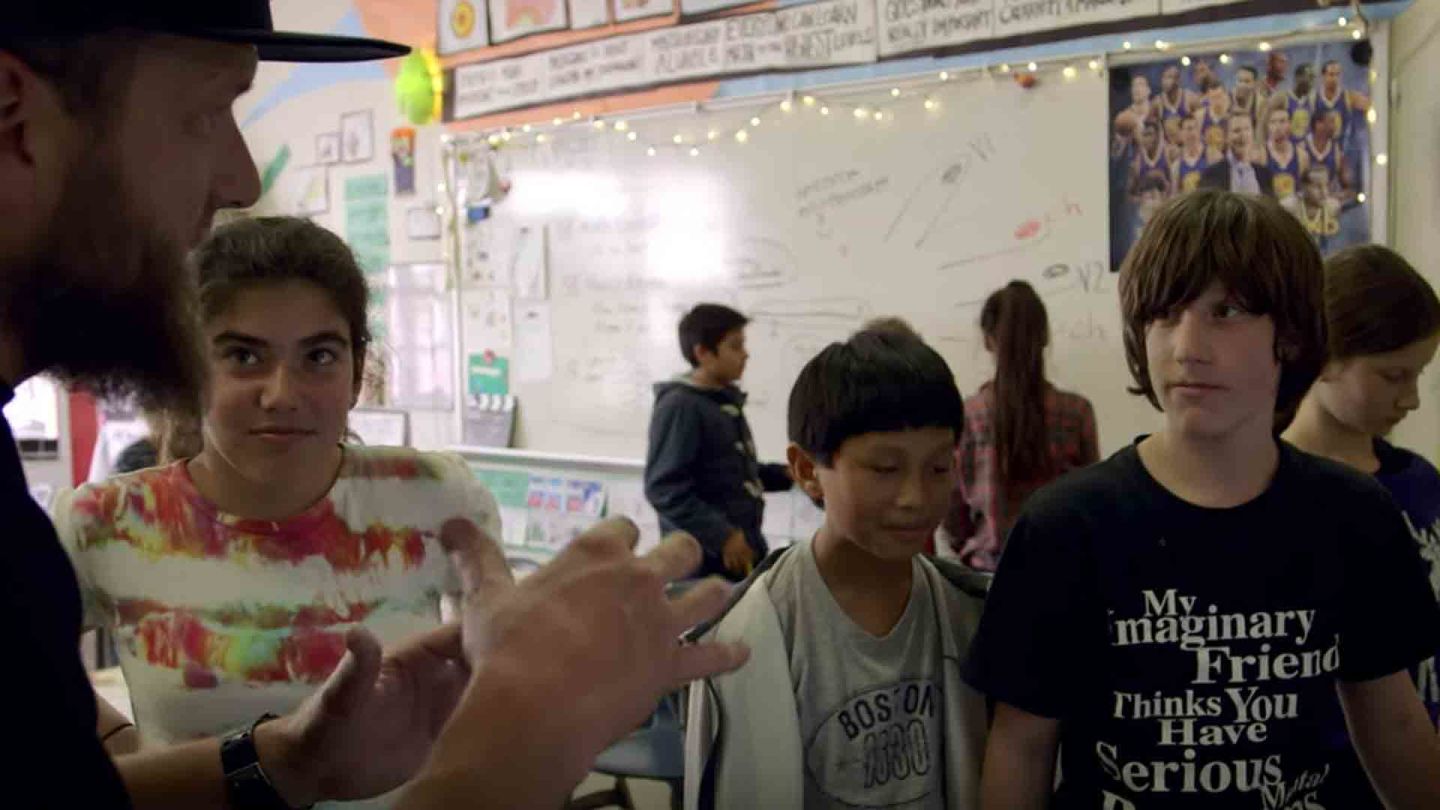
window.__INITIAL_STATE__={
"attachmentsReducer": {
"audio_0": {
"type": "attachments",
"id": "audio_0",
"imgSizes": {
"kqedFullSize": {
"file": "https://ww2.kqed.org/news/wp-content/themes/KQED-unified/img/audio_bgs/background0.jpg"
}
}
},
"audio_1": {
"type": "attachments",
"id": "audio_1",
"imgSizes": {
"kqedFullSize": {
"file": "https://ww2.kqed.org/news/wp-content/themes/KQED-unified/img/audio_bgs/background1.jpg"
}
}
},
"audio_2": {
"type": "attachments",
"id": "audio_2",
"imgSizes": {
"kqedFullSize": {
"file": "https://ww2.kqed.org/news/wp-content/themes/KQED-unified/img/audio_bgs/background2.jpg"
}
}
},
"audio_3": {
"type": "attachments",
"id": "audio_3",
"imgSizes": {
"kqedFullSize": {
"file": "https://ww2.kqed.org/news/wp-content/themes/KQED-unified/img/audio_bgs/background3.jpg"
}
}
},
"audio_4": {
"type": "attachments",
"id": "audio_4",
"imgSizes": {
"kqedFullSize": {
"file": "https://ww2.kqed.org/news/wp-content/themes/KQED-unified/img/audio_bgs/background4.jpg"
}
}
},
"placeholder": {
"type": "attachments",
"id": "placeholder",
"imgSizes": {
"thumbnail": {
"file": "https://cdn.kqed.org/wp-content/uploads/2024/12/KQED-Default-Image-816638274-2000x1333-1-160x107.jpg",
"width": 160,
"height": 107,
"mimeType": "image/jpeg"
},
"medium": {
"file": "https://cdn.kqed.org/wp-content/uploads/2024/12/KQED-Default-Image-816638274-2000x1333-1-800x533.jpg",
"width": 800,
"height": 533,
"mimeType": "image/jpeg"
},
"medium_large": {
"file": "https://cdn.kqed.org/wp-content/uploads/2024/12/KQED-Default-Image-816638274-2000x1333-1-768x512.jpg",
"width": 768,
"height": 512,
"mimeType": "image/jpeg"
},
"large": {
"file": "https://cdn.kqed.org/wp-content/uploads/2024/12/KQED-Default-Image-816638274-2000x1333-1-1020x680.jpg",
"width": 1020,
"height": 680,
"mimeType": "image/jpeg"
},
"1536x1536": {
"file": "https://cdn.kqed.org/wp-content/uploads/2024/12/KQED-Default-Image-816638274-2000x1333-1-1536x1024.jpg",
"width": 1536,
"height": 1024,
"mimeType": "image/jpeg"
},
"fd-lrg": {
"file": "https://cdn.kqed.org/wp-content/uploads/2024/12/KQED-Default-Image-816638274-2000x1333-1-1536x1024.jpg",
"width": 1536,
"height": 1024,
"mimeType": "image/jpeg"
},
"fd-med": {
"file": "https://cdn.kqed.org/wp-content/uploads/2024/12/KQED-Default-Image-816638274-2000x1333-1-1020x680.jpg",
"width": 1020,
"height": 680,
"mimeType": "image/jpeg"
},
"fd-sm": {
"file": "https://cdn.kqed.org/wp-content/uploads/2024/12/KQED-Default-Image-816638274-2000x1333-1-800x533.jpg",
"width": 800,
"height": 533,
"mimeType": "image/jpeg"
},
"post-thumbnail": {
"file": "https://cdn.kqed.org/wp-content/uploads/2024/12/KQED-Default-Image-816638274-2000x1333-1-672x372.jpg",
"width": 672,
"height": 372,
"mimeType": "image/jpeg"
},
"twentyfourteen-full-width": {
"file": "https://cdn.kqed.org/wp-content/uploads/2024/12/KQED-Default-Image-816638274-2000x1333-1-1038x576.jpg",
"width": 1038,
"height": 576,
"mimeType": "image/jpeg"
},
"xxsmall": {
"file": "https://cdn.kqed.org/wp-content/uploads/2024/12/KQED-Default-Image-816638274-2000x1333-1-160x107.jpg",
"width": 160,
"height": 107,
"mimeType": "image/jpeg"
},
"xsmall": {
"file": "https://cdn.kqed.org/wp-content/uploads/2024/12/KQED-Default-Image-816638274-2000x1333-1-672x372.jpg",
"width": 672,
"height": 372,
"mimeType": "image/jpeg"
},
"small": {
"file": "https://cdn.kqed.org/wp-content/uploads/2024/12/KQED-Default-Image-816638274-2000x1333-1-672x372.jpg",
"width": 672,
"height": 372,
"mimeType": "image/jpeg"
},
"xlarge": {
"file": "https://cdn.kqed.org/wp-content/uploads/2024/12/KQED-Default-Image-816638274-2000x1333-1-1020x680.jpg",
"width": 1020,
"height": 680,
"mimeType": "image/jpeg"
},
"full-width": {
"file": "https://cdn.kqed.org/wp-content/uploads/2024/12/KQED-Default-Image-816638274-2000x1333-1-1920x1280.jpg",
"width": 1920,
"height": 1280,
"mimeType": "image/jpeg"
},
"guest-author-32": {
"file": "https://cdn.kqed.org/wp-content/uploads/2025/01/KQED-Default-Image-816638274-1333x1333-1-160x160.jpg",
"width": 32,
"height": 32,
"mimeType": "image/jpeg"
},
"guest-author-50": {
"file": "https://cdn.kqed.org/wp-content/uploads/2025/01/KQED-Default-Image-816638274-1333x1333-1-160x160.jpg",
"width": 50,
"height": 50,
"mimeType": "image/jpeg"
},
"guest-author-64": {
"file": "https://cdn.kqed.org/wp-content/uploads/2025/01/KQED-Default-Image-816638274-1333x1333-1-160x160.jpg",
"width": 64,
"height": 64,
"mimeType": "image/jpeg"
},
"guest-author-96": {
"file": "https://cdn.kqed.org/wp-content/uploads/2025/01/KQED-Default-Image-816638274-1333x1333-1-160x160.jpg",
"width": 96,
"height": 96,
"mimeType": "image/jpeg"
},
"guest-author-128": {
"file": "https://cdn.kqed.org/wp-content/uploads/2025/01/KQED-Default-Image-816638274-1333x1333-1-160x160.jpg",
"width": 128,
"height": 128,
"mimeType": "image/jpeg"
},
"detail": {
"file": "https://cdn.kqed.org/wp-content/uploads/2025/01/KQED-Default-Image-816638274-1333x1333-1-160x160.jpg",
"width": 160,
"height": 160,
"mimeType": "image/jpeg"
},
"kqedFullSize": {
"file": "https://cdn.kqed.org/wp-content/uploads/2024/12/KQED-Default-Image-816638274-2000x1333-1.jpg",
"width": 2000,
"height": 1333
}
}
},
"mindshift_42632": {
"type": "attachments",
"id": "mindshift_42632",
"meta": {
"index": "attachments_1716263798",
"site": "mindshift",
"id": "42632",
"found": true
},
"parent": 42629,
"imgSizes": {
"twentyfourteen-full-width": {
"file": "https://ww2.kqed.org/app/uploads/sites/23/2015/11/Soul-Pancake-1038x576.jpg",
"width": 1038,
"mimeType": "image/jpeg",
"height": 576
},
"thumbnail": {
"file": "https://ww2.kqed.org/app/uploads/sites/23/2015/11/Soul-Pancake-400x225.jpg",
"width": 400,
"mimeType": "image/jpeg",
"height": 225
},
"fd-sm": {
"file": "https://ww2.kqed.org/app/uploads/sites/23/2015/11/Soul-Pancake-960x540.jpg",
"width": 960,
"mimeType": "image/jpeg",
"height": 540
},
"post-thumbnail": {
"file": "https://ww2.kqed.org/app/uploads/sites/23/2015/11/Soul-Pancake-672x372.jpg",
"width": 672,
"mimeType": "image/jpeg",
"height": 372
},
"kqedFullSize": {
"file": "https://ww2.kqed.org/app/uploads/sites/23/2015/11/Soul-Pancake.jpg",
"width": 1920,
"height": 1080
},
"large": {
"file": "https://ww2.kqed.org/app/uploads/sites/23/2015/11/Soul-Pancake-1440x810.jpg",
"width": 1440,
"mimeType": "image/jpeg",
"height": 810
},
"guest-author-96": {
"file": "https://ww2.kqed.org/app/uploads/sites/23/2015/11/Soul-Pancake-96x96.jpg",
"width": 96,
"mimeType": "image/jpeg",
"height": 96
},
"medium": {
"file": "https://ww2.kqed.org/app/uploads/sites/23/2015/11/Soul-Pancake-800x450.jpg",
"width": 800,
"mimeType": "image/jpeg",
"height": 450
},
"guest-author-64": {
"file": "https://ww2.kqed.org/app/uploads/sites/23/2015/11/Soul-Pancake-64x64.jpg",
"width": 64,
"mimeType": "image/jpeg",
"height": 64
},
"guest-author-32": {
"file": "https://ww2.kqed.org/app/uploads/sites/23/2015/11/Soul-Pancake-32x32.jpg",
"width": 32,
"mimeType": "image/jpeg",
"height": 32
},
"cat_post_thumb_sizecategory-posts-2": {
"file": "https://ww2.kqed.org/app/uploads/sites/23/2015/11/Soul-Pancake-50x50.jpg",
"width": 50,
"mimeType": "image/jpeg",
"height": 50
},
"fd-lrg": {
"file": "https://ww2.kqed.org/app/uploads/sites/23/2015/11/Soul-Pancake-1920x1080.jpg",
"width": 1920,
"mimeType": "image/jpeg",
"height": 1080
},
"fd-med": {
"file": "https://ww2.kqed.org/app/uploads/sites/23/2015/11/Soul-Pancake-1180x664.jpg",
"width": 1180,
"mimeType": "image/jpeg",
"height": 664
},
"detail": {
"file": "https://ww2.kqed.org/app/uploads/sites/23/2015/11/Soul-Pancake-75x75.jpg",
"width": 75,
"mimeType": "image/jpeg",
"height": 75
},
"guest-author-128": {
"file": "https://ww2.kqed.org/app/uploads/sites/23/2015/11/Soul-Pancake-128x128.jpg",
"width": 128,
"mimeType": "image/jpeg",
"height": 128
}
},
"publishDate": 1446472146,
"modified": 1446472180,
"caption": "Screen grab from \"How Making Music Made Math Cool in this Classroom.\"",
"description": null,
"title": "Soul-Pancake",
"credit": "Soul Pancake",
"status": "inherit",
"isLoading": false,
"fetchFailed": false
},
"mindshift_42553": {
"type": "attachments",
"id": "mindshift_42553",
"meta": {
"index": "attachments_1716263798",
"site": "mindshift",
"id": "42553",
"found": true
},
"parent": 42552,
"imgSizes": {
"twentyfourteen-full-width": {
"file": "https://ww2.kqed.org/app/uploads/sites/23/2015/10/online-diploma2_slide-d94cec3a012f6d1de8a50673e694c98dc4b07acd-1038x576.jpg",
"width": 1038,
"mimeType": "image/jpeg",
"height": 576
},
"thumbnail": {
"file": "https://ww2.kqed.org/app/uploads/sites/23/2015/10/online-diploma2_slide-d94cec3a012f6d1de8a50673e694c98dc4b07acd-400x267.jpg",
"width": 400,
"mimeType": "image/jpeg",
"height": 267
},
"fd-sm": {
"file": "https://ww2.kqed.org/app/uploads/sites/23/2015/10/online-diploma2_slide-d94cec3a012f6d1de8a50673e694c98dc4b07acd-960x640.jpg",
"width": 960,
"mimeType": "image/jpeg",
"height": 640
},
"post-thumbnail": {
"file": "https://ww2.kqed.org/app/uploads/sites/23/2015/10/online-diploma2_slide-d94cec3a012f6d1de8a50673e694c98dc4b07acd-672x372.jpg",
"width": 672,
"mimeType": "image/jpeg",
"height": 372
},
"kqedFullSize": {
"file": "https://ww2.kqed.org/app/uploads/sites/23/2015/10/online-diploma2_slide-d94cec3a012f6d1de8a50673e694c98dc4b07acd.jpg",
"width": 2997,
"height": 1998
},
"large": {
"file": "https://ww2.kqed.org/app/uploads/sites/23/2015/10/online-diploma2_slide-d94cec3a012f6d1de8a50673e694c98dc4b07acd-1440x960.jpg",
"width": 1440,
"mimeType": "image/jpeg",
"height": 960
},
"guest-author-96": {
"file": "https://ww2.kqed.org/app/uploads/sites/23/2015/10/online-diploma2_slide-d94cec3a012f6d1de8a50673e694c98dc4b07acd-96x96.jpg",
"width": 96,
"mimeType": "image/jpeg",
"height": 96
},
"medium": {
"file": "https://ww2.kqed.org/app/uploads/sites/23/2015/10/online-diploma2_slide-d94cec3a012f6d1de8a50673e694c98dc4b07acd-800x533.jpg",
"width": 800,
"mimeType": "image/jpeg",
"height": 533
},
"guest-author-64": {
"file": "https://ww2.kqed.org/app/uploads/sites/23/2015/10/online-diploma2_slide-d94cec3a012f6d1de8a50673e694c98dc4b07acd-64x64.jpg",
"width": 64,
"mimeType": "image/jpeg",
"height": 64
},
"guest-author-32": {
"file": "https://ww2.kqed.org/app/uploads/sites/23/2015/10/online-diploma2_slide-d94cec3a012f6d1de8a50673e694c98dc4b07acd-32x32.jpg",
"width": 32,
"mimeType": "image/jpeg",
"height": 32
},
"cat_post_thumb_sizecategory-posts-2": {
"file": "https://ww2.kqed.org/app/uploads/sites/23/2015/10/online-diploma2_slide-d94cec3a012f6d1de8a50673e694c98dc4b07acd-50x50.jpg",
"width": 50,
"mimeType": "image/jpeg",
"height": 50
},
"fd-lrg": {
"file": "https://ww2.kqed.org/app/uploads/sites/23/2015/10/online-diploma2_slide-d94cec3a012f6d1de8a50673e694c98dc4b07acd-1920x1280.jpg",
"width": 1920,
"mimeType": "image/jpeg",
"height": 1280
},
"fd-med": {
"file": "https://ww2.kqed.org/app/uploads/sites/23/2015/10/online-diploma2_slide-d94cec3a012f6d1de8a50673e694c98dc4b07acd-1180x787.jpg",
"width": 1180,
"mimeType": "image/jpeg",
"height": 787
},
"detail": {
"file": "https://ww2.kqed.org/app/uploads/sites/23/2015/10/online-diploma2_slide-d94cec3a012f6d1de8a50673e694c98dc4b07acd-75x75.jpg",
"width": 75,
"mimeType": "image/jpeg",
"height": 75
},
"guest-author-128": {
"file": "https://ww2.kqed.org/app/uploads/sites/23/2015/10/online-diploma2_slide-d94cec3a012f6d1de8a50673e694c98dc4b07acd-128x128.jpg",
"width": 128,
"mimeType": "image/jpeg",
"height": 128
}
},
"publishDate": 1445877830,
"modified": 1445878057,
"caption": null,
"description": "Laptop computer handing out a diploma",
"title": "Laptop computer handing out a diploma",
"credit": "LA Johnson/NPR",
"status": "inherit",
"isLoading": false,
"fetchFailed": false
},
"mindshift_42484": {
"type": "attachments",
"id": "mindshift_42484",
"meta": {
"index": "attachments_1716263798",
"site": "mindshift",
"id": "42484",
"found": true
},
"parent": 42473,
"imgSizes": {
"twentyfourteen-full-width": {
"file": "https://ww2.kqed.org/app/uploads/sites/23/2015/10/Phone-1038x576.jpg",
"width": 1038,
"mimeType": "image/jpeg",
"height": 576
},
"thumbnail": {
"file": "https://ww2.kqed.org/app/uploads/sites/23/2015/10/Phone-400x225.jpg",
"width": 400,
"mimeType": "image/jpeg",
"height": 225
},
"fd-sm": {
"file": "https://ww2.kqed.org/app/uploads/sites/23/2015/10/Phone-960x540.jpg",
"width": 960,
"mimeType": "image/jpeg",
"height": 540
},
"post-thumbnail": {
"file": "https://ww2.kqed.org/app/uploads/sites/23/2015/10/Phone-672x372.jpg",
"width": 672,
"mimeType": "image/jpeg",
"height": 372
},
"kqedFullSize": {
"file": "https://ww2.kqed.org/app/uploads/sites/23/2015/10/Phone.jpg",
"width": 1920,
"height": 1080
},
"large": {
"file": "https://ww2.kqed.org/app/uploads/sites/23/2015/10/Phone-1440x810.jpg",
"width": 1440,
"mimeType": "image/jpeg",
"height": 810
},
"guest-author-96": {
"file": "https://ww2.kqed.org/app/uploads/sites/23/2015/10/Phone-96x96.jpg",
"width": 96,
"mimeType": "image/jpeg",
"height": 96
},
"medium": {
"file": "https://ww2.kqed.org/app/uploads/sites/23/2015/10/Phone-800x450.jpg",
"width": 800,
"mimeType": "image/jpeg",
"height": 450
},
"guest-author-64": {
"file": "https://ww2.kqed.org/app/uploads/sites/23/2015/10/Phone-64x64.jpg",
"width": 64,
"mimeType": "image/jpeg",
"height": 64
},
"guest-author-32": {
"file": "https://ww2.kqed.org/app/uploads/sites/23/2015/10/Phone-32x32.jpg",
"width": 32,
"mimeType": "image/jpeg",
"height": 32
},
"cat_post_thumb_sizecategory-posts-2": {
"file": "https://ww2.kqed.org/app/uploads/sites/23/2015/10/Phone-50x50.jpg",
"width": 50,
"mimeType": "image/jpeg",
"height": 50
},
"fd-lrg": {
"file": "https://ww2.kqed.org/app/uploads/sites/23/2015/10/Phone-1920x1080.jpg",
"width": 1920,
"mimeType": "image/jpeg",
"height": 1080
},
"fd-med": {
"file": "https://ww2.kqed.org/app/uploads/sites/23/2015/10/Phone-1180x664.jpg",
"width": 1180,
"mimeType": "image/jpeg",
"height": 664
},
"detail": {
"file": "https://ww2.kqed.org/app/uploads/sites/23/2015/10/Phone-75x75.jpg",
"width": 75,
"mimeType": "image/jpeg",
"height": 75
},
"guest-author-128": {
"file": "https://ww2.kqed.org/app/uploads/sites/23/2015/10/Phone-128x128.jpg",
"width": 128,
"mimeType": "image/jpeg",
"height": 128
}
},
"publishDate": 1444979463,
"modified": 1444979484,
"caption": null,
"description": "Phone text messaging",
"title": "Phone",
"credit": "iStock",
"status": "inherit",
"isLoading": false,
"fetchFailed": false
},
"mindshift_42362": {
"type": "attachments",
"id": "mindshift_42362",
"meta": {
"index": "attachments_1716263798",
"site": "mindshift",
"id": "42362",
"found": true
},
"parent": 42361,
"imgSizes": {
"twentyfourteen-full-width": {
"file": "https://ww2.kqed.org/app/uploads/sites/23/2015/10/wild-math-story1_slide-6460ca1e1853fb43e084d2485d001ffa007d0692-1038x576.jpg",
"width": 1038,
"mimeType": "image/jpeg",
"height": 576
},
"thumbnail": {
"file": "https://ww2.kqed.org/app/uploads/sites/23/2015/10/wild-math-story1_slide-6460ca1e1853fb43e084d2485d001ffa007d0692-400x267.jpg",
"width": 400,
"mimeType": "image/jpeg",
"height": 267
},
"fd-sm": {
"file": "https://ww2.kqed.org/app/uploads/sites/23/2015/10/wild-math-story1_slide-6460ca1e1853fb43e084d2485d001ffa007d0692-960x640.jpg",
"width": 960,
"mimeType": "image/jpeg",
"height": 640
},
"post-thumbnail": {
"file": "https://ww2.kqed.org/app/uploads/sites/23/2015/10/wild-math-story1_slide-6460ca1e1853fb43e084d2485d001ffa007d0692-672x372.jpg",
"width": 672,
"mimeType": "image/jpeg",
"height": 372
},
"kqedFullSize": {
"file": "https://ww2.kqed.org/app/uploads/sites/23/2015/10/wild-math-story1_slide-6460ca1e1853fb43e084d2485d001ffa007d0692.jpg",
"width": 2997,
"height": 1998
},
"large": {
"file": "https://ww2.kqed.org/app/uploads/sites/23/2015/10/wild-math-story1_slide-6460ca1e1853fb43e084d2485d001ffa007d0692-1440x960.jpg",
"width": 1440,
"mimeType": "image/jpeg",
"height": 960
},
"guest-author-96": {
"file": "https://ww2.kqed.org/app/uploads/sites/23/2015/10/wild-math-story1_slide-6460ca1e1853fb43e084d2485d001ffa007d0692-96x96.jpg",
"width": 96,
"mimeType": "image/jpeg",
"height": 96
},
"medium": {
"file": "https://ww2.kqed.org/app/uploads/sites/23/2015/10/wild-math-story1_slide-6460ca1e1853fb43e084d2485d001ffa007d0692-800x533.jpg",
"width": 800,
"mimeType": "image/jpeg",
"height": 533
},
"guest-author-64": {
"file": "https://ww2.kqed.org/app/uploads/sites/23/2015/10/wild-math-story1_slide-6460ca1e1853fb43e084d2485d001ffa007d0692-64x64.jpg",
"width": 64,
"mimeType": "image/jpeg",
"height": 64
},
"guest-author-32": {
"file": "https://ww2.kqed.org/app/uploads/sites/23/2015/10/wild-math-story1_slide-6460ca1e1853fb43e084d2485d001ffa007d0692-32x32.jpg",
"width": 32,
"mimeType": "image/jpeg",
"height": 32
},
"cat_post_thumb_sizecategory-posts-2": {
"file": "https://ww2.kqed.org/app/uploads/sites/23/2015/10/wild-math-story1_slide-6460ca1e1853fb43e084d2485d001ffa007d0692-50x50.jpg",
"width": 50,
"mimeType": "image/jpeg",
"height": 50
},
"fd-lrg": {
"file": "https://ww2.kqed.org/app/uploads/sites/23/2015/10/wild-math-story1_slide-6460ca1e1853fb43e084d2485d001ffa007d0692-1920x1280.jpg",
"width": 1920,
"mimeType": "image/jpeg",
"height": 1280
},
"fd-med": {
"file": "https://ww2.kqed.org/app/uploads/sites/23/2015/10/wild-math-story1_slide-6460ca1e1853fb43e084d2485d001ffa007d0692-1180x787.jpg",
"width": 1180,
"mimeType": "image/jpeg",
"height": 787
},
"detail": {
"file": "https://ww2.kqed.org/app/uploads/sites/23/2015/10/wild-math-story1_slide-6460ca1e1853fb43e084d2485d001ffa007d0692-75x75.jpg",
"width": 75,
"mimeType": "image/jpeg",
"height": 75
},
"guest-author-128": {
"file": "https://ww2.kqed.org/app/uploads/sites/23/2015/10/wild-math-story1_slide-6460ca1e1853fb43e084d2485d001ffa007d0692-128x128.jpg",
"width": 128,
"mimeType": "image/jpeg",
"height": 128
}
},
"publishDate": 1444371073,
"modified": 1444371073,
"caption": null,
"description": "Where the wild integers are",
"title": "Where the wild integers are",
"credit": null,
"status": "inherit",
"isLoading": false,
"fetchFailed": false
},
"mindshift_42231": {
"type": "attachments",
"id": "mindshift_42231",
"meta": {
"index": "attachments_1716263798",
"site": "mindshift",
"id": "42231",
"found": true
},
"parent": 42217,
"imgSizes": {
"twentyfourteen-full-width": {
"file": "https://ww2.kqed.org/app/uploads/sites/23/2015/09/lock-1038x576.jpg",
"width": 1038,
"mimeType": "image/jpeg",
"height": 576
},
"thumbnail": {
"file": "https://ww2.kqed.org/app/uploads/sites/23/2015/09/lock-400x225.jpg",
"width": 400,
"mimeType": "image/jpeg",
"height": 225
},
"fd-sm": {
"file": "https://ww2.kqed.org/app/uploads/sites/23/2015/09/lock-960x540.jpg",
"width": 960,
"mimeType": "image/jpeg",
"height": 540
},
"post-thumbnail": {
"file": "https://ww2.kqed.org/app/uploads/sites/23/2015/09/lock-672x372.jpg",
"width": 672,
"mimeType": "image/jpeg",
"height": 372
},
"kqedFullSize": {
"file": "https://ww2.kqed.org/app/uploads/sites/23/2015/09/lock.jpg",
"width": 1920,
"height": 1080
},
"large": {
"file": "https://ww2.kqed.org/app/uploads/sites/23/2015/09/lock-1440x810.jpg",
"width": 1440,
"mimeType": "image/jpeg",
"height": 810
},
"guest-author-96": {
"file": "https://ww2.kqed.org/app/uploads/sites/23/2015/09/lock-96x96.jpg",
"width": 96,
"mimeType": "image/jpeg",
"height": 96
},
"medium": {
"file": "https://ww2.kqed.org/app/uploads/sites/23/2015/09/lock-800x450.jpg",
"width": 800,
"mimeType": "image/jpeg",
"height": 450
},
"guest-author-64": {
"file": "https://ww2.kqed.org/app/uploads/sites/23/2015/09/lock-64x64.jpg",
"width": 64,
"mimeType": "image/jpeg",
"height": 64
},
"guest-author-32": {
"file": "https://ww2.kqed.org/app/uploads/sites/23/2015/09/lock-32x32.jpg",
"width": 32,
"mimeType": "image/jpeg",
"height": 32
},
"cat_post_thumb_sizecategory-posts-2": {
"file": "https://ww2.kqed.org/app/uploads/sites/23/2015/09/lock-50x50.jpg",
"width": 50,
"mimeType": "image/jpeg",
"height": 50
},
"fd-lrg": {
"file": "https://ww2.kqed.org/app/uploads/sites/23/2015/09/lock-1920x1080.jpg",
"width": 1920,
"mimeType": "image/jpeg",
"height": 1080
},
"fd-med": {
"file": "https://ww2.kqed.org/app/uploads/sites/23/2015/09/lock-1180x664.jpg",
"width": 1180,
"mimeType": "image/jpeg",
"height": 664
},
"detail": {
"file": "https://ww2.kqed.org/app/uploads/sites/23/2015/09/lock-75x75.jpg",
"width": 75,
"mimeType": "image/jpeg",
"height": 75
},
"guest-author-128": {
"file": "https://ww2.kqed.org/app/uploads/sites/23/2015/09/lock-128x128.jpg",
"width": 128,
"mimeType": "image/jpeg",
"height": 128
}
},
"publishDate": 1443589075,
"modified": 1443589087,
"caption": null,
"description": null,
"title": "lock",
"credit": "Getty Images",
"status": "inherit",
"isLoading": false,
"fetchFailed": false
},
"mindshift_41989": {
"type": "attachments",
"id": "mindshift_41989",
"meta": {
"index": "attachments_1716263798",
"site": "mindshift",
"id": "41989",
"found": true
},
"parent": 41988,
"imgSizes": {
"twentyfourteen-full-width": {
"file": "https://ww2.kqed.org/app/uploads/sites/23/2015/09/galleon-1038x576.jpg",
"width": 1038,
"mimeType": "image/jpeg",
"height": 576
},
"thumbnail": {
"file": "https://ww2.kqed.org/app/uploads/sites/23/2015/09/galleon-400x225.jpg",
"width": 400,
"mimeType": "image/jpeg",
"height": 225
},
"fd-sm": {
"file": "https://ww2.kqed.org/app/uploads/sites/23/2015/09/galleon-960x539.jpg",
"width": 960,
"mimeType": "image/jpeg",
"height": 539
},
"post-thumbnail": {
"file": "https://ww2.kqed.org/app/uploads/sites/23/2015/09/galleon-672x372.jpg",
"width": 672,
"mimeType": "image/jpeg",
"height": 372
},
"kqedFullSize": {
"file": "https://ww2.kqed.org/app/uploads/sites/23/2015/09/galleon.jpg",
"width": 1057,
"height": 594
},
"cat_post_thumb_sizecategory-posts-2": {
"file": "https://ww2.kqed.org/app/uploads/sites/23/2015/09/galleon-50x50.jpg",
"width": 50,
"mimeType": "image/jpeg",
"height": 50
},
"guest-author-96": {
"file": "https://ww2.kqed.org/app/uploads/sites/23/2015/09/galleon-96x96.jpg",
"width": 96,
"mimeType": "image/jpeg",
"height": 96
},
"medium": {
"file": "https://ww2.kqed.org/app/uploads/sites/23/2015/09/galleon-800x450.jpg",
"width": 800,
"mimeType": "image/jpeg",
"height": 450
},
"guest-author-64": {
"file": "https://ww2.kqed.org/app/uploads/sites/23/2015/09/galleon-64x64.jpg",
"width": 64,
"mimeType": "image/jpeg",
"height": 64
},
"detail": {
"file": "https://ww2.kqed.org/app/uploads/sites/23/2015/09/galleon-75x75.jpg",
"width": 75,
"mimeType": "image/jpeg",
"height": 75
},
"guest-author-32": {
"file": "https://ww2.kqed.org/app/uploads/sites/23/2015/09/galleon-32x32.jpg",
"width": 32,
"mimeType": "image/jpeg",
"height": 32
},
"guest-author-128": {
"file": "https://ww2.kqed.org/app/uploads/sites/23/2015/09/galleon-128x128.jpg",
"width": 128,
"mimeType": "image/jpeg",
"height": 128
}
},
"publishDate": 1441832677,
"modified": 1441832771,
"caption": "An explorer's Galleon built in Minecraft.",
"description": null,
"title": "galleon",
"credit": "\u003ca href=\"https://www.youtube.com/watch?v=NhlKF4kKzi8\">The World of Humanities\u003c/a>",
"status": "inherit",
"isLoading": false,
"fetchFailed": false
},
"mindshift_42050": {
"type": "attachments",
"id": "mindshift_42050",
"meta": {
"index": "attachments_1716263798",
"site": "mindshift",
"id": "42050",
"found": true
},
"parent": 42008,
"imgSizes": {
"twentyfourteen-full-width": {
"file": "https://ww2.kqed.org/app/uploads/sites/23/2015/09/iPad-1038x576.jpg",
"width": 1038,
"mimeType": "image/jpeg",
"height": 576
},
"thumbnail": {
"file": "https://ww2.kqed.org/app/uploads/sites/23/2015/09/iPad-400x246.jpg",
"width": 400,
"mimeType": "image/jpeg",
"height": 246
},
"fd-sm": {
"file": "https://ww2.kqed.org/app/uploads/sites/23/2015/09/iPad-960x590.jpg",
"width": 960,
"mimeType": "image/jpeg",
"height": 590
},
"post-thumbnail": {
"file": "https://ww2.kqed.org/app/uploads/sites/23/2015/09/iPad-672x372.jpg",
"width": 672,
"mimeType": "image/jpeg",
"height": 372
},
"kqedFullSize": {
"file": "https://ww2.kqed.org/app/uploads/sites/23/2015/09/iPad.jpg",
"width": 1920,
"height": 1180
},
"large": {
"file": "https://ww2.kqed.org/app/uploads/sites/23/2015/09/iPad-1440x885.jpg",
"width": 1440,
"mimeType": "image/jpeg",
"height": 885
},
"guest-author-96": {
"file": "https://ww2.kqed.org/app/uploads/sites/23/2015/09/iPad-96x96.jpg",
"width": 96,
"mimeType": "image/jpeg",
"height": 96
},
"medium": {
"file": "https://ww2.kqed.org/app/uploads/sites/23/2015/09/iPad-800x492.jpg",
"width": 800,
"mimeType": "image/jpeg",
"height": 492
},
"guest-author-64": {
"file": "https://ww2.kqed.org/app/uploads/sites/23/2015/09/iPad-64x64.jpg",
"width": 64,
"mimeType": "image/jpeg",
"height": 64
},
"guest-author-32": {
"file": "https://ww2.kqed.org/app/uploads/sites/23/2015/09/iPad-32x32.jpg",
"width": 32,
"mimeType": "image/jpeg",
"height": 32
},
"cat_post_thumb_sizecategory-posts-2": {
"file": "https://ww2.kqed.org/app/uploads/sites/23/2015/09/iPad-50x50.jpg",
"width": 50,
"mimeType": "image/jpeg",
"height": 50
},
"fd-lrg": {
"file": "https://ww2.kqed.org/app/uploads/sites/23/2015/09/iPad-1920x1180.jpg",
"width": 1920,
"mimeType": "image/jpeg",
"height": 1180
},
"fd-med": {
"file": "https://ww2.kqed.org/app/uploads/sites/23/2015/09/iPad-1180x725.jpg",
"width": 1180,
"mimeType": "image/jpeg",
"height": 725
},
"detail": {
"file": "https://ww2.kqed.org/app/uploads/sites/23/2015/09/iPad-75x75.jpg",
"width": 75,
"mimeType": "image/jpeg",
"height": 75
},
"guest-author-128": {
"file": "https://ww2.kqed.org/app/uploads/sites/23/2015/09/iPad-128x128.jpg",
"width": 128,
"mimeType": "image/jpeg",
"height": 128
}
},
"publishDate": 1442289868,
"modified": 1442289879,
"caption": null,
"description": null,
"title": "iPad",
"credit": "Getty Images",
"status": "inherit",
"isLoading": false,
"fetchFailed": false
},
"mindshift_41932": {
"type": "attachments",
"id": "mindshift_41932",
"meta": {
"index": "attachments_1716263798",
"site": "mindshift",
"id": "41932",
"found": true
},
"parent": 41914,
"imgSizes": {
"twentyfourteen-full-width": {
"file": "https://ww2.kqed.org/app/uploads/sites/23/2015/09/CodeNow-1038x576.jpg",
"width": 1038,
"mimeType": "image/jpeg",
"height": 576
},
"thumbnail": {
"file": "https://ww2.kqed.org/app/uploads/sites/23/2015/09/CodeNow-400x225.jpg",
"width": 400,
"mimeType": "image/jpeg",
"height": 225
},
"fd-sm": {
"file": "https://ww2.kqed.org/app/uploads/sites/23/2015/09/CodeNow-960x540.jpg",
"width": 960,
"mimeType": "image/jpeg",
"height": 540
},
"post-thumbnail": {
"file": "https://ww2.kqed.org/app/uploads/sites/23/2015/09/CodeNow-672x372.jpg",
"width": 672,
"mimeType": "image/jpeg",
"height": 372
},
"kqedFullSize": {
"file": "https://ww2.kqed.org/app/uploads/sites/23/2015/09/CodeNow.jpg",
"width": 2500,
"height": 1406
},
"large": {
"file": "https://ww2.kqed.org/app/uploads/sites/23/2015/09/CodeNow-1440x810.jpg",
"width": 1440,
"mimeType": "image/jpeg",
"height": 810
},
"guest-author-96": {
"file": "https://ww2.kqed.org/app/uploads/sites/23/2015/09/CodeNow-96x96.jpg",
"width": 96,
"mimeType": "image/jpeg",
"height": 96
},
"medium": {
"file": "https://ww2.kqed.org/app/uploads/sites/23/2015/09/CodeNow-800x450.jpg",
"width": 800,
"mimeType": "image/jpeg",
"height": 450
},
"guest-author-64": {
"file": "https://ww2.kqed.org/app/uploads/sites/23/2015/09/CodeNow-64x64.jpg",
"width": 64,
"mimeType": "image/jpeg",
"height": 64
},
"guest-author-32": {
"file": "https://ww2.kqed.org/app/uploads/sites/23/2015/09/CodeNow-32x32.jpg",
"width": 32,
"mimeType": "image/jpeg",
"height": 32
},
"cat_post_thumb_sizecategory-posts-2": {
"file": "https://ww2.kqed.org/app/uploads/sites/23/2015/09/CodeNow-50x50.jpg",
"width": 50,
"mimeType": "image/jpeg",
"height": 50
},
"fd-lrg": {
"file": "https://ww2.kqed.org/app/uploads/sites/23/2015/09/CodeNow-1920x1080.jpg",
"width": 1920,
"mimeType": "image/jpeg",
"height": 1080
},
"fd-med": {
"file": "https://ww2.kqed.org/app/uploads/sites/23/2015/09/CodeNow-1180x664.jpg",
"width": 1180,
"mimeType": "image/jpeg",
"height": 664
},
"detail": {
"file": "https://ww2.kqed.org/app/uploads/sites/23/2015/09/CodeNow-75x75.jpg",
"width": 75,
"mimeType": "image/jpeg",
"height": 75
},
"guest-author-128": {
"file": "https://ww2.kqed.org/app/uploads/sites/23/2015/09/CodeNow-128x128.jpg",
"width": 128,
"mimeType": "image/jpeg",
"height": 128
}
},
"publishDate": 1441391954,
"modified": 1441391981,
"caption": "Marcus Robinson helps facilitate a coding workshop.",
"description": null,
"title": "CodeNow",
"credit": "Courtesy CodeNow",
"status": "inherit",
"isLoading": false,
"fetchFailed": false
},
"mindshift_41905": {
"type": "attachments",
"id": "mindshift_41905",
"meta": {
"index": "attachments_1716263798",
"site": "mindshift",
"id": "41905",
"found": true
},
"parent": 41879,
"imgSizes": {
"twentyfourteen-full-width": {
"file": "https://ww2.kqed.org/app/uploads/sites/23/2015/09/Pixar-grass-border-1038x576.jpg",
"width": 1038,
"mimeType": "image/jpeg",
"height": 576
},
"thumbnail": {
"file": "https://ww2.kqed.org/app/uploads/sites/23/2015/09/Pixar-grass-border-400x225.jpg",
"width": 400,
"mimeType": "image/jpeg",
"height": 225
},
"fd-sm": {
"file": "https://ww2.kqed.org/app/uploads/sites/23/2015/09/Pixar-grass-border-960x540.jpg",
"width": 960,
"mimeType": "image/jpeg",
"height": 540
},
"post-thumbnail": {
"file": "https://ww2.kqed.org/app/uploads/sites/23/2015/09/Pixar-grass-border-672x372.jpg",
"width": 672,
"mimeType": "image/jpeg",
"height": 372
},
"kqedFullSize": {
"file": "https://ww2.kqed.org/app/uploads/sites/23/2015/09/Pixar-grass-border.jpg",
"width": 1920,
"height": 1080
},
"large": {
"file": "https://ww2.kqed.org/app/uploads/sites/23/2015/09/Pixar-grass-border-1440x810.jpg",
"width": 1440,
"mimeType": "image/jpeg",
"height": 810
},
"guest-author-96": {
"file": "https://ww2.kqed.org/app/uploads/sites/23/2015/09/Pixar-grass-border-96x96.jpg",
"width": 96,
"mimeType": "image/jpeg",
"height": 96
},
"medium": {
"file": "https://ww2.kqed.org/app/uploads/sites/23/2015/09/Pixar-grass-border-800x450.jpg",
"width": 800,
"mimeType": "image/jpeg",
"height": 450
},
"guest-author-64": {
"file": "https://ww2.kqed.org/app/uploads/sites/23/2015/09/Pixar-grass-border-64x64.jpg",
"width": 64,
"mimeType": "image/jpeg",
"height": 64
},
"guest-author-32": {
"file": "https://ww2.kqed.org/app/uploads/sites/23/2015/09/Pixar-grass-border-32x32.jpg",
"width": 32,
"mimeType": "image/jpeg",
"height": 32
},
"cat_post_thumb_sizecategory-posts-2": {
"file": "https://ww2.kqed.org/app/uploads/sites/23/2015/09/Pixar-grass-border-50x50.jpg",
"width": 50,
"mimeType": "image/jpeg",
"height": 50
},
"fd-lrg": {
"file": "https://ww2.kqed.org/app/uploads/sites/23/2015/09/Pixar-grass-border-1920x1080.jpg",
"width": 1920,
"mimeType": "image/jpeg",
"height": 1080
},
"fd-med": {
"file": "https://ww2.kqed.org/app/uploads/sites/23/2015/09/Pixar-grass-border-1180x664.jpg",
"width": 1180,
"mimeType": "image/jpeg",
"height": 664
},
"detail": {
"file": "https://ww2.kqed.org/app/uploads/sites/23/2015/09/Pixar-grass-border-75x75.jpg",
"width": 75,
"mimeType": "image/jpeg",
"height": 75
},
"guest-author-128": {
"file": "https://ww2.kqed.org/app/uploads/sites/23/2015/09/Pixar-grass-border-128x128.jpg",
"width": 128,
"mimeType": "image/jpeg",
"height": 128
}
},
"publishDate": 1441240324,
"modified": 1441281404,
"caption": "Screengrab of a Pixar in a Box session on environmental modeling of grass using parabolas. ",
"description": null,
"title": "Pixar-grass-border",
"credit": null,
"status": "inherit",
"isLoading": false,
"fetchFailed": false
},
"mindshift_41837": {
"type": "attachments",
"id": "mindshift_41837",
"meta": {
"index": "attachments_1716263798",
"site": "mindshift",
"id": "41837",
"found": true
},
"parent": 41826,
"imgSizes": {
"twentyfourteen-full-width": {
"file": "https://ww2.kqed.org/app/uploads/sites/23/2015/08/ELLs-Apps-1038x576.jpg",
"width": 1038,
"mimeType": "image/jpeg",
"height": 576
},
"thumbnail": {
"file": "https://ww2.kqed.org/app/uploads/sites/23/2015/08/ELLs-Apps-400x225.jpg",
"width": 400,
"mimeType": "image/jpeg",
"height": 225
},
"fd-sm": {
"file": "https://ww2.kqed.org/app/uploads/sites/23/2015/08/ELLs-Apps-960x540.jpg",
"width": 960,
"mimeType": "image/jpeg",
"height": 540
},
"post-thumbnail": {
"file": "https://ww2.kqed.org/app/uploads/sites/23/2015/08/ELLs-Apps-672x372.jpg",
"width": 672,
"mimeType": "image/jpeg",
"height": 372
},
"kqedFullSize": {
"file": "https://ww2.kqed.org/app/uploads/sites/23/2015/08/ELLs-Apps.jpg",
"width": 1920,
"height": 1080
},
"large": {
"file": "https://ww2.kqed.org/app/uploads/sites/23/2015/08/ELLs-Apps-1440x810.jpg",
"width": 1440,
"mimeType": "image/jpeg",
"height": 810
},
"guest-author-96": {
"file": "https://ww2.kqed.org/app/uploads/sites/23/2015/08/ELLs-Apps-96x96.jpg",
"width": 96,
"mimeType": "image/jpeg",
"height": 96
},
"medium": {
"file": "https://ww2.kqed.org/app/uploads/sites/23/2015/08/ELLs-Apps-800x450.jpg",
"width": 800,
"mimeType": "image/jpeg",
"height": 450
},
"guest-author-64": {
"file": "https://ww2.kqed.org/app/uploads/sites/23/2015/08/ELLs-Apps-64x64.jpg",
"width": 64,
"mimeType": "image/jpeg",
"height": 64
},
"guest-author-32": {
"file": "https://ww2.kqed.org/app/uploads/sites/23/2015/08/ELLs-Apps-32x32.jpg",
"width": 32,
"mimeType": "image/jpeg",
"height": 32
},
"cat_post_thumb_sizecategory-posts-2": {
"file": "https://ww2.kqed.org/app/uploads/sites/23/2015/08/ELLs-Apps-50x50.jpg",
"width": 50,
"mimeType": "image/jpeg",
"height": 50
},
"fd-lrg": {
"file": "https://ww2.kqed.org/app/uploads/sites/23/2015/08/ELLs-Apps-1920x1080.jpg",
"width": 1920,
"mimeType": "image/jpeg",
"height": 1080
},
"fd-med": {
"file": "https://ww2.kqed.org/app/uploads/sites/23/2015/08/ELLs-Apps-1180x664.jpg",
"width": 1180,
"mimeType": "image/jpeg",
"height": 664
},
"detail": {
"file": "https://ww2.kqed.org/app/uploads/sites/23/2015/08/ELLs-Apps-75x75.jpg",
"width": 75,
"mimeType": "image/jpeg",
"height": 75
},
"guest-author-128": {
"file": "https://ww2.kqed.org/app/uploads/sites/23/2015/08/ELLs-Apps-128x128.jpg",
"width": 128,
"mimeType": "image/jpeg",
"height": 128
}
},
"publishDate": 1441004907,
"modified": 1441004944,
"caption": null,
"description": null,
"title": "ELLs-Apps",
"credit": "Brad Flickinger/Flickr",
"status": "inherit",
"isLoading": false,
"fetchFailed": false
},
"mindshift_41665": {
"type": "attachments",
"id": "mindshift_41665",
"meta": {
"index": "attachments_1716263798",
"site": "mindshift",
"id": "41665",
"found": true
},
"parent": 41661,
"imgSizes": {
"twentyfourteen-full-width": {
"file": "https://ww2.kqed.org/app/uploads/sites/23/2015/08/rec-profile_slide-3b232d11702e64f621355e2751170f1d3d0eedb8-1038x576.jpg",
"width": 1038,
"mimeType": "image/jpeg",
"height": 576
},
"thumbnail": {
"file": "https://ww2.kqed.org/app/uploads/sites/23/2015/08/rec-profile_slide-3b232d11702e64f621355e2751170f1d3d0eedb8-400x267.jpg",
"width": 400,
"mimeType": "image/jpeg",
"height": 267
},
"fd-sm": {
"file": "https://ww2.kqed.org/app/uploads/sites/23/2015/08/rec-profile_slide-3b232d11702e64f621355e2751170f1d3d0eedb8-960x640.jpg",
"width": 960,
"mimeType": "image/jpeg",
"height": 640
},
"post-thumbnail": {
"file": "https://ww2.kqed.org/app/uploads/sites/23/2015/08/rec-profile_slide-3b232d11702e64f621355e2751170f1d3d0eedb8-672x372.jpg",
"width": 672,
"mimeType": "image/jpeg",
"height": 372
},
"kqedFullSize": {
"file": "https://ww2.kqed.org/app/uploads/sites/23/2015/08/rec-profile_slide-3b232d11702e64f621355e2751170f1d3d0eedb8-e1439935249244.jpg",
"width": 1920,
"height": 1280
},
"large": {
"file": "https://ww2.kqed.org/app/uploads/sites/23/2015/08/rec-profile_slide-3b232d11702e64f621355e2751170f1d3d0eedb8-1440x960.jpg",
"width": 1440,
"mimeType": "image/jpeg",
"height": 960
},
"guest-author-96": {
"file": "https://ww2.kqed.org/app/uploads/sites/23/2015/08/rec-profile_slide-3b232d11702e64f621355e2751170f1d3d0eedb8-96x96.jpg",
"width": 96,
"mimeType": "image/jpeg",
"height": 96
},
"medium": {
"file": "https://ww2.kqed.org/app/uploads/sites/23/2015/08/rec-profile_slide-3b232d11702e64f621355e2751170f1d3d0eedb8-800x533.jpg",
"width": 800,
"mimeType": "image/jpeg",
"height": 533
},
"guest-author-64": {
"file": "https://ww2.kqed.org/app/uploads/sites/23/2015/08/rec-profile_slide-3b232d11702e64f621355e2751170f1d3d0eedb8-64x64.jpg",
"width": 64,
"mimeType": "image/jpeg",
"height": 64
},
"guest-author-32": {
"file": "https://ww2.kqed.org/app/uploads/sites/23/2015/08/rec-profile_slide-3b232d11702e64f621355e2751170f1d3d0eedb8-32x32.jpg",
"width": 32,
"mimeType": "image/jpeg",
"height": 32
},
"cat_post_thumb_sizecategory-posts-2": {
"file": "https://ww2.kqed.org/app/uploads/sites/23/2015/08/rec-profile_slide-3b232d11702e64f621355e2751170f1d3d0eedb8-50x50.jpg",
"width": 50,
"mimeType": "image/jpeg",
"height": 50
},
"fd-lrg": {
"file": "https://ww2.kqed.org/app/uploads/sites/23/2015/08/rec-profile_slide-3b232d11702e64f621355e2751170f1d3d0eedb8-1920x1280.jpg",
"width": 1920,
"mimeType": "image/jpeg",
"height": 1280
},
"fd-med": {
"file": "https://ww2.kqed.org/app/uploads/sites/23/2015/08/rec-profile_slide-3b232d11702e64f621355e2751170f1d3d0eedb8-1180x787.jpg",
"width": 1180,
"mimeType": "image/jpeg",
"height": 787
},
"detail": {
"file": "https://ww2.kqed.org/app/uploads/sites/23/2015/08/rec-profile_slide-3b232d11702e64f621355e2751170f1d3d0eedb8-75x75.jpg",
"width": 75,
"mimeType": "image/jpeg",
"height": 75
},
"guest-author-128": {
"file": "https://ww2.kqed.org/app/uploads/sites/23/2015/08/rec-profile_slide-3b232d11702e64f621355e2751170f1d3d0eedb8-128x128.jpg",
"width": 128,
"mimeType": "image/jpeg",
"height": 128
}
},
"publishDate": 1439934976,
"modified": 1439935195,
"caption": "Lake Raymond, the camp coordinator of Black Girls CODE.",
"description": "Lake Raymond, the camp coordinator of Black Girls CODE.",
"title": "Lake Raymond, the camp coordinator of Black Girls CODE.",
"credit": "LA Johnson/NPR",
"status": "inherit",
"isLoading": false,
"fetchFailed": false
},
"mindshift_41195": {
"type": "attachments",
"id": "mindshift_41195",
"meta": {
"index": "attachments_1716263798",
"site": "mindshift",
"id": "41195",
"found": true
},
"parent": 41157,
"imgSizes": {
"twentyfourteen-full-width": {
"file": "https://ww2.kqed.org/app/uploads/sites/23/2015/07/Minecraft-Mission-San-Miguel-1038x576.png",
"width": 1038,
"mimeType": "image/png",
"height": 576
},
"thumbnail": {
"file": "https://ww2.kqed.org/app/uploads/sites/23/2015/07/Minecraft-Mission-San-Miguel-400x225.png",
"width": 400,
"mimeType": "image/png",
"height": 225
},
"fd-sm": {
"file": "https://ww2.kqed.org/app/uploads/sites/23/2015/07/Minecraft-Mission-San-Miguel-960x540.png",
"width": 960,
"mimeType": "image/png",
"height": 540
},
"post-thumbnail": {
"file": "https://ww2.kqed.org/app/uploads/sites/23/2015/07/Minecraft-Mission-San-Miguel-672x372.png",
"width": 672,
"mimeType": "image/png",
"height": 372
},
"kqedFullSize": {
"file": "https://ww2.kqed.org/app/uploads/sites/23/2015/07/Minecraft-Mission-San-Miguel.png",
"width": 1366,
"height": 768
},
"guest-author-96": {
"file": "https://ww2.kqed.org/app/uploads/sites/23/2015/07/Minecraft-Mission-San-Miguel-96x96.png",
"width": 96,
"mimeType": "image/png",
"height": 96
},
"medium": {
"file": "https://ww2.kqed.org/app/uploads/sites/23/2015/07/Minecraft-Mission-San-Miguel-800x450.png",
"width": 800,
"mimeType": "image/png",
"height": 450
},
"guest-author-64": {
"file": "https://ww2.kqed.org/app/uploads/sites/23/2015/07/Minecraft-Mission-San-Miguel-64x64.png",
"width": 64,
"mimeType": "image/png",
"height": 64
},
"guest-author-32": {
"file": "https://ww2.kqed.org/app/uploads/sites/23/2015/07/Minecraft-Mission-San-Miguel-32x32.png",
"width": 32,
"mimeType": "image/png",
"height": 32
},
"cat_post_thumb_sizecategory-posts-2": {
"file": "https://ww2.kqed.org/app/uploads/sites/23/2015/07/Minecraft-Mission-San-Miguel-50x50.png",
"width": 50,
"mimeType": "image/png",
"height": 50
},
"fd-med": {
"file": "https://ww2.kqed.org/app/uploads/sites/23/2015/07/Minecraft-Mission-San-Miguel-1180x663.png",
"width": 1180,
"mimeType": "image/png",
"height": 663
},
"detail": {
"file": "https://ww2.kqed.org/app/uploads/sites/23/2015/07/Minecraft-Mission-San-Miguel-75x75.png",
"width": 75,
"mimeType": "image/png",
"height": 75
},
"guest-author-128": {
"file": "https://ww2.kqed.org/app/uploads/sites/23/2015/07/Minecraft-Mission-San-Miguel-128x128.png",
"width": 128,
"mimeType": "image/png",
"height": 128
}
},
"publishDate": 1437083664,
"modified": 1437083775,
"caption": "Mission San Miguel Arcangel built in Minecraft by DavinMaas.",
"description": null,
"title": "Minecraft Mission San Miguel",
"credit": null,
"status": "inherit",
"isLoading": false,
"fetchFailed": false
}
},
"audioPlayerReducer": {
"postId": "stream_live",
"isPaused": true,
"isPlaying": false,
"pfsActive": false,
"pledgeModalIsOpen": true,
"playerDrawerIsOpen": false,
"liveAudioPlayStartedAt": 0,
"liveAudioPlayContext": ""
},
"authorsReducer": {
"byline_mindshift_42552": {
"type": "authors",
"id": "byline_mindshift_42552",
"meta": {
"override": true
},
"slug": "byline_mindshift_42552",
"name": "Claudio Sanchez, \u003ca href=\"http://www.npr.org/sections/ed/2015/10/26/449279730/the-online-college-thats-helping-undocumented-students\">NPR\u003c/a>",
"isLoading": false
},
"byline_mindshift_42473": {
"type": "authors",
"id": "byline_mindshift_42473",
"meta": {
"override": true
},
"slug": "byline_mindshift_42473",
"name": "Eric Westervelt, \u003ca href=\"http://www.npr.org/sections/ed/2015/10/14/440886037/higher-eds-moneyball\">NPR\u003c/a>",
"isLoading": false
},
"byline_mindshift_42361": {
"type": "authors",
"id": "byline_mindshift_42361",
"meta": {
"override": true
},
"slug": "byline_mindshift_42361",
"name": "Eric Westervelt, \u003ca href=\"http://www.npr.org/sections/ed/2015/10/08/446490524/where-the-wild-fractions-are-the-power-of-a-bedtime-math-story\">NPR\u003c/a>",
"isLoading": false
},
"byline_mindshift_42008": {
"type": "authors",
"id": "byline_mindshift_42008",
"meta": {
"override": true
},
"slug": "byline_mindshift_42008",
"name": "Jeffrey Knutson, \u003ca href=\"http://www.graphite.org\">Common Sense Graphite\u003c/a>",
"isLoading": false
},
"byline_mindshift_41826": {
"type": "authors",
"id": "byline_mindshift_41826",
"meta": {
"override": true
},
"slug": "byline_mindshift_41826",
"name": "Erin Wilkey Oh, \u003ca href=\"https://www.graphite.org/\">Common Sense Graphite\u003c/a>",
"isLoading": false
},
"byline_mindshift_41661": {
"type": "authors",
"id": "byline_mindshift_41661",
"meta": {
"override": true
},
"slug": "byline_mindshift_41661",
"name": "Eric Westervelt, \u003ca href=\"http://www.npr.org/sections/ed/2015/08/17/432278262/hacking-tech-s-diversity-problem-black-girls-code\">NPR\u003c/a>",
"isLoading": false
},
"katrinaschwartz": {
"type": "authors",
"id": "234",
"meta": {
"index": "authors_1716337520",
"id": "234",
"found": true
},
"name": "Katrina Schwartz",
"firstName": "Katrina",
"lastName": "Schwartz",
"slug": "katrinaschwartz",
"email": "kschwartz@kqed.org",
"display_author_email": false,
"staff_mastheads": [
"news"
],
"title": "Producer",
"bio": "Katrina Schwartz is a journalist based in San Francisco. She's worked at KPCC public radio in LA and has reported on air and online for KQED since 2010. She covered how teaching and learning is changing for MindShift between 2012 and 2020. She is the co-host of the MindShift podcast and now produces KQED's Bay Curious podcast.",
"avatar": "https://secure.gravatar.com/avatar/edb4ee79070447a018538c9aae6eeecf28786515b8a0c30e43b6b7dce5aa44c8?s=600&d=blank&r=g",
"twitter": "kschwart",
"bluesky": null,
"facebook": null,
"instagram": null,
"linkedin": null,
"sites": [
{
"site": "",
"roles": [
"editor"
]
},
{
"site": "news",
"roles": [
"editor"
]
},
{
"site": "mindshift",
"roles": [
"administrator"
]
},
{
"site": "stateofhealth",
"roles": [
"author"
]
},
{
"site": "science",
"roles": [
"editor"
]
}
],
"headData": {
"title": "Katrina Schwartz | KQED",
"description": "Producer",
"ogImgSrc": "https://secure.gravatar.com/avatar/edb4ee79070447a018538c9aae6eeecf28786515b8a0c30e43b6b7dce5aa44c8?s=600&d=blank&r=g",
"twImgSrc": "https://secure.gravatar.com/avatar/edb4ee79070447a018538c9aae6eeecf28786515b8a0c30e43b6b7dce5aa44c8?s=600&d=blank&r=g"
},
"isLoading": false,
"link": "/author/katrinaschwartz"
},
"ksung": {
"type": "authors",
"id": "4596",
"meta": {
"index": "authors_1716337520",
"id": "4596",
"found": true
},
"name": "Ki Sung",
"firstName": "Ki",
"lastName": "Sung",
"slug": "ksung",
"email": "ksung@kqed.org",
"display_author_email": false,
"staff_mastheads": [
"news"
],
"title": "KQED Contributor",
"bio": "Ki Sung is Managing Editor of Digital News at KQED. She is former Senior Editor of MindShift and worked at NPR before joining KQED in 2014.",
"avatar": "https://secure.gravatar.com/avatar/64271e01dc95486c133be56937739045b7c00c990525bf9add12d3dd4f0433c9?s=600&d=blank&r=g",
"twitter": null,
"bluesky": null,
"facebook": null,
"instagram": null,
"linkedin": null,
"sites": [
{
"site": "news",
"roles": [
"editor"
]
},
{
"site": "mindshift",
"roles": [
"administrator"
]
},
{
"site": "elections",
"roles": [
"administrator"
]
}
],
"headData": {
"title": "Ki Sung | KQED",
"description": "KQED Contributor",
"ogImgSrc": "https://secure.gravatar.com/avatar/64271e01dc95486c133be56937739045b7c00c990525bf9add12d3dd4f0433c9?s=600&d=blank&r=g",
"twImgSrc": "https://secure.gravatar.com/avatar/64271e01dc95486c133be56937739045b7c00c990525bf9add12d3dd4f0433c9?s=600&d=blank&r=g"
},
"isLoading": false,
"link": "/author/ksung"
}
},
"pagesReducer": {
"mindshift_category_digital-tools": {
"type": "terms",
"id": "mindshift_195",
"meta": {
"index": "terms_1716263798",
"site": "mindshift",
"id": "195",
"score": 14.406026
},
"featImg": null,
"name": "Digital Tools",
"description": "How devices, software, and the Internet are changing the classroom dynamic.",
"taxonomy": "category",
"headData": {
"twImgId": null,
"twTitle": null,
"ogTitle": null,
"ogImgId": null,
"twDescription": null,
"description": "How devices, software, and the Internet are changing the classroom dynamic.",
"title": "Digital Tools Archives | KQED Mindshift",
"ogDescription": null
},
"ttid": 195,
"slug": "digital-tools",
"isLoading": false,
"title": "Digital Tools",
"pageMeta": {
"site": "mindshift",
"WpPageTemplate": "page-topic-editorial",
"currentPage": 14
},
"blocks": [
{
"blockName": "kqed/company-paragraph",
"content": "How devices, software, and the Internet are changing the classroom dynamic."
},
{
"blockName": "kqed/post-list",
"attrs": {
"layout": "cardArticle2",
"query": "posts/mindshift?category=digital-tools",
"seeMore": false,
"paginated": true,
"page": 14
}
},
{
"blockName": "kqed/ad"
}
]
}
},
"pfsSessionReducer": {},
"postsReducer": {
"stream_live": {
"type": "live",
"id": "stream_live",
"audioUrl": "https://streams.kqed.org/kqedradio",
"title": "Live Stream",
"excerpt": "Live Stream information currently unavailable.",
"link": "/radio",
"featImg": "",
"label": {
"name": "KQED Live",
"link": "/"
}
},
"stream_kqedNewscast": {
"type": "posts",
"id": "stream_kqedNewscast",
"audioUrl": "https://www.kqed.org/.stream/anon/radio/RDnews/newscast.mp3?_=1",
"title": "KQED Newscast",
"featImg": "",
"label": {
"name": "88.5 FM",
"link": "/"
}
},
"mindshift_42629": {
"type": "posts",
"id": "mindshift_42629",
"meta": {
"index": "posts_1716263798",
"site": "mindshift",
"id": "42629",
"score": null,
"sort": [
1446472216000
]
},
"parent": 0,
"labelTerm": {
"site": "mindshift"
},
"blocks": [],
"publishDate": 1446472216,
"format": "standard",
"disqusTitle": "Where Are The Cool Rap Songs About Math? Within Students",
"title": "Where Are The Cool Rap Songs About Math? Within Students",
"headTitle": "MindShift | KQED News",
"content": "\u003cp>Math teachers assign all kinds of activities to apply academic skills to the real world. At Willard Middle School in Berkeley, California, Robert MacCarthy (Mr. Mac) has made creating rap songs part of the \u003ca href=\"http://www.berkeleyside.com/2012/01/06/willard-school-teacher-has-students-rapping-about-math/\">algebra curriculum\u003c/a> to tap into the interests of the students. In the SoulPancake video below, he describes what's important to middle school students and the benefits of applying those interests to academic skills. Most importantly, the kids seem to enjoy this side of their math course.\u003c/p>\n\u003cp class=\"p1\">“He makes everything fun like a game,\" says one student. \"That\u003cspan class=\"Apple-converted-space\"> \u003c/span>really helps us understand how everything works.”\u003c/p>\n\u003cp>Before hearing about the academic benefits from the teacher, take a look at a video students recently created.\u003c/p>\n\u003cp>https://www.youtube.com/watch?v=zVzAMtaFHUI&feature=iv&src_vid=b3X1S3T7udY&annotation_id=annotation_3436990819\u003c/p>\n\u003cp>Below is the \"Soul Pancake\" video featuring math teacher Robert MacCarthy showing how his students worked together to make the songs.\u003c/p>\n\u003cp>[ad fullwidth]\u003c/p>\n\u003cp>\u003c/p>\n\u003cp>https://www.youtube.com/watch?v=b3X1S3T7udY&feature=share&app=desktop\u003c/p>\n\n",
"disqusIdentifier": "42629 http://ww2.kqed.org/mindshift/?p=42629",
"disqusUrl": "https://ww2.kqed.org/mindshift/2015/11/02/where-are-the-cool-rap-songs-about-math-within-students/",
"stats": {
"hasVideo": true,
"hasChartOrMap": false,
"hasAudio": false,
"hasPolis": false,
"wordCount": 179,
"hasGoogleForm": false,
"hasGallery": false,
"hasHearkenModule": false,
"iframeSrcs": [],
"paragraphCount": 5
},
"modified": 1446614315,
"excerpt": "Writing songs about math has helped middle school students get excited about math and become friends through collaboration. ",
"headData": {
"twImgId": "",
"twTitle": "",
"ogTitle": "",
"ogImgId": "",
"twDescription": "",
"description": "Writing songs about math has helped middle school students get excited about math and become friends through collaboration. ",
"title": "Where Are The Cool Rap Songs About Math? Within Students | KQED",
"ogDescription": "",
"schema": {
"@context": "https://schema.org",
"@type": "Article",
"headline": "Where Are The Cool Rap Songs About Math? Within Students",
"datePublished": "2015-11-02T05:50:16-08:00",
"dateModified": "2015-11-03T21:18:35-08:00",
"image": "https://cdn.kqed.org/wp-content/uploads/2020/02/KQED-OG-Image@1x.png"
}
},
"guestAuthors": [],
"slug": "where-are-the-cool-rap-songs-about-math-within-students",
"status": "publish",
"path": "/mindshift/42629/where-are-the-cool-rap-songs-about-math-within-students",
"audioTrackLength": null,
"parsedContent": [
{
"type": "contentString",
"content": "\u003cdiv class=\"post-body\">\u003cp>\u003cp>Math teachers assign all kinds of activities to apply academic skills to the real world. At Willard Middle School in Berkeley, California, Robert MacCarthy (Mr. Mac) has made creating rap songs part of the \u003ca href=\"http://www.berkeleyside.com/2012/01/06/willard-school-teacher-has-students-rapping-about-math/\">algebra curriculum\u003c/a> to tap into the interests of the students. In the SoulPancake video below, he describes what's important to middle school students and the benefits of applying those interests to academic skills. Most importantly, the kids seem to enjoy this side of their math course.\u003c/p>\n\u003cp class=\"p1\">“He makes everything fun like a game,\" says one student. \"That\u003cspan class=\"Apple-converted-space\"> \u003c/span>really helps us understand how everything works.”\u003c/p>\n\u003cp>Before hearing about the academic benefits from the teacher, take a look at a video students recently created.\u003c/p>\u003c/p>\u003cp>\u003cspan class='utils-parseShortcode-shortcodes-__youtubeShortcode__embedYoutube'>\n \u003cspan class='utils-parseShortcode-shortcodes-__youtubeShortcode__embedYoutubeInside'>\n \u003ciframe\n loading='lazy'\n class='utils-parseShortcode-shortcodes-__youtubeShortcode__youtubePlayer'\n type='text/html'\n src='//www.youtube.com/embed/zVzAMtaFHUI'\n title='//www.youtube.com/embed/zVzAMtaFHUI'\n allowfullscreen='true'\n style='border:0;'>\u003c/iframe>\n \u003c/span>\n \u003c/span>\u003c/p>\u003cp>\u003cp>Below is the \"Soul Pancake\" video featuring math teacher Robert MacCarthy showing how his students worked together to make the songs.\u003c/p>\n\u003cp>\u003c/p>\u003c/div>",
"attributes": {
"named": {},
"numeric": []
}
},
{
"type": "component",
"content": "",
"name": "ad",
"attributes": {
"named": {
"label": "fullwidth"
},
"numeric": [
"fullwidth"
]
}
},
{
"type": "contentString",
"content": "\u003cdiv class=\"post-body\">\u003cp>\u003c/p>\n\u003cp>\u003c/p>\u003c/p>\u003cp>\u003cspan class='utils-parseShortcode-shortcodes-__youtubeShortcode__embedYoutube'>\n \u003cspan class='utils-parseShortcode-shortcodes-__youtubeShortcode__embedYoutubeInside'>\n \u003ciframe\n loading='lazy'\n class='utils-parseShortcode-shortcodes-__youtubeShortcode__youtubePlayer'\n type='text/html'\n src='//www.youtube.com/embed/b3X1S3T7udY'\n title='//www.youtube.com/embed/b3X1S3T7udY'\n allowfullscreen='true'\n style='border:0;'>\u003c/iframe>\n \u003c/span>\n \u003c/span>\u003c/p>\u003cp>\n\u003c/div>\u003c/p>",
"attributes": {
"named": {},
"numeric": []
}
}
],
"link": "/mindshift/42629/where-are-the-cool-rap-songs-about-math-within-students",
"authors": [
"4354"
],
"categories": [
"mindshift_195"
],
"tags": [
"mindshift_20711",
"mindshift_20784",
"mindshift_1040",
"mindshift_392",
"mindshift_916"
],
"featImg": "mindshift_42632",
"label": "mindshift"
},
"mindshift_42552": {
"type": "posts",
"id": "mindshift_42552",
"meta": {
"index": "posts_1716263798",
"site": "mindshift",
"id": "42552",
"score": null,
"sort": [
1445878127000
]
},
"parent": 0,
"labelTerm": {
"site": "mindshift"
},
"blocks": [],
"publishDate": 1445878127,
"format": "standard",
"disqusTitle": "The Online College That's Helping Undocumented Students",
"title": "The Online College That's Helping Undocumented Students",
"headTitle": "MindShift | KQED News",
"content": "\u003cp>Federal law does not prohibit undocumented students from enrolling in college, but it does something nearly as effective, banning them from receiving government aid. In recent years, though, some undocumented students have stumbled upon a little-known, non-profit, online university that doesn't charge tuition and doesn't care about students' legal status.\u003c/p>\n\u003cp>University of the People certainly got the attention of Miguel Angel Cruz. The 27-year-old entered the U.S. illegally from Mexico a decade ago. He settled near Tampa, Fla. where he now shares a small trailer with his father. Cruz learned English and earned his GED. But his dream of going to college was just that, a dream, because of the high cost. Then, he started searching online.\u003c/p>\n\u003cp>\"I was Googling, not for free but for cheaper universities, and I found the University of the People,\" Cruz says.\u003c/p>\n\u003cp>He had never heard of the school but had nothing to lose, except the $50 non-refundable admission fee he paid to enroll in the school's business administration course. A similar course at the University of South Florida, near his home, would have cost close to $1,100.\u003c/p>\n\u003cp>Cruz is precisely the kind of student Shai Reshef says he set out to help when he founded University of the People six years ago.\u003c/p>\n\u003cp>[ad fullwidth]\u003c/p>\n\u003cp>\"We have students from 170 countries,\" Reshef says. \"We have refugees, survivors of the earthquake in Haiti, the genocide in Rwanda. But about a quarter of our U.S. students are undocumented.\"\u003c/p>\n\u003cp>Reshef, an Israeli-born entrepreneur, made millions from several for-profit, online education ventures in the U.S., Europe and the Middle East. He says the idea for creating a tuition-free, online university came to him after spending time in several underdeveloped countries where most people have little or no access to higher education. Today, University of the People has 2500 students enrolled. Half are in the U.S.\u003c/p>\n\u003cp>But what exactly are these students getting? Is this online school a realistic option for students facing so many hardships, poverty, and in the case of undocumented students, deportation? And what about the quality of the school's courses and instructors?\u003c/p>\n\u003cp>These were some of the questions that the Distance Education Accrediting Commission looked into during its three-year review of University of the People. In 2014, DEAC gave the school its \"stamp of approval.\"\u003c/p>\n\u003cp>The school has vowed to remain tuition-free, but students do pay $100 for every end-of-course exam — to help support its $1 million budget.\u003c/p>\n\u003cp>\"A four-year bachelor's degree will cost $4000 in total,\" Reshef says. \"For those who don't have the money, we offer scholarships.\"\u003c/p>\n\u003cp>Reshef says a quarter of the school's students don't pay anything at all, thanks to those scholarships, which are funded by companies including Hewlett-Packard, Microsoft and Intel.\u003c/p>\n\u003cp>The school's academic credibility has also gotten a huge boost from partnerships forged with New York University; University of California, Berkeley; Yale and Oxford.\u003c/p>\n\u003cp>Education experts have praised University of the People's surprisingly high retention rate of 75 percent, but what Jamie Merisotis of the Lumina Foundation says he likes most is that the school was built precisely to serve poor students living in difficult circumstances.\u003c/p>\n\u003cp>Merisotis, author of the book \u003cem>America Needs Talent\u003c/em>, says many of the undocumented immigrants living in the U.S. are young and talented but have no access to a higher education.\u003c/p>\n\u003cp>\"Post-secondary education is the key to integrating them into our society and taking them out of the shadows,\" Merisotis says.\u003c/p>\n\u003cp>\"Even if you kick them out of the country,\" Reshef says, with a good education \"they will be much more desired wherever they go. So it's a win-win situation for everyone.\"\u003c/p>\n\u003cp>\u003c/p>\n\u003cp>As for Miguel Angel Cruz, he says he's on-track to earn a bachelor's degree in business administration in another year or two. But he's not waiting to put what he's learned into practice. He's now the manager of the tiny trailer park where he lives.\u003c/p>\n\u003cdiv class=\"fullattribution\">Copyright 2015 NPR. To see more, visit http://www.npr.org/.\u003cimg src=\"http://www.google-analytics.com/__utm.gif?utmac=UA-5828686-4&utmdt=The+Online+College+That%27s+Helping+Undocumented+Students&utme=8(APIKey)9(MDAxOTAwOTE4MDEyMTkxMDAzNjczZDljZA004)\" alt=\"\">\u003c/div>\n\n",
"disqusIdentifier": "42552 http://ww2.kqed.org/mindshift/?p=42552",
"disqusUrl": "https://ww2.kqed.org/mindshift/2015/10/26/the-online-college-thats-helping-undocumented-students/",
"stats": {
"hasVideo": false,
"hasChartOrMap": false,
"hasAudio": false,
"hasPolis": false,
"wordCount": 693,
"hasGoogleForm": false,
"hasGallery": false,
"hasHearkenModule": false,
"iframeSrcs": [],
"paragraphCount": 20
},
"modified": 1445904205,
"excerpt": "There are no federal laws in this country that prohibit undocumented students from enrolling in college. But few can afford it. Now, one online college is offering them an option.",
"headData": {
"twImgId": "",
"twTitle": "",
"ogTitle": "",
"ogImgId": "",
"twDescription": "",
"description": "There are no federal laws in this country that prohibit undocumented students from enrolling in college. But few can afford it. Now, one online college is offering them an option.",
"title": "The Online College That's Helping Undocumented Students | KQED",
"ogDescription": "",
"schema": {
"@context": "https://schema.org",
"@type": "Article",
"headline": "The Online College That's Helping Undocumented Students",
"datePublished": "2015-10-26T09:48:47-07:00",
"dateModified": "2015-10-26T17:03:25-07:00",
"image": "https://cdn.kqed.org/wp-content/uploads/2020/02/KQED-OG-Image@1x.png"
}
},
"guestAuthors": [],
"slug": "the-online-college-thats-helping-undocumented-students",
"status": "publish",
"nprApiLink": "http://api.npr.org/query?id=449279730&apiKey=MDAxOTAwOTE4MDEyMTkxMDAzNjczZDljZA004",
"nprByline": "Claudio Sanchez, \u003ca href=\"http://www.npr.org/sections/ed/2015/10/26/449279730/the-online-college-thats-helping-undocumented-students\">NPR\u003c/a>",
"nprStoryDate": "Mon, 26 Oct 2015 04:47:00 -0400",
"nprLastModifiedDate": "Mon, 26 Oct 2015 06:08:26 -0400",
"nprHtmlLink": "http://www.npr.org/sections/ed/2015/10/26/449279730/the-online-college-thats-helping-undocumented-students?ft=nprml&f=449279730",
"nprAudio": "http://pd.npr.org/anon.npr-mp3/npr/me/2015/10/20151026_me_the_online_college_thats_helping_undocumented_students.mp3?orgId=1&topicId=1013&d=254&p=3&story=449279730&t=progseg&e=451856810&seg=5&ft=nprml&f=449279730",
"WpOldSlug": "the-tuition-free-online-college-thats-helping-undocumented-students",
"nprAudioM3u": "http://api.npr.org/m3u/1451858207-bf9938.m3u?orgId=1&topicId=1013&d=254&p=3&story=449279730&t=progseg&e=451856810&seg=5&ft=nprml&f=449279730",
"nprStoryId": "449279730",
"nprRetrievedStory": "1",
"nprPubDate": "Mon, 26 Oct 2015 11:59:00 -0400",
"path": "/mindshift/42552/the-online-college-thats-helping-undocumented-students",
"audioUrl": "http://pd.npr.org/anon.npr-mp3/npr/me/2015/10/20151026_me_the_online_college_thats_helping_undocumented_students.mp3?orgId=1&topicId=1013&d=254&p=3&story=449279730&t=progseg&e=451856810&seg=5&ft=nprml&f=449279730",
"audioTrackLength": null,
"parsedContent": [
{
"type": "contentString",
"content": "\u003cdiv class=\"post-body\">\u003cp>\u003cp>Federal law does not prohibit undocumented students from enrolling in college, but it does something nearly as effective, banning them from receiving government aid. In recent years, though, some undocumented students have stumbled upon a little-known, non-profit, online university that doesn't charge tuition and doesn't care about students' legal status.\u003c/p>\n\u003cp>University of the People certainly got the attention of Miguel Angel Cruz. The 27-year-old entered the U.S. illegally from Mexico a decade ago. He settled near Tampa, Fla. where he now shares a small trailer with his father. Cruz learned English and earned his GED. But his dream of going to college was just that, a dream, because of the high cost. Then, he started searching online.\u003c/p>\n\u003cp>\"I was Googling, not for free but for cheaper universities, and I found the University of the People,\" Cruz says.\u003c/p>\n\u003cp>He had never heard of the school but had nothing to lose, except the $50 non-refundable admission fee he paid to enroll in the school's business administration course. A similar course at the University of South Florida, near his home, would have cost close to $1,100.\u003c/p>\n\u003cp>Cruz is precisely the kind of student Shai Reshef says he set out to help when he founded University of the People six years ago.\u003c/p>\n\u003cp>\u003c/p>\u003c/div>",
"attributes": {
"named": {},
"numeric": []
}
},
{
"type": "component",
"content": "",
"name": "ad",
"attributes": {
"named": {
"label": "fullwidth"
},
"numeric": [
"fullwidth"
]
}
},
{
"type": "contentString",
"content": "\u003cdiv class=\"post-body\">\u003cp>\u003c/p>\n\u003cp>\"We have students from 170 countries,\" Reshef says. \"We have refugees, survivors of the earthquake in Haiti, the genocide in Rwanda. But about a quarter of our U.S. students are undocumented.\"\u003c/p>\n\u003cp>Reshef, an Israeli-born entrepreneur, made millions from several for-profit, online education ventures in the U.S., Europe and the Middle East. He says the idea for creating a tuition-free, online university came to him after spending time in several underdeveloped countries where most people have little or no access to higher education. Today, University of the People has 2500 students enrolled. Half are in the U.S.\u003c/p>\n\u003cp>But what exactly are these students getting? Is this online school a realistic option for students facing so many hardships, poverty, and in the case of undocumented students, deportation? And what about the quality of the school's courses and instructors?\u003c/p>\n\u003cp>These were some of the questions that the Distance Education Accrediting Commission looked into during its three-year review of University of the People. In 2014, DEAC gave the school its \"stamp of approval.\"\u003c/p>\n\u003cp>The school has vowed to remain tuition-free, but students do pay $100 for every end-of-course exam — to help support its $1 million budget.\u003c/p>\n\u003cp>\"A four-year bachelor's degree will cost $4000 in total,\" Reshef says. \"For those who don't have the money, we offer scholarships.\"\u003c/p>\n\u003cp>Reshef says a quarter of the school's students don't pay anything at all, thanks to those scholarships, which are funded by companies including Hewlett-Packard, Microsoft and Intel.\u003c/p>\n\u003cp>The school's academic credibility has also gotten a huge boost from partnerships forged with New York University; University of California, Berkeley; Yale and Oxford.\u003c/p>\n\u003cp>Education experts have praised University of the People's surprisingly high retention rate of 75 percent, but what Jamie Merisotis of the Lumina Foundation says he likes most is that the school was built precisely to serve poor students living in difficult circumstances.\u003c/p>\n\u003cp>Merisotis, author of the book \u003cem>America Needs Talent\u003c/em>, says many of the undocumented immigrants living in the U.S. are young and talented but have no access to a higher education.\u003c/p>\n\u003cp>\"Post-secondary education is the key to integrating them into our society and taking them out of the shadows,\" Merisotis says.\u003c/p>\n\u003cp>\"Even if you kick them out of the country,\" Reshef says, with a good education \"they will be much more desired wherever they go. So it's a win-win situation for everyone.\"\u003c/p>\n\u003cp>\u003c/p>\n\u003cp>As for Miguel Angel Cruz, he says he's on-track to earn a bachelor's degree in business administration in another year or two. But he's not waiting to put what he's learned into practice. He's now the manager of the tiny trailer park where he lives.\u003c/p>\n\u003cdiv class=\"fullattribution\">Copyright 2015 NPR. To see more, visit http://www.npr.org/.\u003cimg src=\"http://www.google-analytics.com/__utm.gif?utmac=UA-5828686-4&utmdt=The+Online+College+That%27s+Helping+Undocumented+Students&utme=8(APIKey)9(MDAxOTAwOTE4MDEyMTkxMDAzNjczZDljZA004)\" alt=\"\">\u003c/div>\n\n\u003c/div>\u003c/p>",
"attributes": {
"named": {},
"numeric": []
}
}
],
"link": "/mindshift/42552/the-online-college-thats-helping-undocumented-students",
"authors": [
"byline_mindshift_42552"
],
"categories": [
"mindshift_195"
],
"tags": [
"mindshift_358",
"mindshift_20784",
"mindshift_1040",
"mindshift_68",
"mindshift_384",
"mindshift_20930"
],
"featImg": "mindshift_42553",
"label": "mindshift"
},
"mindshift_42473": {
"type": "posts",
"id": "mindshift_42473",
"meta": {
"index": "posts_1716263798",
"site": "mindshift",
"id": "42473",
"score": null,
"sort": [
1444980009000
]
},
"parent": 0,
"labelTerm": {
"site": "mindshift"
},
"blocks": [],
"publishDate": 1444980009,
"format": "standard",
"disqusTitle": "Can Notifications Encourage Struggling College Students to Succeed?",
"title": "Can Notifications Encourage Struggling College Students to Succeed?",
"headTitle": "MindShift | KQED News",
"content": "\u003cp>\u003cem>Our\u003c/em> \u003ca href=\"http://www.npr.org/sections/ed/2015/10/12/446351549/ideas-a-new-series-from-npr-ed\">Ideas series\u003c/a>\u003cem> is exploring innovation in education.\u003c/em>\u003c/p>\n\u003cp>It's 20-year-old Randall Lofton's third shot at college. He's already wiped out twice. Too much partying and basketball, he says, and not enough studying. \"I didn't apply myself.\"\u003c/p>\n\u003cp>Lofton is now trying to balance a full-time job with three classes at community college. He's taking a mix of online and in-class work at Valencia College in Orlando, Fla.\u003c/p>\n\u003cp>\"So this is pretty much my last chance,\" he says. \"This is something that I want to do, so I'm gonna work my heart off.\"\u003c/p>\n\u003cp>So far, he is. Lofton recently aced an online introductory composition class. One small thing that may have proved a big help: His professor sent several personalized messages of support. Lofton even keeps one email from his English professor, Neal Phillips, saved on his tablet.\u003c/p>\n\u003cp>[ad fullwidth]\u003c/p>\n\u003cp>\"I screen-shot it and I saved it,\" Lofton says. \"And he was basically saying, like, 'Don't quit, you're very hardworking in this class. The course is almost over; I appreciate your participation. I appreciate how you're very diligent and very intrigued by the work.' That touched me that somebody was paying attention. And I'm not just in somebody's class just as a name. That was cool.\"\u003c/p>\n\u003cfigure id=\"attachment_42475\" class=\"wp-caption alignright\" style=\"max-width: 250px\">\u003cimg class=\"size-full wp-image-42475\" src=\"http://ww2.kqed.org/mindshift/wp-content/uploads/sites/23/2015/10/valenciacollegeew-4-edit_slide-493f1176206ab4c706c5550ee051dd28390634a4-e1444976052705.jpg\" alt=\"Randall Lofton, 20, is trying to balance a full-time job and three classes at Valencia College.\" width=\"250\" height=\"167\">\u003cfigcaption class=\"wp-caption-text\">Randall Lofton, 20, is trying to balance a full-time job and three classes at Valencia College. \u003ccite>(Eric Westervelt/NPR)\u003c/cite>\u003c/figcaption>\u003c/figure>\n\u003cp>The email from Phillips showed genuine care from an engaged professor. It was also, perhaps unbeknownst to Lofton, part of the community college's strategy to marry data science with interventions to improve student performance.\u003c/p>\n\u003cp>Call it higher ed's version of \u003ca href=\"http://www.imdb.com/title/tt1210166/\">Moneyball.\u003c/a> Only the goal isn't a World Series ring; it's to help more students stick with college, improve academically and graduate.\u003c/p>\n\u003cp>Fast analysis of disparate data streams, including your daily Web surfing, helps corporate America market its goods, chart growth and follow you across the Internet with annoying ads. Innovative predictive analytics are essential for businesses, especially tech companies. They've got \u003ca href=\"http://theinnovationenterprise.com/summits/predictive-analytics-innovation-chicago-2015\">annual conferences on the stuff\u003c/a>.\u003c/p>\n\u003cp>So why aren't more of the best minds in higher education doing more to tap those data streams to improve teaching and learning?\u003c/p>\n\u003cp>Yes, colleges and universities have long used data to help shape policy.\u003c/p>\n\u003cp>But too often, critics say, the approach is retro — looking at performance data in spreadsheets that administrators funnel into sparsely read \"best practices\" reports for faculty. Or the information is kept in silos and used for alumni fundraising, marketing or for preparing reports for the board of directors.\u003c/p>\n\u003cp>It is, in effect, academic autopsy data. The information rarely has anything to do with helping improve student learning \u003cem>in real time.\u003c/em>\u003c/p>\n\u003cp>Now, more schools such as \u003ca href=\"http://valenciacollege.edu/\">Valencia College\u003c/a> are dipping their toes deeper into the streams of what some have dubbed predictive and learning analytics.\u003c/p>\n\u003cp>Yep, more annoying ed-tech buzzwords. Basically it means \u003ca href=\"http://www.npr.org/sections/ed/2014/07/04/327745863/big-data-comes-to-college\">big data goes to college\u003c/a>, as software and digital platforms collect and sort academic data that teachers can then use quickly as an intervention strategy. The data collected include how engaged a student is online with course material, with discussion forums, and information on his or her academic background and other data points.\u003c/p>\n\u003cp>The goal is to use data science to improve learning, boost completion rates and help teachers and counselors better target academic interventions fast, with a compelling nudge, counseling or other outreach.\u003c/p>\n\u003cp>\"It's our mission to democratize data,\" says Mark Milliron, co-founder and chief learning officer with the higher ed software company \u003ca href=\"http://www.civitaslearningspace.com/\">Civitas Learning\u003c/a>, a leader in this field. \"And to to get that data to people who need it most — the faculty, students and advisers.\" There are others doing similar work including Civitas competitors \u003ca href=\"http://www.starfishsolutions.com/\">Starfish\u003c/a> and \u003ca href=\"http://www.blackboard.com/\">Blackboard\u003c/a>.\u003c/p>\n\u003cp>Valencia College is currently piloting evidence-based data-analysis tools by Civitas aimed at helping boost student engagement and performance.\u003c/p>\n\u003cfigure id=\"attachment_42474\" class=\"wp-caption alignright\" style=\"max-width: 250px\">\u003cimg class=\"size-full wp-image-42474\" src=\"http://ww2.kqed.org/mindshift/wp-content/uploads/sites/23/2015/10/valenciacollegeew-1-edit_slide-900a2d65f7fef0b2c3fc18136522b0a7ccc96bce-e1444976490878.jpg\" alt=\"English professor Neal Phillips sits at a Valencia campus computer in Orlando, Fla., crafting an email blast to students who've been flagged by a new program that analyzes how they're performing.\" width=\"250\" height=\"167\">\u003cfigcaption class=\"wp-caption-text\">English professor Neal Phillips sits at a Valencia campus computer in Orlando, Fla., crafting an email blast to students who've been flagged by a new program that analyzes how they're performing. \u003ccite>(Eric Westervelt/NPR)\u003c/cite>\u003c/figcaption>\u003c/figure>\n\u003cp>It's early in the fall semester, but Phillips already sees danger signs for a handful of students in his online Intro to English Composition class. Some students haven't logged in lately or seem academically adrift.\u003c/p>\n\u003cp>And so, on a recent afternoon, he's at a computer on campus, crafting an email blast to students on his class roster who have a red frowny-face circle next to their name.\u003c/p>\n\u003cp>\"Dear so and so. I don't like to say 'dear.' So I'm gonna put instead YO!\" he says as he taps away at his keyboard.\u003c/p>\n\u003cp>He wants to reach out to them before it's too late. The emails will land in inboxes looking personalized to each student. And they are — sort of.\u003c/p>\n\u003cp>\"Your ole professor Phillips here,\" he continues writing.\u003c/p>\n\u003cp>He opts for the more personalized \"I care\" tack over the vaguely creepy, \"I'm watching your online activity\" approach.\u003c/p>\n\u003cp>\"I wanted to know if there's anything additional I could do to assist you in the course,\" he writes to half a dozen red-flagged students.\u003c/p>\n\u003cp>These introductory or \"gateway\" courses are hugely important for Valencia, as they are at many other community colleges. National and Valencia figures show that if students withdraw from or fail even\u003cem> one\u003c/em> of their first five course attempts, their chance of graduating is cut in half. Fail or withdraw from two classes, and those chances are cut in half again.\u003c/p>\n\u003cp>But fast, early interventions might save them. \"We want to help them get there as much as possible,\" Philips says, \"because, yeah, the data is not good if they don't do well on the first try.\"\u003c/p>\n\u003cp>To help intervene, he's using software and a learning platform called \u003ca href=\"http://www.civitaslearning.com/solutions/\">Illume\u003c/a> and an app called Inspire. Both are from Civitas.\u003c/p>\n\u003cp>Here's how it works: The system vacuums up as much data as possible on things such as student participation online in assignments and discussion boards, how often and how long a student logs in to the school's learning platform, and data on a student's academic background. It's refreshed four times a day to create a student \"engagement score,\" among other data points.\u003c/p>\n\u003cp>\"It's unique because it's not just grade data or did they reply to something. It's a more holistic view of the student,\" says Valencia mathematics professor Brian Macon. \"I don't think I'd want to teach without it now that I've had it for a year.\"\u003c/p>\n\u003cp>Of course, professors have long had the ability to send a pep talk email or try to motivate and engage students with the right words after class or during office hours.\u003c/p>\n\u003cp>But the difference now, says Kurt Ewen, a senior administrator at Valencia, is that real-time feedback allows teachers to more quickly flag a student who's struggling and, perhaps, better pinpoint what types of interventions might be needed.\u003c/p>\n\u003cp>\"Part of what this tool allows for us to do is to shorten the amount of time that we have to wait to see where a student is,\" Ewen says. \"Now they can do it in a way that they don't have to wait until after midterm.\"\u003c/p>\n\u003cp>The tools also can gather and analyze data from college or university learning-management and student-data systems, among other streams. That, for example, can tell a school exactly what its GPA tipping-point for student success or failure is, or whether grades are more predictive of completion than SAT or ACT scores.\u003c/p>\n\u003cp>\"We help the institutions, especially the faculty and advisers, turn the lights on bright so they can see what's happening and use the best of their professional skill and will to change the trajectory for that student,\" Milliron says. The four-year-old company recently got new \u003ca href=\"http://techcrunch.com/2015/09/28/civitas-learning-gets-60-million-commitment-from-warburg-pincus/\">investor pledges of some $60 million\u003c/a> to expand its products.\u003c/p>\n\u003cp>At Valencia and other schools using predictive analytics, a semi-personalized email is just one intervention. Others might include one-on-one or group tutoring, peer-to-peer mentoring, meetings with an adviser or professor or other steps.\u003c/p>\n\u003cp>The job of intervening is made that much more challenging by the fact that Valencia serves more than 70,000 students in two sprawling central Florida counties. Many students have to balance school with full-time jobs, kids and other responsibilities.\u003c/p>\n\u003cp>Here's another reason using data for early intervention matters: Studies show that nearly 80 percent of first-year community college students need at least some remedial English or math help.\u003c/p>\n\u003cp>But Florida was tip of the spear in a national backlash against what many saw as ineffectual remedial education. Students at public universities in Florida are no longer required to take remedial tests or classes. It's now their choice.\u003c/p>\n\u003cp>So now some introductory courses act as de facto remedial classes. Students in Phillips' composition class will have to show they can handle college-level work and craft cogent arguments within well-framed essays. \"They have to have minimum competencies,\" Phillips says. \"They have to do so much writing. They have to follow through on the tasks.\"\u003c/p>\n\u003cp>No one involved in Valencia's pilot project sees these new digital platforms as silver bullets. Civitas' Milliron readily concedes the best data systems in the world \"will not fix a student who is not on purpose, who is not willing to engage and doesn't have the tenacity and motivation to succeed in higher education.\"\u003c/p>\n\u003cp>His company's tools do help, he believes, those students who might be really trying hard but just aren't connecting with the material or who are stuck and just don't know whom to talk to.\u003c/p>\n\u003cp>Civitas says its numbers from the dozens of schools it's working with have consistently shown a boost of 3 to 7 percent in course completion and \"persistence,\" meaning continued enrollment.\u003c/p>\n\u003cp>And Civitas is betting that helping improve retention rates will prove profitable. As the company's chief executive, Charles Thornburgh, has said: \"Approximately $100 billion in tuition and fees are spent each year [in the U.S.] on students who will not graduate. We believe there is an opportunity to improve that number by 5 to 10 percent, which is a multibillion-dollar opportunity.\"\u003c/p>\n\u003cp>As for Valencia, it's not yet clear whether the added data and interventions are helping boost student performance or graduation rates. \"It is still early to determine the impact of the analytic tools,\" Ewen says.\u003c/p>\n\u003cp>Nonetheless, Valencia professors and administrators are cautiously optimistic.\u003c/p>\n\u003cp>\u003cstrong> \"\u003c/strong>It has the potential to be innovative depending upon the people who use it,\" Ewen tells me. \"We believe that predictive analytics has the potential to take us to a place we haven't been before and as an enhancement to the work we've been doing already.\"\u003c/p>\n\u003cp>For student Lofton, all the nudges helped push him to participate and thrive. He got an A in Phillips' class.\u003c/p>\n\u003cp>[ad floatright]\u003c/p>\n\u003cp>\"We felt like the essays were, like, so moving and touching, we was like, 'Man, we gotta discuss this!' \" he says. \"The course was interesting. The extra credit [for online participation] to me was just a bonus.\" Students should give it their all, he says, especially if a professor such as Phillips \"is going all out as far as trying to help the kids pass.\"\u003c/p>\n\u003cdiv class=\"fullattribution\">\n\u003cp>Copyright 2015 NPR. To see more, visit http://www.npr.org/.\u003c/p>\n\u003c/div>\n\n",
"disqusIdentifier": "42473 http://ww2.kqed.org/mindshift/?p=42473",
"disqusUrl": "https://ww2.kqed.org/mindshift/2015/10/16/can-notifications-encourage-college-students-to-excel/",
"stats": {
"hasVideo": false,
"hasChartOrMap": false,
"hasAudio": false,
"hasPolis": false,
"wordCount": 1922,
"hasGoogleForm": false,
"hasGallery": false,
"hasHearkenModule": false,
"iframeSrcs": [],
"paragraphCount": 52
},
"modified": 1444980287,
"excerpt": "A Florida community college is trying to use data to keep students from dropping out and coming up with interventions to encourage students to succeed, like personalized emails. ",
"headData": {
"twImgId": "",
"twTitle": "",
"ogTitle": "",
"ogImgId": "",
"twDescription": "",
"description": "A Florida community college is trying to use data to keep students from dropping out and coming up with interventions to encourage students to succeed, like personalized emails. ",
"title": "Can Notifications Encourage Struggling College Students to Succeed? | KQED",
"ogDescription": "",
"schema": {
"@context": "https://schema.org",
"@type": "Article",
"headline": "Can Notifications Encourage Struggling College Students to Succeed?",
"datePublished": "2015-10-16T00:20:09-07:00",
"dateModified": "2015-10-16T00:24:47-07:00",
"image": "https://cdn.kqed.org/wp-content/uploads/2020/02/KQED-OG-Image@1x.png"
}
},
"guestAuthors": [],
"slug": "can-notifications-encourage-college-students-to-excel",
"status": "publish",
"nprApiLink": "http://api.npr.org/query?id=440886037&apiKey=MDAxOTAwOTE4MDEyMTkxMDAzNjczZDljZA004",
"nprByline": "Eric Westervelt, \u003ca href=\"http://www.npr.org/sections/ed/2015/10/14/440886037/higher-eds-moneyball\">NPR\u003c/a>",
"nprStoryDate": "Wed, 14 Oct 2015 16:07:00 -0400",
"nprLastModifiedDate": "Thu, 15 Oct 2015 14:44:42 -0400",
"nprHtmlLink": "http://www.npr.org/sections/ed/2015/10/14/440886037/higher-eds-moneyball?ft=nprml&f=440886037",
"nprAudio": "http://pd.npr.org/anon.npr-mp3/npr/atc/2015/10/20151014_atc_higher_eds_moneyball_.mp3?orgId=1&topicId=1013&aggIds=447822852&d=334&p=2&story=440886037&t=progseg&e=448563347&seg=5&ft=nprml&f=440886037",
"nprAudioM3u": "http://api.npr.org/m3u/1448697171-19b8f7.m3u?orgId=1&topicId=1013&aggIds=447822852&d=334&p=2&story=440886037&t=progseg&e=448563347&seg=5&ft=nprml&f=440886037",
"nprStoryId": "440886037",
"nprRetrievedStory": "1",
"nprPubDate": "Thu, 15 Oct 2015 14:44:00 -0400",
"path": "/mindshift/42473/can-notifications-encourage-college-students-to-excel",
"audioUrl": "http://pd.npr.org/anon.npr-mp3/npr/atc/2015/10/20151014_atc_higher_eds_moneyball_.mp3?orgId=1&topicId=1013&aggIds=447822852&d=334&p=2&story=440886037&t=progseg&e=448563347&seg=5&ft=nprml&f=440886037",
"audioTrackLength": null,
"parsedContent": [
{
"type": "contentString",
"content": "\u003cdiv class=\"post-body\">\u003cp>\u003cp>\u003cem>Our\u003c/em> \u003ca href=\"http://www.npr.org/sections/ed/2015/10/12/446351549/ideas-a-new-series-from-npr-ed\">Ideas series\u003c/a>\u003cem> is exploring innovation in education.\u003c/em>\u003c/p>\n\u003cp>It's 20-year-old Randall Lofton's third shot at college. He's already wiped out twice. Too much partying and basketball, he says, and not enough studying. \"I didn't apply myself.\"\u003c/p>\n\u003cp>Lofton is now trying to balance a full-time job with three classes at community college. He's taking a mix of online and in-class work at Valencia College in Orlando, Fla.\u003c/p>\n\u003cp>\"So this is pretty much my last chance,\" he says. \"This is something that I want to do, so I'm gonna work my heart off.\"\u003c/p>\n\u003cp>So far, he is. Lofton recently aced an online introductory composition class. One small thing that may have proved a big help: His professor sent several personalized messages of support. Lofton even keeps one email from his English professor, Neal Phillips, saved on his tablet.\u003c/p>\n\u003cp>\u003c/p>\u003c/div>",
"attributes": {
"named": {},
"numeric": []
}
},
{
"type": "component",
"content": "",
"name": "ad",
"attributes": {
"named": {
"label": "fullwidth"
},
"numeric": [
"fullwidth"
]
}
},
{
"type": "contentString",
"content": "\u003cdiv class=\"post-body\">\u003cp>\u003c/p>\n\u003cp>\"I screen-shot it and I saved it,\" Lofton says. \"And he was basically saying, like, 'Don't quit, you're very hardworking in this class. The course is almost over; I appreciate your participation. I appreciate how you're very diligent and very intrigued by the work.' That touched me that somebody was paying attention. And I'm not just in somebody's class just as a name. That was cool.\"\u003c/p>\n\u003cfigure id=\"attachment_42475\" class=\"wp-caption alignright\" style=\"max-width: 250px\">\u003cimg class=\"size-full wp-image-42475\" src=\"http://ww2.kqed.org/mindshift/wp-content/uploads/sites/23/2015/10/valenciacollegeew-4-edit_slide-493f1176206ab4c706c5550ee051dd28390634a4-e1444976052705.jpg\" alt=\"Randall Lofton, 20, is trying to balance a full-time job and three classes at Valencia College.\" width=\"250\" height=\"167\">\u003cfigcaption class=\"wp-caption-text\">Randall Lofton, 20, is trying to balance a full-time job and three classes at Valencia College. \u003ccite>(Eric Westervelt/NPR)\u003c/cite>\u003c/figcaption>\u003c/figure>\n\u003cp>The email from Phillips showed genuine care from an engaged professor. It was also, perhaps unbeknownst to Lofton, part of the community college's strategy to marry data science with interventions to improve student performance.\u003c/p>\n\u003cp>Call it higher ed's version of \u003ca href=\"http://www.imdb.com/title/tt1210166/\">Moneyball.\u003c/a> Only the goal isn't a World Series ring; it's to help more students stick with college, improve academically and graduate.\u003c/p>\n\u003cp>Fast analysis of disparate data streams, including your daily Web surfing, helps corporate America market its goods, chart growth and follow you across the Internet with annoying ads. Innovative predictive analytics are essential for businesses, especially tech companies. They've got \u003ca href=\"http://theinnovationenterprise.com/summits/predictive-analytics-innovation-chicago-2015\">annual conferences on the stuff\u003c/a>.\u003c/p>\n\u003cp>So why aren't more of the best minds in higher education doing more to tap those data streams to improve teaching and learning?\u003c/p>\n\u003cp>Yes, colleges and universities have long used data to help shape policy.\u003c/p>\n\u003cp>But too often, critics say, the approach is retro — looking at performance data in spreadsheets that administrators funnel into sparsely read \"best practices\" reports for faculty. Or the information is kept in silos and used for alumni fundraising, marketing or for preparing reports for the board of directors.\u003c/p>\n\u003cp>It is, in effect, academic autopsy data. The information rarely has anything to do with helping improve student learning \u003cem>in real time.\u003c/em>\u003c/p>\n\u003cp>Now, more schools such as \u003ca href=\"http://valenciacollege.edu/\">Valencia College\u003c/a> are dipping their toes deeper into the streams of what some have dubbed predictive and learning analytics.\u003c/p>\n\u003cp>Yep, more annoying ed-tech buzzwords. Basically it means \u003ca href=\"http://www.npr.org/sections/ed/2014/07/04/327745863/big-data-comes-to-college\">big data goes to college\u003c/a>, as software and digital platforms collect and sort academic data that teachers can then use quickly as an intervention strategy. The data collected include how engaged a student is online with course material, with discussion forums, and information on his or her academic background and other data points.\u003c/p>\n\u003cp>The goal is to use data science to improve learning, boost completion rates and help teachers and counselors better target academic interventions fast, with a compelling nudge, counseling or other outreach.\u003c/p>\n\u003cp>\"It's our mission to democratize data,\" says Mark Milliron, co-founder and chief learning officer with the higher ed software company \u003ca href=\"http://www.civitaslearningspace.com/\">Civitas Learning\u003c/a>, a leader in this field. \"And to to get that data to people who need it most — the faculty, students and advisers.\" There are others doing similar work including Civitas competitors \u003ca href=\"http://www.starfishsolutions.com/\">Starfish\u003c/a> and \u003ca href=\"http://www.blackboard.com/\">Blackboard\u003c/a>.\u003c/p>\n\u003cp>Valencia College is currently piloting evidence-based data-analysis tools by Civitas aimed at helping boost student engagement and performance.\u003c/p>\n\u003cfigure id=\"attachment_42474\" class=\"wp-caption alignright\" style=\"max-width: 250px\">\u003cimg class=\"size-full wp-image-42474\" src=\"http://ww2.kqed.org/mindshift/wp-content/uploads/sites/23/2015/10/valenciacollegeew-1-edit_slide-900a2d65f7fef0b2c3fc18136522b0a7ccc96bce-e1444976490878.jpg\" alt=\"English professor Neal Phillips sits at a Valencia campus computer in Orlando, Fla., crafting an email blast to students who've been flagged by a new program that analyzes how they're performing.\" width=\"250\" height=\"167\">\u003cfigcaption class=\"wp-caption-text\">English professor Neal Phillips sits at a Valencia campus computer in Orlando, Fla., crafting an email blast to students who've been flagged by a new program that analyzes how they're performing. \u003ccite>(Eric Westervelt/NPR)\u003c/cite>\u003c/figcaption>\u003c/figure>\n\u003cp>It's early in the fall semester, but Phillips already sees danger signs for a handful of students in his online Intro to English Composition class. Some students haven't logged in lately or seem academically adrift.\u003c/p>\n\u003cp>And so, on a recent afternoon, he's at a computer on campus, crafting an email blast to students on his class roster who have a red frowny-face circle next to their name.\u003c/p>\n\u003cp>\"Dear so and so. I don't like to say 'dear.' So I'm gonna put instead YO!\" he says as he taps away at his keyboard.\u003c/p>\n\u003cp>He wants to reach out to them before it's too late. The emails will land in inboxes looking personalized to each student. And they are — sort of.\u003c/p>\n\u003cp>\"Your ole professor Phillips here,\" he continues writing.\u003c/p>\n\u003cp>He opts for the more personalized \"I care\" tack over the vaguely creepy, \"I'm watching your online activity\" approach.\u003c/p>\n\u003cp>\"I wanted to know if there's anything additional I could do to assist you in the course,\" he writes to half a dozen red-flagged students.\u003c/p>\n\u003cp>These introductory or \"gateway\" courses are hugely important for Valencia, as they are at many other community colleges. National and Valencia figures show that if students withdraw from or fail even\u003cem> one\u003c/em> of their first five course attempts, their chance of graduating is cut in half. Fail or withdraw from two classes, and those chances are cut in half again.\u003c/p>\n\u003cp>But fast, early interventions might save them. \"We want to help them get there as much as possible,\" Philips says, \"because, yeah, the data is not good if they don't do well on the first try.\"\u003c/p>\n\u003cp>To help intervene, he's using software and a learning platform called \u003ca href=\"http://www.civitaslearning.com/solutions/\">Illume\u003c/a> and an app called Inspire. Both are from Civitas.\u003c/p>\n\u003cp>Here's how it works: The system vacuums up as much data as possible on things such as student participation online in assignments and discussion boards, how often and how long a student logs in to the school's learning platform, and data on a student's academic background. It's refreshed four times a day to create a student \"engagement score,\" among other data points.\u003c/p>\n\u003cp>\"It's unique because it's not just grade data or did they reply to something. It's a more holistic view of the student,\" says Valencia mathematics professor Brian Macon. \"I don't think I'd want to teach without it now that I've had it for a year.\"\u003c/p>\n\u003cp>Of course, professors have long had the ability to send a pep talk email or try to motivate and engage students with the right words after class or during office hours.\u003c/p>\n\u003cp>But the difference now, says Kurt Ewen, a senior administrator at Valencia, is that real-time feedback allows teachers to more quickly flag a student who's struggling and, perhaps, better pinpoint what types of interventions might be needed.\u003c/p>\n\u003cp>\"Part of what this tool allows for us to do is to shorten the amount of time that we have to wait to see where a student is,\" Ewen says. \"Now they can do it in a way that they don't have to wait until after midterm.\"\u003c/p>\n\u003cp>The tools also can gather and analyze data from college or university learning-management and student-data systems, among other streams. That, for example, can tell a school exactly what its GPA tipping-point for student success or failure is, or whether grades are more predictive of completion than SAT or ACT scores.\u003c/p>\n\u003cp>\"We help the institutions, especially the faculty and advisers, turn the lights on bright so they can see what's happening and use the best of their professional skill and will to change the trajectory for that student,\" Milliron says. The four-year-old company recently got new \u003ca href=\"http://techcrunch.com/2015/09/28/civitas-learning-gets-60-million-commitment-from-warburg-pincus/\">investor pledges of some $60 million\u003c/a> to expand its products.\u003c/p>\n\u003cp>At Valencia and other schools using predictive analytics, a semi-personalized email is just one intervention. Others might include one-on-one or group tutoring, peer-to-peer mentoring, meetings with an adviser or professor or other steps.\u003c/p>\n\u003cp>The job of intervening is made that much more challenging by the fact that Valencia serves more than 70,000 students in two sprawling central Florida counties. Many students have to balance school with full-time jobs, kids and other responsibilities.\u003c/p>\n\u003cp>Here's another reason using data for early intervention matters: Studies show that nearly 80 percent of first-year community college students need at least some remedial English or math help.\u003c/p>\n\u003cp>But Florida was tip of the spear in a national backlash against what many saw as ineffectual remedial education. Students at public universities in Florida are no longer required to take remedial tests or classes. It's now their choice.\u003c/p>\n\u003cp>So now some introductory courses act as de facto remedial classes. Students in Phillips' composition class will have to show they can handle college-level work and craft cogent arguments within well-framed essays. \"They have to have minimum competencies,\" Phillips says. \"They have to do so much writing. They have to follow through on the tasks.\"\u003c/p>\n\u003cp>No one involved in Valencia's pilot project sees these new digital platforms as silver bullets. Civitas' Milliron readily concedes the best data systems in the world \"will not fix a student who is not on purpose, who is not willing to engage and doesn't have the tenacity and motivation to succeed in higher education.\"\u003c/p>\n\u003cp>His company's tools do help, he believes, those students who might be really trying hard but just aren't connecting with the material or who are stuck and just don't know whom to talk to.\u003c/p>\n\u003cp>Civitas says its numbers from the dozens of schools it's working with have consistently shown a boost of 3 to 7 percent in course completion and \"persistence,\" meaning continued enrollment.\u003c/p>\n\u003cp>And Civitas is betting that helping improve retention rates will prove profitable. As the company's chief executive, Charles Thornburgh, has said: \"Approximately $100 billion in tuition and fees are spent each year [in the U.S.] on students who will not graduate. We believe there is an opportunity to improve that number by 5 to 10 percent, which is a multibillion-dollar opportunity.\"\u003c/p>\n\u003cp>As for Valencia, it's not yet clear whether the added data and interventions are helping boost student performance or graduation rates. \"It is still early to determine the impact of the analytic tools,\" Ewen says.\u003c/p>\n\u003cp>Nonetheless, Valencia professors and administrators are cautiously optimistic.\u003c/p>\n\u003cp>\u003cstrong> \"\u003c/strong>It has the potential to be innovative depending upon the people who use it,\" Ewen tells me. \"We believe that predictive analytics has the potential to take us to a place we haven't been before and as an enhancement to the work we've been doing already.\"\u003c/p>\n\u003cp>For student Lofton, all the nudges helped push him to participate and thrive. He got an A in Phillips' class.\u003c/p>\n\u003cp>\u003c/p>\u003c/div>",
"attributes": {
"named": {},
"numeric": []
}
},
{
"type": "component",
"content": "",
"name": "ad",
"attributes": {
"named": {
"label": "floatright"
},
"numeric": [
"floatright"
]
}
},
{
"type": "contentString",
"content": "\u003cdiv class=\"post-body\">\u003cp>\u003c/p>\n\u003cp>\"We felt like the essays were, like, so moving and touching, we was like, 'Man, we gotta discuss this!' \" he says. \"The course was interesting. The extra credit [for online participation] to me was just a bonus.\" Students should give it their all, he says, especially if a professor such as Phillips \"is going all out as far as trying to help the kids pass.\"\u003c/p>\n\u003cdiv class=\"fullattribution\">\n\u003cp>Copyright 2015 NPR. To see more, visit http://www.npr.org/.\u003c/p>\n\u003c/div>\n\n\u003c/div>\u003c/p>",
"attributes": {
"named": {},
"numeric": []
}
}
],
"link": "/mindshift/42473/can-notifications-encourage-college-students-to-excel",
"authors": [
"byline_mindshift_42473"
],
"categories": [
"mindshift_195",
"mindshift_193"
],
"tags": [
"mindshift_20784",
"mindshift_1040",
"mindshift_68",
"mindshift_20898"
],
"featImg": "mindshift_42484",
"label": "mindshift"
},
"mindshift_42361": {
"type": "posts",
"id": "mindshift_42361",
"meta": {
"index": "posts_1716263798",
"site": "mindshift",
"id": "42361",
"score": null,
"sort": [
1444375505000
]
},
"parent": 0,
"labelTerm": {
"site": "mindshift"
},
"blocks": [],
"publishDate": 1444375505,
"format": "standard",
"disqusTitle": "How Adding Math to a Child’s Home Routine Can Advance Achievement",
"title": "How Adding Math to a Child’s Home Routine Can Advance Achievement",
"headTitle": "MindShift | KQED News",
"content": "\u003cp>Parents who are uneasy about their own math skills often worry about how best to teach the subject to their kids.\u003c/p>\n\u003cp>Well ... there's an app for that. Tons of them, in fact. And a study published today in the journal \u003cem>Science\u003c/em> suggests that at least one of them works pretty well for elementary school children and math-anxious parents.\u003c/p>\n\u003cp>A team from the University of Chicago used a demographically diverse group of first-graders and their parents — nearly 600 in all — across a wide swath of Chicago. One group got to use an iPad app called Bedtime Math, built by a nonprofit with the same name. (The app is also available for Android, but we're told most used the iPad version) The no-frills app uses stories and sound effects to present kids with math problems that they can solve with their parents.\u003c/p>\n\u003cp>The control group was given a reading app with similar stories but no math problems to solve. The results at the end of the school year?\u003c/p>\n\u003cp>I reached out to University of Chicago psychology professor Sian L. Beilock, one of the paper's lead authors, to find out more.\u003c/p>\n\u003cp>[ad fullwidth]\u003c/p>\n\u003cp>\u003cstrong>I read to my child all the time. But I don't read bedtime math stories. \u003c/strong>\u003cstrong>After reading your study, maybe I should?\u003cbr>\n\u003c/strong>\u003c/p>\n\u003cp>\u003ca href=\"http://www.sciencemag.org/content/350/6257/196\">Our study \u003c/a>suggests that doing \u003ca href=\"http://bedtimemath.org/\">Bedtime Math\u003c/a> with your kids can help advance their math achievement over the school year, and this might be especially important for parents who are a little bit nervous about their own math ability.\u003c/p>\n\u003cp>\u003cstrong>That's me! How big an increase and what kind of improvement did you see when kids used this iPad app?\u003c/strong>\u003c/p>\n\u003cp>We compared kids who used the Bedtime Math app that involved reading stories and doing math problems with their parents to kids who did a very similar app that didn't have the math content. We showed that when kids frequently used the app with their parents, those who used the math app were three months ahead in terms of math achievement relative to kids who just did the reading app.\u003c/p>\n\u003cp>\u003cstrong>Your team found that the app worked even better for children whose parents tend to be a bit anxious or uncomfortable with math?\u003c/strong>\u003c/p>\n\u003cp>Many adults in the U.S. and around the world profess to be uncomfortable or anxious about math. Oftentimes dealing with your kid around math can be a nerve-wracking experience — whether it's homework or just talking about it. We found that doing this Bedtime Math app with kids was especially beneficial for those kids whose parents tended to be the most nervous about math. In essence, these kids grew significantly throughout the course of the year and looked like kids whose parents weren't anxious about math by school year's end.\u003c/p>\n\u003cp>\u003cstrong>And you saw improvement even in children who used the app with parents as little as once a week?\u003c/strong>\u003c/p>\n\u003cp>Yes, it was somewhat surprising to us that such little use would have such important benefits. One of the ideas is that we think that when parents get comfortable with talking with their kids about math — it doesn't have to be complex math problems, it could be anything from shapes to even counting — they likely engage in math talk even when they're not using the app. And we know that parents who talk more with their kids about math — whether you're counting out the number of cookies or counting the minutes to bedtime — those kids tend to achieve at higher rates in math.\u003c/p>\n\u003cp>\u003cstrong>Bottom line for you: A little bit of math can go a long way, at least in terms of this one study's findings? \u003c/strong>\u003c/p>\n\u003cp>That's exactly what we're showing.\u003c/p>\n\u003cp>\u003cstrong>There are a lot of apps out there. Why'd you choose this app in particular? What was special about it? \u003c/strong>\u003c/p>\n\u003cp>There is certainly a billion dollar education app industry out there. What we've realized in our initial work is that a lot of it isn't based on research. It's unclear what the benefits are. In fact, there has been some research that shows that apps with lots of bells and whistles can actually be detrimental to kids' learning because it distracts them. We base our investigations on learning science.\u003c/p>\n\u003cp>We've shown that, when parents interact with their kids and talk with them about math, that really impacts what kids learn. We were interested in this because it really is a no-frills app, an easy way for parents to interact with their kids, to talk with their kids about math. It's not an app that they use by themselves. And we thought that that potentially had promise in terms of what math knowledge kids gained.\u003c/p>\n\u003cp>\u003cstrong>I admit I'm kind of a math-anxious parent. But when doing stuff like woodworking, I try to incorporate a little geometry and basic measurement whenever I can. \"Hey, let's measure this again! Twenty-four inches — how many feet is that?\" It's a fun way to sneak a little bit of math in. \u003c/strong>\u003c/p>\n\u003cp>And to realize that math is part of everything we do, and math is not something scary or that one should be anxious about. And it's really healthy to try to incorporate that into daily life. And often, as you said, parents think about reading bedtime stories, but there is a place for thinking also about bedtime math.\u003c/p>\n\u003cp>\u003cstrong>Culturally and socially, it seems we don't think about math as integral a part of parenting as reading. And few adults would say, \"I'm not so good at reading.\" But many people say, \"I'm not so good at math.\" And somehow that's socially acceptable.\u003c/strong>\u003c/p>\n\u003cp>Yes, in my book,\u003cem> Choke, \u003c/em>where I talk about stress and performance, I mention how you don't hear people walking around bragging that they're not good at reading. But very intelligent people brag about not being good at math. And it turns out that that anxiety and social acceptability has implications for our nation's success in math and science fields. And it's really important that we as parents and teachers and adults try to convey to our kids that math is something that's (a) enjoyable and (b) learned. You're not born a math person or not; it's something that's acquired. And every time we talk about it and we integrate it into our daily lives, children may see the importance of it and that math is not something to be fearful of.\u003c/p>\n\u003cp>\u003cstrong>Where do you think some of that math anxiety comes from?\u003cbr>\n\u003c/strong>\u003c/p>\n\u003cp>Math anxiety comes likely from lots of different places. Previous work that my group has done shows that teachers who tend to be anxious about math affect their kids' perceptions of math and what they learn across the school year. We also know that when parents are anxious about math they can transfer that to their kids, especially when they're helping a lot with math homework. We tend to point to the schools to be the source for math knowledge. But kids spend lots of time outside of school and get lots of information from parents and from other adults. So being cognizant of how we talk about math and how we integrate it into our daily lives is important — both inside and outside the classroom.\u003c/p>\n\u003cp>\u003cstrong>Did you see any improvements in the parents' math ability by any chance [laughs]?\u003c/strong>\u003c/p>\n\u003cp>Ha, well, that's a really interesting question. We are just looking into those questions now. You can imagine that for parents who have a fear of math or less than optimal math training, it might take more than one school year to move the needle for them. But we are seeing improvements with their kids. And that's a first step. And we will be looking (in future studies) at how parents think about math, how they do in math, and most specifically their attitudes when interacting with their kids.\u003c/p>\n\u003cp>\u003cstrong>So there is hope for me?\u003c/strong>\u003c/p>\n\u003cp>[ad floatright]\u003c/p>\n\u003cp>There is hope for all of us! And, as you said, integrating these sorts of counting and math activities into daily routines is a great way to socialize both kids and their parents to the benefits of math.\u003c/p>\n\u003cdiv class=\"fullattribution\">Copyright 2015 NPR. To see more, visit http://www.npr.org/.\u003cimg src=\"http://www.google-analytics.com/__utm.gif?utmac=UA-5828686-4&utmdt=Where+The+Wild+Fractions+Are%3A+The+Power+Of+A+Bedtime+%28Math%29+Story&utme=8(APIKey)9(MDAxOTAwOTE4MDEyMTkxMDAzNjczZDljZA004)\" alt=\"\">\u003c/div>\n\n",
"disqusIdentifier": "42361 http://ww2.kqed.org/mindshift/?p=42361",
"disqusUrl": "https://ww2.kqed.org/mindshift/2015/10/09/how-adding-math-to-a-childs-home-routine-can-advance-achievement/",
"stats": {
"hasVideo": false,
"hasChartOrMap": false,
"hasAudio": false,
"hasPolis": false,
"wordCount": 1406,
"hasGoogleForm": false,
"hasGallery": false,
"hasHearkenModule": false,
"iframeSrcs": [],
"paragraphCount": 30
},
"modified": 1444375505,
"excerpt": "A new study published in the journal \u003cem>Science\u003c/em> shows that regular use of a specific math-based iPad app significantly improved math performance in elementary school children.",
"headData": {
"twImgId": "",
"twTitle": "",
"ogTitle": "",
"ogImgId": "",
"twDescription": "",
"description": "A new study published in the journal Science shows that regular use of a specific math-based iPad app significantly improved math performance in elementary school children.",
"title": "How Adding Math to a Child’s Home Routine Can Advance Achievement | KQED",
"ogDescription": "",
"schema": {
"@context": "https://schema.org",
"@type": "Article",
"headline": "How Adding Math to a Child’s Home Routine Can Advance Achievement",
"datePublished": "2015-10-09T00:25:05-07:00",
"dateModified": "2015-10-09T00:25:05-07:00",
"image": "https://cdn.kqed.org/wp-content/uploads/2020/02/KQED-OG-Image@1x.png"
}
},
"guestAuthors": [],
"slug": "how-adding-math-to-a-childs-home-routine-can-advance-achievement",
"status": "publish",
"nprApiLink": "http://api.npr.org/query?id=446490524&apiKey=MDAxOTAwOTE4MDEyMTkxMDAzNjczZDljZA004",
"nprByline": "Eric Westervelt, \u003ca href=\"http://www.npr.org/sections/ed/2015/10/08/446490524/where-the-wild-fractions-are-the-power-of-a-bedtime-math-story\">NPR\u003c/a>",
"nprStoryDate": "Thu, 08 Oct 2015 14:08:00 -0400",
"nprLastModifiedDate": "Thu, 08 Oct 2015 18:59:31 -0400",
"nprHtmlLink": "http://www.npr.org/sections/ed/2015/10/08/446490524/where-the-wild-fractions-are-the-power-of-a-bedtime-math-story?ft=nprml&f=446490524",
"nprAudio": "http://pd.npr.org/anon.npr-mp3/npr/atc/2015/10/20151008_atc_where_the_wild_fractions_are_the_power_of_a_bedtime_math_story.mp3?orgId=1&topicId=1013&d=174&p=2&story=446490524&t=progseg&e=446980085&seg=7&ft=nprml&f=446490524",
"nprAudioM3u": "http://api.npr.org/m3u/1446980282-1148b4.m3u?orgId=1&topicId=1013&d=174&p=2&story=446490524&t=progseg&e=446980085&seg=7&ft=nprml&f=446490524",
"nprStoryId": "446490524",
"nprRetrievedStory": "1",
"nprPubDate": "Thu, 08 Oct 2015 18:59:00 -0400",
"path": "/mindshift/42361/how-adding-math-to-a-childs-home-routine-can-advance-achievement",
"audioUrl": "http://pd.npr.org/anon.npr-mp3/npr/atc/2015/10/20151008_atc_where_the_wild_fractions_are_the_power_of_a_bedtime_math_story.mp3?orgId=1&topicId=1013&d=174&p=2&story=446490524&t=progseg&e=446980085&seg=7&ft=nprml&f=446490524",
"audioTrackLength": null,
"parsedContent": [
{
"type": "contentString",
"content": "\u003cdiv class=\"post-body\">\u003cp>\u003cp>Parents who are uneasy about their own math skills often worry about how best to teach the subject to their kids.\u003c/p>\n\u003cp>Well ... there's an app for that. Tons of them, in fact. And a study published today in the journal \u003cem>Science\u003c/em> suggests that at least one of them works pretty well for elementary school children and math-anxious parents.\u003c/p>\n\u003cp>A team from the University of Chicago used a demographically diverse group of first-graders and their parents — nearly 600 in all — across a wide swath of Chicago. One group got to use an iPad app called Bedtime Math, built by a nonprofit with the same name. (The app is also available for Android, but we're told most used the iPad version) The no-frills app uses stories and sound effects to present kids with math problems that they can solve with their parents.\u003c/p>\n\u003cp>The control group was given a reading app with similar stories but no math problems to solve. The results at the end of the school year?\u003c/p>\n\u003cp>I reached out to University of Chicago psychology professor Sian L. Beilock, one of the paper's lead authors, to find out more.\u003c/p>\n\u003cp>\u003c/p>\u003c/div>",
"attributes": {
"named": {},
"numeric": []
}
},
{
"type": "component",
"content": "",
"name": "ad",
"attributes": {
"named": {
"label": "fullwidth"
},
"numeric": [
"fullwidth"
]
}
},
{
"type": "contentString",
"content": "\u003cdiv class=\"post-body\">\u003cp>\u003c/p>\n\u003cp>\u003cstrong>I read to my child all the time. But I don't read bedtime math stories. \u003c/strong>\u003cstrong>After reading your study, maybe I should?\u003cbr>\n\u003c/strong>\u003c/p>\n\u003cp>\u003ca href=\"http://www.sciencemag.org/content/350/6257/196\">Our study \u003c/a>suggests that doing \u003ca href=\"http://bedtimemath.org/\">Bedtime Math\u003c/a> with your kids can help advance their math achievement over the school year, and this might be especially important for parents who are a little bit nervous about their own math ability.\u003c/p>\n\u003cp>\u003cstrong>That's me! How big an increase and what kind of improvement did you see when kids used this iPad app?\u003c/strong>\u003c/p>\n\u003cp>We compared kids who used the Bedtime Math app that involved reading stories and doing math problems with their parents to kids who did a very similar app that didn't have the math content. We showed that when kids frequently used the app with their parents, those who used the math app were three months ahead in terms of math achievement relative to kids who just did the reading app.\u003c/p>\n\u003cp>\u003cstrong>Your team found that the app worked even better for children whose parents tend to be a bit anxious or uncomfortable with math?\u003c/strong>\u003c/p>\n\u003cp>Many adults in the U.S. and around the world profess to be uncomfortable or anxious about math. Oftentimes dealing with your kid around math can be a nerve-wracking experience — whether it's homework or just talking about it. We found that doing this Bedtime Math app with kids was especially beneficial for those kids whose parents tended to be the most nervous about math. In essence, these kids grew significantly throughout the course of the year and looked like kids whose parents weren't anxious about math by school year's end.\u003c/p>\n\u003cp>\u003cstrong>And you saw improvement even in children who used the app with parents as little as once a week?\u003c/strong>\u003c/p>\n\u003cp>Yes, it was somewhat surprising to us that such little use would have such important benefits. One of the ideas is that we think that when parents get comfortable with talking with their kids about math — it doesn't have to be complex math problems, it could be anything from shapes to even counting — they likely engage in math talk even when they're not using the app. And we know that parents who talk more with their kids about math — whether you're counting out the number of cookies or counting the minutes to bedtime — those kids tend to achieve at higher rates in math.\u003c/p>\n\u003cp>\u003cstrong>Bottom line for you: A little bit of math can go a long way, at least in terms of this one study's findings? \u003c/strong>\u003c/p>\n\u003cp>That's exactly what we're showing.\u003c/p>\n\u003cp>\u003cstrong>There are a lot of apps out there. Why'd you choose this app in particular? What was special about it? \u003c/strong>\u003c/p>\n\u003cp>There is certainly a billion dollar education app industry out there. What we've realized in our initial work is that a lot of it isn't based on research. It's unclear what the benefits are. In fact, there has been some research that shows that apps with lots of bells and whistles can actually be detrimental to kids' learning because it distracts them. We base our investigations on learning science.\u003c/p>\n\u003cp>We've shown that, when parents interact with their kids and talk with them about math, that really impacts what kids learn. We were interested in this because it really is a no-frills app, an easy way for parents to interact with their kids, to talk with their kids about math. It's not an app that they use by themselves. And we thought that that potentially had promise in terms of what math knowledge kids gained.\u003c/p>\n\u003cp>\u003cstrong>I admit I'm kind of a math-anxious parent. But when doing stuff like woodworking, I try to incorporate a little geometry and basic measurement whenever I can. \"Hey, let's measure this again! Twenty-four inches — how many feet is that?\" It's a fun way to sneak a little bit of math in. \u003c/strong>\u003c/p>\n\u003cp>And to realize that math is part of everything we do, and math is not something scary or that one should be anxious about. And it's really healthy to try to incorporate that into daily life. And often, as you said, parents think about reading bedtime stories, but there is a place for thinking also about bedtime math.\u003c/p>\n\u003cp>\u003cstrong>Culturally and socially, it seems we don't think about math as integral a part of parenting as reading. And few adults would say, \"I'm not so good at reading.\" But many people say, \"I'm not so good at math.\" And somehow that's socially acceptable.\u003c/strong>\u003c/p>\n\u003cp>Yes, in my book,\u003cem> Choke, \u003c/em>where I talk about stress and performance, I mention how you don't hear people walking around bragging that they're not good at reading. But very intelligent people brag about not being good at math. And it turns out that that anxiety and social acceptability has implications for our nation's success in math and science fields. And it's really important that we as parents and teachers and adults try to convey to our kids that math is something that's (a) enjoyable and (b) learned. You're not born a math person or not; it's something that's acquired. And every time we talk about it and we integrate it into our daily lives, children may see the importance of it and that math is not something to be fearful of.\u003c/p>\n\u003cp>\u003cstrong>Where do you think some of that math anxiety comes from?\u003cbr>\n\u003c/strong>\u003c/p>\n\u003cp>Math anxiety comes likely from lots of different places. Previous work that my group has done shows that teachers who tend to be anxious about math affect their kids' perceptions of math and what they learn across the school year. We also know that when parents are anxious about math they can transfer that to their kids, especially when they're helping a lot with math homework. We tend to point to the schools to be the source for math knowledge. But kids spend lots of time outside of school and get lots of information from parents and from other adults. So being cognizant of how we talk about math and how we integrate it into our daily lives is important — both inside and outside the classroom.\u003c/p>\n\u003cp>\u003cstrong>Did you see any improvements in the parents' math ability by any chance [laughs]?\u003c/strong>\u003c/p>\n\u003cp>Ha, well, that's a really interesting question. We are just looking into those questions now. You can imagine that for parents who have a fear of math or less than optimal math training, it might take more than one school year to move the needle for them. But we are seeing improvements with their kids. And that's a first step. And we will be looking (in future studies) at how parents think about math, how they do in math, and most specifically their attitudes when interacting with their kids.\u003c/p>\n\u003cp>\u003cstrong>So there is hope for me?\u003c/strong>\u003c/p>\n\u003cp>\u003c/p>\u003c/div>",
"attributes": {
"named": {},
"numeric": []
}
},
{
"type": "component",
"content": "",
"name": "ad",
"attributes": {
"named": {
"label": "floatright"
},
"numeric": [
"floatright"
]
}
},
{
"type": "contentString",
"content": "\u003cdiv class=\"post-body\">\u003cp>\u003c/p>\n\u003cp>There is hope for all of us! And, as you said, integrating these sorts of counting and math activities into daily routines is a great way to socialize both kids and their parents to the benefits of math.\u003c/p>\n\u003cdiv class=\"fullattribution\">Copyright 2015 NPR. To see more, visit http://www.npr.org/.\u003cimg src=\"http://www.google-analytics.com/__utm.gif?utmac=UA-5828686-4&utmdt=Where+The+Wild+Fractions+Are%3A+The+Power+Of+A+Bedtime+%28Math%29+Story&utme=8(APIKey)9(MDAxOTAwOTE4MDEyMTkxMDAzNjczZDljZA004)\" alt=\"\">\u003c/div>\n\n\u003c/div>\u003c/p>",
"attributes": {
"named": {},
"numeric": []
}
}
],
"link": "/mindshift/42361/how-adding-math-to-a-childs-home-routine-can-advance-achievement",
"authors": [
"byline_mindshift_42361"
],
"categories": [
"mindshift_192",
"mindshift_195"
],
"tags": [
"mindshift_20784",
"mindshift_1040",
"mindshift_392",
"mindshift_20893"
],
"featImg": "mindshift_42362",
"label": "mindshift"
},
"mindshift_42217": {
"type": "posts",
"id": "mindshift_42217",
"meta": {
"index": "posts_1716263798",
"site": "mindshift",
"id": "42217",
"score": null,
"sort": [
1443599244000
]
},
"parent": 0,
"labelTerm": {
"site": "mindshift"
},
"blocks": [],
"publishDate": 1443599244,
"format": "standard",
"disqusTitle": "Are School Internet Filters the Forgotten Equity Battleground?",
"title": "Are School Internet Filters the Forgotten Equity Battleground?",
"headTitle": "MindShift | KQED News",
"content": "\u003cp>Despite the increasing emphasis on technology as a learning tool in the classroom, many school districts still aggressively filter the Internet that teachers and students can access. While the federal \u003ca href=\"https://www.fcc.gov/guides/childrens-internet-protection-act\" target=\"_blank\">Children’s Internet Protection Act (CIPA)\u003c/a> requires that schools filter for pornographic images, many districts are over-filtering, blocking sites that can be used positively for education. There are a \u003ca href=\"http://ww2.kqed.org/mindshift/2011/04/26/straight-from-the-doe-facts-about-blocking-sites-in-schools/\" target=\"_blank\">lot of myths\u003c/a> about how tight these required filters must be.\u003c/p>\n\u003cp>It’s common for school districts to block social media, chatting services, online games and video services. That means some teachers spend hours downloading YouTube videos to use in their classrooms the next day -- energy that could be better spent elsewhere. Educators argue that a highly filtered Internet \u003ca href=\"http://ww2.kqed.org/mindshift/2014/06/26/whats-the-impact-of-overzealous-internet-filtering-in-schools/\" target=\"_blank\">restricts the intellectual freedom of students\u003c/a> to read and share ideas where the conversation is happening, often on social media. And perhaps most troubling, kids without Internet access at home rely on school Internet for their digital needs and may be missing out on what has become a big part of being an active citizen.\u003c/p>\n\u003caside class=\"pullquote alignright\">'We usually think about the freedom to read or access other people’s points of view. But the freedom to speak and be heard is the flip side of that coin.'\u003c/aside>\n\u003cp>“The more I work with technology, the more I see that the same rights that apply to printed texts should apply to the Internet as well,” said \u003ca href=\"http://www.doug-johnson.com/\" target=\"_blank\">Doug Johnson\u003c/a>, tech director of the Burnsville-Eagan-Savage school district outside Minneapolis.\u003c/p>\n\u003cp>Johnson is in charge of filtering in his district and tries to maintain the lowest level of filtering possible, while still keeping inappropriate material out of kids’ hands. Trained as a librarian, Johnson has a much more nuanced view of banning websites than many tech directors. He feels librarians have a duty to fight for digital access in the same way they do for books.\u003c/p>\n\u003cp>“I feel they’ve totally underestimated the importance of making sure students have access to a variety of viewpoints and digital resources as well,” Johnson said of the traditional librarian focus on printed texts.\u003c/p>\n\u003cp>[ad fullwidth]\u003c/p>\n\u003cp>In fact, in an age when presidential candidates are being interviewed on YouTube and most of the political debate happens on social media channels, Johnson argues that prohibiting access to these sites actually denies students the opportunity to practice being engaged citizens with a valued voice.\u003c/p>\n\u003cp>“We usually think about the freedom to read or access other people’s points of view,” Johnson said. “But the freedom to speak and be heard is the flip side of that coin.”\u003c/p>\n\u003cp>He’s worried that if websites that give students voice, like Facebook, Twitter and YouTube, are blocked by schools, then some students will never have the opportunity to be heard. And worse, kids who have free and open access to the Internet at home will have the opportunity to participate, while students without home access will have only a filtered online experience.\u003c/p>\n\u003cp>“When you think about all the ways students are denied voice or do not have the ability to see themselves in their learning, it becomes very arbitrary,” high school librarian Michelle Luhtala said on an American Association of School Librarians webinar. She’s a passionate advocate for less administrative filtering and more focus on \u003ca href=\"http://ww2.kqed.org/mindshift/2013/10/04/teach-kids-to-be-their-own-filter/\" target=\"_blank\">teaching students how to be their own filters\u003c/a>.\u003c/p>\n\u003cp>Johnson said he knows from personal experience that filtering companies tend to be overzealous out of caution and lack of understanding about the education context. If any teacher in Johnson’s district asks for a site to be unblocked for a curricular reason, he does so -- no questions asked.\u003c/p>\n\u003cp>\u003cstrong>GROWING DIGITAL LEADERS\u003c/strong>\u003c/p>\n\u003cp>Many districts block social media and video sites because they want to limit distractions. That’s not a good enough reason, said \u003ca href=\"http://blogs.slj.com/neverendingsearch/\" target=\"_blank\">Joyce Valenza\u003c/a>, assistant professor at Rutgers University, where she trains the next generation of school librarians.\u003c/p>\n\u003cp>“We’ve \u003ca href=\"http://ww2.kqed.org/mindshift/2013/12/05/age-of-distraction-why-its-crucial-for-students-to-learn-to-focus/\" target=\"_blank\">always had distractions\u003c/a> in our classrooms,” Valenza said. “We had magazines in our desks; we were throwing notes at each other; we were looking out the window. Teachers need to manage a classroom that doesn’t necessarily have four walls.”\u003c/p>\n\u003cp>She said teaching students to responsibly use their technology in appropriate ways and times should be a crucial part of a school’s mission. They are nurturing not only digital citizens but also digital leaders.\u003c/p>\n\u003cp>“These are things we need to newly learn, but we can’t ignore them,” Valenza argues. “If we ignore them, then [students will] be doing them behind our backs.”\u003c/p>\n\u003cp>Students need to be part of the discussion about classroom norms and can help set the consequences for breaking them. But prohibiting students from accessing the tools to create digital stories, share and access other people’s ideas on current events, and watch video lessons restricts their intellectual rights.\u003c/p>\n\u003cp>“We are not learning in isolation anymore. We learn in networks,” Valenza said. It’s the job of educators to help students learn to use these networks wisely.\u003c/p>\n\u003cp>She points out that while a student may have access to a smartphone outside school, and may be making videos on her own, the experience of digital media is much different when guided by a skilled professional. And when kids have a chance to share their academic work on social networks, their digital footprint represents not just their social activities but their learning as well.\u003c/p>\n\u003cp>\u003cstrong>MORE FILTERING IN BIG DISTRICTS\u003c/strong>\u003c/p>\n\u003cp>Both Valenza and Johnson believe over-filtering is an urgent issue for all educators, especially librarians. “You are the only person who’s trained to stand up for intellectual freedom,” Valenza said. If librarians safeguarded access to digital information as carefully as they do the library’s book collection, kids would have advocates.\u003c/p>\n\u003cp>Many larger districts, which also tend to be urban, have the most restrictive filtering policies and often serve more low-income students, according to Valenza. “Learners that need the resources the most are the ones less likely to have anyone fighting on their behalf,” she said.\u003c/p>\n\u003cp>Valenza advocates for a clear line of communication between classroom teachers and the person controlling the filter. Right now, many big districts have burdensome bureaucracy making it almost impossible to unblock a site in a reasonable amount of time.\u003c/p>\n\u003cp>Teachers working in smaller districts are more likely to have a personal relationship with the person controlling the filter, giving them the power to tinker with it. But most importantly, districts need to make careful decisions about what is blocked and why.\u003c/p>\n\u003cp>[ad floatright]\u003c/p>\n\u003cp>“These are really important philosophical issues in the educational environment, and very often these conversations aren’t being had,” Valenza said.\u003c/p>\n\n",
"disqusIdentifier": "42217 http://ww2.kqed.org/mindshift/?p=42217",
"disqusUrl": "https://ww2.kqed.org/mindshift/2015/09/30/are-school-internet-filters-the-forgotten-equity-battleground/",
"stats": {
"hasVideo": false,
"hasChartOrMap": false,
"hasAudio": false,
"hasPolis": false,
"wordCount": 1143,
"hasGoogleForm": false,
"hasGallery": false,
"hasHearkenModule": false,
"iframeSrcs": [],
"paragraphCount": 26
},
"modified": 1443599244,
"excerpt": "Educators raise issues of intellectual freedom and equity when it comes to school Internet filters.",
"headData": {
"twImgId": "",
"twTitle": "",
"ogTitle": "",
"ogImgId": "",
"twDescription": "",
"description": "Educators raise issues of intellectual freedom and equity when it comes to school Internet filters.",
"title": "Are School Internet Filters the Forgotten Equity Battleground? | KQED",
"ogDescription": "",
"schema": {
"@context": "https://schema.org",
"@type": "Article",
"headline": "Are School Internet Filters the Forgotten Equity Battleground?",
"datePublished": "2015-09-30T00:47:24-07:00",
"dateModified": "2015-09-30T00:47:24-07:00",
"image": "https://cdn.kqed.org/wp-content/uploads/2020/02/KQED-OG-Image@1x.png"
}
},
"guestAuthors": [],
"slug": "are-school-internet-filters-the-forgotten-equity-battleground",
"status": "publish",
"path": "/mindshift/42217/are-school-internet-filters-the-forgotten-equity-battleground",
"audioTrackLength": null,
"parsedContent": [
{
"type": "contentString",
"content": "\u003cdiv class=\"post-body\">\u003cp>\u003cp>Despite the increasing emphasis on technology as a learning tool in the classroom, many school districts still aggressively filter the Internet that teachers and students can access. While the federal \u003ca href=\"https://www.fcc.gov/guides/childrens-internet-protection-act\" target=\"_blank\">Children’s Internet Protection Act (CIPA)\u003c/a> requires that schools filter for pornographic images, many districts are over-filtering, blocking sites that can be used positively for education. There are a \u003ca href=\"http://ww2.kqed.org/mindshift/2011/04/26/straight-from-the-doe-facts-about-blocking-sites-in-schools/\" target=\"_blank\">lot of myths\u003c/a> about how tight these required filters must be.\u003c/p>\n\u003cp>It’s common for school districts to block social media, chatting services, online games and video services. That means some teachers spend hours downloading YouTube videos to use in their classrooms the next day -- energy that could be better spent elsewhere. Educators argue that a highly filtered Internet \u003ca href=\"http://ww2.kqed.org/mindshift/2014/06/26/whats-the-impact-of-overzealous-internet-filtering-in-schools/\" target=\"_blank\">restricts the intellectual freedom of students\u003c/a> to read and share ideas where the conversation is happening, often on social media. And perhaps most troubling, kids without Internet access at home rely on school Internet for their digital needs and may be missing out on what has become a big part of being an active citizen.\u003c/p>\n\u003caside class=\"pullquote alignright\">'We usually think about the freedom to read or access other people’s points of view. But the freedom to speak and be heard is the flip side of that coin.'\u003c/aside>\n\u003cp>“The more I work with technology, the more I see that the same rights that apply to printed texts should apply to the Internet as well,” said \u003ca href=\"http://www.doug-johnson.com/\" target=\"_blank\">Doug Johnson\u003c/a>, tech director of the Burnsville-Eagan-Savage school district outside Minneapolis.\u003c/p>\n\u003cp>Johnson is in charge of filtering in his district and tries to maintain the lowest level of filtering possible, while still keeping inappropriate material out of kids’ hands. Trained as a librarian, Johnson has a much more nuanced view of banning websites than many tech directors. He feels librarians have a duty to fight for digital access in the same way they do for books.\u003c/p>\n\u003cp>“I feel they’ve totally underestimated the importance of making sure students have access to a variety of viewpoints and digital resources as well,” Johnson said of the traditional librarian focus on printed texts.\u003c/p>\n\u003cp>\u003c/p>\u003c/div>",
"attributes": {
"named": {},
"numeric": []
}
},
{
"type": "component",
"content": "",
"name": "ad",
"attributes": {
"named": {
"label": "fullwidth"
},
"numeric": [
"fullwidth"
]
}
},
{
"type": "contentString",
"content": "\u003cdiv class=\"post-body\">\u003cp>\u003c/p>\n\u003cp>In fact, in an age when presidential candidates are being interviewed on YouTube and most of the political debate happens on social media channels, Johnson argues that prohibiting access to these sites actually denies students the opportunity to practice being engaged citizens with a valued voice.\u003c/p>\n\u003cp>“We usually think about the freedom to read or access other people’s points of view,” Johnson said. “But the freedom to speak and be heard is the flip side of that coin.”\u003c/p>\n\u003cp>He’s worried that if websites that give students voice, like Facebook, Twitter and YouTube, are blocked by schools, then some students will never have the opportunity to be heard. And worse, kids who have free and open access to the Internet at home will have the opportunity to participate, while students without home access will have only a filtered online experience.\u003c/p>\n\u003cp>“When you think about all the ways students are denied voice or do not have the ability to see themselves in their learning, it becomes very arbitrary,” high school librarian Michelle Luhtala said on an American Association of School Librarians webinar. She’s a passionate advocate for less administrative filtering and more focus on \u003ca href=\"http://ww2.kqed.org/mindshift/2013/10/04/teach-kids-to-be-their-own-filter/\" target=\"_blank\">teaching students how to be their own filters\u003c/a>.\u003c/p>\n\u003cp>Johnson said he knows from personal experience that filtering companies tend to be overzealous out of caution and lack of understanding about the education context. If any teacher in Johnson’s district asks for a site to be unblocked for a curricular reason, he does so -- no questions asked.\u003c/p>\n\u003cp>\u003cstrong>GROWING DIGITAL LEADERS\u003c/strong>\u003c/p>\n\u003cp>Many districts block social media and video sites because they want to limit distractions. That’s not a good enough reason, said \u003ca href=\"http://blogs.slj.com/neverendingsearch/\" target=\"_blank\">Joyce Valenza\u003c/a>, assistant professor at Rutgers University, where she trains the next generation of school librarians.\u003c/p>\n\u003cp>“We’ve \u003ca href=\"http://ww2.kqed.org/mindshift/2013/12/05/age-of-distraction-why-its-crucial-for-students-to-learn-to-focus/\" target=\"_blank\">always had distractions\u003c/a> in our classrooms,” Valenza said. “We had magazines in our desks; we were throwing notes at each other; we were looking out the window. Teachers need to manage a classroom that doesn’t necessarily have four walls.”\u003c/p>\n\u003cp>She said teaching students to responsibly use their technology in appropriate ways and times should be a crucial part of a school’s mission. They are nurturing not only digital citizens but also digital leaders.\u003c/p>\n\u003cp>“These are things we need to newly learn, but we can’t ignore them,” Valenza argues. “If we ignore them, then [students will] be doing them behind our backs.”\u003c/p>\n\u003cp>Students need to be part of the discussion about classroom norms and can help set the consequences for breaking them. But prohibiting students from accessing the tools to create digital stories, share and access other people’s ideas on current events, and watch video lessons restricts their intellectual rights.\u003c/p>\n\u003cp>“We are not learning in isolation anymore. We learn in networks,” Valenza said. It’s the job of educators to help students learn to use these networks wisely.\u003c/p>\n\u003cp>She points out that while a student may have access to a smartphone outside school, and may be making videos on her own, the experience of digital media is much different when guided by a skilled professional. And when kids have a chance to share their academic work on social networks, their digital footprint represents not just their social activities but their learning as well.\u003c/p>\n\u003cp>\u003cstrong>MORE FILTERING IN BIG DISTRICTS\u003c/strong>\u003c/p>\n\u003cp>Both Valenza and Johnson believe over-filtering is an urgent issue for all educators, especially librarians. “You are the only person who’s trained to stand up for intellectual freedom,” Valenza said. If librarians safeguarded access to digital information as carefully as they do the library’s book collection, kids would have advocates.\u003c/p>\n\u003cp>Many larger districts, which also tend to be urban, have the most restrictive filtering policies and often serve more low-income students, according to Valenza. “Learners that need the resources the most are the ones less likely to have anyone fighting on their behalf,” she said.\u003c/p>\n\u003cp>Valenza advocates for a clear line of communication between classroom teachers and the person controlling the filter. Right now, many big districts have burdensome bureaucracy making it almost impossible to unblock a site in a reasonable amount of time.\u003c/p>\n\u003cp>Teachers working in smaller districts are more likely to have a personal relationship with the person controlling the filter, giving them the power to tinker with it. But most importantly, districts need to make careful decisions about what is blocked and why.\u003c/p>\n\u003cp>\u003c/p>\u003c/div>",
"attributes": {
"named": {},
"numeric": []
}
},
{
"type": "component",
"content": "",
"name": "ad",
"attributes": {
"named": {
"label": "floatright"
},
"numeric": [
"floatright"
]
}
},
{
"type": "contentString",
"content": "\u003cdiv class=\"post-body\">\u003cp>\u003c/p>\n\u003cp>“These are really important philosophical issues in the educational environment, and very often these conversations aren’t being had,” Valenza said.\u003c/p>\n\n\u003c/div>\u003c/p>",
"attributes": {
"named": {},
"numeric": []
}
}
],
"link": "/mindshift/42217/are-school-internet-filters-the-forgotten-equity-battleground",
"authors": [
"234"
],
"categories": [
"mindshift_194",
"mindshift_195",
"mindshift_193"
],
"tags": [
"mindshift_427",
"mindshift_822",
"mindshift_20784",
"mindshift_1040",
"mindshift_20801",
"mindshift_227"
],
"featImg": "mindshift_42231",
"label": "mindshift"
},
"mindshift_41988": {
"type": "posts",
"id": "mindshift_41988",
"meta": {
"index": "posts_1716263798",
"site": "mindshift",
"id": "41988",
"score": null,
"sort": [
1443506615000
]
},
"parent": 0,
"labelTerm": {
"site": "mindshift"
},
"blocks": [],
"publishDate": 1443506615,
"format": "standard",
"disqusTitle": "For the Hesitant Teacher: Leveraging the Power of Minecraft",
"title": "For the Hesitant Teacher: Leveraging the Power of Minecraft",
"headTitle": "MindShift | KQED News",
"content": "\u003cp>If there’s any video game that has successfully made its way into the classroom, it’s Minecraft. There’s a small subset of teachers using all kinds of digital games in interesting ways, but the blockbuster hit Minecraft and its educational counterpart \u003ca href=\"http://minecraftedu.com/about\" target=\"_blank\">MinecraftEDU\u003c/a> have reached much wider audiences. But getting started with MinecraftEDU can be intimidating for teachers who don’t consider themselves “gamers” and aren’t sure how to harness the engagement and excitement of Minecraft. Luckily, there’s a robust and global Minecraft teacher community to supply tips, support and even lesson plans.\u003c/p>\n\u003cp>Teachers who already use Minecraft in the classroom love it because of the flexibility it offers -- almost any subject can be taught with a little creativity. And like other powerful learning games, well-structured Minecraft lessons give students opportunities to fail and try again, improve their skills, and participate in an immersive environment that aids retention because students can attach the academic concepts to their personal experiences within the game.\u003c/p>\n\u003caside class=\"pullquote alignright\">“It’s surprising how much is out there and the vast majority of it is free.\"\u003ccite>John Miller, 7th Grade Social Studies teacher\u003c/cite>\u003c/aside>\n\u003cp>“When you are in a game, all that information in the immersive world is tied to your heart and your emotions and that becomes a very powerful retention tool,” said Garrett Zimmer, president of \u003ca href=\"http://www.minegage.com/\" target=\"_blank\">MineGage\u003c/a>, a company that makes Minecraft lessons with extra programming to track progress. Zimmer became famous among Minecraft players for \u003ca href=\"https://www.youtube.com/user/PitchblackItai\" target=\"_blank\">videos of his own play\u003c/a> and has since turned his coding abilities and Minecraft prowess towards creating pre-made worlds and lessons for teachers to use.\u003c/p>\n\u003cp>Zimmer and other experienced Minecraft teachers say it’s important to manage expectations when using Minecraft in the classroom. Many students already have experience playing the game for fun, so the teacher needs to explicitly set the goals and expectations for conduct within the game at the outset. Zimmer says most kids will be so excited to be playing the game in school that they won’t mind the extra rules.\u003c/p>\n\u003cp>\u003cstrong>MINECRAFT IN HISTORY\u003c/strong>\u003c/p>\n\u003cp>[ad fullwidth]\u003c/p>\n\u003cp>John Miller has been using Minecraft to teach 7th grade history at Chalone Peaks Middle School in California for the past three years. Designing lessons in Minecraft has reinfused his teaching style with creativity and has helped his students become independent thinkers. “We're not really teaching them to be independent,” Miller said. “So that’s what got me thinking about putting kids in a virtual world and letting them explore.”\u003c/p>\n\u003caside class=\"pullquote alignleft\">\"I've gotten the best writing I've ever gotten in 21 years from kids.\"\u003ccite>John Miller\u003c/cite>\u003c/aside>\n\u003cp>Teachers are finding ways to use Minecraft in every subject, but in some ways the game is best suited to history because it’s so easy to download worlds other people have already made in Minecraft. Without much effort or time, a teacher can have a three-dimensional, accurate map of medieval London at his fingertips. Students can then see and experience the time and place in a new way, bringing history to life and giving them a personal stake in it.\u003c/p>\n\u003cp>Miller’s students are generally poor at reading and writing, so it was important for him to \u003ca href=\"http://minecraft.edtecworks.com/2015/02/16/literacy-through-minecraft-lesson-design-model/\" target=\"_blank\">inject lots of literacy skills\u003c/a> into his content teaching about medieval world history. He collaborated with \u003ca href=\"https://chaosgatebook.wordpress.com/\" target=\"_blank\">Robert Walton\u003c/a>, a former teacher and current young adult fiction writer, to write vignettes introducing each part of his curriculum. Then he’d set his students loose in Minecraft to explore a “map” that he’d downloaded from the MinecraftEDU website and customized for his purposes.\u003c/p>\n\u003cp>Each vignettes tells a loose story about some aspect of Dark Ages history. The quests Miller designed take the narrative further and ultimately lead students through the Minecraft map and into the next story and part of history. For example, Walton wrote \u003ca href=\"https://docs.google.com/document/d/1jNqYmMklwPbdOApGsHGIbRdI5L1oc2lbz3srkioJ3aA/edit\" target=\"_blank\">a story\u003c/a> about the first Viking raid in England, told from the Viking viewpoint. Miller had his students close-read and annotate the story to be sure they understood it. Then he set the kids loose in Minecraft to wander around the village post-raid, interacting with various characters who told them a different side of the story.\u003c/p>\n\u003cp>Miller asked his students to write reflections about what they’d seen and learned about each period of history. “I’ve gotten the best writing I’ve ever gotten in 21 years from kids,” Miller said. Normally he would dread reading 160 essays about the same moment in history, but because each kid wrote from his or her own perspective, each piece of writing was different. “I enjoyed it so much because every kid wrote from a different perspective, from how they saw it,” Miller said. And by the end, kids had written much more than they ever thought they could.\u003c/p>\n\u003cp>“Kids who were struggling to write a paragraph at the beginning of the year had written 40 pages of amazing storytelling,” Miller said.\u003c/p>\n\u003cp>Like many public schools, Chalone Peaks doesn’t have an art or music program. Miller has found that Minecraft has not only helped fuel a passion for history in some of his students, but it also provides a creative outlet for them. When he teaches about medieval Japan, he asks students to write \u003ca href=\"http://www.poets.org/poetsorg/text/poetic-form-tanka\" target=\"_blank\">Tanka poems\u003c/a>, a precursor to the haiku usually focusing on nature of emotions. Then in Minecraft, students built paths that represented the themes of their poem. As a player moved down the path and stepped on each block a line from the poem would pop up.\u003c/p>\n\u003cp>\u003c!-- iframe plugin v.4.3 wordpress.org/plugins/iframe/ -->\u003cbr>\n\u003ciframe width=\"640\" height=\"360\" src=\"https://www.youtube.com/embed/uWTKlfynSuo?list=PL41iJfA2iBPHyuNHpxsa80hJaXKvZDdWH\" frameborder=\"0\" scrolling=\"yes\" class=\"iframe-class\">\u003c/iframe>\u003c/p>\n\u003cp>“When the kids are creating these things, I’m not only seeing on the screen what they are creating, but in a way I can see their thinking,” Miller said. He plays the game with them, interacting with them there, which also allows him the time to build relationships through a medium that they like. Talking with them about what they are making and why is also a great way to assess their learning. The game also allows for differentiation - more advanced students are free to make more detailed and impressive projects.\u003c/p>\n\u003cp>“The creative aspect was critical to see if they really understood what the words of the poem really meant,” Miller said. Even though his students speak English, about half of them come into 7th grade writing and reading at a 3rd grade level. Writing verse is a particularly hard task for them. The middle school textbooks and primary source documents are often inaccessible to them, but Miller has found that Minecraft helps them experience the history and then participate more in constructing new knowledge about it.\u003c/p>\n\u003cp>Miller understands that some teachers may feel intimidated to get started with Minecraft, but he’s never regretted taking the leap. He suggests starting a Minecraft club after school to build interest and give the teacher time to familiarize herself with the game. The \u003ca href=\"https://groups.google.com/forum/#!forum/minecraft-teachers\" target=\"_blank\">MinecraftEDU teacher community\u003c/a> is also \u003ca href=\"http://minecrafteduclassroom.weebly.com/teacher-resources.html\" target=\"_blank\">robust and generous\u003c/a>. Most teachers freely allow downloading of worlds and lessons they’ve created and Miller often copies parts of other worlds and then positions them in his own map for a specific lesson.\u003c/p>\n\u003cp>“It’s surprising how much is out there and the vast majority of it is free,” Miller said. And if it doesn’t already exist, many Minecraft enthusiasts are happy to build it. That network of educators has also been an inspiration to Miller who likes having a cohort of colleagues with whom he shares ideas and gets feedback. He does note that schools need computers to run the MinecraftEDU software, not iPads or Chromebooks. But MinecraftEDU is affordable (\u003ca href=\"http://minecraftedu.com/faq#question_1-4\" target=\"_blank\">roughly $18 per seat\u003c/a>) and doesn’t require that a school have its own server.\u003c/p>\n\u003cp>\u003cstrong>MINECRAFT IN FOREIGN LANGUAGE\u003c/strong>\u003c/p>\n\u003cp>Minecraft might not be an obvious teaching tool for a Spanish language teacher, but \u003ca href=\"https://www.youtube.com/channel/UCk56bQDNBHv8bc6G7Nahc2A\" target=\"_blank\">Glen Irvin\u003c/a> has found that his high school students are using language more often and in more complex ways since he started using the game. He was worried teenagers would find Minecraft stupid, but was blown away by its success when he gave it a try.\u003c/p>\n\u003cp>“There’s nothing built for second language teachers, so I had to come up with some scenarios myself,” Irvin said. For example, in a unit about the language of business, Irvin asked students to collect resources like lumber and iron in Minecraft’s “creative mode.” Students then set up businesses, bartered with one another and posted prices in Spanish, all the while speaking to each other and conducting business in Spanish.\u003c/p>\n\u003cp>\u003c!-- iframe plugin v.4.3 wordpress.org/plugins/iframe/ -->\u003cbr>\n\u003ciframe width=\"640\" height=\"360\" src=\"https://www.youtube.com/embed/kIbuSM_nZoc?list=PLXIHcDHyXD4hEZyekIdl2_uElIjDa23ys\" frameborder=\"0\" scrolling=\"yes\" class=\"iframe-class\">\u003c/iframe>\u003c/p>\n\u003cp>“It was way better than what we normally what we would have done, which would be a fake skit,” Irvin said. “It blew that thing away.” Students were so into the project they even started looking up extra vocabulary words and grammatical constructions so they could communicate better with one another. Irvin also always stops the play with enough time for students to write a reflection of what they’ve done in the game in their online journals. He finds the reflection helps solidify their learning and gives them practice with both oral and written communication skills.\u003c/p>\n\u003cp>Because none of the pre-built lessons in MinecraftEDU are explicitly for language teachers, Irvin finds himself purusing what’s out there and generating lots of creative ways to work his curriculum into what he finds.\u003c/p>\n\u003cp>For example, in an upper level Spanish course students take for college credit, Irvin assigned a survival world created by MinecraftEDU founder \u003ca href=\"https://www.youtube.com/channel/UCUZUXHA7owwfnld4U8mWY3A\" target=\"_blank\">Joel Levin\u003c/a> for the unit on environmental conservation. In Levin’s scenario, classmates are the last remaining people on earth and there is only one tree still alive. The rest of the human race is waiting for the world to be inhabitable in outer space. To win the challenge the team must repopulate the forest and make earth safe for life again. But the only way the class can alert survivors in space that earth is safe again is to send up a rocket, which they must make by smelting iron. That can only be done by burning trees to make a hot fire. The goals are at cross purposes and students have to decide the best course of action.\u003c/p>\n\u003cp>“In my class they’re discussing all these scenarios and what to do or not do in Spanish, which is awesome because it’s super high level thinking,” Irvin said. “It’s way beyond anything I would have expected them to do.” And it was easy for Irvin to set up. He downloaded the pre-built world and then went in and changed all the signs from English to Spanish. It took him ten minutes and he got an engaging lesson that gave students a chance to use new vocabulary and language skills to argue their position.\u003c/p>\n\u003cp>“A teacher who doesn’t really have experience playing a lot can still do awesome things because the kids are going to be so fired up,” Irvin said. Experienced players in his classes often offer to be teaching-aids, helping other students hone their basic Minecraft skills. Irvin often records what his students do in the game, both for assessment and to keep a record of the awesome things they’ve built.\u003c/p>\n\u003cp>Irvin says it’s easy to keep students on task in the game because as a teacher-player in the game he has more powers than other players. He can instantly teleport to wherever a student is working and remind them to stay on task, or freeze a player who has wandered. He can also go into an invisible mode to see what students are doing when they don’t know he’s there.\u003c/p>\n\u003cp>Irvin has three tips for teachers looking to get started.\u003c/p>\n\u003col>\n\u003cli>Use MinecraftEDU. It’s cheap, easy, and there are a lot of worlds to steal from or use, along with lesson tips.\u003c/li>\n\u003cli>Get a more experienced player to walk you through the basics and mess around a little in the game to become familiar.\u003c/li>\n\u003cli>Start with a single project that you’d like to improve, maybe a poster project. Tell the students they will be able to demonstrate their knowledge in three dimensions instead. Set parameters and guidelines for how students should interact within the game.\u003c/li>\n\u003c/ol>\n\u003cp>\u003cstrong>MINECRAFT WITH MATH AND SCIENCE\u003c/strong>\u003c/p>\n\u003cp>Minecraft \u003ca href=\"http://services.minecraftedu.com/worlds/\" target=\"_blank\">lends itself well to teaching math\u003c/a> because everything is built out of blocks, making it easy to do geometry. Area and volume problems at the bare minimum. Math is also a subject many students find difficult and a different way of engaging them could help spark enthusiasm.\u003c/p>\n\u003cp>\u003ca href=\"https://www.youtube.com/user/EduElfie\" target=\"_blank\">Stephen Elford\u003c/a> is a secondary math and science teacher at a rural public school in Victoria, Australia. He played Minecraft for fun at first, but then realized how much math was involved and began experimenting with using it as a classroom tool.\u003c/p>\n\u003cp>Elford has found Minecraft’s “crafting mode” to be an effective way to teach basic algebra because Minecraft players have to craft all the tools they use to build out of raw materials harvested in the world. Different implements like an axe or a torch require different raw material recipes. Elford’s students wrote their own recipes (which look a lot like equations) using base materials. For example, one log = 4 planks. If you had 52 logs how many planks would you have and what formula would be used to represent the problem?\u003c/p>\n\u003cp>Elford doesn’t ever force students to use Minecraft for projects, but he likes to offer it as an option because he’s noticed that some of his most disengaged learners excel when given an alternative to traditional pen and paper equations.\u003c/p>\n\u003cp>“The four students who did that project got a very good understanding of how algebra can be used in virtual life situations and how to go about converting and simplifying units,” Elford said. In other lessons Elford has used a more straightforward method, asking students to solve problems to earn access to new parts of the world. Elford says one student in particular stands out because he had done almost no work in school for more than three years. But when Minecraft was involved he perked up.\u003c/p>\n\u003cp>“He showed a depth of understanding that I just didn’t think was possible given his participation,” Elford said. “It blew my mind.” It was that “ah ha” moment many teachers live for, but that doesn’t always come easily or often.\u003c/p>\n\u003cp>Elford has found Minecraft to be powerful in science as well, where he mostly uses the game to simulate scientific experiences that kids wouldn’t otherwise get in public school. For example, in his senior biology class, Elford uses Minecraft to give students a tour of an animal cell. Then, they get to watch as a single strand of DNA is transcribed into mRNA, which conveys the instructions to create complex proteins that do most of the work in the body.\u003c/p>\n\u003cp>\u003c!-- iframe plugin v.4.3 wordpress.org/plugins/iframe/ -->\u003cbr>\n\u003ciframe width=\"640\" height=\"360\" src=\"https://www.youtube.com/embed/kBUesxvMw74?rel=0\" frameborder=\"0\" scrolling=\"yes\" class=\"iframe-class\">\u003c/iframe>\u003c/p>\n\u003cp>“When I’ve done this lesson in the past it’s been a lot more powerful and longer lasting for the students,” Elford said. He’s also uses Minecraft to start discussions. For example, his rural school doesn’t have the tools to measure Earth’s gravity, but his students can measure the gravity in Minecraft and then discuss what their findings mean for earth. Or, Elford might let students destroy the world with a plague in Minecraft as a way to discuss evolution.\u003c/p>\n\u003cp>Elford, like Irvin and Miller, is clear that Minecraft is just one more tool he can use to effectively communicate his content and the skills that accompany it. However, he’s encouraged by the staying power of lessons he’s taught using Minecraft and by the excitement even poor students often show for projects within the game.\u003c/p>\n\u003cp>\u003cstrong>GET STARTED\u003c/strong>\u003c/p>\n\u003cp>[ad floatright]\u003c/p>\n\u003cp>Any new initiative feels daunting, but the only way to get started is to jump in. The educators profiled here saw Minecraft as a potentially powerful tool and started experimenting with how it could fit their pre-determined curriculum. They continue to seek help and ideas from peers and use the many free resources available to them. In addition to the positive changes they describe in their students, many teachers noted that Minecraft has helped reignite the creativity and passion that first brought them to teaching.\u003c/p>\n\n",
"disqusIdentifier": "41988 http://ww2.kqed.org/mindshift/?p=41988",
"disqusUrl": "https://ww2.kqed.org/mindshift/2015/09/28/for-the-hesitant-teacher-leveraging-the-power-of-minecraft/",
"stats": {
"hasVideo": true,
"hasChartOrMap": true,
"hasAudio": false,
"hasPolis": false,
"wordCount": 2796,
"hasGoogleForm": false,
"hasGallery": false,
"hasHearkenModule": false,
"iframeSrcs": [
"https://www.youtube.com/embed/uWTKlfynSuo",
"https://www.youtube.com/embed/kIbuSM_nZoc",
"https://www.youtube.com/embed/kBUesxvMw74"
],
"paragraphCount": 43
},
"modified": 1443564366,
"excerpt": "Teachers are using Minecraft in surprising and creative ways that might inspire others to try this tech tool.",
"headData": {
"twImgId": "",
"twTitle": "",
"ogTitle": "",
"ogImgId": "",
"twDescription": "",
"description": "Teachers are using Minecraft in surprising and creative ways that might inspire others to try this tech tool.",
"title": "For the Hesitant Teacher: Leveraging the Power of Minecraft | KQED",
"ogDescription": "",
"schema": {
"@context": "https://schema.org",
"@type": "Article",
"headline": "For the Hesitant Teacher: Leveraging the Power of Minecraft",
"datePublished": "2015-09-28T23:03:35-07:00",
"dateModified": "2015-09-29T15:06:06-07:00",
"image": "https://cdn.kqed.org/wp-content/uploads/2020/02/KQED-OG-Image@1x.png"
}
},
"guestAuthors": [],
"slug": "for-the-hesitant-teacher-leveraging-the-power-of-minecraft",
"status": "publish",
"path": "/mindshift/41988/for-the-hesitant-teacher-leveraging-the-power-of-minecraft",
"audioTrackLength": null,
"parsedContent": [
{
"type": "contentString",
"content": "\u003cdiv class=\"post-body\">\u003cp>\u003cp>If there’s any video game that has successfully made its way into the classroom, it’s Minecraft. There’s a small subset of teachers using all kinds of digital games in interesting ways, but the blockbuster hit Minecraft and its educational counterpart \u003ca href=\"http://minecraftedu.com/about\" target=\"_blank\">MinecraftEDU\u003c/a> have reached much wider audiences. But getting started with MinecraftEDU can be intimidating for teachers who don’t consider themselves “gamers” and aren’t sure how to harness the engagement and excitement of Minecraft. Luckily, there’s a robust and global Minecraft teacher community to supply tips, support and even lesson plans.\u003c/p>\n\u003cp>Teachers who already use Minecraft in the classroom love it because of the flexibility it offers -- almost any subject can be taught with a little creativity. And like other powerful learning games, well-structured Minecraft lessons give students opportunities to fail and try again, improve their skills, and participate in an immersive environment that aids retention because students can attach the academic concepts to their personal experiences within the game.\u003c/p>\n\u003caside class=\"pullquote alignright\">“It’s surprising how much is out there and the vast majority of it is free.\"\u003ccite>John Miller, 7th Grade Social Studies teacher\u003c/cite>\u003c/aside>\n\u003cp>“When you are in a game, all that information in the immersive world is tied to your heart and your emotions and that becomes a very powerful retention tool,” said Garrett Zimmer, president of \u003ca href=\"http://www.minegage.com/\" target=\"_blank\">MineGage\u003c/a>, a company that makes Minecraft lessons with extra programming to track progress. Zimmer became famous among Minecraft players for \u003ca href=\"https://www.youtube.com/user/PitchblackItai\" target=\"_blank\">videos of his own play\u003c/a> and has since turned his coding abilities and Minecraft prowess towards creating pre-made worlds and lessons for teachers to use.\u003c/p>\n\u003cp>Zimmer and other experienced Minecraft teachers say it’s important to manage expectations when using Minecraft in the classroom. Many students already have experience playing the game for fun, so the teacher needs to explicitly set the goals and expectations for conduct within the game at the outset. Zimmer says most kids will be so excited to be playing the game in school that they won’t mind the extra rules.\u003c/p>\n\u003cp>\u003cstrong>MINECRAFT IN HISTORY\u003c/strong>\u003c/p>\n\u003cp>\u003c/p>\u003c/div>",
"attributes": {
"named": {},
"numeric": []
}
},
{
"type": "component",
"content": "",
"name": "ad",
"attributes": {
"named": {
"label": "fullwidth"
},
"numeric": [
"fullwidth"
]
}
},
{
"type": "contentString",
"content": "\u003cdiv class=\"post-body\">\u003cp>\u003c/p>\n\u003cp>John Miller has been using Minecraft to teach 7th grade history at Chalone Peaks Middle School in California for the past three years. Designing lessons in Minecraft has reinfused his teaching style with creativity and has helped his students become independent thinkers. “We're not really teaching them to be independent,” Miller said. “So that’s what got me thinking about putting kids in a virtual world and letting them explore.”\u003c/p>\n\u003caside class=\"pullquote alignleft\">\"I've gotten the best writing I've ever gotten in 21 years from kids.\"\u003ccite>John Miller\u003c/cite>\u003c/aside>\n\u003cp>Teachers are finding ways to use Minecraft in every subject, but in some ways the game is best suited to history because it’s so easy to download worlds other people have already made in Minecraft. Without much effort or time, a teacher can have a three-dimensional, accurate map of medieval London at his fingertips. Students can then see and experience the time and place in a new way, bringing history to life and giving them a personal stake in it.\u003c/p>\n\u003cp>Miller’s students are generally poor at reading and writing, so it was important for him to \u003ca href=\"http://minecraft.edtecworks.com/2015/02/16/literacy-through-minecraft-lesson-design-model/\" target=\"_blank\">inject lots of literacy skills\u003c/a> into his content teaching about medieval world history. He collaborated with \u003ca href=\"https://chaosgatebook.wordpress.com/\" target=\"_blank\">Robert Walton\u003c/a>, a former teacher and current young adult fiction writer, to write vignettes introducing each part of his curriculum. Then he’d set his students loose in Minecraft to explore a “map” that he’d downloaded from the MinecraftEDU website and customized for his purposes.\u003c/p>\n\u003cp>Each vignettes tells a loose story about some aspect of Dark Ages history. The quests Miller designed take the narrative further and ultimately lead students through the Minecraft map and into the next story and part of history. For example, Walton wrote \u003ca href=\"https://docs.google.com/document/d/1jNqYmMklwPbdOApGsHGIbRdI5L1oc2lbz3srkioJ3aA/edit\" target=\"_blank\">a story\u003c/a> about the first Viking raid in England, told from the Viking viewpoint. Miller had his students close-read and annotate the story to be sure they understood it. Then he set the kids loose in Minecraft to wander around the village post-raid, interacting with various characters who told them a different side of the story.\u003c/p>\n\u003cp>Miller asked his students to write reflections about what they’d seen and learned about each period of history. “I’ve gotten the best writing I’ve ever gotten in 21 years from kids,” Miller said. Normally he would dread reading 160 essays about the same moment in history, but because each kid wrote from his or her own perspective, each piece of writing was different. “I enjoyed it so much because every kid wrote from a different perspective, from how they saw it,” Miller said. And by the end, kids had written much more than they ever thought they could.\u003c/p>\n\u003cp>“Kids who were struggling to write a paragraph at the beginning of the year had written 40 pages of amazing storytelling,” Miller said.\u003c/p>\n\u003cp>Like many public schools, Chalone Peaks doesn’t have an art or music program. Miller has found that Minecraft has not only helped fuel a passion for history in some of his students, but it also provides a creative outlet for them. When he teaches about medieval Japan, he asks students to write \u003ca href=\"http://www.poets.org/poetsorg/text/poetic-form-tanka\" target=\"_blank\">Tanka poems\u003c/a>, a precursor to the haiku usually focusing on nature of emotions. Then in Minecraft, students built paths that represented the themes of their poem. As a player moved down the path and stepped on each block a line from the poem would pop up.\u003c/p>\n\u003cp>\u003c!-- iframe plugin v.4.3 wordpress.org/plugins/iframe/ -->\u003cbr>\n\u003ciframe width=\"640\" height=\"360\" src=\"https://www.youtube.com/embed/uWTKlfynSuo?list=PL41iJfA2iBPHyuNHpxsa80hJaXKvZDdWH\" frameborder=\"0\" scrolling=\"yes\" class=\"iframe-class\">\u003c/iframe>\u003c/p>\n\u003cp>“When the kids are creating these things, I’m not only seeing on the screen what they are creating, but in a way I can see their thinking,” Miller said. He plays the game with them, interacting with them there, which also allows him the time to build relationships through a medium that they like. Talking with them about what they are making and why is also a great way to assess their learning. The game also allows for differentiation - more advanced students are free to make more detailed and impressive projects.\u003c/p>\n\u003cp>“The creative aspect was critical to see if they really understood what the words of the poem really meant,” Miller said. Even though his students speak English, about half of them come into 7th grade writing and reading at a 3rd grade level. Writing verse is a particularly hard task for them. The middle school textbooks and primary source documents are often inaccessible to them, but Miller has found that Minecraft helps them experience the history and then participate more in constructing new knowledge about it.\u003c/p>\n\u003cp>Miller understands that some teachers may feel intimidated to get started with Minecraft, but he’s never regretted taking the leap. He suggests starting a Minecraft club after school to build interest and give the teacher time to familiarize herself with the game. The \u003ca href=\"https://groups.google.com/forum/#!forum/minecraft-teachers\" target=\"_blank\">MinecraftEDU teacher community\u003c/a> is also \u003ca href=\"http://minecrafteduclassroom.weebly.com/teacher-resources.html\" target=\"_blank\">robust and generous\u003c/a>. Most teachers freely allow downloading of worlds and lessons they’ve created and Miller often copies parts of other worlds and then positions them in his own map for a specific lesson.\u003c/p>\n\u003cp>“It’s surprising how much is out there and the vast majority of it is free,” Miller said. And if it doesn’t already exist, many Minecraft enthusiasts are happy to build it. That network of educators has also been an inspiration to Miller who likes having a cohort of colleagues with whom he shares ideas and gets feedback. He does note that schools need computers to run the MinecraftEDU software, not iPads or Chromebooks. But MinecraftEDU is affordable (\u003ca href=\"http://minecraftedu.com/faq#question_1-4\" target=\"_blank\">roughly $18 per seat\u003c/a>) and doesn’t require that a school have its own server.\u003c/p>\n\u003cp>\u003cstrong>MINECRAFT IN FOREIGN LANGUAGE\u003c/strong>\u003c/p>\n\u003cp>Minecraft might not be an obvious teaching tool for a Spanish language teacher, but \u003ca href=\"https://www.youtube.com/channel/UCk56bQDNBHv8bc6G7Nahc2A\" target=\"_blank\">Glen Irvin\u003c/a> has found that his high school students are using language more often and in more complex ways since he started using the game. He was worried teenagers would find Minecraft stupid, but was blown away by its success when he gave it a try.\u003c/p>\n\u003cp>“There’s nothing built for second language teachers, so I had to come up with some scenarios myself,” Irvin said. For example, in a unit about the language of business, Irvin asked students to collect resources like lumber and iron in Minecraft’s “creative mode.” Students then set up businesses, bartered with one another and posted prices in Spanish, all the while speaking to each other and conducting business in Spanish.\u003c/p>\n\u003cp>\u003c!-- iframe plugin v.4.3 wordpress.org/plugins/iframe/ -->\u003cbr>\n\u003ciframe width=\"640\" height=\"360\" src=\"https://www.youtube.com/embed/kIbuSM_nZoc?list=PLXIHcDHyXD4hEZyekIdl2_uElIjDa23ys\" frameborder=\"0\" scrolling=\"yes\" class=\"iframe-class\">\u003c/iframe>\u003c/p>\n\u003cp>“It was way better than what we normally what we would have done, which would be a fake skit,” Irvin said. “It blew that thing away.” Students were so into the project they even started looking up extra vocabulary words and grammatical constructions so they could communicate better with one another. Irvin also always stops the play with enough time for students to write a reflection of what they’ve done in the game in their online journals. He finds the reflection helps solidify their learning and gives them practice with both oral and written communication skills.\u003c/p>\n\u003cp>Because none of the pre-built lessons in MinecraftEDU are explicitly for language teachers, Irvin finds himself purusing what’s out there and generating lots of creative ways to work his curriculum into what he finds.\u003c/p>\n\u003cp>For example, in an upper level Spanish course students take for college credit, Irvin assigned a survival world created by MinecraftEDU founder \u003ca href=\"https://www.youtube.com/channel/UCUZUXHA7owwfnld4U8mWY3A\" target=\"_blank\">Joel Levin\u003c/a> for the unit on environmental conservation. In Levin’s scenario, classmates are the last remaining people on earth and there is only one tree still alive. The rest of the human race is waiting for the world to be inhabitable in outer space. To win the challenge the team must repopulate the forest and make earth safe for life again. But the only way the class can alert survivors in space that earth is safe again is to send up a rocket, which they must make by smelting iron. That can only be done by burning trees to make a hot fire. The goals are at cross purposes and students have to decide the best course of action.\u003c/p>\n\u003cp>“In my class they’re discussing all these scenarios and what to do or not do in Spanish, which is awesome because it’s super high level thinking,” Irvin said. “It’s way beyond anything I would have expected them to do.” And it was easy for Irvin to set up. He downloaded the pre-built world and then went in and changed all the signs from English to Spanish. It took him ten minutes and he got an engaging lesson that gave students a chance to use new vocabulary and language skills to argue their position.\u003c/p>\n\u003cp>“A teacher who doesn’t really have experience playing a lot can still do awesome things because the kids are going to be so fired up,” Irvin said. Experienced players in his classes often offer to be teaching-aids, helping other students hone their basic Minecraft skills. Irvin often records what his students do in the game, both for assessment and to keep a record of the awesome things they’ve built.\u003c/p>\n\u003cp>Irvin says it’s easy to keep students on task in the game because as a teacher-player in the game he has more powers than other players. He can instantly teleport to wherever a student is working and remind them to stay on task, or freeze a player who has wandered. He can also go into an invisible mode to see what students are doing when they don’t know he’s there.\u003c/p>\n\u003cp>Irvin has three tips for teachers looking to get started.\u003c/p>\n\u003col>\n\u003cli>Use MinecraftEDU. It’s cheap, easy, and there are a lot of worlds to steal from or use, along with lesson tips.\u003c/li>\n\u003cli>Get a more experienced player to walk you through the basics and mess around a little in the game to become familiar.\u003c/li>\n\u003cli>Start with a single project that you’d like to improve, maybe a poster project. Tell the students they will be able to demonstrate their knowledge in three dimensions instead. Set parameters and guidelines for how students should interact within the game.\u003c/li>\n\u003c/ol>\n\u003cp>\u003cstrong>MINECRAFT WITH MATH AND SCIENCE\u003c/strong>\u003c/p>\n\u003cp>Minecraft \u003ca href=\"http://services.minecraftedu.com/worlds/\" target=\"_blank\">lends itself well to teaching math\u003c/a> because everything is built out of blocks, making it easy to do geometry. Area and volume problems at the bare minimum. Math is also a subject many students find difficult and a different way of engaging them could help spark enthusiasm.\u003c/p>\n\u003cp>\u003ca href=\"https://www.youtube.com/user/EduElfie\" target=\"_blank\">Stephen Elford\u003c/a> is a secondary math and science teacher at a rural public school in Victoria, Australia. He played Minecraft for fun at first, but then realized how much math was involved and began experimenting with using it as a classroom tool.\u003c/p>\n\u003cp>Elford has found Minecraft’s “crafting mode” to be an effective way to teach basic algebra because Minecraft players have to craft all the tools they use to build out of raw materials harvested in the world. Different implements like an axe or a torch require different raw material recipes. Elford’s students wrote their own recipes (which look a lot like equations) using base materials. For example, one log = 4 planks. If you had 52 logs how many planks would you have and what formula would be used to represent the problem?\u003c/p>\n\u003cp>Elford doesn’t ever force students to use Minecraft for projects, but he likes to offer it as an option because he’s noticed that some of his most disengaged learners excel when given an alternative to traditional pen and paper equations.\u003c/p>\n\u003cp>“The four students who did that project got a very good understanding of how algebra can be used in virtual life situations and how to go about converting and simplifying units,” Elford said. In other lessons Elford has used a more straightforward method, asking students to solve problems to earn access to new parts of the world. Elford says one student in particular stands out because he had done almost no work in school for more than three years. But when Minecraft was involved he perked up.\u003c/p>\n\u003cp>“He showed a depth of understanding that I just didn’t think was possible given his participation,” Elford said. “It blew my mind.” It was that “ah ha” moment many teachers live for, but that doesn’t always come easily or often.\u003c/p>\n\u003cp>Elford has found Minecraft to be powerful in science as well, where he mostly uses the game to simulate scientific experiences that kids wouldn’t otherwise get in public school. For example, in his senior biology class, Elford uses Minecraft to give students a tour of an animal cell. Then, they get to watch as a single strand of DNA is transcribed into mRNA, which conveys the instructions to create complex proteins that do most of the work in the body.\u003c/p>\n\u003cp>\u003c!-- iframe plugin v.4.3 wordpress.org/plugins/iframe/ -->\u003cbr>\n\u003ciframe width=\"640\" height=\"360\" src=\"https://www.youtube.com/embed/kBUesxvMw74?rel=0\" frameborder=\"0\" scrolling=\"yes\" class=\"iframe-class\">\u003c/iframe>\u003c/p>\n\u003cp>“When I’ve done this lesson in the past it’s been a lot more powerful and longer lasting for the students,” Elford said. He’s also uses Minecraft to start discussions. For example, his rural school doesn’t have the tools to measure Earth’s gravity, but his students can measure the gravity in Minecraft and then discuss what their findings mean for earth. Or, Elford might let students destroy the world with a plague in Minecraft as a way to discuss evolution.\u003c/p>\n\u003cp>Elford, like Irvin and Miller, is clear that Minecraft is just one more tool he can use to effectively communicate his content and the skills that accompany it. However, he’s encouraged by the staying power of lessons he’s taught using Minecraft and by the excitement even poor students often show for projects within the game.\u003c/p>\n\u003cp>\u003cstrong>GET STARTED\u003c/strong>\u003c/p>\n\u003cp>\u003c/p>\u003c/div>",
"attributes": {
"named": {},
"numeric": []
}
},
{
"type": "component",
"content": "",
"name": "ad",
"attributes": {
"named": {
"label": "floatright"
},
"numeric": [
"floatright"
]
}
},
{
"type": "contentString",
"content": "\u003cdiv class=\"post-body\">\u003cp>\u003c/p>\n\u003cp>Any new initiative feels daunting, but the only way to get started is to jump in. The educators profiled here saw Minecraft as a potentially powerful tool and started experimenting with how it could fit their pre-determined curriculum. They continue to seek help and ideas from peers and use the many free resources available to them. In addition to the positive changes they describe in their students, many teachers noted that Minecraft has helped reignite the creativity and passion that first brought them to teaching.\u003c/p>\n\n\u003c/div>\u003c/p>",
"attributes": {
"named": {},
"numeric": []
}
}
],
"link": "/mindshift/41988/for-the-hesitant-teacher-leveraging-the-power-of-minecraft",
"authors": [
"234"
],
"categories": [
"mindshift_195",
"mindshift_193"
],
"tags": [
"mindshift_20784",
"mindshift_1040",
"mindshift_548",
"mindshift_861"
],
"featImg": "mindshift_41989",
"label": "mindshift"
},
"mindshift_42008": {
"type": "posts",
"id": "mindshift_42008",
"meta": {
"index": "posts_1716263798",
"site": "mindshift",
"id": "42008",
"score": null,
"sort": [
1442297494000
]
},
"parent": 0,
"labelTerm": {
"site": "mindshift"
},
"blocks": [],
"publishDate": 1442297494,
"format": "standard",
"disqusTitle": "Where Do English Language Learners Fit Into the Ed Tech Revolution?",
"title": "Where Do English Language Learners Fit Into the Ed Tech Revolution?",
"headTitle": "MindShift | KQED News",
"content": "\u003cp>English Language Learners are a growing yet underserved segment of the U.S. student population, and teaching these diverse learners presents teachers with a host of unique and very complex challenges. ELL teachers regularly employ a variety of specialized and unique teaching strategies and best practices aimed at helping their students acquire English and thrive academically.\u003c/p>\n\u003cp>Yet when ELL teachers look to the ed-tech world for novel solutions that specifically address their students' needs, they often come up empty-handed. As the ed-tech scene has exploded in recent years, most teachers can find apps, tools and resources for nearly every grade level, subject area and skill imaginable. But tools for ELL students and their teachers often seem to be missing.\u003c/p>\n\u003cp>This raises an important question: Why? As ed tech developers continue to create new and innovative solutions for all types of learners, why don't we see more tools for ELLs? In an industry with no fewer than 30 learn-to-code platforms \u003ca href=\"https://www.graphite.org/top-picks/best-apps-and-websites-for-learning-programming-and-coding/?utm_campaign=GraphiteMindshift%20&utm_medium=blogpost&utm_source=mindshift\">aimed at kids\u003c/a> and nationwide \u003ca href=\"https://www.whitehouse.gov/blog/2014/12/10/president-obama-first-president-write-line-code\">learn-to-code initiatives\u003c/a>, it's worth questioning: Why we aren't seeing a similar push for innovative technologies that help address the challenges of English language learning?\u003c/p>\n\u003cp>Despite the lack of dedicated tech tools for ELLs, some teachers have taken to repurposing various apps and other \u003ca href=\"http://ww2.kqed.org/mindshift/2015/08/31/6-storytelling-apps-that-get-english-language-learners-talking/\">digital resources\u003c/a> in creative and useful ways that help their students acquire the language. Also, within the ed-tech industry, a few emerging companies are starting to develop some promising and exciting new innovations. But, given the level of need, and the growth of ELL populations in schools, is the ed-tech industry at large doing enough to address this aspect of the digital divide?\u003c/p>\n\u003cp>\u003cstrong>The Complexities of Teaching ELLs\u003c/strong>\u003c/p>\n\u003cp>[ad fullwidth]\u003c/p>\n\u003cp>The needs of ELLs are great, and their numbers are growing. In California, a state with \u003ca href=\"http://www.cde.ca.gov/ds/sd/cb/cefenrollgradetype.asp\">6.2 million public school students\u003c/a>, nearly 23 percent (1.4 million) speak a language other than English \u003ca href=\"http://www.cde.ca.gov/ds/sd/cb/cefelfacts.asp\">at home\u003c/a>. Overall, the number of ELLs enrolling in public schools is expected to grow, not just in California but across the nation. As this happens, the need for qualified teachers \u003cem>and\u003c/em> teaching resources -- like quality ed-tech tools for ELLs -- is bound to become \u003ca href=\"http://ww2.kqed.org/news/2015/06/09/in-california-schools-thousands-of-english-language-learners-getting-stuck\">an issue\u003c/a>.\u003c/p>\n\u003cp>One of the greatest challenges facing the teachers of ELLs lies in the diversity of learners among ELL student populations. This diversity comes in the form of language and ethnicity, but also in the wide variety of educational backgrounds these students bring to the classroom.\u003c/p>\n\u003cp>While the majority (84 percent) of California's ELLs come from Spanish-speaking households, the reality in many ELL classrooms usually offers a more diverse picture. In many ELL classrooms, the students can come from all over of the globe, and might collectively speak more than a dozen different languages. Even for bilingual -- or multilingual -- teachers, keeping up with their students' diverse instructional needs is a challenge.\u003c/p>\n\u003cp>Beyond geographic and linguistic diversity, ELL's enter the U.S. at every age and grade level, often at various points throughout the school year. When compared with their English-speaking peers, ELL students typically enter U.S. schools with vastly differing levels and types of formal education in their home countries (ranging from none whatsoever, to levels greater than their comparably-aged American peers). Further complicating matters is the variation in students' literacy within their native language, a strong predictor of their ability to learn and become fluent in English.\u003c/p>\n\u003cp>On top of this, many (though not all) ELLs are immigrants to the U.S. Whether simply seeking economic opportunities, or due to more dire circumstances like political conflicts or sectarian strife, these families come for a variety of reasons. Often, the psychological and social issues that can accompany any immigrant's experience in the U.S. also affect immigrant students' ability to learn, not to mention acquire English proficiency.\u003c/p>\n\u003cp>It's also worth noting that, in contrast to many other countries, where bilingual education and dual-language instruction are often the norm, the U.S. currently lags woefully behind in serving the needs of its ELL students (let alone in offering quality bilingual instruction to our \u003ca href=\"http://www.edweek.org/ew/articles/2015/07/14/congress-bilingualism-is-not-a-handicap.html?r=1469681332&cmp=ENL-EU-NEWS2&preview=1\">native English speakers\u003c/a>).\u003c/p>\n\u003cp>All of this aside, most ELL teachers will tell you that these classes are among the most rewarding ones to teach. And, while having such vastly diverse learners in one class can be a challenge, it also offers a host of unique learning opportunities rarely found in more homogenous classrooms.\u003c/p>\n\u003cp>\u003cstrong>Ed Tech's Role \u003c/strong>\u003c/p>\n\u003cp>In an industry where impact is often measured in terms of numbers, developing ed-tech tools specifically for ELL's could seem like a niche market, and possibly even a risky venture. Nevertheless, a small handful of ed-tech developers have started branching into the ELL space. And much as they do for ELL teachers, the myriad needs of ELL populations also pose difficulties for ed-tech software developers attempting to create quality learning content for diverse learners.\u003c/p>\n\u003cp>\u003cstrong>Newsela\u003c/strong>\u003c/p>\n\u003cp>Dan Cogan-Drew, co-founder and chief product officer of the ed-tech startup Newsela, has seen how these challenges play out first hand. \u003ca href=\"https://www.graphite.org/website/newsela/?utm_campaign=GraphiteMindshift%20&utm_medium=blogpost&utm_source=mindshift\">Newsela\u003c/a> provides students and teachers a selection of current, high-interest news articles in English, each offered at five different reading levels of increasing complexity. It's an innovative solution that helps teachers adapt instruction for learners who may read at different levels. But, as Cogan-Drew describes it, the challenges become even greater when accounting for how the product might be used in an ELL classroom. While the site wasn't explicitly designed just for English learners, it's an issue that the startup is nonetheless hoping to address.\u003c/p>\n\u003cfigure id=\"attachment_42019\" class=\"wp-caption alignnone\" style=\"max-width: 1920px\">\u003cimg class=\"size-full wp-image-42019\" src=\"http://ww2.kqed.org/mindshift/wp-content/uploads/sites/23/2015/09/quiz.png\" alt=\"Newsela\" width=\"1920\" height=\"1123\" srcset=\"https://ww2.kqed.org/app/uploads/sites/23/2015/09/quiz.png 1920w, https://ww2.kqed.org/app/uploads/sites/23/2015/09/quiz-400x234.png 400w, https://ww2.kqed.org/app/uploads/sites/23/2015/09/quiz-800x468.png 800w, https://ww2.kqed.org/app/uploads/sites/23/2015/09/quiz-1440x842.png 1440w, https://ww2.kqed.org/app/uploads/sites/23/2015/09/quiz-1180x690.png 1180w, https://ww2.kqed.org/app/uploads/sites/23/2015/09/quiz-960x562.png 960w\" sizes=\"(max-width: 1920px) 100vw, 1920px\">\u003cfigcaption class=\"wp-caption-text\">Newsela\u003c/figcaption>\u003c/figure>\n\u003cp>According to Cogan-Drew, \"When we're working to unlock the written word for our readers, we're considering a host of factors, like text complexity, background knowledge, maturity and more. And when we think about doing this work not only within one language -- English -- but across languages, the degree of complexity increases exponentially.\" Even so, teachers can use the tool to offer students -- perhaps even some of their more advanced-level ELLs -- access to texts at a variety of reading levels.\u003c/p>\n\u003cp>On top of this, Newsela recently released a Spanish-language version of the site. With this addition, students can access a variety of articles in Spanish, each also offered at five different reading levels. And, in many cases, students can toggle between English and Spanish within the same article, while still adjusting the reading level in both languages. It's the kind of technology that opens possibilities for many different learning situations, ELL classrooms being an obvious example. The tool's flexibility has the potential to help in a variety of ELL scenarios, whether students are learning in a sheltered ELL classroom, or even if they're mainstreamed alongside their English-only peers.\u003c/p>\n\u003cp>\u003cstrong>BrainPOP ESL\u003c/strong>\u003c/p>\n\u003cp>Outside the startup scene, BrainPOP stands as one of the more established and widely recognized ed-tech curriculum providers. BrainPOP's collection of resources offer kid-friendly animated instructional videos on a variety of core subject-area topics. Beyond the company's host of offerings in English, BrainPOP also offers a separate resource site for English-language instruction. Dubbed \u003ca href=\"https://www.graphite.org/website/brainpop-esl/?utm_campaign=GraphiteMindshift%20&utm_medium=blogpost&utm_source=mindshift\">BrainPOP ESL\u003c/a>, the site focuses primarily on language learning, instead of the subject-area content they're most well known for. Nevertheless, like BrainPOP's other offerings, the ESL site mainly targets elementary- and middle school-aged ELLs. Lessons are aimed at kids' language development and delivered at three levels, covering the basics of reading, writing, vocabulary, grammar and pronunciation.\u003c/p>\n\u003cfigure id=\"attachment_42015\" class=\"wp-caption alignnone\" style=\"max-width: 400px\">\u003ca href=\"https://esl.brainpop.com/level3/unit4/lesson1/zoom.weml\">\u003cimg class=\"size-thumbnail wp-image-42015\" src=\"http://ww2.kqed.org/mindshift/wp-content/uploads/sites/23/2015/09/Brain-Pop-ESL-400x468.png\" alt=\"BrainPop ESL\" width=\"400\" height=\"468\" srcset=\"https://ww2.kqed.org/app/uploads/sites/23/2015/09/Brain-Pop-ESL-400x468.png 400w, https://ww2.kqed.org/app/uploads/sites/23/2015/09/Brain-Pop-ESL.png 527w\" sizes=\"(max-width: 400px) 100vw, 400px\">\u003c/a>\u003cfigcaption class=\"wp-caption-text\">BrainPop ESL\u003c/figcaption>\u003c/figure>\n\u003cp>\"One of the main challenges is always the diversity of the learners,” said Beverly Fine, BrainPOP ESL's editorial and outreach director. “We’re talking about kids from all different levels, and all different ages,\" she comments.\u003c/p>\n\u003cp>She also acknowledges that pigeon-holing all ELLs together as a homogenous group in and of themselves -- including assuming that all ELLs are immigrants -- doesn't work when creating learning content. \"We have kids who were born here, but in their families they spoke their native language until they started school -- they’re bilingual, but they may not be literate in either language.\"\u003c/p>\n\u003cp>Fine nevertheless believes in the potential for ed-tech tools to address some of the difficulties surrounding ELL teaching and learning. \"I think a digital format gives kids the ability to work more independently, on their own, instead of everything being more teacher-directed. It promotes independence. It’s more student-centered.\" And many ELL teachers using BrainPOP ESL may indeed use it in this way, giving kids the chance to explore the Web-based program at their own pace, in a low-stakes way.\u003c/p>\n\u003cp>\u003cstrong>Pocoyo Playground\u003c/strong>\u003c/p>\n\u003cp>Even as new ed-tech tools for ELLs are scarce, some promising new tools are on the horizon. Pocoyo Playground is a yet-to-be-released transmedia curriculum aimed specifically at 3-to-5-year-olds who are acquiring \u003cem>both\u003c/em> English and Spanish as they develop early language and literacy skills. Essentially a set of both nondigital and digital resources for teachers, the curriculum includes a series of iOS apps, each centered around various learning themes. Part of the U.S. Department of Education's Ready to Learn grant, the curriculum is a project of the \u003ca href=\"http://earlylearningcollaborative.org/\">Early Learning Collaborative (ELC)\u003c/a>, a division of the Hispanic Information and Telecommunications Network. The goal being to help create learning resources for what the ELC refers to as \u003cem>dual-\u003c/em>language learning students, or DLLs -- the main difference being that DLLs are growing up truly bilingual and biliterate, learning both English and Spanish simultaneously (though often primarily Spanish at home).\u003c/p>\n\u003cp>\u003ca href=\"#_ftnref1\" name=\"_ftn1\">\u003c/a>\u003c/p>\n\u003cp>\u003ca href=\"#_ftnref1\" name=\"_ftn1\">\u003c/a>\u003c/p>\n\u003cp>\u003cimg class=\"alignnone size-full wp-image-42017\" src=\"http://ww2.kqed.org/mindshift/wp-content/uploads/sites/23/2015/09/StoryMaker_Recording.png\" alt=\"StoryMaker_Recording\" width=\"1024\" height=\"768\" srcset=\"https://ww2.kqed.org/app/uploads/sites/23/2015/09/StoryMaker_Recording.png 1024w, https://ww2.kqed.org/app/uploads/sites/23/2015/09/StoryMaker_Recording-400x300.png 400w, https://ww2.kqed.org/app/uploads/sites/23/2015/09/StoryMaker_Recording-800x600.png 800w, https://ww2.kqed.org/app/uploads/sites/23/2015/09/StoryMaker_Recording-960x720.png 960w\" sizes=\"(max-width: 1024px) 100vw, 1024px\">\u003c/p>\n\u003cp>Within each of the apps is essentially a storytelling and digital-creation platform, similar in many ways to other \u003ca href=\"https://www.graphite.org/top-picks/apps-and-sites-for-storytelling/%20?utm_campaign=GraphiteMindshift%20&utm_medium=blogpost&utm_source=mindshift\">digital storytelling apps\u003c/a> that have gained popularity among early childhood and elementary teachers in recent years. However, what differentiates the Pocoyo Playground apps is that they're structured around language learning, with bilingual supports and scaffolding for younger language learners. The apps' entire interface, including the learning content and the instructions, is in both Spanish and English.\u003c/p>\n\u003cp>The tool is a series of storytelling games that offer kids low-stakes practice with literacy, according to Erica Branch-Ridley, ELC's vice president and executive producer. This includes practice with speaking and listening in both Spanish and English, all while prompting kids to use new words, pushing them toward their zone of proximal development, or ZPD -- in other words challenging them at \u003cem>just\u003c/em> the right level to promote learning and growth within \u003cem>both\u003c/em> languages. Keeping kids in the driver's seat is an important aspect, as the apps guide kids toward language acquisition. Branch-Ridley explains that Ready to Learn is aimed at taking the student-centered approach even further, \"helping kids to be the content creators and having them learn language skills through that. That's the key.\"\u003c/p>\n\u003cp>Branch-Ridley offers that involving ELLs in their \u003cem>own\u003c/em> content creation lets kids build context around the language they're learning, an important factor in new language acquisition and one of the main goals of the curriculum. She continues, \"Kids can make the media that best suits their lives. [It's] not a book or a TV show that someone else created. [For] lots of different ELLs -- lots of learner profiles -- tech[nology] can help via digital creation. You can be the creator and tell your story, \u003cem>and\u003c/em> get language skills in the process.\"\u003c/p>\n\u003cp>Even though the Pocoyo Playground curriculum hasn't been released to the public yet, and it has a fairly specific target audience, the development of this type of transmedia curriculum could signal a new trend in ed tech for ELLs. Are there more solutions down the line that come closer to meeting the complex needs of ELL students and teachers?\u003c/p>\n\u003cp>\u003ca href=\"#_ftnref1\" name=\"_ftn1\">\u003c/a>\u003c/p>\n\u003cp>\u003ca href=\"#_ftnref1\" name=\"_ftn1\">\u003c/a>\u003c/p>\n\u003cp>\u003cstrong>Looking Ahead\u003c/strong>\u003c/p>\n\u003cp>While ed-tech resources for ELLs do exist, they're certainly scarce. And given the number of ELLs in our schools, this scarcity should present the ed-tech industry with a challenge. Can ed-tech development catch up to the growing demands coming from our nation's ELL classrooms?\u003c/p>\n\u003cp>Of course, teachers can find a bevy of consumer- and traveler-focused language-learning apps and programs available. But few if any of these are a perfect fit for young learners in a classroom setting. On the flip side, there are plenty of games and apps -- like digital-storytelling platforms -- that can be applicable in an ELL classroom, though they don't explicitly offer support for language learners. In the meantime, teachers are bound to continue to using and repurpose these types of tools and resources in creative ways, possibly even with some success.\u003c/p>\n\u003cp>For the ed-tech industry, one might think that the sizable market gap alone is a call to develop new ed-tech tools specific to the needs of ELLs. Many in the ed-tech industry have charged themselves with creating tech tools that make a difference; developing these in-demand tools offers an opportunity to do just that. In the meantime, only a handful in the industry are working to get ahead of the curve.\u003c/p>\n\u003cp>\"We [ELLs] are a growing percentage of the population,\" says Patricia \u003cspan class=\"s1\">Velázquez\u003c/span>, Newsela's Spanish editor, who helps curate and manage the site's Spanish-language content. She also happens to have grown up in Puerto Rico, where she herself went through school as an English language learner. \"It's going to have to happen sooner or later. It would be ideal if we could pave the way for students to succeed academically, rather than just hav[ing] them fend for themselves.\"\u003c/p>\n\u003cp>\u003cem>Jeffrey Knutson is senior manager, education content at \u003ca href=\"https://www.commonsensemedia.org/educators/%20?utm_campaign=GraphiteMindshift%20&utm_medium=blogpost&utm_source=mindshift\">Common Sense\u003c/a>, a nonprofit organization, and creator of \u003ca href=\"https://www.graphite.org/%20?utm_campaign=GraphiteMindshift%20&utm_medium=blogpost&utm_source=mindshift\">Graphite\u003c/a>, a free service that helps educators find the best ed-tech tools, learn best practices for teaching with ed tech, and connect with expert educators. Go to \u003ca href=\"https://www.graphite.org/%20?utm_campaign=GraphiteMindshift%20&utm_medium=blogpost&utm_source=mindshift\">Graphite\u003c/a> to read full reviews of digital tools and see how teachers use them for learning in class.\u003c/em>\u003c/p>\n\u003cp>[ad floatright]\u003c/p>\n\u003cp>\u003ca href=\"#_ftnref1\" name=\"_ftn1\">\u003c/a>\u003c/p>\n\n",
"disqusIdentifier": "42008 http://ww2.kqed.org/mindshift/?p=42008",
"disqusUrl": "https://ww2.kqed.org/mindshift/2015/09/14/where-do-english-language-learners-fit-into-the-ed-tech-revolution/",
"stats": {
"hasVideo": false,
"hasChartOrMap": false,
"hasAudio": false,
"hasPolis": false,
"wordCount": 2350,
"hasGoogleForm": false,
"hasGallery": false,
"hasHearkenModule": false,
"iframeSrcs": [],
"paragraphCount": 43
},
"modified": 1442297896,
"excerpt": "Many educators rely on work-arounds to make tech tools relevant for english language learners because few digital tools have been made specifically for ELLs. ",
"headData": {
"twImgId": "",
"twTitle": "",
"ogTitle": "",
"ogImgId": "",
"twDescription": "",
"description": "Many educators rely on work-arounds to make tech tools relevant for english language learners because few digital tools have been made specifically for ELLs. ",
"title": "Where Do English Language Learners Fit Into the Ed Tech Revolution? | KQED",
"ogDescription": "",
"schema": {
"@context": "https://schema.org",
"@type": "Article",
"headline": "Where Do English Language Learners Fit Into the Ed Tech Revolution?",
"datePublished": "2015-09-14T23:11:34-07:00",
"dateModified": "2015-09-14T23:18:16-07:00",
"image": "https://cdn.kqed.org/wp-content/uploads/2020/02/KQED-OG-Image@1x.png"
}
},
"guestAuthors": [],
"slug": "where-do-english-language-learners-fit-into-the-ed-tech-revolution",
"status": "publish",
"nprByline": "Jeffrey Knutson, \u003ca href=\"http://www.graphite.org\">Common Sense Graphite\u003c/a>",
"path": "/mindshift/42008/where-do-english-language-learners-fit-into-the-ed-tech-revolution",
"audioTrackLength": null,
"parsedContent": [
{
"type": "contentString",
"content": "\u003cdiv class=\"post-body\">\u003cp>\u003cp>English Language Learners are a growing yet underserved segment of the U.S. student population, and teaching these diverse learners presents teachers with a host of unique and very complex challenges. ELL teachers regularly employ a variety of specialized and unique teaching strategies and best practices aimed at helping their students acquire English and thrive academically.\u003c/p>\n\u003cp>Yet when ELL teachers look to the ed-tech world for novel solutions that specifically address their students' needs, they often come up empty-handed. As the ed-tech scene has exploded in recent years, most teachers can find apps, tools and resources for nearly every grade level, subject area and skill imaginable. But tools for ELL students and their teachers often seem to be missing.\u003c/p>\n\u003cp>This raises an important question: Why? As ed tech developers continue to create new and innovative solutions for all types of learners, why don't we see more tools for ELLs? In an industry with no fewer than 30 learn-to-code platforms \u003ca href=\"https://www.graphite.org/top-picks/best-apps-and-websites-for-learning-programming-and-coding/?utm_campaign=GraphiteMindshift%20&utm_medium=blogpost&utm_source=mindshift\">aimed at kids\u003c/a> and nationwide \u003ca href=\"https://www.whitehouse.gov/blog/2014/12/10/president-obama-first-president-write-line-code\">learn-to-code initiatives\u003c/a>, it's worth questioning: Why we aren't seeing a similar push for innovative technologies that help address the challenges of English language learning?\u003c/p>\n\u003cp>Despite the lack of dedicated tech tools for ELLs, some teachers have taken to repurposing various apps and other \u003ca href=\"http://ww2.kqed.org/mindshift/2015/08/31/6-storytelling-apps-that-get-english-language-learners-talking/\">digital resources\u003c/a> in creative and useful ways that help their students acquire the language. Also, within the ed-tech industry, a few emerging companies are starting to develop some promising and exciting new innovations. But, given the level of need, and the growth of ELL populations in schools, is the ed-tech industry at large doing enough to address this aspect of the digital divide?\u003c/p>\n\u003cp>\u003cstrong>The Complexities of Teaching ELLs\u003c/strong>\u003c/p>\n\u003cp>\u003c/p>\u003c/div>",
"attributes": {
"named": {},
"numeric": []
}
},
{
"type": "component",
"content": "",
"name": "ad",
"attributes": {
"named": {
"label": "fullwidth"
},
"numeric": [
"fullwidth"
]
}
},
{
"type": "contentString",
"content": "\u003cdiv class=\"post-body\">\u003cp>\u003c/p>\n\u003cp>The needs of ELLs are great, and their numbers are growing. In California, a state with \u003ca href=\"http://www.cde.ca.gov/ds/sd/cb/cefenrollgradetype.asp\">6.2 million public school students\u003c/a>, nearly 23 percent (1.4 million) speak a language other than English \u003ca href=\"http://www.cde.ca.gov/ds/sd/cb/cefelfacts.asp\">at home\u003c/a>. Overall, the number of ELLs enrolling in public schools is expected to grow, not just in California but across the nation. As this happens, the need for qualified teachers \u003cem>and\u003c/em> teaching resources -- like quality ed-tech tools for ELLs -- is bound to become \u003ca href=\"http://ww2.kqed.org/news/2015/06/09/in-california-schools-thousands-of-english-language-learners-getting-stuck\">an issue\u003c/a>.\u003c/p>\n\u003cp>One of the greatest challenges facing the teachers of ELLs lies in the diversity of learners among ELL student populations. This diversity comes in the form of language and ethnicity, but also in the wide variety of educational backgrounds these students bring to the classroom.\u003c/p>\n\u003cp>While the majority (84 percent) of California's ELLs come from Spanish-speaking households, the reality in many ELL classrooms usually offers a more diverse picture. In many ELL classrooms, the students can come from all over of the globe, and might collectively speak more than a dozen different languages. Even for bilingual -- or multilingual -- teachers, keeping up with their students' diverse instructional needs is a challenge.\u003c/p>\n\u003cp>Beyond geographic and linguistic diversity, ELL's enter the U.S. at every age and grade level, often at various points throughout the school year. When compared with their English-speaking peers, ELL students typically enter U.S. schools with vastly differing levels and types of formal education in their home countries (ranging from none whatsoever, to levels greater than their comparably-aged American peers). Further complicating matters is the variation in students' literacy within their native language, a strong predictor of their ability to learn and become fluent in English.\u003c/p>\n\u003cp>On top of this, many (though not all) ELLs are immigrants to the U.S. Whether simply seeking economic opportunities, or due to more dire circumstances like political conflicts or sectarian strife, these families come for a variety of reasons. Often, the psychological and social issues that can accompany any immigrant's experience in the U.S. also affect immigrant students' ability to learn, not to mention acquire English proficiency.\u003c/p>\n\u003cp>It's also worth noting that, in contrast to many other countries, where bilingual education and dual-language instruction are often the norm, the U.S. currently lags woefully behind in serving the needs of its ELL students (let alone in offering quality bilingual instruction to our \u003ca href=\"http://www.edweek.org/ew/articles/2015/07/14/congress-bilingualism-is-not-a-handicap.html?r=1469681332&cmp=ENL-EU-NEWS2&preview=1\">native English speakers\u003c/a>).\u003c/p>\n\u003cp>All of this aside, most ELL teachers will tell you that these classes are among the most rewarding ones to teach. And, while having such vastly diverse learners in one class can be a challenge, it also offers a host of unique learning opportunities rarely found in more homogenous classrooms.\u003c/p>\n\u003cp>\u003cstrong>Ed Tech's Role \u003c/strong>\u003c/p>\n\u003cp>In an industry where impact is often measured in terms of numbers, developing ed-tech tools specifically for ELL's could seem like a niche market, and possibly even a risky venture. Nevertheless, a small handful of ed-tech developers have started branching into the ELL space. And much as they do for ELL teachers, the myriad needs of ELL populations also pose difficulties for ed-tech software developers attempting to create quality learning content for diverse learners.\u003c/p>\n\u003cp>\u003cstrong>Newsela\u003c/strong>\u003c/p>\n\u003cp>Dan Cogan-Drew, co-founder and chief product officer of the ed-tech startup Newsela, has seen how these challenges play out first hand. \u003ca href=\"https://www.graphite.org/website/newsela/?utm_campaign=GraphiteMindshift%20&utm_medium=blogpost&utm_source=mindshift\">Newsela\u003c/a> provides students and teachers a selection of current, high-interest news articles in English, each offered at five different reading levels of increasing complexity. It's an innovative solution that helps teachers adapt instruction for learners who may read at different levels. But, as Cogan-Drew describes it, the challenges become even greater when accounting for how the product might be used in an ELL classroom. While the site wasn't explicitly designed just for English learners, it's an issue that the startup is nonetheless hoping to address.\u003c/p>\n\u003cfigure id=\"attachment_42019\" class=\"wp-caption alignnone\" style=\"max-width: 1920px\">\u003cimg class=\"size-full wp-image-42019\" src=\"http://ww2.kqed.org/mindshift/wp-content/uploads/sites/23/2015/09/quiz.png\" alt=\"Newsela\" width=\"1920\" height=\"1123\" srcset=\"https://ww2.kqed.org/app/uploads/sites/23/2015/09/quiz.png 1920w, https://ww2.kqed.org/app/uploads/sites/23/2015/09/quiz-400x234.png 400w, https://ww2.kqed.org/app/uploads/sites/23/2015/09/quiz-800x468.png 800w, https://ww2.kqed.org/app/uploads/sites/23/2015/09/quiz-1440x842.png 1440w, https://ww2.kqed.org/app/uploads/sites/23/2015/09/quiz-1180x690.png 1180w, https://ww2.kqed.org/app/uploads/sites/23/2015/09/quiz-960x562.png 960w\" sizes=\"(max-width: 1920px) 100vw, 1920px\">\u003cfigcaption class=\"wp-caption-text\">Newsela\u003c/figcaption>\u003c/figure>\n\u003cp>According to Cogan-Drew, \"When we're working to unlock the written word for our readers, we're considering a host of factors, like text complexity, background knowledge, maturity and more. And when we think about doing this work not only within one language -- English -- but across languages, the degree of complexity increases exponentially.\" Even so, teachers can use the tool to offer students -- perhaps even some of their more advanced-level ELLs -- access to texts at a variety of reading levels.\u003c/p>\n\u003cp>On top of this, Newsela recently released a Spanish-language version of the site. With this addition, students can access a variety of articles in Spanish, each also offered at five different reading levels. And, in many cases, students can toggle between English and Spanish within the same article, while still adjusting the reading level in both languages. It's the kind of technology that opens possibilities for many different learning situations, ELL classrooms being an obvious example. The tool's flexibility has the potential to help in a variety of ELL scenarios, whether students are learning in a sheltered ELL classroom, or even if they're mainstreamed alongside their English-only peers.\u003c/p>\n\u003cp>\u003cstrong>BrainPOP ESL\u003c/strong>\u003c/p>\n\u003cp>Outside the startup scene, BrainPOP stands as one of the more established and widely recognized ed-tech curriculum providers. BrainPOP's collection of resources offer kid-friendly animated instructional videos on a variety of core subject-area topics. Beyond the company's host of offerings in English, BrainPOP also offers a separate resource site for English-language instruction. Dubbed \u003ca href=\"https://www.graphite.org/website/brainpop-esl/?utm_campaign=GraphiteMindshift%20&utm_medium=blogpost&utm_source=mindshift\">BrainPOP ESL\u003c/a>, the site focuses primarily on language learning, instead of the subject-area content they're most well known for. Nevertheless, like BrainPOP's other offerings, the ESL site mainly targets elementary- and middle school-aged ELLs. Lessons are aimed at kids' language development and delivered at three levels, covering the basics of reading, writing, vocabulary, grammar and pronunciation.\u003c/p>\n\u003cfigure id=\"attachment_42015\" class=\"wp-caption alignnone\" style=\"max-width: 400px\">\u003ca href=\"https://esl.brainpop.com/level3/unit4/lesson1/zoom.weml\">\u003cimg class=\"size-thumbnail wp-image-42015\" src=\"http://ww2.kqed.org/mindshift/wp-content/uploads/sites/23/2015/09/Brain-Pop-ESL-400x468.png\" alt=\"BrainPop ESL\" width=\"400\" height=\"468\" srcset=\"https://ww2.kqed.org/app/uploads/sites/23/2015/09/Brain-Pop-ESL-400x468.png 400w, https://ww2.kqed.org/app/uploads/sites/23/2015/09/Brain-Pop-ESL.png 527w\" sizes=\"(max-width: 400px) 100vw, 400px\">\u003c/a>\u003cfigcaption class=\"wp-caption-text\">BrainPop ESL\u003c/figcaption>\u003c/figure>\n\u003cp>\"One of the main challenges is always the diversity of the learners,” said Beverly Fine, BrainPOP ESL's editorial and outreach director. “We’re talking about kids from all different levels, and all different ages,\" she comments.\u003c/p>\n\u003cp>She also acknowledges that pigeon-holing all ELLs together as a homogenous group in and of themselves -- including assuming that all ELLs are immigrants -- doesn't work when creating learning content. \"We have kids who were born here, but in their families they spoke their native language until they started school -- they’re bilingual, but they may not be literate in either language.\"\u003c/p>\n\u003cp>Fine nevertheless believes in the potential for ed-tech tools to address some of the difficulties surrounding ELL teaching and learning. \"I think a digital format gives kids the ability to work more independently, on their own, instead of everything being more teacher-directed. It promotes independence. It’s more student-centered.\" And many ELL teachers using BrainPOP ESL may indeed use it in this way, giving kids the chance to explore the Web-based program at their own pace, in a low-stakes way.\u003c/p>\n\u003cp>\u003cstrong>Pocoyo Playground\u003c/strong>\u003c/p>\n\u003cp>Even as new ed-tech tools for ELLs are scarce, some promising new tools are on the horizon. Pocoyo Playground is a yet-to-be-released transmedia curriculum aimed specifically at 3-to-5-year-olds who are acquiring \u003cem>both\u003c/em> English and Spanish as they develop early language and literacy skills. Essentially a set of both nondigital and digital resources for teachers, the curriculum includes a series of iOS apps, each centered around various learning themes. Part of the U.S. Department of Education's Ready to Learn grant, the curriculum is a project of the \u003ca href=\"http://earlylearningcollaborative.org/\">Early Learning Collaborative (ELC)\u003c/a>, a division of the Hispanic Information and Telecommunications Network. The goal being to help create learning resources for what the ELC refers to as \u003cem>dual-\u003c/em>language learning students, or DLLs -- the main difference being that DLLs are growing up truly bilingual and biliterate, learning both English and Spanish simultaneously (though often primarily Spanish at home).\u003c/p>\n\u003cp>\u003ca href=\"#_ftnref1\" name=\"_ftn1\">\u003c/a>\u003c/p>\n\u003cp>\u003ca href=\"#_ftnref1\" name=\"_ftn1\">\u003c/a>\u003c/p>\n\u003cp>\u003cimg class=\"alignnone size-full wp-image-42017\" src=\"http://ww2.kqed.org/mindshift/wp-content/uploads/sites/23/2015/09/StoryMaker_Recording.png\" alt=\"StoryMaker_Recording\" width=\"1024\" height=\"768\" srcset=\"https://ww2.kqed.org/app/uploads/sites/23/2015/09/StoryMaker_Recording.png 1024w, https://ww2.kqed.org/app/uploads/sites/23/2015/09/StoryMaker_Recording-400x300.png 400w, https://ww2.kqed.org/app/uploads/sites/23/2015/09/StoryMaker_Recording-800x600.png 800w, https://ww2.kqed.org/app/uploads/sites/23/2015/09/StoryMaker_Recording-960x720.png 960w\" sizes=\"(max-width: 1024px) 100vw, 1024px\">\u003c/p>\n\u003cp>Within each of the apps is essentially a storytelling and digital-creation platform, similar in many ways to other \u003ca href=\"https://www.graphite.org/top-picks/apps-and-sites-for-storytelling/%20?utm_campaign=GraphiteMindshift%20&utm_medium=blogpost&utm_source=mindshift\">digital storytelling apps\u003c/a> that have gained popularity among early childhood and elementary teachers in recent years. However, what differentiates the Pocoyo Playground apps is that they're structured around language learning, with bilingual supports and scaffolding for younger language learners. The apps' entire interface, including the learning content and the instructions, is in both Spanish and English.\u003c/p>\n\u003cp>The tool is a series of storytelling games that offer kids low-stakes practice with literacy, according to Erica Branch-Ridley, ELC's vice president and executive producer. This includes practice with speaking and listening in both Spanish and English, all while prompting kids to use new words, pushing them toward their zone of proximal development, or ZPD -- in other words challenging them at \u003cem>just\u003c/em> the right level to promote learning and growth within \u003cem>both\u003c/em> languages. Keeping kids in the driver's seat is an important aspect, as the apps guide kids toward language acquisition. Branch-Ridley explains that Ready to Learn is aimed at taking the student-centered approach even further, \"helping kids to be the content creators and having them learn language skills through that. That's the key.\"\u003c/p>\n\u003cp>Branch-Ridley offers that involving ELLs in their \u003cem>own\u003c/em> content creation lets kids build context around the language they're learning, an important factor in new language acquisition and one of the main goals of the curriculum. She continues, \"Kids can make the media that best suits their lives. [It's] not a book or a TV show that someone else created. [For] lots of different ELLs -- lots of learner profiles -- tech[nology] can help via digital creation. You can be the creator and tell your story, \u003cem>and\u003c/em> get language skills in the process.\"\u003c/p>\n\u003cp>Even though the Pocoyo Playground curriculum hasn't been released to the public yet, and it has a fairly specific target audience, the development of this type of transmedia curriculum could signal a new trend in ed tech for ELLs. Are there more solutions down the line that come closer to meeting the complex needs of ELL students and teachers?\u003c/p>\n\u003cp>\u003ca href=\"#_ftnref1\" name=\"_ftn1\">\u003c/a>\u003c/p>\n\u003cp>\u003ca href=\"#_ftnref1\" name=\"_ftn1\">\u003c/a>\u003c/p>\n\u003cp>\u003cstrong>Looking Ahead\u003c/strong>\u003c/p>\n\u003cp>While ed-tech resources for ELLs do exist, they're certainly scarce. And given the number of ELLs in our schools, this scarcity should present the ed-tech industry with a challenge. Can ed-tech development catch up to the growing demands coming from our nation's ELL classrooms?\u003c/p>\n\u003cp>Of course, teachers can find a bevy of consumer- and traveler-focused language-learning apps and programs available. But few if any of these are a perfect fit for young learners in a classroom setting. On the flip side, there are plenty of games and apps -- like digital-storytelling platforms -- that can be applicable in an ELL classroom, though they don't explicitly offer support for language learners. In the meantime, teachers are bound to continue to using and repurpose these types of tools and resources in creative ways, possibly even with some success.\u003c/p>\n\u003cp>For the ed-tech industry, one might think that the sizable market gap alone is a call to develop new ed-tech tools specific to the needs of ELLs. Many in the ed-tech industry have charged themselves with creating tech tools that make a difference; developing these in-demand tools offers an opportunity to do just that. In the meantime, only a handful in the industry are working to get ahead of the curve.\u003c/p>\n\u003cp>\"We [ELLs] are a growing percentage of the population,\" says Patricia \u003cspan class=\"s1\">Velázquez\u003c/span>, Newsela's Spanish editor, who helps curate and manage the site's Spanish-language content. She also happens to have grown up in Puerto Rico, where she herself went through school as an English language learner. \"It's going to have to happen sooner or later. It would be ideal if we could pave the way for students to succeed academically, rather than just hav[ing] them fend for themselves.\"\u003c/p>\n\u003cp>\u003cem>Jeffrey Knutson is senior manager, education content at \u003ca href=\"https://www.commonsensemedia.org/educators/%20?utm_campaign=GraphiteMindshift%20&utm_medium=blogpost&utm_source=mindshift\">Common Sense\u003c/a>, a nonprofit organization, and creator of \u003ca href=\"https://www.graphite.org/%20?utm_campaign=GraphiteMindshift%20&utm_medium=blogpost&utm_source=mindshift\">Graphite\u003c/a>, a free service that helps educators find the best ed-tech tools, learn best practices for teaching with ed tech, and connect with expert educators. Go to \u003ca href=\"https://www.graphite.org/%20?utm_campaign=GraphiteMindshift%20&utm_medium=blogpost&utm_source=mindshift\">Graphite\u003c/a> to read full reviews of digital tools and see how teachers use them for learning in class.\u003c/em>\u003c/p>\n\u003cp>\u003c/p>\u003c/div>",
"attributes": {
"named": {},
"numeric": []
}
},
{
"type": "component",
"content": "",
"name": "ad",
"attributes": {
"named": {
"label": "floatright"
},
"numeric": [
"floatright"
]
}
},
{
"type": "contentString",
"content": "\u003cdiv class=\"post-body\">\u003cp>\u003c/p>\n\u003cp>\u003ca href=\"#_ftnref1\" name=\"_ftn1\">\u003c/a>\u003c/p>\n\n\u003c/div>\u003c/p>",
"attributes": {
"named": {},
"numeric": []
}
}
],
"link": "/mindshift/42008/where-do-english-language-learners-fit-into-the-ed-tech-revolution",
"authors": [
"byline_mindshift_42008"
],
"categories": [
"mindshift_192",
"mindshift_195"
],
"tags": [
"mindshift_20912",
"mindshift_962",
"mindshift_20851",
"mindshift_397",
"mindshift_20784",
"mindshift_1040",
"mindshift_20913"
],
"featImg": "mindshift_42050",
"label": "mindshift"
},
"mindshift_41914": {
"type": "posts",
"id": "mindshift_41914",
"meta": {
"index": "posts_1716263798",
"site": "mindshift",
"id": "41914",
"score": null,
"sort": [
1441868027000
]
},
"parent": 0,
"labelTerm": {
"site": "mindshift"
},
"blocks": [],
"publishDate": 1441868027,
"format": "standard",
"disqusTitle": "Videos Starring Minorities Aim to Attract New Faces to Tech",
"title": "Videos Starring Minorities Aim to Attract New Faces to Tech",
"headTitle": "MindShift | KQED News",
"content": "\u003cp>Marcus Robinson comes off as an earnest, competent guy in his explainer videos. He looks like he has a good sense of humor -- he might even be a bit of a joker with his friends -- but he can also clearly get immersed in a project when he’s passionate about it. Robinson is one of several CodeNow student alumni involved in making \u003ca href=\"https://www.youtube.com/channel/UCxwhlGyOIOZnu_TVe5f2MJQ/feed\" target=\"_blank\">introductory coding videos\u003c/a> to help encourage underrepresented groups, like students of color and girls, to give coding a try.\u003c/p>\n\u003cp>“Coding is problem-solving,” Robinson explained. “To work on finding where the errors are and how to fix them is what I love. Even if I’m frustrated with it, I’ll always get back on my feet and make sure that at the end of the day I find the solution.”\u003c/p>\n\u003cp>This approach to coding has become something of a personal mantra for Robinson in all areas of his life, but he doesn’t think he would have had the confidence to make coding videos or see the world the way he does if he hadn’t been exposed to coding in high school through a \u003ca href=\"http://codenow.org/\" target=\"_blank\">CodeNow\u003c/a> workshop.\u003c/p>\n\u003caside class=\"pullquote alignright\">'My confidence had been really low, and this was a whole new world for me.'\u003ccite>Marcus Robinson\u003c/cite>\u003c/aside>\n\u003cp>“Finding my talent allowed me to delve deeper into what goes on in this world, like how computers are built, or how my gaming console is built, or that people are trying to embed chips into people,” Robinson said.\u003c/p>\n\u003cp>Learning to code gave him a lens to explore other things in the world and it has made him more curious. Before participating in CodeNow, Robinson said he didn’t really like learning new things and didn’t have a lot of confidence in himself or his ability to learn. Now he’s at Syracuse University studying software engineering.\u003c/p>\n\u003cp>[ad fullwidth]\u003c/p>\n\u003cp>\u003c!-- iframe plugin v.4.3 wordpress.org/plugins/iframe/ -->\u003cbr>\n\u003ciframe width=\"640\" height=\"360\" src=\"https://www.youtube.com/embed/v3ZnlDnodcg?rel=0\" frameborder=\"0\" scrolling=\"yes\" class=\"iframe-class\">\u003c/iframe>\u003c/p>\n\u003cp>“My confidence had been really low, and this was a whole new world for me,” Robinson said.\u003c/p>\n\u003cp>He was intimidated when he first attended the workshop in New York, but soon found he liked coding and was even willing to do more research on his own to hone his skills. Now he wants other kids who look like him and who’ve had a tough time finding motivation in school to learn coding, too. That’s why he agreed to help make the CodeHow videos, even though being on camera made him shy at first.\u003c/p>\n\u003cp>“Every time I go to a training session, or when I’m on camera, I want to make sure that you understand that this is something that is seen as hard. But everything is hard until you learn it and get to practice it,” said Elizabeth Boahen, another student-trainer and current high school senior from New York City.\u003c/p>\n\u003cp>Like Robinson, she found being on camera intimidating at first, but she says it’s important for her peers to see \u003ca href=\"http://ww2.kqed.org/mindshift/2013/09/20/how-to-grab-and-keep-girls-interest-in-computer-coding/\" target=\"_blank\">someone like her\u003c/a>, an African-American woman, teaching coding. It’s not a common sight, but she’s clear that when she’s on camera demonstrating a coding concept, making little mistakes, fixing them, moving on, she’s modeling what learning should look like.\u003c/p>\n\u003cp>\u003cstrong>The Videos\u003c/strong>\u003c/p>\n\u003cp>CodeNow, a nonprofit coding education organization founded in 2011, recently launched a YouTube channel of explainer videos starring students like Robinson and Boahen. CodeNow hosts coding workshops in partnership with trainers from tech companies, but so far they have reached youth only in and around big cities like New York and San Francisco. The \"\u003ca href=\"http://codenow.org/blog/2015/08/codehow-learn-to-code-videos-for-students-created-by-codenow-alumni/\" target=\"_blank\">CodeHow\u003c/a>\" videos are meant to extend the reach of the organization’s coding curriculum beyond big cities on the coasts.\u003c/p>\n\u003cp>“We can’t be everywhere, but we want to provide as much value to the learn-to-code community as possible,” said CodeNow founder Ryan Seashore.\u003c/p>\n\u003cp>The videos are short, usually under four minutes, and introduce basic concepts like GitHub and how to access it, variables, conditionals and looping. Seashore said the idea for the videos came from the alumni network because students weren’t finding tutorials online with which they connected. He hopes the format makes the topic feel approachable to curious kids looking to get started, but who don’t necessarily have computer science classes in school or afterschool opportunities to learn.\u003c/p>\n\u003cp>\u003c!-- iframe plugin v.4.3 wordpress.org/plugins/iframe/ -->\u003cbr>\n\u003ciframe width=\"640\" height=\"360\" src=\"https://www.youtube.com/embed/XK0xkgqrkuk?rel=0\" frameborder=\"0\" scrolling=\"yes\" class=\"iframe-class\">\u003c/iframe>\u003c/p>\n\u003cp>The videos themselves are a little stiff; the students were given scripts written by CodeNow staff and told to interject their personalities where it made sense. The students make comparisons to their favorite video games, concerts and common young-adult situations.\u003c/p>\n\u003cp>“We workshopped how you would explain [the concepts], what are different analogies and have them put their stamp on it,” Seashore said of the videomaking process.\u003c/p>\n\u003cp>Boahen said it made her feel more relaxed to know she was encouraged to put herself into the videos and helped her see that she can make a positive impact on her peers.\u003c/p>\n\u003cp>\u003cstrong>CodeNow Workshops\u003c/strong>\u003c/p>\n\u003cp>The workshops that Robinson and Boahen attended are much more intense than these explainer videos. Students apply and are accepted based on demonstrated curiosity and interest in coding. They don’t have to be top-shelf students, but Seashore said, “There’s a certain level of investment that students need to have.”\u003c/p>\n\u003cp>The program is focused on communities that aren't well represented in programming, like African-Americans, Latinos and women. They actually attract almost as many girls as they do boys.\u003c/p>\n\u003cp>\"It’s just as important for the boys to be comfortable working with girls as it is for girls to be comfortable working with boys,\" Seashore said.\u003c/p>\n\u003cp>Eighty percent of the students who participate qualify for free and reduced-price lunch at their schools.\u003c/p>\n\u003cp>\u003ca href=\"http://codenow.org/get-involved/\" target=\"_blank\">Volunteers from companies\u003c/a> like Adobe and Bloomberg are the trainers, using a curriculum that CodeNow developed. Many big companies have corporate responsibility programs that encourage volunteering, and this program makes good use of employee skills.\u003c/p>\n\u003cp>It’s important for companies to be part of the solution to the lack of diversity in tech fields, Seashore said. Major tech companies, such as Twitter, Facebook and Google, count African-Americans as roughly \u003ca href=\"http://www.theguardian.com/technology/2015/jul/01/twitter-staff-african-american-diversity\">two percent of the workforce\u003c/a>, despite constituting more than 13 percent of the U.S. population.\u003c/p>\n\u003cp>Students attend for a full weekend, acquainting themselves with the programming language Ruby and progressing to build a high-low game and then on to more advanced topics. The curriculum doesn’t use any block languages, and CodeNow prides itself on the fact that from day one students are programming in real languages.\u003c/p>\n\u003cp>There’s a two-week break when students get homework and practice their skills on \u003ca href=\"https://www.codecademy.com\" target=\"_blank\">Codecademy\u003c/a> before returning for another intensive weekend. By the end, they’ve learned some encryption skills, met real professionals working in the field and have the building blocks to continue learning on their own.\u003c/p>\n\u003cp>“When I finished it, I could see it as something I could actually see myself doing,” Boahen said.\u003c/p>\n\u003cp>She attended the workshop as a freshman in high school and then started a coding club at her school. More than that, she’s learned not to freak out if she doesn’t understand something. “Even outside of the programming world, all the time I think about problems,” Boahen said.\u003c/p>\n\u003cp>In a class about the proliferation of nuclear weapons, she was having trouble understanding why some people object to nuclear power. So she broke the problem down into different parts and thought about how she’d solve a power shortage and what obstacles might get in her way.\u003c/p>\n\u003cp>“I basically broke down history into code,” Boahen said.\u003c/p>\n\u003cp>Because many of the CodeNow participants are minors, the organization doesn’t allow the corporate volunteers to stay in touch with participants, but it does encourage an active alumni network. The organization just piloted summer internships in computer science for several of its alumni and hopes to expand that program.\u003c/p>\n\u003cp>More than that, Seashore says 40 percent of the program’s alumni have gone on to study in a computer science-related field.\u003c/p>\n\u003cp>[ad floatright]\u003c/p>\n\u003cp>“These kids are absolutely brilliant,\" Seashore said. \"They just didn’t have the opportunity.\"\u003c/p>\n\n",
"disqusIdentifier": "41914 http://ww2.kqed.org/mindshift/?p=41914",
"disqusUrl": "https://ww2.kqed.org/mindshift/2015/09/09/video-demos-how-minorities-in-tech-can-inspire-students-to-follow/",
"stats": {
"hasVideo": true,
"hasChartOrMap": true,
"hasAudio": false,
"hasPolis": false,
"wordCount": 1395,
"hasGoogleForm": false,
"hasGallery": false,
"hasHearkenModule": false,
"iframeSrcs": [
"https://www.youtube.com/embed/v3ZnlDnodcg",
"https://www.youtube.com/embed/XK0xkgqrkuk"
],
"paragraphCount": 36
},
"modified": 1442011129,
"excerpt": "Students teach their peers the basics of computer programming through short how-to videos sponsored by the non-profit CodeNow.",
"headData": {
"twImgId": "",
"twTitle": "",
"ogTitle": "",
"ogImgId": "",
"twDescription": "",
"description": "Students teach their peers the basics of computer programming through short how-to videos sponsored by the non-profit CodeNow.",
"title": "Videos Starring Minorities Aim to Attract New Faces to Tech | KQED",
"ogDescription": "",
"schema": {
"@context": "https://schema.org",
"@type": "Article",
"headline": "Videos Starring Minorities Aim to Attract New Faces to Tech",
"datePublished": "2015-09-09T23:53:47-07:00",
"dateModified": "2015-09-11T15:38:49-07:00",
"image": "https://cdn.kqed.org/wp-content/uploads/2020/02/KQED-OG-Image@1x.png"
}
},
"guestAuthors": [],
"slug": "video-demos-how-minorities-in-tech-can-inspire-students-to-follow",
"status": "publish",
"path": "/mindshift/41914/video-demos-how-minorities-in-tech-can-inspire-students-to-follow",
"audioTrackLength": null,
"parsedContent": [
{
"type": "contentString",
"content": "\u003cdiv class=\"post-body\">\u003cp>\u003cp>Marcus Robinson comes off as an earnest, competent guy in his explainer videos. He looks like he has a good sense of humor -- he might even be a bit of a joker with his friends -- but he can also clearly get immersed in a project when he’s passionate about it. Robinson is one of several CodeNow student alumni involved in making \u003ca href=\"https://www.youtube.com/channel/UCxwhlGyOIOZnu_TVe5f2MJQ/feed\" target=\"_blank\">introductory coding videos\u003c/a> to help encourage underrepresented groups, like students of color and girls, to give coding a try.\u003c/p>\n\u003cp>“Coding is problem-solving,” Robinson explained. “To work on finding where the errors are and how to fix them is what I love. Even if I’m frustrated with it, I’ll always get back on my feet and make sure that at the end of the day I find the solution.”\u003c/p>\n\u003cp>This approach to coding has become something of a personal mantra for Robinson in all areas of his life, but he doesn’t think he would have had the confidence to make coding videos or see the world the way he does if he hadn’t been exposed to coding in high school through a \u003ca href=\"http://codenow.org/\" target=\"_blank\">CodeNow\u003c/a> workshop.\u003c/p>\n\u003caside class=\"pullquote alignright\">'My confidence had been really low, and this was a whole new world for me.'\u003ccite>Marcus Robinson\u003c/cite>\u003c/aside>\n\u003cp>“Finding my talent allowed me to delve deeper into what goes on in this world, like how computers are built, or how my gaming console is built, or that people are trying to embed chips into people,” Robinson said.\u003c/p>\n\u003cp>Learning to code gave him a lens to explore other things in the world and it has made him more curious. Before participating in CodeNow, Robinson said he didn’t really like learning new things and didn’t have a lot of confidence in himself or his ability to learn. Now he’s at Syracuse University studying software engineering.\u003c/p>\n\u003cp>\u003c/p>\u003c/div>",
"attributes": {
"named": {},
"numeric": []
}
},
{
"type": "component",
"content": "",
"name": "ad",
"attributes": {
"named": {
"label": "fullwidth"
},
"numeric": [
"fullwidth"
]
}
},
{
"type": "contentString",
"content": "\u003cdiv class=\"post-body\">\u003cp>\u003c/p>\n\u003cp>\u003c!-- iframe plugin v.4.3 wordpress.org/plugins/iframe/ -->\u003cbr>\n\u003ciframe width=\"640\" height=\"360\" src=\"https://www.youtube.com/embed/v3ZnlDnodcg?rel=0\" frameborder=\"0\" scrolling=\"yes\" class=\"iframe-class\">\u003c/iframe>\u003c/p>\n\u003cp>“My confidence had been really low, and this was a whole new world for me,” Robinson said.\u003c/p>\n\u003cp>He was intimidated when he first attended the workshop in New York, but soon found he liked coding and was even willing to do more research on his own to hone his skills. Now he wants other kids who look like him and who’ve had a tough time finding motivation in school to learn coding, too. That’s why he agreed to help make the CodeHow videos, even though being on camera made him shy at first.\u003c/p>\n\u003cp>“Every time I go to a training session, or when I’m on camera, I want to make sure that you understand that this is something that is seen as hard. But everything is hard until you learn it and get to practice it,” said Elizabeth Boahen, another student-trainer and current high school senior from New York City.\u003c/p>\n\u003cp>Like Robinson, she found being on camera intimidating at first, but she says it’s important for her peers to see \u003ca href=\"http://ww2.kqed.org/mindshift/2013/09/20/how-to-grab-and-keep-girls-interest-in-computer-coding/\" target=\"_blank\">someone like her\u003c/a>, an African-American woman, teaching coding. It’s not a common sight, but she’s clear that when she’s on camera demonstrating a coding concept, making little mistakes, fixing them, moving on, she’s modeling what learning should look like.\u003c/p>\n\u003cp>\u003cstrong>The Videos\u003c/strong>\u003c/p>\n\u003cp>CodeNow, a nonprofit coding education organization founded in 2011, recently launched a YouTube channel of explainer videos starring students like Robinson and Boahen. CodeNow hosts coding workshops in partnership with trainers from tech companies, but so far they have reached youth only in and around big cities like New York and San Francisco. The \"\u003ca href=\"http://codenow.org/blog/2015/08/codehow-learn-to-code-videos-for-students-created-by-codenow-alumni/\" target=\"_blank\">CodeHow\u003c/a>\" videos are meant to extend the reach of the organization’s coding curriculum beyond big cities on the coasts.\u003c/p>\n\u003cp>“We can’t be everywhere, but we want to provide as much value to the learn-to-code community as possible,” said CodeNow founder Ryan Seashore.\u003c/p>\n\u003cp>The videos are short, usually under four minutes, and introduce basic concepts like GitHub and how to access it, variables, conditionals and looping. Seashore said the idea for the videos came from the alumni network because students weren’t finding tutorials online with which they connected. He hopes the format makes the topic feel approachable to curious kids looking to get started, but who don’t necessarily have computer science classes in school or afterschool opportunities to learn.\u003c/p>\n\u003cp>\u003c!-- iframe plugin v.4.3 wordpress.org/plugins/iframe/ -->\u003cbr>\n\u003ciframe width=\"640\" height=\"360\" src=\"https://www.youtube.com/embed/XK0xkgqrkuk?rel=0\" frameborder=\"0\" scrolling=\"yes\" class=\"iframe-class\">\u003c/iframe>\u003c/p>\n\u003cp>The videos themselves are a little stiff; the students were given scripts written by CodeNow staff and told to interject their personalities where it made sense. The students make comparisons to their favorite video games, concerts and common young-adult situations.\u003c/p>\n\u003cp>“We workshopped how you would explain [the concepts], what are different analogies and have them put their stamp on it,” Seashore said of the videomaking process.\u003c/p>\n\u003cp>Boahen said it made her feel more relaxed to know she was encouraged to put herself into the videos and helped her see that she can make a positive impact on her peers.\u003c/p>\n\u003cp>\u003cstrong>CodeNow Workshops\u003c/strong>\u003c/p>\n\u003cp>The workshops that Robinson and Boahen attended are much more intense than these explainer videos. Students apply and are accepted based on demonstrated curiosity and interest in coding. They don’t have to be top-shelf students, but Seashore said, “There’s a certain level of investment that students need to have.”\u003c/p>\n\u003cp>The program is focused on communities that aren't well represented in programming, like African-Americans, Latinos and women. They actually attract almost as many girls as they do boys.\u003c/p>\n\u003cp>\"It’s just as important for the boys to be comfortable working with girls as it is for girls to be comfortable working with boys,\" Seashore said.\u003c/p>\n\u003cp>Eighty percent of the students who participate qualify for free and reduced-price lunch at their schools.\u003c/p>\n\u003cp>\u003ca href=\"http://codenow.org/get-involved/\" target=\"_blank\">Volunteers from companies\u003c/a> like Adobe and Bloomberg are the trainers, using a curriculum that CodeNow developed. Many big companies have corporate responsibility programs that encourage volunteering, and this program makes good use of employee skills.\u003c/p>\n\u003cp>It’s important for companies to be part of the solution to the lack of diversity in tech fields, Seashore said. Major tech companies, such as Twitter, Facebook and Google, count African-Americans as roughly \u003ca href=\"http://www.theguardian.com/technology/2015/jul/01/twitter-staff-african-american-diversity\">two percent of the workforce\u003c/a>, despite constituting more than 13 percent of the U.S. population.\u003c/p>\n\u003cp>Students attend for a full weekend, acquainting themselves with the programming language Ruby and progressing to build a high-low game and then on to more advanced topics. The curriculum doesn’t use any block languages, and CodeNow prides itself on the fact that from day one students are programming in real languages.\u003c/p>\n\u003cp>There’s a two-week break when students get homework and practice their skills on \u003ca href=\"https://www.codecademy.com\" target=\"_blank\">Codecademy\u003c/a> before returning for another intensive weekend. By the end, they’ve learned some encryption skills, met real professionals working in the field and have the building blocks to continue learning on their own.\u003c/p>\n\u003cp>“When I finished it, I could see it as something I could actually see myself doing,” Boahen said.\u003c/p>\n\u003cp>She attended the workshop as a freshman in high school and then started a coding club at her school. More than that, she’s learned not to freak out if she doesn’t understand something. “Even outside of the programming world, all the time I think about problems,” Boahen said.\u003c/p>\n\u003cp>In a class about the proliferation of nuclear weapons, she was having trouble understanding why some people object to nuclear power. So she broke the problem down into different parts and thought about how she’d solve a power shortage and what obstacles might get in her way.\u003c/p>\n\u003cp>“I basically broke down history into code,” Boahen said.\u003c/p>\n\u003cp>Because many of the CodeNow participants are minors, the organization doesn’t allow the corporate volunteers to stay in touch with participants, but it does encourage an active alumni network. The organization just piloted summer internships in computer science for several of its alumni and hopes to expand that program.\u003c/p>\n\u003cp>More than that, Seashore says 40 percent of the program’s alumni have gone on to study in a computer science-related field.\u003c/p>\n\u003cp>\u003c/p>\u003c/div>",
"attributes": {
"named": {},
"numeric": []
}
},
{
"type": "component",
"content": "",
"name": "ad",
"attributes": {
"named": {
"label": "floatright"
},
"numeric": [
"floatright"
]
}
},
{
"type": "contentString",
"content": "\u003cdiv class=\"post-body\">\u003cp>\u003c/p>\n\u003cp>“These kids are absolutely brilliant,\" Seashore said. \"They just didn’t have the opportunity.\"\u003c/p>\n\n\u003c/div>\u003c/p>",
"attributes": {
"named": {},
"numeric": []
}
}
],
"link": "/mindshift/41914/video-demos-how-minorities-in-tech-can-inspire-students-to-follow",
"authors": [
"234"
],
"categories": [
"mindshift_195",
"mindshift_193"
],
"tags": [
"mindshift_981",
"mindshift_557",
"mindshift_20784",
"mindshift_1040",
"mindshift_20783",
"mindshift_707"
],
"featImg": "mindshift_41932",
"label": "mindshift"
},
"mindshift_41879": {
"type": "posts",
"id": "mindshift_41879",
"meta": {
"index": "posts_1716263798",
"site": "mindshift",
"id": "41879",
"score": null,
"sort": [
1441281760000
]
},
"parent": 0,
"labelTerm": {
"site": "mindshift"
},
"blocks": [],
"publishDate": 1441281760,
"format": "standard",
"disqusTitle": "Pixar In A Box Teaches Math Through Real Animation Challenges",
"title": "Pixar In A Box Teaches Math Through Real Animation Challenges",
"headTitle": "MindShift | KQED News",
"content": "\u003cp>Pixar senior scientist \u003ca href=\"http://graphics.pixar.com/people/derose/\" target=\"_blank\">Tony DeRose\u003c/a> was faced with a problem that animators had never solved -- how to make the hand of an old man look lifelike. It was 1998 and he was working on the experimental short film “\u003ca href=\"https://www.youtube.com/watch?v=gEkAxjjuUE0\" target=\"_blank\">Geri's Game\u003c/a>.” DeRose needed to figure out how to make a sculpture hand model with many angular planes look smooth and skin-like on the screen. To do this he developed an algorithm using weighted averages that won him a Scientific and Technical Academy Award in 2006.\u003c/p>\n\u003cp>Pixar is constantly solving new technical challenges that allow its artists, designers and storytellers a broader range of movement and texture in the movies they make. Now the company is teaming up with \u003ca href=\"https://www.khanacademy.org/\" target=\"_blank\">Khan Academy\u003c/a> to use examples like DeRose’s discovery of surface representation to show students how the math and science they’re learning in school is applied by Pixar animators.\u003c/p>\n\u003caside class=\"pullquote alignright\">'At Pixar art and technology go hand in hand. It's the interplay between the two sides that's essential to what we do.'\u003c/aside>\n\u003cp>Khan Academy is best known for its modular videos explaining various curriculum topics that students can use to better understand and practice a concept. But, like many other groups working on reaching \u003ca href=\"http://ww2.kqed.org/mindshift/2013/04/05/why-do-students-enroll-in-but-dont-complete-mooc-courses/\" target=\"_blank\">large numbers of people through online video lessons\u003c/a>, its content producers have discovered that lots of people stop watching partway through.\u003c/p>\n\u003cfigure id=\"attachment_41886\" class=\"wp-caption alignnone\" style=\"max-width: 1920px\">\u003cimg class=\"size-full wp-image-41886\" src=\"http://ww2.kqed.org/mindshift/wp-content/uploads/sites/23/2015/09/robot-parts.jpg\" alt=\"A combinatorics lesson shows how many kinds of robots can be made by animators with just a few parts.\" width=\"1920\" height=\"1080\" srcset=\"https://ww2.kqed.org/app/uploads/sites/23/2015/09/robot-parts.jpg 1920w, https://ww2.kqed.org/app/uploads/sites/23/2015/09/robot-parts-400x225.jpg 400w, https://ww2.kqed.org/app/uploads/sites/23/2015/09/robot-parts-800x450.jpg 800w, https://ww2.kqed.org/app/uploads/sites/23/2015/09/robot-parts-1440x810.jpg 1440w, https://ww2.kqed.org/app/uploads/sites/23/2015/09/robot-parts-1180x664.jpg 1180w, https://ww2.kqed.org/app/uploads/sites/23/2015/09/robot-parts-960x540.jpg 960w\" sizes=\"(max-width: 1920px) 100vw, 1920px\">\u003cfigcaption class=\"wp-caption-text\">A combinatorics lesson shows how many kinds of robots can be made by animators with just a few parts. \u003ccite>(Pixar in a Box)\u003c/cite>\u003c/figcaption>\u003c/figure>\n\u003cp>When Pixar started looking around for a distribution partner, Khan Academy content producer Brit Cruise got excited that this partnership, now known as \u003ca href=\"https://www.khanacademy.org/partner-content/pixar/\" target=\"_blank\">Pixar In A Box\u003c/a>, might keep people interested in the content longer.\u003c/p>\n\u003cp>“The place we intersected was this need to pull people in,” Cruise said. “I wanted to do better, but that required a paradigm shift.”\u003c/p>\n\u003cp>[ad fullwidth]\u003c/p>\n\u003cp>The Pixar In A Box lessons start with a technical problem that animators face and work into the math from there. In each video a real Pixar animator lays out the technical problem, and then students get to experiment with interactive elements to better understand the problem. Gradually the video works towards a more explicit explanation of the math involved, and by the end the student is calculating to solve the actual problems faced at Pixar.\u003c/p>\n\u003cp>\u003c!-- iframe plugin v.4.3 wordpress.org/plugins/iframe/ -->\u003cbr>\n\u003ciframe width=\"640\" height=\"360\" src=\"https://www.youtube.com/embed/_IZMVMf4NQ0\" frameborder=\"0\" scrolling=\"yes\" class=\"iframe-class\">\u003c/iframe>\u003c/p>\n\u003cp>For example, in the \u003ca href=\"https://www.khanacademy.org/partner-content/pixar/modeling-character\" target=\"_blank\">character modeling lesson\u003c/a>, based on the surface representation work DeRose pioneered, students learn about weighted averages. An animator lays out the problem DeRose faced and then students get a chance to play with 2-D and 3-D shapes, manipulating different functions to create midway points and move them in ways that might smooth the shape. As they play, they begin to intimately understand the challenge.\u003c/p>\n\u003cp>The lesson then turns to an explanation of why weighted averages help create the smoothing effect needed to make skin look more real. Students then return to the same tool they used before, but the math behind it is exposed, in this case simple algebra.\u003c/p>\n\u003cp>“They have this more interactive intuition lesson,” Cruise said. “They’re not just calculating.”\u003c/p>\n\u003cp>He is also working to add hands-on activities to enhance the video lessons. Right now only two of the 12 modules have an interactive lesson, but Cruise is working with a group of teachers to develop others that can be done simply, in 40 minutes, with cheap materials.\u003c/p>\n\u003cp>[contextly_sidebar id=\"L9rxUcewOIksYAyZssNeM0KNOAzXiqgn\"]\u003c/p>\n\u003cp>“We really are trying to intersect art and math, and you don’t often see those things represented really well in hands-on activities,” Cruise said. The \u003ca href=\"https://www.khanacademy.org/partner-content/pixar/crowds/crowds-1/a/hands-on-activity\" target=\"_blank\">hands-on activities\u003c/a> are meant to push both the artistic elements and the math concepts a little further, challenging students to continue applying the information to more complex situations.\u003c/p>\n\u003cp>The emphasis on art isn’t a coincidence. While the video lessons are currently about only math topics, Pixar In a Box producers are working on science lessons now (mainly computer science) and hope to make others for the humanities side of Pixar’s work as well.\u003c/p>\n\u003cp>“At Pixar, art and technology go hand in hand,” said Elyse Klaidman, director of Pixar University, an internal department that encourages Pixar employees to continue their learning. In school, math and science often seem completely divorced from the humanities, but at Pixar the storytellers, artists and sculptors must work hand in hand with computer scientists like DeRose, tasked with figuring out how to animate those ideas.\u003c/p>\n\u003cp>\u003c!-- iframe plugin v.4.3 wordpress.org/plugins/iframe/ -->\u003cbr>\n\u003ciframe width=\"640\" height=\"480\" src=\"https://www.youtube.com/embed/gEkAxjjuUE0\" frameborder=\"0\" scrolling=\"yes\" class=\"iframe-class\">\u003c/iframe>\u003c/p>\n\u003cp>Klaidman said the creative demands of stories push the technical innovations that allow the studio to represent those ideas, but just as frequently a new technical innovation will spur the storytellers and artists to dream up new things.\u003c/p>\n\u003cp>“It’s the interplay between the two sides that’s essential to what we do,” Klaidman said.\u003c/p>\n\u003cp>The Pixar In A Box videos also do a good job of taking viewers inside the world of Pixar, into the offices and studios of real employees. And kids like feeling on the inside. “One of the things we found from eighth-graders was they were hungry for more of the Pixar personality,” Klaidman said. “At that point we were focused on the content.”\u003c/p>\n\u003cfigure id=\"attachment_41898\" class=\"wp-caption alignright\" style=\"max-width: 800px\">\u003cimg class=\"size-medium wp-image-41898\" src=\"http://ww2.kqed.org/mindshift/wp-content/uploads/sites/23/2015/09/offices-800x450.jpg\" alt=\"The Pixar in a Box videos show glimpses of what it might be like to work at Pixar, including an office designed to feel like a jungle.\" width=\"800\" height=\"450\" srcset=\"https://ww2.kqed.org/app/uploads/sites/23/2015/09/offices-800x450.jpg 800w, https://ww2.kqed.org/app/uploads/sites/23/2015/09/offices-400x225.jpg 400w, https://ww2.kqed.org/app/uploads/sites/23/2015/09/offices-1440x810.jpg 1440w, https://ww2.kqed.org/app/uploads/sites/23/2015/09/offices-1180x664.jpg 1180w, https://ww2.kqed.org/app/uploads/sites/23/2015/09/offices-960x540.jpg 960w\" sizes=\"(max-width: 800px) 100vw, 800px\">\u003cfigcaption class=\"wp-caption-text\">The Pixar in a Box videos show glimpses of what it might be like to work at Pixar, including an office designed to feel like a jungle. \u003ccite>(Pixar in a Box)\u003c/cite>\u003c/figcaption>\u003c/figure>\n\u003cp>The videos show the people behind careers many kids have never considered. Students liked meeting real Pixar employees and getting a sense of who they are and where they work. This feedback prompted the content producers to add a “Getting to Know” section at the end of the videos, where viewers learn about the backgrounds of Pixar professionals and how they landed their jobs. The people featured in these interviews are intentionally diverse to help kids see themselves in many kinds of jobs.\u003c/p>\n\u003cp>\u003c!-- iframe plugin v.4.3 wordpress.org/plugins/iframe/ -->\u003cbr>\n\u003ciframe width=\"640\" height=\"360\" src=\"https://www.youtube.com/embed/6px4rzfC6jY\" frameborder=\"0\" scrolling=\"yes\" class=\"iframe-class\">\u003c/iframe>\u003c/p>\n\u003cp>While some teachers are already getting excited about the Pixar in a Box lessons, it’s worth noting they were designed for the individual user, who isn’t necessarily a student in a public school. Cruise was clear that in order to make the videos feel authentic, they wanted to start from real technical problems Pixar has solved and explain the math behind them. Not all those problems are explicitly related to the Common Core, although some are. Every module has a \u003ca href=\"https://www.khanacademy.org/partner-content/pixar/crowds/crowds2/a/lesson-brief-crowds\" target=\"_blank\">lesson guide\u003c/a>, which maps the lesson to Common Core standards when applicable.\u003c/p>\n\u003cp>Instead, these videos are meant to delight, to ask people to be creators as well as learners, and to push users to finish online lessons. Cruise said he hopes teachers might consider assigning the video lesson at home so class time could be used for the hands-on activities and a deeper dive.\u003c/p>\n\u003cp>“I honestly think you don’t actually start learning until that stage,” Cruise said. “I’m a huge proponent of hands-on learning.”\u003c/p>\n\u003cp>[ad floatright]\u003c/p>\n\u003cp>All the materials are free and the initial lessons are often suitable for all ages. The follow-up lessons are more grade- and standard-specific and range from fourth grade through high school.\u003c/p>\n\n",
"disqusIdentifier": "41879 http://ww2.kqed.org/mindshift/?p=41879",
"disqusUrl": "https://ww2.kqed.org/mindshift/2015/09/03/pixar-in-a-box-teaches-math-through-real-animation-challenges/",
"stats": {
"hasVideo": true,
"hasChartOrMap": true,
"hasAudio": false,
"hasPolis": false,
"wordCount": 1212,
"hasGoogleForm": false,
"hasGallery": false,
"hasHearkenModule": false,
"iframeSrcs": [
"https://www.youtube.com/embed/_IZMVMf4NQ0",
"https://www.youtube.com/embed/gEkAxjjuUE0",
"https://www.youtube.com/embed/6px4rzfC6jY"
],
"paragraphCount": 27
},
"modified": 1441281766,
"excerpt": "A collaboration between Pixar and Khan Academy hopes to show students what math looks like at work in successful animated films.",
"headData": {
"twImgId": "",
"twTitle": "",
"ogTitle": "",
"ogImgId": "",
"twDescription": "",
"description": "A collaboration between Pixar and Khan Academy hopes to show students what math looks like at work in successful animated films.",
"title": "Pixar In A Box Teaches Math Through Real Animation Challenges | KQED",
"ogDescription": "",
"schema": {
"@context": "https://schema.org",
"@type": "Article",
"headline": "Pixar In A Box Teaches Math Through Real Animation Challenges",
"datePublished": "2015-09-03T05:02:40-07:00",
"dateModified": "2015-09-03T05:02:46-07:00",
"image": "https://cdn.kqed.org/wp-content/uploads/2020/02/KQED-OG-Image@1x.png"
}
},
"guestAuthors": [],
"slug": "pixar-in-a-box-teaches-math-through-real-animation-challenges",
"status": "publish",
"path": "/mindshift/41879/pixar-in-a-box-teaches-math-through-real-animation-challenges",
"audioTrackLength": null,
"parsedContent": [
{
"type": "contentString",
"content": "\u003cdiv class=\"post-body\">\u003cp>\u003cp>Pixar senior scientist \u003ca href=\"http://graphics.pixar.com/people/derose/\" target=\"_blank\">Tony DeRose\u003c/a> was faced with a problem that animators had never solved -- how to make the hand of an old man look lifelike. It was 1998 and he was working on the experimental short film “\u003ca href=\"https://www.youtube.com/watch?v=gEkAxjjuUE0\" target=\"_blank\">Geri's Game\u003c/a>.” DeRose needed to figure out how to make a sculpture hand model with many angular planes look smooth and skin-like on the screen. To do this he developed an algorithm using weighted averages that won him a Scientific and Technical Academy Award in 2006.\u003c/p>\n\u003cp>Pixar is constantly solving new technical challenges that allow its artists, designers and storytellers a broader range of movement and texture in the movies they make. Now the company is teaming up with \u003ca href=\"https://www.khanacademy.org/\" target=\"_blank\">Khan Academy\u003c/a> to use examples like DeRose’s discovery of surface representation to show students how the math and science they’re learning in school is applied by Pixar animators.\u003c/p>\n\u003caside class=\"pullquote alignright\">'At Pixar art and technology go hand in hand. It's the interplay between the two sides that's essential to what we do.'\u003c/aside>\n\u003cp>Khan Academy is best known for its modular videos explaining various curriculum topics that students can use to better understand and practice a concept. But, like many other groups working on reaching \u003ca href=\"http://ww2.kqed.org/mindshift/2013/04/05/why-do-students-enroll-in-but-dont-complete-mooc-courses/\" target=\"_blank\">large numbers of people through online video lessons\u003c/a>, its content producers have discovered that lots of people stop watching partway through.\u003c/p>\n\u003cfigure id=\"attachment_41886\" class=\"wp-caption alignnone\" style=\"max-width: 1920px\">\u003cimg class=\"size-full wp-image-41886\" src=\"http://ww2.kqed.org/mindshift/wp-content/uploads/sites/23/2015/09/robot-parts.jpg\" alt=\"A combinatorics lesson shows how many kinds of robots can be made by animators with just a few parts.\" width=\"1920\" height=\"1080\" srcset=\"https://ww2.kqed.org/app/uploads/sites/23/2015/09/robot-parts.jpg 1920w, https://ww2.kqed.org/app/uploads/sites/23/2015/09/robot-parts-400x225.jpg 400w, https://ww2.kqed.org/app/uploads/sites/23/2015/09/robot-parts-800x450.jpg 800w, https://ww2.kqed.org/app/uploads/sites/23/2015/09/robot-parts-1440x810.jpg 1440w, https://ww2.kqed.org/app/uploads/sites/23/2015/09/robot-parts-1180x664.jpg 1180w, https://ww2.kqed.org/app/uploads/sites/23/2015/09/robot-parts-960x540.jpg 960w\" sizes=\"(max-width: 1920px) 100vw, 1920px\">\u003cfigcaption class=\"wp-caption-text\">A combinatorics lesson shows how many kinds of robots can be made by animators with just a few parts. \u003ccite>(Pixar in a Box)\u003c/cite>\u003c/figcaption>\u003c/figure>\n\u003cp>When Pixar started looking around for a distribution partner, Khan Academy content producer Brit Cruise got excited that this partnership, now known as \u003ca href=\"https://www.khanacademy.org/partner-content/pixar/\" target=\"_blank\">Pixar In A Box\u003c/a>, might keep people interested in the content longer.\u003c/p>\n\u003cp>“The place we intersected was this need to pull people in,” Cruise said. “I wanted to do better, but that required a paradigm shift.”\u003c/p>\n\u003cp>\u003c/p>\u003c/div>",
"attributes": {
"named": {},
"numeric": []
}
},
{
"type": "component",
"content": "",
"name": "ad",
"attributes": {
"named": {
"label": "fullwidth"
},
"numeric": [
"fullwidth"
]
}
},
{
"type": "contentString",
"content": "\u003cdiv class=\"post-body\">\u003cp>\u003c/p>\n\u003cp>The Pixar In A Box lessons start with a technical problem that animators face and work into the math from there. In each video a real Pixar animator lays out the technical problem, and then students get to experiment with interactive elements to better understand the problem. Gradually the video works towards a more explicit explanation of the math involved, and by the end the student is calculating to solve the actual problems faced at Pixar.\u003c/p>\n\u003cp>\u003c!-- iframe plugin v.4.3 wordpress.org/plugins/iframe/ -->\u003cbr>\n\u003ciframe width=\"640\" height=\"360\" src=\"https://www.youtube.com/embed/_IZMVMf4NQ0\" frameborder=\"0\" scrolling=\"yes\" class=\"iframe-class\">\u003c/iframe>\u003c/p>\n\u003cp>For example, in the \u003ca href=\"https://www.khanacademy.org/partner-content/pixar/modeling-character\" target=\"_blank\">character modeling lesson\u003c/a>, based on the surface representation work DeRose pioneered, students learn about weighted averages. An animator lays out the problem DeRose faced and then students get a chance to play with 2-D and 3-D shapes, manipulating different functions to create midway points and move them in ways that might smooth the shape. As they play, they begin to intimately understand the challenge.\u003c/p>\n\u003cp>The lesson then turns to an explanation of why weighted averages help create the smoothing effect needed to make skin look more real. Students then return to the same tool they used before, but the math behind it is exposed, in this case simple algebra.\u003c/p>\n\u003cp>“They have this more interactive intuition lesson,” Cruise said. “They’re not just calculating.”\u003c/p>\n\u003cp>He is also working to add hands-on activities to enhance the video lessons. Right now only two of the 12 modules have an interactive lesson, but Cruise is working with a group of teachers to develop others that can be done simply, in 40 minutes, with cheap materials.\u003c/p>\n\u003cp>\u003c/p>\u003cp>\u003c/p>\u003cp>\u003c/p>\n\u003cp>“We really are trying to intersect art and math, and you don’t often see those things represented really well in hands-on activities,” Cruise said. The \u003ca href=\"https://www.khanacademy.org/partner-content/pixar/crowds/crowds-1/a/hands-on-activity\" target=\"_blank\">hands-on activities\u003c/a> are meant to push both the artistic elements and the math concepts a little further, challenging students to continue applying the information to more complex situations.\u003c/p>\n\u003cp>The emphasis on art isn’t a coincidence. While the video lessons are currently about only math topics, Pixar In a Box producers are working on science lessons now (mainly computer science) and hope to make others for the humanities side of Pixar’s work as well.\u003c/p>\n\u003cp>“At Pixar, art and technology go hand in hand,” said Elyse Klaidman, director of Pixar University, an internal department that encourages Pixar employees to continue their learning. In school, math and science often seem completely divorced from the humanities, but at Pixar the storytellers, artists and sculptors must work hand in hand with computer scientists like DeRose, tasked with figuring out how to animate those ideas.\u003c/p>\n\u003cp>\u003c!-- iframe plugin v.4.3 wordpress.org/plugins/iframe/ -->\u003cbr>\n\u003ciframe width=\"640\" height=\"480\" src=\"https://www.youtube.com/embed/gEkAxjjuUE0\" frameborder=\"0\" scrolling=\"yes\" class=\"iframe-class\">\u003c/iframe>\u003c/p>\n\u003cp>Klaidman said the creative demands of stories push the technical innovations that allow the studio to represent those ideas, but just as frequently a new technical innovation will spur the storytellers and artists to dream up new things.\u003c/p>\n\u003cp>“It’s the interplay between the two sides that’s essential to what we do,” Klaidman said.\u003c/p>\n\u003cp>The Pixar In A Box videos also do a good job of taking viewers inside the world of Pixar, into the offices and studios of real employees. And kids like feeling on the inside. “One of the things we found from eighth-graders was they were hungry for more of the Pixar personality,” Klaidman said. “At that point we were focused on the content.”\u003c/p>\n\u003cfigure id=\"attachment_41898\" class=\"wp-caption alignright\" style=\"max-width: 800px\">\u003cimg class=\"size-medium wp-image-41898\" src=\"http://ww2.kqed.org/mindshift/wp-content/uploads/sites/23/2015/09/offices-800x450.jpg\" alt=\"The Pixar in a Box videos show glimpses of what it might be like to work at Pixar, including an office designed to feel like a jungle.\" width=\"800\" height=\"450\" srcset=\"https://ww2.kqed.org/app/uploads/sites/23/2015/09/offices-800x450.jpg 800w, https://ww2.kqed.org/app/uploads/sites/23/2015/09/offices-400x225.jpg 400w, https://ww2.kqed.org/app/uploads/sites/23/2015/09/offices-1440x810.jpg 1440w, https://ww2.kqed.org/app/uploads/sites/23/2015/09/offices-1180x664.jpg 1180w, https://ww2.kqed.org/app/uploads/sites/23/2015/09/offices-960x540.jpg 960w\" sizes=\"(max-width: 800px) 100vw, 800px\">\u003cfigcaption class=\"wp-caption-text\">The Pixar in a Box videos show glimpses of what it might be like to work at Pixar, including an office designed to feel like a jungle. \u003ccite>(Pixar in a Box)\u003c/cite>\u003c/figcaption>\u003c/figure>\n\u003cp>The videos show the people behind careers many kids have never considered. Students liked meeting real Pixar employees and getting a sense of who they are and where they work. This feedback prompted the content producers to add a “Getting to Know” section at the end of the videos, where viewers learn about the backgrounds of Pixar professionals and how they landed their jobs. The people featured in these interviews are intentionally diverse to help kids see themselves in many kinds of jobs.\u003c/p>\n\u003cp>\u003c!-- iframe plugin v.4.3 wordpress.org/plugins/iframe/ -->\u003cbr>\n\u003ciframe width=\"640\" height=\"360\" src=\"https://www.youtube.com/embed/6px4rzfC6jY\" frameborder=\"0\" scrolling=\"yes\" class=\"iframe-class\">\u003c/iframe>\u003c/p>\n\u003cp>While some teachers are already getting excited about the Pixar in a Box lessons, it’s worth noting they were designed for the individual user, who isn’t necessarily a student in a public school. Cruise was clear that in order to make the videos feel authentic, they wanted to start from real technical problems Pixar has solved and explain the math behind them. Not all those problems are explicitly related to the Common Core, although some are. Every module has a \u003ca href=\"https://www.khanacademy.org/partner-content/pixar/crowds/crowds2/a/lesson-brief-crowds\" target=\"_blank\">lesson guide\u003c/a>, which maps the lesson to Common Core standards when applicable.\u003c/p>\n\u003cp>Instead, these videos are meant to delight, to ask people to be creators as well as learners, and to push users to finish online lessons. Cruise said he hopes teachers might consider assigning the video lesson at home so class time could be used for the hands-on activities and a deeper dive.\u003c/p>\n\u003cp>“I honestly think you don’t actually start learning until that stage,” Cruise said. “I’m a huge proponent of hands-on learning.”\u003c/p>\n\u003cp>\u003c/p>\u003c/div>",
"attributes": {
"named": {},
"numeric": []
}
},
{
"type": "component",
"content": "",
"name": "ad",
"attributes": {
"named": {
"label": "floatright"
},
"numeric": [
"floatright"
]
}
},
{
"type": "contentString",
"content": "\u003cdiv class=\"post-body\">\u003cp>\u003c/p>\n\u003cp>All the materials are free and the initial lessons are often suitable for all ages. The follow-up lessons are more grade- and standard-specific and range from fourth grade through high school.\u003c/p>\n\n\u003c/div>\u003c/p>",
"attributes": {
"named": {},
"numeric": []
}
}
],
"link": "/mindshift/41879/pixar-in-a-box-teaches-math-through-real-animation-challenges",
"authors": [
"234"
],
"categories": [
"mindshift_195"
],
"tags": [
"mindshift_20908",
"mindshift_20784",
"mindshift_1040",
"mindshift_295",
"mindshift_392",
"mindshift_20909",
"mindshift_20910"
],
"featImg": "mindshift_41905",
"label": "mindshift"
},
"mindshift_41826": {
"type": "posts",
"id": "mindshift_41826",
"meta": {
"index": "posts_1716263798",
"site": "mindshift",
"id": "41826",
"score": null,
"sort": [
1441006216000
]
},
"parent": 0,
"labelTerm": {
"site": "mindshift"
},
"blocks": [],
"publishDate": 1441006216,
"format": "standard",
"disqusTitle": "7 Storytelling Apps That Get English Language Learners Talking",
"title": "7 Storytelling Apps That Get English Language Learners Talking",
"headTitle": "MindShift | KQED News",
"content": "\u003cp>For English language learners (ELLs) in the classroom, speaking English in front of others -- particularly native speakers -- can cause tremendous anxiety. In fact, the dread of speaking can actually interfere with students’ ability to learn. Even with the most well-planned, immersive, real-world learning opportunities, the brains of students with high anxiety won’t be receptive to learning, according to \u003ca href=\"http://www.sdkrashen.com/content/books/principles_and_practice.pdf\">Stephen Krashen’s\u003c/a> “Affective Filter Hypothesis” (and the brain \u003ca href=\"http://www.edutopia.org/blog/neuroscience-behind-stress-and-learning-judy-willis\">research\u003c/a> that supports it).\u003c/p>\n\u003cp>So how can we design speaking activities that don’t make our students’ hearts race and palms sweat? Digital storytelling can be an effective way for ELLs to practice speaking English without the stress of being “on stage.” Apps and tech tools allow students to practice in the comfort of their own home by themselves or with a caregiver. With digital storytelling tools, students can spend time formulating their stories, self-reflect and self-assess, collaborate with peers of differing skill levels, and in the end, feel confident in their abilities.\u003c/p>\n\u003cp>Here are a few digital storytelling tools to help get your ELLs talking.\u003c/p>\n\u003cp>\u003cstrong>\u003ca href=\"https://itunes.apple.com/us/app/kid-in-story-book-maker-create/id594403164?mt=8\">\u003cimg class=\"alignleft size-full wp-image-41829\" src=\"http://ww2.kqed.org/mindshift/wp-content/uploads/sites/23/2015/08/Kid-in-Story-Book-Maker.png\" alt=\"Kid in Story Book Maker\" width=\"175\" height=\"175\" srcset=\"https://ww2.kqed.org/app/uploads/sites/23/2015/08/Kid-in-Story-Book-Maker.png 175w, https://ww2.kqed.org/app/uploads/sites/23/2015/08/Kid-in-Story-Book-Maker-32x32.png 32w, https://ww2.kqed.org/app/uploads/sites/23/2015/08/Kid-in-Story-Book-Maker-64x64.png 64w, https://ww2.kqed.org/app/uploads/sites/23/2015/08/Kid-in-Story-Book-Maker-96x96.png 96w, https://ww2.kqed.org/app/uploads/sites/23/2015/08/Kid-in-Story-Book-Maker-128x128.png 128w, https://ww2.kqed.org/app/uploads/sites/23/2015/08/Kid-in-Story-Book-Maker-50x50.png 50w, https://ww2.kqed.org/app/uploads/sites/23/2015/08/Kid-in-Story-Book-Maker-75x75.png 75w\" sizes=\"(max-width: 175px) 100vw, 175px\">\u003c/a>\u003ca href=\"https://www.graphite.org/app/kid-in-story-book-maker/?utm_campaign=GraphiteMindshift%20&utm_medium=blogpost&utm_source=mindshift\">Kid in Story Book Maker\u003c/a>\u003cbr>\n\u003c/strong>(Elementary\u003cstrong>)\u003cbr>\n\u003c/strong>\u003c/p>\n\u003cp>Kids use green screen-like technology to put photos of themselves (or others) into a story template, then add text and voice recording. In-app templates focus on social stories, like visiting a new place, getting a haircut, or holidays. For ELLs, the templates offer a useful foundation for building social language skills. Plus, the app’s voice recording feature offers low-stakes speaking practice since kids can record themselves talking, then can listen and re-record as many times as they want.\u003c/p>\n\u003cp>[ad fullwidth]\u003c/p>\n\u003cp> \u003c/p>\n\u003cp>\u003cstrong>\u003ca href=\"https://www.graphite.org/app/tell-about-this\">\u003cimg class=\"alignleft size-full wp-image-41834\" src=\"http://ww2.kqed.org/mindshift/wp-content/uploads/sites/23/2015/08/Tell-About-This-e1441001761640.png\" alt=\"Tell About This\" width=\"175\" height=\"175\">\u003c/a>\u003ca href=\"https://www.graphite.org/app/tell-about-this/?utm_campaign=GraphiteMindshift%20&utm_medium=blogpost&utm_source=mindshift\">Tell About This\u003c/a>\u003cbr>\n\u003c/strong>(Elementary)\u003cstrong>\u003cbr>\n\u003c/strong>\u003c/p>\n\u003cp>This versatile pre-writing or publishing tool is easy for young storytellers to use. Dozens of photos sorted into categories including culture, people, family and fun, serve as inspiration for prompts. Kids can tell stories using the in-app recording feature. Teachers can also create custom prompts with their own images and voice. Giving ELLs a safe space to tell stories about their lives and experiences validates their unique contributions to the class community.\u003c/p>\n\u003cp> \u003c/p>\n\u003cp>\u003cstrong>\u003ca href=\"http://get-puppet.co/education/\">\u003cimg class=\"alignleft size-full wp-image-41831\" src=\"http://ww2.kqed.org/mindshift/wp-content/uploads/sites/23/2015/08/Shadow-Puppet-EDU.jpeg\" alt=\"Shadow Puppet EDU\" width=\"175\" height=\"175\" srcset=\"https://ww2.kqed.org/app/uploads/sites/23/2015/08/Shadow-Puppet-EDU.jpeg 175w, https://ww2.kqed.org/app/uploads/sites/23/2015/08/Shadow-Puppet-EDU-32x32.jpeg 32w, https://ww2.kqed.org/app/uploads/sites/23/2015/08/Shadow-Puppet-EDU-64x64.jpeg 64w, https://ww2.kqed.org/app/uploads/sites/23/2015/08/Shadow-Puppet-EDU-96x96.jpeg 96w, https://ww2.kqed.org/app/uploads/sites/23/2015/08/Shadow-Puppet-EDU-128x128.jpeg 128w, https://ww2.kqed.org/app/uploads/sites/23/2015/08/Shadow-Puppet-EDU-50x50.jpeg 50w, https://ww2.kqed.org/app/uploads/sites/23/2015/08/Shadow-Puppet-EDU-75x75.jpeg 75w\" sizes=\"(max-width: 175px) 100vw, 175px\">\u003c/a>\u003ca href=\"https://www.graphite.org/app/shadow-puppet-edu/?utm_campaign=GraphiteMindshift%20&utm_medium=blogpost&utm_source=mindshift\">ShadowPuppet Edu\u003c/a>\u003cbr>\n\u003c/strong>(Elementary/Middle)\u003cstrong>\u003cbr>\n\u003c/strong>\u003c/p>\n\u003cp>Students can create impressive video slideshows using research resources built right into the app. They can capture screengrabs from an interactive map, safely search for images from the Web and access image archives from trusted sources like the Library of Congress. Kids put the slides in order, add text, music and narration, and then export the final project as a video file. Shadow Puppet Edu supports ELLs in developing academic vocabulary in both collaborative groups and independently. Students can use it to review new concepts, present research, track progress, explain their thinking and more.\u003c/p>\n\u003cp> \u003c/p>\n\u003cp>\u003cstrong>\u003ca href=\"https://www.commonsense.org/education/app/toontastic-3d\">\u003cimg class=\"alignleft wp-image-49603 size-thumbnail\" src=\"https://ww2.kqed.org/mindshift/wp-content/uploads/sites/23/2015/08/toontastic3d-160x160.jpg\" alt=\"\" width=\"160\" height=\"160\" srcset=\"https://ww2.kqed.org/app/uploads/sites/23/2015/08/toontastic3d-160x160.jpg 160w, https://ww2.kqed.org/app/uploads/sites/23/2015/08/toontastic3d-240x240.jpg 240w, https://ww2.kqed.org/app/uploads/sites/23/2015/08/toontastic3d-375x375.jpg 375w, https://ww2.kqed.org/app/uploads/sites/23/2015/08/toontastic3d-520x520.jpg 520w, https://ww2.kqed.org/app/uploads/sites/23/2015/08/toontastic3d-32x32.jpg 32w, https://ww2.kqed.org/app/uploads/sites/23/2015/08/toontastic3d-50x50.jpg 50w, https://ww2.kqed.org/app/uploads/sites/23/2015/08/toontastic3d-64x64.jpg 64w, https://ww2.kqed.org/app/uploads/sites/23/2015/08/toontastic3d-96x96.jpg 96w, https://ww2.kqed.org/app/uploads/sites/23/2015/08/toontastic3d-128x128.jpg 128w, https://ww2.kqed.org/app/uploads/sites/23/2015/08/toontastic3d-150x150.jpg 150w, https://ww2.kqed.org/app/uploads/sites/23/2015/08/toontastic3d.jpg 630w\" sizes=\"(max-width: 160px) 100vw, 160px\">\u003c/a>\u003ca href=\"https://www.commonsense.org/education/app/toontastic-3d\">Toontastic 3D\u003c/a>\u003cbr>\n\u003c/strong>(Elementary/Middle)\u003cstrong>\u003cbr>\n\u003c/strong>\u003c/p>\n\u003cp>\u003cstrong>\u003cspan style=\"font-weight: 400\">Just as with the original Toontastic app, Toontastic 3D is a storytelling app that's inspired by puppetry, theater, and animation.\u003c/span> \u003c/strong>It employs a \"Story Arc\" with five sequential scenes to guide story structure (setup, conflict, challenge, climax and resolution). Kids move characters around each scene as they record narration and dialogue. For ELLs, Toontastic 3D can be an invaluable tool for building writing skills or practicing story analysis. Students can storyboard a piece of original writing or a story they read in class, and then bring it to life with fun settings and quirky characters.\u003c/p>\n\u003cp> \u003c/p>\n\u003cp>\u003cstrong>\u003ca href=\"https://www.graphite.org/website/voicethread\">\u003cimg class=\"alignleft size-full wp-image-41833\" src=\"http://ww2.kqed.org/mindshift/wp-content/uploads/sites/23/2015/08/Voice-Thread-e1441001887395.png\" alt=\"Voice Thread\" width=\"175\" height=\"175\">\u003c/a>\u003ca href=\"https://www.graphite.org/website/voicethread/?utm_campaign=GraphiteMindshift%20&utm_medium=blogpost&utm_source=mindshift\">VoiceThread\u003c/a>\u003cbr>\n\u003c/strong>(Elementary/Middle/High)\u003cstrong>\u003cbr>\n\u003c/strong>\u003c/p>\n\u003cp>Students or teachers can create and share media projects that incorporate video, image, voice, or even drawings. Once posted, projects can be open to text, voice or video comments from a select group or from all VoiceThread members. It's a natural fit for a range of student presentations and projects such as explaining research or retelling a story with original artwork. Alternately, teachers can create a VoiceThread to solicit student commentary. For ELLs who sometimes are hesitant to speak up in class, VoiceThread gives them a chance to thoughtfully craft their presentations or comments and contribute their ideas with confidence.\u003c/p>\n\u003cp> \u003c/p>\n\u003cp>\u003cstrong>\u003ca href=\"https://www.graphite.org/app/explain-everything\">\u003cimg class=\"alignleft size-full wp-image-41830\" src=\"http://ww2.kqed.org/mindshift/wp-content/uploads/sites/23/2015/08/Expain-Everything.png\" alt=\"Expain Everything\" width=\"175\" height=\"175\" srcset=\"https://ww2.kqed.org/app/uploads/sites/23/2015/08/Expain-Everything.png 175w, https://ww2.kqed.org/app/uploads/sites/23/2015/08/Expain-Everything-32x32.png 32w, https://ww2.kqed.org/app/uploads/sites/23/2015/08/Expain-Everything-64x64.png 64w, https://ww2.kqed.org/app/uploads/sites/23/2015/08/Expain-Everything-96x96.png 96w, https://ww2.kqed.org/app/uploads/sites/23/2015/08/Expain-Everything-128x128.png 128w, https://ww2.kqed.org/app/uploads/sites/23/2015/08/Expain-Everything-50x50.png 50w, https://ww2.kqed.org/app/uploads/sites/23/2015/08/Expain-Everything-75x75.png 75w\" sizes=\"(max-width: 175px) 100vw, 175px\">\u003c/a>\u003ca href=\"https://www.graphite.org/app/explain-everything/?utm_campaign=GraphiteMindshift%20&utm_medium=blogpost&utm_source=mindshift\">Explain Everything\u003c/a>\u003cbr>\n\u003c/strong>(Middle/High)\u003cstrong>\u003cbr>\n\u003c/strong>\u003c/p>\n\u003cp>This formidable tool is like a superhero version of PowerPoint. Users can import photos, PDF files, movies and more from many sources to use in a presentation. Students can learn how to present information using multiple forms of expression (images, text, video and audio) through digital technology. Students can edit the audio in their presentations, which gives ELLs a chance to self-assess and revise before presenting to their peers and teacher. Plus, allowing students to create multimedia presentations can take some of the focus off the speaking task, and can give creative, tech-savvy students a chance to shine.\u003c/p>\n\u003cp> \u003c/p>\n\u003cp>\u003ca href=\"https://www.commonsense.org/education/website/sutori\">\u003cimg class=\"alignleft wp-image-49604 size-thumbnail\" src=\"https://ww2.kqed.org/mindshift/wp-content/uploads/sites/23/2015/08/Sutori-160x160.png\" alt=\"\" width=\"160\" height=\"160\" srcset=\"https://ww2.kqed.org/app/uploads/sites/23/2015/08/Sutori-160x160.png 160w, https://ww2.kqed.org/app/uploads/sites/23/2015/08/Sutori.png 768w, https://ww2.kqed.org/app/uploads/sites/23/2015/08/Sutori-240x240.png 240w, https://ww2.kqed.org/app/uploads/sites/23/2015/08/Sutori-375x375.png 375w, https://ww2.kqed.org/app/uploads/sites/23/2015/08/Sutori-520x520.png 520w, https://ww2.kqed.org/app/uploads/sites/23/2015/08/Sutori-32x32.png 32w, https://ww2.kqed.org/app/uploads/sites/23/2015/08/Sutori-50x50.png 50w, https://ww2.kqed.org/app/uploads/sites/23/2015/08/Sutori-64x64.png 64w, https://ww2.kqed.org/app/uploads/sites/23/2015/08/Sutori-96x96.png 96w, https://ww2.kqed.org/app/uploads/sites/23/2015/08/Sutori-128x128.png 128w, https://ww2.kqed.org/app/uploads/sites/23/2015/08/Sutori-150x150.png 150w\" sizes=\"(max-width: 160px) 100vw, 160px\">\u003c/a>\u003cstrong>\u003ca href=\"https://www.commonsense.org/education/website/sutori\">Sutori\u003c/a>\u003cbr>\n\u003c/strong>\u003cspan style=\"font-weight: 400\">(Middle/High)\u003c/span>\u003c/p>\n\u003cp>\u003cspan style=\"font-weight: 400\">Sutori* is a tool for creating interactive timelines and stories. Students can craft multimedia projects with text, images, videos, “Did You Know” call-out boxes, click-to-reveal text links, and multiple-choice quiz questions. Sutori offers collaboration features, allowing students to co-create stories for group projects as well. Teachers and students can access pre-made stories and view or contribute to a collection of community submitted stories. Sutori is another great option for empowering ELLs to share their stories and knowledge without the stress of an oral presentation. \u003c/span>\u003c/p>\n\u003cp>\u003cem>Erin Wilkey Oh is Executive Editor of Education Content for \u003ca href=\"https://www.commonsensemedia.org/educators\">Common Sense\u003c/a>, creator of \u003ca href=\"https://www.graphite.org\">Graphite\u003c/a>, a free service for educators in search of the best apps, games and websites for learning. Tools included here have received high ratings on Graphite by educators and by the editorial staff at Common Sense. Go to \u003ca href=\"http://www.graphite.org/\">Graphite\u003c/a> to read full reviews of digital tools and how teachers use them for learning in class.\u003c/em>\u003c/p>\n\u003cp>\u003c/p>\n\u003cp>\u003cem>*This post has been updated to include Sutori. \u003c/em>\u003c/p>\n\n",
"disqusIdentifier": "41826 http://ww2.kqed.org/mindshift/?p=41826",
"disqusUrl": "https://ww2.kqed.org/mindshift/2015/08/31/6-storytelling-apps-that-get-english-language-learners-talking/",
"stats": {
"hasVideo": false,
"hasChartOrMap": false,
"hasAudio": false,
"hasPolis": false,
"wordCount": 945,
"hasGoogleForm": false,
"hasGallery": false,
"hasHearkenModule": false,
"iframeSrcs": [],
"paragraphCount": 21
},
"modified": 1509656432,
"excerpt": "Learning English in a public setting can be a daunting experience. Apps can help kids break past some of the hang-ups that come with learning something new in front of a classroom. ",
"headData": {
"twImgId": "",
"twTitle": "",
"ogTitle": "",
"ogImgId": "",
"twDescription": "",
"description": "Learning English in a public setting can be a daunting experience. Apps can help kids break past some of the hang-ups that come with learning something new in front of a classroom. ",
"title": "7 Storytelling Apps That Get English Language Learners Talking | KQED",
"ogDescription": "",
"schema": {
"@context": "https://schema.org",
"@type": "Article",
"headline": "7 Storytelling Apps That Get English Language Learners Talking",
"datePublished": "2015-08-31T00:30:16-07:00",
"dateModified": "2017-11-02T14:00:32-07:00",
"image": "https://cdn.kqed.org/wp-content/uploads/2020/02/KQED-OG-Image@1x.png"
}
},
"guestAuthors": [],
"slug": "6-storytelling-apps-that-get-english-language-learners-talking",
"status": "publish",
"nprByline": "Erin Wilkey Oh, \u003ca href=\"https://www.graphite.org/\">Common Sense Graphite\u003c/a>",
"path": "/mindshift/41826/6-storytelling-apps-that-get-english-language-learners-talking",
"audioTrackLength": null,
"parsedContent": [
{
"type": "contentString",
"content": "\u003cdiv class=\"post-body\">\u003cp>\u003cp>For English language learners (ELLs) in the classroom, speaking English in front of others -- particularly native speakers -- can cause tremendous anxiety. In fact, the dread of speaking can actually interfere with students’ ability to learn. Even with the most well-planned, immersive, real-world learning opportunities, the brains of students with high anxiety won’t be receptive to learning, according to \u003ca href=\"http://www.sdkrashen.com/content/books/principles_and_practice.pdf\">Stephen Krashen’s\u003c/a> “Affective Filter Hypothesis” (and the brain \u003ca href=\"http://www.edutopia.org/blog/neuroscience-behind-stress-and-learning-judy-willis\">research\u003c/a> that supports it).\u003c/p>\n\u003cp>So how can we design speaking activities that don’t make our students’ hearts race and palms sweat? Digital storytelling can be an effective way for ELLs to practice speaking English without the stress of being “on stage.” Apps and tech tools allow students to practice in the comfort of their own home by themselves or with a caregiver. With digital storytelling tools, students can spend time formulating their stories, self-reflect and self-assess, collaborate with peers of differing skill levels, and in the end, feel confident in their abilities.\u003c/p>\n\u003cp>Here are a few digital storytelling tools to help get your ELLs talking.\u003c/p>\n\u003cp>\u003cstrong>\u003ca href=\"https://itunes.apple.com/us/app/kid-in-story-book-maker-create/id594403164?mt=8\">\u003cimg class=\"alignleft size-full wp-image-41829\" src=\"http://ww2.kqed.org/mindshift/wp-content/uploads/sites/23/2015/08/Kid-in-Story-Book-Maker.png\" alt=\"Kid in Story Book Maker\" width=\"175\" height=\"175\" srcset=\"https://ww2.kqed.org/app/uploads/sites/23/2015/08/Kid-in-Story-Book-Maker.png 175w, https://ww2.kqed.org/app/uploads/sites/23/2015/08/Kid-in-Story-Book-Maker-32x32.png 32w, https://ww2.kqed.org/app/uploads/sites/23/2015/08/Kid-in-Story-Book-Maker-64x64.png 64w, https://ww2.kqed.org/app/uploads/sites/23/2015/08/Kid-in-Story-Book-Maker-96x96.png 96w, https://ww2.kqed.org/app/uploads/sites/23/2015/08/Kid-in-Story-Book-Maker-128x128.png 128w, https://ww2.kqed.org/app/uploads/sites/23/2015/08/Kid-in-Story-Book-Maker-50x50.png 50w, https://ww2.kqed.org/app/uploads/sites/23/2015/08/Kid-in-Story-Book-Maker-75x75.png 75w\" sizes=\"(max-width: 175px) 100vw, 175px\">\u003c/a>\u003ca href=\"https://www.graphite.org/app/kid-in-story-book-maker/?utm_campaign=GraphiteMindshift%20&utm_medium=blogpost&utm_source=mindshift\">Kid in Story Book Maker\u003c/a>\u003cbr>\n\u003c/strong>(Elementary\u003cstrong>)\u003cbr>\n\u003c/strong>\u003c/p>\n\u003cp>Kids use green screen-like technology to put photos of themselves (or others) into a story template, then add text and voice recording. In-app templates focus on social stories, like visiting a new place, getting a haircut, or holidays. For ELLs, the templates offer a useful foundation for building social language skills. Plus, the app’s voice recording feature offers low-stakes speaking practice since kids can record themselves talking, then can listen and re-record as many times as they want.\u003c/p>\n\u003cp>\u003c/p>\u003c/div>",
"attributes": {
"named": {},
"numeric": []
}
},
{
"type": "component",
"content": "",
"name": "ad",
"attributes": {
"named": {
"label": "fullwidth"
},
"numeric": [
"fullwidth"
]
}
},
{
"type": "contentString",
"content": "\u003cdiv class=\"post-body\">\u003cp>\u003c/p>\n\u003cp> \u003c/p>\n\u003cp>\u003cstrong>\u003ca href=\"https://www.graphite.org/app/tell-about-this\">\u003cimg class=\"alignleft size-full wp-image-41834\" src=\"http://ww2.kqed.org/mindshift/wp-content/uploads/sites/23/2015/08/Tell-About-This-e1441001761640.png\" alt=\"Tell About This\" width=\"175\" height=\"175\">\u003c/a>\u003ca href=\"https://www.graphite.org/app/tell-about-this/?utm_campaign=GraphiteMindshift%20&utm_medium=blogpost&utm_source=mindshift\">Tell About This\u003c/a>\u003cbr>\n\u003c/strong>(Elementary)\u003cstrong>\u003cbr>\n\u003c/strong>\u003c/p>\n\u003cp>This versatile pre-writing or publishing tool is easy for young storytellers to use. Dozens of photos sorted into categories including culture, people, family and fun, serve as inspiration for prompts. Kids can tell stories using the in-app recording feature. Teachers can also create custom prompts with their own images and voice. Giving ELLs a safe space to tell stories about their lives and experiences validates their unique contributions to the class community.\u003c/p>\n\u003cp> \u003c/p>\n\u003cp>\u003cstrong>\u003ca href=\"http://get-puppet.co/education/\">\u003cimg class=\"alignleft size-full wp-image-41831\" src=\"http://ww2.kqed.org/mindshift/wp-content/uploads/sites/23/2015/08/Shadow-Puppet-EDU.jpeg\" alt=\"Shadow Puppet EDU\" width=\"175\" height=\"175\" srcset=\"https://ww2.kqed.org/app/uploads/sites/23/2015/08/Shadow-Puppet-EDU.jpeg 175w, https://ww2.kqed.org/app/uploads/sites/23/2015/08/Shadow-Puppet-EDU-32x32.jpeg 32w, https://ww2.kqed.org/app/uploads/sites/23/2015/08/Shadow-Puppet-EDU-64x64.jpeg 64w, https://ww2.kqed.org/app/uploads/sites/23/2015/08/Shadow-Puppet-EDU-96x96.jpeg 96w, https://ww2.kqed.org/app/uploads/sites/23/2015/08/Shadow-Puppet-EDU-128x128.jpeg 128w, https://ww2.kqed.org/app/uploads/sites/23/2015/08/Shadow-Puppet-EDU-50x50.jpeg 50w, https://ww2.kqed.org/app/uploads/sites/23/2015/08/Shadow-Puppet-EDU-75x75.jpeg 75w\" sizes=\"(max-width: 175px) 100vw, 175px\">\u003c/a>\u003ca href=\"https://www.graphite.org/app/shadow-puppet-edu/?utm_campaign=GraphiteMindshift%20&utm_medium=blogpost&utm_source=mindshift\">ShadowPuppet Edu\u003c/a>\u003cbr>\n\u003c/strong>(Elementary/Middle)\u003cstrong>\u003cbr>\n\u003c/strong>\u003c/p>\n\u003cp>Students can create impressive video slideshows using research resources built right into the app. They can capture screengrabs from an interactive map, safely search for images from the Web and access image archives from trusted sources like the Library of Congress. Kids put the slides in order, add text, music and narration, and then export the final project as a video file. Shadow Puppet Edu supports ELLs in developing academic vocabulary in both collaborative groups and independently. Students can use it to review new concepts, present research, track progress, explain their thinking and more.\u003c/p>\n\u003cp> \u003c/p>\n\u003cp>\u003cstrong>\u003ca href=\"https://www.commonsense.org/education/app/toontastic-3d\">\u003cimg class=\"alignleft wp-image-49603 size-thumbnail\" src=\"https://ww2.kqed.org/mindshift/wp-content/uploads/sites/23/2015/08/toontastic3d-160x160.jpg\" alt=\"\" width=\"160\" height=\"160\" srcset=\"https://ww2.kqed.org/app/uploads/sites/23/2015/08/toontastic3d-160x160.jpg 160w, https://ww2.kqed.org/app/uploads/sites/23/2015/08/toontastic3d-240x240.jpg 240w, https://ww2.kqed.org/app/uploads/sites/23/2015/08/toontastic3d-375x375.jpg 375w, https://ww2.kqed.org/app/uploads/sites/23/2015/08/toontastic3d-520x520.jpg 520w, https://ww2.kqed.org/app/uploads/sites/23/2015/08/toontastic3d-32x32.jpg 32w, https://ww2.kqed.org/app/uploads/sites/23/2015/08/toontastic3d-50x50.jpg 50w, https://ww2.kqed.org/app/uploads/sites/23/2015/08/toontastic3d-64x64.jpg 64w, https://ww2.kqed.org/app/uploads/sites/23/2015/08/toontastic3d-96x96.jpg 96w, https://ww2.kqed.org/app/uploads/sites/23/2015/08/toontastic3d-128x128.jpg 128w, https://ww2.kqed.org/app/uploads/sites/23/2015/08/toontastic3d-150x150.jpg 150w, https://ww2.kqed.org/app/uploads/sites/23/2015/08/toontastic3d.jpg 630w\" sizes=\"(max-width: 160px) 100vw, 160px\">\u003c/a>\u003ca href=\"https://www.commonsense.org/education/app/toontastic-3d\">Toontastic 3D\u003c/a>\u003cbr>\n\u003c/strong>(Elementary/Middle)\u003cstrong>\u003cbr>\n\u003c/strong>\u003c/p>\n\u003cp>\u003cstrong>\u003cspan style=\"font-weight: 400\">Just as with the original Toontastic app, Toontastic 3D is a storytelling app that's inspired by puppetry, theater, and animation.\u003c/span> \u003c/strong>It employs a \"Story Arc\" with five sequential scenes to guide story structure (setup, conflict, challenge, climax and resolution). Kids move characters around each scene as they record narration and dialogue. For ELLs, Toontastic 3D can be an invaluable tool for building writing skills or practicing story analysis. Students can storyboard a piece of original writing or a story they read in class, and then bring it to life with fun settings and quirky characters.\u003c/p>\n\u003cp> \u003c/p>\n\u003cp>\u003cstrong>\u003ca href=\"https://www.graphite.org/website/voicethread\">\u003cimg class=\"alignleft size-full wp-image-41833\" src=\"http://ww2.kqed.org/mindshift/wp-content/uploads/sites/23/2015/08/Voice-Thread-e1441001887395.png\" alt=\"Voice Thread\" width=\"175\" height=\"175\">\u003c/a>\u003ca href=\"https://www.graphite.org/website/voicethread/?utm_campaign=GraphiteMindshift%20&utm_medium=blogpost&utm_source=mindshift\">VoiceThread\u003c/a>\u003cbr>\n\u003c/strong>(Elementary/Middle/High)\u003cstrong>\u003cbr>\n\u003c/strong>\u003c/p>\n\u003cp>Students or teachers can create and share media projects that incorporate video, image, voice, or even drawings. Once posted, projects can be open to text, voice or video comments from a select group or from all VoiceThread members. It's a natural fit for a range of student presentations and projects such as explaining research or retelling a story with original artwork. Alternately, teachers can create a VoiceThread to solicit student commentary. For ELLs who sometimes are hesitant to speak up in class, VoiceThread gives them a chance to thoughtfully craft their presentations or comments and contribute their ideas with confidence.\u003c/p>\n\u003cp> \u003c/p>\n\u003cp>\u003cstrong>\u003ca href=\"https://www.graphite.org/app/explain-everything\">\u003cimg class=\"alignleft size-full wp-image-41830\" src=\"http://ww2.kqed.org/mindshift/wp-content/uploads/sites/23/2015/08/Expain-Everything.png\" alt=\"Expain Everything\" width=\"175\" height=\"175\" srcset=\"https://ww2.kqed.org/app/uploads/sites/23/2015/08/Expain-Everything.png 175w, https://ww2.kqed.org/app/uploads/sites/23/2015/08/Expain-Everything-32x32.png 32w, https://ww2.kqed.org/app/uploads/sites/23/2015/08/Expain-Everything-64x64.png 64w, https://ww2.kqed.org/app/uploads/sites/23/2015/08/Expain-Everything-96x96.png 96w, https://ww2.kqed.org/app/uploads/sites/23/2015/08/Expain-Everything-128x128.png 128w, https://ww2.kqed.org/app/uploads/sites/23/2015/08/Expain-Everything-50x50.png 50w, https://ww2.kqed.org/app/uploads/sites/23/2015/08/Expain-Everything-75x75.png 75w\" sizes=\"(max-width: 175px) 100vw, 175px\">\u003c/a>\u003ca href=\"https://www.graphite.org/app/explain-everything/?utm_campaign=GraphiteMindshift%20&utm_medium=blogpost&utm_source=mindshift\">Explain Everything\u003c/a>\u003cbr>\n\u003c/strong>(Middle/High)\u003cstrong>\u003cbr>\n\u003c/strong>\u003c/p>\n\u003cp>This formidable tool is like a superhero version of PowerPoint. Users can import photos, PDF files, movies and more from many sources to use in a presentation. Students can learn how to present information using multiple forms of expression (images, text, video and audio) through digital technology. Students can edit the audio in their presentations, which gives ELLs a chance to self-assess and revise before presenting to their peers and teacher. Plus, allowing students to create multimedia presentations can take some of the focus off the speaking task, and can give creative, tech-savvy students a chance to shine.\u003c/p>\n\u003cp> \u003c/p>\n\u003cp>\u003ca href=\"https://www.commonsense.org/education/website/sutori\">\u003cimg class=\"alignleft wp-image-49604 size-thumbnail\" src=\"https://ww2.kqed.org/mindshift/wp-content/uploads/sites/23/2015/08/Sutori-160x160.png\" alt=\"\" width=\"160\" height=\"160\" srcset=\"https://ww2.kqed.org/app/uploads/sites/23/2015/08/Sutori-160x160.png 160w, https://ww2.kqed.org/app/uploads/sites/23/2015/08/Sutori.png 768w, https://ww2.kqed.org/app/uploads/sites/23/2015/08/Sutori-240x240.png 240w, https://ww2.kqed.org/app/uploads/sites/23/2015/08/Sutori-375x375.png 375w, https://ww2.kqed.org/app/uploads/sites/23/2015/08/Sutori-520x520.png 520w, https://ww2.kqed.org/app/uploads/sites/23/2015/08/Sutori-32x32.png 32w, https://ww2.kqed.org/app/uploads/sites/23/2015/08/Sutori-50x50.png 50w, https://ww2.kqed.org/app/uploads/sites/23/2015/08/Sutori-64x64.png 64w, https://ww2.kqed.org/app/uploads/sites/23/2015/08/Sutori-96x96.png 96w, https://ww2.kqed.org/app/uploads/sites/23/2015/08/Sutori-128x128.png 128w, https://ww2.kqed.org/app/uploads/sites/23/2015/08/Sutori-150x150.png 150w\" sizes=\"(max-width: 160px) 100vw, 160px\">\u003c/a>\u003cstrong>\u003ca href=\"https://www.commonsense.org/education/website/sutori\">Sutori\u003c/a>\u003cbr>\n\u003c/strong>\u003cspan style=\"font-weight: 400\">(Middle/High)\u003c/span>\u003c/p>\n\u003cp>\u003cspan style=\"font-weight: 400\">Sutori* is a tool for creating interactive timelines and stories. Students can craft multimedia projects with text, images, videos, “Did You Know” call-out boxes, click-to-reveal text links, and multiple-choice quiz questions. Sutori offers collaboration features, allowing students to co-create stories for group projects as well. Teachers and students can access pre-made stories and view or contribute to a collection of community submitted stories. Sutori is another great option for empowering ELLs to share their stories and knowledge without the stress of an oral presentation. \u003c/span>\u003c/p>\n\u003cp>\u003cem>Erin Wilkey Oh is Executive Editor of Education Content for \u003ca href=\"https://www.commonsensemedia.org/educators\">Common Sense\u003c/a>, creator of \u003ca href=\"https://www.graphite.org\">Graphite\u003c/a>, a free service for educators in search of the best apps, games and websites for learning. Tools included here have received high ratings on Graphite by educators and by the editorial staff at Common Sense. Go to \u003ca href=\"http://www.graphite.org/\">Graphite\u003c/a> to read full reviews of digital tools and how teachers use them for learning in class.\u003c/em>\u003c/p>\n\u003cp>\u003c/p>\n\u003cp>\u003cem>*This post has been updated to include Sutori. \u003c/em>\u003c/p>\n\n\u003c/div>\u003c/p>",
"attributes": {
"named": {},
"numeric": []
}
}
],
"link": "/mindshift/41826/6-storytelling-apps-that-get-english-language-learners-talking",
"authors": [
"byline_mindshift_41826"
],
"categories": [
"mindshift_195",
"mindshift_20788"
],
"tags": [
"mindshift_20525",
"mindshift_20583",
"mindshift_20851",
"mindshift_20784",
"mindshift_1040"
],
"featImg": "mindshift_41837",
"label": "mindshift"
},
"mindshift_41661": {
"type": "posts",
"id": "mindshift_41661",
"meta": {
"index": "posts_1716263798",
"site": "mindshift",
"id": "41661",
"score": null,
"sort": [
1439941298000
]
},
"parent": 0,
"labelTerm": {
"site": "mindshift"
},
"blocks": [],
"publishDate": 1439941298,
"format": "standard",
"disqusTitle": "How Coding Camps for Girls of Color Hope to Impact the Tech Industry",
"title": "How Coding Camps for Girls of Color Hope to Impact the Tech Industry",
"headTitle": "MindShift | KQED News",
"content": "\u003cp>Silicon Valley is great at disrupting business norms — except when it comes to its own \u003ca href=\"http://www.washingtonpost.com/business/economy/silicon-valley-struggles-to-hack-its-diversity-problem/2015/07/16/0b0144be-2053-11e5-84d5-eb37ee8eaa61_story.html\">racial and gender diversity problem\u003c/a>. In \u003ca href=\"http://www.rainbowpush.org/index.php/news_links/single/open_letter_to_the_tech_industry_time_to_release_your_2015_diversity_and_in\">an open letter\u003c/a> last week, the Rev. Jesse Jackson \u003ca href=\"http://www.usatoday.com/story/tech/2015/08/10/jesse-jackson-silicon-valley-diversity-letter-technology-companies-apple-facebook-google-dropbox-airbnb-uber/31421955/\">sounded the alarm\u003c/a> yet again. He urged tech giants and startups to speed up the hiring of more African-Americans and Latinos — \"to change the face of technology so that its leadership, workforce and business partnerships mirror the world in which we live.\"\u003c/p>\n\u003cp>One nonprofit group, \u003ca href=\"http://www.blackgirlscode.com/\">Black Girls CODE\u003c/a>, isn't waiting around for more diversity reports. The group is taking action with regular weekend coding seminars for girls of color. And this summer, it's held boot camps where young girls learn the basics of tech design and development.\u003c/p>\n\u003cp>[contextly_sidebar id=\"aqma8SbZ9yC0rqfQDDgG5V3Edb1B4aU6\"]\u003c/p>\n\u003cp>\"I wanna make games, stuff like that,\" says Natalia Cox, one of the girls at Black Girls CODE's camp. \"Tech is gonna take over the world. I wanna be a part of that!\" The 13-year-old from San Jose, Calif., says she hopes to work in the tech field one day.\u003c/p>\n\u003cp>\"Organizations like this help bring more people into the pipeline just as much as a diversity board at a large corporation,\" says Keisha Michelle Richardson, who volunteered to mentor young girls at a camp session in San Francisco. Richardson is entrepreneur and senior software engineer at Westfield Labs.\u003c/p>\n\u003cp>[ad fullwidth]\u003c/p>\n\u003cp>\"The biggest takeaway that I'd love them to get is just a love for building something with technology,\" says Richardson. \"A love for tinkering. A love for someday maybe thinking about pursuing a career with this burgeoning industry.\"\u003c/p>\n\u003cfigure id=\"attachment_41663\" class=\"wp-caption alignnone\" style=\"max-width: 1920px\">\u003cimg class=\"size-full wp-image-41663\" src=\"http://ww2.kqed.org/mindshift/wp-content/uploads/sites/23/2015/08/quad_toned_custom-60d1bf93709efd495fe364f18401e71f1272847f-e1439935012470.jpg\" alt=\"Clockwise from top left: Sophia Neciosup, 13, Natalia Cox, 13, Alexis Brooks, 13, and Tehya Ford, 16, all participated in a Black Girls CODE summer camp session in San Francisco.\" width=\"1920\" height=\"1928\">\u003cfigcaption class=\"wp-caption-text\">Clockwise from top left: Sophia Neciosup, 13, Natalia Cox, 13, Alexis Brooks, 13, and Tehya Ford, 16, all participated in a Black Girls CODE summer camp session in San Francisco. \u003ccite>(LA Johnson/NPR)\u003c/cite>\u003c/figcaption>\u003c/figure>\n\u003cp>In addition to brainstorming and prototyping app ideas, the campers take field trips to leading tech companies.\u003c/p>\n\u003cp>\"I like to point out to the girls, 'Look around, do you see people who look like you here?' \" says Lake Raymond, the summer camp and after-school coordinator for Black Girls CODE.\u003c/p>\n\u003cp>On a recent tour of Google, she says, many of the girls were taken aback. \"They seemed a little shocked to actually be in a place where you don't really see anyone who looks like you.\"\u003c/p>\n\u003cp>What data companies have released show that the tech giants driving the American economy \u003ca href=\"http://venturebeat.com/2014/08/12/apples-diversity-compared-to-google-facebook-other-competitors-in-one-chart/\">remain white and male-dominated\u003c/a>. Outside of management, software developers and hardware engineers are often among the highest-paid jobs in the industry. Estimates are that fewer than 13 percent of computer engineers in the Valley are female. Far fewer are African-American women, it's estimated, but few companies have released hard data breaking down the numbers by race and gender.\u003c/p>\n\u003cp>Twitter has. \u003ca href=\"http://www.theguardian.com/technology/2015/jul/01/twitter-staff-african-american-diversity\">Reports show\u003c/a> black or African-American women make up just 0.5 perfect of the microblogging site's workforce. CEOs in the Valley say they're working hard to boost diversity. But \u003ca href=\"http://thenextweb.com/apple/2015/08/13/just-one-percent/\">Apple recently reported\u003c/a> only modest progress in improving the diversity of its overall workforce.\u003c/p>\n\u003cfigure id=\"attachment_41664\" class=\"wp-caption alignnone\" style=\"max-width: 1920px\">\u003cimg class=\"size-full wp-image-41664\" src=\"http://ww2.kqed.org/mindshift/wp-content/uploads/sites/23/2015/08/wide-shot_bgc_slide-911d0f64901e532fdd354a35977f7674c6882bff-e1439940995524.jpg\" alt=\"Keisha Michelle Richardson, a software engineer and entrepreneur, leads a summer camp lesson at Black Girls Code in San Francisco.\" width=\"1920\" height=\"1280\">\u003cfigcaption class=\"wp-caption-text\">Keisha Michelle Richardson, a software engineer and entrepreneur, leads a summer camp lesson at Black Girls Code in San Francisco. \u003ccite>(LA Johnson/NPR)\u003c/cite>\u003c/figcaption>\u003c/figure>\n\u003cp>Other organizations working on the issue include the \u003ca href=\"http://www.npr.org/sections/alltechconsidered/2014/07/21/333022546/next-to-silicon-valley-nonprofits-draw-youth-of-color-into-tech\">nonprofit group Hack The Hood\u003c/a>, which is trying to widen the gateway to new tech jobs for minority and disadvantaged youth. There's also the nonprofit \u003ca href=\"Code2040,%20an%20internship%20program%20designed%20to%20bring%20Latino%20and%20black%20engineering%20undergrads%20to%20Silicon%20Valley.\">Code2040\u003c/a>, an internship program that aims to bring black and Latino engineering students into Silicon Valley. And in California's Salinas Valley farm region, \u003ca href=\"http://www.npr.org/sections/alltechconsidered/2013/09/08/217722966/out-of-the-fields-and-into-computer-science-classes\">a program is targeting Latinos\u003c/a> — a traditionally underrepresented group in tech — for computer science degrees.\u003c/p>\n\u003cp>Black Girls CODE's Summer of Code included project-based camps in the Bay Area as well as Washington, New York City and Raleigh-Durham, N.C. The group says camps offer a place where \"girls of color can learn computer science and coding principles in the company of other girls like themselves and with mentorship from women they can see themselves becoming.\" About half of the girls participating received a scholarship to attend.\u003c/p>\n\u003cp>\u003c/p>\n\u003cp>For some girls of color the path to a tech career remains riddled with obstacles. In schools, \u003ca href=\"http://www.npr.org/sections/codeswitch/2015/02/13/384005652/study-black-girls-are-being-pushed-out-of-school\">as we've reported\u003c/a>, girls of color in America are six times more likely to be suspended than white girls and are often are subject to harsher and more frequent discipline than their white peers.\u003c/p>\n\u003cdiv class=\"fullattribution\">Copyright 2015 NPR. To see more, visit http://www.npr.org/.\u003cimg src=\"http://www.google-analytics.com/__utm.gif?utmac=UA-5828686-4&utmdt=%27Disrupting%27+Tech%27s+Diversity+Problem+With+A+Code+Camp+For+Girls+Of+Color&utme=8(APIKey)9(MDAxOTAwOTE4MDEyMTkxMDAzNjczZDljZA004)\" alt=\"\">\u003c/div>\n\u003cdiv class=\"fullattribution\">\u003c/div>\n\n",
"disqusIdentifier": "41661 http://ww2.kqed.org/mindshift/?p=41661",
"disqusUrl": "https://ww2.kqed.org/mindshift/2015/08/18/how-coding-camps-for-girls-of-color-hope-to-impact-the-tech-industry/",
"stats": {
"hasVideo": false,
"hasChartOrMap": false,
"hasAudio": false,
"hasPolis": false,
"wordCount": 745,
"hasGoogleForm": false,
"hasGallery": false,
"hasHearkenModule": false,
"iframeSrcs": [],
"paragraphCount": 16
},
"modified": 1439966923,
"excerpt": "The group Black Girls CODE holds summer boot camps that teach basics of app design and development. The nonprofit aims to inspire more girls to reach for a career in high-tech.",
"headData": {
"twImgId": "",
"twTitle": "",
"ogTitle": "",
"ogImgId": "",
"twDescription": "",
"description": "The group Black Girls CODE holds summer boot camps that teach basics of app design and development. The nonprofit aims to inspire more girls to reach for a career in high-tech.",
"title": "How Coding Camps for Girls of Color Hope to Impact the Tech Industry | KQED",
"ogDescription": "",
"schema": {
"@context": "https://schema.org",
"@type": "Article",
"headline": "How Coding Camps for Girls of Color Hope to Impact the Tech Industry",
"datePublished": "2015-08-18T16:41:38-07:00",
"dateModified": "2015-08-18T23:48:43-07:00",
"image": "https://cdn.kqed.org/wp-content/uploads/2020/02/KQED-OG-Image@1x.png"
}
},
"guestAuthors": [],
"slug": "how-coding-camps-for-girls-of-color-hope-to-impact-the-tech-industry",
"status": "publish",
"nprApiLink": "http://api.npr.org/query?id=432278262&apiKey=MDAxOTAwOTE4MDEyMTkxMDAzNjczZDljZA004",
"nprByline": "Eric Westervelt, \u003ca href=\"http://www.npr.org/sections/ed/2015/08/17/432278262/hacking-tech-s-diversity-problem-black-girls-code\">NPR\u003c/a>",
"nprStoryDate": "Mon, 17 Aug 2015 16:20:00 -0400",
"nprLastModifiedDate": "Tue, 18 Aug 2015 15:11:30 -0400",
"nprHtmlLink": "http://www.npr.org/sections/ed/2015/08/17/432278262/hacking-tech-s-diversity-problem-black-girls-code?ft=nprml&f=432278262",
"nprAudio": "http://pd.npr.org/anon.npr-mp3/npr/atc/2015/08/20150817_atc_a_path_to_tech_black_girls_learn_to_code_.mp3?orgId=1&topicId=1013&d=202&p=2&story=432278262&t=progseg&e=432618994&seg=3&ft=nprml&f=432278262",
"nprAudioM3u": "http://api.npr.org/m3u/1432619167-937819.m3u?orgId=1&topicId=1013&d=202&p=2&story=432278262&t=progseg&e=432618994&seg=3&ft=nprml&f=432278262",
"nprStoryId": "432278262",
"nprRetrievedStory": "1",
"nprPubDate": "Tue, 18 Aug 2015 15:11:00 -0400",
"path": "/mindshift/41661/how-coding-camps-for-girls-of-color-hope-to-impact-the-tech-industry",
"audioUrl": "http://pd.npr.org/anon.npr-mp3/npr/atc/2015/08/20150817_atc_a_path_to_tech_black_girls_learn_to_code_.mp3?orgId=1&topicId=1013&d=202&p=2&story=432278262&t=progseg&e=432618994&seg=3&ft=nprml&f=432278262",
"audioTrackLength": null,
"parsedContent": [
{
"type": "contentString",
"content": "\u003cdiv class=\"post-body\">\u003cp>\u003cp>Silicon Valley is great at disrupting business norms — except when it comes to its own \u003ca href=\"http://www.washingtonpost.com/business/economy/silicon-valley-struggles-to-hack-its-diversity-problem/2015/07/16/0b0144be-2053-11e5-84d5-eb37ee8eaa61_story.html\">racial and gender diversity problem\u003c/a>. In \u003ca href=\"http://www.rainbowpush.org/index.php/news_links/single/open_letter_to_the_tech_industry_time_to_release_your_2015_diversity_and_in\">an open letter\u003c/a> last week, the Rev. Jesse Jackson \u003ca href=\"http://www.usatoday.com/story/tech/2015/08/10/jesse-jackson-silicon-valley-diversity-letter-technology-companies-apple-facebook-google-dropbox-airbnb-uber/31421955/\">sounded the alarm\u003c/a> yet again. He urged tech giants and startups to speed up the hiring of more African-Americans and Latinos — \"to change the face of technology so that its leadership, workforce and business partnerships mirror the world in which we live.\"\u003c/p>\n\u003cp>One nonprofit group, \u003ca href=\"http://www.blackgirlscode.com/\">Black Girls CODE\u003c/a>, isn't waiting around for more diversity reports. The group is taking action with regular weekend coding seminars for girls of color. And this summer, it's held boot camps where young girls learn the basics of tech design and development.\u003c/p>\n\u003cp>\u003c/p>\u003cp>\u003c/p>\u003cp>\u003c/p>\n\u003cp>\"I wanna make games, stuff like that,\" says Natalia Cox, one of the girls at Black Girls CODE's camp. \"Tech is gonna take over the world. I wanna be a part of that!\" The 13-year-old from San Jose, Calif., says she hopes to work in the tech field one day.\u003c/p>\n\u003cp>\"Organizations like this help bring more people into the pipeline just as much as a diversity board at a large corporation,\" says Keisha Michelle Richardson, who volunteered to mentor young girls at a camp session in San Francisco. Richardson is entrepreneur and senior software engineer at Westfield Labs.\u003c/p>\n\u003cp>\u003c/p>\u003c/div>",
"attributes": {
"named": {},
"numeric": []
}
},
{
"type": "component",
"content": "",
"name": "ad",
"attributes": {
"named": {
"label": "fullwidth"
},
"numeric": [
"fullwidth"
]
}
},
{
"type": "contentString",
"content": "\u003cdiv class=\"post-body\">\u003cp>\u003c/p>\n\u003cp>\"The biggest takeaway that I'd love them to get is just a love for building something with technology,\" says Richardson. \"A love for tinkering. A love for someday maybe thinking about pursuing a career with this burgeoning industry.\"\u003c/p>\n\u003cfigure id=\"attachment_41663\" class=\"wp-caption alignnone\" style=\"max-width: 1920px\">\u003cimg class=\"size-full wp-image-41663\" src=\"http://ww2.kqed.org/mindshift/wp-content/uploads/sites/23/2015/08/quad_toned_custom-60d1bf93709efd495fe364f18401e71f1272847f-e1439935012470.jpg\" alt=\"Clockwise from top left: Sophia Neciosup, 13, Natalia Cox, 13, Alexis Brooks, 13, and Tehya Ford, 16, all participated in a Black Girls CODE summer camp session in San Francisco.\" width=\"1920\" height=\"1928\">\u003cfigcaption class=\"wp-caption-text\">Clockwise from top left: Sophia Neciosup, 13, Natalia Cox, 13, Alexis Brooks, 13, and Tehya Ford, 16, all participated in a Black Girls CODE summer camp session in San Francisco. \u003ccite>(LA Johnson/NPR)\u003c/cite>\u003c/figcaption>\u003c/figure>\n\u003cp>In addition to brainstorming and prototyping app ideas, the campers take field trips to leading tech companies.\u003c/p>\n\u003cp>\"I like to point out to the girls, 'Look around, do you see people who look like you here?' \" says Lake Raymond, the summer camp and after-school coordinator for Black Girls CODE.\u003c/p>\n\u003cp>On a recent tour of Google, she says, many of the girls were taken aback. \"They seemed a little shocked to actually be in a place where you don't really see anyone who looks like you.\"\u003c/p>\n\u003cp>What data companies have released show that the tech giants driving the American economy \u003ca href=\"http://venturebeat.com/2014/08/12/apples-diversity-compared-to-google-facebook-other-competitors-in-one-chart/\">remain white and male-dominated\u003c/a>. Outside of management, software developers and hardware engineers are often among the highest-paid jobs in the industry. Estimates are that fewer than 13 percent of computer engineers in the Valley are female. Far fewer are African-American women, it's estimated, but few companies have released hard data breaking down the numbers by race and gender.\u003c/p>\n\u003cp>Twitter has. \u003ca href=\"http://www.theguardian.com/technology/2015/jul/01/twitter-staff-african-american-diversity\">Reports show\u003c/a> black or African-American women make up just 0.5 perfect of the microblogging site's workforce. CEOs in the Valley say they're working hard to boost diversity. But \u003ca href=\"http://thenextweb.com/apple/2015/08/13/just-one-percent/\">Apple recently reported\u003c/a> only modest progress in improving the diversity of its overall workforce.\u003c/p>\n\u003cfigure id=\"attachment_41664\" class=\"wp-caption alignnone\" style=\"max-width: 1920px\">\u003cimg class=\"size-full wp-image-41664\" src=\"http://ww2.kqed.org/mindshift/wp-content/uploads/sites/23/2015/08/wide-shot_bgc_slide-911d0f64901e532fdd354a35977f7674c6882bff-e1439940995524.jpg\" alt=\"Keisha Michelle Richardson, a software engineer and entrepreneur, leads a summer camp lesson at Black Girls Code in San Francisco.\" width=\"1920\" height=\"1280\">\u003cfigcaption class=\"wp-caption-text\">Keisha Michelle Richardson, a software engineer and entrepreneur, leads a summer camp lesson at Black Girls Code in San Francisco. \u003ccite>(LA Johnson/NPR)\u003c/cite>\u003c/figcaption>\u003c/figure>\n\u003cp>Other organizations working on the issue include the \u003ca href=\"http://www.npr.org/sections/alltechconsidered/2014/07/21/333022546/next-to-silicon-valley-nonprofits-draw-youth-of-color-into-tech\">nonprofit group Hack The Hood\u003c/a>, which is trying to widen the gateway to new tech jobs for minority and disadvantaged youth. There's also the nonprofit \u003ca href=\"Code2040,%20an%20internship%20program%20designed%20to%20bring%20Latino%20and%20black%20engineering%20undergrads%20to%20Silicon%20Valley.\">Code2040\u003c/a>, an internship program that aims to bring black and Latino engineering students into Silicon Valley. And in California's Salinas Valley farm region, \u003ca href=\"http://www.npr.org/sections/alltechconsidered/2013/09/08/217722966/out-of-the-fields-and-into-computer-science-classes\">a program is targeting Latinos\u003c/a> — a traditionally underrepresented group in tech — for computer science degrees.\u003c/p>\n\u003cp>Black Girls CODE's Summer of Code included project-based camps in the Bay Area as well as Washington, New York City and Raleigh-Durham, N.C. The group says camps offer a place where \"girls of color can learn computer science and coding principles in the company of other girls like themselves and with mentorship from women they can see themselves becoming.\" About half of the girls participating received a scholarship to attend.\u003c/p>\n\u003cp>\u003c/p>\n\u003cp>For some girls of color the path to a tech career remains riddled with obstacles. In schools, \u003ca href=\"http://www.npr.org/sections/codeswitch/2015/02/13/384005652/study-black-girls-are-being-pushed-out-of-school\">as we've reported\u003c/a>, girls of color in America are six times more likely to be suspended than white girls and are often are subject to harsher and more frequent discipline than their white peers.\u003c/p>\n\u003cdiv class=\"fullattribution\">Copyright 2015 NPR. To see more, visit http://www.npr.org/.\u003cimg src=\"http://www.google-analytics.com/__utm.gif?utmac=UA-5828686-4&utmdt=%27Disrupting%27+Tech%27s+Diversity+Problem+With+A+Code+Camp+For+Girls+Of+Color&utme=8(APIKey)9(MDAxOTAwOTE4MDEyMTkxMDAzNjczZDljZA004)\" alt=\"\">\u003c/div>\n\u003cdiv class=\"fullattribution\">\u003c/div>\n\n\u003c/div>\u003c/p>",
"attributes": {
"named": {},
"numeric": []
}
}
],
"link": "/mindshift/41661/how-coding-camps-for-girls-of-color-hope-to-impact-the-tech-industry",
"authors": [
"byline_mindshift_41661"
],
"categories": [
"mindshift_194",
"mindshift_195"
],
"tags": [
"mindshift_1005",
"mindshift_981",
"mindshift_20895",
"mindshift_391"
],
"featImg": "mindshift_41665",
"label": "mindshift"
},
"mindshift_41157": {
"type": "posts",
"id": "mindshift_41157",
"meta": {
"index": "posts_1716263798",
"site": "mindshift",
"id": "41157",
"score": null,
"sort": [
1439811041000
]
},
"parent": 0,
"labelTerm": {
"site": "mindshift"
},
"blocks": [],
"publishDate": 1439811041,
"format": "standard",
"disqusTitle": "Five Critical Skills to Empower Students in the Digital Age",
"title": "Five Critical Skills to Empower Students in the Digital Age",
"headTitle": "MindShift | KQED News",
"content": "\u003cp>The beginning of the school year is a time to set the tone for a student’s learning experience, including what teachers expect from students and families. But that first week of school is also the time to teach valuable learning skills that will be used throughout the year. \u003ca href=\"http://novemberlearning.com/\">Alan November\u003c/a>, a former teacher turned lecturer, consultant and author, challenged teachers to rethink how they start the school year by outlining skills that are crucial to students to learn in the first five days of school. He shared his vision at the International Society for Technology in Education \u003ca href=\"https://www.isteconference.org/2015/\">conference\u003c/a> in Philadelphia.\u003c/p>\n\u003cp>\u003cstrong>1. Learn How to Ask the Right Questions\u003c/strong>\u003c/p>\n\u003cp>Questions are at the heart of learning, but some questions create a narrow lens while others widen the field of inquiry. November displayed “\u003ca href=\"http://www.fno.org/nov97/toolkit.html\">A Questioning Toolkit\u003c/a>” developed by Jamie McKenzie that explains the many types of questions. McKenzie uses the toolkit with students as young as kindergarten to help stretch young minds think beyond the ‘right’ answer in all their learning. Varieties of questions include probing, subsidiary, organizing, divergent, sorting, etc.\u003c/p>\n\u003cp>\u003ca href=\"http://www.fno.org/nov97/toolkit.html\">\u003cimg class=\"alignnone size-full wp-image-41158\" src=\"http://ww2.kqed.org/mindshift/wp-content/uploads/sites/23/2015/07/Questioning-Toolkit.png\" alt=\"Questioning Toolkit\" width=\"845\" height=\"313\" srcset=\"https://ww2.kqed.org/app/uploads/sites/23/2015/07/Questioning-Toolkit.png 845w, https://ww2.kqed.org/app/uploads/sites/23/2015/07/Questioning-Toolkit-400x148.png 400w, https://ww2.kqed.org/app/uploads/sites/23/2015/07/Questioning-Toolkit-800x296.png 800w\" sizes=\"(max-width: 845px) 100vw, 845px\">\u003c/a>\u003c/p>\n\u003cp>“I’m pretty confident that during the entire year, some kids might only ask the same questions over and over again,\" November said. \"They don’t have the repertoire of \u003cem>all\u003c/em> these questions.”\u003c/p>\n\u003cp>[ad fullwidth]\u003c/p>\n\u003cp>\u003cstrong>2. Know How to Get Answers\u003c/strong>\u003c/p>\n\u003cp>Search engine results are determined by several factors, including user location and search history. But to dig deeper and find better answers, students need training on how to do advanced searches. This means becoming skilled at using search operators, understanding sources and thinking carefully about search terms. Everyone assumes they know how to use Google with confidence, but knowing how to search for specific information well takes practice. On the \u003ca href=\"http://ww2.kqed.org/mindshift/2014/08/21/four-skills-to-teach-students-in-the-first-five-days-of-school-alan-november/\">first day of school\u003c/a>, November said he would teach students how to properly query documents, images, music, maps, etc.\u003c/p>\n\u003cp>\"I have this sinking feeling that we’ve never taught them to design good queries in Google,\" he said. \"We didn’t build a rigorous creative curriculum in teaching children the algorithm and coding you need to understand how to use it and the creative imagination that kicks in to understand perspective from another place where you do not live.”\u003c/p>\n\u003cp>Knowing how to find information on other platforms is also important. For example, asking questions on Twitter using a hashtag or mentioning experts could yield far more interesting results than a general search engine query.\u003c/p>\n\u003cp>“A lot of students do not understand how to use Twitter for school,\" he said. \"They’ve never been taught to follow the best minds in the world in the subject they’re taking. They’ve never been taught to ask a question on Twitter because that’s a different kind of question than Google.”\u003c/p>\n\u003cp>\u003cstrong>3. Learn About Work Created by Other Students\u003c/strong>\u003c/p>\n\u003cp>Digital tools allow students to have access to all kinds of work created by others. When students realize someone their own age created something amazing, it inspires them to do the same. November pointed to the work of fourth graders who are reimagining the classic California school project of recreating the state's Spanish missions. Some students are doing the project in Minecraft, expressing their creativity through the digital media that excites them. November urged educators to show students a broad sampling of work.\u003c/p>\n\u003cp>“We’re going to show them a range of medium with work by children so they understand during the whole year there are choices of media to use in order to express themselves and what they’ve learned,” he said.\u003c/p>\n\u003cp>https://www.youtube.com/watch?v=G-9M4I1HRt8\u003c/p>\n\u003cp>There are other Minecraft California mission videos, but here’s one that demonstrates the building process at 8:00:\u003c/p>\n\u003cp>https://www.youtube.com/watch?v=R7SatupLTqs\u003c/p>\n\u003cp>Knowing what other students are doing is important, November said, because “student work is sometimes more motivating than an assignment the teacher gives.”\u003c/p>\n\u003cp>\u003cstrong>4. Know How to Work with People Around the World\u003c/strong>\u003c/p>\n\u003cp>November shared the work of \u003ca href=\"http://kathycassidy.com/\">Kathy Cassidy\u003c/a>, a first grade teacher in Moose Jaw, Saskatchewan, Canada. She uses a \u003ca href=\"http://mscassidysclass.edublogs.org/\">blog\u003c/a> and Twitter to help her students communicate and learn with other classrooms around the world. Under the Twitter handle \u003ca href=\"https://twitter.com/mscassidysclass\">@MsCassidysClass\u003c/a>, her students are sharing their work with a global audience, such as this sample of one of four LEGO experiments.\u003c/p>\n\u003cp>https://twitter.com/mscassidysclass/status/613444628021297152\u003c/p>\n\u003cp>The students also reached out to global peers in Milan, Italy to learn math and play games using the hashtag #guessmynumber.\u003c/p>\n\u003cp>https://twitter.com/MsDiaz1stGrade/status/422644942058422272\u003c/p>\n\u003cp>Through the exchanges, young students are learning about other cultures and one another. November said teachers haven't tapped the full potential of digital tools like Twitter to help students connect globally in part because of concerns over creating safe learning environments.\u003c/p>\n\u003cp>\"Eventually, we need to get past this,\" said November. \"We need to realize that when they’re young is the time to teach them the ethics and moral high ground of using something like Twitter.”\u003c/p>\n\u003cp>\u003cstrong>5. Self-Reflect Upon Their Work\u003c/strong>\u003c/p>\n\u003cp>Traditionally teachers are in charge of assessing student performance. But what would happen if the student were to evaluate her own work? What if self-reflection became a skill as important as reading?\u003c/p>\n\u003cp>November cited John Hattie's work analyzing the effect of \u003ca href=\"http://visible-learning.org/hattie-ranking-influences-effect-sizes-learning-achievement/\">138 influences on student achievement\u003c/a>. Homework, class size, gender and motivation are some of the influencers on the list. But according to Hattie’s findings, the ability to “self-report grades” has the greatest effect on student achievement.\u003c/p>\n\u003cp>Even as educators are turning to technology to offer ever more granular data on children's learning, November maintains teaching them to assess their own performance is more useful. Students could grade themselves, providing evidence to support conclusions and comparing the grades against the findings of the teacher.\u003c/p>\n\u003cp>After all, November said, kids won't be in school forever and when they are in college or at their first job, the ability to self-assess will be invaluable.\u003c/p>\n\u003cp>\u003c/p>\n\u003cp> \u003c/p>\n\n",
"disqusIdentifier": "41157 http://ww2.kqed.org/mindshift/?p=41157",
"disqusUrl": "https://ww2.kqed.org/mindshift/2015/08/17/five-critical-skills-to-empower-students-in-the-digital-age/",
"stats": {
"hasVideo": true,
"hasChartOrMap": false,
"hasAudio": false,
"hasPolis": false,
"wordCount": 1054,
"hasGoogleForm": false,
"hasGallery": false,
"hasHearkenModule": false,
"iframeSrcs": [],
"paragraphCount": 27
},
"modified": 1439795870,
"excerpt": "Using the first five days of school to teach learning skills that will be used throughout the course is a great way to start the new school year.",
"headData": {
"twImgId": "",
"twTitle": "",
"ogTitle": "",
"ogImgId": "",
"twDescription": "",
"description": "Using the first five days of school to teach learning skills that will be used throughout the course is a great way to start the new school year.",
"title": "Five Critical Skills to Empower Students in the Digital Age | KQED",
"ogDescription": "",
"schema": {
"@context": "https://schema.org",
"@type": "Article",
"headline": "Five Critical Skills to Empower Students in the Digital Age",
"datePublished": "2015-08-17T04:30:41-07:00",
"dateModified": "2015-08-17T00:17:50-07:00",
"image": "https://cdn.kqed.org/wp-content/uploads/2020/02/KQED-OG-Image@1x.png"
}
},
"guestAuthors": [],
"slug": "five-critical-skills-to-empower-students-in-the-digital-age",
"status": "publish",
"path": "/mindshift/41157/five-critical-skills-to-empower-students-in-the-digital-age",
"audioTrackLength": null,
"parsedContent": [
{
"type": "contentString",
"content": "\u003cdiv class=\"post-body\">\u003cp>\u003cp>The beginning of the school year is a time to set the tone for a student’s learning experience, including what teachers expect from students and families. But that first week of school is also the time to teach valuable learning skills that will be used throughout the year. \u003ca href=\"http://novemberlearning.com/\">Alan November\u003c/a>, a former teacher turned lecturer, consultant and author, challenged teachers to rethink how they start the school year by outlining skills that are crucial to students to learn in the first five days of school. He shared his vision at the International Society for Technology in Education \u003ca href=\"https://www.isteconference.org/2015/\">conference\u003c/a> in Philadelphia.\u003c/p>\n\u003cp>\u003cstrong>1. Learn How to Ask the Right Questions\u003c/strong>\u003c/p>\n\u003cp>Questions are at the heart of learning, but some questions create a narrow lens while others widen the field of inquiry. November displayed “\u003ca href=\"http://www.fno.org/nov97/toolkit.html\">A Questioning Toolkit\u003c/a>” developed by Jamie McKenzie that explains the many types of questions. McKenzie uses the toolkit with students as young as kindergarten to help stretch young minds think beyond the ‘right’ answer in all their learning. Varieties of questions include probing, subsidiary, organizing, divergent, sorting, etc.\u003c/p>\n\u003cp>\u003ca href=\"http://www.fno.org/nov97/toolkit.html\">\u003cimg class=\"alignnone size-full wp-image-41158\" src=\"http://ww2.kqed.org/mindshift/wp-content/uploads/sites/23/2015/07/Questioning-Toolkit.png\" alt=\"Questioning Toolkit\" width=\"845\" height=\"313\" srcset=\"https://ww2.kqed.org/app/uploads/sites/23/2015/07/Questioning-Toolkit.png 845w, https://ww2.kqed.org/app/uploads/sites/23/2015/07/Questioning-Toolkit-400x148.png 400w, https://ww2.kqed.org/app/uploads/sites/23/2015/07/Questioning-Toolkit-800x296.png 800w\" sizes=\"(max-width: 845px) 100vw, 845px\">\u003c/a>\u003c/p>\n\u003cp>“I’m pretty confident that during the entire year, some kids might only ask the same questions over and over again,\" November said. \"They don’t have the repertoire of \u003cem>all\u003c/em> these questions.”\u003c/p>\n\u003cp>\u003c/p>\u003c/div>",
"attributes": {
"named": {},
"numeric": []
}
},
{
"type": "component",
"content": "",
"name": "ad",
"attributes": {
"named": {
"label": "fullwidth"
},
"numeric": [
"fullwidth"
]
}
},
{
"type": "contentString",
"content": "\u003cdiv class=\"post-body\">\u003cp>\u003c/p>\n\u003cp>\u003cstrong>2. Know How to Get Answers\u003c/strong>\u003c/p>\n\u003cp>Search engine results are determined by several factors, including user location and search history. But to dig deeper and find better answers, students need training on how to do advanced searches. This means becoming skilled at using search operators, understanding sources and thinking carefully about search terms. Everyone assumes they know how to use Google with confidence, but knowing how to search for specific information well takes practice. On the \u003ca href=\"http://ww2.kqed.org/mindshift/2014/08/21/four-skills-to-teach-students-in-the-first-five-days-of-school-alan-november/\">first day of school\u003c/a>, November said he would teach students how to properly query documents, images, music, maps, etc.\u003c/p>\n\u003cp>\"I have this sinking feeling that we’ve never taught them to design good queries in Google,\" he said. \"We didn’t build a rigorous creative curriculum in teaching children the algorithm and coding you need to understand how to use it and the creative imagination that kicks in to understand perspective from another place where you do not live.”\u003c/p>\n\u003cp>Knowing how to find information on other platforms is also important. For example, asking questions on Twitter using a hashtag or mentioning experts could yield far more interesting results than a general search engine query.\u003c/p>\n\u003cp>“A lot of students do not understand how to use Twitter for school,\" he said. \"They’ve never been taught to follow the best minds in the world in the subject they’re taking. They’ve never been taught to ask a question on Twitter because that’s a different kind of question than Google.”\u003c/p>\n\u003cp>\u003cstrong>3. Learn About Work Created by Other Students\u003c/strong>\u003c/p>\n\u003cp>Digital tools allow students to have access to all kinds of work created by others. When students realize someone their own age created something amazing, it inspires them to do the same. November pointed to the work of fourth graders who are reimagining the classic California school project of recreating the state's Spanish missions. Some students are doing the project in Minecraft, expressing their creativity through the digital media that excites them. November urged educators to show students a broad sampling of work.\u003c/p>\n\u003cp>“We’re going to show them a range of medium with work by children so they understand during the whole year there are choices of media to use in order to express themselves and what they’ve learned,” he said.\u003c/p>\u003c/p>\u003cp>\u003cspan class='utils-parseShortcode-shortcodes-__youtubeShortcode__embedYoutube'>\n \u003cspan class='utils-parseShortcode-shortcodes-__youtubeShortcode__embedYoutubeInside'>\n \u003ciframe\n loading='lazy'\n class='utils-parseShortcode-shortcodes-__youtubeShortcode__youtubePlayer'\n type='text/html'\n src='//www.youtube.com/embed/G-9M4I1HRt8'\n title='//www.youtube.com/embed/G-9M4I1HRt8'\n allowfullscreen='true'\n style='border:0;'>\u003c/iframe>\n \u003c/span>\n \u003c/span>\u003c/p>\u003cp>\u003cp>There are other Minecraft California mission videos, but here’s one that demonstrates the building process at 8:00:\u003c/p>\u003c/p>\u003cp>\u003cspan class='utils-parseShortcode-shortcodes-__youtubeShortcode__embedYoutube'>\n \u003cspan class='utils-parseShortcode-shortcodes-__youtubeShortcode__embedYoutubeInside'>\n \u003ciframe\n loading='lazy'\n class='utils-parseShortcode-shortcodes-__youtubeShortcode__youtubePlayer'\n type='text/html'\n src='//www.youtube.com/embed/R7SatupLTqs'\n title='//www.youtube.com/embed/R7SatupLTqs'\n allowfullscreen='true'\n style='border:0;'>\u003c/iframe>\n \u003c/span>\n \u003c/span>\u003c/p>\u003cp>\u003cp>Knowing what other students are doing is important, November said, because “student work is sometimes more motivating than an assignment the teacher gives.”\u003c/p>\n\u003cp>\u003cstrong>4. Know How to Work with People Around the World\u003c/strong>\u003c/p>\n\u003cp>November shared the work of \u003ca href=\"http://kathycassidy.com/\">Kathy Cassidy\u003c/a>, a first grade teacher in Moose Jaw, Saskatchewan, Canada. She uses a \u003ca href=\"http://mscassidysclass.edublogs.org/\">blog\u003c/a> and Twitter to help her students communicate and learn with other classrooms around the world. Under the Twitter handle \u003ca href=\"https://twitter.com/mscassidysclass\">@MsCassidysClass\u003c/a>, her students are sharing their work with a global audience, such as this sample of one of four LEGO experiments.\u003c/p>\u003c/p>\u003c/div>",
"attributes": {
"named": {},
"numeric": []
}
},
{
"type": "component",
"content": "",
"name": "singleTwitterStatus",
"attributes": {
"named": {
"id": "613444628021297152"
},
"numeric": []
}
},
{
"type": "contentString",
"content": "\u003cdiv class=\"post-body\">\u003cp>\n\u003cp>The students also reached out to global peers in Milan, Italy to learn math and play games using the hashtag #guessmynumber.\u003c/p>\u003c/p>\u003c/div>",
"attributes": {
"named": {},
"numeric": []
}
},
{
"type": "component",
"content": "",
"name": "singleTwitterStatus",
"attributes": {
"named": {
"id": "422644942058422272"
},
"numeric": []
}
},
{
"type": "contentString",
"content": "\u003cdiv class=\"post-body\">\u003cp>\n\u003cp>Through the exchanges, young students are learning about other cultures and one another. November said teachers haven't tapped the full potential of digital tools like Twitter to help students connect globally in part because of concerns over creating safe learning environments.\u003c/p>\n\u003cp>\"Eventually, we need to get past this,\" said November. \"We need to realize that when they’re young is the time to teach them the ethics and moral high ground of using something like Twitter.”\u003c/p>\n\u003cp>\u003cstrong>5. Self-Reflect Upon Their Work\u003c/strong>\u003c/p>\n\u003cp>Traditionally teachers are in charge of assessing student performance. But what would happen if the student were to evaluate her own work? What if self-reflection became a skill as important as reading?\u003c/p>\n\u003cp>November cited John Hattie's work analyzing the effect of \u003ca href=\"http://visible-learning.org/hattie-ranking-influences-effect-sizes-learning-achievement/\">138 influences on student achievement\u003c/a>. Homework, class size, gender and motivation are some of the influencers on the list. But according to Hattie’s findings, the ability to “self-report grades” has the greatest effect on student achievement.\u003c/p>\n\u003cp>Even as educators are turning to technology to offer ever more granular data on children's learning, November maintains teaching them to assess their own performance is more useful. Students could grade themselves, providing evidence to support conclusions and comparing the grades against the findings of the teacher.\u003c/p>\n\u003cp>After all, November said, kids won't be in school forever and when they are in college or at their first job, the ability to self-assess will be invaluable.\u003c/p>\n\u003cp>\u003c/p>\n\u003cp> \u003c/p>\n\n\u003c/div>\u003c/p>",
"attributes": {
"named": {},
"numeric": []
}
}
],
"link": "/mindshift/41157/five-critical-skills-to-empower-students-in-the-digital-age",
"authors": [
"4596"
],
"categories": [
"mindshift_192",
"mindshift_195",
"mindshift_193"
],
"tags": [
"mindshift_20707",
"mindshift_108",
"mindshift_1015",
"mindshift_20784",
"mindshift_1040",
"mindshift_32"
],
"featImg": "mindshift_41195",
"label": "mindshift"
}
},
"podcastsReducer": {
"isFetching": false,
"fetchFailed": false,
"hasFetched": false,
"podcasts": {}
},
"radioProgramsReducer": {
"isFetching": false,
"fetchFailed": false,
"hasFetched": false,
"radioPrograms": {}
},
"radioSearchSegmentsReducer": {},
"programsReducer": {
"all-things-considered": {
"id": "all-things-considered",
"title": "All Things Considered",
"info": "Every weekday, \u003cem>All Things Considered\u003c/em> hosts Robert Siegel, Audie Cornish, Ari Shapiro, and Kelly McEvers present the program's trademark mix of news, interviews, commentaries, reviews, and offbeat features. Michel Martin hosts on the weekends.",
"airtime": "MON-FRI 1pm-2pm, 4:30pm-6:30pm\u003cbr />SAT-SUN 5pm-6pm",
"imageSrc": "https://cdn.kqed.org/wp-content/uploads/2024/04/All-Things-Considered-Podcast-Tile-360x360-1.jpg",
"officialWebsiteLink": "https://www.npr.org/programs/all-things-considered/",
"meta": {
"site": "news",
"source": "npr"
},
"link": "/radio/program/all-things-considered"
},
"american-suburb-podcast": {
"id": "american-suburb-podcast",
"title": "American Suburb: The Podcast",
"tagline": "The flip side of gentrification, told through one town",
"info": "Gentrification is changing cities across America, forcing people from neighborhoods they have long called home. Call them the displaced. Now those priced out of the Bay Area are looking for a better life in an unlikely place. American Suburb follows this migration to one California town along the Delta, 45 miles from San Francisco. But is this once sleepy suburb ready for them?",
"imageSrc": "https://cdn.kqed.org/wp-content/uploads/2024/04/American-Suburb-Podcast-Tile-703x703-1.jpg",
"officialWebsiteLink": "/news/series/american-suburb-podcast",
"meta": {
"site": "news",
"source": "kqed",
"order": 19
},
"link": "/news/series/american-suburb-podcast/",
"subscribe": {
"npr": "https://rpb3r.app.goo.gl/RBrW",
"apple": "https://itunes.apple.com/WebObjects/MZStore.woa/wa/viewPodcast?mt=2&id=1287748328",
"tuneIn": "https://tunein.com/radio/American-Suburb-p1086805/",
"rss": "https://ww2.kqed.org/news/series/american-suburb-podcast/feed/podcast",
"google": "https://podcasts.google.com/feed/aHR0cHM6Ly9mZWVkcy5tZWdhcGhvbmUuZm0vS1FJTkMzMDExODgxNjA5"
}
},
"baycurious": {
"id": "baycurious",
"title": "Bay Curious",
"tagline": "Exploring the Bay Area, one question at a time",
"info": "KQED’s new podcast, Bay Curious, gets to the bottom of the mysteries — both profound and peculiar — that give the Bay Area its unique identity. And we’ll do it with your help! You ask the questions. You decide what Bay Curious investigates. And you join us on the journey to find the answers.",
"imageSrc": "https://cdn.kqed.org/wp-content/uploads/2024/04/Bay-Curious-Podcast-Tile-703x703-1.jpg",
"imageAlt": "KQED Bay Curious",
"officialWebsiteLink": "/news/series/baycurious",
"meta": {
"site": "news",
"source": "kqed",
"order": 3
},
"link": "/podcasts/baycurious",
"subscribe": {
"apple": "https://podcasts.apple.com/us/podcast/bay-curious/id1172473406",
"npr": "https://www.npr.org/podcasts/500557090/bay-curious",
"rss": "https://ww2.kqed.org/news/category/bay-curious-podcast/feed/podcast",
"amazon": "https://music.amazon.com/podcasts/9a90d476-aa04-455d-9a4c-0871ed6216d4/bay-curious",
"stitcher": "https://www.stitcher.com/podcast/kqed/bay-curious",
"spotify": "https://open.spotify.com/show/6O76IdmhixfijmhTZLIJ8k"
}
},
"bbc-world-service": {
"id": "bbc-world-service",
"title": "BBC World Service",
"info": "The day's top stories from BBC News compiled twice daily in the week, once at weekends.",
"airtime": "MON-FRI 9pm-10pm, TUE-FRI 1am-2am",
"imageSrc": "https://cdn.kqed.org/wp-content/uploads/2024/04/BBC-World-Service-Podcast-Tile-360x360-1.jpg",
"officialWebsiteLink": "https://www.bbc.co.uk/sounds/play/live:bbc_world_service",
"meta": {
"site": "news",
"source": "BBC World Service"
},
"link": "/radio/program/bbc-world-service",
"subscribe": {
"apple": "https://itunes.apple.com/us/podcast/global-news-podcast/id135067274?mt=2",
"tuneIn": "https://tunein.com/radio/BBC-World-Service-p455581/",
"rss": "https://podcasts.files.bbci.co.uk/p02nq0gn.rss"
}
},
"californiareport": {
"id": "californiareport",
"title": "The California Report",
"tagline": "California, day by day",
"info": "KQED’s statewide radio news program providing daily coverage of issues, trends and public policy decisions.",
"imageSrc": "https://cdn.kqed.org/wp-content/uploads/2024/04/The-California-Report-Podcast-Tile-703x703-1.jpg",
"imageAlt": "KQED The California Report",
"officialWebsiteLink": "/californiareport",
"meta": {
"site": "news",
"source": "kqed",
"order": 8
},
"link": "/californiareport",
"subscribe": {
"apple": "https://podcasts.apple.com/us/podcast/kqeds-the-california-report/id79681292",
"amazon": "https://music.amazon.com/podcasts/26099305-72af-4542-9dde-ac1807fe36d5/kqed-s-the-california-report",
"npr": "https://www.npr.org/podcasts/432285393/the-california-report",
"stitcher": "https://www.stitcher.com/podcast/kqedfm-kqeds-the-california-report-podcast-8838",
"rss": "https://ww2.kqed.org/news/tag/tcram/feed/podcast"
}
},
"californiareportmagazine": {
"id": "californiareportmagazine",
"title": "The California Report Magazine",
"tagline": "Your state, your stories",
"info": "Every week, The California Report Magazine takes you on a road trip for the ears: to visit the places and meet the people who make California unique. The in-depth storytelling podcast from the California Report.",
"airtime": "FRI 4:30pm-5pm, 6:30pm-7pm, 11pm-11:30pm",
"imageSrc": "https://cdn.kqed.org/wp-content/uploads/2024/04/The-California-Report-Magazine-Podcast-Tile-703x703-1.jpg",
"imageAlt": "KQED The California Report Magazine",
"officialWebsiteLink": "/californiareportmagazine",
"meta": {
"site": "news",
"source": "kqed",
"order": 10
},
"link": "/californiareportmagazine",
"subscribe": {
"apple": "https://podcasts.apple.com/us/podcast/the-california-report-magazine/id1314750545",
"google": "https://podcasts.google.com/feed/aHR0cHM6Ly9mZWVkcy5tZWdhcGhvbmUuZm0vS1FJTkM3NjkwNjk1OTAz",
"npr": "https://www.npr.org/podcasts/564733126/the-california-report-magazine",
"stitcher": "https://www.stitcher.com/podcast/kqed/the-california-report-magazine",
"rss": "https://ww2.kqed.org/news/tag/tcrmag/feed/podcast"
}
},
"city-arts": {
"id": "city-arts",
"title": "City Arts & Lectures",
"info": "A one-hour radio program to hear celebrated writers, artists and thinkers address contemporary ideas and values, often discussing the creative process. Please note: tapes or transcripts are not available",
"imageSrc": "https://ww2.kqed.org/radio/wp-content/uploads/sites/50/2018/05/cityartsandlecture-300x300.jpg",
"officialWebsiteLink": "https://www.cityarts.net/",
"airtime": "SUN 1pm-2pm, TUE 10pm, WED 1am",
"meta": {
"site": "news",
"source": "City Arts & Lectures"
},
"link": "https://www.cityarts.net",
"subscribe": {
"tuneIn": "https://tunein.com/radio/City-Arts-and-Lectures-p692/",
"rss": "https://www.cityarts.net/feed/"
}
},
"closealltabs": {
"id": "closealltabs",
"title": "Close All Tabs",
"tagline": "Your irreverent guide to the trends redefining our world",
"info": "Close All Tabs breaks down how digital culture shapes our world through thoughtful insights and irreverent humor.",
"imageSrc": "https://cdn.kqed.org/wp-content/uploads/2025/02/CAT_2_Tile-scaled.jpg",
"imageAlt": "KQED Close All Tabs",
"officialWebsiteLink": "/podcasts/closealltabs",
"meta": {
"site": "news",
"source": "kqed",
"order": 1
},
"link": "/podcasts/closealltabs",
"subscribe": {
"apple": "https://podcasts.apple.com/us/podcast/close-all-tabs/id214663465",
"rss": "https://feeds.megaphone.fm/KQINC6993880386",
"amazon": "https://music.amazon.com/podcasts/92d9d4ac-67a3-4eed-b10a-fb45d45b1ef2/close-all-tabs",
"spotify": "https://open.spotify.com/show/6LAJFHnGK1pYXYzv6SIol6?si=deb0cae19813417c"
}
},
"code-switch-life-kit": {
"id": "code-switch-life-kit",
"title": "Code Switch / Life Kit",
"info": "\u003cem>Code Switch\u003c/em>, which listeners will hear in the first part of the hour, has fearless and much-needed conversations about race. Hosted by journalists of color, the show tackles the subject of race head-on, exploring how it impacts every part of society — from politics and pop culture to history, sports and more.\u003cbr />\u003cbr />\u003cem>Life Kit\u003c/em>, which will be in the second part of the hour, guides you through spaces and feelings no one prepares you for — from finances to mental health, from workplace microaggressions to imposter syndrome, from relationships to parenting. The show features experts with real world experience and shares their knowledge. Because everyone needs a little help being human.\u003cbr />\u003cbr />\u003ca href=\"https://www.npr.org/podcasts/510312/codeswitch\">\u003cem>Code Switch\u003c/em> offical site and podcast\u003c/a>\u003cbr />\u003ca href=\"https://www.npr.org/lifekit\">\u003cem>Life Kit\u003c/em> offical site and podcast\u003c/a>\u003cbr />",
"airtime": "SUN 9pm-10pm",
"imageSrc": "https://cdn.kqed.org/wp-content/uploads/2024/04/Code-Switch-Life-Kit-Podcast-Tile-360x360-1.jpg",
"meta": {
"site": "radio",
"source": "npr"
},
"link": "/radio/program/code-switch-life-kit",
"subscribe": {
"apple": "https://podcasts.apple.com/podcast/1112190608?mt=2&at=11l79Y&ct=nprdirectory",
"google": "https://podcasts.google.com/feed/aHR0cHM6Ly93d3cubnByLm9yZy9yc3MvcG9kY2FzdC5waHA_aWQ9NTEwMzEy",
"spotify": "https://open.spotify.com/show/3bExJ9JQpkwNhoHvaIIuyV",
"rss": "https://feeds.npr.org/510312/podcast.xml"
}
},
"commonwealth-club": {
"id": "commonwealth-club",
"title": "Commonwealth Club of California Podcast",
"info": "The Commonwealth Club of California is the nation's oldest and largest public affairs forum. As a non-partisan forum, The Club brings to the public airwaves diverse viewpoints on important topics. The Club's weekly radio broadcast - the oldest in the U.S., dating back to 1924 - is carried across the nation on public radio stations and is now podcasting. Our website archive features audio of our recent programs, as well as selected speeches from our long and distinguished history. This podcast feed is usually updated twice a week and is always un-edited.",
"airtime": "THU 10pm, FRI 1am",
"imageSrc": "https://cdn.kqed.org/wp-content/uploads/2024/04/Commonwealth-Club-Podcast-Tile-360x360-1.jpg",
"officialWebsiteLink": "https://www.commonwealthclub.org/podcasts",
"meta": {
"site": "news",
"source": "Commonwealth Club of California"
},
"link": "/radio/program/commonwealth-club",
"subscribe": {
"apple": "https://itunes.apple.com/us/podcast/commonwealth-club-of-california-podcast/id976334034?mt=2",
"google": "https://podcasts.google.com/feed/aHR0cDovL3d3dy5jb21tb253ZWFsdGhjbHViLm9yZy9hdWRpby9wb2RjYXN0L3dlZWtseS54bWw",
"tuneIn": "https://tunein.com/radio/Commonwealth-Club-of-California-p1060/"
}
},
"forum": {
"id": "forum",
"title": "Forum",
"tagline": "The conversation starts here",
"info": "KQED’s live call-in program discussing local, state, national and international issues, as well as in-depth interviews.",
"airtime": "MON-FRI 9am-11am, 10pm-11pm",
"imageSrc": "https://cdn.kqed.org/wp-content/uploads/2024/04/Forum-Podcast-Tile-703x703-1.jpg",
"imageAlt": "KQED Forum with Mina Kim and Alexis Madrigal",
"officialWebsiteLink": "/forum",
"meta": {
"site": "news",
"source": "kqed",
"order": 9
},
"link": "/forum",
"subscribe": {
"apple": "https://podcasts.apple.com/us/podcast/kqeds-forum/id73329719",
"google": "https://podcasts.google.com/feed/aHR0cHM6Ly9mZWVkcy5tZWdhcGhvbmUuZm0vS1FJTkM5NTU3MzgxNjMz",
"npr": "https://www.npr.org/podcasts/432307980/forum",
"stitcher": "https://www.stitcher.com/podcast/kqedfm-kqeds-forum-podcast",
"rss": "https://feeds.megaphone.fm/KQINC9557381633"
}
},
"freakonomics-radio": {
"id": "freakonomics-radio",
"title": "Freakonomics Radio",
"info": "Freakonomics Radio is a one-hour award-winning podcast and public-radio project hosted by Stephen Dubner, with co-author Steve Levitt as a regular guest. It is produced in partnership with WNYC.",
"imageSrc": "https://ww2.kqed.org/news/wp-content/uploads/sites/10/2018/05/freakonomicsRadio.png",
"officialWebsiteLink": "http://freakonomics.com/",
"airtime": "SUN 1am-2am, SAT 3pm-4pm",
"meta": {
"site": "radio",
"source": "WNYC"
},
"link": "/radio/program/freakonomics-radio",
"subscribe": {
"npr": "https://rpb3r.app.goo.gl/4s8b",
"apple": "https://itunes.apple.com/us/podcast/freakonomics-radio/id354668519",
"tuneIn": "https://tunein.com/podcasts/WNYC-Podcasts/Freakonomics-Radio-p272293/",
"rss": "https://feeds.feedburner.com/freakonomicsradio"
}
},
"fresh-air": {
"id": "fresh-air",
"title": "Fresh Air",
"info": "Hosted by Terry Gross, \u003cem>Fresh Air from WHYY\u003c/em> is the Peabody Award-winning weekday magazine of contemporary arts and issues. One of public radio's most popular programs, Fresh Air features intimate conversations with today's biggest luminaries.",
"airtime": "MON-FRI 7pm-8pm",
"imageSrc": "https://cdn.kqed.org/wp-content/uploads/2024/04/Fresh-Air-Podcast-Tile-360x360-1.jpg",
"officialWebsiteLink": "https://www.npr.org/programs/fresh-air/",
"meta": {
"site": "radio",
"source": "npr"
},
"link": "/radio/program/fresh-air",
"subscribe": {
"npr": "https://rpb3r.app.goo.gl/4s8b",
"apple": "https://itunes.apple.com/WebObjects/MZStore.woa/wa/viewPodcast?s=143441&mt=2&id=214089682&at=11l79Y&ct=nprdirectory",
"tuneIn": "https://tunein.com/radio/Fresh-Air-p17/",
"rss": "https://feeds.npr.org/381444908/podcast.xml"
}
},
"here-and-now": {
"id": "here-and-now",
"title": "Here & Now",
"info": "A live production of NPR and WBUR Boston, in collaboration with stations across the country, Here & Now reflects the fluid world of news as it's happening in the middle of the day, with timely, in-depth news, interviews and conversation. Hosted by Robin Young, Jeremy Hobson and Tonya Mosley.",
"airtime": "MON-THU 11am-12pm",
"imageSrc": "https://cdn.kqed.org/wp-content/uploads/2024/04/Here-And-Now-Podcast-Tile-360x360-1.jpg",
"officialWebsiteLink": "http://www.wbur.org/hereandnow",
"meta": {
"site": "news",
"source": "npr"
},
"link": "/radio/program/here-and-now",
"subsdcribe": {
"apple": "https://itunes.apple.com/WebObjects/MZStore.woa/wa/viewPodcast?mt=2&id=426698661",
"tuneIn": "https://tunein.com/radio/Here--Now-p211/",
"rss": "https://feeds.npr.org/510051/podcast.xml"
}
},
"hidden-brain": {
"id": "hidden-brain",
"title": "Hidden Brain",
"info": "Shankar Vedantam uses science and storytelling to reveal the unconscious patterns that drive human behavior, shape our choices and direct our relationships.",
"imageSrc": "https://ww2.kqed.org/radio/wp-content/uploads/sites/50/2018/05/hiddenbrain.jpg",
"officialWebsiteLink": "https://www.npr.org/series/423302056/hidden-brain",
"airtime": "SUN 7pm-8pm",
"meta": {
"site": "news",
"source": "NPR"
},
"link": "/radio/program/hidden-brain",
"subscribe": {
"apple": "https://itunes.apple.com/us/podcast/hidden-brain/id1028908750?mt=2",
"tuneIn": "https://tunein.com/podcasts/Science-Podcasts/Hidden-Brain-p787503/",
"rss": "https://feeds.npr.org/510308/podcast.xml"
}
},
"how-i-built-this": {
"id": "how-i-built-this",
"title": "How I Built This with Guy Raz",
"info": "Guy Raz dives into the stories behind some of the world's best known companies. How I Built This weaves a narrative journey about innovators, entrepreneurs and idealists—and the movements they built.",
"imageSrc": "https://ww2.kqed.org/news/wp-content/uploads/sites/10/2018/05/howIBuiltThis.png",
"officialWebsiteLink": "https://www.npr.org/podcasts/510313/how-i-built-this",
"airtime": "SUN 7:30pm-8pm",
"meta": {
"site": "news",
"source": "npr"
},
"link": "/radio/program/how-i-built-this",
"subscribe": {
"npr": "https://rpb3r.app.goo.gl/3zxy",
"apple": "https://itunes.apple.com/us/podcast/how-i-built-this-with-guy-raz/id1150510297?mt=2",
"tuneIn": "https://tunein.com/podcasts/Arts--Culture-Podcasts/How-I-Built-This-p910896/",
"rss": "https://feeds.npr.org/510313/podcast.xml"
}
},
"hyphenacion": {
"id": "hyphenacion",
"title": "Hyphenación",
"tagline": "Where conversation and cultura meet",
"info": "What kind of no sabo word is Hyphenación? For us, it’s about living within a hyphenation. Like being a third-gen Mexican-American from the Texas border now living that Bay Area Chicano life. Like Xorje! Each week we bring together a couple of hyphenated Latinos to talk all about personal life choices: family, careers, relationships, belonging … everything is on the table. ",
"imageSrc": "https://cdn.kqed.org/wp-content/uploads/2025/03/Hyphenacion_FinalAssets_PodcastTile.png",
"imageAlt": "KQED Hyphenación",
"officialWebsiteLink": "/podcasts/hyphenacion",
"meta": {
"site": "news",
"source": "kqed",
"order": 15
},
"link": "/podcasts/hyphenacion",
"subscribe": {
"apple": "https://podcasts.apple.com/us/podcast/hyphenaci%C3%B3n/id1191591838",
"spotify": "https://open.spotify.com/show/2p3Fifq96nw9BPcmFdIq0o?si=39209f7b25774f38",
"youtube": "https://www.youtube.com/c/kqedarts",
"amazon": "https://music.amazon.com/podcasts/6c3dd23c-93fb-4aab-97ba-1725fa6315f1/hyphenaci%C3%B3n",
"rss": "https://feeds.megaphone.fm/KQINC2275451163"
}
},
"jerrybrown": {
"id": "jerrybrown",
"title": "The Political Mind of Jerry Brown",
"tagline": "Lessons from a lifetime in politics",
"info": "The Political Mind of Jerry Brown brings listeners the wisdom of the former Governor, Mayor, and presidential candidate. Scott Shafer interviewed Brown for more than 40 hours, covering the former governor's life and half-century in the political game – and Brown has some lessons he'd like to share. ",
"imageSrc": "https://cdn.kqed.org/wp-content/uploads/2024/04/The-Political-Mind-of-Jerry-Brown-Podcast-Tile-703x703-1.jpg",
"imageAlt": "KQED The Political Mind of Jerry Brown",
"officialWebsiteLink": "/podcasts/jerrybrown",
"meta": {
"site": "news",
"source": "kqed",
"order": 18
},
"link": "/podcasts/jerrybrown",
"subscribe": {
"npr": "https://www.npr.org/podcasts/790253322/the-political-mind-of-jerry-brown",
"apple": "https://itunes.apple.com/us/podcast/id1492194549",
"rss": "https://ww2.kqed.org/news/series/jerrybrown/feed/podcast/",
"tuneIn": "http://tun.in/pjGcK",
"stitcher": "https://www.stitcher.com/podcast/kqed/the-political-mind-of-jerry-brown",
"spotify": "https://open.spotify.com/show/54C1dmuyFyKMFttY6X2j6r?si=K8SgRCoISNK6ZbjpXrX5-w",
"amazon": "https://music.amazon.com/podcasts/44420f75-3b0e-4301-ab3b-16da6b09e543/the-political-mind-of-jerry-brown"
}
},
"latino-usa": {
"id": "latino-usa",
"title": "Latino USA",
"airtime": "MON 1am-2am, SUN 6pm-7pm",
"info": "Latino USA, the radio journal of news and culture, is the only national, English-language radio program produced from a Latino perspective.",
"imageSrc": "https://ww2.kqed.org/radio/wp-content/uploads/sites/50/2018/04/latinoUsa.jpg",
"officialWebsiteLink": "http://latinousa.org/",
"meta": {
"site": "news",
"source": "npr"
},
"link": "/radio/program/latino-usa",
"subscribe": {
"npr": "https://rpb3r.app.goo.gl/xtTd",
"apple": "https://itunes.apple.com/WebObjects/MZStore.woa/wa/viewPodcast?s=143441&mt=2&id=79681317&at=11l79Y&ct=nprdirectory",
"tuneIn": "https://tunein.com/radio/Latino-USA-p621/",
"rss": "https://feeds.npr.org/510016/podcast.xml"
}
},
"marketplace": {
"id": "marketplace",
"title": "Marketplace",
"info": "Our flagship program, helmed by Kai Ryssdal, examines what the day in money delivered, through stories, conversations, newsworthy numbers and more. Updated Monday through Friday at about 3:30 p.m. PT.",
"airtime": "MON-FRI 4pm-4:30pm, MON-WED 6:30pm-7pm",
"imageSrc": "https://cdn.kqed.org/wp-content/uploads/2024/04/Marketplace-Podcast-Tile-360x360-1.jpg",
"officialWebsiteLink": "https://www.marketplace.org/",
"meta": {
"site": "news",
"source": "American Public Media"
},
"link": "/radio/program/marketplace",
"subscribe": {
"apple": "https://itunes.apple.com/WebObjects/MZStore.woa/wa/viewPodcast?s=143441&mt=2&id=201853034&at=11l79Y&ct=nprdirectory",
"tuneIn": "https://tunein.com/radio/APM-Marketplace-p88/",
"rss": "https://feeds.publicradio.org/public_feeds/marketplace-pm/rss/rss"
}
},
"masters-of-scale": {
"id": "masters-of-scale",
"title": "Masters of Scale",
"info": "Masters of Scale is an original podcast in which LinkedIn co-founder and Greylock Partner Reid Hoffman sets out to describe and prove theories that explain how great entrepreneurs take their companies from zero to a gazillion in ingenious fashion.",
"airtime": "Every other Wednesday June 12 through October 16 at 8pm (repeats Thursdays at 2am)",
"imageSrc": "https://cdn.kqed.org/wp-content/uploads/2024/04/Masters-of-Scale-Podcast-Tile-360x360-1.jpg",
"officialWebsiteLink": "https://mastersofscale.com/",
"meta": {
"site": "radio",
"source": "WaitWhat"
},
"link": "/radio/program/masters-of-scale",
"subscribe": {
"apple": "http://mastersofscale.app.link/",
"rss": "https://rss.art19.com/masters-of-scale"
}
},
"mindshift": {
"id": "mindshift",
"title": "MindShift",
"tagline": "A podcast about the future of learning and how we raise our kids",
"info": "The MindShift podcast explores the innovations in education that are shaping how kids learn. Hosts Ki Sung and Katrina Schwartz introduce listeners to educators, researchers, parents and students who are developing effective ways to improve how kids learn. We cover topics like how fed-up administrators are developing surprising tactics to deal with classroom disruptions; how listening to podcasts are helping kids develop reading skills; the consequences of overparenting; and why interdisciplinary learning can engage students on all ends of the traditional achievement spectrum. This podcast is part of the MindShift education site, a division of KQED News. KQED is an NPR/PBS member station based in San Francisco. You can also visit the MindShift website for episodes and supplemental blog posts or tweet us \u003ca href=\"https://twitter.com/MindShiftKQED\">@MindShiftKQED\u003c/a> or visit us at \u003ca href=\"/mindshift\">MindShift.KQED.org\u003c/a>",
"imageSrc": "https://cdn.kqed.org/wp-content/uploads/2024/04/Mindshift-Podcast-Tile-703x703-1.jpg",
"imageAlt": "KQED MindShift: How We Will Learn",
"officialWebsiteLink": "/mindshift/",
"meta": {
"site": "news",
"source": "kqed",
"order": 12
},
"link": "/podcasts/mindshift",
"subscribe": {
"apple": "https://podcasts.apple.com/us/podcast/mindshift-podcast/id1078765985",
"google": "https://podcasts.google.com/feed/aHR0cHM6Ly9mZWVkcy5tZWdhcGhvbmUuZm0vS1FJTkM1NzY0NjAwNDI5",
"npr": "https://www.npr.org/podcasts/464615685/mind-shift-podcast",
"stitcher": "https://www.stitcher.com/podcast/kqed/stories-teachers-share",
"spotify": "https://open.spotify.com/show/0MxSpNYZKNprFLCl7eEtyx"
}
},
"morning-edition": {
"id": "morning-edition",
"title": "Morning Edition",
"info": "\u003cem>Morning Edition\u003c/em> takes listeners around the country and the world with multi-faceted stories and commentaries every weekday. Hosts Steve Inskeep, David Greene and Rachel Martin bring you the latest breaking news and features to prepare you for the day.",
"airtime": "MON-FRI 3am-9am",
"imageSrc": "https://cdn.kqed.org/wp-content/uploads/2024/04/Morning-Edition-Podcast-Tile-360x360-1.jpg",
"officialWebsiteLink": "https://www.npr.org/programs/morning-edition/",
"meta": {
"site": "news",
"source": "npr"
},
"link": "/radio/program/morning-edition"
},
"onourwatch": {
"id": "onourwatch",
"title": "On Our Watch",
"tagline": "Deeply-reported investigative journalism",
"info": "For decades, the process for how police police themselves has been inconsistent – if not opaque. In some states, like California, these proceedings were completely hidden. After a new police transparency law unsealed scores of internal affairs files, our reporters set out to examine these cases and the shadow world of police discipline. On Our Watch brings listeners into the rooms where officers are questioned and witnesses are interrogated to find out who this system is really protecting. Is it the officers, or the public they've sworn to serve?",
"imageSrc": "https://cdn.kqed.org/wp-content/uploads/2024/04/On-Our-Watch-Podcast-Tile-703x703-1.jpg",
"imageAlt": "On Our Watch from NPR and KQED",
"officialWebsiteLink": "/podcasts/onourwatch",
"meta": {
"site": "news",
"source": "kqed",
"order": 11
},
"link": "/podcasts/onourwatch",
"subscribe": {
"apple": "https://podcasts.apple.com/podcast/id1567098962",
"google": "https://podcasts.google.com/feed/aHR0cHM6Ly9mZWVkcy5ucHIub3JnLzUxMDM2MC9wb2RjYXN0LnhtbD9zYz1nb29nbGVwb2RjYXN0cw",
"npr": "https://rpb3r.app.goo.gl/onourwatch",
"spotify": "https://open.spotify.com/show/0OLWoyizopu6tY1XiuX70x",
"tuneIn": "https://tunein.com/radio/On-Our-Watch-p1436229/",
"stitcher": "https://www.stitcher.com/show/on-our-watch",
"rss": "https://feeds.npr.org/510360/podcast.xml"
}
},
"on-the-media": {
"id": "on-the-media",
"title": "On The Media",
"info": "Our weekly podcast explores how the media 'sausage' is made, casts an incisive eye on fluctuations in the marketplace of ideas, and examines threats to the freedom of information and expression in America and abroad. For one hour a week, the show tries to lift the veil from the process of \"making media,\" especially news media, because it's through that lens that we see the world and the world sees us",
"airtime": "SUN 2pm-3pm, MON 12am-1am",
"imageSrc": "https://ww2.kqed.org/radio/wp-content/uploads/sites/50/2018/04/onTheMedia.png",
"officialWebsiteLink": "https://www.wnycstudios.org/shows/otm",
"meta": {
"site": "news",
"source": "wnyc"
},
"link": "/radio/program/on-the-media",
"subscribe": {
"apple": "https://itunes.apple.com/us/podcast/on-the-media/id73330715?mt=2",
"tuneIn": "https://tunein.com/radio/On-the-Media-p69/",
"rss": "http://feeds.wnyc.org/onthemedia"
}
},
"pbs-newshour": {
"id": "pbs-newshour",
"title": "PBS NewsHour",
"info": "Analysis, background reports and updates from the PBS NewsHour putting today's news in context.",
"airtime": "MON-FRI 3pm-4pm",
"imageSrc": "https://cdn.kqed.org/wp-content/uploads/2024/04/PBS-News-Hour-Podcast-Tile-360x360-1.jpg",
"officialWebsiteLink": "https://www.pbs.org/newshour/",
"meta": {
"site": "news",
"source": "pbs"
},
"link": "/radio/program/pbs-newshour",
"subscribe": {
"apple": "https://itunes.apple.com/us/podcast/pbs-newshour-full-show/id394432287?mt=2",
"tuneIn": "https://tunein.com/radio/PBS-NewsHour---Full-Show-p425698/",
"rss": "https://www.pbs.org/newshour/feeds/rss/podcasts/show"
}
},
"perspectives": {
"id": "perspectives",
"title": "Perspectives",
"tagline": "KQED's series of daily listener commentaries since 1991",
"info": "KQED's series of daily listener commentaries since 1991.",
"imageSrc": "https://cdn.kqed.org/wp-content/uploads/2025/01/Perspectives_Tile_Final.jpg",
"imageAlt": "KQED Perspectives",
"officialWebsiteLink": "/perspectives/",
"meta": {
"site": "radio",
"source": "kqed",
"order": 14
},
"link": "/perspectives",
"subscribe": {
"apple": "https://podcasts.apple.com/us/podcast/id73801135",
"npr": "https://www.npr.org/podcasts/432309616/perspectives",
"rss": "https://ww2.kqed.org/perspectives/category/perspectives/feed/",
"google": "https://podcasts.google.com/feed/aHR0cHM6Ly93dzIua3FlZC5vcmcvcGVyc3BlY3RpdmVzL2NhdGVnb3J5L3BlcnNwZWN0aXZlcy9mZWVkLw"
}
},
"planet-money": {
"id": "planet-money",
"title": "Planet Money",
"info": "The economy explained. Imagine you could call up a friend and say, Meet me at the bar and tell me what's going on with the economy. Now imagine that's actually a fun evening.",
"airtime": "SUN 3pm-4pm",
"imageSrc": "https://ww2.kqed.org/radio/wp-content/uploads/sites/50/2018/04/planetmoney.jpg",
"officialWebsiteLink": "https://www.npr.org/sections/money/",
"meta": {
"site": "news",
"source": "npr"
},
"link": "/radio/program/planet-money",
"subscribe": {
"npr": "https://rpb3r.app.goo.gl/M4f5",
"apple": "https://itunes.apple.com/us/podcast/planet-money/id290783428?mt=2",
"tuneIn": "https://tunein.com/podcasts/Business--Economics-Podcasts/Planet-Money-p164680/",
"rss": "https://feeds.npr.org/510289/podcast.xml"
}
},
"politicalbreakdown": {
"id": "politicalbreakdown",
"title": "Political Breakdown",
"tagline": "Politics from a personal perspective",
"info": "Political Breakdown is a new series that explores the political intersection of California and the nation. Each week hosts Scott Shafer and Marisa Lagos are joined with a new special guest to unpack politics -- with personality — and offer an insider’s glimpse at how politics happens.",
"airtime": "THU 6:30pm-7pm",
"imageSrc": "https://cdn.kqed.org/wp-content/uploads/2024/04/Political-Breakdown-2024-Podcast-Tile-703x703-1.jpg",
"imageAlt": "KQED Political Breakdown",
"officialWebsiteLink": "/podcasts/politicalbreakdown",
"meta": {
"site": "radio",
"source": "kqed",
"order": 5
},
"link": "/podcasts/politicalbreakdown",
"subscribe": {
"apple": "https://podcasts.apple.com/us/podcast/political-breakdown/id1327641087",
"amazon": "https://music.amazon.com/podcasts/e0c2d153-ad36-4c8d-901d-f1da6a724824/political-breakdown",
"npr": "https://www.npr.org/podcasts/572155894/political-breakdown",
"stitcher": "https://www.stitcher.com/podcast/kqed/political-breakdown",
"spotify": "https://open.spotify.com/show/07RVyIjIdk2WDuVehvBMoN",
"rss": "https://ww2.kqed.org/news/tag/political-breakdown/feed/podcast"
}
},
"possible": {
"id": "possible",
"title": "Possible",
"info": "Possible is hosted by entrepreneur Reid Hoffman and writer Aria Finger. Together in Possible, Hoffman and Finger lead enlightening discussions about building a brighter collective future. The show features interviews with visionary guests like Trevor Noah, Sam Altman and Janette Sadik-Khan. Possible paints an optimistic portrait of the world we can create through science, policy, business, art and our shared humanity. It asks: What if everything goes right for once? How can we get there? Each episode also includes a short fiction story generated by advanced AI GPT-4, serving as a thought-provoking springboard to speculate how humanity could leverage technology for good.",
"airtime": "SUN 2pm",
"imageSrc": "https://cdn.kqed.org/wp-content/uploads/2024/04/Possible-Podcast-Tile-360x360-1.jpg",
"officialWebsiteLink": "https://www.possible.fm/",
"meta": {
"site": "news",
"source": "Possible"
},
"link": "/radio/program/possible",
"subscribe": {
"apple": "https://podcasts.apple.com/us/podcast/possible/id1677184070",
"spotify": "https://open.spotify.com/show/730YpdUSNlMyPQwNnyjp4k"
}
},
"pri-the-world": {
"id": "pri-the-world",
"title": "PRI's The World: Latest Edition",
"info": "Each weekday, host Marco Werman and his team of producers bring you the world's most interesting stories in an hour of radio that reminds us just how small our planet really is.",
"airtime": "MON-FRI 2pm-3pm",
"imageSrc": "https://cdn.kqed.org/wp-content/uploads/2024/04/The-World-Podcast-Tile-360x360-1.jpg",
"officialWebsiteLink": "https://www.pri.org/programs/the-world",
"meta": {
"site": "news",
"source": "PRI"
},
"link": "/radio/program/pri-the-world",
"subscribe": {
"apple": "https://itunes.apple.com/us/podcast/pris-the-world-latest-edition/id278196007?mt=2",
"tuneIn": "https://tunein.com/podcasts/News--Politics-Podcasts/PRIs-The-World-p24/",
"rss": "http://feeds.feedburner.com/pri/theworld"
}
},
"radiolab": {
"id": "radiolab",
"title": "Radiolab",
"info": "A two-time Peabody Award-winner, Radiolab is an investigation told through sounds and stories, and centered around one big idea. In the Radiolab world, information sounds like music and science and culture collide. Hosted by Jad Abumrad and Robert Krulwich, the show is designed for listeners who demand skepticism, but appreciate wonder. WNYC Studios is the producer of other leading podcasts including Freakonomics Radio, Death, Sex & Money, On the Media and many more.",
"airtime": "SUN 12am-1am, SAT 2pm-3pm",
"imageSrc": "https://ww2.kqed.org/radio/wp-content/uploads/sites/50/2018/04/radiolab1400.png",
"officialWebsiteLink": "https://www.wnycstudios.org/shows/radiolab/",
"meta": {
"site": "science",
"source": "WNYC"
},
"link": "/radio/program/radiolab",
"subscribe": {
"apple": "https://itunes.apple.com/us/podcast/radiolab/id152249110?mt=2",
"tuneIn": "https://tunein.com/radio/RadioLab-p68032/",
"rss": "https://feeds.wnyc.org/radiolab"
}
},
"reveal": {
"id": "reveal",
"title": "Reveal",
"info": "Created by The Center for Investigative Reporting and PRX, Reveal is public radios first one-hour weekly radio show and podcast dedicated to investigative reporting. Credible, fact based and without a partisan agenda, Reveal combines the power and artistry of driveway moment storytelling with data-rich reporting on critically important issues. The result is stories that inform and inspire, arming our listeners with information to right injustices, hold the powerful accountable and improve lives.Reveal is hosted by Al Letson and showcases the award-winning work of CIR and newsrooms large and small across the nation. In a radio and podcast market crowded with choices, Reveal focuses on important and often surprising stories that illuminate the world for our listeners.",
"airtime": "SAT 4pm-5pm",
"imageSrc": "https://ww2.kqed.org/radio/wp-content/uploads/sites/50/2018/04/reveal300px.png",
"officialWebsiteLink": "https://www.revealnews.org/episodes/",
"meta": {
"site": "news",
"source": "npr"
},
"link": "/radio/program/reveal",
"subscribe": {
"apple": "https://itunes.apple.com/us/podcast/reveal/id886009669",
"tuneIn": "https://tunein.com/radio/Reveal-p679597/",
"rss": "http://feeds.revealradio.org/revealpodcast"
}
},
"rightnowish": {
"id": "rightnowish",
"title": "Rightnowish",
"tagline": "Art is where you find it",
"info": "Rightnowish digs into life in the Bay Area right now… ish. Journalist Pendarvis Harshaw takes us to galleries painted on the sides of liquor stores in West Oakland. We'll dance in warehouses in the Bayview, make smoothies with kids in South Berkeley, and listen to classical music in a 1984 Cutlass Supreme in Richmond. Every week, Pen talks to movers and shakers about how the Bay Area shapes what they create, and how they shape the place we call home.",
"imageSrc": "https://cdn.kqed.org/wp-content/uploads/2024/04/Rightnowish-Podcast-Tile-500x500-1.jpg",
"imageAlt": "KQED Rightnowish with Pendarvis Harshaw",
"officialWebsiteLink": "/podcasts/rightnowish",
"meta": {
"site": "arts",
"source": "kqed",
"order": 16
},
"link": "/podcasts/rightnowish",
"subscribe": {
"npr": "https://www.npr.org/podcasts/721590300/rightnowish",
"rss": "https://ww2.kqed.org/arts/programs/rightnowish/feed/podcast",
"apple": "https://podcasts.apple.com/us/podcast/rightnowish/id1482187648",
"stitcher": "https://www.stitcher.com/podcast/kqed/rightnowish",
"google": "https://podcasts.google.com/feed/aHR0cHM6Ly9mZWVkcy5tZWdhcGhvbmUuZm0vS1FJTkMxMjU5MTY3NDc4",
"spotify": "https://open.spotify.com/show/7kEJuafTzTVan7B78ttz1I"
}
},
"science-friday": {
"id": "science-friday",
"title": "Science Friday",
"info": "Science Friday is a weekly science talk show, broadcast live over public radio stations nationwide. Each week, the show focuses on science topics that are in the news and tries to bring an educated, balanced discussion to bear on the scientific issues at hand. Panels of expert guests join host Ira Flatow, a veteran science journalist, to discuss science and to take questions from listeners during the call-in portion of the program.",
"airtime": "FRI 11am-1pm",
"imageSrc": "https://cdn.kqed.org/wp-content/uploads/2024/04/Science-Friday-Podcast-Tile-360x360-1.jpg",
"officialWebsiteLink": "https://www.wnycstudios.org/shows/science-friday",
"meta": {
"site": "news",
"source": "npr"
},
"link": "/radio/program/science-friday",
"subscribe": {
"apple": "https://itunes.apple.com/WebObjects/MZStore.woa/wa/viewPodcast?s=143441&mt=2&id=73329284&at=11l79Y&ct=nprdirectory",
"tuneIn": "https://tunein.com/radio/Science-Friday-p394/",
"rss": "http://feeds.wnyc.org/science-friday"
}
},
"snap-judgment": {
"id": "snap-judgment",
"title": "Snap Judgment",
"tagline": "Real stories with killer beats",
"info": "The Snap Judgment radio show and podcast mixes real stories with killer beats to produce cinematic, dramatic radio. Snap's musical brand of storytelling dares listeners to see the world through the eyes of another. This is storytelling... with a BEAT!! Snap first aired on public radio stations nationwide in July 2010. Today, Snap Judgment airs on over 450 public radio stations and is brought to the airwaves by KQED & PRX.",
"airtime": "SAT 1pm-2pm, 9pm-10pm",
"imageSrc": "https://cdn.kqed.org/wp-content/uploads/2024/05/Snap-Judgment-Podcast-Tile-703x703-1.jpg",
"imageAlt": "KQED Snap Judgment",
"officialWebsiteLink": "https://snapjudgment.org",
"meta": {
"site": "arts",
"source": "kqed",
"order": 4
},
"link": "https://snapjudgment.org",
"subscribe": {
"apple": "https://podcasts.apple.com/us/podcast/snap-judgment/id283657561",
"npr": "https://www.npr.org/podcasts/449018144/snap-judgment",
"stitcher": "https://www.pandora.com/podcast/snap-judgment/PC:241?source=stitcher-sunset",
"spotify": "https://open.spotify.com/show/3Cct7ZWmxHNAtLgBTqjC5v",
"rss": "https://snap.feed.snapjudgment.org/"
}
},
"soldout": {
"id": "soldout",
"title": "SOLD OUT: Rethinking Housing in America",
"tagline": "A new future for housing",
"info": "Sold Out: Rethinking Housing in America",
"imageSrc": "https://cdn.kqed.org/wp-content/uploads/2024/04/Sold-Out-Podcast-Tile-703x703-1.jpg",
"imageAlt": "KQED Sold Out: Rethinking Housing in America",
"officialWebsiteLink": "/podcasts/soldout",
"meta": {
"site": "news",
"source": "kqed",
"order": 13
},
"link": "/podcasts/soldout",
"subscribe": {
"npr": "https://www.npr.org/podcasts/911586047/s-o-l-d-o-u-t-a-new-future-for-housing",
"apple": "https://podcasts.apple.com/us/podcast/introducing-sold-out-rethinking-housing-in-america/id1531354937",
"rss": "https://feeds.megaphone.fm/soldout",
"spotify": "https://open.spotify.com/show/38dTBSk2ISFoPiyYNoKn1X",
"stitcher": "https://www.stitcher.com/podcast/kqed/sold-out-rethinking-housing-in-america",
"tunein": "https://tunein.com/radio/SOLD-OUT-Rethinking-Housing-in-America-p1365871/"
}
},
"spooked": {
"id": "spooked",
"title": "Spooked",
"tagline": "True-life supernatural stories",
"info": "",
"imageSrc": "https://cdn.kqed.org/wp-content/uploads/2024/10/Spooked-Podcast-Tile-703x703-1.jpg",
"imageAlt": "KQED Spooked",
"officialWebsiteLink": "https://spookedpodcast.org/",
"meta": {
"site": "news",
"source": "kqed",
"order": 7
},
"link": "https://spookedpodcast.org/",
"subscribe": {
"apple": "https://podcasts.apple.com/us/podcast/spooked/id1279361017",
"npr": "https://www.npr.org/podcasts/549547848/snap-judgment-presents-spooked",
"spotify": "https://open.spotify.com/show/76571Rfl3m7PLJQZKQIGCT",
"rss": "https://feeds.simplecast.com/TBotaapn"
}
},
"tech-nation": {
"id": "tech-nation",
"title": "Tech Nation Radio Podcast",
"info": "Tech Nation is a weekly public radio program, hosted by Dr. Moira Gunn. Founded in 1993, it has grown from a simple interview show to a multi-faceted production, featuring conversations with noted technology and science leaders, and a weekly science and technology-related commentary.",
"airtime": "FRI 10pm",
"imageSrc": "https://cdn.kqed.org/wp-content/uploads/2024/04/Tech-Nation-Radio-Podcast-Tile-360x360-1.jpg",
"officialWebsiteLink": "http://technation.podomatic.com/",
"meta": {
"site": "science",
"source": "Tech Nation Media"
},
"link": "/radio/program/tech-nation",
"subscribe": {
"rss": "https://technation.podomatic.com/rss2.xml"
}
},
"ted-radio-hour": {
"id": "ted-radio-hour",
"title": "TED Radio Hour",
"info": "The TED Radio Hour is a journey through fascinating ideas, astonishing inventions, fresh approaches to old problems, and new ways to think and create.",
"airtime": "SUN 3pm-4pm, SAT 10pm-11pm",
"imageSrc": "https://ww2.kqed.org/radio/wp-content/uploads/sites/50/2018/04/tedRadioHour.jpg",
"officialWebsiteLink": "https://www.npr.org/programs/ted-radio-hour/?showDate=2018-06-22",
"meta": {
"site": "news",
"source": "npr"
},
"link": "/radio/program/ted-radio-hour",
"subscribe": {
"npr": "https://rpb3r.app.goo.gl/8vsS",
"apple": "https://itunes.apple.com/WebObjects/MZStore.woa/wa/viewPodcast?s=143441&mt=2&id=523121474&at=11l79Y&ct=nprdirectory",
"tuneIn": "https://tunein.com/radio/TED-Radio-Hour-p418021/",
"rss": "https://feeds.npr.org/510298/podcast.xml"
}
},
"thebay": {
"id": "thebay",
"title": "The Bay",
"tagline": "Local news to keep you rooted",
"info": "Host Devin Katayama walks you through the biggest story of the day with reporters and newsmakers.",
"imageSrc": "https://cdn.kqed.org/wp-content/uploads/2024/04/The-Bay-Podcast-Tile-703x703-1.jpg",
"imageAlt": "KQED The Bay",
"officialWebsiteLink": "/podcasts/thebay",
"meta": {
"site": "radio",
"source": "kqed",
"order": 2
},
"link": "/podcasts/thebay",
"subscribe": {
"apple": "https://podcasts.apple.com/us/podcast/the-bay/id1350043452",
"amazon": "https://music.amazon.com/podcasts/d800ea4c-7a2c-42f2-b861-edaf78a5db0b/the-bay",
"npr": "https://www.npr.org/podcasts/586725995/the-bay",
"stitcher": "https://www.stitcher.com/podcast/kqed/the-bay",
"spotify": "https://open.spotify.com/show/4BIKBKIujizLHlIlBNaAqQ",
"rss": "https://feeds.megaphone.fm/KQINC8259786327"
}
},
"thelatest": {
"id": "thelatest",
"title": "The Latest",
"tagline": "Trusted local news in real time",
"info": "",
"imageSrc": "https://cdn.kqed.org/wp-content/uploads/2025/05/The-Latest-2025-Podcast-Tile-703x703-1.jpg",
"imageAlt": "KQED The Latest",
"officialWebsiteLink": "/thelatest",
"meta": {
"site": "news",
"source": "kqed",
"order": 6
},
"link": "/thelatest",
"subscribe": {
"apple": "https://podcasts.apple.com/us/podcast/the-latest-from-kqed/id1197721799",
"npr": "https://www.npr.org/podcasts/1257949365/the-latest-from-k-q-e-d",
"spotify": "https://open.spotify.com/show/5KIIXMgM9GTi5AepwOYvIZ?si=bd3053fec7244dba",
"rss": "https://feeds.megaphone.fm/KQINC9137121918"
}
},
"theleap": {
"id": "theleap",
"title": "The Leap",
"tagline": "What if you closed your eyes, and jumped?",
"info": "Stories about people making dramatic, risky changes, told by award-winning public radio reporter Judy Campbell.",
"imageSrc": "https://cdn.kqed.org/wp-content/uploads/2024/04/The-Leap-Podcast-Tile-703x703-1.jpg",
"imageAlt": "KQED The Leap",
"officialWebsiteLink": "/podcasts/theleap",
"meta": {
"site": "news",
"source": "kqed",
"order": 17
},
"link": "/podcasts/theleap",
"subscribe": {
"apple": "https://podcasts.apple.com/us/podcast/the-leap/id1046668171",
"npr": "https://www.npr.org/podcasts/447248267/the-leap",
"stitcher": "https://www.stitcher.com/podcast/kqed/the-leap",
"spotify": "https://open.spotify.com/show/3sSlVHHzU0ytLwuGs1SD1U",
"rss": "https://ww2.kqed.org/news/programs/the-leap/feed/podcast"
}
},
"the-moth-radio-hour": {
"id": "the-moth-radio-hour",
"title": "The Moth Radio Hour",
"info": "Since its launch in 1997, The Moth has presented thousands of true stories, told live and without notes, to standing-room-only crowds worldwide. Moth storytellers stand alone, under a spotlight, with only a microphone and a roomful of strangers. The storyteller and the audience embark on a high-wire act of shared experience which is both terrifying and exhilarating. Since 2008, The Moth podcast has featured many of our favorite stories told live on Moth stages around the country. For information on all of our programs and live events, visit themoth.org.",
"airtime": "SAT 8pm-9pm and SUN 11am-12pm",
"imageSrc": "https://ww2.kqed.org/radio/wp-content/uploads/sites/50/2018/04/theMoth.jpg",
"officialWebsiteLink": "https://themoth.org/",
"meta": {
"site": "arts",
"source": "prx"
},
"link": "/radio/program/the-moth-radio-hour",
"subscribe": {
"apple": "https://itunes.apple.com/us/podcast/the-moth-podcast/id275699983?mt=2",
"tuneIn": "https://tunein.com/radio/The-Moth-p273888/",
"rss": "http://feeds.themoth.org/themothpodcast"
}
},
"the-new-yorker-radio-hour": {
"id": "the-new-yorker-radio-hour",
"title": "The New Yorker Radio Hour",
"info": "The New Yorker Radio Hour is a weekly program presented by the magazine's editor, David Remnick, and produced by WNYC Studios and The New Yorker. Each episode features a diverse mix of interviews, profiles, storytelling, and an occasional burst of humor inspired by the magazine, and shaped by its writers, artists, and editors. This isn't a radio version of a magazine, but something all its own, reflecting the rich possibilities of audio storytelling and conversation. Theme music for the show was composed and performed by Merrill Garbus of tUnE-YArDs.",
"airtime": "SAT 10am-11am",
"imageSrc": "https://cdn.kqed.org/wp-content/uploads/2024/04/The-New-Yorker-Podcast-Tile-360x360-1.jpg",
"officialWebsiteLink": "https://www.wnycstudios.org/shows/tnyradiohour",
"meta": {
"site": "arts",
"source": "WNYC"
},
"link": "/radio/program/the-new-yorker-radio-hour",
"subscribe": {
"apple": "https://itunes.apple.com/us/podcast/id1050430296",
"tuneIn": "https://tunein.com/podcasts/WNYC-Podcasts/New-Yorker-Radio-Hour-p803804/",
"rss": "https://feeds.feedburner.com/newyorkerradiohour"
}
},
"the-sam-sanders-show": {
"id": "the-sam-sanders-show",
"title": "The Sam Sanders Show",
"info": "One of public radio's most dynamic voices, Sam Sanders helped launch The NPR Politics Podcast and hosted NPR's hit show It's Been A Minute. Now, the award-winning host returns with something brand new, The Sam Sanders Show. Every week, Sam Sanders and friends dig into the culture that shapes our lives: what's driving the biggest trends, how artists really think, and even the memes you can't stop scrolling past. Sam is beloved for his way of unpacking the world and bringing you up close to fresh currents and engaging conversations. The Sam Sanders Show is smart, funny and always a good time.",
"airtime": "FRI 12-1pm AND SAT 11am-12pm",
"imageSrc": "https://cdn.kqed.org/wp-content/uploads/2025/11/The-Sam-Sanders-Show-Podcast-Tile-400x400-1.jpg",
"officialWebsiteLink": "https://www.kcrw.com/shows/the-sam-sanders-show/latest",
"meta": {
"site": "arts",
"source": "KCRW"
},
"link": "https://www.kcrw.com/shows/the-sam-sanders-show/latest",
"subscribe": {
"rss": "https://feed.cdnstream1.com/zjb/feed/download/ac/28/59/ac28594c-e1d0-4231-8728-61865cdc80e8.xml"
}
},
"the-splendid-table": {
"id": "the-splendid-table",
"title": "The Splendid Table",
"info": "\u003cem>The Splendid Table\u003c/em> hosts our nation's conversations about cooking, sustainability and food culture.",
"imageSrc": "https://cdn.kqed.org/wp-content/uploads/2024/04/The-Splendid-Table-Podcast-Tile-360x360-1.jpg",
"officialWebsiteLink": "https://www.splendidtable.org/",
"airtime": "SUN 10-11 pm",
"meta": {
"site": "radio",
"source": "npr"
},
"link": "/radio/program/the-splendid-table"
},
"this-american-life": {
"id": "this-american-life",
"title": "This American Life",
"info": "This American Life is a weekly public radio show, heard by 2.2 million people on more than 500 stations. Another 2.5 million people download the weekly podcast. It is hosted by Ira Glass, produced in collaboration with Chicago Public Media, delivered to stations by PRX The Public Radio Exchange, and has won all of the major broadcasting awards.",
"airtime": "SAT 12pm-1pm, 7pm-8pm",
"imageSrc": "https://ww2.kqed.org/radio/wp-content/uploads/sites/50/2018/04/thisAmericanLife.png",
"officialWebsiteLink": "https://www.thisamericanlife.org/",
"meta": {
"site": "news",
"source": "wbez"
},
"link": "/radio/program/this-american-life",
"subscribe": {
"apple": "https://itunes.apple.com/WebObjects/MZStore.woa/wa/viewPodcast?s=143441&mt=2&id=201671138&at=11l79Y&ct=nprdirectory",
"rss": "https://www.thisamericanlife.org/podcast/rss.xml"
}
},
"tinydeskradio": {
"id": "tinydeskradio",
"title": "Tiny Desk Radio",
"info": "We're bringing the best of Tiny Desk to the airwaves, only on public radio.",
"airtime": "SUN 8pm and SAT 9pm",
"imageSrc": "https://cdn.kqed.org/wp-content/uploads/2025/04/300x300-For-Member-Station-Logo-Tiny-Desk-Radio-@2x.png",
"officialWebsiteLink": "https://www.npr.org/series/g-s1-52030/tiny-desk-radio",
"meta": {
"site": "news",
"source": "npr"
},
"link": "/radio/program/tinydeskradio",
"subscribe": {
"rss": "https://feeds.npr.org/g-s1-52030/rss.xml"
}
},
"wait-wait-dont-tell-me": {
"id": "wait-wait-dont-tell-me",
"title": "Wait Wait... Don't Tell Me!",
"info": "Peter Sagal and Bill Kurtis host the weekly NPR News quiz show alongside some of the best and brightest news and entertainment personalities.",
"airtime": "SUN 10am-11am, SAT 11am-12pm, SAT 6pm-7pm",
"imageSrc": "https://cdn.kqed.org/wp-content/uploads/2024/04/Wait-Wait-Podcast-Tile-300x300-1.jpg",
"officialWebsiteLink": "https://www.npr.org/programs/wait-wait-dont-tell-me/",
"meta": {
"site": "news",
"source": "npr"
},
"link": "/radio/program/wait-wait-dont-tell-me",
"subscribe": {
"npr": "https://rpb3r.app.goo.gl/Xogv",
"apple": "https://itunes.apple.com/WebObjects/MZStore.woa/wa/viewPodcast?s=143441&mt=2&id=121493804&at=11l79Y&ct=nprdirectory",
"tuneIn": "https://tunein.com/radio/Wait-Wait-Dont-Tell-Me-p46/",
"rss": "https://feeds.npr.org/344098539/podcast.xml"
}
},
"weekend-edition-saturday": {
"id": "weekend-edition-saturday",
"title": "Weekend Edition Saturday",
"info": "Weekend Edition Saturday wraps up the week's news and offers a mix of analysis and features on a wide range of topics, including arts, sports, entertainment, and human interest stories. The two-hour program is hosted by NPR's Peabody Award-winning Scott Simon.",
"airtime": "SAT 5am-10am",
"imageSrc": "https://cdn.kqed.org/wp-content/uploads/2024/04/Weekend-Edition-Podcast-Tile-360x360-1.jpg",
"officialWebsiteLink": "https://www.npr.org/programs/weekend-edition-saturday/",
"meta": {
"site": "news",
"source": "npr"
},
"link": "/radio/program/weekend-edition-saturday"
},
"weekend-edition-sunday": {
"id": "weekend-edition-sunday",
"title": "Weekend Edition Sunday",
"info": "Weekend Edition Sunday features interviews with newsmakers, artists, scientists, politicians, musicians, writers, theologians and historians. The program has covered news events from Nelson Mandela's 1990 release from a South African prison to the capture of Saddam Hussein.",
"airtime": "SUN 5am-10am",
"imageSrc": "https://cdn.kqed.org/wp-content/uploads/2024/04/Weekend-Edition-Podcast-Tile-360x360-1.jpg",
"officialWebsiteLink": "https://www.npr.org/programs/weekend-edition-sunday/",
"meta": {
"site": "news",
"source": "npr"
},
"link": "/radio/program/weekend-edition-sunday"
}
},
"racesReducer": {},
"racesGenElectionReducer": {},
"racesGenElection2026Reducer": {},
"radioSchedulesReducer": {},
"listsReducer": {
"posts/mindshift?category=digital-tools": {
"isFetching": false,
"latestQuery": {
"from": 156,
"size": 12
},
"vitalsOnly": false,
"totalRequested": 12,
"isLoading": false,
"isLoadingMore": true,
"total": {
"value": 747,
"relation": "eq"
},
"items": [
"mindshift_42629",
"mindshift_42552",
"mindshift_42473",
"mindshift_42361",
"mindshift_42217",
"mindshift_41988",
"mindshift_42008",
"mindshift_41914",
"mindshift_41879",
"mindshift_41826",
"mindshift_41661",
"mindshift_41157"
],
"complete": true
}
},
"recallGuideReducer": {
"intros": {},
"policy": {},
"candidates": {}
},
"savedArticleReducer": {
"articles": [],
"status": {}
},
"newslettersReducer": {
"isFetching": false,
"fetchFailed": false,
"hasFetched": false,
"newsletters": {},
"isSubscribing": false,
"isUnsubscribing": false,
"subscribedNewsletters": {}
},
"termsReducer": {
"about": {
"name": "About",
"type": "terms",
"id": "about",
"slug": "about",
"link": "/about",
"taxonomy": "site"
},
"arts": {
"name": "Arts & Culture",
"grouping": [
"arts",
"pop",
"trulyca"
],
"description": "KQED Arts provides daily in-depth coverage of the Bay Area's music, art, film, performing arts, literature and arts news, as well as cultural commentary and criticism.",
"type": "terms",
"id": "arts",
"slug": "arts",
"link": "/arts",
"taxonomy": "site"
},
"artschool": {
"name": "Art School",
"parent": "arts",
"type": "terms",
"id": "artschool",
"slug": "artschool",
"link": "/artschool",
"taxonomy": "site"
},
"bayareabites": {
"name": "KQED food",
"grouping": [
"food",
"bayareabites",
"checkplease"
],
"parent": "food",
"type": "terms",
"id": "bayareabites",
"slug": "bayareabites",
"link": "/food",
"taxonomy": "site"
},
"bayareahiphop": {
"name": "Bay Area Hiphop",
"type": "terms",
"id": "bayareahiphop",
"slug": "bayareahiphop",
"link": "/bayareahiphop",
"taxonomy": "site"
},
"campaign21": {
"name": "Campaign 21",
"type": "terms",
"id": "campaign21",
"slug": "campaign21",
"link": "/campaign21",
"taxonomy": "site"
},
"careers": {
"name": "Careers",
"type": "terms",
"id": "careers",
"slug": "careers",
"link": "/careers",
"taxonomy": "site"
},
"checkplease": {
"name": "KQED food",
"grouping": [
"food",
"bayareabites",
"checkplease"
],
"parent": "food",
"type": "terms",
"id": "checkplease",
"slug": "checkplease",
"link": "/food",
"taxonomy": "site"
},
"education": {
"name": "Education",
"grouping": [
"education"
],
"type": "terms",
"id": "education",
"slug": "education",
"link": "/education",
"taxonomy": "site"
},
"elections": {
"name": "Elections",
"type": "terms",
"id": "elections",
"slug": "elections",
"link": "/elections",
"taxonomy": "site"
},
"events": {
"name": "Events",
"type": "terms",
"id": "events",
"slug": "events",
"link": "/events",
"taxonomy": "site"
},
"event": {
"name": "Event",
"alias": "events",
"type": "terms",
"id": "event",
"slug": "event",
"link": "/event",
"taxonomy": "site"
},
"filmschoolshorts": {
"name": "Film School Shorts",
"type": "terms",
"id": "filmschoolshorts",
"slug": "filmschoolshorts",
"link": "/filmschoolshorts",
"taxonomy": "site"
},
"food": {
"name": "KQED food",
"grouping": [
"food",
"bayareabites",
"checkplease"
],
"type": "terms",
"id": "food",
"slug": "food",
"link": "/food",
"taxonomy": "site"
},
"forum": {
"name": "Forum",
"relatedContentQuery": "posts/forum?",
"parent": "news",
"type": "terms",
"id": "forum",
"slug": "forum",
"link": "/forum",
"taxonomy": "site"
},
"futureofyou": {
"name": "Future of You",
"grouping": [
"science",
"futureofyou"
],
"parent": "science",
"type": "terms",
"id": "futureofyou",
"slug": "futureofyou",
"link": "/futureofyou",
"taxonomy": "site"
},
"jpepinheart": {
"name": "KQED food",
"relatedContentQuery": "posts/food,bayareabites,checkplease",
"parent": "food",
"type": "terms",
"id": "jpepinheart",
"slug": "jpepinheart",
"link": "/food",
"taxonomy": "site"
},
"liveblog": {
"name": "Live Blog",
"type": "terms",
"id": "liveblog",
"slug": "liveblog",
"link": "/liveblog",
"taxonomy": "site"
},
"livetv": {
"name": "Live TV",
"parent": "tv",
"type": "terms",
"id": "livetv",
"slug": "livetv",
"link": "/livetv",
"taxonomy": "site"
},
"lowdown": {
"name": "The Lowdown",
"relatedContentQuery": "posts/lowdown?",
"parent": "news",
"type": "terms",
"id": "lowdown",
"slug": "lowdown",
"link": "/lowdown",
"taxonomy": "site"
},
"mindshift": {
"name": "Mindshift",
"parent": "news",
"description": "MindShift explores the future of education by highlighting the innovative – and sometimes counterintuitive – ways educators and parents are helping all children succeed.",
"type": "terms",
"id": "mindshift",
"slug": "mindshift",
"link": "/mindshift",
"taxonomy": "site"
},
"news": {
"name": "News",
"grouping": [
"news",
"forum"
],
"type": "terms",
"id": "news",
"slug": "news",
"link": "/news",
"taxonomy": "site"
},
"newsletters": {
"name": "newsletters",
"type": "terms",
"id": "newsletters",
"slug": "newsletters",
"link": "/newsletters",
"taxonomy": "site"
},
"perspectives": {
"name": "Perspectives",
"parent": "radio",
"type": "terms",
"id": "perspectives",
"slug": "perspectives",
"link": "/perspectives",
"taxonomy": "site"
},
"podcasts": {
"name": "Podcasts",
"type": "terms",
"id": "podcasts",
"slug": "podcasts",
"link": "/podcasts",
"taxonomy": "site"
},
"pop": {
"name": "Pop",
"parent": "arts",
"type": "terms",
"id": "pop",
"slug": "pop",
"link": "/pop",
"taxonomy": "site"
},
"pressroom": {
"name": "Pressroom",
"type": "terms",
"id": "pressroom",
"slug": "pressroom",
"link": "/pressroom",
"taxonomy": "site"
},
"quest": {
"name": "Quest",
"parent": "science",
"type": "terms",
"id": "quest",
"slug": "quest",
"link": "/quest",
"taxonomy": "site"
},
"radio": {
"name": "Radio",
"grouping": [
"forum",
"perspectives"
],
"description": "Listen to KQED Public Radio – home of Forum and The California Report – on 88.5 FM in San Francisco, 89.3 FM in Sacramento, 88.3 FM in Santa Rosa and 88.1 FM in Martinez.",
"type": "terms",
"id": "radio",
"slug": "radio",
"link": "/radio",
"taxonomy": "site"
},
"root": {
"name": "KQED",
"image": "https://ww2.kqed.org/app/uploads/2020/02/KQED-OG-Image@1x.png",
"imageWidth": 1200,
"imageHeight": 630,
"headData": {
"title": "KQED | News, Radio, Podcasts, TV | Public Media for Northern California",
"description": "KQED provides public radio, television, and independent reporting on issues that matter to the Bay Area. We’re the NPR and PBS member station for Northern California."
},
"type": "terms",
"id": "root",
"slug": "root",
"link": "/root",
"taxonomy": "site"
},
"science": {
"name": "Science",
"grouping": [
"science",
"futureofyou"
],
"description": "KQED Science brings you award-winning science and environment coverage from the Bay Area and beyond.",
"type": "terms",
"id": "science",
"slug": "science",
"link": "/science",
"taxonomy": "site"
},
"stateofhealth": {
"name": "State of Health",
"parent": "science",
"type": "terms",
"id": "stateofhealth",
"slug": "stateofhealth",
"link": "/stateofhealth",
"taxonomy": "site"
},
"support": {
"name": "Support",
"type": "terms",
"id": "support",
"slug": "support",
"link": "/support",
"taxonomy": "site"
},
"thedolist": {
"name": "The Do List",
"parent": "arts",
"type": "terms",
"id": "thedolist",
"slug": "thedolist",
"link": "/thedolist",
"taxonomy": "site"
},
"trulyca": {
"name": "Truly CA",
"grouping": [
"arts",
"pop",
"trulyca"
],
"parent": "arts",
"type": "terms",
"id": "trulyca",
"slug": "trulyca",
"link": "/trulyca",
"taxonomy": "site"
},
"tv": {
"name": "TV",
"type": "terms",
"id": "tv",
"slug": "tv",
"link": "/tv",
"taxonomy": "site"
},
"voterguide": {
"name": "Voter Guide",
"parent": "elections",
"alias": "elections",
"type": "terms",
"id": "voterguide",
"slug": "voterguide",
"link": "/voterguide",
"taxonomy": "site"
},
"guiaelectoral": {
"name": "Guia Electoral",
"parent": "elections",
"alias": "elections",
"type": "terms",
"id": "guiaelectoral",
"slug": "guiaelectoral",
"link": "/guiaelectoral",
"taxonomy": "site"
},
"mindshift_category_digital-tools": {
"isLoading": true
},
"mindshift_195": {
"type": "terms",
"id": "mindshift_195",
"meta": {
"index": "terms_1716263798",
"site": "mindshift",
"id": "195",
"found": true
},
"relationships": {},
"featImg": null,
"name": "Digital Tools",
"description": "How devices, software, and the Internet are changing the classroom dynamic.",
"taxonomy": "category",
"headData": {
"twImgId": null,
"twTitle": null,
"ogTitle": null,
"ogImgId": null,
"twDescription": null,
"description": "How devices, software, and the Internet are changing the classroom dynamic.",
"title": "Digital Tools Archives | KQED Mindshift",
"ogDescription": null
},
"ttid": 195,
"slug": "digital-tools",
"isLoading": false,
"link": "/mindshift/category/digital-tools"
},
"mindshift_20711": {
"type": "terms",
"id": "mindshift_20711",
"meta": {
"index": "terms_1716263798",
"site": "mindshift",
"id": "20711",
"found": true
},
"relationships": {},
"featImg": null,
"name": "embodied learning",
"description": null,
"taxonomy": "tag",
"headData": {
"twImgId": null,
"twTitle": null,
"ogTitle": null,
"ogImgId": null,
"twDescription": null,
"description": null,
"title": "embodied learning Archives | KQED Mindshift",
"ogDescription": null
},
"ttid": 19988,
"slug": "embodied-learning",
"isLoading": false,
"link": "/mindshift/tag/embodied-learning"
},
"mindshift_20784": {
"type": "terms",
"id": "mindshift_20784",
"meta": {
"index": "terms_1716263798",
"site": "mindshift",
"id": "20784",
"found": true
},
"relationships": {},
"featImg": null,
"name": "featured",
"description": null,
"taxonomy": "tag",
"headData": {
"twImgId": null,
"twTitle": null,
"ogTitle": null,
"ogImgId": null,
"twDescription": null,
"description": null,
"title": "featured Archives | KQED Mindshift",
"ogDescription": null
},
"ttid": 20061,
"slug": "featured",
"isLoading": false,
"link": "/mindshift/tag/featured"
},
"mindshift_1040": {
"type": "terms",
"id": "mindshift_1040",
"meta": {
"index": "terms_1716263798",
"site": "mindshift",
"id": "1040",
"found": true
},
"relationships": {},
"featImg": null,
"name": "full-image",
"description": null,
"taxonomy": "tag",
"headData": {
"twImgId": null,
"twTitle": null,
"ogTitle": null,
"ogImgId": null,
"twDescription": null,
"description": null,
"title": "full-image Archives | KQED Mindshift",
"ogDescription": null
},
"ttid": 1045,
"slug": "full-image",
"isLoading": false,
"link": "/mindshift/tag/full-image"
},
"mindshift_392": {
"type": "terms",
"id": "mindshift_392",
"meta": {
"index": "terms_1716263798",
"site": "mindshift",
"id": "392",
"found": true
},
"relationships": {},
"featImg": null,
"name": "math",
"description": null,
"taxonomy": "tag",
"headData": {
"twImgId": null,
"twTitle": null,
"ogTitle": null,
"ogImgId": null,
"twDescription": null,
"description": null,
"title": "math Archives - KQED Mindshift",
"ogDescription": null
},
"ttid": 393,
"slug": "math",
"isLoading": false,
"link": "/mindshift/tag/math"
},
"mindshift_916": {
"type": "terms",
"id": "mindshift_916",
"meta": {
"index": "terms_1716263798",
"site": "mindshift",
"id": "916",
"found": true
},
"relationships": {},
"featImg": null,
"name": "rap",
"description": null,
"taxonomy": "tag",
"headData": {
"twImgId": null,
"twTitle": null,
"ogTitle": null,
"ogImgId": null,
"twDescription": null,
"description": null,
"title": "rap Archives | KQED Mindshift",
"ogDescription": null
},
"ttid": 920,
"slug": "rap",
"isLoading": false,
"link": "/mindshift/tag/rap"
},
"mindshift_358": {
"type": "terms",
"id": "mindshift_358",
"meta": {
"index": "terms_1716263798",
"site": "mindshift",
"id": "358",
"found": true
},
"relationships": {},
"featImg": null,
"name": "distance learning",
"description": null,
"taxonomy": "tag",
"headData": {
"twImgId": null,
"twTitle": null,
"ogTitle": null,
"ogImgId": null,
"twDescription": null,
"description": null,
"title": "distance learning Archives - KQED Mindshift",
"ogDescription": null
},
"ttid": 359,
"slug": "distance-learning",
"isLoading": false,
"link": "/mindshift/tag/distance-learning"
},
"mindshift_68": {
"type": "terms",
"id": "mindshift_68",
"meta": {
"index": "terms_1716263798",
"site": "mindshift",
"id": "68",
"found": true
},
"relationships": {},
"featImg": null,
"name": "Higher Education",
"description": null,
"taxonomy": "tag",
"headData": {
"twImgId": null,
"twTitle": null,
"ogTitle": null,
"ogImgId": null,
"twDescription": null,
"description": null,
"title": "Higher Education Archives - KQED Mindshift",
"ogDescription": null
},
"ttid": 68,
"slug": "higher-education",
"isLoading": false,
"link": "/mindshift/tag/higher-education"
},
"mindshift_384": {
"type": "terms",
"id": "mindshift_384",
"meta": {
"index": "terms_1716263798",
"site": "mindshift",
"id": "384",
"found": true
},
"relationships": {},
"featImg": null,
"name": "online education",
"description": null,
"taxonomy": "tag",
"headData": {
"twImgId": null,
"twTitle": null,
"ogTitle": null,
"ogImgId": null,
"twDescription": null,
"description": null,
"title": "online education Archives | KQED Mindshift",
"ogDescription": null
},
"ttid": 385,
"slug": "online-education",
"isLoading": false,
"link": "/mindshift/tag/online-education"
},
"mindshift_20930": {
"type": "terms",
"id": "mindshift_20930",
"meta": {
"index": "terms_1716263798",
"site": "mindshift",
"id": "20930",
"found": true
},
"relationships": {},
"featImg": null,
"name": "University of the People",
"description": null,
"taxonomy": "tag",
"headData": {
"twImgId": null,
"twTitle": null,
"ogTitle": null,
"ogImgId": null,
"twDescription": null,
"description": null,
"title": "University of the People Archives | KQED Mindshift",
"ogDescription": null
},
"ttid": 20202,
"slug": "university-of-the-people",
"isLoading": false,
"link": "/mindshift/tag/university-of-the-people"
},
"mindshift_193": {
"type": "terms",
"id": "mindshift_193",
"meta": {
"index": "terms_1716263798",
"site": "mindshift",
"id": "193",
"found": true
},
"relationships": {},
"featImg": null,
"name": "Teaching Strategies",
"description": "Innovative ideas - projects, processes, curricula, and more - that are transforming how we teach and learn.",
"taxonomy": "category",
"headData": {
"twImgId": null,
"twTitle": null,
"ogTitle": null,
"ogImgId": null,
"twDescription": null,
"description": "Innovative ideas - projects, processes, curricula, and more - that are transforming how we teach and learn.",
"title": "Teaching Strategies Archives | KQED Mindshift",
"ogDescription": null
},
"ttid": 193,
"slug": "teaching-strategies",
"isLoading": false,
"link": "/mindshift/category/teaching-strategies"
},
"mindshift_20898": {
"type": "terms",
"id": "mindshift_20898",
"meta": {
"index": "terms_1716263798",
"site": "mindshift",
"id": "20898",
"found": true
},
"relationships": {},
"featImg": null,
"name": "student data",
"description": null,
"taxonomy": "tag",
"headData": {
"twImgId": null,
"twTitle": null,
"ogTitle": null,
"ogImgId": null,
"twDescription": null,
"description": null,
"title": "student data Archives | KQED Mindshift",
"ogDescription": null
},
"ttid": 20176,
"slug": "student-data",
"isLoading": false,
"link": "/mindshift/tag/student-data"
},
"mindshift_192": {
"type": "terms",
"id": "mindshift_192",
"meta": {
"index": "terms_1716263798",
"site": "mindshift",
"id": "192",
"found": true
},
"relationships": {},
"featImg": null,
"name": "Big Ideas",
"description": "The latest findings from experts in the field related to the future of learning.",
"taxonomy": "category",
"headData": {
"twImgId": null,
"twTitle": null,
"ogTitle": null,
"ogImgId": null,
"twDescription": null,
"description": "The latest findings from experts in the field related to the future of learning.",
"title": "Big Ideas Archives | KQED Mindshift",
"ogDescription": null
},
"ttid": 192,
"slug": "big-ideas",
"isLoading": false,
"link": "/mindshift/category/big-ideas"
},
"mindshift_20893": {
"type": "terms",
"id": "mindshift_20893",
"meta": {
"index": "terms_1716263798",
"site": "mindshift",
"id": "20893",
"found": true
},
"relationships": {},
"featImg": null,
"name": "math anxiety",
"description": null,
"taxonomy": "tag",
"headData": {
"twImgId": null,
"twTitle": null,
"ogTitle": null,
"ogImgId": null,
"twDescription": null,
"description": null,
"title": "math anxiety Archives | KQED Mindshift",
"ogDescription": null
},
"ttid": 20171,
"slug": "math-anxiety",
"isLoading": false,
"link": "/mindshift/tag/math-anxiety"
},
"mindshift_194": {
"type": "terms",
"id": "mindshift_194",
"meta": {
"index": "terms_1716263798",
"site": "mindshift",
"id": "194",
"found": true
},
"relationships": {},
"featImg": null,
"name": "Culture",
"description": "How trends in technology – social networks, Internet privacy, cyberbullying – influence education.",
"taxonomy": "category",
"headData": {
"twImgId": null,
"twTitle": null,
"ogTitle": null,
"ogImgId": null,
"twDescription": null,
"description": "How trends in technology – social networks, Internet privacy, cyberbullying – influence education.",
"title": "Culture Archives | KQED Mindshift",
"ogDescription": null
},
"ttid": 194,
"slug": "culture",
"isLoading": false,
"link": "/mindshift/category/culture"
},
"mindshift_427": {
"type": "terms",
"id": "mindshift_427",
"meta": {
"index": "terms_1716263798",
"site": "mindshift",
"id": "427",
"found": true
},
"relationships": {},
"featImg": null,
"name": "cipa",
"description": null,
"taxonomy": "tag",
"headData": {
"twImgId": null,
"twTitle": null,
"ogTitle": null,
"ogImgId": null,
"twDescription": null,
"description": null,
"title": "cipa Archives | KQED Mindshift",
"ogDescription": null
},
"ttid": 428,
"slug": "cipa",
"isLoading": false,
"link": "/mindshift/tag/cipa"
},
"mindshift_822": {
"type": "terms",
"id": "mindshift_822",
"meta": {
"index": "terms_1716263798",
"site": "mindshift",
"id": "822",
"found": true
},
"relationships": {},
"featImg": null,
"name": "digital citizenship",
"description": null,
"taxonomy": "tag",
"headData": {
"twImgId": null,
"twTitle": null,
"ogTitle": null,
"ogImgId": null,
"twDescription": null,
"description": null,
"title": "digital citizenship Archives | KQED Mindshift",
"ogDescription": null
},
"ttid": 825,
"slug": "digital-citizenship",
"isLoading": false,
"link": "/mindshift/tag/digital-citizenship"
},
"mindshift_20801": {
"type": "terms",
"id": "mindshift_20801",
"meta": {
"index": "terms_1716263798",
"site": "mindshift",
"id": "20801",
"found": true
},
"relationships": {},
"featImg": null,
"name": "internet access",
"description": null,
"taxonomy": "tag",
"headData": {
"twImgId": null,
"twTitle": null,
"ogTitle": null,
"ogImgId": null,
"twDescription": null,
"description": null,
"title": "internet access Archives | KQED Mindshift",
"ogDescription": null
},
"ttid": 20078,
"slug": "internet-access",
"isLoading": false,
"link": "/mindshift/tag/internet-access"
},
"mindshift_227": {
"type": "terms",
"id": "mindshift_227",
"meta": {
"index": "terms_1716263798",
"site": "mindshift",
"id": "227",
"found": true
},
"relationships": {},
"featImg": null,
"name": "Internet filtering",
"description": null,
"taxonomy": "tag",
"headData": {
"twImgId": null,
"twTitle": null,
"ogTitle": null,
"ogImgId": null,
"twDescription": null,
"description": null,
"title": "Internet filtering Archives | KQED Mindshift",
"ogDescription": null
},
"ttid": 227,
"slug": "internet-filtering",
"isLoading": false,
"link": "/mindshift/tag/internet-filtering"
},
"mindshift_548": {
"type": "terms",
"id": "mindshift_548",
"meta": {
"index": "terms_1716263798",
"site": "mindshift",
"id": "548",
"found": true
},
"relationships": {},
"featImg": null,
"name": "game-based learning",
"description": null,
"taxonomy": "tag",
"headData": {
"twImgId": null,
"twTitle": null,
"ogTitle": null,
"ogImgId": null,
"twDescription": null,
"description": null,
"title": "game-based learning Archives | KQED Mindshift",
"ogDescription": null
},
"ttid": 551,
"slug": "game-based-learning",
"isLoading": false,
"link": "/mindshift/tag/game-based-learning"
},
"mindshift_861": {
"type": "terms",
"id": "mindshift_861",
"meta": {
"index": "terms_1716263798",
"site": "mindshift",
"id": "861",
"found": true
},
"relationships": {},
"featImg": null,
"name": "Minecraft",
"description": null,
"taxonomy": "tag",
"headData": {
"twImgId": null,
"twTitle": null,
"ogTitle": null,
"ogImgId": null,
"twDescription": null,
"description": null,
"title": "Minecraft Archives | KQED Mindshift",
"ogDescription": null
},
"ttid": 864,
"slug": "minecraft",
"isLoading": false,
"link": "/mindshift/tag/minecraft"
},
"mindshift_20912": {
"type": "terms",
"id": "mindshift_20912",
"meta": {
"index": "terms_1716263798",
"site": "mindshift",
"id": "20912",
"found": true
},
"relationships": {},
"featImg": null,
"name": "Common Sense",
"description": null,
"taxonomy": "tag",
"headData": {
"twImgId": null,
"twTitle": null,
"ogTitle": null,
"ogImgId": null,
"twDescription": null,
"description": null,
"title": "Common Sense Archives | KQED Mindshift",
"ogDescription": null
},
"ttid": 20184,
"slug": "common-sense",
"isLoading": false,
"link": "/mindshift/tag/common-sense"
},
"mindshift_962": {
"type": "terms",
"id": "mindshift_962",
"meta": {
"index": "terms_1716263798",
"site": "mindshift",
"id": "962",
"found": true
},
"relationships": {},
"featImg": null,
"name": "ed tech",
"description": null,
"taxonomy": "tag",
"headData": {
"twImgId": null,
"twTitle": null,
"ogTitle": null,
"ogImgId": null,
"twDescription": null,
"description": null,
"title": "ed tech Archives | KQED Mindshift",
"ogDescription": null
},
"ttid": 967,
"slug": "ed-tech",
"isLoading": false,
"link": "/mindshift/tag/ed-tech"
},
"mindshift_20851": {
"type": "terms",
"id": "mindshift_20851",
"meta": {
"index": "terms_1716263798",
"site": "mindshift",
"id": "20851",
"found": true
},
"relationships": {},
"featImg": null,
"name": "English Language Learners",
"description": null,
"taxonomy": "tag",
"headData": {
"twImgId": null,
"twTitle": null,
"ogTitle": null,
"ogImgId": null,
"twDescription": null,
"description": null,
"title": "English Language Learners Archives | KQED Mindshift",
"ogDescription": null
},
"ttid": 20129,
"slug": "english-language-learners",
"isLoading": false,
"link": "/mindshift/tag/english-language-learners"
},
"mindshift_397": {
"type": "terms",
"id": "mindshift_397",
"meta": {
"index": "terms_1716263798",
"site": "mindshift",
"id": "397",
"found": true
},
"relationships": {},
"featImg": null,
"name": "English language learning",
"description": null,
"taxonomy": "tag",
"headData": {
"twImgId": null,
"twTitle": null,
"ogTitle": null,
"ogImgId": null,
"twDescription": null,
"description": null,
"title": "English language learning Archives | KQED Mindshift",
"ogDescription": null
},
"ttid": 398,
"slug": "english-language-learning",
"isLoading": false,
"link": "/mindshift/tag/english-language-learning"
},
"mindshift_20913": {
"type": "terms",
"id": "mindshift_20913",
"meta": {
"index": "terms_1716263798",
"site": "mindshift",
"id": "20913",
"found": true
},
"relationships": {},
"featImg": null,
"name": "Graphite",
"description": null,
"taxonomy": "tag",
"headData": {
"twImgId": null,
"twTitle": null,
"ogTitle": null,
"ogImgId": null,
"twDescription": null,
"description": null,
"title": "Graphite Archives | KQED Mindshift",
"ogDescription": null
},
"ttid": 20185,
"slug": "graphite",
"isLoading": false,
"link": "/mindshift/tag/graphite"
},
"mindshift_981": {
"type": "terms",
"id": "mindshift_981",
"meta": {
"index": "terms_1716263798",
"site": "mindshift",
"id": "981",
"found": true
},
"relationships": {},
"featImg": null,
"name": "coding",
"description": null,
"taxonomy": "tag",
"headData": {
"twImgId": null,
"twTitle": null,
"ogTitle": null,
"ogImgId": null,
"twDescription": null,
"description": null,
"title": "coding Archives | KQED Mindshift",
"ogDescription": null
},
"ttid": 986,
"slug": "coding",
"isLoading": false,
"link": "/mindshift/tag/coding"
},
"mindshift_557": {
"type": "terms",
"id": "mindshift_557",
"meta": {
"index": "terms_1716263798",
"site": "mindshift",
"id": "557",
"found": true
},
"relationships": {},
"featImg": null,
"name": "computer science",
"description": null,
"taxonomy": "tag",
"headData": {
"twImgId": null,
"twTitle": null,
"ogTitle": null,
"ogImgId": null,
"twDescription": null,
"description": null,
"title": "computer science Archives | KQED Mindshift",
"ogDescription": null
},
"ttid": 560,
"slug": "computer-science",
"isLoading": false,
"link": "/mindshift/tag/computer-science"
},
"mindshift_20783": {
"type": "terms",
"id": "mindshift_20783",
"meta": {
"index": "terms_1716263798",
"site": "mindshift",
"id": "20783",
"found": true
},
"relationships": {},
"featImg": null,
"name": "peer to peer learning",
"description": null,
"taxonomy": "tag",
"headData": {
"twImgId": null,
"twTitle": null,
"ogTitle": null,
"ogImgId": null,
"twDescription": null,
"description": null,
"title": "peer to peer learning Archives | KQED Mindshift",
"ogDescription": null
},
"ttid": 20060,
"slug": "peer-to-peer-learning",
"isLoading": false,
"link": "/mindshift/tag/peer-to-peer-learning"
},
"mindshift_707": {
"type": "terms",
"id": "mindshift_707",
"meta": {
"index": "terms_1716263798",
"site": "mindshift",
"id": "707",
"found": true
},
"relationships": {},
"featImg": null,
"name": "videos",
"description": null,
"taxonomy": "tag",
"headData": {
"twImgId": null,
"twTitle": null,
"ogTitle": null,
"ogImgId": null,
"twDescription": null,
"description": null,
"title": "videos Archives | KQED Mindshift",
"ogDescription": null
},
"ttid": 710,
"slug": "videos",
"isLoading": false,
"link": "/mindshift/tag/videos"
},
"mindshift_20908": {
"type": "terms",
"id": "mindshift_20908",
"meta": {
"index": "terms_1716263798",
"site": "mindshift",
"id": "20908",
"found": true
},
"relationships": {},
"featImg": null,
"name": "animation",
"description": null,
"taxonomy": "tag",
"headData": {
"twImgId": null,
"twTitle": null,
"ogTitle": null,
"ogImgId": null,
"twDescription": null,
"description": null,
"title": "animation Archives | KQED Mindshift",
"ogDescription": null
},
"ttid": 20180,
"slug": "animation",
"isLoading": false,
"link": "/mindshift/tag/animation"
},
"mindshift_295": {
"type": "terms",
"id": "mindshift_295",
"meta": {
"index": "terms_1716263798",
"site": "mindshift",
"id": "295",
"found": true
},
"relationships": {},
"featImg": null,
"name": "Khan Academy",
"description": null,
"taxonomy": "tag",
"headData": {
"twImgId": null,
"twTitle": null,
"ogTitle": null,
"ogImgId": null,
"twDescription": null,
"description": null,
"title": "Khan Academy Archives | KQED Mindshift",
"ogDescription": null
},
"ttid": 296,
"slug": "khan-academy",
"isLoading": false,
"link": "/mindshift/tag/khan-academy"
},
"mindshift_20909": {
"type": "terms",
"id": "mindshift_20909",
"meta": {
"index": "terms_1716263798",
"site": "mindshift",
"id": "20909",
"found": true
},
"relationships": {},
"featImg": null,
"name": "Pixar",
"description": null,
"taxonomy": "tag",
"headData": {
"twImgId": null,
"twTitle": null,
"ogTitle": null,
"ogImgId": null,
"twDescription": null,
"description": null,
"title": "Pixar Archives | KQED Mindshift",
"ogDescription": null
},
"ttid": 20181,
"slug": "pixar",
"isLoading": false,
"link": "/mindshift/tag/pixar"
},
"mindshift_20910": {
"type": "terms",
"id": "mindshift_20910",
"meta": {
"index": "terms_1716263798",
"site": "mindshift",
"id": "20910",
"found": true
},
"relationships": {},
"featImg": null,
"name": "Pixar in a Box",
"description": null,
"taxonomy": "tag",
"headData": {
"twImgId": null,
"twTitle": null,
"ogTitle": null,
"ogImgId": null,
"twDescription": null,
"description": null,
"title": "Pixar in a Box Archives | KQED Mindshift",
"ogDescription": null
},
"ttid": 20182,
"slug": "pixar-in-a-box",
"isLoading": false,
"link": "/mindshift/tag/pixar-in-a-box"
},
"mindshift_20788": {
"type": "terms",
"id": "mindshift_20788",
"meta": {
"index": "terms_1716263798",
"site": "mindshift",
"id": "20788",
"found": true
},
"relationships": {},
"featImg": null,
"name": "EDUCATIONAL APPS",
"description": null,
"taxonomy": "category",
"headData": {
"twImgId": null,
"twTitle": null,
"ogTitle": null,
"ogImgId": null,
"twDescription": null,
"description": null,
"title": "EDUCATIONAL APPS Archives | KQED Mindshift",
"ogDescription": null
},
"ttid": 20065,
"slug": "educational-apps-3",
"isLoading": false,
"link": "/mindshift/category/educational-apps-3"
},
"mindshift_20525": {
"type": "terms",
"id": "mindshift_20525",
"meta": {
"index": "terms_1716263798",
"site": "mindshift",
"id": "20525",
"found": true
},
"relationships": {},
"featImg": null,
"name": "Common Sense Media",
"description": null,
"taxonomy": "tag",
"headData": {
"twImgId": null,
"twTitle": null,
"ogTitle": null,
"ogImgId": null,
"twDescription": null,
"description": null,
"title": "Common Sense Media Archives | KQED Mindshift",
"ogDescription": null
},
"ttid": 19802,
"slug": "common-sense-media",
"isLoading": false,
"link": "/mindshift/tag/common-sense-media"
},
"mindshift_20583": {
"type": "terms",
"id": "mindshift_20583",
"meta": {
"index": "terms_1716263798",
"site": "mindshift",
"id": "20583",
"found": true
},
"relationships": {},
"featImg": null,
"name": "educational apps",
"description": null,
"taxonomy": "tag",
"headData": {
"twImgId": null,
"twTitle": null,
"ogTitle": null,
"ogImgId": null,
"twDescription": null,
"description": null,
"title": "educational apps Archives | KQED Mindshift",
"ogDescription": null
},
"ttid": 19860,
"slug": "educational-apps-2",
"isLoading": false,
"link": "/mindshift/tag/educational-apps-2"
},
"mindshift_1005": {
"type": "terms",
"id": "mindshift_1005",
"meta": {
"index": "terms_1716263798",
"site": "mindshift",
"id": "1005",
"found": true
},
"relationships": {},
"featImg": null,
"name": "Black Girls Code",
"description": null,
"taxonomy": "tag",
"headData": {
"twImgId": null,
"twTitle": null,
"ogTitle": null,
"ogImgId": null,
"twDescription": null,
"description": null,
"title": "Black Girls Code Archives | KQED Mindshift",
"ogDescription": null
},
"ttid": 1010,
"slug": "black-girls-code",
"isLoading": false,
"link": "/mindshift/tag/black-girls-code"
},
"mindshift_20895": {
"type": "terms",
"id": "mindshift_20895",
"meta": {
"index": "terms_1716263798",
"site": "mindshift",
"id": "20895",
"found": true
},
"relationships": {},
"featImg": null,
"name": "Hack the Hood",
"description": null,
"taxonomy": "tag",
"headData": {
"twImgId": null,
"twTitle": null,
"ogTitle": null,
"ogImgId": null,
"twDescription": null,
"description": null,
"title": "Hack the Hood Archives | KQED Mindshift",
"ogDescription": null
},
"ttid": 20173,
"slug": "hack-the-hood",
"isLoading": false,
"link": "/mindshift/tag/hack-the-hood"
},
"mindshift_391": {
"type": "terms",
"id": "mindshift_391",
"meta": {
"index": "terms_1716263798",
"site": "mindshift",
"id": "391",
"found": true
},
"relationships": {},
"featImg": null,
"name": "STEM education",
"description": null,
"taxonomy": "tag",
"headData": {
"twImgId": null,
"twTitle": null,
"ogTitle": null,
"ogImgId": null,
"twDescription": null,
"description": null,
"title": "STEM education Archives | KQED Mindshift",
"ogDescription": null
},
"ttid": 392,
"slug": "stem-education",
"isLoading": false,
"link": "/mindshift/tag/stem-education"
},
"mindshift_20707": {
"type": "terms",
"id": "mindshift_20707",
"meta": {
"index": "terms_1716263798",
"site": "mindshift",
"id": "20707",
"found": true
},
"relationships": {},
"featImg": null,
"name": "Alan November",
"description": null,
"taxonomy": "tag",
"headData": {
"twImgId": null,
"twTitle": null,
"ogTitle": null,
"ogImgId": null,
"twDescription": null,
"description": null,
"title": "Alan November Archives | KQED Mindshift",
"ogDescription": null
},
"ttid": 19984,
"slug": "alan-november",
"isLoading": false,
"link": "/mindshift/tag/alan-november"
},
"mindshift_108": {
"type": "terms",
"id": "mindshift_108",
"meta": {
"index": "terms_1716263798",
"site": "mindshift",
"id": "108",
"found": true
},
"relationships": {},
"featImg": null,
"name": "assessment",
"description": null,
"taxonomy": "tag",
"headData": {
"twImgId": null,
"twTitle": null,
"ogTitle": null,
"ogImgId": null,
"twDescription": null,
"description": null,
"title": "assessment Archives | KQED Mindshift",
"ogDescription": null
},
"ttid": 108,
"slug": "assessments",
"isLoading": false,
"link": "/mindshift/tag/assessments"
},
"mindshift_1015": {
"type": "terms",
"id": "mindshift_1015",
"meta": {
"index": "terms_1716263798",
"site": "mindshift",
"id": "1015",
"found": true
},
"relationships": {},
"featImg": null,
"name": "connected learning",
"description": null,
"taxonomy": "tag",
"headData": {
"twImgId": null,
"twTitle": null,
"ogTitle": null,
"ogImgId": null,
"twDescription": null,
"description": null,
"title": "connected learning Archives | KQED Mindshift",
"ogDescription": null
},
"ttid": 1020,
"slug": "connected-learning",
"isLoading": false,
"link": "/mindshift/tag/connected-learning"
},
"mindshift_32": {
"type": "terms",
"id": "mindshift_32",
"meta": {
"index": "terms_1716263798",
"site": "mindshift",
"id": "32",
"found": true
},
"relationships": {},
"featImg": null,
"name": "Twitter",
"description": null,
"taxonomy": "tag",
"headData": {
"twImgId": null,
"twTitle": null,
"ogTitle": null,
"ogImgId": null,
"twDescription": null,
"description": null,
"title": "Twitter Archives | KQED Mindshift",
"ogDescription": null
},
"ttid": 32,
"slug": "twitter",
"isLoading": false,
"link": "/mindshift/tag/twitter"
}
},
"userPermissionsReducer": {
"wpLoggedIn": false
},
"eventsReducer": {},
"fssReducer": {},
"tvDailyScheduleReducer": {},
"tvWeeklyScheduleReducer": {},
"tvPrimetimeScheduleReducer": {},
"tvMonthlyScheduleReducer": {},
"userAccountReducer": {
"user": {
"email": null,
"emailStatus": "EMAIL_UNVALIDATED",
"loggedStatus": "LOGGED_OUT",
"loggingChecked": false,
"articles": [],
"firstName": null,
"lastName": null,
"phoneNumber": null,
"fetchingMembership": false,
"membershipError": false,
"memberships": [
{
"id": null,
"startDate": null,
"firstName": null,
"lastName": null,
"familyNumber": null,
"memberNumber": null,
"memberSince": null,
"expirationDate": null,
"pfsEligible": false,
"isSustaining": false,
"membershipLevel": "Prospect",
"membershipStatus": "Non Member",
"lastGiftDate": null,
"renewalDate": null,
"lastDonationAmount": null
}
]
},
"authModal": {
"isOpen": false,
"view": "LANDING_VIEW"
},
"error": null
},
"youthMediaReducer": {},
"checkPleaseReducer": {
"filterData": {
"region": {
"key": "Restaurant Region",
"filters": [
"Any Region"
]
},
"cuisine": {
"key": "Restaurant Cuisine",
"filters": [
"Any Cuisine"
]
}
},
"restaurantDataById": {},
"restaurantIdsSorted": [],
"error": null
},
"userAgentReducer": {
"userAgent": "Mozilla/5.0 AppleWebKit/537.36 (KHTML, like Gecko; compatible; ClaudeBot/1.0; +claudebot@anthropic.com)",
"isBot": true
},
"requestOutcomesReducer": {
"notFound": []
}
}