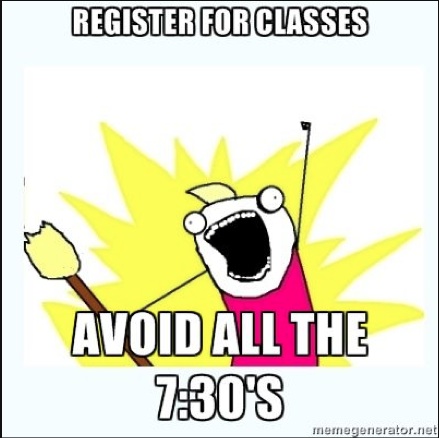
window.__IS_SSR__=true
window.__INITIAL_STATE__={
"attachmentsReducer": {
"audio_0": {
"type": "attachments",
"id": "audio_0",
"imgSizes": {
"kqedFullSize": {
"file": "https://ww2.kqed.org/news/wp-content/themes/KQED-unified/img/audio_bgs/background0.jpg"
}
}
},
"audio_1": {
"type": "attachments",
"id": "audio_1",
"imgSizes": {
"kqedFullSize": {
"file": "https://ww2.kqed.org/news/wp-content/themes/KQED-unified/img/audio_bgs/background1.jpg"
}
}
},
"audio_2": {
"type": "attachments",
"id": "audio_2",
"imgSizes": {
"kqedFullSize": {
"file": "https://ww2.kqed.org/news/wp-content/themes/KQED-unified/img/audio_bgs/background2.jpg"
}
}
},
"audio_3": {
"type": "attachments",
"id": "audio_3",
"imgSizes": {
"kqedFullSize": {
"file": "https://ww2.kqed.org/news/wp-content/themes/KQED-unified/img/audio_bgs/background3.jpg"
}
}
},
"audio_4": {
"type": "attachments",
"id": "audio_4",
"imgSizes": {
"kqedFullSize": {
"file": "https://ww2.kqed.org/news/wp-content/themes/KQED-unified/img/audio_bgs/background4.jpg"
}
}
},
"placeholder": {
"type": "attachments",
"id": "placeholder",
"imgSizes": {
"thumbnail": {
"file": "https://cdn.kqed.org/wp-content/uploads/2024/12/KQED-Default-Image-816638274-2000x1333-1-160x107.jpg",
"width": 160,
"height": 107,
"mimeType": "image/jpeg"
},
"medium": {
"file": "https://cdn.kqed.org/wp-content/uploads/2024/12/KQED-Default-Image-816638274-2000x1333-1-800x533.jpg",
"width": 800,
"height": 533,
"mimeType": "image/jpeg"
},
"medium_large": {
"file": "https://cdn.kqed.org/wp-content/uploads/2024/12/KQED-Default-Image-816638274-2000x1333-1-768x512.jpg",
"width": 768,
"height": 512,
"mimeType": "image/jpeg"
},
"large": {
"file": "https://cdn.kqed.org/wp-content/uploads/2024/12/KQED-Default-Image-816638274-2000x1333-1-1020x680.jpg",
"width": 1020,
"height": 680,
"mimeType": "image/jpeg"
},
"1536x1536": {
"file": "https://cdn.kqed.org/wp-content/uploads/2024/12/KQED-Default-Image-816638274-2000x1333-1-1536x1024.jpg",
"width": 1536,
"height": 1024,
"mimeType": "image/jpeg"
},
"fd-lrg": {
"file": "https://cdn.kqed.org/wp-content/uploads/2024/12/KQED-Default-Image-816638274-2000x1333-1-1536x1024.jpg",
"width": 1536,
"height": 1024,
"mimeType": "image/jpeg"
},
"fd-med": {
"file": "https://cdn.kqed.org/wp-content/uploads/2024/12/KQED-Default-Image-816638274-2000x1333-1-1020x680.jpg",
"width": 1020,
"height": 680,
"mimeType": "image/jpeg"
},
"fd-sm": {
"file": "https://cdn.kqed.org/wp-content/uploads/2024/12/KQED-Default-Image-816638274-2000x1333-1-800x533.jpg",
"width": 800,
"height": 533,
"mimeType": "image/jpeg"
},
"post-thumbnail": {
"file": "https://cdn.kqed.org/wp-content/uploads/2024/12/KQED-Default-Image-816638274-2000x1333-1-672x372.jpg",
"width": 672,
"height": 372,
"mimeType": "image/jpeg"
},
"twentyfourteen-full-width": {
"file": "https://cdn.kqed.org/wp-content/uploads/2024/12/KQED-Default-Image-816638274-2000x1333-1-1038x576.jpg",
"width": 1038,
"height": 576,
"mimeType": "image/jpeg"
},
"xxsmall": {
"file": "https://cdn.kqed.org/wp-content/uploads/2024/12/KQED-Default-Image-816638274-2000x1333-1-160x107.jpg",
"width": 160,
"height": 107,
"mimeType": "image/jpeg"
},
"xsmall": {
"file": "https://cdn.kqed.org/wp-content/uploads/2024/12/KQED-Default-Image-816638274-2000x1333-1-672x372.jpg",
"width": 672,
"height": 372,
"mimeType": "image/jpeg"
},
"small": {
"file": "https://cdn.kqed.org/wp-content/uploads/2024/12/KQED-Default-Image-816638274-2000x1333-1-672x372.jpg",
"width": 672,
"height": 372,
"mimeType": "image/jpeg"
},
"xlarge": {
"file": "https://cdn.kqed.org/wp-content/uploads/2024/12/KQED-Default-Image-816638274-2000x1333-1-1020x680.jpg",
"width": 1020,
"height": 680,
"mimeType": "image/jpeg"
},
"full-width": {
"file": "https://cdn.kqed.org/wp-content/uploads/2024/12/KQED-Default-Image-816638274-2000x1333-1-1920x1280.jpg",
"width": 1920,
"height": 1280,
"mimeType": "image/jpeg"
},
"guest-author-32": {
"file": "https://cdn.kqed.org/wp-content/uploads/2025/01/KQED-Default-Image-816638274-1333x1333-1-160x160.jpg",
"width": 32,
"height": 32,
"mimeType": "image/jpeg"
},
"guest-author-50": {
"file": "https://cdn.kqed.org/wp-content/uploads/2025/01/KQED-Default-Image-816638274-1333x1333-1-160x160.jpg",
"width": 50,
"height": 50,
"mimeType": "image/jpeg"
},
"guest-author-64": {
"file": "https://cdn.kqed.org/wp-content/uploads/2025/01/KQED-Default-Image-816638274-1333x1333-1-160x160.jpg",
"width": 64,
"height": 64,
"mimeType": "image/jpeg"
},
"guest-author-96": {
"file": "https://cdn.kqed.org/wp-content/uploads/2025/01/KQED-Default-Image-816638274-1333x1333-1-160x160.jpg",
"width": 96,
"height": 96,
"mimeType": "image/jpeg"
},
"guest-author-128": {
"file": "https://cdn.kqed.org/wp-content/uploads/2025/01/KQED-Default-Image-816638274-1333x1333-1-160x160.jpg",
"width": 128,
"height": 128,
"mimeType": "image/jpeg"
},
"detail": {
"file": "https://cdn.kqed.org/wp-content/uploads/2025/01/KQED-Default-Image-816638274-1333x1333-1-160x160.jpg",
"width": 160,
"height": 160,
"mimeType": "image/jpeg"
},
"kqedFullSize": {
"file": "https://cdn.kqed.org/wp-content/uploads/2024/12/KQED-Default-Image-816638274-2000x1333-1.jpg",
"width": 2000,
"height": 1333
}
}
},
"mindshift_19091": {
"type": "attachments",
"id": "mindshift_19091",
"meta": {
"index": "attachments_1716263798",
"site": "mindshift",
"id": "19091",
"found": true
},
"parent": 19089,
"imgSizes": {
"thumbnail": {
"file": "https://ww2.kqed.org/app/uploads/sites/23/2012/02/Registration-400x399.jpg",
"width": 400,
"mimeType": "image/jpeg",
"height": 399
},
"fd-sm": {
"file": "https://ww2.kqed.org/app/uploads/sites/23/2012/02/Registration-320x319.jpg",
"width": 320,
"mimeType": "image/jpeg",
"height": 319
},
"post-thumbnail": {
"file": "https://ww2.kqed.org/app/uploads/sites/23/2012/02/Registration-439x372.jpg",
"width": 439,
"mimeType": "image/jpeg",
"height": 372
},
"kqedFullSize": {
"file": "https://ww2.kqed.org/app/uploads/sites/23/2012/02/Registration.jpg",
"width": 439,
"height": 438
},
"guest-author-96": {
"file": "https://ww2.kqed.org/app/uploads/sites/23/2012/02/Registration-96x96.jpg",
"width": 96,
"mimeType": "image/jpeg",
"height": 96
},
"guest-author-64": {
"file": "https://ww2.kqed.org/app/uploads/sites/23/2012/02/Registration-64x64.jpg",
"width": 64,
"mimeType": "image/jpeg",
"height": 64
},
"detail": {
"file": "https://ww2.kqed.org/app/uploads/sites/23/2012/02/Registration-75x75.jpg",
"width": 75,
"mimeType": "image/jpeg",
"height": 75
},
"guest-author-32": {
"file": "https://ww2.kqed.org/app/uploads/sites/23/2012/02/Registration-32x32.jpg",
"width": 32,
"mimeType": "image/jpeg",
"height": 32
},
"guest-author-128": {
"file": "https://ww2.kqed.org/app/uploads/sites/23/2012/02/Registration-128x128.jpg",
"width": 128,
"mimeType": "image/jpeg",
"height": 128
}
},
"publishDate": 1329339742,
"modified": 1329339742,
"caption": null,
"description": null,
"title": "Registration",
"credit": null,
"status": "inherit",
"isLoading": false,
"fetchFailed": false
},
"mindshift_18972": {
"type": "attachments",
"id": "mindshift_18972",
"meta": {
"index": "attachments_1716263798",
"site": "mindshift",
"id": "18972",
"found": true
},
"parent": 18961,
"imgSizes": {
"twentyfourteen-full-width": {
"file": "https://ww2.kqed.org/app/uploads/sites/23/2012/02/Screen-shot-2012-02-09-at-10.24.59-AM-927x576.png",
"width": 927,
"mimeType": "image/png",
"height": 576
},
"thumbnail": {
"file": "https://ww2.kqed.org/app/uploads/sites/23/2012/02/Screen-shot-2012-02-09-at-10.24.59-AM-400x268.png",
"width": 400,
"mimeType": "image/png",
"height": 268
},
"fd-sm": {
"file": "https://ww2.kqed.org/app/uploads/sites/23/2012/02/Screen-shot-2012-02-09-at-10.24.59-AM-320x214.png",
"width": 320,
"mimeType": "image/png",
"height": 214
},
"post-thumbnail": {
"file": "https://ww2.kqed.org/app/uploads/sites/23/2012/02/Screen-shot-2012-02-09-at-10.24.59-AM-672x372.png",
"width": 672,
"mimeType": "image/png",
"height": 372
},
"kqedFullSize": {
"file": "https://ww2.kqed.org/app/uploads/sites/23/2012/02/Screen-shot-2012-02-09-at-10.24.59-AM.png",
"width": 927,
"height": 620
},
"fd-med": {
"file": "https://ww2.kqed.org/app/uploads/sites/23/2012/02/Screen-shot-2012-02-09-at-10.24.59-AM-768x514.png",
"width": 768,
"mimeType": "image/png",
"height": 514
},
"guest-author-96": {
"file": "https://ww2.kqed.org/app/uploads/sites/23/2012/02/Screen-shot-2012-02-09-at-10.24.59-AM-96x96.png",
"width": 96,
"mimeType": "image/png",
"height": 96
},
"medium": {
"file": "https://ww2.kqed.org/app/uploads/sites/23/2012/02/Screen-shot-2012-02-09-at-10.24.59-AM-800x535.png",
"width": 800,
"mimeType": "image/png",
"height": 535
},
"guest-author-64": {
"file": "https://ww2.kqed.org/app/uploads/sites/23/2012/02/Screen-shot-2012-02-09-at-10.24.59-AM-64x64.png",
"width": 64,
"mimeType": "image/png",
"height": 64
},
"detail": {
"file": "https://ww2.kqed.org/app/uploads/sites/23/2012/02/Screen-shot-2012-02-09-at-10.24.59-AM-75x75.png",
"width": 75,
"mimeType": "image/png",
"height": 75
},
"guest-author-32": {
"file": "https://ww2.kqed.org/app/uploads/sites/23/2012/02/Screen-shot-2012-02-09-at-10.24.59-AM-32x32.png",
"width": 32,
"mimeType": "image/png",
"height": 32
},
"guest-author-128": {
"file": "https://ww2.kqed.org/app/uploads/sites/23/2012/02/Screen-shot-2012-02-09-at-10.24.59-AM-128x128.png",
"width": 128,
"mimeType": "image/png",
"height": 128
}
},
"publishDate": 1328811951,
"modified": 1328811951,
"caption": "Students at Visitacion Valley School in South San Francisco observe 15 minutes of quiet time every morning.",
"description": null,
"title": "Screen-shot-2012-02-09-at-10.24.59-AM",
"credit": null,
"status": "inherit",
"isLoading": false,
"fetchFailed": false
},
"mindshift_18670": {
"type": "attachments",
"id": "mindshift_18670",
"meta": {
"index": "attachments_1716263798",
"site": "mindshift",
"id": "18670",
"found": true
},
"parent": 18630,
"imgSizes": {
"thumbnail": {
"file": "https://ww2.kqed.org/app/uploads/sites/23/2012/01/4249187463_1420dfc2f4-400x267.jpg",
"width": 400,
"mimeType": "image/jpeg",
"height": 267
},
"fd-sm": {
"file": "https://ww2.kqed.org/app/uploads/sites/23/2012/01/4249187463_1420dfc2f4-320x214.jpg",
"width": 320,
"mimeType": "image/jpeg",
"height": 214
},
"kqedFullSize": {
"file": "https://ww2.kqed.org/app/uploads/sites/23/2012/01/4249187463_1420dfc2f4.jpg",
"width": 500,
"height": 334
},
"guest-author-96": {
"file": "https://ww2.kqed.org/app/uploads/sites/23/2012/01/4249187463_1420dfc2f4-96x96.jpg",
"width": 96,
"mimeType": "image/jpeg",
"height": 96
},
"guest-author-64": {
"file": "https://ww2.kqed.org/app/uploads/sites/23/2012/01/4249187463_1420dfc2f4-64x64.jpg",
"width": 64,
"mimeType": "image/jpeg",
"height": 64
},
"detail": {
"file": "https://ww2.kqed.org/app/uploads/sites/23/2012/01/4249187463_1420dfc2f4-75x75.jpg",
"width": 75,
"mimeType": "image/jpeg",
"height": 75
},
"guest-author-32": {
"file": "https://ww2.kqed.org/app/uploads/sites/23/2012/01/4249187463_1420dfc2f4-32x32.jpg",
"width": 32,
"mimeType": "image/jpeg",
"height": 32
},
"guest-author-128": {
"file": "https://ww2.kqed.org/app/uploads/sites/23/2012/01/4249187463_1420dfc2f4-128x128.jpg",
"width": 128,
"mimeType": "image/jpeg",
"height": 128
}
},
"publishDate": 1327776558,
"modified": 1327776558,
"caption": null,
"description": null,
"title": "4249187463_1420dfc2f4",
"credit": null,
"status": "inherit",
"isLoading": false,
"fetchFailed": false
},
"mindshift_18606": {
"type": "attachments",
"id": "mindshift_18606",
"meta": {
"index": "attachments_1716263798",
"site": "mindshift",
"id": "18606",
"found": true
},
"parent": 18567,
"imgSizes": {
"thumbnail": {
"file": "https://ww2.kqed.org/app/uploads/sites/23/2012/01/medium2616485572_481e92d4ec-400x300.jpg",
"width": 400,
"mimeType": "image/jpeg",
"height": 300
},
"fd-sm": {
"file": "https://ww2.kqed.org/app/uploads/sites/23/2012/01/medium2616485572_481e92d4ec-320x240.jpg",
"width": 320,
"mimeType": "image/jpeg",
"height": 240
},
"post-thumbnail": {
"file": "https://ww2.kqed.org/app/uploads/sites/23/2012/01/medium2616485572_481e92d4ec-500x372.jpg",
"width": 500,
"mimeType": "image/jpeg",
"height": 372
},
"kqedFullSize": {
"file": "https://ww2.kqed.org/app/uploads/sites/23/2012/01/medium2616485572_481e92d4ec.jpg",
"width": 500,
"height": 375
},
"guest-author-96": {
"file": "https://ww2.kqed.org/app/uploads/sites/23/2012/01/medium2616485572_481e92d4ec-96x96.jpg",
"width": 96,
"mimeType": "image/jpeg",
"height": 96
},
"guest-author-64": {
"file": "https://ww2.kqed.org/app/uploads/sites/23/2012/01/medium2616485572_481e92d4ec-64x64.jpg",
"width": 64,
"mimeType": "image/jpeg",
"height": 64
},
"detail": {
"file": "https://ww2.kqed.org/app/uploads/sites/23/2012/01/medium2616485572_481e92d4ec-75x75.jpg",
"width": 75,
"mimeType": "image/jpeg",
"height": 75
},
"guest-author-32": {
"file": "https://ww2.kqed.org/app/uploads/sites/23/2012/01/medium2616485572_481e92d4ec-32x32.jpg",
"width": 32,
"mimeType": "image/jpeg",
"height": 32
},
"guest-author-128": {
"file": "https://ww2.kqed.org/app/uploads/sites/23/2012/01/medium2616485572_481e92d4ec-128x128.jpg",
"width": 128,
"mimeType": "image/jpeg",
"height": 128
}
},
"publishDate": 1327602074,
"modified": 1327602074,
"caption": null,
"description": null,
"title": "medium2616485572_481e92d4ec",
"credit": null,
"status": "inherit",
"isLoading": false,
"fetchFailed": false
},
"mindshift_14902": {
"type": "attachments",
"id": "mindshift_14902",
"meta": {
"index": "attachments_1716263798",
"site": "mindshift",
"id": "14902",
"found": true
},
"parent": 14899,
"imgSizes": {
"kqedFullSize": {
"file": "https://ww2.kqed.org/app/uploads/sites/23/2011/08/graduation.jpg",
"width": 240,
"height": 160
},
"guest-author-96": {
"file": "https://ww2.kqed.org/app/uploads/sites/23/2011/08/graduation-96x96.jpg",
"width": 96,
"mimeType": "image/jpeg",
"height": 96
},
"guest-author-64": {
"file": "https://ww2.kqed.org/app/uploads/sites/23/2011/08/graduation-64x64.jpg",
"width": 64,
"mimeType": "image/jpeg",
"height": 64
},
"detail": {
"file": "https://ww2.kqed.org/app/uploads/sites/23/2011/08/graduation-75x75.jpg",
"width": 75,
"mimeType": "image/jpeg",
"height": 75
},
"guest-author-32": {
"file": "https://ww2.kqed.org/app/uploads/sites/23/2011/08/graduation-32x32.jpg",
"width": 32,
"mimeType": "image/jpeg",
"height": 32
},
"guest-author-128": {
"file": "https://ww2.kqed.org/app/uploads/sites/23/2011/08/graduation-128x128.jpg",
"width": 128,
"mimeType": "image/jpeg",
"height": 128
}
},
"publishDate": 1314720243,
"modified": 1314720243,
"caption": null,
"description": null,
"title": "graduation",
"credit": null,
"status": "inherit",
"isLoading": false,
"fetchFailed": false
},
"mindshift_18403": {
"type": "attachments",
"id": "mindshift_18403",
"meta": {
"index": "attachments_1716263798",
"site": "mindshift",
"id": "18403",
"found": true
},
"parent": 18402,
"imgSizes": {
"thumbnail": {
"file": "https://ww2.kqed.org/app/uploads/sites/23/2012/01/5523382527_07918d32ab_z-400x248.jpg",
"width": 400,
"mimeType": "image/jpeg",
"height": 248
},
"fd-sm": {
"file": "https://ww2.kqed.org/app/uploads/sites/23/2012/01/5523382527_07918d32ab_z-320x198.jpg",
"width": 320,
"mimeType": "image/jpeg",
"height": 198
},
"post-thumbnail": {
"file": "https://ww2.kqed.org/app/uploads/sites/23/2012/01/5523382527_07918d32ab_z-612x372.jpg",
"width": 612,
"mimeType": "image/jpeg",
"height": 372
},
"kqedFullSize": {
"file": "https://ww2.kqed.org/app/uploads/sites/23/2012/01/5523382527_07918d32ab_z.jpg",
"width": 612,
"height": 379
},
"guest-author-96": {
"file": "https://ww2.kqed.org/app/uploads/sites/23/2012/01/5523382527_07918d32ab_z-96x96.jpg",
"width": 96,
"mimeType": "image/jpeg",
"height": 96
},
"guest-author-64": {
"file": "https://ww2.kqed.org/app/uploads/sites/23/2012/01/5523382527_07918d32ab_z-64x64.jpg",
"width": 64,
"mimeType": "image/jpeg",
"height": 64
},
"detail": {
"file": "https://ww2.kqed.org/app/uploads/sites/23/2012/01/5523382527_07918d32ab_z-75x75.jpg",
"width": 75,
"mimeType": "image/jpeg",
"height": 75
},
"guest-author-32": {
"file": "https://ww2.kqed.org/app/uploads/sites/23/2012/01/5523382527_07918d32ab_z-32x32.jpg",
"width": 32,
"mimeType": "image/jpeg",
"height": 32
},
"guest-author-128": {
"file": "https://ww2.kqed.org/app/uploads/sites/23/2012/01/5523382527_07918d32ab_z-128x128.jpg",
"width": 128,
"mimeType": "image/jpeg",
"height": 128
}
},
"publishDate": 1327257577,
"modified": 1327257577,
"caption": null,
"description": null,
"title": "5523382527_07918d32ab_z",
"credit": null,
"status": "inherit",
"isLoading": false,
"fetchFailed": false
},
"mindshift_18368": {
"type": "attachments",
"id": "mindshift_18368",
"meta": {
"index": "attachments_1716263798",
"site": "mindshift",
"id": "18368",
"found": true
},
"parent": 18279,
"imgSizes": {
"thumbnail": {
"file": "https://ww2.kqed.org/app/uploads/sites/23/2012/01/6255830416_bfb139bf9e_z1-400x264.jpg",
"width": 400,
"mimeType": "image/jpeg",
"height": 264
},
"fd-sm": {
"file": "https://ww2.kqed.org/app/uploads/sites/23/2012/01/6255830416_bfb139bf9e_z1-320x211.jpg",
"width": 320,
"mimeType": "image/jpeg",
"height": 211
},
"post-thumbnail": {
"file": "https://ww2.kqed.org/app/uploads/sites/23/2012/01/6255830416_bfb139bf9e_z1-612x372.jpg",
"width": 612,
"mimeType": "image/jpeg",
"height": 372
},
"kqedFullSize": {
"file": "https://ww2.kqed.org/app/uploads/sites/23/2012/01/6255830416_bfb139bf9e_z1.jpg",
"width": 612,
"height": 404
},
"guest-author-96": {
"file": "https://ww2.kqed.org/app/uploads/sites/23/2012/01/6255830416_bfb139bf9e_z1-96x96.jpg",
"width": 96,
"mimeType": "image/jpeg",
"height": 96
},
"guest-author-64": {
"file": "https://ww2.kqed.org/app/uploads/sites/23/2012/01/6255830416_bfb139bf9e_z1-64x64.jpg",
"width": 64,
"mimeType": "image/jpeg",
"height": 64
},
"detail": {
"file": "https://ww2.kqed.org/app/uploads/sites/23/2012/01/6255830416_bfb139bf9e_z1-75x75.jpg",
"width": 75,
"mimeType": "image/jpeg",
"height": 75
},
"guest-author-32": {
"file": "https://ww2.kqed.org/app/uploads/sites/23/2012/01/6255830416_bfb139bf9e_z1-32x32.jpg",
"width": 32,
"mimeType": "image/jpeg",
"height": 32
},
"guest-author-128": {
"file": "https://ww2.kqed.org/app/uploads/sites/23/2012/01/6255830416_bfb139bf9e_z1-128x128.jpg",
"width": 128,
"mimeType": "image/jpeg",
"height": 128
}
},
"publishDate": 1327086838,
"modified": 1327086838,
"caption": "Kids learn each other while playing games on the iPad.",
"description": null,
"title": "6255830416_bfb139bf9e_z1",
"credit": null,
"status": "inherit",
"isLoading": false,
"fetchFailed": false
},
"mindshift_18276": {
"type": "attachments",
"id": "mindshift_18276",
"meta": {
"index": "attachments_1716263798",
"site": "mindshift",
"id": "18276",
"found": true
},
"parent": 18205,
"imgSizes": {
"thumbnail": {
"file": "https://ww2.kqed.org/app/uploads/sites/23/2012/01/Wall-Mural-18-400x267.jpg",
"width": 400,
"mimeType": "image/jpeg",
"height": 267
},
"fd-sm": {
"file": "https://ww2.kqed.org/app/uploads/sites/23/2012/01/Wall-Mural-18-320x213.jpg",
"width": 320,
"mimeType": "image/jpeg",
"height": 213
},
"post-thumbnail": {
"file": "https://ww2.kqed.org/app/uploads/sites/23/2012/01/Wall-Mural-18-672x372.jpg",
"width": 672,
"mimeType": "image/jpeg",
"height": 372
},
"kqedFullSize": {
"file": "https://ww2.kqed.org/app/uploads/sites/23/2012/01/Wall-Mural-18.jpg",
"width": 720,
"height": 480
},
"guest-author-96": {
"file": "https://ww2.kqed.org/app/uploads/sites/23/2012/01/Wall-Mural-18-96x96.jpg",
"width": 96,
"mimeType": "image/jpeg",
"height": 96
},
"guest-author-64": {
"file": "https://ww2.kqed.org/app/uploads/sites/23/2012/01/Wall-Mural-18-64x64.jpg",
"width": 64,
"mimeType": "image/jpeg",
"height": 64
},
"detail": {
"file": "https://ww2.kqed.org/app/uploads/sites/23/2012/01/Wall-Mural-18-75x75.jpg",
"width": 75,
"mimeType": "image/jpeg",
"height": 75
},
"guest-author-32": {
"file": "https://ww2.kqed.org/app/uploads/sites/23/2012/01/Wall-Mural-18-32x32.jpg",
"width": 32,
"mimeType": "image/jpeg",
"height": 32
},
"guest-author-128": {
"file": "https://ww2.kqed.org/app/uploads/sites/23/2012/01/Wall-Mural-18-128x128.jpg",
"width": 128,
"mimeType": "image/jpeg",
"height": 128
}
},
"publishDate": 1326936574,
"modified": 1326936574,
"caption": "Poudre River Public Library District's Community Mural",
"description": null,
"title": "Wall-Mural-18",
"credit": null,
"status": "inherit",
"isLoading": false,
"fetchFailed": false
},
"mindshift_18221": {
"type": "attachments",
"id": "mindshift_18221",
"meta": {
"index": "attachments_1716263798",
"site": "mindshift",
"id": "18221",
"found": true
},
"parent": 18219,
"imgSizes": {
"post-thumbnail": {
"file": "https://ww2.kqed.org/app/uploads/sites/23/2012/01/MLK-300x372.jpg",
"width": 300,
"mimeType": "image/jpeg",
"height": 372
},
"kqedFullSize": {
"file": "https://ww2.kqed.org/app/uploads/sites/23/2012/01/MLK.jpg",
"width": 300,
"height": 414
},
"guest-author-96": {
"file": "https://ww2.kqed.org/app/uploads/sites/23/2012/01/MLK-96x96.jpg",
"width": 96,
"mimeType": "image/jpeg",
"height": 96
},
"guest-author-64": {
"file": "https://ww2.kqed.org/app/uploads/sites/23/2012/01/MLK-64x64.jpg",
"width": 64,
"mimeType": "image/jpeg",
"height": 64
},
"detail": {
"file": "https://ww2.kqed.org/app/uploads/sites/23/2012/01/MLK-75x75.jpg",
"width": 75,
"mimeType": "image/jpeg",
"height": 75
},
"guest-author-32": {
"file": "https://ww2.kqed.org/app/uploads/sites/23/2012/01/MLK-32x32.jpg",
"width": 32,
"mimeType": "image/jpeg",
"height": 32
},
"guest-author-128": {
"file": "https://ww2.kqed.org/app/uploads/sites/23/2012/01/MLK-128x128.jpg",
"width": 128,
"mimeType": "image/jpeg",
"height": 128
}
},
"publishDate": 1326734125,
"modified": 1326734125,
"caption": null,
"description": null,
"title": "MLK",
"credit": null,
"status": "inherit",
"isLoading": false,
"fetchFailed": false
},
"mindshift_18186": {
"type": "attachments",
"id": "mindshift_18186",
"meta": {
"index": "attachments_1716263798",
"site": "mindshift",
"id": "18186",
"found": true
},
"parent": 18144,
"imgSizes": {
"thumbnail": {
"file": "https://ww2.kqed.org/app/uploads/sites/23/2012/01/4601492261_599b55ef54_z1-400x241.jpg",
"width": 400,
"mimeType": "image/jpeg",
"height": 241
},
"fd-sm": {
"file": "https://ww2.kqed.org/app/uploads/sites/23/2012/01/4601492261_599b55ef54_z1-320x193.jpg",
"width": 320,
"mimeType": "image/jpeg",
"height": 193
},
"post-thumbnail": {
"file": "https://ww2.kqed.org/app/uploads/sites/23/2012/01/4601492261_599b55ef54_z1-640x372.jpg",
"width": 640,
"mimeType": "image/jpeg",
"height": 372
},
"kqedFullSize": {
"file": "https://ww2.kqed.org/app/uploads/sites/23/2012/01/4601492261_599b55ef54_z1.jpg",
"width": 640,
"height": 386
},
"guest-author-96": {
"file": "https://ww2.kqed.org/app/uploads/sites/23/2012/01/4601492261_599b55ef54_z1-96x96.jpg",
"width": 96,
"mimeType": "image/jpeg",
"height": 96
},
"guest-author-64": {
"file": "https://ww2.kqed.org/app/uploads/sites/23/2012/01/4601492261_599b55ef54_z1-64x64.jpg",
"width": 64,
"mimeType": "image/jpeg",
"height": 64
},
"detail": {
"file": "https://ww2.kqed.org/app/uploads/sites/23/2012/01/4601492261_599b55ef54_z1-75x75.jpg",
"width": 75,
"mimeType": "image/jpeg",
"height": 75
},
"guest-author-32": {
"file": "https://ww2.kqed.org/app/uploads/sites/23/2012/01/4601492261_599b55ef54_z1-32x32.jpg",
"width": 32,
"mimeType": "image/jpeg",
"height": 32
},
"guest-author-128": {
"file": "https://ww2.kqed.org/app/uploads/sites/23/2012/01/4601492261_599b55ef54_z1-128x128.jpg",
"width": 128,
"mimeType": "image/jpeg",
"height": 128
}
},
"publishDate": 1326486941,
"modified": 1326486941,
"caption": "The world looks to schools like this in Vantaankosken, Finland, as the model of success.",
"description": null,
"title": "4601492261_599b55ef54_z1",
"credit": null,
"status": "inherit",
"isLoading": false,
"fetchFailed": false
},
"mindshift_18134": {
"type": "attachments",
"id": "mindshift_18134",
"meta": {
"index": "attachments_1716263798",
"site": "mindshift",
"id": "18134",
"found": true
},
"parent": 18129,
"imgSizes": {
"thumbnail": {
"file": "https://ww2.kqed.org/app/uploads/sites/23/2012/01/2266388742_6b6584011f_z-400x268.jpg",
"width": 400,
"mimeType": "image/jpeg",
"height": 268
},
"fd-sm": {
"file": "https://ww2.kqed.org/app/uploads/sites/23/2012/01/2266388742_6b6584011f_z-320x214.jpg",
"width": 320,
"mimeType": "image/jpeg",
"height": 214
},
"post-thumbnail": {
"file": "https://ww2.kqed.org/app/uploads/sites/23/2012/01/2266388742_6b6584011f_z-640x372.jpg",
"width": 640,
"mimeType": "image/jpeg",
"height": 372
},
"kqedFullSize": {
"file": "https://ww2.kqed.org/app/uploads/sites/23/2012/01/2266388742_6b6584011f_z.jpg",
"width": 640,
"height": 428
},
"guest-author-96": {
"file": "https://ww2.kqed.org/app/uploads/sites/23/2012/01/2266388742_6b6584011f_z-96x96.jpg",
"width": 96,
"mimeType": "image/jpeg",
"height": 96
},
"guest-author-64": {
"file": "https://ww2.kqed.org/app/uploads/sites/23/2012/01/2266388742_6b6584011f_z-64x64.jpg",
"width": 64,
"mimeType": "image/jpeg",
"height": 64
},
"detail": {
"file": "https://ww2.kqed.org/app/uploads/sites/23/2012/01/2266388742_6b6584011f_z-75x75.jpg",
"width": 75,
"mimeType": "image/jpeg",
"height": 75
},
"guest-author-32": {
"file": "https://ww2.kqed.org/app/uploads/sites/23/2012/01/2266388742_6b6584011f_z-32x32.jpg",
"width": 32,
"mimeType": "image/jpeg",
"height": 32
},
"guest-author-128": {
"file": "https://ww2.kqed.org/app/uploads/sites/23/2012/01/2266388742_6b6584011f_z-128x128.jpg",
"width": 128,
"mimeType": "image/jpeg",
"height": 128
}
},
"publishDate": 1326391613,
"modified": 1326391613,
"caption": null,
"description": null,
"title": "2266388742_6b6584011f_z",
"credit": null,
"status": "inherit",
"isLoading": false,
"fetchFailed": false
},
"mindshift_18123": {
"type": "attachments",
"id": "mindshift_18123",
"meta": {
"index": "attachments_1716263798",
"site": "mindshift",
"id": "18123",
"found": true
},
"parent": 18114,
"imgSizes": {
"thumbnail": {
"file": "https://ww2.kqed.org/app/uploads/sites/23/2012/01/1PvSBOYQybrVDiv-1M91Ep3h-SkFcR0g-400x266.jpg",
"width": 400,
"mimeType": "image/jpeg",
"height": 266
},
"fd-sm": {
"file": "https://ww2.kqed.org/app/uploads/sites/23/2012/01/1PvSBOYQybrVDiv-1M91Ep3h-SkFcR0g-320x213.jpg",
"width": 320,
"mimeType": "image/jpeg",
"height": 213
},
"kqedFullSize": {
"file": "https://ww2.kqed.org/app/uploads/sites/23/2012/01/1PvSBOYQybrVDiv-1M91Ep3h-SkFcR0g.jpg",
"width": 500,
"height": 333
},
"guest-author-96": {
"file": "https://ww2.kqed.org/app/uploads/sites/23/2012/01/1PvSBOYQybrVDiv-1M91Ep3h-SkFcR0g-96x96.jpg",
"width": 96,
"mimeType": "image/jpeg",
"height": 96
},
"guest-author-64": {
"file": "https://ww2.kqed.org/app/uploads/sites/23/2012/01/1PvSBOYQybrVDiv-1M91Ep3h-SkFcR0g-64x64.jpg",
"width": 64,
"mimeType": "image/jpeg",
"height": 64
},
"detail": {
"file": "https://ww2.kqed.org/app/uploads/sites/23/2012/01/1PvSBOYQybrVDiv-1M91Ep3h-SkFcR0g-75x75.jpg",
"width": 75,
"mimeType": "image/jpeg",
"height": 75
},
"guest-author-32": {
"file": "https://ww2.kqed.org/app/uploads/sites/23/2012/01/1PvSBOYQybrVDiv-1M91Ep3h-SkFcR0g-32x32.jpg",
"width": 32,
"mimeType": "image/jpeg",
"height": 32
},
"guest-author-128": {
"file": "https://ww2.kqed.org/app/uploads/sites/23/2012/01/1PvSBOYQybrVDiv-1M91Ep3h-SkFcR0g-128x128.jpg",
"width": 128,
"mimeType": "image/jpeg",
"height": 128
}
},
"publishDate": 1326332541,
"modified": 1326332541,
"caption": "Last year's Google Science Fair winners.",
"description": null,
"title": "1PvSBOYQybrVDiv-1M91Ep3h-SkFcR0g",
"credit": null,
"status": "inherit",
"isLoading": false,
"fetchFailed": false
}
},
"audioPlayerReducer": {
"postId": "stream_live",
"isPaused": true,
"isPlaying": false,
"pfsActive": false,
"pledgeModalIsOpen": true,
"playerDrawerIsOpen": false,
"liveAudioPlayStartedAt": 0,
"liveAudioPlayContext": ""
},
"authorsReducer": {
"tbarseghian": {
"type": "authors",
"id": "180",
"meta": {
"index": "authors_1716337520",
"id": "180",
"found": true
},
"name": "Tina Barseghian",
"firstName": "Tina",
"lastName": "Barseghian",
"slug": "tbarseghian",
"email": "tbarseghian@kqed.org",
"display_author_email": false,
"staff_mastheads": [],
"title": null,
"bio": null,
"avatar": "https://secure.gravatar.com/avatar/de7e6ced1239b7018fe4d2b61f723c90?s=600&d=blank&r=g",
"twitter": null,
"facebook": null,
"instagram": null,
"linkedin": null,
"sites": [
{
"site": "styleguide",
"roles": [
"contributor"
]
},
{
"site": "news",
"roles": [
"subscriber"
]
},
{
"site": "mindshift",
"roles": [
"subscriber"
]
},
{
"site": "bayareabites",
"roles": [
"subscriber"
]
}
],
"headData": {
"title": "Tina Barseghian | KQED",
"description": null,
"ogImgSrc": "https://secure.gravatar.com/avatar/de7e6ced1239b7018fe4d2b61f723c90?s=600&d=blank&r=g",
"twImgSrc": "https://secure.gravatar.com/avatar/de7e6ced1239b7018fe4d2b61f723c90?s=600&d=blank&r=g"
},
"isLoading": false,
"link": "/author/tbarseghian"
},
"awatters": {
"type": "authors",
"id": "4352",
"meta": {
"index": "authors_1716337520",
"id": "4352",
"found": true
},
"name": "Audrey Watters",
"firstName": "Audrey",
"lastName": "Watters",
"slug": "awatters",
"email": "awatters@kqed.org",
"display_author_email": false,
"staff_mastheads": [],
"title": null,
"bio": null,
"avatar": "https://secure.gravatar.com/avatar/fb6ac91bb93632725bfa683c1de71bee?s=600&d=blank&r=g",
"twitter": null,
"facebook": null,
"instagram": null,
"linkedin": null,
"sites": [
{
"site": "mindshift",
"roles": [
"subscriber"
]
}
],
"headData": {
"title": "Audrey Watters | KQED",
"description": null,
"ogImgSrc": "https://secure.gravatar.com/avatar/fb6ac91bb93632725bfa683c1de71bee?s=600&d=blank&r=g",
"twImgSrc": "https://secure.gravatar.com/avatar/fb6ac91bb93632725bfa683c1de71bee?s=600&d=blank&r=g"
},
"isLoading": false,
"link": "/author/awatters"
}
},
"pagesReducer": {
"mindshift_category_culture": {
"type": "terms",
"id": "mindshift_194",
"meta": {
"index": "terms_1716263798",
"site": "mindshift",
"id": "194",
"score": 12.371086
},
"featImg": null,
"name": "Culture",
"description": "How trends in technology – social networks, Internet privacy, cyberbullying – influence education.",
"taxonomy": "category",
"headData": {
"twImgId": null,
"twTitle": null,
"ogTitle": null,
"ogImgId": null,
"twDescription": null,
"description": "How trends in technology – social networks, Internet privacy, cyberbullying – influence education.",
"title": "Culture Archives | KQED Mindshift",
"ogDescription": null
},
"ttid": 194,
"slug": "culture",
"isLoading": false,
"title": "Culture",
"pageMeta": {
"site": "mindshift",
"WpPageTemplate": "page-topic-editorial",
"currentPage": 31
},
"blocks": [
{
"blockName": "kqed/company-paragraph",
"content": "How trends in technology – social networks, Internet privacy, cyberbullying – influence education."
},
{
"blockName": "kqed/post-list",
"attrs": {
"layout": "cardArticle2",
"query": "posts/mindshift?category=culture",
"seeMore": false,
"paginated": true,
"page": 31
}
},
{
"blockName": "kqed/ad"
}
]
}
},
"pfsSessionReducer": {},
"postsReducer": {
"stream_live": {
"type": "live",
"id": "stream_live",
"audioUrl": "https://streams.kqed.org/kqedradio",
"title": "Live Stream",
"excerpt": "Live Stream information currently unavailable.",
"link": "/radio",
"featImg": "",
"label": {
"name": "KQED Live",
"link": "/"
}
},
"stream_kqedNewscast": {
"type": "posts",
"id": "stream_kqedNewscast",
"audioUrl": "https://www.kqed.org/.stream/anon/radio/RDnews/newscast.mp3?_=1",
"title": "KQED Newscast",
"featImg": "",
"label": {
"name": "88.5 FM",
"link": "/"
}
},
"mindshift_19089": {
"type": "posts",
"id": "mindshift_19089",
"meta": {
"index": "posts_1716263798",
"site": "mindshift",
"id": "19089",
"score": null,
"sort": [
1329348642000
]
},
"parent": 0,
"labelTerm": {
"site": "mindshift"
},
"blocks": [],
"publishDate": 1329348642,
"format": "aside",
"disqusTitle": "College Students Embrace Meme Madness",
"title": "College Students Embrace Meme Madness",
"headTitle": "MindShift | KQED News",
"content": "\u003ch5>\u003cimg class=\"alignright size-medium wp-image-19091\" src=\"http://ww2.kqed.org/mindshift/wp-content/uploads/sites/23/2012/02/Registration-300x299.jpg\" alt=\"\" width=\"300\" height=\"299\">By \u003ca href=\"http://www.pbs.org/mediashift/dan-reimold/\">Dan Reimold\u003c/a>\u003c/h5>\n\u003cp>College memes are suddenly invading the Facebook streams of students at schools throughout the U.S., Canada, and parts of Europe. As The Cherwell, Oxford University's student newspaper, \u003ca href=\"http://www.cherwell.org/news/oxford/2012/02/09/oxford-memes\">explains\u003c/a>, the meme is \"an idea or behavior that spreads through a culture by imitation. Internet memes follow this principle, humorous images are copied and re-captioned, concisely describing or satirizing the activity of an individual or group.\"\u003c/p>\n\u003cp>Building on its burgeoning popularity in recent years on sites such as \u003ca href=\"http://www.reddit.com/r/meme/\">Reddit\u003c/a> and \u003ca href=\"http://www.4chan.org/\">4chan\u003c/a> and via viral creations like \u003ca href=\"http://en.wikipedia.org/wiki/Lolcat\">LOLcats\u003c/a> and \u003ca href=\"http://en.wikipedia.org/wiki/Rickrolling\">Rickrolling\u003c/a>, the Internet meme has been rapidly and rabidly adopted by undergraduates since the start of last week.\u003c/p>\n\u003cp>A rash of student media reports and social media chatter confirm that undergraduates' online experiences are now hovering \u003ca href=\"http://www.fsutorch.com/2012/02/10/web-exclusive/meme-madness/\">between\u003c/a> \"meme madness\" and \u003ca href=\"http://buquad.com/2012/02/09/meme-mania-bu-memes-makes-a-splash-on-the-web/\">full-blown\u003c/a> \"meme mania.\" Last Friday, Syracuse University sophomore Bob O'Brien \u003ca href=\"https://twitter.com/#%21/ClevelandBob\">tweeted\u003c/a>, \"The 'College Meme Page' frenzy is unlike anything I can remember on Facebook. Seems every school is discovering it at once.\"\u003c/p>\n\u003cp>In \u003ca href=\"http://www.thehookupic.com/2012/02/memes-memes-everywhere/\">a recent post\u003c/a>, the University of Iowa online student outlet The Hook Up similarly stated, \"It's not often that such a phenomenon takes off running with such fury and so little impetus ... Students are now meme-ing like they've never memed before.\"\u003c/p>\n\u003cp>Specifically, students are racing to start meme-focused Facebook pages for their schools before someone else claims them. The pages are generally not affiliated with student media or other \u003c/p>\n\u003cp>[ad fullwidth]\u003c/p>\n\u003cp>\u003c!--more-->\u003c/p>\n\u003cp>recognized campus groups. Instead, they are the efforts of individual students or small groups of friends who have no ambition other than sharing a laugh and getting their peers' attention.\u003c/p>\n\u003ch4>Memes, Y U So Addicting?!\u003c/h4>\n\u003cp>Early last week, in \u003ca href=\"http:///\">a story headline\u003c/a> that mimics a popular meme conceit, The Daily Illini asked, \"Memes, Y U So Addicting?!\"\u003c/p>\n\u003cp>Dozens of campus newspaper articles indicate student readers enjoy the ease with which they can scroll-and-scan others' memes and quickly create their own. They are also fond of the incredibly high levels of interaction the Facebook pages foster. As one of the founders of \u003ca href=\"https://www.facebook.com/pages/Northeastern-University-Memes/365650686796450\">a Northeastern University memes page\u003c/a> told \u003ca href=\"http://huntnewsnu.com/2012/02/northeastern-memes-go-viral-overnight/\">The Huntington News\u003c/a>, \"[T]here have been people posting on it pretty much non-stop, like all night ... I was actually kind of afraid to leave my computer for five minutes. I came back and there were like 300 new likes.\"\u003c/p>\n\u003cp>Students especially like the sarcastic references about campus rivalries, bad cafeteria food, and crappy parking that only their schools' students, staff and alumni can fully appreciate. To that end, a University of Minnesota journalism professor \u003ca href=\"http://www.mndaily.com/2012/02/09/memes-taking-over-social-media\">calls\u003c/a> the memes exercise \"one big inside joke.\"\u003c/p>\n\u003cp>Yet, the college memes generated so far also touch on many rites of passage universal to undergraduate life, including crazy classes, registration woes, partying, drinking, road trips, residence hall habits (\u003ca href=\"https://www.facebook.com/photo.php?fbid=10151263551150394&set=o.300929369956773&type=1&theater\">Example\u003c/a>: \"I don't always use the dorm bathrooms, but when I do, I leave the seat down and piss all over it.\"), and the ginormous cost of higher education (one \u003ca href=\"http://www.facebook.com/photo.php?fbid=2692027855687&set=o.232621673492557&type=1&theater\">repeatedly shared example\u003c/a> below).\u003c/p>\n\u003cp>\u003ca href=\"http://ww2.kqed.org/mindshift/2012/02/college-students-embrace-meme-madness/screen-shot-2012-02-15-at-1-04-04-pm/\" rel=\"attachment wp-att-19093\">\u003cimg class=\"aligncenter size-full wp-image-19093\" src=\"http://ww2.kqed.org/mindshift/wp-content/uploads/sites/23/2012/02/Screen-shot-2012-02-15-at-1.04.04-PM.png\" alt=\"\" width=\"383\" height=\"277\" srcset=\"https://ww2.kqed.org/app/uploads/sites/23/2012/02/Screen-shot-2012-02-15-at-1.04.04-PM.png 383w, https://ww2.kqed.org/app/uploads/sites/23/2012/02/Screen-shot-2012-02-15-at-1.04.04-PM-320x231.png 320w\" sizes=\"(max-width: 383px) 100vw, 383px\">\u003c/a>In addition, they occasionally riff on more serious issues and sacred campus cows. As The Triangle at Drexel University \u003ca href=\"http://thetriangle.org/2012/02/10/lessons-from-the-drexel-memes-facebook-page-2/\">confirmed\u003c/a> about \u003ca href=\"http://www.facebook.com/drexelmemes\">memes\u003c/a> targeting the Philadelphia school, \"[N]ot all of them are simple jokes. Many of them voice legitimate concerns of Drexel students ... One of the most popular image macros, with over 400 likes in just two days, features the image of the A.J. Drexel statue and the caption 'Congratulations on your acceptance -- to a construction zone.'\"\u003c/p>\n\u003cp>Similarly, \u003ca href=\"http://universe.byu.edu/index.php/2012/02/09/byu-memes-what-do-they-mean/\">according to The Daily Universe\u003c/a>, the Brigham Young University \u003ca href=\"https://www.facebook.com/BYUMemes\">memes page\u003c/a> \"has exploded into an online forum of Mormon and BYU culture parodies, which are sure to entertain anyone familiar with the Mormon culture.\" For example, a recent meme humorously spun one of Christianity's most repeated, revered lessons. It presented an image of Jesus sitting before worshipers, saying simply, \"So I was like, 'Bro, do you want someone to do that to you? Well, then don't do it to them.'\"\u003c/p>\n\u003cp>The actual Golden Rule is of course phrased a bit more formally: Do unto others as you would have them do unto you. It applies directly to college memes. Students who mock others with a meme will be mocked with memes themselves. Students who screw up a meme will quickly see correction memes posted in response (\u003ca href=\"http://www.facebook.com/photo.php?fbid=10150548623252638&set=o.232621673492557&type=1&theater\">Example\u003c/a>: \"You keep using that picture ... I don't think it memes what you think it memes.\"). And, in a full embrace of the self-aware era, there are also scores of memes commenting on students wasting their time reading or generating memes.\u003c/p>\n\u003ch4>A Snowball Effect\u003c/h4>\n\u003cp>Last week, a pair of University of Oregon freshmen \u003ca href=\"http://dailyemerald.com/2012/02/09/university-of-oregon-memes-facebook-page-gets-lots-of-likes/\">launched\u003c/a> a memes page dedicated to \"images lampooning college life\" at the Pac-12 school. It took off, within minutes, and has continued to spread, non-stop. On its first day in action, the page roped in roughly 2,500 likes.\u003c/p>\n\u003cp>On day two, \u003ca href=\"http://www.facebook.com/pages/University-of-Oregon-Memes/235525009868302?ref=ts\">University of Oregon Memes\u003c/a> was on \u003ca href=\"https://twitter.com/#%21/DailyEmerald/status/168075900343169024/photo/1/large\">the front page\u003c/a> of The Daily Emerald student newspaper. The start of the related story succinctly summarizes the phenomenon at-large, \u003ca href=\"http://dailyemerald.com/2012/02/09/university-of-oregon-memes-facebook-page-gets-lots-of-likes/\">noting\u003c/a>, \"When University freshmen Jack Hunter and Darin Shelstad created a Facebook page late Wednesday night to share inside jokes, they never expected it would become so popular. But it did. Overnight. Literally.\"\u003c/p>\n\u003cp>\u003ca href=\"http://ww2.kqed.org/mindshift/2012/02/college-students-embrace-meme-madness/dailyemerald/\" rel=\"attachment wp-att-19094\">\u003cimg class=\"aligncenter size-medium wp-image-19094\" src=\"http://ww2.kqed.org/mindshift/wp-content/uploads/sites/23/2012/02/DailyEmerald-300x264.jpg\" alt=\"\" width=\"425\" height=\"291\">\u003c/a>\u003c/p>\n\u003cp>Around the same time, a sophomore \u003ca href=\"http://www.facebook.com/BUmemes\">memes page\u003c/a> creator at Boston University \u003ca href=\"http://dailyfreepress.com/2012/02/09/bu-students-make-memes-page-bring-students-together-through-facebook/\">told\u003c/a> The Daily Free Press, \"Overnight, it just went into a snowball effect and became the success it is now. I haven't had time to get actual work done amidst all this fun.\" He said this less than 72 hours after creating the page. BU Memes currently sports roughly 6,500 likes.\u003c/p>\n\u003cp>Since the start of many pages last week, there has been a flash-bang surge in likes, comments, shares, and user-submitted entries. This wave of attention and feedback is either launching the Internet meme into the college media mainstream or \u003ca href=\"http://www.thehookupic.com/2012/02/memes-memes-everywhere/\">setting it up\u003c/a> as a \"wonderful concept that will probably be bastardized into the ground in a few weeks,\" as The Hook Up stated.\u003c/p>\n\u003ch4>Meme Police\u003c/h4>\n\u003cp>The most vociferous meme enemies are those already annoyed at the image-and-text configurations increasingly crowding their Facebook feeds. \"Last night, our Facebook timelines were flooded by a wave of memes,\" \u003ca href=\"http://nyulocal.com/on-campus/2012/02/07/nyu-memes-hits-facebook-students-lose-sleep/\">an NYU Local report\u003c/a> at New York University noted. \"Initially, these image macros were a welcome distraction from looming homework assignments: they were just funny enough to keep us reading, and they provided a comforting feeling of community and togetherness. That said, the [NYU memes page] quickly spiraled out of control. Students posted hundreds of memes, and only a select few were in the least bit funny.\"\u003c/p>\n\u003cp>Separate complainants in \u003ca href=\"http://universe.byu.edu/index.php/2012/02/09/byu-memes-what-do-they-mean/\">the \"meme police\"\u003c/a> category accuse clueless students of distorting the meme's original higher-minded purpose -- in part, to be a serious carrier of significant cultural ideas -- to the point of mockery.\u003c/p>\n\u003cp>More lightheartedly, some readers are expressing faux-outrage at how addictive the memes are to scroll through, read, comment upon, and create. As a student \u003ca href=\"http://dailyemerald.com/2012/02/09/university-of-oregon-memes-facebook-page-gets-lots-of-likes/\">wrote\u003c/a> about UO Memes, \"This page is going to kill my GPA.\"\u003c/p>\n\u003cp>[ad floatright]\u003c/p>\n\u003cp>\u003cem>Dan Reimold is an assistant professor of journalism at the University of Tampa. He writes and presents frequently on the campus press and maintains the student journalism industry blog \u003ca href=\"http://www.collegemediamatters.com/\">College Media Matters\u003c/a>, affiliated with the \u003ca href=\"http://www.studentpress.org/acp/\">Associated Collegiate Press\u003c/a>. \u003c/em>\u003c/p>\n\u003ch5>\u003cem>\u003ca href=\"http://ww2.kqed.org/mindshift/2012/02/college-students-embrace-meme-madness/pbs-mediashift-logo-final-14/\" rel=\"attachment wp-att-19095\">\u003cimg class=\"alignleft size-thumbnail wp-image-19095\" src=\"http://ww2.kqed.org/mindshift/wp-content/uploads/sites/23/2012/02/pbs-mediashift-logo-final1-140x140.jpg\" alt=\"\" width=\"49\" height=\"49\">\u003c/a>The article was originally published by\u003ca href=\"http://www.pbs.org/mediashift/2011/05/childrens-magazines-cater-to-true-early-adopters-with-mobile-apps137.html\"> PBS MediaShift\u003c/a>, covering the intersection of \u003c/em>\u003cem> \u003c/em>\u003cem>media and technology. Follow \u003ca href=\"http://twitter.com/#%21/pbsmediashift\">@PBSMediaShift\u003c/a> for Twitter updates, or join us on \u003ca href=\"https://www.facebook.com/mediashift\">Facebook.\u003c/a>\u003c/em>\u003c/h5>\n\n",
"disqusIdentifier": "19089 http://blogs.kqed.org/mindshift/?p=19089",
"disqusUrl": "https://ww2.kqed.org/mindshift/2012/02/15/college-students-embrace-meme-madness/",
"stats": {
"hasVideo": false,
"hasChartOrMap": false,
"hasAudio": false,
"hasPolis": false,
"wordCount": 1244,
"hasGoogleForm": false,
"hasGallery": false,
"hasHearkenModule": false,
"iframeSrcs": [],
"paragraphCount": 25
},
"modified": 1329341071,
"excerpt": null,
"headData": {
"twImgId": "",
"twTitle": "",
"ogTitle": "",
"ogImgId": "",
"twDescription": "",
"description": "By Dan Reimold College memes are suddenly invading the Facebook streams of students at schools throughout the U.S., Canada, and parts of Europe. As The Cherwell, Oxford University's student newspaper, explains, the meme is "an idea or behavior that spreads through a culture by imitation. Internet memes follow this principle, humorous images are copied and",
"title": "College Students Embrace Meme Madness | KQED",
"ogDescription": "",
"schema": {
"@context": "https://schema.org",
"@type": "Article",
"headline": "College Students Embrace Meme Madness",
"datePublished": "2012-02-15T15:30:42-08:00",
"dateModified": "2012-02-15T13:24:31-08:00",
"image": "https://cdn.kqed.org/wp-content/uploads/2020/02/KQED-OG-Image@1x.png"
}
},
"guestAuthors": [],
"slug": "college-students-embrace-meme-madness",
"status": "publish",
"path": "/mindshift/19089/college-students-embrace-meme-madness",
"audioTrackLength": null,
"parsedContent": [
{
"type": "contentString",
"content": "\u003cdiv class=\"post-body\">\u003cp>\u003ch5>\u003cimg class=\"alignright size-medium wp-image-19091\" src=\"http://ww2.kqed.org/mindshift/wp-content/uploads/sites/23/2012/02/Registration-300x299.jpg\" alt=\"\" width=\"300\" height=\"299\">By \u003ca href=\"http://www.pbs.org/mediashift/dan-reimold/\">Dan Reimold\u003c/a>\u003c/h5>\n\u003cp>College memes are suddenly invading the Facebook streams of students at schools throughout the U.S., Canada, and parts of Europe. As The Cherwell, Oxford University's student newspaper, \u003ca href=\"http://www.cherwell.org/news/oxford/2012/02/09/oxford-memes\">explains\u003c/a>, the meme is \"an idea or behavior that spreads through a culture by imitation. Internet memes follow this principle, humorous images are copied and re-captioned, concisely describing or satirizing the activity of an individual or group.\"\u003c/p>\n\u003cp>Building on its burgeoning popularity in recent years on sites such as \u003ca href=\"http://www.reddit.com/r/meme/\">Reddit\u003c/a> and \u003ca href=\"http://www.4chan.org/\">4chan\u003c/a> and via viral creations like \u003ca href=\"http://en.wikipedia.org/wiki/Lolcat\">LOLcats\u003c/a> and \u003ca href=\"http://en.wikipedia.org/wiki/Rickrolling\">Rickrolling\u003c/a>, the Internet meme has been rapidly and rabidly adopted by undergraduates since the start of last week.\u003c/p>\n\u003cp>A rash of student media reports and social media chatter confirm that undergraduates' online experiences are now hovering \u003ca href=\"http://www.fsutorch.com/2012/02/10/web-exclusive/meme-madness/\">between\u003c/a> \"meme madness\" and \u003ca href=\"http://buquad.com/2012/02/09/meme-mania-bu-memes-makes-a-splash-on-the-web/\">full-blown\u003c/a> \"meme mania.\" Last Friday, Syracuse University sophomore Bob O'Brien \u003ca href=\"https://twitter.com/#%21/ClevelandBob\">tweeted\u003c/a>, \"The 'College Meme Page' frenzy is unlike anything I can remember on Facebook. Seems every school is discovering it at once.\"\u003c/p>\n\u003cp>In \u003ca href=\"http://www.thehookupic.com/2012/02/memes-memes-everywhere/\">a recent post\u003c/a>, the University of Iowa online student outlet The Hook Up similarly stated, \"It's not often that such a phenomenon takes off running with such fury and so little impetus ... Students are now meme-ing like they've never memed before.\"\u003c/p>\n\u003cp>Specifically, students are racing to start meme-focused Facebook pages for their schools before someone else claims them. The pages are generally not affiliated with student media or other \u003c/p>\n\u003cp>\u003c/p>\u003c/div>",
"attributes": {
"named": {},
"numeric": []
}
},
{
"type": "component",
"content": "",
"name": "ad",
"attributes": {
"named": {
"label": "fullwidth"
},
"numeric": [
"fullwidth"
]
}
},
{
"type": "contentString",
"content": "\u003cdiv class=\"post-body\">\u003cp>\u003c/p>\n\u003cp>\u003c!--more-->\u003c/p>\n\u003cp>recognized campus groups. Instead, they are the efforts of individual students or small groups of friends who have no ambition other than sharing a laugh and getting their peers' attention.\u003c/p>\n\u003ch4>Memes, Y U So Addicting?!\u003c/h4>\n\u003cp>Early last week, in \u003ca href=\"http:///\">a story headline\u003c/a> that mimics a popular meme conceit, The Daily Illini asked, \"Memes, Y U So Addicting?!\"\u003c/p>\n\u003cp>Dozens of campus newspaper articles indicate student readers enjoy the ease with which they can scroll-and-scan others' memes and quickly create their own. They are also fond of the incredibly high levels of interaction the Facebook pages foster. As one of the founders of \u003ca href=\"https://www.facebook.com/pages/Northeastern-University-Memes/365650686796450\">a Northeastern University memes page\u003c/a> told \u003ca href=\"http://huntnewsnu.com/2012/02/northeastern-memes-go-viral-overnight/\">The Huntington News\u003c/a>, \"[T]here have been people posting on it pretty much non-stop, like all night ... I was actually kind of afraid to leave my computer for five minutes. I came back and there were like 300 new likes.\"\u003c/p>\n\u003cp>Students especially like the sarcastic references about campus rivalries, bad cafeteria food, and crappy parking that only their schools' students, staff and alumni can fully appreciate. To that end, a University of Minnesota journalism professor \u003ca href=\"http://www.mndaily.com/2012/02/09/memes-taking-over-social-media\">calls\u003c/a> the memes exercise \"one big inside joke.\"\u003c/p>\n\u003cp>Yet, the college memes generated so far also touch on many rites of passage universal to undergraduate life, including crazy classes, registration woes, partying, drinking, road trips, residence hall habits (\u003ca href=\"https://www.facebook.com/photo.php?fbid=10151263551150394&set=o.300929369956773&type=1&theater\">Example\u003c/a>: \"I don't always use the dorm bathrooms, but when I do, I leave the seat down and piss all over it.\"), and the ginormous cost of higher education (one \u003ca href=\"http://www.facebook.com/photo.php?fbid=2692027855687&set=o.232621673492557&type=1&theater\">repeatedly shared example\u003c/a> below).\u003c/p>\n\u003cp>\u003ca href=\"http://ww2.kqed.org/mindshift/2012/02/college-students-embrace-meme-madness/screen-shot-2012-02-15-at-1-04-04-pm/\" rel=\"attachment wp-att-19093\">\u003cimg class=\"aligncenter size-full wp-image-19093\" src=\"http://ww2.kqed.org/mindshift/wp-content/uploads/sites/23/2012/02/Screen-shot-2012-02-15-at-1.04.04-PM.png\" alt=\"\" width=\"383\" height=\"277\" srcset=\"https://ww2.kqed.org/app/uploads/sites/23/2012/02/Screen-shot-2012-02-15-at-1.04.04-PM.png 383w, https://ww2.kqed.org/app/uploads/sites/23/2012/02/Screen-shot-2012-02-15-at-1.04.04-PM-320x231.png 320w\" sizes=\"(max-width: 383px) 100vw, 383px\">\u003c/a>In addition, they occasionally riff on more serious issues and sacred campus cows. As The Triangle at Drexel University \u003ca href=\"http://thetriangle.org/2012/02/10/lessons-from-the-drexel-memes-facebook-page-2/\">confirmed\u003c/a> about \u003ca href=\"http://www.facebook.com/drexelmemes\">memes\u003c/a> targeting the Philadelphia school, \"[N]ot all of them are simple jokes. Many of them voice legitimate concerns of Drexel students ... One of the most popular image macros, with over 400 likes in just two days, features the image of the A.J. Drexel statue and the caption 'Congratulations on your acceptance -- to a construction zone.'\"\u003c/p>\n\u003cp>Similarly, \u003ca href=\"http://universe.byu.edu/index.php/2012/02/09/byu-memes-what-do-they-mean/\">according to The Daily Universe\u003c/a>, the Brigham Young University \u003ca href=\"https://www.facebook.com/BYUMemes\">memes page\u003c/a> \"has exploded into an online forum of Mormon and BYU culture parodies, which are sure to entertain anyone familiar with the Mormon culture.\" For example, a recent meme humorously spun one of Christianity's most repeated, revered lessons. It presented an image of Jesus sitting before worshipers, saying simply, \"So I was like, 'Bro, do you want someone to do that to you? Well, then don't do it to them.'\"\u003c/p>\n\u003cp>The actual Golden Rule is of course phrased a bit more formally: Do unto others as you would have them do unto you. It applies directly to college memes. Students who mock others with a meme will be mocked with memes themselves. Students who screw up a meme will quickly see correction memes posted in response (\u003ca href=\"http://www.facebook.com/photo.php?fbid=10150548623252638&set=o.232621673492557&type=1&theater\">Example\u003c/a>: \"You keep using that picture ... I don't think it memes what you think it memes.\"). And, in a full embrace of the self-aware era, there are also scores of memes commenting on students wasting their time reading or generating memes.\u003c/p>\n\u003ch4>A Snowball Effect\u003c/h4>\n\u003cp>Last week, a pair of University of Oregon freshmen \u003ca href=\"http://dailyemerald.com/2012/02/09/university-of-oregon-memes-facebook-page-gets-lots-of-likes/\">launched\u003c/a> a memes page dedicated to \"images lampooning college life\" at the Pac-12 school. It took off, within minutes, and has continued to spread, non-stop. On its first day in action, the page roped in roughly 2,500 likes.\u003c/p>\n\u003cp>On day two, \u003ca href=\"http://www.facebook.com/pages/University-of-Oregon-Memes/235525009868302?ref=ts\">University of Oregon Memes\u003c/a> was on \u003ca href=\"https://twitter.com/#%21/DailyEmerald/status/168075900343169024/photo/1/large\">the front page\u003c/a> of The Daily Emerald student newspaper. The start of the related story succinctly summarizes the phenomenon at-large, \u003ca href=\"http://dailyemerald.com/2012/02/09/university-of-oregon-memes-facebook-page-gets-lots-of-likes/\">noting\u003c/a>, \"When University freshmen Jack Hunter and Darin Shelstad created a Facebook page late Wednesday night to share inside jokes, they never expected it would become so popular. But it did. Overnight. Literally.\"\u003c/p>\n\u003cp>\u003ca href=\"http://ww2.kqed.org/mindshift/2012/02/college-students-embrace-meme-madness/dailyemerald/\" rel=\"attachment wp-att-19094\">\u003cimg class=\"aligncenter size-medium wp-image-19094\" src=\"http://ww2.kqed.org/mindshift/wp-content/uploads/sites/23/2012/02/DailyEmerald-300x264.jpg\" alt=\"\" width=\"425\" height=\"291\">\u003c/a>\u003c/p>\n\u003cp>Around the same time, a sophomore \u003ca href=\"http://www.facebook.com/BUmemes\">memes page\u003c/a> creator at Boston University \u003ca href=\"http://dailyfreepress.com/2012/02/09/bu-students-make-memes-page-bring-students-together-through-facebook/\">told\u003c/a> The Daily Free Press, \"Overnight, it just went into a snowball effect and became the success it is now. I haven't had time to get actual work done amidst all this fun.\" He said this less than 72 hours after creating the page. BU Memes currently sports roughly 6,500 likes.\u003c/p>\n\u003cp>Since the start of many pages last week, there has been a flash-bang surge in likes, comments, shares, and user-submitted entries. This wave of attention and feedback is either launching the Internet meme into the college media mainstream or \u003ca href=\"http://www.thehookupic.com/2012/02/memes-memes-everywhere/\">setting it up\u003c/a> as a \"wonderful concept that will probably be bastardized into the ground in a few weeks,\" as The Hook Up stated.\u003c/p>\n\u003ch4>Meme Police\u003c/h4>\n\u003cp>The most vociferous meme enemies are those already annoyed at the image-and-text configurations increasingly crowding their Facebook feeds. \"Last night, our Facebook timelines were flooded by a wave of memes,\" \u003ca href=\"http://nyulocal.com/on-campus/2012/02/07/nyu-memes-hits-facebook-students-lose-sleep/\">an NYU Local report\u003c/a> at New York University noted. \"Initially, these image macros were a welcome distraction from looming homework assignments: they were just funny enough to keep us reading, and they provided a comforting feeling of community and togetherness. That said, the [NYU memes page] quickly spiraled out of control. Students posted hundreds of memes, and only a select few were in the least bit funny.\"\u003c/p>\n\u003cp>Separate complainants in \u003ca href=\"http://universe.byu.edu/index.php/2012/02/09/byu-memes-what-do-they-mean/\">the \"meme police\"\u003c/a> category accuse clueless students of distorting the meme's original higher-minded purpose -- in part, to be a serious carrier of significant cultural ideas -- to the point of mockery.\u003c/p>\n\u003cp>More lightheartedly, some readers are expressing faux-outrage at how addictive the memes are to scroll through, read, comment upon, and create. As a student \u003ca href=\"http://dailyemerald.com/2012/02/09/university-of-oregon-memes-facebook-page-gets-lots-of-likes/\">wrote\u003c/a> about UO Memes, \"This page is going to kill my GPA.\"\u003c/p>\n\u003cp>\u003c/p>\u003c/div>",
"attributes": {
"named": {},
"numeric": []
}
},
{
"type": "component",
"content": "",
"name": "ad",
"attributes": {
"named": {
"label": "floatright"
},
"numeric": [
"floatright"
]
}
},
{
"type": "contentString",
"content": "\u003cdiv class=\"post-body\">\u003cp>\u003c/p>\n\u003cp>\u003cem>Dan Reimold is an assistant professor of journalism at the University of Tampa. He writes and presents frequently on the campus press and maintains the student journalism industry blog \u003ca href=\"http://www.collegemediamatters.com/\">College Media Matters\u003c/a>, affiliated with the \u003ca href=\"http://www.studentpress.org/acp/\">Associated Collegiate Press\u003c/a>. \u003c/em>\u003c/p>\n\u003ch5>\u003cem>\u003ca href=\"http://ww2.kqed.org/mindshift/2012/02/college-students-embrace-meme-madness/pbs-mediashift-logo-final-14/\" rel=\"attachment wp-att-19095\">\u003cimg class=\"alignleft size-thumbnail wp-image-19095\" src=\"http://ww2.kqed.org/mindshift/wp-content/uploads/sites/23/2012/02/pbs-mediashift-logo-final1-140x140.jpg\" alt=\"\" width=\"49\" height=\"49\">\u003c/a>The article was originally published by\u003ca href=\"http://www.pbs.org/mediashift/2011/05/childrens-magazines-cater-to-true-early-adopters-with-mobile-apps137.html\"> PBS MediaShift\u003c/a>, covering the intersection of \u003c/em>\u003cem> \u003c/em>\u003cem>media and technology. Follow \u003ca href=\"http://twitter.com/#%21/pbsmediashift\">@PBSMediaShift\u003c/a> for Twitter updates, or join us on \u003ca href=\"https://www.facebook.com/mediashift\">Facebook.\u003c/a>\u003c/em>\u003c/h5>\n\n\u003c/div>\u003c/p>",
"attributes": {
"named": {},
"numeric": []
}
}
],
"link": "/mindshift/19089/college-students-embrace-meme-madness",
"authors": [
"4354"
],
"categories": [
"mindshift_194"
],
"tags": [
"mindshift_68",
"mindshift_30"
],
"featImg": "mindshift_19091",
"label": "mindshift"
},
"mindshift_18961": {
"type": "posts",
"id": "mindshift_18961",
"meta": {
"index": "posts_1716263798",
"site": "mindshift",
"id": "18961",
"score": null,
"sort": [
1328812565000
]
},
"parent": 0,
"labelTerm": {
"site": "mindshift"
},
"blocks": [],
"publishDate": 1328812565,
"format": "aside",
"disqusTitle": "Amidst Chaos, 15 Minutes of Quiet Time Helps Focus Students",
"title": "Amidst Chaos, 15 Minutes of Quiet Time Helps Focus Students",
"headTitle": "MindShift | KQED News",
"content": "\u003cfigure id=\"attachment_18972\" class=\"wp-caption center\" style=\"max-width: 620px\">\u003ca href=\"http://ww2.kqed.org/mindshift/2012/02/amidst-chaos-15-minutes-of-quiet-time-helps-focus-students/screen-shot-2012-02-09-at-10-24-59-am/\" rel=\"attachment wp-att-18972\">\u003cimg class=\"size-large wp-image-18972\" src=\"http://ww2.kqed.org/mindshift/wp-content/uploads/sites/23/2012/02/Screen-shot-2012-02-09-at-10.24.59-AM-620x414.png\" alt=\"\" width=\"620\" height=\"414\">\u003c/a>\u003cfigcaption class=\"wp-caption-text\">Students at Visitacion Valley School in San Francisco observe 15 minutes of quiet time every morning.\u003c/figcaption>\u003c/figure>\n\u003ch5>By Kyle Palmer\u003c/h5>\n\u003cp class=\"dropcap\">On a recent morning at Visitacion Valley Middle School in San Francisco, Principal James Dierke looked out over the school’s auditorium at more than 100 eighth graders. A restless din filled the large room. Bursts of laughter and errant shouts punctuated the buzz. Most of the students seemed disinterested in Dierke’s announcements about the spring’s impending graduation, upcoming field trips, and recent birthdays.\u003c/p>\n\u003cp>Then, Dierke struck a bell and said, “Okay, it's quiet time.”\u003c/p>\n\u003cp>And just like that, a hush fell over the auditorium. Students straightened their backs and closed their eyes. Some bowed their heads. Others rested them on the backs of their chairs. The once-boisterous hall became silent and remained so for the next 15 minutes.\u003c/p>\n\u003cp>“Visitors are always amazed,” Dierke said afterwards, “but it works. It really is quiet time.”\u003c/p>\n\u003caside class=\"pullquote alignleft\">“Meditation strengthens the areas of the brain that control our ‘fear center.’ It helps kids reduce anxiety and increase their ability to reason and concentrate.”\u003c/aside>\n\u003cp>“Quiet Time” isn’t just a slogan but a daily regimen at Visitacion Valley. The entire school—faculty, staff, and students—spend the first and last 15 minutes of every day in silence. Students are encouraged to use the time to meditate, but Dierke says students can simply clear their mind, think about schoolwork, or even sleep. Just as long as they are quiet.\u003c/p>\n\u003cp>[ad fullwidth]\u003c/p>\n\u003cp>“I’ve found that it makes people—students and teachers—more joyful,” Dierke said, “To have that time to reflect and be still is important.”\u003c/p>\n\u003cp>That is not always possible for his school’s students, Dierke said. He said the neighborhood around Visitacion Valley can be rife with violence and crime. “These kids hear gunshots on their way to and from school. That kind of stuff makes it hard to focus on algebra,” he said.\u003cem> \u003c/em>\u003c/p>\n\u003cp>Besides dealing with problems outside school, Visitacion Valley faces challenges in school, too. Nearly 90 percent of Visitacion Valley’s students are classified by the district as socioeconomically disadvantaged and more than 40 percent are English Language Learners.\u003c/p>\n\u003cp>Dierke, who has been principal at the school for 13 years, said things reached a turning point about five years ago. “We were looking for a way to get kids to relax,” he said. “We saw kids with real post-traumatic stress disorder symptoms. I noticed a lot of them missing school, fighting, and getting angry a lot. They couldn’t concentrate on school.” \u003cem> \u003c/em>\u003c/p>\n\u003cp>An assistant principal suggested the idea for quiet time after she saw Hollywood director David Lynch speak about the program and the accompanying benefits of transcendental meditation. Lynch runs a non-profit foundation that promotes meditation in schools and also sponsors \u003c!--more-->meditation retreats for under-served students.\u003c/p>\n\u003cp>With the help of the David Lynch Foundation and the San Francisco-based Center for Wellness and Achievement in Education (CWAE), Visitacion Valley trained teachers on how to conduct Quiet Time sessions in their class. CWAE specialists counseled students on meditation techniques and five full-time staffers remain on campus to help maintain the program.\u003c/p>\n\u003caside class=\"pullquote alignright\">RELATED READING:\n\u003cp>\u003ca href=\"http://ww2.kqed.org/mindshift/2011/10/how-meditating-helps-with-multitasking/\">HOW MEDITATING HELPS WITH MULTITASKING\u003c/a>\u003c/p>\u003c/aside>\n\u003cp>Since beginning Quiet Time, Dierke said things have improved: Daily attendance last year was more than 98 percent, and there have been fewer suspensions and higher test scores.\u003c/p>\n\u003cp>Angelica Mahinay, Visitacion Valley’s 8\u003csup>th\u003c/sup> grade student body president, said Quiet Time gives her more energy. “I get to school at 7 a.m. for softball practice. It helps me not be so tired during school,” she said.\u003c/p>\n\u003cp>Eighth grader Art Parkeenvincha moved to San Francisco from Canada in the middle of this year. “I can be really hyperactive,” he said. “I had never done meditation before, but now I do Quiet Time. I think of my mantra, and it helps me calm down.”\u003c/p>\n\u003caside class=\"pullquote alignright\">“Man, when I hear students getting an attitude, or they’re saying they’re going to fight, I say, ‘Hey! Just meditate!’”\u003c/aside>\n\u003cp>Bob Roth, Executive Director for the David Lynch Foundation, said meditation is not just a way for students to relax but has real cognitive benefits. “Meditation strengthens the areas of the brain that control our ‘fear center’,” he said. “It helps kids reduce anxiety and increase their ability to reason and concentrate.”\u003c/p>\n\u003cp>Principal Dierke said, as a result of Quiet Time, the school’s image is changing. “This school used to be known as the ‘fight’ school,” he said. “Now, I have other principals asking me about Quiet Time. It feels good to have that reputation.”\u003c/p>\n\u003cp>Two other schools in SFUSD have begun their own Quiet Time programs and a district spokesperson said other schools have begun asking questions about Visitacion Valley’s success.\u003c/p>\n\u003cp>Visitacion Valley also got attention from actor Russell Brand, who visited the school just before Christmas on a trip sponsored by the David Lynch Foundation. “That was crazy,” Angelica, the student body president, said. “I got to sit right by him and the whole school meditated with him.”\u003c/p>\n\u003cp>In addition, Dierke said regular Quiet Time has also helped teachers relax. “Only two teachers have left in the past five years, outside of retirements and district layoffs. That’s amazing for an urban middle school,” he said. He attributes that to higher levels of job satisfaction.\u003c/p>\n\u003cp>Physical Education teacher Barry O’Driscoll agreed that Quiet Time has helped improve the staff’s quality of life. “I was very reluctant when it first started,” he said. “I thought it was just another fad. But now I meditate twice a day, and I do it at home. I think it’s helped my golf game, too.”\u003c/p>\n\u003cp>Visitacion Valley still struggles with significant challenges. This year, the school has had to integrate more than 100 new students onto campus after another nearby middle school was closed by the district. Likewise, test scores have increased in recent years but still remain low compared to other SFUSD middle schools.\u003c/p>\n\u003cp>“We’re not perfect,” Dierke said. “Quiet Time is just like an umbrella. When you have it up, it keeps the rain off, and you can focus on trying to build a culture with kids. That’s what we’re gradually doing here.”\u003c/p>\n\u003cp>The payoff might be most evident in students like Angelica Mahinay, who says, “Man, when I hear students getting an attitude, or they’re saying they’re going to fight, I say, ‘Hey! Just meditate!’”\u003c/p>\n\u003cp>\u003cem>[CLARIFICATION: Visitacion Valley Middle School is located in San Francisco, not South San Francisco, as the article originally stated.]\u003c/em>\u003c/p>\n\u003cp>[ad floatright]\u003c/p>\n\u003cp> \u003c/p>\n\n",
"disqusIdentifier": "18961 http://blogs.kqed.org/mindshift/?p=18961",
"disqusUrl": "https://ww2.kqed.org/mindshift/2012/02/09/amidst-chaos-15-minutes-of-quiet-time-helps-focus-students/",
"stats": {
"hasVideo": false,
"hasChartOrMap": false,
"hasAudio": false,
"hasPolis": false,
"wordCount": 1185,
"hasGoogleForm": false,
"hasGallery": false,
"hasHearkenModule": false,
"iframeSrcs": [],
"paragraphCount": 26
},
"modified": 1329155645,
"excerpt": null,
"headData": {
"twImgId": "",
"twTitle": "",
"ogTitle": "",
"ogImgId": "",
"twDescription": "",
"description": "By Kyle Palmer On a recent morning at Visitacion Valley Middle School in San Francisco, Principal James Dierke looked out over the school’s auditorium at more than 100 eighth graders. A restless din filled the large room. Bursts of laughter and errant shouts punctuated the buzz. Most of the students seemed disinterested in Dierke’s announcements",
"title": "Amidst Chaos, 15 Minutes of Quiet Time Helps Focus Students | KQED",
"ogDescription": "",
"schema": {
"@context": "https://schema.org",
"@type": "Article",
"headline": "Amidst Chaos, 15 Minutes of Quiet Time Helps Focus Students",
"datePublished": "2012-02-09T10:36:05-08:00",
"dateModified": "2012-02-13T09:54:05-08:00",
"image": "https://cdn.kqed.org/wp-content/uploads/2020/02/KQED-OG-Image@1x.png"
}
},
"guestAuthors": [],
"slug": "amidst-chaos-15-minutes-of-quiet-time-helps-focus-students",
"status": "publish",
"path": "/mindshift/18961/amidst-chaos-15-minutes-of-quiet-time-helps-focus-students",
"audioTrackLength": null,
"parsedContent": [
{
"type": "contentString",
"content": "\u003cdiv class=\"post-body\">\u003cp>\u003cfigure id=\"attachment_18972\" class=\"wp-caption center\" style=\"max-width: 620px\">\u003ca href=\"http://ww2.kqed.org/mindshift/2012/02/amidst-chaos-15-minutes-of-quiet-time-helps-focus-students/screen-shot-2012-02-09-at-10-24-59-am/\" rel=\"attachment wp-att-18972\">\u003cimg class=\"size-large wp-image-18972\" src=\"http://ww2.kqed.org/mindshift/wp-content/uploads/sites/23/2012/02/Screen-shot-2012-02-09-at-10.24.59-AM-620x414.png\" alt=\"\" width=\"620\" height=\"414\">\u003c/a>\u003cfigcaption class=\"wp-caption-text\">Students at Visitacion Valley School in San Francisco observe 15 minutes of quiet time every morning.\u003c/figcaption>\u003c/figure>\n\u003ch5>By Kyle Palmer\u003c/h5>\n\u003cp class=\"dropcap\">On a recent morning at Visitacion Valley Middle School in San Francisco, Principal James Dierke looked out over the school’s auditorium at more than 100 eighth graders. A restless din filled the large room. Bursts of laughter and errant shouts punctuated the buzz. Most of the students seemed disinterested in Dierke’s announcements about the spring’s impending graduation, upcoming field trips, and recent birthdays.\u003c/p>\n\u003cp>Then, Dierke struck a bell and said, “Okay, it's quiet time.”\u003c/p>\n\u003cp>And just like that, a hush fell over the auditorium. Students straightened their backs and closed their eyes. Some bowed their heads. Others rested them on the backs of their chairs. The once-boisterous hall became silent and remained so for the next 15 minutes.\u003c/p>\n\u003cp>“Visitors are always amazed,” Dierke said afterwards, “but it works. It really is quiet time.”\u003c/p>\n\u003caside class=\"pullquote alignleft\">“Meditation strengthens the areas of the brain that control our ‘fear center.’ It helps kids reduce anxiety and increase their ability to reason and concentrate.”\u003c/aside>\n\u003cp>“Quiet Time” isn’t just a slogan but a daily regimen at Visitacion Valley. The entire school—faculty, staff, and students—spend the first and last 15 minutes of every day in silence. Students are encouraged to use the time to meditate, but Dierke says students can simply clear their mind, think about schoolwork, or even sleep. Just as long as they are quiet.\u003c/p>\n\u003cp>\u003c/p>\u003c/div>",
"attributes": {
"named": {},
"numeric": []
}
},
{
"type": "component",
"content": "",
"name": "ad",
"attributes": {
"named": {
"label": "fullwidth"
},
"numeric": [
"fullwidth"
]
}
},
{
"type": "contentString",
"content": "\u003cdiv class=\"post-body\">\u003cp>\u003c/p>\n\u003cp>“I’ve found that it makes people—students and teachers—more joyful,” Dierke said, “To have that time to reflect and be still is important.”\u003c/p>\n\u003cp>That is not always possible for his school’s students, Dierke said. He said the neighborhood around Visitacion Valley can be rife with violence and crime. “These kids hear gunshots on their way to and from school. That kind of stuff makes it hard to focus on algebra,” he said.\u003cem> \u003c/em>\u003c/p>\n\u003cp>Besides dealing with problems outside school, Visitacion Valley faces challenges in school, too. Nearly 90 percent of Visitacion Valley’s students are classified by the district as socioeconomically disadvantaged and more than 40 percent are English Language Learners.\u003c/p>\n\u003cp>Dierke, who has been principal at the school for 13 years, said things reached a turning point about five years ago. “We were looking for a way to get kids to relax,” he said. “We saw kids with real post-traumatic stress disorder symptoms. I noticed a lot of them missing school, fighting, and getting angry a lot. They couldn’t concentrate on school.” \u003cem> \u003c/em>\u003c/p>\n\u003cp>An assistant principal suggested the idea for quiet time after she saw Hollywood director David Lynch speak about the program and the accompanying benefits of transcendental meditation. Lynch runs a non-profit foundation that promotes meditation in schools and also sponsors \u003c!--more-->meditation retreats for under-served students.\u003c/p>\n\u003cp>With the help of the David Lynch Foundation and the San Francisco-based Center for Wellness and Achievement in Education (CWAE), Visitacion Valley trained teachers on how to conduct Quiet Time sessions in their class. CWAE specialists counseled students on meditation techniques and five full-time staffers remain on campus to help maintain the program.\u003c/p>\n\u003caside class=\"pullquote alignright\">RELATED READING:\n\u003cp>\u003ca href=\"http://ww2.kqed.org/mindshift/2011/10/how-meditating-helps-with-multitasking/\">HOW MEDITATING HELPS WITH MULTITASKING\u003c/a>\u003c/p>\u003c/aside>\n\u003cp>Since beginning Quiet Time, Dierke said things have improved: Daily attendance last year was more than 98 percent, and there have been fewer suspensions and higher test scores.\u003c/p>\n\u003cp>Angelica Mahinay, Visitacion Valley’s 8\u003csup>th\u003c/sup> grade student body president, said Quiet Time gives her more energy. “I get to school at 7 a.m. for softball practice. It helps me not be so tired during school,” she said.\u003c/p>\n\u003cp>Eighth grader Art Parkeenvincha moved to San Francisco from Canada in the middle of this year. “I can be really hyperactive,” he said. “I had never done meditation before, but now I do Quiet Time. I think of my mantra, and it helps me calm down.”\u003c/p>\n\u003caside class=\"pullquote alignright\">“Man, when I hear students getting an attitude, or they’re saying they’re going to fight, I say, ‘Hey! Just meditate!’”\u003c/aside>\n\u003cp>Bob Roth, Executive Director for the David Lynch Foundation, said meditation is not just a way for students to relax but has real cognitive benefits. “Meditation strengthens the areas of the brain that control our ‘fear center’,” he said. “It helps kids reduce anxiety and increase their ability to reason and concentrate.”\u003c/p>\n\u003cp>Principal Dierke said, as a result of Quiet Time, the school’s image is changing. “This school used to be known as the ‘fight’ school,” he said. “Now, I have other principals asking me about Quiet Time. It feels good to have that reputation.”\u003c/p>\n\u003cp>Two other schools in SFUSD have begun their own Quiet Time programs and a district spokesperson said other schools have begun asking questions about Visitacion Valley’s success.\u003c/p>\n\u003cp>Visitacion Valley also got attention from actor Russell Brand, who visited the school just before Christmas on a trip sponsored by the David Lynch Foundation. “That was crazy,” Angelica, the student body president, said. “I got to sit right by him and the whole school meditated with him.”\u003c/p>\n\u003cp>In addition, Dierke said regular Quiet Time has also helped teachers relax. “Only two teachers have left in the past five years, outside of retirements and district layoffs. That’s amazing for an urban middle school,” he said. He attributes that to higher levels of job satisfaction.\u003c/p>\n\u003cp>Physical Education teacher Barry O’Driscoll agreed that Quiet Time has helped improve the staff’s quality of life. “I was very reluctant when it first started,” he said. “I thought it was just another fad. But now I meditate twice a day, and I do it at home. I think it’s helped my golf game, too.”\u003c/p>\n\u003cp>Visitacion Valley still struggles with significant challenges. This year, the school has had to integrate more than 100 new students onto campus after another nearby middle school was closed by the district. Likewise, test scores have increased in recent years but still remain low compared to other SFUSD middle schools.\u003c/p>\n\u003cp>“We’re not perfect,” Dierke said. “Quiet Time is just like an umbrella. When you have it up, it keeps the rain off, and you can focus on trying to build a culture with kids. That’s what we’re gradually doing here.”\u003c/p>\n\u003cp>The payoff might be most evident in students like Angelica Mahinay, who says, “Man, when I hear students getting an attitude, or they’re saying they’re going to fight, I say, ‘Hey! Just meditate!’”\u003c/p>\n\u003cp>\u003cem>[CLARIFICATION: Visitacion Valley Middle School is located in San Francisco, not South San Francisco, as the article originally stated.]\u003c/em>\u003c/p>\n\u003cp>\u003c/p>\u003c/div>",
"attributes": {
"named": {},
"numeric": []
}
},
{
"type": "component",
"content": "",
"name": "ad",
"attributes": {
"named": {
"label": "floatright"
},
"numeric": [
"floatright"
]
}
},
{
"type": "contentString",
"content": "\u003cdiv class=\"post-body\">\u003cp>\u003c/p>\n\u003cp> \u003c/p>\n\n\u003c/div>\u003c/p>",
"attributes": {
"named": {},
"numeric": []
}
}
],
"link": "/mindshift/18961/amidst-chaos-15-minutes-of-quiet-time-helps-focus-students",
"authors": [
"180"
],
"categories": [
"mindshift_194",
"mindshift_193"
],
"featImg": "mindshift_18972",
"label": "mindshift"
},
"mindshift_18630": {
"type": "posts",
"id": "mindshift_18630",
"meta": {
"index": "posts_1716263798",
"site": "mindshift",
"id": "18630",
"score": null,
"sort": [
1327690964000
]
},
"parent": 0,
"labelTerm": {
"site": "mindshift"
},
"blocks": [],
"publishDate": 1327690964,
"format": "aside",
"disqusTitle": "What Does Your School Know About You?",
"title": "What Does Your School Know About You?",
"headTitle": "MindShift | KQED News",
"content": "\u003cfigure id=\"attachment_18670\" class=\"wp-caption center\" style=\"max-width: 500px\">\u003ca href=\"http://www.flickr.com/photos/sadiediane/4249187463/sizes/m/in/photostream/\">\u003cimg class=\"size-full wp-image-18670\" src=\"http://ww2.kqed.org/mindshift/wp-content/uploads/sites/23/2012/01/4249187463_1420dfc2f4.jpg\" alt=\"\" width=\"500\" height=\"334\" srcset=\"https://ww2.kqed.org/app/uploads/sites/23/2012/01/4249187463_1420dfc2f4.jpg 500w, https://ww2.kqed.org/app/uploads/sites/23/2012/01/4249187463_1420dfc2f4-400x267.jpg 400w, https://ww2.kqed.org/app/uploads/sites/23/2012/01/4249187463_1420dfc2f4-320x214.jpg 320w\" sizes=\"(max-width: 500px) 100vw, 500px\">\u003c/a>\u003cfigcaption class=\"wp-caption-text\"> \u003c/figcaption>\u003c/figure>\n\u003cp class=\"dropcap\">In the information age, data will follow us from the time we first walk into kindergarten to well past retirement. As data is used to guide us in making all kinds of decisions, from what we consume to what health plan we follow, it's also becoming a powerful tool in education.\u003c/p>\n\u003cp>As more schools and colleges use algorithms to determine a student's path, the Amazon- and Netflix-style practice of data mining will soon be the norm in how schools and students operate.\u003c/p>\n\u003cp>But that might not be such a bad thing. Just as the two online behemoths -- Amazon and Netflix -- are able to use software to predict books, music, and movies you might like based on your past preferences, schools are using data to place students not only in their appropriate learning level, but even to recommend what subject to major in.\u003c/p>\n\u003caside class=\"pullquote alignleft\">\u003cspan style=\"color: #333399\">\"What we’ve seen in the consumer and healthcare world that's made such a huge impact is what happens when you get data to the front lines.\"\u003c/span>\u003c/aside>\n\u003cp>In K-12 education, it's happening in classrooms and computer labs in both rich and blue-collar schools. In Covington Elementary, for example, the affluent Silicon Valley community where each fifth-grade student has a laptop and is \u003ca href=\"http://ww2.kqed.org/mindshift/2010/12/salman-khan-teaches-the-world-one-youtube-video-at-a-time/\">learning math using Khan Academy videos and quizzes\u003c/a>, teachers can track each student's progress in real time on their iPads. When a student is stuck in one subject area, teachers can help the student one-on-one.\u003c/p>\n\u003cp>Likewise, at Rocketship's Los Suenos Elementary school in a working class neighborhood in San Jose, teacher Alana Mednick can \u003ca href=\"http://ww2.kqed.org/mindshift/2012/01/combining-computer-games-with-classroom-teaching/\">track her students' progress\u003c/a> based on how they score on their online computer games in their Learning Lab. And these examples are hardly rare these days.\u003c/p>\n\u003cp>[ad fullwidth]\u003c/p>\n\u003cp>On the college level, student data is being used for everything from \u003ca href=\"http://ww2.kqed.org/mindshift/2011/05/netflix-style-recommendations-for-college-classes/\">recommending courses\u003c/a> to picking majors. Austin Peay State University in Clarksville, Tenn., rolled out a program last year \u003c!--more-->that uses data based on students' majors, class history, grades, and similar student performance to help students decide on courses. (Students also still get advice from guidance counselors.) And \u003ca href=\"http://chronicle.com/article/The-Netflix-Effect-When/127059/\">according to the university's provost\u003c/a>, students who took the software-recommended classes received a half-point higher GPA than those who didn't.\u003c/p>\n\u003cp>This spring, Austin Peay will\u003ca href=\"http://chronicle.com/article/A-Moneyball-Approach-to/130062/\"> take the experiment on a larger scale\u003c/a> and use the computer algorithm to recommend a major for students who are undecided and for those who might choose one that's not \"right\" for them.\u003c/p>\n\u003cp>But even before students apply to college, a company called \u003cstrong>\u003ca href=\"http://parchment.com/\">Parchment \u003c/a>\u003c/strong>will help them figure out which schools they'll have the \u003ca href=\"http://ww2.kqed.org/mindshift/2011/09/gaming-the-college-admissions-process/\">best chance to get accepted to\u003c/a>. Parchment uses vast amounts of users’ data — GPA, SAT scores, extracurricular activities and so on — to assess whether former applicants with similar profiles gained admission into certain schools. Parchment also says it can help point students towards schools that match their profiles, helping them find schools that are a good fit.\u003c/p>\n\u003cp>Getting that granular level of information to help guide decisions can help students bypass mistakes -- but what happens then to serendipity, to the path that follows curiosity and experimentation what educators called \"\u003ca href=\"http://ww2.kqed.org/mindshift/2011/07/nine-tenets-of-passion-based-learning/\">passion-based learning\"\u003c/a> that's the antithesis to the data-driven definition of achievement and success?\u003c/p>\n\u003cp>That's exactly what data can actually be used for, says \u003ca href=\"http://markmilliron.com/\">Mark Milliron\u003c/a>, chancellor of \u003ca href=\"http://texas.wgu.edu/\">Western Governor University Texas\u003c/a>, a nonprofit online university, said at the \u003ca href=\"http://bigideasfest.org\">Big Ideas Fest\u003c/a> last month.\u003c/p>\n\u003cp>Capturing data has turned into an expensive and convoluted proposition, he said. Schools, whether they're K-12 or higher ed, will collect data, then share that information with certain faculty but not others (the latter of whom are then upset they weren't included), then bring in administrators who are uncomfortable with the data they've seen and want to \"make sure it's clean,\" at which point they hire auditors, then compare the numbers to other institutions to see how they rate against them. The auditors will make recommendations, like buying more software, which requires hiring consultants, sending out requests for proposals, then implementing the software.\u003c/p>\n\u003cp>\"So what happened to the kids?\" Milliron said.\u003c/p>\n\u003cp>If Amazon's high-powered data engines can take just one split second to process data about a person that will allow them to make a good decision, why can't that same power be applied towards education? he asked.\u003c/p>\n\u003cp>\"What we’ve seen in the consumer world and healthcare world that's made such a huge impact is what happens when you get data to the front lines,\" he said.\u003c/p>\n\u003cp>To that end, new initiatives are being launched in different colleges to help students. A program called \u003ca href=\"http://www.purdue.edu/newsroom/general/2010/101011CampbellCourseSigna.html\">Course Signals\u003c/a> at Purdue warns students who are at risk of poor grades and \"facilitates intervention and support\" that can help improve student grades by an average of one letter, according to the school.\u003c/p>\n\u003cfigure id=\"attachment_18661\" class=\"wp-caption alignright\" style=\"max-width: 300px\">\u003ca href=\"http://www.flickr.com/photos/marc_smith/6163555183/sizes/m/in/photostream/\">\u003cimg class=\"size-medium wp-image-18661\" src=\"http://ww2.kqed.org/mindshift/wp-content/uploads/sites/23/2012/01/6163555183_882602b029-300x225.jpg\" alt=\"\" width=\"300\" height=\"225\">\u003c/a>\u003cfigcaption class=\"wp-caption-text\"> \u003c/figcaption>\u003c/figure>\n\u003cp>Here's \u003ca href=\"http://www.purdue.edu/newsroom/general/2010/101011CampbellCourseSigna.html\">how it works\u003c/a>: The program uses information already available about each student to determine whether he or she is \"at risk of failing or withdrawing from a course as early as the second week of the semester or quarter. Based on the data, the solution displays a red, yellow or green signal to students and faculty, indicating a students status in a course in real time. A red light indicates a high likelihood of failing; yellow indicates a potential problem of succeeding; and green signals a high likelihood of succeeding.\" Students receive an email with the progress report, along with suggested resources and recommendations from faculty on what to do next.\u003c/p>\n\u003cp>At WGU Texas, where Milliron is chancellor, the non-traditional online learning institution uses the same conceit for students, allowing them to create what he calls their own \"learning journeys.\" Though the school is technically based in Texas, only 1,600 of its 25,000 students are \u003ca href=\"http://www.texastribune.org/texas-education/higher-education/mark-milliron-tt-interview/\">located in the state\u003c/a>. What also makes this school different from others is that it's \"competency-based advancement,\" which means students don't have to take classes in subjects they're already proficient in and progress at exactly their own level.\u003c/p>\n\u003cp>\"The average student at WGU finishes in about 30 months as opposed to 60 months. So, they can get through in about half the time because many of them already have significant experience in their field and they can test out on competencies,\" Milliron said in \u003ca href=\"http://www.texastribune.org/texas-education/higher-education/mark-milliron-tt-interview/\">a recent Texas Tribune article\u003c/a>. \"They’d have to sit through classes that they could be teaching, which is often the challenge with adult learners.\"\u003c/p>\n\u003cp> \u003c/p>\n\u003cp> \u003c/p>\n\u003cp> \u003c/p>\n\u003cp> \u003c/p>\n\u003cp>[ad floatright]\u003c/p>\n\u003cp>\u003ca href=\"http://ww2.kqed.org/mindshift/2010/12/salman-khan-teaches-the-world-one-youtube-video-at-a-time/\"> \u003c/a>\u003c/p>\n\n",
"disqusIdentifier": "18630 http://blogs.kqed.org/mindshift/?p=18630",
"disqusUrl": "https://ww2.kqed.org/mindshift/2012/01/27/what-does-your-school-know-about-you/",
"stats": {
"hasVideo": false,
"hasChartOrMap": false,
"hasAudio": false,
"hasPolis": false,
"wordCount": 1104,
"hasGoogleForm": false,
"hasGallery": false,
"hasHearkenModule": false,
"iframeSrcs": [],
"paragraphCount": 19
},
"modified": 1327776726,
"excerpt": null,
"headData": {
"twImgId": "",
"twTitle": "",
"ogTitle": "",
"ogImgId": "",
"twDescription": "",
"description": "In the information age, data will follow us from the time we first walk into kindergarten to well past retirement. As data is used to guide us in making all kinds of decisions, from what we consume to what health plan we follow, it's also becoming a powerful tool in education. As more schools and",
"title": "What Does Your School Know About You? | KQED",
"ogDescription": "",
"schema": {
"@context": "https://schema.org",
"@type": "Article",
"headline": "What Does Your School Know About You?",
"datePublished": "2012-01-27T11:02:44-08:00",
"dateModified": "2012-01-28T10:52:06-08:00",
"image": "https://cdn.kqed.org/wp-content/uploads/2020/02/KQED-OG-Image@1x.png"
}
},
"guestAuthors": [],
"slug": "what-does-your-school-know-about-you",
"status": "publish",
"path": "/mindshift/18630/what-does-your-school-know-about-you",
"audioTrackLength": null,
"parsedContent": [
{
"type": "contentString",
"content": "\u003cdiv class=\"post-body\">\u003cp>\u003cfigure id=\"attachment_18670\" class=\"wp-caption center\" style=\"max-width: 500px\">\u003ca href=\"http://www.flickr.com/photos/sadiediane/4249187463/sizes/m/in/photostream/\">\u003cimg class=\"size-full wp-image-18670\" src=\"http://ww2.kqed.org/mindshift/wp-content/uploads/sites/23/2012/01/4249187463_1420dfc2f4.jpg\" alt=\"\" width=\"500\" height=\"334\" srcset=\"https://ww2.kqed.org/app/uploads/sites/23/2012/01/4249187463_1420dfc2f4.jpg 500w, https://ww2.kqed.org/app/uploads/sites/23/2012/01/4249187463_1420dfc2f4-400x267.jpg 400w, https://ww2.kqed.org/app/uploads/sites/23/2012/01/4249187463_1420dfc2f4-320x214.jpg 320w\" sizes=\"(max-width: 500px) 100vw, 500px\">\u003c/a>\u003cfigcaption class=\"wp-caption-text\"> \u003c/figcaption>\u003c/figure>\n\u003cp class=\"dropcap\">In the information age, data will follow us from the time we first walk into kindergarten to well past retirement. As data is used to guide us in making all kinds of decisions, from what we consume to what health plan we follow, it's also becoming a powerful tool in education.\u003c/p>\n\u003cp>As more schools and colleges use algorithms to determine a student's path, the Amazon- and Netflix-style practice of data mining will soon be the norm in how schools and students operate.\u003c/p>\n\u003cp>But that might not be such a bad thing. Just as the two online behemoths -- Amazon and Netflix -- are able to use software to predict books, music, and movies you might like based on your past preferences, schools are using data to place students not only in their appropriate learning level, but even to recommend what subject to major in.\u003c/p>\n\u003caside class=\"pullquote alignleft\">\u003cspan style=\"color: #333399\">\"What we’ve seen in the consumer and healthcare world that's made such a huge impact is what happens when you get data to the front lines.\"\u003c/span>\u003c/aside>\n\u003cp>In K-12 education, it's happening in classrooms and computer labs in both rich and blue-collar schools. In Covington Elementary, for example, the affluent Silicon Valley community where each fifth-grade student has a laptop and is \u003ca href=\"http://ww2.kqed.org/mindshift/2010/12/salman-khan-teaches-the-world-one-youtube-video-at-a-time/\">learning math using Khan Academy videos and quizzes\u003c/a>, teachers can track each student's progress in real time on their iPads. When a student is stuck in one subject area, teachers can help the student one-on-one.\u003c/p>\n\u003cp>Likewise, at Rocketship's Los Suenos Elementary school in a working class neighborhood in San Jose, teacher Alana Mednick can \u003ca href=\"http://ww2.kqed.org/mindshift/2012/01/combining-computer-games-with-classroom-teaching/\">track her students' progress\u003c/a> based on how they score on their online computer games in their Learning Lab. And these examples are hardly rare these days.\u003c/p>\n\u003cp>\u003c/p>\u003c/div>",
"attributes": {
"named": {},
"numeric": []
}
},
{
"type": "component",
"content": "",
"name": "ad",
"attributes": {
"named": {
"label": "fullwidth"
},
"numeric": [
"fullwidth"
]
}
},
{
"type": "contentString",
"content": "\u003cdiv class=\"post-body\">\u003cp>\u003c/p>\n\u003cp>On the college level, student data is being used for everything from \u003ca href=\"http://ww2.kqed.org/mindshift/2011/05/netflix-style-recommendations-for-college-classes/\">recommending courses\u003c/a> to picking majors. Austin Peay State University in Clarksville, Tenn., rolled out a program last year \u003c!--more-->that uses data based on students' majors, class history, grades, and similar student performance to help students decide on courses. (Students also still get advice from guidance counselors.) And \u003ca href=\"http://chronicle.com/article/The-Netflix-Effect-When/127059/\">according to the university's provost\u003c/a>, students who took the software-recommended classes received a half-point higher GPA than those who didn't.\u003c/p>\n\u003cp>This spring, Austin Peay will\u003ca href=\"http://chronicle.com/article/A-Moneyball-Approach-to/130062/\"> take the experiment on a larger scale\u003c/a> and use the computer algorithm to recommend a major for students who are undecided and for those who might choose one that's not \"right\" for them.\u003c/p>\n\u003cp>But even before students apply to college, a company called \u003cstrong>\u003ca href=\"http://parchment.com/\">Parchment \u003c/a>\u003c/strong>will help them figure out which schools they'll have the \u003ca href=\"http://ww2.kqed.org/mindshift/2011/09/gaming-the-college-admissions-process/\">best chance to get accepted to\u003c/a>. Parchment uses vast amounts of users’ data — GPA, SAT scores, extracurricular activities and so on — to assess whether former applicants with similar profiles gained admission into certain schools. Parchment also says it can help point students towards schools that match their profiles, helping them find schools that are a good fit.\u003c/p>\n\u003cp>Getting that granular level of information to help guide decisions can help students bypass mistakes -- but what happens then to serendipity, to the path that follows curiosity and experimentation what educators called \"\u003ca href=\"http://ww2.kqed.org/mindshift/2011/07/nine-tenets-of-passion-based-learning/\">passion-based learning\"\u003c/a> that's the antithesis to the data-driven definition of achievement and success?\u003c/p>\n\u003cp>That's exactly what data can actually be used for, says \u003ca href=\"http://markmilliron.com/\">Mark Milliron\u003c/a>, chancellor of \u003ca href=\"http://texas.wgu.edu/\">Western Governor University Texas\u003c/a>, a nonprofit online university, said at the \u003ca href=\"http://bigideasfest.org\">Big Ideas Fest\u003c/a> last month.\u003c/p>\n\u003cp>Capturing data has turned into an expensive and convoluted proposition, he said. Schools, whether they're K-12 or higher ed, will collect data, then share that information with certain faculty but not others (the latter of whom are then upset they weren't included), then bring in administrators who are uncomfortable with the data they've seen and want to \"make sure it's clean,\" at which point they hire auditors, then compare the numbers to other institutions to see how they rate against them. The auditors will make recommendations, like buying more software, which requires hiring consultants, sending out requests for proposals, then implementing the software.\u003c/p>\n\u003cp>\"So what happened to the kids?\" Milliron said.\u003c/p>\n\u003cp>If Amazon's high-powered data engines can take just one split second to process data about a person that will allow them to make a good decision, why can't that same power be applied towards education? he asked.\u003c/p>\n\u003cp>\"What we’ve seen in the consumer world and healthcare world that's made such a huge impact is what happens when you get data to the front lines,\" he said.\u003c/p>\n\u003cp>To that end, new initiatives are being launched in different colleges to help students. A program called \u003ca href=\"http://www.purdue.edu/newsroom/general/2010/101011CampbellCourseSigna.html\">Course Signals\u003c/a> at Purdue warns students who are at risk of poor grades and \"facilitates intervention and support\" that can help improve student grades by an average of one letter, according to the school.\u003c/p>\n\u003cfigure id=\"attachment_18661\" class=\"wp-caption alignright\" style=\"max-width: 300px\">\u003ca href=\"http://www.flickr.com/photos/marc_smith/6163555183/sizes/m/in/photostream/\">\u003cimg class=\"size-medium wp-image-18661\" src=\"http://ww2.kqed.org/mindshift/wp-content/uploads/sites/23/2012/01/6163555183_882602b029-300x225.jpg\" alt=\"\" width=\"300\" height=\"225\">\u003c/a>\u003cfigcaption class=\"wp-caption-text\"> \u003c/figcaption>\u003c/figure>\n\u003cp>Here's \u003ca href=\"http://www.purdue.edu/newsroom/general/2010/101011CampbellCourseSigna.html\">how it works\u003c/a>: The program uses information already available about each student to determine whether he or she is \"at risk of failing or withdrawing from a course as early as the second week of the semester or quarter. Based on the data, the solution displays a red, yellow or green signal to students and faculty, indicating a students status in a course in real time. A red light indicates a high likelihood of failing; yellow indicates a potential problem of succeeding; and green signals a high likelihood of succeeding.\" Students receive an email with the progress report, along with suggested resources and recommendations from faculty on what to do next.\u003c/p>\n\u003cp>At WGU Texas, where Milliron is chancellor, the non-traditional online learning institution uses the same conceit for students, allowing them to create what he calls their own \"learning journeys.\" Though the school is technically based in Texas, only 1,600 of its 25,000 students are \u003ca href=\"http://www.texastribune.org/texas-education/higher-education/mark-milliron-tt-interview/\">located in the state\u003c/a>. What also makes this school different from others is that it's \"competency-based advancement,\" which means students don't have to take classes in subjects they're already proficient in and progress at exactly their own level.\u003c/p>\n\u003cp>\"The average student at WGU finishes in about 30 months as opposed to 60 months. So, they can get through in about half the time because many of them already have significant experience in their field and they can test out on competencies,\" Milliron said in \u003ca href=\"http://www.texastribune.org/texas-education/higher-education/mark-milliron-tt-interview/\">a recent Texas Tribune article\u003c/a>. \"They’d have to sit through classes that they could be teaching, which is often the challenge with adult learners.\"\u003c/p>\n\u003cp> \u003c/p>\n\u003cp> \u003c/p>\n\u003cp> \u003c/p>\n\u003cp> \u003c/p>\n\u003cp>\u003c/p>\u003c/div>",
"attributes": {
"named": {},
"numeric": []
}
},
{
"type": "component",
"content": "",
"name": "ad",
"attributes": {
"named": {
"label": "floatright"
},
"numeric": [
"floatright"
]
}
},
{
"type": "contentString",
"content": "\u003cdiv class=\"post-body\">\u003cp>\u003c/p>\n\u003cp>\u003ca href=\"http://ww2.kqed.org/mindshift/2010/12/salman-khan-teaches-the-world-one-youtube-video-at-a-time/\"> \u003c/a>\u003c/p>\n\n\u003c/div>\u003c/p>",
"attributes": {
"named": {},
"numeric": []
}
}
],
"link": "/mindshift/18630/what-does-your-school-know-about-you",
"authors": [
"180"
],
"categories": [
"mindshift_194",
"mindshift_195"
],
"tags": [
"mindshift_631",
"mindshift_68"
],
"featImg": "mindshift_18670",
"label": "mindshift"
},
"mindshift_18567": {
"type": "posts",
"id": "mindshift_18567",
"meta": {
"index": "posts_1716263798",
"site": "mindshift",
"id": "18567",
"score": null,
"sort": [
1327600979000
]
},
"parent": 0,
"labelTerm": {
"site": "mindshift"
},
"blocks": [],
"publishDate": 1327600979,
"format": "aside",
"disqusTitle": "How to Embrace the Wild, Wild Web",
"title": "How to Embrace the Wild, Wild Web",
"headTitle": "MindShift | KQED News",
"content": "\u003cdiv class=\"module image aligncenter mceTemp mceIEcenter\" style=\"width: 500px\">\u003ca href=\"http://www.flickr.com/photos/24258698@N04/2616485572/sizes/m/in/photostream/\">\u003cimg class=\"size-full wp-image-18606\" src=\"http://ww2.kqed.org/mindshift/wp-content/uploads/sites/23/2012/01/medium2616485572_481e92d4ec.jpg\" alt=\"\" width=\"500\" height=\"375\" srcset=\"https://ww2.kqed.org/app/uploads/sites/23/2012/01/medium2616485572_481e92d4ec.jpg 500w, https://ww2.kqed.org/app/uploads/sites/23/2012/01/medium2616485572_481e92d4ec-400x300.jpg 400w, https://ww2.kqed.org/app/uploads/sites/23/2012/01/medium2616485572_481e92d4ec-320x240.jpg 320w\" sizes=\"(max-width: 500px) 100vw, 500px\">\u003c/a>\n\u003cp class=\"wp-media-credit\">Flickr: Andronicusmax\u003c/p>\n\u003c/div>\n\u003ch5>By Kyle Palmer\u003c/h5>\n\u003cp class=\"dropcap-serif\">There are more than a trillion Web pages on the Internet. This incredible abundance of information and the ease with which it can be searched sometimes fails to counteract the confusing chorus of anonymous sources.\u003c/p>\n\u003cp>In his new book \u003ca href=\"http://www.toobigtoknow.com/\">\u003cem>Too Big to Know\u003c/em>\u003c/a>, Harvard researcher David Weinberger articulates this ambivalence while celebrating the Internet’s ability to change the way we come to know things. “We are in a crisis of knowledge,” he writes, “at the same time that we are in an epochal exaltation of knowledge.”\u003c/p>\n\u003caside class=\"pullquote alignleft\">Society is evolving towards a system of knowledge that values uncertainty, freedom, and sheer volume.\u003c/aside>\n\u003cp>Weinberger argues that society is evolving towards a system of knowledge that values uncertainty, freedom, and sheer volume, where knowledge is “the property of the network rather than that of individuals who know things.” (This process becomes more apparent as more data \u003c!--more-->are sent to virtual “clouds” for storage.)\u003c/p>\n\u003cp>In his interview with Michael Krasny on KQED's Forum, Weinberger’s book lays out a few helpful principles to help people navigate this new Net-based knowledge system.\u003c/p>\n\u003cp>\u003cspan style=\"color: #f9a800\">\u003cstrong>EMBRACE THE INTERNET \"OPEN ECOLOGY”: \u003c/strong>\u003c/span>Weinberger admits that there is a lot of “crap” on the Internet, but there is also a wealth of previously closed-off information. Scientific papers, newspaper archives, historical documents, and an infinitude of videos and audio recordings, make academic research breathtakingly simple. Skillful navigation of these sources enhances critical thinking and allows researchers and students to make more sense of their world faster.\u003c/p>\n\u003cp>[ad fullwidth]\u003c/p>\n\u003cp>\u003cspan style=\"color: #f9a800\">\u003cstrong>DEVELOP A FILTER: \u003c/strong>\u003c/span>As Weinberger says, the Internet’s ethos is to “include everything and filter afterwards.” Discerning searchers must use their own filters to gauge the veracity of what they find on the Net. In this way, Weinberger argues, the Internet is not the medium; the users are. He says all information should always be questioned, whether it comes from \u003cem>The New York Times\u003c/em> or TMZ.\u003c/p>\n\u003cp>\u003ca href=\"http://ww2.kqed.org/mindshift/2012/01/how-to-embrace-the-wild-wild-web/cover/\" rel=\"attachment wp-att-18602\">\u003cimg class=\"alignright size-medium wp-image-18602\" src=\"http://ww2.kqed.org/mindshift/wp-content/uploads/sites/23/2012/01/cover-300x455.png\" alt=\"\" width=\"144\" height=\"219\">\u003c/a>\u003cspan style=\"color: #f9a800\">\u003cstrong>FOLLOW THE LINKS: \u003c/strong>\u003c/span>In a Net-based system of knowledge, there are no “stops” as there were in previous eras when institutions—like publishing companies and universities—served as clearinghouses of knowledge. Now, knowledge is infinitely linked and consumers can pick which avenues to explore on their own. Weinberger says links and aggregated data on the Net create a new kind of credibility. Trending articles on Facebook or highly rated users on Amazon carry an air of legitimacy that would have been impossible to achieve in times when knowledge was centralized.\u003c/p>\n\u003cp>\u003cspan style=\"color: #f9a800\">\u003cstrong>SEEK OUT DIFFERENCES: \u003c/strong>\u003c/span>Weinberger argues that the Net has the potential to deconstruct the “echo chamber” of knowledge, but only if consumers consciously seek knowledge sources that differ from their cherished beliefs. In this way, he says the Internet can “make us smarter” by exposing us to unfamiliar topics or allowing us to see things from a viewpoint totally opposite our own.\u003cbr>\nListen to the fascinating interview with Weingerber on \u003ca href=\"http://www.kqed.org/a/forum/R201201191000\">KQED's Forum\u003c/a>.\u003c/p>\n\u003cp>\u003c/p>\n\u003cp>\u003cem>Also read \u003ca href=\"http://ww2.kqed.org/mindshift/2011/09/cracking-the-code-to-the-best-google-search/\">12 Ways to Be More Search Savvy\u003c/a>.\u003c/em>\u003c/p>\n\n",
"disqusIdentifier": "18567 http://blogs.kqed.org/mindshift/?p=18567",
"disqusUrl": "https://ww2.kqed.org/mindshift/2012/01/26/how-to-embrace-the-wild-wild-web/",
"stats": {
"hasVideo": false,
"hasChartOrMap": false,
"hasAudio": false,
"hasPolis": false,
"wordCount": 519,
"hasGoogleForm": false,
"hasGallery": false,
"hasHearkenModule": false,
"iframeSrcs": [],
"paragraphCount": 10
},
"modified": 1327602141,
"excerpt": null,
"headData": {
"twImgId": "",
"twTitle": "",
"ogTitle": "",
"ogImgId": "",
"twDescription": "",
"description": "Flickr: Andronicusmax By Kyle Palmer There are more than a trillion Web pages on the Internet. This incredible abundance of information and the ease with which it can be searched sometimes fails to counteract the confusing chorus of anonymous sources. In his new book Too Big to Know, Harvard researcher David Weinberger articulates this ambivalence",
"title": "How to Embrace the Wild, Wild Web | KQED",
"ogDescription": "",
"schema": {
"@context": "https://schema.org",
"@type": "Article",
"headline": "How to Embrace the Wild, Wild Web",
"datePublished": "2012-01-26T10:02:59-08:00",
"dateModified": "2012-01-26T10:22:21-08:00",
"image": "https://cdn.kqed.org/wp-content/uploads/2020/02/KQED-OG-Image@1x.png"
}
},
"guestAuthors": [],
"slug": "how-to-embrace-the-wild-wild-web",
"status": "publish",
"path": "/mindshift/18567/how-to-embrace-the-wild-wild-web",
"audioTrackLength": null,
"parsedContent": [
{
"type": "contentString",
"content": "\u003cdiv class=\"post-body\">\u003cp>\u003cdiv class=\"module image aligncenter mceTemp mceIEcenter\" style=\"width: 500px\">\u003ca href=\"http://www.flickr.com/photos/24258698@N04/2616485572/sizes/m/in/photostream/\">\u003cimg class=\"size-full wp-image-18606\" src=\"http://ww2.kqed.org/mindshift/wp-content/uploads/sites/23/2012/01/medium2616485572_481e92d4ec.jpg\" alt=\"\" width=\"500\" height=\"375\" srcset=\"https://ww2.kqed.org/app/uploads/sites/23/2012/01/medium2616485572_481e92d4ec.jpg 500w, https://ww2.kqed.org/app/uploads/sites/23/2012/01/medium2616485572_481e92d4ec-400x300.jpg 400w, https://ww2.kqed.org/app/uploads/sites/23/2012/01/medium2616485572_481e92d4ec-320x240.jpg 320w\" sizes=\"(max-width: 500px) 100vw, 500px\">\u003c/a>\n\u003cp class=\"wp-media-credit\">Flickr: Andronicusmax\u003c/p>\n\u003c/div>\n\u003ch5>By Kyle Palmer\u003c/h5>\n\u003cp class=\"dropcap-serif\">There are more than a trillion Web pages on the Internet. This incredible abundance of information and the ease with which it can be searched sometimes fails to counteract the confusing chorus of anonymous sources.\u003c/p>\n\u003cp>In his new book \u003ca href=\"http://www.toobigtoknow.com/\">\u003cem>Too Big to Know\u003c/em>\u003c/a>, Harvard researcher David Weinberger articulates this ambivalence while celebrating the Internet’s ability to change the way we come to know things. “We are in a crisis of knowledge,” he writes, “at the same time that we are in an epochal exaltation of knowledge.”\u003c/p>\n\u003caside class=\"pullquote alignleft\">Society is evolving towards a system of knowledge that values uncertainty, freedom, and sheer volume.\u003c/aside>\n\u003cp>Weinberger argues that society is evolving towards a system of knowledge that values uncertainty, freedom, and sheer volume, where knowledge is “the property of the network rather than that of individuals who know things.” (This process becomes more apparent as more data \u003c!--more-->are sent to virtual “clouds” for storage.)\u003c/p>\n\u003cp>In his interview with Michael Krasny on KQED's Forum, Weinberger’s book lays out a few helpful principles to help people navigate this new Net-based knowledge system.\u003c/p>\n\u003cp>\u003cspan style=\"color: #f9a800\">\u003cstrong>EMBRACE THE INTERNET \"OPEN ECOLOGY”: \u003c/strong>\u003c/span>Weinberger admits that there is a lot of “crap” on the Internet, but there is also a wealth of previously closed-off information. Scientific papers, newspaper archives, historical documents, and an infinitude of videos and audio recordings, make academic research breathtakingly simple. Skillful navigation of these sources enhances critical thinking and allows researchers and students to make more sense of their world faster.\u003c/p>\n\u003cp>\u003c/p>\u003c/div>",
"attributes": {
"named": {},
"numeric": []
}
},
{
"type": "component",
"content": "",
"name": "ad",
"attributes": {
"named": {
"label": "fullwidth"
},
"numeric": [
"fullwidth"
]
}
},
{
"type": "contentString",
"content": "\u003cdiv class=\"post-body\">\u003cp>\u003c/p>\n\u003cp>\u003cspan style=\"color: #f9a800\">\u003cstrong>DEVELOP A FILTER: \u003c/strong>\u003c/span>As Weinberger says, the Internet’s ethos is to “include everything and filter afterwards.” Discerning searchers must use their own filters to gauge the veracity of what they find on the Net. In this way, Weinberger argues, the Internet is not the medium; the users are. He says all information should always be questioned, whether it comes from \u003cem>The New York Times\u003c/em> or TMZ.\u003c/p>\n\u003cp>\u003ca href=\"http://ww2.kqed.org/mindshift/2012/01/how-to-embrace-the-wild-wild-web/cover/\" rel=\"attachment wp-att-18602\">\u003cimg class=\"alignright size-medium wp-image-18602\" src=\"http://ww2.kqed.org/mindshift/wp-content/uploads/sites/23/2012/01/cover-300x455.png\" alt=\"\" width=\"144\" height=\"219\">\u003c/a>\u003cspan style=\"color: #f9a800\">\u003cstrong>FOLLOW THE LINKS: \u003c/strong>\u003c/span>In a Net-based system of knowledge, there are no “stops” as there were in previous eras when institutions—like publishing companies and universities—served as clearinghouses of knowledge. Now, knowledge is infinitely linked and consumers can pick which avenues to explore on their own. Weinberger says links and aggregated data on the Net create a new kind of credibility. Trending articles on Facebook or highly rated users on Amazon carry an air of legitimacy that would have been impossible to achieve in times when knowledge was centralized.\u003c/p>\n\u003cp>\u003cspan style=\"color: #f9a800\">\u003cstrong>SEEK OUT DIFFERENCES: \u003c/strong>\u003c/span>Weinberger argues that the Net has the potential to deconstruct the “echo chamber” of knowledge, but only if consumers consciously seek knowledge sources that differ from their cherished beliefs. In this way, he says the Internet can “make us smarter” by exposing us to unfamiliar topics or allowing us to see things from a viewpoint totally opposite our own.\u003cbr>\nListen to the fascinating interview with Weingerber on \u003ca href=\"http://www.kqed.org/a/forum/R201201191000\">KQED's Forum\u003c/a>.\u003c/p>\n\u003cp>\u003c/p>\n\u003cp>\u003cem>Also read \u003ca href=\"http://ww2.kqed.org/mindshift/2011/09/cracking-the-code-to-the-best-google-search/\">12 Ways to Be More Search Savvy\u003c/a>.\u003c/em>\u003c/p>\n\n\u003c/div>\u003c/p>",
"attributes": {
"named": {},
"numeric": []
}
}
],
"link": "/mindshift/18567/how-to-embrace-the-wild-wild-web",
"authors": [
"180"
],
"categories": [
"mindshift_194",
"mindshift_195",
"mindshift_193"
],
"tags": [
"mindshift_695"
],
"featImg": "mindshift_18606",
"label": "mindshift"
},
"mindshift_18467": {
"type": "posts",
"id": "mindshift_18467",
"meta": {
"index": "posts_1716263798",
"site": "mindshift",
"id": "18467",
"score": null,
"sort": [
1327417231000
]
},
"parent": 0,
"labelTerm": {
"site": "mindshift"
},
"blocks": [],
"publishDate": 1327417231,
"format": "aside",
"disqusTitle": "Watch Out, Facebook: A New Social Network Targets Alumni",
"title": "Watch Out, Facebook: A New Social Network Targets Alumni",
"headTitle": "MindShift | KQED News",
"content": "\u003cdiv class=\"module image alignleft mceTemp\" style=\"width: 240px\">\u003ca href=\"http://ww2.kqed.org/mindshift/2011/08/the-first-internet-class-goes-to-college/graduation/\" rel=\"attachment wp-att-14902\">\u003cimg class=\"size-full wp-image-14902\" src=\"http://ww2.kqed.org/mindshift/wp-content/uploads/sites/23/2011/08/graduation.jpg\" alt=\"\" width=\"240\" height=\"160\">\u003c/a>\n\u003cp class=\"wp-media-credit\">Dave Herholz\u003c/p>\n\u003c/div>\n\u003cp>There has been a lot of excitement about bringing social networking tools into the classroom in recent years. These technologies have been touted as ways to encourage students to collaborate and communicate -- both with teachers and with one another. It's a way for students who might feel \u003ca href=\"http://www.nytimes.com/2011/05/13/education/13social.html\">too shy\u003c/a> to speak up in class to actually get to fully participate in class discussions. These tools also offer an important way to bridge school and home, particularly if students (and in some cases, their parents) can log in at any time to monitor school activities.\u003c/p>\n\u003cp>But is there a way to take what we've seen with educational social networking and extend that community into a life-long relationship with a school? That's the hope, in part, of a new education startup called \u003ca href=\"http://alumn.us\">Alumn.us\u003c/a> that is tackling an important, but largely unrecognized problem faced by many schools: there is no alumni network. There is no connection to a school once you've graduated.\u003c/p>\n\u003cp>Sure, you might be able to find the folks you went to school with on Facebook now. Indeed, there have been \u003ca href=\"http://www.time.com/time/nation/article/0,8599,1904565,00.html\">suggestions\u003c/a> that Facebook will soon replace the traditional ways by which we connect with the people we went to school and graduate with.\u003c/p>\n\u003cp>But those Facebook connections -- as interesting as though they might be -- really do not fulfill the same sort of role of an alumni network. Connecting alumni from the same graduating class is only \u003c!--more-->part of the picture; connecting alumni with other alumni and with students currently enrolled is still important.\u003c/p>\n\u003cp>Also important: getting alumni to donate back to their school. This is something that universities have long excelled at doing. People do tend to donate money back to their \"alma mater.\" But \"alma mater\" means \"university.\" Not \"high school.\" And certainly not \"elementary school.\"\u003c/p>\n\u003cp>[ad fullwidth]\u003c/p>\n\u003cp>While public schools might not have a strong alumni network, private schools certainly do. Indeed the endowments from alumni at private K-12 schools are \u003ca href=\"http://www.nytimes.com/2008/01/26/business/26prep.html\">substantial\u003c/a>, if not mind-boggling. These donations fund \"wonderful touches: computers in the classroom, trips, enriched curriculum,\" noted a \u003ca href=\"http://www.nytimes.com/2008/01/26/business/26prep.html\">New York Times\u003c/a> story on private schools' alumni funding.\u003c/p>\n\u003cp>Alumn.us wants to be able to develop just this sort of network for the public school system, as well as for the community college level -- both of which have failed to ever develop a strong network that keeps alumni interested in what happens at their schools. It's less about connecting alumni with their fellow graduates (indeed, Facebook does seem to have won that game) than it is connecting alumni back with their schools -- in terms of fundraising and in terms of mentorship.\u003c/p>\n\u003cp>It's a tough sell however, as many of us who attended public high schools might not be as inclined to contribute financially to those institutions (a very different attitude than alumni from private schools who do so regularly). Alumn.us co-founder Kevin Adler is working to address some of those obstacles as he designs the framework for his startup. Part of it means \"priming the pump\" for donations -- conjuring the good memories about high school, for example, rather than focusing on the bad.\u003c/p>\n\u003cp>Alumn.us won the most recent \u003ca href=\"http://edu.startupweekend.org\">Startup Weekend EDU\u003c/a> in San Francisco (back in \u003ca href=\"http://www.hackeducation.com/2011/10/16/startup-weekend-edu-returns-to-san-francisco/\">October\u003c/a>) and since then the startup has continued its work, piloting its platform that includes ways to connect alumni to students as well as ways to help schools raise money. The startup is working with a number of schools to help design and build out its platform.\u003c/p>\n\u003cp>\u003c/p>\n\u003cp>Whether or not Alumn.us can \"nail\" the problem of keeping alumni interested and committed to their schools, the startup does highlight that very important question: how do we take what we've learned from social networking -- the way in which it has fostered a relationship between school and home -- and make that last for a lifetime? How do we put students in contact with alumni and how do we encourage alumni to help support students at their alma mater?\u003c/p>\n\n",
"disqusIdentifier": "18467 http://blogs.kqed.org/mindshift/?p=18467",
"disqusUrl": "https://ww2.kqed.org/mindshift/2012/01/24/watch-out-facebook-a-new-social-network-targets-alumni/",
"stats": {
"hasVideo": false,
"hasChartOrMap": false,
"hasAudio": false,
"hasPolis": false,
"wordCount": 671,
"hasGoogleForm": false,
"hasGallery": false,
"hasHearkenModule": false,
"iframeSrcs": [],
"paragraphCount": 12
},
"modified": 1327378564,
"excerpt": null,
"headData": {
"twImgId": "",
"twTitle": "",
"ogTitle": "",
"ogImgId": "",
"twDescription": "",
"description": "Dave Herholz There has been a lot of excitement about bringing social networking tools into the classroom in recent years. These technologies have been touted as ways to encourage students to collaborate and communicate -- both with teachers and with one another. It's a way for students who might feel too shy to speak up",
"title": "Watch Out, Facebook: A New Social Network Targets Alumni | KQED",
"ogDescription": "",
"schema": {
"@context": "https://schema.org",
"@type": "Article",
"headline": "Watch Out, Facebook: A New Social Network Targets Alumni",
"datePublished": "2012-01-24T07:00:31-08:00",
"dateModified": "2012-01-23T20:16:04-08:00",
"image": "https://cdn.kqed.org/wp-content/uploads/2020/02/KQED-OG-Image@1x.png"
}
},
"guestAuthors": [],
"slug": "watch-out-facebook-a-new-social-network-targets-alumni",
"status": "publish",
"path": "/mindshift/18467/watch-out-facebook-a-new-social-network-targets-alumni",
"audioTrackLength": null,
"parsedContent": [
{
"type": "contentString",
"content": "\u003cdiv class=\"post-body\">\u003cp>\u003cdiv class=\"module image alignleft mceTemp\" style=\"width: 240px\">\u003ca href=\"http://ww2.kqed.org/mindshift/2011/08/the-first-internet-class-goes-to-college/graduation/\" rel=\"attachment wp-att-14902\">\u003cimg class=\"size-full wp-image-14902\" src=\"http://ww2.kqed.org/mindshift/wp-content/uploads/sites/23/2011/08/graduation.jpg\" alt=\"\" width=\"240\" height=\"160\">\u003c/a>\n\u003cp class=\"wp-media-credit\">Dave Herholz\u003c/p>\n\u003c/div>\n\u003cp>There has been a lot of excitement about bringing social networking tools into the classroom in recent years. These technologies have been touted as ways to encourage students to collaborate and communicate -- both with teachers and with one another. It's a way for students who might feel \u003ca href=\"http://www.nytimes.com/2011/05/13/education/13social.html\">too shy\u003c/a> to speak up in class to actually get to fully participate in class discussions. These tools also offer an important way to bridge school and home, particularly if students (and in some cases, their parents) can log in at any time to monitor school activities.\u003c/p>\n\u003cp>But is there a way to take what we've seen with educational social networking and extend that community into a life-long relationship with a school? That's the hope, in part, of a new education startup called \u003ca href=\"http://alumn.us\">Alumn.us\u003c/a> that is tackling an important, but largely unrecognized problem faced by many schools: there is no alumni network. There is no connection to a school once you've graduated.\u003c/p>\n\u003cp>Sure, you might be able to find the folks you went to school with on Facebook now. Indeed, there have been \u003ca href=\"http://www.time.com/time/nation/article/0,8599,1904565,00.html\">suggestions\u003c/a> that Facebook will soon replace the traditional ways by which we connect with the people we went to school and graduate with.\u003c/p>\n\u003cp>But those Facebook connections -- as interesting as though they might be -- really do not fulfill the same sort of role of an alumni network. Connecting alumni from the same graduating class is only \u003c!--more-->part of the picture; connecting alumni with other alumni and with students currently enrolled is still important.\u003c/p>\n\u003cp>Also important: getting alumni to donate back to their school. This is something that universities have long excelled at doing. People do tend to donate money back to their \"alma mater.\" But \"alma mater\" means \"university.\" Not \"high school.\" And certainly not \"elementary school.\"\u003c/p>\n\u003cp>\u003c/p>\u003c/div>",
"attributes": {
"named": {},
"numeric": []
}
},
{
"type": "component",
"content": "",
"name": "ad",
"attributes": {
"named": {
"label": "fullwidth"
},
"numeric": [
"fullwidth"
]
}
},
{
"type": "contentString",
"content": "\u003cdiv class=\"post-body\">\u003cp>\u003c/p>\n\u003cp>While public schools might not have a strong alumni network, private schools certainly do. Indeed the endowments from alumni at private K-12 schools are \u003ca href=\"http://www.nytimes.com/2008/01/26/business/26prep.html\">substantial\u003c/a>, if not mind-boggling. These donations fund \"wonderful touches: computers in the classroom, trips, enriched curriculum,\" noted a \u003ca href=\"http://www.nytimes.com/2008/01/26/business/26prep.html\">New York Times\u003c/a> story on private schools' alumni funding.\u003c/p>\n\u003cp>Alumn.us wants to be able to develop just this sort of network for the public school system, as well as for the community college level -- both of which have failed to ever develop a strong network that keeps alumni interested in what happens at their schools. It's less about connecting alumni with their fellow graduates (indeed, Facebook does seem to have won that game) than it is connecting alumni back with their schools -- in terms of fundraising and in terms of mentorship.\u003c/p>\n\u003cp>It's a tough sell however, as many of us who attended public high schools might not be as inclined to contribute financially to those institutions (a very different attitude than alumni from private schools who do so regularly). Alumn.us co-founder Kevin Adler is working to address some of those obstacles as he designs the framework for his startup. Part of it means \"priming the pump\" for donations -- conjuring the good memories about high school, for example, rather than focusing on the bad.\u003c/p>\n\u003cp>Alumn.us won the most recent \u003ca href=\"http://edu.startupweekend.org\">Startup Weekend EDU\u003c/a> in San Francisco (back in \u003ca href=\"http://www.hackeducation.com/2011/10/16/startup-weekend-edu-returns-to-san-francisco/\">October\u003c/a>) and since then the startup has continued its work, piloting its platform that includes ways to connect alumni to students as well as ways to help schools raise money. The startup is working with a number of schools to help design and build out its platform.\u003c/p>\n\u003cp>\u003c/p>\n\u003cp>Whether or not Alumn.us can \"nail\" the problem of keeping alumni interested and committed to their schools, the startup does highlight that very important question: how do we take what we've learned from social networking -- the way in which it has fostered a relationship between school and home -- and make that last for a lifetime? How do we put students in contact with alumni and how do we encourage alumni to help support students at their alma mater?\u003c/p>\n\n\u003c/div>\u003c/p>",
"attributes": {
"named": {},
"numeric": []
}
}
],
"link": "/mindshift/18467/watch-out-facebook-a-new-social-network-targets-alumni",
"authors": [
"4352"
],
"categories": [
"mindshift_194"
],
"tags": [
"mindshift_804",
"mindshift_805",
"mindshift_31"
],
"featImg": "mindshift_14902",
"label": "mindshift"
},
"mindshift_18402": {
"type": "posts",
"id": "mindshift_18402",
"meta": {
"index": "posts_1716263798",
"site": "mindshift",
"id": "18402",
"score": null,
"sort": [
1327258077000
]
},
"parent": 0,
"labelTerm": {
"site": "mindshift"
},
"blocks": [],
"publishDate": 1327258077,
"format": "aside",
"disqusTitle": "Is It Ever Too Late to Learn Music?",
"title": "Is It Ever Too Late to Learn Music?",
"headTitle": "MindShift | KQED News",
"content": "\u003cfigure id=\"attachment_18403\" class=\"wp-caption center\" style=\"max-width: 612px\">\u003ca href=\"http://www.flickr.com/photos/xlibber/5523382527/sizes/z/in/photostream/\">\u003cimg class=\"size-full wp-image-18403\" src=\"http://ww2.kqed.org/mindshift/wp-content/uploads/sites/23/2012/01/5523382527_07918d32ab_z.jpg\" alt=\"\" width=\"612\" height=\"379\" srcset=\"https://ww2.kqed.org/app/uploads/sites/23/2012/01/5523382527_07918d32ab_z.jpg 612w, https://ww2.kqed.org/app/uploads/sites/23/2012/01/5523382527_07918d32ab_z-400x248.jpg 400w, https://ww2.kqed.org/app/uploads/sites/23/2012/01/5523382527_07918d32ab_z-320x198.jpg 320w\" sizes=\"(max-width: 612px) 100vw, 612px\">\u003c/a>\u003cfigcaption class=\"wp-caption-text\"> \u003c/figcaption>\u003c/figure>\n\u003ch5>By NPR Staff\u003c/h5>\n\u003cp class=\"dropcap\">They say you can't teach an old dog new tricks. But can you teach an old guitarist new licks? How about an old nonguitarist — not even a musician?\u003c/p>\n\u003cp>Gary Marcus isn't that old. He's actually in his early 40s, and he's a professor of psychology at NYU and an expert on cognitive development. Marcus decided to pick up the guitar to study musical learning, using himself as a guinea pig. His new book, \u003cem>Guitar Zero: The New Musician and the Science of Learning\u003c/em>, documents that process. The title is an obvious homage to the video game Guitar Hero; Marcus says playing the game was what spurred him on to try playing music for real.\u003c/p>\n\u003ch4>\u003cspan style=\"color: #ff6600\">\u003cem>\"Although it's definitely easier to learn some things when you're a kid, it's not the case that you just absolutely lose the ability later in life.\"\u003c/em>\u003c/span>\u003c/h4>\n\u003cp>\"I had a little bit of free time because I was actually on sabbatical,\" he tells NPR's Rachel Martin. \"I was like, 'This is the moment. I'm really going to try now. I'm really going to commit myself.'\"\u003c/p>\n\u003cp>Marcus studied language acquisition in graduate school. He says that for a long time, there was a generally accepted theory of \"critical periods\": the idea that if you don't learn a language early in life, you'll never be able to master it.\u003c/p>\n\u003cp>\"We used to believe that that was the case — that if you didn't learn by the time you were 16, you'd never become fluent,\" Marcus says. \"What we know now is that some adults actually do become fluent. And although it's definitely easier to learn some things when you're a kid, it's not \u003c!--more-->the case that you just absolutely lose the ability later in life. There's more of a gradual decline, but it is still possible.\"\u003c/p>\n\u003cp>[ad fullwidth]\u003c/p>\n\u003cp>Marcus says he wasn't born with any sort of innate musicality, but that simply being an intelligent adult allows him to learn things about how music works that wouldn't be as accessible to a child (reading about music theory, for example). He admits, though, that the mechanics of the guitar presented some challenges to his grown-up brain.\u003c/p>\n\u003cp>\u003ca href=\"http://ww2.kqed.org/mindshift/2012/01/is-it-ever-too-late-to-learn-music/9781594203176_custom/\" rel=\"attachment wp-att-18406\">\u003cimg class=\"alignright size-full wp-image-18406\" src=\"http://ww2.kqed.org/mindshift/wp-content/uploads/sites/23/2012/01/9781594203176_custom.jpg\" alt=\"\" width=\"218\" height=\"329\">\u003c/a>\"If you look at a piano, the notes are laid out in a very systematic way. You can always very easily find the C in whichever octave you're in. You can find the D the next note over, skipping a black note. It's very systematic,\" Marcus explains. \"On a guitar, there's nothing that kind of highlights first of all what the natural notes are — the Cs, the Ds, as opposed to the C sharps and the D sharps. And then every string sets things up differently. We have a kind of memory that makes similar things hard to remember. So like, if you park in the same lot every day, your memories of that blur together and at the end of the day you can't remember exactly where you parked because you're confused with where you parked on other days.\"\u003c/p>\n\u003cp>The most profound lesson in how children and adults differ when learning music, Marcus says, came when he actually signed himself up for band camp. He traveled to his hometown of Baltimore and enrolled in a program called Day Jams, in which the participants — mostly children — have five days to put a song together and perform for a live audience. Marcus says his 11-year-old peers had an unlikely weapon on their side: patience.\u003c/p>\n\u003cp>\"I think that kids have a lot more patience to do the same thing over and over again until they get it right. I think adults often push themselves to get the whole song on the first day,\" Marcus says. \"Adults, they've heard the recordings many times, and they don't cut themselves the slack to take things incrementally. So I think there's a difference in strategy.\"\u003c/p>\n\u003cp>Some skills, like perfect pitch, do need to be learned early in life in order to sink in, Marcus says. But he maintains there is hope for nonmusical adults who would like to pick up an instrument — as long as they're willing to swallow their pride and practice hard.\u003c/p>\n\u003cp>\u003c/p>\n\u003cp>\"A lot of people just do what they're good at. They don't focus on what they're bad at,\" Marcus says. \"In my case, I really had to focus on the rhythm. If I had just done what I was good at, I would still sound terrible. Now I don't quite sound terrible, and that's because I focused so much on that. So don't expect overnight success; try to enjoy each incremental bit of progress that you make.\"\u003c/p>\n\u003ch5>\u003ca href=\"http://www.npr.org/2012/01/22/145461770/a-guitar-zero-finds-its-not-too-late-to-learn-music\">This story \u003c/a>originally aired on NPR.\u003c/h5>\n\n",
"disqusIdentifier": "18402 http://blogs.kqed.org/mindshift/?p=18402",
"disqusUrl": "https://ww2.kqed.org/mindshift/2012/01/22/is-it-ever-too-late-to-learn-music/",
"stats": {
"hasVideo": false,
"hasChartOrMap": false,
"hasAudio": false,
"hasPolis": false,
"wordCount": 813,
"hasGoogleForm": false,
"hasGallery": false,
"hasHearkenModule": false,
"iframeSrcs": [],
"paragraphCount": 12
},
"modified": 1327261831,
"excerpt": null,
"headData": {
"twImgId": "",
"twTitle": "",
"ogTitle": "",
"ogImgId": "",
"twDescription": "",
"description": "By NPR Staff They say you can't teach an old dog new tricks. But can you teach an old guitarist new licks? How about an old nonguitarist — not even a musician? Gary Marcus isn't that old. He's actually in his early 40s, and he's a professor of psychology at NYU and an expert on",
"title": "Is It Ever Too Late to Learn Music? | KQED",
"ogDescription": "",
"schema": {
"@context": "https://schema.org",
"@type": "Article",
"headline": "Is It Ever Too Late to Learn Music?",
"datePublished": "2012-01-22T10:47:57-08:00",
"dateModified": "2012-01-22T11:50:31-08:00",
"image": "https://cdn.kqed.org/wp-content/uploads/2020/02/KQED-OG-Image@1x.png"
}
},
"guestAuthors": [],
"slug": "is-it-ever-too-late-to-learn-music",
"status": "publish",
"path": "/mindshift/18402/is-it-ever-too-late-to-learn-music",
"audioTrackLength": null,
"parsedContent": [
{
"type": "contentString",
"content": "\u003cdiv class=\"post-body\">\u003cp>\u003cfigure id=\"attachment_18403\" class=\"wp-caption center\" style=\"max-width: 612px\">\u003ca href=\"http://www.flickr.com/photos/xlibber/5523382527/sizes/z/in/photostream/\">\u003cimg class=\"size-full wp-image-18403\" src=\"http://ww2.kqed.org/mindshift/wp-content/uploads/sites/23/2012/01/5523382527_07918d32ab_z.jpg\" alt=\"\" width=\"612\" height=\"379\" srcset=\"https://ww2.kqed.org/app/uploads/sites/23/2012/01/5523382527_07918d32ab_z.jpg 612w, https://ww2.kqed.org/app/uploads/sites/23/2012/01/5523382527_07918d32ab_z-400x248.jpg 400w, https://ww2.kqed.org/app/uploads/sites/23/2012/01/5523382527_07918d32ab_z-320x198.jpg 320w\" sizes=\"(max-width: 612px) 100vw, 612px\">\u003c/a>\u003cfigcaption class=\"wp-caption-text\"> \u003c/figcaption>\u003c/figure>\n\u003ch5>By NPR Staff\u003c/h5>\n\u003cp class=\"dropcap\">They say you can't teach an old dog new tricks. But can you teach an old guitarist new licks? How about an old nonguitarist — not even a musician?\u003c/p>\n\u003cp>Gary Marcus isn't that old. He's actually in his early 40s, and he's a professor of psychology at NYU and an expert on cognitive development. Marcus decided to pick up the guitar to study musical learning, using himself as a guinea pig. His new book, \u003cem>Guitar Zero: The New Musician and the Science of Learning\u003c/em>, documents that process. The title is an obvious homage to the video game Guitar Hero; Marcus says playing the game was what spurred him on to try playing music for real.\u003c/p>\n\u003ch4>\u003cspan style=\"color: #ff6600\">\u003cem>\"Although it's definitely easier to learn some things when you're a kid, it's not the case that you just absolutely lose the ability later in life.\"\u003c/em>\u003c/span>\u003c/h4>\n\u003cp>\"I had a little bit of free time because I was actually on sabbatical,\" he tells NPR's Rachel Martin. \"I was like, 'This is the moment. I'm really going to try now. I'm really going to commit myself.'\"\u003c/p>\n\u003cp>Marcus studied language acquisition in graduate school. He says that for a long time, there was a generally accepted theory of \"critical periods\": the idea that if you don't learn a language early in life, you'll never be able to master it.\u003c/p>\n\u003cp>\"We used to believe that that was the case — that if you didn't learn by the time you were 16, you'd never become fluent,\" Marcus says. \"What we know now is that some adults actually do become fluent. And although it's definitely easier to learn some things when you're a kid, it's not \u003c!--more-->the case that you just absolutely lose the ability later in life. There's more of a gradual decline, but it is still possible.\"\u003c/p>\n\u003cp>\u003c/p>\u003c/div>",
"attributes": {
"named": {},
"numeric": []
}
},
{
"type": "component",
"content": "",
"name": "ad",
"attributes": {
"named": {
"label": "fullwidth"
},
"numeric": [
"fullwidth"
]
}
},
{
"type": "contentString",
"content": "\u003cdiv class=\"post-body\">\u003cp>\u003c/p>\n\u003cp>Marcus says he wasn't born with any sort of innate musicality, but that simply being an intelligent adult allows him to learn things about how music works that wouldn't be as accessible to a child (reading about music theory, for example). He admits, though, that the mechanics of the guitar presented some challenges to his grown-up brain.\u003c/p>\n\u003cp>\u003ca href=\"http://ww2.kqed.org/mindshift/2012/01/is-it-ever-too-late-to-learn-music/9781594203176_custom/\" rel=\"attachment wp-att-18406\">\u003cimg class=\"alignright size-full wp-image-18406\" src=\"http://ww2.kqed.org/mindshift/wp-content/uploads/sites/23/2012/01/9781594203176_custom.jpg\" alt=\"\" width=\"218\" height=\"329\">\u003c/a>\"If you look at a piano, the notes are laid out in a very systematic way. You can always very easily find the C in whichever octave you're in. You can find the D the next note over, skipping a black note. It's very systematic,\" Marcus explains. \"On a guitar, there's nothing that kind of highlights first of all what the natural notes are — the Cs, the Ds, as opposed to the C sharps and the D sharps. And then every string sets things up differently. We have a kind of memory that makes similar things hard to remember. So like, if you park in the same lot every day, your memories of that blur together and at the end of the day you can't remember exactly where you parked because you're confused with where you parked on other days.\"\u003c/p>\n\u003cp>The most profound lesson in how children and adults differ when learning music, Marcus says, came when he actually signed himself up for band camp. He traveled to his hometown of Baltimore and enrolled in a program called Day Jams, in which the participants — mostly children — have five days to put a song together and perform for a live audience. Marcus says his 11-year-old peers had an unlikely weapon on their side: patience.\u003c/p>\n\u003cp>\"I think that kids have a lot more patience to do the same thing over and over again until they get it right. I think adults often push themselves to get the whole song on the first day,\" Marcus says. \"Adults, they've heard the recordings many times, and they don't cut themselves the slack to take things incrementally. So I think there's a difference in strategy.\"\u003c/p>\n\u003cp>Some skills, like perfect pitch, do need to be learned early in life in order to sink in, Marcus says. But he maintains there is hope for nonmusical adults who would like to pick up an instrument — as long as they're willing to swallow their pride and practice hard.\u003c/p>\n\u003cp>\u003c/p>\n\u003cp>\"A lot of people just do what they're good at. They don't focus on what they're bad at,\" Marcus says. \"In my case, I really had to focus on the rhythm. If I had just done what I was good at, I would still sound terrible. Now I don't quite sound terrible, and that's because I focused so much on that. So don't expect overnight success; try to enjoy each incremental bit of progress that you make.\"\u003c/p>\n\u003ch5>\u003ca href=\"http://www.npr.org/2012/01/22/145461770/a-guitar-zero-finds-its-not-too-late-to-learn-music\">This story \u003c/a>originally aired on NPR.\u003c/h5>\n\n\u003c/div>\u003c/p>",
"attributes": {
"named": {},
"numeric": []
}
}
],
"link": "/mindshift/18402/is-it-ever-too-late-to-learn-music",
"authors": [
"180"
],
"categories": [
"mindshift_194",
"mindshift_193"
],
"tags": [
"mindshift_364"
],
"featImg": "mindshift_18403",
"label": "mindshift"
},
"mindshift_18279": {
"type": "posts",
"id": "mindshift_18279",
"meta": {
"index": "posts_1716263798",
"site": "mindshift",
"id": "18279",
"score": null,
"sort": [
1327087254000
]
},
"parent": 0,
"labelTerm": {
"site": "mindshift"
},
"blocks": [],
"publishDate": 1327087254,
"format": "aside",
"disqusTitle": "With Media, Parents and Kids Learn More Together",
"title": "With Media, Parents and Kids Learn More Together",
"headTitle": "MindShift | KQED News",
"content": "\u003cfigure id=\"attachment_18368\" class=\"wp-caption center\" style=\"max-width: 612px\">\u003ca href=\"http://www.flickr.com/photos/andrewshell/6255830416/sizes/z/in/photostream/\">\u003cimg class=\"size-full wp-image-18368\" src=\"http://ww2.kqed.org/mindshift/wp-content/uploads/sites/23/2012/01/6255830416_bfb139bf9e_z1.jpg\" alt=\"\" width=\"612\" height=\"404\" srcset=\"https://ww2.kqed.org/app/uploads/sites/23/2012/01/6255830416_bfb139bf9e_z1.jpg 612w, https://ww2.kqed.org/app/uploads/sites/23/2012/01/6255830416_bfb139bf9e_z1-400x264.jpg 400w, https://ww2.kqed.org/app/uploads/sites/23/2012/01/6255830416_bfb139bf9e_z1-320x211.jpg 320w\" sizes=\"(max-width: 612px) 100vw, 612px\">\u003c/a>\u003cfigcaption class=\"wp-caption-text\">Kids learn with each other while playing games on the iPad.\u003c/figcaption>\u003c/figure>\n\u003cp class=\"dropcap-serif\">Most of what we read about \u003ca href=\"http://ww2.kqed.org/mindshift/2011/03/screen-time-for-kids-is-it-learning-or-a-brain-drain/\">kids and screen time\u003c/a> revolves around whether or not it's good for them. But one aspect of media use with kids that's worth examining closer is how co-viewing affects their experience. Whether kids are watching TV, creating digital media, reading, searching, or playing video games with parents, siblings or friends, consuming media becomes a different kind of experience than when it's done alone.\u003c/p>\n\u003cp>Though TV is still the dominant media in most homes, other forms are quickly permeating daily life: video games, apps, and exploring the Internet are woven into most families' activities. The Joan Ganz Cooney Center calls it joint media engagement (JME), and they've just released one of their comprehensive reports, \u003ca href=\"http://www.joanganzcooneycenter.org/Reports-32.html\">The New CoViewing: Designing for Learning Through Joint Media Engagement\u003c/a>, about the phenomenon and its effects. The theory goes that the better we understand how kids use media together, the better designed the media can be, to take the most advantage of how kids work, learn, think, and make things together.\u003c/p>\n\u003cp>\u003cspan style=\"color: #ff6600\">\u003cstrong>HOW PARENTS RELATE\u003c/strong>\u003cstrong>\u003c/strong>\u003cstrong>\u003cbr>\n\u003c/strong>\u003c/span>\u003c/p>\n\u003cp>Perhaps the activity that parents love most to do with their kids -- reading -- has been vastly transformed by digital media. E-books can be read on Web sites, computer software, products like LeapFrog, and of course tablets and e-readers. And depending on whom you ask, e-books (or print books) are the medium of choice for reading together. The typically tech-cautious \u003ca href=\"http://www.nytimes.com/2011/11/21/business/for-their-children-many-e-book-readers-insist-on-paper.html\">New York Times decided that\u003c/a> \"for their children, many e-book fans insist on paper.\"\u003c/p>\n\u003cp>But the Cooney Center's own \"quick study,\" which followed 24 families with kids three- to six-years old reading both print and e-books, showed that most kids preferred reading an e-book to a print book, \u003ca href=\"http://www.digitalbookworld.com/2012/for-reading-and-learning-kids-prefer-e-books-to-print-books/\">according to Digital Book World\u003c/a>. And maybe just as importantly, \"comprehension between the two formats were the same,\" though the enhanced e-readers with all the bells and whistles were distracting to young readers.\u003c/p>\n\u003cp>[ad fullwidth]\u003c/p>\n\u003cp>Still, “If we can encourage kids to engage in books through an iPad, that’s a win already,” \u003ca href=\"http://www.digitalbookworld.com/2012/for-reading-and-learning-kids-prefer-e-books-to-print-books/\">said\u003c/a> the Cooney Center's Carly Shuler.\u003c/p>\n\u003caside class=\"pullquote alignright\">\u003cspan style=\"color: #ff6600\">Raise your hand if you've discreetly texted your friends or shopped on your mobile phone undercover while watching \"Cars 2\" with your kids.\u003c/span>\u003c/aside>\n\u003cp>Plenty of studies have shown that kids learn more when they're consuming media alongside their parents -- parents typically chime in and explain what's going on or answer questions or share their opinions about what they're seeing, hearing, and doing. In turn, parents can have a better understanding of what their kids are doing and learning and what they're involved with during their kids' media use.\u003c/p>\n\u003cp>And for a lot of parents, this kind of interaction is important.\u003ca href=\"http://eprints.lse.ac.uk/25723/\"> A recent national survey showed\u003c/a> that two-thirds of nearly 1,000 parents of 12- to 17-year-olds said they talked regularly with their kids \u003c!--more-->about their Internet use, and almost half of them participated in their kids' use of computers. And those who did, actively set both social rules -- what's appropriate and what's not -- and filtering software that block sites.\u003c/p>\n\u003cfigure id=\"attachment_18363\" class=\"wp-caption left\" style=\"max-width: 313px\">\u003cimg class=\"size-full wp-image-18363\" src=\"http://ww2.kqed.org/mindshift/wp-content/uploads/sites/23/2012/01/Screen-shot-2012-01-20-at-10.55.53-AM.png\" alt=\"\" width=\"313\" height=\"164\">\u003cfigcaption class=\"wp-caption-text\"> \u003c/figcaption>\u003c/figure>\n\u003cp>Lori Takeuchi, who wrote this report for the Cooney Center along with Reed Stevens, said what parents decide to do with their kids is largely based on their own childhood experiences. Those who grew up on the Internet or were young enough when they started using it in their daily lives have less fear about dangers.\u003c/p>\n\u003cp>\"They're comfortable with fewer rules,\" Takeuchi said about the families she studied for the \u003ca href=\"joanganzcooneycenter.org/Reports-29.html\">Families Matter Report\u003c/a> she wrote earlier this year. Older parents, on the other hand, tend to use parental controls more. \"Younger parents are willing to confront media and the unknown with their kids, whereas older parents aren’t.\"\u003c/p>\n\u003cp>The rule of thumb also applies to video games. Parents who grew up playing games themselves tended to play more with their kids than restrict it, \u003ca href=\"http://ejc.sagepub.com/content/22/3/315.abstract\">according to a 2007 study\u003c/a>. And conversely, those who had negative opinions about gaming tended to restrict time spent playing with video games.\u003c/p>\n\u003cp>\u003cspan style=\"color: #ff6600\">\u003cstrong>KIDS USING MEDIA TOGETHER\u003c/strong>\u003c/span>\u003cspan style=\"color: #ff6600\">\u003cstrong>\u003cbr>\n\u003c/strong>\u003c/span>\u003c/p>\n\u003cp>Parents aren't the only big influences in a kid's life when it comes to media. Children watching and playing together also affects the experience. For those families who can afford it, an iPod Touch is now as common place a toy as Monopoly used to be for the previous generation. Though some worry, and rightly so, about kids withdrawing from the social lives around them as they launch birds or slash fruit on their iPod Touches, observing two kids with their own device in the same room reveals something different -- at least in my experience. Kids talk each other through their challenges, helping each other master levels, offering tips, cheering each other on. It's a form of parallel play, in a way.\u003c/p>\n\u003caside class=\"pullquote alignright\">\u003cspan style=\"color: #ff6600\">\"Younger parents are willing to confront media and the unknown with their kids, whereas older parents aren’t.\"\u003c/span>\u003c/aside>\n\u003cp>The same goes for video games. \u003ca href=\"http://ejc.sagepub.com/content/22/3/315.abstract\">A report about parents' interest in video games\u003c/a> shows that kids end up learning a lot from each other and become empowered through sharing. “Collaborative interactions around video game play are good learning environments [in] that ‘in-room’ interaction provides opportunities for sociality, joint projects, and empowerment through sharing one’s knowledge and seeing it used for concrete success by others,” write the authors of the study.\u003c/p>\n\u003cp>And when it comes to TV, kids who watch together respond to prompts (from Elmo or Dora the Explorer, for example), than those watching alone. Kids also imitate each others' responses and coordinate their actions to respond at the same time. They elaborate on each others' responses and talk to each other about what's going on.\u003c/p>\n\u003cp>Another great example of this was found with research from the \u003ca href=\"http://dmlcentral.net/projects/3684\">Digital Youth Project\u003c/a>, where authors of the Macarthur Foundation study found that kids hanging out with each other, watching movies or TV, playing videos together or listening to music, were more actively participating in what they were doing. They talked about what they were watching or playing, they worked together on modifying video games, and creating digital media.\u003c/p>\n\u003cp>\u003cspan style=\"color: #ff6600\">\u003cstrong>CHALLENGES AND POSSIBLE SOLUTIONS\u003c/strong>\u003c/span>\u003c/p>\n\u003cp>Ideally, of course, parents could participate in all their kids' media use. But let's face it, even if they had the time, for the most part, parents and kids don't necessarily enjoy the same media. (Raise your hand if you've discreetly texted your friends or shopped on your mobile phone undercover while watching \"Cars 2\" with your kids.)\u003c/p>\n\u003cp>Other challenges: Parents don't always know what kids need to learn and how to help them find it. And if the TV or computer isn't in a common room, parents don't know what kids are up to.\u003c/p>\n\u003cfigure id=\"attachment_18362\" class=\"wp-caption left\" style=\"max-width: 282px\">\u003ca href=\"http://ww2.kqed.org/mindshift/2012/01/with-media-parents-and-kids-learn-more-together/screen-shot-2012-01-20-at-10-56-04-am/\" rel=\"attachment wp-att-18362\">\u003cimg class=\"size-full wp-image-18362\" src=\"http://ww2.kqed.org/mindshift/wp-content/uploads/sites/23/2012/01/Screen-shot-2012-01-20-at-10.56.04-AM.png\" alt=\"\" width=\"282\" height=\"167\">\u003c/a>\u003cfigcaption class=\"wp-caption-text\"> \u003c/figcaption>\u003c/figure>\n\u003cp>The Cooney Center has an idea to solve this -- at least in the home: Design a product that allows parents to monitor and participate what kids are doing from a remote location so they can still be part of the media experience.\u003cbr>\n\"Wouldn’t it be great if there was a device that recorded what kids are watching on TV?\" Takeuchi said. \"There should be tools that help parents better know, so they can have conversations about what their kids have been up to.\"\u003c/p>\n\u003cp>Parents can also use Web control tools not just to block what they think might be dangerous Web sites, but also to learn what their kids are doing online. \"In a lot of cases, parents don't know what their kids are doing, for better or for worse. These are kids who are doing things behind closed doors that are great,\" Takeuchi said. \"They're learning how to program or build Web sites, and if parents have the control setting, they can find out what their kids are interested in, and can even help them.\"\u003c/p>\n\u003cp>Parents can also acquiesce to letting their kids guide them through the activity they're interested in. The learning relationship between parent and child that goes in both directions can be powerful for both.\u003c/p>\n\u003cp>[ad floatright]\u003c/p>\n\u003cp>There are lots of other great recommendations in \"The New Co-Viewing Report\": Build tools and experiences that revolve around a child’s existing interests, not just prescribed topics; keep everyone engaged by offering content that suitably entertains and sufficiently challenges; provide guidance for the more capable partner in ways that don’t require a lot of prior prep or extra time, actions that can help ensure that the intended benefits of the resource are realized.\u003c/p>\n\u003ch5>\u003cem>UPDATE: The Cooney Center is still in the process of collecting data for the e-book study mentioned in the article. Results reported thus far are preliminary.\u003c/em>\u003c/h5>\n\n",
"disqusIdentifier": "18279 http://blogs.kqed.org/mindshift/?p=18279",
"disqusUrl": "https://ww2.kqed.org/mindshift/2012/01/20/with-media-parents-and-kids-learn-more-together/",
"stats": {
"hasVideo": false,
"hasChartOrMap": false,
"hasAudio": false,
"hasPolis": false,
"wordCount": 1475,
"hasGoogleForm": false,
"hasGallery": false,
"hasHearkenModule": false,
"iframeSrcs": [],
"paragraphCount": 24
},
"modified": 1327258700,
"excerpt": null,
"headData": {
"twImgId": "",
"twTitle": "",
"ogTitle": "",
"ogImgId": "",
"twDescription": "",
"description": "Most of what we read about kids and screen time revolves around whether or not it's good for them. But one aspect of media use with kids that's worth examining closer is how co-viewing affects their experience. Whether kids are watching TV, creating digital media, reading, searching, or playing video games with parents, siblings or",
"title": "With Media, Parents and Kids Learn More Together | KQED",
"ogDescription": "",
"schema": {
"@context": "https://schema.org",
"@type": "Article",
"headline": "With Media, Parents and Kids Learn More Together",
"datePublished": "2012-01-20T11:20:54-08:00",
"dateModified": "2012-01-22T10:58:20-08:00",
"image": "https://cdn.kqed.org/wp-content/uploads/2020/02/KQED-OG-Image@1x.png"
}
},
"guestAuthors": [],
"slug": "with-media-parents-and-kids-learn-more-together",
"status": "publish",
"path": "/mindshift/18279/with-media-parents-and-kids-learn-more-together",
"audioTrackLength": null,
"parsedContent": [
{
"type": "contentString",
"content": "\u003cdiv class=\"post-body\">\u003cp>\u003cfigure id=\"attachment_18368\" class=\"wp-caption center\" style=\"max-width: 612px\">\u003ca href=\"http://www.flickr.com/photos/andrewshell/6255830416/sizes/z/in/photostream/\">\u003cimg class=\"size-full wp-image-18368\" src=\"http://ww2.kqed.org/mindshift/wp-content/uploads/sites/23/2012/01/6255830416_bfb139bf9e_z1.jpg\" alt=\"\" width=\"612\" height=\"404\" srcset=\"https://ww2.kqed.org/app/uploads/sites/23/2012/01/6255830416_bfb139bf9e_z1.jpg 612w, https://ww2.kqed.org/app/uploads/sites/23/2012/01/6255830416_bfb139bf9e_z1-400x264.jpg 400w, https://ww2.kqed.org/app/uploads/sites/23/2012/01/6255830416_bfb139bf9e_z1-320x211.jpg 320w\" sizes=\"(max-width: 612px) 100vw, 612px\">\u003c/a>\u003cfigcaption class=\"wp-caption-text\">Kids learn with each other while playing games on the iPad.\u003c/figcaption>\u003c/figure>\n\u003cp class=\"dropcap-serif\">Most of what we read about \u003ca href=\"http://ww2.kqed.org/mindshift/2011/03/screen-time-for-kids-is-it-learning-or-a-brain-drain/\">kids and screen time\u003c/a> revolves around whether or not it's good for them. But one aspect of media use with kids that's worth examining closer is how co-viewing affects their experience. Whether kids are watching TV, creating digital media, reading, searching, or playing video games with parents, siblings or friends, consuming media becomes a different kind of experience than when it's done alone.\u003c/p>\n\u003cp>Though TV is still the dominant media in most homes, other forms are quickly permeating daily life: video games, apps, and exploring the Internet are woven into most families' activities. The Joan Ganz Cooney Center calls it joint media engagement (JME), and they've just released one of their comprehensive reports, \u003ca href=\"http://www.joanganzcooneycenter.org/Reports-32.html\">The New CoViewing: Designing for Learning Through Joint Media Engagement\u003c/a>, about the phenomenon and its effects. The theory goes that the better we understand how kids use media together, the better designed the media can be, to take the most advantage of how kids work, learn, think, and make things together.\u003c/p>\n\u003cp>\u003cspan style=\"color: #ff6600\">\u003cstrong>HOW PARENTS RELATE\u003c/strong>\u003cstrong>\u003c/strong>\u003cstrong>\u003cbr>\n\u003c/strong>\u003c/span>\u003c/p>\n\u003cp>Perhaps the activity that parents love most to do with their kids -- reading -- has been vastly transformed by digital media. E-books can be read on Web sites, computer software, products like LeapFrog, and of course tablets and e-readers. And depending on whom you ask, e-books (or print books) are the medium of choice for reading together. The typically tech-cautious \u003ca href=\"http://www.nytimes.com/2011/11/21/business/for-their-children-many-e-book-readers-insist-on-paper.html\">New York Times decided that\u003c/a> \"for their children, many e-book fans insist on paper.\"\u003c/p>\n\u003cp>But the Cooney Center's own \"quick study,\" which followed 24 families with kids three- to six-years old reading both print and e-books, showed that most kids preferred reading an e-book to a print book, \u003ca href=\"http://www.digitalbookworld.com/2012/for-reading-and-learning-kids-prefer-e-books-to-print-books/\">according to Digital Book World\u003c/a>. And maybe just as importantly, \"comprehension between the two formats were the same,\" though the enhanced e-readers with all the bells and whistles were distracting to young readers.\u003c/p>\n\u003cp>\u003c/p>\u003c/div>",
"attributes": {
"named": {},
"numeric": []
}
},
{
"type": "component",
"content": "",
"name": "ad",
"attributes": {
"named": {
"label": "fullwidth"
},
"numeric": [
"fullwidth"
]
}
},
{
"type": "contentString",
"content": "\u003cdiv class=\"post-body\">\u003cp>\u003c/p>\n\u003cp>Still, “If we can encourage kids to engage in books through an iPad, that’s a win already,” \u003ca href=\"http://www.digitalbookworld.com/2012/for-reading-and-learning-kids-prefer-e-books-to-print-books/\">said\u003c/a> the Cooney Center's Carly Shuler.\u003c/p>\n\u003caside class=\"pullquote alignright\">\u003cspan style=\"color: #ff6600\">Raise your hand if you've discreetly texted your friends or shopped on your mobile phone undercover while watching \"Cars 2\" with your kids.\u003c/span>\u003c/aside>\n\u003cp>Plenty of studies have shown that kids learn more when they're consuming media alongside their parents -- parents typically chime in and explain what's going on or answer questions or share their opinions about what they're seeing, hearing, and doing. In turn, parents can have a better understanding of what their kids are doing and learning and what they're involved with during their kids' media use.\u003c/p>\n\u003cp>And for a lot of parents, this kind of interaction is important.\u003ca href=\"http://eprints.lse.ac.uk/25723/\"> A recent national survey showed\u003c/a> that two-thirds of nearly 1,000 parents of 12- to 17-year-olds said they talked regularly with their kids \u003c!--more-->about their Internet use, and almost half of them participated in their kids' use of computers. And those who did, actively set both social rules -- what's appropriate and what's not -- and filtering software that block sites.\u003c/p>\n\u003cfigure id=\"attachment_18363\" class=\"wp-caption left\" style=\"max-width: 313px\">\u003cimg class=\"size-full wp-image-18363\" src=\"http://ww2.kqed.org/mindshift/wp-content/uploads/sites/23/2012/01/Screen-shot-2012-01-20-at-10.55.53-AM.png\" alt=\"\" width=\"313\" height=\"164\">\u003cfigcaption class=\"wp-caption-text\"> \u003c/figcaption>\u003c/figure>\n\u003cp>Lori Takeuchi, who wrote this report for the Cooney Center along with Reed Stevens, said what parents decide to do with their kids is largely based on their own childhood experiences. Those who grew up on the Internet or were young enough when they started using it in their daily lives have less fear about dangers.\u003c/p>\n\u003cp>\"They're comfortable with fewer rules,\" Takeuchi said about the families she studied for the \u003ca href=\"joanganzcooneycenter.org/Reports-29.html\">Families Matter Report\u003c/a> she wrote earlier this year. Older parents, on the other hand, tend to use parental controls more. \"Younger parents are willing to confront media and the unknown with their kids, whereas older parents aren’t.\"\u003c/p>\n\u003cp>The rule of thumb also applies to video games. Parents who grew up playing games themselves tended to play more with their kids than restrict it, \u003ca href=\"http://ejc.sagepub.com/content/22/3/315.abstract\">according to a 2007 study\u003c/a>. And conversely, those who had negative opinions about gaming tended to restrict time spent playing with video games.\u003c/p>\n\u003cp>\u003cspan style=\"color: #ff6600\">\u003cstrong>KIDS USING MEDIA TOGETHER\u003c/strong>\u003c/span>\u003cspan style=\"color: #ff6600\">\u003cstrong>\u003cbr>\n\u003c/strong>\u003c/span>\u003c/p>\n\u003cp>Parents aren't the only big influences in a kid's life when it comes to media. Children watching and playing together also affects the experience. For those families who can afford it, an iPod Touch is now as common place a toy as Monopoly used to be for the previous generation. Though some worry, and rightly so, about kids withdrawing from the social lives around them as they launch birds or slash fruit on their iPod Touches, observing two kids with their own device in the same room reveals something different -- at least in my experience. Kids talk each other through their challenges, helping each other master levels, offering tips, cheering each other on. It's a form of parallel play, in a way.\u003c/p>\n\u003caside class=\"pullquote alignright\">\u003cspan style=\"color: #ff6600\">\"Younger parents are willing to confront media and the unknown with their kids, whereas older parents aren’t.\"\u003c/span>\u003c/aside>\n\u003cp>The same goes for video games. \u003ca href=\"http://ejc.sagepub.com/content/22/3/315.abstract\">A report about parents' interest in video games\u003c/a> shows that kids end up learning a lot from each other and become empowered through sharing. “Collaborative interactions around video game play are good learning environments [in] that ‘in-room’ interaction provides opportunities for sociality, joint projects, and empowerment through sharing one’s knowledge and seeing it used for concrete success by others,” write the authors of the study.\u003c/p>\n\u003cp>And when it comes to TV, kids who watch together respond to prompts (from Elmo or Dora the Explorer, for example), than those watching alone. Kids also imitate each others' responses and coordinate their actions to respond at the same time. They elaborate on each others' responses and talk to each other about what's going on.\u003c/p>\n\u003cp>Another great example of this was found with research from the \u003ca href=\"http://dmlcentral.net/projects/3684\">Digital Youth Project\u003c/a>, where authors of the Macarthur Foundation study found that kids hanging out with each other, watching movies or TV, playing videos together or listening to music, were more actively participating in what they were doing. They talked about what they were watching or playing, they worked together on modifying video games, and creating digital media.\u003c/p>\n\u003cp>\u003cspan style=\"color: #ff6600\">\u003cstrong>CHALLENGES AND POSSIBLE SOLUTIONS\u003c/strong>\u003c/span>\u003c/p>\n\u003cp>Ideally, of course, parents could participate in all their kids' media use. But let's face it, even if they had the time, for the most part, parents and kids don't necessarily enjoy the same media. (Raise your hand if you've discreetly texted your friends or shopped on your mobile phone undercover while watching \"Cars 2\" with your kids.)\u003c/p>\n\u003cp>Other challenges: Parents don't always know what kids need to learn and how to help them find it. And if the TV or computer isn't in a common room, parents don't know what kids are up to.\u003c/p>\n\u003cfigure id=\"attachment_18362\" class=\"wp-caption left\" style=\"max-width: 282px\">\u003ca href=\"http://ww2.kqed.org/mindshift/2012/01/with-media-parents-and-kids-learn-more-together/screen-shot-2012-01-20-at-10-56-04-am/\" rel=\"attachment wp-att-18362\">\u003cimg class=\"size-full wp-image-18362\" src=\"http://ww2.kqed.org/mindshift/wp-content/uploads/sites/23/2012/01/Screen-shot-2012-01-20-at-10.56.04-AM.png\" alt=\"\" width=\"282\" height=\"167\">\u003c/a>\u003cfigcaption class=\"wp-caption-text\"> \u003c/figcaption>\u003c/figure>\n\u003cp>The Cooney Center has an idea to solve this -- at least in the home: Design a product that allows parents to monitor and participate what kids are doing from a remote location so they can still be part of the media experience.\u003cbr>\n\"Wouldn’t it be great if there was a device that recorded what kids are watching on TV?\" Takeuchi said. \"There should be tools that help parents better know, so they can have conversations about what their kids have been up to.\"\u003c/p>\n\u003cp>Parents can also use Web control tools not just to block what they think might be dangerous Web sites, but also to learn what their kids are doing online. \"In a lot of cases, parents don't know what their kids are doing, for better or for worse. These are kids who are doing things behind closed doors that are great,\" Takeuchi said. \"They're learning how to program or build Web sites, and if parents have the control setting, they can find out what their kids are interested in, and can even help them.\"\u003c/p>\n\u003cp>Parents can also acquiesce to letting their kids guide them through the activity they're interested in. The learning relationship between parent and child that goes in both directions can be powerful for both.\u003c/p>\n\u003cp>\u003c/p>\u003c/div>",
"attributes": {
"named": {},
"numeric": []
}
},
{
"type": "component",
"content": "",
"name": "ad",
"attributes": {
"named": {
"label": "floatright"
},
"numeric": [
"floatright"
]
}
},
{
"type": "contentString",
"content": "\u003cdiv class=\"post-body\">\u003cp>\u003c/p>\n\u003cp>There are lots of other great recommendations in \"The New Co-Viewing Report\": Build tools and experiences that revolve around a child’s existing interests, not just prescribed topics; keep everyone engaged by offering content that suitably entertains and sufficiently challenges; provide guidance for the more capable partner in ways that don’t require a lot of prior prep or extra time, actions that can help ensure that the intended benefits of the resource are realized.\u003c/p>\n\u003ch5>\u003cem>UPDATE: The Cooney Center is still in the process of collecting data for the e-book study mentioned in the article. Results reported thus far are preliminary.\u003c/em>\u003c/h5>\n\n\u003c/div>\u003c/p>",
"attributes": {
"named": {},
"numeric": []
}
}
],
"link": "/mindshift/18279/with-media-parents-and-kids-learn-more-together",
"authors": [
"180"
],
"categories": [
"mindshift_192",
"mindshift_194",
"mindshift_193"
],
"tags": [
"mindshift_273",
"mindshift_198",
"mindshift_81",
"mindshift_200"
],
"featImg": "mindshift_18368",
"label": "mindshift"
},
"mindshift_18205": {
"type": "posts",
"id": "mindshift_18205",
"meta": {
"index": "posts_1716263798",
"site": "mindshift",
"id": "18205",
"score": null,
"sort": [
1326823098000
]
},
"parent": 0,
"labelTerm": {
"site": "mindshift"
},
"blocks": [],
"publishDate": 1326823098,
"format": "aside",
"disqusTitle": "The Public Library as an Incubator for the Arts",
"title": "The Public Library as an Incubator for the Arts",
"headTitle": "MindShift | KQED News",
"content": "\u003cfigure id=\"attachment_18276\" class=\"wp-caption left\" style=\"max-width: 300px\">\u003cimg class=\"size-medium wp-image-18276\" src=\"http://ww2.kqed.org/mindshift/wp-content/uploads/sites/23/2012/01/Wall-Mural-18-300x200.jpg\" alt=\"\" width=\"300\" height=\"200\">\u003cfigcaption class=\"wp-caption-text\">Poudre River Public Library District's Community Mural\u003c/figcaption>\u003c/figure>\n\u003cp>Arguably, those who believe a public library is simply a repository of print books haven't been to a public library lately. Here at MindShift, we've been covering the ways in which the library is evolving to change the demands of digital technologies and of its patrons: libraries are becoming \u003ca href=\"http://ww2.kqed.org/mindshift/2011/11/libraries-and-museums-set-to-become-hands-on-learning-labs/\">learning labs\u003c/a>, \u003ca href=\"http://ww2.kqed.org/mindshift/2012/01/creating-the-library-of-tomorrow-from-the-ground-up/\">innovation centers\u003c/a>, and \u003ca href=\"http://ww2.kqed.org/mindshift/2011/11/the-public-library-completely-reimagined/\">makerspaces\u003c/a>.\u003c/p>\n\u003cp>Of course, the public library has always been a community center as much as a place to go to check out books to read, so the new extensions of the library's service may not be so far afield from the institution's mission to provide access to information. Even so, much of the emphasis has been on literacy -- reading and writing, digital and analog -- and not on other forms of creativity.\u003c/p>\n\u003cp>But three graduate students at the University of Wisconsin-Madison School of Library and Information Studies have launched a project that points to another important way in which libraries play a key role in their communities. The \u003ca href=\"http://www.libraryasincubatorproject.org/\">Library as Incubator Project\u003c/a> highlights some of the ways in which libraries and local artists can work together.\u003c/p>\n\u003cp>I spoke with Erinn Batykefer, Laura Damon-Moore, and Christina Endres about the project.\u003c/p>\n\u003cp>\u003cem>\u003cstrong>Q. What was the inspiration for the Library as Incubator Project?\u003c/strong>\u003c/em>\u003c/p>\n\u003cp>[ad fullwidth]\u003c/p>\n\u003cp>\u003cstrong>Laura Damon-Moore:\u003c/strong> The inspiration for the project came from several places. One was an article in the Friends of the UW-Madison Libraries’ magazine, written by Madison artist and curator Martha Glowacki. Martha uses library research and spaces frequently in the development of her\u003c/p>\n\u003caside class=\"pullquote alignleft\">\u003cspan style=\"color: #ff6600\">\"We’re shortchanging an entire generation of Americans who may never spend an hour painting or writing or acting, or doing any creative endeavor as part of a formal education.\"\u003c/span>\u003c/aside>\n\u003cp>creative work. We wanted to learn more about how other artists use libraries in their work, and how the “library experience” might be enhanced for artists. Another important piece of the inspiration for the project came up at the end of our first semester of library school. Professor (now Emerita) Louise Robbins spoke about the need for advocacy to infuse everything that we do as library students and future librarians. Lastly, the three of us have an interest in the arts anhelp engage the communities we all will be serving some day. These pieces came together over the course of about a semester to form the basis for the project as it exists today.\u003c/p>\n\u003cp>\u003c!--more-->\u003c/p>\n\u003cp>\u003cem>\u003cstrong>Q. How does the project work?\u003c/strong>\u003c/em>\u003c/p>\n\u003cp>\u003cstrong>Laura Damon-Moore:\u003c/strong> A good place to start answering this question is to talk about the \u003ca href=\"http://www.libraryasincubatorproject.org\">website\u003c/a>, which serves as our “hub” for the Library as Incubator Project. The three of us all work to find and manage the content for the website. With the website, the goals are:\u003c/p>\n\u003cul>\n\u003cli>To highlight artists and writers who currently use libraries as “incubators” for their creative work. This ranges from using a book or other library item as a source of inspiration (like book artist Carol Chase Bjerke, or poet Rita Mae Reese) to artists who use library spaces to show/perform their work (like the Dark Carols Cycle, which premiered at the LA Public Library, or Brandon Monokian, a theater artist who works with teens on the Page to Stage project).\u003c/li>\n\u003cli>To highlight libraries and librarians who are promoting the arts - and the use of their libraries for artistic endeavors - in innovative ways. So, offering artists a space to create or install artwork, like the BOOKLESS project here at Madison Public Library’s (now empty) central branch. Or the series of workshops at the Washington, DC Public Library called The Creative Class, which uses library materials as inspiration for craft projects.\u003c/li>\n\u003cli>To provide resources for librarians and artists. These range from art education resources, like a link to the Kennedy Center’s ArtsEdge network or our program kit library, to tips on how to use resources like Freegal, a music checkout program, or the British Library’s Newspaper Archive.\u003c/li>\n\u003c/ul>\n\u003cp>\u003ca href=\"http://ww2.kqed.org/mindshift/2012/01/the-public-library-as-an-incubator-for-the-arts/library_as_incubator/\" rel=\"attachment wp-att-18207\">\u003cimg class=\"alignright size-full wp-image-18207\" src=\"http://ww2.kqed.org/mindshift/wp-content/uploads/sites/23/2012/01/library_as_incubator.jpg\" alt=\"\" width=\"350\" height=\"117\" srcset=\"https://ww2.kqed.org/app/uploads/sites/23/2012/01/library_as_incubator.jpg 350w, https://ww2.kqed.org/app/uploads/sites/23/2012/01/library_as_incubator-320x107.jpg 320w\" sizes=\"(max-width: 350px) 100vw, 350px\">\u003c/a>We are also quite active on the social media scene, with Twitter (\u003ca href=\"https://twitter.com/#!/IArtLibraries\">@IArtLibraries\u003c/a>) and Facebook. Social media allows us to interact and connect with people all over the world, and is how we’ve been finding a lot of the people/libraries we highlight.\u003c/p>\n\u003cp>\u003cem>\u003cstrong>Q. What would your response be to those who'd say that this project falls outside the mission of the library?\u003c/strong>\u003c/em>\u003c/p>\n\u003cp>\u003cstrong>Laura Damon-Moore:\u003c/strong> Few would argue the fact that one mission of “the library” is to provide its community with information. I would argue against the idea that information can only be found in books, or journal articles. Arts programming in libraries is just a different way of presenting information. For example, if a library has an art gallery or even some free wall space, a local watercolor artist may want to display their work. The library can not only provide the space for a professional or non-professional artist to show their work, but can also create a book display on watercolor techniques and perhaps famous examples of watercolor artwork. Furthermore, a lot of arts programming allows community members to not only consume but create as well. So, with our watercolor example, perhaps the artist is invited to host a workshop or class on watercolor painting. Community members become active, not passive, participants in the information cycle.\u003c/p>\n\u003cp>\u003cstrong>Christina Endres:\u003c/strong> The goals of many public libraries include statements about community enrichment and providing support for lifelong learning. I would say that providing support for the arts and a place for the public to create and enjoy art directly serves those missions. By promoting and supporting the arts, a library can help create a more creative and expressive community, and allow those without access to art education or art museums to participate and learn in this creative community.\u003c/p>\n\u003cp>\u003cstrong>Erinn Batykefer:\u003c/strong> I would say, “Get thee to a library!,” because it’s pretty clear you don’t understand the mission! The reductive view a lot of people-- and lawmakers-- have about libraries is that they are about books. Libraries’ mission isn’t about books. It never has been. Libraries collect and loan books in response to their mission, which is much broader. Read the \u003ca href=\"http://www.ala.org/ala/issuesadvocacy/intfreedom/librarybill/index.cfm\">Library Bill of Rights\u003c/a>, and you’ll see that libraries are concerned with free access to information of all types for all people-- no matter who they are or what they are interested in learning. In fact, Article VI specifically states that “VI. Libraries that make exhibit spaces and meeting rooms available to the\u003c/p>\n\u003caside class=\"pullquote alignleft\">\u003cspan style=\"color: #ff6600\">\"A lot of arts programming allows community members to not only consume but create as well.\"\u003c/span>\u003c/aside>\n\u003cp>public they serve should make such facilities available on an equitable basis, regardless of the beliefs or affiliations of individuals or groups requesting their use.” In this article, it’s not only implicit that libraries are likely to have both exhibit and meeting spaces, it’s also understood that the broad goal of free access to information for all-- which is the basis of library service as a public good-- translates to lifelong learning and community building. No one would question the validity of children’s art programming at a library as an important component of early literacy education. Yet somehow, once you’re an adult, libraries are just about books.\u003c/p>\n\u003cp>That attitude is so limiting!\u003c/p>\n\u003cp>And I think it’s the crux of the argument you hear a lot these days, which is “Everything’s online; libraries are dead.” That’s only true if you think libraries are only about books and other physical materials. But they’re not. They’re about digital materials, and free access to the Internet--especially important in places where not everyone is so fortunate to have a connection in their home-- and they’re about self-directed, life-long learning. That includes the arts! And at a time when arts budgets--from local schools all the way up to the NEA-- are being gutted for the same myopic reasons that library budgets are slashed, arts education is suffering; We’re shortchanging an entire generation of Americans who may never spend an hour painting or writing or acting, or doing any creative endeavor as part of a formal education.\u003c/p>\n\u003cp>We believe the library can and does have the capacity to fill that educational gap. Even in places where the arts are supported, the library is a place where you can learn what you want to learn, not what you have to learn. There is a wonderful video circulating the internet right now: \u003ca href=\"http://tedxrainier.com/2/speaker_hill.asp\">Chrystie Hill's TedxRanier talk about the future of libraries\u003c/a>. It’s a worthwhile view, in my opinion, because in it, she addresses a lot of the concerns that come up with these kinds of library mission / future of libraries questions. She asks “When everything is online, why go to the library at all?” And her answer is one that points to community building more than anything: “The library of the future... is not about storing books. Well what is it? We get to decide. We get to do what we want. And everything is allowed.”\u003c/p>\n\u003cp>\u003cem>\u003cstrong>Q. What's next for the project?\u003c/strong>\u003c/em>\u003c/p>\n\u003cp>\u003cstrong>Laura Damon-Moore:\u003c/strong> Probably the biggest thing we are working on is setting up some type of funding system, so that we can sustain the project once the three of us have graduated. We are hoping to expand the project and right now we are working many, many hours/week on a volunteer basis. We are submitting grant proposals, talking about a donation system for the website, and are in the discussion stages of moving toward non-profit status. We want to keep the website ad-free, but also be able to continue our work - and so we’re working hard to make this possible.\u003c/p>\n\u003cp>We are also working from an organizational standpoint to make sure that the project will be sustainable after we graduate and (likely) move away from the same city. Luckily we have a lot of people happy to talk with us about getting ourselves organized, setting up a manageable workflow, etc. We seriously hope that we’ll have some internships available in the coming year!\u003c/p>\n\u003cp>The co-founders of the project don’t just want to be talking about what other libraries are doing, but actively engaging in and assisting with programs and events ourselves. We have several exciting projects on the horizon, including an art exhibition of works based on materials from the University Archives here at UW; what we’re calling “incubaTOURs” of campus libraries specifically geared toward student and community artists; and, of course, our involvement with BOOKLESS, an awesome library fundraiser for the Madison Public Library. We only hope to add to our personal involvement in these and other creative projects, particularly as we set off on our own adventures as library professionals!\u003c/p>\n\u003cp>[ad floatright]\u003c/p>\n\u003cp>A major goal of ours is to continue to develop program kits for libraries to use. We would love to expand some of our kits to be in line with what arts educators in schools and after-school programs are doing - particularly as many arts programs are under attack budget-wise. We hope to work with some arts educators to help libraries fill in where there are gaps in the arts education system, especially in under-resourced communities.\u003c/p>\n\n",
"disqusIdentifier": "18205 http://blogs.kqed.org/mindshift/?p=18205",
"disqusUrl": "https://ww2.kqed.org/mindshift/2012/01/17/the-public-library-as-an-incubator-for-the-arts/",
"stats": {
"hasVideo": false,
"hasChartOrMap": false,
"hasAudio": false,
"hasPolis": false,
"wordCount": 1927,
"hasGoogleForm": false,
"hasGallery": false,
"hasHearkenModule": false,
"iframeSrcs": [],
"paragraphCount": 26
},
"modified": 1326936642,
"excerpt": null,
"headData": {
"twImgId": "",
"twTitle": "",
"ogTitle": "",
"ogImgId": "",
"twDescription": "",
"description": "Arguably, those who believe a public library is simply a repository of print books haven't been to a public library lately. Here at MindShift, we've been covering the ways in which the library is evolving to change the demands of digital technologies and of its patrons: libraries are becoming learning labs, innovation centers, and makerspaces.",
"title": "The Public Library as an Incubator for the Arts | KQED",
"ogDescription": "",
"schema": {
"@context": "https://schema.org",
"@type": "Article",
"headline": "The Public Library as an Incubator for the Arts",
"datePublished": "2012-01-17T09:58:18-08:00",
"dateModified": "2012-01-18T17:30:42-08:00",
"image": "https://cdn.kqed.org/wp-content/uploads/2020/02/KQED-OG-Image@1x.png"
}
},
"guestAuthors": [],
"slug": "the-public-library-as-an-incubator-for-the-arts",
"status": "publish",
"path": "/mindshift/18205/the-public-library-as-an-incubator-for-the-arts",
"audioTrackLength": null,
"parsedContent": [
{
"type": "contentString",
"content": "\u003cdiv class=\"post-body\">\u003cp>\u003cfigure id=\"attachment_18276\" class=\"wp-caption left\" style=\"max-width: 300px\">\u003cimg class=\"size-medium wp-image-18276\" src=\"http://ww2.kqed.org/mindshift/wp-content/uploads/sites/23/2012/01/Wall-Mural-18-300x200.jpg\" alt=\"\" width=\"300\" height=\"200\">\u003cfigcaption class=\"wp-caption-text\">Poudre River Public Library District's Community Mural\u003c/figcaption>\u003c/figure>\n\u003cp>Arguably, those who believe a public library is simply a repository of print books haven't been to a public library lately. Here at MindShift, we've been covering the ways in which the library is evolving to change the demands of digital technologies and of its patrons: libraries are becoming \u003ca href=\"http://ww2.kqed.org/mindshift/2011/11/libraries-and-museums-set-to-become-hands-on-learning-labs/\">learning labs\u003c/a>, \u003ca href=\"http://ww2.kqed.org/mindshift/2012/01/creating-the-library-of-tomorrow-from-the-ground-up/\">innovation centers\u003c/a>, and \u003ca href=\"http://ww2.kqed.org/mindshift/2011/11/the-public-library-completely-reimagined/\">makerspaces\u003c/a>.\u003c/p>\n\u003cp>Of course, the public library has always been a community center as much as a place to go to check out books to read, so the new extensions of the library's service may not be so far afield from the institution's mission to provide access to information. Even so, much of the emphasis has been on literacy -- reading and writing, digital and analog -- and not on other forms of creativity.\u003c/p>\n\u003cp>But three graduate students at the University of Wisconsin-Madison School of Library and Information Studies have launched a project that points to another important way in which libraries play a key role in their communities. The \u003ca href=\"http://www.libraryasincubatorproject.org/\">Library as Incubator Project\u003c/a> highlights some of the ways in which libraries and local artists can work together.\u003c/p>\n\u003cp>I spoke with Erinn Batykefer, Laura Damon-Moore, and Christina Endres about the project.\u003c/p>\n\u003cp>\u003cem>\u003cstrong>Q. What was the inspiration for the Library as Incubator Project?\u003c/strong>\u003c/em>\u003c/p>\n\u003cp>\u003c/p>\u003c/div>",
"attributes": {
"named": {},
"numeric": []
}
},
{
"type": "component",
"content": "",
"name": "ad",
"attributes": {
"named": {
"label": "fullwidth"
},
"numeric": [
"fullwidth"
]
}
},
{
"type": "contentString",
"content": "\u003cdiv class=\"post-body\">\u003cp>\u003c/p>\n\u003cp>\u003cstrong>Laura Damon-Moore:\u003c/strong> The inspiration for the project came from several places. One was an article in the Friends of the UW-Madison Libraries’ magazine, written by Madison artist and curator Martha Glowacki. Martha uses library research and spaces frequently in the development of her\u003c/p>\n\u003caside class=\"pullquote alignleft\">\u003cspan style=\"color: #ff6600\">\"We’re shortchanging an entire generation of Americans who may never spend an hour painting or writing or acting, or doing any creative endeavor as part of a formal education.\"\u003c/span>\u003c/aside>\n\u003cp>creative work. We wanted to learn more about how other artists use libraries in their work, and how the “library experience” might be enhanced for artists. Another important piece of the inspiration for the project came up at the end of our first semester of library school. Professor (now Emerita) Louise Robbins spoke about the need for advocacy to infuse everything that we do as library students and future librarians. Lastly, the three of us have an interest in the arts anhelp engage the communities we all will be serving some day. These pieces came together over the course of about a semester to form the basis for the project as it exists today.\u003c/p>\n\u003cp>\u003c!--more-->\u003c/p>\n\u003cp>\u003cem>\u003cstrong>Q. How does the project work?\u003c/strong>\u003c/em>\u003c/p>\n\u003cp>\u003cstrong>Laura Damon-Moore:\u003c/strong> A good place to start answering this question is to talk about the \u003ca href=\"http://www.libraryasincubatorproject.org\">website\u003c/a>, which serves as our “hub” for the Library as Incubator Project. The three of us all work to find and manage the content for the website. With the website, the goals are:\u003c/p>\n\u003cul>\n\u003cli>To highlight artists and writers who currently use libraries as “incubators” for their creative work. This ranges from using a book or other library item as a source of inspiration (like book artist Carol Chase Bjerke, or poet Rita Mae Reese) to artists who use library spaces to show/perform their work (like the Dark Carols Cycle, which premiered at the LA Public Library, or Brandon Monokian, a theater artist who works with teens on the Page to Stage project).\u003c/li>\n\u003cli>To highlight libraries and librarians who are promoting the arts - and the use of their libraries for artistic endeavors - in innovative ways. So, offering artists a space to create or install artwork, like the BOOKLESS project here at Madison Public Library’s (now empty) central branch. Or the series of workshops at the Washington, DC Public Library called The Creative Class, which uses library materials as inspiration for craft projects.\u003c/li>\n\u003cli>To provide resources for librarians and artists. These range from art education resources, like a link to the Kennedy Center’s ArtsEdge network or our program kit library, to tips on how to use resources like Freegal, a music checkout program, or the British Library’s Newspaper Archive.\u003c/li>\n\u003c/ul>\n\u003cp>\u003ca href=\"http://ww2.kqed.org/mindshift/2012/01/the-public-library-as-an-incubator-for-the-arts/library_as_incubator/\" rel=\"attachment wp-att-18207\">\u003cimg class=\"alignright size-full wp-image-18207\" src=\"http://ww2.kqed.org/mindshift/wp-content/uploads/sites/23/2012/01/library_as_incubator.jpg\" alt=\"\" width=\"350\" height=\"117\" srcset=\"https://ww2.kqed.org/app/uploads/sites/23/2012/01/library_as_incubator.jpg 350w, https://ww2.kqed.org/app/uploads/sites/23/2012/01/library_as_incubator-320x107.jpg 320w\" sizes=\"(max-width: 350px) 100vw, 350px\">\u003c/a>We are also quite active on the social media scene, with Twitter (\u003ca href=\"https://twitter.com/#!/IArtLibraries\">@IArtLibraries\u003c/a>) and Facebook. Social media allows us to interact and connect with people all over the world, and is how we’ve been finding a lot of the people/libraries we highlight.\u003c/p>\n\u003cp>\u003cem>\u003cstrong>Q. What would your response be to those who'd say that this project falls outside the mission of the library?\u003c/strong>\u003c/em>\u003c/p>\n\u003cp>\u003cstrong>Laura Damon-Moore:\u003c/strong> Few would argue the fact that one mission of “the library” is to provide its community with information. I would argue against the idea that information can only be found in books, or journal articles. Arts programming in libraries is just a different way of presenting information. For example, if a library has an art gallery or even some free wall space, a local watercolor artist may want to display their work. The library can not only provide the space for a professional or non-professional artist to show their work, but can also create a book display on watercolor techniques and perhaps famous examples of watercolor artwork. Furthermore, a lot of arts programming allows community members to not only consume but create as well. So, with our watercolor example, perhaps the artist is invited to host a workshop or class on watercolor painting. Community members become active, not passive, participants in the information cycle.\u003c/p>\n\u003cp>\u003cstrong>Christina Endres:\u003c/strong> The goals of many public libraries include statements about community enrichment and providing support for lifelong learning. I would say that providing support for the arts and a place for the public to create and enjoy art directly serves those missions. By promoting and supporting the arts, a library can help create a more creative and expressive community, and allow those without access to art education or art museums to participate and learn in this creative community.\u003c/p>\n\u003cp>\u003cstrong>Erinn Batykefer:\u003c/strong> I would say, “Get thee to a library!,” because it’s pretty clear you don’t understand the mission! The reductive view a lot of people-- and lawmakers-- have about libraries is that they are about books. Libraries’ mission isn’t about books. It never has been. Libraries collect and loan books in response to their mission, which is much broader. Read the \u003ca href=\"http://www.ala.org/ala/issuesadvocacy/intfreedom/librarybill/index.cfm\">Library Bill of Rights\u003c/a>, and you’ll see that libraries are concerned with free access to information of all types for all people-- no matter who they are or what they are interested in learning. In fact, Article VI specifically states that “VI. Libraries that make exhibit spaces and meeting rooms available to the\u003c/p>\n\u003caside class=\"pullquote alignleft\">\u003cspan style=\"color: #ff6600\">\"A lot of arts programming allows community members to not only consume but create as well.\"\u003c/span>\u003c/aside>\n\u003cp>public they serve should make such facilities available on an equitable basis, regardless of the beliefs or affiliations of individuals or groups requesting their use.” In this article, it’s not only implicit that libraries are likely to have both exhibit and meeting spaces, it’s also understood that the broad goal of free access to information for all-- which is the basis of library service as a public good-- translates to lifelong learning and community building. No one would question the validity of children’s art programming at a library as an important component of early literacy education. Yet somehow, once you’re an adult, libraries are just about books.\u003c/p>\n\u003cp>That attitude is so limiting!\u003c/p>\n\u003cp>And I think it’s the crux of the argument you hear a lot these days, which is “Everything’s online; libraries are dead.” That’s only true if you think libraries are only about books and other physical materials. But they’re not. They’re about digital materials, and free access to the Internet--especially important in places where not everyone is so fortunate to have a connection in their home-- and they’re about self-directed, life-long learning. That includes the arts! And at a time when arts budgets--from local schools all the way up to the NEA-- are being gutted for the same myopic reasons that library budgets are slashed, arts education is suffering; We’re shortchanging an entire generation of Americans who may never spend an hour painting or writing or acting, or doing any creative endeavor as part of a formal education.\u003c/p>\n\u003cp>We believe the library can and does have the capacity to fill that educational gap. Even in places where the arts are supported, the library is a place where you can learn what you want to learn, not what you have to learn. There is a wonderful video circulating the internet right now: \u003ca href=\"http://tedxrainier.com/2/speaker_hill.asp\">Chrystie Hill's TedxRanier talk about the future of libraries\u003c/a>. It’s a worthwhile view, in my opinion, because in it, she addresses a lot of the concerns that come up with these kinds of library mission / future of libraries questions. She asks “When everything is online, why go to the library at all?” And her answer is one that points to community building more than anything: “The library of the future... is not about storing books. Well what is it? We get to decide. We get to do what we want. And everything is allowed.”\u003c/p>\n\u003cp>\u003cem>\u003cstrong>Q. What's next for the project?\u003c/strong>\u003c/em>\u003c/p>\n\u003cp>\u003cstrong>Laura Damon-Moore:\u003c/strong> Probably the biggest thing we are working on is setting up some type of funding system, so that we can sustain the project once the three of us have graduated. We are hoping to expand the project and right now we are working many, many hours/week on a volunteer basis. We are submitting grant proposals, talking about a donation system for the website, and are in the discussion stages of moving toward non-profit status. We want to keep the website ad-free, but also be able to continue our work - and so we’re working hard to make this possible.\u003c/p>\n\u003cp>We are also working from an organizational standpoint to make sure that the project will be sustainable after we graduate and (likely) move away from the same city. Luckily we have a lot of people happy to talk with us about getting ourselves organized, setting up a manageable workflow, etc. We seriously hope that we’ll have some internships available in the coming year!\u003c/p>\n\u003cp>The co-founders of the project don’t just want to be talking about what other libraries are doing, but actively engaging in and assisting with programs and events ourselves. We have several exciting projects on the horizon, including an art exhibition of works based on materials from the University Archives here at UW; what we’re calling “incubaTOURs” of campus libraries specifically geared toward student and community artists; and, of course, our involvement with BOOKLESS, an awesome library fundraiser for the Madison Public Library. We only hope to add to our personal involvement in these and other creative projects, particularly as we set off on our own adventures as library professionals!\u003c/p>\n\u003cp>\u003c/p>\u003c/div>",
"attributes": {
"named": {},
"numeric": []
}
},
{
"type": "component",
"content": "",
"name": "ad",
"attributes": {
"named": {
"label": "floatright"
},
"numeric": [
"floatright"
]
}
},
{
"type": "contentString",
"content": "\u003cdiv class=\"post-body\">\u003cp>\u003c/p>\n\u003cp>A major goal of ours is to continue to develop program kits for libraries to use. We would love to expand some of our kits to be in line with what arts educators in schools and after-school programs are doing - particularly as many arts programs are under attack budget-wise. We hope to work with some arts educators to help libraries fill in where there are gaps in the arts education system, especially in under-resourced communities.\u003c/p>\n\n\u003c/div>\u003c/p>",
"attributes": {
"named": {},
"numeric": []
}
}
],
"link": "/mindshift/18205/the-public-library-as-an-incubator-for-the-arts",
"authors": [
"4352"
],
"categories": [
"mindshift_194",
"mindshift_193"
],
"tags": [
"mindshift_470"
],
"featImg": "mindshift_18276",
"label": "mindshift"
},
"mindshift_18219": {
"type": "posts",
"id": "mindshift_18219",
"meta": {
"index": "posts_1716263798",
"site": "mindshift",
"id": "18219",
"score": null,
"sort": [
1326735590000
]
},
"parent": 0,
"labelTerm": {
"site": "mindshift"
},
"blocks": [],
"publishDate": 1326735590,
"format": "aside",
"disqusTitle": "What You Might Not Know About Martin Luther King, Jr.",
"title": "What You Might Not Know About Martin Luther King, Jr.",
"headTitle": "MindShift | KQED News",
"content": "\u003ch6 class=\"module image left mceTemp\" style=\"width: 300px\">\u003ca href=\"Art%20by%20Peter%20Kurlya\">\u003cimg class=\"size-full wp-image-18221\" src=\"http://ww2.kqed.org/mindshift/wp-content/uploads/sites/23/2012/01/MLK.jpg\" alt=\"\" width=\"300\" height=\"414\">\u003c/a>\n\u003c/h6>\u003cp class=\"wp-media-credit\">Flickr: Mike Licht, Library of Congress\u003c/p>\n\u003ch5>By Matthew Green\u003c/h5>\n\u003cp>Today, Americans commemorate the life of Dr. Martin Luther King, Jr. Most of us know at least a little something about the historic figure: He was an African American civil rights leader; he delivered the unforgettable “I Have a Dream” speech; he was assassinated in 1968.\u003c/p>\n\u003cp>For most American youth, though, knowledge about Dr. King and civil rights history in general doesn’t go much beyond that. Only 2 percent of high school seniors could correctly answer a basic question about the Supreme Court’s landmark Brown v. Board of Education case, according to the National Assessment of Educational Progress.\u003c/p>\n\u003cp>What's more, 35 states – including California – failed to cover many of the core concepts and details about the Civil Rights Movement, and 16 of these states (Iowa and New Hampshire included) didn’t require any instruction about the movement at all, according to a recent study by the \u003ca href=\"http://www.splcenter.org/\">Southern Poverty Law Center\u003c/a> (SPLC), which examined public K-12 education standards and curriculum requirements in all 50 states and found that\u003c/p>\n\u003cp>“For too many students, their civil rights education boils down to two people and four words: Rosa Parks, Dr. King and ‘I have a dream,’” said Maureen Costello, director of SPLC’s Teaching Tolerance program, which conducted the study. “By having weak or non-existent standards for history, particularly for the Civil Rights Movement, (most states) are saying loud and clear that it isn’t something students need to learn.”\u003c/p>\n\u003caside class=\"pullquote alignleft\">\u003cspan style=\"color: #ff6600\">“For too many students, civil rights education boils down to two people and four words: Rosa Parks, Dr. King and ‘I have a dream.’”\u003c/span>\u003c/aside>\n\u003cp>The study also found that much of what is taught about the movement in schools largely focuses on addressing the major leaders and events, but fails to address the systemic and often persistent issues like racism and economic injustice.\u003c/p>\n\u003cp>[ad fullwidth]\u003c/p>\n\u003cp>Throughout the country, Dr. King is honored as a national hero. Major city boulevards bear his name, and last year a memorial on the National Mall in Washington was dedicated to him. But these symbolic tributes, notes the SPLC report, are not enough on their own, if the lessons and significance of Dr. King’s legacy aren’t passed on.\u003c/p>\n\u003cp>Now it's your turn. Test your own knowledge of the Civil Rights Movement and Dr. King's life and accomplishments \u003ca href=\"http://www.proprofs.com/quiz-school/story.php?title=dont-know-much-about-history-civil-rights-movement-quiz\">here\u003c/a>.\u003c!--more-->\u003c/p>\n\u003cp>\u003ca href=\"http://www.proprofs.com/quiz-school/story.php?title=dont-know-much-about-history-civil-rights-movement-quiz\">\u003cimg class=\"alignleft size-full wp-image-18224\" src=\"http://ww2.kqed.org/mindshift/wp-content/uploads/sites/23/2012/01/Screen-shot-2012-01-16-at-9.35.24-AM.png\" alt=\"\" width=\"351\" height=\"347\" srcset=\"https://ww2.kqed.org/app/uploads/sites/23/2012/01/Screen-shot-2012-01-16-at-9.35.24-AM.png 351w, https://ww2.kqed.org/app/uploads/sites/23/2012/01/Screen-shot-2012-01-16-at-9.35.24-AM-320x316.png 320w, https://ww2.kqed.org/app/uploads/sites/23/2012/01/Screen-shot-2012-01-16-at-9.35.24-AM-32x32.png 32w, https://ww2.kqed.org/app/uploads/sites/23/2012/01/Screen-shot-2012-01-16-at-9.35.24-AM-64x64.png 64w, https://ww2.kqed.org/app/uploads/sites/23/2012/01/Screen-shot-2012-01-16-at-9.35.24-AM-96x96.png 96w, https://ww2.kqed.org/app/uploads/sites/23/2012/01/Screen-shot-2012-01-16-at-9.35.24-AM-128x128.png 128w, https://ww2.kqed.org/app/uploads/sites/23/2012/01/Screen-shot-2012-01-16-at-9.35.24-AM-75x75.png 75w\" sizes=\"(max-width: 351px) 100vw, 351px\">\u003c/a>\u003c/p>\n\u003cp> \u003c/p>\n\u003cp> \u003c/p>\n\u003ch5>\u003c/h5>\n\u003cp> \u003c/p>\n\u003cp> \u003c/p>\n\u003cp> \u003c/p>\n\u003cp> \u003c/p>\n\u003cp> \u003c/p>\n\u003cp> \u003c/p>\n\u003cp>\u003c/p>\n\u003cp> \u003c/p>\n\u003ch5>From\u003ca href=\"http://blogs.kqed.org/howdwegethere/2012/01/12/how-much-do-you-really-know-about-martin-luther-king-jr/\"> KQED's How'd We Get Here blog.\u003c/a>\u003c/h5>\n\n",
"disqusIdentifier": "18219 http://blogs.kqed.org/mindshift/?p=18219",
"disqusUrl": "https://ww2.kqed.org/mindshift/2012/01/16/what-you-might-not-know-about-martin-luther-king-jr/",
"stats": {
"hasVideo": false,
"hasChartOrMap": false,
"hasAudio": false,
"hasPolis": false,
"wordCount": 438,
"hasGoogleForm": false,
"hasGallery": false,
"hasHearkenModule": false,
"iframeSrcs": [],
"paragraphCount": 10
},
"modified": 1326823298,
"excerpt": null,
"headData": {
"twImgId": "",
"twTitle": "",
"ogTitle": "",
"ogImgId": "",
"twDescription": "",
"description": "Flickr: Mike Licht, Library of Congress By Matthew Green Today, Americans commemorate the life of Dr. Martin Luther King, Jr. Most of us know at least a little something about the historic figure: He was an African American civil rights leader; he delivered the unforgettable “I Have a Dream” speech; he was assassinated in 1968.",
"title": "What You Might Not Know About Martin Luther King, Jr. | KQED",
"ogDescription": "",
"schema": {
"@context": "https://schema.org",
"@type": "Article",
"headline": "What You Might Not Know About Martin Luther King, Jr.",
"datePublished": "2012-01-16T09:39:50-08:00",
"dateModified": "2012-01-17T10:01:38-08:00",
"image": "https://cdn.kqed.org/wp-content/uploads/2020/02/KQED-OG-Image@1x.png"
}
},
"guestAuthors": [],
"slug": "what-you-might-not-know-about-martin-luther-king-jr",
"status": "publish",
"path": "/mindshift/18219/what-you-might-not-know-about-martin-luther-king-jr",
"audioTrackLength": null,
"parsedContent": [
{
"type": "contentString",
"content": "\u003cdiv class=\"post-body\">\u003cp>\u003ch6 class=\"module image left mceTemp\" style=\"width: 300px\">\u003ca href=\"Art%20by%20Peter%20Kurlya\">\u003cimg class=\"size-full wp-image-18221\" src=\"http://ww2.kqed.org/mindshift/wp-content/uploads/sites/23/2012/01/MLK.jpg\" alt=\"\" width=\"300\" height=\"414\">\u003c/a>\n\u003c/h6>\u003cp class=\"wp-media-credit\">Flickr: Mike Licht, Library of Congress\u003c/p>\n\u003ch5>By Matthew Green\u003c/h5>\n\u003cp>Today, Americans commemorate the life of Dr. Martin Luther King, Jr. Most of us know at least a little something about the historic figure: He was an African American civil rights leader; he delivered the unforgettable “I Have a Dream” speech; he was assassinated in 1968.\u003c/p>\n\u003cp>For most American youth, though, knowledge about Dr. King and civil rights history in general doesn’t go much beyond that. Only 2 percent of high school seniors could correctly answer a basic question about the Supreme Court’s landmark Brown v. Board of Education case, according to the National Assessment of Educational Progress.\u003c/p>\n\u003cp>What's more, 35 states – including California – failed to cover many of the core concepts and details about the Civil Rights Movement, and 16 of these states (Iowa and New Hampshire included) didn’t require any instruction about the movement at all, according to a recent study by the \u003ca href=\"http://www.splcenter.org/\">Southern Poverty Law Center\u003c/a> (SPLC), which examined public K-12 education standards and curriculum requirements in all 50 states and found that\u003c/p>\n\u003cp>“For too many students, their civil rights education boils down to two people and four words: Rosa Parks, Dr. King and ‘I have a dream,’” said Maureen Costello, director of SPLC’s Teaching Tolerance program, which conducted the study. “By having weak or non-existent standards for history, particularly for the Civil Rights Movement, (most states) are saying loud and clear that it isn’t something students need to learn.”\u003c/p>\n\u003caside class=\"pullquote alignleft\">\u003cspan style=\"color: #ff6600\">“For too many students, civil rights education boils down to two people and four words: Rosa Parks, Dr. King and ‘I have a dream.’”\u003c/span>\u003c/aside>\n\u003cp>The study also found that much of what is taught about the movement in schools largely focuses on addressing the major leaders and events, but fails to address the systemic and often persistent issues like racism and economic injustice.\u003c/p>\n\u003cp>\u003c/p>\u003c/div>",
"attributes": {
"named": {},
"numeric": []
}
},
{
"type": "component",
"content": "",
"name": "ad",
"attributes": {
"named": {
"label": "fullwidth"
},
"numeric": [
"fullwidth"
]
}
},
{
"type": "contentString",
"content": "\u003cdiv class=\"post-body\">\u003cp>\u003c/p>\n\u003cp>Throughout the country, Dr. King is honored as a national hero. Major city boulevards bear his name, and last year a memorial on the National Mall in Washington was dedicated to him. But these symbolic tributes, notes the SPLC report, are not enough on their own, if the lessons and significance of Dr. King’s legacy aren’t passed on.\u003c/p>\n\u003cp>Now it's your turn. Test your own knowledge of the Civil Rights Movement and Dr. King's life and accomplishments \u003ca href=\"http://www.proprofs.com/quiz-school/story.php?title=dont-know-much-about-history-civil-rights-movement-quiz\">here\u003c/a>.\u003c!--more-->\u003c/p>\n\u003cp>\u003ca href=\"http://www.proprofs.com/quiz-school/story.php?title=dont-know-much-about-history-civil-rights-movement-quiz\">\u003cimg class=\"alignleft size-full wp-image-18224\" src=\"http://ww2.kqed.org/mindshift/wp-content/uploads/sites/23/2012/01/Screen-shot-2012-01-16-at-9.35.24-AM.png\" alt=\"\" width=\"351\" height=\"347\" srcset=\"https://ww2.kqed.org/app/uploads/sites/23/2012/01/Screen-shot-2012-01-16-at-9.35.24-AM.png 351w, https://ww2.kqed.org/app/uploads/sites/23/2012/01/Screen-shot-2012-01-16-at-9.35.24-AM-320x316.png 320w, https://ww2.kqed.org/app/uploads/sites/23/2012/01/Screen-shot-2012-01-16-at-9.35.24-AM-32x32.png 32w, https://ww2.kqed.org/app/uploads/sites/23/2012/01/Screen-shot-2012-01-16-at-9.35.24-AM-64x64.png 64w, https://ww2.kqed.org/app/uploads/sites/23/2012/01/Screen-shot-2012-01-16-at-9.35.24-AM-96x96.png 96w, https://ww2.kqed.org/app/uploads/sites/23/2012/01/Screen-shot-2012-01-16-at-9.35.24-AM-128x128.png 128w, https://ww2.kqed.org/app/uploads/sites/23/2012/01/Screen-shot-2012-01-16-at-9.35.24-AM-75x75.png 75w\" sizes=\"(max-width: 351px) 100vw, 351px\">\u003c/a>\u003c/p>\n\u003cp> \u003c/p>\n\u003cp> \u003c/p>\n\u003ch5>\u003c/h5>\n\u003cp> \u003c/p>\n\u003cp> \u003c/p>\n\u003cp> \u003c/p>\n\u003cp> \u003c/p>\n\u003cp> \u003c/p>\n\u003cp> \u003c/p>\n\u003cp>\u003c/p>\n\u003cp> \u003c/p>\n\u003ch5>From\u003ca href=\"http://blogs.kqed.org/howdwegethere/2012/01/12/how-much-do-you-really-know-about-martin-luther-king-jr/\"> KQED's How'd We Get Here blog.\u003c/a>\u003c/h5>\n\n\u003c/div>\u003c/p>",
"attributes": {
"named": {},
"numeric": []
}
}
],
"link": "/mindshift/18219/what-you-might-not-know-about-martin-luther-king-jr",
"authors": [
"180"
],
"categories": [
"mindshift_194"
],
"tags": [
"mindshift_648",
"mindshift_801",
"mindshift_800",
"mindshift_802"
],
"featImg": "mindshift_18221",
"label": "mindshift"
},
"mindshift_18144": {
"type": "posts",
"id": "mindshift_18144",
"meta": {
"index": "posts_1716263798",
"site": "mindshift",
"id": "18144",
"score": null,
"sort": [
1326485868000
]
},
"parent": 0,
"labelTerm": {
"site": "mindshift"
},
"blocks": [],
"publishDate": 1326485868,
"format": "aside",
"disqusTitle": "What's So Great About Schools in Finland?",
"title": "What's So Great About Schools in Finland?",
"headTitle": "MindShift | KQED News",
"content": "\u003cfigure id=\"attachment_18186\" class=\"wp-caption center\" style=\"max-width: 620px\">\u003ca href=\"http://www.flickr.com/photos/uncle-leo/4601492261/sizes/z/in/photostream/\">\u003cimg class=\"size-large wp-image-18186\" src=\"http://ww2.kqed.org/mindshift/wp-content/uploads/sites/23/2012/01/4601492261_599b55ef54_z1-620x373.jpg\" alt=\"\" width=\"620\" height=\"373\">\u003c/a>\u003cfigcaption class=\"wp-caption-text\">The world looks to schools like this in Vantaankosken, Finland, as the model of success.\u003c/figcaption>\u003c/figure>\n\u003cp class=\"dropcap-serif\">Finland has been hailed for exemplifying the ideal model of a thriving, innovative education system that prioritizes the most important stakeholders: students.\u003c/p>\n\u003cp>\u003ca href=\"http://www.guardian.co.uk/world/2010/dec/05/finland-schools-curriculum-teaching\">International\u003c/a> and \u003ca href=\"http://www.nytimes.com/2011/12/13/education/from-finland-an-intriguing-school-reform-model.html?pagewanted=all\">American\u003c/a> \u003ca href=\"http://www.washingtonpost.com/blogs/answer-sheet/post/ravitch-why-finlands-schools-are-great-by-doing-what-we-dont/2011/10/12/gIQAmTyLgL_blog.html\">media\u003c/a> are fascinated by the Scandinavian country's approach to designing the education system. The fact that Finland manages to score among the top three countries on the \u003ca href=\"http://www.pisa.oecd.org/pages/0,2987,en_32252351_32235731_1_1_1_1_1,00.html\">PISA\u003c/a> survey is a tribute to its success, and worth following closely, observers say.\u003c/p>\n\u003cp>So what makes the Finland story so compelling?\u003c/p>\n\u003cul>\n\u003cli>\u003cspan style=\"color: #ff6600\">\u003cstrong>THERE ARE NO PRIVATE SCHOOLS\u003c/strong>.\u003c/span> Technically, there are a few independent schools, but they're financed by the state and don't charge tuition, according to a wildly \u003ca href=\"http://www.theatlantic.com/national/archive/2011/12/what-americans-keep-ignoring-about-finlands-school-success/250564/\">popular article\u003c/a> in the Atlantic about the school system. “The primary aim of education is to serve as an equalizing instrument for society,” said \u003ca href=\"http://www.pasisahlberg.com/index.php?group=2\">Dr. Pasi Sahlberg\u003c/a>, Director General of the Centre for International Mobility and Cooperation in Finland’s \u003ca href=\"http://www.minedu.fi/OPM/?lang=en\">Ministry of Education and Culture\u003c/a> who was visiting New York. \"Here in America, parents can choose to take their kids to private schools. It's the same idea of a marketplace that applies to, say, shops. Schools are a shop and parents can buy what ever they want. In Finland parents can also choose. But the options are all the same.\" The Atlantic article also notes that all Finnish students receive free meals at school, and have \"easy access to health care, psychological counseling, and individualized student guidance.\"\u003c/li>\n\u003cli>\u003cspan style=\"color: #ff6600\">\u003cstrong>ALL ADMINISTRATORS HAVE WORKED AS TEACHERS.\u003c/strong>\u003c/span> \"We have very carefully kept the business of education in the hands of educators. It’s practically impossible to become a superintendent without also being a former teacher,\" Sahlberg told the \u003c!--more-->\u003ca href=\"http://hechingerreport.org/content/what-can-we-learn-from-finland-a-qa-with-dr-pasi-sahlberg_4851/\">Hechinger Report\u003c/a>. \"If you have people [in leadership positions] with no background in teaching, they’ll never have the type of communication they need.\"\u003c/li>\n\u003cli>\u003cspan style=\"color: #ff6600\">\u003cstrong>THEY DON'T FOCUS ON TESTS. \u003c/strong>\u003c/span>\"Finns don’t believe you can reliably measure the essence of learning,\" Sahlberg said to the Hechinger Report. \"You know, one big difference in thinking about education and the whole discourse is that in the U.S. it’s based on a belief in competition. In my country, we are in education because we believe in cooperation and sharing. Cooperation is a core starting point for growth.\" To that end, testing doesn't really begin until students are \"well into their teens,\" \u003ca href=\"http://www.nytimes.com/2011/12/13/education/from-finland-an-intriguing-school-reform-model.html?pagewanted=all\">according to the Times\u003c/a>.\u003c/li>\n\u003cli>\u003cspan style=\"color: #ff6600\">\u003cstrong>TEACHING IS A REVERED PROFESSION.\u003c/strong>\u003c/span> \"The teaching profession is one of the most famous careers in Finland, so young people want to become teachers,\" said Henna Virkkunen, Finland’s Minister of Education to \u003ca href=\"http://hechingerreport.org/content/an-interview-with-henna-virkkunen-finlands-minister-of-education_5458/\">the Hechinger Report\u003c/a>. \"In Finland, we think that teachers are key for the future and it’s a very important profession—and that’s why all of the young, talented people want to become teachers.\" It's compulsory for teachers to have a master's degree, a process that typically takes five years, and requires intensive supervised teacher-training.\u003c/li>\n\u003cli>\u003cstrong>\u003cspan style=\"color: #ff6600\">THEY TRUST TEACHERS.\u003c/span> \"\u003c/strong>Teachers in Finland can choose their own teaching methods and materials. They are experts of their own work, and they test their own pupils,\" Virkkunen said. \"I think this is also one of the reasons why teaching is such an attractive profession in Finland because teachers are working like academic experts with their own pupils in schools.\"\u003c/li>\n\u003cli>\u003cspan style=\"color: #ff6600\">\u003cstrong>THEY INTEGRATE FOREIGN STUDENTS. \u003c/strong>\u003c/span>Though Finland is primarily a homogenous country, there are pockets where immigrant populations are growing, specifically near Helsinki, where 30 percent are immigrants. \"Normally, if children come from a very different schooling system or society, they have one year in a smaller setting where they study Finnish and maybe some other subjects,\" Virkkunen said. \"We try to raise their level before they come to regular classrooms.\" Finnish schools also try to teach immigrant students' native language as much as possible. \"It’s very challenging,\" she said. \"I think in Helsinki, they are teaching 44 different mother tongues. The government pays for two-hour lessons each week for these pupils. We think it is very important to know your own tongue—that you can write and read and think in it. Then it’s easier also to learn other languages like Finnish or English, or other subjects.\"\u003c/li>\n\u003c/ul>\n\u003cp>Clearly, the Finland system can't simply be picked up and dropped into the U.S. -- in fact, Sahlberg himself advised against it: “Don’t try to apply anything,” he said \u003ca href=\"http://www.nytimes.com/2011/12/13/education/from-finland-an-intriguing-school-reform-model.html?pagewanted=all\">in the Times\u003c/a> article. “It won’t work because education is a very complex system.”\u003c/p>\n\u003cp>There are too many divergent factors for that to happen. Finland's population is about 5.3 million, while there are more than 300 million residents in the U.S. But even more importantly, the culture around competition is vastly different. There's a distinct distaste for unabashed competition.\u003c/p>\n\u003cp>[ad fullwidth]\u003c/p>\n\u003cp>\"You know, one big difference in thinking about education and the whole discourse is that in the U.S. it’s based on a belief in competition,\" Sahlberg said. \"In my country, we are in education because we believe in cooperation and sharing. Cooperation is a core starting point for growth.\"\u003c/p>\n\u003cp>\u003c/p>\n\u003cp> \u003c/p>\n\n",
"disqusIdentifier": "18144 http://blogs.kqed.org/mindshift/?p=18144",
"disqusUrl": "https://ww2.kqed.org/mindshift/2012/01/13/whats-so-great-about-schools-in-finland/",
"stats": {
"hasVideo": false,
"hasChartOrMap": false,
"hasAudio": false,
"hasPolis": false,
"wordCount": 871,
"hasGoogleForm": false,
"hasGallery": false,
"hasHearkenModule": false,
"iframeSrcs": [],
"paragraphCount": 7
},
"modified": 1326488144,
"excerpt": null,
"headData": {
"twImgId": "",
"twTitle": "",
"ogTitle": "",
"ogImgId": "",
"twDescription": "",
"description": "Finland has been hailed for exemplifying the ideal model of a thriving, innovative education system that prioritizes the most important stakeholders: students. International and American media are fascinated by the Scandinavian country's approach to designing the education system. The fact that Finland manages to score among the top three countries on the PISA survey is",
"title": "What's So Great About Schools in Finland? | KQED",
"ogDescription": "",
"schema": {
"@context": "https://schema.org",
"@type": "Article",
"headline": "What's So Great About Schools in Finland?",
"datePublished": "2012-01-13T12:17:48-08:00",
"dateModified": "2012-01-13T12:55:44-08:00",
"image": "https://cdn.kqed.org/wp-content/uploads/2020/02/KQED-OG-Image@1x.png"
}
},
"guestAuthors": [],
"slug": "whats-so-great-about-schools-in-finland",
"status": "publish",
"path": "/mindshift/18144/whats-so-great-about-schools-in-finland",
"audioTrackLength": null,
"parsedContent": [
{
"type": "contentString",
"content": "\u003cdiv class=\"post-body\">\u003cp>\u003cfigure id=\"attachment_18186\" class=\"wp-caption center\" style=\"max-width: 620px\">\u003ca href=\"http://www.flickr.com/photos/uncle-leo/4601492261/sizes/z/in/photostream/\">\u003cimg class=\"size-large wp-image-18186\" src=\"http://ww2.kqed.org/mindshift/wp-content/uploads/sites/23/2012/01/4601492261_599b55ef54_z1-620x373.jpg\" alt=\"\" width=\"620\" height=\"373\">\u003c/a>\u003cfigcaption class=\"wp-caption-text\">The world looks to schools like this in Vantaankosken, Finland, as the model of success.\u003c/figcaption>\u003c/figure>\n\u003cp class=\"dropcap-serif\">Finland has been hailed for exemplifying the ideal model of a thriving, innovative education system that prioritizes the most important stakeholders: students.\u003c/p>\n\u003cp>\u003ca href=\"http://www.guardian.co.uk/world/2010/dec/05/finland-schools-curriculum-teaching\">International\u003c/a> and \u003ca href=\"http://www.nytimes.com/2011/12/13/education/from-finland-an-intriguing-school-reform-model.html?pagewanted=all\">American\u003c/a> \u003ca href=\"http://www.washingtonpost.com/blogs/answer-sheet/post/ravitch-why-finlands-schools-are-great-by-doing-what-we-dont/2011/10/12/gIQAmTyLgL_blog.html\">media\u003c/a> are fascinated by the Scandinavian country's approach to designing the education system. The fact that Finland manages to score among the top three countries on the \u003ca href=\"http://www.pisa.oecd.org/pages/0,2987,en_32252351_32235731_1_1_1_1_1,00.html\">PISA\u003c/a> survey is a tribute to its success, and worth following closely, observers say.\u003c/p>\n\u003cp>So what makes the Finland story so compelling?\u003c/p>\n\u003cul>\n\u003cli>\u003cspan style=\"color: #ff6600\">\u003cstrong>THERE ARE NO PRIVATE SCHOOLS\u003c/strong>.\u003c/span> Technically, there are a few independent schools, but they're financed by the state and don't charge tuition, according to a wildly \u003ca href=\"http://www.theatlantic.com/national/archive/2011/12/what-americans-keep-ignoring-about-finlands-school-success/250564/\">popular article\u003c/a> in the Atlantic about the school system. “The primary aim of education is to serve as an equalizing instrument for society,” said \u003ca href=\"http://www.pasisahlberg.com/index.php?group=2\">Dr. Pasi Sahlberg\u003c/a>, Director General of the Centre for International Mobility and Cooperation in Finland’s \u003ca href=\"http://www.minedu.fi/OPM/?lang=en\">Ministry of Education and Culture\u003c/a> who was visiting New York. \"Here in America, parents can choose to take their kids to private schools. It's the same idea of a marketplace that applies to, say, shops. Schools are a shop and parents can buy what ever they want. In Finland parents can also choose. But the options are all the same.\" The Atlantic article also notes that all Finnish students receive free meals at school, and have \"easy access to health care, psychological counseling, and individualized student guidance.\"\u003c/li>\n\u003cli>\u003cspan style=\"color: #ff6600\">\u003cstrong>ALL ADMINISTRATORS HAVE WORKED AS TEACHERS.\u003c/strong>\u003c/span> \"We have very carefully kept the business of education in the hands of educators. It’s practically impossible to become a superintendent without also being a former teacher,\" Sahlberg told the \u003c!--more-->\u003ca href=\"http://hechingerreport.org/content/what-can-we-learn-from-finland-a-qa-with-dr-pasi-sahlberg_4851/\">Hechinger Report\u003c/a>. \"If you have people [in leadership positions] with no background in teaching, they’ll never have the type of communication they need.\"\u003c/li>\n\u003cli>\u003cspan style=\"color: #ff6600\">\u003cstrong>THEY DON'T FOCUS ON TESTS. \u003c/strong>\u003c/span>\"Finns don’t believe you can reliably measure the essence of learning,\" Sahlberg said to the Hechinger Report. \"You know, one big difference in thinking about education and the whole discourse is that in the U.S. it’s based on a belief in competition. In my country, we are in education because we believe in cooperation and sharing. Cooperation is a core starting point for growth.\" To that end, testing doesn't really begin until students are \"well into their teens,\" \u003ca href=\"http://www.nytimes.com/2011/12/13/education/from-finland-an-intriguing-school-reform-model.html?pagewanted=all\">according to the Times\u003c/a>.\u003c/li>\n\u003cli>\u003cspan style=\"color: #ff6600\">\u003cstrong>TEACHING IS A REVERED PROFESSION.\u003c/strong>\u003c/span> \"The teaching profession is one of the most famous careers in Finland, so young people want to become teachers,\" said Henna Virkkunen, Finland’s Minister of Education to \u003ca href=\"http://hechingerreport.org/content/an-interview-with-henna-virkkunen-finlands-minister-of-education_5458/\">the Hechinger Report\u003c/a>. \"In Finland, we think that teachers are key for the future and it’s a very important profession—and that’s why all of the young, talented people want to become teachers.\" It's compulsory for teachers to have a master's degree, a process that typically takes five years, and requires intensive supervised teacher-training.\u003c/li>\n\u003cli>\u003cstrong>\u003cspan style=\"color: #ff6600\">THEY TRUST TEACHERS.\u003c/span> \"\u003c/strong>Teachers in Finland can choose their own teaching methods and materials. They are experts of their own work, and they test their own pupils,\" Virkkunen said. \"I think this is also one of the reasons why teaching is such an attractive profession in Finland because teachers are working like academic experts with their own pupils in schools.\"\u003c/li>\n\u003cli>\u003cspan style=\"color: #ff6600\">\u003cstrong>THEY INTEGRATE FOREIGN STUDENTS. \u003c/strong>\u003c/span>Though Finland is primarily a homogenous country, there are pockets where immigrant populations are growing, specifically near Helsinki, where 30 percent are immigrants. \"Normally, if children come from a very different schooling system or society, they have one year in a smaller setting where they study Finnish and maybe some other subjects,\" Virkkunen said. \"We try to raise their level before they come to regular classrooms.\" Finnish schools also try to teach immigrant students' native language as much as possible. \"It’s very challenging,\" she said. \"I think in Helsinki, they are teaching 44 different mother tongues. The government pays for two-hour lessons each week for these pupils. We think it is very important to know your own tongue—that you can write and read and think in it. Then it’s easier also to learn other languages like Finnish or English, or other subjects.\"\u003c/li>\n\u003c/ul>\n\u003cp>Clearly, the Finland system can't simply be picked up and dropped into the U.S. -- in fact, Sahlberg himself advised against it: “Don’t try to apply anything,” he said \u003ca href=\"http://www.nytimes.com/2011/12/13/education/from-finland-an-intriguing-school-reform-model.html?pagewanted=all\">in the Times\u003c/a> article. “It won’t work because education is a very complex system.”\u003c/p>\n\u003cp>There are too many divergent factors for that to happen. Finland's population is about 5.3 million, while there are more than 300 million residents in the U.S. But even more importantly, the culture around competition is vastly different. There's a distinct distaste for unabashed competition.\u003c/p>\n\u003cp>\u003c/p>\u003c/div>",
"attributes": {
"named": {},
"numeric": []
}
},
{
"type": "component",
"content": "",
"name": "ad",
"attributes": {
"named": {
"label": "fullwidth"
},
"numeric": [
"fullwidth"
]
}
},
{
"type": "contentString",
"content": "\u003cdiv class=\"post-body\">\u003cp>\u003c/p>\n\u003cp>\"You know, one big difference in thinking about education and the whole discourse is that in the U.S. it’s based on a belief in competition,\" Sahlberg said. \"In my country, we are in education because we believe in cooperation and sharing. Cooperation is a core starting point for growth.\"\u003c/p>\n\u003cp>\u003c/p>\n\u003cp> \u003c/p>\n\n\u003c/div>\u003c/p>",
"attributes": {
"named": {},
"numeric": []
}
}
],
"link": "/mindshift/18144/whats-so-great-about-schools-in-finland",
"authors": [
"180"
],
"categories": [
"mindshift_192",
"mindshift_194",
"mindshift_193"
],
"tags": [
"mindshift_108",
"mindshift_799",
"mindshift_205"
],
"featImg": "mindshift_18186",
"label": "mindshift"
},
"mindshift_18129": {
"type": "posts",
"id": "mindshift_18129",
"meta": {
"index": "posts_1716263798",
"site": "mindshift",
"id": "18129",
"score": null,
"sort": [
1326402004000
]
},
"parent": 0,
"labelTerm": {
"site": "mindshift"
},
"blocks": [],
"publishDate": 1326402004,
"format": "aside",
"disqusTitle": "Creating the Library of Tomorrow from the Ground Up",
"title": "Creating the Library of Tomorrow from the Ground Up",
"headTitle": "MindShift | KQED News",
"content": "\u003cdiv class=\"module image alignright mceTemp\" style=\"width: 300px;\">\u003ca href=\"http://ww2.kqed.org/mindshift/2012/01/creating-the-library-of-tomorrow-from-the-ground-up/2266388742_6b6584011f_z/\" rel=\"attachment wp-att-18134\">\u003cimg class=\"size-medium wp-image-18134\" src=\"http://ww2.kqed.org/mindshift/wp-content/uploads/sites/23/2012/01/2266388742_6b6584011f_z-300x200.jpg\" alt=\"\" width=\"300\" height=\"200\">\u003c/a>\n\u003cp class=\"wp-media-credit\">Flickr:Paul Lowry\u003c/p>\n\u003c/div>\n\u003ch5>\u003ca href=\"http://www.nextlibraries.org/2012/01/designing-a-new-kind-of-library-education/\">By Laurie Putnam\u003c/a>\u003c/h5>\n\u003cp class=\"dropcap\">The public library hums. Readers peruse e-books and job seekers attend workshops. Teens organize poetry slams, and students work together on school assignments. Librarians plan programs, help researchers online, and digitize collections of all shapes and sizes. All around the world, today’s libraries are serving their communities in new and different ways.\u003c/p>\n\u003cp>But is that enough for tomorrow’s library?\u003c/p>\n\u003cp>We \u003cem>do\u003c/em> need to promote modern, relevant services in our current libraries, says Rob Bruijnzeels, founder and rector of the \u003ca href=\"http://www.libraryschool.nl/LibrarySchool/Home.html\">Dutch LibrarySchool\u003c/a>. For the long term, however, Bruijnzeels believes that libraries need more than modernizing: They need rethinking, and they need librarians who think differently.\u003c/p>\n\u003cp>“We can’t just refresh the library of the twentieth century anymore. There is so much more going on now,” says Bruijnzeels. “We think we need a new kind of public library, a new \u003cem>process\u003c/em> for public libraries. We need something completely different. What it is, we don’t know for sure, but let’s have a try.”\u003c/p>\n\u003cp>To give us a collective try, Bruijnzeels started the LibrarySchool, a new university program designed to educate a new wave of librarians. It’s both an academic program and an incubator of ideas.\u003c/p>\n\u003caside class=\"pullquote alignleft\">\u003cspan style=\"color: #ff6600;\">\"We need something completely different. What it is, we don’t know for sure, but let’s have a try.\"\u003c/span>\u003c/aside>\n\u003cp>While no one knows quite what the library of the 21st century will be, the faculty and students at the LibrarySchool aren’t afraid to experiment. In times of radical change, they believe, old paradigms no longer apply. Rapid cultural, technological, and societal shifts are changing how people consume information and use libraries.\u003c/p>\n\u003cp>[ad fullwidth]\u003c/p>\n\u003cp>In the Netherlands, dramatic budget cuts have threatened the closure of one-third of the nation’s public libraries. And with a large percentage of librarians nearing retirement, a significant shift in \u003c!--more-->the makeup of library staff is imminent. Many in the library community are looking for new ideas.\u003cem>\u003c/em>\u003c/p>\n\u003cp>The LibrarySchool aims to cultivate those ideas. Several years in the making, shaped by an intensive pilot program that helped define the curriculum, the LibrarySchool opened in September 2011. A collaborative program of the Netherlands Open University and major Dutch public libraries, the LibrarySchool is supported by corporate sponsorships.\u003c/p>\n\u003cp>Dutch librarians are typically trained in undergraduate programs, and until now, no Dutch university offered a master’s degree that focused on public libraries. Offering a new opportunity for advanced study, the LibrarySchool is designed as a training ground for innovators. It’s a place where people who currently work in libraries can look at the broader context of culture, technology, and society, and see new roles for the library. A place where they can create and share ideas, try them out in their libraries, and encourage others to do the same.\u003c/p>\n\u003cp>Librarianship “used to be about building your collection, cataloging it, and making it accessible to people,” says Bruijnzeels. “Today those three things are completely different from when most library schools were designed. In our school we want to look for a new process, which is about imagination, technology, and participation. These days the public library might \u003cem>start\u003c/em> with the books on the shelves and the e-books, but it’s really about content and context and meaning and sharing information, which are completely different processes from what we learned 25 to 30 years ago.”\u003c/p>\n\u003cp>\u003cstrong>\u003cspan style=\"color: #ff6600;\">RESHUFFLING OUR BRAINS\u003c/span>\u003cbr>\n\u003c/strong>\u003c/p>\n\u003cp>The LibrarySchool merges learning, working, and innovating in a new kind of university program. Coursework moves into the library, where experiments are tested, and the library infiltrates the classroom, as colleagues join discussions and ideas are debated. Guest speakers from other disciplines bring alternative perspectives. “School” becomes an open learning network.\u003c/p>\n\u003cp>Students bring assorted cultural and professional backgrounds, focusing a powerful mix of qualities, experiences, and skills on the future of libraries. The inaugural class is made up of nine students, young librarians entering the profession with fresh energy mingling with dedicated librarians, midcareer, who say, “We want to learn more and reshuffle our brains,” according to Bruijnzeels. They come from public libraries small and large across the Netherlands and Belgium, where they continue to work in professional positions while they participate in the LibrarySchool program part-time.\u003c/p>\n\u003cp>All begin with a required one-year certificate that addresses core themes:\u003c/p>\n\u003cul>\n\u003cli>\u003cstrong>The library\u003c/strong>\u003cstrong> and culture\u003c/strong>, which examines the role of the public library as a cultural institution in an era of changing cultural values.\u003c/li>\n\u003cli>\u003cstrong>The library\u003c/strong>\u003cstrong> and technology\u003c/strong>, which looks at opportunities to add value to learning, knowledge, and libraries through new technologies.\u003c/li>\n\u003cli>\u003cstrong>The library\u003c/strong>\u003cstrong> and society\u003c/strong>, which explores the past, present, and future role of the library in a participatory society.\u003c/li>\n\u003cli>\u003cstrong>The library\u003c/strong>\u003cstrong> and organization\u003c/strong>, which focuses on management and operational aspects of dynamic environments.\u003c/li>\n\u003c/ul>\n\u003cp>Courses are taught in Dutch, by Open University professors, through a distance learning system. After completing the certificate program, students may continue for two more years and earn their choice of several master’s degrees, depending on their specializations. Student research interests have led to the possibility of adding a PhD program as well.\u003c/p>\n\u003caside class=\"pullquote alignright\">\u003cspan style=\"color: #ff6600;\">\"It’s really about content and context and meaning and sharing information, which are completely different processes from what we learned 25 to 30 years ago.”\u003c/span>\u003c/aside>\n\u003cp>Every two months, students, faculty, and guest speakers come together in Amsterdam to discuss the future of libraries. The sessions create a “free space” that gives students an opportunity to share what they’re learning and enhances coursework with guest lectures, workshops, and discussions.\u003c/p>\n\u003cp>“We always ask the big ‘Why?’ questions,” says Bruijnzeels. “Why is this important? What do you want to do with it in your professional life?” Students and faculty learn from one another. Both learn from guest experts from arts and other cultural institutions who share their own experience of adapting to societal change.\u003c/p>\n\u003cp>The biggest challenge, says Bruijnzeels, is to transfer knowledge and inspiration back into the working libraries rather than letting them rest within the student or the school. To this end, each student takes on an innovation project that can be explored at the LibrarySchool and developed in his or her own library. By working with two or three “study buddies” at their libraries, students are able to share their thinking and learning in the workplace. Study buddies, like LibrarySchool alumni, are also welcome to participate in free-space activities.\u003c/p>\n\u003cp>\u003cstrong>\u003cspan style=\"color: #ff6600;\">CREATING A CULTURE OF INNOVATION\u003c/span>\u003cbr>\n\u003c/strong>\u003c/p>\n\u003cp>The ultimate goal is to infuse today’s libraries with new ways of thinking. “We hope this library school will create real true core innovators for public libraries,” says Bert Mulder, curator of the LibrarySchool’s free space, in a recent appearance on the Dutch program \u003cem>This Week in Libraries\u003c/em>. These are “people who are able to be change agents, people who are able to see long-term developments, and then take those and translate them into valid library solutions.” People who can help libraries create a culture of innovation. Sustainable innovation.\u003c/p>\n\u003cp>Bruijnzeels plans to enroll 15 students a year, and eventually to engage each of the 140 Dutch public libraries in some form of LibrarySchool activity. Within the next three years, he hopes to have a clear view of “the role of public libraries in this century based on what’s happening now, the impact that will have on the profile of the librarian, and what that means for the education of librarians.”\u003c/p>\n\u003cp>As the school models the qualities in aims to instill in its students—collaborative partnering, continuous learning and innovation, and active participation—that view will be a dynamic one. The learning will continue as libraries continue to evolve. “Once you are a student of the LibrarySchool,” says Bruijnzeels, “you are always a student of the LibrarySchool.”\u003c/p>\n\u003ch5>\u003cem>Laurie L. Putnam is a California-based teacher, librarian, and\u003c/em>\u003cem> communications consultant. She blogs at \u003ca href=\"http://www.nextlibraries.org\">Next Libraries\u003c/a>.\u003c/em>\u003c/h5>\n\u003cp>[ad floatright]\u003c/p>\n\u003cp> \u003c/p>\n\n",
"disqusIdentifier": "18129 http://blogs.kqed.org/mindshift/?p=18129",
"disqusUrl": "https://ww2.kqed.org/mindshift/2012/01/12/creating-the-library-of-tomorrow-from-the-ground-up/",
"stats": {
"hasVideo": false,
"hasChartOrMap": false,
"hasAudio": false,
"hasPolis": false,
"wordCount": 1356,
"hasGoogleForm": false,
"hasGallery": false,
"hasHearkenModule": false,
"iframeSrcs": [],
"paragraphCount": 23
},
"modified": 1326487918,
"excerpt": null,
"headData": {
"twImgId": "",
"twTitle": "",
"ogTitle": "",
"ogImgId": "",
"twDescription": "",
"description": "Flickr:Paul Lowry By Laurie Putnam The public library hums. Readers peruse e-books and job seekers attend workshops. Teens organize poetry slams, and students work together on school assignments. Librarians plan programs, help researchers online, and digitize collections of all shapes and sizes. All around the world, today’s libraries are serving their communities in new and",
"title": "Creating the Library of Tomorrow from the Ground Up | KQED",
"ogDescription": "",
"schema": {
"@context": "https://schema.org",
"@type": "Article",
"headline": "Creating the Library of Tomorrow from the Ground Up",
"datePublished": "2012-01-12T13:00:04-08:00",
"dateModified": "2012-01-13T12:51:58-08:00",
"image": "https://cdn.kqed.org/wp-content/uploads/2020/02/KQED-OG-Image@1x.png"
}
},
"guestAuthors": [],
"slug": "creating-the-library-of-tomorrow-from-the-ground-up",
"status": "publish",
"path": "/mindshift/18129/creating-the-library-of-tomorrow-from-the-ground-up",
"audioTrackLength": null,
"parsedContent": [
{
"type": "contentString",
"content": "\u003cdiv class=\"post-body\">\u003cp>\u003cdiv class=\"module image alignright mceTemp\" style=\"width: 300px;\">\u003ca href=\"http://ww2.kqed.org/mindshift/2012/01/creating-the-library-of-tomorrow-from-the-ground-up/2266388742_6b6584011f_z/\" rel=\"attachment wp-att-18134\">\u003cimg class=\"size-medium wp-image-18134\" src=\"http://ww2.kqed.org/mindshift/wp-content/uploads/sites/23/2012/01/2266388742_6b6584011f_z-300x200.jpg\" alt=\"\" width=\"300\" height=\"200\">\u003c/a>\n\u003cp class=\"wp-media-credit\">Flickr:Paul Lowry\u003c/p>\n\u003c/div>\n\u003ch5>\u003ca href=\"http://www.nextlibraries.org/2012/01/designing-a-new-kind-of-library-education/\">By Laurie Putnam\u003c/a>\u003c/h5>\n\u003cp class=\"dropcap\">The public library hums. Readers peruse e-books and job seekers attend workshops. Teens organize poetry slams, and students work together on school assignments. Librarians plan programs, help researchers online, and digitize collections of all shapes and sizes. All around the world, today’s libraries are serving their communities in new and different ways.\u003c/p>\n\u003cp>But is that enough for tomorrow’s library?\u003c/p>\n\u003cp>We \u003cem>do\u003c/em> need to promote modern, relevant services in our current libraries, says Rob Bruijnzeels, founder and rector of the \u003ca href=\"http://www.libraryschool.nl/LibrarySchool/Home.html\">Dutch LibrarySchool\u003c/a>. For the long term, however, Bruijnzeels believes that libraries need more than modernizing: They need rethinking, and they need librarians who think differently.\u003c/p>\n\u003cp>“We can’t just refresh the library of the twentieth century anymore. There is so much more going on now,” says Bruijnzeels. “We think we need a new kind of public library, a new \u003cem>process\u003c/em> for public libraries. We need something completely different. What it is, we don’t know for sure, but let’s have a try.”\u003c/p>\n\u003cp>To give us a collective try, Bruijnzeels started the LibrarySchool, a new university program designed to educate a new wave of librarians. It’s both an academic program and an incubator of ideas.\u003c/p>\n\u003caside class=\"pullquote alignleft\">\u003cspan style=\"color: #ff6600;\">\"We need something completely different. What it is, we don’t know for sure, but let’s have a try.\"\u003c/span>\u003c/aside>\n\u003cp>While no one knows quite what the library of the 21st century will be, the faculty and students at the LibrarySchool aren’t afraid to experiment. In times of radical change, they believe, old paradigms no longer apply. Rapid cultural, technological, and societal shifts are changing how people consume information and use libraries.\u003c/p>\n\u003cp>\u003c/p>\u003c/div>",
"attributes": {
"named": {},
"numeric": []
}
},
{
"type": "component",
"content": "",
"name": "ad",
"attributes": {
"named": {
"label": "fullwidth"
},
"numeric": [
"fullwidth"
]
}
},
{
"type": "contentString",
"content": "\u003cdiv class=\"post-body\">\u003cp>\u003c/p>\n\u003cp>In the Netherlands, dramatic budget cuts have threatened the closure of one-third of the nation’s public libraries. And with a large percentage of librarians nearing retirement, a significant shift in \u003c!--more-->the makeup of library staff is imminent. Many in the library community are looking for new ideas.\u003cem>\u003c/em>\u003c/p>\n\u003cp>The LibrarySchool aims to cultivate those ideas. Several years in the making, shaped by an intensive pilot program that helped define the curriculum, the LibrarySchool opened in September 2011. A collaborative program of the Netherlands Open University and major Dutch public libraries, the LibrarySchool is supported by corporate sponsorships.\u003c/p>\n\u003cp>Dutch librarians are typically trained in undergraduate programs, and until now, no Dutch university offered a master’s degree that focused on public libraries. Offering a new opportunity for advanced study, the LibrarySchool is designed as a training ground for innovators. It’s a place where people who currently work in libraries can look at the broader context of culture, technology, and society, and see new roles for the library. A place where they can create and share ideas, try them out in their libraries, and encourage others to do the same.\u003c/p>\n\u003cp>Librarianship “used to be about building your collection, cataloging it, and making it accessible to people,” says Bruijnzeels. “Today those three things are completely different from when most library schools were designed. In our school we want to look for a new process, which is about imagination, technology, and participation. These days the public library might \u003cem>start\u003c/em> with the books on the shelves and the e-books, but it’s really about content and context and meaning and sharing information, which are completely different processes from what we learned 25 to 30 years ago.”\u003c/p>\n\u003cp>\u003cstrong>\u003cspan style=\"color: #ff6600;\">RESHUFFLING OUR BRAINS\u003c/span>\u003cbr>\n\u003c/strong>\u003c/p>\n\u003cp>The LibrarySchool merges learning, working, and innovating in a new kind of university program. Coursework moves into the library, where experiments are tested, and the library infiltrates the classroom, as colleagues join discussions and ideas are debated. Guest speakers from other disciplines bring alternative perspectives. “School” becomes an open learning network.\u003c/p>\n\u003cp>Students bring assorted cultural and professional backgrounds, focusing a powerful mix of qualities, experiences, and skills on the future of libraries. The inaugural class is made up of nine students, young librarians entering the profession with fresh energy mingling with dedicated librarians, midcareer, who say, “We want to learn more and reshuffle our brains,” according to Bruijnzeels. They come from public libraries small and large across the Netherlands and Belgium, where they continue to work in professional positions while they participate in the LibrarySchool program part-time.\u003c/p>\n\u003cp>All begin with a required one-year certificate that addresses core themes:\u003c/p>\n\u003cul>\n\u003cli>\u003cstrong>The library\u003c/strong>\u003cstrong> and culture\u003c/strong>, which examines the role of the public library as a cultural institution in an era of changing cultural values.\u003c/li>\n\u003cli>\u003cstrong>The library\u003c/strong>\u003cstrong> and technology\u003c/strong>, which looks at opportunities to add value to learning, knowledge, and libraries through new technologies.\u003c/li>\n\u003cli>\u003cstrong>The library\u003c/strong>\u003cstrong> and society\u003c/strong>, which explores the past, present, and future role of the library in a participatory society.\u003c/li>\n\u003cli>\u003cstrong>The library\u003c/strong>\u003cstrong> and organization\u003c/strong>, which focuses on management and operational aspects of dynamic environments.\u003c/li>\n\u003c/ul>\n\u003cp>Courses are taught in Dutch, by Open University professors, through a distance learning system. After completing the certificate program, students may continue for two more years and earn their choice of several master’s degrees, depending on their specializations. Student research interests have led to the possibility of adding a PhD program as well.\u003c/p>\n\u003caside class=\"pullquote alignright\">\u003cspan style=\"color: #ff6600;\">\"It’s really about content and context and meaning and sharing information, which are completely different processes from what we learned 25 to 30 years ago.”\u003c/span>\u003c/aside>\n\u003cp>Every two months, students, faculty, and guest speakers come together in Amsterdam to discuss the future of libraries. The sessions create a “free space” that gives students an opportunity to share what they’re learning and enhances coursework with guest lectures, workshops, and discussions.\u003c/p>\n\u003cp>“We always ask the big ‘Why?’ questions,” says Bruijnzeels. “Why is this important? What do you want to do with it in your professional life?” Students and faculty learn from one another. Both learn from guest experts from arts and other cultural institutions who share their own experience of adapting to societal change.\u003c/p>\n\u003cp>The biggest challenge, says Bruijnzeels, is to transfer knowledge and inspiration back into the working libraries rather than letting them rest within the student or the school. To this end, each student takes on an innovation project that can be explored at the LibrarySchool and developed in his or her own library. By working with two or three “study buddies” at their libraries, students are able to share their thinking and learning in the workplace. Study buddies, like LibrarySchool alumni, are also welcome to participate in free-space activities.\u003c/p>\n\u003cp>\u003cstrong>\u003cspan style=\"color: #ff6600;\">CREATING A CULTURE OF INNOVATION\u003c/span>\u003cbr>\n\u003c/strong>\u003c/p>\n\u003cp>The ultimate goal is to infuse today’s libraries with new ways of thinking. “We hope this library school will create real true core innovators for public libraries,” says Bert Mulder, curator of the LibrarySchool’s free space, in a recent appearance on the Dutch program \u003cem>This Week in Libraries\u003c/em>. These are “people who are able to be change agents, people who are able to see long-term developments, and then take those and translate them into valid library solutions.” People who can help libraries create a culture of innovation. Sustainable innovation.\u003c/p>\n\u003cp>Bruijnzeels plans to enroll 15 students a year, and eventually to engage each of the 140 Dutch public libraries in some form of LibrarySchool activity. Within the next three years, he hopes to have a clear view of “the role of public libraries in this century based on what’s happening now, the impact that will have on the profile of the librarian, and what that means for the education of librarians.”\u003c/p>\n\u003cp>As the school models the qualities in aims to instill in its students—collaborative partnering, continuous learning and innovation, and active participation—that view will be a dynamic one. The learning will continue as libraries continue to evolve. “Once you are a student of the LibrarySchool,” says Bruijnzeels, “you are always a student of the LibrarySchool.”\u003c/p>\n\u003ch5>\u003cem>Laurie L. Putnam is a California-based teacher, librarian, and\u003c/em>\u003cem> communications consultant. She blogs at \u003ca href=\"http://www.nextlibraries.org\">Next Libraries\u003c/a>.\u003c/em>\u003c/h5>\n\u003cp>\u003c/p>\u003c/div>",
"attributes": {
"named": {},
"numeric": []
}
},
{
"type": "component",
"content": "",
"name": "ad",
"attributes": {
"named": {
"label": "floatright"
},
"numeric": [
"floatright"
]
}
},
{
"type": "contentString",
"content": "\u003cdiv class=\"post-body\">\u003cp>\u003c/p>\n\u003cp> \u003c/p>\n\n\u003c/div>\u003c/p>",
"attributes": {
"named": {},
"numeric": []
}
}
],
"link": "/mindshift/18129/creating-the-library-of-tomorrow-from-the-ground-up",
"authors": [
"180"
],
"categories": [
"mindshift_194",
"mindshift_193"
],
"tags": [
"mindshift_360",
"mindshift_470"
],
"featImg": "mindshift_18134",
"label": "mindshift"
},
"mindshift_18114": {
"type": "posts",
"id": "mindshift_18114",
"meta": {
"index": "posts_1716263798",
"site": "mindshift",
"id": "18114",
"score": null,
"sort": [
1326373210000
]
},
"parent": 0,
"labelTerm": {
"site": "mindshift"
},
"blocks": [],
"publishDate": 1326373210,
"format": "aside",
"disqusTitle": "Ready, Set, Invent! The Google Science Fair is Launched",
"title": "Ready, Set, Invent! The Google Science Fair is Launched",
"headTitle": "MindShift | KQED News",
"content": "\u003cfigure id=\"attachment_13832\" class=\"wp-caption left\" style=\"max-width: 274px\">\u003ca href=\"http://ww2.kqed.org/mindshift/2011/07/what-role-do-corporations-play-in-supporting-stem-education/smithsonian_science-2/\" rel=\"attachment wp-att-13832\">\u003cimg class=\"size-full wp-image-13832\" src=\"http://ww2.kqed.org/mindshift/wp-content/uploads/sites/23/2011/07/smithsonian_science1.jpg\" alt=\"\" width=\"274\" height=\"274\" srcset=\"https://ww2.kqed.org/app/uploads/sites/23/2011/07/smithsonian_science1.jpg 274w, https://ww2.kqed.org/app/uploads/sites/23/2011/07/smithsonian_science1-32x32.jpg 32w, https://ww2.kqed.org/app/uploads/sites/23/2011/07/smithsonian_science1-64x64.jpg 64w, https://ww2.kqed.org/app/uploads/sites/23/2011/07/smithsonian_science1-96x96.jpg 96w, https://ww2.kqed.org/app/uploads/sites/23/2011/07/smithsonian_science1-128x128.jpg 128w, https://ww2.kqed.org/app/uploads/sites/23/2011/07/smithsonian_science1-75x75.jpg 75w\" sizes=\"(max-width: 274px) 100vw, 274px\">\u003c/a>\u003cfigcaption class=\"wp-caption-text\"> \u003c/figcaption>\u003c/figure>\n\u003cp>Taking the traditional science fair out of the school gymnasium and placing it on the Web, Google launched its \u003ca href=\"http://www.google.com/events/sciencefair/\">2012 Global Science Fair\u003c/a> yesterday, a follow-up to last year's inaugural event.\u003c/p>\n\u003cp>The fair is open to any student (age 13 to 18) from anywhere who has access to the Internet and to a Web browser.\u003c/p>\n\u003cp>This year, Google is taking the \"global\" aspect of the contest seriously, allowing submissions in 13 different languages (last year's were only accepted in English). The company will also select 90 regional finalists -- 30 from the Americas, 30 from the Asia-Pacific region, and 30 from Europe and Africa. It's about \"guaranteeing more global coverage,\" says Maggie Johnson, Google Director of Education and a Google Science Fair judge.\u003c/p>\n\u003cp>As with last year's event, Google has assembled a prestigious judging panel that includes Google Internet Evangelist Vint Cerf and particle physicist and Nobel Prize winner. And the prizes for the winners are not insignificant: the grand prize is a $50,000 scholarship, a trip to the Galapagos lead by a National Geographic Explorer, a hands-on internship at Google, CERN or LEGO, access to the Scientific American archives for their school and a personalized LEGO trophy. Two other finalists will each receive $25,000 scholarships, access to the Scientific American archives, and a LEGO trophy.\u003c/p>\n\u003cp>In response to last year's criticism from \u003ca href=\"http://www.nytimes.com/2011/04/04/technology/04fair.html\">the New York Times\u003c/a> questioning whether the event was simply a marketing ploy to expose students to Google products (you can read the MindShift take on it \u003ca href=\"http://ww2.kqed.org/mindshift/2011/04/is-googles-science-fair-just-a-marketing-ploy/\">here\u003c/a>), Johnson addressed the company's the motivation behind the fair.\u003c/p>\n\u003cp>[ad fullwidth]\u003c/p>\n\u003cp>Johnson pointed out that the science fair does not require that students use Google products for anything more than the submission process (they must use a Google Sites template for that part). \u003c!--more-->That standardization is necessary, she argues, since the company is hoping to exceed the number of submissions it received last year (over 10,000 students from 90 countries submitted their science projects to the 2011 competition).\u003c/p>\n\u003cfigure id=\"attachment_18123\" class=\"wp-caption left\" style=\"max-width: 300px\">\u003ca href=\"http://googleblog.blogspot.com/2011/07/hats-off-to-winners-of-inaugural-google.html\">\u003cimg class=\"size-medium wp-image-18123\" src=\"http://ww2.kqed.org/mindshift/wp-content/uploads/sites/23/2012/01/1PvSBOYQybrVDiv-1M91Ep3h-SkFcR0g-300x199.jpg\" alt=\"\" width=\"300\" height=\"199\">\u003c/a>\u003cfigcaption class=\"wp-caption-text\">Last year's Google Science Fair winners.\u003c/figcaption>\u003c/figure>\n\u003cp>Johnson also contends that scientific experimentation is a crucial part of Google's corporate DNA. Indeed, the company was founded by two young computer science students back in 1996 who had a hypothesis that all the information on the Web could be cataloged and searched. Johnson says that scientific exploration and experimentation remain important to the company's existence to this day, and that Google wants to help encourage this same sort of curiosity among the next generation.\u003c/p>\n\u003cp>As such, it's particularly important that the entire process occurs online. It isn't simply that science fairs may be waning in their off-line manifestations. There's something about the accessibility of the Web that makes it easier for students to present their findings. And to do so in an online forum may actually encourage those who might otherwise find the process intimidating to participate in science fairs. Standing next to your project in the school auditorium can be daunting. Submitting it via an online form, much less so. Could this lack of a public performance -- at least in the submission stages -- make the Google Science Fair more appealing to girls, for example?\u003c/p>\n\u003cp>Last year, the top prizes at the Google Science Fair went to girls \u003ca href=\"http://www.readwriteweb.com/archives/google_announces_the_winners_of_its_first_science.php\">went to girls.\u003c/a> Google doesn't ask for gender as part of the submission process, so it's not looking to highlight girls' scientific achievements. But Google has added a new prize this year -- a \"Science in Action\" award sponsored by Scientific American, that will go to a project that addresses \"a social, environmental or health issue to make a practical difference in the lives of a group or community.\"\u003c/p>\n\u003cp>And having that practical, community-oriented focus may attract girls to STEM projects (more so than, say, \"science for science's sake.\")\u003c/p>\n\u003cp>\u003c/p>\n\u003cp>Submissions for the second Google Global Science Fair begin today and run through April 1.\u003c/p>\n\n",
"disqusIdentifier": "18114 http://blogs.kqed.org/mindshift/?p=18114",
"disqusUrl": "https://ww2.kqed.org/mindshift/2012/01/12/ready-set-invent-the-google-science-fair-is-launched/",
"stats": {
"hasVideo": false,
"hasChartOrMap": false,
"hasAudio": false,
"hasPolis": false,
"wordCount": 660,
"hasGoogleForm": false,
"hasGallery": false,
"hasHearkenModule": false,
"iframeSrcs": [],
"paragraphCount": 13
},
"modified": 1326332703,
"excerpt": null,
"headData": {
"twImgId": "",
"twTitle": "",
"ogTitle": "",
"ogImgId": "",
"twDescription": "",
"description": "Taking the traditional science fair out of the school gymnasium and placing it on the Web, Google launched its 2012 Global Science Fair yesterday, a follow-up to last year's inaugural event. The fair is open to any student (age 13 to 18) from anywhere who has access to the Internet and to a Web browser.",
"title": "Ready, Set, Invent! The Google Science Fair is Launched | KQED",
"ogDescription": "",
"schema": {
"@context": "https://schema.org",
"@type": "Article",
"headline": "Ready, Set, Invent! The Google Science Fair is Launched",
"datePublished": "2012-01-12T05:00:10-08:00",
"dateModified": "2012-01-11T17:45:03-08:00",
"image": "https://cdn.kqed.org/wp-content/uploads/2020/02/KQED-OG-Image@1x.png"
}
},
"guestAuthors": [],
"slug": "ready-set-invent-the-google-science-fair-is-launched",
"status": "publish",
"path": "/mindshift/18114/ready-set-invent-the-google-science-fair-is-launched",
"audioTrackLength": null,
"parsedContent": [
{
"type": "contentString",
"content": "\u003cdiv class=\"post-body\">\u003cp>\u003cfigure id=\"attachment_13832\" class=\"wp-caption left\" style=\"max-width: 274px\">\u003ca href=\"http://ww2.kqed.org/mindshift/2011/07/what-role-do-corporations-play-in-supporting-stem-education/smithsonian_science-2/\" rel=\"attachment wp-att-13832\">\u003cimg class=\"size-full wp-image-13832\" src=\"http://ww2.kqed.org/mindshift/wp-content/uploads/sites/23/2011/07/smithsonian_science1.jpg\" alt=\"\" width=\"274\" height=\"274\" srcset=\"https://ww2.kqed.org/app/uploads/sites/23/2011/07/smithsonian_science1.jpg 274w, https://ww2.kqed.org/app/uploads/sites/23/2011/07/smithsonian_science1-32x32.jpg 32w, https://ww2.kqed.org/app/uploads/sites/23/2011/07/smithsonian_science1-64x64.jpg 64w, https://ww2.kqed.org/app/uploads/sites/23/2011/07/smithsonian_science1-96x96.jpg 96w, https://ww2.kqed.org/app/uploads/sites/23/2011/07/smithsonian_science1-128x128.jpg 128w, https://ww2.kqed.org/app/uploads/sites/23/2011/07/smithsonian_science1-75x75.jpg 75w\" sizes=\"(max-width: 274px) 100vw, 274px\">\u003c/a>\u003cfigcaption class=\"wp-caption-text\"> \u003c/figcaption>\u003c/figure>\n\u003cp>Taking the traditional science fair out of the school gymnasium and placing it on the Web, Google launched its \u003ca href=\"http://www.google.com/events/sciencefair/\">2012 Global Science Fair\u003c/a> yesterday, a follow-up to last year's inaugural event.\u003c/p>\n\u003cp>The fair is open to any student (age 13 to 18) from anywhere who has access to the Internet and to a Web browser.\u003c/p>\n\u003cp>This year, Google is taking the \"global\" aspect of the contest seriously, allowing submissions in 13 different languages (last year's were only accepted in English). The company will also select 90 regional finalists -- 30 from the Americas, 30 from the Asia-Pacific region, and 30 from Europe and Africa. It's about \"guaranteeing more global coverage,\" says Maggie Johnson, Google Director of Education and a Google Science Fair judge.\u003c/p>\n\u003cp>As with last year's event, Google has assembled a prestigious judging panel that includes Google Internet Evangelist Vint Cerf and particle physicist and Nobel Prize winner. And the prizes for the winners are not insignificant: the grand prize is a $50,000 scholarship, a trip to the Galapagos lead by a National Geographic Explorer, a hands-on internship at Google, CERN or LEGO, access to the Scientific American archives for their school and a personalized LEGO trophy. Two other finalists will each receive $25,000 scholarships, access to the Scientific American archives, and a LEGO trophy.\u003c/p>\n\u003cp>In response to last year's criticism from \u003ca href=\"http://www.nytimes.com/2011/04/04/technology/04fair.html\">the New York Times\u003c/a> questioning whether the event was simply a marketing ploy to expose students to Google products (you can read the MindShift take on it \u003ca href=\"http://ww2.kqed.org/mindshift/2011/04/is-googles-science-fair-just-a-marketing-ploy/\">here\u003c/a>), Johnson addressed the company's the motivation behind the fair.\u003c/p>\n\u003cp>\u003c/p>\u003c/div>",
"attributes": {
"named": {},
"numeric": []
}
},
{
"type": "component",
"content": "",
"name": "ad",
"attributes": {
"named": {
"label": "fullwidth"
},
"numeric": [
"fullwidth"
]
}
},
{
"type": "contentString",
"content": "\u003cdiv class=\"post-body\">\u003cp>\u003c/p>\n\u003cp>Johnson pointed out that the science fair does not require that students use Google products for anything more than the submission process (they must use a Google Sites template for that part). \u003c!--more-->That standardization is necessary, she argues, since the company is hoping to exceed the number of submissions it received last year (over 10,000 students from 90 countries submitted their science projects to the 2011 competition).\u003c/p>\n\u003cfigure id=\"attachment_18123\" class=\"wp-caption left\" style=\"max-width: 300px\">\u003ca href=\"http://googleblog.blogspot.com/2011/07/hats-off-to-winners-of-inaugural-google.html\">\u003cimg class=\"size-medium wp-image-18123\" src=\"http://ww2.kqed.org/mindshift/wp-content/uploads/sites/23/2012/01/1PvSBOYQybrVDiv-1M91Ep3h-SkFcR0g-300x199.jpg\" alt=\"\" width=\"300\" height=\"199\">\u003c/a>\u003cfigcaption class=\"wp-caption-text\">Last year's Google Science Fair winners.\u003c/figcaption>\u003c/figure>\n\u003cp>Johnson also contends that scientific experimentation is a crucial part of Google's corporate DNA. Indeed, the company was founded by two young computer science students back in 1996 who had a hypothesis that all the information on the Web could be cataloged and searched. Johnson says that scientific exploration and experimentation remain important to the company's existence to this day, and that Google wants to help encourage this same sort of curiosity among the next generation.\u003c/p>\n\u003cp>As such, it's particularly important that the entire process occurs online. It isn't simply that science fairs may be waning in their off-line manifestations. There's something about the accessibility of the Web that makes it easier for students to present their findings. And to do so in an online forum may actually encourage those who might otherwise find the process intimidating to participate in science fairs. Standing next to your project in the school auditorium can be daunting. Submitting it via an online form, much less so. Could this lack of a public performance -- at least in the submission stages -- make the Google Science Fair more appealing to girls, for example?\u003c/p>\n\u003cp>Last year, the top prizes at the Google Science Fair went to girls \u003ca href=\"http://www.readwriteweb.com/archives/google_announces_the_winners_of_its_first_science.php\">went to girls.\u003c/a> Google doesn't ask for gender as part of the submission process, so it's not looking to highlight girls' scientific achievements. But Google has added a new prize this year -- a \"Science in Action\" award sponsored by Scientific American, that will go to a project that addresses \"a social, environmental or health issue to make a practical difference in the lives of a group or community.\"\u003c/p>\n\u003cp>And having that practical, community-oriented focus may attract girls to STEM projects (more so than, say, \"science for science's sake.\")\u003c/p>\n\u003cp>\u003c/p>\n\u003cp>Submissions for the second Google Global Science Fair begin today and run through April 1.\u003c/p>\n\n\u003c/div>\u003c/p>",
"attributes": {
"named": {},
"numeric": []
}
}
],
"link": "/mindshift/18114/ready-set-invent-the-google-science-fair-is-launched",
"authors": [
"4352"
],
"categories": [
"mindshift_194",
"mindshift_195",
"mindshift_193"
],
"tags": [
"mindshift_798",
"mindshift_47"
],
"featImg": "mindshift_18123",
"label": "mindshift"
}
},
"podcastsReducer": {
"isFetching": false,
"fetchFailed": false,
"hasFetched": false,
"podcasts": {}
},
"radioProgramsReducer": {
"isFetching": false,
"fetchFailed": false,
"hasFetched": false,
"radioPrograms": {}
},
"radioSearchSegmentsReducer": {},
"programsReducer": {
"all-things-considered": {
"id": "all-things-considered",
"title": "All Things Considered",
"info": "Every weekday, \u003cem>All Things Considered\u003c/em> hosts Robert Siegel, Audie Cornish, Ari Shapiro, and Kelly McEvers present the program's trademark mix of news, interviews, commentaries, reviews, and offbeat features. Michel Martin hosts on the weekends.",
"airtime": "MON-FRI 1pm-2pm, 4:30pm-6:30pm\u003cbr />SAT-SUN 5pm-6pm",
"imageSrc": "https://cdn.kqed.org/wp-content/uploads/2024/04/All-Things-Considered-Podcast-Tile-360x360-1.jpg",
"officialWebsiteLink": "https://www.npr.org/programs/all-things-considered/",
"meta": {
"site": "news",
"source": "npr"
},
"link": "/radio/program/all-things-considered"
},
"american-suburb-podcast": {
"id": "american-suburb-podcast",
"title": "American Suburb: The Podcast",
"tagline": "The flip side of gentrification, told through one town",
"info": "Gentrification is changing cities across America, forcing people from neighborhoods they have long called home. Call them the displaced. Now those priced out of the Bay Area are looking for a better life in an unlikely place. American Suburb follows this migration to one California town along the Delta, 45 miles from San Francisco. But is this once sleepy suburb ready for them?",
"imageSrc": "https://cdn.kqed.org/wp-content/uploads/2024/04/American-Suburb-Podcast-Tile-703x703-1.jpg",
"officialWebsiteLink": "/news/series/american-suburb-podcast",
"meta": {
"site": "news",
"source": "kqed",
"order": 19
},
"link": "/news/series/american-suburb-podcast/",
"subscribe": {
"npr": "https://rpb3r.app.goo.gl/RBrW",
"apple": "https://itunes.apple.com/WebObjects/MZStore.woa/wa/viewPodcast?mt=2&id=1287748328",
"tuneIn": "https://tunein.com/radio/American-Suburb-p1086805/",
"rss": "https://ww2.kqed.org/news/series/american-suburb-podcast/feed/podcast",
"google": "https://podcasts.google.com/feed/aHR0cHM6Ly9mZWVkcy5tZWdhcGhvbmUuZm0vS1FJTkMzMDExODgxNjA5"
}
},
"baycurious": {
"id": "baycurious",
"title": "Bay Curious",
"tagline": "Exploring the Bay Area, one question at a time",
"info": "KQED’s new podcast, Bay Curious, gets to the bottom of the mysteries — both profound and peculiar — that give the Bay Area its unique identity. And we’ll do it with your help! You ask the questions. You decide what Bay Curious investigates. And you join us on the journey to find the answers.",
"imageSrc": "https://cdn.kqed.org/wp-content/uploads/2024/04/Bay-Curious-Podcast-Tile-703x703-1.jpg",
"imageAlt": "KQED Bay Curious",
"officialWebsiteLink": "/news/series/baycurious",
"meta": {
"site": "news",
"source": "kqed",
"order": 3
},
"link": "/podcasts/baycurious",
"subscribe": {
"apple": "https://podcasts.apple.com/us/podcast/bay-curious/id1172473406",
"npr": "https://www.npr.org/podcasts/500557090/bay-curious",
"rss": "https://ww2.kqed.org/news/category/bay-curious-podcast/feed/podcast",
"amazon": "https://music.amazon.com/podcasts/9a90d476-aa04-455d-9a4c-0871ed6216d4/bay-curious",
"stitcher": "https://www.stitcher.com/podcast/kqed/bay-curious",
"spotify": "https://open.spotify.com/show/6O76IdmhixfijmhTZLIJ8k"
}
},
"bbc-world-service": {
"id": "bbc-world-service",
"title": "BBC World Service",
"info": "The day's top stories from BBC News compiled twice daily in the week, once at weekends.",
"airtime": "MON-FRI 9pm-10pm, TUE-FRI 1am-2am",
"imageSrc": "https://cdn.kqed.org/wp-content/uploads/2024/04/BBC-World-Service-Podcast-Tile-360x360-1.jpg",
"officialWebsiteLink": "https://www.bbc.co.uk/sounds/play/live:bbc_world_service",
"meta": {
"site": "news",
"source": "BBC World Service"
},
"link": "/radio/program/bbc-world-service",
"subscribe": {
"apple": "https://itunes.apple.com/us/podcast/global-news-podcast/id135067274?mt=2",
"tuneIn": "https://tunein.com/radio/BBC-World-Service-p455581/",
"rss": "https://podcasts.files.bbci.co.uk/p02nq0gn.rss"
}
},
"californiareport": {
"id": "californiareport",
"title": "The California Report",
"tagline": "California, day by day",
"info": "KQED’s statewide radio news program providing daily coverage of issues, trends and public policy decisions.",
"imageSrc": "https://cdn.kqed.org/wp-content/uploads/2024/04/The-California-Report-Podcast-Tile-703x703-1.jpg",
"imageAlt": "KQED The California Report",
"officialWebsiteLink": "/californiareport",
"meta": {
"site": "news",
"source": "kqed",
"order": 8
},
"link": "/californiareport",
"subscribe": {
"apple": "https://podcasts.apple.com/us/podcast/kqeds-the-california-report/id79681292",
"amazon": "https://music.amazon.com/podcasts/26099305-72af-4542-9dde-ac1807fe36d5/kqed-s-the-california-report",
"npr": "https://www.npr.org/podcasts/432285393/the-california-report",
"stitcher": "https://www.stitcher.com/podcast/kqedfm-kqeds-the-california-report-podcast-8838",
"rss": "https://ww2.kqed.org/news/tag/tcram/feed/podcast"
}
},
"californiareportmagazine": {
"id": "californiareportmagazine",
"title": "The California Report Magazine",
"tagline": "Your state, your stories",
"info": "Every week, The California Report Magazine takes you on a road trip for the ears: to visit the places and meet the people who make California unique. The in-depth storytelling podcast from the California Report.",
"airtime": "FRI 4:30pm-5pm, 6:30pm-7pm, 11pm-11:30pm",
"imageSrc": "https://cdn.kqed.org/wp-content/uploads/2024/04/The-California-Report-Magazine-Podcast-Tile-703x703-1.jpg",
"imageAlt": "KQED The California Report Magazine",
"officialWebsiteLink": "/californiareportmagazine",
"meta": {
"site": "news",
"source": "kqed",
"order": 10
},
"link": "/californiareportmagazine",
"subscribe": {
"apple": "https://podcasts.apple.com/us/podcast/the-california-report-magazine/id1314750545",
"google": "https://podcasts.google.com/feed/aHR0cHM6Ly9mZWVkcy5tZWdhcGhvbmUuZm0vS1FJTkM3NjkwNjk1OTAz",
"npr": "https://www.npr.org/podcasts/564733126/the-california-report-magazine",
"stitcher": "https://www.stitcher.com/podcast/kqed/the-california-report-magazine",
"rss": "https://ww2.kqed.org/news/tag/tcrmag/feed/podcast"
}
},
"city-arts": {
"id": "city-arts",
"title": "City Arts & Lectures",
"info": "A one-hour radio program to hear celebrated writers, artists and thinkers address contemporary ideas and values, often discussing the creative process. Please note: tapes or transcripts are not available",
"imageSrc": "https://ww2.kqed.org/radio/wp-content/uploads/sites/50/2018/05/cityartsandlecture-300x300.jpg",
"officialWebsiteLink": "https://www.cityarts.net/",
"airtime": "SUN 1pm-2pm, TUE 10pm, WED 1am",
"meta": {
"site": "news",
"source": "City Arts & Lectures"
},
"link": "https://www.cityarts.net",
"subscribe": {
"tuneIn": "https://tunein.com/radio/City-Arts-and-Lectures-p692/",
"rss": "https://www.cityarts.net/feed/"
}
},
"closealltabs": {
"id": "closealltabs",
"title": "Close All Tabs",
"tagline": "Your irreverent guide to the trends redefining our world",
"info": "Close All Tabs breaks down how digital culture shapes our world through thoughtful insights and irreverent humor.",
"imageSrc": "https://cdn.kqed.org/wp-content/uploads/2025/02/CAT_2_Tile-scaled.jpg",
"imageAlt": "KQED Close All Tabs",
"officialWebsiteLink": "/podcasts/closealltabs",
"meta": {
"site": "news",
"source": "kqed",
"order": 1
},
"link": "/podcasts/closealltabs",
"subscribe": {
"apple": "https://podcasts.apple.com/us/podcast/close-all-tabs/id214663465",
"rss": "https://feeds.megaphone.fm/KQINC6993880386",
"amazon": "https://music.amazon.com/podcasts/92d9d4ac-67a3-4eed-b10a-fb45d45b1ef2/close-all-tabs",
"spotify": "https://open.spotify.com/show/6LAJFHnGK1pYXYzv6SIol6?si=deb0cae19813417c"
}
},
"code-switch-life-kit": {
"id": "code-switch-life-kit",
"title": "Code Switch / Life Kit",
"info": "\u003cem>Code Switch\u003c/em>, which listeners will hear in the first part of the hour, has fearless and much-needed conversations about race. Hosted by journalists of color, the show tackles the subject of race head-on, exploring how it impacts every part of society — from politics and pop culture to history, sports and more.\u003cbr />\u003cbr />\u003cem>Life Kit\u003c/em>, which will be in the second part of the hour, guides you through spaces and feelings no one prepares you for — from finances to mental health, from workplace microaggressions to imposter syndrome, from relationships to parenting. The show features experts with real world experience and shares their knowledge. Because everyone needs a little help being human.\u003cbr />\u003cbr />\u003ca href=\"https://www.npr.org/podcasts/510312/codeswitch\">\u003cem>Code Switch\u003c/em> offical site and podcast\u003c/a>\u003cbr />\u003ca href=\"https://www.npr.org/lifekit\">\u003cem>Life Kit\u003c/em> offical site and podcast\u003c/a>\u003cbr />",
"airtime": "SUN 9pm-10pm",
"imageSrc": "https://cdn.kqed.org/wp-content/uploads/2024/04/Code-Switch-Life-Kit-Podcast-Tile-360x360-1.jpg",
"meta": {
"site": "radio",
"source": "npr"
},
"link": "/radio/program/code-switch-life-kit",
"subscribe": {
"apple": "https://podcasts.apple.com/podcast/1112190608?mt=2&at=11l79Y&ct=nprdirectory",
"google": "https://podcasts.google.com/feed/aHR0cHM6Ly93d3cubnByLm9yZy9yc3MvcG9kY2FzdC5waHA_aWQ9NTEwMzEy",
"spotify": "https://open.spotify.com/show/3bExJ9JQpkwNhoHvaIIuyV",
"rss": "https://feeds.npr.org/510312/podcast.xml"
}
},
"commonwealth-club": {
"id": "commonwealth-club",
"title": "Commonwealth Club of California Podcast",
"info": "The Commonwealth Club of California is the nation's oldest and largest public affairs forum. As a non-partisan forum, The Club brings to the public airwaves diverse viewpoints on important topics. The Club's weekly radio broadcast - the oldest in the U.S., dating back to 1924 - is carried across the nation on public radio stations and is now podcasting. Our website archive features audio of our recent programs, as well as selected speeches from our long and distinguished history. This podcast feed is usually updated twice a week and is always un-edited.",
"airtime": "THU 10pm, FRI 1am",
"imageSrc": "https://cdn.kqed.org/wp-content/uploads/2024/04/Commonwealth-Club-Podcast-Tile-360x360-1.jpg",
"officialWebsiteLink": "https://www.commonwealthclub.org/podcasts",
"meta": {
"site": "news",
"source": "Commonwealth Club of California"
},
"link": "/radio/program/commonwealth-club",
"subscribe": {
"apple": "https://itunes.apple.com/us/podcast/commonwealth-club-of-california-podcast/id976334034?mt=2",
"google": "https://podcasts.google.com/feed/aHR0cDovL3d3dy5jb21tb253ZWFsdGhjbHViLm9yZy9hdWRpby9wb2RjYXN0L3dlZWtseS54bWw",
"tuneIn": "https://tunein.com/radio/Commonwealth-Club-of-California-p1060/"
}
},
"forum": {
"id": "forum",
"title": "Forum",
"tagline": "The conversation starts here",
"info": "KQED’s live call-in program discussing local, state, national and international issues, as well as in-depth interviews.",
"airtime": "MON-FRI 9am-11am, 10pm-11pm",
"imageSrc": "https://cdn.kqed.org/wp-content/uploads/2024/04/Forum-Podcast-Tile-703x703-1.jpg",
"imageAlt": "KQED Forum with Mina Kim and Alexis Madrigal",
"officialWebsiteLink": "/forum",
"meta": {
"site": "news",
"source": "kqed",
"order": 9
},
"link": "/forum",
"subscribe": {
"apple": "https://podcasts.apple.com/us/podcast/kqeds-forum/id73329719",
"google": "https://podcasts.google.com/feed/aHR0cHM6Ly9mZWVkcy5tZWdhcGhvbmUuZm0vS1FJTkM5NTU3MzgxNjMz",
"npr": "https://www.npr.org/podcasts/432307980/forum",
"stitcher": "https://www.stitcher.com/podcast/kqedfm-kqeds-forum-podcast",
"rss": "https://feeds.megaphone.fm/KQINC9557381633"
}
},
"freakonomics-radio": {
"id": "freakonomics-radio",
"title": "Freakonomics Radio",
"info": "Freakonomics Radio is a one-hour award-winning podcast and public-radio project hosted by Stephen Dubner, with co-author Steve Levitt as a regular guest. It is produced in partnership with WNYC.",
"imageSrc": "https://ww2.kqed.org/news/wp-content/uploads/sites/10/2018/05/freakonomicsRadio.png",
"officialWebsiteLink": "http://freakonomics.com/",
"airtime": "SUN 1am-2am, SAT 3pm-4pm",
"meta": {
"site": "radio",
"source": "WNYC"
},
"link": "/radio/program/freakonomics-radio",
"subscribe": {
"npr": "https://rpb3r.app.goo.gl/4s8b",
"apple": "https://itunes.apple.com/us/podcast/freakonomics-radio/id354668519",
"tuneIn": "https://tunein.com/podcasts/WNYC-Podcasts/Freakonomics-Radio-p272293/",
"rss": "https://feeds.feedburner.com/freakonomicsradio"
}
},
"fresh-air": {
"id": "fresh-air",
"title": "Fresh Air",
"info": "Hosted by Terry Gross, \u003cem>Fresh Air from WHYY\u003c/em> is the Peabody Award-winning weekday magazine of contemporary arts and issues. One of public radio's most popular programs, Fresh Air features intimate conversations with today's biggest luminaries.",
"airtime": "MON-FRI 7pm-8pm",
"imageSrc": "https://cdn.kqed.org/wp-content/uploads/2024/04/Fresh-Air-Podcast-Tile-360x360-1.jpg",
"officialWebsiteLink": "https://www.npr.org/programs/fresh-air/",
"meta": {
"site": "radio",
"source": "npr"
},
"link": "/radio/program/fresh-air",
"subscribe": {
"npr": "https://rpb3r.app.goo.gl/4s8b",
"apple": "https://itunes.apple.com/WebObjects/MZStore.woa/wa/viewPodcast?s=143441&mt=2&id=214089682&at=11l79Y&ct=nprdirectory",
"tuneIn": "https://tunein.com/radio/Fresh-Air-p17/",
"rss": "https://feeds.npr.org/381444908/podcast.xml"
}
},
"here-and-now": {
"id": "here-and-now",
"title": "Here & Now",
"info": "A live production of NPR and WBUR Boston, in collaboration with stations across the country, Here & Now reflects the fluid world of news as it's happening in the middle of the day, with timely, in-depth news, interviews and conversation. Hosted by Robin Young, Jeremy Hobson and Tonya Mosley.",
"airtime": "MON-THU 11am-12pm",
"imageSrc": "https://cdn.kqed.org/wp-content/uploads/2024/04/Here-And-Now-Podcast-Tile-360x360-1.jpg",
"officialWebsiteLink": "http://www.wbur.org/hereandnow",
"meta": {
"site": "news",
"source": "npr"
},
"link": "/radio/program/here-and-now",
"subsdcribe": {
"apple": "https://itunes.apple.com/WebObjects/MZStore.woa/wa/viewPodcast?mt=2&id=426698661",
"tuneIn": "https://tunein.com/radio/Here--Now-p211/",
"rss": "https://feeds.npr.org/510051/podcast.xml"
}
},
"hidden-brain": {
"id": "hidden-brain",
"title": "Hidden Brain",
"info": "Shankar Vedantam uses science and storytelling to reveal the unconscious patterns that drive human behavior, shape our choices and direct our relationships.",
"imageSrc": "https://ww2.kqed.org/radio/wp-content/uploads/sites/50/2018/05/hiddenbrain.jpg",
"officialWebsiteLink": "https://www.npr.org/series/423302056/hidden-brain",
"airtime": "SUN 7pm-8pm",
"meta": {
"site": "news",
"source": "NPR"
},
"link": "/radio/program/hidden-brain",
"subscribe": {
"apple": "https://itunes.apple.com/us/podcast/hidden-brain/id1028908750?mt=2",
"tuneIn": "https://tunein.com/podcasts/Science-Podcasts/Hidden-Brain-p787503/",
"rss": "https://feeds.npr.org/510308/podcast.xml"
}
},
"how-i-built-this": {
"id": "how-i-built-this",
"title": "How I Built This with Guy Raz",
"info": "Guy Raz dives into the stories behind some of the world's best known companies. How I Built This weaves a narrative journey about innovators, entrepreneurs and idealists—and the movements they built.",
"imageSrc": "https://ww2.kqed.org/news/wp-content/uploads/sites/10/2018/05/howIBuiltThis.png",
"officialWebsiteLink": "https://www.npr.org/podcasts/510313/how-i-built-this",
"airtime": "SUN 7:30pm-8pm",
"meta": {
"site": "news",
"source": "npr"
},
"link": "/radio/program/how-i-built-this",
"subscribe": {
"npr": "https://rpb3r.app.goo.gl/3zxy",
"apple": "https://itunes.apple.com/us/podcast/how-i-built-this-with-guy-raz/id1150510297?mt=2",
"tuneIn": "https://tunein.com/podcasts/Arts--Culture-Podcasts/How-I-Built-This-p910896/",
"rss": "https://feeds.npr.org/510313/podcast.xml"
}
},
"hyphenacion": {
"id": "hyphenacion",
"title": "Hyphenación",
"tagline": "Where conversation and cultura meet",
"info": "What kind of no sabo word is Hyphenación? For us, it’s about living within a hyphenation. Like being a third-gen Mexican-American from the Texas border now living that Bay Area Chicano life. Like Xorje! Each week we bring together a couple of hyphenated Latinos to talk all about personal life choices: family, careers, relationships, belonging … everything is on the table. ",
"imageSrc": "https://cdn.kqed.org/wp-content/uploads/2025/03/Hyphenacion_FinalAssets_PodcastTile.png",
"imageAlt": "KQED Hyphenación",
"officialWebsiteLink": "/podcasts/hyphenacion",
"meta": {
"site": "news",
"source": "kqed",
"order": 15
},
"link": "/podcasts/hyphenacion",
"subscribe": {
"apple": "https://podcasts.apple.com/us/podcast/hyphenaci%C3%B3n/id1191591838",
"spotify": "https://open.spotify.com/show/2p3Fifq96nw9BPcmFdIq0o?si=39209f7b25774f38",
"youtube": "https://www.youtube.com/c/kqedarts",
"amazon": "https://music.amazon.com/podcasts/6c3dd23c-93fb-4aab-97ba-1725fa6315f1/hyphenaci%C3%B3n",
"rss": "https://feeds.megaphone.fm/KQINC2275451163"
}
},
"jerrybrown": {
"id": "jerrybrown",
"title": "The Political Mind of Jerry Brown",
"tagline": "Lessons from a lifetime in politics",
"info": "The Political Mind of Jerry Brown brings listeners the wisdom of the former Governor, Mayor, and presidential candidate. Scott Shafer interviewed Brown for more than 40 hours, covering the former governor's life and half-century in the political game – and Brown has some lessons he'd like to share. ",
"imageSrc": "https://cdn.kqed.org/wp-content/uploads/2024/04/The-Political-Mind-of-Jerry-Brown-Podcast-Tile-703x703-1.jpg",
"imageAlt": "KQED The Political Mind of Jerry Brown",
"officialWebsiteLink": "/podcasts/jerrybrown",
"meta": {
"site": "news",
"source": "kqed",
"order": 18
},
"link": "/podcasts/jerrybrown",
"subscribe": {
"npr": "https://www.npr.org/podcasts/790253322/the-political-mind-of-jerry-brown",
"apple": "https://itunes.apple.com/us/podcast/id1492194549",
"rss": "https://ww2.kqed.org/news/series/jerrybrown/feed/podcast/",
"tuneIn": "http://tun.in/pjGcK",
"stitcher": "https://www.stitcher.com/podcast/kqed/the-political-mind-of-jerry-brown",
"spotify": "https://open.spotify.com/show/54C1dmuyFyKMFttY6X2j6r?si=K8SgRCoISNK6ZbjpXrX5-w",
"amazon": "https://music.amazon.com/podcasts/44420f75-3b0e-4301-ab3b-16da6b09e543/the-political-mind-of-jerry-brown"
}
},
"latino-usa": {
"id": "latino-usa",
"title": "Latino USA",
"airtime": "MON 1am-2am, SUN 6pm-7pm",
"info": "Latino USA, the radio journal of news and culture, is the only national, English-language radio program produced from a Latino perspective.",
"imageSrc": "https://ww2.kqed.org/radio/wp-content/uploads/sites/50/2018/04/latinoUsa.jpg",
"officialWebsiteLink": "http://latinousa.org/",
"meta": {
"site": "news",
"source": "npr"
},
"link": "/radio/program/latino-usa",
"subscribe": {
"npr": "https://rpb3r.app.goo.gl/xtTd",
"apple": "https://itunes.apple.com/WebObjects/MZStore.woa/wa/viewPodcast?s=143441&mt=2&id=79681317&at=11l79Y&ct=nprdirectory",
"tuneIn": "https://tunein.com/radio/Latino-USA-p621/",
"rss": "https://feeds.npr.org/510016/podcast.xml"
}
},
"marketplace": {
"id": "marketplace",
"title": "Marketplace",
"info": "Our flagship program, helmed by Kai Ryssdal, examines what the day in money delivered, through stories, conversations, newsworthy numbers and more. Updated Monday through Friday at about 3:30 p.m. PT.",
"airtime": "MON-FRI 4pm-4:30pm, MON-WED 6:30pm-7pm",
"imageSrc": "https://cdn.kqed.org/wp-content/uploads/2024/04/Marketplace-Podcast-Tile-360x360-1.jpg",
"officialWebsiteLink": "https://www.marketplace.org/",
"meta": {
"site": "news",
"source": "American Public Media"
},
"link": "/radio/program/marketplace",
"subscribe": {
"apple": "https://itunes.apple.com/WebObjects/MZStore.woa/wa/viewPodcast?s=143441&mt=2&id=201853034&at=11l79Y&ct=nprdirectory",
"tuneIn": "https://tunein.com/radio/APM-Marketplace-p88/",
"rss": "https://feeds.publicradio.org/public_feeds/marketplace-pm/rss/rss"
}
},
"masters-of-scale": {
"id": "masters-of-scale",
"title": "Masters of Scale",
"info": "Masters of Scale is an original podcast in which LinkedIn co-founder and Greylock Partner Reid Hoffman sets out to describe and prove theories that explain how great entrepreneurs take their companies from zero to a gazillion in ingenious fashion.",
"airtime": "Every other Wednesday June 12 through October 16 at 8pm (repeats Thursdays at 2am)",
"imageSrc": "https://cdn.kqed.org/wp-content/uploads/2024/04/Masters-of-Scale-Podcast-Tile-360x360-1.jpg",
"officialWebsiteLink": "https://mastersofscale.com/",
"meta": {
"site": "radio",
"source": "WaitWhat"
},
"link": "/radio/program/masters-of-scale",
"subscribe": {
"apple": "http://mastersofscale.app.link/",
"rss": "https://rss.art19.com/masters-of-scale"
}
},
"mindshift": {
"id": "mindshift",
"title": "MindShift",
"tagline": "A podcast about the future of learning and how we raise our kids",
"info": "The MindShift podcast explores the innovations in education that are shaping how kids learn. Hosts Ki Sung and Katrina Schwartz introduce listeners to educators, researchers, parents and students who are developing effective ways to improve how kids learn. We cover topics like how fed-up administrators are developing surprising tactics to deal with classroom disruptions; how listening to podcasts are helping kids develop reading skills; the consequences of overparenting; and why interdisciplinary learning can engage students on all ends of the traditional achievement spectrum. This podcast is part of the MindShift education site, a division of KQED News. KQED is an NPR/PBS member station based in San Francisco. You can also visit the MindShift website for episodes and supplemental blog posts or tweet us \u003ca href=\"https://twitter.com/MindShiftKQED\">@MindShiftKQED\u003c/a> or visit us at \u003ca href=\"/mindshift\">MindShift.KQED.org\u003c/a>",
"imageSrc": "https://cdn.kqed.org/wp-content/uploads/2024/04/Mindshift-Podcast-Tile-703x703-1.jpg",
"imageAlt": "KQED MindShift: How We Will Learn",
"officialWebsiteLink": "/mindshift/",
"meta": {
"site": "news",
"source": "kqed",
"order": 12
},
"link": "/podcasts/mindshift",
"subscribe": {
"apple": "https://podcasts.apple.com/us/podcast/mindshift-podcast/id1078765985",
"google": "https://podcasts.google.com/feed/aHR0cHM6Ly9mZWVkcy5tZWdhcGhvbmUuZm0vS1FJTkM1NzY0NjAwNDI5",
"npr": "https://www.npr.org/podcasts/464615685/mind-shift-podcast",
"stitcher": "https://www.stitcher.com/podcast/kqed/stories-teachers-share",
"spotify": "https://open.spotify.com/show/0MxSpNYZKNprFLCl7eEtyx"
}
},
"morning-edition": {
"id": "morning-edition",
"title": "Morning Edition",
"info": "\u003cem>Morning Edition\u003c/em> takes listeners around the country and the world with multi-faceted stories and commentaries every weekday. Hosts Steve Inskeep, David Greene and Rachel Martin bring you the latest breaking news and features to prepare you for the day.",
"airtime": "MON-FRI 3am-9am",
"imageSrc": "https://cdn.kqed.org/wp-content/uploads/2024/04/Morning-Edition-Podcast-Tile-360x360-1.jpg",
"officialWebsiteLink": "https://www.npr.org/programs/morning-edition/",
"meta": {
"site": "news",
"source": "npr"
},
"link": "/radio/program/morning-edition"
},
"onourwatch": {
"id": "onourwatch",
"title": "On Our Watch",
"tagline": "Deeply-reported investigative journalism",
"info": "For decades, the process for how police police themselves has been inconsistent – if not opaque. In some states, like California, these proceedings were completely hidden. After a new police transparency law unsealed scores of internal affairs files, our reporters set out to examine these cases and the shadow world of police discipline. On Our Watch brings listeners into the rooms where officers are questioned and witnesses are interrogated to find out who this system is really protecting. Is it the officers, or the public they've sworn to serve?",
"imageSrc": "https://cdn.kqed.org/wp-content/uploads/2024/04/On-Our-Watch-Podcast-Tile-703x703-1.jpg",
"imageAlt": "On Our Watch from NPR and KQED",
"officialWebsiteLink": "/podcasts/onourwatch",
"meta": {
"site": "news",
"source": "kqed",
"order": 11
},
"link": "/podcasts/onourwatch",
"subscribe": {
"apple": "https://podcasts.apple.com/podcast/id1567098962",
"google": "https://podcasts.google.com/feed/aHR0cHM6Ly9mZWVkcy5ucHIub3JnLzUxMDM2MC9wb2RjYXN0LnhtbD9zYz1nb29nbGVwb2RjYXN0cw",
"npr": "https://rpb3r.app.goo.gl/onourwatch",
"spotify": "https://open.spotify.com/show/0OLWoyizopu6tY1XiuX70x",
"tuneIn": "https://tunein.com/radio/On-Our-Watch-p1436229/",
"stitcher": "https://www.stitcher.com/show/on-our-watch",
"rss": "https://feeds.npr.org/510360/podcast.xml"
}
},
"on-the-media": {
"id": "on-the-media",
"title": "On The Media",
"info": "Our weekly podcast explores how the media 'sausage' is made, casts an incisive eye on fluctuations in the marketplace of ideas, and examines threats to the freedom of information and expression in America and abroad. For one hour a week, the show tries to lift the veil from the process of \"making media,\" especially news media, because it's through that lens that we see the world and the world sees us",
"airtime": "SUN 2pm-3pm, MON 12am-1am",
"imageSrc": "https://ww2.kqed.org/radio/wp-content/uploads/sites/50/2018/04/onTheMedia.png",
"officialWebsiteLink": "https://www.wnycstudios.org/shows/otm",
"meta": {
"site": "news",
"source": "wnyc"
},
"link": "/radio/program/on-the-media",
"subscribe": {
"apple": "https://itunes.apple.com/us/podcast/on-the-media/id73330715?mt=2",
"tuneIn": "https://tunein.com/radio/On-the-Media-p69/",
"rss": "http://feeds.wnyc.org/onthemedia"
}
},
"pbs-newshour": {
"id": "pbs-newshour",
"title": "PBS NewsHour",
"info": "Analysis, background reports and updates from the PBS NewsHour putting today's news in context.",
"airtime": "MON-FRI 3pm-4pm",
"imageSrc": "https://cdn.kqed.org/wp-content/uploads/2024/04/PBS-News-Hour-Podcast-Tile-360x360-1.jpg",
"officialWebsiteLink": "https://www.pbs.org/newshour/",
"meta": {
"site": "news",
"source": "pbs"
},
"link": "/radio/program/pbs-newshour",
"subscribe": {
"apple": "https://itunes.apple.com/us/podcast/pbs-newshour-full-show/id394432287?mt=2",
"tuneIn": "https://tunein.com/radio/PBS-NewsHour---Full-Show-p425698/",
"rss": "https://www.pbs.org/newshour/feeds/rss/podcasts/show"
}
},
"perspectives": {
"id": "perspectives",
"title": "Perspectives",
"tagline": "KQED's series of daily listener commentaries since 1991",
"info": "KQED's series of daily listener commentaries since 1991.",
"imageSrc": "https://cdn.kqed.org/wp-content/uploads/2025/01/Perspectives_Tile_Final.jpg",
"imageAlt": "KQED Perspectives",
"officialWebsiteLink": "/perspectives/",
"meta": {
"site": "radio",
"source": "kqed",
"order": 14
},
"link": "/perspectives",
"subscribe": {
"apple": "https://podcasts.apple.com/us/podcast/id73801135",
"npr": "https://www.npr.org/podcasts/432309616/perspectives",
"rss": "https://ww2.kqed.org/perspectives/category/perspectives/feed/",
"google": "https://podcasts.google.com/feed/aHR0cHM6Ly93dzIua3FlZC5vcmcvcGVyc3BlY3RpdmVzL2NhdGVnb3J5L3BlcnNwZWN0aXZlcy9mZWVkLw"
}
},
"planet-money": {
"id": "planet-money",
"title": "Planet Money",
"info": "The economy explained. Imagine you could call up a friend and say, Meet me at the bar and tell me what's going on with the economy. Now imagine that's actually a fun evening.",
"airtime": "SUN 3pm-4pm",
"imageSrc": "https://ww2.kqed.org/radio/wp-content/uploads/sites/50/2018/04/planetmoney.jpg",
"officialWebsiteLink": "https://www.npr.org/sections/money/",
"meta": {
"site": "news",
"source": "npr"
},
"link": "/radio/program/planet-money",
"subscribe": {
"npr": "https://rpb3r.app.goo.gl/M4f5",
"apple": "https://itunes.apple.com/us/podcast/planet-money/id290783428?mt=2",
"tuneIn": "https://tunein.com/podcasts/Business--Economics-Podcasts/Planet-Money-p164680/",
"rss": "https://feeds.npr.org/510289/podcast.xml"
}
},
"politicalbreakdown": {
"id": "politicalbreakdown",
"title": "Political Breakdown",
"tagline": "Politics from a personal perspective",
"info": "Political Breakdown is a new series that explores the political intersection of California and the nation. Each week hosts Scott Shafer and Marisa Lagos are joined with a new special guest to unpack politics -- with personality — and offer an insider’s glimpse at how politics happens.",
"airtime": "THU 6:30pm-7pm",
"imageSrc": "https://cdn.kqed.org/wp-content/uploads/2024/04/Political-Breakdown-2024-Podcast-Tile-703x703-1.jpg",
"imageAlt": "KQED Political Breakdown",
"officialWebsiteLink": "/podcasts/politicalbreakdown",
"meta": {
"site": "radio",
"source": "kqed",
"order": 5
},
"link": "/podcasts/politicalbreakdown",
"subscribe": {
"apple": "https://podcasts.apple.com/us/podcast/political-breakdown/id1327641087",
"amazon": "https://music.amazon.com/podcasts/e0c2d153-ad36-4c8d-901d-f1da6a724824/political-breakdown",
"npr": "https://www.npr.org/podcasts/572155894/political-breakdown",
"stitcher": "https://www.stitcher.com/podcast/kqed/political-breakdown",
"spotify": "https://open.spotify.com/show/07RVyIjIdk2WDuVehvBMoN",
"rss": "https://ww2.kqed.org/news/tag/political-breakdown/feed/podcast"
}
},
"possible": {
"id": "possible",
"title": "Possible",
"info": "Possible is hosted by entrepreneur Reid Hoffman and writer Aria Finger. Together in Possible, Hoffman and Finger lead enlightening discussions about building a brighter collective future. The show features interviews with visionary guests like Trevor Noah, Sam Altman and Janette Sadik-Khan. Possible paints an optimistic portrait of the world we can create through science, policy, business, art and our shared humanity. It asks: What if everything goes right for once? How can we get there? Each episode also includes a short fiction story generated by advanced AI GPT-4, serving as a thought-provoking springboard to speculate how humanity could leverage technology for good.",
"airtime": "SUN 2pm",
"imageSrc": "https://cdn.kqed.org/wp-content/uploads/2024/04/Possible-Podcast-Tile-360x360-1.jpg",
"officialWebsiteLink": "https://www.possible.fm/",
"meta": {
"site": "news",
"source": "Possible"
},
"link": "/radio/program/possible",
"subscribe": {
"apple": "https://podcasts.apple.com/us/podcast/possible/id1677184070",
"spotify": "https://open.spotify.com/show/730YpdUSNlMyPQwNnyjp4k"
}
},
"pri-the-world": {
"id": "pri-the-world",
"title": "PRI's The World: Latest Edition",
"info": "Each weekday, host Marco Werman and his team of producers bring you the world's most interesting stories in an hour of radio that reminds us just how small our planet really is.",
"airtime": "MON-FRI 2pm-3pm",
"imageSrc": "https://cdn.kqed.org/wp-content/uploads/2024/04/The-World-Podcast-Tile-360x360-1.jpg",
"officialWebsiteLink": "https://www.pri.org/programs/the-world",
"meta": {
"site": "news",
"source": "PRI"
},
"link": "/radio/program/pri-the-world",
"subscribe": {
"apple": "https://itunes.apple.com/us/podcast/pris-the-world-latest-edition/id278196007?mt=2",
"tuneIn": "https://tunein.com/podcasts/News--Politics-Podcasts/PRIs-The-World-p24/",
"rss": "http://feeds.feedburner.com/pri/theworld"
}
},
"radiolab": {
"id": "radiolab",
"title": "Radiolab",
"info": "A two-time Peabody Award-winner, Radiolab is an investigation told through sounds and stories, and centered around one big idea. In the Radiolab world, information sounds like music and science and culture collide. Hosted by Jad Abumrad and Robert Krulwich, the show is designed for listeners who demand skepticism, but appreciate wonder. WNYC Studios is the producer of other leading podcasts including Freakonomics Radio, Death, Sex & Money, On the Media and many more.",
"airtime": "SUN 12am-1am, SAT 2pm-3pm",
"imageSrc": "https://ww2.kqed.org/radio/wp-content/uploads/sites/50/2018/04/radiolab1400.png",
"officialWebsiteLink": "https://www.wnycstudios.org/shows/radiolab/",
"meta": {
"site": "science",
"source": "WNYC"
},
"link": "/radio/program/radiolab",
"subscribe": {
"apple": "https://itunes.apple.com/us/podcast/radiolab/id152249110?mt=2",
"tuneIn": "https://tunein.com/radio/RadioLab-p68032/",
"rss": "https://feeds.wnyc.org/radiolab"
}
},
"reveal": {
"id": "reveal",
"title": "Reveal",
"info": "Created by The Center for Investigative Reporting and PRX, Reveal is public radios first one-hour weekly radio show and podcast dedicated to investigative reporting. Credible, fact based and without a partisan agenda, Reveal combines the power and artistry of driveway moment storytelling with data-rich reporting on critically important issues. The result is stories that inform and inspire, arming our listeners with information to right injustices, hold the powerful accountable and improve lives.Reveal is hosted by Al Letson and showcases the award-winning work of CIR and newsrooms large and small across the nation. In a radio and podcast market crowded with choices, Reveal focuses on important and often surprising stories that illuminate the world for our listeners.",
"airtime": "SAT 4pm-5pm",
"imageSrc": "https://ww2.kqed.org/radio/wp-content/uploads/sites/50/2018/04/reveal300px.png",
"officialWebsiteLink": "https://www.revealnews.org/episodes/",
"meta": {
"site": "news",
"source": "npr"
},
"link": "/radio/program/reveal",
"subscribe": {
"apple": "https://itunes.apple.com/us/podcast/reveal/id886009669",
"tuneIn": "https://tunein.com/radio/Reveal-p679597/",
"rss": "http://feeds.revealradio.org/revealpodcast"
}
},
"rightnowish": {
"id": "rightnowish",
"title": "Rightnowish",
"tagline": "Art is where you find it",
"info": "Rightnowish digs into life in the Bay Area right now… ish. Journalist Pendarvis Harshaw takes us to galleries painted on the sides of liquor stores in West Oakland. We'll dance in warehouses in the Bayview, make smoothies with kids in South Berkeley, and listen to classical music in a 1984 Cutlass Supreme in Richmond. Every week, Pen talks to movers and shakers about how the Bay Area shapes what they create, and how they shape the place we call home.",
"imageSrc": "https://cdn.kqed.org/wp-content/uploads/2024/04/Rightnowish-Podcast-Tile-500x500-1.jpg",
"imageAlt": "KQED Rightnowish with Pendarvis Harshaw",
"officialWebsiteLink": "/podcasts/rightnowish",
"meta": {
"site": "arts",
"source": "kqed",
"order": 16
},
"link": "/podcasts/rightnowish",
"subscribe": {
"npr": "https://www.npr.org/podcasts/721590300/rightnowish",
"rss": "https://ww2.kqed.org/arts/programs/rightnowish/feed/podcast",
"apple": "https://podcasts.apple.com/us/podcast/rightnowish/id1482187648",
"stitcher": "https://www.stitcher.com/podcast/kqed/rightnowish",
"google": "https://podcasts.google.com/feed/aHR0cHM6Ly9mZWVkcy5tZWdhcGhvbmUuZm0vS1FJTkMxMjU5MTY3NDc4",
"spotify": "https://open.spotify.com/show/7kEJuafTzTVan7B78ttz1I"
}
},
"science-friday": {
"id": "science-friday",
"title": "Science Friday",
"info": "Science Friday is a weekly science talk show, broadcast live over public radio stations nationwide. Each week, the show focuses on science topics that are in the news and tries to bring an educated, balanced discussion to bear on the scientific issues at hand. Panels of expert guests join host Ira Flatow, a veteran science journalist, to discuss science and to take questions from listeners during the call-in portion of the program.",
"airtime": "FRI 11am-1pm",
"imageSrc": "https://cdn.kqed.org/wp-content/uploads/2024/04/Science-Friday-Podcast-Tile-360x360-1.jpg",
"officialWebsiteLink": "https://www.wnycstudios.org/shows/science-friday",
"meta": {
"site": "news",
"source": "npr"
},
"link": "/radio/program/science-friday",
"subscribe": {
"apple": "https://itunes.apple.com/WebObjects/MZStore.woa/wa/viewPodcast?s=143441&mt=2&id=73329284&at=11l79Y&ct=nprdirectory",
"tuneIn": "https://tunein.com/radio/Science-Friday-p394/",
"rss": "http://feeds.wnyc.org/science-friday"
}
},
"snap-judgment": {
"id": "snap-judgment",
"title": "Snap Judgment",
"tagline": "Real stories with killer beats",
"info": "The Snap Judgment radio show and podcast mixes real stories with killer beats to produce cinematic, dramatic radio. Snap's musical brand of storytelling dares listeners to see the world through the eyes of another. This is storytelling... with a BEAT!! Snap first aired on public radio stations nationwide in July 2010. Today, Snap Judgment airs on over 450 public radio stations and is brought to the airwaves by KQED & PRX.",
"airtime": "SAT 1pm-2pm, 9pm-10pm",
"imageSrc": "https://cdn.kqed.org/wp-content/uploads/2024/05/Snap-Judgment-Podcast-Tile-703x703-1.jpg",
"imageAlt": "KQED Snap Judgment",
"officialWebsiteLink": "https://snapjudgment.org",
"meta": {
"site": "arts",
"source": "kqed",
"order": 4
},
"link": "https://snapjudgment.org",
"subscribe": {
"apple": "https://podcasts.apple.com/us/podcast/snap-judgment/id283657561",
"npr": "https://www.npr.org/podcasts/449018144/snap-judgment",
"stitcher": "https://www.pandora.com/podcast/snap-judgment/PC:241?source=stitcher-sunset",
"spotify": "https://open.spotify.com/show/3Cct7ZWmxHNAtLgBTqjC5v",
"rss": "https://snap.feed.snapjudgment.org/"
}
},
"soldout": {
"id": "soldout",
"title": "SOLD OUT: Rethinking Housing in America",
"tagline": "A new future for housing",
"info": "Sold Out: Rethinking Housing in America",
"imageSrc": "https://cdn.kqed.org/wp-content/uploads/2024/04/Sold-Out-Podcast-Tile-703x703-1.jpg",
"imageAlt": "KQED Sold Out: Rethinking Housing in America",
"officialWebsiteLink": "/podcasts/soldout",
"meta": {
"site": "news",
"source": "kqed",
"order": 13
},
"link": "/podcasts/soldout",
"subscribe": {
"npr": "https://www.npr.org/podcasts/911586047/s-o-l-d-o-u-t-a-new-future-for-housing",
"apple": "https://podcasts.apple.com/us/podcast/introducing-sold-out-rethinking-housing-in-america/id1531354937",
"rss": "https://feeds.megaphone.fm/soldout",
"spotify": "https://open.spotify.com/show/38dTBSk2ISFoPiyYNoKn1X",
"stitcher": "https://www.stitcher.com/podcast/kqed/sold-out-rethinking-housing-in-america",
"tunein": "https://tunein.com/radio/SOLD-OUT-Rethinking-Housing-in-America-p1365871/"
}
},
"spooked": {
"id": "spooked",
"title": "Spooked",
"tagline": "True-life supernatural stories",
"info": "",
"imageSrc": "https://cdn.kqed.org/wp-content/uploads/2024/10/Spooked-Podcast-Tile-703x703-1.jpg",
"imageAlt": "KQED Spooked",
"officialWebsiteLink": "https://spookedpodcast.org/",
"meta": {
"site": "news",
"source": "kqed",
"order": 7
},
"link": "https://spookedpodcast.org/",
"subscribe": {
"apple": "https://podcasts.apple.com/us/podcast/spooked/id1279361017",
"npr": "https://www.npr.org/podcasts/549547848/snap-judgment-presents-spooked",
"spotify": "https://open.spotify.com/show/76571Rfl3m7PLJQZKQIGCT",
"rss": "https://feeds.simplecast.com/TBotaapn"
}
},
"tech-nation": {
"id": "tech-nation",
"title": "Tech Nation Radio Podcast",
"info": "Tech Nation is a weekly public radio program, hosted by Dr. Moira Gunn. Founded in 1993, it has grown from a simple interview show to a multi-faceted production, featuring conversations with noted technology and science leaders, and a weekly science and technology-related commentary.",
"airtime": "FRI 10pm",
"imageSrc": "https://cdn.kqed.org/wp-content/uploads/2024/04/Tech-Nation-Radio-Podcast-Tile-360x360-1.jpg",
"officialWebsiteLink": "http://technation.podomatic.com/",
"meta": {
"site": "science",
"source": "Tech Nation Media"
},
"link": "/radio/program/tech-nation",
"subscribe": {
"rss": "https://technation.podomatic.com/rss2.xml"
}
},
"ted-radio-hour": {
"id": "ted-radio-hour",
"title": "TED Radio Hour",
"info": "The TED Radio Hour is a journey through fascinating ideas, astonishing inventions, fresh approaches to old problems, and new ways to think and create.",
"airtime": "SUN 3pm-4pm, SAT 10pm-11pm",
"imageSrc": "https://ww2.kqed.org/radio/wp-content/uploads/sites/50/2018/04/tedRadioHour.jpg",
"officialWebsiteLink": "https://www.npr.org/programs/ted-radio-hour/?showDate=2018-06-22",
"meta": {
"site": "news",
"source": "npr"
},
"link": "/radio/program/ted-radio-hour",
"subscribe": {
"npr": "https://rpb3r.app.goo.gl/8vsS",
"apple": "https://itunes.apple.com/WebObjects/MZStore.woa/wa/viewPodcast?s=143441&mt=2&id=523121474&at=11l79Y&ct=nprdirectory",
"tuneIn": "https://tunein.com/radio/TED-Radio-Hour-p418021/",
"rss": "https://feeds.npr.org/510298/podcast.xml"
}
},
"thebay": {
"id": "thebay",
"title": "The Bay",
"tagline": "Local news to keep you rooted",
"info": "Host Devin Katayama walks you through the biggest story of the day with reporters and newsmakers.",
"imageSrc": "https://cdn.kqed.org/wp-content/uploads/2024/04/The-Bay-Podcast-Tile-703x703-1.jpg",
"imageAlt": "KQED The Bay",
"officialWebsiteLink": "/podcasts/thebay",
"meta": {
"site": "radio",
"source": "kqed",
"order": 2
},
"link": "/podcasts/thebay",
"subscribe": {
"apple": "https://podcasts.apple.com/us/podcast/the-bay/id1350043452",
"amazon": "https://music.amazon.com/podcasts/d800ea4c-7a2c-42f2-b861-edaf78a5db0b/the-bay",
"npr": "https://www.npr.org/podcasts/586725995/the-bay",
"stitcher": "https://www.stitcher.com/podcast/kqed/the-bay",
"spotify": "https://open.spotify.com/show/4BIKBKIujizLHlIlBNaAqQ",
"rss": "https://feeds.megaphone.fm/KQINC8259786327"
}
},
"thelatest": {
"id": "thelatest",
"title": "The Latest",
"tagline": "Trusted local news in real time",
"info": "",
"imageSrc": "https://cdn.kqed.org/wp-content/uploads/2025/05/The-Latest-2025-Podcast-Tile-703x703-1.jpg",
"imageAlt": "KQED The Latest",
"officialWebsiteLink": "/thelatest",
"meta": {
"site": "news",
"source": "kqed",
"order": 6
},
"link": "/thelatest",
"subscribe": {
"apple": "https://podcasts.apple.com/us/podcast/the-latest-from-kqed/id1197721799",
"npr": "https://www.npr.org/podcasts/1257949365/the-latest-from-k-q-e-d",
"spotify": "https://open.spotify.com/show/5KIIXMgM9GTi5AepwOYvIZ?si=bd3053fec7244dba",
"rss": "https://feeds.megaphone.fm/KQINC9137121918"
}
},
"theleap": {
"id": "theleap",
"title": "The Leap",
"tagline": "What if you closed your eyes, and jumped?",
"info": "Stories about people making dramatic, risky changes, told by award-winning public radio reporter Judy Campbell.",
"imageSrc": "https://cdn.kqed.org/wp-content/uploads/2024/04/The-Leap-Podcast-Tile-703x703-1.jpg",
"imageAlt": "KQED The Leap",
"officialWebsiteLink": "/podcasts/theleap",
"meta": {
"site": "news",
"source": "kqed",
"order": 17
},
"link": "/podcasts/theleap",
"subscribe": {
"apple": "https://podcasts.apple.com/us/podcast/the-leap/id1046668171",
"npr": "https://www.npr.org/podcasts/447248267/the-leap",
"stitcher": "https://www.stitcher.com/podcast/kqed/the-leap",
"spotify": "https://open.spotify.com/show/3sSlVHHzU0ytLwuGs1SD1U",
"rss": "https://ww2.kqed.org/news/programs/the-leap/feed/podcast"
}
},
"the-moth-radio-hour": {
"id": "the-moth-radio-hour",
"title": "The Moth Radio Hour",
"info": "Since its launch in 1997, The Moth has presented thousands of true stories, told live and without notes, to standing-room-only crowds worldwide. Moth storytellers stand alone, under a spotlight, with only a microphone and a roomful of strangers. The storyteller and the audience embark on a high-wire act of shared experience which is both terrifying and exhilarating. Since 2008, The Moth podcast has featured many of our favorite stories told live on Moth stages around the country. For information on all of our programs and live events, visit themoth.org.",
"airtime": "SAT 8pm-9pm and SUN 11am-12pm",
"imageSrc": "https://ww2.kqed.org/radio/wp-content/uploads/sites/50/2018/04/theMoth.jpg",
"officialWebsiteLink": "https://themoth.org/",
"meta": {
"site": "arts",
"source": "prx"
},
"link": "/radio/program/the-moth-radio-hour",
"subscribe": {
"apple": "https://itunes.apple.com/us/podcast/the-moth-podcast/id275699983?mt=2",
"tuneIn": "https://tunein.com/radio/The-Moth-p273888/",
"rss": "http://feeds.themoth.org/themothpodcast"
}
},
"the-new-yorker-radio-hour": {
"id": "the-new-yorker-radio-hour",
"title": "The New Yorker Radio Hour",
"info": "The New Yorker Radio Hour is a weekly program presented by the magazine's editor, David Remnick, and produced by WNYC Studios and The New Yorker. Each episode features a diverse mix of interviews, profiles, storytelling, and an occasional burst of humor inspired by the magazine, and shaped by its writers, artists, and editors. This isn't a radio version of a magazine, but something all its own, reflecting the rich possibilities of audio storytelling and conversation. Theme music for the show was composed and performed by Merrill Garbus of tUnE-YArDs.",
"airtime": "SAT 10am-11am",
"imageSrc": "https://cdn.kqed.org/wp-content/uploads/2024/04/The-New-Yorker-Podcast-Tile-360x360-1.jpg",
"officialWebsiteLink": "https://www.wnycstudios.org/shows/tnyradiohour",
"meta": {
"site": "arts",
"source": "WNYC"
},
"link": "/radio/program/the-new-yorker-radio-hour",
"subscribe": {
"apple": "https://itunes.apple.com/us/podcast/id1050430296",
"tuneIn": "https://tunein.com/podcasts/WNYC-Podcasts/New-Yorker-Radio-Hour-p803804/",
"rss": "https://feeds.feedburner.com/newyorkerradiohour"
}
},
"the-sam-sanders-show": {
"id": "the-sam-sanders-show",
"title": "The Sam Sanders Show",
"info": "One of public radio's most dynamic voices, Sam Sanders helped launch The NPR Politics Podcast and hosted NPR's hit show It's Been A Minute. Now, the award-winning host returns with something brand new, The Sam Sanders Show. Every week, Sam Sanders and friends dig into the culture that shapes our lives: what's driving the biggest trends, how artists really think, and even the memes you can't stop scrolling past. Sam is beloved for his way of unpacking the world and bringing you up close to fresh currents and engaging conversations. The Sam Sanders Show is smart, funny and always a good time.",
"airtime": "FRI 12-1pm AND SAT 11am-12pm",
"imageSrc": "https://cdn.kqed.org/wp-content/uploads/2025/11/The-Sam-Sanders-Show-Podcast-Tile-400x400-1.jpg",
"officialWebsiteLink": "https://www.kcrw.com/shows/the-sam-sanders-show/latest",
"meta": {
"site": "arts",
"source": "KCRW"
},
"link": "https://www.kcrw.com/shows/the-sam-sanders-show/latest",
"subscribe": {
"rss": "https://feed.cdnstream1.com/zjb/feed/download/ac/28/59/ac28594c-e1d0-4231-8728-61865cdc80e8.xml"
}
},
"the-splendid-table": {
"id": "the-splendid-table",
"title": "The Splendid Table",
"info": "\u003cem>The Splendid Table\u003c/em> hosts our nation's conversations about cooking, sustainability and food culture.",
"imageSrc": "https://cdn.kqed.org/wp-content/uploads/2024/04/The-Splendid-Table-Podcast-Tile-360x360-1.jpg",
"officialWebsiteLink": "https://www.splendidtable.org/",
"airtime": "SUN 10-11 pm",
"meta": {
"site": "radio",
"source": "npr"
},
"link": "/radio/program/the-splendid-table"
},
"this-american-life": {
"id": "this-american-life",
"title": "This American Life",
"info": "This American Life is a weekly public radio show, heard by 2.2 million people on more than 500 stations. Another 2.5 million people download the weekly podcast. It is hosted by Ira Glass, produced in collaboration with Chicago Public Media, delivered to stations by PRX The Public Radio Exchange, and has won all of the major broadcasting awards.",
"airtime": "SAT 12pm-1pm, 7pm-8pm",
"imageSrc": "https://ww2.kqed.org/radio/wp-content/uploads/sites/50/2018/04/thisAmericanLife.png",
"officialWebsiteLink": "https://www.thisamericanlife.org/",
"meta": {
"site": "news",
"source": "wbez"
},
"link": "/radio/program/this-american-life",
"subscribe": {
"apple": "https://itunes.apple.com/WebObjects/MZStore.woa/wa/viewPodcast?s=143441&mt=2&id=201671138&at=11l79Y&ct=nprdirectory",
"rss": "https://www.thisamericanlife.org/podcast/rss.xml"
}
},
"tinydeskradio": {
"id": "tinydeskradio",
"title": "Tiny Desk Radio",
"info": "We're bringing the best of Tiny Desk to the airwaves, only on public radio.",
"airtime": "SUN 8pm and SAT 9pm",
"imageSrc": "https://cdn.kqed.org/wp-content/uploads/2025/04/300x300-For-Member-Station-Logo-Tiny-Desk-Radio-@2x.png",
"officialWebsiteLink": "https://www.npr.org/series/g-s1-52030/tiny-desk-radio",
"meta": {
"site": "news",
"source": "npr"
},
"link": "/radio/program/tinydeskradio",
"subscribe": {
"rss": "https://feeds.npr.org/g-s1-52030/rss.xml"
}
},
"wait-wait-dont-tell-me": {
"id": "wait-wait-dont-tell-me",
"title": "Wait Wait... Don't Tell Me!",
"info": "Peter Sagal and Bill Kurtis host the weekly NPR News quiz show alongside some of the best and brightest news and entertainment personalities.",
"airtime": "SUN 10am-11am, SAT 11am-12pm, SAT 6pm-7pm",
"imageSrc": "https://cdn.kqed.org/wp-content/uploads/2024/04/Wait-Wait-Podcast-Tile-300x300-1.jpg",
"officialWebsiteLink": "https://www.npr.org/programs/wait-wait-dont-tell-me/",
"meta": {
"site": "news",
"source": "npr"
},
"link": "/radio/program/wait-wait-dont-tell-me",
"subscribe": {
"npr": "https://rpb3r.app.goo.gl/Xogv",
"apple": "https://itunes.apple.com/WebObjects/MZStore.woa/wa/viewPodcast?s=143441&mt=2&id=121493804&at=11l79Y&ct=nprdirectory",
"tuneIn": "https://tunein.com/radio/Wait-Wait-Dont-Tell-Me-p46/",
"rss": "https://feeds.npr.org/344098539/podcast.xml"
}
},
"weekend-edition-saturday": {
"id": "weekend-edition-saturday",
"title": "Weekend Edition Saturday",
"info": "Weekend Edition Saturday wraps up the week's news and offers a mix of analysis and features on a wide range of topics, including arts, sports, entertainment, and human interest stories. The two-hour program is hosted by NPR's Peabody Award-winning Scott Simon.",
"airtime": "SAT 5am-10am",
"imageSrc": "https://cdn.kqed.org/wp-content/uploads/2024/04/Weekend-Edition-Podcast-Tile-360x360-1.jpg",
"officialWebsiteLink": "https://www.npr.org/programs/weekend-edition-saturday/",
"meta": {
"site": "news",
"source": "npr"
},
"link": "/radio/program/weekend-edition-saturday"
},
"weekend-edition-sunday": {
"id": "weekend-edition-sunday",
"title": "Weekend Edition Sunday",
"info": "Weekend Edition Sunday features interviews with newsmakers, artists, scientists, politicians, musicians, writers, theologians and historians. The program has covered news events from Nelson Mandela's 1990 release from a South African prison to the capture of Saddam Hussein.",
"airtime": "SUN 5am-10am",
"imageSrc": "https://cdn.kqed.org/wp-content/uploads/2024/04/Weekend-Edition-Podcast-Tile-360x360-1.jpg",
"officialWebsiteLink": "https://www.npr.org/programs/weekend-edition-sunday/",
"meta": {
"site": "news",
"source": "npr"
},
"link": "/radio/program/weekend-edition-sunday"
}
},
"racesReducer": {},
"racesGenElectionReducer": {},
"racesGenElection2026Reducer": {},
"racesGenElection2026PresidentialReducer": {},
"radioSchedulesReducer": {},
"listsReducer": {
"posts/mindshift?category=culture": {
"isFetching": false,
"latestQuery": {
"from": 360,
"size": 12
},
"vitalsOnly": false,
"totalRequested": 12,
"isLoading": false,
"isLoadingMore": true,
"total": {
"value": 550,
"relation": "eq"
},
"items": [
"mindshift_19089",
"mindshift_18961",
"mindshift_18630",
"mindshift_18567",
"mindshift_18467",
"mindshift_18402",
"mindshift_18279",
"mindshift_18205",
"mindshift_18219",
"mindshift_18144",
"mindshift_18129",
"mindshift_18114"
],
"complete": true
}
},
"recallGuideReducer": {
"intros": {},
"policy": {},
"candidates": {}
},
"savedArticleReducer": {
"articles": [],
"status": {}
},
"newslettersReducer": {
"isFetching": false,
"fetchFailed": false,
"hasFetched": false,
"newsletters": {},
"isSubscribing": false,
"isUnsubscribing": false,
"subscribedNewsletters": {}
},
"termsReducer": {
"about": {
"name": "About",
"type": "terms",
"id": "about",
"slug": "about",
"link": "/about",
"taxonomy": "site"
},
"arts": {
"name": "Arts & Culture",
"grouping": [
"arts",
"pop",
"trulyca"
],
"description": "KQED Arts provides daily in-depth coverage of the Bay Area's music, art, film, performing arts, literature and arts news, as well as cultural commentary and criticism.",
"type": "terms",
"id": "arts",
"slug": "arts",
"link": "/arts",
"taxonomy": "site"
},
"artschool": {
"name": "Art School",
"parent": "arts",
"type": "terms",
"id": "artschool",
"slug": "artschool",
"link": "/artschool",
"taxonomy": "site"
},
"bayareabites": {
"name": "KQED food",
"grouping": [
"food",
"bayareabites",
"checkplease"
],
"parent": "food",
"type": "terms",
"id": "bayareabites",
"slug": "bayareabites",
"link": "/food",
"taxonomy": "site"
},
"bayareahiphop": {
"name": "Bay Area Hiphop",
"type": "terms",
"id": "bayareahiphop",
"slug": "bayareahiphop",
"link": "/bayareahiphop",
"taxonomy": "site"
},
"campaign21": {
"name": "Campaign 21",
"type": "terms",
"id": "campaign21",
"slug": "campaign21",
"link": "/campaign21",
"taxonomy": "site"
},
"careers": {
"name": "Careers",
"type": "terms",
"id": "careers",
"slug": "careers",
"link": "/careers",
"taxonomy": "site"
},
"checkplease": {
"name": "KQED food",
"grouping": [
"food",
"bayareabites",
"checkplease"
],
"parent": "food",
"type": "terms",
"id": "checkplease",
"slug": "checkplease",
"link": "/food",
"taxonomy": "site"
},
"education": {
"name": "Education",
"grouping": [
"education"
],
"type": "terms",
"id": "education",
"slug": "education",
"link": "/education",
"taxonomy": "site"
},
"elections": {
"name": "Elections",
"type": "terms",
"id": "elections",
"slug": "elections",
"link": "/elections",
"taxonomy": "site"
},
"events": {
"name": "Events",
"type": "terms",
"id": "events",
"slug": "events",
"link": "/events",
"taxonomy": "site"
},
"event": {
"name": "Event",
"alias": "events",
"type": "terms",
"id": "event",
"slug": "event",
"link": "/event",
"taxonomy": "site"
},
"filmschoolshorts": {
"name": "Film School Shorts",
"type": "terms",
"id": "filmschoolshorts",
"slug": "filmschoolshorts",
"link": "/filmschoolshorts",
"taxonomy": "site"
},
"food": {
"name": "KQED food",
"grouping": [
"food",
"bayareabites",
"checkplease"
],
"type": "terms",
"id": "food",
"slug": "food",
"link": "/food",
"taxonomy": "site"
},
"forum": {
"name": "Forum",
"relatedContentQuery": "posts/forum?",
"parent": "news",
"type": "terms",
"id": "forum",
"slug": "forum",
"link": "/forum",
"taxonomy": "site"
},
"futureofyou": {
"name": "Future of You",
"grouping": [
"science",
"futureofyou"
],
"parent": "science",
"type": "terms",
"id": "futureofyou",
"slug": "futureofyou",
"link": "/futureofyou",
"taxonomy": "site"
},
"jpepinheart": {
"name": "KQED food",
"relatedContentQuery": "posts/food,bayareabites,checkplease",
"parent": "food",
"type": "terms",
"id": "jpepinheart",
"slug": "jpepinheart",
"link": "/food",
"taxonomy": "site"
},
"liveblog": {
"name": "Live Blog",
"type": "terms",
"id": "liveblog",
"slug": "liveblog",
"link": "/liveblog",
"taxonomy": "site"
},
"livetv": {
"name": "Live TV",
"parent": "tv",
"type": "terms",
"id": "livetv",
"slug": "livetv",
"link": "/livetv",
"taxonomy": "site"
},
"lowdown": {
"name": "The Lowdown",
"relatedContentQuery": "posts/lowdown?",
"parent": "news",
"type": "terms",
"id": "lowdown",
"slug": "lowdown",
"link": "/lowdown",
"taxonomy": "site"
},
"mindshift": {
"name": "Mindshift",
"parent": "news",
"description": "MindShift explores the future of education by highlighting the innovative – and sometimes counterintuitive – ways educators and parents are helping all children succeed.",
"type": "terms",
"id": "mindshift",
"slug": "mindshift",
"link": "/mindshift",
"taxonomy": "site"
},
"news": {
"name": "News",
"grouping": [
"news",
"forum"
],
"type": "terms",
"id": "news",
"slug": "news",
"link": "/news",
"taxonomy": "site"
},
"newsletters": {
"name": "newsletters",
"type": "terms",
"id": "newsletters",
"slug": "newsletters",
"link": "/newsletters",
"taxonomy": "site"
},
"perspectives": {
"name": "Perspectives",
"parent": "radio",
"type": "terms",
"id": "perspectives",
"slug": "perspectives",
"link": "/perspectives",
"taxonomy": "site"
},
"podcasts": {
"name": "Podcasts",
"type": "terms",
"id": "podcasts",
"slug": "podcasts",
"link": "/podcasts",
"taxonomy": "site"
},
"pop": {
"name": "Pop",
"parent": "arts",
"type": "terms",
"id": "pop",
"slug": "pop",
"link": "/pop",
"taxonomy": "site"
},
"pressroom": {
"name": "Pressroom",
"type": "terms",
"id": "pressroom",
"slug": "pressroom",
"link": "/pressroom",
"taxonomy": "site"
},
"quest": {
"name": "Quest",
"parent": "science",
"type": "terms",
"id": "quest",
"slug": "quest",
"link": "/quest",
"taxonomy": "site"
},
"radio": {
"name": "Radio",
"grouping": [
"forum",
"perspectives"
],
"description": "Listen to KQED Public Radio – home of Forum and The California Report – on 88.5 FM in San Francisco, 89.3 FM in Sacramento, 88.3 FM in Santa Rosa and 88.1 FM in Martinez.",
"type": "terms",
"id": "radio",
"slug": "radio",
"link": "/radio",
"taxonomy": "site"
},
"root": {
"name": "KQED",
"image": "https://ww2.kqed.org/app/uploads/2020/02/KQED-OG-Image@1x.png",
"imageWidth": 1200,
"imageHeight": 630,
"headData": {
"title": "KQED | News, Radio, Podcasts, TV | Public Media for Northern California",
"description": "KQED provides public radio, television, and independent reporting on issues that matter to the Bay Area. We’re the NPR and PBS member station for Northern California."
},
"type": "terms",
"id": "root",
"slug": "root",
"link": "/root",
"taxonomy": "site"
},
"science": {
"name": "Science",
"grouping": [
"science",
"futureofyou"
],
"description": "KQED Science brings you award-winning science and environment coverage from the Bay Area and beyond.",
"type": "terms",
"id": "science",
"slug": "science",
"link": "/science",
"taxonomy": "site"
},
"stateofhealth": {
"name": "State of Health",
"parent": "science",
"type": "terms",
"id": "stateofhealth",
"slug": "stateofhealth",
"link": "/stateofhealth",
"taxonomy": "site"
},
"support": {
"name": "Support",
"type": "terms",
"id": "support",
"slug": "support",
"link": "/support",
"taxonomy": "site"
},
"thedolist": {
"name": "The Do List",
"parent": "arts",
"type": "terms",
"id": "thedolist",
"slug": "thedolist",
"link": "/thedolist",
"taxonomy": "site"
},
"trulyca": {
"name": "Truly CA",
"grouping": [
"arts",
"pop",
"trulyca"
],
"parent": "arts",
"type": "terms",
"id": "trulyca",
"slug": "trulyca",
"link": "/trulyca",
"taxonomy": "site"
},
"tv": {
"name": "TV",
"type": "terms",
"id": "tv",
"slug": "tv",
"link": "/tv",
"taxonomy": "site"
},
"voterguide": {
"name": "Voter Guide",
"parent": "elections",
"alias": "elections",
"type": "terms",
"id": "voterguide",
"slug": "voterguide",
"link": "/voterguide",
"taxonomy": "site"
},
"guiaelectoral": {
"name": "Guia Electoral",
"parent": "elections",
"alias": "elections",
"type": "terms",
"id": "guiaelectoral",
"slug": "guiaelectoral",
"link": "/guiaelectoral",
"taxonomy": "site"
},
"mindshift_category_culture": {
"isLoading": true
},
"mindshift_194": {
"type": "terms",
"id": "mindshift_194",
"meta": {
"index": "terms_1716263798",
"site": "mindshift",
"id": "194",
"found": true
},
"relationships": {},
"featImg": null,
"name": "Culture",
"description": "How trends in technology – social networks, Internet privacy, cyberbullying – influence education.",
"taxonomy": "category",
"headData": {
"twImgId": null,
"twTitle": null,
"ogTitle": null,
"ogImgId": null,
"twDescription": null,
"description": "How trends in technology – social networks, Internet privacy, cyberbullying – influence education.",
"title": "Culture Archives | KQED Mindshift",
"ogDescription": null
},
"ttid": 194,
"slug": "culture",
"isLoading": false,
"link": "/mindshift/category/culture"
},
"mindshift_68": {
"type": "terms",
"id": "mindshift_68",
"meta": {
"index": "terms_1716263798",
"site": "mindshift",
"id": "68",
"found": true
},
"relationships": {},
"featImg": null,
"name": "Higher Education",
"description": null,
"taxonomy": "tag",
"headData": {
"twImgId": null,
"twTitle": null,
"ogTitle": null,
"ogImgId": null,
"twDescription": null,
"description": null,
"title": "Higher Education Archives - KQED Mindshift",
"ogDescription": null
},
"ttid": 68,
"slug": "higher-education",
"isLoading": false,
"link": "/mindshift/tag/higher-education"
},
"mindshift_30": {
"type": "terms",
"id": "mindshift_30",
"meta": {
"index": "terms_1716263798",
"site": "mindshift",
"id": "30",
"found": true
},
"relationships": {},
"featImg": null,
"name": "Social Media",
"description": null,
"taxonomy": "tag",
"headData": {
"twImgId": null,
"twTitle": null,
"ogTitle": null,
"ogImgId": null,
"twDescription": null,
"description": null,
"title": "Social Media Archives | KQED Mindshift",
"ogDescription": null
},
"ttid": 30,
"slug": "social-media",
"isLoading": false,
"link": "/mindshift/tag/social-media"
},
"mindshift_193": {
"type": "terms",
"id": "mindshift_193",
"meta": {
"index": "terms_1716263798",
"site": "mindshift",
"id": "193",
"found": true
},
"relationships": {},
"featImg": null,
"name": "Teaching Strategies",
"description": "Innovative ideas - projects, processes, curricula, and more - that are transforming how we teach and learn.",
"taxonomy": "category",
"headData": {
"twImgId": null,
"twTitle": null,
"ogTitle": null,
"ogImgId": null,
"twDescription": null,
"description": "Innovative ideas - projects, processes, curricula, and more - that are transforming how we teach and learn.",
"title": "Teaching Strategies Archives | KQED Mindshift",
"ogDescription": null
},
"ttid": 193,
"slug": "teaching-strategies",
"isLoading": false,
"link": "/mindshift/category/teaching-strategies"
},
"mindshift_195": {
"type": "terms",
"id": "mindshift_195",
"meta": {
"index": "terms_1716263798",
"site": "mindshift",
"id": "195",
"found": true
},
"relationships": {},
"featImg": null,
"name": "Digital Tools",
"description": "How devices, software, and the Internet are changing the classroom dynamic.",
"taxonomy": "category",
"headData": {
"twImgId": null,
"twTitle": null,
"ogTitle": null,
"ogImgId": null,
"twDescription": null,
"description": "How devices, software, and the Internet are changing the classroom dynamic.",
"title": "Digital Tools Archives | KQED Mindshift",
"ogDescription": null
},
"ttid": 195,
"slug": "digital-tools",
"isLoading": false,
"link": "/mindshift/category/digital-tools"
},
"mindshift_631": {
"type": "terms",
"id": "mindshift_631",
"meta": {
"index": "terms_1716263798",
"site": "mindshift",
"id": "631",
"found": true
},
"relationships": {},
"featImg": null,
"name": "data",
"description": null,
"taxonomy": "tag",
"headData": {
"twImgId": null,
"twTitle": null,
"ogTitle": null,
"ogImgId": null,
"twDescription": null,
"description": null,
"title": "data Archives | KQED Mindshift",
"ogDescription": null
},
"ttid": 634,
"slug": "data",
"isLoading": false,
"link": "/mindshift/tag/data"
},
"mindshift_695": {
"type": "terms",
"id": "mindshift_695",
"meta": {
"index": "terms_1716263798",
"site": "mindshift",
"id": "695",
"found": true
},
"relationships": {},
"featImg": null,
"name": "search",
"description": null,
"taxonomy": "tag",
"headData": {
"twImgId": null,
"twTitle": null,
"ogTitle": null,
"ogImgId": null,
"twDescription": null,
"description": null,
"title": "search Archives | KQED Mindshift",
"ogDescription": null
},
"ttid": 698,
"slug": "search",
"isLoading": false,
"link": "/mindshift/tag/search"
},
"mindshift_804": {
"type": "terms",
"id": "mindshift_804",
"meta": {
"index": "terms_1716263798",
"site": "mindshift",
"id": "804",
"found": true
},
"relationships": {},
"featImg": null,
"name": "Alumn.us",
"description": null,
"taxonomy": "tag",
"headData": {
"twImgId": null,
"twTitle": null,
"ogTitle": null,
"ogImgId": null,
"twDescription": null,
"description": null,
"title": "Alumn.us Archives | KQED Mindshift",
"ogDescription": null
},
"ttid": 807,
"slug": "alumn-us",
"isLoading": false,
"link": "/mindshift/tag/alumn-us"
},
"mindshift_805": {
"type": "terms",
"id": "mindshift_805",
"meta": {
"index": "terms_1716263798",
"site": "mindshift",
"id": "805",
"found": true
},
"relationships": {},
"featImg": null,
"name": "alumni",
"description": null,
"taxonomy": "tag",
"headData": {
"twImgId": null,
"twTitle": null,
"ogTitle": null,
"ogImgId": null,
"twDescription": null,
"description": null,
"title": "alumni Archives | KQED Mindshift",
"ogDescription": null
},
"ttid": 808,
"slug": "alumni",
"isLoading": false,
"link": "/mindshift/tag/alumni"
},
"mindshift_31": {
"type": "terms",
"id": "mindshift_31",
"meta": {
"index": "terms_1716263798",
"site": "mindshift",
"id": "31",
"found": true
},
"relationships": {},
"featImg": null,
"name": "Facebook",
"description": null,
"taxonomy": "tag",
"headData": {
"twImgId": null,
"twTitle": null,
"ogTitle": null,
"ogImgId": null,
"twDescription": null,
"description": null,
"title": "Facebook Archives | KQED Mindshift",
"ogDescription": null
},
"ttid": 31,
"slug": "facebook",
"isLoading": false,
"link": "/mindshift/tag/facebook"
},
"mindshift_364": {
"type": "terms",
"id": "mindshift_364",
"meta": {
"index": "terms_1716263798",
"site": "mindshift",
"id": "364",
"found": true
},
"relationships": {},
"featImg": null,
"name": "music",
"description": null,
"taxonomy": "tag",
"headData": {
"twImgId": null,
"twTitle": null,
"ogTitle": null,
"ogImgId": null,
"twDescription": null,
"description": null,
"title": "music Archives | KQED Mindshift",
"ogDescription": null
},
"ttid": 365,
"slug": "music",
"isLoading": false,
"link": "/mindshift/tag/music"
},
"mindshift_192": {
"type": "terms",
"id": "mindshift_192",
"meta": {
"index": "terms_1716263798",
"site": "mindshift",
"id": "192",
"found": true
},
"relationships": {},
"featImg": null,
"name": "Big Ideas",
"description": "The latest findings from experts in the field related to the future of learning.",
"taxonomy": "category",
"headData": {
"twImgId": null,
"twTitle": null,
"ogTitle": null,
"ogImgId": null,
"twDescription": null,
"description": "The latest findings from experts in the field related to the future of learning.",
"title": "Big Ideas Archives | KQED Mindshift",
"ogDescription": null
},
"ttid": 192,
"slug": "big-ideas",
"isLoading": false,
"link": "/mindshift/category/big-ideas"
},
"mindshift_273": {
"type": "terms",
"id": "mindshift_273",
"meta": {
"index": "terms_1716263798",
"site": "mindshift",
"id": "273",
"found": true
},
"relationships": {},
"featImg": null,
"name": "digital media",
"description": null,
"taxonomy": "tag",
"headData": {
"twImgId": null,
"twTitle": null,
"ogTitle": null,
"ogImgId": null,
"twDescription": null,
"description": null,
"title": "digital media Archives | KQED Mindshift",
"ogDescription": null
},
"ttid": 274,
"slug": "digital-media",
"isLoading": false,
"link": "/mindshift/tag/digital-media"
},
"mindshift_198": {
"type": "terms",
"id": "mindshift_198",
"meta": {
"index": "terms_1716263798",
"site": "mindshift",
"id": "198",
"found": true
},
"relationships": {},
"featImg": null,
"name": "e-readers",
"description": null,
"taxonomy": "tag",
"headData": {
"twImgId": null,
"twTitle": null,
"ogTitle": null,
"ogImgId": null,
"twDescription": null,
"description": null,
"title": "e-readers Archives | KQED Mindshift",
"ogDescription": null
},
"ttid": 198,
"slug": "e-readers",
"isLoading": false,
"link": "/mindshift/tag/e-readers"
},
"mindshift_81": {
"type": "terms",
"id": "mindshift_81",
"meta": {
"index": "terms_1716263798",
"site": "mindshift",
"id": "81",
"found": true
},
"relationships": {},
"featImg": null,
"name": "iPad",
"description": null,
"taxonomy": "tag",
"headData": {
"twImgId": null,
"twTitle": null,
"ogTitle": null,
"ogImgId": null,
"twDescription": null,
"description": null,
"title": "iPad Archives | KQED Mindshift",
"ogDescription": null
},
"ttid": 81,
"slug": "ipad",
"isLoading": false,
"link": "/mindshift/tag/ipad"
},
"mindshift_200": {
"type": "terms",
"id": "mindshift_200",
"meta": {
"index": "terms_1716263798",
"site": "mindshift",
"id": "200",
"found": true
},
"relationships": {},
"featImg": null,
"name": "Joan Ganz Cooney Center",
"description": null,
"taxonomy": "tag",
"headData": {
"twImgId": null,
"twTitle": null,
"ogTitle": null,
"ogImgId": null,
"twDescription": null,
"description": null,
"title": "Joan Ganz Cooney Center Archives | KQED Mindshift",
"ogDescription": null
},
"ttid": 200,
"slug": "joan-ganz-cooney-center",
"isLoading": false,
"link": "/mindshift/tag/joan-ganz-cooney-center"
},
"mindshift_470": {
"type": "terms",
"id": "mindshift_470",
"meta": {
"index": "terms_1716263798",
"site": "mindshift",
"id": "470",
"found": true
},
"relationships": {},
"featImg": null,
"name": "library",
"description": null,
"taxonomy": "tag",
"headData": {
"twImgId": null,
"twTitle": null,
"ogTitle": null,
"ogImgId": null,
"twDescription": null,
"description": null,
"title": "library Archives | KQED Mindshift",
"ogDescription": null
},
"ttid": 472,
"slug": "library",
"isLoading": false,
"link": "/mindshift/tag/library"
},
"mindshift_648": {
"type": "terms",
"id": "mindshift_648",
"meta": {
"index": "terms_1716263798",
"site": "mindshift",
"id": "648",
"found": true
},
"relationships": {},
"featImg": null,
"name": "Civil Rights Movement",
"description": null,
"taxonomy": "tag",
"headData": {
"twImgId": null,
"twTitle": null,
"ogTitle": null,
"ogImgId": null,
"twDescription": null,
"description": null,
"title": "Civil Rights Movement Archives | KQED Mindshift",
"ogDescription": null
},
"ttid": 651,
"slug": "civil-rights-movement",
"isLoading": false,
"link": "/mindshift/tag/civil-rights-movement"
},
"mindshift_801": {
"type": "terms",
"id": "mindshift_801",
"meta": {
"index": "terms_1716263798",
"site": "mindshift",
"id": "801",
"found": true
},
"relationships": {},
"featImg": null,
"name": "Jr.",
"description": null,
"taxonomy": "tag",
"headData": {
"twImgId": null,
"twTitle": null,
"ogTitle": null,
"ogImgId": null,
"twDescription": null,
"description": null,
"title": "Jr. Archives | KQED Mindshift",
"ogDescription": null
},
"ttid": 804,
"slug": "jr",
"isLoading": false,
"link": "/mindshift/tag/jr"
},
"mindshift_800": {
"type": "terms",
"id": "mindshift_800",
"meta": {
"index": "terms_1716263798",
"site": "mindshift",
"id": "800",
"found": true
},
"relationships": {},
"featImg": null,
"name": "Martin Luther King",
"description": null,
"taxonomy": "tag",
"headData": {
"twImgId": null,
"twTitle": null,
"ogTitle": null,
"ogImgId": null,
"twDescription": null,
"description": null,
"title": "Martin Luther King Archives | KQED Mindshift",
"ogDescription": null
},
"ttid": 803,
"slug": "martin-luther-king",
"isLoading": false,
"link": "/mindshift/tag/martin-luther-king"
},
"mindshift_802": {
"type": "terms",
"id": "mindshift_802",
"meta": {
"index": "terms_1716263798",
"site": "mindshift",
"id": "802",
"found": true
},
"relationships": {},
"featImg": null,
"name": "Southern Poverty Law Center",
"description": null,
"taxonomy": "tag",
"headData": {
"twImgId": null,
"twTitle": null,
"ogTitle": null,
"ogImgId": null,
"twDescription": null,
"description": null,
"title": "Southern Poverty Law Center Archives | KQED Mindshift",
"ogDescription": null
},
"ttid": 805,
"slug": "southern-poverty-law-center",
"isLoading": false,
"link": "/mindshift/tag/southern-poverty-law-center"
},
"mindshift_108": {
"type": "terms",
"id": "mindshift_108",
"meta": {
"index": "terms_1716263798",
"site": "mindshift",
"id": "108",
"found": true
},
"relationships": {},
"featImg": null,
"name": "assessment",
"description": null,
"taxonomy": "tag",
"headData": {
"twImgId": null,
"twTitle": null,
"ogTitle": null,
"ogImgId": null,
"twDescription": null,
"description": null,
"title": "assessment Archives | KQED Mindshift",
"ogDescription": null
},
"ttid": 108,
"slug": "assessments",
"isLoading": false,
"link": "/mindshift/tag/assessments"
},
"mindshift_799": {
"type": "terms",
"id": "mindshift_799",
"meta": {
"index": "terms_1716263798",
"site": "mindshift",
"id": "799",
"found": true
},
"relationships": {},
"featImg": null,
"name": "Finland",
"description": null,
"taxonomy": "tag",
"headData": {
"twImgId": null,
"twTitle": null,
"ogTitle": null,
"ogImgId": null,
"twDescription": null,
"description": null,
"title": "Finland Archives | KQED Mindshift",
"ogDescription": null
},
"ttid": 802,
"slug": "finland",
"isLoading": false,
"link": "/mindshift/tag/finland"
},
"mindshift_205": {
"type": "terms",
"id": "mindshift_205",
"meta": {
"index": "terms_1716263798",
"site": "mindshift",
"id": "205",
"found": true
},
"relationships": {},
"featImg": null,
"name": "PISA",
"description": null,
"taxonomy": "tag",
"headData": {
"twImgId": null,
"twTitle": null,
"ogTitle": null,
"ogImgId": null,
"twDescription": null,
"description": null,
"title": "PISA Archives | KQED Mindshift",
"ogDescription": null
},
"ttid": 205,
"slug": "pisa",
"isLoading": false,
"link": "/mindshift/tag/pisa"
},
"mindshift_360": {
"type": "terms",
"id": "mindshift_360",
"meta": {
"index": "terms_1716263798",
"site": "mindshift",
"id": "360",
"found": true
},
"relationships": {},
"featImg": null,
"name": "e-books",
"description": null,
"taxonomy": "tag",
"headData": {
"twImgId": null,
"twTitle": null,
"ogTitle": null,
"ogImgId": null,
"twDescription": null,
"description": null,
"title": "e-books Archives | KQED Mindshift",
"ogDescription": null
},
"ttid": 361,
"slug": "e-books",
"isLoading": false,
"link": "/mindshift/tag/e-books"
},
"mindshift_798": {
"type": "terms",
"id": "mindshift_798",
"meta": {
"index": "terms_1716263798",
"site": "mindshift",
"id": "798",
"found": true
},
"relationships": {},
"featImg": null,
"name": "Google Science Fair",
"description": null,
"taxonomy": "tag",
"headData": {
"twImgId": null,
"twTitle": null,
"ogTitle": null,
"ogImgId": null,
"twDescription": null,
"description": null,
"title": "Google Science Fair Archives | KQED Mindshift",
"ogDescription": null
},
"ttid": 801,
"slug": "google-science-fair",
"isLoading": false,
"link": "/mindshift/tag/google-science-fair"
},
"mindshift_47": {
"type": "terms",
"id": "mindshift_47",
"meta": {
"index": "terms_1716263798",
"site": "mindshift",
"id": "47",
"found": true
},
"relationships": {},
"featImg": null,
"name": "STEM",
"description": null,
"taxonomy": "tag",
"headData": {
"twImgId": null,
"twTitle": null,
"ogTitle": null,
"ogImgId": null,
"twDescription": null,
"description": null,
"title": "STEM Archives - KQED Mindshift",
"ogDescription": null
},
"ttid": 47,
"slug": "stem",
"isLoading": false,
"link": "/mindshift/tag/stem"
}
},
"userPermissionsReducer": {
"wpLoggedIn": false
},
"eventsReducer": {},
"fssReducer": {},
"tvDailyScheduleReducer": {},
"tvWeeklyScheduleReducer": {},
"tvPrimetimeScheduleReducer": {},
"tvMonthlyScheduleReducer": {},
"userAccountReducer": {
"user": {
"email": null,
"emailStatus": "EMAIL_UNVALIDATED",
"loggedStatus": "LOGGED_OUT",
"loggingChecked": false,
"articles": [],
"firstName": null,
"lastName": null,
"phoneNumber": null,
"fetchingMembership": false,
"membershipError": false,
"memberships": [
{
"id": null,
"startDate": null,
"firstName": null,
"lastName": null,
"familyNumber": null,
"memberNumber": null,
"memberSince": null,
"expirationDate": null,
"pfsEligible": false,
"isSustaining": false,
"membershipLevel": "Prospect",
"membershipStatus": "Non Member",
"lastGiftDate": null,
"renewalDate": null,
"lastDonationAmount": null
}
]
},
"authModal": {
"isOpen": false,
"view": "LANDING_VIEW"
},
"error": null
},
"youthMediaReducer": {},
"checkPleaseReducer": {
"filterData": {
"region": {
"key": "Restaurant Region",
"filters": [
"Any Region"
]
},
"cuisine": {
"key": "Restaurant Cuisine",
"filters": [
"Any Cuisine"
]
}
},
"restaurantDataById": {},
"restaurantIdsSorted": [],
"error": null
},
"userAgentReducer": {
"userAgent": "Mozilla/5.0 AppleWebKit/537.36 (KHTML, like Gecko; compatible; ClaudeBot/1.0; +claudebot@anthropic.com)",
"isBot": true
},
"requestOutcomesReducer": {
"notFound": []
}
}