window.__IS_SSR__=true
window.__INITIAL_STATE__={
"attachmentsReducer": {
"audio_0": {
"type": "attachments",
"id": "audio_0",
"imgSizes": {
"kqedFullSize": {
"file": "https://ww2.kqed.org/news/wp-content/themes/KQED-unified/img/audio_bgs/background0.jpg"
}
}
},
"audio_1": {
"type": "attachments",
"id": "audio_1",
"imgSizes": {
"kqedFullSize": {
"file": "https://ww2.kqed.org/news/wp-content/themes/KQED-unified/img/audio_bgs/background1.jpg"
}
}
},
"audio_2": {
"type": "attachments",
"id": "audio_2",
"imgSizes": {
"kqedFullSize": {
"file": "https://ww2.kqed.org/news/wp-content/themes/KQED-unified/img/audio_bgs/background2.jpg"
}
}
},
"audio_3": {
"type": "attachments",
"id": "audio_3",
"imgSizes": {
"kqedFullSize": {
"file": "https://ww2.kqed.org/news/wp-content/themes/KQED-unified/img/audio_bgs/background3.jpg"
}
}
},
"audio_4": {
"type": "attachments",
"id": "audio_4",
"imgSizes": {
"kqedFullSize": {
"file": "https://ww2.kqed.org/news/wp-content/themes/KQED-unified/img/audio_bgs/background4.jpg"
}
}
},
"placeholder": {
"type": "attachments",
"id": "placeholder",
"imgSizes": {
"thumbnail": {
"file": "https://cdn.kqed.org/wp-content/uploads/2024/12/KQED-Default-Image-816638274-2000x1333-1-160x107.jpg",
"width": 160,
"height": 107,
"mimeType": "image/jpeg"
},
"medium": {
"file": "https://cdn.kqed.org/wp-content/uploads/2024/12/KQED-Default-Image-816638274-2000x1333-1-800x533.jpg",
"width": 800,
"height": 533,
"mimeType": "image/jpeg"
},
"medium_large": {
"file": "https://cdn.kqed.org/wp-content/uploads/2024/12/KQED-Default-Image-816638274-2000x1333-1-768x512.jpg",
"width": 768,
"height": 512,
"mimeType": "image/jpeg"
},
"large": {
"file": "https://cdn.kqed.org/wp-content/uploads/2024/12/KQED-Default-Image-816638274-2000x1333-1-1020x680.jpg",
"width": 1020,
"height": 680,
"mimeType": "image/jpeg"
},
"1536x1536": {
"file": "https://cdn.kqed.org/wp-content/uploads/2024/12/KQED-Default-Image-816638274-2000x1333-1-1536x1024.jpg",
"width": 1536,
"height": 1024,
"mimeType": "image/jpeg"
},
"fd-lrg": {
"file": "https://cdn.kqed.org/wp-content/uploads/2024/12/KQED-Default-Image-816638274-2000x1333-1-1536x1024.jpg",
"width": 1536,
"height": 1024,
"mimeType": "image/jpeg"
},
"fd-med": {
"file": "https://cdn.kqed.org/wp-content/uploads/2024/12/KQED-Default-Image-816638274-2000x1333-1-1020x680.jpg",
"width": 1020,
"height": 680,
"mimeType": "image/jpeg"
},
"fd-sm": {
"file": "https://cdn.kqed.org/wp-content/uploads/2024/12/KQED-Default-Image-816638274-2000x1333-1-800x533.jpg",
"width": 800,
"height": 533,
"mimeType": "image/jpeg"
},
"post-thumbnail": {
"file": "https://cdn.kqed.org/wp-content/uploads/2024/12/KQED-Default-Image-816638274-2000x1333-1-672x372.jpg",
"width": 672,
"height": 372,
"mimeType": "image/jpeg"
},
"twentyfourteen-full-width": {
"file": "https://cdn.kqed.org/wp-content/uploads/2024/12/KQED-Default-Image-816638274-2000x1333-1-1038x576.jpg",
"width": 1038,
"height": 576,
"mimeType": "image/jpeg"
},
"xxsmall": {
"file": "https://cdn.kqed.org/wp-content/uploads/2024/12/KQED-Default-Image-816638274-2000x1333-1-160x107.jpg",
"width": 160,
"height": 107,
"mimeType": "image/jpeg"
},
"xsmall": {
"file": "https://cdn.kqed.org/wp-content/uploads/2024/12/KQED-Default-Image-816638274-2000x1333-1-672x372.jpg",
"width": 672,
"height": 372,
"mimeType": "image/jpeg"
},
"small": {
"file": "https://cdn.kqed.org/wp-content/uploads/2024/12/KQED-Default-Image-816638274-2000x1333-1-672x372.jpg",
"width": 672,
"height": 372,
"mimeType": "image/jpeg"
},
"xlarge": {
"file": "https://cdn.kqed.org/wp-content/uploads/2024/12/KQED-Default-Image-816638274-2000x1333-1-1020x680.jpg",
"width": 1020,
"height": 680,
"mimeType": "image/jpeg"
},
"full-width": {
"file": "https://cdn.kqed.org/wp-content/uploads/2024/12/KQED-Default-Image-816638274-2000x1333-1-1920x1280.jpg",
"width": 1920,
"height": 1280,
"mimeType": "image/jpeg"
},
"guest-author-32": {
"file": "https://cdn.kqed.org/wp-content/uploads/2025/01/KQED-Default-Image-816638274-1333x1333-1-160x160.jpg",
"width": 32,
"height": 32,
"mimeType": "image/jpeg"
},
"guest-author-50": {
"file": "https://cdn.kqed.org/wp-content/uploads/2025/01/KQED-Default-Image-816638274-1333x1333-1-160x160.jpg",
"width": 50,
"height": 50,
"mimeType": "image/jpeg"
},
"guest-author-64": {
"file": "https://cdn.kqed.org/wp-content/uploads/2025/01/KQED-Default-Image-816638274-1333x1333-1-160x160.jpg",
"width": 64,
"height": 64,
"mimeType": "image/jpeg"
},
"guest-author-96": {
"file": "https://cdn.kqed.org/wp-content/uploads/2025/01/KQED-Default-Image-816638274-1333x1333-1-160x160.jpg",
"width": 96,
"height": 96,
"mimeType": "image/jpeg"
},
"guest-author-128": {
"file": "https://cdn.kqed.org/wp-content/uploads/2025/01/KQED-Default-Image-816638274-1333x1333-1-160x160.jpg",
"width": 128,
"height": 128,
"mimeType": "image/jpeg"
},
"detail": {
"file": "https://cdn.kqed.org/wp-content/uploads/2025/01/KQED-Default-Image-816638274-1333x1333-1-160x160.jpg",
"width": 160,
"height": 160,
"mimeType": "image/jpeg"
},
"kqedFullSize": {
"file": "https://cdn.kqed.org/wp-content/uploads/2024/12/KQED-Default-Image-816638274-2000x1333-1.jpg",
"width": 2000,
"height": 1333
}
}
},
"mindshift_38914": {
"type": "attachments",
"id": "mindshift_38914",
"meta": {
"index": "attachments_1716263798",
"site": "mindshift",
"id": "38914",
"found": true
},
"parent": 38910,
"imgSizes": {
"twentyfourteen-full-width": {
"file": "https://ww2.kqed.org/app/uploads/sites/23/2015/01/Crane-and-Waste-Basket-1038x576.gif",
"width": 1038,
"mimeType": "image/gif",
"height": 576
},
"thumbnail": {
"file": "https://ww2.kqed.org/app/uploads/sites/23/2015/01/Crane-and-Waste-Basket-400x267.gif",
"width": 400,
"mimeType": "image/gif",
"height": 267
},
"fd-sm": {
"file": "https://ww2.kqed.org/app/uploads/sites/23/2015/01/Crane-and-Waste-Basket-320x213.gif",
"width": 320,
"mimeType": "image/gif",
"height": 213
},
"post-thumbnail": {
"file": "https://ww2.kqed.org/app/uploads/sites/23/2015/01/Crane-and-Waste-Basket-672x372.gif",
"width": 672,
"mimeType": "image/gif",
"height": 372
},
"kqedFullSize": {
"file": "https://ww2.kqed.org/app/uploads/sites/23/2015/01/Crane-and-Waste-Basket.gif",
"width": 1440,
"height": 960
},
"large": {
"file": "https://ww2.kqed.org/app/uploads/sites/23/2015/01/Crane-and-Waste-Basket-1440x960.gif",
"width": 1440,
"mimeType": "image/gif",
"height": 960
},
"guest-author-96": {
"file": "https://ww2.kqed.org/app/uploads/sites/23/2015/01/Crane-and-Waste-Basket-96x96.gif",
"width": 96,
"mimeType": "image/gif",
"height": 96
},
"medium": {
"file": "https://ww2.kqed.org/app/uploads/sites/23/2015/01/Crane-and-Waste-Basket-800x533.gif",
"width": 800,
"mimeType": "image/gif",
"height": 533
},
"guest-author-64": {
"file": "https://ww2.kqed.org/app/uploads/sites/23/2015/01/Crane-and-Waste-Basket-64x64.gif",
"width": 64,
"mimeType": "image/gif",
"height": 64
},
"guest-author-32": {
"file": "https://ww2.kqed.org/app/uploads/sites/23/2015/01/Crane-and-Waste-Basket-32x32.gif",
"width": 32,
"mimeType": "image/gif",
"height": 32
},
"fd-lrg": {
"file": "https://ww2.kqed.org/app/uploads/sites/23/2015/01/Crane-and-Waste-Basket-1180x787.gif",
"width": 1180,
"mimeType": "image/gif",
"height": 787
},
"fd-med": {
"file": "https://ww2.kqed.org/app/uploads/sites/23/2015/01/Crane-and-Waste-Basket-768x512.gif",
"width": 768,
"mimeType": "image/gif",
"height": 512
},
"guest-author-128": {
"file": "https://ww2.kqed.org/app/uploads/sites/23/2015/01/Crane-and-Waste-Basket-128x128.gif",
"width": 128,
"mimeType": "image/gif",
"height": 128
}
},
"publishDate": 1420746486,
"modified": 1420746500,
"caption": "Flickr/Rob Ireton",
"description": null,
"title": "Crane-and-Waste-Basket",
"credit": null,
"status": "inherit",
"isLoading": false,
"fetchFailed": false
},
"mindshift_38893": {
"type": "attachments",
"id": "mindshift_38893",
"meta": {
"index": "attachments_1716263798",
"site": "mindshift",
"id": "38893",
"found": true
},
"parent": 38881,
"imgSizes": {
"twentyfourteen-full-width": {
"file": "https://ww2.kqed.org/app/uploads/sites/23/2015/01/Marko-kids-433322236_3177e2c86c_o-1038x576.gif",
"width": 1038,
"mimeType": "image/gif",
"height": 576
},
"thumbnail": {
"file": "https://ww2.kqed.org/app/uploads/sites/23/2015/01/Marko-kids-433322236_3177e2c86c_o-400x267.gif",
"width": 400,
"mimeType": "image/gif",
"height": 267
},
"fd-sm": {
"file": "https://ww2.kqed.org/app/uploads/sites/23/2015/01/Marko-kids-433322236_3177e2c86c_o-320x213.gif",
"width": 320,
"mimeType": "image/gif",
"height": 213
},
"post-thumbnail": {
"file": "https://ww2.kqed.org/app/uploads/sites/23/2015/01/Marko-kids-433322236_3177e2c86c_o-672x372.gif",
"width": 672,
"mimeType": "image/gif",
"height": 372
},
"kqedFullSize": {
"file": "https://ww2.kqed.org/app/uploads/sites/23/2015/01/Marko-kids-433322236_3177e2c86c_o.gif",
"width": 1440,
"height": 960
},
"large": {
"file": "https://ww2.kqed.org/app/uploads/sites/23/2015/01/Marko-kids-433322236_3177e2c86c_o-1440x960.gif",
"width": 1440,
"mimeType": "image/gif",
"height": 960
},
"guest-author-96": {
"file": "https://ww2.kqed.org/app/uploads/sites/23/2015/01/Marko-kids-433322236_3177e2c86c_o-96x96.gif",
"width": 96,
"mimeType": "image/gif",
"height": 96
},
"medium": {
"file": "https://ww2.kqed.org/app/uploads/sites/23/2015/01/Marko-kids-433322236_3177e2c86c_o-800x533.gif",
"width": 800,
"mimeType": "image/gif",
"height": 533
},
"guest-author-64": {
"file": "https://ww2.kqed.org/app/uploads/sites/23/2015/01/Marko-kids-433322236_3177e2c86c_o-64x64.gif",
"width": 64,
"mimeType": "image/gif",
"height": 64
},
"guest-author-32": {
"file": "https://ww2.kqed.org/app/uploads/sites/23/2015/01/Marko-kids-433322236_3177e2c86c_o-32x32.gif",
"width": 32,
"mimeType": "image/gif",
"height": 32
},
"fd-lrg": {
"file": "https://ww2.kqed.org/app/uploads/sites/23/2015/01/Marko-kids-433322236_3177e2c86c_o-1180x787.gif",
"width": 1180,
"mimeType": "image/gif",
"height": 787
},
"fd-med": {
"file": "https://ww2.kqed.org/app/uploads/sites/23/2015/01/Marko-kids-433322236_3177e2c86c_o-768x512.gif",
"width": 768,
"mimeType": "image/gif",
"height": 512
},
"guest-author-128": {
"file": "https://ww2.kqed.org/app/uploads/sites/23/2015/01/Marko-kids-433322236_3177e2c86c_o-128x128.gif",
"width": 128,
"mimeType": "image/gif",
"height": 128
}
},
"publishDate": 1420551084,
"modified": 1420551100,
"caption": "Flickr/Marko",
"description": null,
"title": "Marko-kids-433322236_3177e2c86c_o",
"credit": null,
"status": "inherit",
"isLoading": false,
"fetchFailed": false
},
"mindshift_38875": {
"type": "attachments",
"id": "mindshift_38875",
"meta": {
"index": "attachments_1716263798",
"site": "mindshift",
"id": "38875",
"found": true
},
"parent": 38874,
"imgSizes": {
"twentyfourteen-full-width": {
"file": "https://ww2.kqed.org/app/uploads/sites/23/2014/12/kgreading-a7c6bc0da50b02a4b1f0f21970033a0f6dda4040-e1420182825846-1038x576.jpg",
"width": 1038,
"mimeType": "image/jpeg",
"height": 576
},
"thumbnail": {
"file": "https://ww2.kqed.org/app/uploads/sites/23/2014/12/kgreading-a7c6bc0da50b02a4b1f0f21970033a0f6dda4040-e1420182825846-400x300.jpg",
"width": 400,
"mimeType": "image/jpeg",
"height": 300
},
"fd-sm": {
"file": "https://ww2.kqed.org/app/uploads/sites/23/2014/12/kgreading-a7c6bc0da50b02a4b1f0f21970033a0f6dda4040-e1420182825846-320x240.jpg",
"width": 320,
"mimeType": "image/jpeg",
"height": 240
},
"post-thumbnail": {
"file": "https://ww2.kqed.org/app/uploads/sites/23/2014/12/kgreading-a7c6bc0da50b02a4b1f0f21970033a0f6dda4040-e1420182825846-672x372.jpg",
"width": 672,
"mimeType": "image/jpeg",
"height": 372
},
"kqedFullSize": {
"file": "https://ww2.kqed.org/app/uploads/sites/23/2014/12/kgreading-a7c6bc0da50b02a4b1f0f21970033a0f6dda4040-e1420182825846.jpg",
"width": 1440,
"height": 1080
},
"large": {
"file": "https://ww2.kqed.org/app/uploads/sites/23/2014/12/kgreading-a7c6bc0da50b02a4b1f0f21970033a0f6dda4040-e1420182825846-1440x1080.jpg",
"width": 1440,
"mimeType": "image/jpeg",
"height": 1080
},
"guest-author-96": {
"file": "https://ww2.kqed.org/app/uploads/sites/23/2014/12/kgreading-a7c6bc0da50b02a4b1f0f21970033a0f6dda4040-e1420182825846-96x96.jpg",
"width": 96,
"mimeType": "image/jpeg",
"height": 96
},
"medium": {
"file": "https://ww2.kqed.org/app/uploads/sites/23/2014/12/kgreading-a7c6bc0da50b02a4b1f0f21970033a0f6dda4040-e1420182825846-800x600.jpg",
"width": 800,
"mimeType": "image/jpeg",
"height": 600
},
"guest-author-64": {
"file": "https://ww2.kqed.org/app/uploads/sites/23/2014/12/kgreading-a7c6bc0da50b02a4b1f0f21970033a0f6dda4040-e1420182825846-64x64.jpg",
"width": 64,
"mimeType": "image/jpeg",
"height": 64
},
"guest-author-32": {
"file": "https://ww2.kqed.org/app/uploads/sites/23/2014/12/kgreading-a7c6bc0da50b02a4b1f0f21970033a0f6dda4040-e1420182825846-32x32.jpg",
"width": 32,
"mimeType": "image/jpeg",
"height": 32
},
"fd-lrg": {
"file": "https://ww2.kqed.org/app/uploads/sites/23/2014/12/kgreading-a7c6bc0da50b02a4b1f0f21970033a0f6dda4040-e1420182825846-1180x885.jpg",
"width": 1180,
"mimeType": "image/jpeg",
"height": 885
},
"fd-med": {
"file": "https://ww2.kqed.org/app/uploads/sites/23/2014/12/kgreading-a7c6bc0da50b02a4b1f0f21970033a0f6dda4040-e1420182825846-768x576.jpg",
"width": 768,
"mimeType": "image/jpeg",
"height": 576
},
"detail": {
"file": "https://ww2.kqed.org/app/uploads/sites/23/2014/12/kgreading-a7c6bc0da50b02a4b1f0f21970033a0f6dda4040-e1420182825846-75x75.jpg",
"width": 75,
"mimeType": "image/jpeg",
"height": 75
},
"guest-author-128": {
"file": "https://ww2.kqed.org/app/uploads/sites/23/2014/12/kgreading-a7c6bc0da50b02a4b1f0f21970033a0f6dda4040-e1420182825846-128x128.jpg",
"width": 128,
"mimeType": "image/jpeg",
"height": 128
}
},
"publishDate": 1420182726,
"modified": 1420182812,
"caption": "Thomas O'Donnell reads about Twiggle the Turtle to his kindergartners at Matthew Henson Elementary School in Baltimore. (Elissa Nadworny/NPR)",
"description": "Thomas O'Donnell reads about Twiggle the Turtle to his kindergartners at Matthew Henson Elementary School in Baltimore.",
"title": "Thomas O'Donnell reads about Twiggle the Turtle to his kindergartners at Matthew Henson Elementary School in Baltimore.",
"credit": null,
"status": "inherit",
"isLoading": false,
"fetchFailed": false
},
"mindshift_38867": {
"type": "attachments",
"id": "mindshift_38867",
"meta": {
"index": "attachments_1716263798",
"site": "mindshift",
"id": "38867",
"found": true
},
"parent": 38865,
"imgSizes": {
"twentyfourteen-full-width": {
"file": "https://ww2.kqed.org/app/uploads/sites/23/2014/12/Dictionary-Bethany-King-1038x576.gif",
"width": 1038,
"mimeType": "image/gif",
"height": 576
},
"thumbnail": {
"file": "https://ww2.kqed.org/app/uploads/sites/23/2014/12/Dictionary-Bethany-King-400x267.gif",
"width": 400,
"mimeType": "image/gif",
"height": 267
},
"fd-sm": {
"file": "https://ww2.kqed.org/app/uploads/sites/23/2014/12/Dictionary-Bethany-King-320x213.gif",
"width": 320,
"mimeType": "image/gif",
"height": 213
},
"post-thumbnail": {
"file": "https://ww2.kqed.org/app/uploads/sites/23/2014/12/Dictionary-Bethany-King-672x372.gif",
"width": 672,
"mimeType": "image/gif",
"height": 372
},
"kqedFullSize": {
"file": "https://ww2.kqed.org/app/uploads/sites/23/2014/12/Dictionary-Bethany-King.gif",
"width": 1440,
"height": 960
},
"large": {
"file": "https://ww2.kqed.org/app/uploads/sites/23/2014/12/Dictionary-Bethany-King-1440x960.gif",
"width": 1440,
"mimeType": "image/gif",
"height": 960
},
"guest-author-96": {
"file": "https://ww2.kqed.org/app/uploads/sites/23/2014/12/Dictionary-Bethany-King-96x96.gif",
"width": 96,
"mimeType": "image/gif",
"height": 96
},
"medium": {
"file": "https://ww2.kqed.org/app/uploads/sites/23/2014/12/Dictionary-Bethany-King-800x533.gif",
"width": 800,
"mimeType": "image/gif",
"height": 533
},
"guest-author-64": {
"file": "https://ww2.kqed.org/app/uploads/sites/23/2014/12/Dictionary-Bethany-King-64x64.gif",
"width": 64,
"mimeType": "image/gif",
"height": 64
},
"guest-author-32": {
"file": "https://ww2.kqed.org/app/uploads/sites/23/2014/12/Dictionary-Bethany-King-32x32.gif",
"width": 32,
"mimeType": "image/gif",
"height": 32
},
"fd-lrg": {
"file": "https://ww2.kqed.org/app/uploads/sites/23/2014/12/Dictionary-Bethany-King-1180x787.gif",
"width": 1180,
"mimeType": "image/gif",
"height": 787
},
"fd-med": {
"file": "https://ww2.kqed.org/app/uploads/sites/23/2014/12/Dictionary-Bethany-King-768x512.gif",
"width": 768,
"mimeType": "image/gif",
"height": 512
},
"guest-author-128": {
"file": "https://ww2.kqed.org/app/uploads/sites/23/2014/12/Dictionary-Bethany-King-128x128.gif",
"width": 128,
"mimeType": "image/gif",
"height": 128
}
},
"publishDate": 1420043646,
"modified": 1420043673,
"caption": "Dictionary (Flickr/Bethany King)",
"description": null,
"title": "Dictionary-Bethany-King",
"credit": null,
"status": "inherit",
"isLoading": false,
"fetchFailed": false
},
"mindshift_29263": {
"type": "attachments",
"id": "mindshift_29263",
"meta": {
"index": "attachments_1716263798",
"site": "mindshift",
"id": "29263",
"found": true
},
"parent": 29252,
"imgSizes": {
"thumbnail": {
"file": "https://ww2.kqed.org/app/uploads/sites/23/2013/06/157184931-400x225.jpg",
"width": 400,
"mimeType": "image/jpeg",
"height": 225
},
"fd-sm": {
"file": "https://ww2.kqed.org/app/uploads/sites/23/2013/06/157184931-320x180.jpg",
"width": 320,
"mimeType": "image/jpeg",
"height": 180
},
"kqedFullSize": {
"file": "https://ww2.kqed.org/app/uploads/sites/23/2013/06/157184931.jpg",
"width": 640,
"height": 360
},
"guest-author-96": {
"file": "https://ww2.kqed.org/app/uploads/sites/23/2013/06/157184931-96x96.jpg",
"width": 96,
"mimeType": "image/jpeg",
"height": 96
},
"guest-author-64": {
"file": "https://ww2.kqed.org/app/uploads/sites/23/2013/06/157184931-64x64.jpg",
"width": 64,
"mimeType": "image/jpeg",
"height": 64
},
"detail": {
"file": "https://ww2.kqed.org/app/uploads/sites/23/2013/06/157184931-75x75.jpg",
"width": 75,
"mimeType": "image/jpeg",
"height": 75
},
"guest-author-32": {
"file": "https://ww2.kqed.org/app/uploads/sites/23/2013/06/157184931-32x32.jpg",
"width": 32,
"mimeType": "image/jpeg",
"height": 32
},
"guest-author-128": {
"file": "https://ww2.kqed.org/app/uploads/sites/23/2013/06/157184931-128x128.jpg",
"width": 128,
"mimeType": "image/jpeg",
"height": 128
}
},
"publishDate": 1370885467,
"modified": 1370885467,
"caption": null,
"description": "brain",
"title": "157184931",
"credit": null,
"status": "inherit",
"isLoading": false,
"fetchFailed": false
},
"mindshift_38778": {
"type": "attachments",
"id": "mindshift_38778",
"meta": {
"index": "attachments_1716263798",
"site": "mindshift",
"id": "38778",
"found": true
},
"parent": 38757,
"imgSizes": {
"twentyfourteen-full-width": {
"file": "https://ww2.kqed.org/app/uploads/sites/23/2014/12/Positive-mindset-1038x576.gif",
"width": 1038,
"mimeType": "image/gif",
"height": 576
},
"thumbnail": {
"file": "https://ww2.kqed.org/app/uploads/sites/23/2014/12/Positive-mindset-400x267.gif",
"width": 400,
"mimeType": "image/gif",
"height": 267
},
"fd-sm": {
"file": "https://ww2.kqed.org/app/uploads/sites/23/2014/12/Positive-mindset-320x213.gif",
"width": 320,
"mimeType": "image/gif",
"height": 213
},
"post-thumbnail": {
"file": "https://ww2.kqed.org/app/uploads/sites/23/2014/12/Positive-mindset-672x372.gif",
"width": 672,
"mimeType": "image/gif",
"height": 372
},
"kqedFullSize": {
"file": "https://ww2.kqed.org/app/uploads/sites/23/2014/12/Positive-mindset.gif",
"width": 1440,
"height": 960
},
"large": {
"file": "https://ww2.kqed.org/app/uploads/sites/23/2014/12/Positive-mindset-1440x960.gif",
"width": 1440,
"mimeType": "image/gif",
"height": 960
},
"guest-author-96": {
"file": "https://ww2.kqed.org/app/uploads/sites/23/2014/12/Positive-mindset-96x96.gif",
"width": 96,
"mimeType": "image/gif",
"height": 96
},
"medium": {
"file": "https://ww2.kqed.org/app/uploads/sites/23/2014/12/Positive-mindset-800x533.gif",
"width": 800,
"mimeType": "image/gif",
"height": 533
},
"guest-author-64": {
"file": "https://ww2.kqed.org/app/uploads/sites/23/2014/12/Positive-mindset-64x64.gif",
"width": 64,
"mimeType": "image/gif",
"height": 64
},
"guest-author-32": {
"file": "https://ww2.kqed.org/app/uploads/sites/23/2014/12/Positive-mindset-32x32.gif",
"width": 32,
"mimeType": "image/gif",
"height": 32
},
"fd-lrg": {
"file": "https://ww2.kqed.org/app/uploads/sites/23/2014/12/Positive-mindset-1180x787.gif",
"width": 1180,
"mimeType": "image/gif",
"height": 787
},
"fd-med": {
"file": "https://ww2.kqed.org/app/uploads/sites/23/2014/12/Positive-mindset-768x512.gif",
"width": 768,
"mimeType": "image/gif",
"height": 512
},
"guest-author-128": {
"file": "https://ww2.kqed.org/app/uploads/sites/23/2014/12/Positive-mindset-128x128.gif",
"width": 128,
"mimeType": "image/gif",
"height": 128
}
},
"publishDate": 1418915415,
"modified": 1418915422,
"caption": "iStock",
"description": null,
"title": "Positive-mindset",
"credit": null,
"status": "inherit",
"isLoading": false,
"fetchFailed": false
},
"mindshift_38746": {
"type": "attachments",
"id": "mindshift_38746",
"meta": {
"index": "attachments_1716263798",
"site": "mindshift",
"id": "38746",
"found": true
},
"parent": 38745,
"imgSizes": {
"twentyfourteen-full-width": {
"file": "https://ww2.kqed.org/app/uploads/sites/23/2014/12/circle-edited_custom-4d8b605d216945d1788b8082e7d9440e43573cbf-1038x576.jpg",
"width": 1038,
"mimeType": "image/jpeg",
"height": 576
},
"thumbnail": {
"file": "https://ww2.kqed.org/app/uploads/sites/23/2014/12/circle-edited_custom-4d8b605d216945d1788b8082e7d9440e43573cbf-400x240.jpg",
"width": 400,
"mimeType": "image/jpeg",
"height": 240
},
"fd-sm": {
"file": "https://ww2.kqed.org/app/uploads/sites/23/2014/12/circle-edited_custom-4d8b605d216945d1788b8082e7d9440e43573cbf-320x192.jpg",
"width": 320,
"mimeType": "image/jpeg",
"height": 192
},
"post-thumbnail": {
"file": "https://ww2.kqed.org/app/uploads/sites/23/2014/12/circle-edited_custom-4d8b605d216945d1788b8082e7d9440e43573cbf-672x372.jpg",
"width": 672,
"mimeType": "image/jpeg",
"height": 372
},
"kqedFullSize": {
"file": "https://ww2.kqed.org/app/uploads/sites/23/2014/12/circle-edited_custom-4d8b605d216945d1788b8082e7d9440e43573cbf.jpg",
"width": 1120,
"height": 672
},
"fd-med": {
"file": "https://ww2.kqed.org/app/uploads/sites/23/2014/12/circle-edited_custom-4d8b605d216945d1788b8082e7d9440e43573cbf-768x461.jpg",
"width": 768,
"mimeType": "image/jpeg",
"height": 461
},
"guest-author-96": {
"file": "https://ww2.kqed.org/app/uploads/sites/23/2014/12/circle-edited_custom-4d8b605d216945d1788b8082e7d9440e43573cbf-96x96.jpg",
"width": 96,
"mimeType": "image/jpeg",
"height": 96
},
"medium": {
"file": "https://ww2.kqed.org/app/uploads/sites/23/2014/12/circle-edited_custom-4d8b605d216945d1788b8082e7d9440e43573cbf-800x480.jpg",
"width": 800,
"mimeType": "image/jpeg",
"height": 480
},
"guest-author-64": {
"file": "https://ww2.kqed.org/app/uploads/sites/23/2014/12/circle-edited_custom-4d8b605d216945d1788b8082e7d9440e43573cbf-64x64.jpg",
"width": 64,
"mimeType": "image/jpeg",
"height": 64
},
"guest-author-32": {
"file": "https://ww2.kqed.org/app/uploads/sites/23/2014/12/circle-edited_custom-4d8b605d216945d1788b8082e7d9440e43573cbf-32x32.jpg",
"width": 32,
"mimeType": "image/jpeg",
"height": 32
},
"guest-author-128": {
"file": "https://ww2.kqed.org/app/uploads/sites/23/2014/12/circle-edited_custom-4d8b605d216945d1788b8082e7d9440e43573cbf-128x128.jpg",
"width": 128,
"mimeType": "image/jpeg",
"height": 128
}
},
"publishDate": 1418823405,
"modified": 1418823506,
"caption": "A restorative justice circle at Edna Brewer Middle School in Oakland, Calif.\n(Sam Pasarow/Edna Brewer Middle School)\n",
"description": "A restorative justice circle at Edna Brewer Middle School in Oakland, Calif",
"title": "A restorative justice circle at Edna Brewer Middle School in Oakland, Calif.",
"credit": null,
"status": "inherit",
"isLoading": false,
"fetchFailed": false
},
"mindshift_38707": {
"type": "attachments",
"id": "mindshift_38707",
"meta": {
"index": "attachments_1716263798",
"site": "mindshift",
"id": "38707",
"found": true
},
"parent": 38705,
"imgSizes": {
"twentyfourteen-full-width": {
"file": "https://ww2.kqed.org/app/uploads/sites/23/2014/12/8767317269_06b90c79b2_o-1038x576.jpg",
"width": 1038,
"mimeType": "image/jpeg",
"height": 576
},
"thumbnail": {
"file": "https://ww2.kqed.org/app/uploads/sites/23/2014/12/8767317269_06b90c79b2_o-400x266.jpg",
"width": 400,
"mimeType": "image/jpeg",
"height": 266
},
"fd-sm": {
"file": "https://ww2.kqed.org/app/uploads/sites/23/2014/12/8767317269_06b90c79b2_o-320x213.jpg",
"width": 320,
"mimeType": "image/jpeg",
"height": 213
},
"post-thumbnail": {
"file": "https://ww2.kqed.org/app/uploads/sites/23/2014/12/8767317269_06b90c79b2_o-672x372.jpg",
"width": 672,
"mimeType": "image/jpeg",
"height": 372
},
"kqedFullSize": {
"file": "https://ww2.kqed.org/app/uploads/sites/23/2014/12/8767317269_06b90c79b2_o.jpg",
"width": 1600,
"height": 1064
},
"large": {
"file": "https://ww2.kqed.org/app/uploads/sites/23/2014/12/8767317269_06b90c79b2_o-1440x958.jpg",
"width": 1440,
"mimeType": "image/jpeg",
"height": 958
},
"guest-author-96": {
"file": "https://ww2.kqed.org/app/uploads/sites/23/2014/12/8767317269_06b90c79b2_o-96x96.jpg",
"width": 96,
"mimeType": "image/jpeg",
"height": 96
},
"medium": {
"file": "https://ww2.kqed.org/app/uploads/sites/23/2014/12/8767317269_06b90c79b2_o-800x532.jpg",
"width": 800,
"mimeType": "image/jpeg",
"height": 532
},
"guest-author-64": {
"file": "https://ww2.kqed.org/app/uploads/sites/23/2014/12/8767317269_06b90c79b2_o-64x64.jpg",
"width": 64,
"mimeType": "image/jpeg",
"height": 64
},
"guest-author-32": {
"file": "https://ww2.kqed.org/app/uploads/sites/23/2014/12/8767317269_06b90c79b2_o-32x32.jpg",
"width": 32,
"mimeType": "image/jpeg",
"height": 32
},
"fd-lrg": {
"file": "https://ww2.kqed.org/app/uploads/sites/23/2014/12/8767317269_06b90c79b2_o-1180x785.jpg",
"width": 1180,
"mimeType": "image/jpeg",
"height": 785
},
"fd-med": {
"file": "https://ww2.kqed.org/app/uploads/sites/23/2014/12/8767317269_06b90c79b2_o-768x511.jpg",
"width": 768,
"mimeType": "image/jpeg",
"height": 511
},
"guest-author-128": {
"file": "https://ww2.kqed.org/app/uploads/sites/23/2014/12/8767317269_06b90c79b2_o-128x128.jpg",
"width": 128,
"mimeType": "image/jpeg",
"height": 128
}
},
"publishDate": 1418337737,
"modified": 1418337799,
"caption": "Flickr/Several seconds",
"description": null,
"title": "https://www.flickr.com/photos/severalseconds/8767317269",
"credit": null,
"status": "inherit",
"isLoading": false,
"fetchFailed": false
},
"mindshift_38588": {
"type": "attachments",
"id": "mindshift_38588",
"meta": {
"index": "attachments_1716263798",
"site": "mindshift",
"id": "38588",
"found": true
},
"parent": 38587,
"imgSizes": {
"twentyfourteen-full-width": {
"file": "https://ww2.kqed.org/app/uploads/sites/23/2014/11/preschool_01_custom-b1d3c772afa449936cdb146d5507d67f0851dcb0-e1417443326594-1038x576.jpg",
"width": 1038,
"mimeType": "image/jpeg",
"height": 576
},
"thumbnail": {
"file": "https://ww2.kqed.org/app/uploads/sites/23/2014/11/preschool_01_custom-b1d3c772afa449936cdb146d5507d67f0851dcb0-e1417443326594-400x225.jpg",
"width": 400,
"mimeType": "image/jpeg",
"height": 225
},
"fd-sm": {
"file": "https://ww2.kqed.org/app/uploads/sites/23/2014/11/preschool_01_custom-b1d3c772afa449936cdb146d5507d67f0851dcb0-e1417443326594-320x180.jpg",
"width": 320,
"mimeType": "image/jpeg",
"height": 180
},
"post-thumbnail": {
"file": "https://ww2.kqed.org/app/uploads/sites/23/2014/11/preschool_01_custom-b1d3c772afa449936cdb146d5507d67f0851dcb0-e1417443326594-672x372.jpg",
"width": 672,
"mimeType": "image/jpeg",
"height": 372
},
"kqedFullSize": {
"file": "https://ww2.kqed.org/app/uploads/sites/23/2014/11/preschool_01_custom-b1d3c772afa449936cdb146d5507d67f0851dcb0-e1417443326594.jpg",
"width": 1440,
"height": 809
},
"large": {
"file": "https://ww2.kqed.org/app/uploads/sites/23/2014/11/preschool_01_custom-b1d3c772afa449936cdb146d5507d67f0851dcb0-e1417443326594-1440x809.jpg",
"width": 1440,
"mimeType": "image/jpeg",
"height": 809
},
"guest-author-96": {
"file": "https://ww2.kqed.org/app/uploads/sites/23/2014/11/preschool_01_custom-b1d3c772afa449936cdb146d5507d67f0851dcb0-e1417443326594-96x96.jpg",
"width": 96,
"mimeType": "image/jpeg",
"height": 96
},
"medium": {
"file": "https://ww2.kqed.org/app/uploads/sites/23/2014/11/preschool_01_custom-b1d3c772afa449936cdb146d5507d67f0851dcb0-e1417443326594-800x449.jpg",
"width": 800,
"mimeType": "image/jpeg",
"height": 449
},
"guest-author-64": {
"file": "https://ww2.kqed.org/app/uploads/sites/23/2014/11/preschool_01_custom-b1d3c772afa449936cdb146d5507d67f0851dcb0-e1417443326594-64x64.jpg",
"width": 64,
"mimeType": "image/jpeg",
"height": 64
},
"guest-author-32": {
"file": "https://ww2.kqed.org/app/uploads/sites/23/2014/11/preschool_01_custom-b1d3c772afa449936cdb146d5507d67f0851dcb0-e1417443326594-32x32.jpg",
"width": 32,
"mimeType": "image/jpeg",
"height": 32
},
"fd-lrg": {
"file": "https://ww2.kqed.org/app/uploads/sites/23/2014/11/preschool_01_custom-b1d3c772afa449936cdb146d5507d67f0851dcb0-e1417443326594-1180x663.jpg",
"width": 1180,
"mimeType": "image/jpeg",
"height": 663
},
"fd-med": {
"file": "https://ww2.kqed.org/app/uploads/sites/23/2014/11/preschool_01_custom-b1d3c772afa449936cdb146d5507d67f0851dcb0-e1417443326594-768x431.jpg",
"width": 768,
"mimeType": "image/jpeg",
"height": 431
},
"detail": {
"file": "https://ww2.kqed.org/app/uploads/sites/23/2014/11/preschool_01_custom-b1d3c772afa449936cdb146d5507d67f0851dcb0-e1417443326594-75x75.jpg",
"width": 75,
"mimeType": "image/jpeg",
"height": 75
},
"guest-author-128": {
"file": "https://ww2.kqed.org/app/uploads/sites/23/2014/11/preschool_01_custom-b1d3c772afa449936cdb146d5507d67f0851dcb0-e1417443326594-128x128.jpg",
"width": 128,
"mimeType": "image/jpeg",
"height": 128
}
},
"publishDate": 1417389334,
"modified": 1417389334,
"caption": "Preschool students from Nikki Jones' class at Porter Early Childhood Development Center in Tulsa line up in the hallway on their way back from outside play. (John W. Poole/NPR)",
"description": null,
"title": "Preschool students from Nikki Jones' class at Porter Early Childhood Development Center in Tulsa line up in the hallway on their way back from outside play.",
"credit": null,
"status": "inherit",
"isLoading": false,
"fetchFailed": false
},
"mindshift_38370": {
"type": "attachments",
"id": "mindshift_38370",
"meta": {
"index": "attachments_1716263798",
"site": "mindshift",
"id": "38370",
"found": true
},
"parent": 38359,
"imgSizes": {
"twentyfourteen-full-width": {
"file": "https://ww2.kqed.org/app/uploads/sites/23/2014/11/Raised-Hands-1038x576.gif",
"width": 1038,
"mimeType": "image/gif",
"height": 576
},
"thumbnail": {
"file": "https://ww2.kqed.org/app/uploads/sites/23/2014/11/Raised-Hands-400x225.gif",
"width": 400,
"mimeType": "image/gif",
"height": 225
},
"fd-sm": {
"file": "https://ww2.kqed.org/app/uploads/sites/23/2014/11/Raised-Hands-320x180.gif",
"width": 320,
"mimeType": "image/gif",
"height": 180
},
"post-thumbnail": {
"file": "https://ww2.kqed.org/app/uploads/sites/23/2014/11/Raised-Hands-672x372.gif",
"width": 672,
"mimeType": "image/gif",
"height": 372
},
"kqedFullSize": {
"file": "https://ww2.kqed.org/app/uploads/sites/23/2014/11/Raised-Hands.gif",
"width": 1440,
"height": 810
},
"large": {
"file": "https://ww2.kqed.org/app/uploads/sites/23/2014/11/Raised-Hands-1440x810.gif",
"width": 1440,
"mimeType": "image/gif",
"height": 810
},
"guest-author-96": {
"file": "https://ww2.kqed.org/app/uploads/sites/23/2014/11/Raised-Hands-96x96.gif",
"width": 96,
"mimeType": "image/gif",
"height": 96
},
"medium": {
"file": "https://ww2.kqed.org/app/uploads/sites/23/2014/11/Raised-Hands-800x450.gif",
"width": 800,
"mimeType": "image/gif",
"height": 450
},
"guest-author-64": {
"file": "https://ww2.kqed.org/app/uploads/sites/23/2014/11/Raised-Hands-64x64.gif",
"width": 64,
"mimeType": "image/gif",
"height": 64
},
"guest-author-32": {
"file": "https://ww2.kqed.org/app/uploads/sites/23/2014/11/Raised-Hands-32x32.gif",
"width": 32,
"mimeType": "image/gif",
"height": 32
},
"fd-lrg": {
"file": "https://ww2.kqed.org/app/uploads/sites/23/2014/11/Raised-Hands-1180x664.gif",
"width": 1180,
"mimeType": "image/gif",
"height": 664
},
"fd-med": {
"file": "https://ww2.kqed.org/app/uploads/sites/23/2014/11/Raised-Hands-768x432.gif",
"width": 768,
"mimeType": "image/gif",
"height": 432
},
"guest-author-128": {
"file": "https://ww2.kqed.org/app/uploads/sites/23/2014/11/Raised-Hands-128x128.gif",
"width": 128,
"mimeType": "image/gif",
"height": 128
}
},
"publishDate": 1415285627,
"modified": 1423493209,
"caption": "iStock\n",
"description": null,
"title": "Raised-Hands",
"credit": null,
"status": "inherit",
"isLoading": false,
"fetchFailed": false
},
"mindshift_37072": {
"type": "attachments",
"id": "mindshift_37072",
"meta": {
"index": "attachments_1716263798",
"site": "mindshift",
"id": "37072",
"found": true
},
"parent": 37020,
"imgSizes": {
"thumbnail": {
"file": "https://ww2.kqed.org/app/uploads/sites/23/2014/08/Mindshift1_illo2_72-400x225.jpg",
"width": 400,
"mimeType": "image/jpeg",
"height": 225
},
"fd-sm": {
"file": "https://ww2.kqed.org/app/uploads/sites/23/2014/08/Mindshift1_illo2_72-320x180.jpg",
"width": 320,
"mimeType": "image/jpeg",
"height": 180
},
"kqedFullSize": {
"file": "https://ww2.kqed.org/app/uploads/sites/23/2014/08/Mindshift1_illo2_72.jpg",
"width": 640,
"height": 360
},
"guest-author-96": {
"file": "https://ww2.kqed.org/app/uploads/sites/23/2014/08/Mindshift1_illo2_72-96x96.jpg",
"width": 96,
"mimeType": "image/jpeg",
"height": 96
},
"guest-author-64": {
"file": "https://ww2.kqed.org/app/uploads/sites/23/2014/08/Mindshift1_illo2_72-64x64.jpg",
"width": 64,
"mimeType": "image/jpeg",
"height": 64
},
"guest-author-32": {
"file": "https://ww2.kqed.org/app/uploads/sites/23/2014/08/Mindshift1_illo2_72-32x32.jpg",
"width": 32,
"mimeType": "image/jpeg",
"height": 32
},
"guest-author-128": {
"file": "https://ww2.kqed.org/app/uploads/sites/23/2014/08/Mindshift1_illo2_72-128x128.jpg",
"width": 128,
"mimeType": "image/jpeg",
"height": 128
}
},
"publishDate": 1407012914,
"modified": 1407012914,
"caption": "Jane Mount/MindShift",
"description": null,
"title": "Mindshift1_illo2_72",
"credit": null,
"status": "inherit",
"isLoading": false,
"fetchFailed": false
},
"mindshift_37636": {
"type": "attachments",
"id": "mindshift_37636",
"meta": {
"index": "attachments_1716263798",
"site": "mindshift",
"id": "37636",
"found": true
},
"parent": 37635,
"imgSizes": {
"twentyfourteen-full-width": {
"file": "https://ww2.kqed.org/app/uploads/sites/23/2014/09/Kipp-kindergartener-1038x576.jpg",
"width": 1038,
"mimeType": "image/jpeg",
"height": 576
},
"thumbnail": {
"file": "https://ww2.kqed.org/app/uploads/sites/23/2014/09/Kipp-kindergartener-400x267.jpg",
"width": 400,
"mimeType": "image/jpeg",
"height": 267
},
"fd-sm": {
"file": "https://ww2.kqed.org/app/uploads/sites/23/2014/09/Kipp-kindergartener-320x213.jpg",
"width": 320,
"mimeType": "image/jpeg",
"height": 213
},
"post-thumbnail": {
"file": "https://ww2.kqed.org/app/uploads/sites/23/2014/09/Kipp-kindergartener-672x372.jpg",
"width": 672,
"mimeType": "image/jpeg",
"height": 372
},
"kqedFullSize": {
"file": "https://ww2.kqed.org/app/uploads/sites/23/2014/09/Kipp-kindergartener.jpg",
"width": 1500,
"height": 1000
},
"large": {
"file": "https://ww2.kqed.org/app/uploads/sites/23/2014/09/Kipp-kindergartener-1440x960.jpg",
"width": 1440,
"mimeType": "image/jpeg",
"height": 960
},
"guest-author-96": {
"file": "https://ww2.kqed.org/app/uploads/sites/23/2014/09/Kipp-kindergartener-96x96.jpg",
"width": 96,
"mimeType": "image/jpeg",
"height": 96
},
"medium": {
"file": "https://ww2.kqed.org/app/uploads/sites/23/2014/09/Kipp-kindergartener-800x533.jpg",
"width": 800,
"mimeType": "image/jpeg",
"height": 533
},
"guest-author-64": {
"file": "https://ww2.kqed.org/app/uploads/sites/23/2014/09/Kipp-kindergartener-64x64.jpg",
"width": 64,
"mimeType": "image/jpeg",
"height": 64
},
"guest-author-32": {
"file": "https://ww2.kqed.org/app/uploads/sites/23/2014/09/Kipp-kindergartener-32x32.jpg",
"width": 32,
"mimeType": "image/jpeg",
"height": 32
},
"fd-lrg": {
"file": "https://ww2.kqed.org/app/uploads/sites/23/2014/09/Kipp-kindergartener-1180x787.jpg",
"width": 1180,
"mimeType": "image/jpeg",
"height": 787
},
"fd-med": {
"file": "https://ww2.kqed.org/app/uploads/sites/23/2014/09/Kipp-kindergartener-768x512.jpg",
"width": 768,
"mimeType": "image/jpeg",
"height": 512
},
"guest-author-128": {
"file": "https://ww2.kqed.org/app/uploads/sites/23/2014/09/Kipp-kindergartener-128x128.jpg",
"width": 128,
"mimeType": "image/jpeg",
"height": 128
}
},
"publishDate": 1409771035,
"modified": 1409771035,
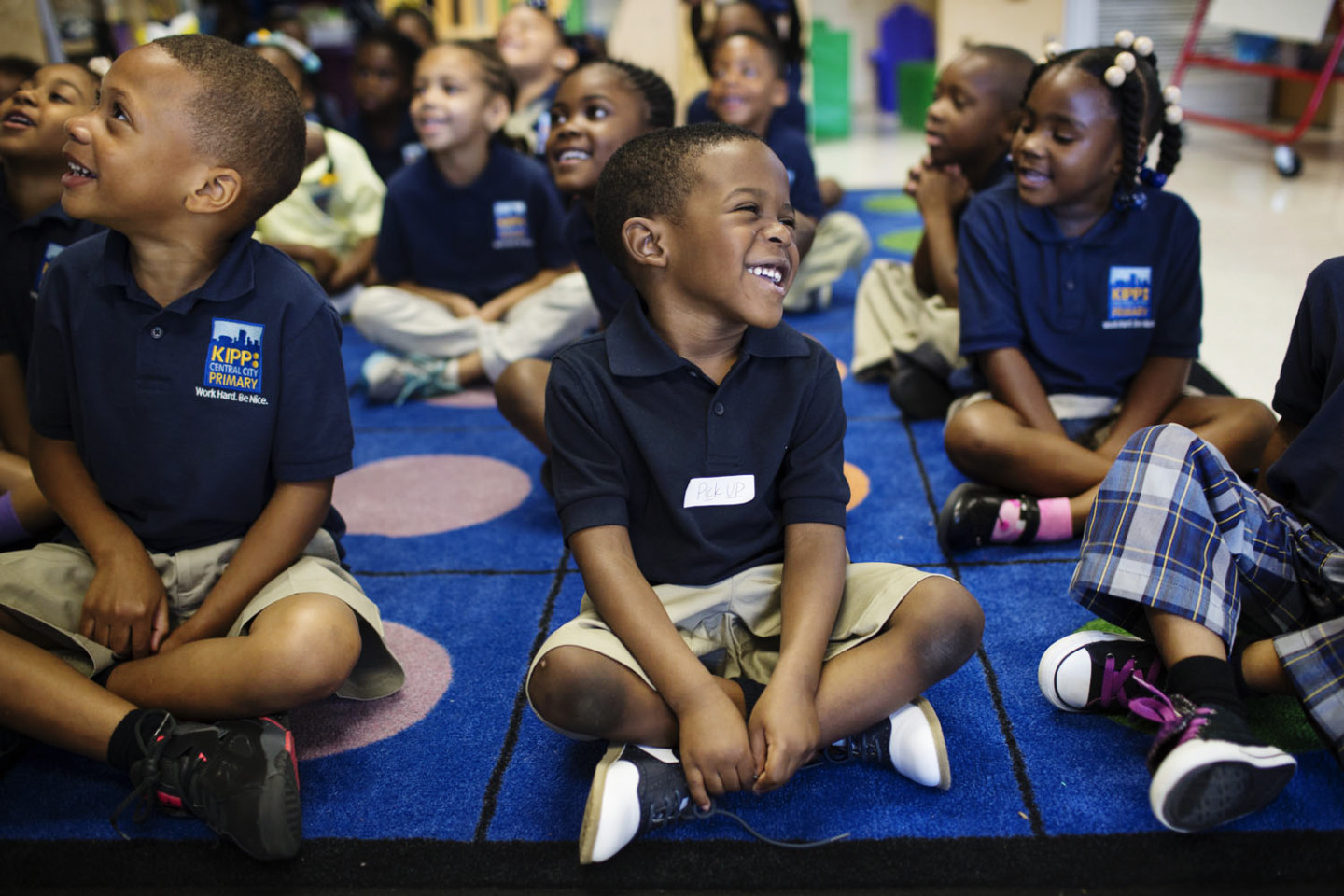
"caption": "KIPP kindergarten students laugh while listening to a reading of the story “Three Billy Goats Gruff.” (Edmund D. Fountain/NPR)",
"description": "Kindergarten students laugh at KIPP Central City Primary School students while reading the story Three Billy Goats Gruff on August 14, 2014 in New Orleans. The school's student body is nearly 100 percent black in a system that is 85 percent black.",
"title": "Kipp kindergartener",
"credit": null,
"status": "inherit",
"isLoading": false,
"fetchFailed": false
}
},
"audioPlayerReducer": {
"postId": "stream_live",
"isPaused": true,
"isPlaying": false,
"pfsActive": false,
"pledgeModalIsOpen": true,
"playerDrawerIsOpen": false,
"liveAudioPlayStartedAt": 0,
"liveAudioPlayContext": ""
},
"authorsReducer": {
"byline_mindshift_38874": {
"type": "authors",
"id": "byline_mindshift_38874",
"meta": {
"override": true
},
"slug": "byline_mindshift_38874",
"name": "Maanvi Singh",
"isLoading": false
},
"byline_mindshift_38745": {
"type": "authors",
"id": "byline_mindshift_38745",
"meta": {
"override": true
},
"slug": "byline_mindshift_38745",
"name": "Eric Westervelt",
"isLoading": false
},
"byline_mindshift_38587": {
"type": "authors",
"id": "byline_mindshift_38587",
"meta": {
"override": true
},
"slug": "byline_mindshift_38587",
"name": "Anya Kamenetz, \u003ca href=\"http://www.npr.org/sections/ed/2014/11/25/366561443/what-every-school-can-learn-from-preschools\">NPR\u003c/a>",
"isLoading": false
},
"katrinaschwartz": {
"type": "authors",
"id": "234",
"meta": {
"index": "authors_1716337520",
"id": "234",
"found": true
},
"name": "Katrina Schwartz",
"firstName": "Katrina",
"lastName": "Schwartz",
"slug": "katrinaschwartz",
"email": "kschwartz@kqed.org",
"display_author_email": false,
"staff_mastheads": [
"news"
],
"title": "Producer",
"bio": "Katrina Schwartz is a journalist based in San Francisco. She's worked at KPCC public radio in LA and has reported on air and online for KQED since 2010. She covered how teaching and learning is changing for MindShift between 2012 and 2020. She is the co-host of the MindShift podcast and now produces KQED's Bay Curious podcast.",
"avatar": "https://secure.gravatar.com/avatar/edb4ee79070447a018538c9aae6eeecf28786515b8a0c30e43b6b7dce5aa44c8?s=600&d=blank&r=g",
"twitter": "kschwart",
"bluesky": null,
"facebook": null,
"instagram": null,
"linkedin": null,
"sites": [
{
"site": "",
"roles": [
"editor"
]
},
{
"site": "news",
"roles": [
"editor"
]
},
{
"site": "mindshift",
"roles": [
"administrator"
]
},
{
"site": "stateofhealth",
"roles": [
"author"
]
},
{
"site": "science",
"roles": [
"editor"
]
}
],
"headData": {
"title": "Katrina Schwartz | KQED",
"description": "Producer",
"ogImgSrc": "https://secure.gravatar.com/avatar/edb4ee79070447a018538c9aae6eeecf28786515b8a0c30e43b6b7dce5aa44c8?s=600&d=blank&r=g",
"twImgSrc": "https://secure.gravatar.com/avatar/edb4ee79070447a018538c9aae6eeecf28786515b8a0c30e43b6b7dce5aa44c8?s=600&d=blank&r=g"
},
"isLoading": false,
"link": "/author/katrinaschwartz"
},
"luba": {
"type": "authors",
"id": "4537",
"meta": {
"index": "authors_1716337520",
"id": "4537",
"found": true
},
"name": "Luba Vangelova",
"firstName": "Luba",
"lastName": "Vangelova",
"slug": "luba",
"email": "luba@catalystcommunicationsllc.com",
"display_author_email": false,
"staff_mastheads": [],
"title": null,
"bio": "Luba Vangelova’s work has appeared in numerous print, online and broadcast media outlets, including The New York Times, Smithsonian, The Atlantic, and Salon. She is also working on a book about self-directed learning. Her web site is \u003ca title=\"Luba Vangelova\" href=\"http://www.LubaVangelova.com\" target=\"_blank\">www.LubaVangelova.com\u003c/a>. She also posts on \u003ca title=\"@LubaSays\" href=\"http://www.twitter.com/LubaSays\" target=\"_blank\">Twitter\u003c/a> and on her official \u003ca title=\"Facebook - Luba Vangelova\" href=\"http://www.facebook.com/LubaSays\" target=\"_blank\">Facebook\u003c/a> page.",
"avatar": "https://secure.gravatar.com/avatar/0c49027042bcd2ffbce1f5f200e2172e?s=600&d=blank&r=g",
"twitter": "LubaSays",
"facebook": null,
"instagram": null,
"linkedin": "lvangelova",
"sites": [
{
"site": "mindshift",
"roles": [
"contributor"
]
}
],
"headData": {
"title": "Luba Vangelova | KQED",
"description": null,
"ogImgSrc": "https://secure.gravatar.com/avatar/0c49027042bcd2ffbce1f5f200e2172e?s=600&d=blank&r=g",
"twImgSrc": "https://secure.gravatar.com/avatar/0c49027042bcd2ffbce1f5f200e2172e?s=600&d=blank&r=g"
},
"isLoading": false,
"link": "/author/luba"
}
},
"pagesReducer": {
"mindshift_category_culture": {
"type": "terms",
"id": "mindshift_194",
"meta": {
"index": "terms_1716263798",
"site": "mindshift",
"id": "194",
"score": 12.371298
},
"featImg": null,
"name": "Culture",
"description": "How trends in technology – social networks, Internet privacy, cyberbullying – influence education.",
"taxonomy": "category",
"headData": {
"twImgId": null,
"twTitle": null,
"ogTitle": null,
"ogImgId": null,
"twDescription": null,
"description": "How trends in technology – social networks, Internet privacy, cyberbullying – influence education.",
"title": "Culture Archives | KQED Mindshift",
"ogDescription": null
},
"ttid": 194,
"slug": "culture",
"isLoading": false,
"title": "Culture",
"pageMeta": {
"site": "mindshift",
"WpPageTemplate": "page-topic-editorial",
"currentPage": 17
},
"blocks": [
{
"blockName": "kqed/company-paragraph",
"content": "How trends in technology – social networks, Internet privacy, cyberbullying – influence education."
},
{
"blockName": "kqed/post-list",
"attrs": {
"layout": "cardArticle2",
"query": "posts/mindshift?category=culture",
"seeMore": false,
"paginated": true,
"page": 17
}
},
{
"blockName": "kqed/ad"
}
]
}
},
"pfsSessionReducer": {},
"postsReducer": {
"stream_live": {
"type": "live",
"id": "stream_live",
"audioUrl": "https://streams.kqed.org/kqedradio",
"title": "Live Stream",
"excerpt": "Live Stream information currently unavailable.",
"link": "/radio",
"featImg": "",
"label": {
"name": "KQED Live",
"link": "/"
}
},
"stream_kqedNewscast": {
"type": "posts",
"id": "stream_kqedNewscast",
"audioUrl": "https://www.kqed.org/.stream/anon/radio/RDnews/newscast.mp3?_=1",
"title": "KQED Newscast",
"featImg": "",
"label": {
"name": "88.5 FM",
"link": "/"
}
},
"mindshift_38910": {
"type": "posts",
"id": "mindshift_38910",
"meta": {
"index": "posts_1716263798",
"site": "mindshift",
"id": "38910",
"score": null,
"sort": [
1420834080000
]
},
"parent": 0,
"labelTerm": {
"site": "mindshift"
},
"blocks": [],
"publishDate": 1420834080,
"format": "aside",
"disqusTitle": "How Educators in Rural New York got Creative with Common Core",
"title": "How Educators in Rural New York got Creative with Common Core",
"headTitle": "MindShift | KQED News",
"content": "\u003cfigure id=\"attachment_38914\" class=\"wp-caption alignnone\" style=\"max-width: 640px\">\u003ca href=\"http://ww2.kqed.org/mindshift/wp-content/uploads/sites/23/2015/01/Crane-and-Waste-Basket.gif\">\u003cimg class=\"size-full wp-image-38914\" src=\"http://ww2.kqed.org/mindshift/wp-content/uploads/sites/23/2015/01/Crane-and-Waste-Basket.gif\" alt=\"Flickr/Rob Ireton\" width=\"640\" height=\"960\">\u003c/a>\u003cfigcaption class=\"wp-caption-text\">Flickr/\u003ca href=\"https://www.flickr.com/photos/aoisakana/282987938\">Rob Ireton\u003c/a>\u003c/figcaption>\u003c/figure>\n\u003cp class=\"p1\">Educators in most of the country are scrambling to figure out how to implement Common Core standards by their state’s deadline. The new standards require a big shift in teaching style and curriculum. As an early adopter, New York’s implementation has been closely watched, including as it relates to teaching materials.\u003c/p>\n\u003cp class=\"p1\">Using existing resources for training needs can often be the cheaper, easier and less time-consuming choice. In preparation for Common Core, educators in an Upstate New York community had the option of using state developed training and curriculum. To put it simply, someone else did the work for the teachers. But once Letchworth Central School District educators realized the materials weren’t a good fit for the students, or the teachers, they ditched the bird in hand and went “rogue,” according to \u003ca href=\"http://hechingerreport.org/content/new-york-school-beats-odds-going-rogue-common-core_18512/\">The Hechinger Report\u003c/a>. The story describes the course of action by Lockwood Elementary School principal, Billy Bean:\u003c/p>\n\u003cblockquote>\u003cp>When the curriculum that New York State chose finally did get delivered in 2013, the manual was hundreds of pages long, with a script that had minute-by-minute directions for how teachers should teach.\u003c/p>\n\u003cp>“I asked them just to follow the lesson, just to give it a try,” said Bean.\u003c/p>\n\u003cp>There were problems.\u003c/p>\u003c/blockquote>\n\u003cp>Instead of using out-of-the-box solutions, teachers developed their own curriculum as a team to teach the state’s standards, and that required innovative experimentation. One of those teachers was Tyler King.\u003c/p>\n\u003cblockquote>\u003cp>The third-grade teachers in particular not only planned lessons together, they shared the load. The lessons were completely new, and it took time for the teachers to understand the new way they were being required to teach math. They planned to use technology, projecting parts of the lessons onto Smartboards, or large computer screens, which were time-consuming to create. So they divided up the lesson planning.\u003c/p>\n\u003cp>“What’s worked well for us is the whole teamwork thing, realizing that we can’t do it by ourselves and it’s ridiculous to think we can,” said King. “We show no shame in letting each other know when we fail.”\u003c/p>\n\u003cp>In addition, the school decided to group children by ability for 30 minutes daily in both math and English across the grade. That allowed some children to catch up, and a deeper dive for others even as they all learned the same basic material together. The change meant that for an hour each day, teachers left their classes and took a group of students that could number between 3 and 15, who were at a similar learning ability for that subject. As a result, the lessons, and the assessment of the children, had to be in lock-step. The strongest and weakest teachers worked as a team, and often met at the end of the day to discuss which lessons worked and which didn’t. They also kept track of the progress of individual students using “exit tickets” or short assessments on tablets at the end of each class.\u003c/p>\u003c/blockquote>\n\u003cp>The school also went rogue by not spending too much class time on testing.\u003c/p>\n\u003cblockquote>\u003cp>“Last year we put the least amount of emphasis on the tests than we ever had,” said Billy Bean, Lockwood’s principal since 2001, who also taught at the school for nine years.\u003c/p>\u003c/blockquote>\n\u003cp>The elementary school raised its test scores after it adopted the different way of teaching, but the story notes some slight skepticism about those scores. What was not in doubt was educators' desire for change.\u003c/p>\n\u003cblockquote>\u003cp>“We had tried everything,” said Bean. “Every time a new curriculum came out, we tried it. Nothing worked.”\u003c/p>\u003c/blockquote>\n\u003cp> \u003cbr>\nLearn more about how educators worked together at \u003ca href=\"http://hechingerreport.org/content/new-york-school-beats-odds-going-rogue-common-core_18512/\">The Hechinger Report\u003c/a>. \u003c/p>\n\u003cp>[ad fullwidth]\u003c/p>\n\u003cp>\u003c/p>\n\u003cp>\u003ca class=\"embedly-card\" href=\"http://hechingerreport.org/content/new-york-school-beats-odds-going-rogue-common-core_18512/\">New York school beats the odds by \"going rogue\" on Common Core - The Hechinger Report\u003c/a>\u003c/p>\n\n",
"disqusIdentifier": "38910 http://blogs.kqed.org/mindshift/?p=38910",
"disqusUrl": "https://ww2.kqed.org/mindshift/2015/01/09/how-educators-in-rural-new-york-got-creative-with-common-core/",
"stats": {
"hasVideo": false,
"hasChartOrMap": false,
"hasAudio": false,
"hasPolis": false,
"wordCount": 665,
"hasGoogleForm": false,
"hasGallery": false,
"hasHearkenModule": false,
"iframeSrcs": [],
"paragraphCount": 14
},
"modified": 1420834186,
"excerpt": "A small school district in Upstate New York tossed out state-developed Common Core teaching materials and let teachers create their own tools. ",
"headData": {
"twImgId": "",
"twTitle": "",
"ogTitle": "",
"ogImgId": "",
"twDescription": "",
"description": "A small school district in Upstate New York tossed out state-developed Common Core teaching materials and let teachers create their own tools. ",
"title": "How Educators in Rural New York got Creative with Common Core | KQED",
"ogDescription": "",
"schema": {
"@context": "https://schema.org",
"@type": "Article",
"headline": "How Educators in Rural New York got Creative with Common Core",
"datePublished": "2015-01-09T12:08:00-08:00",
"dateModified": "2015-01-09T12:09:46-08:00",
"image": "https://cdn.kqed.org/wp-content/uploads/2020/02/KQED-OG-Image@1x.png"
}
},
"guestAuthors": [],
"slug": "how-educators-in-rural-new-york-got-creative-with-common-core",
"status": "publish",
"path": "/mindshift/38910/how-educators-in-rural-new-york-got-creative-with-common-core",
"audioTrackLength": null,
"parsedContent": [
{
"type": "contentString",
"content": "\u003cdiv class=\"post-body\">\u003cp>\u003cfigure id=\"attachment_38914\" class=\"wp-caption alignnone\" style=\"max-width: 640px\">\u003ca href=\"http://ww2.kqed.org/mindshift/wp-content/uploads/sites/23/2015/01/Crane-and-Waste-Basket.gif\">\u003cimg class=\"size-full wp-image-38914\" src=\"http://ww2.kqed.org/mindshift/wp-content/uploads/sites/23/2015/01/Crane-and-Waste-Basket.gif\" alt=\"Flickr/Rob Ireton\" width=\"640\" height=\"960\">\u003c/a>\u003cfigcaption class=\"wp-caption-text\">Flickr/\u003ca href=\"https://www.flickr.com/photos/aoisakana/282987938\">Rob Ireton\u003c/a>\u003c/figcaption>\u003c/figure>\n\u003cp class=\"p1\">Educators in most of the country are scrambling to figure out how to implement Common Core standards by their state’s deadline. The new standards require a big shift in teaching style and curriculum. As an early adopter, New York’s implementation has been closely watched, including as it relates to teaching materials.\u003c/p>\n\u003cp class=\"p1\">Using existing resources for training needs can often be the cheaper, easier and less time-consuming choice. In preparation for Common Core, educators in an Upstate New York community had the option of using state developed training and curriculum. To put it simply, someone else did the work for the teachers. But once Letchworth Central School District educators realized the materials weren’t a good fit for the students, or the teachers, they ditched the bird in hand and went “rogue,” according to \u003ca href=\"http://hechingerreport.org/content/new-york-school-beats-odds-going-rogue-common-core_18512/\">The Hechinger Report\u003c/a>. The story describes the course of action by Lockwood Elementary School principal, Billy Bean:\u003c/p>\n\u003cblockquote>\u003cp>When the curriculum that New York State chose finally did get delivered in 2013, the manual was hundreds of pages long, with a script that had minute-by-minute directions for how teachers should teach.\u003c/p>\n\u003cp>“I asked them just to follow the lesson, just to give it a try,” said Bean.\u003c/p>\n\u003cp>There were problems.\u003c/p>\u003c/blockquote>\n\u003cp>Instead of using out-of-the-box solutions, teachers developed their own curriculum as a team to teach the state’s standards, and that required innovative experimentation. One of those teachers was Tyler King.\u003c/p>\n\u003cblockquote>\u003cp>The third-grade teachers in particular not only planned lessons together, they shared the load. The lessons were completely new, and it took time for the teachers to understand the new way they were being required to teach math. They planned to use technology, projecting parts of the lessons onto Smartboards, or large computer screens, which were time-consuming to create. So they divided up the lesson planning.\u003c/p>\n\u003cp>“What’s worked well for us is the whole teamwork thing, realizing that we can’t do it by ourselves and it’s ridiculous to think we can,” said King. “We show no shame in letting each other know when we fail.”\u003c/p>\n\u003cp>In addition, the school decided to group children by ability for 30 minutes daily in both math and English across the grade. That allowed some children to catch up, and a deeper dive for others even as they all learned the same basic material together. The change meant that for an hour each day, teachers left their classes and took a group of students that could number between 3 and 15, who were at a similar learning ability for that subject. As a result, the lessons, and the assessment of the children, had to be in lock-step. The strongest and weakest teachers worked as a team, and often met at the end of the day to discuss which lessons worked and which didn’t. They also kept track of the progress of individual students using “exit tickets” or short assessments on tablets at the end of each class.\u003c/p>\u003c/blockquote>\n\u003cp>The school also went rogue by not spending too much class time on testing.\u003c/p>\n\u003cblockquote>\u003cp>“Last year we put the least amount of emphasis on the tests than we ever had,” said Billy Bean, Lockwood’s principal since 2001, who also taught at the school for nine years.\u003c/p>\u003c/blockquote>\n\u003cp>The elementary school raised its test scores after it adopted the different way of teaching, but the story notes some slight skepticism about those scores. What was not in doubt was educators' desire for change.\u003c/p>\n\u003cblockquote>\u003cp>“We had tried everything,” said Bean. “Every time a new curriculum came out, we tried it. Nothing worked.”\u003c/p>\u003c/blockquote>\n\u003cp> \u003cbr>\nLearn more about how educators worked together at \u003ca href=\"http://hechingerreport.org/content/new-york-school-beats-odds-going-rogue-common-core_18512/\">The Hechinger Report\u003c/a>. \u003c/p>\n\u003cp>\u003c/p>\u003c/div>",
"attributes": {
"named": {},
"numeric": []
}
},
{
"type": "component",
"content": "",
"name": "ad",
"attributes": {
"named": {
"label": "fullwidth"
},
"numeric": [
"fullwidth"
]
}
},
{
"type": "contentString",
"content": "\u003cdiv class=\"post-body\">\u003cp>\u003c/p>\n\u003cp>\u003c/p>\n\u003cp>\u003ca class=\"embedly-card\" href=\"http://hechingerreport.org/content/new-york-school-beats-odds-going-rogue-common-core_18512/\">New York school beats the odds by \"going rogue\" on Common Core - The Hechinger Report\u003c/a>\u003c/p>\n\n\u003c/div>\u003c/p>",
"attributes": {
"named": {},
"numeric": []
}
}
],
"link": "/mindshift/38910/how-educators-in-rural-new-york-got-creative-with-common-core",
"authors": [
"4354"
],
"categories": [
"mindshift_194",
"mindshift_193"
],
"tags": [
"mindshift_92",
"mindshift_20784",
"mindshift_1040"
],
"featImg": "mindshift_38914",
"label": "mindshift"
},
"mindshift_38881": {
"type": "posts",
"id": "mindshift_38881",
"meta": {
"index": "posts_1716263798",
"site": "mindshift",
"id": "38881",
"score": null,
"sort": [
1420639699000
]
},
"parent": 0,
"labelTerm": {
"site": "mindshift"
},
"blocks": [],
"publishDate": 1420639699,
"format": "aside",
"disqusTitle": "Can Schools Cultivate a Student’s Ability to Think Differently? ",
"title": "Can Schools Cultivate a Student’s Ability to Think Differently? ",
"headTitle": "MindShift | KQED News",
"content": "\u003cfigure id=\"attachment_38893\" class=\"wp-caption alignnone\" style=\"max-width: 640px\">\u003ca href=\"http://ww2.kqed.org/mindshift/wp-content/uploads/sites/23/2015/01/Marko-kids-433322236_3177e2c86c_o.gif\">\u003cimg src=\"http://ww2.kqed.org/mindshift/wp-content/uploads/sites/23/2015/01/Marko-kids-433322236_3177e2c86c_o.gif\" alt=\"Flickr/Marko\" width=\"640\" height=\"960\" class=\"size-full wp-image-38893\">\u003c/a>\u003cfigcaption class=\"wp-caption-text\">\u003ca href=\"https://www.flickr.com/photos/_pixelmaniac_/433322236\">Flickr/Marko\u003c/a>\u003c/figcaption>\u003c/figure>\n\u003cp class=\"dropcap-serif\">Entrepreneurship is often associated with people who assume the risk of starting a business venture for financial gain. However, entrepreneurs exist in many forms: They may be writers, carpenters, computer programmers, school principals or fundraisers, to name just a few examples.\u003c/p>\n\u003cp>What they have in common is an “entrepreneurial mindset” that enables them to see opportunities for improvement, take initiative and collaborate with others to turn their ideas into action. Everyone is born with some propensity for entrepreneurship, which at its core is about solving problems creatively, according to Yong Zhao, a professor at the University of Oregon’s College of Education. He is the author of several books, including, most recently, “\u003ca href=\"http://www.amazon.com/Whos-Afraid-Big-Bad-Dragon/dp/1118487133/ref=sr_1_1?ie=UTF8&qid=1419282301&sr=8-1&keywords=who%27s+afraid+of+the+big+bad+dragon\">Who’s Afraid of the Big Bad Dragon? Why China has the Best (and Worst) Education System in the World\u003c/a>.”\u003c/p>\n\u003caside class=\"pullquote alignleft\">“We overemphasize the deficits of children, and that’s not a good starting point. … If we let people flourish in their own ways, hopefully everyone will find something they want to do.”\u003c/aside>\n\u003cp>Unfortunately, the current education system doesn’t support the development of an entrepreneurial mindset, Zhao says, because of its reliance on standards, tests and a prescribed curriculum, which are all fundamentally \u003ca href=\"http://ww2.kqed.org/mindshift/2013/04/in-an-era-of-global-competition-what-exactly-are-we-testing-for/\">incompatible with entrepreneurial thinking\u003c/a>. Studies have shown an \u003ca href=\"http://blogs.cfr.org/renewing-america/2013/02/01/education-do-international-test-scores-matter/\">inverse relationship\u003c/a> between countries’ academic test scores and entrepreneurship levels, and between years of schooling and entrepreneurship levels.\u003c/p>\n\u003cp>“Students are treated like employees of a big company, who don’t bear the risk if the company fails,” he says. “They are paid with grades and are not treated as being responsible for their learning.”\u003c/p>\n\u003cp>Instead of building on existing education reform plans, such as Common Core, Zhao supports an altogether different education paradigm to prepare children to thrive in our rapidly changing world, which will put a premium on entrepreneurship in all fields of endeavor.\u003c/p>\n\u003cp>[ad fullwidth]\u003c/p>\n\u003cp>A mashup of democratic and project-based learning would enhance the characteristics that lie at the heart of the entrepreneurial mindset. Zhao envisions schools that combine three essential elements: a freedom-based, non-coercive environment (as can be found at England’s democratic \u003ca href=\"http://www.summerhillschool.co.uk\">Summerhill School\u003c/a>); enhanced project-based learning opportunities (such as those offered at \u003ca href=\"http://newtechhigh.org\">New Technology High\u003c/a> in Napa, California); and interaction with the larger world (as practiced by a program that allows students at the Cherwell School in Oxford, England, to collaborate with students at the Gcato School in Eastern Cape, South Africa).\u003c/p>\n\u003cp>[contextly_sidebar id=\"V29EijhuYbSh7Bx1grQuXE3TYNJzGNP1\"]\u003c/p>\n\u003cp>A democratic school such as Summerhill shifts the responsibility to the learner and honors the natural variety that exists among individuals. As long as the students follow the general rules of behavior (which they themselves have developed on an equal footing with the staff), they are free to spend their time as they choose, taking only the classes that interest them. Nurturing what interests and excites each child benefits both society and the individual, Zhao says — the world needs all kinds of talents and skills, and this method effectively harnesses each child’s intrinsic motivation to learn what makes sense for him or her.\u003c/p>\n\u003cp>This extends to whatever is needed to achieve their goals: “When a child has a reason to learn, the basics will be sought after, rather than imposed,” Zhao wrote in his previous book, “World Class Learners: Educating Creative and Entrepreneurial Students.” “If they are true basics, they are hard to avoid.”\u003c/p>\n\u003cp>This also allows children to build on their strengths, which is what successful entrepreneurs do, he says, instead of wasting their efforts to try and become like everyone else. “We should give all children confidence, and an alternative space to find something to be good at,” he says. “We overemphasize the deficits of children, and that’s not a good starting point. … If we let people flourish in their own ways, hopefully everyone will find something they want to do.”\u003c/p>\n\u003cp>But freedom in learning is not sufficient, Zhao says. The underlying environment must be characterized by flexibility, diversity (with access to a variety of adults and learning opportunities both inside and outside the school), and agency (so that students are “citizens of a democratic society who help to shape the society,” Zhao writes, instead of “subjects of a kingdom built by adults”). And then on top of that, “for learning how to be a disciplined, creative entrepreneur, you need a product, and you need practice,” he says.\u003c/p>\n\u003cp>So to the foundation of a \u003ca href=\"http://ww2.kqed.org/mindshift/2014/10/students-lead-the-learning-experience-at-democratic-schools/\">democratic school\u003c/a>, he would add the offerings of a New Technology High School, which takes project-based learning to another level. Most project-based learning environments use projects to teach prescribed content and skills, and the teacher retains most (if not all) of the control. Much more valuable is what Zhao calls the “entrepreneurial model” of project-based learning, which places the emphasis on the product rather than the project— students create products or services that meet authentic needs, and build knowledge and skills in the process. The teachers facilitate the process, but the students decide what products to make.\u003c/p>\n\u003cp>The third and final layer involves establishing a global consciousness, which can be done in numerous ways. It can include learning foreign languages, collaborating with students on the other side of the world (for example, the Cherwell School and Gcato School students jointly established a chicken business), or teaching foreign students about things in your area and vice versa.\u003c/p>\n\u003cp>\u003cstrong>The Path From Here to There\u003c/strong>\u003c/p>\n\u003cp>These changes will require giving up entrenched beliefs and the sense of comfort offered by a system that emphasizes order, control and immediate tangible results in the form of test scores, Zhao says. But the high unemployment rate among recent college graduates is causing people to rethink their assumptions and question whether the current model of education is serving children’s best interests.\u003c/p>\n\u003cp>Zhao has observed some elements of the changes for which he’s advocating appearing in more innovative public schools, primarily in suburban areas with smaller school districts and more local control. And in many ways, he says, he’s advocating for the United States to return to its roots.\u003c/p>\n\u003cp>[ad floatright]\u003c/p>\n\u003cp>“America thrived on democracy and trying to celebrate diversity, and allowing individuals to flourish. … It can look very messy,” he says, but the payoff is worth it.\u003c/p>\n\n",
"disqusIdentifier": "38881 http://blogs.kqed.org/mindshift/?p=38881",
"disqusUrl": "https://ww2.kqed.org/mindshift/2015/01/07/can-schools-cultivate-a-students-ability-to-think-differently/",
"stats": {
"hasVideo": false,
"hasChartOrMap": false,
"hasAudio": false,
"hasPolis": false,
"wordCount": 1081,
"hasGoogleForm": false,
"hasGallery": false,
"hasHearkenModule": false,
"iframeSrcs": [],
"paragraphCount": 18
},
"modified": 1420639948,
"excerpt": "In order to develop creative individuals, children need environments that nurture their interests. Between standards and testing, how much of that are they getting at school?",
"headData": {
"twImgId": "",
"twTitle": "",
"ogTitle": "",
"ogImgId": "",
"twDescription": "",
"description": "In order to develop creative individuals, children need environments that nurture their interests. Between standards and testing, how much of that are they getting at school?",
"title": "Can Schools Cultivate a Student’s Ability to Think Differently? | KQED",
"ogDescription": "",
"schema": {
"@context": "https://schema.org",
"@type": "Article",
"headline": "Can Schools Cultivate a Student’s Ability to Think Differently? ",
"datePublished": "2015-01-07T06:08:19-08:00",
"dateModified": "2015-01-07T06:12:28-08:00",
"image": "https://cdn.kqed.org/wp-content/uploads/2020/02/KQED-OG-Image@1x.png"
}
},
"guestAuthors": [],
"slug": "can-schools-cultivate-a-students-ability-to-think-differently",
"status": "publish",
"path": "/mindshift/38881/can-schools-cultivate-a-students-ability-to-think-differently",
"audioTrackLength": null,
"parsedContent": [
{
"type": "contentString",
"content": "\u003cdiv class=\"post-body\">\u003cp>\u003cfigure id=\"attachment_38893\" class=\"wp-caption alignnone\" style=\"max-width: 640px\">\u003ca href=\"http://ww2.kqed.org/mindshift/wp-content/uploads/sites/23/2015/01/Marko-kids-433322236_3177e2c86c_o.gif\">\u003cimg src=\"http://ww2.kqed.org/mindshift/wp-content/uploads/sites/23/2015/01/Marko-kids-433322236_3177e2c86c_o.gif\" alt=\"Flickr/Marko\" width=\"640\" height=\"960\" class=\"size-full wp-image-38893\">\u003c/a>\u003cfigcaption class=\"wp-caption-text\">\u003ca href=\"https://www.flickr.com/photos/_pixelmaniac_/433322236\">Flickr/Marko\u003c/a>\u003c/figcaption>\u003c/figure>\n\u003cp class=\"dropcap-serif\">Entrepreneurship is often associated with people who assume the risk of starting a business venture for financial gain. However, entrepreneurs exist in many forms: They may be writers, carpenters, computer programmers, school principals or fundraisers, to name just a few examples.\u003c/p>\n\u003cp>What they have in common is an “entrepreneurial mindset” that enables them to see opportunities for improvement, take initiative and collaborate with others to turn their ideas into action. Everyone is born with some propensity for entrepreneurship, which at its core is about solving problems creatively, according to Yong Zhao, a professor at the University of Oregon’s College of Education. He is the author of several books, including, most recently, “\u003ca href=\"http://www.amazon.com/Whos-Afraid-Big-Bad-Dragon/dp/1118487133/ref=sr_1_1?ie=UTF8&qid=1419282301&sr=8-1&keywords=who%27s+afraid+of+the+big+bad+dragon\">Who’s Afraid of the Big Bad Dragon? Why China has the Best (and Worst) Education System in the World\u003c/a>.”\u003c/p>\n\u003caside class=\"pullquote alignleft\">“We overemphasize the deficits of children, and that’s not a good starting point. … If we let people flourish in their own ways, hopefully everyone will find something they want to do.”\u003c/aside>\n\u003cp>Unfortunately, the current education system doesn’t support the development of an entrepreneurial mindset, Zhao says, because of its reliance on standards, tests and a prescribed curriculum, which are all fundamentally \u003ca href=\"http://ww2.kqed.org/mindshift/2013/04/in-an-era-of-global-competition-what-exactly-are-we-testing-for/\">incompatible with entrepreneurial thinking\u003c/a>. Studies have shown an \u003ca href=\"http://blogs.cfr.org/renewing-america/2013/02/01/education-do-international-test-scores-matter/\">inverse relationship\u003c/a> between countries’ academic test scores and entrepreneurship levels, and between years of schooling and entrepreneurship levels.\u003c/p>\n\u003cp>“Students are treated like employees of a big company, who don’t bear the risk if the company fails,” he says. “They are paid with grades and are not treated as being responsible for their learning.”\u003c/p>\n\u003cp>Instead of building on existing education reform plans, such as Common Core, Zhao supports an altogether different education paradigm to prepare children to thrive in our rapidly changing world, which will put a premium on entrepreneurship in all fields of endeavor.\u003c/p>\n\u003cp>\u003c/p>\u003c/div>",
"attributes": {
"named": {},
"numeric": []
}
},
{
"type": "component",
"content": "",
"name": "ad",
"attributes": {
"named": {
"label": "fullwidth"
},
"numeric": [
"fullwidth"
]
}
},
{
"type": "contentString",
"content": "\u003cdiv class=\"post-body\">\u003cp>\u003c/p>\n\u003cp>A mashup of democratic and project-based learning would enhance the characteristics that lie at the heart of the entrepreneurial mindset. Zhao envisions schools that combine three essential elements: a freedom-based, non-coercive environment (as can be found at England’s democratic \u003ca href=\"http://www.summerhillschool.co.uk\">Summerhill School\u003c/a>); enhanced project-based learning opportunities (such as those offered at \u003ca href=\"http://newtechhigh.org\">New Technology High\u003c/a> in Napa, California); and interaction with the larger world (as practiced by a program that allows students at the Cherwell School in Oxford, England, to collaborate with students at the Gcato School in Eastern Cape, South Africa).\u003c/p>\n\u003cp>\u003c/p>\u003cp>\u003c/p>\u003cp>\u003c/p>\n\u003cp>A democratic school such as Summerhill shifts the responsibility to the learner and honors the natural variety that exists among individuals. As long as the students follow the general rules of behavior (which they themselves have developed on an equal footing with the staff), they are free to spend their time as they choose, taking only the classes that interest them. Nurturing what interests and excites each child benefits both society and the individual, Zhao says — the world needs all kinds of talents and skills, and this method effectively harnesses each child’s intrinsic motivation to learn what makes sense for him or her.\u003c/p>\n\u003cp>This extends to whatever is needed to achieve their goals: “When a child has a reason to learn, the basics will be sought after, rather than imposed,” Zhao wrote in his previous book, “World Class Learners: Educating Creative and Entrepreneurial Students.” “If they are true basics, they are hard to avoid.”\u003c/p>\n\u003cp>This also allows children to build on their strengths, which is what successful entrepreneurs do, he says, instead of wasting their efforts to try and become like everyone else. “We should give all children confidence, and an alternative space to find something to be good at,” he says. “We overemphasize the deficits of children, and that’s not a good starting point. … If we let people flourish in their own ways, hopefully everyone will find something they want to do.”\u003c/p>\n\u003cp>But freedom in learning is not sufficient, Zhao says. The underlying environment must be characterized by flexibility, diversity (with access to a variety of adults and learning opportunities both inside and outside the school), and agency (so that students are “citizens of a democratic society who help to shape the society,” Zhao writes, instead of “subjects of a kingdom built by adults”). And then on top of that, “for learning how to be a disciplined, creative entrepreneur, you need a product, and you need practice,” he says.\u003c/p>\n\u003cp>So to the foundation of a \u003ca href=\"http://ww2.kqed.org/mindshift/2014/10/students-lead-the-learning-experience-at-democratic-schools/\">democratic school\u003c/a>, he would add the offerings of a New Technology High School, which takes project-based learning to another level. Most project-based learning environments use projects to teach prescribed content and skills, and the teacher retains most (if not all) of the control. Much more valuable is what Zhao calls the “entrepreneurial model” of project-based learning, which places the emphasis on the product rather than the project— students create products or services that meet authentic needs, and build knowledge and skills in the process. The teachers facilitate the process, but the students decide what products to make.\u003c/p>\n\u003cp>The third and final layer involves establishing a global consciousness, which can be done in numerous ways. It can include learning foreign languages, collaborating with students on the other side of the world (for example, the Cherwell School and Gcato School students jointly established a chicken business), or teaching foreign students about things in your area and vice versa.\u003c/p>\n\u003cp>\u003cstrong>The Path From Here to There\u003c/strong>\u003c/p>\n\u003cp>These changes will require giving up entrenched beliefs and the sense of comfort offered by a system that emphasizes order, control and immediate tangible results in the form of test scores, Zhao says. But the high unemployment rate among recent college graduates is causing people to rethink their assumptions and question whether the current model of education is serving children’s best interests.\u003c/p>\n\u003cp>Zhao has observed some elements of the changes for which he’s advocating appearing in more innovative public schools, primarily in suburban areas with smaller school districts and more local control. And in many ways, he says, he’s advocating for the United States to return to its roots.\u003c/p>\n\u003cp>\u003c/p>\u003c/div>",
"attributes": {
"named": {},
"numeric": []
}
},
{
"type": "component",
"content": "",
"name": "ad",
"attributes": {
"named": {
"label": "floatright"
},
"numeric": [
"floatright"
]
}
},
{
"type": "contentString",
"content": "\u003cdiv class=\"post-body\">\u003cp>\u003c/p>\n\u003cp>“America thrived on democracy and trying to celebrate diversity, and allowing individuals to flourish. … It can look very messy,” he says, but the payoff is worth it.\u003c/p>\n\n\u003c/div>\u003c/p>",
"attributes": {
"named": {},
"numeric": []
}
}
],
"link": "/mindshift/38881/can-schools-cultivate-a-students-ability-to-think-differently",
"authors": [
"4537"
],
"categories": [
"mindshift_20579",
"mindshift_194"
],
"tags": [
"mindshift_20763",
"mindshift_369",
"mindshift_20784",
"mindshift_1040",
"mindshift_883"
],
"featImg": "mindshift_38893",
"label": "mindshift"
},
"mindshift_38874": {
"type": "posts",
"id": "mindshift_38874",
"meta": {
"index": "posts_1716263798",
"site": "mindshift",
"id": "38874",
"score": null,
"sort": [
1420205437000
]
},
"parent": 0,
"labelTerm": {
"site": "mindshift"
},
"blocks": [],
"publishDate": 1420205437,
"format": "aside",
"disqusTitle": "Why Emotional Learning May Be As Important As The ABCs",
"title": "Why Emotional Learning May Be As Important As The ABCs",
"headTitle": "MindShift | KQED News",
"content": "\u003cfigure id=\"attachment_38875\" class=\"wp-caption alignnone\" style=\"max-width: 640px\">\u003ca href=\"http://ww2.kqed.org/mindshift/wp-content/uploads/sites/23/2014/12/kgreading-a7c6bc0da50b02a4b1f0f21970033a0f6dda4040-e1420182825846.jpg\">\u003cimg src=\"http://ww2.kqed.org/mindshift/wp-content/uploads/sites/23/2014/12/kgreading-a7c6bc0da50b02a4b1f0f21970033a0f6dda4040-e1420182825846.jpg\" alt=\"Thomas O'Donnell reads about Twiggle the Turtle to his kindergartners at Matthew Henson Elementary School in Baltimore. (Elissa Nadworny/NPR)\" width=\"640\" height=\"1080\" class=\"size-full wp-image-38875\">\u003c/a>\u003cfigcaption class=\"wp-caption-text\">Thomas O'Donnell reads about Twiggle the Turtle to his kindergartners at Matthew Henson Elementary School in Baltimore. (Elissa Nadworny/NPR)\u003c/figcaption>\u003c/figure>\n\u003cp>\u003cstrong>By Maanvi Singh, \u003ca href=\"http://www.npr.org/blogs/ed/2014/12/31/356187871/why-emotional-literacy-may-be-as-important-as-learning-the-a-b-c-s\">NPR\u003c/a>\u003c/strong>\u003c/p>\n\u003cp class=\"dropcap-serif\">Thomas O'Donnell's kindergarten kids are all hopped up to read about Twiggle the anthropomorphic Turtle.\u003c/p>\n\u003cp>\"Who can tell me why Twiggle here is sad,\" O'Donnell asks his class at Matthew Henson Elementary School in Baltimore.\u003c/p>\n\u003cp>\"Because he doesn't have no friends,\" a student pipes up.\u003c/p>\n\u003cp>And how do people look when they're sad?\u003c/p>\n\u003cp>[ad fullwidth]\u003c/p>\n\u003cp>\"They look down!\" the whole class screams out.\u003c/p>\n\u003cp>Yeah, Twiggle is lonely. But, eventually, he befriends a hedgehog, a duck and a dog. And along the way, he learns how to play, help and share.\u003c/p>\n\u003cp>These are crucial skills we all need to learn, even in preschool and kindergarten. And common sense — along with a growing body of research — shows that mastering social skills early on can help people stay out of trouble all the way into their adult lives.\u003c/p>\n\u003cp>So shouldn't schools teach kids about emotions and conflict negotiation in the same way they teach math and reading? The creators of Twiggle the Turtle say the answer is yes.\u003c/p>\n\u003cp>\u003cstrong>Emotional Intelligence 101\u003c/strong>\u003c/p>\n\u003cp>[contextly_sidebar id=\"dyUrqhbSPPZtWknCFdFbjKM96ADy3veE\"]\u003c/p>\n\u003cp>Twiggle is part of a program called Promoting Alternative Thinking Strategies, or PATHS. It's designed to help young kids recognize and express emotions.\u003c/p>\n\u003cp>Matthew Henson Elementary is one of about 1,500 schools around the country using this program, which was first developed in the 1980s.\u003c/p>\n\u003cp>Every week, students get two 15- to 20-minute lessons on themes like self-control and treating others with respect. Especially for the youngest kids — in kindergarten and first grade — Twiggle often serves as their guide.\u003c/p>\n\u003cp>O'Donnell says his students are really taking to the lessons. They're trained, for example, to \"do the Turtle\" when they're upset. \"That's when they stop and cocoon themselves. They wrap their arms around themselves and they say what the problem is,\" he explains.\u003c/p>\n\u003cp>O'Donnell's kids do the turtle all the time — in the hallway and during class.\u003c/p>\n\u003cp>Right before class starts, for example, one little girl tells her friend, \"I don't like when you touch my hair, because it makes me sad.\"\u003c/p>\n\u003cp>\"Sorry!\" her friend responds.\u003c/p>\n\u003cp>While most kids will eventually figure out such strategies on their own, or with help from their parents, O'Donnell says, the lessons help them learn more quickly.\u003c/p>\n\u003cp>And for some, especially those with troubled home lives, Twiggle is their first and only introduction to healthy self-expression, he says. \"Some of them don't have words to express how they feel before this.\"\u003c/p>\n\u003cp>\u003cstrong>The Long Game\u003c/strong>\u003c/p>\n\u003cp>We previously reported on a \u003ca href=\"http://www.npr.org/blogs/ed/2014/07/14/330761945/teaching-four-year-olds-to-feel-better\">national study comparing\u003c/a> PATHS and other, similar programs showing positive effects in preschool. They are based on research showing that kids who act up a lot in school and at home — even very young kids — are more likely to have mental health problems and commit crimes years later as adults.\u003c/p>\n\u003cp>So \u003ca href=\"http://fds.duke.edu/db/Sanford/ccfp/dodge\">Kenneth Dodge\u003c/a>, a psychologist at Duke University, asked, \"Could we do something about that to prevent those problems from actually occurring?\" And he has dedicated his career to answering that question.\u003c/p>\n\u003cp>He and his colleagues launched the \u003ca href=\"http://www.fasttrackproject.org/overview.php\">FastTrack Project\u003c/a> to see if they could change students' life trajectory by teaching them what researchers like to call social-emotional intelligence.\u003c/p>\n\u003cp>Back in 1991, they screened 5-year-olds at schools around the country for behavior problems. After interviewing teachers and parents, the researchers identified 900 children who seemed to be most at risk for developing problems later on.\u003c/p>\n\u003cp>Half of these kids went through school as usual — though they had access to free counseling or tutoring. The rest got PATHS lessons, as well as counseling and tutoring, and their parents received training as well — all the way up until the students graduated from high school.\u003c/p>\n\u003cp>By age 25, those who were enrolled in the special program not only had done better in school, but they also had lower rates of arrests and fewer mental health and substance abuse issues. The \u003ca href=\"http://psychiatryonline.org/doi/abs/10.1176/appi.ajp.2014.13060786?url_ver=Z39.88-2003&rfr_id=ori%3Arid%3Acrossref.org&rfr_dat=cr_pub%3Dpubmed&\">results\u003c/a> of this decades-long study were published in September in the \u003cem>American Journal of Psychiatry.\u003c/em>\u003c/p>\n\u003cp>The findings prove, Dodge says, \"In the same way that we can teach reading literacy, we can teach social and emotional literacy.\"\u003c/p>\n\u003cp>\u003cstrong>Cost Versus Benefit\u003c/strong>\u003c/p>\n\u003cp>PATHS and FastTrack aren't the only programs of their kind. A social-emotional learning program called RULER, developed at Yale University, \u003ca href=\"http://ei.yale.edu/wp-content/uploads/2013/09/RULER%E2%80%99s-Feeling-Words-Curriculum-Improves-Student-Achievement.pdf\">has shown\u003c/a> promising results, as well. And every year, the Chicago-based \u003ca href=\"https://casel.squarespace.com/\">Collaborative for Academic, Social and Emotional Learning\u003c/a> rates the top evidence-based emotional intelligence programs around the country.\u003c/p>\n\u003cp>So what's the catch? Why don't all schools offer emotional intelligence lessons?\u003c/p>\n\u003cp>Well, it's expensive.\u003c/p>\n\u003cp>The full, intensive FastTrack program costs around $50,000 per student, over a 10-year period. Schools can also pick and choose elements of the program.\u003c/p>\n\u003cp>For example, the short PATHS lessons about Twiggle at Matthew Henson Elementary cost less — about $600 per classroom to start, plus an additional $100 a year to keep it running.\u003c/p>\n\u003cp>It's pricey, but it does cost less per child than juvenile detention or rehab programs later on, according to Dodge. As a society, we spend a lot on remedial services — programs like PATHS are preventive, he says. \"This is something that in the long run will save dollars.\"\u003c/p>\n\u003cp>At Clark K-8 School in Cleveland, fifth-grader Tommy DeJesus Jr. says he thinks it's been worthwhile.\u003c/p>\n\u003cp>DeJesus has been exposed to the PATHS curriculum since he was in kindergarten, and he says he continues to use the social skills he learned from good old Twiggle.\u003c/p>\n\u003cp>The other day, for example, DeJesus says, he was quick to step in when he saw that a friend was being teased. \"They were making fun of his shoes and how he dressed. I said, 'Just because you have shoes and he doesn't, that doesn't give you the right to bully him,' \" he says.\u003c/p>\n\u003cp>\u003c/p>\n\u003cp>And the cool thing was, they listened. \u003c/p>\n\u003cdiv class=\"fullattribution\">Copyright 2015 NPR. To see more, visit http://www.npr.org/.\u003cimg src=\"http://www.google-analytics.com/__utm.gif?utmac=UA-5828686-4&utmdt=Why+Emotional+Learning+May+Be+As+Important+As+The+ABCs&utme=8(APIKey)9(MDAxOTAwOTE4MDEyMTkxMDAzNjczZDljZA004)\">\u003c/div>\n\n",
"disqusIdentifier": "38874 http://blogs.kqed.org/mindshift/?p=38874",
"disqusUrl": "https://ww2.kqed.org/mindshift/2015/01/02/why-emotional-learning-may-be-as-important-as-the-abcs/",
"stats": {
"hasVideo": false,
"hasChartOrMap": false,
"hasAudio": false,
"hasPolis": false,
"wordCount": 1029,
"hasGoogleForm": false,
"hasGallery": false,
"hasHearkenModule": false,
"iframeSrcs": [],
"paragraphCount": 40
},
"modified": 1420188738,
"excerpt": "A growing body of research suggests that teaching really young kids how to recognize and express their feelings can help them into their adult lives.",
"headData": {
"twImgId": "",
"twTitle": "",
"ogTitle": "",
"ogImgId": "",
"twDescription": "",
"description": "A growing body of research suggests that teaching really young kids how to recognize and express their feelings can help them into their adult lives.",
"title": "Why Emotional Learning May Be As Important As The ABCs | KQED",
"ogDescription": "",
"schema": {
"@context": "https://schema.org",
"@type": "Article",
"headline": "Why Emotional Learning May Be As Important As The ABCs",
"datePublished": "2015-01-02T05:30:37-08:00",
"dateModified": "2015-01-02T00:52:18-08:00",
"image": "https://cdn.kqed.org/wp-content/uploads/2020/02/KQED-OG-Image@1x.png"
}
},
"guestAuthors": [],
"slug": "why-emotional-learning-may-be-as-important-as-the-abcs",
"status": "publish",
"nprApiLink": "http://api.npr.org/query?id=356187871&apiKey=MDAxOTAwOTE4MDEyMTkxMDAzNjczZDljZA004",
"nprByline": "Maanvi Singh",
"nprStoryDate": "Wed, 31 Dec 2014 03:27:00 -0500",
"nprLastModifiedDate": "Wed, 31 Dec 2014 11:03:43 -0500",
"nprHtmlLink": "http://www.npr.org/blogs/ed/2014/12/31/356187871/why-emotional-literacy-may-be-as-important-as-learning-the-a-b-c-s?ft=3&f=356187871",
"nprAudio": "http://pd.npr.org/anon.npr-mp3/npr/me/2014/12/20141231_me_why_emotional_learning_may_be_as_important_as_the_a-b-cs.mp3?orgId=1&topicId=1013&ft=3&f=356187871",
"nprAudioM3u": "http://api.npr.org/m3u/1374142458-072a97.m3u?orgId=1&topicId=1013&ft=3&f=356187871",
"nprStoryId": "356187871",
"nprRetrievedStory": "1",
"nprPubDate": "Wed, 31 Dec 2014 11:03:00 -0500",
"path": "/mindshift/38874/why-emotional-learning-may-be-as-important-as-the-abcs",
"audioUrl": "http://pd.npr.org/anon.npr-mp3/npr/me/2014/12/20141231_me_why_emotional_learning_may_be_as_important_as_the_a-b-cs.mp3?orgId=1&topicId=1013&ft=3&f=356187871",
"audioTrackLength": null,
"parsedContent": [
{
"type": "contentString",
"content": "\u003cdiv class=\"post-body\">\u003cp>\u003cfigure id=\"attachment_38875\" class=\"wp-caption alignnone\" style=\"max-width: 640px\">\u003ca href=\"http://ww2.kqed.org/mindshift/wp-content/uploads/sites/23/2014/12/kgreading-a7c6bc0da50b02a4b1f0f21970033a0f6dda4040-e1420182825846.jpg\">\u003cimg src=\"http://ww2.kqed.org/mindshift/wp-content/uploads/sites/23/2014/12/kgreading-a7c6bc0da50b02a4b1f0f21970033a0f6dda4040-e1420182825846.jpg\" alt=\"Thomas O'Donnell reads about Twiggle the Turtle to his kindergartners at Matthew Henson Elementary School in Baltimore. (Elissa Nadworny/NPR)\" width=\"640\" height=\"1080\" class=\"size-full wp-image-38875\">\u003c/a>\u003cfigcaption class=\"wp-caption-text\">Thomas O'Donnell reads about Twiggle the Turtle to his kindergartners at Matthew Henson Elementary School in Baltimore. (Elissa Nadworny/NPR)\u003c/figcaption>\u003c/figure>\n\u003cp>\u003cstrong>By Maanvi Singh, \u003ca href=\"http://www.npr.org/blogs/ed/2014/12/31/356187871/why-emotional-literacy-may-be-as-important-as-learning-the-a-b-c-s\">NPR\u003c/a>\u003c/strong>\u003c/p>\n\u003cp class=\"dropcap-serif\">Thomas O'Donnell's kindergarten kids are all hopped up to read about Twiggle the anthropomorphic Turtle.\u003c/p>\n\u003cp>\"Who can tell me why Twiggle here is sad,\" O'Donnell asks his class at Matthew Henson Elementary School in Baltimore.\u003c/p>\n\u003cp>\"Because he doesn't have no friends,\" a student pipes up.\u003c/p>\n\u003cp>And how do people look when they're sad?\u003c/p>\n\u003cp>\u003c/p>\u003c/div>",
"attributes": {
"named": {},
"numeric": []
}
},
{
"type": "component",
"content": "",
"name": "ad",
"attributes": {
"named": {
"label": "fullwidth"
},
"numeric": [
"fullwidth"
]
}
},
{
"type": "contentString",
"content": "\u003cdiv class=\"post-body\">\u003cp>\u003c/p>\n\u003cp>\"They look down!\" the whole class screams out.\u003c/p>\n\u003cp>Yeah, Twiggle is lonely. But, eventually, he befriends a hedgehog, a duck and a dog. And along the way, he learns how to play, help and share.\u003c/p>\n\u003cp>These are crucial skills we all need to learn, even in preschool and kindergarten. And common sense — along with a growing body of research — shows that mastering social skills early on can help people stay out of trouble all the way into their adult lives.\u003c/p>\n\u003cp>So shouldn't schools teach kids about emotions and conflict negotiation in the same way they teach math and reading? The creators of Twiggle the Turtle say the answer is yes.\u003c/p>\n\u003cp>\u003cstrong>Emotional Intelligence 101\u003c/strong>\u003c/p>\n\u003cp>\u003c/p>\u003cp>\u003c/p>\u003cp>\u003c/p>\n\u003cp>Twiggle is part of a program called Promoting Alternative Thinking Strategies, or PATHS. It's designed to help young kids recognize and express emotions.\u003c/p>\n\u003cp>Matthew Henson Elementary is one of about 1,500 schools around the country using this program, which was first developed in the 1980s.\u003c/p>\n\u003cp>Every week, students get two 15- to 20-minute lessons on themes like self-control and treating others with respect. Especially for the youngest kids — in kindergarten and first grade — Twiggle often serves as their guide.\u003c/p>\n\u003cp>O'Donnell says his students are really taking to the lessons. They're trained, for example, to \"do the Turtle\" when they're upset. \"That's when they stop and cocoon themselves. They wrap their arms around themselves and they say what the problem is,\" he explains.\u003c/p>\n\u003cp>O'Donnell's kids do the turtle all the time — in the hallway and during class.\u003c/p>\n\u003cp>Right before class starts, for example, one little girl tells her friend, \"I don't like when you touch my hair, because it makes me sad.\"\u003c/p>\n\u003cp>\"Sorry!\" her friend responds.\u003c/p>\n\u003cp>While most kids will eventually figure out such strategies on their own, or with help from their parents, O'Donnell says, the lessons help them learn more quickly.\u003c/p>\n\u003cp>And for some, especially those with troubled home lives, Twiggle is their first and only introduction to healthy self-expression, he says. \"Some of them don't have words to express how they feel before this.\"\u003c/p>\n\u003cp>\u003cstrong>The Long Game\u003c/strong>\u003c/p>\n\u003cp>We previously reported on a \u003ca href=\"http://www.npr.org/blogs/ed/2014/07/14/330761945/teaching-four-year-olds-to-feel-better\">national study comparing\u003c/a> PATHS and other, similar programs showing positive effects in preschool. They are based on research showing that kids who act up a lot in school and at home — even very young kids — are more likely to have mental health problems and commit crimes years later as adults.\u003c/p>\n\u003cp>So \u003ca href=\"http://fds.duke.edu/db/Sanford/ccfp/dodge\">Kenneth Dodge\u003c/a>, a psychologist at Duke University, asked, \"Could we do something about that to prevent those problems from actually occurring?\" And he has dedicated his career to answering that question.\u003c/p>\n\u003cp>He and his colleagues launched the \u003ca href=\"http://www.fasttrackproject.org/overview.php\">FastTrack Project\u003c/a> to see if they could change students' life trajectory by teaching them what researchers like to call social-emotional intelligence.\u003c/p>\n\u003cp>Back in 1991, they screened 5-year-olds at schools around the country for behavior problems. After interviewing teachers and parents, the researchers identified 900 children who seemed to be most at risk for developing problems later on.\u003c/p>\n\u003cp>Half of these kids went through school as usual — though they had access to free counseling or tutoring. The rest got PATHS lessons, as well as counseling and tutoring, and their parents received training as well — all the way up until the students graduated from high school.\u003c/p>\n\u003cp>By age 25, those who were enrolled in the special program not only had done better in school, but they also had lower rates of arrests and fewer mental health and substance abuse issues. The \u003ca href=\"http://psychiatryonline.org/doi/abs/10.1176/appi.ajp.2014.13060786?url_ver=Z39.88-2003&rfr_id=ori%3Arid%3Acrossref.org&rfr_dat=cr_pub%3Dpubmed&\">results\u003c/a> of this decades-long study were published in September in the \u003cem>American Journal of Psychiatry.\u003c/em>\u003c/p>\n\u003cp>The findings prove, Dodge says, \"In the same way that we can teach reading literacy, we can teach social and emotional literacy.\"\u003c/p>\n\u003cp>\u003cstrong>Cost Versus Benefit\u003c/strong>\u003c/p>\n\u003cp>PATHS and FastTrack aren't the only programs of their kind. A social-emotional learning program called RULER, developed at Yale University, \u003ca href=\"http://ei.yale.edu/wp-content/uploads/2013/09/RULER%E2%80%99s-Feeling-Words-Curriculum-Improves-Student-Achievement.pdf\">has shown\u003c/a> promising results, as well. And every year, the Chicago-based \u003ca href=\"https://casel.squarespace.com/\">Collaborative for Academic, Social and Emotional Learning\u003c/a> rates the top evidence-based emotional intelligence programs around the country.\u003c/p>\n\u003cp>So what's the catch? Why don't all schools offer emotional intelligence lessons?\u003c/p>\n\u003cp>Well, it's expensive.\u003c/p>\n\u003cp>The full, intensive FastTrack program costs around $50,000 per student, over a 10-year period. Schools can also pick and choose elements of the program.\u003c/p>\n\u003cp>For example, the short PATHS lessons about Twiggle at Matthew Henson Elementary cost less — about $600 per classroom to start, plus an additional $100 a year to keep it running.\u003c/p>\n\u003cp>It's pricey, but it does cost less per child than juvenile detention or rehab programs later on, according to Dodge. As a society, we spend a lot on remedial services — programs like PATHS are preventive, he says. \"This is something that in the long run will save dollars.\"\u003c/p>\n\u003cp>At Clark K-8 School in Cleveland, fifth-grader Tommy DeJesus Jr. says he thinks it's been worthwhile.\u003c/p>\n\u003cp>DeJesus has been exposed to the PATHS curriculum since he was in kindergarten, and he says he continues to use the social skills he learned from good old Twiggle.\u003c/p>\n\u003cp>The other day, for example, DeJesus says, he was quick to step in when he saw that a friend was being teased. \"They were making fun of his shoes and how he dressed. I said, 'Just because you have shoes and he doesn't, that doesn't give you the right to bully him,' \" he says.\u003c/p>\n\u003cp>\u003c/p>\n\u003cp>And the cool thing was, they listened. \u003c/p>\n\u003cdiv class=\"fullattribution\">Copyright 2015 NPR. To see more, visit http://www.npr.org/.\u003cimg src=\"http://www.google-analytics.com/__utm.gif?utmac=UA-5828686-4&utmdt=Why+Emotional+Learning+May+Be+As+Important+As+The+ABCs&utme=8(APIKey)9(MDAxOTAwOTE4MDEyMTkxMDAzNjczZDljZA004)\">\u003c/div>\n\n\u003c/div>\u003c/p>",
"attributes": {
"named": {},
"numeric": []
}
}
],
"link": "/mindshift/38874/why-emotional-learning-may-be-as-important-as-the-abcs",
"authors": [
"byline_mindshift_38874"
],
"categories": [
"mindshift_192",
"mindshift_194"
],
"tags": [
"mindshift_20784",
"mindshift_1040",
"mindshift_20804",
"mindshift_943"
],
"featImg": "mindshift_38875",
"label": "mindshift"
},
"mindshift_38865": {
"type": "posts",
"id": "mindshift_38865",
"meta": {
"index": "posts_1716263798",
"site": "mindshift",
"id": "38865",
"score": null,
"sort": [
1420044763000
]
},
"parent": 0,
"labelTerm": {
"site": "mindshift"
},
"blocks": [],
"publishDate": 1420044763,
"format": "aside",
"disqusTitle": "Appreciating Slang's Creative Contributions to Language",
"title": "Appreciating Slang's Creative Contributions to Language",
"headTitle": "MindShift | KQED News",
"content": "\u003cp>English professor Anne Curzan makes an unusual request of her students at the University of Michigan — she asks students to teach her two new slang words. While some might cringe at the use of YOLO or hangry in an academic setting, Curzan, who is also a language historian, appreciates the creativity in the words that make their way into the vernacular, and ultimately, the dictionary. In this \u003ca href=\"https://www.ted.com/talks/anne_curzan_what_makes_a_word_real\">TED video\u003c/a>, she explains the role of dictionary editors and how they view language, including slang: \u003c/p>\n\u003cp>\"Dictionaries are a wonderful guide and resource, but there is no objective dictionary authority out there that is the final arbiter about what words mean. If a community of speakers is using a word and knows what it means, it's real. That word might be slangy, that word might be informal, that word might be a word that you think is illogical or unnecessary, but that word that we're using, that word is real.\"\u003c/p>\n\u003cp>https://www.ted.com/talks/anne_curzan_what_makes_a_word_real\u003c/p>\n\u003cp>[ad fullwidth]\u003c/p>\u003cp>\u003c/p>\n",
"disqusIdentifier": "38865 http://blogs.kqed.org/mindshift/?p=38865",
"disqusUrl": "https://ww2.kqed.org/mindshift/2014/12/31/appreciating-slangs-creative-contributions-to-language/",
"stats": {
"hasVideo": false,
"hasChartOrMap": false,
"hasAudio": false,
"hasPolis": false,
"wordCount": 168,
"hasGoogleForm": false,
"hasGallery": false,
"hasHearkenModule": false,
"iframeSrcs": [],
"paragraphCount": 4
},
"modified": 1456261903,
"excerpt": "Slang may seem like it has no place in the dictionary, but dictionary editors are listening very closely to the words people use in real life. ",
"headData": {
"twImgId": "",
"twTitle": "",
"ogTitle": "",
"ogImgId": "",
"twDescription": "",
"description": "Slang may seem like it has no place in the dictionary, but dictionary editors are listening very closely to the words people use in real life. ",
"title": "Appreciating Slang's Creative Contributions to Language | KQED",
"ogDescription": "",
"schema": {
"@context": "https://schema.org",
"@type": "Article",
"headline": "Appreciating Slang's Creative Contributions to Language",
"datePublished": "2014-12-31T08:52:43-08:00",
"dateModified": "2016-02-23T13:11:43-08:00",
"image": "https://cdn.kqed.org/wp-content/uploads/2020/02/KQED-OG-Image@1x.png"
}
},
"guestAuthors": [],
"slug": "appreciating-slangs-creative-contributions-to-language",
"status": "publish",
"path": "/mindshift/38865/appreciating-slangs-creative-contributions-to-language",
"audioTrackLength": null,
"parsedContent": [
{
"type": "contentString",
"content": "\u003cdiv class=\"post-body\">\u003cp>\u003cp>English professor Anne Curzan makes an unusual request of her students at the University of Michigan — she asks students to teach her two new slang words. While some might cringe at the use of YOLO or hangry in an academic setting, Curzan, who is also a language historian, appreciates the creativity in the words that make their way into the vernacular, and ultimately, the dictionary. In this \u003ca href=\"https://www.ted.com/talks/anne_curzan_what_makes_a_word_real\">TED video\u003c/a>, she explains the role of dictionary editors and how they view language, including slang: \u003c/p>\n\u003cp>\"Dictionaries are a wonderful guide and resource, but there is no objective dictionary authority out there that is the final arbiter about what words mean. If a community of speakers is using a word and knows what it means, it's real. That word might be slangy, that word might be informal, that word might be a word that you think is illogical or unnecessary, but that word that we're using, that word is real.\"\u003c/p>\n\u003cp>https://www.ted.com/talks/anne_curzan_what_makes_a_word_real\u003c/p>\n\u003cp>\u003c/p>\u003c/div>",
"attributes": {
"named": {},
"numeric": []
}
},
{
"type": "component",
"content": "",
"name": "ad",
"attributes": {
"named": {
"label": "fullwidth"
},
"numeric": [
"fullwidth"
]
}
},
{
"type": "contentString",
"content": "\u003cdiv class=\"post-body\">\u003cp>\u003c/p>\u003cp>\u003c/p>\n\u003c/div>\u003c/p>",
"attributes": {
"named": {},
"numeric": []
}
}
],
"link": "/mindshift/38865/appreciating-slangs-creative-contributions-to-language",
"authors": [
"4354"
],
"categories": [
"mindshift_20579",
"mindshift_194"
],
"tags": [
"mindshift_20784",
"mindshift_1040",
"mindshift_815",
"mindshift_20803"
],
"featImg": "mindshift_38867",
"label": "mindshift"
},
"mindshift_38806": {
"type": "posts",
"id": "mindshift_38806",
"meta": {
"index": "posts_1716263798",
"site": "mindshift",
"id": "38806",
"score": null,
"sort": [
1419346955000
]
},
"parent": 0,
"labelTerm": {
"site": "mindshift"
},
"blocks": [],
"publishDate": 1419346955,
"format": "aside",
"disqusTitle": "Why Talking About the Brain Can Empower Learners",
"title": "Why Talking About the Brain Can Empower Learners",
"headTitle": "MindShift | KQED News",
"content": "\u003cp>Knowledge about how the brain works can make a big difference when confronting difficult learning situations. If you have a \u003ca href=\"http://ww2.kqed.org/mindshift/tag/growth-mindset/\">growth mindset\u003c/a> and are aware of the ability to improve oneself, a challenge can be welcome (versus those with a fixed mindset who are averse to the failures a challenge may bring). Stanford University professor of psychology \u003ca href=\"http://ww2.kqed.org/mindshift/tag/carol-dweck/\">Carol Dweck\u003c/a>, who has been leading the research in this field, discusses \"\u003ca href=\"https://www.ted.com/talks/carol_dweck_the_power_of_believing_that_you_can_improve/transcript?language=en\">The power of believing that you can improve\u003c/a>\" in this TED talk. In one example, she talks about students who made vast improvements on test scores once they learned about the growth mindset:\u003c/p>\n\u003cp>\"This happened because the meaning of effort and difficulty were transformed. Before, effort and difficulty made them feel dumb, made them feel like giving up, but now, effort and difficulty, that's when their neurons are making new connections, stronger connections. That's when they're getting smarter.\"\u003c/p>\n\u003cp>https://www.ted.com/talks/carol_dweck_the_power_of_believing_that_you_can_improve\u003c/p>\n\u003cp>[ad fullwidth]\u003c/p>\u003cp>\u003c/p>\n",
"disqusIdentifier": "38806 http://blogs.kqed.org/mindshift/?p=38806",
"disqusUrl": "https://ww2.kqed.org/mindshift/2014/12/23/why-talking-about-the-brain-can-empower-learners/",
"stats": {
"hasVideo": false,
"hasChartOrMap": false,
"hasAudio": false,
"hasPolis": false,
"wordCount": 158,
"hasGoogleForm": false,
"hasGallery": false,
"hasHearkenModule": false,
"iframeSrcs": [],
"paragraphCount": 4
},
"modified": 1456260799,
"excerpt": "Understanding what struggle can do for the brain can help learners, explains Stanford professor Carol Dweck. ",
"headData": {
"twImgId": "",
"twTitle": "",
"ogTitle": "",
"ogImgId": "",
"twDescription": "",
"description": "Understanding what struggle can do for the brain can help learners, explains Stanford professor Carol Dweck. ",
"title": "Why Talking About the Brain Can Empower Learners | KQED",
"ogDescription": "",
"schema": {
"@context": "https://schema.org",
"@type": "Article",
"headline": "Why Talking About the Brain Can Empower Learners",
"datePublished": "2014-12-23T07:02:35-08:00",
"dateModified": "2016-02-23T12:53:19-08:00",
"image": "https://cdn.kqed.org/wp-content/uploads/2020/02/KQED-OG-Image@1x.png"
}
},
"guestAuthors": [],
"slug": "why-talking-about-the-brain-can-empower-learners",
"status": "publish",
"path": "/mindshift/38806/why-talking-about-the-brain-can-empower-learners",
"audioTrackLength": null,
"parsedContent": [
{
"type": "contentString",
"content": "\u003cdiv class=\"post-body\">\u003cp>\u003cp>Knowledge about how the brain works can make a big difference when confronting difficult learning situations. If you have a \u003ca href=\"http://ww2.kqed.org/mindshift/tag/growth-mindset/\">growth mindset\u003c/a> and are aware of the ability to improve oneself, a challenge can be welcome (versus those with a fixed mindset who are averse to the failures a challenge may bring). Stanford University professor of psychology \u003ca href=\"http://ww2.kqed.org/mindshift/tag/carol-dweck/\">Carol Dweck\u003c/a>, who has been leading the research in this field, discusses \"\u003ca href=\"https://www.ted.com/talks/carol_dweck_the_power_of_believing_that_you_can_improve/transcript?language=en\">The power of believing that you can improve\u003c/a>\" in this TED talk. In one example, she talks about students who made vast improvements on test scores once they learned about the growth mindset:\u003c/p>\n\u003cp>\"This happened because the meaning of effort and difficulty were transformed. Before, effort and difficulty made them feel dumb, made them feel like giving up, but now, effort and difficulty, that's when their neurons are making new connections, stronger connections. That's when they're getting smarter.\"\u003c/p>\n\u003cp>https://www.ted.com/talks/carol_dweck_the_power_of_believing_that_you_can_improve\u003c/p>\n\u003cp>\u003c/p>\u003c/div>",
"attributes": {
"named": {},
"numeric": []
}
},
{
"type": "component",
"content": "",
"name": "ad",
"attributes": {
"named": {
"label": "fullwidth"
},
"numeric": [
"fullwidth"
]
}
},
{
"type": "contentString",
"content": "\u003cdiv class=\"post-body\">\u003cp>\u003c/p>\u003cp>\u003c/p>\n\u003c/div>\u003c/p>",
"attributes": {
"named": {},
"numeric": []
}
}
],
"link": "/mindshift/38806/why-talking-about-the-brain-can-empower-learners",
"authors": [
"4354"
],
"categories": [
"mindshift_194"
],
"tags": [
"mindshift_20784",
"mindshift_1040",
"mindshift_20512",
"mindshift_780"
],
"featImg": "mindshift_29263",
"label": "mindshift"
},
"mindshift_38757": {
"type": "posts",
"id": "mindshift_38757",
"meta": {
"index": "posts_1716263798",
"site": "mindshift",
"id": "38757",
"score": null,
"sort": [
1418915446000
]
},
"parent": 0,
"labelTerm": {
"site": "mindshift"
},
"blocks": [],
"publishDate": 1418915446,
"format": "aside",
"disqusTitle": "What Believing in the Possibilities Can Do For Learning and Teaching",
"title": "What Believing in the Possibilities Can Do For Learning and Teaching",
"headTitle": "MindShift | KQED News",
"content": "\u003cfigure id=\"attachment_38778\" class=\"wp-caption alignnone\" style=\"max-width: 640px\">\u003ca href=\"http://ww2.kqed.org/mindshift/wp-content/uploads/sites/23/2014/12/Positive-mindset.gif\">\u003cimg src=\"http://ww2.kqed.org/mindshift/wp-content/uploads/sites/23/2014/12/Positive-mindset.gif\" alt=\"iStock\" width=\"640\" height=\"960\" class=\"size-full wp-image-38778\">\u003c/a>\u003cfigcaption class=\"wp-caption-text\">iStock\u003c/figcaption>\u003c/figure>\n\u003cp>\u003cstrong>By Thom Markham\u003c/strong>\u003c/p>\n\u003cp class=\"dropcap-serif\">In medicine, the placebo effect is well known, but still mysterious. Through some unknown connection between mind and body, placebos produce changes in brain states, immune systems, blood pressure and hormone levels. Although most of us think of a placebo as a sugar pill, in fact it’s any intervention in which beliefs produce measurable changes in physiology, and thus performance.\u003c/p>\n\u003cp>Here’s a typical \u003ca href=\"http://www.nytimes.com/2014/10/26/magazine/what-if-age-is-nothing-but-a-mind-set.html\">example\u003c/a>: When adults enter a flight simulator and take on the role of Air Force pilots flying a plane, their eyesight improves 40 percent more than adults who just \"pretend\" to fly a plane in a broken simulator. Something in the belief system shifts the body.\u003c/p>\n\u003cp>Results from research into the \u003ca href=\"http://www.mindsetworks.com/webnav/whatismindset.aspx\">growth mindset\u003c/a> tell us that placebos have finally hit the classroom. When students are informed that it’s possible to improve their IQ, they respond by \u003cem>improving their IQ\u003c/em>. A simple message of possibility opens the door to an improvement in brain function. When distance-learning students in west Texas used an avatar from Second Life to attend virtual meetings, their new personas gave them permission to change their behavior. They turned into noticeably different and more attentive students than in person.\u003c/p>\n\u003cp>[contextly_sidebar id=\"H8nKqJI5A4rW9DPibjMl7QHTlaIq7Wkn\"]\u003c/p>\n\u003cp>What’s the takeaway from the placebo phenomenon? More than anything, the results tell us that \u003cem>beliefs\u003c/em> matter, perhaps much more than we realize. In many cases, the chief message of placebo research is that focusing on using the mind and beliefs to power up the brain and body is the key to better learning in the future. This approach requires that we take more seriously the latest research showing that intentional, placebo-like interventions also work.\u003c/p>\n\u003cp>[ad fullwidth]\u003c/p>\n\u003cp>This \"open\" placebo research is the realm of \u003ca href=\"http://www.positivepsychology.org/\">positive psychology\u003c/a>, mindfulness, studies on kindness and so forth. That is, powerful, \u003ca href=\"http://www.unc.edu/peplab/publications/Fredrickson_AmPsych_2001.pdf\">positive beliefs\u003c/a> openly transmitted to others result in positive thinking, brighter attitudes, a greater sense of well-being and other indicators of a more alert, resilient, and balanced individual. While it’s difficult to track the corresponding brain changes, we can be sure that a student exhibiting these qualities is NOT in a flight or fight, stressful mode. Rather, the brain is freed to invent, solve and investigate.\u003c/p>\n\u003cp>To get at this kind of depth in teaching is not difficult, except for the awkward fact that education has yet to escape the \"empty vessel\" metaphor. We continue to insist that filling up students with information constitutes good learning. That’s why moving to a more inquiry-based, personalized and student-driven system — the face of the future — feels slow and fitful. But every teacher can begin to import this new thinking into the classroom by conveying the primary message that \u003cem>relationships matter\u003c/em> in ways that far exceed our prior beliefs. Here’s why:\u003c/p>\n\u003cp>\u003cstrong>The invisible connection. \u003c/strong>Beliefs and attitudes are transmitted through words, body language and facial expressions. But that’s the obvious part, and it’s increasingly clear that connections go deeper than science can capture. Neuroplasticity studies show that the brain is a dynamic organ in constant flux, and is exquisitely responsive to nuance. Neuronal networks are being built or discarded in the course of one conversation. The neurons themselves each contain 2-3 feet of DNA that control gene expression, meaning that culture and conversation ultimately have permanent effects on the brain. And the deeper work on consciousness by leading scientists points to ever-changing quantum activity at the subcellular level generated by beliefs and thoughts.\u003c/p>\n\u003cp>\u003cstrong>Positive, sincere beliefs matter. \u003c/strong>This is territory virtually unexplored in education, but the latest research is clear: The body and brain respond favorably to care, sincerity and unconditional acceptance, which are relayed through the heart and vagal system to the brain. So it’s not enough to smile (fake smiles don’t work, anyway) and say the right words unless you believe them wholeheartedly. Inquiry and innovation rely on a high-functioning brain activated by care and acceptance.\u003c/p>\n\u003cp>\u003cstrong>The Fifth \"C\" is critical. \u003c/strong>Currently, we intend to deliver the Big Four 21\u003csup>st\u003c/sup> century skills (collaboration, communication, critical thinking and creativity) much like we teach the photosynthesis cycle or the causes of the Civil War. They’re outcomes of an instructional process. This is magical thinking. These skills are deeply rooted in attitude, confidence, empathy, openness, and curiosity — the province of \u003cem>character\u003c/em>. How do we move upstream, get as close to the source as possible and elicit these qualities?\u003c/p>\n\u003cp>Studies on resiliency point the way. Resiliency is commonly viewed as an antidote to stress or an intervention for at-risk students. But in a chaotic, 21\u003csup>st\u003c/sup> century world, resiliency becomes a broader term that encompasses balance, persistence and awareness. And the research is clear: These aspects of character are evoked in students through a strong mentor relationship with an adult who cares, listens and offers nonjudgmental coaching and feedback.\u003c/p>\n\u003cp>In other words, if we want to get to skills, we’ll have to start with personal strengths. That means that 21\u003csup>st\u003c/sup> century teachers must put powerful, positive relationships at the center of their mission.\u003c/p>\n\u003cp>\u003c/p>\n\u003cp>\u003cem>Thom Markham is a psychologist, school redesign consultant and the author of the\u003c/em>\u003cem> \u003c/em>\u003cem>\u003ca href=\"http://www.amazon.com/Project-Based-Learning-Design-Coaching/dp/1616233613/ref=sr_1_3?s=books&ie=UTF8&qid=1334257826&sr=1-3\">Project Based Learning Design and Coaching Guide: Expert tools for inquiry and innovation for K-12 educators\u003c/a>. Find many more resources on his website,\u003c/em>\u003cem> \u003c/em>\u003cem>\u003ca href=\"http://www.thommarkham.com/\">www.thommarkham.com\u003c/a> \u003c/em>\u003cem>or tweet him @thommarkham\u003cem>.\u003c/em>\u003c/em>\u003c/p>\n\n",
"disqusIdentifier": "38757 http://blogs.kqed.org/mindshift/?p=38757",
"disqusUrl": "https://ww2.kqed.org/mindshift/2014/12/18/what-believing-in-the-possibilities-can-do-for-learning-and-teaching/",
"stats": {
"hasVideo": false,
"hasChartOrMap": false,
"hasAudio": false,
"hasPolis": false,
"wordCount": 911,
"hasGoogleForm": false,
"hasGallery": false,
"hasHearkenModule": false,
"iframeSrcs": [],
"paragraphCount": 15
},
"modified": 1418915826,
"excerpt": "Connecting with people through sincere positive beliefs can influence the brain and open it up for learning possibilities. ",
"headData": {
"twImgId": "",
"twTitle": "",
"ogTitle": "",
"ogImgId": "",
"twDescription": "",
"description": "Connecting with people through sincere positive beliefs can influence the brain and open it up for learning possibilities. ",
"title": "What Believing in the Possibilities Can Do For Learning and Teaching | KQED",
"ogDescription": "",
"schema": {
"@context": "https://schema.org",
"@type": "Article",
"headline": "What Believing in the Possibilities Can Do For Learning and Teaching",
"datePublished": "2014-12-18T07:10:46-08:00",
"dateModified": "2014-12-18T07:17:06-08:00",
"image": "https://cdn.kqed.org/wp-content/uploads/2020/02/KQED-OG-Image@1x.png"
}
},
"guestAuthors": [],
"slug": "what-believing-in-the-possibilities-can-do-for-learning-and-teaching",
"status": "publish",
"path": "/mindshift/38757/what-believing-in-the-possibilities-can-do-for-learning-and-teaching",
"audioTrackLength": null,
"parsedContent": [
{
"type": "contentString",
"content": "\u003cdiv class=\"post-body\">\u003cp>\u003cfigure id=\"attachment_38778\" class=\"wp-caption alignnone\" style=\"max-width: 640px\">\u003ca href=\"http://ww2.kqed.org/mindshift/wp-content/uploads/sites/23/2014/12/Positive-mindset.gif\">\u003cimg src=\"http://ww2.kqed.org/mindshift/wp-content/uploads/sites/23/2014/12/Positive-mindset.gif\" alt=\"iStock\" width=\"640\" height=\"960\" class=\"size-full wp-image-38778\">\u003c/a>\u003cfigcaption class=\"wp-caption-text\">iStock\u003c/figcaption>\u003c/figure>\n\u003cp>\u003cstrong>By Thom Markham\u003c/strong>\u003c/p>\n\u003cp class=\"dropcap-serif\">In medicine, the placebo effect is well known, but still mysterious. Through some unknown connection between mind and body, placebos produce changes in brain states, immune systems, blood pressure and hormone levels. Although most of us think of a placebo as a sugar pill, in fact it’s any intervention in which beliefs produce measurable changes in physiology, and thus performance.\u003c/p>\n\u003cp>Here’s a typical \u003ca href=\"http://www.nytimes.com/2014/10/26/magazine/what-if-age-is-nothing-but-a-mind-set.html\">example\u003c/a>: When adults enter a flight simulator and take on the role of Air Force pilots flying a plane, their eyesight improves 40 percent more than adults who just \"pretend\" to fly a plane in a broken simulator. Something in the belief system shifts the body.\u003c/p>\n\u003cp>Results from research into the \u003ca href=\"http://www.mindsetworks.com/webnav/whatismindset.aspx\">growth mindset\u003c/a> tell us that placebos have finally hit the classroom. When students are informed that it’s possible to improve their IQ, they respond by \u003cem>improving their IQ\u003c/em>. A simple message of possibility opens the door to an improvement in brain function. When distance-learning students in west Texas used an avatar from Second Life to attend virtual meetings, their new personas gave them permission to change their behavior. They turned into noticeably different and more attentive students than in person.\u003c/p>\n\u003cp>\u003c/p>\u003cp>\u003c/p>\u003cp>\u003c/p>\n\u003cp>What’s the takeaway from the placebo phenomenon? More than anything, the results tell us that \u003cem>beliefs\u003c/em> matter, perhaps much more than we realize. In many cases, the chief message of placebo research is that focusing on using the mind and beliefs to power up the brain and body is the key to better learning in the future. This approach requires that we take more seriously the latest research showing that intentional, placebo-like interventions also work.\u003c/p>\n\u003cp>\u003c/p>\u003c/div>",
"attributes": {
"named": {},
"numeric": []
}
},
{
"type": "component",
"content": "",
"name": "ad",
"attributes": {
"named": {
"label": "fullwidth"
},
"numeric": [
"fullwidth"
]
}
},
{
"type": "contentString",
"content": "\u003cdiv class=\"post-body\">\u003cp>\u003c/p>\n\u003cp>This \"open\" placebo research is the realm of \u003ca href=\"http://www.positivepsychology.org/\">positive psychology\u003c/a>, mindfulness, studies on kindness and so forth. That is, powerful, \u003ca href=\"http://www.unc.edu/peplab/publications/Fredrickson_AmPsych_2001.pdf\">positive beliefs\u003c/a> openly transmitted to others result in positive thinking, brighter attitudes, a greater sense of well-being and other indicators of a more alert, resilient, and balanced individual. While it’s difficult to track the corresponding brain changes, we can be sure that a student exhibiting these qualities is NOT in a flight or fight, stressful mode. Rather, the brain is freed to invent, solve and investigate.\u003c/p>\n\u003cp>To get at this kind of depth in teaching is not difficult, except for the awkward fact that education has yet to escape the \"empty vessel\" metaphor. We continue to insist that filling up students with information constitutes good learning. That’s why moving to a more inquiry-based, personalized and student-driven system — the face of the future — feels slow and fitful. But every teacher can begin to import this new thinking into the classroom by conveying the primary message that \u003cem>relationships matter\u003c/em> in ways that far exceed our prior beliefs. Here’s why:\u003c/p>\n\u003cp>\u003cstrong>The invisible connection. \u003c/strong>Beliefs and attitudes are transmitted through words, body language and facial expressions. But that’s the obvious part, and it’s increasingly clear that connections go deeper than science can capture. Neuroplasticity studies show that the brain is a dynamic organ in constant flux, and is exquisitely responsive to nuance. Neuronal networks are being built or discarded in the course of one conversation. The neurons themselves each contain 2-3 feet of DNA that control gene expression, meaning that culture and conversation ultimately have permanent effects on the brain. And the deeper work on consciousness by leading scientists points to ever-changing quantum activity at the subcellular level generated by beliefs and thoughts.\u003c/p>\n\u003cp>\u003cstrong>Positive, sincere beliefs matter. \u003c/strong>This is territory virtually unexplored in education, but the latest research is clear: The body and brain respond favorably to care, sincerity and unconditional acceptance, which are relayed through the heart and vagal system to the brain. So it’s not enough to smile (fake smiles don’t work, anyway) and say the right words unless you believe them wholeheartedly. Inquiry and innovation rely on a high-functioning brain activated by care and acceptance.\u003c/p>\n\u003cp>\u003cstrong>The Fifth \"C\" is critical. \u003c/strong>Currently, we intend to deliver the Big Four 21\u003csup>st\u003c/sup> century skills (collaboration, communication, critical thinking and creativity) much like we teach the photosynthesis cycle or the causes of the Civil War. They’re outcomes of an instructional process. This is magical thinking. These skills are deeply rooted in attitude, confidence, empathy, openness, and curiosity — the province of \u003cem>character\u003c/em>. How do we move upstream, get as close to the source as possible and elicit these qualities?\u003c/p>\n\u003cp>Studies on resiliency point the way. Resiliency is commonly viewed as an antidote to stress or an intervention for at-risk students. But in a chaotic, 21\u003csup>st\u003c/sup> century world, resiliency becomes a broader term that encompasses balance, persistence and awareness. And the research is clear: These aspects of character are evoked in students through a strong mentor relationship with an adult who cares, listens and offers nonjudgmental coaching and feedback.\u003c/p>\n\u003cp>In other words, if we want to get to skills, we’ll have to start with personal strengths. That means that 21\u003csup>st\u003c/sup> century teachers must put powerful, positive relationships at the center of their mission.\u003c/p>\n\u003cp>\u003c/p>\n\u003cp>\u003cem>Thom Markham is a psychologist, school redesign consultant and the author of the\u003c/em>\u003cem> \u003c/em>\u003cem>\u003ca href=\"http://www.amazon.com/Project-Based-Learning-Design-Coaching/dp/1616233613/ref=sr_1_3?s=books&ie=UTF8&qid=1334257826&sr=1-3\">Project Based Learning Design and Coaching Guide: Expert tools for inquiry and innovation for K-12 educators\u003c/a>. Find many more resources on his website,\u003c/em>\u003cem> \u003c/em>\u003cem>\u003ca href=\"http://www.thommarkham.com/\">www.thommarkham.com\u003c/a> \u003c/em>\u003cem>or tweet him @thommarkham\u003cem>.\u003c/em>\u003c/em>\u003c/p>\n\n\u003c/div>\u003c/p>",
"attributes": {
"named": {},
"numeric": []
}
}
],
"link": "/mindshift/38757/what-believing-in-the-possibilities-can-do-for-learning-and-teaching",
"authors": [
"4354"
],
"categories": [
"mindshift_20579",
"mindshift_194",
"mindshift_20524"
],
"tags": [
"mindshift_20784",
"mindshift_1040",
"mindshift_20512",
"mindshift_797",
"mindshift_841",
"mindshift_20796"
],
"featImg": "mindshift_38778",
"label": "mindshift"
},
"mindshift_38745": {
"type": "posts",
"id": "mindshift_38745",
"meta": {
"index": "posts_1716263798",
"site": "mindshift",
"id": "38745",
"score": null,
"sort": [
1418824682000
]
},
"parent": 0,
"labelTerm": {
"site": "mindshift"
},
"blocks": [],
"publishDate": 1418824682,
"format": "aside",
"disqusTitle": "Alternative to School Suspension Explored Through Restorative Justice ",
"title": "Alternative to School Suspension Explored Through Restorative Justice ",
"headTitle": "MindShift | KQED News",
"content": "\u003cfigure id=\"attachment_38746\" class=\"wp-caption alignnone\" style=\"max-width: 1120px\">\u003ca href=\"http://ww2.kqed.org/mindshift/wp-content/uploads/sites/23/2014/12/circle-edited_custom-4d8b605d216945d1788b8082e7d9440e43573cbf.jpg\">\u003cimg src=\"http://ww2.kqed.org/mindshift/wp-content/uploads/sites/23/2014/12/circle-edited_custom-4d8b605d216945d1788b8082e7d9440e43573cbf.jpg\" alt=\"A restorative justice circle at Edna Brewer Middle School in Oakland, Calif. (Sam Pasarow/Edna Brewer Middle School) \" width=\"1120\" height=\"672\" class=\"size-full wp-image-38746\" srcset=\"https://ww2.kqed.org/app/uploads/sites/23/2014/12/circle-edited_custom-4d8b605d216945d1788b8082e7d9440e43573cbf.jpg 1120w, https://ww2.kqed.org/app/uploads/sites/23/2014/12/circle-edited_custom-4d8b605d216945d1788b8082e7d9440e43573cbf-400x240.jpg 400w, https://ww2.kqed.org/app/uploads/sites/23/2014/12/circle-edited_custom-4d8b605d216945d1788b8082e7d9440e43573cbf-800x480.jpg 800w, https://ww2.kqed.org/app/uploads/sites/23/2014/12/circle-edited_custom-4d8b605d216945d1788b8082e7d9440e43573cbf-768x461.jpg 768w, https://ww2.kqed.org/app/uploads/sites/23/2014/12/circle-edited_custom-4d8b605d216945d1788b8082e7d9440e43573cbf-320x192.jpg 320w\" sizes=\"(max-width: 1120px) 100vw, 1120px\">\u003c/a>\u003cfigcaption class=\"wp-caption-text\">A restorative justice circle at Edna Brewer Middle School in Oakland, Calif.\u003cbr>(Sam Pasarow/Edna Brewer Middle School)\u003cbr>\u003c/figcaption>\u003c/figure>\n\u003cp>\u003cstrong>By Eric Westervelt, \u003ca href=\"http://www.npr.org/blogs/ed/2014/12/17/347383068/an-alternative-to-suspension-and-expulsion-circle-up\">NPR\u003c/a>\u003c/strong>\u003c/p>\n\u003cp>One by one, in a room just off the gym floor at Edna Brewer Middle School in Oakland, Calif., seventh graders go on the interview hot seat.\u003c/p>\n\u003cp>Kyle McClerkins grills them on aspects of adolescent life:\u003c/p>\n\u003cp>\"What is the biggest challenge for middle school girls?\" he asks. \"What has changed about you from sixth grade to now?\"\u003c/p>\n\u003cp>Some 80 students have applied to be \"peer leaders\" in this school's new, alternative discipline program.\u003c/p>\n\u003cp>[ad fullwidth]\u003c/p>\n\u003cp>Called \"restorative justice\" this school and the Oakland Unified School District are at the forefront of a new approach to school misconduct and discipline. Instead of suspending or expelling students who get into fights or act out, restorative justice seeks to resolve conflicts and build school community through talking and group dialogue.\u003c/p>\n\u003cp>Its proponents say it could be an answer to the cycle of disruption and suspension, especially in minority communities where expulsion rates are higher than in predominantly white schools.\u003c/p>\n\u003cp>Oakland Unified, one of California's largest districts, has been a national leader in expanding Restorative Justice. The district is one-third African American and more than 70 percent low-income. The programs expanded after a federal civil rights agreement in 2012 to reduce school discipline inequity for African-American students.\u003c/p>\n\u003cp>[contextly_sidebar id=\"qNprZo5SscHQ4emeW1kU4mxrya7DVvyS\"]\u003c/p>\n\u003cp>At Edna Brewer Middle School the fact that students are taking the lead — that so many want to be part of this effort — shows that it's starting to take root. \u003cbr>\"Instead of throwing a punch, they're asking for a circle, they're backing off and asking to mediate it peacefully with words,\" says Ta-Biti Gibson, the school's restorative justice co-director. \"And that's a great thing.\"\u003c/p>\n\u003cp>Last school year — the program's first year – Gibson says kids weren't ready to talk things out. \"Last year there was a lot of different conflicts, a lot of fights.\"\u003c/p>\n\u003cp>This year, he says, they're more willing to \"circle up.\"\u003c/p>\n\u003cp>The school tried this alternative discipline approach a few years ago. But problems with teacher buy-in, training and turnover killed it before it got off the ground.\u003c/p>\n\u003cp>And it's still a big work in progress, says Principal Sam Pasarow. \"I believe our staff is struggling with restorative justice because they might feel at times a consequence didn't come down on a student when it should have.\"\u003c/p>\n\u003cp>District wide, Oakland says the approach is working. The district says new, as-yet unpublished research shows the percentage of students suspended at schools that have fully adopted the program has dropped by half, from 34 percent in 2011-12 to just 14 percent in the following two years.\u003c/p>\n\u003cp>They say the data show chronic absence is down dramatically and graduation rates are up at restorative-justice schools, and that at two sites last year the disproportionate discipline of African-American students was eliminated.\u003c/p>\n\u003cp>Several other urban districts are trying some version of the approach, among them Chicago; Minneapolis; Palm Beach County, Fla., and Denver.\u003c/p>\n\u003cp>But there is no real agreement, yet, on how best to implement these kinds of programs, says Trevor Fronius, who's researching the trend with WestEd, a national nonprofit education research and development agency.\u003c/p>\n\u003cp>\"Most programs involve dialogue and some form of talking circle,\" he says. \"But there are a wide variety of types, and there's no consensus yet on best practices.\"\u003c/p>\n\u003cp>Fronius adds that it's not clear that anyone is tracking just how many U.S. school districts are doing restorative justice \"in a serious way.\"\u003c/p>\n\u003cp>\u003cstrong>Teacher Concerns\u003c/strong>\u003c/p>\n\u003cp>At Edna Brewer, Principal Pasarow says he's trying to work with the handful of remaining teachers who have yet to embrace the approach: those who think it's not their job to lead talking circles when kids misbehave.\u003c/p>\n\u003cfigure id=\"attachment_38748\" class=\"wp-caption alignright\" style=\"max-width: 200px\">\u003ca href=\"http://ww2.kqed.org/mindshift/wp-content/uploads/sites/23/2014/12/objects-edited_custom-5a0e083c0d5487de3c47455568429da0331eb3ec.jpg\">\u003cimg src=\"http://ww2.kqed.org/mindshift/wp-content/uploads/sites/23/2014/12/objects-edited_custom-5a0e083c0d5487de3c47455568429da0331eb3ec.jpg\" alt=\"Objects that represent concepts and ideas are placed on a mat in the middle of the circle. (Sam Pasarow, Edna Brewer Middle School)\" width=\"200\" height=\"120\" class=\"size-full wp-image-38748\">\u003c/a>\u003cfigcaption class=\"wp-caption-text\">Objects that represent concepts and ideas are placed on a mat in the middle of the circle.\u003cbr>(Sam Pasarow, Edna Brewer Middle School)\u003c/figcaption>\u003c/figure>\n\u003cp>Some teachers, he says, have told him, \"'I don't know how to teach circle and I don't know how to have deep conversations about my feelings and emotions with students.' Pasarow adds that he understands the concern and thinks it's a valid one, but points out that the program \"is not group therapy, it's community building. \"\u003c/p>\n\u003cp>But some critics say it is pretty close to group therapy ... and worry that some kids might think they can rig the system and get away with behaving badly if they talk about their feelings.\u003c/p>\n\u003cp>Teachers \"have to be comfortable with being uncomfortable\" to make it work, McClerkins says.\u003c/p>\n\u003cp>Students here say the 'harm circle' talks do come with consequences – that's the restorative part – including school community service, apologies, public acknowledgement of their bad behavior — and more.\u003c/p>\n\u003cp>At lunchtime, I asked some students if they'd seen any difference this year in terms of school culture, discipline and community.\u003c/p>\n\u003cp>\"They're not as judgmental,\" 13-year-old Kweko Power says of her classmates.\u003c/p>\n\u003cp>Her friend Eva Jones, 12, agrees. She says there have been fewer hurtful rumors, gossip, and fights. \"It seems easier now to, like, make friends with people because people are less angry and defensive. It's just way easier,\" she says.\u003c/p>\n\u003cp>Last year, \"there was like a lot of fights, like every other week there was a fight. And now there's like a fight once per year. \"\u003c/p>\n\u003cp>Well ... not quite.\u003c/p>\n\u003cp>About a half hour later, I hear some yelling. In the gym, pushing and verbal sparring has descended into a full-blown fist fight between a 7th grade boy and an 8th grade girl.\u003c/p>\n\u003cp>The program's director McClerkins has pinned the boy to the gym floor.\u003c/p>\n\u003cp>After the students are pulled apart and people calm down, the restorative justice process kicks in.\u003c/p>\n\u003cp>After a weekend \"cooling off\" time, the school schedules what they call a \"harm circle.\" Both of the students — an eighth-grade girl, Briona, and a seventh-grade boy, Rodney — must attend. The school has asked us not to use their full names.\u003c/p>\n\u003cp>At first blush the circle session looks a little California flaky: teachers, parents and the students sit in a circle of desks. On a small stand in the middle sit a rock, feather, candle and water jar — representing earth, air, fire and water.\u003c/p>\n\u003cp>Rodney's mom, Tozma, sets the tone early on.\u003c/p>\n\u003cp>\"I be worried about Rodney,\" she tells the group. \"He's tall for his age and a lot of stuff happens to black boys. And I try to get that across to him.\"\u003c/p>\n\u003cp>Tozma is raising her son on her own, and tells the circle that she's deeply worried about where he's headed. He has an anger problem, she says, and she's tried to get him counseling.\u003c/p>\n\u003cp>\"Talk to Rodney like he your own son,\" she says. \"I'm not the kind of parent who's gonna argue with you about chastising my son because I want him to be here. I don't want him to be in jail.\"\u003c/p>\n\u003cp>Then Briona's mom, Marshae, looks at Rodney and with a mix of gentle reprimand and warning, talks about her own son.\u003c/p>\n\u003cp>\"He used to go to counseling and they'd say, 'Oh, he's angry.' But he knew you don't hit a female.\" Her son was an athlete in track and football, but now, \"he's in jail,\" she says. \"He just turned 18 in jail. You don't want to go there,\" Marshae says.\u003c/p>\n\u003cp>This kind of communication is central to alternative discipline. Here are two mothers sharing fear and worry about raising kids through hard times in a tough neighborhood. \u003c/p>\n\u003cp>It's not a 'he said she said' breakdown of a fight. The hope is that dialogue builds trust and community and reduces the need for suspensions and expulsions.\u003c/p>\n\u003cp>McClerkins tells the students, who are both African-American, \"you already have a lot against you and it has nothing to do with what you've done good or bad. There is wisdom in this circle that can help you navigate this. Stay close to it as you get older and listen. Really listen.\"\u003c/p>\n\u003cp>Eventually, the circle does get around to the fight on Friday and who did what.\u003c/p>\n\u003cp>Rodney shows some remorse with a whispered apology. But his mom is not satisfied and wants to know what's going to change. \u003c/p>\n\u003cp>\"What do you plan on doing to make sure these kinds of incidents don't happen again?\" she asks.\u003c/p>\n\u003cp> Rodney pauses. He thinks for a moment and answers in a quiet voice. \"Like, I don't play with people and stuff, I won't horseplay and stuff like that.\" \u003c/p>\n\u003cp>Then Briona admits she helped instigate by yanking his backpack and teasing.\u003c/p>\n\u003cp>The school's restorative justice co-director Ta-Biti Gibson reminds Briona, who runs track, how much she's improved this year in sports and in class. \"I think about your future,\" he says, \"I talk with you about college.\"\u003c/p>\n\u003cp>Her mother tells her to \"really learn from this\" and \"pick your battles.\"\u003c/p>\n\u003cp>It's agreed as a group that the two students will have to write and post anti-bullying posters and do after-school service. And they'll have to do joint morning announcements offering tips on how students can get along better. \u003c/p>\n\u003cp>Rodney's mom ends the meeting by thanking the group. \"He really don't have a man voice at home,\" she says, \"so I appreciate everybody. And just keep working with my child. \"\u003c/p>\n\u003cp>Rodney responds, too. \"I appreciate my mom for not giving up on me.\"\u003c/p>\n\u003cp>[ad floatright]\u003c/p>\n\u003cp>As the circle breaks up the Briona's father, Al, tells Rodney: \"I can tell your mom will never give up on you.\" \u003c/p>\n\u003cdiv class=\"fullattribution\">Copyright 2014 NPR. To see more, visit http://www.npr.org/.\u003cimg src=\"http://www.google-analytics.com/__utm.gif?utmac=UA-5828686-4&utmdt=An+Alternative+To+Suspension+And+Expulsion%3A+%27Circle+Up%21%27&utme=8(APIKey)9(MDAxOTAwOTE4MDEyMTkxMDAzNjczZDljZA004)\">\u003c/div>\n\n",
"disqusIdentifier": "38745 http://blogs.kqed.org/mindshift/?p=38745",
"disqusUrl": "https://ww2.kqed.org/mindshift/2014/12/17/alternative-to-school-suspension-explored-with-restorative-justice/",
"stats": {
"hasVideo": false,
"hasChartOrMap": false,
"hasAudio": false,
"hasPolis": false,
"wordCount": 1662,
"hasGoogleForm": false,
"hasGallery": false,
"hasHearkenModule": false,
"iframeSrcs": [],
"paragraphCount": 58
},
"modified": 1418843832,
"excerpt": "Having stakeholders talk out incidents that would otherwise lead to school suspension is part of the effort to rethink school discipline.",
"headData": {
"twImgId": "",
"twTitle": "",
"ogTitle": "",
"ogImgId": "",
"twDescription": "",
"description": "Having stakeholders talk out incidents that would otherwise lead to school suspension is part of the effort to rethink school discipline.",
"title": "Alternative to School Suspension Explored Through Restorative Justice | KQED",
"ogDescription": "",
"schema": {
"@context": "https://schema.org",
"@type": "Article",
"headline": "Alternative to School Suspension Explored Through Restorative Justice ",
"datePublished": "2014-12-17T05:58:02-08:00",
"dateModified": "2014-12-17T11:17:12-08:00",
"image": "https://cdn.kqed.org/wp-content/uploads/2020/02/KQED-OG-Image@1x.png"
}
},
"guestAuthors": [],
"slug": "alternative-to-school-suspension-explored-with-restorative-justice",
"status": "publish",
"nprApiLink": "http://api.npr.org/query?id=347383068&apiKey=MDAxOTAwOTE4MDEyMTkxMDAzNjczZDljZA004",
"nprByline": "Eric Westervelt",
"nprStoryDate": "Wed, 17 Dec 2014 03:42:00 -0500",
"nprLastModifiedDate": "Wed, 17 Dec 2014 05:21:14 -0500",
"nprHtmlLink": "http://www.npr.org/blogs/ed/2014/12/17/347383068/an-alternative-to-suspension-and-expulsion-circle-up?ft=3&f=347383068",
"nprAudio": "http://pd.npr.org/anon.npr-mp3/npr/me/2014/12/20141217_me_an_alternative_to_suspension_and_expulsion_circle_up.mp3?orgId=1&topicId=1013&ft=3&f=347383068",
"nprAudioM3u": "http://api.npr.org/m3u/1371364808-900b60.m3u?orgId=1&topicId=1013&ft=3&f=347383068",
"nprStoryId": "347383068",
"nprRetrievedStory": "1",
"nprPubDate": "Wed, 17 Dec 2014 07:53:00 -0500",
"path": "/mindshift/38745/alternative-to-school-suspension-explored-with-restorative-justice",
"audioUrl": "http://pd.npr.org/anon.npr-mp3/npr/me/2014/12/20141217_me_an_alternative_to_suspension_and_expulsion_circle_up.mp3?orgId=1&topicId=1013&ft=3&f=347383068",
"audioTrackLength": null,
"parsedContent": [
{
"type": "contentString",
"content": "\u003cdiv class=\"post-body\">\u003cp>\u003cfigure id=\"attachment_38746\" class=\"wp-caption alignnone\" style=\"max-width: 1120px\">\u003ca href=\"http://ww2.kqed.org/mindshift/wp-content/uploads/sites/23/2014/12/circle-edited_custom-4d8b605d216945d1788b8082e7d9440e43573cbf.jpg\">\u003cimg src=\"http://ww2.kqed.org/mindshift/wp-content/uploads/sites/23/2014/12/circle-edited_custom-4d8b605d216945d1788b8082e7d9440e43573cbf.jpg\" alt=\"A restorative justice circle at Edna Brewer Middle School in Oakland, Calif. (Sam Pasarow/Edna Brewer Middle School) \" width=\"1120\" height=\"672\" class=\"size-full wp-image-38746\" srcset=\"https://ww2.kqed.org/app/uploads/sites/23/2014/12/circle-edited_custom-4d8b605d216945d1788b8082e7d9440e43573cbf.jpg 1120w, https://ww2.kqed.org/app/uploads/sites/23/2014/12/circle-edited_custom-4d8b605d216945d1788b8082e7d9440e43573cbf-400x240.jpg 400w, https://ww2.kqed.org/app/uploads/sites/23/2014/12/circle-edited_custom-4d8b605d216945d1788b8082e7d9440e43573cbf-800x480.jpg 800w, https://ww2.kqed.org/app/uploads/sites/23/2014/12/circle-edited_custom-4d8b605d216945d1788b8082e7d9440e43573cbf-768x461.jpg 768w, https://ww2.kqed.org/app/uploads/sites/23/2014/12/circle-edited_custom-4d8b605d216945d1788b8082e7d9440e43573cbf-320x192.jpg 320w\" sizes=\"(max-width: 1120px) 100vw, 1120px\">\u003c/a>\u003cfigcaption class=\"wp-caption-text\">A restorative justice circle at Edna Brewer Middle School in Oakland, Calif.\u003cbr>(Sam Pasarow/Edna Brewer Middle School)\u003cbr>\u003c/figcaption>\u003c/figure>\n\u003cp>\u003cstrong>By Eric Westervelt, \u003ca href=\"http://www.npr.org/blogs/ed/2014/12/17/347383068/an-alternative-to-suspension-and-expulsion-circle-up\">NPR\u003c/a>\u003c/strong>\u003c/p>\n\u003cp>One by one, in a room just off the gym floor at Edna Brewer Middle School in Oakland, Calif., seventh graders go on the interview hot seat.\u003c/p>\n\u003cp>Kyle McClerkins grills them on aspects of adolescent life:\u003c/p>\n\u003cp>\"What is the biggest challenge for middle school girls?\" he asks. \"What has changed about you from sixth grade to now?\"\u003c/p>\n\u003cp>Some 80 students have applied to be \"peer leaders\" in this school's new, alternative discipline program.\u003c/p>\n\u003cp>\u003c/p>\u003c/div>",
"attributes": {
"named": {},
"numeric": []
}
},
{
"type": "component",
"content": "",
"name": "ad",
"attributes": {
"named": {
"label": "fullwidth"
},
"numeric": [
"fullwidth"
]
}
},
{
"type": "contentString",
"content": "\u003cdiv class=\"post-body\">\u003cp>\u003c/p>\n\u003cp>Called \"restorative justice\" this school and the Oakland Unified School District are at the forefront of a new approach to school misconduct and discipline. Instead of suspending or expelling students who get into fights or act out, restorative justice seeks to resolve conflicts and build school community through talking and group dialogue.\u003c/p>\n\u003cp>Its proponents say it could be an answer to the cycle of disruption and suspension, especially in minority communities where expulsion rates are higher than in predominantly white schools.\u003c/p>\n\u003cp>Oakland Unified, one of California's largest districts, has been a national leader in expanding Restorative Justice. The district is one-third African American and more than 70 percent low-income. The programs expanded after a federal civil rights agreement in 2012 to reduce school discipline inequity for African-American students.\u003c/p>\n\u003cp>\u003c/p>\u003cp>\u003c/p>\u003cp>\u003c/p>\n\u003cp>At Edna Brewer Middle School the fact that students are taking the lead — that so many want to be part of this effort — shows that it's starting to take root. \u003cbr>\"Instead of throwing a punch, they're asking for a circle, they're backing off and asking to mediate it peacefully with words,\" says Ta-Biti Gibson, the school's restorative justice co-director. \"And that's a great thing.\"\u003c/p>\n\u003cp>Last school year — the program's first year – Gibson says kids weren't ready to talk things out. \"Last year there was a lot of different conflicts, a lot of fights.\"\u003c/p>\n\u003cp>This year, he says, they're more willing to \"circle up.\"\u003c/p>\n\u003cp>The school tried this alternative discipline approach a few years ago. But problems with teacher buy-in, training and turnover killed it before it got off the ground.\u003c/p>\n\u003cp>And it's still a big work in progress, says Principal Sam Pasarow. \"I believe our staff is struggling with restorative justice because they might feel at times a consequence didn't come down on a student when it should have.\"\u003c/p>\n\u003cp>District wide, Oakland says the approach is working. The district says new, as-yet unpublished research shows the percentage of students suspended at schools that have fully adopted the program has dropped by half, from 34 percent in 2011-12 to just 14 percent in the following two years.\u003c/p>\n\u003cp>They say the data show chronic absence is down dramatically and graduation rates are up at restorative-justice schools, and that at two sites last year the disproportionate discipline of African-American students was eliminated.\u003c/p>\n\u003cp>Several other urban districts are trying some version of the approach, among them Chicago; Minneapolis; Palm Beach County, Fla., and Denver.\u003c/p>\n\u003cp>But there is no real agreement, yet, on how best to implement these kinds of programs, says Trevor Fronius, who's researching the trend with WestEd, a national nonprofit education research and development agency.\u003c/p>\n\u003cp>\"Most programs involve dialogue and some form of talking circle,\" he says. \"But there are a wide variety of types, and there's no consensus yet on best practices.\"\u003c/p>\n\u003cp>Fronius adds that it's not clear that anyone is tracking just how many U.S. school districts are doing restorative justice \"in a serious way.\"\u003c/p>\n\u003cp>\u003cstrong>Teacher Concerns\u003c/strong>\u003c/p>\n\u003cp>At Edna Brewer, Principal Pasarow says he's trying to work with the handful of remaining teachers who have yet to embrace the approach: those who think it's not their job to lead talking circles when kids misbehave.\u003c/p>\n\u003cfigure id=\"attachment_38748\" class=\"wp-caption alignright\" style=\"max-width: 200px\">\u003ca href=\"http://ww2.kqed.org/mindshift/wp-content/uploads/sites/23/2014/12/objects-edited_custom-5a0e083c0d5487de3c47455568429da0331eb3ec.jpg\">\u003cimg src=\"http://ww2.kqed.org/mindshift/wp-content/uploads/sites/23/2014/12/objects-edited_custom-5a0e083c0d5487de3c47455568429da0331eb3ec.jpg\" alt=\"Objects that represent concepts and ideas are placed on a mat in the middle of the circle. (Sam Pasarow, Edna Brewer Middle School)\" width=\"200\" height=\"120\" class=\"size-full wp-image-38748\">\u003c/a>\u003cfigcaption class=\"wp-caption-text\">Objects that represent concepts and ideas are placed on a mat in the middle of the circle.\u003cbr>(Sam Pasarow, Edna Brewer Middle School)\u003c/figcaption>\u003c/figure>\n\u003cp>Some teachers, he says, have told him, \"'I don't know how to teach circle and I don't know how to have deep conversations about my feelings and emotions with students.' Pasarow adds that he understands the concern and thinks it's a valid one, but points out that the program \"is not group therapy, it's community building. \"\u003c/p>\n\u003cp>But some critics say it is pretty close to group therapy ... and worry that some kids might think they can rig the system and get away with behaving badly if they talk about their feelings.\u003c/p>\n\u003cp>Teachers \"have to be comfortable with being uncomfortable\" to make it work, McClerkins says.\u003c/p>\n\u003cp>Students here say the 'harm circle' talks do come with consequences – that's the restorative part – including school community service, apologies, public acknowledgement of their bad behavior — and more.\u003c/p>\n\u003cp>At lunchtime, I asked some students if they'd seen any difference this year in terms of school culture, discipline and community.\u003c/p>\n\u003cp>\"They're not as judgmental,\" 13-year-old Kweko Power says of her classmates.\u003c/p>\n\u003cp>Her friend Eva Jones, 12, agrees. She says there have been fewer hurtful rumors, gossip, and fights. \"It seems easier now to, like, make friends with people because people are less angry and defensive. It's just way easier,\" she says.\u003c/p>\n\u003cp>Last year, \"there was like a lot of fights, like every other week there was a fight. And now there's like a fight once per year. \"\u003c/p>\n\u003cp>Well ... not quite.\u003c/p>\n\u003cp>About a half hour later, I hear some yelling. In the gym, pushing and verbal sparring has descended into a full-blown fist fight between a 7th grade boy and an 8th grade girl.\u003c/p>\n\u003cp>The program's director McClerkins has pinned the boy to the gym floor.\u003c/p>\n\u003cp>After the students are pulled apart and people calm down, the restorative justice process kicks in.\u003c/p>\n\u003cp>After a weekend \"cooling off\" time, the school schedules what they call a \"harm circle.\" Both of the students — an eighth-grade girl, Briona, and a seventh-grade boy, Rodney — must attend. The school has asked us not to use their full names.\u003c/p>\n\u003cp>At first blush the circle session looks a little California flaky: teachers, parents and the students sit in a circle of desks. On a small stand in the middle sit a rock, feather, candle and water jar — representing earth, air, fire and water.\u003c/p>\n\u003cp>Rodney's mom, Tozma, sets the tone early on.\u003c/p>\n\u003cp>\"I be worried about Rodney,\" she tells the group. \"He's tall for his age and a lot of stuff happens to black boys. And I try to get that across to him.\"\u003c/p>\n\u003cp>Tozma is raising her son on her own, and tells the circle that she's deeply worried about where he's headed. He has an anger problem, she says, and she's tried to get him counseling.\u003c/p>\n\u003cp>\"Talk to Rodney like he your own son,\" she says. \"I'm not the kind of parent who's gonna argue with you about chastising my son because I want him to be here. I don't want him to be in jail.\"\u003c/p>\n\u003cp>Then Briona's mom, Marshae, looks at Rodney and with a mix of gentle reprimand and warning, talks about her own son.\u003c/p>\n\u003cp>\"He used to go to counseling and they'd say, 'Oh, he's angry.' But he knew you don't hit a female.\" Her son was an athlete in track and football, but now, \"he's in jail,\" she says. \"He just turned 18 in jail. You don't want to go there,\" Marshae says.\u003c/p>\n\u003cp>This kind of communication is central to alternative discipline. Here are two mothers sharing fear and worry about raising kids through hard times in a tough neighborhood. \u003c/p>\n\u003cp>It's not a 'he said she said' breakdown of a fight. The hope is that dialogue builds trust and community and reduces the need for suspensions and expulsions.\u003c/p>\n\u003cp>McClerkins tells the students, who are both African-American, \"you already have a lot against you and it has nothing to do with what you've done good or bad. There is wisdom in this circle that can help you navigate this. Stay close to it as you get older and listen. Really listen.\"\u003c/p>\n\u003cp>Eventually, the circle does get around to the fight on Friday and who did what.\u003c/p>\n\u003cp>Rodney shows some remorse with a whispered apology. But his mom is not satisfied and wants to know what's going to change. \u003c/p>\n\u003cp>\"What do you plan on doing to make sure these kinds of incidents don't happen again?\" she asks.\u003c/p>\n\u003cp> Rodney pauses. He thinks for a moment and answers in a quiet voice. \"Like, I don't play with people and stuff, I won't horseplay and stuff like that.\" \u003c/p>\n\u003cp>Then Briona admits she helped instigate by yanking his backpack and teasing.\u003c/p>\n\u003cp>The school's restorative justice co-director Ta-Biti Gibson reminds Briona, who runs track, how much she's improved this year in sports and in class. \"I think about your future,\" he says, \"I talk with you about college.\"\u003c/p>\n\u003cp>Her mother tells her to \"really learn from this\" and \"pick your battles.\"\u003c/p>\n\u003cp>It's agreed as a group that the two students will have to write and post anti-bullying posters and do after-school service. And they'll have to do joint morning announcements offering tips on how students can get along better. \u003c/p>\n\u003cp>Rodney's mom ends the meeting by thanking the group. \"He really don't have a man voice at home,\" she says, \"so I appreciate everybody. And just keep working with my child. \"\u003c/p>\n\u003cp>Rodney responds, too. \"I appreciate my mom for not giving up on me.\"\u003c/p>\n\u003cp>\u003c/p>\u003c/div>",
"attributes": {
"named": {},
"numeric": []
}
},
{
"type": "component",
"content": "",
"name": "ad",
"attributes": {
"named": {
"label": "floatright"
},
"numeric": [
"floatright"
]
}
},
{
"type": "contentString",
"content": "\u003cdiv class=\"post-body\">\u003cp>\u003c/p>\n\u003cp>As the circle breaks up the Briona's father, Al, tells Rodney: \"I can tell your mom will never give up on you.\" \u003c/p>\n\u003cdiv class=\"fullattribution\">Copyright 2014 NPR. To see more, visit http://www.npr.org/.\u003cimg src=\"http://www.google-analytics.com/__utm.gif?utmac=UA-5828686-4&utmdt=An+Alternative+To+Suspension+And+Expulsion%3A+%27Circle+Up%21%27&utme=8(APIKey)9(MDAxOTAwOTE4MDEyMTkxMDAzNjczZDljZA004)\">\u003c/div>\n\n\u003c/div>\u003c/p>",
"attributes": {
"named": {},
"numeric": []
}
}
],
"link": "/mindshift/38745/alternative-to-school-suspension-explored-with-restorative-justice",
"authors": [
"byline_mindshift_38745"
],
"categories": [
"mindshift_194",
"mindshift_193"
],
"tags": [
"mindshift_20794",
"mindshift_20784",
"mindshift_1040",
"mindshift_20793",
"mindshift_20795"
],
"featImg": "mindshift_38746",
"label": "mindshift"
},
"mindshift_38705": {
"type": "posts",
"id": "mindshift_38705",
"meta": {
"index": "posts_1716263798",
"site": "mindshift",
"id": "38705",
"score": null,
"sort": [
1418339148000
]
},
"parent": 0,
"labelTerm": {
"site": "mindshift"
},
"blocks": [],
"publishDate": 1418339148,
"format": "aside",
"disqusTitle": "Are Schools Taking the Right Approach to Field Trips?",
"title": "Are Schools Taking the Right Approach to Field Trips?",
"headTitle": "MindShift | KQED News",
"content": "\u003cp>Few things are more exciting in school than a field trip, but budget constraints and curriculum priorities have changed the nature of field trips. For example, a growing number of schools use field trips as an incentive for good behavior instead of learning enrichment for everyone. Researchers at the University of Arkansas are trying to measure the connection between culturally enriching field trips and learning. Emily Richmond of the \u003ca href=\"http://www.ewa.org/blog-educated-reporter/study-surprising-student-benefits-live-theater-field-trips\">Education Writers Association\u003c/a> reports: \u003c/p>\n\u003cp>The new study’s findings “demonstrated that there can actually be lasting and sustainable outcomes, educational outcomes, that are produced through students participating in these one-time, culturally enriching experiences,” said Sandra Ruppert, the director of the Arts Education Partnership, a national nonprofit coalition. “It’s an important factor to take into consideration for schools and others that are thinking about reducing or eliminating field trips, thinking that they don’t add any educational value.” \u003c/p>\n\u003cp>http://www.ewa.org/blog-educated-reporter/study-surprising-student-benefits-live-theater-field-trips\u003c/p>\n\u003cp>[ad fullwidth]\u003c/p>\u003cp>\u003c/p>\n",
"disqusIdentifier": "38705 http://blogs.kqed.org/mindshift/?p=38705",
"disqusUrl": "https://ww2.kqed.org/mindshift/2014/12/11/are-schools-taking-the-right-approach-to-field-trips/",
"stats": {
"hasVideo": false,
"hasChartOrMap": false,
"hasAudio": false,
"hasPolis": false,
"wordCount": 172,
"hasGoogleForm": false,
"hasGallery": false,
"hasHearkenModule": false,
"iframeSrcs": [],
"paragraphCount": 4
},
"modified": 1456260769,
"excerpt": "A study finds that culturally enriching field trips enhance learning but many schools see field trips as too expensive or not directly related to learning. ",
"headData": {
"twImgId": "",
"twTitle": "",
"ogTitle": "",
"ogImgId": "",
"twDescription": "",
"description": "A study finds that culturally enriching field trips enhance learning but many schools see field trips as too expensive or not directly related to learning. ",
"title": "Are Schools Taking the Right Approach to Field Trips? | KQED",
"ogDescription": "",
"schema": {
"@context": "https://schema.org",
"@type": "Article",
"headline": "Are Schools Taking the Right Approach to Field Trips?",
"datePublished": "2014-12-11T15:05:48-08:00",
"dateModified": "2016-02-23T12:52:49-08:00",
"image": "https://cdn.kqed.org/wp-content/uploads/2020/02/KQED-OG-Image@1x.png"
}
},
"guestAuthors": [],
"slug": "are-schools-taking-the-right-approach-to-field-trips",
"status": "publish",
"path": "/mindshift/38705/are-schools-taking-the-right-approach-to-field-trips",
"audioTrackLength": null,
"parsedContent": [
{
"type": "contentString",
"content": "\u003cdiv class=\"post-body\">\u003cp>\u003cp>Few things are more exciting in school than a field trip, but budget constraints and curriculum priorities have changed the nature of field trips. For example, a growing number of schools use field trips as an incentive for good behavior instead of learning enrichment for everyone. Researchers at the University of Arkansas are trying to measure the connection between culturally enriching field trips and learning. Emily Richmond of the \u003ca href=\"http://www.ewa.org/blog-educated-reporter/study-surprising-student-benefits-live-theater-field-trips\">Education Writers Association\u003c/a> reports: \u003c/p>\n\u003cp>The new study’s findings “demonstrated that there can actually be lasting and sustainable outcomes, educational outcomes, that are produced through students participating in these one-time, culturally enriching experiences,” said Sandra Ruppert, the director of the Arts Education Partnership, a national nonprofit coalition. “It’s an important factor to take into consideration for schools and others that are thinking about reducing or eliminating field trips, thinking that they don’t add any educational value.” \u003c/p>\n\u003cp>http://www.ewa.org/blog-educated-reporter/study-surprising-student-benefits-live-theater-field-trips\u003c/p>\n\u003cp>\u003c/p>\u003c/div>",
"attributes": {
"named": {},
"numeric": []
}
},
{
"type": "component",
"content": "",
"name": "ad",
"attributes": {
"named": {
"label": "fullwidth"
},
"numeric": [
"fullwidth"
]
}
},
{
"type": "contentString",
"content": "\u003cdiv class=\"post-body\">\u003cp>\u003c/p>\u003cp>\u003c/p>\n\u003c/div>\u003c/p>",
"attributes": {
"named": {},
"numeric": []
}
}
],
"link": "/mindshift/38705/are-schools-taking-the-right-approach-to-field-trips",
"authors": [
"4354"
],
"categories": [
"mindshift_194"
],
"tags": [
"mindshift_20792",
"mindshift_486"
],
"featImg": "mindshift_38707",
"label": "mindshift"
},
"mindshift_38587": {
"type": "posts",
"id": "mindshift_38587",
"meta": {
"index": "posts_1716263798",
"site": "mindshift",
"id": "38587",
"score": null,
"sort": [
1417443821000
]
},
"parent": 0,
"labelTerm": {
"site": "mindshift"
},
"blocks": [],
"publishDate": 1417443821,
"format": "aside",
"disqusTitle": "The Benefits of Teaching Lessons Learned in Preschool to Older Kids",
"title": "The Benefits of Teaching Lessons Learned in Preschool to Older Kids",
"headTitle": "MindShift | KQED News",
"content": "\u003cfigure id=\"attachment_38588\" class=\"wp-caption alignnone\" style=\"max-width: 640px\">\u003ca href=\"http://ww2.kqed.org/mindshift/wp-content/uploads/sites/23/2014/11/preschool_01_custom-b1d3c772afa449936cdb146d5507d67f0851dcb0.jpg\">\u003cimg class=\"size-large wp-image-38588\" src=\"http://ww2.kqed.org/mindshift/wp-content/uploads/sites/23/2014/11/preschool_01_custom-b1d3c772afa449936cdb146d5507d67f0851dcb0-640x359.jpg\" alt=\"Preschool students from Nikki Jones' class at Porter Early Childhood Development Center in Tulsa line up in the hallway on their way back from outside play. (John W. Poole/NPR)\" width=\"640\" height=\"359\">\u003c/a>\u003cfigcaption class=\"wp-caption-text\">Preschool students from Nikki Jones' class at Porter Early Childhood Development Center in Tulsa line up in the hallway on their way back from outside play. (John W. Poole/NPR)\u003c/figcaption>\u003c/figure>\n\u003cp>Listening. Sharing. Following directions. Making friends. Managing big emotions. Planning for the future.\u003c/p>\n\u003cp>A high-quality preschool program \u003ca href=\"http://www.npr.org/blogs/ed/2014/07/14/330761945/teaching-four-year-olds-to-feel-better\">helps children develop\u003c/a> in all these ways. But, \u003ca href=\"http://www.newamerica.org/downloads/11212014_Skills_for_Success_Tooley_Bornfreund.pdf\">a new report argues,\u003c/a> such matters of the heart shouldn't be left behind just as students are learning to tie their shoes.\u003c/p>\n\u003cp>Melissa Tooley and Laura Bornfreund of the New America Foundation write that schools should focus on these same skills, habits, attitudes, and mindsets with older kids. They say research shows they're just as important as academics.\u003c/p>\n\u003cp>[contextly_sidebar id=\"RgtDFxSNCaZi4V36a3UGXxgKS3FmKUVM\"]\u003c/p>\n\u003cp>That bears repeating. Though public schools are currently held accountable for students' scores in math and reading proficiency alone, evidence from both psychology and economics shows that a wide range of non-academic skills play a big role in determining success later in life.\u003c/p>\n\u003cp>[ad fullwidth]\u003c/p>\n\u003cp>The authors further argue that these attributes aren't coded into DNA. They can be taught, or at least cultivated.\u003c/p>\n\u003cp>Sometimes this means curricula that explicitly cover social and emotional topics. \u003ca href=\"http://education.ufl.edu/behavior-management-resource-guide/tools-for-getting-along-curriculum/\">Tools for Getting Along\u003c/a>, from the University of Florida, has elementary school students doing lessons on how to solve social problems with classmates.\u003c/p>\n\u003cp>The \u003ca href=\"http://www.mindsetworks.com/\">Brainology \u003c/a>curriculum teaches middle schoolers the basics of neuroscience, like the idea that the brain is like a muscle that gets stronger with practice. This is based on research by Stanford psychologist Carol Dweck that learning these facts can increase students' motivation to work hard in class.\u003c/p>\n\u003cp>There is also evidence supporting whole-school approaches, like Responsive Classroom, which changes how teachers and administrators do discipline.\u003c/p>\n\u003cp>Tooley and Bornfreund argue educators should be paying more attention to how schools are building these skills at all ages, and even holding them accountable for it. \"Our goal is to get state and federal policymakers thinking about how to encourage more emphasis on these skills,\" says Tooley.\u003c/p>\n\u003cp>This doesn't mean more high-stakes tests. When it comes to assessing individual students on attributes like \u003ca href=\"http://www.npr.org/blogs/ed/2014/03/17/290089998/does-teaching-kids-to-get-gritty-help-them-get-ahead\">grit\u003c/a>, for example, \"we're not there yet,\" Tooley tells NPR Ed.\u003c/p>\n\u003cp>Instead, she argues, the best tack is to hold entire schools accountable for creating atmospheres that instill or support these qualities. This can be done using tools like school climate surveys and sharing the information publicly.\u003c/p>\n\u003cp>It's a good time to have this conversation. Most states, and the federal government, have expanded access to preschool in the last year. To evaluate those programs, they use a wide palette: classroom observation, self-reporting, and more.\u003c/p>\n\u003cp>\u003c/p>\n\u003cp>This report suggests importing some of that more holistic approach to accountability into the higher grades. This doesn't mean replacing an emphasis on academic rigor with something fuzzy and hard to quantify. \"It's a false choice,\" says Tooley. Schools can and should be doing both.\u003c/p>\n\u003cdiv class=\"fullattribution\">Copyright 2014 NPR. To see more, visit http://www.npr.org/.\u003cimg src=\"http://www.google-analytics.com/__utm.gif?utmac=UA-5828686-4&utmdt=What+Every+School+Can+Learn+From+Preschools&utme=8(APIKey)9(MDAxOTAwOTE4MDEyMTkxMDAzNjczZDljZA004)\" alt=\"\">\u003c/div>\n\n",
"disqusIdentifier": "38587 http://blogs.kqed.org/mindshift/?p=38587",
"disqusUrl": "https://ww2.kqed.org/mindshift/2014/12/01/the-benefits-of-teaching-lessons-learned-in-preschool-to-older-kids/",
"stats": {
"hasVideo": false,
"hasChartOrMap": false,
"hasAudio": false,
"hasPolis": false,
"wordCount": 497,
"hasGoogleForm": false,
"hasGallery": false,
"hasHearkenModule": false,
"iframeSrcs": [],
"paragraphCount": 16
},
"modified": 1433892616,
"excerpt": "A new report argues that non-academic \"skills for success\" can and should be cultivated and assessed in older students.",
"headData": {
"twImgId": "",
"twTitle": "",
"ogTitle": "",
"ogImgId": "",
"twDescription": "",
"description": "A new report argues that non-academic "skills for success" can and should be cultivated and assessed in older students.",
"title": "The Benefits of Teaching Lessons Learned in Preschool to Older Kids | KQED",
"ogDescription": "",
"schema": {
"@context": "https://schema.org",
"@type": "Article",
"headline": "The Benefits of Teaching Lessons Learned in Preschool to Older Kids",
"datePublished": "2014-12-01T06:23:41-08:00",
"dateModified": "2015-06-09T16:30:16-07:00",
"image": "https://cdn.kqed.org/wp-content/uploads/2020/02/KQED-OG-Image@1x.png"
}
},
"guestAuthors": [],
"slug": "the-benefits-of-teaching-lessons-learned-in-preschool-to-older-kids",
"status": "publish",
"nprApiLink": "http://api.npr.org/query?id=366561443&apiKey=MDAxOTAwOTE4MDEyMTkxMDAzNjczZDljZA004",
"nprByline": "Anya Kamenetz, \u003ca href=\"http://www.npr.org/sections/ed/2014/11/25/366561443/what-every-school-can-learn-from-preschools\">NPR\u003c/a>",
"nprStoryDate": "Sat, 29 Nov 2014 05:36:00 -0500",
"nprLastModifiedDate": "Sun, 30 Nov 2014 10:29:27 -0500",
"nprHtmlLink": "http://www.npr.org/blogs/ed/2014/11/25/366561443/what-every-school-can-learn-from-preschools?ft=3&f=366561443",
"nprStoryId": "366561443",
"nprRetrievedStory": "1",
"nprPubDate": "Sun, 30 Nov 2014 10:29:00 -0500",
"path": "/mindshift/38587/the-benefits-of-teaching-lessons-learned-in-preschool-to-older-kids",
"audioTrackLength": null,
"parsedContent": [
{
"type": "contentString",
"content": "\u003cdiv class=\"post-body\">\u003cp>\u003cfigure id=\"attachment_38588\" class=\"wp-caption alignnone\" style=\"max-width: 640px\">\u003ca href=\"http://ww2.kqed.org/mindshift/wp-content/uploads/sites/23/2014/11/preschool_01_custom-b1d3c772afa449936cdb146d5507d67f0851dcb0.jpg\">\u003cimg class=\"size-large wp-image-38588\" src=\"http://ww2.kqed.org/mindshift/wp-content/uploads/sites/23/2014/11/preschool_01_custom-b1d3c772afa449936cdb146d5507d67f0851dcb0-640x359.jpg\" alt=\"Preschool students from Nikki Jones' class at Porter Early Childhood Development Center in Tulsa line up in the hallway on their way back from outside play. (John W. Poole/NPR)\" width=\"640\" height=\"359\">\u003c/a>\u003cfigcaption class=\"wp-caption-text\">Preschool students from Nikki Jones' class at Porter Early Childhood Development Center in Tulsa line up in the hallway on their way back from outside play. (John W. Poole/NPR)\u003c/figcaption>\u003c/figure>\n\u003cp>Listening. Sharing. Following directions. Making friends. Managing big emotions. Planning for the future.\u003c/p>\n\u003cp>A high-quality preschool program \u003ca href=\"http://www.npr.org/blogs/ed/2014/07/14/330761945/teaching-four-year-olds-to-feel-better\">helps children develop\u003c/a> in all these ways. But, \u003ca href=\"http://www.newamerica.org/downloads/11212014_Skills_for_Success_Tooley_Bornfreund.pdf\">a new report argues,\u003c/a> such matters of the heart shouldn't be left behind just as students are learning to tie their shoes.\u003c/p>\n\u003cp>Melissa Tooley and Laura Bornfreund of the New America Foundation write that schools should focus on these same skills, habits, attitudes, and mindsets with older kids. They say research shows they're just as important as academics.\u003c/p>\n\u003cp>\u003c/p>\u003cp>\u003c/p>\u003cp>\u003c/p>\n\u003cp>That bears repeating. Though public schools are currently held accountable for students' scores in math and reading proficiency alone, evidence from both psychology and economics shows that a wide range of non-academic skills play a big role in determining success later in life.\u003c/p>\n\u003cp>\u003c/p>\u003c/div>",
"attributes": {
"named": {},
"numeric": []
}
},
{
"type": "component",
"content": "",
"name": "ad",
"attributes": {
"named": {
"label": "fullwidth"
},
"numeric": [
"fullwidth"
]
}
},
{
"type": "contentString",
"content": "\u003cdiv class=\"post-body\">\u003cp>\u003c/p>\n\u003cp>The authors further argue that these attributes aren't coded into DNA. They can be taught, or at least cultivated.\u003c/p>\n\u003cp>Sometimes this means curricula that explicitly cover social and emotional topics. \u003ca href=\"http://education.ufl.edu/behavior-management-resource-guide/tools-for-getting-along-curriculum/\">Tools for Getting Along\u003c/a>, from the University of Florida, has elementary school students doing lessons on how to solve social problems with classmates.\u003c/p>\n\u003cp>The \u003ca href=\"http://www.mindsetworks.com/\">Brainology \u003c/a>curriculum teaches middle schoolers the basics of neuroscience, like the idea that the brain is like a muscle that gets stronger with practice. This is based on research by Stanford psychologist Carol Dweck that learning these facts can increase students' motivation to work hard in class.\u003c/p>\n\u003cp>There is also evidence supporting whole-school approaches, like Responsive Classroom, which changes how teachers and administrators do discipline.\u003c/p>\n\u003cp>Tooley and Bornfreund argue educators should be paying more attention to how schools are building these skills at all ages, and even holding them accountable for it. \"Our goal is to get state and federal policymakers thinking about how to encourage more emphasis on these skills,\" says Tooley.\u003c/p>\n\u003cp>This doesn't mean more high-stakes tests. When it comes to assessing individual students on attributes like \u003ca href=\"http://www.npr.org/blogs/ed/2014/03/17/290089998/does-teaching-kids-to-get-gritty-help-them-get-ahead\">grit\u003c/a>, for example, \"we're not there yet,\" Tooley tells NPR Ed.\u003c/p>\n\u003cp>Instead, she argues, the best tack is to hold entire schools accountable for creating atmospheres that instill or support these qualities. This can be done using tools like school climate surveys and sharing the information publicly.\u003c/p>\n\u003cp>It's a good time to have this conversation. Most states, and the federal government, have expanded access to preschool in the last year. To evaluate those programs, they use a wide palette: classroom observation, self-reporting, and more.\u003c/p>\n\u003cp>\u003c/p>\n\u003cp>This report suggests importing some of that more holistic approach to accountability into the higher grades. This doesn't mean replacing an emphasis on academic rigor with something fuzzy and hard to quantify. \"It's a false choice,\" says Tooley. Schools can and should be doing both.\u003c/p>\n\u003cdiv class=\"fullattribution\">Copyright 2014 NPR. To see more, visit http://www.npr.org/.\u003cimg src=\"http://www.google-analytics.com/__utm.gif?utmac=UA-5828686-4&utmdt=What+Every+School+Can+Learn+From+Preschools&utme=8(APIKey)9(MDAxOTAwOTE4MDEyMTkxMDAzNjczZDljZA004)\" alt=\"\">\u003c/div>\n\n\u003c/div>\u003c/p>",
"attributes": {
"named": {},
"numeric": []
}
}
],
"link": "/mindshift/38587/the-benefits-of-teaching-lessons-learned-in-preschool-to-older-kids",
"authors": [
"byline_mindshift_38587"
],
"categories": [
"mindshift_194",
"mindshift_20827"
],
"tags": [
"mindshift_20784",
"mindshift_1040",
"mindshift_20772",
"mindshift_841",
"mindshift_152"
],
"featImg": "mindshift_38588",
"label": "mindshift"
},
"mindshift_38359": {
"type": "posts",
"id": "mindshift_38359",
"meta": {
"index": "posts_1716263798",
"site": "mindshift",
"id": "38359",
"score": null,
"sort": [
1415285691000
]
},
"parent": 0,
"labelTerm": {
"site": "mindshift"
},
"blocks": [],
"publishDate": 1415285691,
"format": "aside",
"disqusTitle": "How One Teacher Changed for the Good of Her Students",
"title": "How One Teacher Changed for the Good of Her Students",
"headTitle": "MindShift | KQED News",
"content": "\u003cfigure id=\"attachment_38370\" class=\"wp-caption alignnone\" style=\"max-width: 640px\">\u003ca href=\"http://ww2.kqed.org/mindshift/wp-content/uploads/sites/23/2014/11/Raised-Hands.gif\">\u003cimg class=\"size-full wp-image-38370\" src=\"http://ww2.kqed.org/mindshift/wp-content/uploads/sites/23/2014/11/Raised-Hands.gif\" alt=\"iStock \" width=\"640\" height=\"810\">\u003c/a>\u003cfigcaption class=\"wp-caption-text\">iStock\u003c/figcaption>\u003c/figure>\n\u003cp>\u003cem>The excerpt below is from the book “\u003ca href=\"https://www.amazon.com/Passionate-Learners-Empower-Students-Education/dp/1138916927/ref=as_li_ss_tl?ie=UTF8&qid=1506965766&sr=8-1&keywords=passionate+learner&linkCode=sl1&tag=blogthrothefo-20&linkId=f9e9c1720f58307b64ebc2285c4100ba\">Passionate Learners: Giving Our Classrooms Back to Our Students\u003c/a>,” by Pernille Ripp. This excerpt is from the chapter entitled “When Change Happens to Good Teachers.\"\u003c/em>\u003c/p>\n\u003cp class=\"dropcap-serif\">Four years ago, I realized that I needed to take responsibility for the damage I had done to students who came into my room loving (or at least liking) school and left diminished in some ways. Those kids who loved math until my long-winded lectures about process left them confused and bitter. Those kids that loved to read until my strict book report guidelines and reading logs devoured their curiosity for great stories.\u003c/p>\n\u003cp>I had to take responsibility for what I had done. There was no one else to blame. Just as important, I had to make sure that my future students would leave our classroom still loving school, with passionate curiosity, not afraid to try something new.\u003c/p>\n\u003cp>How do we make children hate school so much? I now teach 5th grade, and by the time they reach me, certain subjects have already landed on their top 10 list of most dreadful things to do. Math tends to top the chart, but social studies usually is close behind, and some even hate reading (but may read many books outside of school). Most students confess a love of recess, art, music, and sometimes even science. PE is always a crowd favorite as well. But math and social studies, yikes.\u003c/p>\n\u003caside class=\"pullquote alignleft\">I never marry an idea; I date it. Year after year my ideas should evolve to match my growing understanding and experience.\u003c/aside>\n\u003cp>I don’t blame the students. The system of school has taught them to feel this way. How dare I say this? Because I was that system. I think about math and how I taught it: drill and kill, lecture and lecture some more. Show them repeatedly how to do a problem, then have one or two students come up and work through a similar problem while the rest of the class watches (eyes glazing over). And finally have them practice it on their own, usually through homework. In my straight-edged classroom, students were not allowed to work ahead — they needed to pay attention to me slogging through all of the pages. We did not have much time for discussion, let alone any further exploration.\u003c/p>\n\u003cp>[ad fullwidth]\u003c/p>\n\u003cp>Substitute social studies for math in the paragraph above, leave out the problems at the board, and you have a pretty good summary of what my social studies class looked like as well. By the time I was done teaching, my students were good at putting their names on worksheets, filling them out, and following along in the textbook. Too bad about their curiosity. We just didn't have time for that.\u003c/p>\n\u003cp>So I changed. And if you want to change but haven't tried yet, take my word for it — you can too. I'm not that special; lots of teachers are changing the way they teach and how school is done. Many did not wait for permission but transformed on their own. If you would like someone’s permission, you hereby have mine. Go ahead – start to create your own classroom of passionate learners.\u003c/p>\n\u003cp>\u003ca href=\"http://ww2.kqed.org/mindshift/wp-content/uploads/sites/23/2014/11/Pernille-Rip-cover.png\">\u003cimg class=\"alignleft size-medium wp-image-38362\" src=\"http://ww2.kqed.org/mindshift/wp-content/uploads/sites/23/2014/11/Pernille-Rip-cover-300x388.png\" alt=\"Pernille Rip Passionate Learning\" width=\"300\" height=\"388\">\u003c/a>I will admit that not every kid leaves my classroom having fallen back in love with school. Sometimes that damage takes years to undo. But I mostly get them back on the path of loving learning. I take responsibility for my own actions as a teacher and realize the damage I can do. I go to school knowing that every day I can be the difference between a child embracing his or her own learning or tuning out. I accept that what I do today may make the difference a few years from now between staying in school or dropping out.\u003c/p>\n\u003cp>I believed that there was one way to do school to kids. Now I know that school needs to change, and we have to change it from within. Part of that change needs to be about including the voices of our students. School can no longer just be done to our kids, they must experience it and own it.\u003c/p>\n\u003cp>When I first started on this journey of changing the way I teach, I did not know where my path would ultimately lead. I still don’t. With every child that enters my classroom, and with every parent that comes along with something to share, that path changes and so must I.\u003c/p>\n\u003cp>I set out to give the classroom back to the students, and this remains my mission, yet I have not accomplished all of the goals I set for myself. With any change there comes resistance, and I have met my fair share. Students who did not understand why they couldn’t just be told how to do something. Parents who felt I didn't give enough homework or enough grades. Teachers who thought I wasn't doing a good enough job preparing the kids. My own doubt sneaking in whenever an idea did not work.\u003c/p>\n\u003cp>Yet, if we want to make change, we must expect to fight for what we believe in – even with ourselves sometimes. There are ways that we can change our school system from within, even though many policy makers may seem to work against us.\u003c/p>\n\u003cp>\u003cstrong>So How Do We Change?\u003c/strong>\u003c/p>\n\u003cp>The one question from teachers I seem to get the most is this: How do you change?\u003c/p>\n\u003cp>The answer for me has always been: start where you are. Once you embrace the idea that there has to be something better, you are on your way. Take stock of what makes you tick and what makes you stop. What burns you out and what do you have power over? There are many things that wear my soul down that I cannot control. So I try to focus on the things I can make decisions about. What is in my control? Homework, grades, punishment, the ways information is presented, the community building, the shared ownership.\u003c/p>\n\u003cp>Then I focus on the few things that I feel ready to change right now. I never marry an idea; I date it. Year after year my ideas should evolve to match my growing understanding and experience. I won't get stuck. I just need to stay focused on my ultimate purpose: to have students love school. Change may always be a constant, and I am at peace with that.\u003c/p>\n\u003cp>[ad floatright]\u003c/p>\n\u003cp>\u003cem>Pernille Ripp teaches 7th graders in Wisconsin and has taught 4th and 5th grade as well. She is the creator of the Global Read Aloud Project, a co-founder of EdCamp MadWI and writes at \u003ca href=\"http://pernillesripp.com/\">Blogging through the Fourth Dimension\u003c/a>. Her first book \u003ca href=\"https://www.amazon.com/Passionate-Learners-Empower-Students-Education/dp/1138916927/ref=as_li_ss_tl?ie=UTF8&qid=1506965766&sr=8-1&keywords=passionate+learner&linkCode=sl1&tag=blogthrothefo-20&linkId=f9e9c1720f58307b64ebc2285c4100ba\">Passionate Learners: Giving Our Classrooms Back to Our Students\u003c/a> is available from Powerful Learning Press. Her second book, \u003ca href=\"http://www.corwin.com/books/Book244208\">Empowered Schools, Empowered Students – Creating Connected and Invested Learners\u003c/a>, has just been published by Corwin Press. Follow her on Twitter \u003ca href=\"https://twitter.com/pernilleripp\">@PernilleRipp\u003c/a>.\u003c/em>\u003c/p>\n\n",
"disqusIdentifier": "38359 http://blogs.kqed.org/mindshift/?p=38359",
"disqusUrl": "https://ww2.kqed.org/mindshift/2014/11/06/how-one-teacher-changed-for-the-good-of-her-students/",
"stats": {
"hasVideo": false,
"hasChartOrMap": false,
"hasAudio": false,
"hasPolis": false,
"wordCount": 1173,
"hasGoogleForm": false,
"hasGallery": false,
"hasHearkenModule": false,
"iframeSrcs": [],
"paragraphCount": 18
},
"modified": 1506966659,
"excerpt": "Author and educator Pernille Ripp shares the steps she took to help her students regain a love of learning. ",
"headData": {
"twImgId": "",
"twTitle": "",
"ogTitle": "",
"ogImgId": "",
"twDescription": "",
"description": "Author and educator Pernille Ripp shares the steps she took to help her students regain a love of learning. ",
"title": "How One Teacher Changed for the Good of Her Students | KQED",
"ogDescription": "",
"schema": {
"@context": "https://schema.org",
"@type": "Article",
"headline": "How One Teacher Changed for the Good of Her Students",
"datePublished": "2014-11-06T06:54:51-08:00",
"dateModified": "2017-10-02T10:50:59-07:00",
"image": "https://cdn.kqed.org/wp-content/uploads/2020/02/KQED-OG-Image@1x.png"
}
},
"guestAuthors": [],
"slug": "how-one-teacher-changed-for-the-good-of-her-students",
"status": "publish",
"path": "/mindshift/38359/how-one-teacher-changed-for-the-good-of-her-students",
"audioTrackLength": null,
"parsedContent": [
{
"type": "contentString",
"content": "\u003cdiv class=\"post-body\">\u003cp>\u003cfigure id=\"attachment_38370\" class=\"wp-caption alignnone\" style=\"max-width: 640px\">\u003ca href=\"http://ww2.kqed.org/mindshift/wp-content/uploads/sites/23/2014/11/Raised-Hands.gif\">\u003cimg class=\"size-full wp-image-38370\" src=\"http://ww2.kqed.org/mindshift/wp-content/uploads/sites/23/2014/11/Raised-Hands.gif\" alt=\"iStock \" width=\"640\" height=\"810\">\u003c/a>\u003cfigcaption class=\"wp-caption-text\">iStock\u003c/figcaption>\u003c/figure>\n\u003cp>\u003cem>The excerpt below is from the book “\u003ca href=\"https://www.amazon.com/Passionate-Learners-Empower-Students-Education/dp/1138916927/ref=as_li_ss_tl?ie=UTF8&qid=1506965766&sr=8-1&keywords=passionate+learner&linkCode=sl1&tag=blogthrothefo-20&linkId=f9e9c1720f58307b64ebc2285c4100ba\">Passionate Learners: Giving Our Classrooms Back to Our Students\u003c/a>,” by Pernille Ripp. This excerpt is from the chapter entitled “When Change Happens to Good Teachers.\"\u003c/em>\u003c/p>\n\u003cp class=\"dropcap-serif\">Four years ago, I realized that I needed to take responsibility for the damage I had done to students who came into my room loving (or at least liking) school and left diminished in some ways. Those kids who loved math until my long-winded lectures about process left them confused and bitter. Those kids that loved to read until my strict book report guidelines and reading logs devoured their curiosity for great stories.\u003c/p>\n\u003cp>I had to take responsibility for what I had done. There was no one else to blame. Just as important, I had to make sure that my future students would leave our classroom still loving school, with passionate curiosity, not afraid to try something new.\u003c/p>\n\u003cp>How do we make children hate school so much? I now teach 5th grade, and by the time they reach me, certain subjects have already landed on their top 10 list of most dreadful things to do. Math tends to top the chart, but social studies usually is close behind, and some even hate reading (but may read many books outside of school). Most students confess a love of recess, art, music, and sometimes even science. PE is always a crowd favorite as well. But math and social studies, yikes.\u003c/p>\n\u003caside class=\"pullquote alignleft\">I never marry an idea; I date it. Year after year my ideas should evolve to match my growing understanding and experience.\u003c/aside>\n\u003cp>I don’t blame the students. The system of school has taught them to feel this way. How dare I say this? Because I was that system. I think about math and how I taught it: drill and kill, lecture and lecture some more. Show them repeatedly how to do a problem, then have one or two students come up and work through a similar problem while the rest of the class watches (eyes glazing over). And finally have them practice it on their own, usually through homework. In my straight-edged classroom, students were not allowed to work ahead — they needed to pay attention to me slogging through all of the pages. We did not have much time for discussion, let alone any further exploration.\u003c/p>\n\u003cp>\u003c/p>\u003c/div>",
"attributes": {
"named": {},
"numeric": []
}
},
{
"type": "component",
"content": "",
"name": "ad",
"attributes": {
"named": {
"label": "fullwidth"
},
"numeric": [
"fullwidth"
]
}
},
{
"type": "contentString",
"content": "\u003cdiv class=\"post-body\">\u003cp>\u003c/p>\n\u003cp>Substitute social studies for math in the paragraph above, leave out the problems at the board, and you have a pretty good summary of what my social studies class looked like as well. By the time I was done teaching, my students were good at putting their names on worksheets, filling them out, and following along in the textbook. Too bad about their curiosity. We just didn't have time for that.\u003c/p>\n\u003cp>So I changed. And if you want to change but haven't tried yet, take my word for it — you can too. I'm not that special; lots of teachers are changing the way they teach and how school is done. Many did not wait for permission but transformed on their own. If you would like someone’s permission, you hereby have mine. Go ahead – start to create your own classroom of passionate learners.\u003c/p>\n\u003cp>\u003ca href=\"http://ww2.kqed.org/mindshift/wp-content/uploads/sites/23/2014/11/Pernille-Rip-cover.png\">\u003cimg class=\"alignleft size-medium wp-image-38362\" src=\"http://ww2.kqed.org/mindshift/wp-content/uploads/sites/23/2014/11/Pernille-Rip-cover-300x388.png\" alt=\"Pernille Rip Passionate Learning\" width=\"300\" height=\"388\">\u003c/a>I will admit that not every kid leaves my classroom having fallen back in love with school. Sometimes that damage takes years to undo. But I mostly get them back on the path of loving learning. I take responsibility for my own actions as a teacher and realize the damage I can do. I go to school knowing that every day I can be the difference between a child embracing his or her own learning or tuning out. I accept that what I do today may make the difference a few years from now between staying in school or dropping out.\u003c/p>\n\u003cp>I believed that there was one way to do school to kids. Now I know that school needs to change, and we have to change it from within. Part of that change needs to be about including the voices of our students. School can no longer just be done to our kids, they must experience it and own it.\u003c/p>\n\u003cp>When I first started on this journey of changing the way I teach, I did not know where my path would ultimately lead. I still don’t. With every child that enters my classroom, and with every parent that comes along with something to share, that path changes and so must I.\u003c/p>\n\u003cp>I set out to give the classroom back to the students, and this remains my mission, yet I have not accomplished all of the goals I set for myself. With any change there comes resistance, and I have met my fair share. Students who did not understand why they couldn’t just be told how to do something. Parents who felt I didn't give enough homework or enough grades. Teachers who thought I wasn't doing a good enough job preparing the kids. My own doubt sneaking in whenever an idea did not work.\u003c/p>\n\u003cp>Yet, if we want to make change, we must expect to fight for what we believe in – even with ourselves sometimes. There are ways that we can change our school system from within, even though many policy makers may seem to work against us.\u003c/p>\n\u003cp>\u003cstrong>So How Do We Change?\u003c/strong>\u003c/p>\n\u003cp>The one question from teachers I seem to get the most is this: How do you change?\u003c/p>\n\u003cp>The answer for me has always been: start where you are. Once you embrace the idea that there has to be something better, you are on your way. Take stock of what makes you tick and what makes you stop. What burns you out and what do you have power over? There are many things that wear my soul down that I cannot control. So I try to focus on the things I can make decisions about. What is in my control? Homework, grades, punishment, the ways information is presented, the community building, the shared ownership.\u003c/p>\n\u003cp>Then I focus on the few things that I feel ready to change right now. I never marry an idea; I date it. Year after year my ideas should evolve to match my growing understanding and experience. I won't get stuck. I just need to stay focused on my ultimate purpose: to have students love school. Change may always be a constant, and I am at peace with that.\u003c/p>\n\u003cp>\u003c/p>\u003c/div>",
"attributes": {
"named": {},
"numeric": []
}
},
{
"type": "component",
"content": "",
"name": "ad",
"attributes": {
"named": {
"label": "floatright"
},
"numeric": [
"floatright"
]
}
},
{
"type": "contentString",
"content": "\u003cdiv class=\"post-body\">\u003cp>\u003c/p>\n\u003cp>\u003cem>Pernille Ripp teaches 7th graders in Wisconsin and has taught 4th and 5th grade as well. She is the creator of the Global Read Aloud Project, a co-founder of EdCamp MadWI and writes at \u003ca href=\"http://pernillesripp.com/\">Blogging through the Fourth Dimension\u003c/a>. Her first book \u003ca href=\"https://www.amazon.com/Passionate-Learners-Empower-Students-Education/dp/1138916927/ref=as_li_ss_tl?ie=UTF8&qid=1506965766&sr=8-1&keywords=passionate+learner&linkCode=sl1&tag=blogthrothefo-20&linkId=f9e9c1720f58307b64ebc2285c4100ba\">Passionate Learners: Giving Our Classrooms Back to Our Students\u003c/a> is available from Powerful Learning Press. Her second book, \u003ca href=\"http://www.corwin.com/books/Book244208\">Empowered Schools, Empowered Students – Creating Connected and Invested Learners\u003c/a>, has just been published by Corwin Press. Follow her on Twitter \u003ca href=\"https://twitter.com/pernilleripp\">@PernilleRipp\u003c/a>.\u003c/em>\u003c/p>\n\n\u003c/div>\u003c/p>",
"attributes": {
"named": {},
"numeric": []
}
}
],
"link": "/mindshift/38359/how-one-teacher-changed-for-the-good-of-her-students",
"authors": [
"4354"
],
"categories": [
"mindshift_194",
"mindshift_1"
],
"tags": [
"mindshift_20784",
"mindshift_1040",
"mindshift_20521",
"mindshift_486"
],
"featImg": "mindshift_38370",
"label": "mindshift"
},
"mindshift_38164": {
"type": "posts",
"id": "mindshift_38164",
"meta": {
"index": "posts_1716263798",
"site": "mindshift",
"id": "38164",
"score": null,
"sort": [
1415109832000
]
},
"parent": 0,
"labelTerm": {
"site": "mindshift"
},
"blocks": [],
"publishDate": 1415109832,
"format": "aside",
"disqusTitle": "Why Trust Is A Crucial Ingredient in Shaping Independent Learners",
"title": "Why Trust Is A Crucial Ingredient in Shaping Independent Learners",
"headTitle": "MindShift | KQED News",
"content": "\u003cfigure id=\"attachment_36701\" class=\"wp-caption aligncenter\" style=\"max-width: 640px\">\u003ca href=\"http://ww2.kqed.org/mindshift/wp-content/uploads/sites/23/2014/07/Mindshift1_illo2_72.jpg\">\u003cimg class=\"size-full wp-image-36701\" src=\"http://ww2.kqed.org/mindshift/wp-content/uploads/sites/23/2014/07/Mindshift1_illo2_72.jpg\" alt=\"By Jane Mount/MindShift\" width=\"640\" height=\"360\" srcset=\"https://ww2.kqed.org/app/uploads/sites/23/2014/07/Mindshift1_illo2_72.jpg 640w, https://ww2.kqed.org/app/uploads/sites/23/2014/07/Mindshift1_illo2_72-400x225.jpg 400w, https://ww2.kqed.org/app/uploads/sites/23/2014/07/Mindshift1_illo2_72-320x180.jpg 320w\" sizes=\"(max-width: 640px) 100vw, 640px\">\u003c/a>\u003cfigcaption class=\"wp-caption-text\">By Jane Mount/MindShift\u003c/figcaption>\u003c/figure>\n\u003cp class=\"dropcap-serif\">Preparing students to be “college and career ready” is a catch phrase in many schools, but those same institutions often \u003ca href=\"http://ww2.kqed.org/mindshift/2011/04/straight-from-the-doe-facts-about-blocking-sites-in-schools/\" target=\"_blank\">block large swaths of the internet\u003c/a> in an attempt to protect students from acting inappropriately online. While well-intentioned, blocking useful digital tools prevents educators from guiding students through appropriate online behavior while still in the relative safety of school. \u003ca href=\"http://ww2.kqed.org/mindshift/2014/06/employers-challenge-to-educators-make-school-relevant-to-students-lives/\" target=\"_blank\">College and job recruiters are seeking students\u003c/a> who are creative problem solvers, collaborative workers and independent thinkers, but in many cases, rules prevent students from practicing those skills online.\u003c/p>\n\u003caside class=\"pullquote alignleft\">'If we trust them to engage with the content then we have the power to teach them the digital citizenship.'\u003c/aside>\n\u003cp>“When you try to use a computer in a school, it’s shocking what is blocked,” said \u003ca href=\"https://twitter.com/mluhtala\" target=\"_blank\">Michelle Luhtala\u003c/a>, head librarian at New Caanan High School in Connecticut during an \u003ca href=\"http://home.edweb.net/\" target=\"_blank\">edWeb\u003c/a> webinar. “That is not 21st century learning.” Luhtala doesn’t believe schools can make good on their promise to prepare kids for the world that awaits them outside school walls if they don’t first prepare them to use the tools to operate online in safe ways. She acknowledges that letting students direct their own learning in virtual spaces can be scary and that it takes a lot of trust.\u003c/p>\n\u003cp>In many ways, trust underlies much of what happens in school each day. The job of helping young people grow into well-educated and independent adults rests upon the relationship between teachers and students, teachers and their administrators, the community and its school staff. And yet many of the rules governing schools are about control. Psychologist David DeSteno explores the tension between risk and reward inherent in trust in his book \u003ca href=\"http://www.amazon.com/exec/obidos/ASIN/1594631239/braipick-20\" target=\"_blank\">\"The Truth About Trust: How It Determines Success in Life, Love, Learning and More.\"\u003c/a> Maria Popova summarizes some of the key points in \u003ca href=\"http://www.brainpickings.org/2014/02/03/david-desteno-truth-about-trust/\">Brain Pickings\u003c/a>.\u003c/p>\n\u003cp>\"At the most basic level, the need to trust implies one fundamental fact: you're vulnerable,\" DeSteno writes. \"The ability to satisfy your needs or obtain the outcomes you desire is not entirely under your control.\" That loss of control is part of what intimidates educators, who have been conditioned to take responsibility for the learning of their students, no matter what. \u003c/p>\n\u003cp>\"Trust, then, is simply a bet, and like all bets, it contains an element of risk,\" DeSteno writes. Removing filters, changing device policies and empowering teachers to try new things in the classroom require the kind of risk that DeSteno says makes humans uncomfortable. \u003c/p>\n\u003cp>[ad fullwidth]\u003c/p>\n\u003cp>While Luhtala understands the risk educators take when it comes to trusting kids with digital tools, she has also seen the \u003ca href=\"http://ww2.kqed.org/mindshift/2013/10/teach-kids-to-be-their-own-filter/\" target=\"_blank\">rich rewards of taking that leap\u003c/a>. Ultimately, DeSteno writes, trust is crucial to human evolution:\u003c/p>\n\u003cblockquote>\u003cp>The potential benefits from trusting others considerably outweigh the potential losses on average. The ever-increasing complexity and resources of human society — its technological advancement, interconnected social capital, and burgeoning economic resources — all depend on trust and cooperation. . . . More can be achieved by working together than by working alone. That’s why we trust — plain and simple. \u003c/p>\u003c/blockquote>\n\u003cp>\u003cstrong>REACHING A DIFFERENT GENERATION\u003c/strong>\u003c/p>\n\u003cp>The millennial generation of students is often criticized for being impatient, unfocused, entitled and lazy, but Luhtala said that’s an old-school way of looking at a group of kids who have grown up in a dramatically different world than their teachers. “I don’t think kids are unfocused,” she said. “I think they can be super focused if you give them something to do. And I really mean DO, not listening or watching, but really physically doing something.”\u003c/p>\n\u003cp>Creating learning opportunities that don’t rely on lectures, textbooks or sitting quietly goes against established educational patterns and can feel foreign to many adults who learned that way themselves. It requires trust, but once given, can often produce incredible projects from students that might never have materialized without giving them the freedom to think and act independently, Luhtala said.\u003c/p>\n\u003cp>“Passive learning is really not an effective way to teach these kids,” Luhtala said. “The reality is that kids will retain less than ten percent of what we say in a lecture setting. So we need to empower them to become independent learners.”\u003c/p>\n\u003cp>At New Caanan High School, students are allowed to use their phones and other devices anytime during school. Each year, the current seniors make a “We Trust You” video that freshmen watch in their first week of school. It highlights the \u003ca href=\"http://ww2.kqed.org/mindshift/2013/10/teach-kids-to-be-their-own-filter/\" target=\"_blank\">school culture of trust and the responsibility \u003c/a>that comes along with it.\u003c/p>\n\u003cp>“The subtext is, ‘don’t break it; we like it this way,’” Luhtala said. She and her colleagues actively give students opportunities to use digital tools for learning that otherwise might only be used for texting or social networking, helping them to become responsible digital citizens along the way.\u003c/p>\n\u003cp>https://vimeo.com/79674425\u003c/p>\n\u003cp>\u003cstrong>REPORTING ON MODEL UN DAY\u003c/strong>\u003c/p>\n\u003cp>One way New Canaan teachers showed trust for their students was during a Model United Nations day. The 120 students actively involved in Model UN club organized a mock conference at the school to give everyone a chance to experience their passion. The entire event is student run and it engages most of the student body. When there were more participants than roles, unassigned kids became the press corp for the conference.\u003c/p>\n\u003cp>Students choose to report on Twitter, Facebook or Flickr, documenting the conference as it progresses through the day. “We watch the backchannel on devices,” Luhtala said. “And in six years of doing this we’ve only had one instance of an inappropriate tweet.” Trusting students to behave correctly on informal networks like this has the added benefit of bringing the broader community into the activities happening at school.\u003c/p>\n\u003cp>[contextly_sidebar id=\"PY3RyllcTMiOtEHk5INBBZV5j2pKlZhB\"]\u003c/p>\n\u003cp>Luhtala highlighted another example of how trusting students opens learning doors when she described the “text a librarian” program she runs. Students have a Google Voice number for the library that they can text anytime, day or night. The texts show up in an email account that all the librarians can access. Luhtala is proud that in just one year, student use of the system has exploded. The library dealt with 172 queries in the 2013-2014 school year. In just the first three weeks of the 2014 school year, it had already received 54 queries through text, most of which came in during the evening.\u003c/p>\n\u003cp>“This is saying that given the opportunity to have real time learning experiences, kids want to learn,” Luhtala said. Teachers at the school are assigning complicated tasks that can be difficult to complete, but students are rising to the challenge, navigating their way through complex work and asking for help when they need it.\u003c/p>\n\u003cp>\u003cstrong>OPENING THE DOOR TO TEACH DIGITAL CITIZENSHIP\u003cbr>\n\u003c/strong>\u003cbr>\n“If we trust them to engage with the content, then we have the power to teach them the digital citizenship,” Luhtala said. As with most learning, students understand the necessity of responsible behavior online when they are confronted with real choices as part of their school work. “We have to let them go to places that may feel scary at a lot of levels, but digital citizenship is an important part of 21st century learning,” Luhtala said.\u003c/p>\n\u003cp>At this point in any discussion about technology in education, there will be many parents and educators who raise questions of equity and the digital divide. While it is true that the digital divide exists, some studies suggest the gap in access to devices themselves may be narrowing rapidly, especially when it comes to mobile access. In 2011, 27 percent of low income families surveyed by \u003ca href=\"https://www.commonsensemedia.org/research/zero-to-eight-childrens-media-use-in-america-2013/key-finding-5%3A-reduced-but-persistent-mobile-digital-divide\" target=\"_blank\">Common Sense Media\u003c/a> had access to a smartphone, but by 2013 that number had grown to 51 percent. Similarly tablet ownership among low income families grew to 20 percent in 2013. That still doesn’t match access for higher income children, but it shows rapid growth in access to some kind of device.\u003c/p>\n\u003cp>The more troubling divide lies in how devices are being used and the amount of guidance and direction children get from the adults in their lives. The same \u003ca href=\"https://www.commonsensemedia.org/research/zero-to-eight-childrens-media-use-in-america-2013\" target=\"_blank\">Common Sense Media Zero to Eight Study\u003c/a> found that in 2013, 31 percent of low-income parents had downloaded an app for their children, whereas 75 percent of higher income parents had done the same. Educators can play a big role in helping to close that \u003ca href=\"http://ww2.kqed.org/mindshift/2014/08/what-are-the-most-powerful-uses-of-tech-for-learning/\" target=\"_blank\">gap in powerful use\u003c/a> that could end up being a crucial part of educational equity.\u003c/p>\n\u003cp>“Kids really need to have safe passage and access to content in order to use and experiment with it with guided instruction,” Luhtala said. She’s adamant that educators have a responsibility to recognize their potential for great influence in this area and make the tools available to students.\u003c/p>\n\u003cp>While New Canaan High School is progressive in its approach to devices and internet access, Luhtala recognizes that many educators work in environments with much less freedom.\u003c/p>\n\u003cp>“The frustrated people have gone silent to a large extent,” Luhtala said. She encourages them to voice their opinions to their districts and advocate for the right to teach these important skills so their students don’t miss out on an opportunity. ”There are some kids who are getting a very different learning experience than the kids in those blocked schools and environments,” Luhtala said. “And that’s a digital divide we really could fix. All it takes is trust.”\u003c/p>\n\u003cp>[ad floatright]\u003c/p>\n\u003cp>If a school wants to encourage students to follow their natural inclination towards learning, school materials need to be digital, and available on mobile devices 24/7, Luhtala said. When educators make the materials accessible in these ways, students can find answers to their questions as they arise, and have no excuse for not taking responsibility for their work.\u003c/p>\n\n",
"disqusIdentifier": "38164 http://blogs.kqed.org/mindshift/?p=38164",
"disqusUrl": "https://ww2.kqed.org/mindshift/2014/11/04/why-trust-is-a-crucial-ingredient-to-shaping-independent-learners/",
"stats": {
"hasVideo": false,
"hasChartOrMap": false,
"hasAudio": false,
"hasPolis": false,
"wordCount": 1679,
"hasGoogleForm": false,
"hasGallery": false,
"hasHearkenModule": false,
"iframeSrcs": [],
"paragraphCount": 27
},
"modified": 1427409877,
"excerpt": "Without trust, students don't have the space to build the skills they'll need to learn on their own.",
"headData": {
"twImgId": "",
"twTitle": "",
"ogTitle": "",
"ogImgId": "",
"twDescription": "",
"description": "Without trust, students don't have the space to build the skills they'll need to learn on their own.",
"title": "Why Trust Is A Crucial Ingredient in Shaping Independent Learners | KQED",
"ogDescription": "",
"schema": {
"@context": "https://schema.org",
"@type": "Article",
"headline": "Why Trust Is A Crucial Ingredient in Shaping Independent Learners",
"datePublished": "2014-11-04T06:03:52-08:00",
"dateModified": "2015-03-26T15:44:37-07:00",
"image": "https://cdn.kqed.org/wp-content/uploads/2020/02/KQED-OG-Image@1x.png"
}
},
"guestAuthors": [],
"slug": "why-trust-is-a-crucial-ingredient-to-shaping-independent-learners",
"status": "publish",
"path": "/mindshift/38164/why-trust-is-a-crucial-ingredient-to-shaping-independent-learners",
"audioTrackLength": null,
"parsedContent": [
{
"type": "contentString",
"content": "\u003cdiv class=\"post-body\">\u003cp>\u003cfigure id=\"attachment_36701\" class=\"wp-caption aligncenter\" style=\"max-width: 640px\">\u003ca href=\"http://ww2.kqed.org/mindshift/wp-content/uploads/sites/23/2014/07/Mindshift1_illo2_72.jpg\">\u003cimg class=\"size-full wp-image-36701\" src=\"http://ww2.kqed.org/mindshift/wp-content/uploads/sites/23/2014/07/Mindshift1_illo2_72.jpg\" alt=\"By Jane Mount/MindShift\" width=\"640\" height=\"360\" srcset=\"https://ww2.kqed.org/app/uploads/sites/23/2014/07/Mindshift1_illo2_72.jpg 640w, https://ww2.kqed.org/app/uploads/sites/23/2014/07/Mindshift1_illo2_72-400x225.jpg 400w, https://ww2.kqed.org/app/uploads/sites/23/2014/07/Mindshift1_illo2_72-320x180.jpg 320w\" sizes=\"(max-width: 640px) 100vw, 640px\">\u003c/a>\u003cfigcaption class=\"wp-caption-text\">By Jane Mount/MindShift\u003c/figcaption>\u003c/figure>\n\u003cp class=\"dropcap-serif\">Preparing students to be “college and career ready” is a catch phrase in many schools, but those same institutions often \u003ca href=\"http://ww2.kqed.org/mindshift/2011/04/straight-from-the-doe-facts-about-blocking-sites-in-schools/\" target=\"_blank\">block large swaths of the internet\u003c/a> in an attempt to protect students from acting inappropriately online. While well-intentioned, blocking useful digital tools prevents educators from guiding students through appropriate online behavior while still in the relative safety of school. \u003ca href=\"http://ww2.kqed.org/mindshift/2014/06/employers-challenge-to-educators-make-school-relevant-to-students-lives/\" target=\"_blank\">College and job recruiters are seeking students\u003c/a> who are creative problem solvers, collaborative workers and independent thinkers, but in many cases, rules prevent students from practicing those skills online.\u003c/p>\n\u003caside class=\"pullquote alignleft\">'If we trust them to engage with the content then we have the power to teach them the digital citizenship.'\u003c/aside>\n\u003cp>“When you try to use a computer in a school, it’s shocking what is blocked,” said \u003ca href=\"https://twitter.com/mluhtala\" target=\"_blank\">Michelle Luhtala\u003c/a>, head librarian at New Caanan High School in Connecticut during an \u003ca href=\"http://home.edweb.net/\" target=\"_blank\">edWeb\u003c/a> webinar. “That is not 21st century learning.” Luhtala doesn’t believe schools can make good on their promise to prepare kids for the world that awaits them outside school walls if they don’t first prepare them to use the tools to operate online in safe ways. She acknowledges that letting students direct their own learning in virtual spaces can be scary and that it takes a lot of trust.\u003c/p>\n\u003cp>In many ways, trust underlies much of what happens in school each day. The job of helping young people grow into well-educated and independent adults rests upon the relationship between teachers and students, teachers and their administrators, the community and its school staff. And yet many of the rules governing schools are about control. Psychologist David DeSteno explores the tension between risk and reward inherent in trust in his book \u003ca href=\"http://www.amazon.com/exec/obidos/ASIN/1594631239/braipick-20\" target=\"_blank\">\"The Truth About Trust: How It Determines Success in Life, Love, Learning and More.\"\u003c/a> Maria Popova summarizes some of the key points in \u003ca href=\"http://www.brainpickings.org/2014/02/03/david-desteno-truth-about-trust/\">Brain Pickings\u003c/a>.\u003c/p>\n\u003cp>\"At the most basic level, the need to trust implies one fundamental fact: you're vulnerable,\" DeSteno writes. \"The ability to satisfy your needs or obtain the outcomes you desire is not entirely under your control.\" That loss of control is part of what intimidates educators, who have been conditioned to take responsibility for the learning of their students, no matter what. \u003c/p>\n\u003cp>\"Trust, then, is simply a bet, and like all bets, it contains an element of risk,\" DeSteno writes. Removing filters, changing device policies and empowering teachers to try new things in the classroom require the kind of risk that DeSteno says makes humans uncomfortable. \u003c/p>\n\u003cp>\u003c/p>\u003c/div>",
"attributes": {
"named": {},
"numeric": []
}
},
{
"type": "component",
"content": "",
"name": "ad",
"attributes": {
"named": {
"label": "fullwidth"
},
"numeric": [
"fullwidth"
]
}
},
{
"type": "contentString",
"content": "\u003cdiv class=\"post-body\">\u003cp>\u003c/p>\n\u003cp>While Luhtala understands the risk educators take when it comes to trusting kids with digital tools, she has also seen the \u003ca href=\"http://ww2.kqed.org/mindshift/2013/10/teach-kids-to-be-their-own-filter/\" target=\"_blank\">rich rewards of taking that leap\u003c/a>. Ultimately, DeSteno writes, trust is crucial to human evolution:\u003c/p>\n\u003cblockquote>\u003cp>The potential benefits from trusting others considerably outweigh the potential losses on average. The ever-increasing complexity and resources of human society — its technological advancement, interconnected social capital, and burgeoning economic resources — all depend on trust and cooperation. . . . More can be achieved by working together than by working alone. That’s why we trust — plain and simple. \u003c/p>\u003c/blockquote>\n\u003cp>\u003cstrong>REACHING A DIFFERENT GENERATION\u003c/strong>\u003c/p>\n\u003cp>The millennial generation of students is often criticized for being impatient, unfocused, entitled and lazy, but Luhtala said that’s an old-school way of looking at a group of kids who have grown up in a dramatically different world than their teachers. “I don’t think kids are unfocused,” she said. “I think they can be super focused if you give them something to do. And I really mean DO, not listening or watching, but really physically doing something.”\u003c/p>\n\u003cp>Creating learning opportunities that don’t rely on lectures, textbooks or sitting quietly goes against established educational patterns and can feel foreign to many adults who learned that way themselves. It requires trust, but once given, can often produce incredible projects from students that might never have materialized without giving them the freedom to think and act independently, Luhtala said.\u003c/p>\n\u003cp>“Passive learning is really not an effective way to teach these kids,” Luhtala said. “The reality is that kids will retain less than ten percent of what we say in a lecture setting. So we need to empower them to become independent learners.”\u003c/p>\n\u003cp>At New Caanan High School, students are allowed to use their phones and other devices anytime during school. Each year, the current seniors make a “We Trust You” video that freshmen watch in their first week of school. It highlights the \u003ca href=\"http://ww2.kqed.org/mindshift/2013/10/teach-kids-to-be-their-own-filter/\" target=\"_blank\">school culture of trust and the responsibility \u003c/a>that comes along with it.\u003c/p>\n\u003cp>“The subtext is, ‘don’t break it; we like it this way,’” Luhtala said. She and her colleagues actively give students opportunities to use digital tools for learning that otherwise might only be used for texting or social networking, helping them to become responsible digital citizens along the way.\u003c/p>\u003c/p>\u003c/div>",
"attributes": {
"named": {},
"numeric": []
}
},
{
"type": "component",
"content": "",
"name": "vimeoLink",
"attributes": {
"named": {
"vimeoId": "79674425"
},
"numeric": []
}
},
{
"type": "contentString",
"content": "\u003cdiv class=\"post-body\">\u003cp>\u003cp>\u003cstrong>REPORTING ON MODEL UN DAY\u003c/strong>\u003c/p>\n\u003cp>One way New Canaan teachers showed trust for their students was during a Model United Nations day. The 120 students actively involved in Model UN club organized a mock conference at the school to give everyone a chance to experience their passion. The entire event is student run and it engages most of the student body. When there were more participants than roles, unassigned kids became the press corp for the conference.\u003c/p>\n\u003cp>Students choose to report on Twitter, Facebook or Flickr, documenting the conference as it progresses through the day. “We watch the backchannel on devices,” Luhtala said. “And in six years of doing this we’ve only had one instance of an inappropriate tweet.” Trusting students to behave correctly on informal networks like this has the added benefit of bringing the broader community into the activities happening at school.\u003c/p>\n\u003cp>\u003c/p>\u003cp>\u003c/p>\u003cp>\u003c/p>\n\u003cp>Luhtala highlighted another example of how trusting students opens learning doors when she described the “text a librarian” program she runs. Students have a Google Voice number for the library that they can text anytime, day or night. The texts show up in an email account that all the librarians can access. Luhtala is proud that in just one year, student use of the system has exploded. The library dealt with 172 queries in the 2013-2014 school year. In just the first three weeks of the 2014 school year, it had already received 54 queries through text, most of which came in during the evening.\u003c/p>\n\u003cp>“This is saying that given the opportunity to have real time learning experiences, kids want to learn,” Luhtala said. Teachers at the school are assigning complicated tasks that can be difficult to complete, but students are rising to the challenge, navigating their way through complex work and asking for help when they need it.\u003c/p>\n\u003cp>\u003cstrong>OPENING THE DOOR TO TEACH DIGITAL CITIZENSHIP\u003cbr>\n\u003c/strong>\u003cbr>\n“If we trust them to engage with the content, then we have the power to teach them the digital citizenship,” Luhtala said. As with most learning, students understand the necessity of responsible behavior online when they are confronted with real choices as part of their school work. “We have to let them go to places that may feel scary at a lot of levels, but digital citizenship is an important part of 21st century learning,” Luhtala said.\u003c/p>\n\u003cp>At this point in any discussion about technology in education, there will be many parents and educators who raise questions of equity and the digital divide. While it is true that the digital divide exists, some studies suggest the gap in access to devices themselves may be narrowing rapidly, especially when it comes to mobile access. In 2011, 27 percent of low income families surveyed by \u003ca href=\"https://www.commonsensemedia.org/research/zero-to-eight-childrens-media-use-in-america-2013/key-finding-5%3A-reduced-but-persistent-mobile-digital-divide\" target=\"_blank\">Common Sense Media\u003c/a> had access to a smartphone, but by 2013 that number had grown to 51 percent. Similarly tablet ownership among low income families grew to 20 percent in 2013. That still doesn’t match access for higher income children, but it shows rapid growth in access to some kind of device.\u003c/p>\n\u003cp>The more troubling divide lies in how devices are being used and the amount of guidance and direction children get from the adults in their lives. The same \u003ca href=\"https://www.commonsensemedia.org/research/zero-to-eight-childrens-media-use-in-america-2013\" target=\"_blank\">Common Sense Media Zero to Eight Study\u003c/a> found that in 2013, 31 percent of low-income parents had downloaded an app for their children, whereas 75 percent of higher income parents had done the same. Educators can play a big role in helping to close that \u003ca href=\"http://ww2.kqed.org/mindshift/2014/08/what-are-the-most-powerful-uses-of-tech-for-learning/\" target=\"_blank\">gap in powerful use\u003c/a> that could end up being a crucial part of educational equity.\u003c/p>\n\u003cp>“Kids really need to have safe passage and access to content in order to use and experiment with it with guided instruction,” Luhtala said. She’s adamant that educators have a responsibility to recognize their potential for great influence in this area and make the tools available to students.\u003c/p>\n\u003cp>While New Canaan High School is progressive in its approach to devices and internet access, Luhtala recognizes that many educators work in environments with much less freedom.\u003c/p>\n\u003cp>“The frustrated people have gone silent to a large extent,” Luhtala said. She encourages them to voice their opinions to their districts and advocate for the right to teach these important skills so their students don’t miss out on an opportunity. ”There are some kids who are getting a very different learning experience than the kids in those blocked schools and environments,” Luhtala said. “And that’s a digital divide we really could fix. All it takes is trust.”\u003c/p>\n\u003cp>\u003c/p>\u003c/div>",
"attributes": {
"named": {},
"numeric": []
}
},
{
"type": "component",
"content": "",
"name": "ad",
"attributes": {
"named": {
"label": "floatright"
},
"numeric": [
"floatright"
]
}
},
{
"type": "contentString",
"content": "\u003cdiv class=\"post-body\">\u003cp>\u003c/p>\n\u003cp>If a school wants to encourage students to follow their natural inclination towards learning, school materials need to be digital, and available on mobile devices 24/7, Luhtala said. When educators make the materials accessible in these ways, students can find answers to their questions as they arise, and have no excuse for not taking responsibility for their work.\u003c/p>\n\n\u003c/div>\u003c/p>",
"attributes": {
"named": {},
"numeric": []
}
}
],
"link": "/mindshift/38164/why-trust-is-a-crucial-ingredient-to-shaping-independent-learners",
"authors": [
"234"
],
"categories": [
"mindshift_192",
"mindshift_194"
],
"tags": [
"mindshift_20906",
"mindshift_822",
"mindshift_1040",
"mindshift_20719"
],
"featImg": "mindshift_37072",
"label": "mindshift"
},
"mindshift_37635": {
"type": "posts",
"id": "mindshift_37635",
"meta": {
"index": "posts_1716263798",
"site": "mindshift",
"id": "37635",
"score": null,
"sort": [
1409775109000
]
},
"parent": 0,
"labelTerm": {
"site": "mindshift"
},
"blocks": [],
"publishDate": 1409775109,
"format": "aside",
"disqusTitle": "A Look Inside New Orleans Schools, Run Almost Entirely By Charter Companies",
"title": "A Look Inside New Orleans Schools, Run Almost Entirely By Charter Companies",
"headTitle": "MindShift | KQED News",
"content": "\u003cp>New Orleans public schools are now almost completely charter run, offering an example of what \"universal school choice\" looks like when applied to a large, poor school district. NPR's Anya Kamenetz and photographer Edmund D. Fountain \u003ca href=\"http://apps.npr.org/the-end-of-neighborhood-schools/?\" target=\"_blank\">take a look inside\u003c/a> that system, talking with with New Orleans parents, teachers and administrators about what works and what doesn't.\u003c/p>\n\u003cp>http://apps.npr.org/the-end-of-neighborhood-schools/\u003c/p>\n\u003cp>[ad fullwidth]\u003c/p>\u003cp>\u003c/p>\n",
"disqusIdentifier": "37635 http://blogs.kqed.org/mindshift/?p=37635",
"disqusUrl": "https://ww2.kqed.org/mindshift/2014/09/03/a-look-inside-new-orleans-schools-run-almost-entirely-by-charter-companies/",
"stats": {
"hasVideo": false,
"hasChartOrMap": false,
"hasAudio": false,
"hasPolis": false,
"wordCount": 70,
"hasGoogleForm": false,
"hasGallery": false,
"hasHearkenModule": false,
"iframeSrcs": [],
"paragraphCount": 3
},
"modified": 1456260299,
"excerpt": "What would a school district run entirely by charter companies look like? Keep an eye on New Orleans for the answer.",
"headData": {
"twImgId": "",
"twTitle": "",
"ogTitle": "",
"ogImgId": "",
"twDescription": "",
"description": "What would a school district run entirely by charter companies look like? Keep an eye on New Orleans for the answer.",
"title": "A Look Inside New Orleans Schools, Run Almost Entirely By Charter Companies | KQED",
"ogDescription": "",
"schema": {
"@context": "https://schema.org",
"@type": "Article",
"headline": "A Look Inside New Orleans Schools, Run Almost Entirely By Charter Companies",
"datePublished": "2014-09-03T13:11:49-07:00",
"dateModified": "2016-02-23T12:44:59-08:00",
"image": "https://cdn.kqed.org/wp-content/uploads/2020/02/KQED-OG-Image@1x.png"
}
},
"guestAuthors": [],
"slug": "a-look-inside-new-orleans-schools-run-almost-entirely-by-charter-companies",
"status": "publish",
"path": "/mindshift/37635/a-look-inside-new-orleans-schools-run-almost-entirely-by-charter-companies",
"audioTrackLength": null,
"parsedContent": [
{
"type": "contentString",
"content": "\u003cdiv class=\"post-body\">\u003cp>\u003cp>New Orleans public schools are now almost completely charter run, offering an example of what \"universal school choice\" looks like when applied to a large, poor school district. NPR's Anya Kamenetz and photographer Edmund D. Fountain \u003ca href=\"http://apps.npr.org/the-end-of-neighborhood-schools/?\" target=\"_blank\">take a look inside\u003c/a> that system, talking with with New Orleans parents, teachers and administrators about what works and what doesn't.\u003c/p>\n\u003cp>http://apps.npr.org/the-end-of-neighborhood-schools/\u003c/p>\n\u003cp>\u003c/p>\u003c/div>",
"attributes": {
"named": {},
"numeric": []
}
},
{
"type": "component",
"content": "",
"name": "ad",
"attributes": {
"named": {
"label": "fullwidth"
},
"numeric": [
"fullwidth"
]
}
},
{
"type": "contentString",
"content": "\u003cdiv class=\"post-body\">\u003cp>\u003c/p>\u003cp>\u003c/p>\n\u003c/div>\u003c/p>",
"attributes": {
"named": {},
"numeric": []
}
}
],
"link": "/mindshift/37635/a-look-inside-new-orleans-schools-run-almost-entirely-by-charter-companies",
"authors": [
"4354"
],
"categories": [
"mindshift_194"
],
"tags": [
"mindshift_958"
],
"featImg": "mindshift_37636",
"label": "mindshift"
}
},
"podcastsReducer": {
"isFetching": false,
"fetchFailed": false,
"hasFetched": false,
"podcasts": {}
},
"radioProgramsReducer": {
"isFetching": false,
"fetchFailed": false,
"hasFetched": false,
"radioPrograms": {}
},
"radioSearchSegmentsReducer": {},
"programsReducer": {
"all-things-considered": {
"id": "all-things-considered",
"title": "All Things Considered",
"info": "Every weekday, \u003cem>All Things Considered\u003c/em> hosts Robert Siegel, Audie Cornish, Ari Shapiro, and Kelly McEvers present the program's trademark mix of news, interviews, commentaries, reviews, and offbeat features. Michel Martin hosts on the weekends.",
"airtime": "MON-FRI 1pm-2pm, 4:30pm-6:30pm\u003cbr />SAT-SUN 5pm-6pm",
"imageSrc": "https://cdn.kqed.org/wp-content/uploads/2024/04/All-Things-Considered-Podcast-Tile-360x360-1.jpg",
"officialWebsiteLink": "https://www.npr.org/programs/all-things-considered/",
"meta": {
"site": "news",
"source": "npr"
},
"link": "/radio/program/all-things-considered"
},
"american-suburb-podcast": {
"id": "american-suburb-podcast",
"title": "American Suburb: The Podcast",
"tagline": "The flip side of gentrification, told through one town",
"info": "Gentrification is changing cities across America, forcing people from neighborhoods they have long called home. Call them the displaced. Now those priced out of the Bay Area are looking for a better life in an unlikely place. American Suburb follows this migration to one California town along the Delta, 45 miles from San Francisco. But is this once sleepy suburb ready for them?",
"imageSrc": "https://cdn.kqed.org/wp-content/uploads/2024/04/American-Suburb-Podcast-Tile-703x703-1.jpg",
"officialWebsiteLink": "/news/series/american-suburb-podcast",
"meta": {
"site": "news",
"source": "kqed",
"order": 19
},
"link": "/news/series/american-suburb-podcast/",
"subscribe": {
"npr": "https://rpb3r.app.goo.gl/RBrW",
"apple": "https://itunes.apple.com/WebObjects/MZStore.woa/wa/viewPodcast?mt=2&id=1287748328",
"tuneIn": "https://tunein.com/radio/American-Suburb-p1086805/",
"rss": "https://ww2.kqed.org/news/series/american-suburb-podcast/feed/podcast",
"google": "https://podcasts.google.com/feed/aHR0cHM6Ly9mZWVkcy5tZWdhcGhvbmUuZm0vS1FJTkMzMDExODgxNjA5"
}
},
"baycurious": {
"id": "baycurious",
"title": "Bay Curious",
"tagline": "Exploring the Bay Area, one question at a time",
"info": "KQED’s new podcast, Bay Curious, gets to the bottom of the mysteries — both profound and peculiar — that give the Bay Area its unique identity. And we’ll do it with your help! You ask the questions. You decide what Bay Curious investigates. And you join us on the journey to find the answers.",
"imageSrc": "https://cdn.kqed.org/wp-content/uploads/2024/04/Bay-Curious-Podcast-Tile-703x703-1.jpg",
"imageAlt": "KQED Bay Curious",
"officialWebsiteLink": "/news/series/baycurious",
"meta": {
"site": "news",
"source": "kqed",
"order": 3
},
"link": "/podcasts/baycurious",
"subscribe": {
"apple": "https://podcasts.apple.com/us/podcast/bay-curious/id1172473406",
"npr": "https://www.npr.org/podcasts/500557090/bay-curious",
"rss": "https://ww2.kqed.org/news/category/bay-curious-podcast/feed/podcast",
"amazon": "https://music.amazon.com/podcasts/9a90d476-aa04-455d-9a4c-0871ed6216d4/bay-curious",
"stitcher": "https://www.stitcher.com/podcast/kqed/bay-curious",
"spotify": "https://open.spotify.com/show/6O76IdmhixfijmhTZLIJ8k"
}
},
"bbc-world-service": {
"id": "bbc-world-service",
"title": "BBC World Service",
"info": "The day's top stories from BBC News compiled twice daily in the week, once at weekends.",
"airtime": "MON-FRI 9pm-10pm, TUE-FRI 1am-2am",
"imageSrc": "https://cdn.kqed.org/wp-content/uploads/2024/04/BBC-World-Service-Podcast-Tile-360x360-1.jpg",
"officialWebsiteLink": "https://www.bbc.co.uk/sounds/play/live:bbc_world_service",
"meta": {
"site": "news",
"source": "BBC World Service"
},
"link": "/radio/program/bbc-world-service",
"subscribe": {
"apple": "https://itunes.apple.com/us/podcast/global-news-podcast/id135067274?mt=2",
"tuneIn": "https://tunein.com/radio/BBC-World-Service-p455581/",
"rss": "https://podcasts.files.bbci.co.uk/p02nq0gn.rss"
}
},
"californiareport": {
"id": "californiareport",
"title": "The California Report",
"tagline": "California, day by day",
"info": "KQED’s statewide radio news program providing daily coverage of issues, trends and public policy decisions.",
"imageSrc": "https://cdn.kqed.org/wp-content/uploads/2024/04/The-California-Report-Podcast-Tile-703x703-1.jpg",
"imageAlt": "KQED The California Report",
"officialWebsiteLink": "/californiareport",
"meta": {
"site": "news",
"source": "kqed",
"order": 8
},
"link": "/californiareport",
"subscribe": {
"apple": "https://podcasts.apple.com/us/podcast/kqeds-the-california-report/id79681292",
"amazon": "https://music.amazon.com/podcasts/26099305-72af-4542-9dde-ac1807fe36d5/kqed-s-the-california-report",
"npr": "https://www.npr.org/podcasts/432285393/the-california-report",
"stitcher": "https://www.stitcher.com/podcast/kqedfm-kqeds-the-california-report-podcast-8838",
"rss": "https://ww2.kqed.org/news/tag/tcram/feed/podcast"
}
},
"californiareportmagazine": {
"id": "californiareportmagazine",
"title": "The California Report Magazine",
"tagline": "Your state, your stories",
"info": "Every week, The California Report Magazine takes you on a road trip for the ears: to visit the places and meet the people who make California unique. The in-depth storytelling podcast from the California Report.",
"airtime": "FRI 4:30pm-5pm, 6:30pm-7pm, 11pm-11:30pm",
"imageSrc": "https://cdn.kqed.org/wp-content/uploads/2024/04/The-California-Report-Magazine-Podcast-Tile-703x703-1.jpg",
"imageAlt": "KQED The California Report Magazine",
"officialWebsiteLink": "/californiareportmagazine",
"meta": {
"site": "news",
"source": "kqed",
"order": 10
},
"link": "/californiareportmagazine",
"subscribe": {
"apple": "https://podcasts.apple.com/us/podcast/the-california-report-magazine/id1314750545",
"google": "https://podcasts.google.com/feed/aHR0cHM6Ly9mZWVkcy5tZWdhcGhvbmUuZm0vS1FJTkM3NjkwNjk1OTAz",
"npr": "https://www.npr.org/podcasts/564733126/the-california-report-magazine",
"stitcher": "https://www.stitcher.com/podcast/kqed/the-california-report-magazine",
"rss": "https://ww2.kqed.org/news/tag/tcrmag/feed/podcast"
}
},
"city-arts": {
"id": "city-arts",
"title": "City Arts & Lectures",
"info": "A one-hour radio program to hear celebrated writers, artists and thinkers address contemporary ideas and values, often discussing the creative process. Please note: tapes or transcripts are not available",
"imageSrc": "https://ww2.kqed.org/radio/wp-content/uploads/sites/50/2018/05/cityartsandlecture-300x300.jpg",
"officialWebsiteLink": "https://www.cityarts.net/",
"airtime": "SUN 1pm-2pm, TUE 10pm, WED 1am",
"meta": {
"site": "news",
"source": "City Arts & Lectures"
},
"link": "https://www.cityarts.net",
"subscribe": {
"tuneIn": "https://tunein.com/radio/City-Arts-and-Lectures-p692/",
"rss": "https://www.cityarts.net/feed/"
}
},
"closealltabs": {
"id": "closealltabs",
"title": "Close All Tabs",
"tagline": "Your irreverent guide to the trends redefining our world",
"info": "Close All Tabs breaks down how digital culture shapes our world through thoughtful insights and irreverent humor.",
"imageSrc": "https://cdn.kqed.org/wp-content/uploads/2025/02/CAT_2_Tile-scaled.jpg",
"imageAlt": "KQED Close All Tabs",
"officialWebsiteLink": "/podcasts/closealltabs",
"meta": {
"site": "news",
"source": "kqed",
"order": 1
},
"link": "/podcasts/closealltabs",
"subscribe": {
"apple": "https://podcasts.apple.com/us/podcast/close-all-tabs/id214663465",
"rss": "https://feeds.megaphone.fm/KQINC6993880386",
"amazon": "https://music.amazon.com/podcasts/92d9d4ac-67a3-4eed-b10a-fb45d45b1ef2/close-all-tabs",
"spotify": "https://open.spotify.com/show/6LAJFHnGK1pYXYzv6SIol6?si=deb0cae19813417c"
}
},
"code-switch-life-kit": {
"id": "code-switch-life-kit",
"title": "Code Switch / Life Kit",
"info": "\u003cem>Code Switch\u003c/em>, which listeners will hear in the first part of the hour, has fearless and much-needed conversations about race. Hosted by journalists of color, the show tackles the subject of race head-on, exploring how it impacts every part of society — from politics and pop culture to history, sports and more.\u003cbr />\u003cbr />\u003cem>Life Kit\u003c/em>, which will be in the second part of the hour, guides you through spaces and feelings no one prepares you for — from finances to mental health, from workplace microaggressions to imposter syndrome, from relationships to parenting. The show features experts with real world experience and shares their knowledge. Because everyone needs a little help being human.\u003cbr />\u003cbr />\u003ca href=\"https://www.npr.org/podcasts/510312/codeswitch\">\u003cem>Code Switch\u003c/em> offical site and podcast\u003c/a>\u003cbr />\u003ca href=\"https://www.npr.org/lifekit\">\u003cem>Life Kit\u003c/em> offical site and podcast\u003c/a>\u003cbr />",
"airtime": "SUN 9pm-10pm",
"imageSrc": "https://cdn.kqed.org/wp-content/uploads/2024/04/Code-Switch-Life-Kit-Podcast-Tile-360x360-1.jpg",
"meta": {
"site": "radio",
"source": "npr"
},
"link": "/radio/program/code-switch-life-kit",
"subscribe": {
"apple": "https://podcasts.apple.com/podcast/1112190608?mt=2&at=11l79Y&ct=nprdirectory",
"google": "https://podcasts.google.com/feed/aHR0cHM6Ly93d3cubnByLm9yZy9yc3MvcG9kY2FzdC5waHA_aWQ9NTEwMzEy",
"spotify": "https://open.spotify.com/show/3bExJ9JQpkwNhoHvaIIuyV",
"rss": "https://feeds.npr.org/510312/podcast.xml"
}
},
"commonwealth-club": {
"id": "commonwealth-club",
"title": "Commonwealth Club of California Podcast",
"info": "The Commonwealth Club of California is the nation's oldest and largest public affairs forum. As a non-partisan forum, The Club brings to the public airwaves diverse viewpoints on important topics. The Club's weekly radio broadcast - the oldest in the U.S., dating back to 1924 - is carried across the nation on public radio stations and is now podcasting. Our website archive features audio of our recent programs, as well as selected speeches from our long and distinguished history. This podcast feed is usually updated twice a week and is always un-edited.",
"airtime": "THU 10pm, FRI 1am",
"imageSrc": "https://cdn.kqed.org/wp-content/uploads/2024/04/Commonwealth-Club-Podcast-Tile-360x360-1.jpg",
"officialWebsiteLink": "https://www.commonwealthclub.org/podcasts",
"meta": {
"site": "news",
"source": "Commonwealth Club of California"
},
"link": "/radio/program/commonwealth-club",
"subscribe": {
"apple": "https://itunes.apple.com/us/podcast/commonwealth-club-of-california-podcast/id976334034?mt=2",
"google": "https://podcasts.google.com/feed/aHR0cDovL3d3dy5jb21tb253ZWFsdGhjbHViLm9yZy9hdWRpby9wb2RjYXN0L3dlZWtseS54bWw",
"tuneIn": "https://tunein.com/radio/Commonwealth-Club-of-California-p1060/"
}
},
"forum": {
"id": "forum",
"title": "Forum",
"tagline": "The conversation starts here",
"info": "KQED’s live call-in program discussing local, state, national and international issues, as well as in-depth interviews.",
"airtime": "MON-FRI 9am-11am, 10pm-11pm",
"imageSrc": "https://cdn.kqed.org/wp-content/uploads/2024/04/Forum-Podcast-Tile-703x703-1.jpg",
"imageAlt": "KQED Forum with Mina Kim and Alexis Madrigal",
"officialWebsiteLink": "/forum",
"meta": {
"site": "news",
"source": "kqed",
"order": 9
},
"link": "/forum",
"subscribe": {
"apple": "https://podcasts.apple.com/us/podcast/kqeds-forum/id73329719",
"google": "https://podcasts.google.com/feed/aHR0cHM6Ly9mZWVkcy5tZWdhcGhvbmUuZm0vS1FJTkM5NTU3MzgxNjMz",
"npr": "https://www.npr.org/podcasts/432307980/forum",
"stitcher": "https://www.stitcher.com/podcast/kqedfm-kqeds-forum-podcast",
"rss": "https://feeds.megaphone.fm/KQINC9557381633"
}
},
"freakonomics-radio": {
"id": "freakonomics-radio",
"title": "Freakonomics Radio",
"info": "Freakonomics Radio is a one-hour award-winning podcast and public-radio project hosted by Stephen Dubner, with co-author Steve Levitt as a regular guest. It is produced in partnership with WNYC.",
"imageSrc": "https://ww2.kqed.org/news/wp-content/uploads/sites/10/2018/05/freakonomicsRadio.png",
"officialWebsiteLink": "http://freakonomics.com/",
"airtime": "SUN 1am-2am, SAT 3pm-4pm",
"meta": {
"site": "radio",
"source": "WNYC"
},
"link": "/radio/program/freakonomics-radio",
"subscribe": {
"npr": "https://rpb3r.app.goo.gl/4s8b",
"apple": "https://itunes.apple.com/us/podcast/freakonomics-radio/id354668519",
"tuneIn": "https://tunein.com/podcasts/WNYC-Podcasts/Freakonomics-Radio-p272293/",
"rss": "https://feeds.feedburner.com/freakonomicsradio"
}
},
"fresh-air": {
"id": "fresh-air",
"title": "Fresh Air",
"info": "Hosted by Terry Gross, \u003cem>Fresh Air from WHYY\u003c/em> is the Peabody Award-winning weekday magazine of contemporary arts and issues. One of public radio's most popular programs, Fresh Air features intimate conversations with today's biggest luminaries.",
"airtime": "MON-FRI 7pm-8pm",
"imageSrc": "https://cdn.kqed.org/wp-content/uploads/2024/04/Fresh-Air-Podcast-Tile-360x360-1.jpg",
"officialWebsiteLink": "https://www.npr.org/programs/fresh-air/",
"meta": {
"site": "radio",
"source": "npr"
},
"link": "/radio/program/fresh-air",
"subscribe": {
"npr": "https://rpb3r.app.goo.gl/4s8b",
"apple": "https://itunes.apple.com/WebObjects/MZStore.woa/wa/viewPodcast?s=143441&mt=2&id=214089682&at=11l79Y&ct=nprdirectory",
"tuneIn": "https://tunein.com/radio/Fresh-Air-p17/",
"rss": "https://feeds.npr.org/381444908/podcast.xml"
}
},
"here-and-now": {
"id": "here-and-now",
"title": "Here & Now",
"info": "A live production of NPR and WBUR Boston, in collaboration with stations across the country, Here & Now reflects the fluid world of news as it's happening in the middle of the day, with timely, in-depth news, interviews and conversation. Hosted by Robin Young, Jeremy Hobson and Tonya Mosley.",
"airtime": "MON-THU 11am-12pm",
"imageSrc": "https://cdn.kqed.org/wp-content/uploads/2024/04/Here-And-Now-Podcast-Tile-360x360-1.jpg",
"officialWebsiteLink": "http://www.wbur.org/hereandnow",
"meta": {
"site": "news",
"source": "npr"
},
"link": "/radio/program/here-and-now",
"subsdcribe": {
"apple": "https://itunes.apple.com/WebObjects/MZStore.woa/wa/viewPodcast?mt=2&id=426698661",
"tuneIn": "https://tunein.com/radio/Here--Now-p211/",
"rss": "https://feeds.npr.org/510051/podcast.xml"
}
},
"hidden-brain": {
"id": "hidden-brain",
"title": "Hidden Brain",
"info": "Shankar Vedantam uses science and storytelling to reveal the unconscious patterns that drive human behavior, shape our choices and direct our relationships.",
"imageSrc": "https://ww2.kqed.org/radio/wp-content/uploads/sites/50/2018/05/hiddenbrain.jpg",
"officialWebsiteLink": "https://www.npr.org/series/423302056/hidden-brain",
"airtime": "SUN 7pm-8pm",
"meta": {
"site": "news",
"source": "NPR"
},
"link": "/radio/program/hidden-brain",
"subscribe": {
"apple": "https://itunes.apple.com/us/podcast/hidden-brain/id1028908750?mt=2",
"tuneIn": "https://tunein.com/podcasts/Science-Podcasts/Hidden-Brain-p787503/",
"rss": "https://feeds.npr.org/510308/podcast.xml"
}
},
"how-i-built-this": {
"id": "how-i-built-this",
"title": "How I Built This with Guy Raz",
"info": "Guy Raz dives into the stories behind some of the world's best known companies. How I Built This weaves a narrative journey about innovators, entrepreneurs and idealists—and the movements they built.",
"imageSrc": "https://ww2.kqed.org/news/wp-content/uploads/sites/10/2018/05/howIBuiltThis.png",
"officialWebsiteLink": "https://www.npr.org/podcasts/510313/how-i-built-this",
"airtime": "SUN 7:30pm-8pm",
"meta": {
"site": "news",
"source": "npr"
},
"link": "/radio/program/how-i-built-this",
"subscribe": {
"npr": "https://rpb3r.app.goo.gl/3zxy",
"apple": "https://itunes.apple.com/us/podcast/how-i-built-this-with-guy-raz/id1150510297?mt=2",
"tuneIn": "https://tunein.com/podcasts/Arts--Culture-Podcasts/How-I-Built-This-p910896/",
"rss": "https://feeds.npr.org/510313/podcast.xml"
}
},
"hyphenacion": {
"id": "hyphenacion",
"title": "Hyphenación",
"tagline": "Where conversation and cultura meet",
"info": "What kind of no sabo word is Hyphenación? For us, it’s about living within a hyphenation. Like being a third-gen Mexican-American from the Texas border now living that Bay Area Chicano life. Like Xorje! Each week we bring together a couple of hyphenated Latinos to talk all about personal life choices: family, careers, relationships, belonging … everything is on the table. ",
"imageSrc": "https://cdn.kqed.org/wp-content/uploads/2025/03/Hyphenacion_FinalAssets_PodcastTile.png",
"imageAlt": "KQED Hyphenación",
"officialWebsiteLink": "/podcasts/hyphenacion",
"meta": {
"site": "news",
"source": "kqed",
"order": 15
},
"link": "/podcasts/hyphenacion",
"subscribe": {
"apple": "https://podcasts.apple.com/us/podcast/hyphenaci%C3%B3n/id1191591838",
"spotify": "https://open.spotify.com/show/2p3Fifq96nw9BPcmFdIq0o?si=39209f7b25774f38",
"youtube": "https://www.youtube.com/c/kqedarts",
"amazon": "https://music.amazon.com/podcasts/6c3dd23c-93fb-4aab-97ba-1725fa6315f1/hyphenaci%C3%B3n",
"rss": "https://feeds.megaphone.fm/KQINC2275451163"
}
},
"jerrybrown": {
"id": "jerrybrown",
"title": "The Political Mind of Jerry Brown",
"tagline": "Lessons from a lifetime in politics",
"info": "The Political Mind of Jerry Brown brings listeners the wisdom of the former Governor, Mayor, and presidential candidate. Scott Shafer interviewed Brown for more than 40 hours, covering the former governor's life and half-century in the political game – and Brown has some lessons he'd like to share. ",
"imageSrc": "https://cdn.kqed.org/wp-content/uploads/2024/04/The-Political-Mind-of-Jerry-Brown-Podcast-Tile-703x703-1.jpg",
"imageAlt": "KQED The Political Mind of Jerry Brown",
"officialWebsiteLink": "/podcasts/jerrybrown",
"meta": {
"site": "news",
"source": "kqed",
"order": 18
},
"link": "/podcasts/jerrybrown",
"subscribe": {
"npr": "https://www.npr.org/podcasts/790253322/the-political-mind-of-jerry-brown",
"apple": "https://itunes.apple.com/us/podcast/id1492194549",
"rss": "https://ww2.kqed.org/news/series/jerrybrown/feed/podcast/",
"tuneIn": "http://tun.in/pjGcK",
"stitcher": "https://www.stitcher.com/podcast/kqed/the-political-mind-of-jerry-brown",
"spotify": "https://open.spotify.com/show/54C1dmuyFyKMFttY6X2j6r?si=K8SgRCoISNK6ZbjpXrX5-w",
"amazon": "https://music.amazon.com/podcasts/44420f75-3b0e-4301-ab3b-16da6b09e543/the-political-mind-of-jerry-brown"
}
},
"latino-usa": {
"id": "latino-usa",
"title": "Latino USA",
"airtime": "MON 1am-2am, SUN 6pm-7pm",
"info": "Latino USA, the radio journal of news and culture, is the only national, English-language radio program produced from a Latino perspective.",
"imageSrc": "https://ww2.kqed.org/radio/wp-content/uploads/sites/50/2018/04/latinoUsa.jpg",
"officialWebsiteLink": "http://latinousa.org/",
"meta": {
"site": "news",
"source": "npr"
},
"link": "/radio/program/latino-usa",
"subscribe": {
"npr": "https://rpb3r.app.goo.gl/xtTd",
"apple": "https://itunes.apple.com/WebObjects/MZStore.woa/wa/viewPodcast?s=143441&mt=2&id=79681317&at=11l79Y&ct=nprdirectory",
"tuneIn": "https://tunein.com/radio/Latino-USA-p621/",
"rss": "https://feeds.npr.org/510016/podcast.xml"
}
},
"marketplace": {
"id": "marketplace",
"title": "Marketplace",
"info": "Our flagship program, helmed by Kai Ryssdal, examines what the day in money delivered, through stories, conversations, newsworthy numbers and more. Updated Monday through Friday at about 3:30 p.m. PT.",
"airtime": "MON-FRI 4pm-4:30pm, MON-WED 6:30pm-7pm",
"imageSrc": "https://cdn.kqed.org/wp-content/uploads/2024/04/Marketplace-Podcast-Tile-360x360-1.jpg",
"officialWebsiteLink": "https://www.marketplace.org/",
"meta": {
"site": "news",
"source": "American Public Media"
},
"link": "/radio/program/marketplace",
"subscribe": {
"apple": "https://itunes.apple.com/WebObjects/MZStore.woa/wa/viewPodcast?s=143441&mt=2&id=201853034&at=11l79Y&ct=nprdirectory",
"tuneIn": "https://tunein.com/radio/APM-Marketplace-p88/",
"rss": "https://feeds.publicradio.org/public_feeds/marketplace-pm/rss/rss"
}
},
"masters-of-scale": {
"id": "masters-of-scale",
"title": "Masters of Scale",
"info": "Masters of Scale is an original podcast in which LinkedIn co-founder and Greylock Partner Reid Hoffman sets out to describe and prove theories that explain how great entrepreneurs take their companies from zero to a gazillion in ingenious fashion.",
"airtime": "Every other Wednesday June 12 through October 16 at 8pm (repeats Thursdays at 2am)",
"imageSrc": "https://cdn.kqed.org/wp-content/uploads/2024/04/Masters-of-Scale-Podcast-Tile-360x360-1.jpg",
"officialWebsiteLink": "https://mastersofscale.com/",
"meta": {
"site": "radio",
"source": "WaitWhat"
},
"link": "/radio/program/masters-of-scale",
"subscribe": {
"apple": "http://mastersofscale.app.link/",
"rss": "https://rss.art19.com/masters-of-scale"
}
},
"mindshift": {
"id": "mindshift",
"title": "MindShift",
"tagline": "A podcast about the future of learning and how we raise our kids",
"info": "The MindShift podcast explores the innovations in education that are shaping how kids learn. Hosts Ki Sung and Katrina Schwartz introduce listeners to educators, researchers, parents and students who are developing effective ways to improve how kids learn. We cover topics like how fed-up administrators are developing surprising tactics to deal with classroom disruptions; how listening to podcasts are helping kids develop reading skills; the consequences of overparenting; and why interdisciplinary learning can engage students on all ends of the traditional achievement spectrum. This podcast is part of the MindShift education site, a division of KQED News. KQED is an NPR/PBS member station based in San Francisco. You can also visit the MindShift website for episodes and supplemental blog posts or tweet us \u003ca href=\"https://twitter.com/MindShiftKQED\">@MindShiftKQED\u003c/a> or visit us at \u003ca href=\"/mindshift\">MindShift.KQED.org\u003c/a>",
"imageSrc": "https://cdn.kqed.org/wp-content/uploads/2024/04/Mindshift-Podcast-Tile-703x703-1.jpg",
"imageAlt": "KQED MindShift: How We Will Learn",
"officialWebsiteLink": "/mindshift/",
"meta": {
"site": "news",
"source": "kqed",
"order": 12
},
"link": "/podcasts/mindshift",
"subscribe": {
"apple": "https://podcasts.apple.com/us/podcast/mindshift-podcast/id1078765985",
"google": "https://podcasts.google.com/feed/aHR0cHM6Ly9mZWVkcy5tZWdhcGhvbmUuZm0vS1FJTkM1NzY0NjAwNDI5",
"npr": "https://www.npr.org/podcasts/464615685/mind-shift-podcast",
"stitcher": "https://www.stitcher.com/podcast/kqed/stories-teachers-share",
"spotify": "https://open.spotify.com/show/0MxSpNYZKNprFLCl7eEtyx"
}
},
"morning-edition": {
"id": "morning-edition",
"title": "Morning Edition",
"info": "\u003cem>Morning Edition\u003c/em> takes listeners around the country and the world with multi-faceted stories and commentaries every weekday. Hosts Steve Inskeep, David Greene and Rachel Martin bring you the latest breaking news and features to prepare you for the day.",
"airtime": "MON-FRI 3am-9am",
"imageSrc": "https://cdn.kqed.org/wp-content/uploads/2024/04/Morning-Edition-Podcast-Tile-360x360-1.jpg",
"officialWebsiteLink": "https://www.npr.org/programs/morning-edition/",
"meta": {
"site": "news",
"source": "npr"
},
"link": "/radio/program/morning-edition"
},
"onourwatch": {
"id": "onourwatch",
"title": "On Our Watch",
"tagline": "Deeply-reported investigative journalism",
"info": "For decades, the process for how police police themselves has been inconsistent – if not opaque. In some states, like California, these proceedings were completely hidden. After a new police transparency law unsealed scores of internal affairs files, our reporters set out to examine these cases and the shadow world of police discipline. On Our Watch brings listeners into the rooms where officers are questioned and witnesses are interrogated to find out who this system is really protecting. Is it the officers, or the public they've sworn to serve?",
"imageSrc": "https://cdn.kqed.org/wp-content/uploads/2024/04/On-Our-Watch-Podcast-Tile-703x703-1.jpg",
"imageAlt": "On Our Watch from NPR and KQED",
"officialWebsiteLink": "/podcasts/onourwatch",
"meta": {
"site": "news",
"source": "kqed",
"order": 11
},
"link": "/podcasts/onourwatch",
"subscribe": {
"apple": "https://podcasts.apple.com/podcast/id1567098962",
"google": "https://podcasts.google.com/feed/aHR0cHM6Ly9mZWVkcy5ucHIub3JnLzUxMDM2MC9wb2RjYXN0LnhtbD9zYz1nb29nbGVwb2RjYXN0cw",
"npr": "https://rpb3r.app.goo.gl/onourwatch",
"spotify": "https://open.spotify.com/show/0OLWoyizopu6tY1XiuX70x",
"tuneIn": "https://tunein.com/radio/On-Our-Watch-p1436229/",
"stitcher": "https://www.stitcher.com/show/on-our-watch",
"rss": "https://feeds.npr.org/510360/podcast.xml"
}
},
"on-the-media": {
"id": "on-the-media",
"title": "On The Media",
"info": "Our weekly podcast explores how the media 'sausage' is made, casts an incisive eye on fluctuations in the marketplace of ideas, and examines threats to the freedom of information and expression in America and abroad. For one hour a week, the show tries to lift the veil from the process of \"making media,\" especially news media, because it's through that lens that we see the world and the world sees us",
"airtime": "SUN 2pm-3pm, MON 12am-1am",
"imageSrc": "https://ww2.kqed.org/radio/wp-content/uploads/sites/50/2018/04/onTheMedia.png",
"officialWebsiteLink": "https://www.wnycstudios.org/shows/otm",
"meta": {
"site": "news",
"source": "wnyc"
},
"link": "/radio/program/on-the-media",
"subscribe": {
"apple": "https://itunes.apple.com/us/podcast/on-the-media/id73330715?mt=2",
"tuneIn": "https://tunein.com/radio/On-the-Media-p69/",
"rss": "http://feeds.wnyc.org/onthemedia"
}
},
"pbs-newshour": {
"id": "pbs-newshour",
"title": "PBS NewsHour",
"info": "Analysis, background reports and updates from the PBS NewsHour putting today's news in context.",
"airtime": "MON-FRI 3pm-4pm",
"imageSrc": "https://cdn.kqed.org/wp-content/uploads/2024/04/PBS-News-Hour-Podcast-Tile-360x360-1.jpg",
"officialWebsiteLink": "https://www.pbs.org/newshour/",
"meta": {
"site": "news",
"source": "pbs"
},
"link": "/radio/program/pbs-newshour",
"subscribe": {
"apple": "https://itunes.apple.com/us/podcast/pbs-newshour-full-show/id394432287?mt=2",
"tuneIn": "https://tunein.com/radio/PBS-NewsHour---Full-Show-p425698/",
"rss": "https://www.pbs.org/newshour/feeds/rss/podcasts/show"
}
},
"perspectives": {
"id": "perspectives",
"title": "Perspectives",
"tagline": "KQED's series of daily listener commentaries since 1991",
"info": "KQED's series of daily listener commentaries since 1991.",
"imageSrc": "https://cdn.kqed.org/wp-content/uploads/2025/01/Perspectives_Tile_Final.jpg",
"imageAlt": "KQED Perspectives",
"officialWebsiteLink": "/perspectives/",
"meta": {
"site": "radio",
"source": "kqed",
"order": 14
},
"link": "/perspectives",
"subscribe": {
"apple": "https://podcasts.apple.com/us/podcast/id73801135",
"npr": "https://www.npr.org/podcasts/432309616/perspectives",
"rss": "https://ww2.kqed.org/perspectives/category/perspectives/feed/",
"google": "https://podcasts.google.com/feed/aHR0cHM6Ly93dzIua3FlZC5vcmcvcGVyc3BlY3RpdmVzL2NhdGVnb3J5L3BlcnNwZWN0aXZlcy9mZWVkLw"
}
},
"planet-money": {
"id": "planet-money",
"title": "Planet Money",
"info": "The economy explained. Imagine you could call up a friend and say, Meet me at the bar and tell me what's going on with the economy. Now imagine that's actually a fun evening.",
"airtime": "SUN 3pm-4pm",
"imageSrc": "https://ww2.kqed.org/radio/wp-content/uploads/sites/50/2018/04/planetmoney.jpg",
"officialWebsiteLink": "https://www.npr.org/sections/money/",
"meta": {
"site": "news",
"source": "npr"
},
"link": "/radio/program/planet-money",
"subscribe": {
"npr": "https://rpb3r.app.goo.gl/M4f5",
"apple": "https://itunes.apple.com/us/podcast/planet-money/id290783428?mt=2",
"tuneIn": "https://tunein.com/podcasts/Business--Economics-Podcasts/Planet-Money-p164680/",
"rss": "https://feeds.npr.org/510289/podcast.xml"
}
},
"politicalbreakdown": {
"id": "politicalbreakdown",
"title": "Political Breakdown",
"tagline": "Politics from a personal perspective",
"info": "Political Breakdown is a new series that explores the political intersection of California and the nation. Each week hosts Scott Shafer and Marisa Lagos are joined with a new special guest to unpack politics -- with personality — and offer an insider’s glimpse at how politics happens.",
"airtime": "THU 6:30pm-7pm",
"imageSrc": "https://cdn.kqed.org/wp-content/uploads/2024/04/Political-Breakdown-2024-Podcast-Tile-703x703-1.jpg",
"imageAlt": "KQED Political Breakdown",
"officialWebsiteLink": "/podcasts/politicalbreakdown",
"meta": {
"site": "radio",
"source": "kqed",
"order": 5
},
"link": "/podcasts/politicalbreakdown",
"subscribe": {
"apple": "https://podcasts.apple.com/us/podcast/political-breakdown/id1327641087",
"amazon": "https://music.amazon.com/podcasts/e0c2d153-ad36-4c8d-901d-f1da6a724824/political-breakdown",
"npr": "https://www.npr.org/podcasts/572155894/political-breakdown",
"stitcher": "https://www.stitcher.com/podcast/kqed/political-breakdown",
"spotify": "https://open.spotify.com/show/07RVyIjIdk2WDuVehvBMoN",
"rss": "https://ww2.kqed.org/news/tag/political-breakdown/feed/podcast"
}
},
"possible": {
"id": "possible",
"title": "Possible",
"info": "Possible is hosted by entrepreneur Reid Hoffman and writer Aria Finger. Together in Possible, Hoffman and Finger lead enlightening discussions about building a brighter collective future. The show features interviews with visionary guests like Trevor Noah, Sam Altman and Janette Sadik-Khan. Possible paints an optimistic portrait of the world we can create through science, policy, business, art and our shared humanity. It asks: What if everything goes right for once? How can we get there? Each episode also includes a short fiction story generated by advanced AI GPT-4, serving as a thought-provoking springboard to speculate how humanity could leverage technology for good.",
"airtime": "SUN 2pm",
"imageSrc": "https://cdn.kqed.org/wp-content/uploads/2024/04/Possible-Podcast-Tile-360x360-1.jpg",
"officialWebsiteLink": "https://www.possible.fm/",
"meta": {
"site": "news",
"source": "Possible"
},
"link": "/radio/program/possible",
"subscribe": {
"apple": "https://podcasts.apple.com/us/podcast/possible/id1677184070",
"spotify": "https://open.spotify.com/show/730YpdUSNlMyPQwNnyjp4k"
}
},
"pri-the-world": {
"id": "pri-the-world",
"title": "PRI's The World: Latest Edition",
"info": "Each weekday, host Marco Werman and his team of producers bring you the world's most interesting stories in an hour of radio that reminds us just how small our planet really is.",
"airtime": "MON-FRI 2pm-3pm",
"imageSrc": "https://cdn.kqed.org/wp-content/uploads/2024/04/The-World-Podcast-Tile-360x360-1.jpg",
"officialWebsiteLink": "https://www.pri.org/programs/the-world",
"meta": {
"site": "news",
"source": "PRI"
},
"link": "/radio/program/pri-the-world",
"subscribe": {
"apple": "https://itunes.apple.com/us/podcast/pris-the-world-latest-edition/id278196007?mt=2",
"tuneIn": "https://tunein.com/podcasts/News--Politics-Podcasts/PRIs-The-World-p24/",
"rss": "http://feeds.feedburner.com/pri/theworld"
}
},
"radiolab": {
"id": "radiolab",
"title": "Radiolab",
"info": "A two-time Peabody Award-winner, Radiolab is an investigation told through sounds and stories, and centered around one big idea. In the Radiolab world, information sounds like music and science and culture collide. Hosted by Jad Abumrad and Robert Krulwich, the show is designed for listeners who demand skepticism, but appreciate wonder. WNYC Studios is the producer of other leading podcasts including Freakonomics Radio, Death, Sex & Money, On the Media and many more.",
"airtime": "SUN 12am-1am, SAT 2pm-3pm",
"imageSrc": "https://ww2.kqed.org/radio/wp-content/uploads/sites/50/2018/04/radiolab1400.png",
"officialWebsiteLink": "https://www.wnycstudios.org/shows/radiolab/",
"meta": {
"site": "science",
"source": "WNYC"
},
"link": "/radio/program/radiolab",
"subscribe": {
"apple": "https://itunes.apple.com/us/podcast/radiolab/id152249110?mt=2",
"tuneIn": "https://tunein.com/radio/RadioLab-p68032/",
"rss": "https://feeds.wnyc.org/radiolab"
}
},
"reveal": {
"id": "reveal",
"title": "Reveal",
"info": "Created by The Center for Investigative Reporting and PRX, Reveal is public radios first one-hour weekly radio show and podcast dedicated to investigative reporting. Credible, fact based and without a partisan agenda, Reveal combines the power and artistry of driveway moment storytelling with data-rich reporting on critically important issues. The result is stories that inform and inspire, arming our listeners with information to right injustices, hold the powerful accountable and improve lives.Reveal is hosted by Al Letson and showcases the award-winning work of CIR and newsrooms large and small across the nation. In a radio and podcast market crowded with choices, Reveal focuses on important and often surprising stories that illuminate the world for our listeners.",
"airtime": "SAT 4pm-5pm",
"imageSrc": "https://ww2.kqed.org/radio/wp-content/uploads/sites/50/2018/04/reveal300px.png",
"officialWebsiteLink": "https://www.revealnews.org/episodes/",
"meta": {
"site": "news",
"source": "npr"
},
"link": "/radio/program/reveal",
"subscribe": {
"apple": "https://itunes.apple.com/us/podcast/reveal/id886009669",
"tuneIn": "https://tunein.com/radio/Reveal-p679597/",
"rss": "http://feeds.revealradio.org/revealpodcast"
}
},
"rightnowish": {
"id": "rightnowish",
"title": "Rightnowish",
"tagline": "Art is where you find it",
"info": "Rightnowish digs into life in the Bay Area right now… ish. Journalist Pendarvis Harshaw takes us to galleries painted on the sides of liquor stores in West Oakland. We'll dance in warehouses in the Bayview, make smoothies with kids in South Berkeley, and listen to classical music in a 1984 Cutlass Supreme in Richmond. Every week, Pen talks to movers and shakers about how the Bay Area shapes what they create, and how they shape the place we call home.",
"imageSrc": "https://cdn.kqed.org/wp-content/uploads/2024/04/Rightnowish-Podcast-Tile-500x500-1.jpg",
"imageAlt": "KQED Rightnowish with Pendarvis Harshaw",
"officialWebsiteLink": "/podcasts/rightnowish",
"meta": {
"site": "arts",
"source": "kqed",
"order": 16
},
"link": "/podcasts/rightnowish",
"subscribe": {
"npr": "https://www.npr.org/podcasts/721590300/rightnowish",
"rss": "https://ww2.kqed.org/arts/programs/rightnowish/feed/podcast",
"apple": "https://podcasts.apple.com/us/podcast/rightnowish/id1482187648",
"stitcher": "https://www.stitcher.com/podcast/kqed/rightnowish",
"google": "https://podcasts.google.com/feed/aHR0cHM6Ly9mZWVkcy5tZWdhcGhvbmUuZm0vS1FJTkMxMjU5MTY3NDc4",
"spotify": "https://open.spotify.com/show/7kEJuafTzTVan7B78ttz1I"
}
},
"science-friday": {
"id": "science-friday",
"title": "Science Friday",
"info": "Science Friday is a weekly science talk show, broadcast live over public radio stations nationwide. Each week, the show focuses on science topics that are in the news and tries to bring an educated, balanced discussion to bear on the scientific issues at hand. Panels of expert guests join host Ira Flatow, a veteran science journalist, to discuss science and to take questions from listeners during the call-in portion of the program.",
"airtime": "FRI 11am-1pm",
"imageSrc": "https://cdn.kqed.org/wp-content/uploads/2024/04/Science-Friday-Podcast-Tile-360x360-1.jpg",
"officialWebsiteLink": "https://www.wnycstudios.org/shows/science-friday",
"meta": {
"site": "news",
"source": "npr"
},
"link": "/radio/program/science-friday",
"subscribe": {
"apple": "https://itunes.apple.com/WebObjects/MZStore.woa/wa/viewPodcast?s=143441&mt=2&id=73329284&at=11l79Y&ct=nprdirectory",
"tuneIn": "https://tunein.com/radio/Science-Friday-p394/",
"rss": "http://feeds.wnyc.org/science-friday"
}
},
"snap-judgment": {
"id": "snap-judgment",
"title": "Snap Judgment",
"tagline": "Real stories with killer beats",
"info": "The Snap Judgment radio show and podcast mixes real stories with killer beats to produce cinematic, dramatic radio. Snap's musical brand of storytelling dares listeners to see the world through the eyes of another. This is storytelling... with a BEAT!! Snap first aired on public radio stations nationwide in July 2010. Today, Snap Judgment airs on over 450 public radio stations and is brought to the airwaves by KQED & PRX.",
"airtime": "SAT 1pm-2pm, 9pm-10pm",
"imageSrc": "https://cdn.kqed.org/wp-content/uploads/2024/05/Snap-Judgment-Podcast-Tile-703x703-1.jpg",
"imageAlt": "KQED Snap Judgment",
"officialWebsiteLink": "https://snapjudgment.org",
"meta": {
"site": "arts",
"source": "kqed",
"order": 4
},
"link": "https://snapjudgment.org",
"subscribe": {
"apple": "https://podcasts.apple.com/us/podcast/snap-judgment/id283657561",
"npr": "https://www.npr.org/podcasts/449018144/snap-judgment",
"stitcher": "https://www.pandora.com/podcast/snap-judgment/PC:241?source=stitcher-sunset",
"spotify": "https://open.spotify.com/show/3Cct7ZWmxHNAtLgBTqjC5v",
"rss": "https://snap.feed.snapjudgment.org/"
}
},
"soldout": {
"id": "soldout",
"title": "SOLD OUT: Rethinking Housing in America",
"tagline": "A new future for housing",
"info": "Sold Out: Rethinking Housing in America",
"imageSrc": "https://cdn.kqed.org/wp-content/uploads/2024/04/Sold-Out-Podcast-Tile-703x703-1.jpg",
"imageAlt": "KQED Sold Out: Rethinking Housing in America",
"officialWebsiteLink": "/podcasts/soldout",
"meta": {
"site": "news",
"source": "kqed",
"order": 13
},
"link": "/podcasts/soldout",
"subscribe": {
"npr": "https://www.npr.org/podcasts/911586047/s-o-l-d-o-u-t-a-new-future-for-housing",
"apple": "https://podcasts.apple.com/us/podcast/introducing-sold-out-rethinking-housing-in-america/id1531354937",
"rss": "https://feeds.megaphone.fm/soldout",
"spotify": "https://open.spotify.com/show/38dTBSk2ISFoPiyYNoKn1X",
"stitcher": "https://www.stitcher.com/podcast/kqed/sold-out-rethinking-housing-in-america",
"tunein": "https://tunein.com/radio/SOLD-OUT-Rethinking-Housing-in-America-p1365871/"
}
},
"spooked": {
"id": "spooked",
"title": "Spooked",
"tagline": "True-life supernatural stories",
"info": "",
"imageSrc": "https://cdn.kqed.org/wp-content/uploads/2024/10/Spooked-Podcast-Tile-703x703-1.jpg",
"imageAlt": "KQED Spooked",
"officialWebsiteLink": "https://spookedpodcast.org/",
"meta": {
"site": "news",
"source": "kqed",
"order": 7
},
"link": "https://spookedpodcast.org/",
"subscribe": {
"apple": "https://podcasts.apple.com/us/podcast/spooked/id1279361017",
"npr": "https://www.npr.org/podcasts/549547848/snap-judgment-presents-spooked",
"spotify": "https://open.spotify.com/show/76571Rfl3m7PLJQZKQIGCT",
"rss": "https://feeds.simplecast.com/TBotaapn"
}
},
"tech-nation": {
"id": "tech-nation",
"title": "Tech Nation Radio Podcast",
"info": "Tech Nation is a weekly public radio program, hosted by Dr. Moira Gunn. Founded in 1993, it has grown from a simple interview show to a multi-faceted production, featuring conversations with noted technology and science leaders, and a weekly science and technology-related commentary.",
"airtime": "FRI 10pm",
"imageSrc": "https://cdn.kqed.org/wp-content/uploads/2024/04/Tech-Nation-Radio-Podcast-Tile-360x360-1.jpg",
"officialWebsiteLink": "http://technation.podomatic.com/",
"meta": {
"site": "science",
"source": "Tech Nation Media"
},
"link": "/radio/program/tech-nation",
"subscribe": {
"rss": "https://technation.podomatic.com/rss2.xml"
}
},
"ted-radio-hour": {
"id": "ted-radio-hour",
"title": "TED Radio Hour",
"info": "The TED Radio Hour is a journey through fascinating ideas, astonishing inventions, fresh approaches to old problems, and new ways to think and create.",
"airtime": "SUN 3pm-4pm, SAT 10pm-11pm",
"imageSrc": "https://ww2.kqed.org/radio/wp-content/uploads/sites/50/2018/04/tedRadioHour.jpg",
"officialWebsiteLink": "https://www.npr.org/programs/ted-radio-hour/?showDate=2018-06-22",
"meta": {
"site": "news",
"source": "npr"
},
"link": "/radio/program/ted-radio-hour",
"subscribe": {
"npr": "https://rpb3r.app.goo.gl/8vsS",
"apple": "https://itunes.apple.com/WebObjects/MZStore.woa/wa/viewPodcast?s=143441&mt=2&id=523121474&at=11l79Y&ct=nprdirectory",
"tuneIn": "https://tunein.com/radio/TED-Radio-Hour-p418021/",
"rss": "https://feeds.npr.org/510298/podcast.xml"
}
},
"thebay": {
"id": "thebay",
"title": "The Bay",
"tagline": "Local news to keep you rooted",
"info": "Host Devin Katayama walks you through the biggest story of the day with reporters and newsmakers.",
"imageSrc": "https://cdn.kqed.org/wp-content/uploads/2024/04/The-Bay-Podcast-Tile-703x703-1.jpg",
"imageAlt": "KQED The Bay",
"officialWebsiteLink": "/podcasts/thebay",
"meta": {
"site": "radio",
"source": "kqed",
"order": 2
},
"link": "/podcasts/thebay",
"subscribe": {
"apple": "https://podcasts.apple.com/us/podcast/the-bay/id1350043452",
"amazon": "https://music.amazon.com/podcasts/d800ea4c-7a2c-42f2-b861-edaf78a5db0b/the-bay",
"npr": "https://www.npr.org/podcasts/586725995/the-bay",
"stitcher": "https://www.stitcher.com/podcast/kqed/the-bay",
"spotify": "https://open.spotify.com/show/4BIKBKIujizLHlIlBNaAqQ",
"rss": "https://feeds.megaphone.fm/KQINC8259786327"
}
},
"thelatest": {
"id": "thelatest",
"title": "The Latest",
"tagline": "Trusted local news in real time",
"info": "",
"imageSrc": "https://cdn.kqed.org/wp-content/uploads/2025/05/The-Latest-2025-Podcast-Tile-703x703-1.jpg",
"imageAlt": "KQED The Latest",
"officialWebsiteLink": "/thelatest",
"meta": {
"site": "news",
"source": "kqed",
"order": 6
},
"link": "/thelatest",
"subscribe": {
"apple": "https://podcasts.apple.com/us/podcast/the-latest-from-kqed/id1197721799",
"npr": "https://www.npr.org/podcasts/1257949365/the-latest-from-k-q-e-d",
"spotify": "https://open.spotify.com/show/5KIIXMgM9GTi5AepwOYvIZ?si=bd3053fec7244dba",
"rss": "https://feeds.megaphone.fm/KQINC9137121918"
}
},
"theleap": {
"id": "theleap",
"title": "The Leap",
"tagline": "What if you closed your eyes, and jumped?",
"info": "Stories about people making dramatic, risky changes, told by award-winning public radio reporter Judy Campbell.",
"imageSrc": "https://cdn.kqed.org/wp-content/uploads/2024/04/The-Leap-Podcast-Tile-703x703-1.jpg",
"imageAlt": "KQED The Leap",
"officialWebsiteLink": "/podcasts/theleap",
"meta": {
"site": "news",
"source": "kqed",
"order": 17
},
"link": "/podcasts/theleap",
"subscribe": {
"apple": "https://podcasts.apple.com/us/podcast/the-leap/id1046668171",
"npr": "https://www.npr.org/podcasts/447248267/the-leap",
"stitcher": "https://www.stitcher.com/podcast/kqed/the-leap",
"spotify": "https://open.spotify.com/show/3sSlVHHzU0ytLwuGs1SD1U",
"rss": "https://ww2.kqed.org/news/programs/the-leap/feed/podcast"
}
},
"the-moth-radio-hour": {
"id": "the-moth-radio-hour",
"title": "The Moth Radio Hour",
"info": "Since its launch in 1997, The Moth has presented thousands of true stories, told live and without notes, to standing-room-only crowds worldwide. Moth storytellers stand alone, under a spotlight, with only a microphone and a roomful of strangers. The storyteller and the audience embark on a high-wire act of shared experience which is both terrifying and exhilarating. Since 2008, The Moth podcast has featured many of our favorite stories told live on Moth stages around the country. For information on all of our programs and live events, visit themoth.org.",
"airtime": "SAT 8pm-9pm and SUN 11am-12pm",
"imageSrc": "https://ww2.kqed.org/radio/wp-content/uploads/sites/50/2018/04/theMoth.jpg",
"officialWebsiteLink": "https://themoth.org/",
"meta": {
"site": "arts",
"source": "prx"
},
"link": "/radio/program/the-moth-radio-hour",
"subscribe": {
"apple": "https://itunes.apple.com/us/podcast/the-moth-podcast/id275699983?mt=2",
"tuneIn": "https://tunein.com/radio/The-Moth-p273888/",
"rss": "http://feeds.themoth.org/themothpodcast"
}
},
"the-new-yorker-radio-hour": {
"id": "the-new-yorker-radio-hour",
"title": "The New Yorker Radio Hour",
"info": "The New Yorker Radio Hour is a weekly program presented by the magazine's editor, David Remnick, and produced by WNYC Studios and The New Yorker. Each episode features a diverse mix of interviews, profiles, storytelling, and an occasional burst of humor inspired by the magazine, and shaped by its writers, artists, and editors. This isn't a radio version of a magazine, but something all its own, reflecting the rich possibilities of audio storytelling and conversation. Theme music for the show was composed and performed by Merrill Garbus of tUnE-YArDs.",
"airtime": "SAT 10am-11am",
"imageSrc": "https://cdn.kqed.org/wp-content/uploads/2024/04/The-New-Yorker-Podcast-Tile-360x360-1.jpg",
"officialWebsiteLink": "https://www.wnycstudios.org/shows/tnyradiohour",
"meta": {
"site": "arts",
"source": "WNYC"
},
"link": "/radio/program/the-new-yorker-radio-hour",
"subscribe": {
"apple": "https://itunes.apple.com/us/podcast/id1050430296",
"tuneIn": "https://tunein.com/podcasts/WNYC-Podcasts/New-Yorker-Radio-Hour-p803804/",
"rss": "https://feeds.feedburner.com/newyorkerradiohour"
}
},
"the-sam-sanders-show": {
"id": "the-sam-sanders-show",
"title": "The Sam Sanders Show",
"info": "One of public radio's most dynamic voices, Sam Sanders helped launch The NPR Politics Podcast and hosted NPR's hit show It's Been A Minute. Now, the award-winning host returns with something brand new, The Sam Sanders Show. Every week, Sam Sanders and friends dig into the culture that shapes our lives: what's driving the biggest trends, how artists really think, and even the memes you can't stop scrolling past. Sam is beloved for his way of unpacking the world and bringing you up close to fresh currents and engaging conversations. The Sam Sanders Show is smart, funny and always a good time.",
"airtime": "FRI 12-1pm AND SAT 11am-12pm",
"imageSrc": "https://cdn.kqed.org/wp-content/uploads/2025/11/The-Sam-Sanders-Show-Podcast-Tile-400x400-1.jpg",
"officialWebsiteLink": "https://www.kcrw.com/shows/the-sam-sanders-show/latest",
"meta": {
"site": "arts",
"source": "KCRW"
},
"link": "https://www.kcrw.com/shows/the-sam-sanders-show/latest",
"subscribe": {
"rss": "https://feed.cdnstream1.com/zjb/feed/download/ac/28/59/ac28594c-e1d0-4231-8728-61865cdc80e8.xml"
}
},
"the-splendid-table": {
"id": "the-splendid-table",
"title": "The Splendid Table",
"info": "\u003cem>The Splendid Table\u003c/em> hosts our nation's conversations about cooking, sustainability and food culture.",
"imageSrc": "https://cdn.kqed.org/wp-content/uploads/2024/04/The-Splendid-Table-Podcast-Tile-360x360-1.jpg",
"officialWebsiteLink": "https://www.splendidtable.org/",
"airtime": "SUN 10-11 pm",
"meta": {
"site": "radio",
"source": "npr"
},
"link": "/radio/program/the-splendid-table"
},
"this-american-life": {
"id": "this-american-life",
"title": "This American Life",
"info": "This American Life is a weekly public radio show, heard by 2.2 million people on more than 500 stations. Another 2.5 million people download the weekly podcast. It is hosted by Ira Glass, produced in collaboration with Chicago Public Media, delivered to stations by PRX The Public Radio Exchange, and has won all of the major broadcasting awards.",
"airtime": "SAT 12pm-1pm, 7pm-8pm",
"imageSrc": "https://ww2.kqed.org/radio/wp-content/uploads/sites/50/2018/04/thisAmericanLife.png",
"officialWebsiteLink": "https://www.thisamericanlife.org/",
"meta": {
"site": "news",
"source": "wbez"
},
"link": "/radio/program/this-american-life",
"subscribe": {
"apple": "https://itunes.apple.com/WebObjects/MZStore.woa/wa/viewPodcast?s=143441&mt=2&id=201671138&at=11l79Y&ct=nprdirectory",
"rss": "https://www.thisamericanlife.org/podcast/rss.xml"
}
},
"tinydeskradio": {
"id": "tinydeskradio",
"title": "Tiny Desk Radio",
"info": "We're bringing the best of Tiny Desk to the airwaves, only on public radio.",
"airtime": "SUN 8pm and SAT 9pm",
"imageSrc": "https://cdn.kqed.org/wp-content/uploads/2025/04/300x300-For-Member-Station-Logo-Tiny-Desk-Radio-@2x.png",
"officialWebsiteLink": "https://www.npr.org/series/g-s1-52030/tiny-desk-radio",
"meta": {
"site": "news",
"source": "npr"
},
"link": "/radio/program/tinydeskradio",
"subscribe": {
"rss": "https://feeds.npr.org/g-s1-52030/rss.xml"
}
},
"wait-wait-dont-tell-me": {
"id": "wait-wait-dont-tell-me",
"title": "Wait Wait... Don't Tell Me!",
"info": "Peter Sagal and Bill Kurtis host the weekly NPR News quiz show alongside some of the best and brightest news and entertainment personalities.",
"airtime": "SUN 10am-11am, SAT 11am-12pm, SAT 6pm-7pm",
"imageSrc": "https://cdn.kqed.org/wp-content/uploads/2024/04/Wait-Wait-Podcast-Tile-300x300-1.jpg",
"officialWebsiteLink": "https://www.npr.org/programs/wait-wait-dont-tell-me/",
"meta": {
"site": "news",
"source": "npr"
},
"link": "/radio/program/wait-wait-dont-tell-me",
"subscribe": {
"npr": "https://rpb3r.app.goo.gl/Xogv",
"apple": "https://itunes.apple.com/WebObjects/MZStore.woa/wa/viewPodcast?s=143441&mt=2&id=121493804&at=11l79Y&ct=nprdirectory",
"tuneIn": "https://tunein.com/radio/Wait-Wait-Dont-Tell-Me-p46/",
"rss": "https://feeds.npr.org/344098539/podcast.xml"
}
},
"weekend-edition-saturday": {
"id": "weekend-edition-saturday",
"title": "Weekend Edition Saturday",
"info": "Weekend Edition Saturday wraps up the week's news and offers a mix of analysis and features on a wide range of topics, including arts, sports, entertainment, and human interest stories. The two-hour program is hosted by NPR's Peabody Award-winning Scott Simon.",
"airtime": "SAT 5am-10am",
"imageSrc": "https://cdn.kqed.org/wp-content/uploads/2024/04/Weekend-Edition-Podcast-Tile-360x360-1.jpg",
"officialWebsiteLink": "https://www.npr.org/programs/weekend-edition-saturday/",
"meta": {
"site": "news",
"source": "npr"
},
"link": "/radio/program/weekend-edition-saturday"
},
"weekend-edition-sunday": {
"id": "weekend-edition-sunday",
"title": "Weekend Edition Sunday",
"info": "Weekend Edition Sunday features interviews with newsmakers, artists, scientists, politicians, musicians, writers, theologians and historians. The program has covered news events from Nelson Mandela's 1990 release from a South African prison to the capture of Saddam Hussein.",
"airtime": "SUN 5am-10am",
"imageSrc": "https://cdn.kqed.org/wp-content/uploads/2024/04/Weekend-Edition-Podcast-Tile-360x360-1.jpg",
"officialWebsiteLink": "https://www.npr.org/programs/weekend-edition-sunday/",
"meta": {
"site": "news",
"source": "npr"
},
"link": "/radio/program/weekend-edition-sunday"
}
},
"racesReducer": {},
"racesGenElectionReducer": {},
"racesGenElection2026Reducer": {},
"racesGenElection2026PresidentialReducer": {},
"radioSchedulesReducer": {},
"listsReducer": {
"posts/mindshift?category=culture": {
"isFetching": false,
"latestQuery": {
"from": 192,
"size": 12
},
"vitalsOnly": false,
"totalRequested": 12,
"isLoading": false,
"isLoadingMore": true,
"total": {
"value": 550,
"relation": "eq"
},
"items": [
"mindshift_38910",
"mindshift_38881",
"mindshift_38874",
"mindshift_38865",
"mindshift_38806",
"mindshift_38757",
"mindshift_38745",
"mindshift_38705",
"mindshift_38587",
"mindshift_38359",
"mindshift_38164",
"mindshift_37635"
],
"complete": true
}
},
"recallGuideReducer": {
"intros": {},
"policy": {},
"candidates": {}
},
"savedArticleReducer": {
"articles": [],
"status": {}
},
"newslettersReducer": {
"isFetching": false,
"fetchFailed": false,
"hasFetched": false,
"newsletters": {},
"isSubscribing": false,
"isUnsubscribing": false,
"subscribedNewsletters": {}
},
"termsReducer": {
"about": {
"name": "About",
"type": "terms",
"id": "about",
"slug": "about",
"link": "/about",
"taxonomy": "site"
},
"arts": {
"name": "Arts & Culture",
"grouping": [
"arts",
"pop",
"trulyca"
],
"description": "KQED Arts provides daily in-depth coverage of the Bay Area's music, art, film, performing arts, literature and arts news, as well as cultural commentary and criticism.",
"type": "terms",
"id": "arts",
"slug": "arts",
"link": "/arts",
"taxonomy": "site"
},
"artschool": {
"name": "Art School",
"parent": "arts",
"type": "terms",
"id": "artschool",
"slug": "artschool",
"link": "/artschool",
"taxonomy": "site"
},
"bayareabites": {
"name": "KQED food",
"grouping": [
"food",
"bayareabites",
"checkplease"
],
"parent": "food",
"type": "terms",
"id": "bayareabites",
"slug": "bayareabites",
"link": "/food",
"taxonomy": "site"
},
"bayareahiphop": {
"name": "Bay Area Hiphop",
"type": "terms",
"id": "bayareahiphop",
"slug": "bayareahiphop",
"link": "/bayareahiphop",
"taxonomy": "site"
},
"campaign21": {
"name": "Campaign 21",
"type": "terms",
"id": "campaign21",
"slug": "campaign21",
"link": "/campaign21",
"taxonomy": "site"
},
"careers": {
"name": "Careers",
"type": "terms",
"id": "careers",
"slug": "careers",
"link": "/careers",
"taxonomy": "site"
},
"checkplease": {
"name": "KQED food",
"grouping": [
"food",
"bayareabites",
"checkplease"
],
"parent": "food",
"type": "terms",
"id": "checkplease",
"slug": "checkplease",
"link": "/food",
"taxonomy": "site"
},
"education": {
"name": "Education",
"grouping": [
"education"
],
"type": "terms",
"id": "education",
"slug": "education",
"link": "/education",
"taxonomy": "site"
},
"elections": {
"name": "Elections",
"type": "terms",
"id": "elections",
"slug": "elections",
"link": "/elections",
"taxonomy": "site"
},
"events": {
"name": "Events",
"type": "terms",
"id": "events",
"slug": "events",
"link": "/events",
"taxonomy": "site"
},
"event": {
"name": "Event",
"alias": "events",
"type": "terms",
"id": "event",
"slug": "event",
"link": "/event",
"taxonomy": "site"
},
"filmschoolshorts": {
"name": "Film School Shorts",
"type": "terms",
"id": "filmschoolshorts",
"slug": "filmschoolshorts",
"link": "/filmschoolshorts",
"taxonomy": "site"
},
"food": {
"name": "KQED food",
"grouping": [
"food",
"bayareabites",
"checkplease"
],
"type": "terms",
"id": "food",
"slug": "food",
"link": "/food",
"taxonomy": "site"
},
"forum": {
"name": "Forum",
"relatedContentQuery": "posts/forum?",
"parent": "news",
"type": "terms",
"id": "forum",
"slug": "forum",
"link": "/forum",
"taxonomy": "site"
},
"futureofyou": {
"name": "Future of You",
"grouping": [
"science",
"futureofyou"
],
"parent": "science",
"type": "terms",
"id": "futureofyou",
"slug": "futureofyou",
"link": "/futureofyou",
"taxonomy": "site"
},
"jpepinheart": {
"name": "KQED food",
"relatedContentQuery": "posts/food,bayareabites,checkplease",
"parent": "food",
"type": "terms",
"id": "jpepinheart",
"slug": "jpepinheart",
"link": "/food",
"taxonomy": "site"
},
"liveblog": {
"name": "Live Blog",
"type": "terms",
"id": "liveblog",
"slug": "liveblog",
"link": "/liveblog",
"taxonomy": "site"
},
"livetv": {
"name": "Live TV",
"parent": "tv",
"type": "terms",
"id": "livetv",
"slug": "livetv",
"link": "/livetv",
"taxonomy": "site"
},
"lowdown": {
"name": "The Lowdown",
"relatedContentQuery": "posts/lowdown?",
"parent": "news",
"type": "terms",
"id": "lowdown",
"slug": "lowdown",
"link": "/lowdown",
"taxonomy": "site"
},
"mindshift": {
"name": "Mindshift",
"parent": "news",
"description": "MindShift explores the future of education by highlighting the innovative – and sometimes counterintuitive – ways educators and parents are helping all children succeed.",
"type": "terms",
"id": "mindshift",
"slug": "mindshift",
"link": "/mindshift",
"taxonomy": "site"
},
"news": {
"name": "News",
"grouping": [
"news",
"forum"
],
"type": "terms",
"id": "news",
"slug": "news",
"link": "/news",
"taxonomy": "site"
},
"newsletters": {
"name": "newsletters",
"type": "terms",
"id": "newsletters",
"slug": "newsletters",
"link": "/newsletters",
"taxonomy": "site"
},
"perspectives": {
"name": "Perspectives",
"parent": "radio",
"type": "terms",
"id": "perspectives",
"slug": "perspectives",
"link": "/perspectives",
"taxonomy": "site"
},
"podcasts": {
"name": "Podcasts",
"type": "terms",
"id": "podcasts",
"slug": "podcasts",
"link": "/podcasts",
"taxonomy": "site"
},
"pop": {
"name": "Pop",
"parent": "arts",
"type": "terms",
"id": "pop",
"slug": "pop",
"link": "/pop",
"taxonomy": "site"
},
"pressroom": {
"name": "Pressroom",
"type": "terms",
"id": "pressroom",
"slug": "pressroom",
"link": "/pressroom",
"taxonomy": "site"
},
"quest": {
"name": "Quest",
"parent": "science",
"type": "terms",
"id": "quest",
"slug": "quest",
"link": "/quest",
"taxonomy": "site"
},
"radio": {
"name": "Radio",
"grouping": [
"forum",
"perspectives"
],
"description": "Listen to KQED Public Radio – home of Forum and The California Report – on 88.5 FM in San Francisco, 89.3 FM in Sacramento, 88.3 FM in Santa Rosa and 88.1 FM in Martinez.",
"type": "terms",
"id": "radio",
"slug": "radio",
"link": "/radio",
"taxonomy": "site"
},
"root": {
"name": "KQED",
"image": "https://ww2.kqed.org/app/uploads/2020/02/KQED-OG-Image@1x.png",
"imageWidth": 1200,
"imageHeight": 630,
"headData": {
"title": "KQED | News, Radio, Podcasts, TV | Public Media for Northern California",
"description": "KQED provides public radio, television, and independent reporting on issues that matter to the Bay Area. We’re the NPR and PBS member station for Northern California."
},
"type": "terms",
"id": "root",
"slug": "root",
"link": "/root",
"taxonomy": "site"
},
"science": {
"name": "Science",
"grouping": [
"science",
"futureofyou"
],
"description": "KQED Science brings you award-winning science and environment coverage from the Bay Area and beyond.",
"type": "terms",
"id": "science",
"slug": "science",
"link": "/science",
"taxonomy": "site"
},
"stateofhealth": {
"name": "State of Health",
"parent": "science",
"type": "terms",
"id": "stateofhealth",
"slug": "stateofhealth",
"link": "/stateofhealth",
"taxonomy": "site"
},
"support": {
"name": "Support",
"type": "terms",
"id": "support",
"slug": "support",
"link": "/support",
"taxonomy": "site"
},
"thedolist": {
"name": "The Do List",
"parent": "arts",
"type": "terms",
"id": "thedolist",
"slug": "thedolist",
"link": "/thedolist",
"taxonomy": "site"
},
"trulyca": {
"name": "Truly CA",
"grouping": [
"arts",
"pop",
"trulyca"
],
"parent": "arts",
"type": "terms",
"id": "trulyca",
"slug": "trulyca",
"link": "/trulyca",
"taxonomy": "site"
},
"tv": {
"name": "TV",
"type": "terms",
"id": "tv",
"slug": "tv",
"link": "/tv",
"taxonomy": "site"
},
"voterguide": {
"name": "Voter Guide",
"parent": "elections",
"alias": "elections",
"type": "terms",
"id": "voterguide",
"slug": "voterguide",
"link": "/voterguide",
"taxonomy": "site"
},
"guiaelectoral": {
"name": "Guia Electoral",
"parent": "elections",
"alias": "elections",
"type": "terms",
"id": "guiaelectoral",
"slug": "guiaelectoral",
"link": "/guiaelectoral",
"taxonomy": "site"
},
"mindshift_category_culture": {
"isLoading": true
},
"mindshift_194": {
"type": "terms",
"id": "mindshift_194",
"meta": {
"index": "terms_1716263798",
"site": "mindshift",
"id": "194",
"found": true
},
"relationships": {},
"featImg": null,
"name": "Culture",
"description": "How trends in technology – social networks, Internet privacy, cyberbullying – influence education.",
"taxonomy": "category",
"headData": {
"twImgId": null,
"twTitle": null,
"ogTitle": null,
"ogImgId": null,
"twDescription": null,
"description": "How trends in technology – social networks, Internet privacy, cyberbullying – influence education.",
"title": "Culture Archives | KQED Mindshift",
"ogDescription": null
},
"ttid": 194,
"slug": "culture",
"isLoading": false,
"link": "/mindshift/category/culture"
},
"mindshift_193": {
"type": "terms",
"id": "mindshift_193",
"meta": {
"index": "terms_1716263798",
"site": "mindshift",
"id": "193",
"found": true
},
"relationships": {},
"featImg": null,
"name": "Teaching Strategies",
"description": "Innovative ideas - projects, processes, curricula, and more - that are transforming how we teach and learn.",
"taxonomy": "category",
"headData": {
"twImgId": null,
"twTitle": null,
"ogTitle": null,
"ogImgId": null,
"twDescription": null,
"description": "Innovative ideas - projects, processes, curricula, and more - that are transforming how we teach and learn.",
"title": "Teaching Strategies Archives | KQED Mindshift",
"ogDescription": null
},
"ttid": 193,
"slug": "teaching-strategies",
"isLoading": false,
"link": "/mindshift/category/teaching-strategies"
},
"mindshift_92": {
"type": "terms",
"id": "mindshift_92",
"meta": {
"index": "terms_1716263798",
"site": "mindshift",
"id": "92",
"found": true
},
"relationships": {},
"featImg": null,
"name": "common core standards",
"description": null,
"taxonomy": "tag",
"headData": {
"twImgId": null,
"twTitle": null,
"ogTitle": null,
"ogImgId": null,
"twDescription": null,
"description": null,
"title": "common core standards Archives | KQED Mindshift",
"ogDescription": null
},
"ttid": 92,
"slug": "common-core-standards",
"isLoading": false,
"link": "/mindshift/tag/common-core-standards"
},
"mindshift_20784": {
"type": "terms",
"id": "mindshift_20784",
"meta": {
"index": "terms_1716263798",
"site": "mindshift",
"id": "20784",
"found": true
},
"relationships": {},
"featImg": null,
"name": "featured",
"description": null,
"taxonomy": "tag",
"headData": {
"twImgId": null,
"twTitle": null,
"ogTitle": null,
"ogImgId": null,
"twDescription": null,
"description": null,
"title": "featured Archives | KQED Mindshift",
"ogDescription": null
},
"ttid": 20061,
"slug": "featured",
"isLoading": false,
"link": "/mindshift/tag/featured"
},
"mindshift_1040": {
"type": "terms",
"id": "mindshift_1040",
"meta": {
"index": "terms_1716263798",
"site": "mindshift",
"id": "1040",
"found": true
},
"relationships": {},
"featImg": null,
"name": "full-image",
"description": null,
"taxonomy": "tag",
"headData": {
"twImgId": null,
"twTitle": null,
"ogTitle": null,
"ogImgId": null,
"twDescription": null,
"description": null,
"title": "full-image Archives | KQED Mindshift",
"ogDescription": null
},
"ttid": 1045,
"slug": "full-image",
"isLoading": false,
"link": "/mindshift/tag/full-image"
},
"mindshift_20579": {
"type": "terms",
"id": "mindshift_20579",
"meta": {
"index": "terms_1716263798",
"site": "mindshift",
"id": "20579",
"found": true
},
"relationships": {},
"featImg": null,
"name": "Creativity",
"description": null,
"taxonomy": "category",
"headData": {
"twImgId": null,
"twTitle": null,
"ogTitle": null,
"ogImgId": null,
"twDescription": null,
"description": null,
"title": "Creativity Archives | KQED Mindshift",
"ogDescription": null
},
"ttid": 19856,
"slug": "creativity-3",
"isLoading": false,
"link": "/mindshift/category/creativity-3"
},
"mindshift_20763": {
"type": "terms",
"id": "mindshift_20763",
"meta": {
"index": "terms_1716263798",
"site": "mindshift",
"id": "20763",
"found": true
},
"relationships": {},
"featImg": null,
"name": "democratic school",
"description": null,
"taxonomy": "tag",
"headData": {
"twImgId": null,
"twTitle": null,
"ogTitle": null,
"ogImgId": null,
"twDescription": null,
"description": null,
"title": "democratic school Archives | KQED Mindshift",
"ogDescription": null
},
"ttid": 20040,
"slug": "democratic-school",
"isLoading": false,
"link": "/mindshift/tag/democratic-school"
},
"mindshift_369": {
"type": "terms",
"id": "mindshift_369",
"meta": {
"index": "terms_1716263798",
"site": "mindshift",
"id": "369",
"found": true
},
"relationships": {},
"featImg": null,
"name": "entrepreneurship",
"description": null,
"taxonomy": "tag",
"headData": {
"twImgId": null,
"twTitle": null,
"ogTitle": null,
"ogImgId": null,
"twDescription": null,
"description": null,
"title": "entrepreneurship Archives | KQED Mindshift",
"ogDescription": null
},
"ttid": 370,
"slug": "entrepreneurship",
"isLoading": false,
"link": "/mindshift/tag/entrepreneurship"
},
"mindshift_883": {
"type": "terms",
"id": "mindshift_883",
"meta": {
"index": "terms_1716263798",
"site": "mindshift",
"id": "883",
"found": true
},
"relationships": {},
"featImg": null,
"name": "standardized tests",
"description": null,
"taxonomy": "tag",
"headData": {
"twImgId": null,
"twTitle": null,
"ogTitle": null,
"ogImgId": null,
"twDescription": null,
"description": null,
"title": "standardized tests Archives | KQED Mindshift",
"ogDescription": null
},
"ttid": 886,
"slug": "standardized-tests",
"isLoading": false,
"link": "/mindshift/tag/standardized-tests"
},
"mindshift_192": {
"type": "terms",
"id": "mindshift_192",
"meta": {
"index": "terms_1716263798",
"site": "mindshift",
"id": "192",
"found": true
},
"relationships": {},
"featImg": null,
"name": "Big Ideas",
"description": "The latest findings from experts in the field related to the future of learning.",
"taxonomy": "category",
"headData": {
"twImgId": null,
"twTitle": null,
"ogTitle": null,
"ogImgId": null,
"twDescription": null,
"description": "The latest findings from experts in the field related to the future of learning.",
"title": "Big Ideas Archives | KQED Mindshift",
"ogDescription": null
},
"ttid": 192,
"slug": "big-ideas",
"isLoading": false,
"link": "/mindshift/category/big-ideas"
},
"mindshift_20804": {
"type": "terms",
"id": "mindshift_20804",
"meta": {
"index": "terms_1716263798",
"site": "mindshift",
"id": "20804",
"found": true
},
"relationships": {},
"featImg": null,
"name": "PATHS",
"description": null,
"taxonomy": "tag",
"headData": {
"twImgId": null,
"twTitle": null,
"ogTitle": null,
"ogImgId": null,
"twDescription": null,
"description": null,
"title": "PATHS Archives | KQED Mindshift",
"ogDescription": null
},
"ttid": 20081,
"slug": "paths",
"isLoading": false,
"link": "/mindshift/tag/paths"
},
"mindshift_943": {
"type": "terms",
"id": "mindshift_943",
"meta": {
"index": "terms_1716263798",
"site": "mindshift",
"id": "943",
"found": true
},
"relationships": {},
"featImg": null,
"name": "social emotional learning",
"description": null,
"taxonomy": "tag",
"headData": {
"twImgId": null,
"twTitle": null,
"ogTitle": null,
"ogImgId": null,
"twDescription": null,
"description": null,
"title": "social emotional learning Archives - KQED Mindshift",
"ogDescription": null
},
"ttid": 948,
"slug": "social-emotional-learning",
"isLoading": false,
"link": "/mindshift/tag/social-emotional-learning"
},
"mindshift_815": {
"type": "terms",
"id": "mindshift_815",
"meta": {
"index": "terms_1716263798",
"site": "mindshift",
"id": "815",
"found": true
},
"relationships": {},
"featImg": null,
"name": "language learning",
"description": null,
"taxonomy": "tag",
"headData": {
"twImgId": null,
"twTitle": null,
"ogTitle": null,
"ogImgId": null,
"twDescription": null,
"description": null,
"title": "language learning Archives | KQED Mindshift",
"ogDescription": null
},
"ttid": 818,
"slug": "language-learning",
"isLoading": false,
"link": "/mindshift/tag/language-learning"
},
"mindshift_20803": {
"type": "terms",
"id": "mindshift_20803",
"meta": {
"index": "terms_1716263798",
"site": "mindshift",
"id": "20803",
"found": true
},
"relationships": {},
"featImg": null,
"name": "slang",
"description": null,
"taxonomy": "tag",
"headData": {
"twImgId": null,
"twTitle": null,
"ogTitle": null,
"ogImgId": null,
"twDescription": null,
"description": null,
"title": "slang Archives | KQED Mindshift",
"ogDescription": null
},
"ttid": 20080,
"slug": "slang",
"isLoading": false,
"link": "/mindshift/tag/slang"
},
"mindshift_20512": {
"type": "terms",
"id": "mindshift_20512",
"meta": {
"index": "terms_1716263798",
"site": "mindshift",
"id": "20512",
"found": true
},
"relationships": {},
"featImg": null,
"name": "growth mindset",
"description": null,
"taxonomy": "tag",
"headData": {
"twImgId": null,
"twTitle": null,
"ogTitle": null,
"ogImgId": null,
"twDescription": null,
"description": null,
"title": "growth mindset Archives - KQED Mindshift",
"ogDescription": null
},
"ttid": 19789,
"slug": "growth-mindset",
"isLoading": false,
"link": "/mindshift/tag/growth-mindset"
},
"mindshift_780": {
"type": "terms",
"id": "mindshift_780",
"meta": {
"index": "terms_1716263798",
"site": "mindshift",
"id": "780",
"found": true
},
"relationships": {},
"featImg": null,
"name": "TED",
"description": null,
"taxonomy": "tag",
"headData": {
"twImgId": null,
"twTitle": null,
"ogTitle": null,
"ogImgId": null,
"twDescription": null,
"description": null,
"title": "TED Archives | KQED Mindshift",
"ogDescription": null
},
"ttid": 783,
"slug": "ted",
"isLoading": false,
"link": "/mindshift/tag/ted"
},
"mindshift_20524": {
"type": "terms",
"id": "mindshift_20524",
"meta": {
"index": "terms_1716263798",
"site": "mindshift",
"id": "20524",
"found": true
},
"relationships": {},
"featImg": null,
"name": "Inquiry Learning",
"description": null,
"taxonomy": "category",
"headData": {
"twImgId": null,
"twTitle": null,
"ogTitle": null,
"ogImgId": null,
"twDescription": null,
"description": null,
"title": "Inquiry Learning Archives | KQED Mindshift",
"ogDescription": null
},
"ttid": 19801,
"slug": "inquiry-learning-2",
"isLoading": false,
"link": "/mindshift/category/inquiry-learning-2"
},
"mindshift_797": {
"type": "terms",
"id": "mindshift_797",
"meta": {
"index": "terms_1716263798",
"site": "mindshift",
"id": "797",
"found": true
},
"relationships": {},
"featImg": null,
"name": "inquiry learning",
"description": null,
"taxonomy": "tag",
"headData": {
"twImgId": null,
"twTitle": null,
"ogTitle": null,
"ogImgId": null,
"twDescription": null,
"description": null,
"title": "inquiry learning Archives - KQED Mindshift",
"ogDescription": null
},
"ttid": 800,
"slug": "inquiry-learning",
"isLoading": false,
"link": "/mindshift/tag/inquiry-learning"
},
"mindshift_841": {
"type": "terms",
"id": "mindshift_841",
"meta": {
"index": "terms_1716263798",
"site": "mindshift",
"id": "841",
"found": true
},
"relationships": {},
"featImg": null,
"name": "mindfulness",
"description": null,
"taxonomy": "tag",
"headData": {
"twImgId": null,
"twTitle": null,
"ogTitle": null,
"ogImgId": null,
"twDescription": null,
"description": null,
"title": "mindfulness Archives - KQED Mindshift",
"ogDescription": null
},
"ttid": 844,
"slug": "mindfulness",
"isLoading": false,
"link": "/mindshift/tag/mindfulness"
},
"mindshift_20796": {
"type": "terms",
"id": "mindshift_20796",
"meta": {
"index": "terms_1716263798",
"site": "mindshift",
"id": "20796",
"found": true
},
"relationships": {},
"featImg": null,
"name": "positive psychology",
"description": null,
"taxonomy": "tag",
"headData": {
"twImgId": null,
"twTitle": null,
"ogTitle": null,
"ogImgId": null,
"twDescription": null,
"description": null,
"title": "positive psychology Archives | KQED Mindshift",
"ogDescription": null
},
"ttid": 20073,
"slug": "positive-psychology",
"isLoading": false,
"link": "/mindshift/tag/positive-psychology"
},
"mindshift_20794": {
"type": "terms",
"id": "mindshift_20794",
"meta": {
"index": "terms_1716263798",
"site": "mindshift",
"id": "20794",
"found": true
},
"relationships": {},
"featImg": null,
"name": "discipline",
"description": null,
"taxonomy": "tag",
"headData": {
"twImgId": null,
"twTitle": null,
"ogTitle": null,
"ogImgId": null,
"twDescription": null,
"description": null,
"title": "discipline Archives | KQED Mindshift",
"ogDescription": null
},
"ttid": 20071,
"slug": "discipline",
"isLoading": false,
"link": "/mindshift/tag/discipline"
},
"mindshift_20793": {
"type": "terms",
"id": "mindshift_20793",
"meta": {
"index": "terms_1716263798",
"site": "mindshift",
"id": "20793",
"found": true
},
"relationships": {},
"featImg": null,
"name": "restorative justice",
"description": null,
"taxonomy": "tag",
"headData": {
"twImgId": null,
"twTitle": null,
"ogTitle": null,
"ogImgId": null,
"twDescription": null,
"description": null,
"title": "restorative justice Archives | KQED Mindshift",
"ogDescription": null
},
"ttid": 20070,
"slug": "restorative-justice",
"isLoading": false,
"link": "/mindshift/tag/restorative-justice"
},
"mindshift_20795": {
"type": "terms",
"id": "mindshift_20795",
"meta": {
"index": "terms_1716263798",
"site": "mindshift",
"id": "20795",
"found": true
},
"relationships": {},
"featImg": null,
"name": "suspension",
"description": null,
"taxonomy": "tag",
"headData": {
"twImgId": null,
"twTitle": null,
"ogTitle": null,
"ogImgId": null,
"twDescription": null,
"description": null,
"title": "suspension Archives | KQED Mindshift",
"ogDescription": null
},
"ttid": 20072,
"slug": "suspension",
"isLoading": false,
"link": "/mindshift/tag/suspension"
},
"mindshift_20792": {
"type": "terms",
"id": "mindshift_20792",
"meta": {
"index": "terms_1716263798",
"site": "mindshift",
"id": "20792",
"found": true
},
"relationships": {},
"featImg": null,
"name": "field trips",
"description": null,
"taxonomy": "tag",
"headData": {
"twImgId": null,
"twTitle": null,
"ogTitle": null,
"ogImgId": null,
"twDescription": null,
"description": null,
"title": "field trips Archives | KQED Mindshift",
"ogDescription": null
},
"ttid": 20069,
"slug": "field-trips",
"isLoading": false,
"link": "/mindshift/tag/field-trips"
},
"mindshift_486": {
"type": "terms",
"id": "mindshift_486",
"meta": {
"index": "terms_1716263798",
"site": "mindshift",
"id": "486",
"found": true
},
"relationships": {},
"featImg": null,
"name": "school culture",
"description": null,
"taxonomy": "tag",
"headData": {
"twImgId": null,
"twTitle": null,
"ogTitle": null,
"ogImgId": null,
"twDescription": null,
"description": null,
"title": "school culture Archives | KQED Mindshift",
"ogDescription": null
},
"ttid": 489,
"slug": "school-culture",
"isLoading": false,
"link": "/mindshift/tag/school-culture"
},
"mindshift_20827": {
"type": "terms",
"id": "mindshift_20827",
"meta": {
"index": "terms_1716263798",
"site": "mindshift",
"id": "20827",
"found": true
},
"relationships": {},
"featImg": null,
"name": "Motivation",
"description": null,
"taxonomy": "category",
"headData": {
"twImgId": null,
"twTitle": null,
"ogTitle": null,
"ogImgId": null,
"twDescription": null,
"description": null,
"title": "Motivation Archives | KQED Mindshift",
"ogDescription": null
},
"ttid": 20105,
"slug": "motivation",
"isLoading": false,
"link": "/mindshift/category/motivation"
},
"mindshift_20772": {
"type": "terms",
"id": "mindshift_20772",
"meta": {
"index": "terms_1716263798",
"site": "mindshift",
"id": "20772",
"found": true
},
"relationships": {},
"featImg": null,
"name": "intrinsic motivation",
"description": null,
"taxonomy": "tag",
"headData": {
"twImgId": null,
"twTitle": null,
"ogTitle": null,
"ogImgId": null,
"twDescription": null,
"description": null,
"title": "intrinsic motivation Archives | KQED Mindshift",
"ogDescription": null
},
"ttid": 20049,
"slug": "intrinsic-motivation",
"isLoading": false,
"link": "/mindshift/tag/intrinsic-motivation"
},
"mindshift_152": {
"type": "terms",
"id": "mindshift_152",
"meta": {
"index": "terms_1716263798",
"site": "mindshift",
"id": "152",
"found": true
},
"relationships": {},
"featImg": null,
"name": "preschool",
"description": null,
"taxonomy": "tag",
"headData": {
"twImgId": null,
"twTitle": null,
"ogTitle": null,
"ogImgId": null,
"twDescription": null,
"description": null,
"title": "preschool Archives | KQED Mindshift",
"ogDescription": null
},
"ttid": 152,
"slug": "preschool",
"isLoading": false,
"link": "/mindshift/tag/preschool"
},
"mindshift_1": {
"type": "terms",
"id": "mindshift_1",
"meta": {
"index": "terms_1716263798",
"site": "mindshift",
"id": "1",
"found": true
},
"relationships": {},
"featImg": null,
"name": "Uncategorized",
"description": null,
"taxonomy": "category",
"headData": {
"twImgId": null,
"twTitle": null,
"ogTitle": null,
"ogImgId": null,
"twDescription": null,
"description": null,
"title": "Uncategorized Archives | KQED Mindshift",
"ogDescription": null
},
"ttid": 1,
"slug": "uncategorized",
"isLoading": false,
"link": "/mindshift/category/uncategorized"
},
"mindshift_20521": {
"type": "terms",
"id": "mindshift_20521",
"meta": {
"index": "terms_1716263798",
"site": "mindshift",
"id": "20521",
"found": true
},
"relationships": {},
"featImg": null,
"name": "networked teacher",
"description": null,
"taxonomy": "tag",
"headData": {
"twImgId": null,
"twTitle": null,
"ogTitle": null,
"ogImgId": null,
"twDescription": null,
"description": null,
"title": "networked teacher Archives | KQED Mindshift",
"ogDescription": null
},
"ttid": 19798,
"slug": "networked-teacher",
"isLoading": false,
"link": "/mindshift/tag/networked-teacher"
},
"mindshift_20906": {
"type": "terms",
"id": "mindshift_20906",
"meta": {
"index": "terms_1716263798",
"site": "mindshift",
"id": "20906",
"found": true
},
"relationships": {},
"featImg": null,
"name": "BYOD",
"description": null,
"taxonomy": "tag",
"headData": {
"twImgId": null,
"twTitle": null,
"ogTitle": null,
"ogImgId": null,
"twDescription": null,
"description": null,
"title": "BYOD Archives | KQED Mindshift",
"ogDescription": null
},
"ttid": 935,
"slug": "byod",
"isLoading": false,
"link": "/mindshift/tag/byod"
},
"mindshift_822": {
"type": "terms",
"id": "mindshift_822",
"meta": {
"index": "terms_1716263798",
"site": "mindshift",
"id": "822",
"found": true
},
"relationships": {},
"featImg": null,
"name": "digital citizenship",
"description": null,
"taxonomy": "tag",
"headData": {
"twImgId": null,
"twTitle": null,
"ogTitle": null,
"ogImgId": null,
"twDescription": null,
"description": null,
"title": "digital citizenship Archives | KQED Mindshift",
"ogDescription": null
},
"ttid": 825,
"slug": "digital-citizenship",
"isLoading": false,
"link": "/mindshift/tag/digital-citizenship"
},
"mindshift_20719": {
"type": "terms",
"id": "mindshift_20719",
"meta": {
"index": "terms_1716263798",
"site": "mindshift",
"id": "20719",
"found": true
},
"relationships": {},
"featImg": null,
"name": "trust",
"description": null,
"taxonomy": "tag",
"headData": {
"twImgId": null,
"twTitle": null,
"ogTitle": null,
"ogImgId": null,
"twDescription": null,
"description": null,
"title": "trust Archives | KQED Mindshift",
"ogDescription": null
},
"ttid": 19996,
"slug": "trust",
"isLoading": false,
"link": "/mindshift/tag/trust"
},
"mindshift_958": {
"type": "terms",
"id": "mindshift_958",
"meta": {
"index": "terms_1716263798",
"site": "mindshift",
"id": "958",
"found": true
},
"relationships": {},
"featImg": null,
"name": "charter schools",
"description": null,
"taxonomy": "tag",
"headData": {
"twImgId": null,
"twTitle": null,
"ogTitle": null,
"ogImgId": null,
"twDescription": null,
"description": null,
"title": "charter schools Archives | KQED Mindshift",
"ogDescription": null
},
"ttid": 963,
"slug": "charter-schools",
"isLoading": false,
"link": "/mindshift/tag/charter-schools"
}
},
"userPermissionsReducer": {
"wpLoggedIn": false
},
"eventsReducer": {},
"fssReducer": {},
"tvDailyScheduleReducer": {},
"tvWeeklyScheduleReducer": {},
"tvPrimetimeScheduleReducer": {},
"tvMonthlyScheduleReducer": {},
"userAccountReducer": {
"user": {
"email": null,
"emailStatus": "EMAIL_UNVALIDATED",
"loggedStatus": "LOGGED_OUT",
"loggingChecked": false,
"articles": [],
"firstName": null,
"lastName": null,
"phoneNumber": null,
"fetchingMembership": false,
"membershipError": false,
"memberships": [
{
"id": null,
"startDate": null,
"firstName": null,
"lastName": null,
"familyNumber": null,
"memberNumber": null,
"memberSince": null,
"expirationDate": null,
"pfsEligible": false,
"isSustaining": false,
"membershipLevel": "Prospect",
"membershipStatus": "Non Member",
"lastGiftDate": null,
"renewalDate": null,
"lastDonationAmount": null
}
]
},
"authModal": {
"isOpen": false,
"view": "LANDING_VIEW"
},
"error": null
},
"youthMediaReducer": {},
"checkPleaseReducer": {
"filterData": {
"region": {
"key": "Restaurant Region",
"filters": [
"Any Region"
]
},
"cuisine": {
"key": "Restaurant Cuisine",
"filters": [
"Any Cuisine"
]
}
},
"restaurantDataById": {},
"restaurantIdsSorted": [],
"error": null
},
"userAgentReducer": {
"userAgent": "Mozilla/5.0 AppleWebKit/537.36 (KHTML, like Gecko; compatible; ClaudeBot/1.0; +claudebot@anthropic.com)",
"isBot": true
},
"requestOutcomesReducer": {
"notFound": []
}
}