window.__IS_SSR__=true
window.__INITIAL_STATE__={
"attachmentsReducer": {
"audio_0": {
"type": "attachments",
"id": "audio_0",
"imgSizes": {
"kqedFullSize": {
"file": "https://ww2.kqed.org/news/wp-content/themes/KQED-unified/img/audio_bgs/background0.jpg"
}
}
},
"audio_1": {
"type": "attachments",
"id": "audio_1",
"imgSizes": {
"kqedFullSize": {
"file": "https://ww2.kqed.org/news/wp-content/themes/KQED-unified/img/audio_bgs/background1.jpg"
}
}
},
"audio_2": {
"type": "attachments",
"id": "audio_2",
"imgSizes": {
"kqedFullSize": {
"file": "https://ww2.kqed.org/news/wp-content/themes/KQED-unified/img/audio_bgs/background2.jpg"
}
}
},
"audio_3": {
"type": "attachments",
"id": "audio_3",
"imgSizes": {
"kqedFullSize": {
"file": "https://ww2.kqed.org/news/wp-content/themes/KQED-unified/img/audio_bgs/background3.jpg"
}
}
},
"audio_4": {
"type": "attachments",
"id": "audio_4",
"imgSizes": {
"kqedFullSize": {
"file": "https://ww2.kqed.org/news/wp-content/themes/KQED-unified/img/audio_bgs/background4.jpg"
}
}
},
"placeholder": {
"type": "attachments",
"id": "placeholder",
"imgSizes": {
"thumbnail": {
"file": "https://cdn.kqed.org/wp-content/uploads/2024/12/KQED-Default-Image-816638274-2000x1333-1-160x107.jpg",
"width": 160,
"height": 107,
"mimeType": "image/jpeg"
},
"medium": {
"file": "https://cdn.kqed.org/wp-content/uploads/2024/12/KQED-Default-Image-816638274-2000x1333-1-800x533.jpg",
"width": 800,
"height": 533,
"mimeType": "image/jpeg"
},
"medium_large": {
"file": "https://cdn.kqed.org/wp-content/uploads/2024/12/KQED-Default-Image-816638274-2000x1333-1-768x512.jpg",
"width": 768,
"height": 512,
"mimeType": "image/jpeg"
},
"large": {
"file": "https://cdn.kqed.org/wp-content/uploads/2024/12/KQED-Default-Image-816638274-2000x1333-1-1020x680.jpg",
"width": 1020,
"height": 680,
"mimeType": "image/jpeg"
},
"1536x1536": {
"file": "https://cdn.kqed.org/wp-content/uploads/2024/12/KQED-Default-Image-816638274-2000x1333-1-1536x1024.jpg",
"width": 1536,
"height": 1024,
"mimeType": "image/jpeg"
},
"fd-lrg": {
"file": "https://cdn.kqed.org/wp-content/uploads/2024/12/KQED-Default-Image-816638274-2000x1333-1-1536x1024.jpg",
"width": 1536,
"height": 1024,
"mimeType": "image/jpeg"
},
"fd-med": {
"file": "https://cdn.kqed.org/wp-content/uploads/2024/12/KQED-Default-Image-816638274-2000x1333-1-1020x680.jpg",
"width": 1020,
"height": 680,
"mimeType": "image/jpeg"
},
"fd-sm": {
"file": "https://cdn.kqed.org/wp-content/uploads/2024/12/KQED-Default-Image-816638274-2000x1333-1-800x533.jpg",
"width": 800,
"height": 533,
"mimeType": "image/jpeg"
},
"post-thumbnail": {
"file": "https://cdn.kqed.org/wp-content/uploads/2024/12/KQED-Default-Image-816638274-2000x1333-1-672x372.jpg",
"width": 672,
"height": 372,
"mimeType": "image/jpeg"
},
"twentyfourteen-full-width": {
"file": "https://cdn.kqed.org/wp-content/uploads/2024/12/KQED-Default-Image-816638274-2000x1333-1-1038x576.jpg",
"width": 1038,
"height": 576,
"mimeType": "image/jpeg"
},
"xxsmall": {
"file": "https://cdn.kqed.org/wp-content/uploads/2024/12/KQED-Default-Image-816638274-2000x1333-1-160x107.jpg",
"width": 160,
"height": 107,
"mimeType": "image/jpeg"
},
"xsmall": {
"file": "https://cdn.kqed.org/wp-content/uploads/2024/12/KQED-Default-Image-816638274-2000x1333-1-672x372.jpg",
"width": 672,
"height": 372,
"mimeType": "image/jpeg"
},
"small": {
"file": "https://cdn.kqed.org/wp-content/uploads/2024/12/KQED-Default-Image-816638274-2000x1333-1-672x372.jpg",
"width": 672,
"height": 372,
"mimeType": "image/jpeg"
},
"xlarge": {
"file": "https://cdn.kqed.org/wp-content/uploads/2024/12/KQED-Default-Image-816638274-2000x1333-1-1020x680.jpg",
"width": 1020,
"height": 680,
"mimeType": "image/jpeg"
},
"full-width": {
"file": "https://cdn.kqed.org/wp-content/uploads/2024/12/KQED-Default-Image-816638274-2000x1333-1-1920x1280.jpg",
"width": 1920,
"height": 1280,
"mimeType": "image/jpeg"
},
"guest-author-32": {
"file": "https://cdn.kqed.org/wp-content/uploads/2025/01/KQED-Default-Image-816638274-1333x1333-1-160x160.jpg",
"width": 32,
"height": 32,
"mimeType": "image/jpeg"
},
"guest-author-50": {
"file": "https://cdn.kqed.org/wp-content/uploads/2025/01/KQED-Default-Image-816638274-1333x1333-1-160x160.jpg",
"width": 50,
"height": 50,
"mimeType": "image/jpeg"
},
"guest-author-64": {
"file": "https://cdn.kqed.org/wp-content/uploads/2025/01/KQED-Default-Image-816638274-1333x1333-1-160x160.jpg",
"width": 64,
"height": 64,
"mimeType": "image/jpeg"
},
"guest-author-96": {
"file": "https://cdn.kqed.org/wp-content/uploads/2025/01/KQED-Default-Image-816638274-1333x1333-1-160x160.jpg",
"width": 96,
"height": 96,
"mimeType": "image/jpeg"
},
"guest-author-128": {
"file": "https://cdn.kqed.org/wp-content/uploads/2025/01/KQED-Default-Image-816638274-1333x1333-1-160x160.jpg",
"width": 128,
"height": 128,
"mimeType": "image/jpeg"
},
"detail": {
"file": "https://cdn.kqed.org/wp-content/uploads/2025/01/KQED-Default-Image-816638274-1333x1333-1-160x160.jpg",
"width": 160,
"height": 160,
"mimeType": "image/jpeg"
},
"kqedFullSize": {
"file": "https://cdn.kqed.org/wp-content/uploads/2024/12/KQED-Default-Image-816638274-2000x1333-1.jpg",
"width": 2000,
"height": 1333
}
}
},
"mindshift_56152": {
"type": "attachments",
"id": "mindshift_56152",
"meta": {
"index": "attachments_1716263798",
"site": "mindshift",
"id": "56152",
"found": true
},
"parent": 56151,
"imgSizes": {
"twentyfourteen-full-width": {
"file": "https://ww2.kqed.org/app/uploads/sites/23/2020/06/img-0816-50-c36761b658589909eeb63b04095d9dfcf707a579-1038x576.jpg",
"width": 1038,
"mimeType": "image/jpeg",
"height": 576
},
"thumbnail": {
"file": "https://ww2.kqed.org/app/uploads/sites/23/2020/06/img-0816-50-c36761b658589909eeb63b04095d9dfcf707a579-160x120.jpg",
"width": 160,
"mimeType": "image/jpeg",
"height": 120
},
"post-thumbnail": {
"file": "https://ww2.kqed.org/app/uploads/sites/23/2020/06/img-0816-50-c36761b658589909eeb63b04095d9dfcf707a579-672x372.jpg",
"width": 672,
"mimeType": "image/jpeg",
"height": 372
},
"kqedFullSize": {
"file": "https://ww2.kqed.org/app/uploads/sites/23/2020/06/img-0816-50-c36761b658589909eeb63b04095d9dfcf707a579-e1592894110648.jpg",
"width": 1920,
"height": 1440
},
"large": {
"file": "https://ww2.kqed.org/app/uploads/sites/23/2020/06/img-0816-50-c36761b658589909eeb63b04095d9dfcf707a579-1020x765.jpg",
"width": 1020,
"mimeType": "image/jpeg",
"height": 765
},
"full-width": {
"file": "https://ww2.kqed.org/app/uploads/sites/23/2020/06/img-0816-50-c36761b658589909eeb63b04095d9dfcf707a579-1920x1440.jpg",
"width": 1920,
"mimeType": "image/jpeg",
"height": 1440
},
"medium": {
"file": "https://ww2.kqed.org/app/uploads/sites/23/2020/06/img-0816-50-c36761b658589909eeb63b04095d9dfcf707a579-800x600.jpg",
"width": 800,
"mimeType": "image/jpeg",
"height": 600
},
"medium_large": {
"file": "https://ww2.kqed.org/app/uploads/sites/23/2020/06/img-0816-50-c36761b658589909eeb63b04095d9dfcf707a579-768x576.jpg",
"width": 768,
"mimeType": "image/jpeg",
"height": 576
}
},
"publishDate": 1592894088,
"modified": 1592894131,
"caption": "The author's two children at a South African beach.\n",
"description": "The author's two children at a South African beach.",
"title": "The author's two children at a South African beach.",
"credit": "Koketso Moeti",
"status": "inherit",
"isLoading": false,
"fetchFailed": false
},
"mindshift_56048": {
"type": "attachments",
"id": "mindshift_56048",
"meta": {
"index": "attachments_1716263798",
"site": "mindshift",
"id": "56048",
"found": true
},
"parent": 56044,
"imgSizes": {
"twentyfourteen-full-width": {
"file": "https://ww2.kqed.org/app/uploads/sites/23/2020/06/GettyImages-1243478863-1024x576.jpg",
"width": 1024,
"mimeType": "image/jpeg",
"height": 576
},
"thumbnail": {
"file": "https://ww2.kqed.org/app/uploads/sites/23/2020/06/GettyImages-1243478863-160x107.jpg",
"width": 160,
"mimeType": "image/jpeg",
"height": 107
},
"post-thumbnail": {
"file": "https://ww2.kqed.org/app/uploads/sites/23/2020/06/GettyImages-1243478863-672x372.jpg",
"width": 672,
"mimeType": "image/jpeg",
"height": 372
},
"kqedFullSize": {
"file": "https://ww2.kqed.org/app/uploads/sites/23/2020/06/GettyImages-1243478863.jpg",
"width": 0,
"height": 0
},
"large": {
"file": "https://ww2.kqed.org/app/uploads/sites/23/2020/06/GettyImages-1243478863-1020x680.jpg",
"width": 1020,
"mimeType": "image/jpeg",
"height": 680
},
"medium": {
"file": "https://ww2.kqed.org/app/uploads/sites/23/2020/06/GettyImages-1243478863-800x534.jpg",
"width": 800,
"mimeType": "image/jpeg",
"height": 534
},
"medium_large": {
"file": "https://ww2.kqed.org/app/uploads/sites/23/2020/06/GettyImages-1243478863-768x512.jpg",
"width": 768,
"mimeType": "image/jpeg",
"height": 512
}
},
"publishDate": 1591304754,
"modified": 1591304754,
"caption": "MANCHESTER, UNITED KINGDOM - JUNE 03: Floral tributes lay next to a mural of George Floyd, by street artist Akse, in Manchester's northern quarter on June 03, 2020 in Manchester, United Kingdom. The death of an African-American man, George Floyd, while in the custody of Minneapolis police has sparked protests across the United States, as well as demonstrations of solidarity in many countries around the world. (Photo by Christopher Furlong/Getty Images)",
"description": null,
"title": "Black Lives Matter Movement Inspires Demonstrations In UK",
"credit": null,
"status": "inherit",
"isLoading": false,
"fetchFailed": false
},
"mindshift_56039": {
"type": "attachments",
"id": "mindshift_56039",
"meta": {
"index": "attachments_1716263798",
"site": "mindshift",
"id": "56039",
"found": true
},
"parent": 56038,
"imgSizes": {
"twentyfourteen-full-width": {
"file": "https://ww2.kqed.org/app/uploads/sites/23/2020/06/31daysIBPOC-1038x576.png",
"width": 1038,
"mimeType": "image/png",
"height": 576
},
"thumbnail": {
"file": "https://ww2.kqed.org/app/uploads/sites/23/2020/06/31daysIBPOC-160x95.png",
"width": 160,
"mimeType": "image/png",
"height": 95
},
"post-thumbnail": {
"file": "https://ww2.kqed.org/app/uploads/sites/23/2020/06/31daysIBPOC-672x372.png",
"width": 672,
"mimeType": "image/png",
"height": 372
},
"kqedFullSize": {
"file": "https://ww2.kqed.org/app/uploads/sites/23/2020/06/31daysIBPOC.png",
"width": 1920,
"height": 1138
},
"large": {
"file": "https://ww2.kqed.org/app/uploads/sites/23/2020/06/31daysIBPOC-1020x605.png",
"width": 1020,
"mimeType": "image/png",
"height": 605
},
"full-width": {
"file": "https://ww2.kqed.org/app/uploads/sites/23/2020/06/31daysIBPOC-1920x1138.png",
"width": 1920,
"mimeType": "image/png",
"height": 1138
},
"medium": {
"file": "https://ww2.kqed.org/app/uploads/sites/23/2020/06/31daysIBPOC-800x474.png",
"width": 800,
"mimeType": "image/png",
"height": 474
},
"medium_large": {
"file": "https://ww2.kqed.org/app/uploads/sites/23/2020/06/31daysIBPOC-768x455.png",
"width": 768,
"mimeType": "image/png",
"height": 455
}
},
"publishDate": 1591170950,
"modified": 1591171001,
"caption": null,
"description": null,
"title": "31daysIBPOC",
"credit": "Images courtesy of #31DaysIBPOC",
"status": "inherit",
"isLoading": false,
"fetchFailed": false
},
"mindshift_55923": {
"type": "attachments",
"id": "mindshift_55923",
"meta": {
"index": "attachments_1716263798",
"site": "mindshift",
"id": "55923",
"found": true
},
"parent": 55779,
"imgSizes": {
"twentyfourteen-full-width": {
"file": "https://ww2.kqed.org/app/uploads/sites/23/2020/04/BookAntiRacist-p114-1038x576.jpg",
"width": 1038,
"mimeType": "image/jpeg",
"height": 576
},
"thumbnail": {
"file": "https://ww2.kqed.org/app/uploads/sites/23/2020/04/BookAntiRacist-p114-160x112.jpg",
"width": 160,
"mimeType": "image/jpeg",
"height": 112
},
"post-thumbnail": {
"file": "https://ww2.kqed.org/app/uploads/sites/23/2020/04/BookAntiRacist-p114-672x372.jpg",
"width": 672,
"mimeType": "image/jpeg",
"height": 372
},
"kqedFullSize": {
"file": "https://ww2.kqed.org/app/uploads/sites/23/2020/04/BookAntiRacist-p114.jpg",
"width": 1524,
"height": 1063
},
"large": {
"file": "https://ww2.kqed.org/app/uploads/sites/23/2020/04/BookAntiRacist-p114-1020x711.jpg",
"width": 1020,
"mimeType": "image/jpeg",
"height": 711
},
"medium": {
"file": "https://ww2.kqed.org/app/uploads/sites/23/2020/04/BookAntiRacist-p114-800x558.jpg",
"width": 800,
"mimeType": "image/jpeg",
"height": 558
},
"medium_large": {
"file": "https://ww2.kqed.org/app/uploads/sites/23/2020/04/BookAntiRacist-p114-768x536.jpg",
"width": 768,
"mimeType": "image/jpeg",
"height": 536
}
},
"publishDate": 1589520246,
"modified": 1589521238,
"caption": "From \"“This Book is Anti-Racist: 20 Lessons on How to Wake Up, Take Action and Do The Work\" written by Tiffany Jewell and illustrated by Aurélia Durand.",
"description": null,
"title": "BookAntiRacist p114",
"credit": "Aurélia Durand",
"status": "inherit",
"isLoading": false,
"fetchFailed": false
},
"mindshift_55928": {
"type": "attachments",
"id": "mindshift_55928",
"meta": {
"index": "attachments_1716263798",
"site": "mindshift",
"id": "55928",
"found": true
},
"parent": 55927,
"imgSizes": {
"twentyfourteen-full-width": {
"file": "https://ww2.kqed.org/app/uploads/sites/23/2020/05/perfuma-frosta-adora-scorpia-bow-6baef47acbb6cdb07ece76540b433150c80211da-1038x576.jpg",
"width": 1038,
"mimeType": "image/jpeg",
"height": 576
},
"thumbnail": {
"file": "https://ww2.kqed.org/app/uploads/sites/23/2020/05/perfuma-frosta-adora-scorpia-bow-6baef47acbb6cdb07ece76540b433150c80211da-160x120.jpg",
"width": 160,
"mimeType": "image/jpeg",
"height": 120
},
"post-thumbnail": {
"file": "https://ww2.kqed.org/app/uploads/sites/23/2020/05/perfuma-frosta-adora-scorpia-bow-6baef47acbb6cdb07ece76540b433150c80211da-672x372.jpg",
"width": 672,
"mimeType": "image/jpeg",
"height": 372
},
"kqedFullSize": {
"file": "https://ww2.kqed.org/app/uploads/sites/23/2020/05/perfuma-frosta-adora-scorpia-bow-6baef47acbb6cdb07ece76540b433150c80211da-e1589556521561.jpg",
"width": 1920,
"height": 1440
},
"large": {
"file": "https://ww2.kqed.org/app/uploads/sites/23/2020/05/perfuma-frosta-adora-scorpia-bow-6baef47acbb6cdb07ece76540b433150c80211da-1020x765.jpg",
"width": 1020,
"mimeType": "image/jpeg",
"height": 765
},
"full-width": {
"file": "https://ww2.kqed.org/app/uploads/sites/23/2020/05/perfuma-frosta-adora-scorpia-bow-6baef47acbb6cdb07ece76540b433150c80211da-1920x1440.jpg",
"width": 1920,
"mimeType": "image/jpeg",
"height": 1440
},
"medium": {
"file": "https://ww2.kqed.org/app/uploads/sites/23/2020/05/perfuma-frosta-adora-scorpia-bow-6baef47acbb6cdb07ece76540b433150c80211da-800x600.jpg",
"width": 800,
"mimeType": "image/jpeg",
"height": 600
},
"medium_large": {
"file": "https://ww2.kqed.org/app/uploads/sites/23/2020/05/perfuma-frosta-adora-scorpia-bow-6baef47acbb6cdb07ece76540b433150c80211da-768x576.jpg",
"width": 768,
"mimeType": "image/jpeg",
"height": 576
}
},
"publishDate": 1589556431,
"modified": 1589556536,
"caption": "In the final season of \u003cem>She-Ra and the Princesses of Power\u003c/em>, the rebellion faces an invasion from Horde Prime and his alien clone army.",
"description": "In the final season of \u003cem>She-Ra and the Princesses of Power\u003c/em>, the rebellion faces an invasion from Horde Prime and his alien clone army.",
"title": "In the final season of She-Ra and the Princesses of Power, the rebellion faces an invasion from Horde Prime and his alien clone army.",
"credit": "DreamWorks/Netflix",
"status": "inherit",
"isLoading": false,
"fetchFailed": false
},
"mindshift_55810": {
"type": "attachments",
"id": "mindshift_55810",
"meta": {
"index": "attachments_1716263798",
"site": "mindshift",
"id": "55810",
"found": true
},
"parent": 55805,
"imgSizes": {
"twentyfourteen-full-width": {
"file": "https://ww2.kqed.org/app/uploads/sites/23/2020/05/Brad_Ward_13-1038x576.png",
"width": 1038,
"mimeType": "image/png",
"height": 576
},
"thumbnail": {
"file": "https://ww2.kqed.org/app/uploads/sites/23/2020/05/Brad_Ward_13-160x107.png",
"width": 160,
"mimeType": "image/png",
"height": 107
},
"post-thumbnail": {
"file": "https://ww2.kqed.org/app/uploads/sites/23/2020/05/Brad_Ward_13-672x372.png",
"width": 672,
"mimeType": "image/png",
"height": 372
},
"kqedFullSize": {
"file": "https://ww2.kqed.org/app/uploads/sites/23/2020/05/Brad_Ward_13.png",
"width": 1920,
"height": 1280
},
"large": {
"file": "https://ww2.kqed.org/app/uploads/sites/23/2020/05/Brad_Ward_13-1020x680.png",
"width": 1020,
"mimeType": "image/png",
"height": 680
},
"full-width": {
"file": "https://ww2.kqed.org/app/uploads/sites/23/2020/05/Brad_Ward_13-1920x1280.png",
"width": 1920,
"mimeType": "image/png",
"height": 1280
},
"medium": {
"file": "https://ww2.kqed.org/app/uploads/sites/23/2020/05/Brad_Ward_13-800x533.png",
"width": 800,
"mimeType": "image/png",
"height": 533
},
"medium_large": {
"file": "https://ww2.kqed.org/app/uploads/sites/23/2020/05/Brad_Ward_13-768x512.png",
"width": 768,
"mimeType": "image/png",
"height": 512
}
},
"publishDate": 1588323577,
"modified": 1588324396,
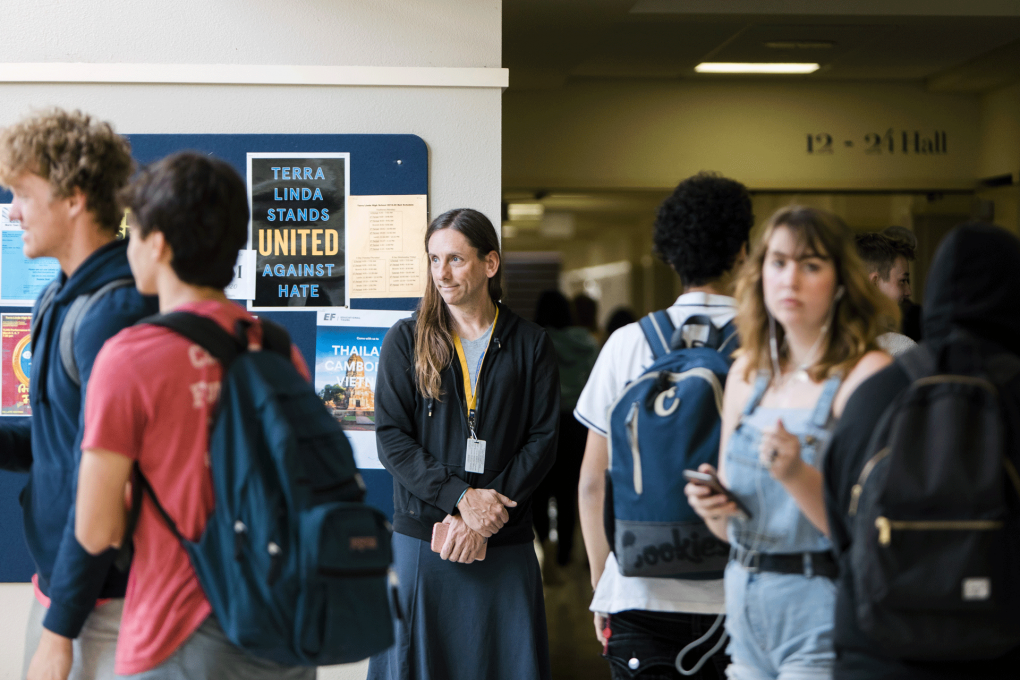
"caption": "College counselor Brad Ward makes a point of standing in the hallway at Terra Linda High School as classes change. “If I’m standing in the hallway, kids walking by get to know me,” she said. “They know that I’m there for them. Plus there’s the visibility of being outwardly transgender.”",
"description": null,
"title": "Brad_Ward_13",
"credit": "Alison Yin for The Hechinger Report",
"status": "inherit",
"isLoading": false,
"fetchFailed": false
},
"mindshift_55744": {
"type": "attachments",
"id": "mindshift_55744",
"meta": {
"index": "attachments_1716263798",
"site": "mindshift",
"id": "55744",
"found": true
},
"parent": 55743,
"imgSizes": {
"twentyfourteen-full-width": {
"file": "https://ww2.kqed.org/app/uploads/sites/23/2020/04/ljohnson-teachers-call-students_custom-9cd0789c26dc745a5e649c1917569fd6c6c22d58-1038x576.jpg",
"width": 1038,
"mimeType": "image/jpeg",
"height": 576
},
"thumbnail": {
"file": "https://ww2.kqed.org/app/uploads/sites/23/2020/04/ljohnson-teachers-call-students_custom-9cd0789c26dc745a5e649c1917569fd6c6c22d58-160x100.jpg",
"width": 160,
"mimeType": "image/jpeg",
"height": 100
},
"post-thumbnail": {
"file": "https://ww2.kqed.org/app/uploads/sites/23/2020/04/ljohnson-teachers-call-students_custom-9cd0789c26dc745a5e649c1917569fd6c6c22d58-672x372.jpg",
"width": 672,
"mimeType": "image/jpeg",
"height": 372
},
"kqedFullSize": {
"file": "https://ww2.kqed.org/app/uploads/sites/23/2020/04/ljohnson-teachers-call-students_custom-9cd0789c26dc745a5e649c1917569fd6c6c22d58-e1587103120894.jpg",
"width": 1920,
"height": 1198
},
"large": {
"file": "https://ww2.kqed.org/app/uploads/sites/23/2020/04/ljohnson-teachers-call-students_custom-9cd0789c26dc745a5e649c1917569fd6c6c22d58-1020x637.jpg",
"width": 1020,
"mimeType": "image/jpeg",
"height": 637
},
"full-width": {
"file": "https://ww2.kqed.org/app/uploads/sites/23/2020/04/ljohnson-teachers-call-students_custom-9cd0789c26dc745a5e649c1917569fd6c6c22d58-1920x1198.jpg",
"width": 1920,
"mimeType": "image/jpeg",
"height": 1198
},
"medium": {
"file": "https://ww2.kqed.org/app/uploads/sites/23/2020/04/ljohnson-teachers-call-students_custom-9cd0789c26dc745a5e649c1917569fd6c6c22d58-800x499.jpg",
"width": 800,
"mimeType": "image/jpeg",
"height": 499
},
"medium_large": {
"file": "https://ww2.kqed.org/app/uploads/sites/23/2020/04/ljohnson-teachers-call-students_custom-9cd0789c26dc745a5e649c1917569fd6c6c22d58-768x479.jpg",
"width": 768,
"mimeType": "image/jpeg",
"height": 479
}
},
"publishDate": 1587102913,
"modified": 1587103131,
"caption": "Teachers resort to analog measures to contact hard-to-reach students.",
"description": "Teachers resort to analog measures to contact hard-to-reach students.",
"title": "Teachers resort to analog measures to contact hard-to-reach students.",
"credit": "LA Johnson/NPR",
"status": "inherit",
"isLoading": false,
"fetchFailed": false
},
"mindshift_55722": {
"type": "attachments",
"id": "mindshift_55722",
"meta": {
"index": "attachments_1716263798",
"site": "mindshift",
"id": "55722",
"found": true
},
"parent": 55708,
"imgSizes": {
"twentyfourteen-full-width": {
"file": "https://ww2.kqed.org/app/uploads/sites/23/2020/04/iStock-1132214578-1038x576.jpg",
"width": 1038,
"mimeType": "image/jpeg",
"height": 576
},
"thumbnail": {
"file": "https://ww2.kqed.org/app/uploads/sites/23/2020/04/iStock-1132214578-160x107.jpg",
"width": 160,
"mimeType": "image/jpeg",
"height": 107
},
"post-thumbnail": {
"file": "https://ww2.kqed.org/app/uploads/sites/23/2020/04/iStock-1132214578-672x372.jpg",
"width": 672,
"mimeType": "image/jpeg",
"height": 372
},
"kqedFullSize": {
"file": "https://ww2.kqed.org/app/uploads/sites/23/2020/04/iStock-1132214578-e1586764950151.jpg",
"width": 1920,
"height": 1280
},
"large": {
"file": "https://ww2.kqed.org/app/uploads/sites/23/2020/04/iStock-1132214578-1020x680.jpg",
"width": 1020,
"mimeType": "image/jpeg",
"height": 680
},
"full-width": {
"file": "https://ww2.kqed.org/app/uploads/sites/23/2020/04/iStock-1132214578-1920x1280.jpg",
"width": 1920,
"mimeType": "image/jpeg",
"height": 1280
},
"medium": {
"file": "https://ww2.kqed.org/app/uploads/sites/23/2020/04/iStock-1132214578-800x533.jpg",
"width": 800,
"mimeType": "image/jpeg",
"height": 533
},
"medium_large": {
"file": "https://ww2.kqed.org/app/uploads/sites/23/2020/04/iStock-1132214578-768x512.jpg",
"width": 768,
"mimeType": "image/jpeg",
"height": 512
}
},
"publishDate": 1586764916,
"modified": 1586764969,
"caption": null,
"description": null,
"title": null,
"credit": "Nadezhda1906/iStock",
"status": "inherit",
"isLoading": false,
"fetchFailed": false
},
"mindshift_55651": {
"type": "attachments",
"id": "mindshift_55651",
"meta": {
"index": "attachments_1716263798",
"site": "mindshift",
"id": "55651",
"found": true
},
"parent": 55650,
"imgSizes": {
"twentyfourteen-full-width": {
"file": "https://ww2.kqed.org/app/uploads/sites/23/2020/03/cyoussefnpr-schoolinternet-final4_slide-0218119323ee91145aada6962ba11c69c5c074d6-1038x576.jpg",
"width": 1038,
"mimeType": "image/jpeg",
"height": 576
},
"thumbnail": {
"file": "https://ww2.kqed.org/app/uploads/sites/23/2020/03/cyoussefnpr-schoolinternet-final4_slide-0218119323ee91145aada6962ba11c69c5c074d6-160x107.jpg",
"width": 160,
"mimeType": "image/jpeg",
"height": 107
},
"post-thumbnail": {
"file": "https://ww2.kqed.org/app/uploads/sites/23/2020/03/cyoussefnpr-schoolinternet-final4_slide-0218119323ee91145aada6962ba11c69c5c074d6-672x372.jpg",
"width": 672,
"mimeType": "image/jpeg",
"height": 372
},
"kqedFullSize": {
"file": "https://ww2.kqed.org/app/uploads/sites/23/2020/03/cyoussefnpr-schoolinternet-final4_slide-0218119323ee91145aada6962ba11c69c5c074d6-e1585290404121.jpg",
"width": 1920,
"height": 1280
},
"large": {
"file": "https://ww2.kqed.org/app/uploads/sites/23/2020/03/cyoussefnpr-schoolinternet-final4_slide-0218119323ee91145aada6962ba11c69c5c074d6-1020x680.jpg",
"width": 1020,
"mimeType": "image/jpeg",
"height": 680
},
"full-width": {
"file": "https://ww2.kqed.org/app/uploads/sites/23/2020/03/cyoussefnpr-schoolinternet-final4_slide-0218119323ee91145aada6962ba11c69c5c074d6-1920x1280.jpg",
"width": 1920,
"mimeType": "image/jpeg",
"height": 1280
},
"medium": {
"file": "https://ww2.kqed.org/app/uploads/sites/23/2020/03/cyoussefnpr-schoolinternet-final4_slide-0218119323ee91145aada6962ba11c69c5c074d6-800x533.jpg",
"width": 800,
"mimeType": "image/jpeg",
"height": 533
},
"medium_large": {
"file": "https://ww2.kqed.org/app/uploads/sites/23/2020/03/cyoussefnpr-schoolinternet-final4_slide-0218119323ee91145aada6962ba11c69c5c074d6-768x512.jpg",
"width": 768,
"mimeType": "image/jpeg",
"height": 512
}
},
"publishDate": 1585273932,
"modified": 1585290420,
"caption": "Distance learning struggles",
"description": "Distance learning struggles",
"title": "Distance learning struggles",
"credit": "Chris Youssef for NPR",
"status": "inherit",
"isLoading": false,
"fetchFailed": false
},
"mindshift_55646": {
"type": "attachments",
"id": "mindshift_55646",
"meta": {
"index": "attachments_1716263798",
"site": "mindshift",
"id": "55646",
"found": true
},
"parent": 55645,
"imgSizes": {
"twentyfourteen-full-width": {
"file": "https://ww2.kqed.org/app/uploads/sites/23/2020/03/gettyimages-136400195_wide-06a5ed7e7dcb3b706155c8440bc6a78a387b490c-1038x576.jpg",
"width": 1038,
"mimeType": "image/jpeg",
"height": 576
},
"thumbnail": {
"file": "https://ww2.kqed.org/app/uploads/sites/23/2020/03/gettyimages-136400195_wide-06a5ed7e7dcb3b706155c8440bc6a78a387b490c-160x90.jpg",
"width": 160,
"mimeType": "image/jpeg",
"height": 90
},
"post-thumbnail": {
"file": "https://ww2.kqed.org/app/uploads/sites/23/2020/03/gettyimages-136400195_wide-06a5ed7e7dcb3b706155c8440bc6a78a387b490c-672x372.jpg",
"width": 672,
"mimeType": "image/jpeg",
"height": 372
},
"kqedFullSize": {
"file": "https://ww2.kqed.org/app/uploads/sites/23/2020/03/gettyimages-136400195_wide-06a5ed7e7dcb3b706155c8440bc6a78a387b490c-e1585253240269.jpg",
"width": 1920,
"height": 1080
},
"large": {
"file": "https://ww2.kqed.org/app/uploads/sites/23/2020/03/gettyimages-136400195_wide-06a5ed7e7dcb3b706155c8440bc6a78a387b490c-1020x574.jpg",
"width": 1020,
"mimeType": "image/jpeg",
"height": 574
},
"full-width": {
"file": "https://ww2.kqed.org/app/uploads/sites/23/2020/03/gettyimages-136400195_wide-06a5ed7e7dcb3b706155c8440bc6a78a387b490c-1920x1080.jpg",
"width": 1920,
"mimeType": "image/jpeg",
"height": 1080
},
"medium": {
"file": "https://ww2.kqed.org/app/uploads/sites/23/2020/03/gettyimages-136400195_wide-06a5ed7e7dcb3b706155c8440bc6a78a387b490c-800x450.jpg",
"width": 800,
"mimeType": "image/jpeg",
"height": 450
},
"medium_large": {
"file": "https://ww2.kqed.org/app/uploads/sites/23/2020/03/gettyimages-136400195_wide-06a5ed7e7dcb3b706155c8440bc6a78a387b490c-768x432.jpg",
"width": 768,
"mimeType": "image/jpeg",
"height": 432
}
},
"publishDate": 1585253181,
"modified": 1585253257,
"caption": "Physical books may be more difficult to obtain for free these days, but the nonprofit Internet Archive is trying to keep digital bookshelves stocked through the end of the national coronavirus crisis.",
"description": null,
"title": "Physical books may be more difficult to obtain for free these days, but the nonprofit Internet Archive is trying to keep digital bookshelves stocked through the end of the national coronavirus crisis.",
"credit": "Richard Newstead/Getty Images",
"status": "inherit",
"isLoading": false,
"fetchFailed": false
},
"mindshift_55613": {
"type": "attachments",
"id": "mindshift_55613",
"meta": {
"index": "attachments_1716263798",
"site": "mindshift",
"id": "55613",
"found": true
},
"parent": 55608,
"imgSizes": {
"twentyfourteen-full-width": {
"file": "https://ww2.kqed.org/app/uploads/sites/23/2020/03/iStock-1084854150-1038x576.jpg",
"width": 1038,
"mimeType": "image/jpeg",
"height": 576
},
"thumbnail": {
"file": "https://ww2.kqed.org/app/uploads/sites/23/2020/03/iStock-1084854150-160x107.jpg",
"width": 160,
"mimeType": "image/jpeg",
"height": 107
},
"post-thumbnail": {
"file": "https://ww2.kqed.org/app/uploads/sites/23/2020/03/iStock-1084854150-672x372.jpg",
"width": 672,
"mimeType": "image/jpeg",
"height": 372
},
"kqedFullSize": {
"file": "https://ww2.kqed.org/app/uploads/sites/23/2020/03/iStock-1084854150-e1585117112622.jpg",
"width": 1920,
"height": 1280
},
"large": {
"file": "https://ww2.kqed.org/app/uploads/sites/23/2020/03/iStock-1084854150-1020x680.jpg",
"width": 1020,
"mimeType": "image/jpeg",
"height": 680
},
"full-width": {
"file": "https://ww2.kqed.org/app/uploads/sites/23/2020/03/iStock-1084854150-1920x1280.jpg",
"width": 1920,
"mimeType": "image/jpeg",
"height": 1280
},
"medium": {
"file": "https://ww2.kqed.org/app/uploads/sites/23/2020/03/iStock-1084854150-800x533.jpg",
"width": 800,
"mimeType": "image/jpeg",
"height": 533
},
"medium_large": {
"file": "https://ww2.kqed.org/app/uploads/sites/23/2020/03/iStock-1084854150-768x512.jpg",
"width": 768,
"mimeType": "image/jpeg",
"height": 512
}
},
"publishDate": 1585117092,
"modified": 1585117122,
"caption": "Schoolboy sitting outdoors. Back view",
"description": null,
"title": "Sad alone boy sitting in the park outdoors",
"credit": "vejaa/iStock",
"status": "inherit",
"isLoading": false,
"fetchFailed": false
},
"mindshift_55527": {
"type": "attachments",
"id": "mindshift_55527",
"meta": {
"index": "attachments_1716263798",
"site": "mindshift",
"id": "55527",
"found": true
},
"parent": 55521,
"imgSizes": {
"twentyfourteen-full-width": {
"file": "https://ww2.kqed.org/app/uploads/sites/23/2020/03/iStock-1143790723-1-1038x576.jpg",
"width": 1038,
"mimeType": "image/jpeg",
"height": 576
},
"thumbnail": {
"file": "https://ww2.kqed.org/app/uploads/sites/23/2020/03/iStock-1143790723-1-160x107.jpg",
"width": 160,
"mimeType": "image/jpeg",
"height": 107
},
"post-thumbnail": {
"file": "https://ww2.kqed.org/app/uploads/sites/23/2020/03/iStock-1143790723-1-672x372.jpg",
"width": 672,
"mimeType": "image/jpeg",
"height": 372
},
"kqedFullSize": {
"file": "https://ww2.kqed.org/app/uploads/sites/23/2020/03/iStock-1143790723-1-e1584353081116.jpg",
"width": 1920,
"height": 1280
},
"large": {
"file": "https://ww2.kqed.org/app/uploads/sites/23/2020/03/iStock-1143790723-1-1020x680.jpg",
"width": 1020,
"mimeType": "image/jpeg",
"height": 680
},
"full-width": {
"file": "https://ww2.kqed.org/app/uploads/sites/23/2020/03/iStock-1143790723-1-1920x1280.jpg",
"width": 1920,
"mimeType": "image/jpeg",
"height": 1280
},
"medium": {
"file": "https://ww2.kqed.org/app/uploads/sites/23/2020/03/iStock-1143790723-1-800x533.jpg",
"width": 800,
"mimeType": "image/jpeg",
"height": 533
},
"medium_large": {
"file": "https://ww2.kqed.org/app/uploads/sites/23/2020/03/iStock-1143790723-1-768x512.jpg",
"width": 768,
"mimeType": "image/jpeg",
"height": 512
}
},
"publishDate": 1584353065,
"modified": 1584353098,
"caption": null,
"description": null,
"title": "iStock-1143790723-1",
"credit": "fizkes/iStock",
"status": "inherit",
"isLoading": false,
"fetchFailed": false
}
},
"audioPlayerReducer": {
"postId": "stream_live",
"isPaused": true,
"isPlaying": false,
"pfsActive": false,
"pledgeModalIsOpen": true,
"playerDrawerIsOpen": false,
"liveAudioPlayStartedAt": 0,
"liveAudioPlayContext": ""
},
"authorsReducer": {
"byline_mindshift_56151": {
"type": "authors",
"id": "byline_mindshift_56151",
"meta": {
"override": true
},
"slug": "byline_mindshift_56151",
"name": "Koketso Moeti",
"isLoading": false
},
"byline_mindshift_56044": {
"type": "authors",
"id": "byline_mindshift_56044",
"meta": {
"override": true
},
"slug": "byline_mindshift_56044",
"name": "Alex Zimmerman and Reema Amin, Chalkbeat New York",
"isLoading": false
},
"byline_mindshift_55927": {
"type": "authors",
"id": "byline_mindshift_55927",
"meta": {
"override": true
},
"slug": "byline_mindshift_55927",
"name": "Victoria Whitley-Berry",
"isLoading": false
},
"byline_mindshift_55805": {
"type": "authors",
"id": "byline_mindshift_55805",
"meta": {
"override": true
},
"slug": "byline_mindshift_55805",
"name": "\u003ca href=\"https://hechingerreport.org/special-reports/higher-education/\">Charlotte West, The Hechinger Report\u003c/a>",
"isLoading": false
},
"byline_mindshift_55743": {
"type": "authors",
"id": "byline_mindshift_55743",
"meta": {
"override": true
},
"slug": "byline_mindshift_55743",
"name": "Elissa Nadworny ",
"isLoading": false
},
"byline_mindshift_55650": {
"type": "authors",
"id": "byline_mindshift_55650",
"meta": {
"override": true
},
"slug": "byline_mindshift_55650",
"name": "Anya Kamenetz",
"isLoading": false
},
"byline_mindshift_55645": {
"type": "authors",
"id": "byline_mindshift_55645",
"meta": {
"override": true
},
"slug": "byline_mindshift_55645",
"name": "Colin Dwyer",
"isLoading": false
},
"byline_mindshift_55608": {
"type": "authors",
"id": "byline_mindshift_55608",
"meta": {
"override": true
},
"slug": "byline_mindshift_55608",
"name": "Amielle Major",
"isLoading": false
},
"dfkris": {
"type": "authors",
"id": "11087",
"meta": {
"index": "authors_1716337520",
"id": "11087",
"found": true
},
"name": "Deborah Farmer Kris",
"firstName": "Deborah Farmer",
"lastName": "Kris",
"slug": "dfkris",
"email": "dfkris@gmail.com",
"display_author_email": false,
"staff_mastheads": [],
"title": null,
"bio": "\u003cem>\u003ca href=\"https://twitter.com/@dfkris\">Deborah Farmer Kris\u003c/a> has taught elementary, middle and high school and served as a charter school administrator. She spent a decade as an associate at Boston University’s \u003c/em>\u003cem>\u003ca href=\"http://www.bu.edu/ccsr/about-us/\">Center for Character and Social Responsibility\u003c/a>, \u003c/em>\u003cem>researching, writing, and consulting with schools. She is the mother of two young children. You can follower her on Twitter \u003ca href=\"https://twitter.com/@dfkris\">@dfkris\u003c/a>.\u003c/em>",
"avatar": "https://secure.gravatar.com/avatar/48efe6f17031ed31222b74af9605fe5a?s=600&d=blank&r=g",
"twitter": "dfkris",
"facebook": null,
"instagram": null,
"linkedin": null,
"sites": [
{
"site": "mindshift",
"roles": [
"author"
]
}
],
"headData": {
"title": "Deborah Farmer Kris | KQED",
"description": null,
"ogImgSrc": "https://secure.gravatar.com/avatar/48efe6f17031ed31222b74af9605fe5a?s=600&d=blank&r=g",
"twImgSrc": "https://secure.gravatar.com/avatar/48efe6f17031ed31222b74af9605fe5a?s=600&d=blank&r=g"
},
"isLoading": false,
"link": "/author/dfkris"
},
"pauldarvasi": {
"type": "authors",
"id": "11107",
"meta": {
"index": "authors_1716337520",
"id": "11107",
"found": true
},
"name": "Paul Darvasi",
"firstName": "Paul",
"lastName": "Darvasi",
"slug": "pauldarvasi",
"email": "pauldarvasi@gmail.com",
"display_author_email": false,
"staff_mastheads": [],
"title": null,
"bio": "Paul Darvasi is an experienced educator whose research, speaking and writing explore the intersections of learning, technology, narrative and games. You can follow him on Twitter:\u003ca href=\"https://twitter.com/PaulDarvasi\"> @pauldarvasi\u003c/a>",
"avatar": "https://secure.gravatar.com/avatar/df387897a1bf0cd4b720b8175112731a?s=600&d=blank&r=g",
"twitter": "pauldarvasi",
"facebook": null,
"instagram": null,
"linkedin": null,
"sites": [
{
"site": "mindshift",
"roles": [
"contributor"
]
}
],
"headData": {
"title": "Paul Darvasi | KQED",
"description": null,
"ogImgSrc": "https://secure.gravatar.com/avatar/df387897a1bf0cd4b720b8175112731a?s=600&d=blank&r=g",
"twImgSrc": "https://secure.gravatar.com/avatar/df387897a1bf0cd4b720b8175112731a?s=600&d=blank&r=g"
},
"isLoading": false,
"link": "/author/pauldarvasi"
},
"kdnewhouse": {
"type": "authors",
"id": "11487",
"meta": {
"index": "authors_1716337520",
"id": "11487",
"found": true
},
"name": "Kara Newhouse",
"firstName": "Kara",
"lastName": "Newhouse",
"slug": "kdnewhouse",
"email": "knewhouse@kqed.org",
"display_author_email": false,
"staff_mastheads": [],
"title": "MindShift Editor",
"bio": null,
"avatar": "https://secure.gravatar.com/avatar/3dceed6fb271527113abfa9a8e9df34e?s=600&d=blank&r=g",
"twitter": null,
"facebook": null,
"instagram": null,
"linkedin": null,
"sites": [
{
"site": "",
"roles": [
"editor"
]
},
{
"site": "mindshift",
"roles": []
}
],
"headData": {
"title": "Kara Newhouse | KQED",
"description": "MindShift Editor",
"ogImgSrc": "https://secure.gravatar.com/avatar/3dceed6fb271527113abfa9a8e9df34e?s=600&d=blank&r=g",
"twImgSrc": "https://secure.gravatar.com/avatar/3dceed6fb271527113abfa9a8e9df34e?s=600&d=blank&r=g"
},
"isLoading": false,
"link": "/author/kdnewhouse"
}
},
"pagesReducer": {
"mindshift_category_big-ideas": {
"type": "terms",
"id": "mindshift_192",
"meta": {
"index": "terms_1716263798",
"site": "mindshift",
"id": "192",
"score": 14.406576
},
"featImg": null,
"name": "Big Ideas",
"description": "The latest findings from experts in the field related to the future of learning.",
"taxonomy": "category",
"headData": {
"twImgId": null,
"twTitle": null,
"ogTitle": null,
"ogImgId": null,
"twDescription": null,
"description": "The latest findings from experts in the field related to the future of learning.",
"title": "Big Ideas Archives | KQED Mindshift",
"ogDescription": null
},
"ttid": 192,
"slug": "big-ideas",
"isLoading": false,
"title": "Big Ideas",
"pageMeta": {
"site": "mindshift",
"WpPageTemplate": "page-topic-editorial",
"currentPage": 9
},
"blocks": [
{
"blockName": "kqed/company-paragraph",
"content": "The latest findings from experts in the field related to the future of learning."
},
{
"blockName": "kqed/post-list",
"attrs": {
"layout": "cardArticle2",
"query": "posts/mindshift?category=big-ideas",
"seeMore": false,
"paginated": true,
"page": 9
}
},
{
"blockName": "kqed/ad"
}
]
}
},
"pfsSessionReducer": {},
"postsReducer": {
"stream_live": {
"type": "live",
"id": "stream_live",
"audioUrl": "https://streams.kqed.org/kqedradio",
"title": "Live Stream",
"excerpt": "Live Stream information currently unavailable.",
"link": "/radio",
"featImg": "",
"label": {
"name": "KQED Live",
"link": "/"
}
},
"stream_kqedNewscast": {
"type": "posts",
"id": "stream_kqedNewscast",
"audioUrl": "https://www.kqed.org/.stream/anon/radio/RDnews/newscast.mp3?_=1",
"title": "KQED Newscast",
"featImg": "",
"label": {
"name": "88.5 FM",
"link": "/"
}
},
"mindshift_56151": {
"type": "posts",
"id": "mindshift_56151",
"meta": {
"index": "posts_1716263798",
"site": "mindshift",
"id": "56151",
"score": null,
"sort": [
1592721296000
]
},
"parent": 0,
"labelTerm": {
"site": "mindshift"
},
"blocks": [],
"publishDate": 1592721296,
"format": "standard",
"disqusTitle": "How I'm Teaching My Kids Not To Fear Everything During A Pandemic",
"title": "How I'm Teaching My Kids Not To Fear Everything During A Pandemic",
"headTitle": "MindShift | KQED News",
"content": "\u003cp>The other day, while my children and I were playing outside, the ball we were throwing accidentally flew out of the yard. Under normal circumstances, I would have opened the gate, and we'd race to see who would get it first. But these aren't normal circumstances.\u003c/p>\n\u003cp>In South Africa, where we live, a suspected case of COVID-19 was confirmed to have tested positive on March 5. Exactly three weeks later, the country was put under one of the strictest lockdowns in the world. Schools, places of worship and all businesses deemed not essential were closed. Hot prepared food, alcohol and tobacco sales were banned. Even outdoor exercise was prohibited.\u003c/p>\n\u003cp>The abruptness with which physical connection became a threat was dizzying. As these restrictions are eased — and infection rates and deaths rise — I find myself needing to teach my children how to interact with our community in a way that is safe but still loving.\u003c/p>\n\u003cp>So back to retrieving that ball. Our street, in an area not too far from Johannesburg's city center, is usually busy because it leads to a shopping area for groceries and other essentials. Given the number of people walking by, I went to get a mask and gloves to venture beyond the gate.\u003c/p>\n\u003cp>But before I could go into the house, an old man with a beret and a walking cane scooped it off the street and brought it to the gate. Just as the kids started running toward him to get it, I called out to them to stop. I graciously thanked the man and asked him to please just throw it through the gate. I couldn't really tell his reaction to this, because he had a makeshift mask on. Again, the children started to run to get the ball, so I stopped them and asked them to bring me gloves and soap.\u003c/p>\n\u003cp>[ad fullwidth]\u003c/p>\n\u003cp>I put on the gloves, picked up the ball and gave it a good scrub. The kids — my 8 year-old son and 10-year-old daughter, told me that the man was just being nice and were clearly displeased with my behavior. I then reminded them of what's going on and why what I was doing was necessary. (I am well aware that it will not be possible to keep my children at home forever, so sometimes I go over the top in an attempt to model the behaviors they now have to adopt to keep themselves and others safe.)\u003c/p>\n\u003cp>My 10-year-old asked how long we are going to live like this. I shrugged and said I don't know as I left the ball to dry. Despite her slight frown, she got another one and we continued playing.\u003c/p>\n\u003cp>My children are deeply loving and social. My daughter's unhappiness reminded me how much they are struggling with the current situation.\u003c/p>\n\u003cp>As much as I want to ensure that my children protect themselves and others, this forced me to reflect quite deeply on how I can do so in a way that does not inadvertently teach them to treat people as a threat. And in the face of an invisible virus, it is very easy to see people as the problem and retreat into personal cocoons.\u003c/p>\n\u003cp>This is especially tempting in South Africa, one of the most unequal countries in the world. I am a Black South African. Our household is fortunate to have the means to stay connected to our loved ones, to work and shop from home. That has made lockdown much more comfortable for us than for the majority of the country.\u003c/p>\n\u003cp>But for most Black South Africans, the current crisis has amplified already existing inequalities, leading to increased hunger, accelerated income losses and dangerous working conditions. There's an urge to slip into self-preservation mode and ignore other people's suffering. But, now more than ever, we should feel compelled to connect with the many struggles happening all around us, and collectively build a just, equitable and loving society.\u003c/p>\n\u003cp>Thankfully, my children appreciate the importance of relationships, which are really the foundation of our family. They feel safe, cared for and loved because of the many people in our community that have been involved in raising them, shaping their values and sense of self in the world.\u003c/p>\n\u003cp>Despite being isolated, we haven't been alone. We have woken up to find oranges, Easter eggs, papaya and biscuits delivered to our gate from friends who live nearby. And from our wider community of friends, the children regularly receive loving messages and calls.\u003c/p>\n\u003cp>Our avocado tree produces more than we can eat, and because I can no longer share the bounty at my office, the kids decided to start packing up the fruit to leave outside for people passing by to take. Because they both have underlying health conditions that have required past hospitalizations — severe chronic rhinitis, eczema and allergies — I kept them home before the lockdown even started. So I suspect it is their way of reaching out to others despite not venturing beyond the yard for almost three months now. It has been fulfilling to see how much joy they get from this.\u003c/p>\n\u003cp>I don't want my children to only remember to wear masks, wash their hands and keep their distance from people. I want them to understand that this is a time when people need to show up for one another. So in the same way I talk about how physical connection is a threat, I need to be as deliberate about elevating stories of how, beyond our small part of the world, people are helping each other out.\u003c/p>\n\u003cp>I have told them about the Community Action Networks in Cape Town, which have brought unlikely groups of people together across class lines through WhatsApp groups, which convey local needs and stop the spread of misinformation. This is particularly critical as the government's already inadequate relief measures continue to fail to reach those who need them most. We've discussed \u003ca href=\"https://urldefense.com/v3/__https:/www.dailymaverick.co.za/article/2020-05-18-another-country-hungry-children-and-the-quest-for-four-big-pots/__;!!Iwwt!BOJhjNYDVV_C5pB27IL1cZBEypFfrnoSJqsiVc1-f_2xvVVKKMT_KusHwT33%24\">the women of \"Londani Lushaka,\"\u003c/a> an organization based in Alexandra, a township in South Africa, who with the help of volunteers and donated food are feeding up to 600 children on a daily basis.\u003c/p>\n\u003cp>And they know that in various cities around the world, thousands have risked infection to take to the streets to protest the state violence inflicted on black people not only in the United States but in their own respective countries.\u003c/p>\n\u003cp>What I want my children to take away from this moment is that it's possible to forge new bonds in the middle of a global pandemic. Yes, sometimes we need to be careful about retrieving a ball. But connections to other people remain crucial — if not more important.\u003c/p>\n\u003cp>[ad floatright]\u003c/p>\n\u003cp>\u003cem>Koketso Moeti is a civic activist who over the years has worked at the intersection of governance, communication and citizen action. In 2019 she was named an Atlantic Fellow for Racial Equity. She is also an inaugural Obama Foundation fellow and an Aspen New Voices Senior Fellow. Follow her on Twitter \u003c/em>\u003ca href=\"https://urldefense.com/v3/__https:/twitter.com/Kmoeti__;!!Iwwt!BOJhjNYDVV_C5pB27IL1cZBEypFfrnoSJqsiVc1-f_2xvVVKKMT_KrdFN0DK%24\">\u003cem>@Kmoeti\u003c/em>\u003c/a>\u003c/p>\n\u003cdiv class=\"fullattribution\">Copyright 2020 NPR. To see more, visit https://www.npr.org.\u003cimg src=\"https://www.google-analytics.com/__utm.gif?utmac=UA-5828686-4&utmdt=How+I%27m+Teaching+My+Kids+Not+To+Fear+Everything+During+A+Pandemic&utme=8(APIKey)9(MDAxOTAwOTE4MDEyMTkxMDAzNjczZDljZA004)\">\u003c/div>\n\n",
"disqusIdentifier": "56151 https://ww2.kqed.org/mindshift/?p=56151",
"disqusUrl": "https://ww2.kqed.org/mindshift/2020/06/20/how-im-teaching-my-kids-not-to-fear-everything-during-a-pandemic/",
"stats": {
"hasVideo": false,
"hasChartOrMap": false,
"hasAudio": false,
"hasPolis": false,
"wordCount": 1200,
"hasGoogleForm": false,
"hasGallery": false,
"hasHearkenModule": false,
"iframeSrcs": [],
"paragraphCount": 21
},
"modified": 1592894182,
"excerpt": "A mother in South Africa reflects on raising children at a time of crisis — and how to teach them the value of human connection at a time of disconnectedness.",
"headData": {
"twImgId": "",
"twTitle": "",
"ogTitle": "",
"ogImgId": "",
"twDescription": "",
"description": "A mother in South Africa reflects on raising children at a time of crisis — and how to teach them the value of human connection at a time of disconnectedness.",
"title": "How I'm Teaching My Kids Not To Fear Everything During A Pandemic - MindShift",
"ogDescription": "",
"schema": {
"@context": "https://schema.org",
"@type": "Article",
"headline": "How I'm Teaching My Kids Not To Fear Everything During A Pandemic",
"datePublished": "2020-06-20T23:34:56-07:00",
"dateModified": "2020-06-22T23:36:22-07:00",
"image": "https://cdn.kqed.org/wp-content/uploads/2020/02/KQED-OG-Image@1x.png"
}
},
"guestAuthors": [],
"slug": "how-im-teaching-my-kids-not-to-fear-everything-during-a-pandemic",
"status": "publish",
"nprApiLink": "http://api.npr.org/query?id=880858576&apiKey=MDAxOTAwOTE4MDEyMTkxMDAzNjczZDljZA004",
"nprByline": "Koketso Moeti",
"nprStoryDate": "Sat, 20 Jun 2020 07:01:04 -0400",
"nprLastModifiedDate": "Sat, 20 Jun 2020 07:01:04 -0400",
"nprHtmlLink": "https://www.npr.org/sections/goatsandsoda/2020/06/20/880858576/how-im-teaching-my-kids-not-to-fear-everything-during-a-pandemic?ft=nprml&f=880858576",
"nprImageAgency": "Koketso Moeti ",
"nprStoryId": "880858576",
"nprRetrievedStory": "1",
"nprPubDate": "Sat, 20 Jun 2020 07:01:00 -0400",
"path": "/mindshift/56151/how-im-teaching-my-kids-not-to-fear-everything-during-a-pandemic",
"audioTrackLength": null,
"parsedContent": [
{
"type": "contentString",
"content": "\u003cdiv class=\"post-body\">\u003cp>\u003cp>The other day, while my children and I were playing outside, the ball we were throwing accidentally flew out of the yard. Under normal circumstances, I would have opened the gate, and we'd race to see who would get it first. But these aren't normal circumstances.\u003c/p>\n\u003cp>In South Africa, where we live, a suspected case of COVID-19 was confirmed to have tested positive on March 5. Exactly three weeks later, the country was put under one of the strictest lockdowns in the world. Schools, places of worship and all businesses deemed not essential were closed. Hot prepared food, alcohol and tobacco sales were banned. Even outdoor exercise was prohibited.\u003c/p>\n\u003cp>The abruptness with which physical connection became a threat was dizzying. As these restrictions are eased — and infection rates and deaths rise — I find myself needing to teach my children how to interact with our community in a way that is safe but still loving.\u003c/p>\n\u003cp>So back to retrieving that ball. Our street, in an area not too far from Johannesburg's city center, is usually busy because it leads to a shopping area for groceries and other essentials. Given the number of people walking by, I went to get a mask and gloves to venture beyond the gate.\u003c/p>\n\u003cp>But before I could go into the house, an old man with a beret and a walking cane scooped it off the street and brought it to the gate. Just as the kids started running toward him to get it, I called out to them to stop. I graciously thanked the man and asked him to please just throw it through the gate. I couldn't really tell his reaction to this, because he had a makeshift mask on. Again, the children started to run to get the ball, so I stopped them and asked them to bring me gloves and soap.\u003c/p>\n\u003cp>\u003c/p>\u003c/div>",
"attributes": {
"named": {},
"numeric": []
}
},
{
"type": "component",
"content": "",
"name": "ad",
"attributes": {
"named": {
"label": "fullwidth"
},
"numeric": [
"fullwidth"
]
}
},
{
"type": "contentString",
"content": "\u003cdiv class=\"post-body\">\u003cp>\u003c/p>\n\u003cp>I put on the gloves, picked up the ball and gave it a good scrub. The kids — my 8 year-old son and 10-year-old daughter, told me that the man was just being nice and were clearly displeased with my behavior. I then reminded them of what's going on and why what I was doing was necessary. (I am well aware that it will not be possible to keep my children at home forever, so sometimes I go over the top in an attempt to model the behaviors they now have to adopt to keep themselves and others safe.)\u003c/p>\n\u003cp>My 10-year-old asked how long we are going to live like this. I shrugged and said I don't know as I left the ball to dry. Despite her slight frown, she got another one and we continued playing.\u003c/p>\n\u003cp>My children are deeply loving and social. My daughter's unhappiness reminded me how much they are struggling with the current situation.\u003c/p>\n\u003cp>As much as I want to ensure that my children protect themselves and others, this forced me to reflect quite deeply on how I can do so in a way that does not inadvertently teach them to treat people as a threat. And in the face of an invisible virus, it is very easy to see people as the problem and retreat into personal cocoons.\u003c/p>\n\u003cp>This is especially tempting in South Africa, one of the most unequal countries in the world. I am a Black South African. Our household is fortunate to have the means to stay connected to our loved ones, to work and shop from home. That has made lockdown much more comfortable for us than for the majority of the country.\u003c/p>\n\u003cp>But for most Black South Africans, the current crisis has amplified already existing inequalities, leading to increased hunger, accelerated income losses and dangerous working conditions. There's an urge to slip into self-preservation mode and ignore other people's suffering. But, now more than ever, we should feel compelled to connect with the many struggles happening all around us, and collectively build a just, equitable and loving society.\u003c/p>\n\u003cp>Thankfully, my children appreciate the importance of relationships, which are really the foundation of our family. They feel safe, cared for and loved because of the many people in our community that have been involved in raising them, shaping their values and sense of self in the world.\u003c/p>\n\u003cp>Despite being isolated, we haven't been alone. We have woken up to find oranges, Easter eggs, papaya and biscuits delivered to our gate from friends who live nearby. And from our wider community of friends, the children regularly receive loving messages and calls.\u003c/p>\n\u003cp>Our avocado tree produces more than we can eat, and because I can no longer share the bounty at my office, the kids decided to start packing up the fruit to leave outside for people passing by to take. Because they both have underlying health conditions that have required past hospitalizations — severe chronic rhinitis, eczema and allergies — I kept them home before the lockdown even started. So I suspect it is their way of reaching out to others despite not venturing beyond the yard for almost three months now. It has been fulfilling to see how much joy they get from this.\u003c/p>\n\u003cp>I don't want my children to only remember to wear masks, wash their hands and keep their distance from people. I want them to understand that this is a time when people need to show up for one another. So in the same way I talk about how physical connection is a threat, I need to be as deliberate about elevating stories of how, beyond our small part of the world, people are helping each other out.\u003c/p>\n\u003cp>I have told them about the Community Action Networks in Cape Town, which have brought unlikely groups of people together across class lines through WhatsApp groups, which convey local needs and stop the spread of misinformation. This is particularly critical as the government's already inadequate relief measures continue to fail to reach those who need them most. We've discussed \u003ca href=\"https://urldefense.com/v3/__https:/www.dailymaverick.co.za/article/2020-05-18-another-country-hungry-children-and-the-quest-for-four-big-pots/__;!!Iwwt!BOJhjNYDVV_C5pB27IL1cZBEypFfrnoSJqsiVc1-f_2xvVVKKMT_KusHwT33%24\">the women of \"Londani Lushaka,\"\u003c/a> an organization based in Alexandra, a township in South Africa, who with the help of volunteers and donated food are feeding up to 600 children on a daily basis.\u003c/p>\n\u003cp>And they know that in various cities around the world, thousands have risked infection to take to the streets to protest the state violence inflicted on black people not only in the United States but in their own respective countries.\u003c/p>\n\u003cp>What I want my children to take away from this moment is that it's possible to forge new bonds in the middle of a global pandemic. Yes, sometimes we need to be careful about retrieving a ball. But connections to other people remain crucial — if not more important.\u003c/p>\n\u003cp>\u003c/p>\u003c/div>",
"attributes": {
"named": {},
"numeric": []
}
},
{
"type": "component",
"content": "",
"name": "ad",
"attributes": {
"named": {
"label": "floatright"
},
"numeric": [
"floatright"
]
}
},
{
"type": "contentString",
"content": "\u003cdiv class=\"post-body\">\u003cp>\u003c/p>\n\u003cp>\u003cem>Koketso Moeti is a civic activist who over the years has worked at the intersection of governance, communication and citizen action. In 2019 she was named an Atlantic Fellow for Racial Equity. She is also an inaugural Obama Foundation fellow and an Aspen New Voices Senior Fellow. Follow her on Twitter \u003c/em>\u003ca href=\"https://urldefense.com/v3/__https:/twitter.com/Kmoeti__;!!Iwwt!BOJhjNYDVV_C5pB27IL1cZBEypFfrnoSJqsiVc1-f_2xvVVKKMT_KrdFN0DK%24\">\u003cem>@Kmoeti\u003c/em>\u003c/a>\u003c/p>\n\u003cdiv class=\"fullattribution\">Copyright 2020 NPR. To see more, visit https://www.npr.org.\u003cimg src=\"https://www.google-analytics.com/__utm.gif?utmac=UA-5828686-4&utmdt=How+I%27m+Teaching+My+Kids+Not+To+Fear+Everything+During+A+Pandemic&utme=8(APIKey)9(MDAxOTAwOTE4MDEyMTkxMDAzNjczZDljZA004)\">\u003c/div>\n\n\u003c/div>\u003c/p>",
"attributes": {
"named": {},
"numeric": []
}
}
],
"link": "/mindshift/56151/how-im-teaching-my-kids-not-to-fear-everything-during-a-pandemic",
"authors": [
"byline_mindshift_56151"
],
"categories": [
"mindshift_192"
],
"tags": [
"mindshift_21344",
"mindshift_21343",
"mindshift_20568",
"mindshift_21213",
"mindshift_943"
],
"featImg": "mindshift_56152",
"label": "mindshift"
},
"mindshift_56044": {
"type": "posts",
"id": "mindshift_56044",
"meta": {
"index": "posts_1716263798",
"site": "mindshift",
"id": "56044",
"score": null,
"sort": [
1591339429000
]
},
"parent": 0,
"labelTerm": {
"site": "mindshift"
},
"blocks": [],
"publishDate": 1591339429,
"format": "standard",
"disqusTitle": "How NYC Students and Teachers are Making Sense of George Floyd’s Killing",
"title": "How NYC Students and Teachers are Making Sense of George Floyd’s Killing",
"headTitle": "MindShift | KQED News",
"content": "\u003cp class=\"c-page-title\">\u003cem>\u003ca href=\"https://ny.chalkbeat.org/2020/6/2/21278658/george-floyd-nyc-schools-protest\">Here’s how NYC students and teachers are making sense of George Floyd’s killing\u003c/a> was originally published by Chalkbeat, a nonprofit news organization covering public education. Sign up for their newsletters \u003c/em>\u003ca href=\"http://ckbe.at/newsletters\">\u003cem>here.\u003c/em>\u003c/a>\u003c/p>\n\u003cp>\u003ctime>Jun 2, 8:03pm EDT\u003c/time>\u003c/p>\n\u003cp>Remote learning has been tough on 16-year-old Tai Muñoz. The freshman at Brooklyn’s Sunset Park High School, who strongly prefers hands-on instruction and is struggling with depression, has been mostly out of contact with school staff.\u003c/p>\n\u003cp>But after George Floyd was \u003ca href=\"https://www.nytimes.com/article/george-floyd-autopsy-michael-baden.html\">killed in Minneapolis police custody\u003c/a>, Tai felt compelled to reach out to a trusted teacher.\u003c/p>\n\u003cp>“Hello, I know this is very out of the blue, but it needs to be said. If possible, can you please shed light on the recent death of George Floyd?” Tai wrote in an email to Abbey Kornhauser, their advisor and social studies teacher.\u003c/p>\n\u003cp>[ad fullwidth]\u003c/p>\n\u003cp>Many students and educators across the five boroughs were already dealing with the trauma of illness ravaging their communities and the isolation of being \u003ca href=\"https://ny.chalkbeat.org/2020/4/17/21230495/grades-attendance-devices-what-you-need-to-know-about-remote-learning-in-nyc\">forced out of school buildings\u003c/a> due to the coronavirus pandemic.\u003c/p>\n\u003cp>Now, while apart from their school communities, they’re trying to make sense of Floyd’s death and other recent \u003ca href=\"https://www.nytimes.com/article/breonna-taylor-police.html\">police killings\u003c/a> of black people that have sparked protests and an 8 p.m. curfew in New York City through June 7. New York City’s \u003ca href=\"https://gothamist.com/news/protesters-march-during-nycs-first-curfew-decades-looting-continues-despite-police-increase\">protests\u003c/a> have largely been peaceful but have also resulted in some violent clashes between police and protestors, hundreds of arrests, and incidents of looting.\u003c/p>\n\u003cp>Students and educators alike are struggling with how to reckon with what’s happening and have important, but difficult conversations about race and violence.\u003c/p>\n\u003cp>Not only is it a challenge to have these conversations remotely, but it’s difficult to process what’s happening on the city streets as some students, as well as educators, are unable to participate in the protests because of fears of possible health risks. Others who are protesting remain isolated from support systems at their schools.\u003c/p>\n\u003cp>Here are stories from educators and students about how they’re trying to meet this moment.\u003c/p>\n\u003ch3>\u003cstrong>‘Don’t give us just a worksheet’\u003c/strong>\u003c/h3>\n\u003cp>Kornhauser was still processing the recent news and unrest when she received the request from Tai, which came as a surprise after a prolonged silence from the student. She had planned to create lessons about the recent unrest but Tai’s email sped things up, she said.\u003c/p>\n\u003cp>It was “kind of overwhelming” to find a way in, “especially as a white educator. You don’t want to be someone posting traumatizing videos of black and brown people being killed, so it’s a fine line,” she said.\u003c/p>\n\u003cp>Since last Thursday, Kornhauser has asked students in her advisory period to talk about what they’ve seen, what they’ve heard, and what questions they have. Some students said they’ve seen many images of looting, while others have talked about concerns about police harassing protesters.\u003c/p>\n\u003cfigure>\u003cimg class=\"alignright\" src=\"https://cdn.vox-cdn.com/uploads/chorus_asset/file/20015406/abbey_kornhauser.jpg\">\u003cfigcaption>Abbey Kornhauser, social studies teacher at Sunset Park High School\u003c/figcaption>\u003c/figure>\n\u003cp>“What I want to do is [provide] the definition of what is looting, what is a riot [and] poke some holes in some of our mainstream understandings of protest,” Kornhauser said.\u003c/p>\n\u003cp>“I want to offer a counter-narrative to a lot of the images of the demonization of protestors, particularly black and brown protestors.”\u003c/p>\n\u003cp>Tai, who is Puerto Rican and uses they/their pronouns, said they are passionate about civil rights issues and the Black Lives Matter movement. Some of Tai’s awareness comes from stories their father told of growing up in New York City and being searched by police officers on the street. They wanted to attend protests, but their parents believe it’s too dangerous for safety and public health reasons amid the coronavirus. That’s why Tai turned to Kornhauser.\u003c/p>\n\u003cp>“I want people to see what is happening,” Tai said in an interview. “I want people to understand it. I want to be very much in the loop of what’s happening, and I feel like if a lot of young people start talking about it, then our new generation can help more than all the people before us.”\u003c/p>\n\u003cfigure>\u003cimg class=\"alignright\" src=\"https://cdn.vox-cdn.com/uploads/chorus_asset/file/20015409/Image_from_iOS.jpg\">Courtesy of Tai Muñoz\u003cfigcaption>Sunset Park High School student Tai Muñoz\u003c/figcaption>\u003c/figure>\n\u003cp>Kornhauser wants to share a list of resources her colleagues created giving students an overview of what’s happening and describes “actions they can take from home,” such as how to support student advocacy groups or advocacy campaigns, but is waiting for approval from her school administration.\u003c/p>\n\u003cp>Tai is craving even more, including more details about topics they believe teachers would think are too sensitive, such as unwarranted police violence toward protestors.\u003c/p>\n\u003cp>“I want to see actual talks, not just prompts or ‘How do you feel about this?’ Don’t give us just a worksheet,” Tai said. “I want to see everyone’s ideas, what they think of this. I just want to build a community since [for] a lot of us, our parents don’t let us out, but we can be an online presence.”\u003c/p>\n\u003ch3>\u003cstrong>Activism as artistic expression\u003c/strong>\u003c/h3>\n\u003cp>In the aftermath of Floyd’s killing, La’Toya Beecham’s South Bronx high school didn’t miss a beat. Officials at Health, Education, and Research Occupations High School immediately sent an email encouraging students to reach out if they needed to talk, encouraged smaller advisory groups to have discussions, and held a virtual town hall that was open to families.\u003c/p>\n\u003cp>“It was just everybody debriefing as a school,” the 16-year-old said about the town hall. “It was nice to have that place to talk; no one was really judging you.”\u003c/p>\n\u003cp>Some students asked about how to safely participate in protests or whether it is responsible to participate if a student’s parents are undocumented. Beecham shared a spoken word piece that touched on themes of police violence, race, and colonialism.\u003c/p>\n\u003cfigure>\u003cimg class=\"alignright\" src=\"https://cdn.vox-cdn.com/uploads/chorus_asset/file/20015401/Screen_Shot_2020_06_02_at_6.56.11_PM.png\" alt=\"\" width=\"686\" height=\"912\">Courtesy of La’Toya Beecham\u003cfigcaption>La’Toya Beecham\u003c/figcaption>\u003c/figure>\n\u003cp>She noted some school staffers have encouraged artistic expression as a form of activism, especially among students who are undocumented or have relatives who are and might face more serious consequences of being tangled up with law enforcement. Beecham has not felt safe going to the protests given the police response, though she hopes to attend one later this month with her uncle and brother.\u003c/p>\n\u003cp>Beecham said schools should use this moment to place a greater emphasis on the history of oppression of black people, ranging from Jim Crow laws to Colin Kaepernick. And she is taking her own advice: When a school counselor recently asked if she wanted to read and discuss \u003cem>The New Jim Crow\u003c/em>, a book about mass incarceration, Beecham jumped at the chance.\u003c/p>\n\u003cp>“I feel like if you’re educated there’s nothing that can stop you because there’s nothing more threatening than an educated black person,” she said.\u003c/p>\n\u003ch3>\u003cstrong>Calls for more counselors instead of school safety agents\u003c/strong>\u003c/h3>\n\u003cp>As Elisha Martin watched the video of a Minneapolis police officer kneeling on Floyd’s neck, the 15-year-old immediately began thinking about how anyone who looks like him is constantly under threat of police violence.\u003c/p>\n\u003cp>“It feels like I could die at any time for just walking in the street or looking suspicious because I’m young and I’m black,” said the sophomore at Transit Tech Career and Technical Education High School in Brooklyn where teachers and counselors have been offering to talk to students about everything that’s happening.\u003c/p>\n\u003cp>Under normal circumstances, Martin might have joined protests in New York City as he did last year to call for the firing of the New York police officer who \u003ca href=\"https://www.nytimes.com/2019/08/19/nyregion/daniel-pantaleo-fired.html\">choked Eric Garner to death\u003c/a>. But fears over the coronavirus have left him more comfortable participating in activism on social media.\u003c/p>\n\u003cfigure>\u003cimg class=\"alignright\" src=\"https://cdn.vox-cdn.com/uploads/chorus_asset/file/20015402/FullSizeRender_copy.jpg\">Courtesy of Elisha Martin\u003cfigcaption>Elisha Martin (center) protests the police killing of Eric Garner in 2019.\u003c/figcaption>\u003c/figure>\n\u003cp>Martin said he sees parallels between the concerns of protestors, who have called out racist policing in communities of color, with the way his own school is policed. In New York City, school security is operated by the police department, and school safety agents have the power to make arrests or issue summonses. Martin must pass through a metal detector every day when he arrives at school.\u003c/p>\n\u003cp>“We’ve been talking about putting a stop to putting more police presence in schools,” said Martin. “I have like 10 police officers in my school, and it’s a lot. And we don’t have as many guidance counselors, or as many therapists.”\u003c/p>\n\u003ch3>\u003cstrong>Watching students find their voices \u003c/strong>\u003c/h3>\n\u003cp>Teachers at Forsyth Satellite Academy, a transfer school serving overage and under credited students on the Lower East Side, have Instagram accounts for their advisory periods where they post questions or discussion prompts as another way to reach students during remote learning.\u003c/p>\n\u003cp>In the last week, as those accounts focused on recent protests, Floyd, and the Black Lives Matter movement, math teacher Kaitlin Ruggiero received a response from one student that was different from the others: “I think all lives matter,” the student wrote.\u003c/p>\n\u003cp>If they were in school together, that student’s classmates would probably have chimed in before Ruggiero, she said, to explain the “Black Lives Matter” movement. But confined to their homes, Ruggiero did what the student felt most comfortable with — she texted with him.\u003c/p>\n\u003cp>“It was a very tense 26 hours waiting for a response from him,” Ruggiero said. “He responded and said, ‘I understand your point. I think we don’t agree about this right now.’ So I offered to be there if he wanted to talk about it more with me.”\u003c/p>\n\u003cfigure>\u003cimg class=\"alignright\" src=\"https://cdn.vox-cdn.com/uploads/chorus_asset/file/20015412/kait_ruggiero.jpg\">Courtesy of Kaitlin Ruggiero\u003cfigcaption>Kaitlin Ruggiero, math teacher at Forsyth Satellite Academy\u003c/figcaption>\u003c/figure>\n\u003cp>That interaction underscores how difficult it can be to have conversations about race and police violence when students and teachers are not in the same room. In this case, Ruggiero said the student hasn’t lost interest — he is still viewing the Instagram account every day.\u003c/p>\n\u003cp>Another challenge for Ruggiero has been offering advice to students who are out protesting in the middle of a pandemic, most often to those who don’t feel comfortable talking to their parents. This weekend she received pictures from two students who attended protests. One described running home after things got “really scary.”\u003c/p>\n\u003cp>“They’re returning to spaces where I don’t think they always have a full chance to work through what their experience was,” Ruggiero said.\u003c/p>\n\u003cp>She tells students to be aware of their surroundings, leave when they feel unsafe, and to wear a mask.\u003c/p>\n\u003cp>“It’s kind of beautiful to watch some of these students find their voice and use their voice and that sort of thing, but it’s also scary because we’re in the middle of a pandemic,” she said. “So it’s like, ‘OK, I’m so proud of you. Please wear a mask.’”\u003c/p>\n\u003cp>[ad floatright]\u003c/p>\n\u003cp>\u003cem>Chalkbeat is a nonprofit news site covering educational change in public schools.\u003c/em>\u003c/p>\n\n",
"disqusIdentifier": "56044 https://ww2.kqed.org/mindshift/?p=56044",
"disqusUrl": "https://ww2.kqed.org/mindshift/2020/06/04/how-nyc-students-and-teachers-are-making-sense-of-george-floyds-killing/",
"stats": {
"hasVideo": false,
"hasChartOrMap": false,
"hasAudio": false,
"hasPolis": false,
"wordCount": 1933,
"hasGoogleForm": false,
"hasGallery": false,
"hasHearkenModule": false,
"iframeSrcs": [],
"paragraphCount": 42
},
"modified": 1591339429,
"excerpt": "Teachers are creating space for students to talk about protests, anti-Black racism and police violence. They're also holding space for those who don't understand Black Lives Matter. ",
"headData": {
"twImgId": "",
"twTitle": "",
"ogTitle": "",
"ogImgId": "",
"twDescription": "",
"description": "Teachers are creating space for students to talk about protests, anti-Black racism and police violence. They're also holding space for those who don't understand Black Lives Matter. ",
"title": "How NYC Students and Teachers are Making Sense of George Floyd’s Killing - MindShift",
"ogDescription": "",
"schema": {
"@context": "https://schema.org",
"@type": "Article",
"headline": "How NYC Students and Teachers are Making Sense of George Floyd’s Killing",
"datePublished": "2020-06-04T23:43:49-07:00",
"dateModified": "2020-06-04T23:43:49-07:00",
"image": "https://cdn.kqed.org/wp-content/uploads/2020/02/KQED-OG-Image@1x.png"
}
},
"guestAuthors": [],
"slug": "how-nyc-students-and-teachers-are-making-sense-of-george-floyds-killing",
"status": "publish",
"nprByline": "Alex Zimmerman and Reema Amin, Chalkbeat New York",
"path": "/mindshift/56044/how-nyc-students-and-teachers-are-making-sense-of-george-floyds-killing",
"audioTrackLength": null,
"parsedContent": [
{
"type": "contentString",
"content": "\u003cdiv class=\"post-body\">\u003cp>\u003cp class=\"c-page-title\">\u003cem>\u003ca href=\"https://ny.chalkbeat.org/2020/6/2/21278658/george-floyd-nyc-schools-protest\">Here’s how NYC students and teachers are making sense of George Floyd’s killing\u003c/a> was originally published by Chalkbeat, a nonprofit news organization covering public education. Sign up for their newsletters \u003c/em>\u003ca href=\"http://ckbe.at/newsletters\">\u003cem>here.\u003c/em>\u003c/a>\u003c/p>\n\u003cp>\u003ctime>Jun 2, 8:03pm EDT\u003c/time>\u003c/p>\n\u003cp>Remote learning has been tough on 16-year-old Tai Muñoz. The freshman at Brooklyn’s Sunset Park High School, who strongly prefers hands-on instruction and is struggling with depression, has been mostly out of contact with school staff.\u003c/p>\n\u003cp>But after George Floyd was \u003ca href=\"https://www.nytimes.com/article/george-floyd-autopsy-michael-baden.html\">killed in Minneapolis police custody\u003c/a>, Tai felt compelled to reach out to a trusted teacher.\u003c/p>\n\u003cp>“Hello, I know this is very out of the blue, but it needs to be said. If possible, can you please shed light on the recent death of George Floyd?” Tai wrote in an email to Abbey Kornhauser, their advisor and social studies teacher.\u003c/p>\n\u003cp>\u003c/p>\u003c/div>",
"attributes": {
"named": {},
"numeric": []
}
},
{
"type": "component",
"content": "",
"name": "ad",
"attributes": {
"named": {
"label": "fullwidth"
},
"numeric": [
"fullwidth"
]
}
},
{
"type": "contentString",
"content": "\u003cdiv class=\"post-body\">\u003cp>\u003c/p>\n\u003cp>Many students and educators across the five boroughs were already dealing with the trauma of illness ravaging their communities and the isolation of being \u003ca href=\"https://ny.chalkbeat.org/2020/4/17/21230495/grades-attendance-devices-what-you-need-to-know-about-remote-learning-in-nyc\">forced out of school buildings\u003c/a> due to the coronavirus pandemic.\u003c/p>\n\u003cp>Now, while apart from their school communities, they’re trying to make sense of Floyd’s death and other recent \u003ca href=\"https://www.nytimes.com/article/breonna-taylor-police.html\">police killings\u003c/a> of black people that have sparked protests and an 8 p.m. curfew in New York City through June 7. New York City’s \u003ca href=\"https://gothamist.com/news/protesters-march-during-nycs-first-curfew-decades-looting-continues-despite-police-increase\">protests\u003c/a> have largely been peaceful but have also resulted in some violent clashes between police and protestors, hundreds of arrests, and incidents of looting.\u003c/p>\n\u003cp>Students and educators alike are struggling with how to reckon with what’s happening and have important, but difficult conversations about race and violence.\u003c/p>\n\u003cp>Not only is it a challenge to have these conversations remotely, but it’s difficult to process what’s happening on the city streets as some students, as well as educators, are unable to participate in the protests because of fears of possible health risks. Others who are protesting remain isolated from support systems at their schools.\u003c/p>\n\u003cp>Here are stories from educators and students about how they’re trying to meet this moment.\u003c/p>\n\u003ch3>\u003cstrong>‘Don’t give us just a worksheet’\u003c/strong>\u003c/h3>\n\u003cp>Kornhauser was still processing the recent news and unrest when she received the request from Tai, which came as a surprise after a prolonged silence from the student. She had planned to create lessons about the recent unrest but Tai’s email sped things up, she said.\u003c/p>\n\u003cp>It was “kind of overwhelming” to find a way in, “especially as a white educator. You don’t want to be someone posting traumatizing videos of black and brown people being killed, so it’s a fine line,” she said.\u003c/p>\n\u003cp>Since last Thursday, Kornhauser has asked students in her advisory period to talk about what they’ve seen, what they’ve heard, and what questions they have. Some students said they’ve seen many images of looting, while others have talked about concerns about police harassing protesters.\u003c/p>\n\u003cfigure>\u003cimg class=\"alignright\" src=\"https://cdn.vox-cdn.com/uploads/chorus_asset/file/20015406/abbey_kornhauser.jpg\">\u003cfigcaption>Abbey Kornhauser, social studies teacher at Sunset Park High School\u003c/figcaption>\u003c/figure>\n\u003cp>“What I want to do is [provide] the definition of what is looting, what is a riot [and] poke some holes in some of our mainstream understandings of protest,” Kornhauser said.\u003c/p>\n\u003cp>“I want to offer a counter-narrative to a lot of the images of the demonization of protestors, particularly black and brown protestors.”\u003c/p>\n\u003cp>Tai, who is Puerto Rican and uses they/their pronouns, said they are passionate about civil rights issues and the Black Lives Matter movement. Some of Tai’s awareness comes from stories their father told of growing up in New York City and being searched by police officers on the street. They wanted to attend protests, but their parents believe it’s too dangerous for safety and public health reasons amid the coronavirus. That’s why Tai turned to Kornhauser.\u003c/p>\n\u003cp>“I want people to see what is happening,” Tai said in an interview. “I want people to understand it. I want to be very much in the loop of what’s happening, and I feel like if a lot of young people start talking about it, then our new generation can help more than all the people before us.”\u003c/p>\n\u003cfigure>\u003cimg class=\"alignright\" src=\"https://cdn.vox-cdn.com/uploads/chorus_asset/file/20015409/Image_from_iOS.jpg\">Courtesy of Tai Muñoz\u003cfigcaption>Sunset Park High School student Tai Muñoz\u003c/figcaption>\u003c/figure>\n\u003cp>Kornhauser wants to share a list of resources her colleagues created giving students an overview of what’s happening and describes “actions they can take from home,” such as how to support student advocacy groups or advocacy campaigns, but is waiting for approval from her school administration.\u003c/p>\n\u003cp>Tai is craving even more, including more details about topics they believe teachers would think are too sensitive, such as unwarranted police violence toward protestors.\u003c/p>\n\u003cp>“I want to see actual talks, not just prompts or ‘How do you feel about this?’ Don’t give us just a worksheet,” Tai said. “I want to see everyone’s ideas, what they think of this. I just want to build a community since [for] a lot of us, our parents don’t let us out, but we can be an online presence.”\u003c/p>\n\u003ch3>\u003cstrong>Activism as artistic expression\u003c/strong>\u003c/h3>\n\u003cp>In the aftermath of Floyd’s killing, La’Toya Beecham’s South Bronx high school didn’t miss a beat. Officials at Health, Education, and Research Occupations High School immediately sent an email encouraging students to reach out if they needed to talk, encouraged smaller advisory groups to have discussions, and held a virtual town hall that was open to families.\u003c/p>\n\u003cp>“It was just everybody debriefing as a school,” the 16-year-old said about the town hall. “It was nice to have that place to talk; no one was really judging you.”\u003c/p>\n\u003cp>Some students asked about how to safely participate in protests or whether it is responsible to participate if a student’s parents are undocumented. Beecham shared a spoken word piece that touched on themes of police violence, race, and colonialism.\u003c/p>\n\u003cfigure>\u003cimg class=\"alignright\" src=\"https://cdn.vox-cdn.com/uploads/chorus_asset/file/20015401/Screen_Shot_2020_06_02_at_6.56.11_PM.png\" alt=\"\" width=\"686\" height=\"912\">Courtesy of La’Toya Beecham\u003cfigcaption>La’Toya Beecham\u003c/figcaption>\u003c/figure>\n\u003cp>She noted some school staffers have encouraged artistic expression as a form of activism, especially among students who are undocumented or have relatives who are and might face more serious consequences of being tangled up with law enforcement. Beecham has not felt safe going to the protests given the police response, though she hopes to attend one later this month with her uncle and brother.\u003c/p>\n\u003cp>Beecham said schools should use this moment to place a greater emphasis on the history of oppression of black people, ranging from Jim Crow laws to Colin Kaepernick. And she is taking her own advice: When a school counselor recently asked if she wanted to read and discuss \u003cem>The New Jim Crow\u003c/em>, a book about mass incarceration, Beecham jumped at the chance.\u003c/p>\n\u003cp>“I feel like if you’re educated there’s nothing that can stop you because there’s nothing more threatening than an educated black person,” she said.\u003c/p>\n\u003ch3>\u003cstrong>Calls for more counselors instead of school safety agents\u003c/strong>\u003c/h3>\n\u003cp>As Elisha Martin watched the video of a Minneapolis police officer kneeling on Floyd’s neck, the 15-year-old immediately began thinking about how anyone who looks like him is constantly under threat of police violence.\u003c/p>\n\u003cp>“It feels like I could die at any time for just walking in the street or looking suspicious because I’m young and I’m black,” said the sophomore at Transit Tech Career and Technical Education High School in Brooklyn where teachers and counselors have been offering to talk to students about everything that’s happening.\u003c/p>\n\u003cp>Under normal circumstances, Martin might have joined protests in New York City as he did last year to call for the firing of the New York police officer who \u003ca href=\"https://www.nytimes.com/2019/08/19/nyregion/daniel-pantaleo-fired.html\">choked Eric Garner to death\u003c/a>. But fears over the coronavirus have left him more comfortable participating in activism on social media.\u003c/p>\n\u003cfigure>\u003cimg class=\"alignright\" src=\"https://cdn.vox-cdn.com/uploads/chorus_asset/file/20015402/FullSizeRender_copy.jpg\">Courtesy of Elisha Martin\u003cfigcaption>Elisha Martin (center) protests the police killing of Eric Garner in 2019.\u003c/figcaption>\u003c/figure>\n\u003cp>Martin said he sees parallels between the concerns of protestors, who have called out racist policing in communities of color, with the way his own school is policed. In New York City, school security is operated by the police department, and school safety agents have the power to make arrests or issue summonses. Martin must pass through a metal detector every day when he arrives at school.\u003c/p>\n\u003cp>“We’ve been talking about putting a stop to putting more police presence in schools,” said Martin. “I have like 10 police officers in my school, and it’s a lot. And we don’t have as many guidance counselors, or as many therapists.”\u003c/p>\n\u003ch3>\u003cstrong>Watching students find their voices \u003c/strong>\u003c/h3>\n\u003cp>Teachers at Forsyth Satellite Academy, a transfer school serving overage and under credited students on the Lower East Side, have Instagram accounts for their advisory periods where they post questions or discussion prompts as another way to reach students during remote learning.\u003c/p>\n\u003cp>In the last week, as those accounts focused on recent protests, Floyd, and the Black Lives Matter movement, math teacher Kaitlin Ruggiero received a response from one student that was different from the others: “I think all lives matter,” the student wrote.\u003c/p>\n\u003cp>If they were in school together, that student’s classmates would probably have chimed in before Ruggiero, she said, to explain the “Black Lives Matter” movement. But confined to their homes, Ruggiero did what the student felt most comfortable with — she texted with him.\u003c/p>\n\u003cp>“It was a very tense 26 hours waiting for a response from him,” Ruggiero said. “He responded and said, ‘I understand your point. I think we don’t agree about this right now.’ So I offered to be there if he wanted to talk about it more with me.”\u003c/p>\n\u003cfigure>\u003cimg class=\"alignright\" src=\"https://cdn.vox-cdn.com/uploads/chorus_asset/file/20015412/kait_ruggiero.jpg\">Courtesy of Kaitlin Ruggiero\u003cfigcaption>Kaitlin Ruggiero, math teacher at Forsyth Satellite Academy\u003c/figcaption>\u003c/figure>\n\u003cp>That interaction underscores how difficult it can be to have conversations about race and police violence when students and teachers are not in the same room. In this case, Ruggiero said the student hasn’t lost interest — he is still viewing the Instagram account every day.\u003c/p>\n\u003cp>Another challenge for Ruggiero has been offering advice to students who are out protesting in the middle of a pandemic, most often to those who don’t feel comfortable talking to their parents. This weekend she received pictures from two students who attended protests. One described running home after things got “really scary.”\u003c/p>\n\u003cp>“They’re returning to spaces where I don’t think they always have a full chance to work through what their experience was,” Ruggiero said.\u003c/p>\n\u003cp>She tells students to be aware of their surroundings, leave when they feel unsafe, and to wear a mask.\u003c/p>\n\u003cp>“It’s kind of beautiful to watch some of these students find their voice and use their voice and that sort of thing, but it’s also scary because we’re in the middle of a pandemic,” she said. “So it’s like, ‘OK, I’m so proud of you. Please wear a mask.’”\u003c/p>\n\u003cp>\u003c/p>\u003c/div>",
"attributes": {
"named": {},
"numeric": []
}
},
{
"type": "component",
"content": "",
"name": "ad",
"attributes": {
"named": {
"label": "floatright"
},
"numeric": [
"floatright"
]
}
},
{
"type": "contentString",
"content": "\u003cdiv class=\"post-body\">\u003cp>\u003c/p>\n\u003cp>\u003cem>Chalkbeat is a nonprofit news site covering educational change in public schools.\u003c/em>\u003c/p>\n\n\u003c/div>\u003c/p>",
"attributes": {
"named": {},
"numeric": []
}
}
],
"link": "/mindshift/56044/how-nyc-students-and-teachers-are-making-sense-of-george-floyds-killing",
"authors": [
"byline_mindshift_56044"
],
"categories": [
"mindshift_192"
],
"tags": [
"mindshift_21322",
"mindshift_21356",
"mindshift_20533",
"mindshift_21344",
"mindshift_21343",
"mindshift_20701",
"mindshift_20784",
"mindshift_1040",
"mindshift_21317",
"mindshift_21355"
],
"featImg": "mindshift_56048",
"label": "mindshift"
},
"mindshift_56038": {
"type": "posts",
"id": "mindshift_56038",
"meta": {
"index": "posts_1716263798",
"site": "mindshift",
"id": "56038",
"score": null,
"sort": [
1591171802000
]
},
"parent": 0,
"labelTerm": {
"site": "mindshift"
},
"blocks": [],
"publishDate": 1591171802,
"format": "standard",
"title": "How Indigenous, Black and POC Educators Envision a Better School Experience",
"headTitle": "How Indigenous, Black and POC Educators Envision a Better School Experience | KQED",
"content": "\u003cp>\u003cspan style=\"font-weight: 400\">When most of the nation’s schools closed in March due to COVID-19, educators turned to whatever methods they could to \u003c/span>\u003ca href=\"https://www.kqed.org/mindshift/tag/coronavirus\">\u003cspan style=\"font-weight: 400\">keep learning going\u003c/span>\u003c/a>\u003cspan style=\"font-weight: 400\"> — from online classes to \u003c/span>\u003ca href=\"https://www.kqed.org/mindshift/55743/phone-calls-become-crucial-tools-for-teachers-to-stay-in-touch-with-students\">\u003cspan style=\"font-weight: 400\">phone calls\u003c/span>\u003c/a>\u003cspan style=\"font-weight: 400\"> to drive-by packet pick-ups. Still, many students were \u003c/span>\u003ca href=\"https://www.kqed.org/mindshift/55701/4-in-10-u-s-teens-say-they-havent-done-online-learning-since-schools-closed\">\u003cspan style=\"font-weight: 400\">unreachable\u003c/span>\u003c/a>\u003cspan style=\"font-weight: 400\">, and as teachers \u003c/span>\u003ca href=\"https://www.edweek.org/ew/articles/2020/05/27/instruction-during-covid-19-less-learning-time-drives.html\">\u003cspan style=\"font-weight: 400\">navigated those challenges\u003c/span>\u003c/a>\u003cspan style=\"font-weight: 400\">, they turned up the volume on \u003c/span>\u003ca href=\"https://www.vox.com/2020/4/9/21200159/coronavirus-school-digital-low-income-students-covid-new-york\">\u003cspan style=\"font-weight: 400\">discussion about educational inequities\u003c/span>\u003c/a>\u003cspan style=\"font-weight: 400\">. \u003c/span>\u003c/p>\n\u003cp>\u003cspan style=\"font-weight: 400\">Much of focus has been on \u003c/span>\u003ca href=\"https://www.kqed.org/mindshift/55976/survey-shows-big-remote-learning-gaps-for-low-income-and-special-needs-children\">\u003cspan style=\"font-weight: 400\">computer and internet access\u003c/span>\u003c/a>\u003cspan style=\"font-weight: 400\">, but there’s more to equity than technology, according to \u003c/span>\u003ca href=\"https://triciaebarvia.org/\">\u003cspan style=\"font-weight: 400\">Tricia Ebarvia\u003c/span>\u003c/a>\u003cspan style=\"font-weight: 400\">, a high school English teacher in Pennsylvania. “We have to think about the ways in which we are recreating the systems and structures that have resulted in racial inequities in in-person education, but now in an online environment. And actually exacerbating them,” Ebarvia said. \u003c/span>\u003c/p>\n\u003cp>\u003cspan style=\"font-weight: 400\">Ebarvia and Massachusetts-based literacy organizer \u003c/span>\u003ca href=\"https://drkimparker.org/\">\u003cspan style=\"font-weight: 400\">Kimberly N. Parker\u003c/span>\u003c/a>\u003cspan style=\"font-weight: 400\"> are the cofounders of \u003c/span>\u003ca href=\"https://31daysibpoc.wordpress.com/\">\u003cspan style=\"font-weight: 400\">#31DaysIBPOC\u003c/span>\u003c/a>\u003cspan style=\"font-weight: 400\">, a blog series that spotlighted the voices of Indigenous, Black and people of color educators throughout May. Now in its \u003c/span>\u003ca href=\"https://www.slj.com/?detailStory=may-means-31DaysIBPOC-centering-indigenous-black-and-people-of-color-in-education\">\u003cspan style=\"font-weight: 400\">second year\u003c/span>\u003c/a>\u003cspan style=\"font-weight: 400\">, the project, Ebarvia said, serves as “a beacon and a flashing light to people, to educators, who are willing to listen, to say, ‘You know what? Maybe there’s a different way to go about this. Maybe there’s wisdom in the experiences of IBPOC communities that we can learn from.’”\u003c/span>\u003c/p>\n\u003cp>\u003cspan style=\"font-weight: 400\">That kind of wisdom could be useful to government and school leaders as they figure out \u003c/span>\u003ca href=\"http://blogs.edweek.org/edweek/campaign-k-12/2020/05/cdc-reopening-schools-covid-video.html\">\u003cspan style=\"font-weight: 400\">what the fall semester will look like\u003c/span>\u003c/a>\u003cspan style=\"font-weight: 400\">. While more than \u003c/span>\u003ca href=\"https://nces.ed.gov/programs/coe/indicator_cge.asp\">\u003cspan style=\"font-weight: 400\">50 percent\u003c/span>\u003c/a>\u003cspan style=\"font-weight: 400\"> of public school students are of color, about \u003c/span>\u003ca href=\"https://nces.ed.gov/fastfacts/display.asp?id=28\">\u003cspan style=\"font-weight: 400\">80 percent of public school teachers\u003c/span>\u003c/a>\u003cspan style=\"font-weight: 400\"> are white. In many of the #31DaysIBPOC posts, the contributors point to ways that the education system has harmed both IBPOC students and teachers by \u003c/span>\u003ca href=\"https://www.multiculturalclassroomconsulting.com/2020/05/what-i-remember/\">\u003cspan style=\"font-weight: 400\">devaluing them\u003c/span>\u003c/a>\u003cspan style=\"font-weight: 400\">, demanding \u003c/span>\u003ca href=\"https://dawnquigley.com/dawn-quigley-31daysibpoc/\">\u003cspan style=\"font-weight: 400\">assimilation to white values\u003c/span>\u003c/a>\u003cspan style=\"font-weight: 400\"> and \u003c/span>\u003ca href=\"https://booktoss.blog/2020/05/09/2020-the-hold-my-beer-decade/\">\u003cspan style=\"font-weight: 400\">centering only white voices in professional development\u003c/span>\u003c/a>\u003cspan style=\"font-weight: 400\">. \u003c/span>\u003c/p>\n\u003cp>\u003cspan style=\"font-weight: 400\">T\u003c/span>\u003cspan style=\"font-weight: 400\">he authors also do \u003c/span>\u003ca href=\"http://hemakhodai.com/Amma/\">\u003cspan style=\"font-weight: 400\">more\u003c/span>\u003c/a>\u003cspan style=\"font-weight: 400\"> than provide examples of everyday, structural racism. They rejoice in \u003c/span>\u003ca href=\"https://medium.com/@freeyourheart/we-all-we-got-teaching-as-an-emancipatory-and-healing-practice-631e23fbb316\">\u003cspan style=\"font-weight: 400\">being the teachers they needed as children\u003c/span>\u003c/a>\u003cspan style=\"font-weight: 400\">. They draw strength from IBPOC \u003c/span>\u003ca href=\"https://drkimparker.org/2020/05/01/31daysibpoc-we-begin/\">\u003cspan style=\"font-weight: 400\">educators\u003c/span>\u003c/a>\u003cspan style=\"font-weight: 400\"> and \u003c/span>\u003ca href=\"http://www.lstringfellow.com/blog/31daysibpoc-the-emotional-toll-of-speaking-up\">\u003cspan style=\"font-weight: 400\">activists\u003c/span>\u003c/a>\u003cspan style=\"font-weight: 400\"> of the past. They envision \u003c/span>\u003ca href=\"https://www.sonjacherrypaul.com/post/becoming-the-architects-of-school\">\u003cspan style=\"font-weight: 400\">working together for a better future\u003c/span>\u003c/a>\u003cspan style=\"font-weight: 400\">.\u003c/span>\u003c/p>\n\u003cp>[ad fullwidth]\u003c/p>\n\u003cp>\u003cspan style=\"font-weight: 400\">When organizing the series, Ebarvia and Parker asked contributors to pick a date and left the choice of what to write about open. During a month when the \u003c/span>\u003ca href=\"https://www.cdc.gov/media/releases/2020/s0528-coronavirus-death-toll.html\">\u003cspan style=\"font-weight: 400\">U.S. coronavirus death toll passed 100,000\u003c/span>\u003c/a>\u003cspan style=\"font-weight: 400\">, with \u003c/span>\u003ca href=\"https://www.washingtonpost.com/graphics/2020/investigations/coronavirus-race-data-map/\">\u003cspan style=\"font-weight: 400\">disproportionate impact\u003c/span>\u003c/a>\u003cspan style=\"font-weight: 400\"> on Black and brown communities, and when the \u003c/span>\u003ca href=\"https://www.npr.org/2020/05/29/865261916/a-decade-of-watching-black-people-die\">\u003cspan style=\"font-weight: 400\">deaths\u003c/span>\u003c/a>\u003cspan style=\"font-weight: 400\"> and \u003c/span>\u003ca href=\"https://www.npr.org/2020/05/26/862230724/white-woman-who-called-police-on-black-bird-watcher-in-central-park-placed-on-le\">\u003cspan style=\"font-weight: 400\">harassment\u003c/span>\u003c/a>\u003cspan style=\"font-weight: 400\"> of Black men and women dominated non-COVID news, they said their project had to be able to hold both pain and joy. In a \u003c/span>\u003ca href=\"https://kinderbender.com/2020/05/02/31daysibpoc-an-open-letter-to-black-joy/\">\u003cspan style=\"font-weight: 400\">post addressed directly to Black joy\u003c/span>\u003c/a>\u003cspan style=\"font-weight: 400\">, second-grade teacher Aeriale N. Johnson pointed to how this duality has long been necessary for marginalized communities:\u003c/span>\u003c/p>\n\u003cp>\u003cspan style=\"font-weight: 400\">“That a people could rail against\u003cbr>\n\u003c/span>\u003cspan style=\"font-weight: 400\">the horrors of chattel slavery\u003cbr>\n\u003c/span>\u003cspan style=\"font-weight: 400\">for centuries,\u003cbr>\n\u003c/span>\u003cspan style=\"font-weight: 400\">spend every moment since emancipation\u003cbr>\n\u003c/span>\u003cspan style=\"font-weight: 400\">fighting for our humanity\u003cbr>\n\u003c/span>\u003cspan style=\"font-weight: 400\">and have you remain,\u003cbr>\n\u003c/span>\u003cspan style=\"font-weight: 400\">unspeakable,\u003cbr>\n\u003c/span>\u003cspan style=\"font-weight: 400\">in our hearts\u003cbr>\n\u003c/span>\u003cspan style=\"font-weight: 400\">is nothing short of a miraculous\u003cbr>\n\u003c/span>\u003cspan style=\"font-weight: 400\">gift from the ancestors.”\u003c/span>\u003c/p>\n\u003cp>\u003cspan style=\"font-weight: 400\">And it’s the joy that motivates the cofounders of #31DaysIBPOC. Parker said what she loves most about the posts, along with the retweets and comments they generate, is the chance to celebrate IBPOC educators. “We’ve always known they’re excellent,” she said. “It’s nice that other people can know that, too.”\u003c/span>\u003c/p>\n\u003cp>\u003cspan style=\"font-weight: 400\">With that recognition, Parker and Ebarvia hope the series will challenge teachers to reflect and to adopt \u003c/span>\u003ca href=\"https://www.kqed.org/mindshift/54999/how-ibram-x-kendis-definition-of-antiracism-applies-to-schools\">\u003cspan style=\"font-weight: 400\">anti-racist\u003c/span>\u003c/a>\u003cspan style=\"font-weight: 400\"> and \u003c/span>\u003ca href=\"https://www.kqed.org/mindshift/55941/how-to-develop-culturally-responsive-teaching-for-distance-learning\">\u003cspan style=\"font-weight: 400\">culturally responsive practices\u003c/span>\u003c/a>\u003cspan style=\"font-weight: 400\">. They also hope education leaders will ask families what they \u003c/span>\u003ca href=\"https://www.kqed.org/mindshift/54986/how-black-girls-benefit-when-math-has-social-interaction-and-ways-to-learn-together\">\u003cspan style=\"font-weight: 400\">need from education\u003c/span>\u003c/a>\u003cspan style=\"font-weight: 400\"> during the pandemic and how their assets can be leveraged to transform schools. “Especially at this time, I think that there is a need to recenter education on a ethos of community and collectivism and organizing around those principles that has not traditionally been the mode of operation of most American schools which function on individualism and competition,” said Ebarvia.\u003c/span>\u003c/p>\n\u003cp>\u003c/p>\n\u003cp>\u003cspan style=\"font-weight: 400\">“You have to show people what it could look like to be different,” said Parker. “[\u003ca href=\"https://31daysibpoc.wordpress.com/\">#31DaysIBPOC\u003c/a>] is what is created just by asking people. And so, more people can do this.”\u003c/span>\u003c/p>\n\n",
"stats": {
"hasVideo": false,
"hasChartOrMap": false,
"hasAudio": false,
"hasPolis": false,
"wordCount": 685,
"hasGoogleForm": false,
"hasGallery": false,
"hasHearkenModule": false,
"iframeSrcs": [],
"paragraphCount": 12
},
"modified": 1702042842,
"excerpt": "Indigenous, Black and People of Color educators love their culture but also grappled with it because of racism at schools and in their communities. Many #31DaysIBPOC writers share their experiences growing up and how things can be improved.",
"headData": {
"twImgId": "",
"twTitle": "",
"ogTitle": "",
"ogImgId": "",
"twDescription": "",
"description": "Indigenous, Black and People of Color educators love their culture but also grappled with it because of racism at schools and in their communities. Many #31DaysIBPOC writers share their experiences growing up and how things can be improved.",
"title": "How Indigenous, Black and POC Educators Envision a Better School Experience | KQED",
"ogDescription": "",
"schema": {
"@context": "https://schema.org",
"@type": "Article",
"headline": "How Indigenous, Black and POC Educators Envision a Better School Experience",
"datePublished": "2020-06-03T01:10:02-07:00",
"dateModified": "2023-12-08T05:40:42-08:00",
"image": "https://cdn.kqed.org/wp-content/uploads/2020/02/KQED-OG-Image@1x.png"
}
},
"guestAuthors": [],
"slug": "how-indigenous-black-and-poc-educators-envision-a-better-school-experience",
"status": "publish",
"excludeFromSiteSearch": "Include",
"sticky": false,
"articleAge": "0",
"path": "/mindshift/56038/how-indigenous-black-and-poc-educators-envision-a-better-school-experience",
"audioTrackLength": null,
"parsedContent": [
{
"type": "contentString",
"content": "\u003cdiv class=\"post-body\">\u003cp>\u003cp>\u003cspan style=\"font-weight: 400\">When most of the nation’s schools closed in March due to COVID-19, educators turned to whatever methods they could to \u003c/span>\u003ca href=\"https://www.kqed.org/mindshift/tag/coronavirus\">\u003cspan style=\"font-weight: 400\">keep learning going\u003c/span>\u003c/a>\u003cspan style=\"font-weight: 400\"> — from online classes to \u003c/span>\u003ca href=\"https://www.kqed.org/mindshift/55743/phone-calls-become-crucial-tools-for-teachers-to-stay-in-touch-with-students\">\u003cspan style=\"font-weight: 400\">phone calls\u003c/span>\u003c/a>\u003cspan style=\"font-weight: 400\"> to drive-by packet pick-ups. Still, many students were \u003c/span>\u003ca href=\"https://www.kqed.org/mindshift/55701/4-in-10-u-s-teens-say-they-havent-done-online-learning-since-schools-closed\">\u003cspan style=\"font-weight: 400\">unreachable\u003c/span>\u003c/a>\u003cspan style=\"font-weight: 400\">, and as teachers \u003c/span>\u003ca href=\"https://www.edweek.org/ew/articles/2020/05/27/instruction-during-covid-19-less-learning-time-drives.html\">\u003cspan style=\"font-weight: 400\">navigated those challenges\u003c/span>\u003c/a>\u003cspan style=\"font-weight: 400\">, they turned up the volume on \u003c/span>\u003ca href=\"https://www.vox.com/2020/4/9/21200159/coronavirus-school-digital-low-income-students-covid-new-york\">\u003cspan style=\"font-weight: 400\">discussion about educational inequities\u003c/span>\u003c/a>\u003cspan style=\"font-weight: 400\">. \u003c/span>\u003c/p>\n\u003cp>\u003cspan style=\"font-weight: 400\">Much of focus has been on \u003c/span>\u003ca href=\"https://www.kqed.org/mindshift/55976/survey-shows-big-remote-learning-gaps-for-low-income-and-special-needs-children\">\u003cspan style=\"font-weight: 400\">computer and internet access\u003c/span>\u003c/a>\u003cspan style=\"font-weight: 400\">, but there’s more to equity than technology, according to \u003c/span>\u003ca href=\"https://triciaebarvia.org/\">\u003cspan style=\"font-weight: 400\">Tricia Ebarvia\u003c/span>\u003c/a>\u003cspan style=\"font-weight: 400\">, a high school English teacher in Pennsylvania. “We have to think about the ways in which we are recreating the systems and structures that have resulted in racial inequities in in-person education, but now in an online environment. And actually exacerbating them,” Ebarvia said. \u003c/span>\u003c/p>\n\u003cp>\u003cspan style=\"font-weight: 400\">Ebarvia and Massachusetts-based literacy organizer \u003c/span>\u003ca href=\"https://drkimparker.org/\">\u003cspan style=\"font-weight: 400\">Kimberly N. Parker\u003c/span>\u003c/a>\u003cspan style=\"font-weight: 400\"> are the cofounders of \u003c/span>\u003ca href=\"https://31daysibpoc.wordpress.com/\">\u003cspan style=\"font-weight: 400\">#31DaysIBPOC\u003c/span>\u003c/a>\u003cspan style=\"font-weight: 400\">, a blog series that spotlighted the voices of Indigenous, Black and people of color educators throughout May. Now in its \u003c/span>\u003ca href=\"https://www.slj.com/?detailStory=may-means-31DaysIBPOC-centering-indigenous-black-and-people-of-color-in-education\">\u003cspan style=\"font-weight: 400\">second year\u003c/span>\u003c/a>\u003cspan style=\"font-weight: 400\">, the project, Ebarvia said, serves as “a beacon and a flashing light to people, to educators, who are willing to listen, to say, ‘You know what? Maybe there’s a different way to go about this. Maybe there’s wisdom in the experiences of IBPOC communities that we can learn from.’”\u003c/span>\u003c/p>\n\u003cp>\u003cspan style=\"font-weight: 400\">That kind of wisdom could be useful to government and school leaders as they figure out \u003c/span>\u003ca href=\"http://blogs.edweek.org/edweek/campaign-k-12/2020/05/cdc-reopening-schools-covid-video.html\">\u003cspan style=\"font-weight: 400\">what the fall semester will look like\u003c/span>\u003c/a>\u003cspan style=\"font-weight: 400\">. While more than \u003c/span>\u003ca href=\"https://nces.ed.gov/programs/coe/indicator_cge.asp\">\u003cspan style=\"font-weight: 400\">50 percent\u003c/span>\u003c/a>\u003cspan style=\"font-weight: 400\"> of public school students are of color, about \u003c/span>\u003ca href=\"https://nces.ed.gov/fastfacts/display.asp?id=28\">\u003cspan style=\"font-weight: 400\">80 percent of public school teachers\u003c/span>\u003c/a>\u003cspan style=\"font-weight: 400\"> are white. In many of the #31DaysIBPOC posts, the contributors point to ways that the education system has harmed both IBPOC students and teachers by \u003c/span>\u003ca href=\"https://www.multiculturalclassroomconsulting.com/2020/05/what-i-remember/\">\u003cspan style=\"font-weight: 400\">devaluing them\u003c/span>\u003c/a>\u003cspan style=\"font-weight: 400\">, demanding \u003c/span>\u003ca href=\"https://dawnquigley.com/dawn-quigley-31daysibpoc/\">\u003cspan style=\"font-weight: 400\">assimilation to white values\u003c/span>\u003c/a>\u003cspan style=\"font-weight: 400\"> and \u003c/span>\u003ca href=\"https://booktoss.blog/2020/05/09/2020-the-hold-my-beer-decade/\">\u003cspan style=\"font-weight: 400\">centering only white voices in professional development\u003c/span>\u003c/a>\u003cspan style=\"font-weight: 400\">. \u003c/span>\u003c/p>\n\u003cp>\u003cspan style=\"font-weight: 400\">T\u003c/span>\u003cspan style=\"font-weight: 400\">he authors also do \u003c/span>\u003ca href=\"http://hemakhodai.com/Amma/\">\u003cspan style=\"font-weight: 400\">more\u003c/span>\u003c/a>\u003cspan style=\"font-weight: 400\"> than provide examples of everyday, structural racism. They rejoice in \u003c/span>\u003ca href=\"https://medium.com/@freeyourheart/we-all-we-got-teaching-as-an-emancipatory-and-healing-practice-631e23fbb316\">\u003cspan style=\"font-weight: 400\">being the teachers they needed as children\u003c/span>\u003c/a>\u003cspan style=\"font-weight: 400\">. They draw strength from IBPOC \u003c/span>\u003ca href=\"https://drkimparker.org/2020/05/01/31daysibpoc-we-begin/\">\u003cspan style=\"font-weight: 400\">educators\u003c/span>\u003c/a>\u003cspan style=\"font-weight: 400\"> and \u003c/span>\u003ca href=\"http://www.lstringfellow.com/blog/31daysibpoc-the-emotional-toll-of-speaking-up\">\u003cspan style=\"font-weight: 400\">activists\u003c/span>\u003c/a>\u003cspan style=\"font-weight: 400\"> of the past. They envision \u003c/span>\u003ca href=\"https://www.sonjacherrypaul.com/post/becoming-the-architects-of-school\">\u003cspan style=\"font-weight: 400\">working together for a better future\u003c/span>\u003c/a>\u003cspan style=\"font-weight: 400\">.\u003c/span>\u003c/p>\n\u003cp>\u003c/p>\u003c/div>",
"attributes": {
"named": {},
"numeric": []
}
},
{
"type": "component",
"content": "",
"name": "ad",
"attributes": {
"named": {
"label": "fullwidth"
},
"numeric": [
"fullwidth"
]
}
},
{
"type": "contentString",
"content": "\u003cdiv class=\"post-body\">\u003cp>\u003c/p>\n\u003cp>\u003cspan style=\"font-weight: 400\">When organizing the series, Ebarvia and Parker asked contributors to pick a date and left the choice of what to write about open. During a month when the \u003c/span>\u003ca href=\"https://www.cdc.gov/media/releases/2020/s0528-coronavirus-death-toll.html\">\u003cspan style=\"font-weight: 400\">U.S. coronavirus death toll passed 100,000\u003c/span>\u003c/a>\u003cspan style=\"font-weight: 400\">, with \u003c/span>\u003ca href=\"https://www.washingtonpost.com/graphics/2020/investigations/coronavirus-race-data-map/\">\u003cspan style=\"font-weight: 400\">disproportionate impact\u003c/span>\u003c/a>\u003cspan style=\"font-weight: 400\"> on Black and brown communities, and when the \u003c/span>\u003ca href=\"https://www.npr.org/2020/05/29/865261916/a-decade-of-watching-black-people-die\">\u003cspan style=\"font-weight: 400\">deaths\u003c/span>\u003c/a>\u003cspan style=\"font-weight: 400\"> and \u003c/span>\u003ca href=\"https://www.npr.org/2020/05/26/862230724/white-woman-who-called-police-on-black-bird-watcher-in-central-park-placed-on-le\">\u003cspan style=\"font-weight: 400\">harassment\u003c/span>\u003c/a>\u003cspan style=\"font-weight: 400\"> of Black men and women dominated non-COVID news, they said their project had to be able to hold both pain and joy. In a \u003c/span>\u003ca href=\"https://kinderbender.com/2020/05/02/31daysibpoc-an-open-letter-to-black-joy/\">\u003cspan style=\"font-weight: 400\">post addressed directly to Black joy\u003c/span>\u003c/a>\u003cspan style=\"font-weight: 400\">, second-grade teacher Aeriale N. Johnson pointed to how this duality has long been necessary for marginalized communities:\u003c/span>\u003c/p>\n\u003cp>\u003cspan style=\"font-weight: 400\">“That a people could rail against\u003cbr>\n\u003c/span>\u003cspan style=\"font-weight: 400\">the horrors of chattel slavery\u003cbr>\n\u003c/span>\u003cspan style=\"font-weight: 400\">for centuries,\u003cbr>\n\u003c/span>\u003cspan style=\"font-weight: 400\">spend every moment since emancipation\u003cbr>\n\u003c/span>\u003cspan style=\"font-weight: 400\">fighting for our humanity\u003cbr>\n\u003c/span>\u003cspan style=\"font-weight: 400\">and have you remain,\u003cbr>\n\u003c/span>\u003cspan style=\"font-weight: 400\">unspeakable,\u003cbr>\n\u003c/span>\u003cspan style=\"font-weight: 400\">in our hearts\u003cbr>\n\u003c/span>\u003cspan style=\"font-weight: 400\">is nothing short of a miraculous\u003cbr>\n\u003c/span>\u003cspan style=\"font-weight: 400\">gift from the ancestors.”\u003c/span>\u003c/p>\n\u003cp>\u003cspan style=\"font-weight: 400\">And it’s the joy that motivates the cofounders of #31DaysIBPOC. Parker said what she loves most about the posts, along with the retweets and comments they generate, is the chance to celebrate IBPOC educators. “We’ve always known they’re excellent,” she said. “It’s nice that other people can know that, too.”\u003c/span>\u003c/p>\n\u003cp>\u003cspan style=\"font-weight: 400\">With that recognition, Parker and Ebarvia hope the series will challenge teachers to reflect and to adopt \u003c/span>\u003ca href=\"https://www.kqed.org/mindshift/54999/how-ibram-x-kendis-definition-of-antiracism-applies-to-schools\">\u003cspan style=\"font-weight: 400\">anti-racist\u003c/span>\u003c/a>\u003cspan style=\"font-weight: 400\"> and \u003c/span>\u003ca href=\"https://www.kqed.org/mindshift/55941/how-to-develop-culturally-responsive-teaching-for-distance-learning\">\u003cspan style=\"font-weight: 400\">culturally responsive practices\u003c/span>\u003c/a>\u003cspan style=\"font-weight: 400\">. They also hope education leaders will ask families what they \u003c/span>\u003ca href=\"https://www.kqed.org/mindshift/54986/how-black-girls-benefit-when-math-has-social-interaction-and-ways-to-learn-together\">\u003cspan style=\"font-weight: 400\">need from education\u003c/span>\u003c/a>\u003cspan style=\"font-weight: 400\"> during the pandemic and how their assets can be leveraged to transform schools. “Especially at this time, I think that there is a need to recenter education on a ethos of community and collectivism and organizing around those principles that has not traditionally been the mode of operation of most American schools which function on individualism and competition,” said Ebarvia.\u003c/span>\u003c/p>\n\u003cp>\u003c/p>\n\u003cp>\u003cspan style=\"font-weight: 400\">“You have to show people what it could look like to be different,” said Parker. “[\u003ca href=\"https://31daysibpoc.wordpress.com/\">#31DaysIBPOC\u003c/a>] is what is created just by asking people. And so, more people can do this.”\u003c/span>\u003c/p>\n\n\u003c/div>\u003c/p>",
"attributes": {
"named": {},
"numeric": []
}
}
],
"link": "/mindshift/56038/how-indigenous-black-and-poc-educators-envision-a-better-school-experience",
"authors": [
"11487"
],
"categories": [
"mindshift_192",
"mindshift_21345"
],
"tags": [
"mindshift_21322",
"mindshift_21321",
"mindshift_21344",
"mindshift_21343",
"mindshift_21126",
"mindshift_20610",
"mindshift_20701",
"mindshift_20784",
"mindshift_1040",
"mindshift_21354",
"mindshift_21223",
"mindshift_21859",
"mindshift_21317",
"mindshift_21147",
"mindshift_21860"
],
"featImg": "mindshift_56039",
"label": "mindshift"
},
"mindshift_55779": {
"type": "posts",
"id": "mindshift_55779",
"meta": {
"index": "posts_1716263798",
"site": "mindshift",
"id": "55779",
"score": null,
"sort": [
1589789499000
]
},
"parent": 0,
"labelTerm": {
"site": "mindshift"
},
"blocks": [],
"publishDate": 1589789499,
"format": "standard",
"disqusTitle": "When to Call Someone Out or Call Them In Over Racist Behavior",
"title": "When to Call Someone Out or Call Them In Over Racist Behavior",
"headTitle": "MindShift | KQED News",
"content": "\u003cp>\u003cem>Excerpted from “\u003ca href=\"https://www.amazon.com/This-Book-Anti-Racist-lessons-action/dp/0711245215/ref=sr_1_1?crid=3MW9BQ76592TN&keywords=this+book+is+anti+racist&qid=1583958284&sprefix=this+book+%2Caps%2C142&sr=8-1\">This Book is Anti-Racist: 20 Lessons on How to Wake Up, Take Action and Do The Work\u003c/a>,” written by Tiffany Jewell and illustrated by Aurélia Durand. The following is from the chapter \"Choosing my Path: Calling In and Calling Out.\"\u003c/em>\u003c/p>\n\u003cp>\u003cstrong>By Tiffany Jewell\u003c/strong>\u003c/p>\n\u003cp>What does it mean to \"call someone in\" or \"call someone out?\" Is one of the better than the other?\u003c/p>\n\u003cp>If you call someone in, you circle back to a hurtful or oppressive comment they made in private. If you call someone out, you let them know their comment was hurtful in a public space. I’m going to be honest with you, I don’t think one is better than the other. I personally call folx out more than I call them in. It’s what I’m more comfortable doing, but that doesn’t mean it is what will work best for you.\u003c/p>\n\u003cp>Over the years I’ve learned that a lot of folx prefer to call others in and to be called in themselves, after someone says or does something that is harmful to an oppressed group.\u003c/p>\n\u003cp>[ad fullwidth]\u003c/p>\n\u003cp>For example, someone comments about a classmate who is Vietnamese American: “You don’t want them on your track team, they’d be better in the science club.”\u003c/p>\n\u003cp>If you are calling that person in, you can ask them to have lunch with you. You can tell them that they are perpetuating the \u003cstrong>“myth of the model minority”\u003c/strong> and that not all people who have Asian ancestry are math and science geniuses. You can explain that their comment over-generalized a large population of the world and lumps all folx from Asian countries into one big monolith of a people who are all the same. This is simply not true. Using the term Asian to describe all folx from Asian countries and ancestry does not acknowledge the vast and varied histories, cultures, and experiences of everyone.\u003c/p>\n\u003cfigure id=\"attachment_55924\" class=\"wp-caption alignnone\" style=\"max-width: 1524px\">\u003cimg class=\"size-full wp-image-55924\" src=\"https://ww2.kqed.org/app/uploads/sites/23/2020/04/BookAntiRacist-p115.jpg\" alt=\"\" width=\"1524\" height=\"2251\" srcset=\"https://ww2.kqed.org/app/uploads/sites/23/2020/04/BookAntiRacist-p115.jpg 1524w, https://ww2.kqed.org/app/uploads/sites/23/2020/04/BookAntiRacist-p115-160x236.jpg 160w, https://ww2.kqed.org/app/uploads/sites/23/2020/04/BookAntiRacist-p115-800x1182.jpg 800w, https://ww2.kqed.org/app/uploads/sites/23/2020/04/BookAntiRacist-p115-768x1134.jpg 768w, https://ww2.kqed.org/app/uploads/sites/23/2020/04/BookAntiRacist-p115-1020x1507.jpg 1020w\" sizes=\"(max-width: 1524px) 100vw, 1524px\">\u003cfigcaption class=\"wp-caption-text\">Illustration from \"“This Book is Anti-Racist: 20 Lessons on How to Wake Up, Take Action and Do The Work\" written by Tiffany Jewell and illustrated by Aurélia Durand. \u003ccite>(Aurélia Durand)\u003c/cite>\u003c/figcaption>\u003c/figure>\n\u003cp>To call someone in, you can also email or message them and explain why and how what they said is hurtful. You can send them articles and videos that explain how they perpetuated the stereotype that Asian folx are only good at math and science. And you can call them on the phone and let them know you heard what they said, that it bothered you because they were sharing misinformation and using a stereotype to set your Asian classmate apart from others.\u003c/p>\n\u003cp>Calling someone in can be a pretty effective way of working with someone to change their problematic behavior. They’re more likely to hear what you are saying if it feels like a more gentle approach. It does require you to be compassionate and invest some of your time and energy.\u003c/p>\n\u003cp>If you choose to call that person out, other folx would be around and witnessing this interaction. You would probably say the things we just mentioned within earshot of other people.\u003c/p>\n\u003cp>Calling someone out can also be effective. It does require you to take a risk. You will be bringing attention to someone’s oppressive and detrimental behavior. It allows for others to hear you and creates greater accountability as there’s more than one person involved.\u003c/p>\n\u003cp>\u003ca href=\"https://www.amazon.com/This-Book-Anti-Racist-lessons-action/dp/0711245215/ref=sr_1_1?crid=3MW9BQ76592TN&keywords=this+book+is+anti+racist&qid=1583958284&sprefix=this+book+%2Caps%2C142&sr=8-1\">\u003cimg class=\"alignright wp-image-55922\" src=\"https://ww2.kqed.org/app/uploads/sites/23/2020/04/9780711245211.jpg\" alt=\"\" width=\"200\" height=\"307\" srcset=\"https://ww2.kqed.org/app/uploads/sites/23/2020/04/9780711245211.jpg 1524w, https://ww2.kqed.org/app/uploads/sites/23/2020/04/9780711245211-160x246.jpg 160w, https://ww2.kqed.org/app/uploads/sites/23/2020/04/9780711245211-800x1228.jpg 800w, https://ww2.kqed.org/app/uploads/sites/23/2020/04/9780711245211-768x1179.jpg 768w, https://ww2.kqed.org/app/uploads/sites/23/2020/04/9780711245211-1020x1565.jpg 1020w\" sizes=\"(max-width: 200px) 100vw, 200px\">\u003c/a>We will all have moments when we are the folx on the receiving end of a call-in or call-out. If you are the person who has just been called out, instead of bristling in defense, or getting upset, think about what the other person has just said. Hear\u003cbr>\nthem. Thank them for their comment and acknowledge you listened. Use that as a moment to teach yourself, open up dialogue, and dig deeper. This is how we all learn and move forward. As American poet, singer, and activist Maya Angelou said, “When you know better, do better.”\u003c/p>\n\u003cp>Whether you choose to call someone in or call them out, know that it will feel messy and that it will be. You will question yourself, wondering if you should have done it or not. You will make mistakes from time to time—we all do. Every action you take gives you the chance to learn and grow. You’ve got this!\u003c/p>\n\u003cp>Before you call in or call out, grab your notebook and ask yourself the following questions. These might help you to decide how to go forth.\u003c/p>\n\u003cp>-Who has the power in this situation? The person I’m calling in/out, or me? (If you have the power in this situation, consider calling them in.)\u003cbr>\n-Am I calling out a person or systemic behavior? (If you’re calling out systemic behavior or an institution, call them out.)\u003cbr>\n- How much energy and emotional labor am I able to share right now? (If you don’t have the energy or aren’t willing to put in the emotional labor it takes to educate someone and work with them to change, consider calling them in with someone who can take on the work you are not able to do. I have a friend who helps me out when I don’t have the capacity to educate white people on racial oppression.)\u003cbr>\n- Is this person likely to change their problematic behavior? (If they are not, call them out. If this is someone you’ve called in before and they’re still repeating their actions, call them out.)\u003cbr>\n- Who is in the room? Who am I accountable to in this moment? Am I centering the needs of myself or the group? What will happen if I call this behavior out? What will happen if I call this person in?\u003cbr>\n-What am I hoping to accomplish with this call-in or call-out?\u003c/p>\n\u003cp> \u003c/p>\n\u003cp class=\"p1\">\u003cimg class=\"wp-image-55921 size-thumbnail alignleft\" src=\"https://ww2.kqed.org/app/uploads/sites/23/2020/04/Tiffany-Jewell-photo-credit-James-Azar-Salem-e1589520995144-160x154.jpg\" alt=\"\" width=\"160\" height=\"154\" srcset=\"https://ww2.kqed.org/app/uploads/sites/23/2020/04/Tiffany-Jewell-photo-credit-James-Azar-Salem-e1589520995144-160x154.jpg 160w, https://ww2.kqed.org/app/uploads/sites/23/2020/04/Tiffany-Jewell-photo-credit-James-Azar-Salem-e1589520995144-800x771.jpg 800w, https://ww2.kqed.org/app/uploads/sites/23/2020/04/Tiffany-Jewell-photo-credit-James-Azar-Salem-e1589520995144-768x740.jpg 768w, https://ww2.kqed.org/app/uploads/sites/23/2020/04/Tiffany-Jewell-photo-credit-James-Azar-Salem-e1589520995144-1020x983.jpg 1020w, https://ww2.kqed.org/app/uploads/sites/23/2020/04/Tiffany-Jewell-photo-credit-James-Azar-Salem-e1589520995144.jpg 1473w\" sizes=\"(max-width: 160px) 100vw, 160px\">Tiffany Jewell is a Black biracial writer and Montessori educator. She spends her time baking bread, building LEGOS, watching British detective shows and dreaming up how she can dismantle white supremacy. This is her first book for children and young adults. Find her on Instagram \u003ca href=\"https://www.instagram.com/tiffanymjewell/\">@tiffanymjewell\u003c/a>.\u003c/p>\n\u003cp class=\"p3\">\u003cspan class=\"s1\">\u003cimg class=\"wp-image-55925 size-thumbnail alignleft\" src=\"https://ww2.kqed.org/app/uploads/sites/23/2020/04/Aurelia-Durand-e1589521064559-160x143.png\" alt=\"\" width=\"160\" height=\"143\" srcset=\"https://ww2.kqed.org/app/uploads/sites/23/2020/04/Aurelia-Durand-e1589521064559-160x143.png 160w, https://ww2.kqed.org/app/uploads/sites/23/2020/04/Aurelia-Durand-e1589521064559-800x715.png 800w, https://ww2.kqed.org/app/uploads/sites/23/2020/04/Aurelia-Durand-e1589521064559-768x686.png 768w, https://ww2.kqed.org/app/uploads/sites/23/2020/04/Aurelia-Durand-e1589521064559-1020x911.png 1020w, https://ww2.kqed.org/app/uploads/sites/23/2020/04/Aurelia-Durand-e1589521064559.png 1488w\" sizes=\"(max-width: 160px) 100vw, 160px\">Aurélia Durand is a French illustrator based in Paris. Her work is dedicated to representing people of color in society and she uses bold art as a vivid demonstration. Find her on Instagram at \u003ca href=\"https://www.instagram.com/4ur3lia/\">@4ur3lia\u003c/a>.\u003c/span>\u003c/p>\n\u003cp>[ad floatright]\u003c/p>\n\u003cp> \u003c/p>\n\n",
"disqusIdentifier": "55779 https://ww2.kqed.org/mindshift/?p=55779",
"disqusUrl": "https://ww2.kqed.org/mindshift/2020/05/18/when-to-call-someone-out-or-call-them-in-over-racist-behavior/",
"stats": {
"hasVideo": false,
"hasChartOrMap": false,
"hasAudio": false,
"hasPolis": false,
"wordCount": 1097,
"hasGoogleForm": false,
"hasGallery": false,
"hasHearkenModule": false,
"iframeSrcs": [],
"paragraphCount": 17
},
"modified": 1601054915,
"excerpt": "Pulling someone aside or calling them out publicly for racist behavior requires weighing the potential outcomes. Educator Tiffany Jewell has a guide for how to decide during these situations. ",
"headData": {
"twImgId": "",
"twTitle": "",
"ogTitle": "",
"ogImgId": "",
"twDescription": "",
"description": "Pulling someone aside or calling them out publicly for racist behavior requires weighing the potential outcomes. Educator Tiffany Jewell has a guide for how to decide during these situations. ",
"title": "When to Call Someone Out or Call Them In Over Racist Behavior - MindShift",
"ogDescription": "",
"schema": {
"@context": "https://schema.org",
"@type": "Article",
"headline": "When to Call Someone Out or Call Them In Over Racist Behavior",
"datePublished": "2020-05-18T01:11:39-07:00",
"dateModified": "2020-09-25T10:28:35-07:00",
"image": "https://cdn.kqed.org/wp-content/uploads/2020/02/KQED-OG-Image@1x.png"
}
},
"guestAuthors": [],
"slug": "when-to-call-someone-out-or-call-them-in-over-racist-behavior",
"status": "publish",
"path": "/mindshift/55779/when-to-call-someone-out-or-call-them-in-over-racist-behavior",
"audioTrackLength": null,
"parsedContent": [
{
"type": "contentString",
"content": "\u003cdiv class=\"post-body\">\u003cp>\u003cp>\u003cem>Excerpted from “\u003ca href=\"https://www.amazon.com/This-Book-Anti-Racist-lessons-action/dp/0711245215/ref=sr_1_1?crid=3MW9BQ76592TN&keywords=this+book+is+anti+racist&qid=1583958284&sprefix=this+book+%2Caps%2C142&sr=8-1\">This Book is Anti-Racist: 20 Lessons on How to Wake Up, Take Action and Do The Work\u003c/a>,” written by Tiffany Jewell and illustrated by Aurélia Durand. The following is from the chapter \"Choosing my Path: Calling In and Calling Out.\"\u003c/em>\u003c/p>\n\u003cp>\u003cstrong>By Tiffany Jewell\u003c/strong>\u003c/p>\n\u003cp>What does it mean to \"call someone in\" or \"call someone out?\" Is one of the better than the other?\u003c/p>\n\u003cp>If you call someone in, you circle back to a hurtful or oppressive comment they made in private. If you call someone out, you let them know their comment was hurtful in a public space. I’m going to be honest with you, I don’t think one is better than the other. I personally call folx out more than I call them in. It’s what I’m more comfortable doing, but that doesn’t mean it is what will work best for you.\u003c/p>\n\u003cp>Over the years I’ve learned that a lot of folx prefer to call others in and to be called in themselves, after someone says or does something that is harmful to an oppressed group.\u003c/p>\n\u003cp>\u003c/p>\u003c/div>",
"attributes": {
"named": {},
"numeric": []
}
},
{
"type": "component",
"content": "",
"name": "ad",
"attributes": {
"named": {
"label": "fullwidth"
},
"numeric": [
"fullwidth"
]
}
},
{
"type": "contentString",
"content": "\u003cdiv class=\"post-body\">\u003cp>\u003c/p>\n\u003cp>For example, someone comments about a classmate who is Vietnamese American: “You don’t want them on your track team, they’d be better in the science club.”\u003c/p>\n\u003cp>If you are calling that person in, you can ask them to have lunch with you. You can tell them that they are perpetuating the \u003cstrong>“myth of the model minority”\u003c/strong> and that not all people who have Asian ancestry are math and science geniuses. You can explain that their comment over-generalized a large population of the world and lumps all folx from Asian countries into one big monolith of a people who are all the same. This is simply not true. Using the term Asian to describe all folx from Asian countries and ancestry does not acknowledge the vast and varied histories, cultures, and experiences of everyone.\u003c/p>\n\u003cfigure id=\"attachment_55924\" class=\"wp-caption alignnone\" style=\"max-width: 1524px\">\u003cimg class=\"size-full wp-image-55924\" src=\"https://ww2.kqed.org/app/uploads/sites/23/2020/04/BookAntiRacist-p115.jpg\" alt=\"\" width=\"1524\" height=\"2251\" srcset=\"https://ww2.kqed.org/app/uploads/sites/23/2020/04/BookAntiRacist-p115.jpg 1524w, https://ww2.kqed.org/app/uploads/sites/23/2020/04/BookAntiRacist-p115-160x236.jpg 160w, https://ww2.kqed.org/app/uploads/sites/23/2020/04/BookAntiRacist-p115-800x1182.jpg 800w, https://ww2.kqed.org/app/uploads/sites/23/2020/04/BookAntiRacist-p115-768x1134.jpg 768w, https://ww2.kqed.org/app/uploads/sites/23/2020/04/BookAntiRacist-p115-1020x1507.jpg 1020w\" sizes=\"(max-width: 1524px) 100vw, 1524px\">\u003cfigcaption class=\"wp-caption-text\">Illustration from \"“This Book is Anti-Racist: 20 Lessons on How to Wake Up, Take Action and Do The Work\" written by Tiffany Jewell and illustrated by Aurélia Durand. \u003ccite>(Aurélia Durand)\u003c/cite>\u003c/figcaption>\u003c/figure>\n\u003cp>To call someone in, you can also email or message them and explain why and how what they said is hurtful. You can send them articles and videos that explain how they perpetuated the stereotype that Asian folx are only good at math and science. And you can call them on the phone and let them know you heard what they said, that it bothered you because they were sharing misinformation and using a stereotype to set your Asian classmate apart from others.\u003c/p>\n\u003cp>Calling someone in can be a pretty effective way of working with someone to change their problematic behavior. They’re more likely to hear what you are saying if it feels like a more gentle approach. It does require you to be compassionate and invest some of your time and energy.\u003c/p>\n\u003cp>If you choose to call that person out, other folx would be around and witnessing this interaction. You would probably say the things we just mentioned within earshot of other people.\u003c/p>\n\u003cp>Calling someone out can also be effective. It does require you to take a risk. You will be bringing attention to someone’s oppressive and detrimental behavior. It allows for others to hear you and creates greater accountability as there’s more than one person involved.\u003c/p>\n\u003cp>\u003ca href=\"https://www.amazon.com/This-Book-Anti-Racist-lessons-action/dp/0711245215/ref=sr_1_1?crid=3MW9BQ76592TN&keywords=this+book+is+anti+racist&qid=1583958284&sprefix=this+book+%2Caps%2C142&sr=8-1\">\u003cimg class=\"alignright wp-image-55922\" src=\"https://ww2.kqed.org/app/uploads/sites/23/2020/04/9780711245211.jpg\" alt=\"\" width=\"200\" height=\"307\" srcset=\"https://ww2.kqed.org/app/uploads/sites/23/2020/04/9780711245211.jpg 1524w, https://ww2.kqed.org/app/uploads/sites/23/2020/04/9780711245211-160x246.jpg 160w, https://ww2.kqed.org/app/uploads/sites/23/2020/04/9780711245211-800x1228.jpg 800w, https://ww2.kqed.org/app/uploads/sites/23/2020/04/9780711245211-768x1179.jpg 768w, https://ww2.kqed.org/app/uploads/sites/23/2020/04/9780711245211-1020x1565.jpg 1020w\" sizes=\"(max-width: 200px) 100vw, 200px\">\u003c/a>We will all have moments when we are the folx on the receiving end of a call-in or call-out. If you are the person who has just been called out, instead of bristling in defense, or getting upset, think about what the other person has just said. Hear\u003cbr>\nthem. Thank them for their comment and acknowledge you listened. Use that as a moment to teach yourself, open up dialogue, and dig deeper. This is how we all learn and move forward. As American poet, singer, and activist Maya Angelou said, “When you know better, do better.”\u003c/p>\n\u003cp>Whether you choose to call someone in or call them out, know that it will feel messy and that it will be. You will question yourself, wondering if you should have done it or not. You will make mistakes from time to time—we all do. Every action you take gives you the chance to learn and grow. You’ve got this!\u003c/p>\n\u003cp>Before you call in or call out, grab your notebook and ask yourself the following questions. These might help you to decide how to go forth.\u003c/p>\n\u003cp>-Who has the power in this situation? The person I’m calling in/out, or me? (If you have the power in this situation, consider calling them in.)\u003cbr>\n-Am I calling out a person or systemic behavior? (If you’re calling out systemic behavior or an institution, call them out.)\u003cbr>\n- How much energy and emotional labor am I able to share right now? (If you don’t have the energy or aren’t willing to put in the emotional labor it takes to educate someone and work with them to change, consider calling them in with someone who can take on the work you are not able to do. I have a friend who helps me out when I don’t have the capacity to educate white people on racial oppression.)\u003cbr>\n- Is this person likely to change their problematic behavior? (If they are not, call them out. If this is someone you’ve called in before and they’re still repeating their actions, call them out.)\u003cbr>\n- Who is in the room? Who am I accountable to in this moment? Am I centering the needs of myself or the group? What will happen if I call this behavior out? What will happen if I call this person in?\u003cbr>\n-What am I hoping to accomplish with this call-in or call-out?\u003c/p>\n\u003cp> \u003c/p>\n\u003cp class=\"p1\">\u003cimg class=\"wp-image-55921 size-thumbnail alignleft\" src=\"https://ww2.kqed.org/app/uploads/sites/23/2020/04/Tiffany-Jewell-photo-credit-James-Azar-Salem-e1589520995144-160x154.jpg\" alt=\"\" width=\"160\" height=\"154\" srcset=\"https://ww2.kqed.org/app/uploads/sites/23/2020/04/Tiffany-Jewell-photo-credit-James-Azar-Salem-e1589520995144-160x154.jpg 160w, https://ww2.kqed.org/app/uploads/sites/23/2020/04/Tiffany-Jewell-photo-credit-James-Azar-Salem-e1589520995144-800x771.jpg 800w, https://ww2.kqed.org/app/uploads/sites/23/2020/04/Tiffany-Jewell-photo-credit-James-Azar-Salem-e1589520995144-768x740.jpg 768w, https://ww2.kqed.org/app/uploads/sites/23/2020/04/Tiffany-Jewell-photo-credit-James-Azar-Salem-e1589520995144-1020x983.jpg 1020w, https://ww2.kqed.org/app/uploads/sites/23/2020/04/Tiffany-Jewell-photo-credit-James-Azar-Salem-e1589520995144.jpg 1473w\" sizes=\"(max-width: 160px) 100vw, 160px\">Tiffany Jewell is a Black biracial writer and Montessori educator. She spends her time baking bread, building LEGOS, watching British detective shows and dreaming up how she can dismantle white supremacy. This is her first book for children and young adults. Find her on Instagram \u003ca href=\"https://www.instagram.com/tiffanymjewell/\">@tiffanymjewell\u003c/a>.\u003c/p>\n\u003cp class=\"p3\">\u003cspan class=\"s1\">\u003cimg class=\"wp-image-55925 size-thumbnail alignleft\" src=\"https://ww2.kqed.org/app/uploads/sites/23/2020/04/Aurelia-Durand-e1589521064559-160x143.png\" alt=\"\" width=\"160\" height=\"143\" srcset=\"https://ww2.kqed.org/app/uploads/sites/23/2020/04/Aurelia-Durand-e1589521064559-160x143.png 160w, https://ww2.kqed.org/app/uploads/sites/23/2020/04/Aurelia-Durand-e1589521064559-800x715.png 800w, https://ww2.kqed.org/app/uploads/sites/23/2020/04/Aurelia-Durand-e1589521064559-768x686.png 768w, https://ww2.kqed.org/app/uploads/sites/23/2020/04/Aurelia-Durand-e1589521064559-1020x911.png 1020w, https://ww2.kqed.org/app/uploads/sites/23/2020/04/Aurelia-Durand-e1589521064559.png 1488w\" sizes=\"(max-width: 160px) 100vw, 160px\">Aurélia Durand is a French illustrator based in Paris. Her work is dedicated to representing people of color in society and she uses bold art as a vivid demonstration. Find her on Instagram at \u003ca href=\"https://www.instagram.com/4ur3lia/\">@4ur3lia\u003c/a>.\u003c/span>\u003c/p>\n\u003cp>\u003c/p>\u003c/div>",
"attributes": {
"named": {},
"numeric": []
}
},
{
"type": "component",
"content": "",
"name": "ad",
"attributes": {
"named": {
"label": "floatright"
},
"numeric": [
"floatright"
]
}
},
{
"type": "contentString",
"content": "\u003cdiv class=\"post-body\">\u003cp>\u003c/p>\n\u003cp> \u003c/p>\n\n\u003c/div>\u003c/p>",
"attributes": {
"named": {},
"numeric": []
}
}
],
"link": "/mindshift/55779/when-to-call-someone-out-or-call-them-in-over-racist-behavior",
"authors": [
"4354"
],
"categories": [
"mindshift_192"
],
"tags": [
"mindshift_21322",
"mindshift_20818",
"mindshift_20784",
"mindshift_1040",
"mindshift_21317"
],
"featImg": "mindshift_55923",
"label": "mindshift"
},
"mindshift_55927": {
"type": "posts",
"id": "mindshift_55927",
"meta": {
"index": "posts_1716263798",
"site": "mindshift",
"id": "55927",
"score": null,
"sort": [
1589556705000
]
},
"parent": 0,
"labelTerm": {
"site": "mindshift"
},
"blocks": [],
"publishDate": 1589556705,
"format": "standard",
"disqusTitle": "In 'She-Ra And The Princesses Of Power,' True Strength Is In Being Yourself",
"title": "In 'She-Ra And The Princesses Of Power,' True Strength Is In Being Yourself",
"headTitle": "MindShift | KQED News",
"content": "\u003cp>Showrunner Noelle Stevenson has always been a fan of science fiction and fantasy. As a kid, she loved it all: the epic space battles, the magic, the quests that seemed larger than life.\u003c/p>\n\u003cp>But there was a problem with her favorite childhood stories, like \u003cem>Star Wars\u003c/em> and \u003cem>The Lord of The Rings \u003c/em>series. \"I never quite saw myself reflected in them,\" Stevenson says, \"certainly not at the heart of the story.\"\u003c/p>\n\u003cp>There weren't a lot of women.\u003c/p>\n\u003cp>Of course, there's interstellar rebel Princess Leia and Nazgûl-slaying Éowyn. But Stevenson wanted a female version of Luke Skywalker and a terror-inducing femme Lord Sauron.\u003c/p>\n\u003cp>So when she started writing stories of her own, she made sure kids like her felt seen, in more ways than one.\u003c/p>\n\u003cp>[ad fullwidth]\u003c/p>\n\u003cp>\"I know I'm not the only one that my first-ever crush on a female character was Velma from \u003cem>Scooby Doo\u003c/em>,\" Stevenson says. \"I think it's important to know that this is an OK way to be. You don't have to hide.\"\u003c/p>\n\u003cp>Stevenson began her career as a comic writer and illustrator. In 2015, her graphic novel \u003cem>Nimona\u003c/em> was a \u003ca href=\"https://www.nationalbook.org/books/nimona/\">National Book Awards finalist\u003c/a> and her series \u003cem>Lumberjanes \u003c/em>won \u003ca href=\"https://www.latimes.com/entertainment/herocomplex/la-et-hc-comic-con-eisner-awards-lumberjanes-saga-20150712-story.html\">two Eisner Awards\u003c/a>.\u003c/p>\n\u003cp>When Netflix and DreamWorks wanted to reboot \u003cem>She-Ra: Princess of Power —\u003c/em> an epic showdown between magical princesses and an evil alien invader — Stevenson was all in.\u003c/p>\n\u003cp>She kept much of the original show's action and adventure — like the original, the reboot takes place on the planet Etheria, and one of the princesses who is trying to stop the evil Horde army from taking over is named Adora.\u003c/p>\n\u003cp>She grew up behind enemy lines, taken from her home by the Horde and raised as a soldier. But eventually, Adora realizes the atrocities the Horde has committed against the Etherians and leaves to join the rebellion — and she quickly finds a magical sword that transforms her into a giant warrior princess named She-Ra.\u003c/p>\n\u003cp>Stevenson did make one small but important change to the show: Its name. The Netflix and DreamWorks version is \u003cem>She-Ra and the PRINCESSES of Power\u003c/em>. All the princesses are important.\u003c/p>\n\u003cp>She also gathered an all-female writing staff to update this team of powerful women. In the original show, the princesses are white, skinny and presumably straight. The new rebellion includes women of color. They're women in all different shapes and sizes. And there are women who love other women.\u003c/p>\n\u003cp>Princess Weekes is an assistant editor at \u003ca href=\"https://www.themarysue.com/author/princess-weekes/\">The Mary Sue\u003c/a>, a website that covers the intersection of women and fandom. She's been writing about the \u003cem>She-Ra\u003c/em> reboot since the beginning.\u003c/p>\n\u003cp>Weekes says that because the team behind \u003cem>She-Ra\u003c/em> is made up of LGBTQ people, the stories on the show give genuine representation of queer life for kids.\u003c/p>\n\u003cp>\"You allow queerness for young kids to be just normalized in general,\" Weekes says. \"What I think Noelle Stevenson and the entire \u003cem>She-Ra\u003c/em> team has done is create a society and place where characters can exist, but their biggest problem isn't that they're gay.\"\u003c/p>\n\u003cp>One of the many LGBTQ artists on the \u003cem>She-Ra\u003c/em> team is Jacob Tobia. They're the voice of \u003cem>She-Ra\u003c/em>'s non-binary character, Double Trouble.\u003c/p>\n\u003cfigure id=\"attachment_55929\" class=\"wp-caption alignnone\" style=\"max-width: 1713px\">\u003cimg class=\"size-full wp-image-55929\" src=\"https://ww2.kqed.org/app/uploads/sites/23/2020/05/double-trouble-1-46af929607218a74ff6d609af5fcfc7f417ce11b.jpg\" alt=\"\" width=\"1713\" height=\"1284\" srcset=\"https://ww2.kqed.org/app/uploads/sites/23/2020/05/double-trouble-1-46af929607218a74ff6d609af5fcfc7f417ce11b.jpg 1713w, https://ww2.kqed.org/app/uploads/sites/23/2020/05/double-trouble-1-46af929607218a74ff6d609af5fcfc7f417ce11b-160x120.jpg 160w, https://ww2.kqed.org/app/uploads/sites/23/2020/05/double-trouble-1-46af929607218a74ff6d609af5fcfc7f417ce11b-800x600.jpg 800w, https://ww2.kqed.org/app/uploads/sites/23/2020/05/double-trouble-1-46af929607218a74ff6d609af5fcfc7f417ce11b-768x576.jpg 768w, https://ww2.kqed.org/app/uploads/sites/23/2020/05/double-trouble-1-46af929607218a74ff6d609af5fcfc7f417ce11b-1020x765.jpg 1020w\" sizes=\"(max-width: 1713px) 100vw, 1713px\">\u003cfigcaption class=\"wp-caption-text\">Double Trouble is a non-binary, shape-shifting mercenary, who is voiced by actor Jacob Tobia. \u003ccite>(DreamWorks/Netflix)\u003c/cite>\u003c/figcaption>\u003c/figure>\n\u003cp>Double Trouble uses their power of shapeshifting to transform into any character on the show, and they cause chaos on both sides — the Horde and the rebellion. Tobia says Double Trouble's ability to create conflict without squarely fitting into a box of good or evil shows how dynamic the character is.\u003c/p>\n\u003cp>\"They inhabit a complicated moral tapestry,\" Tobia says. \"That's what having access to full personhood looks like, is being able to play characters that aren't just there to be the moral of the story, but are there to advance the story, to escalate conflict and just cause trouble.\"\u003c/p>\n\u003cp>\u003cem>She-Ra and the Princesses of Power\u003c/em> is far from the first children's show with LGBTQ representation. There's decades of history with queer characters and story lines present. But for a long time, it had to be subtle.\u003c/p>\n\u003cp>\"It's not accidental that every gay person I know loved \u003cem>Sailor Moon\u003c/em> growing up,\" Tobia says. \"It's because there was embedded in the story a transformation narrative for each of the characters. You went from the clothes you had to wear to school, to then getting your magical uniform that gave you your special powers that was shiny, and sparkly and cute.\"\u003c/p>\n\u003cp>Tobia says as a gender nonconforming kid, shows like \u003cem>Sailor Moon\u003c/em> and now \u003cem>She-Ra\u003c/em> tell children that they're most powerful being their true selves.\u003c/p>\n\u003cp>What's important now is that \u003cem>She-Ra and the Princesses of Power\u003c/em> — as well as shows like \u003ca href=\"https://www.npr.org/2018/07/13/628885509/the-mind-behind-americas-most-empathetic-cartoon\">Steven Universe\u003c/a> and \u003cem>Craig of the Creek\u003c/em> — can take these same LGBTQ stories and put them out in the open, showing kids that being queer is an option.\u003c/p>\n\u003cp>Mey Rude is a journalist and a consultant for writing transgender characters in entertainment. She worked with Stevenson, in fact, on the \u003ca href=\"https://www.autostraddle.com/lumberjanes-issue-17-continues-positive-representation-as-jo-talks-about-being-trans-303008/\">coming-out story of a trans character\u003c/a> in the comic series \u003cem>Lumberjanes.\u003c/em>\u003c/p>\n\u003cp>\"It's like 'Oh, I can be this,' \" Rude says. \"I didn't know before that I could act this way — that I could love this way, that I could dress this way — and have a loving family and friends. Shows like \u003cem>She-Ra\u003c/em> show you that you can be.\"\u003c/p>\n\u003cp>\u003c/p>\n\u003cp>\u003cem>This story was edited for radio by Ted Robbins and adapted for the web by Victoria Whitley-Berry and Petra Mayer\u003c/em>\u003c/p>\n\u003cdiv class=\"fullattribution\">Copyright 2020 NPR. To see more, visit https://www.npr.org.\u003cimg src=\"https://www.google-analytics.com/__utm.gif?utmac=UA-5828686-4&utmdt=In+%27She-Ra+And+The+Princesses+Of+Power%2C%27+True+Strength+Is+In+Being+Yourself&utme=8(APIKey)9(MDAxOTAwOTE4MDEyMTkxMDAzNjczZDljZA004)\">\u003c/div>\n\n",
"disqusIdentifier": "55927 https://ww2.kqed.org/mindshift/?p=55927",
"disqusUrl": "https://ww2.kqed.org/mindshift/2020/05/15/in-she-ra-and-the-princesses-of-power-true-strength-is-in-being-yourself/",
"stats": {
"hasVideo": false,
"hasChartOrMap": false,
"hasAudio": false,
"hasPolis": false,
"wordCount": 969,
"hasGoogleForm": false,
"hasGallery": false,
"hasHearkenModule": false,
"iframeSrcs": [],
"paragraphCount": 27
},
"modified": 1589556705,
"excerpt": "Netflix and DreamWorks Animation have rebooted the classic 1980s cartoon \u003cem>She-Ra: Princess of Power.\u003c/em> The new version updates characters from the old show to reflect a more diverse audience for kids.",
"headData": {
"twImgId": "",
"twTitle": "",
"ogTitle": "",
"ogImgId": "",
"twDescription": "",
"description": "Netflix and DreamWorks Animation have rebooted the classic 1980s cartoon She-Ra: Princess of Power. The new version updates characters from the old show to reflect a more diverse audience for kids.",
"title": "In 'She-Ra And The Princesses Of Power,' True Strength Is In Being Yourself | KQED",
"ogDescription": "",
"schema": {
"@context": "https://schema.org",
"@type": "Article",
"headline": "In 'She-Ra And The Princesses Of Power,' True Strength Is In Being Yourself",
"datePublished": "2020-05-15T08:31:45-07:00",
"dateModified": "2020-05-15T08:31:45-07:00",
"image": "https://cdn.kqed.org/wp-content/uploads/2020/02/KQED-OG-Image@1x.png"
}
},
"guestAuthors": [],
"slug": "in-she-ra-and-the-princesses-of-power-true-strength-is-in-being-yourself",
"status": "publish",
"nprApiLink": "http://api.npr.org/query?id=854610573&apiKey=MDAxOTAwOTE4MDEyMTkxMDAzNjczZDljZA004",
"nprByline": "Victoria Whitley-Berry",
"nprStoryDate": "Fri, 15 May 2020 05:03:00 -0400",
"nprLastModifiedDate": "Fri, 15 May 2020 09:40:15 -0400",
"nprHtmlLink": "https://www.npr.org/2020/05/15/854610573/in-she-ra-and-the-princesses-of-power-true-strength-is-in-being-yourself?ft=nprml&f=854610573",
"nprAudio": "https://ondemand.npr.org/anon.npr-mp3/npr/me/2020/05/20200515_me_in_she-ra_and_the_princesses_of_power_true_strength_is_in_being_yourself.mp3?orgId=1&topicId=1138&d=219&p=3&story=854610573&ft=nprml&f=854610573",
"nprImageAgency": "DreamWorks/Netflix",
"nprAudioM3u": "http://api.npr.org/m3u/1856594282-b0c4f2.m3u?orgId=1&topicId=1138&d=219&p=3&story=854610573&ft=nprml&f=854610573",
"nprStoryId": "854610573",
"nprRetrievedStory": "1",
"nprPubDate": "Fri, 15 May 2020 09:40:00 -0400",
"path": "/mindshift/55927/in-she-ra-and-the-princesses-of-power-true-strength-is-in-being-yourself",
"audioUrl": "https://ondemand.npr.org/anon.npr-mp3/npr/me/2020/05/20200515_me_in_she-ra_and_the_princesses_of_power_true_strength_is_in_being_yourself.mp3?orgId=1&topicId=1138&d=219&p=3&story=854610573&ft=nprml&f=854610573",
"audioTrackLength": null,
"parsedContent": [
{
"type": "contentString",
"content": "\u003cdiv class=\"post-body\">\u003cp>\u003cp>Showrunner Noelle Stevenson has always been a fan of science fiction and fantasy. As a kid, she loved it all: the epic space battles, the magic, the quests that seemed larger than life.\u003c/p>\n\u003cp>But there was a problem with her favorite childhood stories, like \u003cem>Star Wars\u003c/em> and \u003cem>The Lord of The Rings \u003c/em>series. \"I never quite saw myself reflected in them,\" Stevenson says, \"certainly not at the heart of the story.\"\u003c/p>\n\u003cp>There weren't a lot of women.\u003c/p>\n\u003cp>Of course, there's interstellar rebel Princess Leia and Nazgûl-slaying Éowyn. But Stevenson wanted a female version of Luke Skywalker and a terror-inducing femme Lord Sauron.\u003c/p>\n\u003cp>So when she started writing stories of her own, she made sure kids like her felt seen, in more ways than one.\u003c/p>\n\u003cp>\u003c/p>\u003c/div>",
"attributes": {
"named": {},
"numeric": []
}
},
{
"type": "component",
"content": "",
"name": "ad",
"attributes": {
"named": {
"label": "fullwidth"
},
"numeric": [
"fullwidth"
]
}
},
{
"type": "contentString",
"content": "\u003cdiv class=\"post-body\">\u003cp>\u003c/p>\n\u003cp>\"I know I'm not the only one that my first-ever crush on a female character was Velma from \u003cem>Scooby Doo\u003c/em>,\" Stevenson says. \"I think it's important to know that this is an OK way to be. You don't have to hide.\"\u003c/p>\n\u003cp>Stevenson began her career as a comic writer and illustrator. In 2015, her graphic novel \u003cem>Nimona\u003c/em> was a \u003ca href=\"https://www.nationalbook.org/books/nimona/\">National Book Awards finalist\u003c/a> and her series \u003cem>Lumberjanes \u003c/em>won \u003ca href=\"https://www.latimes.com/entertainment/herocomplex/la-et-hc-comic-con-eisner-awards-lumberjanes-saga-20150712-story.html\">two Eisner Awards\u003c/a>.\u003c/p>\n\u003cp>When Netflix and DreamWorks wanted to reboot \u003cem>She-Ra: Princess of Power —\u003c/em> an epic showdown between magical princesses and an evil alien invader — Stevenson was all in.\u003c/p>\n\u003cp>She kept much of the original show's action and adventure — like the original, the reboot takes place on the planet Etheria, and one of the princesses who is trying to stop the evil Horde army from taking over is named Adora.\u003c/p>\n\u003cp>She grew up behind enemy lines, taken from her home by the Horde and raised as a soldier. But eventually, Adora realizes the atrocities the Horde has committed against the Etherians and leaves to join the rebellion — and she quickly finds a magical sword that transforms her into a giant warrior princess named She-Ra.\u003c/p>\n\u003cp>Stevenson did make one small but important change to the show: Its name. The Netflix and DreamWorks version is \u003cem>She-Ra and the PRINCESSES of Power\u003c/em>. All the princesses are important.\u003c/p>\n\u003cp>She also gathered an all-female writing staff to update this team of powerful women. In the original show, the princesses are white, skinny and presumably straight. The new rebellion includes women of color. They're women in all different shapes and sizes. And there are women who love other women.\u003c/p>\n\u003cp>Princess Weekes is an assistant editor at \u003ca href=\"https://www.themarysue.com/author/princess-weekes/\">The Mary Sue\u003c/a>, a website that covers the intersection of women and fandom. She's been writing about the \u003cem>She-Ra\u003c/em> reboot since the beginning.\u003c/p>\n\u003cp>Weekes says that because the team behind \u003cem>She-Ra\u003c/em> is made up of LGBTQ people, the stories on the show give genuine representation of queer life for kids.\u003c/p>\n\u003cp>\"You allow queerness for young kids to be just normalized in general,\" Weekes says. \"What I think Noelle Stevenson and the entire \u003cem>She-Ra\u003c/em> team has done is create a society and place where characters can exist, but their biggest problem isn't that they're gay.\"\u003c/p>\n\u003cp>One of the many LGBTQ artists on the \u003cem>She-Ra\u003c/em> team is Jacob Tobia. They're the voice of \u003cem>She-Ra\u003c/em>'s non-binary character, Double Trouble.\u003c/p>\n\u003cfigure id=\"attachment_55929\" class=\"wp-caption alignnone\" style=\"max-width: 1713px\">\u003cimg class=\"size-full wp-image-55929\" src=\"https://ww2.kqed.org/app/uploads/sites/23/2020/05/double-trouble-1-46af929607218a74ff6d609af5fcfc7f417ce11b.jpg\" alt=\"\" width=\"1713\" height=\"1284\" srcset=\"https://ww2.kqed.org/app/uploads/sites/23/2020/05/double-trouble-1-46af929607218a74ff6d609af5fcfc7f417ce11b.jpg 1713w, https://ww2.kqed.org/app/uploads/sites/23/2020/05/double-trouble-1-46af929607218a74ff6d609af5fcfc7f417ce11b-160x120.jpg 160w, https://ww2.kqed.org/app/uploads/sites/23/2020/05/double-trouble-1-46af929607218a74ff6d609af5fcfc7f417ce11b-800x600.jpg 800w, https://ww2.kqed.org/app/uploads/sites/23/2020/05/double-trouble-1-46af929607218a74ff6d609af5fcfc7f417ce11b-768x576.jpg 768w, https://ww2.kqed.org/app/uploads/sites/23/2020/05/double-trouble-1-46af929607218a74ff6d609af5fcfc7f417ce11b-1020x765.jpg 1020w\" sizes=\"(max-width: 1713px) 100vw, 1713px\">\u003cfigcaption class=\"wp-caption-text\">Double Trouble is a non-binary, shape-shifting mercenary, who is voiced by actor Jacob Tobia. \u003ccite>(DreamWorks/Netflix)\u003c/cite>\u003c/figcaption>\u003c/figure>\n\u003cp>Double Trouble uses their power of shapeshifting to transform into any character on the show, and they cause chaos on both sides — the Horde and the rebellion. Tobia says Double Trouble's ability to create conflict without squarely fitting into a box of good or evil shows how dynamic the character is.\u003c/p>\n\u003cp>\"They inhabit a complicated moral tapestry,\" Tobia says. \"That's what having access to full personhood looks like, is being able to play characters that aren't just there to be the moral of the story, but are there to advance the story, to escalate conflict and just cause trouble.\"\u003c/p>\n\u003cp>\u003cem>She-Ra and the Princesses of Power\u003c/em> is far from the first children's show with LGBTQ representation. There's decades of history with queer characters and story lines present. But for a long time, it had to be subtle.\u003c/p>\n\u003cp>\"It's not accidental that every gay person I know loved \u003cem>Sailor Moon\u003c/em> growing up,\" Tobia says. \"It's because there was embedded in the story a transformation narrative for each of the characters. You went from the clothes you had to wear to school, to then getting your magical uniform that gave you your special powers that was shiny, and sparkly and cute.\"\u003c/p>\n\u003cp>Tobia says as a gender nonconforming kid, shows like \u003cem>Sailor Moon\u003c/em> and now \u003cem>She-Ra\u003c/em> tell children that they're most powerful being their true selves.\u003c/p>\n\u003cp>What's important now is that \u003cem>She-Ra and the Princesses of Power\u003c/em> — as well as shows like \u003ca href=\"https://www.npr.org/2018/07/13/628885509/the-mind-behind-americas-most-empathetic-cartoon\">Steven Universe\u003c/a> and \u003cem>Craig of the Creek\u003c/em> — can take these same LGBTQ stories and put them out in the open, showing kids that being queer is an option.\u003c/p>\n\u003cp>Mey Rude is a journalist and a consultant for writing transgender characters in entertainment. She worked with Stevenson, in fact, on the \u003ca href=\"https://www.autostraddle.com/lumberjanes-issue-17-continues-positive-representation-as-jo-talks-about-being-trans-303008/\">coming-out story of a trans character\u003c/a> in the comic series \u003cem>Lumberjanes.\u003c/em>\u003c/p>\n\u003cp>\"It's like 'Oh, I can be this,' \" Rude says. \"I didn't know before that I could act this way — that I could love this way, that I could dress this way — and have a loving family and friends. Shows like \u003cem>She-Ra\u003c/em> show you that you can be.\"\u003c/p>\n\u003cp>\u003c/p>\n\u003cp>\u003cem>This story was edited for radio by Ted Robbins and adapted for the web by Victoria Whitley-Berry and Petra Mayer\u003c/em>\u003c/p>\n\u003cdiv class=\"fullattribution\">Copyright 2020 NPR. To see more, visit https://www.npr.org.\u003cimg src=\"https://www.google-analytics.com/__utm.gif?utmac=UA-5828686-4&utmdt=In+%27She-Ra+And+The+Princesses+Of+Power%2C%27+True+Strength+Is+In+Being+Yourself&utme=8(APIKey)9(MDAxOTAwOTE4MDEyMTkxMDAzNjczZDljZA004)\">\u003c/div>\n\n\u003c/div>\u003c/p>",
"attributes": {
"named": {},
"numeric": []
}
}
],
"link": "/mindshift/55927/in-she-ra-and-the-princesses-of-power-true-strength-is-in-being-yourself",
"authors": [
"byline_mindshift_55927"
],
"categories": [
"mindshift_192"
],
"tags": [
"mindshift_20784",
"mindshift_1040",
"mindshift_21255",
"mindshift_21304",
"mindshift_20825",
"mindshift_21339"
],
"featImg": "mindshift_55928",
"label": "mindshift"
},
"mindshift_55805": {
"type": "posts",
"id": "mindshift_55805",
"meta": {
"index": "posts_1716263798",
"site": "mindshift",
"id": "55805",
"score": null,
"sort": [
1588324780000
]
},
"parent": 0,
"labelTerm": {
"site": "mindshift"
},
"blocks": [],
"publishDate": 1588324780,
"format": "standard",
"disqusTitle": "From Private to Public: A College Counselor Straddles an Economic Divide",
"title": "From Private to Public: A College Counselor Straddles an Economic Divide",
"headTitle": "MindShift | KQED News",
"content": "\u003cp>\u003cem>This story about college counselors was produced by \u003c/em>\u003ca href=\"https://hechingerreport.org/special-reports/higher-education/\">The Hechinger Report\u003c/a>\u003cem>, a nonprofit, independent news organization focused on inequality and innovation in education. Sign up for our \u003c/em>\u003ca href=\"http://eepurl.com/c36ixT\">\u003cem>higher education newsletter\u003c/em>\u003c/a>\u003cem>.\u003c/em>\u003c/p>\n\u003cp>\u003cem> \u003c/em>SAN RAFAEL, Calif. — When California schools closed on March 13 in response to the coronavirus, college counselor Brad Ward didn’t know it would be the last day she’d see many of her students at Terra Linda High School. A few weeks later, school was canceled for the rest of the year, leaving her scrambling to stay connected with her seniors who are at a critical stage in determining their post-graduation plans.\u003c/p>\n\u003cp>These days, she spends her time doing counseling sessions via Zoom and Facebook, editing juniors’ essays in Google Docs and trying to contact all 320 members of the class of 2020. She and her colleagues hope to reach every senior by email, phone or social media. Some have not signed in for a single remote class, and many have not picked up the laptops and hotspots offered by Terra Linda.\u003c/p>\n\u003cp>“There are some seniors that we're not ever going to hear from ever again,” she said.\u003c/p>\n\u003cp>This is not how Ward typically works. Up until six weeks ago, she spent her days in Terra Linda’s College and Career Center, a converted classroom off the school’s busiest thoroughfare. In between second and third periods, she would stand at the intersection of the school’s main corridors, fielding questions about standardized tests and high school transcripts from students walking by.\u003c/p>\n\u003cfigure id=\"attachment_55809\" class=\"wp-caption alignnone\" style=\"max-width: 1920px\">\u003cimg class=\"size-full wp-image-55809\" src=\"https://ww2.kqed.org/app/uploads/sites/23/2020/05/Brad_Ward_03.png\" alt=\"\" width=\"1920\" height=\"1280\" srcset=\"https://ww2.kqed.org/app/uploads/sites/23/2020/05/Brad_Ward_03.png 1920w, https://ww2.kqed.org/app/uploads/sites/23/2020/05/Brad_Ward_03-160x107.png 160w, https://ww2.kqed.org/app/uploads/sites/23/2020/05/Brad_Ward_03-800x533.png 800w, https://ww2.kqed.org/app/uploads/sites/23/2020/05/Brad_Ward_03-768x512.png 768w, https://ww2.kqed.org/app/uploads/sites/23/2020/05/Brad_Ward_03-1020x680.png 1020w\" sizes=\"(max-width: 1920px) 100vw, 1920px\">\u003cfigcaption class=\"wp-caption-text\">Brad Ward counsels a student at the College and Career Center. \u003ccite>(Alison Yin for The Hechinger Report)\u003c/cite>\u003c/figcaption>\u003c/figure>\n\u003cp>While private high schools can often afford to employ staff like Ward who are devoted exclusively to helping students plan for college and their futures, these jobs are rare at public schools. Ward is unusual, too, because she had made the leap from college admissions to private school to public school, and she is trying to bring the individualized approach of private college counseling to large, economically diverse public schools where she can make a bigger difference. As one of the few transgender college counselors in the country, if not the only one, she is also in a unique position to bring visibility to LGBTQ+ issues.\u003c/p>\n\u003cp>[ad fullwidth]\u003c/p>\n\u003cp>Ward, 51, began her education career at Bucknell University, her alma mater, where she spent seven years working in admissions Then she was recruited to work as a college counselor at the Menlo School, a private school in Atherton, California, with a $50,000 annual price tag.\u003c/p>\n\u003cp>At Menlo, her days revolved around helping students curate their high school careers and lists of colleges. She also wrote detailed recommendations for each student and developed relationships with admissions officers at highly selective colleges and universities.\u003c/p>\n\u003cp>“I’d think, ‘Maybe I should call Dartmouth again because I haven’t called them in two weeks,’ ” she said.\u003c/p>\n\u003cp>Her caseload was typically around 35 students.\u003c/p>\n\u003cp>That’s a big difference from her current role, in which she and a colleague try to serve all 320 seniors and counsel younger students. “At a public school,” said Ward, “you might be lucky to meet with some students once for half an hour or 45 minutes.”\u003c/p>\n\u003cp>But Ward is committed to making sure her students get guidance tailored to their individual needs. On a Friday morning in January, Ward met with Terra Linda’s three school counselors to plan a parents’ night for juniors and organize a career and technical fair. Later that morning, she chatted with an adviser from the nearby College of Marin, where some Terra Linda students take classes for college credit, and she met with Katy Dunlap, the school principal.\u003c/p>\n\u003cfigure id=\"attachment_55811\" class=\"wp-caption alignnone\" style=\"max-width: 1920px\">\u003cimg class=\"size-full wp-image-55811\" src=\"https://ww2.kqed.org/app/uploads/sites/23/2020/05/Brad_Ward_18.png\" alt=\"\" width=\"1920\" height=\"1280\" srcset=\"https://ww2.kqed.org/app/uploads/sites/23/2020/05/Brad_Ward_18.png 1920w, https://ww2.kqed.org/app/uploads/sites/23/2020/05/Brad_Ward_18-160x107.png 160w, https://ww2.kqed.org/app/uploads/sites/23/2020/05/Brad_Ward_18-800x533.png 800w, https://ww2.kqed.org/app/uploads/sites/23/2020/05/Brad_Ward_18-768x512.png 768w, https://ww2.kqed.org/app/uploads/sites/23/2020/05/Brad_Ward_18-1020x680.png 1020w\" sizes=\"(max-width: 1920px) 100vw, 1920px\">\u003cfigcaption class=\"wp-caption-text\">College counselor Brad Ward meets with school principal Katy Dunlap at Terra Linda High School. Ward brings a wealth of knowledge of the college admissions process due to her experience as a former admissions officer. “We’re totally lucky that Brad applied,” Dunlap said. \u003ccite>(Alison Yin for The Hechinger Report)\u003c/cite>\u003c/figcaption>\u003c/figure>\n\u003cp>Dunlap said she was struck during Ward’s interview by her in-depth knowledge of specific colleges. Ward has visited more than 300 college and university campuses in her 20-year career in admissions and college counseling. “I’d never met anyone who has gone to as many colleges or universities,” Dunlap said of Ward. That allows Ward “to really individualize for kids what would be a good fit for them,” the principal said.\u003c/p>\n\u003cp>“I’m a little obsessed,” Ward said sheepishly.\u003c/p>\n\u003cp>This past spring break, she road-tripped through the South and visited more than a dozen colleges and universities in Florida, Louisiana, Mississippi, Tennessee and Alabama. Her new goal is to visit all 115 community colleges in California.\u003c/p>\n\u003cp>The public school system isn’t geared to attracting counselors who have that kind of detailed experience with colleges and college admissions. Counseling jobs at most public schools require a master’s degree and a state credential, but the training – and responsibilities – focus on mental health counseling, not college and career guidance.\u003c/p>\n\u003cp>Recognizing the need, Terra Linda a few years ago joined a small number of high schools that have added full-time college and career counseling jobs, often with the help of outside dollars. Ward’s position is funded by HeadsUp, a nonprofit foundation that supplements the budgets of local schools. Paradoxically, her job is a classified position that doesn’t require a post-secondary credential, not even a bachelor’s degree, though this varies by school and district.\u003c/p>\n\u003cp>That’s a problem, says Dunlap. “It’s very, very challenging to be counseling kids about college when you haven’t even gone yourself,” she said. “We’re totally lucky that Brad applied.”\u003c/p>\n\u003cfigure id=\"attachment_55808\" class=\"wp-caption alignnone\" style=\"max-width: 1920px\">\u003cimg class=\"size-full wp-image-55808\" src=\"https://ww2.kqed.org/app/uploads/sites/23/2020/05/Brad_Ward_02.png\" alt=\"\" width=\"1920\" height=\"1280\" srcset=\"https://ww2.kqed.org/app/uploads/sites/23/2020/05/Brad_Ward_02.png 1920w, https://ww2.kqed.org/app/uploads/sites/23/2020/05/Brad_Ward_02-160x107.png 160w, https://ww2.kqed.org/app/uploads/sites/23/2020/05/Brad_Ward_02-800x533.png 800w, https://ww2.kqed.org/app/uploads/sites/23/2020/05/Brad_Ward_02-768x512.png 768w, https://ww2.kqed.org/app/uploads/sites/23/2020/05/Brad_Ward_02-1020x680.png 1020w\" sizes=\"(max-width: 1920px) 100vw, 1920px\">\u003cfigcaption class=\"wp-caption-text\">College counselor Brad Ward advises a student on the admissions process at Terra Linda High School’s College and Career Center. \u003ccite>(Alison Yin for The Hechinger Report)\u003c/cite>\u003c/figcaption>\u003c/figure>\n\u003cp>Following her meeting with Dunlap, Ward returned to the College and Career Center to greet two Army recruiters who were there to set up a booth in the quad at lunch. Despite the military’s prohibition on transgender service members, Ward believes the military is a good career option for some students. Her father was in the Army, and she welcomes its representatives to campus each month. “Military folks are some of the bravest people I know, and give me inspiration for what I’m trying to do,” Ward said.\u003c/p>\n\u003cp>On another afternoon, right before schools shut, Ward met with the mother of a senior who was worried about her son’s college prospects, followed by a bubbly 11th grader, Angela, who wanted help narrowing a list of 30 colleges. Ward advised her to start thinking about teacher recommendations and to create an account for the Common App, the online application system used by more than 800 colleges. She also warned Angela that writing essays would be the most time-consuming part.\u003c/p>\n\u003cp>Angela buried her face in her hands. “I’m so paranoid I’m not going to get in anywhere,” she said.\u003c/p>\n\u003cp>“Don’t worry, there’s a college for everybody,” Ward reassured her. “It’s a stressful process, but you’re only going to go through it once.”\u003c/p>\n\u003cp>Then another junior, Stella, came in with her mother, who explained that neither she nor her husband had gone to college. “We’re just starting to think about it,” she said. “I know there’s just so much to know and so many places she could go.” She asked when they would need to complete the Free Application for Federal Student Aid, known as the FAFSA, which opens on Oct. 1 for the next academic year.\u003c/p>\n\u003cp>Much of Ward’s time is now spent helping 17-year-olds sort through their parents’ tax returns to fill out the FAFSA. That wasn’t something she had much experience with in private school, where many families pay for college out of pocket. It’s been a “vertical learning curve,” she said of her transition. “I’ve learned more in the last year and a half than I did in all the 18 and a half years before that.”\u003c/p>\n\u003cp>The career shift has come at great personal expense. When she was initially hired as a full-time counselor at Terra Linda, Ward was making around $40,000 for the academic year, a third of what she earned at the private school. But she said it has been worth it because she’s using her expertise to help kids who have nowhere else to turn for college and career advice, not just assisting so many already privileged to accumulate more privilege.\u003c/p>\n\u003cp>“I can help so many kids directly,” she said. “I'm just trying to do a good thing that can help a lot of people.”\u003c/p>\n\u003cp>There’s another reason Ward feels strongly about being visible to students. She’s aware of how, as a transgender educator, simply being present for students can alter lives. Research shows that having a \u003ca href=\"https://www.thetrevorproject.org/2019/06/27/research-brief-accepting-adults-reduce-suicide-attempts-among-lgbtq-youth/\">supportive adult\u003c/a> can significantly reduce incidences of suicide among LGBTQ+ young people, and that LGBTQ+ students who are \u003ca href=\"https://www.glsen.org/blog/lgbtq-educators-what-we-know-and-what-they-need\">exposed to positive representations\u003c/a> of gay and transgender people and history report performing better in school.\u003c/p>\n\u003cp>“If I’m standing in the hallway, kids walking by get to know me,” said Ward. “They know that I’m there for them. Plus there’s the visibility of being outwardly transgender— ‘Oh, there’s Brad in a skirt, that’s different.’ It’s important to me to be visible for the LGBTQ+ community.”\u003c/p>\n\u003cfigure id=\"attachment_55817\" class=\"wp-caption alignnone\" style=\"max-width: 1920px\">\u003cimg class=\"size-full wp-image-55817\" src=\"https://ww2.kqed.org/app/uploads/sites/23/2020/05/Brad_Ward_32.png\" alt=\"\" width=\"1920\" height=\"2880\" srcset=\"https://ww2.kqed.org/app/uploads/sites/23/2020/05/Brad_Ward_32.png 1920w, https://ww2.kqed.org/app/uploads/sites/23/2020/05/Brad_Ward_32-160x240.png 160w, https://ww2.kqed.org/app/uploads/sites/23/2020/05/Brad_Ward_32-800x1200.png 800w, https://ww2.kqed.org/app/uploads/sites/23/2020/05/Brad_Ward_32-768x1152.png 768w, https://ww2.kqed.org/app/uploads/sites/23/2020/05/Brad_Ward_32-1020x1530.png 1020w\" sizes=\"(max-width: 1920px) 100vw, 1920px\">\u003cfigcaption class=\"wp-caption-text\">Brad Ward is a former admissions officer who made the rare switch from public to private high schools two years ago. \u003ccite>(Alison Yin for The Hechinger Report)\u003c/cite>\u003c/figcaption>\u003c/figure>\n\u003cp>She also wants to encourage other LGBTQ+ individuals, who have \u003ca href=\"https://www.palgrave.com/gp/book/9781137535252\">historically been excluded\u003c/a> from working in the public education system, to consider college counseling as a career option.\u003c/p>\n\u003cp class=\"p1\">\u003cspan class=\"s1\">Ward began to come out as transgender in 2015. In 2017, after 10 years at the Menlo School, she took a job at another private school, the Alto International School, where she has continued to consult part time. That summer, she also began a two-year term on the board of the nonprofit Western Association for College Admission Counseling.*\u003c/span>\u003c/p>\n\u003cp>At the time, only one of the group’s 30 board members or other leaders was employed at a public high school. In addition, only one-third of the association’s college counseling membership was made up of public school counselors, when \u003ca href=\"https://nces.ed.gov/blogs/nces/post/back-to-school-by-the-numbers-2019-20-school-year\">almost\u003c/a>\u003ca href=\"https://nces.ed.gov/blogs/nces/post/back-to-school-by-the-numbers-2019-20-school-year\"> 90 percent of students\u003c/a> in the United States attend public schools.\u003c/p>\n\u003cp>That has started to change, though. Last year, the association invited public school counselors to join for free, which has boosted their representation.\u003c/p>\n\u003cp>Ward’s experience as a board member with the association prompted her to start thinking about making the switch to public schools. In 2018, she eagerly took a college counseling job at Menlo-Atherton, a public high school with 2,400 students. It was a temporary, one-year position without benefits. The next year, she joined Terra Linda in San Rafael, which is coincidentally where she grew up.\u003c/p>\n\u003cfigure id=\"attachment_55813\" class=\"wp-caption alignnone\" style=\"max-width: 1920px\">\u003cimg class=\"size-full wp-image-55813\" src=\"https://ww2.kqed.org/app/uploads/sites/23/2020/05/Brad_Ward_26.png\" alt=\"\" width=\"1920\" height=\"1280\" srcset=\"https://ww2.kqed.org/app/uploads/sites/23/2020/05/Brad_Ward_26.png 1920w, https://ww2.kqed.org/app/uploads/sites/23/2020/05/Brad_Ward_26-160x107.png 160w, https://ww2.kqed.org/app/uploads/sites/23/2020/05/Brad_Ward_26-800x533.png 800w, https://ww2.kqed.org/app/uploads/sites/23/2020/05/Brad_Ward_26-768x512.png 768w, https://ww2.kqed.org/app/uploads/sites/23/2020/05/Brad_Ward_26-1020x680.png 1020w\" sizes=\"(max-width: 1920px) 100vw, 1920px\">\u003cfigcaption class=\"wp-caption-text\">Brad Ward helped Terra Linda senior Abby Hakewill navigate the college process. \u003ccite>(Alison Yin for The Hechinger Report)\u003c/cite>\u003c/figcaption>\u003c/figure>\n\u003cp>But the school is an hour-and-a-half drive from her rent-controlled apartment in Menlo Park. Ward said she couldn’t find a landlord in San Rafael who would rent to her on her salary, so she made the difficult decision to scale back to two days a week starting in January. To make ends meet, she has continued part time at Alto International School and as an independent college counselor for private clients.\u003c/p>\n\u003cp>At Menlo-Atherton, Ward worked with a student named Melody De La Quintana. The first-generation college student is now a business administration and political science major at University of Redlands, a college Ward suggested. “If Brad hadn’t given me the advice to go see the school in person, I don’t think I would have ended up where I am now,” she said.\u003c/p>\n\u003cp>De La Quintana said Ward was her sole source of information about higher education. “My parents have never been to college,” she said. “They don’t know the process.”\u003c/p>\n\u003cp>Another former student, Lauren Lutge, said Ward was the only adult at school who truly believed in her. Lutge’s grades had dropped in her early high school years due to mental health struggles, and she didn’t know what to do after graduation. “I didn’t have any direction,” she said.\u003c/p>\n\u003cp>Lutge was surprised when Ward seemed motivated to help her through the college process. “Brad was a person on campus that I felt like genuinely cared about me,” said Lutge, now an English major at Santa Barbara City College.\u003c/p>\n\u003cp>Since Terra Linda closed, Ward has traded her three-hour commute for a virtual counseling office set up in her living room, which she's plastered with college posters from around the country.\u003c/p>\n\u003cp>She misses her students, and is worried about those she hasn’t yet been able to contact. Some of her seniors are rethinking where they want to go to college, or deciding if they want to take a gap year. Others are wondering if they need to forgo college and instead work to support their families. She’s hosting an online workshop on community college applications later in the month and expects that more of her students might look at two-year schools closer to home.\u003c/p>\n\u003cp>Once shelter-in-place orders are lifted, Ward said she and her colleagues will go door to door to track down students who have fallen through the cracks. They may also open the school for a few days over the summer for students seeking help with their post-graduation plans.\u003c/p>\n\u003cp>While some things can be done online, said Ward, “it's not the same as standing in the hallway and being visible.”\u003c/p>\n\u003cp>\u003cem>*\u003cspan class=\"s1\">This story has been updated to remove an incomplete account of circumstances surrounding Brad Ward’s departure from the Menlo School.\u003c/span>\u003c/em>\u003c/p>\n\u003cp>[ad floatright]\u003c/p>\n\u003cp>\u003cem>This story about college counselors was produced by \u003c/em>\u003ca href=\"https://hechingerreport.org/special-reports/higher-education/\">The Hechinger Report\u003c/a>\u003cem>, a nonprofit, independent news organization focused on inequality and innovation in education. Sign up for our \u003c/em>\u003ca href=\"http://eepurl.com/c36ixT\">\u003cem>higher education newsletter\u003c/em>\u003c/a>\u003cem>.\u003c/em>\u003c/p>\n\n",
"disqusIdentifier": "55805 https://ww2.kqed.org/mindshift/?p=55805",
"disqusUrl": "https://ww2.kqed.org/mindshift/2020/05/01/from-private-to-public-a-college-counselor-straddles-an-economic-divide/",
"stats": {
"hasVideo": false,
"hasChartOrMap": false,
"hasAudio": false,
"hasPolis": false,
"wordCount": 2501,
"hasGoogleForm": false,
"hasGallery": false,
"hasHearkenModule": false,
"iframeSrcs": [],
"paragraphCount": 44
},
"modified": 1596148916,
"excerpt": "Having a counselor solely focused on college is an afterthought in many high schools. Counselor Brad Ward was trying to change that. Then the coronavirus hit.",
"headData": {
"twImgId": "",
"twTitle": "",
"ogTitle": "",
"ogImgId": "",
"twDescription": "",
"description": "Having a counselor solely focused on college is an afterthought in many high schools. Counselor Brad Ward was trying to change that. Then the coronavirus hit.",
"title": "From Private to Public: A College Counselor Straddles an Economic Divide - MindShift",
"ogDescription": "",
"schema": {
"@context": "https://schema.org",
"@type": "Article",
"headline": "From Private to Public: A College Counselor Straddles an Economic Divide",
"datePublished": "2020-05-01T02:19:40-07:00",
"dateModified": "2020-07-30T15:41:56-07:00",
"image": "https://cdn.kqed.org/wp-content/uploads/2020/02/KQED-OG-Image@1x.png"
}
},
"guestAuthors": [],
"slug": "from-private-to-public-a-college-counselor-straddles-an-economic-divide",
"status": "publish",
"nprByline": "\u003ca href=\"https://hechingerreport.org/special-reports/higher-education/\">Charlotte West, The Hechinger Report\u003c/a>",
"path": "/mindshift/55805/from-private-to-public-a-college-counselor-straddles-an-economic-divide",
"audioTrackLength": null,
"parsedContent": [
{
"type": "contentString",
"content": "\u003cdiv class=\"post-body\">\u003cp>\u003cp>\u003cem>This story about college counselors was produced by \u003c/em>\u003ca href=\"https://hechingerreport.org/special-reports/higher-education/\">The Hechinger Report\u003c/a>\u003cem>, a nonprofit, independent news organization focused on inequality and innovation in education. Sign up for our \u003c/em>\u003ca href=\"http://eepurl.com/c36ixT\">\u003cem>higher education newsletter\u003c/em>\u003c/a>\u003cem>.\u003c/em>\u003c/p>\n\u003cp>\u003cem> \u003c/em>SAN RAFAEL, Calif. — When California schools closed on March 13 in response to the coronavirus, college counselor Brad Ward didn’t know it would be the last day she’d see many of her students at Terra Linda High School. A few weeks later, school was canceled for the rest of the year, leaving her scrambling to stay connected with her seniors who are at a critical stage in determining their post-graduation plans.\u003c/p>\n\u003cp>These days, she spends her time doing counseling sessions via Zoom and Facebook, editing juniors’ essays in Google Docs and trying to contact all 320 members of the class of 2020. She and her colleagues hope to reach every senior by email, phone or social media. Some have not signed in for a single remote class, and many have not picked up the laptops and hotspots offered by Terra Linda.\u003c/p>\n\u003cp>“There are some seniors that we're not ever going to hear from ever again,” she said.\u003c/p>\n\u003cp>This is not how Ward typically works. Up until six weeks ago, she spent her days in Terra Linda’s College and Career Center, a converted classroom off the school’s busiest thoroughfare. In between second and third periods, she would stand at the intersection of the school’s main corridors, fielding questions about standardized tests and high school transcripts from students walking by.\u003c/p>\n\u003cfigure id=\"attachment_55809\" class=\"wp-caption alignnone\" style=\"max-width: 1920px\">\u003cimg class=\"size-full wp-image-55809\" src=\"https://ww2.kqed.org/app/uploads/sites/23/2020/05/Brad_Ward_03.png\" alt=\"\" width=\"1920\" height=\"1280\" srcset=\"https://ww2.kqed.org/app/uploads/sites/23/2020/05/Brad_Ward_03.png 1920w, https://ww2.kqed.org/app/uploads/sites/23/2020/05/Brad_Ward_03-160x107.png 160w, https://ww2.kqed.org/app/uploads/sites/23/2020/05/Brad_Ward_03-800x533.png 800w, https://ww2.kqed.org/app/uploads/sites/23/2020/05/Brad_Ward_03-768x512.png 768w, https://ww2.kqed.org/app/uploads/sites/23/2020/05/Brad_Ward_03-1020x680.png 1020w\" sizes=\"(max-width: 1920px) 100vw, 1920px\">\u003cfigcaption class=\"wp-caption-text\">Brad Ward counsels a student at the College and Career Center. \u003ccite>(Alison Yin for The Hechinger Report)\u003c/cite>\u003c/figcaption>\u003c/figure>\n\u003cp>While private high schools can often afford to employ staff like Ward who are devoted exclusively to helping students plan for college and their futures, these jobs are rare at public schools. Ward is unusual, too, because she had made the leap from college admissions to private school to public school, and she is trying to bring the individualized approach of private college counseling to large, economically diverse public schools where she can make a bigger difference. As one of the few transgender college counselors in the country, if not the only one, she is also in a unique position to bring visibility to LGBTQ+ issues.\u003c/p>\n\u003cp>\u003c/p>\u003c/div>",
"attributes": {
"named": {},
"numeric": []
}
},
{
"type": "component",
"content": "",
"name": "ad",
"attributes": {
"named": {
"label": "fullwidth"
},
"numeric": [
"fullwidth"
]
}
},
{
"type": "contentString",
"content": "\u003cdiv class=\"post-body\">\u003cp>\u003c/p>\n\u003cp>Ward, 51, began her education career at Bucknell University, her alma mater, where she spent seven years working in admissions Then she was recruited to work as a college counselor at the Menlo School, a private school in Atherton, California, with a $50,000 annual price tag.\u003c/p>\n\u003cp>At Menlo, her days revolved around helping students curate their high school careers and lists of colleges. She also wrote detailed recommendations for each student and developed relationships with admissions officers at highly selective colleges and universities.\u003c/p>\n\u003cp>“I’d think, ‘Maybe I should call Dartmouth again because I haven’t called them in two weeks,’ ” she said.\u003c/p>\n\u003cp>Her caseload was typically around 35 students.\u003c/p>\n\u003cp>That’s a big difference from her current role, in which she and a colleague try to serve all 320 seniors and counsel younger students. “At a public school,” said Ward, “you might be lucky to meet with some students once for half an hour or 45 minutes.”\u003c/p>\n\u003cp>But Ward is committed to making sure her students get guidance tailored to their individual needs. On a Friday morning in January, Ward met with Terra Linda’s three school counselors to plan a parents’ night for juniors and organize a career and technical fair. Later that morning, she chatted with an adviser from the nearby College of Marin, where some Terra Linda students take classes for college credit, and she met with Katy Dunlap, the school principal.\u003c/p>\n\u003cfigure id=\"attachment_55811\" class=\"wp-caption alignnone\" style=\"max-width: 1920px\">\u003cimg class=\"size-full wp-image-55811\" src=\"https://ww2.kqed.org/app/uploads/sites/23/2020/05/Brad_Ward_18.png\" alt=\"\" width=\"1920\" height=\"1280\" srcset=\"https://ww2.kqed.org/app/uploads/sites/23/2020/05/Brad_Ward_18.png 1920w, https://ww2.kqed.org/app/uploads/sites/23/2020/05/Brad_Ward_18-160x107.png 160w, https://ww2.kqed.org/app/uploads/sites/23/2020/05/Brad_Ward_18-800x533.png 800w, https://ww2.kqed.org/app/uploads/sites/23/2020/05/Brad_Ward_18-768x512.png 768w, https://ww2.kqed.org/app/uploads/sites/23/2020/05/Brad_Ward_18-1020x680.png 1020w\" sizes=\"(max-width: 1920px) 100vw, 1920px\">\u003cfigcaption class=\"wp-caption-text\">College counselor Brad Ward meets with school principal Katy Dunlap at Terra Linda High School. Ward brings a wealth of knowledge of the college admissions process due to her experience as a former admissions officer. “We’re totally lucky that Brad applied,” Dunlap said. \u003ccite>(Alison Yin for The Hechinger Report)\u003c/cite>\u003c/figcaption>\u003c/figure>\n\u003cp>Dunlap said she was struck during Ward’s interview by her in-depth knowledge of specific colleges. Ward has visited more than 300 college and university campuses in her 20-year career in admissions and college counseling. “I’d never met anyone who has gone to as many colleges or universities,” Dunlap said of Ward. That allows Ward “to really individualize for kids what would be a good fit for them,” the principal said.\u003c/p>\n\u003cp>“I’m a little obsessed,” Ward said sheepishly.\u003c/p>\n\u003cp>This past spring break, she road-tripped through the South and visited more than a dozen colleges and universities in Florida, Louisiana, Mississippi, Tennessee and Alabama. Her new goal is to visit all 115 community colleges in California.\u003c/p>\n\u003cp>The public school system isn’t geared to attracting counselors who have that kind of detailed experience with colleges and college admissions. Counseling jobs at most public schools require a master’s degree and a state credential, but the training – and responsibilities – focus on mental health counseling, not college and career guidance.\u003c/p>\n\u003cp>Recognizing the need, Terra Linda a few years ago joined a small number of high schools that have added full-time college and career counseling jobs, often with the help of outside dollars. Ward’s position is funded by HeadsUp, a nonprofit foundation that supplements the budgets of local schools. Paradoxically, her job is a classified position that doesn’t require a post-secondary credential, not even a bachelor’s degree, though this varies by school and district.\u003c/p>\n\u003cp>That’s a problem, says Dunlap. “It’s very, very challenging to be counseling kids about college when you haven’t even gone yourself,” she said. “We’re totally lucky that Brad applied.”\u003c/p>\n\u003cfigure id=\"attachment_55808\" class=\"wp-caption alignnone\" style=\"max-width: 1920px\">\u003cimg class=\"size-full wp-image-55808\" src=\"https://ww2.kqed.org/app/uploads/sites/23/2020/05/Brad_Ward_02.png\" alt=\"\" width=\"1920\" height=\"1280\" srcset=\"https://ww2.kqed.org/app/uploads/sites/23/2020/05/Brad_Ward_02.png 1920w, https://ww2.kqed.org/app/uploads/sites/23/2020/05/Brad_Ward_02-160x107.png 160w, https://ww2.kqed.org/app/uploads/sites/23/2020/05/Brad_Ward_02-800x533.png 800w, https://ww2.kqed.org/app/uploads/sites/23/2020/05/Brad_Ward_02-768x512.png 768w, https://ww2.kqed.org/app/uploads/sites/23/2020/05/Brad_Ward_02-1020x680.png 1020w\" sizes=\"(max-width: 1920px) 100vw, 1920px\">\u003cfigcaption class=\"wp-caption-text\">College counselor Brad Ward advises a student on the admissions process at Terra Linda High School’s College and Career Center. \u003ccite>(Alison Yin for The Hechinger Report)\u003c/cite>\u003c/figcaption>\u003c/figure>\n\u003cp>Following her meeting with Dunlap, Ward returned to the College and Career Center to greet two Army recruiters who were there to set up a booth in the quad at lunch. Despite the military’s prohibition on transgender service members, Ward believes the military is a good career option for some students. Her father was in the Army, and she welcomes its representatives to campus each month. “Military folks are some of the bravest people I know, and give me inspiration for what I’m trying to do,” Ward said.\u003c/p>\n\u003cp>On another afternoon, right before schools shut, Ward met with the mother of a senior who was worried about her son’s college prospects, followed by a bubbly 11th grader, Angela, who wanted help narrowing a list of 30 colleges. Ward advised her to start thinking about teacher recommendations and to create an account for the Common App, the online application system used by more than 800 colleges. She also warned Angela that writing essays would be the most time-consuming part.\u003c/p>\n\u003cp>Angela buried her face in her hands. “I’m so paranoid I’m not going to get in anywhere,” she said.\u003c/p>\n\u003cp>“Don’t worry, there’s a college for everybody,” Ward reassured her. “It’s a stressful process, but you’re only going to go through it once.”\u003c/p>\n\u003cp>Then another junior, Stella, came in with her mother, who explained that neither she nor her husband had gone to college. “We’re just starting to think about it,” she said. “I know there’s just so much to know and so many places she could go.” She asked when they would need to complete the Free Application for Federal Student Aid, known as the FAFSA, which opens on Oct. 1 for the next academic year.\u003c/p>\n\u003cp>Much of Ward’s time is now spent helping 17-year-olds sort through their parents’ tax returns to fill out the FAFSA. That wasn’t something she had much experience with in private school, where many families pay for college out of pocket. It’s been a “vertical learning curve,” she said of her transition. “I’ve learned more in the last year and a half than I did in all the 18 and a half years before that.”\u003c/p>\n\u003cp>The career shift has come at great personal expense. When she was initially hired as a full-time counselor at Terra Linda, Ward was making around $40,000 for the academic year, a third of what she earned at the private school. But she said it has been worth it because she’s using her expertise to help kids who have nowhere else to turn for college and career advice, not just assisting so many already privileged to accumulate more privilege.\u003c/p>\n\u003cp>“I can help so many kids directly,” she said. “I'm just trying to do a good thing that can help a lot of people.”\u003c/p>\n\u003cp>There’s another reason Ward feels strongly about being visible to students. She’s aware of how, as a transgender educator, simply being present for students can alter lives. Research shows that having a \u003ca href=\"https://www.thetrevorproject.org/2019/06/27/research-brief-accepting-adults-reduce-suicide-attempts-among-lgbtq-youth/\">supportive adult\u003c/a> can significantly reduce incidences of suicide among LGBTQ+ young people, and that LGBTQ+ students who are \u003ca href=\"https://www.glsen.org/blog/lgbtq-educators-what-we-know-and-what-they-need\">exposed to positive representations\u003c/a> of gay and transgender people and history report performing better in school.\u003c/p>\n\u003cp>“If I’m standing in the hallway, kids walking by get to know me,” said Ward. “They know that I’m there for them. Plus there’s the visibility of being outwardly transgender— ‘Oh, there’s Brad in a skirt, that’s different.’ It’s important to me to be visible for the LGBTQ+ community.”\u003c/p>\n\u003cfigure id=\"attachment_55817\" class=\"wp-caption alignnone\" style=\"max-width: 1920px\">\u003cimg class=\"size-full wp-image-55817\" src=\"https://ww2.kqed.org/app/uploads/sites/23/2020/05/Brad_Ward_32.png\" alt=\"\" width=\"1920\" height=\"2880\" srcset=\"https://ww2.kqed.org/app/uploads/sites/23/2020/05/Brad_Ward_32.png 1920w, https://ww2.kqed.org/app/uploads/sites/23/2020/05/Brad_Ward_32-160x240.png 160w, https://ww2.kqed.org/app/uploads/sites/23/2020/05/Brad_Ward_32-800x1200.png 800w, https://ww2.kqed.org/app/uploads/sites/23/2020/05/Brad_Ward_32-768x1152.png 768w, https://ww2.kqed.org/app/uploads/sites/23/2020/05/Brad_Ward_32-1020x1530.png 1020w\" sizes=\"(max-width: 1920px) 100vw, 1920px\">\u003cfigcaption class=\"wp-caption-text\">Brad Ward is a former admissions officer who made the rare switch from public to private high schools two years ago. \u003ccite>(Alison Yin for The Hechinger Report)\u003c/cite>\u003c/figcaption>\u003c/figure>\n\u003cp>She also wants to encourage other LGBTQ+ individuals, who have \u003ca href=\"https://www.palgrave.com/gp/book/9781137535252\">historically been excluded\u003c/a> from working in the public education system, to consider college counseling as a career option.\u003c/p>\n\u003cp class=\"p1\">\u003cspan class=\"s1\">Ward began to come out as transgender in 2015. In 2017, after 10 years at the Menlo School, she took a job at another private school, the Alto International School, where she has continued to consult part time. That summer, she also began a two-year term on the board of the nonprofit Western Association for College Admission Counseling.*\u003c/span>\u003c/p>\n\u003cp>At the time, only one of the group’s 30 board members or other leaders was employed at a public high school. In addition, only one-third of the association’s college counseling membership was made up of public school counselors, when \u003ca href=\"https://nces.ed.gov/blogs/nces/post/back-to-school-by-the-numbers-2019-20-school-year\">almost\u003c/a>\u003ca href=\"https://nces.ed.gov/blogs/nces/post/back-to-school-by-the-numbers-2019-20-school-year\"> 90 percent of students\u003c/a> in the United States attend public schools.\u003c/p>\n\u003cp>That has started to change, though. Last year, the association invited public school counselors to join for free, which has boosted their representation.\u003c/p>\n\u003cp>Ward’s experience as a board member with the association prompted her to start thinking about making the switch to public schools. In 2018, she eagerly took a college counseling job at Menlo-Atherton, a public high school with 2,400 students. It was a temporary, one-year position without benefits. The next year, she joined Terra Linda in San Rafael, which is coincidentally where she grew up.\u003c/p>\n\u003cfigure id=\"attachment_55813\" class=\"wp-caption alignnone\" style=\"max-width: 1920px\">\u003cimg class=\"size-full wp-image-55813\" src=\"https://ww2.kqed.org/app/uploads/sites/23/2020/05/Brad_Ward_26.png\" alt=\"\" width=\"1920\" height=\"1280\" srcset=\"https://ww2.kqed.org/app/uploads/sites/23/2020/05/Brad_Ward_26.png 1920w, https://ww2.kqed.org/app/uploads/sites/23/2020/05/Brad_Ward_26-160x107.png 160w, https://ww2.kqed.org/app/uploads/sites/23/2020/05/Brad_Ward_26-800x533.png 800w, https://ww2.kqed.org/app/uploads/sites/23/2020/05/Brad_Ward_26-768x512.png 768w, https://ww2.kqed.org/app/uploads/sites/23/2020/05/Brad_Ward_26-1020x680.png 1020w\" sizes=\"(max-width: 1920px) 100vw, 1920px\">\u003cfigcaption class=\"wp-caption-text\">Brad Ward helped Terra Linda senior Abby Hakewill navigate the college process. \u003ccite>(Alison Yin for The Hechinger Report)\u003c/cite>\u003c/figcaption>\u003c/figure>\n\u003cp>But the school is an hour-and-a-half drive from her rent-controlled apartment in Menlo Park. Ward said she couldn’t find a landlord in San Rafael who would rent to her on her salary, so she made the difficult decision to scale back to two days a week starting in January. To make ends meet, she has continued part time at Alto International School and as an independent college counselor for private clients.\u003c/p>\n\u003cp>At Menlo-Atherton, Ward worked with a student named Melody De La Quintana. The first-generation college student is now a business administration and political science major at University of Redlands, a college Ward suggested. “If Brad hadn’t given me the advice to go see the school in person, I don’t think I would have ended up where I am now,” she said.\u003c/p>\n\u003cp>De La Quintana said Ward was her sole source of information about higher education. “My parents have never been to college,” she said. “They don’t know the process.”\u003c/p>\n\u003cp>Another former student, Lauren Lutge, said Ward was the only adult at school who truly believed in her. Lutge’s grades had dropped in her early high school years due to mental health struggles, and she didn’t know what to do after graduation. “I didn’t have any direction,” she said.\u003c/p>\n\u003cp>Lutge was surprised when Ward seemed motivated to help her through the college process. “Brad was a person on campus that I felt like genuinely cared about me,” said Lutge, now an English major at Santa Barbara City College.\u003c/p>\n\u003cp>Since Terra Linda closed, Ward has traded her three-hour commute for a virtual counseling office set up in her living room, which she's plastered with college posters from around the country.\u003c/p>\n\u003cp>She misses her students, and is worried about those she hasn’t yet been able to contact. Some of her seniors are rethinking where they want to go to college, or deciding if they want to take a gap year. Others are wondering if they need to forgo college and instead work to support their families. She’s hosting an online workshop on community college applications later in the month and expects that more of her students might look at two-year schools closer to home.\u003c/p>\n\u003cp>Once shelter-in-place orders are lifted, Ward said she and her colleagues will go door to door to track down students who have fallen through the cracks. They may also open the school for a few days over the summer for students seeking help with their post-graduation plans.\u003c/p>\n\u003cp>While some things can be done online, said Ward, “it's not the same as standing in the hallway and being visible.”\u003c/p>\n\u003cp>\u003cem>*\u003cspan class=\"s1\">This story has been updated to remove an incomplete account of circumstances surrounding Brad Ward’s departure from the Menlo School.\u003c/span>\u003c/em>\u003c/p>\n\u003cp>\u003c/p>\u003c/div>",
"attributes": {
"named": {},
"numeric": []
}
},
{
"type": "component",
"content": "",
"name": "ad",
"attributes": {
"named": {
"label": "floatright"
},
"numeric": [
"floatright"
]
}
},
{
"type": "contentString",
"content": "\u003cdiv class=\"post-body\">\u003cp>\u003c/p>\n\u003cp>\u003cem>This story about college counselors was produced by \u003c/em>\u003ca href=\"https://hechingerreport.org/special-reports/higher-education/\">The Hechinger Report\u003c/a>\u003cem>, a nonprofit, independent news organization focused on inequality and innovation in education. Sign up for our \u003c/em>\u003ca href=\"http://eepurl.com/c36ixT\">\u003cem>higher education newsletter\u003c/em>\u003c/a>\u003cem>.\u003c/em>\u003c/p>\n\n\u003c/div>\u003c/p>",
"attributes": {
"named": {},
"numeric": []
}
}
],
"link": "/mindshift/55805/from-private-to-public-a-college-counselor-straddles-an-economic-divide",
"authors": [
"byline_mindshift_55805"
],
"categories": [
"mindshift_192"
],
"tags": [
"mindshift_20733",
"mindshift_20784",
"mindshift_1040",
"mindshift_21255",
"mindshift_21337"
],
"featImg": "mindshift_55810",
"label": "mindshift"
},
"mindshift_55743": {
"type": "posts",
"id": "mindshift_55743",
"meta": {
"index": "posts_1716263798",
"site": "mindshift",
"id": "55743",
"score": null,
"sort": [
1587103232000
]
},
"parent": 0,
"labelTerm": {
"site": "mindshift"
},
"blocks": [],
"publishDate": 1587103232,
"format": "standard",
"disqusTitle": "Phone Calls Become Crucial Tools for Teachers to Stay in Touch with Students",
"title": "Phone Calls Become Crucial Tools for Teachers to Stay in Touch with Students",
"headTitle": "MindShift | KQED News",
"content": "\u003cp>When schools closed in Fall Creek, Wis., because of the coronavirus, the district staff got an unusual message. Don't worry for now about assignments or quizzes, Superintendent Joe Sanfelippo told them. Instead, \"I want you to call people. And I want you to ask them two questions: How are you doing? And do you need anything?\"\u003c/p>\n\u003cp>The district had also ordered Chromebooks and Wi-Fi hot spots to help connect families in this small, rural community. But the hotspots were delayed, and many families live in areas with poor signal strength.\u003c/p>\n\u003cp>Plus, Sanfelippo was after a different connection: \"We're not even talking about Internet connection,\" he says. \"We're talking about connection to an adult in the building.\"\u003c/p>\n\u003cp>For Sanfelippo and many educators around the country, the biggest fear with schools shut down isn't lost learning, it's losing contact with their students. So they're going back to an old-fashioned communication tool: the telephone.\u003c/p>\n\u003cp>\"It's kind of an analog approach to connecting with students, but it works,\" says Michael Magee, the CEO of Chiefs for Change, an organization that works with school superintendents across the country. \"The greatest danger to both learning and the health and well-being of their communities is not having a line of sight on every single child.\"\u003c/p>\n\u003cp>[ad fullwidth]\u003c/p>\n\u003cp>Schools are often the most trusted places in communities. Families turn to them for information, resources, food and a link to other social services. \"It's a teacher or a principal or someone in the school community who families are most likely to trust,\" says Magee, \"and so they play a critical role at this moment that goes well beyond the role they play in learning and academic achievement.\"\u003c/p>\n\u003cp>Chad Gestson, superintendent of the Phoenix Union High School District, agrees. \"There's magic in phone calls,\" he says. \"Magic and personal touch.\"\u003c/p>\n\u003cp>In Arizona's capital, the digital divide is stark, despite a massive effort to get families connected to the Internet. So Gestson and his team created an initiative called Every Student, Every Day: They pledged to call every student — there are about 28,000 of them — every day.\u003c/p>\n\u003cp>\"We certainly haven't abandoned the importance of the Internet and laptops and devices and online learning,\" Gestson explains. \"We continue to push that. But we serve a large population of youth who don't have devices or connectivity in the house. If we want to connect to 100% of our youth, most of that will have to happen over the phone.\"\u003c/p>\n\u003cp>Every adult who works for the district — bus drivers, teachers, coaches, support staff — even the superintendent — was assigned a list of students to call.\u003c/p>\n\u003cp>And while they ask questions about academics and connectivity, that's not the main reason they call, Gestson says. Instead, it's: How are you doing today? How's your family doing today? Do you still live in your current residence? Are you worried about rent? Do you have food on your table and in your cupboards? Is your electricity still on? Is anyone sick in your house?\u003c/p>\n\u003cp>The district staff have been at this for a little more than a week. They've heard stories of successes — that students are filling out their financial aid forms for college, or they're working on projects and assignments. But they're also hearing from families who've lost their incomes and are on the brink of homelessness, who need food and other social services.\u003c/p>\n\u003cp>And while they estimate they've talked to most of the district's students, there are still about 5,000 they haven't reached.\u003c/p>\n\u003cp>\"That's a scary number,\" says Gestson. \"We're trying every day. Numbers are disconnected, and youth aren't answering phone calls. We don't know if that means they're homeless or if they've moved. We don't know if that just means they no longer have a phone or electricity.\"\u003c/p>\n\u003cp>\u003c/p>\n\u003cp>Gestson says he and his staff aren't giving up. They're doing home visits now, too. While maintaining a safe social distance, he says, educators are out there, knocking on doors. They're letting students and families know that even though school buildings are closed, the teachers and staff are still there, with open arms.\u003c/p>\n\u003cdiv class=\"fullattribution\">Copyright 2020 NPR. To see more, visit https://www.npr.org.\u003cimg src=\"https://www.google-analytics.com/__utm.gif?utmac=UA-5828686-4&utmdt=To+Stay+In+Touch+With+Students%2C+Teachers+Bypass+Computers%2C+Pick+Up+Phones&utme=8(APIKey)9(MDAxOTAwOTE4MDEyMTkxMDAzNjczZDljZA004)\">\u003c/div>\n\n",
"disqusIdentifier": "55743 https://ww2.kqed.org/mindshift/?p=55743",
"disqusUrl": "https://ww2.kqed.org/mindshift/2020/04/16/phone-calls-become-crucial-tools-for-teachers-to-stay-in-touch-with-students/",
"stats": {
"hasVideo": false,
"hasChartOrMap": false,
"hasAudio": false,
"hasPolis": false,
"wordCount": 729,
"hasGoogleForm": false,
"hasGallery": false,
"hasHearkenModule": false,
"iframeSrcs": [],
"paragraphCount": 17
},
"modified": 1587103232,
"excerpt": "School districts are going to great lengths to keep students and families engaged and connected. But when it's not possible to get all online, they're turning back to an earlier device: the telephone.",
"headData": {
"twImgId": "",
"twTitle": "",
"ogTitle": "",
"ogImgId": "",
"twDescription": "",
"description": "School districts are going to great lengths to keep students and families engaged and connected. But when it's not possible to get all online, they're turning back to an earlier device: the telephone.",
"title": "Phone Calls Become Crucial Tools for Teachers to Stay in Touch with Students | KQED",
"ogDescription": "",
"schema": {
"@context": "https://schema.org",
"@type": "Article",
"headline": "Phone Calls Become Crucial Tools for Teachers to Stay in Touch with Students",
"datePublished": "2020-04-16T23:00:32-07:00",
"dateModified": "2020-04-16T23:00:32-07:00",
"image": "https://cdn.kqed.org/wp-content/uploads/2020/02/KQED-OG-Image@1x.png"
}
},
"guestAuthors": [],
"slug": "phone-calls-become-crucial-tools-for-teachers-to-stay-in-touch-with-students",
"status": "publish",
"nprApiLink": "http://api.npr.org/query?id=833099546&apiKey=MDAxOTAwOTE4MDEyMTkxMDAzNjczZDljZA004",
"nprByline": "Elissa Nadworny ",
"nprStoryDate": "Thu, 16 Apr 2020 12:02:15 -0400",
"nprLastModifiedDate": "Thu, 16 Apr 2020 23:19:56 -0400",
"nprHtmlLink": "https://www.npr.org/2020/04/16/833099546/to-stay-in-touch-with-students-teachers-bypass-computers-pick-up-phones?ft=nprml&f=833099546",
"nprImageAgency": "NPR",
"nprImageCredit": "LA Johnson",
"nprStoryId": "833099546",
"nprRetrievedStory": "1",
"nprPubDate": "Thu, 16 Apr 2020 23:19:00 -0400",
"path": "/mindshift/55743/phone-calls-become-crucial-tools-for-teachers-to-stay-in-touch-with-students",
"audioTrackLength": null,
"parsedContent": [
{
"type": "contentString",
"content": "\u003cdiv class=\"post-body\">\u003cp>\u003cp>When schools closed in Fall Creek, Wis., because of the coronavirus, the district staff got an unusual message. Don't worry for now about assignments or quizzes, Superintendent Joe Sanfelippo told them. Instead, \"I want you to call people. And I want you to ask them two questions: How are you doing? And do you need anything?\"\u003c/p>\n\u003cp>The district had also ordered Chromebooks and Wi-Fi hot spots to help connect families in this small, rural community. But the hotspots were delayed, and many families live in areas with poor signal strength.\u003c/p>\n\u003cp>Plus, Sanfelippo was after a different connection: \"We're not even talking about Internet connection,\" he says. \"We're talking about connection to an adult in the building.\"\u003c/p>\n\u003cp>For Sanfelippo and many educators around the country, the biggest fear with schools shut down isn't lost learning, it's losing contact with their students. So they're going back to an old-fashioned communication tool: the telephone.\u003c/p>\n\u003cp>\"It's kind of an analog approach to connecting with students, but it works,\" says Michael Magee, the CEO of Chiefs for Change, an organization that works with school superintendents across the country. \"The greatest danger to both learning and the health and well-being of their communities is not having a line of sight on every single child.\"\u003c/p>\n\u003cp>\u003c/p>\u003c/div>",
"attributes": {
"named": {},
"numeric": []
}
},
{
"type": "component",
"content": "",
"name": "ad",
"attributes": {
"named": {
"label": "fullwidth"
},
"numeric": [
"fullwidth"
]
}
},
{
"type": "contentString",
"content": "\u003cdiv class=\"post-body\">\u003cp>\u003c/p>\n\u003cp>Schools are often the most trusted places in communities. Families turn to them for information, resources, food and a link to other social services. \"It's a teacher or a principal or someone in the school community who families are most likely to trust,\" says Magee, \"and so they play a critical role at this moment that goes well beyond the role they play in learning and academic achievement.\"\u003c/p>\n\u003cp>Chad Gestson, superintendent of the Phoenix Union High School District, agrees. \"There's magic in phone calls,\" he says. \"Magic and personal touch.\"\u003c/p>\n\u003cp>In Arizona's capital, the digital divide is stark, despite a massive effort to get families connected to the Internet. So Gestson and his team created an initiative called Every Student, Every Day: They pledged to call every student — there are about 28,000 of them — every day.\u003c/p>\n\u003cp>\"We certainly haven't abandoned the importance of the Internet and laptops and devices and online learning,\" Gestson explains. \"We continue to push that. But we serve a large population of youth who don't have devices or connectivity in the house. If we want to connect to 100% of our youth, most of that will have to happen over the phone.\"\u003c/p>\n\u003cp>Every adult who works for the district — bus drivers, teachers, coaches, support staff — even the superintendent — was assigned a list of students to call.\u003c/p>\n\u003cp>And while they ask questions about academics and connectivity, that's not the main reason they call, Gestson says. Instead, it's: How are you doing today? How's your family doing today? Do you still live in your current residence? Are you worried about rent? Do you have food on your table and in your cupboards? Is your electricity still on? Is anyone sick in your house?\u003c/p>\n\u003cp>The district staff have been at this for a little more than a week. They've heard stories of successes — that students are filling out their financial aid forms for college, or they're working on projects and assignments. But they're also hearing from families who've lost their incomes and are on the brink of homelessness, who need food and other social services.\u003c/p>\n\u003cp>And while they estimate they've talked to most of the district's students, there are still about 5,000 they haven't reached.\u003c/p>\n\u003cp>\"That's a scary number,\" says Gestson. \"We're trying every day. Numbers are disconnected, and youth aren't answering phone calls. We don't know if that means they're homeless or if they've moved. We don't know if that just means they no longer have a phone or electricity.\"\u003c/p>\n\u003cp>\u003c/p>\n\u003cp>Gestson says he and his staff aren't giving up. They're doing home visits now, too. While maintaining a safe social distance, he says, educators are out there, knocking on doors. They're letting students and families know that even though school buildings are closed, the teachers and staff are still there, with open arms.\u003c/p>\n\u003cdiv class=\"fullattribution\">Copyright 2020 NPR. To see more, visit https://www.npr.org.\u003cimg src=\"https://www.google-analytics.com/__utm.gif?utmac=UA-5828686-4&utmdt=To+Stay+In+Touch+With+Students%2C+Teachers+Bypass+Computers%2C+Pick+Up+Phones&utme=8(APIKey)9(MDAxOTAwOTE4MDEyMTkxMDAzNjczZDljZA004)\">\u003c/div>\n\n\u003c/div>\u003c/p>",
"attributes": {
"named": {},
"numeric": []
}
}
],
"link": "/mindshift/55743/phone-calls-become-crucial-tools-for-teachers-to-stay-in-touch-with-students",
"authors": [
"byline_mindshift_55743"
],
"categories": [
"mindshift_192"
],
"tags": [
"mindshift_21344",
"mindshift_21343",
"mindshift_358",
"mindshift_20784",
"mindshift_1040",
"mindshift_21213"
],
"featImg": "mindshift_55744",
"label": "mindshift"
},
"mindshift_55708": {
"type": "posts",
"id": "mindshift_55708",
"meta": {
"index": "posts_1716263798",
"site": "mindshift",
"id": "55708",
"score": null,
"sort": [
1586766794000
]
},
"parent": 0,
"labelTerm": {
"site": "mindshift"
},
"blocks": [],
"publishDate": 1586766794,
"format": "standard",
"disqusTitle": "When a Child's Emotions Spike, How Can a Parent Find Their Best Self?",
"title": "When a Child's Emotions Spike, How Can a Parent Find Their Best Self?",
"headTitle": "MindShift | KQED News",
"content": "\u003cp>\u003cspan style=\"font-weight: 400\">With families around the world spending unprecedented amounts of time in close quarters – and under varying degrees of stress – emotions can run high. \u003c/span>\u003c/p>\n\u003cp>\u003cspan style=\"font-weight: 400\">In good times and in hard times, parents can take steps to help their children strengthen their emotional competence. As parents, “we are co-creating the emotion system for our kids” says Dr. Marc Brackett, Director of the Yale Center for Emotional Intelligence and author of \u003c/span>\u003ca href=\"https://www.amazon.com/Permission-Feel-Unlocking-Emotions-Ourselves/dp/1250212847\">\u003cspan style=\"font-weight: 400\">\"Permission to Feel: Unlocking the Power of Emotions to Help Our Kids, Ourselves, and Our Society Thrive.\"\u003c/span>\u003c/a>\u003c/p>\n\u003cp>\u003cspan style=\"font-weight: 400\">“Emotions are constructed by our interactions with other people,” says Brackett. Caring for a child's emotional development is key to life-long flourishing “because while part of our success in life is knowing how to count and read and write, a bigger part of our success in life is knowing how to get along well with other people and deal with life's ups and downs.”\u003c/span>\u003c/p>\n\u003cp>\u003cspan style=\"font-weight: 400\">Parents may not always feel up to this task – especially in challenging moments – and yet parenting can be an opportunity for adults to strengthen their own emotional intelligence. In order to help children regulate their own emotions, we must keep working on regulating our own, says Brackett. “It's all about adult development.”\u003c/span>\u003c/p>\n\u003ch2>\u003cb>Responding to Children’s Signals\u003c/b>\u003c/h2>\n\u003cp>\u003cspan style=\"font-weight: 400\">The emotion system is a signal system, and how we feel on the inside drives how we approach a task, says Brackett. How we read and interpret the emotions in other people also sends signals to our brain. “When I look at your facial expression, if you are displaying a lot of anger, it says to me, ‘Avoid. Avoid. Avoid!’ That's what emotions do. They signal,” says Brackett.\u003c/span>\u003c/p>\n\u003cp>[ad fullwidth]\u003c/p>\n\u003cp>\u003cspan style=\"font-weight: 400\">But here’s a crucial difference when it comes to parenting: when our children send out classic “avoid” signals – such as yelling or angry expressions – this is actually a signal to \u003c/span>\u003ci>\u003cspan style=\"font-weight: 400\">approach\u003c/span>\u003c/i>\u003cspan style=\"font-weight: 400\"> them. “That’s really critical for parents: for kids, all emotions are approach.” \u003c/span>\u003c/p>\n\u003cp>\u003cspan style=\"font-weight: 400\">As adults, we often give our friends and partners space when they are in a bad mood. But with young kids, “you always have to follow up,” says Brackett. “It’s your moral obligation to know what your child is feeling and to support them in developing healthy strategies.”\u003c/span>\u003c/p>\n\u003cp>\u003cspan style=\"font-weight: 400\">This can be very difficult. When adults are under stress, our instinctive biological response is to fight, flee or freeze. “Many parents get easily activated and triggered by their kids. The kid throws something, the kid is crying, the kid is screaming, ‘I hate you!’ and all of a sudden you're triggered.” In these moments, take a deep breath and try to replace “fight or flight” with “stay and help,” says Brackett.\u003c/span>\u003c/p>\n\u003cp>\u003cspan style=\"font-weight: 400\">When both parent and child are emotionally activated, it’s “very hard to problem solve” – so parents may need to take a walk or time to collect themselves. But it is critical to circle back and attend to the child.\u003c/span>\u003c/p>\n\u003ch2>\u003cb>Getting Curious About Emotion\u003c/b>\u003c/h2>\n\u003cp>\u003cspan style=\"font-weight: 400\">Feelings offer information about what might be happening within the individual. One strategy for improving emotional regulation is to become an “emotion scientist.” Brackett encourages adults to “get curious” about emotions – their own and their children’s. Parents are often tempted to be an “emotions judge” by challenging, shaming or minimizing a child's big feelings. \u003c/span>\u003c/p>\n\u003cp>\u003cspan style=\"font-weight: 400\">In contrast, “the emotion scientist is the curious explorer of their child’s emotions,” says Brackett. A preschooler’s angry outburst might indicate they are overstimulated, stressed, in need of connection, hurt by someone’s actions, or in need of a snack or a nap. “The emotion scientist says, ‘My child needs some support here.’ Let me see what kind of strategies I can use to help my child deal with emotions. The emotion judge says, ‘Get over it.’” When adults train themselves to see all emotions as information, they can use that data to support their child. \u003c/span>\u003c/p>\n\u003cp>\u003cspan style=\"font-weight: 400\">Using open-ended questions can help children process emotions. Rather than saying, “Pull it together,” a parent might say, “It looks like you are really upset about something. What happened? Tell me more about that.” \u003c/span>\u003c/p>\n\u003cp>\u003cspan style=\"font-weight: 400\">Brackett recommends the phrase, \"Tell me more\" because it’s simple, gentle and indicates non-judgemental curiosity. \u003c/span>\u003c/p>\n\u003ch2>\u003cb>The Skills of an Emotion Scientist\u003c/b>\u003c/h2>\n\u003cp>\u003cspan style=\"font-weight: 400\">Brackett and his team \u003c/span>\u003ca href=\"https://www.kqed.org/mindshift/54853/why-its-imperative-we-all-learn-to-be-emotion-scientists\">\u003cspan style=\"font-weight: 400\">use the acronym RULER \u003c/span>\u003c/a>\u003cspan style=\"font-weight: 400\">to describe five key skills parents and teachers can help children cultivate. Here is how he \u003c/span>\u003ca href=\"https://www.kqed.org/mindshift/54853/why-its-imperative-we-all-learn-to-be-emotion-scientists\">\u003cspan style=\"font-weight: 400\">describes them in his book:\u003c/span>\u003c/a>\u003c/p>\n\u003cul>\n\u003cli style=\"font-weight: 400\">\u003cspan style=\"font-weight: 400\">R: RECOGNIZE our own emotions and those of others, not just in the things we think, feel, and say but in facial expressions, body language, vocal tones, and other nonverbal signals.\u003c/span>\u003c/li>\n\u003cli style=\"font-weight: 400\">\u003cspan style=\"font-weight: 400\">U: UNDERSTAND those feelings and determine their source— what experiences actually caused them— and then see how they’ve influenced our behaviors.\u003c/span>\u003c/li>\n\u003cli style=\"font-weight: 400\">\u003cspan style=\"font-weight: 400\">L: LABEL emotions with a nuanced vocabulary.\u003c/span>\u003c/li>\n\u003cli style=\"font-weight: 400\">\u003cspan style=\"font-weight: 400\">E: EXPRESS our feelings in accordance with cultural norms and social contexts in a way that tries to inform and invites empathy from the listener.\u003c/span>\u003c/li>\n\u003cli style=\"font-weight: 400\">\u003cspan style=\"font-weight: 400\">R: REGULATE emotions, rather than letting them regulate us, by finding practical strategies for dealing with what we and others feel.\u003c/span>\u003c/li>\n\u003c/ul>\n\u003cp>\u003cspan style=\"font-weight: 400\">For young children, developing an emotional vocabulary is a powerful tool. “Labeling emotions is a form of communication. It helps us make meaning of our experiences and communicate that to others.” Learning the difference between anger, frustration, annoyance, and disappointment can help children think about the causes of their emotions. \u003c/span>\u003c/p>\n\u003cp>\u003cspan style=\"font-weight: 400\">Take disappointment and anger, says Brackett. “\u003c/span>\u003cspan style=\"font-weight: 400\">Oftentimes they look the same, but their underlying cause is completely different. One is about unmet expectations. The other is about injustice. And I would say 99% of the people I talk to have no clue about that. Yet the strategy for helping my child manage disappointment would be very different than it is for anger.” \u003c/span>\u003c/p>\n\u003cp>\u003cspan style=\"font-weight: 400\">Take a child who says, “I hate school.” When the adult gets curious and asks questions, the child offers, “Nobody wants to play with me.” Now you are learning something, says Brackett. Ask a few more questions and you might discover that they sit by themselves as recess. “And now you realize that your child is feeling left out. They are not just sad – they are actually feeling isolated and alienated. That points to a different strategy you might take as a parent.” \u003c/span>\u003c/p>\n\u003ch2>\u003cb>“How Would My Best Self Respond?”\u003c/b>\u003c/h2>\n\u003cp>\u003cspan style=\"font-weight: 400\">Children are great anthropologists of parent behavior. They watch how we handle stress and how we recover from episodes of fear, frustration, anger, and disappointment. Brackett urges parents to pay attention to their self-talk – because our children are listening when we say “I’m an idiot” or “ I’m going to lose it.” \u003c/span>\u003c/p>\n\u003cp>\u003cspan style=\"font-weight: 400\">With practice, parents can use self-talk to model healthier ways of moving through emotion. It might sound like, “Mommy had a really long day at work and needs a little space to take a deep breath. I want to talk to you, but first I need to take a little break and then come back to you”; or instead of saying “I’m so stupid! I always mess up this recipe,” saying “Well, daddy did it again! So now I’m going to take a step back and figure out what went wrong and how to fix it.” \u003c/span>\u003c/p>\n\u003cp>\u003cspan style=\"font-weight: 400\">When parents feel their emotions spike, they can take a meta moment, says Bracket. This is a process that helps us build awareness of our triggers, “and parents have a zillion of these – when my kids pull my hair, when they're nagging, when they are whining about going to bed, when they refuse to eat things.”\u003c/span>\u003c/p>\n\u003cp>\u003cspan style=\"font-weight: 400\">First, just be aware of your triggers. Next, notice where your brain goes when you experience one. What is your automatic, go-to self-talk? Is it “I hate my life?” Is it “I can’t handle this?” What is your go-to behavior? \u003c/span>\u003c/p>\n\u003cp>\u003cspan style=\"font-weight: 400\">When you are aware of your triggers and your habitual, unhelpful reactions, you can begin to purposefully move away from these into healthier ways of responding. “Immediately pause and take a breath,” says Brackett. “You have to give yourself space. That deep breath helps you deactivate the reaction and activate your best self. Ask yourself, ‘How would my best self respond?’”\u003c/span>\u003c/p>\n\u003cp>\u003cspan style=\"font-weight: 400\">Keeping your “best self” in mind helps you make better decisions in the face of strong, uncomfortable emotions. As Brackett shared, his “best self” is kind and compassionate. So when he’s triggered, he asks himself, “How does a kind, compassionate dad respond?”\u003c/span>\u003c/p>\n\u003cp>\u003cspan style=\"font-weight: 400\">These meta-moments “help you take a step back, shift your attention away from the stimulus, bring it back to your values and goals as a parent. And by the way, it's really freaking hard! So give yourself permission to feel, fail and forgive.” \u003c/span>\u003c/p>\n\u003ch2>\u003cb>The Good News For Parents and Kids\u003c/b>\u003c/h2>\n\u003cp>\u003cspan style=\"font-weight: 400\">All parents have moments when they overreact – especially when they are under stress. “The good news is that we are more resilient than we think we are,” says Brackett. “We can undo things and learn new things. And that means you can start today and start tomorrow. We can change the relationships we have with our kids if we work on developing ourselves.” \u003c/span>\u003c/p>\n\u003cp>\u003cspan style=\"font-weight: 400\">In addition, “research shows that the mere presence of a caring and loving adult is a co-regulation strategy. If our children believe in their soul that the person they are with cares about them and is there for them – even if that person doesn’t say anything – that’s a strategy. Think about those people who, just being in their presence, make you feel safe.”\u003c/span>\u003c/p>\n\u003cp>[ad floatright]\u003c/p>\n\u003cp>\u003cspan style=\"font-weight: 400\">It’s never too late to strengthen your emotional skills and help your children strengthen theirs. “A child’s brain is still plastic, so the minute you start regulating your emotions better, their brains will change to reflect that.”\u003c/span>\u003c/p>\n\n",
"disqusIdentifier": "55708 https://ww2.kqed.org/mindshift/?p=55708",
"disqusUrl": "https://ww2.kqed.org/mindshift/2020/04/13/when-a-childs-emotions-spike-how-can-a-parent-find-their-best-self/",
"stats": {
"hasVideo": false,
"hasChartOrMap": false,
"hasAudio": false,
"hasPolis": false,
"wordCount": 1786,
"hasGoogleForm": false,
"hasGallery": false,
"hasHearkenModule": false,
"iframeSrcs": [],
"paragraphCount": 29
},
"modified": 1586766794,
"excerpt": "It's easy to be triggered when a child's emotions run high. But by observing and understanding emotions, parents can take a deep breath and try to replace “fight or flight” with “stay and help.\"",
"headData": {
"twImgId": "",
"twTitle": "",
"ogTitle": "",
"ogImgId": "",
"twDescription": "",
"description": "It's easy to be triggered when a child's emotions run high. But by observing and understanding emotions, parents can take a deep breath and try to replace “fight or flight” with “stay and help."",
"title": "When a Child's Emotions Spike, How Can a Parent Find Their Best Self? | KQED",
"ogDescription": "",
"schema": {
"@context": "https://schema.org",
"@type": "Article",
"headline": "When a Child's Emotions Spike, How Can a Parent Find Their Best Self?",
"datePublished": "2020-04-13T01:33:14-07:00",
"dateModified": "2020-04-13T01:33:14-07:00",
"image": "https://cdn.kqed.org/wp-content/uploads/2020/02/KQED-OG-Image@1x.png"
}
},
"guestAuthors": [],
"slug": "when-a-childs-emotions-spike-how-can-a-parent-find-their-best-self",
"status": "publish",
"path": "/mindshift/55708/when-a-childs-emotions-spike-how-can-a-parent-find-their-best-self",
"audioTrackLength": null,
"parsedContent": [
{
"type": "contentString",
"content": "\u003cdiv class=\"post-body\">\u003cp>\u003cp>\u003cspan style=\"font-weight: 400\">With families around the world spending unprecedented amounts of time in close quarters – and under varying degrees of stress – emotions can run high. \u003c/span>\u003c/p>\n\u003cp>\u003cspan style=\"font-weight: 400\">In good times and in hard times, parents can take steps to help their children strengthen their emotional competence. As parents, “we are co-creating the emotion system for our kids” says Dr. Marc Brackett, Director of the Yale Center for Emotional Intelligence and author of \u003c/span>\u003ca href=\"https://www.amazon.com/Permission-Feel-Unlocking-Emotions-Ourselves/dp/1250212847\">\u003cspan style=\"font-weight: 400\">\"Permission to Feel: Unlocking the Power of Emotions to Help Our Kids, Ourselves, and Our Society Thrive.\"\u003c/span>\u003c/a>\u003c/p>\n\u003cp>\u003cspan style=\"font-weight: 400\">“Emotions are constructed by our interactions with other people,” says Brackett. Caring for a child's emotional development is key to life-long flourishing “because while part of our success in life is knowing how to count and read and write, a bigger part of our success in life is knowing how to get along well with other people and deal with life's ups and downs.”\u003c/span>\u003c/p>\n\u003cp>\u003cspan style=\"font-weight: 400\">Parents may not always feel up to this task – especially in challenging moments – and yet parenting can be an opportunity for adults to strengthen their own emotional intelligence. In order to help children regulate their own emotions, we must keep working on regulating our own, says Brackett. “It's all about adult development.”\u003c/span>\u003c/p>\n\u003ch2>\u003cb>Responding to Children’s Signals\u003c/b>\u003c/h2>\n\u003cp>\u003cspan style=\"font-weight: 400\">The emotion system is a signal system, and how we feel on the inside drives how we approach a task, says Brackett. How we read and interpret the emotions in other people also sends signals to our brain. “When I look at your facial expression, if you are displaying a lot of anger, it says to me, ‘Avoid. Avoid. Avoid!’ That's what emotions do. They signal,” says Brackett.\u003c/span>\u003c/p>\n\u003cp>\u003c/p>\u003c/div>",
"attributes": {
"named": {},
"numeric": []
}
},
{
"type": "component",
"content": "",
"name": "ad",
"attributes": {
"named": {
"label": "fullwidth"
},
"numeric": [
"fullwidth"
]
}
},
{
"type": "contentString",
"content": "\u003cdiv class=\"post-body\">\u003cp>\u003c/p>\n\u003cp>\u003cspan style=\"font-weight: 400\">But here’s a crucial difference when it comes to parenting: when our children send out classic “avoid” signals – such as yelling or angry expressions – this is actually a signal to \u003c/span>\u003ci>\u003cspan style=\"font-weight: 400\">approach\u003c/span>\u003c/i>\u003cspan style=\"font-weight: 400\"> them. “That’s really critical for parents: for kids, all emotions are approach.” \u003c/span>\u003c/p>\n\u003cp>\u003cspan style=\"font-weight: 400\">As adults, we often give our friends and partners space when they are in a bad mood. But with young kids, “you always have to follow up,” says Brackett. “It’s your moral obligation to know what your child is feeling and to support them in developing healthy strategies.”\u003c/span>\u003c/p>\n\u003cp>\u003cspan style=\"font-weight: 400\">This can be very difficult. When adults are under stress, our instinctive biological response is to fight, flee or freeze. “Many parents get easily activated and triggered by their kids. The kid throws something, the kid is crying, the kid is screaming, ‘I hate you!’ and all of a sudden you're triggered.” In these moments, take a deep breath and try to replace “fight or flight” with “stay and help,” says Brackett.\u003c/span>\u003c/p>\n\u003cp>\u003cspan style=\"font-weight: 400\">When both parent and child are emotionally activated, it’s “very hard to problem solve” – so parents may need to take a walk or time to collect themselves. But it is critical to circle back and attend to the child.\u003c/span>\u003c/p>\n\u003ch2>\u003cb>Getting Curious About Emotion\u003c/b>\u003c/h2>\n\u003cp>\u003cspan style=\"font-weight: 400\">Feelings offer information about what might be happening within the individual. One strategy for improving emotional regulation is to become an “emotion scientist.” Brackett encourages adults to “get curious” about emotions – their own and their children’s. Parents are often tempted to be an “emotions judge” by challenging, shaming or minimizing a child's big feelings. \u003c/span>\u003c/p>\n\u003cp>\u003cspan style=\"font-weight: 400\">In contrast, “the emotion scientist is the curious explorer of their child’s emotions,” says Brackett. A preschooler’s angry outburst might indicate they are overstimulated, stressed, in need of connection, hurt by someone’s actions, or in need of a snack or a nap. “The emotion scientist says, ‘My child needs some support here.’ Let me see what kind of strategies I can use to help my child deal with emotions. The emotion judge says, ‘Get over it.’” When adults train themselves to see all emotions as information, they can use that data to support their child. \u003c/span>\u003c/p>\n\u003cp>\u003cspan style=\"font-weight: 400\">Using open-ended questions can help children process emotions. Rather than saying, “Pull it together,” a parent might say, “It looks like you are really upset about something. What happened? Tell me more about that.” \u003c/span>\u003c/p>\n\u003cp>\u003cspan style=\"font-weight: 400\">Brackett recommends the phrase, \"Tell me more\" because it’s simple, gentle and indicates non-judgemental curiosity. \u003c/span>\u003c/p>\n\u003ch2>\u003cb>The Skills of an Emotion Scientist\u003c/b>\u003c/h2>\n\u003cp>\u003cspan style=\"font-weight: 400\">Brackett and his team \u003c/span>\u003ca href=\"https://www.kqed.org/mindshift/54853/why-its-imperative-we-all-learn-to-be-emotion-scientists\">\u003cspan style=\"font-weight: 400\">use the acronym RULER \u003c/span>\u003c/a>\u003cspan style=\"font-weight: 400\">to describe five key skills parents and teachers can help children cultivate. Here is how he \u003c/span>\u003ca href=\"https://www.kqed.org/mindshift/54853/why-its-imperative-we-all-learn-to-be-emotion-scientists\">\u003cspan style=\"font-weight: 400\">describes them in his book:\u003c/span>\u003c/a>\u003c/p>\n\u003cul>\n\u003cli style=\"font-weight: 400\">\u003cspan style=\"font-weight: 400\">R: RECOGNIZE our own emotions and those of others, not just in the things we think, feel, and say but in facial expressions, body language, vocal tones, and other nonverbal signals.\u003c/span>\u003c/li>\n\u003cli style=\"font-weight: 400\">\u003cspan style=\"font-weight: 400\">U: UNDERSTAND those feelings and determine their source— what experiences actually caused them— and then see how they’ve influenced our behaviors.\u003c/span>\u003c/li>\n\u003cli style=\"font-weight: 400\">\u003cspan style=\"font-weight: 400\">L: LABEL emotions with a nuanced vocabulary.\u003c/span>\u003c/li>\n\u003cli style=\"font-weight: 400\">\u003cspan style=\"font-weight: 400\">E: EXPRESS our feelings in accordance with cultural norms and social contexts in a way that tries to inform and invites empathy from the listener.\u003c/span>\u003c/li>\n\u003cli style=\"font-weight: 400\">\u003cspan style=\"font-weight: 400\">R: REGULATE emotions, rather than letting them regulate us, by finding practical strategies for dealing with what we and others feel.\u003c/span>\u003c/li>\n\u003c/ul>\n\u003cp>\u003cspan style=\"font-weight: 400\">For young children, developing an emotional vocabulary is a powerful tool. “Labeling emotions is a form of communication. It helps us make meaning of our experiences and communicate that to others.” Learning the difference between anger, frustration, annoyance, and disappointment can help children think about the causes of their emotions. \u003c/span>\u003c/p>\n\u003cp>\u003cspan style=\"font-weight: 400\">Take disappointment and anger, says Brackett. “\u003c/span>\u003cspan style=\"font-weight: 400\">Oftentimes they look the same, but their underlying cause is completely different. One is about unmet expectations. The other is about injustice. And I would say 99% of the people I talk to have no clue about that. Yet the strategy for helping my child manage disappointment would be very different than it is for anger.” \u003c/span>\u003c/p>\n\u003cp>\u003cspan style=\"font-weight: 400\">Take a child who says, “I hate school.” When the adult gets curious and asks questions, the child offers, “Nobody wants to play with me.” Now you are learning something, says Brackett. Ask a few more questions and you might discover that they sit by themselves as recess. “And now you realize that your child is feeling left out. They are not just sad – they are actually feeling isolated and alienated. That points to a different strategy you might take as a parent.” \u003c/span>\u003c/p>\n\u003ch2>\u003cb>“How Would My Best Self Respond?”\u003c/b>\u003c/h2>\n\u003cp>\u003cspan style=\"font-weight: 400\">Children are great anthropologists of parent behavior. They watch how we handle stress and how we recover from episodes of fear, frustration, anger, and disappointment. Brackett urges parents to pay attention to their self-talk – because our children are listening when we say “I’m an idiot” or “ I’m going to lose it.” \u003c/span>\u003c/p>\n\u003cp>\u003cspan style=\"font-weight: 400\">With practice, parents can use self-talk to model healthier ways of moving through emotion. It might sound like, “Mommy had a really long day at work and needs a little space to take a deep breath. I want to talk to you, but first I need to take a little break and then come back to you”; or instead of saying “I’m so stupid! I always mess up this recipe,” saying “Well, daddy did it again! So now I’m going to take a step back and figure out what went wrong and how to fix it.” \u003c/span>\u003c/p>\n\u003cp>\u003cspan style=\"font-weight: 400\">When parents feel their emotions spike, they can take a meta moment, says Bracket. This is a process that helps us build awareness of our triggers, “and parents have a zillion of these – when my kids pull my hair, when they're nagging, when they are whining about going to bed, when they refuse to eat things.”\u003c/span>\u003c/p>\n\u003cp>\u003cspan style=\"font-weight: 400\">First, just be aware of your triggers. Next, notice where your brain goes when you experience one. What is your automatic, go-to self-talk? Is it “I hate my life?” Is it “I can’t handle this?” What is your go-to behavior? \u003c/span>\u003c/p>\n\u003cp>\u003cspan style=\"font-weight: 400\">When you are aware of your triggers and your habitual, unhelpful reactions, you can begin to purposefully move away from these into healthier ways of responding. “Immediately pause and take a breath,” says Brackett. “You have to give yourself space. That deep breath helps you deactivate the reaction and activate your best self. Ask yourself, ‘How would my best self respond?’”\u003c/span>\u003c/p>\n\u003cp>\u003cspan style=\"font-weight: 400\">Keeping your “best self” in mind helps you make better decisions in the face of strong, uncomfortable emotions. As Brackett shared, his “best self” is kind and compassionate. So when he’s triggered, he asks himself, “How does a kind, compassionate dad respond?”\u003c/span>\u003c/p>\n\u003cp>\u003cspan style=\"font-weight: 400\">These meta-moments “help you take a step back, shift your attention away from the stimulus, bring it back to your values and goals as a parent. And by the way, it's really freaking hard! So give yourself permission to feel, fail and forgive.” \u003c/span>\u003c/p>\n\u003ch2>\u003cb>The Good News For Parents and Kids\u003c/b>\u003c/h2>\n\u003cp>\u003cspan style=\"font-weight: 400\">All parents have moments when they overreact – especially when they are under stress. “The good news is that we are more resilient than we think we are,” says Brackett. “We can undo things and learn new things. And that means you can start today and start tomorrow. We can change the relationships we have with our kids if we work on developing ourselves.” \u003c/span>\u003c/p>\n\u003cp>\u003cspan style=\"font-weight: 400\">In addition, “research shows that the mere presence of a caring and loving adult is a co-regulation strategy. If our children believe in their soul that the person they are with cares about them and is there for them – even if that person doesn’t say anything – that’s a strategy. Think about those people who, just being in their presence, make you feel safe.”\u003c/span>\u003c/p>\n\u003cp>\u003c/p>\u003c/div>",
"attributes": {
"named": {},
"numeric": []
}
},
{
"type": "component",
"content": "",
"name": "ad",
"attributes": {
"named": {
"label": "floatright"
},
"numeric": [
"floatright"
]
}
},
{
"type": "contentString",
"content": "\u003cdiv class=\"post-body\">\u003cp>\u003c/p>\n\u003cp>\u003cspan style=\"font-weight: 400\">It’s never too late to strengthen your emotional skills and help your children strengthen theirs. “A child’s brain is still plastic, so the minute you start regulating your emotions better, their brains will change to reflect that.”\u003c/span>\u003c/p>\n\n\u003c/div>\u003c/p>",
"attributes": {
"named": {},
"numeric": []
}
}
],
"link": "/mindshift/55708/when-a-childs-emotions-spike-how-can-a-parent-find-their-best-self",
"authors": [
"11087"
],
"categories": [
"mindshift_192"
],
"tags": [
"mindshift_21198",
"mindshift_21157",
"mindshift_20784",
"mindshift_1040",
"mindshift_20568",
"mindshift_21038",
"mindshift_943"
],
"featImg": "mindshift_55722",
"label": "mindshift"
},
"mindshift_55650": {
"type": "posts",
"id": "mindshift_55650",
"meta": {
"index": "posts_1716263798",
"site": "mindshift",
"id": "55650",
"score": null,
"sort": [
1585290464000
]
},
"parent": 0,
"labelTerm": {
"site": "mindshift"
},
"blocks": [],
"publishDate": 1585290464,
"format": "standard",
"disqusTitle": "The Biggest Distance-Learning Experiment In History: Week One",
"title": "The Biggest Distance-Learning Experiment In History: Week One",
"headTitle": "MindShift | KQED News",
"content": "\u003cp>For 6-year-old Sadie Hernandez, the first day of online school started at her round, wooden kitchen table in Jacksonville, Fla. She turned on an iPad and started talking to her first grade teacher, Robin Nelson.\u003c/p>\n\u003cp>\"Are you ready to do this online stuff?\" her teacher asks, in a video sent to NPR by Hernandez's mother, Audrey.\u003c/p>\n\u003cp>\"Yeah,\" Sadie responds.\u003cbr>\n\"It's kind of scary isn't it?\"\u003cbr>\n\"Kind of.\"\u003c/p>\n\u003cp>Sadie's teacher reminds her that they'll be using the educational software that she is already familiar with from her face-to-face classes at Ortega Elementary School: \"It's iReady, so we've got that. And we've got WritingCity. And now you know how to meet me in the morning.\"\u003c/p>\n\u003cp>Every state has closed \u003ca href=\"https://www.edweek.org/ew/section/multimedia/map-coronavirus-and-school-closures.html\">at least some public schools\u003c/a> to fight the spread of coronavirus, and some are starting to say they expect to be closed through the end of the school year.\u003c/p>\n\u003cp>[ad fullwidth]\u003c/p>\n\u003cp>Thrown into the breach, public schools are setting out on an unprecedented experiment: With little training and even fewer resources, in a matter of days they're shifting from a system of education that for centuries has focused on face to face interaction, to one that works entirely at a distance.\u003c/p>\n\u003cp>Diana Greene, the superintendent of Duval County Schools where Robin Nelson teaches, sent an email to her staff on Friday, March 20 that illustrates the magnitude of the effort educators around the country are faced with:\u003c/p>\n\u003cp>\"It is amazing to me that it was just 3 days ago that we made the decision to close schools. In less than 72 hours, Team Duval moved the entire district to an at-home, virtual instruction model. We have managed to troubleshoot the mobilization of meal programs, lack of technology equipment, online teacher training, and a whole host of issues that come with a change of this magnitude. Three days!\u003c/p>\n\u003cp>\"Three days to create, print and distribute about 5 million pages of instructional content. Three days to load classes onto an online platform. Three days to gather online resources so aligned instruction could continue to take place. Three days to train about 8,000 teachers in a whole new way of work. Imagine that!\u003c/p>\n\u003cp>\"Three days to conduct a survey of technology needs from 130,000 students and to prepare thousands of computers for student use. Three days to prepare for neighborhood delivery of school lunches and snacks on our buses so children would not go hungry. Just three days to mobilize a community of partners and volunteers to assist our schools.\"\u003c/p>\n\u003cp>Some families, like Sadie's, are adjusting reasonably well. Her parents are both working from home, still earning paychecks. When Sadie has to concentrate on her lessons, they turn on \"Daniel Tiger\" for her little sister Kate. There's a backyard swimming pool for cooling off when lessons are done.\u003c/p>\n\u003cp>But as a crisis often does, this one has exposed existing inequalities — among schools, among districts and among students. Just over half of the nation's public school children are from families considered low-income, and an estimated\u003ca href=\"https://www.king.senate.gov/imo/media/doc/Letter%20--%20Coronavirus%20Stimulus%20Homework%20Gap%20Insufficient%20Funding%203-22-20%20final.pdf\"> 12 million\u003c/a> lack broadband Internet access at home.\u003c/p>\n\u003cp>Robin Nelson, an educator with 10 years experience, says one of the students in her class has special needs and needs significant accommodation, and the family also struggles financially. \"I've spoken to his mom. There's another little one on the way, if not already arrived.\"\u003c/p>\n\u003cp>And, Nelson notes, for that family and many like it, \"survival is a priority and not, you know, accommodations right now for him.\" Nelson thinks the student may end up repeating a grade. She's also concerned about children whose parents must go out to work, and who are sending their kids to home-based daycares that remain open.\u003c/p>\n\u003cp>She tears up talking about her \"babies\" and how much she misses greeting them at the door with a fist-bump, handshake or hug. Sadie Hernandez wrote a note and drew pictures to leave on her beloved teacher's doorstep.\u003c/p>\n\u003cp>Because of these inherent inequities, some researchers are advocating that public schools focus on making up lost learning when things get back to normal — through summer school and other remediation. That will take extra funding, including money to pay teachers. Douglas Harris, an education researcher and fellow at the Brookings Institution,\u003ca href=\"https://www.brookings.edu/blog/brown-center-chalkboard/2020/03/11/using-federal-stimulus-to-get-schools-through-the-coronavirus-crisis-the-case-for-summer-school-and-summer-teacher-pay/\"> has written a post calling\u003c/a> for school districts to focus on making up time, not on teaching remotely.:\u003c/p>\n\u003cp>\"Studies of online learning suggest not only that students learn less in online environments, compared with in person, but that disadvantaged students learn the least. And that's true even when online teachers have experience and training with online teaching. Under the current emergency, most teachers will not have any experience at all with this approach.\"\u003c/p>\n\u003cp>Nevertheless, with its latest guidance, the federal Education Department has encouraged schools closing due to coronavirus to pursue distance learning quote \"creatively\" and with \"flexibility\", even if they can't reach every student that way.\u003c/p>\n\u003cp>Reminding everyone that this is an unprecedented situation, \"No one wants to have learning coming to a halt across America due to the COVID-19 outbreak,\" reads the guidance, \"and the U.S. Department of Education (Department) does not want to stand in the way of good faith efforts to educate students on-line.\"\u003c/p>\n\u003cp>The Senate coronavirus relief package passed on Wednesday includes $13.5 billion earmarked for schools, which they can use to keep paying staff as well as to buy new technology.\u003c/p>\n\u003cp>As they wait for clearer direction, materials, and training, states and districts are choosing different paths. In the Philadelphia area, districts may use \u003ca href=\"https://whyy.org/articles/philly-area-school-districts-are-closing-to-prepare-for-more-coronavirus-related-closures/\">up snow days left\u003c/a> over from the mild winter. In Chicago, teachers are offering enrichment resources only, instructed to make sure there's \"no new learning.\" Harking back to an earlier era of distance education, Los Angeles Unified is partnering with the local public television stations to pair educational broadcasts with some online resources.\u003c/p>\n\u003cp>Florida, where Robin Nelson teaches, is an example of a state that has moved swiftly to transition as much instruction as possible online. Partly that's because it is home to the Florida Virtual School. That's a public, nonprofit K12 school that has been around for over two decades, and has a solid reputation — its students do about as well as, or a little better than, other students in the state.\u003c/p>\n\u003cp>Before the outbreak, FLVS directly enrolled 200,000 students, primarily in Florida but also across all 50 states and overseas. Now they are looking to double that direct enrollment by the end of April. And the school is also training at least 10,000 Florida teachers to transition their own classes online — via live online trainings and pre-recorded webinars.\u003c/p>\n\u003cp>\"We've partnered with the [state] Department of Education to work with the school districts to support teacher professional development at the district level, to help them ramp up and to be able to teach students online,\" says Courtney Calfee, executive director for global services at FLVS.\u003c/p>\n\u003cp>Nelson says she and other teachers at Ortega Elementary cobbled together online lessons from various sources: \"It's teachers going through and kind of pulling out their materials, saying, hey, PBS has a good thing over here ...\"\u003c/p>\n\u003cp>Paula Renfro leads professional development for Duval County Public Schools, the district where Nelson teaches. She says that in making this swift transition, they decided to lead with their existing \"blended learning resource library,\" including software programs and digital textbooks.\u003c/p>\n\u003cp>\"Really, when we considered how this rollout was going to look, we needed to provide tools, especially in the beginning, that teachers and students had a high comfort level with.\"\u003c/p>\n\u003cp>Another big consideration for schools making this transition is how much time per day to attempt to connect live with students — known as \"synchronous\", or real-time, learning — versus putting out assignments for students to complete on their own — known as asynchronous learning.\u003c/p>\n\u003cp>Where schools and communities have more resources, they seem to be gravitating more toward the synchronous model.\u003c/p>\n\u003cp>NPR put out a call on Twitter and Facebook, and among the responses were families with students at a dozen private schools around the country that are holding live online classes via video chat for up to five hours per day.\u003c/p>\n\u003cp>Interestingly, Justin Reich, an online learning researcher at MIT, says this isn't necessarily the best approach to use, especially in the younger grades. \"Young people don't have the attention or the executive function skills to be able to sit and learn online for hours every day on their own.\"\u003c/p>\n\u003cp>He advocates instead a pattern sometimes known as \"hybrid,\" \"blended learning\" or a \"flipped classroom.\" It's a combination of relatively short, live video check-in meetings and self-paced work, with teachers available to students over email, phone, text or any other method that is convenient to both. In fact, if you are working remotely right now as an adult, it might look pretty similar to that.\u003c/p>\n\u003cp>That's more or less what Robin Nelson is doing with those of her students who are able to connect with her. They do a version of \"morning meeting\" using Microsoft Teams, videoconferencing every morning at 8:30. There, she gives them the assignments for the day.\u003c/p>\n\u003cp>After that, Nelson makes herself available for virtual \"office hours\" from 9 to 11 a.m., so parents can check in. Families are also contacting her throughout the day on their smartphones using ClassDojo, a program she was already using to keep in touch. She's encouraging parents to read to children every day, and even to have some kind of recess.\u003c/p>\n\u003cp>Florida Virtual School does something similar with what it calls its \"high teacher touch\" approach. Assignments are designed to be completed on students' own time. The teacher holds live lessons via video chat either weekly or daily, depending on the course, where students can also talk to each other. At FLVS, some courses also have what's called \"discussion-based assessment,\" where the teacher has a live video conversation with the student to check for mastery.\u003c/p>\n\u003cp>There's one big caveat. This model, Reich says, overwhelmingly relies on a parent or caregiver who can serve as a coach, cheerleader, IT support and general troubleshooter. Until you get perhaps to late middle or high school, there is no such thing as independent solo school via computer — most students just aren't developmentally capable of it.\u003c/p>\n\u003cp>Most of all, Nelson is wondering why her district threw \"a ton of work\" into creating an online model when many of the students she calls \"her babies\" don't have adequate resources to connect right now.\u003c/p>\n\u003cp>\"Some of them have laptops. Some of them have siblings that will be sharing that technology. So, you know, that will make it more difficult.\" Others, she says will be using a parents' phone at best. \"But if the parents are trying to work from home or whatever they're trying to do, it's not gonna be a priority.\"\u003c/p>\n\u003cp>These students who told the school they lacked connectivity, for now, are getting paper homework packets, handed out along with free food from the school lunch program. The plan is to collect the packets in two weeks. The district, like others around the country, is lending out laptops and mobile hotspot devices, but in Duval County middle and high school students get priority over the elementary school students.\u003c/p>\n\u003cp>For the paper packets, \"Who's collecting and who's grading it? How are these kids getting feedback on what they're doing?\" Nelson asks. \"All that's just pretty gray right now.\" She said that during the first week, out of 19 students, \"I have 12 that are working online for at least some (if not all) of the assignments, four that have packets only, two more that have packets but plan on picking up a computer from the district to borrow, and one student that is AWOL.\"\u003c/p>\n\u003cp>[ad floatright]\u003c/p>\n\u003cp>Renfro, who works for the district, notes that this is early days, and the district hopes to continue getting resources out to students who need them. For students who don't have computers yet, \"we are contacting families through email, telephone each day,\" she says. \"We still have our hands and our arms wrapped around them to support them.\"\u003c/p>\n\u003cdiv class=\"fullattribution\">Copyright 2020 NPR. To see more, visit https://www.npr.org.\u003cimg src=\"https://www.google-analytics.com/__utm.gif?utmac=UA-5828686-4&utmdt=The+Biggest+Distance-Learning+Experiment+In+History%3A+Week+One&utme=8(APIKey)9(MDAxOTAwOTE4MDEyMTkxMDAzNjczZDljZA004)\">\u003c/div>\n\n",
"disqusIdentifier": "55650 https://ww2.kqed.org/mindshift/?p=55650",
"disqusUrl": "https://ww2.kqed.org/mindshift/2020/03/26/the-biggest-distance-learning-experiment-in-history-week-one/",
"stats": {
"hasVideo": false,
"hasChartOrMap": false,
"hasAudio": false,
"hasPolis": false,
"wordCount": 2076,
"hasGoogleForm": false,
"hasGallery": false,
"hasHearkenModule": false,
"iframeSrcs": [],
"paragraphCount": 43
},
"modified": 1585290464,
"excerpt": "Districts are scrambling to get remote learning lessons in place. But over half of students live near the poverty line, 14% have a learning disability, and some struggle just to find Internet access.",
"headData": {
"twImgId": "",
"twTitle": "",
"ogTitle": "",
"ogImgId": "",
"twDescription": "",
"description": "Districts are scrambling to get remote learning lessons in place. But over half of students live near the poverty line, 14% have a learning disability, and some struggle just to find Internet access.",
"title": "The Biggest Distance-Learning Experiment In History: Week One | KQED",
"ogDescription": "",
"schema": {
"@context": "https://schema.org",
"@type": "Article",
"headline": "The Biggest Distance-Learning Experiment In History: Week One",
"datePublished": "2020-03-26T23:27:44-07:00",
"dateModified": "2020-03-26T23:27:44-07:00",
"image": "https://cdn.kqed.org/wp-content/uploads/2020/02/KQED-OG-Image@1x.png"
}
},
"guestAuthors": [],
"slug": "the-biggest-distance-learning-experiment-in-history-week-one",
"status": "publish",
"nprApiLink": "http://api.npr.org/query?id=821921575&apiKey=MDAxOTAwOTE4MDEyMTkxMDAzNjczZDljZA004",
"nprByline": "Anya Kamenetz",
"nprStoryDate": "Thu, 26 Mar 2020 16:17:00 -0400",
"nprLastModifiedDate": "Thu, 26 Mar 2020 17:08:51 -0400",
"nprHtmlLink": "https://www.npr.org/2020/03/26/821921575/the-biggest-distance-learning-experiment-in-history-week-one?ft=nprml&f=821921575",
"nprAudio": "https://ondemand.npr.org/anon.npr-mp3/npr/atc/2020/03/20200326_atc_the_biggest_distance-learning_experiment_in_history_week_one.mp3?orgId=1&topicId=1013&aggIds=812054919&d=281&p=2&story=821921575&ft=nprml&f=821921575",
"nprImageAgency": "Chris Youssef for NPR",
"nprAudioM3u": "http://api.npr.org/m3u/1822114857-28c953.m3u?orgId=1&topicId=1013&aggIds=812054919&d=281&p=2&story=821921575&ft=nprml&f=821921575",
"nprStoryId": "821921575",
"nprRetrievedStory": "1",
"nprPubDate": "Thu, 26 Mar 2020 20:39:00 -0400",
"path": "/mindshift/55650/the-biggest-distance-learning-experiment-in-history-week-one",
"audioUrl": "https://ondemand.npr.org/anon.npr-mp3/npr/atc/2020/03/20200326_atc_the_biggest_distance-learning_experiment_in_history_week_one.mp3?orgId=1&topicId=1013&aggIds=812054919&d=281&p=2&story=821921575&ft=nprml&f=821921575",
"audioTrackLength": null,
"parsedContent": [
{
"type": "contentString",
"content": "\u003cdiv class=\"post-body\">\u003cp>\u003cp>For 6-year-old Sadie Hernandez, the first day of online school started at her round, wooden kitchen table in Jacksonville, Fla. She turned on an iPad and started talking to her first grade teacher, Robin Nelson.\u003c/p>\n\u003cp>\"Are you ready to do this online stuff?\" her teacher asks, in a video sent to NPR by Hernandez's mother, Audrey.\u003c/p>\n\u003cp>\"Yeah,\" Sadie responds.\u003cbr>\n\"It's kind of scary isn't it?\"\u003cbr>\n\"Kind of.\"\u003c/p>\n\u003cp>Sadie's teacher reminds her that they'll be using the educational software that she is already familiar with from her face-to-face classes at Ortega Elementary School: \"It's iReady, so we've got that. And we've got WritingCity. And now you know how to meet me in the morning.\"\u003c/p>\n\u003cp>Every state has closed \u003ca href=\"https://www.edweek.org/ew/section/multimedia/map-coronavirus-and-school-closures.html\">at least some public schools\u003c/a> to fight the spread of coronavirus, and some are starting to say they expect to be closed through the end of the school year.\u003c/p>\n\u003cp>\u003c/p>\u003c/div>",
"attributes": {
"named": {},
"numeric": []
}
},
{
"type": "component",
"content": "",
"name": "ad",
"attributes": {
"named": {
"label": "fullwidth"
},
"numeric": [
"fullwidth"
]
}
},
{
"type": "contentString",
"content": "\u003cdiv class=\"post-body\">\u003cp>\u003c/p>\n\u003cp>Thrown into the breach, public schools are setting out on an unprecedented experiment: With little training and even fewer resources, in a matter of days they're shifting from a system of education that for centuries has focused on face to face interaction, to one that works entirely at a distance.\u003c/p>\n\u003cp>Diana Greene, the superintendent of Duval County Schools where Robin Nelson teaches, sent an email to her staff on Friday, March 20 that illustrates the magnitude of the effort educators around the country are faced with:\u003c/p>\n\u003cp>\"It is amazing to me that it was just 3 days ago that we made the decision to close schools. In less than 72 hours, Team Duval moved the entire district to an at-home, virtual instruction model. We have managed to troubleshoot the mobilization of meal programs, lack of technology equipment, online teacher training, and a whole host of issues that come with a change of this magnitude. Three days!\u003c/p>\n\u003cp>\"Three days to create, print and distribute about 5 million pages of instructional content. Three days to load classes onto an online platform. Three days to gather online resources so aligned instruction could continue to take place. Three days to train about 8,000 teachers in a whole new way of work. Imagine that!\u003c/p>\n\u003cp>\"Three days to conduct a survey of technology needs from 130,000 students and to prepare thousands of computers for student use. Three days to prepare for neighborhood delivery of school lunches and snacks on our buses so children would not go hungry. Just three days to mobilize a community of partners and volunteers to assist our schools.\"\u003c/p>\n\u003cp>Some families, like Sadie's, are adjusting reasonably well. Her parents are both working from home, still earning paychecks. When Sadie has to concentrate on her lessons, they turn on \"Daniel Tiger\" for her little sister Kate. There's a backyard swimming pool for cooling off when lessons are done.\u003c/p>\n\u003cp>But as a crisis often does, this one has exposed existing inequalities — among schools, among districts and among students. Just over half of the nation's public school children are from families considered low-income, and an estimated\u003ca href=\"https://www.king.senate.gov/imo/media/doc/Letter%20--%20Coronavirus%20Stimulus%20Homework%20Gap%20Insufficient%20Funding%203-22-20%20final.pdf\"> 12 million\u003c/a> lack broadband Internet access at home.\u003c/p>\n\u003cp>Robin Nelson, an educator with 10 years experience, says one of the students in her class has special needs and needs significant accommodation, and the family also struggles financially. \"I've spoken to his mom. There's another little one on the way, if not already arrived.\"\u003c/p>\n\u003cp>And, Nelson notes, for that family and many like it, \"survival is a priority and not, you know, accommodations right now for him.\" Nelson thinks the student may end up repeating a grade. She's also concerned about children whose parents must go out to work, and who are sending their kids to home-based daycares that remain open.\u003c/p>\n\u003cp>She tears up talking about her \"babies\" and how much she misses greeting them at the door with a fist-bump, handshake or hug. Sadie Hernandez wrote a note and drew pictures to leave on her beloved teacher's doorstep.\u003c/p>\n\u003cp>Because of these inherent inequities, some researchers are advocating that public schools focus on making up lost learning when things get back to normal — through summer school and other remediation. That will take extra funding, including money to pay teachers. Douglas Harris, an education researcher and fellow at the Brookings Institution,\u003ca href=\"https://www.brookings.edu/blog/brown-center-chalkboard/2020/03/11/using-federal-stimulus-to-get-schools-through-the-coronavirus-crisis-the-case-for-summer-school-and-summer-teacher-pay/\"> has written a post calling\u003c/a> for school districts to focus on making up time, not on teaching remotely.:\u003c/p>\n\u003cp>\"Studies of online learning suggest not only that students learn less in online environments, compared with in person, but that disadvantaged students learn the least. And that's true even when online teachers have experience and training with online teaching. Under the current emergency, most teachers will not have any experience at all with this approach.\"\u003c/p>\n\u003cp>Nevertheless, with its latest guidance, the federal Education Department has encouraged schools closing due to coronavirus to pursue distance learning quote \"creatively\" and with \"flexibility\", even if they can't reach every student that way.\u003c/p>\n\u003cp>Reminding everyone that this is an unprecedented situation, \"No one wants to have learning coming to a halt across America due to the COVID-19 outbreak,\" reads the guidance, \"and the U.S. Department of Education (Department) does not want to stand in the way of good faith efforts to educate students on-line.\"\u003c/p>\n\u003cp>The Senate coronavirus relief package passed on Wednesday includes $13.5 billion earmarked for schools, which they can use to keep paying staff as well as to buy new technology.\u003c/p>\n\u003cp>As they wait for clearer direction, materials, and training, states and districts are choosing different paths. In the Philadelphia area, districts may use \u003ca href=\"https://whyy.org/articles/philly-area-school-districts-are-closing-to-prepare-for-more-coronavirus-related-closures/\">up snow days left\u003c/a> over from the mild winter. In Chicago, teachers are offering enrichment resources only, instructed to make sure there's \"no new learning.\" Harking back to an earlier era of distance education, Los Angeles Unified is partnering with the local public television stations to pair educational broadcasts with some online resources.\u003c/p>\n\u003cp>Florida, where Robin Nelson teaches, is an example of a state that has moved swiftly to transition as much instruction as possible online. Partly that's because it is home to the Florida Virtual School. That's a public, nonprofit K12 school that has been around for over two decades, and has a solid reputation — its students do about as well as, or a little better than, other students in the state.\u003c/p>\n\u003cp>Before the outbreak, FLVS directly enrolled 200,000 students, primarily in Florida but also across all 50 states and overseas. Now they are looking to double that direct enrollment by the end of April. And the school is also training at least 10,000 Florida teachers to transition their own classes online — via live online trainings and pre-recorded webinars.\u003c/p>\n\u003cp>\"We've partnered with the [state] Department of Education to work with the school districts to support teacher professional development at the district level, to help them ramp up and to be able to teach students online,\" says Courtney Calfee, executive director for global services at FLVS.\u003c/p>\n\u003cp>Nelson says she and other teachers at Ortega Elementary cobbled together online lessons from various sources: \"It's teachers going through and kind of pulling out their materials, saying, hey, PBS has a good thing over here ...\"\u003c/p>\n\u003cp>Paula Renfro leads professional development for Duval County Public Schools, the district where Nelson teaches. She says that in making this swift transition, they decided to lead with their existing \"blended learning resource library,\" including software programs and digital textbooks.\u003c/p>\n\u003cp>\"Really, when we considered how this rollout was going to look, we needed to provide tools, especially in the beginning, that teachers and students had a high comfort level with.\"\u003c/p>\n\u003cp>Another big consideration for schools making this transition is how much time per day to attempt to connect live with students — known as \"synchronous\", or real-time, learning — versus putting out assignments for students to complete on their own — known as asynchronous learning.\u003c/p>\n\u003cp>Where schools and communities have more resources, they seem to be gravitating more toward the synchronous model.\u003c/p>\n\u003cp>NPR put out a call on Twitter and Facebook, and among the responses were families with students at a dozen private schools around the country that are holding live online classes via video chat for up to five hours per day.\u003c/p>\n\u003cp>Interestingly, Justin Reich, an online learning researcher at MIT, says this isn't necessarily the best approach to use, especially in the younger grades. \"Young people don't have the attention or the executive function skills to be able to sit and learn online for hours every day on their own.\"\u003c/p>\n\u003cp>He advocates instead a pattern sometimes known as \"hybrid,\" \"blended learning\" or a \"flipped classroom.\" It's a combination of relatively short, live video check-in meetings and self-paced work, with teachers available to students over email, phone, text or any other method that is convenient to both. In fact, if you are working remotely right now as an adult, it might look pretty similar to that.\u003c/p>\n\u003cp>That's more or less what Robin Nelson is doing with those of her students who are able to connect with her. They do a version of \"morning meeting\" using Microsoft Teams, videoconferencing every morning at 8:30. There, she gives them the assignments for the day.\u003c/p>\n\u003cp>After that, Nelson makes herself available for virtual \"office hours\" from 9 to 11 a.m., so parents can check in. Families are also contacting her throughout the day on their smartphones using ClassDojo, a program she was already using to keep in touch. She's encouraging parents to read to children every day, and even to have some kind of recess.\u003c/p>\n\u003cp>Florida Virtual School does something similar with what it calls its \"high teacher touch\" approach. Assignments are designed to be completed on students' own time. The teacher holds live lessons via video chat either weekly or daily, depending on the course, where students can also talk to each other. At FLVS, some courses also have what's called \"discussion-based assessment,\" where the teacher has a live video conversation with the student to check for mastery.\u003c/p>\n\u003cp>There's one big caveat. This model, Reich says, overwhelmingly relies on a parent or caregiver who can serve as a coach, cheerleader, IT support and general troubleshooter. Until you get perhaps to late middle or high school, there is no such thing as independent solo school via computer — most students just aren't developmentally capable of it.\u003c/p>\n\u003cp>Most of all, Nelson is wondering why her district threw \"a ton of work\" into creating an online model when many of the students she calls \"her babies\" don't have adequate resources to connect right now.\u003c/p>\n\u003cp>\"Some of them have laptops. Some of them have siblings that will be sharing that technology. So, you know, that will make it more difficult.\" Others, she says will be using a parents' phone at best. \"But if the parents are trying to work from home or whatever they're trying to do, it's not gonna be a priority.\"\u003c/p>\n\u003cp>These students who told the school they lacked connectivity, for now, are getting paper homework packets, handed out along with free food from the school lunch program. The plan is to collect the packets in two weeks. The district, like others around the country, is lending out laptops and mobile hotspot devices, but in Duval County middle and high school students get priority over the elementary school students.\u003c/p>\n\u003cp>For the paper packets, \"Who's collecting and who's grading it? How are these kids getting feedback on what they're doing?\" Nelson asks. \"All that's just pretty gray right now.\" She said that during the first week, out of 19 students, \"I have 12 that are working online for at least some (if not all) of the assignments, four that have packets only, two more that have packets but plan on picking up a computer from the district to borrow, and one student that is AWOL.\"\u003c/p>\n\u003cp>\u003c/p>\u003c/div>",
"attributes": {
"named": {},
"numeric": []
}
},
{
"type": "component",
"content": "",
"name": "ad",
"attributes": {
"named": {
"label": "floatright"
},
"numeric": [
"floatright"
]
}
},
{
"type": "contentString",
"content": "\u003cdiv class=\"post-body\">\u003cp>\u003c/p>\n\u003cp>Renfro, who works for the district, notes that this is early days, and the district hopes to continue getting resources out to students who need them. For students who don't have computers yet, \"we are contacting families through email, telephone each day,\" she says. \"We still have our hands and our arms wrapped around them to support them.\"\u003c/p>\n\u003cdiv class=\"fullattribution\">Copyright 2020 NPR. To see more, visit https://www.npr.org.\u003cimg src=\"https://www.google-analytics.com/__utm.gif?utmac=UA-5828686-4&utmdt=The+Biggest+Distance-Learning+Experiment+In+History%3A+Week+One&utme=8(APIKey)9(MDAxOTAwOTE4MDEyMTkxMDAzNjczZDljZA004)\">\u003c/div>\n\n\u003c/div>\u003c/p>",
"attributes": {
"named": {},
"numeric": []
}
}
],
"link": "/mindshift/55650/the-biggest-distance-learning-experiment-in-history-week-one",
"authors": [
"byline_mindshift_55650"
],
"categories": [
"mindshift_192"
],
"tags": [
"mindshift_21344",
"mindshift_21343",
"mindshift_358",
"mindshift_20784",
"mindshift_1040",
"mindshift_384",
"mindshift_21347"
],
"featImg": "mindshift_55651",
"label": "mindshift"
},
"mindshift_55645": {
"type": "posts",
"id": "mindshift_55645",
"meta": {
"index": "posts_1716263798",
"site": "mindshift",
"id": "55645",
"score": null,
"sort": [
1585253363000
]
},
"parent": 0,
"labelTerm": {
"site": "mindshift"
},
"blocks": [],
"publishDate": 1585253363,
"format": "standard",
"disqusTitle": "'National Emergency Library' Lends A Hand — And Lots Of Books! — During Pandemic",
"title": "'National Emergency Library' Lends A Hand — And Lots Of Books! — During Pandemic",
"headTitle": "MindShift | KQED News",
"content": "\u003cp>Concerns over the coronavirus have \u003ca href=\"http://www.ala.org/news/press-releases/2020/03/ala-executive-board-recommends-closing-libraries-public\">shuttered public \u003c/a>and \u003ca href=\"https://news.un.org/en/story/2020/03/1059121\">school libraries\u003c/a> around the world, depriving their regular patrons of free access to the Internet, shelter and, of course, books — just when many of them could use them the most.\u003c/p>\n\u003cp>It's difficult to replicate the \u003ca href=\"https://www.npr.org/2019/07/17/730286523/your-local-library-may-have-a-new-offering-in-stock-a-resident-social-worker\">manifold services\u003c/a> offered by your local public library. But when it comes to keeping bookshelves stocked — digitally, at least — the Internet Archive is offering one compelling alternative: a \"\u003ca href=\"https://archive.org/details/nationalemergencylibrary\">National Emergency Library.\u003c/a>\"\u003c/p>\n\u003cp>The nonprofit group, which has made some 4 million books available online for free, says that it is suspending waitlists for the 1.4 million works in its lending library. The move expedites the borrowing process through the end of June (\"or the end of the US national emergency, whichever is later\") for anybody worldwide who'd like one of those books — be they students, teachers or just average readers bored out of their wits in quarantine.\u003c/p>\n\u003cp>\"The library system, because of our national emergency, is coming to aid those that are forced to learn at home, \" Brewster Kahle, the group's digital librarian, said in a statement paired with \u003ca href=\"https://blog.archive.org/2020/03/24/announcing-a-national-emergency-library-to-provide-digitized-books-to-students-and-the-public/?iax=ntlemrlib%7ctxtlnk\">the announcement\u003c/a>. \"This was our dream for the original Internet coming to life: the Library at everyone's fingertips.\"\u003c/p>\n\u003cp>The Internet Archive says its lending library has focused on digitizing 20th century books — obtained through Marygrove College and other school libraries — that otherwise would not be available with many physical libraries closed to the public. The move has been supported by scores of individuals and schools, such as the Massachusetts Institute of Technology and \u003ca href=\"https://www.bpl.org/content/blake-tom-manager-of-content-discovery/\">Tom Blake\u003c/a> of the Boston Public Library.\u003c/p>\n\u003cp>[ad fullwidth]\u003c/p>\n\u003cp>\u003c/p>\n\u003cp>The Internet Archive also notes that the other 2.5 million books that readers can access through the group remain just as available as they ever have been, in the public domain, without a waitlist and downloadable in full.\u003c/p>\n\u003cdiv class=\"fullattribution\">Copyright 2020 NPR. To see more, visit https://www.npr.org.\u003cimg src=\"https://www.google-analytics.com/__utm.gif?utmac=UA-5828686-4&utmdt=%27National+Emergency+Library%27+Lends+A+Hand+%E2%80%94+And+Lots+Of+Books%21+%E2%80%94+During+Pandemic&utme=8(APIKey)9(MDAxOTAwOTE4MDEyMTkxMDAzNjczZDljZA004)\">\u003c/div>\n\n",
"disqusIdentifier": "55645 https://ww2.kqed.org/mindshift/?p=55645",
"disqusUrl": "https://ww2.kqed.org/mindshift/2020/03/26/national-emergency-library-lends-a-hand-and-lots-of-books-during-pandemic/",
"stats": {
"hasVideo": false,
"hasChartOrMap": false,
"hasAudio": false,
"hasPolis": false,
"wordCount": 324,
"hasGoogleForm": false,
"hasGallery": false,
"hasHearkenModule": false,
"iframeSrcs": [],
"paragraphCount": 8
},
"modified": 1585253363,
"excerpt": "With coronavirus concerns closing libraries around the world, the nonprofit Internet Archive has suspended its waitlists for the digital copies of more than a million books.",
"headData": {
"twImgId": "",
"twTitle": "",
"ogTitle": "",
"ogImgId": "",
"twDescription": "",
"description": "With coronavirus concerns closing libraries around the world, the nonprofit Internet Archive has suspended its waitlists for the digital copies of more than a million books.",
"title": "'National Emergency Library' Lends A Hand — And Lots Of Books! — During Pandemic | KQED",
"ogDescription": "",
"schema": {
"@context": "https://schema.org",
"@type": "Article",
"headline": "'National Emergency Library' Lends A Hand — And Lots Of Books! — During Pandemic",
"datePublished": "2020-03-26T13:09:23-07:00",
"dateModified": "2020-03-26T13:09:23-07:00",
"image": "https://cdn.kqed.org/wp-content/uploads/2020/02/KQED-OG-Image@1x.png"
}
},
"guestAuthors": [],
"slug": "national-emergency-library-lends-a-hand-and-lots-of-books-during-pandemic",
"status": "publish",
"nprApiLink": "http://api.npr.org/query?id=821925073&apiKey=MDAxOTAwOTE4MDEyMTkxMDAzNjczZDljZA004",
"nprByline": "Colin Dwyer",
"nprStoryDate": "Thu, 26 Mar 2020 11:44:00 -0400",
"nprLastModifiedDate": "Thu, 26 Mar 2020 12:28:01 -0400",
"nprHtmlLink": "https://www.npr.org/sections/coronavirus-live-updates/2020/03/26/821925073/national-emergency-library-lends-a-hand-and-lots-of-books-during-pandemic?ft=nprml&f=821925073",
"nprImageAgency": "Getty Images",
"nprImageCredit": "Richard Newstead",
"nprStoryId": "821925073",
"nprRetrievedStory": "1",
"nprPubDate": "Thu, 26 Mar 2020 12:28:00 -0400",
"path": "/mindshift/55645/national-emergency-library-lends-a-hand-and-lots-of-books-during-pandemic",
"audioTrackLength": null,
"parsedContent": [
{
"type": "contentString",
"content": "\u003cdiv class=\"post-body\">\u003cp>\u003cp>Concerns over the coronavirus have \u003ca href=\"http://www.ala.org/news/press-releases/2020/03/ala-executive-board-recommends-closing-libraries-public\">shuttered public \u003c/a>and \u003ca href=\"https://news.un.org/en/story/2020/03/1059121\">school libraries\u003c/a> around the world, depriving their regular patrons of free access to the Internet, shelter and, of course, books — just when many of them could use them the most.\u003c/p>\n\u003cp>It's difficult to replicate the \u003ca href=\"https://www.npr.org/2019/07/17/730286523/your-local-library-may-have-a-new-offering-in-stock-a-resident-social-worker\">manifold services\u003c/a> offered by your local public library. But when it comes to keeping bookshelves stocked — digitally, at least — the Internet Archive is offering one compelling alternative: a \"\u003ca href=\"https://archive.org/details/nationalemergencylibrary\">National Emergency Library.\u003c/a>\"\u003c/p>\n\u003cp>The nonprofit group, which has made some 4 million books available online for free, says that it is suspending waitlists for the 1.4 million works in its lending library. The move expedites the borrowing process through the end of June (\"or the end of the US national emergency, whichever is later\") for anybody worldwide who'd like one of those books — be they students, teachers or just average readers bored out of their wits in quarantine.\u003c/p>\n\u003cp>\"The library system, because of our national emergency, is coming to aid those that are forced to learn at home, \" Brewster Kahle, the group's digital librarian, said in a statement paired with \u003ca href=\"https://blog.archive.org/2020/03/24/announcing-a-national-emergency-library-to-provide-digitized-books-to-students-and-the-public/?iax=ntlemrlib%7ctxtlnk\">the announcement\u003c/a>. \"This was our dream for the original Internet coming to life: the Library at everyone's fingertips.\"\u003c/p>\n\u003cp>The Internet Archive says its lending library has focused on digitizing 20th century books — obtained through Marygrove College and other school libraries — that otherwise would not be available with many physical libraries closed to the public. The move has been supported by scores of individuals and schools, such as the Massachusetts Institute of Technology and \u003ca href=\"https://www.bpl.org/content/blake-tom-manager-of-content-discovery/\">Tom Blake\u003c/a> of the Boston Public Library.\u003c/p>\n\u003cp>\u003c/p>\u003c/div>",
"attributes": {
"named": {},
"numeric": []
}
},
{
"type": "component",
"content": "",
"name": "ad",
"attributes": {
"named": {
"label": "fullwidth"
},
"numeric": [
"fullwidth"
]
}
},
{
"type": "contentString",
"content": "\u003cdiv class=\"post-body\">\u003cp>\u003c/p>\n\u003cp>\u003c/p>\n\u003cp>The Internet Archive also notes that the other 2.5 million books that readers can access through the group remain just as available as they ever have been, in the public domain, without a waitlist and downloadable in full.\u003c/p>\n\u003cdiv class=\"fullattribution\">Copyright 2020 NPR. To see more, visit https://www.npr.org.\u003cimg src=\"https://www.google-analytics.com/__utm.gif?utmac=UA-5828686-4&utmdt=%27National+Emergency+Library%27+Lends+A+Hand+%E2%80%94+And+Lots+Of+Books%21+%E2%80%94+During+Pandemic&utme=8(APIKey)9(MDAxOTAwOTE4MDEyMTkxMDAzNjczZDljZA004)\">\u003c/div>\n\n\u003c/div>\u003c/p>",
"attributes": {
"named": {},
"numeric": []
}
}
],
"link": "/mindshift/55645/national-emergency-library-lends-a-hand-and-lots-of-books-during-pandemic",
"authors": [
"byline_mindshift_55645"
],
"categories": [
"mindshift_192"
],
"tags": [
"mindshift_21344",
"mindshift_21343",
"mindshift_273",
"mindshift_33",
"mindshift_358",
"mindshift_895"
],
"featImg": "mindshift_55646",
"label": "mindshift"
},
"mindshift_55608": {
"type": "posts",
"id": "mindshift_55608",
"meta": {
"index": "posts_1716263798",
"site": "mindshift",
"id": "55608",
"score": null,
"sort": [
1585118815000
]
},
"parent": 0,
"labelTerm": {
"site": "mindshift"
},
"blocks": [],
"publishDate": 1585118815,
"format": "standard",
"disqusTitle": "14 Tips For Helping Students With Limited Internet Have Distance Learning",
"title": "14 Tips For Helping Students With Limited Internet Have Distance Learning",
"headTitle": "MindShift | KQED News",
"content": "\u003cp>\u003cspan style=\"font-weight: 400\">Schools across the nation are closing in an effort to stop the spread of COVID-19 and in the scramble to provide at-home learning, a major problem has risen to the forefront: millions of American students don’t have reliable access to the internet. \u003c/span>\u003c/p>\n\u003cp>\u003cspan style=\"font-weight: 400\">According to \u003c/span>\u003ca href=\"https://www.ntia.doc.gov/blog/2018/digital-divide-among-school-age-children-narrows-millions-still-lack-internet-connections\">\u003cspan style=\"font-weight: 400\">recent federal data\u003c/span>\u003c/a>\u003cspan style=\"font-weight: 400\">, approximately 14 percent of U.S. families with school-age children lack high-speed internet. Most of those families are low-income or live in rural areas. While there are plenty of best practice guides available for online learning, strategies for bridging the digital divide are scarce. \u003c/span>\u003c/p>\n\u003cp>\u003cspan style=\"font-weight: 400\">We asked the MindShift community to share how they’re addressing the issue and what strategies, tips or activities might they have to do distance learning with students who only have access to cellphones and limited data or internet. \u003c/span>\u003c/p>\n\u003cp>\u003cspan style=\"font-weight: 400\">Here’s what they shared, plus a few more tips we’ve found that can even be implemented today. Comments have been edited for brevity, clarity and comprehension. \u003c/span>\u003c/p>\n\u003ch2>\u003cb>Call Regularly \u003c/b>\u003c/h2>\n\u003cp>\u003cspan style=\"font-weight: 400\">During this time of distance learning, students may feel isolated or lonely. Contacting them as often as you can — by email, comments on their work or phone — can make a huge difference, especially for those students without internet access. When in doubt over-communicate, but also maintain boundaries to avoid burnout. \u003c/span>\u003c/p>\n\u003cp>[ad fullwidth]\u003c/p>\n\u003cp>https://twitter.com/cultofpedagogy/status/1241533186225704962\u003c/p>\n\u003ch2>\u003cb>Suggest Free Internet Offers But Be Mindful of Limitations\u003c/b>\u003c/h2>\n\u003cp>\u003ci>\u003cspan style=\"font-weight: 400\">Major internet providers like Spectrum and Comcast are giving students free WiFi for the next couple of months.\u003cbr>\n\u003ca href=\"https://www.facebook.com/MindShift.KQED/photos/a.285520908150502/2768190786550156/?type=3&theater\">-Jen Clayton\u003c/a>\u003cbr>\n\u003c/span>\u003c/i>\u003c/p>\n\u003cp>\u003cspan style=\"font-weight: 400\">Many providers are also \u003c/span>\u003ca href=\"https://www.abc10.com/article/news/health/coronavirus/free-wifi-hotspots/103-8002bb36-b9f8-4c32-8801-7da31bfb8449\">\u003cspan style=\"font-weight: 400\">waiving late fees for existing customers and increasing data caps for mobile hotspots\u003c/span>\u003c/a>\u003cspan style=\"font-weight: 400\">. But to gain access restrictions may apply. For example, to qualify for Comcast Internet Essentials program, which provides affordable Internet ($9.95/month) families must meet these criteria:\u003c/span>\u003c/p>\n\u003cul>\n\u003cli style=\"font-weight: 400\">\u003cspan style=\"font-weight: 400\">Eligibility for public assistance programs such as the National School Lunch Program\u003c/span>\u003c/li>\n\u003cli style=\"font-weight: 400\">\u003cspan style=\"font-weight: 400\">No outstanding debt to Comcast that is less than a year old\u003c/span>\u003c/li>\n\u003cli style=\"font-weight: 400\">\u003cspan style=\"font-weight: 400\">Live in an area where Comcast Internet service is available\u003c/span>\u003c/li>\n\u003cli style=\"font-weight: 400\">\u003cspan style=\"font-weight: 400\">Be a new customer\u003c/span>\u003c/li>\n\u003c/ul>\n\u003cp>\u003cspan style=\"font-weight: 400\">Families will need flexibility and understanding as they research and discover what options will work for them. Offers of free internet is no guarantee that families will be able to use them. \u003c/span>\u003c/p>\n\u003cp>https://twitter.com/callmeKi/status/1240876560707506176\u003c/p>\n\u003ch2>\u003cb>Seek Out Hotspots But Don’t Rely On Them\u003c/b>\u003c/h2>\n\u003cp>\u003ci>\u003cspan style=\"font-weight: 400\">Although local libraries may be closed, their routers are likely still on. We regularly use our library’s wifi from outside when it’s closed.\u003cbr>\n\u003c/span>\u003c/i>\u003cem>-\u003c/em>\u003ca href=\"https://www.facebook.com/MindShift.KQED/photos/a.285520908150502/2768190786550156/?type=3&theater\">\u003cspan style=\"font-weight: 400\">\u003cem>Lisa Vreman\u003c/em>\u003c/span>\u003c/a>\u003c/p>\n\u003cp>\u003cspan style=\"font-weight: 400\">Additionally, more and more states are developing public Wi-Fi hotspots in the wake of the COVID-19 pandemic. A\u003c/span>\u003ca href=\"https://will.illinois.edu/news/story/while-schools-are-closed-illinois-district-uses-buses-as-wi-fi-hotspots\">\u003cspan style=\"font-weight: 400\"> school district in southern Illinois \u003c/span>\u003c/a>\u003cspan style=\"font-weight: 400\">has developed a creative approach by equipping several school buses with WiFi to serve as hotspots throughout the community. Drivers park the bus near local parks between 10 a.m. and 1 p.m. every Monday through Friday.\u003c/span>\u003c/p>\n\u003cp>\u003cspan style=\"font-weight: 400\">Hotspots can be particularly effective for downloading large files that students can work on at home, but may not be reliable or feasible for long periods. \u003c/span>\u003c/p>\n\u003ch2>\u003cb>Check-in via Google Forms \u003c/b>\u003c/h2>\n\u003cp>https://twitter.com/RachelDonnald/status/1241461300045152256\u003c/p>\n\u003cp>\u003cspan style=\"font-weight: 400\">You can also use a Google Form to ask students how they’re feeling and what support they need to succeed. \u003c/span>\u003c/p>\n\u003ch2>\u003cb>WhatsApp \u003c/b>\u003c/h2>\n\u003cp>\u003ci>\u003cspan style=\"font-weight: 400\">WhatsApp is used around the globe and it doesn’t require as many GB as \u003c/span>\u003c/i>\u003cem>\u003cspan style=\"font-weight: 400\">Facebook or Google. It’s cheaper and in some countries it comes for free with the Internet plan for cell phones. Teachers can copy and paste long texts and have their students read them and answer questions. \u003c/span>\u003c/em>\u003c/p>\n\u003cp>\u003cem>\u003cspan style=\"font-weight: 400\">I teach English Lessons through WhatsApp. I send vocabulary and audios and ask them to send back audios of readings and questions.\u003c/span>\u003c/em>\u003c/p>\n\u003cp>\u003cem>-\u003cspan style=\"font-weight: 400\">\u003ca href=\"https://www.facebook.com/MindShift.KQED/photos/a.285520908150502/2768190786550156/?type=3&theater\">Davina Belisa Marcon\u003c/a>\u003c/span>\u003c/em>\u003c/p>\n\u003ch2>\u003cb>Tune In to Your Local Broadcast Station\u003c/b>\u003c/h2>\n\u003cp>https://twitter.com/toddstanzione/status/1240429976282902528\u003c/p>\n\u003cp>\u003cspan style=\"font-weight: 400\">Some districts are partnering with local PBS stations to create remote-learning opportunities through T.V. programs. For example,\u003c/span>\u003ca href=\"https://www.kqed.org/education/athomelearning\">\u003cspan style=\"font-weight: 400\"> KQED will begin broadcasting a California state\u003c/span>\u003c/a>\u003cspan style=\"font-weight: 400\"> standards-aligned educational television schedule, created by PBS SoCal/KCET and the Los Angeles Unified School District. Other states using broadcast stations include \u003c/span>\u003ca href=\"https://www.aacps.org/cms/lib/MD02215556/Centricity/Domain/1753/AACPS%20e-Lessons%20Broadcast%20Schedule.pdf\">\u003cspan style=\"font-weight: 400\">Maryland\u003c/span>\u003c/a>\u003cspan style=\"font-weight: 400\">, \u003c/span>\u003ca href=\"https://www.lpb.org/education/home/at-home-learning\">\u003cspan style=\"font-weight: 400\">Louisiana\u003c/span>\u003c/a>\u003cspan style=\"font-weight: 400\">, \u003c/span>\u003ca href=\"http://www.nysed.gov/news/2020/state-education-department-and-new-yorks-public-television-stations-announce-expanded\">\u003cspan style=\"font-weight: 400\">New York\u003c/span>\u003c/a>\u003cspan style=\"font-weight: 400\">, \u003c/span>\u003ca href=\"https://www.azpm.org/p/home-art-press/2020/3/20/168234-arizona-public-media-and-arizona-pbs-announce-at-home-learning-partnership-to-provide-educational-content-to-teachers-students-affected-by-coronavirus-covid-19-crisis/\">\u003cspan style=\"font-weight: 400\">Arizona\u003c/span>\u003c/a>\u003cspan style=\"font-weight: 400\"> and more. \u003c/span>\u003c/p>\n\u003ch2>\u003cb>Use Plain Text Instead of Attachments When Emailing\u003c/b>\u003c/h2>\n\u003cp>\u003cspan style=\"font-weight: 400\">\u003ca href=\"https://www.facebook.com/MindShift.KQED/photos/a.285520908150502/2768190786550156/?type=3&theater\">Helena Castillo\u003c/a> suggests using plain texts. Plain text is easier to access and requires less data (therefore, less money), so consolidating lesson content into the email body using plain text rather than attaching a .pdf is preferable. Whenever possible, email lesson content two to three days in advance to give students and families as much time as possible to gain access before the lesson. \u003c/span>\u003c/p>\n\u003ch2>\u003cb>Host Accessible Video Sessions But Don’t Require Attendance\u003c/b>\u003c/h2>\n\u003cp>\u003cspan style=\"font-weight: 400\">Video conference calls can be an effective tool, but they require a lot of data. Encourage kids who don’t have the internet to call in for audio and be sure to describe what’s happening on the screen so that students calling in can still feel included. \u003c/span>\u003c/p>\n\u003cp>https://twitter.com/theantitutor/status/1241093632108593152\u003c/p>\n\u003cp>\u003cspan style=\"font-weight: 400\">Avoid requiring attendance as well. Instead, find alternative ways to check in and email summaries or transcripts after video sessions if possible. \u003c/span>\u003c/p>\n\u003ch2>\u003cb>Make Transcripts Using Speech-to-Text Features\u003c/b>\u003c/h2>\n\u003cp>\u003cspan style=\"font-weight: 400\">Google Docs has a feature called Voice Typing that will dictate your voice using your computer’s microphone. To activate Voice typing, open a google document and click Tools > Voice Typing or press Ctrl + Shift + S in Windows or Command + Shift + S in macOs.\u003c/span>\u003c/p>\n\u003cp>https://twitter.com/MaryGondringer/status/1241126316965052416\u003c/p>\n\u003cp>\u003cspan style=\"font-weight: 400\">There are also other platforms and services like \u003c/span>\u003ca href=\"https://support.zoom.us/hc/en-us/articles/115004794983-Automatically-Transcribe-Cloud-Recordings-\">\u003cspan style=\"font-weight: 400\">Zoom\u003c/span>\u003c/a>\u003cspan style=\"font-weight: 400\"> that transcribe video sessions. Whichever you choose, just make sure to review content before sharing for typos and grammatical errors. \u003c/span>\u003c/p>\n\u003ch2>\u003cb>Provide Hard Copies \u003c/b>\u003c/h2>\n\u003cp>\u003cspan style=\"font-weight: 400\">Before high-speed internet, there were workbooks and handouts. \u003c/span>\u003c/p>\n\u003cp>https://twitter.com/teachulearn/status/1240441829666897920\u003c/p>\n\u003ch2>\u003cb>Add QR Codes to Paper Copies\u003c/b>\u003c/h2>\n\u003cp>\u003cspan style=\"font-weight: 400\">Providing students with handouts doesn’t have to entirely eliminate a personalized touch.\u003c/span>\u003c/p>\n\u003cp>https://twitter.com/KMS_History/status/1241085522644275200\u003c/p>\n\u003ch2>\u003cb>Share The Burden\u003c/b>\u003c/h2>\n\u003cp>\u003cspan style=\"font-weight: 400\">Not every teacher will be able to mail hardcopies of their materials. Ways to work around this may be electing designated individuals. \u003c/span>\u003c/p>\n\u003cp>\u003ci>\u003cspan style=\"font-weight: 400\">Schools can create a Google Drive. Teachers can submit lessons there and elect a person to print and mail activities to those with connectivity issues. We haven’t\u003c/span>\u003c/i>\u003cem>\u003cspan style=\"font-weight: 400\"> implemented this, just an idea I plan to share with my district. \u003c/span>\u003c/em>\u003c/p>\n\u003cp>\u003cem>-\u003cspan style=\"font-weight: 400\">\u003ca href=\"https://www.facebook.com/MindShift.KQED/photos/a.285520908150502/2768190786550156/?type=3&theater\">Lindsey Conway\u003c/a>\u003c/span>\u003c/em>\u003c/p>\n\u003cp>\u003cspan style=\"font-weight: 400\">\u003cbr>\n\u003c/span>\u003cb>Try USBs or DVDs \u003c/b>\u003c/p>\n\u003cp>\u003ci>\u003cspan style=\"font-weight: 400\">In my flipped classroom, I would provide DVD discs for DVD players, PS4, XBox or provide USBs with my video lectures to students who identified specific IT needs. It worked for chronically absent students, student athletes, etc or to just save a family’s data plan. Everyone forgets a TV is a great projector! \u003c/span>\u003c/i>\u003c/p>\n\u003cp>\u003cspan style=\"font-weight: 400\">-\u003ca href=\"https://www.facebook.com/MindShift.KQED/photos/a.285520908150502/2768190786550156/?type=3&theater\">\u003cem>Krystalynn Nasisaq Scott\u003c/em>\u003c/a>\u003cem> \u003c/em>\u003c/span>\u003c/p>\n\u003ch2>\u003cb>Avoid Harsh Punishments\u003c/b>\u003c/h2>\n\u003cp>https://twitter.com/ejrdavid/status/1241432028207185920\u003c/p>\n\u003cp>\u003cspan style=\"font-weight: 400\">In the upcoming months and years, students will need a lot of support. Even with major internet providers offering assistance to low-income families, some families still face hurdles to getting online. Some students may struggle to keep up and get the work done. Assignments may take twice as long to complete. But this doesn’t mean school isn’t a priority for those students. As much as possible, try to avoid harsh grades or punishments, offer several options for completing an assignment and be adaptable. \u003c/span>\u003c/p>\n\u003cp>\u003cspan style=\"font-weight: 400\">There’s a lot more work to be done to achieve true equity, but we’re hopeful. We’ll continue to update this list in the upcoming weeks and months. \u003c/span>\u003c/p>\n\u003cp>[ad floatright]\u003c/p>\n\u003cp>\u003cem>*Editor's note: The original call for suggestions that you see on the MindShift tweets had a typo in the graphic. We are always learning from our mistakes. \u003c/em>\u003c/p>\n\n",
"disqusIdentifier": "55608 https://ww2.kqed.org/mindshift/?p=55608",
"disqusUrl": "https://ww2.kqed.org/mindshift/2020/03/24/14-tips-for-helping-students-with-limited-internet-have-distance-learning/",
"stats": {
"hasVideo": false,
"hasChartOrMap": false,
"hasAudio": false,
"hasPolis": false,
"wordCount": 1303,
"hasGoogleForm": false,
"hasGallery": false,
"hasHearkenModule": false,
"iframeSrcs": [],
"paragraphCount": 34
},
"modified": 1585118815,
"excerpt": "As schools close because of the COVID-19 pandemic, education has gone online at many school districts. However, many students can't afford to connect to the internet with anything more than their phone. In order to help struggling students, teachers have some work-arounds to help students get what they need while staying within their data plan. ",
"headData": {
"twImgId": "",
"twTitle": "",
"ogTitle": "",
"ogImgId": "",
"twDescription": "",
"description": "As schools close because of the COVID-19 pandemic, education has gone online at many school districts. However, many students can't afford to connect to the internet with anything more than their phone. In order to help struggling students, teachers have some work-arounds to help students get what they need while staying within their data plan. ",
"title": "14 Tips For Helping Students With Limited Internet Have Distance Learning | KQED",
"ogDescription": "",
"schema": {
"@context": "https://schema.org",
"@type": "Article",
"headline": "14 Tips For Helping Students With Limited Internet Have Distance Learning",
"datePublished": "2020-03-24T23:46:55-07:00",
"dateModified": "2020-03-24T23:46:55-07:00",
"image": "https://cdn.kqed.org/wp-content/uploads/2020/02/KQED-OG-Image@1x.png"
}
},
"guestAuthors": [],
"slug": "14-tips-for-helping-students-with-limited-internet-have-distance-learning",
"status": "publish",
"nprByline": "Amielle Major",
"path": "/mindshift/55608/14-tips-for-helping-students-with-limited-internet-have-distance-learning",
"audioTrackLength": null,
"parsedContent": [
{
"type": "contentString",
"content": "\u003cdiv class=\"post-body\">\u003cp>\u003cp>\u003cspan style=\"font-weight: 400\">Schools across the nation are closing in an effort to stop the spread of COVID-19 and in the scramble to provide at-home learning, a major problem has risen to the forefront: millions of American students don’t have reliable access to the internet. \u003c/span>\u003c/p>\n\u003cp>\u003cspan style=\"font-weight: 400\">According to \u003c/span>\u003ca href=\"https://www.ntia.doc.gov/blog/2018/digital-divide-among-school-age-children-narrows-millions-still-lack-internet-connections\">\u003cspan style=\"font-weight: 400\">recent federal data\u003c/span>\u003c/a>\u003cspan style=\"font-weight: 400\">, approximately 14 percent of U.S. families with school-age children lack high-speed internet. Most of those families are low-income or live in rural areas. While there are plenty of best practice guides available for online learning, strategies for bridging the digital divide are scarce. \u003c/span>\u003c/p>\n\u003cp>\u003cspan style=\"font-weight: 400\">We asked the MindShift community to share how they’re addressing the issue and what strategies, tips or activities might they have to do distance learning with students who only have access to cellphones and limited data or internet. \u003c/span>\u003c/p>\n\u003cp>\u003cspan style=\"font-weight: 400\">Here’s what they shared, plus a few more tips we’ve found that can even be implemented today. Comments have been edited for brevity, clarity and comprehension. \u003c/span>\u003c/p>\n\u003ch2>\u003cb>Call Regularly \u003c/b>\u003c/h2>\n\u003cp>\u003cspan style=\"font-weight: 400\">During this time of distance learning, students may feel isolated or lonely. Contacting them as often as you can — by email, comments on their work or phone — can make a huge difference, especially for those students without internet access. When in doubt over-communicate, but also maintain boundaries to avoid burnout. \u003c/span>\u003c/p>\n\u003cp>\u003c/p>\u003c/div>",
"attributes": {
"named": {},
"numeric": []
}
},
{
"type": "component",
"content": "",
"name": "ad",
"attributes": {
"named": {
"label": "fullwidth"
},
"numeric": [
"fullwidth"
]
}
},
{
"type": "contentString",
"content": "\u003cdiv class=\"post-body\">\u003cp>\u003c/p>\u003c/p>\u003c/div>",
"attributes": {
"named": {},
"numeric": []
}
},
{
"type": "component",
"content": "",
"name": "singleTwitterStatus",
"attributes": {
"named": {
"id": "1241533186225704962"
},
"numeric": []
}
},
{
"type": "contentString",
"content": "\u003cdiv class=\"post-body\">\u003cp>\n\u003ch2>\u003cb>Suggest Free Internet Offers But Be Mindful of Limitations\u003c/b>\u003c/h2>\n\u003cp>\u003ci>\u003cspan style=\"font-weight: 400\">Major internet providers like Spectrum and Comcast are giving students free WiFi for the next couple of months.\u003cbr>\n\u003ca href=\"https://www.facebook.com/MindShift.KQED/photos/a.285520908150502/2768190786550156/?type=3&theater\">-Jen Clayton\u003c/a>\u003cbr>\n\u003c/span>\u003c/i>\u003c/p>\n\u003cp>\u003cspan style=\"font-weight: 400\">Many providers are also \u003c/span>\u003ca href=\"https://www.abc10.com/article/news/health/coronavirus/free-wifi-hotspots/103-8002bb36-b9f8-4c32-8801-7da31bfb8449\">\u003cspan style=\"font-weight: 400\">waiving late fees for existing customers and increasing data caps for mobile hotspots\u003c/span>\u003c/a>\u003cspan style=\"font-weight: 400\">. But to gain access restrictions may apply. For example, to qualify for Comcast Internet Essentials program, which provides affordable Internet ($9.95/month) families must meet these criteria:\u003c/span>\u003c/p>\n\u003cul>\n\u003cli style=\"font-weight: 400\">\u003cspan style=\"font-weight: 400\">Eligibility for public assistance programs such as the National School Lunch Program\u003c/span>\u003c/li>\n\u003cli style=\"font-weight: 400\">\u003cspan style=\"font-weight: 400\">No outstanding debt to Comcast that is less than a year old\u003c/span>\u003c/li>\n\u003cli style=\"font-weight: 400\">\u003cspan style=\"font-weight: 400\">Live in an area where Comcast Internet service is available\u003c/span>\u003c/li>\n\u003cli style=\"font-weight: 400\">\u003cspan style=\"font-weight: 400\">Be a new customer\u003c/span>\u003c/li>\n\u003c/ul>\n\u003cp>\u003cspan style=\"font-weight: 400\">Families will need flexibility and understanding as they research and discover what options will work for them. Offers of free internet is no guarantee that families will be able to use them. \u003c/span>\u003c/p>\u003c/p>\u003c/div>",
"attributes": {
"named": {},
"numeric": []
}
},
{
"type": "component",
"content": "",
"name": "singleTwitterStatus",
"attributes": {
"named": {
"id": "1240876560707506176"
},
"numeric": []
}
},
{
"type": "contentString",
"content": "\u003cdiv class=\"post-body\">\u003cp>\n\u003ch2>\u003cb>Seek Out Hotspots But Don’t Rely On Them\u003c/b>\u003c/h2>\n\u003cp>\u003ci>\u003cspan style=\"font-weight: 400\">Although local libraries may be closed, their routers are likely still on. We regularly use our library’s wifi from outside when it’s closed.\u003cbr>\n\u003c/span>\u003c/i>\u003cem>-\u003c/em>\u003ca href=\"https://www.facebook.com/MindShift.KQED/photos/a.285520908150502/2768190786550156/?type=3&theater\">\u003cspan style=\"font-weight: 400\">\u003cem>Lisa Vreman\u003c/em>\u003c/span>\u003c/a>\u003c/p>\n\u003cp>\u003cspan style=\"font-weight: 400\">Additionally, more and more states are developing public Wi-Fi hotspots in the wake of the COVID-19 pandemic. A\u003c/span>\u003ca href=\"https://will.illinois.edu/news/story/while-schools-are-closed-illinois-district-uses-buses-as-wi-fi-hotspots\">\u003cspan style=\"font-weight: 400\"> school district in southern Illinois \u003c/span>\u003c/a>\u003cspan style=\"font-weight: 400\">has developed a creative approach by equipping several school buses with WiFi to serve as hotspots throughout the community. Drivers park the bus near local parks between 10 a.m. and 1 p.m. every Monday through Friday.\u003c/span>\u003c/p>\n\u003cp>\u003cspan style=\"font-weight: 400\">Hotspots can be particularly effective for downloading large files that students can work on at home, but may not be reliable or feasible for long periods. \u003c/span>\u003c/p>\n\u003ch2>\u003cb>Check-in via Google Forms \u003c/b>\u003c/h2>\u003c/p>\u003c/div>",
"attributes": {
"named": {},
"numeric": []
}
},
{
"type": "component",
"content": "",
"name": "singleTwitterStatus",
"attributes": {
"named": {
"id": "1241461300045152256"
},
"numeric": []
}
},
{
"type": "contentString",
"content": "\u003cdiv class=\"post-body\">\u003cp>\n\u003cp>\u003cspan style=\"font-weight: 400\">You can also use a Google Form to ask students how they’re feeling and what support they need to succeed. \u003c/span>\u003c/p>\n\u003ch2>\u003cb>WhatsApp \u003c/b>\u003c/h2>\n\u003cp>\u003ci>\u003cspan style=\"font-weight: 400\">WhatsApp is used around the globe and it doesn’t require as many GB as \u003c/span>\u003c/i>\u003cem>\u003cspan style=\"font-weight: 400\">Facebook or Google. It’s cheaper and in some countries it comes for free with the Internet plan for cell phones. Teachers can copy and paste long texts and have their students read them and answer questions. \u003c/span>\u003c/em>\u003c/p>\n\u003cp>\u003cem>\u003cspan style=\"font-weight: 400\">I teach English Lessons through WhatsApp. I send vocabulary and audios and ask them to send back audios of readings and questions.\u003c/span>\u003c/em>\u003c/p>\n\u003cp>\u003cem>-\u003cspan style=\"font-weight: 400\">\u003ca href=\"https://www.facebook.com/MindShift.KQED/photos/a.285520908150502/2768190786550156/?type=3&theater\">Davina Belisa Marcon\u003c/a>\u003c/span>\u003c/em>\u003c/p>\n\u003ch2>\u003cb>Tune In to Your Local Broadcast Station\u003c/b>\u003c/h2>\u003c/p>\u003c/div>",
"attributes": {
"named": {},
"numeric": []
}
},
{
"type": "component",
"content": "",
"name": "singleTwitterStatus",
"attributes": {
"named": {
"id": "1240429976282902528"
},
"numeric": []
}
},
{
"type": "contentString",
"content": "\u003cdiv class=\"post-body\">\u003cp>\n\u003cp>\u003cspan style=\"font-weight: 400\">Some districts are partnering with local PBS stations to create remote-learning opportunities through T.V. programs. For example,\u003c/span>\u003ca href=\"https://www.kqed.org/education/athomelearning\">\u003cspan style=\"font-weight: 400\"> KQED will begin broadcasting a California state\u003c/span>\u003c/a>\u003cspan style=\"font-weight: 400\"> standards-aligned educational television schedule, created by PBS SoCal/KCET and the Los Angeles Unified School District. Other states using broadcast stations include \u003c/span>\u003ca href=\"https://www.aacps.org/cms/lib/MD02215556/Centricity/Domain/1753/AACPS%20e-Lessons%20Broadcast%20Schedule.pdf\">\u003cspan style=\"font-weight: 400\">Maryland\u003c/span>\u003c/a>\u003cspan style=\"font-weight: 400\">, \u003c/span>\u003ca href=\"https://www.lpb.org/education/home/at-home-learning\">\u003cspan style=\"font-weight: 400\">Louisiana\u003c/span>\u003c/a>\u003cspan style=\"font-weight: 400\">, \u003c/span>\u003ca href=\"http://www.nysed.gov/news/2020/state-education-department-and-new-yorks-public-television-stations-announce-expanded\">\u003cspan style=\"font-weight: 400\">New York\u003c/span>\u003c/a>\u003cspan style=\"font-weight: 400\">, \u003c/span>\u003ca href=\"https://www.azpm.org/p/home-art-press/2020/3/20/168234-arizona-public-media-and-arizona-pbs-announce-at-home-learning-partnership-to-provide-educational-content-to-teachers-students-affected-by-coronavirus-covid-19-crisis/\">\u003cspan style=\"font-weight: 400\">Arizona\u003c/span>\u003c/a>\u003cspan style=\"font-weight: 400\"> and more. \u003c/span>\u003c/p>\n\u003ch2>\u003cb>Use Plain Text Instead of Attachments When Emailing\u003c/b>\u003c/h2>\n\u003cp>\u003cspan style=\"font-weight: 400\">\u003ca href=\"https://www.facebook.com/MindShift.KQED/photos/a.285520908150502/2768190786550156/?type=3&theater\">Helena Castillo\u003c/a> suggests using plain texts. Plain text is easier to access and requires less data (therefore, less money), so consolidating lesson content into the email body using plain text rather than attaching a .pdf is preferable. Whenever possible, email lesson content two to three days in advance to give students and families as much time as possible to gain access before the lesson. \u003c/span>\u003c/p>\n\u003ch2>\u003cb>Host Accessible Video Sessions But Don’t Require Attendance\u003c/b>\u003c/h2>\n\u003cp>\u003cspan style=\"font-weight: 400\">Video conference calls can be an effective tool, but they require a lot of data. Encourage kids who don’t have the internet to call in for audio and be sure to describe what’s happening on the screen so that students calling in can still feel included. \u003c/span>\u003c/p>\u003c/p>\u003c/div>",
"attributes": {
"named": {},
"numeric": []
}
},
{
"type": "component",
"content": "",
"name": "singleTwitterStatus",
"attributes": {
"named": {
"id": "1241093632108593152"
},
"numeric": []
}
},
{
"type": "contentString",
"content": "\u003cdiv class=\"post-body\">\u003cp>\n\u003cp>\u003cspan style=\"font-weight: 400\">Avoid requiring attendance as well. Instead, find alternative ways to check in and email summaries or transcripts after video sessions if possible. \u003c/span>\u003c/p>\n\u003ch2>\u003cb>Make Transcripts Using Speech-to-Text Features\u003c/b>\u003c/h2>\n\u003cp>\u003cspan style=\"font-weight: 400\">Google Docs has a feature called Voice Typing that will dictate your voice using your computer’s microphone. To activate Voice typing, open a google document and click Tools > Voice Typing or press Ctrl + Shift + S in Windows or Command + Shift + S in macOs.\u003c/span>\u003c/p>\u003c/p>\u003c/div>",
"attributes": {
"named": {},
"numeric": []
}
},
{
"type": "component",
"content": "",
"name": "singleTwitterStatus",
"attributes": {
"named": {
"id": "1241126316965052416"
},
"numeric": []
}
},
{
"type": "contentString",
"content": "\u003cdiv class=\"post-body\">\u003cp>\n\u003cp>\u003cspan style=\"font-weight: 400\">There are also other platforms and services like \u003c/span>\u003ca href=\"https://support.zoom.us/hc/en-us/articles/115004794983-Automatically-Transcribe-Cloud-Recordings-\">\u003cspan style=\"font-weight: 400\">Zoom\u003c/span>\u003c/a>\u003cspan style=\"font-weight: 400\"> that transcribe video sessions. Whichever you choose, just make sure to review content before sharing for typos and grammatical errors. \u003c/span>\u003c/p>\n\u003ch2>\u003cb>Provide Hard Copies \u003c/b>\u003c/h2>\n\u003cp>\u003cspan style=\"font-weight: 400\">Before high-speed internet, there were workbooks and handouts. \u003c/span>\u003c/p>\u003c/p>\u003c/div>",
"attributes": {
"named": {},
"numeric": []
}
},
{
"type": "component",
"content": "",
"name": "singleTwitterStatus",
"attributes": {
"named": {
"id": "1240441829666897920"
},
"numeric": []
}
},
{
"type": "contentString",
"content": "\u003cdiv class=\"post-body\">\u003cp>\n\u003ch2>\u003cb>Add QR Codes to Paper Copies\u003c/b>\u003c/h2>\n\u003cp>\u003cspan style=\"font-weight: 400\">Providing students with handouts doesn’t have to entirely eliminate a personalized touch.\u003c/span>\u003c/p>\u003c/p>\u003c/div>",
"attributes": {
"named": {},
"numeric": []
}
},
{
"type": "component",
"content": "",
"name": "singleTwitterStatus",
"attributes": {
"named": {
"id": "1241085522644275200"
},
"numeric": []
}
},
{
"type": "contentString",
"content": "\u003cdiv class=\"post-body\">\u003cp>\n\u003ch2>\u003cb>Share The Burden\u003c/b>\u003c/h2>\n\u003cp>\u003cspan style=\"font-weight: 400\">Not every teacher will be able to mail hardcopies of their materials. Ways to work around this may be electing designated individuals. \u003c/span>\u003c/p>\n\u003cp>\u003ci>\u003cspan style=\"font-weight: 400\">Schools can create a Google Drive. Teachers can submit lessons there and elect a person to print and mail activities to those with connectivity issues. We haven’t\u003c/span>\u003c/i>\u003cem>\u003cspan style=\"font-weight: 400\"> implemented this, just an idea I plan to share with my district. \u003c/span>\u003c/em>\u003c/p>\n\u003cp>\u003cem>-\u003cspan style=\"font-weight: 400\">\u003ca href=\"https://www.facebook.com/MindShift.KQED/photos/a.285520908150502/2768190786550156/?type=3&theater\">Lindsey Conway\u003c/a>\u003c/span>\u003c/em>\u003c/p>\n\u003cp>\u003cspan style=\"font-weight: 400\">\u003cbr>\n\u003c/span>\u003cb>Try USBs or DVDs \u003c/b>\u003c/p>\n\u003cp>\u003ci>\u003cspan style=\"font-weight: 400\">In my flipped classroom, I would provide DVD discs for DVD players, PS4, XBox or provide USBs with my video lectures to students who identified specific IT needs. It worked for chronically absent students, student athletes, etc or to just save a family’s data plan. Everyone forgets a TV is a great projector! \u003c/span>\u003c/i>\u003c/p>\n\u003cp>\u003cspan style=\"font-weight: 400\">-\u003ca href=\"https://www.facebook.com/MindShift.KQED/photos/a.285520908150502/2768190786550156/?type=3&theater\">\u003cem>Krystalynn Nasisaq Scott\u003c/em>\u003c/a>\u003cem> \u003c/em>\u003c/span>\u003c/p>\n\u003ch2>\u003cb>Avoid Harsh Punishments\u003c/b>\u003c/h2>\u003c/p>\u003c/div>",
"attributes": {
"named": {},
"numeric": []
}
},
{
"type": "component",
"content": "",
"name": "singleTwitterStatus",
"attributes": {
"named": {
"id": "1241432028207185920"
},
"numeric": []
}
},
{
"type": "contentString",
"content": "\u003cdiv class=\"post-body\">\u003cp>\n\u003cp>\u003cspan style=\"font-weight: 400\">In the upcoming months and years, students will need a lot of support. Even with major internet providers offering assistance to low-income families, some families still face hurdles to getting online. Some students may struggle to keep up and get the work done. Assignments may take twice as long to complete. But this doesn’t mean school isn’t a priority for those students. As much as possible, try to avoid harsh grades or punishments, offer several options for completing an assignment and be adaptable. \u003c/span>\u003c/p>\n\u003cp>\u003cspan style=\"font-weight: 400\">There’s a lot more work to be done to achieve true equity, but we’re hopeful. We’ll continue to update this list in the upcoming weeks and months. \u003c/span>\u003c/p>\n\u003cp>\u003c/p>\u003c/div>",
"attributes": {
"named": {},
"numeric": []
}
},
{
"type": "component",
"content": "",
"name": "ad",
"attributes": {
"named": {
"label": "floatright"
},
"numeric": [
"floatright"
]
}
},
{
"type": "contentString",
"content": "\u003cdiv class=\"post-body\">\u003cp>\u003c/p>\n\u003cp>\u003cem>*Editor's note: The original call for suggestions that you see on the MindShift tweets had a typo in the graphic. We are always learning from our mistakes. \u003c/em>\u003c/p>\n\n\u003c/div>\u003c/p>",
"attributes": {
"named": {},
"numeric": []
}
}
],
"link": "/mindshift/55608/14-tips-for-helping-students-with-limited-internet-have-distance-learning",
"authors": [
"byline_mindshift_55608"
],
"categories": [
"mindshift_192",
"mindshift_21345"
],
"tags": [
"mindshift_21344",
"mindshift_21343",
"mindshift_631",
"mindshift_252",
"mindshift_358",
"mindshift_20701",
"mindshift_20784",
"mindshift_1040",
"mindshift_20801",
"mindshift_21213"
],
"featImg": "mindshift_55613",
"label": "mindshift"
},
"mindshift_55521": {
"type": "posts",
"id": "mindshift_55521",
"meta": {
"index": "posts_1716263798",
"site": "mindshift",
"id": "55521",
"score": null,
"sort": [
1584353126000
]
},
"parent": 0,
"labelTerm": {
"site": "mindshift"
},
"blocks": [],
"publishDate": 1584353126,
"format": "standard",
"disqusTitle": "Resources For Teaching and Learning During This Period of Social Distancing",
"title": "Resources For Teaching and Learning During This Period of Social Distancing",
"headTitle": "MindShift | KQED News",
"content": "\u003cp>\u003cspan style=\"font-weight: 400\">As each passing day brings more school closures, educators and families scramble to respond to a situation that is uncertain and without precedent. Will the term be extended? Will the year be lost? How will college admissions be affected? How will learning continue while kids are stuck indoors for weeks? Who will look after the kids? The rapid imposition of social distancing took many by surprise, and each school and individual teacher must contend with unique challenges as they grapple with the crisis. Some districts have sent kids home with a provisional two weeks worth of \u003c/span>\u003ca href=\"https://chalkbeat.org/posts/newark/2020/03/12/newark-prepares-take-home-assignments-for-students-in-case-of-coronavirus-closures/\">\u003cspan style=\"font-weight: 400\">homework\u003c/span>\u003c/a>\u003cspan style=\"font-weight: 400\">, while others have followed universities like \u003c/span>\u003ca href=\"https://edsource.org/2020/colleges-in-california-and-across-the-country-move-to-online-instruction-in-response-to-coronavirus/625099\">\u003cspan style=\"font-weight: 400\">Stanford and Berkeley\u003c/span>\u003c/a>\u003cspan style=\"font-weight: 400\"> and pivoted to remote learning in a bid to salvage the year. While the move online is the best approach to continue classes, it not only entails a change in format, but also demands a change in practice.\u003c/span>\u003c/p>\n\u003cp>\u003cspan style=\"font-weight: 400\">Designing effective distance learning programs requires planning and targeted professional development. Teachers who did not expect to teach online were caught understandably unprepared in the final leg of the school year. Some schools have the support systems in place that will make the transition easier, while many others have students who \u003c/span>\u003ca href=\"http://theconversation.com/online-learning-will-be-hard-for-kids-whose-schools-close-and-the-digital-divide-will-make-it-even-harder-for-some-of-them-133338\">\u003cspan style=\"font-weight: 400\">do not have reliable internet access\u003c/span>\u003c/a>\u003cspan style=\"font-weight: 400\">.\u003c/span>\u003c/p>\n\u003cp>\u003cspan style=\"font-weight: 400\">The web offers countless best practice guides and curated tool inventories, but educators currently in triage mode are not in a position to craft ideal online learning programs. This brief guide aims to help educators, administrators, and parents better navigate the pitfalls of making the quick jump to online learning. It curates useful tools and resources with a view to maintain the indispensable human touch of teaching and learning during this period of social distancing.\u003c/span>\u003c/p>\n\u003ch2>\u003cb>The Foundation: A Flexible Mindset and Realistic Expectations\u003c/b>\u003c/h2>\n\u003cp>\u003cspan style=\"font-weight: 400\">A positive attitude and a flexible mindset are key to make the online transition as smooth as possible. There is some liberation in accepting that the entire world is imperfectly adjusting to a new reality, and nobody expects business as usual.\u003c/span>\u003c/p>\n\u003cp>\u003cspan style=\"font-weight: 400\">Classes will not continue seamlessly, and lessons will have to be rejiggered to work within the constraints of time and technology. Formal tests and exams are difficult to administer online and will likely be postponed or cancelled. Science experiments, maker projects, and physical activities that require specialized equipment or spaces may no longer be possible. The school year will not unfold as planned, all curricular goals will not be met, and expectations should be managed accordingly. Rather, learning online may present an opportunity to apply creative solutions, learn some new tricks, connect with students in a new context, and support the community by keeping kids stimulated and productively occupied. Sounds an awful lot like business as usual.\u003c/span>\u003c/p>\n\u003cp>[ad fullwidth]\u003c/p>\n\u003cp>\u003cspan style=\"font-weight: 400\">Leaders can best serve their schools and districts by prioritizing mental health over curricular efficiency. The anxiety produced by the evolving crisis is compounded with teachers who may now have their own children to care for at home, ill family members, the stress of managing household resources to comply with social distancing measures, or they may fall ill themselves. This is the context in which some teachers are asked to quickly redeploy their classes. Ideally, they will be granted sufficient time to organize their lives and reconfigure their classes before resuming teaching. It is also important for administrators to actively check-in with teachers to maintain personalized communication and take the pulse on how to best provide support.\u003c/span>\u003c/p>\n\u003cp>\u003cspan style=\"font-weight: 400\">Likewise, teachers should try to maintain personal connections with their students, which can be a challenge when mitigated by the Internet. But \u003c/span>\u003ca href=\"https://journals.sagepub.com/doi/abs/10.3102/0034654311421793\">\u003cspan style=\"font-weight: 400\">strong student-teacher relationships positively affect school engagement and achievement\u003c/span>\u003c/a>\u003cspan style=\"font-weight: 400\">, and meaningful connections are particularly important for high schoolers, and vulnerable students in particular. Online learning can feel isolating and lacks the warmth of a busy classroom; however, teachers who transition from face-to-face classes have the advantage of having established relationships with their students. These can continue by facilitating informal interactions, such as sharing class-room appropriate memes, comics, images, or humorous short videos that may not be entirely relevant, but can help maintain the community and set an uplifting tone. Similarly, the class can use \u003c/span>\u003ca href=\"https://www.commonsense.org/education/articles/5-online-discussion-tools-to-fuel-student-engagement\">\u003cspan style=\"font-weight: 400\">forums\u003c/span>\u003c/a>\u003cspan style=\"font-weight: 400\"> for formal discussion, but also to post pictures, stories and updates. Rather than whole-class meetings, organize periodic video meet-ups with smaller groups of students to chat, check-in and provide help, support and assistance. Finally, if school policy allows, individual calls and check-ins to support struggling students is crucial, as distance learning particularly \u003c/span>\u003ca href=\"https://www.nytimes.com/2018/01/19/business/online-courses-are-harming-the-students-who-need-the-most-help.html\">\u003cspan style=\"font-weight: 400\">disadvantages students who struggle\u003c/span>\u003c/a>\u003cspan style=\"font-weight: 400\">. On the flipside, online formats \u003c/span>\u003ca href=\"https://blog.connectedcamps.com/online-communities-improve-social-skills-confidence-kids-autism/\">\u003cspan style=\"font-weight: 400\">might be an advantage\u003c/span>\u003c/a>\u003cspan style=\"font-weight: 400\"> for some kids with autism. \u003c/span>\u003c/p>\n\u003cp>\u003cspan style=\"font-weight: 400\">Most importantly, be kind and forgiving of yourself and your students. The next few months will be emotionally taxing, so pedagogical energies are better directed to the heart than the mind. Subject learning is important but, as the world is reshaped in the foreseeable future, there will be opportunities to learn invaluable lessons about community, family, civic responsibility, and social health: central components of human life that can be woven into the curriculum.\u003c/span>\u003c/p>\n\u003ch2>\u003cb>The Home/Work Routine: Workspace, Calendar, and Survey\u003c/b>\u003c/h2>\n\u003cp>\u003cspan style=\"font-weight: 400\">First step: organize your space and time at home to accommodate your new work environment. As many veteran telecommuters will attest to, \u003c/span>\u003ca href=\"https://www.nytimes.com/2017/09/19/smarter-living/work-at-home-tips-advice.html\">\u003cspan style=\"font-weight: 400\">there’s an art to working at home\u003c/span>\u003c/a>\u003cspan style=\"font-weight: 400\">. Basic daily practices like showering, changing into work clothes, setting up a firm work schedule and a designated work area are all advisable. There are countless websites and blogs devoted to advising on the trials and triumphs of working at home. Online learning is often asynchronous and can involve variable timetables, so using a shared calendar such as \u003c/span>\u003ca href=\"https://support.apple.com/en-ca/guide/calendar/icl1022/mac\">\u003cspan style=\"font-weight: 400\">iCal\u003c/span>\u003c/a>\u003cspan style=\"font-weight: 400\"> or \u003c/span>\u003ca href=\"https://gsuite.google.com/intl/en_ca/products/calendar/?utm_source=google&utm_medium=cpc&utm_campaign=na-CA-all-en-dr-skws-all-all-trial-b-dr-1008072&utm_content=text-ad-none-any-DEV_c-CRE_246638587853-ADGP_Hybrid%20%7C%20AW%20SEM%20%7C%20SKWS%20~%20BMM%20%2F%2F%20Calendars%20%5B1:1%5D%20%5BCalendars%5D%20-%20calendar-KWID_43700024970837362-kwd-297873394288&utm_term=KW_%2Bcalendars-ST_%2Bcalendars&gclid=EAIaIQobChMIj-_M75Gd6AIVEtbACh234Ai4EAAYASAAEgIVCPD_BwE&gclsrc=aw.ds\">\u003cspan style=\"font-weight: 400\">Google Calendar\u003c/span>\u003c/a>\u003cspan style=\"font-weight: 400\"> will not only help organize a dynamic schedule, but also afford easy sharing with parents and students.\u003c/span>\u003c/p>\n\u003cp>\u003cspan style=\"font-weight: 400\">Glen Irvin, an Instructional Coach at Sauk Rapids-Rice Public Schools in Minnesota, who has taught and learned online, suggests that schools should circulate a preliminary survey to gauge student connectivity. \u003c/span>\u003c/p>\n\u003cp>\u003cspan style=\"font-weight: 400\">“The best advice I can give you is to do an audit of your school community’s technology capability,” \u003c/span>\u003ca href=\"https://www.youtube.com/watch?v=2RTeybp_Jbo&feature=youtu.be&fbclid=IwAR0mqxx_84XCg_ZlX3qyV-Wh3xkje-2oRyCvYo3d6dBjrwHvFtkyhdH8lds\">\u003cspan style=\"font-weight: 400\">said Irvin\u003c/span>\u003c/a>\u003cspan style=\"font-weight: 400\"> in a recent webinar. “In our district, we wanted to make sure we dug deep into what kind of access our students have and what does that mean for the delivery of teaching and learning in these online environments.” \u003c/span>\u003c/p>\n\u003cp>\u003cspan style=\"font-weight: 400\">Teachers who want to poll their students can use \u003c/span>\u003ca href=\"https://www.google.ca/forms/about/\">\u003cspan style=\"font-weight: 400\">Google Forms\u003c/span>\u003c/a>\u003cspan style=\"font-weight: 400\"> or the free trial version of \u003c/span>\u003ca href=\"https://www.surveymonkey.com/\">\u003cspan style=\"font-weight: 400\">Survey Monkey\u003c/span>\u003c/a>\u003cspan style=\"font-weight: 400\">. The survey might also invite student recommendations of platforms, tools or viable social media that might be used to meet them where they are.\u003c/span>\u003c/p>\n\u003ch2>\u003cb>Leverage the Power of Community\u003c/b>\u003c/h2>\n\u003cp>\u003cspan style=\"font-weight: 400\">While waiting for survey results, explore at least one of the online communities that have recently sprung-up to share resources in response to school closures. Facebook groups such as \u003c/span>\u003ca href=\"https://www.facebook.com/groups/Temporaryschoolclosuresupport/?multi_permalinks=1599694000183239¬if_id=1584113729715153¬if_t=group_highlights\">\u003cspan style=\"font-weight: 400\">Educator Temporary School Closure for Online Learning\u003c/span>\u003c/a>\u003cspan style=\"font-weight: 400\"> or \u003c/span>\u003ca href=\"https://www.facebook.com/groups/2954479804602992/\">\u003cspan style=\"font-weight: 400\">Online Teaching Tips for the Plague-Averse\u003c/span>\u003c/a>\u003cspan style=\"font-weight: 400\"> are great places to start. They are spaces to share material, ask questions, trade stories, commiserate, vent, and connect through shared experience. Many of the groups are international and North American educators can benefit from their counterparts in \u003c/span>\u003ca href=\"https://www.smithsonianmag.com/innovation/what-can-americans-learn-from-hong-kongs-unplanned-experiment-online-learning-during-coronavirus-180974331/\">\u003cspan style=\"font-weight: 400\">China\u003c/span>\u003c/a>\u003cspan style=\"font-weight: 400\">, Japan and Italy who are several weeks into emergency online implementation. It’s also advisable to maintain contact with immediate colleagues to provide mutual support. Also, for teachers looking to keep their children occupied while they work at home, \u003c/span>\u003ca href=\"https://www.participate.com/\">\u003cspan style=\"font-weight: 400\">Participate\u003c/span>\u003c/a>\u003cspan style=\"font-weight: 400\">, a community-building company, recently launched a free and open \u003c/span>\u003ca href=\"https://app.participate.com/communities/learning-at-home/5e955e09-75b5-4c8e-8a09-0a420ac4bdb2?join=true&utm_source=social&utm_medium=twitter&utm_content=lah_comm&fbclid=IwAR2zB2vl93hGrYQpNOGp7imSSc-ABGV7OwPcy3z82c5_0F8Dcdnsu5yfHSw\">\u003cspan style=\"font-weight: 400\">Learning at Home\u003c/span>\u003c/a>\u003cspan style=\"font-weight: 400\"> group. \u003c/span>\u003c/p>\n\u003cp>\u003cspan style=\"font-weight: 400\">Educational communities are also circulating shared documents that offer an array of resources to help teach online. For example, this document of \u003c/span>\u003ca href=\"https://docs.google.com/document/d/1szHdBo1cjIK6ww-CmlN8iCJ2O2H_2NSGi2Lgpycvn9I/edit?usp=sharing\">\u003cspan style=\"font-weight: 400\">shared resources for virtual learning in emergency school closure\u003c/span>\u003c/a>\u003cspan style=\"font-weight: 400\"> was co-authored by educators from around the world, and organizes most of its resources according to age categories. Some \u003c/span>\u003ca href=\"https://docs.google.com/spreadsheets/d/1t3r618pd8MAi6V87dG2D66PtiKoHdHusBpjPKXgm36w/htmlview?fbclid=IwAR00l_8Bug9i-vRM18njjPn0n1CmLS3Rd_VkXDYKrp_diYU_ljUjsII97EU&sle=true#gid=0\">\u003cspan style=\"font-weight: 400\">keep updated lists of companies offering free subscriptions \u003c/span>\u003c/a>\u003cspan style=\"font-weight: 400\">due to school closures, and this handy chart \u003c/span>\u003ca href=\"https://docs.google.com/document/d/13fK2OsB2T4QAe1SItJHc1a_D8Q68LjvcwjogJLh-AY4/edit\">\u003cspan style=\"font-weight: 400\">organizes web-based tools according to the 5Es of online learning\u003c/span>\u003c/a>\u003cspan style=\"font-weight: 400\">.\u003c/span>\u003c/p>\n\u003ch2>\u003cb>Quick Start Guides, Platforms, and Tools\u003c/b>\u003c/h2>\n\u003cp>\u003cspan style=\"font-weight: 400\">Several organizations and companies have published quick start guides to help teachers hit the ground running. The Academy of Active Learning Arts and Sciences (AALAS), which specializes in supporting flipped classrooms, offers a free \u003c/span>\u003ca href=\"http://aalasinternational.org/rtol/\">\u003cspan style=\"font-weight: 400\">Rapid Transition to Online Learning\u003c/span>\u003c/a>\u003cspan style=\"font-weight: 400\"> (RTOL) program to help educators efficiently transfer their courses to an online format. Global Online Academy (GOA) recently published an excellent \u003c/span>\u003ca href=\"https://globalonlineacademy.org/insights/articles/10-strategies-for-leading-online-when-school-is-closed\">\u003cspan style=\"font-weight: 400\">comprehensive playbook\u003c/span>\u003c/a>\u003cspan style=\"font-weight: 400\"> that targets school leadership, but also has value for teachers. Similarly, the \u003c/span>\u003ca href=\"https://www.khanacademy.org/\">\u003cspan style=\"font-weight: 400\">Khan Academy\u003c/span>\u003c/a>\u003cspan style=\"font-weight: 400\"> also has a \u003c/span>\u003ca href=\"https://docs.google.com/presentation/d/19Lth2WB8GcklAdIZxqA0p3WVJz2I_qtrBwP8nevKynM/edit#slide=id.p\">\u003cspan style=\"font-weight: 400\">Remote Quickstart Guide\u003c/span>\u003c/a>\u003cspan style=\"font-weight: 400\"> to leverage their extensive course offerings.\u003c/span>\u003c/p>\n\u003cp>\u003cspan style=\"font-weight: 400\">Some teachers will have existing learning management systems (LMSs) and web-based apps that can be repurposed for online classes. Extending the use of the same tools online saves the trouble of students having to navigate new software. If teachers must adopt a platform from which to deliver their classes, there are many free options. National School Choice Week (NSCW) recommends these \u003c/span>\u003ca href=\"https://schoolchoiceweek.com/37-free-online-resources-for-schools-shifting-online-during-coronavirus/#section1\">\u003cspan style=\"font-weight: 400\">free online communication platforms\u003c/span>\u003c/a>\u003cspan style=\"font-weight: 400\"> as well as other useful tools to get educators up and running. \u003c/span>\u003ca href=\"https://teachercenter.withgoogle.com/first-day-trainings/welcome-to-classroom\">\u003cspan style=\"font-weight: 400\">Google Classroom\u003c/span>\u003c/a>\u003cspan style=\"font-weight: 400\"> is a user-friendly option that is designed for classroom use but works well for online environments. \u003c/span>\u003ca href=\"https://moodle.org/\">\u003cspan style=\"font-weight: 400\">Moodle\u003c/span>\u003c/a>\u003cspan style=\"font-weight: 400\">, a free open source learning platform, offers a robust toolbox that can be leveraged for distance learning. For group video conferencing, \u003c/span>\u003ca href=\"https://blogs.skype.com/news/2019/04/04/call-up-to-50-people-at-once-with-skype/\">\u003cspan style=\"font-weight: 400\">Skype\u003c/span>\u003c/a>\u003cspan style=\"font-weight: 400\">, \u003c/span>\u003ca href=\"https://hangouts.google.com/\">\u003cspan style=\"font-weight: 400\">Hangouts\u003c/span>\u003c/a>\u003cspan style=\"font-weight: 400\">, \u003c/span>\u003ca href=\"https://gsuite.google.ca/intl/en_ca/products/meet/\">\u003cspan style=\"font-weight: 400\">Hangouts Meets\u003c/span>\u003c/a>\u003cspan style=\"font-weight: 400\"> and \u003c/span>\u003ca href=\"https://zoom.us/\">\u003cspan style=\"font-weight: 400\">Zoom\u003c/span>\u003c/a>\u003cspan style=\"font-weight: 400\"> are good free options.\u003c/span>\u003c/p>\n\u003cp>\u003cspan style=\"font-weight: 400\">Teachers who want to keep it simple can DIY their own delivery system using shared work platforms like Google’s \u003c/span>\u003ca href=\"https://gsuite.google.ca/intl/en_ca/\">\u003cspan style=\"font-weight: 400\">G Suite\u003c/span>\u003c/a>\u003cspan style=\"font-weight: 400\"> software. A shared class agenda with links to tasks and resources can be created and shared on a single Google Doc. PDFs, images and other files can be stored on Google Drive and linked to the class agenda. Formative tests, quizzes and polls can be created and circulated with Google Forms, and lessons can be organized on Google Slides. Microsoft’s \u003c/span>\u003ca href=\"https://www.microsoft.com/en-us/education/products/office\">\u003cspan style=\"font-weight: 400\">Office 365 Education\u003c/span>\u003c/a>\u003cspan style=\"font-weight: 400\"> would also do the trick, but it’s not free. \u003c/span>\u003c/p>\n\u003cp>\u003cspan style=\"font-weight: 400\">Beyond platforms and content delivery systems, an Internet search will yield countless free applications and online tools. The \u003c/span>\u003ca href=\"https://techagainstcoronavirus.com/\">\u003cspan style=\"font-weight: 400\">Tech Against Coronavirus\u003c/span>\u003c/a>\u003cspan style=\"font-weight: 400\"> site curates an thorough \u003c/span>\u003ca href=\"https://techagainstcoronavirus.com/\">\u003cspan style=\"font-weight: 400\">list of online tools\u003c/span>\u003c/a>\u003cspan style=\"font-weight: 400\"> to facilitate COVID19-era communication. The CATO Institute curated a list of \u003c/span>\u003ca href=\"https://www.cato.org/blog/free-online-learning-resources-when-coronavirus-closes-schools\">\u003cspan style=\"font-weight: 400\">free online resources\u003c/span>\u003c/a>\u003cspan style=\"font-weight: 400\"> to support learning at home, while UNESCO jumped into the\u003c/span>\u003ca href=\"https://en.unesco.org/themes/education-emergencies/coronavirus-school-closures/solutions\">\u003cspan style=\"font-weight: 400\"> emergency toolbox\u003c/span>\u003c/a>\u003cspan style=\"font-weight: 400\"> game with this well-organized list of educational technology resources. Scholastic announced that it is offering a \u003c/span>\u003ca href=\"https://www.scholastic.com/teachers/teaching-tools/articles/resources/scholastic-learn-at-home--free-resources-for-school-closures.html#\">\u003cspan style=\"font-weight: 400\">free 20-day Learn at Home\u003c/span>\u003c/a>\u003cspan style=\"font-weight: 400\"> program for K - 8 students.\u003c/span>\u003c/p>\n\u003cp>\u003cspan style=\"font-weight: 400\">Has there been a better time for students to take field trips to\u003c/span>\u003ca href=\"https://www.travelandleisure.com/attractions/museums-galleries/museums-with-virtual-tours\"> \u003cspan style=\"font-weight: 400\">virtual museums\u003c/span>\u003c/a>\u003cspan style=\"font-weight: 400\">, play in the \u003c/span>\u003ca href=\"https://education.minecraft.net/\">\u003cspan style=\"font-weight: 400\">Minecraft\u003c/span>\u003c/a>\u003cspan style=\"font-weight: 400\"> playground, run through a few rounds of \u003c/span>\u003ca href=\"https://kahoot.com/blog/2020/02/27/kahoot-free-access-schools-higher-education-coronavirus/\">\u003cspan style=\"font-weight: 400\">Kahoot\u003c/span>\u003c/a>\u003cspan style=\"font-weight: 400\">, or tune-in for a \u003c/span>\u003ca href=\"https://education.skype.com/\">\u003cspan style=\"font-weight: 400\">Skype lecture\u003c/span>\u003c/a>\u003cspan style=\"font-weight: 400\"> by a special guest speaker? “Everything is the technology of online education,” said Joanna Dunlap, Assistant Director of Teaching Effectiveness University of Colorado - Denver, alluding to the vast spectrum for enhancing online instruction. \u003c/span>\u003c/p>\n\u003cp>\u003cspan style=\"font-weight: 400\">And, if all else fails, there’s always email and telephone. \u003c/span>\u003c/p>\n\u003ch2>\u003cb>The Silver Lining\u003c/b>\u003c/h2>\n\u003cp>\u003cspan style=\"font-weight: 400\">The sudden shift to online education will undoubtedly pose a challenge for many, but there’s also an upside. Disruption and discomfort are the enemies of complacency and can spur intense professional growth. Some teachers may be surprised to discover new tools, resources, and approaches to nourish their practice. They’ll also get the chance to see their students in a new light, and maybe better connect with their own families. In the case of younger students, there will be a need to more deeply involve parents in the learning process. Schools may want to explicitly communicate that any parents in a position to support their children’s learning should do so with some helpful guidelines to proceed.\u003c/span>\u003c/p>\n\u003cp>\u003cspan style=\"font-weight: 400\">Another positive is that remote learning can be carried out asynchronously, meaning that both teachers and students can work and contribute when it’s convenient for them if they don’t have to be in a specific place at a specific time. This flexibility can allow educators to manage life at home while doing school, and it might even allow kids to get that sleep that seems to be in short supply.\u003c/span>\u003c/p>\n\u003cp>[ad floatright]\u003c/p>\n\u003cp> \u003c/p>\n\n",
"disqusIdentifier": "55521 https://ww2.kqed.org/mindshift/?p=55521",
"disqusUrl": "https://ww2.kqed.org/mindshift/2020/03/16/resources-for-teaching-and-learning-during-this-period-of-social-distancing/",
"stats": {
"hasVideo": false,
"hasChartOrMap": false,
"hasAudio": false,
"hasPolis": false,
"wordCount": 2005,
"hasGoogleForm": false,
"hasGallery": false,
"hasHearkenModule": false,
"iframeSrcs": [],
"paragraphCount": 24
},
"modified": 1585068241,
"excerpt": "School closures related to COVID-19 have forced classroom teachers into scrambling to become online educators. Here are some tips for making the imperfect transition during these extraordinary times. ",
"headData": {
"twImgId": "",
"twTitle": "",
"ogTitle": "",
"ogImgId": "",
"twDescription": "",
"description": "School closures related to COVID-19 have forced classroom teachers into scrambling to become online educators. Here are some tips for making the imperfect transition during these extraordinary times. ",
"title": "Resources For Teaching and Learning During This Period of Social Distancing | KQED",
"ogDescription": "",
"schema": {
"@context": "https://schema.org",
"@type": "Article",
"headline": "Resources For Teaching and Learning During This Period of Social Distancing",
"datePublished": "2020-03-16T03:05:26-07:00",
"dateModified": "2020-03-24T09:44:01-07:00",
"image": "https://cdn.kqed.org/wp-content/uploads/2020/02/KQED-OG-Image@1x.png"
}
},
"guestAuthors": [],
"slug": "resources-for-teaching-and-learning-during-this-period-of-social-distancing",
"status": "publish",
"path": "/mindshift/55521/resources-for-teaching-and-learning-during-this-period-of-social-distancing",
"audioTrackLength": null,
"parsedContent": [
{
"type": "contentString",
"content": "\u003cdiv class=\"post-body\">\u003cp>\u003cp>\u003cspan style=\"font-weight: 400\">As each passing day brings more school closures, educators and families scramble to respond to a situation that is uncertain and without precedent. Will the term be extended? Will the year be lost? How will college admissions be affected? How will learning continue while kids are stuck indoors for weeks? Who will look after the kids? The rapid imposition of social distancing took many by surprise, and each school and individual teacher must contend with unique challenges as they grapple with the crisis. Some districts have sent kids home with a provisional two weeks worth of \u003c/span>\u003ca href=\"https://chalkbeat.org/posts/newark/2020/03/12/newark-prepares-take-home-assignments-for-students-in-case-of-coronavirus-closures/\">\u003cspan style=\"font-weight: 400\">homework\u003c/span>\u003c/a>\u003cspan style=\"font-weight: 400\">, while others have followed universities like \u003c/span>\u003ca href=\"https://edsource.org/2020/colleges-in-california-and-across-the-country-move-to-online-instruction-in-response-to-coronavirus/625099\">\u003cspan style=\"font-weight: 400\">Stanford and Berkeley\u003c/span>\u003c/a>\u003cspan style=\"font-weight: 400\"> and pivoted to remote learning in a bid to salvage the year. While the move online is the best approach to continue classes, it not only entails a change in format, but also demands a change in practice.\u003c/span>\u003c/p>\n\u003cp>\u003cspan style=\"font-weight: 400\">Designing effective distance learning programs requires planning and targeted professional development. Teachers who did not expect to teach online were caught understandably unprepared in the final leg of the school year. Some schools have the support systems in place that will make the transition easier, while many others have students who \u003c/span>\u003ca href=\"http://theconversation.com/online-learning-will-be-hard-for-kids-whose-schools-close-and-the-digital-divide-will-make-it-even-harder-for-some-of-them-133338\">\u003cspan style=\"font-weight: 400\">do not have reliable internet access\u003c/span>\u003c/a>\u003cspan style=\"font-weight: 400\">.\u003c/span>\u003c/p>\n\u003cp>\u003cspan style=\"font-weight: 400\">The web offers countless best practice guides and curated tool inventories, but educators currently in triage mode are not in a position to craft ideal online learning programs. This brief guide aims to help educators, administrators, and parents better navigate the pitfalls of making the quick jump to online learning. It curates useful tools and resources with a view to maintain the indispensable human touch of teaching and learning during this period of social distancing.\u003c/span>\u003c/p>\n\u003ch2>\u003cb>The Foundation: A Flexible Mindset and Realistic Expectations\u003c/b>\u003c/h2>\n\u003cp>\u003cspan style=\"font-weight: 400\">A positive attitude and a flexible mindset are key to make the online transition as smooth as possible. There is some liberation in accepting that the entire world is imperfectly adjusting to a new reality, and nobody expects business as usual.\u003c/span>\u003c/p>\n\u003cp>\u003cspan style=\"font-weight: 400\">Classes will not continue seamlessly, and lessons will have to be rejiggered to work within the constraints of time and technology. Formal tests and exams are difficult to administer online and will likely be postponed or cancelled. Science experiments, maker projects, and physical activities that require specialized equipment or spaces may no longer be possible. The school year will not unfold as planned, all curricular goals will not be met, and expectations should be managed accordingly. Rather, learning online may present an opportunity to apply creative solutions, learn some new tricks, connect with students in a new context, and support the community by keeping kids stimulated and productively occupied. Sounds an awful lot like business as usual.\u003c/span>\u003c/p>\n\u003cp>\u003c/p>\u003c/div>",
"attributes": {
"named": {},
"numeric": []
}
},
{
"type": "component",
"content": "",
"name": "ad",
"attributes": {
"named": {
"label": "fullwidth"
},
"numeric": [
"fullwidth"
]
}
},
{
"type": "contentString",
"content": "\u003cdiv class=\"post-body\">\u003cp>\u003c/p>\n\u003cp>\u003cspan style=\"font-weight: 400\">Leaders can best serve their schools and districts by prioritizing mental health over curricular efficiency. The anxiety produced by the evolving crisis is compounded with teachers who may now have their own children to care for at home, ill family members, the stress of managing household resources to comply with social distancing measures, or they may fall ill themselves. This is the context in which some teachers are asked to quickly redeploy their classes. Ideally, they will be granted sufficient time to organize their lives and reconfigure their classes before resuming teaching. It is also important for administrators to actively check-in with teachers to maintain personalized communication and take the pulse on how to best provide support.\u003c/span>\u003c/p>\n\u003cp>\u003cspan style=\"font-weight: 400\">Likewise, teachers should try to maintain personal connections with their students, which can be a challenge when mitigated by the Internet. But \u003c/span>\u003ca href=\"https://journals.sagepub.com/doi/abs/10.3102/0034654311421793\">\u003cspan style=\"font-weight: 400\">strong student-teacher relationships positively affect school engagement and achievement\u003c/span>\u003c/a>\u003cspan style=\"font-weight: 400\">, and meaningful connections are particularly important for high schoolers, and vulnerable students in particular. Online learning can feel isolating and lacks the warmth of a busy classroom; however, teachers who transition from face-to-face classes have the advantage of having established relationships with their students. These can continue by facilitating informal interactions, such as sharing class-room appropriate memes, comics, images, or humorous short videos that may not be entirely relevant, but can help maintain the community and set an uplifting tone. Similarly, the class can use \u003c/span>\u003ca href=\"https://www.commonsense.org/education/articles/5-online-discussion-tools-to-fuel-student-engagement\">\u003cspan style=\"font-weight: 400\">forums\u003c/span>\u003c/a>\u003cspan style=\"font-weight: 400\"> for formal discussion, but also to post pictures, stories and updates. Rather than whole-class meetings, organize periodic video meet-ups with smaller groups of students to chat, check-in and provide help, support and assistance. Finally, if school policy allows, individual calls and check-ins to support struggling students is crucial, as distance learning particularly \u003c/span>\u003ca href=\"https://www.nytimes.com/2018/01/19/business/online-courses-are-harming-the-students-who-need-the-most-help.html\">\u003cspan style=\"font-weight: 400\">disadvantages students who struggle\u003c/span>\u003c/a>\u003cspan style=\"font-weight: 400\">. On the flipside, online formats \u003c/span>\u003ca href=\"https://blog.connectedcamps.com/online-communities-improve-social-skills-confidence-kids-autism/\">\u003cspan style=\"font-weight: 400\">might be an advantage\u003c/span>\u003c/a>\u003cspan style=\"font-weight: 400\"> for some kids with autism. \u003c/span>\u003c/p>\n\u003cp>\u003cspan style=\"font-weight: 400\">Most importantly, be kind and forgiving of yourself and your students. The next few months will be emotionally taxing, so pedagogical energies are better directed to the heart than the mind. Subject learning is important but, as the world is reshaped in the foreseeable future, there will be opportunities to learn invaluable lessons about community, family, civic responsibility, and social health: central components of human life that can be woven into the curriculum.\u003c/span>\u003c/p>\n\u003ch2>\u003cb>The Home/Work Routine: Workspace, Calendar, and Survey\u003c/b>\u003c/h2>\n\u003cp>\u003cspan style=\"font-weight: 400\">First step: organize your space and time at home to accommodate your new work environment. As many veteran telecommuters will attest to, \u003c/span>\u003ca href=\"https://www.nytimes.com/2017/09/19/smarter-living/work-at-home-tips-advice.html\">\u003cspan style=\"font-weight: 400\">there’s an art to working at home\u003c/span>\u003c/a>\u003cspan style=\"font-weight: 400\">. Basic daily practices like showering, changing into work clothes, setting up a firm work schedule and a designated work area are all advisable. There are countless websites and blogs devoted to advising on the trials and triumphs of working at home. Online learning is often asynchronous and can involve variable timetables, so using a shared calendar such as \u003c/span>\u003ca href=\"https://support.apple.com/en-ca/guide/calendar/icl1022/mac\">\u003cspan style=\"font-weight: 400\">iCal\u003c/span>\u003c/a>\u003cspan style=\"font-weight: 400\"> or \u003c/span>\u003ca href=\"https://gsuite.google.com/intl/en_ca/products/calendar/?utm_source=google&utm_medium=cpc&utm_campaign=na-CA-all-en-dr-skws-all-all-trial-b-dr-1008072&utm_content=text-ad-none-any-DEV_c-CRE_246638587853-ADGP_Hybrid%20%7C%20AW%20SEM%20%7C%20SKWS%20~%20BMM%20%2F%2F%20Calendars%20%5B1:1%5D%20%5BCalendars%5D%20-%20calendar-KWID_43700024970837362-kwd-297873394288&utm_term=KW_%2Bcalendars-ST_%2Bcalendars&gclid=EAIaIQobChMIj-_M75Gd6AIVEtbACh234Ai4EAAYASAAEgIVCPD_BwE&gclsrc=aw.ds\">\u003cspan style=\"font-weight: 400\">Google Calendar\u003c/span>\u003c/a>\u003cspan style=\"font-weight: 400\"> will not only help organize a dynamic schedule, but also afford easy sharing with parents and students.\u003c/span>\u003c/p>\n\u003cp>\u003cspan style=\"font-weight: 400\">Glen Irvin, an Instructional Coach at Sauk Rapids-Rice Public Schools in Minnesota, who has taught and learned online, suggests that schools should circulate a preliminary survey to gauge student connectivity. \u003c/span>\u003c/p>\n\u003cp>\u003cspan style=\"font-weight: 400\">“The best advice I can give you is to do an audit of your school community’s technology capability,” \u003c/span>\u003ca href=\"https://www.youtube.com/watch?v=2RTeybp_Jbo&feature=youtu.be&fbclid=IwAR0mqxx_84XCg_ZlX3qyV-Wh3xkje-2oRyCvYo3d6dBjrwHvFtkyhdH8lds\">\u003cspan style=\"font-weight: 400\">said Irvin\u003c/span>\u003c/a>\u003cspan style=\"font-weight: 400\"> in a recent webinar. “In our district, we wanted to make sure we dug deep into what kind of access our students have and what does that mean for the delivery of teaching and learning in these online environments.” \u003c/span>\u003c/p>\n\u003cp>\u003cspan style=\"font-weight: 400\">Teachers who want to poll their students can use \u003c/span>\u003ca href=\"https://www.google.ca/forms/about/\">\u003cspan style=\"font-weight: 400\">Google Forms\u003c/span>\u003c/a>\u003cspan style=\"font-weight: 400\"> or the free trial version of \u003c/span>\u003ca href=\"https://www.surveymonkey.com/\">\u003cspan style=\"font-weight: 400\">Survey Monkey\u003c/span>\u003c/a>\u003cspan style=\"font-weight: 400\">. The survey might also invite student recommendations of platforms, tools or viable social media that might be used to meet them where they are.\u003c/span>\u003c/p>\n\u003ch2>\u003cb>Leverage the Power of Community\u003c/b>\u003c/h2>\n\u003cp>\u003cspan style=\"font-weight: 400\">While waiting for survey results, explore at least one of the online communities that have recently sprung-up to share resources in response to school closures. Facebook groups such as \u003c/span>\u003ca href=\"https://www.facebook.com/groups/Temporaryschoolclosuresupport/?multi_permalinks=1599694000183239¬if_id=1584113729715153¬if_t=group_highlights\">\u003cspan style=\"font-weight: 400\">Educator Temporary School Closure for Online Learning\u003c/span>\u003c/a>\u003cspan style=\"font-weight: 400\"> or \u003c/span>\u003ca href=\"https://www.facebook.com/groups/2954479804602992/\">\u003cspan style=\"font-weight: 400\">Online Teaching Tips for the Plague-Averse\u003c/span>\u003c/a>\u003cspan style=\"font-weight: 400\"> are great places to start. They are spaces to share material, ask questions, trade stories, commiserate, vent, and connect through shared experience. Many of the groups are international and North American educators can benefit from their counterparts in \u003c/span>\u003ca href=\"https://www.smithsonianmag.com/innovation/what-can-americans-learn-from-hong-kongs-unplanned-experiment-online-learning-during-coronavirus-180974331/\">\u003cspan style=\"font-weight: 400\">China\u003c/span>\u003c/a>\u003cspan style=\"font-weight: 400\">, Japan and Italy who are several weeks into emergency online implementation. It’s also advisable to maintain contact with immediate colleagues to provide mutual support. Also, for teachers looking to keep their children occupied while they work at home, \u003c/span>\u003ca href=\"https://www.participate.com/\">\u003cspan style=\"font-weight: 400\">Participate\u003c/span>\u003c/a>\u003cspan style=\"font-weight: 400\">, a community-building company, recently launched a free and open \u003c/span>\u003ca href=\"https://app.participate.com/communities/learning-at-home/5e955e09-75b5-4c8e-8a09-0a420ac4bdb2?join=true&utm_source=social&utm_medium=twitter&utm_content=lah_comm&fbclid=IwAR2zB2vl93hGrYQpNOGp7imSSc-ABGV7OwPcy3z82c5_0F8Dcdnsu5yfHSw\">\u003cspan style=\"font-weight: 400\">Learning at Home\u003c/span>\u003c/a>\u003cspan style=\"font-weight: 400\"> group. \u003c/span>\u003c/p>\n\u003cp>\u003cspan style=\"font-weight: 400\">Educational communities are also circulating shared documents that offer an array of resources to help teach online. For example, this document of \u003c/span>\u003ca href=\"https://docs.google.com/document/d/1szHdBo1cjIK6ww-CmlN8iCJ2O2H_2NSGi2Lgpycvn9I/edit?usp=sharing\">\u003cspan style=\"font-weight: 400\">shared resources for virtual learning in emergency school closure\u003c/span>\u003c/a>\u003cspan style=\"font-weight: 400\"> was co-authored by educators from around the world, and organizes most of its resources according to age categories. Some \u003c/span>\u003ca href=\"https://docs.google.com/spreadsheets/d/1t3r618pd8MAi6V87dG2D66PtiKoHdHusBpjPKXgm36w/htmlview?fbclid=IwAR00l_8Bug9i-vRM18njjPn0n1CmLS3Rd_VkXDYKrp_diYU_ljUjsII97EU&sle=true#gid=0\">\u003cspan style=\"font-weight: 400\">keep updated lists of companies offering free subscriptions \u003c/span>\u003c/a>\u003cspan style=\"font-weight: 400\">due to school closures, and this handy chart \u003c/span>\u003ca href=\"https://docs.google.com/document/d/13fK2OsB2T4QAe1SItJHc1a_D8Q68LjvcwjogJLh-AY4/edit\">\u003cspan style=\"font-weight: 400\">organizes web-based tools according to the 5Es of online learning\u003c/span>\u003c/a>\u003cspan style=\"font-weight: 400\">.\u003c/span>\u003c/p>\n\u003ch2>\u003cb>Quick Start Guides, Platforms, and Tools\u003c/b>\u003c/h2>\n\u003cp>\u003cspan style=\"font-weight: 400\">Several organizations and companies have published quick start guides to help teachers hit the ground running. The Academy of Active Learning Arts and Sciences (AALAS), which specializes in supporting flipped classrooms, offers a free \u003c/span>\u003ca href=\"http://aalasinternational.org/rtol/\">\u003cspan style=\"font-weight: 400\">Rapid Transition to Online Learning\u003c/span>\u003c/a>\u003cspan style=\"font-weight: 400\"> (RTOL) program to help educators efficiently transfer their courses to an online format. Global Online Academy (GOA) recently published an excellent \u003c/span>\u003ca href=\"https://globalonlineacademy.org/insights/articles/10-strategies-for-leading-online-when-school-is-closed\">\u003cspan style=\"font-weight: 400\">comprehensive playbook\u003c/span>\u003c/a>\u003cspan style=\"font-weight: 400\"> that targets school leadership, but also has value for teachers. Similarly, the \u003c/span>\u003ca href=\"https://www.khanacademy.org/\">\u003cspan style=\"font-weight: 400\">Khan Academy\u003c/span>\u003c/a>\u003cspan style=\"font-weight: 400\"> also has a \u003c/span>\u003ca href=\"https://docs.google.com/presentation/d/19Lth2WB8GcklAdIZxqA0p3WVJz2I_qtrBwP8nevKynM/edit#slide=id.p\">\u003cspan style=\"font-weight: 400\">Remote Quickstart Guide\u003c/span>\u003c/a>\u003cspan style=\"font-weight: 400\"> to leverage their extensive course offerings.\u003c/span>\u003c/p>\n\u003cp>\u003cspan style=\"font-weight: 400\">Some teachers will have existing learning management systems (LMSs) and web-based apps that can be repurposed for online classes. Extending the use of the same tools online saves the trouble of students having to navigate new software. If teachers must adopt a platform from which to deliver their classes, there are many free options. National School Choice Week (NSCW) recommends these \u003c/span>\u003ca href=\"https://schoolchoiceweek.com/37-free-online-resources-for-schools-shifting-online-during-coronavirus/#section1\">\u003cspan style=\"font-weight: 400\">free online communication platforms\u003c/span>\u003c/a>\u003cspan style=\"font-weight: 400\"> as well as other useful tools to get educators up and running. \u003c/span>\u003ca href=\"https://teachercenter.withgoogle.com/first-day-trainings/welcome-to-classroom\">\u003cspan style=\"font-weight: 400\">Google Classroom\u003c/span>\u003c/a>\u003cspan style=\"font-weight: 400\"> is a user-friendly option that is designed for classroom use but works well for online environments. \u003c/span>\u003ca href=\"https://moodle.org/\">\u003cspan style=\"font-weight: 400\">Moodle\u003c/span>\u003c/a>\u003cspan style=\"font-weight: 400\">, a free open source learning platform, offers a robust toolbox that can be leveraged for distance learning. For group video conferencing, \u003c/span>\u003ca href=\"https://blogs.skype.com/news/2019/04/04/call-up-to-50-people-at-once-with-skype/\">\u003cspan style=\"font-weight: 400\">Skype\u003c/span>\u003c/a>\u003cspan style=\"font-weight: 400\">, \u003c/span>\u003ca href=\"https://hangouts.google.com/\">\u003cspan style=\"font-weight: 400\">Hangouts\u003c/span>\u003c/a>\u003cspan style=\"font-weight: 400\">, \u003c/span>\u003ca href=\"https://gsuite.google.ca/intl/en_ca/products/meet/\">\u003cspan style=\"font-weight: 400\">Hangouts Meets\u003c/span>\u003c/a>\u003cspan style=\"font-weight: 400\"> and \u003c/span>\u003ca href=\"https://zoom.us/\">\u003cspan style=\"font-weight: 400\">Zoom\u003c/span>\u003c/a>\u003cspan style=\"font-weight: 400\"> are good free options.\u003c/span>\u003c/p>\n\u003cp>\u003cspan style=\"font-weight: 400\">Teachers who want to keep it simple can DIY their own delivery system using shared work platforms like Google’s \u003c/span>\u003ca href=\"https://gsuite.google.ca/intl/en_ca/\">\u003cspan style=\"font-weight: 400\">G Suite\u003c/span>\u003c/a>\u003cspan style=\"font-weight: 400\"> software. A shared class agenda with links to tasks and resources can be created and shared on a single Google Doc. PDFs, images and other files can be stored on Google Drive and linked to the class agenda. Formative tests, quizzes and polls can be created and circulated with Google Forms, and lessons can be organized on Google Slides. Microsoft’s \u003c/span>\u003ca href=\"https://www.microsoft.com/en-us/education/products/office\">\u003cspan style=\"font-weight: 400\">Office 365 Education\u003c/span>\u003c/a>\u003cspan style=\"font-weight: 400\"> would also do the trick, but it’s not free. \u003c/span>\u003c/p>\n\u003cp>\u003cspan style=\"font-weight: 400\">Beyond platforms and content delivery systems, an Internet search will yield countless free applications and online tools. The \u003c/span>\u003ca href=\"https://techagainstcoronavirus.com/\">\u003cspan style=\"font-weight: 400\">Tech Against Coronavirus\u003c/span>\u003c/a>\u003cspan style=\"font-weight: 400\"> site curates an thorough \u003c/span>\u003ca href=\"https://techagainstcoronavirus.com/\">\u003cspan style=\"font-weight: 400\">list of online tools\u003c/span>\u003c/a>\u003cspan style=\"font-weight: 400\"> to facilitate COVID19-era communication. The CATO Institute curated a list of \u003c/span>\u003ca href=\"https://www.cato.org/blog/free-online-learning-resources-when-coronavirus-closes-schools\">\u003cspan style=\"font-weight: 400\">free online resources\u003c/span>\u003c/a>\u003cspan style=\"font-weight: 400\"> to support learning at home, while UNESCO jumped into the\u003c/span>\u003ca href=\"https://en.unesco.org/themes/education-emergencies/coronavirus-school-closures/solutions\">\u003cspan style=\"font-weight: 400\"> emergency toolbox\u003c/span>\u003c/a>\u003cspan style=\"font-weight: 400\"> game with this well-organized list of educational technology resources. Scholastic announced that it is offering a \u003c/span>\u003ca href=\"https://www.scholastic.com/teachers/teaching-tools/articles/resources/scholastic-learn-at-home--free-resources-for-school-closures.html#\">\u003cspan style=\"font-weight: 400\">free 20-day Learn at Home\u003c/span>\u003c/a>\u003cspan style=\"font-weight: 400\"> program for K - 8 students.\u003c/span>\u003c/p>\n\u003cp>\u003cspan style=\"font-weight: 400\">Has there been a better time for students to take field trips to\u003c/span>\u003ca href=\"https://www.travelandleisure.com/attractions/museums-galleries/museums-with-virtual-tours\"> \u003cspan style=\"font-weight: 400\">virtual museums\u003c/span>\u003c/a>\u003cspan style=\"font-weight: 400\">, play in the \u003c/span>\u003ca href=\"https://education.minecraft.net/\">\u003cspan style=\"font-weight: 400\">Minecraft\u003c/span>\u003c/a>\u003cspan style=\"font-weight: 400\"> playground, run through a few rounds of \u003c/span>\u003ca href=\"https://kahoot.com/blog/2020/02/27/kahoot-free-access-schools-higher-education-coronavirus/\">\u003cspan style=\"font-weight: 400\">Kahoot\u003c/span>\u003c/a>\u003cspan style=\"font-weight: 400\">, or tune-in for a \u003c/span>\u003ca href=\"https://education.skype.com/\">\u003cspan style=\"font-weight: 400\">Skype lecture\u003c/span>\u003c/a>\u003cspan style=\"font-weight: 400\"> by a special guest speaker? “Everything is the technology of online education,” said Joanna Dunlap, Assistant Director of Teaching Effectiveness University of Colorado - Denver, alluding to the vast spectrum for enhancing online instruction. \u003c/span>\u003c/p>\n\u003cp>\u003cspan style=\"font-weight: 400\">And, if all else fails, there’s always email and telephone. \u003c/span>\u003c/p>\n\u003ch2>\u003cb>The Silver Lining\u003c/b>\u003c/h2>\n\u003cp>\u003cspan style=\"font-weight: 400\">The sudden shift to online education will undoubtedly pose a challenge for many, but there’s also an upside. Disruption and discomfort are the enemies of complacency and can spur intense professional growth. Some teachers may be surprised to discover new tools, resources, and approaches to nourish their practice. They’ll also get the chance to see their students in a new light, and maybe better connect with their own families. In the case of younger students, there will be a need to more deeply involve parents in the learning process. Schools may want to explicitly communicate that any parents in a position to support their children’s learning should do so with some helpful guidelines to proceed.\u003c/span>\u003c/p>\n\u003cp>\u003cspan style=\"font-weight: 400\">Another positive is that remote learning can be carried out asynchronously, meaning that both teachers and students can work and contribute when it’s convenient for them if they don’t have to be in a specific place at a specific time. This flexibility can allow educators to manage life at home while doing school, and it might even allow kids to get that sleep that seems to be in short supply.\u003c/span>\u003c/p>\n\u003cp>\u003c/p>\u003c/div>",
"attributes": {
"named": {},
"numeric": []
}
},
{
"type": "component",
"content": "",
"name": "ad",
"attributes": {
"named": {
"label": "floatright"
},
"numeric": [
"floatright"
]
}
},
{
"type": "contentString",
"content": "\u003cdiv class=\"post-body\">\u003cp>\u003c/p>\n\u003cp> \u003c/p>\n\n\u003c/div>\u003c/p>",
"attributes": {
"named": {},
"numeric": []
}
}
],
"link": "/mindshift/55521/resources-for-teaching-and-learning-during-this-period-of-social-distancing",
"authors": [
"11107"
],
"categories": [
"mindshift_192"
],
"tags": [
"mindshift_21344",
"mindshift_21343",
"mindshift_358",
"mindshift_20784",
"mindshift_1040",
"mindshift_187",
"mindshift_122"
],
"featImg": "mindshift_55527",
"label": "mindshift"
}
},
"podcastsReducer": {
"isFetching": false,
"fetchFailed": false,
"hasFetched": false,
"podcasts": {}
},
"radioProgramsReducer": {
"isFetching": false,
"fetchFailed": false,
"hasFetched": false,
"radioPrograms": {}
},
"radioSearchSegmentsReducer": {},
"programsReducer": {
"all-things-considered": {
"id": "all-things-considered",
"title": "All Things Considered",
"info": "Every weekday, \u003cem>All Things Considered\u003c/em> hosts Robert Siegel, Audie Cornish, Ari Shapiro, and Kelly McEvers present the program's trademark mix of news, interviews, commentaries, reviews, and offbeat features. Michel Martin hosts on the weekends.",
"airtime": "MON-FRI 1pm-2pm, 4:30pm-6:30pm\u003cbr />SAT-SUN 5pm-6pm",
"imageSrc": "https://cdn.kqed.org/wp-content/uploads/2024/04/All-Things-Considered-Podcast-Tile-360x360-1.jpg",
"officialWebsiteLink": "https://www.npr.org/programs/all-things-considered/",
"meta": {
"site": "news",
"source": "npr"
},
"link": "/radio/program/all-things-considered"
},
"american-suburb-podcast": {
"id": "american-suburb-podcast",
"title": "American Suburb: The Podcast",
"tagline": "The flip side of gentrification, told through one town",
"info": "Gentrification is changing cities across America, forcing people from neighborhoods they have long called home. Call them the displaced. Now those priced out of the Bay Area are looking for a better life in an unlikely place. American Suburb follows this migration to one California town along the Delta, 45 miles from San Francisco. But is this once sleepy suburb ready for them?",
"imageSrc": "https://cdn.kqed.org/wp-content/uploads/2024/04/American-Suburb-Podcast-Tile-703x703-1.jpg",
"officialWebsiteLink": "/news/series/american-suburb-podcast",
"meta": {
"site": "news",
"source": "kqed",
"order": 19
},
"link": "/news/series/american-suburb-podcast/",
"subscribe": {
"npr": "https://rpb3r.app.goo.gl/RBrW",
"apple": "https://itunes.apple.com/WebObjects/MZStore.woa/wa/viewPodcast?mt=2&id=1287748328",
"tuneIn": "https://tunein.com/radio/American-Suburb-p1086805/",
"rss": "https://ww2.kqed.org/news/series/american-suburb-podcast/feed/podcast",
"google": "https://podcasts.google.com/feed/aHR0cHM6Ly9mZWVkcy5tZWdhcGhvbmUuZm0vS1FJTkMzMDExODgxNjA5"
}
},
"baycurious": {
"id": "baycurious",
"title": "Bay Curious",
"tagline": "Exploring the Bay Area, one question at a time",
"info": "KQED’s new podcast, Bay Curious, gets to the bottom of the mysteries — both profound and peculiar — that give the Bay Area its unique identity. And we’ll do it with your help! You ask the questions. You decide what Bay Curious investigates. And you join us on the journey to find the answers.",
"imageSrc": "https://cdn.kqed.org/wp-content/uploads/2024/04/Bay-Curious-Podcast-Tile-703x703-1.jpg",
"imageAlt": "KQED Bay Curious",
"officialWebsiteLink": "/news/series/baycurious",
"meta": {
"site": "news",
"source": "kqed",
"order": 3
},
"link": "/podcasts/baycurious",
"subscribe": {
"apple": "https://podcasts.apple.com/us/podcast/bay-curious/id1172473406",
"npr": "https://www.npr.org/podcasts/500557090/bay-curious",
"rss": "https://ww2.kqed.org/news/category/bay-curious-podcast/feed/podcast",
"amazon": "https://music.amazon.com/podcasts/9a90d476-aa04-455d-9a4c-0871ed6216d4/bay-curious",
"stitcher": "https://www.stitcher.com/podcast/kqed/bay-curious",
"spotify": "https://open.spotify.com/show/6O76IdmhixfijmhTZLIJ8k"
}
},
"bbc-world-service": {
"id": "bbc-world-service",
"title": "BBC World Service",
"info": "The day's top stories from BBC News compiled twice daily in the week, once at weekends.",
"airtime": "MON-FRI 9pm-10pm, TUE-FRI 1am-2am",
"imageSrc": "https://cdn.kqed.org/wp-content/uploads/2024/04/BBC-World-Service-Podcast-Tile-360x360-1.jpg",
"officialWebsiteLink": "https://www.bbc.co.uk/sounds/play/live:bbc_world_service",
"meta": {
"site": "news",
"source": "BBC World Service"
},
"link": "/radio/program/bbc-world-service",
"subscribe": {
"apple": "https://itunes.apple.com/us/podcast/global-news-podcast/id135067274?mt=2",
"tuneIn": "https://tunein.com/radio/BBC-World-Service-p455581/",
"rss": "https://podcasts.files.bbci.co.uk/p02nq0gn.rss"
}
},
"californiareport": {
"id": "californiareport",
"title": "The California Report",
"tagline": "California, day by day",
"info": "KQED’s statewide radio news program providing daily coverage of issues, trends and public policy decisions.",
"imageSrc": "https://cdn.kqed.org/wp-content/uploads/2024/04/The-California-Report-Podcast-Tile-703x703-1.jpg",
"imageAlt": "KQED The California Report",
"officialWebsiteLink": "/californiareport",
"meta": {
"site": "news",
"source": "kqed",
"order": 8
},
"link": "/californiareport",
"subscribe": {
"apple": "https://podcasts.apple.com/us/podcast/kqeds-the-california-report/id79681292",
"amazon": "https://music.amazon.com/podcasts/26099305-72af-4542-9dde-ac1807fe36d5/kqed-s-the-california-report",
"npr": "https://www.npr.org/podcasts/432285393/the-california-report",
"stitcher": "https://www.stitcher.com/podcast/kqedfm-kqeds-the-california-report-podcast-8838",
"rss": "https://ww2.kqed.org/news/tag/tcram/feed/podcast"
}
},
"californiareportmagazine": {
"id": "californiareportmagazine",
"title": "The California Report Magazine",
"tagline": "Your state, your stories",
"info": "Every week, The California Report Magazine takes you on a road trip for the ears: to visit the places and meet the people who make California unique. The in-depth storytelling podcast from the California Report.",
"airtime": "FRI 4:30pm-5pm, 6:30pm-7pm, 11pm-11:30pm",
"imageSrc": "https://cdn.kqed.org/wp-content/uploads/2024/04/The-California-Report-Magazine-Podcast-Tile-703x703-1.jpg",
"imageAlt": "KQED The California Report Magazine",
"officialWebsiteLink": "/californiareportmagazine",
"meta": {
"site": "news",
"source": "kqed",
"order": 10
},
"link": "/californiareportmagazine",
"subscribe": {
"apple": "https://podcasts.apple.com/us/podcast/the-california-report-magazine/id1314750545",
"google": "https://podcasts.google.com/feed/aHR0cHM6Ly9mZWVkcy5tZWdhcGhvbmUuZm0vS1FJTkM3NjkwNjk1OTAz",
"npr": "https://www.npr.org/podcasts/564733126/the-california-report-magazine",
"stitcher": "https://www.stitcher.com/podcast/kqed/the-california-report-magazine",
"rss": "https://ww2.kqed.org/news/tag/tcrmag/feed/podcast"
}
},
"city-arts": {
"id": "city-arts",
"title": "City Arts & Lectures",
"info": "A one-hour radio program to hear celebrated writers, artists and thinkers address contemporary ideas and values, often discussing the creative process. Please note: tapes or transcripts are not available",
"imageSrc": "https://ww2.kqed.org/radio/wp-content/uploads/sites/50/2018/05/cityartsandlecture-300x300.jpg",
"officialWebsiteLink": "https://www.cityarts.net/",
"airtime": "SUN 1pm-2pm, TUE 10pm, WED 1am",
"meta": {
"site": "news",
"source": "City Arts & Lectures"
},
"link": "https://www.cityarts.net",
"subscribe": {
"tuneIn": "https://tunein.com/radio/City-Arts-and-Lectures-p692/",
"rss": "https://www.cityarts.net/feed/"
}
},
"closealltabs": {
"id": "closealltabs",
"title": "Close All Tabs",
"tagline": "Your irreverent guide to the trends redefining our world",
"info": "Close All Tabs breaks down how digital culture shapes our world through thoughtful insights and irreverent humor.",
"imageSrc": "https://cdn.kqed.org/wp-content/uploads/2025/02/CAT_2_Tile-scaled.jpg",
"imageAlt": "KQED Close All Tabs",
"officialWebsiteLink": "/podcasts/closealltabs",
"meta": {
"site": "news",
"source": "kqed",
"order": 1
},
"link": "/podcasts/closealltabs",
"subscribe": {
"apple": "https://podcasts.apple.com/us/podcast/close-all-tabs/id214663465",
"rss": "https://feeds.megaphone.fm/KQINC6993880386",
"amazon": "https://music.amazon.com/podcasts/92d9d4ac-67a3-4eed-b10a-fb45d45b1ef2/close-all-tabs",
"spotify": "https://open.spotify.com/show/6LAJFHnGK1pYXYzv6SIol6?si=deb0cae19813417c"
}
},
"code-switch-life-kit": {
"id": "code-switch-life-kit",
"title": "Code Switch / Life Kit",
"info": "\u003cem>Code Switch\u003c/em>, which listeners will hear in the first part of the hour, has fearless and much-needed conversations about race. Hosted by journalists of color, the show tackles the subject of race head-on, exploring how it impacts every part of society — from politics and pop culture to history, sports and more.\u003cbr />\u003cbr />\u003cem>Life Kit\u003c/em>, which will be in the second part of the hour, guides you through spaces and feelings no one prepares you for — from finances to mental health, from workplace microaggressions to imposter syndrome, from relationships to parenting. The show features experts with real world experience and shares their knowledge. Because everyone needs a little help being human.\u003cbr />\u003cbr />\u003ca href=\"https://www.npr.org/podcasts/510312/codeswitch\">\u003cem>Code Switch\u003c/em> offical site and podcast\u003c/a>\u003cbr />\u003ca href=\"https://www.npr.org/lifekit\">\u003cem>Life Kit\u003c/em> offical site and podcast\u003c/a>\u003cbr />",
"airtime": "SUN 9pm-10pm",
"imageSrc": "https://cdn.kqed.org/wp-content/uploads/2024/04/Code-Switch-Life-Kit-Podcast-Tile-360x360-1.jpg",
"meta": {
"site": "radio",
"source": "npr"
},
"link": "/radio/program/code-switch-life-kit",
"subscribe": {
"apple": "https://podcasts.apple.com/podcast/1112190608?mt=2&at=11l79Y&ct=nprdirectory",
"google": "https://podcasts.google.com/feed/aHR0cHM6Ly93d3cubnByLm9yZy9yc3MvcG9kY2FzdC5waHA_aWQ9NTEwMzEy",
"spotify": "https://open.spotify.com/show/3bExJ9JQpkwNhoHvaIIuyV",
"rss": "https://feeds.npr.org/510312/podcast.xml"
}
},
"commonwealth-club": {
"id": "commonwealth-club",
"title": "Commonwealth Club of California Podcast",
"info": "The Commonwealth Club of California is the nation's oldest and largest public affairs forum. As a non-partisan forum, The Club brings to the public airwaves diverse viewpoints on important topics. The Club's weekly radio broadcast - the oldest in the U.S., dating back to 1924 - is carried across the nation on public radio stations and is now podcasting. Our website archive features audio of our recent programs, as well as selected speeches from our long and distinguished history. This podcast feed is usually updated twice a week and is always un-edited.",
"airtime": "THU 10pm, FRI 1am",
"imageSrc": "https://cdn.kqed.org/wp-content/uploads/2024/04/Commonwealth-Club-Podcast-Tile-360x360-1.jpg",
"officialWebsiteLink": "https://www.commonwealthclub.org/podcasts",
"meta": {
"site": "news",
"source": "Commonwealth Club of California"
},
"link": "/radio/program/commonwealth-club",
"subscribe": {
"apple": "https://itunes.apple.com/us/podcast/commonwealth-club-of-california-podcast/id976334034?mt=2",
"google": "https://podcasts.google.com/feed/aHR0cDovL3d3dy5jb21tb253ZWFsdGhjbHViLm9yZy9hdWRpby9wb2RjYXN0L3dlZWtseS54bWw",
"tuneIn": "https://tunein.com/radio/Commonwealth-Club-of-California-p1060/"
}
},
"forum": {
"id": "forum",
"title": "Forum",
"tagline": "The conversation starts here",
"info": "KQED’s live call-in program discussing local, state, national and international issues, as well as in-depth interviews.",
"airtime": "MON-FRI 9am-11am, 10pm-11pm",
"imageSrc": "https://cdn.kqed.org/wp-content/uploads/2024/04/Forum-Podcast-Tile-703x703-1.jpg",
"imageAlt": "KQED Forum with Mina Kim and Alexis Madrigal",
"officialWebsiteLink": "/forum",
"meta": {
"site": "news",
"source": "kqed",
"order": 9
},
"link": "/forum",
"subscribe": {
"apple": "https://podcasts.apple.com/us/podcast/kqeds-forum/id73329719",
"google": "https://podcasts.google.com/feed/aHR0cHM6Ly9mZWVkcy5tZWdhcGhvbmUuZm0vS1FJTkM5NTU3MzgxNjMz",
"npr": "https://www.npr.org/podcasts/432307980/forum",
"stitcher": "https://www.stitcher.com/podcast/kqedfm-kqeds-forum-podcast",
"rss": "https://feeds.megaphone.fm/KQINC9557381633"
}
},
"freakonomics-radio": {
"id": "freakonomics-radio",
"title": "Freakonomics Radio",
"info": "Freakonomics Radio is a one-hour award-winning podcast and public-radio project hosted by Stephen Dubner, with co-author Steve Levitt as a regular guest. It is produced in partnership with WNYC.",
"imageSrc": "https://ww2.kqed.org/news/wp-content/uploads/sites/10/2018/05/freakonomicsRadio.png",
"officialWebsiteLink": "http://freakonomics.com/",
"airtime": "SUN 1am-2am, SAT 3pm-4pm",
"meta": {
"site": "radio",
"source": "WNYC"
},
"link": "/radio/program/freakonomics-radio",
"subscribe": {
"npr": "https://rpb3r.app.goo.gl/4s8b",
"apple": "https://itunes.apple.com/us/podcast/freakonomics-radio/id354668519",
"tuneIn": "https://tunein.com/podcasts/WNYC-Podcasts/Freakonomics-Radio-p272293/",
"rss": "https://feeds.feedburner.com/freakonomicsradio"
}
},
"fresh-air": {
"id": "fresh-air",
"title": "Fresh Air",
"info": "Hosted by Terry Gross, \u003cem>Fresh Air from WHYY\u003c/em> is the Peabody Award-winning weekday magazine of contemporary arts and issues. One of public radio's most popular programs, Fresh Air features intimate conversations with today's biggest luminaries.",
"airtime": "MON-FRI 7pm-8pm",
"imageSrc": "https://cdn.kqed.org/wp-content/uploads/2024/04/Fresh-Air-Podcast-Tile-360x360-1.jpg",
"officialWebsiteLink": "https://www.npr.org/programs/fresh-air/",
"meta": {
"site": "radio",
"source": "npr"
},
"link": "/radio/program/fresh-air",
"subscribe": {
"npr": "https://rpb3r.app.goo.gl/4s8b",
"apple": "https://itunes.apple.com/WebObjects/MZStore.woa/wa/viewPodcast?s=143441&mt=2&id=214089682&at=11l79Y&ct=nprdirectory",
"tuneIn": "https://tunein.com/radio/Fresh-Air-p17/",
"rss": "https://feeds.npr.org/381444908/podcast.xml"
}
},
"here-and-now": {
"id": "here-and-now",
"title": "Here & Now",
"info": "A live production of NPR and WBUR Boston, in collaboration with stations across the country, Here & Now reflects the fluid world of news as it's happening in the middle of the day, with timely, in-depth news, interviews and conversation. Hosted by Robin Young, Jeremy Hobson and Tonya Mosley.",
"airtime": "MON-THU 11am-12pm",
"imageSrc": "https://cdn.kqed.org/wp-content/uploads/2024/04/Here-And-Now-Podcast-Tile-360x360-1.jpg",
"officialWebsiteLink": "http://www.wbur.org/hereandnow",
"meta": {
"site": "news",
"source": "npr"
},
"link": "/radio/program/here-and-now",
"subsdcribe": {
"apple": "https://itunes.apple.com/WebObjects/MZStore.woa/wa/viewPodcast?mt=2&id=426698661",
"tuneIn": "https://tunein.com/radio/Here--Now-p211/",
"rss": "https://feeds.npr.org/510051/podcast.xml"
}
},
"hidden-brain": {
"id": "hidden-brain",
"title": "Hidden Brain",
"info": "Shankar Vedantam uses science and storytelling to reveal the unconscious patterns that drive human behavior, shape our choices and direct our relationships.",
"imageSrc": "https://ww2.kqed.org/radio/wp-content/uploads/sites/50/2018/05/hiddenbrain.jpg",
"officialWebsiteLink": "https://www.npr.org/series/423302056/hidden-brain",
"airtime": "SUN 7pm-8pm",
"meta": {
"site": "news",
"source": "NPR"
},
"link": "/radio/program/hidden-brain",
"subscribe": {
"apple": "https://itunes.apple.com/us/podcast/hidden-brain/id1028908750?mt=2",
"tuneIn": "https://tunein.com/podcasts/Science-Podcasts/Hidden-Brain-p787503/",
"rss": "https://feeds.npr.org/510308/podcast.xml"
}
},
"how-i-built-this": {
"id": "how-i-built-this",
"title": "How I Built This with Guy Raz",
"info": "Guy Raz dives into the stories behind some of the world's best known companies. How I Built This weaves a narrative journey about innovators, entrepreneurs and idealists—and the movements they built.",
"imageSrc": "https://ww2.kqed.org/news/wp-content/uploads/sites/10/2018/05/howIBuiltThis.png",
"officialWebsiteLink": "https://www.npr.org/podcasts/510313/how-i-built-this",
"airtime": "SUN 7:30pm-8pm",
"meta": {
"site": "news",
"source": "npr"
},
"link": "/radio/program/how-i-built-this",
"subscribe": {
"npr": "https://rpb3r.app.goo.gl/3zxy",
"apple": "https://itunes.apple.com/us/podcast/how-i-built-this-with-guy-raz/id1150510297?mt=2",
"tuneIn": "https://tunein.com/podcasts/Arts--Culture-Podcasts/How-I-Built-This-p910896/",
"rss": "https://feeds.npr.org/510313/podcast.xml"
}
},
"hyphenacion": {
"id": "hyphenacion",
"title": "Hyphenación",
"tagline": "Where conversation and cultura meet",
"info": "What kind of no sabo word is Hyphenación? For us, it’s about living within a hyphenation. Like being a third-gen Mexican-American from the Texas border now living that Bay Area Chicano life. Like Xorje! Each week we bring together a couple of hyphenated Latinos to talk all about personal life choices: family, careers, relationships, belonging … everything is on the table. ",
"imageSrc": "https://cdn.kqed.org/wp-content/uploads/2025/03/Hyphenacion_FinalAssets_PodcastTile.png",
"imageAlt": "KQED Hyphenación",
"officialWebsiteLink": "/podcasts/hyphenacion",
"meta": {
"site": "news",
"source": "kqed",
"order": 15
},
"link": "/podcasts/hyphenacion",
"subscribe": {
"apple": "https://podcasts.apple.com/us/podcast/hyphenaci%C3%B3n/id1191591838",
"spotify": "https://open.spotify.com/show/2p3Fifq96nw9BPcmFdIq0o?si=39209f7b25774f38",
"youtube": "https://www.youtube.com/c/kqedarts",
"amazon": "https://music.amazon.com/podcasts/6c3dd23c-93fb-4aab-97ba-1725fa6315f1/hyphenaci%C3%B3n",
"rss": "https://feeds.megaphone.fm/KQINC2275451163"
}
},
"jerrybrown": {
"id": "jerrybrown",
"title": "The Political Mind of Jerry Brown",
"tagline": "Lessons from a lifetime in politics",
"info": "The Political Mind of Jerry Brown brings listeners the wisdom of the former Governor, Mayor, and presidential candidate. Scott Shafer interviewed Brown for more than 40 hours, covering the former governor's life and half-century in the political game – and Brown has some lessons he'd like to share. ",
"imageSrc": "https://cdn.kqed.org/wp-content/uploads/2024/04/The-Political-Mind-of-Jerry-Brown-Podcast-Tile-703x703-1.jpg",
"imageAlt": "KQED The Political Mind of Jerry Brown",
"officialWebsiteLink": "/podcasts/jerrybrown",
"meta": {
"site": "news",
"source": "kqed",
"order": 18
},
"link": "/podcasts/jerrybrown",
"subscribe": {
"npr": "https://www.npr.org/podcasts/790253322/the-political-mind-of-jerry-brown",
"apple": "https://itunes.apple.com/us/podcast/id1492194549",
"rss": "https://ww2.kqed.org/news/series/jerrybrown/feed/podcast/",
"tuneIn": "http://tun.in/pjGcK",
"stitcher": "https://www.stitcher.com/podcast/kqed/the-political-mind-of-jerry-brown",
"spotify": "https://open.spotify.com/show/54C1dmuyFyKMFttY6X2j6r?si=K8SgRCoISNK6ZbjpXrX5-w",
"amazon": "https://music.amazon.com/podcasts/44420f75-3b0e-4301-ab3b-16da6b09e543/the-political-mind-of-jerry-brown"
}
},
"latino-usa": {
"id": "latino-usa",
"title": "Latino USA",
"airtime": "MON 1am-2am, SUN 6pm-7pm",
"info": "Latino USA, the radio journal of news and culture, is the only national, English-language radio program produced from a Latino perspective.",
"imageSrc": "https://ww2.kqed.org/radio/wp-content/uploads/sites/50/2018/04/latinoUsa.jpg",
"officialWebsiteLink": "http://latinousa.org/",
"meta": {
"site": "news",
"source": "npr"
},
"link": "/radio/program/latino-usa",
"subscribe": {
"npr": "https://rpb3r.app.goo.gl/xtTd",
"apple": "https://itunes.apple.com/WebObjects/MZStore.woa/wa/viewPodcast?s=143441&mt=2&id=79681317&at=11l79Y&ct=nprdirectory",
"tuneIn": "https://tunein.com/radio/Latino-USA-p621/",
"rss": "https://feeds.npr.org/510016/podcast.xml"
}
},
"marketplace": {
"id": "marketplace",
"title": "Marketplace",
"info": "Our flagship program, helmed by Kai Ryssdal, examines what the day in money delivered, through stories, conversations, newsworthy numbers and more. Updated Monday through Friday at about 3:30 p.m. PT.",
"airtime": "MON-FRI 4pm-4:30pm, MON-WED 6:30pm-7pm",
"imageSrc": "https://cdn.kqed.org/wp-content/uploads/2024/04/Marketplace-Podcast-Tile-360x360-1.jpg",
"officialWebsiteLink": "https://www.marketplace.org/",
"meta": {
"site": "news",
"source": "American Public Media"
},
"link": "/radio/program/marketplace",
"subscribe": {
"apple": "https://itunes.apple.com/WebObjects/MZStore.woa/wa/viewPodcast?s=143441&mt=2&id=201853034&at=11l79Y&ct=nprdirectory",
"tuneIn": "https://tunein.com/radio/APM-Marketplace-p88/",
"rss": "https://feeds.publicradio.org/public_feeds/marketplace-pm/rss/rss"
}
},
"masters-of-scale": {
"id": "masters-of-scale",
"title": "Masters of Scale",
"info": "Masters of Scale is an original podcast in which LinkedIn co-founder and Greylock Partner Reid Hoffman sets out to describe and prove theories that explain how great entrepreneurs take their companies from zero to a gazillion in ingenious fashion.",
"airtime": "Every other Wednesday June 12 through October 16 at 8pm (repeats Thursdays at 2am)",
"imageSrc": "https://cdn.kqed.org/wp-content/uploads/2024/04/Masters-of-Scale-Podcast-Tile-360x360-1.jpg",
"officialWebsiteLink": "https://mastersofscale.com/",
"meta": {
"site": "radio",
"source": "WaitWhat"
},
"link": "/radio/program/masters-of-scale",
"subscribe": {
"apple": "http://mastersofscale.app.link/",
"rss": "https://rss.art19.com/masters-of-scale"
}
},
"mindshift": {
"id": "mindshift",
"title": "MindShift",
"tagline": "A podcast about the future of learning and how we raise our kids",
"info": "The MindShift podcast explores the innovations in education that are shaping how kids learn. Hosts Ki Sung and Katrina Schwartz introduce listeners to educators, researchers, parents and students who are developing effective ways to improve how kids learn. We cover topics like how fed-up administrators are developing surprising tactics to deal with classroom disruptions; how listening to podcasts are helping kids develop reading skills; the consequences of overparenting; and why interdisciplinary learning can engage students on all ends of the traditional achievement spectrum. This podcast is part of the MindShift education site, a division of KQED News. KQED is an NPR/PBS member station based in San Francisco. You can also visit the MindShift website for episodes and supplemental blog posts or tweet us \u003ca href=\"https://twitter.com/MindShiftKQED\">@MindShiftKQED\u003c/a> or visit us at \u003ca href=\"/mindshift\">MindShift.KQED.org\u003c/a>",
"imageSrc": "https://cdn.kqed.org/wp-content/uploads/2024/04/Mindshift-Podcast-Tile-703x703-1.jpg",
"imageAlt": "KQED MindShift: How We Will Learn",
"officialWebsiteLink": "/mindshift/",
"meta": {
"site": "news",
"source": "kqed",
"order": 12
},
"link": "/podcasts/mindshift",
"subscribe": {
"apple": "https://podcasts.apple.com/us/podcast/mindshift-podcast/id1078765985",
"google": "https://podcasts.google.com/feed/aHR0cHM6Ly9mZWVkcy5tZWdhcGhvbmUuZm0vS1FJTkM1NzY0NjAwNDI5",
"npr": "https://www.npr.org/podcasts/464615685/mind-shift-podcast",
"stitcher": "https://www.stitcher.com/podcast/kqed/stories-teachers-share",
"spotify": "https://open.spotify.com/show/0MxSpNYZKNprFLCl7eEtyx"
}
},
"morning-edition": {
"id": "morning-edition",
"title": "Morning Edition",
"info": "\u003cem>Morning Edition\u003c/em> takes listeners around the country and the world with multi-faceted stories and commentaries every weekday. Hosts Steve Inskeep, David Greene and Rachel Martin bring you the latest breaking news and features to prepare you for the day.",
"airtime": "MON-FRI 3am-9am",
"imageSrc": "https://cdn.kqed.org/wp-content/uploads/2024/04/Morning-Edition-Podcast-Tile-360x360-1.jpg",
"officialWebsiteLink": "https://www.npr.org/programs/morning-edition/",
"meta": {
"site": "news",
"source": "npr"
},
"link": "/radio/program/morning-edition"
},
"onourwatch": {
"id": "onourwatch",
"title": "On Our Watch",
"tagline": "Deeply-reported investigative journalism",
"info": "For decades, the process for how police police themselves has been inconsistent – if not opaque. In some states, like California, these proceedings were completely hidden. After a new police transparency law unsealed scores of internal affairs files, our reporters set out to examine these cases and the shadow world of police discipline. On Our Watch brings listeners into the rooms where officers are questioned and witnesses are interrogated to find out who this system is really protecting. Is it the officers, or the public they've sworn to serve?",
"imageSrc": "https://cdn.kqed.org/wp-content/uploads/2024/04/On-Our-Watch-Podcast-Tile-703x703-1.jpg",
"imageAlt": "On Our Watch from NPR and KQED",
"officialWebsiteLink": "/podcasts/onourwatch",
"meta": {
"site": "news",
"source": "kqed",
"order": 11
},
"link": "/podcasts/onourwatch",
"subscribe": {
"apple": "https://podcasts.apple.com/podcast/id1567098962",
"google": "https://podcasts.google.com/feed/aHR0cHM6Ly9mZWVkcy5ucHIub3JnLzUxMDM2MC9wb2RjYXN0LnhtbD9zYz1nb29nbGVwb2RjYXN0cw",
"npr": "https://rpb3r.app.goo.gl/onourwatch",
"spotify": "https://open.spotify.com/show/0OLWoyizopu6tY1XiuX70x",
"tuneIn": "https://tunein.com/radio/On-Our-Watch-p1436229/",
"stitcher": "https://www.stitcher.com/show/on-our-watch",
"rss": "https://feeds.npr.org/510360/podcast.xml"
}
},
"on-the-media": {
"id": "on-the-media",
"title": "On The Media",
"info": "Our weekly podcast explores how the media 'sausage' is made, casts an incisive eye on fluctuations in the marketplace of ideas, and examines threats to the freedom of information and expression in America and abroad. For one hour a week, the show tries to lift the veil from the process of \"making media,\" especially news media, because it's through that lens that we see the world and the world sees us",
"airtime": "SUN 2pm-3pm, MON 12am-1am",
"imageSrc": "https://ww2.kqed.org/radio/wp-content/uploads/sites/50/2018/04/onTheMedia.png",
"officialWebsiteLink": "https://www.wnycstudios.org/shows/otm",
"meta": {
"site": "news",
"source": "wnyc"
},
"link": "/radio/program/on-the-media",
"subscribe": {
"apple": "https://itunes.apple.com/us/podcast/on-the-media/id73330715?mt=2",
"tuneIn": "https://tunein.com/radio/On-the-Media-p69/",
"rss": "http://feeds.wnyc.org/onthemedia"
}
},
"pbs-newshour": {
"id": "pbs-newshour",
"title": "PBS NewsHour",
"info": "Analysis, background reports and updates from the PBS NewsHour putting today's news in context.",
"airtime": "MON-FRI 3pm-4pm",
"imageSrc": "https://cdn.kqed.org/wp-content/uploads/2024/04/PBS-News-Hour-Podcast-Tile-360x360-1.jpg",
"officialWebsiteLink": "https://www.pbs.org/newshour/",
"meta": {
"site": "news",
"source": "pbs"
},
"link": "/radio/program/pbs-newshour",
"subscribe": {
"apple": "https://itunes.apple.com/us/podcast/pbs-newshour-full-show/id394432287?mt=2",
"tuneIn": "https://tunein.com/radio/PBS-NewsHour---Full-Show-p425698/",
"rss": "https://www.pbs.org/newshour/feeds/rss/podcasts/show"
}
},
"perspectives": {
"id": "perspectives",
"title": "Perspectives",
"tagline": "KQED's series of daily listener commentaries since 1991",
"info": "KQED's series of daily listener commentaries since 1991.",
"imageSrc": "https://cdn.kqed.org/wp-content/uploads/2025/01/Perspectives_Tile_Final.jpg",
"imageAlt": "KQED Perspectives",
"officialWebsiteLink": "/perspectives/",
"meta": {
"site": "radio",
"source": "kqed",
"order": 14
},
"link": "/perspectives",
"subscribe": {
"apple": "https://podcasts.apple.com/us/podcast/id73801135",
"npr": "https://www.npr.org/podcasts/432309616/perspectives",
"rss": "https://ww2.kqed.org/perspectives/category/perspectives/feed/",
"google": "https://podcasts.google.com/feed/aHR0cHM6Ly93dzIua3FlZC5vcmcvcGVyc3BlY3RpdmVzL2NhdGVnb3J5L3BlcnNwZWN0aXZlcy9mZWVkLw"
}
},
"planet-money": {
"id": "planet-money",
"title": "Planet Money",
"info": "The economy explained. Imagine you could call up a friend and say, Meet me at the bar and tell me what's going on with the economy. Now imagine that's actually a fun evening.",
"airtime": "SUN 3pm-4pm",
"imageSrc": "https://ww2.kqed.org/radio/wp-content/uploads/sites/50/2018/04/planetmoney.jpg",
"officialWebsiteLink": "https://www.npr.org/sections/money/",
"meta": {
"site": "news",
"source": "npr"
},
"link": "/radio/program/planet-money",
"subscribe": {
"npr": "https://rpb3r.app.goo.gl/M4f5",
"apple": "https://itunes.apple.com/us/podcast/planet-money/id290783428?mt=2",
"tuneIn": "https://tunein.com/podcasts/Business--Economics-Podcasts/Planet-Money-p164680/",
"rss": "https://feeds.npr.org/510289/podcast.xml"
}
},
"politicalbreakdown": {
"id": "politicalbreakdown",
"title": "Political Breakdown",
"tagline": "Politics from a personal perspective",
"info": "Political Breakdown is a new series that explores the political intersection of California and the nation. Each week hosts Scott Shafer and Marisa Lagos are joined with a new special guest to unpack politics -- with personality — and offer an insider’s glimpse at how politics happens.",
"airtime": "THU 6:30pm-7pm",
"imageSrc": "https://cdn.kqed.org/wp-content/uploads/2024/04/Political-Breakdown-2024-Podcast-Tile-703x703-1.jpg",
"imageAlt": "KQED Political Breakdown",
"officialWebsiteLink": "/podcasts/politicalbreakdown",
"meta": {
"site": "radio",
"source": "kqed",
"order": 5
},
"link": "/podcasts/politicalbreakdown",
"subscribe": {
"apple": "https://podcasts.apple.com/us/podcast/political-breakdown/id1327641087",
"amazon": "https://music.amazon.com/podcasts/e0c2d153-ad36-4c8d-901d-f1da6a724824/political-breakdown",
"npr": "https://www.npr.org/podcasts/572155894/political-breakdown",
"stitcher": "https://www.stitcher.com/podcast/kqed/political-breakdown",
"spotify": "https://open.spotify.com/show/07RVyIjIdk2WDuVehvBMoN",
"rss": "https://ww2.kqed.org/news/tag/political-breakdown/feed/podcast"
}
},
"possible": {
"id": "possible",
"title": "Possible",
"info": "Possible is hosted by entrepreneur Reid Hoffman and writer Aria Finger. Together in Possible, Hoffman and Finger lead enlightening discussions about building a brighter collective future. The show features interviews with visionary guests like Trevor Noah, Sam Altman and Janette Sadik-Khan. Possible paints an optimistic portrait of the world we can create through science, policy, business, art and our shared humanity. It asks: What if everything goes right for once? How can we get there? Each episode also includes a short fiction story generated by advanced AI GPT-4, serving as a thought-provoking springboard to speculate how humanity could leverage technology for good.",
"airtime": "SUN 2pm",
"imageSrc": "https://cdn.kqed.org/wp-content/uploads/2024/04/Possible-Podcast-Tile-360x360-1.jpg",
"officialWebsiteLink": "https://www.possible.fm/",
"meta": {
"site": "news",
"source": "Possible"
},
"link": "/radio/program/possible",
"subscribe": {
"apple": "https://podcasts.apple.com/us/podcast/possible/id1677184070",
"spotify": "https://open.spotify.com/show/730YpdUSNlMyPQwNnyjp4k"
}
},
"pri-the-world": {
"id": "pri-the-world",
"title": "PRI's The World: Latest Edition",
"info": "Each weekday, host Marco Werman and his team of producers bring you the world's most interesting stories in an hour of radio that reminds us just how small our planet really is.",
"airtime": "MON-FRI 2pm-3pm",
"imageSrc": "https://cdn.kqed.org/wp-content/uploads/2024/04/The-World-Podcast-Tile-360x360-1.jpg",
"officialWebsiteLink": "https://www.pri.org/programs/the-world",
"meta": {
"site": "news",
"source": "PRI"
},
"link": "/radio/program/pri-the-world",
"subscribe": {
"apple": "https://itunes.apple.com/us/podcast/pris-the-world-latest-edition/id278196007?mt=2",
"tuneIn": "https://tunein.com/podcasts/News--Politics-Podcasts/PRIs-The-World-p24/",
"rss": "http://feeds.feedburner.com/pri/theworld"
}
},
"radiolab": {
"id": "radiolab",
"title": "Radiolab",
"info": "A two-time Peabody Award-winner, Radiolab is an investigation told through sounds and stories, and centered around one big idea. In the Radiolab world, information sounds like music and science and culture collide. Hosted by Jad Abumrad and Robert Krulwich, the show is designed for listeners who demand skepticism, but appreciate wonder. WNYC Studios is the producer of other leading podcasts including Freakonomics Radio, Death, Sex & Money, On the Media and many more.",
"airtime": "SUN 12am-1am, SAT 2pm-3pm",
"imageSrc": "https://ww2.kqed.org/radio/wp-content/uploads/sites/50/2018/04/radiolab1400.png",
"officialWebsiteLink": "https://www.wnycstudios.org/shows/radiolab/",
"meta": {
"site": "science",
"source": "WNYC"
},
"link": "/radio/program/radiolab",
"subscribe": {
"apple": "https://itunes.apple.com/us/podcast/radiolab/id152249110?mt=2",
"tuneIn": "https://tunein.com/radio/RadioLab-p68032/",
"rss": "https://feeds.wnyc.org/radiolab"
}
},
"reveal": {
"id": "reveal",
"title": "Reveal",
"info": "Created by The Center for Investigative Reporting and PRX, Reveal is public radios first one-hour weekly radio show and podcast dedicated to investigative reporting. Credible, fact based and without a partisan agenda, Reveal combines the power and artistry of driveway moment storytelling with data-rich reporting on critically important issues. The result is stories that inform and inspire, arming our listeners with information to right injustices, hold the powerful accountable and improve lives.Reveal is hosted by Al Letson and showcases the award-winning work of CIR and newsrooms large and small across the nation. In a radio and podcast market crowded with choices, Reveal focuses on important and often surprising stories that illuminate the world for our listeners.",
"airtime": "SAT 4pm-5pm",
"imageSrc": "https://ww2.kqed.org/radio/wp-content/uploads/sites/50/2018/04/reveal300px.png",
"officialWebsiteLink": "https://www.revealnews.org/episodes/",
"meta": {
"site": "news",
"source": "npr"
},
"link": "/radio/program/reveal",
"subscribe": {
"apple": "https://itunes.apple.com/us/podcast/reveal/id886009669",
"tuneIn": "https://tunein.com/radio/Reveal-p679597/",
"rss": "http://feeds.revealradio.org/revealpodcast"
}
},
"rightnowish": {
"id": "rightnowish",
"title": "Rightnowish",
"tagline": "Art is where you find it",
"info": "Rightnowish digs into life in the Bay Area right now… ish. Journalist Pendarvis Harshaw takes us to galleries painted on the sides of liquor stores in West Oakland. We'll dance in warehouses in the Bayview, make smoothies with kids in South Berkeley, and listen to classical music in a 1984 Cutlass Supreme in Richmond. Every week, Pen talks to movers and shakers about how the Bay Area shapes what they create, and how they shape the place we call home.",
"imageSrc": "https://cdn.kqed.org/wp-content/uploads/2024/04/Rightnowish-Podcast-Tile-500x500-1.jpg",
"imageAlt": "KQED Rightnowish with Pendarvis Harshaw",
"officialWebsiteLink": "/podcasts/rightnowish",
"meta": {
"site": "arts",
"source": "kqed",
"order": 16
},
"link": "/podcasts/rightnowish",
"subscribe": {
"npr": "https://www.npr.org/podcasts/721590300/rightnowish",
"rss": "https://ww2.kqed.org/arts/programs/rightnowish/feed/podcast",
"apple": "https://podcasts.apple.com/us/podcast/rightnowish/id1482187648",
"stitcher": "https://www.stitcher.com/podcast/kqed/rightnowish",
"google": "https://podcasts.google.com/feed/aHR0cHM6Ly9mZWVkcy5tZWdhcGhvbmUuZm0vS1FJTkMxMjU5MTY3NDc4",
"spotify": "https://open.spotify.com/show/7kEJuafTzTVan7B78ttz1I"
}
},
"science-friday": {
"id": "science-friday",
"title": "Science Friday",
"info": "Science Friday is a weekly science talk show, broadcast live over public radio stations nationwide. Each week, the show focuses on science topics that are in the news and tries to bring an educated, balanced discussion to bear on the scientific issues at hand. Panels of expert guests join host Ira Flatow, a veteran science journalist, to discuss science and to take questions from listeners during the call-in portion of the program.",
"airtime": "FRI 11am-1pm",
"imageSrc": "https://cdn.kqed.org/wp-content/uploads/2024/04/Science-Friday-Podcast-Tile-360x360-1.jpg",
"officialWebsiteLink": "https://www.wnycstudios.org/shows/science-friday",
"meta": {
"site": "news",
"source": "npr"
},
"link": "/radio/program/science-friday",
"subscribe": {
"apple": "https://itunes.apple.com/WebObjects/MZStore.woa/wa/viewPodcast?s=143441&mt=2&id=73329284&at=11l79Y&ct=nprdirectory",
"tuneIn": "https://tunein.com/radio/Science-Friday-p394/",
"rss": "http://feeds.wnyc.org/science-friday"
}
},
"snap-judgment": {
"id": "snap-judgment",
"title": "Snap Judgment",
"tagline": "Real stories with killer beats",
"info": "The Snap Judgment radio show and podcast mixes real stories with killer beats to produce cinematic, dramatic radio. Snap's musical brand of storytelling dares listeners to see the world through the eyes of another. This is storytelling... with a BEAT!! Snap first aired on public radio stations nationwide in July 2010. Today, Snap Judgment airs on over 450 public radio stations and is brought to the airwaves by KQED & PRX.",
"airtime": "SAT 1pm-2pm, 9pm-10pm",
"imageSrc": "https://cdn.kqed.org/wp-content/uploads/2024/05/Snap-Judgment-Podcast-Tile-703x703-1.jpg",
"imageAlt": "KQED Snap Judgment",
"officialWebsiteLink": "https://snapjudgment.org",
"meta": {
"site": "arts",
"source": "kqed",
"order": 4
},
"link": "https://snapjudgment.org",
"subscribe": {
"apple": "https://podcasts.apple.com/us/podcast/snap-judgment/id283657561",
"npr": "https://www.npr.org/podcasts/449018144/snap-judgment",
"stitcher": "https://www.pandora.com/podcast/snap-judgment/PC:241?source=stitcher-sunset",
"spotify": "https://open.spotify.com/show/3Cct7ZWmxHNAtLgBTqjC5v",
"rss": "https://snap.feed.snapjudgment.org/"
}
},
"soldout": {
"id": "soldout",
"title": "SOLD OUT: Rethinking Housing in America",
"tagline": "A new future for housing",
"info": "Sold Out: Rethinking Housing in America",
"imageSrc": "https://cdn.kqed.org/wp-content/uploads/2024/04/Sold-Out-Podcast-Tile-703x703-1.jpg",
"imageAlt": "KQED Sold Out: Rethinking Housing in America",
"officialWebsiteLink": "/podcasts/soldout",
"meta": {
"site": "news",
"source": "kqed",
"order": 13
},
"link": "/podcasts/soldout",
"subscribe": {
"npr": "https://www.npr.org/podcasts/911586047/s-o-l-d-o-u-t-a-new-future-for-housing",
"apple": "https://podcasts.apple.com/us/podcast/introducing-sold-out-rethinking-housing-in-america/id1531354937",
"rss": "https://feeds.megaphone.fm/soldout",
"spotify": "https://open.spotify.com/show/38dTBSk2ISFoPiyYNoKn1X",
"stitcher": "https://www.stitcher.com/podcast/kqed/sold-out-rethinking-housing-in-america",
"tunein": "https://tunein.com/radio/SOLD-OUT-Rethinking-Housing-in-America-p1365871/"
}
},
"spooked": {
"id": "spooked",
"title": "Spooked",
"tagline": "True-life supernatural stories",
"info": "",
"imageSrc": "https://cdn.kqed.org/wp-content/uploads/2024/10/Spooked-Podcast-Tile-703x703-1.jpg",
"imageAlt": "KQED Spooked",
"officialWebsiteLink": "https://spookedpodcast.org/",
"meta": {
"site": "news",
"source": "kqed",
"order": 7
},
"link": "https://spookedpodcast.org/",
"subscribe": {
"apple": "https://podcasts.apple.com/us/podcast/spooked/id1279361017",
"npr": "https://www.npr.org/podcasts/549547848/snap-judgment-presents-spooked",
"spotify": "https://open.spotify.com/show/76571Rfl3m7PLJQZKQIGCT",
"rss": "https://feeds.simplecast.com/TBotaapn"
}
},
"tech-nation": {
"id": "tech-nation",
"title": "Tech Nation Radio Podcast",
"info": "Tech Nation is a weekly public radio program, hosted by Dr. Moira Gunn. Founded in 1993, it has grown from a simple interview show to a multi-faceted production, featuring conversations with noted technology and science leaders, and a weekly science and technology-related commentary.",
"airtime": "FRI 10pm",
"imageSrc": "https://cdn.kqed.org/wp-content/uploads/2024/04/Tech-Nation-Radio-Podcast-Tile-360x360-1.jpg",
"officialWebsiteLink": "http://technation.podomatic.com/",
"meta": {
"site": "science",
"source": "Tech Nation Media"
},
"link": "/radio/program/tech-nation",
"subscribe": {
"rss": "https://technation.podomatic.com/rss2.xml"
}
},
"ted-radio-hour": {
"id": "ted-radio-hour",
"title": "TED Radio Hour",
"info": "The TED Radio Hour is a journey through fascinating ideas, astonishing inventions, fresh approaches to old problems, and new ways to think and create.",
"airtime": "SUN 3pm-4pm, SAT 10pm-11pm",
"imageSrc": "https://ww2.kqed.org/radio/wp-content/uploads/sites/50/2018/04/tedRadioHour.jpg",
"officialWebsiteLink": "https://www.npr.org/programs/ted-radio-hour/?showDate=2018-06-22",
"meta": {
"site": "news",
"source": "npr"
},
"link": "/radio/program/ted-radio-hour",
"subscribe": {
"npr": "https://rpb3r.app.goo.gl/8vsS",
"apple": "https://itunes.apple.com/WebObjects/MZStore.woa/wa/viewPodcast?s=143441&mt=2&id=523121474&at=11l79Y&ct=nprdirectory",
"tuneIn": "https://tunein.com/radio/TED-Radio-Hour-p418021/",
"rss": "https://feeds.npr.org/510298/podcast.xml"
}
},
"thebay": {
"id": "thebay",
"title": "The Bay",
"tagline": "Local news to keep you rooted",
"info": "Host Devin Katayama walks you through the biggest story of the day with reporters and newsmakers.",
"imageSrc": "https://cdn.kqed.org/wp-content/uploads/2024/04/The-Bay-Podcast-Tile-703x703-1.jpg",
"imageAlt": "KQED The Bay",
"officialWebsiteLink": "/podcasts/thebay",
"meta": {
"site": "radio",
"source": "kqed",
"order": 2
},
"link": "/podcasts/thebay",
"subscribe": {
"apple": "https://podcasts.apple.com/us/podcast/the-bay/id1350043452",
"amazon": "https://music.amazon.com/podcasts/d800ea4c-7a2c-42f2-b861-edaf78a5db0b/the-bay",
"npr": "https://www.npr.org/podcasts/586725995/the-bay",
"stitcher": "https://www.stitcher.com/podcast/kqed/the-bay",
"spotify": "https://open.spotify.com/show/4BIKBKIujizLHlIlBNaAqQ",
"rss": "https://feeds.megaphone.fm/KQINC8259786327"
}
},
"thelatest": {
"id": "thelatest",
"title": "The Latest",
"tagline": "Trusted local news in real time",
"info": "",
"imageSrc": "https://cdn.kqed.org/wp-content/uploads/2025/05/The-Latest-2025-Podcast-Tile-703x703-1.jpg",
"imageAlt": "KQED The Latest",
"officialWebsiteLink": "/thelatest",
"meta": {
"site": "news",
"source": "kqed",
"order": 6
},
"link": "/thelatest",
"subscribe": {
"apple": "https://podcasts.apple.com/us/podcast/the-latest-from-kqed/id1197721799",
"npr": "https://www.npr.org/podcasts/1257949365/the-latest-from-k-q-e-d",
"spotify": "https://open.spotify.com/show/5KIIXMgM9GTi5AepwOYvIZ?si=bd3053fec7244dba",
"rss": "https://feeds.megaphone.fm/KQINC9137121918"
}
},
"theleap": {
"id": "theleap",
"title": "The Leap",
"tagline": "What if you closed your eyes, and jumped?",
"info": "Stories about people making dramatic, risky changes, told by award-winning public radio reporter Judy Campbell.",
"imageSrc": "https://cdn.kqed.org/wp-content/uploads/2024/04/The-Leap-Podcast-Tile-703x703-1.jpg",
"imageAlt": "KQED The Leap",
"officialWebsiteLink": "/podcasts/theleap",
"meta": {
"site": "news",
"source": "kqed",
"order": 17
},
"link": "/podcasts/theleap",
"subscribe": {
"apple": "https://podcasts.apple.com/us/podcast/the-leap/id1046668171",
"npr": "https://www.npr.org/podcasts/447248267/the-leap",
"stitcher": "https://www.stitcher.com/podcast/kqed/the-leap",
"spotify": "https://open.spotify.com/show/3sSlVHHzU0ytLwuGs1SD1U",
"rss": "https://ww2.kqed.org/news/programs/the-leap/feed/podcast"
}
},
"the-moth-radio-hour": {
"id": "the-moth-radio-hour",
"title": "The Moth Radio Hour",
"info": "Since its launch in 1997, The Moth has presented thousands of true stories, told live and without notes, to standing-room-only crowds worldwide. Moth storytellers stand alone, under a spotlight, with only a microphone and a roomful of strangers. The storyteller and the audience embark on a high-wire act of shared experience which is both terrifying and exhilarating. Since 2008, The Moth podcast has featured many of our favorite stories told live on Moth stages around the country. For information on all of our programs and live events, visit themoth.org.",
"airtime": "SAT 8pm-9pm and SUN 11am-12pm",
"imageSrc": "https://ww2.kqed.org/radio/wp-content/uploads/sites/50/2018/04/theMoth.jpg",
"officialWebsiteLink": "https://themoth.org/",
"meta": {
"site": "arts",
"source": "prx"
},
"link": "/radio/program/the-moth-radio-hour",
"subscribe": {
"apple": "https://itunes.apple.com/us/podcast/the-moth-podcast/id275699983?mt=2",
"tuneIn": "https://tunein.com/radio/The-Moth-p273888/",
"rss": "http://feeds.themoth.org/themothpodcast"
}
},
"the-new-yorker-radio-hour": {
"id": "the-new-yorker-radio-hour",
"title": "The New Yorker Radio Hour",
"info": "The New Yorker Radio Hour is a weekly program presented by the magazine's editor, David Remnick, and produced by WNYC Studios and The New Yorker. Each episode features a diverse mix of interviews, profiles, storytelling, and an occasional burst of humor inspired by the magazine, and shaped by its writers, artists, and editors. This isn't a radio version of a magazine, but something all its own, reflecting the rich possibilities of audio storytelling and conversation. Theme music for the show was composed and performed by Merrill Garbus of tUnE-YArDs.",
"airtime": "SAT 10am-11am",
"imageSrc": "https://cdn.kqed.org/wp-content/uploads/2024/04/The-New-Yorker-Podcast-Tile-360x360-1.jpg",
"officialWebsiteLink": "https://www.wnycstudios.org/shows/tnyradiohour",
"meta": {
"site": "arts",
"source": "WNYC"
},
"link": "/radio/program/the-new-yorker-radio-hour",
"subscribe": {
"apple": "https://itunes.apple.com/us/podcast/id1050430296",
"tuneIn": "https://tunein.com/podcasts/WNYC-Podcasts/New-Yorker-Radio-Hour-p803804/",
"rss": "https://feeds.feedburner.com/newyorkerradiohour"
}
},
"the-sam-sanders-show": {
"id": "the-sam-sanders-show",
"title": "The Sam Sanders Show",
"info": "One of public radio's most dynamic voices, Sam Sanders helped launch The NPR Politics Podcast and hosted NPR's hit show It's Been A Minute. Now, the award-winning host returns with something brand new, The Sam Sanders Show. Every week, Sam Sanders and friends dig into the culture that shapes our lives: what's driving the biggest trends, how artists really think, and even the memes you can't stop scrolling past. Sam is beloved for his way of unpacking the world and bringing you up close to fresh currents and engaging conversations. The Sam Sanders Show is smart, funny and always a good time.",
"airtime": "FRI 12-1pm AND SAT 11am-12pm",
"imageSrc": "https://cdn.kqed.org/wp-content/uploads/2025/11/The-Sam-Sanders-Show-Podcast-Tile-400x400-1.jpg",
"officialWebsiteLink": "https://www.kcrw.com/shows/the-sam-sanders-show/latest",
"meta": {
"site": "arts",
"source": "KCRW"
},
"link": "https://www.kcrw.com/shows/the-sam-sanders-show/latest",
"subscribe": {
"rss": "https://feed.cdnstream1.com/zjb/feed/download/ac/28/59/ac28594c-e1d0-4231-8728-61865cdc80e8.xml"
}
},
"the-splendid-table": {
"id": "the-splendid-table",
"title": "The Splendid Table",
"info": "\u003cem>The Splendid Table\u003c/em> hosts our nation's conversations about cooking, sustainability and food culture.",
"imageSrc": "https://cdn.kqed.org/wp-content/uploads/2024/04/The-Splendid-Table-Podcast-Tile-360x360-1.jpg",
"officialWebsiteLink": "https://www.splendidtable.org/",
"airtime": "SUN 10-11 pm",
"meta": {
"site": "radio",
"source": "npr"
},
"link": "/radio/program/the-splendid-table"
},
"this-american-life": {
"id": "this-american-life",
"title": "This American Life",
"info": "This American Life is a weekly public radio show, heard by 2.2 million people on more than 500 stations. Another 2.5 million people download the weekly podcast. It is hosted by Ira Glass, produced in collaboration with Chicago Public Media, delivered to stations by PRX The Public Radio Exchange, and has won all of the major broadcasting awards.",
"airtime": "SAT 12pm-1pm, 7pm-8pm",
"imageSrc": "https://ww2.kqed.org/radio/wp-content/uploads/sites/50/2018/04/thisAmericanLife.png",
"officialWebsiteLink": "https://www.thisamericanlife.org/",
"meta": {
"site": "news",
"source": "wbez"
},
"link": "/radio/program/this-american-life",
"subscribe": {
"apple": "https://itunes.apple.com/WebObjects/MZStore.woa/wa/viewPodcast?s=143441&mt=2&id=201671138&at=11l79Y&ct=nprdirectory",
"rss": "https://www.thisamericanlife.org/podcast/rss.xml"
}
},
"tinydeskradio": {
"id": "tinydeskradio",
"title": "Tiny Desk Radio",
"info": "We're bringing the best of Tiny Desk to the airwaves, only on public radio.",
"airtime": "SUN 8pm and SAT 9pm",
"imageSrc": "https://cdn.kqed.org/wp-content/uploads/2025/04/300x300-For-Member-Station-Logo-Tiny-Desk-Radio-@2x.png",
"officialWebsiteLink": "https://www.npr.org/series/g-s1-52030/tiny-desk-radio",
"meta": {
"site": "news",
"source": "npr"
},
"link": "/radio/program/tinydeskradio",
"subscribe": {
"rss": "https://feeds.npr.org/g-s1-52030/rss.xml"
}
},
"wait-wait-dont-tell-me": {
"id": "wait-wait-dont-tell-me",
"title": "Wait Wait... Don't Tell Me!",
"info": "Peter Sagal and Bill Kurtis host the weekly NPR News quiz show alongside some of the best and brightest news and entertainment personalities.",
"airtime": "SUN 10am-11am, SAT 11am-12pm, SAT 6pm-7pm",
"imageSrc": "https://cdn.kqed.org/wp-content/uploads/2024/04/Wait-Wait-Podcast-Tile-300x300-1.jpg",
"officialWebsiteLink": "https://www.npr.org/programs/wait-wait-dont-tell-me/",
"meta": {
"site": "news",
"source": "npr"
},
"link": "/radio/program/wait-wait-dont-tell-me",
"subscribe": {
"npr": "https://rpb3r.app.goo.gl/Xogv",
"apple": "https://itunes.apple.com/WebObjects/MZStore.woa/wa/viewPodcast?s=143441&mt=2&id=121493804&at=11l79Y&ct=nprdirectory",
"tuneIn": "https://tunein.com/radio/Wait-Wait-Dont-Tell-Me-p46/",
"rss": "https://feeds.npr.org/344098539/podcast.xml"
}
},
"weekend-edition-saturday": {
"id": "weekend-edition-saturday",
"title": "Weekend Edition Saturday",
"info": "Weekend Edition Saturday wraps up the week's news and offers a mix of analysis and features on a wide range of topics, including arts, sports, entertainment, and human interest stories. The two-hour program is hosted by NPR's Peabody Award-winning Scott Simon.",
"airtime": "SAT 5am-10am",
"imageSrc": "https://cdn.kqed.org/wp-content/uploads/2024/04/Weekend-Edition-Podcast-Tile-360x360-1.jpg",
"officialWebsiteLink": "https://www.npr.org/programs/weekend-edition-saturday/",
"meta": {
"site": "news",
"source": "npr"
},
"link": "/radio/program/weekend-edition-saturday"
},
"weekend-edition-sunday": {
"id": "weekend-edition-sunday",
"title": "Weekend Edition Sunday",
"info": "Weekend Edition Sunday features interviews with newsmakers, artists, scientists, politicians, musicians, writers, theologians and historians. The program has covered news events from Nelson Mandela's 1990 release from a South African prison to the capture of Saddam Hussein.",
"airtime": "SUN 5am-10am",
"imageSrc": "https://cdn.kqed.org/wp-content/uploads/2024/04/Weekend-Edition-Podcast-Tile-360x360-1.jpg",
"officialWebsiteLink": "https://www.npr.org/programs/weekend-edition-sunday/",
"meta": {
"site": "news",
"source": "npr"
},
"link": "/radio/program/weekend-edition-sunday"
}
},
"racesReducer": {},
"racesGenElectionReducer": {},
"racesGenElection2026Reducer": {},
"racesGenElection2026PresidentialReducer": {},
"radioSchedulesReducer": {},
"listsReducer": {
"posts/mindshift?category=big-ideas": {
"isFetching": false,
"latestQuery": {
"from": 96,
"size": 12
},
"vitalsOnly": false,
"totalRequested": 12,
"isLoading": false,
"isLoadingMore": true,
"total": {
"value": 993,
"relation": "eq"
},
"items": [
"mindshift_56151",
"mindshift_56044",
"mindshift_56038",
"mindshift_55779",
"mindshift_55927",
"mindshift_55805",
"mindshift_55743",
"mindshift_55708",
"mindshift_55650",
"mindshift_55645",
"mindshift_55608",
"mindshift_55521"
],
"complete": true
}
},
"recallGuideReducer": {
"intros": {},
"policy": {},
"candidates": {}
},
"savedArticleReducer": {
"articles": [],
"status": {}
},
"newslettersReducer": {
"isFetching": false,
"fetchFailed": false,
"hasFetched": false,
"newsletters": {},
"isSubscribing": false,
"isUnsubscribing": false,
"subscribedNewsletters": {}
},
"termsReducer": {
"about": {
"name": "About",
"type": "terms",
"id": "about",
"slug": "about",
"link": "/about",
"taxonomy": "site"
},
"arts": {
"name": "Arts & Culture",
"grouping": [
"arts",
"pop",
"trulyca"
],
"description": "KQED Arts provides daily in-depth coverage of the Bay Area's music, art, film, performing arts, literature and arts news, as well as cultural commentary and criticism.",
"type": "terms",
"id": "arts",
"slug": "arts",
"link": "/arts",
"taxonomy": "site"
},
"artschool": {
"name": "Art School",
"parent": "arts",
"type": "terms",
"id": "artschool",
"slug": "artschool",
"link": "/artschool",
"taxonomy": "site"
},
"bayareabites": {
"name": "KQED food",
"grouping": [
"food",
"bayareabites",
"checkplease"
],
"parent": "food",
"type": "terms",
"id": "bayareabites",
"slug": "bayareabites",
"link": "/food",
"taxonomy": "site"
},
"bayareahiphop": {
"name": "Bay Area Hiphop",
"type": "terms",
"id": "bayareahiphop",
"slug": "bayareahiphop",
"link": "/bayareahiphop",
"taxonomy": "site"
},
"campaign21": {
"name": "Campaign 21",
"type": "terms",
"id": "campaign21",
"slug": "campaign21",
"link": "/campaign21",
"taxonomy": "site"
},
"careers": {
"name": "Careers",
"type": "terms",
"id": "careers",
"slug": "careers",
"link": "/careers",
"taxonomy": "site"
},
"checkplease": {
"name": "KQED food",
"grouping": [
"food",
"bayareabites",
"checkplease"
],
"parent": "food",
"type": "terms",
"id": "checkplease",
"slug": "checkplease",
"link": "/food",
"taxonomy": "site"
},
"education": {
"name": "Education",
"grouping": [
"education"
],
"type": "terms",
"id": "education",
"slug": "education",
"link": "/education",
"taxonomy": "site"
},
"elections": {
"name": "Elections",
"type": "terms",
"id": "elections",
"slug": "elections",
"link": "/elections",
"taxonomy": "site"
},
"events": {
"name": "Events",
"type": "terms",
"id": "events",
"slug": "events",
"link": "/events",
"taxonomy": "site"
},
"event": {
"name": "Event",
"alias": "events",
"type": "terms",
"id": "event",
"slug": "event",
"link": "/event",
"taxonomy": "site"
},
"filmschoolshorts": {
"name": "Film School Shorts",
"type": "terms",
"id": "filmschoolshorts",
"slug": "filmschoolshorts",
"link": "/filmschoolshorts",
"taxonomy": "site"
},
"food": {
"name": "KQED food",
"grouping": [
"food",
"bayareabites",
"checkplease"
],
"type": "terms",
"id": "food",
"slug": "food",
"link": "/food",
"taxonomy": "site"
},
"forum": {
"name": "Forum",
"relatedContentQuery": "posts/forum?",
"parent": "news",
"type": "terms",
"id": "forum",
"slug": "forum",
"link": "/forum",
"taxonomy": "site"
},
"futureofyou": {
"name": "Future of You",
"grouping": [
"science",
"futureofyou"
],
"parent": "science",
"type": "terms",
"id": "futureofyou",
"slug": "futureofyou",
"link": "/futureofyou",
"taxonomy": "site"
},
"jpepinheart": {
"name": "KQED food",
"relatedContentQuery": "posts/food,bayareabites,checkplease",
"parent": "food",
"type": "terms",
"id": "jpepinheart",
"slug": "jpepinheart",
"link": "/food",
"taxonomy": "site"
},
"liveblog": {
"name": "Live Blog",
"type": "terms",
"id": "liveblog",
"slug": "liveblog",
"link": "/liveblog",
"taxonomy": "site"
},
"livetv": {
"name": "Live TV",
"parent": "tv",
"type": "terms",
"id": "livetv",
"slug": "livetv",
"link": "/livetv",
"taxonomy": "site"
},
"lowdown": {
"name": "The Lowdown",
"relatedContentQuery": "posts/lowdown?",
"parent": "news",
"type": "terms",
"id": "lowdown",
"slug": "lowdown",
"link": "/lowdown",
"taxonomy": "site"
},
"mindshift": {
"name": "Mindshift",
"parent": "news",
"description": "MindShift explores the future of education by highlighting the innovative – and sometimes counterintuitive – ways educators and parents are helping all children succeed.",
"type": "terms",
"id": "mindshift",
"slug": "mindshift",
"link": "/mindshift",
"taxonomy": "site"
},
"news": {
"name": "News",
"grouping": [
"news",
"forum"
],
"type": "terms",
"id": "news",
"slug": "news",
"link": "/news",
"taxonomy": "site"
},
"newsletters": {
"name": "newsletters",
"type": "terms",
"id": "newsletters",
"slug": "newsletters",
"link": "/newsletters",
"taxonomy": "site"
},
"perspectives": {
"name": "Perspectives",
"parent": "radio",
"type": "terms",
"id": "perspectives",
"slug": "perspectives",
"link": "/perspectives",
"taxonomy": "site"
},
"podcasts": {
"name": "Podcasts",
"type": "terms",
"id": "podcasts",
"slug": "podcasts",
"link": "/podcasts",
"taxonomy": "site"
},
"pop": {
"name": "Pop",
"parent": "arts",
"type": "terms",
"id": "pop",
"slug": "pop",
"link": "/pop",
"taxonomy": "site"
},
"pressroom": {
"name": "Pressroom",
"type": "terms",
"id": "pressroom",
"slug": "pressroom",
"link": "/pressroom",
"taxonomy": "site"
},
"quest": {
"name": "Quest",
"parent": "science",
"type": "terms",
"id": "quest",
"slug": "quest",
"link": "/quest",
"taxonomy": "site"
},
"radio": {
"name": "Radio",
"grouping": [
"forum",
"perspectives"
],
"description": "Listen to KQED Public Radio – home of Forum and The California Report – on 88.5 FM in San Francisco, 89.3 FM in Sacramento, 88.3 FM in Santa Rosa and 88.1 FM in Martinez.",
"type": "terms",
"id": "radio",
"slug": "radio",
"link": "/radio",
"taxonomy": "site"
},
"root": {
"name": "KQED",
"image": "https://ww2.kqed.org/app/uploads/2020/02/KQED-OG-Image@1x.png",
"imageWidth": 1200,
"imageHeight": 630,
"headData": {
"title": "KQED | News, Radio, Podcasts, TV | Public Media for Northern California",
"description": "KQED provides public radio, television, and independent reporting on issues that matter to the Bay Area. We’re the NPR and PBS member station for Northern California."
},
"type": "terms",
"id": "root",
"slug": "root",
"link": "/root",
"taxonomy": "site"
},
"science": {
"name": "Science",
"grouping": [
"science",
"futureofyou"
],
"description": "KQED Science brings you award-winning science and environment coverage from the Bay Area and beyond.",
"type": "terms",
"id": "science",
"slug": "science",
"link": "/science",
"taxonomy": "site"
},
"stateofhealth": {
"name": "State of Health",
"parent": "science",
"type": "terms",
"id": "stateofhealth",
"slug": "stateofhealth",
"link": "/stateofhealth",
"taxonomy": "site"
},
"support": {
"name": "Support",
"type": "terms",
"id": "support",
"slug": "support",
"link": "/support",
"taxonomy": "site"
},
"thedolist": {
"name": "The Do List",
"parent": "arts",
"type": "terms",
"id": "thedolist",
"slug": "thedolist",
"link": "/thedolist",
"taxonomy": "site"
},
"trulyca": {
"name": "Truly CA",
"grouping": [
"arts",
"pop",
"trulyca"
],
"parent": "arts",
"type": "terms",
"id": "trulyca",
"slug": "trulyca",
"link": "/trulyca",
"taxonomy": "site"
},
"tv": {
"name": "TV",
"type": "terms",
"id": "tv",
"slug": "tv",
"link": "/tv",
"taxonomy": "site"
},
"voterguide": {
"name": "Voter Guide",
"parent": "elections",
"alias": "elections",
"type": "terms",
"id": "voterguide",
"slug": "voterguide",
"link": "/voterguide",
"taxonomy": "site"
},
"guiaelectoral": {
"name": "Guia Electoral",
"parent": "elections",
"alias": "elections",
"type": "terms",
"id": "guiaelectoral",
"slug": "guiaelectoral",
"link": "/guiaelectoral",
"taxonomy": "site"
},
"mindshift_category_big-ideas": {
"isLoading": true
},
"mindshift_192": {
"type": "terms",
"id": "mindshift_192",
"meta": {
"index": "terms_1716263798",
"site": "mindshift",
"id": "192",
"found": true
},
"relationships": {},
"featImg": null,
"name": "Big Ideas",
"description": "The latest findings from experts in the field related to the future of learning.",
"taxonomy": "category",
"headData": {
"twImgId": null,
"twTitle": null,
"ogTitle": null,
"ogImgId": null,
"twDescription": null,
"description": "The latest findings from experts in the field related to the future of learning.",
"title": "Big Ideas Archives | KQED Mindshift",
"ogDescription": null
},
"ttid": 192,
"slug": "big-ideas",
"isLoading": false,
"link": "/mindshift/category/big-ideas"
},
"mindshift_21344": {
"type": "terms",
"id": "mindshift_21344",
"meta": {
"index": "terms_1716263798",
"site": "mindshift",
"id": "21344",
"found": true
},
"relationships": {},
"featImg": null,
"name": "coronavirus",
"description": null,
"taxonomy": "tag",
"headData": {
"twImgId": null,
"twTitle": null,
"ogTitle": null,
"ogImgId": null,
"twDescription": null,
"description": null,
"title": "coronavirus Archives | KQED Mindshift",
"ogDescription": null
},
"ttid": 20616,
"slug": "coronavirus",
"isLoading": false,
"link": "/mindshift/tag/coronavirus"
},
"mindshift_21343": {
"type": "terms",
"id": "mindshift_21343",
"meta": {
"index": "terms_1716263798",
"site": "mindshift",
"id": "21343",
"found": true
},
"relationships": {},
"featImg": null,
"name": "COVID-19",
"description": null,
"taxonomy": "tag",
"headData": {
"twImgId": null,
"twTitle": null,
"ogTitle": null,
"ogImgId": null,
"twDescription": null,
"description": null,
"title": "COVID-19 Archives - KQED Mindshift",
"ogDescription": null
},
"ttid": 20615,
"slug": "covid-19",
"isLoading": false,
"link": "/mindshift/tag/covid-19"
},
"mindshift_20568": {
"type": "terms",
"id": "mindshift_20568",
"meta": {
"index": "terms_1716263798",
"site": "mindshift",
"id": "20568",
"found": true
},
"relationships": {},
"featImg": null,
"name": "parenting",
"description": null,
"taxonomy": "tag",
"headData": {
"twImgId": null,
"twTitle": null,
"ogTitle": null,
"ogImgId": null,
"twDescription": null,
"description": null,
"title": "parenting Archives - KQED Mindshift",
"ogDescription": null
},
"ttid": 19845,
"slug": "parenting",
"isLoading": false,
"link": "/mindshift/tag/parenting"
},
"mindshift_21213": {
"type": "terms",
"id": "mindshift_21213",
"meta": {
"index": "terms_1716263798",
"site": "mindshift",
"id": "21213",
"found": true
},
"relationships": {},
"featImg": null,
"name": "relationships",
"description": null,
"taxonomy": "tag",
"headData": {
"twImgId": null,
"twTitle": null,
"ogTitle": null,
"ogImgId": null,
"twDescription": null,
"description": null,
"title": "relationships Archives - KQED Mindshift",
"ogDescription": null
},
"ttid": 20485,
"slug": "relationships",
"isLoading": false,
"link": "/mindshift/tag/relationships"
},
"mindshift_943": {
"type": "terms",
"id": "mindshift_943",
"meta": {
"index": "terms_1716263798",
"site": "mindshift",
"id": "943",
"found": true
},
"relationships": {},
"featImg": null,
"name": "social emotional learning",
"description": null,
"taxonomy": "tag",
"headData": {
"twImgId": null,
"twTitle": null,
"ogTitle": null,
"ogImgId": null,
"twDescription": null,
"description": null,
"title": "social emotional learning Archives - KQED Mindshift",
"ogDescription": null
},
"ttid": 948,
"slug": "social-emotional-learning",
"isLoading": false,
"link": "/mindshift/tag/social-emotional-learning"
},
"mindshift_21322": {
"type": "terms",
"id": "mindshift_21322",
"meta": {
"index": "terms_1716263798",
"site": "mindshift",
"id": "21322",
"found": true
},
"relationships": {},
"featImg": null,
"name": "antiracist",
"description": null,
"taxonomy": "tag",
"headData": {
"twImgId": null,
"twTitle": null,
"ogTitle": null,
"ogImgId": null,
"twDescription": null,
"description": null,
"title": "antiracist Archives | KQED Mindshift",
"ogDescription": null
},
"ttid": 20594,
"slug": "antiracist",
"isLoading": false,
"link": "/mindshift/tag/antiracist"
},
"mindshift_21356": {
"type": "terms",
"id": "mindshift_21356",
"meta": {
"index": "terms_1716263798",
"site": "mindshift",
"id": "21356",
"found": true
},
"relationships": {},
"featImg": null,
"name": "Black Lives Matter",
"description": null,
"taxonomy": "tag",
"headData": {
"twImgId": null,
"twTitle": null,
"ogTitle": null,
"ogImgId": null,
"twDescription": null,
"description": null,
"title": "Black Lives Matter Archives | KQED Mindshift",
"ogDescription": null
},
"ttid": 20628,
"slug": "black-lives-matter",
"isLoading": false,
"link": "/mindshift/tag/black-lives-matter"
},
"mindshift_20533": {
"type": "terms",
"id": "mindshift_20533",
"meta": {
"index": "terms_1716263798",
"site": "mindshift",
"id": "20533",
"found": true
},
"relationships": {},
"featImg": null,
"name": "civics",
"description": null,
"taxonomy": "tag",
"headData": {
"twImgId": null,
"twTitle": null,
"ogTitle": null,
"ogImgId": null,
"twDescription": null,
"description": null,
"title": "civics Archives | KQED Mindshift",
"ogDescription": null
},
"ttid": 19810,
"slug": "civics",
"isLoading": false,
"link": "/mindshift/tag/civics"
},
"mindshift_20701": {
"type": "terms",
"id": "mindshift_20701",
"meta": {
"index": "terms_1716263798",
"site": "mindshift",
"id": "20701",
"found": true
},
"relationships": {},
"featImg": null,
"name": "equity",
"description": null,
"taxonomy": "tag",
"headData": {
"twImgId": null,
"twTitle": null,
"ogTitle": null,
"ogImgId": null,
"twDescription": null,
"description": null,
"title": "equity Archives - KQED Mindshift",
"ogDescription": null
},
"ttid": 19978,
"slug": "equity",
"isLoading": false,
"link": "/mindshift/tag/equity"
},
"mindshift_20784": {
"type": "terms",
"id": "mindshift_20784",
"meta": {
"index": "terms_1716263798",
"site": "mindshift",
"id": "20784",
"found": true
},
"relationships": {},
"featImg": null,
"name": "featured",
"description": null,
"taxonomy": "tag",
"headData": {
"twImgId": null,
"twTitle": null,
"ogTitle": null,
"ogImgId": null,
"twDescription": null,
"description": null,
"title": "featured Archives | KQED Mindshift",
"ogDescription": null
},
"ttid": 20061,
"slug": "featured",
"isLoading": false,
"link": "/mindshift/tag/featured"
},
"mindshift_1040": {
"type": "terms",
"id": "mindshift_1040",
"meta": {
"index": "terms_1716263798",
"site": "mindshift",
"id": "1040",
"found": true
},
"relationships": {},
"featImg": null,
"name": "full-image",
"description": null,
"taxonomy": "tag",
"headData": {
"twImgId": null,
"twTitle": null,
"ogTitle": null,
"ogImgId": null,
"twDescription": null,
"description": null,
"title": "full-image Archives | KQED Mindshift",
"ogDescription": null
},
"ttid": 1045,
"slug": "full-image",
"isLoading": false,
"link": "/mindshift/tag/full-image"
},
"mindshift_21317": {
"type": "terms",
"id": "mindshift_21317",
"meta": {
"index": "terms_1716263798",
"site": "mindshift",
"id": "21317",
"found": true
},
"relationships": {},
"featImg": null,
"name": "racism",
"description": null,
"taxonomy": "tag",
"headData": {
"twImgId": null,
"twTitle": null,
"ogTitle": null,
"ogImgId": null,
"twDescription": null,
"description": null,
"title": "racism Archives | KQED Mindshift",
"ogDescription": null
},
"ttid": 20589,
"slug": "racism",
"isLoading": false,
"link": "/mindshift/tag/racism"
},
"mindshift_21355": {
"type": "terms",
"id": "mindshift_21355",
"meta": {
"index": "terms_1716263798",
"site": "mindshift",
"id": "21355",
"found": true
},
"relationships": {},
"featImg": null,
"name": "student protest",
"description": null,
"taxonomy": "tag",
"headData": {
"twImgId": null,
"twTitle": null,
"ogTitle": null,
"ogImgId": null,
"twDescription": null,
"description": null,
"title": "student protest Archives | KQED Mindshift",
"ogDescription": null
},
"ttid": 20627,
"slug": "student-protest",
"isLoading": false,
"link": "/mindshift/tag/student-protest"
},
"mindshift_21345": {
"type": "terms",
"id": "mindshift_21345",
"meta": {
"index": "terms_1716263798",
"site": "mindshift",
"id": "21345",
"found": true
},
"relationships": {},
"featImg": null,
"name": "COVID-19",
"description": null,
"taxonomy": "category",
"headData": {
"twImgId": null,
"twTitle": null,
"ogTitle": null,
"ogImgId": null,
"twDescription": null,
"description": null,
"title": "COVID-19 Archives | KQED Mindshift",
"ogDescription": null
},
"ttid": 20617,
"slug": "covid-19",
"isLoading": false,
"link": "/mindshift/category/covid-19"
},
"mindshift_21321": {
"type": "terms",
"id": "mindshift_21321",
"meta": {
"index": "terms_1716263798",
"site": "mindshift",
"id": "21321",
"found": true
},
"relationships": {},
"featImg": null,
"name": "BIPOC",
"description": null,
"taxonomy": "tag",
"headData": {
"twImgId": null,
"twTitle": null,
"ogTitle": null,
"ogImgId": null,
"twDescription": null,
"description": null,
"title": "BIPOC Archives | KQED Mindshift",
"ogDescription": null
},
"ttid": 20593,
"slug": "bipoc",
"isLoading": false,
"link": "/mindshift/tag/bipoc"
},
"mindshift_21126": {
"type": "terms",
"id": "mindshift_21126",
"meta": {
"index": "terms_1716263798",
"site": "mindshift",
"id": "21126",
"found": true
},
"relationships": {},
"featImg": null,
"name": "culturally responsive teaching",
"description": null,
"taxonomy": "tag",
"headData": {
"twImgId": null,
"twTitle": null,
"ogTitle": null,
"ogImgId": null,
"twDescription": null,
"description": null,
"title": "culturally responsive teaching Archives | KQED Mindshift",
"ogDescription": null
},
"ttid": 20398,
"slug": "culturally-responsive-teaching",
"isLoading": false,
"link": "/mindshift/tag/culturally-responsive-teaching"
},
"mindshift_20610": {
"type": "terms",
"id": "mindshift_20610",
"meta": {
"index": "terms_1716263798",
"site": "mindshift",
"id": "20610",
"found": true
},
"relationships": {},
"featImg": null,
"name": "diversity",
"description": null,
"taxonomy": "tag",
"headData": {
"twImgId": null,
"twTitle": null,
"ogTitle": null,
"ogImgId": null,
"twDescription": null,
"description": null,
"title": "diversity Archives | KQED Mindshift",
"ogDescription": null
},
"ttid": 19887,
"slug": "diversity",
"isLoading": false,
"link": "/mindshift/tag/diversity"
},
"mindshift_21354": {
"type": "terms",
"id": "mindshift_21354",
"meta": {
"index": "terms_1716263798",
"site": "mindshift",
"id": "21354",
"found": true
},
"relationships": {},
"featImg": null,
"name": "IBPOC",
"description": null,
"taxonomy": "tag",
"headData": {
"twImgId": null,
"twTitle": null,
"ogTitle": null,
"ogImgId": null,
"twDescription": null,
"description": null,
"title": "IBPOC Archives | KQED Mindshift",
"ogDescription": null
},
"ttid": 20626,
"slug": "ibpoc",
"isLoading": false,
"link": "/mindshift/tag/ibpoc"
},
"mindshift_21223": {
"type": "terms",
"id": "mindshift_21223",
"meta": {
"index": "terms_1716263798",
"site": "mindshift",
"id": "21223",
"found": true
},
"relationships": {},
"featImg": null,
"name": "inclusion",
"description": null,
"taxonomy": "tag",
"headData": {
"twImgId": null,
"twTitle": null,
"ogTitle": null,
"ogImgId": null,
"twDescription": null,
"description": null,
"title": "inclusion Archives | KQED Mindshift",
"ogDescription": null
},
"ttid": 20495,
"slug": "inclusion",
"isLoading": false,
"link": "/mindshift/tag/inclusion"
},
"mindshift_21859": {
"type": "terms",
"id": "mindshift_21859",
"meta": {
"index": "terms_1716263798",
"site": "mindshift",
"id": "21859",
"found": true
},
"relationships": {},
"featImg": null,
"name": "Kimberly Parker",
"description": null,
"taxonomy": "tag",
"headData": {
"twImgId": null,
"twTitle": null,
"ogTitle": null,
"ogImgId": null,
"twDescription": null,
"description": null,
"title": "Kimberly Parker Archives - KQED Mindshift",
"ogDescription": null
},
"ttid": 21131,
"slug": "kimberly-parker",
"isLoading": false,
"link": "/mindshift/tag/kimberly-parker"
},
"mindshift_21147": {
"type": "terms",
"id": "mindshift_21147",
"meta": {
"index": "terms_1716263798",
"site": "mindshift",
"id": "21147",
"found": true
},
"relationships": {},
"featImg": null,
"name": "teacher",
"description": null,
"taxonomy": "tag",
"headData": {
"twImgId": null,
"twTitle": null,
"ogTitle": null,
"ogImgId": null,
"twDescription": null,
"description": null,
"title": "teacher Archives | KQED Mindshift",
"ogDescription": null
},
"ttid": 20419,
"slug": "teacher",
"isLoading": false,
"link": "/mindshift/tag/teacher"
},
"mindshift_21860": {
"type": "terms",
"id": "mindshift_21860",
"meta": {
"index": "terms_1716263798",
"site": "mindshift",
"id": "21860",
"found": true
},
"relationships": {},
"featImg": null,
"name": "Tricia Ebarvia",
"description": null,
"taxonomy": "tag",
"headData": {
"twImgId": null,
"twTitle": null,
"ogTitle": null,
"ogImgId": null,
"twDescription": null,
"description": null,
"title": "Tricia Ebarvia Archives - KQED Mindshift",
"ogDescription": null
},
"ttid": 21132,
"slug": "tricia-ebarvia",
"isLoading": false,
"link": "/mindshift/tag/tricia-ebarvia"
},
"mindshift_20818": {
"type": "terms",
"id": "mindshift_20818",
"meta": {
"index": "terms_1716263798",
"site": "mindshift",
"id": "20818",
"found": true
},
"relationships": {},
"featImg": null,
"name": "bias",
"description": null,
"taxonomy": "tag",
"headData": {
"twImgId": null,
"twTitle": null,
"ogTitle": null,
"ogImgId": null,
"twDescription": null,
"description": null,
"title": "bias Archives | KQED Mindshift",
"ogDescription": null
},
"ttid": 20095,
"slug": "bias",
"isLoading": false,
"link": "/mindshift/tag/bias"
},
"mindshift_21255": {
"type": "terms",
"id": "mindshift_21255",
"meta": {
"index": "terms_1716263798",
"site": "mindshift",
"id": "21255",
"found": true
},
"relationships": {},
"featImg": null,
"name": "gender",
"description": null,
"taxonomy": "tag",
"headData": {
"twImgId": null,
"twTitle": null,
"ogTitle": null,
"ogImgId": null,
"twDescription": null,
"description": null,
"title": "gender Archives | KQED Mindshift",
"ogDescription": null
},
"ttid": 20527,
"slug": "gender",
"isLoading": false,
"link": "/mindshift/tag/gender"
},
"mindshift_21304": {
"type": "terms",
"id": "mindshift_21304",
"meta": {
"index": "terms_1716263798",
"site": "mindshift",
"id": "21304",
"found": true
},
"relationships": {},
"featImg": null,
"name": "gender bias",
"description": null,
"taxonomy": "tag",
"headData": {
"twImgId": null,
"twTitle": null,
"ogTitle": null,
"ogImgId": null,
"twDescription": null,
"description": null,
"title": "gender bias Archives | KQED Mindshift",
"ogDescription": null
},
"ttid": 20576,
"slug": "gender-bias",
"isLoading": false,
"link": "/mindshift/tag/gender-bias"
},
"mindshift_20825": {
"type": "terms",
"id": "mindshift_20825",
"meta": {
"index": "terms_1716263798",
"site": "mindshift",
"id": "20825",
"found": true
},
"relationships": {},
"featImg": null,
"name": "girls",
"description": null,
"taxonomy": "tag",
"headData": {
"twImgId": null,
"twTitle": null,
"ogTitle": null,
"ogImgId": null,
"twDescription": null,
"description": null,
"title": "girls Archives | KQED Mindshift",
"ogDescription": null
},
"ttid": 20102,
"slug": "girls",
"isLoading": false,
"link": "/mindshift/tag/girls"
},
"mindshift_21339": {
"type": "terms",
"id": "mindshift_21339",
"meta": {
"index": "terms_1716263798",
"site": "mindshift",
"id": "21339",
"found": true
},
"relationships": {},
"featImg": null,
"name": "LGBTQ",
"description": null,
"taxonomy": "tag",
"headData": {
"twImgId": null,
"twTitle": null,
"ogTitle": null,
"ogImgId": null,
"twDescription": null,
"description": null,
"title": "LGBTQ Archives | KQED Mindshift",
"ogDescription": null
},
"ttid": 20611,
"slug": "lgbtq",
"isLoading": false,
"link": "/mindshift/tag/lgbtq"
},
"mindshift_20733": {
"type": "terms",
"id": "mindshift_20733",
"meta": {
"index": "terms_1716263798",
"site": "mindshift",
"id": "20733",
"found": true
},
"relationships": {},
"featImg": null,
"name": "college applications",
"description": null,
"taxonomy": "tag",
"headData": {
"twImgId": null,
"twTitle": null,
"ogTitle": null,
"ogImgId": null,
"twDescription": null,
"description": null,
"title": "college applications Archives | KQED Mindshift",
"ogDescription": null
},
"ttid": 20010,
"slug": "college-applications",
"isLoading": false,
"link": "/mindshift/tag/college-applications"
},
"mindshift_21337": {
"type": "terms",
"id": "mindshift_21337",
"meta": {
"index": "terms_1716263798",
"site": "mindshift",
"id": "21337",
"found": true
},
"relationships": {},
"featImg": null,
"name": "school counselors",
"description": null,
"taxonomy": "tag",
"headData": {
"twImgId": null,
"twTitle": null,
"ogTitle": null,
"ogImgId": null,
"twDescription": null,
"description": null,
"title": "school counselors Archives | KQED Mindshift",
"ogDescription": null
},
"ttid": 20609,
"slug": "school-counselors",
"isLoading": false,
"link": "/mindshift/tag/school-counselors"
},
"mindshift_358": {
"type": "terms",
"id": "mindshift_358",
"meta": {
"index": "terms_1716263798",
"site": "mindshift",
"id": "358",
"found": true
},
"relationships": {},
"featImg": null,
"name": "distance learning",
"description": null,
"taxonomy": "tag",
"headData": {
"twImgId": null,
"twTitle": null,
"ogTitle": null,
"ogImgId": null,
"twDescription": null,
"description": null,
"title": "distance learning Archives - KQED Mindshift",
"ogDescription": null
},
"ttid": 359,
"slug": "distance-learning",
"isLoading": false,
"link": "/mindshift/tag/distance-learning"
},
"mindshift_21198": {
"type": "terms",
"id": "mindshift_21198",
"meta": {
"index": "terms_1716263798",
"site": "mindshift",
"id": "21198",
"found": true
},
"relationships": {},
"featImg": null,
"name": "behavior",
"description": null,
"taxonomy": "tag",
"headData": {
"twImgId": null,
"twTitle": null,
"ogTitle": null,
"ogImgId": null,
"twDescription": null,
"description": null,
"title": "behavior Archives | KQED Mindshift",
"ogDescription": null
},
"ttid": 20470,
"slug": "behavior",
"isLoading": false,
"link": "/mindshift/tag/behavior"
},
"mindshift_21157": {
"type": "terms",
"id": "mindshift_21157",
"meta": {
"index": "terms_1716263798",
"site": "mindshift",
"id": "21157",
"found": true
},
"relationships": {},
"featImg": null,
"name": "emotional intelligence",
"description": null,
"taxonomy": "tag",
"headData": {
"twImgId": null,
"twTitle": null,
"ogTitle": null,
"ogImgId": null,
"twDescription": null,
"description": null,
"title": "emotional intelligence Archives | KQED Mindshift",
"ogDescription": null
},
"ttid": 20429,
"slug": "emotional-intelligence",
"isLoading": false,
"link": "/mindshift/tag/emotional-intelligence"
},
"mindshift_21038": {
"type": "terms",
"id": "mindshift_21038",
"meta": {
"index": "terms_1716263798",
"site": "mindshift",
"id": "21038",
"found": true
},
"relationships": {},
"featImg": null,
"name": "resilience",
"description": null,
"taxonomy": "tag",
"headData": {
"twImgId": null,
"twTitle": null,
"ogTitle": null,
"ogImgId": null,
"twDescription": null,
"description": null,
"title": "resilience Archives | KQED Mindshift",
"ogDescription": null
},
"ttid": 20310,
"slug": "resilience",
"isLoading": false,
"link": "/mindshift/tag/resilience"
},
"mindshift_384": {
"type": "terms",
"id": "mindshift_384",
"meta": {
"index": "terms_1716263798",
"site": "mindshift",
"id": "384",
"found": true
},
"relationships": {},
"featImg": null,
"name": "online education",
"description": null,
"taxonomy": "tag",
"headData": {
"twImgId": null,
"twTitle": null,
"ogTitle": null,
"ogImgId": null,
"twDescription": null,
"description": null,
"title": "online education Archives | KQED Mindshift",
"ogDescription": null
},
"ttid": 385,
"slug": "online-education",
"isLoading": false,
"link": "/mindshift/tag/online-education"
},
"mindshift_21347": {
"type": "terms",
"id": "mindshift_21347",
"meta": {
"index": "terms_1716263798",
"site": "mindshift",
"id": "21347",
"found": true
},
"relationships": {},
"featImg": null,
"name": "remote learning",
"description": null,
"taxonomy": "tag",
"headData": {
"twImgId": null,
"twTitle": null,
"ogTitle": null,
"ogImgId": null,
"twDescription": null,
"description": null,
"title": "remote learning Archives | KQED Mindshift",
"ogDescription": null
},
"ttid": 20619,
"slug": "remote-learning",
"isLoading": false,
"link": "/mindshift/tag/remote-learning"
},
"mindshift_273": {
"type": "terms",
"id": "mindshift_273",
"meta": {
"index": "terms_1716263798",
"site": "mindshift",
"id": "273",
"found": true
},
"relationships": {},
"featImg": null,
"name": "digital media",
"description": null,
"taxonomy": "tag",
"headData": {
"twImgId": null,
"twTitle": null,
"ogTitle": null,
"ogImgId": null,
"twDescription": null,
"description": null,
"title": "digital media Archives | KQED Mindshift",
"ogDescription": null
},
"ttid": 274,
"slug": "digital-media",
"isLoading": false,
"link": "/mindshift/tag/digital-media"
},
"mindshift_33": {
"type": "terms",
"id": "mindshift_33",
"meta": {
"index": "terms_1716263798",
"site": "mindshift",
"id": "33",
"found": true
},
"relationships": {},
"featImg": null,
"name": "digital textbooks",
"description": null,
"taxonomy": "tag",
"headData": {
"twImgId": null,
"twTitle": null,
"ogTitle": null,
"ogImgId": null,
"twDescription": null,
"description": null,
"title": "digital textbooks Archives | KQED Mindshift",
"ogDescription": null
},
"ttid": 33,
"slug": "digital-textbooks",
"isLoading": false,
"link": "/mindshift/tag/digital-textbooks"
},
"mindshift_895": {
"type": "terms",
"id": "mindshift_895",
"meta": {
"index": "terms_1716263798",
"site": "mindshift",
"id": "895",
"found": true
},
"relationships": {},
"featImg": null,
"name": "libraries",
"description": null,
"taxonomy": "tag",
"headData": {
"twImgId": null,
"twTitle": null,
"ogTitle": null,
"ogImgId": null,
"twDescription": null,
"description": null,
"title": "libraries Archives | KQED Mindshift",
"ogDescription": null
},
"ttid": 899,
"slug": "libraries",
"isLoading": false,
"link": "/mindshift/tag/libraries"
},
"mindshift_631": {
"type": "terms",
"id": "mindshift_631",
"meta": {
"index": "terms_1716263798",
"site": "mindshift",
"id": "631",
"found": true
},
"relationships": {},
"featImg": null,
"name": "data",
"description": null,
"taxonomy": "tag",
"headData": {
"twImgId": null,
"twTitle": null,
"ogTitle": null,
"ogImgId": null,
"twDescription": null,
"description": null,
"title": "data Archives | KQED Mindshift",
"ogDescription": null
},
"ttid": 634,
"slug": "data",
"isLoading": false,
"link": "/mindshift/tag/data"
},
"mindshift_252": {
"type": "terms",
"id": "mindshift_252",
"meta": {
"index": "terms_1716263798",
"site": "mindshift",
"id": "252",
"found": true
},
"relationships": {},
"featImg": null,
"name": "digital-divide",
"description": null,
"taxonomy": "tag",
"headData": {
"twImgId": null,
"twTitle": null,
"ogTitle": null,
"ogImgId": null,
"twDescription": null,
"description": null,
"title": "digital-divide Archives | KQED Mindshift",
"ogDescription": null
},
"ttid": 252,
"slug": "digital-divide",
"isLoading": false,
"link": "/mindshift/tag/digital-divide"
},
"mindshift_20801": {
"type": "terms",
"id": "mindshift_20801",
"meta": {
"index": "terms_1716263798",
"site": "mindshift",
"id": "20801",
"found": true
},
"relationships": {},
"featImg": null,
"name": "internet access",
"description": null,
"taxonomy": "tag",
"headData": {
"twImgId": null,
"twTitle": null,
"ogTitle": null,
"ogImgId": null,
"twDescription": null,
"description": null,
"title": "internet access Archives | KQED Mindshift",
"ogDescription": null
},
"ttid": 20078,
"slug": "internet-access",
"isLoading": false,
"link": "/mindshift/tag/internet-access"
},
"mindshift_187": {
"type": "terms",
"id": "mindshift_187",
"meta": {
"index": "terms_1716263798",
"site": "mindshift",
"id": "187",
"found": true
},
"relationships": {},
"featImg": null,
"name": "Mobile Learning",
"description": null,
"taxonomy": "tag",
"headData": {
"twImgId": null,
"twTitle": null,
"ogTitle": null,
"ogImgId": null,
"twDescription": null,
"description": null,
"title": "Mobile Learning Archives | KQED Mindshift",
"ogDescription": null
},
"ttid": 187,
"slug": "mobile-learning",
"isLoading": false,
"link": "/mindshift/tag/mobile-learning"
},
"mindshift_122": {
"type": "terms",
"id": "mindshift_122",
"meta": {
"index": "terms_1716263798",
"site": "mindshift",
"id": "122",
"found": true
},
"relationships": {},
"featImg": null,
"name": "online learning",
"description": null,
"taxonomy": "tag",
"headData": {
"twImgId": null,
"twTitle": null,
"ogTitle": null,
"ogImgId": null,
"twDescription": null,
"description": null,
"title": "online learning Archives | KQED Mindshift",
"ogDescription": null
},
"ttid": 122,
"slug": "online-learning",
"isLoading": false,
"link": "/mindshift/tag/online-learning"
}
},
"userPermissionsReducer": {
"wpLoggedIn": false
},
"eventsReducer": {},
"fssReducer": {},
"tvDailyScheduleReducer": {},
"tvWeeklyScheduleReducer": {},
"tvPrimetimeScheduleReducer": {},
"tvMonthlyScheduleReducer": {},
"userAccountReducer": {
"user": {
"email": null,
"emailStatus": "EMAIL_UNVALIDATED",
"loggedStatus": "LOGGED_OUT",
"loggingChecked": false,
"articles": [],
"firstName": null,
"lastName": null,
"phoneNumber": null,
"fetchingMembership": false,
"membershipError": false,
"memberships": [
{
"id": null,
"startDate": null,
"firstName": null,
"lastName": null,
"familyNumber": null,
"memberNumber": null,
"memberSince": null,
"expirationDate": null,
"pfsEligible": false,
"isSustaining": false,
"membershipLevel": "Prospect",
"membershipStatus": "Non Member",
"lastGiftDate": null,
"renewalDate": null,
"lastDonationAmount": null
}
]
},
"authModal": {
"isOpen": false,
"view": "LANDING_VIEW"
},
"error": null
},
"youthMediaReducer": {},
"checkPleaseReducer": {
"filterData": {
"region": {
"key": "Restaurant Region",
"filters": [
"Any Region"
]
},
"cuisine": {
"key": "Restaurant Cuisine",
"filters": [
"Any Cuisine"
]
}
},
"restaurantDataById": {},
"restaurantIdsSorted": [],
"error": null
},
"userAgentReducer": {
"userAgent": "Mozilla/5.0 AppleWebKit/537.36 (KHTML, like Gecko; compatible; ClaudeBot/1.0; +claudebot@anthropic.com)",
"isBot": true
},
"requestOutcomesReducer": {
"notFound": []
}
}