window.__IS_SSR__=true
window.__INITIAL_STATE__={
"attachmentsReducer": {
"audio_0": {
"type": "attachments",
"id": "audio_0",
"imgSizes": {
"kqedFullSize": {
"file": "https://ww2.kqed.org/news/wp-content/themes/KQED-unified/img/audio_bgs/background0.jpg"
}
}
},
"audio_1": {
"type": "attachments",
"id": "audio_1",
"imgSizes": {
"kqedFullSize": {
"file": "https://ww2.kqed.org/news/wp-content/themes/KQED-unified/img/audio_bgs/background1.jpg"
}
}
},
"audio_2": {
"type": "attachments",
"id": "audio_2",
"imgSizes": {
"kqedFullSize": {
"file": "https://ww2.kqed.org/news/wp-content/themes/KQED-unified/img/audio_bgs/background2.jpg"
}
}
},
"audio_3": {
"type": "attachments",
"id": "audio_3",
"imgSizes": {
"kqedFullSize": {
"file": "https://ww2.kqed.org/news/wp-content/themes/KQED-unified/img/audio_bgs/background3.jpg"
}
}
},
"audio_4": {
"type": "attachments",
"id": "audio_4",
"imgSizes": {
"kqedFullSize": {
"file": "https://ww2.kqed.org/news/wp-content/themes/KQED-unified/img/audio_bgs/background4.jpg"
}
}
},
"placeholder": {
"type": "attachments",
"id": "placeholder",
"imgSizes": {
"thumbnail": {
"file": "https://cdn.kqed.org/wp-content/uploads/2024/12/KQED-Default-Image-816638274-2000x1333-1-160x107.jpg",
"width": 160,
"height": 107,
"mimeType": "image/jpeg"
},
"medium": {
"file": "https://cdn.kqed.org/wp-content/uploads/2024/12/KQED-Default-Image-816638274-2000x1333-1-800x533.jpg",
"width": 800,
"height": 533,
"mimeType": "image/jpeg"
},
"medium_large": {
"file": "https://cdn.kqed.org/wp-content/uploads/2024/12/KQED-Default-Image-816638274-2000x1333-1-768x512.jpg",
"width": 768,
"height": 512,
"mimeType": "image/jpeg"
},
"large": {
"file": "https://cdn.kqed.org/wp-content/uploads/2024/12/KQED-Default-Image-816638274-2000x1333-1-1020x680.jpg",
"width": 1020,
"height": 680,
"mimeType": "image/jpeg"
},
"1536x1536": {
"file": "https://cdn.kqed.org/wp-content/uploads/2024/12/KQED-Default-Image-816638274-2000x1333-1-1536x1024.jpg",
"width": 1536,
"height": 1024,
"mimeType": "image/jpeg"
},
"fd-lrg": {
"file": "https://cdn.kqed.org/wp-content/uploads/2024/12/KQED-Default-Image-816638274-2000x1333-1-1536x1024.jpg",
"width": 1536,
"height": 1024,
"mimeType": "image/jpeg"
},
"fd-med": {
"file": "https://cdn.kqed.org/wp-content/uploads/2024/12/KQED-Default-Image-816638274-2000x1333-1-1020x680.jpg",
"width": 1020,
"height": 680,
"mimeType": "image/jpeg"
},
"fd-sm": {
"file": "https://cdn.kqed.org/wp-content/uploads/2024/12/KQED-Default-Image-816638274-2000x1333-1-800x533.jpg",
"width": 800,
"height": 533,
"mimeType": "image/jpeg"
},
"post-thumbnail": {
"file": "https://cdn.kqed.org/wp-content/uploads/2024/12/KQED-Default-Image-816638274-2000x1333-1-672x372.jpg",
"width": 672,
"height": 372,
"mimeType": "image/jpeg"
},
"twentyfourteen-full-width": {
"file": "https://cdn.kqed.org/wp-content/uploads/2024/12/KQED-Default-Image-816638274-2000x1333-1-1038x576.jpg",
"width": 1038,
"height": 576,
"mimeType": "image/jpeg"
},
"xxsmall": {
"file": "https://cdn.kqed.org/wp-content/uploads/2024/12/KQED-Default-Image-816638274-2000x1333-1-160x107.jpg",
"width": 160,
"height": 107,
"mimeType": "image/jpeg"
},
"xsmall": {
"file": "https://cdn.kqed.org/wp-content/uploads/2024/12/KQED-Default-Image-816638274-2000x1333-1-672x372.jpg",
"width": 672,
"height": 372,
"mimeType": "image/jpeg"
},
"small": {
"file": "https://cdn.kqed.org/wp-content/uploads/2024/12/KQED-Default-Image-816638274-2000x1333-1-672x372.jpg",
"width": 672,
"height": 372,
"mimeType": "image/jpeg"
},
"xlarge": {
"file": "https://cdn.kqed.org/wp-content/uploads/2024/12/KQED-Default-Image-816638274-2000x1333-1-1020x680.jpg",
"width": 1020,
"height": 680,
"mimeType": "image/jpeg"
},
"full-width": {
"file": "https://cdn.kqed.org/wp-content/uploads/2024/12/KQED-Default-Image-816638274-2000x1333-1-1920x1280.jpg",
"width": 1920,
"height": 1280,
"mimeType": "image/jpeg"
},
"guest-author-32": {
"file": "https://cdn.kqed.org/wp-content/uploads/2025/01/KQED-Default-Image-816638274-1333x1333-1-160x160.jpg",
"width": 32,
"height": 32,
"mimeType": "image/jpeg"
},
"guest-author-50": {
"file": "https://cdn.kqed.org/wp-content/uploads/2025/01/KQED-Default-Image-816638274-1333x1333-1-160x160.jpg",
"width": 50,
"height": 50,
"mimeType": "image/jpeg"
},
"guest-author-64": {
"file": "https://cdn.kqed.org/wp-content/uploads/2025/01/KQED-Default-Image-816638274-1333x1333-1-160x160.jpg",
"width": 64,
"height": 64,
"mimeType": "image/jpeg"
},
"guest-author-96": {
"file": "https://cdn.kqed.org/wp-content/uploads/2025/01/KQED-Default-Image-816638274-1333x1333-1-160x160.jpg",
"width": 96,
"height": 96,
"mimeType": "image/jpeg"
},
"guest-author-128": {
"file": "https://cdn.kqed.org/wp-content/uploads/2025/01/KQED-Default-Image-816638274-1333x1333-1-160x160.jpg",
"width": 128,
"height": 128,
"mimeType": "image/jpeg"
},
"detail": {
"file": "https://cdn.kqed.org/wp-content/uploads/2025/01/KQED-Default-Image-816638274-1333x1333-1-160x160.jpg",
"width": 160,
"height": 160,
"mimeType": "image/jpeg"
},
"kqedFullSize": {
"file": "https://cdn.kqed.org/wp-content/uploads/2024/12/KQED-Default-Image-816638274-2000x1333-1.jpg",
"width": 2000,
"height": 1333
}
}
},
"mindshift_57400": {
"type": "attachments",
"id": "mindshift_57400",
"meta": {
"index": "attachments_1716263798",
"site": "mindshift",
"id": "57400",
"found": true
},
"parent": 57399,
"imgSizes": {
"twentyfourteen-full-width": {
"file": "https://ww2.kqed.org/app/uploads/sites/23/2021/02/proofcover2-b6d569b397c07b29f48b75702210f351da995afc-1038x576.jpg",
"width": 1038,
"mimeType": "image/jpeg",
"height": 576
},
"thumbnail": {
"file": "https://ww2.kqed.org/app/uploads/sites/23/2021/02/proofcover2-b6d569b397c07b29f48b75702210f351da995afc-160x120.jpg",
"width": 160,
"mimeType": "image/jpeg",
"height": 120
},
"post-thumbnail": {
"file": "https://ww2.kqed.org/app/uploads/sites/23/2021/02/proofcover2-b6d569b397c07b29f48b75702210f351da995afc-672x372.jpg",
"width": 672,
"mimeType": "image/jpeg",
"height": 372
},
"kqedFullSize": {
"file": "https://ww2.kqed.org/app/uploads/sites/23/2021/02/proofcover2-b6d569b397c07b29f48b75702210f351da995afc-scaled-e1613636551617.jpg",
"width": 1920,
"height": 1440
},
"2048x2048": {
"file": "https://ww2.kqed.org/app/uploads/sites/23/2021/02/proofcover2-b6d569b397c07b29f48b75702210f351da995afc-2048x1536.jpg",
"width": 2048,
"mimeType": "image/jpeg",
"height": 1536
},
"large": {
"file": "https://ww2.kqed.org/app/uploads/sites/23/2021/02/proofcover2-b6d569b397c07b29f48b75702210f351da995afc-1020x765.jpg",
"width": 1020,
"mimeType": "image/jpeg",
"height": 765
},
"1536x1536": {
"file": "https://ww2.kqed.org/app/uploads/sites/23/2021/02/proofcover2-b6d569b397c07b29f48b75702210f351da995afc-1536x1152.jpg",
"width": 1536,
"mimeType": "image/jpeg",
"height": 1152
},
"full-width": {
"file": "https://ww2.kqed.org/app/uploads/sites/23/2021/02/proofcover2-b6d569b397c07b29f48b75702210f351da995afc-1920x1440.jpg",
"width": 1920,
"mimeType": "image/jpeg",
"height": 1440
},
"medium": {
"file": "https://ww2.kqed.org/app/uploads/sites/23/2021/02/proofcover2-b6d569b397c07b29f48b75702210f351da995afc-800x600.jpg",
"width": 800,
"mimeType": "image/jpeg",
"height": 600
},
"medium_large": {
"file": "https://ww2.kqed.org/app/uploads/sites/23/2021/02/proofcover2-b6d569b397c07b29f48b75702210f351da995afc-768x576.jpg",
"width": 768,
"mimeType": "image/jpeg",
"height": 576
}
},
"publishDate": 1613635761,
"modified": 1613636601,
"caption": null,
"description": null,
"title": "For many families, paying for college is one of the biggest financial decisions they'll make.",
"credit": "Elissa Nadworny/NPR",
"status": "inherit",
"altTag": "\"The Price You Pay for College\" by Ron Lieber helps families understand the real cost of college",
"isLoading": false,
"fetchFailed": false
},
"mindshift_57384": {
"type": "attachments",
"id": "mindshift_57384",
"meta": {
"index": "attachments_1716263798",
"site": "mindshift",
"id": "57384",
"found": true
},
"parent": 57383,
"imgSizes": {
"twentyfourteen-full-width": {
"file": "https://ww2.kqed.org/app/uploads/sites/23/2021/02/milo_9780399549083_all_5p_hires_4_custom-b0f5b5822a3dbf054f7c73cafecd424ae14a25b6-1038x576.jpg",
"width": 1038,
"mimeType": "image/jpeg",
"height": 576
},
"thumbnail": {
"file": "https://ww2.kqed.org/app/uploads/sites/23/2021/02/milo_9780399549083_all_5p_hires_4_custom-b0f5b5822a3dbf054f7c73cafecd424ae14a25b6-160x60.jpg",
"width": 160,
"mimeType": "image/jpeg",
"height": 60
},
"post-thumbnail": {
"file": "https://ww2.kqed.org/app/uploads/sites/23/2021/02/milo_9780399549083_all_5p_hires_4_custom-b0f5b5822a3dbf054f7c73cafecd424ae14a25b6-672x372.jpg",
"width": 672,
"mimeType": "image/jpeg",
"height": 372
},
"kqedFullSize": {
"file": "https://ww2.kqed.org/app/uploads/sites/23/2021/02/milo_9780399549083_all_5p_hires_4_custom-b0f5b5822a3dbf054f7c73cafecd424ae14a25b6-scaled-e1613545299484.jpg",
"width": 1920,
"height": 718
},
"2048x2048": {
"file": "https://ww2.kqed.org/app/uploads/sites/23/2021/02/milo_9780399549083_all_5p_hires_4_custom-b0f5b5822a3dbf054f7c73cafecd424ae14a25b6-2048x766.jpg",
"width": 2048,
"mimeType": "image/jpeg",
"height": 766
},
"large": {
"file": "https://ww2.kqed.org/app/uploads/sites/23/2021/02/milo_9780399549083_all_5p_hires_4_custom-b0f5b5822a3dbf054f7c73cafecd424ae14a25b6-1020x381.jpg",
"width": 1020,
"mimeType": "image/jpeg",
"height": 381
},
"1536x1536": {
"file": "https://ww2.kqed.org/app/uploads/sites/23/2021/02/milo_9780399549083_all_5p_hires_4_custom-b0f5b5822a3dbf054f7c73cafecd424ae14a25b6-1536x574.jpg",
"width": 1536,
"mimeType": "image/jpeg",
"height": 574
},
"full-width": {
"file": "https://ww2.kqed.org/app/uploads/sites/23/2021/02/milo_9780399549083_all_5p_hires_4_custom-b0f5b5822a3dbf054f7c73cafecd424ae14a25b6-1920x718.jpg",
"width": 1920,
"mimeType": "image/jpeg",
"height": 718
},
"medium": {
"file": "https://ww2.kqed.org/app/uploads/sites/23/2021/02/milo_9780399549083_all_5p_hires_4_custom-b0f5b5822a3dbf054f7c73cafecd424ae14a25b6-800x299.jpg",
"width": 800,
"mimeType": "image/jpeg",
"height": 299
},
"medium_large": {
"file": "https://ww2.kqed.org/app/uploads/sites/23/2021/02/milo_9780399549083_all_5p_hires_4_custom-b0f5b5822a3dbf054f7c73cafecd424ae14a25b6-768x287.jpg",
"width": 768,
"mimeType": "image/jpeg",
"height": 287
}
},
"publishDate": 1613543316,
"modified": 1613545321,
"caption": null,
"description": null,
"title": "Milo Imagines the World, written by Matt de la Peña and illustrated by Christian Robinson",
"credit": "Matt de la Peña and Christian Robinson/G.P Putnam's Sons",
"status": "inherit",
"altTag": "\"Milo Imagines the World\" by author Matt de la Peña and illustrator Christian Robinson",
"isLoading": false,
"fetchFailed": false
},
"mindshift_57355": {
"type": "attachments",
"id": "mindshift_57355",
"meta": {
"index": "attachments_1716263798",
"site": "mindshift",
"id": "57355",
"found": true
},
"parent": 57354,
"imgSizes": {
"thumbnail": {
"file": "https://ww2.kqed.org/app/uploads/sites/23/2021/02/screen-shot-2020-12-22-at-12.29.23-pm_wide-eaccc715000800059c76ce26e02d6f71d6141423-160x90.png",
"width": 160,
"mimeType": "image/png",
"height": 90
},
"post-thumbnail": {
"file": "https://ww2.kqed.org/app/uploads/sites/23/2021/02/screen-shot-2020-12-22-at-12.29.23-pm_wide-eaccc715000800059c76ce26e02d6f71d6141423-672x372.png",
"width": 672,
"mimeType": "image/png",
"height": 372
},
"kqedFullSize": {
"file": "https://ww2.kqed.org/app/uploads/sites/23/2021/02/screen-shot-2020-12-22-at-12.29.23-pm_wide-eaccc715000800059c76ce26e02d6f71d6141423.png",
"width": 758,
"height": 426
}
},
"publishDate": 1612545924,
"modified": 1612545963,
"caption": "Screengrab from N*Gen.",
"description": null,
"title": "Screengrab from N*Gen.",
"credit": "YouTube",
"status": "inherit",
"altTag": null,
"isLoading": false,
"fetchFailed": false
},
"mindshift_57270": {
"type": "attachments",
"id": "mindshift_57270",
"meta": {
"index": "attachments_1716263798",
"site": "mindshift",
"id": "57270",
"found": true
},
"parent": 57269,
"imgSizes": {
"twentyfourteen-full-width": {
"file": "https://ww2.kqed.org/app/uploads/sites/23/2021/01/ljohnson-noteststoentry-2_custom-5a9f8651a86088de1fee1662aba553f3b9742873-1038x576.jpg",
"width": 1038,
"mimeType": "image/jpeg",
"height": 576
},
"thumbnail": {
"file": "https://ww2.kqed.org/app/uploads/sites/23/2021/01/ljohnson-noteststoentry-2_custom-5a9f8651a86088de1fee1662aba553f3b9742873-160x100.jpg",
"width": 160,
"mimeType": "image/jpeg",
"height": 100
},
"post-thumbnail": {
"file": "https://ww2.kqed.org/app/uploads/sites/23/2021/01/ljohnson-noteststoentry-2_custom-5a9f8651a86088de1fee1662aba553f3b9742873-672x372.jpg",
"width": 672,
"mimeType": "image/jpeg",
"height": 372
},
"kqedFullSize": {
"file": "https://ww2.kqed.org/app/uploads/sites/23/2021/01/ljohnson-noteststoentry-2_custom-5a9f8651a86088de1fee1662aba553f3b9742873-scaled-e1611215020691.jpg",
"width": 1920,
"height": 1199
},
"2048x2048": {
"file": "https://ww2.kqed.org/app/uploads/sites/23/2021/01/ljohnson-noteststoentry-2_custom-5a9f8651a86088de1fee1662aba553f3b9742873-2048x1278.jpg",
"width": 2048,
"mimeType": "image/jpeg",
"height": 1278
},
"large": {
"file": "https://ww2.kqed.org/app/uploads/sites/23/2021/01/ljohnson-noteststoentry-2_custom-5a9f8651a86088de1fee1662aba553f3b9742873-1020x637.jpg",
"width": 1020,
"mimeType": "image/jpeg",
"height": 637
},
"1536x1536": {
"file": "https://ww2.kqed.org/app/uploads/sites/23/2021/01/ljohnson-noteststoentry-2_custom-5a9f8651a86088de1fee1662aba553f3b9742873-1536x959.jpg",
"width": 1536,
"mimeType": "image/jpeg",
"height": 959
},
"full-width": {
"file": "https://ww2.kqed.org/app/uploads/sites/23/2021/01/ljohnson-noteststoentry-2_custom-5a9f8651a86088de1fee1662aba553f3b9742873-1920x1198.jpg",
"width": 1920,
"mimeType": "image/jpeg",
"height": 1198
},
"medium": {
"file": "https://ww2.kqed.org/app/uploads/sites/23/2021/01/ljohnson-noteststoentry-2_custom-5a9f8651a86088de1fee1662aba553f3b9742873-800x499.jpg",
"width": 800,
"mimeType": "image/jpeg",
"height": 499
},
"medium_large": {
"file": "https://ww2.kqed.org/app/uploads/sites/23/2021/01/ljohnson-noteststoentry-2_custom-5a9f8651a86088de1fee1662aba553f3b9742873-768x479.jpg",
"width": 768,
"mimeType": "image/jpeg",
"height": 479
}
},
"publishDate": 1611214944,
"modified": 1611215028,
"caption": null,
"description": "No more tests to enter",
"title": "No more tests in order to enter.",
"credit": "LA Johnson/NPR",
"status": "inherit",
"altTag": null,
"isLoading": false,
"fetchFailed": false
},
"mindshift_57173": {
"type": "attachments",
"id": "mindshift_57173",
"meta": {
"index": "attachments_1716263798",
"site": "mindshift",
"id": "57173",
"found": true
},
"parent": 57170,
"imgSizes": {
"thumbnail": {
"file": "https://ww2.kqed.org/app/uploads/sites/23/2020/12/Stephanie-Watkins-2-160x120.png",
"width": 160,
"mimeType": "image/png",
"height": 120
},
"post-thumbnail": {
"file": "https://ww2.kqed.org/app/uploads/sites/23/2020/12/Stephanie-Watkins-2-512x372.png",
"width": 512,
"mimeType": "image/png",
"height": 372
},
"kqedFullSize": {
"file": "https://ww2.kqed.org/app/uploads/sites/23/2020/12/Stephanie-Watkins-2.png",
"width": 512,
"height": 384
}
},
"publishDate": 1609480723,
"modified": 1609480741,
"caption": "Chemistry teacher Stephanie Watkins, Ph.D. and her assistant principal, Jai Wilson, Ph.D., deliver pizzas to students during distance learning.",
"description": null,
"title": "Stephanie Watkins 2",
"credit": "Courtesy of Stephanie Watkins",
"status": "inherit",
"altTag": null,
"isLoading": false,
"fetchFailed": false
},
"mindshift_57125": {
"type": "attachments",
"id": "mindshift_57125",
"meta": {
"index": "attachments_1716263798",
"site": "mindshift",
"id": "57125",
"found": true
},
"parent": 57123,
"imgSizes": {
"twentyfourteen-full-width": {
"file": "https://ww2.kqed.org/app/uploads/sites/23/2020/12/iStock-1221637450-1038x576.jpg",
"width": 1038,
"mimeType": "image/jpeg",
"height": 576
},
"thumbnail": {
"file": "https://ww2.kqed.org/app/uploads/sites/23/2020/12/iStock-1221637450-160x107.jpg",
"width": 160,
"mimeType": "image/jpeg",
"height": 107
},
"post-thumbnail": {
"file": "https://ww2.kqed.org/app/uploads/sites/23/2020/12/iStock-1221637450-672x372.jpg",
"width": 672,
"mimeType": "image/jpeg",
"height": 372
},
"kqedFullSize": {
"file": "https://ww2.kqed.org/app/uploads/sites/23/2020/12/iStock-1221637450-e1608280480241.jpg",
"width": 1920,
"height": 1282
},
"2048x2048": {
"file": "https://ww2.kqed.org/app/uploads/sites/23/2020/12/iStock-1221637450-2048x1368.jpg",
"width": 2048,
"mimeType": "image/jpeg",
"height": 1368
},
"large": {
"file": "https://ww2.kqed.org/app/uploads/sites/23/2020/12/iStock-1221637450-1020x681.jpg",
"width": 1020,
"mimeType": "image/jpeg",
"height": 681
},
"1536x1536": {
"file": "https://ww2.kqed.org/app/uploads/sites/23/2020/12/iStock-1221637450-1536x1026.jpg",
"width": 1536,
"mimeType": "image/jpeg",
"height": 1026
},
"full-width": {
"file": "https://ww2.kqed.org/app/uploads/sites/23/2020/12/iStock-1221637450-1920x1282.jpg",
"width": 1920,
"mimeType": "image/jpeg",
"height": 1282
},
"medium": {
"file": "https://ww2.kqed.org/app/uploads/sites/23/2020/12/iStock-1221637450-800x534.jpg",
"width": 800,
"mimeType": "image/jpeg",
"height": 534
},
"medium_large": {
"file": "https://ww2.kqed.org/app/uploads/sites/23/2020/12/iStock-1221637450-768x513.jpg",
"width": 768,
"mimeType": "image/jpeg",
"height": 513
}
},
"publishDate": 1608280460,
"modified": 1608280491,
"caption": null,
"description": null,
"title": "iStock-1221637450",
"credit": "Rachaphak/iStock",
"status": "inherit",
"altTag": null,
"isLoading": false,
"fetchFailed": false
},
"mindshift_56913": {
"type": "attachments",
"id": "mindshift_56913",
"meta": {
"index": "attachments_1716263798",
"site": "mindshift",
"id": "56913",
"found": true
},
"parent": 56909,
"imgSizes": {
"twentyfourteen-full-width": {
"file": "https://ww2.kqed.org/app/uploads/sites/23/2020/10/Oakland-student-voiceBHS_04-1038x576.jpg",
"width": 1038,
"mimeType": "image/jpeg",
"height": 576
},
"thumbnail": {
"file": "https://ww2.kqed.org/app/uploads/sites/23/2020/10/Oakland-student-voiceBHS_04-160x107.jpg",
"width": 160,
"mimeType": "image/jpeg",
"height": 107
},
"post-thumbnail": {
"file": "https://ww2.kqed.org/app/uploads/sites/23/2020/10/Oakland-student-voiceBHS_04-672x372.jpg",
"width": 672,
"mimeType": "image/jpeg",
"height": 372
},
"kqedFullSize": {
"file": "https://ww2.kqed.org/app/uploads/sites/23/2020/10/Oakland-student-voiceBHS_04-scaled-e1604023248964.jpg",
"width": 1920,
"height": 1280
},
"2048x2048": {
"file": "https://ww2.kqed.org/app/uploads/sites/23/2020/10/Oakland-student-voiceBHS_04-2048x1365.jpg",
"width": 2048,
"mimeType": "image/jpeg",
"height": 1365
},
"large": {
"file": "https://ww2.kqed.org/app/uploads/sites/23/2020/10/Oakland-student-voiceBHS_04-1020x680.jpg",
"width": 1020,
"mimeType": "image/jpeg",
"height": 680
},
"1536x1536": {
"file": "https://ww2.kqed.org/app/uploads/sites/23/2020/10/Oakland-student-voiceBHS_04-1536x1024.jpg",
"width": 1536,
"mimeType": "image/jpeg",
"height": 1024
},
"full-width": {
"file": "https://ww2.kqed.org/app/uploads/sites/23/2020/10/Oakland-student-voiceBHS_04-1920x1280.jpg",
"width": 1920,
"mimeType": "image/jpeg",
"height": 1280
},
"medium": {
"file": "https://ww2.kqed.org/app/uploads/sites/23/2020/10/Oakland-student-voiceBHS_04-800x533.jpg",
"width": 800,
"mimeType": "image/jpeg",
"height": 533
},
"medium_large": {
"file": "https://ww2.kqed.org/app/uploads/sites/23/2020/10/Oakland-student-voiceBHS_04-768x512.jpg",
"width": 768,
"mimeType": "image/jpeg",
"height": 512
}
},
"publishDate": 1604022792,
"modified": 1604023342,
"caption": "From left, Berkeley High School student activists Arev Walker, 17, Sylvie Love, 17, and Adrienne Mermin, 17, are ready to get people registered to vote and provide information for voters regarding ballot tracking, voting guidance and official polling locations on campus at University of California at Berkeley in Berkeley, Calif., Tuesday, Oct. 13, 2020. They are all part of their high school group Berkeley Vote 16.\n\n ",
"description": null,
"title": "Oakland student voiceBHS_04",
"credit": "Alison Yin for The Hechinger Report",
"status": "inherit",
"isLoading": false,
"fetchFailed": false
},
"mindshift_56726": {
"type": "attachments",
"id": "mindshift_56726",
"meta": {
"index": "attachments_1716263798",
"site": "mindshift",
"id": "56726",
"found": true
},
"parent": 56725,
"imgSizes": {
"twentyfourteen-full-width": {
"file": "https://ww2.kqed.org/app/uploads/sites/23/2020/09/97531293_779864569084213_3335701043521519616_n_custom-63864b399abe80df2d630e04555fc38f0a9ffceb-960x576.jpg",
"width": 960,
"mimeType": "image/jpeg",
"height": 576
},
"thumbnail": {
"file": "https://ww2.kqed.org/app/uploads/sites/23/2020/09/97531293_779864569084213_3335701043521519616_n_custom-63864b399abe80df2d630e04555fc38f0a9ffceb-160x107.jpg",
"width": 160,
"mimeType": "image/jpeg",
"height": 107
},
"post-thumbnail": {
"file": "https://ww2.kqed.org/app/uploads/sites/23/2020/09/97531293_779864569084213_3335701043521519616_n_custom-63864b399abe80df2d630e04555fc38f0a9ffceb-672x372.jpg",
"width": 672,
"mimeType": "image/jpeg",
"height": 372
},
"kqedFullSize": {
"file": "https://ww2.kqed.org/app/uploads/sites/23/2020/09/97531293_779864569084213_3335701043521519616_n_custom-63864b399abe80df2d630e04555fc38f0a9ffceb.jpg",
"width": 960,
"height": 639
},
"medium": {
"file": "https://ww2.kqed.org/app/uploads/sites/23/2020/09/97531293_779864569084213_3335701043521519616_n_custom-63864b399abe80df2d630e04555fc38f0a9ffceb-800x533.jpg",
"width": 800,
"mimeType": "image/jpeg",
"height": 533
},
"medium_large": {
"file": "https://ww2.kqed.org/app/uploads/sites/23/2020/09/97531293_779864569084213_3335701043521519616_n_custom-63864b399abe80df2d630e04555fc38f0a9ffceb-768x511.jpg",
"width": 768,
"mimeType": "image/jpeg",
"height": 511
}
},
"publishDate": 1601536512,
"modified": 1601536614,
"caption": "In an effort to boost civic engagement among younger voters, Tyler Okeke, 19, has been campaigning to lower the voting age to 16.\n",
"description": null,
"title": "In an effort to boost civic engagement among younger voters, Tyler Okeke, 19, has been campaigning to lower the voting age to 16.",
"credit": "Power California",
"status": "inherit",
"isLoading": false,
"fetchFailed": false
},
"mindshift_56698": {
"type": "attachments",
"id": "mindshift_56698",
"meta": {
"index": "attachments_1716263798",
"site": "mindshift",
"id": "56698",
"found": true
},
"parent": 56694,
"imgSizes": {
"twentyfourteen-full-width": {
"file": "https://ww2.kqed.org/app/uploads/sites/23/2020/09/iStock-1090162870-1038x576.jpg",
"width": 1038,
"mimeType": "image/jpeg",
"height": 576
},
"thumbnail": {
"file": "https://ww2.kqed.org/app/uploads/sites/23/2020/09/iStock-1090162870-160x107.jpg",
"width": 160,
"mimeType": "image/jpeg",
"height": 107
},
"post-thumbnail": {
"file": "https://ww2.kqed.org/app/uploads/sites/23/2020/09/iStock-1090162870-672x372.jpg",
"width": 672,
"mimeType": "image/jpeg",
"height": 372
},
"kqedFullSize": {
"file": "https://ww2.kqed.org/app/uploads/sites/23/2020/09/iStock-1090162870.jpg",
"width": 2121,
"height": 1414
},
"2048x2048": {
"file": "https://ww2.kqed.org/app/uploads/sites/23/2020/09/iStock-1090162870-2048x1365.jpg",
"width": 2048,
"mimeType": "image/jpeg",
"height": 1365
},
"large": {
"file": "https://ww2.kqed.org/app/uploads/sites/23/2020/09/iStock-1090162870-1020x680.jpg",
"width": 1020,
"mimeType": "image/jpeg",
"height": 680
},
"1536x1536": {
"file": "https://ww2.kqed.org/app/uploads/sites/23/2020/09/iStock-1090162870-1536x1024.jpg",
"width": 1536,
"mimeType": "image/jpeg",
"height": 1024
},
"full-width": {
"file": "https://ww2.kqed.org/app/uploads/sites/23/2020/09/iStock-1090162870-1920x1280.jpg",
"width": 1920,
"mimeType": "image/jpeg",
"height": 1280
},
"medium": {
"file": "https://ww2.kqed.org/app/uploads/sites/23/2020/09/iStock-1090162870-800x533.jpg",
"width": 800,
"mimeType": "image/jpeg",
"height": 533
},
"medium_large": {
"file": "https://ww2.kqed.org/app/uploads/sites/23/2020/09/iStock-1090162870-768x512.jpg",
"width": 768,
"mimeType": "image/jpeg",
"height": 512
}
},
"publishDate": 1601018999,
"modified": 1601019022,
"caption": null,
"description": null,
"title": "iStock-1090162870",
"credit": "sakkmesterke/iStock",
"status": "inherit",
"isLoading": false,
"fetchFailed": false
},
"mindshift_56661": {
"type": "attachments",
"id": "mindshift_56661",
"meta": {
"index": "attachments_1716263798",
"site": "mindshift",
"id": "56661",
"found": true
},
"parent": 56660,
"imgSizes": {
"twentyfourteen-full-width": {
"file": "https://ww2.kqed.org/app/uploads/sites/23/2020/09/img_2375_custom-4b552db6dc6c2a461e8761546e910a3637034be0-1038x576.jpg",
"width": 1038,
"mimeType": "image/jpeg",
"height": 576
},
"thumbnail": {
"file": "https://ww2.kqed.org/app/uploads/sites/23/2020/09/img_2375_custom-4b552db6dc6c2a461e8761546e910a3637034be0-160x106.jpg",
"width": 160,
"mimeType": "image/jpeg",
"height": 106
},
"post-thumbnail": {
"file": "https://ww2.kqed.org/app/uploads/sites/23/2020/09/img_2375_custom-4b552db6dc6c2a461e8761546e910a3637034be0-672x372.jpg",
"width": 672,
"mimeType": "image/jpeg",
"height": 372
},
"kqedFullSize": {
"file": "https://ww2.kqed.org/app/uploads/sites/23/2020/09/img_2375_custom-4b552db6dc6c2a461e8761546e910a3637034be0-scaled-e1600330440332.jpg",
"width": 1920,
"height": 1270
},
"2048x2048": {
"file": "https://ww2.kqed.org/app/uploads/sites/23/2020/09/img_2375_custom-4b552db6dc6c2a461e8761546e910a3637034be0-2048x1354.jpg",
"width": 2048,
"mimeType": "image/jpeg",
"height": 1354
},
"large": {
"file": "https://ww2.kqed.org/app/uploads/sites/23/2020/09/img_2375_custom-4b552db6dc6c2a461e8761546e910a3637034be0-1020x675.jpg",
"width": 1020,
"mimeType": "image/jpeg",
"height": 675
},
"1536x1536": {
"file": "https://ww2.kqed.org/app/uploads/sites/23/2020/09/img_2375_custom-4b552db6dc6c2a461e8761546e910a3637034be0-1536x1016.jpg",
"width": 1536,
"mimeType": "image/jpeg",
"height": 1016
},
"full-width": {
"file": "https://ww2.kqed.org/app/uploads/sites/23/2020/09/img_2375_custom-4b552db6dc6c2a461e8761546e910a3637034be0-1920x1270.jpg",
"width": 1920,
"mimeType": "image/jpeg",
"height": 1270
},
"medium": {
"file": "https://ww2.kqed.org/app/uploads/sites/23/2020/09/img_2375_custom-4b552db6dc6c2a461e8761546e910a3637034be0-800x529.jpg",
"width": 800,
"mimeType": "image/jpeg",
"height": 529
},
"medium_large": {
"file": "https://ww2.kqed.org/app/uploads/sites/23/2020/09/img_2375_custom-4b552db6dc6c2a461e8761546e910a3637034be0-768x508.jpg",
"width": 768,
"mimeType": "image/jpeg",
"height": 508
}
},
"publishDate": 1600330363,
"modified": 1600330458,
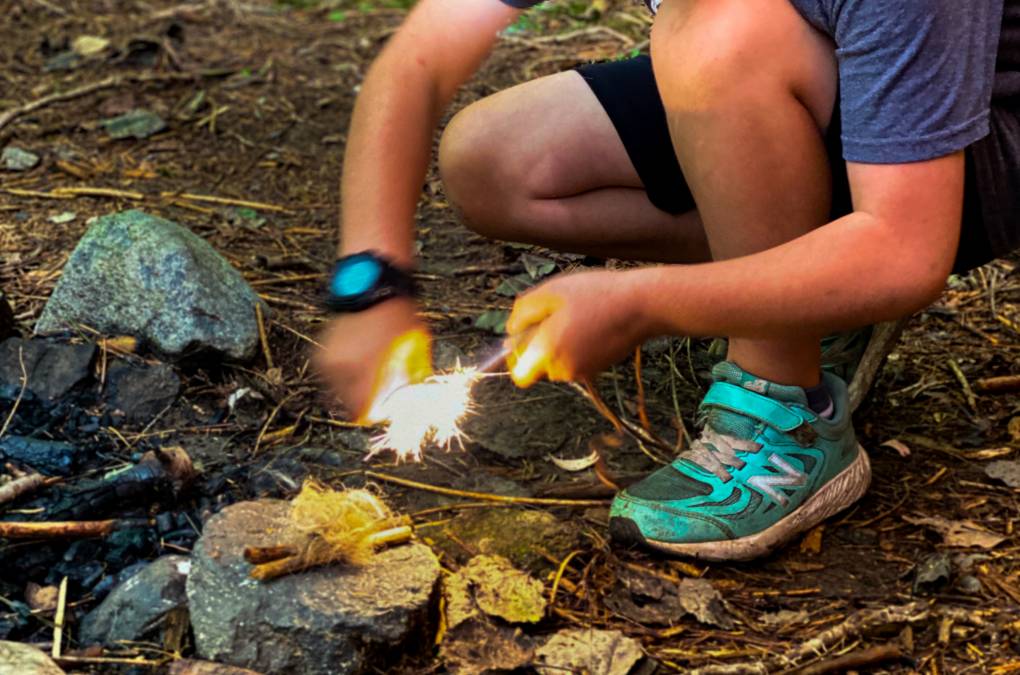
"caption": "Asher Wool, 8, uses a ferro rod and striker to light a bundle of tinder aflame at Earthwork school in western Massachusetts.\n",
"description": null,
"title": null,
"credit": "Ben James for NPR",
"status": "inherit",
"isLoading": false,
"fetchFailed": false
},
"mindshift_56509": {
"type": "attachments",
"id": "mindshift_56509",
"meta": {
"index": "attachments_1716263798",
"site": "mindshift",
"id": "56509",
"found": true
},
"parent": 56222,
"imgSizes": {
"twentyfourteen-full-width": {
"file": "https://ww2.kqed.org/app/uploads/sites/23/2020/08/iStock-667486874-1038x576.jpg",
"width": 1038,
"mimeType": "image/jpeg",
"height": 576
},
"thumbnail": {
"file": "https://ww2.kqed.org/app/uploads/sites/23/2020/08/iStock-667486874-160x107.jpg",
"width": 160,
"mimeType": "image/jpeg",
"height": 107
},
"post-thumbnail": {
"file": "https://ww2.kqed.org/app/uploads/sites/23/2020/08/iStock-667486874-672x372.jpg",
"width": 672,
"mimeType": "image/jpeg",
"height": 372
},
"kqedFullSize": {
"file": "https://ww2.kqed.org/app/uploads/sites/23/2020/08/iStock-667486874.jpg",
"width": 2121,
"height": 1414
},
"2048x2048": {
"file": "https://ww2.kqed.org/app/uploads/sites/23/2020/08/iStock-667486874-2048x1365.jpg",
"width": 2048,
"mimeType": "image/jpeg",
"height": 1365
},
"large": {
"file": "https://ww2.kqed.org/app/uploads/sites/23/2020/08/iStock-667486874-1020x680.jpg",
"width": 1020,
"mimeType": "image/jpeg",
"height": 680
},
"1536x1536": {
"file": "https://ww2.kqed.org/app/uploads/sites/23/2020/08/iStock-667486874-1536x1024.jpg",
"width": 1536,
"mimeType": "image/jpeg",
"height": 1024
},
"full-width": {
"file": "https://ww2.kqed.org/app/uploads/sites/23/2020/08/iStock-667486874-1920x1280.jpg",
"width": 1920,
"mimeType": "image/jpeg",
"height": 1280
},
"medium": {
"file": "https://ww2.kqed.org/app/uploads/sites/23/2020/08/iStock-667486874-800x533.jpg",
"width": 800,
"mimeType": "image/jpeg",
"height": 533
},
"medium_large": {
"file": "https://ww2.kqed.org/app/uploads/sites/23/2020/08/iStock-667486874-768x512.jpg",
"width": 768,
"mimeType": "image/jpeg",
"height": 512
}
},
"publishDate": 1597386046,
"modified": 1597386074,
"caption": null,
"description": null,
"title": "iStock-667486874",
"credit": "LeManna/iStock",
"status": "inherit",
"isLoading": false,
"fetchFailed": false
},
"mindshift_56157": {
"type": "attachments",
"id": "mindshift_56157",
"meta": {
"index": "attachments_1716263798",
"site": "mindshift",
"id": "56157",
"found": true
},
"parent": 56156,
"imgSizes": {
"twentyfourteen-full-width": {
"file": "https://ww2.kqed.org/app/uploads/sites/23/2020/06/jjoshua-npr-policingschool_slide-0f0f7256e723e0e92149149013f35d3ac5b6400e-1038x576.jpg",
"width": 1038,
"mimeType": "image/jpeg",
"height": 576
},
"thumbnail": {
"file": "https://ww2.kqed.org/app/uploads/sites/23/2020/06/jjoshua-npr-policingschool_slide-0f0f7256e723e0e92149149013f35d3ac5b6400e-160x107.jpg",
"width": 160,
"mimeType": "image/jpeg",
"height": 107
},
"post-thumbnail": {
"file": "https://ww2.kqed.org/app/uploads/sites/23/2020/06/jjoshua-npr-policingschool_slide-0f0f7256e723e0e92149149013f35d3ac5b6400e-672x372.jpg",
"width": 672,
"mimeType": "image/jpeg",
"height": 372
},
"kqedFullSize": {
"file": "https://ww2.kqed.org/app/uploads/sites/23/2020/06/jjoshua-npr-policingschool_slide-0f0f7256e723e0e92149149013f35d3ac5b6400e-scaled-e1592984536798.jpg",
"width": 1920,
"height": 1280
},
"2048x2048": {
"file": "https://ww2.kqed.org/app/uploads/sites/23/2020/06/jjoshua-npr-policingschool_slide-0f0f7256e723e0e92149149013f35d3ac5b6400e-2048x1365.jpg",
"width": 2048,
"mimeType": "image/jpeg",
"height": 1365
},
"large": {
"file": "https://ww2.kqed.org/app/uploads/sites/23/2020/06/jjoshua-npr-policingschool_slide-0f0f7256e723e0e92149149013f35d3ac5b6400e-1020x680.jpg",
"width": 1020,
"mimeType": "image/jpeg",
"height": 680
},
"1536x1536": {
"file": "https://ww2.kqed.org/app/uploads/sites/23/2020/06/jjoshua-npr-policingschool_slide-0f0f7256e723e0e92149149013f35d3ac5b6400e-1536x1024.jpg",
"width": 1536,
"mimeType": "image/jpeg",
"height": 1024
},
"full-width": {
"file": "https://ww2.kqed.org/app/uploads/sites/23/2020/06/jjoshua-npr-policingschool_slide-0f0f7256e723e0e92149149013f35d3ac5b6400e-1920x1280.jpg",
"width": 1920,
"mimeType": "image/jpeg",
"height": 1280
},
"medium": {
"file": "https://ww2.kqed.org/app/uploads/sites/23/2020/06/jjoshua-npr-policingschool_slide-0f0f7256e723e0e92149149013f35d3ac5b6400e-800x533.jpg",
"width": 800,
"mimeType": "image/jpeg",
"height": 533
},
"medium_large": {
"file": "https://ww2.kqed.org/app/uploads/sites/23/2020/06/jjoshua-npr-policingschool_slide-0f0f7256e723e0e92149149013f35d3ac5b6400e-768x512.jpg",
"width": 768,
"mimeType": "image/jpeg",
"height": 512
}
},
"publishDate": 1592984433,
"modified": 1592984560,
"caption": null,
"description": "Policing in schools has gone too far.",
"title": "Policing in schools has gone too far.",
"credit": "Jonell Joshua for NPR",
"status": "inherit",
"isLoading": false,
"fetchFailed": false
}
},
"audioPlayerReducer": {
"postId": "stream_live",
"isPaused": true,
"isPlaying": false,
"pfsActive": false,
"pledgeModalIsOpen": true,
"playerDrawerIsOpen": false,
"liveAudioPlayStartedAt": 0,
"liveAudioPlayContext": ""
},
"authorsReducer": {
"byline_mindshift_57399": {
"type": "authors",
"id": "byline_mindshift_57399",
"meta": {
"override": true
},
"slug": "byline_mindshift_57399",
"name": "Elissa Nadworny and Eda Uzunlar",
"isLoading": false
},
"byline_mindshift_57383": {
"type": "authors",
"id": "byline_mindshift_57383",
"meta": {
"override": true
},
"slug": "byline_mindshift_57383",
"name": "Samantha Balaban",
"isLoading": false
},
"byline_mindshift_57354": {
"type": "authors",
"id": "byline_mindshift_57354",
"meta": {
"override": true
},
"slug": "byline_mindshift_57354",
"name": "Amy Fallon",
"isLoading": false
},
"byline_mindshift_57269": {
"type": "authors",
"id": "byline_mindshift_57269",
"meta": {
"override": true
},
"slug": "byline_mindshift_57269",
"name": "Elissa Nadworny and Eda Uzunlar",
"isLoading": false
},
"byline_mindshift_57170": {
"type": "authors",
"id": "byline_mindshift_57170",
"meta": {
"override": true
},
"slug": "byline_mindshift_57170",
"name": "Gail Cornwall",
"isLoading": false
},
"byline_mindshift_57123": {
"type": "authors",
"id": "byline_mindshift_57123",
"meta": {
"override": true
},
"slug": "byline_mindshift_57123",
"name": "Nurith Aizenman",
"isLoading": false
},
"byline_mindshift_56909": {
"type": "authors",
"id": "byline_mindshift_56909",
"meta": {
"override": true
},
"slug": "byline_mindshift_56909",
"name": "\u003ca href=\"https://hechingerreport.org/\">Charlotte West, The Hechinger Report\u003c/a>",
"isLoading": false
},
"byline_mindshift_56725": {
"type": "authors",
"id": "byline_mindshift_56725",
"meta": {
"override": true
},
"slug": "byline_mindshift_56725",
"name": "Emma Bowman",
"isLoading": false
},
"byline_mindshift_56660": {
"type": "authors",
"id": "byline_mindshift_56660",
"meta": {
"override": true
},
"slug": "byline_mindshift_56660",
"name": "Ben James",
"isLoading": false
},
"byline_mindshift_56156": {
"type": "authors",
"id": "byline_mindshift_56156",
"meta": {
"override": true
},
"slug": "byline_mindshift_56156",
"name": "Anya Kamenetz",
"isLoading": false
},
"ksung": {
"type": "authors",
"id": "4596",
"meta": {
"index": "authors_1716337520",
"id": "4596",
"found": true
},
"name": "Ki Sung",
"firstName": "Ki",
"lastName": "Sung",
"slug": "ksung",
"email": "ksung@kqed.org",
"display_author_email": false,
"staff_mastheads": [
"news"
],
"title": "KQED Contributor",
"bio": "Ki Sung is Managing Editor of Digital News at KQED. She is former Senior Editor of MindShift and worked at NPR before joining KQED in 2014.",
"avatar": "https://secure.gravatar.com/avatar/64271e01dc95486c133be56937739045b7c00c990525bf9add12d3dd4f0433c9?s=600&d=blank&r=g",
"twitter": null,
"bluesky": null,
"facebook": null,
"instagram": null,
"linkedin": null,
"sites": [
{
"site": "news",
"roles": [
"editor"
]
},
{
"site": "mindshift",
"roles": [
"administrator"
]
},
{
"site": "elections",
"roles": [
"administrator"
]
}
],
"headData": {
"title": "Ki Sung | KQED",
"description": "KQED Contributor",
"ogImgSrc": "https://secure.gravatar.com/avatar/64271e01dc95486c133be56937739045b7c00c990525bf9add12d3dd4f0433c9?s=600&d=blank&r=g",
"twImgSrc": "https://secure.gravatar.com/avatar/64271e01dc95486c133be56937739045b7c00c990525bf9add12d3dd4f0433c9?s=600&d=blank&r=g"
},
"isLoading": false,
"link": "/author/ksung"
},
"kdnewhouse": {
"type": "authors",
"id": "11487",
"meta": {
"index": "authors_1716337520",
"id": "11487",
"found": true
},
"name": "Kara Newhouse",
"firstName": "Kara",
"lastName": "Newhouse",
"slug": "kdnewhouse",
"email": "knewhouse@kqed.org",
"display_author_email": false,
"staff_mastheads": [],
"title": "MindShift Editor",
"bio": null,
"avatar": "https://secure.gravatar.com/avatar/3dceed6fb271527113abfa9a8e9df34e?s=600&d=blank&r=g",
"twitter": null,
"facebook": null,
"instagram": null,
"linkedin": null,
"sites": [
{
"site": "",
"roles": [
"editor"
]
},
{
"site": "mindshift",
"roles": []
}
],
"headData": {
"title": "Kara Newhouse | KQED",
"description": "MindShift Editor",
"ogImgSrc": "https://secure.gravatar.com/avatar/3dceed6fb271527113abfa9a8e9df34e?s=600&d=blank&r=g",
"twImgSrc": "https://secure.gravatar.com/avatar/3dceed6fb271527113abfa9a8e9df34e?s=600&d=blank&r=g"
},
"isLoading": false,
"link": "/author/kdnewhouse"
}
},
"pagesReducer": {
"mindshift_category_big-ideas": {
"type": "terms",
"id": "mindshift_192",
"meta": {
"index": "terms_1716263798",
"site": "mindshift",
"id": "192",
"score": 14.40649
},
"featImg": null,
"name": "Big Ideas",
"description": "The latest findings from experts in the field related to the future of learning.",
"taxonomy": "category",
"headData": {
"twImgId": null,
"twTitle": null,
"ogTitle": null,
"ogImgId": null,
"twDescription": null,
"description": "The latest findings from experts in the field related to the future of learning.",
"title": "Big Ideas Archives | KQED Mindshift",
"ogDescription": null
},
"ttid": 192,
"slug": "big-ideas",
"isLoading": false,
"title": "Big Ideas",
"pageMeta": {
"site": "mindshift",
"WpPageTemplate": "page-topic-editorial",
"currentPage": 8
},
"blocks": [
{
"blockName": "kqed/company-paragraph",
"content": "The latest findings from experts in the field related to the future of learning."
},
{
"blockName": "kqed/post-list",
"attrs": {
"layout": "cardArticle2",
"query": "posts/mindshift?category=big-ideas",
"seeMore": false,
"paginated": true,
"page": 8
}
},
{
"blockName": "kqed/ad"
}
]
}
},
"pfsSessionReducer": {},
"postsReducer": {
"stream_live": {
"type": "live",
"id": "stream_live",
"audioUrl": "https://streams.kqed.org/kqedradio",
"title": "Live Stream",
"excerpt": "Live Stream information currently unavailable.",
"link": "/radio",
"featImg": "",
"label": {
"name": "KQED Live",
"link": "/"
}
},
"stream_kqedNewscast": {
"type": "posts",
"id": "stream_kqedNewscast",
"audioUrl": "https://www.kqed.org/.stream/anon/radio/RDnews/newscast.mp3?_=1",
"title": "KQED Newscast",
"featImg": "",
"label": {
"name": "88.5 FM",
"link": "/"
}
},
"mindshift_57399": {
"type": "posts",
"id": "mindshift_57399",
"meta": {
"index": "posts_1716263798",
"site": "mindshift",
"id": "57399",
"score": null,
"sort": [
1613636717000
]
},
"parent": 0,
"labelTerm": {
"site": "mindshift"
},
"blocks": [],
"publishDate": 1613636717,
"format": "standard",
"disqusTitle": "5 Things Every Family Should Know About Paying For College",
"title": "5 Things Every Family Should Know About Paying For College",
"headTitle": "MindShift | KQED News",
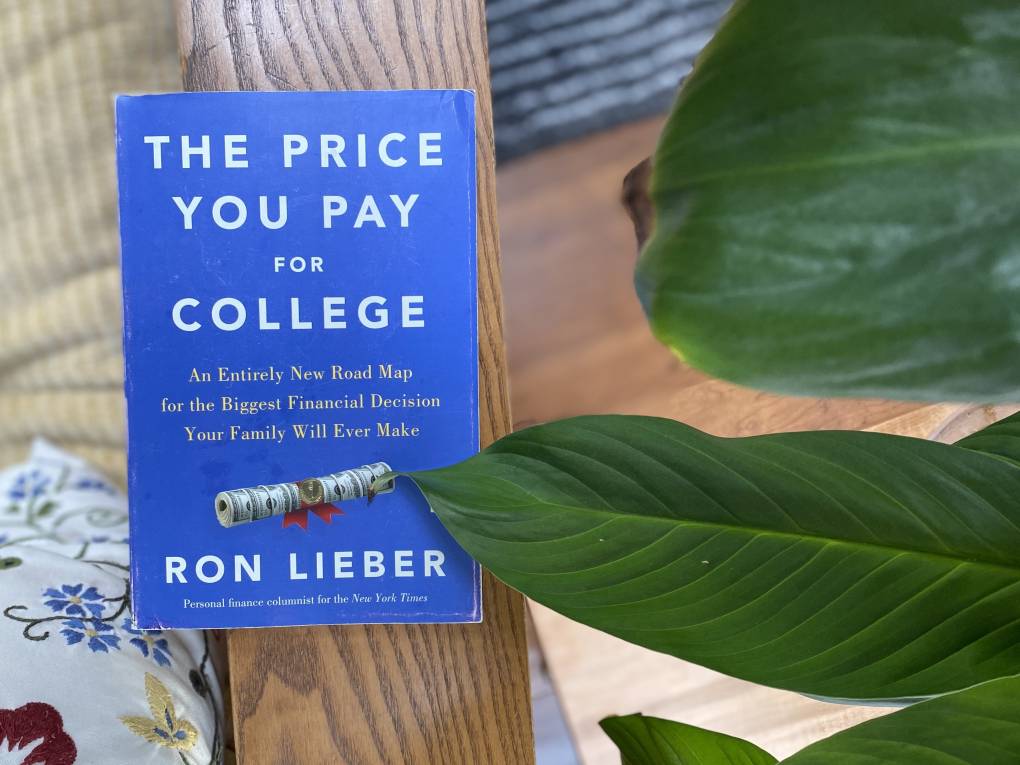
"content": "\u003cp>For many families, paying for college is one of the biggest financial decisions they'll make. College tuition is the highest it's ever been — and the financial aid process is anything but clear. American journalist Ron Lieber's new book, \u003cem>The Price You Pay for College \u003c/em>aims to take the black box of college financials and, \"turn it lighter and lighter shades of gray.\"\u003c/p>\n\u003cp>Of course, Lieber concedes, it \u003cem>is \u003c/em>a messed up system. But he's not out to fix it – he's just here to help you and your family navigate it. \"What I would really like to do is to blow it to smithereens. But this is not a blow-it-to-smithereens book,\" he says. \"I am taking the system as it is and trying to help people learn to beat it.\"\u003c/p>\n\u003cp>\u003cem>The interview was edited for length and clarity.\u003c/em>\u003c/p>\n\u003cp>\u003cstrong>What do parents get wrong about the price of college – the price listed on college websites?\u003c/strong>\u003c/p>\n\u003cp>Roughly 90 percent of people do not pay the full price. They get some kind of a discount. The number families will actually pay varies widely depending on how desperate a particular institution is to put heads in beds and whether it's particularly desperate for some kinds of people more than others.\u003c/p>\n\u003cp>[ad fullwidth]\u003c/p>\n\u003cp>\u003cstrong>You don't pay that list price because most families get aid — or as you call it, a discount. What are the two types of aid?\u003c/strong>\u003c/p>\n\u003cp>There is the need-based aid system running on one set of train tracks and then right next to it, in parallel, there's the merit aid system – runs on its own set of tracks.\u003c/p>\n\u003cp>\u003cstrong>Okay, so as a student or family member – how do you approach that first type, need-based aid?\u003c/strong>\u003c/p>\n\u003cp>Every school is required to post a net price calculator. It's often hidden – It's not in an obvious place. So you just Google, you know, [insert college here] and net price calculator. There, you'll be able to input your financial data. The net price calculator is supposed to spit back at you an estimate of what your family would be asked to pay if you were to get in. And so what you get is what the bottom line price would be and then hopefully a breakdown of how that financial aid might be divided up.\u003c/p>\n\u003cp>So the tricky part, once you get that net price. is to make sure that you understand what the components of that net price might be. For instance, how much debt did that school ask you to take on?\u003c/p>\n\u003cp>\u003cstrong>The other money you get from colleges is merit aid. I think of merit aid as money for being smart. But it sounds like this goes beyond academics? \u003c/strong>\u003c/p>\n\u003cp>It's much more about who you are, about your profile, about grades and test scores and other kind of tangibles and intangibles. It may vary depending on the year, or the month and also how well the school is doing in its attempt to attract the right number of students paying the right amount of dollars per student.\u003c/p>\n\u003cp>Here's another way to think of it: Imagine a really long list of all of the colleges and universities in the United States, ranked roughly in order of selectivity. Starting around slots 30 or 40, you start to get a trickle of elite institutions that do give away some money based on someone's academic prowess. And then in the next 25 to 50 slots on the list, you're finding a lot of selective schools that have a market problem and a marketing problem, which is that at $70,000 or $80,000 a year, people's ability to pay no longer matches their willingness to do so, increasingly. So you're trying to maintain some pricing power at the full price for a certain number of students, while giving others discounts.\u003c/p>\n\u003cp>Then, you go further down the food chain where very few people are paying full price, but most people don't know that everybody's getting a merit aid pony. And at those institutions, the schools are keeping that information to themselves — the fact that everybody's getting the discount — because they want every parent whose kid gets an unsolicited merit aid offer from the school running around town bragging about how their kid got offered academic money from this or that college. Further down the food chain, it's obvious that pretty much everybody gets something.\u003c/p>\n\u003cp>\u003cstrong>So merit aid – the discount unrelated to financial need – is basically a way for colleges to manipulate or convince often wealthier families to go to their university?\u003c/strong>\u003c/p>\n\u003cp>Look at what Tulane, Northeastern and even University of Southern California have done using merit aid. They just went out and bought smart kids. People are often surprised by this, right, because we're not used to thinking of higher education as the highly competitive industry that it is. We've got a couple thousand undergraduate institutions, and they're slugging it out for each and every student to commit and matriculate.\u003c/p>\n\u003cp>So it should not really come as any surprise to us that money is being used as leverage, even with children, because children have a role to play in this process. I'm in enough teenagers' inboxes looking at this stuff to know that the money pitch is more common than it used to be and absolutely resonating, but also confusing the hell out of people because they don't really know how this all works.\u003c/p>\n\u003cp>\u003cstrong>So where do parents even begin when determining how much money is appropriate to spend on college? \u003c/strong>\u003c/p>\n\u003cp>What I encourage people to do, first and foremost, is to take a look at something called the common data set that most schools make available. [To find, search Google for \"Common data set\" and the college name. \u003ca href=\"https://ifx.richmond.edu/pdfs/CDS2019-20.pdf\">Here's an example result from the University of Richmond.\u003c/a>] This is the document that schools send to \u003cem>U.S. News and World Report\u003c/em> and other ranking organizations. Look for Line H2A. It tells you the number of students who did not qualify for any need-based aid, but still got merit money. So that gives you a sense of how desperate the school is and how much of a merit package it might offer even to people who do not need the money because of their assets or income. You start to get a sense of where you stand.\u003c/p>\n\u003cp>And then here's something else you can do.\u003cstrong> Just go to the school and ask. \u003c/strong>All of this hocus pocus and having to dig through data tables, it's not fair. It's perfectly reasonable to call a school in September and say, could you please do a merit aid pre-read on my application. This is something that goes on. The College of Wooster in Ohio does it for anyone who asks. Whitman College in Washington state does it for anybody who asks. It's obscene that we have to make decisions about where and how to apply without having a good sense of how this will shake out. It is not right.\u003c/p>\n\u003cp>\u003cstrong>For students applying to college this year, what should they do if their financial situation has changed because of the coronavirus? \u003c/strong>\u003c/p>\n\u003cp>The avenues for appeal [for need-based aid and merit aid] are different. If it's need-based aid, you're going to go to the financial aid office and you're going to try to prove to the financial aid officer that you have had a change in circumstances since you filed your financial aid forms. And you're going \u003ca href=\"https://formswift.com/swift-student\">to ask that financial aid officer to use professional judgment \u003c/a>to reconsider your offer.\u003c/p>\n\u003cp>On the merit aid side, you're going to be approaching the admissions office and the best way to do it is with a whole bunch of humility, but also a competing offer.\u003c/p>\n\u003cp>If you have a quote from another school that competes with the institution enough to be a reasonable comparison, you go into the school that you want to appeal to and you say, 'I would really like to go here. The bottom line price at this other school is lower than yours. We may have made a mistake here in our application to you that we didn't make with the other school. Would it be possible to to just do a review here so that we understand what happened?'\u003c/p>\n\u003cp>[ad floatright]\u003c/p>\n\u003cp>And here's the secret that most people don't know: It's not human beings that have generated these offers in the first place. It's more often than not robots that have been programmed by software algorithms. And so humans do have the ability to intervene at the end within a certain amount of reason. Can't hurt to try.\u003c/p>\n\u003cdiv class=\"fullattribution\">Copyright 2021 NPR. To see more, visit https://www.npr.org.\u003cimg src=\"https://www.google-analytics.com/__utm.gif?utmac=UA-5828686-4&utmdt=5+Things+Every+Family+Should+Know+About+Paying+For+College&utme=8(APIKey)9(MDAxOTAwOTE4MDEyMTkxMDAzNjczZDljZA004)\">\u003c/div>\n\n",
"disqusIdentifier": "57399 https://ww2.kqed.org/mindshift/?p=57399",
"disqusUrl": "https://ww2.kqed.org/mindshift/2021/02/18/5-things-every-family-should-know-about-paying-for-college/",
"stats": {
"hasVideo": false,
"hasChartOrMap": false,
"hasAudio": false,
"hasPolis": false,
"wordCount": 1501,
"hasGoogleForm": false,
"hasGallery": false,
"hasHearkenModule": false,
"iframeSrcs": [],
"paragraphCount": 27
},
"modified": 1613636717,
"excerpt": "For many families, this is one of the biggest financial decisions they'll ever make. A new book helps navigate the often confusing and opaque financial aid system.",
"headData": {
"twImgId": "",
"twTitle": "",
"ogTitle": "",
"ogImgId": "",
"twDescription": "",
"description": "In order to get a better sense of how much families pay for a college, search for the "common data set" of that university. Know that roughly 90 percent of people do not pay the full price, according to Ron Lieber's latest book, "The Price You Pay for College."",
"title": "Need and Merit-Based Financial Aid: 5 Things Every Family Should Know About Paying For College - MindShift",
"ogDescription": "",
"schema": {
"@context": "https://schema.org",
"@type": "Article",
"headline": "5 Things Every Family Should Know About Paying For College",
"datePublished": "2021-02-18T00:25:17-08:00",
"dateModified": "2021-02-18T00:25:17-08:00",
"image": "https://cdn.kqed.org/wp-content/uploads/2020/02/KQED-OG-Image@1x.png"
}
},
"guestAuthors": [],
"slug": "5-things-every-family-should-know-about-paying-for-college",
"status": "publish",
"nprApiLink": "http://api.npr.org/query?id=968662074&apiKey=MDAxOTAwOTE4MDEyMTkxMDAzNjczZDljZA004",
"nprByline": "Elissa Nadworny and Eda Uzunlar",
"nprStoryDate": "Wed, 17 Feb 2021 17:00:28 -0500",
"nprLastModifiedDate": "Wed, 17 Feb 2021 17:00:28 -0500",
"nprHtmlLink": "https://www.npr.org/2021/02/17/968662074/5-things-every-family-should-know-about-paying-for-college?ft=nprml&f=968662074",
"nprImageAgency": "NPR",
"nprImageCredit": "Elissa Nadworny",
"nprStoryId": "968662074",
"nprRetrievedStory": "1",
"nprPubDate": "Wed, 17 Feb 2021 17:00:00 -0500",
"path": "/mindshift/57399/5-things-every-family-should-know-about-paying-for-college",
"audioTrackLength": null,
"parsedContent": [
{
"type": "contentString",
"content": "\u003cdiv class=\"post-body\">\u003cp>\u003cp>For many families, paying for college is one of the biggest financial decisions they'll make. College tuition is the highest it's ever been — and the financial aid process is anything but clear. American journalist Ron Lieber's new book, \u003cem>The Price You Pay for College \u003c/em>aims to take the black box of college financials and, \"turn it lighter and lighter shades of gray.\"\u003c/p>\n\u003cp>Of course, Lieber concedes, it \u003cem>is \u003c/em>a messed up system. But he's not out to fix it – he's just here to help you and your family navigate it. \"What I would really like to do is to blow it to smithereens. But this is not a blow-it-to-smithereens book,\" he says. \"I am taking the system as it is and trying to help people learn to beat it.\"\u003c/p>\n\u003cp>\u003cem>The interview was edited for length and clarity.\u003c/em>\u003c/p>\n\u003cp>\u003cstrong>What do parents get wrong about the price of college – the price listed on college websites?\u003c/strong>\u003c/p>\n\u003cp>Roughly 90 percent of people do not pay the full price. They get some kind of a discount. The number families will actually pay varies widely depending on how desperate a particular institution is to put heads in beds and whether it's particularly desperate for some kinds of people more than others.\u003c/p>\n\u003cp>\u003c/p>\u003c/div>",
"attributes": {
"named": {},
"numeric": []
}
},
{
"type": "component",
"content": "",
"name": "ad",
"attributes": {
"named": {
"label": "fullwidth"
},
"numeric": [
"fullwidth"
]
}
},
{
"type": "contentString",
"content": "\u003cdiv class=\"post-body\">\u003cp>\u003c/p>\n\u003cp>\u003cstrong>You don't pay that list price because most families get aid — or as you call it, a discount. What are the two types of aid?\u003c/strong>\u003c/p>\n\u003cp>There is the need-based aid system running on one set of train tracks and then right next to it, in parallel, there's the merit aid system – runs on its own set of tracks.\u003c/p>\n\u003cp>\u003cstrong>Okay, so as a student or family member – how do you approach that first type, need-based aid?\u003c/strong>\u003c/p>\n\u003cp>Every school is required to post a net price calculator. It's often hidden – It's not in an obvious place. So you just Google, you know, [insert college here] and net price calculator. There, you'll be able to input your financial data. The net price calculator is supposed to spit back at you an estimate of what your family would be asked to pay if you were to get in. And so what you get is what the bottom line price would be and then hopefully a breakdown of how that financial aid might be divided up.\u003c/p>\n\u003cp>So the tricky part, once you get that net price. is to make sure that you understand what the components of that net price might be. For instance, how much debt did that school ask you to take on?\u003c/p>\n\u003cp>\u003cstrong>The other money you get from colleges is merit aid. I think of merit aid as money for being smart. But it sounds like this goes beyond academics? \u003c/strong>\u003c/p>\n\u003cp>It's much more about who you are, about your profile, about grades and test scores and other kind of tangibles and intangibles. It may vary depending on the year, or the month and also how well the school is doing in its attempt to attract the right number of students paying the right amount of dollars per student.\u003c/p>\n\u003cp>Here's another way to think of it: Imagine a really long list of all of the colleges and universities in the United States, ranked roughly in order of selectivity. Starting around slots 30 or 40, you start to get a trickle of elite institutions that do give away some money based on someone's academic prowess. And then in the next 25 to 50 slots on the list, you're finding a lot of selective schools that have a market problem and a marketing problem, which is that at $70,000 or $80,000 a year, people's ability to pay no longer matches their willingness to do so, increasingly. So you're trying to maintain some pricing power at the full price for a certain number of students, while giving others discounts.\u003c/p>\n\u003cp>Then, you go further down the food chain where very few people are paying full price, but most people don't know that everybody's getting a merit aid pony. And at those institutions, the schools are keeping that information to themselves — the fact that everybody's getting the discount — because they want every parent whose kid gets an unsolicited merit aid offer from the school running around town bragging about how their kid got offered academic money from this or that college. Further down the food chain, it's obvious that pretty much everybody gets something.\u003c/p>\n\u003cp>\u003cstrong>So merit aid – the discount unrelated to financial need – is basically a way for colleges to manipulate or convince often wealthier families to go to their university?\u003c/strong>\u003c/p>\n\u003cp>Look at what Tulane, Northeastern and even University of Southern California have done using merit aid. They just went out and bought smart kids. People are often surprised by this, right, because we're not used to thinking of higher education as the highly competitive industry that it is. We've got a couple thousand undergraduate institutions, and they're slugging it out for each and every student to commit and matriculate.\u003c/p>\n\u003cp>So it should not really come as any surprise to us that money is being used as leverage, even with children, because children have a role to play in this process. I'm in enough teenagers' inboxes looking at this stuff to know that the money pitch is more common than it used to be and absolutely resonating, but also confusing the hell out of people because they don't really know how this all works.\u003c/p>\n\u003cp>\u003cstrong>So where do parents even begin when determining how much money is appropriate to spend on college? \u003c/strong>\u003c/p>\n\u003cp>What I encourage people to do, first and foremost, is to take a look at something called the common data set that most schools make available. [To find, search Google for \"Common data set\" and the college name. \u003ca href=\"https://ifx.richmond.edu/pdfs/CDS2019-20.pdf\">Here's an example result from the University of Richmond.\u003c/a>] This is the document that schools send to \u003cem>U.S. News and World Report\u003c/em> and other ranking organizations. Look for Line H2A. It tells you the number of students who did not qualify for any need-based aid, but still got merit money. So that gives you a sense of how desperate the school is and how much of a merit package it might offer even to people who do not need the money because of their assets or income. You start to get a sense of where you stand.\u003c/p>\n\u003cp>And then here's something else you can do.\u003cstrong> Just go to the school and ask. \u003c/strong>All of this hocus pocus and having to dig through data tables, it's not fair. It's perfectly reasonable to call a school in September and say, could you please do a merit aid pre-read on my application. This is something that goes on. The College of Wooster in Ohio does it for anyone who asks. Whitman College in Washington state does it for anybody who asks. It's obscene that we have to make decisions about where and how to apply without having a good sense of how this will shake out. It is not right.\u003c/p>\n\u003cp>\u003cstrong>For students applying to college this year, what should they do if their financial situation has changed because of the coronavirus? \u003c/strong>\u003c/p>\n\u003cp>The avenues for appeal [for need-based aid and merit aid] are different. If it's need-based aid, you're going to go to the financial aid office and you're going to try to prove to the financial aid officer that you have had a change in circumstances since you filed your financial aid forms. And you're going \u003ca href=\"https://formswift.com/swift-student\">to ask that financial aid officer to use professional judgment \u003c/a>to reconsider your offer.\u003c/p>\n\u003cp>On the merit aid side, you're going to be approaching the admissions office and the best way to do it is with a whole bunch of humility, but also a competing offer.\u003c/p>\n\u003cp>If you have a quote from another school that competes with the institution enough to be a reasonable comparison, you go into the school that you want to appeal to and you say, 'I would really like to go here. The bottom line price at this other school is lower than yours. We may have made a mistake here in our application to you that we didn't make with the other school. Would it be possible to to just do a review here so that we understand what happened?'\u003c/p>\n\u003cp>\u003c/p>\u003c/div>",
"attributes": {
"named": {},
"numeric": []
}
},
{
"type": "component",
"content": "",
"name": "ad",
"attributes": {
"named": {
"label": "floatright"
},
"numeric": [
"floatright"
]
}
},
{
"type": "contentString",
"content": "\u003cdiv class=\"post-body\">\u003cp>\u003c/p>\n\u003cp>And here's the secret that most people don't know: It's not human beings that have generated these offers in the first place. It's more often than not robots that have been programmed by software algorithms. And so humans do have the ability to intervene at the end within a certain amount of reason. Can't hurt to try.\u003c/p>\n\u003cdiv class=\"fullattribution\">Copyright 2021 NPR. To see more, visit https://www.npr.org.\u003cimg src=\"https://www.google-analytics.com/__utm.gif?utmac=UA-5828686-4&utmdt=5+Things+Every+Family+Should+Know+About+Paying+For+College&utme=8(APIKey)9(MDAxOTAwOTE4MDEyMTkxMDAzNjczZDljZA004)\">\u003c/div>\n\n\u003c/div>\u003c/p>",
"attributes": {
"named": {},
"numeric": []
}
}
],
"link": "/mindshift/57399/5-things-every-family-should-know-about-paying-for-college",
"authors": [
"byline_mindshift_57399"
],
"categories": [
"mindshift_192"
],
"tags": [
"mindshift_21305",
"mindshift_21344",
"mindshift_21306"
],
"featImg": "mindshift_57400",
"label": "mindshift"
},
"mindshift_57383": {
"type": "posts",
"id": "mindshift_57383",
"meta": {
"index": "posts_1716263798",
"site": "mindshift",
"id": "57383",
"score": null,
"sort": [
1613458983000
]
},
"parent": 0,
"labelTerm": {
"site": "mindshift"
},
"blocks": [],
"publishDate": 1613458983,
"format": "standard",
"disqusTitle": "A Boy Named 'Milo' Reminds Us To Choose Imagination Over Impressions",
"title": "A Boy Named 'Milo' Reminds Us To Choose Imagination Over Impressions",
"headTitle": "MindShift | KQED News",
"content": "\u003cp>Sitting on the subway beside his big sister, young Milo is \"a shook-up soda.\" He feels \"excitement stacked on top of worry on top of confusion on top of love.\" The kids are on their way to visit their mother, who is incarcerated.\u003c/p>\n\u003cp>\u003ca href=\"https://www.penguinrandomhouse.com/books/549617/milo-imagines-the-world-by-matt-de-la-pena-illus-by-christian-robinson/\">\u003cem>Milo Imagines the World\u003c/em>\u003c/a> is the third book from author Matt de la Peña and illustrator Christian Robinson — the Newbery Medal and Caldecott Honor winning duo behind \u003ca href=\"https://www.npr.org/2015/02/06/383856887/on-board-a-city-bus-a-little-boy-finds-the-route-to-gratitude\">\u003cem>Last Stop on Market Street \u003c/em>\u003c/a>and \u003ca href=\"https://www.penguinrandomhouse.com/books/549616/carmela-full-of-wishes-by-matt-de-la-pena-illustrated-by-christian-robinson/\">\u003cem>Carmela Full of Wishes.\u003c/em>\u003c/a>\u003c/p>\n\u003cp>\"It's about a boy who is a budding artist and he's looking at all the interesting people around him on the subway ride, and he's imagining their lives as a way to pass the time,\" de la Peña says.\u003c/p>\n\u003cp>Robinson had a lot of fun creating two worlds in the book. \"We see the real world that Milo exists in, but we also see the world inside his head,\" he says.\u003c/p>\n\u003cp>The last time they were on book tour together, de la Peña and Robinson were sitting together in a café discussing which project they should work on next. Robinson had been thinking about telling his own story.\u003c/p>\n\u003cp>[ad fullwidth]\u003c/p>\n\u003cp>\"My mother struggled with addiction and mental health and was in and out of prison most of my childhood,\" Robinson says. His father was also absent.\u003c/p>\n\u003cp>Robinson's grandmother raised him — along with his brother, two cousins, and an aunt — in a one-bedroom apartment in Los Angeles.\u003c/p>\n\u003cp>\u003cimg class=\"size-full wp-image-57385 alignright\" src=\"https://ww2.kqed.org/app/uploads/sites/23/2021/02/miloimaginestheworld_custom-27e341555b5e3d71ecfd72e5d1947079f6c20475.jpg\" alt=\"Milo Imagines the World cover \" width=\"200\" height=\"153\" srcset=\"https://ww2.kqed.org/app/uploads/sites/23/2021/02/miloimaginestheworld_custom-27e341555b5e3d71ecfd72e5d1947079f6c20475.jpg 200w, https://ww2.kqed.org/app/uploads/sites/23/2021/02/miloimaginestheworld_custom-27e341555b5e3d71ecfd72e5d1947079f6c20475-160x122.jpg 160w\" sizes=\"(max-width: 200px) 100vw, 200px\">\"Making pictures was certainly my way of having some say over the world and what things could look like,\" he says. \"It was a way to have some control over my circumstances.\"\u003c/p>\n\u003cp>He remembers that \"shook-up soda\" feeling that Milo has on the subway. \"You're just feeling anxiety and nerves. You feel as a kid, even though it's your parent who's being punished, \u003cem>you\u003c/em> feel punished. You know, when someone you love is serving time, you're serving time along with them. I just remember a lot of pain, embarrassment, guilt and shame.\"\u003c/p>\n\u003cp>De la Peña connected with the idea of a child who is constantly imagining and reimagining the world around him. In the latest installment of our \u003ca href=\"https://www.npr.org/series/787467815/picture-this-authors-and-artists-in-conversation\">\"Picture This\" series, \u003c/a>we brought the author and illustrator together to discuss their collaboration — below are excerpts from their conversation.\u003c/p>\n\u003cp>\u003cstrong>De la Peña: \u003c/strong>You have two audiences for a picture book. You have the parent and you have the child. And I'm really conscious right now about leaning toward the child and the psychology of a child. This is sort of something I took from \u003cem>Where the Wild Things Are, \u003c/em>when Max goes into his dreamspace, we really see his psychology.\u003c/p>\n\u003cp>\u003cstrong>Robinson:\u003c/strong> For me, the process of actually illustrating this book was I was almost like becoming Milo. I had to go back to all the times that I was on the bus or the subway. And when I was looking around at all the people around me, what was I imagining about them? What were the things that they were doing? ...\u003c/p>\n\u003cp>Milo is an observer. So I thought, why not give him glasses? I wanted to give emphasis to his eyes because that is what he is using to view the world. And but I also wanted to make him feel like small and little and not seen ... so he's like covered and bundled in all these clothes, but his sister is a bit more outgoing and bright. She has this really bright pink jacket ... very fashionable.\u003c/p>\n\u003cp>I was also thinking about, like, how often times are people going through certain experiences, but you would never know they were going through that because on the outside they just look so put together and like everything's going for them.\u003c/p>\n\u003cfigure id=\"attachment_57390\" class=\"wp-caption alignnone\" style=\"max-width: 1200px\">\u003cimg class=\"wp-image-57390 size-full\" src=\"https://ww2.kqed.org/app/uploads/sites/23/2021/02/milo_9780399549083_all_5p_hires_10_custom-e89078cc606ce274f4e3e375381140d0f68fd4a1-s1200-c85.jpg\" alt='\"Milo Imagines the World\" by author Matt de la Peña and illustrator Christian Robinson. Milo imagines the lives of others he sees on the subway. ' width=\"1200\" height=\"456\" srcset=\"https://ww2.kqed.org/app/uploads/sites/23/2021/02/milo_9780399549083_all_5p_hires_10_custom-e89078cc606ce274f4e3e375381140d0f68fd4a1-s1200-c85.jpg 1200w, https://ww2.kqed.org/app/uploads/sites/23/2021/02/milo_9780399549083_all_5p_hires_10_custom-e89078cc606ce274f4e3e375381140d0f68fd4a1-s1200-c85-800x304.jpg 800w, https://ww2.kqed.org/app/uploads/sites/23/2021/02/milo_9780399549083_all_5p_hires_10_custom-e89078cc606ce274f4e3e375381140d0f68fd4a1-s1200-c85-1020x388.jpg 1020w, https://ww2.kqed.org/app/uploads/sites/23/2021/02/milo_9780399549083_all_5p_hires_10_custom-e89078cc606ce274f4e3e375381140d0f68fd4a1-s1200-c85-160x61.jpg 160w, https://ww2.kqed.org/app/uploads/sites/23/2021/02/milo_9780399549083_all_5p_hires_10_custom-e89078cc606ce274f4e3e375381140d0f68fd4a1-s1200-c85-768x292.jpg 768w\" sizes=\"(max-width: 1200px) 100vw, 1200px\">\u003cfigcaption class=\"wp-caption-text\">Matt de la Peña and Christian Robinson/G.P Putnam's Sons\u003c/figcaption>\u003c/figure>\n\u003cp>\u003cstrong>De la Peña:\u003c/strong> What this book is really trying to do is dismantle the concept of stereotypes. So I think Milo has this epiphany in the story that he's seen a certain way and that doesn't feel good. And so he has to square that he's doing the same thing to other people. He's taking small bits of information and making judgments. ...\u003c/p>\n\u003cp>What I love about working with Christian ... [is] I take some of these heavier ideas, I give them to Christian, and I feel like he's the one who makes them a picture book. He adds whimsy and there's just an element of fun that kind of undercuts some of the seriousness I give to him in manuscript form.\u003c/p>\n\u003cp>\u003cstrong>Robinson:\u003c/strong> In this story and ... many of the books that me and Matt have worked on, we're dealing with, you know, real world situations. In \u003cem>Carmela Full of Wishes,\u003c/em> it's a daughter who has a parent who's been deported. And in \u003cem>Last Stop [on Market Street]\u003c/em>, at the end of the journey is a soup kitchen.\u003c/p>\n\u003cp>And so I guess Matt is like giving us a taste of the real world. And all I'm doing is just reminding ... that, yeah, there's challenges, there's greediness, but there's also beauty. And there's joy in all these experiences. And I think that's what we're trying to do, is just honor the lives of everyday people, working class people.\u003c/p>\n\u003cfigure id=\"attachment_57391\" class=\"wp-caption alignnone\" style=\"max-width: 1200px\">\u003cimg class=\"wp-image-57391 size-full\" src=\"https://ww2.kqed.org/app/uploads/sites/23/2021/02/milo_9780399549083_all_5p_hires_18_custom-53d80c4a24d4d681b3fe638744a7f3df2dbd3cfa-s1200-c85.jpg\" alt='\"Milo Imagines the World\" by author Matt de la Peña and illustrator Christian Robinson. Scene shows Milo and his sister visiting their incarcerated mother.' width=\"1200\" height=\"456\" srcset=\"https://ww2.kqed.org/app/uploads/sites/23/2021/02/milo_9780399549083_all_5p_hires_18_custom-53d80c4a24d4d681b3fe638744a7f3df2dbd3cfa-s1200-c85.jpg 1200w, https://ww2.kqed.org/app/uploads/sites/23/2021/02/milo_9780399549083_all_5p_hires_18_custom-53d80c4a24d4d681b3fe638744a7f3df2dbd3cfa-s1200-c85-800x304.jpg 800w, https://ww2.kqed.org/app/uploads/sites/23/2021/02/milo_9780399549083_all_5p_hires_18_custom-53d80c4a24d4d681b3fe638744a7f3df2dbd3cfa-s1200-c85-1020x388.jpg 1020w, https://ww2.kqed.org/app/uploads/sites/23/2021/02/milo_9780399549083_all_5p_hires_18_custom-53d80c4a24d4d681b3fe638744a7f3df2dbd3cfa-s1200-c85-160x61.jpg 160w, https://ww2.kqed.org/app/uploads/sites/23/2021/02/milo_9780399549083_all_5p_hires_18_custom-53d80c4a24d4d681b3fe638744a7f3df2dbd3cfa-s1200-c85-768x292.jpg 768w\" sizes=\"(max-width: 1200px) 100vw, 1200px\">\u003cfigcaption class=\"wp-caption-text\">Matt de la Peña and Christian Robinson/G.P Putnam's Sons\u003c/figcaption>\u003c/figure>\n\u003cp>\u003cstrong>De la Peña: \u003c/strong>Traditionally, a book like\u003cem> Milo Imagines the World \u003c/em>might be sort of set aside for, you know, kids in underprivileged schools or kids who have incarcerated parents. But I just hope more and more that this is a book that is shared with kids who don't have that experience so they can understand that Milo is a complex young boy. And this is just one part of his background.\u003c/p>\n\u003cp>\u003cstrong>Robinson: \u003c/strong>I feel like right now especially, it's so important that we're telling stories that ask each other to take a second look and to not make those easy, quick judgments about each other. ...\u003c/p>\n\u003cp>As a kid, of course, not having my my mother there was painful, certainly, but probably even more painful thing was holding on to that experience myself and internalizing it and feeling disconnected, not having that connection with others. So I think this book has the potential to be healing, to create conversations, to create empathy and compassion.\u003c/p>\n\u003cfigure id=\"attachment_57392\" class=\"wp-caption alignnone\" style=\"max-width: 1200px\">\u003cimg class=\"size-full wp-image-57392\" src=\"https://ww2.kqed.org/app/uploads/sites/23/2021/02/milo_9780399549083_all_5p_hires_20_custom-0c6f0189952d540305f143f6f8b4a15f76e11660-s1200-c85.jpg\" alt='\"Milo Imagines the World\" by author Matt de la Peña and illustrator Christian Robinson. Scene shows family gathering at the end of the day. ' width=\"1200\" height=\"456\" srcset=\"https://ww2.kqed.org/app/uploads/sites/23/2021/02/milo_9780399549083_all_5p_hires_20_custom-0c6f0189952d540305f143f6f8b4a15f76e11660-s1200-c85.jpg 1200w, https://ww2.kqed.org/app/uploads/sites/23/2021/02/milo_9780399549083_all_5p_hires_20_custom-0c6f0189952d540305f143f6f8b4a15f76e11660-s1200-c85-800x304.jpg 800w, https://ww2.kqed.org/app/uploads/sites/23/2021/02/milo_9780399549083_all_5p_hires_20_custom-0c6f0189952d540305f143f6f8b4a15f76e11660-s1200-c85-1020x388.jpg 1020w, https://ww2.kqed.org/app/uploads/sites/23/2021/02/milo_9780399549083_all_5p_hires_20_custom-0c6f0189952d540305f143f6f8b4a15f76e11660-s1200-c85-160x61.jpg 160w, https://ww2.kqed.org/app/uploads/sites/23/2021/02/milo_9780399549083_all_5p_hires_20_custom-0c6f0189952d540305f143f6f8b4a15f76e11660-s1200-c85-768x292.jpg 768w\" sizes=\"(max-width: 1200px) 100vw, 1200px\">\u003cfigcaption class=\"wp-caption-text\">Matt de la Peña and Christian Robinson/G.P Putnam's Sons\u003c/figcaption>\u003c/figure>\n\u003cp>[ad floatright]\u003c/p>\n\u003cp>\u003cem>Samantha Balaban and Melissa Gray produced and edited this interview for broadcast. Beth Novey adapted it for the Web.\u003c/em>\u003c/p>\n\u003cdiv class=\"fullattribution\">Copyright 2021 NPR. To see more, visit https://www.npr.org.\u003cimg src=\"https://www.google-analytics.com/__utm.gif?utmac=UA-5828686-4&utmdt=A+Boy+Named+%27Milo%27+Reminds+Us+To+Choose+Imagination+Over+Impressions&utme=8(APIKey)9(MDAxOTAwOTE4MDEyMTkxMDAzNjczZDljZA004)\">\u003c/div>\n\n",
"disqusIdentifier": "57383 https://ww2.kqed.org/mindshift/?p=57383",
"disqusUrl": "https://ww2.kqed.org/mindshift/2021/02/15/a-boy-named-milo-reminds-us-to-choose-imagination-over-impressions/",
"stats": {
"hasVideo": false,
"hasChartOrMap": false,
"hasAudio": false,
"hasPolis": false,
"wordCount": 1138,
"hasGoogleForm": false,
"hasGallery": false,
"hasHearkenModule": false,
"iframeSrcs": [],
"paragraphCount": 24
},
"modified": 1613549024,
"excerpt": "Milo and his big sister take a long subway ride to visit their mother, who is incarcerated, in the latest collaboration from award-winning picture book duo Matt de la Peña and Christian Robinson.",
"headData": {
"twImgId": "",
"twTitle": "",
"ogTitle": "",
"ogImgId": "",
"twDescription": "",
"description": "Milo and his big sister take a long subway ride to visit their mother, who is incarcerated, in the latest collaboration from award-winning picture book duo Matt de la Peña and Christian Robinson.",
"title": "'Milo Imagines the World' Explores What We Don't See on the Surface of People's Lives - MindShift",
"ogDescription": "",
"schema": {
"@context": "https://schema.org",
"@type": "Article",
"headline": "A Boy Named 'Milo' Reminds Us To Choose Imagination Over Impressions",
"datePublished": "2021-02-15T23:03:03-08:00",
"dateModified": "2021-02-17T00:03:44-08:00",
"image": "https://cdn.kqed.org/wp-content/uploads/2020/02/KQED-OG-Image@1x.png"
}
},
"guestAuthors": [],
"slug": "a-boy-named-milo-reminds-us-to-choose-imagination-over-impressions",
"status": "publish",
"nprApiLink": "http://api.npr.org/query?id=966989246&apiKey=MDAxOTAwOTE4MDEyMTkxMDAzNjczZDljZA004",
"nprByline": "Samantha Balaban",
"nprStoryDate": "Sun, 14 Feb 2021 08:00:00 -0500",
"nprLastModifiedDate": "Sun, 14 Feb 2021 09:57:40 -0500",
"nprHtmlLink": "https://www.npr.org/2021/02/14/966989246/a-boy-named-milo-reminds-us-to-choose-imagination-over-impressions?ft=nprml&f=966989246",
"nprAudio": "https://ondemand.npr.org/anon.npr-mp3/npr/wesun/2021/02/20210214_wesun_a_boy_named_milo_reminds_us_to_choose_imagination_over_impressions.mp3?orgId=1&topicId=1033&aggIds=787467815&d=398&p=10&story=966989246&ft=nprml&f=966989246",
"nprImageAgency": "G.P Putnam's Sons",
"nprImageCredit": "Matt de la Peña and Christian Robinson",
"nprAudioM3u": "http://api.npr.org/m3u/1967807282-ca3f19.m3u?orgId=1&topicId=1033&aggIds=787467815&d=398&p=10&story=966989246&ft=nprml&f=966989246",
"nprStoryId": "966989246",
"nprRetrievedStory": "1",
"nprPubDate": "Sun, 14 Feb 2021 08:01:00 -0500",
"path": "/mindshift/57383/a-boy-named-milo-reminds-us-to-choose-imagination-over-impressions",
"audioUrl": "https://ondemand.npr.org/anon.npr-mp3/npr/wesun/2021/02/20210214_wesun_a_boy_named_milo_reminds_us_to_choose_imagination_over_impressions.mp3?orgId=1&topicId=1033&aggIds=787467815&d=398&p=10&story=966989246&ft=nprml&f=966989246",
"audioTrackLength": null,
"parsedContent": [
{
"type": "contentString",
"content": "\u003cdiv class=\"post-body\">\u003cp>\u003cp>Sitting on the subway beside his big sister, young Milo is \"a shook-up soda.\" He feels \"excitement stacked on top of worry on top of confusion on top of love.\" The kids are on their way to visit their mother, who is incarcerated.\u003c/p>\n\u003cp>\u003ca href=\"https://www.penguinrandomhouse.com/books/549617/milo-imagines-the-world-by-matt-de-la-pena-illus-by-christian-robinson/\">\u003cem>Milo Imagines the World\u003c/em>\u003c/a> is the third book from author Matt de la Peña and illustrator Christian Robinson — the Newbery Medal and Caldecott Honor winning duo behind \u003ca href=\"https://www.npr.org/2015/02/06/383856887/on-board-a-city-bus-a-little-boy-finds-the-route-to-gratitude\">\u003cem>Last Stop on Market Street \u003c/em>\u003c/a>and \u003ca href=\"https://www.penguinrandomhouse.com/books/549616/carmela-full-of-wishes-by-matt-de-la-pena-illustrated-by-christian-robinson/\">\u003cem>Carmela Full of Wishes.\u003c/em>\u003c/a>\u003c/p>\n\u003cp>\"It's about a boy who is a budding artist and he's looking at all the interesting people around him on the subway ride, and he's imagining their lives as a way to pass the time,\" de la Peña says.\u003c/p>\n\u003cp>Robinson had a lot of fun creating two worlds in the book. \"We see the real world that Milo exists in, but we also see the world inside his head,\" he says.\u003c/p>\n\u003cp>The last time they were on book tour together, de la Peña and Robinson were sitting together in a café discussing which project they should work on next. Robinson had been thinking about telling his own story.\u003c/p>\n\u003cp>\u003c/p>\u003c/div>",
"attributes": {
"named": {},
"numeric": []
}
},
{
"type": "component",
"content": "",
"name": "ad",
"attributes": {
"named": {
"label": "fullwidth"
},
"numeric": [
"fullwidth"
]
}
},
{
"type": "contentString",
"content": "\u003cdiv class=\"post-body\">\u003cp>\u003c/p>\n\u003cp>\"My mother struggled with addiction and mental health and was in and out of prison most of my childhood,\" Robinson says. His father was also absent.\u003c/p>\n\u003cp>Robinson's grandmother raised him — along with his brother, two cousins, and an aunt — in a one-bedroom apartment in Los Angeles.\u003c/p>\n\u003cp>\u003cimg class=\"size-full wp-image-57385 alignright\" src=\"https://ww2.kqed.org/app/uploads/sites/23/2021/02/miloimaginestheworld_custom-27e341555b5e3d71ecfd72e5d1947079f6c20475.jpg\" alt=\"Milo Imagines the World cover \" width=\"200\" height=\"153\" srcset=\"https://ww2.kqed.org/app/uploads/sites/23/2021/02/miloimaginestheworld_custom-27e341555b5e3d71ecfd72e5d1947079f6c20475.jpg 200w, https://ww2.kqed.org/app/uploads/sites/23/2021/02/miloimaginestheworld_custom-27e341555b5e3d71ecfd72e5d1947079f6c20475-160x122.jpg 160w\" sizes=\"(max-width: 200px) 100vw, 200px\">\"Making pictures was certainly my way of having some say over the world and what things could look like,\" he says. \"It was a way to have some control over my circumstances.\"\u003c/p>\n\u003cp>He remembers that \"shook-up soda\" feeling that Milo has on the subway. \"You're just feeling anxiety and nerves. You feel as a kid, even though it's your parent who's being punished, \u003cem>you\u003c/em> feel punished. You know, when someone you love is serving time, you're serving time along with them. I just remember a lot of pain, embarrassment, guilt and shame.\"\u003c/p>\n\u003cp>De la Peña connected with the idea of a child who is constantly imagining and reimagining the world around him. In the latest installment of our \u003ca href=\"https://www.npr.org/series/787467815/picture-this-authors-and-artists-in-conversation\">\"Picture This\" series, \u003c/a>we brought the author and illustrator together to discuss their collaboration — below are excerpts from their conversation.\u003c/p>\n\u003cp>\u003cstrong>De la Peña: \u003c/strong>You have two audiences for a picture book. You have the parent and you have the child. And I'm really conscious right now about leaning toward the child and the psychology of a child. This is sort of something I took from \u003cem>Where the Wild Things Are, \u003c/em>when Max goes into his dreamspace, we really see his psychology.\u003c/p>\n\u003cp>\u003cstrong>Robinson:\u003c/strong> For me, the process of actually illustrating this book was I was almost like becoming Milo. I had to go back to all the times that I was on the bus or the subway. And when I was looking around at all the people around me, what was I imagining about them? What were the things that they were doing? ...\u003c/p>\n\u003cp>Milo is an observer. So I thought, why not give him glasses? I wanted to give emphasis to his eyes because that is what he is using to view the world. And but I also wanted to make him feel like small and little and not seen ... so he's like covered and bundled in all these clothes, but his sister is a bit more outgoing and bright. She has this really bright pink jacket ... very fashionable.\u003c/p>\n\u003cp>I was also thinking about, like, how often times are people going through certain experiences, but you would never know they were going through that because on the outside they just look so put together and like everything's going for them.\u003c/p>\n\u003cfigure id=\"attachment_57390\" class=\"wp-caption alignnone\" style=\"max-width: 1200px\">\u003cimg class=\"wp-image-57390 size-full\" src=\"https://ww2.kqed.org/app/uploads/sites/23/2021/02/milo_9780399549083_all_5p_hires_10_custom-e89078cc606ce274f4e3e375381140d0f68fd4a1-s1200-c85.jpg\" alt='\"Milo Imagines the World\" by author Matt de la Peña and illustrator Christian Robinson. Milo imagines the lives of others he sees on the subway. ' width=\"1200\" height=\"456\" srcset=\"https://ww2.kqed.org/app/uploads/sites/23/2021/02/milo_9780399549083_all_5p_hires_10_custom-e89078cc606ce274f4e3e375381140d0f68fd4a1-s1200-c85.jpg 1200w, https://ww2.kqed.org/app/uploads/sites/23/2021/02/milo_9780399549083_all_5p_hires_10_custom-e89078cc606ce274f4e3e375381140d0f68fd4a1-s1200-c85-800x304.jpg 800w, https://ww2.kqed.org/app/uploads/sites/23/2021/02/milo_9780399549083_all_5p_hires_10_custom-e89078cc606ce274f4e3e375381140d0f68fd4a1-s1200-c85-1020x388.jpg 1020w, https://ww2.kqed.org/app/uploads/sites/23/2021/02/milo_9780399549083_all_5p_hires_10_custom-e89078cc606ce274f4e3e375381140d0f68fd4a1-s1200-c85-160x61.jpg 160w, https://ww2.kqed.org/app/uploads/sites/23/2021/02/milo_9780399549083_all_5p_hires_10_custom-e89078cc606ce274f4e3e375381140d0f68fd4a1-s1200-c85-768x292.jpg 768w\" sizes=\"(max-width: 1200px) 100vw, 1200px\">\u003cfigcaption class=\"wp-caption-text\">Matt de la Peña and Christian Robinson/G.P Putnam's Sons\u003c/figcaption>\u003c/figure>\n\u003cp>\u003cstrong>De la Peña:\u003c/strong> What this book is really trying to do is dismantle the concept of stereotypes. So I think Milo has this epiphany in the story that he's seen a certain way and that doesn't feel good. And so he has to square that he's doing the same thing to other people. He's taking small bits of information and making judgments. ...\u003c/p>\n\u003cp>What I love about working with Christian ... [is] I take some of these heavier ideas, I give them to Christian, and I feel like he's the one who makes them a picture book. He adds whimsy and there's just an element of fun that kind of undercuts some of the seriousness I give to him in manuscript form.\u003c/p>\n\u003cp>\u003cstrong>Robinson:\u003c/strong> In this story and ... many of the books that me and Matt have worked on, we're dealing with, you know, real world situations. In \u003cem>Carmela Full of Wishes,\u003c/em> it's a daughter who has a parent who's been deported. And in \u003cem>Last Stop [on Market Street]\u003c/em>, at the end of the journey is a soup kitchen.\u003c/p>\n\u003cp>And so I guess Matt is like giving us a taste of the real world. And all I'm doing is just reminding ... that, yeah, there's challenges, there's greediness, but there's also beauty. And there's joy in all these experiences. And I think that's what we're trying to do, is just honor the lives of everyday people, working class people.\u003c/p>\n\u003cfigure id=\"attachment_57391\" class=\"wp-caption alignnone\" style=\"max-width: 1200px\">\u003cimg class=\"wp-image-57391 size-full\" src=\"https://ww2.kqed.org/app/uploads/sites/23/2021/02/milo_9780399549083_all_5p_hires_18_custom-53d80c4a24d4d681b3fe638744a7f3df2dbd3cfa-s1200-c85.jpg\" alt='\"Milo Imagines the World\" by author Matt de la Peña and illustrator Christian Robinson. Scene shows Milo and his sister visiting their incarcerated mother.' width=\"1200\" height=\"456\" srcset=\"https://ww2.kqed.org/app/uploads/sites/23/2021/02/milo_9780399549083_all_5p_hires_18_custom-53d80c4a24d4d681b3fe638744a7f3df2dbd3cfa-s1200-c85.jpg 1200w, https://ww2.kqed.org/app/uploads/sites/23/2021/02/milo_9780399549083_all_5p_hires_18_custom-53d80c4a24d4d681b3fe638744a7f3df2dbd3cfa-s1200-c85-800x304.jpg 800w, https://ww2.kqed.org/app/uploads/sites/23/2021/02/milo_9780399549083_all_5p_hires_18_custom-53d80c4a24d4d681b3fe638744a7f3df2dbd3cfa-s1200-c85-1020x388.jpg 1020w, https://ww2.kqed.org/app/uploads/sites/23/2021/02/milo_9780399549083_all_5p_hires_18_custom-53d80c4a24d4d681b3fe638744a7f3df2dbd3cfa-s1200-c85-160x61.jpg 160w, https://ww2.kqed.org/app/uploads/sites/23/2021/02/milo_9780399549083_all_5p_hires_18_custom-53d80c4a24d4d681b3fe638744a7f3df2dbd3cfa-s1200-c85-768x292.jpg 768w\" sizes=\"(max-width: 1200px) 100vw, 1200px\">\u003cfigcaption class=\"wp-caption-text\">Matt de la Peña and Christian Robinson/G.P Putnam's Sons\u003c/figcaption>\u003c/figure>\n\u003cp>\u003cstrong>De la Peña: \u003c/strong>Traditionally, a book like\u003cem> Milo Imagines the World \u003c/em>might be sort of set aside for, you know, kids in underprivileged schools or kids who have incarcerated parents. But I just hope more and more that this is a book that is shared with kids who don't have that experience so they can understand that Milo is a complex young boy. And this is just one part of his background.\u003c/p>\n\u003cp>\u003cstrong>Robinson: \u003c/strong>I feel like right now especially, it's so important that we're telling stories that ask each other to take a second look and to not make those easy, quick judgments about each other. ...\u003c/p>\n\u003cp>As a kid, of course, not having my my mother there was painful, certainly, but probably even more painful thing was holding on to that experience myself and internalizing it and feeling disconnected, not having that connection with others. So I think this book has the potential to be healing, to create conversations, to create empathy and compassion.\u003c/p>\n\u003cfigure id=\"attachment_57392\" class=\"wp-caption alignnone\" style=\"max-width: 1200px\">\u003cimg class=\"size-full wp-image-57392\" src=\"https://ww2.kqed.org/app/uploads/sites/23/2021/02/milo_9780399549083_all_5p_hires_20_custom-0c6f0189952d540305f143f6f8b4a15f76e11660-s1200-c85.jpg\" alt='\"Milo Imagines the World\" by author Matt de la Peña and illustrator Christian Robinson. Scene shows family gathering at the end of the day. ' width=\"1200\" height=\"456\" srcset=\"https://ww2.kqed.org/app/uploads/sites/23/2021/02/milo_9780399549083_all_5p_hires_20_custom-0c6f0189952d540305f143f6f8b4a15f76e11660-s1200-c85.jpg 1200w, https://ww2.kqed.org/app/uploads/sites/23/2021/02/milo_9780399549083_all_5p_hires_20_custom-0c6f0189952d540305f143f6f8b4a15f76e11660-s1200-c85-800x304.jpg 800w, https://ww2.kqed.org/app/uploads/sites/23/2021/02/milo_9780399549083_all_5p_hires_20_custom-0c6f0189952d540305f143f6f8b4a15f76e11660-s1200-c85-1020x388.jpg 1020w, https://ww2.kqed.org/app/uploads/sites/23/2021/02/milo_9780399549083_all_5p_hires_20_custom-0c6f0189952d540305f143f6f8b4a15f76e11660-s1200-c85-160x61.jpg 160w, https://ww2.kqed.org/app/uploads/sites/23/2021/02/milo_9780399549083_all_5p_hires_20_custom-0c6f0189952d540305f143f6f8b4a15f76e11660-s1200-c85-768x292.jpg 768w\" sizes=\"(max-width: 1200px) 100vw, 1200px\">\u003cfigcaption class=\"wp-caption-text\">Matt de la Peña and Christian Robinson/G.P Putnam's Sons\u003c/figcaption>\u003c/figure>\n\u003cp>\u003c/p>\u003c/div>",
"attributes": {
"named": {},
"numeric": []
}
},
{
"type": "component",
"content": "",
"name": "ad",
"attributes": {
"named": {
"label": "floatright"
},
"numeric": [
"floatright"
]
}
},
{
"type": "contentString",
"content": "\u003cdiv class=\"post-body\">\u003cp>\u003c/p>\n\u003cp>\u003cem>Samantha Balaban and Melissa Gray produced and edited this interview for broadcast. Beth Novey adapted it for the Web.\u003c/em>\u003c/p>\n\u003cdiv class=\"fullattribution\">Copyright 2021 NPR. To see more, visit https://www.npr.org.\u003cimg src=\"https://www.google-analytics.com/__utm.gif?utmac=UA-5828686-4&utmdt=A+Boy+Named+%27Milo%27+Reminds+Us+To+Choose+Imagination+Over+Impressions&utme=8(APIKey)9(MDAxOTAwOTE4MDEyMTkxMDAzNjczZDljZA004)\">\u003c/div>\n\n\u003c/div>\u003c/p>",
"attributes": {
"named": {},
"numeric": []
}
}
],
"link": "/mindshift/57383/a-boy-named-milo-reminds-us-to-choose-imagination-over-impressions",
"authors": [
"byline_mindshift_57383"
],
"categories": [
"mindshift_192"
],
"tags": [
"mindshift_20997",
"mindshift_21416",
"mindshift_21415"
],
"featImg": "mindshift_57384",
"label": "mindshift"
},
"mindshift_57354": {
"type": "posts",
"id": "mindshift_57354",
"meta": {
"index": "posts_1716263798",
"site": "mindshift",
"id": "57354",
"score": null,
"sort": [
1612546623000
]
},
"parent": 0,
"labelTerm": {
"site": "mindshift"
},
"blocks": [],
"publishDate": 1612546623,
"format": "standard",
"disqusTitle": "Africa's Hit Science Show For Kids Is Coming To The U.S.",
"title": "Africa's Hit Science Show For Kids Is Coming To The U.S.",
"headTitle": "MindShift | KQED News",
"content": "\u003cp>Lorraine Ololia is 10. She lives in Kampala, Uganda. And she recently came up with a new career goal.\u003c/p>\n\u003cp>A TV show about science, produced by teachers from her junior high school, has inspired her. She's watched an episode on computer programming, another where two young explorers visit her country's Lake Victoria to talk about wetlands and learned how to make a model of a digestive tract at home using bowls, crackers, water, food coloring, bananas and oranges.\u003c/p>\n\u003cp>She's even appeared on the show, making and launching a rocket with her friend Samantha.\u003c/p>\n\u003cp>And now she wants to pursue a career in science.\u003c/p>\n\u003cp>\"It's boys who do all the fun stuff and sometimes a girl like me gets a little left out,\" she says. \"But girls can be scientists and go to the moon.\"\u003c/p>\n\u003cp>[ad fullwidth]\u003c/p>\n\u003cp>The show is called \u003cem>N*Gen\u003c/em> (pronounced \"engine), or \u003ca href=\"https://urldefense.com/v3/__https:/www.pvinternational.org/projects/next-generation-tv/__;!!Iwwt!F0lETtgeScN2nP0J_UGzZvpB86emqIZ8MceZ2XKndlJxBJhncM62mDobmgmJ%24\">\u003cem>Next Generation Television\u003c/em>\u003c/a>.\u003c/p>\n\u003cp>\u003cem>N*Gen\u003c/em> first aired on Ugandan TV in September — and since then, the show, which features a dozen 35-minute episodes, has been picked up by TV networks in more than half a dozen African countries.\u003c/p>\n\u003cp>On Feb. 6, it will debut in North America and the Caribbean on \u003ca href=\"https://theafricachannel.com/\">The Africa Channel\u003c/a>, airing every Saturday and Sunday at 6 a.m. and 9 a.m. ET.\u003c/p>\n\u003cp>\u003cem>N*Gen\u003c/em> is the brainchild of six teachers from Clarke Junior School in Kampala and East African nonprofit \u003ca href=\"https://urldefense.com/v3/__https:/www.pvinternational.org/__;!!Iwwt!F0lETtgeScN2nP0J_UGzZvpB86emqIZ8MceZ2XKndlJxBJhncM62mFodseH5%24\">Peripheral Vision International\u003c/a>, which funds and produces it.\u003c/p>\n\u003cp>\"Choosing a science focus for \u003cem>N*Gen\u003c/em> is an absolute necessity because not only is it a neglected area, it is considered one of the hard subjects [for many students],\" says \u003ca href=\"https://urldefense.com/v3/__https:/ke.linkedin.com/in/joy-kiano-7580a475__;!!Iwwt!F0lETtgeScN2nP0J_UGzZvpB86emqIZ8MceZ2XKndlJxBJhncM62mCvme7P8%24\">Joy Kiano\u003c/a>, a teacher who has a Ph.D. in both biochemistry and molecular biology and is a consultant with Peripheral Vision International.\u003c/p>\n\u003cp>The show, targeting children ages 8 to 12, looks at science through an African lens. Weekly episodes are filmed in a studio in Kampala and sometimes on location (visiting a chocolate factory for an episode about food, for example).\u003c/p>\n\u003cp>https://youtu.be/0X7lCOOrc-0\u003c/p>\n\u003cp>Kiano says it was important to feature African women in science. Some male teachers appear but guest scientists are mainly female. And the two main presenters, Irene Nyangoma Mugadu and Annah Komushana, are women as well: Ugandan teachers from Clarke Junior School in Kampala.\u003c/p>\n\u003cp>\"Society expects little from girls and women,\" says Mugadu. \"Girls need to be empowered to reach their full potential academically and explore disciplines that are mainly pursued by boys.\"\u003c/p>\n\u003cp>A team of teachers and producers in Uganda as well as Nigeria and Kenya – where some segments are also filmed – brainstorm ideas for episodes. For many of them, it was their first time working in TV.\u003c/p>\n\u003cp>The goal is to \"tackle topics which are all around us\" but may be unfamiliar to the audience, says Komushana. \"It has also given them a chance to explore and carry out different experiments.\"\u003c/p>\n\u003cp>Episode subjects range from astrophysics to biology to the natural sciences. Presenters give short lessons on topics such as bees, robots, sounds, water and paleontology. They conduct science experiments – how to make a model of an X-ray of their hand using paper and flour, for example. The instructions: Sprinkle flour over the hand on a black piece of paper to create an outline, then place 27 sticks on the paper to represent the 27 bones in the hand.\u003c/p>\n\u003cp>For a segment called \"The Africa Teacher Challenge,\" teachers send in video clips of their science lessons. In one, a teacher from Tanzania gives a lesson on eating insects as a delicacy across Africa. \"You may think it's strange to eat worms, but worms and insects in general are a staple for many people and they are very nutritious,\" says Seamê Rampling Ongala from Dar es Salaam. \"They contain more protein than meat and a rich source of minerals such as iron and calcium.\"\u003c/p>\n\u003cp>Educators have praised the show for prominently featuring women. \u003ca href=\"https://urldefense.com/v3/__https:/ke.linkedin.com/in/christine-kathurima-310a20196__;!!Iwwt!F0lETtgeScN2nP0J_UGzZvpB86emqIZ8MceZ2XKndlJxBJhncM62mAbarCUA%24\">Christine Kathurima\u003c/a>, principal of Nova Pioneer Schools, an independent school network spanning preschool to secondary grades in Kenya and South Africa, describes \u003cem>N*Gen\u003c/em> as \"absolutely ground-breaking in the quality and the African female presenters.\" She is not affiliated with the show.\u003c/p>\n\u003cp>\"I absolutely love seeing women presenters,\" she adds. \"When I watched the show I realized that many of the educational videos that we use do not intentionally seek female hosts. Kids' singing shows and storytelling shows have a good amount of representation across the board, however when it comes to science this is a first for me.\"\u003c/p>\n\u003cp>The show's focus on African perspectives, locations and scientific discoveries has also impressed broadcasters, who say it's unlike any other science show that's appeared on African TV.\u003c/p>\n\u003cp>\"Most often we broadcast foreign content from Western countries. However, we hope more African productions will be made for African broadcasters,\" says Kalumbu Lumpa, a content acquisition manager from Zambian TV network ZNBC.\u003c/p>\n\u003cp>Jeff Schon, CEO and co-founder of \u003ca href=\"https://urldefense.com/v3/__https:/akilikids.co.ke/__;!!Iwwt!F0lETtgeScN2nP0J_UGzZvpB86emqIZ8MceZ2XKndlJxBJhncM62mC9RAfHl%24\">Akili Kids!\u003c/a>, a children's learning channel based in Kenya, said the network had been screening programs such as U.S. program \u003cem>SciGirls\u003c/em>, which showcases STEM-related content.\u003c/p>\n\u003cp>\"[It is] a lovely program, but it's certainly not shot here,\" he says. \"It is in some cases dealing with subjects that are not going to resonate here.\" \u003cem>SciGirls\u003c/em>, he says, had a segment on shoes designed for safely walking on Minnesota's icy winter streets, for example.\u003c/p>\n\u003cp>\u003cem>N*Gen\u003c/em>, on the other hand, puts the spotlight on Africa. \"I enjoyed a recent episode we broadcast, titled 'Bones,' that had a segment on [the fossil] Turkana Boy whose bones are housed at the Kenya National Museum,\" he says. \"The segment featured a paleontologist from the museum and the program did a great job of presenting him as a role model and inspiration for future generations of scientists.\"\u003c/p>\n\u003cp>Schon is proud to share that in Kenya, where it's been broadcast twice on weekends since Oct. 10, each episode is watched on average by 658,000 children under 14 and 642,000 adults.\u003c/p>\n\u003cp>The cast and producers began scripting a second \u003cem>N*Gen\u003c/em> series in January with a focus on climate change-related issues. And they plan to keep filming even if the pandemic keeps kids out of the classroom.\u003c/p>\n\u003cp>[ad floatright]\u003c/p>\n\u003cp>\u003cem>Freelance journalist Amy Fallon has reported from Africa, Asia, Australia and the United Kingdom. She is on Twitter @amyfallon\u003c/em>\u003c/p>\n\u003cdiv class=\"fullattribution\">Copyright 2021 NPR. To see more, visit https://www.npr.org.\u003cimg src=\"https://www.google-analytics.com/__utm.gif?utmac=UA-5828686-4&utmdt=Africa%27s+Hit+Science+Show+For+Kids+Is+Coming+To+The+U.S.&utme=8(APIKey)9(MDAxOTAwOTE4MDEyMTkxMDAzNjczZDljZA004)\">\u003c/div>\n\n",
"disqusIdentifier": "57354 https://ww2.kqed.org/mindshift/?p=57354",
"disqusUrl": "https://ww2.kqed.org/mindshift/2021/02/05/africas-hit-science-show-for-kids-is-coming-to-the-u-s/",
"stats": {
"hasVideo": false,
"hasChartOrMap": false,
"hasAudio": false,
"hasPolis": false,
"wordCount": 1082,
"hasGoogleForm": false,
"hasGallery": false,
"hasHearkenModule": false,
"iframeSrcs": [],
"paragraphCount": 29
},
"modified": 1612546623,
"excerpt": "African TV execs say it's unlike any show for kids that's been produced and broadcast on the continent — especially with its focus on women presenters and scientists.",
"headData": {
"twImgId": "",
"twTitle": "",
"ogTitle": "",
"ogImgId": "",
"twDescription": "",
"description": "African TV execs say it's unlike any show for kids that's been produced and broadcast on the continent — especially with its focus on women presenters and scientists.",
"title": "Africa's Hit Science Show For Kids Is Coming To The U.S. - MindShift",
"ogDescription": "",
"schema": {
"@context": "https://schema.org",
"@type": "Article",
"headline": "Africa's Hit Science Show For Kids Is Coming To The U.S.",
"datePublished": "2021-02-05T09:37:03-08:00",
"dateModified": "2021-02-05T09:37:03-08:00",
"image": "https://cdn.kqed.org/wp-content/uploads/2020/02/KQED-OG-Image@1x.png"
}
},
"guestAuthors": [],
"slug": "africas-hit-science-show-for-kids-is-coming-to-the-u-s",
"status": "publish",
"nprApiLink": "http://api.npr.org/query?id=947587199&apiKey=MDAxOTAwOTE4MDEyMTkxMDAzNjczZDljZA004",
"nprByline": "Amy Fallon",
"nprStoryDate": "Fri, 05 Feb 2021 10:47:35 -0500",
"nprLastModifiedDate": "Fri, 05 Feb 2021 10:48:26 -0500",
"nprHtmlLink": "https://www.npr.org/sections/goatsandsoda/2021/02/05/947587199/africas-hit-science-show-for-kids-is-coming-to-the-u-s?ft=nprml&f=947587199",
"nprImageAgency": "N*GEN Science TV Show/Screengrab by NPR",
"nprStoryId": "947587199",
"nprRetrievedStory": "1",
"nprPubDate": "Fri, 05 Feb 2021 10:48:00 -0500",
"path": "/mindshift/57354/africas-hit-science-show-for-kids-is-coming-to-the-u-s",
"audioTrackLength": null,
"parsedContent": [
{
"type": "contentString",
"content": "\u003cdiv class=\"post-body\">\u003cp>\u003cp>Lorraine Ololia is 10. She lives in Kampala, Uganda. And she recently came up with a new career goal.\u003c/p>\n\u003cp>A TV show about science, produced by teachers from her junior high school, has inspired her. She's watched an episode on computer programming, another where two young explorers visit her country's Lake Victoria to talk about wetlands and learned how to make a model of a digestive tract at home using bowls, crackers, water, food coloring, bananas and oranges.\u003c/p>\n\u003cp>She's even appeared on the show, making and launching a rocket with her friend Samantha.\u003c/p>\n\u003cp>And now she wants to pursue a career in science.\u003c/p>\n\u003cp>\"It's boys who do all the fun stuff and sometimes a girl like me gets a little left out,\" she says. \"But girls can be scientists and go to the moon.\"\u003c/p>\n\u003cp>\u003c/p>\u003c/div>",
"attributes": {
"named": {},
"numeric": []
}
},
{
"type": "component",
"content": "",
"name": "ad",
"attributes": {
"named": {
"label": "fullwidth"
},
"numeric": [
"fullwidth"
]
}
},
{
"type": "contentString",
"content": "\u003cdiv class=\"post-body\">\u003cp>\u003c/p>\n\u003cp>The show is called \u003cem>N*Gen\u003c/em> (pronounced \"engine), or \u003ca href=\"https://urldefense.com/v3/__https:/www.pvinternational.org/projects/next-generation-tv/__;!!Iwwt!F0lETtgeScN2nP0J_UGzZvpB86emqIZ8MceZ2XKndlJxBJhncM62mDobmgmJ%24\">\u003cem>Next Generation Television\u003c/em>\u003c/a>.\u003c/p>\n\u003cp>\u003cem>N*Gen\u003c/em> first aired on Ugandan TV in September — and since then, the show, which features a dozen 35-minute episodes, has been picked up by TV networks in more than half a dozen African countries.\u003c/p>\n\u003cp>On Feb. 6, it will debut in North America and the Caribbean on \u003ca href=\"https://theafricachannel.com/\">The Africa Channel\u003c/a>, airing every Saturday and Sunday at 6 a.m. and 9 a.m. ET.\u003c/p>\n\u003cp>\u003cem>N*Gen\u003c/em> is the brainchild of six teachers from Clarke Junior School in Kampala and East African nonprofit \u003ca href=\"https://urldefense.com/v3/__https:/www.pvinternational.org/__;!!Iwwt!F0lETtgeScN2nP0J_UGzZvpB86emqIZ8MceZ2XKndlJxBJhncM62mFodseH5%24\">Peripheral Vision International\u003c/a>, which funds and produces it.\u003c/p>\n\u003cp>\"Choosing a science focus for \u003cem>N*Gen\u003c/em> is an absolute necessity because not only is it a neglected area, it is considered one of the hard subjects [for many students],\" says \u003ca href=\"https://urldefense.com/v3/__https:/ke.linkedin.com/in/joy-kiano-7580a475__;!!Iwwt!F0lETtgeScN2nP0J_UGzZvpB86emqIZ8MceZ2XKndlJxBJhncM62mCvme7P8%24\">Joy Kiano\u003c/a>, a teacher who has a Ph.D. in both biochemistry and molecular biology and is a consultant with Peripheral Vision International.\u003c/p>\n\u003cp>The show, targeting children ages 8 to 12, looks at science through an African lens. Weekly episodes are filmed in a studio in Kampala and sometimes on location (visiting a chocolate factory for an episode about food, for example).\u003c/p>\u003c/p>\u003cp>\u003cspan class='utils-parseShortcode-shortcodes-__youtubeShortcode__embedYoutube'>\n \u003cspan class='utils-parseShortcode-shortcodes-__youtubeShortcode__embedYoutubeInside'>\n \u003ciframe\n loading='lazy'\n class='utils-parseShortcode-shortcodes-__youtubeShortcode__youtubePlayer'\n type='text/html'\n src='//www.youtube.com/embed/0X7lCOOrc-0'\n title='//www.youtube.com/embed/0X7lCOOrc-0'\n allowfullscreen='true'\n style='border:0;'>\u003c/iframe>\n \u003c/span>\n \u003c/span>\u003c/p>\u003cp>\u003cp>Kiano says it was important to feature African women in science. Some male teachers appear but guest scientists are mainly female. And the two main presenters, Irene Nyangoma Mugadu and Annah Komushana, are women as well: Ugandan teachers from Clarke Junior School in Kampala.\u003c/p>\n\u003cp>\"Society expects little from girls and women,\" says Mugadu. \"Girls need to be empowered to reach their full potential academically and explore disciplines that are mainly pursued by boys.\"\u003c/p>\n\u003cp>A team of teachers and producers in Uganda as well as Nigeria and Kenya – where some segments are also filmed – brainstorm ideas for episodes. For many of them, it was their first time working in TV.\u003c/p>\n\u003cp>The goal is to \"tackle topics which are all around us\" but may be unfamiliar to the audience, says Komushana. \"It has also given them a chance to explore and carry out different experiments.\"\u003c/p>\n\u003cp>Episode subjects range from astrophysics to biology to the natural sciences. Presenters give short lessons on topics such as bees, robots, sounds, water and paleontology. They conduct science experiments – how to make a model of an X-ray of their hand using paper and flour, for example. The instructions: Sprinkle flour over the hand on a black piece of paper to create an outline, then place 27 sticks on the paper to represent the 27 bones in the hand.\u003c/p>\n\u003cp>For a segment called \"The Africa Teacher Challenge,\" teachers send in video clips of their science lessons. In one, a teacher from Tanzania gives a lesson on eating insects as a delicacy across Africa. \"You may think it's strange to eat worms, but worms and insects in general are a staple for many people and they are very nutritious,\" says Seamê Rampling Ongala from Dar es Salaam. \"They contain more protein than meat and a rich source of minerals such as iron and calcium.\"\u003c/p>\n\u003cp>Educators have praised the show for prominently featuring women. \u003ca href=\"https://urldefense.com/v3/__https:/ke.linkedin.com/in/christine-kathurima-310a20196__;!!Iwwt!F0lETtgeScN2nP0J_UGzZvpB86emqIZ8MceZ2XKndlJxBJhncM62mAbarCUA%24\">Christine Kathurima\u003c/a>, principal of Nova Pioneer Schools, an independent school network spanning preschool to secondary grades in Kenya and South Africa, describes \u003cem>N*Gen\u003c/em> as \"absolutely ground-breaking in the quality and the African female presenters.\" She is not affiliated with the show.\u003c/p>\n\u003cp>\"I absolutely love seeing women presenters,\" she adds. \"When I watched the show I realized that many of the educational videos that we use do not intentionally seek female hosts. Kids' singing shows and storytelling shows have a good amount of representation across the board, however when it comes to science this is a first for me.\"\u003c/p>\n\u003cp>The show's focus on African perspectives, locations and scientific discoveries has also impressed broadcasters, who say it's unlike any other science show that's appeared on African TV.\u003c/p>\n\u003cp>\"Most often we broadcast foreign content from Western countries. However, we hope more African productions will be made for African broadcasters,\" says Kalumbu Lumpa, a content acquisition manager from Zambian TV network ZNBC.\u003c/p>\n\u003cp>Jeff Schon, CEO and co-founder of \u003ca href=\"https://urldefense.com/v3/__https:/akilikids.co.ke/__;!!Iwwt!F0lETtgeScN2nP0J_UGzZvpB86emqIZ8MceZ2XKndlJxBJhncM62mC9RAfHl%24\">Akili Kids!\u003c/a>, a children's learning channel based in Kenya, said the network had been screening programs such as U.S. program \u003cem>SciGirls\u003c/em>, which showcases STEM-related content.\u003c/p>\n\u003cp>\"[It is] a lovely program, but it's certainly not shot here,\" he says. \"It is in some cases dealing with subjects that are not going to resonate here.\" \u003cem>SciGirls\u003c/em>, he says, had a segment on shoes designed for safely walking on Minnesota's icy winter streets, for example.\u003c/p>\n\u003cp>\u003cem>N*Gen\u003c/em>, on the other hand, puts the spotlight on Africa. \"I enjoyed a recent episode we broadcast, titled 'Bones,' that had a segment on [the fossil] Turkana Boy whose bones are housed at the Kenya National Museum,\" he says. \"The segment featured a paleontologist from the museum and the program did a great job of presenting him as a role model and inspiration for future generations of scientists.\"\u003c/p>\n\u003cp>Schon is proud to share that in Kenya, where it's been broadcast twice on weekends since Oct. 10, each episode is watched on average by 658,000 children under 14 and 642,000 adults.\u003c/p>\n\u003cp>The cast and producers began scripting a second \u003cem>N*Gen\u003c/em> series in January with a focus on climate change-related issues. And they plan to keep filming even if the pandemic keeps kids out of the classroom.\u003c/p>\n\u003cp>\u003c/p>\u003c/div>",
"attributes": {
"named": {},
"numeric": []
}
},
{
"type": "component",
"content": "",
"name": "ad",
"attributes": {
"named": {
"label": "floatright"
},
"numeric": [
"floatright"
]
}
},
{
"type": "contentString",
"content": "\u003cdiv class=\"post-body\">\u003cp>\u003c/p>\n\u003cp>\u003cem>Freelance journalist Amy Fallon has reported from Africa, Asia, Australia and the United Kingdom. She is on Twitter @amyfallon\u003c/em>\u003c/p>\n\u003cdiv class=\"fullattribution\">Copyright 2021 NPR. To see more, visit https://www.npr.org.\u003cimg src=\"https://www.google-analytics.com/__utm.gif?utmac=UA-5828686-4&utmdt=Africa%27s+Hit+Science+Show+For+Kids+Is+Coming+To+The+U.S.&utme=8(APIKey)9(MDAxOTAwOTE4MDEyMTkxMDAzNjczZDljZA004)\">\u003c/div>\n\n\u003c/div>\u003c/p>",
"attributes": {
"named": {},
"numeric": []
}
}
],
"link": "/mindshift/57354/africas-hit-science-show-for-kids-is-coming-to-the-u-s",
"authors": [
"byline_mindshift_57354"
],
"categories": [
"mindshift_192"
],
"tags": [
"mindshift_551",
"mindshift_391"
],
"featImg": "mindshift_57355",
"label": "mindshift"
},
"mindshift_57269": {
"type": "posts",
"id": "mindshift_57269",
"meta": {
"index": "posts_1716263798",
"site": "mindshift",
"id": "57269",
"score": null,
"sort": [
1611128555000
]
},
"parent": 0,
"labelTerm": {
"site": "mindshift"
},
"blocks": [],
"publishDate": 1611128555,
"format": "standard",
"disqusTitle": "SAT Discontinues Subject Tests And Optional Essay",
"title": "SAT Discontinues Subject Tests And Optional Essay",
"headTitle": "MindShift | KQED News",
"content": "\u003cp>\u003cstrong>Updated at 5:03 p.m. ET\u003c/strong>\u003c/p>\n\u003cp>The College Board \u003ca href=\"https://allaccess.collegeboard.org/update-reducing-and-simplifying-demands-students\">announced on Tuesday\u003c/a> that it will discontinue the optional essay component of the SAT and that it will no longer offer subject tests in U.S. history, languages and math, among other topics. The organization, which administers the college entrance exam in addition to several other tests, including Advanced Placement exams, will instead focus efforts on a new digital version of the SAT.\u003c/p>\n\u003cp>In the announcement, the organization cited the coronavirus pandemic for these changes: \"The pandemic accelerated a process already underway at the College Board to reduce and simplify demands on students.\"\u003c/p>\n\u003cp>College entrance exams have had a hard go of it during the pandemic. Many in-person testing dates for the SAT \u003ca href=\"https://www.insidehighered.com/admissions/article/2020/09/28/hundreds-thousands-who-registered-sat-unable-take-it\">were canceled\u003c/a> because of social distancing needs and closed high school buildings; a previous \u003ca href=\"https://www.nytimes.com/2020/06/02/us/at-home-sat-coronavirus.html\">digital version of the SAT was scrapped\u003c/a> in June after technical difficulties; and hundreds of colleges have \u003ca href=\"https://www.npr.org/2020/06/12/875367144/colleges-are-backing-off-sat-act-scores-but-the-exams-will-be-hard-to-shake\">removed the exam from admissions requirements\u003c/a>, in some cases permanently.\u003c/p>\n\u003cp>Few colleges require the optional writing portion of the SAT or the subject tests, though students can still submit them to supplement their college applications. The AP exams have become far more important in demonstrating mastery of subjects and, in some cases, providing college credit.\u003c/p>\n\u003cp>[ad fullwidth]\u003c/p>\n\u003cp>\"Removing the subject tests can remove a barrier for students,\" says Ashley L. Bennett, director of college counseling at KIPP Sunnyside High School in Houston. But, she adds, \"I believe that standardized testing in general needs to be less emphasized in the college search process.\"\u003c/p>\n\u003cp>Elizabeth Heaton advises families about college admissions at College Coach in Watertown, Mass. She thinks the changes could help put some students on a more level playing field. \"For students who aren't getting great advising, it is nice to see that they haven't been eliminated from competition just by virtue of not having a test that they may not have known about.\"\u003c/p>\n\u003cp>But Catalina Cifuentes, who works to promote college access in Riverside County, east of Los Angeles, has reservations. She worries that removing the SAT subject tests will create more barriers for her students, rather than less.\u003c/p>\n\u003cp>\"Hundreds of my students take the subject tests in Spanish and other languages because it provides them an opportunity to show their understanding of a second language,\" explains Cifuentes.\u003c/p>\n\u003cp>Many of her students speak a second language at home and would be the first in their family to go to college.\u003c/p>\n\u003cp>She says her college-bound students often enroll in the University of California and California State University systems, which both require two years of coursework in another language for admission. The SAT foreign-language tests sometimes filled that requirement, but the removal of these exams means Cifuentes will have to shift gears.\u003c/p>\n\u003cp>\"We will need to work closely with our world language teachers to expand on ideas ... for students who already read, write and speak another language,\" she says.\u003c/p>\n\u003cp>Her job is all about helping school districts adapt to decisions from colleges and organizations like the College Board, Cifuentes explains.\u003c/p>\n\u003cp>\"Every decision they discuss — there's real repercussions. There's no right or wrong decision, but with everything they do, it should be students first.\"\u003c/p>\n\u003cp>\u003c/p>\n\u003cp>\u003cem>Eda Uzunlar is an intern on NPR's Education Desk. \u003c/em>\u003c/p>\n\u003cdiv class=\"fullattribution\">Copyright 2021 NPR. To see more, visit https://www.npr.org.\u003cimg src=\"https://www.google-analytics.com/__utm.gif?utmac=UA-5828686-4&utmdt=SAT+Discontinues+Subject+Tests+And+Optional+Essay&utme=8(APIKey)9(MDAxOTAwOTE4MDEyMTkxMDAzNjczZDljZA004)\">\u003c/div>\n\n",
"disqusIdentifier": "57269 https://ww2.kqed.org/mindshift/?p=57269",
"disqusUrl": "https://ww2.kqed.org/mindshift/2021/01/19/sat-discontinues-subject-tests-and-optional-essay/",
"stats": {
"hasVideo": false,
"hasChartOrMap": false,
"hasAudio": false,
"hasPolis": false,
"wordCount": 555,
"hasGoogleForm": false,
"hasGallery": false,
"hasHearkenModule": false,
"iframeSrcs": [],
"paragraphCount": 17
},
"modified": 1611215059,
"excerpt": "The College Board, citing the pandemic for the changes, will shift focus to a new digital version of the college entrance exam.",
"headData": {
"twImgId": "",
"twTitle": "",
"ogTitle": "",
"ogImgId": "",
"twDescription": "",
"description": "The College Board, citing the pandemic for the changes, will shift focus to a new digital version of the college entrance exam.",
"title": "SAT Discontinues Subject Tests And Optional Essay - MindShift",
"ogDescription": "",
"schema": {
"@context": "https://schema.org",
"@type": "Article",
"headline": "SAT Discontinues Subject Tests And Optional Essay",
"datePublished": "2021-01-19T23:42:35-08:00",
"dateModified": "2021-01-20T23:44:19-08:00",
"image": "https://cdn.kqed.org/wp-content/uploads/2020/02/KQED-OG-Image@1x.png"
}
},
"guestAuthors": [],
"slug": "sat-discontinues-subject-tests-and-optional-essay",
"status": "publish",
"nprApiLink": "http://api.npr.org/query?id=958329475&apiKey=MDAxOTAwOTE4MDEyMTkxMDAzNjczZDljZA004",
"nprByline": "Elissa Nadworny and Eda Uzunlar",
"nprStoryDate": "Tue, 19 Jan 2021 11:12:00 -0500",
"nprLastModifiedDate": "Wed, 20 Jan 2021 15:06:55 -0500",
"nprHtmlLink": "https://www.npr.org/2021/01/19/958329475/sat-discontinues-subject-tests-and-optional-essay?ft=nprml&f=958329475",
"nprImageAgency": "NPR",
"nprImageCredit": "LA Johnson",
"nprStoryId": "958329475",
"nprRetrievedStory": "1",
"nprPubDate": "Wed, 20 Jan 2021 15:06:00 -0500",
"path": "/mindshift/57269/sat-discontinues-subject-tests-and-optional-essay",
"audioTrackLength": null,
"parsedContent": [
{
"type": "contentString",
"content": "\u003cdiv class=\"post-body\">\u003cp>\u003cp>\u003cstrong>Updated at 5:03 p.m. ET\u003c/strong>\u003c/p>\n\u003cp>The College Board \u003ca href=\"https://allaccess.collegeboard.org/update-reducing-and-simplifying-demands-students\">announced on Tuesday\u003c/a> that it will discontinue the optional essay component of the SAT and that it will no longer offer subject tests in U.S. history, languages and math, among other topics. The organization, which administers the college entrance exam in addition to several other tests, including Advanced Placement exams, will instead focus efforts on a new digital version of the SAT.\u003c/p>\n\u003cp>In the announcement, the organization cited the coronavirus pandemic for these changes: \"The pandemic accelerated a process already underway at the College Board to reduce and simplify demands on students.\"\u003c/p>\n\u003cp>College entrance exams have had a hard go of it during the pandemic. Many in-person testing dates for the SAT \u003ca href=\"https://www.insidehighered.com/admissions/article/2020/09/28/hundreds-thousands-who-registered-sat-unable-take-it\">were canceled\u003c/a> because of social distancing needs and closed high school buildings; a previous \u003ca href=\"https://www.nytimes.com/2020/06/02/us/at-home-sat-coronavirus.html\">digital version of the SAT was scrapped\u003c/a> in June after technical difficulties; and hundreds of colleges have \u003ca href=\"https://www.npr.org/2020/06/12/875367144/colleges-are-backing-off-sat-act-scores-but-the-exams-will-be-hard-to-shake\">removed the exam from admissions requirements\u003c/a>, in some cases permanently.\u003c/p>\n\u003cp>Few colleges require the optional writing portion of the SAT or the subject tests, though students can still submit them to supplement their college applications. The AP exams have become far more important in demonstrating mastery of subjects and, in some cases, providing college credit.\u003c/p>\n\u003cp>\u003c/p>\u003c/div>",
"attributes": {
"named": {},
"numeric": []
}
},
{
"type": "component",
"content": "",
"name": "ad",
"attributes": {
"named": {
"label": "fullwidth"
},
"numeric": [
"fullwidth"
]
}
},
{
"type": "contentString",
"content": "\u003cdiv class=\"post-body\">\u003cp>\u003c/p>\n\u003cp>\"Removing the subject tests can remove a barrier for students,\" says Ashley L. Bennett, director of college counseling at KIPP Sunnyside High School in Houston. But, she adds, \"I believe that standardized testing in general needs to be less emphasized in the college search process.\"\u003c/p>\n\u003cp>Elizabeth Heaton advises families about college admissions at College Coach in Watertown, Mass. She thinks the changes could help put some students on a more level playing field. \"For students who aren't getting great advising, it is nice to see that they haven't been eliminated from competition just by virtue of not having a test that they may not have known about.\"\u003c/p>\n\u003cp>But Catalina Cifuentes, who works to promote college access in Riverside County, east of Los Angeles, has reservations. She worries that removing the SAT subject tests will create more barriers for her students, rather than less.\u003c/p>\n\u003cp>\"Hundreds of my students take the subject tests in Spanish and other languages because it provides them an opportunity to show their understanding of a second language,\" explains Cifuentes.\u003c/p>\n\u003cp>Many of her students speak a second language at home and would be the first in their family to go to college.\u003c/p>\n\u003cp>She says her college-bound students often enroll in the University of California and California State University systems, which both require two years of coursework in another language for admission. The SAT foreign-language tests sometimes filled that requirement, but the removal of these exams means Cifuentes will have to shift gears.\u003c/p>\n\u003cp>\"We will need to work closely with our world language teachers to expand on ideas ... for students who already read, write and speak another language,\" she says.\u003c/p>\n\u003cp>Her job is all about helping school districts adapt to decisions from colleges and organizations like the College Board, Cifuentes explains.\u003c/p>\n\u003cp>\"Every decision they discuss — there's real repercussions. There's no right or wrong decision, but with everything they do, it should be students first.\"\u003c/p>\n\u003cp>\u003c/p>\n\u003cp>\u003cem>Eda Uzunlar is an intern on NPR's Education Desk. \u003c/em>\u003c/p>\n\u003cdiv class=\"fullattribution\">Copyright 2021 NPR. To see more, visit https://www.npr.org.\u003cimg src=\"https://www.google-analytics.com/__utm.gif?utmac=UA-5828686-4&utmdt=SAT+Discontinues+Subject+Tests+And+Optional+Essay&utme=8(APIKey)9(MDAxOTAwOTE4MDEyMTkxMDAzNjczZDljZA004)\">\u003c/div>\n\n\u003c/div>\u003c/p>",
"attributes": {
"named": {},
"numeric": []
}
}
],
"link": "/mindshift/57269/sat-discontinues-subject-tests-and-optional-essay",
"authors": [
"byline_mindshift_57269"
],
"categories": [
"mindshift_192"
],
"tags": [
"mindshift_21344",
"mindshift_21343",
"mindshift_358",
"mindshift_464"
],
"featImg": "mindshift_57270",
"label": "mindshift"
},
"mindshift_57170": {
"type": "posts",
"id": "mindshift_57170",
"meta": {
"index": "posts_1716263798",
"site": "mindshift",
"id": "57170",
"score": null,
"sort": [
1609486884000
]
},
"parent": 0,
"labelTerm": {
"site": "mindshift"
},
"blocks": [],
"publishDate": 1609486884,
"format": "standard",
"disqusTitle": "What Difference Can Teacher Friendships Make at Schools?",
"title": "What Difference Can Teacher Friendships Make at Schools?",
"headTitle": "MindShift | KQED News",
"content": "\u003cp>\u003cspan style=\"font-weight: 400\">Positive student-teacher relationships \u003c/span>\u003ca href=\"https://eric.ed.gov/?id=EJ888657\">\u003cspan style=\"font-weight: 400\">increase\u003c/span>\u003c/a>\u003cspan style=\"font-weight: 400\"> both \u003c/span>\u003ca href=\"https://scholar.harvard.edu/files/todd_rogers/files/creating_birds_0.pdf\">\u003cspan style=\"font-weight: 400\">academic engagement\u003c/span>\u003c/a>\u003cspan style=\"font-weight: 400\"> and prosocial behavior at all levels of schooling. Teachers who offer individual students and entire classes the “\u003c/span>\u003ca href=\"https://onlinelibrary.wiley.com/doi/abs/10.1111/j.1468-2885.2000.tb00176.x\">\u003cspan style=\"font-weight: 400\">educational friendship\u003c/span>\u003c/a>\u003cspan style=\"font-weight: 400\">” of \u003c/span>\u003ca href=\"https://www.nber.org/papers/w25254\">\u003cspan style=\"font-weight: 400\">respect\u003c/span>\u003c/a>\u003cspan style=\"font-weight: 400\">, \u003c/span>\u003ca href=\"https://files.eric.ed.gov/fulltext/EJ1109954.pdf\">\u003cspan style=\"font-weight: 400\">appreciation\u003c/span>\u003c/a>\u003cspan style=\"font-weight: 400\"> and good old benefit of the doubt fundamentally alter experiences of schooling for the better. But what about teacher-to-teacher friendships? \u003c/span>\u003cspan style=\"font-weight: 400\">Are those just a nice bonus when they materialize, or does a warm, collaborative professional environment make a significant difference? It will come as no surprise to anyone who has spent time in a school that teachers, students and entire learning communities can benefit immensely from \u003c/span>\u003ca href=\"https://www.kqed.org/mindshift/tag/friendship-in-schools\">\u003cspan style=\"font-weight: 400\">friendships\u003c/span>\u003c/a>\u003cspan style=\"font-weight: 400\"> among adults on staff. The relevance of astronauts and bathrooms might come as a bit of a shock though.\u003c/span>\u003cspan style=\"font-weight: 400\"> \u003c/span>\u003c/p>\n\u003ch2>\u003cspan style=\"font-weight: 400\">What teachers are up against\u003c/span>\u003c/h2>\n\u003cp>\u003cspan style=\"font-weight: 400\">University of Virginia education professor \u003c/span>\u003cspan style=\"font-weight: 400\">\u003ca href=\"https://curry.virginia.edu/patricia-jennings\">Patricia Ann Jennings\u003c/a> \u003c/span>\u003cspan style=\"font-weight: 400\">has spent the last decade studying teacher stress. “Of\u003c/span>\u003cspan style=\"font-weight: 400\">ten teachers feel very alone in their classrooms and they feel very disconnected from the other adults,” she said. Her research points to a handful of common stressors, things as simple as teachers having to “hold it” when they need to use the restroom, not being able to just walk away from conflict and lacking privacy. \u003c/span>\u003c/p>\n\u003cp>\u003cspan style=\"font-weight: 400\">There’s actually robust research on the ill effects of isolated, confined environments, according to Emily Anthes, author of the new book \"\u003c/span>\u003ca href=\"https://us.macmillan.com/books/9780374716684\">\u003cspan style=\"font-weight: 400\">The Great Indoors\u003c/span>\u003c/a>\u003cspan style=\"font-weight: 400\">.\" She \u003c/span>\u003ca href=\"https://www.npr.org/transcripts/911624033\">\u003cspan style=\"font-weight: 400\">recently told \u003c/span>\u003cspan style=\"font-weight: 400\">NPR\u003c/span>\u003c/a>\u003cspan style=\"font-weight: 400\"> that astronauts in space shuttles adapt by using tricks like creating “auditory privacy” with headphones. But teachers don’t have the luxury of psychological escape. They have to not only remain engaged in stressful situations but also manage them publicly. “Whatever is happening in that moment, you have to be able to successfully deal with strong emotions without harming yourself by inhibiting them (stuffing them, basically) or expressing emotions in a way that’s harmful to your students or the learning environment,” Jennings says. \u003c/span>\u003c/p>\n\u003cp>\u003cspan style=\"font-weight: 400\">Her book \"\u003c/span>\u003cspan style=\"font-weight: 400\">\u003ca href=\"https://wwnorton.com/books/9780393714258\">Teacher Burnout Turnaround: \u003c/a>\u003c/span>\u003ca href=\"https://wwnorton.com/books/9780393714258\">Strategies for Empowered Educators\u003c/a>\u003cspan style=\"font-weight: 400\">\"\u003c/span>\u003cspan style=\"font-weight: 400\"> explains that \u003c/span>\u003cspan style=\"font-weight: 400\">teachers are also regularly asked to achieve the impossible. “Not only are they being told they have to control these kids, but they are supposed to get everybody above average. Well, you can’t,” according to Jennings. Many teachers disagree with directives from above, and she says, “They’re being asked to teach in ways that we know are not effective and they are having moral distress. When you make kids sit down and practice for a test that you think is stupid, it’s horrifying.” \u003c/span>\u003c/p>\n\u003cp>\u003cspan style=\"font-weight: 400\">Andy Hargreaves’s \u003c/span>\u003ca href=\"https://www.sciencedirect.com/science/article/abs/pii/S0742051X18312204?via%3Dihub\">\u003cspan style=\"font-weight: 400\">research\u003c/span>\u003c/a>\u003cspan style=\"font-weight: 400\"> backs Jennings up. “One of the things that most undermines teacher wellbeing is having to teach things you don’t believe in, and test prep comes out top of the list,” says the co-author of \"\u003c/span>\u003ca href=\"https://us.corwin.com/en-us/nam/collaborative-professionalism/book247835\">\u003cspan style=\"font-weight: 400\">Collaborative Professionalism: When Teaching Together Means Learning for All\u003c/span>\u003c/a>\u003cspan style=\"font-weight: 400\">.\"\u003c/span>\u003c/p>\n\u003cp>[ad fullwidth]\u003c/p>\n\u003cp>\u003cspan style=\"font-weight: 400\">The end result is burnout, and that was true before the pandemic thrust upon teachers \u003c/span>\u003ca href=\"https://www.edweek.org/ew/collections/teacher-health-wellness/index.html\">\u003cspan style=\"font-weight: 400\">a whole other set\u003c/span>\u003c/a>\u003cspan style=\"font-weight: 400\"> of expectations, responsibilities, challenges and a new brand of isolation. (For example, distance learning has made that “handling things publicly” challenge far worse, \u003c/span>\u003ca href=\"http://www.andyhargreaves.com/\">\u003cspan style=\"font-weight: 400\">Hargreaves\u003c/span>\u003c/a>\u003cspan style=\"font-weight: 400\"> says. \u003c/span>\u003ca href=\"https://www.emerald.com/insight/content/doi/10.1108/JPCC-06-2020-0039/full/html\">\u003cspan style=\"font-weight: 400\">His research\u003c/span>\u003c/a>\u003cspan style=\"font-weight: 400\"> shows that Covid-19 “gives parents distorted observations of what teaching is usually like.”)\u003c/span>\u003c/p>\n\u003ch2>\u003cspan style=\"font-weight: 400\">The benefit of teacher peer support\u003c/span>\u003c/h2>\n\u003cp>\u003cspan style=\"font-weight: 400\">Everything Jennings knows about burnout suggests that strong, positive relationships between teachers will decrease it, and this conclusion finds support in \u003c/span>\u003ca href=\"https://files.eric.ed.gov/fulltext/ED495822.pdf\">\u003cspan style=\"font-weight: 400\">research tying\u003c/span>\u003c/a>\u003cspan style=\"font-weight: 400\"> collaboration and common planning time to reduced teacher attrition.\u003c/span>\u003c/p>\n\u003cp>\u003cspan style=\"font-weight: 400\">Bianka Mariscal is in her sixth year teaching kindergarten at East Palo Alto Charter School. \"Having a friend who can be that sounding board in order to support your kids in the way that you feel is best, it’s just great to have,\" she says. \"Also, when you’re stressed out, it’s just a self-care thing.” \u003c/span>\u003c/p>\n\u003cp>\u003cspan style=\"font-weight: 400\">Even when teachers “are having a really hard time with an admin” and have another appealing job offer, says \u003c/span>\u003ca href=\"https://my.vanderbilt.edu/elizabethself/\">\u003cspan style=\"font-weight: 400\">Elizabeth Self\u003c/span>\u003c/a>\u003cspan style=\"font-weight: 400\">, an assistant professor and teacher education researcher at Vanderbilt University, “if teachers are in a school where they have strong, close friends and allies, they will stay.”\u003c/span>\u003c/p>\n\u003cp>\u003cspan style=\"font-weight: 400\">There’s some evidence from medical fields that training together promotes the development of friendships, and that \u003c/span>\u003ca href=\"https://www.ncbi.nlm.nih.gov/pubmed/15855070\">\u003cspan style=\"font-weight: 400\">friendships promote learning\u003c/span>\u003c/a>\u003cspan style=\"font-weight: 400\">, especially if there’s an “\u003c/span>\u003ca href=\"https://www.ncbi.nlm.nih.gov/pubmed/19084479\">\u003cspan style=\"font-weight: 400\">ask anything\u003c/span>\u003c/a>\u003cspan style=\"font-weight: 400\">” culture. That doesn’t just mean the freedom to ask each other “dumb” questions, says Tamara Steffy, a professor of mathematics, but also “a genuine willingness to say, ‘What do you need?’” She says of two other math professors at Seminole State College of Florida, “We make each other better. We exchange ideas and perspectives \u003c/span>\u003ci>\u003cspan style=\"font-weight: 400\">all \u003c/span>\u003c/i>\u003cspan style=\"font-weight: 400\">the time. Collaboration and friendship with colleagues has been a major support in my career—making my personal life richer and my professional experience more rewarding.”\u003c/span>\u003c/p>\n\u003cfigure id=\"attachment_57178\" class=\"wp-caption alignnone\" style=\"max-width: 512px\">\u003cimg class=\"size-full wp-image-57178\" src=\"https://ww2.kqed.org/app/uploads/sites/23/2020/12/Cornwall-1.png\" alt=\"\" width=\"512\" height=\"512\" srcset=\"https://ww2.kqed.org/app/uploads/sites/23/2020/12/Cornwall-1.png 512w, https://ww2.kqed.org/app/uploads/sites/23/2020/12/Cornwall-1-160x160.png 160w\" sizes=\"(max-width: 512px) 100vw, 512px\">\u003cfigcaption class=\"wp-caption-text\">Grace Nasnas took a picture of herself with Julie Edstrom and Tammy Steffy at a math convention. \u003ccite>(Courtesy of Tammy Steffy)\u003c/cite>\u003c/figcaption>\u003c/figure>\n\u003cp>\u003cspan style=\"font-weight: 400\">The more teachers are given opportunities to collaborate, Jennings confirms, “the more their job becomes enjoyable and they also learn to solve problems together that by themselves they often can’t do.” \u003c/span>\u003c/p>\n\u003cp>\u003cspan style=\"font-weight: 400\">The impact on \u003c/span>\u003ca href=\"https://journals.sagepub.com/doi/full/10.1177/0031721718797116\">\u003cspan style=\"font-weight: 400\">teacher-retention, motivation and development\u003c/span>\u003c/a>\u003cspan style=\"font-weight: 400\"> may be even more pronounced for members of traditionally underrepresented groups. Elizabeth Self says implicit bias, \u003c/span>\u003ca href=\"https://www.nytimes.com/2020/12/04/parenting/remote-learning-microaggressions.html\">\u003cspan style=\"font-weight: 400\">microaggressions\u003c/span>\u003c/a>\u003cspan style=\"font-weight: 400\"> and other forms of racism in schools impact individual teachers differently, with targets historically faring better “when they had people there who could either fight alongside them, like in an activist sense, or at a minimum help sustain them psychologically.” Young teachers also stand to reap outsized rewards from logistical and social and emotional support from colleagues.\u003c/span>\u003c/p>\n\u003cp>\u003cspan style=\"font-weight: 400\">And, of course, the teacher stability, quality and efficacy wrought by both congeniality and \u003c/span>\u003ca href=\"https://core.ac.uk/download/pdf/81212847.pdf\">\u003cspan style=\"font-weight: 400\">collegiality in schools\u003c/span>\u003c/a>\u003cspan style=\"font-weight: 400\"> translate to real gains for student achievement. \u003c/span>\u003c/p>\n\u003cp>\u003cspan style=\"font-weight: 400\">Kevin Palmer noticed \u003c/span>\u003ca href=\"https://www.newenglandssc.org/wp-content/uploads/2015/11/ImprovingRelationshipsWithinSchoolhouse.pdf\">\u003cspan style=\"font-weight: 400\">another upside\u003c/span>\u003c/a>\u003cspan style=\"font-weight: 400\"> after team-teaching with colleagues for 30 years, over 20 of them at William Fremd High School in Palatine, Illinois. \u003c/span>\u003c/p>\n\u003cp>\u003cspan style=\"font-weight: 400\">“When the kids saw and understood the relationship we had with each other, the teachers that is, they felt much more relaxed and collaborative with each other,\" he said. \"I think our friendship modeled for them a sense of camaraderie.” \u003c/span>\u003c/p>\n\u003ch2>\u003cspan style=\"font-weight: 400\">Common pitfalls: collective efficacy, going easy, and cliques\u003c/span>\u003c/h2>\n\u003cp>\u003cspan style=\"font-weight: 400\">For Bianka Mariscal, it's important to have someone to talk to. “There have always been times where I can just go across the classroom to one of my friends, and be like, ‘Oh my God, I have to tell you about this day,'\" she says. \"You don’t feel as alone.” Hargreaves \u003c/span>\u003ca href=\"https://www.amazon.com/Collaborative-Professionalism-Teaching-Together-Learning/dp/1506328156\">\u003cspan style=\"font-weight: 400\">dubs\u003c/span>\u003c/a>\u003cspan style=\"font-weight: 400\"> this the “solidarity effect.”\u003c/span>\u003c/p>\n\u003cp>\u003cspan style=\"font-weight: 400\">Yet not all friendly interactions are created equal. “What usually happens, which is horrible,” Jennings says, “is by the time the teachers do spend time together in a lunchroom or in a faculty meeting, they often gripe a lot.” As legitimate as their grievances may be, it can create a “kind of a toxic adult environment,” she says, which is especially unfortunate given the research on what’s called “collective efficacy.” \u003c/span>\u003c/p>\n\u003cp>\u003cspan style=\"font-weight: 400\">A \u003c/span>\u003ca href=\"https://ecommons.luc.edu/cgi/viewcontent.cgi?article=1132&context=luc_diss\">\u003cspan style=\"font-weight: 400\">meta-analysis published in 2011\u003c/span>\u003c/a>\u003cspan style=\"font-weight: 400\"> tied student achievement levels to teachers’ beliefs about their ability, as a staff, to positively impact students. Teachers’ individual self-efficacy beliefs \u003c/span>\u003ca href=\"https://www.sciencedirect.com/science/article/pii/S0022440506000847\">\u003cspan style=\"font-weight: 400\">have also been tied\u003c/span>\u003c/a>\u003cspan style=\"font-weight: 400\"> to both job satisfaction and student achievement. In fact, Jennings says, collective efficacy has been identified as “the most influential factor in promoting student achievement, much higher even than students’ socioeconomic status, prior achievement, quality of their home environment, and parental support.” \u003c/span>\u003c/p>\n\u003cp>\u003cspan style=\"font-weight: 400\">To enhance collective efficacy, teachers need to feel like they have a say, that is, a meaningful role and some agency with respect to what and how they teach. Gripe sessions, unfortunately, have the opposite impact. (Of course, two big pieces of collective efficacy—access to the resources needed to teach effectively and students’ preparedness to learn—fall well outside the control of even the most friendly, collegial and democratic school staff.)\u003c/span>\u003c/p>\n\u003cp>\u003cspan style=\"font-weight: 400\">There are other potential pitfalls that come with warm teacher-to-teacher relationships. Of one colleague, Kevin Palmer says, “her and I did often clash without it affecting our relationship,” but when it came to another good friend he says, “I loved teaching with her, but I will say that because of our friendship, I found myself reluctant to disagree or challenge her suggestions as much as I did other team members.” \u003c/span>\u003c/p>\n\u003cp>\u003cspan style=\"font-weight: 400\">Building close interpersonal relationships only helps schools and students if the adults on campus are “continuing to develop healthy workplace environments for people to work across and outside of friendships,” says Elizabeth Self, and that can be really hard when, say, there’s a grade-level team that includes some teachers who are great friends and others who aren’t.\u003c/span>\u003c/p>\n\u003cp>\u003cspan style=\"font-weight: 400\">“When does it move from people drawing on each other as resources in terms of friendships, to a ‘we have a clique problem’ kind of thing?” says Self.\u003c/span>\u003c/p>\n\u003ch2>\u003cspan style=\"font-weight: 400\">Building true collegiality\u003c/span>\u003c/h2>\n\u003cp>\u003cspan style=\"font-weight: 400\">Luckily, a good deal of research has been done on how best to boost collaborative professionalism in schools. “Since the 1990s, professional learning specialists have created a number of approaches—such as data teams, professional learning communities, critical friends circles, and learning walks—designed to make professional collaboration more deliberate and effective,” explain Hargreaves and Michael T. O’Connor in a 2018 \u003c/span>\u003ca href=\"https://journals.sagepub.com/doi/full/10.1177/0031721718797116\">\u003cspan style=\"font-weight: 400\">paper\u003c/span>\u003c/a>\u003cspan style=\"font-weight: 400\"> based on research in the U.S. and four other countries. It’s entitled, “Solidarity with solidity: The case for collaborative professionalism.” \u003c/span>\u003c/p>\n\u003cp>\u003cspan style=\"font-weight: 400\">One thing they learned? “Collaborative practices that have been mandated in a top-down fashion, or that seem ‘contrived’ can easily backfire, causing teachers to collaborate even less than before.” \u003c/span>\u003c/p>\n\u003cp>\u003cspan style=\"font-weight: 400\">In order to avoid jeopardizing existing relationships, like Mr. Palmer’s, “collaboration needs specific designs, protocols, structures, and processes to guide conversations,” they say. Take feedback, for example. Under the right conditions, they say, “feedback can be very critical and teachers still welcome it.” Those conditions can include:\u003cbr>\n\u003c/span>\u003c/p>\n\u003cul>\n\u003cli>\u003cspan style=\"font-weight: 400\">creating a norm of “encouraging and not merely tolerating differences of view” \u003c/span>\u003c/li>\n\u003cli>\u003cspan style=\"font-weight: 400\">remembering to bring the discussion back to what benefits students\u003c/span>\u003c/li>\n\u003cli>\u003cspan style=\"font-weight: 400\">assigning roles in a group so it’s someone’s job to be critical, not their choice or personality\u003c/span>\u003c/li>\n\u003cli>\u003cspan style=\"font-weight: 400\"> a sense that the work product being criticized belongs to the whole group, not an individual\u003c/span>\u003c/li>\n\u003cli>\u003cspan style=\"font-weight: 400\">ground rules such as “maintain a respectful and considerate tone”\u003c/span>\u003c/li>\n\u003c/ul>\n\u003cp>\u003cspan style=\"font-weight: 400\">Bianka Mariscal agrees that norms and phrasing can make all the difference. “Some of my closest friends work with me and are on the same team, and one of them has been my lead in the past,\" she said. \"Based on her interactions with me, when she says, ‘Okay, let’s talk through this,’ or like, ‘Oh, I noticed this happened,’ I know she knows what works best for me. If you didn’t have that, I think it would feel like an attack on the way I was doing things. But I know, just from interacting with her, it’s more of like, ‘I’m here to help you.’”\u003c/span>\u003c/p>\n\u003cp>\u003cspan style=\"font-weight: 400\">The ultimate goal is this sense of purposeful togetherness where each individual feels valued for their own authoritative knowledge, a collective feeling of common purpose, and a generalized belief in the worthiness of the enterprise, including confidence that something substantive and valuable will result. \u003c/span>\u003c/p>\n\u003cp>\u003cspan style=\"font-weight: 400\">Stephanie Watkins, a teacher at Fern Creek High School in Louisville, Kentucky, says that’s exactly what her chemistry team has going for it. There’s a veteran teacher who brings substantial experience with both content and classroom management; then Watkins and a colleague who both have a moderate amount of time in the classroom but a good deal to share when it comes to “real-world experience and hands-on demonstrations”; and a teacher just barely out of college, valued by his team for “a fresh look at updates to education and overall positivity.”\u003c/span>\u003c/p>\n\u003cp>\u003cspan style=\"font-weight: 400\">They agreed “that to understand chemistry you have to do chemistry and not just read about it,” she says, so they worked together to solicit donations for, acquire, and assemble at-home lab kits for all 524 of their chemistry students. \u003c/span>\u003c/p>\n\u003cfigure id=\"attachment_57171\" class=\"wp-caption alignnone\" style=\"max-width: 565px\">\u003cimg class=\"size-full wp-image-57171\" src=\"https://ww2.kqed.org/app/uploads/sites/23/2020/12/Cornwall-2.png\" alt=\"\" width=\"565\" height=\"377\" srcset=\"https://ww2.kqed.org/app/uploads/sites/23/2020/12/Cornwall-2.png 565w, https://ww2.kqed.org/app/uploads/sites/23/2020/12/Cornwall-2-160x107.png 160w\" sizes=\"(max-width: 565px) 100vw, 565px\">\u003cfigcaption class=\"wp-caption-text\">Stephanie Watkins, a teacher at Fern Creek High School in Louisville, Kentucky and her team of four chemistry teachers solicited donations for, acquired, and assembled at-home lab kits for all 524 of their students. \u003ccite>(Courtesy of Stephanie Watkins)\u003c/cite>\u003c/figcaption>\u003c/figure>\n\u003cp>\u003cspan style=\"font-weight: 400\">When teachers engage in collaborations like this, they grow closer. Their closeness facilitates further collaboration. That should sound familiar to those who’ve \u003c/span>\u003ca href=\"https://www.kqed.org/mindshift/56979/what-the-research-says-about-the-academic-power-of-friendship\">\u003cspan style=\"font-weight: 400\">read about\u003c/span>\u003c/a>\u003cspan style=\"font-weight: 400\"> cooperative learning in children. Research \u003c/span>\u003ca href=\"https://kappanonline.org/van-ryzin-roseth-power-peer-influence-address-student-behavioral-problems/\">\u003cspan style=\"font-weight: 400\">in that area\u003c/span>\u003c/a>\u003cspan style=\"font-weight: 400\"> shows that carefully created and scaffolded group work can produce an expectation of cooperation which in turn breeds liking, and the more students like each other, the more they’ll cooperate. \u003c/span>\u003c/p>\n\u003ch2>\u003cspan style=\"font-weight: 400\">The role of administrators\u003c/span>\u003c/h2>\n\u003cp>\u003cspan style=\"font-weight: 400\">To get this kind of positive feedback loop started, administrators can’t just “take an innovative collaborative design and try to graft it onto their schools,” Hargreaves and O’Connor say. Relationship-building must come first to produce the necessary feeling of solidarity. \u003c/span>\u003ca href=\"https://journals.sagepub.com/doi/full/10.1177/0031721718797116\">\u003cspan style=\"font-weight: 400\">They report\u003c/span>\u003c/a>\u003cspan style=\"font-weight: 400\"> that one network in the Pacific Northwest brought together teachers at 30 rural schools. Before teachers began to work together deeply, they first had to collaborate superficially.\u003c/span>\u003c/p>\n\u003cp>\u003cspan style=\"font-weight: 400\"> Mariscal, the California kindergarten teacher, says her administrative team encouraged grade-level teams to take their kids on outings together before Covid-19 and, now, to do happy hour Zooms. “We also have buddy teachers,” she says, “so every Friday our class will get paired with an upper-grade class, and they’ll do activities together, and it’s also a great way to connect with a teacher who’s not in your cohort.” Last year, she got a lot of value out of the program. “It was just a great time for us to be like, ‘How’s it going?’ you know, that check-in with each other, and not just about teaching but about our own lives.” \u003c/span>\u003c/p>\n\u003cfigure id=\"attachment_57172\" class=\"wp-caption alignnone\" style=\"max-width: 1600px\">\u003cimg class=\"size-full wp-image-57172\" src=\"https://ww2.kqed.org/app/uploads/sites/23/2020/12/Bianka-Mariscal.png\" alt=\"\" width=\"1600\" height=\"1200\" srcset=\"https://ww2.kqed.org/app/uploads/sites/23/2020/12/Bianka-Mariscal.png 1600w, https://ww2.kqed.org/app/uploads/sites/23/2020/12/Bianka-Mariscal-800x600.png 800w, https://ww2.kqed.org/app/uploads/sites/23/2020/12/Bianka-Mariscal-1020x765.png 1020w, https://ww2.kqed.org/app/uploads/sites/23/2020/12/Bianka-Mariscal-160x120.png 160w, https://ww2.kqed.org/app/uploads/sites/23/2020/12/Bianka-Mariscal-768x576.png 768w, https://ww2.kqed.org/app/uploads/sites/23/2020/12/Bianka-Mariscal-1536x1152.png 1536w\" sizes=\"(max-width: 1600px) 100vw, 1600px\">\u003cfigcaption class=\"wp-caption-text\">Bianka Mariscal stands with her colleagues at East Palo Alto Charter School. \u003ccite>(Courtesy of Bianka Mariscal)\u003c/cite>\u003c/figcaption>\u003c/figure>\n\u003cp>\u003cspan style=\"font-weight: 400\">Which brings us back to Jennings and collective efficacy. The initial step to achieving it, she says, “is building a feeling of connection at all levels of the school. Connection requires feelings of safety, affiliation, and collective sharing of positive emotions.” \u003c/span>\u003c/p>\n\u003cp>\u003cspan style=\"font-weight: 400\">It’s unsurprising then, that \u003c/span>\u003ca href=\"https://eric.ed.gov/?id=EJ954633\">\u003cspan style=\"font-weight: 400\">research\u003c/span>\u003c/a> \u003ca href=\"https://aefpweb.org/sites/default/files/webform/44/Liebowitz_Porter_2019_AEFP.pdf\">\u003cspan style=\"font-weight: 400\">has tied\u003c/span>\u003c/a>\u003cspan style=\"font-weight: 400\"> administrators placing importance on relationships among adults on campus with increased levels of openness, trust and comfort, which in turn lead to improved school climate, \u003c/span>\u003ca href=\"https://learningpolicyinstitute.org/product/teacher-turnover-report\">\u003cspan style=\"font-weight: 400\">increased\u003c/span>\u003c/a> \u003ca href=\"https://www.tandfonline.com/doi/abs/10.1080/00098650309602010\">\u003cspan style=\"font-weight: 400\">teacher\u003c/span>\u003c/a> \u003ca href=\"https://www.tandfonline.com/doi/abs/10.1080/15700760701817371\">\u003cspan style=\"font-weight: 400\">retention\u003c/span>\u003c/a>\u003cspan style=\"font-weight: 400\"> and decreased \u003c/span>\u003ca href=\"http://www.pdkmembers.org/members_online/publications/archive/pdf/k0903kni.pdf\">\u003cspan style=\"font-weight: 400\">teacher resistance\u003c/span>\u003c/a>\u003cspan style=\"font-weight: 400\"> to initiatives. Collegiality can also be a tool for promoting and sustaining social change within a school, according to \u003c/span>\u003ca href=\"https://www.researchgate.net/publication/226869063_Forgetting_About_Friendship_Using_Conflict_in_Teacher_Communities_as_a_Catalyst_for_School_Change\">\u003cspan style=\"font-weight: 400\">research\u003c/span>\u003c/a>\u003cspan style=\"font-weight: 400\"> from Jorge Ávila de Lima, a sociologist at the University of the Azores. Yet “compared to almost all other countries,” teachers in the U.S. have less in-school time away from their classes to collaborate or visit with other teachers, Hargreaves says, citing \u003c/span>\u003ca href=\"https://www.oecd.org/unitedstates/\">\u003cspan style=\"font-weight: 400\">OECD\u003c/span>\u003c/a>\u003cspan style=\"font-weight: 400\"> data. \u003c/span>\u003c/p>\n\u003cp>\u003cspan style=\"font-weight: 400\">Collective efficacy may be hard to achieve under current conditions, but teachers know it when they feel it. For Watkins, the chemistry teacher, it means comfort walking up to an assistant principal and saying, “Hey what do you think of this idea?” Together, they rolled out a Pizza Participation Challenge to boost attendance during distance learning. After delivering the first round of pizzas to student’s homes in late September, she said, “It was so worth seeing the look on their faces and receiving their kind thank you notes that expressed how grateful they were to feel so cared about by their teachers and principals.”\u003c/span>\u003c/p>\n\u003cp>\u003cspan style=\"font-weight: 400\">Yet stories like these ones don’t mean friendship on campus has to feel like one big round of \"Kumbaya.\" Elizabeth Self reminds us that for collective efficacy to arise, teachers can think of friends on staff both in the colloquial sense—buddies, confidants—and also as allies. “Who is leaning more toward the same things you are?\" she said. \"Sometimes that includes people who are or can become friends, and sometimes it’s like, ‘I need somebody who can help me deal with this stupid bathroom policy we are dealing with right now, and I know this person tends to think like me around issues of students having more freedom, so I’m going to go to them so we can combine efforts.’”\u003c/span>\u003c/p>\n\u003cp>\u003ci>\u003cspan style=\"font-weight: 400\">This article is part of the “\u003ca href=\"https://www.kqed.org/mindshift/tag/friendships\">Friendship in Schools\u003c/a>” series, which explores the complexities of friendship at various stages of learning.\u003c/span>\u003c/i>\u003c/p>\n\u003cp>[ad floatright]\u003c/p>\n\u003cp>\u003ca href=\"https://twitter.com/gailcornwall\">\u003ci>\u003cspan style=\"font-weight: 400\">Gail Cornwall\u003c/span>\u003c/i>\u003c/a>\u003ci>\u003cspan style=\"font-weight: 400\"> works as a mother and writer in San Francisco.\u003c/span>\u003c/i>\u003c/p>\n\n",
"disqusIdentifier": "57170 https://ww2.kqed.org/mindshift/?p=57170",
"disqusUrl": "https://ww2.kqed.org/mindshift/2020/12/31/what-difference-can-teacher-friendships-make-at-schools/",
"stats": {
"hasVideo": false,
"hasChartOrMap": false,
"hasAudio": false,
"hasPolis": false,
"wordCount": 2881,
"hasGoogleForm": false,
"hasGallery": false,
"hasHearkenModule": false,
"iframeSrcs": [],
"paragraphCount": 39
},
"modified": 1609611987,
"excerpt": "Cultivating a collegial environment can help teacher stability, quality and efficacy in schools and translate to real gains for student achievement. ",
"headData": {
"twImgId": "",
"twTitle": "",
"ogTitle": "",
"ogImgId": "",
"twDescription": "",
"description": "Cultivating a collegial environment can help teacher stability, quality and efficacy in schools and translate to real gains for student achievement. ",
"title": "What Difference Can Teacher Friendships Make at Schools? - MindShift",
"ogDescription": "",
"schema": {
"@context": "https://schema.org",
"@type": "Article",
"headline": "What Difference Can Teacher Friendships Make at Schools?",
"datePublished": "2020-12-31T23:41:24-08:00",
"dateModified": "2021-01-02T10:26:27-08:00",
"image": "https://cdn.kqed.org/wp-content/uploads/2020/02/KQED-OG-Image@1x.png"
}
},
"guestAuthors": [],
"slug": "what-difference-can-teacher-friendships-make-at-schools",
"status": "publish",
"nprByline": "Gail Cornwall",
"path": "/mindshift/57170/what-difference-can-teacher-friendships-make-at-schools",
"audioTrackLength": null,
"parsedContent": [
{
"type": "contentString",
"content": "\u003cdiv class=\"post-body\">\u003cp>\u003cp>\u003cspan style=\"font-weight: 400\">Positive student-teacher relationships \u003c/span>\u003ca href=\"https://eric.ed.gov/?id=EJ888657\">\u003cspan style=\"font-weight: 400\">increase\u003c/span>\u003c/a>\u003cspan style=\"font-weight: 400\"> both \u003c/span>\u003ca href=\"https://scholar.harvard.edu/files/todd_rogers/files/creating_birds_0.pdf\">\u003cspan style=\"font-weight: 400\">academic engagement\u003c/span>\u003c/a>\u003cspan style=\"font-weight: 400\"> and prosocial behavior at all levels of schooling. Teachers who offer individual students and entire classes the “\u003c/span>\u003ca href=\"https://onlinelibrary.wiley.com/doi/abs/10.1111/j.1468-2885.2000.tb00176.x\">\u003cspan style=\"font-weight: 400\">educational friendship\u003c/span>\u003c/a>\u003cspan style=\"font-weight: 400\">” of \u003c/span>\u003ca href=\"https://www.nber.org/papers/w25254\">\u003cspan style=\"font-weight: 400\">respect\u003c/span>\u003c/a>\u003cspan style=\"font-weight: 400\">, \u003c/span>\u003ca href=\"https://files.eric.ed.gov/fulltext/EJ1109954.pdf\">\u003cspan style=\"font-weight: 400\">appreciation\u003c/span>\u003c/a>\u003cspan style=\"font-weight: 400\"> and good old benefit of the doubt fundamentally alter experiences of schooling for the better. But what about teacher-to-teacher friendships? \u003c/span>\u003cspan style=\"font-weight: 400\">Are those just a nice bonus when they materialize, or does a warm, collaborative professional environment make a significant difference? It will come as no surprise to anyone who has spent time in a school that teachers, students and entire learning communities can benefit immensely from \u003c/span>\u003ca href=\"https://www.kqed.org/mindshift/tag/friendship-in-schools\">\u003cspan style=\"font-weight: 400\">friendships\u003c/span>\u003c/a>\u003cspan style=\"font-weight: 400\"> among adults on staff. The relevance of astronauts and bathrooms might come as a bit of a shock though.\u003c/span>\u003cspan style=\"font-weight: 400\"> \u003c/span>\u003c/p>\n\u003ch2>\u003cspan style=\"font-weight: 400\">What teachers are up against\u003c/span>\u003c/h2>\n\u003cp>\u003cspan style=\"font-weight: 400\">University of Virginia education professor \u003c/span>\u003cspan style=\"font-weight: 400\">\u003ca href=\"https://curry.virginia.edu/patricia-jennings\">Patricia Ann Jennings\u003c/a> \u003c/span>\u003cspan style=\"font-weight: 400\">has spent the last decade studying teacher stress. “Of\u003c/span>\u003cspan style=\"font-weight: 400\">ten teachers feel very alone in their classrooms and they feel very disconnected from the other adults,” she said. Her research points to a handful of common stressors, things as simple as teachers having to “hold it” when they need to use the restroom, not being able to just walk away from conflict and lacking privacy. \u003c/span>\u003c/p>\n\u003cp>\u003cspan style=\"font-weight: 400\">There’s actually robust research on the ill effects of isolated, confined environments, according to Emily Anthes, author of the new book \"\u003c/span>\u003ca href=\"https://us.macmillan.com/books/9780374716684\">\u003cspan style=\"font-weight: 400\">The Great Indoors\u003c/span>\u003c/a>\u003cspan style=\"font-weight: 400\">.\" She \u003c/span>\u003ca href=\"https://www.npr.org/transcripts/911624033\">\u003cspan style=\"font-weight: 400\">recently told \u003c/span>\u003cspan style=\"font-weight: 400\">NPR\u003c/span>\u003c/a>\u003cspan style=\"font-weight: 400\"> that astronauts in space shuttles adapt by using tricks like creating “auditory privacy” with headphones. But teachers don’t have the luxury of psychological escape. They have to not only remain engaged in stressful situations but also manage them publicly. “Whatever is happening in that moment, you have to be able to successfully deal with strong emotions without harming yourself by inhibiting them (stuffing them, basically) or expressing emotions in a way that’s harmful to your students or the learning environment,” Jennings says. \u003c/span>\u003c/p>\n\u003cp>\u003cspan style=\"font-weight: 400\">Her book \"\u003c/span>\u003cspan style=\"font-weight: 400\">\u003ca href=\"https://wwnorton.com/books/9780393714258\">Teacher Burnout Turnaround: \u003c/a>\u003c/span>\u003ca href=\"https://wwnorton.com/books/9780393714258\">Strategies for Empowered Educators\u003c/a>\u003cspan style=\"font-weight: 400\">\"\u003c/span>\u003cspan style=\"font-weight: 400\"> explains that \u003c/span>\u003cspan style=\"font-weight: 400\">teachers are also regularly asked to achieve the impossible. “Not only are they being told they have to control these kids, but they are supposed to get everybody above average. Well, you can’t,” according to Jennings. Many teachers disagree with directives from above, and she says, “They’re being asked to teach in ways that we know are not effective and they are having moral distress. When you make kids sit down and practice for a test that you think is stupid, it’s horrifying.” \u003c/span>\u003c/p>\n\u003cp>\u003cspan style=\"font-weight: 400\">Andy Hargreaves’s \u003c/span>\u003ca href=\"https://www.sciencedirect.com/science/article/abs/pii/S0742051X18312204?via%3Dihub\">\u003cspan style=\"font-weight: 400\">research\u003c/span>\u003c/a>\u003cspan style=\"font-weight: 400\"> backs Jennings up. “One of the things that most undermines teacher wellbeing is having to teach things you don’t believe in, and test prep comes out top of the list,” says the co-author of \"\u003c/span>\u003ca href=\"https://us.corwin.com/en-us/nam/collaborative-professionalism/book247835\">\u003cspan style=\"font-weight: 400\">Collaborative Professionalism: When Teaching Together Means Learning for All\u003c/span>\u003c/a>\u003cspan style=\"font-weight: 400\">.\"\u003c/span>\u003c/p>\n\u003cp>\u003c/p>\u003c/div>",
"attributes": {
"named": {},
"numeric": []
}
},
{
"type": "component",
"content": "",
"name": "ad",
"attributes": {
"named": {
"label": "fullwidth"
},
"numeric": [
"fullwidth"
]
}
},
{
"type": "contentString",
"content": "\u003cdiv class=\"post-body\">\u003cp>\u003c/p>\n\u003cp>\u003cspan style=\"font-weight: 400\">The end result is burnout, and that was true before the pandemic thrust upon teachers \u003c/span>\u003ca href=\"https://www.edweek.org/ew/collections/teacher-health-wellness/index.html\">\u003cspan style=\"font-weight: 400\">a whole other set\u003c/span>\u003c/a>\u003cspan style=\"font-weight: 400\"> of expectations, responsibilities, challenges and a new brand of isolation. (For example, distance learning has made that “handling things publicly” challenge far worse, \u003c/span>\u003ca href=\"http://www.andyhargreaves.com/\">\u003cspan style=\"font-weight: 400\">Hargreaves\u003c/span>\u003c/a>\u003cspan style=\"font-weight: 400\"> says. \u003c/span>\u003ca href=\"https://www.emerald.com/insight/content/doi/10.1108/JPCC-06-2020-0039/full/html\">\u003cspan style=\"font-weight: 400\">His research\u003c/span>\u003c/a>\u003cspan style=\"font-weight: 400\"> shows that Covid-19 “gives parents distorted observations of what teaching is usually like.”)\u003c/span>\u003c/p>\n\u003ch2>\u003cspan style=\"font-weight: 400\">The benefit of teacher peer support\u003c/span>\u003c/h2>\n\u003cp>\u003cspan style=\"font-weight: 400\">Everything Jennings knows about burnout suggests that strong, positive relationships between teachers will decrease it, and this conclusion finds support in \u003c/span>\u003ca href=\"https://files.eric.ed.gov/fulltext/ED495822.pdf\">\u003cspan style=\"font-weight: 400\">research tying\u003c/span>\u003c/a>\u003cspan style=\"font-weight: 400\"> collaboration and common planning time to reduced teacher attrition.\u003c/span>\u003c/p>\n\u003cp>\u003cspan style=\"font-weight: 400\">Bianka Mariscal is in her sixth year teaching kindergarten at East Palo Alto Charter School. \"Having a friend who can be that sounding board in order to support your kids in the way that you feel is best, it’s just great to have,\" she says. \"Also, when you’re stressed out, it’s just a self-care thing.” \u003c/span>\u003c/p>\n\u003cp>\u003cspan style=\"font-weight: 400\">Even when teachers “are having a really hard time with an admin” and have another appealing job offer, says \u003c/span>\u003ca href=\"https://my.vanderbilt.edu/elizabethself/\">\u003cspan style=\"font-weight: 400\">Elizabeth Self\u003c/span>\u003c/a>\u003cspan style=\"font-weight: 400\">, an assistant professor and teacher education researcher at Vanderbilt University, “if teachers are in a school where they have strong, close friends and allies, they will stay.”\u003c/span>\u003c/p>\n\u003cp>\u003cspan style=\"font-weight: 400\">There’s some evidence from medical fields that training together promotes the development of friendships, and that \u003c/span>\u003ca href=\"https://www.ncbi.nlm.nih.gov/pubmed/15855070\">\u003cspan style=\"font-weight: 400\">friendships promote learning\u003c/span>\u003c/a>\u003cspan style=\"font-weight: 400\">, especially if there’s an “\u003c/span>\u003ca href=\"https://www.ncbi.nlm.nih.gov/pubmed/19084479\">\u003cspan style=\"font-weight: 400\">ask anything\u003c/span>\u003c/a>\u003cspan style=\"font-weight: 400\">” culture. That doesn’t just mean the freedom to ask each other “dumb” questions, says Tamara Steffy, a professor of mathematics, but also “a genuine willingness to say, ‘What do you need?’” She says of two other math professors at Seminole State College of Florida, “We make each other better. We exchange ideas and perspectives \u003c/span>\u003ci>\u003cspan style=\"font-weight: 400\">all \u003c/span>\u003c/i>\u003cspan style=\"font-weight: 400\">the time. Collaboration and friendship with colleagues has been a major support in my career—making my personal life richer and my professional experience more rewarding.”\u003c/span>\u003c/p>\n\u003cfigure id=\"attachment_57178\" class=\"wp-caption alignnone\" style=\"max-width: 512px\">\u003cimg class=\"size-full wp-image-57178\" src=\"https://ww2.kqed.org/app/uploads/sites/23/2020/12/Cornwall-1.png\" alt=\"\" width=\"512\" height=\"512\" srcset=\"https://ww2.kqed.org/app/uploads/sites/23/2020/12/Cornwall-1.png 512w, https://ww2.kqed.org/app/uploads/sites/23/2020/12/Cornwall-1-160x160.png 160w\" sizes=\"(max-width: 512px) 100vw, 512px\">\u003cfigcaption class=\"wp-caption-text\">Grace Nasnas took a picture of herself with Julie Edstrom and Tammy Steffy at a math convention. \u003ccite>(Courtesy of Tammy Steffy)\u003c/cite>\u003c/figcaption>\u003c/figure>\n\u003cp>\u003cspan style=\"font-weight: 400\">The more teachers are given opportunities to collaborate, Jennings confirms, “the more their job becomes enjoyable and they also learn to solve problems together that by themselves they often can’t do.” \u003c/span>\u003c/p>\n\u003cp>\u003cspan style=\"font-weight: 400\">The impact on \u003c/span>\u003ca href=\"https://journals.sagepub.com/doi/full/10.1177/0031721718797116\">\u003cspan style=\"font-weight: 400\">teacher-retention, motivation and development\u003c/span>\u003c/a>\u003cspan style=\"font-weight: 400\"> may be even more pronounced for members of traditionally underrepresented groups. Elizabeth Self says implicit bias, \u003c/span>\u003ca href=\"https://www.nytimes.com/2020/12/04/parenting/remote-learning-microaggressions.html\">\u003cspan style=\"font-weight: 400\">microaggressions\u003c/span>\u003c/a>\u003cspan style=\"font-weight: 400\"> and other forms of racism in schools impact individual teachers differently, with targets historically faring better “when they had people there who could either fight alongside them, like in an activist sense, or at a minimum help sustain them psychologically.” Young teachers also stand to reap outsized rewards from logistical and social and emotional support from colleagues.\u003c/span>\u003c/p>\n\u003cp>\u003cspan style=\"font-weight: 400\">And, of course, the teacher stability, quality and efficacy wrought by both congeniality and \u003c/span>\u003ca href=\"https://core.ac.uk/download/pdf/81212847.pdf\">\u003cspan style=\"font-weight: 400\">collegiality in schools\u003c/span>\u003c/a>\u003cspan style=\"font-weight: 400\"> translate to real gains for student achievement. \u003c/span>\u003c/p>\n\u003cp>\u003cspan style=\"font-weight: 400\">Kevin Palmer noticed \u003c/span>\u003ca href=\"https://www.newenglandssc.org/wp-content/uploads/2015/11/ImprovingRelationshipsWithinSchoolhouse.pdf\">\u003cspan style=\"font-weight: 400\">another upside\u003c/span>\u003c/a>\u003cspan style=\"font-weight: 400\"> after team-teaching with colleagues for 30 years, over 20 of them at William Fremd High School in Palatine, Illinois. \u003c/span>\u003c/p>\n\u003cp>\u003cspan style=\"font-weight: 400\">“When the kids saw and understood the relationship we had with each other, the teachers that is, they felt much more relaxed and collaborative with each other,\" he said. \"I think our friendship modeled for them a sense of camaraderie.” \u003c/span>\u003c/p>\n\u003ch2>\u003cspan style=\"font-weight: 400\">Common pitfalls: collective efficacy, going easy, and cliques\u003c/span>\u003c/h2>\n\u003cp>\u003cspan style=\"font-weight: 400\">For Bianka Mariscal, it's important to have someone to talk to. “There have always been times where I can just go across the classroom to one of my friends, and be like, ‘Oh my God, I have to tell you about this day,'\" she says. \"You don’t feel as alone.” Hargreaves \u003c/span>\u003ca href=\"https://www.amazon.com/Collaborative-Professionalism-Teaching-Together-Learning/dp/1506328156\">\u003cspan style=\"font-weight: 400\">dubs\u003c/span>\u003c/a>\u003cspan style=\"font-weight: 400\"> this the “solidarity effect.”\u003c/span>\u003c/p>\n\u003cp>\u003cspan style=\"font-weight: 400\">Yet not all friendly interactions are created equal. “What usually happens, which is horrible,” Jennings says, “is by the time the teachers do spend time together in a lunchroom or in a faculty meeting, they often gripe a lot.” As legitimate as their grievances may be, it can create a “kind of a toxic adult environment,” she says, which is especially unfortunate given the research on what’s called “collective efficacy.” \u003c/span>\u003c/p>\n\u003cp>\u003cspan style=\"font-weight: 400\">A \u003c/span>\u003ca href=\"https://ecommons.luc.edu/cgi/viewcontent.cgi?article=1132&context=luc_diss\">\u003cspan style=\"font-weight: 400\">meta-analysis published in 2011\u003c/span>\u003c/a>\u003cspan style=\"font-weight: 400\"> tied student achievement levels to teachers’ beliefs about their ability, as a staff, to positively impact students. Teachers’ individual self-efficacy beliefs \u003c/span>\u003ca href=\"https://www.sciencedirect.com/science/article/pii/S0022440506000847\">\u003cspan style=\"font-weight: 400\">have also been tied\u003c/span>\u003c/a>\u003cspan style=\"font-weight: 400\"> to both job satisfaction and student achievement. In fact, Jennings says, collective efficacy has been identified as “the most influential factor in promoting student achievement, much higher even than students’ socioeconomic status, prior achievement, quality of their home environment, and parental support.” \u003c/span>\u003c/p>\n\u003cp>\u003cspan style=\"font-weight: 400\">To enhance collective efficacy, teachers need to feel like they have a say, that is, a meaningful role and some agency with respect to what and how they teach. Gripe sessions, unfortunately, have the opposite impact. (Of course, two big pieces of collective efficacy—access to the resources needed to teach effectively and students’ preparedness to learn—fall well outside the control of even the most friendly, collegial and democratic school staff.)\u003c/span>\u003c/p>\n\u003cp>\u003cspan style=\"font-weight: 400\">There are other potential pitfalls that come with warm teacher-to-teacher relationships. Of one colleague, Kevin Palmer says, “her and I did often clash without it affecting our relationship,” but when it came to another good friend he says, “I loved teaching with her, but I will say that because of our friendship, I found myself reluctant to disagree or challenge her suggestions as much as I did other team members.” \u003c/span>\u003c/p>\n\u003cp>\u003cspan style=\"font-weight: 400\">Building close interpersonal relationships only helps schools and students if the adults on campus are “continuing to develop healthy workplace environments for people to work across and outside of friendships,” says Elizabeth Self, and that can be really hard when, say, there’s a grade-level team that includes some teachers who are great friends and others who aren’t.\u003c/span>\u003c/p>\n\u003cp>\u003cspan style=\"font-weight: 400\">“When does it move from people drawing on each other as resources in terms of friendships, to a ‘we have a clique problem’ kind of thing?” says Self.\u003c/span>\u003c/p>\n\u003ch2>\u003cspan style=\"font-weight: 400\">Building true collegiality\u003c/span>\u003c/h2>\n\u003cp>\u003cspan style=\"font-weight: 400\">Luckily, a good deal of research has been done on how best to boost collaborative professionalism in schools. “Since the 1990s, professional learning specialists have created a number of approaches—such as data teams, professional learning communities, critical friends circles, and learning walks—designed to make professional collaboration more deliberate and effective,” explain Hargreaves and Michael T. O’Connor in a 2018 \u003c/span>\u003ca href=\"https://journals.sagepub.com/doi/full/10.1177/0031721718797116\">\u003cspan style=\"font-weight: 400\">paper\u003c/span>\u003c/a>\u003cspan style=\"font-weight: 400\"> based on research in the U.S. and four other countries. It’s entitled, “Solidarity with solidity: The case for collaborative professionalism.” \u003c/span>\u003c/p>\n\u003cp>\u003cspan style=\"font-weight: 400\">One thing they learned? “Collaborative practices that have been mandated in a top-down fashion, or that seem ‘contrived’ can easily backfire, causing teachers to collaborate even less than before.” \u003c/span>\u003c/p>\n\u003cp>\u003cspan style=\"font-weight: 400\">In order to avoid jeopardizing existing relationships, like Mr. Palmer’s, “collaboration needs specific designs, protocols, structures, and processes to guide conversations,” they say. Take feedback, for example. Under the right conditions, they say, “feedback can be very critical and teachers still welcome it.” Those conditions can include:\u003cbr>\n\u003c/span>\u003c/p>\n\u003cul>\n\u003cli>\u003cspan style=\"font-weight: 400\">creating a norm of “encouraging and not merely tolerating differences of view” \u003c/span>\u003c/li>\n\u003cli>\u003cspan style=\"font-weight: 400\">remembering to bring the discussion back to what benefits students\u003c/span>\u003c/li>\n\u003cli>\u003cspan style=\"font-weight: 400\">assigning roles in a group so it’s someone’s job to be critical, not their choice or personality\u003c/span>\u003c/li>\n\u003cli>\u003cspan style=\"font-weight: 400\"> a sense that the work product being criticized belongs to the whole group, not an individual\u003c/span>\u003c/li>\n\u003cli>\u003cspan style=\"font-weight: 400\">ground rules such as “maintain a respectful and considerate tone”\u003c/span>\u003c/li>\n\u003c/ul>\n\u003cp>\u003cspan style=\"font-weight: 400\">Bianka Mariscal agrees that norms and phrasing can make all the difference. “Some of my closest friends work with me and are on the same team, and one of them has been my lead in the past,\" she said. \"Based on her interactions with me, when she says, ‘Okay, let’s talk through this,’ or like, ‘Oh, I noticed this happened,’ I know she knows what works best for me. If you didn’t have that, I think it would feel like an attack on the way I was doing things. But I know, just from interacting with her, it’s more of like, ‘I’m here to help you.’”\u003c/span>\u003c/p>\n\u003cp>\u003cspan style=\"font-weight: 400\">The ultimate goal is this sense of purposeful togetherness where each individual feels valued for their own authoritative knowledge, a collective feeling of common purpose, and a generalized belief in the worthiness of the enterprise, including confidence that something substantive and valuable will result. \u003c/span>\u003c/p>\n\u003cp>\u003cspan style=\"font-weight: 400\">Stephanie Watkins, a teacher at Fern Creek High School in Louisville, Kentucky, says that’s exactly what her chemistry team has going for it. There’s a veteran teacher who brings substantial experience with both content and classroom management; then Watkins and a colleague who both have a moderate amount of time in the classroom but a good deal to share when it comes to “real-world experience and hands-on demonstrations”; and a teacher just barely out of college, valued by his team for “a fresh look at updates to education and overall positivity.”\u003c/span>\u003c/p>\n\u003cp>\u003cspan style=\"font-weight: 400\">They agreed “that to understand chemistry you have to do chemistry and not just read about it,” she says, so they worked together to solicit donations for, acquire, and assemble at-home lab kits for all 524 of their chemistry students. \u003c/span>\u003c/p>\n\u003cfigure id=\"attachment_57171\" class=\"wp-caption alignnone\" style=\"max-width: 565px\">\u003cimg class=\"size-full wp-image-57171\" src=\"https://ww2.kqed.org/app/uploads/sites/23/2020/12/Cornwall-2.png\" alt=\"\" width=\"565\" height=\"377\" srcset=\"https://ww2.kqed.org/app/uploads/sites/23/2020/12/Cornwall-2.png 565w, https://ww2.kqed.org/app/uploads/sites/23/2020/12/Cornwall-2-160x107.png 160w\" sizes=\"(max-width: 565px) 100vw, 565px\">\u003cfigcaption class=\"wp-caption-text\">Stephanie Watkins, a teacher at Fern Creek High School in Louisville, Kentucky and her team of four chemistry teachers solicited donations for, acquired, and assembled at-home lab kits for all 524 of their students. \u003ccite>(Courtesy of Stephanie Watkins)\u003c/cite>\u003c/figcaption>\u003c/figure>\n\u003cp>\u003cspan style=\"font-weight: 400\">When teachers engage in collaborations like this, they grow closer. Their closeness facilitates further collaboration. That should sound familiar to those who’ve \u003c/span>\u003ca href=\"https://www.kqed.org/mindshift/56979/what-the-research-says-about-the-academic-power-of-friendship\">\u003cspan style=\"font-weight: 400\">read about\u003c/span>\u003c/a>\u003cspan style=\"font-weight: 400\"> cooperative learning in children. Research \u003c/span>\u003ca href=\"https://kappanonline.org/van-ryzin-roseth-power-peer-influence-address-student-behavioral-problems/\">\u003cspan style=\"font-weight: 400\">in that area\u003c/span>\u003c/a>\u003cspan style=\"font-weight: 400\"> shows that carefully created and scaffolded group work can produce an expectation of cooperation which in turn breeds liking, and the more students like each other, the more they’ll cooperate. \u003c/span>\u003c/p>\n\u003ch2>\u003cspan style=\"font-weight: 400\">The role of administrators\u003c/span>\u003c/h2>\n\u003cp>\u003cspan style=\"font-weight: 400\">To get this kind of positive feedback loop started, administrators can’t just “take an innovative collaborative design and try to graft it onto their schools,” Hargreaves and O’Connor say. Relationship-building must come first to produce the necessary feeling of solidarity. \u003c/span>\u003ca href=\"https://journals.sagepub.com/doi/full/10.1177/0031721718797116\">\u003cspan style=\"font-weight: 400\">They report\u003c/span>\u003c/a>\u003cspan style=\"font-weight: 400\"> that one network in the Pacific Northwest brought together teachers at 30 rural schools. Before teachers began to work together deeply, they first had to collaborate superficially.\u003c/span>\u003c/p>\n\u003cp>\u003cspan style=\"font-weight: 400\"> Mariscal, the California kindergarten teacher, says her administrative team encouraged grade-level teams to take their kids on outings together before Covid-19 and, now, to do happy hour Zooms. “We also have buddy teachers,” she says, “so every Friday our class will get paired with an upper-grade class, and they’ll do activities together, and it’s also a great way to connect with a teacher who’s not in your cohort.” Last year, she got a lot of value out of the program. “It was just a great time for us to be like, ‘How’s it going?’ you know, that check-in with each other, and not just about teaching but about our own lives.” \u003c/span>\u003c/p>\n\u003cfigure id=\"attachment_57172\" class=\"wp-caption alignnone\" style=\"max-width: 1600px\">\u003cimg class=\"size-full wp-image-57172\" src=\"https://ww2.kqed.org/app/uploads/sites/23/2020/12/Bianka-Mariscal.png\" alt=\"\" width=\"1600\" height=\"1200\" srcset=\"https://ww2.kqed.org/app/uploads/sites/23/2020/12/Bianka-Mariscal.png 1600w, https://ww2.kqed.org/app/uploads/sites/23/2020/12/Bianka-Mariscal-800x600.png 800w, https://ww2.kqed.org/app/uploads/sites/23/2020/12/Bianka-Mariscal-1020x765.png 1020w, https://ww2.kqed.org/app/uploads/sites/23/2020/12/Bianka-Mariscal-160x120.png 160w, https://ww2.kqed.org/app/uploads/sites/23/2020/12/Bianka-Mariscal-768x576.png 768w, https://ww2.kqed.org/app/uploads/sites/23/2020/12/Bianka-Mariscal-1536x1152.png 1536w\" sizes=\"(max-width: 1600px) 100vw, 1600px\">\u003cfigcaption class=\"wp-caption-text\">Bianka Mariscal stands with her colleagues at East Palo Alto Charter School. \u003ccite>(Courtesy of Bianka Mariscal)\u003c/cite>\u003c/figcaption>\u003c/figure>\n\u003cp>\u003cspan style=\"font-weight: 400\">Which brings us back to Jennings and collective efficacy. The initial step to achieving it, she says, “is building a feeling of connection at all levels of the school. Connection requires feelings of safety, affiliation, and collective sharing of positive emotions.” \u003c/span>\u003c/p>\n\u003cp>\u003cspan style=\"font-weight: 400\">It’s unsurprising then, that \u003c/span>\u003ca href=\"https://eric.ed.gov/?id=EJ954633\">\u003cspan style=\"font-weight: 400\">research\u003c/span>\u003c/a> \u003ca href=\"https://aefpweb.org/sites/default/files/webform/44/Liebowitz_Porter_2019_AEFP.pdf\">\u003cspan style=\"font-weight: 400\">has tied\u003c/span>\u003c/a>\u003cspan style=\"font-weight: 400\"> administrators placing importance on relationships among adults on campus with increased levels of openness, trust and comfort, which in turn lead to improved school climate, \u003c/span>\u003ca href=\"https://learningpolicyinstitute.org/product/teacher-turnover-report\">\u003cspan style=\"font-weight: 400\">increased\u003c/span>\u003c/a> \u003ca href=\"https://www.tandfonline.com/doi/abs/10.1080/00098650309602010\">\u003cspan style=\"font-weight: 400\">teacher\u003c/span>\u003c/a> \u003ca href=\"https://www.tandfonline.com/doi/abs/10.1080/15700760701817371\">\u003cspan style=\"font-weight: 400\">retention\u003c/span>\u003c/a>\u003cspan style=\"font-weight: 400\"> and decreased \u003c/span>\u003ca href=\"http://www.pdkmembers.org/members_online/publications/archive/pdf/k0903kni.pdf\">\u003cspan style=\"font-weight: 400\">teacher resistance\u003c/span>\u003c/a>\u003cspan style=\"font-weight: 400\"> to initiatives. Collegiality can also be a tool for promoting and sustaining social change within a school, according to \u003c/span>\u003ca href=\"https://www.researchgate.net/publication/226869063_Forgetting_About_Friendship_Using_Conflict_in_Teacher_Communities_as_a_Catalyst_for_School_Change\">\u003cspan style=\"font-weight: 400\">research\u003c/span>\u003c/a>\u003cspan style=\"font-weight: 400\"> from Jorge Ávila de Lima, a sociologist at the University of the Azores. Yet “compared to almost all other countries,” teachers in the U.S. have less in-school time away from their classes to collaborate or visit with other teachers, Hargreaves says, citing \u003c/span>\u003ca href=\"https://www.oecd.org/unitedstates/\">\u003cspan style=\"font-weight: 400\">OECD\u003c/span>\u003c/a>\u003cspan style=\"font-weight: 400\"> data. \u003c/span>\u003c/p>\n\u003cp>\u003cspan style=\"font-weight: 400\">Collective efficacy may be hard to achieve under current conditions, but teachers know it when they feel it. For Watkins, the chemistry teacher, it means comfort walking up to an assistant principal and saying, “Hey what do you think of this idea?” Together, they rolled out a Pizza Participation Challenge to boost attendance during distance learning. After delivering the first round of pizzas to student’s homes in late September, she said, “It was so worth seeing the look on their faces and receiving their kind thank you notes that expressed how grateful they were to feel so cared about by their teachers and principals.”\u003c/span>\u003c/p>\n\u003cp>\u003cspan style=\"font-weight: 400\">Yet stories like these ones don’t mean friendship on campus has to feel like one big round of \"Kumbaya.\" Elizabeth Self reminds us that for collective efficacy to arise, teachers can think of friends on staff both in the colloquial sense—buddies, confidants—and also as allies. “Who is leaning more toward the same things you are?\" she said. \"Sometimes that includes people who are or can become friends, and sometimes it’s like, ‘I need somebody who can help me deal with this stupid bathroom policy we are dealing with right now, and I know this person tends to think like me around issues of students having more freedom, so I’m going to go to them so we can combine efforts.’”\u003c/span>\u003c/p>\n\u003cp>\u003ci>\u003cspan style=\"font-weight: 400\">This article is part of the “\u003ca href=\"https://www.kqed.org/mindshift/tag/friendships\">Friendship in Schools\u003c/a>” series, which explores the complexities of friendship at various stages of learning.\u003c/span>\u003c/i>\u003c/p>\n\u003cp>\u003c/p>\u003c/div>",
"attributes": {
"named": {},
"numeric": []
}
},
{
"type": "component",
"content": "",
"name": "ad",
"attributes": {
"named": {
"label": "floatright"
},
"numeric": [
"floatright"
]
}
},
{
"type": "contentString",
"content": "\u003cdiv class=\"post-body\">\u003cp>\u003c/p>\n\u003cp>\u003ca href=\"https://twitter.com/gailcornwall\">\u003ci>\u003cspan style=\"font-weight: 400\">Gail Cornwall\u003c/span>\u003c/i>\u003c/a>\u003ci>\u003cspan style=\"font-weight: 400\"> works as a mother and writer in San Francisco.\u003c/span>\u003c/i>\u003c/p>\n\n\u003c/div>\u003c/p>",
"attributes": {
"named": {},
"numeric": []
}
}
],
"link": "/mindshift/57170/what-difference-can-teacher-friendships-make-at-schools",
"authors": [
"byline_mindshift_57170"
],
"categories": [
"mindshift_192"
],
"tags": [
"mindshift_21396",
"mindshift_21336",
"mindshift_608",
"mindshift_21382",
"mindshift_943",
"mindshift_21398",
"mindshift_20716"
],
"featImg": "mindshift_57173",
"label": "mindshift"
},
"mindshift_57123": {
"type": "posts",
"id": "mindshift_57123",
"meta": {
"index": "posts_1716263798",
"site": "mindshift",
"id": "57123",
"score": null,
"sort": [
1608281053000
]
},
"parent": 0,
"labelTerm": {
"site": "mindshift"
},
"blocks": [],
"publishDate": 1608281053,
"format": "standard",
"disqusTitle": "How Having a Big Sister Benefits Younger Siblings But at a Cost",
"title": "How Having a Big Sister Benefits Younger Siblings But at a Cost",
"headTitle": "MindShift | KQED News",
"content": "\u003cp>Full disclosure: As someone who grew up the big sister to a brother, I have a bit of a stake in the subject of this article. It's a new study that suggests big sisters can make a powerful difference for their younger siblings.\u003c/p>\n\u003cp>But there's no such personal angle for the authors of the study: economists \u003ca href=\"https://econ.williams.edu/profile/pj5/\">Pamela Jakiela\u003c/a> and \u003ca href=\"https://econ.williams.edu/profile/oo3/\">Owen Ozier\u003c/a> of Williams College in Massachusetts. \"No! I'm an only child,\" Jakiela says with a chuckle. \"And Owen is an older brother.\"\u003c/p>\n\u003cp>Rather, she says, they were prompted to do the study after reading that many parents in Kenya give daughters a huge amount of responsibility when they're still very young.\u003c/p>\n\u003cp>\"By age 6 to 8, older sisters are spending as much as half of their free time looking after younger children,\" Jakieka says. And that's much less common for older brothers.\u003c/p>\n\u003cp>Anthropologists have been documenting this difference for decades. But Jakiela says there's not a lot of economic or health or educational research into what effect these young big sister-babysitters have on the toddlers for whom they're caring.\u003c/p>\n\u003cp>[ad fullwidth]\u003c/p>\n\u003cp>\"And so we thought that it would be interesting to compare young children who have an older sister as compared to an older brother,\" she says.\u003c/p>\n\u003cp>Jakiela and Ozier studied around 700 toddlers in a rural part of western Kenya to check how well they were doing on measures of early vocabulary and fine motor skills. Their finding, released in a \u003ca href=\"https://www.cgdev.org/sites/default/files/big-sisters.pdf\">working paper\u003c/a> through the think tank Center for Global Development: On average, the toddlers with an older sister did better.\u003c/p>\n\u003cp>How much better? Well, Jakiela notes that researchers have long known that one factor in a child's development is how much education their mother has. And she found that for these toddlers having a big sister \"translates into about the same difference we see when we compare young children whose mothers finished secondary school to those whose mothers only finished primary school.\"\u003c/p>\n\u003cp>What are the big sisters doing that's so helpful?\u003c/p>\n\u003cp>Jakiela and Ozier tried to answer that by coming up with a list of activities that would stimulate toddlers. For instance, Jakiela says, \"having someone reading you stories, singing to you, practicing writing letters or counting with you, or doing physical play activities.\"\u003c/p>\n\u003cp>Then they checked how often someone was doing these things for the toddlers — and who was doing it. They found that across all the families the mothers engaged the toddlers this way about the same amount. But older sisters were far more likely to do so than older brothers. In fact, older sisters engaged the toddlers in stimulating play more than any other family member.\u003c/p>\n\u003cp>The result was that if toddlers happened to have an older sister, overall they were getting a substantial boost in stimulation. Whereas the toddlers typically were engaged in five stimulating activities over a three-day period, when there was an older sister, \"we see more than a 10% increase,\" Jakiela says.\u003c/p>\n\u003cp>Jakiela cautions that this doesn't prove the extra stimulation is the reason the kids with older sisters performed better on those measures of early development. But she says it certainly suggests it's a plausible explanation.\u003c/p>\n\u003cp>That possibility is bolstered by other recent studies. Take one done in rural Pakistan by economist \u003ca href=\"https://econ.uic.edu/profiles/qureshi-javaeria/\">Javaeria Qureshi of University of Illinois at Chicago\u003c/a>.\u003c/p>\n\u003cp>Qureshi compared girls who lived far away from girls' schools with girls who lived close by — and were therefore far more likely to attend. She\u003ca href=\"https://academic.oup.com/ej/article-abstract/128/616/3285/5251695\"> found a substantial benefit\u003c/a> to younger brothers of the girls. It appears the older sisters were helping boys with their homework. And the more educated the girls were, the more the younger boys profited.\u003c/p>\n\u003cp>\"I find that an additional year of schooling completed by the oldest sister translates to [the equivalent of getting an] additional fifth of a schooling year for the younger brother,\" Qureshi says. \"It's really a testament to this important role that older sisters play in raising their younger siblings across most of the developing world.\"\u003c/p>\n\u003cp>As heartening as this might seem, however, Jakiela, the co-author of the Kenya study, says it's important to consider the potential downside.\u003c/p>\n\u003cp>\"Seen through the lens of the younger child,\" she says, \"it's a charming story of everybody loving their older sister. But this uneven burden of care work has real costs for older girls.\" For instance, it often means they have less time for their own schoolwork and play.\u003c/p>\n\u003cp>In fact, a growing number of researchers are investigating this effect. \u003ca href=\"https://www.hks.harvard.edu/faculty/marcella-alsan\">Marcella Alsan\u003c/a>, an economist and public health expert at Harvard University, \u003ca href=\"https://pediatrics.aappublications.org/content/140/1/e20163175\">analyzed schooling data\u003c/a> on more than 120,000 adolescents in 38 low- and middle- income countries. She and her collaborators found that during weeks when a younger sibling in the household was sick, the older girls appeared more likely than the older boys to miss school so they could take care of the sick sibling.\u003c/p>\n\u003cp>Specifically when it came to attendance among these big sisters and big brothers, \"the gender gap increased to almost 8 percentage points if there had been one illness episode,\" Alsan says. \"It increased further if there were two or more illness episodes.\"\u003c/p>\n\u003cp>But Alsan has also found that this points to a way to help girls. In \u003ca href=\"https://www.nber.org/papers/w23702\">a separate study\u003c/a>, looking at children in Turkey, she found that a vaccination campaign for toddlers had a positive spillover effect on their older sisters.\u003c/p>\n\u003cp>\"This did free up girls to attain more education,\" Alsan says.\u003c/p>\n\u003cp>In other words, improving the health of toddlers — so they don't need to be cared for as much — may also be a way to help older girls.\u003c/p>\n\u003cp>\u003c/p>\n\u003cp>The larger point of all these findings, the researchers say, is that policymakers need to be a lot more mindful about the potential negative effects of this unacknowledged work that so many older girls in poorer countries are doing. And to look for solutions.\u003c/p>\n\u003cdiv class=\"fullattribution\">Copyright 2020 NPR. To see more, visit https://www.npr.org.\u003cimg src=\"https://www.google-analytics.com/__utm.gif?utmac=UA-5828686-4&utmdt=The+Secret+To+Success%3F+Having+A+Big+Sister&utme=8(APIKey)9(MDAxOTAwOTE4MDEyMTkxMDAzNjczZDljZA004)\">\u003c/div>\n\n",
"disqusIdentifier": "57123 https://ww2.kqed.org/mindshift/?p=57123",
"disqusUrl": "https://ww2.kqed.org/mindshift/2020/12/18/how-having-a-big-sister-benefits-younger-siblings-but-at-a-cost/",
"stats": {
"hasVideo": false,
"hasChartOrMap": false,
"hasAudio": false,
"hasPolis": false,
"wordCount": 1008,
"hasGoogleForm": false,
"hasGallery": false,
"hasHearkenModule": false,
"iframeSrcs": [],
"paragraphCount": 26
},
"modified": 1608281053,
"excerpt": "A new study suggests big sisters have a powerful impact. (Sorry, big brothers, you don't make as much of a difference.) But there are also potential downsides for the sisters.",
"headData": {
"twImgId": "",
"twTitle": "",
"ogTitle": "",
"ogImgId": "",
"twDescription": "",
"description": "A new study suggests big sisters have a powerful impact. (Sorry, big brothers, you don't make as much of a difference.) But there are also potential downsides for the sisters.",
"title": "How Having a Big Sister Benefits Younger Siblings But at a Cost - MindShift",
"ogDescription": "",
"schema": {
"@context": "https://schema.org",
"@type": "Article",
"headline": "How Having a Big Sister Benefits Younger Siblings But at a Cost",
"datePublished": "2020-12-18T00:44:13-08:00",
"dateModified": "2020-12-18T00:44:13-08:00",
"image": "https://cdn.kqed.org/wp-content/uploads/2020/02/KQED-OG-Image@1x.png"
}
},
"guestAuthors": [],
"slug": "how-having-a-big-sister-benefits-younger-siblings-but-at-a-cost",
"status": "publish",
"nprApiLink": "http://api.npr.org/query?id=947566797&apiKey=MDAxOTAwOTE4MDEyMTkxMDAzNjczZDljZA004",
"nprByline": "Nurith Aizenman",
"nprStoryDate": "Thu, 17 Dec 2020 13:28:40 -0500",
"nprLastModifiedDate": "Thu, 17 Dec 2020 14:51:25 -0500",
"nprHtmlLink": "https://www.npr.org/sections/goatsandsoda/2020/12/17/947566797/the-secret-to-success-having-a-big-sister?ft=nprml&f=947566797",
"nprAudio": "https://ondemand.npr.org/anon.npr-mp3/npr/me/2020/12/20201216_me_what_impact_can_having_an_older_sister_have_on_a_childs_development.mp3?orgId=1&topicId=1164&d=256&story=947566797&ft=nprml&f=947566797",
"nprAudioM3u": "http://api.npr.org/m3u/1947614320-54fd61.m3u?orgId=1&topicId=1164&d=256&story=947566797&ft=nprml&f=947566797",
"nprStoryId": "947566797",
"nprRetrievedStory": "1",
"nprPubDate": "Thu, 17 Dec 2020 14:51:00 -0500",
"path": "/mindshift/57123/how-having-a-big-sister-benefits-younger-siblings-but-at-a-cost",
"audioUrl": "https://ondemand.npr.org/anon.npr-mp3/npr/me/2020/12/20201216_me_what_impact_can_having_an_older_sister_have_on_a_childs_development.mp3?orgId=1&topicId=1164&d=256&story=947566797&ft=nprml&f=947566797",
"audioTrackLength": null,
"parsedContent": [
{
"type": "contentString",
"content": "\u003cdiv class=\"post-body\">\u003cp>\u003cp>Full disclosure: As someone who grew up the big sister to a brother, I have a bit of a stake in the subject of this article. It's a new study that suggests big sisters can make a powerful difference for their younger siblings.\u003c/p>\n\u003cp>But there's no such personal angle for the authors of the study: economists \u003ca href=\"https://econ.williams.edu/profile/pj5/\">Pamela Jakiela\u003c/a> and \u003ca href=\"https://econ.williams.edu/profile/oo3/\">Owen Ozier\u003c/a> of Williams College in Massachusetts. \"No! I'm an only child,\" Jakiela says with a chuckle. \"And Owen is an older brother.\"\u003c/p>\n\u003cp>Rather, she says, they were prompted to do the study after reading that many parents in Kenya give daughters a huge amount of responsibility when they're still very young.\u003c/p>\n\u003cp>\"By age 6 to 8, older sisters are spending as much as half of their free time looking after younger children,\" Jakieka says. And that's much less common for older brothers.\u003c/p>\n\u003cp>Anthropologists have been documenting this difference for decades. But Jakiela says there's not a lot of economic or health or educational research into what effect these young big sister-babysitters have on the toddlers for whom they're caring.\u003c/p>\n\u003cp>\u003c/p>\u003c/div>",
"attributes": {
"named": {},
"numeric": []
}
},
{
"type": "component",
"content": "",
"name": "ad",
"attributes": {
"named": {
"label": "fullwidth"
},
"numeric": [
"fullwidth"
]
}
},
{
"type": "contentString",
"content": "\u003cdiv class=\"post-body\">\u003cp>\u003c/p>\n\u003cp>\"And so we thought that it would be interesting to compare young children who have an older sister as compared to an older brother,\" she says.\u003c/p>\n\u003cp>Jakiela and Ozier studied around 700 toddlers in a rural part of western Kenya to check how well they were doing on measures of early vocabulary and fine motor skills. Their finding, released in a \u003ca href=\"https://www.cgdev.org/sites/default/files/big-sisters.pdf\">working paper\u003c/a> through the think tank Center for Global Development: On average, the toddlers with an older sister did better.\u003c/p>\n\u003cp>How much better? Well, Jakiela notes that researchers have long known that one factor in a child's development is how much education their mother has. And she found that for these toddlers having a big sister \"translates into about the same difference we see when we compare young children whose mothers finished secondary school to those whose mothers only finished primary school.\"\u003c/p>\n\u003cp>What are the big sisters doing that's so helpful?\u003c/p>\n\u003cp>Jakiela and Ozier tried to answer that by coming up with a list of activities that would stimulate toddlers. For instance, Jakiela says, \"having someone reading you stories, singing to you, practicing writing letters or counting with you, or doing physical play activities.\"\u003c/p>\n\u003cp>Then they checked how often someone was doing these things for the toddlers — and who was doing it. They found that across all the families the mothers engaged the toddlers this way about the same amount. But older sisters were far more likely to do so than older brothers. In fact, older sisters engaged the toddlers in stimulating play more than any other family member.\u003c/p>\n\u003cp>The result was that if toddlers happened to have an older sister, overall they were getting a substantial boost in stimulation. Whereas the toddlers typically were engaged in five stimulating activities over a three-day period, when there was an older sister, \"we see more than a 10% increase,\" Jakiela says.\u003c/p>\n\u003cp>Jakiela cautions that this doesn't prove the extra stimulation is the reason the kids with older sisters performed better on those measures of early development. But she says it certainly suggests it's a plausible explanation.\u003c/p>\n\u003cp>That possibility is bolstered by other recent studies. Take one done in rural Pakistan by economist \u003ca href=\"https://econ.uic.edu/profiles/qureshi-javaeria/\">Javaeria Qureshi of University of Illinois at Chicago\u003c/a>.\u003c/p>\n\u003cp>Qureshi compared girls who lived far away from girls' schools with girls who lived close by — and were therefore far more likely to attend. She\u003ca href=\"https://academic.oup.com/ej/article-abstract/128/616/3285/5251695\"> found a substantial benefit\u003c/a> to younger brothers of the girls. It appears the older sisters were helping boys with their homework. And the more educated the girls were, the more the younger boys profited.\u003c/p>\n\u003cp>\"I find that an additional year of schooling completed by the oldest sister translates to [the equivalent of getting an] additional fifth of a schooling year for the younger brother,\" Qureshi says. \"It's really a testament to this important role that older sisters play in raising their younger siblings across most of the developing world.\"\u003c/p>\n\u003cp>As heartening as this might seem, however, Jakiela, the co-author of the Kenya study, says it's important to consider the potential downside.\u003c/p>\n\u003cp>\"Seen through the lens of the younger child,\" she says, \"it's a charming story of everybody loving their older sister. But this uneven burden of care work has real costs for older girls.\" For instance, it often means they have less time for their own schoolwork and play.\u003c/p>\n\u003cp>In fact, a growing number of researchers are investigating this effect. \u003ca href=\"https://www.hks.harvard.edu/faculty/marcella-alsan\">Marcella Alsan\u003c/a>, an economist and public health expert at Harvard University, \u003ca href=\"https://pediatrics.aappublications.org/content/140/1/e20163175\">analyzed schooling data\u003c/a> on more than 120,000 adolescents in 38 low- and middle- income countries. She and her collaborators found that during weeks when a younger sibling in the household was sick, the older girls appeared more likely than the older boys to miss school so they could take care of the sick sibling.\u003c/p>\n\u003cp>Specifically when it came to attendance among these big sisters and big brothers, \"the gender gap increased to almost 8 percentage points if there had been one illness episode,\" Alsan says. \"It increased further if there were two or more illness episodes.\"\u003c/p>\n\u003cp>But Alsan has also found that this points to a way to help girls. In \u003ca href=\"https://www.nber.org/papers/w23702\">a separate study\u003c/a>, looking at children in Turkey, she found that a vaccination campaign for toddlers had a positive spillover effect on their older sisters.\u003c/p>\n\u003cp>\"This did free up girls to attain more education,\" Alsan says.\u003c/p>\n\u003cp>In other words, improving the health of toddlers — so they don't need to be cared for as much — may also be a way to help older girls.\u003c/p>\n\u003cp>\u003c/p>\n\u003cp>The larger point of all these findings, the researchers say, is that policymakers need to be a lot more mindful about the potential negative effects of this unacknowledged work that so many older girls in poorer countries are doing. And to look for solutions.\u003c/p>\n\u003cdiv class=\"fullattribution\">Copyright 2020 NPR. To see more, visit https://www.npr.org.\u003cimg src=\"https://www.google-analytics.com/__utm.gif?utmac=UA-5828686-4&utmdt=The+Secret+To+Success%3F+Having+A+Big+Sister&utme=8(APIKey)9(MDAxOTAwOTE4MDEyMTkxMDAzNjczZDljZA004)\">\u003c/div>\n\n\u003c/div>\u003c/p>",
"attributes": {
"named": {},
"numeric": []
}
}
],
"link": "/mindshift/57123/how-having-a-big-sister-benefits-younger-siblings-but-at-a-cost",
"authors": [
"byline_mindshift_57123"
],
"categories": [
"mindshift_192",
"mindshift_21385"
],
"tags": [
"mindshift_20720",
"mindshift_21400",
"mindshift_21399"
],
"featImg": "mindshift_57125",
"label": "mindshift"
},
"mindshift_56909": {
"type": "posts",
"id": "mindshift_56909",
"meta": {
"index": "posts_1716263798",
"site": "mindshift",
"id": "56909",
"score": null,
"sort": [
1604032414000
]
},
"parent": 0,
"labelTerm": {
"site": "mindshift"
},
"blocks": [],
"publishDate": 1604032414,
"format": "audio",
"disqusTitle": "Learning by Voting: Students Want the Right to Make a Difference in Real Life",
"title": "Learning by Voting: Students Want the Right to Make a Difference in Real Life",
"headTitle": "MindShift | KQED News",
"content": "\u003cp>\u003cem>This story about \u003c/em>\u003ca href=\"https://protect-us.mimecast.com/s/EiyECNk8PyfZVoZZSmUbke?domain=hechingerreport.org\">\u003cem>youth activism\u003c/em>\u003c/a>\u003cem> was produced by \u003c/em>\u003ca href=\"https://protect-us.mimecast.com/s/J8FnCOYZQziN53NNIviicG?domain=hechingerreport.org\">\u003cem>The Hechinger Report\u003c/em>\u003c/a>\u003cem>, a nonprofit, independent \u003c/em>\u003cem>news organization focused on inequality and innovation in education. Sign up for \u003c/em>\u003ca href=\"https://protect-us.mimecast.com/s/_caYCPNYRAu0vQ00s1C7pK?domain=eepurl.com\">\u003cem>Hechinger’s newsletter\u003c/em>\u003c/a>\u003cem>.\u003c/em>\u003c/p>\n\u003cp>OAKLAND, Calif. — Vida Mendoza is only 14, but she hopes to vote in two years.\u003c/p>\n\u003cp>Mendoza is a member of the student-led \u003ca href=\"http://www.oaklandyouthvote.org/\">Oakland Youth Vote\u003c/a> campaign, which advocates for giving 16- and 17-year-olds the right to vote for school board representatives. In May, the Oakland City Council voted unanimously to put the initiative on the November ballot.\u003c/p>\n\u003cp>Mendoza, a freshman at Life Academy in Oakland, said her school board must be held accountable to the district’s 36,000 students, \u003ca href=\"https://www.ousd.org/cms/lib/CA01001176/Centricity/Domain/105/Fast%20Facts%20-%202018-19%20-%20OUSD%20Districtwide.pdf\">85 percent of whom are people of color\u003c/a>, and ensure that all of its schools are “getting the resources they need.”\u003c/p>\n\u003cp>“Who is the school board really representing?” said Mendoza. “Are students of color getting represented appropriately and are decisions being made to support them and their learning?”\u003c/p>\n\u003cp>[ad fullwidth]\u003c/p>\n\u003cp>In recent years, students have led climate marches, gun control rallies and walkouts protesting federal immigration policies and racial injustice. Now they are demanding a greater role in school policy and the decisions that shape their educations.\u003c/p>\n\u003cp>Some school districts, local governments and nonprofit groups across the country have galvanized this youth activism by giving students opportunities to participate in leadership roles and democracy in ways that go beyond civics classes and student government. They are also seeking to use this moment to educate teens about elections and voting and turn them into lifelong voters. Despite \u003ca href=\"https://circle.tufts.edu/latest-research/poll-young-people-believe-they-can-lead-change-unprecedented-election-cycle\">indications that youth are increasingly involved in civic life\u003c/a>, voter turnout among 18- to 24-year-olds \u003ca href=\"https://theconversation.com/why-so-few-young-americans-vote-132649\">remains stubbornly low\u003c/a>, and many young adults \u003ca href=\"https://circle.tufts.edu/latest-research/poll-young-people-believe-they-can-lead-change-unprecedented-election-cycle\">say they don’t know the basics\u003c/a> of how to register to vote and cast a ballot.\u003c/p>\n\u003cp>Rebecca Kaplan, Oakland city council president and author of the measure to enfranchise 16- and 17-year-olds in school board elections, said it will have “both the immediate goal of letting young people have a say in the school board decisions that are so important for them, but also really a strategy to build our democracy and to build participation and civic involvement for the long haul.”\u003c/p>\n\u003cp>Andrew Brennen, a \u003ca href=\"http://admin.nationalgeographic.org/find-explorers/andrew-brennen\">National Geographic education fellow\u003c/a> working with youth-led movements, said efforts to empower students in school districts such as Oakland are refreshing, but nationwide, there’s a lot more work to be done.\u003c/p>\n\u003cp>“The reality is that in most school governance systems, young people are systematically marginalized,” he said, “and students play absolutely no role.”\u003c/p>\n\u003cfigure id=\"attachment_56911\" class=\"wp-caption alignnone\" style=\"max-width: 1920px\">\u003cimg class=\"size-full wp-image-56911\" src=\"https://ww2.kqed.org/app/uploads/sites/23/2020/10/Oakland-student-voice-Gema_Vida_05-scaled-e1604023422842.jpg\" alt=\"\" width=\"1920\" height=\"1280\">\u003cfigcaption class=\"wp-caption-text\">Vida Mendoza, 14, is working to support Measure QQ which will allow 16- and 17-year olds to vote for school board representatives in Oakland, Calif., Sunday, Oct. 11, 2020. A freshman at Life Academy, sheÕs also a member of the All City Council and believes in student activism as a way to make the OUSD school board more accountable and relevant with their student body. \u003ccite>(Alison Yin for The Hechinger Report)\u003c/cite>\u003c/figcaption>\u003c/figure>\n\u003cp>Mendoza’s involvement in civic participation started in middle school, when she signed up for the All City Council Student Union, a student-led group sponsored by the Oakland school district that gives students a voice in school district decision-making. In that role, she visited schools around the city and was shocked by the disparities in school building facilities and resources, she said.\u003c/p>\n\u003cp>Every year the group chooses an issue to focus on. In recent years, the group’s advocacy has led to changes in the district’s graduation requirements, to align them with admissions requirements for California’s university systems, and an expansion of funding for an after-school meal program that had been cut by the school board.\u003c/p>\n\u003cp>The Oakland Youth Vote, listed on the November ballot as Measure QQ, is one of the latest causes the All City Council has taken up. For this effort, they have teamed with community organizations and the Oakland Youth Advisory Commission, a group convened by the city to consult on policy issues.\u003c/p>\n\u003cp>The idea to lower the voting age came about following the Oakland teachers’ strikes in February 2019, according to Lukas Brekke-Miesner, executive director of Oakland Kids First, one of the nonprofits involved in the campaign. Students had marched in solidarity with teachers but were upset when the school board slashed funding for several of their demands — for restorative justice programs and foster care case managers — during the contract renegotiations with the teachers’ union, he said. These cuts, coupled with students’ ongoing frustrations over successive reductions in critical services, helped inspire the All City Council and Oakland Kids First to join forces to launch the youth vote campaign in fall 2019 as a way to hold the school board accountable to young people in the district, Brekke-Miesner said.\u003c/p>\n\u003cfigure id=\"attachment_56912\" class=\"wp-caption alignnone\" style=\"max-width: 1920px\">\u003cimg class=\"size-full wp-image-56912\" src=\"https://ww2.kqed.org/app/uploads/sites/23/2020/10/Oakland-student-voice-youth-vote-messages-scaled.jpg\" alt=\"\" width=\"1920\" height=\"2560\" srcset=\"https://ww2.kqed.org/app/uploads/sites/23/2020/10/Oakland-student-voice-youth-vote-messages-scaled.jpg 1920w, https://ww2.kqed.org/app/uploads/sites/23/2020/10/Oakland-student-voice-youth-vote-messages-800x1067.jpg 800w, https://ww2.kqed.org/app/uploads/sites/23/2020/10/Oakland-student-voice-youth-vote-messages-1020x1360.jpg 1020w, https://ww2.kqed.org/app/uploads/sites/23/2020/10/Oakland-student-voice-youth-vote-messages-160x213.jpg 160w, https://ww2.kqed.org/app/uploads/sites/23/2020/10/Oakland-student-voice-youth-vote-messages-768x1024.jpg 768w, https://ww2.kqed.org/app/uploads/sites/23/2020/10/Oakland-student-voice-youth-vote-messages-1152x1536.jpg 1152w, https://ww2.kqed.org/app/uploads/sites/23/2020/10/Oakland-student-voice-youth-vote-messages-1536x2048.jpg 1536w\" sizes=\"(max-width: 1920px) 100vw, 1920px\">\u003cfigcaption class=\"wp-caption-text\">Student leaders in Oakland’s All City Council brainstorm the messaging for the Oakland Youth Vote campaign, arguing why 16- and 17-year-olds are ready to vote in local school board elections. \u003ccite>(Charlotte West for The Hechinger Report)\u003c/cite>\u003c/figcaption>\u003c/figure>\n\u003cp>Christian Castillo, a senior at Coliseum College Prep Academy, has been part of that effort, as a member of All City Council. He said he wasn’t interested in politics before joining the council this year. “Being politically to the right or left, or like having an opinion on it, sort of never really applied to me,” he said. “There was always other people to do it ... so I believed I didn't have to.” Now he’s lobbying his friends who are old enough to vote by informing them how they and their community would benefit if the Oakland Youth Vote passes.\u003c/p>\n\u003cp>Through All City Council, Oakland students have a louder voice in local education policy than students in many cities, but young people say it’s not enough. The council’s two student directors serve on the Oakland Board of Education in an advisory capacity and regularly meet with their adult counterparts. That’s an increasingly common model in both districts and states: Kentucky, for example, \u003ca href=\"https://education.ky.gov/KBE/Pages/Kentucky-Board-of-Education-Student-Ex-Officio-Member.aspx\">recently created its first student position\u003c/a> on the state board of education. But even in districts and states that include student board representatives, students rarely have voting power.\u003c/p>\n\u003cp>Jessica Ramos, a senior at Skyline High School and a student director on the Oakland school board, she is treated as “just being a teenager” — asked to take on many adult responsibilities like working, paying taxes or taking care of family members, but denied any real power. “Things ... the government does affect us, but we can’t vote,” she said.\u003c/p>\n\u003cfigure id=\"attachment_56914\" class=\"wp-caption alignnone\" style=\"max-width: 1920px\">\u003cimg class=\"size-full wp-image-56914\" src=\"https://ww2.kqed.org/app/uploads/sites/23/2020/10/Oakland-student-voiceJessica_Ramos_04-scaled-e1604023433427.jpg\" alt=\"\" width=\"1920\" height=\"1280\">\u003cfigcaption class=\"wp-caption-text\">Jessica Ramos, 17, is a senior at Skyline High School in Oakland where she also serves as the Student Director for the All City Council, and she poses for a portrait in front of City Hall in downtown Oakland, Tuesday, Oct. 6, 2020. Ramos is an active student organizer who is passionate about getting more support for Oakland students, especially those who are low income and first generation. \u003ccite>(Alison Yin for The Hechinger Report)\u003c/cite>\u003c/figcaption>\u003c/figure>\n\u003cp>Oakland student directors are able to cast an advisory vote, reflected in the official record. But Ramos said “it doesn't really count. It's just an opinion.”\u003c/p>\n\u003cp>A handful of states, including California, Massachusetts, Tennessee and Vermont, do allow student representatives full voting rights on state boards of education. Massachusetts is unique in that the \u003ca href=\"https://www.doe.mass.edu/sac/election/default.html#:~:text=Massachusetts%20can%20take%20pride%20in,elected%20by%20his%2Fher%20peers.\">student board representatives\u003c/a> are elected by their peers. Mendoza’s older sister, Gema Quetzal, served on the California board of education in 2018-19, enjoying the same voting power as other board members.\u003c/p>\n\u003cp>Now she’s a sophomore at Stanford University and is helping to do voter outreach for the Oakland Youth Vote. “As a voting member, I felt I could hold adults accountable for the decisions they made on the education of my peers across the state,” she said. “I also could give the perspective of what students see in their schools every day.”\u003c/p>\n\u003cp>Other school districts are also trying to elevate student voices in education policy and avoid “tokenism,” as Cristina Salgado puts it. She was hired as the student voice specialist at Chicago Public Schools in 2012 to oversee the district’s newly created “student voice committees.”\u003c/p>\n\u003cp>Students who serve on the committees learn how to research, organize and identify solutions to issues in their schools, said Salgado. The committees are different from traditional student government, she said, because any student can join. Committee members were among the students leading a walkout in the wake of the 2018 mass shooting at Marjory Stoneman Douglas High School in Parkland, Florida; students on the committee are also focused on teaching their peers about organizing effectively and understanding the reasons for the protests. Chicago students have also helped shape school district discussions on school infrastructure, attendance and the hiring of a new high school principal.\u003c/p>\n\u003cp>The committees are housed within the Chicago school district's \u003ca href=\"https://www.cps.edu/about/departments/social-science-and-civic-engagement/\">social science and civic engagement\u003c/a> department, which promotes civic engagement in and out of the classroom through K-12 social studies curriculum, service learning and civics-focused project-based learning.\u003c/p>\n\u003cp>One of the department’s main goals is to educate students about democracy and the electoral process — and not only during an election year — said director Heather Van Benthuysen. “It’s not just about getting out the vote, it’s about talking about, learning about electoral issues, discussing and elevating issues in the community, engaging with elected officials and ensuring they represent you,” she said. “Teaching about civic engagement only once in a while is like teaching someone how to swim without ever putting them in the water.”\u003c/p>\n\u003cp>In early October, the district held a virtual event to train high school students from wards with particularly low voter turnout rates to do election outreach. Students learned about topics such as mail-in voting, local elections and how the pandemic could affect turnout. Later they analyzed voter turnout data in their neighborhoods and developed plans for educating younger peers, family members and neighbors about elections.\u003c/p>\n\u003cp>Brenda Casas, a 16-year-old junior at Tilden High School, in Chicago, said she’d started getting interested in politics after taking a civics class last year. But it wasn’t until the virtual workshop that she learned how to talk to others about the benefits of voting. After the event, she decided to broach the topic with her mother. “I was trying to convince her because she’s one of the people that doesn’t want to vote because they don’t trust the system,” Casas said.\u003c/p>\n\u003cp>Other districts and states have also started to promote hands-on civics education. In 2018, Massachusetts passed \u003ca href=\"https://www.mass.gov/news/governor-baker-signs-bill-to-promote-civic-education-for-students\">a bill that required districts\u003c/a> to ensure every eighth grader participates in at least one student-led, nonpartisan civics project, and New York City Public schools hired its first “\u003ca href=\"https://www.the74million.org/article/in-response-to-a-surge-in-youth-activism-nyc-schools-hires-its-first-student-voice-manager-who-says-shell-bring-kids-closer-to-the-decision-making/\">student voice manager\u003c/a>” in 2019. This election cycle, many elections offices have teamed up with high schools to recruit students as poll workers. In Montgomery County, Maryland, \u003ca href=\"https://www.montgomerycountymd.gov/Elections/FrequentlyAskedQuestions/future-vote-faqs.html\">16- and 17-year olds can receive service learning hours\u003c/a> as an election aide.\u003c/p>\n\u003cfigure id=\"attachment_56915\" class=\"wp-caption alignnone\" style=\"max-width: 1920px\">\u003cimg class=\"size-full wp-image-56915\" src=\"https://ww2.kqed.org/app/uploads/sites/23/2020/10/Oakland-student-voiceGema_Vida_15.png\" alt=\"\" width=\"1920\" height=\"1280\" srcset=\"https://ww2.kqed.org/app/uploads/sites/23/2020/10/Oakland-student-voiceGema_Vida_15.png 1920w, https://ww2.kqed.org/app/uploads/sites/23/2020/10/Oakland-student-voiceGema_Vida_15-800x533.png 800w, https://ww2.kqed.org/app/uploads/sites/23/2020/10/Oakland-student-voiceGema_Vida_15-1020x680.png 1020w, https://ww2.kqed.org/app/uploads/sites/23/2020/10/Oakland-student-voiceGema_Vida_15-160x107.png 160w, https://ww2.kqed.org/app/uploads/sites/23/2020/10/Oakland-student-voiceGema_Vida_15-768x512.png 768w, https://ww2.kqed.org/app/uploads/sites/23/2020/10/Oakland-student-voiceGema_Vida_15-1536x1024.png 1536w\" sizes=\"(max-width: 1920px) 100vw, 1920px\">\u003cfigcaption class=\"wp-caption-text\">High school freshman Vida Mendoza, 14, and her older sister Gema Quetzal, a sophomore at Stanford University, stand outside their home in Oakland, California. The sisters are part of a student-led campaign to lower the voting age for school board elections. Mendoza said her activism comes from watching her mom and sister organize in the community. \u003ccite>(Alison Yin for The Hechinger Report)\u003c/cite>\u003c/figcaption>\u003c/figure>\n\u003cp>Meanwhile, Oakland isn’t the only city to attempt to lower the voting age for local elections. At least three cities in Maryland have extended voting rights in local elections to 16- and 17-year-olds, and a handful of states and other cities have explored the idea. In 2015, Generation Citizen, a nonprofit, launched a national campaign to extend voting rights to teens in local elections.\u003c/p>\n\u003cp>Berkeley voters passed a measure in 2016 that gave the city council authority to allow 16- and 17-year-olds to vote for school board members, but it stalled out amid financial and technical hurdles. The measure barred the city from spending any money on implementation, and since voting occurs at the county level, the logistics of a separate ballot for 16- and 17-year-olds in Berkeley has been complicated.\u003c/p>\n\u003cp>“So many of the obstacles that we've faced are just a result of the fact that Berkeley is one of the very first cities in the entire country to do this, and the only one in California, so there's no precedent for how to do this,” said Adrienne Mermin, a senior at Berkeley High School who has been pushing for implementation,\u003c/p>\n\u003cp>Proponents of Measure QQ, in Oakland, hope to avoid such red tape if the measure passes. The Oakland City Council is committed to funding and implementing the measure if it is approved, said Kaplan, Measure QQ’s author.\u003c/p>\n\u003cp>Mermin said if Oakland’s measure passes she expects it will put pressure on the city of Berkeley and surrounding Alameda County to lower the voting age. She said one reason 18- to 24-year-olds don’t vote is they are in the midst of big life transitions, such as entering college and the workforce. Casting a ballot in high school would familiarize students with the process at an earlier age and lead to higher turnout, Mermin said.\u003c/p>\n\u003cp>That’s held true in Takoma Park, a Maryland town of 18,000 near Washington, D.C. In 2012, it became the first U.S. city to lower the voting age to 16 for local elections. The turnout for 16- and 17-year-olds in local elections between 2013 and 2017 averaged roughly 42 percent, compared with 20 percent overall, according to data from the city clerk’s office.\u003c/p>\n\u003cp>“They basically behave like 70-year-olds,” said former city councilman Timothy Male. Teens ages 16 and 17 are also showing up at city council meetings, organizing candidate debates in Takoma Park and holding voter registration events, he said.\u003c/p>\n\u003cp>Back in Oakland, students have been working through the pandemic to ensure the ballot measure will succeed. In May, almost a dozen students called into a\u003ca href=\"http://oakland.granicus.com/MediaPlayer.php?view_id=2&clip_id=3630\"> virtual Oakland City Council meeting\u003c/a> to advocate for it. They have organized a phone- bank campaign and, in early October, hosted a virtual launch event on Facebook Live featuring student speakers and live performances by local artists and musicians.\u003c/p>\n\u003cp>Brekke-Miesner, of Oakland Kids First, said he has seen how being involved in policy making changes young people. Students who were once terrified of speaking before council members now command the room, he said. “They're so much more effective organizers than any of us as adults are, because they have way more on the line, and they know these issues in a really deep experiential way,” he said.\u003c/p>\n\u003cp>If Measure QQ gets the nod on November 3, it would enfranchise an estimated 8,000 16- and 17-year olds in Oakland.\u003c/p>\n\u003cp>Vida Mendoza, the Life Academy freshman, is looking forward to 2022 when she could be among those teen voters. Mendoza argues that it isn’t complacency that keeps young people from the polls, but the failure of schools to educate youth about the mechanics of voting and how they can make a difference.\u003c/p>\n\u003cp>Her passion for activism came from watching her mom and sister organize in the community, but she credits the All City Council with giving her a platform.\u003c/p>\n\u003cp>“You go to school to learn,” she said, “but you can also learn what is going on beyond your classroom.”\u003c/p>\n\u003cp>\u003cem>Monica Braine produced the audio segment for this story. \u003c/em>\u003c/p>\n\u003cp>\u003cem>This story about \u003c/em>\u003ca href=\"https://protect-us.mimecast.com/s/EiyECNk8PyfZVoZZSmUbke?domain=hechingerreport.org\">\u003cem>youth activism\u003c/em>\u003c/a>\u003cem> was produced by \u003c/em>\u003ca href=\"https://protect-us.mimecast.com/s/J8FnCOYZQziN53NNIviicG?domain=hechingerreport.org\">\u003cem>The Hechinger Report\u003c/em>\u003c/a>\u003cem>, a nonprofit, independent \u003c/em>\u003cem>news organization focused on inequality and innovation in education. Sign up for \u003c/em>\u003ca href=\"https://protect-us.mimecast.com/s/_caYCPNYRAu0vQ00s1C7pK?domain=eepurl.com\">\u003cem>Hechinger’s newsletter\u003c/em>\u003c/a>\u003cem>.\u003c/em>\u003c/p>\n\u003cp>[ad floatright]\u003c/p>\n\u003cp>\u003cem>This story has been supported by the \u003c/em>\u003ca href=\"http://solutionsjournalism.org\">\u003cem>Solutions Journalism Network\u003c/em>\u003c/a>\u003cem>, a nonprofit organization dedicated to rigorous and compelling reporting about responses to social problems.\u003c/em>\u003c/p>\n\n",
"disqusIdentifier": "56909 https://ww2.kqed.org/mindshift/?p=56909",
"disqusUrl": "https://ww2.kqed.org/mindshift/2020/10/29/learning-by-voting-students-want-the-right-to-make-a-difference-in-real-life/",
"stats": {
"hasVideo": false,
"hasChartOrMap": false,
"hasAudio": false,
"hasPolis": false,
"wordCount": 2751,
"hasGoogleForm": false,
"hasGallery": false,
"hasHearkenModule": false,
"iframeSrcs": [],
"paragraphCount": 45
},
"modified": 1604092847,
"excerpt": "Students are demanding a greater role in school policy and the decisions that shape their education. Some school districts, local governments and nonprofits are galvanizing this activism by giving students opportunities to engage in leadership roles and democracy in hands-on ways. They are also seeking to use this moment to educate teens about elections and voting and turn them into lifelong voters.",
"headData": {
"twImgId": "",
"twTitle": "",
"ogTitle": "",
"ogImgId": "",
"twDescription": "",
"description": "Students are demanding a greater role in school policy and the decisions that shape their education. Some school districts, local governments and nonprofits are galvanizing this activism by giving students opportunities to engage in leadership roles and democracy in hands-on ways. They are also seeking to use this moment to educate teens about elections and voting and turn them into lifelong voters.",
"title": "Learning by Voting: Students Want the Right to Make a Difference in Real Life - MindShift",
"ogDescription": "",
"schema": {
"@context": "https://schema.org",
"@type": "Article",
"headline": "Learning by Voting: Students Want the Right to Make a Difference in Real Life",
"datePublished": "2020-10-29T21:33:34-07:00",
"dateModified": "2020-10-30T14:20:47-07:00",
"image": "https://cdn.kqed.org/wp-content/uploads/2020/02/KQED-OG-Image@1x.png"
}
},
"guestAuthors": [],
"slug": "learning-by-voting-students-want-the-right-to-make-a-difference-in-real-life",
"status": "publish",
"audioUrl": "https://www.kqed.org/.stream/anon/radio/RDnews/2020/10/Vote16finalMP3.mp3",
"nprByline": "\u003ca href=\"https://hechingerreport.org/\">Charlotte West, The Hechinger Report\u003c/a>",
"subhead": "Schools and governments are trying to capitalize on a wave of youth activism to educate teens about voting and democracy",
"path": "/mindshift/56909/learning-by-voting-students-want-the-right-to-make-a-difference-in-real-life",
"audioTrackLength": null,
"parsedContent": [
{
"type": "contentString",
"content": "\u003cdiv class=\"post-body\">\u003cp>\u003cp>\u003cem>This story about \u003c/em>\u003ca href=\"https://protect-us.mimecast.com/s/EiyECNk8PyfZVoZZSmUbke?domain=hechingerreport.org\">\u003cem>youth activism\u003c/em>\u003c/a>\u003cem> was produced by \u003c/em>\u003ca href=\"https://protect-us.mimecast.com/s/J8FnCOYZQziN53NNIviicG?domain=hechingerreport.org\">\u003cem>The Hechinger Report\u003c/em>\u003c/a>\u003cem>, a nonprofit, independent \u003c/em>\u003cem>news organization focused on inequality and innovation in education. Sign up for \u003c/em>\u003ca href=\"https://protect-us.mimecast.com/s/_caYCPNYRAu0vQ00s1C7pK?domain=eepurl.com\">\u003cem>Hechinger’s newsletter\u003c/em>\u003c/a>\u003cem>.\u003c/em>\u003c/p>\n\u003cp>OAKLAND, Calif. — Vida Mendoza is only 14, but she hopes to vote in two years.\u003c/p>\n\u003cp>Mendoza is a member of the student-led \u003ca href=\"http://www.oaklandyouthvote.org/\">Oakland Youth Vote\u003c/a> campaign, which advocates for giving 16- and 17-year-olds the right to vote for school board representatives. In May, the Oakland City Council voted unanimously to put the initiative on the November ballot.\u003c/p>\n\u003cp>Mendoza, a freshman at Life Academy in Oakland, said her school board must be held accountable to the district’s 36,000 students, \u003ca href=\"https://www.ousd.org/cms/lib/CA01001176/Centricity/Domain/105/Fast%20Facts%20-%202018-19%20-%20OUSD%20Districtwide.pdf\">85 percent of whom are people of color\u003c/a>, and ensure that all of its schools are “getting the resources they need.”\u003c/p>\n\u003cp>“Who is the school board really representing?” said Mendoza. “Are students of color getting represented appropriately and are decisions being made to support them and their learning?”\u003c/p>\n\u003cp>\u003c/p>\u003c/div>",
"attributes": {
"named": {},
"numeric": []
}
},
{
"type": "component",
"content": "",
"name": "ad",
"attributes": {
"named": {
"label": "fullwidth"
},
"numeric": [
"fullwidth"
]
}
},
{
"type": "contentString",
"content": "\u003cdiv class=\"post-body\">\u003cp>\u003c/p>\n\u003cp>In recent years, students have led climate marches, gun control rallies and walkouts protesting federal immigration policies and racial injustice. Now they are demanding a greater role in school policy and the decisions that shape their educations.\u003c/p>\n\u003cp>Some school districts, local governments and nonprofit groups across the country have galvanized this youth activism by giving students opportunities to participate in leadership roles and democracy in ways that go beyond civics classes and student government. They are also seeking to use this moment to educate teens about elections and voting and turn them into lifelong voters. Despite \u003ca href=\"https://circle.tufts.edu/latest-research/poll-young-people-believe-they-can-lead-change-unprecedented-election-cycle\">indications that youth are increasingly involved in civic life\u003c/a>, voter turnout among 18- to 24-year-olds \u003ca href=\"https://theconversation.com/why-so-few-young-americans-vote-132649\">remains stubbornly low\u003c/a>, and many young adults \u003ca href=\"https://circle.tufts.edu/latest-research/poll-young-people-believe-they-can-lead-change-unprecedented-election-cycle\">say they don’t know the basics\u003c/a> of how to register to vote and cast a ballot.\u003c/p>\n\u003cp>Rebecca Kaplan, Oakland city council president and author of the measure to enfranchise 16- and 17-year-olds in school board elections, said it will have “both the immediate goal of letting young people have a say in the school board decisions that are so important for them, but also really a strategy to build our democracy and to build participation and civic involvement for the long haul.”\u003c/p>\n\u003cp>Andrew Brennen, a \u003ca href=\"http://admin.nationalgeographic.org/find-explorers/andrew-brennen\">National Geographic education fellow\u003c/a> working with youth-led movements, said efforts to empower students in school districts such as Oakland are refreshing, but nationwide, there’s a lot more work to be done.\u003c/p>\n\u003cp>“The reality is that in most school governance systems, young people are systematically marginalized,” he said, “and students play absolutely no role.”\u003c/p>\n\u003cfigure id=\"attachment_56911\" class=\"wp-caption alignnone\" style=\"max-width: 1920px\">\u003cimg class=\"size-full wp-image-56911\" src=\"https://ww2.kqed.org/app/uploads/sites/23/2020/10/Oakland-student-voice-Gema_Vida_05-scaled-e1604023422842.jpg\" alt=\"\" width=\"1920\" height=\"1280\">\u003cfigcaption class=\"wp-caption-text\">Vida Mendoza, 14, is working to support Measure QQ which will allow 16- and 17-year olds to vote for school board representatives in Oakland, Calif., Sunday, Oct. 11, 2020. A freshman at Life Academy, sheÕs also a member of the All City Council and believes in student activism as a way to make the OUSD school board more accountable and relevant with their student body. \u003ccite>(Alison Yin for The Hechinger Report)\u003c/cite>\u003c/figcaption>\u003c/figure>\n\u003cp>Mendoza’s involvement in civic participation started in middle school, when she signed up for the All City Council Student Union, a student-led group sponsored by the Oakland school district that gives students a voice in school district decision-making. In that role, she visited schools around the city and was shocked by the disparities in school building facilities and resources, she said.\u003c/p>\n\u003cp>Every year the group chooses an issue to focus on. In recent years, the group’s advocacy has led to changes in the district’s graduation requirements, to align them with admissions requirements for California’s university systems, and an expansion of funding for an after-school meal program that had been cut by the school board.\u003c/p>\n\u003cp>The Oakland Youth Vote, listed on the November ballot as Measure QQ, is one of the latest causes the All City Council has taken up. For this effort, they have teamed with community organizations and the Oakland Youth Advisory Commission, a group convened by the city to consult on policy issues.\u003c/p>\n\u003cp>The idea to lower the voting age came about following the Oakland teachers’ strikes in February 2019, according to Lukas Brekke-Miesner, executive director of Oakland Kids First, one of the nonprofits involved in the campaign. Students had marched in solidarity with teachers but were upset when the school board slashed funding for several of their demands — for restorative justice programs and foster care case managers — during the contract renegotiations with the teachers’ union, he said. These cuts, coupled with students’ ongoing frustrations over successive reductions in critical services, helped inspire the All City Council and Oakland Kids First to join forces to launch the youth vote campaign in fall 2019 as a way to hold the school board accountable to young people in the district, Brekke-Miesner said.\u003c/p>\n\u003cfigure id=\"attachment_56912\" class=\"wp-caption alignnone\" style=\"max-width: 1920px\">\u003cimg class=\"size-full wp-image-56912\" src=\"https://ww2.kqed.org/app/uploads/sites/23/2020/10/Oakland-student-voice-youth-vote-messages-scaled.jpg\" alt=\"\" width=\"1920\" height=\"2560\" srcset=\"https://ww2.kqed.org/app/uploads/sites/23/2020/10/Oakland-student-voice-youth-vote-messages-scaled.jpg 1920w, https://ww2.kqed.org/app/uploads/sites/23/2020/10/Oakland-student-voice-youth-vote-messages-800x1067.jpg 800w, https://ww2.kqed.org/app/uploads/sites/23/2020/10/Oakland-student-voice-youth-vote-messages-1020x1360.jpg 1020w, https://ww2.kqed.org/app/uploads/sites/23/2020/10/Oakland-student-voice-youth-vote-messages-160x213.jpg 160w, https://ww2.kqed.org/app/uploads/sites/23/2020/10/Oakland-student-voice-youth-vote-messages-768x1024.jpg 768w, https://ww2.kqed.org/app/uploads/sites/23/2020/10/Oakland-student-voice-youth-vote-messages-1152x1536.jpg 1152w, https://ww2.kqed.org/app/uploads/sites/23/2020/10/Oakland-student-voice-youth-vote-messages-1536x2048.jpg 1536w\" sizes=\"(max-width: 1920px) 100vw, 1920px\">\u003cfigcaption class=\"wp-caption-text\">Student leaders in Oakland’s All City Council brainstorm the messaging for the Oakland Youth Vote campaign, arguing why 16- and 17-year-olds are ready to vote in local school board elections. \u003ccite>(Charlotte West for The Hechinger Report)\u003c/cite>\u003c/figcaption>\u003c/figure>\n\u003cp>Christian Castillo, a senior at Coliseum College Prep Academy, has been part of that effort, as a member of All City Council. He said he wasn’t interested in politics before joining the council this year. “Being politically to the right or left, or like having an opinion on it, sort of never really applied to me,” he said. “There was always other people to do it ... so I believed I didn't have to.” Now he’s lobbying his friends who are old enough to vote by informing them how they and their community would benefit if the Oakland Youth Vote passes.\u003c/p>\n\u003cp>Through All City Council, Oakland students have a louder voice in local education policy than students in many cities, but young people say it’s not enough. The council’s two student directors serve on the Oakland Board of Education in an advisory capacity and regularly meet with their adult counterparts. That’s an increasingly common model in both districts and states: Kentucky, for example, \u003ca href=\"https://education.ky.gov/KBE/Pages/Kentucky-Board-of-Education-Student-Ex-Officio-Member.aspx\">recently created its first student position\u003c/a> on the state board of education. But even in districts and states that include student board representatives, students rarely have voting power.\u003c/p>\n\u003cp>Jessica Ramos, a senior at Skyline High School and a student director on the Oakland school board, she is treated as “just being a teenager” — asked to take on many adult responsibilities like working, paying taxes or taking care of family members, but denied any real power. “Things ... the government does affect us, but we can’t vote,” she said.\u003c/p>\n\u003cfigure id=\"attachment_56914\" class=\"wp-caption alignnone\" style=\"max-width: 1920px\">\u003cimg class=\"size-full wp-image-56914\" src=\"https://ww2.kqed.org/app/uploads/sites/23/2020/10/Oakland-student-voiceJessica_Ramos_04-scaled-e1604023433427.jpg\" alt=\"\" width=\"1920\" height=\"1280\">\u003cfigcaption class=\"wp-caption-text\">Jessica Ramos, 17, is a senior at Skyline High School in Oakland where she also serves as the Student Director for the All City Council, and she poses for a portrait in front of City Hall in downtown Oakland, Tuesday, Oct. 6, 2020. Ramos is an active student organizer who is passionate about getting more support for Oakland students, especially those who are low income and first generation. \u003ccite>(Alison Yin for The Hechinger Report)\u003c/cite>\u003c/figcaption>\u003c/figure>\n\u003cp>Oakland student directors are able to cast an advisory vote, reflected in the official record. But Ramos said “it doesn't really count. It's just an opinion.”\u003c/p>\n\u003cp>A handful of states, including California, Massachusetts, Tennessee and Vermont, do allow student representatives full voting rights on state boards of education. Massachusetts is unique in that the \u003ca href=\"https://www.doe.mass.edu/sac/election/default.html#:~:text=Massachusetts%20can%20take%20pride%20in,elected%20by%20his%2Fher%20peers.\">student board representatives\u003c/a> are elected by their peers. Mendoza’s older sister, Gema Quetzal, served on the California board of education in 2018-19, enjoying the same voting power as other board members.\u003c/p>\n\u003cp>Now she’s a sophomore at Stanford University and is helping to do voter outreach for the Oakland Youth Vote. “As a voting member, I felt I could hold adults accountable for the decisions they made on the education of my peers across the state,” she said. “I also could give the perspective of what students see in their schools every day.”\u003c/p>\n\u003cp>Other school districts are also trying to elevate student voices in education policy and avoid “tokenism,” as Cristina Salgado puts it. She was hired as the student voice specialist at Chicago Public Schools in 2012 to oversee the district’s newly created “student voice committees.”\u003c/p>\n\u003cp>Students who serve on the committees learn how to research, organize and identify solutions to issues in their schools, said Salgado. The committees are different from traditional student government, she said, because any student can join. Committee members were among the students leading a walkout in the wake of the 2018 mass shooting at Marjory Stoneman Douglas High School in Parkland, Florida; students on the committee are also focused on teaching their peers about organizing effectively and understanding the reasons for the protests. Chicago students have also helped shape school district discussions on school infrastructure, attendance and the hiring of a new high school principal.\u003c/p>\n\u003cp>The committees are housed within the Chicago school district's \u003ca href=\"https://www.cps.edu/about/departments/social-science-and-civic-engagement/\">social science and civic engagement\u003c/a> department, which promotes civic engagement in and out of the classroom through K-12 social studies curriculum, service learning and civics-focused project-based learning.\u003c/p>\n\u003cp>One of the department’s main goals is to educate students about democracy and the electoral process — and not only during an election year — said director Heather Van Benthuysen. “It’s not just about getting out the vote, it’s about talking about, learning about electoral issues, discussing and elevating issues in the community, engaging with elected officials and ensuring they represent you,” she said. “Teaching about civic engagement only once in a while is like teaching someone how to swim without ever putting them in the water.”\u003c/p>\n\u003cp>In early October, the district held a virtual event to train high school students from wards with particularly low voter turnout rates to do election outreach. Students learned about topics such as mail-in voting, local elections and how the pandemic could affect turnout. Later they analyzed voter turnout data in their neighborhoods and developed plans for educating younger peers, family members and neighbors about elections.\u003c/p>\n\u003cp>Brenda Casas, a 16-year-old junior at Tilden High School, in Chicago, said she’d started getting interested in politics after taking a civics class last year. But it wasn’t until the virtual workshop that she learned how to talk to others about the benefits of voting. After the event, she decided to broach the topic with her mother. “I was trying to convince her because she’s one of the people that doesn’t want to vote because they don’t trust the system,” Casas said.\u003c/p>\n\u003cp>Other districts and states have also started to promote hands-on civics education. In 2018, Massachusetts passed \u003ca href=\"https://www.mass.gov/news/governor-baker-signs-bill-to-promote-civic-education-for-students\">a bill that required districts\u003c/a> to ensure every eighth grader participates in at least one student-led, nonpartisan civics project, and New York City Public schools hired its first “\u003ca href=\"https://www.the74million.org/article/in-response-to-a-surge-in-youth-activism-nyc-schools-hires-its-first-student-voice-manager-who-says-shell-bring-kids-closer-to-the-decision-making/\">student voice manager\u003c/a>” in 2019. This election cycle, many elections offices have teamed up with high schools to recruit students as poll workers. In Montgomery County, Maryland, \u003ca href=\"https://www.montgomerycountymd.gov/Elections/FrequentlyAskedQuestions/future-vote-faqs.html\">16- and 17-year olds can receive service learning hours\u003c/a> as an election aide.\u003c/p>\n\u003cfigure id=\"attachment_56915\" class=\"wp-caption alignnone\" style=\"max-width: 1920px\">\u003cimg class=\"size-full wp-image-56915\" src=\"https://ww2.kqed.org/app/uploads/sites/23/2020/10/Oakland-student-voiceGema_Vida_15.png\" alt=\"\" width=\"1920\" height=\"1280\" srcset=\"https://ww2.kqed.org/app/uploads/sites/23/2020/10/Oakland-student-voiceGema_Vida_15.png 1920w, https://ww2.kqed.org/app/uploads/sites/23/2020/10/Oakland-student-voiceGema_Vida_15-800x533.png 800w, https://ww2.kqed.org/app/uploads/sites/23/2020/10/Oakland-student-voiceGema_Vida_15-1020x680.png 1020w, https://ww2.kqed.org/app/uploads/sites/23/2020/10/Oakland-student-voiceGema_Vida_15-160x107.png 160w, https://ww2.kqed.org/app/uploads/sites/23/2020/10/Oakland-student-voiceGema_Vida_15-768x512.png 768w, https://ww2.kqed.org/app/uploads/sites/23/2020/10/Oakland-student-voiceGema_Vida_15-1536x1024.png 1536w\" sizes=\"(max-width: 1920px) 100vw, 1920px\">\u003cfigcaption class=\"wp-caption-text\">High school freshman Vida Mendoza, 14, and her older sister Gema Quetzal, a sophomore at Stanford University, stand outside their home in Oakland, California. The sisters are part of a student-led campaign to lower the voting age for school board elections. Mendoza said her activism comes from watching her mom and sister organize in the community. \u003ccite>(Alison Yin for The Hechinger Report)\u003c/cite>\u003c/figcaption>\u003c/figure>\n\u003cp>Meanwhile, Oakland isn’t the only city to attempt to lower the voting age for local elections. At least three cities in Maryland have extended voting rights in local elections to 16- and 17-year-olds, and a handful of states and other cities have explored the idea. In 2015, Generation Citizen, a nonprofit, launched a national campaign to extend voting rights to teens in local elections.\u003c/p>\n\u003cp>Berkeley voters passed a measure in 2016 that gave the city council authority to allow 16- and 17-year-olds to vote for school board members, but it stalled out amid financial and technical hurdles. The measure barred the city from spending any money on implementation, and since voting occurs at the county level, the logistics of a separate ballot for 16- and 17-year-olds in Berkeley has been complicated.\u003c/p>\n\u003cp>“So many of the obstacles that we've faced are just a result of the fact that Berkeley is one of the very first cities in the entire country to do this, and the only one in California, so there's no precedent for how to do this,” said Adrienne Mermin, a senior at Berkeley High School who has been pushing for implementation,\u003c/p>\n\u003cp>Proponents of Measure QQ, in Oakland, hope to avoid such red tape if the measure passes. The Oakland City Council is committed to funding and implementing the measure if it is approved, said Kaplan, Measure QQ’s author.\u003c/p>\n\u003cp>Mermin said if Oakland’s measure passes she expects it will put pressure on the city of Berkeley and surrounding Alameda County to lower the voting age. She said one reason 18- to 24-year-olds don’t vote is they are in the midst of big life transitions, such as entering college and the workforce. Casting a ballot in high school would familiarize students with the process at an earlier age and lead to higher turnout, Mermin said.\u003c/p>\n\u003cp>That’s held true in Takoma Park, a Maryland town of 18,000 near Washington, D.C. In 2012, it became the first U.S. city to lower the voting age to 16 for local elections. The turnout for 16- and 17-year-olds in local elections between 2013 and 2017 averaged roughly 42 percent, compared with 20 percent overall, according to data from the city clerk’s office.\u003c/p>\n\u003cp>“They basically behave like 70-year-olds,” said former city councilman Timothy Male. Teens ages 16 and 17 are also showing up at city council meetings, organizing candidate debates in Takoma Park and holding voter registration events, he said.\u003c/p>\n\u003cp>Back in Oakland, students have been working through the pandemic to ensure the ballot measure will succeed. In May, almost a dozen students called into a\u003ca href=\"http://oakland.granicus.com/MediaPlayer.php?view_id=2&clip_id=3630\"> virtual Oakland City Council meeting\u003c/a> to advocate for it. They have organized a phone- bank campaign and, in early October, hosted a virtual launch event on Facebook Live featuring student speakers and live performances by local artists and musicians.\u003c/p>\n\u003cp>Brekke-Miesner, of Oakland Kids First, said he has seen how being involved in policy making changes young people. Students who were once terrified of speaking before council members now command the room, he said. “They're so much more effective organizers than any of us as adults are, because they have way more on the line, and they know these issues in a really deep experiential way,” he said.\u003c/p>\n\u003cp>If Measure QQ gets the nod on November 3, it would enfranchise an estimated 8,000 16- and 17-year olds in Oakland.\u003c/p>\n\u003cp>Vida Mendoza, the Life Academy freshman, is looking forward to 2022 when she could be among those teen voters. Mendoza argues that it isn’t complacency that keeps young people from the polls, but the failure of schools to educate youth about the mechanics of voting and how they can make a difference.\u003c/p>\n\u003cp>Her passion for activism came from watching her mom and sister organize in the community, but she credits the All City Council with giving her a platform.\u003c/p>\n\u003cp>“You go to school to learn,” she said, “but you can also learn what is going on beyond your classroom.”\u003c/p>\n\u003cp>\u003cem>Monica Braine produced the audio segment for this story. \u003c/em>\u003c/p>\n\u003cp>\u003cem>This story about \u003c/em>\u003ca href=\"https://protect-us.mimecast.com/s/EiyECNk8PyfZVoZZSmUbke?domain=hechingerreport.org\">\u003cem>youth activism\u003c/em>\u003c/a>\u003cem> was produced by \u003c/em>\u003ca href=\"https://protect-us.mimecast.com/s/J8FnCOYZQziN53NNIviicG?domain=hechingerreport.org\">\u003cem>The Hechinger Report\u003c/em>\u003c/a>\u003cem>, a nonprofit, independent \u003c/em>\u003cem>news organization focused on inequality and innovation in education. Sign up for \u003c/em>\u003ca href=\"https://protect-us.mimecast.com/s/_caYCPNYRAu0vQ00s1C7pK?domain=eepurl.com\">\u003cem>Hechinger’s newsletter\u003c/em>\u003c/a>\u003cem>.\u003c/em>\u003c/p>\n\u003cp>\u003c/p>\u003c/div>",
"attributes": {
"named": {},
"numeric": []
}
},
{
"type": "component",
"content": "",
"name": "ad",
"attributes": {
"named": {
"label": "floatright"
},
"numeric": [
"floatright"
]
}
},
{
"type": "contentString",
"content": "\u003cdiv class=\"post-body\">\u003cp>\u003c/p>\n\u003cp>\u003cem>This story has been supported by the \u003c/em>\u003ca href=\"http://solutionsjournalism.org\">\u003cem>Solutions Journalism Network\u003c/em>\u003c/a>\u003cem>, a nonprofit organization dedicated to rigorous and compelling reporting about responses to social problems.\u003c/em>\u003c/p>\n\n\u003c/div>\u003c/p>",
"attributes": {
"named": {},
"numeric": []
}
}
],
"link": "/mindshift/56909/learning-by-voting-students-want-the-right-to-make-a-difference-in-real-life",
"authors": [
"byline_mindshift_56909"
],
"categories": [
"mindshift_192"
],
"tags": [
"mindshift_20533",
"mindshift_21393",
"mindshift_21394",
"mindshift_21278",
"mindshift_21384"
],
"featImg": "mindshift_56913",
"label": "mindshift"
},
"mindshift_56725": {
"type": "posts",
"id": "mindshift_56725",
"meta": {
"index": "posts_1716263798",
"site": "mindshift",
"id": "56725",
"score": null,
"sort": [
1601363871000
]
},
"parent": 0,
"labelTerm": {
"site": "mindshift"
},
"blocks": [],
"publishDate": 1601363871,
"format": "standard",
"disqusTitle": "Why Not Vote As You're Learning Civics? Young Activist Pushes To Lower Voting Age To 16",
"title": "Why Not Vote As You're Learning Civics? Young Activist Pushes To Lower Voting Age To 16",
"headTitle": "MindShift | KQED News",
"content": "\u003cp>Young adults are known for taking to the streets in protest. Now, there's a youth-driven push to bring more of them to the ballot box.\u003c/p>\n\u003cp>Tyler Okeke, a 19-year-old activist, is among those who champion lowering the voting age from 18 to 16.\u003c/p>\n\u003cp>Okeke is working to increase the number of eligible voters in the country's \u003ca href=\"https://www.npr.org/2018/11/15/668106376/generation-z-is-the-most-racially-and-ethnically-diverse-yet\">most diverse generation\u003c/a> and \u003ca href=\"https://www.teenvogue.com/story/why-we-should-lower-voting-age\">amplify their voices\u003c/a> on decisions that will affect their future.\u003c/p>\n\u003cp>Currently, young adults gain the right to vote at 18, the same time they're undergoing significant life transitions, said Okeke, a youth organizer with the nonprofit Power California and a student at the University of Chicago. He said young, newly enfranchised voters often postpone \u003ca href=\"https://www.npr.org/2020/07/30/896993401/poll-more-than-half-of-young-people-lack-resources-to-vote-by-mail\">navigating the voting process\u003c/a> to focus on employment, higher education and settling into new cities.\u003c/p>\n\u003cp>\"If this wasn't work that I was doing for years, I probably wouldn't know the process of getting an absentee ballot to vote in a California election while I go to college in Chicago,\" Okeke, who is originally from Los Angeles, told NPR's Ailsa Chang on \u003cem>All Things Considered\u003c/em>.\u003c/p>\n\u003cp>[ad fullwidth]\u003c/p>\n\u003cp>Okeke said 16-year-olds, in particular, are poised to translate their civic education into civic engagement. The U.S. history that students typically learn at that age, combined with the power to vote at the same time, he said, would create \"lifelong, habitual voters.\"\u003c/p>\n\u003cp>For decades, young people between 18 and 29 have \u003ca href=\"http://www.electproject.org/home/voter-turnout/demographics\">voted in the lowest numbers\u003c/a> of any age group.\u003c/p>\n\u003cp>During the 2018 midterm elections, however, the percentage of 18- to 29-year-old voters \u003ca href=\"https://circle.tufts.edu/latest-research/election-night-2018-historically-high-youth-turnout-support-democrats\">jumped to a historic high\u003c/a> compared with previous midterms. Many in Generation Z, who were born in 1997 or later, were newly \u003ca href=\"https://www.npr.org/2018/11/08/665547189/youth-vote-and-gun-control-in-florida\">motivated by recent mass shootings\u003c/a> to vote in an effort to reform gun policies.\u003c/p>\n\u003cp>\u003ca href=\"https://www.npr.org/2020/06/14/876101226/young-activists-pour-energy-into-protests-but-what-about-the-election\">Over the past few months\u003c/a>, Gen Z activists have been a driving force in causes such as climate change, the Black Lives Matter movement and LGBTQ rights. A \u003ca href=\"https://powercalifornia.org/2020-youth-poll\">new poll from Power California\u003c/a> shows that 18- to 29-year-old voters in the state put \"stopping police brutality against Black Americans\" as their most important political issue. That came out ahead of the need for coronavirus aid, even though more than one-third of those surveyed said they are struggling to pay rent or buy basic needs.\u003c/p>\n\u003cp>If the voting age were lowered, it wouldn't be the first time. The voting age was 21 before the 26th Amendment was ratified in 1971. At the time, young people argued that if they could be drafted to fight America's wars at 18, their voices should also count in elections.\u003c/p>\n\u003cp>The idea of lowering the voting age has drawn some support, largely from Democrats. Although the effort failed, Rep. Ayanna Pressley, D-Mass., proposed an amendment to lower the national voting age to 16 in House Democrats' \u003ca href=\"https://www.npr.org/2019/03/08/701455283/house-passes-extensive-election-and-campaign-finance-overhaul-bill\">voting overhaul bill\u003c/a> last year.\u003c/p>\n\u003cp>Easing age limitations is on the California ballot this November. If passed, \u003ca href=\"https://ballotpedia.org/California_Proposition_18,_Primary_Voting_for_17-Year-Olds_Amendment_(2020)\">Proposition 18\u003c/a> would allow 17-year-olds, who will be 18 by the time of the following general election, to vote in primary and special elections. Eighteen states and Washington, D.C., already allow such \u003ca href=\"https://www.ncsl.org/research/elections-and-campaigns/primaries-voting-age.aspx\">pre-18 voter participation\u003c/a>.\u003c/p>\n\u003cp>\u003ca href=\"https://www.nytimes.com/2019/05/19/us/politics/voting-age.html\">Some Republican critics\u003c/a> cast the push as a tactic to strengthen the Democratic electorate, given that \u003ca href=\"https://www.pewsocialtrends.org/essay/on-the-cusp-of-adulthood-and-facing-an-uncertain-future-what-we-know-about-gen-z-so-far/\">Gen Zers tend to be more liberal\u003c/a> on social issues than previous generations.\u003c/p>\n\u003cp>And Americans of both major parties overwhelmingly oppose extending voting to 16- and 17-year-olds, according to \u003ca href=\"https://thehill.com/hilltv/what-americas-thinking/441838-poll-most-americans-dont-want-to-lower-voting-age\">a Hill-HarrisX poll\u003c/a>. Opponents often argue that people at that age aren't mature enough or don't know enough to vote.\u003c/p>\n\u003cp>Okeke disagrees. Having grown up with the Internet, younger generations have greater access to information, well beyond the pages of a textbook, he said.\u003c/p>\n\u003cp>Armed with that information, youth are \"getting frustrated\" with their lack of political power, Okeke said, after \"exhausting\" the tools they do have, such as social media campaigning and protesting.\u003c/p>\n\u003cp>\"When we look down the road, we don't see a hopeful future. We don't see a future where we'll have access to clean water and clean air, and equitable schools,\" he said. \"Voting is just the logical next step in making sure that a generation — that is so passionate about change and is so deeply affected by the decisions that are being made now — that we are inserted into policy-making and have a say in our democracy.\"\u003c/p>\n\u003cp>\u003c/p>\n\u003cp>\u003cem>NPR's Jonaki Mehta and Jolie Myers produced and edited the audio for this story.\u003c/em>\u003c/p>\n\u003cdiv class=\"fullattribution\">Copyright 2020 NPR. To see more, visit https://www.npr.org.\u003cimg src=\"https://www.google-analytics.com/__utm.gif?utmac=UA-5828686-4&utmdt=Young+Activist+Pushes+To+Lower+Voting+Age+To+16+As+%27The+Logical+Next+Step%27+For+Gen+Z&utme=8(APIKey)9(MDAxOTAwOTE4MDEyMTkxMDAzNjczZDljZA004)\">\u003c/div>\n\n",
"disqusIdentifier": "56725 https://ww2.kqed.org/mindshift/?p=56725",
"disqusUrl": "https://ww2.kqed.org/mindshift/2020/09/29/why-not-vote-as-youre-learning-civics-young-activist-pushes-to-lower-voting-age-to-16/",
"stats": {
"hasVideo": false,
"hasChartOrMap": false,
"hasAudio": false,
"hasPolis": false,
"wordCount": 768,
"hasGoogleForm": false,
"hasGallery": false,
"hasHearkenModule": false,
"iframeSrcs": [],
"paragraphCount": 20
},
"modified": 1601536816,
"excerpt": "Young people are known for taking to the streets in protest, but less so at the ballot box. An advocate, 19, from Los Angeles says lowering the age limit could foster a generation of loyal voters.",
"headData": {
"twImgId": "",
"twTitle": "",
"ogTitle": "",
"ogImgId": "",
"twDescription": "",
"description": "Young people are known for taking to the streets in protest, but less so at the ballot box. An advocate, 19, from Los Angeles says lowering the age limit could foster a generation of loyal voters.",
"title": "Why Not Vote As You're Learning Civics? Young Activist Pushes To Lower Voting Age To 16 - MindShift",
"ogDescription": "",
"schema": {
"@context": "https://schema.org",
"@type": "Article",
"headline": "Why Not Vote As You're Learning Civics? Young Activist Pushes To Lower Voting Age To 16",
"datePublished": "2020-09-29T00:17:51-07:00",
"dateModified": "2020-10-01T00:20:16-07:00",
"image": "https://cdn.kqed.org/wp-content/uploads/2020/02/KQED-OG-Image@1x.png"
}
},
"guestAuthors": [],
"slug": "why-not-vote-as-youre-learning-civics-young-activist-pushes-to-lower-voting-age-to-16",
"status": "publish",
"nprApiLink": "http://api.npr.org/query?id=916078915&apiKey=MDAxOTAwOTE4MDEyMTkxMDAzNjczZDljZA004",
"nprByline": "Emma Bowman",
"nprStoryDate": "Mon, 28 Sep 2020 13:48:50 -0400",
"nprLastModifiedDate": "Mon, 28 Sep 2020 14:39:50 -0400",
"nprHtmlLink": "https://www.npr.org/2020/09/28/916078915/young-activist-pushes-to-lower-voting-age-to-16-as-the-next-logical-step-for-gen?ft=nprml&f=916078915",
"nprAudio": "https://ondemand.npr.org/anon.npr-mp3/npr/atc/2020/09/20200925_atc_teen_activist_pushes_to_lower_voting_age_to_16_as_the_next_logical_step_for_gen_z.mp3?orgId=1&topicId=1014&d=289&p=2&story=916078915&ft=nprml&f=916078915",
"nprImageAgency": "Power California",
"nprAudioM3u": "http://api.npr.org/m3u/1917014403-7a09ed.m3u?orgId=1&topicId=1014&d=289&p=2&story=916078915&ft=nprml&f=916078915",
"nprStoryId": "916078915",
"nprRetrievedStory": "1",
"nprPubDate": "Mon, 28 Sep 2020 14:39:00 -0400",
"path": "/mindshift/56725/why-not-vote-as-youre-learning-civics-young-activist-pushes-to-lower-voting-age-to-16",
"audioUrl": "https://ondemand.npr.org/anon.npr-mp3/npr/atc/2020/09/20200925_atc_teen_activist_pushes_to_lower_voting_age_to_16_as_the_next_logical_step_for_gen_z.mp3?orgId=1&topicId=1014&d=289&p=2&story=916078915&ft=nprml&f=916078915",
"audioTrackLength": null,
"parsedContent": [
{
"type": "contentString",
"content": "\u003cdiv class=\"post-body\">\u003cp>\u003cp>Young adults are known for taking to the streets in protest. Now, there's a youth-driven push to bring more of them to the ballot box.\u003c/p>\n\u003cp>Tyler Okeke, a 19-year-old activist, is among those who champion lowering the voting age from 18 to 16.\u003c/p>\n\u003cp>Okeke is working to increase the number of eligible voters in the country's \u003ca href=\"https://www.npr.org/2018/11/15/668106376/generation-z-is-the-most-racially-and-ethnically-diverse-yet\">most diverse generation\u003c/a> and \u003ca href=\"https://www.teenvogue.com/story/why-we-should-lower-voting-age\">amplify their voices\u003c/a> on decisions that will affect their future.\u003c/p>\n\u003cp>Currently, young adults gain the right to vote at 18, the same time they're undergoing significant life transitions, said Okeke, a youth organizer with the nonprofit Power California and a student at the University of Chicago. He said young, newly enfranchised voters often postpone \u003ca href=\"https://www.npr.org/2020/07/30/896993401/poll-more-than-half-of-young-people-lack-resources-to-vote-by-mail\">navigating the voting process\u003c/a> to focus on employment, higher education and settling into new cities.\u003c/p>\n\u003cp>\"If this wasn't work that I was doing for years, I probably wouldn't know the process of getting an absentee ballot to vote in a California election while I go to college in Chicago,\" Okeke, who is originally from Los Angeles, told NPR's Ailsa Chang on \u003cem>All Things Considered\u003c/em>.\u003c/p>\n\u003cp>\u003c/p>\u003c/div>",
"attributes": {
"named": {},
"numeric": []
}
},
{
"type": "component",
"content": "",
"name": "ad",
"attributes": {
"named": {
"label": "fullwidth"
},
"numeric": [
"fullwidth"
]
}
},
{
"type": "contentString",
"content": "\u003cdiv class=\"post-body\">\u003cp>\u003c/p>\n\u003cp>Okeke said 16-year-olds, in particular, are poised to translate their civic education into civic engagement. The U.S. history that students typically learn at that age, combined with the power to vote at the same time, he said, would create \"lifelong, habitual voters.\"\u003c/p>\n\u003cp>For decades, young people between 18 and 29 have \u003ca href=\"http://www.electproject.org/home/voter-turnout/demographics\">voted in the lowest numbers\u003c/a> of any age group.\u003c/p>\n\u003cp>During the 2018 midterm elections, however, the percentage of 18- to 29-year-old voters \u003ca href=\"https://circle.tufts.edu/latest-research/election-night-2018-historically-high-youth-turnout-support-democrats\">jumped to a historic high\u003c/a> compared with previous midterms. Many in Generation Z, who were born in 1997 or later, were newly \u003ca href=\"https://www.npr.org/2018/11/08/665547189/youth-vote-and-gun-control-in-florida\">motivated by recent mass shootings\u003c/a> to vote in an effort to reform gun policies.\u003c/p>\n\u003cp>\u003ca href=\"https://www.npr.org/2020/06/14/876101226/young-activists-pour-energy-into-protests-but-what-about-the-election\">Over the past few months\u003c/a>, Gen Z activists have been a driving force in causes such as climate change, the Black Lives Matter movement and LGBTQ rights. A \u003ca href=\"https://powercalifornia.org/2020-youth-poll\">new poll from Power California\u003c/a> shows that 18- to 29-year-old voters in the state put \"stopping police brutality against Black Americans\" as their most important political issue. That came out ahead of the need for coronavirus aid, even though more than one-third of those surveyed said they are struggling to pay rent or buy basic needs.\u003c/p>\n\u003cp>If the voting age were lowered, it wouldn't be the first time. The voting age was 21 before the 26th Amendment was ratified in 1971. At the time, young people argued that if they could be drafted to fight America's wars at 18, their voices should also count in elections.\u003c/p>\n\u003cp>The idea of lowering the voting age has drawn some support, largely from Democrats. Although the effort failed, Rep. Ayanna Pressley, D-Mass., proposed an amendment to lower the national voting age to 16 in House Democrats' \u003ca href=\"https://www.npr.org/2019/03/08/701455283/house-passes-extensive-election-and-campaign-finance-overhaul-bill\">voting overhaul bill\u003c/a> last year.\u003c/p>\n\u003cp>Easing age limitations is on the California ballot this November. If passed, \u003ca href=\"https://ballotpedia.org/California_Proposition_18,_Primary_Voting_for_17-Year-Olds_Amendment_(2020)\">Proposition 18\u003c/a> would allow 17-year-olds, who will be 18 by the time of the following general election, to vote in primary and special elections. Eighteen states and Washington, D.C., already allow such \u003ca href=\"https://www.ncsl.org/research/elections-and-campaigns/primaries-voting-age.aspx\">pre-18 voter participation\u003c/a>.\u003c/p>\n\u003cp>\u003ca href=\"https://www.nytimes.com/2019/05/19/us/politics/voting-age.html\">Some Republican critics\u003c/a> cast the push as a tactic to strengthen the Democratic electorate, given that \u003ca href=\"https://www.pewsocialtrends.org/essay/on-the-cusp-of-adulthood-and-facing-an-uncertain-future-what-we-know-about-gen-z-so-far/\">Gen Zers tend to be more liberal\u003c/a> on social issues than previous generations.\u003c/p>\n\u003cp>And Americans of both major parties overwhelmingly oppose extending voting to 16- and 17-year-olds, according to \u003ca href=\"https://thehill.com/hilltv/what-americas-thinking/441838-poll-most-americans-dont-want-to-lower-voting-age\">a Hill-HarrisX poll\u003c/a>. Opponents often argue that people at that age aren't mature enough or don't know enough to vote.\u003c/p>\n\u003cp>Okeke disagrees. Having grown up with the Internet, younger generations have greater access to information, well beyond the pages of a textbook, he said.\u003c/p>\n\u003cp>Armed with that information, youth are \"getting frustrated\" with their lack of political power, Okeke said, after \"exhausting\" the tools they do have, such as social media campaigning and protesting.\u003c/p>\n\u003cp>\"When we look down the road, we don't see a hopeful future. We don't see a future where we'll have access to clean water and clean air, and equitable schools,\" he said. \"Voting is just the logical next step in making sure that a generation — that is so passionate about change and is so deeply affected by the decisions that are being made now — that we are inserted into policy-making and have a say in our democracy.\"\u003c/p>\n\u003cp>\u003c/p>\n\u003cp>\u003cem>NPR's Jonaki Mehta and Jolie Myers produced and edited the audio for this story.\u003c/em>\u003c/p>\n\u003cdiv class=\"fullattribution\">Copyright 2020 NPR. To see more, visit https://www.npr.org.\u003cimg src=\"https://www.google-analytics.com/__utm.gif?utmac=UA-5828686-4&utmdt=Young+Activist+Pushes+To+Lower+Voting+Age+To+16+As+%27The+Logical+Next+Step%27+For+Gen+Z&utme=8(APIKey)9(MDAxOTAwOTE4MDEyMTkxMDAzNjczZDljZA004)\">\u003c/div>\n\n\u003c/div>\u003c/p>",
"attributes": {
"named": {},
"numeric": []
}
}
],
"link": "/mindshift/56725/why-not-vote-as-youre-learning-civics-young-activist-pushes-to-lower-voting-age-to-16",
"authors": [
"byline_mindshift_56725"
],
"categories": [
"mindshift_192"
],
"tags": [
"mindshift_20533",
"mindshift_21278",
"mindshift_21384"
],
"featImg": "mindshift_56726",
"label": "mindshift"
},
"mindshift_56694": {
"type": "posts",
"id": "mindshift_56694",
"meta": {
"index": "posts_1716263798",
"site": "mindshift",
"id": "56694",
"score": null,
"sort": [
1601019966000
]
},
"parent": 0,
"labelTerm": {
"site": "mindshift"
},
"blocks": [],
"publishDate": 1601019966,
"format": "standard",
"disqusTitle": "What the Shortcomings of EdTech Mean for Improving Distance Learning and Schools",
"title": "What the Shortcomings of EdTech Mean for Improving Distance Learning and Schools",
"headTitle": "MindShift | KQED News",
"content": "\u003cp>\u003cspan style=\"font-weight: 400\">Despite all the promises of education technology in transforming how students learn, change has been, at best, incremental. Bold claims have been made in the past decade about personalized learning, automated assessments and massive open online courses (MOOCs). But as someone who has spent the past decade researching education technology, Justin Reich observes:\u003c/span>\u003c/p>\n\u003cp>\u003cspan style=\"font-weight: 400\">“An oddity of my career is that I am an education technologist who often writes about how education technology fails to deliver on its promises.”\u003c/span>\u003c/p>\n\u003cp>\u003cspan style=\"font-weight: 400\">Reich is executive director of the \u003c/span>\u003ca href=\"https://tsl.mit.edu/team/\">\u003cspan style=\"font-weight: 400\">MIT Teaching Systems Lab\u003c/span>\u003c/a>\u003cspan style=\"font-weight: 400\"> and co-founder of \u003c/span>\u003ca href=\"https://edtechteacher.org/\">\u003cspan style=\"font-weight: 400\">EdTechTeacher\u003c/span>\u003c/a>\u003cspan style=\"font-weight: 400\">. His latest book, \"\u003c/span>\u003ca href=\"https://failuretodisrupt.com/\">\u003cspan style=\"font-weight: 400\">Failure to Disrupt: Why Technology Alone Can’t Transform Education\u003c/span>\u003c/a>\u003cspan style=\"font-weight: 400\">,\" helps readers understand the systems operating through ed tech over the last 60 years: how venture capital backed technologies fall short of disruption; why people prefer incremental changes in how we learn, rarely transforming pedagogy; that tech – even when it’s free – favors those who already have privilege. Students of all ages who are better off socioeconomically will do better with tech because they already have access to the people and tools that can help them. Plus, their basic needs are met – perhaps, someone else is responsible for household duties – so they have less distractions from learning and can better practice self-regulation skills. He jokingly sums up the learning outcomes of MOOCs with a simplified observation he calls Reich’s Law: \u003c/span>\u003c/p>\n\u003cp>\u003cspan style=\"font-weight: 400\">“People who do stuff do more stuff, and people who do stuff do better than people who don’t do stuff.”\u003c/span>\u003c/p>\n\u003cp>\u003cspan style=\"font-weight: 400\">After a decade of researching ed tech, and many more years spent teaching with tech in schools, Reich concludes that ed tech works best as a supplement – not a replacement – to good teaching, despite proclamations otherwise. \u003c/span>\u003c/p>\n\u003cp>[ad fullwidth]\u003c/p>\n\u003cp>\u003cspan style=\"font-weight: 400\">But now that so many students are being taught online via distance learning during a pandemic, economic recession and protests for racial justice, what must schools do to keep all students learning? \u003c/span>\u003c/p>\n\u003ch2>\u003cb>Nurture Relationships\u003c/b>\u003c/h2>\n\u003cp>\u003cspan style=\"font-weight: 400\">Most teachers know \u003c/span>\u003ca href=\"https://www.ted.com/talks/rita_pierson_every_kid_needs_a_champion/transcript?language=en\">\u003cspan style=\"font-weight: 400\">relationships are key to learning\u003c/span>\u003c/a>\u003cspan style=\"font-weight: 400\">. Many schools have spent the beginning of the school year on relationship-building activities. But during distance learning, it’s going to be even more important to stay connected as students struggle to show up for class. He said consider scheduling one-on-one meetings with students, even if it takes all semester to schedule 7-minute meetings with all 120 students. Reich also suggests finding safe ways to do socially distanced home visits during nice weather or other ways to gather. \u003c/span>\u003c/p>\n\u003cp>\u003cspan style=\"font-weight: 400\">“Relationships are the foundations of learning,” he said. “How are you going to build meaningful relationships and new connections with your students? And then with that as our goal, we can then think backwards into how technology does or doesn't let us do that.” \u003c/span>\u003c/p>\n\u003cp>\u003cspan style=\"font-weight: 400\">Students may also feel like they’re missing out on relationship-building with one another when they’re lacking in extracurricular activities. In \u003ca href=\"https://edarxiv.org/gqa2w/\">research\u003c/a> Reich conducted in the spring when schools were closed, he and \u003c/span>\u003ca href=\"https://www.gse.harvard.edu/faculty/jal-mehta\">\u003cspan style=\"font-weight: 400\">Jal Mehta\u003c/span>\u003c/a>\u003cspan style=\"font-weight: 400\"> asked students how they would like to connect. Students recommended having activities on digital platforms when in-person options were unavailable, like \u003c/span>\u003ca href=\"https://www.kqed.org/mindshift/56309/how-giving-all-stakeholders-a-voice-can-improve-school-reopening-plans\">\u003cspan style=\"font-weight: 400\">e-sports clubs\u003c/span>\u003c/a>\u003cspan style=\"font-weight: 400\">. Students can participate in virtual debate teams or publish the school newspaper online. If a school already has a \u003c/span>\u003ca href=\"https://www.kqed.org/mindshift/39408/want-to-get-more-girls-into-stem-give-them-real-world-work\">\u003cspan style=\"font-weight: 400\">student tech team\u003c/span>\u003c/a>\u003cspan style=\"font-weight: 400\">, they could help teachers and other students during this time. \u003c/span>\u003c/p>\n\u003ch2>\u003cb>Make Cameras Optional \u003c/b>\u003c/h2>\n\u003cp>\u003cspan style=\"font-weight: 400\">The ability to see a student’s face can help teachers know if their lessons are working and identify who needs extra attention. But being removed from the public spaces physical schools provided have changed the stakes. As a student, giving others a window into your home for the scrutiny of oneself and others can interfere with learning. In \"\u003c/span>\u003ca href=\"https://failuretodisrupt.com/\">\u003cspan style=\"font-weight: 400\">Failure to Disrupt\u003c/span>\u003c/a>\u003cspan style=\"font-weight: 400\">,\" Reich – who has designed and conducted research on \u003c/span>\u003ca href=\"https://www.edx.org/bio/justin-reich\">\u003cspan style=\"font-weight: 400\">edX\u003c/span>\u003c/a>\u003cspan style=\"font-weight: 400\"> MOOC users – described the \u003c/span>\u003ca href=\"https://science.sciencemag.org/content/355/6322/251.summary\">\u003cspan style=\"font-weight: 400\">social identity threat\u003c/span>\u003c/a>\u003cspan style=\"font-weight: 400\"> among adult students in less developed countries who take online classes taught by predominantly white faculty at elite western universities. He wrote, “Social identity threat occurs when learners use cognitive resources attending to concerns about stereotypes or feelings of exclusion rather than to learning.” \u003c/span>\u003c/p>\n\u003cp>\u003cspan style=\"font-weight: 400\">Applying that lens to preteens and teens peering into one another’s homes via Zoom can feel like “an adolescent nightmare,” according to Reich, especially during an age when “you're hypersensitive to how the world perceives you and you're newly discovering a kind of social order.” \u003c/span>\u003c/p>\n\u003cp>\u003cspan style=\"font-weight: 400\">It’s the opposite of a school environment that’s designed to have everyone in the same public space where each person has to “sit in the same crappy desk, bolted to the floor, and there's nothing that you can do about that,” he said.\u003c/span>\u003c/p>\n\u003cp>\u003cspan style=\"font-weight: 400\">When peering into one another’s lives through students’ cameras, kids will inevitably compare rooms or the strength of one’s internet connectivity and that can be distracting. “Students don't come in to have every learning interaction be filtered through those things,” he said. \u003c/span>\u003c/p>\n\u003cp>\u003cspan style=\"font-weight: 400\">Instead of forcing students to turn on their cameras, Reich said teachers can create multiple pathways for active participation, such as asking students to send private messages about the content, speaking without the camera on or writing summaries that demonstrate the student’s knowledge. \u003c/span>\u003c/p>\n\u003ch2>\u003cb>Network Teachers \u003c/b>\u003c/h2>\n\u003cp>\u003cspan style=\"font-weight: 400\">Teachers learn best from other teachers, whether they are in the same school or part of a professional community online. In his book, Reich details the teacher communities built around the math platform \u003c/span>\u003ca href=\"https://teacher.desmos.com/\">\u003cspan style=\"font-weight: 400\">Desmos\u003c/span>\u003c/a>\u003cspan style=\"font-weight: 400\"> and coding tool \u003c/span>\u003ca href=\"https://scratch.mit.edu/users/natalie/\">\u003cspan style=\"font-weight: 400\">Scratch\u003c/span>\u003c/a>\u003cspan style=\"font-weight: 400\"> as excellent examples of teachers learning from one another. Teachers have also been sharing on \u003c/span>\u003ca href=\"https://twitter.com/magicalmsmurphy/status/1308875913665425410\">\u003cspan style=\"font-weight: 400\">Twitter\u003c/span>\u003c/a>\u003cspan style=\"font-weight: 400\"> and \u003c/span>\u003ca href=\"https://twitter.com/gxrlreadingthis/status/1305689947698069505\">\u003cspan style=\"font-weight: 400\">TikTok\u003c/span>\u003c/a>\u003cspan style=\"font-weight: 400\"> how they’re communicating with kindergarteners, especially when \u003c/span>\u003ca href=\"https://twitter.com/CedessDoe/status/1305883283377369088?s=20\">\u003cspan style=\"font-weight: 400\">weak internet\u003c/span>\u003c/a>\u003cspan style=\"font-weight: 400\"> connections can make a “yes” or “no” answer difficult to decipher. \u003c/span>\u003c/p>\n\u003cp>https://twitter.com/magicalmsmurphy/status/1308875913665425410\u003c/p>\n\u003ch2>\u003cb>Have Mostly the Same Pedagogy \u003c/b>\u003c/h2>\n\u003cp>\u003cspan style=\"font-weight: 400\">\u003ca href=\"https://failuretodisrupt.com/\">\u003cimg class=\"alignright wp-image-56696\" src=\"https://ww2.kqed.org/app/uploads/sites/23/2020/09/Failure-to-Disrupt.png\" alt=\"\" width=\"200\" height=\"302\" srcset=\"https://ww2.kqed.org/app/uploads/sites/23/2020/09/Failure-to-Disrupt.png 284w, https://ww2.kqed.org/app/uploads/sites/23/2020/09/Failure-to-Disrupt-160x242.png 160w\" sizes=\"(max-width: 200px) 100vw, 200px\">\u003c/a>Every crisis creates opportunities, but because of the severity of the pandemic and the conservative nature of schools, the way teachers teach will not be that different from what they did in the classroom before the pandemic, according to Reich. However, this is not that big of a stretch from how tech has operated in education in previous decades – incrementally. Lectures are online and worksheets are digitized, and a pandemic may not be the best time to try out something new, like competency-based learning — which could be a helpful tool for asynchronous learning — if the school hasn’t already been using it. \u003c/span>\u003c/p>\n\u003cp>\u003cspan style=\"font-weight: 400\">“The challenge for a lot of these good practices is that they're hard to spool up in the middle of a pandemic,” he said. “It’s a good time to grow in directions that you had already planted some seeds.”\u003c/span>\u003c/p>\n\u003ch2>\u003cb>Others Need to Step In\u003c/b>\u003c/h2>\n\u003cp>\u003cspan style=\"font-weight: 400\">Schools closing in the spring magnified the extraordinary role they play in society: schools feed families, provide physical and mental health care, create a secure place outside of the home, provide physical exercise and socialization, and offer kids caring relationships with adults. Schools were also scrambling last March to provide internet service and devices to students at home. Getting a high speed internet connection was a huge hurdle for families who couldn’t afford it or didn’t qualify for discounts because of \u003c/span>\u003ca href=\"https://ny.chalkbeat.org/2020/3/19/21196077/thousands-of-nyc-students-won-t-have-access-to-computers-before-remote-learning-starts-next-week\">\u003cspan style=\"font-weight: 400\">missed payments\u003c/span>\u003c/a>\u003cspan style=\"font-weight: 400\"> in the past. Calls to action to \u003c/span>\u003ca href=\"https://twitter.com/MechanteAnemone/status/1244691223991865344\">\u003cspan style=\"font-weight: 400\">make the internet a public good\u003c/span>\u003c/a>\u003cspan style=\"font-weight: 400\"> because of these inequities have largely faded away, but students are still struggling to get online and schools are still trying to help. But this is where others should step in. \u003c/span>\u003c/p>\n\u003cp>\u003cspan style=\"font-weight: 400\">“Your superintendent cannot roll fiber optic cable up the hollow and wire these homes,” said Reich. “Somebody else has to do this. And we don't want to pile all these things on schools because if they do that, they are not doing the learning things that we really want them to do.” \u003c/span>\u003c/p>\n\u003cp>\u003cspan style=\"font-weight: 400\">Reich hopes that social institutions improve lives for children and families in a more lasting way, but he knows that this is multi-generational work. \u003c/span>\u003c/p>\n\u003ch2>\u003cb>COVID-19 Won’t Be the Last Disruption to Schools\u003c/b>\u003c/h2>\n\u003cp>\u003cspan style=\"font-weight: 400\">During COVID-19, there have been unprecedented wildfires on the West Coast, flooding in the Midwest and hurricanes on the Gulf Coast. Some schools have emergency preparedness plans for disruptions, but with climate change and other potential events, schools will have to be more adept. \u003c/span>\u003c/p>\n\u003cp>[ad floatright]\u003c/p>\n\u003cp>\u003cspan style=\"font-weight: 400\">“The challenges that we're experiencing are not going to go away,” Reich said. “There are going to be more pandemics and there are going to be more disruptions because of climate change. We do have to get better as a society at building interrupted school systems.” \u003c/span>\u003c/p>\n\n",
"disqusIdentifier": "56694 https://ww2.kqed.org/mindshift/?p=56694",
"disqusUrl": "https://ww2.kqed.org/mindshift/2020/09/25/what-the-shortcomings-of-edtech-mean-for-improving-distance-learning-and-schools/",
"stats": {
"hasVideo": false,
"hasChartOrMap": false,
"hasAudio": false,
"hasPolis": false,
"wordCount": 1499,
"hasGoogleForm": false,
"hasGallery": false,
"hasHearkenModule": false,
"iframeSrcs": [],
"paragraphCount": 24
},
"modified": 1601055706,
"excerpt": "Educators and parents are in search of tools to help with learning, especially during distance learning. Justin Reich of MIT's Teaching Systems Lab explains in his new book, \"Failure to Disrupt: Why Technology Alone Can't Transform Education,\" the limitations of technology and why changes to teaching and learning happen incrementally. ",
"headData": {
"twImgId": "",
"twTitle": "",
"ogTitle": "",
"ogImgId": "",
"twDescription": "",
"description": "Educators and parents are in search of tools to help with learning, especially during distance learning. Justin Reich of MIT's Teaching Systems Lab explains in his new book, "Failure to Disrupt: Why Technology Alone Can't Transform Education," the limitations of technology and why changes to teaching and learning happen incrementally. ",
"title": "What the Shortcomings of EdTech Mean for Improving Distance Learning and Schools - MindShift",
"ogDescription": "",
"schema": {
"@context": "https://schema.org",
"@type": "Article",
"headline": "What the Shortcomings of EdTech Mean for Improving Distance Learning and Schools",
"datePublished": "2020-09-25T00:46:06-07:00",
"dateModified": "2020-09-25T10:41:46-07:00",
"image": "https://cdn.kqed.org/wp-content/uploads/2020/02/KQED-OG-Image@1x.png"
}
},
"guestAuthors": [],
"slug": "what-the-shortcomings-of-edtech-mean-for-improving-distance-learning-and-schools",
"status": "publish",
"path": "/mindshift/56694/what-the-shortcomings-of-edtech-mean-for-improving-distance-learning-and-schools",
"audioTrackLength": null,
"parsedContent": [
{
"type": "contentString",
"content": "\u003cdiv class=\"post-body\">\u003cp>\u003cp>\u003cspan style=\"font-weight: 400\">Despite all the promises of education technology in transforming how students learn, change has been, at best, incremental. Bold claims have been made in the past decade about personalized learning, automated assessments and massive open online courses (MOOCs). But as someone who has spent the past decade researching education technology, Justin Reich observes:\u003c/span>\u003c/p>\n\u003cp>\u003cspan style=\"font-weight: 400\">“An oddity of my career is that I am an education technologist who often writes about how education technology fails to deliver on its promises.”\u003c/span>\u003c/p>\n\u003cp>\u003cspan style=\"font-weight: 400\">Reich is executive director of the \u003c/span>\u003ca href=\"https://tsl.mit.edu/team/\">\u003cspan style=\"font-weight: 400\">MIT Teaching Systems Lab\u003c/span>\u003c/a>\u003cspan style=\"font-weight: 400\"> and co-founder of \u003c/span>\u003ca href=\"https://edtechteacher.org/\">\u003cspan style=\"font-weight: 400\">EdTechTeacher\u003c/span>\u003c/a>\u003cspan style=\"font-weight: 400\">. His latest book, \"\u003c/span>\u003ca href=\"https://failuretodisrupt.com/\">\u003cspan style=\"font-weight: 400\">Failure to Disrupt: Why Technology Alone Can’t Transform Education\u003c/span>\u003c/a>\u003cspan style=\"font-weight: 400\">,\" helps readers understand the systems operating through ed tech over the last 60 years: how venture capital backed technologies fall short of disruption; why people prefer incremental changes in how we learn, rarely transforming pedagogy; that tech – even when it’s free – favors those who already have privilege. Students of all ages who are better off socioeconomically will do better with tech because they already have access to the people and tools that can help them. Plus, their basic needs are met – perhaps, someone else is responsible for household duties – so they have less distractions from learning and can better practice self-regulation skills. He jokingly sums up the learning outcomes of MOOCs with a simplified observation he calls Reich’s Law: \u003c/span>\u003c/p>\n\u003cp>\u003cspan style=\"font-weight: 400\">“People who do stuff do more stuff, and people who do stuff do better than people who don’t do stuff.”\u003c/span>\u003c/p>\n\u003cp>\u003cspan style=\"font-weight: 400\">After a decade of researching ed tech, and many more years spent teaching with tech in schools, Reich concludes that ed tech works best as a supplement – not a replacement – to good teaching, despite proclamations otherwise. \u003c/span>\u003c/p>\n\u003cp>\u003c/p>\u003c/div>",
"attributes": {
"named": {},
"numeric": []
}
},
{
"type": "component",
"content": "",
"name": "ad",
"attributes": {
"named": {
"label": "fullwidth"
},
"numeric": [
"fullwidth"
]
}
},
{
"type": "contentString",
"content": "\u003cdiv class=\"post-body\">\u003cp>\u003c/p>\n\u003cp>\u003cspan style=\"font-weight: 400\">But now that so many students are being taught online via distance learning during a pandemic, economic recession and protests for racial justice, what must schools do to keep all students learning? \u003c/span>\u003c/p>\n\u003ch2>\u003cb>Nurture Relationships\u003c/b>\u003c/h2>\n\u003cp>\u003cspan style=\"font-weight: 400\">Most teachers know \u003c/span>\u003ca href=\"https://www.ted.com/talks/rita_pierson_every_kid_needs_a_champion/transcript?language=en\">\u003cspan style=\"font-weight: 400\">relationships are key to learning\u003c/span>\u003c/a>\u003cspan style=\"font-weight: 400\">. Many schools have spent the beginning of the school year on relationship-building activities. But during distance learning, it’s going to be even more important to stay connected as students struggle to show up for class. He said consider scheduling one-on-one meetings with students, even if it takes all semester to schedule 7-minute meetings with all 120 students. Reich also suggests finding safe ways to do socially distanced home visits during nice weather or other ways to gather. \u003c/span>\u003c/p>\n\u003cp>\u003cspan style=\"font-weight: 400\">“Relationships are the foundations of learning,” he said. “How are you going to build meaningful relationships and new connections with your students? And then with that as our goal, we can then think backwards into how technology does or doesn't let us do that.” \u003c/span>\u003c/p>\n\u003cp>\u003cspan style=\"font-weight: 400\">Students may also feel like they’re missing out on relationship-building with one another when they’re lacking in extracurricular activities. In \u003ca href=\"https://edarxiv.org/gqa2w/\">research\u003c/a> Reich conducted in the spring when schools were closed, he and \u003c/span>\u003ca href=\"https://www.gse.harvard.edu/faculty/jal-mehta\">\u003cspan style=\"font-weight: 400\">Jal Mehta\u003c/span>\u003c/a>\u003cspan style=\"font-weight: 400\"> asked students how they would like to connect. Students recommended having activities on digital platforms when in-person options were unavailable, like \u003c/span>\u003ca href=\"https://www.kqed.org/mindshift/56309/how-giving-all-stakeholders-a-voice-can-improve-school-reopening-plans\">\u003cspan style=\"font-weight: 400\">e-sports clubs\u003c/span>\u003c/a>\u003cspan style=\"font-weight: 400\">. Students can participate in virtual debate teams or publish the school newspaper online. If a school already has a \u003c/span>\u003ca href=\"https://www.kqed.org/mindshift/39408/want-to-get-more-girls-into-stem-give-them-real-world-work\">\u003cspan style=\"font-weight: 400\">student tech team\u003c/span>\u003c/a>\u003cspan style=\"font-weight: 400\">, they could help teachers and other students during this time. \u003c/span>\u003c/p>\n\u003ch2>\u003cb>Make Cameras Optional \u003c/b>\u003c/h2>\n\u003cp>\u003cspan style=\"font-weight: 400\">The ability to see a student’s face can help teachers know if their lessons are working and identify who needs extra attention. But being removed from the public spaces physical schools provided have changed the stakes. As a student, giving others a window into your home for the scrutiny of oneself and others can interfere with learning. In \"\u003c/span>\u003ca href=\"https://failuretodisrupt.com/\">\u003cspan style=\"font-weight: 400\">Failure to Disrupt\u003c/span>\u003c/a>\u003cspan style=\"font-weight: 400\">,\" Reich – who has designed and conducted research on \u003c/span>\u003ca href=\"https://www.edx.org/bio/justin-reich\">\u003cspan style=\"font-weight: 400\">edX\u003c/span>\u003c/a>\u003cspan style=\"font-weight: 400\"> MOOC users – described the \u003c/span>\u003ca href=\"https://science.sciencemag.org/content/355/6322/251.summary\">\u003cspan style=\"font-weight: 400\">social identity threat\u003c/span>\u003c/a>\u003cspan style=\"font-weight: 400\"> among adult students in less developed countries who take online classes taught by predominantly white faculty at elite western universities. He wrote, “Social identity threat occurs when learners use cognitive resources attending to concerns about stereotypes or feelings of exclusion rather than to learning.” \u003c/span>\u003c/p>\n\u003cp>\u003cspan style=\"font-weight: 400\">Applying that lens to preteens and teens peering into one another’s homes via Zoom can feel like “an adolescent nightmare,” according to Reich, especially during an age when “you're hypersensitive to how the world perceives you and you're newly discovering a kind of social order.” \u003c/span>\u003c/p>\n\u003cp>\u003cspan style=\"font-weight: 400\">It’s the opposite of a school environment that’s designed to have everyone in the same public space where each person has to “sit in the same crappy desk, bolted to the floor, and there's nothing that you can do about that,” he said.\u003c/span>\u003c/p>\n\u003cp>\u003cspan style=\"font-weight: 400\">When peering into one another’s lives through students’ cameras, kids will inevitably compare rooms or the strength of one’s internet connectivity and that can be distracting. “Students don't come in to have every learning interaction be filtered through those things,” he said. \u003c/span>\u003c/p>\n\u003cp>\u003cspan style=\"font-weight: 400\">Instead of forcing students to turn on their cameras, Reich said teachers can create multiple pathways for active participation, such as asking students to send private messages about the content, speaking without the camera on or writing summaries that demonstrate the student’s knowledge. \u003c/span>\u003c/p>\n\u003ch2>\u003cb>Network Teachers \u003c/b>\u003c/h2>\n\u003cp>\u003cspan style=\"font-weight: 400\">Teachers learn best from other teachers, whether they are in the same school or part of a professional community online. In his book, Reich details the teacher communities built around the math platform \u003c/span>\u003ca href=\"https://teacher.desmos.com/\">\u003cspan style=\"font-weight: 400\">Desmos\u003c/span>\u003c/a>\u003cspan style=\"font-weight: 400\"> and coding tool \u003c/span>\u003ca href=\"https://scratch.mit.edu/users/natalie/\">\u003cspan style=\"font-weight: 400\">Scratch\u003c/span>\u003c/a>\u003cspan style=\"font-weight: 400\"> as excellent examples of teachers learning from one another. Teachers have also been sharing on \u003c/span>\u003ca href=\"https://twitter.com/magicalmsmurphy/status/1308875913665425410\">\u003cspan style=\"font-weight: 400\">Twitter\u003c/span>\u003c/a>\u003cspan style=\"font-weight: 400\"> and \u003c/span>\u003ca href=\"https://twitter.com/gxrlreadingthis/status/1305689947698069505\">\u003cspan style=\"font-weight: 400\">TikTok\u003c/span>\u003c/a>\u003cspan style=\"font-weight: 400\"> how they’re communicating with kindergarteners, especially when \u003c/span>\u003ca href=\"https://twitter.com/CedessDoe/status/1305883283377369088?s=20\">\u003cspan style=\"font-weight: 400\">weak internet\u003c/span>\u003c/a>\u003cspan style=\"font-weight: 400\"> connections can make a “yes” or “no” answer difficult to decipher. \u003c/span>\u003c/p>\u003c/p>\u003c/div>",
"attributes": {
"named": {},
"numeric": []
}
},
{
"type": "component",
"content": "",
"name": "singleTwitterStatus",
"attributes": {
"named": {
"id": "1308875913665425410"
},
"numeric": []
}
},
{
"type": "contentString",
"content": "\u003cdiv class=\"post-body\">\u003cp>\n\u003ch2>\u003cb>Have Mostly the Same Pedagogy \u003c/b>\u003c/h2>\n\u003cp>\u003cspan style=\"font-weight: 400\">\u003ca href=\"https://failuretodisrupt.com/\">\u003cimg class=\"alignright wp-image-56696\" src=\"https://ww2.kqed.org/app/uploads/sites/23/2020/09/Failure-to-Disrupt.png\" alt=\"\" width=\"200\" height=\"302\" srcset=\"https://ww2.kqed.org/app/uploads/sites/23/2020/09/Failure-to-Disrupt.png 284w, https://ww2.kqed.org/app/uploads/sites/23/2020/09/Failure-to-Disrupt-160x242.png 160w\" sizes=\"(max-width: 200px) 100vw, 200px\">\u003c/a>Every crisis creates opportunities, but because of the severity of the pandemic and the conservative nature of schools, the way teachers teach will not be that different from what they did in the classroom before the pandemic, according to Reich. However, this is not that big of a stretch from how tech has operated in education in previous decades – incrementally. Lectures are online and worksheets are digitized, and a pandemic may not be the best time to try out something new, like competency-based learning — which could be a helpful tool for asynchronous learning — if the school hasn’t already been using it. \u003c/span>\u003c/p>\n\u003cp>\u003cspan style=\"font-weight: 400\">“The challenge for a lot of these good practices is that they're hard to spool up in the middle of a pandemic,” he said. “It’s a good time to grow in directions that you had already planted some seeds.”\u003c/span>\u003c/p>\n\u003ch2>\u003cb>Others Need to Step In\u003c/b>\u003c/h2>\n\u003cp>\u003cspan style=\"font-weight: 400\">Schools closing in the spring magnified the extraordinary role they play in society: schools feed families, provide physical and mental health care, create a secure place outside of the home, provide physical exercise and socialization, and offer kids caring relationships with adults. Schools were also scrambling last March to provide internet service and devices to students at home. Getting a high speed internet connection was a huge hurdle for families who couldn’t afford it or didn’t qualify for discounts because of \u003c/span>\u003ca href=\"https://ny.chalkbeat.org/2020/3/19/21196077/thousands-of-nyc-students-won-t-have-access-to-computers-before-remote-learning-starts-next-week\">\u003cspan style=\"font-weight: 400\">missed payments\u003c/span>\u003c/a>\u003cspan style=\"font-weight: 400\"> in the past. Calls to action to \u003c/span>\u003ca href=\"https://twitter.com/MechanteAnemone/status/1244691223991865344\">\u003cspan style=\"font-weight: 400\">make the internet a public good\u003c/span>\u003c/a>\u003cspan style=\"font-weight: 400\"> because of these inequities have largely faded away, but students are still struggling to get online and schools are still trying to help. But this is where others should step in. \u003c/span>\u003c/p>\n\u003cp>\u003cspan style=\"font-weight: 400\">“Your superintendent cannot roll fiber optic cable up the hollow and wire these homes,” said Reich. “Somebody else has to do this. And we don't want to pile all these things on schools because if they do that, they are not doing the learning things that we really want them to do.” \u003c/span>\u003c/p>\n\u003cp>\u003cspan style=\"font-weight: 400\">Reich hopes that social institutions improve lives for children and families in a more lasting way, but he knows that this is multi-generational work. \u003c/span>\u003c/p>\n\u003ch2>\u003cb>COVID-19 Won’t Be the Last Disruption to Schools\u003c/b>\u003c/h2>\n\u003cp>\u003cspan style=\"font-weight: 400\">During COVID-19, there have been unprecedented wildfires on the West Coast, flooding in the Midwest and hurricanes on the Gulf Coast. Some schools have emergency preparedness plans for disruptions, but with climate change and other potential events, schools will have to be more adept. \u003c/span>\u003c/p>\n\u003cp>\u003c/p>\u003c/div>",
"attributes": {
"named": {},
"numeric": []
}
},
{
"type": "component",
"content": "",
"name": "ad",
"attributes": {
"named": {
"label": "floatright"
},
"numeric": [
"floatright"
]
}
},
{
"type": "contentString",
"content": "\u003cdiv class=\"post-body\">\u003cp>\u003c/p>\n\u003cp>\u003cspan style=\"font-weight: 400\">“The challenges that we're experiencing are not going to go away,” Reich said. “There are going to be more pandemics and there are going to be more disruptions because of climate change. We do have to get better as a society at building interrupted school systems.” \u003c/span>\u003c/p>\n\n\u003c/div>\u003c/p>",
"attributes": {
"named": {},
"numeric": []
}
}
],
"link": "/mindshift/56694/what-the-shortcomings-of-edtech-mean-for-improving-distance-learning-and-schools",
"authors": [
"4596"
],
"categories": [
"mindshift_192",
"mindshift_21345",
"mindshift_193"
],
"tags": [
"mindshift_21344",
"mindshift_21343",
"mindshift_358",
"mindshift_21294",
"mindshift_20678",
"mindshift_21213",
"mindshift_21383"
],
"featImg": "mindshift_56698",
"label": "mindshift"
},
"mindshift_56660": {
"type": "posts",
"id": "mindshift_56660",
"meta": {
"index": "posts_1716263798",
"site": "mindshift",
"id": "56660",
"score": null,
"sort": [
1600243990000
]
},
"parent": 0,
"labelTerm": {
"site": "mindshift"
},
"blocks": [],
"publishDate": 1600243990,
"format": "standard",
"disqusTitle": "A Growing Demand For Wilderness Education May Widen Learning Inequality",
"title": "A Growing Demand For Wilderness Education May Widen Learning Inequality",
"headTitle": "MindShift | KQED News",
"content": "\u003cp>A high school senior kneels in the forest duff, grasping a handmade bow. He moves his arm back and forth, and a high-pitched squeaking sound ricochets through the woods.\u003c/p>\n\u003cp>Eight-year-old Asher Wool stands a few feet away. He explains what this teenager is up to.\u003c/p>\n\u003cp>\"So, he's rubbing the string against the spindle to make a coal that can make a fire,\" Asher says.\u003c/p>\n\u003cp>No matches. No crumpled newspaper. The teenager has worked for years to develop the skill of building a friction fire here at Earthwork, a wilderness school located in western Massachusetts.\u003c/p>\n\u003cp>\"We work with knives, we work with fire, we work with saws, we fell trees, we build shelters, we track animals,\" says director Frank Grindrod, who founded \u003ca href=\"https://earthworkprograms.com/\">Earthwork\u003c/a> more than 20 years ago.\u003c/p>\n\u003cp>[ad fullwidth]\u003c/p>\n\u003cp>Asher spent three weeks at Earthwork camp this summer, with the kids all in masks and mostly keeping 6 feet apart. And even though he'll be in school this fall — \"We're probably doing Zoom school,\" he says — he'll also be out in these woods one full day a week, participating in a program that was previously only available to home-schooled kids.\u003c/p>\n\u003cp>His mom, Andrea Wool, says with the demands of remote schooling, her son is going to need every minute in the woods he can get.\u003c/p>\n\u003cp>\"It's just a lot of time on a screen,\" Wool says. \"And Asher's a wiggly kid. He likes to move.\"\u003c/p>\n\u003ch2>\u003cstrong>Golden age of outdoor education\u003c/strong>\u003c/h2>\n\u003cp>Demand has surged for outdoor and wilderness programs, driven by parents desperate to get their kids off-screen and out of the house. Numerous New England wilderness schools report they could double or triple their already increased programming and still have waiting lists.\u003c/p>\n\u003cp>\"I think we're entering the golden age of outdoor education,\" says Sam Stegeman, executive director of the \u003ca href=\"https://vermontwildernessschool.org/\">Vermont Wilderness School\u003c/a>. \"Because of COVID, one of the silver linings is we're finally getting huge numbers of American children outdoors during the school day.\"\u003c/p>\n\u003cp>But who gets to participate in wilderness education? Like the much-hyped \u003ca href=\"https://www.npr.org/local/309/2020/09/03/909152247/to-help-lessen-yet-another-economic-divide-parents-launch-d-i-y-learning-pods\">learning pod phenomenon\u003c/a>, the rush to secure spots in wilderness home-school groups can easily become another example of the \u003ca href=\"https://www.npr.org/2020/07/28/896334963/pandemic-pods-raise-concerns-about-equity\">opportunity hoarding\u003c/a> that leads to learning inequality.\u003c/p>\n\u003cp>David Brownstein is executive director of \u003ca href=\"https://wildearth.org/\">Wild Earth\u003c/a>, a wilderness school in New York's Hudson Valley. He says that for years he called his school accessible because of its generous financial aid program.\u003c/p>\n\u003cp>\"But it really didn't meet the needs of people who are like, 'I don't have money for these kinds of things at all. They're not even on the menu of what's possible for my family,'\" Brownstein says.\u003c/p>\n\u003cp>Four years ago, Wild Earth began a \u003ca href=\"https://wildearth.org/schools/programs-for-schools\">collaboration serving the 2,200 public middle school students\u003c/a> in the urban district of Kingston, N.Y. The instructors took the kids on forest field trips, and they met the same kids on the school playground twice a week during recess.\u003c/p>\n\u003cp>The collaboration is especially meaningful to Zachary Jones, a Wild Earth program team leader. Jones is Black and Asian — that's rare in the world of wilderness education — and he was one of the few kids of color in the woods with Wild Earth when he started doing their programs 17 years ago, at age 9.\u003c/p>\n\u003cp>\"Nature doesn't care how much money, what your race is, all these things,\" Jones says. \"It doesn't care how cool you are. It doesn't care [about] your social status in school. It's a level playing field.\"\u003c/p>\n\u003cp>Mary Beth Bonville, assistant superintendent of Kingston schools, says the forest field trips were a revelation to many Kingston middle schoolers.\u003c/p>\n\u003cp>\"We have students that have commented that they've never been in the woods before. They didn't know certain insects; they didn't understand how to build a fire.\"\u003c/p>\n\u003cp>Bonville adds that there are numerous academic benefits to Kingston's collaboration with Wild Earth.\u003c/p>\n\u003cp>\"We've had teachers that have actually taken the programming from outside and brought it into their classroom,\" she says.\u003c/p>\n\u003cp>But ultimately, Bonville says, the benefits to Kingston students come down to the social and emotional support kids receive from Wild Earth staff.\u003c/p>\n\u003cfigure id=\"attachment_56662\" class=\"wp-caption alignnone\" style=\"max-width: 1920px\">\u003cimg class=\"size-full wp-image-56662\" src=\"https://ww2.kqed.org/app/uploads/sites/23/2020/09/img_2443-332f1c670684a356ce65e99d20e9f125ff5e2c15-scaled-e1600330562316.jpg\" alt=\"\" width=\"1920\" height=\"1440\">\u003cfigcaption class=\"wp-caption-text\">(From left) Program leaders Jessie Lotrecchiano and Zachary Jones and Executive Director David Brownstein of Wild Earth, a wilderness school in New York's Hudson Valley. \u003ccite>(Ben James for NPR)\u003c/cite>\u003c/figcaption>\u003c/figure>\n\u003cp>However, the COVID-19 pandemic has put that social and emotional support for students on hold, at least for now. Kingston — like \u003ca href=\"https://www.axios.com/urban-schools-will-start-year-all-remote-learning-ae816c82-b2d9-4ba1-ad96-19733663e16a.html\">most urban districts across the country\u003c/a> — is starting the year remotely. Field trips are canceled. Recess doesn't exist. Instead, David Brownstein hopes Wild Earth will find other ways to meet kids' needs for safe, structured outdoor play.\u003c/p>\n\u003cp>\"We may end up in a parking lot running games after the school day,\" Brownstein says. \"And then, as soon as they're done, we're like, 'Come on out, and let's run around together.'\"\u003c/p>\n\u003ch2>\u003cstrong>\"I got the flame!\"\u003c/strong>\u003c/h2>\n\u003cp>Back in western Massachusetts, Andrea Wool — who already worked at home before the pandemic — says she knows it's a privilege to be able to pull her son Asher out of remote school for a weekly day in the woods at Earthwork.\u003c/p>\n\u003cp>\"I have the flexibility and schedule to just be able to drive him out here,\" Wool says. \"Not everybody can do that.\"\u003c/p>\n\u003cp>Asher himself is still working on fire-building. He kneels before a small bundle of tinder he's placed on a rock, using a survival tool called a ferro rod and striker to make a spark and set his tinder aflame.\u003c/p>\n\u003cp>Once a spark connects to the tinder and starts to glow, Earthwork instructor Michael Haynack picks up the bundle. He coaches Asher on how to use a long, gentle breath to build the heat of the coal. Suddenly the whole bundle comes alight in Haynack's hand.\u003c/p>\n\u003cp>\"Finally!\" Asher shouts.\u003c/p>\n\u003cp>\"Nice,\" says Haynack. \"I'm sorry we dropped it pretty quick there.\"\u003c/p>\n\u003cp>\"It's OK,\" Asher says. \"At least I got the flame!\"\u003c/p>\n\u003cp>\u003c/p>\n\u003cp>Asher's pride is evident. A little fire to help him make it through the rest of his week at Zoom school.\u003c/p>\n\u003cdiv class=\"fullattribution\">Copyright 2020 NPR. To see more, visit https://www.npr.org.\u003cimg src=\"https://www.google-analytics.com/__utm.gif?utmac=UA-5828686-4&utmdt=Growing+Demand+For+Wilderness+Education+May+Widen+Learning+Inequality&utme=8(APIKey)9(MDAxOTAwOTE4MDEyMTkxMDAzNjczZDljZA004)\">\u003c/div>\n\n",
"disqusIdentifier": "56660 https://ww2.kqed.org/mindshift/?p=56660",
"disqusUrl": "https://ww2.kqed.org/mindshift/2020/09/16/a-growing-demand-for-wilderness-education-may-widen-learning-inequality/",
"stats": {
"hasVideo": false,
"hasChartOrMap": false,
"hasAudio": false,
"hasPolis": false,
"wordCount": 1053,
"hasGoogleForm": false,
"hasGallery": false,
"hasHearkenModule": false,
"iframeSrcs": [],
"paragraphCount": 33
},
"modified": 1600330729,
"excerpt": "Parents desperate to get their kids outdoors and offline are choosing wilderness schools for their kids, but poor, urban kids are missing out. Educators in Kingston, N.Y., are trying to change that.",
"headData": {
"twImgId": "",
"twTitle": "",
"ogTitle": "",
"ogImgId": "",
"twDescription": "",
"description": "Parents desperate to get their kids outdoors and offline are choosing wilderness schools for their kids, but poor, urban kids are missing out. Educators in Kingston, N.Y., are trying to change that.",
"title": "A Growing Demand For Wilderness Education May Widen Learning Inequality - MindShift",
"ogDescription": "",
"schema": {
"@context": "https://schema.org",
"@type": "Article",
"headline": "A Growing Demand For Wilderness Education May Widen Learning Inequality",
"datePublished": "2020-09-16T01:13:10-07:00",
"dateModified": "2020-09-17T01:18:49-07:00",
"image": "https://cdn.kqed.org/wp-content/uploads/2020/02/KQED-OG-Image@1x.png"
}
},
"guestAuthors": [],
"slug": "a-growing-demand-for-wilderness-education-may-widen-learning-inequality",
"status": "publish",
"nprApiLink": "http://api.npr.org/query?id=912648094&apiKey=MDAxOTAwOTE4MDEyMTkxMDAzNjczZDljZA004",
"nprByline": "Ben James",
"nprStoryDate": "Tue, 15 Sep 2020 05:01:00 -0400",
"nprLastModifiedDate": "Wed, 16 Sep 2020 11:54:33 -0400",
"nprHtmlLink": "https://www.npr.org/2020/09/15/912648094/growing-demand-for-wilderness-education-may-widen-learning-inequality?ft=nprml&f=912648094",
"nprImageAgency": "Ben James for NPR",
"nprStoryId": "912648094",
"nprRetrievedStory": "1",
"nprPubDate": "Wed, 16 Sep 2020 11:54:00 -0400",
"path": "/mindshift/56660/a-growing-demand-for-wilderness-education-may-widen-learning-inequality",
"audioTrackLength": null,
"parsedContent": [
{
"type": "contentString",
"content": "\u003cdiv class=\"post-body\">\u003cp>\u003cp>A high school senior kneels in the forest duff, grasping a handmade bow. He moves his arm back and forth, and a high-pitched squeaking sound ricochets through the woods.\u003c/p>\n\u003cp>Eight-year-old Asher Wool stands a few feet away. He explains what this teenager is up to.\u003c/p>\n\u003cp>\"So, he's rubbing the string against the spindle to make a coal that can make a fire,\" Asher says.\u003c/p>\n\u003cp>No matches. No crumpled newspaper. The teenager has worked for years to develop the skill of building a friction fire here at Earthwork, a wilderness school located in western Massachusetts.\u003c/p>\n\u003cp>\"We work with knives, we work with fire, we work with saws, we fell trees, we build shelters, we track animals,\" says director Frank Grindrod, who founded \u003ca href=\"https://earthworkprograms.com/\">Earthwork\u003c/a> more than 20 years ago.\u003c/p>\n\u003cp>\u003c/p>\u003c/div>",
"attributes": {
"named": {},
"numeric": []
}
},
{
"type": "component",
"content": "",
"name": "ad",
"attributes": {
"named": {
"label": "fullwidth"
},
"numeric": [
"fullwidth"
]
}
},
{
"type": "contentString",
"content": "\u003cdiv class=\"post-body\">\u003cp>\u003c/p>\n\u003cp>Asher spent three weeks at Earthwork camp this summer, with the kids all in masks and mostly keeping 6 feet apart. And even though he'll be in school this fall — \"We're probably doing Zoom school,\" he says — he'll also be out in these woods one full day a week, participating in a program that was previously only available to home-schooled kids.\u003c/p>\n\u003cp>His mom, Andrea Wool, says with the demands of remote schooling, her son is going to need every minute in the woods he can get.\u003c/p>\n\u003cp>\"It's just a lot of time on a screen,\" Wool says. \"And Asher's a wiggly kid. He likes to move.\"\u003c/p>\n\u003ch2>\u003cstrong>Golden age of outdoor education\u003c/strong>\u003c/h2>\n\u003cp>Demand has surged for outdoor and wilderness programs, driven by parents desperate to get their kids off-screen and out of the house. Numerous New England wilderness schools report they could double or triple their already increased programming and still have waiting lists.\u003c/p>\n\u003cp>\"I think we're entering the golden age of outdoor education,\" says Sam Stegeman, executive director of the \u003ca href=\"https://vermontwildernessschool.org/\">Vermont Wilderness School\u003c/a>. \"Because of COVID, one of the silver linings is we're finally getting huge numbers of American children outdoors during the school day.\"\u003c/p>\n\u003cp>But who gets to participate in wilderness education? Like the much-hyped \u003ca href=\"https://www.npr.org/local/309/2020/09/03/909152247/to-help-lessen-yet-another-economic-divide-parents-launch-d-i-y-learning-pods\">learning pod phenomenon\u003c/a>, the rush to secure spots in wilderness home-school groups can easily become another example of the \u003ca href=\"https://www.npr.org/2020/07/28/896334963/pandemic-pods-raise-concerns-about-equity\">opportunity hoarding\u003c/a> that leads to learning inequality.\u003c/p>\n\u003cp>David Brownstein is executive director of \u003ca href=\"https://wildearth.org/\">Wild Earth\u003c/a>, a wilderness school in New York's Hudson Valley. He says that for years he called his school accessible because of its generous financial aid program.\u003c/p>\n\u003cp>\"But it really didn't meet the needs of people who are like, 'I don't have money for these kinds of things at all. They're not even on the menu of what's possible for my family,'\" Brownstein says.\u003c/p>\n\u003cp>Four years ago, Wild Earth began a \u003ca href=\"https://wildearth.org/schools/programs-for-schools\">collaboration serving the 2,200 public middle school students\u003c/a> in the urban district of Kingston, N.Y. The instructors took the kids on forest field trips, and they met the same kids on the school playground twice a week during recess.\u003c/p>\n\u003cp>The collaboration is especially meaningful to Zachary Jones, a Wild Earth program team leader. Jones is Black and Asian — that's rare in the world of wilderness education — and he was one of the few kids of color in the woods with Wild Earth when he started doing their programs 17 years ago, at age 9.\u003c/p>\n\u003cp>\"Nature doesn't care how much money, what your race is, all these things,\" Jones says. \"It doesn't care how cool you are. It doesn't care [about] your social status in school. It's a level playing field.\"\u003c/p>\n\u003cp>Mary Beth Bonville, assistant superintendent of Kingston schools, says the forest field trips were a revelation to many Kingston middle schoolers.\u003c/p>\n\u003cp>\"We have students that have commented that they've never been in the woods before. They didn't know certain insects; they didn't understand how to build a fire.\"\u003c/p>\n\u003cp>Bonville adds that there are numerous academic benefits to Kingston's collaboration with Wild Earth.\u003c/p>\n\u003cp>\"We've had teachers that have actually taken the programming from outside and brought it into their classroom,\" she says.\u003c/p>\n\u003cp>But ultimately, Bonville says, the benefits to Kingston students come down to the social and emotional support kids receive from Wild Earth staff.\u003c/p>\n\u003cfigure id=\"attachment_56662\" class=\"wp-caption alignnone\" style=\"max-width: 1920px\">\u003cimg class=\"size-full wp-image-56662\" src=\"https://ww2.kqed.org/app/uploads/sites/23/2020/09/img_2443-332f1c670684a356ce65e99d20e9f125ff5e2c15-scaled-e1600330562316.jpg\" alt=\"\" width=\"1920\" height=\"1440\">\u003cfigcaption class=\"wp-caption-text\">(From left) Program leaders Jessie Lotrecchiano and Zachary Jones and Executive Director David Brownstein of Wild Earth, a wilderness school in New York's Hudson Valley. \u003ccite>(Ben James for NPR)\u003c/cite>\u003c/figcaption>\u003c/figure>\n\u003cp>However, the COVID-19 pandemic has put that social and emotional support for students on hold, at least for now. Kingston — like \u003ca href=\"https://www.axios.com/urban-schools-will-start-year-all-remote-learning-ae816c82-b2d9-4ba1-ad96-19733663e16a.html\">most urban districts across the country\u003c/a> — is starting the year remotely. Field trips are canceled. Recess doesn't exist. Instead, David Brownstein hopes Wild Earth will find other ways to meet kids' needs for safe, structured outdoor play.\u003c/p>\n\u003cp>\"We may end up in a parking lot running games after the school day,\" Brownstein says. \"And then, as soon as they're done, we're like, 'Come on out, and let's run around together.'\"\u003c/p>\n\u003ch2>\u003cstrong>\"I got the flame!\"\u003c/strong>\u003c/h2>\n\u003cp>Back in western Massachusetts, Andrea Wool — who already worked at home before the pandemic — says she knows it's a privilege to be able to pull her son Asher out of remote school for a weekly day in the woods at Earthwork.\u003c/p>\n\u003cp>\"I have the flexibility and schedule to just be able to drive him out here,\" Wool says. \"Not everybody can do that.\"\u003c/p>\n\u003cp>Asher himself is still working on fire-building. He kneels before a small bundle of tinder he's placed on a rock, using a survival tool called a ferro rod and striker to make a spark and set his tinder aflame.\u003c/p>\n\u003cp>Once a spark connects to the tinder and starts to glow, Earthwork instructor Michael Haynack picks up the bundle. He coaches Asher on how to use a long, gentle breath to build the heat of the coal. Suddenly the whole bundle comes alight in Haynack's hand.\u003c/p>\n\u003cp>\"Finally!\" Asher shouts.\u003c/p>\n\u003cp>\"Nice,\" says Haynack. \"I'm sorry we dropped it pretty quick there.\"\u003c/p>\n\u003cp>\"It's OK,\" Asher says. \"At least I got the flame!\"\u003c/p>\n\u003cp>\u003c/p>\n\u003cp>Asher's pride is evident. A little fire to help him make it through the rest of his week at Zoom school.\u003c/p>\n\u003cdiv class=\"fullattribution\">Copyright 2020 NPR. To see more, visit https://www.npr.org.\u003cimg src=\"https://www.google-analytics.com/__utm.gif?utmac=UA-5828686-4&utmdt=Growing+Demand+For+Wilderness+Education+May+Widen+Learning+Inequality&utme=8(APIKey)9(MDAxOTAwOTE4MDEyMTkxMDAzNjczZDljZA004)\">\u003c/div>\n\n\u003c/div>\u003c/p>",
"attributes": {
"named": {},
"numeric": []
}
}
],
"link": "/mindshift/56660/a-growing-demand-for-wilderness-education-may-widen-learning-inequality",
"authors": [
"byline_mindshift_56660"
],
"categories": [
"mindshift_192",
"mindshift_21345"
],
"tags": [
"mindshift_21344",
"mindshift_21343",
"mindshift_20701",
"mindshift_20865",
"mindshift_21117",
"mindshift_20816",
"mindshift_21359",
"mindshift_943"
],
"featImg": "mindshift_56661",
"label": "mindshift"
},
"mindshift_56222": {
"type": "posts",
"id": "mindshift_56222",
"meta": {
"index": "posts_1716263798",
"site": "mindshift",
"id": "56222",
"score": null,
"sort": [
1597386778000
]
},
"parent": 0,
"labelTerm": {
"site": "mindshift"
},
"blocks": [],
"publishDate": 1597386778,
"format": "standard",
"disqusTitle": "How to Help Young Children Sleep Better During COVID-19",
"title": "How to Help Young Children Sleep Better During COVID-19",
"headTitle": "MindShift | KQED News",
"content": "\u003cp>\u003cspan style=\"font-weight: 400\">Most days, Jen Lamott would describe her daughter, Katie, as cheerful and kind. Lately, though, the 7-year-old has been acting moody and sometimes grunting instead of talking. “It’s like we have a teenager suddenly,” Lamott said. But while teenagers’ attitudes are usually chalked up to puberty, Lamott knows that something else is at play in her house: exhaustion. Since the coronavirus outbreak this spring, Katie has had trouble falling asleep, expressed greater \u003c/span>\u003ca href=\"https://www.ncbi.nlm.nih.gov/pmc/articles/PMC6033696/\">\u003cspan style=\"font-weight: 400\">sleep anxiety\u003c/span>\u003c/a>\u003cspan style=\"font-weight: 400\"> and started taking naps to compensate for missed sleep, said Lamott, who lives in Ohio. She also said that her 4-year-old, Riley, comes out of his bedroom more often at night, and both children have become clingier. Those challenges may sound familiar to many families right now. In April, after asking more than 300 parents how the pandemic had affected their children’s sleep, pediatrician \u003c/span>\u003ca href=\"https://drcraigcanapari.com/about/\">\u003cspan style=\"font-weight: 400\">Craig Canapari\u003c/span>\u003c/a>\u003cspan style=\"font-weight: 400\"> wrote in the \u003c/span>\u003ca href=\"https://www.nytimes.com/2020/04/14/parenting/coronavirus-kids-sleep.html\">\u003cspan style=\"font-weight: 400\">New York Times\u003c/span>\u003c/a>\u003cspan style=\"font-weight: 400\"> that the most common responses were delayed bedtimes, more conflicts around sleep and increased waking up in the middle of the night.\u003c/span>\u003c/p>\n\u003cp>\u003ca href=\"https://drschneeberg.com/\">\u003cspan style=\"font-weight: 400\">Lynelle Schneeberg\u003c/span>\u003c/a>\u003cspan style=\"font-weight: 400\">, a pediatric sleep psychologist and author of “\u003c/span>\u003ca href=\"https://drschneeberg.com/book-2/\">\u003cspan style=\"font-weight: 400\">Become Your Child's Sleep Coach\u003c/span>\u003c/a>\u003cspan style=\"font-weight: 400\">,” told MindShift that \u003c/span>\u003ca href=\"https://www.kqed.org/mindshift/55550/tips-for-managing-the-stress-of-social-distancing-as-a-family\">\u003cspan style=\"font-weight: 400\">family stress\u003c/span>\u003c/a>\u003cspan style=\"font-weight: 400\">, disrupted school routines and \u003c/span>\u003ca href=\"https://www.kqed.org/mindshift/55533/exercise-tips-to-help-kids-teens-and-families-stay-balanced-at-home\">\u003cspan style=\"font-weight: 400\">decreased physical activity\u003c/span>\u003c/a>\u003cspan style=\"font-weight: 400\"> have caused sleep to suffer for people of all ages \u003c/span>\u003ca href=\"https://www.kqed.org/mindshift/tag/coronavirus\">\u003cspan style=\"font-weight: 400\">during coronavirus lockdowns\u003c/span>\u003c/a>\u003cspan style=\"font-weight: 400\">. While she expected some of those challenges to subside as the \u003c/span>\u003ca href=\"https://www.kqed.org/mindshift/56102/how-elementary-teachers-are-marking-the-end-of-school-amid-grief-for-lost-time-with-students\">\u003cspan style=\"font-weight: 400\">school year ended\u003c/span>\u003c/a>\u003cspan style=\"font-weight: 400\">, she worried that for preschoolers and elementary schoolers who have needed extra attention at bedtime, the problems would persist into the summer. Schneeberg compared the situation to a family trip during which the children sleep in the same room as their parents. “Kids love that. And when they come home, they don't really want to give that up,” she said. “So COVID has been something like a long hotel visit.” To help parents like Lamott, Schneeberg offered some tips and tricks from years of helping families and children get \u003c/span>\u003ca href=\"https://www.sciencedirect.com/science/article/pii/S1087079215001100\">\u003cspan style=\"font-weight: 400\">better sleep\u003c/span>\u003c/a>\u003cspan style=\"font-weight: 400\">.\u003c/span>\u003c/p>\n\u003ch1>\u003cb>Sleep crutches and bedtime baskets\u003c/b>\u003c/h1>\n\u003cp>\u003cspan style=\"font-weight: 400\">In sleep medicine, a “sleep crutch” refers to the actions or objects that help someone fall asleep. Adults, for instance, might prefer one side of the bed or only use a certain type of pillow. For some children, having a parent perform a soothing action, such as singing or rubbing their back can be a sleep crutch. \u003c/span>\u003ca href=\"https://www.sciencedirect.com/science/article/pii/S1389945708003134\">\u003cspan style=\"font-weight: 400\">Kids who get the best sleep\u003c/span>\u003c/a>\u003cspan style=\"font-weight: 400\">, though, are the ones whose sleep crutches are not another human, according to Schneeberg. That’s not because of a moral judgment about \u003c/span>\u003ca href=\"https://www.psychologytoday.com/us/blog/sleeping-angels/201405/teaching-child-self-soothe-not-everyone\">\u003cspan style=\"font-weight: 400\">independent sleep\u003c/span>\u003c/a>\u003cspan style=\"font-weight: 400\">. Schneeberg’s reasoning comes from research that shows that most people wake briefly four to six times per night. “Most people aren't even aware of it. But we wake up and we sort of check that everything's OK. And a child whose parent was there at sleep onset, \u003c/span>\u003ca href=\"https://www.sciencedirect.com/science/article/pii/S1526054214000414\">\u003cspan style=\"font-weight: 400\">they wake up\u003c/span>\u003c/a>\u003cspan style=\"font-weight: 400\"> and something’s missing. The crutch, so to speak, that they needed is gone,” she explained. \u003c/span>\u003c/p>\n\u003cp>\u003cspan style=\"font-weight: 400\">That’s when children start to creep out of their rooms and into their parents’ beds. Schneeberg said the quality of the adult’s sleep also goes down as a result. To help children learn to self-soothe, Schneeberg suggests creating a “bedtime basket.” That’s a bin or basket that is filled with age-appropriate activities that are relaxing and distracting, such as books, puzzles and drawing pads. Kids can use these items after being tucked in, rather than relying on a parent to stay in the room until they drift off. \u003c/span>\u003c/p>\n\u003ch1>\u003cb>Using the 5 Bs\u003c/b>\u003c/h1>\n\u003cp>\u003cspan style=\"font-weight: 400\">Before kids get to the bedtime basket, though, \u003c/span>\u003ca href=\"https://www.ncbi.nlm.nih.gov/pmc/articles/PMC6587181/#R19\">\u003cspan style=\"font-weight: 400\">a consistent routine\u003c/span>\u003c/a>\u003cspan style=\"font-weight: 400\"> plays a big role in healthy sleep habits. Schneeberg recommends trying the 5 Bs:\u003c/span>\u003c/p>\n\u003col>\n\u003cli style=\"font-weight: 400\">\u003cspan style=\"font-weight: 400\">Bite (a bedtime snack)\u003c/span>\u003c/li>\n\u003cli style=\"font-weight: 400\">\u003cspan style=\"font-weight: 400\">Bath/washing up\u003c/span>\u003c/li>\n\u003cli style=\"font-weight: 400\">\u003cspan style=\"font-weight: 400\">Brushing teeth\u003c/span>\u003c/li>\n\u003cli style=\"font-weight: 400\">\u003cspan style=\"font-weight: 400\">Bathroom (a last trip to the loo)\u003c/span>\u003c/li>\n\u003cli style=\"font-weight: 400\">\u003cspan style=\"font-weight: 400\">Books with mom or dad \u003c/span>\u003c/li>\n\u003c/ol>\n\u003cp>\u003cspan style=\"font-weight: 400\">For the last one, Schneeberg said that parents should set parameters, such as a set number of picture books per night, a certain number of chapters or a specific amount of time. At the end of the allotted reading time, a child may say they are not sleepy yet but that’s what the parent can direct them to their bedtime basket. Then parents can move onto whatever work or downtime they need to do for themselves before sleeping.\u003c/span>\u003c/p>\n\u003ch1>\u003cb>Limiting Stalling\u003c/b>\u003c/h1>\n\u003cp>\u003cspan style=\"font-weight: 400\">Kids get really creative when trying to delay bedtime, said Schneeberg. They might reel parents back in by saying their feet are itchy, the blankets are wrinkly, something is under the bed, something is at the window, they want the door open, they want the door closed, they want the light on, they want the light off, or — the most popular — they’re hungry. When a parent responds to those pleas, it teaches the child that the tactic works and encourages them to continue. “Sometimes, as parents, you do a little bit of the wrong thing with the right intentions,” said Schneeberg. “So we always have to find that little middle ground of a cozy routine, but one that ends when it should and a child who knows how to put themselves to sleep on their own.”\u003c/span>\u003c/p>\n\u003cp>[ad fullwidth]\u003c/p>\n\u003cp>\u003c/p>\n\u003cp>\u003cspan style=\"font-weight: 400\">To help parents limit stalling while still showing care, Schneeberg recommends the strategy of “bedtime tickets,” in which parents decorate index cards or sticky notes and give a certain amount to their child per night. When bedtime arrives and the child says something like “my foot itches,” the parent asks for a ticket in order to scratch it. “That lets your child know that you'll do a couple more things for them. Of course you’ll close their closet door, you'll look under their bed or you'll fix their blanket. But you won’t do 17 things. You'll do two things,” Schneeberg explained. Once both tickets are used, the parent can remind the child to make use of the items in their basket until they are sleepy. This reinforces the message that “you don’t have to fall asleep but it is bedtime.”\u003c/span>\u003c/p>\n\n",
"disqusIdentifier": "56222 https://ww2.kqed.org/mindshift/?p=56222",
"disqusUrl": "https://ww2.kqed.org/mindshift/2020/08/13/how-to-help-young-children-sleep-better-during-covid-19/",
"stats": {
"hasVideo": false,
"hasChartOrMap": false,
"hasAudio": false,
"hasPolis": false,
"wordCount": 1038,
"hasGoogleForm": false,
"hasGallery": false,
"hasHearkenModule": false,
"iframeSrcs": [],
"paragraphCount": 10
},
"modified": 1597420355,
"excerpt": "Less exercise, disrupted routines and parental anxiety have affected some kids' sleeping patterns. There are strategies for improving sleep routines, such as limiting the number of bedtime requests to two, not 17. ",
"headData": {
"twImgId": "",
"twTitle": "",
"ogTitle": "",
"ogImgId": "",
"twDescription": "",
"description": "Less exercise, disrupted routines and parental anxiety have affected some kids' sleeping patterns. There are strategies for improving sleep routines, such as limiting the number of bedtime requests to two, not 17. ",
"title": "How to Help Young Children Sleep Better During COVID-19 - MindShift",
"ogDescription": "",
"schema": {
"@context": "https://schema.org",
"@type": "Article",
"headline": "How to Help Young Children Sleep Better During COVID-19",
"datePublished": "2020-08-13T23:32:58-07:00",
"dateModified": "2020-08-14T08:52:35-07:00",
"image": "https://cdn.kqed.org/wp-content/uploads/2020/02/KQED-OG-Image@1x.png"
}
},
"guestAuthors": [],
"slug": "how-to-help-young-children-sleep-better-during-covid-19",
"status": "publish",
"path": "/mindshift/56222/how-to-help-young-children-sleep-better-during-covid-19",
"audioTrackLength": null,
"parsedContent": [
{
"type": "contentString",
"content": "\u003cdiv class=\"post-body\">\u003cp>\u003cp>\u003cspan style=\"font-weight: 400\">Most days, Jen Lamott would describe her daughter, Katie, as cheerful and kind. Lately, though, the 7-year-old has been acting moody and sometimes grunting instead of talking. “It’s like we have a teenager suddenly,” Lamott said. But while teenagers’ attitudes are usually chalked up to puberty, Lamott knows that something else is at play in her house: exhaustion. Since the coronavirus outbreak this spring, Katie has had trouble falling asleep, expressed greater \u003c/span>\u003ca href=\"https://www.ncbi.nlm.nih.gov/pmc/articles/PMC6033696/\">\u003cspan style=\"font-weight: 400\">sleep anxiety\u003c/span>\u003c/a>\u003cspan style=\"font-weight: 400\"> and started taking naps to compensate for missed sleep, said Lamott, who lives in Ohio. She also said that her 4-year-old, Riley, comes out of his bedroom more often at night, and both children have become clingier. Those challenges may sound familiar to many families right now. In April, after asking more than 300 parents how the pandemic had affected their children’s sleep, pediatrician \u003c/span>\u003ca href=\"https://drcraigcanapari.com/about/\">\u003cspan style=\"font-weight: 400\">Craig Canapari\u003c/span>\u003c/a>\u003cspan style=\"font-weight: 400\"> wrote in the \u003c/span>\u003ca href=\"https://www.nytimes.com/2020/04/14/parenting/coronavirus-kids-sleep.html\">\u003cspan style=\"font-weight: 400\">New York Times\u003c/span>\u003c/a>\u003cspan style=\"font-weight: 400\"> that the most common responses were delayed bedtimes, more conflicts around sleep and increased waking up in the middle of the night.\u003c/span>\u003c/p>\n\u003cp>\u003ca href=\"https://drschneeberg.com/\">\u003cspan style=\"font-weight: 400\">Lynelle Schneeberg\u003c/span>\u003c/a>\u003cspan style=\"font-weight: 400\">, a pediatric sleep psychologist and author of “\u003c/span>\u003ca href=\"https://drschneeberg.com/book-2/\">\u003cspan style=\"font-weight: 400\">Become Your Child's Sleep Coach\u003c/span>\u003c/a>\u003cspan style=\"font-weight: 400\">,” told MindShift that \u003c/span>\u003ca href=\"https://www.kqed.org/mindshift/55550/tips-for-managing-the-stress-of-social-distancing-as-a-family\">\u003cspan style=\"font-weight: 400\">family stress\u003c/span>\u003c/a>\u003cspan style=\"font-weight: 400\">, disrupted school routines and \u003c/span>\u003ca href=\"https://www.kqed.org/mindshift/55533/exercise-tips-to-help-kids-teens-and-families-stay-balanced-at-home\">\u003cspan style=\"font-weight: 400\">decreased physical activity\u003c/span>\u003c/a>\u003cspan style=\"font-weight: 400\"> have caused sleep to suffer for people of all ages \u003c/span>\u003ca href=\"https://www.kqed.org/mindshift/tag/coronavirus\">\u003cspan style=\"font-weight: 400\">during coronavirus lockdowns\u003c/span>\u003c/a>\u003cspan style=\"font-weight: 400\">. While she expected some of those challenges to subside as the \u003c/span>\u003ca href=\"https://www.kqed.org/mindshift/56102/how-elementary-teachers-are-marking-the-end-of-school-amid-grief-for-lost-time-with-students\">\u003cspan style=\"font-weight: 400\">school year ended\u003c/span>\u003c/a>\u003cspan style=\"font-weight: 400\">, she worried that for preschoolers and elementary schoolers who have needed extra attention at bedtime, the problems would persist into the summer. Schneeberg compared the situation to a family trip during which the children sleep in the same room as their parents. “Kids love that. And when they come home, they don't really want to give that up,” she said. “So COVID has been something like a long hotel visit.” To help parents like Lamott, Schneeberg offered some tips and tricks from years of helping families and children get \u003c/span>\u003ca href=\"https://www.sciencedirect.com/science/article/pii/S1087079215001100\">\u003cspan style=\"font-weight: 400\">better sleep\u003c/span>\u003c/a>\u003cspan style=\"font-weight: 400\">.\u003c/span>\u003c/p>\n\u003ch1>\u003cb>Sleep crutches and bedtime baskets\u003c/b>\u003c/h1>\n\u003cp>\u003cspan style=\"font-weight: 400\">In sleep medicine, a “sleep crutch” refers to the actions or objects that help someone fall asleep. Adults, for instance, might prefer one side of the bed or only use a certain type of pillow. For some children, having a parent perform a soothing action, such as singing or rubbing their back can be a sleep crutch. \u003c/span>\u003ca href=\"https://www.sciencedirect.com/science/article/pii/S1389945708003134\">\u003cspan style=\"font-weight: 400\">Kids who get the best sleep\u003c/span>\u003c/a>\u003cspan style=\"font-weight: 400\">, though, are the ones whose sleep crutches are not another human, according to Schneeberg. That’s not because of a moral judgment about \u003c/span>\u003ca href=\"https://www.psychologytoday.com/us/blog/sleeping-angels/201405/teaching-child-self-soothe-not-everyone\">\u003cspan style=\"font-weight: 400\">independent sleep\u003c/span>\u003c/a>\u003cspan style=\"font-weight: 400\">. Schneeberg’s reasoning comes from research that shows that most people wake briefly four to six times per night. “Most people aren't even aware of it. But we wake up and we sort of check that everything's OK. And a child whose parent was there at sleep onset, \u003c/span>\u003ca href=\"https://www.sciencedirect.com/science/article/pii/S1526054214000414\">\u003cspan style=\"font-weight: 400\">they wake up\u003c/span>\u003c/a>\u003cspan style=\"font-weight: 400\"> and something’s missing. The crutch, so to speak, that they needed is gone,” she explained. \u003c/span>\u003c/p>\n\u003cp>\u003cspan style=\"font-weight: 400\">That’s when children start to creep out of their rooms and into their parents’ beds. Schneeberg said the quality of the adult’s sleep also goes down as a result. To help children learn to self-soothe, Schneeberg suggests creating a “bedtime basket.” That’s a bin or basket that is filled with age-appropriate activities that are relaxing and distracting, such as books, puzzles and drawing pads. Kids can use these items after being tucked in, rather than relying on a parent to stay in the room until they drift off. \u003c/span>\u003c/p>\n\u003ch1>\u003cb>Using the 5 Bs\u003c/b>\u003c/h1>\n\u003cp>\u003cspan style=\"font-weight: 400\">Before kids get to the bedtime basket, though, \u003c/span>\u003ca href=\"https://www.ncbi.nlm.nih.gov/pmc/articles/PMC6587181/#R19\">\u003cspan style=\"font-weight: 400\">a consistent routine\u003c/span>\u003c/a>\u003cspan style=\"font-weight: 400\"> plays a big role in healthy sleep habits. Schneeberg recommends trying the 5 Bs:\u003c/span>\u003c/p>\n\u003col>\n\u003cli style=\"font-weight: 400\">\u003cspan style=\"font-weight: 400\">Bite (a bedtime snack)\u003c/span>\u003c/li>\n\u003cli style=\"font-weight: 400\">\u003cspan style=\"font-weight: 400\">Bath/washing up\u003c/span>\u003c/li>\n\u003cli style=\"font-weight: 400\">\u003cspan style=\"font-weight: 400\">Brushing teeth\u003c/span>\u003c/li>\n\u003cli style=\"font-weight: 400\">\u003cspan style=\"font-weight: 400\">Bathroom (a last trip to the loo)\u003c/span>\u003c/li>\n\u003cli style=\"font-weight: 400\">\u003cspan style=\"font-weight: 400\">Books with mom or dad \u003c/span>\u003c/li>\n\u003c/ol>\n\u003cp>\u003cspan style=\"font-weight: 400\">For the last one, Schneeberg said that parents should set parameters, such as a set number of picture books per night, a certain number of chapters or a specific amount of time. At the end of the allotted reading time, a child may say they are not sleepy yet but that’s what the parent can direct them to their bedtime basket. Then parents can move onto whatever work or downtime they need to do for themselves before sleeping.\u003c/span>\u003c/p>\n\u003ch1>\u003cb>Limiting Stalling\u003c/b>\u003c/h1>\n\u003cp>\u003cspan style=\"font-weight: 400\">Kids get really creative when trying to delay bedtime, said Schneeberg. They might reel parents back in by saying their feet are itchy, the blankets are wrinkly, something is under the bed, something is at the window, they want the door open, they want the door closed, they want the light on, they want the light off, or — the most popular — they’re hungry. When a parent responds to those pleas, it teaches the child that the tactic works and encourages them to continue. “Sometimes, as parents, you do a little bit of the wrong thing with the right intentions,” said Schneeberg. “So we always have to find that little middle ground of a cozy routine, but one that ends when it should and a child who knows how to put themselves to sleep on their own.”\u003c/span>\u003c/p>\n\u003cp>\u003c/p>\u003c/div>",
"attributes": {
"named": {},
"numeric": []
}
},
{
"type": "component",
"content": "",
"name": "ad",
"attributes": {
"named": {
"label": "fullwidth"
},
"numeric": [
"fullwidth"
]
}
},
{
"type": "contentString",
"content": "\u003cdiv class=\"post-body\">\u003cp>\u003c/p>\n\u003cp>\u003c/p>\n\u003cp>\u003cspan style=\"font-weight: 400\">To help parents limit stalling while still showing care, Schneeberg recommends the strategy of “bedtime tickets,” in which parents decorate index cards or sticky notes and give a certain amount to their child per night. When bedtime arrives and the child says something like “my foot itches,” the parent asks for a ticket in order to scratch it. “That lets your child know that you'll do a couple more things for them. Of course you’ll close their closet door, you'll look under their bed or you'll fix their blanket. But you won’t do 17 things. You'll do two things,” Schneeberg explained. Once both tickets are used, the parent can remind the child to make use of the items in their basket until they are sleepy. This reinforces the message that “you don’t have to fall asleep but it is bedtime.”\u003c/span>\u003c/p>\n\n\u003c/div>\u003c/p>",
"attributes": {
"named": {},
"numeric": []
}
}
],
"link": "/mindshift/56222/how-to-help-young-children-sleep-better-during-covid-19",
"authors": [
"11487"
],
"categories": [
"mindshift_192"
],
"tags": [
"mindshift_21344",
"mindshift_21343",
"mindshift_358",
"mindshift_20568",
"mindshift_21057",
"mindshift_991",
"mindshift_990",
"mindshift_21373",
"mindshift_21359"
],
"featImg": "mindshift_56509",
"label": "mindshift"
},
"mindshift_56156": {
"type": "posts",
"id": "mindshift_56156",
"meta": {
"index": "posts_1716263798",
"site": "mindshift",
"id": "56156",
"score": null,
"sort": [
1592984672000
]
},
"parent": 0,
"labelTerm": {
"site": "mindshift"
},
"blocks": [],
"publishDate": 1592984672,
"format": "standard",
"disqusTitle": "Why There's A Push To Get Police Out Of Schools",
"title": "Why There's A Push To Get Police Out Of Schools",
"headTitle": "MindShift | KQED News",
"content": "\u003cp>At least two-thirds of American high school students attend a school with a police officer, \u003ca href=\"https://www.urban.org/urban-wire/prevalence-police-officers-us-schools\">according to the Urban Institute\u003c/a>, and that proportion is higher for students of color. Now, the national uprising for racial justice has led to a push to remove police officers from security positions inside schools. School systems in \u003ca href=\"https://www.startribune.com/mpls-school-board-ends-contract-with-police-for-school-resource-officers/570967942/\">Minneapolis\u003c/a>, \u003ca href=\"https://www.wisn.com/article/mps-school-board-votes-to-end-contract-with-milwaukee-police/32911094\">Milwaukee\u003c/a>, \u003ca href=\"https://denver.cbslocal.com/2020/06/11/school-leaders-parents-debate-police-officers-in-denver-public-schools/\">Denver\u003c/a>, \u003ca href=\"https://www.oregonlive.com/education/2020/06/portland-superintendent-says-hes-discontinuing-school-resource-officer-program.html\">Portland, Ore.\u003c/a>, and \u003ca href=\"https://www.sfchronicle.com/bayarea/article/Oakland-school-board-and-superintendent-back-15331729.php\">two\u003c/a> \u003ca href=\"https://www.mercurynews.com/2020/06/14/west-contra-costa-school-district-ends-police-services-contracts-for-2020-21/\">districts\u003c/a> in the Bay Area have all moved in recent weeks to suspend or phase out ties with police.\u003c/p>\n\u003cp>Jesse Hagopian, a teacher and activist in Seattle, says removing police from schools has been a key demand of the Black Lives Matter movement for years.\u003c/p>\n\u003cp>\"There's just so much research that shows that they aren't making our kids safe.\"\u003c/p>\n\u003cp>Data show that schools with cops are \u003ca href=\"https://papers.ssrn.com/sol3/papers.cfm?abstract_id=2577333\">more likely to refer children to law enforcement\u003c/a>, \u003ca href=\"https://www.tandfonline.com/doi/full/10.1080/07418825.2011.615754?scroll=top&needAccess=true&\">including for non-serious violent behaviors\u003c/a>. In 43 states and the District of Columbia, Black students are more likely to be arrested than other students while at school, according to \u003ca href=\"https://www.edweek.org/ew/articles/2017/01/25/black-students-more-likely-to-be-arrested.html\">an analysis by the Education Week Research Center\u003c/a>.\u003c/p>\n\u003cp>\"And there's been horrific acts of police violence in schools,\" Hagopian adds.\u003c/p>\n\u003cp>[ad fullwidth]\u003c/p>\n\u003cp>He points to two separate incidents captured on body cameras in the fall semester of 2019. One officer in Florida \u003ca href=\"https://www.nytimes.com/2020/02/27/us/orlando-6-year-old-arrested.html\">put a 6-year-old girl in handcuffs\u003c/a> as she sobbed. Another in New Mexico was shown shoving an 11-year-old girl against a wall. Both students were Black.\u003c/p>\n\u003cp>\"And what is happening in schools around the country,\" says Hagopian, \"is, instead of figuring out how to help that [student] who's having a difficult time by having counselors, we meet these kids with force.\"\u003c/p>\n\u003cp>This all adds up to what Monique Morris calls the criminalization of Black students.\u003c/p>\n\u003cp>\"The presence of police in schools, I believe, is fueled by a dehumanization of children of color, which suggests that there needs to be a constant surveillance of these children in schools.\"\u003c/p>\n\u003cp>Morris is the author of the books \u003ca href=\"https://www.npr.org/sections/ed/2016/03/23/471267584/the-untold-stories-of-black-girls\">\u003cem>Pushout\u003c/em> \u003c/a>and \u003cem>Sing A Rhythm, Dance a Blues\u003c/em> about Black girls' educational experiences. She says \u003ca href=\"https://www.the74million.org/the-students-were-the-danger-in-racially-diverse-schools-police-were-more-likely-to-view-students-as-threats-study-shows/\">new research shows\u003c/a> that police in majority white and affluent schools are more likely to think of their job as protecting the school from outside threats, such as shootings. But in schools that were lower-income and majority students of color, they are instead looking at the students themselves as threats.\u003c/p>\n\u003cp>\"For children of color, we see that this leads to a hyper-criminalization and a way that people perceive them to be criminal, even if they are just being children,\" Morris explains.\u003c/p>\n\u003cp>School resource officer programs began in the 1950s in Flint, Mich., as a form of community policing and to strengthen ties between young people and police, says Mo Canady of the National Association of School Resource Officers. They grew quickly starting in the 1990s amid fear about school shootings. The U.S. Department of Justice has funded these programs to the tune of tens of millions of dollars, \u003ca href=\"https://www.justice.gov/opa/pr/department-justice-awards-more-853-million-grants-address-school-violence\">expanding its support\u003c/a> after the Parkland, Fla., school shooting in 2018.\u003c/p>\n\u003cp>Federal data \u003ca href=\"https://www.aclu.org/issues/juvenile-justice/school-prison-pipeline/cops-and-no-counselors\">analyzed by the American Civil Liberties\u003c/a> Union shows millions of students, especially students of color, attend schools that have police officers, but no nurse or school psychologist.\u003c/p>\n\u003cp>In the past, parents have \u003ca href=\"https://www.washingtonpost.com/local/education/survey-finds-wide-opposition-among-parents-to-arming-teachers/\">largely supported\u003c/a> the presence of armed officers in schools, and until recently so have teacher unions. That changed on June 18, when the American Federation of Teachers, one of the country's largest teacher unions, \u003ca href=\"https://www.aft.org/news/aft-expands-anti-racism-efforts-calls-separating-police-and-schools\">passed a resolution\u003c/a> calling for the separation of school safety and policing.\u003c/p>\n\u003cp>\"There isn't much evidence indicating that police officers in schools make schools safer,\" says Dominique Parris of the research organization Child Trends. \"What they do do is increase the likelihood that Black and brown children are going to be involved in the legal system early and often.\"\u003c/p>\n\u003cp>There are dozens of documented incidents in the past decade where a resource officer \u003ca href=\"https://www.cbsnews.com/news/school-resource-officer-used-taser-to-wake-sleeping-student-smithville-ohio/\">tasered\u003c/a>, \u003ca href=\"https://www.azcentral.com/story/news/local/phoenix-breaking/2019/10/25/isaac-middle-school-fight-leads-resource-officer-using-pepper-spray/2458631001/\">pepper sprayed\u003c/a>, injured or otherwise used force on a student.\u003c/p>\n\u003cp>Mo Canady of NASRO argues this is a problem of training. When properly trained by his organization, he says SROs can prevent violence and juvenile arrests while building positive relationships. \"When these relationships are built the way they should be, then we wind up with students sharing information with SROs. We wind up with parents of students sharing information. And sometimes that information helps us to stop a potential act of violence before it ever, ever occurs.\"\u003c/p>\n\u003cp>A 2018 \u003ca href=\"https://www.washingtonpost.com/graphics/2018/local/us-school-shootings-history/?itid=lk_inline_manual_47\">Washington Post analysis \u003c/a>of nearly 200 incidents of gun violence on campus found only two times where a school resource officer successfully intervened in a shooting. Canady says there are many more. \"In several ... incidents SROs responded and stopped the shootings before more lives were lost. In some cases, they stopped the shooting before any lives were lost.\"\u003c/p>\n\u003cp>He cites as a success story a \u003ca href=\"https://www.washingtonpost.com/local/public-safety/teenager-shot-by-fellow-student-at-maryland-high-school-is-brain-dead-will-be-removed-from-life-support-family-says/2018/03/22/70e83aec-2e26-11e8-8688-e053ba58f1e4_story.html\">2018 incident in Maryland\u003c/a> where a high school student killed an ex-girlfriend, injured another boy and then shot himself fatally as he was fired on by an SRO.\u003c/p>\n\u003cp>Still, research doesn't definitively show SROs are effective at improving school safety. The good news, say Morris and Parris, is that there \u003cem>are \u003c/em>evidence-based alternatives. These include restorative justice programs, a program called \u003ca href=\"https://www.pbis.org/\">Positive Behavioral Interventions and Supports\u003c/a>, and having mental health counselors and other support staff available when students are acting out.\u003c/p>\n\u003cp>\"If there is conflict, rather than calling in law enforcement, [the student] can take a breath and go into meditation or they can watch a video and learn how to reset their emotions,\" says Morris.\u003c/p>\n\u003cp>\u003ca href=\"https://www.npr.org/2019/11/27/782902802/active-shooter-drills-may-not-stop-a-school-shooting-but-this-method-could\">Research by the U.S. Secret Service\u003c/a> shows these interventions — designed to build trust between students and adults — can also prevent gun violence and mass shootings by making \"bystander\" students more likely to speak up if a classmate is making threats to others, or is suicidal.\u003c/p>\n\u003cp>\u003c/p>\n\u003cp>Morris says these alternative strategies can make schools safer and more welcoming for all students, without police.\u003c/p>\n\u003cdiv class=\"fullattribution\">Copyright 2020 NPR. To see more, visit https://www.npr.org.\u003cimg src=\"https://www.google-analytics.com/__utm.gif?utmac=UA-5828686-4&utmdt=Why+There%27s+A+Push+To+Get+Police+Out+Of+Schools&utme=8(APIKey)9(MDAxOTAwOTE4MDEyMTkxMDAzNjczZDljZA004)\">\u003c/div>\n\n",
"disqusIdentifier": "56156 https://ww2.kqed.org/mindshift/?p=56156",
"disqusUrl": "https://ww2.kqed.org/mindshift/2020/06/24/why-theres-a-push-to-get-police-out-of-schools/",
"stats": {
"hasVideo": false,
"hasChartOrMap": false,
"hasAudio": false,
"hasPolis": false,
"wordCount": 999,
"hasGoogleForm": false,
"hasGallery": false,
"hasHearkenModule": false,
"iframeSrcs": [],
"paragraphCount": 25
},
"modified": 1592984672,
"excerpt": "In most states, Black students are more likely to be arrested at school, and according to one expert, \"There isn't much evidence indicating that police officers in schools make schools safer.\" ",
"headData": {
"twImgId": "",
"twTitle": "",
"ogTitle": "",
"ogImgId": "",
"twDescription": "",
"description": "In most states, Black students are more likely to be arrested at school, and according to one expert, "There isn't much evidence indicating that police officers in schools make schools safer." ",
"title": "Why There's A Push To Get Police Out Of Schools - MindShift",
"ogDescription": "",
"schema": {
"@context": "https://schema.org",
"@type": "Article",
"headline": "Why There's A Push To Get Police Out Of Schools",
"datePublished": "2020-06-24T00:44:32-07:00",
"dateModified": "2020-06-24T00:44:32-07:00",
"image": "https://cdn.kqed.org/wp-content/uploads/2020/02/KQED-OG-Image@1x.png"
}
},
"guestAuthors": [],
"slug": "why-theres-a-push-to-get-police-out-of-schools",
"status": "publish",
"nprApiLink": "http://api.npr.org/query?id=881608999&apiKey=MDAxOTAwOTE4MDEyMTkxMDAzNjczZDljZA004",
"nprByline": "Anya Kamenetz",
"nprStoryDate": "Tue, 23 Jun 2020 07:00:25 -0400",
"nprLastModifiedDate": "Tue, 23 Jun 2020 08:35:58 -0400",
"nprHtmlLink": "https://www.npr.org/2020/06/23/881608999/why-theres-a-push-to-get-police-out-of-schools?ft=nprml&f=881608999",
"nprAudio": "https://ondemand.npr.org/anon.npr-mp3/npr/atc/2020/06/20200621_atc_police_out_of_schools.mp3?orgId=1&topicId=1013&aggIds=868567696&d=244&story=881608999&ft=nprml&f=881608999",
"nprImageAgency": "Jonell Joshua for NPR",
"nprAudioM3u": "http://api.npr.org/m3u/1881609547-3fb668.m3u?orgId=1&topicId=1013&aggIds=868567696&d=244&story=881608999&ft=nprml&f=881608999",
"nprStoryId": "881608999",
"nprRetrievedStory": "1",
"nprPubDate": "Tue, 23 Jun 2020 08:35:00 -0400",
"path": "/mindshift/56156/why-theres-a-push-to-get-police-out-of-schools",
"audioUrl": "https://ondemand.npr.org/anon.npr-mp3/npr/atc/2020/06/20200621_atc_police_out_of_schools.mp3?orgId=1&topicId=1013&aggIds=868567696&d=244&story=881608999&ft=nprml&f=881608999",
"audioTrackLength": null,
"parsedContent": [
{
"type": "contentString",
"content": "\u003cdiv class=\"post-body\">\u003cp>\u003cp>At least two-thirds of American high school students attend a school with a police officer, \u003ca href=\"https://www.urban.org/urban-wire/prevalence-police-officers-us-schools\">according to the Urban Institute\u003c/a>, and that proportion is higher for students of color. Now, the national uprising for racial justice has led to a push to remove police officers from security positions inside schools. School systems in \u003ca href=\"https://www.startribune.com/mpls-school-board-ends-contract-with-police-for-school-resource-officers/570967942/\">Minneapolis\u003c/a>, \u003ca href=\"https://www.wisn.com/article/mps-school-board-votes-to-end-contract-with-milwaukee-police/32911094\">Milwaukee\u003c/a>, \u003ca href=\"https://denver.cbslocal.com/2020/06/11/school-leaders-parents-debate-police-officers-in-denver-public-schools/\">Denver\u003c/a>, \u003ca href=\"https://www.oregonlive.com/education/2020/06/portland-superintendent-says-hes-discontinuing-school-resource-officer-program.html\">Portland, Ore.\u003c/a>, and \u003ca href=\"https://www.sfchronicle.com/bayarea/article/Oakland-school-board-and-superintendent-back-15331729.php\">two\u003c/a> \u003ca href=\"https://www.mercurynews.com/2020/06/14/west-contra-costa-school-district-ends-police-services-contracts-for-2020-21/\">districts\u003c/a> in the Bay Area have all moved in recent weeks to suspend or phase out ties with police.\u003c/p>\n\u003cp>Jesse Hagopian, a teacher and activist in Seattle, says removing police from schools has been a key demand of the Black Lives Matter movement for years.\u003c/p>\n\u003cp>\"There's just so much research that shows that they aren't making our kids safe.\"\u003c/p>\n\u003cp>Data show that schools with cops are \u003ca href=\"https://papers.ssrn.com/sol3/papers.cfm?abstract_id=2577333\">more likely to refer children to law enforcement\u003c/a>, \u003ca href=\"https://www.tandfonline.com/doi/full/10.1080/07418825.2011.615754?scroll=top&needAccess=true&\">including for non-serious violent behaviors\u003c/a>. In 43 states and the District of Columbia, Black students are more likely to be arrested than other students while at school, according to \u003ca href=\"https://www.edweek.org/ew/articles/2017/01/25/black-students-more-likely-to-be-arrested.html\">an analysis by the Education Week Research Center\u003c/a>.\u003c/p>\n\u003cp>\"And there's been horrific acts of police violence in schools,\" Hagopian adds.\u003c/p>\n\u003cp>\u003c/p>\u003c/div>",
"attributes": {
"named": {},
"numeric": []
}
},
{
"type": "component",
"content": "",
"name": "ad",
"attributes": {
"named": {
"label": "fullwidth"
},
"numeric": [
"fullwidth"
]
}
},
{
"type": "contentString",
"content": "\u003cdiv class=\"post-body\">\u003cp>\u003c/p>\n\u003cp>He points to two separate incidents captured on body cameras in the fall semester of 2019. One officer in Florida \u003ca href=\"https://www.nytimes.com/2020/02/27/us/orlando-6-year-old-arrested.html\">put a 6-year-old girl in handcuffs\u003c/a> as she sobbed. Another in New Mexico was shown shoving an 11-year-old girl against a wall. Both students were Black.\u003c/p>\n\u003cp>\"And what is happening in schools around the country,\" says Hagopian, \"is, instead of figuring out how to help that [student] who's having a difficult time by having counselors, we meet these kids with force.\"\u003c/p>\n\u003cp>This all adds up to what Monique Morris calls the criminalization of Black students.\u003c/p>\n\u003cp>\"The presence of police in schools, I believe, is fueled by a dehumanization of children of color, which suggests that there needs to be a constant surveillance of these children in schools.\"\u003c/p>\n\u003cp>Morris is the author of the books \u003ca href=\"https://www.npr.org/sections/ed/2016/03/23/471267584/the-untold-stories-of-black-girls\">\u003cem>Pushout\u003c/em> \u003c/a>and \u003cem>Sing A Rhythm, Dance a Blues\u003c/em> about Black girls' educational experiences. She says \u003ca href=\"https://www.the74million.org/the-students-were-the-danger-in-racially-diverse-schools-police-were-more-likely-to-view-students-as-threats-study-shows/\">new research shows\u003c/a> that police in majority white and affluent schools are more likely to think of their job as protecting the school from outside threats, such as shootings. But in schools that were lower-income and majority students of color, they are instead looking at the students themselves as threats.\u003c/p>\n\u003cp>\"For children of color, we see that this leads to a hyper-criminalization and a way that people perceive them to be criminal, even if they are just being children,\" Morris explains.\u003c/p>\n\u003cp>School resource officer programs began in the 1950s in Flint, Mich., as a form of community policing and to strengthen ties between young people and police, says Mo Canady of the National Association of School Resource Officers. They grew quickly starting in the 1990s amid fear about school shootings. The U.S. Department of Justice has funded these programs to the tune of tens of millions of dollars, \u003ca href=\"https://www.justice.gov/opa/pr/department-justice-awards-more-853-million-grants-address-school-violence\">expanding its support\u003c/a> after the Parkland, Fla., school shooting in 2018.\u003c/p>\n\u003cp>Federal data \u003ca href=\"https://www.aclu.org/issues/juvenile-justice/school-prison-pipeline/cops-and-no-counselors\">analyzed by the American Civil Liberties\u003c/a> Union shows millions of students, especially students of color, attend schools that have police officers, but no nurse or school psychologist.\u003c/p>\n\u003cp>In the past, parents have \u003ca href=\"https://www.washingtonpost.com/local/education/survey-finds-wide-opposition-among-parents-to-arming-teachers/\">largely supported\u003c/a> the presence of armed officers in schools, and until recently so have teacher unions. That changed on June 18, when the American Federation of Teachers, one of the country's largest teacher unions, \u003ca href=\"https://www.aft.org/news/aft-expands-anti-racism-efforts-calls-separating-police-and-schools\">passed a resolution\u003c/a> calling for the separation of school safety and policing.\u003c/p>\n\u003cp>\"There isn't much evidence indicating that police officers in schools make schools safer,\" says Dominique Parris of the research organization Child Trends. \"What they do do is increase the likelihood that Black and brown children are going to be involved in the legal system early and often.\"\u003c/p>\n\u003cp>There are dozens of documented incidents in the past decade where a resource officer \u003ca href=\"https://www.cbsnews.com/news/school-resource-officer-used-taser-to-wake-sleeping-student-smithville-ohio/\">tasered\u003c/a>, \u003ca href=\"https://www.azcentral.com/story/news/local/phoenix-breaking/2019/10/25/isaac-middle-school-fight-leads-resource-officer-using-pepper-spray/2458631001/\">pepper sprayed\u003c/a>, injured or otherwise used force on a student.\u003c/p>\n\u003cp>Mo Canady of NASRO argues this is a problem of training. When properly trained by his organization, he says SROs can prevent violence and juvenile arrests while building positive relationships. \"When these relationships are built the way they should be, then we wind up with students sharing information with SROs. We wind up with parents of students sharing information. And sometimes that information helps us to stop a potential act of violence before it ever, ever occurs.\"\u003c/p>\n\u003cp>A 2018 \u003ca href=\"https://www.washingtonpost.com/graphics/2018/local/us-school-shootings-history/?itid=lk_inline_manual_47\">Washington Post analysis \u003c/a>of nearly 200 incidents of gun violence on campus found only two times where a school resource officer successfully intervened in a shooting. Canady says there are many more. \"In several ... incidents SROs responded and stopped the shootings before more lives were lost. In some cases, they stopped the shooting before any lives were lost.\"\u003c/p>\n\u003cp>He cites as a success story a \u003ca href=\"https://www.washingtonpost.com/local/public-safety/teenager-shot-by-fellow-student-at-maryland-high-school-is-brain-dead-will-be-removed-from-life-support-family-says/2018/03/22/70e83aec-2e26-11e8-8688-e053ba58f1e4_story.html\">2018 incident in Maryland\u003c/a> where a high school student killed an ex-girlfriend, injured another boy and then shot himself fatally as he was fired on by an SRO.\u003c/p>\n\u003cp>Still, research doesn't definitively show SROs are effective at improving school safety. The good news, say Morris and Parris, is that there \u003cem>are \u003c/em>evidence-based alternatives. These include restorative justice programs, a program called \u003ca href=\"https://www.pbis.org/\">Positive Behavioral Interventions and Supports\u003c/a>, and having mental health counselors and other support staff available when students are acting out.\u003c/p>\n\u003cp>\"If there is conflict, rather than calling in law enforcement, [the student] can take a breath and go into meditation or they can watch a video and learn how to reset their emotions,\" says Morris.\u003c/p>\n\u003cp>\u003ca href=\"https://www.npr.org/2019/11/27/782902802/active-shooter-drills-may-not-stop-a-school-shooting-but-this-method-could\">Research by the U.S. Secret Service\u003c/a> shows these interventions — designed to build trust between students and adults — can also prevent gun violence and mass shootings by making \"bystander\" students more likely to speak up if a classmate is making threats to others, or is suicidal.\u003c/p>\n\u003cp>\u003c/p>\n\u003cp>Morris says these alternative strategies can make schools safer and more welcoming for all students, without police.\u003c/p>\n\u003cdiv class=\"fullattribution\">Copyright 2020 NPR. To see more, visit https://www.npr.org.\u003cimg src=\"https://www.google-analytics.com/__utm.gif?utmac=UA-5828686-4&utmdt=Why+There%27s+A+Push+To+Get+Police+Out+Of+Schools&utme=8(APIKey)9(MDAxOTAwOTE4MDEyMTkxMDAzNjczZDljZA004)\">\u003c/div>\n\n\u003c/div>\u003c/p>",
"attributes": {
"named": {},
"numeric": []
}
}
],
"link": "/mindshift/56156/why-theres-a-push-to-get-police-out-of-schools",
"authors": [
"byline_mindshift_56156"
],
"categories": [
"mindshift_192"
],
"tags": [
"mindshift_21356",
"mindshift_20701",
"mindshift_20784",
"mindshift_1040",
"mindshift_21317",
"mindshift_21360"
],
"featImg": "mindshift_56157",
"label": "mindshift"
}
},
"podcastsReducer": {
"isFetching": false,
"fetchFailed": false,
"hasFetched": false,
"podcasts": {}
},
"radioProgramsReducer": {
"isFetching": false,
"fetchFailed": false,
"hasFetched": false,
"radioPrograms": {}
},
"radioSearchSegmentsReducer": {},
"programsReducer": {
"all-things-considered": {
"id": "all-things-considered",
"title": "All Things Considered",
"info": "Every weekday, \u003cem>All Things Considered\u003c/em> hosts Robert Siegel, Audie Cornish, Ari Shapiro, and Kelly McEvers present the program's trademark mix of news, interviews, commentaries, reviews, and offbeat features. Michel Martin hosts on the weekends.",
"airtime": "MON-FRI 1pm-2pm, 4:30pm-6:30pm\u003cbr />SAT-SUN 5pm-6pm",
"imageSrc": "https://cdn.kqed.org/wp-content/uploads/2024/04/All-Things-Considered-Podcast-Tile-360x360-1.jpg",
"officialWebsiteLink": "https://www.npr.org/programs/all-things-considered/",
"meta": {
"site": "news",
"source": "npr"
},
"link": "/radio/program/all-things-considered"
},
"american-suburb-podcast": {
"id": "american-suburb-podcast",
"title": "American Suburb: The Podcast",
"tagline": "The flip side of gentrification, told through one town",
"info": "Gentrification is changing cities across America, forcing people from neighborhoods they have long called home. Call them the displaced. Now those priced out of the Bay Area are looking for a better life in an unlikely place. American Suburb follows this migration to one California town along the Delta, 45 miles from San Francisco. But is this once sleepy suburb ready for them?",
"imageSrc": "https://cdn.kqed.org/wp-content/uploads/2024/04/American-Suburb-Podcast-Tile-703x703-1.jpg",
"officialWebsiteLink": "/news/series/american-suburb-podcast",
"meta": {
"site": "news",
"source": "kqed",
"order": 19
},
"link": "/news/series/american-suburb-podcast/",
"subscribe": {
"npr": "https://rpb3r.app.goo.gl/RBrW",
"apple": "https://itunes.apple.com/WebObjects/MZStore.woa/wa/viewPodcast?mt=2&id=1287748328",
"tuneIn": "https://tunein.com/radio/American-Suburb-p1086805/",
"rss": "https://ww2.kqed.org/news/series/american-suburb-podcast/feed/podcast",
"google": "https://podcasts.google.com/feed/aHR0cHM6Ly9mZWVkcy5tZWdhcGhvbmUuZm0vS1FJTkMzMDExODgxNjA5"
}
},
"baycurious": {
"id": "baycurious",
"title": "Bay Curious",
"tagline": "Exploring the Bay Area, one question at a time",
"info": "KQED’s new podcast, Bay Curious, gets to the bottom of the mysteries — both profound and peculiar — that give the Bay Area its unique identity. And we’ll do it with your help! You ask the questions. You decide what Bay Curious investigates. And you join us on the journey to find the answers.",
"imageSrc": "https://cdn.kqed.org/wp-content/uploads/2024/04/Bay-Curious-Podcast-Tile-703x703-1.jpg",
"imageAlt": "KQED Bay Curious",
"officialWebsiteLink": "/news/series/baycurious",
"meta": {
"site": "news",
"source": "kqed",
"order": 3
},
"link": "/podcasts/baycurious",
"subscribe": {
"apple": "https://podcasts.apple.com/us/podcast/bay-curious/id1172473406",
"npr": "https://www.npr.org/podcasts/500557090/bay-curious",
"rss": "https://ww2.kqed.org/news/category/bay-curious-podcast/feed/podcast",
"amazon": "https://music.amazon.com/podcasts/9a90d476-aa04-455d-9a4c-0871ed6216d4/bay-curious",
"stitcher": "https://www.stitcher.com/podcast/kqed/bay-curious",
"spotify": "https://open.spotify.com/show/6O76IdmhixfijmhTZLIJ8k"
}
},
"bbc-world-service": {
"id": "bbc-world-service",
"title": "BBC World Service",
"info": "The day's top stories from BBC News compiled twice daily in the week, once at weekends.",
"airtime": "MON-FRI 9pm-10pm, TUE-FRI 1am-2am",
"imageSrc": "https://cdn.kqed.org/wp-content/uploads/2024/04/BBC-World-Service-Podcast-Tile-360x360-1.jpg",
"officialWebsiteLink": "https://www.bbc.co.uk/sounds/play/live:bbc_world_service",
"meta": {
"site": "news",
"source": "BBC World Service"
},
"link": "/radio/program/bbc-world-service",
"subscribe": {
"apple": "https://itunes.apple.com/us/podcast/global-news-podcast/id135067274?mt=2",
"tuneIn": "https://tunein.com/radio/BBC-World-Service-p455581/",
"rss": "https://podcasts.files.bbci.co.uk/p02nq0gn.rss"
}
},
"californiareport": {
"id": "californiareport",
"title": "The California Report",
"tagline": "California, day by day",
"info": "KQED’s statewide radio news program providing daily coverage of issues, trends and public policy decisions.",
"imageSrc": "https://cdn.kqed.org/wp-content/uploads/2024/04/The-California-Report-Podcast-Tile-703x703-1.jpg",
"imageAlt": "KQED The California Report",
"officialWebsiteLink": "/californiareport",
"meta": {
"site": "news",
"source": "kqed",
"order": 8
},
"link": "/californiareport",
"subscribe": {
"apple": "https://podcasts.apple.com/us/podcast/kqeds-the-california-report/id79681292",
"amazon": "https://music.amazon.com/podcasts/26099305-72af-4542-9dde-ac1807fe36d5/kqed-s-the-california-report",
"npr": "https://www.npr.org/podcasts/432285393/the-california-report",
"stitcher": "https://www.stitcher.com/podcast/kqedfm-kqeds-the-california-report-podcast-8838",
"rss": "https://ww2.kqed.org/news/tag/tcram/feed/podcast"
}
},
"californiareportmagazine": {
"id": "californiareportmagazine",
"title": "The California Report Magazine",
"tagline": "Your state, your stories",
"info": "Every week, The California Report Magazine takes you on a road trip for the ears: to visit the places and meet the people who make California unique. The in-depth storytelling podcast from the California Report.",
"airtime": "FRI 4:30pm-5pm, 6:30pm-7pm, 11pm-11:30pm",
"imageSrc": "https://cdn.kqed.org/wp-content/uploads/2024/04/The-California-Report-Magazine-Podcast-Tile-703x703-1.jpg",
"imageAlt": "KQED The California Report Magazine",
"officialWebsiteLink": "/californiareportmagazine",
"meta": {
"site": "news",
"source": "kqed",
"order": 10
},
"link": "/californiareportmagazine",
"subscribe": {
"apple": "https://podcasts.apple.com/us/podcast/the-california-report-magazine/id1314750545",
"google": "https://podcasts.google.com/feed/aHR0cHM6Ly9mZWVkcy5tZWdhcGhvbmUuZm0vS1FJTkM3NjkwNjk1OTAz",
"npr": "https://www.npr.org/podcasts/564733126/the-california-report-magazine",
"stitcher": "https://www.stitcher.com/podcast/kqed/the-california-report-magazine",
"rss": "https://ww2.kqed.org/news/tag/tcrmag/feed/podcast"
}
},
"city-arts": {
"id": "city-arts",
"title": "City Arts & Lectures",
"info": "A one-hour radio program to hear celebrated writers, artists and thinkers address contemporary ideas and values, often discussing the creative process. Please note: tapes or transcripts are not available",
"imageSrc": "https://ww2.kqed.org/radio/wp-content/uploads/sites/50/2018/05/cityartsandlecture-300x300.jpg",
"officialWebsiteLink": "https://www.cityarts.net/",
"airtime": "SUN 1pm-2pm, TUE 10pm, WED 1am",
"meta": {
"site": "news",
"source": "City Arts & Lectures"
},
"link": "https://www.cityarts.net",
"subscribe": {
"tuneIn": "https://tunein.com/radio/City-Arts-and-Lectures-p692/",
"rss": "https://www.cityarts.net/feed/"
}
},
"closealltabs": {
"id": "closealltabs",
"title": "Close All Tabs",
"tagline": "Your irreverent guide to the trends redefining our world",
"info": "Close All Tabs breaks down how digital culture shapes our world through thoughtful insights and irreverent humor.",
"imageSrc": "https://cdn.kqed.org/wp-content/uploads/2025/02/CAT_2_Tile-scaled.jpg",
"imageAlt": "KQED Close All Tabs",
"officialWebsiteLink": "/podcasts/closealltabs",
"meta": {
"site": "news",
"source": "kqed",
"order": 1
},
"link": "/podcasts/closealltabs",
"subscribe": {
"apple": "https://podcasts.apple.com/us/podcast/close-all-tabs/id214663465",
"rss": "https://feeds.megaphone.fm/KQINC6993880386",
"amazon": "https://music.amazon.com/podcasts/92d9d4ac-67a3-4eed-b10a-fb45d45b1ef2/close-all-tabs",
"spotify": "https://open.spotify.com/show/6LAJFHnGK1pYXYzv6SIol6?si=deb0cae19813417c"
}
},
"code-switch-life-kit": {
"id": "code-switch-life-kit",
"title": "Code Switch / Life Kit",
"info": "\u003cem>Code Switch\u003c/em>, which listeners will hear in the first part of the hour, has fearless and much-needed conversations about race. Hosted by journalists of color, the show tackles the subject of race head-on, exploring how it impacts every part of society — from politics and pop culture to history, sports and more.\u003cbr />\u003cbr />\u003cem>Life Kit\u003c/em>, which will be in the second part of the hour, guides you through spaces and feelings no one prepares you for — from finances to mental health, from workplace microaggressions to imposter syndrome, from relationships to parenting. The show features experts with real world experience and shares their knowledge. Because everyone needs a little help being human.\u003cbr />\u003cbr />\u003ca href=\"https://www.npr.org/podcasts/510312/codeswitch\">\u003cem>Code Switch\u003c/em> offical site and podcast\u003c/a>\u003cbr />\u003ca href=\"https://www.npr.org/lifekit\">\u003cem>Life Kit\u003c/em> offical site and podcast\u003c/a>\u003cbr />",
"airtime": "SUN 9pm-10pm",
"imageSrc": "https://cdn.kqed.org/wp-content/uploads/2024/04/Code-Switch-Life-Kit-Podcast-Tile-360x360-1.jpg",
"meta": {
"site": "radio",
"source": "npr"
},
"link": "/radio/program/code-switch-life-kit",
"subscribe": {
"apple": "https://podcasts.apple.com/podcast/1112190608?mt=2&at=11l79Y&ct=nprdirectory",
"google": "https://podcasts.google.com/feed/aHR0cHM6Ly93d3cubnByLm9yZy9yc3MvcG9kY2FzdC5waHA_aWQ9NTEwMzEy",
"spotify": "https://open.spotify.com/show/3bExJ9JQpkwNhoHvaIIuyV",
"rss": "https://feeds.npr.org/510312/podcast.xml"
}
},
"commonwealth-club": {
"id": "commonwealth-club",
"title": "Commonwealth Club of California Podcast",
"info": "The Commonwealth Club of California is the nation's oldest and largest public affairs forum. As a non-partisan forum, The Club brings to the public airwaves diverse viewpoints on important topics. The Club's weekly radio broadcast - the oldest in the U.S., dating back to 1924 - is carried across the nation on public radio stations and is now podcasting. Our website archive features audio of our recent programs, as well as selected speeches from our long and distinguished history. This podcast feed is usually updated twice a week and is always un-edited.",
"airtime": "THU 10pm, FRI 1am",
"imageSrc": "https://cdn.kqed.org/wp-content/uploads/2024/04/Commonwealth-Club-Podcast-Tile-360x360-1.jpg",
"officialWebsiteLink": "https://www.commonwealthclub.org/podcasts",
"meta": {
"site": "news",
"source": "Commonwealth Club of California"
},
"link": "/radio/program/commonwealth-club",
"subscribe": {
"apple": "https://itunes.apple.com/us/podcast/commonwealth-club-of-california-podcast/id976334034?mt=2",
"google": "https://podcasts.google.com/feed/aHR0cDovL3d3dy5jb21tb253ZWFsdGhjbHViLm9yZy9hdWRpby9wb2RjYXN0L3dlZWtseS54bWw",
"tuneIn": "https://tunein.com/radio/Commonwealth-Club-of-California-p1060/"
}
},
"forum": {
"id": "forum",
"title": "Forum",
"tagline": "The conversation starts here",
"info": "KQED’s live call-in program discussing local, state, national and international issues, as well as in-depth interviews.",
"airtime": "MON-FRI 9am-11am, 10pm-11pm",
"imageSrc": "https://cdn.kqed.org/wp-content/uploads/2024/04/Forum-Podcast-Tile-703x703-1.jpg",
"imageAlt": "KQED Forum with Mina Kim and Alexis Madrigal",
"officialWebsiteLink": "/forum",
"meta": {
"site": "news",
"source": "kqed",
"order": 9
},
"link": "/forum",
"subscribe": {
"apple": "https://podcasts.apple.com/us/podcast/kqeds-forum/id73329719",
"google": "https://podcasts.google.com/feed/aHR0cHM6Ly9mZWVkcy5tZWdhcGhvbmUuZm0vS1FJTkM5NTU3MzgxNjMz",
"npr": "https://www.npr.org/podcasts/432307980/forum",
"stitcher": "https://www.stitcher.com/podcast/kqedfm-kqeds-forum-podcast",
"rss": "https://feeds.megaphone.fm/KQINC9557381633"
}
},
"freakonomics-radio": {
"id": "freakonomics-radio",
"title": "Freakonomics Radio",
"info": "Freakonomics Radio is a one-hour award-winning podcast and public-radio project hosted by Stephen Dubner, with co-author Steve Levitt as a regular guest. It is produced in partnership with WNYC.",
"imageSrc": "https://ww2.kqed.org/news/wp-content/uploads/sites/10/2018/05/freakonomicsRadio.png",
"officialWebsiteLink": "http://freakonomics.com/",
"airtime": "SUN 1am-2am, SAT 3pm-4pm",
"meta": {
"site": "radio",
"source": "WNYC"
},
"link": "/radio/program/freakonomics-radio",
"subscribe": {
"npr": "https://rpb3r.app.goo.gl/4s8b",
"apple": "https://itunes.apple.com/us/podcast/freakonomics-radio/id354668519",
"tuneIn": "https://tunein.com/podcasts/WNYC-Podcasts/Freakonomics-Radio-p272293/",
"rss": "https://feeds.feedburner.com/freakonomicsradio"
}
},
"fresh-air": {
"id": "fresh-air",
"title": "Fresh Air",
"info": "Hosted by Terry Gross, \u003cem>Fresh Air from WHYY\u003c/em> is the Peabody Award-winning weekday magazine of contemporary arts and issues. One of public radio's most popular programs, Fresh Air features intimate conversations with today's biggest luminaries.",
"airtime": "MON-FRI 7pm-8pm",
"imageSrc": "https://cdn.kqed.org/wp-content/uploads/2024/04/Fresh-Air-Podcast-Tile-360x360-1.jpg",
"officialWebsiteLink": "https://www.npr.org/programs/fresh-air/",
"meta": {
"site": "radio",
"source": "npr"
},
"link": "/radio/program/fresh-air",
"subscribe": {
"npr": "https://rpb3r.app.goo.gl/4s8b",
"apple": "https://itunes.apple.com/WebObjects/MZStore.woa/wa/viewPodcast?s=143441&mt=2&id=214089682&at=11l79Y&ct=nprdirectory",
"tuneIn": "https://tunein.com/radio/Fresh-Air-p17/",
"rss": "https://feeds.npr.org/381444908/podcast.xml"
}
},
"here-and-now": {
"id": "here-and-now",
"title": "Here & Now",
"info": "A live production of NPR and WBUR Boston, in collaboration with stations across the country, Here & Now reflects the fluid world of news as it's happening in the middle of the day, with timely, in-depth news, interviews and conversation. Hosted by Robin Young, Jeremy Hobson and Tonya Mosley.",
"airtime": "MON-THU 11am-12pm",
"imageSrc": "https://cdn.kqed.org/wp-content/uploads/2024/04/Here-And-Now-Podcast-Tile-360x360-1.jpg",
"officialWebsiteLink": "http://www.wbur.org/hereandnow",
"meta": {
"site": "news",
"source": "npr"
},
"link": "/radio/program/here-and-now",
"subsdcribe": {
"apple": "https://itunes.apple.com/WebObjects/MZStore.woa/wa/viewPodcast?mt=2&id=426698661",
"tuneIn": "https://tunein.com/radio/Here--Now-p211/",
"rss": "https://feeds.npr.org/510051/podcast.xml"
}
},
"hidden-brain": {
"id": "hidden-brain",
"title": "Hidden Brain",
"info": "Shankar Vedantam uses science and storytelling to reveal the unconscious patterns that drive human behavior, shape our choices and direct our relationships.",
"imageSrc": "https://ww2.kqed.org/radio/wp-content/uploads/sites/50/2018/05/hiddenbrain.jpg",
"officialWebsiteLink": "https://www.npr.org/series/423302056/hidden-brain",
"airtime": "SUN 7pm-8pm",
"meta": {
"site": "news",
"source": "NPR"
},
"link": "/radio/program/hidden-brain",
"subscribe": {
"apple": "https://itunes.apple.com/us/podcast/hidden-brain/id1028908750?mt=2",
"tuneIn": "https://tunein.com/podcasts/Science-Podcasts/Hidden-Brain-p787503/",
"rss": "https://feeds.npr.org/510308/podcast.xml"
}
},
"how-i-built-this": {
"id": "how-i-built-this",
"title": "How I Built This with Guy Raz",
"info": "Guy Raz dives into the stories behind some of the world's best known companies. How I Built This weaves a narrative journey about innovators, entrepreneurs and idealists—and the movements they built.",
"imageSrc": "https://ww2.kqed.org/news/wp-content/uploads/sites/10/2018/05/howIBuiltThis.png",
"officialWebsiteLink": "https://www.npr.org/podcasts/510313/how-i-built-this",
"airtime": "SUN 7:30pm-8pm",
"meta": {
"site": "news",
"source": "npr"
},
"link": "/radio/program/how-i-built-this",
"subscribe": {
"npr": "https://rpb3r.app.goo.gl/3zxy",
"apple": "https://itunes.apple.com/us/podcast/how-i-built-this-with-guy-raz/id1150510297?mt=2",
"tuneIn": "https://tunein.com/podcasts/Arts--Culture-Podcasts/How-I-Built-This-p910896/",
"rss": "https://feeds.npr.org/510313/podcast.xml"
}
},
"hyphenacion": {
"id": "hyphenacion",
"title": "Hyphenación",
"tagline": "Where conversation and cultura meet",
"info": "What kind of no sabo word is Hyphenación? For us, it’s about living within a hyphenation. Like being a third-gen Mexican-American from the Texas border now living that Bay Area Chicano life. Like Xorje! Each week we bring together a couple of hyphenated Latinos to talk all about personal life choices: family, careers, relationships, belonging … everything is on the table. ",
"imageSrc": "https://cdn.kqed.org/wp-content/uploads/2025/03/Hyphenacion_FinalAssets_PodcastTile.png",
"imageAlt": "KQED Hyphenación",
"officialWebsiteLink": "/podcasts/hyphenacion",
"meta": {
"site": "news",
"source": "kqed",
"order": 15
},
"link": "/podcasts/hyphenacion",
"subscribe": {
"apple": "https://podcasts.apple.com/us/podcast/hyphenaci%C3%B3n/id1191591838",
"spotify": "https://open.spotify.com/show/2p3Fifq96nw9BPcmFdIq0o?si=39209f7b25774f38",
"youtube": "https://www.youtube.com/c/kqedarts",
"amazon": "https://music.amazon.com/podcasts/6c3dd23c-93fb-4aab-97ba-1725fa6315f1/hyphenaci%C3%B3n",
"rss": "https://feeds.megaphone.fm/KQINC2275451163"
}
},
"jerrybrown": {
"id": "jerrybrown",
"title": "The Political Mind of Jerry Brown",
"tagline": "Lessons from a lifetime in politics",
"info": "The Political Mind of Jerry Brown brings listeners the wisdom of the former Governor, Mayor, and presidential candidate. Scott Shafer interviewed Brown for more than 40 hours, covering the former governor's life and half-century in the political game – and Brown has some lessons he'd like to share. ",
"imageSrc": "https://cdn.kqed.org/wp-content/uploads/2024/04/The-Political-Mind-of-Jerry-Brown-Podcast-Tile-703x703-1.jpg",
"imageAlt": "KQED The Political Mind of Jerry Brown",
"officialWebsiteLink": "/podcasts/jerrybrown",
"meta": {
"site": "news",
"source": "kqed",
"order": 18
},
"link": "/podcasts/jerrybrown",
"subscribe": {
"npr": "https://www.npr.org/podcasts/790253322/the-political-mind-of-jerry-brown",
"apple": "https://itunes.apple.com/us/podcast/id1492194549",
"rss": "https://ww2.kqed.org/news/series/jerrybrown/feed/podcast/",
"tuneIn": "http://tun.in/pjGcK",
"stitcher": "https://www.stitcher.com/podcast/kqed/the-political-mind-of-jerry-brown",
"spotify": "https://open.spotify.com/show/54C1dmuyFyKMFttY6X2j6r?si=K8SgRCoISNK6ZbjpXrX5-w",
"amazon": "https://music.amazon.com/podcasts/44420f75-3b0e-4301-ab3b-16da6b09e543/the-political-mind-of-jerry-brown"
}
},
"latino-usa": {
"id": "latino-usa",
"title": "Latino USA",
"airtime": "MON 1am-2am, SUN 6pm-7pm",
"info": "Latino USA, the radio journal of news and culture, is the only national, English-language radio program produced from a Latino perspective.",
"imageSrc": "https://ww2.kqed.org/radio/wp-content/uploads/sites/50/2018/04/latinoUsa.jpg",
"officialWebsiteLink": "http://latinousa.org/",
"meta": {
"site": "news",
"source": "npr"
},
"link": "/radio/program/latino-usa",
"subscribe": {
"npr": "https://rpb3r.app.goo.gl/xtTd",
"apple": "https://itunes.apple.com/WebObjects/MZStore.woa/wa/viewPodcast?s=143441&mt=2&id=79681317&at=11l79Y&ct=nprdirectory",
"tuneIn": "https://tunein.com/radio/Latino-USA-p621/",
"rss": "https://feeds.npr.org/510016/podcast.xml"
}
},
"marketplace": {
"id": "marketplace",
"title": "Marketplace",
"info": "Our flagship program, helmed by Kai Ryssdal, examines what the day in money delivered, through stories, conversations, newsworthy numbers and more. Updated Monday through Friday at about 3:30 p.m. PT.",
"airtime": "MON-FRI 4pm-4:30pm, MON-WED 6:30pm-7pm",
"imageSrc": "https://cdn.kqed.org/wp-content/uploads/2024/04/Marketplace-Podcast-Tile-360x360-1.jpg",
"officialWebsiteLink": "https://www.marketplace.org/",
"meta": {
"site": "news",
"source": "American Public Media"
},
"link": "/radio/program/marketplace",
"subscribe": {
"apple": "https://itunes.apple.com/WebObjects/MZStore.woa/wa/viewPodcast?s=143441&mt=2&id=201853034&at=11l79Y&ct=nprdirectory",
"tuneIn": "https://tunein.com/radio/APM-Marketplace-p88/",
"rss": "https://feeds.publicradio.org/public_feeds/marketplace-pm/rss/rss"
}
},
"masters-of-scale": {
"id": "masters-of-scale",
"title": "Masters of Scale",
"info": "Masters of Scale is an original podcast in which LinkedIn co-founder and Greylock Partner Reid Hoffman sets out to describe and prove theories that explain how great entrepreneurs take their companies from zero to a gazillion in ingenious fashion.",
"airtime": "Every other Wednesday June 12 through October 16 at 8pm (repeats Thursdays at 2am)",
"imageSrc": "https://cdn.kqed.org/wp-content/uploads/2024/04/Masters-of-Scale-Podcast-Tile-360x360-1.jpg",
"officialWebsiteLink": "https://mastersofscale.com/",
"meta": {
"site": "radio",
"source": "WaitWhat"
},
"link": "/radio/program/masters-of-scale",
"subscribe": {
"apple": "http://mastersofscale.app.link/",
"rss": "https://rss.art19.com/masters-of-scale"
}
},
"mindshift": {
"id": "mindshift",
"title": "MindShift",
"tagline": "A podcast about the future of learning and how we raise our kids",
"info": "The MindShift podcast explores the innovations in education that are shaping how kids learn. Hosts Ki Sung and Katrina Schwartz introduce listeners to educators, researchers, parents and students who are developing effective ways to improve how kids learn. We cover topics like how fed-up administrators are developing surprising tactics to deal with classroom disruptions; how listening to podcasts are helping kids develop reading skills; the consequences of overparenting; and why interdisciplinary learning can engage students on all ends of the traditional achievement spectrum. This podcast is part of the MindShift education site, a division of KQED News. KQED is an NPR/PBS member station based in San Francisco. You can also visit the MindShift website for episodes and supplemental blog posts or tweet us \u003ca href=\"https://twitter.com/MindShiftKQED\">@MindShiftKQED\u003c/a> or visit us at \u003ca href=\"/mindshift\">MindShift.KQED.org\u003c/a>",
"imageSrc": "https://cdn.kqed.org/wp-content/uploads/2024/04/Mindshift-Podcast-Tile-703x703-1.jpg",
"imageAlt": "KQED MindShift: How We Will Learn",
"officialWebsiteLink": "/mindshift/",
"meta": {
"site": "news",
"source": "kqed",
"order": 12
},
"link": "/podcasts/mindshift",
"subscribe": {
"apple": "https://podcasts.apple.com/us/podcast/mindshift-podcast/id1078765985",
"google": "https://podcasts.google.com/feed/aHR0cHM6Ly9mZWVkcy5tZWdhcGhvbmUuZm0vS1FJTkM1NzY0NjAwNDI5",
"npr": "https://www.npr.org/podcasts/464615685/mind-shift-podcast",
"stitcher": "https://www.stitcher.com/podcast/kqed/stories-teachers-share",
"spotify": "https://open.spotify.com/show/0MxSpNYZKNprFLCl7eEtyx"
}
},
"morning-edition": {
"id": "morning-edition",
"title": "Morning Edition",
"info": "\u003cem>Morning Edition\u003c/em> takes listeners around the country and the world with multi-faceted stories and commentaries every weekday. Hosts Steve Inskeep, David Greene and Rachel Martin bring you the latest breaking news and features to prepare you for the day.",
"airtime": "MON-FRI 3am-9am",
"imageSrc": "https://cdn.kqed.org/wp-content/uploads/2024/04/Morning-Edition-Podcast-Tile-360x360-1.jpg",
"officialWebsiteLink": "https://www.npr.org/programs/morning-edition/",
"meta": {
"site": "news",
"source": "npr"
},
"link": "/radio/program/morning-edition"
},
"onourwatch": {
"id": "onourwatch",
"title": "On Our Watch",
"tagline": "Deeply-reported investigative journalism",
"info": "For decades, the process for how police police themselves has been inconsistent – if not opaque. In some states, like California, these proceedings were completely hidden. After a new police transparency law unsealed scores of internal affairs files, our reporters set out to examine these cases and the shadow world of police discipline. On Our Watch brings listeners into the rooms where officers are questioned and witnesses are interrogated to find out who this system is really protecting. Is it the officers, or the public they've sworn to serve?",
"imageSrc": "https://cdn.kqed.org/wp-content/uploads/2024/04/On-Our-Watch-Podcast-Tile-703x703-1.jpg",
"imageAlt": "On Our Watch from NPR and KQED",
"officialWebsiteLink": "/podcasts/onourwatch",
"meta": {
"site": "news",
"source": "kqed",
"order": 11
},
"link": "/podcasts/onourwatch",
"subscribe": {
"apple": "https://podcasts.apple.com/podcast/id1567098962",
"google": "https://podcasts.google.com/feed/aHR0cHM6Ly9mZWVkcy5ucHIub3JnLzUxMDM2MC9wb2RjYXN0LnhtbD9zYz1nb29nbGVwb2RjYXN0cw",
"npr": "https://rpb3r.app.goo.gl/onourwatch",
"spotify": "https://open.spotify.com/show/0OLWoyizopu6tY1XiuX70x",
"tuneIn": "https://tunein.com/radio/On-Our-Watch-p1436229/",
"stitcher": "https://www.stitcher.com/show/on-our-watch",
"rss": "https://feeds.npr.org/510360/podcast.xml"
}
},
"on-the-media": {
"id": "on-the-media",
"title": "On The Media",
"info": "Our weekly podcast explores how the media 'sausage' is made, casts an incisive eye on fluctuations in the marketplace of ideas, and examines threats to the freedom of information and expression in America and abroad. For one hour a week, the show tries to lift the veil from the process of \"making media,\" especially news media, because it's through that lens that we see the world and the world sees us",
"airtime": "SUN 2pm-3pm, MON 12am-1am",
"imageSrc": "https://ww2.kqed.org/radio/wp-content/uploads/sites/50/2018/04/onTheMedia.png",
"officialWebsiteLink": "https://www.wnycstudios.org/shows/otm",
"meta": {
"site": "news",
"source": "wnyc"
},
"link": "/radio/program/on-the-media",
"subscribe": {
"apple": "https://itunes.apple.com/us/podcast/on-the-media/id73330715?mt=2",
"tuneIn": "https://tunein.com/radio/On-the-Media-p69/",
"rss": "http://feeds.wnyc.org/onthemedia"
}
},
"pbs-newshour": {
"id": "pbs-newshour",
"title": "PBS NewsHour",
"info": "Analysis, background reports and updates from the PBS NewsHour putting today's news in context.",
"airtime": "MON-FRI 3pm-4pm",
"imageSrc": "https://cdn.kqed.org/wp-content/uploads/2024/04/PBS-News-Hour-Podcast-Tile-360x360-1.jpg",
"officialWebsiteLink": "https://www.pbs.org/newshour/",
"meta": {
"site": "news",
"source": "pbs"
},
"link": "/radio/program/pbs-newshour",
"subscribe": {
"apple": "https://itunes.apple.com/us/podcast/pbs-newshour-full-show/id394432287?mt=2",
"tuneIn": "https://tunein.com/radio/PBS-NewsHour---Full-Show-p425698/",
"rss": "https://www.pbs.org/newshour/feeds/rss/podcasts/show"
}
},
"perspectives": {
"id": "perspectives",
"title": "Perspectives",
"tagline": "KQED's series of daily listener commentaries since 1991",
"info": "KQED's series of daily listener commentaries since 1991.",
"imageSrc": "https://cdn.kqed.org/wp-content/uploads/2025/01/Perspectives_Tile_Final.jpg",
"imageAlt": "KQED Perspectives",
"officialWebsiteLink": "/perspectives/",
"meta": {
"site": "radio",
"source": "kqed",
"order": 14
},
"link": "/perspectives",
"subscribe": {
"apple": "https://podcasts.apple.com/us/podcast/id73801135",
"npr": "https://www.npr.org/podcasts/432309616/perspectives",
"rss": "https://ww2.kqed.org/perspectives/category/perspectives/feed/",
"google": "https://podcasts.google.com/feed/aHR0cHM6Ly93dzIua3FlZC5vcmcvcGVyc3BlY3RpdmVzL2NhdGVnb3J5L3BlcnNwZWN0aXZlcy9mZWVkLw"
}
},
"planet-money": {
"id": "planet-money",
"title": "Planet Money",
"info": "The economy explained. Imagine you could call up a friend and say, Meet me at the bar and tell me what's going on with the economy. Now imagine that's actually a fun evening.",
"airtime": "SUN 3pm-4pm",
"imageSrc": "https://ww2.kqed.org/radio/wp-content/uploads/sites/50/2018/04/planetmoney.jpg",
"officialWebsiteLink": "https://www.npr.org/sections/money/",
"meta": {
"site": "news",
"source": "npr"
},
"link": "/radio/program/planet-money",
"subscribe": {
"npr": "https://rpb3r.app.goo.gl/M4f5",
"apple": "https://itunes.apple.com/us/podcast/planet-money/id290783428?mt=2",
"tuneIn": "https://tunein.com/podcasts/Business--Economics-Podcasts/Planet-Money-p164680/",
"rss": "https://feeds.npr.org/510289/podcast.xml"
}
},
"politicalbreakdown": {
"id": "politicalbreakdown",
"title": "Political Breakdown",
"tagline": "Politics from a personal perspective",
"info": "Political Breakdown is a new series that explores the political intersection of California and the nation. Each week hosts Scott Shafer and Marisa Lagos are joined with a new special guest to unpack politics -- with personality — and offer an insider’s glimpse at how politics happens.",
"airtime": "THU 6:30pm-7pm",
"imageSrc": "https://cdn.kqed.org/wp-content/uploads/2024/04/Political-Breakdown-2024-Podcast-Tile-703x703-1.jpg",
"imageAlt": "KQED Political Breakdown",
"officialWebsiteLink": "/podcasts/politicalbreakdown",
"meta": {
"site": "radio",
"source": "kqed",
"order": 5
},
"link": "/podcasts/politicalbreakdown",
"subscribe": {
"apple": "https://podcasts.apple.com/us/podcast/political-breakdown/id1327641087",
"amazon": "https://music.amazon.com/podcasts/e0c2d153-ad36-4c8d-901d-f1da6a724824/political-breakdown",
"npr": "https://www.npr.org/podcasts/572155894/political-breakdown",
"stitcher": "https://www.stitcher.com/podcast/kqed/political-breakdown",
"spotify": "https://open.spotify.com/show/07RVyIjIdk2WDuVehvBMoN",
"rss": "https://ww2.kqed.org/news/tag/political-breakdown/feed/podcast"
}
},
"possible": {
"id": "possible",
"title": "Possible",
"info": "Possible is hosted by entrepreneur Reid Hoffman and writer Aria Finger. Together in Possible, Hoffman and Finger lead enlightening discussions about building a brighter collective future. The show features interviews with visionary guests like Trevor Noah, Sam Altman and Janette Sadik-Khan. Possible paints an optimistic portrait of the world we can create through science, policy, business, art and our shared humanity. It asks: What if everything goes right for once? How can we get there? Each episode also includes a short fiction story generated by advanced AI GPT-4, serving as a thought-provoking springboard to speculate how humanity could leverage technology for good.",
"airtime": "SUN 2pm",
"imageSrc": "https://cdn.kqed.org/wp-content/uploads/2024/04/Possible-Podcast-Tile-360x360-1.jpg",
"officialWebsiteLink": "https://www.possible.fm/",
"meta": {
"site": "news",
"source": "Possible"
},
"link": "/radio/program/possible",
"subscribe": {
"apple": "https://podcasts.apple.com/us/podcast/possible/id1677184070",
"spotify": "https://open.spotify.com/show/730YpdUSNlMyPQwNnyjp4k"
}
},
"pri-the-world": {
"id": "pri-the-world",
"title": "PRI's The World: Latest Edition",
"info": "Each weekday, host Marco Werman and his team of producers bring you the world's most interesting stories in an hour of radio that reminds us just how small our planet really is.",
"airtime": "MON-FRI 2pm-3pm",
"imageSrc": "https://cdn.kqed.org/wp-content/uploads/2024/04/The-World-Podcast-Tile-360x360-1.jpg",
"officialWebsiteLink": "https://www.pri.org/programs/the-world",
"meta": {
"site": "news",
"source": "PRI"
},
"link": "/radio/program/pri-the-world",
"subscribe": {
"apple": "https://itunes.apple.com/us/podcast/pris-the-world-latest-edition/id278196007?mt=2",
"tuneIn": "https://tunein.com/podcasts/News--Politics-Podcasts/PRIs-The-World-p24/",
"rss": "http://feeds.feedburner.com/pri/theworld"
}
},
"radiolab": {
"id": "radiolab",
"title": "Radiolab",
"info": "A two-time Peabody Award-winner, Radiolab is an investigation told through sounds and stories, and centered around one big idea. In the Radiolab world, information sounds like music and science and culture collide. Hosted by Jad Abumrad and Robert Krulwich, the show is designed for listeners who demand skepticism, but appreciate wonder. WNYC Studios is the producer of other leading podcasts including Freakonomics Radio, Death, Sex & Money, On the Media and many more.",
"airtime": "SUN 12am-1am, SAT 2pm-3pm",
"imageSrc": "https://ww2.kqed.org/radio/wp-content/uploads/sites/50/2018/04/radiolab1400.png",
"officialWebsiteLink": "https://www.wnycstudios.org/shows/radiolab/",
"meta": {
"site": "science",
"source": "WNYC"
},
"link": "/radio/program/radiolab",
"subscribe": {
"apple": "https://itunes.apple.com/us/podcast/radiolab/id152249110?mt=2",
"tuneIn": "https://tunein.com/radio/RadioLab-p68032/",
"rss": "https://feeds.wnyc.org/radiolab"
}
},
"reveal": {
"id": "reveal",
"title": "Reveal",
"info": "Created by The Center for Investigative Reporting and PRX, Reveal is public radios first one-hour weekly radio show and podcast dedicated to investigative reporting. Credible, fact based and without a partisan agenda, Reveal combines the power and artistry of driveway moment storytelling with data-rich reporting on critically important issues. The result is stories that inform and inspire, arming our listeners with information to right injustices, hold the powerful accountable and improve lives.Reveal is hosted by Al Letson and showcases the award-winning work of CIR and newsrooms large and small across the nation. In a radio and podcast market crowded with choices, Reveal focuses on important and often surprising stories that illuminate the world for our listeners.",
"airtime": "SAT 4pm-5pm",
"imageSrc": "https://ww2.kqed.org/radio/wp-content/uploads/sites/50/2018/04/reveal300px.png",
"officialWebsiteLink": "https://www.revealnews.org/episodes/",
"meta": {
"site": "news",
"source": "npr"
},
"link": "/radio/program/reveal",
"subscribe": {
"apple": "https://itunes.apple.com/us/podcast/reveal/id886009669",
"tuneIn": "https://tunein.com/radio/Reveal-p679597/",
"rss": "http://feeds.revealradio.org/revealpodcast"
}
},
"rightnowish": {
"id": "rightnowish",
"title": "Rightnowish",
"tagline": "Art is where you find it",
"info": "Rightnowish digs into life in the Bay Area right now… ish. Journalist Pendarvis Harshaw takes us to galleries painted on the sides of liquor stores in West Oakland. We'll dance in warehouses in the Bayview, make smoothies with kids in South Berkeley, and listen to classical music in a 1984 Cutlass Supreme in Richmond. Every week, Pen talks to movers and shakers about how the Bay Area shapes what they create, and how they shape the place we call home.",
"imageSrc": "https://cdn.kqed.org/wp-content/uploads/2024/04/Rightnowish-Podcast-Tile-500x500-1.jpg",
"imageAlt": "KQED Rightnowish with Pendarvis Harshaw",
"officialWebsiteLink": "/podcasts/rightnowish",
"meta": {
"site": "arts",
"source": "kqed",
"order": 16
},
"link": "/podcasts/rightnowish",
"subscribe": {
"npr": "https://www.npr.org/podcasts/721590300/rightnowish",
"rss": "https://ww2.kqed.org/arts/programs/rightnowish/feed/podcast",
"apple": "https://podcasts.apple.com/us/podcast/rightnowish/id1482187648",
"stitcher": "https://www.stitcher.com/podcast/kqed/rightnowish",
"google": "https://podcasts.google.com/feed/aHR0cHM6Ly9mZWVkcy5tZWdhcGhvbmUuZm0vS1FJTkMxMjU5MTY3NDc4",
"spotify": "https://open.spotify.com/show/7kEJuafTzTVan7B78ttz1I"
}
},
"science-friday": {
"id": "science-friday",
"title": "Science Friday",
"info": "Science Friday is a weekly science talk show, broadcast live over public radio stations nationwide. Each week, the show focuses on science topics that are in the news and tries to bring an educated, balanced discussion to bear on the scientific issues at hand. Panels of expert guests join host Ira Flatow, a veteran science journalist, to discuss science and to take questions from listeners during the call-in portion of the program.",
"airtime": "FRI 11am-1pm",
"imageSrc": "https://cdn.kqed.org/wp-content/uploads/2024/04/Science-Friday-Podcast-Tile-360x360-1.jpg",
"officialWebsiteLink": "https://www.wnycstudios.org/shows/science-friday",
"meta": {
"site": "news",
"source": "npr"
},
"link": "/radio/program/science-friday",
"subscribe": {
"apple": "https://itunes.apple.com/WebObjects/MZStore.woa/wa/viewPodcast?s=143441&mt=2&id=73329284&at=11l79Y&ct=nprdirectory",
"tuneIn": "https://tunein.com/radio/Science-Friday-p394/",
"rss": "http://feeds.wnyc.org/science-friday"
}
},
"snap-judgment": {
"id": "snap-judgment",
"title": "Snap Judgment",
"tagline": "Real stories with killer beats",
"info": "The Snap Judgment radio show and podcast mixes real stories with killer beats to produce cinematic, dramatic radio. Snap's musical brand of storytelling dares listeners to see the world through the eyes of another. This is storytelling... with a BEAT!! Snap first aired on public radio stations nationwide in July 2010. Today, Snap Judgment airs on over 450 public radio stations and is brought to the airwaves by KQED & PRX.",
"airtime": "SAT 1pm-2pm, 9pm-10pm",
"imageSrc": "https://cdn.kqed.org/wp-content/uploads/2024/05/Snap-Judgment-Podcast-Tile-703x703-1.jpg",
"imageAlt": "KQED Snap Judgment",
"officialWebsiteLink": "https://snapjudgment.org",
"meta": {
"site": "arts",
"source": "kqed",
"order": 4
},
"link": "https://snapjudgment.org",
"subscribe": {
"apple": "https://podcasts.apple.com/us/podcast/snap-judgment/id283657561",
"npr": "https://www.npr.org/podcasts/449018144/snap-judgment",
"stitcher": "https://www.pandora.com/podcast/snap-judgment/PC:241?source=stitcher-sunset",
"spotify": "https://open.spotify.com/show/3Cct7ZWmxHNAtLgBTqjC5v",
"rss": "https://snap.feed.snapjudgment.org/"
}
},
"soldout": {
"id": "soldout",
"title": "SOLD OUT: Rethinking Housing in America",
"tagline": "A new future for housing",
"info": "Sold Out: Rethinking Housing in America",
"imageSrc": "https://cdn.kqed.org/wp-content/uploads/2024/04/Sold-Out-Podcast-Tile-703x703-1.jpg",
"imageAlt": "KQED Sold Out: Rethinking Housing in America",
"officialWebsiteLink": "/podcasts/soldout",
"meta": {
"site": "news",
"source": "kqed",
"order": 13
},
"link": "/podcasts/soldout",
"subscribe": {
"npr": "https://www.npr.org/podcasts/911586047/s-o-l-d-o-u-t-a-new-future-for-housing",
"apple": "https://podcasts.apple.com/us/podcast/introducing-sold-out-rethinking-housing-in-america/id1531354937",
"rss": "https://feeds.megaphone.fm/soldout",
"spotify": "https://open.spotify.com/show/38dTBSk2ISFoPiyYNoKn1X",
"stitcher": "https://www.stitcher.com/podcast/kqed/sold-out-rethinking-housing-in-america",
"tunein": "https://tunein.com/radio/SOLD-OUT-Rethinking-Housing-in-America-p1365871/"
}
},
"spooked": {
"id": "spooked",
"title": "Spooked",
"tagline": "True-life supernatural stories",
"info": "",
"imageSrc": "https://cdn.kqed.org/wp-content/uploads/2024/10/Spooked-Podcast-Tile-703x703-1.jpg",
"imageAlt": "KQED Spooked",
"officialWebsiteLink": "https://spookedpodcast.org/",
"meta": {
"site": "news",
"source": "kqed",
"order": 7
},
"link": "https://spookedpodcast.org/",
"subscribe": {
"apple": "https://podcasts.apple.com/us/podcast/spooked/id1279361017",
"npr": "https://www.npr.org/podcasts/549547848/snap-judgment-presents-spooked",
"spotify": "https://open.spotify.com/show/76571Rfl3m7PLJQZKQIGCT",
"rss": "https://feeds.simplecast.com/TBotaapn"
}
},
"tech-nation": {
"id": "tech-nation",
"title": "Tech Nation Radio Podcast",
"info": "Tech Nation is a weekly public radio program, hosted by Dr. Moira Gunn. Founded in 1993, it has grown from a simple interview show to a multi-faceted production, featuring conversations with noted technology and science leaders, and a weekly science and technology-related commentary.",
"airtime": "FRI 10pm",
"imageSrc": "https://cdn.kqed.org/wp-content/uploads/2024/04/Tech-Nation-Radio-Podcast-Tile-360x360-1.jpg",
"officialWebsiteLink": "http://technation.podomatic.com/",
"meta": {
"site": "science",
"source": "Tech Nation Media"
},
"link": "/radio/program/tech-nation",
"subscribe": {
"rss": "https://technation.podomatic.com/rss2.xml"
}
},
"ted-radio-hour": {
"id": "ted-radio-hour",
"title": "TED Radio Hour",
"info": "The TED Radio Hour is a journey through fascinating ideas, astonishing inventions, fresh approaches to old problems, and new ways to think and create.",
"airtime": "SUN 3pm-4pm, SAT 10pm-11pm",
"imageSrc": "https://ww2.kqed.org/radio/wp-content/uploads/sites/50/2018/04/tedRadioHour.jpg",
"officialWebsiteLink": "https://www.npr.org/programs/ted-radio-hour/?showDate=2018-06-22",
"meta": {
"site": "news",
"source": "npr"
},
"link": "/radio/program/ted-radio-hour",
"subscribe": {
"npr": "https://rpb3r.app.goo.gl/8vsS",
"apple": "https://itunes.apple.com/WebObjects/MZStore.woa/wa/viewPodcast?s=143441&mt=2&id=523121474&at=11l79Y&ct=nprdirectory",
"tuneIn": "https://tunein.com/radio/TED-Radio-Hour-p418021/",
"rss": "https://feeds.npr.org/510298/podcast.xml"
}
},
"thebay": {
"id": "thebay",
"title": "The Bay",
"tagline": "Local news to keep you rooted",
"info": "Host Devin Katayama walks you through the biggest story of the day with reporters and newsmakers.",
"imageSrc": "https://cdn.kqed.org/wp-content/uploads/2024/04/The-Bay-Podcast-Tile-703x703-1.jpg",
"imageAlt": "KQED The Bay",
"officialWebsiteLink": "/podcasts/thebay",
"meta": {
"site": "radio",
"source": "kqed",
"order": 2
},
"link": "/podcasts/thebay",
"subscribe": {
"apple": "https://podcasts.apple.com/us/podcast/the-bay/id1350043452",
"amazon": "https://music.amazon.com/podcasts/d800ea4c-7a2c-42f2-b861-edaf78a5db0b/the-bay",
"npr": "https://www.npr.org/podcasts/586725995/the-bay",
"stitcher": "https://www.stitcher.com/podcast/kqed/the-bay",
"spotify": "https://open.spotify.com/show/4BIKBKIujizLHlIlBNaAqQ",
"rss": "https://feeds.megaphone.fm/KQINC8259786327"
}
},
"thelatest": {
"id": "thelatest",
"title": "The Latest",
"tagline": "Trusted local news in real time",
"info": "",
"imageSrc": "https://cdn.kqed.org/wp-content/uploads/2025/05/The-Latest-2025-Podcast-Tile-703x703-1.jpg",
"imageAlt": "KQED The Latest",
"officialWebsiteLink": "/thelatest",
"meta": {
"site": "news",
"source": "kqed",
"order": 6
},
"link": "/thelatest",
"subscribe": {
"apple": "https://podcasts.apple.com/us/podcast/the-latest-from-kqed/id1197721799",
"npr": "https://www.npr.org/podcasts/1257949365/the-latest-from-k-q-e-d",
"spotify": "https://open.spotify.com/show/5KIIXMgM9GTi5AepwOYvIZ?si=bd3053fec7244dba",
"rss": "https://feeds.megaphone.fm/KQINC9137121918"
}
},
"theleap": {
"id": "theleap",
"title": "The Leap",
"tagline": "What if you closed your eyes, and jumped?",
"info": "Stories about people making dramatic, risky changes, told by award-winning public radio reporter Judy Campbell.",
"imageSrc": "https://cdn.kqed.org/wp-content/uploads/2024/04/The-Leap-Podcast-Tile-703x703-1.jpg",
"imageAlt": "KQED The Leap",
"officialWebsiteLink": "/podcasts/theleap",
"meta": {
"site": "news",
"source": "kqed",
"order": 17
},
"link": "/podcasts/theleap",
"subscribe": {
"apple": "https://podcasts.apple.com/us/podcast/the-leap/id1046668171",
"npr": "https://www.npr.org/podcasts/447248267/the-leap",
"stitcher": "https://www.stitcher.com/podcast/kqed/the-leap",
"spotify": "https://open.spotify.com/show/3sSlVHHzU0ytLwuGs1SD1U",
"rss": "https://ww2.kqed.org/news/programs/the-leap/feed/podcast"
}
},
"the-moth-radio-hour": {
"id": "the-moth-radio-hour",
"title": "The Moth Radio Hour",
"info": "Since its launch in 1997, The Moth has presented thousands of true stories, told live and without notes, to standing-room-only crowds worldwide. Moth storytellers stand alone, under a spotlight, with only a microphone and a roomful of strangers. The storyteller and the audience embark on a high-wire act of shared experience which is both terrifying and exhilarating. Since 2008, The Moth podcast has featured many of our favorite stories told live on Moth stages around the country. For information on all of our programs and live events, visit themoth.org.",
"airtime": "SAT 8pm-9pm and SUN 11am-12pm",
"imageSrc": "https://ww2.kqed.org/radio/wp-content/uploads/sites/50/2018/04/theMoth.jpg",
"officialWebsiteLink": "https://themoth.org/",
"meta": {
"site": "arts",
"source": "prx"
},
"link": "/radio/program/the-moth-radio-hour",
"subscribe": {
"apple": "https://itunes.apple.com/us/podcast/the-moth-podcast/id275699983?mt=2",
"tuneIn": "https://tunein.com/radio/The-Moth-p273888/",
"rss": "http://feeds.themoth.org/themothpodcast"
}
},
"the-new-yorker-radio-hour": {
"id": "the-new-yorker-radio-hour",
"title": "The New Yorker Radio Hour",
"info": "The New Yorker Radio Hour is a weekly program presented by the magazine's editor, David Remnick, and produced by WNYC Studios and The New Yorker. Each episode features a diverse mix of interviews, profiles, storytelling, and an occasional burst of humor inspired by the magazine, and shaped by its writers, artists, and editors. This isn't a radio version of a magazine, but something all its own, reflecting the rich possibilities of audio storytelling and conversation. Theme music for the show was composed and performed by Merrill Garbus of tUnE-YArDs.",
"airtime": "SAT 10am-11am",
"imageSrc": "https://cdn.kqed.org/wp-content/uploads/2024/04/The-New-Yorker-Podcast-Tile-360x360-1.jpg",
"officialWebsiteLink": "https://www.wnycstudios.org/shows/tnyradiohour",
"meta": {
"site": "arts",
"source": "WNYC"
},
"link": "/radio/program/the-new-yorker-radio-hour",
"subscribe": {
"apple": "https://itunes.apple.com/us/podcast/id1050430296",
"tuneIn": "https://tunein.com/podcasts/WNYC-Podcasts/New-Yorker-Radio-Hour-p803804/",
"rss": "https://feeds.feedburner.com/newyorkerradiohour"
}
},
"the-sam-sanders-show": {
"id": "the-sam-sanders-show",
"title": "The Sam Sanders Show",
"info": "One of public radio's most dynamic voices, Sam Sanders helped launch The NPR Politics Podcast and hosted NPR's hit show It's Been A Minute. Now, the award-winning host returns with something brand new, The Sam Sanders Show. Every week, Sam Sanders and friends dig into the culture that shapes our lives: what's driving the biggest trends, how artists really think, and even the memes you can't stop scrolling past. Sam is beloved for his way of unpacking the world and bringing you up close to fresh currents and engaging conversations. The Sam Sanders Show is smart, funny and always a good time.",
"airtime": "FRI 12-1pm AND SAT 11am-12pm",
"imageSrc": "https://cdn.kqed.org/wp-content/uploads/2025/11/The-Sam-Sanders-Show-Podcast-Tile-400x400-1.jpg",
"officialWebsiteLink": "https://www.kcrw.com/shows/the-sam-sanders-show/latest",
"meta": {
"site": "arts",
"source": "KCRW"
},
"link": "https://www.kcrw.com/shows/the-sam-sanders-show/latest",
"subscribe": {
"rss": "https://feed.cdnstream1.com/zjb/feed/download/ac/28/59/ac28594c-e1d0-4231-8728-61865cdc80e8.xml"
}
},
"the-splendid-table": {
"id": "the-splendid-table",
"title": "The Splendid Table",
"info": "\u003cem>The Splendid Table\u003c/em> hosts our nation's conversations about cooking, sustainability and food culture.",
"imageSrc": "https://cdn.kqed.org/wp-content/uploads/2024/04/The-Splendid-Table-Podcast-Tile-360x360-1.jpg",
"officialWebsiteLink": "https://www.splendidtable.org/",
"airtime": "SUN 10-11 pm",
"meta": {
"site": "radio",
"source": "npr"
},
"link": "/radio/program/the-splendid-table"
},
"this-american-life": {
"id": "this-american-life",
"title": "This American Life",
"info": "This American Life is a weekly public radio show, heard by 2.2 million people on more than 500 stations. Another 2.5 million people download the weekly podcast. It is hosted by Ira Glass, produced in collaboration with Chicago Public Media, delivered to stations by PRX The Public Radio Exchange, and has won all of the major broadcasting awards.",
"airtime": "SAT 12pm-1pm, 7pm-8pm",
"imageSrc": "https://ww2.kqed.org/radio/wp-content/uploads/sites/50/2018/04/thisAmericanLife.png",
"officialWebsiteLink": "https://www.thisamericanlife.org/",
"meta": {
"site": "news",
"source": "wbez"
},
"link": "/radio/program/this-american-life",
"subscribe": {
"apple": "https://itunes.apple.com/WebObjects/MZStore.woa/wa/viewPodcast?s=143441&mt=2&id=201671138&at=11l79Y&ct=nprdirectory",
"rss": "https://www.thisamericanlife.org/podcast/rss.xml"
}
},
"tinydeskradio": {
"id": "tinydeskradio",
"title": "Tiny Desk Radio",
"info": "We're bringing the best of Tiny Desk to the airwaves, only on public radio.",
"airtime": "SUN 8pm and SAT 9pm",
"imageSrc": "https://cdn.kqed.org/wp-content/uploads/2025/04/300x300-For-Member-Station-Logo-Tiny-Desk-Radio-@2x.png",
"officialWebsiteLink": "https://www.npr.org/series/g-s1-52030/tiny-desk-radio",
"meta": {
"site": "news",
"source": "npr"
},
"link": "/radio/program/tinydeskradio",
"subscribe": {
"rss": "https://feeds.npr.org/g-s1-52030/rss.xml"
}
},
"wait-wait-dont-tell-me": {
"id": "wait-wait-dont-tell-me",
"title": "Wait Wait... Don't Tell Me!",
"info": "Peter Sagal and Bill Kurtis host the weekly NPR News quiz show alongside some of the best and brightest news and entertainment personalities.",
"airtime": "SUN 10am-11am, SAT 11am-12pm, SAT 6pm-7pm",
"imageSrc": "https://cdn.kqed.org/wp-content/uploads/2024/04/Wait-Wait-Podcast-Tile-300x300-1.jpg",
"officialWebsiteLink": "https://www.npr.org/programs/wait-wait-dont-tell-me/",
"meta": {
"site": "news",
"source": "npr"
},
"link": "/radio/program/wait-wait-dont-tell-me",
"subscribe": {
"npr": "https://rpb3r.app.goo.gl/Xogv",
"apple": "https://itunes.apple.com/WebObjects/MZStore.woa/wa/viewPodcast?s=143441&mt=2&id=121493804&at=11l79Y&ct=nprdirectory",
"tuneIn": "https://tunein.com/radio/Wait-Wait-Dont-Tell-Me-p46/",
"rss": "https://feeds.npr.org/344098539/podcast.xml"
}
},
"weekend-edition-saturday": {
"id": "weekend-edition-saturday",
"title": "Weekend Edition Saturday",
"info": "Weekend Edition Saturday wraps up the week's news and offers a mix of analysis and features on a wide range of topics, including arts, sports, entertainment, and human interest stories. The two-hour program is hosted by NPR's Peabody Award-winning Scott Simon.",
"airtime": "SAT 5am-10am",
"imageSrc": "https://cdn.kqed.org/wp-content/uploads/2024/04/Weekend-Edition-Podcast-Tile-360x360-1.jpg",
"officialWebsiteLink": "https://www.npr.org/programs/weekend-edition-saturday/",
"meta": {
"site": "news",
"source": "npr"
},
"link": "/radio/program/weekend-edition-saturday"
},
"weekend-edition-sunday": {
"id": "weekend-edition-sunday",
"title": "Weekend Edition Sunday",
"info": "Weekend Edition Sunday features interviews with newsmakers, artists, scientists, politicians, musicians, writers, theologians and historians. The program has covered news events from Nelson Mandela's 1990 release from a South African prison to the capture of Saddam Hussein.",
"airtime": "SUN 5am-10am",
"imageSrc": "https://cdn.kqed.org/wp-content/uploads/2024/04/Weekend-Edition-Podcast-Tile-360x360-1.jpg",
"officialWebsiteLink": "https://www.npr.org/programs/weekend-edition-sunday/",
"meta": {
"site": "news",
"source": "npr"
},
"link": "/radio/program/weekend-edition-sunday"
}
},
"racesReducer": {},
"racesGenElectionReducer": {},
"racesGenElection2026Reducer": {},
"racesGenElection2026PresidentialReducer": {},
"radioSchedulesReducer": {},
"listsReducer": {
"posts/mindshift?category=big-ideas": {
"isFetching": false,
"latestQuery": {
"from": 84,
"size": 12
},
"vitalsOnly": false,
"totalRequested": 12,
"isLoading": false,
"isLoadingMore": true,
"total": {
"value": 993,
"relation": "eq"
},
"items": [
"mindshift_57399",
"mindshift_57383",
"mindshift_57354",
"mindshift_57269",
"mindshift_57170",
"mindshift_57123",
"mindshift_56909",
"mindshift_56725",
"mindshift_56694",
"mindshift_56660",
"mindshift_56222",
"mindshift_56156"
],
"complete": true
}
},
"recallGuideReducer": {
"intros": {},
"policy": {},
"candidates": {}
},
"savedArticleReducer": {
"articles": [],
"status": {}
},
"newslettersReducer": {
"isFetching": false,
"fetchFailed": false,
"hasFetched": false,
"newsletters": {},
"isSubscribing": false,
"isUnsubscribing": false,
"subscribedNewsletters": {}
},
"termsReducer": {
"about": {
"name": "About",
"type": "terms",
"id": "about",
"slug": "about",
"link": "/about",
"taxonomy": "site"
},
"arts": {
"name": "Arts & Culture",
"grouping": [
"arts",
"pop",
"trulyca"
],
"description": "KQED Arts provides daily in-depth coverage of the Bay Area's music, art, film, performing arts, literature and arts news, as well as cultural commentary and criticism.",
"type": "terms",
"id": "arts",
"slug": "arts",
"link": "/arts",
"taxonomy": "site"
},
"artschool": {
"name": "Art School",
"parent": "arts",
"type": "terms",
"id": "artschool",
"slug": "artschool",
"link": "/artschool",
"taxonomy": "site"
},
"bayareabites": {
"name": "KQED food",
"grouping": [
"food",
"bayareabites",
"checkplease"
],
"parent": "food",
"type": "terms",
"id": "bayareabites",
"slug": "bayareabites",
"link": "/food",
"taxonomy": "site"
},
"bayareahiphop": {
"name": "Bay Area Hiphop",
"type": "terms",
"id": "bayareahiphop",
"slug": "bayareahiphop",
"link": "/bayareahiphop",
"taxonomy": "site"
},
"campaign21": {
"name": "Campaign 21",
"type": "terms",
"id": "campaign21",
"slug": "campaign21",
"link": "/campaign21",
"taxonomy": "site"
},
"careers": {
"name": "Careers",
"type": "terms",
"id": "careers",
"slug": "careers",
"link": "/careers",
"taxonomy": "site"
},
"checkplease": {
"name": "KQED food",
"grouping": [
"food",
"bayareabites",
"checkplease"
],
"parent": "food",
"type": "terms",
"id": "checkplease",
"slug": "checkplease",
"link": "/food",
"taxonomy": "site"
},
"education": {
"name": "Education",
"grouping": [
"education"
],
"type": "terms",
"id": "education",
"slug": "education",
"link": "/education",
"taxonomy": "site"
},
"elections": {
"name": "Elections",
"type": "terms",
"id": "elections",
"slug": "elections",
"link": "/elections",
"taxonomy": "site"
},
"events": {
"name": "Events",
"type": "terms",
"id": "events",
"slug": "events",
"link": "/events",
"taxonomy": "site"
},
"event": {
"name": "Event",
"alias": "events",
"type": "terms",
"id": "event",
"slug": "event",
"link": "/event",
"taxonomy": "site"
},
"filmschoolshorts": {
"name": "Film School Shorts",
"type": "terms",
"id": "filmschoolshorts",
"slug": "filmschoolshorts",
"link": "/filmschoolshorts",
"taxonomy": "site"
},
"food": {
"name": "KQED food",
"grouping": [
"food",
"bayareabites",
"checkplease"
],
"type": "terms",
"id": "food",
"slug": "food",
"link": "/food",
"taxonomy": "site"
},
"forum": {
"name": "Forum",
"relatedContentQuery": "posts/forum?",
"parent": "news",
"type": "terms",
"id": "forum",
"slug": "forum",
"link": "/forum",
"taxonomy": "site"
},
"futureofyou": {
"name": "Future of You",
"grouping": [
"science",
"futureofyou"
],
"parent": "science",
"type": "terms",
"id": "futureofyou",
"slug": "futureofyou",
"link": "/futureofyou",
"taxonomy": "site"
},
"jpepinheart": {
"name": "KQED food",
"relatedContentQuery": "posts/food,bayareabites,checkplease",
"parent": "food",
"type": "terms",
"id": "jpepinheart",
"slug": "jpepinheart",
"link": "/food",
"taxonomy": "site"
},
"liveblog": {
"name": "Live Blog",
"type": "terms",
"id": "liveblog",
"slug": "liveblog",
"link": "/liveblog",
"taxonomy": "site"
},
"livetv": {
"name": "Live TV",
"parent": "tv",
"type": "terms",
"id": "livetv",
"slug": "livetv",
"link": "/livetv",
"taxonomy": "site"
},
"lowdown": {
"name": "The Lowdown",
"relatedContentQuery": "posts/lowdown?",
"parent": "news",
"type": "terms",
"id": "lowdown",
"slug": "lowdown",
"link": "/lowdown",
"taxonomy": "site"
},
"mindshift": {
"name": "Mindshift",
"parent": "news",
"description": "MindShift explores the future of education by highlighting the innovative – and sometimes counterintuitive – ways educators and parents are helping all children succeed.",
"type": "terms",
"id": "mindshift",
"slug": "mindshift",
"link": "/mindshift",
"taxonomy": "site"
},
"news": {
"name": "News",
"grouping": [
"news",
"forum"
],
"type": "terms",
"id": "news",
"slug": "news",
"link": "/news",
"taxonomy": "site"
},
"newsletters": {
"name": "newsletters",
"type": "terms",
"id": "newsletters",
"slug": "newsletters",
"link": "/newsletters",
"taxonomy": "site"
},
"perspectives": {
"name": "Perspectives",
"parent": "radio",
"type": "terms",
"id": "perspectives",
"slug": "perspectives",
"link": "/perspectives",
"taxonomy": "site"
},
"podcasts": {
"name": "Podcasts",
"type": "terms",
"id": "podcasts",
"slug": "podcasts",
"link": "/podcasts",
"taxonomy": "site"
},
"pop": {
"name": "Pop",
"parent": "arts",
"type": "terms",
"id": "pop",
"slug": "pop",
"link": "/pop",
"taxonomy": "site"
},
"pressroom": {
"name": "Pressroom",
"type": "terms",
"id": "pressroom",
"slug": "pressroom",
"link": "/pressroom",
"taxonomy": "site"
},
"quest": {
"name": "Quest",
"parent": "science",
"type": "terms",
"id": "quest",
"slug": "quest",
"link": "/quest",
"taxonomy": "site"
},
"radio": {
"name": "Radio",
"grouping": [
"forum",
"perspectives"
],
"description": "Listen to KQED Public Radio – home of Forum and The California Report – on 88.5 FM in San Francisco, 89.3 FM in Sacramento, 88.3 FM in Santa Rosa and 88.1 FM in Martinez.",
"type": "terms",
"id": "radio",
"slug": "radio",
"link": "/radio",
"taxonomy": "site"
},
"root": {
"name": "KQED",
"image": "https://ww2.kqed.org/app/uploads/2020/02/KQED-OG-Image@1x.png",
"imageWidth": 1200,
"imageHeight": 630,
"headData": {
"title": "KQED | News, Radio, Podcasts, TV | Public Media for Northern California",
"description": "KQED provides public radio, television, and independent reporting on issues that matter to the Bay Area. We’re the NPR and PBS member station for Northern California."
},
"type": "terms",
"id": "root",
"slug": "root",
"link": "/root",
"taxonomy": "site"
},
"science": {
"name": "Science",
"grouping": [
"science",
"futureofyou"
],
"description": "KQED Science brings you award-winning science and environment coverage from the Bay Area and beyond.",
"type": "terms",
"id": "science",
"slug": "science",
"link": "/science",
"taxonomy": "site"
},
"stateofhealth": {
"name": "State of Health",
"parent": "science",
"type": "terms",
"id": "stateofhealth",
"slug": "stateofhealth",
"link": "/stateofhealth",
"taxonomy": "site"
},
"support": {
"name": "Support",
"type": "terms",
"id": "support",
"slug": "support",
"link": "/support",
"taxonomy": "site"
},
"thedolist": {
"name": "The Do List",
"parent": "arts",
"type": "terms",
"id": "thedolist",
"slug": "thedolist",
"link": "/thedolist",
"taxonomy": "site"
},
"trulyca": {
"name": "Truly CA",
"grouping": [
"arts",
"pop",
"trulyca"
],
"parent": "arts",
"type": "terms",
"id": "trulyca",
"slug": "trulyca",
"link": "/trulyca",
"taxonomy": "site"
},
"tv": {
"name": "TV",
"type": "terms",
"id": "tv",
"slug": "tv",
"link": "/tv",
"taxonomy": "site"
},
"voterguide": {
"name": "Voter Guide",
"parent": "elections",
"alias": "elections",
"type": "terms",
"id": "voterguide",
"slug": "voterguide",
"link": "/voterguide",
"taxonomy": "site"
},
"guiaelectoral": {
"name": "Guia Electoral",
"parent": "elections",
"alias": "elections",
"type": "terms",
"id": "guiaelectoral",
"slug": "guiaelectoral",
"link": "/guiaelectoral",
"taxonomy": "site"
},
"mindshift_category_big-ideas": {
"isLoading": true
},
"mindshift_192": {
"type": "terms",
"id": "mindshift_192",
"meta": {
"index": "terms_1716263798",
"site": "mindshift",
"id": "192",
"found": true
},
"relationships": {},
"featImg": null,
"name": "Big Ideas",
"description": "The latest findings from experts in the field related to the future of learning.",
"taxonomy": "category",
"headData": {
"twImgId": null,
"twTitle": null,
"ogTitle": null,
"ogImgId": null,
"twDescription": null,
"description": "The latest findings from experts in the field related to the future of learning.",
"title": "Big Ideas Archives | KQED Mindshift",
"ogDescription": null
},
"ttid": 192,
"slug": "big-ideas",
"isLoading": false,
"link": "/mindshift/category/big-ideas"
},
"mindshift_21305": {
"type": "terms",
"id": "mindshift_21305",
"meta": {
"index": "terms_1716263798",
"site": "mindshift",
"id": "21305",
"found": true
},
"relationships": {},
"featImg": null,
"name": "college affordability",
"description": null,
"taxonomy": "tag",
"headData": {
"twImgId": null,
"twTitle": null,
"ogTitle": null,
"ogImgId": null,
"twDescription": null,
"description": null,
"title": "college affordability Archives | KQED Mindshift",
"ogDescription": null
},
"ttid": 20577,
"slug": "college-affordability",
"isLoading": false,
"link": "/mindshift/tag/college-affordability"
},
"mindshift_21344": {
"type": "terms",
"id": "mindshift_21344",
"meta": {
"index": "terms_1716263798",
"site": "mindshift",
"id": "21344",
"found": true
},
"relationships": {},
"featImg": null,
"name": "coronavirus",
"description": null,
"taxonomy": "tag",
"headData": {
"twImgId": null,
"twTitle": null,
"ogTitle": null,
"ogImgId": null,
"twDescription": null,
"description": null,
"title": "coronavirus Archives | KQED Mindshift",
"ogDescription": null
},
"ttid": 20616,
"slug": "coronavirus",
"isLoading": false,
"link": "/mindshift/tag/coronavirus"
},
"mindshift_21306": {
"type": "terms",
"id": "mindshift_21306",
"meta": {
"index": "terms_1716263798",
"site": "mindshift",
"id": "21306",
"found": true
},
"relationships": {},
"featImg": null,
"name": "financial aid",
"description": null,
"taxonomy": "tag",
"headData": {
"twImgId": null,
"twTitle": null,
"ogTitle": null,
"ogImgId": null,
"twDescription": null,
"description": null,
"title": "financial aid Archives | KQED Mindshift",
"ogDescription": null
},
"ttid": 20578,
"slug": "financial-aid",
"isLoading": false,
"link": "/mindshift/tag/financial-aid"
},
"mindshift_20997": {
"type": "terms",
"id": "mindshift_20997",
"meta": {
"index": "terms_1716263798",
"site": "mindshift",
"id": "20997",
"found": true
},
"relationships": {},
"featImg": null,
"name": "children's books",
"description": null,
"taxonomy": "tag",
"headData": {
"twImgId": null,
"twTitle": null,
"ogTitle": null,
"ogImgId": null,
"twDescription": null,
"description": null,
"title": "children's books Archives | KQED Mindshift",
"ogDescription": null
},
"ttid": 20269,
"slug": "childrens-books",
"isLoading": false,
"link": "/mindshift/tag/childrens-books"
},
"mindshift_21416": {
"type": "terms",
"id": "mindshift_21416",
"meta": {
"index": "terms_1716263798",
"site": "mindshift",
"id": "21416",
"found": true
},
"relationships": {},
"featImg": null,
"name": "families",
"description": null,
"taxonomy": "tag",
"headData": {
"twImgId": null,
"twTitle": null,
"ogTitle": null,
"ogImgId": null,
"twDescription": null,
"description": null,
"title": "families Archives | KQED Mindshift",
"ogDescription": null
},
"ttid": 20688,
"slug": "families",
"isLoading": false,
"link": "/mindshift/tag/families"
},
"mindshift_21415": {
"type": "terms",
"id": "mindshift_21415",
"meta": {
"index": "terms_1716263798",
"site": "mindshift",
"id": "21415",
"found": true
},
"relationships": {},
"featImg": null,
"name": "inclusive",
"description": null,
"taxonomy": "tag",
"headData": {
"twImgId": null,
"twTitle": null,
"ogTitle": null,
"ogImgId": null,
"twDescription": null,
"description": null,
"title": "inclusive Archives | KQED Mindshift",
"ogDescription": null
},
"ttid": 20687,
"slug": "inclusive",
"isLoading": false,
"link": "/mindshift/tag/inclusive"
},
"mindshift_551": {
"type": "terms",
"id": "mindshift_551",
"meta": {
"index": "terms_1716263798",
"site": "mindshift",
"id": "551",
"found": true
},
"relationships": {},
"featImg": null,
"name": "science",
"description": null,
"taxonomy": "tag",
"headData": {
"twImgId": null,
"twTitle": null,
"ogTitle": null,
"ogImgId": null,
"twDescription": null,
"description": null,
"title": "science Archives | KQED Mindshift",
"ogDescription": null
},
"ttid": 554,
"slug": "science",
"isLoading": false,
"link": "/mindshift/tag/science"
},
"mindshift_391": {
"type": "terms",
"id": "mindshift_391",
"meta": {
"index": "terms_1716263798",
"site": "mindshift",
"id": "391",
"found": true
},
"relationships": {},
"featImg": null,
"name": "STEM education",
"description": null,
"taxonomy": "tag",
"headData": {
"twImgId": null,
"twTitle": null,
"ogTitle": null,
"ogImgId": null,
"twDescription": null,
"description": null,
"title": "STEM education Archives | KQED Mindshift",
"ogDescription": null
},
"ttid": 392,
"slug": "stem-education",
"isLoading": false,
"link": "/mindshift/tag/stem-education"
},
"mindshift_21343": {
"type": "terms",
"id": "mindshift_21343",
"meta": {
"index": "terms_1716263798",
"site": "mindshift",
"id": "21343",
"found": true
},
"relationships": {},
"featImg": null,
"name": "COVID-19",
"description": null,
"taxonomy": "tag",
"headData": {
"twImgId": null,
"twTitle": null,
"ogTitle": null,
"ogImgId": null,
"twDescription": null,
"description": null,
"title": "COVID-19 Archives - KQED Mindshift",
"ogDescription": null
},
"ttid": 20615,
"slug": "covid-19",
"isLoading": false,
"link": "/mindshift/tag/covid-19"
},
"mindshift_358": {
"type": "terms",
"id": "mindshift_358",
"meta": {
"index": "terms_1716263798",
"site": "mindshift",
"id": "358",
"found": true
},
"relationships": {},
"featImg": null,
"name": "distance learning",
"description": null,
"taxonomy": "tag",
"headData": {
"twImgId": null,
"twTitle": null,
"ogTitle": null,
"ogImgId": null,
"twDescription": null,
"description": null,
"title": "distance learning Archives - KQED Mindshift",
"ogDescription": null
},
"ttid": 359,
"slug": "distance-learning",
"isLoading": false,
"link": "/mindshift/tag/distance-learning"
},
"mindshift_464": {
"type": "terms",
"id": "mindshift_464",
"meta": {
"index": "terms_1716263798",
"site": "mindshift",
"id": "464",
"found": true
},
"relationships": {},
"featImg": null,
"name": "SAT",
"description": null,
"taxonomy": "tag",
"headData": {
"twImgId": null,
"twTitle": null,
"ogTitle": null,
"ogImgId": null,
"twDescription": null,
"description": null,
"title": "SAT Archives | KQED Mindshift",
"ogDescription": null
},
"ttid": 466,
"slug": "sat",
"isLoading": false,
"link": "/mindshift/tag/sat"
},
"mindshift_21396": {
"type": "terms",
"id": "mindshift_21396",
"meta": {
"index": "terms_1716263798",
"site": "mindshift",
"id": "21396",
"found": true
},
"relationships": {},
"featImg": null,
"name": "Friendship in Schools",
"description": null,
"taxonomy": "tag",
"headData": {
"twImgId": null,
"twTitle": null,
"ogTitle": null,
"ogImgId": null,
"twDescription": null,
"description": null,
"title": "Friendship in Schools Archives | KQED Mindshift",
"ogDescription": null
},
"ttid": 20668,
"slug": "friendship-in-schools",
"isLoading": false,
"link": "/mindshift/tag/friendship-in-schools"
},
"mindshift_21336": {
"type": "terms",
"id": "mindshift_21336",
"meta": {
"index": "terms_1716263798",
"site": "mindshift",
"id": "21336",
"found": true
},
"relationships": {},
"featImg": null,
"name": "friendships",
"description": null,
"taxonomy": "tag",
"headData": {
"twImgId": null,
"twTitle": null,
"ogTitle": null,
"ogImgId": null,
"twDescription": null,
"description": null,
"title": "friendships Archives - KQED Mindshift",
"ogDescription": null
},
"ttid": 20608,
"slug": "friendships",
"isLoading": false,
"link": "/mindshift/tag/friendships"
},
"mindshift_608": {
"type": "terms",
"id": "mindshift_608",
"meta": {
"index": "terms_1716263798",
"site": "mindshift",
"id": "608",
"found": true
},
"relationships": {},
"featImg": null,
"name": "new teachers",
"description": null,
"taxonomy": "tag",
"headData": {
"twImgId": null,
"twTitle": null,
"ogTitle": null,
"ogImgId": null,
"twDescription": null,
"description": null,
"title": "new teachers Archives | KQED Mindshift",
"ogDescription": null
},
"ttid": 611,
"slug": "new-teachers",
"isLoading": false,
"link": "/mindshift/tag/new-teachers"
},
"mindshift_21382": {
"type": "terms",
"id": "mindshift_21382",
"meta": {
"index": "terms_1716263798",
"site": "mindshift",
"id": "21382",
"found": true
},
"relationships": {},
"featImg": null,
"name": "professional learning network",
"description": null,
"taxonomy": "tag",
"headData": {
"twImgId": null,
"twTitle": null,
"ogTitle": null,
"ogImgId": null,
"twDescription": null,
"description": null,
"title": "professional learning network Archives | KQED Mindshift",
"ogDescription": null
},
"ttid": 20654,
"slug": "professional-learning-network",
"isLoading": false,
"link": "/mindshift/tag/professional-learning-network"
},
"mindshift_943": {
"type": "terms",
"id": "mindshift_943",
"meta": {
"index": "terms_1716263798",
"site": "mindshift",
"id": "943",
"found": true
},
"relationships": {},
"featImg": null,
"name": "social emotional learning",
"description": null,
"taxonomy": "tag",
"headData": {
"twImgId": null,
"twTitle": null,
"ogTitle": null,
"ogImgId": null,
"twDescription": null,
"description": null,
"title": "social emotional learning Archives - KQED Mindshift",
"ogDescription": null
},
"ttid": 948,
"slug": "social-emotional-learning",
"isLoading": false,
"link": "/mindshift/tag/social-emotional-learning"
},
"mindshift_21398": {
"type": "terms",
"id": "mindshift_21398",
"meta": {
"index": "terms_1716263798",
"site": "mindshift",
"id": "21398",
"found": true
},
"relationships": {},
"featImg": null,
"name": "teacher burnout",
"description": null,
"taxonomy": "tag",
"headData": {
"twImgId": null,
"twTitle": null,
"ogTitle": null,
"ogImgId": null,
"twDescription": null,
"description": null,
"title": "teacher burnout Archives | KQED Mindshift",
"ogDescription": null
},
"ttid": 20670,
"slug": "teacher-burnout",
"isLoading": false,
"link": "/mindshift/tag/teacher-burnout"
},
"mindshift_20716": {
"type": "terms",
"id": "mindshift_20716",
"meta": {
"index": "terms_1716263798",
"site": "mindshift",
"id": "20716",
"found": true
},
"relationships": {},
"featImg": null,
"name": "teacher happiness",
"description": null,
"taxonomy": "tag",
"headData": {
"twImgId": null,
"twTitle": null,
"ogTitle": null,
"ogImgId": null,
"twDescription": null,
"description": null,
"title": "teacher happiness Archives | KQED Mindshift",
"ogDescription": null
},
"ttid": 19993,
"slug": "teacher-happiness",
"isLoading": false,
"link": "/mindshift/tag/teacher-happiness"
},
"mindshift_21385": {
"type": "terms",
"id": "mindshift_21385",
"meta": {
"index": "terms_1716263798",
"site": "mindshift",
"id": "21385",
"found": true
},
"relationships": {},
"featImg": null,
"name": "Parenting",
"description": null,
"taxonomy": "category",
"headData": {
"twImgId": null,
"twTitle": null,
"ogTitle": null,
"ogImgId": null,
"twDescription": null,
"description": null,
"title": "Parenting Archives | KQED Mindshift",
"ogDescription": null
},
"ttid": 20657,
"slug": "parenting",
"isLoading": false,
"link": "/mindshift/category/parenting"
},
"mindshift_20720": {
"type": "terms",
"id": "mindshift_20720",
"meta": {
"index": "terms_1716263798",
"site": "mindshift",
"id": "20720",
"found": true
},
"relationships": {},
"featImg": null,
"name": "early childhood education",
"description": null,
"taxonomy": "tag",
"headData": {
"twImgId": null,
"twTitle": null,
"ogTitle": null,
"ogImgId": null,
"twDescription": null,
"description": null,
"title": "early childhood education Archives | KQED Mindshift",
"ogDescription": null
},
"ttid": 19997,
"slug": "early-childhood-education",
"isLoading": false,
"link": "/mindshift/tag/early-childhood-education"
},
"mindshift_21400": {
"type": "terms",
"id": "mindshift_21400",
"meta": {
"index": "terms_1716263798",
"site": "mindshift",
"id": "21400",
"found": true
},
"relationships": {},
"featImg": null,
"name": "siblings",
"description": null,
"taxonomy": "tag",
"headData": {
"twImgId": null,
"twTitle": null,
"ogTitle": null,
"ogImgId": null,
"twDescription": null,
"description": null,
"title": "siblings Archives | KQED Mindshift",
"ogDescription": null
},
"ttid": 20672,
"slug": "siblings",
"isLoading": false,
"link": "/mindshift/tag/siblings"
},
"mindshift_21399": {
"type": "terms",
"id": "mindshift_21399",
"meta": {
"index": "terms_1716263798",
"site": "mindshift",
"id": "21399",
"found": true
},
"relationships": {},
"featImg": null,
"name": "sisters",
"description": null,
"taxonomy": "tag",
"headData": {
"twImgId": null,
"twTitle": null,
"ogTitle": null,
"ogImgId": null,
"twDescription": null,
"description": null,
"title": "sisters Archives | KQED Mindshift",
"ogDescription": null
},
"ttid": 20671,
"slug": "sisters",
"isLoading": false,
"link": "/mindshift/tag/sisters"
},
"mindshift_20533": {
"type": "terms",
"id": "mindshift_20533",
"meta": {
"index": "terms_1716263798",
"site": "mindshift",
"id": "20533",
"found": true
},
"relationships": {},
"featImg": null,
"name": "civics",
"description": null,
"taxonomy": "tag",
"headData": {
"twImgId": null,
"twTitle": null,
"ogTitle": null,
"ogImgId": null,
"twDescription": null,
"description": null,
"title": "civics Archives | KQED Mindshift",
"ogDescription": null
},
"ttid": 19810,
"slug": "civics",
"isLoading": false,
"link": "/mindshift/tag/civics"
},
"mindshift_21393": {
"type": "terms",
"id": "mindshift_21393",
"meta": {
"index": "terms_1716263798",
"site": "mindshift",
"id": "21393",
"found": true
},
"relationships": {},
"featImg": null,
"name": "Measure QQ",
"description": null,
"taxonomy": "tag",
"headData": {
"twImgId": null,
"twTitle": null,
"ogTitle": null,
"ogImgId": null,
"twDescription": null,
"description": null,
"title": "Measure QQ Archives | KQED Mindshift",
"ogDescription": null
},
"ttid": 20665,
"slug": "measure-qq",
"isLoading": false,
"link": "/mindshift/tag/measure-qq"
},
"mindshift_21394": {
"type": "terms",
"id": "mindshift_21394",
"meta": {
"index": "terms_1716263798",
"site": "mindshift",
"id": "21394",
"found": true
},
"relationships": {},
"featImg": null,
"name": "Oakland",
"description": null,
"taxonomy": "tag",
"headData": {
"twImgId": null,
"twTitle": null,
"ogTitle": null,
"ogImgId": null,
"twDescription": null,
"description": null,
"title": "Oakland Archives | KQED Mindshift",
"ogDescription": null
},
"ttid": 20666,
"slug": "oakland",
"isLoading": false,
"link": "/mindshift/tag/oakland"
},
"mindshift_21278": {
"type": "terms",
"id": "mindshift_21278",
"meta": {
"index": "terms_1716263798",
"site": "mindshift",
"id": "21278",
"found": true
},
"relationships": {},
"featImg": null,
"name": "student activism",
"description": null,
"taxonomy": "tag",
"headData": {
"twImgId": null,
"twTitle": null,
"ogTitle": null,
"ogImgId": null,
"twDescription": null,
"description": null,
"title": "student activism Archives | KQED Mindshift",
"ogDescription": null
},
"ttid": 20550,
"slug": "student-activism",
"isLoading": false,
"link": "/mindshift/tag/student-activism"
},
"mindshift_21384": {
"type": "terms",
"id": "mindshift_21384",
"meta": {
"index": "terms_1716263798",
"site": "mindshift",
"id": "21384",
"found": true
},
"relationships": {},
"featImg": null,
"name": "voting",
"description": null,
"taxonomy": "tag",
"headData": {
"twImgId": null,
"twTitle": null,
"ogTitle": null,
"ogImgId": null,
"twDescription": null,
"description": null,
"title": "voting Archives | KQED Mindshift",
"ogDescription": null
},
"ttid": 20656,
"slug": "voting",
"isLoading": false,
"link": "/mindshift/tag/voting"
},
"mindshift_21345": {
"type": "terms",
"id": "mindshift_21345",
"meta": {
"index": "terms_1716263798",
"site": "mindshift",
"id": "21345",
"found": true
},
"relationships": {},
"featImg": null,
"name": "COVID-19",
"description": null,
"taxonomy": "category",
"headData": {
"twImgId": null,
"twTitle": null,
"ogTitle": null,
"ogImgId": null,
"twDescription": null,
"description": null,
"title": "COVID-19 Archives | KQED Mindshift",
"ogDescription": null
},
"ttid": 20617,
"slug": "covid-19",
"isLoading": false,
"link": "/mindshift/category/covid-19"
},
"mindshift_193": {
"type": "terms",
"id": "mindshift_193",
"meta": {
"index": "terms_1716263798",
"site": "mindshift",
"id": "193",
"found": true
},
"relationships": {},
"featImg": null,
"name": "Teaching Strategies",
"description": "Innovative ideas - projects, processes, curricula, and more - that are transforming how we teach and learn.",
"taxonomy": "category",
"headData": {
"twImgId": null,
"twTitle": null,
"ogTitle": null,
"ogImgId": null,
"twDescription": null,
"description": "Innovative ideas - projects, processes, curricula, and more - that are transforming how we teach and learn.",
"title": "Teaching Strategies Archives | KQED Mindshift",
"ogDescription": null
},
"ttid": 193,
"slug": "teaching-strategies",
"isLoading": false,
"link": "/mindshift/category/teaching-strategies"
},
"mindshift_21294": {
"type": "terms",
"id": "mindshift_21294",
"meta": {
"index": "terms_1716263798",
"site": "mindshift",
"id": "21294",
"found": true
},
"relationships": {},
"featImg": null,
"name": "edtech",
"description": null,
"taxonomy": "tag",
"headData": {
"twImgId": null,
"twTitle": null,
"ogTitle": null,
"ogImgId": null,
"twDescription": null,
"description": null,
"title": "edtech Archives | KQED Mindshift",
"ogDescription": null
},
"ttid": 20566,
"slug": "edtech",
"isLoading": false,
"link": "/mindshift/tag/edtech"
},
"mindshift_20678": {
"type": "terms",
"id": "mindshift_20678",
"meta": {
"index": "terms_1716263798",
"site": "mindshift",
"id": "20678",
"found": true
},
"relationships": {},
"featImg": null,
"name": "education technology",
"description": null,
"taxonomy": "tag",
"headData": {
"twImgId": null,
"twTitle": null,
"ogTitle": null,
"ogImgId": null,
"twDescription": null,
"description": null,
"title": "education technology Archives | KQED Mindshift",
"ogDescription": null
},
"ttid": 19955,
"slug": "education-technology",
"isLoading": false,
"link": "/mindshift/tag/education-technology"
},
"mindshift_21213": {
"type": "terms",
"id": "mindshift_21213",
"meta": {
"index": "terms_1716263798",
"site": "mindshift",
"id": "21213",
"found": true
},
"relationships": {},
"featImg": null,
"name": "relationships",
"description": null,
"taxonomy": "tag",
"headData": {
"twImgId": null,
"twTitle": null,
"ogTitle": null,
"ogImgId": null,
"twDescription": null,
"description": null,
"title": "relationships Archives - KQED Mindshift",
"ogDescription": null
},
"ttid": 20485,
"slug": "relationships",
"isLoading": false,
"link": "/mindshift/tag/relationships"
},
"mindshift_21383": {
"type": "terms",
"id": "mindshift_21383",
"meta": {
"index": "terms_1716263798",
"site": "mindshift",
"id": "21383",
"found": true
},
"relationships": {},
"featImg": null,
"name": "Zoom",
"description": null,
"taxonomy": "tag",
"headData": {
"twImgId": null,
"twTitle": null,
"ogTitle": null,
"ogImgId": null,
"twDescription": null,
"description": null,
"title": "Zoom Archives | KQED Mindshift",
"ogDescription": null
},
"ttid": 20655,
"slug": "zoom",
"isLoading": false,
"link": "/mindshift/tag/zoom"
},
"mindshift_20701": {
"type": "terms",
"id": "mindshift_20701",
"meta": {
"index": "terms_1716263798",
"site": "mindshift",
"id": "20701",
"found": true
},
"relationships": {},
"featImg": null,
"name": "equity",
"description": null,
"taxonomy": "tag",
"headData": {
"twImgId": null,
"twTitle": null,
"ogTitle": null,
"ogImgId": null,
"twDescription": null,
"description": null,
"title": "equity Archives - KQED Mindshift",
"ogDescription": null
},
"ttid": 19978,
"slug": "equity",
"isLoading": false,
"link": "/mindshift/tag/equity"
},
"mindshift_20865": {
"type": "terms",
"id": "mindshift_20865",
"meta": {
"index": "terms_1716263798",
"site": "mindshift",
"id": "20865",
"found": true
},
"relationships": {},
"featImg": null,
"name": "mental health",
"description": null,
"taxonomy": "tag",
"headData": {
"twImgId": null,
"twTitle": null,
"ogTitle": null,
"ogImgId": null,
"twDescription": null,
"description": null,
"title": "mental health Archives - KQED Mindshift",
"ogDescription": null
},
"ttid": 20143,
"slug": "mental-health",
"isLoading": false,
"link": "/mindshift/tag/mental-health"
},
"mindshift_21117": {
"type": "terms",
"id": "mindshift_21117",
"meta": {
"index": "terms_1716263798",
"site": "mindshift",
"id": "21117",
"found": true
},
"relationships": {},
"featImg": null,
"name": "outdoor education",
"description": null,
"taxonomy": "tag",
"headData": {
"twImgId": null,
"twTitle": null,
"ogTitle": null,
"ogImgId": null,
"twDescription": null,
"description": null,
"title": "outdoor education Archives | KQED Mindshift",
"ogDescription": null
},
"ttid": 20389,
"slug": "outdoor-education",
"isLoading": false,
"link": "/mindshift/tag/outdoor-education"
},
"mindshift_20816": {
"type": "terms",
"id": "mindshift_20816",
"meta": {
"index": "terms_1716263798",
"site": "mindshift",
"id": "20816",
"found": true
},
"relationships": {},
"featImg": null,
"name": "screen time",
"description": null,
"taxonomy": "tag",
"headData": {
"twImgId": null,
"twTitle": null,
"ogTitle": null,
"ogImgId": null,
"twDescription": null,
"description": null,
"title": "screen time Archives | KQED Mindshift",
"ogDescription": null
},
"ttid": 20093,
"slug": "screen-time",
"isLoading": false,
"link": "/mindshift/tag/screen-time"
},
"mindshift_21359": {
"type": "terms",
"id": "mindshift_21359",
"meta": {
"index": "terms_1716263798",
"site": "mindshift",
"id": "21359",
"found": true
},
"relationships": {},
"featImg": null,
"name": "social distancing",
"description": null,
"taxonomy": "tag",
"headData": {
"twImgId": null,
"twTitle": null,
"ogTitle": null,
"ogImgId": null,
"twDescription": null,
"description": null,
"title": "social distancing Archives | KQED Mindshift",
"ogDescription": null
},
"ttid": 20631,
"slug": "social-distancing",
"isLoading": false,
"link": "/mindshift/tag/social-distancing"
},
"mindshift_20568": {
"type": "terms",
"id": "mindshift_20568",
"meta": {
"index": "terms_1716263798",
"site": "mindshift",
"id": "20568",
"found": true
},
"relationships": {},
"featImg": null,
"name": "parenting",
"description": null,
"taxonomy": "tag",
"headData": {
"twImgId": null,
"twTitle": null,
"ogTitle": null,
"ogImgId": null,
"twDescription": null,
"description": null,
"title": "parenting Archives - KQED Mindshift",
"ogDescription": null
},
"ttid": 19845,
"slug": "parenting",
"isLoading": false,
"link": "/mindshift/tag/parenting"
},
"mindshift_21057": {
"type": "terms",
"id": "mindshift_21057",
"meta": {
"index": "terms_1716263798",
"site": "mindshift",
"id": "21057",
"found": true
},
"relationships": {},
"featImg": null,
"name": "physical education",
"description": null,
"taxonomy": "tag",
"headData": {
"twImgId": null,
"twTitle": null,
"ogTitle": null,
"ogImgId": null,
"twDescription": null,
"description": null,
"title": "physical education Archives | KQED Mindshift",
"ogDescription": null
},
"ttid": 20329,
"slug": "physical-education",
"isLoading": false,
"link": "/mindshift/tag/physical-education"
},
"mindshift_991": {
"type": "terms",
"id": "mindshift_991",
"meta": {
"index": "terms_1716263798",
"site": "mindshift",
"id": "991",
"found": true
},
"relationships": {},
"featImg": null,
"name": "sleep",
"description": null,
"taxonomy": "tag",
"headData": {
"twImgId": null,
"twTitle": null,
"ogTitle": null,
"ogImgId": null,
"twDescription": null,
"description": null,
"title": "sleep Archives | KQED Mindshift",
"ogDescription": null
},
"ttid": 996,
"slug": "sleep",
"isLoading": false,
"link": "/mindshift/tag/sleep"
},
"mindshift_990": {
"type": "terms",
"id": "mindshift_990",
"meta": {
"index": "terms_1716263798",
"site": "mindshift",
"id": "990",
"found": true
},
"relationships": {},
"featImg": null,
"name": "sleep and learning",
"description": null,
"taxonomy": "tag",
"headData": {
"twImgId": null,
"twTitle": null,
"ogTitle": null,
"ogImgId": null,
"twDescription": null,
"description": null,
"title": "sleep and learning Archives | KQED Mindshift",
"ogDescription": null
},
"ttid": 995,
"slug": "sleep-and-learning",
"isLoading": false,
"link": "/mindshift/tag/sleep-and-learning"
},
"mindshift_21373": {
"type": "terms",
"id": "mindshift_21373",
"meta": {
"index": "terms_1716263798",
"site": "mindshift",
"id": "21373",
"found": true
},
"relationships": {},
"featImg": null,
"name": "sleep hygiene",
"description": null,
"taxonomy": "tag",
"headData": {
"twImgId": null,
"twTitle": null,
"ogTitle": null,
"ogImgId": null,
"twDescription": null,
"description": null,
"title": "sleep hygiene Archives | KQED Mindshift",
"ogDescription": null
},
"ttid": 20645,
"slug": "sleep-hygiene",
"isLoading": false,
"link": "/mindshift/tag/sleep-hygiene"
},
"mindshift_21356": {
"type": "terms",
"id": "mindshift_21356",
"meta": {
"index": "terms_1716263798",
"site": "mindshift",
"id": "21356",
"found": true
},
"relationships": {},
"featImg": null,
"name": "Black Lives Matter",
"description": null,
"taxonomy": "tag",
"headData": {
"twImgId": null,
"twTitle": null,
"ogTitle": null,
"ogImgId": null,
"twDescription": null,
"description": null,
"title": "Black Lives Matter Archives | KQED Mindshift",
"ogDescription": null
},
"ttid": 20628,
"slug": "black-lives-matter",
"isLoading": false,
"link": "/mindshift/tag/black-lives-matter"
},
"mindshift_20784": {
"type": "terms",
"id": "mindshift_20784",
"meta": {
"index": "terms_1716263798",
"site": "mindshift",
"id": "20784",
"found": true
},
"relationships": {},
"featImg": null,
"name": "featured",
"description": null,
"taxonomy": "tag",
"headData": {
"twImgId": null,
"twTitle": null,
"ogTitle": null,
"ogImgId": null,
"twDescription": null,
"description": null,
"title": "featured Archives | KQED Mindshift",
"ogDescription": null
},
"ttid": 20061,
"slug": "featured",
"isLoading": false,
"link": "/mindshift/tag/featured"
},
"mindshift_1040": {
"type": "terms",
"id": "mindshift_1040",
"meta": {
"index": "terms_1716263798",
"site": "mindshift",
"id": "1040",
"found": true
},
"relationships": {},
"featImg": null,
"name": "full-image",
"description": null,
"taxonomy": "tag",
"headData": {
"twImgId": null,
"twTitle": null,
"ogTitle": null,
"ogImgId": null,
"twDescription": null,
"description": null,
"title": "full-image Archives | KQED Mindshift",
"ogDescription": null
},
"ttid": 1045,
"slug": "full-image",
"isLoading": false,
"link": "/mindshift/tag/full-image"
},
"mindshift_21317": {
"type": "terms",
"id": "mindshift_21317",
"meta": {
"index": "terms_1716263798",
"site": "mindshift",
"id": "21317",
"found": true
},
"relationships": {},
"featImg": null,
"name": "racism",
"description": null,
"taxonomy": "tag",
"headData": {
"twImgId": null,
"twTitle": null,
"ogTitle": null,
"ogImgId": null,
"twDescription": null,
"description": null,
"title": "racism Archives | KQED Mindshift",
"ogDescription": null
},
"ttid": 20589,
"slug": "racism",
"isLoading": false,
"link": "/mindshift/tag/racism"
},
"mindshift_21360": {
"type": "terms",
"id": "mindshift_21360",
"meta": {
"index": "terms_1716263798",
"site": "mindshift",
"id": "21360",
"found": true
},
"relationships": {},
"featImg": null,
"name": "school resource officers",
"description": null,
"taxonomy": "tag",
"headData": {
"twImgId": null,
"twTitle": null,
"ogTitle": null,
"ogImgId": null,
"twDescription": null,
"description": null,
"title": "school resource officers Archives | KQED Mindshift",
"ogDescription": null
},
"ttid": 20632,
"slug": "school-resource-officers",
"isLoading": false,
"link": "/mindshift/tag/school-resource-officers"
}
},
"userPermissionsReducer": {
"wpLoggedIn": false
},
"eventsReducer": {},
"fssReducer": {},
"tvDailyScheduleReducer": {},
"tvWeeklyScheduleReducer": {},
"tvPrimetimeScheduleReducer": {},
"tvMonthlyScheduleReducer": {},
"userAccountReducer": {
"user": {
"email": null,
"emailStatus": "EMAIL_UNVALIDATED",
"loggedStatus": "LOGGED_OUT",
"loggingChecked": false,
"articles": [],
"firstName": null,
"lastName": null,
"phoneNumber": null,
"fetchingMembership": false,
"membershipError": false,
"memberships": [
{
"id": null,
"startDate": null,
"firstName": null,
"lastName": null,
"familyNumber": null,
"memberNumber": null,
"memberSince": null,
"expirationDate": null,
"pfsEligible": false,
"isSustaining": false,
"membershipLevel": "Prospect",
"membershipStatus": "Non Member",
"lastGiftDate": null,
"renewalDate": null,
"lastDonationAmount": null
}
]
},
"authModal": {
"isOpen": false,
"view": "LANDING_VIEW"
},
"error": null
},
"youthMediaReducer": {},
"checkPleaseReducer": {
"filterData": {
"region": {
"key": "Restaurant Region",
"filters": [
"Any Region"
]
},
"cuisine": {
"key": "Restaurant Cuisine",
"filters": [
"Any Cuisine"
]
}
},
"restaurantDataById": {},
"restaurantIdsSorted": [],
"error": null
},
"userAgentReducer": {
"userAgent": "Mozilla/5.0 AppleWebKit/537.36 (KHTML, like Gecko; compatible; ClaudeBot/1.0; +claudebot@anthropic.com)",
"isBot": true
},
"requestOutcomesReducer": {
"notFound": []
}
}