window.__IS_SSR__=true
window.__INITIAL_STATE__={
"attachmentsReducer": {
"audio_0": {
"type": "attachments",
"id": "audio_0",
"imgSizes": {
"kqedFullSize": {
"file": "https://ww2.kqed.org/news/wp-content/themes/KQED-unified/img/audio_bgs/background0.jpg"
}
}
},
"audio_1": {
"type": "attachments",
"id": "audio_1",
"imgSizes": {
"kqedFullSize": {
"file": "https://ww2.kqed.org/news/wp-content/themes/KQED-unified/img/audio_bgs/background1.jpg"
}
}
},
"audio_2": {
"type": "attachments",
"id": "audio_2",
"imgSizes": {
"kqedFullSize": {
"file": "https://ww2.kqed.org/news/wp-content/themes/KQED-unified/img/audio_bgs/background2.jpg"
}
}
},
"audio_3": {
"type": "attachments",
"id": "audio_3",
"imgSizes": {
"kqedFullSize": {
"file": "https://ww2.kqed.org/news/wp-content/themes/KQED-unified/img/audio_bgs/background3.jpg"
}
}
},
"audio_4": {
"type": "attachments",
"id": "audio_4",
"imgSizes": {
"kqedFullSize": {
"file": "https://ww2.kqed.org/news/wp-content/themes/KQED-unified/img/audio_bgs/background4.jpg"
}
}
},
"placeholder": {
"type": "attachments",
"id": "placeholder",
"imgSizes": {
"thumbnail": {
"file": "https://cdn.kqed.org/wp-content/uploads/2024/12/KQED-Default-Image-816638274-2000x1333-1-160x107.jpg",
"width": 160,
"height": 107,
"mimeType": "image/jpeg"
},
"medium": {
"file": "https://cdn.kqed.org/wp-content/uploads/2024/12/KQED-Default-Image-816638274-2000x1333-1-800x533.jpg",
"width": 800,
"height": 533,
"mimeType": "image/jpeg"
},
"medium_large": {
"file": "https://cdn.kqed.org/wp-content/uploads/2024/12/KQED-Default-Image-816638274-2000x1333-1-768x512.jpg",
"width": 768,
"height": 512,
"mimeType": "image/jpeg"
},
"large": {
"file": "https://cdn.kqed.org/wp-content/uploads/2024/12/KQED-Default-Image-816638274-2000x1333-1-1020x680.jpg",
"width": 1020,
"height": 680,
"mimeType": "image/jpeg"
},
"1536x1536": {
"file": "https://cdn.kqed.org/wp-content/uploads/2024/12/KQED-Default-Image-816638274-2000x1333-1-1536x1024.jpg",
"width": 1536,
"height": 1024,
"mimeType": "image/jpeg"
},
"fd-lrg": {
"file": "https://cdn.kqed.org/wp-content/uploads/2024/12/KQED-Default-Image-816638274-2000x1333-1-1536x1024.jpg",
"width": 1536,
"height": 1024,
"mimeType": "image/jpeg"
},
"fd-med": {
"file": "https://cdn.kqed.org/wp-content/uploads/2024/12/KQED-Default-Image-816638274-2000x1333-1-1020x680.jpg",
"width": 1020,
"height": 680,
"mimeType": "image/jpeg"
},
"fd-sm": {
"file": "https://cdn.kqed.org/wp-content/uploads/2024/12/KQED-Default-Image-816638274-2000x1333-1-800x533.jpg",
"width": 800,
"height": 533,
"mimeType": "image/jpeg"
},
"post-thumbnail": {
"file": "https://cdn.kqed.org/wp-content/uploads/2024/12/KQED-Default-Image-816638274-2000x1333-1-672x372.jpg",
"width": 672,
"height": 372,
"mimeType": "image/jpeg"
},
"twentyfourteen-full-width": {
"file": "https://cdn.kqed.org/wp-content/uploads/2024/12/KQED-Default-Image-816638274-2000x1333-1-1038x576.jpg",
"width": 1038,
"height": 576,
"mimeType": "image/jpeg"
},
"xxsmall": {
"file": "https://cdn.kqed.org/wp-content/uploads/2024/12/KQED-Default-Image-816638274-2000x1333-1-160x107.jpg",
"width": 160,
"height": 107,
"mimeType": "image/jpeg"
},
"xsmall": {
"file": "https://cdn.kqed.org/wp-content/uploads/2024/12/KQED-Default-Image-816638274-2000x1333-1-672x372.jpg",
"width": 672,
"height": 372,
"mimeType": "image/jpeg"
},
"small": {
"file": "https://cdn.kqed.org/wp-content/uploads/2024/12/KQED-Default-Image-816638274-2000x1333-1-672x372.jpg",
"width": 672,
"height": 372,
"mimeType": "image/jpeg"
},
"xlarge": {
"file": "https://cdn.kqed.org/wp-content/uploads/2024/12/KQED-Default-Image-816638274-2000x1333-1-1020x680.jpg",
"width": 1020,
"height": 680,
"mimeType": "image/jpeg"
},
"full-width": {
"file": "https://cdn.kqed.org/wp-content/uploads/2024/12/KQED-Default-Image-816638274-2000x1333-1-1920x1280.jpg",
"width": 1920,
"height": 1280,
"mimeType": "image/jpeg"
},
"guest-author-32": {
"file": "https://cdn.kqed.org/wp-content/uploads/2025/01/KQED-Default-Image-816638274-1333x1333-1-160x160.jpg",
"width": 32,
"height": 32,
"mimeType": "image/jpeg"
},
"guest-author-50": {
"file": "https://cdn.kqed.org/wp-content/uploads/2025/01/KQED-Default-Image-816638274-1333x1333-1-160x160.jpg",
"width": 50,
"height": 50,
"mimeType": "image/jpeg"
},
"guest-author-64": {
"file": "https://cdn.kqed.org/wp-content/uploads/2025/01/KQED-Default-Image-816638274-1333x1333-1-160x160.jpg",
"width": 64,
"height": 64,
"mimeType": "image/jpeg"
},
"guest-author-96": {
"file": "https://cdn.kqed.org/wp-content/uploads/2025/01/KQED-Default-Image-816638274-1333x1333-1-160x160.jpg",
"width": 96,
"height": 96,
"mimeType": "image/jpeg"
},
"guest-author-128": {
"file": "https://cdn.kqed.org/wp-content/uploads/2025/01/KQED-Default-Image-816638274-1333x1333-1-160x160.jpg",
"width": 128,
"height": 128,
"mimeType": "image/jpeg"
},
"detail": {
"file": "https://cdn.kqed.org/wp-content/uploads/2025/01/KQED-Default-Image-816638274-1333x1333-1-160x160.jpg",
"width": 160,
"height": 160,
"mimeType": "image/jpeg"
},
"kqedFullSize": {
"file": "https://cdn.kqed.org/wp-content/uploads/2024/12/KQED-Default-Image-816638274-2000x1333-1.jpg",
"width": 2000,
"height": 1333
}
}
},
"mindshift_36146": {
"type": "attachments",
"id": "mindshift_36146",
"meta": {
"index": "attachments_1716263798",
"site": "mindshift",
"id": "36146",
"found": true
},
"parent": 36139,
"imgSizes": {
"thumbnail": {
"file": "https://ww2.kqed.org/app/uploads/sites/23/2014/06/Quest-University-Canada-400x225.jpg",
"width": 400,
"mimeType": "image/jpeg",
"height": 225
},
"fd-sm": {
"file": "https://ww2.kqed.org/app/uploads/sites/23/2014/06/Quest-University-Canada-320x180.jpg",
"width": 320,
"mimeType": "image/jpeg",
"height": 180
},
"kqedFullSize": {
"file": "https://ww2.kqed.org/app/uploads/sites/23/2014/06/Quest-University-Canada.jpg",
"width": 640,
"height": 360
},
"guest-author-96": {
"file": "https://ww2.kqed.org/app/uploads/sites/23/2014/06/Quest-University-Canada-96x96.jpg",
"width": 96,
"mimeType": "image/jpeg",
"height": 96
},
"guest-author-64": {
"file": "https://ww2.kqed.org/app/uploads/sites/23/2014/06/Quest-University-Canada-64x64.jpg",
"width": 64,
"mimeType": "image/jpeg",
"height": 64
},
"guest-author-32": {
"file": "https://ww2.kqed.org/app/uploads/sites/23/2014/06/Quest-University-Canada-32x32.jpg",
"width": 32,
"mimeType": "image/jpeg",
"height": 32
},
"guest-author-128": {
"file": "https://ww2.kqed.org/app/uploads/sites/23/2014/06/Quest-University-Canada-128x128.jpg",
"width": 128,
"mimeType": "image/jpeg",
"height": 128
}
},
"publishDate": 1402098945,
"modified": 1402098945,
"caption": "A classroom at Quest University. (Quest University Canada/Flickr)",
"description": null,
"title": "Quest-University-Canada",
"credit": null,
"status": "inherit",
"isLoading": false,
"fetchFailed": false
},
"mindshift_36999": {
"type": "attachments",
"id": "mindshift_36999",
"meta": {
"index": "attachments_1716263798",
"site": "mindshift",
"id": "36999",
"found": true
},
"parent": 36996,
"imgSizes": {
"thumbnail": {
"file": "https://ww2.kqed.org/app/uploads/sites/23/2014/07/DNA-400x225.jpg",
"width": 400,
"mimeType": "image/jpeg",
"height": 225
},
"fd-sm": {
"file": "https://ww2.kqed.org/app/uploads/sites/23/2014/07/DNA-320x180.jpg",
"width": 320,
"mimeType": "image/jpeg",
"height": 180
},
"kqedFullSize": {
"file": "https://ww2.kqed.org/app/uploads/sites/23/2014/07/DNA.jpg",
"width": 640,
"height": 360
},
"guest-author-96": {
"file": "https://ww2.kqed.org/app/uploads/sites/23/2014/07/DNA-96x96.jpg",
"width": 96,
"mimeType": "image/jpeg",
"height": 96
},
"guest-author-64": {
"file": "https://ww2.kqed.org/app/uploads/sites/23/2014/07/DNA-64x64.jpg",
"width": 64,
"mimeType": "image/jpeg",
"height": 64
},
"guest-author-32": {
"file": "https://ww2.kqed.org/app/uploads/sites/23/2014/07/DNA-32x32.jpg",
"width": 32,
"mimeType": "image/jpeg",
"height": 32
},
"guest-author-128": {
"file": "https://ww2.kqed.org/app/uploads/sites/23/2014/07/DNA-128x128.jpg",
"width": 128,
"mimeType": "image/jpeg",
"height": 128
}
},
"publishDate": 1406242937,
"modified": 1406242937,
"caption": "Getty Images",
"description": "DNA art.",
"title": "DNA",
"credit": null,
"status": "inherit",
"isLoading": false,
"fetchFailed": false
},
"mindshift_36968": {
"type": "attachments",
"id": "mindshift_36968",
"meta": {
"index": "attachments_1716263798",
"site": "mindshift",
"id": "36968",
"found": true
},
"parent": 36967,
"imgSizes": {
"thumbnail": {
"file": "https://ww2.kqed.org/app/uploads/sites/23/2014/07/cellist-400x225.jpg",
"width": 400,
"mimeType": "image/jpeg",
"height": 225
},
"fd-sm": {
"file": "https://ww2.kqed.org/app/uploads/sites/23/2014/07/cellist-320x180.jpg",
"width": 320,
"mimeType": "image/jpeg",
"height": 180
},
"kqedFullSize": {
"file": "https://ww2.kqed.org/app/uploads/sites/23/2014/07/cellist.jpg",
"width": 640,
"height": 360
},
"guest-author-96": {
"file": "https://ww2.kqed.org/app/uploads/sites/23/2014/07/cellist-96x96.jpg",
"width": 96,
"mimeType": "image/jpeg",
"height": 96
},
"guest-author-64": {
"file": "https://ww2.kqed.org/app/uploads/sites/23/2014/07/cellist-64x64.jpg",
"width": 64,
"mimeType": "image/jpeg",
"height": 64
},
"guest-author-32": {
"file": "https://ww2.kqed.org/app/uploads/sites/23/2014/07/cellist-32x32.jpg",
"width": 32,
"mimeType": "image/jpeg",
"height": 32
},
"guest-author-128": {
"file": "https://ww2.kqed.org/app/uploads/sites/23/2014/07/cellist-128x128.jpg",
"width": 128,
"mimeType": "image/jpeg",
"height": 128
}
},
"publishDate": 1405984245,
"modified": 1405984245,
"caption": "A bassist at the Conservatory Lab Charter School in Boston plays during a recital rehearsal. Research has found music instruction has beneficial effects on young brains. (Jesse Costa/WBUR)",
"description": null,
"title": "cellist",
"credit": null,
"status": "inherit",
"isLoading": false,
"fetchFailed": false
},
"mindshift_36894": {
"type": "attachments",
"id": "mindshift_36894",
"meta": {
"index": "attachments_1716263798",
"site": "mindshift",
"id": "36894",
"found": true
},
"parent": 36875,
"imgSizes": {
"thumbnail": {
"file": "https://ww2.kqed.org/app/uploads/sites/23/2014/07/SPILLELEVER-e1405188707506-400x225.jpg",
"width": 400,
"mimeType": "image/jpeg",
"height": 225
},
"fd-sm": {
"file": "https://ww2.kqed.org/app/uploads/sites/23/2014/07/SPILLELEVER-e1405188707506-320x180.jpg",
"width": 320,
"mimeType": "image/jpeg",
"height": 180
},
"kqedFullSize": {
"file": "https://ww2.kqed.org/app/uploads/sites/23/2014/07/SPILLELEVER-e1405188707506.jpg",
"width": 640,
"height": 360
},
"guest-author-96": {
"file": "https://ww2.kqed.org/app/uploads/sites/23/2014/07/SPILLELEVER-e1405188707506-96x96.jpg",
"width": 96,
"mimeType": "image/jpeg",
"height": 96
},
"guest-author-64": {
"file": "https://ww2.kqed.org/app/uploads/sites/23/2014/07/SPILLELEVER-e1405188707506-64x64.jpg",
"width": 64,
"mimeType": "image/jpeg",
"height": 64
},
"guest-author-32": {
"file": "https://ww2.kqed.org/app/uploads/sites/23/2014/07/SPILLELEVER-e1405188707506-32x32.jpg",
"width": 32,
"mimeType": "image/jpeg",
"height": 32
},
"guest-author-128": {
"file": "https://ww2.kqed.org/app/uploads/sites/23/2014/07/SPILLELEVER-e1405188707506-128x128.jpg",
"width": 128,
"mimeType": "image/jpeg",
"height": 128
}
},
"publishDate": 1405188544,
"modified": 1405188544,
"caption": "Aleksander Husoy's classes use video games as text and context at the school in Norway.",
"description": null,
"title": "SPILLELEVER",
"credit": null,
"status": "inherit",
"isLoading": false,
"fetchFailed": false
},
"mindshift_36940": {
"type": "attachments",
"id": "mindshift_36940",
"meta": {
"index": "attachments_1716263798",
"site": "mindshift",
"id": "36940",
"found": true
},
"parent": 36939,
"imgSizes": {
"thumbnail": {
"file": "https://ww2.kqed.org/app/uploads/sites/23/2014/07/Boston_Childrens_Museum_Adults-34f7b64f8c3c8a6f7c3fd5216286cdee9b631400-400x299.jpg",
"width": 400,
"mimeType": "image/jpeg",
"height": 299
},
"fd-sm": {
"file": "https://ww2.kqed.org/app/uploads/sites/23/2014/07/Boston_Childrens_Museum_Adults-34f7b64f8c3c8a6f7c3fd5216286cdee9b631400-320x239.jpg",
"width": 320,
"mimeType": "image/jpeg",
"height": 239
},
"kqedFullSize": {
"file": "https://ww2.kqed.org/app/uploads/sites/23/2014/07/Boston_Childrens_Museum_Adults-34f7b64f8c3c8a6f7c3fd5216286cdee9b631400.jpg",
"width": 457,
"height": 342
},
"guest-author-96": {
"file": "https://ww2.kqed.org/app/uploads/sites/23/2014/07/Boston_Childrens_Museum_Adults-34f7b64f8c3c8a6f7c3fd5216286cdee9b631400-96x96.jpg",
"width": 96,
"mimeType": "image/jpeg",
"height": 96
},
"guest-author-64": {
"file": "https://ww2.kqed.org/app/uploads/sites/23/2014/07/Boston_Childrens_Museum_Adults-34f7b64f8c3c8a6f7c3fd5216286cdee9b631400-64x64.jpg",
"width": 64,
"mimeType": "image/jpeg",
"height": 64
},
"guest-author-32": {
"file": "https://ww2.kqed.org/app/uploads/sites/23/2014/07/Boston_Childrens_Museum_Adults-34f7b64f8c3c8a6f7c3fd5216286cdee9b631400-32x32.jpg",
"width": 32,
"mimeType": "image/jpeg",
"height": 32
},
"guest-author-128": {
"file": "https://ww2.kqed.org/app/uploads/sites/23/2014/07/Boston_Childrens_Museum_Adults-34f7b64f8c3c8a6f7c3fd5216286cdee9b631400-128x128.jpg",
"width": 128,
"mimeType": "image/jpeg",
"height": 128
}
},
"publishDate": 1405711260,
"modified": 1405711260,
"caption": "Boston Children's Museum exhibit (Dave Levy/Flickr)",
"description": "The Boston Children's Museum opens its doors for grown-ups to play after hours.",
"title": "The Boston Children's Museum opens its doors for grown-ups to play after hours.",
"credit": null,
"status": "inherit",
"isLoading": false,
"fetchFailed": false
},
"mindshift_36768": {
"type": "attachments",
"id": "mindshift_36768",
"meta": {
"index": "attachments_1716263798",
"site": "mindshift",
"id": "36768",
"found": true
},
"parent": 36603,
"imgSizes": {
"thumbnail": {
"file": "https://ww2.kqed.org/app/uploads/sites/23/2014/07/8092977876_eb69f90b3f_k-e1404868580408-400x231.jpg",
"width": 400,
"mimeType": "image/jpeg",
"height": 231
},
"fd-sm": {
"file": "https://ww2.kqed.org/app/uploads/sites/23/2014/07/8092977876_eb69f90b3f_k-e1404868580408-320x185.jpg",
"width": 320,
"mimeType": "image/jpeg",
"height": 185
},
"kqedFullSize": {
"file": "https://ww2.kqed.org/app/uploads/sites/23/2014/07/8092977876_eb69f90b3f_k-e1404868580408.jpg",
"width": 640,
"height": 369
},
"guest-author-96": {
"file": "https://ww2.kqed.org/app/uploads/sites/23/2014/07/8092977876_eb69f90b3f_k-e1404868580408-96x96.jpg",
"width": 96,
"mimeType": "image/jpeg",
"height": 96
},
"guest-author-64": {
"file": "https://ww2.kqed.org/app/uploads/sites/23/2014/07/8092977876_eb69f90b3f_k-e1404868580408-64x64.jpg",
"width": 64,
"mimeType": "image/jpeg",
"height": 64
},
"guest-author-32": {
"file": "https://ww2.kqed.org/app/uploads/sites/23/2014/07/8092977876_eb69f90b3f_k-e1404868580408-32x32.jpg",
"width": 32,
"mimeType": "image/jpeg",
"height": 32
},
"guest-author-128": {
"file": "https://ww2.kqed.org/app/uploads/sites/23/2014/07/8092977876_eb69f90b3f_k-e1404868580408-128x128.jpg",
"width": 128,
"mimeType": "image/jpeg",
"height": 128
}
},
"publishDate": 1404868462,
"modified": 1404868462,
"caption": "Arten Popov",
"description": null,
"title": "8092977876_eb69f90b3f_k",
"credit": null,
"status": "inherit",
"isLoading": false,
"fetchFailed": false
},
"mindshift_36648": {
"type": "attachments",
"id": "mindshift_36648",
"meta": {
"index": "attachments_1716263798",
"site": "mindshift",
"id": "36648",
"found": true
},
"parent": 36626,
"imgSizes": {
"thumbnail": {
"file": "https://ww2.kqed.org/app/uploads/sites/23/2014/07/Screen-Shot-2014-07-02-at-6.01.37-PM-e1404351793442-400x201.png",
"width": 400,
"mimeType": "image/png",
"height": 201
},
"fd-sm": {
"file": "https://ww2.kqed.org/app/uploads/sites/23/2014/07/Screen-Shot-2014-07-02-at-6.01.37-PM-e1404351793442-320x161.png",
"width": 320,
"mimeType": "image/png",
"height": 161
},
"kqedFullSize": {
"file": "https://ww2.kqed.org/app/uploads/sites/23/2014/07/Screen-Shot-2014-07-02-at-6.01.37-PM-e1404351793442.png",
"width": 640,
"height": 321
},
"guest-author-96": {
"file": "https://ww2.kqed.org/app/uploads/sites/23/2014/07/Screen-Shot-2014-07-02-at-6.01.37-PM-e1404351793442-96x96.png",
"width": 96,
"mimeType": "image/png",
"height": 96
},
"guest-author-64": {
"file": "https://ww2.kqed.org/app/uploads/sites/23/2014/07/Screen-Shot-2014-07-02-at-6.01.37-PM-e1404351793442-64x64.png",
"width": 64,
"mimeType": "image/png",
"height": 64
},
"detail": {
"file": "https://ww2.kqed.org/app/uploads/sites/23/2014/07/Screen-Shot-2014-07-02-at-6.01.37-PM-e1404351793442-75x75.png",
"width": 75,
"mimeType": "image/png",
"height": 75
},
"guest-author-32": {
"file": "https://ww2.kqed.org/app/uploads/sites/23/2014/07/Screen-Shot-2014-07-02-at-6.01.37-PM-e1404351793442-32x32.png",
"width": 32,
"mimeType": "image/png",
"height": 32
},
"guest-author-128": {
"file": "https://ww2.kqed.org/app/uploads/sites/23/2014/07/Screen-Shot-2014-07-02-at-6.01.37-PM-e1404351793442-128x128.png",
"width": 128,
"mimeType": "image/png",
"height": 128
}
},
"publishDate": 1404351776,
"modified": 1404351776,
"caption": "PlayMaker School",
"description": null,
"title": "PlayMaker School",
"credit": null,
"status": "inherit",
"isLoading": false,
"fetchFailed": false
},
"mindshift_36641": {
"type": "attachments",
"id": "mindshift_36641",
"meta": {
"index": "attachments_1716263798",
"site": "mindshift",
"id": "36641",
"found": true
},
"parent": 36626,
"imgSizes": {
"thumbnail": {
"file": "https://ww2.kqed.org/app/uploads/sites/23/2014/07/Screen-Shot-2014-07-02-at-5.49.27-PM-e1404350350580-400x202.png",
"width": 400,
"mimeType": "image/png",
"height": 202
},
"fd-sm": {
"file": "https://ww2.kqed.org/app/uploads/sites/23/2014/07/Screen-Shot-2014-07-02-at-5.49.27-PM-e1404350350580-320x162.png",
"width": 320,
"mimeType": "image/png",
"height": 162
},
"kqedFullSize": {
"file": "https://ww2.kqed.org/app/uploads/sites/23/2014/07/Screen-Shot-2014-07-02-at-5.49.27-PM-e1404350350580.png",
"width": 640,
"height": 323
},
"guest-author-96": {
"file": "https://ww2.kqed.org/app/uploads/sites/23/2014/07/Screen-Shot-2014-07-02-at-5.49.27-PM-e1404350350580-96x96.png",
"width": 96,
"mimeType": "image/png",
"height": 96
},
"guest-author-64": {
"file": "https://ww2.kqed.org/app/uploads/sites/23/2014/07/Screen-Shot-2014-07-02-at-5.49.27-PM-e1404350350580-64x64.png",
"width": 64,
"mimeType": "image/png",
"height": 64
},
"guest-author-32": {
"file": "https://ww2.kqed.org/app/uploads/sites/23/2014/07/Screen-Shot-2014-07-02-at-5.49.27-PM-e1404350350580-32x32.png",
"width": 32,
"mimeType": "image/png",
"height": 32
},
"guest-author-128": {
"file": "https://ww2.kqed.org/app/uploads/sites/23/2014/07/Screen-Shot-2014-07-02-at-5.49.27-PM-e1404350350580-128x128.png",
"width": 128,
"mimeType": "image/png",
"height": 128
}
},
"publishDate": 1404350311,
"modified": 1404350311,
"caption": "PlayMaker",
"description": null,
"title": "PlayMaker",
"credit": null,
"status": "inherit",
"isLoading": false,
"fetchFailed": false
}
},
"audioPlayerReducer": {
"postId": "stream_live",
"isPaused": true,
"isPlaying": false,
"pfsActive": false,
"pledgeModalIsOpen": true,
"playerDrawerIsOpen": false,
"liveAudioPlayStartedAt": 0,
"liveAudioPlayContext": ""
},
"authorsReducer": {
"byline_mindshift_36996": {
"type": "authors",
"id": "byline_mindshift_36996",
"meta": {
"override": true
},
"slug": "byline_mindshift_36996",
"name": "Maanvi Singh",
"isLoading": false
},
"byline_mindshift_36939": {
"type": "authors",
"id": "byline_mindshift_36939",
"meta": {
"override": true
},
"slug": "byline_mindshift_36939",
"name": "Juana Summers ",
"isLoading": false
},
"tbarseghian": {
"type": "authors",
"id": "180",
"meta": {
"index": "authors_1716337520",
"id": "180",
"found": true
},
"name": "Tina Barseghian",
"firstName": "Tina",
"lastName": "Barseghian",
"slug": "tbarseghian",
"email": "tbarseghian@kqed.org",
"display_author_email": false,
"staff_mastheads": [],
"title": null,
"bio": null,
"avatar": "https://secure.gravatar.com/avatar/de7e6ced1239b7018fe4d2b61f723c90?s=600&d=blank&r=g",
"twitter": null,
"facebook": null,
"instagram": null,
"linkedin": null,
"sites": [
{
"site": "styleguide",
"roles": [
"contributor"
]
},
{
"site": "news",
"roles": [
"subscriber"
]
},
{
"site": "mindshift",
"roles": [
"subscriber"
]
},
{
"site": "bayareabites",
"roles": [
"subscriber"
]
}
],
"headData": {
"title": "Tina Barseghian | KQED",
"description": null,
"ogImgSrc": "https://secure.gravatar.com/avatar/de7e6ced1239b7018fe4d2b61f723c90?s=600&d=blank&r=g",
"twImgSrc": "https://secure.gravatar.com/avatar/de7e6ced1239b7018fe4d2b61f723c90?s=600&d=blank&r=g"
},
"isLoading": false,
"link": "/author/tbarseghian"
},
"katrinaschwartz": {
"type": "authors",
"id": "234",
"meta": {
"index": "authors_1716337520",
"id": "234",
"found": true
},
"name": "Katrina Schwartz",
"firstName": "Katrina",
"lastName": "Schwartz",
"slug": "katrinaschwartz",
"email": "kschwartz@kqed.org",
"display_author_email": false,
"staff_mastheads": [
"news"
],
"title": "Producer",
"bio": "Katrina Schwartz is a journalist based in San Francisco. She's worked at KPCC public radio in LA and has reported on air and online for KQED since 2010. She covered how teaching and learning is changing for MindShift between 2012 and 2020. She is the co-host of the MindShift podcast and now produces KQED's Bay Curious podcast.",
"avatar": "https://secure.gravatar.com/avatar/edb4ee79070447a018538c9aae6eeecf28786515b8a0c30e43b6b7dce5aa44c8?s=600&d=blank&r=g",
"twitter": "kschwart",
"bluesky": null,
"facebook": null,
"instagram": null,
"linkedin": null,
"sites": [
{
"site": "",
"roles": [
"editor"
]
},
{
"site": "news",
"roles": [
"editor"
]
},
{
"site": "mindshift",
"roles": [
"administrator"
]
},
{
"site": "stateofhealth",
"roles": [
"author"
]
},
{
"site": "science",
"roles": [
"editor"
]
}
],
"headData": {
"title": "Katrina Schwartz | KQED",
"description": "Producer",
"ogImgSrc": "https://secure.gravatar.com/avatar/edb4ee79070447a018538c9aae6eeecf28786515b8a0c30e43b6b7dce5aa44c8?s=600&d=blank&r=g",
"twImgSrc": "https://secure.gravatar.com/avatar/edb4ee79070447a018538c9aae6eeecf28786515b8a0c30e43b6b7dce5aa44c8?s=600&d=blank&r=g"
},
"isLoading": false,
"link": "/author/katrinaschwartz"
},
"hollykorbey": {
"type": "authors",
"id": "4445",
"meta": {
"index": "authors_1716337520",
"id": "4445",
"found": true
},
"name": "Holly Korbey",
"firstName": "Holly",
"lastName": "Korbey",
"slug": "hollykorbey",
"email": "holly@hollykorbey.com",
"display_author_email": false,
"staff_mastheads": [],
"title": null,
"bio": "Holly Korbey's work on parenting and education has appeared in The New York Times, The Atlantic, Babble, Brain, Child Magazine, and others. She lives in Nashville with her family. Follow her on Twitter: @HKorbey",
"avatar": "https://secure.gravatar.com/avatar/f385f7a3b90e52ecd5e85c24fbd0a363?s=600&d=blank&r=g",
"twitter": null,
"facebook": null,
"instagram": null,
"linkedin": null,
"sites": [
{
"site": "mindshift",
"roles": [
"contributor"
]
}
],
"headData": {
"title": "Holly Korbey | KQED",
"description": null,
"ogImgSrc": "https://secure.gravatar.com/avatar/f385f7a3b90e52ecd5e85c24fbd0a363?s=600&d=blank&r=g",
"twImgSrc": "https://secure.gravatar.com/avatar/f385f7a3b90e52ecd5e85c24fbd0a363?s=600&d=blank&r=g"
},
"isLoading": false,
"link": "/author/hollykorbey"
},
"luba": {
"type": "authors",
"id": "4537",
"meta": {
"index": "authors_1716337520",
"id": "4537",
"found": true
},
"name": "Luba Vangelova",
"firstName": "Luba",
"lastName": "Vangelova",
"slug": "luba",
"email": "luba@catalystcommunicationsllc.com",
"display_author_email": false,
"staff_mastheads": [],
"title": null,
"bio": "Luba Vangelova’s work has appeared in numerous print, online and broadcast media outlets, including The New York Times, Smithsonian, The Atlantic, and Salon. She is also working on a book about self-directed learning. Her web site is \u003ca title=\"Luba Vangelova\" href=\"http://www.LubaVangelova.com\" target=\"_blank\">www.LubaVangelova.com\u003c/a>. She also posts on \u003ca title=\"@LubaSays\" href=\"http://www.twitter.com/LubaSays\" target=\"_blank\">Twitter\u003c/a> and on her official \u003ca title=\"Facebook - Luba Vangelova\" href=\"http://www.facebook.com/LubaSays\" target=\"_blank\">Facebook\u003c/a> page.",
"avatar": "https://secure.gravatar.com/avatar/0c49027042bcd2ffbce1f5f200e2172e?s=600&d=blank&r=g",
"twitter": "LubaSays",
"facebook": null,
"instagram": null,
"linkedin": "lvangelova",
"sites": [
{
"site": "mindshift",
"roles": [
"contributor"
]
}
],
"headData": {
"title": "Luba Vangelova | KQED",
"description": null,
"ogImgSrc": "https://secure.gravatar.com/avatar/0c49027042bcd2ffbce1f5f200e2172e?s=600&d=blank&r=g",
"twImgSrc": "https://secure.gravatar.com/avatar/0c49027042bcd2ffbce1f5f200e2172e?s=600&d=blank&r=g"
},
"isLoading": false,
"link": "/author/luba"
},
"ichen": {
"type": "authors",
"id": "4556",
"meta": {
"index": "authors_1716337520",
"id": "4556",
"found": true
},
"name": "Ingfei Chen",
"firstName": "Ingfei",
"lastName": "Chen",
"slug": "ichen",
"email": "ingfei@sbcglobal.net",
"display_author_email": false,
"staff_mastheads": [],
"title": null,
"bio": "Ingfei Chen is a freelance writer in Northern California whose work has appeared in Scientific American, the New York Times and Smithsonian.",
"avatar": "https://secure.gravatar.com/avatar/10d83690bdf15670800fcf9cbf9d7a63?s=600&d=blank&r=g",
"twitter": null,
"facebook": null,
"instagram": null,
"linkedin": null,
"sites": [
{
"site": "mindshift",
"roles": [
"contributor"
]
}
],
"headData": {
"title": "Ingfei Chen | KQED",
"description": null,
"ogImgSrc": "https://secure.gravatar.com/avatar/10d83690bdf15670800fcf9cbf9d7a63?s=600&d=blank&r=g",
"twImgSrc": "https://secure.gravatar.com/avatar/10d83690bdf15670800fcf9cbf9d7a63?s=600&d=blank&r=g"
},
"isLoading": false,
"link": "/author/ichen"
},
"pauldarvasi": {
"type": "authors",
"id": "11107",
"meta": {
"index": "authors_1716337520",
"id": "11107",
"found": true
},
"name": "Paul Darvasi",
"firstName": "Paul",
"lastName": "Darvasi",
"slug": "pauldarvasi",
"email": "pauldarvasi@gmail.com",
"display_author_email": false,
"staff_mastheads": [],
"title": null,
"bio": "Paul Darvasi is an experienced educator whose research, speaking and writing explore the intersections of learning, technology, narrative and games. You can follow him on Twitter:\u003ca href=\"https://twitter.com/PaulDarvasi\"> @pauldarvasi\u003c/a>",
"avatar": "https://secure.gravatar.com/avatar/df387897a1bf0cd4b720b8175112731a?s=600&d=blank&r=g",
"twitter": "pauldarvasi",
"facebook": null,
"instagram": null,
"linkedin": null,
"sites": [
{
"site": "mindshift",
"roles": [
"contributor"
]
}
],
"headData": {
"title": "Paul Darvasi | KQED",
"description": null,
"ogImgSrc": "https://secure.gravatar.com/avatar/df387897a1bf0cd4b720b8175112731a?s=600&d=blank&r=g",
"twImgSrc": "https://secure.gravatar.com/avatar/df387897a1bf0cd4b720b8175112731a?s=600&d=blank&r=g"
},
"isLoading": false,
"link": "/author/pauldarvasi"
}
},
"pagesReducer": {
"mindshift_category_big-ideas": {
"type": "terms",
"id": "mindshift_192",
"meta": {
"index": "terms_1716263798",
"site": "mindshift",
"id": "192",
"score": 14.406744
},
"featImg": null,
"name": "Big Ideas",
"description": "The latest findings from experts in the field related to the future of learning.",
"taxonomy": "category",
"headData": {
"twImgId": null,
"twTitle": null,
"ogTitle": null,
"ogImgId": null,
"twDescription": null,
"description": "The latest findings from experts in the field related to the future of learning.",
"title": "Big Ideas Archives | KQED Mindshift",
"ogDescription": null
},
"ttid": 192,
"slug": "big-ideas",
"isLoading": false,
"title": "Big Ideas",
"pageMeta": {
"site": "mindshift",
"WpPageTemplate": "page-topic-editorial",
"currentPage": 61
},
"blocks": [
{
"blockName": "kqed/company-paragraph",
"content": "The latest findings from experts in the field related to the future of learning."
},
{
"blockName": "kqed/post-list",
"attrs": {
"layout": "cardArticle2",
"query": "posts/mindshift?category=big-ideas",
"seeMore": false,
"paginated": true,
"page": 61
}
},
{
"blockName": "kqed/ad"
}
]
}
},
"pfsSessionReducer": {},
"postsReducer": {
"stream_live": {
"type": "live",
"id": "stream_live",
"audioUrl": "https://streams.kqed.org/kqedradio",
"title": "Live Stream",
"excerpt": "Live Stream information currently unavailable.",
"link": "/radio",
"featImg": "",
"label": {
"name": "KQED Live",
"link": "/"
}
},
"stream_kqedNewscast": {
"type": "posts",
"id": "stream_kqedNewscast",
"audioUrl": "https://www.kqed.org/.stream/anon/radio/RDnews/newscast.mp3?_=1",
"title": "KQED Newscast",
"featImg": "",
"label": {
"name": "88.5 FM",
"link": "/"
}
},
"mindshift_36924": {
"type": "posts",
"id": "mindshift_36924",
"meta": {
"index": "posts_1716263798",
"site": "mindshift",
"id": "36924",
"score": null,
"sort": [
1406739050000
]
},
"parent": 0,
"labelTerm": {
"site": "mindshift"
},
"blocks": [],
"publishDate": 1406739050,
"format": "aside",
"disqusTitle": "What Motivates Teachers? ",
"title": "What Motivates Teachers? ",
"headTitle": "MindShift | KQED News",
"content": "\u003cfigure id=\"attachment_36948\" class=\"wp-caption aligncenter\" style=\"max-width: 640px\">\u003ca href=\"http://ww2.kqed.org/mindshift/wp-content/uploads/sites/23/2014/07/teachers.jpg\">\u003cimg class=\"size-full wp-image-36948\" src=\"http://ww2.kqed.org/mindshift/wp-content/uploads/sites/23/2014/07/teachers.jpg\" alt=\"Teachers: George Cronin, Dawn Digsby, Todd Beard, and Karen North. (Katrina Schwartz)\" width=\"640\" height=\"360\" srcset=\"https://ww2.kqed.org/app/uploads/sites/23/2014/07/teachers.jpg 640w, https://ww2.kqed.org/app/uploads/sites/23/2014/07/teachers-400x225.jpg 400w, https://ww2.kqed.org/app/uploads/sites/23/2014/07/teachers-320x180.jpg 320w\" sizes=\"(max-width: 640px) 100vw, 640px\">\u003c/a>\u003cfigcaption class=\"wp-caption-text\">Teachers: George Cronin, Dawn Digsby, Todd Beard, and Karen North. (Katrina Schwartz)\u003c/figcaption>\u003c/figure>\n\u003cp class=\"dropcap-serif\">A recent Gallup poll of 170,000 Americans -- 10,000 of whom were teachers -- found that teaching is the second most satisfying profession (after medicine). Ironically, the same \u003ca href=\"http://www.gallup.com/poll/161516/teachers-love-lives-struggle-workplace.aspx\" target=\"_blank\">Gallup poll found\u003c/a> that in contrast to their overall happiness with their jobs, teachers often rate last or close to the bottom for workplace engagement and happiness.\u003c/p>\n\u003cp>“Of all the professions we studied in the U.S., teachers are the least likely to say that their opinions count and the least likely to say that their supervisor creates an open and sharing environment,” said Brandon Busteed, executive director of \u003ca href=\"http://www.gallup.com/strategicconsulting/en-us/education.aspx\" target=\"_blank\">Gallup Education\u003c/a>, at the \u003ca href=\"http://www.nytfriedmanforum.com/\" target=\"_blank\">Next New World Conference\u003c/a>.\u003c/p>\n\u003cp>This is a troubling trend at a time when schools need to continue to attract high quality educators. “If the perception in our country is that teaching is not a great profession to go into, we certainly aren’t going to be encouraging really talented young people to be thinking about the profession of teaching,” Busteed said in an interview with Stephen Smith on the \u003ca href=\"http://americanradioworks.publicradio.org/index.html\" target=\"_blank\">American RadioWorks\u003c/a> podcast.\u003c/p>\n\u003cp>That will be especially problematic as baby boomer teachers begin to retire. “What our research reveals is an important nuance that teachers rate their lives overall very highly; they love their lives,” Busteed said. “They love their work. They love what they do in terms of helping encourage young people.”\u003c/p>\n\u003cp>But they often dislike their bosses, the policies they must abide by, the tests that govern their lives and the low pay and lack of respect often shown by other adults. “It's a big opportunity to try and get this right across school systems, but also a tragedy in that all these people who otherwise would be off the charts with their performance if we could just improve their workplace environment,” Busteed said.\u003c/p>\n\u003cp>[ad fullwidth]\u003c/p>\n\u003cp>MindShift readers discussed openly what motivates them to keep teaching, as well as what changes they'd make to the system.\u003c/p>\n\u003cp>\"I'm motivated by the curiosity of my students,\" replied Lewis Marshall A. Elaine, in a Facebook call-out to teachers to weigh in. \"Being able to collaborate with more teachers who possess these qualities would make my job better: professionalism, positivity, and competency.\"\u003c/p>\n\u003cp>Teacher Dana Smith wrote: \"The students are my motivation: love those crazy middle-schoolers! A better salary and being able to teach without headaches and heartaches from mandatory testing, nonsensical paperwork/computer work, and crazed administrators would make my job perfect.\"\u003c/p>\n\u003cp>Vix Cee Kreidel wrote: \"I am motivated to teach because I believe that every child deserves to have someone who believes in them. I love to watch the light bulb go off in a child as their eyes light up when they have an idea or 'get' something. Teaching would be easier if I got paid more to make up for all the things I buy for my classroom. Also if we were held accountable in other ways besides the test.\"\u003c/p>\n\u003cp>\u003c/p>\n\u003cp>We talked to educators from across the country, some at the recent \u003ca href=\"https://www.isteconference.org/2014/\" target=\"_blank\">ISTE conference\u003c/a>, about what they love about their jobs and what they'd do to improve their work environment. Listen to their stories.\u003c/p>\n\u003cdiv style=\"float: left;margin: 0 15px 15px 0\">\u003ciframe src=\"https://w.soundcloud.com/player/?url=https%3A//api.soundcloud.com/tracks/159173172&auto_play=false&hide_related=false&show_comments=true&show_user=true&show_reposts=false&visual=true\" width=\"100%\" height=\"300\" frameborder=\"no\" scrolling=\"no\">\u003c/iframe>\u003c/div>\n\u003cdiv style=\"float: left;margin: 0 15px 15px 0\">\u003ciframe src=\"https://w.soundcloud.com/player/?url=https%3A//api.soundcloud.com/tracks/159173895&auto_play=false&hide_related=false&show_comments=true&show_user=true&show_reposts=false&visual=true\" width=\"100%\" height=\"300\" frameborder=\"no\" scrolling=\"no\">\u003c/iframe>\u003c/div>\n\u003cdiv style=\"float: left;margin: 0 15px 15px 0\">\u003ciframe src=\"https://w.soundcloud.com/player/?url=https%3A//api.soundcloud.com/tracks/159174145&auto_play=false&hide_related=false&show_comments=true&show_user=true&show_reposts=false&visual=true\" width=\"100%\" height=\"300\" frameborder=\"no\" scrolling=\"no\">\u003c/iframe>\u003c/div>\n\u003cdiv style=\"float: left;margin: 0 15px 15px 0\">\u003ciframe src=\"https://w.soundcloud.com/player/?url=https%3A//api.soundcloud.com/tracks/159174239&auto_play=false&hide_related=false&show_comments=true&show_user=true&show_reposts=false&visual=true\" width=\"100%\" height=\"300\" frameborder=\"no\" scrolling=\"no\">\u003c/iframe>\u003c/div>\n\u003cdiv style=\"float: left;margin: 0 15px 15px 0\">\u003ciframe src=\"https://w.soundcloud.com/player/?url=https%3A//api.soundcloud.com/tracks/159175404&auto_play=false&hide_related=false&show_comments=true&show_user=true&show_reposts=false&visual=true\" width=\"100%\" height=\"300\" frameborder=\"no\" scrolling=\"no\">\u003c/iframe>\u003c/div>\n\u003cdiv style=\"float: left;margin: 0 15px 15px 0\">\u003ciframe src=\"https://w.soundcloud.com/player/?url=https%3A//api.soundcloud.com/tracks/159174749&auto_play=false&hide_related=false&show_comments=true&show_user=true&show_reposts=false&visual=true\" width=\"100%\" height=\"300\" frameborder=\"no\" scrolling=\"no\">\u003c/iframe>\u003c/div>\n\u003cdiv style=\"float: left;margin: 0 15px 15px 0\">\u003ciframe src=\"https://w.soundcloud.com/player/?url=https%3A//api.soundcloud.com/tracks/159175142&auto_play=false&hide_related=false&show_comments=true&show_user=true&show_reposts=false&visual=true\" width=\"100%\" height=\"300\" frameborder=\"no\" scrolling=\"no\">\u003c/iframe>\u003c/div>\n\u003cdiv style=\"float: left;margin: 0 15px 15px 0\">\u003ciframe src=\"https://w.soundcloud.com/player/?url=https%3A//api.soundcloud.com/tracks/159175300&auto_play=false&hide_related=false&show_comments=true&show_user=true&show_reposts=false&visual=true\" width=\"100%\" height=\"300\" frameborder=\"no\" scrolling=\"no\">\u003c/iframe>\u003c/div>\n\u003cdiv style=\"float: left;margin: 0 15px 15px 0\">\u003ciframe src=\"https://w.soundcloud.com/player/?url=https%3A//api.soundcloud.com/tracks/159175545&auto_play=false&hide_related=false&show_comments=true&show_user=true&show_reposts=false&visual=true\" width=\"100%\" height=\"300\" frameborder=\"no\" scrolling=\"no\">\u003c/iframe>\u003c/div>\n\u003cdiv style=\"float: left;margin: 0 15px 15px 0\">\u003ciframe src=\"https://w.soundcloud.com/player/?url=https%3A//api.soundcloud.com/tracks/159175021&auto_play=false&hide_related=false&show_comments=true&show_user=true&show_reposts=false&visual=true\" width=\"100%\" height=\"300\" frameborder=\"no\" scrolling=\"no\">\u003c/iframe>\u003c/div>\n\u003cdiv style=\"float: left;margin: 0 15px 15px 0\">\u003ciframe src=\"https://w.soundcloud.com/player/?url=https%3A//api.soundcloud.com/tracks/159174880&auto_play=false&hide_related=false&show_comments=true&show_user=true&show_reposts=false&visual=true\" width=\"100%\" height=\"300\" frameborder=\"no\" scrolling=\"no\">\u003c/iframe>\u003c/div>\n\u003cdiv style=\"float: left;margin: 0 15px 15px 0\">\u003ciframe src=\"https://w.soundcloud.com/player/?url=https%3A//api.soundcloud.com/tracks/159174613&auto_play=false&hide_related=false&show_comments=true&show_user=true&show_reposts=false&visual=true\" width=\"100%\" height=\"300\" frameborder=\"no\" scrolling=\"no\">\u003c/iframe>\u003c/div>\n\u003cdiv style=\"clear: both;margin-bottom: 30px\">\u003c/div>\n\n",
"disqusIdentifier": "36924 http://blogs.kqed.org/mindshift/?p=36924",
"disqusUrl": "https://ww2.kqed.org/mindshift/2014/07/30/what-motivates-teachers/",
"stats": {
"hasVideo": false,
"hasChartOrMap": true,
"hasAudio": true,
"hasPolis": false,
"wordCount": 544,
"hasGoogleForm": false,
"hasGallery": false,
"hasHearkenModule": false,
"iframeSrcs": [
"https://w.soundcloud.com/player/"
],
"paragraphCount": 11
},
"modified": 1406739050,
"excerpt": "Teachers overwhelmingly report that they love their jobs, but hate their workplaces. Teachers weigh in on why they love the classroom and how things could change to make their lives easier.",
"headData": {
"twImgId": "",
"twTitle": "",
"ogTitle": "",
"ogImgId": "",
"twDescription": "",
"description": "Teachers overwhelmingly report that they love their jobs, but hate their workplaces. Teachers weigh in on why they love the classroom and how things could change to make their lives easier.",
"title": "What Motivates Teachers? | KQED",
"ogDescription": "",
"schema": {
"@context": "https://schema.org",
"@type": "Article",
"headline": "What Motivates Teachers? ",
"datePublished": "2014-07-30T09:50:50-07:00",
"dateModified": "2014-07-30T09:50:50-07:00",
"image": "https://cdn.kqed.org/wp-content/uploads/2020/02/KQED-OG-Image@1x.png"
}
},
"guestAuthors": [],
"slug": "what-motivates-teachers",
"status": "publish",
"path": "/mindshift/36924/what-motivates-teachers",
"audioTrackLength": null,
"parsedContent": [
{
"type": "contentString",
"content": "\u003cdiv class=\"post-body\">\u003cp>\u003cfigure id=\"attachment_36948\" class=\"wp-caption aligncenter\" style=\"max-width: 640px\">\u003ca href=\"http://ww2.kqed.org/mindshift/wp-content/uploads/sites/23/2014/07/teachers.jpg\">\u003cimg class=\"size-full wp-image-36948\" src=\"http://ww2.kqed.org/mindshift/wp-content/uploads/sites/23/2014/07/teachers.jpg\" alt=\"Teachers: George Cronin, Dawn Digsby, Todd Beard, and Karen North. (Katrina Schwartz)\" width=\"640\" height=\"360\" srcset=\"https://ww2.kqed.org/app/uploads/sites/23/2014/07/teachers.jpg 640w, https://ww2.kqed.org/app/uploads/sites/23/2014/07/teachers-400x225.jpg 400w, https://ww2.kqed.org/app/uploads/sites/23/2014/07/teachers-320x180.jpg 320w\" sizes=\"(max-width: 640px) 100vw, 640px\">\u003c/a>\u003cfigcaption class=\"wp-caption-text\">Teachers: George Cronin, Dawn Digsby, Todd Beard, and Karen North. (Katrina Schwartz)\u003c/figcaption>\u003c/figure>\n\u003cp class=\"dropcap-serif\">A recent Gallup poll of 170,000 Americans -- 10,000 of whom were teachers -- found that teaching is the second most satisfying profession (after medicine). Ironically, the same \u003ca href=\"http://www.gallup.com/poll/161516/teachers-love-lives-struggle-workplace.aspx\" target=\"_blank\">Gallup poll found\u003c/a> that in contrast to their overall happiness with their jobs, teachers often rate last or close to the bottom for workplace engagement and happiness.\u003c/p>\n\u003cp>“Of all the professions we studied in the U.S., teachers are the least likely to say that their opinions count and the least likely to say that their supervisor creates an open and sharing environment,” said Brandon Busteed, executive director of \u003ca href=\"http://www.gallup.com/strategicconsulting/en-us/education.aspx\" target=\"_blank\">Gallup Education\u003c/a>, at the \u003ca href=\"http://www.nytfriedmanforum.com/\" target=\"_blank\">Next New World Conference\u003c/a>.\u003c/p>\n\u003cp>This is a troubling trend at a time when schools need to continue to attract high quality educators. “If the perception in our country is that teaching is not a great profession to go into, we certainly aren’t going to be encouraging really talented young people to be thinking about the profession of teaching,” Busteed said in an interview with Stephen Smith on the \u003ca href=\"http://americanradioworks.publicradio.org/index.html\" target=\"_blank\">American RadioWorks\u003c/a> podcast.\u003c/p>\n\u003cp>That will be especially problematic as baby boomer teachers begin to retire. “What our research reveals is an important nuance that teachers rate their lives overall very highly; they love their lives,” Busteed said. “They love their work. They love what they do in terms of helping encourage young people.”\u003c/p>\n\u003cp>But they often dislike their bosses, the policies they must abide by, the tests that govern their lives and the low pay and lack of respect often shown by other adults. “It's a big opportunity to try and get this right across school systems, but also a tragedy in that all these people who otherwise would be off the charts with their performance if we could just improve their workplace environment,” Busteed said.\u003c/p>\n\u003cp>\u003c/p>\u003c/div>",
"attributes": {
"named": {},
"numeric": []
}
},
{
"type": "component",
"content": "",
"name": "ad",
"attributes": {
"named": {
"label": "fullwidth"
},
"numeric": [
"fullwidth"
]
}
},
{
"type": "contentString",
"content": "\u003cdiv class=\"post-body\">\u003cp>\u003c/p>\n\u003cp>MindShift readers discussed openly what motivates them to keep teaching, as well as what changes they'd make to the system.\u003c/p>\n\u003cp>\"I'm motivated by the curiosity of my students,\" replied Lewis Marshall A. Elaine, in a Facebook call-out to teachers to weigh in. \"Being able to collaborate with more teachers who possess these qualities would make my job better: professionalism, positivity, and competency.\"\u003c/p>\n\u003cp>Teacher Dana Smith wrote: \"The students are my motivation: love those crazy middle-schoolers! A better salary and being able to teach without headaches and heartaches from mandatory testing, nonsensical paperwork/computer work, and crazed administrators would make my job perfect.\"\u003c/p>\n\u003cp>Vix Cee Kreidel wrote: \"I am motivated to teach because I believe that every child deserves to have someone who believes in them. I love to watch the light bulb go off in a child as their eyes light up when they have an idea or 'get' something. Teaching would be easier if I got paid more to make up for all the things I buy for my classroom. Also if we were held accountable in other ways besides the test.\"\u003c/p>\n\u003cp>\u003c/p>\n\u003cp>We talked to educators from across the country, some at the recent \u003ca href=\"https://www.isteconference.org/2014/\" target=\"_blank\">ISTE conference\u003c/a>, about what they love about their jobs and what they'd do to improve their work environment. Listen to their stories.\u003c/p>\n\u003cdiv style=\"float: left;margin: 0 15px 15px 0\">\u003ciframe src=\"https://w.soundcloud.com/player/?url=https%3A//api.soundcloud.com/tracks/159173172&auto_play=false&hide_related=false&show_comments=true&show_user=true&show_reposts=false&visual=true\" width=\"100%\" height=\"300\" frameborder=\"no\" scrolling=\"no\">\u003c/iframe>\u003c/div>\n\u003cdiv style=\"float: left;margin: 0 15px 15px 0\">\u003ciframe src=\"https://w.soundcloud.com/player/?url=https%3A//api.soundcloud.com/tracks/159173895&auto_play=false&hide_related=false&show_comments=true&show_user=true&show_reposts=false&visual=true\" width=\"100%\" height=\"300\" frameborder=\"no\" scrolling=\"no\">\u003c/iframe>\u003c/div>\n\u003cdiv style=\"float: left;margin: 0 15px 15px 0\">\u003ciframe src=\"https://w.soundcloud.com/player/?url=https%3A//api.soundcloud.com/tracks/159174145&auto_play=false&hide_related=false&show_comments=true&show_user=true&show_reposts=false&visual=true\" width=\"100%\" height=\"300\" frameborder=\"no\" scrolling=\"no\">\u003c/iframe>\u003c/div>\n\u003cdiv style=\"float: left;margin: 0 15px 15px 0\">\u003ciframe src=\"https://w.soundcloud.com/player/?url=https%3A//api.soundcloud.com/tracks/159174239&auto_play=false&hide_related=false&show_comments=true&show_user=true&show_reposts=false&visual=true\" width=\"100%\" height=\"300\" frameborder=\"no\" scrolling=\"no\">\u003c/iframe>\u003c/div>\n\u003cdiv style=\"float: left;margin: 0 15px 15px 0\">\u003ciframe src=\"https://w.soundcloud.com/player/?url=https%3A//api.soundcloud.com/tracks/159175404&auto_play=false&hide_related=false&show_comments=true&show_user=true&show_reposts=false&visual=true\" width=\"100%\" height=\"300\" frameborder=\"no\" scrolling=\"no\">\u003c/iframe>\u003c/div>\n\u003cdiv style=\"float: left;margin: 0 15px 15px 0\">\u003ciframe src=\"https://w.soundcloud.com/player/?url=https%3A//api.soundcloud.com/tracks/159174749&auto_play=false&hide_related=false&show_comments=true&show_user=true&show_reposts=false&visual=true\" width=\"100%\" height=\"300\" frameborder=\"no\" scrolling=\"no\">\u003c/iframe>\u003c/div>\n\u003cdiv style=\"float: left;margin: 0 15px 15px 0\">\u003ciframe src=\"https://w.soundcloud.com/player/?url=https%3A//api.soundcloud.com/tracks/159175142&auto_play=false&hide_related=false&show_comments=true&show_user=true&show_reposts=false&visual=true\" width=\"100%\" height=\"300\" frameborder=\"no\" scrolling=\"no\">\u003c/iframe>\u003c/div>\n\u003cdiv style=\"float: left;margin: 0 15px 15px 0\">\u003ciframe src=\"https://w.soundcloud.com/player/?url=https%3A//api.soundcloud.com/tracks/159175300&auto_play=false&hide_related=false&show_comments=true&show_user=true&show_reposts=false&visual=true\" width=\"100%\" height=\"300\" frameborder=\"no\" scrolling=\"no\">\u003c/iframe>\u003c/div>\n\u003cdiv style=\"float: left;margin: 0 15px 15px 0\">\u003ciframe src=\"https://w.soundcloud.com/player/?url=https%3A//api.soundcloud.com/tracks/159175545&auto_play=false&hide_related=false&show_comments=true&show_user=true&show_reposts=false&visual=true\" width=\"100%\" height=\"300\" frameborder=\"no\" scrolling=\"no\">\u003c/iframe>\u003c/div>\n\u003cdiv style=\"float: left;margin: 0 15px 15px 0\">\u003ciframe src=\"https://w.soundcloud.com/player/?url=https%3A//api.soundcloud.com/tracks/159175021&auto_play=false&hide_related=false&show_comments=true&show_user=true&show_reposts=false&visual=true\" width=\"100%\" height=\"300\" frameborder=\"no\" scrolling=\"no\">\u003c/iframe>\u003c/div>\n\u003cdiv style=\"float: left;margin: 0 15px 15px 0\">\u003ciframe src=\"https://w.soundcloud.com/player/?url=https%3A//api.soundcloud.com/tracks/159174880&auto_play=false&hide_related=false&show_comments=true&show_user=true&show_reposts=false&visual=true\" width=\"100%\" height=\"300\" frameborder=\"no\" scrolling=\"no\">\u003c/iframe>\u003c/div>\n\u003cdiv style=\"float: left;margin: 0 15px 15px 0\">\u003ciframe src=\"https://w.soundcloud.com/player/?url=https%3A//api.soundcloud.com/tracks/159174613&auto_play=false&hide_related=false&show_comments=true&show_user=true&show_reposts=false&visual=true\" width=\"100%\" height=\"300\" frameborder=\"no\" scrolling=\"no\">\u003c/iframe>\u003c/div>\n\u003cdiv style=\"clear: both;margin-bottom: 30px\">\u003c/div>\n\n\u003c/div>\u003c/p>",
"attributes": {
"named": {},
"numeric": []
}
}
],
"link": "/mindshift/36924/what-motivates-teachers",
"authors": [
"234"
],
"categories": [
"mindshift_192"
],
"tags": [
"mindshift_1040",
"mindshift_20677",
"mindshift_20716"
],
"label": "mindshift"
},
"mindshift_36139": {
"type": "posts",
"id": "mindshift_36139",
"meta": {
"index": "posts_1716263798",
"site": "mindshift",
"id": "36139",
"score": null,
"sort": [
1406563075000
]
},
"parent": 0,
"labelTerm": {
"site": "mindshift"
},
"blocks": [],
"publishDate": 1406563075,
"format": "aside",
"disqusTitle": "Hands-On and Student-Centered: Subverting the Typical College Experience ",
"title": "Hands-On and Student-Centered: Subverting the Typical College Experience ",
"headTitle": "MindShift | KQED News",
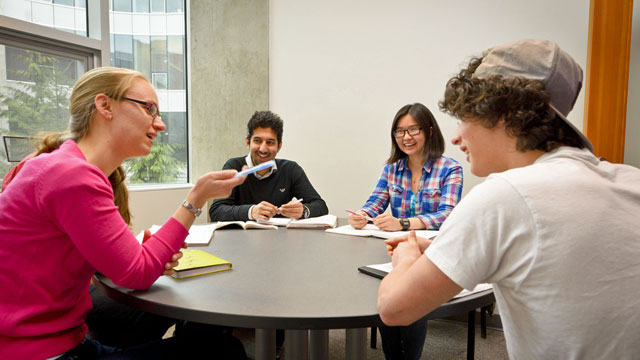
"content": "\u003cfigure id=\"attachment_36146\" class=\"wp-caption aligncenter\" style=\"max-width: 640px\">\u003ca href=\"https://www.flickr.com/photos/questucanada/7946257806/in/set-72157631442804604\">\u003cimg class=\"size-full wp-image-36146\" src=\"http://ww2.kqed.org/mindshift/wp-content/uploads/sites/23/2014/06/Quest-University-Canada.jpg\" alt=\"A classroom at Quest University. (Quest University Canada/Flickr)\" width=\"640\" height=\"360\" srcset=\"https://ww2.kqed.org/app/uploads/sites/23/2014/06/Quest-University-Canada.jpg 640w, https://ww2.kqed.org/app/uploads/sites/23/2014/06/Quest-University-Canada-400x225.jpg 400w, https://ww2.kqed.org/app/uploads/sites/23/2014/06/Quest-University-Canada-320x180.jpg 320w\" sizes=\"(max-width: 640px) 100vw, 640px\">\u003c/a>\u003cfigcaption class=\"wp-caption-text\">A classroom at Quest University. (Quest University Canada/Flickr)\u003c/figcaption>\u003c/figure>\n\u003cp class=\"dropcap-serif\">The trend in K-12 education has steadily been towards teaching students skills and concepts that will be useful to them in college and beyond. No longer are teachers solely responsible for a specific curriculum -- the focus has shifted to skill sets like problem solving, critical thinking and collaboration -- transferable skills useful no matter where a student ends up.\u003c/p>\n\u003cp>The problem is that \u003ca href=\"http://ww2.kqed.org/mindshift/2014/01/do-rigid-college-admissions-leave-room-for-creative-thinkers/\" target=\"_blank\">many colleges haven’t moved along the same progressive path\u003c/a> and are still teaching students in large lectures courses that make little effort to connect the material to the lived experiences and passions of students.\u003c/p>\n\u003cp>A college in British Columbia, Canada is trying to change that trend, emphasizing depth over breadth and aiming to develop highly interdisciplinary students. “We need an education for the knowledge economy in which people are equipped with the processes to filter, combine and create new ideas and products for themselves and for society,” said \u003ca href=\"http://www.questu.ca/about_quest/university_leadership/index.php\" target=\"_blank\">David Helfand*, President of Quest University Canada\u003c/a> in a discussion with \u003ca href=\"http://americanradioworks.publicradio.org/\" target=\"_blank\">American RadioWorks\u003c/a>’ host Stephen Smith.\u003c/p>\n\u003cp>[contextly_sidebar id=\"714cf1e2eda1a1d225e055b51be4102c\"]\u003c/p>\n\u003cp>The college’s structure reflects this commitment to well-rounded creative students. There are no departments in the college. The academic building is circular, with professors randomly assigned to different offices, making it easy for experts of different disciplines to collaborate and converse. It also breaks down hierarchies -- a core feature of most universities.\u003c/p>\n\u003cp>[ad fullwidth]\u003c/p>\n\u003cp>Students take classes in a series of blocks, focusing on only one class at a time. “This allows for a depth of immersion and engagement with a subject that’s simply impossible when a student is juggling four to five courses at the same time,” Helfand said. For the first year, students take a broad array of subjects, exposing them to many disciplines. After that, they pursue a question that inspires them and is interdisciplinary in nature. Each student explores that question with a faculty member and every student graduates with a degree in arts and sciences.\u003c/p>\n\u003cp>The model is based on the premise of how things work in the real-world: problems are interdisciplinary and require collaboration. “Employers want people who can communicate effectively in writing and speaking; they want people who can reason laterally; and most importantly they want people who can collaborate with people from other parts of their organization,” Helfand said. He’s not convinced the majority of universities are preparing students for that kind of work experience.\u003c/p>\n\u003caside class=\"pullquote alignleft\">\"We need an education for the knowledge economy in which people are equipped with the processes to filter, combine and create new ideas and products for themselves and for society.\"\u003c/aside>\n\u003cp>Before his time at Quest University, Helfand taught astronomy at Columbia University for 30 years, and was chair of the department. When teaching a topic like the laws of planetary motion at Columbia, Helfand would draw diagrams of a planet orbiting a star, with arrows to key terms and equations related to the diagram. He might work out a sample problem on the board, so students could see how to solve the equations. The whole lecture would take about 20 minutes.\u003c/p>\n\u003cp>At Quest, this same lesson takes three hours and looks very different. Helfand breaks his group of 20 students into four groups of five and gives them a sophisticated model that produces complicated data, the kind they might see by observing the sky through a telescope. He then gives each group a series of 25 questions that slowly lead them through the process of making observations, changing parameters and perspectives, experimenting with changes and eventually to making some conclusions. “They derive \u003ca href=\"http://www.physicsclassroom.com/class/circles/Lesson-4/Kepler-s-Three-Laws\" target=\"_blank\">Kepler's three laws of of planetary motion\u003c/a> from noisy data the same way Kepler did,” Helfand said. “That’s a student centered, hands on, collaborative approach.”\u003c/p>\n\u003cp>Faculty also conduct research in a non-traditional way. Each professor proposes a five-year project he or she wants to work on -- whether that’s related to their doctorate or not. It could be a project that focuses on pedagogy or it might look like a more traditional scholarly article or book. “They might decide to think deeply about something that’s tangentially related [to their disciplines] or it might be completely unrelated,” Helfand said. Either way he’s convinced that extra study adds richness to their teaching.\u003c/p>\n\u003cp>For the privilege of attending this non-traditional, hands-on, collaborative, self-directed university experience, students pay $29,000 (in Canadian currency). That’s particularly expensive given that the average Canadian university student pays less than $6,000 for other schools.* A little more than half the students are from Canada, while another 34 percent come from the U.S., and the rest from all over the world.\u003c/p>\n\u003cp>Listen to the \u003ca href=\"http://americanradioworks.publicradio.org/\" target=\"_blank\">American RadioWorks\u003c/a> podcast featuring John Helfand:\u003c/p>\n\u003cp>\u003ciframe title=\"americanradioworks_2014_arw_7_15_collegebreaks_128s_player\" src=\"http://minnesota.publicradio.org/www_publicradio/tools/media_player/syndicate.php?name=americanradioworks/2014/arw_7_15_collegebreaks_128\" width=\"319\" height=\"83\" frameborder=\"0\" marginwidth=\"0\" marginheight=\"0\" allowfullscreen=\"allowfullscreen\">\u003c/iframe>\u003c/p>\n\u003cp>\u003c/p>\n\u003cp>*A previous version of this story incorrectly stated that most Canadian universities are free when in fact the \u003ca href=\"http://www.statcan.gc.ca/daily-quotidien/130912/dq130912b-eng.htm\" target=\"_blank\">average student pays $5,772 in fees\u003c/a>. The original version also incorrectly identified Quest's President as John Helfand, when his first name is David. The article now reflects those changes.\u003c/p>\n\n",
"disqusIdentifier": "36139 http://blogs.kqed.org/mindshift/?p=36139",
"disqusUrl": "https://ww2.kqed.org/mindshift/2014/07/28/hands-on-and-student-centered-subverting-the-typical-college-experience/",
"stats": {
"hasVideo": false,
"hasChartOrMap": true,
"hasAudio": false,
"hasPolis": false,
"wordCount": 864,
"hasGoogleForm": false,
"hasGallery": false,
"hasHearkenModule": false,
"iframeSrcs": [
"http://minnesota.publicradio.org/www_publicradio/tools/media_player/syndicate.php"
],
"paragraphCount": 15
},
"modified": 1406656051,
"excerpt": "A Canadian college is following the K-12 education trend towards more student-centered, hands-on, and interdisciplinary teaching.",
"headData": {
"twImgId": "",
"twTitle": "",
"ogTitle": "",
"ogImgId": "",
"twDescription": "",
"description": "A Canadian college is following the K-12 education trend towards more student-centered, hands-on, and interdisciplinary teaching.",
"title": "Hands-On and Student-Centered: Subverting the Typical College Experience | KQED",
"ogDescription": "",
"schema": {
"@context": "https://schema.org",
"@type": "Article",
"headline": "Hands-On and Student-Centered: Subverting the Typical College Experience ",
"datePublished": "2014-07-28T08:57:55-07:00",
"dateModified": "2014-07-29T10:47:31-07:00",
"image": "https://cdn.kqed.org/wp-content/uploads/2020/02/KQED-OG-Image@1x.png"
}
},
"guestAuthors": [],
"slug": "hands-on-and-student-centered-subverting-the-typical-college-experience",
"status": "publish",
"path": "/mindshift/36139/hands-on-and-student-centered-subverting-the-typical-college-experience",
"audioTrackLength": null,
"parsedContent": [
{
"type": "contentString",
"content": "\u003cdiv class=\"post-body\">\u003cp>\u003cfigure id=\"attachment_36146\" class=\"wp-caption aligncenter\" style=\"max-width: 640px\">\u003ca href=\"https://www.flickr.com/photos/questucanada/7946257806/in/set-72157631442804604\">\u003cimg class=\"size-full wp-image-36146\" src=\"http://ww2.kqed.org/mindshift/wp-content/uploads/sites/23/2014/06/Quest-University-Canada.jpg\" alt=\"A classroom at Quest University. (Quest University Canada/Flickr)\" width=\"640\" height=\"360\" srcset=\"https://ww2.kqed.org/app/uploads/sites/23/2014/06/Quest-University-Canada.jpg 640w, https://ww2.kqed.org/app/uploads/sites/23/2014/06/Quest-University-Canada-400x225.jpg 400w, https://ww2.kqed.org/app/uploads/sites/23/2014/06/Quest-University-Canada-320x180.jpg 320w\" sizes=\"(max-width: 640px) 100vw, 640px\">\u003c/a>\u003cfigcaption class=\"wp-caption-text\">A classroom at Quest University. (Quest University Canada/Flickr)\u003c/figcaption>\u003c/figure>\n\u003cp class=\"dropcap-serif\">The trend in K-12 education has steadily been towards teaching students skills and concepts that will be useful to them in college and beyond. No longer are teachers solely responsible for a specific curriculum -- the focus has shifted to skill sets like problem solving, critical thinking and collaboration -- transferable skills useful no matter where a student ends up.\u003c/p>\n\u003cp>The problem is that \u003ca href=\"http://ww2.kqed.org/mindshift/2014/01/do-rigid-college-admissions-leave-room-for-creative-thinkers/\" target=\"_blank\">many colleges haven’t moved along the same progressive path\u003c/a> and are still teaching students in large lectures courses that make little effort to connect the material to the lived experiences and passions of students.\u003c/p>\n\u003cp>A college in British Columbia, Canada is trying to change that trend, emphasizing depth over breadth and aiming to develop highly interdisciplinary students. “We need an education for the knowledge economy in which people are equipped with the processes to filter, combine and create new ideas and products for themselves and for society,” said \u003ca href=\"http://www.questu.ca/about_quest/university_leadership/index.php\" target=\"_blank\">David Helfand*, President of Quest University Canada\u003c/a> in a discussion with \u003ca href=\"http://americanradioworks.publicradio.org/\" target=\"_blank\">American RadioWorks\u003c/a>’ host Stephen Smith.\u003c/p>\n\u003cp>\u003c/p>\u003cp>\u003c/p>\u003cp>\u003c/p>\n\u003cp>The college’s structure reflects this commitment to well-rounded creative students. There are no departments in the college. The academic building is circular, with professors randomly assigned to different offices, making it easy for experts of different disciplines to collaborate and converse. It also breaks down hierarchies -- a core feature of most universities.\u003c/p>\n\u003cp>\u003c/p>\u003c/div>",
"attributes": {
"named": {},
"numeric": []
}
},
{
"type": "component",
"content": "",
"name": "ad",
"attributes": {
"named": {
"label": "fullwidth"
},
"numeric": [
"fullwidth"
]
}
},
{
"type": "contentString",
"content": "\u003cdiv class=\"post-body\">\u003cp>\u003c/p>\n\u003cp>Students take classes in a series of blocks, focusing on only one class at a time. “This allows for a depth of immersion and engagement with a subject that’s simply impossible when a student is juggling four to five courses at the same time,” Helfand said. For the first year, students take a broad array of subjects, exposing them to many disciplines. After that, they pursue a question that inspires them and is interdisciplinary in nature. Each student explores that question with a faculty member and every student graduates with a degree in arts and sciences.\u003c/p>\n\u003cp>The model is based on the premise of how things work in the real-world: problems are interdisciplinary and require collaboration. “Employers want people who can communicate effectively in writing and speaking; they want people who can reason laterally; and most importantly they want people who can collaborate with people from other parts of their organization,” Helfand said. He’s not convinced the majority of universities are preparing students for that kind of work experience.\u003c/p>\n\u003caside class=\"pullquote alignleft\">\"We need an education for the knowledge economy in which people are equipped with the processes to filter, combine and create new ideas and products for themselves and for society.\"\u003c/aside>\n\u003cp>Before his time at Quest University, Helfand taught astronomy at Columbia University for 30 years, and was chair of the department. When teaching a topic like the laws of planetary motion at Columbia, Helfand would draw diagrams of a planet orbiting a star, with arrows to key terms and equations related to the diagram. He might work out a sample problem on the board, so students could see how to solve the equations. The whole lecture would take about 20 minutes.\u003c/p>\n\u003cp>At Quest, this same lesson takes three hours and looks very different. Helfand breaks his group of 20 students into four groups of five and gives them a sophisticated model that produces complicated data, the kind they might see by observing the sky through a telescope. He then gives each group a series of 25 questions that slowly lead them through the process of making observations, changing parameters and perspectives, experimenting with changes and eventually to making some conclusions. “They derive \u003ca href=\"http://www.physicsclassroom.com/class/circles/Lesson-4/Kepler-s-Three-Laws\" target=\"_blank\">Kepler's three laws of of planetary motion\u003c/a> from noisy data the same way Kepler did,” Helfand said. “That’s a student centered, hands on, collaborative approach.”\u003c/p>\n\u003cp>Faculty also conduct research in a non-traditional way. Each professor proposes a five-year project he or she wants to work on -- whether that’s related to their doctorate or not. It could be a project that focuses on pedagogy or it might look like a more traditional scholarly article or book. “They might decide to think deeply about something that’s tangentially related [to their disciplines] or it might be completely unrelated,” Helfand said. Either way he’s convinced that extra study adds richness to their teaching.\u003c/p>\n\u003cp>For the privilege of attending this non-traditional, hands-on, collaborative, self-directed university experience, students pay $29,000 (in Canadian currency). That’s particularly expensive given that the average Canadian university student pays less than $6,000 for other schools.* A little more than half the students are from Canada, while another 34 percent come from the U.S., and the rest from all over the world.\u003c/p>\n\u003cp>Listen to the \u003ca href=\"http://americanradioworks.publicradio.org/\" target=\"_blank\">American RadioWorks\u003c/a> podcast featuring John Helfand:\u003c/p>\n\u003cp>\u003ciframe title=\"americanradioworks_2014_arw_7_15_collegebreaks_128s_player\" src=\"http://minnesota.publicradio.org/www_publicradio/tools/media_player/syndicate.php?name=americanradioworks/2014/arw_7_15_collegebreaks_128\" width=\"319\" height=\"83\" frameborder=\"0\" marginwidth=\"0\" marginheight=\"0\" allowfullscreen=\"allowfullscreen\">\u003c/iframe>\u003c/p>\n\u003cp>\u003c/p>\n\u003cp>*A previous version of this story incorrectly stated that most Canadian universities are free when in fact the \u003ca href=\"http://www.statcan.gc.ca/daily-quotidien/130912/dq130912b-eng.htm\" target=\"_blank\">average student pays $5,772 in fees\u003c/a>. The original version also incorrectly identified Quest's President as John Helfand, when his first name is David. The article now reflects those changes.\u003c/p>\n\n\u003c/div>\u003c/p>",
"attributes": {
"named": {},
"numeric": []
}
}
],
"link": "/mindshift/36139/hands-on-and-student-centered-subverting-the-typical-college-experience",
"authors": [
"234"
],
"categories": [
"mindshift_192"
],
"tags": [
"mindshift_1040",
"mindshift_68",
"mindshift_20691"
],
"featImg": "mindshift_36146",
"label": "mindshift"
},
"mindshift_36996": {
"type": "posts",
"id": "mindshift_36996",
"meta": {
"index": "posts_1716263798",
"site": "mindshift",
"id": "36996",
"score": null,
"sort": [
1406296854000
]
},
"parent": 0,
"labelTerm": {
"site": "mindshift"
},
"blocks": [],
"publishDate": 1406296854,
"format": "aside",
"disqusTitle": "Could the Same Genes Shape Math Skills As Reading Ability?",
"title": "Could the Same Genes Shape Math Skills As Reading Ability?",
"headTitle": "MindShift | KQED News",
"content": "\u003cfigure id=\"attachment_36999\" class=\"wp-caption aligncenter\" style=\"max-width: 640px\">\u003ca href=\"http://ww2.kqed.org/mindshift/wp-content/uploads/sites/23/2014/07/DNA.jpg\">\u003cimg class=\"size-full wp-image-36999\" src=\"http://ww2.kqed.org/mindshift/wp-content/uploads/sites/23/2014/07/DNA.jpg\" alt=\"Getty Images\" width=\"640\" height=\"360\" srcset=\"https://ww2.kqed.org/app/uploads/sites/23/2014/07/DNA.jpg 640w, https://ww2.kqed.org/app/uploads/sites/23/2014/07/DNA-400x225.jpg 400w, https://ww2.kqed.org/app/uploads/sites/23/2014/07/DNA-320x180.jpg 320w\" sizes=\"(max-width: 640px) 100vw, 640px\">\u003c/a>\u003cfigcaption class=\"wp-caption-text\">Getty Images\u003c/figcaption>\u003c/figure>\n\u003cp>\u003ca href=\"http://www.npr.org/blogs/health/2014/07/10/330063232/math-nerd-or-bookworm-many-of-the-same-genes-shape-both-abilities\" target=\"_blank\">\u003cstrong>By Maanvi Singh, NPR\u003c/strong>\u003c/a>\u003c/p>\n\u003cp class=\"dropcap-serif\">Many of us tend to align ourselves with either numbers or words. We're either math brains or we're reading brains.\u003c/p>\n\u003cp>In college, my fellow English majors joked about how none of us could long-divide to save our lives, while our friends in engineering groaned about the fact that Lit 101 was a graduation requirement.\u003c/p>\n\u003cp>But it turns out that about half the genes that influence a child's math ability also seem to influence reading ability, according to a \u003ca href=\"http://www.nature.com/ncomms/2014/140708/ncomms5204/abs/ncomms5204.html\">study\u003c/a> published in the journal \u003cem>Nature Communications\u003c/em>.\u003c/p>\n\u003caside class=\"pullquote alignleft\">\"People who are good at reading, you can bet, are pretty good at math too.\"\u003c/aside>\n\u003cp>\"You'd think that cognitively what's going on with math and reading is very different,\" says \u003ca href=\"http://www.iop.kcl.ac.uk/staff/profile/default.aspx?go=10628\">Robert Plomin\u003c/a>, a behavioral geneticist at Kings College London, and one of the authors of the study. \"Actually, people who are good at reading, you can bet, are pretty good at math too.\"\u003c/p>\n\u003cp>[ad fullwidth]\u003c/p>\n\u003cp>The researchers looked at 2,800 pairs of 12-year-old British twins who were part of the larger \u003ca href=\"http://www.teds.ac.uk/\">Twins Early Development Study\u003c/a>. Some pairs were very nearly genetically identical; the other pairs were fraternal twins, meaning they are the same age and shared a quite similar early environment, but are no more genetically similar than other siblings.\u003c/p>\n\u003cp>The scientists assessed each child's math and reading skills based on standardized tests. To gauge how genes influenced the students' aptitude, the researchers compared the test results of twin siblings as well as the results of unrelated children.\u003c/p>\n\u003cp>The researchers also analyzed the participants' DNA, in hopes of turning up a particular gene or set of genes shared by people with high math or reading ability — genes that were, perhaps, missing in people with low abilities. (Some earlier, smaller studies had suggested such highly influential gene variants might exist). But no particular gene or sets of genes emerged. That may be because a lot — maybe thousands — of genes may be involved in helping to shape these abilities, Plomin says.\u003c/p>\n\u003cp>What the study did find was that children's reading ability and math ability seem to be related — and much of that relationship can be explained by genetics.\u003c/p>\n\u003cp>[contextly_sidebar id=\"nHDQrM6d1PlFwrVyqsn9vb3xNWoijQCx\"]\u003c/p>\n\u003cp>The research also showed that genes can't explain everything about our abilities, Plomin says. \"These genetic propensities are like little nudges,\" he says. Slight variations in your genes may nudge you to read more for pleasure. \"And that can snowball,\" Plomin says.\u003c/p>\n\u003cp>These kids who like reading may spend more time at the library or may ask their parents to buy them more books — and all of that practice reading will push their skills even further.\u003c/p>\n\u003cp>Other kids may find reading to be a bit harder due to genetics, Plomin says. \"It's not that the child just isn't motivated, or that he's just not trying hard enough.\" But with some extra encouragement and support, these children can become good readers as well.\u003c/p>\n\u003cp>Environmental factors may also explain why, among genetically identical twins, one may prefer math while the other prefers reading, Plomin says. One twin may end up with a really good math teacher, while the other doesn't. Or one may fall ill, and that may set her back.\u003c/p>\n\u003cp>Right now, we don't have all the answers, Plomin says. \"I wish I knew what some of the genes are,\" he says. That would allow scientists to learn more about how we each learn best.\u003c/p>\n\u003cp>\"What's going to be needed is very large samples of people to be able to isolate these genes,\" says \u003ca href=\"http://www.journals.elsevier.com/intelligence/editorial-board/d-detterman/\">Douglas Detterman\u003c/a>, an emeritus professor of psychology at Case Western Reserve University and editor of the journal \u003cem>Intelligence\u003c/em>. Detterman, who wasn't involved in this study, says scientists would likely have to look at the DNA of millions of people in order to start figuring out which genes affect our academic aptitudes.\u003c/p>\n\u003cp>It's a daunting task, he says, \"but I think it'll happen faster than we expect.\" As we learn more about the influence of genetics on learning, we'll be able to more easily figure out which learning environment works best for each child.\u003c/p>\n\u003cp>\u003c/p>\n\u003cp>Here, teachers are a bit like farmers, Detterman says. And children are a bit like corn. \"You have corn plants that do well in certain environments, and don't in others. And the farmer's job is to get the corn plants into the right soil.\"\u003c/p>\n\u003cdiv class=\"fullattribution\">\u003cem>Copyright 2014 NPR. To see more, visit http://www.npr.org/.\u003cimg src=\"http://www.google-analytics.com/__utm.gif?utmac=UA-5828686-4&utmdt=Math+Nerd+Or+Bookworm%3F+Many+Of+The+Same+Genes+Shape+Both+Abilities&utme=8(APIKey)9(MDAxOTAwOTE4MDEyMTkxMDAzNjczZDljZA004)\" alt=\"\">\u003c/em>\u003c/div>\n\n",
"disqusIdentifier": "36996 http://blogs.kqed.org/mindshift/?p=36996",
"disqusUrl": "https://ww2.kqed.org/mindshift/2014/07/25/could-the-same-genes-shape-math-skills-as-reading-ability/",
"stats": {
"hasVideo": false,
"hasChartOrMap": false,
"hasAudio": false,
"hasPolis": false,
"wordCount": 760,
"hasGoogleForm": false,
"hasGallery": false,
"hasHearkenModule": false,
"iframeSrcs": [],
"paragraphCount": 19
},
"modified": 1406243549,
"excerpt": "About half the genetic contribution to a child's reading ability also shapes how math-savvy she is, a big study of twins finds. But there's still no telling exactly which genes are involved.",
"headData": {
"twImgId": "",
"twTitle": "",
"ogTitle": "",
"ogImgId": "",
"twDescription": "",
"description": "About half the genetic contribution to a child's reading ability also shapes how math-savvy she is, a big study of twins finds. But there's still no telling exactly which genes are involved.",
"title": "Could the Same Genes Shape Math Skills As Reading Ability? | KQED",
"ogDescription": "",
"schema": {
"@context": "https://schema.org",
"@type": "Article",
"headline": "Could the Same Genes Shape Math Skills As Reading Ability?",
"datePublished": "2014-07-25T07:00:54-07:00",
"dateModified": "2014-07-24T16:12:29-07:00",
"image": "https://cdn.kqed.org/wp-content/uploads/2020/02/KQED-OG-Image@1x.png"
}
},
"guestAuthors": [],
"slug": "could-the-same-genes-shape-math-skills-as-reading-ability",
"status": "publish",
"nprApiLink": "http://api.npr.org/query?id=330063232&apiKey=MDAxOTAwOTE4MDEyMTkxMDAzNjczZDljZA004",
"nprByline": "Maanvi Singh",
"nprStoryDate": "Thu, 10 Jul 2014 09:46:00 -0400",
"nprLastModifiedDate": "Thu, 10 Jul 2014 13:23:44 -0400",
"nprHtmlLink": "http://www.npr.org/blogs/health/2014/07/10/330063232/math-nerd-or-bookworm-many-of-the-same-genes-shape-both-abilities?ft=3&f=330063232",
"nprStoryId": "330063232",
"nprRetrievedStory": "1",
"nprPubDate": "Thu, 10 Jul 2014 13:23:00 -0400",
"path": "/mindshift/36996/could-the-same-genes-shape-math-skills-as-reading-ability",
"audioTrackLength": null,
"parsedContent": [
{
"type": "contentString",
"content": "\u003cdiv class=\"post-body\">\u003cp>\u003cfigure id=\"attachment_36999\" class=\"wp-caption aligncenter\" style=\"max-width: 640px\">\u003ca href=\"http://ww2.kqed.org/mindshift/wp-content/uploads/sites/23/2014/07/DNA.jpg\">\u003cimg class=\"size-full wp-image-36999\" src=\"http://ww2.kqed.org/mindshift/wp-content/uploads/sites/23/2014/07/DNA.jpg\" alt=\"Getty Images\" width=\"640\" height=\"360\" srcset=\"https://ww2.kqed.org/app/uploads/sites/23/2014/07/DNA.jpg 640w, https://ww2.kqed.org/app/uploads/sites/23/2014/07/DNA-400x225.jpg 400w, https://ww2.kqed.org/app/uploads/sites/23/2014/07/DNA-320x180.jpg 320w\" sizes=\"(max-width: 640px) 100vw, 640px\">\u003c/a>\u003cfigcaption class=\"wp-caption-text\">Getty Images\u003c/figcaption>\u003c/figure>\n\u003cp>\u003ca href=\"http://www.npr.org/blogs/health/2014/07/10/330063232/math-nerd-or-bookworm-many-of-the-same-genes-shape-both-abilities\" target=\"_blank\">\u003cstrong>By Maanvi Singh, NPR\u003c/strong>\u003c/a>\u003c/p>\n\u003cp class=\"dropcap-serif\">Many of us tend to align ourselves with either numbers or words. We're either math brains or we're reading brains.\u003c/p>\n\u003cp>In college, my fellow English majors joked about how none of us could long-divide to save our lives, while our friends in engineering groaned about the fact that Lit 101 was a graduation requirement.\u003c/p>\n\u003cp>But it turns out that about half the genes that influence a child's math ability also seem to influence reading ability, according to a \u003ca href=\"http://www.nature.com/ncomms/2014/140708/ncomms5204/abs/ncomms5204.html\">study\u003c/a> published in the journal \u003cem>Nature Communications\u003c/em>.\u003c/p>\n\u003caside class=\"pullquote alignleft\">\"People who are good at reading, you can bet, are pretty good at math too.\"\u003c/aside>\n\u003cp>\"You'd think that cognitively what's going on with math and reading is very different,\" says \u003ca href=\"http://www.iop.kcl.ac.uk/staff/profile/default.aspx?go=10628\">Robert Plomin\u003c/a>, a behavioral geneticist at Kings College London, and one of the authors of the study. \"Actually, people who are good at reading, you can bet, are pretty good at math too.\"\u003c/p>\n\u003cp>\u003c/p>\u003c/div>",
"attributes": {
"named": {},
"numeric": []
}
},
{
"type": "component",
"content": "",
"name": "ad",
"attributes": {
"named": {
"label": "fullwidth"
},
"numeric": [
"fullwidth"
]
}
},
{
"type": "contentString",
"content": "\u003cdiv class=\"post-body\">\u003cp>\u003c/p>\n\u003cp>The researchers looked at 2,800 pairs of 12-year-old British twins who were part of the larger \u003ca href=\"http://www.teds.ac.uk/\">Twins Early Development Study\u003c/a>. Some pairs were very nearly genetically identical; the other pairs were fraternal twins, meaning they are the same age and shared a quite similar early environment, but are no more genetically similar than other siblings.\u003c/p>\n\u003cp>The scientists assessed each child's math and reading skills based on standardized tests. To gauge how genes influenced the students' aptitude, the researchers compared the test results of twin siblings as well as the results of unrelated children.\u003c/p>\n\u003cp>The researchers also analyzed the participants' DNA, in hopes of turning up a particular gene or set of genes shared by people with high math or reading ability — genes that were, perhaps, missing in people with low abilities. (Some earlier, smaller studies had suggested such highly influential gene variants might exist). But no particular gene or sets of genes emerged. That may be because a lot — maybe thousands — of genes may be involved in helping to shape these abilities, Plomin says.\u003c/p>\n\u003cp>What the study did find was that children's reading ability and math ability seem to be related — and much of that relationship can be explained by genetics.\u003c/p>\n\u003cp>\u003c/p>\u003cp>\u003c/p>\u003cp>\u003c/p>\n\u003cp>The research also showed that genes can't explain everything about our abilities, Plomin says. \"These genetic propensities are like little nudges,\" he says. Slight variations in your genes may nudge you to read more for pleasure. \"And that can snowball,\" Plomin says.\u003c/p>\n\u003cp>These kids who like reading may spend more time at the library or may ask their parents to buy them more books — and all of that practice reading will push their skills even further.\u003c/p>\n\u003cp>Other kids may find reading to be a bit harder due to genetics, Plomin says. \"It's not that the child just isn't motivated, or that he's just not trying hard enough.\" But with some extra encouragement and support, these children can become good readers as well.\u003c/p>\n\u003cp>Environmental factors may also explain why, among genetically identical twins, one may prefer math while the other prefers reading, Plomin says. One twin may end up with a really good math teacher, while the other doesn't. Or one may fall ill, and that may set her back.\u003c/p>\n\u003cp>Right now, we don't have all the answers, Plomin says. \"I wish I knew what some of the genes are,\" he says. That would allow scientists to learn more about how we each learn best.\u003c/p>\n\u003cp>\"What's going to be needed is very large samples of people to be able to isolate these genes,\" says \u003ca href=\"http://www.journals.elsevier.com/intelligence/editorial-board/d-detterman/\">Douglas Detterman\u003c/a>, an emeritus professor of psychology at Case Western Reserve University and editor of the journal \u003cem>Intelligence\u003c/em>. Detterman, who wasn't involved in this study, says scientists would likely have to look at the DNA of millions of people in order to start figuring out which genes affect our academic aptitudes.\u003c/p>\n\u003cp>It's a daunting task, he says, \"but I think it'll happen faster than we expect.\" As we learn more about the influence of genetics on learning, we'll be able to more easily figure out which learning environment works best for each child.\u003c/p>\n\u003cp>\u003c/p>\n\u003cp>Here, teachers are a bit like farmers, Detterman says. And children are a bit like corn. \"You have corn plants that do well in certain environments, and don't in others. And the farmer's job is to get the corn plants into the right soil.\"\u003c/p>\n\u003cdiv class=\"fullattribution\">\u003cem>Copyright 2014 NPR. To see more, visit http://www.npr.org/.\u003cimg src=\"http://www.google-analytics.com/__utm.gif?utmac=UA-5828686-4&utmdt=Math+Nerd+Or+Bookworm%3F+Many+Of+The+Same+Genes+Shape+Both+Abilities&utme=8(APIKey)9(MDAxOTAwOTE4MDEyMTkxMDAzNjczZDljZA004)\" alt=\"\">\u003c/em>\u003c/div>\n\n\u003c/div>\u003c/p>",
"attributes": {
"named": {},
"numeric": []
}
}
],
"link": "/mindshift/36996/could-the-same-genes-shape-math-skills-as-reading-ability",
"authors": [
"byline_mindshift_36996"
],
"categories": [
"mindshift_192"
],
"tags": [
"mindshift_1040",
"mindshift_392",
"mindshift_550"
],
"featImg": "mindshift_36999",
"label": "mindshift"
},
"mindshift_36858": {
"type": "posts",
"id": "mindshift_36858",
"meta": {
"index": "posts_1716263798",
"site": "mindshift",
"id": "36858",
"score": null,
"sort": [
1406124049000
]
},
"parent": 0,
"labelTerm": {
"site": "mindshift"
},
"blocks": [],
"publishDate": 1406124049,
"format": "aside",
"disqusTitle": "Let 'Em Out! The Many Benefits of Outdoor Play In Kindergarten",
"title": "Let 'Em Out! The Many Benefits of Outdoor Play In Kindergarten",
"headTitle": "MindShift | KQED News",
"content": "\u003cfigure id=\"attachment_36880\" class=\"wp-caption aligncenter\" style=\"max-width: 640px\">\u003cimg class=\"wp-image-36880 size-large\" src=\"http://ww2.kqed.org/mindshift/wp-content/uploads/sites/23/2014/07/Two-kids-on-tree-640x426.jpg\" alt=\"A outdoor kindergarten in Switzerland\" width=\"640\" height=\"426\">\u003cfigcaption class=\"wp-caption-text\">Waldkindergartens, an all-outdoor kindergarten in Switzerland/Rona RIchter\u003c/figcaption>\u003c/figure>\n\u003cp class=\"dropcap-serif\">For the typical American kindergartner, unstructured free play during the school day consists of 20 to 30 minutes of recess, and perhaps some time at indoor \"stations\" -- perhaps creating with building blocks, costumes, or musical instruments. But what if there was more? What if the answer to \"what did you do in school today?\" was, “I climbed a tree, played in the mud, built a fire”?\u003c/p>\n\u003cp>That is exactly the kind of learning going on in the Swiss Waldkindergartens, or forest kindergartens, where children ages four to seven spend all of their school days playing outdoors, no matter the weather. With no explicit math or literacy taught until first grade, the Swiss have no set goals for kindergartners beyond a few measurements, like using scissors and writing one’s own name. They instead have chosen to focus on the social interaction and emotional well-being found in free play.\u003c/p>\n\u003cp>With many parents and educators overwhelmed by the amount of academics required for kindergartners -- and the \u003ca href=\"http://ww2.kqed.org/mindshift/2014/02/is-kindergarten-too-young-to-test/\" target=\"_blank\">testing requirements at that age\u003c/a> -- it’s no surprise that the forest kindergarten, and the passion for bringing more free play to young children during the school day, is catching on stateside. \u003ca href=\"http://www.cmec.ca/Publications/Lists/Publications/Attachments/282/play-based-learning_statement_EN.pdf\">Free play and inquiry learning\u003c/a> are the cornerstone of Canada’s new all-day kindergarten program; forest kindergartens are popping up in Washington state, Vermont, and even \u003ca href=\"http://www.nytimes.com/2013/03/31/nyregion/lessons-found-in-the-mud.html?_r=3&adxnnl=1&adxnnlx=1405080446-rh+9O6sBJBKRpHfnlSoFqQ\">Brooklyn\u003c/a>.\u003c/p>\n\u003cp>At the Waldkindergarten, which takes place in the middle of the woods in Langnau am Albis, Switzerland, dotted with several handmade structures like a rudimentary wood shelter where children and teachers gather around the fire, children play, often away from teachers' view. These scenes are captured in “\u003ca href=\"http://www.schoolsoutfilm.com/\">School’s Out: Lessons From a Forest Kindergarten,\u003c/a>” a documentary directed by Lisa Molomot. In the 36-minute film, Molomot and producer Rona Richter show scenes from two public schools: the outdoor forest kindergarten in Switzerland and a more typical American kindergarten in New Haven, Connecticut.\u003c/p>\n\u003caside class=\"pullquote alignleft\">“In order for children to learn, they need to be able to pay attention. In order to pay attention, we need to let them move.”\u003c/aside>\n\u003cp>The camera watches as a group of unattended children in sturdy coats and galoshes roll down a tall, muddy hill over and over; in another scene, a group of children help cook a popcorn snack over an outdoor fire, getting close enough to the open flame to add logs and poke the fire with sticks.\u003c/p>\n\u003cp>[ad fullwidth]\u003c/p>\n\u003cp>The children's play may look like messing around, but Molomot said don’t be fooled: Even though Waldkindergartners engage in free play, there is more going on than first appears. “So much of what is going on and the kind of play they do, symbolic play, is really pre-reading,” Molomot said. “It’s a very important foundation for reading. We’ve received a lot of comments about the film that say, ‘Oh, the school looks like recess,’ and that’s a very misunderstood concept about play for kids. You’d be surprised at the importance of play.”\u003c/p>\n\u003cp>\u003cstrong> THE AMERICAN KINDERGARTEN\u003c/strong>\u003c/p>\n\u003cp>Scenes of rosy-faced children building forts in the snow are presented in sharp contrast to the academic (and mostly indoor) kindergarten in New Haven, Connecticut, where a normal day is packed full of orderly activities: morning meeting, readers’ workshop, writers’ workshop, a special activity (like art, gym, and music), lunch and recess, storytime, “choice” (a fancy word for play), math centers, then closing meeting.\u003c/p>\n\u003cp>“It’s a full day, a lot of transitions,” teacher Ann Donnery tells the camera dryly. Donnery notices that the gross motor skills of many of her kindergartners are underdeveloped, noting that usually means that fine motor skills are also lacking. “Developing those gross motor skills is just critical, can impact so much of later learning,” she said.\u003c/p>\n\u003cp>The film reaches Americans at a particular time, one in which the free-playing child, unsupervised by adults and encouraged to take risks, feels like an endangered species. Not only are our kids increasingly unfit -- a \u003ca href=\"http://well.blogs.nytimes.com/2014/07/09/young-and-unfit/?_php=true&_type=blogs&_r=0\">recent CDC study\u003c/a> finding that American young people are becoming more physically unfit with each passing year, regardless of race or socioeconomic status -- they are also lacking in the attention needed to learn, with more than 10 percent of the school population diagnosed with some kind of attention disorder. Pediatric occupational therapist Angela Hanscom \u003ca href=\"http://www.washingtonpost.com/blogs/answer-sheet/wp/2014/07/08/why-so-many-kids-cant-sit-still-in-school-today/\">opined in the Washington Post\u003c/a> that there’s good reason our kids are so fidgety: more and more students come to class without having enough core strength and balance to hold their bodies still long enough to learn. The core strength is only gained, she said, from moving their bodies for hours at a time. Hanscom notes our youngest children seem to be trapped in a Catch-22 inside their own bodies: “In order for children to learn, they need to be able to pay attention. In order to pay attention, we need to let them move.”\u003c/p>\n\u003cp>\u003cstrong>MORE EVIDENCE\u003c/strong>\u003c/p>\n\u003cp>A \u003ca href=\"http://journal.frontiersin.org/Journal/10.3389/fpsyg.2014.00593/abstract\">recent study by psychologists\u003c/a> at the University of Colorado shows an even stronger reason for free play: children who experienced more undirected free play showed signs of stronger executive function, a strong predictor of success in school. “The more time that children spent in less-structured activities,” wrote researchers, “the better their self-directed executive functioning.”\u003c/p>\n\u003cp>[gallery type=\"slideshow\" ids=\"36882,36883,36884,36885,36886,36887\"]\u003c/p>\n\u003cp>It’s nearly impossible to watch S\u003cem>chool’s Out\u003c/em> and not be convinced that our youngest students need more free play than they are currently getting. But for most urban and suburban schools, how to incorporate the kind of free play found in Waldkindergartens can be confounding, or even not a particular priority when so much else must be accomplished to meet standards and markers of success. Charlie Friedman, Founder and Head of School for the Nashville Classical charter school in Nashville, Tennessee, just finished the school’s introductory year with 96 kindergartners. The school focuses on a Core Knowledge curriculum, and Friedman said they had “clear lines in the sand” about what the children needed to know by the end of kindergarten.\u003c/p>\n\u003cp>[contextly_sidebar id=\"7f188b6455a3b8dada9b53e6a61e6f9b\"]\u003c/p>\n\u003cp>Nashville Classical’s students, many of whom come by bus from all over the city, are mostly students of color, the majority coming from low-income backgrounds. “The biggest thing that we offer [at Nashville Classical] is high expectations every second of the day, the academic piece that they need to be successful,” Friedman said. He seemed unsure whether or not his students needed more free outdoor play, saying that as a charter school, they have the control to try to give children both play as well as academics. “A lot of schools can either teach reading or have recess,” Friedman said. “We were really fortunate to design our school from the ground up. Reading and recess are important enough that we need to do both.”\u003c/p>\n\u003cp>Friedman’s kindergartners attend school from 8:00 until 4:00, and receive 30 minutes of recess per day inside a fenced play area containing monkeybars, slides and a grassy open area. Nashville Classical’s kindergartners also receive 30 minutes of physical education every day, and teachers use a kinesthetic instructional style and try to incorporate movement into many of their lessons, often using singing, chanting and movement to help children remember the information they are learning. (There's \u003ca href=\"http://ww2.kqed.org/mindshift/2014/07/lets-move-how-body-movements-drive-learning-through-technology/\" target=\"_blank\">evidence to show why this is important\u003c/a>, too.) While this kind of adult-led movement is a far cry from the nearly unstructured free play of a forest kindergarten, it does serve the school’s purpose of high academic standards for their kindergartners, in hopes this prepares them for future academic success.\u003c/p>\n\u003cp>[ad floatright]\u003c/p>\n\u003cp>Molomot said that the Swiss forest kindergarten was started by a group of teachers who saw that their children needed more room to play and learn. “At that age, they are thirsting to learn, to be part of the world, and we put them in this box,” Molomot said. “And I can even say for myself, it was so much nicer to be outside where there was space. Inside the New Haven classroom, you couldn’t even move, there was this buzz of the lights, all of these artificial elements. I don’t know if the kids feel that, but I know I certainly felt better at the end of the day filming outside than in the classroom.”\u003c/p>\n\n",
"disqusIdentifier": "36858 http://blogs.kqed.org/mindshift/?p=36858",
"disqusUrl": "https://ww2.kqed.org/mindshift/2014/07/23/let-em-out-the-many-benefits-of-outdoor-play-in-kindergarten/",
"stats": {
"hasVideo": false,
"hasChartOrMap": false,
"hasAudio": false,
"hasPolis": false,
"wordCount": 1454,
"hasGoogleForm": false,
"hasGallery": true,
"hasHearkenModule": false,
"iframeSrcs": [],
"paragraphCount": 19
},
"modified": 1406233464,
"excerpt": "At Swiss Waldkindergartens, or forest kindergartens, children spend all of their school days playing outdoors, no matter the weather. Instead of math or literacy requirements, they focus on the social interaction and emotional well-being found in free play.",
"headData": {
"twImgId": "",
"twTitle": "",
"ogTitle": "",
"ogImgId": "",
"twDescription": "",
"description": "At Swiss Waldkindergartens, or forest kindergartens, children spend all of their school days playing outdoors, no matter the weather. Instead of math or literacy requirements, they focus on the social interaction and emotional well-being found in free play.",
"title": "Let 'Em Out! The Many Benefits of Outdoor Play In Kindergarten | KQED",
"ogDescription": "",
"schema": {
"@context": "https://schema.org",
"@type": "Article",
"headline": "Let 'Em Out! The Many Benefits of Outdoor Play In Kindergarten",
"datePublished": "2014-07-23T07:00:49-07:00",
"dateModified": "2014-07-24T13:24:24-07:00",
"image": "https://cdn.kqed.org/wp-content/uploads/2020/02/KQED-OG-Image@1x.png"
}
},
"guestAuthors": [],
"slug": "let-em-out-the-many-benefits-of-outdoor-play-in-kindergarten",
"status": "publish",
"path": "/mindshift/36858/let-em-out-the-many-benefits-of-outdoor-play-in-kindergarten",
"audioTrackLength": null,
"parsedContent": [
{
"type": "contentString",
"content": "\u003cdiv class=\"post-body\">\u003cp>\u003cfigure id=\"attachment_36880\" class=\"wp-caption aligncenter\" style=\"max-width: 640px\">\u003cimg class=\"wp-image-36880 size-large\" src=\"http://ww2.kqed.org/mindshift/wp-content/uploads/sites/23/2014/07/Two-kids-on-tree-640x426.jpg\" alt=\"A outdoor kindergarten in Switzerland\" width=\"640\" height=\"426\">\u003cfigcaption class=\"wp-caption-text\">Waldkindergartens, an all-outdoor kindergarten in Switzerland/Rona RIchter\u003c/figcaption>\u003c/figure>\n\u003cp class=\"dropcap-serif\">For the typical American kindergartner, unstructured free play during the school day consists of 20 to 30 minutes of recess, and perhaps some time at indoor \"stations\" -- perhaps creating with building blocks, costumes, or musical instruments. But what if there was more? What if the answer to \"what did you do in school today?\" was, “I climbed a tree, played in the mud, built a fire”?\u003c/p>\n\u003cp>That is exactly the kind of learning going on in the Swiss Waldkindergartens, or forest kindergartens, where children ages four to seven spend all of their school days playing outdoors, no matter the weather. With no explicit math or literacy taught until first grade, the Swiss have no set goals for kindergartners beyond a few measurements, like using scissors and writing one’s own name. They instead have chosen to focus on the social interaction and emotional well-being found in free play.\u003c/p>\n\u003cp>With many parents and educators overwhelmed by the amount of academics required for kindergartners -- and the \u003ca href=\"http://ww2.kqed.org/mindshift/2014/02/is-kindergarten-too-young-to-test/\" target=\"_blank\">testing requirements at that age\u003c/a> -- it’s no surprise that the forest kindergarten, and the passion for bringing more free play to young children during the school day, is catching on stateside. \u003ca href=\"http://www.cmec.ca/Publications/Lists/Publications/Attachments/282/play-based-learning_statement_EN.pdf\">Free play and inquiry learning\u003c/a> are the cornerstone of Canada’s new all-day kindergarten program; forest kindergartens are popping up in Washington state, Vermont, and even \u003ca href=\"http://www.nytimes.com/2013/03/31/nyregion/lessons-found-in-the-mud.html?_r=3&adxnnl=1&adxnnlx=1405080446-rh+9O6sBJBKRpHfnlSoFqQ\">Brooklyn\u003c/a>.\u003c/p>\n\u003cp>At the Waldkindergarten, which takes place in the middle of the woods in Langnau am Albis, Switzerland, dotted with several handmade structures like a rudimentary wood shelter where children and teachers gather around the fire, children play, often away from teachers' view. These scenes are captured in “\u003ca href=\"http://www.schoolsoutfilm.com/\">School’s Out: Lessons From a Forest Kindergarten,\u003c/a>” a documentary directed by Lisa Molomot. In the 36-minute film, Molomot and producer Rona Richter show scenes from two public schools: the outdoor forest kindergarten in Switzerland and a more typical American kindergarten in New Haven, Connecticut.\u003c/p>\n\u003caside class=\"pullquote alignleft\">“In order for children to learn, they need to be able to pay attention. In order to pay attention, we need to let them move.”\u003c/aside>\n\u003cp>The camera watches as a group of unattended children in sturdy coats and galoshes roll down a tall, muddy hill over and over; in another scene, a group of children help cook a popcorn snack over an outdoor fire, getting close enough to the open flame to add logs and poke the fire with sticks.\u003c/p>\n\u003cp>\u003c/p>\u003c/div>",
"attributes": {
"named": {},
"numeric": []
}
},
{
"type": "component",
"content": "",
"name": "ad",
"attributes": {
"named": {
"label": "fullwidth"
},
"numeric": [
"fullwidth"
]
}
},
{
"type": "contentString",
"content": "\u003cdiv class=\"post-body\">\u003cp>\u003c/p>\n\u003cp>The children's play may look like messing around, but Molomot said don’t be fooled: Even though Waldkindergartners engage in free play, there is more going on than first appears. “So much of what is going on and the kind of play they do, symbolic play, is really pre-reading,” Molomot said. “It’s a very important foundation for reading. We’ve received a lot of comments about the film that say, ‘Oh, the school looks like recess,’ and that’s a very misunderstood concept about play for kids. You’d be surprised at the importance of play.”\u003c/p>\n\u003cp>\u003cstrong> THE AMERICAN KINDERGARTEN\u003c/strong>\u003c/p>\n\u003cp>Scenes of rosy-faced children building forts in the snow are presented in sharp contrast to the academic (and mostly indoor) kindergarten in New Haven, Connecticut, where a normal day is packed full of orderly activities: morning meeting, readers’ workshop, writers’ workshop, a special activity (like art, gym, and music), lunch and recess, storytime, “choice” (a fancy word for play), math centers, then closing meeting.\u003c/p>\n\u003cp>“It’s a full day, a lot of transitions,” teacher Ann Donnery tells the camera dryly. Donnery notices that the gross motor skills of many of her kindergartners are underdeveloped, noting that usually means that fine motor skills are also lacking. “Developing those gross motor skills is just critical, can impact so much of later learning,” she said.\u003c/p>\n\u003cp>The film reaches Americans at a particular time, one in which the free-playing child, unsupervised by adults and encouraged to take risks, feels like an endangered species. Not only are our kids increasingly unfit -- a \u003ca href=\"http://well.blogs.nytimes.com/2014/07/09/young-and-unfit/?_php=true&_type=blogs&_r=0\">recent CDC study\u003c/a> finding that American young people are becoming more physically unfit with each passing year, regardless of race or socioeconomic status -- they are also lacking in the attention needed to learn, with more than 10 percent of the school population diagnosed with some kind of attention disorder. Pediatric occupational therapist Angela Hanscom \u003ca href=\"http://www.washingtonpost.com/blogs/answer-sheet/wp/2014/07/08/why-so-many-kids-cant-sit-still-in-school-today/\">opined in the Washington Post\u003c/a> that there’s good reason our kids are so fidgety: more and more students come to class without having enough core strength and balance to hold their bodies still long enough to learn. The core strength is only gained, she said, from moving their bodies for hours at a time. Hanscom notes our youngest children seem to be trapped in a Catch-22 inside their own bodies: “In order for children to learn, they need to be able to pay attention. In order to pay attention, we need to let them move.”\u003c/p>\n\u003cp>\u003cstrong>MORE EVIDENCE\u003c/strong>\u003c/p>\n\u003cp>A \u003ca href=\"http://journal.frontiersin.org/Journal/10.3389/fpsyg.2014.00593/abstract\">recent study by psychologists\u003c/a> at the University of Colorado shows an even stronger reason for free play: children who experienced more undirected free play showed signs of stronger executive function, a strong predictor of success in school. “The more time that children spent in less-structured activities,” wrote researchers, “the better their self-directed executive functioning.”\u003c/p>\n\u003cp>\u003c/p>\u003c/div>",
"attributes": {
"named": {},
"numeric": []
}
},
{
"type": "component",
"content": "",
"name": "gallery",
"attributes": {
"named": {
"type": "slideshow",
"ids": "36882,36883,36884,36885,36886,36887",
"label": ""
},
"numeric": []
}
},
{
"type": "contentString",
"content": "\u003cdiv class=\"post-body\">\u003cp>\u003c/p>\n\u003cp>It’s nearly impossible to watch S\u003cem>chool’s Out\u003c/em> and not be convinced that our youngest students need more free play than they are currently getting. But for most urban and suburban schools, how to incorporate the kind of free play found in Waldkindergartens can be confounding, or even not a particular priority when so much else must be accomplished to meet standards and markers of success. Charlie Friedman, Founder and Head of School for the Nashville Classical charter school in Nashville, Tennessee, just finished the school’s introductory year with 96 kindergartners. The school focuses on a Core Knowledge curriculum, and Friedman said they had “clear lines in the sand” about what the children needed to know by the end of kindergarten.\u003c/p>\n\u003cp>\u003c/p>\u003cp>\u003c/p>\u003cp>\u003c/p>\n\u003cp>Nashville Classical’s students, many of whom come by bus from all over the city, are mostly students of color, the majority coming from low-income backgrounds. “The biggest thing that we offer [at Nashville Classical] is high expectations every second of the day, the academic piece that they need to be successful,” Friedman said. He seemed unsure whether or not his students needed more free outdoor play, saying that as a charter school, they have the control to try to give children both play as well as academics. “A lot of schools can either teach reading or have recess,” Friedman said. “We were really fortunate to design our school from the ground up. Reading and recess are important enough that we need to do both.”\u003c/p>\n\u003cp>Friedman’s kindergartners attend school from 8:00 until 4:00, and receive 30 minutes of recess per day inside a fenced play area containing monkeybars, slides and a grassy open area. Nashville Classical’s kindergartners also receive 30 minutes of physical education every day, and teachers use a kinesthetic instructional style and try to incorporate movement into many of their lessons, often using singing, chanting and movement to help children remember the information they are learning. (There's \u003ca href=\"http://ww2.kqed.org/mindshift/2014/07/lets-move-how-body-movements-drive-learning-through-technology/\" target=\"_blank\">evidence to show why this is important\u003c/a>, too.) While this kind of adult-led movement is a far cry from the nearly unstructured free play of a forest kindergarten, it does serve the school’s purpose of high academic standards for their kindergartners, in hopes this prepares them for future academic success.\u003c/p>\n\u003cp>\u003c/p>\u003c/div>",
"attributes": {
"named": {},
"numeric": []
}
},
{
"type": "component",
"content": "",
"name": "ad",
"attributes": {
"named": {
"label": "floatright"
},
"numeric": [
"floatright"
]
}
},
{
"type": "contentString",
"content": "\u003cdiv class=\"post-body\">\u003cp>\u003c/p>\n\u003cp>Molomot said that the Swiss forest kindergarten was started by a group of teachers who saw that their children needed more room to play and learn. “At that age, they are thirsting to learn, to be part of the world, and we put them in this box,” Molomot said. “And I can even say for myself, it was so much nicer to be outside where there was space. Inside the New Haven classroom, you couldn’t even move, there was this buzz of the lights, all of these artificial elements. I don’t know if the kids feel that, but I know I certainly felt better at the end of the day filming outside than in the classroom.”\u003c/p>\n\n\u003c/div>\u003c/p>",
"attributes": {
"named": {},
"numeric": []
}
}
],
"link": "/mindshift/36858/let-em-out-the-many-benefits-of-outdoor-play-in-kindergarten",
"authors": [
"4445"
],
"categories": [
"mindshift_192"
],
"tags": [
"mindshift_1040",
"mindshift_20712",
"mindshift_498"
],
"label": "mindshift"
},
"mindshift_36967": {
"type": "posts",
"id": "mindshift_36967",
"meta": {
"index": "posts_1716263798",
"site": "mindshift",
"id": "36967",
"score": null,
"sort": [
1406037635000
]
},
"parent": 0,
"labelTerm": {
"site": "mindshift"
},
"blocks": [],
"publishDate": 1406037635,
"format": "aside",
"disqusTitle": "Unpacking the Science: How Playing Music Changes the Learning Brain",
"title": "Unpacking the Science: How Playing Music Changes the Learning Brain",
"headTitle": "MindShift | KQED News",
"content": "\u003cfigure id=\"attachment_36968\" class=\"wp-caption aligncenter\" style=\"max-width: 640px\">\u003ca href=\"http://ww2.kqed.org/mindshift/wp-content/uploads/sites/23/2014/07/cellist.jpg\">\u003cimg class=\"size-full wp-image-36968\" src=\"http://ww2.kqed.org/mindshift/wp-content/uploads/sites/23/2014/07/cellist.jpg\" alt=\"A bassist at the Conservatory Lab Charter School in Boston plays during a recital rehearsal. Research has found music instruction has beneficial effects on young brains. (Jesse Costa/WBUR)\" width=\"640\" height=\"360\" srcset=\"https://ww2.kqed.org/app/uploads/sites/23/2014/07/cellist.jpg 640w, https://ww2.kqed.org/app/uploads/sites/23/2014/07/cellist-400x225.jpg 400w, https://ww2.kqed.org/app/uploads/sites/23/2014/07/cellist-320x180.jpg 320w\" sizes=\"(max-width: 640px) 100vw, 640px\">\u003c/a>\u003cfigcaption class=\"wp-caption-text\">A bassist at the Conservatory Lab Charter School in Boston plays during a recital rehearsal. Research has found music instruction has beneficial effects on young brains. (Jesse Costa/WBUR)\u003c/figcaption>\u003c/figure>\n\u003ch4>\u003ca href=\"http://commonhealth.wbur.org/2014/07/music-language-brain\" target=\"_blank\">By George Hicks, WBUR CommonHealth Blog\u003c/a>\u003c/h4>\n\u003cp class=\"dropcap-serif\">Remember “Mozart Makes You Smarter”?\u003c/p>\n\u003cp>A \u003ca href=\"http://www.nature.com/nature/journal/v365/n6447/abs/365611a0.html\" target=\"_blank\">1993 study\u003c/a> of college students showed them performing better on spatial reasoning tests after listening to a Mozart sonata. That led to claims that listening to Mozart temporarily increases IQs — and to a raft of \u003ca href=\"http://www.amazon.com/Mozart-Makes-You-Smarter-W-A/dp/B000002APA\" target=\"_blank\">products \u003c/a>purporting to provide all sorts of benefits to the brain.\u003c/p>\n\u003cp>In 1998, Zell Miller, then the governor of Georgia, even proposed providing every newborn in his state with a CD of classical music.\u003c/p>\n\u003cp>But subsequent research has cast doubt on the claims.\u003c/p>\n\u003cp>Ani Patel, an associate professor of psychology at Tufts University and the author of “\u003ca href=\"http://www.amazon.com/Music-Language-Brain-Aniruddh-Patel/dp/0199755302\" target=\"_blank\">Music, Language, and the Brain\u003c/a>,” says that while listening to music can be relaxing and contemplative, the idea that simply plugging in your iPod is going to make you more intelligent doesn’t quite hold up to scientific scrutiny.\u003c/p>\n\u003cp>[ad fullwidth]\u003c/p>\n\u003cp>[contextly_sidebar id=\"7GD2Y8Xt5AXclN4trd5ogybA24uMhhjE\"]\u003c/p>\n\u003cp>“On the other hand,” Patel says, “there’s now a growing body of work that suggests that actually learning to play a musical instrument does have impacts on other abilities.” These include speech perception, the ability to understand emotions in the voice and the ability to handle multiple tasks simultaneously.\u003c/p>\n\u003cp>Patel says this is a relatively new field of scientific study.\u003c/p>\n\u003cp>“The whole field of music neuroscience really began to take off around 2000,” he says. “These studies where we take people, often children, and give them training in music and then measure how their cognition changes and how their brain changes both in terms of its processing [and] its structure, are very few and still just emerging.”\u003c/p>\n\u003cp>Patel says that music neuroscience, which draws on cognitive science, music education and neuroscience, can help answer basic questions about the workings of the human brain.\u003c/p>\n\u003cp>“How do we process sequences with complex hierarchical structure and make sense of them?” he asks. “How do we integrate sensation and action? How do we remember long and difficult sequences of information? These are fundamental neuroscience questions, and music can help us answer some of these questions, because it’s in some ways simpler than language, but it’s still of sufficient complexity that it can address these very deep and important aspects of human brain function.”\u003c/p>\n\u003cp>In addition, Patel says music neuroscience research has important implications about the role of music in the lives of young children.\u003c/p>\n\u003cp>“If we know how and why music changes the brain in ways that affect other cognitive abilities,” he says, “this could have a real impact on the value we put on it as an activity in the schools, not to mention all the impact it has on emotional development, emotional maturity, social skills, stick-to-itiveness, things we typically don’t measure in school but which are hugely important in a child’s ultimate success.”\u003c/p>\n\u003cfigure id=\"attachment_36971\" class=\"wp-caption alignleft\" style=\"max-width: 300px\">\u003ca href=\"http://ww2.kqed.org/mindshift/wp-content/uploads/sites/23/2014/07/el-sistema.jpg\">\u003cimg class=\"size-medium wp-image-36971\" src=\"http://ww2.kqed.org/mindshift/wp-content/uploads/sites/23/2014/07/el-sistema-300x199.jpg\" alt=\"Kathleen Jara, co-director of the El Sistema program at the Conservatory Lab Charter School in Boston, directs orchestra students during a rehearsal for their year-end recital. (Jesse Costa/WBUR)\" width=\"300\" height=\"199\">\u003c/a>\u003cfigcaption class=\"wp-caption-text\">Kathleen Jara, co-director of the El Sistema program at the Conservatory Lab Charter School in Boston, directs orchestra students during a rehearsal for their year-end recital. (Jesse Costa/WBUR)\u003c/figcaption>\u003c/figure>\n\u003cp>\u003cstrong>EL SISTEMA\u003c/strong>\u003c/p>\n\u003cp>At the \u003ca href=\"http://conservatorylab.org/\" target=\"_blank\">Conservatory Lab Charter School \u003c/a>in Boston, every student receives music instruction.\u003c/p>\n\u003cp>“It doesn’t matter whether they have had music instruction before or not,” says Diana Lam, the head of the school.\u003c/p>\n\u003cp>The school, which accepts new students by lottery, is bucking a national trend, as more and more cash-strapped school districts pare down or eliminate music programs.\u003c/p>\n\u003cp>Lam says music is part of her school’s core curriculum because it teaches students to strive for quality in all areas of their lives — and because it gets results.\u003c/p>\n\u003cp>“Music addresses some of the behaviors and skills that are necessary for academic success,” she says. “Since we started implementing \u003ca href=\"https://elsistemausa.org/\" target=\"_blank\">El Sistema\u003c/a>, the Venezuelan music program, as well as project-based learning, our test scores have increased dramatically.”\u003c/p>\n\u003cp>\u003cstrong>STRONGER EXECUTIVE FUNCTIONING\u003c/strong>\u003c/p>\n\u003cp>But what does the \u003ca href=\"http://www.plosone.org/article/info%3Adoi%2F10.1371%2Fjournal.pone.0099868\" target=\"_blank\">latest scientific research\u003c/a> tell us? The question, according to neuropsychologist Nadine Gaab, is not simply whether music instruction has beneficial effects on young brains.\u003c/p>\n\u003cp>“There’s a lot of evidence,” Gaab says, “that if you play a musical instrument, especially if you start early in life, that you have better reading skills, better math skills, et cetera. The question is, what is the underlying mechanism?”\u003c/p>\n\u003cp>At her lab at Boston Children’s Hospital, Gaab leads a team of researchers studying children’s brain development, recently identifying signs in the brain that might \u003ca href=\"http://ww2.kqed.org/mindshift/2014/06/predicting-dyslexia-even-before-children-learn-to-read/\" target=\"_blank\">indicate dyslexia before kids learn to read\u003c/a>. Gaab and her colleagues are also looking for connections between musical training and language development.\u003c/p>\n\u003caside class=\"pullquote alignleft\">\"We could show that musically trained children and professional adult musicians have better executive functioning skills compared to their peers who do not play a musical instrument.\"\u003c/aside>\n\u003cp>“Initially we thought that it’s training the auditory system, which then helps you with language, reading and other academic skills,” she says.\u003c/p>\n\u003cp>Instead, in a study published last month, Gaab and her team delineated a connection — in both children and adults — between learning to play an instrument and improved executive functioning, like problem-solving, switching between tasks and focus.\u003c/p>\n\u003cp>“Could it be,” Gaab asks, “that musical training trains these executive functioning skills, which then helps with academic skills?”\u003c/p>\n\u003cp>To find out, researchers gave complex executive functioning tasks to both musically trained and untrained children while scanning their brains in MRI machines.\u003c/p>\n\u003cp>“For example,” Gaab says, “you would hear the noise of a horse, ‘neigh,’ and every time you hear the horse, whenever you see a triangle you have to press the left button and whenever you see a circle you have to press the right button. However, if you hear a frog, the rule switches.”\u003c/p>\n\u003cp>While noting the children’s ability to follow the rules, the scientists also watched for activity in the prefrontal cortex of the brain, known to be the seat of executive functioning.\u003c/p>\n\u003cp>“We were just looking at how much of the prefrontal cortex was activated while they were doing this ‘neigh-froggy’ task in the scanner,” Gaab says. “And we could show that musically trained children and professional adult musicians have better executive functioning skills compared to their peers who do not play a musical instrument. We could further show that children who are musically trained have more activation in these prefrontal areas compared to their peers.”\u003c/p>\n\u003cp>So does music-making enhance executive functioning?\u003c/p>\n\u003cp>Gaab hastens to add, “We don’t know what’s the egg and what’s the hen.” That is, whether musical proficiency makes for better executive functioning, or vice-versa.\u003c/p>\n\u003cp>But Gaab cites other studies which imply the former.\u003c/p>\n\u003cp>“It’s most likely the musical training that improves executive functioning skills,” she says. “You could just hypothesize that playing in an orchestral setting is particularly training the executive functioning skills because you have to play in a group; you have to listen to each other.”\u003c/p>\n\u003cp>And Gaab says that’s analogous to what happens in the brain of a musician.\u003c/p>\n\u003cp>“There are a lot of different brain systems involved in successfully playing even a small musical piece: your auditory system, your motor system, your emotional system, your executive function system; this playing together of these brain regions, almost like in a musical ensemble.”\u003c/p>\n\u003cp>\u003cstrong>CHANGING 'BRAIN PLASTICITY'\u003c/strong>\u003c/p>\n\u003cp>But the question remains: Why would acquiring musical skills influence language and other higher brain functions? Neuropsychologist Patel has developed a theory he calls the OPERA hypothesis.\u003c/p>\n\u003caside class=\"pullquote alignleft\">\"So the idea that music sometimes places higher demands on the brain, on some of the same shared networks that we use for other abilities, allows the music to actually enhance those networks, and those abilities benefit.”\u003c/aside>\n\u003cp>“The basic idea is that music is not an island in the brain cut off from other things, that there’s overlap, that’s the ‘O’ of OPERA, between the networks that process music and the networks that are involved in other day-to-day cognitive functions such as language, memory, attention and so forth,” he says. “The ‘P’ in OPERA is precision. Think about how sensitive we are to the tuning of an instrument, whether the pitch is in key or not, and it can be painful if it’s just slightly out of tune.”\u003c/p>\n\u003cp>That level of precision in processing music, Patel says, is much higher than the level of precision used in processing speech. This means, he says, that developing our brains’ musical networks may very well enhance our ability to process speech.\u003c/p>\n\u003cp>“And the last three components of OPERA, the ‘E-R-A,’ are emotion, repetition and attention,” he says. “These are factors that are known to promote what’s called brain plasticity, the changing of the brain’s structure as a function of experience.”\u003c/p>\n\u003cp>Patel explains that brain plasticity results from experiences which engage the brain through emotion, are repetitive, and which require full attention. Experiences such as playing music.\u003c/p>\n\u003cp>“So this idea,” he says, “that music sometimes places higher demands on the brain, on some of the same shared networks that we use for other abilities, allows the music to actually enhance those networks, and those abilities benefit.”\u003c/p>\n\u003cp>One striking example of this is the use of singing to restore speech. At the \u003ca href=\"http://www.musicianbrain.com/#index\" target=\"_blank\">Music and Neuroimaging Lab\u003c/a> at Beth Israel Deaconess Medical Center, Dr. Gottfried Schlaug has pioneered singing as a therapeutic method of rehabilitating victims of stroke and other brain injuries, as well as people with severe autism.\u003c/p>\n\u003cp>And some of the most recent music neuroscience research is using music as a tool to better understand, and even predict, language-based learning disabilities.\u003c/p>\n\u003cp>But not all of the ideas behind this research, or even the methods, have come from scientists.\u003c/p>\n\u003cp>\u003cstrong>TESTING LITERACY WITH MUSIC\u003c/strong>\u003c/p>\n\u003cp>Paulo Andrade teaches music at Colegio Criativa, a private school in Marilia, Brazil. He and his wife Olga, who’s also a teacher there, became interested in the relationship between musical and language skills among their elementary school students.\u003c/p>\n\u003cp>“We both work with the same children,” Andrade says, “and we started to exchange information about how the children were going. I could relate the musical development of children to their language ability and literacy.”\u003c/p>\n\u003cp>Andrade developed some collective classroom tasks to identify children at risk of learning disabilities. He asked his second-grade music class to listen to him play a series of chord sequences on the guitar, and identify each one.\u003c/p>\n\u003cp>“I asked [the] children to write visual symbols to represent the sound sequence they were hearing,” he explains, “a simple line to express chords in the high register and a circle to represent the chords played in the low register.”\u003c/p>\n\u003cp>Andrade made the students pause before writing down the identifying symbol. This would test their working memory, a kind of mental Post-it note crucial to language comprehension.\u003c/p>\n\u003cp>“What I presented to children was simple rhythm, for instance, [Andrade imitates the sound of his guitar] ti-tum-tum-chi. I counted the meter one, two, three, four, and then they start to write.”\u003c/p>\n\u003cp>[youtube http://www.youtube.com/watch?v=1vxlqDsANnM&w=640&h=480]\u003c/p>\n\u003cp>What Andrade saw was that the kids who had severe difficulty with the task were also struggling with reading and writing. He knew he had good data, but he needed help from a scientist to analyze his data and methodology, and to write up the findings for publication.\u003c/p>\n\u003cp>“I read some papers by Nadine Gaab, and I searched for the page on the Internet and found Harvard and emailed her,” he says.\u003c/p>\n\u003cp>Recently, Andrade was in Boston on a Harvard fellowship, working on a follow-up to his research at the Gaab lab.\u003c/p>\n\u003cp>“We have found that this task, given to second-graders, can predict their literacy ability in the fifth grade,” Andrade says.\u003c/p>\n\u003cp>About her collaboration with the Brazilian music teacher, Gaab says, “I think that’s a really nice example of neuroeducation, bridging neuroscience and education.”\u003c/p>\n\u003cp>And she adds that Andrade’s musical test is particularly useful, in that it can be administered cheaply and easily to whole classrooms, regardless of the students’ native language.\u003c/p>\n\u003cp>“What we would love to do is replicate this study in the U.S.,” Gaab says, “but there’s no funding right now, so we’re working on that.”\u003c/p>\n\u003cp>\u003cstrong>FUNDING DIFFICULTY\u003c/strong>\u003c/p>\n\u003cp>Patel, the Tufts professor, says that getting funding for research in music neuroscience is often a challenge. It’s still a young field, he says, “and funding bodies tend to be very conservative, in terms of the kind of research they fund.”\u003c/p>\n\u003cp>The difficulty in sustaining funding may be similar to what music educators are facing.\u003c/p>\n\u003cp>“In terms of music in the schools,” Patel says, “it’s interesting that music is often the very first thing to be cut when budgets get tight, and as far as I know, that’s never based on any research or evidence about the impact of music on young children’s lives; it’s based on the intuition that this is sort of a frill.”\u003c/p>\n\u003cp>Gaab, Patel’s fellow neuropsychologist, agrees.\u003c/p>\n\u003cp>“Currently there’s a lot of talking about cutting music out of the curriculum of public and private schools, and I think it may be the wrong way to go,” Gaab says. “It may cut out some of the important aspects, such as to train executive functioning and have fun and emotional engagement at the same time.”\u003c/p>\n\u003cp>Both Gaab and Patel believe that music neuroscience is paying off, not only in showing the tremendous practical importance of music education, but also to help answer fundamental questions about the deepest workings of the human brain.\u003c/p>\n\u003cp>[ad floatright]\u003c/p>\n\u003cp>\u003cem>This post originally appeared on \u003ca href=\"http://commonhealth.wbur.org/\" target=\"_blank\">WBUR’s CommonHealth blog\u003c/a>. Read more about the latest in neuroscience research by checking out the \u003ca href=\"http://www.wbur.org/series/brain-matters\" target=\"_blank\">Brain Matters\u003c/a> special series.\u003c/em>\u003c/p>\n\n",
"disqusIdentifier": "36967 http://blogs.kqed.org/mindshift/?p=36967",
"disqusUrl": "https://ww2.kqed.org/mindshift/2014/07/22/unpacking-the-science-how-playing-music-changes-the-learning-brain/",
"stats": {
"hasVideo": true,
"hasChartOrMap": false,
"hasAudio": false,
"hasPolis": false,
"wordCount": 2451,
"hasGoogleForm": false,
"hasGallery": false,
"hasHearkenModule": false,
"iframeSrcs": [],
"paragraphCount": 70
},
"modified": 1406139899,
"excerpt": "Researchers in the fairly new field of music neuroscience are finding that kids who learn to play a musical instrument also develop important skills related to literacy, math and mental focus.",
"headData": {
"twImgId": "",
"twTitle": "",
"ogTitle": "",
"ogImgId": "",
"twDescription": "",
"description": "Researchers in the fairly new field of music neuroscience are finding that kids who learn to play a musical instrument also develop important skills related to literacy, math and mental focus.",
"title": "Unpacking the Science: How Playing Music Changes the Learning Brain | KQED",
"ogDescription": "",
"schema": {
"@context": "https://schema.org",
"@type": "Article",
"headline": "Unpacking the Science: How Playing Music Changes the Learning Brain",
"datePublished": "2014-07-22T07:00:35-07:00",
"dateModified": "2014-07-23T11:24:59-07:00",
"image": "https://cdn.kqed.org/wp-content/uploads/2020/02/KQED-OG-Image@1x.png"
}
},
"guestAuthors": [],
"slug": "unpacking-the-science-how-playing-music-changes-the-learning-brain",
"status": "publish",
"path": "/mindshift/36967/unpacking-the-science-how-playing-music-changes-the-learning-brain",
"audioTrackLength": null,
"parsedContent": [
{
"type": "contentString",
"content": "\u003cdiv class=\"post-body\">\u003cp>\u003cfigure id=\"attachment_36968\" class=\"wp-caption aligncenter\" style=\"max-width: 640px\">\u003ca href=\"http://ww2.kqed.org/mindshift/wp-content/uploads/sites/23/2014/07/cellist.jpg\">\u003cimg class=\"size-full wp-image-36968\" src=\"http://ww2.kqed.org/mindshift/wp-content/uploads/sites/23/2014/07/cellist.jpg\" alt=\"A bassist at the Conservatory Lab Charter School in Boston plays during a recital rehearsal. Research has found music instruction has beneficial effects on young brains. (Jesse Costa/WBUR)\" width=\"640\" height=\"360\" srcset=\"https://ww2.kqed.org/app/uploads/sites/23/2014/07/cellist.jpg 640w, https://ww2.kqed.org/app/uploads/sites/23/2014/07/cellist-400x225.jpg 400w, https://ww2.kqed.org/app/uploads/sites/23/2014/07/cellist-320x180.jpg 320w\" sizes=\"(max-width: 640px) 100vw, 640px\">\u003c/a>\u003cfigcaption class=\"wp-caption-text\">A bassist at the Conservatory Lab Charter School in Boston plays during a recital rehearsal. Research has found music instruction has beneficial effects on young brains. (Jesse Costa/WBUR)\u003c/figcaption>\u003c/figure>\n\u003ch4>\u003ca href=\"http://commonhealth.wbur.org/2014/07/music-language-brain\" target=\"_blank\">By George Hicks, WBUR CommonHealth Blog\u003c/a>\u003c/h4>\n\u003cp class=\"dropcap-serif\">Remember “Mozart Makes You Smarter”?\u003c/p>\n\u003cp>A \u003ca href=\"http://www.nature.com/nature/journal/v365/n6447/abs/365611a0.html\" target=\"_blank\">1993 study\u003c/a> of college students showed them performing better on spatial reasoning tests after listening to a Mozart sonata. That led to claims that listening to Mozart temporarily increases IQs — and to a raft of \u003ca href=\"http://www.amazon.com/Mozart-Makes-You-Smarter-W-A/dp/B000002APA\" target=\"_blank\">products \u003c/a>purporting to provide all sorts of benefits to the brain.\u003c/p>\n\u003cp>In 1998, Zell Miller, then the governor of Georgia, even proposed providing every newborn in his state with a CD of classical music.\u003c/p>\n\u003cp>But subsequent research has cast doubt on the claims.\u003c/p>\n\u003cp>Ani Patel, an associate professor of psychology at Tufts University and the author of “\u003ca href=\"http://www.amazon.com/Music-Language-Brain-Aniruddh-Patel/dp/0199755302\" target=\"_blank\">Music, Language, and the Brain\u003c/a>,” says that while listening to music can be relaxing and contemplative, the idea that simply plugging in your iPod is going to make you more intelligent doesn’t quite hold up to scientific scrutiny.\u003c/p>\n\u003cp>\u003c/p>\u003c/div>",
"attributes": {
"named": {},
"numeric": []
}
},
{
"type": "component",
"content": "",
"name": "ad",
"attributes": {
"named": {
"label": "fullwidth"
},
"numeric": [
"fullwidth"
]
}
},
{
"type": "contentString",
"content": "\u003cdiv class=\"post-body\">\u003cp>\u003c/p>\n\u003cp>\u003c/p>\u003cp>\u003c/p>\u003cp>\u003c/p>\n\u003cp>“On the other hand,” Patel says, “there’s now a growing body of work that suggests that actually learning to play a musical instrument does have impacts on other abilities.” These include speech perception, the ability to understand emotions in the voice and the ability to handle multiple tasks simultaneously.\u003c/p>\n\u003cp>Patel says this is a relatively new field of scientific study.\u003c/p>\n\u003cp>“The whole field of music neuroscience really began to take off around 2000,” he says. “These studies where we take people, often children, and give them training in music and then measure how their cognition changes and how their brain changes both in terms of its processing [and] its structure, are very few and still just emerging.”\u003c/p>\n\u003cp>Patel says that music neuroscience, which draws on cognitive science, music education and neuroscience, can help answer basic questions about the workings of the human brain.\u003c/p>\n\u003cp>“How do we process sequences with complex hierarchical structure and make sense of them?” he asks. “How do we integrate sensation and action? How do we remember long and difficult sequences of information? These are fundamental neuroscience questions, and music can help us answer some of these questions, because it’s in some ways simpler than language, but it’s still of sufficient complexity that it can address these very deep and important aspects of human brain function.”\u003c/p>\n\u003cp>In addition, Patel says music neuroscience research has important implications about the role of music in the lives of young children.\u003c/p>\n\u003cp>“If we know how and why music changes the brain in ways that affect other cognitive abilities,” he says, “this could have a real impact on the value we put on it as an activity in the schools, not to mention all the impact it has on emotional development, emotional maturity, social skills, stick-to-itiveness, things we typically don’t measure in school but which are hugely important in a child’s ultimate success.”\u003c/p>\n\u003cfigure id=\"attachment_36971\" class=\"wp-caption alignleft\" style=\"max-width: 300px\">\u003ca href=\"http://ww2.kqed.org/mindshift/wp-content/uploads/sites/23/2014/07/el-sistema.jpg\">\u003cimg class=\"size-medium wp-image-36971\" src=\"http://ww2.kqed.org/mindshift/wp-content/uploads/sites/23/2014/07/el-sistema-300x199.jpg\" alt=\"Kathleen Jara, co-director of the El Sistema program at the Conservatory Lab Charter School in Boston, directs orchestra students during a rehearsal for their year-end recital. (Jesse Costa/WBUR)\" width=\"300\" height=\"199\">\u003c/a>\u003cfigcaption class=\"wp-caption-text\">Kathleen Jara, co-director of the El Sistema program at the Conservatory Lab Charter School in Boston, directs orchestra students during a rehearsal for their year-end recital. (Jesse Costa/WBUR)\u003c/figcaption>\u003c/figure>\n\u003cp>\u003cstrong>EL SISTEMA\u003c/strong>\u003c/p>\n\u003cp>At the \u003ca href=\"http://conservatorylab.org/\" target=\"_blank\">Conservatory Lab Charter School \u003c/a>in Boston, every student receives music instruction.\u003c/p>\n\u003cp>“It doesn’t matter whether they have had music instruction before or not,” says Diana Lam, the head of the school.\u003c/p>\n\u003cp>The school, which accepts new students by lottery, is bucking a national trend, as more and more cash-strapped school districts pare down or eliminate music programs.\u003c/p>\n\u003cp>Lam says music is part of her school’s core curriculum because it teaches students to strive for quality in all areas of their lives — and because it gets results.\u003c/p>\n\u003cp>“Music addresses some of the behaviors and skills that are necessary for academic success,” she says. “Since we started implementing \u003ca href=\"https://elsistemausa.org/\" target=\"_blank\">El Sistema\u003c/a>, the Venezuelan music program, as well as project-based learning, our test scores have increased dramatically.”\u003c/p>\n\u003cp>\u003cstrong>STRONGER EXECUTIVE FUNCTIONING\u003c/strong>\u003c/p>\n\u003cp>But what does the \u003ca href=\"http://www.plosone.org/article/info%3Adoi%2F10.1371%2Fjournal.pone.0099868\" target=\"_blank\">latest scientific research\u003c/a> tell us? The question, according to neuropsychologist Nadine Gaab, is not simply whether music instruction has beneficial effects on young brains.\u003c/p>\n\u003cp>“There’s a lot of evidence,” Gaab says, “that if you play a musical instrument, especially if you start early in life, that you have better reading skills, better math skills, et cetera. The question is, what is the underlying mechanism?”\u003c/p>\n\u003cp>At her lab at Boston Children’s Hospital, Gaab leads a team of researchers studying children’s brain development, recently identifying signs in the brain that might \u003ca href=\"http://ww2.kqed.org/mindshift/2014/06/predicting-dyslexia-even-before-children-learn-to-read/\" target=\"_blank\">indicate dyslexia before kids learn to read\u003c/a>. Gaab and her colleagues are also looking for connections between musical training and language development.\u003c/p>\n\u003caside class=\"pullquote alignleft\">\"We could show that musically trained children and professional adult musicians have better executive functioning skills compared to their peers who do not play a musical instrument.\"\u003c/aside>\n\u003cp>“Initially we thought that it’s training the auditory system, which then helps you with language, reading and other academic skills,” she says.\u003c/p>\n\u003cp>Instead, in a study published last month, Gaab and her team delineated a connection — in both children and adults — between learning to play an instrument and improved executive functioning, like problem-solving, switching between tasks and focus.\u003c/p>\n\u003cp>“Could it be,” Gaab asks, “that musical training trains these executive functioning skills, which then helps with academic skills?”\u003c/p>\n\u003cp>To find out, researchers gave complex executive functioning tasks to both musically trained and untrained children while scanning their brains in MRI machines.\u003c/p>\n\u003cp>“For example,” Gaab says, “you would hear the noise of a horse, ‘neigh,’ and every time you hear the horse, whenever you see a triangle you have to press the left button and whenever you see a circle you have to press the right button. However, if you hear a frog, the rule switches.”\u003c/p>\n\u003cp>While noting the children’s ability to follow the rules, the scientists also watched for activity in the prefrontal cortex of the brain, known to be the seat of executive functioning.\u003c/p>\n\u003cp>“We were just looking at how much of the prefrontal cortex was activated while they were doing this ‘neigh-froggy’ task in the scanner,” Gaab says. “And we could show that musically trained children and professional adult musicians have better executive functioning skills compared to their peers who do not play a musical instrument. We could further show that children who are musically trained have more activation in these prefrontal areas compared to their peers.”\u003c/p>\n\u003cp>So does music-making enhance executive functioning?\u003c/p>\n\u003cp>Gaab hastens to add, “We don’t know what’s the egg and what’s the hen.” That is, whether musical proficiency makes for better executive functioning, or vice-versa.\u003c/p>\n\u003cp>But Gaab cites other studies which imply the former.\u003c/p>\n\u003cp>“It’s most likely the musical training that improves executive functioning skills,” she says. “You could just hypothesize that playing in an orchestral setting is particularly training the executive functioning skills because you have to play in a group; you have to listen to each other.”\u003c/p>\n\u003cp>And Gaab says that’s analogous to what happens in the brain of a musician.\u003c/p>\n\u003cp>“There are a lot of different brain systems involved in successfully playing even a small musical piece: your auditory system, your motor system, your emotional system, your executive function system; this playing together of these brain regions, almost like in a musical ensemble.”\u003c/p>\n\u003cp>\u003cstrong>CHANGING 'BRAIN PLASTICITY'\u003c/strong>\u003c/p>\n\u003cp>But the question remains: Why would acquiring musical skills influence language and other higher brain functions? Neuropsychologist Patel has developed a theory he calls the OPERA hypothesis.\u003c/p>\n\u003caside class=\"pullquote alignleft\">\"So the idea that music sometimes places higher demands on the brain, on some of the same shared networks that we use for other abilities, allows the music to actually enhance those networks, and those abilities benefit.”\u003c/aside>\n\u003cp>“The basic idea is that music is not an island in the brain cut off from other things, that there’s overlap, that’s the ‘O’ of OPERA, between the networks that process music and the networks that are involved in other day-to-day cognitive functions such as language, memory, attention and so forth,” he says. “The ‘P’ in OPERA is precision. Think about how sensitive we are to the tuning of an instrument, whether the pitch is in key or not, and it can be painful if it’s just slightly out of tune.”\u003c/p>\n\u003cp>That level of precision in processing music, Patel says, is much higher than the level of precision used in processing speech. This means, he says, that developing our brains’ musical networks may very well enhance our ability to process speech.\u003c/p>\n\u003cp>“And the last three components of OPERA, the ‘E-R-A,’ are emotion, repetition and attention,” he says. “These are factors that are known to promote what’s called brain plasticity, the changing of the brain’s structure as a function of experience.”\u003c/p>\n\u003cp>Patel explains that brain plasticity results from experiences which engage the brain through emotion, are repetitive, and which require full attention. Experiences such as playing music.\u003c/p>\n\u003cp>“So this idea,” he says, “that music sometimes places higher demands on the brain, on some of the same shared networks that we use for other abilities, allows the music to actually enhance those networks, and those abilities benefit.”\u003c/p>\n\u003cp>One striking example of this is the use of singing to restore speech. At the \u003ca href=\"http://www.musicianbrain.com/#index\" target=\"_blank\">Music and Neuroimaging Lab\u003c/a> at Beth Israel Deaconess Medical Center, Dr. Gottfried Schlaug has pioneered singing as a therapeutic method of rehabilitating victims of stroke and other brain injuries, as well as people with severe autism.\u003c/p>\n\u003cp>And some of the most recent music neuroscience research is using music as a tool to better understand, and even predict, language-based learning disabilities.\u003c/p>\n\u003cp>But not all of the ideas behind this research, or even the methods, have come from scientists.\u003c/p>\n\u003cp>\u003cstrong>TESTING LITERACY WITH MUSIC\u003c/strong>\u003c/p>\n\u003cp>Paulo Andrade teaches music at Colegio Criativa, a private school in Marilia, Brazil. He and his wife Olga, who’s also a teacher there, became interested in the relationship between musical and language skills among their elementary school students.\u003c/p>\n\u003cp>“We both work with the same children,” Andrade says, “and we started to exchange information about how the children were going. I could relate the musical development of children to their language ability and literacy.”\u003c/p>\n\u003cp>Andrade developed some collective classroom tasks to identify children at risk of learning disabilities. He asked his second-grade music class to listen to him play a series of chord sequences on the guitar, and identify each one.\u003c/p>\n\u003cp>“I asked [the] children to write visual symbols to represent the sound sequence they were hearing,” he explains, “a simple line to express chords in the high register and a circle to represent the chords played in the low register.”\u003c/p>\n\u003cp>Andrade made the students pause before writing down the identifying symbol. This would test their working memory, a kind of mental Post-it note crucial to language comprehension.\u003c/p>\n\u003cp>“What I presented to children was simple rhythm, for instance, [Andrade imitates the sound of his guitar] ti-tum-tum-chi. I counted the meter one, two, three, four, and then they start to write.”\u003c/p>\n\u003cp>\u003c/p>\u003cp>\u003cspan class='utils-parseShortcode-shortcodes-__youtubeShortcode__embedYoutube'>\n \u003cspan class='utils-parseShortcode-shortcodes-__youtubeShortcode__embedYoutubeInside'>\n \u003ciframe\n loading='lazy'\n class='utils-parseShortcode-shortcodes-__youtubeShortcode__youtubePlayer'\n type='text/html'\n src='//www.youtube.com/embed/1vxlqDsANnM'\n title='//www.youtube.com/embed/1vxlqDsANnM'\n allowfullscreen='true'\n style='border:0;'>\u003c/iframe>\n \u003c/span>\n \u003c/span>\u003c/p>\u003cp>\u003c/p>\n\u003cp>What Andrade saw was that the kids who had severe difficulty with the task were also struggling with reading and writing. He knew he had good data, but he needed help from a scientist to analyze his data and methodology, and to write up the findings for publication.\u003c/p>\n\u003cp>“I read some papers by Nadine Gaab, and I searched for the page on the Internet and found Harvard and emailed her,” he says.\u003c/p>\n\u003cp>Recently, Andrade was in Boston on a Harvard fellowship, working on a follow-up to his research at the Gaab lab.\u003c/p>\n\u003cp>“We have found that this task, given to second-graders, can predict their literacy ability in the fifth grade,” Andrade says.\u003c/p>\n\u003cp>About her collaboration with the Brazilian music teacher, Gaab says, “I think that’s a really nice example of neuroeducation, bridging neuroscience and education.”\u003c/p>\n\u003cp>And she adds that Andrade’s musical test is particularly useful, in that it can be administered cheaply and easily to whole classrooms, regardless of the students’ native language.\u003c/p>\n\u003cp>“What we would love to do is replicate this study in the U.S.,” Gaab says, “but there’s no funding right now, so we’re working on that.”\u003c/p>\n\u003cp>\u003cstrong>FUNDING DIFFICULTY\u003c/strong>\u003c/p>\n\u003cp>Patel, the Tufts professor, says that getting funding for research in music neuroscience is often a challenge. It’s still a young field, he says, “and funding bodies tend to be very conservative, in terms of the kind of research they fund.”\u003c/p>\n\u003cp>The difficulty in sustaining funding may be similar to what music educators are facing.\u003c/p>\n\u003cp>“In terms of music in the schools,” Patel says, “it’s interesting that music is often the very first thing to be cut when budgets get tight, and as far as I know, that’s never based on any research or evidence about the impact of music on young children’s lives; it’s based on the intuition that this is sort of a frill.”\u003c/p>\n\u003cp>Gaab, Patel’s fellow neuropsychologist, agrees.\u003c/p>\n\u003cp>“Currently there’s a lot of talking about cutting music out of the curriculum of public and private schools, and I think it may be the wrong way to go,” Gaab says. “It may cut out some of the important aspects, such as to train executive functioning and have fun and emotional engagement at the same time.”\u003c/p>\n\u003cp>Both Gaab and Patel believe that music neuroscience is paying off, not only in showing the tremendous practical importance of music education, but also to help answer fundamental questions about the deepest workings of the human brain.\u003c/p>\n\u003cp>\u003c/p>\u003c/div>",
"attributes": {
"named": {},
"numeric": []
}
},
{
"type": "component",
"content": "",
"name": "ad",
"attributes": {
"named": {
"label": "floatright"
},
"numeric": [
"floatright"
]
}
},
{
"type": "contentString",
"content": "\u003cdiv class=\"post-body\">\u003cp>\u003c/p>\n\u003cp>\u003cem>This post originally appeared on \u003ca href=\"http://commonhealth.wbur.org/\" target=\"_blank\">WBUR’s CommonHealth blog\u003c/a>. Read more about the latest in neuroscience research by checking out the \u003ca href=\"http://www.wbur.org/series/brain-matters\" target=\"_blank\">Brain Matters\u003c/a> special series.\u003c/em>\u003c/p>\n\n\u003c/div>\u003c/p>",
"attributes": {
"named": {},
"numeric": []
}
}
],
"link": "/mindshift/36967/unpacking-the-science-how-playing-music-changes-the-learning-brain",
"authors": [
"4354"
],
"categories": [
"mindshift_192"
],
"tags": [
"mindshift_1040",
"mindshift_444",
"mindshift_364",
"mindshift_46"
],
"featImg": "mindshift_36968",
"label": "mindshift"
},
"mindshift_36875": {
"type": "posts",
"id": "mindshift_36875",
"meta": {
"index": "posts_1716263798",
"site": "mindshift",
"id": "36875",
"score": null,
"sort": [
1405951226000
]
},
"parent": 0,
"labelTerm": {
"site": "mindshift"
},
"blocks": [],
"publishDate": 1405951226,
"format": "aside",
"disqusTitle": "Literature, Ethics, Physics: It's All In Video Games At This Norwegian School",
"title": "Literature, Ethics, Physics: It's All In Video Games At This Norwegian School",
"headTitle": "MindShift | KQED News",
"content": "\u003cfigure id=\"attachment_36894\" class=\"wp-caption aligncenter\" style=\"max-width: 640px\">\u003cimg class=\"size-full wp-image-36894\" src=\"http://ww2.kqed.org/mindshift/wp-content/uploads/sites/23/2014/07/SPILLELEVER-e1405188707506.jpg\" alt=\"Aleksander Husoy's classes use video games as text and context at the school in Norway.\" width=\"640\" height=\"360\" srcset=\"https://ww2.kqed.org/app/uploads/sites/23/2014/07/SPILLELEVER-e1405188707506.jpg 640w, https://ww2.kqed.org/app/uploads/sites/23/2014/07/SPILLELEVER-e1405188707506-400x225.jpg 400w, https://ww2.kqed.org/app/uploads/sites/23/2014/07/SPILLELEVER-e1405188707506-320x180.jpg 320w\" sizes=\"(max-width: 640px) 100vw, 640px\">\u003cfigcaption class=\"wp-caption-text\">Aleksander Husoy's classes use video games as text and context at the school in Norway.\u003c/figcaption>\u003c/figure>\n\u003cp>A group of Norwegian high school seniors sit in religious studies class, absorbed by a moral conundrum unfolding in the midst of a zombie apocalypse. Their teacher, Tobias Staaby, is screening a scene from the critically acclaimed video game, \u003ca href=\"http://www.telltalegames.com/walkingdead/season1/\">\u003cem>The Walking Dead\u003c/em>\u003c/a>, which depicts a knotty ethical dilemma confronting the group of rag-tag survivors: Supplies are running low and only four food items are left to ration, but there are 10 hungry mouths to feed. Who should eat? The grumpy old guy? The injured teen? The children? The leader?\u003c/p>\n\u003cp>Once the class reaches a consensus, they have to justify their choice with one of the concepts they’ve learned from moral philosophy. Was their decision guided by situational ethics, utilitarianism or consequentialism? This is one instance of how commercial video games are used at \u003ca href=\"http://www.youtube.com/watch?v=d0DjI4u8OEg\">Nordahl Grieg Upper Secondary\u003c/a>, a public high school located in the coastal city of Bergen in Norway.\u003c/p>\n\u003ch3>\u003cstrong>Building a School for the Future\u003c/strong>\u003c/h3>\n\u003cp>Two years before the school opened in 2010, principal Lin Holvik was mandated to build a school for the future, and she focused on creating both the physical and curricular space for teachers to experiment with video games. The vision materialized into a modern building encased in high glass windows and translucent interior walls that convey an atmosphere of transparency and openness that reflects the school’s pedagogical philosophy. “We have a sociocultural view of learning,” explained Holvik, “and believe in sharing and constructing knowledge together. We also strongly encourage innovation and believe that freedom to fail should be much more emphasized.” And so fittingly, video games have been used to help foster \u003ca href=\"http://ww2.kqed.org/mindshift/2014/06/games-in-the-classroom-what-the-research-says/\" target=\"_blank\">collaboration\u003c/a> and an appreciation for the \u003ca href=\"http://ww2.kqed.org/mindshift/2012/06/how-to-use-video-game-tactics-in-the-classroom/\" target=\"_blank\">art of failure\u003c/a>.\u003c/p>\n\u003cp>“We have been well aware of and interested in the potential of games in school for a long time,” Holvik added, describing how video games were part of the school’s DNA. So when English and Social Studies teacher Aleksander Husøy approached her about using the history simulation game, \u003ca href=\"http://www.2kgames.com/civ4/home.htm\">\u003cem>Civilization IV\u003c/em>\u003c/a>\u003cem>,\u003c/em> she welcomed the opportunity with open arms.\u003c/p>\n\u003ch3>\u003cstrong>The World at Your Fingertips\u003c/strong>\u003c/h3>\n\u003cp>Husøy pioneered teaching with video games at Nordahl Grieg, paving the way for his colleagues to follow suit. Like many teachers today, he’s a lifelong gamer who credits his playing history-based video games as a factor in his decision to major in political science. He teamed up with colleague Vegard Relling and used \u003cem>Civilization IV\u003c/em> as the linchpin in a four-week cross-curricular unit combining Norwegian, English and Social Studies.\u003c/p>\n\u003cp>[ad fullwidth]\u003c/p>\n\u003cp>The first obstacle was getting students up to speed with the game’s elaborate interface. This might seem like time away from “real learning,” but studies increasingly support the idea that learning to play a complex game is, in and of itself, a valuable exercise in cognitive calisthenics. To ease the familiarization process, experienced players were strategically grouped with novices, which Husøy observed altered the class’s social dynamic. “Students became more willing to share and collaborate through working with this project. There grew a community spirit that occurs when a group of people are doing something unique together.” This unintended consequence played well into the school’s sociocultural aim of co-constructing knowledge.\u003c/p>\n\u003cp>\u003cem>Civilization IV\u003c/em> proved useful in fulfilling both the English language and culture elements required by the curriculum. Playing through empire simulations helped students better understand British colonialism, the spread of English and US cultural hegemony. As to language acquisition, Husøy explained that the game \"introduces fairly advanced terminology in small chunks at a time, making it well suited for vocabulary work.”\u003c/p>\n\u003cp>The game’s diplomacy mechanics and customizable scenarios facilitated the study of international relations in \u003ca href=\"http://ngvcivilization.wordpress.com/2012/08/20/the-civilizatio/\" target=\"_blank\">Social Studies\u003c/a>. The class built simulations and played through various outcomes to unpack \u003ca href=\"http://ngvcivilization.wordpress.com/2013/02/04/using-civilization-iv-to-present-real-world-conflicts/\" target=\"_blank\">contemporary conflicts\u003c/a> and reflect on resolution strategies. “Though the model is not a perfect representation of the real world, the game gives students a deeper understanding of the subject matter,” said Husøy. He feels that \u003cem>Civilization\u003c/em> holds a unique value in letting students experiment with “what if” scenarios to see how changing variables like political structures or social policies affect and alter the course of a nation.\u003c/p>\n\u003cp>The unit concluded on a metacognitive note, as students reflected on gender issues in games, video game addiction and the unique affordances and limitations of video games as a medium.\u003c/p>\n\u003cfigure id=\"attachment_36895\" class=\"wp-caption alignleft\" style=\"max-width: 239px\">\u003cimg class=\"wp-image-36895\" src=\"http://ww2.kqed.org/mindshift/wp-content/uploads/sites/23/2014/07/Photo-21.03.13-23-28-37-e1405188977250-300x401.jpg\" alt=\"Teacher\" width=\"239\" height=\"319\">\u003cfigcaption class=\"wp-caption-text\">Aleksander Husoy\u003c/figcaption>\u003c/figure>\n\u003ch3>\u003cstrong>Reducing Resistance in Physics \u003c/strong>\u003c/h3>\n\u003cp>Encouraged by Husøy’s work, physics teacher Jørgen Kristoffersen decided to experiment with \u003ca href=\"http://www.thinkwithportals.com/\">\u003cem>Portal 2\u003c/em>\u003c/a>, a venture that came at no cost due to the \u003ca href=\"http://www.teachwithportals.com/index.php/faq/\">free educational licenses\u003c/a> available from Valve, the game’s publisher.\u003c/p>\n\u003cp>\u003cem>Portal 2\u003c/em> challenges players to solve elaborate puzzles to escape the labyrinthine Aperture Science Laboratory complex. They manipulate cubes, redirect lasers and tractor beams, time jumps, and teleport through walls, all of which rely on the game’s physics engine. Kristofferson’s class played with variables affecting in-game object behavior and freely designed physics experiments with \u003cem>Portal 2\u003c/em>’s flexible level editor. “Should we have a large mass and height? Drop 50 kilograms from 50 meters? Oh, the air resistance kicks in – let’s shorten the height,\" said Kristofferson, illustrating how his students toyed with the power of gravity.\u003c/p>\n\u003cp>“Real world experiments are important and the game can’t replace them,” he said, “but the game gives students a different perspective on the laws of physics, where mechanics are simulated by a computer to create a realistic gaming environment. It can also be a great source of discussion when the laws of physics are broken!” Students think about how the simulation deviates from reality and transform what might be perceived as a game’s shortcoming into a critical thinking opportunity.\u003c/p>\n\u003ch3>\u003cstrong>Hunting, Gathering and Survival\u003c/strong>\u003c/h3>\n\u003cp>Also inspired by Husøy, Tobias Staaby uses video games to teach units ranging from ethics to narrative and cultural history. “I wanted to use video games as something more than \u003ca href=\"http://ww2.kqed.org/mindshift/2012/04/whats-the-secret-sauce-to-a-great-educational-game/\" target=\"_blank\">chocolate covered broccoli\u003c/a>,” he said. “It’s important that video games are regarded as useful and engaging learning tools in their own right.” To that end, he uses popular commercial games that would not outwardly seem suitable for the classroom.\u003c/p>\n\u003cp>\u003ca href=\"https://www.youtube.com/watch?v=PjqsYzBrP-M\">\u003cem>Elder Scrolls V: Skyrim\u003c/em>\u003c/a>, the sword and sorcery action role-playing game, is set in a rugged, Scandinavian-inspired wilderness that echoes Norway’s natural landscapes. Staaby leverages this connection to teach \u003ca href=\"http://en.wikipedia.org/wiki/Norwegian_romantic_nationalism\">Norwegian romantic nationalism\u003c/a>, a 19\u003csup>th\u003c/sup> century independence movement that set out to document uniquely Norwegian cultural elements and natural settings to affirm their national identity. Like their historic predecessors, students explore the wilds of \u003cem>Skyrim\u003c/em> in search of features and landscapes that aligned with the aesthetics of romantic nationalism. “Video games do not give you the answers up front. You have to look for traces of national romanticism in \u003cem>Skyrim\u003c/em>. It does not come by itself,” explained Staaby, identifying a video game’s potential for an active and participatory approach to learning.\u003c/p>\n\u003cp>Staaby also used the post-apocalyptic zombie survival game \u003ca href=\"http://www.thelastofus.playstation.com/\">\u003cem>The Last of Us\u003c/em>\u003c/a> in his lit class. Critics swooned over its intricate storyline and engaging character development, which his students studied much as they would any traditional work of literature – with a few differences. They played the first eight hours at home, and then completed the game together in class. During class play, Staaby reported that his students applauded, were visibly moved and reduced to absolute silence in the game’s final moments. “These were all events that I could not imagine having happened if we watched a movie or read a novel together.”\u003c/p>\n\u003ch3>\u003cstrong>A Model for Game-Enhanced Learning\u003c/strong>\u003c/h3>\n\u003cp>In each case, game-based learning seems to be a misnomer, as the learning is not based on games, but enhanced by them. Commercial games are repurposed and modified to support curricular goals, as opposed to driving them. Of course, learning can and should also be based on games, as they are valid texts that can be studied in and of themselves, but it is important to see video games as elastic tools whose potential uses exceed their intended purpose.\u003c/p>\n\u003cp>The Norwegian Center for ICT in Education, which works on behalf of the Ministry of Education, now takes video games seriously, and has designated two officials, Jørund Høie Skaug and Vibeke Guttormsgaard, to undertake a national project to integrate games in schools. “With a great team of young teachers with game experience, and with time to plan and develop their game pedagogy, Nordahl Grieg now shines as an example and an inspiration to other schools,” said Guttormsgaard. Skaug added that they are developing a \u003cem>Civilization\u003c/em>, \u003cem>The Walking Dead\u003c/em> and \u003cem>Portal 2\u003c/em> teaching guide with the gamer-teachers at Nordahl Grieg.\u003c/p>\n\u003cp>[ad floatright]\u003c/p>\n\u003cp>The school’s transparent walls not only speak to its open approach to learning, but also invite the rest of the country, and perhaps the world, to look inside and see how video games can play an important role in the school of the future.\u003c/p>\n\n",
"disqusIdentifier": "36875 http://blogs.kqed.org/mindshift/?p=36875",
"disqusUrl": "https://ww2.kqed.org/mindshift/2014/07/21/literature-ethics-physics-its-all-in-video-games-at-this-norwegian-school/",
"stats": {
"hasVideo": false,
"hasChartOrMap": false,
"hasAudio": false,
"hasPolis": false,
"wordCount": 1565,
"hasGoogleForm": false,
"hasGallery": false,
"hasHearkenModule": false,
"iframeSrcs": [],
"paragraphCount": 20
},
"modified": 1471385974,
"excerpt": "Teachers at a Norwegian school use video games to teach everything from language and literature, to ethics, art, and science.",
"headData": {
"twImgId": "",
"twTitle": "",
"ogTitle": "",
"ogImgId": "",
"twDescription": "",
"description": "Teachers at a Norwegian school use video games to teach everything from language and literature, to ethics, art, and science.",
"title": "Literature, Ethics, Physics: It's All In Video Games At This Norwegian School | KQED",
"ogDescription": "",
"schema": {
"@context": "https://schema.org",
"@type": "Article",
"headline": "Literature, Ethics, Physics: It's All In Video Games At This Norwegian School",
"datePublished": "2014-07-21T07:00:26-07:00",
"dateModified": "2016-08-16T15:19:34-07:00",
"image": "https://cdn.kqed.org/wp-content/uploads/2020/02/KQED-OG-Image@1x.png"
}
},
"guestAuthors": [],
"slug": "literature-ethics-physics-its-all-in-video-games-at-this-norwegian-school",
"status": "publish",
"path": "/mindshift/36875/literature-ethics-physics-its-all-in-video-games-at-this-norwegian-school",
"audioTrackLength": null,
"parsedContent": [
{
"type": "contentString",
"content": "\u003cdiv class=\"post-body\">\u003cp>\u003cfigure id=\"attachment_36894\" class=\"wp-caption aligncenter\" style=\"max-width: 640px\">\u003cimg class=\"size-full wp-image-36894\" src=\"http://ww2.kqed.org/mindshift/wp-content/uploads/sites/23/2014/07/SPILLELEVER-e1405188707506.jpg\" alt=\"Aleksander Husoy's classes use video games as text and context at the school in Norway.\" width=\"640\" height=\"360\" srcset=\"https://ww2.kqed.org/app/uploads/sites/23/2014/07/SPILLELEVER-e1405188707506.jpg 640w, https://ww2.kqed.org/app/uploads/sites/23/2014/07/SPILLELEVER-e1405188707506-400x225.jpg 400w, https://ww2.kqed.org/app/uploads/sites/23/2014/07/SPILLELEVER-e1405188707506-320x180.jpg 320w\" sizes=\"(max-width: 640px) 100vw, 640px\">\u003cfigcaption class=\"wp-caption-text\">Aleksander Husoy's classes use video games as text and context at the school in Norway.\u003c/figcaption>\u003c/figure>\n\u003cp>A group of Norwegian high school seniors sit in religious studies class, absorbed by a moral conundrum unfolding in the midst of a zombie apocalypse. Their teacher, Tobias Staaby, is screening a scene from the critically acclaimed video game, \u003ca href=\"http://www.telltalegames.com/walkingdead/season1/\">\u003cem>The Walking Dead\u003c/em>\u003c/a>, which depicts a knotty ethical dilemma confronting the group of rag-tag survivors: Supplies are running low and only four food items are left to ration, but there are 10 hungry mouths to feed. Who should eat? The grumpy old guy? The injured teen? The children? The leader?\u003c/p>\n\u003cp>Once the class reaches a consensus, they have to justify their choice with one of the concepts they’ve learned from moral philosophy. Was their decision guided by situational ethics, utilitarianism or consequentialism? This is one instance of how commercial video games are used at \u003ca href=\"http://www.youtube.com/watch?v=d0DjI4u8OEg\">Nordahl Grieg Upper Secondary\u003c/a>, a public high school located in the coastal city of Bergen in Norway.\u003c/p>\n\u003ch3>\u003cstrong>Building a School for the Future\u003c/strong>\u003c/h3>\n\u003cp>Two years before the school opened in 2010, principal Lin Holvik was mandated to build a school for the future, and she focused on creating both the physical and curricular space for teachers to experiment with video games. The vision materialized into a modern building encased in high glass windows and translucent interior walls that convey an atmosphere of transparency and openness that reflects the school’s pedagogical philosophy. “We have a sociocultural view of learning,” explained Holvik, “and believe in sharing and constructing knowledge together. We also strongly encourage innovation and believe that freedom to fail should be much more emphasized.” And so fittingly, video games have been used to help foster \u003ca href=\"http://ww2.kqed.org/mindshift/2014/06/games-in-the-classroom-what-the-research-says/\" target=\"_blank\">collaboration\u003c/a> and an appreciation for the \u003ca href=\"http://ww2.kqed.org/mindshift/2012/06/how-to-use-video-game-tactics-in-the-classroom/\" target=\"_blank\">art of failure\u003c/a>.\u003c/p>\n\u003cp>“We have been well aware of and interested in the potential of games in school for a long time,” Holvik added, describing how video games were part of the school’s DNA. So when English and Social Studies teacher Aleksander Husøy approached her about using the history simulation game, \u003ca href=\"http://www.2kgames.com/civ4/home.htm\">\u003cem>Civilization IV\u003c/em>\u003c/a>\u003cem>,\u003c/em> she welcomed the opportunity with open arms.\u003c/p>\n\u003ch3>\u003cstrong>The World at Your Fingertips\u003c/strong>\u003c/h3>\n\u003cp>Husøy pioneered teaching with video games at Nordahl Grieg, paving the way for his colleagues to follow suit. Like many teachers today, he’s a lifelong gamer who credits his playing history-based video games as a factor in his decision to major in political science. He teamed up with colleague Vegard Relling and used \u003cem>Civilization IV\u003c/em> as the linchpin in a four-week cross-curricular unit combining Norwegian, English and Social Studies.\u003c/p>\n\u003cp>\u003c/p>\u003c/div>",
"attributes": {
"named": {},
"numeric": []
}
},
{
"type": "component",
"content": "",
"name": "ad",
"attributes": {
"named": {
"label": "fullwidth"
},
"numeric": [
"fullwidth"
]
}
},
{
"type": "contentString",
"content": "\u003cdiv class=\"post-body\">\u003cp>\u003c/p>\n\u003cp>The first obstacle was getting students up to speed with the game’s elaborate interface. This might seem like time away from “real learning,” but studies increasingly support the idea that learning to play a complex game is, in and of itself, a valuable exercise in cognitive calisthenics. To ease the familiarization process, experienced players were strategically grouped with novices, which Husøy observed altered the class’s social dynamic. “Students became more willing to share and collaborate through working with this project. There grew a community spirit that occurs when a group of people are doing something unique together.” This unintended consequence played well into the school’s sociocultural aim of co-constructing knowledge.\u003c/p>\n\u003cp>\u003cem>Civilization IV\u003c/em> proved useful in fulfilling both the English language and culture elements required by the curriculum. Playing through empire simulations helped students better understand British colonialism, the spread of English and US cultural hegemony. As to language acquisition, Husøy explained that the game \"introduces fairly advanced terminology in small chunks at a time, making it well suited for vocabulary work.”\u003c/p>\n\u003cp>The game’s diplomacy mechanics and customizable scenarios facilitated the study of international relations in \u003ca href=\"http://ngvcivilization.wordpress.com/2012/08/20/the-civilizatio/\" target=\"_blank\">Social Studies\u003c/a>. The class built simulations and played through various outcomes to unpack \u003ca href=\"http://ngvcivilization.wordpress.com/2013/02/04/using-civilization-iv-to-present-real-world-conflicts/\" target=\"_blank\">contemporary conflicts\u003c/a> and reflect on resolution strategies. “Though the model is not a perfect representation of the real world, the game gives students a deeper understanding of the subject matter,” said Husøy. He feels that \u003cem>Civilization\u003c/em> holds a unique value in letting students experiment with “what if” scenarios to see how changing variables like political structures or social policies affect and alter the course of a nation.\u003c/p>\n\u003cp>The unit concluded on a metacognitive note, as students reflected on gender issues in games, video game addiction and the unique affordances and limitations of video games as a medium.\u003c/p>\n\u003cfigure id=\"attachment_36895\" class=\"wp-caption alignleft\" style=\"max-width: 239px\">\u003cimg class=\"wp-image-36895\" src=\"http://ww2.kqed.org/mindshift/wp-content/uploads/sites/23/2014/07/Photo-21.03.13-23-28-37-e1405188977250-300x401.jpg\" alt=\"Teacher\" width=\"239\" height=\"319\">\u003cfigcaption class=\"wp-caption-text\">Aleksander Husoy\u003c/figcaption>\u003c/figure>\n\u003ch3>\u003cstrong>Reducing Resistance in Physics \u003c/strong>\u003c/h3>\n\u003cp>Encouraged by Husøy’s work, physics teacher Jørgen Kristoffersen decided to experiment with \u003ca href=\"http://www.thinkwithportals.com/\">\u003cem>Portal 2\u003c/em>\u003c/a>, a venture that came at no cost due to the \u003ca href=\"http://www.teachwithportals.com/index.php/faq/\">free educational licenses\u003c/a> available from Valve, the game’s publisher.\u003c/p>\n\u003cp>\u003cem>Portal 2\u003c/em> challenges players to solve elaborate puzzles to escape the labyrinthine Aperture Science Laboratory complex. They manipulate cubes, redirect lasers and tractor beams, time jumps, and teleport through walls, all of which rely on the game’s physics engine. Kristofferson’s class played with variables affecting in-game object behavior and freely designed physics experiments with \u003cem>Portal 2\u003c/em>’s flexible level editor. “Should we have a large mass and height? Drop 50 kilograms from 50 meters? Oh, the air resistance kicks in – let’s shorten the height,\" said Kristofferson, illustrating how his students toyed with the power of gravity.\u003c/p>\n\u003cp>“Real world experiments are important and the game can’t replace them,” he said, “but the game gives students a different perspective on the laws of physics, where mechanics are simulated by a computer to create a realistic gaming environment. It can also be a great source of discussion when the laws of physics are broken!” Students think about how the simulation deviates from reality and transform what might be perceived as a game’s shortcoming into a critical thinking opportunity.\u003c/p>\n\u003ch3>\u003cstrong>Hunting, Gathering and Survival\u003c/strong>\u003c/h3>\n\u003cp>Also inspired by Husøy, Tobias Staaby uses video games to teach units ranging from ethics to narrative and cultural history. “I wanted to use video games as something more than \u003ca href=\"http://ww2.kqed.org/mindshift/2012/04/whats-the-secret-sauce-to-a-great-educational-game/\" target=\"_blank\">chocolate covered broccoli\u003c/a>,” he said. “It’s important that video games are regarded as useful and engaging learning tools in their own right.” To that end, he uses popular commercial games that would not outwardly seem suitable for the classroom.\u003c/p>\n\u003cp>\u003ca href=\"https://www.youtube.com/watch?v=PjqsYzBrP-M\">\u003cem>Elder Scrolls V: Skyrim\u003c/em>\u003c/a>, the sword and sorcery action role-playing game, is set in a rugged, Scandinavian-inspired wilderness that echoes Norway’s natural landscapes. Staaby leverages this connection to teach \u003ca href=\"http://en.wikipedia.org/wiki/Norwegian_romantic_nationalism\">Norwegian romantic nationalism\u003c/a>, a 19\u003csup>th\u003c/sup> century independence movement that set out to document uniquely Norwegian cultural elements and natural settings to affirm their national identity. Like their historic predecessors, students explore the wilds of \u003cem>Skyrim\u003c/em> in search of features and landscapes that aligned with the aesthetics of romantic nationalism. “Video games do not give you the answers up front. You have to look for traces of national romanticism in \u003cem>Skyrim\u003c/em>. It does not come by itself,” explained Staaby, identifying a video game’s potential for an active and participatory approach to learning.\u003c/p>\n\u003cp>Staaby also used the post-apocalyptic zombie survival game \u003ca href=\"http://www.thelastofus.playstation.com/\">\u003cem>The Last of Us\u003c/em>\u003c/a> in his lit class. Critics swooned over its intricate storyline and engaging character development, which his students studied much as they would any traditional work of literature – with a few differences. They played the first eight hours at home, and then completed the game together in class. During class play, Staaby reported that his students applauded, were visibly moved and reduced to absolute silence in the game’s final moments. “These were all events that I could not imagine having happened if we watched a movie or read a novel together.”\u003c/p>\n\u003ch3>\u003cstrong>A Model for Game-Enhanced Learning\u003c/strong>\u003c/h3>\n\u003cp>In each case, game-based learning seems to be a misnomer, as the learning is not based on games, but enhanced by them. Commercial games are repurposed and modified to support curricular goals, as opposed to driving them. Of course, learning can and should also be based on games, as they are valid texts that can be studied in and of themselves, but it is important to see video games as elastic tools whose potential uses exceed their intended purpose.\u003c/p>\n\u003cp>The Norwegian Center for ICT in Education, which works on behalf of the Ministry of Education, now takes video games seriously, and has designated two officials, Jørund Høie Skaug and Vibeke Guttormsgaard, to undertake a national project to integrate games in schools. “With a great team of young teachers with game experience, and with time to plan and develop their game pedagogy, Nordahl Grieg now shines as an example and an inspiration to other schools,” said Guttormsgaard. Skaug added that they are developing a \u003cem>Civilization\u003c/em>, \u003cem>The Walking Dead\u003c/em> and \u003cem>Portal 2\u003c/em> teaching guide with the gamer-teachers at Nordahl Grieg.\u003c/p>\n\u003cp>\u003c/p>\u003c/div>",
"attributes": {
"named": {},
"numeric": []
}
},
{
"type": "component",
"content": "",
"name": "ad",
"attributes": {
"named": {
"label": "floatright"
},
"numeric": [
"floatright"
]
}
},
{
"type": "contentString",
"content": "\u003cdiv class=\"post-body\">\u003cp>\u003c/p>\n\u003cp>The school’s transparent walls not only speak to its open approach to learning, but also invite the rest of the country, and perhaps the world, to look inside and see how video games can play an important role in the school of the future.\u003c/p>\n\n\u003c/div>\u003c/p>",
"attributes": {
"named": {},
"numeric": []
}
}
],
"link": "/mindshift/36875/literature-ethics-physics-its-all-in-video-games-at-this-norwegian-school",
"authors": [
"11107"
],
"categories": [
"mindshift_192"
],
"tags": [
"mindshift_1040",
"mindshift_20902",
"mindshift_20655"
],
"featImg": "mindshift_36894",
"label": "mindshift"
},
"mindshift_36939": {
"type": "posts",
"id": "mindshift_36939",
"meta": {
"index": "posts_1716263798",
"site": "mindshift",
"id": "36939",
"score": null,
"sort": [
1405864812000
]
},
"parent": 0,
"labelTerm": {
"site": "mindshift"
},
"blocks": [],
"publishDate": 1405864812,
"format": "aside",
"disqusTitle": "How One Designer Bridged the Gap Between Play and Learning",
"title": "How One Designer Bridged the Gap Between Play and Learning",
"headTitle": "MindShift | KQED News",
"content": "\u003cp>\u003cstrong>By Juana Summers, NPR\u003c/strong>\u003c/p>\n\u003cp class=\"dropcap-serif\">When we talk about playing and learning, we naturally think of children's museums. Most major cities offer some experience like this, where kids are able to get their hands dirty, and — shocking! — learn something at the same time.\u003c/p>\n\u003cp>The museums — at least the good ones — are always both engaging and interactive in a way that's fun for kids, but they're also fun for grown-ups too. As we've been reporting for our series on play next month, it got me wondering: What goes into creating great museum experiences, and how do designers go about them?\u003c/p>\n\u003cfigure id=\"attachment_36940\" class=\"wp-caption alignleft\" style=\"max-width: 300px\">\u003ca href=\"http://ww2.kqed.org/mindshift/wp-content/uploads/sites/23/2014/07/Boston_Childrens_Museum_Adults-34f7b64f8c3c8a6f7c3fd5216286cdee9b631400.jpg\">\u003cimg class=\"size-medium wp-image-36940\" src=\"http://ww2.kqed.org/mindshift/wp-content/uploads/sites/23/2014/07/Boston_Childrens_Museum_Adults-34f7b64f8c3c8a6f7c3fd5216286cdee9b631400-300x224.jpg\" alt=\"Boston Children's Museum exhibit (Dave Levy/Flickr)\" width=\"300\" height=\"224\">\u003c/a>\u003cfigcaption class=\"wp-caption-text\">Boston Children's Museum exhibit (Dave Levy/Flickr)\u003c/figcaption>\u003c/figure>\n\u003cp>And so I took my questions to \u003ca href=\"https://www.behance.net/margaretmiddleton\">Margaret Middleton\u003c/a>. She's an exhibit designer at the Boston Children's Museum, generally at the top of anyone's list of the most innovative kid-friendly museum spaces in the country. It also has the distinction of being one of the nation's \u003cem>first \u003c/em>children's museums.\u003c/p>\n\u003cp>Before joining the Boston museum, Middleton designed exhibits at the San Jose Children's Discovery Museum in California. Her background is in industrial design.\u003c/p>\n\u003cp>[ad fullwidth]\u003c/p>\n\u003cp>I spoke with her about the connection between learning and play. About how to design spaces that appeal to children and other kinesthetic learners. And about how designers can make museums fun.\u003c/p>\n\u003cp>\u003cstrong>On your \u003ca href=\"https://www.behance.net/margaretmiddleton\">blog\u003c/a>, you describe yourself as \"a designer and maker of playful learning environments.\" What does that look like?\u003c/strong>\u003c/p>\n\u003cp>\"There's no typical day for me. It is kind of all over the map and that's one of the reasons why I really like my job. I get to work in 2D and 3D, I work on the computer and I get to work in the shop a little bit. Mostly what I'm doing is I'm having great conversations with the educators at the museum and the outside advisers and we collaboratively come up with experiences that meet the needs of the education piece and doing it through play and fun experiences.\"\u003c/p>\n\u003cp>\u003cstrong>When you're thinking about the qualities to build an exhibit, what goes through your mind?\u003c/strong>\u003c/p>\n\u003cp>\"Play is naturally conducive to learning. It's one of the best ways to learn: learning by doing, learning by playing and experiencing things. That's what experimentation is all about. Play and science have a lot in common that way. The boring parts about it I guess, is that I have to be thinking about making sure that it's safe and that everything that we're making is going to be durable. It gets touched by thousands of hands every day. That's more the practical side of things.\"\u003c/p>\n\u003cp>\u003cstrong>Can you talk about the connection between play and learning?\u003c/strong>\u003c/p>\n\u003cp>\"The mainstream thought about play and learning is that they're different from one another. In the children's museum world, we know that they're the same thing. We tell people that we're all about play and learning, but we know that for us, it's hard to separate those two things. People in general, not just children, learn really well kinesthetically, where we learn by doing, experimenting, playing around with things, seeing what happens. When you can have an experience with your hands and your brain and you're making guesses or using your imagination, those are memorable experiences and we create memories that way. Some of the more effective learning experiences are those kinesthetic ones and we all enjoy having fun too. We wouldn't keep learning if it weren't an enjoyable experience.\"\u003c/p>\n\u003cp>\u003cstrong>What about playful experiences for adults?\u003c/strong>\u003c/p>\n\u003cp>\"When I tell grown-ups that I work at a children's museum, they always say, \"I would love to go back there, but I don't have any kids.\" But we actually have evening events for grown-upsbecause it's an effective way for grown-ups to learn too.\u003c/p>\n\u003cp>The work that we do at the children's museum is not just for children. We make sure that our experiences are meaningful and enjoyable for the whole family. Kids don't go to the museum all by themselves. We have to make sure that we're providing a fun and meaningful experience for grown-ups too.\u003c/p>\n\u003cp>It's funny because when you sit down and you watch families interacting in a museum, you'll notice that the children will be happy to spend lots and lots of time. We usually think of children as having very small attention spans, but if an experience is successful enough, they're happy to just keep doing it over and over again. Kids repeat, they are natural scientists all on their own. They are happy to sit and learn that way for a long time. Parents will be the ones who are like: 'Okay, let's move on. This is boring.' That's when we know we need to up the experience for grown ups there. Our more successful experiences that we create are either involving grown-ups in the child's learning or providing experiences for them to co-play so they can be playing and learning next to their children, which is helpful too.\"\u003c/p>\n\u003cp>\u003cstrong>On your blog, \u003ca href=\"http://on-exhibit.blogspot.com/2014/04/museums-and-children-built-to-fail.html\">you wrote that\u003c/a> \"Designing for children (and other kinesthetic learners) in museums is often mistaken for dumbing-down the museum.\" Can you expand on that a little bit?\u003c/strong>\u003c/p>\n\u003cp>\"We usually associate kinesthetic learning, learning by doing, with children and therefore as a lesser learning style than say, sitting in a lecture hall. Not only is that offensive to children, it's also just not true. We seem to have this bias that learning can't look like fun, and that's a pretty dreary way of looking at the world. Grown-ups and children alike learn in a whole range of ways and while sometimes learning looks like sitting down and being quiet — which can be very enjoyable — it's just one type of learning and it's certainly no better than other types of learning. In children's museums, we design experiences that engage the senses, stimulate the imagination, and encourage social interaction. Experiences that engage lots of different parts of the brain are particularly personal, memorable, and enjoyable and it looks like play — because it is.\"\u003c/p>\n\u003cp>\u003cstrong>What's one thing you want to make sure I take away from this conversation?\u003c/strong>\u003c/p>\n\u003cp>[ad floatright]\u003c/p>\n\u003cp>\"I would love there to be more conversation between traditional museums and children's museums. I think we're on to something in children's museums. I think we do some things really well. We have our wildly successful grown-up programs where we only allow grown-ups in the museum for. You can tell that kinesthetic learning works for grown-ups too and that we don't need to have such a separation between the two.\"\u003c/p>\n\u003cdiv class=\"fullattribution\">\u003cem>Copyright 2014 NPR. To see more, visit http://www.npr.org/.\u003cimg src=\"http://www.google-analytics.com/__utm.gif?utmac=UA-5828686-4&utmdt=Q%26A%3A+Designing+Playful+Learning+Spaces&utme=8(APIKey)9(MDAxOTAwOTE4MDEyMTkxMDAzNjczZDljZA004)\" alt=\"\">\u003c/em>\u003c/div>\n\n",
"disqusIdentifier": "36939 http://blogs.kqed.org/mindshift/?p=36939",
"disqusUrl": "https://ww2.kqed.org/mindshift/2014/07/20/insights-into-designing-playful-learning-spaces/",
"stats": {
"hasVideo": false,
"hasChartOrMap": false,
"hasAudio": false,
"hasPolis": false,
"wordCount": 1157,
"hasGoogleForm": false,
"hasGallery": false,
"hasHearkenModule": false,
"iframeSrcs": [],
"paragraphCount": 21
},
"modified": 1405722582,
"excerpt": "An exhibit designer at the Boston Children's Museum says kids are 'natural scientists,' and she wants to create experiences that cater to them.",
"headData": {
"twImgId": "",
"twTitle": "",
"ogTitle": "",
"ogImgId": "",
"twDescription": "",
"description": "An exhibit designer at the Boston Children's Museum says kids are 'natural scientists,' and she wants to create experiences that cater to them.",
"title": "How One Designer Bridged the Gap Between Play and Learning | KQED",
"ogDescription": "",
"schema": {
"@context": "https://schema.org",
"@type": "Article",
"headline": "How One Designer Bridged the Gap Between Play and Learning",
"datePublished": "2014-07-20T07:00:12-07:00",
"dateModified": "2014-07-18T15:29:42-07:00",
"image": "https://cdn.kqed.org/wp-content/uploads/2020/02/KQED-OG-Image@1x.png"
}
},
"guestAuthors": [],
"slug": "insights-into-designing-playful-learning-spaces",
"status": "publish",
"nprApiLink": "http://api.npr.org/query?id=331671868&apiKey=MDAxOTAwOTE4MDEyMTkxMDAzNjczZDljZA004",
"nprByline": "Juana Summers ",
"nprStoryDate": "Fri, 18 Jul 2014 10:33:00 -0400",
"nprLastModifiedDate": "Fri, 18 Jul 2014 14:40:29 -0400",
"nprHtmlLink": "http://www.npr.org/blogs/ed/2014/07/18/331671868/q-a-designing-playful-learning-spaces?ft=3&f=331671868",
"nprStoryId": "331671868",
"nprRetrievedStory": "1",
"nprPubDate": "Fri, 18 Jul 2014 14:40:00 -0400",
"path": "/mindshift/36939/insights-into-designing-playful-learning-spaces",
"audioTrackLength": null,
"parsedContent": [
{
"type": "contentString",
"content": "\u003cdiv class=\"post-body\">\u003cp>\u003cp>\u003cstrong>By Juana Summers, NPR\u003c/strong>\u003c/p>\n\u003cp class=\"dropcap-serif\">When we talk about playing and learning, we naturally think of children's museums. Most major cities offer some experience like this, where kids are able to get their hands dirty, and — shocking! — learn something at the same time.\u003c/p>\n\u003cp>The museums — at least the good ones — are always both engaging and interactive in a way that's fun for kids, but they're also fun for grown-ups too. As we've been reporting for our series on play next month, it got me wondering: What goes into creating great museum experiences, and how do designers go about them?\u003c/p>\n\u003cfigure id=\"attachment_36940\" class=\"wp-caption alignleft\" style=\"max-width: 300px\">\u003ca href=\"http://ww2.kqed.org/mindshift/wp-content/uploads/sites/23/2014/07/Boston_Childrens_Museum_Adults-34f7b64f8c3c8a6f7c3fd5216286cdee9b631400.jpg\">\u003cimg class=\"size-medium wp-image-36940\" src=\"http://ww2.kqed.org/mindshift/wp-content/uploads/sites/23/2014/07/Boston_Childrens_Museum_Adults-34f7b64f8c3c8a6f7c3fd5216286cdee9b631400-300x224.jpg\" alt=\"Boston Children's Museum exhibit (Dave Levy/Flickr)\" width=\"300\" height=\"224\">\u003c/a>\u003cfigcaption class=\"wp-caption-text\">Boston Children's Museum exhibit (Dave Levy/Flickr)\u003c/figcaption>\u003c/figure>\n\u003cp>And so I took my questions to \u003ca href=\"https://www.behance.net/margaretmiddleton\">Margaret Middleton\u003c/a>. She's an exhibit designer at the Boston Children's Museum, generally at the top of anyone's list of the most innovative kid-friendly museum spaces in the country. It also has the distinction of being one of the nation's \u003cem>first \u003c/em>children's museums.\u003c/p>\n\u003cp>Before joining the Boston museum, Middleton designed exhibits at the San Jose Children's Discovery Museum in California. Her background is in industrial design.\u003c/p>\n\u003cp>\u003c/p>\u003c/div>",
"attributes": {
"named": {},
"numeric": []
}
},
{
"type": "component",
"content": "",
"name": "ad",
"attributes": {
"named": {
"label": "fullwidth"
},
"numeric": [
"fullwidth"
]
}
},
{
"type": "contentString",
"content": "\u003cdiv class=\"post-body\">\u003cp>\u003c/p>\n\u003cp>I spoke with her about the connection between learning and play. About how to design spaces that appeal to children and other kinesthetic learners. And about how designers can make museums fun.\u003c/p>\n\u003cp>\u003cstrong>On your \u003ca href=\"https://www.behance.net/margaretmiddleton\">blog\u003c/a>, you describe yourself as \"a designer and maker of playful learning environments.\" What does that look like?\u003c/strong>\u003c/p>\n\u003cp>\"There's no typical day for me. It is kind of all over the map and that's one of the reasons why I really like my job. I get to work in 2D and 3D, I work on the computer and I get to work in the shop a little bit. Mostly what I'm doing is I'm having great conversations with the educators at the museum and the outside advisers and we collaboratively come up with experiences that meet the needs of the education piece and doing it through play and fun experiences.\"\u003c/p>\n\u003cp>\u003cstrong>When you're thinking about the qualities to build an exhibit, what goes through your mind?\u003c/strong>\u003c/p>\n\u003cp>\"Play is naturally conducive to learning. It's one of the best ways to learn: learning by doing, learning by playing and experiencing things. That's what experimentation is all about. Play and science have a lot in common that way. The boring parts about it I guess, is that I have to be thinking about making sure that it's safe and that everything that we're making is going to be durable. It gets touched by thousands of hands every day. That's more the practical side of things.\"\u003c/p>\n\u003cp>\u003cstrong>Can you talk about the connection between play and learning?\u003c/strong>\u003c/p>\n\u003cp>\"The mainstream thought about play and learning is that they're different from one another. In the children's museum world, we know that they're the same thing. We tell people that we're all about play and learning, but we know that for us, it's hard to separate those two things. People in general, not just children, learn really well kinesthetically, where we learn by doing, experimenting, playing around with things, seeing what happens. When you can have an experience with your hands and your brain and you're making guesses or using your imagination, those are memorable experiences and we create memories that way. Some of the more effective learning experiences are those kinesthetic ones and we all enjoy having fun too. We wouldn't keep learning if it weren't an enjoyable experience.\"\u003c/p>\n\u003cp>\u003cstrong>What about playful experiences for adults?\u003c/strong>\u003c/p>\n\u003cp>\"When I tell grown-ups that I work at a children's museum, they always say, \"I would love to go back there, but I don't have any kids.\" But we actually have evening events for grown-upsbecause it's an effective way for grown-ups to learn too.\u003c/p>\n\u003cp>The work that we do at the children's museum is not just for children. We make sure that our experiences are meaningful and enjoyable for the whole family. Kids don't go to the museum all by themselves. We have to make sure that we're providing a fun and meaningful experience for grown-ups too.\u003c/p>\n\u003cp>It's funny because when you sit down and you watch families interacting in a museum, you'll notice that the children will be happy to spend lots and lots of time. We usually think of children as having very small attention spans, but if an experience is successful enough, they're happy to just keep doing it over and over again. Kids repeat, they are natural scientists all on their own. They are happy to sit and learn that way for a long time. Parents will be the ones who are like: 'Okay, let's move on. This is boring.' That's when we know we need to up the experience for grown ups there. Our more successful experiences that we create are either involving grown-ups in the child's learning or providing experiences for them to co-play so they can be playing and learning next to their children, which is helpful too.\"\u003c/p>\n\u003cp>\u003cstrong>On your blog, \u003ca href=\"http://on-exhibit.blogspot.com/2014/04/museums-and-children-built-to-fail.html\">you wrote that\u003c/a> \"Designing for children (and other kinesthetic learners) in museums is often mistaken for dumbing-down the museum.\" Can you expand on that a little bit?\u003c/strong>\u003c/p>\n\u003cp>\"We usually associate kinesthetic learning, learning by doing, with children and therefore as a lesser learning style than say, sitting in a lecture hall. Not only is that offensive to children, it's also just not true. We seem to have this bias that learning can't look like fun, and that's a pretty dreary way of looking at the world. Grown-ups and children alike learn in a whole range of ways and while sometimes learning looks like sitting down and being quiet — which can be very enjoyable — it's just one type of learning and it's certainly no better than other types of learning. In children's museums, we design experiences that engage the senses, stimulate the imagination, and encourage social interaction. Experiences that engage lots of different parts of the brain are particularly personal, memorable, and enjoyable and it looks like play — because it is.\"\u003c/p>\n\u003cp>\u003cstrong>What's one thing you want to make sure I take away from this conversation?\u003c/strong>\u003c/p>\n\u003cp>\u003c/p>\u003c/div>",
"attributes": {
"named": {},
"numeric": []
}
},
{
"type": "component",
"content": "",
"name": "ad",
"attributes": {
"named": {
"label": "floatright"
},
"numeric": [
"floatright"
]
}
},
{
"type": "contentString",
"content": "\u003cdiv class=\"post-body\">\u003cp>\u003c/p>\n\u003cp>\"I would love there to be more conversation between traditional museums and children's museums. I think we're on to something in children's museums. I think we do some things really well. We have our wildly successful grown-up programs where we only allow grown-ups in the museum for. You can tell that kinesthetic learning works for grown-ups too and that we don't need to have such a separation between the two.\"\u003c/p>\n\u003cdiv class=\"fullattribution\">\u003cem>Copyright 2014 NPR. To see more, visit http://www.npr.org/.\u003cimg src=\"http://www.google-analytics.com/__utm.gif?utmac=UA-5828686-4&utmdt=Q%26A%3A+Designing+Playful+Learning+Spaces&utme=8(APIKey)9(MDAxOTAwOTE4MDEyMTkxMDAzNjczZDljZA004)\" alt=\"\">\u003c/em>\u003c/div>\n\n\u003c/div>\u003c/p>",
"attributes": {
"named": {},
"numeric": []
}
}
],
"link": "/mindshift/36939/insights-into-designing-playful-learning-spaces",
"authors": [
"byline_mindshift_36939"
],
"categories": [
"mindshift_192"
],
"tags": [
"mindshift_498",
"mindshift_975"
],
"featImg": "mindshift_36940",
"label": "mindshift"
},
"mindshift_36692": {
"type": "posts",
"id": "mindshift_36692",
"meta": {
"index": "posts_1716263798",
"site": "mindshift",
"id": "36692",
"score": null,
"sort": [
1405692046000
]
},
"parent": 0,
"labelTerm": {
"site": "mindshift"
},
"blocks": [],
"publishDate": 1405692046,
"format": "aside",
"disqusTitle": "A Land Where Kids Roam Free",
"title": "A Land Where Kids Roam Free",
"headTitle": "MindShift | KQED News",
"content": "\u003cfigure id=\"attachment_36809\" class=\"wp-caption aligncenter\" style=\"max-width: 640px\">\u003cimg class=\"wp-image-36809 size-large\" src=\"http://ww2.kqed.org/mindshift/wp-content/uploads/sites/23/2014/07/The-Land-640x345.png\" alt=\"The Land\" width=\"640\" height=\"345\">\u003cfigcaption class=\"wp-caption-text\">\"The Land\" documentary\u003c/figcaption>\u003c/figure>\n\u003cp>It might be hard for an adult to watch a kid handle a saw without interfering, but there's good reason to let him figure it out on his own. And that's the premise behind the fabled playground called The Land, where children run free, building and taking things part, using saws and drills, playing with fire, and getting dirt and mud all over them. They're taking risks and even putting themselves in some danger in some cases. But that's the whole point. \u003ca href=\"http://www.ttbook.org/book/inside-adventure-playground\" target=\"_blank\">Listen to this fascinating discussion\u003c/a> on To The Best of Our Knowledge with The Land's manager, Claire Griffiths, who tells us why it's important to give kids a chance to take risks in order to learn.\u003c/p>\n\u003cp> \u003c/p>\n\u003cp>[audio mp3=\"http://ww2.kqed.org/mindshift/wp-content/uploads/sites/23/2014/07/tbk140629a3.mp3\"][/audio]\u003c/p>\n\u003cp> \u003c/p>\n\u003cp>You can read more about it here in \u003ca href=\"http://ww2.kqed.org/mindshift/2014/03/are-todays-parents-unintentionally-instilling-a-culture-of-fear/\" target=\"_blank\">a recent article in The Atlantic\u003c/a>.\u003c/p>\n\u003cp>[ad fullwidth]\u003c/p>\n\u003cp>And for a visual introduction, take a look at a preview of the forth-coming documentary \u003ca href=\"http://playfreemovie.com/\" target=\"_blank\">The Land \u003c/a> by American filmmaker Erin Davis.\u003c/p>\n\u003cp>[vimeo 89009798 w=500 h=281]\u003c/p>\n\u003cp>\u003c/p>\n\u003cp>\u003ca href=\"http://vimeo.com/89009798\">The Importance of Playing With Fire (Literally)\u003c/a> from \u003ca href=\"http://vimeo.com/playfreemovie\">Play Free Movie\u003c/a> on \u003ca href=\"https://vimeo.com\">Vimeo\u003c/a>.\u003c/p>\n\n",
"disqusIdentifier": "36692 http://blogs.kqed.org/mindshift/?p=36692",
"disqusUrl": "https://ww2.kqed.org/mindshift/2014/07/18/audio-file-wont-embed/",
"stats": {
"hasVideo": true,
"hasChartOrMap": false,
"hasAudio": true,
"hasPolis": false,
"wordCount": 204,
"hasGoogleForm": false,
"hasGallery": false,
"hasHearkenModule": false,
"iframeSrcs": [],
"paragraphCount": 7
},
"modified": 1405694391,
"excerpt": "A playground that seems dangerous to many adults provides a brand of freedom for kids to take risks through play that is gradually going extinct.",
"headData": {
"twImgId": "",
"twTitle": "",
"ogTitle": "",
"ogImgId": "",
"twDescription": "",
"description": "A playground that seems dangerous to many adults provides a brand of freedom for kids to take risks through play that is gradually going extinct.",
"title": "A Land Where Kids Roam Free | KQED",
"ogDescription": "",
"schema": {
"@context": "https://schema.org",
"@type": "Article",
"headline": "A Land Where Kids Roam Free",
"datePublished": "2014-07-18T07:00:46-07:00",
"dateModified": "2014-07-18T07:39:51-07:00",
"image": "https://cdn.kqed.org/wp-content/uploads/2020/02/KQED-OG-Image@1x.png"
}
},
"guestAuthors": [],
"slug": "audio-file-wont-embed",
"status": "publish",
"path": "/mindshift/36692/audio-file-wont-embed",
"audioUrl": "http://blogs.kqed.org/mindshift/files/2014/07/tbk140629a3.mp3",
"audioDuration": null,
"audioTrackLength": null,
"parsedContent": [
{
"type": "contentString",
"content": "\u003cdiv class=\"post-body\">\u003cp>\u003cfigure id=\"attachment_36809\" class=\"wp-caption aligncenter\" style=\"max-width: 640px\">\u003cimg class=\"wp-image-36809 size-large\" src=\"http://ww2.kqed.org/mindshift/wp-content/uploads/sites/23/2014/07/The-Land-640x345.png\" alt=\"The Land\" width=\"640\" height=\"345\">\u003cfigcaption class=\"wp-caption-text\">\"The Land\" documentary\u003c/figcaption>\u003c/figure>\n\u003cp>It might be hard for an adult to watch a kid handle a saw without interfering, but there's good reason to let him figure it out on his own. And that's the premise behind the fabled playground called The Land, where children run free, building and taking things part, using saws and drills, playing with fire, and getting dirt and mud all over them. They're taking risks and even putting themselves in some danger in some cases. But that's the whole point. \u003ca href=\"http://www.ttbook.org/book/inside-adventure-playground\" target=\"_blank\">Listen to this fascinating discussion\u003c/a> on To The Best of Our Knowledge with The Land's manager, Claire Griffiths, who tells us why it's important to give kids a chance to take risks in order to learn.\u003c/p>\n\u003cp> \u003c/p>\n\u003cp>\u003c/p>\u003c/div>",
"attributes": {
"named": {},
"numeric": []
}
},
{
"type": "component",
"content": "",
"name": "audio",
"attributes": {
"named": {
"mp3": "http://ww2.kqed.org/mindshift/wp-content/uploads/sites/23/2014/07/tbk140629a3.mp3",
"label": ""
},
"numeric": []
}
},
{
"type": "contentString",
"content": "\u003cdiv class=\"post-body\">\u003cp>\u003c/p>\n\u003cp> \u003c/p>\n\u003cp>You can read more about it here in \u003ca href=\"http://ww2.kqed.org/mindshift/2014/03/are-todays-parents-unintentionally-instilling-a-culture-of-fear/\" target=\"_blank\">a recent article in The Atlantic\u003c/a>.\u003c/p>\n\u003cp>\u003c/p>\u003c/div>",
"attributes": {
"named": {},
"numeric": []
}
},
{
"type": "component",
"content": "",
"name": "ad",
"attributes": {
"named": {
"label": "fullwidth"
},
"numeric": [
"fullwidth"
]
}
},
{
"type": "contentString",
"content": "\u003cdiv class=\"post-body\">\u003cp>\u003c/p>\n\u003cp>And for a visual introduction, take a look at a preview of the forth-coming documentary \u003ca href=\"http://playfreemovie.com/\" target=\"_blank\">The Land \u003c/a> by American filmmaker Erin Davis.\u003c/p>\n\u003cp>\u003c/p>\u003c/div>",
"attributes": {
"named": {},
"numeric": []
}
},
{
"type": "component",
"content": "",
"name": "vimeo",
"attributes": {
"named": {
"w": "500",
"h": "281",
"label": "89009798"
},
"numeric": [
"89009798"
]
}
},
{
"type": "contentString",
"content": "\u003cdiv class=\"post-body\">\u003cp>\u003c/p>\n\u003cp>\u003c/p>\n\u003cp>\u003ca href=\"http://vimeo.com/89009798\">The Importance of Playing With Fire (Literally)\u003c/a> from \u003ca href=\"http://vimeo.com/playfreemovie\">Play Free Movie\u003c/a> on \u003ca href=\"https://vimeo.com\">Vimeo\u003c/a>.\u003c/p>\n\n\u003c/div>\u003c/p>",
"attributes": {
"named": {},
"numeric": []
}
}
],
"link": "/mindshift/36692/audio-file-wont-embed",
"authors": [
"180"
],
"categories": [
"mindshift_192"
],
"tags": [
"mindshift_1040",
"mindshift_498",
"mindshift_20709"
],
"label": "mindshift"
},
"mindshift_36603": {
"type": "posts",
"id": "mindshift_36603",
"meta": {
"index": "posts_1716263798",
"site": "mindshift",
"id": "36603",
"score": null,
"sort": [
1405519200000
]
},
"parent": 0,
"labelTerm": {
"site": "mindshift",
"term": 20659
},
"blocks": [],
"publishDate": 1405519200,
"format": "aside",
"disqusTitle": "New Research: Students Benefit from Learning That Intelligence Is Not Fixed",
"title": "New Research: Students Benefit from Learning That Intelligence Is Not Fixed",
"headTitle": "GROWTH MINDSET | MindShift | KQED News",
"content": "\u003cfigure id=\"attachment_36768\" class=\"wp-caption aligncenter\" style=\"max-width: 640px\">\u003cimg class=\"size-full wp-image-36768\" src=\"http://ww2.kqed.org/mindshift/wp-content/uploads/sites/23/2014/07/8092977876_eb69f90b3f_k-e1404868580408.jpg\" alt=\"Arten Popov\" width=\"640\" height=\"369\" srcset=\"https://ww2.kqed.org/app/uploads/sites/23/2014/07/8092977876_eb69f90b3f_k-e1404868580408.jpg 640w, https://ww2.kqed.org/app/uploads/sites/23/2014/07/8092977876_eb69f90b3f_k-e1404868580408-400x231.jpg 400w, https://ww2.kqed.org/app/uploads/sites/23/2014/07/8092977876_eb69f90b3f_k-e1404868580408-320x185.jpg 320w\" sizes=\"(max-width: 640px) 100vw, 640px\">\u003cfigcaption class=\"wp-caption-text\">Arten Popov\u003c/figcaption>\u003c/figure>\n\u003cp class=\"dropcap-serif\">Teaching students that intelligence can grow and blossom with effort – rather than being a fixed trait they’re just born with – is gaining traction in progressive education circles. And new research from Stanford is helping to build the case that nurturing a “\u003ca href=\"http://ww2.kqed.org/mindshift/tag/growth-mindset/\" target=\"_blank\">growth mindset\u003c/a>” can help many kids understand their true potential.\u003c/p>\n\u003cp>The new research involves larger, more rigorous field trials that provide some of the first evidence that the social psychology strategy can be effective when implemented in schools on a wide scale. Even a one-time, 30-minute online intervention can spur academic gains for many students, particularly those with poor grades. The premise is that these positive effects can stick over years, leading for example to higher graduation rates; but long-term data is still needed to confirm that.\u003c/p>\n\u003cp>Earlier, well-designed tests of simple and relatively inexpensive growth-mindset interventions had surprisingly shown improvements in students’ grades over weeks or months. For instance, promising results from one famous experiment – an eight-session workshop in 91 seventh graders in a New York City school – led psychology researchers \u003ca href=\"https://chronicle.com/article/Carol-Dwecks-Attitude/65405\">Carol Dweck\u003c/a> and Lisa Blackwell to start up Mindset Works, a company that offers a computer-based program called Brainology.\u003c/p>\n\u003cp>However, all the original intervention studies were small and left some educators and policymakers unconvinced. “Some folks, I think, are skeptical just because the effects are big and because they come from something that’s so small,” said Stanford behavioral scientist David Paunesku. “And I think it’s fair that extraordinary claims require extraordinary evidence.” There were doubts, too, whether the classroom-based growth-mindset techniques would work if broadly put into practice without intensive training or supervision from the experts who developed them.\u003c/p>\n\u003caside class=\"pullquote alignleft\">“There’s so much more good that could come if we could effectively communicate to teachers and train teachers how to do this in day-to-day classroom practices.”\u003c/aside>\n\u003cp>To address those issues, Dweck, Paunesku and associates started the Stanford \u003ca href=\"https://p3.perts.net/about\">Project for Education Research That Scales\u003c/a> (PERTS) with the goal of conducting large-scale randomized, controlled trials of distilled mindset interventions that were briefer and could be easily delivered by internet. The program, which is directed by Paunesku, collaborates with schools in testing various experimental psychology strategies for \u003ca href=\"http://web.stanford.edu/~gwalton/home/Welcome_files/Yeager%20Walton%20Cohen%202013.pdf\">shifting the ways students think\u003c/a> about their education, so as to motivate them to work hard.\u003c/p>\n\u003ch3>A Light Touch Leads to Meaningful Change\u003c/h3>\n\u003cp>In one intervention trial that was part of his Ph.D. dissertation, Paunesku worked with colleagues to enlist 1,594 students at 13 U.S. high schools, including 519 under-performing teens with the lowest GPAs. In spring semester 2012, the kids all logged online for a 30-minute, no-frills slideshow presentation (which they were only told was part of a general study of how and why students learn).\u003c/p>\n\u003cp>[ad fullwidth]\u003c/p>\n\u003cp>Half the group watched a lesson explaining the basic anatomy of the brain, but the other half received a growth-mindset “treatment”: They read an article that described scientific research findings about the brain’s malleability and explained that, just as people can get stronger by working out their muscles, anyone who works out their brain through learning can get smarter. The presentation also noted it could be helpful to try different studying strategies. Then, the teens were asked to summarize what they’d learned by composing a note of advice to a hypothetical struggling student.\u003c/p>\n\u003cp>For example, as one student wrote, “The more you practice or study the more you learn. Your brain has neurons inside that grow whenever you learn something new. Even though you may struggle in a certain subject the neurons in your brain are making new connections and your brain is getting stronger and smarter. … Struggling in school is absolutely normal and we may feel and call ourselves ‘dumb’ during these times. If you practice using better ways to study and learn you will get smarter and might struggle less.”\u003c/p>\n\u003cp>By the end of spring term, encouraging changes were afoot, particularly in the students struggling with low GPAs: the proportion who earned satisfactory grades rose to 49 percent from 43 percent the previous semester, a relative gain of 14 percent. Students in the control condition, however, showed a slight downward slide. A 14 percent improvement might not sound like much, but it represents that many more kids who lifted themselves above poor or failing grades, Paunesku said. “Hopefully, that will put these kids on a different trajectory where they would be more likely to actually graduate high school,” he said. Students who don’t perform well early in the school year usually end up doing worse and worse and are at risk for dropping out.\u003c/p>\n\u003cp>Fostering \u003ca href=\"http://www.hewlett.org/library/grantee-publication/academic-mindsets-critical-component-deeper-learning\">other kinds of academic mindsets\u003c/a> may help as well. The same study also tested a “sense-of-purpose” psychology intervention (in a separate 30-minute online session) designed to get the teens to link their schoolwork to a meaningful broader purpose – such as preparing for future goals that “make a positive impact on the world.” That motivational strategy was roughly as effective as the growth-mindset training, Paunesku said. (Combining the two didn’t add up to a bigger benefit.)\u003c/p>\n\u003cp>“The hypothesis would then be that later on, when the students take the AP classes or when they just encounter a more challenging concept or when they go off to college, that having these more adaptive academic mindsets will serve them well,” he said. To determine whether that’s true, the PERTS researchers would have to track the high schoolers’ performance over longer time-frames; for instance, they’ll be doing two-year follow-ups in some other growth-mindset studies targeting community college students. But such longitudinal work is difficult and costly.\u003c/p>\n\u003cp>Other not-yet-published, large-scale trials from PERTS and affiliated researchers such as University of Texas (UT) psychologist David Yeager are likewise finding modest boosts in achievement from growth-mindset messages tailored to other learners – ranging from \u003ca href=\"https://p3.perts.net/about#results\">students doing Khan Academy math problems online\u003c/a> (who were exposed to single sentences such as, “If you make a mistake, it’s an opportunity to get smarter!”) to \u003ca href=\"http://www.nytimes.com/2014/05/18/magazine/who-gets-to-graduate.html\">incoming UT Austin freshmen\u003c/a> who log into a 30-minute online intervention.\u003c/p>\n\u003ch3>Bringing Growth Mindsets into Schools\u003c/h3>\n\u003cp>Designing online interventions that are quick is critical for wide-scale testing and uptake, Paunesku said, because schools might be hesitant to relinquish class time for them. The PERTS growth-mindset session is much shorter than Mindset Works’ Brainology curriculum for middle students, which entails weekly lessons over five to 16 weeks and costs $20 per student for a group of 20 or more. Paunesku and his colleagues are now updating their no-frills interventions with a higher production quality and more engaging content. If further research confirms effectiveness and enough funding support is available, they’d like to make the materials freely accessible to schools, he said.\u003c/p>\n\u003cp>But Paunesku cautions that “academic mindset interventions are not magic bullets.” There may be many reasons why half of the low-performing kids who received the growth-mindset lesson still failed to earn satisfactory grades. Some may not have found the online presentation persuasive enough, he said, if they grew up repeatedly hearing “fixed”-mindset attitudes – such as, “some people are just bad at math” – from parents and peers. And even if students adopt a more adaptive mindset, other obstacles may still loom: A child might have trouble focusing in class because he’s hungry or anxious about being bullied, or he may not get enough support from his parents with homework.\u003c/p>\n\u003cp>[contextly_sidebar id=\"f991a001e9ccb1723614205bb370e700\"]\u003c/p>\n\u003cp>Paunesku’s high school study is valuable in showing how small changes can have a surprising impact, similar to effects seen in other \u003ca href=\"http://www.ncbi.nlm.nih.gov/pubmed/9686450\">previous studies of brief growth-mindset messages\u003c/a>, said Blackwell, vice president at Mindset Works (which also collaborates with PERTS). However, not only is it not yet known how well the positive impacts of growth-mindset interventions are sustained in the longer term as students encounter more significant challenges and failures in the real world, she notes, but none of the methods work for everybody or do anything to change the classroom contexts in which kids learn.\u003c/p>\n\u003cp>That is why, Blackwell said, rather than approaching mindsets “solely as an isolated belief within an individual’s psychology,” Mindset Works has broadened its focus to “changing school and classroom cultures and providing individuals with the tools and strategies to sustain a growth mindset over time.” The company rolled out an \u003ca href=\"http://www.mindsetworks.com/professional-development-and-tools/\">educator toolkit\u003c/a> in 2012 to guide teachers and administrators in cultivating a growth mindset throughout a school.\u003c/p>\n\u003cp>Paunesku agrees that \u003ca href=\"http://ww2.kqed.org/mindshift/2014/03/whats-your-learning-disposition-how-to-foster-students-mindsets/\">changing school culture\u003c/a> is likely to be fruitful. To complement its half-hour online student interventions, PERTS plans to release an open set of growth-mindset professional development materials, starting with math teachers next year. “There’s so much more good that could come if we could effectively communicate to teachers and train teachers how to do this in day-to-day classroom practices,” he says.\u003c/p>\n\u003ch3>Experimenting in the Trenches\u003c/h3>\n\u003cp>For many teachers, the growth-mindset philosophy is appealing because it makes intuitive sense. At Cobleskill-Richmondville High School in rural upstate New York, assistant principal Casey Bardin has informally experimented with various academic mindset strategies inspired by work at Stanford, including tactics to \u003ca href=\"http://edition.cnn.com/2012/06/01/health/enayati-importance-of-belonging/index.html\">bolster a sense of social belonging\u003c/a> in disadvantaged students.\u003c/p>\n\u003cp>Last fall, he held one-on-one “goals meetings” with 70 pupils who were flunking three or more classes. Most lacked a support system at school, with no one to relate to there, he said. Bardin offered encouragement by explaining that intelligence grows with hard effort, and then suggested trying different studying tactics. One kid – an African-American in a predominantly white school – was failing math and four other subjects. After Bardin connected him with a senior who could help him with math, the two teens worked together in study hall every day. By spring, the African-American student was passing all his classes.\u003c/p>\n\u003cp>[ad floatright]\u003c/p>\n\u003cp>Similarly, 29 other under-performing students improved their grades after four weeks, with more than half of them no longer failing any courses. By May, 40 of the 70 had pulled up their academic standing. “I was very excited,” Bardin said of the experiment. He now hopes to get buy-in from teachers and other administrators at the high school to expand that work and, down the road, possibly adopt Mindset Works programming, tough budget constraints permitting. Cobleskill-Richmondville High plans to participate in a PERTS research trial next academic year.\u003c/p>\n\n",
"disqusIdentifier": "36603 http://blogs.kqed.org/mindshift/?p=36603",
"disqusUrl": "https://ww2.kqed.org/mindshift/2014/07/16/new-research-students-benefit-from-learning-that-intelligence-is-not-fixed/",
"stats": {
"hasVideo": false,
"hasChartOrMap": false,
"hasAudio": false,
"hasPolis": false,
"wordCount": 1819,
"hasGoogleForm": false,
"hasGallery": false,
"hasHearkenModule": false,
"iframeSrcs": [],
"paragraphCount": 22
},
"modified": 1441820631,
"excerpt": "New research from Stanford is helping to build the case that nurturing a “growth mindset” can help many kids understand their true potential.",
"headData": {
"twImgId": "",
"twTitle": "",
"ogTitle": "",
"ogImgId": "",
"twDescription": "",
"description": "New research from Stanford is helping to build the case that nurturing a “growth mindset” can help many kids understand their true potential.",
"title": "New Research: Students Benefit from Learning That Intelligence Is Not Fixed | KQED",
"ogDescription": "",
"schema": {
"@context": "https://schema.org",
"@type": "Article",
"headline": "New Research: Students Benefit from Learning That Intelligence Is Not Fixed",
"datePublished": "2014-07-16T07:00:00-07:00",
"dateModified": "2015-09-09T10:43:51-07:00",
"image": "https://cdn.kqed.org/wp-content/uploads/2020/02/KQED-OG-Image@1x.png"
}
},
"guestAuthors": [],
"slug": "new-research-students-benefit-from-learning-that-intelligence-is-not-fixed",
"status": "publish",
"path": "/mindshift/36603/new-research-students-benefit-from-learning-that-intelligence-is-not-fixed",
"audioTrackLength": null,
"parsedContent": [
{
"type": "contentString",
"content": "\u003cdiv class=\"post-body\">\u003cp>\u003cfigure id=\"attachment_36768\" class=\"wp-caption aligncenter\" style=\"max-width: 640px\">\u003cimg class=\"size-full wp-image-36768\" src=\"http://ww2.kqed.org/mindshift/wp-content/uploads/sites/23/2014/07/8092977876_eb69f90b3f_k-e1404868580408.jpg\" alt=\"Arten Popov\" width=\"640\" height=\"369\" srcset=\"https://ww2.kqed.org/app/uploads/sites/23/2014/07/8092977876_eb69f90b3f_k-e1404868580408.jpg 640w, https://ww2.kqed.org/app/uploads/sites/23/2014/07/8092977876_eb69f90b3f_k-e1404868580408-400x231.jpg 400w, https://ww2.kqed.org/app/uploads/sites/23/2014/07/8092977876_eb69f90b3f_k-e1404868580408-320x185.jpg 320w\" sizes=\"(max-width: 640px) 100vw, 640px\">\u003cfigcaption class=\"wp-caption-text\">Arten Popov\u003c/figcaption>\u003c/figure>\n\u003cp class=\"dropcap-serif\">Teaching students that intelligence can grow and blossom with effort – rather than being a fixed trait they’re just born with – is gaining traction in progressive education circles. And new research from Stanford is helping to build the case that nurturing a “\u003ca href=\"http://ww2.kqed.org/mindshift/tag/growth-mindset/\" target=\"_blank\">growth mindset\u003c/a>” can help many kids understand their true potential.\u003c/p>\n\u003cp>The new research involves larger, more rigorous field trials that provide some of the first evidence that the social psychology strategy can be effective when implemented in schools on a wide scale. Even a one-time, 30-minute online intervention can spur academic gains for many students, particularly those with poor grades. The premise is that these positive effects can stick over years, leading for example to higher graduation rates; but long-term data is still needed to confirm that.\u003c/p>\n\u003cp>Earlier, well-designed tests of simple and relatively inexpensive growth-mindset interventions had surprisingly shown improvements in students’ grades over weeks or months. For instance, promising results from one famous experiment – an eight-session workshop in 91 seventh graders in a New York City school – led psychology researchers \u003ca href=\"https://chronicle.com/article/Carol-Dwecks-Attitude/65405\">Carol Dweck\u003c/a> and Lisa Blackwell to start up Mindset Works, a company that offers a computer-based program called Brainology.\u003c/p>\n\u003cp>However, all the original intervention studies were small and left some educators and policymakers unconvinced. “Some folks, I think, are skeptical just because the effects are big and because they come from something that’s so small,” said Stanford behavioral scientist David Paunesku. “And I think it’s fair that extraordinary claims require extraordinary evidence.” There were doubts, too, whether the classroom-based growth-mindset techniques would work if broadly put into practice without intensive training or supervision from the experts who developed them.\u003c/p>\n\u003caside class=\"pullquote alignleft\">“There’s so much more good that could come if we could effectively communicate to teachers and train teachers how to do this in day-to-day classroom practices.”\u003c/aside>\n\u003cp>To address those issues, Dweck, Paunesku and associates started the Stanford \u003ca href=\"https://p3.perts.net/about\">Project for Education Research That Scales\u003c/a> (PERTS) with the goal of conducting large-scale randomized, controlled trials of distilled mindset interventions that were briefer and could be easily delivered by internet. The program, which is directed by Paunesku, collaborates with schools in testing various experimental psychology strategies for \u003ca href=\"http://web.stanford.edu/~gwalton/home/Welcome_files/Yeager%20Walton%20Cohen%202013.pdf\">shifting the ways students think\u003c/a> about their education, so as to motivate them to work hard.\u003c/p>\n\u003ch3>A Light Touch Leads to Meaningful Change\u003c/h3>\n\u003cp>In one intervention trial that was part of his Ph.D. dissertation, Paunesku worked with colleagues to enlist 1,594 students at 13 U.S. high schools, including 519 under-performing teens with the lowest GPAs. In spring semester 2012, the kids all logged online for a 30-minute, no-frills slideshow presentation (which they were only told was part of a general study of how and why students learn).\u003c/p>\n\u003cp>\u003c/p>\u003c/div>",
"attributes": {
"named": {},
"numeric": []
}
},
{
"type": "component",
"content": "",
"name": "ad",
"attributes": {
"named": {
"label": "fullwidth"
},
"numeric": [
"fullwidth"
]
}
},
{
"type": "contentString",
"content": "\u003cdiv class=\"post-body\">\u003cp>\u003c/p>\n\u003cp>Half the group watched a lesson explaining the basic anatomy of the brain, but the other half received a growth-mindset “treatment”: They read an article that described scientific research findings about the brain’s malleability and explained that, just as people can get stronger by working out their muscles, anyone who works out their brain through learning can get smarter. The presentation also noted it could be helpful to try different studying strategies. Then, the teens were asked to summarize what they’d learned by composing a note of advice to a hypothetical struggling student.\u003c/p>\n\u003cp>For example, as one student wrote, “The more you practice or study the more you learn. Your brain has neurons inside that grow whenever you learn something new. Even though you may struggle in a certain subject the neurons in your brain are making new connections and your brain is getting stronger and smarter. … Struggling in school is absolutely normal and we may feel and call ourselves ‘dumb’ during these times. If you practice using better ways to study and learn you will get smarter and might struggle less.”\u003c/p>\n\u003cp>By the end of spring term, encouraging changes were afoot, particularly in the students struggling with low GPAs: the proportion who earned satisfactory grades rose to 49 percent from 43 percent the previous semester, a relative gain of 14 percent. Students in the control condition, however, showed a slight downward slide. A 14 percent improvement might not sound like much, but it represents that many more kids who lifted themselves above poor or failing grades, Paunesku said. “Hopefully, that will put these kids on a different trajectory where they would be more likely to actually graduate high school,” he said. Students who don’t perform well early in the school year usually end up doing worse and worse and are at risk for dropping out.\u003c/p>\n\u003cp>Fostering \u003ca href=\"http://www.hewlett.org/library/grantee-publication/academic-mindsets-critical-component-deeper-learning\">other kinds of academic mindsets\u003c/a> may help as well. The same study also tested a “sense-of-purpose” psychology intervention (in a separate 30-minute online session) designed to get the teens to link their schoolwork to a meaningful broader purpose – such as preparing for future goals that “make a positive impact on the world.” That motivational strategy was roughly as effective as the growth-mindset training, Paunesku said. (Combining the two didn’t add up to a bigger benefit.)\u003c/p>\n\u003cp>“The hypothesis would then be that later on, when the students take the AP classes or when they just encounter a more challenging concept or when they go off to college, that having these more adaptive academic mindsets will serve them well,” he said. To determine whether that’s true, the PERTS researchers would have to track the high schoolers’ performance over longer time-frames; for instance, they’ll be doing two-year follow-ups in some other growth-mindset studies targeting community college students. But such longitudinal work is difficult and costly.\u003c/p>\n\u003cp>Other not-yet-published, large-scale trials from PERTS and affiliated researchers such as University of Texas (UT) psychologist David Yeager are likewise finding modest boosts in achievement from growth-mindset messages tailored to other learners – ranging from \u003ca href=\"https://p3.perts.net/about#results\">students doing Khan Academy math problems online\u003c/a> (who were exposed to single sentences such as, “If you make a mistake, it’s an opportunity to get smarter!”) to \u003ca href=\"http://www.nytimes.com/2014/05/18/magazine/who-gets-to-graduate.html\">incoming UT Austin freshmen\u003c/a> who log into a 30-minute online intervention.\u003c/p>\n\u003ch3>Bringing Growth Mindsets into Schools\u003c/h3>\n\u003cp>Designing online interventions that are quick is critical for wide-scale testing and uptake, Paunesku said, because schools might be hesitant to relinquish class time for them. The PERTS growth-mindset session is much shorter than Mindset Works’ Brainology curriculum for middle students, which entails weekly lessons over five to 16 weeks and costs $20 per student for a group of 20 or more. Paunesku and his colleagues are now updating their no-frills interventions with a higher production quality and more engaging content. If further research confirms effectiveness and enough funding support is available, they’d like to make the materials freely accessible to schools, he said.\u003c/p>\n\u003cp>But Paunesku cautions that “academic mindset interventions are not magic bullets.” There may be many reasons why half of the low-performing kids who received the growth-mindset lesson still failed to earn satisfactory grades. Some may not have found the online presentation persuasive enough, he said, if they grew up repeatedly hearing “fixed”-mindset attitudes – such as, “some people are just bad at math” – from parents and peers. And even if students adopt a more adaptive mindset, other obstacles may still loom: A child might have trouble focusing in class because he’s hungry or anxious about being bullied, or he may not get enough support from his parents with homework.\u003c/p>\n\u003cp>\u003c/p>\u003cp>\u003c/p>\u003cp>\u003c/p>\n\u003cp>Paunesku’s high school study is valuable in showing how small changes can have a surprising impact, similar to effects seen in other \u003ca href=\"http://www.ncbi.nlm.nih.gov/pubmed/9686450\">previous studies of brief growth-mindset messages\u003c/a>, said Blackwell, vice president at Mindset Works (which also collaborates with PERTS). However, not only is it not yet known how well the positive impacts of growth-mindset interventions are sustained in the longer term as students encounter more significant challenges and failures in the real world, she notes, but none of the methods work for everybody or do anything to change the classroom contexts in which kids learn.\u003c/p>\n\u003cp>That is why, Blackwell said, rather than approaching mindsets “solely as an isolated belief within an individual’s psychology,” Mindset Works has broadened its focus to “changing school and classroom cultures and providing individuals with the tools and strategies to sustain a growth mindset over time.” The company rolled out an \u003ca href=\"http://www.mindsetworks.com/professional-development-and-tools/\">educator toolkit\u003c/a> in 2012 to guide teachers and administrators in cultivating a growth mindset throughout a school.\u003c/p>\n\u003cp>Paunesku agrees that \u003ca href=\"http://ww2.kqed.org/mindshift/2014/03/whats-your-learning-disposition-how-to-foster-students-mindsets/\">changing school culture\u003c/a> is likely to be fruitful. To complement its half-hour online student interventions, PERTS plans to release an open set of growth-mindset professional development materials, starting with math teachers next year. “There’s so much more good that could come if we could effectively communicate to teachers and train teachers how to do this in day-to-day classroom practices,” he says.\u003c/p>\n\u003ch3>Experimenting in the Trenches\u003c/h3>\n\u003cp>For many teachers, the growth-mindset philosophy is appealing because it makes intuitive sense. At Cobleskill-Richmondville High School in rural upstate New York, assistant principal Casey Bardin has informally experimented with various academic mindset strategies inspired by work at Stanford, including tactics to \u003ca href=\"http://edition.cnn.com/2012/06/01/health/enayati-importance-of-belonging/index.html\">bolster a sense of social belonging\u003c/a> in disadvantaged students.\u003c/p>\n\u003cp>Last fall, he held one-on-one “goals meetings” with 70 pupils who were flunking three or more classes. Most lacked a support system at school, with no one to relate to there, he said. Bardin offered encouragement by explaining that intelligence grows with hard effort, and then suggested trying different studying tactics. One kid – an African-American in a predominantly white school – was failing math and four other subjects. After Bardin connected him with a senior who could help him with math, the two teens worked together in study hall every day. By spring, the African-American student was passing all his classes.\u003c/p>\n\u003cp>\u003c/p>\u003c/div>",
"attributes": {
"named": {},
"numeric": []
}
},
{
"type": "component",
"content": "",
"name": "ad",
"attributes": {
"named": {
"label": "floatright"
},
"numeric": [
"floatright"
]
}
},
{
"type": "contentString",
"content": "\u003cdiv class=\"post-body\">\u003cp>\u003c/p>\n\u003cp>Similarly, 29 other under-performing students improved their grades after four weeks, with more than half of them no longer failing any courses. By May, 40 of the 70 had pulled up their academic standing. “I was very excited,” Bardin said of the experiment. He now hopes to get buy-in from teachers and other administrators at the high school to expand that work and, down the road, possibly adopt Mindset Works programming, tough budget constraints permitting. Cobleskill-Richmondville High plans to participate in a PERTS research trial next academic year.\u003c/p>\n\n\u003c/div>\u003c/p>",
"attributes": {
"named": {},
"numeric": []
}
}
],
"link": "/mindshift/36603/new-research-students-benefit-from-learning-that-intelligence-is-not-fixed",
"authors": [
"4556"
],
"series": [
"mindshift_20659"
],
"categories": [
"mindshift_192"
],
"tags": [
"mindshift_796",
"mindshift_1040",
"mindshift_20512"
],
"featImg": "mindshift_36768",
"label": "mindshift_20659"
},
"mindshift_36446": {
"type": "posts",
"id": "mindshift_36446",
"meta": {
"index": "posts_1716263798",
"site": "mindshift",
"id": "36446",
"score": null,
"sort": [
1405346440000
]
},
"parent": 0,
"labelTerm": {
"site": "mindshift"
},
"blocks": [],
"publishDate": 1405346440,
"format": "aside",
"disqusTitle": "This Is What a Student-Designed School Looks Like",
"title": "This Is What a Student-Designed School Looks Like",
"headTitle": "MindShift | KQED News",
"content": "\u003cfigure id=\"attachment_36686\" class=\"wp-caption aligncenter\" style=\"max-width: 640px\">\u003cimg class=\"size-large wp-image-36686\" src=\"http://ww2.kqed.org/mindshift/wp-content/uploads/sites/23/2014/07/Independence-640x326.jpg\" alt=\"Independence Project/ image from Charles Tsai's movie\" width=\"640\" height=\"326\">\u003cfigcaption class=\"wp-caption-text\">The Independent Project/ image from Charles Tsai's movie\u003c/figcaption>\u003c/figure>\n\u003cp class=\"dropcap-serif\">When Sam Levin was a junior at Monument Mountain Regional High School in Great Barrington, Mass., he realized that two things were in short supply at his school: engagement and mastery. He also noticed that he and his peers were learning plenty of information, but not much about how to gather or create their own data. And he noticed that students were unhappy. So he took it upon himself to design a school where students would feel fully engaged, have an opportunity to develop expertise in something, and learn how to learn.\u003c/p>\n\u003cp>“He came up with a plan where the core areas could still be studied, but in a way where students were more of the driving force,” explains guidance counselor Mike Powell. The administration decided to take a chance on a semester-long pilot project, and The Independent Project debuted in the fall of 2010.\u003c/p>\n\u003cp>The pilot involved eight students — sophomores, juniors and seniors — chosen on the basis of written applications and interviews. “The idea was that it was for students who could manage their time well, were looking for something more than the traditional program, and had a passion for learning,” says Powell, who served as the group’s primary adviser. Academic performance didn’t matter — the group included straight-A students as well as students who were failing many of their classes. The group was fairly diverse in other ways, too, with the students hailing from a range of blue-collar and white-collar family backgrounds.\u003c/p>\n\u003caside class=\"pullquote alignleft\">“It really establishes an idea of what self-motivation is. There is critiquing, but it all comes back to you. That’s really valuable.”\u003c/aside>\n\u003cp>Their time, other than daily group meetings, was theirs to manage. “This was pretty unheard of — teens being alone most of the day,” Powell notes.\u003c/p>\n\u003cp>They explored math, science, social science and literature topics that interested them, choosing one question each week, researching it, and presenting their findings to the group. They also chose books to read, discuss and write about in some form; worked on a semester-long individual project on a subject that excited them (the only requirement was that the project require effort, learning and mastery); and collaborated on a three-week-long group endeavor (they decided to\u003ca href=\"https://www.youtube.com/watch?v=MTmH1wS2NJY\"> make a video about education and their project\u003c/a>). They were responsible for giving a final presentation about their project, which helped to give them a specific goal to work toward.\u003c/p>\n\u003cp>[ad fullwidth]\u003c/p>\n\u003cp>As the adviser, Powell checked in with the group every morning; he also offered logistical support and helped the students locate resources. Three other faculty members — a science teacher, a math teacher and a social science teacher — served as an advisory committee, meeting with the students for one period a day to help them in whatever way was needed, such as to talk through some of the more complex ideas presented in a research book. The students also consulted other teachers and outside experts as needed. When members of the community were asked to share their knowledge, “the vast majority of the time, they came running,” Powell says.\u003c/p>\n\u003cp>\u003cstrong>CHALLENGES ALONG THE WAY\u003c/strong>\u003c/p>\n\u003cp>The program encountered some bumps. “We struggled with how to do peer-to-peer constructive criticism,” Powell says. “It’s a bit different in a classroom, where there’s a teacher setting boundaries and helping create structure. They found doing that with peers challenging. But that was a big part of the program—they had to be accountable for what they were doing. … They’re teens, so to think that at that age they will always make good choices and manage their time well is not realistic. Even adults aren’t like that.”\u003c/p>\n\u003cp>It was also difficult for some other faculty members to accept that students were earning credit for such an amorphous undertaking. So the group tried to be transparent and made their final presentations — which ran the gamut from performances to cooking a large meal — open to the public.\u003c/p>\n\u003cp>At the end of the semester, “everyone was satisfied - the parents, the students, and the school,” Powell says. The project’s “\u003ca href=\"https://docs.google.com/file/d/0B7amqLdzA9QHMWh1SnhDZld4NHc/edit\" target=\"_blank\">White Paper\u003c/a>” notes that parents “were very aware of what was going on in the program because the kids were talking about school at home much more than they ever had in the past.”\u003c/p>\n\u003cp>“There were so many moments where you could see students being inspired,” Powell says. “And they learned that with that much control comes a great deal of responsibility, to manage time and be accountable.”\u003c/p>\n\u003cfigure id=\"attachment_36688\" class=\"wp-caption alignright\" style=\"max-width: 300px\">\u003cimg class=\"size-medium wp-image-36688\" src=\"http://ww2.kqed.org/mindshift/wp-content/uploads/sites/23/2014/07/420637_10150621450629293_1505357092_n-300x452.jpg\" alt=\"Sam Levin, creator of the Independence Project.\" width=\"300\" height=\"452\">\u003cfigcaption class=\"wp-caption-text\">Sam Levin, creator of the Independent Project.\u003c/figcaption>\u003c/figure>\n\u003cp>The school chose to continue the program, which runs for one semester each year and involves nine to 12 students who receive credit and a pass/fail. “It was really risky, because we didn’t know how colleges would interpret this on a transcript,” Powell says. “But so far we’ve had only an overwhelmingly positive response,” including from highly selective colleges, such as Oxford and Williams, that have accepted graduates.\u003c/p>\n\u003cp>Nevertheless, not a lot of students apply to participate in the project. “They know it involves more work [than taking regular classes] and that they have to push themselves to do it,” says science teacher Daniel Gray, who served as the group’s primary adviser this year. (He also had prior experience with this type of model—he had studied democratic education and then helped introduce some of those principles to a public middle school.)\u003c/p>\n\u003cp>Most high school students are neither interested nor ready for such an experience, he says. But he adds: “I think that if they had been given progressively more responsibility over the years, they would be ready. My seventh- and eighth-graders, after a year or two, they got it, and they were more mature than you would expect them to be at that age.”\u003c/p>\n\u003cp>\u003cstrong>APPLYING LESSONS LEARNED\u003c/strong>\u003c/p>\n\u003cp>Although some teachers at Monument Mountain remain skeptical, the majority of them now support the program. Some have even copied elements of it, for example letting English students choose which books to read. It has also spawned “positive” discussions about the most appropriate role for teachers, Powell says.\u003c/p>\n\u003cp>There have been a number of refinements over the years. One has been to hold the program in the spring, to avoid a sudden and tough transition back to taking regular classes where students can no longer control what they’re learning. And the number of faculty assigned to the project was reduced to three and then (for scheduling reasons) two. Each group has also introduced its own twist — this year the students had even more leeway and no subject-area requirements. The constants have been the weekly research question, the books component, and the individual endeavor, which has ranged from vocational pursuits such as building a kayak, to artistic tasks such as writing a novel, to scientific explorations such as examining how Western and Eastern medicine deal differently with Lyme disease.\u003c/p>\n\u003cp>\u003ca href=\"https://itunes.apple.com/us/podcast/stories-teachers-share-mindshift/id1078765985\">\u003cimg class=\"alignright size-full wp-image-45053\" src=\"http://ww2.kqed.org/mindshift/wp-content/uploads/sites/23/2016/04/Podcast-Square-e1463002696628.jpg\" alt=\"Podcast-Square\" width=\"250\" height=\"227\">\u003c/a>\u003c/p>\n\u003cp>Securing assistance from teachers sometimes proved challenging. “It’s something most students aren’t used to doing,” says Logan Malik, a just-graduated senior who organized the program this year. “Instead of a teacher telling you what to do, you’re telling the teacher what you’re learning, what you want information on, and when you want to meet. And then they would have to do some prep.” Nevertheless, “teachers were very willing to help us, even if it was on their own time.” (The students also served as “a first-grade support group for each other,” Gray says.)\u003c/p>\n\u003cp>Although he’s heading to college to study pre-med, Logan’s individual endeavor this spring was to learn classical guitar. He watched a YouTube tutorial to learn the proper fingering and then practiced about four hours a day. He says he would never have been able to dive into the activity like this if he’d continued with his rigorous course load, and learning it over a summer wouldn’t have been as productive without a group and some structure. The Independent Project work kept him busy, he says, “but the busy-ness was easier to get through, compared to slaving through something you don’t want to be doing and don’t value as much.”\u003c/p>\n\u003cp>The stress was also less, because the evaluations (other than the final pass/fail) were formative rather than summative — intended not to judge, but to help students improve their work.\u003c/p>\n\u003cp>It was challenging sometimes to stay on task to meet deadlines that were not enforced by authorities, Malik says, “but we did well overall.” The students tried to be flexible and fair, and to account for the natural ebb and flow in people’s attention and motivation levels, as well as unexpected complications. Extensions were granted to students who asked for more time to research a question. “Once the person was given an extra week, they felt they needed to do more, and they worked hard,” Malik notes. Other times individuals were given a pass to give them a chance to get back on track. In the past, when tensions have arisen or the group’s energy has seemed particularly low, the group has literally taken a hike, while discussing their goals and potential improvements to the program.\u003c/p>\n\u003cp>Malik enjoyed many of his regular classes and sees this program as a complement rather than a complete replacement for them. “For a lot of subjects, like chemistry, it’s good to be taught by someone, so the structure of the class helps. And in social science, it’s good to be introduced to ideas by someone who understands those ideas really well.” But The Independent Project offers benefits that aren’t available in an adult-led classroom, he adds. “It really establishes an idea of what self-motivation is. There is critiquing, but it all comes back to you. That’s really valuable.”\u003c/p>\n\u003cp>\u003cstrong>CHANGES IN STUDENTS\u003c/strong>\u003c/p>\n\u003cp>Students who have gone through the program ask more questions and have a greater awareness of how to answer them; construct their questions more carefully; became more thoughtful in the way they consider ideas and evaluate sources; and became better at managing their time.\u003c/p>\n\u003cp>The “White Paper” also notes that the project instills a “sense of ownership of their education has stayed with the students long after the program ended. Although some students have continued to struggle academically, feedback from parents has suggested that they are pursuing more interests outside of school than they were before The Independent Project.”\u003c/p>\n\u003cp>\u003cimg class=\"alignleft\" src=\"http://ww2.kqed.org/mindshift/wp-content/uploads/sites/23/2016/04/Podcast-Square-e1463002696628.jpg\" alt=\"\">\u003c/p>\n\u003ch3>\u003ca href=\"https://itunes.apple.com/us/podcast/id1078765985\">Subscribe in iTunes\u003c/a>\u003c/h3>\n\u003cp>Don't miss an episode of \u003cem>Stories Teachers Share\u003c/em>.\u003c/p>\n\u003cp>Also available via \u003ca href=\"https://ww2.kqed.org/mindshift/category/stories-teachers-share/feed/\">RSS\u003c/a>.\u003c/p>\n\u003cp>It continues: “That is not to say no one will fail; any program or system will contain failure. In fact, in the pilot of the Independent Project one student struggled to complete the work, and did not receive full credit for the program … The goal, then, is to not make The Independent Project so that no one fails, but to make it so fewer people fail than in the current system, and to make success in The Independent Project carry more intellectual meaning than success often does in the current system.”\u003c/p>\n\u003cp>The program doesn’t require a lot of additional resources, and other public schools have visited Monument Valley to find out how to replicate it. (A professional filmmaker has also \u003ca href=\"https://www.youtube.com/watch?v=RElUmGI5gLc\">produced a video about it.\u003c/a>) Powell says it requires administrators who are open to focusing education on students, rather than teachers or a curriculum. But he offers a caution: “Because the focus is on the student, that’s where you need to start. This came from a student and was pushed by him, through all the red tape. A program like this probably won’t be terribly successful if it’s teacher-driven. If a group of adults want to replicate this, ... I would have conversations with the students about it, and see how they respond and where they take it. If students are interested in the concept, it will guide itself.”\u003c/p>\n\u003cp>[ad floatright]\u003c/p>\n\u003cp>Meet some of the students in this video created by Charles Tsai.\u003cbr>\n[youtube http://www.youtube.com/watch?v=RElUmGI5gLc]\u003c/p>\n\n",
"disqusIdentifier": "36446 http://blogs.kqed.org/mindshift/?p=36446",
"disqusUrl": "https://ww2.kqed.org/mindshift/2014/07/14/this-is-what-a-student-designed-school-looks-like/",
"stats": {
"hasVideo": true,
"hasChartOrMap": false,
"hasAudio": false,
"hasPolis": false,
"wordCount": 2124,
"hasGoogleForm": false,
"hasGallery": false,
"hasHearkenModule": false,
"iframeSrcs": [],
"paragraphCount": 33
},
"modified": 1464995343,
"excerpt": "The Independent Project is a result of a high school student's mission to create a school where students would feel fully engaged, have an opportunity to develop expertise in something, and learn how to learn.",
"headData": {
"twImgId": "",
"twTitle": "",
"ogTitle": "",
"ogImgId": "",
"twDescription": "",
"description": "The Independent Project is a result of a high school student's mission to create a school where students would feel fully engaged, have an opportunity to develop expertise in something, and learn how to learn.",
"title": "This Is What a Student-Designed School Looks Like | KQED",
"ogDescription": "",
"schema": {
"@context": "https://schema.org",
"@type": "Article",
"headline": "This Is What a Student-Designed School Looks Like",
"datePublished": "2014-07-14T07:00:40-07:00",
"dateModified": "2016-06-03T16:09:03-07:00",
"image": "https://cdn.kqed.org/wp-content/uploads/2020/02/KQED-OG-Image@1x.png"
}
},
"guestAuthors": [],
"slug": "this-is-what-a-student-designed-school-looks-like",
"status": "publish",
"path": "/mindshift/36446/this-is-what-a-student-designed-school-looks-like",
"audioTrackLength": null,
"parsedContent": [
{
"type": "contentString",
"content": "\u003cdiv class=\"post-body\">\u003cp>\u003cfigure id=\"attachment_36686\" class=\"wp-caption aligncenter\" style=\"max-width: 640px\">\u003cimg class=\"size-large wp-image-36686\" src=\"http://ww2.kqed.org/mindshift/wp-content/uploads/sites/23/2014/07/Independence-640x326.jpg\" alt=\"Independence Project/ image from Charles Tsai's movie\" width=\"640\" height=\"326\">\u003cfigcaption class=\"wp-caption-text\">The Independent Project/ image from Charles Tsai's movie\u003c/figcaption>\u003c/figure>\n\u003cp class=\"dropcap-serif\">When Sam Levin was a junior at Monument Mountain Regional High School in Great Barrington, Mass., he realized that two things were in short supply at his school: engagement and mastery. He also noticed that he and his peers were learning plenty of information, but not much about how to gather or create their own data. And he noticed that students were unhappy. So he took it upon himself to design a school where students would feel fully engaged, have an opportunity to develop expertise in something, and learn how to learn.\u003c/p>\n\u003cp>“He came up with a plan where the core areas could still be studied, but in a way where students were more of the driving force,” explains guidance counselor Mike Powell. The administration decided to take a chance on a semester-long pilot project, and The Independent Project debuted in the fall of 2010.\u003c/p>\n\u003cp>The pilot involved eight students — sophomores, juniors and seniors — chosen on the basis of written applications and interviews. “The idea was that it was for students who could manage their time well, were looking for something more than the traditional program, and had a passion for learning,” says Powell, who served as the group’s primary adviser. Academic performance didn’t matter — the group included straight-A students as well as students who were failing many of their classes. The group was fairly diverse in other ways, too, with the students hailing from a range of blue-collar and white-collar family backgrounds.\u003c/p>\n\u003caside class=\"pullquote alignleft\">“It really establishes an idea of what self-motivation is. There is critiquing, but it all comes back to you. That’s really valuable.”\u003c/aside>\n\u003cp>Their time, other than daily group meetings, was theirs to manage. “This was pretty unheard of — teens being alone most of the day,” Powell notes.\u003c/p>\n\u003cp>They explored math, science, social science and literature topics that interested them, choosing one question each week, researching it, and presenting their findings to the group. They also chose books to read, discuss and write about in some form; worked on a semester-long individual project on a subject that excited them (the only requirement was that the project require effort, learning and mastery); and collaborated on a three-week-long group endeavor (they decided to\u003ca href=\"https://www.youtube.com/watch?v=MTmH1wS2NJY\"> make a video about education and their project\u003c/a>). They were responsible for giving a final presentation about their project, which helped to give them a specific goal to work toward.\u003c/p>\n\u003cp>\u003c/p>\u003c/div>",
"attributes": {
"named": {},
"numeric": []
}
},
{
"type": "component",
"content": "",
"name": "ad",
"attributes": {
"named": {
"label": "fullwidth"
},
"numeric": [
"fullwidth"
]
}
},
{
"type": "contentString",
"content": "\u003cdiv class=\"post-body\">\u003cp>\u003c/p>\n\u003cp>As the adviser, Powell checked in with the group every morning; he also offered logistical support and helped the students locate resources. Three other faculty members — a science teacher, a math teacher and a social science teacher — served as an advisory committee, meeting with the students for one period a day to help them in whatever way was needed, such as to talk through some of the more complex ideas presented in a research book. The students also consulted other teachers and outside experts as needed. When members of the community were asked to share their knowledge, “the vast majority of the time, they came running,” Powell says.\u003c/p>\n\u003cp>\u003cstrong>CHALLENGES ALONG THE WAY\u003c/strong>\u003c/p>\n\u003cp>The program encountered some bumps. “We struggled with how to do peer-to-peer constructive criticism,” Powell says. “It’s a bit different in a classroom, where there’s a teacher setting boundaries and helping create structure. They found doing that with peers challenging. But that was a big part of the program—they had to be accountable for what they were doing. … They’re teens, so to think that at that age they will always make good choices and manage their time well is not realistic. Even adults aren’t like that.”\u003c/p>\n\u003cp>It was also difficult for some other faculty members to accept that students were earning credit for such an amorphous undertaking. So the group tried to be transparent and made their final presentations — which ran the gamut from performances to cooking a large meal — open to the public.\u003c/p>\n\u003cp>At the end of the semester, “everyone was satisfied - the parents, the students, and the school,” Powell says. The project’s “\u003ca href=\"https://docs.google.com/file/d/0B7amqLdzA9QHMWh1SnhDZld4NHc/edit\" target=\"_blank\">White Paper\u003c/a>” notes that parents “were very aware of what was going on in the program because the kids were talking about school at home much more than they ever had in the past.”\u003c/p>\n\u003cp>“There were so many moments where you could see students being inspired,” Powell says. “And they learned that with that much control comes a great deal of responsibility, to manage time and be accountable.”\u003c/p>\n\u003cfigure id=\"attachment_36688\" class=\"wp-caption alignright\" style=\"max-width: 300px\">\u003cimg class=\"size-medium wp-image-36688\" src=\"http://ww2.kqed.org/mindshift/wp-content/uploads/sites/23/2014/07/420637_10150621450629293_1505357092_n-300x452.jpg\" alt=\"Sam Levin, creator of the Independence Project.\" width=\"300\" height=\"452\">\u003cfigcaption class=\"wp-caption-text\">Sam Levin, creator of the Independent Project.\u003c/figcaption>\u003c/figure>\n\u003cp>The school chose to continue the program, which runs for one semester each year and involves nine to 12 students who receive credit and a pass/fail. “It was really risky, because we didn’t know how colleges would interpret this on a transcript,” Powell says. “But so far we’ve had only an overwhelmingly positive response,” including from highly selective colleges, such as Oxford and Williams, that have accepted graduates.\u003c/p>\n\u003cp>Nevertheless, not a lot of students apply to participate in the project. “They know it involves more work [than taking regular classes] and that they have to push themselves to do it,” says science teacher Daniel Gray, who served as the group’s primary adviser this year. (He also had prior experience with this type of model—he had studied democratic education and then helped introduce some of those principles to a public middle school.)\u003c/p>\n\u003cp>Most high school students are neither interested nor ready for such an experience, he says. But he adds: “I think that if they had been given progressively more responsibility over the years, they would be ready. My seventh- and eighth-graders, after a year or two, they got it, and they were more mature than you would expect them to be at that age.”\u003c/p>\n\u003cp>\u003cstrong>APPLYING LESSONS LEARNED\u003c/strong>\u003c/p>\n\u003cp>Although some teachers at Monument Mountain remain skeptical, the majority of them now support the program. Some have even copied elements of it, for example letting English students choose which books to read. It has also spawned “positive” discussions about the most appropriate role for teachers, Powell says.\u003c/p>\n\u003cp>There have been a number of refinements over the years. One has been to hold the program in the spring, to avoid a sudden and tough transition back to taking regular classes where students can no longer control what they’re learning. And the number of faculty assigned to the project was reduced to three and then (for scheduling reasons) two. Each group has also introduced its own twist — this year the students had even more leeway and no subject-area requirements. The constants have been the weekly research question, the books component, and the individual endeavor, which has ranged from vocational pursuits such as building a kayak, to artistic tasks such as writing a novel, to scientific explorations such as examining how Western and Eastern medicine deal differently with Lyme disease.\u003c/p>\n\u003cp>\u003ca href=\"https://itunes.apple.com/us/podcast/stories-teachers-share-mindshift/id1078765985\">\u003cimg class=\"alignright size-full wp-image-45053\" src=\"http://ww2.kqed.org/mindshift/wp-content/uploads/sites/23/2016/04/Podcast-Square-e1463002696628.jpg\" alt=\"Podcast-Square\" width=\"250\" height=\"227\">\u003c/a>\u003c/p>\n\u003cp>Securing assistance from teachers sometimes proved challenging. “It’s something most students aren’t used to doing,” says Logan Malik, a just-graduated senior who organized the program this year. “Instead of a teacher telling you what to do, you’re telling the teacher what you’re learning, what you want information on, and when you want to meet. And then they would have to do some prep.” Nevertheless, “teachers were very willing to help us, even if it was on their own time.” (The students also served as “a first-grade support group for each other,” Gray says.)\u003c/p>\n\u003cp>Although he’s heading to college to study pre-med, Logan’s individual endeavor this spring was to learn classical guitar. He watched a YouTube tutorial to learn the proper fingering and then practiced about four hours a day. He says he would never have been able to dive into the activity like this if he’d continued with his rigorous course load, and learning it over a summer wouldn’t have been as productive without a group and some structure. The Independent Project work kept him busy, he says, “but the busy-ness was easier to get through, compared to slaving through something you don’t want to be doing and don’t value as much.”\u003c/p>\n\u003cp>The stress was also less, because the evaluations (other than the final pass/fail) were formative rather than summative — intended not to judge, but to help students improve their work.\u003c/p>\n\u003cp>It was challenging sometimes to stay on task to meet deadlines that were not enforced by authorities, Malik says, “but we did well overall.” The students tried to be flexible and fair, and to account for the natural ebb and flow in people’s attention and motivation levels, as well as unexpected complications. Extensions were granted to students who asked for more time to research a question. “Once the person was given an extra week, they felt they needed to do more, and they worked hard,” Malik notes. Other times individuals were given a pass to give them a chance to get back on track. In the past, when tensions have arisen or the group’s energy has seemed particularly low, the group has literally taken a hike, while discussing their goals and potential improvements to the program.\u003c/p>\n\u003cp>Malik enjoyed many of his regular classes and sees this program as a complement rather than a complete replacement for them. “For a lot of subjects, like chemistry, it’s good to be taught by someone, so the structure of the class helps. And in social science, it’s good to be introduced to ideas by someone who understands those ideas really well.” But The Independent Project offers benefits that aren’t available in an adult-led classroom, he adds. “It really establishes an idea of what self-motivation is. There is critiquing, but it all comes back to you. That’s really valuable.”\u003c/p>\n\u003cp>\u003cstrong>CHANGES IN STUDENTS\u003c/strong>\u003c/p>\n\u003cp>Students who have gone through the program ask more questions and have a greater awareness of how to answer them; construct their questions more carefully; became more thoughtful in the way they consider ideas and evaluate sources; and became better at managing their time.\u003c/p>\n\u003cp>The “White Paper” also notes that the project instills a “sense of ownership of their education has stayed with the students long after the program ended. Although some students have continued to struggle academically, feedback from parents has suggested that they are pursuing more interests outside of school than they were before The Independent Project.”\u003c/p>\n\u003cp>\u003cimg class=\"alignleft\" src=\"http://ww2.kqed.org/mindshift/wp-content/uploads/sites/23/2016/04/Podcast-Square-e1463002696628.jpg\" alt=\"\">\u003c/p>\n\u003ch3>\u003ca href=\"https://itunes.apple.com/us/podcast/id1078765985\">Subscribe in iTunes\u003c/a>\u003c/h3>\n\u003cp>Don't miss an episode of \u003cem>Stories Teachers Share\u003c/em>.\u003c/p>\n\u003cp>Also available via \u003ca href=\"https://ww2.kqed.org/mindshift/category/stories-teachers-share/feed/\">RSS\u003c/a>.\u003c/p>\n\u003cp>It continues: “That is not to say no one will fail; any program or system will contain failure. In fact, in the pilot of the Independent Project one student struggled to complete the work, and did not receive full credit for the program … The goal, then, is to not make The Independent Project so that no one fails, but to make it so fewer people fail than in the current system, and to make success in The Independent Project carry more intellectual meaning than success often does in the current system.”\u003c/p>\n\u003cp>The program doesn’t require a lot of additional resources, and other public schools have visited Monument Valley to find out how to replicate it. (A professional filmmaker has also \u003ca href=\"https://www.youtube.com/watch?v=RElUmGI5gLc\">produced a video about it.\u003c/a>) Powell says it requires administrators who are open to focusing education on students, rather than teachers or a curriculum. But he offers a caution: “Because the focus is on the student, that’s where you need to start. This came from a student and was pushed by him, through all the red tape. A program like this probably won’t be terribly successful if it’s teacher-driven. If a group of adults want to replicate this, ... I would have conversations with the students about it, and see how they respond and where they take it. If students are interested in the concept, it will guide itself.”\u003c/p>\n\u003cp>\u003c/p>\u003c/div>",
"attributes": {
"named": {},
"numeric": []
}
},
{
"type": "component",
"content": "",
"name": "ad",
"attributes": {
"named": {
"label": "floatright"
},
"numeric": [
"floatright"
]
}
},
{
"type": "contentString",
"content": "\u003cdiv class=\"post-body\">\u003cp>\u003c/p>\n\u003cp>Meet some of the students in this video created by Charles Tsai.\u003cbr>\n\u003c/p>\u003cp>\u003cspan class='utils-parseShortcode-shortcodes-__youtubeShortcode__embedYoutube'>\n \u003cspan class='utils-parseShortcode-shortcodes-__youtubeShortcode__embedYoutubeInside'>\n \u003ciframe\n loading='lazy'\n class='utils-parseShortcode-shortcodes-__youtubeShortcode__youtubePlayer'\n type='text/html'\n src='//www.youtube.com/embed/RElUmGI5gLc'\n title='//www.youtube.com/embed/RElUmGI5gLc'\n allowfullscreen='true'\n style='border:0;'>\u003c/iframe>\n \u003c/span>\n \u003c/span>\u003c/p>\u003cp>\u003c/p>\n\n\u003c/div>\u003c/p>",
"attributes": {
"named": {},
"numeric": []
}
}
],
"link": "/mindshift/36446/this-is-what-a-student-designed-school-looks-like",
"authors": [
"4537"
],
"categories": [
"mindshift_192",
"mindshift_20827"
],
"tags": [
"mindshift_1040",
"mindshift_797",
"mindshift_20557"
],
"label": "mindshift"
},
"mindshift_36626": {
"type": "posts",
"id": "mindshift_36626",
"meta": {
"index": "posts_1716263798",
"site": "mindshift",
"id": "36626",
"score": null,
"sort": [
1404919832000
]
},
"parent": 0,
"labelTerm": {
"site": "mindshift"
},
"blocks": [],
"publishDate": 1404919832,
"format": "aside",
"disqusTitle": "A School That Ditches All the Rules, But Not the Rigor",
"title": "A School That Ditches All the Rules, But Not the Rigor",
"headTitle": "MindShift | KQED News",
"content": "\u003cfigure id=\"attachment_36648\" class=\"wp-caption aligncenter\" style=\"max-width: 640px\">\u003cimg class=\"size-large wp-image-36648\" src=\"http://ww2.kqed.org/mindshift/wp-content/uploads/sites/23/2014/07/Screen-Shot-2014-07-02-at-6.01.37-PM-640x321.png\" alt=\"PlayMaker School\" width=\"640\" height=\"321\">\u003cfigcaption class=\"wp-caption-text\">PlayMaker School\u003c/figcaption>\u003c/figure>\n\u003cp>How can we make school a joyful experience without sacrificing rigor? What's the best way to measure true learning? What's the purpose of school? The founders and teachers at the \u003ca href=\"http://www.playmaker.org/\" target=\"_blank\">PlayMaker School\u003c/a> (watch the \u003ca href=\"http://wp.me/p2io8W-9yz\" target=\"_blank\">PBS Newshour report by April Brown\u003c/a>), an all-game based school in Los Angeles, are asking those big, abstract questions that all teachers grapple with. And they're trying to find their own answers through their constantly morphing, complex experiment.\u003c/p>\n\u003cp>Here are their thoughts about these issues, in their own words, from extended answers to the PBS NewsHour report. How can teachers, parents, and administrators these ideologies to existing public schools?\u003c/p>\n\u003ch2>\u003cstrong>ON RIGOR\u003c/strong>\u003c/h2>\n\u003cp>\u003cem>\u003cstrong>Tedd Wakeman/PlayMaker co-teacher\u003c/strong>\u003c/em>\u003c/p>\n\u003cp>We’ve always defined, as an educational community, rigor as being a lot of hard drudgery, what we consider really hard work, taking engagement and interests completely out of the equation and saying, \"If we see kids who are sitting at their desks and they're just writing\u003c/p>\n\u003cfigure id=\"attachment_36639\" class=\"wp-caption alignright\" style=\"max-width: 300px\">\u003cimg class=\"size-medium wp-image-36639\" src=\"http://ww2.kqed.org/mindshift/wp-content/uploads/sites/23/2014/07/Screen-Shot-2014-07-02-at-5.56.10-PM-300x168.png\" alt=\"Tedd Wakeman\" width=\"300\" height=\"168\">\u003cfigcaption class=\"wp-caption-text\">Tedd Wakeman\u003c/figcaption>\u003c/figure>\n\u003cp>a ton or they're doing a bunch of research, if they just look kind of upset, if they look like they are not enjoying themselves, then there is rigorous things going on in that classroom.\" That’s a real problem.\u003c/p>\n\u003cp>[ad fullwidth]\u003c/p>\n\u003cp>We need to stop defining rigor as busywork, as kids knuckling down to the pressure and the drudgery of school. At the end of the year, there is this huge binder of notes and diagrams from PowerPoint exhibits, stuff that kids worked all year on. I’ve talked to kids here who have produced an artifact like that. To the outside community, even in many ways to the inside community, that looks rigorous because, look at what you produced.\u003c/p>\n\u003cp>But when we talk to those kids, when we ask, \"What are your retaining from this? What do you feel, what are some of the big concepts that you came away with, and how are you applying those in your life in your lives every day,\" they can’t tell you. They know that they did this thing and they got a good grade on it but they can’t tell you what they are going to do with that. And yet to the more traditional educational community, that’s viewed as rigor.\u003c/p>\n\u003cp>We would much rather define rigor as the pursuit of solving a really difficult task that you care about solving. And that persistence can be taught in that way as opposed to, \"Yeah, let’s teach kids persistence by having them do this thing that they couldn’t care less about, but it’s really hard and just if you can survive it, that’s persistence.\"\u003c/p>\n\u003cp>\u003cstrong>\u003cem>Lucien Vattel, CEO and founder of Game Desk, and Playmaker\u003c/em> \u003c/strong>\u003c/p>\n\u003cp>I think of rigor in a very hyper-dimensional way. It's not just acquisition, which is what a lot schools especially at the K-12 level focus on -- the ability to retain intellectual knowledge to be able to communicate that intellectual knowledge back. That works very well for the test-taking society.\u003c/p>\n\u003cp>Being a highly knowledgeable and highly adaptive, self-driven, well-rounded human being. That is my definition of rigor. What we get at is the absolute best route to rigor because the information is not changing. We are not teaching less -- in many cases we are teaching more -- it’s \u003cem>how\u003c/em> we are teaching it and what kinds of additional knowledge skills and abilities are\u003c/p>\n\u003cfigure id=\"attachment_36646\" class=\"wp-caption alignright\" style=\"max-width: 300px\">\u003cimg class=\"size-medium wp-image-36646\" src=\"http://ww2.kqed.org/mindshift/wp-content/uploads/sites/23/2014/07/Screen-Shot-2014-07-02-at-5.51.55-PM-e1404351472647-300x181.png\" alt=\"Lucien Vattel \" width=\"300\" height=\"181\">\u003cfigcaption class=\"wp-caption-text\">Lucien Vattel\u003c/figcaption>\u003c/figure>\n\u003cp>enabled by engaging it in an interactive, authentic way that's more life reflective, that gets us to a person who can be driven by their own passions, who can understand things at a complex level to be able to engage in discourse at a complex level and to be able to negotiate that information and their emotions, and their interpersonal relationships, and inter-business relationships at a high level. So if you think about that level of rigor, all of those skills at that adaptive level lead to entrepreneurialism, lead to the ability to lead in a variety of contexts, take on very complex and deeply difficult situations, to be able to take on new situations and also be able to engage in what you’ve learned in a way that allows you to perfect your knowledge so that it never stops and that you are constantly driven to do. That, to me, that’s rigor.\u003c/p>\n\u003cp> \u003c/p>\n\u003ch2>\u003cstrong>ON HOW TO MEASURE LEARNING\u003c/strong>\u003c/h2>\n\u003cp>\u003cem>\u003cstrong>Tedd Wakeman/PlayMaker co-teacher\u003c/strong>\u003c/em>\u003c/p>\n\u003cp>We are trying to prepare kids for a future where the problems are problems that we can’t really even imagine. That’s a really difficult task, and certainly isn’t going to be solved using the techniques that created those problems. It's certainly not going to be solved using the strategies and approaches to education that we employed in the 1950s.\u003c/p>\n\u003cp>What does sitting in desks, and an authoritarian teacher, kids in rows facing the chalkboard, regurgitating information, what does that produce? What do grades produce in kids? Do they produce kids that are curious and creative and want to take risks? Or do they produce kids who know how to get the A and are going to just to do that, and real self esteem issues for those kids who can’t get the As.\u003c/p>\n\u003cp>What does it mean when we try to define lifelong learning? We’re preparing kids to be lifelong learners, then we don’t prepare them for that by developing strategies that actually have them hate learning and equate hatred with school?\u003c/p>\n\u003cp>By the time they get out of 12\u003csup>th\u003c/sup> grade -- and granted there are people around the country that are doing good things, and there are memorable teachers along that path and memorable classes, certainly -- but as an educational community as a whole, why are kids surviving this? It’s happening \u003cem>to\u003c/em> them. So the reason that [PlayMaker School] works is because agency and value and relevance are things that we all value as adults. Why on earth would we not value them as kids?\u003c/p>\n\u003cfigure id=\"attachment_36641\" class=\"wp-caption alignright\" style=\"max-width: 640px\">\u003cimg class=\"size-large wp-image-36641\" src=\"http://ww2.kqed.org/mindshift/wp-content/uploads/sites/23/2014/07/Screen-Shot-2014-07-02-at-5.49.27-PM-640x323.png\" alt=\"PlayMaker\" width=\"640\" height=\"323\">\u003cfigcaption class=\"wp-caption-text\">PlayMaker School\u003c/figcaption>\u003c/figure>\n\u003ch2>\u003cstrong>ON REACHING TEACHERS' OWN DEFINED STANDARDS\u003c/strong>\u003c/h2>\n\u003cp>\u003cstrong>Tedd Wakeman/PlayMaker co-teacher\u003c/strong>\u003c/p>\n\u003cp>Developing those first principles [in our school] -- what are you trying to achieve -- and having some sort of set of beliefs, ideal things that you are not willing to budge on, for us that’s engagement. For us, that’s problem solving, creating meaning, making connections, and that’s all driven by a sense of curiosity, persistence and creativity. If you take those fundamental beliefs, and everything that you create, you hold them up to that and you say, \"Are we hitting this?\" Are we hitting this every day, and then taking a playful approach? Think about what’s engaging. Be willing to change it when it doesn’t work. Be willing to allow the kids to change it. Be willing to allow the kids to have agency in that process. Don’t make them passive members of this unit that you are hanging out with every day.\u003c/p>\n\u003cp>But it is hard if you are bound by standards, if you are bound by test scores, if you are bound by all these things. I won’t dance around it… I will tell you, \"Stand up, it’s time to revolutionize this.\" There are people that are sort of enforcing these rules and regulations on education, the barnacles that have attached themselves to education. We’ve got to scrape those off. So question, question, question. And I think we can make a real change.\u003c/p>\n\u003cp> \u003c/p>\n\u003ch2>\u003cstrong>ON THE PURPOSE OF SCHOOL\u003c/strong>\u003c/h2>\n\u003cp>\u003cem>\u003cstrong>Nolan Windham, 11 years old, 6\u003csup>th\u003c/sup> grade in Playmaker. \u003c/strong>\u003c/em>\u003cbr>\nOne of the differences here is that knowledge and facts are not what everything is based around. Yeah, it can be interesting to know when Christopher Columbus settled America, but it’s not\u003c/p>\n\u003cfigure id=\"attachment_36643\" class=\"wp-caption alignright\" style=\"max-width: 300px\">\u003cimg class=\"size-medium wp-image-36643\" src=\"http://ww2.kqed.org/mindshift/wp-content/uploads/sites/23/2014/07/Screen-Shot-2014-07-02-at-5.48.10-PM-300x178.png\" alt=\"Nolan Windham\" width=\"300\" height=\"178\">\u003cfigcaption class=\"wp-caption-text\">Nolan Windham\u003c/figcaption>\u003c/figure>\n\u003cp>really going to be that useful in those situations and there's something called Google that you can use to look that up anytime you want… I’m not saying that facts are not important. Those are definitely important, like your times tables, like basic facts and things that will actually be useful and are definitely important.\u003c/p>\n\u003cp>One of the main things that we're doing this year is we’re figuring how to learn that, but also to think about what that means. We’re thinking about how when we take in information, how to process it and how to create information and how to create media, how to create different things, and that’s what you are doing in your adult life. You're taking in things, you're taking in information, you're taking in food, you're taking in money and you're giving out services, ideas like physical labor. Just all of those things you are giving and taking in, but here you are really learning the internal processing. How all these things work together and what they mean.\u003c/p>\n\u003cp>If everyone could do [have self-directed learning], I think that there would be so many more people that actually like school. Like I remember there was one parent from last year, a lot of them were nervous even this year, [thinking] 'I’m not sure if this is going to work. I’m not sure, how are you guys just playing games all day? Are you guys just doing things for fun are you actually learning anything? And are you taking tests, are you looking at papers?'\u003c/p>\n\u003cp>Yeah, we’re doing that but it doesn’t mean that we’re not learning. It’s just a different way. Just because we’re not using papers, just because it’s not traditional means that it doesn’t work. I mean change is necessary. This is really, this is really old type of learning. This was great for back in the 1900s when you needed a system of people that knew math and writing and all those basic things that you need, and it worked really well for that, but it never changed. We never evolved with the rest of the people on earth changing as well, and that’s what I think this is. I think this is really evolving with that. So when the year was over, the parent was so happy and they said, \"I’ve never seen my kid so excited to go to school.\"\u003c/p>\n\u003cp>\u003cem>\u003cstrong>Isaac \u003cstrong>Prevatt\u003c/strong>, 12 years old. \u003c/strong>\u003c/em>\u003c/p>\n\u003cp>One thing I really love, the thing where you are doing stuff that you love doing, at the end of the day, you're like, 'Oh my gosh I just learned so much stuff today,' but you didn’t feel like you were doing it all.\u003c/p>\n\u003cfigure id=\"attachment_36644\" class=\"wp-caption alignright\" style=\"max-width: 300px\">\u003cimg class=\"size-medium wp-image-36644\" src=\"http://ww2.kqed.org/mindshift/wp-content/uploads/sites/23/2014/07/Screen-Shot-2014-07-02-at-6.02.53-PM-300x173.png\" alt=\"Isaac Prevatt \" width=\"300\" height=\"173\">\u003cfigcaption class=\"wp-caption-text\">Isaac Prevatt\u003c/figcaption>\u003c/figure>\n\u003cp>So like the last couple of days we did the thing called Geo-Guesser. It teaches you to expand your mind to think about things differently. For instance, normally when I’m walking down the street, I see a sign and I don’t really care because I’m not driving. But when you play this game, you see a stop sign, let’s think about this. So it’s not written in English, let’s figure out what language this is. Put it in Google translate and figure it out. That’s one thing that they are really trying to incorporate this year, is thinking about things differently.\u003c/p>\n\u003cp>One of the electives I have is yearbook and I always go in there and talk to 7\u003csup>th\u003c/sup> and 8\u003csup>th\u003c/sup> graders, and they're like, 'Wow, are you seriously 12?' They really see a difference in me maturing, and I really feel a difference. I feel like it’s really being thoughtful, you're not just learning, you're really learning it in a different perspective than normally, and I feel like that’s really made a huge difference.\"\u003c/p>\n\u003cp>\u003cem>To learn more about the PlayMaker School, watch the \u003ca href=\"http://ww2.kqed.org/mindshift/2014/07/at-this-school-its-all-about-play-game-based-learning/\" target=\"_blank\">PBS NewsHour report\u003c/a>.\u003c/em>\u003c/p>\n\u003cp>[ad floatright]\u003c/p>\n\u003cp>Image credit: Greg Waigand for top image; Mike Fritz for all other images.\u003c/p>\n\n",
"disqusIdentifier": "36626 http://blogs.kqed.org/mindshift/?p=36626",
"disqusUrl": "https://ww2.kqed.org/mindshift/2014/07/09/a-school-that-ditches-all-the-rules-but-not-the-rigor-game-based-school-playmaker/",
"stats": {
"hasVideo": false,
"hasChartOrMap": false,
"hasAudio": false,
"hasPolis": false,
"wordCount": 2053,
"hasGoogleForm": false,
"hasGallery": false,
"hasHearkenModule": false,
"iframeSrcs": [],
"paragraphCount": 33
},
"modified": 1404929192,
"excerpt": "How can we make school a joyful experience without sacrificing rigor? What's the best way to measure true learning? What's the purpose of school? The founders and teachers at the PlayMaker School, an all-game based school in Los Angeles, are asking those big, hairy questions that all teachers grapple with. At the PlayMaker School, they're trying to find their own answers through their constantly morphing, complex experiment. Here are their thoughts about these issues, in their own words.",
"headData": {
"twImgId": "",
"twTitle": "",
"ogTitle": "",
"ogImgId": "",
"twDescription": "",
"description": "How can we make school a joyful experience without sacrificing rigor? What's the best way to measure true learning? What's the purpose of school? The founders and teachers at the PlayMaker School, an all-game based school in Los Angeles, are asking those big, hairy questions that all teachers grapple with. At the PlayMaker School, they're trying to find their own answers through their constantly morphing, complex experiment. Here are their thoughts about these issues, in their own words.",
"title": "A School That Ditches All the Rules, But Not the Rigor | KQED",
"ogDescription": "",
"schema": {
"@context": "https://schema.org",
"@type": "Article",
"headline": "A School That Ditches All the Rules, But Not the Rigor",
"datePublished": "2014-07-09T08:30:32-07:00",
"dateModified": "2014-07-09T11:06:32-07:00",
"image": "https://cdn.kqed.org/wp-content/uploads/2020/02/KQED-OG-Image@1x.png"
}
},
"guestAuthors": [],
"slug": "a-school-that-ditches-all-the-rules-but-not-the-rigor-game-based-school-playmaker",
"status": "publish",
"path": "/mindshift/36626/a-school-that-ditches-all-the-rules-but-not-the-rigor-game-based-school-playmaker",
"audioTrackLength": null,
"parsedContent": [
{
"type": "contentString",
"content": "\u003cdiv class=\"post-body\">\u003cp>\u003cfigure id=\"attachment_36648\" class=\"wp-caption aligncenter\" style=\"max-width: 640px\">\u003cimg class=\"size-large wp-image-36648\" src=\"http://ww2.kqed.org/mindshift/wp-content/uploads/sites/23/2014/07/Screen-Shot-2014-07-02-at-6.01.37-PM-640x321.png\" alt=\"PlayMaker School\" width=\"640\" height=\"321\">\u003cfigcaption class=\"wp-caption-text\">PlayMaker School\u003c/figcaption>\u003c/figure>\n\u003cp>How can we make school a joyful experience without sacrificing rigor? What's the best way to measure true learning? What's the purpose of school? The founders and teachers at the \u003ca href=\"http://www.playmaker.org/\" target=\"_blank\">PlayMaker School\u003c/a> (watch the \u003ca href=\"http://wp.me/p2io8W-9yz\" target=\"_blank\">PBS Newshour report by April Brown\u003c/a>), an all-game based school in Los Angeles, are asking those big, abstract questions that all teachers grapple with. And they're trying to find their own answers through their constantly morphing, complex experiment.\u003c/p>\n\u003cp>Here are their thoughts about these issues, in their own words, from extended answers to the PBS NewsHour report. How can teachers, parents, and administrators these ideologies to existing public schools?\u003c/p>\n\u003ch2>\u003cstrong>ON RIGOR\u003c/strong>\u003c/h2>\n\u003cp>\u003cem>\u003cstrong>Tedd Wakeman/PlayMaker co-teacher\u003c/strong>\u003c/em>\u003c/p>\n\u003cp>We’ve always defined, as an educational community, rigor as being a lot of hard drudgery, what we consider really hard work, taking engagement and interests completely out of the equation and saying, \"If we see kids who are sitting at their desks and they're just writing\u003c/p>\n\u003cfigure id=\"attachment_36639\" class=\"wp-caption alignright\" style=\"max-width: 300px\">\u003cimg class=\"size-medium wp-image-36639\" src=\"http://ww2.kqed.org/mindshift/wp-content/uploads/sites/23/2014/07/Screen-Shot-2014-07-02-at-5.56.10-PM-300x168.png\" alt=\"Tedd Wakeman\" width=\"300\" height=\"168\">\u003cfigcaption class=\"wp-caption-text\">Tedd Wakeman\u003c/figcaption>\u003c/figure>\n\u003cp>a ton or they're doing a bunch of research, if they just look kind of upset, if they look like they are not enjoying themselves, then there is rigorous things going on in that classroom.\" That’s a real problem.\u003c/p>\n\u003cp>\u003c/p>\u003c/div>",
"attributes": {
"named": {},
"numeric": []
}
},
{
"type": "component",
"content": "",
"name": "ad",
"attributes": {
"named": {
"label": "fullwidth"
},
"numeric": [
"fullwidth"
]
}
},
{
"type": "contentString",
"content": "\u003cdiv class=\"post-body\">\u003cp>\u003c/p>\n\u003cp>We need to stop defining rigor as busywork, as kids knuckling down to the pressure and the drudgery of school. At the end of the year, there is this huge binder of notes and diagrams from PowerPoint exhibits, stuff that kids worked all year on. I’ve talked to kids here who have produced an artifact like that. To the outside community, even in many ways to the inside community, that looks rigorous because, look at what you produced.\u003c/p>\n\u003cp>But when we talk to those kids, when we ask, \"What are your retaining from this? What do you feel, what are some of the big concepts that you came away with, and how are you applying those in your life in your lives every day,\" they can’t tell you. They know that they did this thing and they got a good grade on it but they can’t tell you what they are going to do with that. And yet to the more traditional educational community, that’s viewed as rigor.\u003c/p>\n\u003cp>We would much rather define rigor as the pursuit of solving a really difficult task that you care about solving. And that persistence can be taught in that way as opposed to, \"Yeah, let’s teach kids persistence by having them do this thing that they couldn’t care less about, but it’s really hard and just if you can survive it, that’s persistence.\"\u003c/p>\n\u003cp>\u003cstrong>\u003cem>Lucien Vattel, CEO and founder of Game Desk, and Playmaker\u003c/em> \u003c/strong>\u003c/p>\n\u003cp>I think of rigor in a very hyper-dimensional way. It's not just acquisition, which is what a lot schools especially at the K-12 level focus on -- the ability to retain intellectual knowledge to be able to communicate that intellectual knowledge back. That works very well for the test-taking society.\u003c/p>\n\u003cp>Being a highly knowledgeable and highly adaptive, self-driven, well-rounded human being. That is my definition of rigor. What we get at is the absolute best route to rigor because the information is not changing. We are not teaching less -- in many cases we are teaching more -- it’s \u003cem>how\u003c/em> we are teaching it and what kinds of additional knowledge skills and abilities are\u003c/p>\n\u003cfigure id=\"attachment_36646\" class=\"wp-caption alignright\" style=\"max-width: 300px\">\u003cimg class=\"size-medium wp-image-36646\" src=\"http://ww2.kqed.org/mindshift/wp-content/uploads/sites/23/2014/07/Screen-Shot-2014-07-02-at-5.51.55-PM-e1404351472647-300x181.png\" alt=\"Lucien Vattel \" width=\"300\" height=\"181\">\u003cfigcaption class=\"wp-caption-text\">Lucien Vattel\u003c/figcaption>\u003c/figure>\n\u003cp>enabled by engaging it in an interactive, authentic way that's more life reflective, that gets us to a person who can be driven by their own passions, who can understand things at a complex level to be able to engage in discourse at a complex level and to be able to negotiate that information and their emotions, and their interpersonal relationships, and inter-business relationships at a high level. So if you think about that level of rigor, all of those skills at that adaptive level lead to entrepreneurialism, lead to the ability to lead in a variety of contexts, take on very complex and deeply difficult situations, to be able to take on new situations and also be able to engage in what you’ve learned in a way that allows you to perfect your knowledge so that it never stops and that you are constantly driven to do. That, to me, that’s rigor.\u003c/p>\n\u003cp> \u003c/p>\n\u003ch2>\u003cstrong>ON HOW TO MEASURE LEARNING\u003c/strong>\u003c/h2>\n\u003cp>\u003cem>\u003cstrong>Tedd Wakeman/PlayMaker co-teacher\u003c/strong>\u003c/em>\u003c/p>\n\u003cp>We are trying to prepare kids for a future where the problems are problems that we can’t really even imagine. That’s a really difficult task, and certainly isn’t going to be solved using the techniques that created those problems. It's certainly not going to be solved using the strategies and approaches to education that we employed in the 1950s.\u003c/p>\n\u003cp>What does sitting in desks, and an authoritarian teacher, kids in rows facing the chalkboard, regurgitating information, what does that produce? What do grades produce in kids? Do they produce kids that are curious and creative and want to take risks? Or do they produce kids who know how to get the A and are going to just to do that, and real self esteem issues for those kids who can’t get the As.\u003c/p>\n\u003cp>What does it mean when we try to define lifelong learning? We’re preparing kids to be lifelong learners, then we don’t prepare them for that by developing strategies that actually have them hate learning and equate hatred with school?\u003c/p>\n\u003cp>By the time they get out of 12\u003csup>th\u003c/sup> grade -- and granted there are people around the country that are doing good things, and there are memorable teachers along that path and memorable classes, certainly -- but as an educational community as a whole, why are kids surviving this? It’s happening \u003cem>to\u003c/em> them. So the reason that [PlayMaker School] works is because agency and value and relevance are things that we all value as adults. Why on earth would we not value them as kids?\u003c/p>\n\u003cfigure id=\"attachment_36641\" class=\"wp-caption alignright\" style=\"max-width: 640px\">\u003cimg class=\"size-large wp-image-36641\" src=\"http://ww2.kqed.org/mindshift/wp-content/uploads/sites/23/2014/07/Screen-Shot-2014-07-02-at-5.49.27-PM-640x323.png\" alt=\"PlayMaker\" width=\"640\" height=\"323\">\u003cfigcaption class=\"wp-caption-text\">PlayMaker School\u003c/figcaption>\u003c/figure>\n\u003ch2>\u003cstrong>ON REACHING TEACHERS' OWN DEFINED STANDARDS\u003c/strong>\u003c/h2>\n\u003cp>\u003cstrong>Tedd Wakeman/PlayMaker co-teacher\u003c/strong>\u003c/p>\n\u003cp>Developing those first principles [in our school] -- what are you trying to achieve -- and having some sort of set of beliefs, ideal things that you are not willing to budge on, for us that’s engagement. For us, that’s problem solving, creating meaning, making connections, and that’s all driven by a sense of curiosity, persistence and creativity. If you take those fundamental beliefs, and everything that you create, you hold them up to that and you say, \"Are we hitting this?\" Are we hitting this every day, and then taking a playful approach? Think about what’s engaging. Be willing to change it when it doesn’t work. Be willing to allow the kids to change it. Be willing to allow the kids to have agency in that process. Don’t make them passive members of this unit that you are hanging out with every day.\u003c/p>\n\u003cp>But it is hard if you are bound by standards, if you are bound by test scores, if you are bound by all these things. I won’t dance around it… I will tell you, \"Stand up, it’s time to revolutionize this.\" There are people that are sort of enforcing these rules and regulations on education, the barnacles that have attached themselves to education. We’ve got to scrape those off. So question, question, question. And I think we can make a real change.\u003c/p>\n\u003cp> \u003c/p>\n\u003ch2>\u003cstrong>ON THE PURPOSE OF SCHOOL\u003c/strong>\u003c/h2>\n\u003cp>\u003cem>\u003cstrong>Nolan Windham, 11 years old, 6\u003csup>th\u003c/sup> grade in Playmaker. \u003c/strong>\u003c/em>\u003cbr>\nOne of the differences here is that knowledge and facts are not what everything is based around. Yeah, it can be interesting to know when Christopher Columbus settled America, but it’s not\u003c/p>\n\u003cfigure id=\"attachment_36643\" class=\"wp-caption alignright\" style=\"max-width: 300px\">\u003cimg class=\"size-medium wp-image-36643\" src=\"http://ww2.kqed.org/mindshift/wp-content/uploads/sites/23/2014/07/Screen-Shot-2014-07-02-at-5.48.10-PM-300x178.png\" alt=\"Nolan Windham\" width=\"300\" height=\"178\">\u003cfigcaption class=\"wp-caption-text\">Nolan Windham\u003c/figcaption>\u003c/figure>\n\u003cp>really going to be that useful in those situations and there's something called Google that you can use to look that up anytime you want… I’m not saying that facts are not important. Those are definitely important, like your times tables, like basic facts and things that will actually be useful and are definitely important.\u003c/p>\n\u003cp>One of the main things that we're doing this year is we’re figuring how to learn that, but also to think about what that means. We’re thinking about how when we take in information, how to process it and how to create information and how to create media, how to create different things, and that’s what you are doing in your adult life. You're taking in things, you're taking in information, you're taking in food, you're taking in money and you're giving out services, ideas like physical labor. Just all of those things you are giving and taking in, but here you are really learning the internal processing. How all these things work together and what they mean.\u003c/p>\n\u003cp>If everyone could do [have self-directed learning], I think that there would be so many more people that actually like school. Like I remember there was one parent from last year, a lot of them were nervous even this year, [thinking] 'I’m not sure if this is going to work. I’m not sure, how are you guys just playing games all day? Are you guys just doing things for fun are you actually learning anything? And are you taking tests, are you looking at papers?'\u003c/p>\n\u003cp>Yeah, we’re doing that but it doesn’t mean that we’re not learning. It’s just a different way. Just because we’re not using papers, just because it’s not traditional means that it doesn’t work. I mean change is necessary. This is really, this is really old type of learning. This was great for back in the 1900s when you needed a system of people that knew math and writing and all those basic things that you need, and it worked really well for that, but it never changed. We never evolved with the rest of the people on earth changing as well, and that’s what I think this is. I think this is really evolving with that. So when the year was over, the parent was so happy and they said, \"I’ve never seen my kid so excited to go to school.\"\u003c/p>\n\u003cp>\u003cem>\u003cstrong>Isaac \u003cstrong>Prevatt\u003c/strong>, 12 years old. \u003c/strong>\u003c/em>\u003c/p>\n\u003cp>One thing I really love, the thing where you are doing stuff that you love doing, at the end of the day, you're like, 'Oh my gosh I just learned so much stuff today,' but you didn’t feel like you were doing it all.\u003c/p>\n\u003cfigure id=\"attachment_36644\" class=\"wp-caption alignright\" style=\"max-width: 300px\">\u003cimg class=\"size-medium wp-image-36644\" src=\"http://ww2.kqed.org/mindshift/wp-content/uploads/sites/23/2014/07/Screen-Shot-2014-07-02-at-6.02.53-PM-300x173.png\" alt=\"Isaac Prevatt \" width=\"300\" height=\"173\">\u003cfigcaption class=\"wp-caption-text\">Isaac Prevatt\u003c/figcaption>\u003c/figure>\n\u003cp>So like the last couple of days we did the thing called Geo-Guesser. It teaches you to expand your mind to think about things differently. For instance, normally when I’m walking down the street, I see a sign and I don’t really care because I’m not driving. But when you play this game, you see a stop sign, let’s think about this. So it’s not written in English, let’s figure out what language this is. Put it in Google translate and figure it out. That’s one thing that they are really trying to incorporate this year, is thinking about things differently.\u003c/p>\n\u003cp>One of the electives I have is yearbook and I always go in there and talk to 7\u003csup>th\u003c/sup> and 8\u003csup>th\u003c/sup> graders, and they're like, 'Wow, are you seriously 12?' They really see a difference in me maturing, and I really feel a difference. I feel like it’s really being thoughtful, you're not just learning, you're really learning it in a different perspective than normally, and I feel like that’s really made a huge difference.\"\u003c/p>\n\u003cp>\u003cem>To learn more about the PlayMaker School, watch the \u003ca href=\"http://ww2.kqed.org/mindshift/2014/07/at-this-school-its-all-about-play-game-based-learning/\" target=\"_blank\">PBS NewsHour report\u003c/a>.\u003c/em>\u003c/p>\n\u003cp>\u003c/p>\u003c/div>",
"attributes": {
"named": {},
"numeric": []
}
},
{
"type": "component",
"content": "",
"name": "ad",
"attributes": {
"named": {
"label": "floatright"
},
"numeric": [
"floatright"
]
}
},
{
"type": "contentString",
"content": "\u003cdiv class=\"post-body\">\u003cp>\u003c/p>\n\u003cp>Image credit: Greg Waigand for top image; Mike Fritz for all other images.\u003c/p>\n\n\u003c/div>\u003c/p>",
"attributes": {
"named": {},
"numeric": []
}
}
],
"link": "/mindshift/36626/a-school-that-ditches-all-the-rules-but-not-the-rigor-game-based-school-playmaker",
"authors": [
"180"
],
"categories": [
"mindshift_192"
],
"tags": [
"mindshift_1040",
"mindshift_929",
"mindshift_20902",
"mindshift_20655",
"mindshift_20704"
],
"featImg": "mindshift_36648",
"label": "mindshift"
},
"mindshift_36739": {
"type": "posts",
"id": "mindshift_36739",
"meta": {
"index": "posts_1716263798",
"site": "mindshift",
"id": "36739",
"score": null,
"sort": [
1404914419000
]
},
"parent": 0,
"labelTerm": {
"site": "mindshift"
},
"blocks": [],
"publishDate": 1404914419,
"format": "aside",
"disqusTitle": "A School Day That's All About Play",
"title": "A School Day That's All About Play",
"headTitle": "MindShift | KQED News",
"content": "\u003cp>Imagine a school where the students' day revolves around playing games, all day long. Video games, live action role-playing games, board games, building games. At the PlayMaker School in Los Angeles, the school day takes kids from one game activity to the next, as they explore any number of different subjects and ideas, from the physics of flight to ancient Mesopotamian culture. \u003ca href=\"http://www.pbs.org/newshour/updates/6th-graders-develop-video-game-mini-businesses-class-project/\" target=\"_blank\">PBS NewsHour's April Brown\u003c/a> gives us a glimpse into this otherworldly school.\u003c/p>\n\u003cp> \u003cbr>\n[youtube http://www.youtube.com/watch?v=kPhC2Fw4tTQ&w=640&h=360]\u003c/p>\n\u003cp> \u003cbr>\nThe students at the PlayMaker school don't just play games -- they design, code and market their own video games as part of a class project. The school is designed around all types of game play, including high-tech, low-tech and no-tech. Watch how and why this evolves within the school day.\u003c/p>\n\u003cp> \u003c/p>\n\u003cp>[youtube http://www.youtube.com/watch?v=OBq8B_ozWO4&w=640&h=360]\u003c/p>\n\u003cp>[ad fullwidth]\u003c/p>\u003cp>\u003c/p>\n",
"disqusIdentifier": "36739 http://blogs.kqed.org/mindshift/?p=36739",
"disqusUrl": "https://ww2.kqed.org/mindshift/2014/07/09/at-this-school-its-all-about-play-game-based-learning/",
"stats": {
"hasVideo": true,
"hasChartOrMap": false,
"hasAudio": false,
"hasPolis": false,
"wordCount": 163,
"hasGoogleForm": false,
"hasGallery": false,
"hasHearkenModule": false,
"iframeSrcs": [],
"paragraphCount": 4
},
"modified": 1404929328,
"excerpt": null,
"headData": {
"twImgId": "",
"twTitle": "",
"ogTitle": "",
"ogImgId": "",
"twDescription": "",
"description": "Imagine a school where the students' day revolves around playing games, all day long. Video games, live action role-playing games, board games, building games. At the PlayMaker School in Los Angeles, the school day takes kids from one game activity to the next, as they explore any number of different subjects and ideas, from the",
"title": "A School Day That's All About Play | KQED",
"ogDescription": "",
"schema": {
"@context": "https://schema.org",
"@type": "Article",
"headline": "A School Day That's All About Play",
"datePublished": "2014-07-09T07:00:19-07:00",
"dateModified": "2014-07-09T11:08:48-07:00",
"image": "https://cdn.kqed.org/wp-content/uploads/2020/02/KQED-OG-Image@1x.png"
}
},
"guestAuthors": [],
"slug": "at-this-school-its-all-about-play-game-based-learning",
"status": "publish",
"path": "/mindshift/36739/at-this-school-its-all-about-play-game-based-learning",
"audioTrackLength": null,
"parsedContent": [
{
"type": "contentString",
"content": "\u003cdiv class=\"post-body\">\u003cp>\u003cp>Imagine a school where the students' day revolves around playing games, all day long. Video games, live action role-playing games, board games, building games. At the PlayMaker School in Los Angeles, the school day takes kids from one game activity to the next, as they explore any number of different subjects and ideas, from the physics of flight to ancient Mesopotamian culture. \u003ca href=\"http://www.pbs.org/newshour/updates/6th-graders-develop-video-game-mini-businesses-class-project/\" target=\"_blank\">PBS NewsHour's April Brown\u003c/a> gives us a glimpse into this otherworldly school.\u003c/p>\n\u003cp> \u003cbr>\n\u003c/p>\u003cp>\u003cspan class='utils-parseShortcode-shortcodes-__youtubeShortcode__embedYoutube'>\n \u003cspan class='utils-parseShortcode-shortcodes-__youtubeShortcode__embedYoutubeInside'>\n \u003ciframe\n loading='lazy'\n class='utils-parseShortcode-shortcodes-__youtubeShortcode__youtubePlayer'\n type='text/html'\n src='//www.youtube.com/embed/kPhC2Fw4tTQ'\n title='//www.youtube.com/embed/kPhC2Fw4tTQ'\n allowfullscreen='true'\n style='border:0;'>\u003c/iframe>\n \u003c/span>\n \u003c/span>\u003c/p>\u003cp>\u003c/p>\n\u003cp> \u003cbr>\nThe students at the PlayMaker school don't just play games -- they design, code and market their own video games as part of a class project. The school is designed around all types of game play, including high-tech, low-tech and no-tech. Watch how and why this evolves within the school day.\u003c/p>\n\u003cp> \u003c/p>\n\u003cp>\u003c/p>\u003cp>\u003cspan class='utils-parseShortcode-shortcodes-__youtubeShortcode__embedYoutube'>\n \u003cspan class='utils-parseShortcode-shortcodes-__youtubeShortcode__embedYoutubeInside'>\n \u003ciframe\n loading='lazy'\n class='utils-parseShortcode-shortcodes-__youtubeShortcode__youtubePlayer'\n type='text/html'\n src='//www.youtube.com/embed/OBq8B_ozWO4'\n title='//www.youtube.com/embed/OBq8B_ozWO4'\n allowfullscreen='true'\n style='border:0;'>\u003c/iframe>\n \u003c/span>\n \u003c/span>\u003c/p>\u003cp>\u003c/p>\n\u003cp>\u003c/p>\u003c/div>",
"attributes": {
"named": {},
"numeric": []
}
},
{
"type": "component",
"content": "",
"name": "ad",
"attributes": {
"named": {
"label": "fullwidth"
},
"numeric": [
"fullwidth"
]
}
},
{
"type": "contentString",
"content": "\u003cdiv class=\"post-body\">\u003cp>\u003c/p>\u003cp>\u003c/p>\n\u003c/div>\u003c/p>",
"attributes": {
"named": {},
"numeric": []
}
}
],
"link": "/mindshift/36739/at-this-school-its-all-about-play-game-based-learning",
"authors": [
"180"
],
"categories": [
"mindshift_192"
],
"tags": [
"mindshift_20902",
"mindshift_20655",
"mindshift_20706",
"mindshift_20704"
],
"featImg": "mindshift_36641",
"label": "mindshift"
}
},
"podcastsReducer": {
"isFetching": false,
"fetchFailed": false,
"hasFetched": false,
"podcasts": {}
},
"radioProgramsReducer": {
"isFetching": false,
"fetchFailed": false,
"hasFetched": false,
"radioPrograms": {}
},
"radioSearchSegmentsReducer": {},
"programsReducer": {
"all-things-considered": {
"id": "all-things-considered",
"title": "All Things Considered",
"info": "Every weekday, \u003cem>All Things Considered\u003c/em> hosts Robert Siegel, Audie Cornish, Ari Shapiro, and Kelly McEvers present the program's trademark mix of news, interviews, commentaries, reviews, and offbeat features. Michel Martin hosts on the weekends.",
"airtime": "MON-FRI 1pm-2pm, 4:30pm-6:30pm\u003cbr />SAT-SUN 5pm-6pm",
"imageSrc": "https://cdn.kqed.org/wp-content/uploads/2024/04/All-Things-Considered-Podcast-Tile-360x360-1.jpg",
"officialWebsiteLink": "https://www.npr.org/programs/all-things-considered/",
"meta": {
"site": "news",
"source": "npr"
},
"link": "/radio/program/all-things-considered"
},
"american-suburb-podcast": {
"id": "american-suburb-podcast",
"title": "American Suburb: The Podcast",
"tagline": "The flip side of gentrification, told through one town",
"info": "Gentrification is changing cities across America, forcing people from neighborhoods they have long called home. Call them the displaced. Now those priced out of the Bay Area are looking for a better life in an unlikely place. American Suburb follows this migration to one California town along the Delta, 45 miles from San Francisco. But is this once sleepy suburb ready for them?",
"imageSrc": "https://cdn.kqed.org/wp-content/uploads/2024/04/American-Suburb-Podcast-Tile-703x703-1.jpg",
"officialWebsiteLink": "/news/series/american-suburb-podcast",
"meta": {
"site": "news",
"source": "kqed",
"order": 19
},
"link": "/news/series/american-suburb-podcast/",
"subscribe": {
"npr": "https://rpb3r.app.goo.gl/RBrW",
"apple": "https://itunes.apple.com/WebObjects/MZStore.woa/wa/viewPodcast?mt=2&id=1287748328",
"tuneIn": "https://tunein.com/radio/American-Suburb-p1086805/",
"rss": "https://ww2.kqed.org/news/series/american-suburb-podcast/feed/podcast",
"google": "https://podcasts.google.com/feed/aHR0cHM6Ly9mZWVkcy5tZWdhcGhvbmUuZm0vS1FJTkMzMDExODgxNjA5"
}
},
"baycurious": {
"id": "baycurious",
"title": "Bay Curious",
"tagline": "Exploring the Bay Area, one question at a time",
"info": "KQED’s new podcast, Bay Curious, gets to the bottom of the mysteries — both profound and peculiar — that give the Bay Area its unique identity. And we’ll do it with your help! You ask the questions. You decide what Bay Curious investigates. And you join us on the journey to find the answers.",
"imageSrc": "https://cdn.kqed.org/wp-content/uploads/2024/04/Bay-Curious-Podcast-Tile-703x703-1.jpg",
"imageAlt": "KQED Bay Curious",
"officialWebsiteLink": "/news/series/baycurious",
"meta": {
"site": "news",
"source": "kqed",
"order": 3
},
"link": "/podcasts/baycurious",
"subscribe": {
"apple": "https://podcasts.apple.com/us/podcast/bay-curious/id1172473406",
"npr": "https://www.npr.org/podcasts/500557090/bay-curious",
"rss": "https://ww2.kqed.org/news/category/bay-curious-podcast/feed/podcast",
"amazon": "https://music.amazon.com/podcasts/9a90d476-aa04-455d-9a4c-0871ed6216d4/bay-curious",
"stitcher": "https://www.stitcher.com/podcast/kqed/bay-curious",
"spotify": "https://open.spotify.com/show/6O76IdmhixfijmhTZLIJ8k"
}
},
"bbc-world-service": {
"id": "bbc-world-service",
"title": "BBC World Service",
"info": "The day's top stories from BBC News compiled twice daily in the week, once at weekends.",
"airtime": "MON-FRI 9pm-10pm, TUE-FRI 1am-2am",
"imageSrc": "https://cdn.kqed.org/wp-content/uploads/2024/04/BBC-World-Service-Podcast-Tile-360x360-1.jpg",
"officialWebsiteLink": "https://www.bbc.co.uk/sounds/play/live:bbc_world_service",
"meta": {
"site": "news",
"source": "BBC World Service"
},
"link": "/radio/program/bbc-world-service",
"subscribe": {
"apple": "https://itunes.apple.com/us/podcast/global-news-podcast/id135067274?mt=2",
"tuneIn": "https://tunein.com/radio/BBC-World-Service-p455581/",
"rss": "https://podcasts.files.bbci.co.uk/p02nq0gn.rss"
}
},
"californiareport": {
"id": "californiareport",
"title": "The California Report",
"tagline": "California, day by day",
"info": "KQED’s statewide radio news program providing daily coverage of issues, trends and public policy decisions.",
"imageSrc": "https://cdn.kqed.org/wp-content/uploads/2024/04/The-California-Report-Podcast-Tile-703x703-1.jpg",
"imageAlt": "KQED The California Report",
"officialWebsiteLink": "/californiareport",
"meta": {
"site": "news",
"source": "kqed",
"order": 8
},
"link": "/californiareport",
"subscribe": {
"apple": "https://podcasts.apple.com/us/podcast/kqeds-the-california-report/id79681292",
"amazon": "https://music.amazon.com/podcasts/26099305-72af-4542-9dde-ac1807fe36d5/kqed-s-the-california-report",
"npr": "https://www.npr.org/podcasts/432285393/the-california-report",
"stitcher": "https://www.stitcher.com/podcast/kqedfm-kqeds-the-california-report-podcast-8838",
"rss": "https://ww2.kqed.org/news/tag/tcram/feed/podcast"
}
},
"californiareportmagazine": {
"id": "californiareportmagazine",
"title": "The California Report Magazine",
"tagline": "Your state, your stories",
"info": "Every week, The California Report Magazine takes you on a road trip for the ears: to visit the places and meet the people who make California unique. The in-depth storytelling podcast from the California Report.",
"airtime": "FRI 4:30pm-5pm, 6:30pm-7pm, 11pm-11:30pm",
"imageSrc": "https://cdn.kqed.org/wp-content/uploads/2024/04/The-California-Report-Magazine-Podcast-Tile-703x703-1.jpg",
"imageAlt": "KQED The California Report Magazine",
"officialWebsiteLink": "/californiareportmagazine",
"meta": {
"site": "news",
"source": "kqed",
"order": 10
},
"link": "/californiareportmagazine",
"subscribe": {
"apple": "https://podcasts.apple.com/us/podcast/the-california-report-magazine/id1314750545",
"google": "https://podcasts.google.com/feed/aHR0cHM6Ly9mZWVkcy5tZWdhcGhvbmUuZm0vS1FJTkM3NjkwNjk1OTAz",
"npr": "https://www.npr.org/podcasts/564733126/the-california-report-magazine",
"stitcher": "https://www.stitcher.com/podcast/kqed/the-california-report-magazine",
"rss": "https://ww2.kqed.org/news/tag/tcrmag/feed/podcast"
}
},
"city-arts": {
"id": "city-arts",
"title": "City Arts & Lectures",
"info": "A one-hour radio program to hear celebrated writers, artists and thinkers address contemporary ideas and values, often discussing the creative process. Please note: tapes or transcripts are not available",
"imageSrc": "https://ww2.kqed.org/radio/wp-content/uploads/sites/50/2018/05/cityartsandlecture-300x300.jpg",
"officialWebsiteLink": "https://www.cityarts.net/",
"airtime": "SUN 1pm-2pm, TUE 10pm, WED 1am",
"meta": {
"site": "news",
"source": "City Arts & Lectures"
},
"link": "https://www.cityarts.net",
"subscribe": {
"tuneIn": "https://tunein.com/radio/City-Arts-and-Lectures-p692/",
"rss": "https://www.cityarts.net/feed/"
}
},
"closealltabs": {
"id": "closealltabs",
"title": "Close All Tabs",
"tagline": "Your irreverent guide to the trends redefining our world",
"info": "Close All Tabs breaks down how digital culture shapes our world through thoughtful insights and irreverent humor.",
"imageSrc": "https://cdn.kqed.org/wp-content/uploads/2025/02/CAT_2_Tile-scaled.jpg",
"imageAlt": "KQED Close All Tabs",
"officialWebsiteLink": "/podcasts/closealltabs",
"meta": {
"site": "news",
"source": "kqed",
"order": 1
},
"link": "/podcasts/closealltabs",
"subscribe": {
"apple": "https://podcasts.apple.com/us/podcast/close-all-tabs/id214663465",
"rss": "https://feeds.megaphone.fm/KQINC6993880386",
"amazon": "https://music.amazon.com/podcasts/92d9d4ac-67a3-4eed-b10a-fb45d45b1ef2/close-all-tabs",
"spotify": "https://open.spotify.com/show/6LAJFHnGK1pYXYzv6SIol6?si=deb0cae19813417c"
}
},
"code-switch-life-kit": {
"id": "code-switch-life-kit",
"title": "Code Switch / Life Kit",
"info": "\u003cem>Code Switch\u003c/em>, which listeners will hear in the first part of the hour, has fearless and much-needed conversations about race. Hosted by journalists of color, the show tackles the subject of race head-on, exploring how it impacts every part of society — from politics and pop culture to history, sports and more.\u003cbr />\u003cbr />\u003cem>Life Kit\u003c/em>, which will be in the second part of the hour, guides you through spaces and feelings no one prepares you for — from finances to mental health, from workplace microaggressions to imposter syndrome, from relationships to parenting. The show features experts with real world experience and shares their knowledge. Because everyone needs a little help being human.\u003cbr />\u003cbr />\u003ca href=\"https://www.npr.org/podcasts/510312/codeswitch\">\u003cem>Code Switch\u003c/em> offical site and podcast\u003c/a>\u003cbr />\u003ca href=\"https://www.npr.org/lifekit\">\u003cem>Life Kit\u003c/em> offical site and podcast\u003c/a>\u003cbr />",
"airtime": "SUN 9pm-10pm",
"imageSrc": "https://cdn.kqed.org/wp-content/uploads/2024/04/Code-Switch-Life-Kit-Podcast-Tile-360x360-1.jpg",
"meta": {
"site": "radio",
"source": "npr"
},
"link": "/radio/program/code-switch-life-kit",
"subscribe": {
"apple": "https://podcasts.apple.com/podcast/1112190608?mt=2&at=11l79Y&ct=nprdirectory",
"google": "https://podcasts.google.com/feed/aHR0cHM6Ly93d3cubnByLm9yZy9yc3MvcG9kY2FzdC5waHA_aWQ9NTEwMzEy",
"spotify": "https://open.spotify.com/show/3bExJ9JQpkwNhoHvaIIuyV",
"rss": "https://feeds.npr.org/510312/podcast.xml"
}
},
"commonwealth-club": {
"id": "commonwealth-club",
"title": "Commonwealth Club of California Podcast",
"info": "The Commonwealth Club of California is the nation's oldest and largest public affairs forum. As a non-partisan forum, The Club brings to the public airwaves diverse viewpoints on important topics. The Club's weekly radio broadcast - the oldest in the U.S., dating back to 1924 - is carried across the nation on public radio stations and is now podcasting. Our website archive features audio of our recent programs, as well as selected speeches from our long and distinguished history. This podcast feed is usually updated twice a week and is always un-edited.",
"airtime": "THU 10pm, FRI 1am",
"imageSrc": "https://cdn.kqed.org/wp-content/uploads/2024/04/Commonwealth-Club-Podcast-Tile-360x360-1.jpg",
"officialWebsiteLink": "https://www.commonwealthclub.org/podcasts",
"meta": {
"site": "news",
"source": "Commonwealth Club of California"
},
"link": "/radio/program/commonwealth-club",
"subscribe": {
"apple": "https://itunes.apple.com/us/podcast/commonwealth-club-of-california-podcast/id976334034?mt=2",
"google": "https://podcasts.google.com/feed/aHR0cDovL3d3dy5jb21tb253ZWFsdGhjbHViLm9yZy9hdWRpby9wb2RjYXN0L3dlZWtseS54bWw",
"tuneIn": "https://tunein.com/radio/Commonwealth-Club-of-California-p1060/"
}
},
"forum": {
"id": "forum",
"title": "Forum",
"tagline": "The conversation starts here",
"info": "KQED’s live call-in program discussing local, state, national and international issues, as well as in-depth interviews.",
"airtime": "MON-FRI 9am-11am, 10pm-11pm",
"imageSrc": "https://cdn.kqed.org/wp-content/uploads/2024/04/Forum-Podcast-Tile-703x703-1.jpg",
"imageAlt": "KQED Forum with Mina Kim and Alexis Madrigal",
"officialWebsiteLink": "/forum",
"meta": {
"site": "news",
"source": "kqed",
"order": 9
},
"link": "/forum",
"subscribe": {
"apple": "https://podcasts.apple.com/us/podcast/kqeds-forum/id73329719",
"google": "https://podcasts.google.com/feed/aHR0cHM6Ly9mZWVkcy5tZWdhcGhvbmUuZm0vS1FJTkM5NTU3MzgxNjMz",
"npr": "https://www.npr.org/podcasts/432307980/forum",
"stitcher": "https://www.stitcher.com/podcast/kqedfm-kqeds-forum-podcast",
"rss": "https://feeds.megaphone.fm/KQINC9557381633"
}
},
"freakonomics-radio": {
"id": "freakonomics-radio",
"title": "Freakonomics Radio",
"info": "Freakonomics Radio is a one-hour award-winning podcast and public-radio project hosted by Stephen Dubner, with co-author Steve Levitt as a regular guest. It is produced in partnership with WNYC.",
"imageSrc": "https://ww2.kqed.org/news/wp-content/uploads/sites/10/2018/05/freakonomicsRadio.png",
"officialWebsiteLink": "http://freakonomics.com/",
"airtime": "SUN 1am-2am, SAT 3pm-4pm",
"meta": {
"site": "radio",
"source": "WNYC"
},
"link": "/radio/program/freakonomics-radio",
"subscribe": {
"npr": "https://rpb3r.app.goo.gl/4s8b",
"apple": "https://itunes.apple.com/us/podcast/freakonomics-radio/id354668519",
"tuneIn": "https://tunein.com/podcasts/WNYC-Podcasts/Freakonomics-Radio-p272293/",
"rss": "https://feeds.feedburner.com/freakonomicsradio"
}
},
"fresh-air": {
"id": "fresh-air",
"title": "Fresh Air",
"info": "Hosted by Terry Gross, \u003cem>Fresh Air from WHYY\u003c/em> is the Peabody Award-winning weekday magazine of contemporary arts and issues. One of public radio's most popular programs, Fresh Air features intimate conversations with today's biggest luminaries.",
"airtime": "MON-FRI 7pm-8pm",
"imageSrc": "https://cdn.kqed.org/wp-content/uploads/2024/04/Fresh-Air-Podcast-Tile-360x360-1.jpg",
"officialWebsiteLink": "https://www.npr.org/programs/fresh-air/",
"meta": {
"site": "radio",
"source": "npr"
},
"link": "/radio/program/fresh-air",
"subscribe": {
"npr": "https://rpb3r.app.goo.gl/4s8b",
"apple": "https://itunes.apple.com/WebObjects/MZStore.woa/wa/viewPodcast?s=143441&mt=2&id=214089682&at=11l79Y&ct=nprdirectory",
"tuneIn": "https://tunein.com/radio/Fresh-Air-p17/",
"rss": "https://feeds.npr.org/381444908/podcast.xml"
}
},
"here-and-now": {
"id": "here-and-now",
"title": "Here & Now",
"info": "A live production of NPR and WBUR Boston, in collaboration with stations across the country, Here & Now reflects the fluid world of news as it's happening in the middle of the day, with timely, in-depth news, interviews and conversation. Hosted by Robin Young, Jeremy Hobson and Tonya Mosley.",
"airtime": "MON-THU 11am-12pm",
"imageSrc": "https://cdn.kqed.org/wp-content/uploads/2024/04/Here-And-Now-Podcast-Tile-360x360-1.jpg",
"officialWebsiteLink": "http://www.wbur.org/hereandnow",
"meta": {
"site": "news",
"source": "npr"
},
"link": "/radio/program/here-and-now",
"subsdcribe": {
"apple": "https://itunes.apple.com/WebObjects/MZStore.woa/wa/viewPodcast?mt=2&id=426698661",
"tuneIn": "https://tunein.com/radio/Here--Now-p211/",
"rss": "https://feeds.npr.org/510051/podcast.xml"
}
},
"hidden-brain": {
"id": "hidden-brain",
"title": "Hidden Brain",
"info": "Shankar Vedantam uses science and storytelling to reveal the unconscious patterns that drive human behavior, shape our choices and direct our relationships.",
"imageSrc": "https://ww2.kqed.org/radio/wp-content/uploads/sites/50/2018/05/hiddenbrain.jpg",
"officialWebsiteLink": "https://www.npr.org/series/423302056/hidden-brain",
"airtime": "SUN 7pm-8pm",
"meta": {
"site": "news",
"source": "NPR"
},
"link": "/radio/program/hidden-brain",
"subscribe": {
"apple": "https://itunes.apple.com/us/podcast/hidden-brain/id1028908750?mt=2",
"tuneIn": "https://tunein.com/podcasts/Science-Podcasts/Hidden-Brain-p787503/",
"rss": "https://feeds.npr.org/510308/podcast.xml"
}
},
"how-i-built-this": {
"id": "how-i-built-this",
"title": "How I Built This with Guy Raz",
"info": "Guy Raz dives into the stories behind some of the world's best known companies. How I Built This weaves a narrative journey about innovators, entrepreneurs and idealists—and the movements they built.",
"imageSrc": "https://ww2.kqed.org/news/wp-content/uploads/sites/10/2018/05/howIBuiltThis.png",
"officialWebsiteLink": "https://www.npr.org/podcasts/510313/how-i-built-this",
"airtime": "SUN 7:30pm-8pm",
"meta": {
"site": "news",
"source": "npr"
},
"link": "/radio/program/how-i-built-this",
"subscribe": {
"npr": "https://rpb3r.app.goo.gl/3zxy",
"apple": "https://itunes.apple.com/us/podcast/how-i-built-this-with-guy-raz/id1150510297?mt=2",
"tuneIn": "https://tunein.com/podcasts/Arts--Culture-Podcasts/How-I-Built-This-p910896/",
"rss": "https://feeds.npr.org/510313/podcast.xml"
}
},
"hyphenacion": {
"id": "hyphenacion",
"title": "Hyphenación",
"tagline": "Where conversation and cultura meet",
"info": "What kind of no sabo word is Hyphenación? For us, it’s about living within a hyphenation. Like being a third-gen Mexican-American from the Texas border now living that Bay Area Chicano life. Like Xorje! Each week we bring together a couple of hyphenated Latinos to talk all about personal life choices: family, careers, relationships, belonging … everything is on the table. ",
"imageSrc": "https://cdn.kqed.org/wp-content/uploads/2025/03/Hyphenacion_FinalAssets_PodcastTile.png",
"imageAlt": "KQED Hyphenación",
"officialWebsiteLink": "/podcasts/hyphenacion",
"meta": {
"site": "news",
"source": "kqed",
"order": 15
},
"link": "/podcasts/hyphenacion",
"subscribe": {
"apple": "https://podcasts.apple.com/us/podcast/hyphenaci%C3%B3n/id1191591838",
"spotify": "https://open.spotify.com/show/2p3Fifq96nw9BPcmFdIq0o?si=39209f7b25774f38",
"youtube": "https://www.youtube.com/c/kqedarts",
"amazon": "https://music.amazon.com/podcasts/6c3dd23c-93fb-4aab-97ba-1725fa6315f1/hyphenaci%C3%B3n",
"rss": "https://feeds.megaphone.fm/KQINC2275451163"
}
},
"jerrybrown": {
"id": "jerrybrown",
"title": "The Political Mind of Jerry Brown",
"tagline": "Lessons from a lifetime in politics",
"info": "The Political Mind of Jerry Brown brings listeners the wisdom of the former Governor, Mayor, and presidential candidate. Scott Shafer interviewed Brown for more than 40 hours, covering the former governor's life and half-century in the political game – and Brown has some lessons he'd like to share. ",
"imageSrc": "https://cdn.kqed.org/wp-content/uploads/2024/04/The-Political-Mind-of-Jerry-Brown-Podcast-Tile-703x703-1.jpg",
"imageAlt": "KQED The Political Mind of Jerry Brown",
"officialWebsiteLink": "/podcasts/jerrybrown",
"meta": {
"site": "news",
"source": "kqed",
"order": 18
},
"link": "/podcasts/jerrybrown",
"subscribe": {
"npr": "https://www.npr.org/podcasts/790253322/the-political-mind-of-jerry-brown",
"apple": "https://itunes.apple.com/us/podcast/id1492194549",
"rss": "https://ww2.kqed.org/news/series/jerrybrown/feed/podcast/",
"tuneIn": "http://tun.in/pjGcK",
"stitcher": "https://www.stitcher.com/podcast/kqed/the-political-mind-of-jerry-brown",
"spotify": "https://open.spotify.com/show/54C1dmuyFyKMFttY6X2j6r?si=K8SgRCoISNK6ZbjpXrX5-w",
"amazon": "https://music.amazon.com/podcasts/44420f75-3b0e-4301-ab3b-16da6b09e543/the-political-mind-of-jerry-brown"
}
},
"latino-usa": {
"id": "latino-usa",
"title": "Latino USA",
"airtime": "MON 1am-2am, SUN 6pm-7pm",
"info": "Latino USA, the radio journal of news and culture, is the only national, English-language radio program produced from a Latino perspective.",
"imageSrc": "https://ww2.kqed.org/radio/wp-content/uploads/sites/50/2018/04/latinoUsa.jpg",
"officialWebsiteLink": "http://latinousa.org/",
"meta": {
"site": "news",
"source": "npr"
},
"link": "/radio/program/latino-usa",
"subscribe": {
"npr": "https://rpb3r.app.goo.gl/xtTd",
"apple": "https://itunes.apple.com/WebObjects/MZStore.woa/wa/viewPodcast?s=143441&mt=2&id=79681317&at=11l79Y&ct=nprdirectory",
"tuneIn": "https://tunein.com/radio/Latino-USA-p621/",
"rss": "https://feeds.npr.org/510016/podcast.xml"
}
},
"marketplace": {
"id": "marketplace",
"title": "Marketplace",
"info": "Our flagship program, helmed by Kai Ryssdal, examines what the day in money delivered, through stories, conversations, newsworthy numbers and more. Updated Monday through Friday at about 3:30 p.m. PT.",
"airtime": "MON-FRI 4pm-4:30pm, MON-WED 6:30pm-7pm",
"imageSrc": "https://cdn.kqed.org/wp-content/uploads/2024/04/Marketplace-Podcast-Tile-360x360-1.jpg",
"officialWebsiteLink": "https://www.marketplace.org/",
"meta": {
"site": "news",
"source": "American Public Media"
},
"link": "/radio/program/marketplace",
"subscribe": {
"apple": "https://itunes.apple.com/WebObjects/MZStore.woa/wa/viewPodcast?s=143441&mt=2&id=201853034&at=11l79Y&ct=nprdirectory",
"tuneIn": "https://tunein.com/radio/APM-Marketplace-p88/",
"rss": "https://feeds.publicradio.org/public_feeds/marketplace-pm/rss/rss"
}
},
"masters-of-scale": {
"id": "masters-of-scale",
"title": "Masters of Scale",
"info": "Masters of Scale is an original podcast in which LinkedIn co-founder and Greylock Partner Reid Hoffman sets out to describe and prove theories that explain how great entrepreneurs take their companies from zero to a gazillion in ingenious fashion.",
"airtime": "Every other Wednesday June 12 through October 16 at 8pm (repeats Thursdays at 2am)",
"imageSrc": "https://cdn.kqed.org/wp-content/uploads/2024/04/Masters-of-Scale-Podcast-Tile-360x360-1.jpg",
"officialWebsiteLink": "https://mastersofscale.com/",
"meta": {
"site": "radio",
"source": "WaitWhat"
},
"link": "/radio/program/masters-of-scale",
"subscribe": {
"apple": "http://mastersofscale.app.link/",
"rss": "https://rss.art19.com/masters-of-scale"
}
},
"mindshift": {
"id": "mindshift",
"title": "MindShift",
"tagline": "A podcast about the future of learning and how we raise our kids",
"info": "The MindShift podcast explores the innovations in education that are shaping how kids learn. Hosts Ki Sung and Katrina Schwartz introduce listeners to educators, researchers, parents and students who are developing effective ways to improve how kids learn. We cover topics like how fed-up administrators are developing surprising tactics to deal with classroom disruptions; how listening to podcasts are helping kids develop reading skills; the consequences of overparenting; and why interdisciplinary learning can engage students on all ends of the traditional achievement spectrum. This podcast is part of the MindShift education site, a division of KQED News. KQED is an NPR/PBS member station based in San Francisco. You can also visit the MindShift website for episodes and supplemental blog posts or tweet us \u003ca href=\"https://twitter.com/MindShiftKQED\">@MindShiftKQED\u003c/a> or visit us at \u003ca href=\"/mindshift\">MindShift.KQED.org\u003c/a>",
"imageSrc": "https://cdn.kqed.org/wp-content/uploads/2024/04/Mindshift-Podcast-Tile-703x703-1.jpg",
"imageAlt": "KQED MindShift: How We Will Learn",
"officialWebsiteLink": "/mindshift/",
"meta": {
"site": "news",
"source": "kqed",
"order": 12
},
"link": "/podcasts/mindshift",
"subscribe": {
"apple": "https://podcasts.apple.com/us/podcast/mindshift-podcast/id1078765985",
"google": "https://podcasts.google.com/feed/aHR0cHM6Ly9mZWVkcy5tZWdhcGhvbmUuZm0vS1FJTkM1NzY0NjAwNDI5",
"npr": "https://www.npr.org/podcasts/464615685/mind-shift-podcast",
"stitcher": "https://www.stitcher.com/podcast/kqed/stories-teachers-share",
"spotify": "https://open.spotify.com/show/0MxSpNYZKNprFLCl7eEtyx"
}
},
"morning-edition": {
"id": "morning-edition",
"title": "Morning Edition",
"info": "\u003cem>Morning Edition\u003c/em> takes listeners around the country and the world with multi-faceted stories and commentaries every weekday. Hosts Steve Inskeep, David Greene and Rachel Martin bring you the latest breaking news and features to prepare you for the day.",
"airtime": "MON-FRI 3am-9am",
"imageSrc": "https://cdn.kqed.org/wp-content/uploads/2024/04/Morning-Edition-Podcast-Tile-360x360-1.jpg",
"officialWebsiteLink": "https://www.npr.org/programs/morning-edition/",
"meta": {
"site": "news",
"source": "npr"
},
"link": "/radio/program/morning-edition"
},
"onourwatch": {
"id": "onourwatch",
"title": "On Our Watch",
"tagline": "Deeply-reported investigative journalism",
"info": "For decades, the process for how police police themselves has been inconsistent – if not opaque. In some states, like California, these proceedings were completely hidden. After a new police transparency law unsealed scores of internal affairs files, our reporters set out to examine these cases and the shadow world of police discipline. On Our Watch brings listeners into the rooms where officers are questioned and witnesses are interrogated to find out who this system is really protecting. Is it the officers, or the public they've sworn to serve?",
"imageSrc": "https://cdn.kqed.org/wp-content/uploads/2024/04/On-Our-Watch-Podcast-Tile-703x703-1.jpg",
"imageAlt": "On Our Watch from NPR and KQED",
"officialWebsiteLink": "/podcasts/onourwatch",
"meta": {
"site": "news",
"source": "kqed",
"order": 11
},
"link": "/podcasts/onourwatch",
"subscribe": {
"apple": "https://podcasts.apple.com/podcast/id1567098962",
"google": "https://podcasts.google.com/feed/aHR0cHM6Ly9mZWVkcy5ucHIub3JnLzUxMDM2MC9wb2RjYXN0LnhtbD9zYz1nb29nbGVwb2RjYXN0cw",
"npr": "https://rpb3r.app.goo.gl/onourwatch",
"spotify": "https://open.spotify.com/show/0OLWoyizopu6tY1XiuX70x",
"tuneIn": "https://tunein.com/radio/On-Our-Watch-p1436229/",
"stitcher": "https://www.stitcher.com/show/on-our-watch",
"rss": "https://feeds.npr.org/510360/podcast.xml"
}
},
"on-the-media": {
"id": "on-the-media",
"title": "On The Media",
"info": "Our weekly podcast explores how the media 'sausage' is made, casts an incisive eye on fluctuations in the marketplace of ideas, and examines threats to the freedom of information and expression in America and abroad. For one hour a week, the show tries to lift the veil from the process of \"making media,\" especially news media, because it's through that lens that we see the world and the world sees us",
"airtime": "SUN 2pm-3pm, MON 12am-1am",
"imageSrc": "https://ww2.kqed.org/radio/wp-content/uploads/sites/50/2018/04/onTheMedia.png",
"officialWebsiteLink": "https://www.wnycstudios.org/shows/otm",
"meta": {
"site": "news",
"source": "wnyc"
},
"link": "/radio/program/on-the-media",
"subscribe": {
"apple": "https://itunes.apple.com/us/podcast/on-the-media/id73330715?mt=2",
"tuneIn": "https://tunein.com/radio/On-the-Media-p69/",
"rss": "http://feeds.wnyc.org/onthemedia"
}
},
"pbs-newshour": {
"id": "pbs-newshour",
"title": "PBS NewsHour",
"info": "Analysis, background reports and updates from the PBS NewsHour putting today's news in context.",
"airtime": "MON-FRI 3pm-4pm",
"imageSrc": "https://cdn.kqed.org/wp-content/uploads/2024/04/PBS-News-Hour-Podcast-Tile-360x360-1.jpg",
"officialWebsiteLink": "https://www.pbs.org/newshour/",
"meta": {
"site": "news",
"source": "pbs"
},
"link": "/radio/program/pbs-newshour",
"subscribe": {
"apple": "https://itunes.apple.com/us/podcast/pbs-newshour-full-show/id394432287?mt=2",
"tuneIn": "https://tunein.com/radio/PBS-NewsHour---Full-Show-p425698/",
"rss": "https://www.pbs.org/newshour/feeds/rss/podcasts/show"
}
},
"perspectives": {
"id": "perspectives",
"title": "Perspectives",
"tagline": "KQED's series of daily listener commentaries since 1991",
"info": "KQED's series of daily listener commentaries since 1991.",
"imageSrc": "https://cdn.kqed.org/wp-content/uploads/2025/01/Perspectives_Tile_Final.jpg",
"imageAlt": "KQED Perspectives",
"officialWebsiteLink": "/perspectives/",
"meta": {
"site": "radio",
"source": "kqed",
"order": 14
},
"link": "/perspectives",
"subscribe": {
"apple": "https://podcasts.apple.com/us/podcast/id73801135",
"npr": "https://www.npr.org/podcasts/432309616/perspectives",
"rss": "https://ww2.kqed.org/perspectives/category/perspectives/feed/",
"google": "https://podcasts.google.com/feed/aHR0cHM6Ly93dzIua3FlZC5vcmcvcGVyc3BlY3RpdmVzL2NhdGVnb3J5L3BlcnNwZWN0aXZlcy9mZWVkLw"
}
},
"planet-money": {
"id": "planet-money",
"title": "Planet Money",
"info": "The economy explained. Imagine you could call up a friend and say, Meet me at the bar and tell me what's going on with the economy. Now imagine that's actually a fun evening.",
"airtime": "SUN 3pm-4pm",
"imageSrc": "https://ww2.kqed.org/radio/wp-content/uploads/sites/50/2018/04/planetmoney.jpg",
"officialWebsiteLink": "https://www.npr.org/sections/money/",
"meta": {
"site": "news",
"source": "npr"
},
"link": "/radio/program/planet-money",
"subscribe": {
"npr": "https://rpb3r.app.goo.gl/M4f5",
"apple": "https://itunes.apple.com/us/podcast/planet-money/id290783428?mt=2",
"tuneIn": "https://tunein.com/podcasts/Business--Economics-Podcasts/Planet-Money-p164680/",
"rss": "https://feeds.npr.org/510289/podcast.xml"
}
},
"politicalbreakdown": {
"id": "politicalbreakdown",
"title": "Political Breakdown",
"tagline": "Politics from a personal perspective",
"info": "Political Breakdown is a new series that explores the political intersection of California and the nation. Each week hosts Scott Shafer and Marisa Lagos are joined with a new special guest to unpack politics -- with personality — and offer an insider’s glimpse at how politics happens.",
"airtime": "THU 6:30pm-7pm",
"imageSrc": "https://cdn.kqed.org/wp-content/uploads/2024/04/Political-Breakdown-2024-Podcast-Tile-703x703-1.jpg",
"imageAlt": "KQED Political Breakdown",
"officialWebsiteLink": "/podcasts/politicalbreakdown",
"meta": {
"site": "radio",
"source": "kqed",
"order": 5
},
"link": "/podcasts/politicalbreakdown",
"subscribe": {
"apple": "https://podcasts.apple.com/us/podcast/political-breakdown/id1327641087",
"amazon": "https://music.amazon.com/podcasts/e0c2d153-ad36-4c8d-901d-f1da6a724824/political-breakdown",
"npr": "https://www.npr.org/podcasts/572155894/political-breakdown",
"stitcher": "https://www.stitcher.com/podcast/kqed/political-breakdown",
"spotify": "https://open.spotify.com/show/07RVyIjIdk2WDuVehvBMoN",
"rss": "https://ww2.kqed.org/news/tag/political-breakdown/feed/podcast"
}
},
"possible": {
"id": "possible",
"title": "Possible",
"info": "Possible is hosted by entrepreneur Reid Hoffman and writer Aria Finger. Together in Possible, Hoffman and Finger lead enlightening discussions about building a brighter collective future. The show features interviews with visionary guests like Trevor Noah, Sam Altman and Janette Sadik-Khan. Possible paints an optimistic portrait of the world we can create through science, policy, business, art and our shared humanity. It asks: What if everything goes right for once? How can we get there? Each episode also includes a short fiction story generated by advanced AI GPT-4, serving as a thought-provoking springboard to speculate how humanity could leverage technology for good.",
"airtime": "SUN 2pm",
"imageSrc": "https://cdn.kqed.org/wp-content/uploads/2024/04/Possible-Podcast-Tile-360x360-1.jpg",
"officialWebsiteLink": "https://www.possible.fm/",
"meta": {
"site": "news",
"source": "Possible"
},
"link": "/radio/program/possible",
"subscribe": {
"apple": "https://podcasts.apple.com/us/podcast/possible/id1677184070",
"spotify": "https://open.spotify.com/show/730YpdUSNlMyPQwNnyjp4k"
}
},
"pri-the-world": {
"id": "pri-the-world",
"title": "PRI's The World: Latest Edition",
"info": "Each weekday, host Marco Werman and his team of producers bring you the world's most interesting stories in an hour of radio that reminds us just how small our planet really is.",
"airtime": "MON-FRI 2pm-3pm",
"imageSrc": "https://cdn.kqed.org/wp-content/uploads/2024/04/The-World-Podcast-Tile-360x360-1.jpg",
"officialWebsiteLink": "https://www.pri.org/programs/the-world",
"meta": {
"site": "news",
"source": "PRI"
},
"link": "/radio/program/pri-the-world",
"subscribe": {
"apple": "https://itunes.apple.com/us/podcast/pris-the-world-latest-edition/id278196007?mt=2",
"tuneIn": "https://tunein.com/podcasts/News--Politics-Podcasts/PRIs-The-World-p24/",
"rss": "http://feeds.feedburner.com/pri/theworld"
}
},
"radiolab": {
"id": "radiolab",
"title": "Radiolab",
"info": "A two-time Peabody Award-winner, Radiolab is an investigation told through sounds and stories, and centered around one big idea. In the Radiolab world, information sounds like music and science and culture collide. Hosted by Jad Abumrad and Robert Krulwich, the show is designed for listeners who demand skepticism, but appreciate wonder. WNYC Studios is the producer of other leading podcasts including Freakonomics Radio, Death, Sex & Money, On the Media and many more.",
"airtime": "SUN 12am-1am, SAT 2pm-3pm",
"imageSrc": "https://ww2.kqed.org/radio/wp-content/uploads/sites/50/2018/04/radiolab1400.png",
"officialWebsiteLink": "https://www.wnycstudios.org/shows/radiolab/",
"meta": {
"site": "science",
"source": "WNYC"
},
"link": "/radio/program/radiolab",
"subscribe": {
"apple": "https://itunes.apple.com/us/podcast/radiolab/id152249110?mt=2",
"tuneIn": "https://tunein.com/radio/RadioLab-p68032/",
"rss": "https://feeds.wnyc.org/radiolab"
}
},
"reveal": {
"id": "reveal",
"title": "Reveal",
"info": "Created by The Center for Investigative Reporting and PRX, Reveal is public radios first one-hour weekly radio show and podcast dedicated to investigative reporting. Credible, fact based and without a partisan agenda, Reveal combines the power and artistry of driveway moment storytelling with data-rich reporting on critically important issues. The result is stories that inform and inspire, arming our listeners with information to right injustices, hold the powerful accountable and improve lives.Reveal is hosted by Al Letson and showcases the award-winning work of CIR and newsrooms large and small across the nation. In a radio and podcast market crowded with choices, Reveal focuses on important and often surprising stories that illuminate the world for our listeners.",
"airtime": "SAT 4pm-5pm",
"imageSrc": "https://ww2.kqed.org/radio/wp-content/uploads/sites/50/2018/04/reveal300px.png",
"officialWebsiteLink": "https://www.revealnews.org/episodes/",
"meta": {
"site": "news",
"source": "npr"
},
"link": "/radio/program/reveal",
"subscribe": {
"apple": "https://itunes.apple.com/us/podcast/reveal/id886009669",
"tuneIn": "https://tunein.com/radio/Reveal-p679597/",
"rss": "http://feeds.revealradio.org/revealpodcast"
}
},
"rightnowish": {
"id": "rightnowish",
"title": "Rightnowish",
"tagline": "Art is where you find it",
"info": "Rightnowish digs into life in the Bay Area right now… ish. Journalist Pendarvis Harshaw takes us to galleries painted on the sides of liquor stores in West Oakland. We'll dance in warehouses in the Bayview, make smoothies with kids in South Berkeley, and listen to classical music in a 1984 Cutlass Supreme in Richmond. Every week, Pen talks to movers and shakers about how the Bay Area shapes what they create, and how they shape the place we call home.",
"imageSrc": "https://cdn.kqed.org/wp-content/uploads/2024/04/Rightnowish-Podcast-Tile-500x500-1.jpg",
"imageAlt": "KQED Rightnowish with Pendarvis Harshaw",
"officialWebsiteLink": "/podcasts/rightnowish",
"meta": {
"site": "arts",
"source": "kqed",
"order": 16
},
"link": "/podcasts/rightnowish",
"subscribe": {
"npr": "https://www.npr.org/podcasts/721590300/rightnowish",
"rss": "https://ww2.kqed.org/arts/programs/rightnowish/feed/podcast",
"apple": "https://podcasts.apple.com/us/podcast/rightnowish/id1482187648",
"stitcher": "https://www.stitcher.com/podcast/kqed/rightnowish",
"google": "https://podcasts.google.com/feed/aHR0cHM6Ly9mZWVkcy5tZWdhcGhvbmUuZm0vS1FJTkMxMjU5MTY3NDc4",
"spotify": "https://open.spotify.com/show/7kEJuafTzTVan7B78ttz1I"
}
},
"science-friday": {
"id": "science-friday",
"title": "Science Friday",
"info": "Science Friday is a weekly science talk show, broadcast live over public radio stations nationwide. Each week, the show focuses on science topics that are in the news and tries to bring an educated, balanced discussion to bear on the scientific issues at hand. Panels of expert guests join host Ira Flatow, a veteran science journalist, to discuss science and to take questions from listeners during the call-in portion of the program.",
"airtime": "FRI 11am-1pm",
"imageSrc": "https://cdn.kqed.org/wp-content/uploads/2024/04/Science-Friday-Podcast-Tile-360x360-1.jpg",
"officialWebsiteLink": "https://www.wnycstudios.org/shows/science-friday",
"meta": {
"site": "news",
"source": "npr"
},
"link": "/radio/program/science-friday",
"subscribe": {
"apple": "https://itunes.apple.com/WebObjects/MZStore.woa/wa/viewPodcast?s=143441&mt=2&id=73329284&at=11l79Y&ct=nprdirectory",
"tuneIn": "https://tunein.com/radio/Science-Friday-p394/",
"rss": "http://feeds.wnyc.org/science-friday"
}
},
"snap-judgment": {
"id": "snap-judgment",
"title": "Snap Judgment",
"tagline": "Real stories with killer beats",
"info": "The Snap Judgment radio show and podcast mixes real stories with killer beats to produce cinematic, dramatic radio. Snap's musical brand of storytelling dares listeners to see the world through the eyes of another. This is storytelling... with a BEAT!! Snap first aired on public radio stations nationwide in July 2010. Today, Snap Judgment airs on over 450 public radio stations and is brought to the airwaves by KQED & PRX.",
"airtime": "SAT 1pm-2pm, 9pm-10pm",
"imageSrc": "https://cdn.kqed.org/wp-content/uploads/2024/05/Snap-Judgment-Podcast-Tile-703x703-1.jpg",
"imageAlt": "KQED Snap Judgment",
"officialWebsiteLink": "https://snapjudgment.org",
"meta": {
"site": "arts",
"source": "kqed",
"order": 4
},
"link": "https://snapjudgment.org",
"subscribe": {
"apple": "https://podcasts.apple.com/us/podcast/snap-judgment/id283657561",
"npr": "https://www.npr.org/podcasts/449018144/snap-judgment",
"stitcher": "https://www.pandora.com/podcast/snap-judgment/PC:241?source=stitcher-sunset",
"spotify": "https://open.spotify.com/show/3Cct7ZWmxHNAtLgBTqjC5v",
"rss": "https://snap.feed.snapjudgment.org/"
}
},
"soldout": {
"id": "soldout",
"title": "SOLD OUT: Rethinking Housing in America",
"tagline": "A new future for housing",
"info": "Sold Out: Rethinking Housing in America",
"imageSrc": "https://cdn.kqed.org/wp-content/uploads/2024/04/Sold-Out-Podcast-Tile-703x703-1.jpg",
"imageAlt": "KQED Sold Out: Rethinking Housing in America",
"officialWebsiteLink": "/podcasts/soldout",
"meta": {
"site": "news",
"source": "kqed",
"order": 13
},
"link": "/podcasts/soldout",
"subscribe": {
"npr": "https://www.npr.org/podcasts/911586047/s-o-l-d-o-u-t-a-new-future-for-housing",
"apple": "https://podcasts.apple.com/us/podcast/introducing-sold-out-rethinking-housing-in-america/id1531354937",
"rss": "https://feeds.megaphone.fm/soldout",
"spotify": "https://open.spotify.com/show/38dTBSk2ISFoPiyYNoKn1X",
"stitcher": "https://www.stitcher.com/podcast/kqed/sold-out-rethinking-housing-in-america",
"tunein": "https://tunein.com/radio/SOLD-OUT-Rethinking-Housing-in-America-p1365871/"
}
},
"spooked": {
"id": "spooked",
"title": "Spooked",
"tagline": "True-life supernatural stories",
"info": "",
"imageSrc": "https://cdn.kqed.org/wp-content/uploads/2024/10/Spooked-Podcast-Tile-703x703-1.jpg",
"imageAlt": "KQED Spooked",
"officialWebsiteLink": "https://spookedpodcast.org/",
"meta": {
"site": "news",
"source": "kqed",
"order": 7
},
"link": "https://spookedpodcast.org/",
"subscribe": {
"apple": "https://podcasts.apple.com/us/podcast/spooked/id1279361017",
"npr": "https://www.npr.org/podcasts/549547848/snap-judgment-presents-spooked",
"spotify": "https://open.spotify.com/show/76571Rfl3m7PLJQZKQIGCT",
"rss": "https://feeds.simplecast.com/TBotaapn"
}
},
"tech-nation": {
"id": "tech-nation",
"title": "Tech Nation Radio Podcast",
"info": "Tech Nation is a weekly public radio program, hosted by Dr. Moira Gunn. Founded in 1993, it has grown from a simple interview show to a multi-faceted production, featuring conversations with noted technology and science leaders, and a weekly science and technology-related commentary.",
"airtime": "FRI 10pm",
"imageSrc": "https://cdn.kqed.org/wp-content/uploads/2024/04/Tech-Nation-Radio-Podcast-Tile-360x360-1.jpg",
"officialWebsiteLink": "http://technation.podomatic.com/",
"meta": {
"site": "science",
"source": "Tech Nation Media"
},
"link": "/radio/program/tech-nation",
"subscribe": {
"rss": "https://technation.podomatic.com/rss2.xml"
}
},
"ted-radio-hour": {
"id": "ted-radio-hour",
"title": "TED Radio Hour",
"info": "The TED Radio Hour is a journey through fascinating ideas, astonishing inventions, fresh approaches to old problems, and new ways to think and create.",
"airtime": "SUN 3pm-4pm, SAT 10pm-11pm",
"imageSrc": "https://ww2.kqed.org/radio/wp-content/uploads/sites/50/2018/04/tedRadioHour.jpg",
"officialWebsiteLink": "https://www.npr.org/programs/ted-radio-hour/?showDate=2018-06-22",
"meta": {
"site": "news",
"source": "npr"
},
"link": "/radio/program/ted-radio-hour",
"subscribe": {
"npr": "https://rpb3r.app.goo.gl/8vsS",
"apple": "https://itunes.apple.com/WebObjects/MZStore.woa/wa/viewPodcast?s=143441&mt=2&id=523121474&at=11l79Y&ct=nprdirectory",
"tuneIn": "https://tunein.com/radio/TED-Radio-Hour-p418021/",
"rss": "https://feeds.npr.org/510298/podcast.xml"
}
},
"thebay": {
"id": "thebay",
"title": "The Bay",
"tagline": "Local news to keep you rooted",
"info": "Host Devin Katayama walks you through the biggest story of the day with reporters and newsmakers.",
"imageSrc": "https://cdn.kqed.org/wp-content/uploads/2024/04/The-Bay-Podcast-Tile-703x703-1.jpg",
"imageAlt": "KQED The Bay",
"officialWebsiteLink": "/podcasts/thebay",
"meta": {
"site": "radio",
"source": "kqed",
"order": 2
},
"link": "/podcasts/thebay",
"subscribe": {
"apple": "https://podcasts.apple.com/us/podcast/the-bay/id1350043452",
"amazon": "https://music.amazon.com/podcasts/d800ea4c-7a2c-42f2-b861-edaf78a5db0b/the-bay",
"npr": "https://www.npr.org/podcasts/586725995/the-bay",
"stitcher": "https://www.stitcher.com/podcast/kqed/the-bay",
"spotify": "https://open.spotify.com/show/4BIKBKIujizLHlIlBNaAqQ",
"rss": "https://feeds.megaphone.fm/KQINC8259786327"
}
},
"thelatest": {
"id": "thelatest",
"title": "The Latest",
"tagline": "Trusted local news in real time",
"info": "",
"imageSrc": "https://cdn.kqed.org/wp-content/uploads/2025/05/The-Latest-2025-Podcast-Tile-703x703-1.jpg",
"imageAlt": "KQED The Latest",
"officialWebsiteLink": "/thelatest",
"meta": {
"site": "news",
"source": "kqed",
"order": 6
},
"link": "/thelatest",
"subscribe": {
"apple": "https://podcasts.apple.com/us/podcast/the-latest-from-kqed/id1197721799",
"npr": "https://www.npr.org/podcasts/1257949365/the-latest-from-k-q-e-d",
"spotify": "https://open.spotify.com/show/5KIIXMgM9GTi5AepwOYvIZ?si=bd3053fec7244dba",
"rss": "https://feeds.megaphone.fm/KQINC9137121918"
}
},
"theleap": {
"id": "theleap",
"title": "The Leap",
"tagline": "What if you closed your eyes, and jumped?",
"info": "Stories about people making dramatic, risky changes, told by award-winning public radio reporter Judy Campbell.",
"imageSrc": "https://cdn.kqed.org/wp-content/uploads/2024/04/The-Leap-Podcast-Tile-703x703-1.jpg",
"imageAlt": "KQED The Leap",
"officialWebsiteLink": "/podcasts/theleap",
"meta": {
"site": "news",
"source": "kqed",
"order": 17
},
"link": "/podcasts/theleap",
"subscribe": {
"apple": "https://podcasts.apple.com/us/podcast/the-leap/id1046668171",
"npr": "https://www.npr.org/podcasts/447248267/the-leap",
"stitcher": "https://www.stitcher.com/podcast/kqed/the-leap",
"spotify": "https://open.spotify.com/show/3sSlVHHzU0ytLwuGs1SD1U",
"rss": "https://ww2.kqed.org/news/programs/the-leap/feed/podcast"
}
},
"the-moth-radio-hour": {
"id": "the-moth-radio-hour",
"title": "The Moth Radio Hour",
"info": "Since its launch in 1997, The Moth has presented thousands of true stories, told live and without notes, to standing-room-only crowds worldwide. Moth storytellers stand alone, under a spotlight, with only a microphone and a roomful of strangers. The storyteller and the audience embark on a high-wire act of shared experience which is both terrifying and exhilarating. Since 2008, The Moth podcast has featured many of our favorite stories told live on Moth stages around the country. For information on all of our programs and live events, visit themoth.org.",
"airtime": "SAT 8pm-9pm and SUN 11am-12pm",
"imageSrc": "https://ww2.kqed.org/radio/wp-content/uploads/sites/50/2018/04/theMoth.jpg",
"officialWebsiteLink": "https://themoth.org/",
"meta": {
"site": "arts",
"source": "prx"
},
"link": "/radio/program/the-moth-radio-hour",
"subscribe": {
"apple": "https://itunes.apple.com/us/podcast/the-moth-podcast/id275699983?mt=2",
"tuneIn": "https://tunein.com/radio/The-Moth-p273888/",
"rss": "http://feeds.themoth.org/themothpodcast"
}
},
"the-new-yorker-radio-hour": {
"id": "the-new-yorker-radio-hour",
"title": "The New Yorker Radio Hour",
"info": "The New Yorker Radio Hour is a weekly program presented by the magazine's editor, David Remnick, and produced by WNYC Studios and The New Yorker. Each episode features a diverse mix of interviews, profiles, storytelling, and an occasional burst of humor inspired by the magazine, and shaped by its writers, artists, and editors. This isn't a radio version of a magazine, but something all its own, reflecting the rich possibilities of audio storytelling and conversation. Theme music for the show was composed and performed by Merrill Garbus of tUnE-YArDs.",
"airtime": "SAT 10am-11am",
"imageSrc": "https://cdn.kqed.org/wp-content/uploads/2024/04/The-New-Yorker-Podcast-Tile-360x360-1.jpg",
"officialWebsiteLink": "https://www.wnycstudios.org/shows/tnyradiohour",
"meta": {
"site": "arts",
"source": "WNYC"
},
"link": "/radio/program/the-new-yorker-radio-hour",
"subscribe": {
"apple": "https://itunes.apple.com/us/podcast/id1050430296",
"tuneIn": "https://tunein.com/podcasts/WNYC-Podcasts/New-Yorker-Radio-Hour-p803804/",
"rss": "https://feeds.feedburner.com/newyorkerradiohour"
}
},
"the-sam-sanders-show": {
"id": "the-sam-sanders-show",
"title": "The Sam Sanders Show",
"info": "One of public radio's most dynamic voices, Sam Sanders helped launch The NPR Politics Podcast and hosted NPR's hit show It's Been A Minute. Now, the award-winning host returns with something brand new, The Sam Sanders Show. Every week, Sam Sanders and friends dig into the culture that shapes our lives: what's driving the biggest trends, how artists really think, and even the memes you can't stop scrolling past. Sam is beloved for his way of unpacking the world and bringing you up close to fresh currents and engaging conversations. The Sam Sanders Show is smart, funny and always a good time.",
"airtime": "FRI 12-1pm AND SAT 11am-12pm",
"imageSrc": "https://cdn.kqed.org/wp-content/uploads/2025/11/The-Sam-Sanders-Show-Podcast-Tile-400x400-1.jpg",
"officialWebsiteLink": "https://www.kcrw.com/shows/the-sam-sanders-show/latest",
"meta": {
"site": "arts",
"source": "KCRW"
},
"link": "https://www.kcrw.com/shows/the-sam-sanders-show/latest",
"subscribe": {
"rss": "https://feed.cdnstream1.com/zjb/feed/download/ac/28/59/ac28594c-e1d0-4231-8728-61865cdc80e8.xml"
}
},
"the-splendid-table": {
"id": "the-splendid-table",
"title": "The Splendid Table",
"info": "\u003cem>The Splendid Table\u003c/em> hosts our nation's conversations about cooking, sustainability and food culture.",
"imageSrc": "https://cdn.kqed.org/wp-content/uploads/2024/04/The-Splendid-Table-Podcast-Tile-360x360-1.jpg",
"officialWebsiteLink": "https://www.splendidtable.org/",
"airtime": "SUN 10-11 pm",
"meta": {
"site": "radio",
"source": "npr"
},
"link": "/radio/program/the-splendid-table"
},
"this-american-life": {
"id": "this-american-life",
"title": "This American Life",
"info": "This American Life is a weekly public radio show, heard by 2.2 million people on more than 500 stations. Another 2.5 million people download the weekly podcast. It is hosted by Ira Glass, produced in collaboration with Chicago Public Media, delivered to stations by PRX The Public Radio Exchange, and has won all of the major broadcasting awards.",
"airtime": "SAT 12pm-1pm, 7pm-8pm",
"imageSrc": "https://ww2.kqed.org/radio/wp-content/uploads/sites/50/2018/04/thisAmericanLife.png",
"officialWebsiteLink": "https://www.thisamericanlife.org/",
"meta": {
"site": "news",
"source": "wbez"
},
"link": "/radio/program/this-american-life",
"subscribe": {
"apple": "https://itunes.apple.com/WebObjects/MZStore.woa/wa/viewPodcast?s=143441&mt=2&id=201671138&at=11l79Y&ct=nprdirectory",
"rss": "https://www.thisamericanlife.org/podcast/rss.xml"
}
},
"tinydeskradio": {
"id": "tinydeskradio",
"title": "Tiny Desk Radio",
"info": "We're bringing the best of Tiny Desk to the airwaves, only on public radio.",
"airtime": "SUN 8pm and SAT 9pm",
"imageSrc": "https://cdn.kqed.org/wp-content/uploads/2025/04/300x300-For-Member-Station-Logo-Tiny-Desk-Radio-@2x.png",
"officialWebsiteLink": "https://www.npr.org/series/g-s1-52030/tiny-desk-radio",
"meta": {
"site": "news",
"source": "npr"
},
"link": "/radio/program/tinydeskradio",
"subscribe": {
"rss": "https://feeds.npr.org/g-s1-52030/rss.xml"
}
},
"wait-wait-dont-tell-me": {
"id": "wait-wait-dont-tell-me",
"title": "Wait Wait... Don't Tell Me!",
"info": "Peter Sagal and Bill Kurtis host the weekly NPR News quiz show alongside some of the best and brightest news and entertainment personalities.",
"airtime": "SUN 10am-11am, SAT 11am-12pm, SAT 6pm-7pm",
"imageSrc": "https://cdn.kqed.org/wp-content/uploads/2024/04/Wait-Wait-Podcast-Tile-300x300-1.jpg",
"officialWebsiteLink": "https://www.npr.org/programs/wait-wait-dont-tell-me/",
"meta": {
"site": "news",
"source": "npr"
},
"link": "/radio/program/wait-wait-dont-tell-me",
"subscribe": {
"npr": "https://rpb3r.app.goo.gl/Xogv",
"apple": "https://itunes.apple.com/WebObjects/MZStore.woa/wa/viewPodcast?s=143441&mt=2&id=121493804&at=11l79Y&ct=nprdirectory",
"tuneIn": "https://tunein.com/radio/Wait-Wait-Dont-Tell-Me-p46/",
"rss": "https://feeds.npr.org/344098539/podcast.xml"
}
},
"weekend-edition-saturday": {
"id": "weekend-edition-saturday",
"title": "Weekend Edition Saturday",
"info": "Weekend Edition Saturday wraps up the week's news and offers a mix of analysis and features on a wide range of topics, including arts, sports, entertainment, and human interest stories. The two-hour program is hosted by NPR's Peabody Award-winning Scott Simon.",
"airtime": "SAT 5am-10am",
"imageSrc": "https://cdn.kqed.org/wp-content/uploads/2024/04/Weekend-Edition-Podcast-Tile-360x360-1.jpg",
"officialWebsiteLink": "https://www.npr.org/programs/weekend-edition-saturday/",
"meta": {
"site": "news",
"source": "npr"
},
"link": "/radio/program/weekend-edition-saturday"
},
"weekend-edition-sunday": {
"id": "weekend-edition-sunday",
"title": "Weekend Edition Sunday",
"info": "Weekend Edition Sunday features interviews with newsmakers, artists, scientists, politicians, musicians, writers, theologians and historians. The program has covered news events from Nelson Mandela's 1990 release from a South African prison to the capture of Saddam Hussein.",
"airtime": "SUN 5am-10am",
"imageSrc": "https://cdn.kqed.org/wp-content/uploads/2024/04/Weekend-Edition-Podcast-Tile-360x360-1.jpg",
"officialWebsiteLink": "https://www.npr.org/programs/weekend-edition-sunday/",
"meta": {
"site": "news",
"source": "npr"
},
"link": "/radio/program/weekend-edition-sunday"
}
},
"racesReducer": {},
"racesGenElectionReducer": {},
"racesGenElection2026Reducer": {},
"racesGenElection2026PresidentialReducer": {},
"radioSchedulesReducer": {},
"listsReducer": {
"posts/mindshift?category=big-ideas": {
"isFetching": false,
"latestQuery": {
"from": 720,
"size": 12
},
"vitalsOnly": false,
"totalRequested": 12,
"isLoading": false,
"isLoadingMore": true,
"total": {
"value": 993,
"relation": "eq"
},
"items": [
"mindshift_36924",
"mindshift_36139",
"mindshift_36996",
"mindshift_36858",
"mindshift_36967",
"mindshift_36875",
"mindshift_36939",
"mindshift_36692",
"mindshift_36603",
"mindshift_36446",
"mindshift_36626",
"mindshift_36739"
],
"complete": true
}
},
"recallGuideReducer": {
"intros": {},
"policy": {},
"candidates": {}
},
"savedArticleReducer": {
"articles": [],
"status": {}
},
"newslettersReducer": {
"isFetching": false,
"fetchFailed": false,
"hasFetched": false,
"newsletters": {},
"isSubscribing": false,
"isUnsubscribing": false,
"subscribedNewsletters": {}
},
"termsReducer": {
"about": {
"name": "About",
"type": "terms",
"id": "about",
"slug": "about",
"link": "/about",
"taxonomy": "site"
},
"arts": {
"name": "Arts & Culture",
"grouping": [
"arts",
"pop",
"trulyca"
],
"description": "KQED Arts provides daily in-depth coverage of the Bay Area's music, art, film, performing arts, literature and arts news, as well as cultural commentary and criticism.",
"type": "terms",
"id": "arts",
"slug": "arts",
"link": "/arts",
"taxonomy": "site"
},
"artschool": {
"name": "Art School",
"parent": "arts",
"type": "terms",
"id": "artschool",
"slug": "artschool",
"link": "/artschool",
"taxonomy": "site"
},
"bayareabites": {
"name": "KQED food",
"grouping": [
"food",
"bayareabites",
"checkplease"
],
"parent": "food",
"type": "terms",
"id": "bayareabites",
"slug": "bayareabites",
"link": "/food",
"taxonomy": "site"
},
"bayareahiphop": {
"name": "Bay Area Hiphop",
"type": "terms",
"id": "bayareahiphop",
"slug": "bayareahiphop",
"link": "/bayareahiphop",
"taxonomy": "site"
},
"campaign21": {
"name": "Campaign 21",
"type": "terms",
"id": "campaign21",
"slug": "campaign21",
"link": "/campaign21",
"taxonomy": "site"
},
"careers": {
"name": "Careers",
"type": "terms",
"id": "careers",
"slug": "careers",
"link": "/careers",
"taxonomy": "site"
},
"checkplease": {
"name": "KQED food",
"grouping": [
"food",
"bayareabites",
"checkplease"
],
"parent": "food",
"type": "terms",
"id": "checkplease",
"slug": "checkplease",
"link": "/food",
"taxonomy": "site"
},
"education": {
"name": "Education",
"grouping": [
"education"
],
"type": "terms",
"id": "education",
"slug": "education",
"link": "/education",
"taxonomy": "site"
},
"elections": {
"name": "Elections",
"type": "terms",
"id": "elections",
"slug": "elections",
"link": "/elections",
"taxonomy": "site"
},
"events": {
"name": "Events",
"type": "terms",
"id": "events",
"slug": "events",
"link": "/events",
"taxonomy": "site"
},
"event": {
"name": "Event",
"alias": "events",
"type": "terms",
"id": "event",
"slug": "event",
"link": "/event",
"taxonomy": "site"
},
"filmschoolshorts": {
"name": "Film School Shorts",
"type": "terms",
"id": "filmschoolshorts",
"slug": "filmschoolshorts",
"link": "/filmschoolshorts",
"taxonomy": "site"
},
"food": {
"name": "KQED food",
"grouping": [
"food",
"bayareabites",
"checkplease"
],
"type": "terms",
"id": "food",
"slug": "food",
"link": "/food",
"taxonomy": "site"
},
"forum": {
"name": "Forum",
"relatedContentQuery": "posts/forum?",
"parent": "news",
"type": "terms",
"id": "forum",
"slug": "forum",
"link": "/forum",
"taxonomy": "site"
},
"futureofyou": {
"name": "Future of You",
"grouping": [
"science",
"futureofyou"
],
"parent": "science",
"type": "terms",
"id": "futureofyou",
"slug": "futureofyou",
"link": "/futureofyou",
"taxonomy": "site"
},
"jpepinheart": {
"name": "KQED food",
"relatedContentQuery": "posts/food,bayareabites,checkplease",
"parent": "food",
"type": "terms",
"id": "jpepinheart",
"slug": "jpepinheart",
"link": "/food",
"taxonomy": "site"
},
"liveblog": {
"name": "Live Blog",
"type": "terms",
"id": "liveblog",
"slug": "liveblog",
"link": "/liveblog",
"taxonomy": "site"
},
"livetv": {
"name": "Live TV",
"parent": "tv",
"type": "terms",
"id": "livetv",
"slug": "livetv",
"link": "/livetv",
"taxonomy": "site"
},
"lowdown": {
"name": "The Lowdown",
"relatedContentQuery": "posts/lowdown?",
"parent": "news",
"type": "terms",
"id": "lowdown",
"slug": "lowdown",
"link": "/lowdown",
"taxonomy": "site"
},
"mindshift": {
"name": "Mindshift",
"parent": "news",
"description": "MindShift explores the future of education by highlighting the innovative – and sometimes counterintuitive – ways educators and parents are helping all children succeed.",
"type": "terms",
"id": "mindshift",
"slug": "mindshift",
"link": "/mindshift",
"taxonomy": "site"
},
"news": {
"name": "News",
"grouping": [
"news",
"forum"
],
"type": "terms",
"id": "news",
"slug": "news",
"link": "/news",
"taxonomy": "site"
},
"newsletters": {
"name": "newsletters",
"type": "terms",
"id": "newsletters",
"slug": "newsletters",
"link": "/newsletters",
"taxonomy": "site"
},
"perspectives": {
"name": "Perspectives",
"parent": "radio",
"type": "terms",
"id": "perspectives",
"slug": "perspectives",
"link": "/perspectives",
"taxonomy": "site"
},
"podcasts": {
"name": "Podcasts",
"type": "terms",
"id": "podcasts",
"slug": "podcasts",
"link": "/podcasts",
"taxonomy": "site"
},
"pop": {
"name": "Pop",
"parent": "arts",
"type": "terms",
"id": "pop",
"slug": "pop",
"link": "/pop",
"taxonomy": "site"
},
"pressroom": {
"name": "Pressroom",
"type": "terms",
"id": "pressroom",
"slug": "pressroom",
"link": "/pressroom",
"taxonomy": "site"
},
"quest": {
"name": "Quest",
"parent": "science",
"type": "terms",
"id": "quest",
"slug": "quest",
"link": "/quest",
"taxonomy": "site"
},
"radio": {
"name": "Radio",
"grouping": [
"forum",
"perspectives"
],
"description": "Listen to KQED Public Radio – home of Forum and The California Report – on 88.5 FM in San Francisco, 89.3 FM in Sacramento, 88.3 FM in Santa Rosa and 88.1 FM in Martinez.",
"type": "terms",
"id": "radio",
"slug": "radio",
"link": "/radio",
"taxonomy": "site"
},
"root": {
"name": "KQED",
"image": "https://ww2.kqed.org/app/uploads/2020/02/KQED-OG-Image@1x.png",
"imageWidth": 1200,
"imageHeight": 630,
"headData": {
"title": "KQED | News, Radio, Podcasts, TV | Public Media for Northern California",
"description": "KQED provides public radio, television, and independent reporting on issues that matter to the Bay Area. We’re the NPR and PBS member station for Northern California."
},
"type": "terms",
"id": "root",
"slug": "root",
"link": "/root",
"taxonomy": "site"
},
"science": {
"name": "Science",
"grouping": [
"science",
"futureofyou"
],
"description": "KQED Science brings you award-winning science and environment coverage from the Bay Area and beyond.",
"type": "terms",
"id": "science",
"slug": "science",
"link": "/science",
"taxonomy": "site"
},
"stateofhealth": {
"name": "State of Health",
"parent": "science",
"type": "terms",
"id": "stateofhealth",
"slug": "stateofhealth",
"link": "/stateofhealth",
"taxonomy": "site"
},
"support": {
"name": "Support",
"type": "terms",
"id": "support",
"slug": "support",
"link": "/support",
"taxonomy": "site"
},
"thedolist": {
"name": "The Do List",
"parent": "arts",
"type": "terms",
"id": "thedolist",
"slug": "thedolist",
"link": "/thedolist",
"taxonomy": "site"
},
"trulyca": {
"name": "Truly CA",
"grouping": [
"arts",
"pop",
"trulyca"
],
"parent": "arts",
"type": "terms",
"id": "trulyca",
"slug": "trulyca",
"link": "/trulyca",
"taxonomy": "site"
},
"tv": {
"name": "TV",
"type": "terms",
"id": "tv",
"slug": "tv",
"link": "/tv",
"taxonomy": "site"
},
"voterguide": {
"name": "Voter Guide",
"parent": "elections",
"alias": "elections",
"type": "terms",
"id": "voterguide",
"slug": "voterguide",
"link": "/voterguide",
"taxonomy": "site"
},
"guiaelectoral": {
"name": "Guia Electoral",
"parent": "elections",
"alias": "elections",
"type": "terms",
"id": "guiaelectoral",
"slug": "guiaelectoral",
"link": "/guiaelectoral",
"taxonomy": "site"
},
"mindshift_category_big-ideas": {
"isLoading": true
},
"mindshift_192": {
"type": "terms",
"id": "mindshift_192",
"meta": {
"index": "terms_1716263798",
"site": "mindshift",
"id": "192",
"found": true
},
"relationships": {},
"featImg": null,
"name": "Big Ideas",
"description": "The latest findings from experts in the field related to the future of learning.",
"taxonomy": "category",
"headData": {
"twImgId": null,
"twTitle": null,
"ogTitle": null,
"ogImgId": null,
"twDescription": null,
"description": "The latest findings from experts in the field related to the future of learning.",
"title": "Big Ideas Archives | KQED Mindshift",
"ogDescription": null
},
"ttid": 192,
"slug": "big-ideas",
"isLoading": false,
"link": "/mindshift/category/big-ideas"
},
"mindshift_1040": {
"type": "terms",
"id": "mindshift_1040",
"meta": {
"index": "terms_1716263798",
"site": "mindshift",
"id": "1040",
"found": true
},
"relationships": {},
"featImg": null,
"name": "full-image",
"description": null,
"taxonomy": "tag",
"headData": {
"twImgId": null,
"twTitle": null,
"ogTitle": null,
"ogImgId": null,
"twDescription": null,
"description": null,
"title": "full-image Archives | KQED Mindshift",
"ogDescription": null
},
"ttid": 1045,
"slug": "full-image",
"isLoading": false,
"link": "/mindshift/tag/full-image"
},
"mindshift_20677": {
"type": "terms",
"id": "mindshift_20677",
"meta": {
"index": "terms_1716263798",
"site": "mindshift",
"id": "20677",
"found": true
},
"relationships": {},
"featImg": null,
"name": "Gallup",
"description": null,
"taxonomy": "tag",
"headData": {
"twImgId": null,
"twTitle": null,
"ogTitle": null,
"ogImgId": null,
"twDescription": null,
"description": null,
"title": "Gallup Archives | KQED Mindshift",
"ogDescription": null
},
"ttid": 19954,
"slug": "gallup",
"isLoading": false,
"link": "/mindshift/tag/gallup"
},
"mindshift_20716": {
"type": "terms",
"id": "mindshift_20716",
"meta": {
"index": "terms_1716263798",
"site": "mindshift",
"id": "20716",
"found": true
},
"relationships": {},
"featImg": null,
"name": "teacher happiness",
"description": null,
"taxonomy": "tag",
"headData": {
"twImgId": null,
"twTitle": null,
"ogTitle": null,
"ogImgId": null,
"twDescription": null,
"description": null,
"title": "teacher happiness Archives | KQED Mindshift",
"ogDescription": null
},
"ttid": 19993,
"slug": "teacher-happiness",
"isLoading": false,
"link": "/mindshift/tag/teacher-happiness"
},
"mindshift_68": {
"type": "terms",
"id": "mindshift_68",
"meta": {
"index": "terms_1716263798",
"site": "mindshift",
"id": "68",
"found": true
},
"relationships": {},
"featImg": null,
"name": "Higher Education",
"description": null,
"taxonomy": "tag",
"headData": {
"twImgId": null,
"twTitle": null,
"ogTitle": null,
"ogImgId": null,
"twDescription": null,
"description": null,
"title": "Higher Education Archives - KQED Mindshift",
"ogDescription": null
},
"ttid": 68,
"slug": "higher-education",
"isLoading": false,
"link": "/mindshift/tag/higher-education"
},
"mindshift_20691": {
"type": "terms",
"id": "mindshift_20691",
"meta": {
"index": "terms_1716263798",
"site": "mindshift",
"id": "20691",
"found": true
},
"relationships": {},
"featImg": null,
"name": "Quest University",
"description": null,
"taxonomy": "tag",
"headData": {
"twImgId": null,
"twTitle": null,
"ogTitle": null,
"ogImgId": null,
"twDescription": null,
"description": null,
"title": "Quest University Archives | KQED Mindshift",
"ogDescription": null
},
"ttid": 19968,
"slug": "quest-university",
"isLoading": false,
"link": "/mindshift/tag/quest-university"
},
"mindshift_392": {
"type": "terms",
"id": "mindshift_392",
"meta": {
"index": "terms_1716263798",
"site": "mindshift",
"id": "392",
"found": true
},
"relationships": {},
"featImg": null,
"name": "math",
"description": null,
"taxonomy": "tag",
"headData": {
"twImgId": null,
"twTitle": null,
"ogTitle": null,
"ogImgId": null,
"twDescription": null,
"description": null,
"title": "math Archives - KQED Mindshift",
"ogDescription": null
},
"ttid": 393,
"slug": "math",
"isLoading": false,
"link": "/mindshift/tag/math"
},
"mindshift_550": {
"type": "terms",
"id": "mindshift_550",
"meta": {
"index": "terms_1716263798",
"site": "mindshift",
"id": "550",
"found": true
},
"relationships": {},
"featImg": null,
"name": "Reading",
"description": null,
"taxonomy": "tag",
"headData": {
"twImgId": null,
"twTitle": null,
"ogTitle": null,
"ogImgId": null,
"twDescription": null,
"description": null,
"title": "Reading Archives | KQED Mindshift",
"ogDescription": null
},
"ttid": 553,
"slug": "reading",
"isLoading": false,
"link": "/mindshift/tag/reading"
},
"mindshift_20712": {
"type": "terms",
"id": "mindshift_20712",
"meta": {
"index": "terms_1716263798",
"site": "mindshift",
"id": "20712",
"found": true
},
"relationships": {},
"featImg": null,
"name": "outdoor kindergarten",
"description": null,
"taxonomy": "tag",
"headData": {
"twImgId": null,
"twTitle": null,
"ogTitle": null,
"ogImgId": null,
"twDescription": null,
"description": null,
"title": "outdoor kindergarten Archives | KQED Mindshift",
"ogDescription": null
},
"ttid": 19989,
"slug": "outdoor-kindergarten",
"isLoading": false,
"link": "/mindshift/tag/outdoor-kindergarten"
},
"mindshift_498": {
"type": "terms",
"id": "mindshift_498",
"meta": {
"index": "terms_1716263798",
"site": "mindshift",
"id": "498",
"found": true
},
"relationships": {},
"featImg": null,
"name": "play",
"description": null,
"taxonomy": "tag",
"headData": {
"twImgId": null,
"twTitle": null,
"ogTitle": null,
"ogImgId": null,
"twDescription": null,
"description": null,
"title": "play Archives | KQED Mindshift",
"ogDescription": null
},
"ttid": 501,
"slug": "play",
"isLoading": false,
"link": "/mindshift/tag/play"
},
"mindshift_444": {
"type": "terms",
"id": "mindshift_444",
"meta": {
"index": "terms_1716263798",
"site": "mindshift",
"id": "444",
"found": true
},
"relationships": {},
"featImg": null,
"name": "literacy",
"description": null,
"taxonomy": "tag",
"headData": {
"twImgId": null,
"twTitle": null,
"ogTitle": null,
"ogImgId": null,
"twDescription": null,
"description": null,
"title": "literacy Archives | KQED Mindshift",
"ogDescription": null
},
"ttid": 446,
"slug": "literacy",
"isLoading": false,
"link": "/mindshift/tag/literacy"
},
"mindshift_364": {
"type": "terms",
"id": "mindshift_364",
"meta": {
"index": "terms_1716263798",
"site": "mindshift",
"id": "364",
"found": true
},
"relationships": {},
"featImg": null,
"name": "music",
"description": null,
"taxonomy": "tag",
"headData": {
"twImgId": null,
"twTitle": null,
"ogTitle": null,
"ogImgId": null,
"twDescription": null,
"description": null,
"title": "music Archives | KQED Mindshift",
"ogDescription": null
},
"ttid": 365,
"slug": "music",
"isLoading": false,
"link": "/mindshift/tag/music"
},
"mindshift_46": {
"type": "terms",
"id": "mindshift_46",
"meta": {
"index": "terms_1716263798",
"site": "mindshift",
"id": "46",
"found": true
},
"relationships": {},
"featImg": null,
"name": "Neuroscience",
"description": null,
"taxonomy": "tag",
"headData": {
"twImgId": null,
"twTitle": null,
"ogTitle": null,
"ogImgId": null,
"twDescription": null,
"description": null,
"title": "Neuroscience Archives | KQED Mindshift",
"ogDescription": null
},
"ttid": 46,
"slug": "neuroscience",
"isLoading": false,
"link": "/mindshift/tag/neuroscience"
},
"mindshift_20902": {
"type": "terms",
"id": "mindshift_20902",
"meta": {
"index": "terms_1716263798",
"site": "mindshift",
"id": "20902",
"found": true
},
"relationships": {},
"featImg": null,
"name": "Games",
"description": null,
"taxonomy": "tag",
"headData": {
"twImgId": null,
"twTitle": null,
"ogTitle": null,
"ogImgId": null,
"twDescription": null,
"description": null,
"title": "Games Archives - KQED Mindshift",
"ogDescription": null
},
"ttid": 67,
"slug": "games",
"isLoading": false,
"link": "/mindshift/tag/games"
},
"mindshift_20655": {
"type": "terms",
"id": "mindshift_20655",
"meta": {
"index": "terms_1716263798",
"site": "mindshift",
"id": "20655",
"found": true
},
"relationships": {},
"featImg": null,
"name": "Games and learning",
"description": null,
"taxonomy": "tag",
"headData": {
"twImgId": null,
"twTitle": null,
"ogTitle": null,
"ogImgId": null,
"twDescription": null,
"description": null,
"title": "Games and learning Archives | KQED Mindshift",
"ogDescription": null
},
"ttid": 19932,
"slug": "games-and-learning",
"isLoading": false,
"link": "/mindshift/tag/games-and-learning"
},
"mindshift_975": {
"type": "terms",
"id": "mindshift_975",
"meta": {
"index": "terms_1716263798",
"site": "mindshift",
"id": "975",
"found": true
},
"relationships": {},
"featImg": null,
"name": "tinkering",
"description": null,
"taxonomy": "tag",
"headData": {
"twImgId": null,
"twTitle": null,
"ogTitle": null,
"ogImgId": null,
"twDescription": null,
"description": null,
"title": "tinkering Archives | KQED Mindshift",
"ogDescription": null
},
"ttid": 980,
"slug": "tinkering",
"isLoading": false,
"link": "/mindshift/tag/tinkering"
},
"mindshift_20709": {
"type": "terms",
"id": "mindshift_20709",
"meta": {
"index": "terms_1716263798",
"site": "mindshift",
"id": "20709",
"found": true
},
"relationships": {},
"featImg": null,
"name": "The Land",
"description": null,
"taxonomy": "tag",
"headData": {
"twImgId": null,
"twTitle": null,
"ogTitle": null,
"ogImgId": null,
"twDescription": null,
"description": null,
"title": "The Land Archives | KQED Mindshift",
"ogDescription": null
},
"ttid": 19986,
"slug": "the-land",
"isLoading": false,
"link": "/mindshift/tag/the-land"
},
"mindshift_20659": {
"type": "terms",
"id": "mindshift_20659",
"meta": {
"index": "terms_1716263798",
"site": "mindshift",
"id": "20659",
"found": true
},
"relationships": {},
"featImg": null,
"name": "GROWTH MINDSET",
"description": "Stanford psychologist Carol Dweck coined the term \u003ci>growth mindset\u003c/i> to describe student \u003ca href=\"http://blogs.kqed.org/mindshift/2014/03/whats-your-learning-disposition-how-to-foster-students-mindsets/\">belief that intelligence and ability can grow with effort\u003c/a>. If students believe the brain is a muscle that must be exercised, they’re more likely to interpret setbacks as opportunities to learn and improve. Conversely, students with a fixed mindset believe their ability is limited and show less motivation to take on new challenges.\r\n\r\nFostering a growth mindset has become increasingly central to many school cultures, especially for female students. Girls are more likely to believe that their ability is fixed, \u003ca href=\"http://blogs.kqed.org/mindshift/2012/01/girls-and-math-busting-the-stereotype/\">especially in math\u003c/a>. Helping them to develop a growth mindset can give girls the \u003ca href=\"http://blogs.kqed.org/mindshift/2013/04/giving-good-praise-to-girls-what-messages-stick/\">motivation to persevere in areas of study they find challenging\u003c/a> because they understand through hard work they can improve and succeed.\r\n\r\nThe notion of \u003ca href=\"http://blogs.kqed.org/mindshift/2012/11/struggle-means-learning-difference-in-eastern-and-western-cultures/\">struggle as it pertains to learning\u003c/a> is also a big component of the growth mindset idea: in many cultures, the point of struggle is when learning happens, and studies have shown that students have \u003ca href=\"http://blogs.kqed.org/mindshift/2014/02/bigger-gains-for-students-who-dont-have-help-solving-problems-struggle-to-learn/\">bigger gains in learning and understanding\u003c/a> if they’re left to figure it out on their own without teachers’ help.\r\n\r\nTake a look at the posts below, which include ideas for fostering growth mindsets, an \u003ca href=\"http://blogs.kqed.org/mindshift/2013/02/how-to-foster-grit-tenacity-and-perseverance-an-educators-guide/\">educators guide to fostering perseverance\u003c/a> and a discussion of why \u003ca href=\"http://blogs.kqed.org/mindshift/2012/11/beyond-talent-and-smarts-why-even-geniuses-struggle/\">even geniuses struggle\u003c/a>.\r\n\r\n\u003cstrong>DIG INTO GROWTH MINDSET\u003c/strong>\r\n\r\n1. \u003ca href=\"http://blogs.kqed.org/mindshift/2014/03/whats-your-learning-disposition-how-to-foster-students-mindsets/\">What’s Your Learning Disposition? How to Foster Students’ Mindsets\u003c/a>\r\n\r\n2. \u003ca href=\"http://blogs.kqed.org/mindshift/2012/11/beyond-talent-and-smarts-why-even-geniuses-struggle/\">Beyond Talent And Smarts: Why Even Geniuses Struggle\u003c/a>\r\n\r\n3. \u003ca href=\"http://blogs.kqed.org/mindshift/2012/11/struggle-means-learning-difference-in-eastern-and-western-cultures/\">Struggle Means Learning: Difference in Eastern and Western Cultures\u003c/a>\r\n\r\n4. \u003ca href=\"http://blogs.kqed.org/mindshift/2014/03/the-science-of-character-developing-positive-learning-traits/\">The Science of Character: Developing Positive Learning Traits\u003c/a>\r\n\r\n5. \u003ca href=\"http://blogs.kqed.org/mindshift/2013/04/giving-good-praise-to-girls-what-messages-stick/\">Giving Good Praise to Girls: What Messages Stick\u003c/a>\r\n\r\n6. \u003ca href=\"http://blogs.kqed.org/mindshift/2012/11/beyond-talent-and-smarts-why-even-geniuses-struggle/\">Beyond Talent and Smarts: Why Even Geniuses Struggle\u003c/a>\r\n\r\n7. \u003ca>Girls and Math: Busting the Stereotype\u003c/a>\r\n\r\n8. \u003ca href=\"http://blogs.kqed.org/mindshift/2013/06/eight-ways-of-looking-at-intelligence/\">Eight Ways of Looking at Intelligence\u003c/a>\r\n\r\n9. \u003ca href=\"http://blogs.kqed.org/mindshift/2011/11/can-everyone-be-smart-at-everything/\">Can Everyone Be Smart At Everything?\u003c/a>",
"taxonomy": "series",
"headData": {
"twImgId": null,
"twTitle": null,
"ogTitle": null,
"ogImgId": null,
"twDescription": null,
"description": "Learn from Carol Dweck, the world-renowned psychologist who coined the term \"growth mindset,\" about how to help your child develop a love of learning and a belief that they can succeed.",
"title": "Growth Mindset: A New Way to Think About Learning | KQED",
"ogDescription": null
},
"ttid": 19936,
"slug": "growth-academic-mindset-carol-dweck",
"isLoading": false,
"link": "/mindshift/series/growth-academic-mindset-carol-dweck"
},
"mindshift_796": {
"type": "terms",
"id": "mindshift_796",
"meta": {
"index": "terms_1716263798",
"site": "mindshift",
"id": "796",
"found": true
},
"relationships": {},
"featImg": null,
"name": "Carol Dweck",
"description": null,
"taxonomy": "tag",
"headData": {
"twImgId": null,
"twTitle": null,
"ogTitle": null,
"ogImgId": null,
"twDescription": null,
"description": null,
"title": "Carol Dweck Archives | KQED Mindshift",
"ogDescription": null
},
"ttid": 799,
"slug": "carol-dweck",
"isLoading": false,
"link": "/mindshift/tag/carol-dweck"
},
"mindshift_20512": {
"type": "terms",
"id": "mindshift_20512",
"meta": {
"index": "terms_1716263798",
"site": "mindshift",
"id": "20512",
"found": true
},
"relationships": {},
"featImg": null,
"name": "growth mindset",
"description": null,
"taxonomy": "tag",
"headData": {
"twImgId": null,
"twTitle": null,
"ogTitle": null,
"ogImgId": null,
"twDescription": null,
"description": null,
"title": "growth mindset Archives - KQED Mindshift",
"ogDescription": null
},
"ttid": 19789,
"slug": "growth-mindset",
"isLoading": false,
"link": "/mindshift/tag/growth-mindset"
},
"mindshift_20827": {
"type": "terms",
"id": "mindshift_20827",
"meta": {
"index": "terms_1716263798",
"site": "mindshift",
"id": "20827",
"found": true
},
"relationships": {},
"featImg": null,
"name": "Motivation",
"description": null,
"taxonomy": "category",
"headData": {
"twImgId": null,
"twTitle": null,
"ogTitle": null,
"ogImgId": null,
"twDescription": null,
"description": null,
"title": "Motivation Archives | KQED Mindshift",
"ogDescription": null
},
"ttid": 20105,
"slug": "motivation",
"isLoading": false,
"link": "/mindshift/category/motivation"
},
"mindshift_797": {
"type": "terms",
"id": "mindshift_797",
"meta": {
"index": "terms_1716263798",
"site": "mindshift",
"id": "797",
"found": true
},
"relationships": {},
"featImg": null,
"name": "inquiry learning",
"description": null,
"taxonomy": "tag",
"headData": {
"twImgId": null,
"twTitle": null,
"ogTitle": null,
"ogImgId": null,
"twDescription": null,
"description": null,
"title": "inquiry learning Archives - KQED Mindshift",
"ogDescription": null
},
"ttid": 800,
"slug": "inquiry-learning",
"isLoading": false,
"link": "/mindshift/tag/inquiry-learning"
},
"mindshift_20557": {
"type": "terms",
"id": "mindshift_20557",
"meta": {
"index": "terms_1716263798",
"site": "mindshift",
"id": "20557",
"found": true
},
"relationships": {},
"featImg": null,
"name": "student motivation",
"description": null,
"taxonomy": "tag",
"headData": {
"twImgId": null,
"twTitle": null,
"ogTitle": null,
"ogImgId": null,
"twDescription": null,
"description": null,
"title": "student motivation Archives | KQED Mindshift",
"ogDescription": null
},
"ttid": 19834,
"slug": "student-motivation",
"isLoading": false,
"link": "/mindshift/tag/student-motivation"
},
"mindshift_929": {
"type": "terms",
"id": "mindshift_929",
"meta": {
"index": "terms_1716263798",
"site": "mindshift",
"id": "929",
"found": true
},
"relationships": {},
"featImg": null,
"name": "GameDesk",
"description": null,
"taxonomy": "tag",
"headData": {
"twImgId": null,
"twTitle": null,
"ogTitle": null,
"ogImgId": null,
"twDescription": null,
"description": null,
"title": "GameDesk Archives | KQED Mindshift",
"ogDescription": null
},
"ttid": 933,
"slug": "gamedesk",
"isLoading": false,
"link": "/mindshift/tag/gamedesk"
},
"mindshift_20704": {
"type": "terms",
"id": "mindshift_20704",
"meta": {
"index": "terms_1716263798",
"site": "mindshift",
"id": "20704",
"found": true
},
"relationships": {},
"featImg": null,
"name": "Playmaker School",
"description": null,
"taxonomy": "tag",
"headData": {
"twImgId": null,
"twTitle": null,
"ogTitle": null,
"ogImgId": null,
"twDescription": null,
"description": null,
"title": "Playmaker School Archives | KQED Mindshift",
"ogDescription": null
},
"ttid": 19981,
"slug": "playmaker-school",
"isLoading": false,
"link": "/mindshift/tag/playmaker-school"
},
"mindshift_20706": {
"type": "terms",
"id": "mindshift_20706",
"meta": {
"index": "terms_1716263798",
"site": "mindshift",
"id": "20706",
"found": true
},
"relationships": {},
"featImg": null,
"name": "PBS NewsHour#pencilchat",
"description": null,
"taxonomy": "tag",
"headData": {
"twImgId": null,
"twTitle": null,
"ogTitle": null,
"ogImgId": null,
"twDescription": null,
"description": null,
"title": "PBS NewsHour#pencilchat Archives | KQED Mindshift",
"ogDescription": null
},
"ttid": 19983,
"slug": "pbs-newshourpencilchat",
"isLoading": false,
"link": "/mindshift/tag/pbs-newshourpencilchat"
}
},
"userPermissionsReducer": {
"wpLoggedIn": false
},
"eventsReducer": {},
"fssReducer": {},
"tvDailyScheduleReducer": {},
"tvWeeklyScheduleReducer": {},
"tvPrimetimeScheduleReducer": {},
"tvMonthlyScheduleReducer": {},
"userAccountReducer": {
"user": {
"email": null,
"emailStatus": "EMAIL_UNVALIDATED",
"loggedStatus": "LOGGED_OUT",
"loggingChecked": false,
"articles": [],
"firstName": null,
"lastName": null,
"phoneNumber": null,
"fetchingMembership": false,
"membershipError": false,
"memberships": [
{
"id": null,
"startDate": null,
"firstName": null,
"lastName": null,
"familyNumber": null,
"memberNumber": null,
"memberSince": null,
"expirationDate": null,
"pfsEligible": false,
"isSustaining": false,
"membershipLevel": "Prospect",
"membershipStatus": "Non Member",
"lastGiftDate": null,
"renewalDate": null,
"lastDonationAmount": null
}
]
},
"authModal": {
"isOpen": false,
"view": "LANDING_VIEW"
},
"error": null
},
"youthMediaReducer": {},
"checkPleaseReducer": {
"filterData": {
"region": {
"key": "Restaurant Region",
"filters": [
"Any Region"
]
},
"cuisine": {
"key": "Restaurant Cuisine",
"filters": [
"Any Cuisine"
]
}
},
"restaurantDataById": {},
"restaurantIdsSorted": [],
"error": null
},
"userAgentReducer": {
"userAgent": "Mozilla/5.0 AppleWebKit/537.36 (KHTML, like Gecko; compatible; ClaudeBot/1.0; +claudebot@anthropic.com)",
"isBot": true
},
"requestOutcomesReducer": {
"notFound": []
}
}