window.__IS_SSR__=true
window.__INITIAL_STATE__={
"attachmentsReducer": {
"audio_0": {
"type": "attachments",
"id": "audio_0",
"imgSizes": {
"kqedFullSize": {
"file": "https://ww2.kqed.org/news/wp-content/themes/KQED-unified/img/audio_bgs/background0.jpg"
}
}
},
"audio_1": {
"type": "attachments",
"id": "audio_1",
"imgSizes": {
"kqedFullSize": {
"file": "https://ww2.kqed.org/news/wp-content/themes/KQED-unified/img/audio_bgs/background1.jpg"
}
}
},
"audio_2": {
"type": "attachments",
"id": "audio_2",
"imgSizes": {
"kqedFullSize": {
"file": "https://ww2.kqed.org/news/wp-content/themes/KQED-unified/img/audio_bgs/background2.jpg"
}
}
},
"audio_3": {
"type": "attachments",
"id": "audio_3",
"imgSizes": {
"kqedFullSize": {
"file": "https://ww2.kqed.org/news/wp-content/themes/KQED-unified/img/audio_bgs/background3.jpg"
}
}
},
"audio_4": {
"type": "attachments",
"id": "audio_4",
"imgSizes": {
"kqedFullSize": {
"file": "https://ww2.kqed.org/news/wp-content/themes/KQED-unified/img/audio_bgs/background4.jpg"
}
}
},
"placeholder": {
"type": "attachments",
"id": "placeholder",
"imgSizes": {
"thumbnail": {
"file": "https://cdn.kqed.org/wp-content/uploads/2024/12/KQED-Default-Image-816638274-2000x1333-1-160x107.jpg",
"width": 160,
"height": 107,
"mimeType": "image/jpeg"
},
"medium": {
"file": "https://cdn.kqed.org/wp-content/uploads/2024/12/KQED-Default-Image-816638274-2000x1333-1-800x533.jpg",
"width": 800,
"height": 533,
"mimeType": "image/jpeg"
},
"medium_large": {
"file": "https://cdn.kqed.org/wp-content/uploads/2024/12/KQED-Default-Image-816638274-2000x1333-1-768x512.jpg",
"width": 768,
"height": 512,
"mimeType": "image/jpeg"
},
"large": {
"file": "https://cdn.kqed.org/wp-content/uploads/2024/12/KQED-Default-Image-816638274-2000x1333-1-1020x680.jpg",
"width": 1020,
"height": 680,
"mimeType": "image/jpeg"
},
"1536x1536": {
"file": "https://cdn.kqed.org/wp-content/uploads/2024/12/KQED-Default-Image-816638274-2000x1333-1-1536x1024.jpg",
"width": 1536,
"height": 1024,
"mimeType": "image/jpeg"
},
"fd-lrg": {
"file": "https://cdn.kqed.org/wp-content/uploads/2024/12/KQED-Default-Image-816638274-2000x1333-1-1536x1024.jpg",
"width": 1536,
"height": 1024,
"mimeType": "image/jpeg"
},
"fd-med": {
"file": "https://cdn.kqed.org/wp-content/uploads/2024/12/KQED-Default-Image-816638274-2000x1333-1-1020x680.jpg",
"width": 1020,
"height": 680,
"mimeType": "image/jpeg"
},
"fd-sm": {
"file": "https://cdn.kqed.org/wp-content/uploads/2024/12/KQED-Default-Image-816638274-2000x1333-1-800x533.jpg",
"width": 800,
"height": 533,
"mimeType": "image/jpeg"
},
"post-thumbnail": {
"file": "https://cdn.kqed.org/wp-content/uploads/2024/12/KQED-Default-Image-816638274-2000x1333-1-672x372.jpg",
"width": 672,
"height": 372,
"mimeType": "image/jpeg"
},
"twentyfourteen-full-width": {
"file": "https://cdn.kqed.org/wp-content/uploads/2024/12/KQED-Default-Image-816638274-2000x1333-1-1038x576.jpg",
"width": 1038,
"height": 576,
"mimeType": "image/jpeg"
},
"xxsmall": {
"file": "https://cdn.kqed.org/wp-content/uploads/2024/12/KQED-Default-Image-816638274-2000x1333-1-160x107.jpg",
"width": 160,
"height": 107,
"mimeType": "image/jpeg"
},
"xsmall": {
"file": "https://cdn.kqed.org/wp-content/uploads/2024/12/KQED-Default-Image-816638274-2000x1333-1-672x372.jpg",
"width": 672,
"height": 372,
"mimeType": "image/jpeg"
},
"small": {
"file": "https://cdn.kqed.org/wp-content/uploads/2024/12/KQED-Default-Image-816638274-2000x1333-1-672x372.jpg",
"width": 672,
"height": 372,
"mimeType": "image/jpeg"
},
"xlarge": {
"file": "https://cdn.kqed.org/wp-content/uploads/2024/12/KQED-Default-Image-816638274-2000x1333-1-1020x680.jpg",
"width": 1020,
"height": 680,
"mimeType": "image/jpeg"
},
"full-width": {
"file": "https://cdn.kqed.org/wp-content/uploads/2024/12/KQED-Default-Image-816638274-2000x1333-1-1920x1280.jpg",
"width": 1920,
"height": 1280,
"mimeType": "image/jpeg"
},
"guest-author-32": {
"file": "https://cdn.kqed.org/wp-content/uploads/2025/01/KQED-Default-Image-816638274-1333x1333-1-160x160.jpg",
"width": 32,
"height": 32,
"mimeType": "image/jpeg"
},
"guest-author-50": {
"file": "https://cdn.kqed.org/wp-content/uploads/2025/01/KQED-Default-Image-816638274-1333x1333-1-160x160.jpg",
"width": 50,
"height": 50,
"mimeType": "image/jpeg"
},
"guest-author-64": {
"file": "https://cdn.kqed.org/wp-content/uploads/2025/01/KQED-Default-Image-816638274-1333x1333-1-160x160.jpg",
"width": 64,
"height": 64,
"mimeType": "image/jpeg"
},
"guest-author-96": {
"file": "https://cdn.kqed.org/wp-content/uploads/2025/01/KQED-Default-Image-816638274-1333x1333-1-160x160.jpg",
"width": 96,
"height": 96,
"mimeType": "image/jpeg"
},
"guest-author-128": {
"file": "https://cdn.kqed.org/wp-content/uploads/2025/01/KQED-Default-Image-816638274-1333x1333-1-160x160.jpg",
"width": 128,
"height": 128,
"mimeType": "image/jpeg"
},
"detail": {
"file": "https://cdn.kqed.org/wp-content/uploads/2025/01/KQED-Default-Image-816638274-1333x1333-1-160x160.jpg",
"width": 160,
"height": 160,
"mimeType": "image/jpeg"
},
"kqedFullSize": {
"file": "https://cdn.kqed.org/wp-content/uploads/2024/12/KQED-Default-Image-816638274-2000x1333-1.jpg",
"width": 2000,
"height": 1333
}
}
},
"mindshift_46583": {
"type": "attachments",
"id": "mindshift_46583",
"meta": {
"index": "attachments_1716263798",
"site": "mindshift",
"id": "46583",
"found": true
},
"parent": 46138,
"imgSizes": {
"twentyfourteen-full-width": {
"file": "https://ww2.kqed.org/app/uploads/sites/23/2016/10/Lafayette2-sized-1038x576.png",
"width": 1038,
"mimeType": "image/png",
"height": 576
},
"thumbnail": {
"file": "https://ww2.kqed.org/app/uploads/sites/23/2016/10/Lafayette2-sized-400x225.png",
"width": 400,
"mimeType": "image/png",
"height": 225
},
"fd-sm": {
"file": "https://ww2.kqed.org/app/uploads/sites/23/2016/10/Lafayette2-sized-960x540.png",
"width": 960,
"mimeType": "image/png",
"height": 540
},
"post-thumbnail": {
"file": "https://ww2.kqed.org/app/uploads/sites/23/2016/10/Lafayette2-sized-672x372.png",
"width": 672,
"mimeType": "image/png",
"height": 372
},
"kqedFullSize": {
"file": "https://ww2.kqed.org/app/uploads/sites/23/2016/10/Lafayette2-sized.png",
"width": 1920,
"height": 1080
},
"large": {
"file": "https://ww2.kqed.org/app/uploads/sites/23/2016/10/Lafayette2-sized-1440x810.png",
"width": 1440,
"mimeType": "image/png",
"height": 810
},
"guest-author-50": {
"file": "https://ww2.kqed.org/app/uploads/sites/23/2016/10/Lafayette2-sized-50x50.png",
"width": 50,
"mimeType": "image/png",
"height": 50
},
"guest-author-96": {
"file": "https://ww2.kqed.org/app/uploads/sites/23/2016/10/Lafayette2-sized-96x96.png",
"width": 96,
"mimeType": "image/png",
"height": 96
},
"medium": {
"file": "https://ww2.kqed.org/app/uploads/sites/23/2016/10/Lafayette2-sized-800x450.png",
"width": 800,
"mimeType": "image/png",
"height": 450
},
"guest-author-64": {
"file": "https://ww2.kqed.org/app/uploads/sites/23/2016/10/Lafayette2-sized-64x64.png",
"width": 64,
"mimeType": "image/png",
"height": 64
},
"guest-author-32": {
"file": "https://ww2.kqed.org/app/uploads/sites/23/2016/10/Lafayette2-sized-32x32.png",
"width": 32,
"mimeType": "image/png",
"height": 32
},
"cat_post_thumb_sizecategory-posts-2": {
"file": "https://ww2.kqed.org/app/uploads/sites/23/2016/10/Lafayette2-sized-50x50.png",
"width": 50,
"mimeType": "image/png",
"height": 50
},
"fd-lrg": {
"file": "https://ww2.kqed.org/app/uploads/sites/23/2016/10/Lafayette2-sized-1920x1080.png",
"width": 1920,
"mimeType": "image/png",
"height": 1080
},
"fd-med": {
"file": "https://ww2.kqed.org/app/uploads/sites/23/2016/10/Lafayette2-sized-1180x664.png",
"width": 1180,
"mimeType": "image/png",
"height": 664
},
"detail": {
"file": "https://ww2.kqed.org/app/uploads/sites/23/2016/10/Lafayette2-sized-150x150.png",
"width": 150,
"mimeType": "image/png",
"height": 150
},
"medium_large": {
"file": "https://ww2.kqed.org/app/uploads/sites/23/2016/10/Lafayette2-sized-768x432.png",
"width": 768,
"mimeType": "image/png",
"height": 432
},
"guest-author-128": {
"file": "https://ww2.kqed.org/app/uploads/sites/23/2016/10/Lafayette2-sized-128x128.png",
"width": 128,
"mimeType": "image/png",
"height": 128
}
},
"publishDate": 1475527683,
"modified": 1475536495,
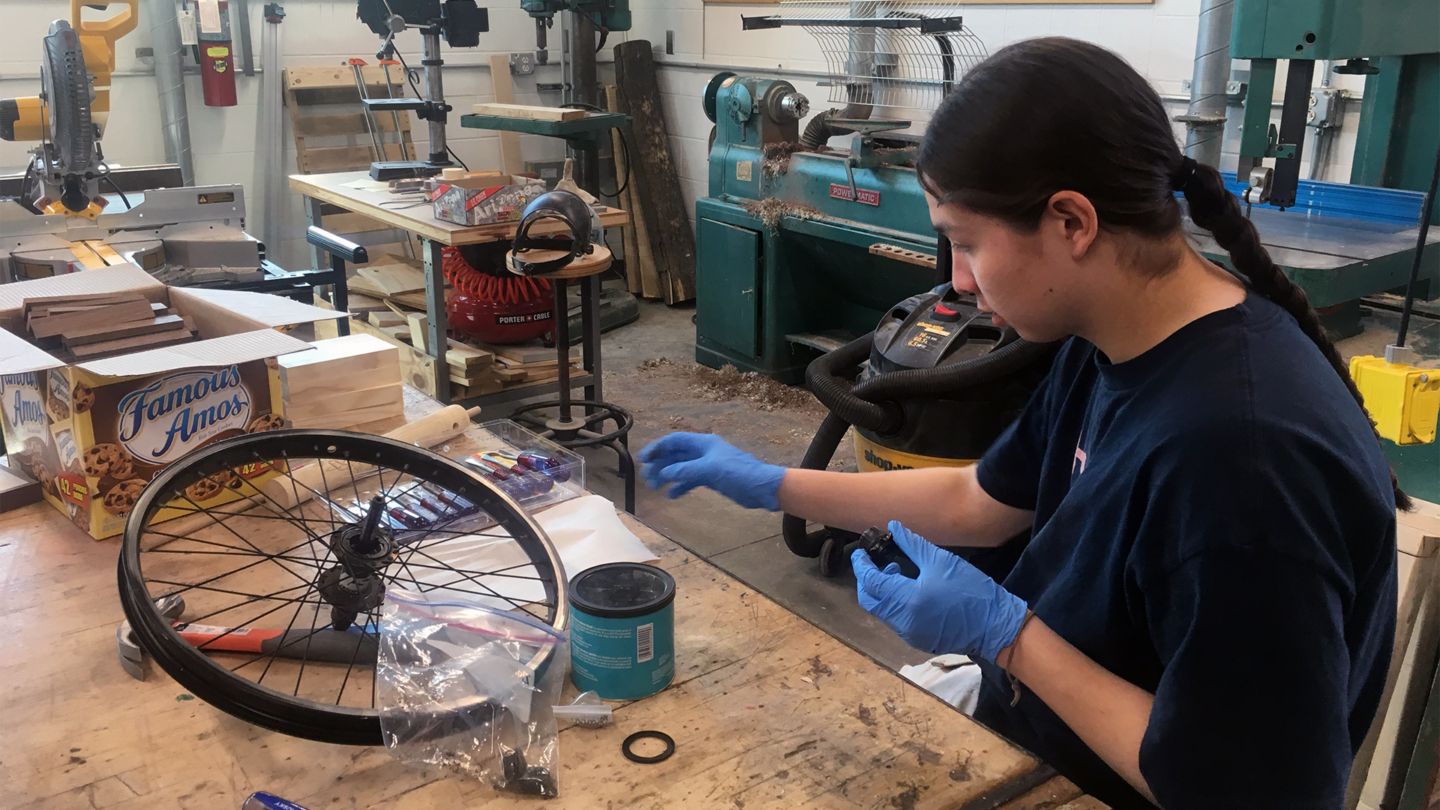
"caption": "Ty Powless, a student at LaFayette Big Picture School, is working to repair a bicycle.",
"description": null,
"title": "Lafayette2-sized",
"credit": "Courtesy LaFayette Big Picture School",
"status": "inherit",
"isLoading": false,
"fetchFailed": false
},
"mindshift_46567": {
"type": "attachments",
"id": "mindshift_46567",
"meta": {
"index": "attachments_1716263798",
"site": "mindshift",
"id": "46567",
"found": true
},
"parent": 46565,
"imgSizes": {
"twentyfourteen-full-width": {
"file": "https://ww2.kqed.org/app/uploads/sites/23/2016/10/7793353006_b4974db77e_b-1024x576.jpg",
"width": 1024,
"mimeType": "image/jpeg",
"height": 576
},
"thumbnail": {
"file": "https://ww2.kqed.org/app/uploads/sites/23/2016/10/7793353006_b4974db77e_b-400x267.jpg",
"width": 400,
"mimeType": "image/jpeg",
"height": 267
},
"fd-sm": {
"file": "https://ww2.kqed.org/app/uploads/sites/23/2016/10/7793353006_b4974db77e_b-960x640.jpg",
"width": 960,
"mimeType": "image/jpeg",
"height": 640
},
"post-thumbnail": {
"file": "https://ww2.kqed.org/app/uploads/sites/23/2016/10/7793353006_b4974db77e_b-672x372.jpg",
"width": 672,
"mimeType": "image/jpeg",
"height": 372
},
"kqedFullSize": {
"file": "https://ww2.kqed.org/app/uploads/sites/23/2016/10/7793353006_b4974db77e_b.jpg",
"width": 1024,
"height": 683
},
"guest-author-50": {
"file": "https://ww2.kqed.org/app/uploads/sites/23/2016/10/7793353006_b4974db77e_b-50x50.jpg",
"width": 50,
"mimeType": "image/jpeg",
"height": 50
},
"guest-author-96": {
"file": "https://ww2.kqed.org/app/uploads/sites/23/2016/10/7793353006_b4974db77e_b-96x96.jpg",
"width": 96,
"mimeType": "image/jpeg",
"height": 96
},
"medium": {
"file": "https://ww2.kqed.org/app/uploads/sites/23/2016/10/7793353006_b4974db77e_b-800x534.jpg",
"width": 800,
"mimeType": "image/jpeg",
"height": 534
},
"guest-author-64": {
"file": "https://ww2.kqed.org/app/uploads/sites/23/2016/10/7793353006_b4974db77e_b-64x64.jpg",
"width": 64,
"mimeType": "image/jpeg",
"height": 64
},
"guest-author-32": {
"file": "https://ww2.kqed.org/app/uploads/sites/23/2016/10/7793353006_b4974db77e_b-32x32.jpg",
"width": 32,
"mimeType": "image/jpeg",
"height": 32
},
"cat_post_thumb_sizecategory-posts-2": {
"file": "https://ww2.kqed.org/app/uploads/sites/23/2016/10/7793353006_b4974db77e_b-50x50.jpg",
"width": 50,
"mimeType": "image/jpeg",
"height": 50
},
"detail": {
"file": "https://ww2.kqed.org/app/uploads/sites/23/2016/10/7793353006_b4974db77e_b-150x150.jpg",
"width": 150,
"mimeType": "image/jpeg",
"height": 150
},
"medium_large": {
"file": "https://ww2.kqed.org/app/uploads/sites/23/2016/10/7793353006_b4974db77e_b-768x512.jpg",
"width": 768,
"mimeType": "image/jpeg",
"height": 512
},
"guest-author-128": {
"file": "https://ww2.kqed.org/app/uploads/sites/23/2016/10/7793353006_b4974db77e_b-128x128.jpg",
"width": 128,
"mimeType": "image/jpeg",
"height": 128
}
},
"publishDate": 1475516524,
"modified": 1475516605,
"caption": null,
"description": null,
"title": "7793353006_b4974db77e_b",
"credit": "trizoultro/\u003ca href=\"https://www.flickr.com/photos/theembermonths/7793353006/\">Flickr\u003c/a>",
"status": "inherit",
"isLoading": false,
"fetchFailed": false
},
"mindshift_46537": {
"type": "attachments",
"id": "mindshift_46537",
"meta": {
"index": "attachments_1716263798",
"site": "mindshift",
"id": "46537",
"found": true
},
"parent": 46517,
"imgSizes": {
"thumbnail": {
"file": "https://ww2.kqed.org/app/uploads/sites/23/2016/09/east-side-400x223.png",
"width": 400,
"mimeType": "image/png",
"height": 223
},
"post-thumbnail": {
"file": "https://ww2.kqed.org/app/uploads/sites/23/2016/09/east-side-672x372.png",
"width": 672,
"mimeType": "image/png",
"height": 372
},
"kqedFullSize": {
"file": "https://ww2.kqed.org/app/uploads/sites/23/2016/09/east-side.png",
"width": 959,
"height": 535
},
"cat_post_thumb_sizecategory-posts-2": {
"file": "https://ww2.kqed.org/app/uploads/sites/23/2016/09/east-side-50x50.png",
"width": 50,
"mimeType": "image/png",
"height": 50
},
"guest-author-50": {
"file": "https://ww2.kqed.org/app/uploads/sites/23/2016/09/east-side-50x50.png",
"width": 50,
"mimeType": "image/png",
"height": 50
},
"guest-author-96": {
"file": "https://ww2.kqed.org/app/uploads/sites/23/2016/09/east-side-96x96.png",
"width": 96,
"mimeType": "image/png",
"height": 96
},
"medium": {
"file": "https://ww2.kqed.org/app/uploads/sites/23/2016/09/east-side-800x446.png",
"width": 800,
"mimeType": "image/png",
"height": 446
},
"guest-author-64": {
"file": "https://ww2.kqed.org/app/uploads/sites/23/2016/09/east-side-64x64.png",
"width": 64,
"mimeType": "image/png",
"height": 64
},
"detail": {
"file": "https://ww2.kqed.org/app/uploads/sites/23/2016/09/east-side-150x150.png",
"width": 150,
"mimeType": "image/png",
"height": 150
},
"guest-author-32": {
"file": "https://ww2.kqed.org/app/uploads/sites/23/2016/09/east-side-32x32.png",
"width": 32,
"mimeType": "image/png",
"height": 32
},
"medium_large": {
"file": "https://ww2.kqed.org/app/uploads/sites/23/2016/09/east-side-768x428.png",
"width": 768,
"mimeType": "image/png",
"height": 428
},
"guest-author-128": {
"file": "https://ww2.kqed.org/app/uploads/sites/23/2016/09/east-side-128x128.png",
"width": 128,
"mimeType": "image/png",
"height": 128
}
},
"publishDate": 1475190930,
"modified": 1475471433,
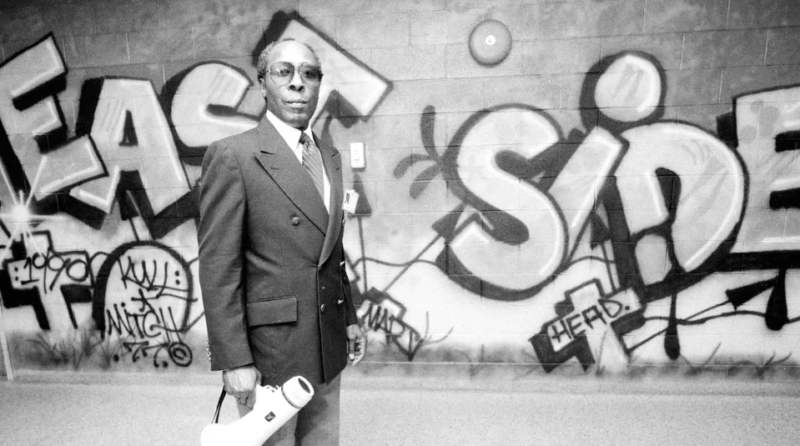
"caption": "Joe Clark, a principal of Eastside High in the 1980s, became a symbol of a tough new approach to discipline.",
"description": null,
"title": "east side",
"credit": "\u003ca href=\"http://www.nytimes.com/video/us/100000004683057/unraveling-zero-tolerance.html\">Retro Report/The New York Times\u003c/a>",
"status": "inherit",
"isLoading": false,
"fetchFailed": false
},
"mindshift_46506": {
"type": "attachments",
"id": "mindshift_46506",
"meta": {
"index": "attachments_1716263798",
"site": "mindshift",
"id": "46506",
"found": true
},
"parent": 46442,
"imgSizes": {
"twentyfourteen-full-width": {
"file": "https://ww2.kqed.org/app/uploads/sites/23/2016/09/Expectations-1038x576.jpg",
"width": 1038,
"mimeType": "image/jpeg",
"height": 576
},
"thumbnail": {
"file": "https://ww2.kqed.org/app/uploads/sites/23/2016/09/Expectations-400x246.jpg",
"width": 400,
"mimeType": "image/jpeg",
"height": 246
},
"fd-sm": {
"file": "https://ww2.kqed.org/app/uploads/sites/23/2016/09/Expectations-960x591.jpg",
"width": 960,
"mimeType": "image/jpeg",
"height": 591
},
"post-thumbnail": {
"file": "https://ww2.kqed.org/app/uploads/sites/23/2016/09/Expectations-672x372.jpg",
"width": 672,
"mimeType": "image/jpeg",
"height": 372
},
"kqedFullSize": {
"file": "https://ww2.kqed.org/app/uploads/sites/23/2016/09/Expectations.jpg",
"width": 1920,
"height": 1181
},
"large": {
"file": "https://ww2.kqed.org/app/uploads/sites/23/2016/09/Expectations-1440x886.jpg",
"width": 1440,
"mimeType": "image/jpeg",
"height": 886
},
"guest-author-50": {
"file": "https://ww2.kqed.org/app/uploads/sites/23/2016/09/Expectations-50x50.jpg",
"width": 50,
"mimeType": "image/jpeg",
"height": 50
},
"guest-author-96": {
"file": "https://ww2.kqed.org/app/uploads/sites/23/2016/09/Expectations-96x96.jpg",
"width": 96,
"mimeType": "image/jpeg",
"height": 96
},
"medium": {
"file": "https://ww2.kqed.org/app/uploads/sites/23/2016/09/Expectations-800x492.jpg",
"width": 800,
"mimeType": "image/jpeg",
"height": 492
},
"guest-author-64": {
"file": "https://ww2.kqed.org/app/uploads/sites/23/2016/09/Expectations-64x64.jpg",
"width": 64,
"mimeType": "image/jpeg",
"height": 64
},
"guest-author-32": {
"file": "https://ww2.kqed.org/app/uploads/sites/23/2016/09/Expectations-32x32.jpg",
"width": 32,
"mimeType": "image/jpeg",
"height": 32
},
"cat_post_thumb_sizecategory-posts-2": {
"file": "https://ww2.kqed.org/app/uploads/sites/23/2016/09/Expectations-50x50.jpg",
"width": 50,
"mimeType": "image/jpeg",
"height": 50
},
"fd-lrg": {
"file": "https://ww2.kqed.org/app/uploads/sites/23/2016/09/Expectations-1920x1181.jpg",
"width": 1920,
"mimeType": "image/jpeg",
"height": 1181
},
"fd-med": {
"file": "https://ww2.kqed.org/app/uploads/sites/23/2016/09/Expectations-1180x726.jpg",
"width": 1180,
"mimeType": "image/jpeg",
"height": 726
},
"detail": {
"file": "https://ww2.kqed.org/app/uploads/sites/23/2016/09/Expectations-150x150.jpg",
"width": 150,
"mimeType": "image/jpeg",
"height": 150
},
"medium_large": {
"file": "https://ww2.kqed.org/app/uploads/sites/23/2016/09/Expectations-768x472.jpg",
"width": 768,
"mimeType": "image/jpeg",
"height": 472
},
"guest-author-128": {
"file": "https://ww2.kqed.org/app/uploads/sites/23/2016/09/Expectations-128x128.jpg",
"width": 128,
"mimeType": "image/jpeg",
"height": 128
}
},
"publishDate": 1475153905,
"modified": 1475153921,
"caption": null,
"description": null,
"title": "Expectations",
"credit": "iStock",
"status": "inherit",
"isLoading": false,
"fetchFailed": false
},
"mindshift_46492": {
"type": "attachments",
"id": "mindshift_46492",
"meta": {
"index": "attachments_1716263798",
"site": "mindshift",
"id": "46492",
"found": true
},
"parent": 46438,
"imgSizes": {
"twentyfourteen-full-width": {
"file": "https://ww2.kqed.org/app/uploads/sites/23/2016/09/013-Karla-Demonstrating-1038x576.jpg",
"width": 1038,
"mimeType": "image/jpeg",
"height": 576
},
"thumbnail": {
"file": "https://ww2.kqed.org/app/uploads/sites/23/2016/09/013-Karla-Demonstrating-400x300.jpg",
"width": 400,
"mimeType": "image/jpeg",
"height": 300
},
"fd-sm": {
"file": "https://ww2.kqed.org/app/uploads/sites/23/2016/09/013-Karla-Demonstrating-960x720.jpg",
"width": 960,
"mimeType": "image/jpeg",
"height": 720
},
"post-thumbnail": {
"file": "https://ww2.kqed.org/app/uploads/sites/23/2016/09/013-Karla-Demonstrating-672x372.jpg",
"width": 672,
"mimeType": "image/jpeg",
"height": 372
},
"kqedFullSize": {
"file": "https://ww2.kqed.org/app/uploads/sites/23/2016/09/013-Karla-Demonstrating-e1475037946645.jpg",
"width": 1920,
"height": 1440
},
"large": {
"file": "https://ww2.kqed.org/app/uploads/sites/23/2016/09/013-Karla-Demonstrating-1440x1080.jpg",
"width": 1440,
"mimeType": "image/jpeg",
"height": 1080
},
"guest-author-50": {
"file": "https://ww2.kqed.org/app/uploads/sites/23/2016/09/013-Karla-Demonstrating-50x50.jpg",
"width": 50,
"mimeType": "image/jpeg",
"height": 50
},
"guest-author-96": {
"file": "https://ww2.kqed.org/app/uploads/sites/23/2016/09/013-Karla-Demonstrating-96x96.jpg",
"width": 96,
"mimeType": "image/jpeg",
"height": 96
},
"medium": {
"file": "https://ww2.kqed.org/app/uploads/sites/23/2016/09/013-Karla-Demonstrating-800x600.jpg",
"width": 800,
"mimeType": "image/jpeg",
"height": 600
},
"guest-author-64": {
"file": "https://ww2.kqed.org/app/uploads/sites/23/2016/09/013-Karla-Demonstrating-64x64.jpg",
"width": 64,
"mimeType": "image/jpeg",
"height": 64
},
"guest-author-32": {
"file": "https://ww2.kqed.org/app/uploads/sites/23/2016/09/013-Karla-Demonstrating-32x32.jpg",
"width": 32,
"mimeType": "image/jpeg",
"height": 32
},
"cat_post_thumb_sizecategory-posts-2": {
"file": "https://ww2.kqed.org/app/uploads/sites/23/2016/09/013-Karla-Demonstrating-50x50.jpg",
"width": 50,
"mimeType": "image/jpeg",
"height": 50
},
"fd-lrg": {
"file": "https://ww2.kqed.org/app/uploads/sites/23/2016/09/013-Karla-Demonstrating-1920x1440.jpg",
"width": 1920,
"mimeType": "image/jpeg",
"height": 1440
},
"fd-med": {
"file": "https://ww2.kqed.org/app/uploads/sites/23/2016/09/013-Karla-Demonstrating-1180x885.jpg",
"width": 1180,
"mimeType": "image/jpeg",
"height": 885
},
"detail": {
"file": "https://ww2.kqed.org/app/uploads/sites/23/2016/09/013-Karla-Demonstrating-150x150.jpg",
"width": 150,
"mimeType": "image/jpeg",
"height": 150
},
"medium_large": {
"file": "https://ww2.kqed.org/app/uploads/sites/23/2016/09/013-Karla-Demonstrating-768x576.jpg",
"width": 768,
"mimeType": "image/jpeg",
"height": 576
},
"guest-author-128": {
"file": "https://ww2.kqed.org/app/uploads/sites/23/2016/09/013-Karla-Demonstrating-128x128.jpg",
"width": 128,
"mimeType": "image/jpeg",
"height": 128
}
},
"publishDate": 1475037929,
"modified": 1475064415,
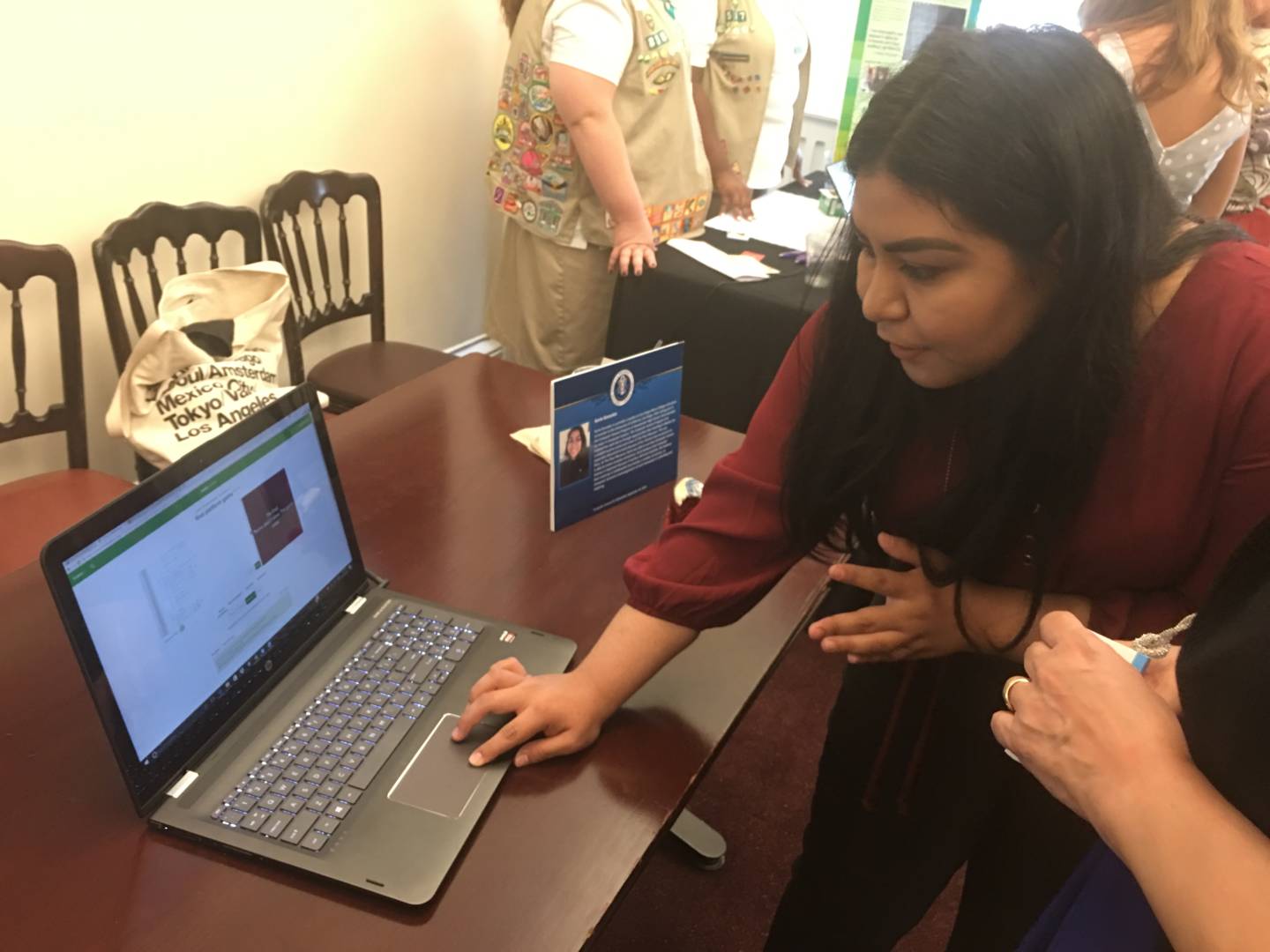
"caption": "Recent Sweetwater High School graduate Karla Gonzalez shares information about a school project at the Computer Science For All event at the White House. ",
"description": null,
"title": "013-Karla-Demonstrating",
"credit": "Courtesy of Art Lopez",
"status": "inherit",
"isLoading": false,
"fetchFailed": false
},
"mindshift_46464": {
"type": "attachments",
"id": "mindshift_46464",
"meta": {
"index": "attachments_1716263798",
"site": "mindshift",
"id": "46464",
"found": true
},
"parent": 46457,
"imgSizes": {
"twentyfourteen-full-width": {
"file": "https://ww2.kqed.org/app/uploads/sites/23/2016/09/6-web-sharkfin-in-class-1-1038x576.jpg",
"width": 1038,
"mimeType": "image/jpeg",
"height": 576
},
"thumbnail": {
"file": "https://ww2.kqed.org/app/uploads/sites/23/2016/09/6-web-sharkfin-in-class-1-400x225.jpg",
"width": 400,
"mimeType": "image/jpeg",
"height": 225
},
"fd-sm": {
"file": "https://ww2.kqed.org/app/uploads/sites/23/2016/09/6-web-sharkfin-in-class-1-960x540.jpg",
"width": 960,
"mimeType": "image/jpeg",
"height": 540
},
"post-thumbnail": {
"file": "https://ww2.kqed.org/app/uploads/sites/23/2016/09/6-web-sharkfin-in-class-1-672x372.jpg",
"width": 672,
"mimeType": "image/jpeg",
"height": 372
},
"kqedFullSize": {
"file": "https://ww2.kqed.org/app/uploads/sites/23/2016/09/6-web-sharkfin-in-class-1.jpg",
"width": 1920,
"height": 1080
},
"large": {
"file": "https://ww2.kqed.org/app/uploads/sites/23/2016/09/6-web-sharkfin-in-class-1-1440x810.jpg",
"width": 1440,
"mimeType": "image/jpeg",
"height": 810
},
"guest-author-50": {
"file": "https://ww2.kqed.org/app/uploads/sites/23/2016/09/6-web-sharkfin-in-class-1-50x50.jpg",
"width": 50,
"mimeType": "image/jpeg",
"height": 50
},
"guest-author-96": {
"file": "https://ww2.kqed.org/app/uploads/sites/23/2016/09/6-web-sharkfin-in-class-1-96x96.jpg",
"width": 96,
"mimeType": "image/jpeg",
"height": 96
},
"medium": {
"file": "https://ww2.kqed.org/app/uploads/sites/23/2016/09/6-web-sharkfin-in-class-1-800x450.jpg",
"width": 800,
"mimeType": "image/jpeg",
"height": 450
},
"guest-author-64": {
"file": "https://ww2.kqed.org/app/uploads/sites/23/2016/09/6-web-sharkfin-in-class-1-64x64.jpg",
"width": 64,
"mimeType": "image/jpeg",
"height": 64
},
"guest-author-32": {
"file": "https://ww2.kqed.org/app/uploads/sites/23/2016/09/6-web-sharkfin-in-class-1-32x32.jpg",
"width": 32,
"mimeType": "image/jpeg",
"height": 32
},
"cat_post_thumb_sizecategory-posts-2": {
"file": "https://ww2.kqed.org/app/uploads/sites/23/2016/09/6-web-sharkfin-in-class-1-50x50.jpg",
"width": 50,
"mimeType": "image/jpeg",
"height": 50
},
"fd-lrg": {
"file": "https://ww2.kqed.org/app/uploads/sites/23/2016/09/6-web-sharkfin-in-class-1-1920x1080.jpg",
"width": 1920,
"mimeType": "image/jpeg",
"height": 1080
},
"fd-med": {
"file": "https://ww2.kqed.org/app/uploads/sites/23/2016/09/6-web-sharkfin-in-class-1-1180x664.jpg",
"width": 1180,
"mimeType": "image/jpeg",
"height": 664
},
"detail": {
"file": "https://ww2.kqed.org/app/uploads/sites/23/2016/09/6-web-sharkfin-in-class-1-150x150.jpg",
"width": 150,
"mimeType": "image/jpeg",
"height": 150
},
"medium_large": {
"file": "https://ww2.kqed.org/app/uploads/sites/23/2016/09/6-web-sharkfin-in-class-1-768x432.jpg",
"width": 768,
"mimeType": "image/jpeg",
"height": 432
},
"guest-author-128": {
"file": "https://ww2.kqed.org/app/uploads/sites/23/2016/09/6-web-sharkfin-in-class-1-128x128.jpg",
"width": 128,
"mimeType": "image/jpeg",
"height": 128
}
},
"publishDate": 1474664264,
"modified": 1474871146,
"caption": null,
"description": null,
"title": "6-web-sharkfin-in-class-1",
"credit": "Angelina Alvarez",
"status": "inherit",
"isLoading": false,
"fetchFailed": false
},
"mindshift_46421": {
"type": "attachments",
"id": "mindshift_46421",
"meta": {
"index": "attachments_1716263798",
"site": "mindshift",
"id": "46421",
"found": true
},
"parent": 46420,
"imgSizes": {
"twentyfourteen-full-width": {
"file": "https://ww2.kqed.org/app/uploads/sites/23/2016/09/math-brain-9d055822f06192fbda9f6c111e2d618643e4c762-1038x576.jpg",
"width": 1038,
"mimeType": "image/jpeg",
"height": 576
},
"thumbnail": {
"file": "https://ww2.kqed.org/app/uploads/sites/23/2016/09/math-brain-9d055822f06192fbda9f6c111e2d618643e4c762-400x300.jpg",
"width": 400,
"mimeType": "image/jpeg",
"height": 300
},
"fd-sm": {
"file": "https://ww2.kqed.org/app/uploads/sites/23/2016/09/math-brain-9d055822f06192fbda9f6c111e2d618643e4c762-960x720.jpg",
"width": 960,
"mimeType": "image/jpeg",
"height": 720
},
"post-thumbnail": {
"file": "https://ww2.kqed.org/app/uploads/sites/23/2016/09/math-brain-9d055822f06192fbda9f6c111e2d618643e4c762-672x372.jpg",
"width": 672,
"mimeType": "image/jpeg",
"height": 372
},
"kqedFullSize": {
"file": "https://ww2.kqed.org/app/uploads/sites/23/2016/09/math-brain-9d055822f06192fbda9f6c111e2d618643e4c762.jpg",
"width": 1370,
"height": 1027
},
"guest-author-50": {
"file": "https://ww2.kqed.org/app/uploads/sites/23/2016/09/math-brain-9d055822f06192fbda9f6c111e2d618643e4c762-50x50.jpg",
"width": 50,
"mimeType": "image/jpeg",
"height": 50
},
"guest-author-96": {
"file": "https://ww2.kqed.org/app/uploads/sites/23/2016/09/math-brain-9d055822f06192fbda9f6c111e2d618643e4c762-96x96.jpg",
"width": 96,
"mimeType": "image/jpeg",
"height": 96
},
"medium": {
"file": "https://ww2.kqed.org/app/uploads/sites/23/2016/09/math-brain-9d055822f06192fbda9f6c111e2d618643e4c762-800x600.jpg",
"width": 800,
"mimeType": "image/jpeg",
"height": 600
},
"guest-author-64": {
"file": "https://ww2.kqed.org/app/uploads/sites/23/2016/09/math-brain-9d055822f06192fbda9f6c111e2d618643e4c762-64x64.jpg",
"width": 64,
"mimeType": "image/jpeg",
"height": 64
},
"guest-author-32": {
"file": "https://ww2.kqed.org/app/uploads/sites/23/2016/09/math-brain-9d055822f06192fbda9f6c111e2d618643e4c762-32x32.jpg",
"width": 32,
"mimeType": "image/jpeg",
"height": 32
},
"cat_post_thumb_sizecategory-posts-2": {
"file": "https://ww2.kqed.org/app/uploads/sites/23/2016/09/math-brain-9d055822f06192fbda9f6c111e2d618643e4c762-50x50.jpg",
"width": 50,
"mimeType": "image/jpeg",
"height": 50
},
"fd-med": {
"file": "https://ww2.kqed.org/app/uploads/sites/23/2016/09/math-brain-9d055822f06192fbda9f6c111e2d618643e4c762-1180x885.jpg",
"width": 1180,
"mimeType": "image/jpeg",
"height": 885
},
"detail": {
"file": "https://ww2.kqed.org/app/uploads/sites/23/2016/09/math-brain-9d055822f06192fbda9f6c111e2d618643e4c762-150x150.jpg",
"width": 150,
"mimeType": "image/jpeg",
"height": 150
},
"medium_large": {
"file": "https://ww2.kqed.org/app/uploads/sites/23/2016/09/math-brain-9d055822f06192fbda9f6c111e2d618643e4c762-768x576.jpg",
"width": 768,
"mimeType": "image/jpeg",
"height": 576
},
"guest-author-128": {
"file": "https://ww2.kqed.org/app/uploads/sites/23/2016/09/math-brain-9d055822f06192fbda9f6c111e2d618643e4c762-128x128.jpg",
"width": 128,
"mimeType": "image/jpeg",
"height": 128
}
},
"publishDate": 1474486189,
"modified": 1474486302,
"caption": null,
"description": "A study of 17 people who had been blind since birth found that areas of the brain usually devoted to visual information become active when a blind person is solving math problems.",
"title": "A study of 17 people who had been blind since birth found that areas of the brain usually devoted to visual information become active when a blind person is solving math problems.",
"credit": "Stuart Kinlough/Getty Images/Ikon Images",
"status": "inherit",
"isLoading": false,
"fetchFailed": false
},
"mindshift_46345": {
"type": "attachments",
"id": "mindshift_46345",
"meta": {
"index": "attachments_1716263798",
"site": "mindshift",
"id": "46345",
"found": true
},
"parent": 46127,
"imgSizes": {
"twentyfourteen-full-width": {
"file": "https://ww2.kqed.org/app/uploads/sites/23/2016/09/6770756531_584482049a_o-1038x576.jpg",
"width": 1038,
"mimeType": "image/jpeg",
"height": 576
},
"thumbnail": {
"file": "https://ww2.kqed.org/app/uploads/sites/23/2016/09/6770756531_584482049a_o-400x267.jpg",
"width": 400,
"mimeType": "image/jpeg",
"height": 267
},
"fd-sm": {
"file": "https://ww2.kqed.org/app/uploads/sites/23/2016/09/6770756531_584482049a_o-960x640.jpg",
"width": 960,
"mimeType": "image/jpeg",
"height": 640
},
"post-thumbnail": {
"file": "https://ww2.kqed.org/app/uploads/sites/23/2016/09/6770756531_584482049a_o-672x372.jpg",
"width": 672,
"mimeType": "image/jpeg",
"height": 372
},
"kqedFullSize": {
"file": "https://ww2.kqed.org/app/uploads/sites/23/2016/09/6770756531_584482049a_o.jpg",
"width": 1050,
"height": 700
},
"guest-author-50": {
"file": "https://ww2.kqed.org/app/uploads/sites/23/2016/09/6770756531_584482049a_o-50x50.jpg",
"width": 50,
"mimeType": "image/jpeg",
"height": 50
},
"guest-author-96": {
"file": "https://ww2.kqed.org/app/uploads/sites/23/2016/09/6770756531_584482049a_o-96x96.jpg",
"width": 96,
"mimeType": "image/jpeg",
"height": 96
},
"medium": {
"file": "https://ww2.kqed.org/app/uploads/sites/23/2016/09/6770756531_584482049a_o-800x533.jpg",
"width": 800,
"mimeType": "image/jpeg",
"height": 533
},
"guest-author-64": {
"file": "https://ww2.kqed.org/app/uploads/sites/23/2016/09/6770756531_584482049a_o-64x64.jpg",
"width": 64,
"mimeType": "image/jpeg",
"height": 64
},
"guest-author-32": {
"file": "https://ww2.kqed.org/app/uploads/sites/23/2016/09/6770756531_584482049a_o-32x32.jpg",
"width": 32,
"mimeType": "image/jpeg",
"height": 32
},
"cat_post_thumb_sizecategory-posts-2": {
"file": "https://ww2.kqed.org/app/uploads/sites/23/2016/09/6770756531_584482049a_o-50x50.jpg",
"width": 50,
"mimeType": "image/jpeg",
"height": 50
},
"detail": {
"file": "https://ww2.kqed.org/app/uploads/sites/23/2016/09/6770756531_584482049a_o-150x150.jpg",
"width": 150,
"mimeType": "image/jpeg",
"height": 150
},
"medium_large": {
"file": "https://ww2.kqed.org/app/uploads/sites/23/2016/09/6770756531_584482049a_o-768x512.jpg",
"width": 768,
"mimeType": "image/jpeg",
"height": 512
},
"guest-author-128": {
"file": "https://ww2.kqed.org/app/uploads/sites/23/2016/09/6770756531_584482049a_o-128x128.jpg",
"width": 128,
"mimeType": "image/jpeg",
"height": 128
}
},
"publishDate": 1473768139,
"modified": 1473768151,
"caption": null,
"description": null,
"title": "6770756531_584482049a_o",
"credit": "\u003ca href=\"https://www.flickr.com/photos/viictoria4/6770756531/in/photolist-bjiU2z-5vZS-2RtJn-ozA8uJ-dZEx1o-by3Jwo-doBtjC-p8YXky-bUWFQi-Hs64h-mGvnf-dqhTqo-8fLozu-4QHea9-doWmYT-doWoPx-4HEcva-6urZhd-uJpZ1-bUWFGP-bUWFJe-6S7CwP-7x6MP9-36TJPu-q6h9d9-iyPiR-75LJYa-q6pUPX-doWuPf-5BmiGo-doWwtJ-46WZC8-doWo8V-aqP6ra-73Dv2K-fZKQ7V-qnLqZf-4wrr1-4Hogsa-doWmu6-dWeZsy-cNCmt3-doWpn6-7QsY-mGvnh-a2i8j6-mGvng-5qLHuK-7Xn8f-arTXfG\">Flickr/vic xia\u003c/a>",
"status": "inherit",
"isLoading": false,
"fetchFailed": false
},
"mindshift_46328": {
"type": "attachments",
"id": "mindshift_46328",
"meta": {
"index": "attachments_1716263798",
"site": "mindshift",
"id": "46328",
"found": true
},
"parent": 46327,
"imgSizes": {
"twentyfourteen-full-width": {
"file": "https://ww2.kqed.org/app/uploads/sites/23/2016/09/angelkid_slide-d7bd683910f0184ab1c5ab89ae0877d1c52cf0f9-1038x576.jpg",
"width": 1038,
"mimeType": "image/jpeg",
"height": 576
},
"thumbnail": {
"file": "https://ww2.kqed.org/app/uploads/sites/23/2016/09/angelkid_slide-d7bd683910f0184ab1c5ab89ae0877d1c52cf0f9-400x267.jpg",
"width": 400,
"mimeType": "image/jpeg",
"height": 267
},
"fd-sm": {
"file": "https://ww2.kqed.org/app/uploads/sites/23/2016/09/angelkid_slide-d7bd683910f0184ab1c5ab89ae0877d1c52cf0f9-960x640.jpg",
"width": 960,
"mimeType": "image/jpeg",
"height": 640
},
"post-thumbnail": {
"file": "https://ww2.kqed.org/app/uploads/sites/23/2016/09/angelkid_slide-d7bd683910f0184ab1c5ab89ae0877d1c52cf0f9-672x372.jpg",
"width": 672,
"mimeType": "image/jpeg",
"height": 372
},
"kqedFullSize": {
"file": "https://ww2.kqed.org/app/uploads/sites/23/2016/09/angelkid_slide-d7bd683910f0184ab1c5ab89ae0877d1c52cf0f9-e1473714180971.jpg",
"width": 1920,
"height": 1280
},
"large": {
"file": "https://ww2.kqed.org/app/uploads/sites/23/2016/09/angelkid_slide-d7bd683910f0184ab1c5ab89ae0877d1c52cf0f9-1440x960.jpg",
"width": 1440,
"mimeType": "image/jpeg",
"height": 960
},
"guest-author-50": {
"file": "https://ww2.kqed.org/app/uploads/sites/23/2016/09/angelkid_slide-d7bd683910f0184ab1c5ab89ae0877d1c52cf0f9-50x50.jpg",
"width": 50,
"mimeType": "image/jpeg",
"height": 50
},
"guest-author-96": {
"file": "https://ww2.kqed.org/app/uploads/sites/23/2016/09/angelkid_slide-d7bd683910f0184ab1c5ab89ae0877d1c52cf0f9-96x96.jpg",
"width": 96,
"mimeType": "image/jpeg",
"height": 96
},
"medium": {
"file": "https://ww2.kqed.org/app/uploads/sites/23/2016/09/angelkid_slide-d7bd683910f0184ab1c5ab89ae0877d1c52cf0f9-800x533.jpg",
"width": 800,
"mimeType": "image/jpeg",
"height": 533
},
"guest-author-64": {
"file": "https://ww2.kqed.org/app/uploads/sites/23/2016/09/angelkid_slide-d7bd683910f0184ab1c5ab89ae0877d1c52cf0f9-64x64.jpg",
"width": 64,
"mimeType": "image/jpeg",
"height": 64
},
"guest-author-32": {
"file": "https://ww2.kqed.org/app/uploads/sites/23/2016/09/angelkid_slide-d7bd683910f0184ab1c5ab89ae0877d1c52cf0f9-32x32.jpg",
"width": 32,
"mimeType": "image/jpeg",
"height": 32
},
"cat_post_thumb_sizecategory-posts-2": {
"file": "https://ww2.kqed.org/app/uploads/sites/23/2016/09/angelkid_slide-d7bd683910f0184ab1c5ab89ae0877d1c52cf0f9-50x50.jpg",
"width": 50,
"mimeType": "image/jpeg",
"height": 50
},
"fd-lrg": {
"file": "https://ww2.kqed.org/app/uploads/sites/23/2016/09/angelkid_slide-d7bd683910f0184ab1c5ab89ae0877d1c52cf0f9-1920x1280.jpg",
"width": 1920,
"mimeType": "image/jpeg",
"height": 1280
},
"fd-med": {
"file": "https://ww2.kqed.org/app/uploads/sites/23/2016/09/angelkid_slide-d7bd683910f0184ab1c5ab89ae0877d1c52cf0f9-1180x787.jpg",
"width": 1180,
"mimeType": "image/jpeg",
"height": 787
},
"detail": {
"file": "https://ww2.kqed.org/app/uploads/sites/23/2016/09/angelkid_slide-d7bd683910f0184ab1c5ab89ae0877d1c52cf0f9-150x150.jpg",
"width": 150,
"mimeType": "image/jpeg",
"height": 150
},
"medium_large": {
"file": "https://ww2.kqed.org/app/uploads/sites/23/2016/09/angelkid_slide-d7bd683910f0184ab1c5ab89ae0877d1c52cf0f9-768x512.jpg",
"width": 768,
"mimeType": "image/jpeg",
"height": 512
},
"guest-author-128": {
"file": "https://ww2.kqed.org/app/uploads/sites/23/2016/09/angelkid_slide-d7bd683910f0184ab1c5ab89ae0877d1c52cf0f9-128x128.jpg",
"width": 128,
"mimeType": "image/jpeg",
"height": 128
}
},
"publishDate": 1473706102,
"modified": 1473707661,
"caption": null,
"description": "Gifted and talented student",
"title": "Gifted and talented student",
"credit": "LA Johnson/NPR",
"status": "inherit",
"isLoading": false,
"fetchFailed": false
},
"mindshift_46280": {
"type": "attachments",
"id": "mindshift_46280",
"meta": {
"index": "attachments_1716263798",
"site": "mindshift",
"id": "46280",
"found": true
},
"parent": 46279,
"imgSizes": {
"twentyfourteen-full-width": {
"file": "https://ww2.kqed.org/app/uploads/sites/23/2016/09/npr_preschoolsuspensions_9-4_01_slide-7641e8b72ef50c41f6e19cd97d3478f1904bef21-1038x576.jpg",
"width": 1038,
"mimeType": "image/jpeg",
"height": 576
},
"thumbnail": {
"file": "https://ww2.kqed.org/app/uploads/sites/23/2016/09/npr_preschoolsuspensions_9-4_01_slide-7641e8b72ef50c41f6e19cd97d3478f1904bef21-400x267.jpg",
"width": 400,
"mimeType": "image/jpeg",
"height": 267
},
"fd-sm": {
"file": "https://ww2.kqed.org/app/uploads/sites/23/2016/09/npr_preschoolsuspensions_9-4_01_slide-7641e8b72ef50c41f6e19cd97d3478f1904bef21-960x640.jpg",
"width": 960,
"mimeType": "image/jpeg",
"height": 640
},
"post-thumbnail": {
"file": "https://ww2.kqed.org/app/uploads/sites/23/2016/09/npr_preschoolsuspensions_9-4_01_slide-7641e8b72ef50c41f6e19cd97d3478f1904bef21-672x372.jpg",
"width": 672,
"mimeType": "image/jpeg",
"height": 372
},
"kqedFullSize": {
"file": "https://ww2.kqed.org/app/uploads/sites/23/2016/09/npr_preschoolsuspensions_9-4_01_slide-7641e8b72ef50c41f6e19cd97d3478f1904bef21-e1473251337881.jpg",
"width": 1920,
"height": 1280
},
"large": {
"file": "https://ww2.kqed.org/app/uploads/sites/23/2016/09/npr_preschoolsuspensions_9-4_01_slide-7641e8b72ef50c41f6e19cd97d3478f1904bef21-1440x960.jpg",
"width": 1440,
"mimeType": "image/jpeg",
"height": 960
},
"guest-author-50": {
"file": "https://ww2.kqed.org/app/uploads/sites/23/2016/09/npr_preschoolsuspensions_9-4_01_slide-7641e8b72ef50c41f6e19cd97d3478f1904bef21-50x50.jpg",
"width": 50,
"mimeType": "image/jpeg",
"height": 50
},
"guest-author-96": {
"file": "https://ww2.kqed.org/app/uploads/sites/23/2016/09/npr_preschoolsuspensions_9-4_01_slide-7641e8b72ef50c41f6e19cd97d3478f1904bef21-96x96.jpg",
"width": 96,
"mimeType": "image/jpeg",
"height": 96
},
"medium": {
"file": "https://ww2.kqed.org/app/uploads/sites/23/2016/09/npr_preschoolsuspensions_9-4_01_slide-7641e8b72ef50c41f6e19cd97d3478f1904bef21-800x533.jpg",
"width": 800,
"mimeType": "image/jpeg",
"height": 533
},
"guest-author-64": {
"file": "https://ww2.kqed.org/app/uploads/sites/23/2016/09/npr_preschoolsuspensions_9-4_01_slide-7641e8b72ef50c41f6e19cd97d3478f1904bef21-64x64.jpg",
"width": 64,
"mimeType": "image/jpeg",
"height": 64
},
"guest-author-32": {
"file": "https://ww2.kqed.org/app/uploads/sites/23/2016/09/npr_preschoolsuspensions_9-4_01_slide-7641e8b72ef50c41f6e19cd97d3478f1904bef21-32x32.jpg",
"width": 32,
"mimeType": "image/jpeg",
"height": 32
},
"cat_post_thumb_sizecategory-posts-2": {
"file": "https://ww2.kqed.org/app/uploads/sites/23/2016/09/npr_preschoolsuspensions_9-4_01_slide-7641e8b72ef50c41f6e19cd97d3478f1904bef21-50x50.jpg",
"width": 50,
"mimeType": "image/jpeg",
"height": 50
},
"fd-lrg": {
"file": "https://ww2.kqed.org/app/uploads/sites/23/2016/09/npr_preschoolsuspensions_9-4_01_slide-7641e8b72ef50c41f6e19cd97d3478f1904bef21-1920x1280.jpg",
"width": 1920,
"mimeType": "image/jpeg",
"height": 1280
},
"fd-med": {
"file": "https://ww2.kqed.org/app/uploads/sites/23/2016/09/npr_preschoolsuspensions_9-4_01_slide-7641e8b72ef50c41f6e19cd97d3478f1904bef21-1180x787.jpg",
"width": 1180,
"mimeType": "image/jpeg",
"height": 787
},
"detail": {
"file": "https://ww2.kqed.org/app/uploads/sites/23/2016/09/npr_preschoolsuspensions_9-4_01_slide-7641e8b72ef50c41f6e19cd97d3478f1904bef21-150x150.jpg",
"width": 150,
"mimeType": "image/jpeg",
"height": 150
},
"medium_large": {
"file": "https://ww2.kqed.org/app/uploads/sites/23/2016/09/npr_preschoolsuspensions_9-4_01_slide-7641e8b72ef50c41f6e19cd97d3478f1904bef21-768x512.jpg",
"width": 768,
"mimeType": "image/jpeg",
"height": 512
},
"guest-author-128": {
"file": "https://ww2.kqed.org/app/uploads/sites/23/2016/09/npr_preschoolsuspensions_9-4_01_slide-7641e8b72ef50c41f6e19cd97d3478f1904bef21-128x128.jpg",
"width": 128,
"mimeType": "image/jpeg",
"height": 128
}
},
"publishDate": 1473195285,
"modified": 1473271590,
"caption": null,
"description": "Illustration of a little girl sitting in a cozy fort.",
"title": "Illustration of a little girl sitting in a cozy fort.",
"credit": "Shreyas R. Krishnan",
"status": "inherit",
"isLoading": false,
"fetchFailed": false
},
"mindshift_46263": {
"type": "attachments",
"id": "mindshift_46263",
"meta": {
"index": "attachments_1716263798",
"site": "mindshift",
"id": "46263",
"found": true
},
"parent": 46259,
"imgSizes": {
"twentyfourteen-full-width": {
"file": "https://ww2.kqed.org/app/uploads/sites/23/2016/09/ice-castle-1024x576.jpg",
"width": 1024,
"mimeType": "image/jpeg",
"height": 576
},
"thumbnail": {
"file": "https://ww2.kqed.org/app/uploads/sites/23/2016/09/ice-castle-400x300.jpg",
"width": 400,
"mimeType": "image/jpeg",
"height": 300
},
"fd-sm": {
"file": "https://ww2.kqed.org/app/uploads/sites/23/2016/09/ice-castle-960x720.jpg",
"width": 960,
"mimeType": "image/jpeg",
"height": 720
},
"post-thumbnail": {
"file": "https://ww2.kqed.org/app/uploads/sites/23/2016/09/ice-castle-672x372.jpg",
"width": 672,
"mimeType": "image/jpeg",
"height": 372
},
"kqedFullSize": {
"file": "https://ww2.kqed.org/app/uploads/sites/23/2016/09/ice-castle.jpg",
"width": 1024,
"height": 768
},
"guest-author-50": {
"file": "https://ww2.kqed.org/app/uploads/sites/23/2016/09/ice-castle-50x50.jpg",
"width": 50,
"mimeType": "image/jpeg",
"height": 50
},
"guest-author-96": {
"file": "https://ww2.kqed.org/app/uploads/sites/23/2016/09/ice-castle-96x96.jpg",
"width": 96,
"mimeType": "image/jpeg",
"height": 96
},
"medium": {
"file": "https://ww2.kqed.org/app/uploads/sites/23/2016/09/ice-castle-800x600.jpg",
"width": 800,
"mimeType": "image/jpeg",
"height": 600
},
"guest-author-64": {
"file": "https://ww2.kqed.org/app/uploads/sites/23/2016/09/ice-castle-64x64.jpg",
"width": 64,
"mimeType": "image/jpeg",
"height": 64
},
"guest-author-32": {
"file": "https://ww2.kqed.org/app/uploads/sites/23/2016/09/ice-castle-32x32.jpg",
"width": 32,
"mimeType": "image/jpeg",
"height": 32
},
"cat_post_thumb_sizecategory-posts-2": {
"file": "https://ww2.kqed.org/app/uploads/sites/23/2016/09/ice-castle-50x50.jpg",
"width": 50,
"mimeType": "image/jpeg",
"height": 50
},
"detail": {
"file": "https://ww2.kqed.org/app/uploads/sites/23/2016/09/ice-castle-150x150.jpg",
"width": 150,
"mimeType": "image/jpeg",
"height": 150
},
"medium_large": {
"file": "https://ww2.kqed.org/app/uploads/sites/23/2016/09/ice-castle-768x576.jpg",
"width": 768,
"mimeType": "image/jpeg",
"height": 576
},
"guest-author-128": {
"file": "https://ww2.kqed.org/app/uploads/sites/23/2016/09/ice-castle-128x128.jpg",
"width": 128,
"mimeType": "image/jpeg",
"height": 128
}
},
"publishDate": 1472848203,
"modified": 1472848286,
"caption": "Students designed and built an ice castle window display that was 30 feet deep.",
"description": null,
"title": "ice castle",
"credit": "Courtesy Michael Stone",
"status": "inherit",
"isLoading": false,
"fetchFailed": false
},
"mindshift_46256": {
"type": "attachments",
"id": "mindshift_46256",
"meta": {
"index": "attachments_1716263798",
"site": "mindshift",
"id": "46256",
"found": true
},
"parent": 46215,
"imgSizes": {
"twentyfourteen-full-width": {
"file": "https://ww2.kqed.org/app/uploads/sites/23/2016/09/Akala-1038x576.jpg",
"width": 1038,
"mimeType": "image/jpeg",
"height": 576
},
"thumbnail": {
"file": "https://ww2.kqed.org/app/uploads/sites/23/2016/09/Akala-400x225.jpg",
"width": 400,
"mimeType": "image/jpeg",
"height": 225
},
"fd-sm": {
"file": "https://ww2.kqed.org/app/uploads/sites/23/2016/09/Akala-960x540.jpg",
"width": 960,
"mimeType": "image/jpeg",
"height": 540
},
"post-thumbnail": {
"file": "https://ww2.kqed.org/app/uploads/sites/23/2016/09/Akala-672x372.jpg",
"width": 672,
"mimeType": "image/jpeg",
"height": 372
},
"kqedFullSize": {
"file": "https://ww2.kqed.org/app/uploads/sites/23/2016/09/Akala.jpg",
"width": 1920,
"height": 1080
},
"large": {
"file": "https://ww2.kqed.org/app/uploads/sites/23/2016/09/Akala-1440x810.jpg",
"width": 1440,
"mimeType": "image/jpeg",
"height": 810
},
"guest-author-50": {
"file": "https://ww2.kqed.org/app/uploads/sites/23/2016/09/Akala-50x50.jpg",
"width": 50,
"mimeType": "image/jpeg",
"height": 50
},
"guest-author-96": {
"file": "https://ww2.kqed.org/app/uploads/sites/23/2016/09/Akala-96x96.jpg",
"width": 96,
"mimeType": "image/jpeg",
"height": 96
},
"medium": {
"file": "https://ww2.kqed.org/app/uploads/sites/23/2016/09/Akala-800x450.jpg",
"width": 800,
"mimeType": "image/jpeg",
"height": 450
},
"guest-author-64": {
"file": "https://ww2.kqed.org/app/uploads/sites/23/2016/09/Akala-64x64.jpg",
"width": 64,
"mimeType": "image/jpeg",
"height": 64
},
"guest-author-32": {
"file": "https://ww2.kqed.org/app/uploads/sites/23/2016/09/Akala-32x32.jpg",
"width": 32,
"mimeType": "image/jpeg",
"height": 32
},
"cat_post_thumb_sizecategory-posts-2": {
"file": "https://ww2.kqed.org/app/uploads/sites/23/2016/09/Akala-50x50.jpg",
"width": 50,
"mimeType": "image/jpeg",
"height": 50
},
"fd-lrg": {
"file": "https://ww2.kqed.org/app/uploads/sites/23/2016/09/Akala-1920x1080.jpg",
"width": 1920,
"mimeType": "image/jpeg",
"height": 1080
},
"fd-med": {
"file": "https://ww2.kqed.org/app/uploads/sites/23/2016/09/Akala-1180x664.jpg",
"width": 1180,
"mimeType": "image/jpeg",
"height": 664
},
"detail": {
"file": "https://ww2.kqed.org/app/uploads/sites/23/2016/09/Akala-150x150.jpg",
"width": 150,
"mimeType": "image/jpeg",
"height": 150
},
"medium_large": {
"file": "https://ww2.kqed.org/app/uploads/sites/23/2016/09/Akala-768x432.jpg",
"width": 768,
"mimeType": "image/jpeg",
"height": 432
},
"guest-author-128": {
"file": "https://ww2.kqed.org/app/uploads/sites/23/2016/09/Akala-128x128.jpg",
"width": 128,
"mimeType": "image/jpeg",
"height": 128
}
},
"publishDate": 1472734530,
"modified": 1472735412,
"caption": "Akala performs Shakespeare's Sonnet 18 to various hip hop beats at TEDxAldeburgh.",
"description": null,
"title": "Akala",
"credit": "TEDx",
"status": "inherit",
"isLoading": false,
"fetchFailed": false
}
},
"audioPlayerReducer": {
"postId": "stream_live",
"isPaused": true,
"isPlaying": false,
"pfsActive": false,
"pledgeModalIsOpen": true,
"playerDrawerIsOpen": false,
"liveAudioPlayStartedAt": 0,
"liveAudioPlayContext": ""
},
"authorsReducer": {
"byline_mindshift_46420": {
"type": "authors",
"id": "byline_mindshift_46420",
"meta": {
"override": true
},
"slug": "byline_mindshift_46420",
"name": "Jon Hamilton",
"isLoading": false
},
"byline_mindshift_46327": {
"type": "authors",
"id": "byline_mindshift_46327",
"meta": {
"override": true
},
"slug": "byline_mindshift_46327",
"name": "Anya Kamenetz",
"isLoading": false
},
"byline_mindshift_46279": {
"type": "authors",
"id": "byline_mindshift_46279",
"meta": {
"override": true
},
"slug": "byline_mindshift_46279",
"name": "Cory Turner, \u003ca href=\"http://www.npr.org/sections/ed/2016/09/05/490226345/preschool-suspensions-really-happen-and-thats-not-okay-with-connecticut\">NPR\u003c/a>",
"isLoading": false
},
"katrinaschwartz": {
"type": "authors",
"id": "234",
"meta": {
"index": "authors_1716337520",
"id": "234",
"found": true
},
"name": "Katrina Schwartz",
"firstName": "Katrina",
"lastName": "Schwartz",
"slug": "katrinaschwartz",
"email": "kschwartz@kqed.org",
"display_author_email": false,
"staff_mastheads": [
"news"
],
"title": "Producer",
"bio": "Katrina Schwartz is a journalist based in San Francisco. She's worked at KPCC public radio in LA and has reported on air and online for KQED since 2010. She covered how teaching and learning is changing for MindShift between 2012 and 2020. She is the co-host of the MindShift podcast and now produces KQED's Bay Curious podcast.",
"avatar": "https://secure.gravatar.com/avatar/edb4ee79070447a018538c9aae6eeecf28786515b8a0c30e43b6b7dce5aa44c8?s=600&d=blank&r=g",
"twitter": "kschwart",
"bluesky": null,
"facebook": null,
"instagram": null,
"linkedin": null,
"sites": [
{
"site": "",
"roles": [
"editor"
]
},
{
"site": "news",
"roles": [
"editor"
]
},
{
"site": "mindshift",
"roles": [
"administrator"
]
},
{
"site": "stateofhealth",
"roles": [
"author"
]
},
{
"site": "science",
"roles": [
"editor"
]
}
],
"headData": {
"title": "Katrina Schwartz | KQED",
"description": "Producer",
"ogImgSrc": "https://secure.gravatar.com/avatar/edb4ee79070447a018538c9aae6eeecf28786515b8a0c30e43b6b7dce5aa44c8?s=600&d=blank&r=g",
"twImgSrc": "https://secure.gravatar.com/avatar/edb4ee79070447a018538c9aae6eeecf28786515b8a0c30e43b6b7dce5aa44c8?s=600&d=blank&r=g"
},
"isLoading": false,
"link": "/author/katrinaschwartz"
},
"hollykorbey": {
"type": "authors",
"id": "4445",
"meta": {
"index": "authors_1716337520",
"id": "4445",
"found": true
},
"name": "Holly Korbey",
"firstName": "Holly",
"lastName": "Korbey",
"slug": "hollykorbey",
"email": "holly@hollykorbey.com",
"display_author_email": false,
"staff_mastheads": [],
"title": null,
"bio": "Holly Korbey's work on parenting and education has appeared in The New York Times, The Atlantic, Babble, Brain, Child Magazine, and others. She lives in Nashville with her family. Follow her on Twitter: @HKorbey",
"avatar": "https://secure.gravatar.com/avatar/f385f7a3b90e52ecd5e85c24fbd0a363?s=600&d=blank&r=g",
"twitter": null,
"facebook": null,
"instagram": null,
"linkedin": null,
"sites": [
{
"site": "mindshift",
"roles": [
"contributor"
]
}
],
"headData": {
"title": "Holly Korbey | KQED",
"description": null,
"ogImgSrc": "https://secure.gravatar.com/avatar/f385f7a3b90e52ecd5e85c24fbd0a363?s=600&d=blank&r=g",
"twImgSrc": "https://secure.gravatar.com/avatar/f385f7a3b90e52ecd5e85c24fbd0a363?s=600&d=blank&r=g"
},
"isLoading": false,
"link": "/author/hollykorbey"
},
"dfkris": {
"type": "authors",
"id": "11087",
"meta": {
"index": "authors_1716337520",
"id": "11087",
"found": true
},
"name": "Deborah Farmer Kris",
"firstName": "Deborah Farmer",
"lastName": "Kris",
"slug": "dfkris",
"email": "dfkris@gmail.com",
"display_author_email": false,
"staff_mastheads": [],
"title": null,
"bio": "\u003cem>\u003ca href=\"https://twitter.com/@dfkris\">Deborah Farmer Kris\u003c/a> has taught elementary, middle and high school and served as a charter school administrator. She spent a decade as an associate at Boston University’s \u003c/em>\u003cem>\u003ca href=\"http://www.bu.edu/ccsr/about-us/\">Center for Character and Social Responsibility\u003c/a>, \u003c/em>\u003cem>researching, writing, and consulting with schools. She is the mother of two young children. You can follower her on Twitter \u003ca href=\"https://twitter.com/@dfkris\">@dfkris\u003c/a>.\u003c/em>",
"avatar": "https://secure.gravatar.com/avatar/48efe6f17031ed31222b74af9605fe5a?s=600&d=blank&r=g",
"twitter": "dfkris",
"facebook": null,
"instagram": null,
"linkedin": null,
"sites": [
{
"site": "mindshift",
"roles": [
"author"
]
}
],
"headData": {
"title": "Deborah Farmer Kris | KQED",
"description": null,
"ogImgSrc": "https://secure.gravatar.com/avatar/48efe6f17031ed31222b74af9605fe5a?s=600&d=blank&r=g",
"twImgSrc": "https://secure.gravatar.com/avatar/48efe6f17031ed31222b74af9605fe5a?s=600&d=blank&r=g"
},
"isLoading": false,
"link": "/author/dfkris"
}
},
"pagesReducer": {
"mindshift_category_big-ideas": {
"type": "terms",
"id": "mindshift_192",
"meta": {
"index": "terms_1716263798",
"site": "mindshift",
"id": "192",
"score": 14.406914
},
"featImg": null,
"name": "Big Ideas",
"description": "The latest findings from experts in the field related to the future of learning.",
"taxonomy": "category",
"headData": {
"twImgId": null,
"twTitle": null,
"ogTitle": null,
"ogImgId": null,
"twDescription": null,
"description": "The latest findings from experts in the field related to the future of learning.",
"title": "Big Ideas Archives | KQED Mindshift",
"ogDescription": null
},
"ttid": 192,
"slug": "big-ideas",
"isLoading": false,
"title": "Big Ideas",
"pageMeta": {
"site": "mindshift",
"WpPageTemplate": "page-topic-editorial",
"currentPage": 42
},
"blocks": [
{
"blockName": "kqed/company-paragraph",
"content": "The latest findings from experts in the field related to the future of learning."
},
{
"blockName": "kqed/post-list",
"attrs": {
"layout": "cardArticle2",
"query": "posts/mindshift?category=big-ideas",
"seeMore": false,
"paginated": true,
"page": 42
}
},
{
"blockName": "kqed/ad"
}
]
}
},
"pfsSessionReducer": {},
"postsReducer": {
"stream_live": {
"type": "live",
"id": "stream_live",
"audioUrl": "https://streams.kqed.org/kqedradio",
"title": "Live Stream",
"excerpt": "Live Stream information currently unavailable.",
"link": "/radio",
"featImg": "",
"label": {
"name": "KQED Live",
"link": "/"
}
},
"stream_kqedNewscast": {
"type": "posts",
"id": "stream_kqedNewscast",
"audioUrl": "https://www.kqed.org/.stream/anon/radio/RDnews/newscast.mp3?_=1",
"title": "KQED Newscast",
"featImg": "",
"label": {
"name": "88.5 FM",
"link": "/"
}
},
"mindshift_46138": {
"type": "posts",
"id": "mindshift_46138",
"meta": {
"index": "posts_1716263798",
"site": "mindshift",
"id": "46138",
"score": null,
"sort": [
1475652821000
]
},
"parent": 0,
"labelTerm": {
"site": "mindshift"
},
"blocks": [],
"publishDate": 1475652821,
"format": "standard",
"disqusTitle": "Why It's Vital for Native Students to Learn With a Culturally Relevant Lens",
"title": "Why It's Vital for Native Students to Learn With a Culturally Relevant Lens",
"headTitle": "MindShift | KQED News",
"content": "\u003cp>Sometimes Armando Ortiz looks back at his life and can hardly believe where he is today. He grew up in White Center, just south of Seattle, and at a pretty early age got involved in gang life and hanging out with people who were getting into trouble. He says much of his early educational life felt like he was being passed along from one grade to the next, no one paying much attention to whether he was learning or not.\u003c/p>\n\u003cp>By eighth grade he felt behind in every subject except math, which came easily to him, and he was struggling with his work. Life outside of school called to him and homework usually took a place on the back burner. And then two older guys in the gang, who were like brothers to Ortiz, were killed.\u003c/p>\n\u003cp>“Losing them was kind of a wake-up call,” Ortiz said. He decided to attend \u003ca href=\"http://www.highlineschools.org/bigpicture\" target=\"_blank\">Highline Big Picture High School\u003c/a> in Seattle to get away from the neighborhood schools, which he knew would draw him back into a lifestyle he didn’t want. At Highline he started taking school more seriously, and he began to discover more about his cultural heritage as a \u003ca href=\"http://www.yakamanation-nsn.gov/\" target=\"_blank\">Yakama \u003c/a>Indian.\u003c/p>\n\u003cp>“What it really meant for me was bringing that new identity into myself, like finally knowing who I am as a whole, not feeling like there was a missing part,” Ortiz said. He’d always known he was part Native American, but it wasn’t a part of his identity he knew much about. He’s also part Filipino and part Mexican, cultures that were easier to access and understand where he grew up. At Highline, Ortiz encountered mentors at the \u003ca href=\"http://www.firstpeoplescenter.org/?page_id=93\">Native Student and Family Wellness Initiative\u003c/a>, a unique program designed to help urban American Indians from Seattle reconnect with their culture and heritage.\u003c/p>\n\u003cp>\u003ca href=\"http://anthropology.as.nyu.edu/object/anthro.angelobaca\" target=\"_blank\">Angelo Baca\u003c/a>, a Navajo and Hopi filmmaker who helped start the initiative, was a big inspiration for Ortiz. Baca taught him traditional native games, history and about the legacy of disrespect and discrimination that clouds American Indian education. “After learning a lot about my culture and real history, and looking at real data for native students within high school, college and post-baccalaureate degrees, I got more motivated,” Ortiz said. Baca’s achievements as an employee at NASA and a lecturer at Brown University also inspired him tremendously. “I need to be a positive statistic instead of a negative statistic,” he said.\u003c/p>\n\u003cp>[ad fullwidth]\u003c/p>\n\u003cp>https://www.youtube.com/watch?v=L-DxrR3SQrc\u003c/p>\n\u003cp>Now Ortiz is president of the student government organization at Central Washington University, and has worked hard to raise awareness on campus about the culture and history of the Yakama people, whose reservation is near the school. When Ortiz looks back, he’s amazed he’s come so far: “A kid who grew up on welfare, food stamps, going to the food bank and stuff like that, and now I’m involved in student government,” he said. Next he plans to go to graduate school for a teaching credential in secondary social studies, so he can set the record straight with the next generation of students about American history.\u003c/p>\n\u003cp>Ortiz’s experience shows just how important\u003ca href=\"http://www.niea-resourcerepository.org/browseLessons.php\"> culturally relevant education\u003c/a> can be for native students, who have some of the\u003ca href=\"http://files.eric.ed.gov/fulltext/ED500010.pdf\"> worst educational outcomes\u003c/a> of any marginalized group in the U.S. In 2006, just \u003ca href=\"http://nces.ed.gov/pubs2008/nativetrends/ind_6_1.asp\">26 percent of American Indian youth\u003c/a> between the ages of 18 and 24 were enrolled in college or university, as compared with 41 percent of whites. A 2014 White House \u003ca href=\"https://www.whitehouse.gov/sites/default/files/docs/20141129nativeyouthreport_final.pdf\" target=\"_blank\">report on native youth\u003c/a> found their high school graduation rate is 67 percent. And since 93 percent of Native American and Native Alaskan students attend public schools, it is imperative that all teachers recognize the particular struggles they face.\u003c/p>\n\u003cp>Ortiz remembers how disrespected he felt in the early part of his education when teachers talked about how Christopher Columbus had “discovered” America. “I was being told a lot of lies,” Ortiz said. “Reflecting back on it, I just think that sucks. It’s really traumatizing and it’s really heartbreaking. That’s what my little brother is learning.” When Ortiz would push back against a version of history that didn’t recognize the contributions of nonwhite people, his teachers would dismiss him, further alienating him from school.\u003c/p>\n\u003cp>\u003cstrong>THE NATIVE STUDENT AND FAMILY WELLNESS INITIATIVE\u003c/strong>\u003c/p>\n\u003cp>Schools in the Big Picture network prioritize relationships and real-world relevance in learning, letting students drive their academics based on individual interests. It’s a small school environment, which facilitates the deep relationships formed between adults and students in the building, and is also more flexible because of its mission to honor individual passions. And the focus on passion-based projects doesn’t stop with students; staff are encouraged to pursue their passions too.\u003c/p>\n\u003caside class=\"pullquote alignright\">'What it really meant for me was bringing that new identity into myself, finally knowing who I am as a whole, not feeling like there was a missing part.'\u003ccite>Armando Ortiz\u003c/cite>\u003c/aside>\n\u003cp>“We were at a point where a lot of the advisers were reporting back that they had concerns about the health and wellness of the students and their ability to achieve in their academic work,” said Holly Sheehan, a former internship coordinator at Highline and one of the staff members responsible for bringing the Native Student and Family Wellness Initiative (NSFWI) to life. She is writing her master's thesis on how NSFWI affected academic outcomes for the native students involved.\u003c/p>\n\u003cp>The administration put resources toward a wellness center for all students in the school, most of whom come from poverty, but Sheehan wanted to also specifically provide resources for a smaller group of native students at the school. She started a Native Student Alliance that met weekly and began reaching out to anyone she could find in Seattle’s Native American community to be resources for her students.\u003c/p>\n\u003cp>“The students had very different amounts of exposure to their cultures,” Sheehan remembers. One student’s grandmother was the chair of the \u003ca href=\"http://www.duwamishtribe.org/\">Duwamish tribe\u003c/a>, on whose land Seattle sits. On the other end of the spectrum, another student had been adopted by a white family and knew almost nothing about her cultural heritage. When students had a space to meet, learn about one another’s cultures, meet elders from their community and find resources about their tribes, they began to prioritize their native identities in their personal learning plans, too.\u003c/p>\n\u003cp>Students at Big Picture schools do\u003ca href=\"https://ww2.kqed.org/mindshift/2016/06/16/interests-to-internships-when-students-take-the-lead-in-learning/\"> internships based on their interests \u003c/a>and set individualized learning goals each quarter. Sheehan began to see students incorporating learning about their native identities into their learning goals. One student found a person in the community to teach him Cherokee, while another researched native games and brought them to peers at the school. Because Big Picture students present exhibitions about their learning, non-native peers also learned the history of Seattle and Washington tribes they’d never known before.\u003c/p>\n\u003cp>Angelo Baca helped start and run the NSFWI at Highline and was a crucial role model for many of the participating students. At a presentation on how educators can respect their native students at the \u003ca href=\"http://www.bigpicture.org/apps/pages/index.jsp?uREC_ID=389381&type=d&pREC_ID=882383\">Big Bang conference\u003c/a>, he told educators that many times school can be a re-traumatizing experience for native youth. The U.S. government has a history of forcing native people to assimilate, \u003ca href=\"http://www.nrcprograms.org/site/PageServer?pagename=airc_hist_boardingschools\">sending children to boarding schools\u003c/a> meant to distance them from their culture, and generally leaving them behind when it comes to educational attainment. Many native students carry the weight of this history with them into school.\u003c/p>\n\u003cp>“If you know you have native students, you should know where they’re from,” Baca said. “Reach them as human beings first and students next.”\u003c/p>\n\u003cp>He says there are a lot of things educators in traditional schools can do to make school a more welcoming place for native students. One is to teach a version of history that doesn’t whitewash what happened to native people and demonize them for being on the land first. “It hurts. It’s depressing,” Baca said. “It sucks. But it’s necessary. We need to just engage that and make sure our students are getting good role modeling on that.”\u003c/p>\n\u003cp>\u003cstrong>STORIES FROM A SCHOOL CLOSE TO A RESERVATION\u003c/strong>\u003c/p>\n\u003cp>Leonard Oppedisano started teaching science in the LaFayette Central School District in New York state 15 years ago. The district is contracted to provide education to kids from the \u003ca href=\"http://www.onondaganation.org/\">Onondaga Nation\u003c/a>, whose land is located nearby. \u003ca href=\"http://www.usnews.com/education/best-high-schools/new-york/districts/lafayette-central-school-district/la-fayette-junior-senior-high-school-13807/student-body\">More than a quarter\u003c/a> of the traditional high school population is Native American. Oppedisano soon realized there were a lot of cultural differences he would need to pick up on to better understand and serve his native students.\u003c/p>\n\u003cfigure id=\"attachment_46585\" class=\"wp-caption alignleft\" style=\"max-width: 400px\">\u003cimg class=\"size-thumbnail wp-image-46585\" src=\"http://ww2.kqed.org/mindshift/wp-content/uploads/sites/23/2016/10/Lafayette3-400x602.jpg\" alt=\"John Gizzi is helping Kirwin Parsons to build a picnic table for the school.\" width=\"400\" height=\"602\" srcset=\"https://ww2.kqed.org/app/uploads/sites/23/2016/10/Lafayette3-400x602.jpg 400w, https://ww2.kqed.org/app/uploads/sites/23/2016/10/Lafayette3-800x1203.jpg 800w, https://ww2.kqed.org/app/uploads/sites/23/2016/10/Lafayette3-768x1155.jpg 768w, https://ww2.kqed.org/app/uploads/sites/23/2016/10/Lafayette3-1440x2166.jpg 1440w, https://ww2.kqed.org/app/uploads/sites/23/2016/10/Lafayette3-1180x1775.jpg 1180w, https://ww2.kqed.org/app/uploads/sites/23/2016/10/Lafayette3-960x1444.jpg 960w\" sizes=\"(max-width: 400px) 100vw, 400px\">\u003cfigcaption class=\"wp-caption-text\">John Gizzi is helping Kirwin Parsons to build a picnic table for the school. \u003ccite>(Courtesy LaFayette Big Picture School)\u003c/cite>\u003c/figcaption>\u003c/figure>\n\u003cp>“One of the first things I realized was that in our dominant American culture eye contact is seen as sign of respect, but in this particular native culture students typically wouldn’t look you in the eye, or in some cases doing so was disrespectful,” Oppedisano said. Teachers in LaFayette typically get a short tour of the nation, meet with a clan mother and get a short lesson on the traditional historical perspective of the Onondaga Nation. But in daily school life, there are lots of ways that native students' lives as members of the Onondaga Nation conflict with the schedule and expectations of school.\u003c/p>\n\u003cp>Oppedisano remembers a day when one of his native students was dissecting an owl pellet. The student was just starting to get immersed in the task, excited at what he was learning, when the bell rang. He got up dejectedly to go to his next class.\u003c/p>\n\u003cp>“That was a very important moment because I was thinking to myself, why do we have to only think about a subject for 40 minutes and then we’re forced to stop and think about another subject?” Oppedisano said. “That’s really not how the brain works for a lot of people.”\u003c/p>\n\u003cp>https://www.youtube.com/watch?v=sQRibiC5aHc\u003c/p>\n\u003cp>Around the same time, the LaFayette Central School District decided to open a Big Picture school, which would focus on interest-based learning, relationships and real-world learning. Oppedisano became one of the first advisers at the school -- another name for a teacher -- and in his first class three-quarters of his 15 students were native. He began to see how the more flexible schedule, commitment to learning from mentors and freedom for students to bring themselves into the classroom aided students in their learning.\u003c/p>\n\u003caside class=\"pullquote alignleft\">'When a student sees that you know a piece of history that other history books have kind of whitewashed, then they're a little more willing to open up.'\u003ccite>Leonardo Oppedisano\u003c/cite>\u003c/aside>\n\u003cp>“In general we just aren’t as much as a clock-oriented culture in our school,” Oppedisano said. While there are times and places that things happen, there’s also flexibility and strong relationships between staff that allow for activities to run long if necessary. And, when native students would miss class to attend ceremonies important to their culture, they weren’t as negatively impacted.\u003c/p>\n\u003cp>The internship piece of the school also allowed students from the Onondaga Nation to learn in ways that have traditionally always been part of their culture. “If you look at their tradition and how many of these students were taught, they were taught how to be or how to do something by going out with people in their village and doing those things,” Oppedisano said. Students are used to learning through oral histories passed down over generations, by doing, failing, trying again and ultimately succeeding.\u003c/p>\n\u003cp>Oppedisano feels lucky to have learned a lot about the Onondaga Nation through his students and what they’ve chosen to share about their culture and traditions. He has learned to be patient, to allow for more silence in class, and to let students reveal pieces of themselves to him as they are ready. Many of their internships have been related to their culture, which has also given him a unique window into life in the Onondaga Nation.\u003c/p>\n\u003cp>One student apprenticed with the master lacrosse stick maker in his tribe, learning woodworking skills to not only make sticks but also to build his own house. Another student learned how to find and use various plants for medicinal purposes. Students have learned traditional beading, or how to make the ceremonial headdresses worn by their ancestors, or how to do traditional dances performed at ceremonies.\u003c/p>\n\u003caside class=\"pullquote alignright\">'A native student who doesn’t spend their entire life on the reservation is kind of walking between two worlds. And when they leave for college they're kind of choosing the other world.'\u003c/aside>\n\u003cp>“In all of these situations the student reveals their interest and it’s my job, without ruining it or hijacking the project, to help them document it,” Oppedisano said. Big Picture advisers try to ensure that projects or internships have \u003ca href=\"http://bigpicture.ultrascopic.com/2007/03/what-is-rigor/\">rigor \u003c/a>by looking for five qualities: quantitative reasoning, empirical reasoning, communication, social reasoning and personal qualities. When students present their work, they talk about whether it meets these five areas.\u003c/p>\n\u003cp>And, since it is still a public school and students must take Regents Exams, teachers also sometimes present information students will be expected to know in more traditional ways. But Oppedisano says he still tries to make the learning relevant to the local context, talking about pollution in a local lake in biology, for example. He recommends that teachers read up on the history that’s not often taught.\u003c/p>\n\u003cp>“When a student sees that you know a piece of history that other history books have kind of whitewashed, then they’re a little more willing to open up,” Oppedisano said.\u003c/p>\n\u003cp>Working with students from the Onondaga Nation has also given Oppedisano a greater appreciation for how difficult it can be for native youth to choose to go to college. The low college-going rate among native young people is often portrayed as an \u003ca href=\"http://www.npr.org/sections/ed/2016/08/15/488685773/helping-college-bound-native-americans-beat-the-odds\">access gap\u003c/a>, which is often true, but there are good reasons a student might be afraid to go off to a big university.\u003c/p>\n\u003cp>“Colleges, even the smaller campuses, are large and native students are rare, so it’s extremely daunting and scary for them to leave a very close-knit community of people who get them and get shipped away to college,” Oppedisano said. And, while away at school, students miss important ceremonies, a large part of how their culture is expressed and carried forward.\u003c/p>\n\u003cp>Onondaga Nation leaders recognize the dilemma college represents for native youth. At a recent meeting between Onondaga chiefs and a delegation from the \u003ca href=\"https://www.rit.edu/academicaffairs/futurestewards/partnerships.php\" target=\"_blank\">Rochester Institute of Technology\u003c/a>, one chief plainly stated that what students learn at university is of no use to their life back in the nation. And conversely, the skills elders teach young people at the Nation are of no use to them at the university. “It was kind of extremely awkward, but he was speaking from the heart,” Oppedisano said.\u003c/p>\n\u003cp>“A native student who doesn’t spend their entire life on the reservation is kind of walking between two worlds. And when they leave for college they’re kind of choosing the other world,” he said. That is understandably a difficult decision for some students, and Oppedisano has had students who wanted to “go back to the old ways” when they graduated from high school.\u003c/p>\n\u003cp>The student populations at Highline Big Picture High School and LaFayette Big Picture High School are very different, with students from different tribes and traditions. But both examples show how the experience of native students is unique from other marginalized groups, although issues of trauma and poverty could overlap. Many teachers may have native kids in their classrooms and not even know it, which is why it’s important for educators to think about how they teach.\u003c/p>\n\u003cp>Oppedisano said if he were to boil down all that he’s learned into a few pieces of advice, he’d say the number one thing is not to teach in an ethnocentric manner. Secondly, educators can focus on giving students voice to express their identities, and take ownership over the curriculum to bring that diversity of experience into the classroom. The government is required by treaty to provide equitable education opportunities to native children through \u003ca href=\"http://www2.ed.gov/policy/elsec/leg/esea02/pg98.html\">Title VII funds\u003c/a>, but data collection on native students is poor. Baca recommends educators get in touch with their district's Title VII coordinator and push to improve the use of those funds.\u003c/p>\n\u003cp>[ad floatright]\u003c/p>\n\u003cp>On the personal level, teachers make a big difference when they create trusting relationships with students so they feel more comfortable sharing themselves. And, encouragingly, the \u003ca href=\"https://ww2.kqed.org/mindshift/tag/project-based-learning/\">project-based\u003c/a>, real-world learning trends that have become more common in education writ-large could also be promising avenues to engage and motivate native youth for whom traditional education could be traumatizing.\u003c/p>\n\n",
"disqusIdentifier": "46138 http://ww2.kqed.org/mindshift/?p=46138",
"disqusUrl": "https://ww2.kqed.org/mindshift/2016/10/05/why-its-vital-for-native-students-to-learn-with-a-culturally-relevant-lens/",
"stats": {
"hasVideo": true,
"hasChartOrMap": false,
"hasAudio": false,
"hasPolis": false,
"wordCount": 2905,
"hasGoogleForm": false,
"hasGallery": false,
"hasHearkenModule": false,
"iframeSrcs": [],
"paragraphCount": 39
},
"modified": 1475652821,
"excerpt": "By prioritizing understanding of Native American culture for indigenous students, schools can help kids feel a greater sense of relevance and belonging.",
"headData": {
"twImgId": "",
"twTitle": "",
"ogTitle": "",
"ogImgId": "",
"twDescription": "",
"description": "By prioritizing understanding of Native American culture for indigenous students, schools can help kids feel a greater sense of relevance and belonging.",
"title": "Why It's Vital for Native Students to Learn With a Culturally Relevant Lens | KQED",
"ogDescription": "",
"schema": {
"@context": "https://schema.org",
"@type": "Article",
"headline": "Why It's Vital for Native Students to Learn With a Culturally Relevant Lens",
"datePublished": "2016-10-05T00:33:41-07:00",
"dateModified": "2016-10-05T00:33:41-07:00",
"image": "https://cdn.kqed.org/wp-content/uploads/2020/02/KQED-OG-Image@1x.png"
}
},
"guestAuthors": [],
"slug": "why-its-vital-for-native-students-to-learn-with-a-culturally-relevant-lens",
"status": "publish",
"path": "/mindshift/46138/why-its-vital-for-native-students-to-learn-with-a-culturally-relevant-lens",
"audioTrackLength": null,
"parsedContent": [
{
"type": "contentString",
"content": "\u003cdiv class=\"post-body\">\u003cp>\u003cp>Sometimes Armando Ortiz looks back at his life and can hardly believe where he is today. He grew up in White Center, just south of Seattle, and at a pretty early age got involved in gang life and hanging out with people who were getting into trouble. He says much of his early educational life felt like he was being passed along from one grade to the next, no one paying much attention to whether he was learning or not.\u003c/p>\n\u003cp>By eighth grade he felt behind in every subject except math, which came easily to him, and he was struggling with his work. Life outside of school called to him and homework usually took a place on the back burner. And then two older guys in the gang, who were like brothers to Ortiz, were killed.\u003c/p>\n\u003cp>“Losing them was kind of a wake-up call,” Ortiz said. He decided to attend \u003ca href=\"http://www.highlineschools.org/bigpicture\" target=\"_blank\">Highline Big Picture High School\u003c/a> in Seattle to get away from the neighborhood schools, which he knew would draw him back into a lifestyle he didn’t want. At Highline he started taking school more seriously, and he began to discover more about his cultural heritage as a \u003ca href=\"http://www.yakamanation-nsn.gov/\" target=\"_blank\">Yakama \u003c/a>Indian.\u003c/p>\n\u003cp>“What it really meant for me was bringing that new identity into myself, like finally knowing who I am as a whole, not feeling like there was a missing part,” Ortiz said. He’d always known he was part Native American, but it wasn’t a part of his identity he knew much about. He’s also part Filipino and part Mexican, cultures that were easier to access and understand where he grew up. At Highline, Ortiz encountered mentors at the \u003ca href=\"http://www.firstpeoplescenter.org/?page_id=93\">Native Student and Family Wellness Initiative\u003c/a>, a unique program designed to help urban American Indians from Seattle reconnect with their culture and heritage.\u003c/p>\n\u003cp>\u003ca href=\"http://anthropology.as.nyu.edu/object/anthro.angelobaca\" target=\"_blank\">Angelo Baca\u003c/a>, a Navajo and Hopi filmmaker who helped start the initiative, was a big inspiration for Ortiz. Baca taught him traditional native games, history and about the legacy of disrespect and discrimination that clouds American Indian education. “After learning a lot about my culture and real history, and looking at real data for native students within high school, college and post-baccalaureate degrees, I got more motivated,” Ortiz said. Baca’s achievements as an employee at NASA and a lecturer at Brown University also inspired him tremendously. “I need to be a positive statistic instead of a negative statistic,” he said.\u003c/p>\n\u003cp>\u003c/p>\u003c/div>",
"attributes": {
"named": {},
"numeric": []
}
},
{
"type": "component",
"content": "",
"name": "ad",
"attributes": {
"named": {
"label": "fullwidth"
},
"numeric": [
"fullwidth"
]
}
},
{
"type": "contentString",
"content": "\u003cdiv class=\"post-body\">\u003cp>\u003c/p>\u003c/p>\u003cp>\u003cspan class='utils-parseShortcode-shortcodes-__youtubeShortcode__embedYoutube'>\n \u003cspan class='utils-parseShortcode-shortcodes-__youtubeShortcode__embedYoutubeInside'>\n \u003ciframe\n loading='lazy'\n class='utils-parseShortcode-shortcodes-__youtubeShortcode__youtubePlayer'\n type='text/html'\n src='//www.youtube.com/embed/L-DxrR3SQrc'\n title='//www.youtube.com/embed/L-DxrR3SQrc'\n allowfullscreen='true'\n style='border:0;'>\u003c/iframe>\n \u003c/span>\n \u003c/span>\u003c/p>\u003cp>\u003cp>Now Ortiz is president of the student government organization at Central Washington University, and has worked hard to raise awareness on campus about the culture and history of the Yakama people, whose reservation is near the school. When Ortiz looks back, he’s amazed he’s come so far: “A kid who grew up on welfare, food stamps, going to the food bank and stuff like that, and now I’m involved in student government,” he said. Next he plans to go to graduate school for a teaching credential in secondary social studies, so he can set the record straight with the next generation of students about American history.\u003c/p>\n\u003cp>Ortiz’s experience shows just how important\u003ca href=\"http://www.niea-resourcerepository.org/browseLessons.php\"> culturally relevant education\u003c/a> can be for native students, who have some of the\u003ca href=\"http://files.eric.ed.gov/fulltext/ED500010.pdf\"> worst educational outcomes\u003c/a> of any marginalized group in the U.S. In 2006, just \u003ca href=\"http://nces.ed.gov/pubs2008/nativetrends/ind_6_1.asp\">26 percent of American Indian youth\u003c/a> between the ages of 18 and 24 were enrolled in college or university, as compared with 41 percent of whites. A 2014 White House \u003ca href=\"https://www.whitehouse.gov/sites/default/files/docs/20141129nativeyouthreport_final.pdf\" target=\"_blank\">report on native youth\u003c/a> found their high school graduation rate is 67 percent. And since 93 percent of Native American and Native Alaskan students attend public schools, it is imperative that all teachers recognize the particular struggles they face.\u003c/p>\n\u003cp>Ortiz remembers how disrespected he felt in the early part of his education when teachers talked about how Christopher Columbus had “discovered” America. “I was being told a lot of lies,” Ortiz said. “Reflecting back on it, I just think that sucks. It’s really traumatizing and it’s really heartbreaking. That’s what my little brother is learning.” When Ortiz would push back against a version of history that didn’t recognize the contributions of nonwhite people, his teachers would dismiss him, further alienating him from school.\u003c/p>\n\u003cp>\u003cstrong>THE NATIVE STUDENT AND FAMILY WELLNESS INITIATIVE\u003c/strong>\u003c/p>\n\u003cp>Schools in the Big Picture network prioritize relationships and real-world relevance in learning, letting students drive their academics based on individual interests. It’s a small school environment, which facilitates the deep relationships formed between adults and students in the building, and is also more flexible because of its mission to honor individual passions. And the focus on passion-based projects doesn’t stop with students; staff are encouraged to pursue their passions too.\u003c/p>\n\u003caside class=\"pullquote alignright\">'What it really meant for me was bringing that new identity into myself, finally knowing who I am as a whole, not feeling like there was a missing part.'\u003ccite>Armando Ortiz\u003c/cite>\u003c/aside>\n\u003cp>“We were at a point where a lot of the advisers were reporting back that they had concerns about the health and wellness of the students and their ability to achieve in their academic work,” said Holly Sheehan, a former internship coordinator at Highline and one of the staff members responsible for bringing the Native Student and Family Wellness Initiative (NSFWI) to life. She is writing her master's thesis on how NSFWI affected academic outcomes for the native students involved.\u003c/p>\n\u003cp>The administration put resources toward a wellness center for all students in the school, most of whom come from poverty, but Sheehan wanted to also specifically provide resources for a smaller group of native students at the school. She started a Native Student Alliance that met weekly and began reaching out to anyone she could find in Seattle’s Native American community to be resources for her students.\u003c/p>\n\u003cp>“The students had very different amounts of exposure to their cultures,” Sheehan remembers. One student’s grandmother was the chair of the \u003ca href=\"http://www.duwamishtribe.org/\">Duwamish tribe\u003c/a>, on whose land Seattle sits. On the other end of the spectrum, another student had been adopted by a white family and knew almost nothing about her cultural heritage. When students had a space to meet, learn about one another’s cultures, meet elders from their community and find resources about their tribes, they began to prioritize their native identities in their personal learning plans, too.\u003c/p>\n\u003cp>Students at Big Picture schools do\u003ca href=\"https://ww2.kqed.org/mindshift/2016/06/16/interests-to-internships-when-students-take-the-lead-in-learning/\"> internships based on their interests \u003c/a>and set individualized learning goals each quarter. Sheehan began to see students incorporating learning about their native identities into their learning goals. One student found a person in the community to teach him Cherokee, while another researched native games and brought them to peers at the school. Because Big Picture students present exhibitions about their learning, non-native peers also learned the history of Seattle and Washington tribes they’d never known before.\u003c/p>\n\u003cp>Angelo Baca helped start and run the NSFWI at Highline and was a crucial role model for many of the participating students. At a presentation on how educators can respect their native students at the \u003ca href=\"http://www.bigpicture.org/apps/pages/index.jsp?uREC_ID=389381&type=d&pREC_ID=882383\">Big Bang conference\u003c/a>, he told educators that many times school can be a re-traumatizing experience for native youth. The U.S. government has a history of forcing native people to assimilate, \u003ca href=\"http://www.nrcprograms.org/site/PageServer?pagename=airc_hist_boardingschools\">sending children to boarding schools\u003c/a> meant to distance them from their culture, and generally leaving them behind when it comes to educational attainment. Many native students carry the weight of this history with them into school.\u003c/p>\n\u003cp>“If you know you have native students, you should know where they’re from,” Baca said. “Reach them as human beings first and students next.”\u003c/p>\n\u003cp>He says there are a lot of things educators in traditional schools can do to make school a more welcoming place for native students. One is to teach a version of history that doesn’t whitewash what happened to native people and demonize them for being on the land first. “It hurts. It’s depressing,” Baca said. “It sucks. But it’s necessary. We need to just engage that and make sure our students are getting good role modeling on that.”\u003c/p>\n\u003cp>\u003cstrong>STORIES FROM A SCHOOL CLOSE TO A RESERVATION\u003c/strong>\u003c/p>\n\u003cp>Leonard Oppedisano started teaching science in the LaFayette Central School District in New York state 15 years ago. The district is contracted to provide education to kids from the \u003ca href=\"http://www.onondaganation.org/\">Onondaga Nation\u003c/a>, whose land is located nearby. \u003ca href=\"http://www.usnews.com/education/best-high-schools/new-york/districts/lafayette-central-school-district/la-fayette-junior-senior-high-school-13807/student-body\">More than a quarter\u003c/a> of the traditional high school population is Native American. Oppedisano soon realized there were a lot of cultural differences he would need to pick up on to better understand and serve his native students.\u003c/p>\n\u003cfigure id=\"attachment_46585\" class=\"wp-caption alignleft\" style=\"max-width: 400px\">\u003cimg class=\"size-thumbnail wp-image-46585\" src=\"http://ww2.kqed.org/mindshift/wp-content/uploads/sites/23/2016/10/Lafayette3-400x602.jpg\" alt=\"John Gizzi is helping Kirwin Parsons to build a picnic table for the school.\" width=\"400\" height=\"602\" srcset=\"https://ww2.kqed.org/app/uploads/sites/23/2016/10/Lafayette3-400x602.jpg 400w, https://ww2.kqed.org/app/uploads/sites/23/2016/10/Lafayette3-800x1203.jpg 800w, https://ww2.kqed.org/app/uploads/sites/23/2016/10/Lafayette3-768x1155.jpg 768w, https://ww2.kqed.org/app/uploads/sites/23/2016/10/Lafayette3-1440x2166.jpg 1440w, https://ww2.kqed.org/app/uploads/sites/23/2016/10/Lafayette3-1180x1775.jpg 1180w, https://ww2.kqed.org/app/uploads/sites/23/2016/10/Lafayette3-960x1444.jpg 960w\" sizes=\"(max-width: 400px) 100vw, 400px\">\u003cfigcaption class=\"wp-caption-text\">John Gizzi is helping Kirwin Parsons to build a picnic table for the school. \u003ccite>(Courtesy LaFayette Big Picture School)\u003c/cite>\u003c/figcaption>\u003c/figure>\n\u003cp>“One of the first things I realized was that in our dominant American culture eye contact is seen as sign of respect, but in this particular native culture students typically wouldn’t look you in the eye, or in some cases doing so was disrespectful,” Oppedisano said. Teachers in LaFayette typically get a short tour of the nation, meet with a clan mother and get a short lesson on the traditional historical perspective of the Onondaga Nation. But in daily school life, there are lots of ways that native students' lives as members of the Onondaga Nation conflict with the schedule and expectations of school.\u003c/p>\n\u003cp>Oppedisano remembers a day when one of his native students was dissecting an owl pellet. The student was just starting to get immersed in the task, excited at what he was learning, when the bell rang. He got up dejectedly to go to his next class.\u003c/p>\n\u003cp>“That was a very important moment because I was thinking to myself, why do we have to only think about a subject for 40 minutes and then we’re forced to stop and think about another subject?” Oppedisano said. “That’s really not how the brain works for a lot of people.”\u003c/p>\u003c/p>\u003cp>\u003cspan class='utils-parseShortcode-shortcodes-__youtubeShortcode__embedYoutube'>\n \u003cspan class='utils-parseShortcode-shortcodes-__youtubeShortcode__embedYoutubeInside'>\n \u003ciframe\n loading='lazy'\n class='utils-parseShortcode-shortcodes-__youtubeShortcode__youtubePlayer'\n type='text/html'\n src='//www.youtube.com/embed/sQRibiC5aHc'\n title='//www.youtube.com/embed/sQRibiC5aHc'\n allowfullscreen='true'\n style='border:0;'>\u003c/iframe>\n \u003c/span>\n \u003c/span>\u003c/p>\u003cp>\u003cp>Around the same time, the LaFayette Central School District decided to open a Big Picture school, which would focus on interest-based learning, relationships and real-world learning. Oppedisano became one of the first advisers at the school -- another name for a teacher -- and in his first class three-quarters of his 15 students were native. He began to see how the more flexible schedule, commitment to learning from mentors and freedom for students to bring themselves into the classroom aided students in their learning.\u003c/p>\n\u003caside class=\"pullquote alignleft\">'When a student sees that you know a piece of history that other history books have kind of whitewashed, then they're a little more willing to open up.'\u003ccite>Leonardo Oppedisano\u003c/cite>\u003c/aside>\n\u003cp>“In general we just aren’t as much as a clock-oriented culture in our school,” Oppedisano said. While there are times and places that things happen, there’s also flexibility and strong relationships between staff that allow for activities to run long if necessary. And, when native students would miss class to attend ceremonies important to their culture, they weren’t as negatively impacted.\u003c/p>\n\u003cp>The internship piece of the school also allowed students from the Onondaga Nation to learn in ways that have traditionally always been part of their culture. “If you look at their tradition and how many of these students were taught, they were taught how to be or how to do something by going out with people in their village and doing those things,” Oppedisano said. Students are used to learning through oral histories passed down over generations, by doing, failing, trying again and ultimately succeeding.\u003c/p>\n\u003cp>Oppedisano feels lucky to have learned a lot about the Onondaga Nation through his students and what they’ve chosen to share about their culture and traditions. He has learned to be patient, to allow for more silence in class, and to let students reveal pieces of themselves to him as they are ready. Many of their internships have been related to their culture, which has also given him a unique window into life in the Onondaga Nation.\u003c/p>\n\u003cp>One student apprenticed with the master lacrosse stick maker in his tribe, learning woodworking skills to not only make sticks but also to build his own house. Another student learned how to find and use various plants for medicinal purposes. Students have learned traditional beading, or how to make the ceremonial headdresses worn by their ancestors, or how to do traditional dances performed at ceremonies.\u003c/p>\n\u003caside class=\"pullquote alignright\">'A native student who doesn’t spend their entire life on the reservation is kind of walking between two worlds. And when they leave for college they're kind of choosing the other world.'\u003c/aside>\n\u003cp>“In all of these situations the student reveals their interest and it’s my job, without ruining it or hijacking the project, to help them document it,” Oppedisano said. Big Picture advisers try to ensure that projects or internships have \u003ca href=\"http://bigpicture.ultrascopic.com/2007/03/what-is-rigor/\">rigor \u003c/a>by looking for five qualities: quantitative reasoning, empirical reasoning, communication, social reasoning and personal qualities. When students present their work, they talk about whether it meets these five areas.\u003c/p>\n\u003cp>And, since it is still a public school and students must take Regents Exams, teachers also sometimes present information students will be expected to know in more traditional ways. But Oppedisano says he still tries to make the learning relevant to the local context, talking about pollution in a local lake in biology, for example. He recommends that teachers read up on the history that’s not often taught.\u003c/p>\n\u003cp>“When a student sees that you know a piece of history that other history books have kind of whitewashed, then they’re a little more willing to open up,” Oppedisano said.\u003c/p>\n\u003cp>Working with students from the Onondaga Nation has also given Oppedisano a greater appreciation for how difficult it can be for native youth to choose to go to college. The low college-going rate among native young people is often portrayed as an \u003ca href=\"http://www.npr.org/sections/ed/2016/08/15/488685773/helping-college-bound-native-americans-beat-the-odds\">access gap\u003c/a>, which is often true, but there are good reasons a student might be afraid to go off to a big university.\u003c/p>\n\u003cp>“Colleges, even the smaller campuses, are large and native students are rare, so it’s extremely daunting and scary for them to leave a very close-knit community of people who get them and get shipped away to college,” Oppedisano said. And, while away at school, students miss important ceremonies, a large part of how their culture is expressed and carried forward.\u003c/p>\n\u003cp>Onondaga Nation leaders recognize the dilemma college represents for native youth. At a recent meeting between Onondaga chiefs and a delegation from the \u003ca href=\"https://www.rit.edu/academicaffairs/futurestewards/partnerships.php\" target=\"_blank\">Rochester Institute of Technology\u003c/a>, one chief plainly stated that what students learn at university is of no use to their life back in the nation. And conversely, the skills elders teach young people at the Nation are of no use to them at the university. “It was kind of extremely awkward, but he was speaking from the heart,” Oppedisano said.\u003c/p>\n\u003cp>“A native student who doesn’t spend their entire life on the reservation is kind of walking between two worlds. And when they leave for college they’re kind of choosing the other world,” he said. That is understandably a difficult decision for some students, and Oppedisano has had students who wanted to “go back to the old ways” when they graduated from high school.\u003c/p>\n\u003cp>The student populations at Highline Big Picture High School and LaFayette Big Picture High School are very different, with students from different tribes and traditions. But both examples show how the experience of native students is unique from other marginalized groups, although issues of trauma and poverty could overlap. Many teachers may have native kids in their classrooms and not even know it, which is why it’s important for educators to think about how they teach.\u003c/p>\n\u003cp>Oppedisano said if he were to boil down all that he’s learned into a few pieces of advice, he’d say the number one thing is not to teach in an ethnocentric manner. Secondly, educators can focus on giving students voice to express their identities, and take ownership over the curriculum to bring that diversity of experience into the classroom. The government is required by treaty to provide equitable education opportunities to native children through \u003ca href=\"http://www2.ed.gov/policy/elsec/leg/esea02/pg98.html\">Title VII funds\u003c/a>, but data collection on native students is poor. Baca recommends educators get in touch with their district's Title VII coordinator and push to improve the use of those funds.\u003c/p>\n\u003cp>\u003c/p>\u003c/div>",
"attributes": {
"named": {},
"numeric": []
}
},
{
"type": "component",
"content": "",
"name": "ad",
"attributes": {
"named": {
"label": "floatright"
},
"numeric": [
"floatright"
]
}
},
{
"type": "contentString",
"content": "\u003cdiv class=\"post-body\">\u003cp>\u003c/p>\n\u003cp>On the personal level, teachers make a big difference when they create trusting relationships with students so they feel more comfortable sharing themselves. And, encouragingly, the \u003ca href=\"https://ww2.kqed.org/mindshift/tag/project-based-learning/\">project-based\u003c/a>, real-world learning trends that have become more common in education writ-large could also be promising avenues to engage and motivate native youth for whom traditional education could be traumatizing.\u003c/p>\n\n\u003c/div>\u003c/p>",
"attributes": {
"named": {},
"numeric": []
}
}
],
"link": "/mindshift/46138/why-its-vital-for-native-students-to-learn-with-a-culturally-relevant-lens",
"authors": [
"234"
],
"categories": [
"mindshift_192",
"mindshift_193"
],
"tags": [
"mindshift_20891",
"mindshift_20784",
"mindshift_1040",
"mindshift_21026",
"mindshift_20585",
"mindshift_21025"
],
"featImg": "mindshift_46583",
"label": "mindshift"
},
"mindshift_46565": {
"type": "posts",
"id": "mindshift_46565",
"meta": {
"index": "posts_1716263798",
"site": "mindshift",
"id": "46565",
"score": null,
"sort": [
1475526403000
]
},
"parent": 0,
"labelTerm": {
"site": "mindshift"
},
"blocks": [],
"publishDate": 1475526403,
"format": "standard",
"disqusTitle": "Could A Growth Mindset Help Teens Cope With Stress?",
"title": "Could A Growth Mindset Help Teens Cope With Stress?",
"headTitle": "MindShift | KQED News",
"content": "\u003cp>High school is a big transition for many students. Not only are they juggling many classes and extracurricular activities, but social pressures increase as well. For many teenagers the \u003ca href=\"https://ww2.kqed.org/mindshift/2013/11/12/how-can-students-be-successful-in-a-high-stakes-world/\" target=\"_blank\">stress piles up\u003c/a>, leading to \u003ca href=\"https://ww2.kqed.org/mindshift/2015/05/22/how-schools-can-help-nurture-students-mental-health/\" target=\"_blank\">depression\u003c/a>, anxiety and \u003ca href=\"https://ww2.kqed.org/mindshift/2014/02/15/why-teens-lack-of-sleep-may-cause-depression/\" target=\"_blank\">sleep loss\u003c/a>. The pressure to do well, get into a good college, and succeed in life is a big burden for many, but psychology professor David S. Yeager is hopeful that mindset interventions could help teens become more resilient to the stress.\u003c/p>\n\u003cp>In a \u003cem>New York Times\u003c/em> \u003ca href=\"http://www.nytimes.com/2016/09/30/health/teenagers-stress-coping-skills.html\" target=\"_blank\">article\u003c/a>, Jan Hoffman describes two of Yeager's recent studies and how small shifts in the way young people think about their own abilities could make a big difference. Hoffman writes:\u003c/p>\n\u003cblockquote>\u003cp>\"His latest study, published in the journal Psychological Science, found a surprisingly effective technique. At the beginning of the school year, students participated in a reading and writing exercise intended to instill a basic, almost banal message to help them manage tension: People can change.\u003c/p>\n\u003cp>The students who completed the exercise subsequently had lower levels of stress, reported more confidence in coping and achieved slightly higher grades at year’s end, compared to a control group. These results were measured through the students’ self-reporting in online diaries and through cardiovascular and hormone measurements.\"\u003c/p>\u003c/blockquote>\n\u003cp>Subtle reminders that the world will not always feel as overwhelming as it does in the middle of a stressful period could help students weather those difficult patches.\u003c/p>\n\u003cp>http://www.nytimes.com/2016/09/30/health/teenagers-stress-coping-skills.html\u003c/p>\n\u003cp>[ad fullwidth]\u003c/p>\u003cp>\u003c/p>\n",
"disqusIdentifier": "46565 http://ww2.kqed.org/mindshift/?p=46565",
"disqusUrl": "https://ww2.kqed.org/mindshift/2016/10/03/could-a-growth-mindset-help-teens-cope-with-stress/",
"stats": {
"hasVideo": false,
"hasChartOrMap": false,
"hasAudio": false,
"hasPolis": false,
"wordCount": 254,
"hasGoogleForm": false,
"hasGallery": false,
"hasHearkenModule": false,
"iframeSrcs": [],
"paragraphCount": 7
},
"modified": 1475526403,
"excerpt": "Short writing interventions that prompt students to think about how people and situations change could help them become more resilient to the pressure and stress of school.",
"headData": {
"twImgId": "",
"twTitle": "",
"ogTitle": "",
"ogImgId": "",
"twDescription": "",
"description": "Short writing interventions that prompt students to think about how people and situations change could help them become more resilient to the pressure and stress of school.",
"title": "Could A Growth Mindset Help Teens Cope With Stress? | KQED",
"ogDescription": "",
"schema": {
"@context": "https://schema.org",
"@type": "Article",
"headline": "Could A Growth Mindset Help Teens Cope With Stress?",
"datePublished": "2016-10-03T13:26:43-07:00",
"dateModified": "2016-10-03T13:26:43-07:00",
"image": "https://cdn.kqed.org/wp-content/uploads/2020/02/KQED-OG-Image@1x.png"
}
},
"guestAuthors": [],
"slug": "could-a-growth-mindset-help-teens-cope-with-stress",
"status": "publish",
"path": "/mindshift/46565/could-a-growth-mindset-help-teens-cope-with-stress",
"audioTrackLength": null,
"parsedContent": [
{
"type": "contentString",
"content": "\u003cdiv class=\"post-body\">\u003cp>\u003cp>High school is a big transition for many students. Not only are they juggling many classes and extracurricular activities, but social pressures increase as well. For many teenagers the \u003ca href=\"https://ww2.kqed.org/mindshift/2013/11/12/how-can-students-be-successful-in-a-high-stakes-world/\" target=\"_blank\">stress piles up\u003c/a>, leading to \u003ca href=\"https://ww2.kqed.org/mindshift/2015/05/22/how-schools-can-help-nurture-students-mental-health/\" target=\"_blank\">depression\u003c/a>, anxiety and \u003ca href=\"https://ww2.kqed.org/mindshift/2014/02/15/why-teens-lack-of-sleep-may-cause-depression/\" target=\"_blank\">sleep loss\u003c/a>. The pressure to do well, get into a good college, and succeed in life is a big burden for many, but psychology professor David S. Yeager is hopeful that mindset interventions could help teens become more resilient to the stress.\u003c/p>\n\u003cp>In a \u003cem>New York Times\u003c/em> \u003ca href=\"http://www.nytimes.com/2016/09/30/health/teenagers-stress-coping-skills.html\" target=\"_blank\">article\u003c/a>, Jan Hoffman describes two of Yeager's recent studies and how small shifts in the way young people think about their own abilities could make a big difference. Hoffman writes:\u003c/p>\n\u003cblockquote>\u003cp>\"His latest study, published in the journal Psychological Science, found a surprisingly effective technique. At the beginning of the school year, students participated in a reading and writing exercise intended to instill a basic, almost banal message to help them manage tension: People can change.\u003c/p>\n\u003cp>The students who completed the exercise subsequently had lower levels of stress, reported more confidence in coping and achieved slightly higher grades at year’s end, compared to a control group. These results were measured through the students’ self-reporting in online diaries and through cardiovascular and hormone measurements.\"\u003c/p>\u003c/blockquote>\n\u003cp>Subtle reminders that the world will not always feel as overwhelming as it does in the middle of a stressful period could help students weather those difficult patches.\u003c/p>\n\u003cp>http://www.nytimes.com/2016/09/30/health/teenagers-stress-coping-skills.html\u003c/p>\n\u003cp>\u003c/p>\u003c/div>",
"attributes": {
"named": {},
"numeric": []
}
},
{
"type": "component",
"content": "",
"name": "ad",
"attributes": {
"named": {
"label": "fullwidth"
},
"numeric": [
"fullwidth"
]
}
},
{
"type": "contentString",
"content": "\u003cdiv class=\"post-body\">\u003cp>\u003c/p>\u003cp>\u003c/p>\n\u003c/div>\u003c/p>",
"attributes": {
"named": {},
"numeric": []
}
}
],
"link": "/mindshift/46565/could-a-growth-mindset-help-teens-cope-with-stress",
"authors": [
"4354"
],
"categories": [
"mindshift_192",
"mindshift_194"
],
"tags": [
"mindshift_1040",
"mindshift_20512",
"mindshift_146",
"mindshift_20865",
"mindshift_20925"
],
"featImg": "mindshift_46567",
"label": "mindshift"
},
"mindshift_46517": {
"type": "posts",
"id": "mindshift_46517",
"meta": {
"index": "posts_1716263798",
"site": "mindshift",
"id": "46517",
"score": null,
"sort": [
1475473329000
]
},
"parent": 0,
"labelTerm": {
"site": "mindshift"
},
"blocks": [],
"publishDate": 1475473329,
"format": "standard",
"disqusTitle": "When Schools Take Safety Too Far: The Origins of Zero-Tolerance Discipline",
"title": "When Schools Take Safety Too Far: The Origins of Zero-Tolerance Discipline",
"headTitle": "MindShift | KQED News",
"content": "\u003cp>Most teachers, principals and even students will say a well-run classroom is crucial for learning to take place. But at the same time, school leaders are taking a hard look at their discipline data, too often finding that in an effort to keep \"order\" they are disproportionately suspending and expelling students of color.\u003c/p>\n\u003cp>Black students are suspended or expelled at three times the rate of white students, according to the US Department of Education's \u003ca href=\"http://www2.ed.gov/about/offices/list/ocr/docs/crdc-discipline-snapshot.pdf\" target=\"_blank\">Office of Civil Rights\u003c/a>. Studies find \u003ca href=\"http://www.npr.org/sections/ed/2016/09/28/495488716/bias-isnt-just-a-police-problem-its-a-preschool-problem\" target=\"_blank\">implicit bias in teachers\u003c/a> of even the youngest students. Over and over the data shows racial bias in the country's classrooms has lead to lost instructional time, dropouts and often incarceration.\u003c/p>\n\u003cp>Zero-tolerance policies arose out of fears about increasing school violence in the 1980s. After several students were shot at school by other students, some school principals began to crack down, showing \"zero tolerance\" for violence at school. The legacy of those early policies are felt in very different ways now. Students have been expelled for things like kicking trash cans or talking back to teachers, behavior that would have landed them in the principal's office before.\u003c/p>\n\u003cp>\u003ca href=\"http://www.nytimes.com/video/us/100000004683057/unraveling-zero-tolerance.html\" target=\"_blank\">A short documentary\u003c/a> produced by \u003ca href=\"https://www.retroreport.org/\">Retro Report\u003c/a> in collaboration with the The New York Times and the \u003ca href=\"https://www.publicintegrity.org/\" target=\"_blank\">Center for Public Integrity\u003c/a> shows how a policy meant to keep all kids safe has turned into a way to keep some kids out of school.\u003c/p>\n\u003cp>[http_redir]\u003cbr>\n\u003c!-- iframe plugin v.4.3 wordpress.org/plugins/iframe/ -->\u003cbr>\n\u003ciframe width=\"640\" height=\"360\" frameborder=\"0\" scrolling=\"no\" allowfullscreen=\"true\" marginheight=\"0\" marginwidth=\"0\" id=\"nyt_video_player\" src=\"http://graphics8.nytimes.com/video/players/offsite/index.html?videoId=100000004683057\" class=\"iframe-class\">\u003c/iframe>\u003c/p>\n\u003cp>[ad fullwidth]\u003c/p>\n\u003cp>\u003c/p>\n\u003cp>The Department of Education has \u003ca href=\"http://www2.ed.gov/policy/gen/guid/school-discipline/index.html#suspension-101\" target=\"_blank\">issued new guidelines for school climate and discipline\u003c/a> that steer districts away from so-called zero-tolerance policies. Increasingly schools are turning to \u003ca href=\"https://ww2.kqed.org/mindshift/2014/12/17/alternative-to-school-suspension-explored-with-restorative-justice/\" target=\"_blank\">restorative justice models \u003c/a>to try to find productive ways to resolve behavior issues in schools without suspending or expelling students, but the approach is still new and requires buy-in from teachers and staff.\u003c/p>\n\n",
"disqusIdentifier": "46517 http://ww2.kqed.org/mindshift/?p=46517",
"disqusUrl": "https://ww2.kqed.org/mindshift/2016/10/02/when-schools-take-safety-too-far-the-origins-of-zero-tolerance-discipline/",
"stats": {
"hasVideo": false,
"hasChartOrMap": true,
"hasAudio": false,
"hasPolis": false,
"wordCount": 301,
"hasGoogleForm": false,
"hasGallery": false,
"hasHearkenModule": false,
"iframeSrcs": [
"http://graphics8.nytimes.com/video/players/offsite/index.html"
],
"paragraphCount": 8
},
"modified": 1475505868,
"excerpt": "Zero tolerance policies became popular in the 1980s when school violence was on the rise, but now they are ubiquitous and used in far less serious cases of misbehavior.",
"headData": {
"twImgId": "",
"twTitle": "",
"ogTitle": "",
"ogImgId": "",
"twDescription": "",
"description": "Zero tolerance policies became popular in the 1980s when school violence was on the rise, but now they are ubiquitous and used in far less serious cases of misbehavior.",
"title": "When Schools Take Safety Too Far: The Origins of Zero-Tolerance Discipline | KQED",
"ogDescription": "",
"schema": {
"@context": "https://schema.org",
"@type": "Article",
"headline": "When Schools Take Safety Too Far: The Origins of Zero-Tolerance Discipline",
"datePublished": "2016-10-02T22:42:09-07:00",
"dateModified": "2016-10-03T07:44:28-07:00",
"image": "https://cdn.kqed.org/wp-content/uploads/2020/02/KQED-OG-Image@1x.png"
}
},
"guestAuthors": [],
"slug": "when-schools-take-safety-too-far-the-origins-of-zero-tolerance-discipline",
"status": "publish",
"path": "/mindshift/46517/when-schools-take-safety-too-far-the-origins-of-zero-tolerance-discipline",
"audioTrackLength": null,
"parsedContent": [
{
"type": "contentString",
"content": "\u003cdiv class=\"post-body\">\u003cp>\u003cp>Most teachers, principals and even students will say a well-run classroom is crucial for learning to take place. But at the same time, school leaders are taking a hard look at their discipline data, too often finding that in an effort to keep \"order\" they are disproportionately suspending and expelling students of color.\u003c/p>\n\u003cp>Black students are suspended or expelled at three times the rate of white students, according to the US Department of Education's \u003ca href=\"http://www2.ed.gov/about/offices/list/ocr/docs/crdc-discipline-snapshot.pdf\" target=\"_blank\">Office of Civil Rights\u003c/a>. Studies find \u003ca href=\"http://www.npr.org/sections/ed/2016/09/28/495488716/bias-isnt-just-a-police-problem-its-a-preschool-problem\" target=\"_blank\">implicit bias in teachers\u003c/a> of even the youngest students. Over and over the data shows racial bias in the country's classrooms has lead to lost instructional time, dropouts and often incarceration.\u003c/p>\n\u003cp>Zero-tolerance policies arose out of fears about increasing school violence in the 1980s. After several students were shot at school by other students, some school principals began to crack down, showing \"zero tolerance\" for violence at school. The legacy of those early policies are felt in very different ways now. Students have been expelled for things like kicking trash cans or talking back to teachers, behavior that would have landed them in the principal's office before.\u003c/p>\n\u003cp>\u003ca href=\"http://www.nytimes.com/video/us/100000004683057/unraveling-zero-tolerance.html\" target=\"_blank\">A short documentary\u003c/a> produced by \u003ca href=\"https://www.retroreport.org/\">Retro Report\u003c/a> in collaboration with the The New York Times and the \u003ca href=\"https://www.publicintegrity.org/\" target=\"_blank\">Center for Public Integrity\u003c/a> shows how a policy meant to keep all kids safe has turned into a way to keep some kids out of school.\u003c/p>\n\u003cp>[http_redir]\u003cbr>\n\u003c!-- iframe plugin v.4.3 wordpress.org/plugins/iframe/ -->\u003cbr>\n\u003ciframe width=\"640\" height=\"360\" frameborder=\"0\" scrolling=\"no\" allowfullscreen=\"true\" marginheight=\"0\" marginwidth=\"0\" id=\"nyt_video_player\" src=\"http://graphics8.nytimes.com/video/players/offsite/index.html?videoId=100000004683057\" class=\"iframe-class\">\u003c/iframe>\u003c/p>\n\u003cp>\u003c/p>\u003c/div>",
"attributes": {
"named": {},
"numeric": []
}
},
{
"type": "component",
"content": "",
"name": "ad",
"attributes": {
"named": {
"label": "fullwidth"
},
"numeric": [
"fullwidth"
]
}
},
{
"type": "contentString",
"content": "\u003cdiv class=\"post-body\">\u003cp>\u003c/p>\n\u003cp>\u003c/p>\n\u003cp>The Department of Education has \u003ca href=\"http://www2.ed.gov/policy/gen/guid/school-discipline/index.html#suspension-101\" target=\"_blank\">issued new guidelines for school climate and discipline\u003c/a> that steer districts away from so-called zero-tolerance policies. Increasingly schools are turning to \u003ca href=\"https://ww2.kqed.org/mindshift/2014/12/17/alternative-to-school-suspension-explored-with-restorative-justice/\" target=\"_blank\">restorative justice models \u003c/a>to try to find productive ways to resolve behavior issues in schools without suspending or expelling students, but the approach is still new and requires buy-in from teachers and staff.\u003c/p>\n\n\u003c/div>\u003c/p>",
"attributes": {
"named": {},
"numeric": []
}
}
],
"link": "/mindshift/46517/when-schools-take-safety-too-far-the-origins-of-zero-tolerance-discipline",
"authors": [
"4354"
],
"categories": [
"mindshift_192"
],
"tags": [
"mindshift_20794",
"mindshift_20784",
"mindshift_1040",
"mindshift_20793",
"mindshift_21035"
],
"featImg": "mindshift_46537",
"label": "mindshift"
},
"mindshift_46442": {
"type": "posts",
"id": "mindshift_46442",
"meta": {
"index": "posts_1716263798",
"site": "mindshift",
"id": "46442",
"score": null,
"sort": [
1475154017000
]
},
"parent": 0,
"labelTerm": {
"site": "mindshift"
},
"blocks": [],
"publishDate": 1475154017,
"format": "standard",
"disqusTitle": "How Clear Expectations Can Inhibit Genuine Thinking in Students",
"title": "How Clear Expectations Can Inhibit Genuine Thinking in Students",
"headTitle": "MindShift | KQED News",
"content": "\u003cp class=\"p1\">\u003cem>\u003cspan class=\"s1\">Excerpted with permission of the publisher Jossey-Bass, a Wiley brand, from \u003ca href=\"http://www.wiley.com/WileyCDA/WileyTitle/productCd-1118974603,descCd-buy.html\">Creating Cultures of Thinking: The 8 Forces We Must Master to Truly Transform Our Schools\u003c/a> by Ron Ritchhart. Copyright (c) 2015 by Ron Ritchhart. All rights reserved. This book is available at all booksellers.\u003c/span>\u003c/em>\u003c/p>\n\u003cp class=\"p1\">\u003cstrong>By Ron Ritchhart\u003c/strong>\u003c/p>\n\u003cp class=\"p1\">\u003cspan class=\"s1\">Sitting in the back of Karen White’s algebra classroom in suburban Colorado, I found myself growing increasingly uncomfortable. When I had interviewed Karen the year before about the possibility of observing in her classroom, she shared with me how important thinking was to her in her teaching. She had been through several professional development seminars about promoting “habits of mind” and enthusiastically rattled off the lingo associated with that program as she talked about her goals for students. She stressed the importance of metacognition to learning and discussed how she integrated writing and problem solving in mathematics. On the basis of these conversations, I was excited to see how these elements would play out in her classroom. However, observing in her class that first morning, I had a hard time finding moments when students actually were engaged in any thinking. Karen was extremely well organized, greeting each student at the door and getting the class started quickly and efficiently. She was firm but pleasant to all students, and managed the classroom with the efficiency of a seasoned teacher. But for all this order and efficiency, there was something missing. Why didn’t this feel like a thoughtful place? Like a culture of thinking? \u003c/span>\u003c/p>\n\u003cp class=\"p1\">\u003cspan class=\"s1\">As I observed class period after class period that first day, Karen communicated very clear guidelines and standards to every set of students. Each homework question was worth a point if it was attempted. You could still get some points for homework even if it were late, so you should always do it. Scores were collected each day and point accumulations were publicly posted at the end of each week so that every student would know exactly where he or she stood in terms of a final grade. If you didn’t understand a concept, ask. Karen assured the class that she was “the best explainer in the West” and would be happy to supply a second or third explanation until a procedure was clear. In the end, doing the work and trying would guarantee that a student would pass the course—and not have to repeat it next year—even if one wasn’t any good at mathematics. Thinking was mentioned, but not in a way directly connected to the learning at hand. For instance, there were reflection journals to encourage “metacognition,” but these were used to record how students were feeling about their performance on tests and assignments rather than a careful analysis of their learning. There were “problems of the week” that students would do independently outside of class, but these problems were opportunities to gain more points rather than a well-integrated part of students’ learning. \u003c/span>\u003c/p>\n\u003cp class=\"p1\">\u003cspan class=\"s1\">\u003ca href=\"http://www.wiley.com/WileyCDA/WileyTitle/productCd-1118974603,descCd-buy.html\">\u003cimg class=\"alignright wp-image-46482\" src=\"http://ww2.kqed.org/mindshift/wp-content/uploads/sites/23/2016/09/CCoT_cover-400x529.jpg\" alt=\"CCoT_cover\" width=\"250\" height=\"330\" srcset=\"https://ww2.kqed.org/app/uploads/sites/23/2016/09/CCoT_cover-400x529.jpg 400w, https://ww2.kqed.org/app/uploads/sites/23/2016/09/CCoT_cover.jpg 681w\" sizes=\"(max-width: 250px) 100vw, 250px\">\u003c/a>Throughout that first week of school and on into the school year, Karen was reliably consistent with her students. Still, the thinking remained largely elusive, and the culture seemed never to approach a true culture of thinking. Classes started promptly with a review of homework. New procedures were cheerfully explained, questions answered, and new practice sets given for homework. True to her word, scores were posted on the bulletin board beside the door each week, and students were informed at the beginning of class if any assignments were missing or late. At times it seemed like each student in the class had made an internal calculation regarding how much attention needed to be paid to complete the homework successfully or prepare for the looming test. Each student operated just slightly below this threshold and rarely stretched beyond it, creating an atmosphere of compliance and passivity. \u003c/span>\u003c/p>\n\u003cp>[ad fullwidth]\u003c/p>\n\u003cp class=\"p1\">\u003cspan class=\"s1\">“Order.” “Clarity.” “Predictability.” These were the words students and colleagues used to describe Karen’s classroom and teaching style. The other word that kept coming up was “expectations.” Karen had clear expectations of students. Students knew what to expect in her class. Indeed, these evaluations seemed to hold with my own observations. Karen did have very clear expectations, communicated effectively and upheld relentlessly in an admirable fashion. But somehow these expectations, the clearest manifestation of what Karen’s classroom was like, seemed to be standing in the way of creating a culture of thinking. How could that be? Why would having such clear expectations for students’ behavior and performance inhibit their development as thinkers? \u003c/span>\u003c/p>\n\u003cp class=\"p1\">\u003cspan class=\"s1\">To understand how this could happen and to understand better how expectations operate as a cultural force in learning groups, we have to make a distinction between two types of expectations: directives and beliefs. In schools and classrooms, we often talk of expectations in terms of the behavioral actions and performance outcomes adults want from students. Our expectations of students. Such standards, expressed to anyone in a subordinate position, have the nature of a strong request or even an order. Think about these as top-down directives whose aim is to clearly define what the person in charge desires with respect to another’s performance. To be clear, there is nothing inherently wrong with communicating such behavioral standards or criteria for assignments to students or subordinates. Effective teachers and leaders do this all the time and with consistency, as did Karen. \u003c/span>\u003c/p>\n\u003cfigure id=\"attachment_46483\" class=\"wp-caption alignright\" style=\"max-width: 250px\">\u003cimg class=\"wp-image-46483\" src=\"http://ww2.kqed.org/mindshift/wp-content/uploads/sites/23/2016/09/Ritchhart_Ron-400x519.jpg\" alt=\"Ron Ritchhart\" width=\"250\" height=\"324\" srcset=\"https://ww2.kqed.org/app/uploads/sites/23/2016/09/Ritchhart_Ron-400x519.jpg 400w, https://ww2.kqed.org/app/uploads/sites/23/2016/09/Ritchhart_Ron-800x1038.jpg 800w, https://ww2.kqed.org/app/uploads/sites/23/2016/09/Ritchhart_Ron-768x996.jpg 768w, https://ww2.kqed.org/app/uploads/sites/23/2016/09/Ritchhart_Ron-1440x1868.jpg 1440w, https://ww2.kqed.org/app/uploads/sites/23/2016/09/Ritchhart_Ron-1180x1531.jpg 1180w, https://ww2.kqed.org/app/uploads/sites/23/2016/09/Ritchhart_Ron-960x1245.jpg 960w, https://ww2.kqed.org/app/uploads/sites/23/2016/09/Ritchhart_Ron.jpg 1480w\" sizes=\"(max-width: 250px) 100vw, 250px\">\u003cfigcaption class=\"wp-caption-text\">Ron Ritchhart\u003c/figcaption>\u003c/figure>\n\u003cp class=\"p1\">\u003cspan class=\"s1\">The second kind of expectations operates on a deeper, more systemic, and ultimately more powerful level. These are the expectations that are rooted in our beliefs about the nature of things and how the world operates. In the context of a learning group, they are working theories about the nature of teaching, learning, thinking, schools, or the organization itself. Our expectations for students. These beliefs focus our attention, direct our action, and define our understanding of how things work. These beliefs form the basis for what my colleague David Perkins calls “action theories”—that is, theories about how our actions relate to obtaining desired results. Perkins (1999, p. 19) explains the utility of such theories: “We try to cope with the complexity and uncertainty of the mission of life through such action theories,” and explains that their power comes from their compactness, simplicity, and efficiency. They are the “rules of thumb” and the “internal compass” with which we operate. This second layer of expectations is a constant influence on the actions of a teacher or leader, providing the underpinning for the more explicit, surface-level directives he or she might express. \u003c/span>\u003c/p>\n\u003cp class=\"p1\">\u003cspan class=\"s1\">After decades of research into how to create a theoretical model that would explain teaching behavior, Alan Schoenfeld and his colleagues at the Teacher Model Group in Berkeley developed a goal-oriented decision-making model of teaching (Schoenfeld, 2010). In this model, knowledge of a teacher’s goals and beliefs provides the basis for understanding much, if not all, of a teacher’s behavior. Indeed, Schoenfeld claims that “if enough is known, in detail, about a person’s orientations, goals, and resources, that person’s actions can be explained at both macro and micro levels. That is, they can be explained not only in broad terms, but also on a moment-by-moment basis” (p. iv). \u003c/span>\u003c/p>\n\u003cp class=\"p1\">\u003cspan class=\"s1\">Schoenfeld’s model suggests that teachers do not so much work from a set of practices, either prescribed or ingrained, as they are guided profoundly and implicitly by their belief sets (what he calls“orientations”) about teaching, learning, and the meaning and purpose of school. The power of these expectational belief sets helps explain why changing teaching is much more than giving teachers a new set of practices to deploy. In fact, teachers may employ a new method of instruction, only to find that it falls flat and doesn’t achieve the kind of lift its proponents had promised. They then discount the method, ignoring completely how their expectational beliefs may have undermined the new instructional practices. \u003c/span>\u003c/p>\n\u003cp class=\"p1\">\u003cspan class=\"s1\">Back to Karen White’s classroom: Why were her directives inhibiting the creation of a culture of thinking? Why should her clarity regarding behavioral standards and outcomes impede her efforts to create a culture of thinking, given that thinking was something she expressly valued? It wasn’t that her directives were necessarily “bad” or “wrong”; it was that the action theories and beliefs that gave rise to them tended to be more inhibiting than facilitating of an agenda of thinking. Consequently, the deeper-level expectations, her action theories, on which she based her directives were not supportive of an agenda of thinking. Peeling back Karen’s surface directives to uncover the beliefs and action theories that lie beneath them, we can see why this is the case. \u003c/span>\u003c/p>\n\u003cp class=\"p1\">\u003cspan class=\"s1\">In Karen’s very clear standards for students about points, grades, and keeping score, one sees a belief that school is about work and that students must be coerced or bribed into learning through the use of grades. You may recall that this was a recurring theme emerging from many people’s stories of learning shared in chapter 1. In the way Karen planned and focused her classes, one sees the belief that learning algebra is primarily about acquiring knowledge of procedures rather than developing understanding, and that memorization and practice are the most effective tools for that job. This theory of action, “One learns through memorization and practice,” made it hard for Karen to bring out and facilitate students’ thinking. Instead, thinking existed as an add-on to the regular rhythm of the class, something she did as an “extra” to the regular work of the class. Through her strong focus on grades and passing the course, even if one is “no good at mathematics,” Karen sent the message that our abilities are largely fixed and that “getting by” was all that some could hope to accomplish. One might not understand algebra, but with effort one could at least pass the course. Finally, in her efforts to promote order and control, certainly worthwhile and important goals in any classroom, Karen tilted the balance toward students’ becoming passive learners who were dependent on her. \u003c/span>\u003c/p>\n\u003cp class=\"p1\">\u003cspan class=\"s1\">In this chapter, I’ll explore five belief sets that act as action theories and lay a foundation for our expectations in learning groups. They can either facilitate a culture of thinking, though they can never fully ensure it, or act as an inhibiting challenge to that development. The five belief sets are as follows: \u003c/span>\u003c/p>\n\u003cp class=\"p1\">\u003cspan class=\"s1\">• Focusing students on the learning vs. the work\u003cbr>\n\u003c/span>\u003cspan class=\"s1\">• Teaching for understanding vs. knowledge\u003cbr>\n\u003c/span>\u003cspan class=\"s1\">• Encouraging deep vs. surface learning strategies\u003cbr>\n\u003c/span>\u003cspan class=\"s1\">• Promoting independence vs. dependence\u003cbr>\n\u003c/span>\u003cspan class=\"s1\">• Developing a growth vs. a fixed mindset \u003c/span>\u003c/p>\n\u003cp class=\"p1\">\u003cspan class=\"s1\">By way of introducing these, we’ve taken a brief look at how each of these sets of beliefs played out in Karen White’s teaching. We’ll now explore them more fully to understand how these specific expectations for students (as opposed to of students), which operate as our guiding action theories, are important to establishing a culture of thinking. You’ll notice that I’ve framed each of these belief sets as a natural tension. I’ve done this because forming a powerful theory of action for oneself is not a simple matter of merely adopting a nice-sounding platitude some author spouts off. Rather, the creation of a real-world \u003c/span>\u003cspan class=\"s1\">action theory demands that we acknowledge and try to reconcile for ourselves the pushes and pulls that exist in a given context. Only then can we know why we are coming down on one side or other. Furthermore, before any given belief is to fully exist as an action theory, we have to make the connection between actions and outcomes. Thus it is important to explore how a belief gives rise to a set of actions that then results in certain outcomes. Finally, we must recognize that there are other possible goals, beliefs, and expectations out there competing as possible action theories. Having clear expectations— that is, the kind of expectational beliefs that guide our own and students’ actions— requires a conviction on our part. We must first set and then calibrate our internal compass if we want it to act as a reliable guide.\u003c/span>\u003c/p>\n\u003cp>[ad floatright]\u003c/p>\n\u003cp class=\"p1\">\u003cem>\u003ca href=\"https://twitter.com/ronritchhart\">Ron Ritchhart\u003c/a> is the author of \u003cspan class=\"s1\"> \u003ca href=\"http://www.wiley.com/WileyCDA/WileyTitle/productCd-1118974603,descCd-buy.html\">Creating Cultures of Thinking: The 8 Forces We Must Master to Truly Transform Our Schools\u003c/a>. He is \u003c/span>a senior associate at \u003ca href=\"http://www.pz.harvard.edu/\">Project Zero\u003c/a> at the Harvard Graduate School of Education and a fellow at the University of Melbourne. He is a former math teacher and co-author of \u003ca href=\"http://www.pz.harvard.edu/resources/making-thinking-visible-how-to-promote-engagement-understanding-and-independence\">Making Thinking Visible\u003c/a>. \u003c/em>\u003c/p>\n\n",
"disqusIdentifier": "46442 http://ww2.kqed.org/mindshift/?p=46442",
"disqusUrl": "https://ww2.kqed.org/mindshift/2016/09/29/how-clear-expectations-can-inhibit-genuine-thinking-in-students/",
"stats": {
"hasVideo": false,
"hasChartOrMap": false,
"hasAudio": false,
"hasPolis": false,
"wordCount": 2169,
"hasGoogleForm": false,
"hasGallery": false,
"hasHearkenModule": false,
"iframeSrcs": [],
"paragraphCount": 2
},
"modified": 1475154125,
"excerpt": "Outlining exactly what students need to know to get a good grade can get in the way of genuine learning.",
"headData": {
"twImgId": "",
"twTitle": "",
"ogTitle": "",
"ogImgId": "",
"twDescription": "",
"description": "Outlining exactly what students need to know to get a good grade can get in the way of genuine learning.",
"title": "How Clear Expectations Can Inhibit Genuine Thinking in Students | KQED",
"ogDescription": "",
"schema": {
"@context": "https://schema.org",
"@type": "Article",
"headline": "How Clear Expectations Can Inhibit Genuine Thinking in Students",
"datePublished": "2016-09-29T06:00:17-07:00",
"dateModified": "2016-09-29T06:02:05-07:00",
"image": "https://cdn.kqed.org/wp-content/uploads/2020/02/KQED-OG-Image@1x.png"
}
},
"guestAuthors": [],
"slug": "how-clear-expectations-can-inhibit-genuine-thinking-in-students",
"status": "publish",
"path": "/mindshift/46442/how-clear-expectations-can-inhibit-genuine-thinking-in-students",
"audioTrackLength": null,
"parsedContent": [
{
"type": "contentString",
"content": "\u003cdiv class=\"post-body\">\u003cp>\u003cp class=\"p1\">\u003cem>\u003cspan class=\"s1\">Excerpted with permission of the publisher Jossey-Bass, a Wiley brand, from \u003ca href=\"http://www.wiley.com/WileyCDA/WileyTitle/productCd-1118974603,descCd-buy.html\">Creating Cultures of Thinking: The 8 Forces We Must Master to Truly Transform Our Schools\u003c/a> by Ron Ritchhart. Copyright (c) 2015 by Ron Ritchhart. All rights reserved. This book is available at all booksellers.\u003c/span>\u003c/em>\u003c/p>\n\u003cp class=\"p1\">\u003cstrong>By Ron Ritchhart\u003c/strong>\u003c/p>\n\u003cp class=\"p1\">\u003cspan class=\"s1\">Sitting in the back of Karen White’s algebra classroom in suburban Colorado, I found myself growing increasingly uncomfortable. When I had interviewed Karen the year before about the possibility of observing in her classroom, she shared with me how important thinking was to her in her teaching. She had been through several professional development seminars about promoting “habits of mind” and enthusiastically rattled off the lingo associated with that program as she talked about her goals for students. She stressed the importance of metacognition to learning and discussed how she integrated writing and problem solving in mathematics. On the basis of these conversations, I was excited to see how these elements would play out in her classroom. However, observing in her class that first morning, I had a hard time finding moments when students actually were engaged in any thinking. Karen was extremely well organized, greeting each student at the door and getting the class started quickly and efficiently. She was firm but pleasant to all students, and managed the classroom with the efficiency of a seasoned teacher. But for all this order and efficiency, there was something missing. Why didn’t this feel like a thoughtful place? Like a culture of thinking? \u003c/span>\u003c/p>\n\u003cp class=\"p1\">\u003cspan class=\"s1\">As I observed class period after class period that first day, Karen communicated very clear guidelines and standards to every set of students. Each homework question was worth a point if it was attempted. You could still get some points for homework even if it were late, so you should always do it. Scores were collected each day and point accumulations were publicly posted at the end of each week so that every student would know exactly where he or she stood in terms of a final grade. If you didn’t understand a concept, ask. Karen assured the class that she was “the best explainer in the West” and would be happy to supply a second or third explanation until a procedure was clear. In the end, doing the work and trying would guarantee that a student would pass the course—and not have to repeat it next year—even if one wasn’t any good at mathematics. Thinking was mentioned, but not in a way directly connected to the learning at hand. For instance, there were reflection journals to encourage “metacognition,” but these were used to record how students were feeling about their performance on tests and assignments rather than a careful analysis of their learning. There were “problems of the week” that students would do independently outside of class, but these problems were opportunities to gain more points rather than a well-integrated part of students’ learning. \u003c/span>\u003c/p>\n\u003cp class=\"p1\">\u003cspan class=\"s1\">\u003ca href=\"http://www.wiley.com/WileyCDA/WileyTitle/productCd-1118974603,descCd-buy.html\">\u003cimg class=\"alignright wp-image-46482\" src=\"http://ww2.kqed.org/mindshift/wp-content/uploads/sites/23/2016/09/CCoT_cover-400x529.jpg\" alt=\"CCoT_cover\" width=\"250\" height=\"330\" srcset=\"https://ww2.kqed.org/app/uploads/sites/23/2016/09/CCoT_cover-400x529.jpg 400w, https://ww2.kqed.org/app/uploads/sites/23/2016/09/CCoT_cover.jpg 681w\" sizes=\"(max-width: 250px) 100vw, 250px\">\u003c/a>Throughout that first week of school and on into the school year, Karen was reliably consistent with her students. Still, the thinking remained largely elusive, and the culture seemed never to approach a true culture of thinking. Classes started promptly with a review of homework. New procedures were cheerfully explained, questions answered, and new practice sets given for homework. True to her word, scores were posted on the bulletin board beside the door each week, and students were informed at the beginning of class if any assignments were missing or late. At times it seemed like each student in the class had made an internal calculation regarding how much attention needed to be paid to complete the homework successfully or prepare for the looming test. Each student operated just slightly below this threshold and rarely stretched beyond it, creating an atmosphere of compliance and passivity. \u003c/span>\u003c/p>\n\u003cp>\u003c/p>\u003c/div>",
"attributes": {
"named": {},
"numeric": []
}
},
{
"type": "component",
"content": "",
"name": "ad",
"attributes": {
"named": {
"label": "fullwidth"
},
"numeric": [
"fullwidth"
]
}
},
{
"type": "contentString",
"content": "\u003cdiv class=\"post-body\">\u003cp>\u003c/p>\n\u003cp class=\"p1\">\u003cspan class=\"s1\">“Order.” “Clarity.” “Predictability.” These were the words students and colleagues used to describe Karen’s classroom and teaching style. The other word that kept coming up was “expectations.” Karen had clear expectations of students. Students knew what to expect in her class. Indeed, these evaluations seemed to hold with my own observations. Karen did have very clear expectations, communicated effectively and upheld relentlessly in an admirable fashion. But somehow these expectations, the clearest manifestation of what Karen’s classroom was like, seemed to be standing in the way of creating a culture of thinking. How could that be? Why would having such clear expectations for students’ behavior and performance inhibit their development as thinkers? \u003c/span>\u003c/p>\n\u003cp class=\"p1\">\u003cspan class=\"s1\">To understand how this could happen and to understand better how expectations operate as a cultural force in learning groups, we have to make a distinction between two types of expectations: directives and beliefs. In schools and classrooms, we often talk of expectations in terms of the behavioral actions and performance outcomes adults want from students. Our expectations of students. Such standards, expressed to anyone in a subordinate position, have the nature of a strong request or even an order. Think about these as top-down directives whose aim is to clearly define what the person in charge desires with respect to another’s performance. To be clear, there is nothing inherently wrong with communicating such behavioral standards or criteria for assignments to students or subordinates. Effective teachers and leaders do this all the time and with consistency, as did Karen. \u003c/span>\u003c/p>\n\u003cfigure id=\"attachment_46483\" class=\"wp-caption alignright\" style=\"max-width: 250px\">\u003cimg class=\"wp-image-46483\" src=\"http://ww2.kqed.org/mindshift/wp-content/uploads/sites/23/2016/09/Ritchhart_Ron-400x519.jpg\" alt=\"Ron Ritchhart\" width=\"250\" height=\"324\" srcset=\"https://ww2.kqed.org/app/uploads/sites/23/2016/09/Ritchhart_Ron-400x519.jpg 400w, https://ww2.kqed.org/app/uploads/sites/23/2016/09/Ritchhart_Ron-800x1038.jpg 800w, https://ww2.kqed.org/app/uploads/sites/23/2016/09/Ritchhart_Ron-768x996.jpg 768w, https://ww2.kqed.org/app/uploads/sites/23/2016/09/Ritchhart_Ron-1440x1868.jpg 1440w, https://ww2.kqed.org/app/uploads/sites/23/2016/09/Ritchhart_Ron-1180x1531.jpg 1180w, https://ww2.kqed.org/app/uploads/sites/23/2016/09/Ritchhart_Ron-960x1245.jpg 960w, https://ww2.kqed.org/app/uploads/sites/23/2016/09/Ritchhart_Ron.jpg 1480w\" sizes=\"(max-width: 250px) 100vw, 250px\">\u003cfigcaption class=\"wp-caption-text\">Ron Ritchhart\u003c/figcaption>\u003c/figure>\n\u003cp class=\"p1\">\u003cspan class=\"s1\">The second kind of expectations operates on a deeper, more systemic, and ultimately more powerful level. These are the expectations that are rooted in our beliefs about the nature of things and how the world operates. In the context of a learning group, they are working theories about the nature of teaching, learning, thinking, schools, or the organization itself. Our expectations for students. These beliefs focus our attention, direct our action, and define our understanding of how things work. These beliefs form the basis for what my colleague David Perkins calls “action theories”—that is, theories about how our actions relate to obtaining desired results. Perkins (1999, p. 19) explains the utility of such theories: “We try to cope with the complexity and uncertainty of the mission of life through such action theories,” and explains that their power comes from their compactness, simplicity, and efficiency. They are the “rules of thumb” and the “internal compass” with which we operate. This second layer of expectations is a constant influence on the actions of a teacher or leader, providing the underpinning for the more explicit, surface-level directives he or she might express. \u003c/span>\u003c/p>\n\u003cp class=\"p1\">\u003cspan class=\"s1\">After decades of research into how to create a theoretical model that would explain teaching behavior, Alan Schoenfeld and his colleagues at the Teacher Model Group in Berkeley developed a goal-oriented decision-making model of teaching (Schoenfeld, 2010). In this model, knowledge of a teacher’s goals and beliefs provides the basis for understanding much, if not all, of a teacher’s behavior. Indeed, Schoenfeld claims that “if enough is known, in detail, about a person’s orientations, goals, and resources, that person’s actions can be explained at both macro and micro levels. That is, they can be explained not only in broad terms, but also on a moment-by-moment basis” (p. iv). \u003c/span>\u003c/p>\n\u003cp class=\"p1\">\u003cspan class=\"s1\">Schoenfeld’s model suggests that teachers do not so much work from a set of practices, either prescribed or ingrained, as they are guided profoundly and implicitly by their belief sets (what he calls“orientations”) about teaching, learning, and the meaning and purpose of school. The power of these expectational belief sets helps explain why changing teaching is much more than giving teachers a new set of practices to deploy. In fact, teachers may employ a new method of instruction, only to find that it falls flat and doesn’t achieve the kind of lift its proponents had promised. They then discount the method, ignoring completely how their expectational beliefs may have undermined the new instructional practices. \u003c/span>\u003c/p>\n\u003cp class=\"p1\">\u003cspan class=\"s1\">Back to Karen White’s classroom: Why were her directives inhibiting the creation of a culture of thinking? Why should her clarity regarding behavioral standards and outcomes impede her efforts to create a culture of thinking, given that thinking was something she expressly valued? It wasn’t that her directives were necessarily “bad” or “wrong”; it was that the action theories and beliefs that gave rise to them tended to be more inhibiting than facilitating of an agenda of thinking. Consequently, the deeper-level expectations, her action theories, on which she based her directives were not supportive of an agenda of thinking. Peeling back Karen’s surface directives to uncover the beliefs and action theories that lie beneath them, we can see why this is the case. \u003c/span>\u003c/p>\n\u003cp class=\"p1\">\u003cspan class=\"s1\">In Karen’s very clear standards for students about points, grades, and keeping score, one sees a belief that school is about work and that students must be coerced or bribed into learning through the use of grades. You may recall that this was a recurring theme emerging from many people’s stories of learning shared in chapter 1. In the way Karen planned and focused her classes, one sees the belief that learning algebra is primarily about acquiring knowledge of procedures rather than developing understanding, and that memorization and practice are the most effective tools for that job. This theory of action, “One learns through memorization and practice,” made it hard for Karen to bring out and facilitate students’ thinking. Instead, thinking existed as an add-on to the regular rhythm of the class, something she did as an “extra” to the regular work of the class. Through her strong focus on grades and passing the course, even if one is “no good at mathematics,” Karen sent the message that our abilities are largely fixed and that “getting by” was all that some could hope to accomplish. One might not understand algebra, but with effort one could at least pass the course. Finally, in her efforts to promote order and control, certainly worthwhile and important goals in any classroom, Karen tilted the balance toward students’ becoming passive learners who were dependent on her. \u003c/span>\u003c/p>\n\u003cp class=\"p1\">\u003cspan class=\"s1\">In this chapter, I’ll explore five belief sets that act as action theories and lay a foundation for our expectations in learning groups. They can either facilitate a culture of thinking, though they can never fully ensure it, or act as an inhibiting challenge to that development. The five belief sets are as follows: \u003c/span>\u003c/p>\n\u003cp class=\"p1\">\u003cspan class=\"s1\">• Focusing students on the learning vs. the work\u003cbr>\n\u003c/span>\u003cspan class=\"s1\">• Teaching for understanding vs. knowledge\u003cbr>\n\u003c/span>\u003cspan class=\"s1\">• Encouraging deep vs. surface learning strategies\u003cbr>\n\u003c/span>\u003cspan class=\"s1\">• Promoting independence vs. dependence\u003cbr>\n\u003c/span>\u003cspan class=\"s1\">• Developing a growth vs. a fixed mindset \u003c/span>\u003c/p>\n\u003cp class=\"p1\">\u003cspan class=\"s1\">By way of introducing these, we’ve taken a brief look at how each of these sets of beliefs played out in Karen White’s teaching. We’ll now explore them more fully to understand how these specific expectations for students (as opposed to of students), which operate as our guiding action theories, are important to establishing a culture of thinking. You’ll notice that I’ve framed each of these belief sets as a natural tension. I’ve done this because forming a powerful theory of action for oneself is not a simple matter of merely adopting a nice-sounding platitude some author spouts off. Rather, the creation of a real-world \u003c/span>\u003cspan class=\"s1\">action theory demands that we acknowledge and try to reconcile for ourselves the pushes and pulls that exist in a given context. Only then can we know why we are coming down on one side or other. Furthermore, before any given belief is to fully exist as an action theory, we have to make the connection between actions and outcomes. Thus it is important to explore how a belief gives rise to a set of actions that then results in certain outcomes. Finally, we must recognize that there are other possible goals, beliefs, and expectations out there competing as possible action theories. Having clear expectations— that is, the kind of expectational beliefs that guide our own and students’ actions— requires a conviction on our part. We must first set and then calibrate our internal compass if we want it to act as a reliable guide.\u003c/span>\u003c/p>\n\u003cp>\u003c/p>\u003c/div>",
"attributes": {
"named": {},
"numeric": []
}
},
{
"type": "component",
"content": "",
"name": "ad",
"attributes": {
"named": {
"label": "floatright"
},
"numeric": [
"floatright"
]
}
},
{
"type": "contentString",
"content": "\u003cdiv class=\"post-body\">\u003cp>\u003c/p>\n\u003cp class=\"p1\">\u003cem>\u003ca href=\"https://twitter.com/ronritchhart\">Ron Ritchhart\u003c/a> is the author of \u003cspan class=\"s1\"> \u003ca href=\"http://www.wiley.com/WileyCDA/WileyTitle/productCd-1118974603,descCd-buy.html\">Creating Cultures of Thinking: The 8 Forces We Must Master to Truly Transform Our Schools\u003c/a>. He is \u003c/span>a senior associate at \u003ca href=\"http://www.pz.harvard.edu/\">Project Zero\u003c/a> at the Harvard Graduate School of Education and a fellow at the University of Melbourne. He is a former math teacher and co-author of \u003ca href=\"http://www.pz.harvard.edu/resources/making-thinking-visible-how-to-promote-engagement-understanding-and-independence\">Making Thinking Visible\u003c/a>. \u003c/em>\u003c/p>\n\n\u003c/div>\u003c/p>",
"attributes": {
"named": {},
"numeric": []
}
}
],
"link": "/mindshift/46442/how-clear-expectations-can-inhibit-genuine-thinking-in-students",
"authors": [
"4354"
],
"categories": [
"mindshift_192",
"mindshift_194"
],
"tags": [
"mindshift_20784",
"mindshift_1040",
"mindshift_20790",
"mindshift_967"
],
"featImg": "mindshift_46506",
"label": "mindshift"
},
"mindshift_46438": {
"type": "posts",
"id": "mindshift_46438",
"meta": {
"index": "posts_1716263798",
"site": "mindshift",
"id": "46438",
"score": null,
"sort": [
1475064473000
]
},
"parent": 0,
"labelTerm": {
"site": "mindshift"
},
"blocks": [],
"publishDate": 1475064473,
"format": "standard",
"disqusTitle": "How to Start and Build an Inclusive Computer Science Program",
"title": "How to Start and Build an Inclusive Computer Science Program",
"headTitle": "MindShift | KQED News",
"content": "\u003cp>\u003cspan style=\"font-weight: 400\">Art Lopez’s journey as a computer science teacher began five years ago when one of his high school students asked him a question: \u003c/span>“Why do Torrey Pines and La Jolla – schools in more affluent parts of San Diego – have computer science classes and we don’t?” Lopez recalled.\u003c/p>\n\u003cp>\u003ca href=\"http://suh.sweetwaterschools.org/staff/teacher-of-the-year/\">\u003cspan style=\"font-weight: 400\">Lopez\u003c/span>\u003c/a>\u003cspan style=\"font-weight: 400\"> teaches in San Diego at Sweetwater High School, where 85% of students qualify for free or reduced-price lunch programs. \u003c/span>\u003c/p>\n\u003cp>\u003cspan style=\"font-weight: 400\">“I said, ‘That’s a really great question.’ And the more I thought about it, I realized that this was an equity access issue that ran even deeper than the digital divide. Something was wrong.”\u003c/span>\u003c/p>\n\u003cp>\u003cspan style=\"font-weight: 400\">At the time, Lopez taught computer applications, but had no experience with computer science. \"I tried to take one computer science class in college, but I felt completely disengaged,” he said.\u003c/span>\u003c/p>\n\u003cp>\u003cspan style=\"font-weight: 400\">Through a colleague, Lopez heard about a new computer science principles course at the University of California San Diego taught by professor \u003c/span>\u003ca href=\"http://jacobsschool.ucsd.edu/faculty/faculty_bios/index.sfe?fmp_recid=244\">\u003cspan style=\"font-weight: 400\">Beth Simon\u003c/span>\u003c/a>\u003cspan style=\"font-weight: 400\">. The course was funded in part by the National Science Foundation in an effort to create a more engaging and inclusive curriculum.\u003c/span>\u003c/p>\n\u003cp>[ad fullwidth]\u003c/p>\n\u003cp>\u003cspan style=\"font-weight: 400\">Lopez used Simon’s curriculum to start Sweetwater High School’s first computer science course in the fall of 2012. Weeks into the year, he learned that the College Board was piloting a new Advanced Placement class called \u003c/span>\u003ca href=\"https://advancesinap.collegeboard.org/stem/computer-science-principles\">\u003cspan style=\"font-weight: 400\">AP Computer Science Principles\u003c/span>\u003c/a>\u003cspan style=\"font-weight: 400\">, designed in part to help close the gender and ethnicity gap in AP computer science classrooms. \u003c/span>\u003cspan style=\"font-weight: 400\">Of the \u003c/span>\u003cspan style=\"font-weight: 400\">46,000 students who took the Advanced Placement exam for computer science in 2014, \u003ca href=\"http://blogs.edweek.org/edweek/curriculum/2015/11/no_african-american_students_2015_AP_computer_science_exam_nine_states.html?r=1511637929&preview=1\">22 percent\u003c/a> were female. In 2013, \u003ca href=\"http://home.cc.gatech.edu/ice-gt/556\">eight\u003c/a>\u003c/span>\u003cspan style=\"font-weight: 400\">\u003ca href=\"http://home.cc.gatech.edu/ice-gt/556\"> percent\u003c/a> of the test-takers were Hispanic and three percent were African American. \u003c/span>\u003c/p>\n\u003cp>Sweetwater High School applied to be a pilot site for the new AP test, which launched nationwide this fall. Lopez credits Janice Cuny, NSF program director for computing education, for partnering with the College Board and providing vision for this course. \"Janice is transforming high school CS education,\" he said. \"She knew we needed to provide an introductory CS course in our high schools and broaden representation -- particularly among women and underrepresented minorities.”\u003c/p>\n\u003cp>\u003cspan style=\"font-weight: 400\">The first year Sweetwater offered computer science, Lopez had 21 students enroll. Five years later, 80 students are taking computer science at his high school –- and the initiative has spread across the district. “We went from teaching zero CS courses five years ago to 42 CS courses throughout our district this year.”\u003c/span>\u003c/p>\n\u003cfigure id=\"attachment_46495\" class=\"wp-caption alignnone\" style=\"max-width: 1920px\">\u003cimg class=\"wp-image-46495 size-full\" src=\"http://ww2.kqed.org/mindshift/wp-content/uploads/sites/23/2016/09/012-AP-CSP-ArtLopez-Karla-Adrian-1-e1475038505368.jpg\" alt=\"012-AP-CSP-ArtLopez-Karla-Adrian\" width=\"1920\" height=\"1440\">\u003cfigcaption class=\"wp-caption-text\">Sweetwater High School computer science teacher Art Lopez and recent graduates Karla Gonzalez and Adrian Avalos present at a Computer Science For All event at The White House. Photo courtesy of Art Lopez.\u003c/figcaption>\u003c/figure>\n\u003cp>On September 14, Lopez and two of his recent graduates had the opportunity to speak at the White House Summit on Computer Science For All. “One of these students is a Latina. None of her family has graduated from college. But because of this class, she is motivated to be a computer scientist.”\u003c/p>\n\u003cp>Lopez offers these insights for schools that want to add a computer science program or increase diversity within an existing program.\u003c/p>\n\u003cp>\u003cb>Identify Potential Teachers\u003c/b>\u003cspan style=\"font-weight: 400\">: Lopez says that schools don’t necessarily need to bring in new faculty. “You just have to have at least one teacher who wants to offer the course and a supportive principal,” he says. “Then get that teacher trained.” \u003c/span>\u003c/p>\n\u003cp>\u003cb>Forge Partnerships:\u003c/b>\u003cspan style=\"font-weight: 400\"> “We didn’t go from zero CS classes to 42 in five years all by ourselves,” says Lopez. His district worked with UC San Diego and NSF to train 55 current middle and high school teachers. Additional teachers attended AP Summer Institutes. Sweetwater is now working with partner districts to create a regional professional network so teachers can help one another out.\u003c/span>\u003c/p>\n\u003cp>\u003cb>Actively Recruit Students:\u003c/b>\u003cspan style=\"font-weight: 400\"> Lopez says that one advantage to using existing personnel is that these teachers already know the community and can work to recruit students who may not view themselves as computer scientists. “When my students look at me, they see themselves represented,” says Lopez. He and other high school teachers went into the middle schools to generate interest. \u003c/span>\u003c/p>\n\u003cp>\u003cspan style=\"font-weight: 400\">“I wanted the kids to understand that there are no barriers in this course. Anyone can come. If a kid is interested, let them in the course. AP Computer Science Principles has become a gateway for kids who have never thought about taking an AP course. We take in ninth graders and kids with learning differences. Everyone is welcome.”\u003c/span>\u003c/p>\n\u003cp>https://twitter.com/ArtLopez_CS/status/776040873641570305\u003c/p>\n\u003cp>Lopez says he has seen tremendous changes in students as they study this field. “Computer science teaches kids how to think. They become really interested in computing and computational thinking. Some will want to pursue degrees in field, but it will also help them understand how important computers are in their life and future careers. It opens doors.”\u003c/p>\n\u003cp>\u003c/p>\n\u003cp> \u003c/p>\n\n",
"disqusIdentifier": "46438 http://ww2.kqed.org/mindshift/?p=46438",
"disqusUrl": "https://ww2.kqed.org/mindshift/2016/09/28/how-to-start-and-build-an-inclusive-computer-science-program/",
"stats": {
"hasVideo": false,
"hasChartOrMap": false,
"hasAudio": false,
"hasPolis": false,
"wordCount": 849,
"hasGoogleForm": false,
"hasGallery": false,
"hasHearkenModule": false,
"iframeSrcs": [],
"paragraphCount": 17
},
"modified": 1475064473,
"excerpt": "Gender and ethnic disparities persist in computer science fields, but one San Diego school district is trying to find a more inclusive path by offering a different kind of computer science class. ",
"headData": {
"twImgId": "",
"twTitle": "",
"ogTitle": "",
"ogImgId": "",
"twDescription": "",
"description": "Gender and ethnic disparities persist in computer science fields, but one San Diego school district is trying to find a more inclusive path by offering a different kind of computer science class. ",
"title": "How to Start and Build an Inclusive Computer Science Program | KQED",
"ogDescription": "",
"schema": {
"@context": "https://schema.org",
"@type": "Article",
"headline": "How to Start and Build an Inclusive Computer Science Program",
"datePublished": "2016-09-28T05:07:53-07:00",
"dateModified": "2016-09-28T05:07:53-07:00",
"image": "https://cdn.kqed.org/wp-content/uploads/2020/02/KQED-OG-Image@1x.png"
}
},
"guestAuthors": [],
"slug": "how-to-start-and-build-an-inclusive-computer-science-program",
"status": "publish",
"path": "/mindshift/46438/how-to-start-and-build-an-inclusive-computer-science-program",
"audioTrackLength": null,
"parsedContent": [
{
"type": "contentString",
"content": "\u003cdiv class=\"post-body\">\u003cp>\u003cp>\u003cspan style=\"font-weight: 400\">Art Lopez’s journey as a computer science teacher began five years ago when one of his high school students asked him a question: \u003c/span>“Why do Torrey Pines and La Jolla – schools in more affluent parts of San Diego – have computer science classes and we don’t?” Lopez recalled.\u003c/p>\n\u003cp>\u003ca href=\"http://suh.sweetwaterschools.org/staff/teacher-of-the-year/\">\u003cspan style=\"font-weight: 400\">Lopez\u003c/span>\u003c/a>\u003cspan style=\"font-weight: 400\"> teaches in San Diego at Sweetwater High School, where 85% of students qualify for free or reduced-price lunch programs. \u003c/span>\u003c/p>\n\u003cp>\u003cspan style=\"font-weight: 400\">“I said, ‘That’s a really great question.’ And the more I thought about it, I realized that this was an equity access issue that ran even deeper than the digital divide. Something was wrong.”\u003c/span>\u003c/p>\n\u003cp>\u003cspan style=\"font-weight: 400\">At the time, Lopez taught computer applications, but had no experience with computer science. \"I tried to take one computer science class in college, but I felt completely disengaged,” he said.\u003c/span>\u003c/p>\n\u003cp>\u003cspan style=\"font-weight: 400\">Through a colleague, Lopez heard about a new computer science principles course at the University of California San Diego taught by professor \u003c/span>\u003ca href=\"http://jacobsschool.ucsd.edu/faculty/faculty_bios/index.sfe?fmp_recid=244\">\u003cspan style=\"font-weight: 400\">Beth Simon\u003c/span>\u003c/a>\u003cspan style=\"font-weight: 400\">. The course was funded in part by the National Science Foundation in an effort to create a more engaging and inclusive curriculum.\u003c/span>\u003c/p>\n\u003cp>\u003c/p>\u003c/div>",
"attributes": {
"named": {},
"numeric": []
}
},
{
"type": "component",
"content": "",
"name": "ad",
"attributes": {
"named": {
"label": "fullwidth"
},
"numeric": [
"fullwidth"
]
}
},
{
"type": "contentString",
"content": "\u003cdiv class=\"post-body\">\u003cp>\u003c/p>\n\u003cp>\u003cspan style=\"font-weight: 400\">Lopez used Simon’s curriculum to start Sweetwater High School’s first computer science course in the fall of 2012. Weeks into the year, he learned that the College Board was piloting a new Advanced Placement class called \u003c/span>\u003ca href=\"https://advancesinap.collegeboard.org/stem/computer-science-principles\">\u003cspan style=\"font-weight: 400\">AP Computer Science Principles\u003c/span>\u003c/a>\u003cspan style=\"font-weight: 400\">, designed in part to help close the gender and ethnicity gap in AP computer science classrooms. \u003c/span>\u003cspan style=\"font-weight: 400\">Of the \u003c/span>\u003cspan style=\"font-weight: 400\">46,000 students who took the Advanced Placement exam for computer science in 2014, \u003ca href=\"http://blogs.edweek.org/edweek/curriculum/2015/11/no_african-american_students_2015_AP_computer_science_exam_nine_states.html?r=1511637929&preview=1\">22 percent\u003c/a> were female. In 2013, \u003ca href=\"http://home.cc.gatech.edu/ice-gt/556\">eight\u003c/a>\u003c/span>\u003cspan style=\"font-weight: 400\">\u003ca href=\"http://home.cc.gatech.edu/ice-gt/556\"> percent\u003c/a> of the test-takers were Hispanic and three percent were African American. \u003c/span>\u003c/p>\n\u003cp>Sweetwater High School applied to be a pilot site for the new AP test, which launched nationwide this fall. Lopez credits Janice Cuny, NSF program director for computing education, for partnering with the College Board and providing vision for this course. \"Janice is transforming high school CS education,\" he said. \"She knew we needed to provide an introductory CS course in our high schools and broaden representation -- particularly among women and underrepresented minorities.”\u003c/p>\n\u003cp>\u003cspan style=\"font-weight: 400\">The first year Sweetwater offered computer science, Lopez had 21 students enroll. Five years later, 80 students are taking computer science at his high school –- and the initiative has spread across the district. “We went from teaching zero CS courses five years ago to 42 CS courses throughout our district this year.”\u003c/span>\u003c/p>\n\u003cfigure id=\"attachment_46495\" class=\"wp-caption alignnone\" style=\"max-width: 1920px\">\u003cimg class=\"wp-image-46495 size-full\" src=\"http://ww2.kqed.org/mindshift/wp-content/uploads/sites/23/2016/09/012-AP-CSP-ArtLopez-Karla-Adrian-1-e1475038505368.jpg\" alt=\"012-AP-CSP-ArtLopez-Karla-Adrian\" width=\"1920\" height=\"1440\">\u003cfigcaption class=\"wp-caption-text\">Sweetwater High School computer science teacher Art Lopez and recent graduates Karla Gonzalez and Adrian Avalos present at a Computer Science For All event at The White House. Photo courtesy of Art Lopez.\u003c/figcaption>\u003c/figure>\n\u003cp>On September 14, Lopez and two of his recent graduates had the opportunity to speak at the White House Summit on Computer Science For All. “One of these students is a Latina. None of her family has graduated from college. But because of this class, she is motivated to be a computer scientist.”\u003c/p>\n\u003cp>Lopez offers these insights for schools that want to add a computer science program or increase diversity within an existing program.\u003c/p>\n\u003cp>\u003cb>Identify Potential Teachers\u003c/b>\u003cspan style=\"font-weight: 400\">: Lopez says that schools don’t necessarily need to bring in new faculty. “You just have to have at least one teacher who wants to offer the course and a supportive principal,” he says. “Then get that teacher trained.” \u003c/span>\u003c/p>\n\u003cp>\u003cb>Forge Partnerships:\u003c/b>\u003cspan style=\"font-weight: 400\"> “We didn’t go from zero CS classes to 42 in five years all by ourselves,” says Lopez. His district worked with UC San Diego and NSF to train 55 current middle and high school teachers. Additional teachers attended AP Summer Institutes. Sweetwater is now working with partner districts to create a regional professional network so teachers can help one another out.\u003c/span>\u003c/p>\n\u003cp>\u003cb>Actively Recruit Students:\u003c/b>\u003cspan style=\"font-weight: 400\"> Lopez says that one advantage to using existing personnel is that these teachers already know the community and can work to recruit students who may not view themselves as computer scientists. “When my students look at me, they see themselves represented,” says Lopez. He and other high school teachers went into the middle schools to generate interest. \u003c/span>\u003c/p>\n\u003cp>\u003cspan style=\"font-weight: 400\">“I wanted the kids to understand that there are no barriers in this course. Anyone can come. If a kid is interested, let them in the course. AP Computer Science Principles has become a gateway for kids who have never thought about taking an AP course. We take in ninth graders and kids with learning differences. Everyone is welcome.”\u003c/span>\u003c/p>\u003c/p>\u003c/div>",
"attributes": {
"named": {},
"numeric": []
}
},
{
"type": "component",
"content": "",
"name": "singleTwitterStatus",
"attributes": {
"named": {
"id": "776040873641570305"
},
"numeric": []
}
},
{
"type": "contentString",
"content": "\u003cdiv class=\"post-body\">\u003cp>\n\u003cp>Lopez says he has seen tremendous changes in students as they study this field. “Computer science teaches kids how to think. They become really interested in computing and computational thinking. Some will want to pursue degrees in field, but it will also help them understand how important computers are in their life and future careers. It opens doors.”\u003c/p>\n\u003cp>\u003c/p>\n\u003cp> \u003c/p>\n\n\u003c/div>\u003c/p>",
"attributes": {
"named": {},
"numeric": []
}
}
],
"link": "/mindshift/46438/how-to-start-and-build-an-inclusive-computer-science-program",
"authors": [
"11087"
],
"categories": [
"mindshift_192",
"mindshift_20639"
],
"tags": [
"mindshift_981",
"mindshift_557",
"mindshift_20701",
"mindshift_20784",
"mindshift_1040",
"mindshift_391"
],
"featImg": "mindshift_46492",
"label": "mindshift"
},
"mindshift_46457": {
"type": "posts",
"id": "mindshift_46457",
"meta": {
"index": "posts_1716263798",
"site": "mindshift",
"id": "46457",
"score": null,
"sort": [
1474875877000
]
},
"parent": 0,
"labelTerm": {
"site": "mindshift"
},
"blocks": [],
"publishDate": 1474875877,
"format": "standard",
"disqusTitle": "How Mindfulness and Storytelling Help Kids Heal and Learn",
"title": "How Mindfulness and Storytelling Help Kids Heal and Learn",
"headTitle": "MindShift | KQED News",
"content": "\u003cp>\u003cstrong>By Juli Fraga\u003c/strong>\u003c/p>\n\u003cp>When mindfulness teacher Laurie Grossman instructed a class at \u003ca href=\"http://www.ousd.org/reach\">Reach Academy\u003c/a> to let their eyes rest and close so they could focus on their breathing, one student's eyes remained wide open. Instead of following Grossman’s cues, the student refused to close her eyes and stared at her friend.\u003c/p>\n\u003cp>This kind of response is not unusual for students who come to school after having experienced trauma, such as the death of a parent, emotional neglect and homelessness. \u003ca href=\"https://www.childwelfare.gov/pubPDFs/brain_development.pdf\">Neurological research\u003c/a> shows that tragic experiences can affect brain development and impact a child’s ability to concentrate and relax. As a result, students who grow up in these circumstances believe that it's important to always keep a watchful eye on their surroundings.\u003c/p>\n\u003cp>“The trauma that our children carry affects their ability to learn,” says educator Mason Musumeci, a former literacy teacher at Reach. Because the children have witnessed such high levels of conflict, their bodies are often knotted with feelings of worry and fear, emotions that propel them into the fight or flight mode -- a continuous state of stress that impacts their physical and mental health. These issues prevent them from feeling safe enough to focus in class.\u003c/p>\n\u003cp>Four years ago, the staff and faculty at Reach Academy in Oakland realized just how much their students needed additional tools to help them regulate their emotions. In an attempt to offer more psychological support, they reached out to \u003ca href=\"http://mindfullifeproject.org/partnerships/\">Grossman\u003c/a> who is a teacher and co-founder of \u003ca href=\"http://www.mindfulschools.org/\">Mindful Schools\u003c/a>. The definition of mindfulness, says Grossman, is to \"pay attention, on purpose, to the present moment.\"\u003c/p>\n\u003cp>[ad fullwidth]\u003c/p>\n\u003cp>While at first students practicing mindfulness struggled to close their eyes and trust Grossman, they soon recognized the potential benefits.\u003c/p>\n\u003cp>https://vimeo.com/167308190\u003c/p>\n\u003cp>\u003cstrong>STUDENTS TAKING THE LEAD \u003c/strong>\u003c/p>\n\u003cp>Eventually, Musumeci’s students became so comfortable with their new life skills that they clamored to lead the practice themselves. One student was eager to start first by taking his classmates through a mindful breathing exercise.\u003c/p>\n\u003cp>Then he gave his peers additional instructions, such as, “Sit up straight, remain still and silent. Close your eyes and focus on the breath. See if you can feel your breath in your nose, your chest, and your belly.\"\u003c/p>\n\u003cp>Before the children began practicing mindfulness, the teachers had struggled to help the students recognize their emotions, pay attention in class and communicate their feelings verbally instead of using their fists. After beginning the practice, a sense of serenity entered the classroom, and the teachers and school administrators recognized how much mindfulness had changed the school climate.\u003c/p>\n\u003cfigure id=\"attachment_46458\" class=\"wp-caption alignnone\" style=\"max-width: 1920px\">\u003cimg class=\"wp-image-46458 size-full\" src=\"http://ww2.kqed.org/mindshift/wp-content/uploads/sites/23/2016/09/5-web-e1474663834576.jpg\" alt=\"Master of Mindfulness\" width=\"1920\" height=\"987\">\u003cfigcaption class=\"wp-caption-text\">Student authors. Photo by Mason Musumeci\u003c/figcaption>\u003c/figure>\n\u003cp>\u003cstrong>SHARING THE STORY OF MINDFULNESS\u003c/strong>\u003c/p>\n\u003cp>One of Musumeci’s most rambunctious students enjoyed mindfulness so much that he came to school dressed as “The Master of Mindfulness” on “Super Hero Spirit Day.”\u003c/p>\n\u003cp>When his classmates asked him why he had chosen this as his superhero, he told Musumeci, “When I practice mindfulness, I feel calm and it helps me to learn.” The class shared his story with Grossman, and she asked them how they could share the practice with others. The students wanted to write a book.\u003c/p>\n\u003cp>For three months, Grossman met with the kids in Musumeci’s class several times a week. They brainstormed about the information they wanted to share in their book and ended up deciding it would include three major points: a definition of mindfulness, the specific ways mindfulness has helped them, and how other children can benefit from the practice. They worked with a local artist to help bring their stories to life.\u003c/p>\n\u003cp>Their book, \u003ca href=\"https://www.newharbinger.com/master-mindfulness\">\u003cem>Master of Mindfulness: How to Be Your Own Superhero in Times of Stress\u003c/em>\u003c/a> is a mindfulness book written by kids for kids. The book teaches other children how mindfulness can help distill family conflicts, sad feelings and sibling rivalry\u003cstrong>. \u003c/strong>\u003c/p>\n\u003cp>\u003ca href=\"https://www.amazon.com/Master-Mindfulness-Superhero-Times-Stress/dp/1626254648\">\u003cimg class=\"alignright wp-image-46459\" src=\"http://ww2.kqed.org/mindshift/wp-content/uploads/sites/23/2016/09/Master-of-Mindfulness-400x309.jpg\" alt=\"Master of Mindfulness\" width=\"250\" height=\"193\" srcset=\"https://ww2.kqed.org/app/uploads/sites/23/2016/09/Master-of-Mindfulness-400x309.jpg 400w, https://ww2.kqed.org/app/uploads/sites/23/2016/09/Master-of-Mindfulness.jpg 500w\" sizes=\"(max-width: 250px) 100vw, 250px\">\u003c/a>Writing the book also served as a form of narrative therapy for the students. Through the writing process, they realized just how much mindfulness has helped them to respond instead of react to the trauma and stress in their lives, such as the death of a parent, divorce and poverty.\u003c/p>\n\u003cp>\"Children are often powerless to harness personal control over their life circumstances,” says Musumeci. \"Mindfulness taught our kids that they have the ability to make wise choices, and it's strengthened their resiliency.\"\u003c/p>\n\u003cp>The student authors began eighth grade this fall, and they continue to use mindfulness to help other children, too. In June, four of the student authors went to Park Day School in Oakland and spoke to a fourth-grade class and two second-grade classes about \u003cem>Master of Mindfulness.\u003c/em> And at Reach Academy, mindfulness continues to be an integral part of the school curriculum.\u003c/p>\n\u003cp>In the end, mindfulness taught these children that they are all connected by way of the breath, and this awareness has helped them to feel calmer while strengthening their sense of community.\u003c/p>\n\u003cp>\u003cem>Juli Fraga is a psychologist and writer in San Francisco. You can find her on Twitter \u003ca href=\"https://twitter.com/dr_fraga\">@dr_fraga\u003c/a>\u003c/em>\u003c/p>\n\u003cp>\u003c/p>\n\u003cp> \u003c/p>\n\n",
"disqusIdentifier": "46457 http://ww2.kqed.org/mindshift/?p=46457",
"disqusUrl": "https://ww2.kqed.org/mindshift/2016/09/26/how-mindfulness-and-storytelling-help-kids-heal-and-learn/",
"stats": {
"hasVideo": false,
"hasChartOrMap": false,
"hasAudio": false,
"hasPolis": false,
"wordCount": 857,
"hasGoogleForm": false,
"hasGallery": false,
"hasHearkenModule": false,
"iframeSrcs": [],
"paragraphCount": 22
},
"modified": 1492624172,
"excerpt": "Students who experienced trauma found the ability to calm themselves and become ready to learn after practicing mindfulness. A group of students found it so transformative, they wrote a book with the help of their teachers. ",
"headData": {
"twImgId": "",
"twTitle": "",
"ogTitle": "",
"ogImgId": "",
"twDescription": "",
"description": "Students who experienced trauma found the ability to calm themselves and become ready to learn after practicing mindfulness. A group of students found it so transformative, they wrote a book with the help of their teachers. ",
"title": "How Mindfulness and Storytelling Help Kids Heal and Learn | KQED",
"ogDescription": "",
"schema": {
"@context": "https://schema.org",
"@type": "Article",
"headline": "How Mindfulness and Storytelling Help Kids Heal and Learn",
"datePublished": "2016-09-26T00:44:37-07:00",
"dateModified": "2017-04-19T10:49:32-07:00",
"image": "https://cdn.kqed.org/wp-content/uploads/2020/02/KQED-OG-Image@1x.png"
}
},
"guestAuthors": [],
"slug": "how-mindfulness-and-storytelling-help-kids-heal-and-learn",
"status": "publish",
"path": "/mindshift/46457/how-mindfulness-and-storytelling-help-kids-heal-and-learn",
"audioTrackLength": null,
"parsedContent": [
{
"type": "contentString",
"content": "\u003cdiv class=\"post-body\">\u003cp>\u003cp>\u003cstrong>By Juli Fraga\u003c/strong>\u003c/p>\n\u003cp>When mindfulness teacher Laurie Grossman instructed a class at \u003ca href=\"http://www.ousd.org/reach\">Reach Academy\u003c/a> to let their eyes rest and close so they could focus on their breathing, one student's eyes remained wide open. Instead of following Grossman’s cues, the student refused to close her eyes and stared at her friend.\u003c/p>\n\u003cp>This kind of response is not unusual for students who come to school after having experienced trauma, such as the death of a parent, emotional neglect and homelessness. \u003ca href=\"https://www.childwelfare.gov/pubPDFs/brain_development.pdf\">Neurological research\u003c/a> shows that tragic experiences can affect brain development and impact a child’s ability to concentrate and relax. As a result, students who grow up in these circumstances believe that it's important to always keep a watchful eye on their surroundings.\u003c/p>\n\u003cp>“The trauma that our children carry affects their ability to learn,” says educator Mason Musumeci, a former literacy teacher at Reach. Because the children have witnessed such high levels of conflict, their bodies are often knotted with feelings of worry and fear, emotions that propel them into the fight or flight mode -- a continuous state of stress that impacts their physical and mental health. These issues prevent them from feeling safe enough to focus in class.\u003c/p>\n\u003cp>Four years ago, the staff and faculty at Reach Academy in Oakland realized just how much their students needed additional tools to help them regulate their emotions. In an attempt to offer more psychological support, they reached out to \u003ca href=\"http://mindfullifeproject.org/partnerships/\">Grossman\u003c/a> who is a teacher and co-founder of \u003ca href=\"http://www.mindfulschools.org/\">Mindful Schools\u003c/a>. The definition of mindfulness, says Grossman, is to \"pay attention, on purpose, to the present moment.\"\u003c/p>\n\u003cp>\u003c/p>\u003c/div>",
"attributes": {
"named": {},
"numeric": []
}
},
{
"type": "component",
"content": "",
"name": "ad",
"attributes": {
"named": {
"label": "fullwidth"
},
"numeric": [
"fullwidth"
]
}
},
{
"type": "contentString",
"content": "\u003cdiv class=\"post-body\">\u003cp>\u003c/p>\n\u003cp>While at first students practicing mindfulness struggled to close their eyes and trust Grossman, they soon recognized the potential benefits.\u003c/p>\u003c/p>\u003c/div>",
"attributes": {
"named": {},
"numeric": []
}
},
{
"type": "component",
"content": "",
"name": "vimeoLink",
"attributes": {
"named": {
"vimeoId": "167308190"
},
"numeric": []
}
},
{
"type": "contentString",
"content": "\u003cdiv class=\"post-body\">\u003cp>\u003cp>\u003cstrong>STUDENTS TAKING THE LEAD \u003c/strong>\u003c/p>\n\u003cp>Eventually, Musumeci’s students became so comfortable with their new life skills that they clamored to lead the practice themselves. One student was eager to start first by taking his classmates through a mindful breathing exercise.\u003c/p>\n\u003cp>Then he gave his peers additional instructions, such as, “Sit up straight, remain still and silent. Close your eyes and focus on the breath. See if you can feel your breath in your nose, your chest, and your belly.\"\u003c/p>\n\u003cp>Before the children began practicing mindfulness, the teachers had struggled to help the students recognize their emotions, pay attention in class and communicate their feelings verbally instead of using their fists. After beginning the practice, a sense of serenity entered the classroom, and the teachers and school administrators recognized how much mindfulness had changed the school climate.\u003c/p>\n\u003cfigure id=\"attachment_46458\" class=\"wp-caption alignnone\" style=\"max-width: 1920px\">\u003cimg class=\"wp-image-46458 size-full\" src=\"http://ww2.kqed.org/mindshift/wp-content/uploads/sites/23/2016/09/5-web-e1474663834576.jpg\" alt=\"Master of Mindfulness\" width=\"1920\" height=\"987\">\u003cfigcaption class=\"wp-caption-text\">Student authors. Photo by Mason Musumeci\u003c/figcaption>\u003c/figure>\n\u003cp>\u003cstrong>SHARING THE STORY OF MINDFULNESS\u003c/strong>\u003c/p>\n\u003cp>One of Musumeci’s most rambunctious students enjoyed mindfulness so much that he came to school dressed as “The Master of Mindfulness” on “Super Hero Spirit Day.”\u003c/p>\n\u003cp>When his classmates asked him why he had chosen this as his superhero, he told Musumeci, “When I practice mindfulness, I feel calm and it helps me to learn.” The class shared his story with Grossman, and she asked them how they could share the practice with others. The students wanted to write a book.\u003c/p>\n\u003cp>For three months, Grossman met with the kids in Musumeci’s class several times a week. They brainstormed about the information they wanted to share in their book and ended up deciding it would include three major points: a definition of mindfulness, the specific ways mindfulness has helped them, and how other children can benefit from the practice. They worked with a local artist to help bring their stories to life.\u003c/p>\n\u003cp>Their book, \u003ca href=\"https://www.newharbinger.com/master-mindfulness\">\u003cem>Master of Mindfulness: How to Be Your Own Superhero in Times of Stress\u003c/em>\u003c/a> is a mindfulness book written by kids for kids. The book teaches other children how mindfulness can help distill family conflicts, sad feelings and sibling rivalry\u003cstrong>. \u003c/strong>\u003c/p>\n\u003cp>\u003ca href=\"https://www.amazon.com/Master-Mindfulness-Superhero-Times-Stress/dp/1626254648\">\u003cimg class=\"alignright wp-image-46459\" src=\"http://ww2.kqed.org/mindshift/wp-content/uploads/sites/23/2016/09/Master-of-Mindfulness-400x309.jpg\" alt=\"Master of Mindfulness\" width=\"250\" height=\"193\" srcset=\"https://ww2.kqed.org/app/uploads/sites/23/2016/09/Master-of-Mindfulness-400x309.jpg 400w, https://ww2.kqed.org/app/uploads/sites/23/2016/09/Master-of-Mindfulness.jpg 500w\" sizes=\"(max-width: 250px) 100vw, 250px\">\u003c/a>Writing the book also served as a form of narrative therapy for the students. Through the writing process, they realized just how much mindfulness has helped them to respond instead of react to the trauma and stress in their lives, such as the death of a parent, divorce and poverty.\u003c/p>\n\u003cp>\"Children are often powerless to harness personal control over their life circumstances,” says Musumeci. \"Mindfulness taught our kids that they have the ability to make wise choices, and it's strengthened their resiliency.\"\u003c/p>\n\u003cp>The student authors began eighth grade this fall, and they continue to use mindfulness to help other children, too. In June, four of the student authors went to Park Day School in Oakland and spoke to a fourth-grade class and two second-grade classes about \u003cem>Master of Mindfulness.\u003c/em> And at Reach Academy, mindfulness continues to be an integral part of the school curriculum.\u003c/p>\n\u003cp>In the end, mindfulness taught these children that they are all connected by way of the breath, and this awareness has helped them to feel calmer while strengthening their sense of community.\u003c/p>\n\u003cp>\u003cem>Juli Fraga is a psychologist and writer in San Francisco. You can find her on Twitter \u003ca href=\"https://twitter.com/dr_fraga\">@dr_fraga\u003c/a>\u003c/em>\u003c/p>\n\u003cp>\u003c/p>\n\u003cp> \u003c/p>\n\n\u003c/div>\u003c/p>",
"attributes": {
"named": {},
"numeric": []
}
}
],
"link": "/mindshift/46457/how-mindfulness-and-storytelling-help-kids-heal-and-learn",
"authors": [
"4354"
],
"categories": [
"mindshift_192"
],
"tags": [
"mindshift_21089",
"mindshift_20784",
"mindshift_1040",
"mindshift_841",
"mindshift_943",
"mindshift_20999"
],
"featImg": "mindshift_46464",
"label": "mindshift"
},
"mindshift_46420": {
"type": "posts",
"id": "mindshift_46420",
"meta": {
"index": "posts_1716263798",
"site": "mindshift",
"id": "46420",
"score": null,
"sort": [
1474486862000
]
},
"parent": 0,
"labelTerm": {
"site": "mindshift"
},
"blocks": [],
"publishDate": 1474486862,
"format": "standard",
"disqusTitle": "How Much Do Visual Experiences Shape How People Think About Math?",
"title": "How Much Do Visual Experiences Shape How People Think About Math?",
"headTitle": "MindShift | KQED News",
"content": "\u003cp>People born without sight appear to solve math problems using visual areas of the brain.\u003c/p>\n\u003cp>A \u003ca href=\"http://www.radiologyinfo.org/en/info.cfm?pg=fmribrain\">functional MRI\u003c/a> study of 17 people blind since birth found that areas of visual cortex became active when the participants were asked to solve algebra problems, a team from Johns Hopkins \u003ca href=\"http://www.pnas.org/content/early/2016/09/14/1524982113\">reports\u003c/a> in the \u003cem>Proceedings of the National Academy of Sciences\u003c/em>.\u003c/p>\n\u003cp>\"And as the equations get harder and harder, activity in these areas goes up in a blind person,\" says \u003ca href=\"http://pbs.jhu.edu/directory/marina-bedny/\">Marina Bedny\u003c/a>, an author of the study and an assistant professor in the department of psychological and brain sciences at Johns Hopkins University.\u003c/p>\n\u003cp>In 19 sighted people doing the same problems, visual areas of the brain showed no increase in activity.\u003c/p>\n\u003cp>\"That really suggests that yes, blind individuals appear to be doing math with their visual cortex,\" Bedny says.\u003c/p>\n\u003cp>[ad fullwidth]\u003c/p>\n\u003cp>The findings, published online Friday, challenge the idea that brain tissue intended for one function is limited to tasks that are closely related.\u003c/p>\n\u003cp>\"To see that this structure can be reused for something very different is very surprising,\" says \u003ca href=\"http://www.psychology.pitt.edu/person/melissa-libertus-phd\">Melissa Libertus\u003c/a>, an assistant professor of psychology at the University of Pittsburgh. \"It shows us how plastic our brain is, how flexible it is.\"\u003c/p>\n\u003cp>Earlier research found that visual cortex could be rewired to process information from other senses, like hearing and touch. But Bedny wanted to know whether this area of the brain could do something radically different, something that had nothing to do with the senses.\u003c/p>\n\u003cp>So she picked algebra.\u003c/p>\n\u003cp>During the experiment, both blind and sighted participants were asked to solve algebra problems. \"So they would hear something like: 12 minus 3 equals x, and 4 minus 2 equals x,\" Bedny says. \"And they'd have to say whether x had the same value in those two equations.\"\u003c/p>\n\u003cp>In both blind and sighted people, two brain areas associated with number processing became active. But only blind participants had increased activity in areas usually reserved for vision.\u003c/p>\n\u003cp>The result suggests the brain can rewire visual cortex to do just about anything, Bedny says. And if that's true, she says, it could lead to new treatments for people who've had a stroke or other injury that has damaged one part of the brain.\u003c/p>\n\u003cp>\u003c/p>\n\u003cp>Drugs or even mental exercises might help a patient \"use a different part of your brain to do the same function,\" Bedny says. \"And that would be really exciting.\"\u003c/p>\n\u003cdiv class=\"fullattribution\">Copyright 2016 NPR. To see more, visit http://www.npr.org/.\u003cimg src=\"http://www.google-analytics.com/__utm.gif?utmac=UA-5828686-4&utmdt=When+Blind+People+Do+Algebra%2C+The+Brain%27s+Visual+Areas+Light+Up&utme=8(APIKey)9(MDAxOTAwOTE4MDEyMTkxMDAzNjczZDljZA004)\">\u003c/div>\n\n",
"disqusIdentifier": "46420 http://ww2.kqed.org/mindshift/?p=46420",
"disqusUrl": "https://ww2.kqed.org/mindshift/2016/09/21/how-much-do-visual-experiences-shape-how-people-think-about-math/",
"stats": {
"hasVideo": false,
"hasChartOrMap": false,
"hasAudio": false,
"hasPolis": false,
"wordCount": 412,
"hasGoogleForm": false,
"hasGallery": false,
"hasHearkenModule": false,
"iframeSrcs": [],
"paragraphCount": 15
},
"modified": 1474486862,
"excerpt": "A study of 17 people who have been blind since birth found that areas of the brain usually devoted to visual information become active when a blind person is solving math problems.",
"headData": {
"twImgId": "",
"twTitle": "",
"ogTitle": "",
"ogImgId": "",
"twDescription": "",
"description": "A study of 17 people who have been blind since birth found that areas of the brain usually devoted to visual information become active when a blind person is solving math problems.",
"title": "How Much Do Visual Experiences Shape How People Think About Math? | KQED",
"ogDescription": "",
"schema": {
"@context": "https://schema.org",
"@type": "Article",
"headline": "How Much Do Visual Experiences Shape How People Think About Math?",
"datePublished": "2016-09-21T12:41:02-07:00",
"dateModified": "2016-09-21T12:41:02-07:00",
"image": "https://cdn.kqed.org/wp-content/uploads/2020/02/KQED-OG-Image@1x.png"
}
},
"guestAuthors": [],
"slug": "how-much-do-visual-experiences-shape-how-people-think-about-math",
"status": "publish",
"nprApiLink": "http://api.npr.org/query?id=494593600&apiKey=MDAxOTAwOTE4MDEyMTkxMDAzNjczZDljZA004",
"nprByline": "Jon Hamilton",
"nprStoryDate": "Mon, 19 Sep 2016 14:08:00 -0400",
"nprLastModifiedDate": "Mon, 19 Sep 2016 18:36:07 -0400",
"nprHtmlLink": "http://www.npr.org/sections/health-shots/2016/09/19/494593600/when-blind-people-do-algebra-the-brain-s-visual-areas-light-up?ft=nprml&f=494593600",
"nprAudio": "https://ondemand.npr.org/anon.npr-mp3/npr/atc/2016/09/20160919_atc_when_blind_people_do_algebra_the_brains_visual_areas_light_up.mp3?orgId=1&topicId=1128&d=228&p=2&story=494593600&t=progseg&e=494578075&seg=18&ft=nprml&f=494593600",
"nprImageAgency": "Getty Images/Ikon Images",
"nprImageCredit": "Stuart Kinlough",
"nprAudioM3u": "http://api.npr.org/m3u/1494619563-32de6e.m3u?orgId=1&topicId=1128&d=228&p=2&story=494593600&t=progseg&e=494578075&seg=18&ft=nprml&f=494593600",
"nprStoryId": "494593600",
"nprRetrievedStory": "1",
"nprPubDate": "Mon, 19 Sep 2016 18:23:00 -0400",
"path": "/mindshift/46420/how-much-do-visual-experiences-shape-how-people-think-about-math",
"audioUrl": "https://ondemand.npr.org/anon.npr-mp3/npr/atc/2016/09/20160919_atc_when_blind_people_do_algebra_the_brains_visual_areas_light_up.mp3?orgId=1&topicId=1128&d=228&p=2&story=494593600&t=progseg&e=494578075&seg=18&ft=nprml&f=494593600",
"audioTrackLength": null,
"parsedContent": [
{
"type": "contentString",
"content": "\u003cdiv class=\"post-body\">\u003cp>\u003cp>People born without sight appear to solve math problems using visual areas of the brain.\u003c/p>\n\u003cp>A \u003ca href=\"http://www.radiologyinfo.org/en/info.cfm?pg=fmribrain\">functional MRI\u003c/a> study of 17 people blind since birth found that areas of visual cortex became active when the participants were asked to solve algebra problems, a team from Johns Hopkins \u003ca href=\"http://www.pnas.org/content/early/2016/09/14/1524982113\">reports\u003c/a> in the \u003cem>Proceedings of the National Academy of Sciences\u003c/em>.\u003c/p>\n\u003cp>\"And as the equations get harder and harder, activity in these areas goes up in a blind person,\" says \u003ca href=\"http://pbs.jhu.edu/directory/marina-bedny/\">Marina Bedny\u003c/a>, an author of the study and an assistant professor in the department of psychological and brain sciences at Johns Hopkins University.\u003c/p>\n\u003cp>In 19 sighted people doing the same problems, visual areas of the brain showed no increase in activity.\u003c/p>\n\u003cp>\"That really suggests that yes, blind individuals appear to be doing math with their visual cortex,\" Bedny says.\u003c/p>\n\u003cp>\u003c/p>\u003c/div>",
"attributes": {
"named": {},
"numeric": []
}
},
{
"type": "component",
"content": "",
"name": "ad",
"attributes": {
"named": {
"label": "fullwidth"
},
"numeric": [
"fullwidth"
]
}
},
{
"type": "contentString",
"content": "\u003cdiv class=\"post-body\">\u003cp>\u003c/p>\n\u003cp>The findings, published online Friday, challenge the idea that brain tissue intended for one function is limited to tasks that are closely related.\u003c/p>\n\u003cp>\"To see that this structure can be reused for something very different is very surprising,\" says \u003ca href=\"http://www.psychology.pitt.edu/person/melissa-libertus-phd\">Melissa Libertus\u003c/a>, an assistant professor of psychology at the University of Pittsburgh. \"It shows us how plastic our brain is, how flexible it is.\"\u003c/p>\n\u003cp>Earlier research found that visual cortex could be rewired to process information from other senses, like hearing and touch. But Bedny wanted to know whether this area of the brain could do something radically different, something that had nothing to do with the senses.\u003c/p>\n\u003cp>So she picked algebra.\u003c/p>\n\u003cp>During the experiment, both blind and sighted participants were asked to solve algebra problems. \"So they would hear something like: 12 minus 3 equals x, and 4 minus 2 equals x,\" Bedny says. \"And they'd have to say whether x had the same value in those two equations.\"\u003c/p>\n\u003cp>In both blind and sighted people, two brain areas associated with number processing became active. But only blind participants had increased activity in areas usually reserved for vision.\u003c/p>\n\u003cp>The result suggests the brain can rewire visual cortex to do just about anything, Bedny says. And if that's true, she says, it could lead to new treatments for people who've had a stroke or other injury that has damaged one part of the brain.\u003c/p>\n\u003cp>\u003c/p>\n\u003cp>Drugs or even mental exercises might help a patient \"use a different part of your brain to do the same function,\" Bedny says. \"And that would be really exciting.\"\u003c/p>\n\u003cdiv class=\"fullattribution\">Copyright 2016 NPR. To see more, visit http://www.npr.org/.\u003cimg src=\"http://www.google-analytics.com/__utm.gif?utmac=UA-5828686-4&utmdt=When+Blind+People+Do+Algebra%2C+The+Brain%27s+Visual+Areas+Light+Up&utme=8(APIKey)9(MDAxOTAwOTE4MDEyMTkxMDAzNjczZDljZA004)\">\u003c/div>\n\n\u003c/div>\u003c/p>",
"attributes": {
"named": {},
"numeric": []
}
}
],
"link": "/mindshift/46420/how-much-do-visual-experiences-shape-how-people-think-about-math",
"authors": [
"byline_mindshift_46420"
],
"categories": [
"mindshift_192"
],
"tags": [
"mindshift_276",
"mindshift_767",
"mindshift_1040",
"mindshift_392"
],
"featImg": "mindshift_46421",
"label": "mindshift"
},
"mindshift_46127": {
"type": "posts",
"id": "mindshift_46127",
"meta": {
"index": "posts_1716263798",
"site": "mindshift",
"id": "46127",
"score": null,
"sort": [
1473772047000
]
},
"parent": 0,
"labelTerm": {
"site": "mindshift"
},
"blocks": [],
"publishDate": 1473772047,
"format": "standard",
"disqusTitle": "How Creating Imagery Can Help Dyslexic Students Who Struggle with Shakespeare",
"title": "How Creating Imagery Can Help Dyslexic Students Who Struggle with Shakespeare",
"headTitle": "MindShift | KQED News",
"content": "\u003cp>One of Rebecca Carey’s favorite exercises to do with the actors she coaches at the Oregon Shakespeare Festival is called “Cameraman.” Carey, who is the voice and text director of the renowned company, said “Cameraman” at first can make even actors feel a little silly, because in order to pretend they are filming the action of a Shakespearean scene, they have to hold an imaginary movie camera up to their eye.\u003c/p>\n\u003cp class=\"p1\">“Then as you read the text of the scene, or someone reads it to you, the Cameraman moves around the room and pretends that they are filming the thing that’s being talked about,” she said, “which is particularly useful for descriptive passages of text.” She used the example of the Prologue to \u003cem>Troilus and Cressida\u003c/em>:\u003c/p>\n\u003cp class=\"p1\">\u003ci>In Troy there lies the scene. From isles of Greece\u003cbr>\n\u003c/i>\u003ci>The princes orgulous, their high blood chaf’d,\u003cbr>\n\u003c/i>\u003ci>Have to the port of Athens sent their ships,\u003cbr>\n\u003c/i>\u003ci>Fraught with the ministers and instruments\u003cbr>\n\u003c/i>\u003ci>Of cruel war: sixty and nine, that wore \u003cspan class=\"Apple-converted-space\">\u003cbr>\n\u003c/span>\u003c/i>\u003ci>Their crownets regal, from the Athenian bay\u003cbr>\n\u003c/i>\u003ci>Put forth toward Phrygia; and their vow is made\u003cbr>\n\u003c/i>\u003ci style=\"line-height: 1.5\">To ransack Troy, within whose strong immured\u003cbr>\n\u003c/i>\u003ci>The ravish’d Helen, Menelaus’ queen,\u003cbr>\n\u003c/i>\u003ci>With wanton Paris sleeps; and that’s the quarrel.\u003c/i>\u003c/p>\n\u003cp class=\"p1\">The “cameraman” would first imagine that she was filming Troy: she pans across the massive walls of Troy in front of her. Then, for the \u003ci>isles of Greece\u003c/i>, maybe she moves the camera up in the air and pretends to get a helicopter shot, panning over the islands. For the \u003ci>prince’s orgulous\u003c/i>, she zooms in for a close-up of the angry face of the prince.\u003c/p>\n\u003cp class=\"p1\">Carey said this kind of visualization of the complex 400-year-old text is a great exercise for all actors, but seems to work especially well for the dyslexic ones, which, when she was teaching in the United Kingdom, she estimates to be about 10-20 percent of all the actors she worked with. Here in the United States, she said, the percentages seem to be about the same, though it seems that a lot of younger actors have an official diagnosis, while some older actors never received anything official, though they have trouble reading and memorizing.\u003c/p>\n\u003cp>[ad fullwidth]\u003c/p>\n\u003cp class=\"p1\">Another exercise Carey uses in workshops is called “Sandbox.” She places some random objects -- a water bottle, a pencil -- in front of a student. Then they take a piece of text -- in this example, Proteus’s funny speech in Act II, Scene 6 from \u003ci>Two Gentleman of Verona\u003c/i>: “In this particular speech, Proteus has a problem,” Carey said. “He has a girlfriend and made a promise to her, but now he’s in love with his best friend’s girlfriend. Now in the Sandbox game, if you are playing Proteus, every time you talk about your girlfriend, pick up the water bottle. And every time you talk about your friend, pick up the pencil.”\u003c/p>\n\u003cp class=\"p1\">Carey said that the name \"Sandbox\" comes from kids' imaginary sandbox games. “It’s like a little kid in a sandbox, like ‘First, Superman did this!’ And you pick up Superman and make him fly around in the air. ‘And then Batman came along and did this!’ So it’s a way to use your toys to act out Shakespeare.” These childlike games are far from pointless; visual and physical explorations can help an actor who has difficulty with Shakespearean text make it more concrete by grounding it in their reality, an idea Carey adapted while teaching in Great Britain from Petronilla Whitfield, associate professor and senior lecturer of voice and acting at the Arts University Bournemouth.\u003c/p>\n\u003cp class=\"p1\">After 20 years as a professional actress with prestigious companies like the \u003ca href=\"http://https://www.rsc.org.uk/\">Royal Shakespeare Company\u003c/a>, Whitfield went back to earn a Ph.D. in voice and acting, the focus of her work centering on how to help dyslexic actors read, understand and perform Shakespearean text with less difficulty -- not to mention the fear and anxiety she said often accompanies dyslexics' expectations that they will be forced to read aloud in front of their peers.\u003c/p>\n\u003cfigure id=\"attachment_46334\" class=\"wp-caption alignnone\" style=\"max-width: 742px\">\u003cimg class=\"wp-image-46334 size-full\" src=\"http://ww2.kqed.org/mindshift/wp-content/uploads/sites/23/2016/08/Shakespeare-story-board.png\" alt=\"Shakespeare story board\" width=\"742\" height=\"666\" srcset=\"https://ww2.kqed.org/app/uploads/sites/23/2016/08/Shakespeare-story-board.png 742w, https://ww2.kqed.org/app/uploads/sites/23/2016/08/Shakespeare-story-board-400x359.png 400w\" sizes=\"(max-width: 742px) 100vw, 742px\">\u003cfigcaption class=\"wp-caption-text\">Storyboard by a student of Psychological Gesture, courtesy of Petronilla Whitfield.\u003c/figcaption>\u003c/figure>\n\u003cp class=\"p1\">Whitfield said that imagery is often the key that unlocks the door of understanding and memory, and her research supports the idea. People with dyslexia often feel disassociated from the words and their meanings, and attaching imagery to the words makes them more concrete and three-dimensional, as well as easier to remember. Using a technique Whitfield calls “visual storyboarding,” she often asks her students to draw or find images that help prop up their understanding. Often, the images aren’t literal -- they can be colors to suggest an emotion, for example -- but sometimes they are.\u003c/p>\n\u003cp class=\"p1\">Carey said she has seen some of these strategies help people with dyslexia over the hump. “Petronilla really helped me become more aware of dyslexia, of the different ways that it manifests, that it’s kind of an umbrella term. Not every dyslexic reads or learns in the same way, which is not something I really had any awareness of at all.\" But Carey saw how specialized coaches who worked with the acting and voice and speech teachers helped to raise awareness of dyslexia among the teaching staff, and helped students learn strategies that made a huge difference both in comprehension and memorization.*\u003c/p>\n\u003cp class=\"p1\">“I have invented the term Interpretive Mnemonics to encapsulate the devising of images (both physical and visual) which capture a subjective representation of meaning and expression,” Whitfield \u003ca href=\"http://www.tandfonline.com/doi/full/10.1080/23268263.2016.1183918\">writes\u003c/a> in the journal \u003ci>Voice and Speech Review\u003c/i>. “Interpretive Mnemonics can aid the individual’s comprehension, utterances, memory and performance of Shakespeare.”\u003c/p>\n\u003cp class=\"p1\">Whitfield said that creating image-based PowerPoint storyboards is a way to help both dyslexic and nondyslexic students better understand the words and the underlying emotional meaning of Shakespearean texts. She described the work of one student, Sophia, who took Adrianna’s speech from Act II, Scene II from \u003ci>The Comedy of Errors, \u003c/i>and carefully created her own image slides that represented what each line, or in some cases each word, meant to her.\u003c/p>\n\u003cp class=\"p1\">Though it took a while to find the right images and make all the slides, Sophia \u003ca href=\"http://www.tandfonline.com/doi/abs/10.1080/13569783.2016.1194191\">said \u003c/a>that making the PowerPoint helped a lot. “I was absorbing and teaching myself and making discoveries, thinking about the different meanings and looking up words I wasn’t sure of,” she told Whitfield. The PowerPoint “hooked the text into my brain as I had sectioned it out in manageable chunks and could play the slideshow while I was reciting the text.”\u003c/p>\n\u003cp class=\"p1\">Whitfield said that in classrooms, students might even be able to turn the slideshow into a kind of performance, playing the slides and reciting the text simultaneously.\u003c/p>\n\u003cp class=\"p1\">Carey was sure to emphasize that dyslexia in no way should prohibit a professional actor or student from understanding Shakespeare, and said that there are many successful dyslexic actors to prove her point. She recalled a particular dyslexic drama student she taught who had, up to a point, avoided doing anything with literature, and was scared of it. With the help of a coach with expertise in dyslexia, the student learned how to use visual cues for certain words or phrases by drawing them out on a piece of paper. After the coach showed him how to use visualization and physical techniques to understand the words in a Wordsworth poem, the student not only was able to make his way through poetry and Shakespeare — he eventually became a passionate poetry devotee.**\u003c/p>\n\u003cp class=\"p1\">“It was just really exciting how she helped the students break through that barrier,” Carey said.\u003c/p>\n\u003cfigure id=\"attachment_46335\" class=\"wp-caption alignnone\" style=\"max-width: 588px\">\u003cimg class=\"size-full wp-image-46335\" src=\"http://ww2.kqed.org/mindshift/wp-content/uploads/sites/23/2016/08/Shakespeare-story-board-2.png\" alt='Section of a storyboard of Sonnet 147 illustrating \"My love is as a fever longing still for that which longer nurseth the disease.\" Courtesy of Petronilla Whitfield.' width=\"588\" height=\"637\" srcset=\"https://ww2.kqed.org/app/uploads/sites/23/2016/08/Shakespeare-story-board-2.png 588w, https://ww2.kqed.org/app/uploads/sites/23/2016/08/Shakespeare-story-board-2-400x433.png 400w\" sizes=\"(max-width: 588px) 100vw, 588px\">\u003cfigcaption class=\"wp-caption-text\">Section of a storyboard of Sonnet 147 illustrating \"My love is as a fever longing still for that which longer nurseth the disease.\" Courtesy of Petronilla Whitfield.\u003c/figcaption>\u003c/figure>\n\u003cp class=\"p1\">Whitfield, who said all her experience and expertise was in helping university drama school students, said that visual methods may also work well with high school students studying Shakespeare, with the understanding that each teacher must adapt the methods to her teaching style and her individual students. She found that dyslexic students were already often using their own version of visual aids without even realizing it -- intuitively using symbols, pictures or even doodles drawn onto the text, but that even students who don’t struggle with reading might find visual storyboarding helpful.\u003c/p>\n\u003cp class=\"p1\">“Shakespeare’s text is full of images, which is one of the techniques he uses to make his brilliant use of language so rich,” Whitfield said. “It’s what Caroline Spurgeon, in her book \u003ci>Shakespeare’s Imagery\u003c/i>, refers to as his ‘little word pictures.’ There is a paradox here in that those with dyslexia can be locked out of his text, but once they’ve found their way into the vivid images in the metaphors, double meanings and similes through recognizing and creating images, in my experience they begin to really love Shakespeare and respond to the writing and inherent images very strongly, originally and cleverly.”\u003c/p>\n\u003cp>[ad floatright]\u003c/p>\n\u003cp>\u003cem>*A previous version of this article misstated that Petronilla Whitfield worked with staff and students directly.\u003cbr>\n**An earlier version misidentified the coach as Petronilla Whitfield. We regret these errors.\u003c/em>\u003c/p>\n\n",
"disqusIdentifier": "46127 http://ww2.kqed.org/mindshift/?p=46127",
"disqusUrl": "https://ww2.kqed.org/mindshift/2016/09/13/how-creating-imagery-can-help-dyslexic-students-who-struggle-with-shakespeare/",
"stats": {
"hasVideo": false,
"hasChartOrMap": false,
"hasAudio": false,
"hasPolis": false,
"wordCount": 1585,
"hasGoogleForm": false,
"hasGallery": false,
"hasHearkenModule": false,
"iframeSrcs": [],
"paragraphCount": 4
},
"modified": 1473968165,
"excerpt": "Techniques developed to help those with dyslexia are also being used with professional actors at the Oregon Shakespeare Festival. ",
"headData": {
"twImgId": "",
"twTitle": "",
"ogTitle": "",
"ogImgId": "",
"twDescription": "",
"description": "Techniques developed to help those with dyslexia are also being used with professional actors at the Oregon Shakespeare Festival. ",
"title": "How Creating Imagery Can Help Dyslexic Students Who Struggle with Shakespeare | KQED",
"ogDescription": "",
"schema": {
"@context": "https://schema.org",
"@type": "Article",
"headline": "How Creating Imagery Can Help Dyslexic Students Who Struggle with Shakespeare",
"datePublished": "2016-09-13T06:07:27-07:00",
"dateModified": "2016-09-15T12:36:05-07:00",
"image": "https://cdn.kqed.org/wp-content/uploads/2020/02/KQED-OG-Image@1x.png"
}
},
"guestAuthors": [],
"slug": "how-creating-imagery-can-help-dyslexic-students-who-struggle-with-shakespeare",
"status": "publish",
"path": "/mindshift/46127/how-creating-imagery-can-help-dyslexic-students-who-struggle-with-shakespeare",
"audioTrackLength": null,
"parsedContent": [
{
"type": "contentString",
"content": "\u003cdiv class=\"post-body\">\u003cp>\u003cp>One of Rebecca Carey’s favorite exercises to do with the actors she coaches at the Oregon Shakespeare Festival is called “Cameraman.” Carey, who is the voice and text director of the renowned company, said “Cameraman” at first can make even actors feel a little silly, because in order to pretend they are filming the action of a Shakespearean scene, they have to hold an imaginary movie camera up to their eye.\u003c/p>\n\u003cp class=\"p1\">“Then as you read the text of the scene, or someone reads it to you, the Cameraman moves around the room and pretends that they are filming the thing that’s being talked about,” she said, “which is particularly useful for descriptive passages of text.” She used the example of the Prologue to \u003cem>Troilus and Cressida\u003c/em>:\u003c/p>\n\u003cp class=\"p1\">\u003ci>In Troy there lies the scene. From isles of Greece\u003cbr>\n\u003c/i>\u003ci>The princes orgulous, their high blood chaf’d,\u003cbr>\n\u003c/i>\u003ci>Have to the port of Athens sent their ships,\u003cbr>\n\u003c/i>\u003ci>Fraught with the ministers and instruments\u003cbr>\n\u003c/i>\u003ci>Of cruel war: sixty and nine, that wore \u003cspan class=\"Apple-converted-space\">\u003cbr>\n\u003c/span>\u003c/i>\u003ci>Their crownets regal, from the Athenian bay\u003cbr>\n\u003c/i>\u003ci>Put forth toward Phrygia; and their vow is made\u003cbr>\n\u003c/i>\u003ci style=\"line-height: 1.5\">To ransack Troy, within whose strong immured\u003cbr>\n\u003c/i>\u003ci>The ravish’d Helen, Menelaus’ queen,\u003cbr>\n\u003c/i>\u003ci>With wanton Paris sleeps; and that’s the quarrel.\u003c/i>\u003c/p>\n\u003cp class=\"p1\">The “cameraman” would first imagine that she was filming Troy: she pans across the massive walls of Troy in front of her. Then, for the \u003ci>isles of Greece\u003c/i>, maybe she moves the camera up in the air and pretends to get a helicopter shot, panning over the islands. For the \u003ci>prince’s orgulous\u003c/i>, she zooms in for a close-up of the angry face of the prince.\u003c/p>\n\u003cp class=\"p1\">Carey said this kind of visualization of the complex 400-year-old text is a great exercise for all actors, but seems to work especially well for the dyslexic ones, which, when she was teaching in the United Kingdom, she estimates to be about 10-20 percent of all the actors she worked with. Here in the United States, she said, the percentages seem to be about the same, though it seems that a lot of younger actors have an official diagnosis, while some older actors never received anything official, though they have trouble reading and memorizing.\u003c/p>\n\u003cp>\u003c/p>\u003c/div>",
"attributes": {
"named": {},
"numeric": []
}
},
{
"type": "component",
"content": "",
"name": "ad",
"attributes": {
"named": {
"label": "fullwidth"
},
"numeric": [
"fullwidth"
]
}
},
{
"type": "contentString",
"content": "\u003cdiv class=\"post-body\">\u003cp>\u003c/p>\n\u003cp class=\"p1\">Another exercise Carey uses in workshops is called “Sandbox.” She places some random objects -- a water bottle, a pencil -- in front of a student. Then they take a piece of text -- in this example, Proteus’s funny speech in Act II, Scene 6 from \u003ci>Two Gentleman of Verona\u003c/i>: “In this particular speech, Proteus has a problem,” Carey said. “He has a girlfriend and made a promise to her, but now he’s in love with his best friend’s girlfriend. Now in the Sandbox game, if you are playing Proteus, every time you talk about your girlfriend, pick up the water bottle. And every time you talk about your friend, pick up the pencil.”\u003c/p>\n\u003cp class=\"p1\">Carey said that the name \"Sandbox\" comes from kids' imaginary sandbox games. “It’s like a little kid in a sandbox, like ‘First, Superman did this!’ And you pick up Superman and make him fly around in the air. ‘And then Batman came along and did this!’ So it’s a way to use your toys to act out Shakespeare.” These childlike games are far from pointless; visual and physical explorations can help an actor who has difficulty with Shakespearean text make it more concrete by grounding it in their reality, an idea Carey adapted while teaching in Great Britain from Petronilla Whitfield, associate professor and senior lecturer of voice and acting at the Arts University Bournemouth.\u003c/p>\n\u003cp class=\"p1\">After 20 years as a professional actress with prestigious companies like the \u003ca href=\"http://https://www.rsc.org.uk/\">Royal Shakespeare Company\u003c/a>, Whitfield went back to earn a Ph.D. in voice and acting, the focus of her work centering on how to help dyslexic actors read, understand and perform Shakespearean text with less difficulty -- not to mention the fear and anxiety she said often accompanies dyslexics' expectations that they will be forced to read aloud in front of their peers.\u003c/p>\n\u003cfigure id=\"attachment_46334\" class=\"wp-caption alignnone\" style=\"max-width: 742px\">\u003cimg class=\"wp-image-46334 size-full\" src=\"http://ww2.kqed.org/mindshift/wp-content/uploads/sites/23/2016/08/Shakespeare-story-board.png\" alt=\"Shakespeare story board\" width=\"742\" height=\"666\" srcset=\"https://ww2.kqed.org/app/uploads/sites/23/2016/08/Shakespeare-story-board.png 742w, https://ww2.kqed.org/app/uploads/sites/23/2016/08/Shakespeare-story-board-400x359.png 400w\" sizes=\"(max-width: 742px) 100vw, 742px\">\u003cfigcaption class=\"wp-caption-text\">Storyboard by a student of Psychological Gesture, courtesy of Petronilla Whitfield.\u003c/figcaption>\u003c/figure>\n\u003cp class=\"p1\">Whitfield said that imagery is often the key that unlocks the door of understanding and memory, and her research supports the idea. People with dyslexia often feel disassociated from the words and their meanings, and attaching imagery to the words makes them more concrete and three-dimensional, as well as easier to remember. Using a technique Whitfield calls “visual storyboarding,” she often asks her students to draw or find images that help prop up their understanding. Often, the images aren’t literal -- they can be colors to suggest an emotion, for example -- but sometimes they are.\u003c/p>\n\u003cp class=\"p1\">Carey said she has seen some of these strategies help people with dyslexia over the hump. “Petronilla really helped me become more aware of dyslexia, of the different ways that it manifests, that it’s kind of an umbrella term. Not every dyslexic reads or learns in the same way, which is not something I really had any awareness of at all.\" But Carey saw how specialized coaches who worked with the acting and voice and speech teachers helped to raise awareness of dyslexia among the teaching staff, and helped students learn strategies that made a huge difference both in comprehension and memorization.*\u003c/p>\n\u003cp class=\"p1\">“I have invented the term Interpretive Mnemonics to encapsulate the devising of images (both physical and visual) which capture a subjective representation of meaning and expression,” Whitfield \u003ca href=\"http://www.tandfonline.com/doi/full/10.1080/23268263.2016.1183918\">writes\u003c/a> in the journal \u003ci>Voice and Speech Review\u003c/i>. “Interpretive Mnemonics can aid the individual’s comprehension, utterances, memory and performance of Shakespeare.”\u003c/p>\n\u003cp class=\"p1\">Whitfield said that creating image-based PowerPoint storyboards is a way to help both dyslexic and nondyslexic students better understand the words and the underlying emotional meaning of Shakespearean texts. She described the work of one student, Sophia, who took Adrianna’s speech from Act II, Scene II from \u003ci>The Comedy of Errors, \u003c/i>and carefully created her own image slides that represented what each line, or in some cases each word, meant to her.\u003c/p>\n\u003cp class=\"p1\">Though it took a while to find the right images and make all the slides, Sophia \u003ca href=\"http://www.tandfonline.com/doi/abs/10.1080/13569783.2016.1194191\">said \u003c/a>that making the PowerPoint helped a lot. “I was absorbing and teaching myself and making discoveries, thinking about the different meanings and looking up words I wasn’t sure of,” she told Whitfield. The PowerPoint “hooked the text into my brain as I had sectioned it out in manageable chunks and could play the slideshow while I was reciting the text.”\u003c/p>\n\u003cp class=\"p1\">Whitfield said that in classrooms, students might even be able to turn the slideshow into a kind of performance, playing the slides and reciting the text simultaneously.\u003c/p>\n\u003cp class=\"p1\">Carey was sure to emphasize that dyslexia in no way should prohibit a professional actor or student from understanding Shakespeare, and said that there are many successful dyslexic actors to prove her point. She recalled a particular dyslexic drama student she taught who had, up to a point, avoided doing anything with literature, and was scared of it. With the help of a coach with expertise in dyslexia, the student learned how to use visual cues for certain words or phrases by drawing them out on a piece of paper. After the coach showed him how to use visualization and physical techniques to understand the words in a Wordsworth poem, the student not only was able to make his way through poetry and Shakespeare — he eventually became a passionate poetry devotee.**\u003c/p>\n\u003cp class=\"p1\">“It was just really exciting how she helped the students break through that barrier,” Carey said.\u003c/p>\n\u003cfigure id=\"attachment_46335\" class=\"wp-caption alignnone\" style=\"max-width: 588px\">\u003cimg class=\"size-full wp-image-46335\" src=\"http://ww2.kqed.org/mindshift/wp-content/uploads/sites/23/2016/08/Shakespeare-story-board-2.png\" alt='Section of a storyboard of Sonnet 147 illustrating \"My love is as a fever longing still for that which longer nurseth the disease.\" Courtesy of Petronilla Whitfield.' width=\"588\" height=\"637\" srcset=\"https://ww2.kqed.org/app/uploads/sites/23/2016/08/Shakespeare-story-board-2.png 588w, https://ww2.kqed.org/app/uploads/sites/23/2016/08/Shakespeare-story-board-2-400x433.png 400w\" sizes=\"(max-width: 588px) 100vw, 588px\">\u003cfigcaption class=\"wp-caption-text\">Section of a storyboard of Sonnet 147 illustrating \"My love is as a fever longing still for that which longer nurseth the disease.\" Courtesy of Petronilla Whitfield.\u003c/figcaption>\u003c/figure>\n\u003cp class=\"p1\">Whitfield, who said all her experience and expertise was in helping university drama school students, said that visual methods may also work well with high school students studying Shakespeare, with the understanding that each teacher must adapt the methods to her teaching style and her individual students. She found that dyslexic students were already often using their own version of visual aids without even realizing it -- intuitively using symbols, pictures or even doodles drawn onto the text, but that even students who don’t struggle with reading might find visual storyboarding helpful.\u003c/p>\n\u003cp class=\"p1\">“Shakespeare’s text is full of images, which is one of the techniques he uses to make his brilliant use of language so rich,” Whitfield said. “It’s what Caroline Spurgeon, in her book \u003ci>Shakespeare’s Imagery\u003c/i>, refers to as his ‘little word pictures.’ There is a paradox here in that those with dyslexia can be locked out of his text, but once they’ve found their way into the vivid images in the metaphors, double meanings and similes through recognizing and creating images, in my experience they begin to really love Shakespeare and respond to the writing and inherent images very strongly, originally and cleverly.”\u003c/p>\n\u003cp>\u003c/p>\u003c/div>",
"attributes": {
"named": {},
"numeric": []
}
},
{
"type": "component",
"content": "",
"name": "ad",
"attributes": {
"named": {
"label": "floatright"
},
"numeric": [
"floatright"
]
}
},
{
"type": "contentString",
"content": "\u003cdiv class=\"post-body\">\u003cp>\u003c/p>\n\u003cp>\u003cem>*A previous version of this article misstated that Petronilla Whitfield worked with staff and students directly.\u003cbr>\n**An earlier version misidentified the coach as Petronilla Whitfield. We regret these errors.\u003c/em>\u003c/p>\n\n\u003c/div>\u003c/p>",
"attributes": {
"named": {},
"numeric": []
}
}
],
"link": "/mindshift/46127/how-creating-imagery-can-help-dyslexic-students-who-struggle-with-shakespeare",
"authors": [
"4445"
],
"categories": [
"mindshift_192",
"mindshift_193"
],
"tags": [
"mindshift_160",
"mindshift_20711",
"mindshift_20784",
"mindshift_1040",
"mindshift_550",
"mindshift_978"
],
"featImg": "mindshift_46345",
"label": "mindshift"
},
"mindshift_46327": {
"type": "posts",
"id": "mindshift_46327",
"meta": {
"index": "posts_1716263798",
"site": "mindshift",
"id": "46327",
"score": null,
"sort": [
1473711783000
]
},
"parent": 0,
"labelTerm": {
"site": "mindshift"
},
"blocks": [],
"publishDate": 1473711783,
"format": "standard",
"disqusTitle": "What Do Teachers Need to Truly Challenge Every Kid in the Classroom?",
"title": "What Do Teachers Need to Truly Challenge Every Kid in the Classroom?",
"headTitle": "MindShift | KQED News",
"content": "\u003cp>They read a book quietly under their desks, pester the teacher for extra credit, or, perhaps, they simply check out and act up.\u003c/p>\n\u003cp>Every classroom has a few overachievers who perform above their grade level and don't feel challenged by the status quo. A new \u003ca href=\"http://education.jhu.edu/edpolicy/commentary/PerformAboveGradeLevel\">report\u003c/a> suggests they are surprisingly common — in some cases, nearly half of all students in a given grade.\u003c/p>\n\u003cp>\"The start of this was a little embarrassing,\" says Matthew Makel, who researches academically gifted children for Duke University's Talent Identification Program.\u003c/p>\n\u003cp>One day, a philanthropist asked one of Makel's colleagues, Jonathan Plucker at Johns Hopkins' Center for Talented Youth, what should have been a simple question, \"How many students score above grade level on standardized tests each year?\"\u003c/p>\n\u003cp>They couldn't answer. So Makel, Plucker and a few fellow researchers took a closer look at the data. Their results have just been published as a policy brief (not a peer-reviewed study) by Johns Hopkins.\u003c/p>\n\u003cp>[ad fullwidth]\u003c/p>\n\u003cp>The authors studied statewide results on the \u003ca href=\"http://www.smarterbalanced.org/\">Smarter Balanced\u003c/a> tests in Wisconsin and California; statewide results on the \u003ca href=\"http://www.fldoe.org/accountability/assessments/k-12-student-assessment/fsa.stml\">Florida Standards Assessment\u003c/a>; data from 33 states on the \u003ca href=\"https://www.nwea.org/\">NWEA MAP\u003c/a> test; and data from the National Assessment of Educational Progress, known as the \"\u003ca href=\"http://nces.ed.gov/nationsreportcard/\">Nation's Report Card\u003c/a>.\" The first two are high-stakes accountability tests, while the MAP test is usually given twice a year to benchmark student progress. The NAEP is a low-stakes national data collection.\u003c/p>\n\u003cp>Makel and his co-authors found that, on the NWEA, 35 percent of beginning fifth-graders were already scoring at levels you might only expect by the end of the year. And, on the NAEP, the top 25 percent of fourth-graders outscored the bottom 25 percent of eighth-graders every year but one — for \u003cem>26 years straight\u003c/em>.\u003c/p>\n\u003cp>On the state tests, the researchers took \"grade level\" to mean hitting the third-highest of four scoring levels — below basic, basic, proficient and advanced — for the grade \u003cem>above\u003c/em> the grade being tested. In every case, the researchers found large numbers of overachievers. These are students who, by spring, meet or exceed the grade level standard for the following year.\u003c/p>\n\u003cp>According to the report:\u003c/p>\n\u003cul>\n\u003cli>\"At the end of the 2014–2015 school year, between 25 percent and 45 percent of Wisconsin students scored at or above the next grade level in the spring of their current grade.\" For example, 38 percent of third-graders already knew enough fourth-grade math to pass.\u003c/li>\n\u003c/ul>\n\u003cul>\n\u003cli>\"Between 11 percent and 37 percent of California students scored at or above the next grade level in the spring of their current grade level.\" For example, 34 percent of eighth-graders would have passed ninth-grade math.\u003c/li>\n\u003c/ul>\n\u003cul>\n\u003cli>\"Between 30 percent and 44 percent of Florida students scored at or above the next grade level in the spring of their current grade levels.\" For example, 42 percent of seventh-graders would have passed eighth-grade reading.\u003c/li>\n\u003c/ul>\n\u003cp>That Florida figure isn't news to Lynda Hayes, director of the P.K. Yonge Developmental Research School in Gainesville, Fla. The public school serves as a lab school for the University of Florida and accepts students by lottery from 31 Florida cities.\u003c/p>\n\u003cp>\"I think aiming for grade-level achievement for all students is still an important goal for K-12 schools — but not to the detriment of growth and achievement for all students, including those that are achieving at the highest levels,\" Hayes says. \"We have had extended conversations at our school about enriching and deepening learning rather than simply accelerating students through grade-level courses.\"\u003c/p>\n\u003cp>Ultimately, this meant big changes. In the past few years, P.K. Yonge has opened a new, designed-from-scratch physical space that allows for clustering teachers in large teams to give them extra time for collaboration, training and prep.\u003c/p>\n\u003cp>Today, the elementary school has three multi-age groups, each with 108-132 students and seven teachers: K-first grade, second-third grade and fourth-fifth grade. Students are grouped by ability and subject in ways that change throughout the year. In rare cases, they may be placed with other students who are two or more years older.\u003c/p>\n\u003cp>Andrew Ho says this report from Makel and his colleagues isn't nearly as surprising as it might seem. Ho is a student measurement expert at the Harvard Graduate School of Education and has a word for the findings: \"obviousness.\" He points out that large numbers of students will score both above and below the cutoff of a standardized test.\u003c/p>\n\u003cp>It's also important to note that a score on a single test is not synonymous with being ready to achieve at a given grade level — academically, socially or emotionally. And the effective distance between grade levels is smaller in middle and high school than it is in elementary school.\u003c/p>\n\u003cp>However, for Makel the key question remains: If there are so many overachievers, why isn't more being done nationally to make sure they are being challenged appropriately, regardless of age?\u003c/p>\n\u003cp>A large, \u003ca href=\"http://www.nagc.org/sites/default/files/key%20reports/MIDDLE%20school%20GT%20Survey%20Report.pdf\">national survey\u003c/a> of districts from 2013 showed that two-thirds of middle schools offered acceleration by subject. Just under half offered acceleration by grade, but it's unclear how many students took advantage of those programs. Four out of five districts reported that state laws did not define \"gifted and talented.\"\u003c/p>\n\u003cp>\"There may be schools that do respond to these scores, and many students may be getting subject-specific or whole-grade acceleration. But there's no national policy, and many states and schools don't have policies on it either,\" says Makel.\u003c/p>\n\u003cp>Hayes compares traditional school design — both the physical spaces and systems — to an egg crate. She says, as long as teachers are forced to work in isolation with limited time for teamwork, professional development and lesson preparation, \"achieving what is possible in response to learner variability will be impossible.\"\u003c/p>\n\u003cp>Further complicating matters, Hayes says, are the many bureaucratic rules and traditions enforced at the school, district and state level, including teacher evaluations based on student test scores, extensive federal reporting requirements, and curricula that \"tell teachers what to teach and when and for how long no matter who the students are in front of them.\"\u003c/p>\n\u003cp>Dallas Dance, the superintendent of Baltimore County Public Schools, struggles with these forces on a districtwide scale. This fall, he proposed a policy change to how his schools handle \u003ca href=\"http://www.npr.org/sections/ed/2015/09/28/443193523/who-are-the-gifted-and-talented-and-what-do-they-need\">gifted and talented students\u003c/a>.\u003c/p>\n\u003cp>Previously, students had to be nominated for testing by a teacher or parent and were selected in third and fifth grades only. Now, Baltimore County will move to a universal screening process. And, rather than limit enrichment and acceleration to a predetermined group, Dance wants to allow for more flexible grouping, so that a student who needs \"advanced academics\" in just one subject or for a period of time can get it.\u003c/p>\n\u003cp>[ad floatright]\u003c/p>\n\u003cp>\"We want to make sure that, in every area, we can extend, accelerate or enrich on an ongoing basis,\" Dance says. He agrees with the Johns Hopkins findings that there are large numbers of undiscovered overachievers who could benefit from these resources. The change in policy, though, has proved controversial, Dance says, and it's currently under review by the district's board of education.\u003c/p>\n\u003cdiv class=\"fullattribution\">Copyright 2016 NPR. To see more, visit http://www.npr.org/.\u003cimg src=\"http://www.google-analytics.com/__utm.gif?utmac=UA-5828686-4&utmdt=Getting+Restless+At+The+Head+Of+The+Class&utme=8(APIKey)9(MDAxOTAwOTE4MDEyMTkxMDAzNjczZDljZA004)\">\u003c/div>\n\n",
"disqusIdentifier": "46327 http://ww2.kqed.org/mindshift/?p=46327",
"disqusUrl": "https://ww2.kqed.org/mindshift/2016/09/12/what-do-teachers-need-to-truly-challenge-every-kid-in-the-classroom/",
"stats": {
"hasVideo": false,
"hasChartOrMap": false,
"hasAudio": false,
"hasPolis": false,
"wordCount": 1225,
"hasGoogleForm": false,
"hasGallery": false,
"hasHearkenModule": false,
"iframeSrcs": [],
"paragraphCount": 25
},
"modified": 1473711783,
"excerpt": "A new report suggests that 20 to 45 percent of students are at least one grade level ahead in at least one subject.",
"headData": {
"twImgId": "",
"twTitle": "",
"ogTitle": "",
"ogImgId": "",
"twDescription": "",
"description": "A new report suggests that 20 to 45 percent of students are at least one grade level ahead in at least one subject.",
"title": "What Do Teachers Need to Truly Challenge Every Kid in the Classroom? | KQED",
"ogDescription": "",
"schema": {
"@context": "https://schema.org",
"@type": "Article",
"headline": "What Do Teachers Need to Truly Challenge Every Kid in the Classroom?",
"datePublished": "2016-09-12T13:23:03-07:00",
"dateModified": "2016-09-12T13:23:03-07:00",
"image": "https://cdn.kqed.org/wp-content/uploads/2020/02/KQED-OG-Image@1x.png"
}
},
"guestAuthors": [],
"slug": "what-do-teachers-need-to-truly-challenge-every-kid-in-the-classroom",
"status": "publish",
"nprApiLink": "http://api.npr.org/query?id=491092575&apiKey=MDAxOTAwOTE4MDEyMTkxMDAzNjczZDljZA004",
"nprByline": "Anya Kamenetz",
"nprStoryDate": "Mon, 12 Sep 2016 07:00:00 -0400",
"nprLastModifiedDate": "Mon, 12 Sep 2016 11:31:49 -0400",
"nprHtmlLink": "http://www.npr.org/sections/ed/2016/09/12/491092575/getting-restless-at-the-head-of-the-class?ft=nprml&f=491092575",
"nprImageAgency": "NPR",
"nprImageCredit": "LA Johnson",
"nprStoryId": "491092575",
"nprRetrievedStory": "1",
"nprPubDate": "Mon, 12 Sep 2016 11:31:00 -0400",
"path": "/mindshift/46327/what-do-teachers-need-to-truly-challenge-every-kid-in-the-classroom",
"audioTrackLength": null,
"parsedContent": [
{
"type": "contentString",
"content": "\u003cdiv class=\"post-body\">\u003cp>\u003cp>They read a book quietly under their desks, pester the teacher for extra credit, or, perhaps, they simply check out and act up.\u003c/p>\n\u003cp>Every classroom has a few overachievers who perform above their grade level and don't feel challenged by the status quo. A new \u003ca href=\"http://education.jhu.edu/edpolicy/commentary/PerformAboveGradeLevel\">report\u003c/a> suggests they are surprisingly common — in some cases, nearly half of all students in a given grade.\u003c/p>\n\u003cp>\"The start of this was a little embarrassing,\" says Matthew Makel, who researches academically gifted children for Duke University's Talent Identification Program.\u003c/p>\n\u003cp>One day, a philanthropist asked one of Makel's colleagues, Jonathan Plucker at Johns Hopkins' Center for Talented Youth, what should have been a simple question, \"How many students score above grade level on standardized tests each year?\"\u003c/p>\n\u003cp>They couldn't answer. So Makel, Plucker and a few fellow researchers took a closer look at the data. Their results have just been published as a policy brief (not a peer-reviewed study) by Johns Hopkins.\u003c/p>\n\u003cp>\u003c/p>\u003c/div>",
"attributes": {
"named": {},
"numeric": []
}
},
{
"type": "component",
"content": "",
"name": "ad",
"attributes": {
"named": {
"label": "fullwidth"
},
"numeric": [
"fullwidth"
]
}
},
{
"type": "contentString",
"content": "\u003cdiv class=\"post-body\">\u003cp>\u003c/p>\n\u003cp>The authors studied statewide results on the \u003ca href=\"http://www.smarterbalanced.org/\">Smarter Balanced\u003c/a> tests in Wisconsin and California; statewide results on the \u003ca href=\"http://www.fldoe.org/accountability/assessments/k-12-student-assessment/fsa.stml\">Florida Standards Assessment\u003c/a>; data from 33 states on the \u003ca href=\"https://www.nwea.org/\">NWEA MAP\u003c/a> test; and data from the National Assessment of Educational Progress, known as the \"\u003ca href=\"http://nces.ed.gov/nationsreportcard/\">Nation's Report Card\u003c/a>.\" The first two are high-stakes accountability tests, while the MAP test is usually given twice a year to benchmark student progress. The NAEP is a low-stakes national data collection.\u003c/p>\n\u003cp>Makel and his co-authors found that, on the NWEA, 35 percent of beginning fifth-graders were already scoring at levels you might only expect by the end of the year. And, on the NAEP, the top 25 percent of fourth-graders outscored the bottom 25 percent of eighth-graders every year but one — for \u003cem>26 years straight\u003c/em>.\u003c/p>\n\u003cp>On the state tests, the researchers took \"grade level\" to mean hitting the third-highest of four scoring levels — below basic, basic, proficient and advanced — for the grade \u003cem>above\u003c/em> the grade being tested. In every case, the researchers found large numbers of overachievers. These are students who, by spring, meet or exceed the grade level standard for the following year.\u003c/p>\n\u003cp>According to the report:\u003c/p>\n\u003cul>\n\u003cli>\"At the end of the 2014–2015 school year, between 25 percent and 45 percent of Wisconsin students scored at or above the next grade level in the spring of their current grade.\" For example, 38 percent of third-graders already knew enough fourth-grade math to pass.\u003c/li>\n\u003c/ul>\n\u003cul>\n\u003cli>\"Between 11 percent and 37 percent of California students scored at or above the next grade level in the spring of their current grade level.\" For example, 34 percent of eighth-graders would have passed ninth-grade math.\u003c/li>\n\u003c/ul>\n\u003cul>\n\u003cli>\"Between 30 percent and 44 percent of Florida students scored at or above the next grade level in the spring of their current grade levels.\" For example, 42 percent of seventh-graders would have passed eighth-grade reading.\u003c/li>\n\u003c/ul>\n\u003cp>That Florida figure isn't news to Lynda Hayes, director of the P.K. Yonge Developmental Research School in Gainesville, Fla. The public school serves as a lab school for the University of Florida and accepts students by lottery from 31 Florida cities.\u003c/p>\n\u003cp>\"I think aiming for grade-level achievement for all students is still an important goal for K-12 schools — but not to the detriment of growth and achievement for all students, including those that are achieving at the highest levels,\" Hayes says. \"We have had extended conversations at our school about enriching and deepening learning rather than simply accelerating students through grade-level courses.\"\u003c/p>\n\u003cp>Ultimately, this meant big changes. In the past few years, P.K. Yonge has opened a new, designed-from-scratch physical space that allows for clustering teachers in large teams to give them extra time for collaboration, training and prep.\u003c/p>\n\u003cp>Today, the elementary school has three multi-age groups, each with 108-132 students and seven teachers: K-first grade, second-third grade and fourth-fifth grade. Students are grouped by ability and subject in ways that change throughout the year. In rare cases, they may be placed with other students who are two or more years older.\u003c/p>\n\u003cp>Andrew Ho says this report from Makel and his colleagues isn't nearly as surprising as it might seem. Ho is a student measurement expert at the Harvard Graduate School of Education and has a word for the findings: \"obviousness.\" He points out that large numbers of students will score both above and below the cutoff of a standardized test.\u003c/p>\n\u003cp>It's also important to note that a score on a single test is not synonymous with being ready to achieve at a given grade level — academically, socially or emotionally. And the effective distance between grade levels is smaller in middle and high school than it is in elementary school.\u003c/p>\n\u003cp>However, for Makel the key question remains: If there are so many overachievers, why isn't more being done nationally to make sure they are being challenged appropriately, regardless of age?\u003c/p>\n\u003cp>A large, \u003ca href=\"http://www.nagc.org/sites/default/files/key%20reports/MIDDLE%20school%20GT%20Survey%20Report.pdf\">national survey\u003c/a> of districts from 2013 showed that two-thirds of middle schools offered acceleration by subject. Just under half offered acceleration by grade, but it's unclear how many students took advantage of those programs. Four out of five districts reported that state laws did not define \"gifted and talented.\"\u003c/p>\n\u003cp>\"There may be schools that do respond to these scores, and many students may be getting subject-specific or whole-grade acceleration. But there's no national policy, and many states and schools don't have policies on it either,\" says Makel.\u003c/p>\n\u003cp>Hayes compares traditional school design — both the physical spaces and systems — to an egg crate. She says, as long as teachers are forced to work in isolation with limited time for teamwork, professional development and lesson preparation, \"achieving what is possible in response to learner variability will be impossible.\"\u003c/p>\n\u003cp>Further complicating matters, Hayes says, are the many bureaucratic rules and traditions enforced at the school, district and state level, including teacher evaluations based on student test scores, extensive federal reporting requirements, and curricula that \"tell teachers what to teach and when and for how long no matter who the students are in front of them.\"\u003c/p>\n\u003cp>Dallas Dance, the superintendent of Baltimore County Public Schools, struggles with these forces on a districtwide scale. This fall, he proposed a policy change to how his schools handle \u003ca href=\"http://www.npr.org/sections/ed/2015/09/28/443193523/who-are-the-gifted-and-talented-and-what-do-they-need\">gifted and talented students\u003c/a>.\u003c/p>\n\u003cp>Previously, students had to be nominated for testing by a teacher or parent and were selected in third and fifth grades only. Now, Baltimore County will move to a universal screening process. And, rather than limit enrichment and acceleration to a predetermined group, Dance wants to allow for more flexible grouping, so that a student who needs \"advanced academics\" in just one subject or for a period of time can get it.\u003c/p>\n\u003cp>\u003c/p>\u003c/div>",
"attributes": {
"named": {},
"numeric": []
}
},
{
"type": "component",
"content": "",
"name": "ad",
"attributes": {
"named": {
"label": "floatright"
},
"numeric": [
"floatright"
]
}
},
{
"type": "contentString",
"content": "\u003cdiv class=\"post-body\">\u003cp>\u003c/p>\n\u003cp>\"We want to make sure that, in every area, we can extend, accelerate or enrich on an ongoing basis,\" Dance says. He agrees with the Johns Hopkins findings that there are large numbers of undiscovered overachievers who could benefit from these resources. The change in policy, though, has proved controversial, Dance says, and it's currently under review by the district's board of education.\u003c/p>\n\u003cdiv class=\"fullattribution\">Copyright 2016 NPR. To see more, visit http://www.npr.org/.\u003cimg src=\"http://www.google-analytics.com/__utm.gif?utmac=UA-5828686-4&utmdt=Getting+Restless+At+The+Head+Of+The+Class&utme=8(APIKey)9(MDAxOTAwOTE4MDEyMTkxMDAzNjczZDljZA004)\">\u003c/div>\n\n\u003c/div>\u003c/p>",
"attributes": {
"named": {},
"numeric": []
}
}
],
"link": "/mindshift/46327/what-do-teachers-need-to-truly-challenge-every-kid-in-the-classroom",
"authors": [
"byline_mindshift_46327"
],
"categories": [
"mindshift_192"
],
"tags": [
"mindshift_722",
"mindshift_1040",
"mindshift_381"
],
"featImg": "mindshift_46328",
"label": "mindshift"
},
"mindshift_46279": {
"type": "posts",
"id": "mindshift_46279",
"meta": {
"index": "posts_1716263798",
"site": "mindshift",
"id": "46279",
"score": null,
"sort": [
1473252348000
]
},
"parent": 0,
"labelTerm": {
"site": "mindshift"
},
"blocks": [],
"publishDate": 1473252348,
"format": "standard",
"disqusTitle": "Suspending Preschoolers Doesn’t Work: How Adults Can Intervene",
"title": "Suspending Preschoolers Doesn’t Work: How Adults Can Intervene",
"headTitle": "MindShift | KQED News",
"content": "\u003cp>\u003cem>This story is part of a series from NPR Ed exploring the challenges U.S. schools face meeting students' mental health needs.\u003c/em>\u003c/p>\n\u003cp>Every year, thousands of children are suspended from preschool.\u003c/p>\n\u003cp>Take a second to let that sink in.\u003c/p>\n\u003cp>According to the U.S. Department of Education, \u003ca href=\"http://www.npr.org/sections/ed/2016/06/20/482472535/why-preschool-suspensions-still-happen-and-how-to-stop-them\">6,743 children\u003c/a> who were enrolled in district-provided pre-K in 2013-14 received one or more out-of-school suspensions.\u003c/p>\n\u003cp>And that's just \u003cem>public\u003c/em> pre-K. Still more children were likely suspended from the nation's many privately-run preschools and day cares.\u003c/p>\n\u003cp>[ad fullwidth]\u003c/p>\n\u003cp>While most suspensions come as the result of a child's disruptive, sometimes violent, behavior, experts and advocates now argue that suspending a 3- or 4-year-old, no matter how bad the behavior, is a bad idea.\u003c/p>\n\u003cp>\"Expelling preschoolers is not an intervention,\" according to a \u003ca href=\"http://www.naeyc.org/files/naeyc/Standing%20Together.Joint%20Statement.FINAL__3.pdf\">policy statement\u003c/a> issued earlier this year by the National Association for the Education of Young Children and endorsed by the American Academy of Pediatrics. \"Rather, it disrupts the learning process, pushing a child out the door of one early care and education program, only for him or her to be enrolled somewhere else, continuing a negative cycle of revolving doors that increases inequality and hides the child and family from access to meaningful supports.\"\u003c/p>\n\u003cp>But what to do?\u003c/p>\n\u003cp>Answer: Study Connecticut.\u003c/p>\n\u003cp>First, lawmakers there took a \u003ca href=\"https://www.cga.ct.gov/2015/act/pa/2015PA-00096-R00SB-01053-PA.htm\">rare vote\u003c/a> last year, limiting out-of-school suspensions for children from preschool through second grade.\u003c/p>\n\u003cp>More importantly, though, the state has spent more than a decade pioneering an intensive, classroom-level intervention — one that \u003ca href=\"http://www.jaacap.com/article/S0890-8567(16)30283-0/fulltext\">new research\u003c/a> from Yale suggests is making a powerful difference in preschools across Connecticut.\u003c/p>\n\u003cp>\u003cstrong>The boy with the orange socks\u003c/strong>\u003c/p>\n\u003cp>Children bound from wall to wall through a small YMCA gymnasium in a low-income neighborhood of Bridgeport, Conn. While most play tag, one boy wearing bright orange socks heads straight for a crate in the corner. There, among the foam balls and cones, he finds a long, plastic rod.\u003c/p>\n\u003cp>The boy considers the stick in his hands, waving it like the lightsaber he imagines it to be, then heads for the nearest child. He swings.\u003c/p>\n\u003cp>Lead teacher Terry Walker — Miss Terry to the kids — steps in before the boy can land a blow. But how she intervenes is what separates her Bridgeport classroom from so many around the country.\u003c/p>\n\u003cfigure id=\"attachment_46281\" class=\"wp-caption alignleft\" style=\"max-width: 250px\">\u003cimg class=\"size-full wp-image-46281\" src=\"http://ww2.kqed.org/mindshift/wp-content/uploads/sites/23/2016/09/undefined_custom-7d644ef17b480aab85b076b6f342093f04d9097d-e1473251457267.jpg\" alt=\"Terry Walker, known to her preschoolers as Miss Terry, sits in her Bridgeport classroom's Cozy Corner. The space is meant to help the children manage their own big feelings.\" width=\"250\" height=\"333\">\u003cfigcaption class=\"wp-caption-text\">Terry Walker, known to her preschoolers as Miss Terry, sits in her Bridgeport classroom's Cozy Corner. The space is meant to help the children manage their own big feelings. \u003ccite>(NPR/Cory Turner)\u003c/cite>\u003c/figcaption>\u003c/figure>\n\u003cp>In many preschools, \"No,\" \"Stop\" and \"Don't\" get thrown around like glitter. Miss Terry uses none of them. She knows that, to a 3-year-old, they could have the opposite effect, reinforcing a bad choice. Instead, she turns the boy's stick into a game — a bar — that he and soon everyone else wants to jump over.\u003c/p>\n\u003cp>\"It's too high?\" Miss Terry asks the boy with orange socks. He nods, eager to take his turn. \"OK, let's put it low.\"\u003c/p>\n\u003cp>The boy gives her a vigorous high-five, steps over the bar, and circles to the end of the line of kids hoping to do the same. There, he waits patiently for his next turn.\u003c/p>\n\u003cp>Problem solved. Suspension-worthy behavior bomb, defused.\u003c/p>\n\u003cp>\"That's the perfect example of gentle redirection,\" says social worker Maria Santos, who's been watching and gently coaching Miss Terry for weeks. Santos is thrilled with what she's seen. \"You know, telling children what to do instead of what not to do. Because that's how they're going to learn better.\"\u003c/p>\n\u003cp>Santos is here as part of a program run out of Connecticut's Department of Children and Families called the \u003ca href=\"http://www.eccpct.com/\">Early Childhood Consultation Partnership\u003c/a> or ECCP. It's meant to help any pre-K teacher or childcare provider in the state who's having trouble with a disruptive child. Before we get to how it works, it's important to say this: It appears \u003cem>to work\u003c/em>.\u003c/p>\n\u003cp>\u003cstrong>The evidence\u003c/strong>\u003c/p>\n\u003cp>\"The children who got the intervention had a significant decrease in the types of challenging behaviors that are likely to lead to a classroom expulsion or suspension,\" says Yale researcher Walter Gilliam.\u003c/p>\n\u003cp>Gilliam and his team have been studying the program off and on for a decade, and just published their latest findings — the results of a rigorous, random-controlled evaluation. While it's tough to know if ECCP has long-term benefits, the short-term results, as reported in the latest issue of the J\u003cem>ournal of the American Academy of Child & Adolescent Psychiatry\u003c/em>, are impressive.\u003c/p>\n\u003cp>According to Gilliam's report, \"children who received ECCP had significantly lower ratings of hyperactivity, restlessness, externalizing behaviors, problem behaviors, and total problems compared with children in the control group even after controlling for gender and pretest scores.\"\u003c/p>\n\u003cp>That doesn't surprise Michelle Genest. She's assistant director of childcare at Miss Terry's Bridgeport Y, and calls the program \"phenomenal.\" Because so many kids there struggle with poverty, hunger and trauma, Genest says, managing disruptive behavior is a common challenge for her and her staff.\u003c/p>\n\u003cp>\"We've had children attempt to run out of the building, throw furniture. We've had children severely injure other children,\" she says.\u003c/p>\n\u003cp>Still, Genest says, suspension never makes sense. And she sees ECCP as a vital investment in the mental health of Connecticut's most vulnerable kids.\u003c/p>\n\u003cp>\"You have to start it now,\" Genest argues. \"And if you pump all of your resources into making productive little people, they are going to grow up to be productive members of society.\"\u003c/p>\n\u003cfigure id=\"attachment_46282\" class=\"wp-caption alignleft\" style=\"max-width: 250px\">\u003cimg class=\"size-full wp-image-46282\" src=\"http://ww2.kqed.org/mindshift/wp-content/uploads/sites/23/2016/09/maria-santos-1-1c6d04c5508dad3c49d52d4e83044ce46375acbe-e1473251527873.jpg\" alt=\"Maria Santos is a licensed clinical social worker and ECCP consultant in Bridgeport, Conn. She’s constantly on the move between preschool sites that she’s advising, often eating lunch in her\" width=\"250\" height=\"188\">\u003cfigcaption class=\"wp-caption-text\">Maria Santos is a licensed clinical social worker and ECCP consultant in Bridgeport, Conn. She’s constantly on the move between preschool sites that she’s advising, often eating lunch in her \u003ccite>(NPR/Cory Turner)\u003c/cite>\u003c/figcaption>\u003c/figure>\n\u003cp>\u003ca href=\"http://www.ncbi.nlm.nih.gov/pmc/articles/PMC3145373/\">Research\u003c/a> suggests Genest is onto something. The longitudinal study of children who attended one high-quality pre-K program in Ypsilanti, Mich., has shown \u003ca href=\"http://www.highscope.org/content.asp?contentid=219\">remarkable savings\u003c/a> to society — in crimes not committed, welfare not collected and taxes paid. But a child can't benefit from high-quality preschool if he's been sent home.\u003c/p>\n\u003cp>That explains why funding for ECCP, roughly $2.4 million annually, comes not from the state's Department of Education but its child-protection agency, the Department of Children and Families.\u003c/p>\n\u003cp>\"We believe it is critically important to get to children as early as we can to set the stage for future success,\" says Kristina Stevens, a top administrator at DCF. \"For us, this is a no-brainer in child protection. The more we can do early on — in terms of prevention, early identification and early treatment — makes for better outcomes. And, quite frankly, we're kind of in the business of putting ourselves out of business. If we can get kids and families early on and they don't have to become the subject of a child protection investigation, that's a good day.\"\u003c/p>\n\u003cp>The program began in 2002 after the state legislature led an effort to pinpoint gaps in Connecticut's mental health services. One big red flag: the state's plan (or lack thereof) to prevent preschool suspensions and expulsions.\u003c/p>\n\u003cp>The nonprofit group \u003ca href=\"http://www.abhct.com/\">Advanced Behavioral Health\u003c/a> proposed the idea of ECCP to the state and eventually got the greenlight. The basic pitch: Create a team of well-trained, community-based consultants, most of them licensed social workers, who can parachute into classrooms \u003cem>before\u003c/em> a child is suspended.\u003c/p>\n\u003cp>Also key to the program is a built-in evaluation system that assesses the classroom environment before and after an ECCP intervention.\u003c/p>\n\u003cp>The program began with a dozen consultants but, after early signs of success, state leaders chose to fund another dozen, making it easier for ECCP to cover every corner of the state. As a result, Stevens says, the program has \"touched 82-percent of preschool centers in the state of Connecticut.\"\u003c/p>\n\u003cp>\u003cstrong>How it works\u003c/strong>\u003c/p>\n\u003cp>For three months, Maria Santos, who is one of those ECCP consultants, drops in and out of Miss Terry's classroom to observe and offer pointers.\u003c/p>\n\u003cp>The boy with orange socks acts out when he's bored, so she suggests giving him a front seat at circle time. When he lashes out, it's not anger but frustration. He's 3 years old, and words don't come easily.\u003c/p>\n\u003cp>On this day, after free play, Santos sits with the boy and a little girl at the blocks table. When he snatches a toy, Santos encourages the girl to express herself.\u003c/p>\n\u003cp>\"That hurt my feelings,\" the girl says, holding back tears.\u003c/p>\n\u003cp>Without scolding, Santos turns to the boy with orange socks and asks, \"Can you help us come up with a solution to our problem? You both want to play with that wheel.\"\u003c/p>\n\u003cp>With Miss Terry watching, Santos deftly gets the children building together — a bridge for their block city.\u003c/p>\n\u003cp>A big part of Santos' job is also building figurative bridges between teachers and parents. In this case, between Miss Terry and the boy's grandmother. Many pre-K teachers and day care providers don't have the time to do this alone. They're certainly not paid to do it, often earning less than parking attendants and bellhops. And it's not just teachers who welcome the help.\u003c/p>\n\u003cp>\"Caitlyn helped me view our daughter Ruby in a new lens,\" says Annie, a mother in Greenwich, Conn. She struggled to make sense of her 4-year-old's defiant behavior. With the help of ECCP consultant Caitlyn Dunn, Annie and her husband, Greg, had several breakthroughs with Ruby, including one bedtime conversation about the fact that their family would soon grow.\u003c/p>\n\u003cp>\"She was very nervous about her baby brother coming,\" Greg says, \"and she was afraid that we'd love baby brother more than we love her.\"\u003c/p>\n\u003cp>But, being 4, it was hard for Ruby to say that. Instead, she acted out.\u003c/p>\n\u003cp>\"Behavior is the language of the child,\" says Liz Bicio, a licensed clinical social worker and director of ECCP.\u003c/p>\n\u003cp>And unruly behavior is usually a symptom of something else, Bicio says. Often it's a sign of stress at home, from Ruby's fear of impending change to potentially \u003ca href=\"http://www.elc-pa.org/wp-content/uploads/2015/06/Trauma-Informed-in-Schools-Classrooms-FINAL-December2014-2.pdf\">traumatizing stressors\u003c/a> like neglect, abuse or exposure to neighborhood violence. Behavior can also be an early red flag for mental illness.\u003c/p>\n\u003cp>With her team, Bicio says she wants to help teachers and parents get past the symptom to the source. Otherwise, \"it's kind of like saying, you have a major illness and part of it is a cough, and we're going to give you a cough drop.\"\u003c/p>\n\u003cp>\u003cstrong>Helping every child\u003c/strong>\u003c/p>\n\u003cp>ECCP isn't just focused on a classroom's most disruptive children. Bicio's consultants spend much of their time working classroom-wide, helping teachers build vital social-emotional skills for all students.\u003c/p>\n\u003cp>That can mean teaching the \"turtle technique.\" If something frustrating happens, children are encouraged to \"go into your shell, take three deep breaths, and think calm thoughts.\"\u003c/p>\n\u003cfigure id=\"attachment_46283\" class=\"wp-caption alignleft\" style=\"max-width: 250px\">\u003cimg class=\"size-full wp-image-46283\" src=\"http://ww2.kqed.org/mindshift/wp-content/uploads/sites/23/2016/09/cozy-corner-lovie-87bed7cefbda315070fb26210b3fcf5d9331e7fc-e1473251613294.jpg\" alt=\"This monkey lives in Miss Terry's Cozy Corner where, according to 5-year-old Madison, "you hug him, like this, if you want to make him real, but he's not real yet."\" width=\"250\" height=\"187\">\u003cfigcaption class=\"wp-caption-text\">This monkey lives in Miss Terry's Cozy Corner where, according to 5-year-old Madison, \"you hug him, like this, if you want to make him real, but he's not real yet.\" \u003ccite>(NPR/Cory Turner)\u003c/cite>\u003c/figcaption>\u003c/figure>\n\u003cp>Teachers are also advised to create — or augment — something called a cozy corner. Miss Terry has one. Five-year-old Madison points me to it: a nook in the back wall, lined with books and padded with pillows and stuffed animals.\u003c/p>\n\u003cp>\"If you cry for your mom, then you can go in the cozy corner,\" Madison says. She remembers, \"I didn't want to go to school one day. I was just laying down [in the cozy corner] because I was tired, and I went to sleep.\"\u003c/p>\n\u003cp>When she awoke, Madison says, she felt better and ready to rejoin the class.\u003c/p>\n\u003cp>Miss Terry has also begun taking a few minutes out of each day, right before lunch, to lead the kids in structured meditation. The children seem to enjoy it, quietly breathing in and out with their teacher.\u003c/p>\n\u003cp>\"Everybody should be relaxing,\" Miss Terry says. \"Think about somewhere you want to be right now. Somewhere good. You may want to be at the beach. You may want to be at the park. You may want to be with Mom or Dad. So let's relax. Let's think about that.\"\u003c/p>\n\u003cp>And they do, a rug full of buoyant preschoolers, becalmed.\u003c/p>\n\u003cp>ECCP, at its essence, is about helping children manage their big feelings and helping teachers and caregivers respond to outbursts, an inevitable fact of preschool life, with patience, understanding and respect — not with big feelings of their own.\u003c/p>\n\u003cp>Since the program began, it has reached more than 30,000 children, Bicio says. Of the many preschoolers it has helped directly, 98 percent were still suspension-free six months later.\u003c/p>\n\u003cp>[ad floatright]\u003c/p>\n\u003cp>That means more kids gathering on Miss Terry's big, red rug to dance the Nae Nae and celebrate their graduation to kindergarten.\u003c/p>\n\u003cdiv class=\"fullattribution\">Copyright 2016 NPR. To see more, visit http://www.npr.org/.\u003cimg src=\"http://www.google-analytics.com/__utm.gif?utmac=UA-5828686-4&utmdt=Preschool+Suspensions+Really+Happen+And+That%27s+Not+OK+With+Connecticut&utme=8(APIKey)9(MDAxOTAwOTE4MDEyMTkxMDAzNjczZDljZA004)\">\u003c/div>\n\n",
"disqusIdentifier": "46279 http://ww2.kqed.org/mindshift/?p=46279",
"disqusUrl": "https://ww2.kqed.org/mindshift/2016/09/07/suspending-preschoolers-doesnt-work-how-adults-can-intervene/",
"stats": {
"hasVideo": false,
"hasChartOrMap": false,
"hasAudio": false,
"hasPolis": false,
"wordCount": 2193,
"hasGoogleForm": false,
"hasGallery": false,
"hasHearkenModule": false,
"iframeSrcs": [],
"paragraphCount": 64
},
"modified": 1473271596,
"excerpt": "A program in Connecticut is helping disruptive children stay in preschool by applying interventions early, thanks to support from the state. ",
"headData": {
"twImgId": "",
"twTitle": "",
"ogTitle": "",
"ogImgId": "",
"twDescription": "",
"description": "A program in Connecticut is helping disruptive children stay in preschool by applying interventions early, thanks to support from the state. ",
"title": "Suspending Preschoolers Doesn’t Work: How Adults Can Intervene | KQED",
"ogDescription": "",
"schema": {
"@context": "https://schema.org",
"@type": "Article",
"headline": "Suspending Preschoolers Doesn’t Work: How Adults Can Intervene",
"datePublished": "2016-09-07T05:45:48-07:00",
"dateModified": "2016-09-07T11:06:36-07:00",
"image": "https://cdn.kqed.org/wp-content/uploads/2020/02/KQED-OG-Image@1x.png"
}
},
"guestAuthors": [],
"slug": "suspending-preschoolers-doesnt-work-how-adults-can-intervene",
"status": "publish",
"nprApiLink": "http://api.npr.org/query?id=490226345&apiKey=MDAxOTAwOTE4MDEyMTkxMDAzNjczZDljZA004",
"nprByline": "Cory Turner, \u003ca href=\"http://www.npr.org/sections/ed/2016/09/05/490226345/preschool-suspensions-really-happen-and-thats-not-okay-with-connecticut\">NPR\u003c/a>",
"nprStoryDate": "Mon, 05 Sep 2016 06:23:00 -0400",
"nprLastModifiedDate": "Tue, 06 Sep 2016 12:31:40 -0400",
"nprHtmlLink": "http://www.npr.org/sections/ed/2016/09/05/490226345/preschool-suspensions-really-happen-and-thats-not-okay-with-connecticut?ft=nprml&f=490226345",
"nprAudio": "https://ondemand.npr.org/anon.npr-mp3/npr/me/2016/09/20160905_me_preschool_suspensions_really_happen_and_thats_not_okay_with_connecticut.mp3?orgId=1&topicId=1013&d=421&p=3&story=490226345&t=progseg&e=492663595&seg=13&ft=nprml&f=490226345",
"nprImageAgency": "Shreyas R. Krishnan for NPR",
"nprAudioM3u": "http://api.npr.org/m3u/1492674873-aa0b62.m3u?orgId=1&topicId=1013&d=421&p=3&story=490226345&t=progseg&e=492663595&seg=13&ft=nprml&f=490226345",
"nprStoryId": "490226345",
"nprRetrievedStory": "1",
"nprPubDate": "Tue, 06 Sep 2016 12:31:00 -0400",
"path": "/mindshift/46279/suspending-preschoolers-doesnt-work-how-adults-can-intervene",
"audioUrl": "https://ondemand.npr.org/anon.npr-mp3/npr/me/2016/09/20160905_me_preschool_suspensions_really_happen_and_thats_not_okay_with_connecticut.mp3?orgId=1&topicId=1013&d=421&p=3&story=490226345&t=progseg&e=492663595&seg=13&ft=nprml&f=490226345",
"audioTrackLength": null,
"parsedContent": [
{
"type": "contentString",
"content": "\u003cdiv class=\"post-body\">\u003cp>\u003cp>\u003cem>This story is part of a series from NPR Ed exploring the challenges U.S. schools face meeting students' mental health needs.\u003c/em>\u003c/p>\n\u003cp>Every year, thousands of children are suspended from preschool.\u003c/p>\n\u003cp>Take a second to let that sink in.\u003c/p>\n\u003cp>According to the U.S. Department of Education, \u003ca href=\"http://www.npr.org/sections/ed/2016/06/20/482472535/why-preschool-suspensions-still-happen-and-how-to-stop-them\">6,743 children\u003c/a> who were enrolled in district-provided pre-K in 2013-14 received one or more out-of-school suspensions.\u003c/p>\n\u003cp>And that's just \u003cem>public\u003c/em> pre-K. Still more children were likely suspended from the nation's many privately-run preschools and day cares.\u003c/p>\n\u003cp>\u003c/p>\u003c/div>",
"attributes": {
"named": {},
"numeric": []
}
},
{
"type": "component",
"content": "",
"name": "ad",
"attributes": {
"named": {
"label": "fullwidth"
},
"numeric": [
"fullwidth"
]
}
},
{
"type": "contentString",
"content": "\u003cdiv class=\"post-body\">\u003cp>\u003c/p>\n\u003cp>While most suspensions come as the result of a child's disruptive, sometimes violent, behavior, experts and advocates now argue that suspending a 3- or 4-year-old, no matter how bad the behavior, is a bad idea.\u003c/p>\n\u003cp>\"Expelling preschoolers is not an intervention,\" according to a \u003ca href=\"http://www.naeyc.org/files/naeyc/Standing%20Together.Joint%20Statement.FINAL__3.pdf\">policy statement\u003c/a> issued earlier this year by the National Association for the Education of Young Children and endorsed by the American Academy of Pediatrics. \"Rather, it disrupts the learning process, pushing a child out the door of one early care and education program, only for him or her to be enrolled somewhere else, continuing a negative cycle of revolving doors that increases inequality and hides the child and family from access to meaningful supports.\"\u003c/p>\n\u003cp>But what to do?\u003c/p>\n\u003cp>Answer: Study Connecticut.\u003c/p>\n\u003cp>First, lawmakers there took a \u003ca href=\"https://www.cga.ct.gov/2015/act/pa/2015PA-00096-R00SB-01053-PA.htm\">rare vote\u003c/a> last year, limiting out-of-school suspensions for children from preschool through second grade.\u003c/p>\n\u003cp>More importantly, though, the state has spent more than a decade pioneering an intensive, classroom-level intervention — one that \u003ca href=\"http://www.jaacap.com/article/S0890-8567(16)30283-0/fulltext\">new research\u003c/a> from Yale suggests is making a powerful difference in preschools across Connecticut.\u003c/p>\n\u003cp>\u003cstrong>The boy with the orange socks\u003c/strong>\u003c/p>\n\u003cp>Children bound from wall to wall through a small YMCA gymnasium in a low-income neighborhood of Bridgeport, Conn. While most play tag, one boy wearing bright orange socks heads straight for a crate in the corner. There, among the foam balls and cones, he finds a long, plastic rod.\u003c/p>\n\u003cp>The boy considers the stick in his hands, waving it like the lightsaber he imagines it to be, then heads for the nearest child. He swings.\u003c/p>\n\u003cp>Lead teacher Terry Walker — Miss Terry to the kids — steps in before the boy can land a blow. But how she intervenes is what separates her Bridgeport classroom from so many around the country.\u003c/p>\n\u003cfigure id=\"attachment_46281\" class=\"wp-caption alignleft\" style=\"max-width: 250px\">\u003cimg class=\"size-full wp-image-46281\" src=\"http://ww2.kqed.org/mindshift/wp-content/uploads/sites/23/2016/09/undefined_custom-7d644ef17b480aab85b076b6f342093f04d9097d-e1473251457267.jpg\" alt=\"Terry Walker, known to her preschoolers as Miss Terry, sits in her Bridgeport classroom's Cozy Corner. The space is meant to help the children manage their own big feelings.\" width=\"250\" height=\"333\">\u003cfigcaption class=\"wp-caption-text\">Terry Walker, known to her preschoolers as Miss Terry, sits in her Bridgeport classroom's Cozy Corner. The space is meant to help the children manage their own big feelings. \u003ccite>(NPR/Cory Turner)\u003c/cite>\u003c/figcaption>\u003c/figure>\n\u003cp>In many preschools, \"No,\" \"Stop\" and \"Don't\" get thrown around like glitter. Miss Terry uses none of them. She knows that, to a 3-year-old, they could have the opposite effect, reinforcing a bad choice. Instead, she turns the boy's stick into a game — a bar — that he and soon everyone else wants to jump over.\u003c/p>\n\u003cp>\"It's too high?\" Miss Terry asks the boy with orange socks. He nods, eager to take his turn. \"OK, let's put it low.\"\u003c/p>\n\u003cp>The boy gives her a vigorous high-five, steps over the bar, and circles to the end of the line of kids hoping to do the same. There, he waits patiently for his next turn.\u003c/p>\n\u003cp>Problem solved. Suspension-worthy behavior bomb, defused.\u003c/p>\n\u003cp>\"That's the perfect example of gentle redirection,\" says social worker Maria Santos, who's been watching and gently coaching Miss Terry for weeks. Santos is thrilled with what she's seen. \"You know, telling children what to do instead of what not to do. Because that's how they're going to learn better.\"\u003c/p>\n\u003cp>Santos is here as part of a program run out of Connecticut's Department of Children and Families called the \u003ca href=\"http://www.eccpct.com/\">Early Childhood Consultation Partnership\u003c/a> or ECCP. It's meant to help any pre-K teacher or childcare provider in the state who's having trouble with a disruptive child. Before we get to how it works, it's important to say this: It appears \u003cem>to work\u003c/em>.\u003c/p>\n\u003cp>\u003cstrong>The evidence\u003c/strong>\u003c/p>\n\u003cp>\"The children who got the intervention had a significant decrease in the types of challenging behaviors that are likely to lead to a classroom expulsion or suspension,\" says Yale researcher Walter Gilliam.\u003c/p>\n\u003cp>Gilliam and his team have been studying the program off and on for a decade, and just published their latest findings — the results of a rigorous, random-controlled evaluation. While it's tough to know if ECCP has long-term benefits, the short-term results, as reported in the latest issue of the J\u003cem>ournal of the American Academy of Child & Adolescent Psychiatry\u003c/em>, are impressive.\u003c/p>\n\u003cp>According to Gilliam's report, \"children who received ECCP had significantly lower ratings of hyperactivity, restlessness, externalizing behaviors, problem behaviors, and total problems compared with children in the control group even after controlling for gender and pretest scores.\"\u003c/p>\n\u003cp>That doesn't surprise Michelle Genest. She's assistant director of childcare at Miss Terry's Bridgeport Y, and calls the program \"phenomenal.\" Because so many kids there struggle with poverty, hunger and trauma, Genest says, managing disruptive behavior is a common challenge for her and her staff.\u003c/p>\n\u003cp>\"We've had children attempt to run out of the building, throw furniture. We've had children severely injure other children,\" she says.\u003c/p>\n\u003cp>Still, Genest says, suspension never makes sense. And she sees ECCP as a vital investment in the mental health of Connecticut's most vulnerable kids.\u003c/p>\n\u003cp>\"You have to start it now,\" Genest argues. \"And if you pump all of your resources into making productive little people, they are going to grow up to be productive members of society.\"\u003c/p>\n\u003cfigure id=\"attachment_46282\" class=\"wp-caption alignleft\" style=\"max-width: 250px\">\u003cimg class=\"size-full wp-image-46282\" src=\"http://ww2.kqed.org/mindshift/wp-content/uploads/sites/23/2016/09/maria-santos-1-1c6d04c5508dad3c49d52d4e83044ce46375acbe-e1473251527873.jpg\" alt=\"Maria Santos is a licensed clinical social worker and ECCP consultant in Bridgeport, Conn. She’s constantly on the move between preschool sites that she’s advising, often eating lunch in her\" width=\"250\" height=\"188\">\u003cfigcaption class=\"wp-caption-text\">Maria Santos is a licensed clinical social worker and ECCP consultant in Bridgeport, Conn. She’s constantly on the move between preschool sites that she’s advising, often eating lunch in her \u003ccite>(NPR/Cory Turner)\u003c/cite>\u003c/figcaption>\u003c/figure>\n\u003cp>\u003ca href=\"http://www.ncbi.nlm.nih.gov/pmc/articles/PMC3145373/\">Research\u003c/a> suggests Genest is onto something. The longitudinal study of children who attended one high-quality pre-K program in Ypsilanti, Mich., has shown \u003ca href=\"http://www.highscope.org/content.asp?contentid=219\">remarkable savings\u003c/a> to society — in crimes not committed, welfare not collected and taxes paid. But a child can't benefit from high-quality preschool if he's been sent home.\u003c/p>\n\u003cp>That explains why funding for ECCP, roughly $2.4 million annually, comes not from the state's Department of Education but its child-protection agency, the Department of Children and Families.\u003c/p>\n\u003cp>\"We believe it is critically important to get to children as early as we can to set the stage for future success,\" says Kristina Stevens, a top administrator at DCF. \"For us, this is a no-brainer in child protection. The more we can do early on — in terms of prevention, early identification and early treatment — makes for better outcomes. And, quite frankly, we're kind of in the business of putting ourselves out of business. If we can get kids and families early on and they don't have to become the subject of a child protection investigation, that's a good day.\"\u003c/p>\n\u003cp>The program began in 2002 after the state legislature led an effort to pinpoint gaps in Connecticut's mental health services. One big red flag: the state's plan (or lack thereof) to prevent preschool suspensions and expulsions.\u003c/p>\n\u003cp>The nonprofit group \u003ca href=\"http://www.abhct.com/\">Advanced Behavioral Health\u003c/a> proposed the idea of ECCP to the state and eventually got the greenlight. The basic pitch: Create a team of well-trained, community-based consultants, most of them licensed social workers, who can parachute into classrooms \u003cem>before\u003c/em> a child is suspended.\u003c/p>\n\u003cp>Also key to the program is a built-in evaluation system that assesses the classroom environment before and after an ECCP intervention.\u003c/p>\n\u003cp>The program began with a dozen consultants but, after early signs of success, state leaders chose to fund another dozen, making it easier for ECCP to cover every corner of the state. As a result, Stevens says, the program has \"touched 82-percent of preschool centers in the state of Connecticut.\"\u003c/p>\n\u003cp>\u003cstrong>How it works\u003c/strong>\u003c/p>\n\u003cp>For three months, Maria Santos, who is one of those ECCP consultants, drops in and out of Miss Terry's classroom to observe and offer pointers.\u003c/p>\n\u003cp>The boy with orange socks acts out when he's bored, so she suggests giving him a front seat at circle time. When he lashes out, it's not anger but frustration. He's 3 years old, and words don't come easily.\u003c/p>\n\u003cp>On this day, after free play, Santos sits with the boy and a little girl at the blocks table. When he snatches a toy, Santos encourages the girl to express herself.\u003c/p>\n\u003cp>\"That hurt my feelings,\" the girl says, holding back tears.\u003c/p>\n\u003cp>Without scolding, Santos turns to the boy with orange socks and asks, \"Can you help us come up with a solution to our problem? You both want to play with that wheel.\"\u003c/p>\n\u003cp>With Miss Terry watching, Santos deftly gets the children building together — a bridge for their block city.\u003c/p>\n\u003cp>A big part of Santos' job is also building figurative bridges between teachers and parents. In this case, between Miss Terry and the boy's grandmother. Many pre-K teachers and day care providers don't have the time to do this alone. They're certainly not paid to do it, often earning less than parking attendants and bellhops. And it's not just teachers who welcome the help.\u003c/p>\n\u003cp>\"Caitlyn helped me view our daughter Ruby in a new lens,\" says Annie, a mother in Greenwich, Conn. She struggled to make sense of her 4-year-old's defiant behavior. With the help of ECCP consultant Caitlyn Dunn, Annie and her husband, Greg, had several breakthroughs with Ruby, including one bedtime conversation about the fact that their family would soon grow.\u003c/p>\n\u003cp>\"She was very nervous about her baby brother coming,\" Greg says, \"and she was afraid that we'd love baby brother more than we love her.\"\u003c/p>\n\u003cp>But, being 4, it was hard for Ruby to say that. Instead, she acted out.\u003c/p>\n\u003cp>\"Behavior is the language of the child,\" says Liz Bicio, a licensed clinical social worker and director of ECCP.\u003c/p>\n\u003cp>And unruly behavior is usually a symptom of something else, Bicio says. Often it's a sign of stress at home, from Ruby's fear of impending change to potentially \u003ca href=\"http://www.elc-pa.org/wp-content/uploads/2015/06/Trauma-Informed-in-Schools-Classrooms-FINAL-December2014-2.pdf\">traumatizing stressors\u003c/a> like neglect, abuse or exposure to neighborhood violence. Behavior can also be an early red flag for mental illness.\u003c/p>\n\u003cp>With her team, Bicio says she wants to help teachers and parents get past the symptom to the source. Otherwise, \"it's kind of like saying, you have a major illness and part of it is a cough, and we're going to give you a cough drop.\"\u003c/p>\n\u003cp>\u003cstrong>Helping every child\u003c/strong>\u003c/p>\n\u003cp>ECCP isn't just focused on a classroom's most disruptive children. Bicio's consultants spend much of their time working classroom-wide, helping teachers build vital social-emotional skills for all students.\u003c/p>\n\u003cp>That can mean teaching the \"turtle technique.\" If something frustrating happens, children are encouraged to \"go into your shell, take three deep breaths, and think calm thoughts.\"\u003c/p>\n\u003cfigure id=\"attachment_46283\" class=\"wp-caption alignleft\" style=\"max-width: 250px\">\u003cimg class=\"size-full wp-image-46283\" src=\"http://ww2.kqed.org/mindshift/wp-content/uploads/sites/23/2016/09/cozy-corner-lovie-87bed7cefbda315070fb26210b3fcf5d9331e7fc-e1473251613294.jpg\" alt=\"This monkey lives in Miss Terry's Cozy Corner where, according to 5-year-old Madison, "you hug him, like this, if you want to make him real, but he's not real yet."\" width=\"250\" height=\"187\">\u003cfigcaption class=\"wp-caption-text\">This monkey lives in Miss Terry's Cozy Corner where, according to 5-year-old Madison, \"you hug him, like this, if you want to make him real, but he's not real yet.\" \u003ccite>(NPR/Cory Turner)\u003c/cite>\u003c/figcaption>\u003c/figure>\n\u003cp>Teachers are also advised to create — or augment — something called a cozy corner. Miss Terry has one. Five-year-old Madison points me to it: a nook in the back wall, lined with books and padded with pillows and stuffed animals.\u003c/p>\n\u003cp>\"If you cry for your mom, then you can go in the cozy corner,\" Madison says. She remembers, \"I didn't want to go to school one day. I was just laying down [in the cozy corner] because I was tired, and I went to sleep.\"\u003c/p>\n\u003cp>When she awoke, Madison says, she felt better and ready to rejoin the class.\u003c/p>\n\u003cp>Miss Terry has also begun taking a few minutes out of each day, right before lunch, to lead the kids in structured meditation. The children seem to enjoy it, quietly breathing in and out with their teacher.\u003c/p>\n\u003cp>\"Everybody should be relaxing,\" Miss Terry says. \"Think about somewhere you want to be right now. Somewhere good. You may want to be at the beach. You may want to be at the park. You may want to be with Mom or Dad. So let's relax. Let's think about that.\"\u003c/p>\n\u003cp>And they do, a rug full of buoyant preschoolers, becalmed.\u003c/p>\n\u003cp>ECCP, at its essence, is about helping children manage their big feelings and helping teachers and caregivers respond to outbursts, an inevitable fact of preschool life, with patience, understanding and respect — not with big feelings of their own.\u003c/p>\n\u003cp>Since the program began, it has reached more than 30,000 children, Bicio says. Of the many preschoolers it has helped directly, 98 percent were still suspension-free six months later.\u003c/p>\n\u003cp>\u003c/p>\u003c/div>",
"attributes": {
"named": {},
"numeric": []
}
},
{
"type": "component",
"content": "",
"name": "ad",
"attributes": {
"named": {
"label": "floatright"
},
"numeric": [
"floatright"
]
}
},
{
"type": "contentString",
"content": "\u003cdiv class=\"post-body\">\u003cp>\u003c/p>\n\u003cp>That means more kids gathering on Miss Terry's big, red rug to dance the Nae Nae and celebrate their graduation to kindergarten.\u003c/p>\n\u003cdiv class=\"fullattribution\">Copyright 2016 NPR. To see more, visit http://www.npr.org/.\u003cimg src=\"http://www.google-analytics.com/__utm.gif?utmac=UA-5828686-4&utmdt=Preschool+Suspensions+Really+Happen+And+That%27s+Not+OK+With+Connecticut&utme=8(APIKey)9(MDAxOTAwOTE4MDEyMTkxMDAzNjczZDljZA004)\">\u003c/div>\n\n\u003c/div>\u003c/p>",
"attributes": {
"named": {},
"numeric": []
}
}
],
"link": "/mindshift/46279/suspending-preschoolers-doesnt-work-how-adults-can-intervene",
"authors": [
"byline_mindshift_46279"
],
"categories": [
"mindshift_192"
],
"tags": [
"mindshift_20784",
"mindshift_1040",
"mindshift_20865",
"mindshift_152"
],
"featImg": "mindshift_46280",
"label": "mindshift"
},
"mindshift_46259": {
"type": "posts",
"id": "mindshift_46259",
"meta": {
"index": "posts_1716263798",
"site": "mindshift",
"id": "46259",
"score": null,
"sort": [
1473148321000
]
},
"parent": 0,
"labelTerm": {
"site": "mindshift"
},
"blocks": [],
"publishDate": 1473148321,
"format": "standard",
"disqusTitle": "How Failure and Solving Real Problems Help This School Thrive",
"title": "How Failure and Solving Real Problems Help This School Thrive",
"headTitle": "MindShift | KQED News",
"content": "\u003cp>When Michael Stone was considering a job at the \u003ca href=\"http://www.stemschoolchattanooga.net/\" target=\"_blank\">STEM School Chattanooga\u003c/a> he was a little skeptical at first. He had been a successful traditional high school calculus teacher and he wasn’t totally sure he bought into the \u003ca href=\"https://ww2.kqed.org/mindshift/tag/project-based-learning/\">project-based learning \u003c/a>model. Proponents always described it to him as though students should do all the work with no help from him -- something he couldn’t imagine in calculus. But a tour of the school -- led by a student -- was all he needed to see what an education there was all about.\u003c/p>\n\u003cp>The student started off by explaining that the \u003ca href=\"http://www.stemschoolchattanooga.net/?PageName=bc&n=163126\" target=\"_blank\">grading policy\u003c/a> encouraged students to attempt an assignment, mess up, identify the failure points and try again. This same approach was applied to teaching, and students saw how Principal Tony Donen and teachers modeled this same approach in everything they did. The other big emphasis: assessing process skills alongside content knowledge. Stone knew that if a sophomore could \u003ca href=\"http://www.stemschoolchattanooga.net/?PageName=bc&n=188405\" target=\"_blank\">so clearly articulate a vision of education\u003c/a> so different from many traditional high schools, he needed to be there.\u003c/p>\n\u003cp>Stone took a job as the Fab Lab Director and Project-Based Learning Coordinator and became intimately aware of the process skills that formed the foundation for everything happening at the school: collaboration, critical thinking, and innovation. His job was to find partners in the Chattanooga business community who had real problems they needed solved and to coach students as they worked together designing solutions. His main goal directive: grow students into adaptable problem solvers.\u003c/p>\n\u003cp>[vimeo 64830560 w=640 h=360]\u003c/p>\n\u003cp>\u003ca href=\"https://vimeo.com/64830560\">Grading to promote\u003c/a> from \u003ca href=\"https://vimeo.com/user16164848\">PEF STEM Innovation Hub\u003c/a> on \u003ca href=\"https://vimeo.com\">Vimeo\u003c/a>.\u003c/p>\n\u003cp>[ad fullwidth]\u003c/p>\n\u003cp>Stone reached out to businesses and told them all he needed was an authentic problem they needed solved and two hours of their time. He was surprised at how easy it was to build partnerships when he wasn’t asking for money. One of his first big takers was EPB, a big electric utility and telecommunications company in Chattanooga. Every year EPB creates holiday themed displays in their office windows featuring lots of lights. The company asked STEM School Chattanooga students to design prototypes for the window dressings.\u003c/p>\n\u003cp>After nine weeks of developing their ideas and fabricating intricate small scale designs, the six student groups presented in front of a panel of EPB executives. The company wanted to fund each group to make their designs at full scale and wanted it done quickly for the unveiling of the windows.\u003c/p>\n\u003cp>Originally Stone had only wanted an authentic problem and audience for his students, but now the students kicked into overdrive to make their design ideas a reality, some of which were not easy to build at full scale. The most difficult was an ice castle, that when finished was 30 feet deep and made of plexiglass bricks that students engineered on CAD and printed with the 3D printer.\u003c/p>\n\u003cp>Working on these projects with his students helped Stone see some of the magic behind a motivating project like this one. One student on the ice castle team who was not the type of kid to “be in the brochure” realized that when the spires on the castle leaned they would lose some strength. So he pulled out his phone and looked up how to recalculate how much weight they could bear, which involved trigonometry. Later Stone heard him tell a friend, “Hey, that trig stuff is pretty useful.” This student had never been particularly successful in math before, but his dedication to the project created an opportunity for him to discover the content he needed to solve a real problem he faced.\u003c/p>\n\u003cp>Another member of the ice castle team was a typical “good” student. She always turned her homework in on time and demonstrated leadership, but when faced with the prospect of actually building the ice castle they had imagined at scale, she was paralyzed.\u003c/p>\n\u003cp>“ ‘I’m only good at school, I can’t make anything that actually matters,’ ” Stone recalls her saying. He had to coach her through her fear of creating something real and in the process became completely convinced that these kinds of challenges are necessary in today’s schools. And EPB was so delighted with the students’ work that it highlighted the partnership in \u003ca href=\"https://static.epb.com/annual-reports/2015/wp-content/uploads/2015/10/2015-annual-report.pdf\" target=\"_blank\">its annual report\u003c/a>.\u003cbr>\n\u003cstrong>\u003cbr>\nCOACHING STUDENTS TO SUCCESS\u003c/strong>\u003c/p>\n\u003cp>Students don’t enter the STEM School Chattanooga with the skills, experience, and self-confidence to build incredible life-sized window displays for major utilities. They are coached throughout their time at the school in intentional ways. Principal Tony Donen says science, technology, engineering and math (STEM) education is not about having more of those things, it’s about teaching those things through \u003ca href=\"https://ww2.kqed.org/mindshift/2016/08/30/five-ways-to-ensure-real-learning-happens-in-maker-enhanced-projects/\" target=\"_blank\">projects that integrate them and the process skills\u003c/a> required to work together, figure things out and come up with a unique idea in the first place.\u003c/p>\n\u003cblockquote class=\"twitter-tweet\">\n\u003cp dir=\"ltr\" lang=\"en\">Science on the Go cart taking form! Designed and built by \u003ca href=\"https://twitter.com/STEMcha\">@STEMcha\u003c/a> juniors for Spring Creek Elementary School \u003ca href=\"https://t.co/f5PSdIghVJ\">pic.twitter.com/f5PSdIghVJ\u003c/a>\u003c/p>\n\u003cp>— STEM School FabLab (@STEMFabLab) \u003ca href=\"https://twitter.com/STEMFabLab/status/730556534816686080\">May 12, 2016\u003c/a>\u003c/p>\u003c/blockquote>\n\u003cp>“Collaboration is probably one of the most difficult skills for a person to learn because there’s so many facets to it,” Donen said. And, while many schools profess to teach collaboration, Donen said it doesn’t really matter unless educators have thought carefully about how the skill builds as students progress through high school. In other words, what specific things make an 11th grade student better at collaboration than a 10th grade student?\u003c/p>\n\u003cp>Since collaboration is a core value of the school, educators have developed a schema to build up those skills. In ninth grade, students focus on diversity, learning about who they are and how to work with people who are different from themselves. In 10th grade they work on holding one another accountable, a difficult task if you don’t already know them and their patterns well. In 11th grade they focus on time management both individually and as a team. Students work on carving out time and space for different stages of a project to ensure it all gets done. By their last year in high school students are working on collaborating beyond the walls of school, networking and connecting with experts in areas of interest. They are developing an entrepreneurial venture and getting advice from outside “teachers.”\u003c/p>\n\u003cblockquote class=\"twitter-tweet\">\n\u003cp dir=\"ltr\" lang=\"en\">\u003ca href=\"https://twitter.com/STEMcha\">@STEMcha\u003c/a> juniors share their \"smart garden\" projects with \u003ca href=\"https://twitter.com/HATponics\">@HATPonics\u003c/a> \u003ca href=\"https://twitter.com/hashtag/feedthegeese?src=hash\">#feedthegeese\u003c/a> \u003ca href=\"https://t.co/iUhgUDZzps\">pic.twitter.com/iUhgUDZzps\u003c/a>\u003c/p>\n\u003cp>— STEM School FabLab (@STEMFabLab) \u003ca href=\"https://twitter.com/STEMFabLab/status/733507178380726272\">May 20, 2016\u003c/a>\u003c/p>\u003c/blockquote>\n\u003cp>The same clear cut path exists for the other two pillars of the school: critical thinking and innovation. Donen recognizes that kids walk into school with phones that can tell them almost anything, but they also have learned dependence on teachers to tell them the “right way” to do an assignment. The critical thinking progression is about helping them to understand the tools they have and how to apply them to problems they face.\u003c/p>\n\u003cp>“Now they’ve gone from, ‘I can’t do this without my teacher telling me what to do,’ to ‘my teacher’s not even the expert,’ ” Donen said.\u003c/p>\n\u003cp>In their content work, students are doing \u003ca href=\"http://www.stemschoolchattanooga.net/?PageName=bc&n=161924\" target=\"_blank\">projects that often overlap in theme \u003c/a>with other subjects and could even be related to the bigger semester long project they’re working on in the Fab Lab. Students are graded based on mastery, which allows students to try, fail, try again and improve both their understanding and their grades.\u003cbr>\n\u003cstrong>\u003cbr>\nCOACHING TEACHERS TO SUCCESS\u003c/strong>\u003c/p>\n\u003cp>Thriving STEM School Chattanooga teachers weren’t necessarily chosen for their existing knowledge of project-based learning or how to use the equipment in the Fab Lab. Instead, Donen says the one quality he’s looking for in every good teacher is that they like kids and can relate to them. He calls this the “it factor,” the one fundamental quality that he can’t teach an educator. From there he says he can teach educators the classroom management skills to get kids working productively on a task. And once they can do that, he says he can teach them to make the activities they are working on engaging. And after all that he works with them on how to give effective feedback to students so their work goes from good to great.\u003c/p>\n\u003cp>As a coach for teachers, Donen employs many of the same practices he expects teachers to use with students, including recognizing that teachers are individuals with strengths and weaknesses, tendencies and preferences.\u003c/p>\n\u003cp>“I’m really thinking about their personality type when I’m coaching them because that plays into not only their strengths, but also where they need to put in more effort,” Donen said. For example, some people are big picture thinkers. They get excited about ideas and how they connect and can come up with amazing projects that engage kids. But those people are often less detail oriented, so the amazing idea can fall apart in the implementation phase due to lack of planning. When Donen notices that, he’ll try to point it out and help that teacher think ahead about the details so the project turns out as well as he or she imagined it.\u003c/p>\n\u003cblockquote class=\"twitter-tweet\">\n\u003cp dir=\"ltr\" lang=\"en\">In the future robots will entertain kids and help them exercise \u003ca href=\"https://twitter.com/STEMpythons\">@STEMpythons\u003c/a> \u003ca href=\"https://twitter.com/hashtag/LatinFestival?src=hash\">#LatinFestival\u003c/a> \u003ca href=\"https://t.co/JLcAd4vkOY\">pic.twitter.com/JLcAd4vkOY\u003c/a>\u003c/p>\n\u003cp>— STEM School FabLab (@STEMFabLab) \u003ca href=\"https://twitter.com/STEMFabLab/status/726458442794291201\">April 30, 2016\u003c/a>\u003c/p>\u003c/blockquote>\n\u003cp> \u003c/p>\n\u003cp>\u003cstrong>DONEN'S COACHING TIPS\u003c/strong>\u003c/p>\n\u003cp>The number one coaching misstep Donen sees is when education leaders take an effective teacher and try to turn every other teacher in the building into that teacher. That strategy doesn’t work because people are different and what works for one won’t work for another. It’s the same problem the education system has with students: standardization is not the same thing as personalization whether it relates to good teachers or successful students.\u003c/p>\n\u003cp>“You have to be able to highlight [teachers] strengths and make sure their weaknesses aren’t taking away from their strengths,” Donen said. That’s the key to being a good coach. He also says modeling effective collaboration is a big part of ensuring that teachers collaborate well and in turn students collaborate.\u003c/p>\n\u003cp>“When you have a shared vision and it’s embedded in your culture the teachers don’t talk about more work,” Donen said. “The work just becomes different. And the culture becomes less competitive.” At the STEM School Chattanooga, Donen has all the traditional jobs of a principal, so he can’t be the only person giving teacher feedback. Instead, every teacher is a resource for other teachers in the areas where they are strong. And, the kids get to see teachers working together, running into disagreements, struggling to find answers and compromising.\u003c/p>\n\u003cp>[ad floatright]\u003c/p>\n\u003cp>“We cannot expect students to collaborate effectively if we’re not trying to do the same thing,” Donen said. This equitable stance and lack of hierarchy extends all the way to the simplest things in the school like dress code. Students and staff have the same dress code, a small way of indicating that everyone in the building is on the same level.\u003c/p>\n\n",
"disqusIdentifier": "46259 http://ww2.kqed.org/mindshift/?p=46259",
"disqusUrl": "https://ww2.kqed.org/mindshift/2016/09/06/how-failure-and-solving-real-problems-helps-this-school-thrive/",
"stats": {
"hasVideo": true,
"hasChartOrMap": false,
"hasAudio": false,
"hasPolis": false,
"wordCount": 1897,
"hasGoogleForm": false,
"hasGallery": false,
"hasHearkenModule": false,
"iframeSrcs": [],
"paragraphCount": 30
},
"modified": 1486683751,
"excerpt": "Teachers at the STEM School Chattanooga push students to do their best work through questioning strategies that they've often learned by being coached.",
"headData": {
"twImgId": "",
"twTitle": "",
"ogTitle": "",
"ogImgId": "",
"twDescription": "",
"description": "Teachers at the STEM School Chattanooga push students to do their best work through questioning strategies that they've often learned by being coached.",
"title": "How Failure and Solving Real Problems Help This School Thrive | KQED",
"ogDescription": "",
"schema": {
"@context": "https://schema.org",
"@type": "Article",
"headline": "How Failure and Solving Real Problems Help This School Thrive",
"datePublished": "2016-09-06T00:52:01-07:00",
"dateModified": "2017-02-09T15:42:31-08:00",
"image": "https://cdn.kqed.org/wp-content/uploads/2020/02/KQED-OG-Image@1x.png"
}
},
"guestAuthors": [],
"slug": "how-failure-and-solving-real-problems-helps-this-school-thrive",
"status": "publish",
"path": "/mindshift/46259/how-failure-and-solving-real-problems-helps-this-school-thrive",
"audioTrackLength": null,
"parsedContent": [
{
"type": "contentString",
"content": "\u003cdiv class=\"post-body\">\u003cp>\u003cp>When Michael Stone was considering a job at the \u003ca href=\"http://www.stemschoolchattanooga.net/\" target=\"_blank\">STEM School Chattanooga\u003c/a> he was a little skeptical at first. He had been a successful traditional high school calculus teacher and he wasn’t totally sure he bought into the \u003ca href=\"https://ww2.kqed.org/mindshift/tag/project-based-learning/\">project-based learning \u003c/a>model. Proponents always described it to him as though students should do all the work with no help from him -- something he couldn’t imagine in calculus. But a tour of the school -- led by a student -- was all he needed to see what an education there was all about.\u003c/p>\n\u003cp>The student started off by explaining that the \u003ca href=\"http://www.stemschoolchattanooga.net/?PageName=bc&n=163126\" target=\"_blank\">grading policy\u003c/a> encouraged students to attempt an assignment, mess up, identify the failure points and try again. This same approach was applied to teaching, and students saw how Principal Tony Donen and teachers modeled this same approach in everything they did. The other big emphasis: assessing process skills alongside content knowledge. Stone knew that if a sophomore could \u003ca href=\"http://www.stemschoolchattanooga.net/?PageName=bc&n=188405\" target=\"_blank\">so clearly articulate a vision of education\u003c/a> so different from many traditional high schools, he needed to be there.\u003c/p>\n\u003cp>Stone took a job as the Fab Lab Director and Project-Based Learning Coordinator and became intimately aware of the process skills that formed the foundation for everything happening at the school: collaboration, critical thinking, and innovation. His job was to find partners in the Chattanooga business community who had real problems they needed solved and to coach students as they worked together designing solutions. His main goal directive: grow students into adaptable problem solvers.\u003c/p>\n\u003cp>\u003c/p>\u003c/div>",
"attributes": {
"named": {},
"numeric": []
}
},
{
"type": "component",
"content": "",
"name": "vimeo",
"attributes": {
"named": {
"w": "640",
"h": "360",
"label": "64830560"
},
"numeric": [
"64830560"
]
}
},
{
"type": "contentString",
"content": "\u003cdiv class=\"post-body\">\u003cp>\u003c/p>\n\u003cp>\u003ca href=\"https://vimeo.com/64830560\">Grading to promote\u003c/a> from \u003ca href=\"https://vimeo.com/user16164848\">PEF STEM Innovation Hub\u003c/a> on \u003ca href=\"https://vimeo.com\">Vimeo\u003c/a>.\u003c/p>\n\u003cp>\u003c/p>\u003c/div>",
"attributes": {
"named": {},
"numeric": []
}
},
{
"type": "component",
"content": "",
"name": "ad",
"attributes": {
"named": {
"label": "fullwidth"
},
"numeric": [
"fullwidth"
]
}
},
{
"type": "contentString",
"content": "\u003cdiv class=\"post-body\">\u003cp>\u003c/p>\n\u003cp>Stone reached out to businesses and told them all he needed was an authentic problem they needed solved and two hours of their time. He was surprised at how easy it was to build partnerships when he wasn’t asking for money. One of his first big takers was EPB, a big electric utility and telecommunications company in Chattanooga. Every year EPB creates holiday themed displays in their office windows featuring lots of lights. The company asked STEM School Chattanooga students to design prototypes for the window dressings.\u003c/p>\n\u003cp>After nine weeks of developing their ideas and fabricating intricate small scale designs, the six student groups presented in front of a panel of EPB executives. The company wanted to fund each group to make their designs at full scale and wanted it done quickly for the unveiling of the windows.\u003c/p>\n\u003cp>Originally Stone had only wanted an authentic problem and audience for his students, but now the students kicked into overdrive to make their design ideas a reality, some of which were not easy to build at full scale. The most difficult was an ice castle, that when finished was 30 feet deep and made of plexiglass bricks that students engineered on CAD and printed with the 3D printer.\u003c/p>\n\u003cp>Working on these projects with his students helped Stone see some of the magic behind a motivating project like this one. One student on the ice castle team who was not the type of kid to “be in the brochure” realized that when the spires on the castle leaned they would lose some strength. So he pulled out his phone and looked up how to recalculate how much weight they could bear, which involved trigonometry. Later Stone heard him tell a friend, “Hey, that trig stuff is pretty useful.” This student had never been particularly successful in math before, but his dedication to the project created an opportunity for him to discover the content he needed to solve a real problem he faced.\u003c/p>\n\u003cp>Another member of the ice castle team was a typical “good” student. She always turned her homework in on time and demonstrated leadership, but when faced with the prospect of actually building the ice castle they had imagined at scale, she was paralyzed.\u003c/p>\n\u003cp>“ ‘I’m only good at school, I can’t make anything that actually matters,’ ” Stone recalls her saying. He had to coach her through her fear of creating something real and in the process became completely convinced that these kinds of challenges are necessary in today’s schools. And EPB was so delighted with the students’ work that it highlighted the partnership in \u003ca href=\"https://static.epb.com/annual-reports/2015/wp-content/uploads/2015/10/2015-annual-report.pdf\" target=\"_blank\">its annual report\u003c/a>.\u003cbr>\n\u003cstrong>\u003cbr>\nCOACHING STUDENTS TO SUCCESS\u003c/strong>\u003c/p>\n\u003cp>Students don’t enter the STEM School Chattanooga with the skills, experience, and self-confidence to build incredible life-sized window displays for major utilities. They are coached throughout their time at the school in intentional ways. Principal Tony Donen says science, technology, engineering and math (STEM) education is not about having more of those things, it’s about teaching those things through \u003ca href=\"https://ww2.kqed.org/mindshift/2016/08/30/five-ways-to-ensure-real-learning-happens-in-maker-enhanced-projects/\" target=\"_blank\">projects that integrate them and the process skills\u003c/a> required to work together, figure things out and come up with a unique idea in the first place.\u003c/p>\n\u003cblockquote class=\"twitter-tweet\">\n\u003cp dir=\"ltr\" lang=\"en\">Science on the Go cart taking form! Designed and built by \u003ca href=\"https://twitter.com/STEMcha\">@STEMcha\u003c/a> juniors for Spring Creek Elementary School \u003ca href=\"https://t.co/f5PSdIghVJ\">pic.twitter.com/f5PSdIghVJ\u003c/a>\u003c/p>\n\u003cp>— STEM School FabLab (@STEMFabLab) \u003ca href=\"https://twitter.com/STEMFabLab/status/730556534816686080\">May 12, 2016\u003c/a>\u003c/p>\u003c/blockquote>\n\u003cp>“Collaboration is probably one of the most difficult skills for a person to learn because there’s so many facets to it,” Donen said. And, while many schools profess to teach collaboration, Donen said it doesn’t really matter unless educators have thought carefully about how the skill builds as students progress through high school. In other words, what specific things make an 11th grade student better at collaboration than a 10th grade student?\u003c/p>\n\u003cp>Since collaboration is a core value of the school, educators have developed a schema to build up those skills. In ninth grade, students focus on diversity, learning about who they are and how to work with people who are different from themselves. In 10th grade they work on holding one another accountable, a difficult task if you don’t already know them and their patterns well. In 11th grade they focus on time management both individually and as a team. Students work on carving out time and space for different stages of a project to ensure it all gets done. By their last year in high school students are working on collaborating beyond the walls of school, networking and connecting with experts in areas of interest. They are developing an entrepreneurial venture and getting advice from outside “teachers.”\u003c/p>\n\u003cblockquote class=\"twitter-tweet\">\n\u003cp dir=\"ltr\" lang=\"en\">\u003ca href=\"https://twitter.com/STEMcha\">@STEMcha\u003c/a> juniors share their \"smart garden\" projects with \u003ca href=\"https://twitter.com/HATponics\">@HATPonics\u003c/a> \u003ca href=\"https://twitter.com/hashtag/feedthegeese?src=hash\">#feedthegeese\u003c/a> \u003ca href=\"https://t.co/iUhgUDZzps\">pic.twitter.com/iUhgUDZzps\u003c/a>\u003c/p>\n\u003cp>— STEM School FabLab (@STEMFabLab) \u003ca href=\"https://twitter.com/STEMFabLab/status/733507178380726272\">May 20, 2016\u003c/a>\u003c/p>\u003c/blockquote>\n\u003cp>The same clear cut path exists for the other two pillars of the school: critical thinking and innovation. Donen recognizes that kids walk into school with phones that can tell them almost anything, but they also have learned dependence on teachers to tell them the “right way” to do an assignment. The critical thinking progression is about helping them to understand the tools they have and how to apply them to problems they face.\u003c/p>\n\u003cp>“Now they’ve gone from, ‘I can’t do this without my teacher telling me what to do,’ to ‘my teacher’s not even the expert,’ ” Donen said.\u003c/p>\n\u003cp>In their content work, students are doing \u003ca href=\"http://www.stemschoolchattanooga.net/?PageName=bc&n=161924\" target=\"_blank\">projects that often overlap in theme \u003c/a>with other subjects and could even be related to the bigger semester long project they’re working on in the Fab Lab. Students are graded based on mastery, which allows students to try, fail, try again and improve both their understanding and their grades.\u003cbr>\n\u003cstrong>\u003cbr>\nCOACHING TEACHERS TO SUCCESS\u003c/strong>\u003c/p>\n\u003cp>Thriving STEM School Chattanooga teachers weren’t necessarily chosen for their existing knowledge of project-based learning or how to use the equipment in the Fab Lab. Instead, Donen says the one quality he’s looking for in every good teacher is that they like kids and can relate to them. He calls this the “it factor,” the one fundamental quality that he can’t teach an educator. From there he says he can teach educators the classroom management skills to get kids working productively on a task. And once they can do that, he says he can teach them to make the activities they are working on engaging. And after all that he works with them on how to give effective feedback to students so their work goes from good to great.\u003c/p>\n\u003cp>As a coach for teachers, Donen employs many of the same practices he expects teachers to use with students, including recognizing that teachers are individuals with strengths and weaknesses, tendencies and preferences.\u003c/p>\n\u003cp>“I’m really thinking about their personality type when I’m coaching them because that plays into not only their strengths, but also where they need to put in more effort,” Donen said. For example, some people are big picture thinkers. They get excited about ideas and how they connect and can come up with amazing projects that engage kids. But those people are often less detail oriented, so the amazing idea can fall apart in the implementation phase due to lack of planning. When Donen notices that, he’ll try to point it out and help that teacher think ahead about the details so the project turns out as well as he or she imagined it.\u003c/p>\n\u003cblockquote class=\"twitter-tweet\">\n\u003cp dir=\"ltr\" lang=\"en\">In the future robots will entertain kids and help them exercise \u003ca href=\"https://twitter.com/STEMpythons\">@STEMpythons\u003c/a> \u003ca href=\"https://twitter.com/hashtag/LatinFestival?src=hash\">#LatinFestival\u003c/a> \u003ca href=\"https://t.co/JLcAd4vkOY\">pic.twitter.com/JLcAd4vkOY\u003c/a>\u003c/p>\n\u003cp>— STEM School FabLab (@STEMFabLab) \u003ca href=\"https://twitter.com/STEMFabLab/status/726458442794291201\">April 30, 2016\u003c/a>\u003c/p>\u003c/blockquote>\n\u003cp> \u003c/p>\n\u003cp>\u003cstrong>DONEN'S COACHING TIPS\u003c/strong>\u003c/p>\n\u003cp>The number one coaching misstep Donen sees is when education leaders take an effective teacher and try to turn every other teacher in the building into that teacher. That strategy doesn’t work because people are different and what works for one won’t work for another. It’s the same problem the education system has with students: standardization is not the same thing as personalization whether it relates to good teachers or successful students.\u003c/p>\n\u003cp>“You have to be able to highlight [teachers] strengths and make sure their weaknesses aren’t taking away from their strengths,” Donen said. That’s the key to being a good coach. He also says modeling effective collaboration is a big part of ensuring that teachers collaborate well and in turn students collaborate.\u003c/p>\n\u003cp>“When you have a shared vision and it’s embedded in your culture the teachers don’t talk about more work,” Donen said. “The work just becomes different. And the culture becomes less competitive.” At the STEM School Chattanooga, Donen has all the traditional jobs of a principal, so he can’t be the only person giving teacher feedback. Instead, every teacher is a resource for other teachers in the areas where they are strong. And, the kids get to see teachers working together, running into disagreements, struggling to find answers and compromising.\u003c/p>\n\u003cp>\u003c/p>\u003c/div>",
"attributes": {
"named": {},
"numeric": []
}
},
{
"type": "component",
"content": "",
"name": "ad",
"attributes": {
"named": {
"label": "floatright"
},
"numeric": [
"floatright"
]
}
},
{
"type": "contentString",
"content": "\u003cdiv class=\"post-body\">\u003cp>\u003c/p>\n\u003cp>“We cannot expect students to collaborate effectively if we’re not trying to do the same thing,” Donen said. This equitable stance and lack of hierarchy extends all the way to the simplest things in the school like dress code. Students and staff have the same dress code, a small way of indicating that everyone in the building is on the same level.\u003c/p>\n\n\u003c/div>\u003c/p>",
"attributes": {
"named": {},
"numeric": []
}
}
],
"link": "/mindshift/46259/how-failure-and-solving-real-problems-helps-this-school-thrive",
"authors": [
"234"
],
"categories": [
"mindshift_192",
"mindshift_20523",
"mindshift_193"
],
"tags": [
"mindshift_20951",
"mindshift_20784",
"mindshift_1040",
"mindshift_256",
"mindshift_391"
],
"featImg": "mindshift_46263",
"label": "mindshift"
},
"mindshift_46215": {
"type": "posts",
"id": "mindshift_46215",
"meta": {
"index": "posts_1716263798",
"site": "mindshift",
"id": "46215",
"score": null,
"sort": [
1472735035000
]
},
"parent": 0,
"labelTerm": {
"site": "mindshift"
},
"blocks": [],
"publishDate": 1472735035,
"format": "standard",
"disqusTitle": "How Hip-Hop Can Bring Shakespeare to Life",
"title": "How Hip-Hop Can Bring Shakespeare to Life",
"headTitle": "MindShift | KQED News",
"content": "\u003cp>Artistic director Michael Kelly had been bringing Shakespeare to schools in the greater Toronto area since 1987 with his company \u003ca href=\"http://www.shakespeareinaction.org/\">Shakespeare in Action\u003c/a>, creating presentations and workshops for ages kindergarten through high school. Though the programs had changed and morphed over the years, the students remained enthusiastic and receptive to their style, which was first teaching kids about Shakespeare’s life and the times in which he lived and wrote, followed by getting kids up on their feet and speaking Shakespeare.\u003c/p>\n\u003cp>“The axiom I go by is, you learn Shakespeare by doing Shakespeare,” he said. “And the idea [of the workshops] was to get kids up on their feet and speak Shakespeare aloud.”\u003c/p>\n\u003cp class=\"p1\">Then two years ago, at the suggestion of a fellow actor, Kelly decided to take a different tack: Incorporate music, specifically hip-hop, into a typical workshop. He pulled apart one of his traditional presentations featuring Shakespearean speeches from different plays, and revamped it with hip-hop beats and music. They focused on the rhythm and poetry of both art forms, and even designed a rap version of the \"To be or not to be\" soliloquy from \u003ci>Hamlet\u003c/i>, comparing it with the themes of some present-day hip-hop songs. “We will say [to the students], ‘Oh, isn’t that interesting? 400 years ago this guy was talking about this [suicide, indecision], so really, nothing has changed, has it?”\u003c/p>\n\u003cp class=\"p1\">When they brought it to high schools, “Shakespeare Meets Hip-Hop” was an instant success. “The presentation itself, they loved,” Kelly said. “They’d go bananas when we would do it, and they loved all the musical stuff we put in there.”\u003c/p>\n\u003cp>https://www.youtube.com/watch?v=tvVg2O0q0rQ\u003c/p>\n\u003cp>[ad fullwidth]\u003c/p>\n\u003cp class=\"p1\">No one has championed the connection between the centuries-old literature of Shakespeare and hip-hop music more than MOBO Award-winning UK rapper Akala, born Kingslee Daley, who was so moved by the similarities between the two that he founded \u003ca href=\"http://www.hiphopshakespeare.com/\">The Hip-Hop Shakespeare Company\u003c/a> (THSC) in London. Focusing on productions that meld the two styles in experimental ways, THSC also provides workshops aimed at students to expand their understanding of what Shakespeare is, and what it could be.\u003c/p>\n\u003cp class=\"p1\">Akala said he’d first seen Shakespeare’s genius and “subversive potential” when he was a teenager, for which he credits good English and drama teachers at his inner-city London high school. “I grew up listening to Chuck D and Jimi Hendrix and Bob Marley, and all kinds of really deep, political social commentary forms of music,” he said. “So when I encountered Shakespeare in school, I immediately recognized the kind of genius in his work -- elaborate characterization and the rhythm, particularly.”\u003c/p>\n\u003cp class=\"p1\">Part of the unofficial mission of THSC is to knock Shakespeare off its “high art” pedestal, which it certainly wasn’t considered in its time. Akala said that Shakespeare was viewed by Elizabethans the way hip-hop is viewed today by middle-class Americans or British: “It was considered a little bit risky, a little bit naughty and dangerous.”\u003c/p>\n\u003cp class=\"p1\">Both art forms also feature some raw human behaviors and emotions — sex, jealousy, plotting and killing, to name just a few. But when first approaching it in high school, that’s a side that students don’t often see.\u003c/p>\n\u003cp class=\"p1\">“Shakespeare, like all great poetry, deals with what it means to be human: love, tragedy, war, violence,” Akala said. “Think of \u003ci>Titus Andronicus -- \u003c/i>one guy doesn’t like some other guys, so he cuts them up and puts them in a pie and feeds them to the other guys’ parents. If Biggie Smalls told that same story, people would say, ‘Why is Biggie promoting violence?’ ”\u003c/p>\n\u003cp class=\"p1\">Both Shakespeare and hip-hop stretch and shape the usage of the English language, using imagery and especially rhythm to tell the story in a powerful way. In a recent \u003ca href=\"https://www.youtube.com/watch?v=DSbtkLA3GrY\">TEDx Talk\u003c/a>, Akala gave multiple examples of hip-hop songs that mimic the iambic rhythm (de-DUM de-DUM) that Shakespeare used for the vast majority of his verse -- the language and rhythm fused together in a style so similar that the audience had difficulty deciphering which verse was Shakespeare and which was hip-hop. Watch Akala perform \u003cem>Sonnet 18\u003c/em> at 5:20 here:\u003c/p>\n\u003cp>https://www.youtube.com/watch?v=DSbtkLA3GrY\u003c/p>\n\u003cp class=\"p1\">Peggy O’Brien, director of education at the \u003ca href=\"http://www.folger.edu/\">Folger Shakespeare Library\u003c/a> in Washington, D.C., said often the study of Shakespeare can focus too much on what the words mean and not enough on what they sound and feel like.\u003c/p>\n\u003cp class=\"p1\">“[Shakespeare] is the only book that we give to students that has footnotes everywhere, footnotes and glossaries, where we tell kids practically what every word means,” she said. “And so what happens is, we focus only on the meaning, and we forget that a ton of what Shakespeare is about is what it sounds like with the language, the meter and the rhyme. But hip-hop and freestyle and beatbox, which is all about meter and rhyme, is a fabulous way to enter that world. And you can get to meaning after that.”\u003c/p>\n\u003cp class=\"p1\">O’Brien said that Shakespeare has been adapted to different times in history since nearly the moment he wrote the plays, and calls the trend to bring hip-hop and Shakespeare together a great one. When asked if teachers can use hip-hop to connect students to Shakespeare, she said, “Students can use hip-hop to connect \u003cem>themselves\u003c/em> to Shakespeare. If Shakespeare were around today, he’d be doing what Lin-Manuel Miranda has done.” Miranda used hip-hop to tell the story of the \"$10 founding father,\" Alexander Hamilton in this year’s smash Broadway musical, \u003ci>Hamilton\u003c/i>.\u003c/p>\n\u003cp>https://www.youtube.com/watch?v=WNFf7nMIGnE\u003c/p>\n\u003cp class=\"p1\">But beyond finding the rhyming parallels between Jay-Z and the Bard, Akala seems to be on a broader mission, and that’s to bring a message to students that Shakespeare, or what many consider any “great” art, doesn’t belong to any one group. Growing up in London as the grandson of Jamaican immigrants, Akala felt commonalities with the roots of American hip-hop, which was born in the tumultuous neighborhoods of the Bronx in the 1970s.\u003c/p>\n\u003cp class=\"p1\">“Coming from a socioeconomically privileged background doesn’t make you more intelligent than anyone else. You just have more access,” he said. “In the sense of, if you’re not white and you don’t speak in a particular way and you don’t have money, then you’re not a 'legitimate' custodian of the knowledge. For people from my background -- children of working-class, immigrant populations -- we were inspired by Wu-Tang Clan, from the projects of Staten Island. Listen to the words that Wu Tang had the audacity to use: words like \u003ci>cometh\u003c/i> and \u003ci>benevolent\u003c/i>. They talked about Socrates. And for me, growing up thousands of miles away from New York in London, it gave me a sense at 13 years old that intelligence was sexy, that it was interesting and attractive.”\u003c/p>\n\u003cp class=\"p1\">In Kelly’s experience performing \"Shakespeare Meets Hip-Hop\" in schools, students get the connection. “Both rappers and Shakespeare, they’re talking about the struggle of humanity. That’s what’s interesting about the two art forms,” he said.\u003c/p>\n\u003cp class=\"p1\">O’Brien is eager to incorporate hip-hop into the programs at the Folger, and said she’s actively looking for musicians and hip-hop artists to work with.\u003c/p>\n\u003cp>[ad floatright]\u003c/p>\n\u003cp class=\"p1\">“It’s a captive audience because kids have to take Shakespeare in school,” she said. “So if we can get that first intro to Shakespeare [through hip-hop], not even the language adapted, but just the way he wrote it through the meter and the rhyme -- that’s a great way to open that door.”\u003c/p>\n\n",
"disqusIdentifier": "46215 http://ww2.kqed.org/mindshift/?p=46215",
"disqusUrl": "https://ww2.kqed.org/mindshift/2016/09/01/how-hip-hop-can-bring-shakespeare-to-life/",
"stats": {
"hasVideo": true,
"hasChartOrMap": false,
"hasAudio": false,
"hasPolis": false,
"wordCount": 1365,
"hasGoogleForm": false,
"hasGallery": false,
"hasHearkenModule": false,
"iframeSrcs": [],
"paragraphCount": 4
},
"modified": 1472735415,
"excerpt": "Performing Shakespeare through the lens of hip hop and youth culture is helping the bard's words and messages find relevance among students.",
"headData": {
"twImgId": "",
"twTitle": "",
"ogTitle": "",
"ogImgId": "",
"twDescription": "",
"description": "Performing Shakespeare through the lens of hip hop and youth culture is helping the bard's words and messages find relevance among students.",
"title": "How Hip-Hop Can Bring Shakespeare to Life | KQED",
"ogDescription": "",
"schema": {
"@context": "https://schema.org",
"@type": "Article",
"headline": "How Hip-Hop Can Bring Shakespeare to Life",
"datePublished": "2016-09-01T06:03:55-07:00",
"dateModified": "2016-09-01T06:10:15-07:00",
"image": "https://cdn.kqed.org/wp-content/uploads/2020/02/KQED-OG-Image@1x.png"
}
},
"guestAuthors": [],
"slug": "how-hip-hop-can-bring-shakespeare-to-life",
"status": "publish",
"path": "/mindshift/46215/how-hip-hop-can-bring-shakespeare-to-life",
"audioTrackLength": null,
"parsedContent": [
{
"type": "contentString",
"content": "\u003cdiv class=\"post-body\">\u003cp>\u003cp>Artistic director Michael Kelly had been bringing Shakespeare to schools in the greater Toronto area since 1987 with his company \u003ca href=\"http://www.shakespeareinaction.org/\">Shakespeare in Action\u003c/a>, creating presentations and workshops for ages kindergarten through high school. Though the programs had changed and morphed over the years, the students remained enthusiastic and receptive to their style, which was first teaching kids about Shakespeare’s life and the times in which he lived and wrote, followed by getting kids up on their feet and speaking Shakespeare.\u003c/p>\n\u003cp>“The axiom I go by is, you learn Shakespeare by doing Shakespeare,” he said. “And the idea [of the workshops] was to get kids up on their feet and speak Shakespeare aloud.”\u003c/p>\n\u003cp class=\"p1\">Then two years ago, at the suggestion of a fellow actor, Kelly decided to take a different tack: Incorporate music, specifically hip-hop, into a typical workshop. He pulled apart one of his traditional presentations featuring Shakespearean speeches from different plays, and revamped it with hip-hop beats and music. They focused on the rhythm and poetry of both art forms, and even designed a rap version of the \"To be or not to be\" soliloquy from \u003ci>Hamlet\u003c/i>, comparing it with the themes of some present-day hip-hop songs. “We will say [to the students], ‘Oh, isn’t that interesting? 400 years ago this guy was talking about this [suicide, indecision], so really, nothing has changed, has it?”\u003c/p>\n\u003cp class=\"p1\">When they brought it to high schools, “Shakespeare Meets Hip-Hop” was an instant success. “The presentation itself, they loved,” Kelly said. “They’d go bananas when we would do it, and they loved all the musical stuff we put in there.”\u003c/p>\u003c/p>\u003cp>\u003cspan class='utils-parseShortcode-shortcodes-__youtubeShortcode__embedYoutube'>\n \u003cspan class='utils-parseShortcode-shortcodes-__youtubeShortcode__embedYoutubeInside'>\n \u003ciframe\n loading='lazy'\n class='utils-parseShortcode-shortcodes-__youtubeShortcode__youtubePlayer'\n type='text/html'\n src='//www.youtube.com/embed/tvVg2O0q0rQ'\n title='//www.youtube.com/embed/tvVg2O0q0rQ'\n allowfullscreen='true'\n style='border:0;'>\u003c/iframe>\n \u003c/span>\n \u003c/span>\u003c/p>\u003cp>\u003cp>\u003c/p>\u003c/div>",
"attributes": {
"named": {},
"numeric": []
}
},
{
"type": "component",
"content": "",
"name": "ad",
"attributes": {
"named": {
"label": "fullwidth"
},
"numeric": [
"fullwidth"
]
}
},
{
"type": "contentString",
"content": "\u003cdiv class=\"post-body\">\u003cp>\u003c/p>\n\u003cp class=\"p1\">No one has championed the connection between the centuries-old literature of Shakespeare and hip-hop music more than MOBO Award-winning UK rapper Akala, born Kingslee Daley, who was so moved by the similarities between the two that he founded \u003ca href=\"http://www.hiphopshakespeare.com/\">The Hip-Hop Shakespeare Company\u003c/a> (THSC) in London. Focusing on productions that meld the two styles in experimental ways, THSC also provides workshops aimed at students to expand their understanding of what Shakespeare is, and what it could be.\u003c/p>\n\u003cp class=\"p1\">Akala said he’d first seen Shakespeare’s genius and “subversive potential” when he was a teenager, for which he credits good English and drama teachers at his inner-city London high school. “I grew up listening to Chuck D and Jimi Hendrix and Bob Marley, and all kinds of really deep, political social commentary forms of music,” he said. “So when I encountered Shakespeare in school, I immediately recognized the kind of genius in his work -- elaborate characterization and the rhythm, particularly.”\u003c/p>\n\u003cp class=\"p1\">Part of the unofficial mission of THSC is to knock Shakespeare off its “high art” pedestal, which it certainly wasn’t considered in its time. Akala said that Shakespeare was viewed by Elizabethans the way hip-hop is viewed today by middle-class Americans or British: “It was considered a little bit risky, a little bit naughty and dangerous.”\u003c/p>\n\u003cp class=\"p1\">Both art forms also feature some raw human behaviors and emotions — sex, jealousy, plotting and killing, to name just a few. But when first approaching it in high school, that’s a side that students don’t often see.\u003c/p>\n\u003cp class=\"p1\">“Shakespeare, like all great poetry, deals with what it means to be human: love, tragedy, war, violence,” Akala said. “Think of \u003ci>Titus Andronicus -- \u003c/i>one guy doesn’t like some other guys, so he cuts them up and puts them in a pie and feeds them to the other guys’ parents. If Biggie Smalls told that same story, people would say, ‘Why is Biggie promoting violence?’ ”\u003c/p>\n\u003cp class=\"p1\">Both Shakespeare and hip-hop stretch and shape the usage of the English language, using imagery and especially rhythm to tell the story in a powerful way. In a recent \u003ca href=\"https://www.youtube.com/watch?v=DSbtkLA3GrY\">TEDx Talk\u003c/a>, Akala gave multiple examples of hip-hop songs that mimic the iambic rhythm (de-DUM de-DUM) that Shakespeare used for the vast majority of his verse -- the language and rhythm fused together in a style so similar that the audience had difficulty deciphering which verse was Shakespeare and which was hip-hop. Watch Akala perform \u003cem>Sonnet 18\u003c/em> at 5:20 here:\u003c/p>\u003c/p>\u003cp>\u003cspan class='utils-parseShortcode-shortcodes-__youtubeShortcode__embedYoutube'>\n \u003cspan class='utils-parseShortcode-shortcodes-__youtubeShortcode__embedYoutubeInside'>\n \u003ciframe\n loading='lazy'\n class='utils-parseShortcode-shortcodes-__youtubeShortcode__youtubePlayer'\n type='text/html'\n src='//www.youtube.com/embed/DSbtkLA3GrY'\n title='//www.youtube.com/embed/DSbtkLA3GrY'\n allowfullscreen='true'\n style='border:0;'>\u003c/iframe>\n \u003c/span>\n \u003c/span>\u003c/p>\u003cp>\u003cp class=\"p1\">Peggy O’Brien, director of education at the \u003ca href=\"http://www.folger.edu/\">Folger Shakespeare Library\u003c/a> in Washington, D.C., said often the study of Shakespeare can focus too much on what the words mean and not enough on what they sound and feel like.\u003c/p>\n\u003cp class=\"p1\">“[Shakespeare] is the only book that we give to students that has footnotes everywhere, footnotes and glossaries, where we tell kids practically what every word means,” she said. “And so what happens is, we focus only on the meaning, and we forget that a ton of what Shakespeare is about is what it sounds like with the language, the meter and the rhyme. But hip-hop and freestyle and beatbox, which is all about meter and rhyme, is a fabulous way to enter that world. And you can get to meaning after that.”\u003c/p>\n\u003cp class=\"p1\">O’Brien said that Shakespeare has been adapted to different times in history since nearly the moment he wrote the plays, and calls the trend to bring hip-hop and Shakespeare together a great one. When asked if teachers can use hip-hop to connect students to Shakespeare, she said, “Students can use hip-hop to connect \u003cem>themselves\u003c/em> to Shakespeare. If Shakespeare were around today, he’d be doing what Lin-Manuel Miranda has done.” Miranda used hip-hop to tell the story of the \"$10 founding father,\" Alexander Hamilton in this year’s smash Broadway musical, \u003ci>Hamilton\u003c/i>.\u003c/p>\u003c/p>\u003cp>\u003cspan class='utils-parseShortcode-shortcodes-__youtubeShortcode__embedYoutube'>\n \u003cspan class='utils-parseShortcode-shortcodes-__youtubeShortcode__embedYoutubeInside'>\n \u003ciframe\n loading='lazy'\n class='utils-parseShortcode-shortcodes-__youtubeShortcode__youtubePlayer'\n type='text/html'\n src='//www.youtube.com/embed/WNFf7nMIGnE'\n title='//www.youtube.com/embed/WNFf7nMIGnE'\n allowfullscreen='true'\n style='border:0;'>\u003c/iframe>\n \u003c/span>\n \u003c/span>\u003c/p>\u003cp>\u003cp class=\"p1\">But beyond finding the rhyming parallels between Jay-Z and the Bard, Akala seems to be on a broader mission, and that’s to bring a message to students that Shakespeare, or what many consider any “great” art, doesn’t belong to any one group. Growing up in London as the grandson of Jamaican immigrants, Akala felt commonalities with the roots of American hip-hop, which was born in the tumultuous neighborhoods of the Bronx in the 1970s.\u003c/p>\n\u003cp class=\"p1\">“Coming from a socioeconomically privileged background doesn’t make you more intelligent than anyone else. You just have more access,” he said. “In the sense of, if you’re not white and you don’t speak in a particular way and you don’t have money, then you’re not a 'legitimate' custodian of the knowledge. For people from my background -- children of working-class, immigrant populations -- we were inspired by Wu-Tang Clan, from the projects of Staten Island. Listen to the words that Wu Tang had the audacity to use: words like \u003ci>cometh\u003c/i> and \u003ci>benevolent\u003c/i>. They talked about Socrates. And for me, growing up thousands of miles away from New York in London, it gave me a sense at 13 years old that intelligence was sexy, that it was interesting and attractive.”\u003c/p>\n\u003cp class=\"p1\">In Kelly’s experience performing \"Shakespeare Meets Hip-Hop\" in schools, students get the connection. “Both rappers and Shakespeare, they’re talking about the struggle of humanity. That’s what’s interesting about the two art forms,” he said.\u003c/p>\n\u003cp class=\"p1\">O’Brien is eager to incorporate hip-hop into the programs at the Folger, and said she’s actively looking for musicians and hip-hop artists to work with.\u003c/p>\n\u003cp>\u003c/p>\u003c/div>",
"attributes": {
"named": {},
"numeric": []
}
},
{
"type": "component",
"content": "",
"name": "ad",
"attributes": {
"named": {
"label": "floatright"
},
"numeric": [
"floatright"
]
}
},
{
"type": "contentString",
"content": "\u003cdiv class=\"post-body\">\u003cp>\u003c/p>\n\u003cp class=\"p1\">“It’s a captive audience because kids have to take Shakespeare in school,” she said. “So if we can get that first intro to Shakespeare [through hip-hop], not even the language adapted, but just the way he wrote it through the meter and the rhyme -- that’s a great way to open that door.”\u003c/p>\n\n\u003c/div>\u003c/p>",
"attributes": {
"named": {},
"numeric": []
}
}
],
"link": "/mindshift/46215/how-hip-hop-can-bring-shakespeare-to-life",
"authors": [
"4445"
],
"categories": [
"mindshift_192"
],
"tags": [
"mindshift_20646",
"mindshift_20784",
"mindshift_1040",
"mindshift_20976",
"mindshift_20682",
"mindshift_364",
"mindshift_21016",
"mindshift_978"
],
"featImg": "mindshift_46256",
"label": "mindshift"
}
},
"podcastsReducer": {
"isFetching": false,
"fetchFailed": false,
"hasFetched": false,
"podcasts": {}
},
"radioProgramsReducer": {
"isFetching": false,
"fetchFailed": false,
"hasFetched": false,
"radioPrograms": {}
},
"radioSearchSegmentsReducer": {},
"programsReducer": {
"all-things-considered": {
"id": "all-things-considered",
"title": "All Things Considered",
"info": "Every weekday, \u003cem>All Things Considered\u003c/em> hosts Robert Siegel, Audie Cornish, Ari Shapiro, and Kelly McEvers present the program's trademark mix of news, interviews, commentaries, reviews, and offbeat features. Michel Martin hosts on the weekends.",
"airtime": "MON-FRI 1pm-2pm, 4:30pm-6:30pm\u003cbr />SAT-SUN 5pm-6pm",
"imageSrc": "https://cdn.kqed.org/wp-content/uploads/2024/04/All-Things-Considered-Podcast-Tile-360x360-1.jpg",
"officialWebsiteLink": "https://www.npr.org/programs/all-things-considered/",
"meta": {
"site": "news",
"source": "npr"
},
"link": "/radio/program/all-things-considered"
},
"american-suburb-podcast": {
"id": "american-suburb-podcast",
"title": "American Suburb: The Podcast",
"tagline": "The flip side of gentrification, told through one town",
"info": "Gentrification is changing cities across America, forcing people from neighborhoods they have long called home. Call them the displaced. Now those priced out of the Bay Area are looking for a better life in an unlikely place. American Suburb follows this migration to one California town along the Delta, 45 miles from San Francisco. But is this once sleepy suburb ready for them?",
"imageSrc": "https://cdn.kqed.org/wp-content/uploads/2024/04/American-Suburb-Podcast-Tile-703x703-1.jpg",
"officialWebsiteLink": "/news/series/american-suburb-podcast",
"meta": {
"site": "news",
"source": "kqed",
"order": 19
},
"link": "/news/series/american-suburb-podcast/",
"subscribe": {
"npr": "https://rpb3r.app.goo.gl/RBrW",
"apple": "https://itunes.apple.com/WebObjects/MZStore.woa/wa/viewPodcast?mt=2&id=1287748328",
"tuneIn": "https://tunein.com/radio/American-Suburb-p1086805/",
"rss": "https://ww2.kqed.org/news/series/american-suburb-podcast/feed/podcast",
"google": "https://podcasts.google.com/feed/aHR0cHM6Ly9mZWVkcy5tZWdhcGhvbmUuZm0vS1FJTkMzMDExODgxNjA5"
}
},
"baycurious": {
"id": "baycurious",
"title": "Bay Curious",
"tagline": "Exploring the Bay Area, one question at a time",
"info": "KQED’s new podcast, Bay Curious, gets to the bottom of the mysteries — both profound and peculiar — that give the Bay Area its unique identity. And we’ll do it with your help! You ask the questions. You decide what Bay Curious investigates. And you join us on the journey to find the answers.",
"imageSrc": "https://cdn.kqed.org/wp-content/uploads/2024/04/Bay-Curious-Podcast-Tile-703x703-1.jpg",
"imageAlt": "KQED Bay Curious",
"officialWebsiteLink": "/news/series/baycurious",
"meta": {
"site": "news",
"source": "kqed",
"order": 3
},
"link": "/podcasts/baycurious",
"subscribe": {
"apple": "https://podcasts.apple.com/us/podcast/bay-curious/id1172473406",
"npr": "https://www.npr.org/podcasts/500557090/bay-curious",
"rss": "https://ww2.kqed.org/news/category/bay-curious-podcast/feed/podcast",
"amazon": "https://music.amazon.com/podcasts/9a90d476-aa04-455d-9a4c-0871ed6216d4/bay-curious",
"stitcher": "https://www.stitcher.com/podcast/kqed/bay-curious",
"spotify": "https://open.spotify.com/show/6O76IdmhixfijmhTZLIJ8k"
}
},
"bbc-world-service": {
"id": "bbc-world-service",
"title": "BBC World Service",
"info": "The day's top stories from BBC News compiled twice daily in the week, once at weekends.",
"airtime": "MON-FRI 9pm-10pm, TUE-FRI 1am-2am",
"imageSrc": "https://cdn.kqed.org/wp-content/uploads/2024/04/BBC-World-Service-Podcast-Tile-360x360-1.jpg",
"officialWebsiteLink": "https://www.bbc.co.uk/sounds/play/live:bbc_world_service",
"meta": {
"site": "news",
"source": "BBC World Service"
},
"link": "/radio/program/bbc-world-service",
"subscribe": {
"apple": "https://itunes.apple.com/us/podcast/global-news-podcast/id135067274?mt=2",
"tuneIn": "https://tunein.com/radio/BBC-World-Service-p455581/",
"rss": "https://podcasts.files.bbci.co.uk/p02nq0gn.rss"
}
},
"californiareport": {
"id": "californiareport",
"title": "The California Report",
"tagline": "California, day by day",
"info": "KQED’s statewide radio news program providing daily coverage of issues, trends and public policy decisions.",
"imageSrc": "https://cdn.kqed.org/wp-content/uploads/2024/04/The-California-Report-Podcast-Tile-703x703-1.jpg",
"imageAlt": "KQED The California Report",
"officialWebsiteLink": "/californiareport",
"meta": {
"site": "news",
"source": "kqed",
"order": 8
},
"link": "/californiareport",
"subscribe": {
"apple": "https://podcasts.apple.com/us/podcast/kqeds-the-california-report/id79681292",
"amazon": "https://music.amazon.com/podcasts/26099305-72af-4542-9dde-ac1807fe36d5/kqed-s-the-california-report",
"npr": "https://www.npr.org/podcasts/432285393/the-california-report",
"stitcher": "https://www.stitcher.com/podcast/kqedfm-kqeds-the-california-report-podcast-8838",
"rss": "https://ww2.kqed.org/news/tag/tcram/feed/podcast"
}
},
"californiareportmagazine": {
"id": "californiareportmagazine",
"title": "The California Report Magazine",
"tagline": "Your state, your stories",
"info": "Every week, The California Report Magazine takes you on a road trip for the ears: to visit the places and meet the people who make California unique. The in-depth storytelling podcast from the California Report.",
"airtime": "FRI 4:30pm-5pm, 6:30pm-7pm, 11pm-11:30pm",
"imageSrc": "https://cdn.kqed.org/wp-content/uploads/2024/04/The-California-Report-Magazine-Podcast-Tile-703x703-1.jpg",
"imageAlt": "KQED The California Report Magazine",
"officialWebsiteLink": "/californiareportmagazine",
"meta": {
"site": "news",
"source": "kqed",
"order": 10
},
"link": "/californiareportmagazine",
"subscribe": {
"apple": "https://podcasts.apple.com/us/podcast/the-california-report-magazine/id1314750545",
"google": "https://podcasts.google.com/feed/aHR0cHM6Ly9mZWVkcy5tZWdhcGhvbmUuZm0vS1FJTkM3NjkwNjk1OTAz",
"npr": "https://www.npr.org/podcasts/564733126/the-california-report-magazine",
"stitcher": "https://www.stitcher.com/podcast/kqed/the-california-report-magazine",
"rss": "https://ww2.kqed.org/news/tag/tcrmag/feed/podcast"
}
},
"city-arts": {
"id": "city-arts",
"title": "City Arts & Lectures",
"info": "A one-hour radio program to hear celebrated writers, artists and thinkers address contemporary ideas and values, often discussing the creative process. Please note: tapes or transcripts are not available",
"imageSrc": "https://ww2.kqed.org/radio/wp-content/uploads/sites/50/2018/05/cityartsandlecture-300x300.jpg",
"officialWebsiteLink": "https://www.cityarts.net/",
"airtime": "SUN 1pm-2pm, TUE 10pm, WED 1am",
"meta": {
"site": "news",
"source": "City Arts & Lectures"
},
"link": "https://www.cityarts.net",
"subscribe": {
"tuneIn": "https://tunein.com/radio/City-Arts-and-Lectures-p692/",
"rss": "https://www.cityarts.net/feed/"
}
},
"closealltabs": {
"id": "closealltabs",
"title": "Close All Tabs",
"tagline": "Your irreverent guide to the trends redefining our world",
"info": "Close All Tabs breaks down how digital culture shapes our world through thoughtful insights and irreverent humor.",
"imageSrc": "https://cdn.kqed.org/wp-content/uploads/2025/02/CAT_2_Tile-scaled.jpg",
"imageAlt": "KQED Close All Tabs",
"officialWebsiteLink": "/podcasts/closealltabs",
"meta": {
"site": "news",
"source": "kqed",
"order": 1
},
"link": "/podcasts/closealltabs",
"subscribe": {
"apple": "https://podcasts.apple.com/us/podcast/close-all-tabs/id214663465",
"rss": "https://feeds.megaphone.fm/KQINC6993880386",
"amazon": "https://music.amazon.com/podcasts/92d9d4ac-67a3-4eed-b10a-fb45d45b1ef2/close-all-tabs",
"spotify": "https://open.spotify.com/show/6LAJFHnGK1pYXYzv6SIol6?si=deb0cae19813417c"
}
},
"code-switch-life-kit": {
"id": "code-switch-life-kit",
"title": "Code Switch / Life Kit",
"info": "\u003cem>Code Switch\u003c/em>, which listeners will hear in the first part of the hour, has fearless and much-needed conversations about race. Hosted by journalists of color, the show tackles the subject of race head-on, exploring how it impacts every part of society — from politics and pop culture to history, sports and more.\u003cbr />\u003cbr />\u003cem>Life Kit\u003c/em>, which will be in the second part of the hour, guides you through spaces and feelings no one prepares you for — from finances to mental health, from workplace microaggressions to imposter syndrome, from relationships to parenting. The show features experts with real world experience and shares their knowledge. Because everyone needs a little help being human.\u003cbr />\u003cbr />\u003ca href=\"https://www.npr.org/podcasts/510312/codeswitch\">\u003cem>Code Switch\u003c/em> offical site and podcast\u003c/a>\u003cbr />\u003ca href=\"https://www.npr.org/lifekit\">\u003cem>Life Kit\u003c/em> offical site and podcast\u003c/a>\u003cbr />",
"airtime": "SUN 9pm-10pm",
"imageSrc": "https://cdn.kqed.org/wp-content/uploads/2024/04/Code-Switch-Life-Kit-Podcast-Tile-360x360-1.jpg",
"meta": {
"site": "radio",
"source": "npr"
},
"link": "/radio/program/code-switch-life-kit",
"subscribe": {
"apple": "https://podcasts.apple.com/podcast/1112190608?mt=2&at=11l79Y&ct=nprdirectory",
"google": "https://podcasts.google.com/feed/aHR0cHM6Ly93d3cubnByLm9yZy9yc3MvcG9kY2FzdC5waHA_aWQ9NTEwMzEy",
"spotify": "https://open.spotify.com/show/3bExJ9JQpkwNhoHvaIIuyV",
"rss": "https://feeds.npr.org/510312/podcast.xml"
}
},
"commonwealth-club": {
"id": "commonwealth-club",
"title": "Commonwealth Club of California Podcast",
"info": "The Commonwealth Club of California is the nation's oldest and largest public affairs forum. As a non-partisan forum, The Club brings to the public airwaves diverse viewpoints on important topics. The Club's weekly radio broadcast - the oldest in the U.S., dating back to 1924 - is carried across the nation on public radio stations and is now podcasting. Our website archive features audio of our recent programs, as well as selected speeches from our long and distinguished history. This podcast feed is usually updated twice a week and is always un-edited.",
"airtime": "THU 10pm, FRI 1am",
"imageSrc": "https://cdn.kqed.org/wp-content/uploads/2024/04/Commonwealth-Club-Podcast-Tile-360x360-1.jpg",
"officialWebsiteLink": "https://www.commonwealthclub.org/podcasts",
"meta": {
"site": "news",
"source": "Commonwealth Club of California"
},
"link": "/radio/program/commonwealth-club",
"subscribe": {
"apple": "https://itunes.apple.com/us/podcast/commonwealth-club-of-california-podcast/id976334034?mt=2",
"google": "https://podcasts.google.com/feed/aHR0cDovL3d3dy5jb21tb253ZWFsdGhjbHViLm9yZy9hdWRpby9wb2RjYXN0L3dlZWtseS54bWw",
"tuneIn": "https://tunein.com/radio/Commonwealth-Club-of-California-p1060/"
}
},
"forum": {
"id": "forum",
"title": "Forum",
"tagline": "The conversation starts here",
"info": "KQED’s live call-in program discussing local, state, national and international issues, as well as in-depth interviews.",
"airtime": "MON-FRI 9am-11am, 10pm-11pm",
"imageSrc": "https://cdn.kqed.org/wp-content/uploads/2024/04/Forum-Podcast-Tile-703x703-1.jpg",
"imageAlt": "KQED Forum with Mina Kim and Alexis Madrigal",
"officialWebsiteLink": "/forum",
"meta": {
"site": "news",
"source": "kqed",
"order": 9
},
"link": "/forum",
"subscribe": {
"apple": "https://podcasts.apple.com/us/podcast/kqeds-forum/id73329719",
"google": "https://podcasts.google.com/feed/aHR0cHM6Ly9mZWVkcy5tZWdhcGhvbmUuZm0vS1FJTkM5NTU3MzgxNjMz",
"npr": "https://www.npr.org/podcasts/432307980/forum",
"stitcher": "https://www.stitcher.com/podcast/kqedfm-kqeds-forum-podcast",
"rss": "https://feeds.megaphone.fm/KQINC9557381633"
}
},
"freakonomics-radio": {
"id": "freakonomics-radio",
"title": "Freakonomics Radio",
"info": "Freakonomics Radio is a one-hour award-winning podcast and public-radio project hosted by Stephen Dubner, with co-author Steve Levitt as a regular guest. It is produced in partnership with WNYC.",
"imageSrc": "https://ww2.kqed.org/news/wp-content/uploads/sites/10/2018/05/freakonomicsRadio.png",
"officialWebsiteLink": "http://freakonomics.com/",
"airtime": "SUN 1am-2am, SAT 3pm-4pm",
"meta": {
"site": "radio",
"source": "WNYC"
},
"link": "/radio/program/freakonomics-radio",
"subscribe": {
"npr": "https://rpb3r.app.goo.gl/4s8b",
"apple": "https://itunes.apple.com/us/podcast/freakonomics-radio/id354668519",
"tuneIn": "https://tunein.com/podcasts/WNYC-Podcasts/Freakonomics-Radio-p272293/",
"rss": "https://feeds.feedburner.com/freakonomicsradio"
}
},
"fresh-air": {
"id": "fresh-air",
"title": "Fresh Air",
"info": "Hosted by Terry Gross, \u003cem>Fresh Air from WHYY\u003c/em> is the Peabody Award-winning weekday magazine of contemporary arts and issues. One of public radio's most popular programs, Fresh Air features intimate conversations with today's biggest luminaries.",
"airtime": "MON-FRI 7pm-8pm",
"imageSrc": "https://cdn.kqed.org/wp-content/uploads/2024/04/Fresh-Air-Podcast-Tile-360x360-1.jpg",
"officialWebsiteLink": "https://www.npr.org/programs/fresh-air/",
"meta": {
"site": "radio",
"source": "npr"
},
"link": "/radio/program/fresh-air",
"subscribe": {
"npr": "https://rpb3r.app.goo.gl/4s8b",
"apple": "https://itunes.apple.com/WebObjects/MZStore.woa/wa/viewPodcast?s=143441&mt=2&id=214089682&at=11l79Y&ct=nprdirectory",
"tuneIn": "https://tunein.com/radio/Fresh-Air-p17/",
"rss": "https://feeds.npr.org/381444908/podcast.xml"
}
},
"here-and-now": {
"id": "here-and-now",
"title": "Here & Now",
"info": "A live production of NPR and WBUR Boston, in collaboration with stations across the country, Here & Now reflects the fluid world of news as it's happening in the middle of the day, with timely, in-depth news, interviews and conversation. Hosted by Robin Young, Jeremy Hobson and Tonya Mosley.",
"airtime": "MON-THU 11am-12pm",
"imageSrc": "https://cdn.kqed.org/wp-content/uploads/2024/04/Here-And-Now-Podcast-Tile-360x360-1.jpg",
"officialWebsiteLink": "http://www.wbur.org/hereandnow",
"meta": {
"site": "news",
"source": "npr"
},
"link": "/radio/program/here-and-now",
"subsdcribe": {
"apple": "https://itunes.apple.com/WebObjects/MZStore.woa/wa/viewPodcast?mt=2&id=426698661",
"tuneIn": "https://tunein.com/radio/Here--Now-p211/",
"rss": "https://feeds.npr.org/510051/podcast.xml"
}
},
"hidden-brain": {
"id": "hidden-brain",
"title": "Hidden Brain",
"info": "Shankar Vedantam uses science and storytelling to reveal the unconscious patterns that drive human behavior, shape our choices and direct our relationships.",
"imageSrc": "https://ww2.kqed.org/radio/wp-content/uploads/sites/50/2018/05/hiddenbrain.jpg",
"officialWebsiteLink": "https://www.npr.org/series/423302056/hidden-brain",
"airtime": "SUN 7pm-8pm",
"meta": {
"site": "news",
"source": "NPR"
},
"link": "/radio/program/hidden-brain",
"subscribe": {
"apple": "https://itunes.apple.com/us/podcast/hidden-brain/id1028908750?mt=2",
"tuneIn": "https://tunein.com/podcasts/Science-Podcasts/Hidden-Brain-p787503/",
"rss": "https://feeds.npr.org/510308/podcast.xml"
}
},
"how-i-built-this": {
"id": "how-i-built-this",
"title": "How I Built This with Guy Raz",
"info": "Guy Raz dives into the stories behind some of the world's best known companies. How I Built This weaves a narrative journey about innovators, entrepreneurs and idealists—and the movements they built.",
"imageSrc": "https://ww2.kqed.org/news/wp-content/uploads/sites/10/2018/05/howIBuiltThis.png",
"officialWebsiteLink": "https://www.npr.org/podcasts/510313/how-i-built-this",
"airtime": "SUN 7:30pm-8pm",
"meta": {
"site": "news",
"source": "npr"
},
"link": "/radio/program/how-i-built-this",
"subscribe": {
"npr": "https://rpb3r.app.goo.gl/3zxy",
"apple": "https://itunes.apple.com/us/podcast/how-i-built-this-with-guy-raz/id1150510297?mt=2",
"tuneIn": "https://tunein.com/podcasts/Arts--Culture-Podcasts/How-I-Built-This-p910896/",
"rss": "https://feeds.npr.org/510313/podcast.xml"
}
},
"hyphenacion": {
"id": "hyphenacion",
"title": "Hyphenación",
"tagline": "Where conversation and cultura meet",
"info": "What kind of no sabo word is Hyphenación? For us, it’s about living within a hyphenation. Like being a third-gen Mexican-American from the Texas border now living that Bay Area Chicano life. Like Xorje! Each week we bring together a couple of hyphenated Latinos to talk all about personal life choices: family, careers, relationships, belonging … everything is on the table. ",
"imageSrc": "https://cdn.kqed.org/wp-content/uploads/2025/03/Hyphenacion_FinalAssets_PodcastTile.png",
"imageAlt": "KQED Hyphenación",
"officialWebsiteLink": "/podcasts/hyphenacion",
"meta": {
"site": "news",
"source": "kqed",
"order": 15
},
"link": "/podcasts/hyphenacion",
"subscribe": {
"apple": "https://podcasts.apple.com/us/podcast/hyphenaci%C3%B3n/id1191591838",
"spotify": "https://open.spotify.com/show/2p3Fifq96nw9BPcmFdIq0o?si=39209f7b25774f38",
"youtube": "https://www.youtube.com/c/kqedarts",
"amazon": "https://music.amazon.com/podcasts/6c3dd23c-93fb-4aab-97ba-1725fa6315f1/hyphenaci%C3%B3n",
"rss": "https://feeds.megaphone.fm/KQINC2275451163"
}
},
"jerrybrown": {
"id": "jerrybrown",
"title": "The Political Mind of Jerry Brown",
"tagline": "Lessons from a lifetime in politics",
"info": "The Political Mind of Jerry Brown brings listeners the wisdom of the former Governor, Mayor, and presidential candidate. Scott Shafer interviewed Brown for more than 40 hours, covering the former governor's life and half-century in the political game – and Brown has some lessons he'd like to share. ",
"imageSrc": "https://cdn.kqed.org/wp-content/uploads/2024/04/The-Political-Mind-of-Jerry-Brown-Podcast-Tile-703x703-1.jpg",
"imageAlt": "KQED The Political Mind of Jerry Brown",
"officialWebsiteLink": "/podcasts/jerrybrown",
"meta": {
"site": "news",
"source": "kqed",
"order": 18
},
"link": "/podcasts/jerrybrown",
"subscribe": {
"npr": "https://www.npr.org/podcasts/790253322/the-political-mind-of-jerry-brown",
"apple": "https://itunes.apple.com/us/podcast/id1492194549",
"rss": "https://ww2.kqed.org/news/series/jerrybrown/feed/podcast/",
"tuneIn": "http://tun.in/pjGcK",
"stitcher": "https://www.stitcher.com/podcast/kqed/the-political-mind-of-jerry-brown",
"spotify": "https://open.spotify.com/show/54C1dmuyFyKMFttY6X2j6r?si=K8SgRCoISNK6ZbjpXrX5-w",
"amazon": "https://music.amazon.com/podcasts/44420f75-3b0e-4301-ab3b-16da6b09e543/the-political-mind-of-jerry-brown"
}
},
"latino-usa": {
"id": "latino-usa",
"title": "Latino USA",
"airtime": "MON 1am-2am, SUN 6pm-7pm",
"info": "Latino USA, the radio journal of news and culture, is the only national, English-language radio program produced from a Latino perspective.",
"imageSrc": "https://ww2.kqed.org/radio/wp-content/uploads/sites/50/2018/04/latinoUsa.jpg",
"officialWebsiteLink": "http://latinousa.org/",
"meta": {
"site": "news",
"source": "npr"
},
"link": "/radio/program/latino-usa",
"subscribe": {
"npr": "https://rpb3r.app.goo.gl/xtTd",
"apple": "https://itunes.apple.com/WebObjects/MZStore.woa/wa/viewPodcast?s=143441&mt=2&id=79681317&at=11l79Y&ct=nprdirectory",
"tuneIn": "https://tunein.com/radio/Latino-USA-p621/",
"rss": "https://feeds.npr.org/510016/podcast.xml"
}
},
"marketplace": {
"id": "marketplace",
"title": "Marketplace",
"info": "Our flagship program, helmed by Kai Ryssdal, examines what the day in money delivered, through stories, conversations, newsworthy numbers and more. Updated Monday through Friday at about 3:30 p.m. PT.",
"airtime": "MON-FRI 4pm-4:30pm, MON-WED 6:30pm-7pm",
"imageSrc": "https://cdn.kqed.org/wp-content/uploads/2024/04/Marketplace-Podcast-Tile-360x360-1.jpg",
"officialWebsiteLink": "https://www.marketplace.org/",
"meta": {
"site": "news",
"source": "American Public Media"
},
"link": "/radio/program/marketplace",
"subscribe": {
"apple": "https://itunes.apple.com/WebObjects/MZStore.woa/wa/viewPodcast?s=143441&mt=2&id=201853034&at=11l79Y&ct=nprdirectory",
"tuneIn": "https://tunein.com/radio/APM-Marketplace-p88/",
"rss": "https://feeds.publicradio.org/public_feeds/marketplace-pm/rss/rss"
}
},
"masters-of-scale": {
"id": "masters-of-scale",
"title": "Masters of Scale",
"info": "Masters of Scale is an original podcast in which LinkedIn co-founder and Greylock Partner Reid Hoffman sets out to describe and prove theories that explain how great entrepreneurs take their companies from zero to a gazillion in ingenious fashion.",
"airtime": "Every other Wednesday June 12 through October 16 at 8pm (repeats Thursdays at 2am)",
"imageSrc": "https://cdn.kqed.org/wp-content/uploads/2024/04/Masters-of-Scale-Podcast-Tile-360x360-1.jpg",
"officialWebsiteLink": "https://mastersofscale.com/",
"meta": {
"site": "radio",
"source": "WaitWhat"
},
"link": "/radio/program/masters-of-scale",
"subscribe": {
"apple": "http://mastersofscale.app.link/",
"rss": "https://rss.art19.com/masters-of-scale"
}
},
"mindshift": {
"id": "mindshift",
"title": "MindShift",
"tagline": "A podcast about the future of learning and how we raise our kids",
"info": "The MindShift podcast explores the innovations in education that are shaping how kids learn. Hosts Ki Sung and Katrina Schwartz introduce listeners to educators, researchers, parents and students who are developing effective ways to improve how kids learn. We cover topics like how fed-up administrators are developing surprising tactics to deal with classroom disruptions; how listening to podcasts are helping kids develop reading skills; the consequences of overparenting; and why interdisciplinary learning can engage students on all ends of the traditional achievement spectrum. This podcast is part of the MindShift education site, a division of KQED News. KQED is an NPR/PBS member station based in San Francisco. You can also visit the MindShift website for episodes and supplemental blog posts or tweet us \u003ca href=\"https://twitter.com/MindShiftKQED\">@MindShiftKQED\u003c/a> or visit us at \u003ca href=\"/mindshift\">MindShift.KQED.org\u003c/a>",
"imageSrc": "https://cdn.kqed.org/wp-content/uploads/2024/04/Mindshift-Podcast-Tile-703x703-1.jpg",
"imageAlt": "KQED MindShift: How We Will Learn",
"officialWebsiteLink": "/mindshift/",
"meta": {
"site": "news",
"source": "kqed",
"order": 12
},
"link": "/podcasts/mindshift",
"subscribe": {
"apple": "https://podcasts.apple.com/us/podcast/mindshift-podcast/id1078765985",
"google": "https://podcasts.google.com/feed/aHR0cHM6Ly9mZWVkcy5tZWdhcGhvbmUuZm0vS1FJTkM1NzY0NjAwNDI5",
"npr": "https://www.npr.org/podcasts/464615685/mind-shift-podcast",
"stitcher": "https://www.stitcher.com/podcast/kqed/stories-teachers-share",
"spotify": "https://open.spotify.com/show/0MxSpNYZKNprFLCl7eEtyx"
}
},
"morning-edition": {
"id": "morning-edition",
"title": "Morning Edition",
"info": "\u003cem>Morning Edition\u003c/em> takes listeners around the country and the world with multi-faceted stories and commentaries every weekday. Hosts Steve Inskeep, David Greene and Rachel Martin bring you the latest breaking news and features to prepare you for the day.",
"airtime": "MON-FRI 3am-9am",
"imageSrc": "https://cdn.kqed.org/wp-content/uploads/2024/04/Morning-Edition-Podcast-Tile-360x360-1.jpg",
"officialWebsiteLink": "https://www.npr.org/programs/morning-edition/",
"meta": {
"site": "news",
"source": "npr"
},
"link": "/radio/program/morning-edition"
},
"onourwatch": {
"id": "onourwatch",
"title": "On Our Watch",
"tagline": "Deeply-reported investigative journalism",
"info": "For decades, the process for how police police themselves has been inconsistent – if not opaque. In some states, like California, these proceedings were completely hidden. After a new police transparency law unsealed scores of internal affairs files, our reporters set out to examine these cases and the shadow world of police discipline. On Our Watch brings listeners into the rooms where officers are questioned and witnesses are interrogated to find out who this system is really protecting. Is it the officers, or the public they've sworn to serve?",
"imageSrc": "https://cdn.kqed.org/wp-content/uploads/2024/04/On-Our-Watch-Podcast-Tile-703x703-1.jpg",
"imageAlt": "On Our Watch from NPR and KQED",
"officialWebsiteLink": "/podcasts/onourwatch",
"meta": {
"site": "news",
"source": "kqed",
"order": 11
},
"link": "/podcasts/onourwatch",
"subscribe": {
"apple": "https://podcasts.apple.com/podcast/id1567098962",
"google": "https://podcasts.google.com/feed/aHR0cHM6Ly9mZWVkcy5ucHIub3JnLzUxMDM2MC9wb2RjYXN0LnhtbD9zYz1nb29nbGVwb2RjYXN0cw",
"npr": "https://rpb3r.app.goo.gl/onourwatch",
"spotify": "https://open.spotify.com/show/0OLWoyizopu6tY1XiuX70x",
"tuneIn": "https://tunein.com/radio/On-Our-Watch-p1436229/",
"stitcher": "https://www.stitcher.com/show/on-our-watch",
"rss": "https://feeds.npr.org/510360/podcast.xml"
}
},
"on-the-media": {
"id": "on-the-media",
"title": "On The Media",
"info": "Our weekly podcast explores how the media 'sausage' is made, casts an incisive eye on fluctuations in the marketplace of ideas, and examines threats to the freedom of information and expression in America and abroad. For one hour a week, the show tries to lift the veil from the process of \"making media,\" especially news media, because it's through that lens that we see the world and the world sees us",
"airtime": "SUN 2pm-3pm, MON 12am-1am",
"imageSrc": "https://ww2.kqed.org/radio/wp-content/uploads/sites/50/2018/04/onTheMedia.png",
"officialWebsiteLink": "https://www.wnycstudios.org/shows/otm",
"meta": {
"site": "news",
"source": "wnyc"
},
"link": "/radio/program/on-the-media",
"subscribe": {
"apple": "https://itunes.apple.com/us/podcast/on-the-media/id73330715?mt=2",
"tuneIn": "https://tunein.com/radio/On-the-Media-p69/",
"rss": "http://feeds.wnyc.org/onthemedia"
}
},
"pbs-newshour": {
"id": "pbs-newshour",
"title": "PBS NewsHour",
"info": "Analysis, background reports and updates from the PBS NewsHour putting today's news in context.",
"airtime": "MON-FRI 3pm-4pm",
"imageSrc": "https://cdn.kqed.org/wp-content/uploads/2024/04/PBS-News-Hour-Podcast-Tile-360x360-1.jpg",
"officialWebsiteLink": "https://www.pbs.org/newshour/",
"meta": {
"site": "news",
"source": "pbs"
},
"link": "/radio/program/pbs-newshour",
"subscribe": {
"apple": "https://itunes.apple.com/us/podcast/pbs-newshour-full-show/id394432287?mt=2",
"tuneIn": "https://tunein.com/radio/PBS-NewsHour---Full-Show-p425698/",
"rss": "https://www.pbs.org/newshour/feeds/rss/podcasts/show"
}
},
"perspectives": {
"id": "perspectives",
"title": "Perspectives",
"tagline": "KQED's series of daily listener commentaries since 1991",
"info": "KQED's series of daily listener commentaries since 1991.",
"imageSrc": "https://cdn.kqed.org/wp-content/uploads/2025/01/Perspectives_Tile_Final.jpg",
"imageAlt": "KQED Perspectives",
"officialWebsiteLink": "/perspectives/",
"meta": {
"site": "radio",
"source": "kqed",
"order": 14
},
"link": "/perspectives",
"subscribe": {
"apple": "https://podcasts.apple.com/us/podcast/id73801135",
"npr": "https://www.npr.org/podcasts/432309616/perspectives",
"rss": "https://ww2.kqed.org/perspectives/category/perspectives/feed/",
"google": "https://podcasts.google.com/feed/aHR0cHM6Ly93dzIua3FlZC5vcmcvcGVyc3BlY3RpdmVzL2NhdGVnb3J5L3BlcnNwZWN0aXZlcy9mZWVkLw"
}
},
"planet-money": {
"id": "planet-money",
"title": "Planet Money",
"info": "The economy explained. Imagine you could call up a friend and say, Meet me at the bar and tell me what's going on with the economy. Now imagine that's actually a fun evening.",
"airtime": "SUN 3pm-4pm",
"imageSrc": "https://ww2.kqed.org/radio/wp-content/uploads/sites/50/2018/04/planetmoney.jpg",
"officialWebsiteLink": "https://www.npr.org/sections/money/",
"meta": {
"site": "news",
"source": "npr"
},
"link": "/radio/program/planet-money",
"subscribe": {
"npr": "https://rpb3r.app.goo.gl/M4f5",
"apple": "https://itunes.apple.com/us/podcast/planet-money/id290783428?mt=2",
"tuneIn": "https://tunein.com/podcasts/Business--Economics-Podcasts/Planet-Money-p164680/",
"rss": "https://feeds.npr.org/510289/podcast.xml"
}
},
"politicalbreakdown": {
"id": "politicalbreakdown",
"title": "Political Breakdown",
"tagline": "Politics from a personal perspective",
"info": "Political Breakdown is a new series that explores the political intersection of California and the nation. Each week hosts Scott Shafer and Marisa Lagos are joined with a new special guest to unpack politics -- with personality — and offer an insider’s glimpse at how politics happens.",
"airtime": "THU 6:30pm-7pm",
"imageSrc": "https://cdn.kqed.org/wp-content/uploads/2024/04/Political-Breakdown-2024-Podcast-Tile-703x703-1.jpg",
"imageAlt": "KQED Political Breakdown",
"officialWebsiteLink": "/podcasts/politicalbreakdown",
"meta": {
"site": "radio",
"source": "kqed",
"order": 5
},
"link": "/podcasts/politicalbreakdown",
"subscribe": {
"apple": "https://podcasts.apple.com/us/podcast/political-breakdown/id1327641087",
"amazon": "https://music.amazon.com/podcasts/e0c2d153-ad36-4c8d-901d-f1da6a724824/political-breakdown",
"npr": "https://www.npr.org/podcasts/572155894/political-breakdown",
"stitcher": "https://www.stitcher.com/podcast/kqed/political-breakdown",
"spotify": "https://open.spotify.com/show/07RVyIjIdk2WDuVehvBMoN",
"rss": "https://ww2.kqed.org/news/tag/political-breakdown/feed/podcast"
}
},
"possible": {
"id": "possible",
"title": "Possible",
"info": "Possible is hosted by entrepreneur Reid Hoffman and writer Aria Finger. Together in Possible, Hoffman and Finger lead enlightening discussions about building a brighter collective future. The show features interviews with visionary guests like Trevor Noah, Sam Altman and Janette Sadik-Khan. Possible paints an optimistic portrait of the world we can create through science, policy, business, art and our shared humanity. It asks: What if everything goes right for once? How can we get there? Each episode also includes a short fiction story generated by advanced AI GPT-4, serving as a thought-provoking springboard to speculate how humanity could leverage technology for good.",
"airtime": "SUN 2pm",
"imageSrc": "https://cdn.kqed.org/wp-content/uploads/2024/04/Possible-Podcast-Tile-360x360-1.jpg",
"officialWebsiteLink": "https://www.possible.fm/",
"meta": {
"site": "news",
"source": "Possible"
},
"link": "/radio/program/possible",
"subscribe": {
"apple": "https://podcasts.apple.com/us/podcast/possible/id1677184070",
"spotify": "https://open.spotify.com/show/730YpdUSNlMyPQwNnyjp4k"
}
},
"pri-the-world": {
"id": "pri-the-world",
"title": "PRI's The World: Latest Edition",
"info": "Each weekday, host Marco Werman and his team of producers bring you the world's most interesting stories in an hour of radio that reminds us just how small our planet really is.",
"airtime": "MON-FRI 2pm-3pm",
"imageSrc": "https://cdn.kqed.org/wp-content/uploads/2024/04/The-World-Podcast-Tile-360x360-1.jpg",
"officialWebsiteLink": "https://www.pri.org/programs/the-world",
"meta": {
"site": "news",
"source": "PRI"
},
"link": "/radio/program/pri-the-world",
"subscribe": {
"apple": "https://itunes.apple.com/us/podcast/pris-the-world-latest-edition/id278196007?mt=2",
"tuneIn": "https://tunein.com/podcasts/News--Politics-Podcasts/PRIs-The-World-p24/",
"rss": "http://feeds.feedburner.com/pri/theworld"
}
},
"radiolab": {
"id": "radiolab",
"title": "Radiolab",
"info": "A two-time Peabody Award-winner, Radiolab is an investigation told through sounds and stories, and centered around one big idea. In the Radiolab world, information sounds like music and science and culture collide. Hosted by Jad Abumrad and Robert Krulwich, the show is designed for listeners who demand skepticism, but appreciate wonder. WNYC Studios is the producer of other leading podcasts including Freakonomics Radio, Death, Sex & Money, On the Media and many more.",
"airtime": "SUN 12am-1am, SAT 2pm-3pm",
"imageSrc": "https://ww2.kqed.org/radio/wp-content/uploads/sites/50/2018/04/radiolab1400.png",
"officialWebsiteLink": "https://www.wnycstudios.org/shows/radiolab/",
"meta": {
"site": "science",
"source": "WNYC"
},
"link": "/radio/program/radiolab",
"subscribe": {
"apple": "https://itunes.apple.com/us/podcast/radiolab/id152249110?mt=2",
"tuneIn": "https://tunein.com/radio/RadioLab-p68032/",
"rss": "https://feeds.wnyc.org/radiolab"
}
},
"reveal": {
"id": "reveal",
"title": "Reveal",
"info": "Created by The Center for Investigative Reporting and PRX, Reveal is public radios first one-hour weekly radio show and podcast dedicated to investigative reporting. Credible, fact based and without a partisan agenda, Reveal combines the power and artistry of driveway moment storytelling with data-rich reporting on critically important issues. The result is stories that inform and inspire, arming our listeners with information to right injustices, hold the powerful accountable and improve lives.Reveal is hosted by Al Letson and showcases the award-winning work of CIR and newsrooms large and small across the nation. In a radio and podcast market crowded with choices, Reveal focuses on important and often surprising stories that illuminate the world for our listeners.",
"airtime": "SAT 4pm-5pm",
"imageSrc": "https://ww2.kqed.org/radio/wp-content/uploads/sites/50/2018/04/reveal300px.png",
"officialWebsiteLink": "https://www.revealnews.org/episodes/",
"meta": {
"site": "news",
"source": "npr"
},
"link": "/radio/program/reveal",
"subscribe": {
"apple": "https://itunes.apple.com/us/podcast/reveal/id886009669",
"tuneIn": "https://tunein.com/radio/Reveal-p679597/",
"rss": "http://feeds.revealradio.org/revealpodcast"
}
},
"rightnowish": {
"id": "rightnowish",
"title": "Rightnowish",
"tagline": "Art is where you find it",
"info": "Rightnowish digs into life in the Bay Area right now… ish. Journalist Pendarvis Harshaw takes us to galleries painted on the sides of liquor stores in West Oakland. We'll dance in warehouses in the Bayview, make smoothies with kids in South Berkeley, and listen to classical music in a 1984 Cutlass Supreme in Richmond. Every week, Pen talks to movers and shakers about how the Bay Area shapes what they create, and how they shape the place we call home.",
"imageSrc": "https://cdn.kqed.org/wp-content/uploads/2024/04/Rightnowish-Podcast-Tile-500x500-1.jpg",
"imageAlt": "KQED Rightnowish with Pendarvis Harshaw",
"officialWebsiteLink": "/podcasts/rightnowish",
"meta": {
"site": "arts",
"source": "kqed",
"order": 16
},
"link": "/podcasts/rightnowish",
"subscribe": {
"npr": "https://www.npr.org/podcasts/721590300/rightnowish",
"rss": "https://ww2.kqed.org/arts/programs/rightnowish/feed/podcast",
"apple": "https://podcasts.apple.com/us/podcast/rightnowish/id1482187648",
"stitcher": "https://www.stitcher.com/podcast/kqed/rightnowish",
"google": "https://podcasts.google.com/feed/aHR0cHM6Ly9mZWVkcy5tZWdhcGhvbmUuZm0vS1FJTkMxMjU5MTY3NDc4",
"spotify": "https://open.spotify.com/show/7kEJuafTzTVan7B78ttz1I"
}
},
"science-friday": {
"id": "science-friday",
"title": "Science Friday",
"info": "Science Friday is a weekly science talk show, broadcast live over public radio stations nationwide. Each week, the show focuses on science topics that are in the news and tries to bring an educated, balanced discussion to bear on the scientific issues at hand. Panels of expert guests join host Ira Flatow, a veteran science journalist, to discuss science and to take questions from listeners during the call-in portion of the program.",
"airtime": "FRI 11am-1pm",
"imageSrc": "https://cdn.kqed.org/wp-content/uploads/2024/04/Science-Friday-Podcast-Tile-360x360-1.jpg",
"officialWebsiteLink": "https://www.wnycstudios.org/shows/science-friday",
"meta": {
"site": "news",
"source": "npr"
},
"link": "/radio/program/science-friday",
"subscribe": {
"apple": "https://itunes.apple.com/WebObjects/MZStore.woa/wa/viewPodcast?s=143441&mt=2&id=73329284&at=11l79Y&ct=nprdirectory",
"tuneIn": "https://tunein.com/radio/Science-Friday-p394/",
"rss": "http://feeds.wnyc.org/science-friday"
}
},
"snap-judgment": {
"id": "snap-judgment",
"title": "Snap Judgment",
"tagline": "Real stories with killer beats",
"info": "The Snap Judgment radio show and podcast mixes real stories with killer beats to produce cinematic, dramatic radio. Snap's musical brand of storytelling dares listeners to see the world through the eyes of another. This is storytelling... with a BEAT!! Snap first aired on public radio stations nationwide in July 2010. Today, Snap Judgment airs on over 450 public radio stations and is brought to the airwaves by KQED & PRX.",
"airtime": "SAT 1pm-2pm, 9pm-10pm",
"imageSrc": "https://cdn.kqed.org/wp-content/uploads/2024/05/Snap-Judgment-Podcast-Tile-703x703-1.jpg",
"imageAlt": "KQED Snap Judgment",
"officialWebsiteLink": "https://snapjudgment.org",
"meta": {
"site": "arts",
"source": "kqed",
"order": 4
},
"link": "https://snapjudgment.org",
"subscribe": {
"apple": "https://podcasts.apple.com/us/podcast/snap-judgment/id283657561",
"npr": "https://www.npr.org/podcasts/449018144/snap-judgment",
"stitcher": "https://www.pandora.com/podcast/snap-judgment/PC:241?source=stitcher-sunset",
"spotify": "https://open.spotify.com/show/3Cct7ZWmxHNAtLgBTqjC5v",
"rss": "https://snap.feed.snapjudgment.org/"
}
},
"soldout": {
"id": "soldout",
"title": "SOLD OUT: Rethinking Housing in America",
"tagline": "A new future for housing",
"info": "Sold Out: Rethinking Housing in America",
"imageSrc": "https://cdn.kqed.org/wp-content/uploads/2024/04/Sold-Out-Podcast-Tile-703x703-1.jpg",
"imageAlt": "KQED Sold Out: Rethinking Housing in America",
"officialWebsiteLink": "/podcasts/soldout",
"meta": {
"site": "news",
"source": "kqed",
"order": 13
},
"link": "/podcasts/soldout",
"subscribe": {
"npr": "https://www.npr.org/podcasts/911586047/s-o-l-d-o-u-t-a-new-future-for-housing",
"apple": "https://podcasts.apple.com/us/podcast/introducing-sold-out-rethinking-housing-in-america/id1531354937",
"rss": "https://feeds.megaphone.fm/soldout",
"spotify": "https://open.spotify.com/show/38dTBSk2ISFoPiyYNoKn1X",
"stitcher": "https://www.stitcher.com/podcast/kqed/sold-out-rethinking-housing-in-america",
"tunein": "https://tunein.com/radio/SOLD-OUT-Rethinking-Housing-in-America-p1365871/"
}
},
"spooked": {
"id": "spooked",
"title": "Spooked",
"tagline": "True-life supernatural stories",
"info": "",
"imageSrc": "https://cdn.kqed.org/wp-content/uploads/2024/10/Spooked-Podcast-Tile-703x703-1.jpg",
"imageAlt": "KQED Spooked",
"officialWebsiteLink": "https://spookedpodcast.org/",
"meta": {
"site": "news",
"source": "kqed",
"order": 7
},
"link": "https://spookedpodcast.org/",
"subscribe": {
"apple": "https://podcasts.apple.com/us/podcast/spooked/id1279361017",
"npr": "https://www.npr.org/podcasts/549547848/snap-judgment-presents-spooked",
"spotify": "https://open.spotify.com/show/76571Rfl3m7PLJQZKQIGCT",
"rss": "https://feeds.simplecast.com/TBotaapn"
}
},
"tech-nation": {
"id": "tech-nation",
"title": "Tech Nation Radio Podcast",
"info": "Tech Nation is a weekly public radio program, hosted by Dr. Moira Gunn. Founded in 1993, it has grown from a simple interview show to a multi-faceted production, featuring conversations with noted technology and science leaders, and a weekly science and technology-related commentary.",
"airtime": "FRI 10pm",
"imageSrc": "https://cdn.kqed.org/wp-content/uploads/2024/04/Tech-Nation-Radio-Podcast-Tile-360x360-1.jpg",
"officialWebsiteLink": "http://technation.podomatic.com/",
"meta": {
"site": "science",
"source": "Tech Nation Media"
},
"link": "/radio/program/tech-nation",
"subscribe": {
"rss": "https://technation.podomatic.com/rss2.xml"
}
},
"ted-radio-hour": {
"id": "ted-radio-hour",
"title": "TED Radio Hour",
"info": "The TED Radio Hour is a journey through fascinating ideas, astonishing inventions, fresh approaches to old problems, and new ways to think and create.",
"airtime": "SUN 3pm-4pm, SAT 10pm-11pm",
"imageSrc": "https://ww2.kqed.org/radio/wp-content/uploads/sites/50/2018/04/tedRadioHour.jpg",
"officialWebsiteLink": "https://www.npr.org/programs/ted-radio-hour/?showDate=2018-06-22",
"meta": {
"site": "news",
"source": "npr"
},
"link": "/radio/program/ted-radio-hour",
"subscribe": {
"npr": "https://rpb3r.app.goo.gl/8vsS",
"apple": "https://itunes.apple.com/WebObjects/MZStore.woa/wa/viewPodcast?s=143441&mt=2&id=523121474&at=11l79Y&ct=nprdirectory",
"tuneIn": "https://tunein.com/radio/TED-Radio-Hour-p418021/",
"rss": "https://feeds.npr.org/510298/podcast.xml"
}
},
"thebay": {
"id": "thebay",
"title": "The Bay",
"tagline": "Local news to keep you rooted",
"info": "Host Devin Katayama walks you through the biggest story of the day with reporters and newsmakers.",
"imageSrc": "https://cdn.kqed.org/wp-content/uploads/2024/04/The-Bay-Podcast-Tile-703x703-1.jpg",
"imageAlt": "KQED The Bay",
"officialWebsiteLink": "/podcasts/thebay",
"meta": {
"site": "radio",
"source": "kqed",
"order": 2
},
"link": "/podcasts/thebay",
"subscribe": {
"apple": "https://podcasts.apple.com/us/podcast/the-bay/id1350043452",
"amazon": "https://music.amazon.com/podcasts/d800ea4c-7a2c-42f2-b861-edaf78a5db0b/the-bay",
"npr": "https://www.npr.org/podcasts/586725995/the-bay",
"stitcher": "https://www.stitcher.com/podcast/kqed/the-bay",
"spotify": "https://open.spotify.com/show/4BIKBKIujizLHlIlBNaAqQ",
"rss": "https://feeds.megaphone.fm/KQINC8259786327"
}
},
"thelatest": {
"id": "thelatest",
"title": "The Latest",
"tagline": "Trusted local news in real time",
"info": "",
"imageSrc": "https://cdn.kqed.org/wp-content/uploads/2025/05/The-Latest-2025-Podcast-Tile-703x703-1.jpg",
"imageAlt": "KQED The Latest",
"officialWebsiteLink": "/thelatest",
"meta": {
"site": "news",
"source": "kqed",
"order": 6
},
"link": "/thelatest",
"subscribe": {
"apple": "https://podcasts.apple.com/us/podcast/the-latest-from-kqed/id1197721799",
"npr": "https://www.npr.org/podcasts/1257949365/the-latest-from-k-q-e-d",
"spotify": "https://open.spotify.com/show/5KIIXMgM9GTi5AepwOYvIZ?si=bd3053fec7244dba",
"rss": "https://feeds.megaphone.fm/KQINC9137121918"
}
},
"theleap": {
"id": "theleap",
"title": "The Leap",
"tagline": "What if you closed your eyes, and jumped?",
"info": "Stories about people making dramatic, risky changes, told by award-winning public radio reporter Judy Campbell.",
"imageSrc": "https://cdn.kqed.org/wp-content/uploads/2024/04/The-Leap-Podcast-Tile-703x703-1.jpg",
"imageAlt": "KQED The Leap",
"officialWebsiteLink": "/podcasts/theleap",
"meta": {
"site": "news",
"source": "kqed",
"order": 17
},
"link": "/podcasts/theleap",
"subscribe": {
"apple": "https://podcasts.apple.com/us/podcast/the-leap/id1046668171",
"npr": "https://www.npr.org/podcasts/447248267/the-leap",
"stitcher": "https://www.stitcher.com/podcast/kqed/the-leap",
"spotify": "https://open.spotify.com/show/3sSlVHHzU0ytLwuGs1SD1U",
"rss": "https://ww2.kqed.org/news/programs/the-leap/feed/podcast"
}
},
"the-moth-radio-hour": {
"id": "the-moth-radio-hour",
"title": "The Moth Radio Hour",
"info": "Since its launch in 1997, The Moth has presented thousands of true stories, told live and without notes, to standing-room-only crowds worldwide. Moth storytellers stand alone, under a spotlight, with only a microphone and a roomful of strangers. The storyteller and the audience embark on a high-wire act of shared experience which is both terrifying and exhilarating. Since 2008, The Moth podcast has featured many of our favorite stories told live on Moth stages around the country. For information on all of our programs and live events, visit themoth.org.",
"airtime": "SAT 8pm-9pm and SUN 11am-12pm",
"imageSrc": "https://ww2.kqed.org/radio/wp-content/uploads/sites/50/2018/04/theMoth.jpg",
"officialWebsiteLink": "https://themoth.org/",
"meta": {
"site": "arts",
"source": "prx"
},
"link": "/radio/program/the-moth-radio-hour",
"subscribe": {
"apple": "https://itunes.apple.com/us/podcast/the-moth-podcast/id275699983?mt=2",
"tuneIn": "https://tunein.com/radio/The-Moth-p273888/",
"rss": "http://feeds.themoth.org/themothpodcast"
}
},
"the-new-yorker-radio-hour": {
"id": "the-new-yorker-radio-hour",
"title": "The New Yorker Radio Hour",
"info": "The New Yorker Radio Hour is a weekly program presented by the magazine's editor, David Remnick, and produced by WNYC Studios and The New Yorker. Each episode features a diverse mix of interviews, profiles, storytelling, and an occasional burst of humor inspired by the magazine, and shaped by its writers, artists, and editors. This isn't a radio version of a magazine, but something all its own, reflecting the rich possibilities of audio storytelling and conversation. Theme music for the show was composed and performed by Merrill Garbus of tUnE-YArDs.",
"airtime": "SAT 10am-11am",
"imageSrc": "https://cdn.kqed.org/wp-content/uploads/2024/04/The-New-Yorker-Podcast-Tile-360x360-1.jpg",
"officialWebsiteLink": "https://www.wnycstudios.org/shows/tnyradiohour",
"meta": {
"site": "arts",
"source": "WNYC"
},
"link": "/radio/program/the-new-yorker-radio-hour",
"subscribe": {
"apple": "https://itunes.apple.com/us/podcast/id1050430296",
"tuneIn": "https://tunein.com/podcasts/WNYC-Podcasts/New-Yorker-Radio-Hour-p803804/",
"rss": "https://feeds.feedburner.com/newyorkerradiohour"
}
},
"the-sam-sanders-show": {
"id": "the-sam-sanders-show",
"title": "The Sam Sanders Show",
"info": "One of public radio's most dynamic voices, Sam Sanders helped launch The NPR Politics Podcast and hosted NPR's hit show It's Been A Minute. Now, the award-winning host returns with something brand new, The Sam Sanders Show. Every week, Sam Sanders and friends dig into the culture that shapes our lives: what's driving the biggest trends, how artists really think, and even the memes you can't stop scrolling past. Sam is beloved for his way of unpacking the world and bringing you up close to fresh currents and engaging conversations. The Sam Sanders Show is smart, funny and always a good time.",
"airtime": "FRI 12-1pm AND SAT 11am-12pm",
"imageSrc": "https://cdn.kqed.org/wp-content/uploads/2025/11/The-Sam-Sanders-Show-Podcast-Tile-400x400-1.jpg",
"officialWebsiteLink": "https://www.kcrw.com/shows/the-sam-sanders-show/latest",
"meta": {
"site": "arts",
"source": "KCRW"
},
"link": "https://www.kcrw.com/shows/the-sam-sanders-show/latest",
"subscribe": {
"rss": "https://feed.cdnstream1.com/zjb/feed/download/ac/28/59/ac28594c-e1d0-4231-8728-61865cdc80e8.xml"
}
},
"the-splendid-table": {
"id": "the-splendid-table",
"title": "The Splendid Table",
"info": "\u003cem>The Splendid Table\u003c/em> hosts our nation's conversations about cooking, sustainability and food culture.",
"imageSrc": "https://cdn.kqed.org/wp-content/uploads/2024/04/The-Splendid-Table-Podcast-Tile-360x360-1.jpg",
"officialWebsiteLink": "https://www.splendidtable.org/",
"airtime": "SUN 10-11 pm",
"meta": {
"site": "radio",
"source": "npr"
},
"link": "/radio/program/the-splendid-table"
},
"this-american-life": {
"id": "this-american-life",
"title": "This American Life",
"info": "This American Life is a weekly public radio show, heard by 2.2 million people on more than 500 stations. Another 2.5 million people download the weekly podcast. It is hosted by Ira Glass, produced in collaboration with Chicago Public Media, delivered to stations by PRX The Public Radio Exchange, and has won all of the major broadcasting awards.",
"airtime": "SAT 12pm-1pm, 7pm-8pm",
"imageSrc": "https://ww2.kqed.org/radio/wp-content/uploads/sites/50/2018/04/thisAmericanLife.png",
"officialWebsiteLink": "https://www.thisamericanlife.org/",
"meta": {
"site": "news",
"source": "wbez"
},
"link": "/radio/program/this-american-life",
"subscribe": {
"apple": "https://itunes.apple.com/WebObjects/MZStore.woa/wa/viewPodcast?s=143441&mt=2&id=201671138&at=11l79Y&ct=nprdirectory",
"rss": "https://www.thisamericanlife.org/podcast/rss.xml"
}
},
"tinydeskradio": {
"id": "tinydeskradio",
"title": "Tiny Desk Radio",
"info": "We're bringing the best of Tiny Desk to the airwaves, only on public radio.",
"airtime": "SUN 8pm and SAT 9pm",
"imageSrc": "https://cdn.kqed.org/wp-content/uploads/2025/04/300x300-For-Member-Station-Logo-Tiny-Desk-Radio-@2x.png",
"officialWebsiteLink": "https://www.npr.org/series/g-s1-52030/tiny-desk-radio",
"meta": {
"site": "news",
"source": "npr"
},
"link": "/radio/program/tinydeskradio",
"subscribe": {
"rss": "https://feeds.npr.org/g-s1-52030/rss.xml"
}
},
"wait-wait-dont-tell-me": {
"id": "wait-wait-dont-tell-me",
"title": "Wait Wait... Don't Tell Me!",
"info": "Peter Sagal and Bill Kurtis host the weekly NPR News quiz show alongside some of the best and brightest news and entertainment personalities.",
"airtime": "SUN 10am-11am, SAT 11am-12pm, SAT 6pm-7pm",
"imageSrc": "https://cdn.kqed.org/wp-content/uploads/2024/04/Wait-Wait-Podcast-Tile-300x300-1.jpg",
"officialWebsiteLink": "https://www.npr.org/programs/wait-wait-dont-tell-me/",
"meta": {
"site": "news",
"source": "npr"
},
"link": "/radio/program/wait-wait-dont-tell-me",
"subscribe": {
"npr": "https://rpb3r.app.goo.gl/Xogv",
"apple": "https://itunes.apple.com/WebObjects/MZStore.woa/wa/viewPodcast?s=143441&mt=2&id=121493804&at=11l79Y&ct=nprdirectory",
"tuneIn": "https://tunein.com/radio/Wait-Wait-Dont-Tell-Me-p46/",
"rss": "https://feeds.npr.org/344098539/podcast.xml"
}
},
"weekend-edition-saturday": {
"id": "weekend-edition-saturday",
"title": "Weekend Edition Saturday",
"info": "Weekend Edition Saturday wraps up the week's news and offers a mix of analysis and features on a wide range of topics, including arts, sports, entertainment, and human interest stories. The two-hour program is hosted by NPR's Peabody Award-winning Scott Simon.",
"airtime": "SAT 5am-10am",
"imageSrc": "https://cdn.kqed.org/wp-content/uploads/2024/04/Weekend-Edition-Podcast-Tile-360x360-1.jpg",
"officialWebsiteLink": "https://www.npr.org/programs/weekend-edition-saturday/",
"meta": {
"site": "news",
"source": "npr"
},
"link": "/radio/program/weekend-edition-saturday"
},
"weekend-edition-sunday": {
"id": "weekend-edition-sunday",
"title": "Weekend Edition Sunday",
"info": "Weekend Edition Sunday features interviews with newsmakers, artists, scientists, politicians, musicians, writers, theologians and historians. The program has covered news events from Nelson Mandela's 1990 release from a South African prison to the capture of Saddam Hussein.",
"airtime": "SUN 5am-10am",
"imageSrc": "https://cdn.kqed.org/wp-content/uploads/2024/04/Weekend-Edition-Podcast-Tile-360x360-1.jpg",
"officialWebsiteLink": "https://www.npr.org/programs/weekend-edition-sunday/",
"meta": {
"site": "news",
"source": "npr"
},
"link": "/radio/program/weekend-edition-sunday"
}
},
"racesReducer": {},
"racesGenElectionReducer": {},
"racesGenElection2026Reducer": {},
"racesGenElection2026PresidentialReducer": {},
"radioSchedulesReducer": {},
"listsReducer": {
"posts/mindshift?category=big-ideas": {
"isFetching": false,
"latestQuery": {
"from": 492,
"size": 12
},
"vitalsOnly": false,
"totalRequested": 12,
"isLoading": false,
"isLoadingMore": true,
"total": {
"value": 993,
"relation": "eq"
},
"items": [
"mindshift_46138",
"mindshift_46565",
"mindshift_46517",
"mindshift_46442",
"mindshift_46438",
"mindshift_46457",
"mindshift_46420",
"mindshift_46127",
"mindshift_46327",
"mindshift_46279",
"mindshift_46259",
"mindshift_46215"
],
"complete": true
}
},
"recallGuideReducer": {
"intros": {},
"policy": {},
"candidates": {}
},
"savedArticleReducer": {
"articles": [],
"status": {}
},
"newslettersReducer": {
"isFetching": false,
"fetchFailed": false,
"hasFetched": false,
"newsletters": {},
"isSubscribing": false,
"isUnsubscribing": false,
"subscribedNewsletters": {}
},
"termsReducer": {
"about": {
"name": "About",
"type": "terms",
"id": "about",
"slug": "about",
"link": "/about",
"taxonomy": "site"
},
"arts": {
"name": "Arts & Culture",
"grouping": [
"arts",
"pop",
"trulyca"
],
"description": "KQED Arts provides daily in-depth coverage of the Bay Area's music, art, film, performing arts, literature and arts news, as well as cultural commentary and criticism.",
"type": "terms",
"id": "arts",
"slug": "arts",
"link": "/arts",
"taxonomy": "site"
},
"artschool": {
"name": "Art School",
"parent": "arts",
"type": "terms",
"id": "artschool",
"slug": "artschool",
"link": "/artschool",
"taxonomy": "site"
},
"bayareabites": {
"name": "KQED food",
"grouping": [
"food",
"bayareabites",
"checkplease"
],
"parent": "food",
"type": "terms",
"id": "bayareabites",
"slug": "bayareabites",
"link": "/food",
"taxonomy": "site"
},
"bayareahiphop": {
"name": "Bay Area Hiphop",
"type": "terms",
"id": "bayareahiphop",
"slug": "bayareahiphop",
"link": "/bayareahiphop",
"taxonomy": "site"
},
"campaign21": {
"name": "Campaign 21",
"type": "terms",
"id": "campaign21",
"slug": "campaign21",
"link": "/campaign21",
"taxonomy": "site"
},
"careers": {
"name": "Careers",
"type": "terms",
"id": "careers",
"slug": "careers",
"link": "/careers",
"taxonomy": "site"
},
"checkplease": {
"name": "KQED food",
"grouping": [
"food",
"bayareabites",
"checkplease"
],
"parent": "food",
"type": "terms",
"id": "checkplease",
"slug": "checkplease",
"link": "/food",
"taxonomy": "site"
},
"education": {
"name": "Education",
"grouping": [
"education"
],
"type": "terms",
"id": "education",
"slug": "education",
"link": "/education",
"taxonomy": "site"
},
"elections": {
"name": "Elections",
"type": "terms",
"id": "elections",
"slug": "elections",
"link": "/elections",
"taxonomy": "site"
},
"events": {
"name": "Events",
"type": "terms",
"id": "events",
"slug": "events",
"link": "/events",
"taxonomy": "site"
},
"event": {
"name": "Event",
"alias": "events",
"type": "terms",
"id": "event",
"slug": "event",
"link": "/event",
"taxonomy": "site"
},
"filmschoolshorts": {
"name": "Film School Shorts",
"type": "terms",
"id": "filmschoolshorts",
"slug": "filmschoolshorts",
"link": "/filmschoolshorts",
"taxonomy": "site"
},
"food": {
"name": "KQED food",
"grouping": [
"food",
"bayareabites",
"checkplease"
],
"type": "terms",
"id": "food",
"slug": "food",
"link": "/food",
"taxonomy": "site"
},
"forum": {
"name": "Forum",
"relatedContentQuery": "posts/forum?",
"parent": "news",
"type": "terms",
"id": "forum",
"slug": "forum",
"link": "/forum",
"taxonomy": "site"
},
"futureofyou": {
"name": "Future of You",
"grouping": [
"science",
"futureofyou"
],
"parent": "science",
"type": "terms",
"id": "futureofyou",
"slug": "futureofyou",
"link": "/futureofyou",
"taxonomy": "site"
},
"jpepinheart": {
"name": "KQED food",
"relatedContentQuery": "posts/food,bayareabites,checkplease",
"parent": "food",
"type": "terms",
"id": "jpepinheart",
"slug": "jpepinheart",
"link": "/food",
"taxonomy": "site"
},
"liveblog": {
"name": "Live Blog",
"type": "terms",
"id": "liveblog",
"slug": "liveblog",
"link": "/liveblog",
"taxonomy": "site"
},
"livetv": {
"name": "Live TV",
"parent": "tv",
"type": "terms",
"id": "livetv",
"slug": "livetv",
"link": "/livetv",
"taxonomy": "site"
},
"lowdown": {
"name": "The Lowdown",
"relatedContentQuery": "posts/lowdown?",
"parent": "news",
"type": "terms",
"id": "lowdown",
"slug": "lowdown",
"link": "/lowdown",
"taxonomy": "site"
},
"mindshift": {
"name": "Mindshift",
"parent": "news",
"description": "MindShift explores the future of education by highlighting the innovative – and sometimes counterintuitive – ways educators and parents are helping all children succeed.",
"type": "terms",
"id": "mindshift",
"slug": "mindshift",
"link": "/mindshift",
"taxonomy": "site"
},
"news": {
"name": "News",
"grouping": [
"news",
"forum"
],
"type": "terms",
"id": "news",
"slug": "news",
"link": "/news",
"taxonomy": "site"
},
"newsletters": {
"name": "newsletters",
"type": "terms",
"id": "newsletters",
"slug": "newsletters",
"link": "/newsletters",
"taxonomy": "site"
},
"perspectives": {
"name": "Perspectives",
"parent": "radio",
"type": "terms",
"id": "perspectives",
"slug": "perspectives",
"link": "/perspectives",
"taxonomy": "site"
},
"podcasts": {
"name": "Podcasts",
"type": "terms",
"id": "podcasts",
"slug": "podcasts",
"link": "/podcasts",
"taxonomy": "site"
},
"pop": {
"name": "Pop",
"parent": "arts",
"type": "terms",
"id": "pop",
"slug": "pop",
"link": "/pop",
"taxonomy": "site"
},
"pressroom": {
"name": "Pressroom",
"type": "terms",
"id": "pressroom",
"slug": "pressroom",
"link": "/pressroom",
"taxonomy": "site"
},
"quest": {
"name": "Quest",
"parent": "science",
"type": "terms",
"id": "quest",
"slug": "quest",
"link": "/quest",
"taxonomy": "site"
},
"radio": {
"name": "Radio",
"grouping": [
"forum",
"perspectives"
],
"description": "Listen to KQED Public Radio – home of Forum and The California Report – on 88.5 FM in San Francisco, 89.3 FM in Sacramento, 88.3 FM in Santa Rosa and 88.1 FM in Martinez.",
"type": "terms",
"id": "radio",
"slug": "radio",
"link": "/radio",
"taxonomy": "site"
},
"root": {
"name": "KQED",
"image": "https://ww2.kqed.org/app/uploads/2020/02/KQED-OG-Image@1x.png",
"imageWidth": 1200,
"imageHeight": 630,
"headData": {
"title": "KQED | News, Radio, Podcasts, TV | Public Media for Northern California",
"description": "KQED provides public radio, television, and independent reporting on issues that matter to the Bay Area. We’re the NPR and PBS member station for Northern California."
},
"type": "terms",
"id": "root",
"slug": "root",
"link": "/root",
"taxonomy": "site"
},
"science": {
"name": "Science",
"grouping": [
"science",
"futureofyou"
],
"description": "KQED Science brings you award-winning science and environment coverage from the Bay Area and beyond.",
"type": "terms",
"id": "science",
"slug": "science",
"link": "/science",
"taxonomy": "site"
},
"stateofhealth": {
"name": "State of Health",
"parent": "science",
"type": "terms",
"id": "stateofhealth",
"slug": "stateofhealth",
"link": "/stateofhealth",
"taxonomy": "site"
},
"support": {
"name": "Support",
"type": "terms",
"id": "support",
"slug": "support",
"link": "/support",
"taxonomy": "site"
},
"thedolist": {
"name": "The Do List",
"parent": "arts",
"type": "terms",
"id": "thedolist",
"slug": "thedolist",
"link": "/thedolist",
"taxonomy": "site"
},
"trulyca": {
"name": "Truly CA",
"grouping": [
"arts",
"pop",
"trulyca"
],
"parent": "arts",
"type": "terms",
"id": "trulyca",
"slug": "trulyca",
"link": "/trulyca",
"taxonomy": "site"
},
"tv": {
"name": "TV",
"type": "terms",
"id": "tv",
"slug": "tv",
"link": "/tv",
"taxonomy": "site"
},
"voterguide": {
"name": "Voter Guide",
"parent": "elections",
"alias": "elections",
"type": "terms",
"id": "voterguide",
"slug": "voterguide",
"link": "/voterguide",
"taxonomy": "site"
},
"guiaelectoral": {
"name": "Guia Electoral",
"parent": "elections",
"alias": "elections",
"type": "terms",
"id": "guiaelectoral",
"slug": "guiaelectoral",
"link": "/guiaelectoral",
"taxonomy": "site"
},
"mindshift_category_big-ideas": {
"isLoading": true
},
"mindshift_192": {
"type": "terms",
"id": "mindshift_192",
"meta": {
"index": "terms_1716263798",
"site": "mindshift",
"id": "192",
"found": true
},
"relationships": {},
"featImg": null,
"name": "Big Ideas",
"description": "The latest findings from experts in the field related to the future of learning.",
"taxonomy": "category",
"headData": {
"twImgId": null,
"twTitle": null,
"ogTitle": null,
"ogImgId": null,
"twDescription": null,
"description": "The latest findings from experts in the field related to the future of learning.",
"title": "Big Ideas Archives | KQED Mindshift",
"ogDescription": null
},
"ttid": 192,
"slug": "big-ideas",
"isLoading": false,
"link": "/mindshift/category/big-ideas"
},
"mindshift_193": {
"type": "terms",
"id": "mindshift_193",
"meta": {
"index": "terms_1716263798",
"site": "mindshift",
"id": "193",
"found": true
},
"relationships": {},
"featImg": null,
"name": "Teaching Strategies",
"description": "Innovative ideas - projects, processes, curricula, and more - that are transforming how we teach and learn.",
"taxonomy": "category",
"headData": {
"twImgId": null,
"twTitle": null,
"ogTitle": null,
"ogImgId": null,
"twDescription": null,
"description": "Innovative ideas - projects, processes, curricula, and more - that are transforming how we teach and learn.",
"title": "Teaching Strategies Archives | KQED Mindshift",
"ogDescription": null
},
"ttid": 193,
"slug": "teaching-strategies",
"isLoading": false,
"link": "/mindshift/category/teaching-strategies"
},
"mindshift_20891": {
"type": "terms",
"id": "mindshift_20891",
"meta": {
"index": "terms_1716263798",
"site": "mindshift",
"id": "20891",
"found": true
},
"relationships": {},
"featImg": null,
"name": "Big Picture Learning",
"description": null,
"taxonomy": "tag",
"headData": {
"twImgId": null,
"twTitle": null,
"ogTitle": null,
"ogImgId": null,
"twDescription": null,
"description": null,
"title": "Big Picture Learning Archives | KQED Mindshift",
"ogDescription": null
},
"ttid": 20169,
"slug": "big-picture-learning",
"isLoading": false,
"link": "/mindshift/tag/big-picture-learning"
},
"mindshift_20784": {
"type": "terms",
"id": "mindshift_20784",
"meta": {
"index": "terms_1716263798",
"site": "mindshift",
"id": "20784",
"found": true
},
"relationships": {},
"featImg": null,
"name": "featured",
"description": null,
"taxonomy": "tag",
"headData": {
"twImgId": null,
"twTitle": null,
"ogTitle": null,
"ogImgId": null,
"twDescription": null,
"description": null,
"title": "featured Archives | KQED Mindshift",
"ogDescription": null
},
"ttid": 20061,
"slug": "featured",
"isLoading": false,
"link": "/mindshift/tag/featured"
},
"mindshift_1040": {
"type": "terms",
"id": "mindshift_1040",
"meta": {
"index": "terms_1716263798",
"site": "mindshift",
"id": "1040",
"found": true
},
"relationships": {},
"featImg": null,
"name": "full-image",
"description": null,
"taxonomy": "tag",
"headData": {
"twImgId": null,
"twTitle": null,
"ogTitle": null,
"ogImgId": null,
"twDescription": null,
"description": null,
"title": "full-image Archives | KQED Mindshift",
"ogDescription": null
},
"ttid": 1045,
"slug": "full-image",
"isLoading": false,
"link": "/mindshift/tag/full-image"
},
"mindshift_21026": {
"type": "terms",
"id": "mindshift_21026",
"meta": {
"index": "terms_1716263798",
"site": "mindshift",
"id": "21026",
"found": true
},
"relationships": {},
"featImg": null,
"name": "Indian education",
"description": null,
"taxonomy": "tag",
"headData": {
"twImgId": null,
"twTitle": null,
"ogTitle": null,
"ogImgId": null,
"twDescription": null,
"description": null,
"title": "Indian education Archives | KQED Mindshift",
"ogDescription": null
},
"ttid": 20298,
"slug": "indian-education",
"isLoading": false,
"link": "/mindshift/tag/indian-education"
},
"mindshift_20585": {
"type": "terms",
"id": "mindshift_20585",
"meta": {
"index": "terms_1716263798",
"site": "mindshift",
"id": "20585",
"found": true
},
"relationships": {},
"featImg": null,
"name": "interest-based learning",
"description": null,
"taxonomy": "tag",
"headData": {
"twImgId": null,
"twTitle": null,
"ogTitle": null,
"ogImgId": null,
"twDescription": null,
"description": null,
"title": "interest-based learning Archives | KQED Mindshift",
"ogDescription": null
},
"ttid": 19862,
"slug": "interest-based-learning",
"isLoading": false,
"link": "/mindshift/tag/interest-based-learning"
},
"mindshift_21025": {
"type": "terms",
"id": "mindshift_21025",
"meta": {
"index": "terms_1716263798",
"site": "mindshift",
"id": "21025",
"found": true
},
"relationships": {},
"featImg": null,
"name": "Native American",
"description": null,
"taxonomy": "tag",
"headData": {
"twImgId": null,
"twTitle": null,
"ogTitle": null,
"ogImgId": null,
"twDescription": null,
"description": null,
"title": "Native American Archives | KQED Mindshift",
"ogDescription": null
},
"ttid": 20297,
"slug": "native-american",
"isLoading": false,
"link": "/mindshift/tag/native-american"
},
"mindshift_194": {
"type": "terms",
"id": "mindshift_194",
"meta": {
"index": "terms_1716263798",
"site": "mindshift",
"id": "194",
"found": true
},
"relationships": {},
"featImg": null,
"name": "Culture",
"description": "How trends in technology – social networks, Internet privacy, cyberbullying – influence education.",
"taxonomy": "category",
"headData": {
"twImgId": null,
"twTitle": null,
"ogTitle": null,
"ogImgId": null,
"twDescription": null,
"description": "How trends in technology – social networks, Internet privacy, cyberbullying – influence education.",
"title": "Culture Archives | KQED Mindshift",
"ogDescription": null
},
"ttid": 194,
"slug": "culture",
"isLoading": false,
"link": "/mindshift/category/culture"
},
"mindshift_20512": {
"type": "terms",
"id": "mindshift_20512",
"meta": {
"index": "terms_1716263798",
"site": "mindshift",
"id": "20512",
"found": true
},
"relationships": {},
"featImg": null,
"name": "growth mindset",
"description": null,
"taxonomy": "tag",
"headData": {
"twImgId": null,
"twTitle": null,
"ogTitle": null,
"ogImgId": null,
"twDescription": null,
"description": null,
"title": "growth mindset Archives - KQED Mindshift",
"ogDescription": null
},
"ttid": 19789,
"slug": "growth-mindset",
"isLoading": false,
"link": "/mindshift/tag/growth-mindset"
},
"mindshift_146": {
"type": "terms",
"id": "mindshift_146",
"meta": {
"index": "terms_1716263798",
"site": "mindshift",
"id": "146",
"found": true
},
"relationships": {},
"featImg": null,
"name": "High School",
"description": null,
"taxonomy": "tag",
"headData": {
"twImgId": null,
"twTitle": null,
"ogTitle": null,
"ogImgId": null,
"twDescription": null,
"description": null,
"title": "High School Archives | KQED Mindshift",
"ogDescription": null
},
"ttid": 146,
"slug": "high-school",
"isLoading": false,
"link": "/mindshift/tag/high-school"
},
"mindshift_20865": {
"type": "terms",
"id": "mindshift_20865",
"meta": {
"index": "terms_1716263798",
"site": "mindshift",
"id": "20865",
"found": true
},
"relationships": {},
"featImg": null,
"name": "mental health",
"description": null,
"taxonomy": "tag",
"headData": {
"twImgId": null,
"twTitle": null,
"ogTitle": null,
"ogImgId": null,
"twDescription": null,
"description": null,
"title": "mental health Archives - KQED Mindshift",
"ogDescription": null
},
"ttid": 20143,
"slug": "mental-health",
"isLoading": false,
"link": "/mindshift/tag/mental-health"
},
"mindshift_20925": {
"type": "terms",
"id": "mindshift_20925",
"meta": {
"index": "terms_1716263798",
"site": "mindshift",
"id": "20925",
"found": true
},
"relationships": {},
"featImg": null,
"name": "stress",
"description": null,
"taxonomy": "tag",
"headData": {
"twImgId": null,
"twTitle": null,
"ogTitle": null,
"ogImgId": null,
"twDescription": null,
"description": null,
"title": "stress Archives | KQED Mindshift",
"ogDescription": null
},
"ttid": 20197,
"slug": "stress",
"isLoading": false,
"link": "/mindshift/tag/stress"
},
"mindshift_20794": {
"type": "terms",
"id": "mindshift_20794",
"meta": {
"index": "terms_1716263798",
"site": "mindshift",
"id": "20794",
"found": true
},
"relationships": {},
"featImg": null,
"name": "discipline",
"description": null,
"taxonomy": "tag",
"headData": {
"twImgId": null,
"twTitle": null,
"ogTitle": null,
"ogImgId": null,
"twDescription": null,
"description": null,
"title": "discipline Archives | KQED Mindshift",
"ogDescription": null
},
"ttid": 20071,
"slug": "discipline",
"isLoading": false,
"link": "/mindshift/tag/discipline"
},
"mindshift_20793": {
"type": "terms",
"id": "mindshift_20793",
"meta": {
"index": "terms_1716263798",
"site": "mindshift",
"id": "20793",
"found": true
},
"relationships": {},
"featImg": null,
"name": "restorative justice",
"description": null,
"taxonomy": "tag",
"headData": {
"twImgId": null,
"twTitle": null,
"ogTitle": null,
"ogImgId": null,
"twDescription": null,
"description": null,
"title": "restorative justice Archives | KQED Mindshift",
"ogDescription": null
},
"ttid": 20070,
"slug": "restorative-justice",
"isLoading": false,
"link": "/mindshift/tag/restorative-justice"
},
"mindshift_21035": {
"type": "terms",
"id": "mindshift_21035",
"meta": {
"index": "terms_1716263798",
"site": "mindshift",
"id": "21035",
"found": true
},
"relationships": {},
"featImg": null,
"name": "zero tolerance",
"description": null,
"taxonomy": "tag",
"headData": {
"twImgId": null,
"twTitle": null,
"ogTitle": null,
"ogImgId": null,
"twDescription": null,
"description": null,
"title": "zero tolerance Archives | KQED Mindshift",
"ogDescription": null
},
"ttid": 20307,
"slug": "zero-tolerance",
"isLoading": false,
"link": "/mindshift/tag/zero-tolerance"
},
"mindshift_20790": {
"type": "terms",
"id": "mindshift_20790",
"meta": {
"index": "terms_1716263798",
"site": "mindshift",
"id": "20790",
"found": true
},
"relationships": {},
"featImg": null,
"name": "metacognition",
"description": null,
"taxonomy": "tag",
"headData": {
"twImgId": null,
"twTitle": null,
"ogTitle": null,
"ogImgId": null,
"twDescription": null,
"description": null,
"title": "metacognition Archives | KQED Mindshift",
"ogDescription": null
},
"ttid": 20067,
"slug": "metacognition",
"isLoading": false,
"link": "/mindshift/tag/metacognition"
},
"mindshift_967": {
"type": "terms",
"id": "mindshift_967",
"meta": {
"index": "terms_1716263798",
"site": "mindshift",
"id": "967",
"found": true
},
"relationships": {},
"featImg": null,
"name": "Project Zero",
"description": null,
"taxonomy": "tag",
"headData": {
"twImgId": null,
"twTitle": null,
"ogTitle": null,
"ogImgId": null,
"twDescription": null,
"description": null,
"title": "Project Zero Archives | KQED Mindshift",
"ogDescription": null
},
"ttid": 972,
"slug": "project-zero",
"isLoading": false,
"link": "/mindshift/tag/project-zero"
},
"mindshift_20639": {
"type": "terms",
"id": "mindshift_20639",
"meta": {
"index": "terms_1716263798",
"site": "mindshift",
"id": "20639",
"found": true
},
"relationships": {},
"featImg": null,
"name": "Kids and Coding",
"description": null,
"taxonomy": "category",
"headData": {
"twImgId": null,
"twTitle": null,
"ogTitle": null,
"ogImgId": null,
"twDescription": null,
"description": null,
"title": "Kids and Coding Archives | KQED Mindshift",
"ogDescription": null
},
"ttid": 19916,
"slug": "kids-and-coding",
"isLoading": false,
"link": "/mindshift/category/kids-and-coding"
},
"mindshift_981": {
"type": "terms",
"id": "mindshift_981",
"meta": {
"index": "terms_1716263798",
"site": "mindshift",
"id": "981",
"found": true
},
"relationships": {},
"featImg": null,
"name": "coding",
"description": null,
"taxonomy": "tag",
"headData": {
"twImgId": null,
"twTitle": null,
"ogTitle": null,
"ogImgId": null,
"twDescription": null,
"description": null,
"title": "coding Archives | KQED Mindshift",
"ogDescription": null
},
"ttid": 986,
"slug": "coding",
"isLoading": false,
"link": "/mindshift/tag/coding"
},
"mindshift_557": {
"type": "terms",
"id": "mindshift_557",
"meta": {
"index": "terms_1716263798",
"site": "mindshift",
"id": "557",
"found": true
},
"relationships": {},
"featImg": null,
"name": "computer science",
"description": null,
"taxonomy": "tag",
"headData": {
"twImgId": null,
"twTitle": null,
"ogTitle": null,
"ogImgId": null,
"twDescription": null,
"description": null,
"title": "computer science Archives | KQED Mindshift",
"ogDescription": null
},
"ttid": 560,
"slug": "computer-science",
"isLoading": false,
"link": "/mindshift/tag/computer-science"
},
"mindshift_20701": {
"type": "terms",
"id": "mindshift_20701",
"meta": {
"index": "terms_1716263798",
"site": "mindshift",
"id": "20701",
"found": true
},
"relationships": {},
"featImg": null,
"name": "equity",
"description": null,
"taxonomy": "tag",
"headData": {
"twImgId": null,
"twTitle": null,
"ogTitle": null,
"ogImgId": null,
"twDescription": null,
"description": null,
"title": "equity Archives - KQED Mindshift",
"ogDescription": null
},
"ttid": 19978,
"slug": "equity",
"isLoading": false,
"link": "/mindshift/tag/equity"
},
"mindshift_391": {
"type": "terms",
"id": "mindshift_391",
"meta": {
"index": "terms_1716263798",
"site": "mindshift",
"id": "391",
"found": true
},
"relationships": {},
"featImg": null,
"name": "STEM education",
"description": null,
"taxonomy": "tag",
"headData": {
"twImgId": null,
"twTitle": null,
"ogTitle": null,
"ogImgId": null,
"twDescription": null,
"description": null,
"title": "STEM education Archives | KQED Mindshift",
"ogDescription": null
},
"ttid": 392,
"slug": "stem-education",
"isLoading": false,
"link": "/mindshift/tag/stem-education"
},
"mindshift_21089": {
"type": "terms",
"id": "mindshift_21089",
"meta": {
"index": "terms_1716263798",
"site": "mindshift",
"id": "21089",
"found": true
},
"relationships": {},
"featImg": null,
"name": "Bay Area Teachers",
"description": null,
"taxonomy": "tag",
"headData": {
"twImgId": null,
"twTitle": null,
"ogTitle": null,
"ogImgId": null,
"twDescription": null,
"description": null,
"title": "Bay Area Teachers Archives | KQED Mindshift",
"ogDescription": null
},
"ttid": 20361,
"slug": "bay-area-teachers",
"isLoading": false,
"link": "/mindshift/tag/bay-area-teachers"
},
"mindshift_841": {
"type": "terms",
"id": "mindshift_841",
"meta": {
"index": "terms_1716263798",
"site": "mindshift",
"id": "841",
"found": true
},
"relationships": {},
"featImg": null,
"name": "mindfulness",
"description": null,
"taxonomy": "tag",
"headData": {
"twImgId": null,
"twTitle": null,
"ogTitle": null,
"ogImgId": null,
"twDescription": null,
"description": null,
"title": "mindfulness Archives - KQED Mindshift",
"ogDescription": null
},
"ttid": 844,
"slug": "mindfulness",
"isLoading": false,
"link": "/mindshift/tag/mindfulness"
},
"mindshift_943": {
"type": "terms",
"id": "mindshift_943",
"meta": {
"index": "terms_1716263798",
"site": "mindshift",
"id": "943",
"found": true
},
"relationships": {},
"featImg": null,
"name": "social emotional learning",
"description": null,
"taxonomy": "tag",
"headData": {
"twImgId": null,
"twTitle": null,
"ogTitle": null,
"ogImgId": null,
"twDescription": null,
"description": null,
"title": "social emotional learning Archives - KQED Mindshift",
"ogDescription": null
},
"ttid": 948,
"slug": "social-emotional-learning",
"isLoading": false,
"link": "/mindshift/tag/social-emotional-learning"
},
"mindshift_20999": {
"type": "terms",
"id": "mindshift_20999",
"meta": {
"index": "terms_1716263798",
"site": "mindshift",
"id": "20999",
"found": true
},
"relationships": {},
"featImg": null,
"name": "trauma-informed teaching",
"description": null,
"taxonomy": "tag",
"headData": {
"twImgId": null,
"twTitle": null,
"ogTitle": null,
"ogImgId": null,
"twDescription": null,
"description": null,
"title": "trauma-informed teaching Archives | KQED Mindshift",
"ogDescription": null
},
"ttid": 20271,
"slug": "trauma-informed-teaching",
"isLoading": false,
"link": "/mindshift/tag/trauma-informed-teaching"
},
"mindshift_276": {
"type": "terms",
"id": "mindshift_276",
"meta": {
"index": "terms_1716263798",
"site": "mindshift",
"id": "276",
"found": true
},
"relationships": {},
"featImg": null,
"name": "algebra",
"description": null,
"taxonomy": "tag",
"headData": {
"twImgId": null,
"twTitle": null,
"ogTitle": null,
"ogImgId": null,
"twDescription": null,
"description": null,
"title": "algebra Archives | KQED Mindshift",
"ogDescription": null
},
"ttid": 277,
"slug": "algebra",
"isLoading": false,
"link": "/mindshift/tag/algebra"
},
"mindshift_767": {
"type": "terms",
"id": "mindshift_767",
"meta": {
"index": "terms_1716263798",
"site": "mindshift",
"id": "767",
"found": true
},
"relationships": {},
"featImg": null,
"name": "brain research",
"description": null,
"taxonomy": "tag",
"headData": {
"twImgId": null,
"twTitle": null,
"ogTitle": null,
"ogImgId": null,
"twDescription": null,
"description": null,
"title": "brain research Archives | KQED Mindshift",
"ogDescription": null
},
"ttid": 770,
"slug": "brain-research",
"isLoading": false,
"link": "/mindshift/tag/brain-research"
},
"mindshift_392": {
"type": "terms",
"id": "mindshift_392",
"meta": {
"index": "terms_1716263798",
"site": "mindshift",
"id": "392",
"found": true
},
"relationships": {},
"featImg": null,
"name": "math",
"description": null,
"taxonomy": "tag",
"headData": {
"twImgId": null,
"twTitle": null,
"ogTitle": null,
"ogImgId": null,
"twDescription": null,
"description": null,
"title": "math Archives - KQED Mindshift",
"ogDescription": null
},
"ttid": 393,
"slug": "math",
"isLoading": false,
"link": "/mindshift/tag/math"
},
"mindshift_160": {
"type": "terms",
"id": "mindshift_160",
"meta": {
"index": "terms_1716263798",
"site": "mindshift",
"id": "160",
"found": true
},
"relationships": {},
"featImg": null,
"name": "dyslexia",
"description": null,
"taxonomy": "tag",
"headData": {
"twImgId": null,
"twTitle": null,
"ogTitle": null,
"ogImgId": null,
"twDescription": null,
"description": null,
"title": "dyslexia Archives | KQED Mindshift",
"ogDescription": null
},
"ttid": 160,
"slug": "dyslexia",
"isLoading": false,
"link": "/mindshift/tag/dyslexia"
},
"mindshift_20711": {
"type": "terms",
"id": "mindshift_20711",
"meta": {
"index": "terms_1716263798",
"site": "mindshift",
"id": "20711",
"found": true
},
"relationships": {},
"featImg": null,
"name": "embodied learning",
"description": null,
"taxonomy": "tag",
"headData": {
"twImgId": null,
"twTitle": null,
"ogTitle": null,
"ogImgId": null,
"twDescription": null,
"description": null,
"title": "embodied learning Archives | KQED Mindshift",
"ogDescription": null
},
"ttid": 19988,
"slug": "embodied-learning",
"isLoading": false,
"link": "/mindshift/tag/embodied-learning"
},
"mindshift_550": {
"type": "terms",
"id": "mindshift_550",
"meta": {
"index": "terms_1716263798",
"site": "mindshift",
"id": "550",
"found": true
},
"relationships": {},
"featImg": null,
"name": "Reading",
"description": null,
"taxonomy": "tag",
"headData": {
"twImgId": null,
"twTitle": null,
"ogTitle": null,
"ogImgId": null,
"twDescription": null,
"description": null,
"title": "Reading Archives | KQED Mindshift",
"ogDescription": null
},
"ttid": 553,
"slug": "reading",
"isLoading": false,
"link": "/mindshift/tag/reading"
},
"mindshift_978": {
"type": "terms",
"id": "mindshift_978",
"meta": {
"index": "terms_1716263798",
"site": "mindshift",
"id": "978",
"found": true
},
"relationships": {},
"featImg": null,
"name": "Shakespeare",
"description": null,
"taxonomy": "tag",
"headData": {
"twImgId": null,
"twTitle": null,
"ogTitle": null,
"ogImgId": null,
"twDescription": null,
"description": null,
"title": "Shakespeare Archives | KQED Mindshift",
"ogDescription": null
},
"ttid": 983,
"slug": "shakespeare",
"isLoading": false,
"link": "/mindshift/tag/shakespeare"
},
"mindshift_722": {
"type": "terms",
"id": "mindshift_722",
"meta": {
"index": "terms_1716263798",
"site": "mindshift",
"id": "722",
"found": true
},
"relationships": {},
"featImg": null,
"name": "differentiated instruction",
"description": null,
"taxonomy": "tag",
"headData": {
"twImgId": null,
"twTitle": null,
"ogTitle": null,
"ogImgId": null,
"twDescription": null,
"description": null,
"title": "differentiated instruction Archives | KQED Mindshift",
"ogDescription": null
},
"ttid": 725,
"slug": "differentiated-instruction",
"isLoading": false,
"link": "/mindshift/tag/differentiated-instruction"
},
"mindshift_381": {
"type": "terms",
"id": "mindshift_381",
"meta": {
"index": "terms_1716263798",
"site": "mindshift",
"id": "381",
"found": true
},
"relationships": {},
"featImg": null,
"name": "research",
"description": null,
"taxonomy": "tag",
"headData": {
"twImgId": null,
"twTitle": null,
"ogTitle": null,
"ogImgId": null,
"twDescription": null,
"description": null,
"title": "research Archives | KQED Mindshift",
"ogDescription": null
},
"ttid": 382,
"slug": "research-2",
"isLoading": false,
"link": "/mindshift/tag/research-2"
},
"mindshift_152": {
"type": "terms",
"id": "mindshift_152",
"meta": {
"index": "terms_1716263798",
"site": "mindshift",
"id": "152",
"found": true
},
"relationships": {},
"featImg": null,
"name": "preschool",
"description": null,
"taxonomy": "tag",
"headData": {
"twImgId": null,
"twTitle": null,
"ogTitle": null,
"ogImgId": null,
"twDescription": null,
"description": null,
"title": "preschool Archives | KQED Mindshift",
"ogDescription": null
},
"ttid": 152,
"slug": "preschool",
"isLoading": false,
"link": "/mindshift/tag/preschool"
},
"mindshift_20523": {
"type": "terms",
"id": "mindshift_20523",
"meta": {
"index": "terms_1716263798",
"site": "mindshift",
"id": "20523",
"found": true
},
"relationships": {},
"featImg": null,
"name": "Design Thinking",
"description": null,
"taxonomy": "category",
"headData": {
"twImgId": null,
"twTitle": null,
"ogTitle": null,
"ogImgId": null,
"twDescription": null,
"description": null,
"title": "Design Thinking Archives | KQED Mindshift",
"ogDescription": null
},
"ttid": 19800,
"slug": "design-thinking-2",
"isLoading": false,
"link": "/mindshift/category/design-thinking-2"
},
"mindshift_20951": {
"type": "terms",
"id": "mindshift_20951",
"meta": {
"index": "terms_1716263798",
"site": "mindshift",
"id": "20951",
"found": true
},
"relationships": {},
"featImg": null,
"name": "Fab Lab",
"description": null,
"taxonomy": "tag",
"headData": {
"twImgId": null,
"twTitle": null,
"ogTitle": null,
"ogImgId": null,
"twDescription": null,
"description": null,
"title": "Fab Lab Archives | KQED Mindshift",
"ogDescription": null
},
"ttid": 20223,
"slug": "fab-lab",
"isLoading": false,
"link": "/mindshift/tag/fab-lab"
},
"mindshift_256": {
"type": "terms",
"id": "mindshift_256",
"meta": {
"index": "terms_1716263798",
"site": "mindshift",
"id": "256",
"found": true
},
"relationships": {},
"featImg": null,
"name": "Project Based Learning",
"description": "Educators use Project Based Learning to allow students to make projects as they learn certain subjects.",
"taxonomy": "tag",
"headData": {
"twImgId": null,
"twTitle": null,
"ogTitle": null,
"ogImgId": null,
"twDescription": null,
"description": "Educators use Project Based Learning to allow students to make projects as they learn certain subjects.",
"title": "Project Based Learning Archives - KQED Mindshift",
"ogDescription": null
},
"ttid": 256,
"slug": "project-based-learning",
"isLoading": false,
"link": "/mindshift/tag/project-based-learning"
},
"mindshift_20646": {
"type": "terms",
"id": "mindshift_20646",
"meta": {
"index": "terms_1716263798",
"site": "mindshift",
"id": "20646",
"found": true
},
"relationships": {},
"featImg": null,
"name": "English Language Arts",
"description": null,
"taxonomy": "tag",
"headData": {
"twImgId": null,
"twTitle": null,
"ogTitle": null,
"ogImgId": null,
"twDescription": null,
"description": null,
"title": "English Language Arts Archives | KQED Mindshift",
"ogDescription": null
},
"ttid": 19923,
"slug": "english-language-arts",
"isLoading": false,
"link": "/mindshift/tag/english-language-arts"
},
"mindshift_20976": {
"type": "terms",
"id": "mindshift_20976",
"meta": {
"index": "terms_1716263798",
"site": "mindshift",
"id": "20976",
"found": true
},
"relationships": {},
"featImg": null,
"name": "Hamilton the Musical",
"description": null,
"taxonomy": "tag",
"headData": {
"twImgId": null,
"twTitle": null,
"ogTitle": null,
"ogImgId": null,
"twDescription": null,
"description": null,
"title": "Hamilton the Musical Archives | KQED Mindshift",
"ogDescription": null
},
"ttid": 20248,
"slug": "hamilton-the-musical",
"isLoading": false,
"link": "/mindshift/tag/hamilton-the-musical"
},
"mindshift_20682": {
"type": "terms",
"id": "mindshift_20682",
"meta": {
"index": "terms_1716263798",
"site": "mindshift",
"id": "20682",
"found": true
},
"relationships": {},
"featImg": null,
"name": "hip hop",
"description": null,
"taxonomy": "tag",
"headData": {
"twImgId": null,
"twTitle": null,
"ogTitle": null,
"ogImgId": null,
"twDescription": null,
"description": null,
"title": "hip hop Archives | KQED Mindshift",
"ogDescription": null
},
"ttid": 19959,
"slug": "hip-hop",
"isLoading": false,
"link": "/mindshift/tag/hip-hop"
},
"mindshift_364": {
"type": "terms",
"id": "mindshift_364",
"meta": {
"index": "terms_1716263798",
"site": "mindshift",
"id": "364",
"found": true
},
"relationships": {},
"featImg": null,
"name": "music",
"description": null,
"taxonomy": "tag",
"headData": {
"twImgId": null,
"twTitle": null,
"ogTitle": null,
"ogImgId": null,
"twDescription": null,
"description": null,
"title": "music Archives | KQED Mindshift",
"ogDescription": null
},
"ttid": 365,
"slug": "music",
"isLoading": false,
"link": "/mindshift/tag/music"
},
"mindshift_21016": {
"type": "terms",
"id": "mindshift_21016",
"meta": {
"index": "terms_1716263798",
"site": "mindshift",
"id": "21016",
"found": true
},
"relationships": {},
"featImg": null,
"name": "poetry",
"description": null,
"taxonomy": "tag",
"headData": {
"twImgId": null,
"twTitle": null,
"ogTitle": null,
"ogImgId": null,
"twDescription": null,
"description": null,
"title": "poetry Archives | KQED Mindshift",
"ogDescription": null
},
"ttid": 20288,
"slug": "poetry",
"isLoading": false,
"link": "/mindshift/tag/poetry"
}
},
"userPermissionsReducer": {
"wpLoggedIn": false
},
"eventsReducer": {},
"fssReducer": {},
"tvDailyScheduleReducer": {},
"tvWeeklyScheduleReducer": {},
"tvPrimetimeScheduleReducer": {},
"tvMonthlyScheduleReducer": {},
"userAccountReducer": {
"user": {
"email": null,
"emailStatus": "EMAIL_UNVALIDATED",
"loggedStatus": "LOGGED_OUT",
"loggingChecked": false,
"articles": [],
"firstName": null,
"lastName": null,
"phoneNumber": null,
"fetchingMembership": false,
"membershipError": false,
"memberships": [
{
"id": null,
"startDate": null,
"firstName": null,
"lastName": null,
"familyNumber": null,
"memberNumber": null,
"memberSince": null,
"expirationDate": null,
"pfsEligible": false,
"isSustaining": false,
"membershipLevel": "Prospect",
"membershipStatus": "Non Member",
"lastGiftDate": null,
"renewalDate": null,
"lastDonationAmount": null
}
]
},
"authModal": {
"isOpen": false,
"view": "LANDING_VIEW"
},
"error": null
},
"youthMediaReducer": {},
"checkPleaseReducer": {
"filterData": {
"region": {
"key": "Restaurant Region",
"filters": [
"Any Region"
]
},
"cuisine": {
"key": "Restaurant Cuisine",
"filters": [
"Any Cuisine"
]
}
},
"restaurantDataById": {},
"restaurantIdsSorted": [],
"error": null
},
"userAgentReducer": {
"userAgent": "Mozilla/5.0 AppleWebKit/537.36 (KHTML, like Gecko; compatible; ClaudeBot/1.0; +claudebot@anthropic.com)",
"isBot": true
},
"requestOutcomesReducer": {
"notFound": []
}
}