window.__IS_SSR__=true
window.__INITIAL_STATE__={
"attachmentsReducer": {
"audio_0": {
"type": "attachments",
"id": "audio_0",
"imgSizes": {
"kqedFullSize": {
"file": "https://ww2.kqed.org/news/wp-content/themes/KQED-unified/img/audio_bgs/background0.jpg"
}
}
},
"audio_1": {
"type": "attachments",
"id": "audio_1",
"imgSizes": {
"kqedFullSize": {
"file": "https://ww2.kqed.org/news/wp-content/themes/KQED-unified/img/audio_bgs/background1.jpg"
}
}
},
"audio_2": {
"type": "attachments",
"id": "audio_2",
"imgSizes": {
"kqedFullSize": {
"file": "https://ww2.kqed.org/news/wp-content/themes/KQED-unified/img/audio_bgs/background2.jpg"
}
}
},
"audio_3": {
"type": "attachments",
"id": "audio_3",
"imgSizes": {
"kqedFullSize": {
"file": "https://ww2.kqed.org/news/wp-content/themes/KQED-unified/img/audio_bgs/background3.jpg"
}
}
},
"audio_4": {
"type": "attachments",
"id": "audio_4",
"imgSizes": {
"kqedFullSize": {
"file": "https://ww2.kqed.org/news/wp-content/themes/KQED-unified/img/audio_bgs/background4.jpg"
}
}
},
"placeholder": {
"type": "attachments",
"id": "placeholder",
"imgSizes": {
"thumbnail": {
"file": "https://cdn.kqed.org/wp-content/uploads/2024/12/KQED-Default-Image-816638274-2000x1333-1-160x107.jpg",
"width": 160,
"height": 107,
"mimeType": "image/jpeg"
},
"medium": {
"file": "https://cdn.kqed.org/wp-content/uploads/2024/12/KQED-Default-Image-816638274-2000x1333-1-800x533.jpg",
"width": 800,
"height": 533,
"mimeType": "image/jpeg"
},
"medium_large": {
"file": "https://cdn.kqed.org/wp-content/uploads/2024/12/KQED-Default-Image-816638274-2000x1333-1-768x512.jpg",
"width": 768,
"height": 512,
"mimeType": "image/jpeg"
},
"large": {
"file": "https://cdn.kqed.org/wp-content/uploads/2024/12/KQED-Default-Image-816638274-2000x1333-1-1020x680.jpg",
"width": 1020,
"height": 680,
"mimeType": "image/jpeg"
},
"1536x1536": {
"file": "https://cdn.kqed.org/wp-content/uploads/2024/12/KQED-Default-Image-816638274-2000x1333-1-1536x1024.jpg",
"width": 1536,
"height": 1024,
"mimeType": "image/jpeg"
},
"fd-lrg": {
"file": "https://cdn.kqed.org/wp-content/uploads/2024/12/KQED-Default-Image-816638274-2000x1333-1-1536x1024.jpg",
"width": 1536,
"height": 1024,
"mimeType": "image/jpeg"
},
"fd-med": {
"file": "https://cdn.kqed.org/wp-content/uploads/2024/12/KQED-Default-Image-816638274-2000x1333-1-1020x680.jpg",
"width": 1020,
"height": 680,
"mimeType": "image/jpeg"
},
"fd-sm": {
"file": "https://cdn.kqed.org/wp-content/uploads/2024/12/KQED-Default-Image-816638274-2000x1333-1-800x533.jpg",
"width": 800,
"height": 533,
"mimeType": "image/jpeg"
},
"post-thumbnail": {
"file": "https://cdn.kqed.org/wp-content/uploads/2024/12/KQED-Default-Image-816638274-2000x1333-1-672x372.jpg",
"width": 672,
"height": 372,
"mimeType": "image/jpeg"
},
"twentyfourteen-full-width": {
"file": "https://cdn.kqed.org/wp-content/uploads/2024/12/KQED-Default-Image-816638274-2000x1333-1-1038x576.jpg",
"width": 1038,
"height": 576,
"mimeType": "image/jpeg"
},
"xxsmall": {
"file": "https://cdn.kqed.org/wp-content/uploads/2024/12/KQED-Default-Image-816638274-2000x1333-1-160x107.jpg",
"width": 160,
"height": 107,
"mimeType": "image/jpeg"
},
"xsmall": {
"file": "https://cdn.kqed.org/wp-content/uploads/2024/12/KQED-Default-Image-816638274-2000x1333-1-672x372.jpg",
"width": 672,
"height": 372,
"mimeType": "image/jpeg"
},
"small": {
"file": "https://cdn.kqed.org/wp-content/uploads/2024/12/KQED-Default-Image-816638274-2000x1333-1-672x372.jpg",
"width": 672,
"height": 372,
"mimeType": "image/jpeg"
},
"xlarge": {
"file": "https://cdn.kqed.org/wp-content/uploads/2024/12/KQED-Default-Image-816638274-2000x1333-1-1020x680.jpg",
"width": 1020,
"height": 680,
"mimeType": "image/jpeg"
},
"full-width": {
"file": "https://cdn.kqed.org/wp-content/uploads/2024/12/KQED-Default-Image-816638274-2000x1333-1-1920x1280.jpg",
"width": 1920,
"height": 1280,
"mimeType": "image/jpeg"
},
"guest-author-32": {
"file": "https://cdn.kqed.org/wp-content/uploads/2025/01/KQED-Default-Image-816638274-1333x1333-1-160x160.jpg",
"width": 32,
"height": 32,
"mimeType": "image/jpeg"
},
"guest-author-50": {
"file": "https://cdn.kqed.org/wp-content/uploads/2025/01/KQED-Default-Image-816638274-1333x1333-1-160x160.jpg",
"width": 50,
"height": 50,
"mimeType": "image/jpeg"
},
"guest-author-64": {
"file": "https://cdn.kqed.org/wp-content/uploads/2025/01/KQED-Default-Image-816638274-1333x1333-1-160x160.jpg",
"width": 64,
"height": 64,
"mimeType": "image/jpeg"
},
"guest-author-96": {
"file": "https://cdn.kqed.org/wp-content/uploads/2025/01/KQED-Default-Image-816638274-1333x1333-1-160x160.jpg",
"width": 96,
"height": 96,
"mimeType": "image/jpeg"
},
"guest-author-128": {
"file": "https://cdn.kqed.org/wp-content/uploads/2025/01/KQED-Default-Image-816638274-1333x1333-1-160x160.jpg",
"width": 128,
"height": 128,
"mimeType": "image/jpeg"
},
"detail": {
"file": "https://cdn.kqed.org/wp-content/uploads/2025/01/KQED-Default-Image-816638274-1333x1333-1-160x160.jpg",
"width": 160,
"height": 160,
"mimeType": "image/jpeg"
},
"kqedFullSize": {
"file": "https://cdn.kqed.org/wp-content/uploads/2024/12/KQED-Default-Image-816638274-2000x1333-1.jpg",
"width": 2000,
"height": 1333
}
}
},
"mindshift_48402": {
"type": "attachments",
"id": "mindshift_48402",
"meta": {
"index": "attachments_1716263798",
"site": "mindshift",
"id": "48402",
"found": true
},
"parent": 48401,
"imgSizes": {
"small": {
"file": "https://ww2.kqed.org/app/uploads/sites/23/2017/06/k_slattery-brainreconnections_wide-a6f0f13f1bd8c922b53db56aaf20fe63f212ff6d-520x292.jpg",
"width": 520,
"mimeType": "image/jpeg",
"height": 292
},
"twentyfourteen-full-width": {
"file": "https://ww2.kqed.org/app/uploads/sites/23/2017/06/k_slattery-brainreconnections_wide-a6f0f13f1bd8c922b53db56aaf20fe63f212ff6d-1038x576.jpg",
"width": 1038,
"mimeType": "image/jpeg",
"height": 576
},
"thumbnail": {
"file": "https://ww2.kqed.org/app/uploads/sites/23/2017/06/k_slattery-brainreconnections_wide-a6f0f13f1bd8c922b53db56aaf20fe63f212ff6d-160x90.jpg",
"width": 160,
"mimeType": "image/jpeg",
"height": 90
},
"fd-sm": {
"file": "https://ww2.kqed.org/app/uploads/sites/23/2017/06/k_slattery-brainreconnections_wide-a6f0f13f1bd8c922b53db56aaf20fe63f212ff6d-960x540.jpg",
"width": 960,
"mimeType": "image/jpeg",
"height": 540
},
"post-thumbnail": {
"file": "https://ww2.kqed.org/app/uploads/sites/23/2017/06/k_slattery-brainreconnections_wide-a6f0f13f1bd8c922b53db56aaf20fe63f212ff6d-672x372.jpg",
"width": 672,
"mimeType": "image/jpeg",
"height": 372
},
"xsmall": {
"file": "https://ww2.kqed.org/app/uploads/sites/23/2017/06/k_slattery-brainreconnections_wide-a6f0f13f1bd8c922b53db56aaf20fe63f212ff6d-375x211.jpg",
"width": 375,
"mimeType": "image/jpeg",
"height": 211
},
"kqedFullSize": {
"file": "https://ww2.kqed.org/app/uploads/sites/23/2017/06/k_slattery-brainreconnections_wide-a6f0f13f1bd8c922b53db56aaf20fe63f212ff6d-e1497269446575.jpg",
"width": 1920,
"height": 1080
},
"large": {
"file": "https://ww2.kqed.org/app/uploads/sites/23/2017/06/k_slattery-brainreconnections_wide-a6f0f13f1bd8c922b53db56aaf20fe63f212ff6d-1020x574.jpg",
"width": 1020,
"mimeType": "image/jpeg",
"height": 574
},
"xlarge": {
"file": "https://ww2.kqed.org/app/uploads/sites/23/2017/06/k_slattery-brainreconnections_wide-a6f0f13f1bd8c922b53db56aaf20fe63f212ff6d-1180x664.jpg",
"width": 1180,
"mimeType": "image/jpeg",
"height": 664
},
"guest-author-50": {
"file": "https://ww2.kqed.org/app/uploads/sites/23/2017/06/k_slattery-brainreconnections_wide-a6f0f13f1bd8c922b53db56aaf20fe63f212ff6d-50x50.jpg",
"width": 50,
"mimeType": "image/jpeg",
"height": 50
},
"guest-author-96": {
"file": "https://ww2.kqed.org/app/uploads/sites/23/2017/06/k_slattery-brainreconnections_wide-a6f0f13f1bd8c922b53db56aaf20fe63f212ff6d-96x96.jpg",
"width": 96,
"mimeType": "image/jpeg",
"height": 96
},
"medium": {
"file": "https://ww2.kqed.org/app/uploads/sites/23/2017/06/k_slattery-brainreconnections_wide-a6f0f13f1bd8c922b53db56aaf20fe63f212ff6d-800x450.jpg",
"width": 800,
"mimeType": "image/jpeg",
"height": 450
},
"guest-author-64": {
"file": "https://ww2.kqed.org/app/uploads/sites/23/2017/06/k_slattery-brainreconnections_wide-a6f0f13f1bd8c922b53db56aaf20fe63f212ff6d-64x64.jpg",
"width": 64,
"mimeType": "image/jpeg",
"height": 64
},
"guest-author-32": {
"file": "https://ww2.kqed.org/app/uploads/sites/23/2017/06/k_slattery-brainreconnections_wide-a6f0f13f1bd8c922b53db56aaf20fe63f212ff6d-32x32.jpg",
"width": 32,
"mimeType": "image/jpeg",
"height": 32
},
"fd-lrg": {
"file": "https://ww2.kqed.org/app/uploads/sites/23/2017/06/k_slattery-brainreconnections_wide-a6f0f13f1bd8c922b53db56aaf20fe63f212ff6d-1920x1080.jpg",
"width": 1920,
"mimeType": "image/jpeg",
"height": 1080
},
"fd-med": {
"file": "https://ww2.kqed.org/app/uploads/sites/23/2017/06/k_slattery-brainreconnections_wide-a6f0f13f1bd8c922b53db56aaf20fe63f212ff6d-1180x664.jpg",
"width": 1180,
"mimeType": "image/jpeg",
"height": 664
},
"full-width": {
"file": "https://ww2.kqed.org/app/uploads/sites/23/2017/06/k_slattery-brainreconnections_wide-a6f0f13f1bd8c922b53db56aaf20fe63f212ff6d-1920x1080.jpg",
"width": 1920,
"mimeType": "image/jpeg",
"height": 1080
},
"detail": {
"file": "https://ww2.kqed.org/app/uploads/sites/23/2017/06/k_slattery-brainreconnections_wide-a6f0f13f1bd8c922b53db56aaf20fe63f212ff6d-150x150.jpg",
"width": 150,
"mimeType": "image/jpeg",
"height": 150
},
"medium_large": {
"file": "https://ww2.kqed.org/app/uploads/sites/23/2017/06/k_slattery-brainreconnections_wide-a6f0f13f1bd8c922b53db56aaf20fe63f212ff6d-768x432.jpg",
"width": 768,
"mimeType": "image/jpeg",
"height": 432
},
"guest-author-128": {
"file": "https://ww2.kqed.org/app/uploads/sites/23/2017/06/k_slattery-brainreconnections_wide-a6f0f13f1bd8c922b53db56aaf20fe63f212ff6d-128x128.jpg",
"width": 128,
"mimeType": "image/jpeg",
"height": 128
},
"xxsmall": {
"file": "https://ww2.kqed.org/app/uploads/sites/23/2017/06/k_slattery-brainreconnections_wide-a6f0f13f1bd8c922b53db56aaf20fe63f212ff6d-240x135.jpg",
"width": 240,
"mimeType": "image/jpeg",
"height": 135
}
},
"publishDate": 1497268279,
"modified": 1497269466,
"caption": null,
"description": "Creating new brain connections",
"title": "Creating new brain connections",
"credit": "Kaitlin Rose Slattery for NPR",
"status": "inherit",
"isLoading": false,
"fetchFailed": false
},
"mindshift_48392": {
"type": "attachments",
"id": "mindshift_48392",
"meta": {
"index": "attachments_1716263798",
"site": "mindshift",
"id": "48392",
"found": true
},
"parent": 48378,
"imgSizes": {
"small": {
"file": "https://ww2.kqed.org/app/uploads/sites/23/2017/06/Nichole-Dobo-fuse-ri2-520x390.jpg",
"width": 520,
"mimeType": "image/jpeg",
"height": 390
},
"twentyfourteen-full-width": {
"file": "https://ww2.kqed.org/app/uploads/sites/23/2017/06/Nichole-Dobo-fuse-ri2-1038x576.jpg",
"width": 1038,
"mimeType": "image/jpeg",
"height": 576
},
"thumbnail": {
"file": "https://ww2.kqed.org/app/uploads/sites/23/2017/06/Nichole-Dobo-fuse-ri2-160x120.jpg",
"width": 160,
"mimeType": "image/jpeg",
"height": 120
},
"fd-sm": {
"file": "https://ww2.kqed.org/app/uploads/sites/23/2017/06/Nichole-Dobo-fuse-ri2-960x720.jpg",
"width": 960,
"mimeType": "image/jpeg",
"height": 720
},
"post-thumbnail": {
"file": "https://ww2.kqed.org/app/uploads/sites/23/2017/06/Nichole-Dobo-fuse-ri2-672x372.jpg",
"width": 672,
"mimeType": "image/jpeg",
"height": 372
},
"xsmall": {
"file": "https://ww2.kqed.org/app/uploads/sites/23/2017/06/Nichole-Dobo-fuse-ri2-375x281.jpg",
"width": 375,
"mimeType": "image/jpeg",
"height": 281
},
"kqedFullSize": {
"file": "https://ww2.kqed.org/app/uploads/sites/23/2017/06/Nichole-Dobo-fuse-ri2-e1496786264641.jpg",
"width": 1920,
"height": 1440
},
"large": {
"file": "https://ww2.kqed.org/app/uploads/sites/23/2017/06/Nichole-Dobo-fuse-ri2-1020x765.jpg",
"width": 1020,
"mimeType": "image/jpeg",
"height": 765
},
"xlarge": {
"file": "https://ww2.kqed.org/app/uploads/sites/23/2017/06/Nichole-Dobo-fuse-ri2-1180x885.jpg",
"width": 1180,
"mimeType": "image/jpeg",
"height": 885
},
"guest-author-50": {
"file": "https://ww2.kqed.org/app/uploads/sites/23/2017/06/Nichole-Dobo-fuse-ri2-50x50.jpg",
"width": 50,
"mimeType": "image/jpeg",
"height": 50
},
"guest-author-96": {
"file": "https://ww2.kqed.org/app/uploads/sites/23/2017/06/Nichole-Dobo-fuse-ri2-96x96.jpg",
"width": 96,
"mimeType": "image/jpeg",
"height": 96
},
"medium": {
"file": "https://ww2.kqed.org/app/uploads/sites/23/2017/06/Nichole-Dobo-fuse-ri2-800x600.jpg",
"width": 800,
"mimeType": "image/jpeg",
"height": 600
},
"guest-author-64": {
"file": "https://ww2.kqed.org/app/uploads/sites/23/2017/06/Nichole-Dobo-fuse-ri2-64x64.jpg",
"width": 64,
"mimeType": "image/jpeg",
"height": 64
},
"guest-author-32": {
"file": "https://ww2.kqed.org/app/uploads/sites/23/2017/06/Nichole-Dobo-fuse-ri2-32x32.jpg",
"width": 32,
"mimeType": "image/jpeg",
"height": 32
},
"fd-lrg": {
"file": "https://ww2.kqed.org/app/uploads/sites/23/2017/06/Nichole-Dobo-fuse-ri2-1920x1440.jpg",
"width": 1920,
"mimeType": "image/jpeg",
"height": 1440
},
"fd-med": {
"file": "https://ww2.kqed.org/app/uploads/sites/23/2017/06/Nichole-Dobo-fuse-ri2-1180x885.jpg",
"width": 1180,
"mimeType": "image/jpeg",
"height": 885
},
"full-width": {
"file": "https://ww2.kqed.org/app/uploads/sites/23/2017/06/Nichole-Dobo-fuse-ri2-1920x1440.jpg",
"width": 1920,
"mimeType": "image/jpeg",
"height": 1440
},
"detail": {
"file": "https://ww2.kqed.org/app/uploads/sites/23/2017/06/Nichole-Dobo-fuse-ri2-150x150.jpg",
"width": 150,
"mimeType": "image/jpeg",
"height": 150
},
"medium_large": {
"file": "https://ww2.kqed.org/app/uploads/sites/23/2017/06/Nichole-Dobo-fuse-ri2-768x576.jpg",
"width": 768,
"mimeType": "image/jpeg",
"height": 576
},
"guest-author-128": {
"file": "https://ww2.kqed.org/app/uploads/sites/23/2017/06/Nichole-Dobo-fuse-ri2-128x128.jpg",
"width": 128,
"mimeType": "image/jpeg",
"height": 128
},
"xxsmall": {
"file": "https://ww2.kqed.org/app/uploads/sites/23/2017/06/Nichole-Dobo-fuse-ri2-240x180.jpg",
"width": 240,
"mimeType": "image/jpeg",
"height": 180
}
},
"publishDate": 1496786185,
"modified": 1496786347,
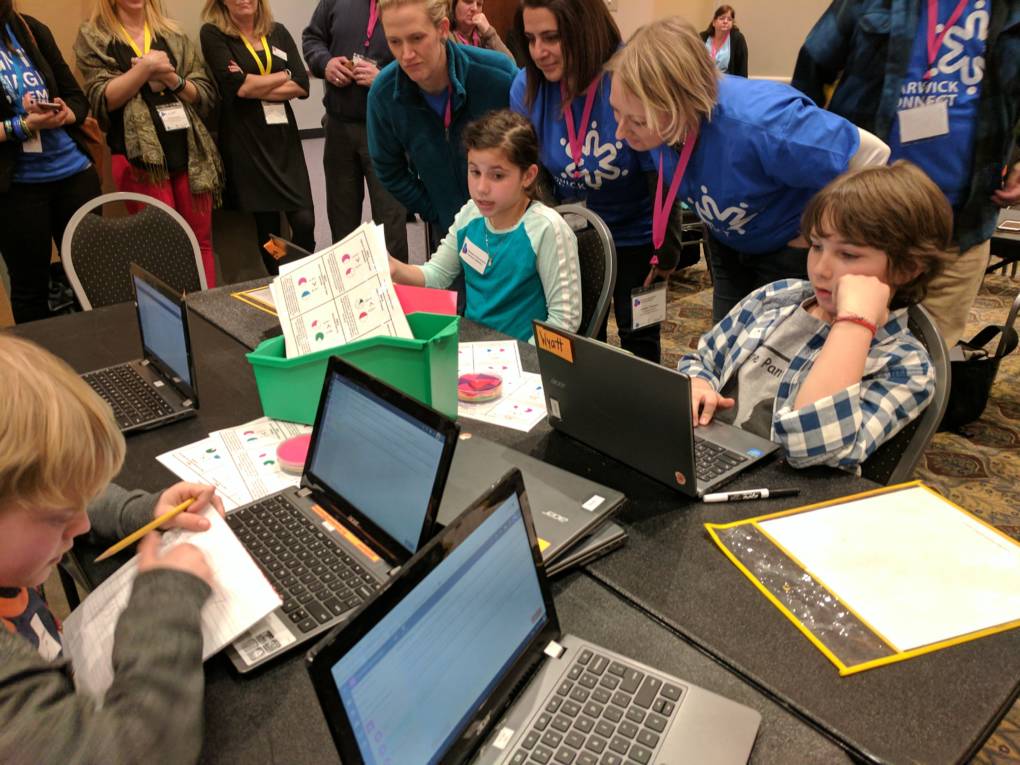
"caption": "Teachers from Warwick and a variety of other Rhode Island public schools watch students from Captain Isaac Paine Elementary School work on a math lesson. ",
"description": null,
"title": "Nichole Dobo - fuse ri2",
"credit": "Hechinger Report/Nichole Dobo",
"status": "inherit",
"isLoading": false,
"fetchFailed": false
},
"mindshift_48390": {
"type": "attachments",
"id": "mindshift_48390",
"meta": {
"index": "attachments_1716263798",
"site": "mindshift",
"id": "48390",
"found": true
},
"parent": 48259,
"imgSizes": {
"small": {
"file": "https://ww2.kqed.org/app/uploads/sites/23/2017/06/Kindness-520x347.jpg",
"width": 520,
"mimeType": "image/jpeg",
"height": 347
},
"twentyfourteen-full-width": {
"file": "https://ww2.kqed.org/app/uploads/sites/23/2017/06/Kindness-1038x576.jpg",
"width": 1038,
"mimeType": "image/jpeg",
"height": 576
},
"thumbnail": {
"file": "https://ww2.kqed.org/app/uploads/sites/23/2017/06/Kindness-160x107.jpg",
"width": 160,
"mimeType": "image/jpeg",
"height": 107
},
"fd-sm": {
"file": "https://ww2.kqed.org/app/uploads/sites/23/2017/06/Kindness-960x640.jpg",
"width": 960,
"mimeType": "image/jpeg",
"height": 640
},
"post-thumbnail": {
"file": "https://ww2.kqed.org/app/uploads/sites/23/2017/06/Kindness-672x372.jpg",
"width": 672,
"mimeType": "image/jpeg",
"height": 372
},
"xsmall": {
"file": "https://ww2.kqed.org/app/uploads/sites/23/2017/06/Kindness-375x250.jpg",
"width": 375,
"mimeType": "image/jpeg",
"height": 250
},
"kqedFullSize": {
"file": "https://ww2.kqed.org/app/uploads/sites/23/2017/06/Kindness.jpg",
"width": 2121,
"height": 1414
},
"large": {
"file": "https://ww2.kqed.org/app/uploads/sites/23/2017/06/Kindness-1020x680.jpg",
"width": 1020,
"mimeType": "image/jpeg",
"height": 680
},
"xlarge": {
"file": "https://ww2.kqed.org/app/uploads/sites/23/2017/06/Kindness-1180x787.jpg",
"width": 1180,
"mimeType": "image/jpeg",
"height": 787
},
"guest-author-50": {
"file": "https://ww2.kqed.org/app/uploads/sites/23/2017/06/Kindness-50x50.jpg",
"width": 50,
"mimeType": "image/jpeg",
"height": 50
},
"guest-author-96": {
"file": "https://ww2.kqed.org/app/uploads/sites/23/2017/06/Kindness-96x96.jpg",
"width": 96,
"mimeType": "image/jpeg",
"height": 96
},
"medium": {
"file": "https://ww2.kqed.org/app/uploads/sites/23/2017/06/Kindness-800x533.jpg",
"width": 800,
"mimeType": "image/jpeg",
"height": 533
},
"guest-author-64": {
"file": "https://ww2.kqed.org/app/uploads/sites/23/2017/06/Kindness-64x64.jpg",
"width": 64,
"mimeType": "image/jpeg",
"height": 64
},
"guest-author-32": {
"file": "https://ww2.kqed.org/app/uploads/sites/23/2017/06/Kindness-32x32.jpg",
"width": 32,
"mimeType": "image/jpeg",
"height": 32
},
"fd-lrg": {
"file": "https://ww2.kqed.org/app/uploads/sites/23/2017/06/Kindness-1920x1280.jpg",
"width": 1920,
"mimeType": "image/jpeg",
"height": 1280
},
"fd-med": {
"file": "https://ww2.kqed.org/app/uploads/sites/23/2017/06/Kindness-1180x787.jpg",
"width": 1180,
"mimeType": "image/jpeg",
"height": 787
},
"full-width": {
"file": "https://ww2.kqed.org/app/uploads/sites/23/2017/06/Kindness-1920x1280.jpg",
"width": 1920,
"mimeType": "image/jpeg",
"height": 1280
},
"detail": {
"file": "https://ww2.kqed.org/app/uploads/sites/23/2017/06/Kindness-150x150.jpg",
"width": 150,
"mimeType": "image/jpeg",
"height": 150
},
"medium_large": {
"file": "https://ww2.kqed.org/app/uploads/sites/23/2017/06/Kindness-768x512.jpg",
"width": 768,
"mimeType": "image/jpeg",
"height": 512
},
"guest-author-128": {
"file": "https://ww2.kqed.org/app/uploads/sites/23/2017/06/Kindness-128x128.jpg",
"width": 128,
"mimeType": "image/jpeg",
"height": 128
},
"xxsmall": {
"file": "https://ww2.kqed.org/app/uploads/sites/23/2017/06/Kindness-240x160.jpg",
"width": 240,
"mimeType": "image/jpeg",
"height": 160
}
},
"publishDate": 1496751502,
"modified": 1496751527,
"caption": null,
"description": null,
"title": "Small friends coloring on the floor and communicating.",
"credit": "iStock/AkilinaWinner ",
"status": "inherit",
"isLoading": false,
"fetchFailed": false
},
"mindshift_48373": {
"type": "attachments",
"id": "mindshift_48373",
"meta": {
"index": "attachments_1716263798",
"site": "mindshift",
"id": "48373",
"found": true
},
"parent": 48371,
"imgSizes": {
"small": {
"file": "https://ww2.kqed.org/app/uploads/sites/23/2017/06/ljohnson_yoga-greater-than-trauma_wide-f4e2b5bb2ac423aaf520387fd87ae43f4fac9e12-520x292.jpg",
"width": 520,
"mimeType": "image/jpeg",
"height": 292
},
"twentyfourteen-full-width": {
"file": "https://ww2.kqed.org/app/uploads/sites/23/2017/06/ljohnson_yoga-greater-than-trauma_wide-f4e2b5bb2ac423aaf520387fd87ae43f4fac9e12-1038x576.jpg",
"width": 1038,
"mimeType": "image/jpeg",
"height": 576
},
"thumbnail": {
"file": "https://ww2.kqed.org/app/uploads/sites/23/2017/06/ljohnson_yoga-greater-than-trauma_wide-f4e2b5bb2ac423aaf520387fd87ae43f4fac9e12-160x90.jpg",
"width": 160,
"mimeType": "image/jpeg",
"height": 90
},
"fd-sm": {
"file": "https://ww2.kqed.org/app/uploads/sites/23/2017/06/ljohnson_yoga-greater-than-trauma_wide-f4e2b5bb2ac423aaf520387fd87ae43f4fac9e12-960x540.jpg",
"width": 960,
"mimeType": "image/jpeg",
"height": 540
},
"post-thumbnail": {
"file": "https://ww2.kqed.org/app/uploads/sites/23/2017/06/ljohnson_yoga-greater-than-trauma_wide-f4e2b5bb2ac423aaf520387fd87ae43f4fac9e12-672x372.jpg",
"width": 672,
"mimeType": "image/jpeg",
"height": 372
},
"xsmall": {
"file": "https://ww2.kqed.org/app/uploads/sites/23/2017/06/ljohnson_yoga-greater-than-trauma_wide-f4e2b5bb2ac423aaf520387fd87ae43f4fac9e12-375x211.jpg",
"width": 375,
"mimeType": "image/jpeg",
"height": 211
},
"kqedFullSize": {
"file": "https://ww2.kqed.org/app/uploads/sites/23/2017/06/ljohnson_yoga-greater-than-trauma_wide-f4e2b5bb2ac423aaf520387fd87ae43f4fac9e12-e1496640803214.jpg",
"width": 1920,
"height": 1080
},
"large": {
"file": "https://ww2.kqed.org/app/uploads/sites/23/2017/06/ljohnson_yoga-greater-than-trauma_wide-f4e2b5bb2ac423aaf520387fd87ae43f4fac9e12-1020x574.jpg",
"width": 1020,
"mimeType": "image/jpeg",
"height": 574
},
"xlarge": {
"file": "https://ww2.kqed.org/app/uploads/sites/23/2017/06/ljohnson_yoga-greater-than-trauma_wide-f4e2b5bb2ac423aaf520387fd87ae43f4fac9e12-1180x664.jpg",
"width": 1180,
"mimeType": "image/jpeg",
"height": 664
},
"guest-author-50": {
"file": "https://ww2.kqed.org/app/uploads/sites/23/2017/06/ljohnson_yoga-greater-than-trauma_wide-f4e2b5bb2ac423aaf520387fd87ae43f4fac9e12-50x50.jpg",
"width": 50,
"mimeType": "image/jpeg",
"height": 50
},
"guest-author-96": {
"file": "https://ww2.kqed.org/app/uploads/sites/23/2017/06/ljohnson_yoga-greater-than-trauma_wide-f4e2b5bb2ac423aaf520387fd87ae43f4fac9e12-96x96.jpg",
"width": 96,
"mimeType": "image/jpeg",
"height": 96
},
"medium": {
"file": "https://ww2.kqed.org/app/uploads/sites/23/2017/06/ljohnson_yoga-greater-than-trauma_wide-f4e2b5bb2ac423aaf520387fd87ae43f4fac9e12-800x450.jpg",
"width": 800,
"mimeType": "image/jpeg",
"height": 450
},
"guest-author-64": {
"file": "https://ww2.kqed.org/app/uploads/sites/23/2017/06/ljohnson_yoga-greater-than-trauma_wide-f4e2b5bb2ac423aaf520387fd87ae43f4fac9e12-64x64.jpg",
"width": 64,
"mimeType": "image/jpeg",
"height": 64
},
"guest-author-32": {
"file": "https://ww2.kqed.org/app/uploads/sites/23/2017/06/ljohnson_yoga-greater-than-trauma_wide-f4e2b5bb2ac423aaf520387fd87ae43f4fac9e12-32x32.jpg",
"width": 32,
"mimeType": "image/jpeg",
"height": 32
},
"fd-lrg": {
"file": "https://ww2.kqed.org/app/uploads/sites/23/2017/06/ljohnson_yoga-greater-than-trauma_wide-f4e2b5bb2ac423aaf520387fd87ae43f4fac9e12-1920x1080.jpg",
"width": 1920,
"mimeType": "image/jpeg",
"height": 1080
},
"fd-med": {
"file": "https://ww2.kqed.org/app/uploads/sites/23/2017/06/ljohnson_yoga-greater-than-trauma_wide-f4e2b5bb2ac423aaf520387fd87ae43f4fac9e12-1180x664.jpg",
"width": 1180,
"mimeType": "image/jpeg",
"height": 664
},
"full-width": {
"file": "https://ww2.kqed.org/app/uploads/sites/23/2017/06/ljohnson_yoga-greater-than-trauma_wide-f4e2b5bb2ac423aaf520387fd87ae43f4fac9e12-1920x1080.jpg",
"width": 1920,
"mimeType": "image/jpeg",
"height": 1080
},
"detail": {
"file": "https://ww2.kqed.org/app/uploads/sites/23/2017/06/ljohnson_yoga-greater-than-trauma_wide-f4e2b5bb2ac423aaf520387fd87ae43f4fac9e12-150x150.jpg",
"width": 150,
"mimeType": "image/jpeg",
"height": 150
},
"medium_large": {
"file": "https://ww2.kqed.org/app/uploads/sites/23/2017/06/ljohnson_yoga-greater-than-trauma_wide-f4e2b5bb2ac423aaf520387fd87ae43f4fac9e12-768x432.jpg",
"width": 768,
"mimeType": "image/jpeg",
"height": 432
},
"guest-author-128": {
"file": "https://ww2.kqed.org/app/uploads/sites/23/2017/06/ljohnson_yoga-greater-than-trauma_wide-f4e2b5bb2ac423aaf520387fd87ae43f4fac9e12-128x128.jpg",
"width": 128,
"mimeType": "image/jpeg",
"height": 128
},
"xxsmall": {
"file": "https://ww2.kqed.org/app/uploads/sites/23/2017/06/ljohnson_yoga-greater-than-trauma_wide-f4e2b5bb2ac423aaf520387fd87ae43f4fac9e12-240x135.jpg",
"width": 240,
"mimeType": "image/jpeg",
"height": 135
}
},
"publishDate": 1496640742,
"modified": 1496640819,
"caption": "So-called 'trauma-aware yoga' has mind and body benefits",
"description": null,
"title": "So-called 'trauma-aware yoga' has mind and body benefits",
"credit": "NPR/LA Johnson",
"status": "inherit",
"isLoading": false,
"fetchFailed": false
},
"mindshift_48364": {
"type": "attachments",
"id": "mindshift_48364",
"meta": {
"index": "attachments_1716263798",
"site": "mindshift",
"id": "48364",
"found": true
},
"parent": 48363,
"imgSizes": {
"small": {
"file": "https://ww2.kqed.org/app/uploads/sites/23/2017/06/img_4228-1-04a77995cac107879457226106a60ca423a32372-520x390.jpg",
"width": 520,
"mimeType": "image/jpeg",
"height": 390
},
"twentyfourteen-full-width": {
"file": "https://ww2.kqed.org/app/uploads/sites/23/2017/06/img_4228-1-04a77995cac107879457226106a60ca423a32372-1038x576.jpg",
"width": 1038,
"mimeType": "image/jpeg",
"height": 576
},
"thumbnail": {
"file": "https://ww2.kqed.org/app/uploads/sites/23/2017/06/img_4228-1-04a77995cac107879457226106a60ca423a32372-160x120.jpg",
"width": 160,
"mimeType": "image/jpeg",
"height": 120
},
"fd-sm": {
"file": "https://ww2.kqed.org/app/uploads/sites/23/2017/06/img_4228-1-04a77995cac107879457226106a60ca423a32372-960x720.jpg",
"width": 960,
"mimeType": "image/jpeg",
"height": 720
},
"post-thumbnail": {
"file": "https://ww2.kqed.org/app/uploads/sites/23/2017/06/img_4228-1-04a77995cac107879457226106a60ca423a32372-672x372.jpg",
"width": 672,
"mimeType": "image/jpeg",
"height": 372
},
"xsmall": {
"file": "https://ww2.kqed.org/app/uploads/sites/23/2017/06/img_4228-1-04a77995cac107879457226106a60ca423a32372-375x281.jpg",
"width": 375,
"mimeType": "image/jpeg",
"height": 281
},
"kqedFullSize": {
"file": "https://ww2.kqed.org/app/uploads/sites/23/2017/06/img_4228-1-04a77995cac107879457226106a60ca423a32372.jpg",
"width": 1998,
"height": 1499
},
"large": {
"file": "https://ww2.kqed.org/app/uploads/sites/23/2017/06/img_4228-1-04a77995cac107879457226106a60ca423a32372-1020x765.jpg",
"width": 1020,
"mimeType": "image/jpeg",
"height": 765
},
"xlarge": {
"file": "https://ww2.kqed.org/app/uploads/sites/23/2017/06/img_4228-1-04a77995cac107879457226106a60ca423a32372-1180x885.jpg",
"width": 1180,
"mimeType": "image/jpeg",
"height": 885
},
"guest-author-50": {
"file": "https://ww2.kqed.org/app/uploads/sites/23/2017/06/img_4228-1-04a77995cac107879457226106a60ca423a32372-50x50.jpg",
"width": 50,
"mimeType": "image/jpeg",
"height": 50
},
"guest-author-96": {
"file": "https://ww2.kqed.org/app/uploads/sites/23/2017/06/img_4228-1-04a77995cac107879457226106a60ca423a32372-96x96.jpg",
"width": 96,
"mimeType": "image/jpeg",
"height": 96
},
"medium": {
"file": "https://ww2.kqed.org/app/uploads/sites/23/2017/06/img_4228-1-04a77995cac107879457226106a60ca423a32372-800x600.jpg",
"width": 800,
"mimeType": "image/jpeg",
"height": 600
},
"guest-author-64": {
"file": "https://ww2.kqed.org/app/uploads/sites/23/2017/06/img_4228-1-04a77995cac107879457226106a60ca423a32372-64x64.jpg",
"width": 64,
"mimeType": "image/jpeg",
"height": 64
},
"guest-author-32": {
"file": "https://ww2.kqed.org/app/uploads/sites/23/2017/06/img_4228-1-04a77995cac107879457226106a60ca423a32372-32x32.jpg",
"width": 32,
"mimeType": "image/jpeg",
"height": 32
},
"fd-lrg": {
"file": "https://ww2.kqed.org/app/uploads/sites/23/2017/06/img_4228-1-04a77995cac107879457226106a60ca423a32372-1920x1440.jpg",
"width": 1920,
"mimeType": "image/jpeg",
"height": 1440
},
"fd-med": {
"file": "https://ww2.kqed.org/app/uploads/sites/23/2017/06/img_4228-1-04a77995cac107879457226106a60ca423a32372-1180x885.jpg",
"width": 1180,
"mimeType": "image/jpeg",
"height": 885
},
"full-width": {
"file": "https://ww2.kqed.org/app/uploads/sites/23/2017/06/img_4228-1-04a77995cac107879457226106a60ca423a32372-1920x1440.jpg",
"width": 1920,
"mimeType": "image/jpeg",
"height": 1440
},
"detail": {
"file": "https://ww2.kqed.org/app/uploads/sites/23/2017/06/img_4228-1-04a77995cac107879457226106a60ca423a32372-150x150.jpg",
"width": 150,
"mimeType": "image/jpeg",
"height": 150
},
"medium_large": {
"file": "https://ww2.kqed.org/app/uploads/sites/23/2017/06/img_4228-1-04a77995cac107879457226106a60ca423a32372-768x576.jpg",
"width": 768,
"mimeType": "image/jpeg",
"height": 576
},
"guest-author-128": {
"file": "https://ww2.kqed.org/app/uploads/sites/23/2017/06/img_4228-1-04a77995cac107879457226106a60ca423a32372-128x128.jpg",
"width": 128,
"mimeType": "image/jpeg",
"height": 128
},
"xxsmall": {
"file": "https://ww2.kqed.org/app/uploads/sites/23/2017/06/img_4228-1-04a77995cac107879457226106a60ca423a32372-240x180.jpg",
"width": 240,
"mimeType": "image/jpeg",
"height": 180
}
},
"publishDate": 1496379378,
"modified": 1496379437,
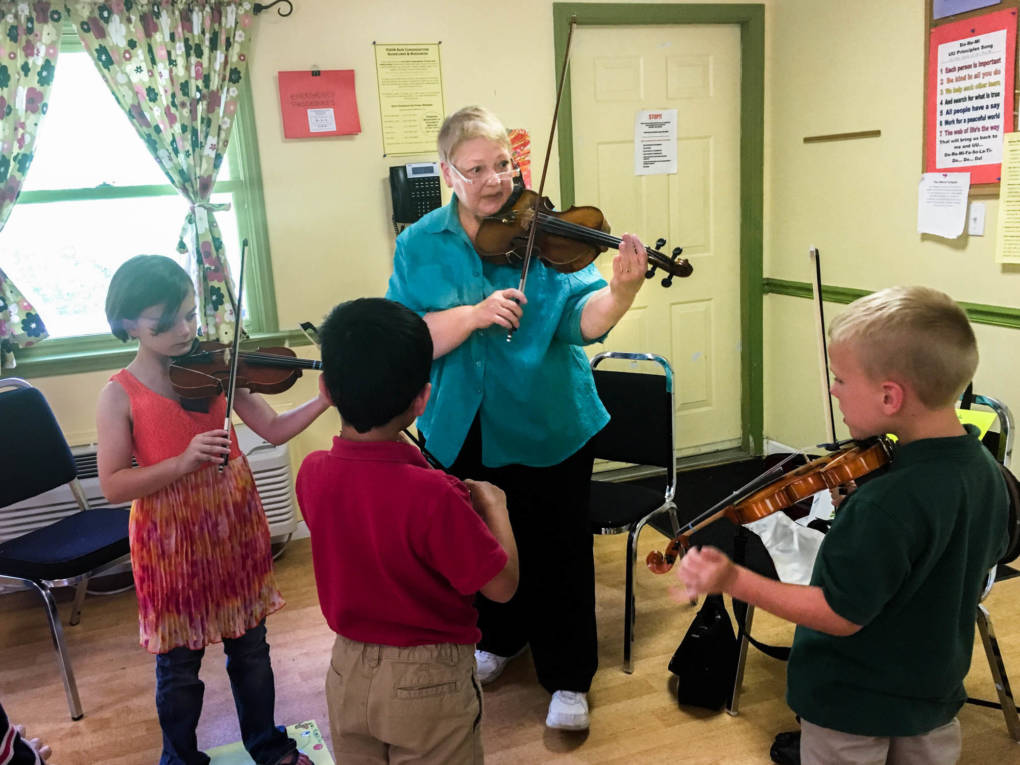
"caption": "(From left to right) Mackenzie Stamper, Adrian Rodriguez and Luke Ryan attend weekly Suzuki violin lessons with instructor Sara Johnson, part of a training program called MILEStone, or Music Impacting Language Expertise.",
"description": "(From left to right) Mackenzie Stamper, Adrian Rodriguez and Luke Ryan attend weekly Suzuki violin lessons with instructor Sara Johnson, part of a training program called MILEStone, or Music Impacting Language Expertise.",
"title": "(From left to right) Mackenzie Stamper, Adrian Rodriguez and Luke Ryan attend weekly Suzuki violin lessons with instructor Sara Johnson, part of a training program called MILEStone, or Music Impacting Language Expertise.",
"credit": "NPR/Andrea Hsu",
"status": "inherit",
"isLoading": false,
"fetchFailed": false
},
"mindshift_48334": {
"type": "attachments",
"id": "mindshift_48334",
"meta": {
"index": "attachments_1716263798",
"site": "mindshift",
"id": "48334",
"found": true
},
"parent": 48333,
"imgSizes": {
"small": {
"file": "https://ww2.kqed.org/app/uploads/sites/23/2017/05/c_williams-principal-boykins-toned_slide-ebf38dfe22df9a8d6679081adc3838bc2ef56470-520x347.jpg",
"width": 520,
"mimeType": "image/jpeg",
"height": 347
},
"twentyfourteen-full-width": {
"file": "https://ww2.kqed.org/app/uploads/sites/23/2017/05/c_williams-principal-boykins-toned_slide-ebf38dfe22df9a8d6679081adc3838bc2ef56470-1038x576.jpg",
"width": 1038,
"mimeType": "image/jpeg",
"height": 576
},
"thumbnail": {
"file": "https://ww2.kqed.org/app/uploads/sites/23/2017/05/c_williams-principal-boykins-toned_slide-ebf38dfe22df9a8d6679081adc3838bc2ef56470-160x107.jpg",
"width": 160,
"mimeType": "image/jpeg",
"height": 107
},
"fd-sm": {
"file": "https://ww2.kqed.org/app/uploads/sites/23/2017/05/c_williams-principal-boykins-toned_slide-ebf38dfe22df9a8d6679081adc3838bc2ef56470-960x640.jpg",
"width": 960,
"mimeType": "image/jpeg",
"height": 640
},
"post-thumbnail": {
"file": "https://ww2.kqed.org/app/uploads/sites/23/2017/05/c_williams-principal-boykins-toned_slide-ebf38dfe22df9a8d6679081adc3838bc2ef56470-672x372.jpg",
"width": 672,
"mimeType": "image/jpeg",
"height": 372
},
"xsmall": {
"file": "https://ww2.kqed.org/app/uploads/sites/23/2017/05/c_williams-principal-boykins-toned_slide-ebf38dfe22df9a8d6679081adc3838bc2ef56470-375x250.jpg",
"width": 375,
"mimeType": "image/jpeg",
"height": 250
},
"kqedFullSize": {
"file": "https://ww2.kqed.org/app/uploads/sites/23/2017/05/c_williams-principal-boykins-toned_slide-ebf38dfe22df9a8d6679081adc3838bc2ef56470-e1496160628479.jpg",
"width": 1920,
"height": 1280
},
"large": {
"file": "https://ww2.kqed.org/app/uploads/sites/23/2017/05/c_williams-principal-boykins-toned_slide-ebf38dfe22df9a8d6679081adc3838bc2ef56470-1020x680.jpg",
"width": 1020,
"mimeType": "image/jpeg",
"height": 680
},
"xlarge": {
"file": "https://ww2.kqed.org/app/uploads/sites/23/2017/05/c_williams-principal-boykins-toned_slide-ebf38dfe22df9a8d6679081adc3838bc2ef56470-1180x787.jpg",
"width": 1180,
"mimeType": "image/jpeg",
"height": 787
},
"guest-author-50": {
"file": "https://ww2.kqed.org/app/uploads/sites/23/2017/05/c_williams-principal-boykins-toned_slide-ebf38dfe22df9a8d6679081adc3838bc2ef56470-50x50.jpg",
"width": 50,
"mimeType": "image/jpeg",
"height": 50
},
"guest-author-96": {
"file": "https://ww2.kqed.org/app/uploads/sites/23/2017/05/c_williams-principal-boykins-toned_slide-ebf38dfe22df9a8d6679081adc3838bc2ef56470-96x96.jpg",
"width": 96,
"mimeType": "image/jpeg",
"height": 96
},
"medium": {
"file": "https://ww2.kqed.org/app/uploads/sites/23/2017/05/c_williams-principal-boykins-toned_slide-ebf38dfe22df9a8d6679081adc3838bc2ef56470-800x533.jpg",
"width": 800,
"mimeType": "image/jpeg",
"height": 533
},
"guest-author-64": {
"file": "https://ww2.kqed.org/app/uploads/sites/23/2017/05/c_williams-principal-boykins-toned_slide-ebf38dfe22df9a8d6679081adc3838bc2ef56470-64x64.jpg",
"width": 64,
"mimeType": "image/jpeg",
"height": 64
},
"guest-author-32": {
"file": "https://ww2.kqed.org/app/uploads/sites/23/2017/05/c_williams-principal-boykins-toned_slide-ebf38dfe22df9a8d6679081adc3838bc2ef56470-32x32.jpg",
"width": 32,
"mimeType": "image/jpeg",
"height": 32
},
"fd-lrg": {
"file": "https://ww2.kqed.org/app/uploads/sites/23/2017/05/c_williams-principal-boykins-toned_slide-ebf38dfe22df9a8d6679081adc3838bc2ef56470-1920x1280.jpg",
"width": 1920,
"mimeType": "image/jpeg",
"height": 1280
},
"fd-med": {
"file": "https://ww2.kqed.org/app/uploads/sites/23/2017/05/c_williams-principal-boykins-toned_slide-ebf38dfe22df9a8d6679081adc3838bc2ef56470-1180x787.jpg",
"width": 1180,
"mimeType": "image/jpeg",
"height": 787
},
"full-width": {
"file": "https://ww2.kqed.org/app/uploads/sites/23/2017/05/c_williams-principal-boykins-toned_slide-ebf38dfe22df9a8d6679081adc3838bc2ef56470-1920x1280.jpg",
"width": 1920,
"mimeType": "image/jpeg",
"height": 1280
},
"detail": {
"file": "https://ww2.kqed.org/app/uploads/sites/23/2017/05/c_williams-principal-boykins-toned_slide-ebf38dfe22df9a8d6679081adc3838bc2ef56470-150x150.jpg",
"width": 150,
"mimeType": "image/jpeg",
"height": 150
},
"medium_large": {
"file": "https://ww2.kqed.org/app/uploads/sites/23/2017/05/c_williams-principal-boykins-toned_slide-ebf38dfe22df9a8d6679081adc3838bc2ef56470-768x512.jpg",
"width": 768,
"mimeType": "image/jpeg",
"height": 512
},
"guest-author-128": {
"file": "https://ww2.kqed.org/app/uploads/sites/23/2017/05/c_williams-principal-boykins-toned_slide-ebf38dfe22df9a8d6679081adc3838bc2ef56470-128x128.jpg",
"width": 128,
"mimeType": "image/jpeg",
"height": 128
},
"xxsmall": {
"file": "https://ww2.kqed.org/app/uploads/sites/23/2017/05/c_williams-principal-boykins-toned_slide-ebf38dfe22df9a8d6679081adc3838bc2ef56470-240x160.jpg",
"width": 240,
"mimeType": "image/jpeg",
"height": 160
}
},
"publishDate": 1496160578,
"modified": 1496160656,
"caption": "Nicole Boykins is principal at Crocker College Prep in New Orleans. The pre-K through eighth grade school is one of five schools in a program to better serve children who've been exposed to trauma.",
"description": "Nicole Boykins is principal at Crocker College Prep in New Orleans. The pre-K through eighth grade school is one of five schools in a program to better serve children who've been exposed to trauma.",
"title": "Nicole Boykins is principal at Crocker College Prep in New Orleans. The pre-K through eighth grade school is one of five schools in a program to better serve children who've been exposed to trauma.",
"credit": "Clarence Williams/WWNO",
"status": "inherit",
"isLoading": false,
"fetchFailed": false
},
"mindshift_48346": {
"type": "attachments",
"id": "mindshift_48346",
"meta": {
"index": "attachments_1716263798",
"site": "mindshift",
"id": "48346",
"found": true
},
"parent": 48342,
"imgSizes": {
"small": {
"file": "https://ww2.kqed.org/app/uploads/sites/23/2017/05/l_johnson-pankaj-1_slide-bbe9bd8033637561043b85adbff544d2b20054f8-520x347.jpg",
"width": 520,
"mimeType": "image/jpeg",
"height": 347
},
"twentyfourteen-full-width": {
"file": "https://ww2.kqed.org/app/uploads/sites/23/2017/05/l_johnson-pankaj-1_slide-bbe9bd8033637561043b85adbff544d2b20054f8-1038x576.jpg",
"width": 1038,
"mimeType": "image/jpeg",
"height": 576
},
"thumbnail": {
"file": "https://ww2.kqed.org/app/uploads/sites/23/2017/05/l_johnson-pankaj-1_slide-bbe9bd8033637561043b85adbff544d2b20054f8-160x107.jpg",
"width": 160,
"mimeType": "image/jpeg",
"height": 107
},
"fd-sm": {
"file": "https://ww2.kqed.org/app/uploads/sites/23/2017/05/l_johnson-pankaj-1_slide-bbe9bd8033637561043b85adbff544d2b20054f8-960x640.jpg",
"width": 960,
"mimeType": "image/jpeg",
"height": 640
},
"post-thumbnail": {
"file": "https://ww2.kqed.org/app/uploads/sites/23/2017/05/l_johnson-pankaj-1_slide-bbe9bd8033637561043b85adbff544d2b20054f8-672x372.jpg",
"width": 672,
"mimeType": "image/jpeg",
"height": 372
},
"xsmall": {
"file": "https://ww2.kqed.org/app/uploads/sites/23/2017/05/l_johnson-pankaj-1_slide-bbe9bd8033637561043b85adbff544d2b20054f8-375x250.jpg",
"width": 375,
"mimeType": "image/jpeg",
"height": 250
},
"kqedFullSize": {
"file": "https://ww2.kqed.org/app/uploads/sites/23/2017/05/l_johnson-pankaj-1_slide-bbe9bd8033637561043b85adbff544d2b20054f8-e1496233031161.jpg",
"width": 1920,
"height": 1280
},
"large": {
"file": "https://ww2.kqed.org/app/uploads/sites/23/2017/05/l_johnson-pankaj-1_slide-bbe9bd8033637561043b85adbff544d2b20054f8-1020x680.jpg",
"width": 1020,
"mimeType": "image/jpeg",
"height": 680
},
"xlarge": {
"file": "https://ww2.kqed.org/app/uploads/sites/23/2017/05/l_johnson-pankaj-1_slide-bbe9bd8033637561043b85adbff544d2b20054f8-1180x787.jpg",
"width": 1180,
"mimeType": "image/jpeg",
"height": 787
},
"guest-author-50": {
"file": "https://ww2.kqed.org/app/uploads/sites/23/2017/05/l_johnson-pankaj-1_slide-bbe9bd8033637561043b85adbff544d2b20054f8-50x50.jpg",
"width": 50,
"mimeType": "image/jpeg",
"height": 50
},
"guest-author-96": {
"file": "https://ww2.kqed.org/app/uploads/sites/23/2017/05/l_johnson-pankaj-1_slide-bbe9bd8033637561043b85adbff544d2b20054f8-96x96.jpg",
"width": 96,
"mimeType": "image/jpeg",
"height": 96
},
"medium": {
"file": "https://ww2.kqed.org/app/uploads/sites/23/2017/05/l_johnson-pankaj-1_slide-bbe9bd8033637561043b85adbff544d2b20054f8-800x533.jpg",
"width": 800,
"mimeType": "image/jpeg",
"height": 533
},
"guest-author-64": {
"file": "https://ww2.kqed.org/app/uploads/sites/23/2017/05/l_johnson-pankaj-1_slide-bbe9bd8033637561043b85adbff544d2b20054f8-64x64.jpg",
"width": 64,
"mimeType": "image/jpeg",
"height": 64
},
"guest-author-32": {
"file": "https://ww2.kqed.org/app/uploads/sites/23/2017/05/l_johnson-pankaj-1_slide-bbe9bd8033637561043b85adbff544d2b20054f8-32x32.jpg",
"width": 32,
"mimeType": "image/jpeg",
"height": 32
},
"fd-lrg": {
"file": "https://ww2.kqed.org/app/uploads/sites/23/2017/05/l_johnson-pankaj-1_slide-bbe9bd8033637561043b85adbff544d2b20054f8-1920x1280.jpg",
"width": 1920,
"mimeType": "image/jpeg",
"height": 1280
},
"fd-med": {
"file": "https://ww2.kqed.org/app/uploads/sites/23/2017/05/l_johnson-pankaj-1_slide-bbe9bd8033637561043b85adbff544d2b20054f8-1180x787.jpg",
"width": 1180,
"mimeType": "image/jpeg",
"height": 787
},
"full-width": {
"file": "https://ww2.kqed.org/app/uploads/sites/23/2017/05/l_johnson-pankaj-1_slide-bbe9bd8033637561043b85adbff544d2b20054f8-1920x1280.jpg",
"width": 1920,
"mimeType": "image/jpeg",
"height": 1280
},
"detail": {
"file": "https://ww2.kqed.org/app/uploads/sites/23/2017/05/l_johnson-pankaj-1_slide-bbe9bd8033637561043b85adbff544d2b20054f8-150x150.jpg",
"width": 150,
"mimeType": "image/jpeg",
"height": 150
},
"medium_large": {
"file": "https://ww2.kqed.org/app/uploads/sites/23/2017/05/l_johnson-pankaj-1_slide-bbe9bd8033637561043b85adbff544d2b20054f8-768x512.jpg",
"width": 768,
"mimeType": "image/jpeg",
"height": 512
},
"guest-author-128": {
"file": "https://ww2.kqed.org/app/uploads/sites/23/2017/05/l_johnson-pankaj-1_slide-bbe9bd8033637561043b85adbff544d2b20054f8-128x128.jpg",
"width": 128,
"mimeType": "image/jpeg",
"height": 128
},
"xxsmall": {
"file": "https://ww2.kqed.org/app/uploads/sites/23/2017/05/l_johnson-pankaj-1_slide-bbe9bd8033637561043b85adbff544d2b20054f8-240x160.jpg",
"width": 240,
"mimeType": "image/jpeg",
"height": 160
}
},
"publishDate": 1496232956,
"modified": 1496233054,
"caption": "Pankaj Rayamaji speaks through his trusted walkie-talkie to a teacher inside. Rayamaji is the director of logistics and operations at Columbia Heights Education Campus in Washington, D.C.",
"description": "Pankaj Rayamaji speaks through his trusted walkie-talkie to a teacher inside. Rayamaji is the director of logistics and operations at Columbia Heights Education Campus in Washington, D.C.",
"title": "Pankaj Rayamaji speaks through his trusted walkie-talkie to a teacher inside. Rayamaji is the director of logistics and operations at Columbia Heights Education Campus in Washington, D.C.",
"credit": "NPR/LA Johnson",
"status": "inherit",
"isLoading": false,
"fetchFailed": false
},
"mindshift_48328": {
"type": "attachments",
"id": "mindshift_48328",
"meta": {
"index": "attachments_1716263798",
"site": "mindshift",
"id": "48328",
"found": true
},
"parent": 48312,
"imgSizes": {
"small": {
"file": "https://ww2.kqed.org/app/uploads/sites/23/2017/05/Coffee-MarljaRadovic-520x347.jpg",
"width": 520,
"mimeType": "image/jpeg",
"height": 347
},
"twentyfourteen-full-width": {
"file": "https://ww2.kqed.org/app/uploads/sites/23/2017/05/Coffee-MarljaRadovic-1038x576.jpg",
"width": 1038,
"mimeType": "image/jpeg",
"height": 576
},
"thumbnail": {
"file": "https://ww2.kqed.org/app/uploads/sites/23/2017/05/Coffee-MarljaRadovic-160x107.jpg",
"width": 160,
"mimeType": "image/jpeg",
"height": 107
},
"fd-sm": {
"file": "https://ww2.kqed.org/app/uploads/sites/23/2017/05/Coffee-MarljaRadovic-960x640.jpg",
"width": 960,
"mimeType": "image/jpeg",
"height": 640
},
"post-thumbnail": {
"file": "https://ww2.kqed.org/app/uploads/sites/23/2017/05/Coffee-MarljaRadovic-672x372.jpg",
"width": 672,
"mimeType": "image/jpeg",
"height": 372
},
"xsmall": {
"file": "https://ww2.kqed.org/app/uploads/sites/23/2017/05/Coffee-MarljaRadovic-375x250.jpg",
"width": 375,
"mimeType": "image/jpeg",
"height": 250
},
"kqedFullSize": {
"file": "https://ww2.kqed.org/app/uploads/sites/23/2017/05/Coffee-MarljaRadovic-e1496130554448.jpg",
"width": 1920,
"height": 1280
},
"large": {
"file": "https://ww2.kqed.org/app/uploads/sites/23/2017/05/Coffee-MarljaRadovic-1020x680.jpg",
"width": 1020,
"mimeType": "image/jpeg",
"height": 680
},
"xlarge": {
"file": "https://ww2.kqed.org/app/uploads/sites/23/2017/05/Coffee-MarljaRadovic-1180x787.jpg",
"width": 1180,
"mimeType": "image/jpeg",
"height": 787
},
"guest-author-50": {
"file": "https://ww2.kqed.org/app/uploads/sites/23/2017/05/Coffee-MarljaRadovic-50x50.jpg",
"width": 50,
"mimeType": "image/jpeg",
"height": 50
},
"guest-author-96": {
"file": "https://ww2.kqed.org/app/uploads/sites/23/2017/05/Coffee-MarljaRadovic-96x96.jpg",
"width": 96,
"mimeType": "image/jpeg",
"height": 96
},
"medium": {
"file": "https://ww2.kqed.org/app/uploads/sites/23/2017/05/Coffee-MarljaRadovic-800x533.jpg",
"width": 800,
"mimeType": "image/jpeg",
"height": 533
},
"guest-author-64": {
"file": "https://ww2.kqed.org/app/uploads/sites/23/2017/05/Coffee-MarljaRadovic-64x64.jpg",
"width": 64,
"mimeType": "image/jpeg",
"height": 64
},
"guest-author-32": {
"file": "https://ww2.kqed.org/app/uploads/sites/23/2017/05/Coffee-MarljaRadovic-32x32.jpg",
"width": 32,
"mimeType": "image/jpeg",
"height": 32
},
"fd-lrg": {
"file": "https://ww2.kqed.org/app/uploads/sites/23/2017/05/Coffee-MarljaRadovic-1920x1280.jpg",
"width": 1920,
"mimeType": "image/jpeg",
"height": 1280
},
"fd-med": {
"file": "https://ww2.kqed.org/app/uploads/sites/23/2017/05/Coffee-MarljaRadovic-1180x787.jpg",
"width": 1180,
"mimeType": "image/jpeg",
"height": 787
},
"full-width": {
"file": "https://ww2.kqed.org/app/uploads/sites/23/2017/05/Coffee-MarljaRadovic-1920x1280.jpg",
"width": 1920,
"mimeType": "image/jpeg",
"height": 1280
},
"detail": {
"file": "https://ww2.kqed.org/app/uploads/sites/23/2017/05/Coffee-MarljaRadovic-150x150.jpg",
"width": 150,
"mimeType": "image/jpeg",
"height": 150
},
"medium_large": {
"file": "https://ww2.kqed.org/app/uploads/sites/23/2017/05/Coffee-MarljaRadovic-768x512.jpg",
"width": 768,
"mimeType": "image/jpeg",
"height": 512
},
"guest-author-128": {
"file": "https://ww2.kqed.org/app/uploads/sites/23/2017/05/Coffee-MarljaRadovic-128x128.jpg",
"width": 128,
"mimeType": "image/jpeg",
"height": 128
},
"xxsmall": {
"file": "https://ww2.kqed.org/app/uploads/sites/23/2017/05/Coffee-MarljaRadovic-240x160.jpg",
"width": 240,
"mimeType": "image/jpeg",
"height": 160
}
},
"publishDate": 1496130513,
"modified": 1496130548,
"caption": null,
"description": null,
"title": null,
"credit": "iStock/Marlja Radovic",
"status": "inherit",
"isLoading": false,
"fetchFailed": false
},
"mindshift_48320": {
"type": "attachments",
"id": "mindshift_48320",
"meta": {
"index": "attachments_1716263798",
"site": "mindshift",
"id": "48320",
"found": true
},
"parent": 48319,
"imgSizes": {
"small": {
"file": "https://ww2.kqed.org/app/uploads/sites/23/2017/05/img_4975-3fc1ee81320f77cfe08b2e85653f1045f4543553-520x390.jpg",
"width": 520,
"mimeType": "image/jpeg",
"height": 390
},
"twentyfourteen-full-width": {
"file": "https://ww2.kqed.org/app/uploads/sites/23/2017/05/img_4975-3fc1ee81320f77cfe08b2e85653f1045f4543553-1038x576.jpg",
"width": 1038,
"mimeType": "image/jpeg",
"height": 576
},
"thumbnail": {
"file": "https://ww2.kqed.org/app/uploads/sites/23/2017/05/img_4975-3fc1ee81320f77cfe08b2e85653f1045f4543553-160x120.jpg",
"width": 160,
"mimeType": "image/jpeg",
"height": 120
},
"fd-sm": {
"file": "https://ww2.kqed.org/app/uploads/sites/23/2017/05/img_4975-3fc1ee81320f77cfe08b2e85653f1045f4543553-960x720.jpg",
"width": 960,
"mimeType": "image/jpeg",
"height": 720
},
"post-thumbnail": {
"file": "https://ww2.kqed.org/app/uploads/sites/23/2017/05/img_4975-3fc1ee81320f77cfe08b2e85653f1045f4543553-672x372.jpg",
"width": 672,
"mimeType": "image/jpeg",
"height": 372
},
"xsmall": {
"file": "https://ww2.kqed.org/app/uploads/sites/23/2017/05/img_4975-3fc1ee81320f77cfe08b2e85653f1045f4543553-375x281.jpg",
"width": 375,
"mimeType": "image/jpeg",
"height": 281
},
"kqedFullSize": {
"file": "https://ww2.kqed.org/app/uploads/sites/23/2017/05/img_4975-3fc1ee81320f77cfe08b2e85653f1045f4543553-e1496129254163.jpg",
"width": 1920,
"height": 1440
},
"large": {
"file": "https://ww2.kqed.org/app/uploads/sites/23/2017/05/img_4975-3fc1ee81320f77cfe08b2e85653f1045f4543553-1020x765.jpg",
"width": 1020,
"mimeType": "image/jpeg",
"height": 765
},
"xlarge": {
"file": "https://ww2.kqed.org/app/uploads/sites/23/2017/05/img_4975-3fc1ee81320f77cfe08b2e85653f1045f4543553-1180x885.jpg",
"width": 1180,
"mimeType": "image/jpeg",
"height": 885
},
"guest-author-50": {
"file": "https://ww2.kqed.org/app/uploads/sites/23/2017/05/img_4975-3fc1ee81320f77cfe08b2e85653f1045f4543553-50x50.jpg",
"width": 50,
"mimeType": "image/jpeg",
"height": 50
},
"guest-author-96": {
"file": "https://ww2.kqed.org/app/uploads/sites/23/2017/05/img_4975-3fc1ee81320f77cfe08b2e85653f1045f4543553-96x96.jpg",
"width": 96,
"mimeType": "image/jpeg",
"height": 96
},
"medium": {
"file": "https://ww2.kqed.org/app/uploads/sites/23/2017/05/img_4975-3fc1ee81320f77cfe08b2e85653f1045f4543553-800x600.jpg",
"width": 800,
"mimeType": "image/jpeg",
"height": 600
},
"guest-author-64": {
"file": "https://ww2.kqed.org/app/uploads/sites/23/2017/05/img_4975-3fc1ee81320f77cfe08b2e85653f1045f4543553-64x64.jpg",
"width": 64,
"mimeType": "image/jpeg",
"height": 64
},
"guest-author-32": {
"file": "https://ww2.kqed.org/app/uploads/sites/23/2017/05/img_4975-3fc1ee81320f77cfe08b2e85653f1045f4543553-32x32.jpg",
"width": 32,
"mimeType": "image/jpeg",
"height": 32
},
"fd-lrg": {
"file": "https://ww2.kqed.org/app/uploads/sites/23/2017/05/img_4975-3fc1ee81320f77cfe08b2e85653f1045f4543553-1920x1440.jpg",
"width": 1920,
"mimeType": "image/jpeg",
"height": 1440
},
"fd-med": {
"file": "https://ww2.kqed.org/app/uploads/sites/23/2017/05/img_4975-3fc1ee81320f77cfe08b2e85653f1045f4543553-1180x885.jpg",
"width": 1180,
"mimeType": "image/jpeg",
"height": 885
},
"full-width": {
"file": "https://ww2.kqed.org/app/uploads/sites/23/2017/05/img_4975-3fc1ee81320f77cfe08b2e85653f1045f4543553-1920x1440.jpg",
"width": 1920,
"mimeType": "image/jpeg",
"height": 1440
},
"detail": {
"file": "https://ww2.kqed.org/app/uploads/sites/23/2017/05/img_4975-3fc1ee81320f77cfe08b2e85653f1045f4543553-150x150.jpg",
"width": 150,
"mimeType": "image/jpeg",
"height": 150
},
"medium_large": {
"file": "https://ww2.kqed.org/app/uploads/sites/23/2017/05/img_4975-3fc1ee81320f77cfe08b2e85653f1045f4543553-768x576.jpg",
"width": 768,
"mimeType": "image/jpeg",
"height": 576
},
"guest-author-128": {
"file": "https://ww2.kqed.org/app/uploads/sites/23/2017/05/img_4975-3fc1ee81320f77cfe08b2e85653f1045f4543553-128x128.jpg",
"width": 128,
"mimeType": "image/jpeg",
"height": 128
},
"xxsmall": {
"file": "https://ww2.kqed.org/app/uploads/sites/23/2017/05/img_4975-3fc1ee81320f77cfe08b2e85653f1045f4543553-240x180.jpg",
"width": 240,
"mimeType": "image/jpeg",
"height": 180
}
},
"publishDate": 1496129218,
"modified": 1496129271,
"caption": "Will Shindel prepares for a gene-editing class using the CRISPR tool at a Brooklyn community lab called Genspace.",
"description": null,
"title": "Will Shindel prepares for a gene-editing class using the CRISPR tool at a Brooklyn community lab called Genspace.",
"credit": "Alan Yu/WHYY",
"status": "inherit",
"isLoading": false,
"fetchFailed": false
},
"mindshift_48316": {
"type": "attachments",
"id": "mindshift_48316",
"meta": {
"index": "attachments_1716263798",
"site": "mindshift",
"id": "48316",
"found": true
},
"parent": 48315,
"imgSizes": {
"small": {
"file": "https://ww2.kqed.org/app/uploads/sites/23/2017/05/teen-brains-1_enl-b1239b204bab7c76ff9f0e9b1e62f7e7d9afeefd-520x337.jpg",
"width": 520,
"mimeType": "image/jpeg",
"height": 337
},
"twentyfourteen-full-width": {
"file": "https://ww2.kqed.org/app/uploads/sites/23/2017/05/teen-brains-1_enl-b1239b204bab7c76ff9f0e9b1e62f7e7d9afeefd-1038x576.jpg",
"width": 1038,
"mimeType": "image/jpeg",
"height": 576
},
"thumbnail": {
"file": "https://ww2.kqed.org/app/uploads/sites/23/2017/05/teen-brains-1_enl-b1239b204bab7c76ff9f0e9b1e62f7e7d9afeefd-160x104.jpg",
"width": 160,
"mimeType": "image/jpeg",
"height": 104
},
"fd-sm": {
"file": "https://ww2.kqed.org/app/uploads/sites/23/2017/05/teen-brains-1_enl-b1239b204bab7c76ff9f0e9b1e62f7e7d9afeefd-960x622.jpg",
"width": 960,
"mimeType": "image/jpeg",
"height": 622
},
"post-thumbnail": {
"file": "https://ww2.kqed.org/app/uploads/sites/23/2017/05/teen-brains-1_enl-b1239b204bab7c76ff9f0e9b1e62f7e7d9afeefd-672x372.jpg",
"width": 672,
"mimeType": "image/jpeg",
"height": 372
},
"xsmall": {
"file": "https://ww2.kqed.org/app/uploads/sites/23/2017/05/teen-brains-1_enl-b1239b204bab7c76ff9f0e9b1e62f7e7d9afeefd-375x243.jpg",
"width": 375,
"mimeType": "image/jpeg",
"height": 243
},
"kqedFullSize": {
"file": "https://ww2.kqed.org/app/uploads/sites/23/2017/05/teen-brains-1_enl-b1239b204bab7c76ff9f0e9b1e62f7e7d9afeefd.jpg",
"width": 1996,
"height": 1293
},
"large": {
"file": "https://ww2.kqed.org/app/uploads/sites/23/2017/05/teen-brains-1_enl-b1239b204bab7c76ff9f0e9b1e62f7e7d9afeefd-1020x661.jpg",
"width": 1020,
"mimeType": "image/jpeg",
"height": 661
},
"xlarge": {
"file": "https://ww2.kqed.org/app/uploads/sites/23/2017/05/teen-brains-1_enl-b1239b204bab7c76ff9f0e9b1e62f7e7d9afeefd-1180x764.jpg",
"width": 1180,
"mimeType": "image/jpeg",
"height": 764
},
"guest-author-50": {
"file": "https://ww2.kqed.org/app/uploads/sites/23/2017/05/teen-brains-1_enl-b1239b204bab7c76ff9f0e9b1e62f7e7d9afeefd-50x50.jpg",
"width": 50,
"mimeType": "image/jpeg",
"height": 50
},
"guest-author-96": {
"file": "https://ww2.kqed.org/app/uploads/sites/23/2017/05/teen-brains-1_enl-b1239b204bab7c76ff9f0e9b1e62f7e7d9afeefd-96x96.jpg",
"width": 96,
"mimeType": "image/jpeg",
"height": 96
},
"medium": {
"file": "https://ww2.kqed.org/app/uploads/sites/23/2017/05/teen-brains-1_enl-b1239b204bab7c76ff9f0e9b1e62f7e7d9afeefd-800x518.jpg",
"width": 800,
"mimeType": "image/jpeg",
"height": 518
},
"guest-author-64": {
"file": "https://ww2.kqed.org/app/uploads/sites/23/2017/05/teen-brains-1_enl-b1239b204bab7c76ff9f0e9b1e62f7e7d9afeefd-64x64.jpg",
"width": 64,
"mimeType": "image/jpeg",
"height": 64
},
"guest-author-32": {
"file": "https://ww2.kqed.org/app/uploads/sites/23/2017/05/teen-brains-1_enl-b1239b204bab7c76ff9f0e9b1e62f7e7d9afeefd-32x32.jpg",
"width": 32,
"mimeType": "image/jpeg",
"height": 32
},
"fd-lrg": {
"file": "https://ww2.kqed.org/app/uploads/sites/23/2017/05/teen-brains-1_enl-b1239b204bab7c76ff9f0e9b1e62f7e7d9afeefd-1920x1244.jpg",
"width": 1920,
"mimeType": "image/jpeg",
"height": 1244
},
"fd-med": {
"file": "https://ww2.kqed.org/app/uploads/sites/23/2017/05/teen-brains-1_enl-b1239b204bab7c76ff9f0e9b1e62f7e7d9afeefd-1180x764.jpg",
"width": 1180,
"mimeType": "image/jpeg",
"height": 764
},
"full-width": {
"file": "https://ww2.kqed.org/app/uploads/sites/23/2017/05/teen-brains-1_enl-b1239b204bab7c76ff9f0e9b1e62f7e7d9afeefd-1920x1244.jpg",
"width": 1920,
"mimeType": "image/jpeg",
"height": 1244
},
"detail": {
"file": "https://ww2.kqed.org/app/uploads/sites/23/2017/05/teen-brains-1_enl-b1239b204bab7c76ff9f0e9b1e62f7e7d9afeefd-150x150.jpg",
"width": 150,
"mimeType": "image/jpeg",
"height": 150
},
"medium_large": {
"file": "https://ww2.kqed.org/app/uploads/sites/23/2017/05/teen-brains-1_enl-b1239b204bab7c76ff9f0e9b1e62f7e7d9afeefd-768x498.jpg",
"width": 768,
"mimeType": "image/jpeg",
"height": 498
},
"guest-author-128": {
"file": "https://ww2.kqed.org/app/uploads/sites/23/2017/05/teen-brains-1_enl-b1239b204bab7c76ff9f0e9b1e62f7e7d9afeefd-128x128.jpg",
"width": 128,
"mimeType": "image/jpeg",
"height": 128
},
"xxsmall": {
"file": "https://ww2.kqed.org/app/uploads/sites/23/2017/05/teen-brains-1_enl-b1239b204bab7c76ff9f0e9b1e62f7e7d9afeefd-240x155.jpg",
"width": 240,
"mimeType": "image/jpeg",
"height": 155
}
},
"publishDate": 1496128234,
"modified": 1496128315,
"caption": "Sometime between grade school and grad school, the brain’s information highways get remapped in a way that dramatically boosts self-control.",
"description": "Sometime between grade school and grad school, the brain’s information highways get remapped in a way that dramatically boosts self-control.",
"title": "Sometime between grade school and grad school, the brain's information highways get remapped in a way that dramatically boosts self-control.",
"credit": "Thomas Trutschel/Photothek via Getty Images",
"status": "inherit",
"isLoading": false,
"fetchFailed": false
},
"mindshift_48325": {
"type": "attachments",
"id": "mindshift_48325",
"meta": {
"index": "attachments_1716263798",
"site": "mindshift",
"id": "48325",
"found": true
},
"parent": 48324,
"imgSizes": {
"small": {
"file": "https://ww2.kqed.org/app/uploads/sites/23/2017/05/istock-623607760_custom-9b035925b20cbab4ac85f214135a636d9c80c42f-520x346.jpg",
"width": 520,
"mimeType": "image/jpeg",
"height": 346
},
"twentyfourteen-full-width": {
"file": "https://ww2.kqed.org/app/uploads/sites/23/2017/05/istock-623607760_custom-9b035925b20cbab4ac85f214135a636d9c80c42f-1038x576.jpg",
"width": 1038,
"mimeType": "image/jpeg",
"height": 576
},
"thumbnail": {
"file": "https://ww2.kqed.org/app/uploads/sites/23/2017/05/istock-623607760_custom-9b035925b20cbab4ac85f214135a636d9c80c42f-160x107.jpg",
"width": 160,
"mimeType": "image/jpeg",
"height": 107
},
"fd-sm": {
"file": "https://ww2.kqed.org/app/uploads/sites/23/2017/05/istock-623607760_custom-9b035925b20cbab4ac85f214135a636d9c80c42f-960x639.jpg",
"width": 960,
"mimeType": "image/jpeg",
"height": 639
},
"post-thumbnail": {
"file": "https://ww2.kqed.org/app/uploads/sites/23/2017/05/istock-623607760_custom-9b035925b20cbab4ac85f214135a636d9c80c42f-672x372.jpg",
"width": 672,
"mimeType": "image/jpeg",
"height": 372
},
"xsmall": {
"file": "https://ww2.kqed.org/app/uploads/sites/23/2017/05/istock-623607760_custom-9b035925b20cbab4ac85f214135a636d9c80c42f-375x250.jpg",
"width": 375,
"mimeType": "image/jpeg",
"height": 250
},
"kqedFullSize": {
"file": "https://ww2.kqed.org/app/uploads/sites/23/2017/05/istock-623607760_custom-9b035925b20cbab4ac85f214135a636d9c80c42f-e1496130142407.jpg",
"width": 1920,
"height": 1279
},
"large": {
"file": "https://ww2.kqed.org/app/uploads/sites/23/2017/05/istock-623607760_custom-9b035925b20cbab4ac85f214135a636d9c80c42f-1020x679.jpg",
"width": 1020,
"mimeType": "image/jpeg",
"height": 679
},
"xlarge": {
"file": "https://ww2.kqed.org/app/uploads/sites/23/2017/05/istock-623607760_custom-9b035925b20cbab4ac85f214135a636d9c80c42f-1180x786.jpg",
"width": 1180,
"mimeType": "image/jpeg",
"height": 786
},
"guest-author-50": {
"file": "https://ww2.kqed.org/app/uploads/sites/23/2017/05/istock-623607760_custom-9b035925b20cbab4ac85f214135a636d9c80c42f-50x50.jpg",
"width": 50,
"mimeType": "image/jpeg",
"height": 50
},
"guest-author-96": {
"file": "https://ww2.kqed.org/app/uploads/sites/23/2017/05/istock-623607760_custom-9b035925b20cbab4ac85f214135a636d9c80c42f-96x96.jpg",
"width": 96,
"mimeType": "image/jpeg",
"height": 96
},
"medium": {
"file": "https://ww2.kqed.org/app/uploads/sites/23/2017/05/istock-623607760_custom-9b035925b20cbab4ac85f214135a636d9c80c42f-800x533.jpg",
"width": 800,
"mimeType": "image/jpeg",
"height": 533
},
"guest-author-64": {
"file": "https://ww2.kqed.org/app/uploads/sites/23/2017/05/istock-623607760_custom-9b035925b20cbab4ac85f214135a636d9c80c42f-64x64.jpg",
"width": 64,
"mimeType": "image/jpeg",
"height": 64
},
"guest-author-32": {
"file": "https://ww2.kqed.org/app/uploads/sites/23/2017/05/istock-623607760_custom-9b035925b20cbab4ac85f214135a636d9c80c42f-32x32.jpg",
"width": 32,
"mimeType": "image/jpeg",
"height": 32
},
"fd-lrg": {
"file": "https://ww2.kqed.org/app/uploads/sites/23/2017/05/istock-623607760_custom-9b035925b20cbab4ac85f214135a636d9c80c42f-1920x1279.jpg",
"width": 1920,
"mimeType": "image/jpeg",
"height": 1279
},
"fd-med": {
"file": "https://ww2.kqed.org/app/uploads/sites/23/2017/05/istock-623607760_custom-9b035925b20cbab4ac85f214135a636d9c80c42f-1180x786.jpg",
"width": 1180,
"mimeType": "image/jpeg",
"height": 786
},
"full-width": {
"file": "https://ww2.kqed.org/app/uploads/sites/23/2017/05/istock-623607760_custom-9b035925b20cbab4ac85f214135a636d9c80c42f-1920x1279.jpg",
"width": 1920,
"mimeType": "image/jpeg",
"height": 1279
},
"detail": {
"file": "https://ww2.kqed.org/app/uploads/sites/23/2017/05/istock-623607760_custom-9b035925b20cbab4ac85f214135a636d9c80c42f-150x150.jpg",
"width": 150,
"mimeType": "image/jpeg",
"height": 150
},
"medium_large": {
"file": "https://ww2.kqed.org/app/uploads/sites/23/2017/05/istock-623607760_custom-9b035925b20cbab4ac85f214135a636d9c80c42f-768x511.jpg",
"width": 768,
"mimeType": "image/jpeg",
"height": 511
},
"guest-author-128": {
"file": "https://ww2.kqed.org/app/uploads/sites/23/2017/05/istock-623607760_custom-9b035925b20cbab4ac85f214135a636d9c80c42f-128x128.jpg",
"width": 128,
"mimeType": "image/jpeg",
"height": 128
},
"xxsmall": {
"file": "https://ww2.kqed.org/app/uploads/sites/23/2017/05/istock-623607760_custom-9b035925b20cbab4ac85f214135a636d9c80c42f-240x160.jpg",
"width": 240,
"mimeType": "image/jpeg",
"height": 160
}
},
"publishDate": 1496130101,
"modified": 1496130161,
"caption": "In a recent study from National Center for Education Statistics found even after controlling for academic achievement in high school, black and Latino students attend selective institutions at far lower rates and drop out of college more often.",
"description": null,
"title": "In a recent study from National Center for Education Statistics found even after controlling for academic achievement in high school, black and Latino students attend selective institutions at far lower rates and drop out of college more often.",
"credit": "Cesar Okada/Getty Images/iStockphoto",
"status": "inherit",
"isLoading": false,
"fetchFailed": false
},
"mindshift_48307": {
"type": "attachments",
"id": "mindshift_48307",
"meta": {
"index": "attachments_1716263798",
"site": "mindshift",
"id": "48307",
"found": true
},
"parent": 48224,
"imgSizes": {
"small": {
"file": "https://ww2.kqed.org/app/uploads/sites/23/2017/05/Backpacks-520x347.jpg",
"width": 520,
"mimeType": "image/jpeg",
"height": 347
},
"twentyfourteen-full-width": {
"file": "https://ww2.kqed.org/app/uploads/sites/23/2017/05/Backpacks-1038x576.jpg",
"width": 1038,
"mimeType": "image/jpeg",
"height": 576
},
"thumbnail": {
"file": "https://ww2.kqed.org/app/uploads/sites/23/2017/05/Backpacks-160x107.jpg",
"width": 160,
"mimeType": "image/jpeg",
"height": 107
},
"fd-sm": {
"file": "https://ww2.kqed.org/app/uploads/sites/23/2017/05/Backpacks-960x640.jpg",
"width": 960,
"mimeType": "image/jpeg",
"height": 640
},
"post-thumbnail": {
"file": "https://ww2.kqed.org/app/uploads/sites/23/2017/05/Backpacks-672x372.jpg",
"width": 672,
"mimeType": "image/jpeg",
"height": 372
},
"xsmall": {
"file": "https://ww2.kqed.org/app/uploads/sites/23/2017/05/Backpacks-375x250.jpg",
"width": 375,
"mimeType": "image/jpeg",
"height": 250
},
"kqedFullSize": {
"file": "https://ww2.kqed.org/app/uploads/sites/23/2017/05/Backpacks-e1495604740112.jpg",
"width": 1920,
"height": 1280
},
"large": {
"file": "https://ww2.kqed.org/app/uploads/sites/23/2017/05/Backpacks-1020x680.jpg",
"width": 1020,
"mimeType": "image/jpeg",
"height": 680
},
"xlarge": {
"file": "https://ww2.kqed.org/app/uploads/sites/23/2017/05/Backpacks-1180x787.jpg",
"width": 1180,
"mimeType": "image/jpeg",
"height": 787
},
"guest-author-50": {
"file": "https://ww2.kqed.org/app/uploads/sites/23/2017/05/Backpacks-50x50.jpg",
"width": 50,
"mimeType": "image/jpeg",
"height": 50
},
"guest-author-96": {
"file": "https://ww2.kqed.org/app/uploads/sites/23/2017/05/Backpacks-96x96.jpg",
"width": 96,
"mimeType": "image/jpeg",
"height": 96
},
"medium": {
"file": "https://ww2.kqed.org/app/uploads/sites/23/2017/05/Backpacks-800x533.jpg",
"width": 800,
"mimeType": "image/jpeg",
"height": 533
},
"guest-author-64": {
"file": "https://ww2.kqed.org/app/uploads/sites/23/2017/05/Backpacks-64x64.jpg",
"width": 64,
"mimeType": "image/jpeg",
"height": 64
},
"guest-author-32": {
"file": "https://ww2.kqed.org/app/uploads/sites/23/2017/05/Backpacks-32x32.jpg",
"width": 32,
"mimeType": "image/jpeg",
"height": 32
},
"fd-lrg": {
"file": "https://ww2.kqed.org/app/uploads/sites/23/2017/05/Backpacks-1920x1280.jpg",
"width": 1920,
"mimeType": "image/jpeg",
"height": 1280
},
"fd-med": {
"file": "https://ww2.kqed.org/app/uploads/sites/23/2017/05/Backpacks-1180x787.jpg",
"width": 1180,
"mimeType": "image/jpeg",
"height": 787
},
"full-width": {
"file": "https://ww2.kqed.org/app/uploads/sites/23/2017/05/Backpacks-1920x1280.jpg",
"width": 1920,
"mimeType": "image/jpeg",
"height": 1280
},
"detail": {
"file": "https://ww2.kqed.org/app/uploads/sites/23/2017/05/Backpacks-150x150.jpg",
"width": 150,
"mimeType": "image/jpeg",
"height": 150
},
"medium_large": {
"file": "https://ww2.kqed.org/app/uploads/sites/23/2017/05/Backpacks-768x512.jpg",
"width": 768,
"mimeType": "image/jpeg",
"height": 512
},
"guest-author-128": {
"file": "https://ww2.kqed.org/app/uploads/sites/23/2017/05/Backpacks-128x128.jpg",
"width": 128,
"mimeType": "image/jpeg",
"height": 128
},
"xxsmall": {
"file": "https://ww2.kqed.org/app/uploads/sites/23/2017/05/Backpacks-240x160.jpg",
"width": 240,
"mimeType": "image/jpeg",
"height": 160
}
},
"publishDate": 1495604696,
"modified": 1495604724,
"caption": null,
"description": null,
"title": "Backpacks",
"credit": "iStock/Antonio_Diaz ",
"status": "inherit",
"isLoading": false,
"fetchFailed": false
}
},
"audioPlayerReducer": {
"postId": "stream_live",
"isPaused": true,
"isPlaying": false,
"pfsActive": false,
"pledgeModalIsOpen": true,
"playerDrawerIsOpen": false,
"liveAudioPlayStartedAt": 0,
"liveAudioPlayContext": ""
},
"authorsReducer": {
"byline_mindshift_48401": {
"type": "authors",
"id": "byline_mindshift_48401",
"meta": {
"override": true
},
"slug": "byline_mindshift_48401",
"name": "Anya Kamenetz",
"isLoading": false
},
"byline_mindshift_48371": {
"type": "authors",
"id": "byline_mindshift_48371",
"meta": {
"override": true
},
"slug": "byline_mindshift_48371",
"name": "Anya Kamenetz",
"isLoading": false
},
"byline_mindshift_48363": {
"type": "authors",
"id": "byline_mindshift_48363",
"meta": {
"override": true
},
"slug": "byline_mindshift_48363",
"name": "Robert Siegel and Andrea Hsu",
"isLoading": false
},
"byline_mindshift_48333": {
"type": "authors",
"id": "byline_mindshift_48333",
"meta": {
"override": true
},
"slug": "byline_mindshift_48333",
"name": "Mallory Falk and Eve Troeh",
"isLoading": false
},
"byline_mindshift_48342": {
"type": "authors",
"id": "byline_mindshift_48342",
"meta": {
"override": true
},
"slug": "byline_mindshift_48342",
"name": "Eric Westervelt",
"isLoading": false
},
"byline_mindshift_48319": {
"type": "authors",
"id": "byline_mindshift_48319",
"meta": {
"override": true
},
"slug": "byline_mindshift_48319",
"name": "Alan Yu",
"isLoading": false
},
"byline_mindshift_48315": {
"type": "authors",
"id": "byline_mindshift_48315",
"meta": {
"override": true
},
"slug": "byline_mindshift_48315",
"name": "Jon Hamilton",
"isLoading": false
},
"byline_mindshift_48324": {
"type": "authors",
"id": "byline_mindshift_48324",
"meta": {
"override": true
},
"slug": "byline_mindshift_48324",
"name": "Melissa Hung",
"isLoading": false
},
"katrinaschwartz": {
"type": "authors",
"id": "234",
"meta": {
"index": "authors_1716337520",
"id": "234",
"found": true
},
"name": "Katrina Schwartz",
"firstName": "Katrina",
"lastName": "Schwartz",
"slug": "katrinaschwartz",
"email": "kschwartz@kqed.org",
"display_author_email": false,
"staff_mastheads": [
"news"
],
"title": "Producer",
"bio": "Katrina Schwartz is a journalist based in San Francisco. She's worked at KPCC public radio in LA and has reported on air and online for KQED since 2010. She covered how teaching and learning is changing for MindShift between 2012 and 2020. She is the co-host of the MindShift podcast and now produces KQED's Bay Curious podcast.",
"avatar": "https://secure.gravatar.com/avatar/edb4ee79070447a018538c9aae6eeecf28786515b8a0c30e43b6b7dce5aa44c8?s=600&d=blank&r=g",
"twitter": "kschwart",
"bluesky": null,
"facebook": null,
"instagram": null,
"linkedin": null,
"sites": [
{
"site": "",
"roles": [
"editor"
]
},
{
"site": "news",
"roles": [
"editor"
]
},
{
"site": "mindshift",
"roles": [
"administrator"
]
},
{
"site": "stateofhealth",
"roles": [
"author"
]
},
{
"site": "science",
"roles": [
"editor"
]
}
],
"headData": {
"title": "Katrina Schwartz | KQED",
"description": "Producer",
"ogImgSrc": "https://secure.gravatar.com/avatar/edb4ee79070447a018538c9aae6eeecf28786515b8a0c30e43b6b7dce5aa44c8?s=600&d=blank&r=g",
"twImgSrc": "https://secure.gravatar.com/avatar/edb4ee79070447a018538c9aae6eeecf28786515b8a0c30e43b6b7dce5aa44c8?s=600&d=blank&r=g"
},
"isLoading": false,
"link": "/author/katrinaschwartz"
},
"lindaflan": {
"type": "authors",
"id": "4613",
"meta": {
"index": "authors_1716337520",
"id": "4613",
"found": true
},
"name": "Linda Flanagan",
"firstName": "Linda",
"lastName": "Flanagan",
"slug": "lindaflan",
"email": "lindaflan@comcast.net",
"display_author_email": false,
"staff_mastheads": [],
"title": null,
"bio": "Linda Flanagan is a freelance writer, researcher, and editor. Her work has appeared in The Atlantic, The Wall St. Journal, Newsweek, Running Times, and Mind/Shift, and she blogs regularly for the Huffington Post. Linda writes about education, culture, athletics, youth sports, mental health, politics, college admissions, and other curiosities. She also reviews books and conducts interviews.",
"avatar": "https://secure.gravatar.com/avatar/6bca04c0736bf5eaea80654019de688f?s=600&d=blank&r=g",
"twitter": "LindaFlanagan2",
"facebook": null,
"instagram": null,
"linkedin": null,
"sites": [
{
"site": "mindshift",
"roles": [
"contributor"
]
}
],
"headData": {
"title": "Linda Flanagan | KQED",
"description": null,
"ogImgSrc": "https://secure.gravatar.com/avatar/6bca04c0736bf5eaea80654019de688f?s=600&d=blank&r=g",
"twImgSrc": "https://secure.gravatar.com/avatar/6bca04c0736bf5eaea80654019de688f?s=600&d=blank&r=g"
},
"isLoading": false,
"link": "/author/lindaflan"
}
},
"pagesReducer": {
"mindshift_category_big-ideas": {
"type": "terms",
"id": "mindshift_192",
"meta": {
"index": "terms_1716263798",
"site": "mindshift",
"id": "192",
"score": 14.406956
},
"featImg": null,
"name": "Big Ideas",
"description": "The latest findings from experts in the field related to the future of learning.",
"taxonomy": "category",
"headData": {
"twImgId": null,
"twTitle": null,
"ogTitle": null,
"ogImgId": null,
"twDescription": null,
"description": "The latest findings from experts in the field related to the future of learning.",
"title": "Big Ideas Archives | KQED Mindshift",
"ogDescription": null
},
"ttid": 192,
"slug": "big-ideas",
"isLoading": false,
"title": "Big Ideas",
"pageMeta": {
"site": "mindshift",
"WpPageTemplate": "page-topic-editorial",
"currentPage": 36
},
"blocks": [
{
"blockName": "kqed/company-paragraph",
"content": "The latest findings from experts in the field related to the future of learning."
},
{
"blockName": "kqed/post-list",
"attrs": {
"layout": "cardArticle2",
"query": "posts/mindshift?category=big-ideas",
"seeMore": false,
"paginated": true,
"page": 36
}
},
{
"blockName": "kqed/ad"
}
]
}
},
"pfsSessionReducer": {},
"postsReducer": {
"stream_live": {
"type": "live",
"id": "stream_live",
"audioUrl": "https://streams.kqed.org/kqedradio",
"title": "Live Stream",
"excerpt": "Live Stream information currently unavailable.",
"link": "/radio",
"featImg": "",
"label": {
"name": "KQED Live",
"link": "/"
}
},
"stream_kqedNewscast": {
"type": "posts",
"id": "stream_kqedNewscast",
"audioUrl": "https://www.kqed.org/.stream/anon/radio/RDnews/newscast.mp3?_=1",
"title": "KQED Newscast",
"featImg": "",
"label": {
"name": "88.5 FM",
"link": "/"
}
},
"mindshift_48401": {
"type": "posts",
"id": "mindshift_48401",
"meta": {
"index": "posts_1716263798",
"site": "mindshift",
"id": "48401",
"score": null,
"sort": [
1497269407000
]
},
"parent": 0,
"labelTerm": {
"site": "mindshift"
},
"blocks": [],
"publishDate": 1497269407,
"format": "standard",
"disqusTitle": "How Schools Use Brain Science To Help Traumatized Kids Heal and Learn",
"title": "How Schools Use Brain Science To Help Traumatized Kids Heal and Learn",
"headTitle": "MindShift | KQED News",
"content": "\u003cp>Neuroscience isn't on many elementary school lesson plans. But this spring, a second grade class at Fairmont Neighborhood School in the South Bronx is plunging in.\u003c/p>\n\u003cp>Sarah Wechsler, an instructional coach with wide eyes and a marathoner's energy, asks the students to think about the development and progress that they've made already in their lives.\u003c/p>\n\u003cp>\"You probably don't remember, but there was a time when you didn't know how to speak and you were just like 'Wah wah wah blah blah blah, mama, mama!' \" she tells the kids. \"Our brain grows and changes when you try hard things, when you learn new things.\"\u003c/p>\n\u003cp>The children offer their own ideas. \"Brains are pink!\"\u003c/p>\n\u003cp>\"Your brain can get smarter. For example if you need help with your work, your brain is there in your head for you\u003cstrong>.\" \u003c/strong>\u003c/p>\n\u003cp>[ad fullwidth]\u003c/p>\n\u003cp>After watching a video with a cartoon brain, and doing an exercise where yarn stands in for connections between neurons, they seem to have absorbed the main point of the lesson. \"There is stuff in your brain that if you take on a challenge and if you stick with it, it makes your brain smarter and it makes you smarter,\" says one girl.\u003c/p>\n\u003cp>And Wechsler makes sure they also know the day's big vocabulary word.\u003c/p>\n\u003cp>\"Neuroplasticity! Say it to the light! Say it to the floor! Tell it to your brain!\"\u003c/p>\n\u003ch3>The science of adversity\u003c/h3>\n\u003cp>The children here aren't just learning this word for a little science enrichment. They're learning it because their school, and the nonprofit Wechsler works with, called Turnaround for Children, are trying to put a wave of science experiments into practice. The big mission: empower children growing up in poverty with the research-based tools to transform their own developing brains. And that means, in part, giving them the understanding that brains can indeed grow, change, and heal.\u003c/p>\n\u003cp>In the part of the South Bronx where Fairmont Neighborhood School is located, 49 percent of kids are growing up in single-mother households, according to Census data. Nearly half of families earn $25,000 a year or less; 17.5 percent make less than $10,000 a year.\u003c/p>\n\u003cp>That kind of poverty is inherently stressful, says Fairmont's principal, Scott Wolfson. \"Some of our students are sleeping in shelters, or not even in shelters but on the streets. They're thinking about, 'Where is Mom right now? And where am I going to sleep tonight?' That's a huge thing for an 8-year-old to carry.\"\u003c/p>\n\u003cp>Chronic stress and uncertainty, not to mention missed meals and restless nights, make it physically and mentally difficult for children to concentrate or form trusting bonds with adults. They become hypervigilant, prone to emotional meltdowns, with bodies thrown into fight-or-flight mode at the slightest disturbance.\u003c/p>\n\u003cp>\"There's a body of knowledge that is not a hypothesis, it's a fact,\" says Dr. Pamela Cantor, the founder of Turnaround for Children. \"Adversity alters how children develop as learners, and not in a good way.\"\u003c/p>\n\u003cp>Cantor first learned about the impact of trauma on the brain and body in medical school at Cornell in the 1980s. She worked in mental health in poor communities in the Bronx as part of her training, and saw what she called a \"symptom cluster.\"\u003c/p>\n\u003cp>\"It began to be obvious to me that all the children that I was seeing were struggling with relationships,\" she says. \"They were struggling with learning. They were struggling with trust, struggling with attention span.\" And regardless of the details of their lives, she adds, these struggles had an underlying cause.\u003c/p>\n\u003cp>\"Adversity has a biological impact on children's development through the mechanism of stress,\" she explains. \"Cortisol [the hormone released when a person is under stress] is toxic to the developing brain and immune system. It impacts the development of the architecture of the brain so that children don't grow up to have the attentional or behavioral control to be able to engage as learners.\"\u003c/p>\n\u003cp>She says it's taken far too long for the science she first learned three decades ago to make it into schools.\u003c/p>\n\u003cp>So Cantor took things into her own hands by founding Turnaround for Children. The group has been working at Fairmont since Wolfson took over as principal in 2014. And they are now expanding to 10 schools in New York City, Newark and Washington, D.C., while also working on research and policy to spread the word about the science of trauma and the science of resilience.\u003c/p>\n\u003ch3>Drawing ACEs\u003c/h3>\n\u003cp>Along with poverty itself, research shows that children in communities like these are more likely to have \"adverse childhood experiences,\" known as ACES for short. These include the death of a caregiver, the incarceration of a family member, domestic violence, physical or sexual abuse, neglect, or addiction or mental illness in someone close to the child. When a child has more than four \"ACEs,\" the impact lasts for decades. It can be seen not only in mental health but in the incidence of chronic diseases and even cancer.\u003c/p>\n\u003cp>But, Cantor says, there's a flip side. While the young brain is impressionable to trauma, it can also be resilient. In a safe and orderly environment full of caring adults, she explains, children can find calm. They can build relationships. If they are given a chance to make better choices when they act out, rather than being punished, they learn that they can exert self-control. That, in turn, readies them to learn. \"Neuroplasticity,\" that five-dollar word taught to the second graders at Fairmont, is the term that captures the ability of the brain to grow, change and form new connections into adulthood.\u003c/p>\n\u003cp>That safe and caring environment is what Principal Wolfson and his teachers are trying to create at Fairmont, with Turnaround's help. Damon Cohen, who teaches second grade, is a middle-aged man with a beatific smile. \"We are in the inner city and it's edgy,\" he says. \"I want them to be peaceful, social creatures that know how to work and act and communicate.\"\u003c/p>\n\u003ch3>Calming the chaos\u003c/h3>\n\u003cp>The school has come a long way, but also has far to go.\u003c/p>\n\u003cp>A previous school in this building, P.S. 50, was phased out by the city due to poor performance. Fairmont was founded to replace it using nearly $3 million of federal grant money, by a principal who was gone within a few months. Wolfson, who was raised in the Bronx and has spent most of his education career here, stepped in midyear.\u003c/p>\n\u003cp>Both he and parents say the building used to be chaotic, with children roaming the hallways and fights in the classrooms.\u003c/p>\n\u003cp>Tameka Cassaberry has two girls at Fairmont and is the PTA president. Her older daughter, Kya Anpong, now 10, started in the previous school in kindergarten. At Kya's end-of-kindergarten celebration, a physical fight started among family members in the audience, and spilled onto the stage, Cassaberry says.\u003c/p>\n\u003cp>\"My family was there recording it, and it was out of control and it was embarrassing. People left, they didn't get to see my daughter perform. She was afraid to.\"\u003c/p>\n\u003cp>Cassaberry pulled her daughter out and sent her to school across the district, a tough commute. Now they're back at Fairmont. \"With my older daughter, I've seen a crazy improvement,\" she says. \"Her reading is amazing.\"\u003c/p>\n\u003cp>Wolfson reached out to nonprofits like the Children's Aid Society and the Girl Scouts to provide afterschool programs and other services. One day when I visit, several children in each classroom are wearing brand-new glasses supplied by donation.\u003c/p>\n\u003cp>He turned to Turnaround to help his teaching staff.\u003c/p>\n\u003cp>\"Teachers needed a lot of professional development,\" he says. \"They needed to be able to create physical environments that would be able to support children's success,\" and \"allow and encourage children to work together.\"\u003c/p>\n\u003cp>Turnaround spent their first year in the school helping teachers perfect order, habit and discipline. The theory here is that chaotic schools — a loud hallway, a messy class — simply reproduce the stress that children may bring from home. Rules should be the same across the school, so students know what to expect. And students should be met with understanding and patience.\u003c/p>\n\u003cp>No detail is too small. I sit in on an individual session with Wechsler, Turnaround's instructional coach. She and a new teacher hash out whether to line up for lunch by girls and boys, or by table.\u003c/p>\n\u003cp>Many classes are team-taught, or have paraprofessional aides to help with behavior issues; nearly a third of the students are in special education. When children act out, teachers give them a chance to calm themselves, and look for root causes.\u003c/p>\n\u003cp>\"My son was having issues a couple years ago, so he was seeing a social worker,\" at the school, says Tracy White, who has three boys at Fairmont. \"She'll bring him to the office, have him color or take a walk so he could get his anger down.\" Principal Wolfson says that with concerted effort, suspensions have fallen to fewer than one a year.\u003c/p>\n\u003cp>Last year, Turnaround introduced daily mindfulness sessions, after lunch, which had been a tough transition time.\u003c/p>\n\u003cp>They use an app called Headspace. The classroom I visited fell perfectly silent for 10 minutes while the British-accented voice of a former monk filled the room, narrating a guided relaxation exercise. Some students stretched out on the rug and closed their eyes. Others pulled their hoods over their heads. Students say Headspace \"quiets down your mind,\" \"makes me feel calm and is fun.\"\u003c/p>\n\u003cp>It's more than that too, says Cantor. \"Meditation has roots in neuroscience.\" Regular mindfulness-based stress reduction, she says, can actually shrink the amygdala, the \"fear center\" in the brain. Children who practice calming themselves get better at it. They spend more time in a state of mind where they are open to learning.\u003c/p>\n\u003ch3>Believing in effort\u003c/h3>\n\u003cp>This year, while continuing the mindfulness program, Turnaround has been applying another set of research findings by training the whole school in growth mindset.\u003c/p>\n\u003cp>This is the term coined by \u003ca href=\"http://www.npr.org/sections/ed/2015/05/28/404684712/non-academic-skills-are-key-to-success-but-what-should-we-call-them\" target=\"_blank\" rel=\"noopener noreferrer\">Stanford psychologist Carol Dweck\u003c/a> to describe the belief that people can progress and get better through effort, as opposed to \"fixed mindset,\" the belief that ability is innate and unchanging. Experiments show each of these mindsets can become a self-fulfilling prophecy.\u003c/p>\n\u003cp>In a group professional development session, Wechsler coaches teachers on giving feedback. Instead of telling a child \"Good job!\" \"You're so smart!\" or \"Wrong answer!\", the teachers are encouraged to praise a student's effort; ask them about another strategy they might try; or even talk directly about how hard their brains are stretching and growing. Before the session, Wolfson speaks to the teachers about how he himself is trying to adopt a growth mindset about the progress that needs to be made at Fairmont.\u003c/p>\n\u003cp>\"Thinking of ourselves as learners means that we will have the ability to get better through practice, through effort, and through possibly failures along the way,\" he tells me. \"Growth mindset is helping, not only my children, but also my teachers, to understand that.\"\u003c/p>\n\u003cp>Over the course of the spring, Wechsler comes into each classroom, from kindergarten to fifth grade, to help teach growth mindset. It takes some time to schedule these, because the school also has to get ready for an intensive quality review from the district, as well as spring testing.\u003c/p>\n\u003cp>The changes at Fairmont have yet to be reflected in dramatic improvement in academics. Last year, just 10 percent of students met state standards on the English Language Arts test, and just 8 percent in math. That compares with 40 and 39 percent citywide.\u003c/p>\n\u003cp>Turnaround for Children is tracking its impact across schools in other ways. They have documented improvements in classroom management and student engagement, using independent observers. They have also seen drops in suspensions and increased referrals to mental health services. And most recently, they've found that students' theories of intelligence are changing. After the growth mindset lessons, they are more likely to say they can get smarter if they try.\u003c/p>\n\u003cp>[ad floatright]\u003c/p>\n\u003cp>\"I do worry about our test scores,\" says Wolfson. \"Unfortunately, that's like the bottom line for us. But without the social-emotional support we can't address the academics. We have to support the whole child.\"\u003c/p>\n\u003cdiv class=\"fullattribution\">Copyright 2017 NPR. To see more, visit http://www.npr.org/.\u003cimg src=\"https://www.google-analytics.com/__utm.gif?utmac=UA-5828686-4&utmdt=How+To+Apply+The+Brain+Science+Of+Resilience+To+The+Classroom&utme=8(APIKey)9(MDAxOTAwOTE4MDEyMTkxMDAzNjczZDljZA004)\">\u003c/div>\n\n",
"disqusIdentifier": "48401 https://ww2.kqed.org/mindshift/?p=48401",
"disqusUrl": "https://ww2.kqed.org/mindshift/2017/06/12/how-schools-use-brain-science-to-help-traumatized-kids-heal-and-learn/",
"stats": {
"hasVideo": false,
"hasChartOrMap": false,
"hasAudio": false,
"hasPolis": false,
"wordCount": 2084,
"hasGoogleForm": false,
"hasGallery": false,
"hasHearkenModule": false,
"iframeSrcs": [],
"paragraphCount": 47
},
"modified": 1497269469,
"excerpt": "A nonprofit called Turnaround for Children helps schools meet the needs of children facing poverty and adversity.",
"headData": {
"twImgId": "",
"twTitle": "",
"ogTitle": "",
"ogImgId": "",
"twDescription": "",
"description": "A nonprofit called Turnaround for Children helps schools meet the needs of children facing poverty and adversity.",
"title": "How Schools Use Brain Science To Help Traumatized Kids Heal and Learn | KQED",
"ogDescription": "",
"schema": {
"@context": "https://schema.org",
"@type": "Article",
"headline": "How Schools Use Brain Science To Help Traumatized Kids Heal and Learn",
"datePublished": "2017-06-12T05:10:07-07:00",
"dateModified": "2017-06-12T05:11:09-07:00",
"image": "https://cdn.kqed.org/wp-content/uploads/2020/02/KQED-OG-Image@1x.png"
}
},
"guestAuthors": [],
"slug": "how-schools-use-brain-science-to-help-traumatized-kids-heal-and-learn",
"status": "publish",
"nprApiLink": "http://api.npr.org/query?id=530893427&apiKey=MDAxOTAwOTE4MDEyMTkxMDAzNjczZDljZA004",
"nprByline": "Anya Kamenetz",
"nprStoryDate": "Mon, 12 Jun 2017 07:00:26 -0400",
"nprLastModifiedDate": "Mon, 12 Jun 2017 07:00:26 -0400",
"nprHtmlLink": "http://www.npr.org/sections/ed/2017/06/12/530893427/how-to-apply-the-brain-science-of-resilience-to-the-classroom?ft=nprml&f=530893427",
"nprImageAgency": "Kaitlin Rose Slattery for NPR",
"nprStoryId": "530893427",
"nprRetrievedStory": "1",
"nprPubDate": "Mon, 12 Jun 2017 07:00:00 -0400",
"path": "/mindshift/48401/how-schools-use-brain-science-to-help-traumatized-kids-heal-and-learn",
"audioTrackLength": null,
"parsedContent": [
{
"type": "contentString",
"content": "\u003cdiv class=\"post-body\">\u003cp>\u003cp>Neuroscience isn't on many elementary school lesson plans. But this spring, a second grade class at Fairmont Neighborhood School in the South Bronx is plunging in.\u003c/p>\n\u003cp>Sarah Wechsler, an instructional coach with wide eyes and a marathoner's energy, asks the students to think about the development and progress that they've made already in their lives.\u003c/p>\n\u003cp>\"You probably don't remember, but there was a time when you didn't know how to speak and you were just like 'Wah wah wah blah blah blah, mama, mama!' \" she tells the kids. \"Our brain grows and changes when you try hard things, when you learn new things.\"\u003c/p>\n\u003cp>The children offer their own ideas. \"Brains are pink!\"\u003c/p>\n\u003cp>\"Your brain can get smarter. For example if you need help with your work, your brain is there in your head for you\u003cstrong>.\" \u003c/strong>\u003c/p>\n\u003cp>\u003c/p>\u003c/div>",
"attributes": {
"named": {},
"numeric": []
}
},
{
"type": "component",
"content": "",
"name": "ad",
"attributes": {
"named": {
"label": "fullwidth"
},
"numeric": [
"fullwidth"
]
}
},
{
"type": "contentString",
"content": "\u003cdiv class=\"post-body\">\u003cp>\u003c/p>\n\u003cp>After watching a video with a cartoon brain, and doing an exercise where yarn stands in for connections between neurons, they seem to have absorbed the main point of the lesson. \"There is stuff in your brain that if you take on a challenge and if you stick with it, it makes your brain smarter and it makes you smarter,\" says one girl.\u003c/p>\n\u003cp>And Wechsler makes sure they also know the day's big vocabulary word.\u003c/p>\n\u003cp>\"Neuroplasticity! Say it to the light! Say it to the floor! Tell it to your brain!\"\u003c/p>\n\u003ch3>The science of adversity\u003c/h3>\n\u003cp>The children here aren't just learning this word for a little science enrichment. They're learning it because their school, and the nonprofit Wechsler works with, called Turnaround for Children, are trying to put a wave of science experiments into practice. The big mission: empower children growing up in poverty with the research-based tools to transform their own developing brains. And that means, in part, giving them the understanding that brains can indeed grow, change, and heal.\u003c/p>\n\u003cp>In the part of the South Bronx where Fairmont Neighborhood School is located, 49 percent of kids are growing up in single-mother households, according to Census data. Nearly half of families earn $25,000 a year or less; 17.5 percent make less than $10,000 a year.\u003c/p>\n\u003cp>That kind of poverty is inherently stressful, says Fairmont's principal, Scott Wolfson. \"Some of our students are sleeping in shelters, or not even in shelters but on the streets. They're thinking about, 'Where is Mom right now? And where am I going to sleep tonight?' That's a huge thing for an 8-year-old to carry.\"\u003c/p>\n\u003cp>Chronic stress and uncertainty, not to mention missed meals and restless nights, make it physically and mentally difficult for children to concentrate or form trusting bonds with adults. They become hypervigilant, prone to emotional meltdowns, with bodies thrown into fight-or-flight mode at the slightest disturbance.\u003c/p>\n\u003cp>\"There's a body of knowledge that is not a hypothesis, it's a fact,\" says Dr. Pamela Cantor, the founder of Turnaround for Children. \"Adversity alters how children develop as learners, and not in a good way.\"\u003c/p>\n\u003cp>Cantor first learned about the impact of trauma on the brain and body in medical school at Cornell in the 1980s. She worked in mental health in poor communities in the Bronx as part of her training, and saw what she called a \"symptom cluster.\"\u003c/p>\n\u003cp>\"It began to be obvious to me that all the children that I was seeing were struggling with relationships,\" she says. \"They were struggling with learning. They were struggling with trust, struggling with attention span.\" And regardless of the details of their lives, she adds, these struggles had an underlying cause.\u003c/p>\n\u003cp>\"Adversity has a biological impact on children's development through the mechanism of stress,\" she explains. \"Cortisol [the hormone released when a person is under stress] is toxic to the developing brain and immune system. It impacts the development of the architecture of the brain so that children don't grow up to have the attentional or behavioral control to be able to engage as learners.\"\u003c/p>\n\u003cp>She says it's taken far too long for the science she first learned three decades ago to make it into schools.\u003c/p>\n\u003cp>So Cantor took things into her own hands by founding Turnaround for Children. The group has been working at Fairmont since Wolfson took over as principal in 2014. And they are now expanding to 10 schools in New York City, Newark and Washington, D.C., while also working on research and policy to spread the word about the science of trauma and the science of resilience.\u003c/p>\n\u003ch3>Drawing ACEs\u003c/h3>\n\u003cp>Along with poverty itself, research shows that children in communities like these are more likely to have \"adverse childhood experiences,\" known as ACES for short. These include the death of a caregiver, the incarceration of a family member, domestic violence, physical or sexual abuse, neglect, or addiction or mental illness in someone close to the child. When a child has more than four \"ACEs,\" the impact lasts for decades. It can be seen not only in mental health but in the incidence of chronic diseases and even cancer.\u003c/p>\n\u003cp>But, Cantor says, there's a flip side. While the young brain is impressionable to trauma, it can also be resilient. In a safe and orderly environment full of caring adults, she explains, children can find calm. They can build relationships. If they are given a chance to make better choices when they act out, rather than being punished, they learn that they can exert self-control. That, in turn, readies them to learn. \"Neuroplasticity,\" that five-dollar word taught to the second graders at Fairmont, is the term that captures the ability of the brain to grow, change and form new connections into adulthood.\u003c/p>\n\u003cp>That safe and caring environment is what Principal Wolfson and his teachers are trying to create at Fairmont, with Turnaround's help. Damon Cohen, who teaches second grade, is a middle-aged man with a beatific smile. \"We are in the inner city and it's edgy,\" he says. \"I want them to be peaceful, social creatures that know how to work and act and communicate.\"\u003c/p>\n\u003ch3>Calming the chaos\u003c/h3>\n\u003cp>The school has come a long way, but also has far to go.\u003c/p>\n\u003cp>A previous school in this building, P.S. 50, was phased out by the city due to poor performance. Fairmont was founded to replace it using nearly $3 million of federal grant money, by a principal who was gone within a few months. Wolfson, who was raised in the Bronx and has spent most of his education career here, stepped in midyear.\u003c/p>\n\u003cp>Both he and parents say the building used to be chaotic, with children roaming the hallways and fights in the classrooms.\u003c/p>\n\u003cp>Tameka Cassaberry has two girls at Fairmont and is the PTA president. Her older daughter, Kya Anpong, now 10, started in the previous school in kindergarten. At Kya's end-of-kindergarten celebration, a physical fight started among family members in the audience, and spilled onto the stage, Cassaberry says.\u003c/p>\n\u003cp>\"My family was there recording it, and it was out of control and it was embarrassing. People left, they didn't get to see my daughter perform. She was afraid to.\"\u003c/p>\n\u003cp>Cassaberry pulled her daughter out and sent her to school across the district, a tough commute. Now they're back at Fairmont. \"With my older daughter, I've seen a crazy improvement,\" she says. \"Her reading is amazing.\"\u003c/p>\n\u003cp>Wolfson reached out to nonprofits like the Children's Aid Society and the Girl Scouts to provide afterschool programs and other services. One day when I visit, several children in each classroom are wearing brand-new glasses supplied by donation.\u003c/p>\n\u003cp>He turned to Turnaround to help his teaching staff.\u003c/p>\n\u003cp>\"Teachers needed a lot of professional development,\" he says. \"They needed to be able to create physical environments that would be able to support children's success,\" and \"allow and encourage children to work together.\"\u003c/p>\n\u003cp>Turnaround spent their first year in the school helping teachers perfect order, habit and discipline. The theory here is that chaotic schools — a loud hallway, a messy class — simply reproduce the stress that children may bring from home. Rules should be the same across the school, so students know what to expect. And students should be met with understanding and patience.\u003c/p>\n\u003cp>No detail is too small. I sit in on an individual session with Wechsler, Turnaround's instructional coach. She and a new teacher hash out whether to line up for lunch by girls and boys, or by table.\u003c/p>\n\u003cp>Many classes are team-taught, or have paraprofessional aides to help with behavior issues; nearly a third of the students are in special education. When children act out, teachers give them a chance to calm themselves, and look for root causes.\u003c/p>\n\u003cp>\"My son was having issues a couple years ago, so he was seeing a social worker,\" at the school, says Tracy White, who has three boys at Fairmont. \"She'll bring him to the office, have him color or take a walk so he could get his anger down.\" Principal Wolfson says that with concerted effort, suspensions have fallen to fewer than one a year.\u003c/p>\n\u003cp>Last year, Turnaround introduced daily mindfulness sessions, after lunch, which had been a tough transition time.\u003c/p>\n\u003cp>They use an app called Headspace. The classroom I visited fell perfectly silent for 10 minutes while the British-accented voice of a former monk filled the room, narrating a guided relaxation exercise. Some students stretched out on the rug and closed their eyes. Others pulled their hoods over their heads. Students say Headspace \"quiets down your mind,\" \"makes me feel calm and is fun.\"\u003c/p>\n\u003cp>It's more than that too, says Cantor. \"Meditation has roots in neuroscience.\" Regular mindfulness-based stress reduction, she says, can actually shrink the amygdala, the \"fear center\" in the brain. Children who practice calming themselves get better at it. They spend more time in a state of mind where they are open to learning.\u003c/p>\n\u003ch3>Believing in effort\u003c/h3>\n\u003cp>This year, while continuing the mindfulness program, Turnaround has been applying another set of research findings by training the whole school in growth mindset.\u003c/p>\n\u003cp>This is the term coined by \u003ca href=\"http://www.npr.org/sections/ed/2015/05/28/404684712/non-academic-skills-are-key-to-success-but-what-should-we-call-them\" target=\"_blank\" rel=\"noopener noreferrer\">Stanford psychologist Carol Dweck\u003c/a> to describe the belief that people can progress and get better through effort, as opposed to \"fixed mindset,\" the belief that ability is innate and unchanging. Experiments show each of these mindsets can become a self-fulfilling prophecy.\u003c/p>\n\u003cp>In a group professional development session, Wechsler coaches teachers on giving feedback. Instead of telling a child \"Good job!\" \"You're so smart!\" or \"Wrong answer!\", the teachers are encouraged to praise a student's effort; ask them about another strategy they might try; or even talk directly about how hard their brains are stretching and growing. Before the session, Wolfson speaks to the teachers about how he himself is trying to adopt a growth mindset about the progress that needs to be made at Fairmont.\u003c/p>\n\u003cp>\"Thinking of ourselves as learners means that we will have the ability to get better through practice, through effort, and through possibly failures along the way,\" he tells me. \"Growth mindset is helping, not only my children, but also my teachers, to understand that.\"\u003c/p>\n\u003cp>Over the course of the spring, Wechsler comes into each classroom, from kindergarten to fifth grade, to help teach growth mindset. It takes some time to schedule these, because the school also has to get ready for an intensive quality review from the district, as well as spring testing.\u003c/p>\n\u003cp>The changes at Fairmont have yet to be reflected in dramatic improvement in academics. Last year, just 10 percent of students met state standards on the English Language Arts test, and just 8 percent in math. That compares with 40 and 39 percent citywide.\u003c/p>\n\u003cp>Turnaround for Children is tracking its impact across schools in other ways. They have documented improvements in classroom management and student engagement, using independent observers. They have also seen drops in suspensions and increased referrals to mental health services. And most recently, they've found that students' theories of intelligence are changing. After the growth mindset lessons, they are more likely to say they can get smarter if they try.\u003c/p>\n\u003cp>\u003c/p>\u003c/div>",
"attributes": {
"named": {},
"numeric": []
}
},
{
"type": "component",
"content": "",
"name": "ad",
"attributes": {
"named": {
"label": "floatright"
},
"numeric": [
"floatright"
]
}
},
{
"type": "contentString",
"content": "\u003cdiv class=\"post-body\">\u003cp>\u003c/p>\n\u003cp>\"I do worry about our test scores,\" says Wolfson. \"Unfortunately, that's like the bottom line for us. But without the social-emotional support we can't address the academics. We have to support the whole child.\"\u003c/p>\n\u003cdiv class=\"fullattribution\">Copyright 2017 NPR. To see more, visit http://www.npr.org/.\u003cimg src=\"https://www.google-analytics.com/__utm.gif?utmac=UA-5828686-4&utmdt=How+To+Apply+The+Brain+Science+Of+Resilience+To+The+Classroom&utme=8(APIKey)9(MDAxOTAwOTE4MDEyMTkxMDAzNjczZDljZA004)\">\u003c/div>\n\n\u003c/div>\u003c/p>",
"attributes": {
"named": {},
"numeric": []
}
}
],
"link": "/mindshift/48401/how-schools-use-brain-science-to-help-traumatized-kids-heal-and-learn",
"authors": [
"byline_mindshift_48401"
],
"categories": [
"mindshift_192"
],
"tags": [
"mindshift_20784",
"mindshift_1040",
"mindshift_20512",
"mindshift_841",
"mindshift_21105",
"mindshift_20999"
],
"featImg": "mindshift_48402",
"label": "mindshift"
},
"mindshift_48378": {
"type": "posts",
"id": "mindshift_48378",
"meta": {
"index": "posts_1716263798",
"site": "mindshift",
"id": "48378",
"score": null,
"sort": [
1496838646000
]
},
"parent": 0,
"labelTerm": {
"site": "mindshift"
},
"blocks": [],
"publishDate": 1496838646,
"format": "standard",
"disqusTitle": "Light a Fuse: How One State’s Teachers Are Sparking Digital Innovation ",
"title": "Light a Fuse: How One State’s Teachers Are Sparking Digital Innovation ",
"headTitle": "MindShift | KQED News",
"content": "\u003cp>\u003cem>The nation’s smallest state aims to be a national incubator for technology in the classroom\u003c/em>\u003c/p>\n\u003cp>\u003cstrong>By Nichole Dobo, \u003ca href=\"http://hechingerreport.org/\">\u003cem>The Hechinger Report\u003c/em>\u003c/a>\u003c/strong>\u003c/p>\n\u003cp>PROVIDENCE, R.I. — Dozens of teachers hovered around a group of students gathered in the center of a beige conference room on a Saturday morning in April. Other teachers sat in rows of chairs, craning their necks to see the action.\u003c/p>\n\u003cp>The students paid no mind. They tapped on computer keyboards. They wrote math problems with magic markers. They plopped on the floor to work on a group project.\u003c/p>\n\u003cp>The teacher-spectators were looking under the hood of a new classroom model at Rhode Island’s blended and personalized learning conference. “We want to see how it works, how it’s set up,” said Kim Wilson, a second-grade teacher at North Kingstown Schools.\u003c/p>\n\u003cp>[ad fullwidth]\u003c/p>\n\u003cp>All across Rhode Island, schools are experimenting with the ways technology can help teachers tailor-fit lessons to the unique needs of each student. It’s called personalized learning, and trying to understand how it unfolds in a classroom is not easy. It’s best understood by seeing it in person, and this model classroom provided that view. The technology was there, but students weren’t lined up in a row in front of computers. In fact, the computers almost seemed beside the point — as important and yet as invisible as pencil and paper. And none of the students were looking to a teacher for direction on what to do next.\u003c/p>\n\u003cp>To create excitement, rather than a sense of dread, about new methods of teaching and learning, Rhode Island has partnered with the local nonprofit Highlander Institute to develop a “teachers-teach-teachers” program. Called Fuse RI, it is meant to nurture good ideas by having educators mentor teachers outside their own school districts and serve in leadership roles on administrative teams to help principals and superintendents plan how to use these new models of teaching and learning. Tiny Rhode Island wants to serve as an incubator for the way schools can change when teachers are leaders; indeed, the state launched a program last year called SyraFuse, through which it is sharing what it has learned about personalized learning with the Syracuse, New York, school district.\u003c/p>\n\u003cp>The effort comes at a time when there’s little clarity from the U.S. Department of Education on what support (if any) there will be for classroom technology — including research and funding — from the federal government during the Trump administration. With that lack of leadership, some education reformers say that states need to lead the way in spreading good ideas.\u003c/p>\n\u003cp>“There isn’t a strategy coming from D.C.,” said Arne Duncan, the former U.S. secretary of education who is now a managing partner at the Emerson Collective, in a phone interview. “I wish that wasn’t so, but that is the reality. That’s all the more reason why it matters. You either quit, or you take it to the districts and the states.”\u003cspan style=\"text-decoration: line-through\"> \u003c/span>\u003c/p>\n\u003cp>States like Rhode Island are “a coalition of the willing and a coalition of the courageous,” Duncan added.\u003c/p>\n\u003cfigure id=\"attachment_48394\" class=\"wp-caption alignnone\" style=\"max-width: 640px\">\u003cimg class=\"size-large wp-image-48394\" src=\"https://ww2.kqed.org/mindshift/wp-content/uploads/sites/23/2017/06/Nichole-Dobo-fuse-ri-1020x765.jpg\" alt=\"\" width=\"640\" height=\"480\">\u003cfigcaption class=\"wp-caption-text\">Educators and students from Captain Isaac Paine Elementary School, a public school in Foster, Rhode Island, simulate a classroom lesson for other teachers in Rhode Island during a conference about blended and personalized learning. \u003ccite>(Hechinger Report/Nichole Dobo )\u003c/cite>\u003c/figcaption>\u003c/figure>\n\u003cp>And their work starts in the classroom. The select Fuse RI teaching fellows are assigned by the Highlander Institute to school districts to give boots-on-the-ground support. The program, started in 2014, has been viewed by its advocates as so effective that the \u003ca href=\"http://www.highlanderinstitute.org/uncategorized/highlander-institute-receives-multi-year-funding-to-expand-programs/\">foundation-funded institute \u003c/a>is developing similar programs for yet-to-be-announced cities and states.\u003c/p>\n\u003cp>“Other places that are having a harder time, maybe they’ve either done this backwards and gone out and just purchased a lot of devices and haven’t changed any pedagogy,” said Shawn Rubin, chief education officer at the Highlander Institute. “Or they’ve tried to top-down change and it didn’t work.”\u003c/p>\n\u003cp>The Fuse RI fellows offer help that’s something like what you might expect at the Genius Bar at an Apple store. But they aren’t there just to troubleshoot technology problems. The fellows also help solve the human problems of teaching, and work with administrators, who may not have taught for years, to help them understand the realities of working in a modern classroom.\u003c/p>\n\u003cp>So far, Fuse RI has trained nearly 60 fellows (mostly classroom teachers). They serve, essentially, as free consultants to districts and charter schools that are trying innovative teaching models, as many schools in the state experiment with personalized learning. The program, which advertises itself to teachers with a cartoon of a teacher in \u003ca href=\"http://fuseri.highlanderinstitute.org/fuse-fellowship\">a ninja suit\u003c/a>, requires the fellows to spend about 100 hours per year outside their own school, traveling to and working in whatever school they are advising. It’s also a leadership path for the teachers involved — a way for them to help others, said Maeve Murray, a project manager at the Highlander Institute.\u003c/p>\n\u003cp>“It's really opening people's eyes,” Murray said, “and making people excited and reinvigorating the way they're teaching, and shifting practice and thinking about the student, which again is the most important part.”\u003c/p>\n\u003cp>After completing their training, the teaching fellows get access to all the school districts’ Fuse RI applications, which describe in detail the districts’ goals. The teachers then choose three districts that suit their interests and location preferences and Highlander determines their placement. The projects the fellows work on can vary widely, but there is one constant: Fellows do their Fuse RI work away from their own schools, allowing them to stand above the fray of local battles and politics.\u003c/p>\n\u003cp>“I describe it as a peek behind the curtain, because we get to work with administrative teams, and that's not something you typically get to do as a teacher in your area district,” said Cassie Iacona, one of the Fuse RI fellows. “You feel a little bit more empowered, and then you can bring that empowerment back to your own district. It's easier to be brave when it's not your place of work.”\u003c/p>\n\u003cp>Sprinkled around the state, this teacher-led “dream team” can provide a level of inspiration and technical support that the small nonprofit’s staff could never do alone.\u003c/p>\n\u003cp>“There’s no way we can be all these places,” Rubin said.\u003c/p>\n\u003cfigure id=\"attachment_48393\" class=\"wp-caption alignnone\" style=\"max-width: 640px\">\u003cimg class=\"size-large wp-image-48393\" src=\"https://ww2.kqed.org/mindshift/wp-content/uploads/sites/23/2017/06/Nichole-Dobo-fuse-ri-3-1020x765.jpg\" alt=\"\" width=\"640\" height=\"480\">\u003cfigcaption class=\"wp-caption-text\">Teachers from Warwick Public Schools of Warwick, Rhode Island, ask students from Captain Isaac Paine Elementary School of Foster, Rhode Island, to explain how they use technology during math class. \u003ccite>(Hechinger Report/Nichole Dobo)\u003c/cite>\u003c/figcaption>\u003c/figure>\n\u003cp>Iacona, a high school reading specialist in the North Providence Public Schools, has been assigned to work with the Woonsocket School District in northern Rhode Island. The district, which has struggled with its finances, is just starting to rethink how it can collect and analyze student data to improve teaching and learning. Her job is to serve as a teacher voice on the administration’s team as they roll out the new technology.\u003c/p>\n\u003cp>She also spends time helping the teachers. For example, some technology can help create custom-fit lessons that allow students to move through courses at their own pace and study what sparks their interest. This high level of attention to students’ needs and desires has emerged as an ideal in education, going back as far as John Dewey’s 1916 publication of “\u003ca href=\"https://www.gutenberg.org/files/852/852-h/852-h.htm\">Democracy in Education\u003c/a>,” but it’s extremely difficult — if not impossible — for a teacher to deliver such one-on-one help to every student each and every day in a classroom of more than two dozen students. Advocates of education technology say that the rapid advance in computing now provides the missing ingredient.\u003c/p>\n\u003cp>But forcing teachers to use technology in the classroom has been tried, repeatedly, and usually with disastrous results. Teachers don’t have time to figure the tools out from scratch, and digital devices that are neither wanted nor needed are wasted. Another issue: Students know all too well how to use computers, and without guidance they do what comes naturally — using them as entertainment devices.\u003c/p>\n\u003cp>That’s why the Fuse RI fellows program and other efforts that give educators the opportunity to see and understand technology before they are asked to use it are integral to the Rhode Island plan. The goal is to create a coalition of the willing; teachers wanting to try something new. The changes can then be associated with excitement, not fear.\u003c/p>\n\u003cp>“It's hard sometimes to go into these people's classrooms, people who are amazing educators [but] they just haven't started integrating technology yet,” Iacona said. “And then for me to say, ‘Hi, I'm here to help you.’ ”\u003c/p>\n\u003cp>A group of teachers from Woonsocket was at the April conference in Providence. They were giddy about the prospect of having more than one or two devices in their classrooms, but they were also nervous about how they would use the new tools. Their biggest challenge, all the teachers agreed, is time.\u003c/p>\n\u003cp>One of them, Donna Bromage, a kindergarten teacher at Pothier Elementary School, is getting seven new Chromebooks this year. She’s got 25 years of teaching experience, but said she’s grateful for Iacona’s support. Like many kindergarten teachers, her classroom has various learning centers around the room. She used to allow students to pick the centers and groups they wanted to work in. Now, following Iacona’s advice, she is using student data to help create groups and assign stations based on what each student needs. The groupings are more purposeful.\u003c/p>\n\u003cp>“It will give the children the opportunity to learn in a different way,” Bromage said.\u003c/p>\n\u003cp>She’s attended other conferences and seen how other teachers enhance and personalize their lessons with materials and programs available online. But when the excitement of those conferences ended, she found that she lacked the tools to try things herself. She’s excited to finally have the equipment and the support to try something new.\u003c/p>\n\u003cp>Like their students, Rhode Island’s schools are at different levels of learning and expertise when it comes to technology. The move to use more technology and to personalize learning is supported by state leaders, but it’s also voluntary. As a result, there are pockets of innovation, rather than one, uniform approach.\u003c/p>\n\u003cp>“I don't think that there's any way that we can say that we know it, and now we want to scale it,” said Rubin. “It's more that we've kind of figured out a way to get the early stage excitement and enthusiasm moving, so that other people want to start.”\u003c/p>\n\u003cp>Now advocates for new methods of teaching and learning hope that educators in Rhode Island can transfer their enthusiasm and expertise to other states, as well. But first, they say, those states must be willing to change their schools not through mandates from above but through teachers who are willing and active participants.\u003c/p>\n\u003cp>“It’s a lab state culture. We are willing to experiment,” said Richard Culatta, a former Rhode Island chief innovation officer who recently became the CEO of the International Society for Technology in Education. “We know it’s a new area. Some things are not going to work, and we are not going to get bent out of shape.”\u003c/p>\n\u003cp>[ad floatright]\u003c/p>\n\u003cp>\u003cem>This story was written by\u003ca href=\"http://hechingerreport.org/\"> \u003c/a>\u003c/em>\u003ca href=\"http://hechingerreport.org/\">The Hechinger Report\u003c/a>\u003cem>, a nonprofit, independent news website focused on inequality and innovation in education. Read more about \u003c/em>\u003ca href=\"http://hechingerreport.org/special-reports/blended-learning/\">\u003cem>blended learning\u003c/em>\u003c/a>\u003cem>.\u003c/em>\u003c/p>\n\n",
"disqusIdentifier": "48378 https://ww2.kqed.org/mindshift/?p=48378",
"disqusUrl": "https://ww2.kqed.org/mindshift/2017/06/07/light-a-fuse-how-one-states-teachers-are-sparking-digital-innovation/",
"stats": {
"hasVideo": false,
"hasChartOrMap": false,
"hasAudio": false,
"hasPolis": false,
"wordCount": 2345,
"hasGoogleForm": false,
"hasGallery": false,
"hasHearkenModule": false,
"iframeSrcs": [],
"paragraphCount": 35
},
"modified": 1496838646,
"excerpt": "A program in Rhode Island is empowering innovative teachers to mentor teachers outside of their own school districts and provide guidance to administrators. ",
"headData": {
"twImgId": "",
"twTitle": "",
"ogTitle": "",
"ogImgId": "",
"twDescription": "",
"description": "A program in Rhode Island is empowering innovative teachers to mentor teachers outside of their own school districts and provide guidance to administrators. ",
"title": "Light a Fuse: How One State’s Teachers Are Sparking Digital Innovation | KQED",
"ogDescription": "",
"schema": {
"@context": "https://schema.org",
"@type": "Article",
"headline": "Light a Fuse: How One State’s Teachers Are Sparking Digital Innovation ",
"datePublished": "2017-06-07T05:30:46-07:00",
"dateModified": "2017-06-07T05:30:46-07:00",
"image": "https://cdn.kqed.org/wp-content/uploads/2020/02/KQED-OG-Image@1x.png"
}
},
"guestAuthors": [],
"slug": "light-a-fuse-how-one-states-teachers-are-sparking-digital-innovation",
"status": "publish",
"path": "/mindshift/48378/light-a-fuse-how-one-states-teachers-are-sparking-digital-innovation",
"audioTrackLength": null,
"parsedContent": [
{
"type": "contentString",
"content": "\u003cdiv class=\"post-body\">\u003cp>\u003cp>\u003cem>The nation’s smallest state aims to be a national incubator for technology in the classroom\u003c/em>\u003c/p>\n\u003cp>\u003cstrong>By Nichole Dobo, \u003ca href=\"http://hechingerreport.org/\">\u003cem>The Hechinger Report\u003c/em>\u003c/a>\u003c/strong>\u003c/p>\n\u003cp>PROVIDENCE, R.I. — Dozens of teachers hovered around a group of students gathered in the center of a beige conference room on a Saturday morning in April. Other teachers sat in rows of chairs, craning their necks to see the action.\u003c/p>\n\u003cp>The students paid no mind. They tapped on computer keyboards. They wrote math problems with magic markers. They plopped on the floor to work on a group project.\u003c/p>\n\u003cp>The teacher-spectators were looking under the hood of a new classroom model at Rhode Island’s blended and personalized learning conference. “We want to see how it works, how it’s set up,” said Kim Wilson, a second-grade teacher at North Kingstown Schools.\u003c/p>\n\u003cp>\u003c/p>\u003c/div>",
"attributes": {
"named": {},
"numeric": []
}
},
{
"type": "component",
"content": "",
"name": "ad",
"attributes": {
"named": {
"label": "fullwidth"
},
"numeric": [
"fullwidth"
]
}
},
{
"type": "contentString",
"content": "\u003cdiv class=\"post-body\">\u003cp>\u003c/p>\n\u003cp>All across Rhode Island, schools are experimenting with the ways technology can help teachers tailor-fit lessons to the unique needs of each student. It’s called personalized learning, and trying to understand how it unfolds in a classroom is not easy. It’s best understood by seeing it in person, and this model classroom provided that view. The technology was there, but students weren’t lined up in a row in front of computers. In fact, the computers almost seemed beside the point — as important and yet as invisible as pencil and paper. And none of the students were looking to a teacher for direction on what to do next.\u003c/p>\n\u003cp>To create excitement, rather than a sense of dread, about new methods of teaching and learning, Rhode Island has partnered with the local nonprofit Highlander Institute to develop a “teachers-teach-teachers” program. Called Fuse RI, it is meant to nurture good ideas by having educators mentor teachers outside their own school districts and serve in leadership roles on administrative teams to help principals and superintendents plan how to use these new models of teaching and learning. Tiny Rhode Island wants to serve as an incubator for the way schools can change when teachers are leaders; indeed, the state launched a program last year called SyraFuse, through which it is sharing what it has learned about personalized learning with the Syracuse, New York, school district.\u003c/p>\n\u003cp>The effort comes at a time when there’s little clarity from the U.S. Department of Education on what support (if any) there will be for classroom technology — including research and funding — from the federal government during the Trump administration. With that lack of leadership, some education reformers say that states need to lead the way in spreading good ideas.\u003c/p>\n\u003cp>“There isn’t a strategy coming from D.C.,” said Arne Duncan, the former U.S. secretary of education who is now a managing partner at the Emerson Collective, in a phone interview. “I wish that wasn’t so, but that is the reality. That’s all the more reason why it matters. You either quit, or you take it to the districts and the states.”\u003cspan style=\"text-decoration: line-through\"> \u003c/span>\u003c/p>\n\u003cp>States like Rhode Island are “a coalition of the willing and a coalition of the courageous,” Duncan added.\u003c/p>\n\u003cfigure id=\"attachment_48394\" class=\"wp-caption alignnone\" style=\"max-width: 640px\">\u003cimg class=\"size-large wp-image-48394\" src=\"https://ww2.kqed.org/mindshift/wp-content/uploads/sites/23/2017/06/Nichole-Dobo-fuse-ri-1020x765.jpg\" alt=\"\" width=\"640\" height=\"480\">\u003cfigcaption class=\"wp-caption-text\">Educators and students from Captain Isaac Paine Elementary School, a public school in Foster, Rhode Island, simulate a classroom lesson for other teachers in Rhode Island during a conference about blended and personalized learning. \u003ccite>(Hechinger Report/Nichole Dobo )\u003c/cite>\u003c/figcaption>\u003c/figure>\n\u003cp>And their work starts in the classroom. The select Fuse RI teaching fellows are assigned by the Highlander Institute to school districts to give boots-on-the-ground support. The program, started in 2014, has been viewed by its advocates as so effective that the \u003ca href=\"http://www.highlanderinstitute.org/uncategorized/highlander-institute-receives-multi-year-funding-to-expand-programs/\">foundation-funded institute \u003c/a>is developing similar programs for yet-to-be-announced cities and states.\u003c/p>\n\u003cp>“Other places that are having a harder time, maybe they’ve either done this backwards and gone out and just purchased a lot of devices and haven’t changed any pedagogy,” said Shawn Rubin, chief education officer at the Highlander Institute. “Or they’ve tried to top-down change and it didn’t work.”\u003c/p>\n\u003cp>The Fuse RI fellows offer help that’s something like what you might expect at the Genius Bar at an Apple store. But they aren’t there just to troubleshoot technology problems. The fellows also help solve the human problems of teaching, and work with administrators, who may not have taught for years, to help them understand the realities of working in a modern classroom.\u003c/p>\n\u003cp>So far, Fuse RI has trained nearly 60 fellows (mostly classroom teachers). They serve, essentially, as free consultants to districts and charter schools that are trying innovative teaching models, as many schools in the state experiment with personalized learning. The program, which advertises itself to teachers with a cartoon of a teacher in \u003ca href=\"http://fuseri.highlanderinstitute.org/fuse-fellowship\">a ninja suit\u003c/a>, requires the fellows to spend about 100 hours per year outside their own school, traveling to and working in whatever school they are advising. It’s also a leadership path for the teachers involved — a way for them to help others, said Maeve Murray, a project manager at the Highlander Institute.\u003c/p>\n\u003cp>“It's really opening people's eyes,” Murray said, “and making people excited and reinvigorating the way they're teaching, and shifting practice and thinking about the student, which again is the most important part.”\u003c/p>\n\u003cp>After completing their training, the teaching fellows get access to all the school districts’ Fuse RI applications, which describe in detail the districts’ goals. The teachers then choose three districts that suit their interests and location preferences and Highlander determines their placement. The projects the fellows work on can vary widely, but there is one constant: Fellows do their Fuse RI work away from their own schools, allowing them to stand above the fray of local battles and politics.\u003c/p>\n\u003cp>“I describe it as a peek behind the curtain, because we get to work with administrative teams, and that's not something you typically get to do as a teacher in your area district,” said Cassie Iacona, one of the Fuse RI fellows. “You feel a little bit more empowered, and then you can bring that empowerment back to your own district. It's easier to be brave when it's not your place of work.”\u003c/p>\n\u003cp>Sprinkled around the state, this teacher-led “dream team” can provide a level of inspiration and technical support that the small nonprofit’s staff could never do alone.\u003c/p>\n\u003cp>“There’s no way we can be all these places,” Rubin said.\u003c/p>\n\u003cfigure id=\"attachment_48393\" class=\"wp-caption alignnone\" style=\"max-width: 640px\">\u003cimg class=\"size-large wp-image-48393\" src=\"https://ww2.kqed.org/mindshift/wp-content/uploads/sites/23/2017/06/Nichole-Dobo-fuse-ri-3-1020x765.jpg\" alt=\"\" width=\"640\" height=\"480\">\u003cfigcaption class=\"wp-caption-text\">Teachers from Warwick Public Schools of Warwick, Rhode Island, ask students from Captain Isaac Paine Elementary School of Foster, Rhode Island, to explain how they use technology during math class. \u003ccite>(Hechinger Report/Nichole Dobo)\u003c/cite>\u003c/figcaption>\u003c/figure>\n\u003cp>Iacona, a high school reading specialist in the North Providence Public Schools, has been assigned to work with the Woonsocket School District in northern Rhode Island. The district, which has struggled with its finances, is just starting to rethink how it can collect and analyze student data to improve teaching and learning. Her job is to serve as a teacher voice on the administration’s team as they roll out the new technology.\u003c/p>\n\u003cp>She also spends time helping the teachers. For example, some technology can help create custom-fit lessons that allow students to move through courses at their own pace and study what sparks their interest. This high level of attention to students’ needs and desires has emerged as an ideal in education, going back as far as John Dewey’s 1916 publication of “\u003ca href=\"https://www.gutenberg.org/files/852/852-h/852-h.htm\">Democracy in Education\u003c/a>,” but it’s extremely difficult — if not impossible — for a teacher to deliver such one-on-one help to every student each and every day in a classroom of more than two dozen students. Advocates of education technology say that the rapid advance in computing now provides the missing ingredient.\u003c/p>\n\u003cp>But forcing teachers to use technology in the classroom has been tried, repeatedly, and usually with disastrous results. Teachers don’t have time to figure the tools out from scratch, and digital devices that are neither wanted nor needed are wasted. Another issue: Students know all too well how to use computers, and without guidance they do what comes naturally — using them as entertainment devices.\u003c/p>\n\u003cp>That’s why the Fuse RI fellows program and other efforts that give educators the opportunity to see and understand technology before they are asked to use it are integral to the Rhode Island plan. The goal is to create a coalition of the willing; teachers wanting to try something new. The changes can then be associated with excitement, not fear.\u003c/p>\n\u003cp>“It's hard sometimes to go into these people's classrooms, people who are amazing educators [but] they just haven't started integrating technology yet,” Iacona said. “And then for me to say, ‘Hi, I'm here to help you.’ ”\u003c/p>\n\u003cp>A group of teachers from Woonsocket was at the April conference in Providence. They were giddy about the prospect of having more than one or two devices in their classrooms, but they were also nervous about how they would use the new tools. Their biggest challenge, all the teachers agreed, is time.\u003c/p>\n\u003cp>One of them, Donna Bromage, a kindergarten teacher at Pothier Elementary School, is getting seven new Chromebooks this year. She’s got 25 years of teaching experience, but said she’s grateful for Iacona’s support. Like many kindergarten teachers, her classroom has various learning centers around the room. She used to allow students to pick the centers and groups they wanted to work in. Now, following Iacona’s advice, she is using student data to help create groups and assign stations based on what each student needs. The groupings are more purposeful.\u003c/p>\n\u003cp>“It will give the children the opportunity to learn in a different way,” Bromage said.\u003c/p>\n\u003cp>She’s attended other conferences and seen how other teachers enhance and personalize their lessons with materials and programs available online. But when the excitement of those conferences ended, she found that she lacked the tools to try things herself. She’s excited to finally have the equipment and the support to try something new.\u003c/p>\n\u003cp>Like their students, Rhode Island’s schools are at different levels of learning and expertise when it comes to technology. The move to use more technology and to personalize learning is supported by state leaders, but it’s also voluntary. As a result, there are pockets of innovation, rather than one, uniform approach.\u003c/p>\n\u003cp>“I don't think that there's any way that we can say that we know it, and now we want to scale it,” said Rubin. “It's more that we've kind of figured out a way to get the early stage excitement and enthusiasm moving, so that other people want to start.”\u003c/p>\n\u003cp>Now advocates for new methods of teaching and learning hope that educators in Rhode Island can transfer their enthusiasm and expertise to other states, as well. But first, they say, those states must be willing to change their schools not through mandates from above but through teachers who are willing and active participants.\u003c/p>\n\u003cp>“It’s a lab state culture. We are willing to experiment,” said Richard Culatta, a former Rhode Island chief innovation officer who recently became the CEO of the International Society for Technology in Education. “We know it’s a new area. Some things are not going to work, and we are not going to get bent out of shape.”\u003c/p>\n\u003cp>\u003c/p>\u003c/div>",
"attributes": {
"named": {},
"numeric": []
}
},
{
"type": "component",
"content": "",
"name": "ad",
"attributes": {
"named": {
"label": "floatright"
},
"numeric": [
"floatright"
]
}
},
{
"type": "contentString",
"content": "\u003cdiv class=\"post-body\">\u003cp>\u003c/p>\n\u003cp>\u003cem>This story was written by\u003ca href=\"http://hechingerreport.org/\"> \u003c/a>\u003c/em>\u003ca href=\"http://hechingerreport.org/\">The Hechinger Report\u003c/a>\u003cem>, a nonprofit, independent news website focused on inequality and innovation in education. Read more about \u003c/em>\u003ca href=\"http://hechingerreport.org/special-reports/blended-learning/\">\u003cem>blended learning\u003c/em>\u003c/a>\u003cem>.\u003c/em>\u003c/p>\n\n\u003c/div>\u003c/p>",
"attributes": {
"named": {},
"numeric": []
}
}
],
"link": "/mindshift/48378/light-a-fuse-how-one-states-teachers-are-sparking-digital-innovation",
"authors": [
"4354"
],
"categories": [
"mindshift_192"
],
"tags": [
"mindshift_399",
"mindshift_20784",
"mindshift_1040",
"mindshift_421",
"mindshift_96"
],
"featImg": "mindshift_48392",
"label": "mindshift"
},
"mindshift_48259": {
"type": "posts",
"id": "mindshift_48259",
"meta": {
"index": "posts_1716263798",
"site": "mindshift",
"id": "48259",
"score": null,
"sort": [
1496751957000
]
},
"parent": 0,
"labelTerm": {
"site": "mindshift"
},
"blocks": [],
"publishDate": 1496751957,
"format": "standard",
"disqusTitle": "How Making Kindness a Priority Benefits Students",
"title": "How Making Kindness a Priority Benefits Students",
"headTitle": "MindShift | KQED News",
"content": "\u003cp>He goes by Ice, but Tanapat Treyanurak is known among his peers at Hamilton College for his disarming warmth. He grew up in a village in Thailand, where he lived with two older brothers, his mother and father, and his grandmother. Both parents worked long hours, so Ice spent considerable time with his grandmother, who encouraged him to be kind.\u003c/p>\n\u003cp>At the small international school he attended for 10 years, Ice heard the same message from teachers and coaches: Listen to others, be considerate, think beyond yourself. Ice remembers the unusual kindness of his middle school phys ed teacher, who made a special effort to include and encourage the athletically unskilled, and who never let bullies get away with casual cruelty.\u003c/p>\n\u003cp>Ice absorbed these lessons and has applied them throughout his life. At college in New York, he smiles at everyone, treats strangers he meets like future friends, and sets his own work aside to help others. “More often than not, it pays to smile at people and say ‘hi,’ and to help when I can,” Ice said. He has avoided campus cliques, remaining friendly with disconnected groups, and serves as a resident adviser in one of the student dorms. His conscious effort to be kind “started off as listening to my grandmother and my teachers growing up,” Ice said. “And the more I did it, the more rewarding it became.”\u003c/p>\n\u003cp>Treating others with kindness was at the center of Ice’s family and his school. But for many students in the U.S., the importance of being kind trails behind other cultural values. In a 2014 \u003ca href=\"https://mcc.gse.harvard.edu/files/gse-mcc/files/mcc-research-report.pdf\">Harvard study\u003c/a> of 10,000 middle and high school kids, 80 percent of the students said they value achievement and happiness over caring for others. While 96 percent of parents report that they want above all for their children to be caring, 81 percent of kids said they believe their parents value achievement and happiness more. A similar math holds for students and teachers: 62 percent of kids believe their teachers prize academic success above all. And this thinking affects student behavior: The very same kids who rank caring for others behind happiness and achievement, and who believe their parents want the same, scored low on an empathy scale.\u003c/p>\n\u003cp>It matters that the young learn to be kind because a caring outlook is linked to positive life outcomes across multiple domains.\u003c/p>\n\u003cp>[ad fullwidth]\u003c/p>\n\u003cp>“It’s the basis of a democratic and ethical society,” said \u003ca href=\"https://www.gse.harvard.edu/faculty/richard-weissbourd\">Rick Weissbourd\u003c/a>, author of \u003cem>The Parents We Mean to Be\u003c/em>, who serves as Faculty Director of the Making Caring Common project at Harvard. For free societies to function, citizens need to look beyond narrow self-interest and consider the public good. A singular focus on achievement undercuts the basis of a civil culture, which depends on cooperation and personal sacrifice for the betterment of all.\u003c/p>\n\u003cp>https://www.youtube.com/watch?v=_Dc91nRSbzQ\u003c/p>\n\u003cp>Wharton psychology professor \u003ca href=\"http://www.adamgrant.net/\">Adam Grant, author of \u003cem>Give and Take\u003c/em>\u003c/a>\u003cem>: A Revolutionary Approach to Success\u003c/em>, has made a career of showing how generosity at work leads to professional advancement. Contrary to the conventional notion that job wins require a kind of ruthless selfishness, especially in business, Grant has found that most who are generous with their ideas and time—and who have figured out how to collaborate and network—have better professional outcomes than their less charitable colleagues. Provided that the “givers” don’t lose sight of their own interests, and so avoid becoming exploited, kind employees advance at higher rates than their self-centered peers.\u003c/p>\n\u003cp>Strong relationships, too, are grounded in kindness. Recent research on marriage reveals that regular acts of kindness and generosity fasten couples together. (Contempt, on the other hand, divides them.) Psychologists John and Julie Gottman, who study marital stability through the \u003ca href=\"https://www.gottman.com/about/research/couples/\">Gottman Institute\u003c/a>, found that particular types of kindness are especially valuable in a marriage: being charitable about the partner’s intention—i.e., not assuming the worst when things go wrong—and celebrating the spouse’s successes. The Gottmans report that this “active constructive responding,” as they call it, when partners react positively and enthusiastically about their mate’s success, is associated with high-quality, long-term relationships.\u003c/p>\n\u003cp>And kids learn more when kindness and tolerance run through a school culture. “The school community functions so much better when kids have strong social-emotional skills,” Weissbourd said. Having empathy, being able to consider another’s perspective, and managing one’s own emotions and actions, all of which are connected to kindness, are linked to \u003ca href=\"http://www.srcd.org/sites/default/files/documents/spr_264_final_2.pdf\">academic success\u003c/a>. The converse is also true: schools with hostile cultures, where kids feel threatened and distracted, make learning more difficult. And students who lack trusting relationships with teachers are also at a learning disadvantage.\u003c/p>\n\u003cp>Research shows that social and emotional skills, including kindness, can be taught and learned, and that children benefit from the lessons. According to a \u003ca href=\"https://www.ncbi.nlm.nih.gov/pubmed/21291449\">2011 review\u003c/a> of 213 programs designed to teach social and emotional skills in school to children of all ages, kids who took part in the initiatives improved their outlook and behavior toward others. They also had better academic performance and showed improved social-emotional awareness.\u003c/p>\n\u003cp>Some might ask if it makes sense to focus on teaching kids how to get along. Isn’t it important for them to learn how to assert themselves, to speak up for what they believe, regardless of others’ feelings? Alison Cashin, who works alongside Weissbourd at Making Caring Common, believes it’s possible to protest and demand change without resorting to nastiness. Advocacy work and kindness are not mutually exclusive. Indeed, social justice warriors would be wise to see their opponents through a lens of kindness and concern, Cashin said, “so we don’t lose the context of what we’re advocating for.”\u003c/p>\n\u003cp>[ad floatright]\u003c/p>\n\u003cp>For those who doubt whether it’s the business of schools to teach children how to be kind, Weissbourd has some questions of his own. “Why is achievement important? Why is happiness important?” He finds the question odd. Kindness, he said, is at the core of what it means to be human. “Being human is to care for other people,” he said. “Why should we teach anything?”\u003c/p>\n\n",
"disqusIdentifier": "48259 https://ww2.kqed.org/mindshift/?p=48259",
"disqusUrl": "https://ww2.kqed.org/mindshift/2017/06/06/how-making-kindness-a-priority-benefits-students/",
"stats": {
"hasVideo": true,
"hasChartOrMap": false,
"hasAudio": false,
"hasPolis": false,
"wordCount": 1071,
"hasGoogleForm": false,
"hasGallery": false,
"hasHearkenModule": false,
"iframeSrcs": [],
"paragraphCount": 14
},
"modified": 1496751957,
"excerpt": "Achievement is considered a higher priority than caring for others, according to kids surveyed. But having a school and family culture that values kindness can reap bigger rewards. ",
"headData": {
"twImgId": "",
"twTitle": "",
"ogTitle": "",
"ogImgId": "",
"twDescription": "",
"description": "Achievement is considered a higher priority than caring for others, according to kids surveyed. But having a school and family culture that values kindness can reap bigger rewards. ",
"title": "How Making Kindness a Priority Benefits Students | KQED",
"ogDescription": "",
"schema": {
"@context": "https://schema.org",
"@type": "Article",
"headline": "How Making Kindness a Priority Benefits Students",
"datePublished": "2017-06-06T05:25:57-07:00",
"dateModified": "2017-06-06T05:25:57-07:00",
"image": "https://cdn.kqed.org/wp-content/uploads/2020/02/KQED-OG-Image@1x.png"
}
},
"guestAuthors": [],
"slug": "how-making-kindness-a-priority-benefits-students",
"status": "publish",
"path": "/mindshift/48259/how-making-kindness-a-priority-benefits-students",
"audioTrackLength": null,
"parsedContent": [
{
"type": "contentString",
"content": "\u003cdiv class=\"post-body\">\u003cp>\u003cp>He goes by Ice, but Tanapat Treyanurak is known among his peers at Hamilton College for his disarming warmth. He grew up in a village in Thailand, where he lived with two older brothers, his mother and father, and his grandmother. Both parents worked long hours, so Ice spent considerable time with his grandmother, who encouraged him to be kind.\u003c/p>\n\u003cp>At the small international school he attended for 10 years, Ice heard the same message from teachers and coaches: Listen to others, be considerate, think beyond yourself. Ice remembers the unusual kindness of his middle school phys ed teacher, who made a special effort to include and encourage the athletically unskilled, and who never let bullies get away with casual cruelty.\u003c/p>\n\u003cp>Ice absorbed these lessons and has applied them throughout his life. At college in New York, he smiles at everyone, treats strangers he meets like future friends, and sets his own work aside to help others. “More often than not, it pays to smile at people and say ‘hi,’ and to help when I can,” Ice said. He has avoided campus cliques, remaining friendly with disconnected groups, and serves as a resident adviser in one of the student dorms. His conscious effort to be kind “started off as listening to my grandmother and my teachers growing up,” Ice said. “And the more I did it, the more rewarding it became.”\u003c/p>\n\u003cp>Treating others with kindness was at the center of Ice’s family and his school. But for many students in the U.S., the importance of being kind trails behind other cultural values. In a 2014 \u003ca href=\"https://mcc.gse.harvard.edu/files/gse-mcc/files/mcc-research-report.pdf\">Harvard study\u003c/a> of 10,000 middle and high school kids, 80 percent of the students said they value achievement and happiness over caring for others. While 96 percent of parents report that they want above all for their children to be caring, 81 percent of kids said they believe their parents value achievement and happiness more. A similar math holds for students and teachers: 62 percent of kids believe their teachers prize academic success above all. And this thinking affects student behavior: The very same kids who rank caring for others behind happiness and achievement, and who believe their parents want the same, scored low on an empathy scale.\u003c/p>\n\u003cp>It matters that the young learn to be kind because a caring outlook is linked to positive life outcomes across multiple domains.\u003c/p>\n\u003cp>\u003c/p>\u003c/div>",
"attributes": {
"named": {},
"numeric": []
}
},
{
"type": "component",
"content": "",
"name": "ad",
"attributes": {
"named": {
"label": "fullwidth"
},
"numeric": [
"fullwidth"
]
}
},
{
"type": "contentString",
"content": "\u003cdiv class=\"post-body\">\u003cp>\u003c/p>\n\u003cp>“It’s the basis of a democratic and ethical society,” said \u003ca href=\"https://www.gse.harvard.edu/faculty/richard-weissbourd\">Rick Weissbourd\u003c/a>, author of \u003cem>The Parents We Mean to Be\u003c/em>, who serves as Faculty Director of the Making Caring Common project at Harvard. For free societies to function, citizens need to look beyond narrow self-interest and consider the public good. A singular focus on achievement undercuts the basis of a civil culture, which depends on cooperation and personal sacrifice for the betterment of all.\u003c/p>\u003c/p>\u003cp>\u003cspan class='utils-parseShortcode-shortcodes-__youtubeShortcode__embedYoutube'>\n \u003cspan class='utils-parseShortcode-shortcodes-__youtubeShortcode__embedYoutubeInside'>\n \u003ciframe\n loading='lazy'\n class='utils-parseShortcode-shortcodes-__youtubeShortcode__youtubePlayer'\n type='text/html'\n src='//www.youtube.com/embed/_Dc91nRSbzQ'\n title='//www.youtube.com/embed/_Dc91nRSbzQ'\n allowfullscreen='true'\n style='border:0;'>\u003c/iframe>\n \u003c/span>\n \u003c/span>\u003c/p>\u003cp>\u003cp>Wharton psychology professor \u003ca href=\"http://www.adamgrant.net/\">Adam Grant, author of \u003cem>Give and Take\u003c/em>\u003c/a>\u003cem>: A Revolutionary Approach to Success\u003c/em>, has made a career of showing how generosity at work leads to professional advancement. Contrary to the conventional notion that job wins require a kind of ruthless selfishness, especially in business, Grant has found that most who are generous with their ideas and time—and who have figured out how to collaborate and network—have better professional outcomes than their less charitable colleagues. Provided that the “givers” don’t lose sight of their own interests, and so avoid becoming exploited, kind employees advance at higher rates than their self-centered peers.\u003c/p>\n\u003cp>Strong relationships, too, are grounded in kindness. Recent research on marriage reveals that regular acts of kindness and generosity fasten couples together. (Contempt, on the other hand, divides them.) Psychologists John and Julie Gottman, who study marital stability through the \u003ca href=\"https://www.gottman.com/about/research/couples/\">Gottman Institute\u003c/a>, found that particular types of kindness are especially valuable in a marriage: being charitable about the partner’s intention—i.e., not assuming the worst when things go wrong—and celebrating the spouse’s successes. The Gottmans report that this “active constructive responding,” as they call it, when partners react positively and enthusiastically about their mate’s success, is associated with high-quality, long-term relationships.\u003c/p>\n\u003cp>And kids learn more when kindness and tolerance run through a school culture. “The school community functions so much better when kids have strong social-emotional skills,” Weissbourd said. Having empathy, being able to consider another’s perspective, and managing one’s own emotions and actions, all of which are connected to kindness, are linked to \u003ca href=\"http://www.srcd.org/sites/default/files/documents/spr_264_final_2.pdf\">academic success\u003c/a>. The converse is also true: schools with hostile cultures, where kids feel threatened and distracted, make learning more difficult. And students who lack trusting relationships with teachers are also at a learning disadvantage.\u003c/p>\n\u003cp>Research shows that social and emotional skills, including kindness, can be taught and learned, and that children benefit from the lessons. According to a \u003ca href=\"https://www.ncbi.nlm.nih.gov/pubmed/21291449\">2011 review\u003c/a> of 213 programs designed to teach social and emotional skills in school to children of all ages, kids who took part in the initiatives improved their outlook and behavior toward others. They also had better academic performance and showed improved social-emotional awareness.\u003c/p>\n\u003cp>Some might ask if it makes sense to focus on teaching kids how to get along. Isn’t it important for them to learn how to assert themselves, to speak up for what they believe, regardless of others’ feelings? Alison Cashin, who works alongside Weissbourd at Making Caring Common, believes it’s possible to protest and demand change without resorting to nastiness. Advocacy work and kindness are not mutually exclusive. Indeed, social justice warriors would be wise to see their opponents through a lens of kindness and concern, Cashin said, “so we don’t lose the context of what we’re advocating for.”\u003c/p>\n\u003cp>\u003c/p>\u003c/div>",
"attributes": {
"named": {},
"numeric": []
}
},
{
"type": "component",
"content": "",
"name": "ad",
"attributes": {
"named": {
"label": "floatright"
},
"numeric": [
"floatright"
]
}
},
{
"type": "contentString",
"content": "\u003cdiv class=\"post-body\">\u003cp>\u003c/p>\n\u003cp>For those who doubt whether it’s the business of schools to teach children how to be kind, Weissbourd has some questions of his own. “Why is achievement important? Why is happiness important?” He finds the question odd. Kindness, he said, is at the core of what it means to be human. “Being human is to care for other people,” he said. “Why should we teach anything?”\u003c/p>\n\n\u003c/div>\u003c/p>",
"attributes": {
"named": {},
"numeric": []
}
}
],
"link": "/mindshift/48259/how-making-kindness-a-priority-benefits-students",
"authors": [
"4613"
],
"categories": [
"mindshift_192"
],
"tags": [
"mindshift_20784",
"mindshift_1040",
"mindshift_21106",
"mindshift_20867",
"mindshift_943"
],
"featImg": "mindshift_48390",
"label": "mindshift"
},
"mindshift_48371": {
"type": "posts",
"id": "mindshift_48371",
"meta": {
"index": "posts_1716263798",
"site": "mindshift",
"id": "48371",
"score": null,
"sort": [
1496646912000
]
},
"parent": 0,
"labelTerm": {
"site": "mindshift"
},
"blocks": [],
"publishDate": 1496646912,
"format": "standard",
"disqusTitle": "The Role Of Yoga In Healing Trauma",
"title": "The Role Of Yoga In Healing Trauma",
"headTitle": "MindShift | KQED News",
"content": "\u003cp>Missy Hart grew up in Redwood City, Calif. — in gangs, on the street, in the foster care system and in institutions.\u003c/p>\n\u003cp>\"Where I'm from,\" the 26-year-old says, \"you're constantly in alert mode, like fight or flight.\"\u003c/p>\n\u003cp>But at age 13, when she was incarcerated in juvenile hall for using marijuana, she found herself closing her eyes and letting her guard down in a room full of rival gang members.\u003c/p>\n\u003cp>Back then, she says, yoga was just another mandatory activity, run by a Bay Area program called \u003ca href=\"http://theartofyogaproject.org/\" target=\"_blank\" rel=\"noopener noreferrer\">The Art of Yoga Project\u003c/a>. It offers what it calls \"trauma-sensitive yoga\" to incarcerated girls.\u003c/p>\n\u003cp>At first, 13-year-old Hart felt uncomfortable. But, gradually, she learned to use the poses and breathing to relax, and she loved it.\u003c/p>\n\u003cp>[ad fullwidth]\u003c/p>\n\u003cp>\"Most of us [in juvenile hall] come from traumatic childhoods,\" she says. \"It was the only time you experienced a quiet time, when everything was so chaotic.\" She believes the practice helped her cope with symptoms of bipolar disorder.\u003c/p>\n\u003cp>A \u003ca href=\"https://www.law.georgetown.edu/news/press-releases/yoga-helps-at-risk-girls.cfm\" target=\"_blank\" rel=\"noopener noreferrer\">new report\u003c/a> from the Center on Poverty and Inequality at Georgetown University's law school, says that for young women like Hart, who have been through trauma, there is mounting evidence that yoga can have specific benefits.\u003c/p>\n\u003cp>The study focuses on girls in the juvenile justice system. It also reviews more than 40 published studies on the mental health benefits of yoga.\u003c/p>\n\u003cp>\"What we're learning,\" says Rebecca Epstein, one of the report's authors, \"is that fights go down on wards after adolescents participate,\" in yoga.\u003c/p>\n\u003cp>Girls, she adds, \"are requesting medicine less often. They have fewer physical complaints.\"\u003c/p>\n\u003cp>The findings, Esptein explains, come from speaking to experts in the field, as well as the authors of peer-reviewed articles and some randomized, controlled trials.\u003c/p>\n\u003cfigure id=\"attachment_48376\" class=\"wp-caption alignnone\" style=\"max-width: 700px\">\u003cimg class=\"size-full wp-image-48376\" src=\"https://ww2.kqed.org/mindshift/wp-content/uploads/sites/23/2017/06/trauma_gender_infographic1_custom-b8b20857da2f787d88c535eeba5c22bf56f3e3f3-s700-c85.jpg\" alt=\"\" width=\"700\" height=\"433\" srcset=\"https://ww2.kqed.org/app/uploads/sites/23/2017/06/trauma_gender_infographic1_custom-b8b20857da2f787d88c535eeba5c22bf56f3e3f3-s700-c85.jpg 700w, https://ww2.kqed.org/app/uploads/sites/23/2017/06/trauma_gender_infographic1_custom-b8b20857da2f787d88c535eeba5c22bf56f3e3f3-s700-c85-160x99.jpg 160w, https://ww2.kqed.org/app/uploads/sites/23/2017/06/trauma_gender_infographic1_custom-b8b20857da2f787d88c535eeba5c22bf56f3e3f3-s700-c85-240x148.jpg 240w, https://ww2.kqed.org/app/uploads/sites/23/2017/06/trauma_gender_infographic1_custom-b8b20857da2f787d88c535eeba5c22bf56f3e3f3-s700-c85-375x232.jpg 375w, https://ww2.kqed.org/app/uploads/sites/23/2017/06/trauma_gender_infographic1_custom-b8b20857da2f787d88c535eeba5c22bf56f3e3f3-s700-c85-520x322.jpg 520w\" sizes=\"(max-width: 700px) 100vw, 700px\">\u003cfigcaption class=\"wp-caption-text\">Study of Adverse Childhood Experiences, or ACE, in boys and girls in the juvenile justice system. \u003ccite>(Courtesy of Georgetown Law)\u003c/cite>\u003c/figcaption>\u003c/figure>\n\u003cp>Two Georgetown pilot studies showed girls and young women who did yoga reported better self-esteem and developed skills that they could use in stressful situations — taking care of their own children, for example.\u003c/p>\n\u003cp>Educators and others who work with youth are, increasingly, paying attention to the science of trauma.\u003c/p>\n\u003cp>Large studies show that people who have been through one or more \"adverse childhood experiences\" have not only poor mental health outcomes, but also higher incidence of heart disease, diabetes and even some cancers. Those experiences might include such things as physical abuse, the incarceration of a close family member or mental illness in their household.\u003c/p>\n\u003cp>Further, statistics show that compared with boys, girls experience different forms of childhood trauma, with an impact that adds up over time. They disproportionately experience sexual violations, for example. And, for girls, this abuse is more likely to occur in the context of a relationship, Epstein says, which interferes with forming intimate and trusting relationships with others.\u003c/p>\n\u003cp>The new Georgetown Law report argues that, since the effects of trauma can be physical, \"body-mind\" interventions, like yoga, may be able to uniquely address them. Regulated breathing, for example, calms the \u003ca href=\"https://www.sciencedaily.com/terms/parasympathetic_nervous_system.htm\">parasympathetic nervous system\u003c/a>. Practicing staying in the moment counteracts some of the dissociative effects of trauma. And the physical activity of yoga, of course, can directly improve health.\u003c/p>\n\u003cp>Yoga that is specifically designed for victims of trauma has modifications when compared with traditional yoga teaching.\u003c/p>\n\u003cp>For example, says Missy Hart, \"they always ask you if you want to be touched,\" for an adjustment in a pose. \"I see now that really helped me. Other girls who have experienced sexual abuse, sexual trauma or are in there for prostitution at the age of 13, 14, they had their body image all mixed up.\"\u003c/p>\n\u003cp>And the institution doesn't always help, she says.\u003c/p>\n\u003cp>\"Being asked to be touched, it gave us a little power back in a place where all our power is taken,\" she explained. \"We're kids and we're being strip-searched. We can't even go to the bathroom, take a shower, or brush our teeth without asking.\"\u003c/p>\n\u003cp>Yoga, she said, offered choices. \"You can sit and reflect and think about what you want to think about. It helped us feel normal.\"\u003c/p>\n\u003cp>When Hart turned 18, she was out of the foster care system, and became homeless for a time. \"I was really searching for myself.\"\u003c/p>\n\u003cp>Today, she is painting and studying to become an art therapist at Foothill College, near San Jose, Calif. She's going back this summer to one of the institutions where she spent time as a girl, this time as an art teacher.\u003c/p>\n\u003cp>\u003c/p>\n\u003cp>And, she is beginning her vinyasa yoga teacher training certification. Her ultimate goal, she says, is to open a group home that will offer creative arts and yoga. \"When I was doing yoga, that seed was planted. I built my toolbox.\"\u003c/p>\n\u003cdiv class=\"fullattribution\">Copyright 2017 NPR. To see more, visit http://www.npr.org/.\u003cimg src=\"https://www.google-analytics.com/__utm.gif?utmac=UA-5828686-4&utmdt=The+Role+Of+Yoga+In+Healing+Trauma&utme=8(APIKey)9(MDAxOTAwOTE4MDEyMTkxMDAzNjczZDljZA004)\">\u003c/div>\n\n",
"disqusIdentifier": "48371 https://ww2.kqed.org/mindshift/?p=48371",
"disqusUrl": "https://ww2.kqed.org/mindshift/2017/06/05/the-role-of-yoga-in-healing-trauma/",
"stats": {
"hasVideo": false,
"hasChartOrMap": false,
"hasAudio": false,
"hasPolis": false,
"wordCount": 818,
"hasGoogleForm": false,
"hasGallery": false,
"hasHearkenModule": false,
"iframeSrcs": [],
"paragraphCount": 26
},
"modified": 1496646912,
"excerpt": "So-called 'trauma-aware yoga' has mind and body benefits, says Georgetown research.",
"headData": {
"twImgId": "",
"twTitle": "",
"ogTitle": "",
"ogImgId": "",
"twDescription": "",
"description": "So-called 'trauma-aware yoga' has mind and body benefits, says Georgetown research.",
"title": "The Role Of Yoga In Healing Trauma | KQED",
"ogDescription": "",
"schema": {
"@context": "https://schema.org",
"@type": "Article",
"headline": "The Role Of Yoga In Healing Trauma",
"datePublished": "2017-06-05T00:15:12-07:00",
"dateModified": "2017-06-05T00:15:12-07:00",
"image": "https://cdn.kqed.org/wp-content/uploads/2020/02/KQED-OG-Image@1x.png"
}
},
"guestAuthors": [],
"slug": "the-role-of-yoga-in-healing-trauma",
"status": "publish",
"nprApiLink": "http://api.npr.org/query?id=527570310&apiKey=MDAxOTAwOTE4MDEyMTkxMDAzNjczZDljZA004",
"nprByline": "Anya Kamenetz",
"nprStoryDate": "Fri, 02 Jun 2017 06:00:00 -0400",
"nprLastModifiedDate": "Fri, 02 Jun 2017 09:29:27 -0400",
"nprHtmlLink": "http://www.npr.org/sections/ed/2017/06/02/527570310/the-role-of-yoga-in-healing-trauma?ft=nprml&f=527570310",
"nprImageAgency": "NPR",
"nprImageCredit": "LA Johnson",
"nprStoryId": "527570310",
"nprRetrievedStory": "1",
"nprPubDate": "Fri, 02 Jun 2017 06:00:00 -0400",
"path": "/mindshift/48371/the-role-of-yoga-in-healing-trauma",
"audioTrackLength": null,
"parsedContent": [
{
"type": "contentString",
"content": "\u003cdiv class=\"post-body\">\u003cp>\u003cp>Missy Hart grew up in Redwood City, Calif. — in gangs, on the street, in the foster care system and in institutions.\u003c/p>\n\u003cp>\"Where I'm from,\" the 26-year-old says, \"you're constantly in alert mode, like fight or flight.\"\u003c/p>\n\u003cp>But at age 13, when she was incarcerated in juvenile hall for using marijuana, she found herself closing her eyes and letting her guard down in a room full of rival gang members.\u003c/p>\n\u003cp>Back then, she says, yoga was just another mandatory activity, run by a Bay Area program called \u003ca href=\"http://theartofyogaproject.org/\" target=\"_blank\" rel=\"noopener noreferrer\">The Art of Yoga Project\u003c/a>. It offers what it calls \"trauma-sensitive yoga\" to incarcerated girls.\u003c/p>\n\u003cp>At first, 13-year-old Hart felt uncomfortable. But, gradually, she learned to use the poses and breathing to relax, and she loved it.\u003c/p>\n\u003cp>\u003c/p>\u003c/div>",
"attributes": {
"named": {},
"numeric": []
}
},
{
"type": "component",
"content": "",
"name": "ad",
"attributes": {
"named": {
"label": "fullwidth"
},
"numeric": [
"fullwidth"
]
}
},
{
"type": "contentString",
"content": "\u003cdiv class=\"post-body\">\u003cp>\u003c/p>\n\u003cp>\"Most of us [in juvenile hall] come from traumatic childhoods,\" she says. \"It was the only time you experienced a quiet time, when everything was so chaotic.\" She believes the practice helped her cope with symptoms of bipolar disorder.\u003c/p>\n\u003cp>A \u003ca href=\"https://www.law.georgetown.edu/news/press-releases/yoga-helps-at-risk-girls.cfm\" target=\"_blank\" rel=\"noopener noreferrer\">new report\u003c/a> from the Center on Poverty and Inequality at Georgetown University's law school, says that for young women like Hart, who have been through trauma, there is mounting evidence that yoga can have specific benefits.\u003c/p>\n\u003cp>The study focuses on girls in the juvenile justice system. It also reviews more than 40 published studies on the mental health benefits of yoga.\u003c/p>\n\u003cp>\"What we're learning,\" says Rebecca Epstein, one of the report's authors, \"is that fights go down on wards after adolescents participate,\" in yoga.\u003c/p>\n\u003cp>Girls, she adds, \"are requesting medicine less often. They have fewer physical complaints.\"\u003c/p>\n\u003cp>The findings, Esptein explains, come from speaking to experts in the field, as well as the authors of peer-reviewed articles and some randomized, controlled trials.\u003c/p>\n\u003cfigure id=\"attachment_48376\" class=\"wp-caption alignnone\" style=\"max-width: 700px\">\u003cimg class=\"size-full wp-image-48376\" src=\"https://ww2.kqed.org/mindshift/wp-content/uploads/sites/23/2017/06/trauma_gender_infographic1_custom-b8b20857da2f787d88c535eeba5c22bf56f3e3f3-s700-c85.jpg\" alt=\"\" width=\"700\" height=\"433\" srcset=\"https://ww2.kqed.org/app/uploads/sites/23/2017/06/trauma_gender_infographic1_custom-b8b20857da2f787d88c535eeba5c22bf56f3e3f3-s700-c85.jpg 700w, https://ww2.kqed.org/app/uploads/sites/23/2017/06/trauma_gender_infographic1_custom-b8b20857da2f787d88c535eeba5c22bf56f3e3f3-s700-c85-160x99.jpg 160w, https://ww2.kqed.org/app/uploads/sites/23/2017/06/trauma_gender_infographic1_custom-b8b20857da2f787d88c535eeba5c22bf56f3e3f3-s700-c85-240x148.jpg 240w, https://ww2.kqed.org/app/uploads/sites/23/2017/06/trauma_gender_infographic1_custom-b8b20857da2f787d88c535eeba5c22bf56f3e3f3-s700-c85-375x232.jpg 375w, https://ww2.kqed.org/app/uploads/sites/23/2017/06/trauma_gender_infographic1_custom-b8b20857da2f787d88c535eeba5c22bf56f3e3f3-s700-c85-520x322.jpg 520w\" sizes=\"(max-width: 700px) 100vw, 700px\">\u003cfigcaption class=\"wp-caption-text\">Study of Adverse Childhood Experiences, or ACE, in boys and girls in the juvenile justice system. \u003ccite>(Courtesy of Georgetown Law)\u003c/cite>\u003c/figcaption>\u003c/figure>\n\u003cp>Two Georgetown pilot studies showed girls and young women who did yoga reported better self-esteem and developed skills that they could use in stressful situations — taking care of their own children, for example.\u003c/p>\n\u003cp>Educators and others who work with youth are, increasingly, paying attention to the science of trauma.\u003c/p>\n\u003cp>Large studies show that people who have been through one or more \"adverse childhood experiences\" have not only poor mental health outcomes, but also higher incidence of heart disease, diabetes and even some cancers. Those experiences might include such things as physical abuse, the incarceration of a close family member or mental illness in their household.\u003c/p>\n\u003cp>Further, statistics show that compared with boys, girls experience different forms of childhood trauma, with an impact that adds up over time. They disproportionately experience sexual violations, for example. And, for girls, this abuse is more likely to occur in the context of a relationship, Epstein says, which interferes with forming intimate and trusting relationships with others.\u003c/p>\n\u003cp>The new Georgetown Law report argues that, since the effects of trauma can be physical, \"body-mind\" interventions, like yoga, may be able to uniquely address them. Regulated breathing, for example, calms the \u003ca href=\"https://www.sciencedaily.com/terms/parasympathetic_nervous_system.htm\">parasympathetic nervous system\u003c/a>. Practicing staying in the moment counteracts some of the dissociative effects of trauma. And the physical activity of yoga, of course, can directly improve health.\u003c/p>\n\u003cp>Yoga that is specifically designed for victims of trauma has modifications when compared with traditional yoga teaching.\u003c/p>\n\u003cp>For example, says Missy Hart, \"they always ask you if you want to be touched,\" for an adjustment in a pose. \"I see now that really helped me. Other girls who have experienced sexual abuse, sexual trauma or are in there for prostitution at the age of 13, 14, they had their body image all mixed up.\"\u003c/p>\n\u003cp>And the institution doesn't always help, she says.\u003c/p>\n\u003cp>\"Being asked to be touched, it gave us a little power back in a place where all our power is taken,\" she explained. \"We're kids and we're being strip-searched. We can't even go to the bathroom, take a shower, or brush our teeth without asking.\"\u003c/p>\n\u003cp>Yoga, she said, offered choices. \"You can sit and reflect and think about what you want to think about. It helped us feel normal.\"\u003c/p>\n\u003cp>When Hart turned 18, she was out of the foster care system, and became homeless for a time. \"I was really searching for myself.\"\u003c/p>\n\u003cp>Today, she is painting and studying to become an art therapist at Foothill College, near San Jose, Calif. She's going back this summer to one of the institutions where she spent time as a girl, this time as an art teacher.\u003c/p>\n\u003cp>\u003c/p>\n\u003cp>And, she is beginning her vinyasa yoga teacher training certification. Her ultimate goal, she says, is to open a group home that will offer creative arts and yoga. \"When I was doing yoga, that seed was planted. I built my toolbox.\"\u003c/p>\n\u003cdiv class=\"fullattribution\">Copyright 2017 NPR. To see more, visit http://www.npr.org/.\u003cimg src=\"https://www.google-analytics.com/__utm.gif?utmac=UA-5828686-4&utmdt=The+Role+Of+Yoga+In+Healing+Trauma&utme=8(APIKey)9(MDAxOTAwOTE4MDEyMTkxMDAzNjczZDljZA004)\">\u003c/div>\n\n\u003c/div>\u003c/p>",
"attributes": {
"named": {},
"numeric": []
}
}
],
"link": "/mindshift/48371/the-role-of-yoga-in-healing-trauma",
"authors": [
"byline_mindshift_48371"
],
"categories": [
"mindshift_192"
],
"tags": [
"mindshift_20784",
"mindshift_1040",
"mindshift_20865",
"mindshift_21105"
],
"featImg": "mindshift_48373",
"label": "mindshift"
},
"mindshift_48363": {
"type": "posts",
"id": "mindshift_48363",
"meta": {
"index": "posts_1716263798",
"site": "mindshift",
"id": "48363",
"score": null,
"sort": [
1496380632000
]
},
"parent": 0,
"labelTerm": {
"site": "mindshift"
},
"blocks": [],
"publishDate": 1496380632,
"format": "standard",
"disqusTitle": "Using Music And Rhythm To Help Kids With Grammar And Language",
"title": "Using Music And Rhythm To Help Kids With Grammar And Language",
"headTitle": "MindShift | KQED News",
"content": "\u003cp>Reyna Gordon was an aspiring opera singer fresh out of college when she began contemplating the questions that would eventually define her career.\u003c/p>\n\u003cp>\"I moved to Italy when I finished my bachelor of music, and I started to take more linguistic classes and to think about language in the brain, and music in the brain,\" she says. \"What was happening in our brains when we were listening to music, when we were singing? What was happening in my brain when I was singing?\"\u003c/p>\n\u003cp>Those questions led her to a graduate program in neuroscience in Marseilles, France.\u003c/p>\n\u003cp>Today, Gordon is director of the \u003ca href=\"https://www.vumc.org/music-cognition-lab/\" target=\"_blank\" rel=\"noopener\">Music Cognition Lab\u003c/a> in the Department of Otolaryngology at Vanderbilt University Medical Center. She studies the connections between rhythm and grammar, and how rhythm and music training might help children with atypical language development.\u003c/p>\n\u003cp>Gordon \u003ca href=\"https://www.ncbi.nlm.nih.gov/pubmed/25195623\">has previously published research\u003c/a> showing a correlation in children between good rhythm skills and a good grasp of grammar. She found children who can detect rhythmic variations in music have an easier time putting sentences together.\u003c/p>\n\u003cp>[ad fullwidth]\u003c/p>\n\u003cp>\"One thing that rhythm and grammar have in common is that they both unfold over time, and our brains form expectancies about what's coming up based on what we just heard,\" says Gordon.\u003c/p>\n\u003cp>Consider the following sentence: The boy read the book that his mother gave to him. \"When we hear 'The boy read,' then we're expecting an object after that,\" Gordon says. \"Then when we hear 'The boy read the book \u003cem>that,\u003c/em>' then we're expecting an additional clause – something else about the book.\"\u003c/p>\n\u003cp>By age 5, Gordon says children typically understand and use complex sentences. But \u003ca href=\"https://www.ncbi.nlm.nih.gov/pmc/articles/PMC5075245/\">studies have shown\u003c/a> that about 7 percent of children have what's known as \u003ca href=\"https://www.nidcd.nih.gov/health/specific-language-impairment\">specific language impairment\u003c/a> or developmental language disorder, which hinders their language skills even though they have IQs in the normal range and don't have autism or hearing impairment.\u003c/p>\n\u003cp>It often goes undiagnosed. \"They have some grammar, but they haven't acquired it at the same rates as their peers,\" Gordon says. \"So expressing complex ideas, especially as they start to go through school, is difficult.\"\u003c/p>\n\u003cp>In her lab, Gordon studies children with and without language impairment. Some of the kids might already be seeing speech therapists. Gordon wants to see if, in addition, music and rhythm training can help them.\u003c/p>\n\u003cp>On a recent afternoon, 7-year-old Adalyn Patel paged through a picture book with research analyst Allison Aaron, who asked her to describe what she saw and offered prompts.\u003c/p>\n\u003cp>\"The dog ran to the door and was barking,\" Aaron said to Patel. \"What does the boy think? Start with 'He...'\"\u003c/p>\n\u003cp>Patel answered, \"He thinks the dog is barking at something that's, that's not there.\" A child with atypical language development might answer the same prompt with just a couple of words.\u003c/p>\n\u003cfigure id=\"attachment_48365\" class=\"wp-caption alignnone\" style=\"max-width: 640px\">\u003cimg class=\"size-large wp-image-48365\" src=\"https://ww2.kqed.org/mindshift/wp-content/uploads/sites/23/2017/06/img_2884-3b15c66a68ccd45f617f79369957c73866d53a16-1020x765.jpg\" alt=\"\" width=\"640\" height=\"480\" srcset=\"https://ww2.kqed.org/app/uploads/sites/23/2017/06/img_2884-3b15c66a68ccd45f617f79369957c73866d53a16-1020x765.jpg 1020w, https://ww2.kqed.org/app/uploads/sites/23/2017/06/img_2884-3b15c66a68ccd45f617f79369957c73866d53a16-160x120.jpg 160w, https://ww2.kqed.org/app/uploads/sites/23/2017/06/img_2884-3b15c66a68ccd45f617f79369957c73866d53a16-800x600.jpg 800w, https://ww2.kqed.org/app/uploads/sites/23/2017/06/img_2884-3b15c66a68ccd45f617f79369957c73866d53a16-768x576.jpg 768w, https://ww2.kqed.org/app/uploads/sites/23/2017/06/img_2884-3b15c66a68ccd45f617f79369957c73866d53a16-1180x885.jpg 1180w, https://ww2.kqed.org/app/uploads/sites/23/2017/06/img_2884-3b15c66a68ccd45f617f79369957c73866d53a16-960x720.jpg 960w, https://ww2.kqed.org/app/uploads/sites/23/2017/06/img_2884-3b15c66a68ccd45f617f79369957c73866d53a16-240x180.jpg 240w, https://ww2.kqed.org/app/uploads/sites/23/2017/06/img_2884-3b15c66a68ccd45f617f79369957c73866d53a16-375x281.jpg 375w, https://ww2.kqed.org/app/uploads/sites/23/2017/06/img_2884-3b15c66a68ccd45f617f79369957c73866d53a16-520x390.jpg 520w\" sizes=\"(max-width: 640px) 100vw, 640px\">\u003cfigcaption class=\"wp-caption-text\">Research analyst Allison Aaron and Assistant Professor Reyna Gordon are studying how music and rhythm training could help children who struggle with language development. Their work is part of Vanderbilt's Program for Music, Mind and Society. \u003ccite>(NPR/Andrea Hsu)\u003c/cite>\u003c/figcaption>\u003c/figure>\n\u003cp>In one rhythm test, kids listen to several musical rhythms and say whether they are the same or different. In another, they mimic a string of spoken syllables, with variations in timing and intonation.\u003c/p>\n\u003cp>Gordon and her team invite families of children who show weaknesses in these assessments to take part in a training program called\u003ca href=\"https://medschool.vanderbilt.edu/music-cognition-lab/can-music-training-help-children-develop-language-and-learning-skills\"> MILEStone\u003c/a>, or Music Impacting Language Expertise. It's a 5-month program the lab created that involves weekly Suzuki violin lessons and a weekly movement class.\u003c/p>\n\u003cp>\"There may be something that music training can do to help boost things. Maybe we're able to boost their auditory processing skills in the brain, or something about their rhythm sensitivity in their everyday listening to language, \" Gordon says. \"We don't know yet, so we actually have a whole series of questions to look at. And while we're in these initial stages I think that music is a fun thing, and if the families are enjoying it, it's a good program to do.\"\u003c/p>\n\u003cp>\u003c/p>\n\u003cp>Gordon and her colleagues plan to present some initial findings from their research at \u003ca href=\"http://www.fondazione-mariani.org/en/neuromusic/conferences/boston-june-2017.html\">a conference on music, sound and health\u003c/a> in Boston this summer.\u003c/p>\n\u003cdiv class=\"fullattribution\">Copyright 2017 NPR. To see more, visit http://www.npr.org/.\u003cimg src=\"https://www.google-analytics.com/__utm.gif?utmac=UA-5828686-4&utmdt=Using+Music+And+Rhythm+To+Help+Kids+With+Grammar+And+Language&utme=8(APIKey)9(MDAxOTAwOTE4MDEyMTkxMDAzNjczZDljZA004)\">\u003c/div>\n\n",
"disqusIdentifier": "48363 https://ww2.kqed.org/mindshift/?p=48363",
"disqusUrl": "https://ww2.kqed.org/mindshift/2017/06/01/using-music-and-rhythm-to-help-kids-with-grammar-and-language/",
"stats": {
"hasVideo": false,
"hasChartOrMap": false,
"hasAudio": false,
"hasPolis": false,
"wordCount": 721,
"hasGoogleForm": false,
"hasGallery": false,
"hasHearkenModule": false,
"iframeSrcs": [],
"paragraphCount": 19
},
"modified": 1556749848,
"excerpt": "Researchers at Vanderbilt University Medical Center are studying how music and rhythm activities could help children who struggle with grammar and language development.",
"headData": {
"twImgId": "",
"twTitle": "",
"ogTitle": "",
"ogImgId": "",
"twDescription": "",
"description": "Researchers at Vanderbilt University Medical Center are studying how music and rhythm activities could help children who struggle with grammar and language development.",
"title": "Using Music And Rhythm To Help Kids With Grammar And Language | KQED",
"ogDescription": "",
"schema": {
"@context": "https://schema.org",
"@type": "Article",
"headline": "Using Music And Rhythm To Help Kids With Grammar And Language",
"datePublished": "2017-06-01T22:17:12-07:00",
"dateModified": "2019-05-01T15:30:48-07:00",
"image": "https://cdn.kqed.org/wp-content/uploads/2020/02/KQED-OG-Image@1x.png"
}
},
"guestAuthors": [],
"slug": "using-music-and-rhythm-to-help-kids-with-grammar-and-language",
"status": "publish",
"nprApiLink": "http://api.npr.org/query?id=530723046&apiKey=MDAxOTAwOTE4MDEyMTkxMDAzNjczZDljZA004",
"nprByline": "Robert Siegel and Andrea Hsu",
"nprStoryDate": "Thu, 01 Jun 2017 17:04:00 -0400",
"nprLastModifiedDate": "Thu, 01 Jun 2017 17:07:15 -0400",
"nprHtmlLink": "http://www.npr.org/sections/health-shots/2017/06/01/530723046/using-music-and-rhythm-to-help-kids-with-grammar-and-language?ft=nprml&f=530723046",
"nprAudio": "https://ondemand.npr.org/anon.npr-mp3/npr/atc/2017/06/20170601_atc_using_music_and_rhythm_to_help_kids_with_grammar_skills.mp3?orgId=1&topicId=1128&d=495&p=2&story=530723046&t=progseg&e=531016483&seg=4&ft=nprml&f=530723046",
"audioTrackLength": 496,
"nprImageAgency": "Andrea Hsu/NPR",
"nprAudioM3u": "http://api.npr.org/m3u/1531099103-eb1dba.m3u?orgId=1&topicId=1128&d=495&p=2&story=530723046&t=progseg&e=531016483&seg=4&ft=nprml&f=530723046",
"nprStoryId": "530723046",
"nprRetrievedStory": "1",
"nprPubDate": "Thu, 01 Jun 2017 17:14:00 -0400",
"path": "/mindshift/48363/using-music-and-rhythm-to-help-kids-with-grammar-and-language",
"audioUrl": "https://ondemand.npr.org/anon.npr-mp3/npr/atc/2017/06/20170601_atc_using_music_and_rhythm_to_help_kids_with_grammar_skills.mp3?orgId=1&topicId=1128&d=495&p=2&story=530723046&t=progseg&e=531016483&seg=4&ft=nprml&f=530723046",
"parsedContent": [
{
"type": "contentString",
"content": "\u003cdiv class=\"post-body\">\u003cp>\u003cp>Reyna Gordon was an aspiring opera singer fresh out of college when she began contemplating the questions that would eventually define her career.\u003c/p>\n\u003cp>\"I moved to Italy when I finished my bachelor of music, and I started to take more linguistic classes and to think about language in the brain, and music in the brain,\" she says. \"What was happening in our brains when we were listening to music, when we were singing? What was happening in my brain when I was singing?\"\u003c/p>\n\u003cp>Those questions led her to a graduate program in neuroscience in Marseilles, France.\u003c/p>\n\u003cp>Today, Gordon is director of the \u003ca href=\"https://www.vumc.org/music-cognition-lab/\" target=\"_blank\" rel=\"noopener\">Music Cognition Lab\u003c/a> in the Department of Otolaryngology at Vanderbilt University Medical Center. She studies the connections between rhythm and grammar, and how rhythm and music training might help children with atypical language development.\u003c/p>\n\u003cp>Gordon \u003ca href=\"https://www.ncbi.nlm.nih.gov/pubmed/25195623\">has previously published research\u003c/a> showing a correlation in children between good rhythm skills and a good grasp of grammar. She found children who can detect rhythmic variations in music have an easier time putting sentences together.\u003c/p>\n\u003cp>\u003c/p>\u003c/div>",
"attributes": {
"named": {},
"numeric": []
}
},
{
"type": "component",
"content": "",
"name": "ad",
"attributes": {
"named": {
"label": "fullwidth"
},
"numeric": [
"fullwidth"
]
}
},
{
"type": "contentString",
"content": "\u003cdiv class=\"post-body\">\u003cp>\u003c/p>\n\u003cp>\"One thing that rhythm and grammar have in common is that they both unfold over time, and our brains form expectancies about what's coming up based on what we just heard,\" says Gordon.\u003c/p>\n\u003cp>Consider the following sentence: The boy read the book that his mother gave to him. \"When we hear 'The boy read,' then we're expecting an object after that,\" Gordon says. \"Then when we hear 'The boy read the book \u003cem>that,\u003c/em>' then we're expecting an additional clause – something else about the book.\"\u003c/p>\n\u003cp>By age 5, Gordon says children typically understand and use complex sentences. But \u003ca href=\"https://www.ncbi.nlm.nih.gov/pmc/articles/PMC5075245/\">studies have shown\u003c/a> that about 7 percent of children have what's known as \u003ca href=\"https://www.nidcd.nih.gov/health/specific-language-impairment\">specific language impairment\u003c/a> or developmental language disorder, which hinders their language skills even though they have IQs in the normal range and don't have autism or hearing impairment.\u003c/p>\n\u003cp>It often goes undiagnosed. \"They have some grammar, but they haven't acquired it at the same rates as their peers,\" Gordon says. \"So expressing complex ideas, especially as they start to go through school, is difficult.\"\u003c/p>\n\u003cp>In her lab, Gordon studies children with and without language impairment. Some of the kids might already be seeing speech therapists. Gordon wants to see if, in addition, music and rhythm training can help them.\u003c/p>\n\u003cp>On a recent afternoon, 7-year-old Adalyn Patel paged through a picture book with research analyst Allison Aaron, who asked her to describe what she saw and offered prompts.\u003c/p>\n\u003cp>\"The dog ran to the door and was barking,\" Aaron said to Patel. \"What does the boy think? Start with 'He...'\"\u003c/p>\n\u003cp>Patel answered, \"He thinks the dog is barking at something that's, that's not there.\" A child with atypical language development might answer the same prompt with just a couple of words.\u003c/p>\n\u003cfigure id=\"attachment_48365\" class=\"wp-caption alignnone\" style=\"max-width: 640px\">\u003cimg class=\"size-large wp-image-48365\" src=\"https://ww2.kqed.org/mindshift/wp-content/uploads/sites/23/2017/06/img_2884-3b15c66a68ccd45f617f79369957c73866d53a16-1020x765.jpg\" alt=\"\" width=\"640\" height=\"480\" srcset=\"https://ww2.kqed.org/app/uploads/sites/23/2017/06/img_2884-3b15c66a68ccd45f617f79369957c73866d53a16-1020x765.jpg 1020w, https://ww2.kqed.org/app/uploads/sites/23/2017/06/img_2884-3b15c66a68ccd45f617f79369957c73866d53a16-160x120.jpg 160w, https://ww2.kqed.org/app/uploads/sites/23/2017/06/img_2884-3b15c66a68ccd45f617f79369957c73866d53a16-800x600.jpg 800w, https://ww2.kqed.org/app/uploads/sites/23/2017/06/img_2884-3b15c66a68ccd45f617f79369957c73866d53a16-768x576.jpg 768w, https://ww2.kqed.org/app/uploads/sites/23/2017/06/img_2884-3b15c66a68ccd45f617f79369957c73866d53a16-1180x885.jpg 1180w, https://ww2.kqed.org/app/uploads/sites/23/2017/06/img_2884-3b15c66a68ccd45f617f79369957c73866d53a16-960x720.jpg 960w, https://ww2.kqed.org/app/uploads/sites/23/2017/06/img_2884-3b15c66a68ccd45f617f79369957c73866d53a16-240x180.jpg 240w, https://ww2.kqed.org/app/uploads/sites/23/2017/06/img_2884-3b15c66a68ccd45f617f79369957c73866d53a16-375x281.jpg 375w, https://ww2.kqed.org/app/uploads/sites/23/2017/06/img_2884-3b15c66a68ccd45f617f79369957c73866d53a16-520x390.jpg 520w\" sizes=\"(max-width: 640px) 100vw, 640px\">\u003cfigcaption class=\"wp-caption-text\">Research analyst Allison Aaron and Assistant Professor Reyna Gordon are studying how music and rhythm training could help children who struggle with language development. Their work is part of Vanderbilt's Program for Music, Mind and Society. \u003ccite>(NPR/Andrea Hsu)\u003c/cite>\u003c/figcaption>\u003c/figure>\n\u003cp>In one rhythm test, kids listen to several musical rhythms and say whether they are the same or different. In another, they mimic a string of spoken syllables, with variations in timing and intonation.\u003c/p>\n\u003cp>Gordon and her team invite families of children who show weaknesses in these assessments to take part in a training program called\u003ca href=\"https://medschool.vanderbilt.edu/music-cognition-lab/can-music-training-help-children-develop-language-and-learning-skills\"> MILEStone\u003c/a>, or Music Impacting Language Expertise. It's a 5-month program the lab created that involves weekly Suzuki violin lessons and a weekly movement class.\u003c/p>\n\u003cp>\"There may be something that music training can do to help boost things. Maybe we're able to boost their auditory processing skills in the brain, or something about their rhythm sensitivity in their everyday listening to language, \" Gordon says. \"We don't know yet, so we actually have a whole series of questions to look at. And while we're in these initial stages I think that music is a fun thing, and if the families are enjoying it, it's a good program to do.\"\u003c/p>\n\u003cp>\u003c/p>\n\u003cp>Gordon and her colleagues plan to present some initial findings from their research at \u003ca href=\"http://www.fondazione-mariani.org/en/neuromusic/conferences/boston-june-2017.html\">a conference on music, sound and health\u003c/a> in Boston this summer.\u003c/p>\n\u003cdiv class=\"fullattribution\">Copyright 2017 NPR. To see more, visit http://www.npr.org/.\u003cimg src=\"https://www.google-analytics.com/__utm.gif?utmac=UA-5828686-4&utmdt=Using+Music+And+Rhythm+To+Help+Kids+With+Grammar+And+Language&utme=8(APIKey)9(MDAxOTAwOTE4MDEyMTkxMDAzNjczZDljZA004)\">\u003c/div>\n\n\u003c/div>\u003c/p>",
"attributes": {
"named": {},
"numeric": []
}
}
],
"link": "/mindshift/48363/using-music-and-rhythm-to-help-kids-with-grammar-and-language",
"authors": [
"byline_mindshift_48363"
],
"categories": [
"mindshift_192"
],
"tags": [
"mindshift_21052",
"mindshift_20646",
"mindshift_397",
"mindshift_20784",
"mindshift_1040",
"mindshift_364"
],
"featImg": "mindshift_48364",
"label": "mindshift"
},
"mindshift_48333": {
"type": "posts",
"id": "mindshift_48333",
"meta": {
"index": "posts_1716263798",
"site": "mindshift",
"id": "48333",
"score": null,
"sort": [
1496320074000
]
},
"parent": 0,
"labelTerm": {
"site": "mindshift"
},
"blocks": [],
"publishDate": 1496320074,
"format": "standard",
"disqusTitle": "When Schools Meet Trauma With Understanding, Not Discipline",
"title": "When Schools Meet Trauma With Understanding, Not Discipline",
"headTitle": "MindShift | KQED News",
"content": "\u003cp>If you know anything about New Orleans public schools, you probably know this: Hurricane Katrina wiped them out and almost all the schools became privately run charters.\u003c/p>\n\u003cp>Many of those schools subscribed to the \u003cem>no excuses\u003c/em> discipline model — the idea that if you crack down on slight misbehavior, you can prevent bigger issues from erupting.\u003c/p>\n\u003cp>That was also true of Crocker College Prep, an elementary school in New Orleans. It had strict rules about everything. Students had to sit up straight at their desks, eyes tracking the speaker. They had to walk the halls in silence and even wear the right kind of socks. Students who broke these rules, or acted out in other ways, were punished.\u003c/p>\n\u003cp>The thing is, students across New Orleans face high rates of exposure to trauma, but school discipline policies have rarely accounted for that.\u003c/p>\n\u003cp>Crocker College Prep is now one of five New Orleans charter schools in a collective to become more trauma-informed. That means Crocker aims to account for the social, emotional and behavioral needs of all students, and their lives outside of school.\u003c/p>\n\u003cp>[ad fullwidth]\u003c/p>\n\u003cp>\u003ca href=\"http://iwesnola.org/\">The Institute of Women and Ethnic Studies\u003c/a> found that kids in New Orleans screen positive for post-traumatic stress disorder at more than \u003ca href=\"http://inthatnumber-iwes.org/about-1/\">three times the national rate\u003c/a>. The institute also found that up to half of all kids have dealt with homicide in some way, with 20 percent actually witnessing murder. And then there's the city's high poverty rate — about 40 percent of kids living below the poverty line. The state's \u003ca href=\"http://www.sentencingproject.org/the-facts/#map\">high incarceration\u003c/a> rate means many children have a parent behind bars.\u003c/p>\n\u003cp>\"Generally there just was really not an understanding of how trauma impacts a child,\" says Paulette Carter, president and CEO of the \u003ca href=\"http://www.childrens-bureau.com/\">Children's Bureau\u003c/a>\u003ca href=\"http://www.childrens-bureau.com/\" target=\"_blank\" rel=\"noopener noreferrer\"> of New Orleans\u003c/a>, a mental health agency for kids and families.\u003c/p>\n\u003cp>\"Teachers and school staff really look at children through the lens of, 'What's wrong with that child?' Versus, 'What happened to that child?' \"\u003c/p>\n\u003cp>Carter says schools, because they have so many children dealing with many different issues, often don't think about the reasons behind behaviors. Mental health workers, like her, though, have learned a lot recently about how trauma changes the brain.\u003c/p>\n\u003cp>\"A kid who's been exposed to trauma ... that fight or flight response is much more developed and stronger,\" Carter says.\u003c/p>\n\u003cfigure id=\"attachment_48336\" class=\"wp-caption alignnone\" style=\"max-width: 640px\">\u003cimg class=\"size-large wp-image-48336\" src=\"https://ww2.kqed.org/mindshift/wp-content/uploads/sites/23/2017/05/c_williams-crockerd_slide-caba9e5b0eec23f99c16622808889369960634c6-1020x680.jpg\" alt=\"\" width=\"640\" height=\"427\">\u003cfigcaption class=\"wp-caption-text\">Katie Murray starts most school days with a social-emotional learning curriculum for her 7th grade class. \u003ccite>(Clarence Williams/WWNO)\u003c/cite>\u003c/figcaption>\u003c/figure>\n\u003cp>\"If I'm walking down the hallway and somebody bumps into me, and I don't have a significant trauma history, I'm gonna say 'Oh, sorry, excuse me,' \" she explains. \"Whereas a kid who's been exposed to trauma on an ongoing basis, if somebody bumps into them that might be a threat.\" From there, she says, the survival brain kicks in and reasoning and logic shut down.\u003c/p>\n\u003cp>Crocker has developed ways to help students who are dealing with those experiences. Two full-time social workers hold one-on-one sessions with students who need someone to talk to. Teachers send disruptive students to a room called the wellness center for a meditative time-out that's not supposed to be punishment.\u003c/p>\n\u003cp>If students fight, they first work it out through group discussion. Kids who act up or shut down get extra support, not detention or suspension like they used to. The idea is to tend to life troubles at school, instead of sending kids home.\u003c/p>\n\u003ch3>Sherlae\u003c/h3>\n\u003cp>Sherlae stands in her bedroom and digs through a desk drawer. It's filled with pencils and Sharpies. They're some of the 13-year-old's most cherished possessions, because Sherlae, who goes to Crocker College Prep, loves to write. She fills thick, spiral notebooks with song lyrics and original poetry.\u003c/p>\n\u003cp>\"Most of the time I write my poetry on my bed because it gives me a lot of thoughts right there,\" Sherlae says.\u003c/p>\n\u003cp>We're using Sherlae's middle name to protect her privacy.\u003c/p>\n\u003cp>A while back she says her mom stormed into her room, grabbed all her school work and writing, and threw it in a dumpster down the street.\u003c/p>\n\u003cp>She opens another desk drawer, stuffed full of paper. \"I save all my writing in here,\" she says. \"Because I don't want my mom to throw it away.\"\u003c/p>\n\u003cp>Sherlae says sometimes her mom is great. She'll take her swimming, or riding bikes and they'll have a \"sunshiny day.\"\u003c/p>\n\u003cp>But there are times when her mom goes off her medication, or drinks too much. \"She just turns into a different person,\" Sherlae says. \"And it's like, 'Do I even know you anymore?' \"\u003c/p>\n\u003cp>Sherlae's grandmother, Marie — whose middle name we're also using — has been watching her since she was 3 years old. They're close.\u003c/p>\n\u003cfigure id=\"attachment_48337\" class=\"wp-caption alignnone\" style=\"max-width: 640px\">\u003cimg class=\"size-large wp-image-48337\" src=\"https://ww2.kqed.org/mindshift/wp-content/uploads/sites/23/2017/05/c_williams-s-portrait_slide-b0cc30863d872c2ac4daf020623d4afcc30afbfe-1020x680.jpg\" alt=\"\" width=\"640\" height=\"427\">\u003cfigcaption class=\"wp-caption-text\">Sherlae is in seventh grade at Crocker College Prep. She used to put her head down on her desk at school and keep emotions bottled up inside. Then she started meeting with a school social worker. \u003ccite>(Clarence Williams/WWNO)\u003c/cite>\u003c/figcaption>\u003c/figure>\n\u003cp>Marie says that a few years ago, Sherlae and her mom were evicted and her mom began cycling in and out of jail. That's when Sherlae's grades started to drop.\u003c/p>\n\u003cp>We reached out to Sherlae's mom, but she declined to speak with us for this story.\u003c/p>\n\u003cp>Some children respond to trauma by disrupting class, starting fights, storming out into the hallways. But when Sherlae's upset, she completely shuts down. \"When you should worry about me is when I'm not paying attention in class,\" she says.\u003c/p>\n\u003cp>During those times she says she's thinking about her mom. \"Why is she doing this and why is it happening to me?\"\u003c/p>\n\u003cp>At Crocker, Sherlae gets help.\u003c/p>\n\u003cp>\"I think she's a really easy kid to just fly under the radar,\" says Rochelle Gauthier, one of two full-time staff social workers at the school. \"Because she's not a behavior problem. She's not causing a lot of disruption.\"\u003c/p>\n\u003cp>But Sherlae was hurting. She had to repeat the fourth grade. Her grandmother asked the school for help and Gauthier was assigned.\u003c/p>\n\u003cp>\"I went and pulled her from class, introduced myself, brought her to my office,\" Gauthier says.\u003c/p>\n\u003cp>Sherlae remembers that day, too: \"She was just wondering, like, what makes you sad when you're in class? What makes you not focus in class? What makes you not be happy?\"\u003c/p>\n\u003cp>The two set up regular appointments. They'd talk through feelings and come up with coping mechanisms, like writing poetry.\u003c/p>\n\u003cp>\"You know, really sadly, kids who struggle with serious depression, who fly under the radar, can end up in the hospital for harming themselves or potentially dead as well,\" Gauthier says.\u003c/p>\n\u003cp>That's something Sherlae says she's thought about.\u003c/p>\n\u003cp>\"My depression about my mom got to the point where one time I said I wanted to hurt myself.\"\u003c/p>\n\u003cp>She'd had an extremely painful interaction with her mom. \"She said she didn't want me around. Like she was saying that she didn't want me in the world anymore and stuff like that.\"\u003c/p>\n\u003cp>Gauthier made her sign a contract promising she wouldn't harm herself and got her into more intensive counseling.\u003c/p>\n\u003cp>Crocker makes an effort to catch quiet kids like Sherlae. Teachers fill out a form for each student, noting things like whether they get easily distracted or seem overly nervous. Teachers also track students' behavior. If they notice a big change, they can tell a social worker. And teachers are now trained to recognize signs of trauma.\u003c/p>\n\u003cp>Sherlae is still dealing with trauma. But, \"after three years of getting lots of counseling and support, I'm noticing, even as those situations continue to happen at home, she's developed so many strong skills and has a support network that it's not affecting her as much as it to used to,\" Gauthier says.\u003c/p>\n\u003cp>Last spring, after years of bad grades, Sherlae reached into her purple backpack and surprised her grandma with a great report card. She wants to keep up the good work, but she knows it's up to her to stay steady. That report card was one of the things her mom threw in the trash.\u003c/p>\n\u003ch3>Principal Boykins\u003c/h3>\n\u003cp>It's a Wednesday morning at Crocker College Prep and Principal Nicole Boykins is posted up on the second floor hallway. Every few seconds she calls to kids to tuck in shirts, to stop running. Then a teacher walks up with third grader. The student is fuming.\u003c/p>\n\u003cp>\"Shane, what's up?\" Boykins asks.\u003c/p>\n\u003cp>He mumbles that he doesn't want to be in class.\u003c/p>\n\u003cp>Rochelle Gauthier is there in the hallway, too. She reminds the boy of some recent success. \"We just had a great outing on Friday. We got to go to the basketball game and do all that because you had two good days.\"\u003c/p>\n\u003cfigure id=\"attachment_48358\" class=\"wp-caption alignnone\" style=\"max-width: 800px\">\u003cimg class=\"size-full wp-image-48358\" src=\"https://ww2.kqed.org/mindshift/wp-content/uploads/sites/23/2017/06/WWNO.jpg\" alt=\"\" width=\"800\" height=\"516\" srcset=\"https://ww2.kqed.org/app/uploads/sites/23/2017/06/WWNO.jpg 800w, https://ww2.kqed.org/app/uploads/sites/23/2017/06/WWNO-160x103.jpg 160w, https://ww2.kqed.org/app/uploads/sites/23/2017/06/WWNO-768x495.jpg 768w, https://ww2.kqed.org/app/uploads/sites/23/2017/06/WWNO-240x155.jpg 240w, https://ww2.kqed.org/app/uploads/sites/23/2017/06/WWNO-375x242.jpg 375w, https://ww2.kqed.org/app/uploads/sites/23/2017/06/WWNO-520x335.jpg 520w\" sizes=\"(max-width: 800px) 100vw, 800px\">\u003cfigcaption class=\"wp-caption-text\">Young children play outside in the fog at Crocker College Prep, an elementary school in New Orleans. \u003ccite>(Clarence Williams/WWNO)\u003c/cite>\u003c/figcaption>\u003c/figure>\n\u003cp>The encouragement doesn't work. Shane runs into the stairwell. Boykins goes after him and gets on a school walkie-talkie, asking for help.\u003c/p>\n\u003cp>\"Shane has been struggling,\" she says, describing a meeting just days before between herself, a social worker, a student dean and Shane's mom.\u003c/p>\n\u003cp>\"Mom thinks Shane is struggling because dad was just sentenced to 20 years,\" Boykins says. While in jail in New Orleans, awaiting sentencing, Shane could visit his father. But the sentencing meant he was transferred to a prison many hours' drive away. \"And now we're struggling significantly,\" Boykins says.\u003c/p>\n\u003cp>This kind of work takes a lot of energy. Three or four staff members might tag team to help one troubled student on any given day. Boykins might spend half her work day working on behavior.\u003c/p>\n\u003cp>She started as a first grade teacher at Crocker. Now she's in charge of about 550 pre-K through eighth grade students.\u003c/p>\n\u003cp>Since Katrina, it's become rare for school leaders to be from New Orleans. Boykins grew up in a neighborhood called Hollygrove, known for patches of violent crime. She says no one talked to her about being a good student or going to college.\u003c/p>\n\u003cp>\"Being from New Orleans, I've experienced a certain level of trauma,\" says Boykins, \"whether in my own home or outside the door.\" She credits coping skills learned at an early age with her success in school and her ability to take on this job. \"Nothing really rattles me.\"\u003c/p>\n\u003cp>She was the middle child, with an older and younger brother. As a kid, she got into a magnet school for junior high and high school. She became the first in her family to graduate from college and then went on get a master's degree in education. She can't really tell you how she did it, other than saying she kept her head down and worked hard.\u003c/p>\n\u003cp>As principal at Crocker, though, she has had to get specific about what coping skills are, how to foster them in her students, and what each child needs.\u003c/p>\n\u003cfigure id=\"attachment_48359\" class=\"wp-caption alignnone\" style=\"max-width: 800px\">\u003cimg class=\"size-full wp-image-48359\" src=\"https://ww2.kqed.org/mindshift/wp-content/uploads/sites/23/2017/06/WWNO2.jpg\" alt=\"\" width=\"800\" height=\"502\" srcset=\"https://ww2.kqed.org/app/uploads/sites/23/2017/06/WWNO2.jpg 800w, https://ww2.kqed.org/app/uploads/sites/23/2017/06/WWNO2-160x100.jpg 160w, https://ww2.kqed.org/app/uploads/sites/23/2017/06/WWNO2-768x482.jpg 768w, https://ww2.kqed.org/app/uploads/sites/23/2017/06/WWNO2-240x151.jpg 240w, https://ww2.kqed.org/app/uploads/sites/23/2017/06/WWNO2-375x235.jpg 375w, https://ww2.kqed.org/app/uploads/sites/23/2017/06/WWNO2-520x326.jpg 520w\" sizes=\"(max-width: 800px) 100vw, 800px\">\u003cfigcaption class=\"wp-caption-text\">A sign in the hallway at Crocker College Prep. Here, students are no longer automatically punished for disruptive behavior. A new approach aims to catch and understand kids whose behavior may be a response to trauma. \u003ccite>(Clarence Williams/WWNO)\u003c/cite>\u003c/figcaption>\u003c/figure>\n\u003cp>\"A lot of times teachers want students punished because they say you've wronged me as a teacher,\" says Boykins. \"But remove yourself from the situation and think about what that student needs. Even the students who give teachers the most grief want to be here.\"\u003c/p>\n\u003cp>She describes a student who walked from Elysian Fields Avenue to get to Crocker, a several mile walk.\u003c/p>\n\u003cp>\"I could give him a 30-minute lunch detention,\" says Boykins, \"But do you really think that's going to remedy what his issues are? ... He walked miles to get here. Why?\"\u003c/p>\n\u003cp>Boykins keeps in mind the disproportionate number of black males in New Orleans who get incarcerated. On her bulletin board, next to inspirational quotes and a picture of her own young son, she also keeps a letter from her brother.\u003c/p>\n\u003cp>It's post-marked as inmate mail from Bossier Correctional Facility where her brother went about a year ago. The letter included a list of strict regulations at the prison. Boykins reads it to students, along with excerpts from the letter.\u003c/p>\n\u003cp>\" 'As for me, I'm hanging in there,' \" she recites from the page. \" 'This place where I'm at is so intense. It's set up so you give up, but I can't let them get me.' \"\u003c/p>\n\u003cp>[ad floatright]\u003c/p>\n\u003cp>\u003cem>This story was reported with support from the Center for Health Journalism.\u003c/em>\u003c/p>\n\u003cdiv class=\"fullattribution\">Copyright 2017 NPR. To see more, visit http://www.npr.org/.\u003cimg src=\"https://www.google-analytics.com/__utm.gif?utmac=UA-5828686-4&utmdt=When+Schools+Meet+Trauma+With+Understanding%2C+Not+Discipline&utme=8(APIKey)9(MDAxOTAwOTE4MDEyMTkxMDAzNjczZDljZA004)\">\u003c/div>\n\n",
"disqusIdentifier": "48333 https://ww2.kqed.org/mindshift/?p=48333",
"disqusUrl": "https://ww2.kqed.org/mindshift/2017/06/01/when-schools-meet-trauma-with-understanding-not-discipline/",
"stats": {
"hasVideo": false,
"hasChartOrMap": false,
"hasAudio": false,
"hasPolis": false,
"wordCount": 2131,
"hasGoogleForm": false,
"hasGallery": false,
"hasHearkenModule": false,
"iframeSrcs": [],
"paragraphCount": 61
},
"modified": 1496320074,
"excerpt": "Children in New Orleans suffer from trauma at high rates. Now, several schools there are focused on catching and helping students whose behavior may be a response to their suffering.",
"headData": {
"twImgId": "",
"twTitle": "",
"ogTitle": "",
"ogImgId": "",
"twDescription": "",
"description": "Children in New Orleans suffer from trauma at high rates. Now, several schools there are focused on catching and helping students whose behavior may be a response to their suffering.",
"title": "When Schools Meet Trauma With Understanding, Not Discipline | KQED",
"ogDescription": "",
"schema": {
"@context": "https://schema.org",
"@type": "Article",
"headline": "When Schools Meet Trauma With Understanding, Not Discipline",
"datePublished": "2017-06-01T05:27:54-07:00",
"dateModified": "2017-06-01T05:27:54-07:00",
"image": "https://cdn.kqed.org/wp-content/uploads/2020/02/KQED-OG-Image@1x.png"
}
},
"guestAuthors": [],
"slug": "when-schools-meet-trauma-with-understanding-not-discipline",
"status": "publish",
"nprApiLink": "http://api.npr.org/query?id=524554109&apiKey=MDAxOTAwOTE4MDEyMTkxMDAzNjczZDljZA004",
"nprByline": "Mallory Falk and Eve Troeh",
"nprStoryDate": "Tue, 30 May 2017 04:34:00 -0400",
"nprLastModifiedDate": "Tue, 30 May 2017 08:07:52 -0400",
"nprHtmlLink": "http://www.npr.org/sections/ed/2017/05/30/524554109/when-schools-meet-trauma-with-understanding-not-discipline?ft=nprml&f=524554109",
"nprAudio": "https://ondemand.npr.org/anon.npr-mp3/npr/me/2017/05/20170530_me_when_schools_meet_trauma_with_understanding_not_discipline.mp3?orgId=1&topicId=1013&d=246&p=3&story=524554109&t=progseg&e=530677866&seg=2&ft=nprml&f=524554109",
"nprImageAgency": "WWNO",
"nprImageCredit": "Clarence Williams",
"nprAudioM3u": "http://api.npr.org/m3u/1530677983-53a734.m3u?orgId=1&topicId=1013&d=246&p=3&story=524554109&t=progseg&e=530677866&seg=2&ft=nprml&f=524554109",
"nprStoryId": "524554109",
"nprRetrievedStory": "1",
"nprPubDate": "Tue, 30 May 2017 08:07:00 -0400",
"path": "/mindshift/48333/when-schools-meet-trauma-with-understanding-not-discipline",
"audioUrl": "https://ondemand.npr.org/anon.npr-mp3/npr/me/2017/05/20170530_me_when_schools_meet_trauma_with_understanding_not_discipline.mp3?orgId=1&topicId=1013&d=246&p=3&story=524554109&t=progseg&e=530677866&seg=2&ft=nprml&f=524554109",
"audioTrackLength": null,
"parsedContent": [
{
"type": "contentString",
"content": "\u003cdiv class=\"post-body\">\u003cp>\u003cp>If you know anything about New Orleans public schools, you probably know this: Hurricane Katrina wiped them out and almost all the schools became privately run charters.\u003c/p>\n\u003cp>Many of those schools subscribed to the \u003cem>no excuses\u003c/em> discipline model — the idea that if you crack down on slight misbehavior, you can prevent bigger issues from erupting.\u003c/p>\n\u003cp>That was also true of Crocker College Prep, an elementary school in New Orleans. It had strict rules about everything. Students had to sit up straight at their desks, eyes tracking the speaker. They had to walk the halls in silence and even wear the right kind of socks. Students who broke these rules, or acted out in other ways, were punished.\u003c/p>\n\u003cp>The thing is, students across New Orleans face high rates of exposure to trauma, but school discipline policies have rarely accounted for that.\u003c/p>\n\u003cp>Crocker College Prep is now one of five New Orleans charter schools in a collective to become more trauma-informed. That means Crocker aims to account for the social, emotional and behavioral needs of all students, and their lives outside of school.\u003c/p>\n\u003cp>\u003c/p>\u003c/div>",
"attributes": {
"named": {},
"numeric": []
}
},
{
"type": "component",
"content": "",
"name": "ad",
"attributes": {
"named": {
"label": "fullwidth"
},
"numeric": [
"fullwidth"
]
}
},
{
"type": "contentString",
"content": "\u003cdiv class=\"post-body\">\u003cp>\u003c/p>\n\u003cp>\u003ca href=\"http://iwesnola.org/\">The Institute of Women and Ethnic Studies\u003c/a> found that kids in New Orleans screen positive for post-traumatic stress disorder at more than \u003ca href=\"http://inthatnumber-iwes.org/about-1/\">three times the national rate\u003c/a>. The institute also found that up to half of all kids have dealt with homicide in some way, with 20 percent actually witnessing murder. And then there's the city's high poverty rate — about 40 percent of kids living below the poverty line. The state's \u003ca href=\"http://www.sentencingproject.org/the-facts/#map\">high incarceration\u003c/a> rate means many children have a parent behind bars.\u003c/p>\n\u003cp>\"Generally there just was really not an understanding of how trauma impacts a child,\" says Paulette Carter, president and CEO of the \u003ca href=\"http://www.childrens-bureau.com/\">Children's Bureau\u003c/a>\u003ca href=\"http://www.childrens-bureau.com/\" target=\"_blank\" rel=\"noopener noreferrer\"> of New Orleans\u003c/a>, a mental health agency for kids and families.\u003c/p>\n\u003cp>\"Teachers and school staff really look at children through the lens of, 'What's wrong with that child?' Versus, 'What happened to that child?' \"\u003c/p>\n\u003cp>Carter says schools, because they have so many children dealing with many different issues, often don't think about the reasons behind behaviors. Mental health workers, like her, though, have learned a lot recently about how trauma changes the brain.\u003c/p>\n\u003cp>\"A kid who's been exposed to trauma ... that fight or flight response is much more developed and stronger,\" Carter says.\u003c/p>\n\u003cfigure id=\"attachment_48336\" class=\"wp-caption alignnone\" style=\"max-width: 640px\">\u003cimg class=\"size-large wp-image-48336\" src=\"https://ww2.kqed.org/mindshift/wp-content/uploads/sites/23/2017/05/c_williams-crockerd_slide-caba9e5b0eec23f99c16622808889369960634c6-1020x680.jpg\" alt=\"\" width=\"640\" height=\"427\">\u003cfigcaption class=\"wp-caption-text\">Katie Murray starts most school days with a social-emotional learning curriculum for her 7th grade class. \u003ccite>(Clarence Williams/WWNO)\u003c/cite>\u003c/figcaption>\u003c/figure>\n\u003cp>\"If I'm walking down the hallway and somebody bumps into me, and I don't have a significant trauma history, I'm gonna say 'Oh, sorry, excuse me,' \" she explains. \"Whereas a kid who's been exposed to trauma on an ongoing basis, if somebody bumps into them that might be a threat.\" From there, she says, the survival brain kicks in and reasoning and logic shut down.\u003c/p>\n\u003cp>Crocker has developed ways to help students who are dealing with those experiences. Two full-time social workers hold one-on-one sessions with students who need someone to talk to. Teachers send disruptive students to a room called the wellness center for a meditative time-out that's not supposed to be punishment.\u003c/p>\n\u003cp>If students fight, they first work it out through group discussion. Kids who act up or shut down get extra support, not detention or suspension like they used to. The idea is to tend to life troubles at school, instead of sending kids home.\u003c/p>\n\u003ch3>Sherlae\u003c/h3>\n\u003cp>Sherlae stands in her bedroom and digs through a desk drawer. It's filled with pencils and Sharpies. They're some of the 13-year-old's most cherished possessions, because Sherlae, who goes to Crocker College Prep, loves to write. She fills thick, spiral notebooks with song lyrics and original poetry.\u003c/p>\n\u003cp>\"Most of the time I write my poetry on my bed because it gives me a lot of thoughts right there,\" Sherlae says.\u003c/p>\n\u003cp>We're using Sherlae's middle name to protect her privacy.\u003c/p>\n\u003cp>A while back she says her mom stormed into her room, grabbed all her school work and writing, and threw it in a dumpster down the street.\u003c/p>\n\u003cp>She opens another desk drawer, stuffed full of paper. \"I save all my writing in here,\" she says. \"Because I don't want my mom to throw it away.\"\u003c/p>\n\u003cp>Sherlae says sometimes her mom is great. She'll take her swimming, or riding bikes and they'll have a \"sunshiny day.\"\u003c/p>\n\u003cp>But there are times when her mom goes off her medication, or drinks too much. \"She just turns into a different person,\" Sherlae says. \"And it's like, 'Do I even know you anymore?' \"\u003c/p>\n\u003cp>Sherlae's grandmother, Marie — whose middle name we're also using — has been watching her since she was 3 years old. They're close.\u003c/p>\n\u003cfigure id=\"attachment_48337\" class=\"wp-caption alignnone\" style=\"max-width: 640px\">\u003cimg class=\"size-large wp-image-48337\" src=\"https://ww2.kqed.org/mindshift/wp-content/uploads/sites/23/2017/05/c_williams-s-portrait_slide-b0cc30863d872c2ac4daf020623d4afcc30afbfe-1020x680.jpg\" alt=\"\" width=\"640\" height=\"427\">\u003cfigcaption class=\"wp-caption-text\">Sherlae is in seventh grade at Crocker College Prep. She used to put her head down on her desk at school and keep emotions bottled up inside. Then she started meeting with a school social worker. \u003ccite>(Clarence Williams/WWNO)\u003c/cite>\u003c/figcaption>\u003c/figure>\n\u003cp>Marie says that a few years ago, Sherlae and her mom were evicted and her mom began cycling in and out of jail. That's when Sherlae's grades started to drop.\u003c/p>\n\u003cp>We reached out to Sherlae's mom, but she declined to speak with us for this story.\u003c/p>\n\u003cp>Some children respond to trauma by disrupting class, starting fights, storming out into the hallways. But when Sherlae's upset, she completely shuts down. \"When you should worry about me is when I'm not paying attention in class,\" she says.\u003c/p>\n\u003cp>During those times she says she's thinking about her mom. \"Why is she doing this and why is it happening to me?\"\u003c/p>\n\u003cp>At Crocker, Sherlae gets help.\u003c/p>\n\u003cp>\"I think she's a really easy kid to just fly under the radar,\" says Rochelle Gauthier, one of two full-time staff social workers at the school. \"Because she's not a behavior problem. She's not causing a lot of disruption.\"\u003c/p>\n\u003cp>But Sherlae was hurting. She had to repeat the fourth grade. Her grandmother asked the school for help and Gauthier was assigned.\u003c/p>\n\u003cp>\"I went and pulled her from class, introduced myself, brought her to my office,\" Gauthier says.\u003c/p>\n\u003cp>Sherlae remembers that day, too: \"She was just wondering, like, what makes you sad when you're in class? What makes you not focus in class? What makes you not be happy?\"\u003c/p>\n\u003cp>The two set up regular appointments. They'd talk through feelings and come up with coping mechanisms, like writing poetry.\u003c/p>\n\u003cp>\"You know, really sadly, kids who struggle with serious depression, who fly under the radar, can end up in the hospital for harming themselves or potentially dead as well,\" Gauthier says.\u003c/p>\n\u003cp>That's something Sherlae says she's thought about.\u003c/p>\n\u003cp>\"My depression about my mom got to the point where one time I said I wanted to hurt myself.\"\u003c/p>\n\u003cp>She'd had an extremely painful interaction with her mom. \"She said she didn't want me around. Like she was saying that she didn't want me in the world anymore and stuff like that.\"\u003c/p>\n\u003cp>Gauthier made her sign a contract promising she wouldn't harm herself and got her into more intensive counseling.\u003c/p>\n\u003cp>Crocker makes an effort to catch quiet kids like Sherlae. Teachers fill out a form for each student, noting things like whether they get easily distracted or seem overly nervous. Teachers also track students' behavior. If they notice a big change, they can tell a social worker. And teachers are now trained to recognize signs of trauma.\u003c/p>\n\u003cp>Sherlae is still dealing with trauma. But, \"after three years of getting lots of counseling and support, I'm noticing, even as those situations continue to happen at home, she's developed so many strong skills and has a support network that it's not affecting her as much as it to used to,\" Gauthier says.\u003c/p>\n\u003cp>Last spring, after years of bad grades, Sherlae reached into her purple backpack and surprised her grandma with a great report card. She wants to keep up the good work, but she knows it's up to her to stay steady. That report card was one of the things her mom threw in the trash.\u003c/p>\n\u003ch3>Principal Boykins\u003c/h3>\n\u003cp>It's a Wednesday morning at Crocker College Prep and Principal Nicole Boykins is posted up on the second floor hallway. Every few seconds she calls to kids to tuck in shirts, to stop running. Then a teacher walks up with third grader. The student is fuming.\u003c/p>\n\u003cp>\"Shane, what's up?\" Boykins asks.\u003c/p>\n\u003cp>He mumbles that he doesn't want to be in class.\u003c/p>\n\u003cp>Rochelle Gauthier is there in the hallway, too. She reminds the boy of some recent success. \"We just had a great outing on Friday. We got to go to the basketball game and do all that because you had two good days.\"\u003c/p>\n\u003cfigure id=\"attachment_48358\" class=\"wp-caption alignnone\" style=\"max-width: 800px\">\u003cimg class=\"size-full wp-image-48358\" src=\"https://ww2.kqed.org/mindshift/wp-content/uploads/sites/23/2017/06/WWNO.jpg\" alt=\"\" width=\"800\" height=\"516\" srcset=\"https://ww2.kqed.org/app/uploads/sites/23/2017/06/WWNO.jpg 800w, https://ww2.kqed.org/app/uploads/sites/23/2017/06/WWNO-160x103.jpg 160w, https://ww2.kqed.org/app/uploads/sites/23/2017/06/WWNO-768x495.jpg 768w, https://ww2.kqed.org/app/uploads/sites/23/2017/06/WWNO-240x155.jpg 240w, https://ww2.kqed.org/app/uploads/sites/23/2017/06/WWNO-375x242.jpg 375w, https://ww2.kqed.org/app/uploads/sites/23/2017/06/WWNO-520x335.jpg 520w\" sizes=\"(max-width: 800px) 100vw, 800px\">\u003cfigcaption class=\"wp-caption-text\">Young children play outside in the fog at Crocker College Prep, an elementary school in New Orleans. \u003ccite>(Clarence Williams/WWNO)\u003c/cite>\u003c/figcaption>\u003c/figure>\n\u003cp>The encouragement doesn't work. Shane runs into the stairwell. Boykins goes after him and gets on a school walkie-talkie, asking for help.\u003c/p>\n\u003cp>\"Shane has been struggling,\" she says, describing a meeting just days before between herself, a social worker, a student dean and Shane's mom.\u003c/p>\n\u003cp>\"Mom thinks Shane is struggling because dad was just sentenced to 20 years,\" Boykins says. While in jail in New Orleans, awaiting sentencing, Shane could visit his father. But the sentencing meant he was transferred to a prison many hours' drive away. \"And now we're struggling significantly,\" Boykins says.\u003c/p>\n\u003cp>This kind of work takes a lot of energy. Three or four staff members might tag team to help one troubled student on any given day. Boykins might spend half her work day working on behavior.\u003c/p>\n\u003cp>She started as a first grade teacher at Crocker. Now she's in charge of about 550 pre-K through eighth grade students.\u003c/p>\n\u003cp>Since Katrina, it's become rare for school leaders to be from New Orleans. Boykins grew up in a neighborhood called Hollygrove, known for patches of violent crime. She says no one talked to her about being a good student or going to college.\u003c/p>\n\u003cp>\"Being from New Orleans, I've experienced a certain level of trauma,\" says Boykins, \"whether in my own home or outside the door.\" She credits coping skills learned at an early age with her success in school and her ability to take on this job. \"Nothing really rattles me.\"\u003c/p>\n\u003cp>She was the middle child, with an older and younger brother. As a kid, she got into a magnet school for junior high and high school. She became the first in her family to graduate from college and then went on get a master's degree in education. She can't really tell you how she did it, other than saying she kept her head down and worked hard.\u003c/p>\n\u003cp>As principal at Crocker, though, she has had to get specific about what coping skills are, how to foster them in her students, and what each child needs.\u003c/p>\n\u003cfigure id=\"attachment_48359\" class=\"wp-caption alignnone\" style=\"max-width: 800px\">\u003cimg class=\"size-full wp-image-48359\" src=\"https://ww2.kqed.org/mindshift/wp-content/uploads/sites/23/2017/06/WWNO2.jpg\" alt=\"\" width=\"800\" height=\"502\" srcset=\"https://ww2.kqed.org/app/uploads/sites/23/2017/06/WWNO2.jpg 800w, https://ww2.kqed.org/app/uploads/sites/23/2017/06/WWNO2-160x100.jpg 160w, https://ww2.kqed.org/app/uploads/sites/23/2017/06/WWNO2-768x482.jpg 768w, https://ww2.kqed.org/app/uploads/sites/23/2017/06/WWNO2-240x151.jpg 240w, https://ww2.kqed.org/app/uploads/sites/23/2017/06/WWNO2-375x235.jpg 375w, https://ww2.kqed.org/app/uploads/sites/23/2017/06/WWNO2-520x326.jpg 520w\" sizes=\"(max-width: 800px) 100vw, 800px\">\u003cfigcaption class=\"wp-caption-text\">A sign in the hallway at Crocker College Prep. Here, students are no longer automatically punished for disruptive behavior. A new approach aims to catch and understand kids whose behavior may be a response to trauma. \u003ccite>(Clarence Williams/WWNO)\u003c/cite>\u003c/figcaption>\u003c/figure>\n\u003cp>\"A lot of times teachers want students punished because they say you've wronged me as a teacher,\" says Boykins. \"But remove yourself from the situation and think about what that student needs. Even the students who give teachers the most grief want to be here.\"\u003c/p>\n\u003cp>She describes a student who walked from Elysian Fields Avenue to get to Crocker, a several mile walk.\u003c/p>\n\u003cp>\"I could give him a 30-minute lunch detention,\" says Boykins, \"But do you really think that's going to remedy what his issues are? ... He walked miles to get here. Why?\"\u003c/p>\n\u003cp>Boykins keeps in mind the disproportionate number of black males in New Orleans who get incarcerated. On her bulletin board, next to inspirational quotes and a picture of her own young son, she also keeps a letter from her brother.\u003c/p>\n\u003cp>It's post-marked as inmate mail from Bossier Correctional Facility where her brother went about a year ago. The letter included a list of strict regulations at the prison. Boykins reads it to students, along with excerpts from the letter.\u003c/p>\n\u003cp>\" 'As for me, I'm hanging in there,' \" she recites from the page. \" 'This place where I'm at is so intense. It's set up so you give up, but I can't let them get me.' \"\u003c/p>\n\u003cp>\u003c/p>\u003c/div>",
"attributes": {
"named": {},
"numeric": []
}
},
{
"type": "component",
"content": "",
"name": "ad",
"attributes": {
"named": {
"label": "floatright"
},
"numeric": [
"floatright"
]
}
},
{
"type": "contentString",
"content": "\u003cdiv class=\"post-body\">\u003cp>\u003c/p>\n\u003cp>\u003cem>This story was reported with support from the Center for Health Journalism.\u003c/em>\u003c/p>\n\u003cdiv class=\"fullattribution\">Copyright 2017 NPR. To see more, visit http://www.npr.org/.\u003cimg src=\"https://www.google-analytics.com/__utm.gif?utmac=UA-5828686-4&utmdt=When+Schools+Meet+Trauma+With+Understanding%2C+Not+Discipline&utme=8(APIKey)9(MDAxOTAwOTE4MDEyMTkxMDAzNjczZDljZA004)\">\u003c/div>\n\n\u003c/div>\u003c/p>",
"attributes": {
"named": {},
"numeric": []
}
}
],
"link": "/mindshift/48333/when-schools-meet-trauma-with-understanding-not-discipline",
"authors": [
"byline_mindshift_48333"
],
"categories": [
"mindshift_192"
],
"tags": [
"mindshift_20794",
"mindshift_20784",
"mindshift_1040",
"mindshift_943",
"mindshift_20999"
],
"featImg": "mindshift_48334",
"label": "mindshift"
},
"mindshift_48342": {
"type": "posts",
"id": "mindshift_48342",
"meta": {
"index": "posts_1716263798",
"site": "mindshift",
"id": "48342",
"score": null,
"sort": [
1496233626000
]
},
"parent": 0,
"labelTerm": {
"site": "mindshift"
},
"blocks": [],
"publishDate": 1496233626,
"format": "standard",
"disqusTitle": "Hall Passes, Buses, Lunch Duty: What If The Principal Could Focus On Achievement?",
"title": "Hall Passes, Buses, Lunch Duty: What If The Principal Could Focus On Achievement?",
"headTitle": "MindShift | KQED News",
"content": "\u003cp>Pankaj Rayamajhi hears something. Senioritis?\u003c/p>\n\u003cp>The director of school logistics and operations has a kind of sixth sense about that unique Spring affliction as he roams the hallways of Columbia Heights Education Campus, a public middle and high school in Washington, D.C.\u003c/p>\n\u003cp>Rayamajhi quickens his pace, walkie-talkie in hand, and turns a corner into a stairwell. Yep, senioritis. When they see him, the small group of students loitering on the stairs scatters back to class.\u003c/p>\n\u003cp>\"Right outside Whitaker's room there are some students here probably cutting class,\" he says into his two-way radio to a security guard. \"Can you please make sure these hallways are clear?\"\u003c/p>\n\u003cp>\"Copy that.\"\u003c/p>\n\u003cp>[ad fullwidth]\u003c/p>\n\u003cp>It's just one of a hundred fires small and large the burly Nepal-born school administrator will handle on this day, tasks that in years past would have likely been handled by the principal.\u003c/p>\n\u003cp>We like to think of school principals, at their best, as instructional leaders with a laser focus on boosting student achievement, school culture and academic accountability.\u003c/p>\n\u003cfigure id=\"attachment_48343\" class=\"wp-caption alignnone\" style=\"max-width: 640px\">\u003cimg class=\"size-large wp-image-48343\" src=\"https://ww2.kqed.org/mindshift/wp-content/uploads/sites/23/2017/05/l_johnson-pankaj-7_slide-f423ce5c46cea88616356bb1583052c72df6c787-1020x680.jpg\" alt=\"\" width=\"640\" height=\"427\">\u003cfigcaption class=\"wp-caption-text\">Rayamaji chats with a student after an argument between classes. \u003ccite>(NPR/LA Johnson)\u003c/cite>\u003c/figcaption>\u003c/figure>\n\u003cp>But too often principals and their deputies have to deal with hundreds of things that have little to do directly with teaching and learning: student discipline, school maintenance, the cafeteria, safety, transportation, paperwork — and lots more.\u003c/p>\n\u003cp>The \u003ca href=\"https://dcps.dc.gov/\">District of Columbia Public Schools\u003c/a> is taking a national lead in trying to change that by adding directors of operations and logistics. The idea is to liberate principals to focus more on teaching evaluation, planning and assessment and far less on milk, leaky faucets or security.\u003c/p>\n\u003cp>Rayamajhi oversees a daunting list of daily needs, from maintenance and security to procurement and HR. Part logistician, part disciplinarian as well as coach and security guard, he roams the hallways and lunch rooms, multi-tasking and talking to everyone, including the nearly 50 employees he manages.\u003c/p>\n\u003cp>If a teacher or teacher's aide needs something, they come to Pankaj, as he's known. \"Be it a teacher saying, 'Oh, my AC's not working and my sink's clogged' to a student survey that needs to be done in the next two weeks,\" he says.\u003c/p>\n\u003cp>\"It's been an immense help,\" says Maria Tukeva, principal at the 1,400-student \u003ca href=\"http://checdc.org/\">Columbia Heights Education Campus\u003c/a>, and the city's longest-serving principal. \"I was worrying about whether there was soap in the bathroom or there was toilet paper in the bathroom.\" These things are important, and urgent, Tukeva says. \"However, I also have to worry about is everyone learning how to read at a high level, is everyone learning math at a high level.\"\u003c/p>\n\u003cp>What began in D.C. in 2014 as a small pilot project has now spread to 70 of the city's 115 public schools.\u003c/p>\n\u003cp>Lots \u003ca href=\"how%20they%20did%20the%20detailed%20statistics,%20particularly%20the%20online%20and%20in-person%20comparison,\">of research\u003c/a> shows the vital link between school leadership and student success. But many principals say their daily to-do lists eat up valuable time they could better use to focus on instruction, motivation and innovation.\u003c/p>\n\u003cp>Tukeva says having Rayamajhi has helped free her and her staff to spend more time on instructional feedback and professional development. \"To do an excellent job, principals and assistant principals need to spend the majority of their time in the classrooms and with teachers and in planning curriculum,\" she says, \"all those things that go into a strong instructional program.\"\u003c/p>\n\u003cfigure id=\"attachment_48347\" class=\"wp-caption alignnone\" style=\"max-width: 640px\">\u003cimg class=\"size-large wp-image-48347\" src=\"https://ww2.kqed.org/mindshift/wp-content/uploads/sites/23/2017/05/l_johnson-pankaj-6_slide-6ca3d20c384bfe78fd9a1a5f349699f0d831514d-1020x680.jpg\" alt=\"\" width=\"640\" height=\"427\">\u003cfigcaption class=\"wp-caption-text\">Rayamaji enlists the help of a few middle schoolers to pick up trash. \"It blows in off the street,\" he says. \u003ccite>(NPR/LA Johnson)\u003c/cite>\u003c/figcaption>\u003c/figure>\n\u003cp>\u003cstrong>Chief operations officer?\u003c/strong>\u003c/p>\n\u003cp>Rayamajhi has had to handle everything from rescuing a janitor stuck in a broken elevator at 11 p.m. to settling a student's family problem by calling his uncle in Guatemala.\u003c/p>\n\u003cp>He also oversees the school's five daily lunch sessions. Food for 1,400 in a small time window. What could go wrong?\u003c/p>\n\u003cp>\"This is where the magic happens,\" he says amid a cacophony of student jostling and noise. \"This is organized chaos.\"\u003c/p>\n\u003cp>On this day, he quickly confiscates a basketball from a student dribbler. \"You know the rules, man,\" he tells him. \"Pull up your pants please, sir,\" he shouts to a saggy-jeaned sophomore nearby.\u003c/p>\n\u003cp>Also on Rayamajhi's to-do list: school registration. And transportation issues. Oh, and don't forget customer service for several dozen parents who come into the office daily, as well as the regular evening and weekend events at the school.\u003c/p>\n\u003cfigure id=\"attachment_48345\" class=\"wp-caption alignnone\" style=\"max-width: 640px\">\u003cimg class=\"size-large wp-image-48345\" src=\"https://ww2.kqed.org/mindshift/wp-content/uploads/sites/23/2017/05/l_johnson-pankaj-9_slide-6acff5376862be7b4a197c4c2486e57add95184f-1020x680.jpg\" alt=\"\" width=\"640\" height=\"427\">\u003cfigcaption class=\"wp-caption-text\">Rayamaji checks in with teachers on lunch duty. \"It's organized chaos,\" he says. \u003ccite>(NPR/LA Johnson)\u003c/cite>\u003c/figcaption>\u003c/figure>\n\u003cp>His list seems endless.\u003c/p>\n\u003cp>\"Field trips. That's all me. I have to get the buses,\" he says with a smile.\u003c/p>\n\u003cp>I ask him if he sees himself as a kind of the chief operating officer.\u003c/p>\n\u003cp>\"That's one way of putting it, yes,\" he says. \"It is a lot but it takes all of these off the principal and assistant principals so they can focus mostly on the classroom. Hey, where's your uniform, man?\" he asks a student not wearing the required blue top.\u003c/p>\n\u003cp>His day starts with a text or call at 6 a.m. from the school's lead maintenance man, Christopher Best, giving the physical plant update and all-clear.\u003c/p>\n\u003cp>Best, a 12 year veteran of the place, says things improved under Rayamajhi's stewardship. \"I report directly to him. Let him know what's going on for the day instead of burdening the principal. She's already got her plate full,\" Best says. \"Going through him is a lot smoother.\"\u003c/p>\n\u003cp>\u003cstrong>An idea whose time has come?\u003c/strong>\u003c/p>\n\u003cp>The duties of the American school principal have not fundamentally changed all that much in the last century. Few districts today have an operations chief to oversee and coordinate the majority of non-academic work.\u003c/p>\n\u003cfigure id=\"attachment_48348\" class=\"wp-caption alignnone\" style=\"max-width: 640px\">\u003cimg class=\"size-large wp-image-48348\" src=\"https://ww2.kqed.org/mindshift/wp-content/uploads/sites/23/2017/05/l_johnson-pankaj-5_slide-41009e2bf942139d855ceef1ef0764d68037ac10-1020x680.jpg\" alt=\"\" width=\"640\" height=\"427\">\u003cfigcaption class=\"wp-caption-text\">Rayamaji's list of duties includes bringing students back in from recess. \u003ccite>(NPR/LA Johnson)\u003c/cite>\u003c/figcaption>\u003c/figure>\n\u003cp>In many traditional public schools, it still falls on the principal and assistant principal to oversee learning as well as \"all of those logistical and managerial tasks that are supporting student learning,\" says Bob Farrace, director of public affairs for the National Association of Secondary School Principals, or \u003ca href=\"https://www.nassp.org/?SSO=true\">NASSP.\u003c/a>\u003c/p>\n\u003cp>Farrace says NASSP does not track or have any data on which districts in the U.S. have added operations managers. But the practice is not widespread and confined mostly to large urban districts, Farrace says.\u003c/p>\n\u003cp>\"It's the rare principal that doesn't need more support with administrative tasks,\" he says, \"but that doesn't mean the principal is going to abdicate duties for those things.\"\u003c/p>\n\u003cp>Farrace argues that creating an ops or logistics manager simply isn't practical budget-wise for many districts, especially smaller and rural ones. \"These are the principals that are full-time instructional leaders, and coaching baseball and driving the bus in the morning.\"\u003c/p>\n\u003cfigure id=\"attachment_48354\" class=\"wp-caption alignnone\" style=\"max-width: 640px\">\u003cimg class=\"size-large wp-image-48354\" src=\"https://ww2.kqed.org/mindshift/wp-content/uploads/sites/23/2017/05/l_johnson-pankaj-4_custom-59538cae8b68e82b9548cf89c9e00c4cad67d4fd-s1300-c85-1020x214.jpg\" alt=\"\" width=\"640\" height=\"134\" srcset=\"https://ww2.kqed.org/app/uploads/sites/23/2017/05/l_johnson-pankaj-4_custom-59538cae8b68e82b9548cf89c9e00c4cad67d4fd-s1300-c85-1020x214.jpg 1020w, https://ww2.kqed.org/app/uploads/sites/23/2017/05/l_johnson-pankaj-4_custom-59538cae8b68e82b9548cf89c9e00c4cad67d4fd-s1300-c85-160x34.jpg 160w, https://ww2.kqed.org/app/uploads/sites/23/2017/05/l_johnson-pankaj-4_custom-59538cae8b68e82b9548cf89c9e00c4cad67d4fd-s1300-c85-800x168.jpg 800w, https://ww2.kqed.org/app/uploads/sites/23/2017/05/l_johnson-pankaj-4_custom-59538cae8b68e82b9548cf89c9e00c4cad67d4fd-s1300-c85-768x161.jpg 768w, https://ww2.kqed.org/app/uploads/sites/23/2017/05/l_johnson-pankaj-4_custom-59538cae8b68e82b9548cf89c9e00c4cad67d4fd-s1300-c85-1180x248.jpg 1180w, https://ww2.kqed.org/app/uploads/sites/23/2017/05/l_johnson-pankaj-4_custom-59538cae8b68e82b9548cf89c9e00c4cad67d4fd-s1300-c85-960x202.jpg 960w, https://ww2.kqed.org/app/uploads/sites/23/2017/05/l_johnson-pankaj-4_custom-59538cae8b68e82b9548cf89c9e00c4cad67d4fd-s1300-c85-240x50.jpg 240w, https://ww2.kqed.org/app/uploads/sites/23/2017/05/l_johnson-pankaj-4_custom-59538cae8b68e82b9548cf89c9e00c4cad67d4fd-s1300-c85-375x79.jpg 375w, https://ww2.kqed.org/app/uploads/sites/23/2017/05/l_johnson-pankaj-4_custom-59538cae8b68e82b9548cf89c9e00c4cad67d4fd-s1300-c85-520x109.jpg 520w, https://ww2.kqed.org/app/uploads/sites/23/2017/05/l_johnson-pankaj-4_custom-59538cae8b68e82b9548cf89c9e00c4cad67d4fd-s1300-c85.jpg 1300w\" sizes=\"(max-width: 640px) 100vw, 640px\">\u003cfigcaption class=\"wp-caption-text\">Rayamaji handles a lunchroom mess until a janitor can get there. \u003ccite>(NPR/LA Johnson)\u003c/cite>\u003c/figcaption>\u003c/figure>\n\u003cp>The practice is common, however, in many charter schools. In fact, the D.C. schools hired Doug Hollis, a school operations expert, from a city charter school in 2014 to run a pilot project with nine schools. Hollis now manages the expanding program.\u003c/p>\n\u003cp>It's not just liberation from toilets, soap, milk and buses. Columbia Heights Principal Tukeva says now she and her deputy principals no longer have to deal with streams of paperwork for hiring, procurement or registration.\u003c/p>\n\u003cp>Most of all, she says, they can better focus on academic and long-term planning and the vital work of observing teachers, with coaching and feed-back on classroom methods and following student assessments.\u003c/p>\n\u003cp>\"And then working with teacher teams to see how these results should be used to adjust instruction.\"\u003c/p>\n\u003cfigure id=\"attachment_48344\" class=\"wp-caption alignnone\" style=\"max-width: 640px\">\u003cimg class=\"size-large wp-image-48344\" src=\"https://ww2.kqed.org/mindshift/wp-content/uploads/sites/23/2017/05/l_johnson-pankaj-8_slide-ff05fcec12ac6cc1f984723b0e4259ef15cc1ac6-1020x680.jpg\" alt=\"\" width=\"640\" height=\"427\">\u003cfigcaption class=\"wp-caption-text\">Rayamaji discusses testing logistics with a teacher and security officer. \u003ccite>(NPR/LA Johnson)\u003c/cite>\u003c/figcaption>\u003c/figure>\n\u003cp>DCPS officials say it's too soon to tell. But the hope is the program helps boost student achievement, saves money and improves efficiency. The District aims to add more directors of operations and logistics to more of the city's schools over the next few years.\u003c/p>\n\u003cp>\"Corporations, they all have a director of operations, a chief operational officer. So this is definitely something that we need on a permanent basis in all schools,\" Tukeva says.\u003c/p>\n\u003cp>Back in the hallway, Rayamajhi speaks firmly yet politely into his walkie-talkie, readying for another chaotic lunch shift.\u003c/p>\n\u003cp>[ad floatright]\u003c/p>\n\u003cp>\"OK, all security let's get ready for first lunch please. All security, let's get ready for first lunch!\"\u003c/p>\n\u003cdiv class=\"fullattribution\">Copyright 2017 NPR. To see more, visit http://www.npr.org/.\u003cimg src=\"https://www.google-analytics.com/__utm.gif?utmac=UA-5828686-4&utmdt=Hall+Passes%2C+Buses%2C+Lunch+Duty%3A+What+If+The+Principal+Could+Focus+On+Achievement%3F&utme=8(APIKey)9(MDAxOTAwOTE4MDEyMTkxMDAzNjczZDljZA004)\">\u003c/div>\n\n",
"disqusIdentifier": "48342 https://ww2.kqed.org/mindshift/?p=48342",
"disqusUrl": "https://ww2.kqed.org/mindshift/2017/05/31/hall-passes-buses-lunch-duty-what-if-the-principal-could-focus-on-achievement/",
"stats": {
"hasVideo": false,
"hasChartOrMap": false,
"hasAudio": false,
"hasPolis": false,
"wordCount": 1427,
"hasGoogleForm": false,
"hasGallery": false,
"hasHearkenModule": false,
"iframeSrcs": [],
"paragraphCount": 43
},
"modified": 1496233756,
"excerpt": "Can principals be better leaders if they have more time to focus on instruction? The Washington, D.C., schools are adding managers to handle operations and logistics.",
"headData": {
"twImgId": "",
"twTitle": "",
"ogTitle": "",
"ogImgId": "",
"twDescription": "",
"description": "Can principals be better leaders if they have more time to focus on instruction? The Washington, D.C., schools are adding managers to handle operations and logistics.",
"title": "Hall Passes, Buses, Lunch Duty: What If The Principal Could Focus On Achievement? | KQED",
"ogDescription": "",
"schema": {
"@context": "https://schema.org",
"@type": "Article",
"headline": "Hall Passes, Buses, Lunch Duty: What If The Principal Could Focus On Achievement?",
"datePublished": "2017-05-31T05:27:06-07:00",
"dateModified": "2017-05-31T05:29:16-07:00",
"image": "https://cdn.kqed.org/wp-content/uploads/2020/02/KQED-OG-Image@1x.png"
}
},
"guestAuthors": [],
"slug": "hall-passes-buses-lunch-duty-what-if-the-principal-could-focus-on-achievement",
"status": "publish",
"nprApiLink": "http://api.npr.org/query?id=527114390&apiKey=MDAxOTAwOTE4MDEyMTkxMDAzNjczZDljZA004",
"nprByline": "Eric Westervelt",
"nprStoryDate": "Mon, 29 May 2017 06:00:00 -0400",
"nprLastModifiedDate": "Mon, 29 May 2017 19:23:58 -0400",
"nprHtmlLink": "http://www.npr.org/sections/ed/2017/05/29/527114390/free-the-principal?ft=nprml&f=527114390",
"nprAudio": "https://ondemand.npr.org/anon.npr-mp3/npr/atc/2017/05/20170529_atc_free_the_principal_.mp3?orgId=1&topicId=1013&d=249&p=2&story=527114390&t=progseg&e=530560423&seg=12&ft=nprml&f=527114390",
"nprImageAgency": "NPR",
"nprImageCredit": "LA Johnson",
"nprAudioM3u": "http://api.npr.org/m3u/1530617291-2cc003.m3u?orgId=1&topicId=1013&d=249&p=2&story=527114390&t=progseg&e=530560423&seg=12&ft=nprml&f=527114390",
"nprStoryId": "527114390",
"nprRetrievedStory": "1",
"nprPubDate": "Mon, 29 May 2017 19:23:00 -0400",
"path": "/mindshift/48342/hall-passes-buses-lunch-duty-what-if-the-principal-could-focus-on-achievement",
"audioUrl": "https://ondemand.npr.org/anon.npr-mp3/npr/atc/2017/05/20170529_atc_free_the_principal_.mp3?orgId=1&topicId=1013&d=249&p=2&story=527114390&t=progseg&e=530560423&seg=12&ft=nprml&f=527114390",
"audioTrackLength": null,
"parsedContent": [
{
"type": "contentString",
"content": "\u003cdiv class=\"post-body\">\u003cp>\u003cp>Pankaj Rayamajhi hears something. Senioritis?\u003c/p>\n\u003cp>The director of school logistics and operations has a kind of sixth sense about that unique Spring affliction as he roams the hallways of Columbia Heights Education Campus, a public middle and high school in Washington, D.C.\u003c/p>\n\u003cp>Rayamajhi quickens his pace, walkie-talkie in hand, and turns a corner into a stairwell. Yep, senioritis. When they see him, the small group of students loitering on the stairs scatters back to class.\u003c/p>\n\u003cp>\"Right outside Whitaker's room there are some students here probably cutting class,\" he says into his two-way radio to a security guard. \"Can you please make sure these hallways are clear?\"\u003c/p>\n\u003cp>\"Copy that.\"\u003c/p>\n\u003cp>\u003c/p>\u003c/div>",
"attributes": {
"named": {},
"numeric": []
}
},
{
"type": "component",
"content": "",
"name": "ad",
"attributes": {
"named": {
"label": "fullwidth"
},
"numeric": [
"fullwidth"
]
}
},
{
"type": "contentString",
"content": "\u003cdiv class=\"post-body\">\u003cp>\u003c/p>\n\u003cp>It's just one of a hundred fires small and large the burly Nepal-born school administrator will handle on this day, tasks that in years past would have likely been handled by the principal.\u003c/p>\n\u003cp>We like to think of school principals, at their best, as instructional leaders with a laser focus on boosting student achievement, school culture and academic accountability.\u003c/p>\n\u003cfigure id=\"attachment_48343\" class=\"wp-caption alignnone\" style=\"max-width: 640px\">\u003cimg class=\"size-large wp-image-48343\" src=\"https://ww2.kqed.org/mindshift/wp-content/uploads/sites/23/2017/05/l_johnson-pankaj-7_slide-f423ce5c46cea88616356bb1583052c72df6c787-1020x680.jpg\" alt=\"\" width=\"640\" height=\"427\">\u003cfigcaption class=\"wp-caption-text\">Rayamaji chats with a student after an argument between classes. \u003ccite>(NPR/LA Johnson)\u003c/cite>\u003c/figcaption>\u003c/figure>\n\u003cp>But too often principals and their deputies have to deal with hundreds of things that have little to do directly with teaching and learning: student discipline, school maintenance, the cafeteria, safety, transportation, paperwork — and lots more.\u003c/p>\n\u003cp>The \u003ca href=\"https://dcps.dc.gov/\">District of Columbia Public Schools\u003c/a> is taking a national lead in trying to change that by adding directors of operations and logistics. The idea is to liberate principals to focus more on teaching evaluation, planning and assessment and far less on milk, leaky faucets or security.\u003c/p>\n\u003cp>Rayamajhi oversees a daunting list of daily needs, from maintenance and security to procurement and HR. Part logistician, part disciplinarian as well as coach and security guard, he roams the hallways and lunch rooms, multi-tasking and talking to everyone, including the nearly 50 employees he manages.\u003c/p>\n\u003cp>If a teacher or teacher's aide needs something, they come to Pankaj, as he's known. \"Be it a teacher saying, 'Oh, my AC's not working and my sink's clogged' to a student survey that needs to be done in the next two weeks,\" he says.\u003c/p>\n\u003cp>\"It's been an immense help,\" says Maria Tukeva, principal at the 1,400-student \u003ca href=\"http://checdc.org/\">Columbia Heights Education Campus\u003c/a>, and the city's longest-serving principal. \"I was worrying about whether there was soap in the bathroom or there was toilet paper in the bathroom.\" These things are important, and urgent, Tukeva says. \"However, I also have to worry about is everyone learning how to read at a high level, is everyone learning math at a high level.\"\u003c/p>\n\u003cp>What began in D.C. in 2014 as a small pilot project has now spread to 70 of the city's 115 public schools.\u003c/p>\n\u003cp>Lots \u003ca href=\"how%20they%20did%20the%20detailed%20statistics,%20particularly%20the%20online%20and%20in-person%20comparison,\">of research\u003c/a> shows the vital link between school leadership and student success. But many principals say their daily to-do lists eat up valuable time they could better use to focus on instruction, motivation and innovation.\u003c/p>\n\u003cp>Tukeva says having Rayamajhi has helped free her and her staff to spend more time on instructional feedback and professional development. \"To do an excellent job, principals and assistant principals need to spend the majority of their time in the classrooms and with teachers and in planning curriculum,\" she says, \"all those things that go into a strong instructional program.\"\u003c/p>\n\u003cfigure id=\"attachment_48347\" class=\"wp-caption alignnone\" style=\"max-width: 640px\">\u003cimg class=\"size-large wp-image-48347\" src=\"https://ww2.kqed.org/mindshift/wp-content/uploads/sites/23/2017/05/l_johnson-pankaj-6_slide-6ca3d20c384bfe78fd9a1a5f349699f0d831514d-1020x680.jpg\" alt=\"\" width=\"640\" height=\"427\">\u003cfigcaption class=\"wp-caption-text\">Rayamaji enlists the help of a few middle schoolers to pick up trash. \"It blows in off the street,\" he says. \u003ccite>(NPR/LA Johnson)\u003c/cite>\u003c/figcaption>\u003c/figure>\n\u003cp>\u003cstrong>Chief operations officer?\u003c/strong>\u003c/p>\n\u003cp>Rayamajhi has had to handle everything from rescuing a janitor stuck in a broken elevator at 11 p.m. to settling a student's family problem by calling his uncle in Guatemala.\u003c/p>\n\u003cp>He also oversees the school's five daily lunch sessions. Food for 1,400 in a small time window. What could go wrong?\u003c/p>\n\u003cp>\"This is where the magic happens,\" he says amid a cacophony of student jostling and noise. \"This is organized chaos.\"\u003c/p>\n\u003cp>On this day, he quickly confiscates a basketball from a student dribbler. \"You know the rules, man,\" he tells him. \"Pull up your pants please, sir,\" he shouts to a saggy-jeaned sophomore nearby.\u003c/p>\n\u003cp>Also on Rayamajhi's to-do list: school registration. And transportation issues. Oh, and don't forget customer service for several dozen parents who come into the office daily, as well as the regular evening and weekend events at the school.\u003c/p>\n\u003cfigure id=\"attachment_48345\" class=\"wp-caption alignnone\" style=\"max-width: 640px\">\u003cimg class=\"size-large wp-image-48345\" src=\"https://ww2.kqed.org/mindshift/wp-content/uploads/sites/23/2017/05/l_johnson-pankaj-9_slide-6acff5376862be7b4a197c4c2486e57add95184f-1020x680.jpg\" alt=\"\" width=\"640\" height=\"427\">\u003cfigcaption class=\"wp-caption-text\">Rayamaji checks in with teachers on lunch duty. \"It's organized chaos,\" he says. \u003ccite>(NPR/LA Johnson)\u003c/cite>\u003c/figcaption>\u003c/figure>\n\u003cp>His list seems endless.\u003c/p>\n\u003cp>\"Field trips. That's all me. I have to get the buses,\" he says with a smile.\u003c/p>\n\u003cp>I ask him if he sees himself as a kind of the chief operating officer.\u003c/p>\n\u003cp>\"That's one way of putting it, yes,\" he says. \"It is a lot but it takes all of these off the principal and assistant principals so they can focus mostly on the classroom. Hey, where's your uniform, man?\" he asks a student not wearing the required blue top.\u003c/p>\n\u003cp>His day starts with a text or call at 6 a.m. from the school's lead maintenance man, Christopher Best, giving the physical plant update and all-clear.\u003c/p>\n\u003cp>Best, a 12 year veteran of the place, says things improved under Rayamajhi's stewardship. \"I report directly to him. Let him know what's going on for the day instead of burdening the principal. She's already got her plate full,\" Best says. \"Going through him is a lot smoother.\"\u003c/p>\n\u003cp>\u003cstrong>An idea whose time has come?\u003c/strong>\u003c/p>\n\u003cp>The duties of the American school principal have not fundamentally changed all that much in the last century. Few districts today have an operations chief to oversee and coordinate the majority of non-academic work.\u003c/p>\n\u003cfigure id=\"attachment_48348\" class=\"wp-caption alignnone\" style=\"max-width: 640px\">\u003cimg class=\"size-large wp-image-48348\" src=\"https://ww2.kqed.org/mindshift/wp-content/uploads/sites/23/2017/05/l_johnson-pankaj-5_slide-41009e2bf942139d855ceef1ef0764d68037ac10-1020x680.jpg\" alt=\"\" width=\"640\" height=\"427\">\u003cfigcaption class=\"wp-caption-text\">Rayamaji's list of duties includes bringing students back in from recess. \u003ccite>(NPR/LA Johnson)\u003c/cite>\u003c/figcaption>\u003c/figure>\n\u003cp>In many traditional public schools, it still falls on the principal and assistant principal to oversee learning as well as \"all of those logistical and managerial tasks that are supporting student learning,\" says Bob Farrace, director of public affairs for the National Association of Secondary School Principals, or \u003ca href=\"https://www.nassp.org/?SSO=true\">NASSP.\u003c/a>\u003c/p>\n\u003cp>Farrace says NASSP does not track or have any data on which districts in the U.S. have added operations managers. But the practice is not widespread and confined mostly to large urban districts, Farrace says.\u003c/p>\n\u003cp>\"It's the rare principal that doesn't need more support with administrative tasks,\" he says, \"but that doesn't mean the principal is going to abdicate duties for those things.\"\u003c/p>\n\u003cp>Farrace argues that creating an ops or logistics manager simply isn't practical budget-wise for many districts, especially smaller and rural ones. \"These are the principals that are full-time instructional leaders, and coaching baseball and driving the bus in the morning.\"\u003c/p>\n\u003cfigure id=\"attachment_48354\" class=\"wp-caption alignnone\" style=\"max-width: 640px\">\u003cimg class=\"size-large wp-image-48354\" src=\"https://ww2.kqed.org/mindshift/wp-content/uploads/sites/23/2017/05/l_johnson-pankaj-4_custom-59538cae8b68e82b9548cf89c9e00c4cad67d4fd-s1300-c85-1020x214.jpg\" alt=\"\" width=\"640\" height=\"134\" srcset=\"https://ww2.kqed.org/app/uploads/sites/23/2017/05/l_johnson-pankaj-4_custom-59538cae8b68e82b9548cf89c9e00c4cad67d4fd-s1300-c85-1020x214.jpg 1020w, https://ww2.kqed.org/app/uploads/sites/23/2017/05/l_johnson-pankaj-4_custom-59538cae8b68e82b9548cf89c9e00c4cad67d4fd-s1300-c85-160x34.jpg 160w, https://ww2.kqed.org/app/uploads/sites/23/2017/05/l_johnson-pankaj-4_custom-59538cae8b68e82b9548cf89c9e00c4cad67d4fd-s1300-c85-800x168.jpg 800w, https://ww2.kqed.org/app/uploads/sites/23/2017/05/l_johnson-pankaj-4_custom-59538cae8b68e82b9548cf89c9e00c4cad67d4fd-s1300-c85-768x161.jpg 768w, https://ww2.kqed.org/app/uploads/sites/23/2017/05/l_johnson-pankaj-4_custom-59538cae8b68e82b9548cf89c9e00c4cad67d4fd-s1300-c85-1180x248.jpg 1180w, https://ww2.kqed.org/app/uploads/sites/23/2017/05/l_johnson-pankaj-4_custom-59538cae8b68e82b9548cf89c9e00c4cad67d4fd-s1300-c85-960x202.jpg 960w, https://ww2.kqed.org/app/uploads/sites/23/2017/05/l_johnson-pankaj-4_custom-59538cae8b68e82b9548cf89c9e00c4cad67d4fd-s1300-c85-240x50.jpg 240w, https://ww2.kqed.org/app/uploads/sites/23/2017/05/l_johnson-pankaj-4_custom-59538cae8b68e82b9548cf89c9e00c4cad67d4fd-s1300-c85-375x79.jpg 375w, https://ww2.kqed.org/app/uploads/sites/23/2017/05/l_johnson-pankaj-4_custom-59538cae8b68e82b9548cf89c9e00c4cad67d4fd-s1300-c85-520x109.jpg 520w, https://ww2.kqed.org/app/uploads/sites/23/2017/05/l_johnson-pankaj-4_custom-59538cae8b68e82b9548cf89c9e00c4cad67d4fd-s1300-c85.jpg 1300w\" sizes=\"(max-width: 640px) 100vw, 640px\">\u003cfigcaption class=\"wp-caption-text\">Rayamaji handles a lunchroom mess until a janitor can get there. \u003ccite>(NPR/LA Johnson)\u003c/cite>\u003c/figcaption>\u003c/figure>\n\u003cp>The practice is common, however, in many charter schools. In fact, the D.C. schools hired Doug Hollis, a school operations expert, from a city charter school in 2014 to run a pilot project with nine schools. Hollis now manages the expanding program.\u003c/p>\n\u003cp>It's not just liberation from toilets, soap, milk and buses. Columbia Heights Principal Tukeva says now she and her deputy principals no longer have to deal with streams of paperwork for hiring, procurement or registration.\u003c/p>\n\u003cp>Most of all, she says, they can better focus on academic and long-term planning and the vital work of observing teachers, with coaching and feed-back on classroom methods and following student assessments.\u003c/p>\n\u003cp>\"And then working with teacher teams to see how these results should be used to adjust instruction.\"\u003c/p>\n\u003cfigure id=\"attachment_48344\" class=\"wp-caption alignnone\" style=\"max-width: 640px\">\u003cimg class=\"size-large wp-image-48344\" src=\"https://ww2.kqed.org/mindshift/wp-content/uploads/sites/23/2017/05/l_johnson-pankaj-8_slide-ff05fcec12ac6cc1f984723b0e4259ef15cc1ac6-1020x680.jpg\" alt=\"\" width=\"640\" height=\"427\">\u003cfigcaption class=\"wp-caption-text\">Rayamaji discusses testing logistics with a teacher and security officer. \u003ccite>(NPR/LA Johnson)\u003c/cite>\u003c/figcaption>\u003c/figure>\n\u003cp>DCPS officials say it's too soon to tell. But the hope is the program helps boost student achievement, saves money and improves efficiency. The District aims to add more directors of operations and logistics to more of the city's schools over the next few years.\u003c/p>\n\u003cp>\"Corporations, they all have a director of operations, a chief operational officer. So this is definitely something that we need on a permanent basis in all schools,\" Tukeva says.\u003c/p>\n\u003cp>Back in the hallway, Rayamajhi speaks firmly yet politely into his walkie-talkie, readying for another chaotic lunch shift.\u003c/p>\n\u003cp>\u003c/p>\u003c/div>",
"attributes": {
"named": {},
"numeric": []
}
},
{
"type": "component",
"content": "",
"name": "ad",
"attributes": {
"named": {
"label": "floatright"
},
"numeric": [
"floatright"
]
}
},
{
"type": "contentString",
"content": "\u003cdiv class=\"post-body\">\u003cp>\u003c/p>\n\u003cp>\"OK, all security let's get ready for first lunch please. All security, let's get ready for first lunch!\"\u003c/p>\n\u003cdiv class=\"fullattribution\">Copyright 2017 NPR. To see more, visit http://www.npr.org/.\u003cimg src=\"https://www.google-analytics.com/__utm.gif?utmac=UA-5828686-4&utmdt=Hall+Passes%2C+Buses%2C+Lunch+Duty%3A+What+If+The+Principal+Could+Focus+On+Achievement%3F&utme=8(APIKey)9(MDAxOTAwOTE4MDEyMTkxMDAzNjczZDljZA004)\">\u003c/div>\n\n\u003c/div>\u003c/p>",
"attributes": {
"named": {},
"numeric": []
}
}
],
"link": "/mindshift/48342/hall-passes-buses-lunch-duty-what-if-the-principal-could-focus-on-achievement",
"authors": [
"byline_mindshift_48342"
],
"categories": [
"mindshift_192"
],
"tags": [
"mindshift_20784",
"mindshift_1040",
"mindshift_1041",
"mindshift_21097"
],
"featImg": "mindshift_48346",
"label": "mindshift"
},
"mindshift_48312": {
"type": "posts",
"id": "mindshift_48312",
"meta": {
"index": "posts_1716263798",
"site": "mindshift",
"id": "48312",
"score": null,
"sort": [
1496131546000
]
},
"parent": 0,
"labelTerm": {
"site": "mindshift"
},
"blocks": [],
"publishDate": 1496131546,
"format": "standard",
"disqusTitle": "Why Female Engineering Students Benefit From Women Mentors",
"title": "Why Female Engineering Students Benefit From Women Mentors",
"headTitle": "MindShift | KQED News",
"content": "\u003cp class=\"p1\">There's no doubt about the value mentors can provide to the lives of students. A good mentor can show a young person how to identify and accomplish goals, connect with important people, serve as a role model and open up opportunities. How students acquire mentors can be a matter of their own initiative or built in as a requirement for \u003ca href=\"http://ww2.kqed.org/mindshift/2015/08/03/coding-camp-for-minority-boys-where-mentors-make-a-big-difference/\">programs\u003c/a>, \u003ca href=\"https://ww2.kqed.org/mindshift/2016/06/16/interests-to-internships-when-students-take-the-lead-in-learning/\">schools\u003c/a> or \u003ca href=\"https://ww2.kqed.org/mindshift/2016/06/28/how-mentors-and-scholarships-help-community-college-students-succeed/\">community colleges\u003c/a>.\u003c/p>\n\u003cp class=\"p1\">For a female engineering student in college, having a mentor who's also a woman can make a big difference in keeping her in the currently male dominated field. Ed Yong writes in \u003ca href=\"https://www.theatlantic.com/science/archive/2017/05/women-mentors-engineering/527625/\">The Atlantic\u003c/a> about research conducted by \u003ca href=\"http://people.umass.edu/nd/\">Nilanjana Dasgupta\u003c/a> at the University of Massachusetts in Amherst. Dasgupta found that women who were paired with female mentors were more likely to stay in engineering vs. those who were paired with male mentors or no mentors at all. Yong writes about her findings in The Atlantic:\u003c/p>\n\u003cblockquote>\n\u003cp class=\"p1\">She sees mentors as “social vaccines.” Just as medical vaccines prepare the immune system to deal with infections, good mentors inoculate the mind against the stultifying effects of negative stereotypes. “And this study isn’t just about women,” adds \u003ca href=\"http://www.radhikanagpal.org/\">Radhika Nagpal\u003c/a>, from Harvard University. “It’s about all the groups who have been historically and legally excluded, and are now slowly entering a world from which their members were barred. There’s a famous saying: You can’t be what you can’t see.”\u003c/p>\n\u003c/blockquote>\n\u003cp>https://www.theatlantic.com/science/archive/2017/05/women-mentors-engineering/527625/\u003c/p>\n\u003cp>[ad fullwidth]\u003c/p>\u003cp>\u003c/p>\n",
"disqusIdentifier": "48312 https://ww2.kqed.org/mindshift/?p=48312",
"disqusUrl": "https://ww2.kqed.org/mindshift/2017/05/30/why-female-engineering-students-benefit-from-women-mentors/",
"stats": {
"hasVideo": false,
"hasChartOrMap": false,
"hasAudio": false,
"hasPolis": false,
"wordCount": 270,
"hasGoogleForm": false,
"hasGallery": false,
"hasHearkenModule": false,
"iframeSrcs": [],
"paragraphCount": 2
},
"modified": 1496131546,
"excerpt": "According to a study, female engineering college students were more likely to stay in the field when they had female mentors. ",
"headData": {
"twImgId": "",
"twTitle": "",
"ogTitle": "",
"ogImgId": "",
"twDescription": "",
"description": "According to a study, female engineering college students were more likely to stay in the field when they had female mentors. ",
"title": "Why Female Engineering Students Benefit From Women Mentors | KQED",
"ogDescription": "",
"schema": {
"@context": "https://schema.org",
"@type": "Article",
"headline": "Why Female Engineering Students Benefit From Women Mentors",
"datePublished": "2017-05-30T01:05:46-07:00",
"dateModified": "2017-05-30T01:05:46-07:00",
"image": "https://cdn.kqed.org/wp-content/uploads/2020/02/KQED-OG-Image@1x.png"
}
},
"guestAuthors": [],
"slug": "why-female-engineering-students-benefit-from-women-mentors",
"status": "publish",
"path": "/mindshift/48312/why-female-engineering-students-benefit-from-women-mentors",
"audioTrackLength": null,
"parsedContent": [
{
"type": "contentString",
"content": "\u003cdiv class=\"post-body\">\u003cp>\u003cp class=\"p1\">There's no doubt about the value mentors can provide to the lives of students. A good mentor can show a young person how to identify and accomplish goals, connect with important people, serve as a role model and open up opportunities. How students acquire mentors can be a matter of their own initiative or built in as a requirement for \u003ca href=\"http://ww2.kqed.org/mindshift/2015/08/03/coding-camp-for-minority-boys-where-mentors-make-a-big-difference/\">programs\u003c/a>, \u003ca href=\"https://ww2.kqed.org/mindshift/2016/06/16/interests-to-internships-when-students-take-the-lead-in-learning/\">schools\u003c/a> or \u003ca href=\"https://ww2.kqed.org/mindshift/2016/06/28/how-mentors-and-scholarships-help-community-college-students-succeed/\">community colleges\u003c/a>.\u003c/p>\n\u003cp class=\"p1\">For a female engineering student in college, having a mentor who's also a woman can make a big difference in keeping her in the currently male dominated field. Ed Yong writes in \u003ca href=\"https://www.theatlantic.com/science/archive/2017/05/women-mentors-engineering/527625/\">The Atlantic\u003c/a> about research conducted by \u003ca href=\"http://people.umass.edu/nd/\">Nilanjana Dasgupta\u003c/a> at the University of Massachusetts in Amherst. Dasgupta found that women who were paired with female mentors were more likely to stay in engineering vs. those who were paired with male mentors or no mentors at all. Yong writes about her findings in The Atlantic:\u003c/p>\n\u003cblockquote>\n\u003cp class=\"p1\">She sees mentors as “social vaccines.” Just as medical vaccines prepare the immune system to deal with infections, good mentors inoculate the mind against the stultifying effects of negative stereotypes. “And this study isn’t just about women,” adds \u003ca href=\"http://www.radhikanagpal.org/\">Radhika Nagpal\u003c/a>, from Harvard University. “It’s about all the groups who have been historically and legally excluded, and are now slowly entering a world from which their members were barred. There’s a famous saying: You can’t be what you can’t see.”\u003c/p>\n\u003c/blockquote>\n\u003cp>https://www.theatlantic.com/science/archive/2017/05/women-mentors-engineering/527625/\u003c/p>\n\u003cp>\u003c/p>\u003c/div>",
"attributes": {
"named": {},
"numeric": []
}
},
{
"type": "component",
"content": "",
"name": "ad",
"attributes": {
"named": {
"label": "fullwidth"
},
"numeric": [
"fullwidth"
]
}
},
{
"type": "contentString",
"content": "\u003cdiv class=\"post-body\">\u003cp>\u003c/p>\u003cp>\u003c/p>\n\u003c/div>\u003c/p>",
"attributes": {
"named": {},
"numeric": []
}
}
],
"link": "/mindshift/48312/why-female-engineering-students-benefit-from-women-mentors",
"authors": [
"4354"
],
"categories": [
"mindshift_192"
],
"tags": [
"mindshift_20784",
"mindshift_1040",
"mindshift_21010",
"mindshift_47",
"mindshift_391",
"mindshift_20759"
],
"featImg": "mindshift_48328",
"label": "mindshift"
},
"mindshift_48319": {
"type": "posts",
"id": "mindshift_48319",
"meta": {
"index": "posts_1716263798",
"site": "mindshift",
"id": "48319",
"score": null,
"sort": [
1495898829000
]
},
"parent": 0,
"labelTerm": {
"site": "mindshift"
},
"blocks": [],
"publishDate": 1495898829,
"format": "standard",
"disqusTitle": "How A Gene Editing Tool Went From Labs To A Middle-School Classroom",
"title": "How A Gene Editing Tool Went From Labs To A Middle-School Classroom",
"headTitle": "MindShift | KQED News",
"content": "\u003cp>On a Saturday afternoon, 10 students gather at Genspace, a community lab in Brooklyn, to learn how to edit genes.\u003c/p>\n\u003cp>There's a recent graduate with a master's in plant biology, a high school student who started a synthetic biology club, a medical student, an eighth grader, and someone who works in pharmaceutical advertising.\u003c/p>\n\u003cp>\"This is so cool to learn about; I hadn't studied biology since like ninth grade,\" says Ruthie Nachmany, one of the class participants. She had studied anthropology, visual arts, and environmental studies in college, but is now a software engineer.\u003c/p>\n\u003cp>In the 1970s, personal computers \u003ca href=\"http://www.computerhistory.org/timeline/1979/\">emerged from labs\u003c/a> and universities and became something each person could have. That made it possible for people like Nachmany to become a professional programmer despite not having studied it in school.\u003c/p>\n\u003cp>Some compare that democratization of personal computing in the '70s to the current changes in access to genetic engineering tools.\u003c/p>\n\u003cp>[ad fullwidth]\u003c/p>\n\u003cp>In 2015, the journal \u003cem>Science \u003c/em>\u003ca href=\"http://www.sciencemag.org/news/2015/12/and-science-s-breakthrough-year\">declared\u003c/a> the gene editing tool CRISPR Cas9 the breakthrough of the year. It let scientists make changes in DNA of living cells easier and cheaper than before. Today, the CRISPR tool is no longer something that only researchers do in labs. You can take classes in gene editing at a community lab. You can buy a \u003ca href=\"http://www.the-odin.com/diy-crispr-kit/\">$150 kit\u003c/a> to do it at home. Some middle schoolers are doing it in their science classes.\u003c/p>\n\u003cp>Genspace lab manager Will Shindel, who teaches the genome-editing class, says his students are usually professionals who want to learn a new career skill or curious everyday people. \"They just know that it's this word that everybody's throwing around,\" Shindel says. \"It's either going to lead to the singularity or the apocalypse.\"\u003c/p>\n\u003cp>Shindel, a biologist by training, is one of many people now dreaming about and starting synthetic biology projects using the CRISPR tool. With some friends, he is working on genetically engineering a spicy tomato. Some people \u003ca href=\"http://www.popsci.com/these-biohackers-are-making-open-source-insulin\">are trying\u003c/a> to make bacteria produce insulin. At Acera, an elementary and middle school in Massachusetts, 13-year-old Abby Pierce recently completed a CRISPR experiment, genetically modifying bacteria so that it could grow in an antibiotic that would have killed it otherwise.\u003c/p>\n\u003cp>Pierce's science teacher, Michael Hirsch, made the argument to get genetic engineering kits for his science students to experiment with in class. \"It's going to take molecular bio out of the 'Oh man, cool, they do it in labs' to 'Wait, we can do this in our homes,' \" Hirsch says. \"We could do things like create pigments, and create flavor extracts, and all of these really nifty things safely and carefully in our kitchens.\"\u003c/p>\n\u003cp>\u003cstrong>New \u003c/strong>\u003cstrong>skill set\u003c/strong>\u003c/p>\n\u003cp>In fact, the University of Pennsylvania's \u003ca href=\"https://www.phf.upenn.edu/fellows/orkan-telhan\">Orkan Telhan\u003c/a> argues, genetic engineering will become an increasingly important skill, like coding has been. Telhan is an associate professor of fine arts and emerging design practices and he \u003ca href=\"http://www.biorealize.com/#microbial-design-studio\">worked with\u003c/a> a biologist and an engineer on a desktop machine that allows anyone to do genetic engineering experiments, without needing a background in biology.\u003c/p>\n\u003cp>\"Biology is the newest technology that people need to learn,\" Telhan says. \"It's a new skill set everyone should learn because it changes the way you manufacture things, it changes the way we learn, store information, think about the world.\" As an example of a recent application, Telhan points to an Adidas shoe made from \u003ca href=\"http://www.biosteel-fiber.com/home\">bioengineered fiber\u003c/a>, inspired by spider silk.\u003c/p>\n\u003cp>The comparison between genetic engineering and computing is not new. Two years ago at a conference, MIT Media Lab Director Joi Ito \u003ca href=\"https://www.youtube.com/watch?v=pnHD8gvccpI\">gave a talk\u003c/a> called \"Why bio is the new digital\":\u003c/p>\n\u003cblockquote>\u003cp>\"You can now take all of the gene bricks, these little parts of genetic code, categorize them as if they were pieces of code, write software using a computer, stick them in a bacteria, reboot the bacteria and the bacteria just as with computers, usually does what you think it does.\"\u003c/p>\u003c/blockquote>\n\u003cfigure id=\"attachment_48321\" class=\"wp-caption alignnone\" style=\"max-width: 640px\">\u003cimg class=\"size-large wp-image-48321\" src=\"https://ww2.kqed.org/mindshift/wp-content/uploads/sites/23/2017/05/img_4993-12b9b789dafcb9b8a754f1709c91f94bcf6b0c0d-1020x765.jpg\" alt=\"\" width=\"640\" height=\"480\">\u003cfigcaption class=\"wp-caption-text\">Genspace Lab Manager Will Shindel mixes all the chemicals before class, so the students don't have to make calculations to dilute them during the class. \u003ccite>(Alan Yu/WHYY)\u003c/cite>\u003c/figcaption>\u003c/figure>\n\u003cp>\u003cstrong>'We need to dig deeper'\u003c/strong>\u003c/p>\n\u003cp>Gene editing tools have already started a debate about ethics and safety. Some scientists \u003ca href=\"http://www.npr.org/sections/health-shots/2015/12/03/458212497/scientists-debate-how-far-to-go-in-editing-human-genes\">have warned\u003c/a> about not just intentionally harmful uses, but also potential unintended consequences or dangerous mistakes in experimentation.\u003c/p>\n\u003cp>The German government in March sent out a warning about one kind of CRISPR kit, saying officials found potentially harmful bacteria on two kits they tested, though it's not clear how those bacteria got there. The European Centre for Disease Prevention and Control responded with a statement earlier this month that \u003ca href=\"http://ecdc.europa.eu/en/press/news/_layouts/forms/News_DispForm.aspx?ID=1610&List=8db7286c-fe2d-476c-9133-18ff4cb1b568&Source=http%3A%2F%2Fecdc%2Eeuropa%2Eeu%2Fen%2Fpress%2Fnews%2FPages%2FNews%2Easpx\">the risk to people using these kits was low\u003c/a> — and asked EU member states to review their procedures around these kits.\u003c/p>\n\u003cp>Earlier, the German Federal Office of Consumer Protection and Food Safety also issued a reminder that depending on the kit, genetic-engineering laws still applied, and doing this work outside of a licensed facility with an expert supervisor could lead to a fine of up to 50,000 euros ($56,000).\u003c/p>\n\u003cp>In the U.S., then-Director of National Intelligence James Clapper \u003ca href=\"https://www.technologyreview.com/s/600774/top-us-intelligence-official-calls-gene-editing-a-wmd-threat/\">in early 2016 added\u003c/a> genome editing to a list related to \"weapons of mass destruction and proliferation.\" But bioengineering experts say overall, the U.S. government agencies \u003ca href=\"https://www.technologyreview.com/s/602643/on-patrol-with-americas-top-bioterror-cop/\">have long been monitoring\u003c/a> the gene-editing and the DIY bio movement — \"very proactive in understanding\" the field, as Johns Hopkins University biosecurity fellow Justin Pahara puts it.\u003c/p>\n\u003cp>\"There is a lot of effort going into understanding the scope of DIY biology, who can do it, what can be done, what are some of the concerns, how do we mitigate risk,\" says Pahara, who is also a co-founder of bioengineering-kit company Amino Labs. He says DIY bio, or biohacking, poses little security concern for now, being at a very early stage.\u003c/p>\n\u003cp>\"I would suggest that just all of these discussions, including looking into the past at computing and other technologies, [have] really helped us understand that we need to dig deeper,\" he says.\u003c/p>\n\u003cp>\u003cstrong>More variables\u003c/strong>\u003c/p>\n\u003cp>As much as the gene-engineering revolution is being compared to the PC revolution before it, bacteria are not as predictable as computers, says Kristala Prather, associate professor of chemical engineering at MIT. Her team studies \u003ca href=\"http://web.mit.edu/prathergroup/research.html\">how to engineer bacteria\u003c/a> so they produce chemicals that can be used for fuel, medications and other things.\u003c/p>\n\u003cp>\"I have a first-year graduate student ... who was lamenting the fact that even though she has cloned genes many times before, it's taking her a little while to get things to work well at my lab,\" Prather says. \"And my response to her is that the same is true for about 80 percent of students who come into my group.\"\u003c/p>\n\u003cp>Prather explains that engineering bacteria isn't quite like coding because many more variables are at play.\u003c/p>\n\u003cp>\"One of the common mistakes that people make it to assume all water is just water. The water that comes out of the tap in Cambridge is different than the water that comes out of the tap in New York,\" she says. \"So there are very small things like that that can turn out to make a significant difference.\"\u003c/p>\n\u003cp>But Prather — who remembers writing programs on a Commodore 64 computer as a 13-year-old — is nonetheless excited about the prospect of more people learning about genetic engineering through kits and classes: She says even if all this access does right now is get more people excited about becoming scientists, it's still really valuable.\u003c/p>\n\u003cp>[ad floatright]\u003c/p>\n\u003cp>\u003cem>Alan Yu reports for WHYY's health and science show, \u003c/em>\u003ca href=\"http://whyy.org/thepulse\">The Pulse\u003c/a>\u003cem>. This story originally appeared on an episode of its podcast called \u003c/em>\u003ca href=\"https://itunes.apple.com/us/podcast/the-pulse/id772127662?mt=2\">Do It Yourself\u003c/a>\u003cem>.\u003c/em>\u003c/p>\n\u003cdiv class=\"fullattribution\">Copyright 2017 WHYY, Inc.. To see more, visit \u003ca href=\"http://www.whyy.org\">WHYY, Inc.\u003c/a>.\u003cimg src=\"https://www.google-analytics.com/__utm.gif?utmac=UA-5828686-4&utmdt=How+A+Gene+Editing+Tool+Went+From+Labs+To+A+Middle-School+Classroom&utme=8(APIKey)9(MDAxOTAwOTE4MDEyMTkxMDAzNjczZDljZA004)\">\u003c/div>\n\n",
"disqusIdentifier": "48319 https://ww2.kqed.org/mindshift/?p=48319",
"disqusUrl": "https://ww2.kqed.org/mindshift/2017/05/27/how-a-gene-editing-tool-went-from-labs-to-a-middle-school-classroom/",
"stats": {
"hasVideo": false,
"hasChartOrMap": false,
"hasAudio": false,
"hasPolis": false,
"wordCount": 1299,
"hasGoogleForm": false,
"hasGallery": false,
"hasHearkenModule": false,
"iframeSrcs": [],
"paragraphCount": 30
},
"modified": 1496169327,
"excerpt": "Some compare the democratization of personal computing in the 1970s to the current changes in access to genetic engineering tools, in part thanks to the CRISPR gene editing tool.",
"headData": {
"twImgId": "",
"twTitle": "",
"ogTitle": "",
"ogImgId": "",
"twDescription": "",
"description": "Some compare the democratization of personal computing in the 1970s to the current changes in access to genetic engineering tools, in part thanks to the CRISPR gene editing tool.",
"title": "How A Gene Editing Tool Went From Labs To A Middle-School Classroom | KQED",
"ogDescription": "",
"schema": {
"@context": "https://schema.org",
"@type": "Article",
"headline": "How A Gene Editing Tool Went From Labs To A Middle-School Classroom",
"datePublished": "2017-05-27T08:27:09-07:00",
"dateModified": "2017-05-30T11:35:27-07:00",
"image": "https://cdn.kqed.org/wp-content/uploads/2020/02/KQED-OG-Image@1x.png"
}
},
"guestAuthors": [],
"slug": "how-a-gene-editing-tool-went-from-labs-to-a-middle-school-classroom",
"status": "publish",
"nprApiLink": "http://api.npr.org/query?id=530210657&apiKey=MDAxOTAwOTE4MDEyMTkxMDAzNjczZDljZA004",
"nprByline": "Alan Yu",
"nprStoryDate": "Sat, 27 May 2017 08:01:03 -0400",
"nprLastModifiedDate": "Sat, 27 May 2017 08:01:03 -0400",
"nprHtmlLink": "http://www.npr.org/sections/alltechconsidered/2017/05/27/530210657/how-a-gene-editing-tool-went-from-labs-to-a-middle-school-classroom?ft=nprml&f=530210657",
"nprImageAgency": "Alan Yu/WHYY",
"nprStoryId": "530210657",
"nprRetrievedStory": "1",
"nprPubDate": "Sat, 27 May 2017 08:01:00 -0400",
"path": "/mindshift/48319/how-a-gene-editing-tool-went-from-labs-to-a-middle-school-classroom",
"audioTrackLength": null,
"parsedContent": [
{
"type": "contentString",
"content": "\u003cdiv class=\"post-body\">\u003cp>\u003cp>On a Saturday afternoon, 10 students gather at Genspace, a community lab in Brooklyn, to learn how to edit genes.\u003c/p>\n\u003cp>There's a recent graduate with a master's in plant biology, a high school student who started a synthetic biology club, a medical student, an eighth grader, and someone who works in pharmaceutical advertising.\u003c/p>\n\u003cp>\"This is so cool to learn about; I hadn't studied biology since like ninth grade,\" says Ruthie Nachmany, one of the class participants. She had studied anthropology, visual arts, and environmental studies in college, but is now a software engineer.\u003c/p>\n\u003cp>In the 1970s, personal computers \u003ca href=\"http://www.computerhistory.org/timeline/1979/\">emerged from labs\u003c/a> and universities and became something each person could have. That made it possible for people like Nachmany to become a professional programmer despite not having studied it in school.\u003c/p>\n\u003cp>Some compare that democratization of personal computing in the '70s to the current changes in access to genetic engineering tools.\u003c/p>\n\u003cp>\u003c/p>\u003c/div>",
"attributes": {
"named": {},
"numeric": []
}
},
{
"type": "component",
"content": "",
"name": "ad",
"attributes": {
"named": {
"label": "fullwidth"
},
"numeric": [
"fullwidth"
]
}
},
{
"type": "contentString",
"content": "\u003cdiv class=\"post-body\">\u003cp>\u003c/p>\n\u003cp>In 2015, the journal \u003cem>Science \u003c/em>\u003ca href=\"http://www.sciencemag.org/news/2015/12/and-science-s-breakthrough-year\">declared\u003c/a> the gene editing tool CRISPR Cas9 the breakthrough of the year. It let scientists make changes in DNA of living cells easier and cheaper than before. Today, the CRISPR tool is no longer something that only researchers do in labs. You can take classes in gene editing at a community lab. You can buy a \u003ca href=\"http://www.the-odin.com/diy-crispr-kit/\">$150 kit\u003c/a> to do it at home. Some middle schoolers are doing it in their science classes.\u003c/p>\n\u003cp>Genspace lab manager Will Shindel, who teaches the genome-editing class, says his students are usually professionals who want to learn a new career skill or curious everyday people. \"They just know that it's this word that everybody's throwing around,\" Shindel says. \"It's either going to lead to the singularity or the apocalypse.\"\u003c/p>\n\u003cp>Shindel, a biologist by training, is one of many people now dreaming about and starting synthetic biology projects using the CRISPR tool. With some friends, he is working on genetically engineering a spicy tomato. Some people \u003ca href=\"http://www.popsci.com/these-biohackers-are-making-open-source-insulin\">are trying\u003c/a> to make bacteria produce insulin. At Acera, an elementary and middle school in Massachusetts, 13-year-old Abby Pierce recently completed a CRISPR experiment, genetically modifying bacteria so that it could grow in an antibiotic that would have killed it otherwise.\u003c/p>\n\u003cp>Pierce's science teacher, Michael Hirsch, made the argument to get genetic engineering kits for his science students to experiment with in class. \"It's going to take molecular bio out of the 'Oh man, cool, they do it in labs' to 'Wait, we can do this in our homes,' \" Hirsch says. \"We could do things like create pigments, and create flavor extracts, and all of these really nifty things safely and carefully in our kitchens.\"\u003c/p>\n\u003cp>\u003cstrong>New \u003c/strong>\u003cstrong>skill set\u003c/strong>\u003c/p>\n\u003cp>In fact, the University of Pennsylvania's \u003ca href=\"https://www.phf.upenn.edu/fellows/orkan-telhan\">Orkan Telhan\u003c/a> argues, genetic engineering will become an increasingly important skill, like coding has been. Telhan is an associate professor of fine arts and emerging design practices and he \u003ca href=\"http://www.biorealize.com/#microbial-design-studio\">worked with\u003c/a> a biologist and an engineer on a desktop machine that allows anyone to do genetic engineering experiments, without needing a background in biology.\u003c/p>\n\u003cp>\"Biology is the newest technology that people need to learn,\" Telhan says. \"It's a new skill set everyone should learn because it changes the way you manufacture things, it changes the way we learn, store information, think about the world.\" As an example of a recent application, Telhan points to an Adidas shoe made from \u003ca href=\"http://www.biosteel-fiber.com/home\">bioengineered fiber\u003c/a>, inspired by spider silk.\u003c/p>\n\u003cp>The comparison between genetic engineering and computing is not new. Two years ago at a conference, MIT Media Lab Director Joi Ito \u003ca href=\"https://www.youtube.com/watch?v=pnHD8gvccpI\">gave a talk\u003c/a> called \"Why bio is the new digital\":\u003c/p>\n\u003cblockquote>\u003cp>\"You can now take all of the gene bricks, these little parts of genetic code, categorize them as if they were pieces of code, write software using a computer, stick them in a bacteria, reboot the bacteria and the bacteria just as with computers, usually does what you think it does.\"\u003c/p>\u003c/blockquote>\n\u003cfigure id=\"attachment_48321\" class=\"wp-caption alignnone\" style=\"max-width: 640px\">\u003cimg class=\"size-large wp-image-48321\" src=\"https://ww2.kqed.org/mindshift/wp-content/uploads/sites/23/2017/05/img_4993-12b9b789dafcb9b8a754f1709c91f94bcf6b0c0d-1020x765.jpg\" alt=\"\" width=\"640\" height=\"480\">\u003cfigcaption class=\"wp-caption-text\">Genspace Lab Manager Will Shindel mixes all the chemicals before class, so the students don't have to make calculations to dilute them during the class. \u003ccite>(Alan Yu/WHYY)\u003c/cite>\u003c/figcaption>\u003c/figure>\n\u003cp>\u003cstrong>'We need to dig deeper'\u003c/strong>\u003c/p>\n\u003cp>Gene editing tools have already started a debate about ethics and safety. Some scientists \u003ca href=\"http://www.npr.org/sections/health-shots/2015/12/03/458212497/scientists-debate-how-far-to-go-in-editing-human-genes\">have warned\u003c/a> about not just intentionally harmful uses, but also potential unintended consequences or dangerous mistakes in experimentation.\u003c/p>\n\u003cp>The German government in March sent out a warning about one kind of CRISPR kit, saying officials found potentially harmful bacteria on two kits they tested, though it's not clear how those bacteria got there. The European Centre for Disease Prevention and Control responded with a statement earlier this month that \u003ca href=\"http://ecdc.europa.eu/en/press/news/_layouts/forms/News_DispForm.aspx?ID=1610&List=8db7286c-fe2d-476c-9133-18ff4cb1b568&Source=http%3A%2F%2Fecdc%2Eeuropa%2Eeu%2Fen%2Fpress%2Fnews%2FPages%2FNews%2Easpx\">the risk to people using these kits was low\u003c/a> — and asked EU member states to review their procedures around these kits.\u003c/p>\n\u003cp>Earlier, the German Federal Office of Consumer Protection and Food Safety also issued a reminder that depending on the kit, genetic-engineering laws still applied, and doing this work outside of a licensed facility with an expert supervisor could lead to a fine of up to 50,000 euros ($56,000).\u003c/p>\n\u003cp>In the U.S., then-Director of National Intelligence James Clapper \u003ca href=\"https://www.technologyreview.com/s/600774/top-us-intelligence-official-calls-gene-editing-a-wmd-threat/\">in early 2016 added\u003c/a> genome editing to a list related to \"weapons of mass destruction and proliferation.\" But bioengineering experts say overall, the U.S. government agencies \u003ca href=\"https://www.technologyreview.com/s/602643/on-patrol-with-americas-top-bioterror-cop/\">have long been monitoring\u003c/a> the gene-editing and the DIY bio movement — \"very proactive in understanding\" the field, as Johns Hopkins University biosecurity fellow Justin Pahara puts it.\u003c/p>\n\u003cp>\"There is a lot of effort going into understanding the scope of DIY biology, who can do it, what can be done, what are some of the concerns, how do we mitigate risk,\" says Pahara, who is also a co-founder of bioengineering-kit company Amino Labs. He says DIY bio, or biohacking, poses little security concern for now, being at a very early stage.\u003c/p>\n\u003cp>\"I would suggest that just all of these discussions, including looking into the past at computing and other technologies, [have] really helped us understand that we need to dig deeper,\" he says.\u003c/p>\n\u003cp>\u003cstrong>More variables\u003c/strong>\u003c/p>\n\u003cp>As much as the gene-engineering revolution is being compared to the PC revolution before it, bacteria are not as predictable as computers, says Kristala Prather, associate professor of chemical engineering at MIT. Her team studies \u003ca href=\"http://web.mit.edu/prathergroup/research.html\">how to engineer bacteria\u003c/a> so they produce chemicals that can be used for fuel, medications and other things.\u003c/p>\n\u003cp>\"I have a first-year graduate student ... who was lamenting the fact that even though she has cloned genes many times before, it's taking her a little while to get things to work well at my lab,\" Prather says. \"And my response to her is that the same is true for about 80 percent of students who come into my group.\"\u003c/p>\n\u003cp>Prather explains that engineering bacteria isn't quite like coding because many more variables are at play.\u003c/p>\n\u003cp>\"One of the common mistakes that people make it to assume all water is just water. The water that comes out of the tap in Cambridge is different than the water that comes out of the tap in New York,\" she says. \"So there are very small things like that that can turn out to make a significant difference.\"\u003c/p>\n\u003cp>But Prather — who remembers writing programs on a Commodore 64 computer as a 13-year-old — is nonetheless excited about the prospect of more people learning about genetic engineering through kits and classes: She says even if all this access does right now is get more people excited about becoming scientists, it's still really valuable.\u003c/p>\n\u003cp>\u003c/p>\u003c/div>",
"attributes": {
"named": {},
"numeric": []
}
},
{
"type": "component",
"content": "",
"name": "ad",
"attributes": {
"named": {
"label": "floatright"
},
"numeric": [
"floatright"
]
}
},
{
"type": "contentString",
"content": "\u003cdiv class=\"post-body\">\u003cp>\u003c/p>\n\u003cp>\u003cem>Alan Yu reports for WHYY's health and science show, \u003c/em>\u003ca href=\"http://whyy.org/thepulse\">The Pulse\u003c/a>\u003cem>. This story originally appeared on an episode of its podcast called \u003c/em>\u003ca href=\"https://itunes.apple.com/us/podcast/the-pulse/id772127662?mt=2\">Do It Yourself\u003c/a>\u003cem>.\u003c/em>\u003c/p>\n\u003cdiv class=\"fullattribution\">Copyright 2017 WHYY, Inc.. To see more, visit \u003ca href=\"http://www.whyy.org\">WHYY, Inc.\u003c/a>.\u003cimg src=\"https://www.google-analytics.com/__utm.gif?utmac=UA-5828686-4&utmdt=How+A+Gene+Editing+Tool+Went+From+Labs+To+A+Middle-School+Classroom&utme=8(APIKey)9(MDAxOTAwOTE4MDEyMTkxMDAzNjczZDljZA004)\">\u003c/div>\n\n\u003c/div>\u003c/p>",
"attributes": {
"named": {},
"numeric": []
}
}
],
"link": "/mindshift/48319/how-a-gene-editing-tool-went-from-labs-to-a-middle-school-classroom",
"authors": [
"byline_mindshift_48319"
],
"categories": [
"mindshift_192"
],
"tags": [
"mindshift_21103",
"mindshift_20784",
"mindshift_21104",
"mindshift_1040",
"mindshift_47"
],
"featImg": "mindshift_48320",
"label": "mindshift"
},
"mindshift_48315": {
"type": "posts",
"id": "mindshift_48315",
"meta": {
"index": "posts_1716263798",
"site": "mindshift",
"id": "48315",
"score": null,
"sort": [
1495782640000
]
},
"parent": 0,
"labelTerm": {
"site": "mindshift"
},
"blocks": [],
"publishDate": 1495782640,
"format": "standard",
"disqusTitle": "Why Executive Function Skills Take So Long To Fully Develop",
"title": "Why Executive Function Skills Take So Long To Fully Develop",
"headTitle": "MindShift | KQED News",
"content": "\u003cp>Impulsive children become thoughtful adults only after years of improvements to the brain's information highways, a team \u003ca href=\"http://www.cell.com/current-biology/fulltext/S0960-9822(17)30496-7\">reports\u003c/a> in \u003cem>Current Biology.\u003c/em>\u003c/p>\n\u003cp>A study of nearly 900 young people ages 8 to 22 found that the ability to control impulses, stay on task and make good decisions increased steadily over that span as the brain remodeled its information pathways to become more efficient.\u003c/p>\n\u003cp>The finding helps explain why these abilities, known collectively as executive function, take so long to develop fully, says \u003ca href=\"https://www.seas.upenn.edu/directory/profile.php?ID=193\">Danielle Bassett\u003c/a>, an author of the study and an associate professor of bioengineering at the University of Pennsylvania.\u003c/p>\n\u003cp>\"A child's ability to run or to see is very well developed by the time they're 8,\" she says. \"However, their ability to inhibit inappropriate responses is not something that's well developed until well into the 20s.\"\u003c/p>\n\u003cp>The results also suggest it may be possible to identify adolescents at risk of problems related to poor executive function, says \u003ca href=\"https://www.nimh.nih.gov/about/director/index.shtml\">Joshua Gordon\u003c/a>, director of the National Institute of Mental Health, which helped fund the study. These include \"all kinds of disorders such as substance abuse, depression and schizophrenia,\" he says.\u003c/p>\n\u003cp>[ad fullwidth]\u003c/p>\n\u003cp>The study is part of an effort to understand the brain changes underlying the development of executive function. It used a technology called \u003ca href=\"http://www.diffusion-imaging.com/\">diffusion imaging\u003c/a> that reveals the fibers that make up the brain's information highways.\u003c/p>\n\u003cp>\"What we were interested in asking is whether that pattern of highway structure changes as children grow, and whether those changes are related to the emergence of executive function,\" Bassett says.\u003c/p>\n\u003cp>The team found two important changes. One was that the highways tend to cluster in \"modules\" of the brain that perform specialized functions, like impulse control. The effect is like building more roads to move traffic inside a city.\u003c/p>\n\u003cp>At the same time, though, the connections between these specialized modules get stronger, which is a bit like adding lanes to the interstates that let people get from one city to another.\u003c/p>\n\u003cp>The result of these changes is a brain network in which information flows more efficiently, both within specialized areas and also between areas. And this speedy network is really important when it comes to executive functions like impulse control, Bassett says.\u003c/p>\n\u003cp>\"Being able to inhibit inappropriate behavior requires you to quickly stop yourself from doing something that you might naturally do,\" she says.\u003c/p>\n\u003cp>The study had limitations, though, because it did not track the changes in each participant's brain over time. Other studies are underway that will allow scientists to study brain changes in individuals over many years.\u003c/p>\n\u003cp>Researchers suspect that they will see abnormal changes in the brain pathways involved in executive function in people who go on to develop psychiatric or substance abuse disorders. If so, \"this could help in terms of identifying individuals who are at high risk,\" Gordon says.\u003c/p>\n\u003cp>\u003c/p>\n\u003cp>Eventually, Gordon says, brain scans might be used to show whether a particular treatment for a psychiatric disorder is working.\u003c/p>\n\u003cdiv class=\"fullattribution\">Copyright 2017 NPR. To see more, visit http://www.npr.org/.\u003cimg src=\"https://www.google-analytics.com/__utm.gif?utmac=UA-5828686-4&utmdt=As+Brains+Mature%2C+More+Robust+Information+Networks+Boost+Self-Control&utme=8(APIKey)9(MDAxOTAwOTE4MDEyMTkxMDAzNjczZDljZA004)\">\u003c/div>\n\n",
"disqusIdentifier": "48315 https://ww2.kqed.org/mindshift/?p=48315",
"disqusUrl": "https://ww2.kqed.org/mindshift/2017/05/26/why-executive-function-skills-take-so-long-to-fully-develop/",
"stats": {
"hasVideo": false,
"hasChartOrMap": false,
"hasAudio": false,
"hasPolis": false,
"wordCount": 507,
"hasGoogleForm": false,
"hasGallery": false,
"hasHearkenModule": false,
"iframeSrcs": [],
"paragraphCount": 16
},
"modified": 1496128448,
"excerpt": "Sometime between grade school and grad school, the brain's information highways get remapped in a way that dramatically reins in impulsive behavior.",
"headData": {
"twImgId": "",
"twTitle": "",
"ogTitle": "",
"ogImgId": "",
"twDescription": "",
"description": "Sometime between grade school and grad school, the brain's information highways get remapped in a way that dramatically reins in impulsive behavior.",
"title": "Why Executive Function Skills Take So Long To Fully Develop | KQED",
"ogDescription": "",
"schema": {
"@context": "https://schema.org",
"@type": "Article",
"headline": "Why Executive Function Skills Take So Long To Fully Develop",
"datePublished": "2017-05-26T00:10:40-07:00",
"dateModified": "2017-05-30T00:14:08-07:00",
"image": "https://cdn.kqed.org/wp-content/uploads/2020/02/KQED-OG-Image@1x.png"
}
},
"guestAuthors": [],
"slug": "why-executive-function-skills-take-so-long-to-fully-develop",
"status": "publish",
"nprApiLink": "http://api.npr.org/query?id=529828305&apiKey=MDAxOTAwOTE4MDEyMTkxMDAzNjczZDljZA004",
"nprByline": "Jon Hamilton",
"nprStoryDate": "Fri, 26 May 2017 12:57:00 -0400",
"nprLastModifiedDate": "Fri, 26 May 2017 19:10:10 -0400",
"nprHtmlLink": "http://www.npr.org/sections/health-shots/2017/05/26/529828305/more-robust-information-networks-boost-self-control-as-brains-mature?ft=nprml&f=529828305",
"nprAudio": "https://ondemand.npr.org/anon.npr-mp3/npr/atc/2017/05/20170526_atc_as_brains_mature_more_robust_information_networks_boost_self-control.mp3?orgId=1&topicId=1128&d=176&p=2&story=529828305&t=progseg&e=530164049&seg=12&ft=nprml&f=529828305",
"nprImageAgency": "Photothek via Getty Images",
"nprImageCredit": "Thomas Trutschel",
"nprAudioM3u": "http://api.npr.org/m3u/1530257570-a499ab.m3u?orgId=1&topicId=1128&d=176&p=2&story=529828305&t=progseg&e=530164049&seg=12&ft=nprml&f=529828305",
"nprStoryId": "529828305",
"nprRetrievedStory": "1",
"nprPubDate": "Fri, 26 May 2017 21:31:00 -0400",
"path": "/mindshift/48315/why-executive-function-skills-take-so-long-to-fully-develop",
"audioUrl": "https://ondemand.npr.org/anon.npr-mp3/npr/atc/2017/05/20170526_atc_as_brains_mature_more_robust_information_networks_boost_self-control.mp3?orgId=1&topicId=1128&d=176&p=2&story=529828305&t=progseg&e=530164049&seg=12&ft=nprml&f=529828305",
"audioTrackLength": null,
"parsedContent": [
{
"type": "contentString",
"content": "\u003cdiv class=\"post-body\">\u003cp>\u003cp>Impulsive children become thoughtful adults only after years of improvements to the brain's information highways, a team \u003ca href=\"http://www.cell.com/current-biology/fulltext/S0960-9822(17)30496-7\">reports\u003c/a> in \u003cem>Current Biology.\u003c/em>\u003c/p>\n\u003cp>A study of nearly 900 young people ages 8 to 22 found that the ability to control impulses, stay on task and make good decisions increased steadily over that span as the brain remodeled its information pathways to become more efficient.\u003c/p>\n\u003cp>The finding helps explain why these abilities, known collectively as executive function, take so long to develop fully, says \u003ca href=\"https://www.seas.upenn.edu/directory/profile.php?ID=193\">Danielle Bassett\u003c/a>, an author of the study and an associate professor of bioengineering at the University of Pennsylvania.\u003c/p>\n\u003cp>\"A child's ability to run or to see is very well developed by the time they're 8,\" she says. \"However, their ability to inhibit inappropriate responses is not something that's well developed until well into the 20s.\"\u003c/p>\n\u003cp>The results also suggest it may be possible to identify adolescents at risk of problems related to poor executive function, says \u003ca href=\"https://www.nimh.nih.gov/about/director/index.shtml\">Joshua Gordon\u003c/a>, director of the National Institute of Mental Health, which helped fund the study. These include \"all kinds of disorders such as substance abuse, depression and schizophrenia,\" he says.\u003c/p>\n\u003cp>\u003c/p>\u003c/div>",
"attributes": {
"named": {},
"numeric": []
}
},
{
"type": "component",
"content": "",
"name": "ad",
"attributes": {
"named": {
"label": "fullwidth"
},
"numeric": [
"fullwidth"
]
}
},
{
"type": "contentString",
"content": "\u003cdiv class=\"post-body\">\u003cp>\u003c/p>\n\u003cp>The study is part of an effort to understand the brain changes underlying the development of executive function. It used a technology called \u003ca href=\"http://www.diffusion-imaging.com/\">diffusion imaging\u003c/a> that reveals the fibers that make up the brain's information highways.\u003c/p>\n\u003cp>\"What we were interested in asking is whether that pattern of highway structure changes as children grow, and whether those changes are related to the emergence of executive function,\" Bassett says.\u003c/p>\n\u003cp>The team found two important changes. One was that the highways tend to cluster in \"modules\" of the brain that perform specialized functions, like impulse control. The effect is like building more roads to move traffic inside a city.\u003c/p>\n\u003cp>At the same time, though, the connections between these specialized modules get stronger, which is a bit like adding lanes to the interstates that let people get from one city to another.\u003c/p>\n\u003cp>The result of these changes is a brain network in which information flows more efficiently, both within specialized areas and also between areas. And this speedy network is really important when it comes to executive functions like impulse control, Bassett says.\u003c/p>\n\u003cp>\"Being able to inhibit inappropriate behavior requires you to quickly stop yourself from doing something that you might naturally do,\" she says.\u003c/p>\n\u003cp>The study had limitations, though, because it did not track the changes in each participant's brain over time. Other studies are underway that will allow scientists to study brain changes in individuals over many years.\u003c/p>\n\u003cp>Researchers suspect that they will see abnormal changes in the brain pathways involved in executive function in people who go on to develop psychiatric or substance abuse disorders. If so, \"this could help in terms of identifying individuals who are at high risk,\" Gordon says.\u003c/p>\n\u003cp>\u003c/p>\n\u003cp>Eventually, Gordon says, brain scans might be used to show whether a particular treatment for a psychiatric disorder is working.\u003c/p>\n\u003cdiv class=\"fullattribution\">Copyright 2017 NPR. To see more, visit http://www.npr.org/.\u003cimg src=\"https://www.google-analytics.com/__utm.gif?utmac=UA-5828686-4&utmdt=As+Brains+Mature%2C+More+Robust+Information+Networks+Boost+Self-Control&utme=8(APIKey)9(MDAxOTAwOTE4MDEyMTkxMDAzNjczZDljZA004)\">\u003c/div>\n\n\u003c/div>\u003c/p>",
"attributes": {
"named": {},
"numeric": []
}
}
],
"link": "/mindshift/48315/why-executive-function-skills-take-so-long-to-fully-develop",
"authors": [
"byline_mindshift_48315"
],
"categories": [
"mindshift_192"
],
"tags": [
"mindshift_21093",
"mindshift_767",
"mindshift_20955",
"mindshift_20784",
"mindshift_1040"
],
"featImg": "mindshift_48316",
"label": "mindshift"
},
"mindshift_48324": {
"type": "posts",
"id": "mindshift_48324",
"meta": {
"index": "posts_1716263798",
"site": "mindshift",
"id": "48324",
"score": null,
"sort": [
1495626235000
]
},
"parent": 0,
"labelTerm": {
"site": "mindshift"
},
"blocks": [],
"publishDate": 1495626235,
"format": "standard",
"disqusTitle": "Why Colleges Already Face Race-Related Challenges In Serving Future Students",
"title": "Why Colleges Already Face Race-Related Challenges In Serving Future Students",
"headTitle": "MindShift | KQED News",
"content": "\u003cp>Today, more Americans graduate high school and go on to college than ever before. But as the country becomes more diverse — the Census Bureau expects that by 2020 \u003ca href=\"http://www.npr.org/sections/thetwo-way/2015/03/04/390672196/for-u-s-children-minorities-will-be-the-majority-by-2020-census-says\">more than half of the nation's children will be part of a minority race or ethnic group\u003c/a> — are colleges and universities ready to serve them?\u003c/p>\n\u003cp>\"If you look at the past 50, almost 60 years, you see we have made a lot of progress as a country in terms of high school seniors deciding to go to college in the 1.5 years after graduating,\" says Andrew Nichols, director of higher education research and data analytics at the Education Trust, a nonprofit. \"And that isn't just white students. It's also for black and Latinos. You're seeing that increase for everybody.\"\u003c/p>\n\u003cp>\u003ca href=\"https://nces.ed.gov/programs/digest/d16/tables/dt16_302.10.asp\">The National Center for Education Statistics\u003c/a> reports that in 2015, 88 percent of seniors – nearly 3 million students – graduated high school. By the following October, 69 percent of them – or more than 2 million people – were enrolled in college.\u003c/p>\n\u003cp>But where are they attending? And do they graduate?\u003c/p>\n\u003cp>\"There's a great deal of stratification in terms of where students are enrolling,\" says Mamie Voight, vice president of policy research at the Institute for Higher Education Policy. \"African American, Hispanic, and low-income students tend to be more highly concentrated in community colleges and in for-profit colleges more so than their classmates.\"\u003c/p>\n\u003cp>[ad fullwidth]\u003c/p>\n\u003cp>The same is true for Asian Americans, says Robert Teranishi, a professor of education at UCLA and the director of the National Commission on Asian American and Pacific Islander Research in Education (CARE). The largest concentration of Asian-American students – about half – attends community colleges, he says. It's also where enrollment of Asian Americans is increasing the fastest.\u003c/p>\n\u003cp>But because community colleges have low six-year graduation rates (39 percent according to a \u003ca href=\"http://www.aacc.nche.edu/Publications/Reports/Documents/CCEnrollment_2015.pdf\">report\u003c/a> by the American Association of Community Colleges), this means that few of those students will actually earn degrees. \"The problem is there's not a lot of expansion in higher education,\" Teranishi says. As a result, some students end up in subpar schools where they may never earn a degree. \"A lot of students are relegated to two-years or they're ending up in four-year institutions that are not doing a good job at helping students succeed and earn a degree,\" he says. \"They're being set up in a bad situation.\"\u003c/p>\n\u003cp>Meanwhile, the nation's selective institutions — the Ivy Leagues and flagship public universities — are becoming even more selective, and remaining mostly white. According to the 2013 report \u003ca href=\"https://cew.georgetown.edu/cew-reports/separate-unequal/\">\"Separate & Unequal\"\u003c/a> from the Georgetown Center for Higher Education and the Workforce, since 1995, 80 percent of America's white college students have enrolled in the country's 468 most well-funded, selective four-year colleges and universities. These schools spend two to nearly five times as much per student as do the 3,250 less resourced, open-access colleges (which do not require applications) where students of color are concentrated.\u003c/p>\n\u003cp>The study also found that while inequalities of race and class overlap quite a bit, race has a distinctive negative effect. Even after controlling for academic achievement in high school, black and Latino students attend selective institutions at far lower rates and drop out of college more often.\u003c/p>\n\u003cp>As a result, whites have higher graduation rates and are more likely to attain advanced degrees and higher future earnings, even among equally qualified students. Anthony Carnevale, the director of the center and one of the authors of the report, \u003ca href=\"http://www.npr.org/templates/story/story.php?storyId=207292637\">told NPR in 2013\u003c/a> that, \"We found ... that while more and more minorities are going on to college, that the system itself was becoming even more unequal. That is, we were getting more and more access, and access was bringing more and more inequality, and the inequality mattered.\"\u003c/p>\n\u003cp>For Asian Americans, a false perception persists that they're universally high achieving. Teranishi says that they're treated as a homogenous group even though there are many ethnic subgroups, and that there's not enough data tracking subgroups. A \u003ca href=\"http://care.gseis.ucla.edu/wp-content/uploads/2015/08/2011_CARE_Report.pdf\">2011 report by CARE\u003c/a> found that up to two-third of Southeast Asians and Pacific Islanders in the United States don't have any form of post-secondary education and that for the ones who do enter college, half drop out.\u003c/p>\n\u003cp>\"They're generally overlooked and underserved when it comes to college opportunity programs, college access, or even student services or programs on campus,\" Teranishi says. \"And really, it's rooted in this model-minority myth. There's not a lot of understanding about their actual experiences or outcomes.\"\u003c/p>\n\u003cp>Yet the model-minority myth persists. A \u003ca href=\"http://www.npr.org/sections/codeswitch/2014/11/20/365547463/new-affirmative-action-cases-say-policies-hurt-asian-americans\">2014 lawsuit\u003c/a> alleging that Harvard discriminates against Asian Americans draws on that stereotype. \"I think there's been some false advertising and alternative facts, if you will, \u003ca href=\"http://www.npr.org/sections/codeswitch/2017/04/19/523563345/a-theory-to-better-understand-diversity-and-who-really-benefits\">around the implications of the consideration of race\u003c/a> for blacks and Latinos and Native Americans for other students of color. There's a lot of false narrative in terms of it harming the Asian American population,\" says Lorelle Espinosa of the Center for Policy, Research and Strategy at the American Council on Education (ACE). Espinosa also questions who was behind the lawsuit, referring to Edward Blum, a conservative legal strategist.\u003c/p>\n\u003cp>Teranishi finds it disconcerting that \u003ca href=\"http://www.npr.org/sections/codeswitch/2017/04/19/524571669/model-minority-myth-again-used-as-a-racial-wedge-between-asians-and-blacks\">Asian Americans are used as a wedge group against other people of color\u003c/a> and says these claims of discrimination have scant evidence. \"It's not like Harvard can admit every student who is in the top of their class with a 4.0 GPA or who has a perfect SAT. That outnumbers the number of students Harvard admits each year. There's a lot more criteria involved in the selection process,\" he says.\u003c/p>\n\u003cp>\"The other thing that concerns me is that this narrative ... removes Asian Americans from the broader discourse about the importance of diversity and equity in higher education. So that's concerning because Asian Americans, like other students, they benefit from being exposed to students of other racial backgrounds.\"\u003c/p>\n\u003cp>Several studies have shown that diverse student bodies benefit students of all races by improving intellectual engagement, citizenship, and \u003ca href=\"http://journals.sagepub.com/doi/abs/10.3102/0034654309352495\">cognitive skills\u003c/a>. The positive effects stay with them even \u003ca href=\"http://muse.jhu.edu/article/458112\">after they graduate college\u003c/a>.\u003c/p>\n\u003cp>Andrew Nichols of the Education Trust says it's important to look at selective institutions, not just because of opportunities for success and upward economic mobility for individual students, but also because many leaders come from these schools.\u003c/p>\n\u003cp>\"If our leaders are going to come from those places, they are hopefully coming from an environment that's diverse that may inform their opinions, which may end up being practice or policy in government or major companies in the future,\" he says. \"That's why it's important to continue to talk about some of these highly selective schools even though they're a small percentage of the larger system here in higher ed.\"\u003c/p>\n\u003cp>There was a time — in the late 1800s — when there wasn't even a college application because college was for the privileged few who could afford it. Once private colleges opened their doors to public-school students, demand outstripped supply, and the \u003ca href=\"http://www.nytimes.com/2013/11/10/magazine/who-made-that-college-application.html\">college application was born\u003c/a>. Columbia University unveiled the first college application in 1919. It was eight pages. In 1926, the SAT exam was introduced.\u003c/p>\n\u003cp>Today, we are in a period of holistic admissions, not just for undergraduate admissions, but also for graduate schools and medical schools. In addition to test scores and academic metrics, an individual's experiences, talents, and interests are also taken into account. Ironically, this emphasis on a \"well-rounded\" student was developed as a sly way for elite colleges to reduce the number of Jewish students, who aced test-based admissions and surged in numbers on college campuses in the early 1900s. By 1922, they made up more than a fifth of Harvard's freshman class, and elite schools began asking applicants to submit photos, write personal essays, list extracurricular activities, state their religious preference, and sit for interviews, according to Jerome Karabel's book \u003cem>The Chosen\u003c/em>. Legacy admissions — which give preference to the children of alumni — were also introduced during this time.\u003c/p>\n\u003cp>With a large gap that still exists between underrepresented students of color and whites, 60 percent of the most selective institutions — those that admit 40 percent or fewer applicants — consider race in admissions, says a \u003ca href=\"http://www.acenet.edu/news-room/Pages/Race-Class-and-College-Access-Achieving-Diversity-in-a-Shifting-Legal-Landscape.aspx\">2015 report\u003c/a> from ACE.\u003c/p>\n\u003cp>However, some experts lament that race is not discussed as explicitly as it was during the era of affirmative action. Barmak Nassirian of the American Association of State Colleges and Universities says that legal challenges to affirmative action have eroded the explicit understanding of race as a vital factor in college admissions. \"You were looking at numbers and quotas and an understanding that you needed to redress past discrimination partially by giving the aggrieved populations a leg up,\" he says.\u003c/p>\n\u003cp>In 1978, the Supreme Court banned racial quotas in Regents of University of California v. Bakke. But it also stated that schools could consider race to be one of several factors in college admissions in order to achieve diverse student bodies. After the Bakke case, the language around race became murkier, Nassirian says.\u003c/p>\n\u003cp>\"We even lost the vocabulary of articulating the issue and began to segue from 'racial justice' to 'diversity.' You were no longer speaking with the clarity of conscience that says, 'You know, as a nation, historically, we committed genocide against Native Americans. That was a bad thing to do. The ones who made it deserve special consideration.' ... And we began to speak in the happier language of today, 'Oh it's Noah's Ark. Two of every kind.'\"\u003c/p>\n\u003cp>Some have suggested that income is a better way to ensure that underrepresented students of all races gain access to college. \"That cadre of thinkers pins it to upward mobility for all, as opposed to strictly considering race,\" says Espinosa, one of the authors of the ACE study. She points out that in states where considerations of race were banned in admissions (there are eight), immediately after those decisions were implemented, enrollment of underrepresented minority groups fell significantly. \"The data out there bears out that if you do truly want racial diversity, you really do have to consider race.\"\u003c/p>\n\u003cp>To improve outcomes for underrepresented students, institutions need to make it a priority at the top with presidents, provosts, and deans, Nichols says. \"We're really pushing the idea that the decisions that institutions make on a day-to-day basis and the priority of student success is a significant player in the outcomes that they have. It's not necessarily simply just a byproduct of the students you enroll, which is often times what campus leaders will tell you,\" he says, referring to schools that say some of their students aren't college ready.\u003c/p>\n\u003cp>While it's true that students from under-resourced high schools may not be as academically prepared as their peers, institutions can make up for that, Nichols says. The Education Trust runs a \u003ca href=\"http://www.collegeresults.org/\">website\u003c/a> that compares schools with similar profiles and has found that some are better at graduating students of color and low-income students. A recent \u003ca href=\"https://edtrust.org/resource/blackstudentsuccess/\">Education Trust study\u003c/a> analyzed graduation rates of black students at 676 schools, identifying those that performed well, and those that did not, at closing the achievement gap.\u003c/p>\n\u003cp>\"Some institutions need to be less concerned about students being college ready and they need to be more concerned about being student ready,\" Nichols says. \"When they're student ready, they're able to really put forward a suite of interventions that can make it easier for students to navigate the system and get out of there with an degree in a timely fashion.\"\u003c/p>\n\u003cp>Yvonne Romero Da Silva, director of admissions at the University of Pennsylvania, agrees. She points to the GI Bill after World War II as an example of how higher education institutions can support students with academic gaps. \"A large number of these veterans maybe had not even finished high school or had the requisite courses that you might expect at a college or university. And yet colleges and universities did what they could to really support them.\"\u003c/p>\n\u003cp>One way of closing the gap is to be intentional about recruiting from minority and low-income communities. University of Pennsylvania partners with organizations like QuestBridge and A Better Chance to recruit underrepresented students and make sure the message gets out that they are committed to supporting families with financial need. Once students arrive on campus, they find that the university has cultural resource centers to support them, including an LGBT center, a women's center, and cultural houses for students of various racial backgrounds.\u003c/p>\n\u003cp>Another feature of schools that are successful at closing the achievement gap is that they consistently review data to identify and address issues hindering their students, Nichols said. Mamie Voight from the Institute for Higher Education Policy points to Florida State University as a good example. Its 2014 overall graduation rate was 79 percent. Among white, Asian American, Native American, and Latino students, there was no gap in the graduation rate. Black students had just a 1 percent gap.\u003c/p>\n\u003cp>Florida State University has a team that meets weekly to review data. One trend the team noticed was that Latinas were not graduating at as high a rate as others, even though they had good grades. By talking to students, the school discovered that these students were being called home several hours away for family responsibilities and could not always get back to campus. So they would drop out for a short period and re-enroll, or not come back at all. To serve these students, Florida State contracted with a bus company to come to school on Friday afternoons and return to campus on Sunday evenings.\u003c/p>\n\u003cp>[ad floatright]\u003c/p>\n\u003cp>Successful institutions \"talk about using data, not just looking at 6-year graduation rates,\" Voight says. \"They do look at those, but they're also looking at data in more real time and in more fine grain ways to understand who is succeeding and who is not, and where there may be some institutional barriers that are preventing students from ultimately succeeding.\"\u003c/p>\n\u003cdiv class=\"fullattribution\">Copyright 2017 NPR. To see more, visit http://www.npr.org/.\u003cimg src=\"https://www.google-analytics.com/__utm.gif?utmac=UA-5828686-4&utmdt=Why+Colleges+Already+Face+Race-Related+Challenges+In+Serving+Future+Students&utme=8(APIKey)9(MDAxOTAwOTE4MDEyMTkxMDAzNjczZDljZA004)\">\u003c/div>\n\n",
"disqusIdentifier": "48324 https://ww2.kqed.org/mindshift/?p=48324",
"disqusUrl": "https://ww2.kqed.org/mindshift/2017/05/24/why-colleges-already-face-race-related-challenges-in-serving-future-students/",
"stats": {
"hasVideo": false,
"hasChartOrMap": false,
"hasAudio": false,
"hasPolis": false,
"wordCount": 2385,
"hasGoogleForm": false,
"hasGallery": false,
"hasHearkenModule": false,
"iframeSrcs": [],
"paragraphCount": 35
},
"modified": 1496130253,
"excerpt": "By 2020 more than half of children in the U.S. will be part of an ethnic or racial minority. Colleges and universities are figuring out how to prepare for them.",
"headData": {
"twImgId": "",
"twTitle": "",
"ogTitle": "",
"ogImgId": "",
"twDescription": "",
"description": "By 2020 more than half of children in the U.S. will be part of an ethnic or racial minority. Colleges and universities are figuring out how to prepare for them.",
"title": "Why Colleges Already Face Race-Related Challenges In Serving Future Students | KQED",
"ogDescription": "",
"schema": {
"@context": "https://schema.org",
"@type": "Article",
"headline": "Why Colleges Already Face Race-Related Challenges In Serving Future Students",
"datePublished": "2017-05-24T04:43:55-07:00",
"dateModified": "2017-05-30T00:44:13-07:00",
"image": "https://cdn.kqed.org/wp-content/uploads/2020/02/KQED-OG-Image@1x.png"
}
},
"guestAuthors": [],
"slug": "why-colleges-already-face-race-related-challenges-in-serving-future-students",
"status": "publish",
"nprApiLink": "http://api.npr.org/query?id=467199006&apiKey=MDAxOTAwOTE4MDEyMTkxMDAzNjczZDljZA004",
"nprByline": "Melissa Hung",
"nprStoryDate": "Wed, 24 May 2017 04:01:02 -0400",
"nprLastModifiedDate": "Wed, 24 May 2017 04:01:02 -0400",
"nprHtmlLink": "http://www.npr.org/sections/codeswitch/2017/05/24/467199006/why-colleges-already-face-race-related-challenges-in-serving-future-students?ft=nprml&f=467199006",
"nprImageAgency": "Getty Images/iStockphoto",
"nprImageCredit": "Cesar Okada",
"nprStoryId": "467199006",
"nprRetrievedStory": "1",
"nprPubDate": "Wed, 24 May 2017 04:01:00 -0400",
"path": "/mindshift/48324/why-colleges-already-face-race-related-challenges-in-serving-future-students",
"audioTrackLength": null,
"parsedContent": [
{
"type": "contentString",
"content": "\u003cdiv class=\"post-body\">\u003cp>\u003cp>Today, more Americans graduate high school and go on to college than ever before. But as the country becomes more diverse — the Census Bureau expects that by 2020 \u003ca href=\"http://www.npr.org/sections/thetwo-way/2015/03/04/390672196/for-u-s-children-minorities-will-be-the-majority-by-2020-census-says\">more than half of the nation's children will be part of a minority race or ethnic group\u003c/a> — are colleges and universities ready to serve them?\u003c/p>\n\u003cp>\"If you look at the past 50, almost 60 years, you see we have made a lot of progress as a country in terms of high school seniors deciding to go to college in the 1.5 years after graduating,\" says Andrew Nichols, director of higher education research and data analytics at the Education Trust, a nonprofit. \"And that isn't just white students. It's also for black and Latinos. You're seeing that increase for everybody.\"\u003c/p>\n\u003cp>\u003ca href=\"https://nces.ed.gov/programs/digest/d16/tables/dt16_302.10.asp\">The National Center for Education Statistics\u003c/a> reports that in 2015, 88 percent of seniors – nearly 3 million students – graduated high school. By the following October, 69 percent of them – or more than 2 million people – were enrolled in college.\u003c/p>\n\u003cp>But where are they attending? And do they graduate?\u003c/p>\n\u003cp>\"There's a great deal of stratification in terms of where students are enrolling,\" says Mamie Voight, vice president of policy research at the Institute for Higher Education Policy. \"African American, Hispanic, and low-income students tend to be more highly concentrated in community colleges and in for-profit colleges more so than their classmates.\"\u003c/p>\n\u003cp>\u003c/p>\u003c/div>",
"attributes": {
"named": {},
"numeric": []
}
},
{
"type": "component",
"content": "",
"name": "ad",
"attributes": {
"named": {
"label": "fullwidth"
},
"numeric": [
"fullwidth"
]
}
},
{
"type": "contentString",
"content": "\u003cdiv class=\"post-body\">\u003cp>\u003c/p>\n\u003cp>The same is true for Asian Americans, says Robert Teranishi, a professor of education at UCLA and the director of the National Commission on Asian American and Pacific Islander Research in Education (CARE). The largest concentration of Asian-American students – about half – attends community colleges, he says. It's also where enrollment of Asian Americans is increasing the fastest.\u003c/p>\n\u003cp>But because community colleges have low six-year graduation rates (39 percent according to a \u003ca href=\"http://www.aacc.nche.edu/Publications/Reports/Documents/CCEnrollment_2015.pdf\">report\u003c/a> by the American Association of Community Colleges), this means that few of those students will actually earn degrees. \"The problem is there's not a lot of expansion in higher education,\" Teranishi says. As a result, some students end up in subpar schools where they may never earn a degree. \"A lot of students are relegated to two-years or they're ending up in four-year institutions that are not doing a good job at helping students succeed and earn a degree,\" he says. \"They're being set up in a bad situation.\"\u003c/p>\n\u003cp>Meanwhile, the nation's selective institutions — the Ivy Leagues and flagship public universities — are becoming even more selective, and remaining mostly white. According to the 2013 report \u003ca href=\"https://cew.georgetown.edu/cew-reports/separate-unequal/\">\"Separate & Unequal\"\u003c/a> from the Georgetown Center for Higher Education and the Workforce, since 1995, 80 percent of America's white college students have enrolled in the country's 468 most well-funded, selective four-year colleges and universities. These schools spend two to nearly five times as much per student as do the 3,250 less resourced, open-access colleges (which do not require applications) where students of color are concentrated.\u003c/p>\n\u003cp>The study also found that while inequalities of race and class overlap quite a bit, race has a distinctive negative effect. Even after controlling for academic achievement in high school, black and Latino students attend selective institutions at far lower rates and drop out of college more often.\u003c/p>\n\u003cp>As a result, whites have higher graduation rates and are more likely to attain advanced degrees and higher future earnings, even among equally qualified students. Anthony Carnevale, the director of the center and one of the authors of the report, \u003ca href=\"http://www.npr.org/templates/story/story.php?storyId=207292637\">told NPR in 2013\u003c/a> that, \"We found ... that while more and more minorities are going on to college, that the system itself was becoming even more unequal. That is, we were getting more and more access, and access was bringing more and more inequality, and the inequality mattered.\"\u003c/p>\n\u003cp>For Asian Americans, a false perception persists that they're universally high achieving. Teranishi says that they're treated as a homogenous group even though there are many ethnic subgroups, and that there's not enough data tracking subgroups. A \u003ca href=\"http://care.gseis.ucla.edu/wp-content/uploads/2015/08/2011_CARE_Report.pdf\">2011 report by CARE\u003c/a> found that up to two-third of Southeast Asians and Pacific Islanders in the United States don't have any form of post-secondary education and that for the ones who do enter college, half drop out.\u003c/p>\n\u003cp>\"They're generally overlooked and underserved when it comes to college opportunity programs, college access, or even student services or programs on campus,\" Teranishi says. \"And really, it's rooted in this model-minority myth. There's not a lot of understanding about their actual experiences or outcomes.\"\u003c/p>\n\u003cp>Yet the model-minority myth persists. A \u003ca href=\"http://www.npr.org/sections/codeswitch/2014/11/20/365547463/new-affirmative-action-cases-say-policies-hurt-asian-americans\">2014 lawsuit\u003c/a> alleging that Harvard discriminates against Asian Americans draws on that stereotype. \"I think there's been some false advertising and alternative facts, if you will, \u003ca href=\"http://www.npr.org/sections/codeswitch/2017/04/19/523563345/a-theory-to-better-understand-diversity-and-who-really-benefits\">around the implications of the consideration of race\u003c/a> for blacks and Latinos and Native Americans for other students of color. There's a lot of false narrative in terms of it harming the Asian American population,\" says Lorelle Espinosa of the Center for Policy, Research and Strategy at the American Council on Education (ACE). Espinosa also questions who was behind the lawsuit, referring to Edward Blum, a conservative legal strategist.\u003c/p>\n\u003cp>Teranishi finds it disconcerting that \u003ca href=\"http://www.npr.org/sections/codeswitch/2017/04/19/524571669/model-minority-myth-again-used-as-a-racial-wedge-between-asians-and-blacks\">Asian Americans are used as a wedge group against other people of color\u003c/a> and says these claims of discrimination have scant evidence. \"It's not like Harvard can admit every student who is in the top of their class with a 4.0 GPA or who has a perfect SAT. That outnumbers the number of students Harvard admits each year. There's a lot more criteria involved in the selection process,\" he says.\u003c/p>\n\u003cp>\"The other thing that concerns me is that this narrative ... removes Asian Americans from the broader discourse about the importance of diversity and equity in higher education. So that's concerning because Asian Americans, like other students, they benefit from being exposed to students of other racial backgrounds.\"\u003c/p>\n\u003cp>Several studies have shown that diverse student bodies benefit students of all races by improving intellectual engagement, citizenship, and \u003ca href=\"http://journals.sagepub.com/doi/abs/10.3102/0034654309352495\">cognitive skills\u003c/a>. The positive effects stay with them even \u003ca href=\"http://muse.jhu.edu/article/458112\">after they graduate college\u003c/a>.\u003c/p>\n\u003cp>Andrew Nichols of the Education Trust says it's important to look at selective institutions, not just because of opportunities for success and upward economic mobility for individual students, but also because many leaders come from these schools.\u003c/p>\n\u003cp>\"If our leaders are going to come from those places, they are hopefully coming from an environment that's diverse that may inform their opinions, which may end up being practice or policy in government or major companies in the future,\" he says. \"That's why it's important to continue to talk about some of these highly selective schools even though they're a small percentage of the larger system here in higher ed.\"\u003c/p>\n\u003cp>There was a time — in the late 1800s — when there wasn't even a college application because college was for the privileged few who could afford it. Once private colleges opened their doors to public-school students, demand outstripped supply, and the \u003ca href=\"http://www.nytimes.com/2013/11/10/magazine/who-made-that-college-application.html\">college application was born\u003c/a>. Columbia University unveiled the first college application in 1919. It was eight pages. In 1926, the SAT exam was introduced.\u003c/p>\n\u003cp>Today, we are in a period of holistic admissions, not just for undergraduate admissions, but also for graduate schools and medical schools. In addition to test scores and academic metrics, an individual's experiences, talents, and interests are also taken into account. Ironically, this emphasis on a \"well-rounded\" student was developed as a sly way for elite colleges to reduce the number of Jewish students, who aced test-based admissions and surged in numbers on college campuses in the early 1900s. By 1922, they made up more than a fifth of Harvard's freshman class, and elite schools began asking applicants to submit photos, write personal essays, list extracurricular activities, state their religious preference, and sit for interviews, according to Jerome Karabel's book \u003cem>The Chosen\u003c/em>. Legacy admissions — which give preference to the children of alumni — were also introduced during this time.\u003c/p>\n\u003cp>With a large gap that still exists between underrepresented students of color and whites, 60 percent of the most selective institutions — those that admit 40 percent or fewer applicants — consider race in admissions, says a \u003ca href=\"http://www.acenet.edu/news-room/Pages/Race-Class-and-College-Access-Achieving-Diversity-in-a-Shifting-Legal-Landscape.aspx\">2015 report\u003c/a> from ACE.\u003c/p>\n\u003cp>However, some experts lament that race is not discussed as explicitly as it was during the era of affirmative action. Barmak Nassirian of the American Association of State Colleges and Universities says that legal challenges to affirmative action have eroded the explicit understanding of race as a vital factor in college admissions. \"You were looking at numbers and quotas and an understanding that you needed to redress past discrimination partially by giving the aggrieved populations a leg up,\" he says.\u003c/p>\n\u003cp>In 1978, the Supreme Court banned racial quotas in Regents of University of California v. Bakke. But it also stated that schools could consider race to be one of several factors in college admissions in order to achieve diverse student bodies. After the Bakke case, the language around race became murkier, Nassirian says.\u003c/p>\n\u003cp>\"We even lost the vocabulary of articulating the issue and began to segue from 'racial justice' to 'diversity.' You were no longer speaking with the clarity of conscience that says, 'You know, as a nation, historically, we committed genocide against Native Americans. That was a bad thing to do. The ones who made it deserve special consideration.' ... And we began to speak in the happier language of today, 'Oh it's Noah's Ark. Two of every kind.'\"\u003c/p>\n\u003cp>Some have suggested that income is a better way to ensure that underrepresented students of all races gain access to college. \"That cadre of thinkers pins it to upward mobility for all, as opposed to strictly considering race,\" says Espinosa, one of the authors of the ACE study. She points out that in states where considerations of race were banned in admissions (there are eight), immediately after those decisions were implemented, enrollment of underrepresented minority groups fell significantly. \"The data out there bears out that if you do truly want racial diversity, you really do have to consider race.\"\u003c/p>\n\u003cp>To improve outcomes for underrepresented students, institutions need to make it a priority at the top with presidents, provosts, and deans, Nichols says. \"We're really pushing the idea that the decisions that institutions make on a day-to-day basis and the priority of student success is a significant player in the outcomes that they have. It's not necessarily simply just a byproduct of the students you enroll, which is often times what campus leaders will tell you,\" he says, referring to schools that say some of their students aren't college ready.\u003c/p>\n\u003cp>While it's true that students from under-resourced high schools may not be as academically prepared as their peers, institutions can make up for that, Nichols says. The Education Trust runs a \u003ca href=\"http://www.collegeresults.org/\">website\u003c/a> that compares schools with similar profiles and has found that some are better at graduating students of color and low-income students. A recent \u003ca href=\"https://edtrust.org/resource/blackstudentsuccess/\">Education Trust study\u003c/a> analyzed graduation rates of black students at 676 schools, identifying those that performed well, and those that did not, at closing the achievement gap.\u003c/p>\n\u003cp>\"Some institutions need to be less concerned about students being college ready and they need to be more concerned about being student ready,\" Nichols says. \"When they're student ready, they're able to really put forward a suite of interventions that can make it easier for students to navigate the system and get out of there with an degree in a timely fashion.\"\u003c/p>\n\u003cp>Yvonne Romero Da Silva, director of admissions at the University of Pennsylvania, agrees. She points to the GI Bill after World War II as an example of how higher education institutions can support students with academic gaps. \"A large number of these veterans maybe had not even finished high school or had the requisite courses that you might expect at a college or university. And yet colleges and universities did what they could to really support them.\"\u003c/p>\n\u003cp>One way of closing the gap is to be intentional about recruiting from minority and low-income communities. University of Pennsylvania partners with organizations like QuestBridge and A Better Chance to recruit underrepresented students and make sure the message gets out that they are committed to supporting families with financial need. Once students arrive on campus, they find that the university has cultural resource centers to support them, including an LGBT center, a women's center, and cultural houses for students of various racial backgrounds.\u003c/p>\n\u003cp>Another feature of schools that are successful at closing the achievement gap is that they consistently review data to identify and address issues hindering their students, Nichols said. Mamie Voight from the Institute for Higher Education Policy points to Florida State University as a good example. Its 2014 overall graduation rate was 79 percent. Among white, Asian American, Native American, and Latino students, there was no gap in the graduation rate. Black students had just a 1 percent gap.\u003c/p>\n\u003cp>Florida State University has a team that meets weekly to review data. One trend the team noticed was that Latinas were not graduating at as high a rate as others, even though they had good grades. By talking to students, the school discovered that these students were being called home several hours away for family responsibilities and could not always get back to campus. So they would drop out for a short period and re-enroll, or not come back at all. To serve these students, Florida State contracted with a bus company to come to school on Friday afternoons and return to campus on Sunday evenings.\u003c/p>\n\u003cp>\u003c/p>\u003c/div>",
"attributes": {
"named": {},
"numeric": []
}
},
{
"type": "component",
"content": "",
"name": "ad",
"attributes": {
"named": {
"label": "floatright"
},
"numeric": [
"floatright"
]
}
},
{
"type": "contentString",
"content": "\u003cdiv class=\"post-body\">\u003cp>\u003c/p>\n\u003cp>Successful institutions \"talk about using data, not just looking at 6-year graduation rates,\" Voight says. \"They do look at those, but they're also looking at data in more real time and in more fine grain ways to understand who is succeeding and who is not, and where there may be some institutional barriers that are preventing students from ultimately succeeding.\"\u003c/p>\n\u003cdiv class=\"fullattribution\">Copyright 2017 NPR. To see more, visit http://www.npr.org/.\u003cimg src=\"https://www.google-analytics.com/__utm.gif?utmac=UA-5828686-4&utmdt=Why+Colleges+Already+Face+Race-Related+Challenges+In+Serving+Future+Students&utme=8(APIKey)9(MDAxOTAwOTE4MDEyMTkxMDAzNjczZDljZA004)\">\u003c/div>\n\n\u003c/div>\u003c/p>",
"attributes": {
"named": {},
"numeric": []
}
}
],
"link": "/mindshift/48324/why-colleges-already-face-race-related-challenges-in-serving-future-students",
"authors": [
"byline_mindshift_48324"
],
"categories": [
"mindshift_192"
],
"tags": [
"mindshift_20733",
"mindshift_20966",
"mindshift_20610",
"mindshift_20701",
"mindshift_20784",
"mindshift_1040",
"mindshift_68"
],
"featImg": "mindshift_48325",
"label": "mindshift"
},
"mindshift_48224": {
"type": "posts",
"id": "mindshift_48224",
"meta": {
"index": "posts_1716263798",
"site": "mindshift",
"id": "48224",
"score": null,
"sort": [
1495605052000
]
},
"parent": 0,
"labelTerm": {
"site": "mindshift"
},
"blocks": [],
"publishDate": 1495605052,
"format": "standard",
"disqusTitle": "What Advantages Come With Breaking Up Strict Grade Levels in High School?",
"title": "What Advantages Come With Breaking Up Strict Grade Levels in High School?",
"headTitle": "MindShift | KQED News",
"content": "\u003cp>Multiage classrooms are not common in public elementary schools, but when they exist they aren't a huge surprise. Montessori schools have celebrated the benefits of mixed age groups for decades, but the practice hasn't often \u003ca href=\"https://ww2.kqed.org/mindshift/2016/09/12/where-are-all-the-public-montessori-high-schools/\" target=\"_blank\" rel=\"noopener noreferrer\">spread to high school\u003c/a>. But several schools are developing a high school experience that \u003ca href=\"https://ww2.kqed.org/mindshift/2014/06/16/going-all-in-how-to-make-competency-based-learning-work/\" target=\"_blank\" rel=\"noopener noreferrer\">isn't tied to grade level\u003c/a>. Some of the positives include extra time for students who enter high school behind to catch up, stronger relationships with teachers who have students for two years, and new mentoring and collaboration roles for the older students in a group.\u003c/p>\n\u003cp>But multiage classrooms can also be difficult to manage and require buy-in from teaching staff. In his \u003ca href=\"https://www.theatlantic.com/education/archive/2017/05/inside-a-multiage-classroom/525624/\" target=\"_blank\" rel=\"noopener noreferrer\">article\u003c/a> for The Atlantic Stuart Miller writes:\u003c/p>\n\u003cblockquote>\u003cp>For multiage classrooms to work, schools need to set their curriculums and teaching schedules differently. Curtin and Hill will teach one curriculum to this year’s crop of ninth- and 10th-graders. Next year they will teach a different curriculum to a new set of ninth-graders merging with the rising 10th-graders they had the previous year. The following year they’ll return to the first curriculum, so that each group gets both years’ worth of material. Students who return for extra time have thus seen the material before and ideally have a better chance to grasp the concepts the second time around. (Larsen adds that for poor children, whose schooling is often plagued by change, either in their home lives or by teacher turnover, this looping and being around older kids offers a vital stabilizing effect.)\u003c/p>\n\u003cp>Sumner allows that the age-segregated world does intrude in the form of standardized tests—his students typically take the state test in eighth and 10th grade and the SAT or ACT in 11th grade, no matter where they are within the school’s three divisions.\u003c/p>\u003c/blockquote>\n\u003cp>This model could potentially make it easier for teachers to meet each student at his or her level, but for it to be most effective it also requires a smaller student load than what many high school teachers currently have. There also isn't a lot of research yet to support the model empirically, although its proponents say it adds flexibility for both under and overachieving students.\u003c/p>\n\u003cp>https://www.theatlantic.com/education/archive/2017/05/inside-a-multiage-classroom/525624/\u003c/p>\n\u003cp>[ad fullwidth]\u003c/p>\u003cp>\u003c/p>\n",
"disqusIdentifier": "48224 https://ww2.kqed.org/mindshift/?p=48224",
"disqusUrl": "https://ww2.kqed.org/mindshift/2017/05/23/what-advantages-come-with-breaking-up-strict-grade-levels-in-high-school/",
"stats": {
"hasVideo": false,
"hasChartOrMap": false,
"hasAudio": false,
"hasPolis": false,
"wordCount": 394,
"hasGoogleForm": false,
"hasGallery": false,
"hasHearkenModule": false,
"iframeSrcs": [],
"paragraphCount": 7
},
"modified": 1495605052,
"excerpt": "Some high schools are experimenting with breaking down the silos between high school grades to give students more flexibility to master the material.",
"headData": {
"twImgId": "",
"twTitle": "",
"ogTitle": "",
"ogImgId": "",
"twDescription": "",
"description": "Some high schools are experimenting with breaking down the silos between high school grades to give students more flexibility to master the material.",
"title": "What Advantages Come With Breaking Up Strict Grade Levels in High School? | KQED",
"ogDescription": "",
"schema": {
"@context": "https://schema.org",
"@type": "Article",
"headline": "What Advantages Come With Breaking Up Strict Grade Levels in High School?",
"datePublished": "2017-05-23T22:50:52-07:00",
"dateModified": "2017-05-23T22:50:52-07:00",
"image": "https://cdn.kqed.org/wp-content/uploads/2020/02/KQED-OG-Image@1x.png"
}
},
"guestAuthors": [],
"slug": "what-advantages-come-with-breaking-up-strict-grade-levels-in-high-school",
"status": "publish",
"path": "/mindshift/48224/what-advantages-come-with-breaking-up-strict-grade-levels-in-high-school",
"audioTrackLength": null,
"parsedContent": [
{
"type": "contentString",
"content": "\u003cdiv class=\"post-body\">\u003cp>\u003cp>Multiage classrooms are not common in public elementary schools, but when they exist they aren't a huge surprise. Montessori schools have celebrated the benefits of mixed age groups for decades, but the practice hasn't often \u003ca href=\"https://ww2.kqed.org/mindshift/2016/09/12/where-are-all-the-public-montessori-high-schools/\" target=\"_blank\" rel=\"noopener noreferrer\">spread to high school\u003c/a>. But several schools are developing a high school experience that \u003ca href=\"https://ww2.kqed.org/mindshift/2014/06/16/going-all-in-how-to-make-competency-based-learning-work/\" target=\"_blank\" rel=\"noopener noreferrer\">isn't tied to grade level\u003c/a>. Some of the positives include extra time for students who enter high school behind to catch up, stronger relationships with teachers who have students for two years, and new mentoring and collaboration roles for the older students in a group.\u003c/p>\n\u003cp>But multiage classrooms can also be difficult to manage and require buy-in from teaching staff. In his \u003ca href=\"https://www.theatlantic.com/education/archive/2017/05/inside-a-multiage-classroom/525624/\" target=\"_blank\" rel=\"noopener noreferrer\">article\u003c/a> for The Atlantic Stuart Miller writes:\u003c/p>\n\u003cblockquote>\u003cp>For multiage classrooms to work, schools need to set their curriculums and teaching schedules differently. Curtin and Hill will teach one curriculum to this year’s crop of ninth- and 10th-graders. Next year they will teach a different curriculum to a new set of ninth-graders merging with the rising 10th-graders they had the previous year. The following year they’ll return to the first curriculum, so that each group gets both years’ worth of material. Students who return for extra time have thus seen the material before and ideally have a better chance to grasp the concepts the second time around. (Larsen adds that for poor children, whose schooling is often plagued by change, either in their home lives or by teacher turnover, this looping and being around older kids offers a vital stabilizing effect.)\u003c/p>\n\u003cp>Sumner allows that the age-segregated world does intrude in the form of standardized tests—his students typically take the state test in eighth and 10th grade and the SAT or ACT in 11th grade, no matter where they are within the school’s three divisions.\u003c/p>\u003c/blockquote>\n\u003cp>This model could potentially make it easier for teachers to meet each student at his or her level, but for it to be most effective it also requires a smaller student load than what many high school teachers currently have. There also isn't a lot of research yet to support the model empirically, although its proponents say it adds flexibility for both under and overachieving students.\u003c/p>\n\u003cp>https://www.theatlantic.com/education/archive/2017/05/inside-a-multiage-classroom/525624/\u003c/p>\n\u003cp>\u003c/p>\u003c/div>",
"attributes": {
"named": {},
"numeric": []
}
},
{
"type": "component",
"content": "",
"name": "ad",
"attributes": {
"named": {
"label": "fullwidth"
},
"numeric": [
"fullwidth"
]
}
},
{
"type": "contentString",
"content": "\u003cdiv class=\"post-body\">\u003cp>\u003c/p>\u003cp>\u003c/p>\n\u003c/div>\u003c/p>",
"attributes": {
"named": {},
"numeric": []
}
}
],
"link": "/mindshift/48224/what-advantages-come-with-breaking-up-strict-grade-levels-in-high-school",
"authors": [
"234"
],
"categories": [
"mindshift_192"
],
"tags": [
"mindshift_1021",
"mindshift_20784",
"mindshift_1040",
"mindshift_21028"
],
"featImg": "mindshift_48307",
"label": "mindshift"
}
},
"podcastsReducer": {
"isFetching": false,
"fetchFailed": false,
"hasFetched": false,
"podcasts": {}
},
"radioProgramsReducer": {
"isFetching": false,
"fetchFailed": false,
"hasFetched": false,
"radioPrograms": {}
},
"radioSearchSegmentsReducer": {},
"programsReducer": {
"all-things-considered": {
"id": "all-things-considered",
"title": "All Things Considered",
"info": "Every weekday, \u003cem>All Things Considered\u003c/em> hosts Robert Siegel, Audie Cornish, Ari Shapiro, and Kelly McEvers present the program's trademark mix of news, interviews, commentaries, reviews, and offbeat features. Michel Martin hosts on the weekends.",
"airtime": "MON-FRI 1pm-2pm, 4:30pm-6:30pm\u003cbr />SAT-SUN 5pm-6pm",
"imageSrc": "https://cdn.kqed.org/wp-content/uploads/2024/04/All-Things-Considered-Podcast-Tile-360x360-1.jpg",
"officialWebsiteLink": "https://www.npr.org/programs/all-things-considered/",
"meta": {
"site": "news",
"source": "npr"
},
"link": "/radio/program/all-things-considered"
},
"american-suburb-podcast": {
"id": "american-suburb-podcast",
"title": "American Suburb: The Podcast",
"tagline": "The flip side of gentrification, told through one town",
"info": "Gentrification is changing cities across America, forcing people from neighborhoods they have long called home. Call them the displaced. Now those priced out of the Bay Area are looking for a better life in an unlikely place. American Suburb follows this migration to one California town along the Delta, 45 miles from San Francisco. But is this once sleepy suburb ready for them?",
"imageSrc": "https://cdn.kqed.org/wp-content/uploads/2024/04/American-Suburb-Podcast-Tile-703x703-1.jpg",
"officialWebsiteLink": "/news/series/american-suburb-podcast",
"meta": {
"site": "news",
"source": "kqed",
"order": 19
},
"link": "/news/series/american-suburb-podcast/",
"subscribe": {
"npr": "https://rpb3r.app.goo.gl/RBrW",
"apple": "https://itunes.apple.com/WebObjects/MZStore.woa/wa/viewPodcast?mt=2&id=1287748328",
"tuneIn": "https://tunein.com/radio/American-Suburb-p1086805/",
"rss": "https://ww2.kqed.org/news/series/american-suburb-podcast/feed/podcast",
"google": "https://podcasts.google.com/feed/aHR0cHM6Ly9mZWVkcy5tZWdhcGhvbmUuZm0vS1FJTkMzMDExODgxNjA5"
}
},
"baycurious": {
"id": "baycurious",
"title": "Bay Curious",
"tagline": "Exploring the Bay Area, one question at a time",
"info": "KQED’s new podcast, Bay Curious, gets to the bottom of the mysteries — both profound and peculiar — that give the Bay Area its unique identity. And we’ll do it with your help! You ask the questions. You decide what Bay Curious investigates. And you join us on the journey to find the answers.",
"imageSrc": "https://cdn.kqed.org/wp-content/uploads/2024/04/Bay-Curious-Podcast-Tile-703x703-1.jpg",
"imageAlt": "KQED Bay Curious",
"officialWebsiteLink": "/news/series/baycurious",
"meta": {
"site": "news",
"source": "kqed",
"order": 3
},
"link": "/podcasts/baycurious",
"subscribe": {
"apple": "https://podcasts.apple.com/us/podcast/bay-curious/id1172473406",
"npr": "https://www.npr.org/podcasts/500557090/bay-curious",
"rss": "https://ww2.kqed.org/news/category/bay-curious-podcast/feed/podcast",
"amazon": "https://music.amazon.com/podcasts/9a90d476-aa04-455d-9a4c-0871ed6216d4/bay-curious",
"stitcher": "https://www.stitcher.com/podcast/kqed/bay-curious",
"spotify": "https://open.spotify.com/show/6O76IdmhixfijmhTZLIJ8k"
}
},
"bbc-world-service": {
"id": "bbc-world-service",
"title": "BBC World Service",
"info": "The day's top stories from BBC News compiled twice daily in the week, once at weekends.",
"airtime": "MON-FRI 9pm-10pm, TUE-FRI 1am-2am",
"imageSrc": "https://cdn.kqed.org/wp-content/uploads/2024/04/BBC-World-Service-Podcast-Tile-360x360-1.jpg",
"officialWebsiteLink": "https://www.bbc.co.uk/sounds/play/live:bbc_world_service",
"meta": {
"site": "news",
"source": "BBC World Service"
},
"link": "/radio/program/bbc-world-service",
"subscribe": {
"apple": "https://itunes.apple.com/us/podcast/global-news-podcast/id135067274?mt=2",
"tuneIn": "https://tunein.com/radio/BBC-World-Service-p455581/",
"rss": "https://podcasts.files.bbci.co.uk/p02nq0gn.rss"
}
},
"californiareport": {
"id": "californiareport",
"title": "The California Report",
"tagline": "California, day by day",
"info": "KQED’s statewide radio news program providing daily coverage of issues, trends and public policy decisions.",
"imageSrc": "https://cdn.kqed.org/wp-content/uploads/2024/04/The-California-Report-Podcast-Tile-703x703-1.jpg",
"imageAlt": "KQED The California Report",
"officialWebsiteLink": "/californiareport",
"meta": {
"site": "news",
"source": "kqed",
"order": 8
},
"link": "/californiareport",
"subscribe": {
"apple": "https://podcasts.apple.com/us/podcast/kqeds-the-california-report/id79681292",
"amazon": "https://music.amazon.com/podcasts/26099305-72af-4542-9dde-ac1807fe36d5/kqed-s-the-california-report",
"npr": "https://www.npr.org/podcasts/432285393/the-california-report",
"stitcher": "https://www.stitcher.com/podcast/kqedfm-kqeds-the-california-report-podcast-8838",
"rss": "https://ww2.kqed.org/news/tag/tcram/feed/podcast"
}
},
"californiareportmagazine": {
"id": "californiareportmagazine",
"title": "The California Report Magazine",
"tagline": "Your state, your stories",
"info": "Every week, The California Report Magazine takes you on a road trip for the ears: to visit the places and meet the people who make California unique. The in-depth storytelling podcast from the California Report.",
"airtime": "FRI 4:30pm-5pm, 6:30pm-7pm, 11pm-11:30pm",
"imageSrc": "https://cdn.kqed.org/wp-content/uploads/2024/04/The-California-Report-Magazine-Podcast-Tile-703x703-1.jpg",
"imageAlt": "KQED The California Report Magazine",
"officialWebsiteLink": "/californiareportmagazine",
"meta": {
"site": "news",
"source": "kqed",
"order": 10
},
"link": "/californiareportmagazine",
"subscribe": {
"apple": "https://podcasts.apple.com/us/podcast/the-california-report-magazine/id1314750545",
"google": "https://podcasts.google.com/feed/aHR0cHM6Ly9mZWVkcy5tZWdhcGhvbmUuZm0vS1FJTkM3NjkwNjk1OTAz",
"npr": "https://www.npr.org/podcasts/564733126/the-california-report-magazine",
"stitcher": "https://www.stitcher.com/podcast/kqed/the-california-report-magazine",
"rss": "https://ww2.kqed.org/news/tag/tcrmag/feed/podcast"
}
},
"city-arts": {
"id": "city-arts",
"title": "City Arts & Lectures",
"info": "A one-hour radio program to hear celebrated writers, artists and thinkers address contemporary ideas and values, often discussing the creative process. Please note: tapes or transcripts are not available",
"imageSrc": "https://ww2.kqed.org/radio/wp-content/uploads/sites/50/2018/05/cityartsandlecture-300x300.jpg",
"officialWebsiteLink": "https://www.cityarts.net/",
"airtime": "SUN 1pm-2pm, TUE 10pm, WED 1am",
"meta": {
"site": "news",
"source": "City Arts & Lectures"
},
"link": "https://www.cityarts.net",
"subscribe": {
"tuneIn": "https://tunein.com/radio/City-Arts-and-Lectures-p692/",
"rss": "https://www.cityarts.net/feed/"
}
},
"closealltabs": {
"id": "closealltabs",
"title": "Close All Tabs",
"tagline": "Your irreverent guide to the trends redefining our world",
"info": "Close All Tabs breaks down how digital culture shapes our world through thoughtful insights and irreverent humor.",
"imageSrc": "https://cdn.kqed.org/wp-content/uploads/2025/02/CAT_2_Tile-scaled.jpg",
"imageAlt": "KQED Close All Tabs",
"officialWebsiteLink": "/podcasts/closealltabs",
"meta": {
"site": "news",
"source": "kqed",
"order": 1
},
"link": "/podcasts/closealltabs",
"subscribe": {
"apple": "https://podcasts.apple.com/us/podcast/close-all-tabs/id214663465",
"rss": "https://feeds.megaphone.fm/KQINC6993880386",
"amazon": "https://music.amazon.com/podcasts/92d9d4ac-67a3-4eed-b10a-fb45d45b1ef2/close-all-tabs",
"spotify": "https://open.spotify.com/show/6LAJFHnGK1pYXYzv6SIol6?si=deb0cae19813417c"
}
},
"code-switch-life-kit": {
"id": "code-switch-life-kit",
"title": "Code Switch / Life Kit",
"info": "\u003cem>Code Switch\u003c/em>, which listeners will hear in the first part of the hour, has fearless and much-needed conversations about race. Hosted by journalists of color, the show tackles the subject of race head-on, exploring how it impacts every part of society — from politics and pop culture to history, sports and more.\u003cbr />\u003cbr />\u003cem>Life Kit\u003c/em>, which will be in the second part of the hour, guides you through spaces and feelings no one prepares you for — from finances to mental health, from workplace microaggressions to imposter syndrome, from relationships to parenting. The show features experts with real world experience and shares their knowledge. Because everyone needs a little help being human.\u003cbr />\u003cbr />\u003ca href=\"https://www.npr.org/podcasts/510312/codeswitch\">\u003cem>Code Switch\u003c/em> offical site and podcast\u003c/a>\u003cbr />\u003ca href=\"https://www.npr.org/lifekit\">\u003cem>Life Kit\u003c/em> offical site and podcast\u003c/a>\u003cbr />",
"airtime": "SUN 9pm-10pm",
"imageSrc": "https://cdn.kqed.org/wp-content/uploads/2024/04/Code-Switch-Life-Kit-Podcast-Tile-360x360-1.jpg",
"meta": {
"site": "radio",
"source": "npr"
},
"link": "/radio/program/code-switch-life-kit",
"subscribe": {
"apple": "https://podcasts.apple.com/podcast/1112190608?mt=2&at=11l79Y&ct=nprdirectory",
"google": "https://podcasts.google.com/feed/aHR0cHM6Ly93d3cubnByLm9yZy9yc3MvcG9kY2FzdC5waHA_aWQ9NTEwMzEy",
"spotify": "https://open.spotify.com/show/3bExJ9JQpkwNhoHvaIIuyV",
"rss": "https://feeds.npr.org/510312/podcast.xml"
}
},
"commonwealth-club": {
"id": "commonwealth-club",
"title": "Commonwealth Club of California Podcast",
"info": "The Commonwealth Club of California is the nation's oldest and largest public affairs forum. As a non-partisan forum, The Club brings to the public airwaves diverse viewpoints on important topics. The Club's weekly radio broadcast - the oldest in the U.S., dating back to 1924 - is carried across the nation on public radio stations and is now podcasting. Our website archive features audio of our recent programs, as well as selected speeches from our long and distinguished history. This podcast feed is usually updated twice a week and is always un-edited.",
"airtime": "THU 10pm, FRI 1am",
"imageSrc": "https://cdn.kqed.org/wp-content/uploads/2024/04/Commonwealth-Club-Podcast-Tile-360x360-1.jpg",
"officialWebsiteLink": "https://www.commonwealthclub.org/podcasts",
"meta": {
"site": "news",
"source": "Commonwealth Club of California"
},
"link": "/radio/program/commonwealth-club",
"subscribe": {
"apple": "https://itunes.apple.com/us/podcast/commonwealth-club-of-california-podcast/id976334034?mt=2",
"google": "https://podcasts.google.com/feed/aHR0cDovL3d3dy5jb21tb253ZWFsdGhjbHViLm9yZy9hdWRpby9wb2RjYXN0L3dlZWtseS54bWw",
"tuneIn": "https://tunein.com/radio/Commonwealth-Club-of-California-p1060/"
}
},
"forum": {
"id": "forum",
"title": "Forum",
"tagline": "The conversation starts here",
"info": "KQED’s live call-in program discussing local, state, national and international issues, as well as in-depth interviews.",
"airtime": "MON-FRI 9am-11am, 10pm-11pm",
"imageSrc": "https://cdn.kqed.org/wp-content/uploads/2024/04/Forum-Podcast-Tile-703x703-1.jpg",
"imageAlt": "KQED Forum with Mina Kim and Alexis Madrigal",
"officialWebsiteLink": "/forum",
"meta": {
"site": "news",
"source": "kqed",
"order": 9
},
"link": "/forum",
"subscribe": {
"apple": "https://podcasts.apple.com/us/podcast/kqeds-forum/id73329719",
"google": "https://podcasts.google.com/feed/aHR0cHM6Ly9mZWVkcy5tZWdhcGhvbmUuZm0vS1FJTkM5NTU3MzgxNjMz",
"npr": "https://www.npr.org/podcasts/432307980/forum",
"stitcher": "https://www.stitcher.com/podcast/kqedfm-kqeds-forum-podcast",
"rss": "https://feeds.megaphone.fm/KQINC9557381633"
}
},
"freakonomics-radio": {
"id": "freakonomics-radio",
"title": "Freakonomics Radio",
"info": "Freakonomics Radio is a one-hour award-winning podcast and public-radio project hosted by Stephen Dubner, with co-author Steve Levitt as a regular guest. It is produced in partnership with WNYC.",
"imageSrc": "https://ww2.kqed.org/news/wp-content/uploads/sites/10/2018/05/freakonomicsRadio.png",
"officialWebsiteLink": "http://freakonomics.com/",
"airtime": "SUN 1am-2am, SAT 3pm-4pm",
"meta": {
"site": "radio",
"source": "WNYC"
},
"link": "/radio/program/freakonomics-radio",
"subscribe": {
"npr": "https://rpb3r.app.goo.gl/4s8b",
"apple": "https://itunes.apple.com/us/podcast/freakonomics-radio/id354668519",
"tuneIn": "https://tunein.com/podcasts/WNYC-Podcasts/Freakonomics-Radio-p272293/",
"rss": "https://feeds.feedburner.com/freakonomicsradio"
}
},
"fresh-air": {
"id": "fresh-air",
"title": "Fresh Air",
"info": "Hosted by Terry Gross, \u003cem>Fresh Air from WHYY\u003c/em> is the Peabody Award-winning weekday magazine of contemporary arts and issues. One of public radio's most popular programs, Fresh Air features intimate conversations with today's biggest luminaries.",
"airtime": "MON-FRI 7pm-8pm",
"imageSrc": "https://cdn.kqed.org/wp-content/uploads/2024/04/Fresh-Air-Podcast-Tile-360x360-1.jpg",
"officialWebsiteLink": "https://www.npr.org/programs/fresh-air/",
"meta": {
"site": "radio",
"source": "npr"
},
"link": "/radio/program/fresh-air",
"subscribe": {
"npr": "https://rpb3r.app.goo.gl/4s8b",
"apple": "https://itunes.apple.com/WebObjects/MZStore.woa/wa/viewPodcast?s=143441&mt=2&id=214089682&at=11l79Y&ct=nprdirectory",
"tuneIn": "https://tunein.com/radio/Fresh-Air-p17/",
"rss": "https://feeds.npr.org/381444908/podcast.xml"
}
},
"here-and-now": {
"id": "here-and-now",
"title": "Here & Now",
"info": "A live production of NPR and WBUR Boston, in collaboration with stations across the country, Here & Now reflects the fluid world of news as it's happening in the middle of the day, with timely, in-depth news, interviews and conversation. Hosted by Robin Young, Jeremy Hobson and Tonya Mosley.",
"airtime": "MON-THU 11am-12pm",
"imageSrc": "https://cdn.kqed.org/wp-content/uploads/2024/04/Here-And-Now-Podcast-Tile-360x360-1.jpg",
"officialWebsiteLink": "http://www.wbur.org/hereandnow",
"meta": {
"site": "news",
"source": "npr"
},
"link": "/radio/program/here-and-now",
"subsdcribe": {
"apple": "https://itunes.apple.com/WebObjects/MZStore.woa/wa/viewPodcast?mt=2&id=426698661",
"tuneIn": "https://tunein.com/radio/Here--Now-p211/",
"rss": "https://feeds.npr.org/510051/podcast.xml"
}
},
"hidden-brain": {
"id": "hidden-brain",
"title": "Hidden Brain",
"info": "Shankar Vedantam uses science and storytelling to reveal the unconscious patterns that drive human behavior, shape our choices and direct our relationships.",
"imageSrc": "https://ww2.kqed.org/radio/wp-content/uploads/sites/50/2018/05/hiddenbrain.jpg",
"officialWebsiteLink": "https://www.npr.org/series/423302056/hidden-brain",
"airtime": "SUN 7pm-8pm",
"meta": {
"site": "news",
"source": "NPR"
},
"link": "/radio/program/hidden-brain",
"subscribe": {
"apple": "https://itunes.apple.com/us/podcast/hidden-brain/id1028908750?mt=2",
"tuneIn": "https://tunein.com/podcasts/Science-Podcasts/Hidden-Brain-p787503/",
"rss": "https://feeds.npr.org/510308/podcast.xml"
}
},
"how-i-built-this": {
"id": "how-i-built-this",
"title": "How I Built This with Guy Raz",
"info": "Guy Raz dives into the stories behind some of the world's best known companies. How I Built This weaves a narrative journey about innovators, entrepreneurs and idealists—and the movements they built.",
"imageSrc": "https://ww2.kqed.org/news/wp-content/uploads/sites/10/2018/05/howIBuiltThis.png",
"officialWebsiteLink": "https://www.npr.org/podcasts/510313/how-i-built-this",
"airtime": "SUN 7:30pm-8pm",
"meta": {
"site": "news",
"source": "npr"
},
"link": "/radio/program/how-i-built-this",
"subscribe": {
"npr": "https://rpb3r.app.goo.gl/3zxy",
"apple": "https://itunes.apple.com/us/podcast/how-i-built-this-with-guy-raz/id1150510297?mt=2",
"tuneIn": "https://tunein.com/podcasts/Arts--Culture-Podcasts/How-I-Built-This-p910896/",
"rss": "https://feeds.npr.org/510313/podcast.xml"
}
},
"hyphenacion": {
"id": "hyphenacion",
"title": "Hyphenación",
"tagline": "Where conversation and cultura meet",
"info": "What kind of no sabo word is Hyphenación? For us, it’s about living within a hyphenation. Like being a third-gen Mexican-American from the Texas border now living that Bay Area Chicano life. Like Xorje! Each week we bring together a couple of hyphenated Latinos to talk all about personal life choices: family, careers, relationships, belonging … everything is on the table. ",
"imageSrc": "https://cdn.kqed.org/wp-content/uploads/2025/03/Hyphenacion_FinalAssets_PodcastTile.png",
"imageAlt": "KQED Hyphenación",
"officialWebsiteLink": "/podcasts/hyphenacion",
"meta": {
"site": "news",
"source": "kqed",
"order": 15
},
"link": "/podcasts/hyphenacion",
"subscribe": {
"apple": "https://podcasts.apple.com/us/podcast/hyphenaci%C3%B3n/id1191591838",
"spotify": "https://open.spotify.com/show/2p3Fifq96nw9BPcmFdIq0o?si=39209f7b25774f38",
"youtube": "https://www.youtube.com/c/kqedarts",
"amazon": "https://music.amazon.com/podcasts/6c3dd23c-93fb-4aab-97ba-1725fa6315f1/hyphenaci%C3%B3n",
"rss": "https://feeds.megaphone.fm/KQINC2275451163"
}
},
"jerrybrown": {
"id": "jerrybrown",
"title": "The Political Mind of Jerry Brown",
"tagline": "Lessons from a lifetime in politics",
"info": "The Political Mind of Jerry Brown brings listeners the wisdom of the former Governor, Mayor, and presidential candidate. Scott Shafer interviewed Brown for more than 40 hours, covering the former governor's life and half-century in the political game – and Brown has some lessons he'd like to share. ",
"imageSrc": "https://cdn.kqed.org/wp-content/uploads/2024/04/The-Political-Mind-of-Jerry-Brown-Podcast-Tile-703x703-1.jpg",
"imageAlt": "KQED The Political Mind of Jerry Brown",
"officialWebsiteLink": "/podcasts/jerrybrown",
"meta": {
"site": "news",
"source": "kqed",
"order": 18
},
"link": "/podcasts/jerrybrown",
"subscribe": {
"npr": "https://www.npr.org/podcasts/790253322/the-political-mind-of-jerry-brown",
"apple": "https://itunes.apple.com/us/podcast/id1492194549",
"rss": "https://ww2.kqed.org/news/series/jerrybrown/feed/podcast/",
"tuneIn": "http://tun.in/pjGcK",
"stitcher": "https://www.stitcher.com/podcast/kqed/the-political-mind-of-jerry-brown",
"spotify": "https://open.spotify.com/show/54C1dmuyFyKMFttY6X2j6r?si=K8SgRCoISNK6ZbjpXrX5-w",
"amazon": "https://music.amazon.com/podcasts/44420f75-3b0e-4301-ab3b-16da6b09e543/the-political-mind-of-jerry-brown"
}
},
"latino-usa": {
"id": "latino-usa",
"title": "Latino USA",
"airtime": "MON 1am-2am, SUN 6pm-7pm",
"info": "Latino USA, the radio journal of news and culture, is the only national, English-language radio program produced from a Latino perspective.",
"imageSrc": "https://ww2.kqed.org/radio/wp-content/uploads/sites/50/2018/04/latinoUsa.jpg",
"officialWebsiteLink": "http://latinousa.org/",
"meta": {
"site": "news",
"source": "npr"
},
"link": "/radio/program/latino-usa",
"subscribe": {
"npr": "https://rpb3r.app.goo.gl/xtTd",
"apple": "https://itunes.apple.com/WebObjects/MZStore.woa/wa/viewPodcast?s=143441&mt=2&id=79681317&at=11l79Y&ct=nprdirectory",
"tuneIn": "https://tunein.com/radio/Latino-USA-p621/",
"rss": "https://feeds.npr.org/510016/podcast.xml"
}
},
"marketplace": {
"id": "marketplace",
"title": "Marketplace",
"info": "Our flagship program, helmed by Kai Ryssdal, examines what the day in money delivered, through stories, conversations, newsworthy numbers and more. Updated Monday through Friday at about 3:30 p.m. PT.",
"airtime": "MON-FRI 4pm-4:30pm, MON-WED 6:30pm-7pm",
"imageSrc": "https://cdn.kqed.org/wp-content/uploads/2024/04/Marketplace-Podcast-Tile-360x360-1.jpg",
"officialWebsiteLink": "https://www.marketplace.org/",
"meta": {
"site": "news",
"source": "American Public Media"
},
"link": "/radio/program/marketplace",
"subscribe": {
"apple": "https://itunes.apple.com/WebObjects/MZStore.woa/wa/viewPodcast?s=143441&mt=2&id=201853034&at=11l79Y&ct=nprdirectory",
"tuneIn": "https://tunein.com/radio/APM-Marketplace-p88/",
"rss": "https://feeds.publicradio.org/public_feeds/marketplace-pm/rss/rss"
}
},
"masters-of-scale": {
"id": "masters-of-scale",
"title": "Masters of Scale",
"info": "Masters of Scale is an original podcast in which LinkedIn co-founder and Greylock Partner Reid Hoffman sets out to describe and prove theories that explain how great entrepreneurs take their companies from zero to a gazillion in ingenious fashion.",
"airtime": "Every other Wednesday June 12 through October 16 at 8pm (repeats Thursdays at 2am)",
"imageSrc": "https://cdn.kqed.org/wp-content/uploads/2024/04/Masters-of-Scale-Podcast-Tile-360x360-1.jpg",
"officialWebsiteLink": "https://mastersofscale.com/",
"meta": {
"site": "radio",
"source": "WaitWhat"
},
"link": "/radio/program/masters-of-scale",
"subscribe": {
"apple": "http://mastersofscale.app.link/",
"rss": "https://rss.art19.com/masters-of-scale"
}
},
"mindshift": {
"id": "mindshift",
"title": "MindShift",
"tagline": "A podcast about the future of learning and how we raise our kids",
"info": "The MindShift podcast explores the innovations in education that are shaping how kids learn. Hosts Ki Sung and Katrina Schwartz introduce listeners to educators, researchers, parents and students who are developing effective ways to improve how kids learn. We cover topics like how fed-up administrators are developing surprising tactics to deal with classroom disruptions; how listening to podcasts are helping kids develop reading skills; the consequences of overparenting; and why interdisciplinary learning can engage students on all ends of the traditional achievement spectrum. This podcast is part of the MindShift education site, a division of KQED News. KQED is an NPR/PBS member station based in San Francisco. You can also visit the MindShift website for episodes and supplemental blog posts or tweet us \u003ca href=\"https://twitter.com/MindShiftKQED\">@MindShiftKQED\u003c/a> or visit us at \u003ca href=\"/mindshift\">MindShift.KQED.org\u003c/a>",
"imageSrc": "https://cdn.kqed.org/wp-content/uploads/2024/04/Mindshift-Podcast-Tile-703x703-1.jpg",
"imageAlt": "KQED MindShift: How We Will Learn",
"officialWebsiteLink": "/mindshift/",
"meta": {
"site": "news",
"source": "kqed",
"order": 12
},
"link": "/podcasts/mindshift",
"subscribe": {
"apple": "https://podcasts.apple.com/us/podcast/mindshift-podcast/id1078765985",
"google": "https://podcasts.google.com/feed/aHR0cHM6Ly9mZWVkcy5tZWdhcGhvbmUuZm0vS1FJTkM1NzY0NjAwNDI5",
"npr": "https://www.npr.org/podcasts/464615685/mind-shift-podcast",
"stitcher": "https://www.stitcher.com/podcast/kqed/stories-teachers-share",
"spotify": "https://open.spotify.com/show/0MxSpNYZKNprFLCl7eEtyx"
}
},
"morning-edition": {
"id": "morning-edition",
"title": "Morning Edition",
"info": "\u003cem>Morning Edition\u003c/em> takes listeners around the country and the world with multi-faceted stories and commentaries every weekday. Hosts Steve Inskeep, David Greene and Rachel Martin bring you the latest breaking news and features to prepare you for the day.",
"airtime": "MON-FRI 3am-9am",
"imageSrc": "https://cdn.kqed.org/wp-content/uploads/2024/04/Morning-Edition-Podcast-Tile-360x360-1.jpg",
"officialWebsiteLink": "https://www.npr.org/programs/morning-edition/",
"meta": {
"site": "news",
"source": "npr"
},
"link": "/radio/program/morning-edition"
},
"onourwatch": {
"id": "onourwatch",
"title": "On Our Watch",
"tagline": "Deeply-reported investigative journalism",
"info": "For decades, the process for how police police themselves has been inconsistent – if not opaque. In some states, like California, these proceedings were completely hidden. After a new police transparency law unsealed scores of internal affairs files, our reporters set out to examine these cases and the shadow world of police discipline. On Our Watch brings listeners into the rooms where officers are questioned and witnesses are interrogated to find out who this system is really protecting. Is it the officers, or the public they've sworn to serve?",
"imageSrc": "https://cdn.kqed.org/wp-content/uploads/2024/04/On-Our-Watch-Podcast-Tile-703x703-1.jpg",
"imageAlt": "On Our Watch from NPR and KQED",
"officialWebsiteLink": "/podcasts/onourwatch",
"meta": {
"site": "news",
"source": "kqed",
"order": 11
},
"link": "/podcasts/onourwatch",
"subscribe": {
"apple": "https://podcasts.apple.com/podcast/id1567098962",
"google": "https://podcasts.google.com/feed/aHR0cHM6Ly9mZWVkcy5ucHIub3JnLzUxMDM2MC9wb2RjYXN0LnhtbD9zYz1nb29nbGVwb2RjYXN0cw",
"npr": "https://rpb3r.app.goo.gl/onourwatch",
"spotify": "https://open.spotify.com/show/0OLWoyizopu6tY1XiuX70x",
"tuneIn": "https://tunein.com/radio/On-Our-Watch-p1436229/",
"stitcher": "https://www.stitcher.com/show/on-our-watch",
"rss": "https://feeds.npr.org/510360/podcast.xml"
}
},
"on-the-media": {
"id": "on-the-media",
"title": "On The Media",
"info": "Our weekly podcast explores how the media 'sausage' is made, casts an incisive eye on fluctuations in the marketplace of ideas, and examines threats to the freedom of information and expression in America and abroad. For one hour a week, the show tries to lift the veil from the process of \"making media,\" especially news media, because it's through that lens that we see the world and the world sees us",
"airtime": "SUN 2pm-3pm, MON 12am-1am",
"imageSrc": "https://ww2.kqed.org/radio/wp-content/uploads/sites/50/2018/04/onTheMedia.png",
"officialWebsiteLink": "https://www.wnycstudios.org/shows/otm",
"meta": {
"site": "news",
"source": "wnyc"
},
"link": "/radio/program/on-the-media",
"subscribe": {
"apple": "https://itunes.apple.com/us/podcast/on-the-media/id73330715?mt=2",
"tuneIn": "https://tunein.com/radio/On-the-Media-p69/",
"rss": "http://feeds.wnyc.org/onthemedia"
}
},
"pbs-newshour": {
"id": "pbs-newshour",
"title": "PBS NewsHour",
"info": "Analysis, background reports and updates from the PBS NewsHour putting today's news in context.",
"airtime": "MON-FRI 3pm-4pm",
"imageSrc": "https://cdn.kqed.org/wp-content/uploads/2024/04/PBS-News-Hour-Podcast-Tile-360x360-1.jpg",
"officialWebsiteLink": "https://www.pbs.org/newshour/",
"meta": {
"site": "news",
"source": "pbs"
},
"link": "/radio/program/pbs-newshour",
"subscribe": {
"apple": "https://itunes.apple.com/us/podcast/pbs-newshour-full-show/id394432287?mt=2",
"tuneIn": "https://tunein.com/radio/PBS-NewsHour---Full-Show-p425698/",
"rss": "https://www.pbs.org/newshour/feeds/rss/podcasts/show"
}
},
"perspectives": {
"id": "perspectives",
"title": "Perspectives",
"tagline": "KQED's series of daily listener commentaries since 1991",
"info": "KQED's series of daily listener commentaries since 1991.",
"imageSrc": "https://cdn.kqed.org/wp-content/uploads/2025/01/Perspectives_Tile_Final.jpg",
"imageAlt": "KQED Perspectives",
"officialWebsiteLink": "/perspectives/",
"meta": {
"site": "radio",
"source": "kqed",
"order": 14
},
"link": "/perspectives",
"subscribe": {
"apple": "https://podcasts.apple.com/us/podcast/id73801135",
"npr": "https://www.npr.org/podcasts/432309616/perspectives",
"rss": "https://ww2.kqed.org/perspectives/category/perspectives/feed/",
"google": "https://podcasts.google.com/feed/aHR0cHM6Ly93dzIua3FlZC5vcmcvcGVyc3BlY3RpdmVzL2NhdGVnb3J5L3BlcnNwZWN0aXZlcy9mZWVkLw"
}
},
"planet-money": {
"id": "planet-money",
"title": "Planet Money",
"info": "The economy explained. Imagine you could call up a friend and say, Meet me at the bar and tell me what's going on with the economy. Now imagine that's actually a fun evening.",
"airtime": "SUN 3pm-4pm",
"imageSrc": "https://ww2.kqed.org/radio/wp-content/uploads/sites/50/2018/04/planetmoney.jpg",
"officialWebsiteLink": "https://www.npr.org/sections/money/",
"meta": {
"site": "news",
"source": "npr"
},
"link": "/radio/program/planet-money",
"subscribe": {
"npr": "https://rpb3r.app.goo.gl/M4f5",
"apple": "https://itunes.apple.com/us/podcast/planet-money/id290783428?mt=2",
"tuneIn": "https://tunein.com/podcasts/Business--Economics-Podcasts/Planet-Money-p164680/",
"rss": "https://feeds.npr.org/510289/podcast.xml"
}
},
"politicalbreakdown": {
"id": "politicalbreakdown",
"title": "Political Breakdown",
"tagline": "Politics from a personal perspective",
"info": "Political Breakdown is a new series that explores the political intersection of California and the nation. Each week hosts Scott Shafer and Marisa Lagos are joined with a new special guest to unpack politics -- with personality — and offer an insider’s glimpse at how politics happens.",
"airtime": "THU 6:30pm-7pm",
"imageSrc": "https://cdn.kqed.org/wp-content/uploads/2024/04/Political-Breakdown-2024-Podcast-Tile-703x703-1.jpg",
"imageAlt": "KQED Political Breakdown",
"officialWebsiteLink": "/podcasts/politicalbreakdown",
"meta": {
"site": "radio",
"source": "kqed",
"order": 5
},
"link": "/podcasts/politicalbreakdown",
"subscribe": {
"apple": "https://podcasts.apple.com/us/podcast/political-breakdown/id1327641087",
"amazon": "https://music.amazon.com/podcasts/e0c2d153-ad36-4c8d-901d-f1da6a724824/political-breakdown",
"npr": "https://www.npr.org/podcasts/572155894/political-breakdown",
"stitcher": "https://www.stitcher.com/podcast/kqed/political-breakdown",
"spotify": "https://open.spotify.com/show/07RVyIjIdk2WDuVehvBMoN",
"rss": "https://ww2.kqed.org/news/tag/political-breakdown/feed/podcast"
}
},
"possible": {
"id": "possible",
"title": "Possible",
"info": "Possible is hosted by entrepreneur Reid Hoffman and writer Aria Finger. Together in Possible, Hoffman and Finger lead enlightening discussions about building a brighter collective future. The show features interviews with visionary guests like Trevor Noah, Sam Altman and Janette Sadik-Khan. Possible paints an optimistic portrait of the world we can create through science, policy, business, art and our shared humanity. It asks: What if everything goes right for once? How can we get there? Each episode also includes a short fiction story generated by advanced AI GPT-4, serving as a thought-provoking springboard to speculate how humanity could leverage technology for good.",
"airtime": "SUN 2pm",
"imageSrc": "https://cdn.kqed.org/wp-content/uploads/2024/04/Possible-Podcast-Tile-360x360-1.jpg",
"officialWebsiteLink": "https://www.possible.fm/",
"meta": {
"site": "news",
"source": "Possible"
},
"link": "/radio/program/possible",
"subscribe": {
"apple": "https://podcasts.apple.com/us/podcast/possible/id1677184070",
"spotify": "https://open.spotify.com/show/730YpdUSNlMyPQwNnyjp4k"
}
},
"pri-the-world": {
"id": "pri-the-world",
"title": "PRI's The World: Latest Edition",
"info": "Each weekday, host Marco Werman and his team of producers bring you the world's most interesting stories in an hour of radio that reminds us just how small our planet really is.",
"airtime": "MON-FRI 2pm-3pm",
"imageSrc": "https://cdn.kqed.org/wp-content/uploads/2024/04/The-World-Podcast-Tile-360x360-1.jpg",
"officialWebsiteLink": "https://www.pri.org/programs/the-world",
"meta": {
"site": "news",
"source": "PRI"
},
"link": "/radio/program/pri-the-world",
"subscribe": {
"apple": "https://itunes.apple.com/us/podcast/pris-the-world-latest-edition/id278196007?mt=2",
"tuneIn": "https://tunein.com/podcasts/News--Politics-Podcasts/PRIs-The-World-p24/",
"rss": "http://feeds.feedburner.com/pri/theworld"
}
},
"radiolab": {
"id": "radiolab",
"title": "Radiolab",
"info": "A two-time Peabody Award-winner, Radiolab is an investigation told through sounds and stories, and centered around one big idea. In the Radiolab world, information sounds like music and science and culture collide. Hosted by Jad Abumrad and Robert Krulwich, the show is designed for listeners who demand skepticism, but appreciate wonder. WNYC Studios is the producer of other leading podcasts including Freakonomics Radio, Death, Sex & Money, On the Media and many more.",
"airtime": "SUN 12am-1am, SAT 2pm-3pm",
"imageSrc": "https://ww2.kqed.org/radio/wp-content/uploads/sites/50/2018/04/radiolab1400.png",
"officialWebsiteLink": "https://www.wnycstudios.org/shows/radiolab/",
"meta": {
"site": "science",
"source": "WNYC"
},
"link": "/radio/program/radiolab",
"subscribe": {
"apple": "https://itunes.apple.com/us/podcast/radiolab/id152249110?mt=2",
"tuneIn": "https://tunein.com/radio/RadioLab-p68032/",
"rss": "https://feeds.wnyc.org/radiolab"
}
},
"reveal": {
"id": "reveal",
"title": "Reveal",
"info": "Created by The Center for Investigative Reporting and PRX, Reveal is public radios first one-hour weekly radio show and podcast dedicated to investigative reporting. Credible, fact based and without a partisan agenda, Reveal combines the power and artistry of driveway moment storytelling with data-rich reporting on critically important issues. The result is stories that inform and inspire, arming our listeners with information to right injustices, hold the powerful accountable and improve lives.Reveal is hosted by Al Letson and showcases the award-winning work of CIR and newsrooms large and small across the nation. In a radio and podcast market crowded with choices, Reveal focuses on important and often surprising stories that illuminate the world for our listeners.",
"airtime": "SAT 4pm-5pm",
"imageSrc": "https://ww2.kqed.org/radio/wp-content/uploads/sites/50/2018/04/reveal300px.png",
"officialWebsiteLink": "https://www.revealnews.org/episodes/",
"meta": {
"site": "news",
"source": "npr"
},
"link": "/radio/program/reveal",
"subscribe": {
"apple": "https://itunes.apple.com/us/podcast/reveal/id886009669",
"tuneIn": "https://tunein.com/radio/Reveal-p679597/",
"rss": "http://feeds.revealradio.org/revealpodcast"
}
},
"rightnowish": {
"id": "rightnowish",
"title": "Rightnowish",
"tagline": "Art is where you find it",
"info": "Rightnowish digs into life in the Bay Area right now… ish. Journalist Pendarvis Harshaw takes us to galleries painted on the sides of liquor stores in West Oakland. We'll dance in warehouses in the Bayview, make smoothies with kids in South Berkeley, and listen to classical music in a 1984 Cutlass Supreme in Richmond. Every week, Pen talks to movers and shakers about how the Bay Area shapes what they create, and how they shape the place we call home.",
"imageSrc": "https://cdn.kqed.org/wp-content/uploads/2024/04/Rightnowish-Podcast-Tile-500x500-1.jpg",
"imageAlt": "KQED Rightnowish with Pendarvis Harshaw",
"officialWebsiteLink": "/podcasts/rightnowish",
"meta": {
"site": "arts",
"source": "kqed",
"order": 16
},
"link": "/podcasts/rightnowish",
"subscribe": {
"npr": "https://www.npr.org/podcasts/721590300/rightnowish",
"rss": "https://ww2.kqed.org/arts/programs/rightnowish/feed/podcast",
"apple": "https://podcasts.apple.com/us/podcast/rightnowish/id1482187648",
"stitcher": "https://www.stitcher.com/podcast/kqed/rightnowish",
"google": "https://podcasts.google.com/feed/aHR0cHM6Ly9mZWVkcy5tZWdhcGhvbmUuZm0vS1FJTkMxMjU5MTY3NDc4",
"spotify": "https://open.spotify.com/show/7kEJuafTzTVan7B78ttz1I"
}
},
"science-friday": {
"id": "science-friday",
"title": "Science Friday",
"info": "Science Friday is a weekly science talk show, broadcast live over public radio stations nationwide. Each week, the show focuses on science topics that are in the news and tries to bring an educated, balanced discussion to bear on the scientific issues at hand. Panels of expert guests join host Ira Flatow, a veteran science journalist, to discuss science and to take questions from listeners during the call-in portion of the program.",
"airtime": "FRI 11am-1pm",
"imageSrc": "https://cdn.kqed.org/wp-content/uploads/2024/04/Science-Friday-Podcast-Tile-360x360-1.jpg",
"officialWebsiteLink": "https://www.wnycstudios.org/shows/science-friday",
"meta": {
"site": "news",
"source": "npr"
},
"link": "/radio/program/science-friday",
"subscribe": {
"apple": "https://itunes.apple.com/WebObjects/MZStore.woa/wa/viewPodcast?s=143441&mt=2&id=73329284&at=11l79Y&ct=nprdirectory",
"tuneIn": "https://tunein.com/radio/Science-Friday-p394/",
"rss": "http://feeds.wnyc.org/science-friday"
}
},
"snap-judgment": {
"id": "snap-judgment",
"title": "Snap Judgment",
"tagline": "Real stories with killer beats",
"info": "The Snap Judgment radio show and podcast mixes real stories with killer beats to produce cinematic, dramatic radio. Snap's musical brand of storytelling dares listeners to see the world through the eyes of another. This is storytelling... with a BEAT!! Snap first aired on public radio stations nationwide in July 2010. Today, Snap Judgment airs on over 450 public radio stations and is brought to the airwaves by KQED & PRX.",
"airtime": "SAT 1pm-2pm, 9pm-10pm",
"imageSrc": "https://cdn.kqed.org/wp-content/uploads/2024/05/Snap-Judgment-Podcast-Tile-703x703-1.jpg",
"imageAlt": "KQED Snap Judgment",
"officialWebsiteLink": "https://snapjudgment.org",
"meta": {
"site": "arts",
"source": "kqed",
"order": 4
},
"link": "https://snapjudgment.org",
"subscribe": {
"apple": "https://podcasts.apple.com/us/podcast/snap-judgment/id283657561",
"npr": "https://www.npr.org/podcasts/449018144/snap-judgment",
"stitcher": "https://www.pandora.com/podcast/snap-judgment/PC:241?source=stitcher-sunset",
"spotify": "https://open.spotify.com/show/3Cct7ZWmxHNAtLgBTqjC5v",
"rss": "https://snap.feed.snapjudgment.org/"
}
},
"soldout": {
"id": "soldout",
"title": "SOLD OUT: Rethinking Housing in America",
"tagline": "A new future for housing",
"info": "Sold Out: Rethinking Housing in America",
"imageSrc": "https://cdn.kqed.org/wp-content/uploads/2024/04/Sold-Out-Podcast-Tile-703x703-1.jpg",
"imageAlt": "KQED Sold Out: Rethinking Housing in America",
"officialWebsiteLink": "/podcasts/soldout",
"meta": {
"site": "news",
"source": "kqed",
"order": 13
},
"link": "/podcasts/soldout",
"subscribe": {
"npr": "https://www.npr.org/podcasts/911586047/s-o-l-d-o-u-t-a-new-future-for-housing",
"apple": "https://podcasts.apple.com/us/podcast/introducing-sold-out-rethinking-housing-in-america/id1531354937",
"rss": "https://feeds.megaphone.fm/soldout",
"spotify": "https://open.spotify.com/show/38dTBSk2ISFoPiyYNoKn1X",
"stitcher": "https://www.stitcher.com/podcast/kqed/sold-out-rethinking-housing-in-america",
"tunein": "https://tunein.com/radio/SOLD-OUT-Rethinking-Housing-in-America-p1365871/"
}
},
"spooked": {
"id": "spooked",
"title": "Spooked",
"tagline": "True-life supernatural stories",
"info": "",
"imageSrc": "https://cdn.kqed.org/wp-content/uploads/2024/10/Spooked-Podcast-Tile-703x703-1.jpg",
"imageAlt": "KQED Spooked",
"officialWebsiteLink": "https://spookedpodcast.org/",
"meta": {
"site": "news",
"source": "kqed",
"order": 7
},
"link": "https://spookedpodcast.org/",
"subscribe": {
"apple": "https://podcasts.apple.com/us/podcast/spooked/id1279361017",
"npr": "https://www.npr.org/podcasts/549547848/snap-judgment-presents-spooked",
"spotify": "https://open.spotify.com/show/76571Rfl3m7PLJQZKQIGCT",
"rss": "https://feeds.simplecast.com/TBotaapn"
}
},
"tech-nation": {
"id": "tech-nation",
"title": "Tech Nation Radio Podcast",
"info": "Tech Nation is a weekly public radio program, hosted by Dr. Moira Gunn. Founded in 1993, it has grown from a simple interview show to a multi-faceted production, featuring conversations with noted technology and science leaders, and a weekly science and technology-related commentary.",
"airtime": "FRI 10pm",
"imageSrc": "https://cdn.kqed.org/wp-content/uploads/2024/04/Tech-Nation-Radio-Podcast-Tile-360x360-1.jpg",
"officialWebsiteLink": "http://technation.podomatic.com/",
"meta": {
"site": "science",
"source": "Tech Nation Media"
},
"link": "/radio/program/tech-nation",
"subscribe": {
"rss": "https://technation.podomatic.com/rss2.xml"
}
},
"ted-radio-hour": {
"id": "ted-radio-hour",
"title": "TED Radio Hour",
"info": "The TED Radio Hour is a journey through fascinating ideas, astonishing inventions, fresh approaches to old problems, and new ways to think and create.",
"airtime": "SUN 3pm-4pm, SAT 10pm-11pm",
"imageSrc": "https://ww2.kqed.org/radio/wp-content/uploads/sites/50/2018/04/tedRadioHour.jpg",
"officialWebsiteLink": "https://www.npr.org/programs/ted-radio-hour/?showDate=2018-06-22",
"meta": {
"site": "news",
"source": "npr"
},
"link": "/radio/program/ted-radio-hour",
"subscribe": {
"npr": "https://rpb3r.app.goo.gl/8vsS",
"apple": "https://itunes.apple.com/WebObjects/MZStore.woa/wa/viewPodcast?s=143441&mt=2&id=523121474&at=11l79Y&ct=nprdirectory",
"tuneIn": "https://tunein.com/radio/TED-Radio-Hour-p418021/",
"rss": "https://feeds.npr.org/510298/podcast.xml"
}
},
"thebay": {
"id": "thebay",
"title": "The Bay",
"tagline": "Local news to keep you rooted",
"info": "Host Devin Katayama walks you through the biggest story of the day with reporters and newsmakers.",
"imageSrc": "https://cdn.kqed.org/wp-content/uploads/2024/04/The-Bay-Podcast-Tile-703x703-1.jpg",
"imageAlt": "KQED The Bay",
"officialWebsiteLink": "/podcasts/thebay",
"meta": {
"site": "radio",
"source": "kqed",
"order": 2
},
"link": "/podcasts/thebay",
"subscribe": {
"apple": "https://podcasts.apple.com/us/podcast/the-bay/id1350043452",
"amazon": "https://music.amazon.com/podcasts/d800ea4c-7a2c-42f2-b861-edaf78a5db0b/the-bay",
"npr": "https://www.npr.org/podcasts/586725995/the-bay",
"stitcher": "https://www.stitcher.com/podcast/kqed/the-bay",
"spotify": "https://open.spotify.com/show/4BIKBKIujizLHlIlBNaAqQ",
"rss": "https://feeds.megaphone.fm/KQINC8259786327"
}
},
"thelatest": {
"id": "thelatest",
"title": "The Latest",
"tagline": "Trusted local news in real time",
"info": "",
"imageSrc": "https://cdn.kqed.org/wp-content/uploads/2025/05/The-Latest-2025-Podcast-Tile-703x703-1.jpg",
"imageAlt": "KQED The Latest",
"officialWebsiteLink": "/thelatest",
"meta": {
"site": "news",
"source": "kqed",
"order": 6
},
"link": "/thelatest",
"subscribe": {
"apple": "https://podcasts.apple.com/us/podcast/the-latest-from-kqed/id1197721799",
"npr": "https://www.npr.org/podcasts/1257949365/the-latest-from-k-q-e-d",
"spotify": "https://open.spotify.com/show/5KIIXMgM9GTi5AepwOYvIZ?si=bd3053fec7244dba",
"rss": "https://feeds.megaphone.fm/KQINC9137121918"
}
},
"theleap": {
"id": "theleap",
"title": "The Leap",
"tagline": "What if you closed your eyes, and jumped?",
"info": "Stories about people making dramatic, risky changes, told by award-winning public radio reporter Judy Campbell.",
"imageSrc": "https://cdn.kqed.org/wp-content/uploads/2024/04/The-Leap-Podcast-Tile-703x703-1.jpg",
"imageAlt": "KQED The Leap",
"officialWebsiteLink": "/podcasts/theleap",
"meta": {
"site": "news",
"source": "kqed",
"order": 17
},
"link": "/podcasts/theleap",
"subscribe": {
"apple": "https://podcasts.apple.com/us/podcast/the-leap/id1046668171",
"npr": "https://www.npr.org/podcasts/447248267/the-leap",
"stitcher": "https://www.stitcher.com/podcast/kqed/the-leap",
"spotify": "https://open.spotify.com/show/3sSlVHHzU0ytLwuGs1SD1U",
"rss": "https://ww2.kqed.org/news/programs/the-leap/feed/podcast"
}
},
"the-moth-radio-hour": {
"id": "the-moth-radio-hour",
"title": "The Moth Radio Hour",
"info": "Since its launch in 1997, The Moth has presented thousands of true stories, told live and without notes, to standing-room-only crowds worldwide. Moth storytellers stand alone, under a spotlight, with only a microphone and a roomful of strangers. The storyteller and the audience embark on a high-wire act of shared experience which is both terrifying and exhilarating. Since 2008, The Moth podcast has featured many of our favorite stories told live on Moth stages around the country. For information on all of our programs and live events, visit themoth.org.",
"airtime": "SAT 8pm-9pm and SUN 11am-12pm",
"imageSrc": "https://ww2.kqed.org/radio/wp-content/uploads/sites/50/2018/04/theMoth.jpg",
"officialWebsiteLink": "https://themoth.org/",
"meta": {
"site": "arts",
"source": "prx"
},
"link": "/radio/program/the-moth-radio-hour",
"subscribe": {
"apple": "https://itunes.apple.com/us/podcast/the-moth-podcast/id275699983?mt=2",
"tuneIn": "https://tunein.com/radio/The-Moth-p273888/",
"rss": "http://feeds.themoth.org/themothpodcast"
}
},
"the-new-yorker-radio-hour": {
"id": "the-new-yorker-radio-hour",
"title": "The New Yorker Radio Hour",
"info": "The New Yorker Radio Hour is a weekly program presented by the magazine's editor, David Remnick, and produced by WNYC Studios and The New Yorker. Each episode features a diverse mix of interviews, profiles, storytelling, and an occasional burst of humor inspired by the magazine, and shaped by its writers, artists, and editors. This isn't a radio version of a magazine, but something all its own, reflecting the rich possibilities of audio storytelling and conversation. Theme music for the show was composed and performed by Merrill Garbus of tUnE-YArDs.",
"airtime": "SAT 10am-11am",
"imageSrc": "https://cdn.kqed.org/wp-content/uploads/2024/04/The-New-Yorker-Podcast-Tile-360x360-1.jpg",
"officialWebsiteLink": "https://www.wnycstudios.org/shows/tnyradiohour",
"meta": {
"site": "arts",
"source": "WNYC"
},
"link": "/radio/program/the-new-yorker-radio-hour",
"subscribe": {
"apple": "https://itunes.apple.com/us/podcast/id1050430296",
"tuneIn": "https://tunein.com/podcasts/WNYC-Podcasts/New-Yorker-Radio-Hour-p803804/",
"rss": "https://feeds.feedburner.com/newyorkerradiohour"
}
},
"the-sam-sanders-show": {
"id": "the-sam-sanders-show",
"title": "The Sam Sanders Show",
"info": "One of public radio's most dynamic voices, Sam Sanders helped launch The NPR Politics Podcast and hosted NPR's hit show It's Been A Minute. Now, the award-winning host returns with something brand new, The Sam Sanders Show. Every week, Sam Sanders and friends dig into the culture that shapes our lives: what's driving the biggest trends, how artists really think, and even the memes you can't stop scrolling past. Sam is beloved for his way of unpacking the world and bringing you up close to fresh currents and engaging conversations. The Sam Sanders Show is smart, funny and always a good time.",
"airtime": "FRI 12-1pm AND SAT 11am-12pm",
"imageSrc": "https://cdn.kqed.org/wp-content/uploads/2025/11/The-Sam-Sanders-Show-Podcast-Tile-400x400-1.jpg",
"officialWebsiteLink": "https://www.kcrw.com/shows/the-sam-sanders-show/latest",
"meta": {
"site": "arts",
"source": "KCRW"
},
"link": "https://www.kcrw.com/shows/the-sam-sanders-show/latest",
"subscribe": {
"rss": "https://feed.cdnstream1.com/zjb/feed/download/ac/28/59/ac28594c-e1d0-4231-8728-61865cdc80e8.xml"
}
},
"the-splendid-table": {
"id": "the-splendid-table",
"title": "The Splendid Table",
"info": "\u003cem>The Splendid Table\u003c/em> hosts our nation's conversations about cooking, sustainability and food culture.",
"imageSrc": "https://cdn.kqed.org/wp-content/uploads/2024/04/The-Splendid-Table-Podcast-Tile-360x360-1.jpg",
"officialWebsiteLink": "https://www.splendidtable.org/",
"airtime": "SUN 10-11 pm",
"meta": {
"site": "radio",
"source": "npr"
},
"link": "/radio/program/the-splendid-table"
},
"this-american-life": {
"id": "this-american-life",
"title": "This American Life",
"info": "This American Life is a weekly public radio show, heard by 2.2 million people on more than 500 stations. Another 2.5 million people download the weekly podcast. It is hosted by Ira Glass, produced in collaboration with Chicago Public Media, delivered to stations by PRX The Public Radio Exchange, and has won all of the major broadcasting awards.",
"airtime": "SAT 12pm-1pm, 7pm-8pm",
"imageSrc": "https://ww2.kqed.org/radio/wp-content/uploads/sites/50/2018/04/thisAmericanLife.png",
"officialWebsiteLink": "https://www.thisamericanlife.org/",
"meta": {
"site": "news",
"source": "wbez"
},
"link": "/radio/program/this-american-life",
"subscribe": {
"apple": "https://itunes.apple.com/WebObjects/MZStore.woa/wa/viewPodcast?s=143441&mt=2&id=201671138&at=11l79Y&ct=nprdirectory",
"rss": "https://www.thisamericanlife.org/podcast/rss.xml"
}
},
"tinydeskradio": {
"id": "tinydeskradio",
"title": "Tiny Desk Radio",
"info": "We're bringing the best of Tiny Desk to the airwaves, only on public radio.",
"airtime": "SUN 8pm and SAT 9pm",
"imageSrc": "https://cdn.kqed.org/wp-content/uploads/2025/04/300x300-For-Member-Station-Logo-Tiny-Desk-Radio-@2x.png",
"officialWebsiteLink": "https://www.npr.org/series/g-s1-52030/tiny-desk-radio",
"meta": {
"site": "news",
"source": "npr"
},
"link": "/radio/program/tinydeskradio",
"subscribe": {
"rss": "https://feeds.npr.org/g-s1-52030/rss.xml"
}
},
"wait-wait-dont-tell-me": {
"id": "wait-wait-dont-tell-me",
"title": "Wait Wait... Don't Tell Me!",
"info": "Peter Sagal and Bill Kurtis host the weekly NPR News quiz show alongside some of the best and brightest news and entertainment personalities.",
"airtime": "SUN 10am-11am, SAT 11am-12pm, SAT 6pm-7pm",
"imageSrc": "https://cdn.kqed.org/wp-content/uploads/2024/04/Wait-Wait-Podcast-Tile-300x300-1.jpg",
"officialWebsiteLink": "https://www.npr.org/programs/wait-wait-dont-tell-me/",
"meta": {
"site": "news",
"source": "npr"
},
"link": "/radio/program/wait-wait-dont-tell-me",
"subscribe": {
"npr": "https://rpb3r.app.goo.gl/Xogv",
"apple": "https://itunes.apple.com/WebObjects/MZStore.woa/wa/viewPodcast?s=143441&mt=2&id=121493804&at=11l79Y&ct=nprdirectory",
"tuneIn": "https://tunein.com/radio/Wait-Wait-Dont-Tell-Me-p46/",
"rss": "https://feeds.npr.org/344098539/podcast.xml"
}
},
"weekend-edition-saturday": {
"id": "weekend-edition-saturday",
"title": "Weekend Edition Saturday",
"info": "Weekend Edition Saturday wraps up the week's news and offers a mix of analysis and features on a wide range of topics, including arts, sports, entertainment, and human interest stories. The two-hour program is hosted by NPR's Peabody Award-winning Scott Simon.",
"airtime": "SAT 5am-10am",
"imageSrc": "https://cdn.kqed.org/wp-content/uploads/2024/04/Weekend-Edition-Podcast-Tile-360x360-1.jpg",
"officialWebsiteLink": "https://www.npr.org/programs/weekend-edition-saturday/",
"meta": {
"site": "news",
"source": "npr"
},
"link": "/radio/program/weekend-edition-saturday"
},
"weekend-edition-sunday": {
"id": "weekend-edition-sunday",
"title": "Weekend Edition Sunday",
"info": "Weekend Edition Sunday features interviews with newsmakers, artists, scientists, politicians, musicians, writers, theologians and historians. The program has covered news events from Nelson Mandela's 1990 release from a South African prison to the capture of Saddam Hussein.",
"airtime": "SUN 5am-10am",
"imageSrc": "https://cdn.kqed.org/wp-content/uploads/2024/04/Weekend-Edition-Podcast-Tile-360x360-1.jpg",
"officialWebsiteLink": "https://www.npr.org/programs/weekend-edition-sunday/",
"meta": {
"site": "news",
"source": "npr"
},
"link": "/radio/program/weekend-edition-sunday"
}
},
"racesReducer": {},
"racesGenElectionReducer": {},
"racesGenElection2026Reducer": {},
"racesGenElection2026PresidentialReducer": {},
"radioSchedulesReducer": {},
"listsReducer": {
"posts/mindshift?category=big-ideas": {
"isFetching": false,
"latestQuery": {
"from": 420,
"size": 12
},
"vitalsOnly": false,
"totalRequested": 12,
"isLoading": false,
"isLoadingMore": true,
"total": {
"value": 993,
"relation": "eq"
},
"items": [
"mindshift_48401",
"mindshift_48378",
"mindshift_48259",
"mindshift_48371",
"mindshift_48363",
"mindshift_48333",
"mindshift_48342",
"mindshift_48312",
"mindshift_48319",
"mindshift_48315",
"mindshift_48324",
"mindshift_48224"
],
"complete": true
}
},
"recallGuideReducer": {
"intros": {},
"policy": {},
"candidates": {}
},
"savedArticleReducer": {
"articles": [],
"status": {}
},
"newslettersReducer": {
"isFetching": false,
"fetchFailed": false,
"hasFetched": false,
"newsletters": {},
"isSubscribing": false,
"isUnsubscribing": false,
"subscribedNewsletters": {}
},
"termsReducer": {
"about": {
"name": "About",
"type": "terms",
"id": "about",
"slug": "about",
"link": "/about",
"taxonomy": "site"
},
"arts": {
"name": "Arts & Culture",
"grouping": [
"arts",
"pop",
"trulyca"
],
"description": "KQED Arts provides daily in-depth coverage of the Bay Area's music, art, film, performing arts, literature and arts news, as well as cultural commentary and criticism.",
"type": "terms",
"id": "arts",
"slug": "arts",
"link": "/arts",
"taxonomy": "site"
},
"artschool": {
"name": "Art School",
"parent": "arts",
"type": "terms",
"id": "artschool",
"slug": "artschool",
"link": "/artschool",
"taxonomy": "site"
},
"bayareabites": {
"name": "KQED food",
"grouping": [
"food",
"bayareabites",
"checkplease"
],
"parent": "food",
"type": "terms",
"id": "bayareabites",
"slug": "bayareabites",
"link": "/food",
"taxonomy": "site"
},
"bayareahiphop": {
"name": "Bay Area Hiphop",
"type": "terms",
"id": "bayareahiphop",
"slug": "bayareahiphop",
"link": "/bayareahiphop",
"taxonomy": "site"
},
"campaign21": {
"name": "Campaign 21",
"type": "terms",
"id": "campaign21",
"slug": "campaign21",
"link": "/campaign21",
"taxonomy": "site"
},
"careers": {
"name": "Careers",
"type": "terms",
"id": "careers",
"slug": "careers",
"link": "/careers",
"taxonomy": "site"
},
"checkplease": {
"name": "KQED food",
"grouping": [
"food",
"bayareabites",
"checkplease"
],
"parent": "food",
"type": "terms",
"id": "checkplease",
"slug": "checkplease",
"link": "/food",
"taxonomy": "site"
},
"education": {
"name": "Education",
"grouping": [
"education"
],
"type": "terms",
"id": "education",
"slug": "education",
"link": "/education",
"taxonomy": "site"
},
"elections": {
"name": "Elections",
"type": "terms",
"id": "elections",
"slug": "elections",
"link": "/elections",
"taxonomy": "site"
},
"events": {
"name": "Events",
"type": "terms",
"id": "events",
"slug": "events",
"link": "/events",
"taxonomy": "site"
},
"event": {
"name": "Event",
"alias": "events",
"type": "terms",
"id": "event",
"slug": "event",
"link": "/event",
"taxonomy": "site"
},
"filmschoolshorts": {
"name": "Film School Shorts",
"type": "terms",
"id": "filmschoolshorts",
"slug": "filmschoolshorts",
"link": "/filmschoolshorts",
"taxonomy": "site"
},
"food": {
"name": "KQED food",
"grouping": [
"food",
"bayareabites",
"checkplease"
],
"type": "terms",
"id": "food",
"slug": "food",
"link": "/food",
"taxonomy": "site"
},
"forum": {
"name": "Forum",
"relatedContentQuery": "posts/forum?",
"parent": "news",
"type": "terms",
"id": "forum",
"slug": "forum",
"link": "/forum",
"taxonomy": "site"
},
"futureofyou": {
"name": "Future of You",
"grouping": [
"science",
"futureofyou"
],
"parent": "science",
"type": "terms",
"id": "futureofyou",
"slug": "futureofyou",
"link": "/futureofyou",
"taxonomy": "site"
},
"jpepinheart": {
"name": "KQED food",
"relatedContentQuery": "posts/food,bayareabites,checkplease",
"parent": "food",
"type": "terms",
"id": "jpepinheart",
"slug": "jpepinheart",
"link": "/food",
"taxonomy": "site"
},
"liveblog": {
"name": "Live Blog",
"type": "terms",
"id": "liveblog",
"slug": "liveblog",
"link": "/liveblog",
"taxonomy": "site"
},
"livetv": {
"name": "Live TV",
"parent": "tv",
"type": "terms",
"id": "livetv",
"slug": "livetv",
"link": "/livetv",
"taxonomy": "site"
},
"lowdown": {
"name": "The Lowdown",
"relatedContentQuery": "posts/lowdown?",
"parent": "news",
"type": "terms",
"id": "lowdown",
"slug": "lowdown",
"link": "/lowdown",
"taxonomy": "site"
},
"mindshift": {
"name": "Mindshift",
"parent": "news",
"description": "MindShift explores the future of education by highlighting the innovative – and sometimes counterintuitive – ways educators and parents are helping all children succeed.",
"type": "terms",
"id": "mindshift",
"slug": "mindshift",
"link": "/mindshift",
"taxonomy": "site"
},
"news": {
"name": "News",
"grouping": [
"news",
"forum"
],
"type": "terms",
"id": "news",
"slug": "news",
"link": "/news",
"taxonomy": "site"
},
"newsletters": {
"name": "newsletters",
"type": "terms",
"id": "newsletters",
"slug": "newsletters",
"link": "/newsletters",
"taxonomy": "site"
},
"perspectives": {
"name": "Perspectives",
"parent": "radio",
"type": "terms",
"id": "perspectives",
"slug": "perspectives",
"link": "/perspectives",
"taxonomy": "site"
},
"podcasts": {
"name": "Podcasts",
"type": "terms",
"id": "podcasts",
"slug": "podcasts",
"link": "/podcasts",
"taxonomy": "site"
},
"pop": {
"name": "Pop",
"parent": "arts",
"type": "terms",
"id": "pop",
"slug": "pop",
"link": "/pop",
"taxonomy": "site"
},
"pressroom": {
"name": "Pressroom",
"type": "terms",
"id": "pressroom",
"slug": "pressroom",
"link": "/pressroom",
"taxonomy": "site"
},
"quest": {
"name": "Quest",
"parent": "science",
"type": "terms",
"id": "quest",
"slug": "quest",
"link": "/quest",
"taxonomy": "site"
},
"radio": {
"name": "Radio",
"grouping": [
"forum",
"perspectives"
],
"description": "Listen to KQED Public Radio – home of Forum and The California Report – on 88.5 FM in San Francisco, 89.3 FM in Sacramento, 88.3 FM in Santa Rosa and 88.1 FM in Martinez.",
"type": "terms",
"id": "radio",
"slug": "radio",
"link": "/radio",
"taxonomy": "site"
},
"root": {
"name": "KQED",
"image": "https://ww2.kqed.org/app/uploads/2020/02/KQED-OG-Image@1x.png",
"imageWidth": 1200,
"imageHeight": 630,
"headData": {
"title": "KQED | News, Radio, Podcasts, TV | Public Media for Northern California",
"description": "KQED provides public radio, television, and independent reporting on issues that matter to the Bay Area. We’re the NPR and PBS member station for Northern California."
},
"type": "terms",
"id": "root",
"slug": "root",
"link": "/root",
"taxonomy": "site"
},
"science": {
"name": "Science",
"grouping": [
"science",
"futureofyou"
],
"description": "KQED Science brings you award-winning science and environment coverage from the Bay Area and beyond.",
"type": "terms",
"id": "science",
"slug": "science",
"link": "/science",
"taxonomy": "site"
},
"stateofhealth": {
"name": "State of Health",
"parent": "science",
"type": "terms",
"id": "stateofhealth",
"slug": "stateofhealth",
"link": "/stateofhealth",
"taxonomy": "site"
},
"support": {
"name": "Support",
"type": "terms",
"id": "support",
"slug": "support",
"link": "/support",
"taxonomy": "site"
},
"thedolist": {
"name": "The Do List",
"parent": "arts",
"type": "terms",
"id": "thedolist",
"slug": "thedolist",
"link": "/thedolist",
"taxonomy": "site"
},
"trulyca": {
"name": "Truly CA",
"grouping": [
"arts",
"pop",
"trulyca"
],
"parent": "arts",
"type": "terms",
"id": "trulyca",
"slug": "trulyca",
"link": "/trulyca",
"taxonomy": "site"
},
"tv": {
"name": "TV",
"type": "terms",
"id": "tv",
"slug": "tv",
"link": "/tv",
"taxonomy": "site"
},
"voterguide": {
"name": "Voter Guide",
"parent": "elections",
"alias": "elections",
"type": "terms",
"id": "voterguide",
"slug": "voterguide",
"link": "/voterguide",
"taxonomy": "site"
},
"guiaelectoral": {
"name": "Guia Electoral",
"parent": "elections",
"alias": "elections",
"type": "terms",
"id": "guiaelectoral",
"slug": "guiaelectoral",
"link": "/guiaelectoral",
"taxonomy": "site"
},
"mindshift_category_big-ideas": {
"isLoading": true
},
"mindshift_192": {
"type": "terms",
"id": "mindshift_192",
"meta": {
"index": "terms_1716263798",
"site": "mindshift",
"id": "192",
"found": true
},
"relationships": {},
"featImg": null,
"name": "Big Ideas",
"description": "The latest findings from experts in the field related to the future of learning.",
"taxonomy": "category",
"headData": {
"twImgId": null,
"twTitle": null,
"ogTitle": null,
"ogImgId": null,
"twDescription": null,
"description": "The latest findings from experts in the field related to the future of learning.",
"title": "Big Ideas Archives | KQED Mindshift",
"ogDescription": null
},
"ttid": 192,
"slug": "big-ideas",
"isLoading": false,
"link": "/mindshift/category/big-ideas"
},
"mindshift_20784": {
"type": "terms",
"id": "mindshift_20784",
"meta": {
"index": "terms_1716263798",
"site": "mindshift",
"id": "20784",
"found": true
},
"relationships": {},
"featImg": null,
"name": "featured",
"description": null,
"taxonomy": "tag",
"headData": {
"twImgId": null,
"twTitle": null,
"ogTitle": null,
"ogImgId": null,
"twDescription": null,
"description": null,
"title": "featured Archives | KQED Mindshift",
"ogDescription": null
},
"ttid": 20061,
"slug": "featured",
"isLoading": false,
"link": "/mindshift/tag/featured"
},
"mindshift_1040": {
"type": "terms",
"id": "mindshift_1040",
"meta": {
"index": "terms_1716263798",
"site": "mindshift",
"id": "1040",
"found": true
},
"relationships": {},
"featImg": null,
"name": "full-image",
"description": null,
"taxonomy": "tag",
"headData": {
"twImgId": null,
"twTitle": null,
"ogTitle": null,
"ogImgId": null,
"twDescription": null,
"description": null,
"title": "full-image Archives | KQED Mindshift",
"ogDescription": null
},
"ttid": 1045,
"slug": "full-image",
"isLoading": false,
"link": "/mindshift/tag/full-image"
},
"mindshift_20512": {
"type": "terms",
"id": "mindshift_20512",
"meta": {
"index": "terms_1716263798",
"site": "mindshift",
"id": "20512",
"found": true
},
"relationships": {},
"featImg": null,
"name": "growth mindset",
"description": null,
"taxonomy": "tag",
"headData": {
"twImgId": null,
"twTitle": null,
"ogTitle": null,
"ogImgId": null,
"twDescription": null,
"description": null,
"title": "growth mindset Archives - KQED Mindshift",
"ogDescription": null
},
"ttid": 19789,
"slug": "growth-mindset",
"isLoading": false,
"link": "/mindshift/tag/growth-mindset"
},
"mindshift_841": {
"type": "terms",
"id": "mindshift_841",
"meta": {
"index": "terms_1716263798",
"site": "mindshift",
"id": "841",
"found": true
},
"relationships": {},
"featImg": null,
"name": "mindfulness",
"description": null,
"taxonomy": "tag",
"headData": {
"twImgId": null,
"twTitle": null,
"ogTitle": null,
"ogImgId": null,
"twDescription": null,
"description": null,
"title": "mindfulness Archives - KQED Mindshift",
"ogDescription": null
},
"ttid": 844,
"slug": "mindfulness",
"isLoading": false,
"link": "/mindshift/tag/mindfulness"
},
"mindshift_21105": {
"type": "terms",
"id": "mindshift_21105",
"meta": {
"index": "terms_1716263798",
"site": "mindshift",
"id": "21105",
"found": true
},
"relationships": {},
"featImg": null,
"name": "trauma",
"description": null,
"taxonomy": "tag",
"headData": {
"twImgId": null,
"twTitle": null,
"ogTitle": null,
"ogImgId": null,
"twDescription": null,
"description": null,
"title": "trauma Archives | KQED Mindshift",
"ogDescription": null
},
"ttid": 20377,
"slug": "trauma",
"isLoading": false,
"link": "/mindshift/tag/trauma"
},
"mindshift_20999": {
"type": "terms",
"id": "mindshift_20999",
"meta": {
"index": "terms_1716263798",
"site": "mindshift",
"id": "20999",
"found": true
},
"relationships": {},
"featImg": null,
"name": "trauma-informed teaching",
"description": null,
"taxonomy": "tag",
"headData": {
"twImgId": null,
"twTitle": null,
"ogTitle": null,
"ogImgId": null,
"twDescription": null,
"description": null,
"title": "trauma-informed teaching Archives | KQED Mindshift",
"ogDescription": null
},
"ttid": 20271,
"slug": "trauma-informed-teaching",
"isLoading": false,
"link": "/mindshift/tag/trauma-informed-teaching"
},
"mindshift_399": {
"type": "terms",
"id": "mindshift_399",
"meta": {
"index": "terms_1716263798",
"site": "mindshift",
"id": "399",
"found": true
},
"relationships": {},
"featImg": null,
"name": "blended learning",
"description": null,
"taxonomy": "tag",
"headData": {
"twImgId": null,
"twTitle": null,
"ogTitle": null,
"ogImgId": null,
"twDescription": null,
"description": null,
"title": "blended learning Archives | KQED Mindshift",
"ogDescription": null
},
"ttid": 400,
"slug": "blended-learning",
"isLoading": false,
"link": "/mindshift/tag/blended-learning"
},
"mindshift_421": {
"type": "terms",
"id": "mindshift_421",
"meta": {
"index": "terms_1716263798",
"site": "mindshift",
"id": "421",
"found": true
},
"relationships": {},
"featImg": null,
"name": "personalized learning",
"description": null,
"taxonomy": "tag",
"headData": {
"twImgId": null,
"twTitle": null,
"ogTitle": null,
"ogImgId": null,
"twDescription": null,
"description": null,
"title": "personalized learning Archives | KQED Mindshift",
"ogDescription": null
},
"ttid": 422,
"slug": "personalized-learning",
"isLoading": false,
"link": "/mindshift/tag/personalized-learning"
},
"mindshift_96": {
"type": "terms",
"id": "mindshift_96",
"meta": {
"index": "terms_1716263798",
"site": "mindshift",
"id": "96",
"found": true
},
"relationships": {},
"featImg": null,
"name": "professional development",
"description": null,
"taxonomy": "tag",
"headData": {
"twImgId": null,
"twTitle": null,
"ogTitle": null,
"ogImgId": null,
"twDescription": null,
"description": null,
"title": "professional development Archives | KQED Mindshift",
"ogDescription": null
},
"ttid": 96,
"slug": "professional-development",
"isLoading": false,
"link": "/mindshift/tag/professional-development"
},
"mindshift_21106": {
"type": "terms",
"id": "mindshift_21106",
"meta": {
"index": "terms_1716263798",
"site": "mindshift",
"id": "21106",
"found": true
},
"relationships": {},
"featImg": null,
"name": "kindness",
"description": null,
"taxonomy": "tag",
"headData": {
"twImgId": null,
"twTitle": null,
"ogTitle": null,
"ogImgId": null,
"twDescription": null,
"description": null,
"title": "kindness Archives | KQED Mindshift",
"ogDescription": null
},
"ttid": 20378,
"slug": "kindness",
"isLoading": false,
"link": "/mindshift/tag/kindness"
},
"mindshift_20867": {
"type": "terms",
"id": "mindshift_20867",
"meta": {
"index": "terms_1716263798",
"site": "mindshift",
"id": "20867",
"found": true
},
"relationships": {},
"featImg": null,
"name": "non-cognitive skills",
"description": null,
"taxonomy": "tag",
"headData": {
"twImgId": null,
"twTitle": null,
"ogTitle": null,
"ogImgId": null,
"twDescription": null,
"description": null,
"title": "non-cognitive skills Archives | KQED Mindshift",
"ogDescription": null
},
"ttid": 20145,
"slug": "non-cognitive-skills",
"isLoading": false,
"link": "/mindshift/tag/non-cognitive-skills"
},
"mindshift_943": {
"type": "terms",
"id": "mindshift_943",
"meta": {
"index": "terms_1716263798",
"site": "mindshift",
"id": "943",
"found": true
},
"relationships": {},
"featImg": null,
"name": "social emotional learning",
"description": null,
"taxonomy": "tag",
"headData": {
"twImgId": null,
"twTitle": null,
"ogTitle": null,
"ogImgId": null,
"twDescription": null,
"description": null,
"title": "social emotional learning Archives - KQED Mindshift",
"ogDescription": null
},
"ttid": 948,
"slug": "social-emotional-learning",
"isLoading": false,
"link": "/mindshift/tag/social-emotional-learning"
},
"mindshift_20865": {
"type": "terms",
"id": "mindshift_20865",
"meta": {
"index": "terms_1716263798",
"site": "mindshift",
"id": "20865",
"found": true
},
"relationships": {},
"featImg": null,
"name": "mental health",
"description": null,
"taxonomy": "tag",
"headData": {
"twImgId": null,
"twTitle": null,
"ogTitle": null,
"ogImgId": null,
"twDescription": null,
"description": null,
"title": "mental health Archives - KQED Mindshift",
"ogDescription": null
},
"ttid": 20143,
"slug": "mental-health",
"isLoading": false,
"link": "/mindshift/tag/mental-health"
},
"mindshift_21052": {
"type": "terms",
"id": "mindshift_21052",
"meta": {
"index": "terms_1716263798",
"site": "mindshift",
"id": "21052",
"found": true
},
"relationships": {},
"featImg": null,
"name": "auditory learning",
"description": null,
"taxonomy": "tag",
"headData": {
"twImgId": null,
"twTitle": null,
"ogTitle": null,
"ogImgId": null,
"twDescription": null,
"description": null,
"title": "auditory learning Archives | KQED Mindshift",
"ogDescription": null
},
"ttid": 20324,
"slug": "auditory-learning",
"isLoading": false,
"link": "/mindshift/tag/auditory-learning"
},
"mindshift_20646": {
"type": "terms",
"id": "mindshift_20646",
"meta": {
"index": "terms_1716263798",
"site": "mindshift",
"id": "20646",
"found": true
},
"relationships": {},
"featImg": null,
"name": "English Language Arts",
"description": null,
"taxonomy": "tag",
"headData": {
"twImgId": null,
"twTitle": null,
"ogTitle": null,
"ogImgId": null,
"twDescription": null,
"description": null,
"title": "English Language Arts Archives | KQED Mindshift",
"ogDescription": null
},
"ttid": 19923,
"slug": "english-language-arts",
"isLoading": false,
"link": "/mindshift/tag/english-language-arts"
},
"mindshift_397": {
"type": "terms",
"id": "mindshift_397",
"meta": {
"index": "terms_1716263798",
"site": "mindshift",
"id": "397",
"found": true
},
"relationships": {},
"featImg": null,
"name": "English language learning",
"description": null,
"taxonomy": "tag",
"headData": {
"twImgId": null,
"twTitle": null,
"ogTitle": null,
"ogImgId": null,
"twDescription": null,
"description": null,
"title": "English language learning Archives | KQED Mindshift",
"ogDescription": null
},
"ttid": 398,
"slug": "english-language-learning",
"isLoading": false,
"link": "/mindshift/tag/english-language-learning"
},
"mindshift_364": {
"type": "terms",
"id": "mindshift_364",
"meta": {
"index": "terms_1716263798",
"site": "mindshift",
"id": "364",
"found": true
},
"relationships": {},
"featImg": null,
"name": "music",
"description": null,
"taxonomy": "tag",
"headData": {
"twImgId": null,
"twTitle": null,
"ogTitle": null,
"ogImgId": null,
"twDescription": null,
"description": null,
"title": "music Archives | KQED Mindshift",
"ogDescription": null
},
"ttid": 365,
"slug": "music",
"isLoading": false,
"link": "/mindshift/tag/music"
},
"mindshift_20794": {
"type": "terms",
"id": "mindshift_20794",
"meta": {
"index": "terms_1716263798",
"site": "mindshift",
"id": "20794",
"found": true
},
"relationships": {},
"featImg": null,
"name": "discipline",
"description": null,
"taxonomy": "tag",
"headData": {
"twImgId": null,
"twTitle": null,
"ogTitle": null,
"ogImgId": null,
"twDescription": null,
"description": null,
"title": "discipline Archives | KQED Mindshift",
"ogDescription": null
},
"ttid": 20071,
"slug": "discipline",
"isLoading": false,
"link": "/mindshift/tag/discipline"
},
"mindshift_1041": {
"type": "terms",
"id": "mindshift_1041",
"meta": {
"index": "terms_1716263798",
"site": "mindshift",
"id": "1041",
"found": true
},
"relationships": {},
"featImg": null,
"name": "leadership",
"description": null,
"taxonomy": "tag",
"headData": {
"twImgId": null,
"twTitle": null,
"ogTitle": null,
"ogImgId": null,
"twDescription": null,
"description": null,
"title": "leadership Archives | KQED Mindshift",
"ogDescription": null
},
"ttid": 1046,
"slug": "leadership",
"isLoading": false,
"link": "/mindshift/tag/leadership"
},
"mindshift_21097": {
"type": "terms",
"id": "mindshift_21097",
"meta": {
"index": "terms_1716263798",
"site": "mindshift",
"id": "21097",
"found": true
},
"relationships": {},
"featImg": null,
"name": "principals",
"description": null,
"taxonomy": "tag",
"headData": {
"twImgId": null,
"twTitle": null,
"ogTitle": null,
"ogImgId": null,
"twDescription": null,
"description": null,
"title": "principals Archives | KQED Mindshift",
"ogDescription": null
},
"ttid": 20369,
"slug": "principals",
"isLoading": false,
"link": "/mindshift/tag/principals"
},
"mindshift_21010": {
"type": "terms",
"id": "mindshift_21010",
"meta": {
"index": "terms_1716263798",
"site": "mindshift",
"id": "21010",
"found": true
},
"relationships": {},
"featImg": null,
"name": "mentorship",
"description": null,
"taxonomy": "tag",
"headData": {
"twImgId": null,
"twTitle": null,
"ogTitle": null,
"ogImgId": null,
"twDescription": null,
"description": null,
"title": "mentorship Archives | KQED Mindshift",
"ogDescription": null
},
"ttid": 20282,
"slug": "mentorship",
"isLoading": false,
"link": "/mindshift/tag/mentorship"
},
"mindshift_47": {
"type": "terms",
"id": "mindshift_47",
"meta": {
"index": "terms_1716263798",
"site": "mindshift",
"id": "47",
"found": true
},
"relationships": {},
"featImg": null,
"name": "STEM",
"description": null,
"taxonomy": "tag",
"headData": {
"twImgId": null,
"twTitle": null,
"ogTitle": null,
"ogImgId": null,
"twDescription": null,
"description": null,
"title": "STEM Archives - KQED Mindshift",
"ogDescription": null
},
"ttid": 47,
"slug": "stem",
"isLoading": false,
"link": "/mindshift/tag/stem"
},
"mindshift_391": {
"type": "terms",
"id": "mindshift_391",
"meta": {
"index": "terms_1716263798",
"site": "mindshift",
"id": "391",
"found": true
},
"relationships": {},
"featImg": null,
"name": "STEM education",
"description": null,
"taxonomy": "tag",
"headData": {
"twImgId": null,
"twTitle": null,
"ogTitle": null,
"ogImgId": null,
"twDescription": null,
"description": null,
"title": "STEM education Archives | KQED Mindshift",
"ogDescription": null
},
"ttid": 392,
"slug": "stem-education",
"isLoading": false,
"link": "/mindshift/tag/stem-education"
},
"mindshift_20759": {
"type": "terms",
"id": "mindshift_20759",
"meta": {
"index": "terms_1716263798",
"site": "mindshift",
"id": "20759",
"found": true
},
"relationships": {},
"featImg": null,
"name": "women and technology",
"description": null,
"taxonomy": "tag",
"headData": {
"twImgId": null,
"twTitle": null,
"ogTitle": null,
"ogImgId": null,
"twDescription": null,
"description": null,
"title": "women and technology Archives | KQED Mindshift",
"ogDescription": null
},
"ttid": 20036,
"slug": "women-and-technology",
"isLoading": false,
"link": "/mindshift/tag/women-and-technology"
},
"mindshift_21103": {
"type": "terms",
"id": "mindshift_21103",
"meta": {
"index": "terms_1716263798",
"site": "mindshift",
"id": "21103",
"found": true
},
"relationships": {},
"featImg": null,
"name": "CRISPR",
"description": null,
"taxonomy": "tag",
"headData": {
"twImgId": null,
"twTitle": null,
"ogTitle": null,
"ogImgId": null,
"twDescription": null,
"description": null,
"title": "CRISPR Archives | KQED Mindshift",
"ogDescription": null
},
"ttid": 20375,
"slug": "crispr",
"isLoading": false,
"link": "/mindshift/tag/crispr"
},
"mindshift_21104": {
"type": "terms",
"id": "mindshift_21104",
"meta": {
"index": "terms_1716263798",
"site": "mindshift",
"id": "21104",
"found": true
},
"relationships": {},
"featImg": null,
"name": "foy",
"description": null,
"taxonomy": "tag",
"headData": {
"twImgId": null,
"twTitle": null,
"ogTitle": null,
"ogImgId": null,
"twDescription": null,
"description": null,
"title": "foy Archives | KQED Mindshift",
"ogDescription": null
},
"ttid": 20376,
"slug": "foy",
"isLoading": false,
"link": "/mindshift/tag/foy"
},
"mindshift_21093": {
"type": "terms",
"id": "mindshift_21093",
"meta": {
"index": "terms_1716263798",
"site": "mindshift",
"id": "21093",
"found": true
},
"relationships": {},
"featImg": null,
"name": "adolescence",
"description": null,
"taxonomy": "tag",
"headData": {
"twImgId": null,
"twTitle": null,
"ogTitle": null,
"ogImgId": null,
"twDescription": null,
"description": null,
"title": "adolescence Archives | KQED Mindshift",
"ogDescription": null
},
"ttid": 20365,
"slug": "adolescence",
"isLoading": false,
"link": "/mindshift/tag/adolescence"
},
"mindshift_767": {
"type": "terms",
"id": "mindshift_767",
"meta": {
"index": "terms_1716263798",
"site": "mindshift",
"id": "767",
"found": true
},
"relationships": {},
"featImg": null,
"name": "brain research",
"description": null,
"taxonomy": "tag",
"headData": {
"twImgId": null,
"twTitle": null,
"ogTitle": null,
"ogImgId": null,
"twDescription": null,
"description": null,
"title": "brain research Archives | KQED Mindshift",
"ogDescription": null
},
"ttid": 770,
"slug": "brain-research",
"isLoading": false,
"link": "/mindshift/tag/brain-research"
},
"mindshift_20955": {
"type": "terms",
"id": "mindshift_20955",
"meta": {
"index": "terms_1716263798",
"site": "mindshift",
"id": "20955",
"found": true
},
"relationships": {},
"featImg": null,
"name": "executive function",
"description": null,
"taxonomy": "tag",
"headData": {
"twImgId": null,
"twTitle": null,
"ogTitle": null,
"ogImgId": null,
"twDescription": null,
"description": null,
"title": "executive function Archives | KQED Mindshift",
"ogDescription": null
},
"ttid": 20227,
"slug": "executive-function",
"isLoading": false,
"link": "/mindshift/tag/executive-function"
},
"mindshift_20733": {
"type": "terms",
"id": "mindshift_20733",
"meta": {
"index": "terms_1716263798",
"site": "mindshift",
"id": "20733",
"found": true
},
"relationships": {},
"featImg": null,
"name": "college applications",
"description": null,
"taxonomy": "tag",
"headData": {
"twImgId": null,
"twTitle": null,
"ogTitle": null,
"ogImgId": null,
"twDescription": null,
"description": null,
"title": "college applications Archives | KQED Mindshift",
"ogDescription": null
},
"ttid": 20010,
"slug": "college-applications",
"isLoading": false,
"link": "/mindshift/tag/college-applications"
},
"mindshift_20966": {
"type": "terms",
"id": "mindshift_20966",
"meta": {
"index": "terms_1716263798",
"site": "mindshift",
"id": "20966",
"found": true
},
"relationships": {},
"featImg": null,
"name": "community college",
"description": null,
"taxonomy": "tag",
"headData": {
"twImgId": null,
"twTitle": null,
"ogTitle": null,
"ogImgId": null,
"twDescription": null,
"description": null,
"title": "community college Archives | KQED Mindshift",
"ogDescription": null
},
"ttid": 20238,
"slug": "community-college",
"isLoading": false,
"link": "/mindshift/tag/community-college"
},
"mindshift_20610": {
"type": "terms",
"id": "mindshift_20610",
"meta": {
"index": "terms_1716263798",
"site": "mindshift",
"id": "20610",
"found": true
},
"relationships": {},
"featImg": null,
"name": "diversity",
"description": null,
"taxonomy": "tag",
"headData": {
"twImgId": null,
"twTitle": null,
"ogTitle": null,
"ogImgId": null,
"twDescription": null,
"description": null,
"title": "diversity Archives | KQED Mindshift",
"ogDescription": null
},
"ttid": 19887,
"slug": "diversity",
"isLoading": false,
"link": "/mindshift/tag/diversity"
},
"mindshift_20701": {
"type": "terms",
"id": "mindshift_20701",
"meta": {
"index": "terms_1716263798",
"site": "mindshift",
"id": "20701",
"found": true
},
"relationships": {},
"featImg": null,
"name": "equity",
"description": null,
"taxonomy": "tag",
"headData": {
"twImgId": null,
"twTitle": null,
"ogTitle": null,
"ogImgId": null,
"twDescription": null,
"description": null,
"title": "equity Archives - KQED Mindshift",
"ogDescription": null
},
"ttid": 19978,
"slug": "equity",
"isLoading": false,
"link": "/mindshift/tag/equity"
},
"mindshift_68": {
"type": "terms",
"id": "mindshift_68",
"meta": {
"index": "terms_1716263798",
"site": "mindshift",
"id": "68",
"found": true
},
"relationships": {},
"featImg": null,
"name": "Higher Education",
"description": null,
"taxonomy": "tag",
"headData": {
"twImgId": null,
"twTitle": null,
"ogTitle": null,
"ogImgId": null,
"twDescription": null,
"description": null,
"title": "Higher Education Archives - KQED Mindshift",
"ogDescription": null
},
"ttid": 68,
"slug": "higher-education",
"isLoading": false,
"link": "/mindshift/tag/higher-education"
},
"mindshift_1021": {
"type": "terms",
"id": "mindshift_1021",
"meta": {
"index": "terms_1716263798",
"site": "mindshift",
"id": "1021",
"found": true
},
"relationships": {},
"featImg": null,
"name": "competency-based education",
"description": null,
"taxonomy": "tag",
"headData": {
"twImgId": null,
"twTitle": null,
"ogTitle": null,
"ogImgId": null,
"twDescription": null,
"description": null,
"title": "competency-based education Archives | KQED Mindshift",
"ogDescription": null
},
"ttid": 1026,
"slug": "competency-based-education",
"isLoading": false,
"link": "/mindshift/tag/competency-based-education"
},
"mindshift_21028": {
"type": "terms",
"id": "mindshift_21028",
"meta": {
"index": "terms_1716263798",
"site": "mindshift",
"id": "21028",
"found": true
},
"relationships": {},
"featImg": null,
"name": "Montessori",
"description": null,
"taxonomy": "tag",
"headData": {
"twImgId": null,
"twTitle": null,
"ogTitle": null,
"ogImgId": null,
"twDescription": null,
"description": null,
"title": "Montessori Archives | KQED Mindshift",
"ogDescription": null
},
"ttid": 20300,
"slug": "montessori",
"isLoading": false,
"link": "/mindshift/tag/montessori"
}
},
"userPermissionsReducer": {
"wpLoggedIn": false
},
"eventsReducer": {},
"fssReducer": {},
"tvDailyScheduleReducer": {},
"tvWeeklyScheduleReducer": {},
"tvPrimetimeScheduleReducer": {},
"tvMonthlyScheduleReducer": {},
"userAccountReducer": {
"user": {
"email": null,
"emailStatus": "EMAIL_UNVALIDATED",
"loggedStatus": "LOGGED_OUT",
"loggingChecked": false,
"articles": [],
"firstName": null,
"lastName": null,
"phoneNumber": null,
"fetchingMembership": false,
"membershipError": false,
"memberships": [
{
"id": null,
"startDate": null,
"firstName": null,
"lastName": null,
"familyNumber": null,
"memberNumber": null,
"memberSince": null,
"expirationDate": null,
"pfsEligible": false,
"isSustaining": false,
"membershipLevel": "Prospect",
"membershipStatus": "Non Member",
"lastGiftDate": null,
"renewalDate": null,
"lastDonationAmount": null
}
]
},
"authModal": {
"isOpen": false,
"view": "LANDING_VIEW"
},
"error": null
},
"youthMediaReducer": {},
"checkPleaseReducer": {
"filterData": {
"region": {
"key": "Restaurant Region",
"filters": [
"Any Region"
]
},
"cuisine": {
"key": "Restaurant Cuisine",
"filters": [
"Any Cuisine"
]
}
},
"restaurantDataById": {},
"restaurantIdsSorted": [],
"error": null
},
"userAgentReducer": {
"userAgent": "Mozilla/5.0 AppleWebKit/537.36 (KHTML, like Gecko; compatible; ClaudeBot/1.0; +claudebot@anthropic.com)",
"isBot": true
},
"requestOutcomesReducer": {
"notFound": []
}
}