window.__IS_SSR__=true
window.__INITIAL_STATE__={
"attachmentsReducer": {
"audio_0": {
"type": "attachments",
"id": "audio_0",
"imgSizes": {
"kqedFullSize": {
"file": "https://ww2.kqed.org/news/wp-content/themes/KQED-unified/img/audio_bgs/background0.jpg"
}
}
},
"audio_1": {
"type": "attachments",
"id": "audio_1",
"imgSizes": {
"kqedFullSize": {
"file": "https://ww2.kqed.org/news/wp-content/themes/KQED-unified/img/audio_bgs/background1.jpg"
}
}
},
"audio_2": {
"type": "attachments",
"id": "audio_2",
"imgSizes": {
"kqedFullSize": {
"file": "https://ww2.kqed.org/news/wp-content/themes/KQED-unified/img/audio_bgs/background2.jpg"
}
}
},
"audio_3": {
"type": "attachments",
"id": "audio_3",
"imgSizes": {
"kqedFullSize": {
"file": "https://ww2.kqed.org/news/wp-content/themes/KQED-unified/img/audio_bgs/background3.jpg"
}
}
},
"audio_4": {
"type": "attachments",
"id": "audio_4",
"imgSizes": {
"kqedFullSize": {
"file": "https://ww2.kqed.org/news/wp-content/themes/KQED-unified/img/audio_bgs/background4.jpg"
}
}
},
"placeholder": {
"type": "attachments",
"id": "placeholder",
"imgSizes": {
"thumbnail": {
"file": "https://cdn.kqed.org/wp-content/uploads/2024/12/KQED-Default-Image-816638274-2000x1333-1-160x107.jpg",
"width": 160,
"height": 107,
"mimeType": "image/jpeg"
},
"medium": {
"file": "https://cdn.kqed.org/wp-content/uploads/2024/12/KQED-Default-Image-816638274-2000x1333-1-800x533.jpg",
"width": 800,
"height": 533,
"mimeType": "image/jpeg"
},
"medium_large": {
"file": "https://cdn.kqed.org/wp-content/uploads/2024/12/KQED-Default-Image-816638274-2000x1333-1-768x512.jpg",
"width": 768,
"height": 512,
"mimeType": "image/jpeg"
},
"large": {
"file": "https://cdn.kqed.org/wp-content/uploads/2024/12/KQED-Default-Image-816638274-2000x1333-1-1020x680.jpg",
"width": 1020,
"height": 680,
"mimeType": "image/jpeg"
},
"1536x1536": {
"file": "https://cdn.kqed.org/wp-content/uploads/2024/12/KQED-Default-Image-816638274-2000x1333-1-1536x1024.jpg",
"width": 1536,
"height": 1024,
"mimeType": "image/jpeg"
},
"fd-lrg": {
"file": "https://cdn.kqed.org/wp-content/uploads/2024/12/KQED-Default-Image-816638274-2000x1333-1-1536x1024.jpg",
"width": 1536,
"height": 1024,
"mimeType": "image/jpeg"
},
"fd-med": {
"file": "https://cdn.kqed.org/wp-content/uploads/2024/12/KQED-Default-Image-816638274-2000x1333-1-1020x680.jpg",
"width": 1020,
"height": 680,
"mimeType": "image/jpeg"
},
"fd-sm": {
"file": "https://cdn.kqed.org/wp-content/uploads/2024/12/KQED-Default-Image-816638274-2000x1333-1-800x533.jpg",
"width": 800,
"height": 533,
"mimeType": "image/jpeg"
},
"post-thumbnail": {
"file": "https://cdn.kqed.org/wp-content/uploads/2024/12/KQED-Default-Image-816638274-2000x1333-1-672x372.jpg",
"width": 672,
"height": 372,
"mimeType": "image/jpeg"
},
"twentyfourteen-full-width": {
"file": "https://cdn.kqed.org/wp-content/uploads/2024/12/KQED-Default-Image-816638274-2000x1333-1-1038x576.jpg",
"width": 1038,
"height": 576,
"mimeType": "image/jpeg"
},
"xxsmall": {
"file": "https://cdn.kqed.org/wp-content/uploads/2024/12/KQED-Default-Image-816638274-2000x1333-1-160x107.jpg",
"width": 160,
"height": 107,
"mimeType": "image/jpeg"
},
"xsmall": {
"file": "https://cdn.kqed.org/wp-content/uploads/2024/12/KQED-Default-Image-816638274-2000x1333-1-672x372.jpg",
"width": 672,
"height": 372,
"mimeType": "image/jpeg"
},
"small": {
"file": "https://cdn.kqed.org/wp-content/uploads/2024/12/KQED-Default-Image-816638274-2000x1333-1-672x372.jpg",
"width": 672,
"height": 372,
"mimeType": "image/jpeg"
},
"xlarge": {
"file": "https://cdn.kqed.org/wp-content/uploads/2024/12/KQED-Default-Image-816638274-2000x1333-1-1020x680.jpg",
"width": 1020,
"height": 680,
"mimeType": "image/jpeg"
},
"full-width": {
"file": "https://cdn.kqed.org/wp-content/uploads/2024/12/KQED-Default-Image-816638274-2000x1333-1-1920x1280.jpg",
"width": 1920,
"height": 1280,
"mimeType": "image/jpeg"
},
"guest-author-32": {
"file": "https://cdn.kqed.org/wp-content/uploads/2025/01/KQED-Default-Image-816638274-1333x1333-1-160x160.jpg",
"width": 32,
"height": 32,
"mimeType": "image/jpeg"
},
"guest-author-50": {
"file": "https://cdn.kqed.org/wp-content/uploads/2025/01/KQED-Default-Image-816638274-1333x1333-1-160x160.jpg",
"width": 50,
"height": 50,
"mimeType": "image/jpeg"
},
"guest-author-64": {
"file": "https://cdn.kqed.org/wp-content/uploads/2025/01/KQED-Default-Image-816638274-1333x1333-1-160x160.jpg",
"width": 64,
"height": 64,
"mimeType": "image/jpeg"
},
"guest-author-96": {
"file": "https://cdn.kqed.org/wp-content/uploads/2025/01/KQED-Default-Image-816638274-1333x1333-1-160x160.jpg",
"width": 96,
"height": 96,
"mimeType": "image/jpeg"
},
"guest-author-128": {
"file": "https://cdn.kqed.org/wp-content/uploads/2025/01/KQED-Default-Image-816638274-1333x1333-1-160x160.jpg",
"width": 128,
"height": 128,
"mimeType": "image/jpeg"
},
"detail": {
"file": "https://cdn.kqed.org/wp-content/uploads/2025/01/KQED-Default-Image-816638274-1333x1333-1-160x160.jpg",
"width": 160,
"height": 160,
"mimeType": "image/jpeg"
},
"kqedFullSize": {
"file": "https://cdn.kqed.org/wp-content/uploads/2024/12/KQED-Default-Image-816638274-2000x1333-1.jpg",
"width": 2000,
"height": 1333
}
}
},
"mindshift_48779": {
"type": "attachments",
"id": "mindshift_48779",
"meta": {
"index": "attachments_1716263798",
"site": "mindshift",
"id": "48779",
"found": true
},
"parent": 48770,
"imgSizes": {
"small": {
"file": "https://ww2.kqed.org/app/uploads/sites/23/2017/07/iStock-470761441-520x347.jpg",
"width": 520,
"mimeType": "image/jpeg",
"height": 347
},
"twentyfourteen-full-width": {
"file": "https://ww2.kqed.org/app/uploads/sites/23/2017/07/iStock-470761441-1038x576.jpg",
"width": 1038,
"mimeType": "image/jpeg",
"height": 576
},
"thumbnail": {
"file": "https://ww2.kqed.org/app/uploads/sites/23/2017/07/iStock-470761441-160x107.jpg",
"width": 160,
"mimeType": "image/jpeg",
"height": 107
},
"fd-sm": {
"file": "https://ww2.kqed.org/app/uploads/sites/23/2017/07/iStock-470761441-960x640.jpg",
"width": 960,
"mimeType": "image/jpeg",
"height": 640
},
"post-thumbnail": {
"file": "https://ww2.kqed.org/app/uploads/sites/23/2017/07/iStock-470761441-672x372.jpg",
"width": 672,
"mimeType": "image/jpeg",
"height": 372
},
"xsmall": {
"file": "https://ww2.kqed.org/app/uploads/sites/23/2017/07/iStock-470761441-375x250.jpg",
"width": 375,
"mimeType": "image/jpeg",
"height": 250
},
"kqedFullSize": {
"file": "https://ww2.kqed.org/app/uploads/sites/23/2017/07/iStock-470761441-e1501048149779.jpg",
"width": 1920,
"height": 1280
},
"large": {
"file": "https://ww2.kqed.org/app/uploads/sites/23/2017/07/iStock-470761441-1020x680.jpg",
"width": 1020,
"mimeType": "image/jpeg",
"height": 680
},
"xlarge": {
"file": "https://ww2.kqed.org/app/uploads/sites/23/2017/07/iStock-470761441-1180x786.jpg",
"width": 1180,
"mimeType": "image/jpeg",
"height": 786
},
"guest-author-50": {
"file": "https://ww2.kqed.org/app/uploads/sites/23/2017/07/iStock-470761441-50x50.jpg",
"width": 50,
"mimeType": "image/jpeg",
"height": 50
},
"guest-author-96": {
"file": "https://ww2.kqed.org/app/uploads/sites/23/2017/07/iStock-470761441-96x96.jpg",
"width": 96,
"mimeType": "image/jpeg",
"height": 96
},
"medium": {
"file": "https://ww2.kqed.org/app/uploads/sites/23/2017/07/iStock-470761441-800x533.jpg",
"width": 800,
"mimeType": "image/jpeg",
"height": 533
},
"guest-author-64": {
"file": "https://ww2.kqed.org/app/uploads/sites/23/2017/07/iStock-470761441-64x64.jpg",
"width": 64,
"mimeType": "image/jpeg",
"height": 64
},
"guest-author-32": {
"file": "https://ww2.kqed.org/app/uploads/sites/23/2017/07/iStock-470761441-32x32.jpg",
"width": 32,
"mimeType": "image/jpeg",
"height": 32
},
"fd-lrg": {
"file": "https://ww2.kqed.org/app/uploads/sites/23/2017/07/iStock-470761441-1920x1280.jpg",
"width": 1920,
"mimeType": "image/jpeg",
"height": 1280
},
"fd-med": {
"file": "https://ww2.kqed.org/app/uploads/sites/23/2017/07/iStock-470761441-1180x786.jpg",
"width": 1180,
"mimeType": "image/jpeg",
"height": 786
},
"full-width": {
"file": "https://ww2.kqed.org/app/uploads/sites/23/2017/07/iStock-470761441-1920x1280.jpg",
"width": 1920,
"mimeType": "image/jpeg",
"height": 1280
},
"detail": {
"file": "https://ww2.kqed.org/app/uploads/sites/23/2017/07/iStock-470761441-150x150.jpg",
"width": 150,
"mimeType": "image/jpeg",
"height": 150
},
"medium_large": {
"file": "https://ww2.kqed.org/app/uploads/sites/23/2017/07/iStock-470761441-768x512.jpg",
"width": 768,
"mimeType": "image/jpeg",
"height": 512
},
"guest-author-128": {
"file": "https://ww2.kqed.org/app/uploads/sites/23/2017/07/iStock-470761441-128x128.jpg",
"width": 128,
"mimeType": "image/jpeg",
"height": 128
},
"xxsmall": {
"file": "https://ww2.kqed.org/app/uploads/sites/23/2017/07/iStock-470761441-240x160.jpg",
"width": 240,
"mimeType": "image/jpeg",
"height": 160
}
},
"publishDate": 1501048111,
"modified": 1501048143,
"caption": null,
"description": null,
"title": null,
"credit": "iStock/ChristinLola",
"status": "inherit",
"isLoading": false,
"fetchFailed": false
},
"mindshift_48741": {
"type": "attachments",
"id": "mindshift_48741",
"meta": {
"index": "attachments_1716263798",
"site": "mindshift",
"id": "48741",
"found": true
},
"parent": 48740,
"imgSizes": {
"small": {
"file": "https://ww2.kqed.org/app/uploads/sites/23/2017/07/online-classes-confusion-ecbc13d8ce2e8f27daa9342d458ce2f1ed73fa86-520x390.jpg",
"width": 520,
"mimeType": "image/jpeg",
"height": 390
},
"twentyfourteen-full-width": {
"file": "https://ww2.kqed.org/app/uploads/sites/23/2017/07/online-classes-confusion-ecbc13d8ce2e8f27daa9342d458ce2f1ed73fa86-1038x576.jpg",
"width": 1038,
"mimeType": "image/jpeg",
"height": 576
},
"thumbnail": {
"file": "https://ww2.kqed.org/app/uploads/sites/23/2017/07/online-classes-confusion-ecbc13d8ce2e8f27daa9342d458ce2f1ed73fa86-160x120.jpg",
"width": 160,
"mimeType": "image/jpeg",
"height": 120
},
"fd-sm": {
"file": "https://ww2.kqed.org/app/uploads/sites/23/2017/07/online-classes-confusion-ecbc13d8ce2e8f27daa9342d458ce2f1ed73fa86-960x720.jpg",
"width": 960,
"mimeType": "image/jpeg",
"height": 720
},
"post-thumbnail": {
"file": "https://ww2.kqed.org/app/uploads/sites/23/2017/07/online-classes-confusion-ecbc13d8ce2e8f27daa9342d458ce2f1ed73fa86-672x372.jpg",
"width": 672,
"mimeType": "image/jpeg",
"height": 372
},
"xsmall": {
"file": "https://ww2.kqed.org/app/uploads/sites/23/2017/07/online-classes-confusion-ecbc13d8ce2e8f27daa9342d458ce2f1ed73fa86-375x281.jpg",
"width": 375,
"mimeType": "image/jpeg",
"height": 281
},
"kqedFullSize": {
"file": "https://ww2.kqed.org/app/uploads/sites/23/2017/07/online-classes-confusion-ecbc13d8ce2e8f27daa9342d458ce2f1ed73fa86-e1500554924429.jpg",
"width": 1920,
"height": 1440
},
"large": {
"file": "https://ww2.kqed.org/app/uploads/sites/23/2017/07/online-classes-confusion-ecbc13d8ce2e8f27daa9342d458ce2f1ed73fa86-1020x765.jpg",
"width": 1020,
"mimeType": "image/jpeg",
"height": 765
},
"xlarge": {
"file": "https://ww2.kqed.org/app/uploads/sites/23/2017/07/online-classes-confusion-ecbc13d8ce2e8f27daa9342d458ce2f1ed73fa86-1180x885.jpg",
"width": 1180,
"mimeType": "image/jpeg",
"height": 885
},
"guest-author-50": {
"file": "https://ww2.kqed.org/app/uploads/sites/23/2017/07/online-classes-confusion-ecbc13d8ce2e8f27daa9342d458ce2f1ed73fa86-50x50.jpg",
"width": 50,
"mimeType": "image/jpeg",
"height": 50
},
"guest-author-96": {
"file": "https://ww2.kqed.org/app/uploads/sites/23/2017/07/online-classes-confusion-ecbc13d8ce2e8f27daa9342d458ce2f1ed73fa86-96x96.jpg",
"width": 96,
"mimeType": "image/jpeg",
"height": 96
},
"medium": {
"file": "https://ww2.kqed.org/app/uploads/sites/23/2017/07/online-classes-confusion-ecbc13d8ce2e8f27daa9342d458ce2f1ed73fa86-800x600.jpg",
"width": 800,
"mimeType": "image/jpeg",
"height": 600
},
"guest-author-64": {
"file": "https://ww2.kqed.org/app/uploads/sites/23/2017/07/online-classes-confusion-ecbc13d8ce2e8f27daa9342d458ce2f1ed73fa86-64x64.jpg",
"width": 64,
"mimeType": "image/jpeg",
"height": 64
},
"guest-author-32": {
"file": "https://ww2.kqed.org/app/uploads/sites/23/2017/07/online-classes-confusion-ecbc13d8ce2e8f27daa9342d458ce2f1ed73fa86-32x32.jpg",
"width": 32,
"mimeType": "image/jpeg",
"height": 32
},
"fd-lrg": {
"file": "https://ww2.kqed.org/app/uploads/sites/23/2017/07/online-classes-confusion-ecbc13d8ce2e8f27daa9342d458ce2f1ed73fa86-1920x1440.jpg",
"width": 1920,
"mimeType": "image/jpeg",
"height": 1440
},
"fd-med": {
"file": "https://ww2.kqed.org/app/uploads/sites/23/2017/07/online-classes-confusion-ecbc13d8ce2e8f27daa9342d458ce2f1ed73fa86-1180x885.jpg",
"width": 1180,
"mimeType": "image/jpeg",
"height": 885
},
"full-width": {
"file": "https://ww2.kqed.org/app/uploads/sites/23/2017/07/online-classes-confusion-ecbc13d8ce2e8f27daa9342d458ce2f1ed73fa86-1920x1440.jpg",
"width": 1920,
"mimeType": "image/jpeg",
"height": 1440
},
"detail": {
"file": "https://ww2.kqed.org/app/uploads/sites/23/2017/07/online-classes-confusion-ecbc13d8ce2e8f27daa9342d458ce2f1ed73fa86-150x150.jpg",
"width": 150,
"mimeType": "image/jpeg",
"height": 150
},
"medium_large": {
"file": "https://ww2.kqed.org/app/uploads/sites/23/2017/07/online-classes-confusion-ecbc13d8ce2e8f27daa9342d458ce2f1ed73fa86-768x576.jpg",
"width": 768,
"mimeType": "image/jpeg",
"height": 576
},
"guest-author-128": {
"file": "https://ww2.kqed.org/app/uploads/sites/23/2017/07/online-classes-confusion-ecbc13d8ce2e8f27daa9342d458ce2f1ed73fa86-128x128.jpg",
"width": 128,
"mimeType": "image/jpeg",
"height": 128
},
"xxsmall": {
"file": "https://ww2.kqed.org/app/uploads/sites/23/2017/07/online-classes-confusion-ecbc13d8ce2e8f27daa9342d458ce2f1ed73fa86-240x180.jpg",
"width": 240,
"mimeType": "image/jpeg",
"height": 180
}
},
"publishDate": 1500554894,
"modified": 1500554918,
"caption": null,
"description": "Math confusion",
"title": "Math confusion",
"credit": "LA Johnson/NPR",
"status": "inherit",
"isLoading": false,
"fetchFailed": false
},
"mindshift_48730": {
"type": "attachments",
"id": "mindshift_48730",
"meta": {
"index": "attachments_1716263798",
"site": "mindshift",
"id": "48730",
"found": true
},
"parent": 48729,
"imgSizes": {
"small": {
"file": "https://ww2.kqed.org/app/uploads/sites/23/2017/07/gettyimages-570141263-8f8946f4cb98648e79818ce86f0c6d263dd151d7-520x390.jpg",
"width": 520,
"mimeType": "image/jpeg",
"height": 390
},
"twentyfourteen-full-width": {
"file": "https://ww2.kqed.org/app/uploads/sites/23/2017/07/gettyimages-570141263-8f8946f4cb98648e79818ce86f0c6d263dd151d7-1038x576.jpg",
"width": 1038,
"mimeType": "image/jpeg",
"height": 576
},
"thumbnail": {
"file": "https://ww2.kqed.org/app/uploads/sites/23/2017/07/gettyimages-570141263-8f8946f4cb98648e79818ce86f0c6d263dd151d7-160x120.jpg",
"width": 160,
"mimeType": "image/jpeg",
"height": 120
},
"fd-sm": {
"file": "https://ww2.kqed.org/app/uploads/sites/23/2017/07/gettyimages-570141263-8f8946f4cb98648e79818ce86f0c6d263dd151d7-960x720.jpg",
"width": 960,
"mimeType": "image/jpeg",
"height": 720
},
"post-thumbnail": {
"file": "https://ww2.kqed.org/app/uploads/sites/23/2017/07/gettyimages-570141263-8f8946f4cb98648e79818ce86f0c6d263dd151d7-672x372.jpg",
"width": 672,
"mimeType": "image/jpeg",
"height": 372
},
"xsmall": {
"file": "https://ww2.kqed.org/app/uploads/sites/23/2017/07/gettyimages-570141263-8f8946f4cb98648e79818ce86f0c6d263dd151d7-375x281.jpg",
"width": 375,
"mimeType": "image/jpeg",
"height": 281
},
"kqedFullSize": {
"file": "https://ww2.kqed.org/app/uploads/sites/23/2017/07/gettyimages-570141263-8f8946f4cb98648e79818ce86f0c6d263dd151d7.jpg",
"width": 1883,
"height": 1412
},
"large": {
"file": "https://ww2.kqed.org/app/uploads/sites/23/2017/07/gettyimages-570141263-8f8946f4cb98648e79818ce86f0c6d263dd151d7-1020x765.jpg",
"width": 1020,
"mimeType": "image/jpeg",
"height": 765
},
"xlarge": {
"file": "https://ww2.kqed.org/app/uploads/sites/23/2017/07/gettyimages-570141263-8f8946f4cb98648e79818ce86f0c6d263dd151d7-1180x885.jpg",
"width": 1180,
"mimeType": "image/jpeg",
"height": 885
},
"guest-author-50": {
"file": "https://ww2.kqed.org/app/uploads/sites/23/2017/07/gettyimages-570141263-8f8946f4cb98648e79818ce86f0c6d263dd151d7-50x50.jpg",
"width": 50,
"mimeType": "image/jpeg",
"height": 50
},
"guest-author-96": {
"file": "https://ww2.kqed.org/app/uploads/sites/23/2017/07/gettyimages-570141263-8f8946f4cb98648e79818ce86f0c6d263dd151d7-96x96.jpg",
"width": 96,
"mimeType": "image/jpeg",
"height": 96
},
"medium": {
"file": "https://ww2.kqed.org/app/uploads/sites/23/2017/07/gettyimages-570141263-8f8946f4cb98648e79818ce86f0c6d263dd151d7-800x600.jpg",
"width": 800,
"mimeType": "image/jpeg",
"height": 600
},
"guest-author-64": {
"file": "https://ww2.kqed.org/app/uploads/sites/23/2017/07/gettyimages-570141263-8f8946f4cb98648e79818ce86f0c6d263dd151d7-64x64.jpg",
"width": 64,
"mimeType": "image/jpeg",
"height": 64
},
"guest-author-32": {
"file": "https://ww2.kqed.org/app/uploads/sites/23/2017/07/gettyimages-570141263-8f8946f4cb98648e79818ce86f0c6d263dd151d7-32x32.jpg",
"width": 32,
"mimeType": "image/jpeg",
"height": 32
},
"fd-med": {
"file": "https://ww2.kqed.org/app/uploads/sites/23/2017/07/gettyimages-570141263-8f8946f4cb98648e79818ce86f0c6d263dd151d7-1180x885.jpg",
"width": 1180,
"mimeType": "image/jpeg",
"height": 885
},
"detail": {
"file": "https://ww2.kqed.org/app/uploads/sites/23/2017/07/gettyimages-570141263-8f8946f4cb98648e79818ce86f0c6d263dd151d7-150x150.jpg",
"width": 150,
"mimeType": "image/jpeg",
"height": 150
},
"medium_large": {
"file": "https://ww2.kqed.org/app/uploads/sites/23/2017/07/gettyimages-570141263-8f8946f4cb98648e79818ce86f0c6d263dd151d7-768x576.jpg",
"width": 768,
"mimeType": "image/jpeg",
"height": 576
},
"guest-author-128": {
"file": "https://ww2.kqed.org/app/uploads/sites/23/2017/07/gettyimages-570141263-8f8946f4cb98648e79818ce86f0c6d263dd151d7-128x128.jpg",
"width": 128,
"mimeType": "image/jpeg",
"height": 128
},
"xxsmall": {
"file": "https://ww2.kqed.org/app/uploads/sites/23/2017/07/gettyimages-570141263-8f8946f4cb98648e79818ce86f0c6d263dd151d7-240x180.jpg",
"width": 240,
"mimeType": "image/jpeg",
"height": 180
}
},
"publishDate": 1500401830,
"modified": 1500500550,
"caption": "Jack Gilbert, co-author of the book \"Dirt Is Good,\" says kids should be encouraged to get dirty, play with animals and eat colorful vegetables.\n",
"description": "Jack Gilbert, co-author of the book \"Dirt Is Good,\" says kids should be encouraged to get dirty, play with animals and eat colorful vegetables",
"title": "Jack Gilbert, co-author of the book \"Dirt Is Good,\" says kids should be encouraged to get dirty, play with animals and eat colorful vegetables.",
"credit": "Elizabethsalleebauer/Getty Images/RooM RF",
"status": "inherit",
"isLoading": false,
"fetchFailed": false
},
"mindshift_48677": {
"type": "attachments",
"id": "mindshift_48677",
"meta": {
"index": "attachments_1716263798",
"site": "mindshift",
"id": "48677",
"found": true
},
"parent": 48672,
"imgSizes": {
"small": {
"file": "https://ww2.kqed.org/app/uploads/sites/23/2017/07/Wayne-D27Orio-Idaho-PL-3-1-520x416.jpg",
"width": 520,
"mimeType": "image/jpeg",
"height": 416
},
"twentyfourteen-full-width": {
"file": "https://ww2.kqed.org/app/uploads/sites/23/2017/07/Wayne-D27Orio-Idaho-PL-3-1-918x576.jpg",
"width": 918,
"mimeType": "image/jpeg",
"height": 576
},
"thumbnail": {
"file": "https://ww2.kqed.org/app/uploads/sites/23/2017/07/Wayne-D27Orio-Idaho-PL-3-1-160x128.jpg",
"width": 160,
"mimeType": "image/jpeg",
"height": 128
},
"post-thumbnail": {
"file": "https://ww2.kqed.org/app/uploads/sites/23/2017/07/Wayne-D27Orio-Idaho-PL-3-1-672x372.jpg",
"width": 672,
"mimeType": "image/jpeg",
"height": 372
},
"xsmall": {
"file": "https://ww2.kqed.org/app/uploads/sites/23/2017/07/Wayne-D27Orio-Idaho-PL-3-1-375x300.jpg",
"width": 375,
"mimeType": "image/jpeg",
"height": 300
},
"kqedFullSize": {
"file": "https://ww2.kqed.org/app/uploads/sites/23/2017/07/Wayne-D27Orio-Idaho-PL-3-1.jpg",
"width": 918,
"height": 734
},
"guest-author-50": {
"file": "https://ww2.kqed.org/app/uploads/sites/23/2017/07/Wayne-D27Orio-Idaho-PL-3-1-50x50.jpg",
"width": 50,
"mimeType": "image/jpeg",
"height": 50
},
"guest-author-96": {
"file": "https://ww2.kqed.org/app/uploads/sites/23/2017/07/Wayne-D27Orio-Idaho-PL-3-1-96x96.jpg",
"width": 96,
"mimeType": "image/jpeg",
"height": 96
},
"medium": {
"file": "https://ww2.kqed.org/app/uploads/sites/23/2017/07/Wayne-D27Orio-Idaho-PL-3-1-800x640.jpg",
"width": 800,
"mimeType": "image/jpeg",
"height": 640
},
"guest-author-64": {
"file": "https://ww2.kqed.org/app/uploads/sites/23/2017/07/Wayne-D27Orio-Idaho-PL-3-1-64x64.jpg",
"width": 64,
"mimeType": "image/jpeg",
"height": 64
},
"guest-author-32": {
"file": "https://ww2.kqed.org/app/uploads/sites/23/2017/07/Wayne-D27Orio-Idaho-PL-3-1-32x32.jpg",
"width": 32,
"mimeType": "image/jpeg",
"height": 32
},
"detail": {
"file": "https://ww2.kqed.org/app/uploads/sites/23/2017/07/Wayne-D27Orio-Idaho-PL-3-1-150x150.jpg",
"width": 150,
"mimeType": "image/jpeg",
"height": 150
},
"medium_large": {
"file": "https://ww2.kqed.org/app/uploads/sites/23/2017/07/Wayne-D27Orio-Idaho-PL-3-1-768x614.jpg",
"width": 768,
"mimeType": "image/jpeg",
"height": 614
},
"guest-author-128": {
"file": "https://ww2.kqed.org/app/uploads/sites/23/2017/07/Wayne-D27Orio-Idaho-PL-3-1-128x128.jpg",
"width": 128,
"mimeType": "image/jpeg",
"height": 128
},
"xxsmall": {
"file": "https://ww2.kqed.org/app/uploads/sites/23/2017/07/Wayne-D27Orio-Idaho-PL-3-1-240x192.jpg",
"width": 240,
"mimeType": "image/jpeg",
"height": 192
}
},
"publishDate": 1499808910,
"modified": 1499809146,
"caption": "In Wilder Elementary School, students not only pick which subjects they want to learn, but they can also spurn their desks and work on the floor if they want. ",
"description": null,
"title": "Wayne-DOrio---Idaho-PL-3",
"credit": "Wayne D’Orio",
"status": "inherit",
"isLoading": false,
"fetchFailed": false
},
"mindshift_48703": {
"type": "attachments",
"id": "mindshift_48703",
"meta": {
"index": "attachments_1716263798",
"site": "mindshift",
"id": "48703",
"found": true
},
"parent": 48702,
"imgSizes": {
"small": {
"file": "https://ww2.kqed.org/app/uploads/sites/23/2017/07/cbeck_3rdgrede_heldback_slide-e4cf8730b9535360467a6d1efa71f653000fd546-520x347.jpg",
"width": 520,
"mimeType": "image/jpeg",
"height": 347
},
"twentyfourteen-full-width": {
"file": "https://ww2.kqed.org/app/uploads/sites/23/2017/07/cbeck_3rdgrede_heldback_slide-e4cf8730b9535360467a6d1efa71f653000fd546-1038x576.jpg",
"width": 1038,
"mimeType": "image/jpeg",
"height": 576
},
"thumbnail": {
"file": "https://ww2.kqed.org/app/uploads/sites/23/2017/07/cbeck_3rdgrede_heldback_slide-e4cf8730b9535360467a6d1efa71f653000fd546-160x107.jpg",
"width": 160,
"mimeType": "image/jpeg",
"height": 107
},
"fd-sm": {
"file": "https://ww2.kqed.org/app/uploads/sites/23/2017/07/cbeck_3rdgrede_heldback_slide-e4cf8730b9535360467a6d1efa71f653000fd546-960x640.jpg",
"width": 960,
"mimeType": "image/jpeg",
"height": 640
},
"post-thumbnail": {
"file": "https://ww2.kqed.org/app/uploads/sites/23/2017/07/cbeck_3rdgrede_heldback_slide-e4cf8730b9535360467a6d1efa71f653000fd546-672x372.jpg",
"width": 672,
"mimeType": "image/jpeg",
"height": 372
},
"xsmall": {
"file": "https://ww2.kqed.org/app/uploads/sites/23/2017/07/cbeck_3rdgrede_heldback_slide-e4cf8730b9535360467a6d1efa71f653000fd546-375x250.jpg",
"width": 375,
"mimeType": "image/jpeg",
"height": 250
},
"kqedFullSize": {
"file": "https://ww2.kqed.org/app/uploads/sites/23/2017/07/cbeck_3rdgrede_heldback_slide-e4cf8730b9535360467a6d1efa71f653000fd546-e1500066910389.jpg",
"width": 1920,
"height": 1280
},
"large": {
"file": "https://ww2.kqed.org/app/uploads/sites/23/2017/07/cbeck_3rdgrede_heldback_slide-e4cf8730b9535360467a6d1efa71f653000fd546-1020x680.jpg",
"width": 1020,
"mimeType": "image/jpeg",
"height": 680
},
"xlarge": {
"file": "https://ww2.kqed.org/app/uploads/sites/23/2017/07/cbeck_3rdgrede_heldback_slide-e4cf8730b9535360467a6d1efa71f653000fd546-1180x787.jpg",
"width": 1180,
"mimeType": "image/jpeg",
"height": 787
},
"guest-author-50": {
"file": "https://ww2.kqed.org/app/uploads/sites/23/2017/07/cbeck_3rdgrede_heldback_slide-e4cf8730b9535360467a6d1efa71f653000fd546-50x50.jpg",
"width": 50,
"mimeType": "image/jpeg",
"height": 50
},
"guest-author-96": {
"file": "https://ww2.kqed.org/app/uploads/sites/23/2017/07/cbeck_3rdgrede_heldback_slide-e4cf8730b9535360467a6d1efa71f653000fd546-96x96.jpg",
"width": 96,
"mimeType": "image/jpeg",
"height": 96
},
"medium": {
"file": "https://ww2.kqed.org/app/uploads/sites/23/2017/07/cbeck_3rdgrede_heldback_slide-e4cf8730b9535360467a6d1efa71f653000fd546-800x533.jpg",
"width": 800,
"mimeType": "image/jpeg",
"height": 533
},
"guest-author-64": {
"file": "https://ww2.kqed.org/app/uploads/sites/23/2017/07/cbeck_3rdgrede_heldback_slide-e4cf8730b9535360467a6d1efa71f653000fd546-64x64.jpg",
"width": 64,
"mimeType": "image/jpeg",
"height": 64
},
"guest-author-32": {
"file": "https://ww2.kqed.org/app/uploads/sites/23/2017/07/cbeck_3rdgrede_heldback_slide-e4cf8730b9535360467a6d1efa71f653000fd546-32x32.jpg",
"width": 32,
"mimeType": "image/jpeg",
"height": 32
},
"fd-lrg": {
"file": "https://ww2.kqed.org/app/uploads/sites/23/2017/07/cbeck_3rdgrede_heldback_slide-e4cf8730b9535360467a6d1efa71f653000fd546-1920x1280.jpg",
"width": 1920,
"mimeType": "image/jpeg",
"height": 1280
},
"fd-med": {
"file": "https://ww2.kqed.org/app/uploads/sites/23/2017/07/cbeck_3rdgrede_heldback_slide-e4cf8730b9535360467a6d1efa71f653000fd546-1180x787.jpg",
"width": 1180,
"mimeType": "image/jpeg",
"height": 787
},
"full-width": {
"file": "https://ww2.kqed.org/app/uploads/sites/23/2017/07/cbeck_3rdgrede_heldback_slide-e4cf8730b9535360467a6d1efa71f653000fd546-1920x1280.jpg",
"width": 1920,
"mimeType": "image/jpeg",
"height": 1280
},
"detail": {
"file": "https://ww2.kqed.org/app/uploads/sites/23/2017/07/cbeck_3rdgrede_heldback_slide-e4cf8730b9535360467a6d1efa71f653000fd546-150x150.jpg",
"width": 150,
"mimeType": "image/jpeg",
"height": 150
},
"medium_large": {
"file": "https://ww2.kqed.org/app/uploads/sites/23/2017/07/cbeck_3rdgrede_heldback_slide-e4cf8730b9535360467a6d1efa71f653000fd546-768x512.jpg",
"width": 768,
"mimeType": "image/jpeg",
"height": 512
},
"guest-author-128": {
"file": "https://ww2.kqed.org/app/uploads/sites/23/2017/07/cbeck_3rdgrede_heldback_slide-e4cf8730b9535360467a6d1efa71f653000fd546-128x128.jpg",
"width": 128,
"mimeType": "image/jpeg",
"height": 128
},
"xxsmall": {
"file": "https://ww2.kqed.org/app/uploads/sites/23/2017/07/cbeck_3rdgrede_heldback_slide-e4cf8730b9535360467a6d1efa71f653000fd546-240x160.jpg",
"width": 240,
"mimeType": "image/jpeg",
"height": 160
}
},
"publishDate": 1500066585,
"modified": 1500066923,
"caption": null,
"description": "Held back in third grade.",
"title": "Held back in third grade.",
"credit": "Chelsea Beck/NPR",
"status": "inherit",
"isLoading": false,
"fetchFailed": false
},
"mindshift_48593": {
"type": "attachments",
"id": "mindshift_48593",
"meta": {
"index": "attachments_1716263798",
"site": "mindshift",
"id": "48593",
"found": true
},
"parent": 48592,
"imgSizes": {
"small": {
"file": "https://ww2.kqed.org/app/uploads/sites/23/2017/07/npr-summer-reading-illustration-1_wide-7376715cec4801381b60ce61b5dd9b507d6bf05b-520x292.jpg",
"width": 520,
"mimeType": "image/jpeg",
"height": 292
},
"twentyfourteen-full-width": {
"file": "https://ww2.kqed.org/app/uploads/sites/23/2017/07/npr-summer-reading-illustration-1_wide-7376715cec4801381b60ce61b5dd9b507d6bf05b-1038x576.jpg",
"width": 1038,
"mimeType": "image/jpeg",
"height": 576
},
"thumbnail": {
"file": "https://ww2.kqed.org/app/uploads/sites/23/2017/07/npr-summer-reading-illustration-1_wide-7376715cec4801381b60ce61b5dd9b507d6bf05b-160x90.jpg",
"width": 160,
"mimeType": "image/jpeg",
"height": 90
},
"fd-sm": {
"file": "https://ww2.kqed.org/app/uploads/sites/23/2017/07/npr-summer-reading-illustration-1_wide-7376715cec4801381b60ce61b5dd9b507d6bf05b-960x540.jpg",
"width": 960,
"mimeType": "image/jpeg",
"height": 540
},
"post-thumbnail": {
"file": "https://ww2.kqed.org/app/uploads/sites/23/2017/07/npr-summer-reading-illustration-1_wide-7376715cec4801381b60ce61b5dd9b507d6bf05b-672x372.jpg",
"width": 672,
"mimeType": "image/jpeg",
"height": 372
},
"xsmall": {
"file": "https://ww2.kqed.org/app/uploads/sites/23/2017/07/npr-summer-reading-illustration-1_wide-7376715cec4801381b60ce61b5dd9b507d6bf05b-375x211.jpg",
"width": 375,
"mimeType": "image/jpeg",
"height": 211
},
"kqedFullSize": {
"file": "https://ww2.kqed.org/app/uploads/sites/23/2017/07/npr-summer-reading-illustration-1_wide-7376715cec4801381b60ce61b5dd9b507d6bf05b-e1499378000369.jpg",
"width": 1920,
"height": 1080
},
"large": {
"file": "https://ww2.kqed.org/app/uploads/sites/23/2017/07/npr-summer-reading-illustration-1_wide-7376715cec4801381b60ce61b5dd9b507d6bf05b-1020x574.jpg",
"width": 1020,
"mimeType": "image/jpeg",
"height": 574
},
"xlarge": {
"file": "https://ww2.kqed.org/app/uploads/sites/23/2017/07/npr-summer-reading-illustration-1_wide-7376715cec4801381b60ce61b5dd9b507d6bf05b-1180x664.jpg",
"width": 1180,
"mimeType": "image/jpeg",
"height": 664
},
"guest-author-50": {
"file": "https://ww2.kqed.org/app/uploads/sites/23/2017/07/npr-summer-reading-illustration-1_wide-7376715cec4801381b60ce61b5dd9b507d6bf05b-50x50.jpg",
"width": 50,
"mimeType": "image/jpeg",
"height": 50
},
"guest-author-96": {
"file": "https://ww2.kqed.org/app/uploads/sites/23/2017/07/npr-summer-reading-illustration-1_wide-7376715cec4801381b60ce61b5dd9b507d6bf05b-96x96.jpg",
"width": 96,
"mimeType": "image/jpeg",
"height": 96
},
"medium": {
"file": "https://ww2.kqed.org/app/uploads/sites/23/2017/07/npr-summer-reading-illustration-1_wide-7376715cec4801381b60ce61b5dd9b507d6bf05b-800x450.jpg",
"width": 800,
"mimeType": "image/jpeg",
"height": 450
},
"guest-author-64": {
"file": "https://ww2.kqed.org/app/uploads/sites/23/2017/07/npr-summer-reading-illustration-1_wide-7376715cec4801381b60ce61b5dd9b507d6bf05b-64x64.jpg",
"width": 64,
"mimeType": "image/jpeg",
"height": 64
},
"guest-author-32": {
"file": "https://ww2.kqed.org/app/uploads/sites/23/2017/07/npr-summer-reading-illustration-1_wide-7376715cec4801381b60ce61b5dd9b507d6bf05b-32x32.jpg",
"width": 32,
"mimeType": "image/jpeg",
"height": 32
},
"fd-lrg": {
"file": "https://ww2.kqed.org/app/uploads/sites/23/2017/07/npr-summer-reading-illustration-1_wide-7376715cec4801381b60ce61b5dd9b507d6bf05b-1920x1080.jpg",
"width": 1920,
"mimeType": "image/jpeg",
"height": 1080
},
"fd-med": {
"file": "https://ww2.kqed.org/app/uploads/sites/23/2017/07/npr-summer-reading-illustration-1_wide-7376715cec4801381b60ce61b5dd9b507d6bf05b-1180x664.jpg",
"width": 1180,
"mimeType": "image/jpeg",
"height": 664
},
"full-width": {
"file": "https://ww2.kqed.org/app/uploads/sites/23/2017/07/npr-summer-reading-illustration-1_wide-7376715cec4801381b60ce61b5dd9b507d6bf05b-1920x1080.jpg",
"width": 1920,
"mimeType": "image/jpeg",
"height": 1080
},
"detail": {
"file": "https://ww2.kqed.org/app/uploads/sites/23/2017/07/npr-summer-reading-illustration-1_wide-7376715cec4801381b60ce61b5dd9b507d6bf05b-150x150.jpg",
"width": 150,
"mimeType": "image/jpeg",
"height": 150
},
"medium_large": {
"file": "https://ww2.kqed.org/app/uploads/sites/23/2017/07/npr-summer-reading-illustration-1_wide-7376715cec4801381b60ce61b5dd9b507d6bf05b-768x432.jpg",
"width": 768,
"mimeType": "image/jpeg",
"height": 432
},
"guest-author-128": {
"file": "https://ww2.kqed.org/app/uploads/sites/23/2017/07/npr-summer-reading-illustration-1_wide-7376715cec4801381b60ce61b5dd9b507d6bf05b-128x128.jpg",
"width": 128,
"mimeType": "image/jpeg",
"height": 128
},
"xxsmall": {
"file": "https://ww2.kqed.org/app/uploads/sites/23/2017/07/npr-summer-reading-illustration-1_wide-7376715cec4801381b60ce61b5dd9b507d6bf05b-240x135.jpg",
"width": 240,
"mimeType": "image/jpeg",
"height": 135
}
},
"publishDate": 1499377936,
"modified": 1499378009,
"caption": null,
"description": "summer reading",
"title": "summer reading",
"credit": "Elizabeth Graeber for NPR",
"status": "inherit",
"isLoading": false,
"fetchFailed": false
},
"mindshift_48570": {
"type": "attachments",
"id": "mindshift_48570",
"meta": {
"index": "attachments_1716263798",
"site": "mindshift",
"id": "48570",
"found": true
},
"parent": 48569,
"imgSizes": {
"small": {
"file": "https://ww2.kqed.org/app/uploads/sites/23/2017/07/marshmallow-test_wide-21b991f41a9582916629240f19e679bbfdb37467-520x293.jpg",
"width": 520,
"mimeType": "image/jpeg",
"height": 293
},
"twentyfourteen-full-width": {
"file": "https://ww2.kqed.org/app/uploads/sites/23/2017/07/marshmallow-test_wide-21b991f41a9582916629240f19e679bbfdb37467-1038x576.jpg",
"width": 1038,
"mimeType": "image/jpeg",
"height": 576
},
"thumbnail": {
"file": "https://ww2.kqed.org/app/uploads/sites/23/2017/07/marshmallow-test_wide-21b991f41a9582916629240f19e679bbfdb37467-160x90.jpg",
"width": 160,
"mimeType": "image/jpeg",
"height": 90
},
"fd-sm": {
"file": "https://ww2.kqed.org/app/uploads/sites/23/2017/07/marshmallow-test_wide-21b991f41a9582916629240f19e679bbfdb37467-960x540.jpg",
"width": 960,
"mimeType": "image/jpeg",
"height": 540
},
"post-thumbnail": {
"file": "https://ww2.kqed.org/app/uploads/sites/23/2017/07/marshmallow-test_wide-21b991f41a9582916629240f19e679bbfdb37467-672x372.jpg",
"width": 672,
"mimeType": "image/jpeg",
"height": 372
},
"xsmall": {
"file": "https://ww2.kqed.org/app/uploads/sites/23/2017/07/marshmallow-test_wide-21b991f41a9582916629240f19e679bbfdb37467-375x211.jpg",
"width": 375,
"mimeType": "image/jpeg",
"height": 211
},
"kqedFullSize": {
"file": "https://ww2.kqed.org/app/uploads/sites/23/2017/07/marshmallow-test_wide-21b991f41a9582916629240f19e679bbfdb37467.jpg",
"width": 1920,
"height": 1080
},
"large": {
"file": "https://ww2.kqed.org/app/uploads/sites/23/2017/07/marshmallow-test_wide-21b991f41a9582916629240f19e679bbfdb37467-1020x574.jpg",
"width": 1020,
"mimeType": "image/jpeg",
"height": 574
},
"xlarge": {
"file": "https://ww2.kqed.org/app/uploads/sites/23/2017/07/marshmallow-test_wide-21b991f41a9582916629240f19e679bbfdb37467-1180x664.jpg",
"width": 1180,
"mimeType": "image/jpeg",
"height": 664
},
"guest-author-50": {
"file": "https://ww2.kqed.org/app/uploads/sites/23/2017/07/marshmallow-test_wide-21b991f41a9582916629240f19e679bbfdb37467-50x50.jpg",
"width": 50,
"mimeType": "image/jpeg",
"height": 50
},
"guest-author-96": {
"file": "https://ww2.kqed.org/app/uploads/sites/23/2017/07/marshmallow-test_wide-21b991f41a9582916629240f19e679bbfdb37467-96x96.jpg",
"width": 96,
"mimeType": "image/jpeg",
"height": 96
},
"medium": {
"file": "https://ww2.kqed.org/app/uploads/sites/23/2017/07/marshmallow-test_wide-21b991f41a9582916629240f19e679bbfdb37467-800x450.jpg",
"width": 800,
"mimeType": "image/jpeg",
"height": 450
},
"guest-author-64": {
"file": "https://ww2.kqed.org/app/uploads/sites/23/2017/07/marshmallow-test_wide-21b991f41a9582916629240f19e679bbfdb37467-64x64.jpg",
"width": 64,
"mimeType": "image/jpeg",
"height": 64
},
"guest-author-32": {
"file": "https://ww2.kqed.org/app/uploads/sites/23/2017/07/marshmallow-test_wide-21b991f41a9582916629240f19e679bbfdb37467-32x32.jpg",
"width": 32,
"mimeType": "image/jpeg",
"height": 32
},
"fd-lrg": {
"file": "https://ww2.kqed.org/app/uploads/sites/23/2017/07/marshmallow-test_wide-21b991f41a9582916629240f19e679bbfdb37467-1920x1080.jpg",
"width": 1920,
"mimeType": "image/jpeg",
"height": 1080
},
"fd-med": {
"file": "https://ww2.kqed.org/app/uploads/sites/23/2017/07/marshmallow-test_wide-21b991f41a9582916629240f19e679bbfdb37467-1180x664.jpg",
"width": 1180,
"mimeType": "image/jpeg",
"height": 664
},
"full-width": {
"file": "https://ww2.kqed.org/app/uploads/sites/23/2017/07/marshmallow-test_wide-21b991f41a9582916629240f19e679bbfdb37467-1920x1080.jpg",
"width": 1920,
"mimeType": "image/jpeg",
"height": 1080
},
"detail": {
"file": "https://ww2.kqed.org/app/uploads/sites/23/2017/07/marshmallow-test_wide-21b991f41a9582916629240f19e679bbfdb37467-150x150.jpg",
"width": 150,
"mimeType": "image/jpeg",
"height": 150
},
"medium_large": {
"file": "https://ww2.kqed.org/app/uploads/sites/23/2017/07/marshmallow-test_wide-21b991f41a9582916629240f19e679bbfdb37467-768x432.jpg",
"width": 768,
"mimeType": "image/jpeg",
"height": 432
},
"guest-author-128": {
"file": "https://ww2.kqed.org/app/uploads/sites/23/2017/07/marshmallow-test_wide-21b991f41a9582916629240f19e679bbfdb37467-128x128.jpg",
"width": 128,
"mimeType": "image/jpeg",
"height": 128
},
"xxsmall": {
"file": "https://ww2.kqed.org/app/uploads/sites/23/2017/07/marshmallow-test_wide-21b991f41a9582916629240f19e679bbfdb37467-240x135.jpg",
"width": 240,
"mimeType": "image/jpeg",
"height": 135
}
},
"publishDate": 1499234610,
"modified": 1499235900,
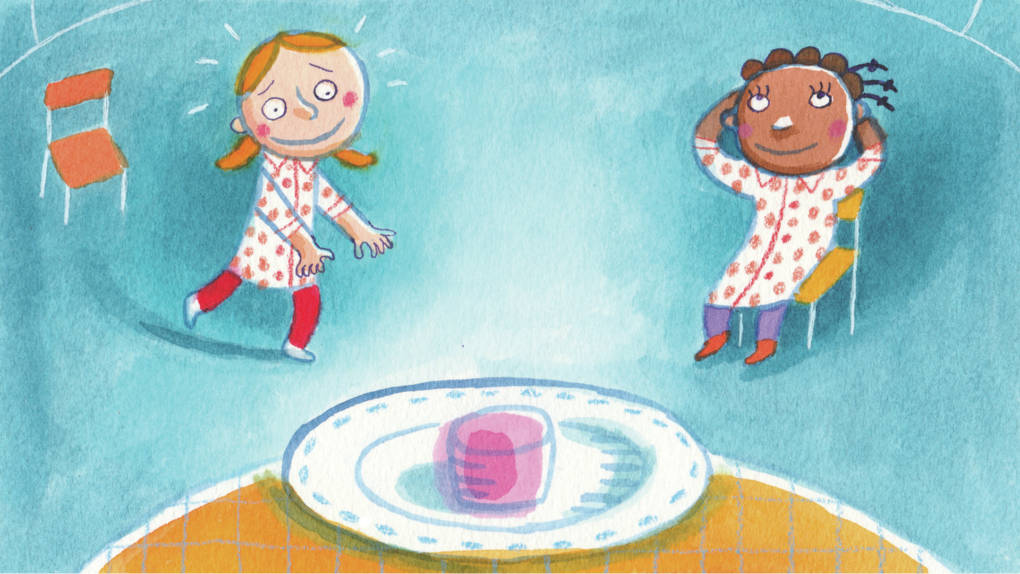
"caption": "German and Cameroonian kids were part of an experiment based on the classic \"marshmallow test\": Put a single treat before a child but tell the child if he or she waits, say, 10 minutes, a second treat will be given.",
"description": null,
"title": "German and Cameroonian kids were part of an experiment based on the classic \"marshmallow test\": Put a single treat before a child but tell the child if he or she waits, say, 10 minutes, a second treat will be given.",
"credit": " Nathalie Dieterle/for NPR",
"status": "inherit",
"isLoading": false,
"fetchFailed": false
},
"mindshift_48554": {
"type": "attachments",
"id": "mindshift_48554",
"meta": {
"index": "attachments_1716263798",
"site": "mindshift",
"id": "48554",
"found": true
},
"parent": 48144,
"imgSizes": {
"small": {
"file": "https://ww2.kqed.org/app/uploads/sites/23/2017/06/Caring-520x337.jpg",
"width": 520,
"mimeType": "image/jpeg",
"height": 337
},
"twentyfourteen-full-width": {
"file": "https://ww2.kqed.org/app/uploads/sites/23/2017/06/Caring-1038x576.jpg",
"width": 1038,
"mimeType": "image/jpeg",
"height": 576
},
"thumbnail": {
"file": "https://ww2.kqed.org/app/uploads/sites/23/2017/06/Caring-160x104.jpg",
"width": 160,
"mimeType": "image/jpeg",
"height": 104
},
"fd-sm": {
"file": "https://ww2.kqed.org/app/uploads/sites/23/2017/06/Caring-960x622.jpg",
"width": 960,
"mimeType": "image/jpeg",
"height": 622
},
"post-thumbnail": {
"file": "https://ww2.kqed.org/app/uploads/sites/23/2017/06/Caring-672x372.jpg",
"width": 672,
"mimeType": "image/jpeg",
"height": 372
},
"xsmall": {
"file": "https://ww2.kqed.org/app/uploads/sites/23/2017/06/Caring-375x243.jpg",
"width": 375,
"mimeType": "image/jpeg",
"height": 243
},
"kqedFullSize": {
"file": "https://ww2.kqed.org/app/uploads/sites/23/2017/06/Caring.jpg",
"width": 1663,
"height": 1077
},
"large": {
"file": "https://ww2.kqed.org/app/uploads/sites/23/2017/06/Caring-1020x661.jpg",
"width": 1020,
"mimeType": "image/jpeg",
"height": 661
},
"xlarge": {
"file": "https://ww2.kqed.org/app/uploads/sites/23/2017/06/Caring-1180x764.jpg",
"width": 1180,
"mimeType": "image/jpeg",
"height": 764
},
"guest-author-50": {
"file": "https://ww2.kqed.org/app/uploads/sites/23/2017/06/Caring-50x50.jpg",
"width": 50,
"mimeType": "image/jpeg",
"height": 50
},
"guest-author-96": {
"file": "https://ww2.kqed.org/app/uploads/sites/23/2017/06/Caring-96x96.jpg",
"width": 96,
"mimeType": "image/jpeg",
"height": 96
},
"medium": {
"file": "https://ww2.kqed.org/app/uploads/sites/23/2017/06/Caring-800x518.jpg",
"width": 800,
"mimeType": "image/jpeg",
"height": 518
},
"guest-author-64": {
"file": "https://ww2.kqed.org/app/uploads/sites/23/2017/06/Caring-64x64.jpg",
"width": 64,
"mimeType": "image/jpeg",
"height": 64
},
"guest-author-32": {
"file": "https://ww2.kqed.org/app/uploads/sites/23/2017/06/Caring-32x32.jpg",
"width": 32,
"mimeType": "image/jpeg",
"height": 32
},
"fd-med": {
"file": "https://ww2.kqed.org/app/uploads/sites/23/2017/06/Caring-1180x764.jpg",
"width": 1180,
"mimeType": "image/jpeg",
"height": 764
},
"detail": {
"file": "https://ww2.kqed.org/app/uploads/sites/23/2017/06/Caring-150x150.jpg",
"width": 150,
"mimeType": "image/jpeg",
"height": 150
},
"medium_large": {
"file": "https://ww2.kqed.org/app/uploads/sites/23/2017/06/Caring-768x497.jpg",
"width": 768,
"mimeType": "image/jpeg",
"height": 497
},
"guest-author-128": {
"file": "https://ww2.kqed.org/app/uploads/sites/23/2017/06/Caring-128x128.jpg",
"width": 128,
"mimeType": "image/jpeg",
"height": 128
},
"xxsmall": {
"file": "https://ww2.kqed.org/app/uploads/sites/23/2017/06/Caring-240x155.jpg",
"width": 240,
"mimeType": "image/jpeg",
"height": 155
}
},
"publishDate": 1498807935,
"modified": 1498807959,
"caption": null,
"description": null,
"title": "Caring",
"credit": "iStock/Kikovic ",
"status": "inherit",
"isLoading": false,
"fetchFailed": false
},
"mindshift_48456": {
"type": "attachments",
"id": "mindshift_48456",
"meta": {
"index": "attachments_1716263798",
"site": "mindshift",
"id": "48456",
"found": true
},
"parent": 48454,
"imgSizes": {
"small": {
"file": "https://ww2.kqed.org/app/uploads/sites/23/2017/06/dad-and-son-520x293.jpg",
"width": 520,
"mimeType": "image/jpeg",
"height": 293
},
"twentyfourteen-full-width": {
"file": "https://ww2.kqed.org/app/uploads/sites/23/2017/06/dad-and-son-1038x576.jpg",
"width": 1038,
"mimeType": "image/jpeg",
"height": 576
},
"thumbnail": {
"file": "https://ww2.kqed.org/app/uploads/sites/23/2017/06/dad-and-son-160x90.jpg",
"width": 160,
"mimeType": "image/jpeg",
"height": 90
},
"fd-sm": {
"file": "https://ww2.kqed.org/app/uploads/sites/23/2017/06/dad-and-son-960x540.jpg",
"width": 960,
"mimeType": "image/jpeg",
"height": 540
},
"post-thumbnail": {
"file": "https://ww2.kqed.org/app/uploads/sites/23/2017/06/dad-and-son-672x372.jpg",
"width": 672,
"mimeType": "image/jpeg",
"height": 372
},
"xsmall": {
"file": "https://ww2.kqed.org/app/uploads/sites/23/2017/06/dad-and-son-375x211.jpg",
"width": 375,
"mimeType": "image/jpeg",
"height": 211
},
"kqedFullSize": {
"file": "https://ww2.kqed.org/app/uploads/sites/23/2017/06/dad-and-son.jpg",
"width": 1920,
"height": 1080
},
"large": {
"file": "https://ww2.kqed.org/app/uploads/sites/23/2017/06/dad-and-son-1020x574.jpg",
"width": 1020,
"mimeType": "image/jpeg",
"height": 574
},
"xlarge": {
"file": "https://ww2.kqed.org/app/uploads/sites/23/2017/06/dad-and-son-1180x664.jpg",
"width": 1180,
"mimeType": "image/jpeg",
"height": 664
},
"guest-author-50": {
"file": "https://ww2.kqed.org/app/uploads/sites/23/2017/06/dad-and-son-50x50.jpg",
"width": 50,
"mimeType": "image/jpeg",
"height": 50
},
"guest-author-96": {
"file": "https://ww2.kqed.org/app/uploads/sites/23/2017/06/dad-and-son-96x96.jpg",
"width": 96,
"mimeType": "image/jpeg",
"height": 96
},
"medium": {
"file": "https://ww2.kqed.org/app/uploads/sites/23/2017/06/dad-and-son-800x450.jpg",
"width": 800,
"mimeType": "image/jpeg",
"height": 450
},
"guest-author-64": {
"file": "https://ww2.kqed.org/app/uploads/sites/23/2017/06/dad-and-son-64x64.jpg",
"width": 64,
"mimeType": "image/jpeg",
"height": 64
},
"guest-author-32": {
"file": "https://ww2.kqed.org/app/uploads/sites/23/2017/06/dad-and-son-32x32.jpg",
"width": 32,
"mimeType": "image/jpeg",
"height": 32
},
"fd-lrg": {
"file": "https://ww2.kqed.org/app/uploads/sites/23/2017/06/dad-and-son-1920x1080.jpg",
"width": 1920,
"mimeType": "image/jpeg",
"height": 1080
},
"fd-med": {
"file": "https://ww2.kqed.org/app/uploads/sites/23/2017/06/dad-and-son-1180x664.jpg",
"width": 1180,
"mimeType": "image/jpeg",
"height": 664
},
"full-width": {
"file": "https://ww2.kqed.org/app/uploads/sites/23/2017/06/dad-and-son-1920x1080.jpg",
"width": 1920,
"mimeType": "image/jpeg",
"height": 1080
},
"detail": {
"file": "https://ww2.kqed.org/app/uploads/sites/23/2017/06/dad-and-son-150x150.jpg",
"width": 150,
"mimeType": "image/jpeg",
"height": 150
},
"medium_large": {
"file": "https://ww2.kqed.org/app/uploads/sites/23/2017/06/dad-and-son-768x432.jpg",
"width": 768,
"mimeType": "image/jpeg",
"height": 432
},
"guest-author-128": {
"file": "https://ww2.kqed.org/app/uploads/sites/23/2017/06/dad-and-son-128x128.jpg",
"width": 128,
"mimeType": "image/jpeg",
"height": 128
},
"xxsmall": {
"file": "https://ww2.kqed.org/app/uploads/sites/23/2017/06/dad-and-son-240x135.jpg",
"width": 240,
"mimeType": "image/jpeg",
"height": 135
}
},
"publishDate": 1497646218,
"modified": 1497646250,
"caption": null,
"description": null,
"title": "dad-and-son",
"credit": "iStock",
"status": "inherit",
"isLoading": false,
"fetchFailed": false
},
"mindshift_48560": {
"type": "attachments",
"id": "mindshift_48560",
"meta": {
"index": "attachments_1716263798",
"site": "mindshift",
"id": "48560",
"found": true
},
"parent": 48559,
"imgSizes": {
"small": {
"file": "https://ww2.kqed.org/app/uploads/sites/23/2017/06/gettyimages-547087131_wide-57fb220cc3450a3e72c0722de1d931a538cee34f-520x292.jpg",
"width": 520,
"mimeType": "image/jpeg",
"height": 292
},
"twentyfourteen-full-width": {
"file": "https://ww2.kqed.org/app/uploads/sites/23/2017/06/gettyimages-547087131_wide-57fb220cc3450a3e72c0722de1d931a538cee34f-1038x576.jpg",
"width": 1038,
"mimeType": "image/jpeg",
"height": 576
},
"thumbnail": {
"file": "https://ww2.kqed.org/app/uploads/sites/23/2017/06/gettyimages-547087131_wide-57fb220cc3450a3e72c0722de1d931a538cee34f-160x90.jpg",
"width": 160,
"mimeType": "image/jpeg",
"height": 90
},
"fd-sm": {
"file": "https://ww2.kqed.org/app/uploads/sites/23/2017/06/gettyimages-547087131_wide-57fb220cc3450a3e72c0722de1d931a538cee34f-960x540.jpg",
"width": 960,
"mimeType": "image/jpeg",
"height": 540
},
"post-thumbnail": {
"file": "https://ww2.kqed.org/app/uploads/sites/23/2017/06/gettyimages-547087131_wide-57fb220cc3450a3e72c0722de1d931a538cee34f-672x372.jpg",
"width": 672,
"mimeType": "image/jpeg",
"height": 372
},
"xsmall": {
"file": "https://ww2.kqed.org/app/uploads/sites/23/2017/06/gettyimages-547087131_wide-57fb220cc3450a3e72c0722de1d931a538cee34f-375x211.jpg",
"width": 375,
"mimeType": "image/jpeg",
"height": 211
},
"kqedFullSize": {
"file": "https://ww2.kqed.org/app/uploads/sites/23/2017/06/gettyimages-547087131_wide-57fb220cc3450a3e72c0722de1d931a538cee34f.jpg",
"width": 1953,
"height": 1098
},
"large": {
"file": "https://ww2.kqed.org/app/uploads/sites/23/2017/06/gettyimages-547087131_wide-57fb220cc3450a3e72c0722de1d931a538cee34f-1020x573.jpg",
"width": 1020,
"mimeType": "image/jpeg",
"height": 573
},
"xlarge": {
"file": "https://ww2.kqed.org/app/uploads/sites/23/2017/06/gettyimages-547087131_wide-57fb220cc3450a3e72c0722de1d931a538cee34f-1180x663.jpg",
"width": 1180,
"mimeType": "image/jpeg",
"height": 663
},
"guest-author-50": {
"file": "https://ww2.kqed.org/app/uploads/sites/23/2017/06/gettyimages-547087131_wide-57fb220cc3450a3e72c0722de1d931a538cee34f-50x50.jpg",
"width": 50,
"mimeType": "image/jpeg",
"height": 50
},
"guest-author-96": {
"file": "https://ww2.kqed.org/app/uploads/sites/23/2017/06/gettyimages-547087131_wide-57fb220cc3450a3e72c0722de1d931a538cee34f-96x96.jpg",
"width": 96,
"mimeType": "image/jpeg",
"height": 96
},
"medium": {
"file": "https://ww2.kqed.org/app/uploads/sites/23/2017/06/gettyimages-547087131_wide-57fb220cc3450a3e72c0722de1d931a538cee34f-800x450.jpg",
"width": 800,
"mimeType": "image/jpeg",
"height": 450
},
"guest-author-64": {
"file": "https://ww2.kqed.org/app/uploads/sites/23/2017/06/gettyimages-547087131_wide-57fb220cc3450a3e72c0722de1d931a538cee34f-64x64.jpg",
"width": 64,
"mimeType": "image/jpeg",
"height": 64
},
"guest-author-32": {
"file": "https://ww2.kqed.org/app/uploads/sites/23/2017/06/gettyimages-547087131_wide-57fb220cc3450a3e72c0722de1d931a538cee34f-32x32.jpg",
"width": 32,
"mimeType": "image/jpeg",
"height": 32
},
"fd-lrg": {
"file": "https://ww2.kqed.org/app/uploads/sites/23/2017/06/gettyimages-547087131_wide-57fb220cc3450a3e72c0722de1d931a538cee34f-1920x1079.jpg",
"width": 1920,
"mimeType": "image/jpeg",
"height": 1079
},
"fd-med": {
"file": "https://ww2.kqed.org/app/uploads/sites/23/2017/06/gettyimages-547087131_wide-57fb220cc3450a3e72c0722de1d931a538cee34f-1180x663.jpg",
"width": 1180,
"mimeType": "image/jpeg",
"height": 663
},
"full-width": {
"file": "https://ww2.kqed.org/app/uploads/sites/23/2017/06/gettyimages-547087131_wide-57fb220cc3450a3e72c0722de1d931a538cee34f-1920x1079.jpg",
"width": 1920,
"mimeType": "image/jpeg",
"height": 1079
},
"detail": {
"file": "https://ww2.kqed.org/app/uploads/sites/23/2017/06/gettyimages-547087131_wide-57fb220cc3450a3e72c0722de1d931a538cee34f-150x150.jpg",
"width": 150,
"mimeType": "image/jpeg",
"height": 150
},
"medium_large": {
"file": "https://ww2.kqed.org/app/uploads/sites/23/2017/06/gettyimages-547087131_wide-57fb220cc3450a3e72c0722de1d931a538cee34f-768x432.jpg",
"width": 768,
"mimeType": "image/jpeg",
"height": 432
},
"guest-author-128": {
"file": "https://ww2.kqed.org/app/uploads/sites/23/2017/06/gettyimages-547087131_wide-57fb220cc3450a3e72c0722de1d931a538cee34f-128x128.jpg",
"width": 128,
"mimeType": "image/jpeg",
"height": 128
},
"xxsmall": {
"file": "https://ww2.kqed.org/app/uploads/sites/23/2017/06/gettyimages-547087131_wide-57fb220cc3450a3e72c0722de1d931a538cee34f-240x135.jpg",
"width": 240,
"mimeType": "image/jpeg",
"height": 135
}
},
"publishDate": 1499106254,
"modified": 1499106287,
"caption": "Our brains can store huge amounts of information, but forgetting some of that information may actually make us smarter.",
"description": "Our brains can store huge amounts of information, but forgetting some of that information may actually make us smarter.",
"title": "Our brains can store huge amounts of information, but forgetting some of that information may actually make us smarter.",
"credit": "Jedrzej Kaminski/EyeEm/Getty Images",
"status": "inherit",
"isLoading": false,
"fetchFailed": false
},
"mindshift_48501": {
"type": "attachments",
"id": "mindshift_48501",
"meta": {
"index": "attachments_1716263798",
"site": "mindshift",
"id": "48501",
"found": true
},
"parent": 48480,
"imgSizes": {
"small": {
"file": "https://ww2.kqed.org/app/uploads/sites/23/2017/06/light-bulbs-520x347.jpg",
"width": 520,
"mimeType": "image/jpeg",
"height": 347
},
"twentyfourteen-full-width": {
"file": "https://ww2.kqed.org/app/uploads/sites/23/2017/06/light-bulbs-1038x576.jpg",
"width": 1038,
"mimeType": "image/jpeg",
"height": 576
},
"thumbnail": {
"file": "https://ww2.kqed.org/app/uploads/sites/23/2017/06/light-bulbs-160x107.jpg",
"width": 160,
"mimeType": "image/jpeg",
"height": 107
},
"fd-sm": {
"file": "https://ww2.kqed.org/app/uploads/sites/23/2017/06/light-bulbs-960x640.jpg",
"width": 960,
"mimeType": "image/jpeg",
"height": 640
},
"post-thumbnail": {
"file": "https://ww2.kqed.org/app/uploads/sites/23/2017/06/light-bulbs-672x372.jpg",
"width": 672,
"mimeType": "image/jpeg",
"height": 372
},
"xsmall": {
"file": "https://ww2.kqed.org/app/uploads/sites/23/2017/06/light-bulbs-375x250.jpg",
"width": 375,
"mimeType": "image/jpeg",
"height": 250
},
"kqedFullSize": {
"file": "https://ww2.kqed.org/app/uploads/sites/23/2017/06/light-bulbs-e1498221357610.jpg",
"width": 1920,
"height": 1280
},
"large": {
"file": "https://ww2.kqed.org/app/uploads/sites/23/2017/06/light-bulbs-1020x680.jpg",
"width": 1020,
"mimeType": "image/jpeg",
"height": 680
},
"xlarge": {
"file": "https://ww2.kqed.org/app/uploads/sites/23/2017/06/light-bulbs-1180x787.jpg",
"width": 1180,
"mimeType": "image/jpeg",
"height": 787
},
"guest-author-50": {
"file": "https://ww2.kqed.org/app/uploads/sites/23/2017/06/light-bulbs-50x50.jpg",
"width": 50,
"mimeType": "image/jpeg",
"height": 50
},
"guest-author-96": {
"file": "https://ww2.kqed.org/app/uploads/sites/23/2017/06/light-bulbs-96x96.jpg",
"width": 96,
"mimeType": "image/jpeg",
"height": 96
},
"medium": {
"file": "https://ww2.kqed.org/app/uploads/sites/23/2017/06/light-bulbs-800x533.jpg",
"width": 800,
"mimeType": "image/jpeg",
"height": 533
},
"guest-author-64": {
"file": "https://ww2.kqed.org/app/uploads/sites/23/2017/06/light-bulbs-64x64.jpg",
"width": 64,
"mimeType": "image/jpeg",
"height": 64
},
"guest-author-32": {
"file": "https://ww2.kqed.org/app/uploads/sites/23/2017/06/light-bulbs-32x32.jpg",
"width": 32,
"mimeType": "image/jpeg",
"height": 32
},
"fd-lrg": {
"file": "https://ww2.kqed.org/app/uploads/sites/23/2017/06/light-bulbs-1920x1280.jpg",
"width": 1920,
"mimeType": "image/jpeg",
"height": 1280
},
"fd-med": {
"file": "https://ww2.kqed.org/app/uploads/sites/23/2017/06/light-bulbs-1180x787.jpg",
"width": 1180,
"mimeType": "image/jpeg",
"height": 787
},
"full-width": {
"file": "https://ww2.kqed.org/app/uploads/sites/23/2017/06/light-bulbs-1920x1280.jpg",
"width": 1920,
"mimeType": "image/jpeg",
"height": 1280
},
"detail": {
"file": "https://ww2.kqed.org/app/uploads/sites/23/2017/06/light-bulbs-150x150.jpg",
"width": 150,
"mimeType": "image/jpeg",
"height": 150
},
"medium_large": {
"file": "https://ww2.kqed.org/app/uploads/sites/23/2017/06/light-bulbs-768x512.jpg",
"width": 768,
"mimeType": "image/jpeg",
"height": 512
},
"guest-author-128": {
"file": "https://ww2.kqed.org/app/uploads/sites/23/2017/06/light-bulbs-128x128.jpg",
"width": 128,
"mimeType": "image/jpeg",
"height": 128
},
"xxsmall": {
"file": "https://ww2.kqed.org/app/uploads/sites/23/2017/06/light-bulbs-240x160.jpg",
"width": 240,
"mimeType": "image/jpeg",
"height": 160
}
},
"publishDate": 1498221313,
"modified": 1498221344,
"caption": null,
"description": null,
"title": "light-bulbs",
"credit": "iStock/phototechno",
"status": "inherit",
"isLoading": false,
"fetchFailed": false
},
"mindshift_48469": {
"type": "attachments",
"id": "mindshift_48469",
"meta": {
"index": "attachments_1716263798",
"site": "mindshift",
"id": "48469",
"found": true
},
"parent": 48468,
"imgSizes": {
"small": {
"file": "https://ww2.kqed.org/app/uploads/sites/23/2017/06/constraints-520x261.png",
"width": 520,
"mimeType": "image/png",
"height": 261
},
"thumbnail": {
"file": "https://ww2.kqed.org/app/uploads/sites/23/2017/06/constraints-160x80.png",
"width": 160,
"mimeType": "image/png",
"height": 80
},
"xsmall": {
"file": "https://ww2.kqed.org/app/uploads/sites/23/2017/06/constraints-375x188.png",
"width": 375,
"mimeType": "image/png",
"height": 188
},
"kqedFullSize": {
"file": "https://ww2.kqed.org/app/uploads/sites/23/2017/06/constraints.png",
"width": 642,
"height": 322
},
"guest-author-50": {
"file": "https://ww2.kqed.org/app/uploads/sites/23/2017/06/constraints-50x50.png",
"width": 50,
"mimeType": "image/png",
"height": 50
},
"guest-author-96": {
"file": "https://ww2.kqed.org/app/uploads/sites/23/2017/06/constraints-96x96.png",
"width": 96,
"mimeType": "image/png",
"height": 96
},
"guest-author-64": {
"file": "https://ww2.kqed.org/app/uploads/sites/23/2017/06/constraints-64x64.png",
"width": 64,
"mimeType": "image/png",
"height": 64
},
"detail": {
"file": "https://ww2.kqed.org/app/uploads/sites/23/2017/06/constraints-150x150.png",
"width": 150,
"mimeType": "image/png",
"height": 150
},
"guest-author-32": {
"file": "https://ww2.kqed.org/app/uploads/sites/23/2017/06/constraints-32x32.png",
"width": 32,
"mimeType": "image/png",
"height": 32
},
"guest-author-128": {
"file": "https://ww2.kqed.org/app/uploads/sites/23/2017/06/constraints-128x128.png",
"width": 128,
"mimeType": "image/png",
"height": 128
},
"xxsmall": {
"file": "https://ww2.kqed.org/app/uploads/sites/23/2017/06/constraints-240x120.png",
"width": 240,
"mimeType": "image/png",
"height": 120
}
},
"publishDate": 1497999332,
"modified": 1497999396,
"caption": null,
"description": null,
"title": "constraints",
"credit": "TED-ED/\u003ca href=\"http://ed.ted.com/lessons/the-power-of-creative-constraints-brandon-rodriguez\">Máté Muszka\u003c/a> ",
"status": "inherit",
"isLoading": false,
"fetchFailed": false
}
},
"audioPlayerReducer": {
"postId": "stream_live",
"isPaused": true,
"isPlaying": false,
"pfsActive": false,
"pledgeModalIsOpen": true,
"playerDrawerIsOpen": false,
"liveAudioPlayStartedAt": 0,
"liveAudioPlayContext": ""
},
"authorsReducer": {
"byline_mindshift_48770": {
"type": "authors",
"id": "byline_mindshift_48770",
"meta": {
"override": true
},
"slug": "byline_mindshift_48770",
"name": "Claudia Wallis, \u003ca href=\"http://hechingerreport.org/\">The Hechinger Report\u003c/a>",
"isLoading": false
},
"byline_mindshift_48740": {
"type": "authors",
"id": "byline_mindshift_48740",
"meta": {
"override": true
},
"slug": "byline_mindshift_48740",
"name": "Kayla Lattimore and Julie Depenbrock",
"isLoading": false
},
"byline_mindshift_48729": {
"type": "authors",
"id": "byline_mindshift_48729",
"meta": {
"override": true
},
"slug": "byline_mindshift_48729",
"name": "Lulu Garcia-Navarro",
"isLoading": false
},
"byline_mindshift_48672": {
"type": "authors",
"id": "byline_mindshift_48672",
"meta": {
"override": true
},
"slug": "byline_mindshift_48672",
"name": "\u003ca href=\"http://hechingerreport.org/\">Wayne D’Orio, The Hechinger Report\u003c/a>",
"isLoading": false
},
"byline_mindshift_48702": {
"type": "authors",
"id": "byline_mindshift_48702",
"meta": {
"override": true
},
"slug": "byline_mindshift_48702",
"name": "Anya Kamenetz",
"isLoading": false
},
"byline_mindshift_48592": {
"type": "authors",
"id": "byline_mindshift_48592",
"meta": {
"override": true
},
"slug": "byline_mindshift_48592",
"name": "Kayla Lattimore",
"isLoading": false
},
"byline_mindshift_48569": {
"type": "authors",
"id": "byline_mindshift_48569",
"meta": {
"override": true
},
"slug": "byline_mindshift_48569",
"name": "Michaeleen Doucleff",
"isLoading": false
},
"byline_mindshift_48559": {
"type": "authors",
"id": "byline_mindshift_48559",
"meta": {
"override": true
},
"slug": "byline_mindshift_48559",
"name": "Andrea Hsu",
"isLoading": false
},
"katrinaschwartz": {
"type": "authors",
"id": "234",
"meta": {
"index": "authors_1716337520",
"id": "234",
"found": true
},
"name": "Katrina Schwartz",
"firstName": "Katrina",
"lastName": "Schwartz",
"slug": "katrinaschwartz",
"email": "kschwartz@kqed.org",
"display_author_email": false,
"staff_mastheads": [
"news"
],
"title": "Producer",
"bio": "Katrina Schwartz is a journalist based in San Francisco. She's worked at KPCC public radio in LA and has reported on air and online for KQED since 2010. She covered how teaching and learning is changing for MindShift between 2012 and 2020. She is the co-host of the MindShift podcast and now produces KQED's Bay Curious podcast.",
"avatar": "https://secure.gravatar.com/avatar/edb4ee79070447a018538c9aae6eeecf28786515b8a0c30e43b6b7dce5aa44c8?s=600&d=blank&r=g",
"twitter": "kschwart",
"bluesky": null,
"facebook": null,
"instagram": null,
"linkedin": null,
"sites": [
{
"site": "",
"roles": [
"editor"
]
},
{
"site": "news",
"roles": [
"editor"
]
},
{
"site": "mindshift",
"roles": [
"administrator"
]
},
{
"site": "stateofhealth",
"roles": [
"author"
]
},
{
"site": "science",
"roles": [
"editor"
]
}
],
"headData": {
"title": "Katrina Schwartz | KQED",
"description": "Producer",
"ogImgSrc": "https://secure.gravatar.com/avatar/edb4ee79070447a018538c9aae6eeecf28786515b8a0c30e43b6b7dce5aa44c8?s=600&d=blank&r=g",
"twImgSrc": "https://secure.gravatar.com/avatar/edb4ee79070447a018538c9aae6eeecf28786515b8a0c30e43b6b7dce5aa44c8?s=600&d=blank&r=g"
},
"isLoading": false,
"link": "/author/katrinaschwartz"
},
"lindaflan": {
"type": "authors",
"id": "4613",
"meta": {
"index": "authors_1716337520",
"id": "4613",
"found": true
},
"name": "Linda Flanagan",
"firstName": "Linda",
"lastName": "Flanagan",
"slug": "lindaflan",
"email": "lindaflan@comcast.net",
"display_author_email": false,
"staff_mastheads": [],
"title": null,
"bio": "Linda Flanagan is a freelance writer, researcher, and editor. Her work has appeared in The Atlantic, The Wall St. Journal, Newsweek, Running Times, and Mind/Shift, and she blogs regularly for the Huffington Post. Linda writes about education, culture, athletics, youth sports, mental health, politics, college admissions, and other curiosities. She also reviews books and conducts interviews.",
"avatar": "https://secure.gravatar.com/avatar/6bca04c0736bf5eaea80654019de688f?s=600&d=blank&r=g",
"twitter": "LindaFlanagan2",
"facebook": null,
"instagram": null,
"linkedin": null,
"sites": [
{
"site": "mindshift",
"roles": [
"contributor"
]
}
],
"headData": {
"title": "Linda Flanagan | KQED",
"description": null,
"ogImgSrc": "https://secure.gravatar.com/avatar/6bca04c0736bf5eaea80654019de688f?s=600&d=blank&r=g",
"twImgSrc": "https://secure.gravatar.com/avatar/6bca04c0736bf5eaea80654019de688f?s=600&d=blank&r=g"
},
"isLoading": false,
"link": "/author/lindaflan"
},
"lshaffer": {
"type": "authors",
"id": "11330",
"meta": {
"index": "authors_1716337520",
"id": "11330",
"found": true
},
"name": "Leah Shaffer",
"firstName": "Leah",
"lastName": "Shaffer",
"slug": "lshaffer",
"email": "leahabshaffer@gmail.com",
"display_author_email": false,
"staff_mastheads": [],
"title": null,
"bio": null,
"avatar": "https://secure.gravatar.com/avatar/ee7b4bb631d0c035e426aba5e260f9ce?s=600&d=blank&r=g",
"twitter": null,
"facebook": null,
"instagram": null,
"linkedin": null,
"sites": [
{
"site": "mindshift",
"roles": [
"author"
]
}
],
"headData": {
"title": "Leah Shaffer | KQED",
"description": null,
"ogImgSrc": "https://secure.gravatar.com/avatar/ee7b4bb631d0c035e426aba5e260f9ce?s=600&d=blank&r=g",
"twImgSrc": "https://secure.gravatar.com/avatar/ee7b4bb631d0c035e426aba5e260f9ce?s=600&d=blank&r=g"
},
"isLoading": false,
"link": "/author/lshaffer"
}
},
"pagesReducer": {
"mindshift_category_big-ideas": {
"type": "terms",
"id": "mindshift_192",
"meta": {
"index": "terms_1716263798",
"site": "mindshift",
"id": "192",
"score": 14.406956
},
"featImg": null,
"name": "Big Ideas",
"description": "The latest findings from experts in the field related to the future of learning.",
"taxonomy": "category",
"headData": {
"twImgId": null,
"twTitle": null,
"ogTitle": null,
"ogImgId": null,
"twDescription": null,
"description": "The latest findings from experts in the field related to the future of learning.",
"title": "Big Ideas Archives | KQED Mindshift",
"ogDescription": null
},
"ttid": 192,
"slug": "big-ideas",
"isLoading": false,
"title": "Big Ideas",
"pageMeta": {
"site": "mindshift",
"WpPageTemplate": "page-topic-editorial",
"currentPage": 35
},
"blocks": [
{
"blockName": "kqed/company-paragraph",
"content": "The latest findings from experts in the field related to the future of learning."
},
{
"blockName": "kqed/post-list",
"attrs": {
"layout": "cardArticle2",
"query": "posts/mindshift?category=big-ideas",
"seeMore": false,
"paginated": true,
"page": 35
}
},
{
"blockName": "kqed/ad"
}
]
}
},
"pfsSessionReducer": {},
"postsReducer": {
"stream_live": {
"type": "live",
"id": "stream_live",
"audioUrl": "https://streams.kqed.org/kqedradio",
"title": "Live Stream",
"excerpt": "Live Stream information currently unavailable.",
"link": "/radio",
"featImg": "",
"label": {
"name": "KQED Live",
"link": "/"
}
},
"stream_kqedNewscast": {
"type": "posts",
"id": "stream_kqedNewscast",
"audioUrl": "https://www.kqed.org/.stream/anon/radio/RDnews/newscast.mp3?_=1",
"title": "KQED Newscast",
"featImg": "",
"label": {
"name": "88.5 FM",
"link": "/"
}
},
"mindshift_48770": {
"type": "posts",
"id": "mindshift_48770",
"meta": {
"index": "posts_1716263798",
"site": "mindshift",
"id": "48770",
"score": null,
"sort": [
1501063254000
]
},
"parent": 0,
"labelTerm": {
"site": "mindshift"
},
"blocks": [],
"publishDate": 1501063254,
"format": "standard",
"disqusTitle": "Why Mistakes Matter in Creating A Path For Learning",
"title": "Why Mistakes Matter in Creating A Path For Learning",
"headTitle": "MindShift | KQED News",
"content": "\u003cp>\u003cem>Once a month, this column \u003c/em>\u003cem>will examine the insights that science offers about the way people learn, and how such findings could influence schools. \u003c/em>\u003c/p>\n\u003cp>Most of us can remember a moment like this from our school years: the teacher poses a question – maybe it’s math, maybe history. You raise your hand, you give your answer with full assurance. And then? You’re shot down. You got it wrong.\u003c/p>\n\u003cp>We remember moments like this because they brim with some of our least favorite emotions: shame, humiliation, self-recrimination, and that gutting sense that you want to melt into the floor. Ah yes, I remember it well.\u003c/p>\n\u003cp>As it turns out, though, such moments are ripe with learning opportunity. Contrary to what many of us might guess, making a mistake with high confidence and then being corrected is one of the most powerful ways to absorb something and retain it.\u003c/p>\n\u003cp>In recent years, cognitive scientists have done gobs of research on how making mistakes help us learn, much of it funded by the federal Institute for Education Science. Some findings make intuitive sense. Some are completely surprising. And many important findings that are relevant to teaching are not making it into the classroom, or penetrating very slowly.\u003c/p>\n\u003cp>[ad fullwidth]\u003c/p>\n\u003cp>Traditionally, educators and psychologists in the U.S. were not fans of allowing students to flounder. B.F. Skinner, the hugely influential 20\u003csup>th\u003c/sup> century behavioral psychologist, didn’t even like his lab rats and pigeons to err and constructed experiments to shape their behavior toward always getting the task right. “He thought if they made a mistake, the mistake would get entrenched, and you’d have to backtrack to erase it,” explains Janet Metcalfe, a professor of psychology at Columbia University, and the author of an impressive scientific review titled \u003ca href=\"http://www.annualreviews.org/doi/abs/10.1146/annurev-psych-010416-044022\">“Learning from Errors,”\u003c/a> published earlier this year in \u003cem>Annual Review of Psychology.\u003c/em>\u003c/p>\n\u003cp>American educators, perhaps influenced by Skinner, have tended to see things the same way. Classic studies by psychologists James Stigler of UCLA and the late Harold Stevenson, detailed in their 1994 book \u003ca href=\"https://books.google.com/books/about/Learning_Gap.html?id=HIfBn5W6LMcC\">\u003cem>The Learning Gap\u003c/em>\u003c/a>\u003cem>, \u003c/em>compared videotaped lessons in eighth-grade math in several countries. They found that American teachers emphasized specific procedures for solving problems, largely ignored errors and praised correct answers. Japanese teachers, by contrast, asked students to find their own way through problems and then led a discussion of common errors, why they might seem plausible and why they were wrong. Praise was rarely given and students were meant to see struggle and setbacks as part of learning. The difference, the authors believed, is one reason that Japanese students outperform Americans in math.\u003c/p>\n\u003cp>“Learning about what is wrong may hasten understanding of why the correct procedures are appropriate,” they wrote, “but errors may also be interpreted as failure. And Americans … strive to avoid situations where this might happen.”\u003c/p>\n\u003caside class=\"pullquote alignright\">'Being in this environment where we are openly discussing mistakes, where mistakes are good, really opened the door for certain kids who had math phobias.'\u003ccite>Kushal Patel, teacher, Columbia Secondary School for School for Math, Science and Engineering, New York City\u003c/cite>\u003c/aside>\n\u003cp>The American allergy to errors began to ease with a burst of new studies by cognitive psychologists beginning this century. They showed clear benefits to engaging with mistakes—in both verbal and math tasks. For instance, Nate Kornell of Williams College conducted a word-pair experiment in which people were cued with a word (say, tree) and then asked to pair it a related “target” word (say, oak). He found that they remembered the target word significantly better if they had made a wrong guess (like maple or pine) and were corrected than if they were simply given the correct pairing and asked to memorize it.\u003c/p>\n\u003cp>Numerous other studies have confirmed and expanded upon this finding. Metcalfe and others have shown that on tests involving general knowledge (What’s the capital of Australia?), a wild guess doesn’t help with learning. “They have to be making a serious stab at the answer,” she notes. And it was Metcalfe and colleagues who showed that the more certain you are of your wrong answer, the better you will learn the right one after being corrected.\u003c/p>\n\u003cp>Why is this? The answer isn’t completely clear but it likely involves the fact that making an error rallies your attention — and even more so if you’re surprised that you got it wrong. In addition, it is easier to learn something new after you’ve summoned up your prior knowledge — a process neuroscientists call memory reconsolidation.\u003c/p>\n\u003cp>There’s hard, biological evidence for some of this. By placing electroencephalogram caps on subjects as they play video games or do other tasks, scientists have identified specific signals in the brain linked to making errors. The first one, known as Error-Related Negativity or ERN, occurs just 50 millionths of a second after the error. That’s well before you are even conscious of the mistake! A second wave, called error positivity (Pe for short), comes 50 to 550 milliseconds later and is believed to reflect conscious attention to the error, usually followed by an effort to avoid repeating it.\u003c/p>\n\u003cp>As an undergrad at Michigan State, Hans Schroder became so obsessed with error-related brain signaling that, he recalls, “I actually ‘married’ it on Facebook.” He also did serious work on the subject in psychologist Jason Moser’s lab there. Past research had shown that these signals relate to academic performance.\u003c/p>\n\u003cp>“The ERN tends to correlate with grade-point average. It’s linked with the ability to recognize when things don’t go as expected and to better working memory,” Schroder explains. “The Pe is more linked to effort, becoming aware of mistakes and rebounding.” While both signals emanate from a brain region called the anterior cingulate, the Pe involves more widespread activity as you allocate mental resources to improve your performance.\u003c/p>\n\u003caside class=\"pullquote alignright\">'By taking the grade off their test I thought they might spend more time looking at what they got right and what they got wrong. I wanted to refocus them on actually learning the content.'\u003ccite> Leah Alcala, math teacher in Berkeley, Calif.\u003c/cite>\u003c/aside>\n\u003cp>Schroder was especially interested in this effort-related activity and wanted to know if it was linked to a person’s attitude or mindset about his or her own ability. Stanford University psychologist Carol Dweck kicked off a wave of research in education and psychology with her work — and popular 2006 book, \u003cem>Mindset\u003c/em>— defining two distinct “mindsets”: the belief that one’s intelligence is fixed or that it is fluid and can grow with effort. People with a fixed mindset (as measured on a standard questionnaire) tend to see errors as signs that they are not good at something. Those with a \u003ca href=\"https://ww2.kqed.org/mindshift/tag/growth-mindset/\">growth mindset \u003c/a>see them as signs they need to work harder.\u003c/p>\n\u003cp>Schroder theorized that people with a growth mindset would have a stronger Pe signal following an error. This proved to be true in studies with both children and adults. Just as important, growth-minded people raised their game more in the wake of an error. For instance, he reports, growth-minded children playing a videogame in which they had to round up escaped zoo animals “were more accurate after making a mistake than kids who were fixed-minded.”\u003c/p>\n\u003cp>How do these psych lab results translate to the messier world of the classroom? A number of researchers are attempting to answer that question with studies that more closely mimic educational situations or by conducting research within schools.\u003c/p>\n\u003cp>Carnegie Mellon psychologist Robert Siegler, an expert on how children learn math, has delved deeply into the best way to give feedback on student errors. He has shown, for instance, that asking third and fourth graders to explain how someone got the wrong answer and also how someone got the right answer is enormously effective – more so than just asking the child to explain the correct procedure, as teachers so often do. Dislodging wrong ideas is important, he notes: “These wrong approaches are like crab grass, they are hard to get rid of and often have deep roots. You really have to undermine the roots of the misconception as well as strengthen the correct conception.”\u003c/p>\n\u003cp>Metcalfe is exploring that approach in an experiment with eighth-grade math teachers at the Columbia Secondary School for Math, Science and Engineering — a New York City public school affiliated with Columbia University. For the past two years, her team has been monitoring what happens to performance on the state’s Common Core Regents algebra test when teachers give frequent practice quizzes followed each time by a review of the students’ specific errors, in a continuous cycle four days a week for four weeks prior to the statewide exam.\u003c/p>\n\u003cp>The results, which have not yet been published, seem promising. “We had a 100% pass rate on the Algebra 1 Regents for eighth grade, which was pretty awesome,” says Kushal Patel, a participating teacher. Patel notes that even though the passing grade for special education students is 55 rather than the typical 65, all of the special ed students passed with the higher grade. Performance across the class was even stronger the second year than the first. Metcalfe’s team is now analyzing videos of class sessions second by second, looking at exactly what teachers did and how it relates to the errors individual children made. Preliminary results suggest that the improvement in performance was closely tied to the error-focused feedback.\u003c/p>\n\u003cp>“Being in this environment where we are openly discussing mistakes, where mistakes are good, really opened the door for certain kids who had math phobias,” Patel observes.\u003c/p>\n\u003cp>And in keeping with a growth mindset, students began to see errors as a path to learning rather than humiliation. When he shared students’ errors anonymously with the class, he says, “the kids got really good about saying ‘Hey, that’s my mistake! Let me talk about what I did wrong.’ It was incredible. They got past the shy moment of, ‘Oh, I screwed up.’”\u003c/p>\n\u003cp>Next year Metcalfe will be testing a new system for reviewing errors that combines computerized feedback with teacher-led instruction.\u003c/p>\n\u003cp>In Berkeley, Calif., math teacher Leah Alcala witnessed a similar change in middle school and high school students when she began spotlighting what she calls her “favorite errors.” Alcala likes to hand out test results without grades but with highlights indicating the precise spots in a math problem where things took a wrong turn.\u003c/p>\n\u003cp>“By taking the grade off their test I thought they might spend more time looking at what they got right and what they got wrong,” she explains. “I wanted to refocus them on actually learning the content.” You can see her method in an \u003ca href=\"https://www.teachingchannel.org/videos/math-test-grading-tips\">online Teaching Channel video\u003c/a>.\u003c/p>\n\u003cp>Like Patel, Alcala says she was influenced by Dweck’s mindset framework. While not everyone in her economically and ethnically diverse classes masters all the math, “what I know for sure is that my kids never give up on my class.”\u003c/p>\n\u003cp>Such robust examples of teaching kids how to learn from their errors remain the exception in U.S. classrooms. Probably the biggest reason, Siegler suggests, is that “the people who write the textbooks don’t know about the research findings. There’s a lot of knowledge in the psychology of learning that hasn’t been incorporated into education.” Also, he notes, there’s a “common sense wisdom” to focusing almost exclusively on correct procedures. It’s what American teachers have always done.\u003c/p>\n\u003cp>And it’s what most of us believe in, the evidence be damned. Metcalfe has found that people are generally unaware of the benefits of bumping up against mistakes. This is true even after they participate in studies in which, again and again, they improve their performance after getting something wrong and being set straight. When asked if they did better in trials where they were given the answer or those in which they erred and were corrected, they chose the former.\u003c/p>\n\u003cp>“Isn’t that amazing!” she says of this metacognitive blind spot. No wonder so many educators err when it comes to errors. “If teachers don’t realize that making errors will help learning, they will be like Skinner and say ‘I’ll just teach them the right thing.’ ”\u003c/p>\n\u003cp>[ad floatright]\u003c/p>\n\u003cp>\u003cem>This story was produced by \u003c/em>\u003ca href=\"http://hechingerreport.org/\">The Hechinger Report\u003c/a>\u003cem>, the nonprofit, independent news website focused on inequality and innovation in education. \u003c/em>\u003ca href=\"http://hechingerreport.us2.list-manage2.com/subscribe?u=66c306eebb323868c3ce353c1&id=a4f3e0748b\">\u003cem>Sign up for our newsletter.\u003c/em>\u003c/a>\u003c/p>\n\n",
"disqusIdentifier": "48770 https://ww2.kqed.org/mindshift/?p=48770",
"disqusUrl": "https://ww2.kqed.org/mindshift/2017/07/26/how-making-mistakes-primes-kids-to-learn-better/",
"stats": {
"hasVideo": false,
"hasChartOrMap": false,
"hasAudio": false,
"hasPolis": false,
"wordCount": 2162,
"hasGoogleForm": false,
"hasGallery": false,
"hasHearkenModule": false,
"iframeSrcs": [],
"paragraphCount": 32
},
"modified": 1536277032,
"excerpt": "American educators love to emphasize correct procedure, but cognitive science says that students learn better when you focus on their mistakes.",
"headData": {
"twImgId": "",
"twTitle": "",
"ogTitle": "",
"ogImgId": "",
"twDescription": "",
"description": "American educators love to emphasize correct procedure, but cognitive science says that students learn better when you focus on their mistakes.",
"title": "Why Mistakes Matter in Creating A Path For Learning | KQED",
"ogDescription": "",
"schema": {
"@context": "https://schema.org",
"@type": "Article",
"headline": "Why Mistakes Matter in Creating A Path For Learning",
"datePublished": "2017-07-26T03:00:54-07:00",
"dateModified": "2018-09-06T16:37:12-07:00",
"image": "https://cdn.kqed.org/wp-content/uploads/2020/02/KQED-OG-Image@1x.png"
}
},
"guestAuthors": [],
"slug": "how-making-mistakes-primes-kids-to-learn-better",
"status": "publish",
"nprByline": "Claudia Wallis, \u003ca href=\"http://hechingerreport.org/\">The Hechinger Report\u003c/a>",
"path": "/mindshift/48770/how-making-mistakes-primes-kids-to-learn-better",
"audioTrackLength": null,
"parsedContent": [
{
"type": "contentString",
"content": "\u003cdiv class=\"post-body\">\u003cp>\u003cp>\u003cem>Once a month, this column \u003c/em>\u003cem>will examine the insights that science offers about the way people learn, and how such findings could influence schools. \u003c/em>\u003c/p>\n\u003cp>Most of us can remember a moment like this from our school years: the teacher poses a question – maybe it’s math, maybe history. You raise your hand, you give your answer with full assurance. And then? You’re shot down. You got it wrong.\u003c/p>\n\u003cp>We remember moments like this because they brim with some of our least favorite emotions: shame, humiliation, self-recrimination, and that gutting sense that you want to melt into the floor. Ah yes, I remember it well.\u003c/p>\n\u003cp>As it turns out, though, such moments are ripe with learning opportunity. Contrary to what many of us might guess, making a mistake with high confidence and then being corrected is one of the most powerful ways to absorb something and retain it.\u003c/p>\n\u003cp>In recent years, cognitive scientists have done gobs of research on how making mistakes help us learn, much of it funded by the federal Institute for Education Science. Some findings make intuitive sense. Some are completely surprising. And many important findings that are relevant to teaching are not making it into the classroom, or penetrating very slowly.\u003c/p>\n\u003cp>\u003c/p>\u003c/div>",
"attributes": {
"named": {},
"numeric": []
}
},
{
"type": "component",
"content": "",
"name": "ad",
"attributes": {
"named": {
"label": "fullwidth"
},
"numeric": [
"fullwidth"
]
}
},
{
"type": "contentString",
"content": "\u003cdiv class=\"post-body\">\u003cp>\u003c/p>\n\u003cp>Traditionally, educators and psychologists in the U.S. were not fans of allowing students to flounder. B.F. Skinner, the hugely influential 20\u003csup>th\u003c/sup> century behavioral psychologist, didn’t even like his lab rats and pigeons to err and constructed experiments to shape their behavior toward always getting the task right. “He thought if they made a mistake, the mistake would get entrenched, and you’d have to backtrack to erase it,” explains Janet Metcalfe, a professor of psychology at Columbia University, and the author of an impressive scientific review titled \u003ca href=\"http://www.annualreviews.org/doi/abs/10.1146/annurev-psych-010416-044022\">“Learning from Errors,”\u003c/a> published earlier this year in \u003cem>Annual Review of Psychology.\u003c/em>\u003c/p>\n\u003cp>American educators, perhaps influenced by Skinner, have tended to see things the same way. Classic studies by psychologists James Stigler of UCLA and the late Harold Stevenson, detailed in their 1994 book \u003ca href=\"https://books.google.com/books/about/Learning_Gap.html?id=HIfBn5W6LMcC\">\u003cem>The Learning Gap\u003c/em>\u003c/a>\u003cem>, \u003c/em>compared videotaped lessons in eighth-grade math in several countries. They found that American teachers emphasized specific procedures for solving problems, largely ignored errors and praised correct answers. Japanese teachers, by contrast, asked students to find their own way through problems and then led a discussion of common errors, why they might seem plausible and why they were wrong. Praise was rarely given and students were meant to see struggle and setbacks as part of learning. The difference, the authors believed, is one reason that Japanese students outperform Americans in math.\u003c/p>\n\u003cp>“Learning about what is wrong may hasten understanding of why the correct procedures are appropriate,” they wrote, “but errors may also be interpreted as failure. And Americans … strive to avoid situations where this might happen.”\u003c/p>\n\u003caside class=\"pullquote alignright\">'Being in this environment where we are openly discussing mistakes, where mistakes are good, really opened the door for certain kids who had math phobias.'\u003ccite>Kushal Patel, teacher, Columbia Secondary School for School for Math, Science and Engineering, New York City\u003c/cite>\u003c/aside>\n\u003cp>The American allergy to errors began to ease with a burst of new studies by cognitive psychologists beginning this century. They showed clear benefits to engaging with mistakes—in both verbal and math tasks. For instance, Nate Kornell of Williams College conducted a word-pair experiment in which people were cued with a word (say, tree) and then asked to pair it a related “target” word (say, oak). He found that they remembered the target word significantly better if they had made a wrong guess (like maple or pine) and were corrected than if they were simply given the correct pairing and asked to memorize it.\u003c/p>\n\u003cp>Numerous other studies have confirmed and expanded upon this finding. Metcalfe and others have shown that on tests involving general knowledge (What’s the capital of Australia?), a wild guess doesn’t help with learning. “They have to be making a serious stab at the answer,” she notes. And it was Metcalfe and colleagues who showed that the more certain you are of your wrong answer, the better you will learn the right one after being corrected.\u003c/p>\n\u003cp>Why is this? The answer isn’t completely clear but it likely involves the fact that making an error rallies your attention — and even more so if you’re surprised that you got it wrong. In addition, it is easier to learn something new after you’ve summoned up your prior knowledge — a process neuroscientists call memory reconsolidation.\u003c/p>\n\u003cp>There’s hard, biological evidence for some of this. By placing electroencephalogram caps on subjects as they play video games or do other tasks, scientists have identified specific signals in the brain linked to making errors. The first one, known as Error-Related Negativity or ERN, occurs just 50 millionths of a second after the error. That’s well before you are even conscious of the mistake! A second wave, called error positivity (Pe for short), comes 50 to 550 milliseconds later and is believed to reflect conscious attention to the error, usually followed by an effort to avoid repeating it.\u003c/p>\n\u003cp>As an undergrad at Michigan State, Hans Schroder became so obsessed with error-related brain signaling that, he recalls, “I actually ‘married’ it on Facebook.” He also did serious work on the subject in psychologist Jason Moser’s lab there. Past research had shown that these signals relate to academic performance.\u003c/p>\n\u003cp>“The ERN tends to correlate with grade-point average. It’s linked with the ability to recognize when things don’t go as expected and to better working memory,” Schroder explains. “The Pe is more linked to effort, becoming aware of mistakes and rebounding.” While both signals emanate from a brain region called the anterior cingulate, the Pe involves more widespread activity as you allocate mental resources to improve your performance.\u003c/p>\n\u003caside class=\"pullquote alignright\">'By taking the grade off their test I thought they might spend more time looking at what they got right and what they got wrong. I wanted to refocus them on actually learning the content.'\u003ccite> Leah Alcala, math teacher in Berkeley, Calif.\u003c/cite>\u003c/aside>\n\u003cp>Schroder was especially interested in this effort-related activity and wanted to know if it was linked to a person’s attitude or mindset about his or her own ability. Stanford University psychologist Carol Dweck kicked off a wave of research in education and psychology with her work — and popular 2006 book, \u003cem>Mindset\u003c/em>— defining two distinct “mindsets”: the belief that one’s intelligence is fixed or that it is fluid and can grow with effort. People with a fixed mindset (as measured on a standard questionnaire) tend to see errors as signs that they are not good at something. Those with a \u003ca href=\"https://ww2.kqed.org/mindshift/tag/growth-mindset/\">growth mindset \u003c/a>see them as signs they need to work harder.\u003c/p>\n\u003cp>Schroder theorized that people with a growth mindset would have a stronger Pe signal following an error. This proved to be true in studies with both children and adults. Just as important, growth-minded people raised their game more in the wake of an error. For instance, he reports, growth-minded children playing a videogame in which they had to round up escaped zoo animals “were more accurate after making a mistake than kids who were fixed-minded.”\u003c/p>\n\u003cp>How do these psych lab results translate to the messier world of the classroom? A number of researchers are attempting to answer that question with studies that more closely mimic educational situations or by conducting research within schools.\u003c/p>\n\u003cp>Carnegie Mellon psychologist Robert Siegler, an expert on how children learn math, has delved deeply into the best way to give feedback on student errors. He has shown, for instance, that asking third and fourth graders to explain how someone got the wrong answer and also how someone got the right answer is enormously effective – more so than just asking the child to explain the correct procedure, as teachers so often do. Dislodging wrong ideas is important, he notes: “These wrong approaches are like crab grass, they are hard to get rid of and often have deep roots. You really have to undermine the roots of the misconception as well as strengthen the correct conception.”\u003c/p>\n\u003cp>Metcalfe is exploring that approach in an experiment with eighth-grade math teachers at the Columbia Secondary School for Math, Science and Engineering — a New York City public school affiliated with Columbia University. For the past two years, her team has been monitoring what happens to performance on the state’s Common Core Regents algebra test when teachers give frequent practice quizzes followed each time by a review of the students’ specific errors, in a continuous cycle four days a week for four weeks prior to the statewide exam.\u003c/p>\n\u003cp>The results, which have not yet been published, seem promising. “We had a 100% pass rate on the Algebra 1 Regents for eighth grade, which was pretty awesome,” says Kushal Patel, a participating teacher. Patel notes that even though the passing grade for special education students is 55 rather than the typical 65, all of the special ed students passed with the higher grade. Performance across the class was even stronger the second year than the first. Metcalfe’s team is now analyzing videos of class sessions second by second, looking at exactly what teachers did and how it relates to the errors individual children made. Preliminary results suggest that the improvement in performance was closely tied to the error-focused feedback.\u003c/p>\n\u003cp>“Being in this environment where we are openly discussing mistakes, where mistakes are good, really opened the door for certain kids who had math phobias,” Patel observes.\u003c/p>\n\u003cp>And in keeping with a growth mindset, students began to see errors as a path to learning rather than humiliation. When he shared students’ errors anonymously with the class, he says, “the kids got really good about saying ‘Hey, that’s my mistake! Let me talk about what I did wrong.’ It was incredible. They got past the shy moment of, ‘Oh, I screwed up.’”\u003c/p>\n\u003cp>Next year Metcalfe will be testing a new system for reviewing errors that combines computerized feedback with teacher-led instruction.\u003c/p>\n\u003cp>In Berkeley, Calif., math teacher Leah Alcala witnessed a similar change in middle school and high school students when she began spotlighting what she calls her “favorite errors.” Alcala likes to hand out test results without grades but with highlights indicating the precise spots in a math problem where things took a wrong turn.\u003c/p>\n\u003cp>“By taking the grade off their test I thought they might spend more time looking at what they got right and what they got wrong,” she explains. “I wanted to refocus them on actually learning the content.” You can see her method in an \u003ca href=\"https://www.teachingchannel.org/videos/math-test-grading-tips\">online Teaching Channel video\u003c/a>.\u003c/p>\n\u003cp>Like Patel, Alcala says she was influenced by Dweck’s mindset framework. While not everyone in her economically and ethnically diverse classes masters all the math, “what I know for sure is that my kids never give up on my class.”\u003c/p>\n\u003cp>Such robust examples of teaching kids how to learn from their errors remain the exception in U.S. classrooms. Probably the biggest reason, Siegler suggests, is that “the people who write the textbooks don’t know about the research findings. There’s a lot of knowledge in the psychology of learning that hasn’t been incorporated into education.” Also, he notes, there’s a “common sense wisdom” to focusing almost exclusively on correct procedures. It’s what American teachers have always done.\u003c/p>\n\u003cp>And it’s what most of us believe in, the evidence be damned. Metcalfe has found that people are generally unaware of the benefits of bumping up against mistakes. This is true even after they participate in studies in which, again and again, they improve their performance after getting something wrong and being set straight. When asked if they did better in trials where they were given the answer or those in which they erred and were corrected, they chose the former.\u003c/p>\n\u003cp>“Isn’t that amazing!” she says of this metacognitive blind spot. No wonder so many educators err when it comes to errors. “If teachers don’t realize that making errors will help learning, they will be like Skinner and say ‘I’ll just teach them the right thing.’ ”\u003c/p>\n\u003cp>\u003c/p>\u003c/div>",
"attributes": {
"named": {},
"numeric": []
}
},
{
"type": "component",
"content": "",
"name": "ad",
"attributes": {
"named": {
"label": "floatright"
},
"numeric": [
"floatright"
]
}
},
{
"type": "contentString",
"content": "\u003cdiv class=\"post-body\">\u003cp>\u003c/p>\n\u003cp>\u003cem>This story was produced by \u003c/em>\u003ca href=\"http://hechingerreport.org/\">The Hechinger Report\u003c/a>\u003cem>, the nonprofit, independent news website focused on inequality and innovation in education. \u003c/em>\u003ca href=\"http://hechingerreport.us2.list-manage2.com/subscribe?u=66c306eebb323868c3ce353c1&id=a4f3e0748b\">\u003cem>Sign up for our newsletter.\u003c/em>\u003c/a>\u003c/p>\n\n\u003c/div>\u003c/p>",
"attributes": {
"named": {},
"numeric": []
}
}
],
"link": "/mindshift/48770/how-making-mistakes-primes-kids-to-learn-better",
"authors": [
"byline_mindshift_48770"
],
"categories": [
"mindshift_192"
],
"tags": [
"mindshift_21078",
"mindshift_20784",
"mindshift_1040",
"mindshift_20512",
"mindshift_310",
"mindshift_20562",
"mindshift_20911",
"mindshift_20867",
"mindshift_20987"
],
"featImg": "mindshift_48779",
"label": "mindshift"
},
"mindshift_48740": {
"type": "posts",
"id": "mindshift_48740",
"meta": {
"index": "posts_1716263798",
"site": "mindshift",
"id": "48740",
"score": null,
"sort": [
1500556297000
]
},
"parent": 0,
"labelTerm": {
"site": "mindshift"
},
"blocks": [],
"publishDate": 1500556297,
"format": "standard",
"disqusTitle": "Does Algebra Do More Harm Than Good? Community Colleges Rethink Requirements",
"title": "Does Algebra Do More Harm Than Good? Community Colleges Rethink Requirements",
"headTitle": "MindShift | KQED News",
"content": "\u003cp>Algebra is one of the biggest hurdles to getting a high school or college degree — particularly for students of color and first-generation undergrads.\u003c/p>\n\u003cp>It is also the single most failed course in community colleges across the country. So if you're not a STEM major (science, technology, engineering, math), \u003ca href=\"http://www.npr.org/2016/03/03/469083122/some-educators-question-if-advanced-math-should-be-required\" target=\"_blank\" rel=\"noopener noreferrer\">why even study algebra?\u003c/a>\u003c/p>\n\u003cp>That's the argument Eloy Ortiz Oakley, chancellor of the California community college system, made today in an interview with NPR's Robert Siegel.\u003c/p>\n\u003cp>At American community colleges, 60 percent of those enrolled are required to take at least one math course. Most — nearly 80 percent — never complete that requirement.\u003c/p>\n\u003cp>Oakley is \u003ca href=\"http://www.npr.org/2016/03/03/469083122/some-educators-question-if-advanced-math-should-be-required\" target=\"_blank\" rel=\"noopener noreferrer\">among a growing number of educators\u003c/a> who view intermediate algebra as an obstacle to students obtaining their credentials — particularly in fields that require no higher level math skills.\u003c/p>\n\u003cp>[ad fullwidth]\u003c/p>\n\u003cp>Their thinking has led to \u003ca href=\"http://www.npr.org/sections/ed/2014/10/09/354645977/who-needs-algebra\" target=\"_blank\" rel=\"noopener noreferrer\">initiatives like Community College Pathways\u003c/a>, which strays away from abstract algebra to engage students in real-world math applications.\u003c/p>\n\u003cp>What follows is an edited version of Siegel's Q&A with Oakley.\u003c/p>\n\u003cp>\u003cstrong>What are you proposing?\u003c/strong>\u003c/p>\n\u003cp>What we're proposing is to take an honest look at what our requirements are and why we even have them. So, for example, we have a number of courses of study and majors that do not require algebra. We want to take a look at other math pathways, look at the research that's been done across the country and consider math pathways that are actually relevant to the coursework that the student is pursuing.\u003c/p>\n\u003cp>\u003cstrong>You are facing pressure to increase graduation rates — only 48 percent graduate from California community colleges with an associate's degree or transfer to a four-year institution within six years. As we've said, passing college algebra is a major barrier to graduation. But is this the easy way out? Just strike the algebra requirement to increase graduation rates instead of teaching math more effectively?\u003c/strong>\u003c/p>\n\u003cp>I hear that a lot and unfortunately nothing could be farther from the truth. Somewhere along the lines, since the 1950s, we decided that the only measure of a student's ability to reason or to do some sort of quantitative measure is algebra. What we're saying is we want as rigorous a course as possible to determine a student's ability to succeed, but it should be relevant to their course of study. There are other math courses that we could introduce that tell us a lot more about our students.\u003c/p>\n\u003cp>\u003cstrong>Do you buy the argument that there are just some forms of reasoning — whether it's graphing functions or solving quadratic equations that involve a mental discipline — that may never be actually used literally on the job, but may improve the way young people think?\u003c/strong>\u003c/p>\n\u003cp>There's an argument to be made that much of what we ask students to learn prepares them to be just better human beings, allows them to have reasoning skills. But again, the question becomes: What data do we have that suggests algebra is that course? Are there other ways that we can introduce reasoning skills that more directly relate to what a student's experience in life is and really helps them in their program of study or career of choice?\u003c/p>\n\u003cp>\u003cstrong>A lot of students in California community colleges are hoping to prepare for a four-year college. What are you hearing from the four-year institutions? Are they at ease with you dropping the requirement? Or would they then make the students take the same algebra course they're not taking at community college?\u003c/strong>\u003c/p>\n\u003cp>This question is being raised at all levels of higher education — the university level as well as the community college level. There's a great body of research that's informing this discussion, much of it coming from some of our top universities, like the Dana Center at the University of Texas, or the Carnegie Foundation. So there's a lot of research behind this and I think more and more of our public and private university partners are delving into this question of what is the right level of math depending on which major a student is pursuing.\u003c/p>\n\u003cp>\u003cstrong>And there are people writing about concepts of numeracy that may be different from what people have been teaching all this time. Do you have in mind a curriculum that would be more useful than intermediate algebra?\u003c/strong>\u003c/p>\n\u003cp>We are piloting different math pathways within our community colleges. We're working with our university partners at CSU and the UC, trying to ensure that we can align these courses to best prepare our students to succeed in majors. And if you think about it, you think about the use of statistics not only for a social science major but for every U.S. citizen. This is a skill that we should have all of our students have with them because this affects them in their daily life.\u003c/p>\n\u003cp>\u003cstrong>Are you at all disappointed that the high schools who are sending students to California's community colleges are not already teaching their students these algebra skills before they graduate?\u003c/strong>\u003c/p>\n\u003cp>Certainly, these questions come up in K-12 education, but if we consider who really drives K-12 education — that is our four-year university system. By creating requirements, we ensure that K-12 has to align with those requirements. So as long as algebra is the defining math course, K-12 will have to teach it.\u003c/p>\n\u003cp>\u003cstrong>Bob Moses , the civil rights activist, \u003c/strong>\u003cstrong>started \u003ca href=\"http://www.npr.org/sections/codeswitch/2013/08/02/206813091/to-60s-civil-rights-hero-math-is-kids-formula-for-success\">the Algebra Project\u003c/a>, teaching concepts of algebra to black students in the South. He \u003c/strong>\u003cstrong>saw the teaching of math as a continuation of the civil rights struggle. \u003c/strong>\u003c/p>\n\u003cp>\u003cstrong>Rates of failure in algebra are higher for minority groups than they are for white students. Why do you think that is? Do you think a different curriculum would have less disparate results by ethnic or racial group?\u003c/strong>\u003c/p>\n\u003cp>First of all, we've seen in the data from many of the pilots across the country that are using alternative math pathways — that are just as rigorous as an algebra course — we've seen much greater success for students because many of these students can relate to these different kinds of math depending on which program of study they're in. They can see how it works in their daily life and how it's going to work in their career.\u003c/p>\n\u003cp>The second thing I'd say is yes, this is a civil rights issue, but this is also something that plagues all Americans — particularly low-income Americans. If you think about all the underemployed or unemployed Americans in this country who cannot connect to a job in this economy — which is unforgiving of those students who don't have a credential — the biggest barrier for them is this algebra requirement. It's what has kept them from achieving a credential.\u003c/p>\n\u003cp>\u003cstrong>Do you risk a negative form of tracking? Depriving a student of the possibility of saying in community college: \"Wow, that quadratic equation is the most interesting thing I've ever seen. I think I'm going to do more stuff like this.\"\u003c/strong>\u003c/p>\n\u003cp>We're certainly not saying that we're going to commit students to lower levels of math or different kinds of math. What we're saying is we want more students to have math skills that allow them to keep moving forward. We want to build bridges between the kinds of math pathways we're talking about that will allow them to continue into STEM majors. We don't want to limit students.\u003c/p>\n\u003cp>The last thing I'd say is that we are already tracking students. We are already relegating students to a life of below livable wage standards. So we've already done so, whether intentionally or unintentionally.\u003c/p>\n\u003cp>[ad floatright]\u003c/p>\n\u003cp> \u003c/p>\n\u003cdiv class=\"fullattribution\">Copyright 2017 NPR. To see more, visit http://www.npr.org/.\u003cimg src=\"https://www.google-analytics.com/__utm.gif?utmac=UA-5828686-4&utmdt=Say+Goodbye+To+X%2BY%3A+Should+Community+Colleges+Abolish+Algebra%3F&utme=8(APIKey)9(MDAxOTAwOTE4MDEyMTkxMDAzNjczZDljZA004)\">\u003c/div>\n\n",
"disqusIdentifier": "48740 https://ww2.kqed.org/mindshift/?p=48740",
"disqusUrl": "https://ww2.kqed.org/mindshift/2017/07/20/does-algebra-do-more-harm-than-good-community-colleges-rethink-requirements/",
"stats": {
"hasVideo": false,
"hasChartOrMap": false,
"hasAudio": false,
"hasPolis": false,
"wordCount": 1320,
"hasGoogleForm": false,
"hasGallery": false,
"hasHearkenModule": false,
"iframeSrcs": [],
"paragraphCount": 28
},
"modified": 1500556298,
"excerpt": "Eloy Ortiz Oakley, the chancellor of the California Community Colleges system, wants to kick loose the requirement of algebra for non-STEM majors.",
"headData": {
"twImgId": "",
"twTitle": "",
"ogTitle": "",
"ogImgId": "",
"twDescription": "",
"description": "Eloy Ortiz Oakley, the chancellor of the California Community Colleges system, wants to kick loose the requirement of algebra for non-STEM majors.",
"title": "Does Algebra Do More Harm Than Good? Community Colleges Rethink Requirements | KQED",
"ogDescription": "",
"schema": {
"@context": "https://schema.org",
"@type": "Article",
"headline": "Does Algebra Do More Harm Than Good? Community Colleges Rethink Requirements",
"datePublished": "2017-07-20T06:11:37-07:00",
"dateModified": "2017-07-20T06:11:38-07:00",
"image": "https://cdn.kqed.org/wp-content/uploads/2020/02/KQED-OG-Image@1x.png"
}
},
"guestAuthors": [],
"slug": "does-algebra-do-more-harm-than-good-community-colleges-rethink-requirements",
"status": "publish",
"nprApiLink": "http://api.npr.org/query?id=538092649&apiKey=MDAxOTAwOTE4MDEyMTkxMDAzNjczZDljZA004",
"nprByline": "Kayla Lattimore and Julie Depenbrock",
"nprStoryDate": "Wed, 19 Jul 2017 17:30:00 -0400",
"nprLastModifiedDate": "Wed, 19 Jul 2017 17:35:37 -0400",
"nprHtmlLink": "http://www.npr.org/2017/07/19/538092649/say-goodbye-to-x-y-should-community-colleges-abolish-algebra?ft=nprml&f=538092649",
"nprAudio": "https://ondemand.npr.org/anon.npr-mp3/npr/atc/2017/07/20170719_atc_say_goodbye_to_xy_should_community_colleges_abolish_algebra.mp3?orgId=1&d=288&p=2&story=538092649&t=progseg&e=538051467&seg=14&ft=nprml&f=538092649",
"nprImageAgency": "NPR",
"nprImageCredit": "LA Johnson",
"nprAudioM3u": "http://api.npr.org/m3u/1538148906-cf7a32.m3u?orgId=1&d=288&p=2&story=538092649&t=progseg&e=538051467&seg=14&ft=nprml&f=538092649",
"nprStoryId": "538092649",
"nprRetrievedStory": "1",
"nprPubDate": "Wed, 19 Jul 2017 23:08:00 -0400",
"path": "/mindshift/48740/does-algebra-do-more-harm-than-good-community-colleges-rethink-requirements",
"audioUrl": "https://ondemand.npr.org/anon.npr-mp3/npr/atc/2017/07/20170719_atc_say_goodbye_to_xy_should_community_colleges_abolish_algebra.mp3?orgId=1&d=288&p=2&story=538092649&t=progseg&e=538051467&seg=14&ft=nprml&f=538092649",
"audioTrackLength": null,
"parsedContent": [
{
"type": "contentString",
"content": "\u003cdiv class=\"post-body\">\u003cp>\u003cp>Algebra is one of the biggest hurdles to getting a high school or college degree — particularly for students of color and first-generation undergrads.\u003c/p>\n\u003cp>It is also the single most failed course in community colleges across the country. So if you're not a STEM major (science, technology, engineering, math), \u003ca href=\"http://www.npr.org/2016/03/03/469083122/some-educators-question-if-advanced-math-should-be-required\" target=\"_blank\" rel=\"noopener noreferrer\">why even study algebra?\u003c/a>\u003c/p>\n\u003cp>That's the argument Eloy Ortiz Oakley, chancellor of the California community college system, made today in an interview with NPR's Robert Siegel.\u003c/p>\n\u003cp>At American community colleges, 60 percent of those enrolled are required to take at least one math course. Most — nearly 80 percent — never complete that requirement.\u003c/p>\n\u003cp>Oakley is \u003ca href=\"http://www.npr.org/2016/03/03/469083122/some-educators-question-if-advanced-math-should-be-required\" target=\"_blank\" rel=\"noopener noreferrer\">among a growing number of educators\u003c/a> who view intermediate algebra as an obstacle to students obtaining their credentials — particularly in fields that require no higher level math skills.\u003c/p>\n\u003cp>\u003c/p>\u003c/div>",
"attributes": {
"named": {},
"numeric": []
}
},
{
"type": "component",
"content": "",
"name": "ad",
"attributes": {
"named": {
"label": "fullwidth"
},
"numeric": [
"fullwidth"
]
}
},
{
"type": "contentString",
"content": "\u003cdiv class=\"post-body\">\u003cp>\u003c/p>\n\u003cp>Their thinking has led to \u003ca href=\"http://www.npr.org/sections/ed/2014/10/09/354645977/who-needs-algebra\" target=\"_blank\" rel=\"noopener noreferrer\">initiatives like Community College Pathways\u003c/a>, which strays away from abstract algebra to engage students in real-world math applications.\u003c/p>\n\u003cp>What follows is an edited version of Siegel's Q&A with Oakley.\u003c/p>\n\u003cp>\u003cstrong>What are you proposing?\u003c/strong>\u003c/p>\n\u003cp>What we're proposing is to take an honest look at what our requirements are and why we even have them. So, for example, we have a number of courses of study and majors that do not require algebra. We want to take a look at other math pathways, look at the research that's been done across the country and consider math pathways that are actually relevant to the coursework that the student is pursuing.\u003c/p>\n\u003cp>\u003cstrong>You are facing pressure to increase graduation rates — only 48 percent graduate from California community colleges with an associate's degree or transfer to a four-year institution within six years. As we've said, passing college algebra is a major barrier to graduation. But is this the easy way out? Just strike the algebra requirement to increase graduation rates instead of teaching math more effectively?\u003c/strong>\u003c/p>\n\u003cp>I hear that a lot and unfortunately nothing could be farther from the truth. Somewhere along the lines, since the 1950s, we decided that the only measure of a student's ability to reason or to do some sort of quantitative measure is algebra. What we're saying is we want as rigorous a course as possible to determine a student's ability to succeed, but it should be relevant to their course of study. There are other math courses that we could introduce that tell us a lot more about our students.\u003c/p>\n\u003cp>\u003cstrong>Do you buy the argument that there are just some forms of reasoning — whether it's graphing functions or solving quadratic equations that involve a mental discipline — that may never be actually used literally on the job, but may improve the way young people think?\u003c/strong>\u003c/p>\n\u003cp>There's an argument to be made that much of what we ask students to learn prepares them to be just better human beings, allows them to have reasoning skills. But again, the question becomes: What data do we have that suggests algebra is that course? Are there other ways that we can introduce reasoning skills that more directly relate to what a student's experience in life is and really helps them in their program of study or career of choice?\u003c/p>\n\u003cp>\u003cstrong>A lot of students in California community colleges are hoping to prepare for a four-year college. What are you hearing from the four-year institutions? Are they at ease with you dropping the requirement? Or would they then make the students take the same algebra course they're not taking at community college?\u003c/strong>\u003c/p>\n\u003cp>This question is being raised at all levels of higher education — the university level as well as the community college level. There's a great body of research that's informing this discussion, much of it coming from some of our top universities, like the Dana Center at the University of Texas, or the Carnegie Foundation. So there's a lot of research behind this and I think more and more of our public and private university partners are delving into this question of what is the right level of math depending on which major a student is pursuing.\u003c/p>\n\u003cp>\u003cstrong>And there are people writing about concepts of numeracy that may be different from what people have been teaching all this time. Do you have in mind a curriculum that would be more useful than intermediate algebra?\u003c/strong>\u003c/p>\n\u003cp>We are piloting different math pathways within our community colleges. We're working with our university partners at CSU and the UC, trying to ensure that we can align these courses to best prepare our students to succeed in majors. And if you think about it, you think about the use of statistics not only for a social science major but for every U.S. citizen. This is a skill that we should have all of our students have with them because this affects them in their daily life.\u003c/p>\n\u003cp>\u003cstrong>Are you at all disappointed that the high schools who are sending students to California's community colleges are not already teaching their students these algebra skills before they graduate?\u003c/strong>\u003c/p>\n\u003cp>Certainly, these questions come up in K-12 education, but if we consider who really drives K-12 education — that is our four-year university system. By creating requirements, we ensure that K-12 has to align with those requirements. So as long as algebra is the defining math course, K-12 will have to teach it.\u003c/p>\n\u003cp>\u003cstrong>Bob Moses , the civil rights activist, \u003c/strong>\u003cstrong>started \u003ca href=\"http://www.npr.org/sections/codeswitch/2013/08/02/206813091/to-60s-civil-rights-hero-math-is-kids-formula-for-success\">the Algebra Project\u003c/a>, teaching concepts of algebra to black students in the South. He \u003c/strong>\u003cstrong>saw the teaching of math as a continuation of the civil rights struggle. \u003c/strong>\u003c/p>\n\u003cp>\u003cstrong>Rates of failure in algebra are higher for minority groups than they are for white students. Why do you think that is? Do you think a different curriculum would have less disparate results by ethnic or racial group?\u003c/strong>\u003c/p>\n\u003cp>First of all, we've seen in the data from many of the pilots across the country that are using alternative math pathways — that are just as rigorous as an algebra course — we've seen much greater success for students because many of these students can relate to these different kinds of math depending on which program of study they're in. They can see how it works in their daily life and how it's going to work in their career.\u003c/p>\n\u003cp>The second thing I'd say is yes, this is a civil rights issue, but this is also something that plagues all Americans — particularly low-income Americans. If you think about all the underemployed or unemployed Americans in this country who cannot connect to a job in this economy — which is unforgiving of those students who don't have a credential — the biggest barrier for them is this algebra requirement. It's what has kept them from achieving a credential.\u003c/p>\n\u003cp>\u003cstrong>Do you risk a negative form of tracking? Depriving a student of the possibility of saying in community college: \"Wow, that quadratic equation is the most interesting thing I've ever seen. I think I'm going to do more stuff like this.\"\u003c/strong>\u003c/p>\n\u003cp>We're certainly not saying that we're going to commit students to lower levels of math or different kinds of math. What we're saying is we want more students to have math skills that allow them to keep moving forward. We want to build bridges between the kinds of math pathways we're talking about that will allow them to continue into STEM majors. We don't want to limit students.\u003c/p>\n\u003cp>The last thing I'd say is that we are already tracking students. We are already relegating students to a life of below livable wage standards. So we've already done so, whether intentionally or unintentionally.\u003c/p>\n\u003cp>\u003c/p>\u003c/div>",
"attributes": {
"named": {},
"numeric": []
}
},
{
"type": "component",
"content": "",
"name": "ad",
"attributes": {
"named": {
"label": "floatright"
},
"numeric": [
"floatright"
]
}
},
{
"type": "contentString",
"content": "\u003cdiv class=\"post-body\">\u003cp>\u003c/p>\n\u003cp> \u003c/p>\n\u003cdiv class=\"fullattribution\">Copyright 2017 NPR. To see more, visit http://www.npr.org/.\u003cimg src=\"https://www.google-analytics.com/__utm.gif?utmac=UA-5828686-4&utmdt=Say+Goodbye+To+X%2BY%3A+Should+Community+Colleges+Abolish+Algebra%3F&utme=8(APIKey)9(MDAxOTAwOTE4MDEyMTkxMDAzNjczZDljZA004)\">\u003c/div>\n\n\u003c/div>\u003c/p>",
"attributes": {
"named": {},
"numeric": []
}
}
],
"link": "/mindshift/48740/does-algebra-do-more-harm-than-good-community-colleges-rethink-requirements",
"authors": [
"byline_mindshift_48740"
],
"categories": [
"mindshift_192"
],
"tags": [
"mindshift_276",
"mindshift_20966",
"mindshift_20784",
"mindshift_1040",
"mindshift_392"
],
"featImg": "mindshift_48741",
"label": "mindshift"
},
"mindshift_48729": {
"type": "posts",
"id": "mindshift_48729",
"meta": {
"index": "posts_1716263798",
"site": "mindshift",
"id": "48729",
"score": null,
"sort": [
1500402062000
]
},
"parent": 0,
"labelTerm": {
"site": "mindshift"
},
"blocks": [],
"publishDate": 1500402062,
"format": "standard",
"disqusTitle": "'Dirt Is Good': Why Kids Need Exposure To Germs",
"title": "'Dirt Is Good': Why Kids Need Exposure To Germs",
"headTitle": "MindShift | KQED News",
"content": "\u003cp>As a new parent, Jack Gilbert got a lot of different advice on how to properly look after his child: when to give him antibiotics or how often he should sterilize his pacifier, for example.\u003c/p>\n\u003cp>After the birth of his second child, Gilbert, a scientist \u003ca href=\"https://microbiome.uchicago.edu/directory/jack-gilbert\">who studies microbial ecosystems\u003c/a> at the University of Chicago, decided to find out what's actually known about the risks involved when modern-day children come in contact with germs.\u003c/p>\n\u003cp>\"It turned out that most of the exposures were actually beneficial,\" Gilbert says. \"So that dirty pacifier that fell on the floor — if you just stick it in your mouth and lick it, and then pop it back in little Tommy's mouth, it's actually going to stimulate their immune system. Their immune system's going to become stronger because of it.\"\u003c/p>\n\u003cp>Gilbert is now the co-author of a new book called \u003cem>Dirt is Good: The Advantage of Germs for Your Child's Developing Immune System. \u003c/em>Presented in a Q&A format, the book seeks to answer many of the questions Gilbert has fielded from parents over the year\u003c/p>\n\u003cp>This interview has been edited for length and clarity.\u003c/p>\n\u003chr>\n\u003ch3>Interview Highlights\u003c/h3>\n\u003cp>\u003cstrong>What are some things that parents get wrong?\u003c/strong>\u003c/p>\n\u003cp>[ad fullwidth]\u003c/p>\n\u003cp>Some of the main things are over-sterilizing their environment, keeping their children from ever getting dirty. So going out into the backyard and playing in the mud, and then as soon as they're filthy, bringing them in and sterilizing their hands with antiseptic wipes, and then making sure that none of the dirt gets near their faces. Also, keeping them away from animals. The dogs and cats, sure, but also, other animals. It's fine to wash their hands if there's a cold or a flu virus around, but if they're interacting with a dog, and the dog licks their face, that's not a bad thing. In fact that could be extremely beneficial for the child's health.\u003c/p>\n\u003cp>\u003cstrong>What about hand sanitizer? Good or bad?\u003c/strong>\u003c/p>\n\u003cp>Usually bad. Hot, soapy water is fine. Even mildly warm, soapy water is fine, and it's probably less damaging to the child's overall health.\u003c/p>\n\u003cp>\u003cstrong>How about the five-second rule? The idea that if something falls on the ground and is there for under five seconds, it's clean.\u003c/strong>\u003c/p>\n\u003cp>The five-second rule doesn't exist. It takes milliseconds for microbes to attach themselves to a sticky piece of jammy toast, for example. But it makes no difference. Unless you dropped it in an area where you think they could be a high risk of extremely dangerous pathogens, which in every modern American home is virtually impossible, then there's no risk to your child.\u003c/p>\n\u003cp>\u003cstrong>Wash a pacifier or lick it if it falls on the ground?\u003c/strong>\u003c/p>\n\u003cp>Lick it. A study of over 300,000 children showed that parents who licked the pacifier and put it back in — their kids developed less allergies, less asthma, less eczema. Overall, their health was stronger and more robust.\u003c/p>\n\u003cp>\u003cstrong>Are things like allergies an unintended consequence of trying to protect our kids too much?\u003c/strong>\u003c/p>\n\u003cp>Absolutely. In the past, we would have eaten a lot more fermented foods, which contain bacteria. We would have allowed our children to be exposed to animals and plants and soil on a much more regular basis. Now we live indoors. We sterilize our surfaces. Their immune systems then become hyper-sensitized. You have these little soldier cells in your body called \u003ca href=\"https://medlineplus.gov/ency/imagepages/19864.htm\">neutrophils\u003c/a>, and when they spend too long going around looking for something to do, they become grumpy and pro-inflammatory. And so when they finally see something that's foreign, like a piece of pollen, they become explosively inflammatory. They go crazy. That's what triggers asthma and eczema and often times, food allergies.\u003c/p>\n\u003cp>\u003cstrong>Give us some advice. What \u003cem>should\u003c/em> I allow my child to do?\u003c/strong>\u003c/p>\n\u003cp>Oftentimes, it's hard to get your kid to eat a healthy diet. I would strongly try to encourage the consumption of more colorful vegetables, more leafy vegetables, a diet more rich in fiber as well as reducing the sugar intake. But just generally, allow your kid to experience the world. As long as they're properly vaccinated, there's no threat, and they will actually get a stronger, more beneficial exposure.\u003c/p>\n\u003cp>\u003c/p>\n\u003cp>\u003cem>Jordana Hochman, Lucy Perkins, Ned Wharton and Sophia Boyd produced and edited this interview for broadcast, and Andrea Hsu adapted it for the Web.\u003c/em>\u003c/p>\n\u003cdiv class=\"fullattribution\">Copyright 2017 NPR. To see more, visit http://www.npr.org/.\u003cimg src=\"https://www.google-analytics.com/__utm.gif?utmac=UA-5828686-4&utmdt=%27Dirt+Is+Good%27%3A+Why+Kids+Need+Exposure+To+Germs&utme=8(APIKey)9(MDAxOTAwOTE4MDEyMTkxMDAzNjczZDljZA004)\">\u003c/div>\n\n",
"disqusIdentifier": "48729 https://ww2.kqed.org/mindshift/?p=48729",
"disqusUrl": "https://ww2.kqed.org/mindshift/2017/07/18/dirt-is-good-why-kids-need-exposure-to-germs/",
"stats": {
"hasVideo": false,
"hasChartOrMap": false,
"hasAudio": false,
"hasPolis": false,
"wordCount": 757,
"hasGoogleForm": false,
"hasGallery": false,
"hasHearkenModule": false,
"iframeSrcs": [],
"paragraphCount": 20
},
"modified": 1500500552,
"excerpt": "Should I use antibacterial soaps? How often should I bathe my child? Those are just some of the questions Jack Gilbert, a microbiome scientist, answers in his new book.",
"headData": {
"twImgId": "",
"twTitle": "",
"ogTitle": "",
"ogImgId": "",
"twDescription": "",
"description": "Should I use antibacterial soaps? How often should I bathe my child? Those are just some of the questions Jack Gilbert, a microbiome scientist, answers in his new book.",
"title": "'Dirt Is Good': Why Kids Need Exposure To Germs | KQED",
"ogDescription": "",
"schema": {
"@context": "https://schema.org",
"@type": "Article",
"headline": "'Dirt Is Good': Why Kids Need Exposure To Germs",
"datePublished": "2017-07-18T11:21:02-07:00",
"dateModified": "2017-07-19T14:42:32-07:00",
"image": "https://cdn.kqed.org/wp-content/uploads/2020/02/KQED-OG-Image@1x.png"
}
},
"guestAuthors": [],
"slug": "dirt-is-good-why-kids-need-exposure-to-germs",
"status": "publish",
"nprApiLink": "http://api.npr.org/query?id=537075018&apiKey=MDAxOTAwOTE4MDEyMTkxMDAzNjczZDljZA004",
"nprByline": "Lulu Garcia-Navarro",
"nprStoryDate": "Sun, 16 Jul 2017 05:00:00 -0400",
"nprLastModifiedDate": "Sun, 16 Jul 2017 07:15:37 -0400",
"nprHtmlLink": "http://www.npr.org/sections/health-shots/2017/07/16/537075018/dirt-is-good-why-kids-need-exposure-to-germs?ft=nprml&f=537075018",
"nprAudio": "https://ondemand.npr.org/anon.npr-mp3/npr/wesun/2017/07/20170716_wesun_dirt_is_good_why_kids_need_exposure_to_germs.mp3?orgId=1&topicId=1128&d=343&p=10&story=537075018&t=progseg&e=537508926&seg=14&ft=nprml&f=537075018",
"nprImageAgency": "Getty Images/RooM RF",
"nprImageCredit": "Elizabethsalleebauer",
"nprAudioM3u": "http://api.npr.org/m3u/1537509537-1b35a3.m3u?orgId=1&topicId=1128&d=343&p=10&story=537075018&t=progseg&e=537508926&seg=14&ft=nprml&f=537075018",
"nprStoryId": "537075018",
"nprRetrievedStory": "1",
"nprPubDate": "Sun, 16 Jul 2017 08:03:00 -0400",
"path": "/mindshift/48729/dirt-is-good-why-kids-need-exposure-to-germs",
"audioUrl": "https://ondemand.npr.org/anon.npr-mp3/npr/wesun/2017/07/20170716_wesun_dirt_is_good_why_kids_need_exposure_to_germs.mp3?orgId=1&topicId=1128&d=343&p=10&story=537075018&t=progseg&e=537508926&seg=14&ft=nprml&f=537075018",
"audioTrackLength": null,
"parsedContent": [
{
"type": "contentString",
"content": "\u003cdiv class=\"post-body\">\u003cp>\u003cp>As a new parent, Jack Gilbert got a lot of different advice on how to properly look after his child: when to give him antibiotics or how often he should sterilize his pacifier, for example.\u003c/p>\n\u003cp>After the birth of his second child, Gilbert, a scientist \u003ca href=\"https://microbiome.uchicago.edu/directory/jack-gilbert\">who studies microbial ecosystems\u003c/a> at the University of Chicago, decided to find out what's actually known about the risks involved when modern-day children come in contact with germs.\u003c/p>\n\u003cp>\"It turned out that most of the exposures were actually beneficial,\" Gilbert says. \"So that dirty pacifier that fell on the floor — if you just stick it in your mouth and lick it, and then pop it back in little Tommy's mouth, it's actually going to stimulate their immune system. Their immune system's going to become stronger because of it.\"\u003c/p>\n\u003cp>Gilbert is now the co-author of a new book called \u003cem>Dirt is Good: The Advantage of Germs for Your Child's Developing Immune System. \u003c/em>Presented in a Q&A format, the book seeks to answer many of the questions Gilbert has fielded from parents over the year\u003c/p>\n\u003cp>This interview has been edited for length and clarity.\u003c/p>\n\u003chr>\n\u003ch3>Interview Highlights\u003c/h3>\n\u003cp>\u003cstrong>What are some things that parents get wrong?\u003c/strong>\u003c/p>\n\u003cp>\u003c/p>\u003c/div>",
"attributes": {
"named": {},
"numeric": []
}
},
{
"type": "component",
"content": "",
"name": "ad",
"attributes": {
"named": {
"label": "fullwidth"
},
"numeric": [
"fullwidth"
]
}
},
{
"type": "contentString",
"content": "\u003cdiv class=\"post-body\">\u003cp>\u003c/p>\n\u003cp>Some of the main things are over-sterilizing their environment, keeping their children from ever getting dirty. So going out into the backyard and playing in the mud, and then as soon as they're filthy, bringing them in and sterilizing their hands with antiseptic wipes, and then making sure that none of the dirt gets near their faces. Also, keeping them away from animals. The dogs and cats, sure, but also, other animals. It's fine to wash their hands if there's a cold or a flu virus around, but if they're interacting with a dog, and the dog licks their face, that's not a bad thing. In fact that could be extremely beneficial for the child's health.\u003c/p>\n\u003cp>\u003cstrong>What about hand sanitizer? Good or bad?\u003c/strong>\u003c/p>\n\u003cp>Usually bad. Hot, soapy water is fine. Even mildly warm, soapy water is fine, and it's probably less damaging to the child's overall health.\u003c/p>\n\u003cp>\u003cstrong>How about the five-second rule? The idea that if something falls on the ground and is there for under five seconds, it's clean.\u003c/strong>\u003c/p>\n\u003cp>The five-second rule doesn't exist. It takes milliseconds for microbes to attach themselves to a sticky piece of jammy toast, for example. But it makes no difference. Unless you dropped it in an area where you think they could be a high risk of extremely dangerous pathogens, which in every modern American home is virtually impossible, then there's no risk to your child.\u003c/p>\n\u003cp>\u003cstrong>Wash a pacifier or lick it if it falls on the ground?\u003c/strong>\u003c/p>\n\u003cp>Lick it. A study of over 300,000 children showed that parents who licked the pacifier and put it back in — their kids developed less allergies, less asthma, less eczema. Overall, their health was stronger and more robust.\u003c/p>\n\u003cp>\u003cstrong>Are things like allergies an unintended consequence of trying to protect our kids too much?\u003c/strong>\u003c/p>\n\u003cp>Absolutely. In the past, we would have eaten a lot more fermented foods, which contain bacteria. We would have allowed our children to be exposed to animals and plants and soil on a much more regular basis. Now we live indoors. We sterilize our surfaces. Their immune systems then become hyper-sensitized. You have these little soldier cells in your body called \u003ca href=\"https://medlineplus.gov/ency/imagepages/19864.htm\">neutrophils\u003c/a>, and when they spend too long going around looking for something to do, they become grumpy and pro-inflammatory. And so when they finally see something that's foreign, like a piece of pollen, they become explosively inflammatory. They go crazy. That's what triggers asthma and eczema and often times, food allergies.\u003c/p>\n\u003cp>\u003cstrong>Give us some advice. What \u003cem>should\u003c/em> I allow my child to do?\u003c/strong>\u003c/p>\n\u003cp>Oftentimes, it's hard to get your kid to eat a healthy diet. I would strongly try to encourage the consumption of more colorful vegetables, more leafy vegetables, a diet more rich in fiber as well as reducing the sugar intake. But just generally, allow your kid to experience the world. As long as they're properly vaccinated, there's no threat, and they will actually get a stronger, more beneficial exposure.\u003c/p>\n\u003cp>\u003c/p>\n\u003cp>\u003cem>Jordana Hochman, Lucy Perkins, Ned Wharton and Sophia Boyd produced and edited this interview for broadcast, and Andrea Hsu adapted it for the Web.\u003c/em>\u003c/p>\n\u003cdiv class=\"fullattribution\">Copyright 2017 NPR. To see more, visit http://www.npr.org/.\u003cimg src=\"https://www.google-analytics.com/__utm.gif?utmac=UA-5828686-4&utmdt=%27Dirt+Is+Good%27%3A+Why+Kids+Need+Exposure+To+Germs&utme=8(APIKey)9(MDAxOTAwOTE4MDEyMTkxMDAzNjczZDljZA004)\">\u003c/div>\n\n\u003c/div>\u003c/p>",
"attributes": {
"named": {},
"numeric": []
}
}
],
"link": "/mindshift/48729/dirt-is-good-why-kids-need-exposure-to-germs",
"authors": [
"byline_mindshift_48729"
],
"categories": [
"mindshift_192"
],
"tags": [
"mindshift_268",
"mindshift_498"
],
"featImg": "mindshift_48730",
"label": "mindshift"
},
"mindshift_48672": {
"type": "posts",
"id": "mindshift_48672",
"meta": {
"index": "posts_1716263798",
"site": "mindshift",
"id": "48672",
"score": null,
"sort": [
1499841375000
]
},
"parent": 0,
"labelTerm": {
"site": "mindshift"
},
"blocks": [],
"publishDate": 1499841375,
"format": "standard",
"disqusTitle": "How Small School Districts Are Making Personalized Learning A Reality",
"title": "How Small School Districts Are Making Personalized Learning A Reality",
"headTitle": "MindShift | KQED News",
"content": "\u003cp>WILDER, Idaho — Eight years ago, the principal of Idaho’s Wilder Elementary School, Jeff Dillon, made a tough decision: He pulled his children out of the district high school to send them to private school. “I took a beating for that,” Dillon admitted, but added it was the right choice because the school was doing a poor job meeting the needs of students.\u003c/p>\n\u003cp>Fast forward to today. Dillon, now the district’s superintendent (and still its elementary school principal) just wrapped up the first year of a personalized learning program that gives students in all grades an iPad and the ability to master work at their own pace. What’s the reaction?\u003c/p>\n\u003cp>“My kids begged me to come to summer school,” said Chantelle Mullins, a mother of two elementary school students. More than half of the learners — 58 percent — in the 270-student elementary school are involved in summer learning programs; about 20 percent of kids at the combined middle/high school are continuing to study in the summer.\u003c/p>\n\u003cp>“I keep thinking, ‘Is this real?’” Dillon said.\u003c/p>\n\u003cp>Wilder is part of a new national trend to customize learning to each child. But the tiny district of just under 500 students is taking the idea to the extreme. Located about 40 miles west of Boise, Wilder has erased grade levels and been awarded a state waiver to avoid seat-time requirements (meaning a student does not need to prove she spent x number of hours learning algebra, for instance). Other schools around the country are starting to take notice — and schedule visits.\u003c/p>\n\u003cp>[ad fullwidth]\u003c/p>\n\u003cp>The district is just a year into the program, and there have been a few hiccups: Changes this dramatic don’t occur without some problems. Managing screen time for students remains a concern, school officials say. Because children control the pace of their learning, procrastination, especially at the high school level, is an issue. Without a need to change classes, some high schoolers spend the bulk of each day in the corner of one room swiping at their tablets, while others have asked teachers if they can take a break from working on their iPads.\u003c/p>\n\u003cp>Still, as the district awaits its first-year test scores, teachers and students feel they are on the edge of education’s biggest trend: allowing students to control the pace and place of their learning.\u003cstrong> \u003c/strong>\u003c/p>\n\u003cp>“It’s a very strong trend,” said Daniel A. Domenech, the executive director of the American Association of School Administrators. The association has a personalized learning group that visits school sites across the country as the superintendents — including Dillon — trade ideas about the learning philosophy. “It’s a significant departure from having a teacher lecturing and teaching the same thing at the same time,” he added.\u003c/p>\n\u003cfigure id=\"attachment_48676\" class=\"wp-caption alignnone\" style=\"max-width: 1920px\">\u003cimg class=\"size-full wp-image-48676\" src=\"https://ww2.kqed.org/mindshift/wp-content/uploads/sites/23/2017/07/Wayne-D27Orio-Idaho-PL-2--e1499809316642.jpg\" alt=\"\" width=\"1920\" height=\"1440\">\u003cfigcaption class=\"wp-caption-text\">To encourage students to work together, elementary teachers tell kids they should ask three classmates for help before bringing a problem to the teacher. \u003ccite>(Wayne D’Orio)\u003c/cite>\u003c/figcaption>\u003c/figure>\n\u003cp>Wilder is new to personalized learning, but a handful of other districts around the country have been doing a version of it for years. A Kentucky superintendent, Roger Cook, said he wasn’t thinking about personalized learning when he started to let students have more control over their studies 12 years ago; he was just trying to keep them from dropping out of his Taylor County School District. Now, there are fifth graders in the district taking high school algebra for credit. “If you can handle Algebra I, you can take it,” he said. He added some students complete their high school requirements by the middle of sophomore year.\u003c/p>\n\u003cp>And while Taylor County and Wilder are both rural districts, the trend is happening in urban areas as well. Dysart Unified School District, near Phoenix, Arizona, with more than 24,000 students, and Charlotte-Mecklenburg Schools in North Carolina, with 147,000 students, are both using personalized learning.\u003c/p>\n\u003cp>Kenneth Grover created Innovations Early College High School in Salt Lake City five years ago; the school is now a beacon for school leaders hoping to study this model in action. Grover also coaches about 20 districts in Arkansas and Oklahoma trying to make similar changes.\u003c/p>\n\u003cp>Asked why districts are becoming more willing to try personalized learning, Grover said having more examples is putting administrators at ease. “The fear is starting to subside.” Last year, Wilder gave its teachers a preview of the learning philosophy in action, sending all the district's middle and high school teachers to visit Innovations.\u003c/p>\n\u003cp>There’s no cookie-cutter model for personalized learning. Dysart’s superintendent, Gail Pletnick, said the way kids in her district learn depends on how the school and its personnel implement the philosophy. Typically, personalized learning allows students to control the pace and the location of their learning, and lets them incorporate their interests into their work.\u003c/p>\n\u003cp>For instance, a fifth-grader in Wilder used the district’s virtual reality lab to create a multimedia project about every element in the Periodic Table. In Dysart, a group of fifth-graders created a dog collar that could sense heat, and help keep pets safe in an area where the average high temperature tops 90 degrees for five straight months. (This type of learning isn’t entirely new. Montessori schools have championed the student-directed model, without technology, for more than 100 years.)\u003c/p>\n\u003cp>Within Idaho, Wilder is one of nine districts in a state pilot program, said Kelly Brady, the director of the state’s Mastery Education program. “There’s a huge interest in wanting to move in this direction.”\u003c/p>\n\u003cp>But freedom can have its costs. Allowing children to choose the pace of their learning means high school students often choose to work on one course exclusively for several weeks before moving onto another subject. At Wilder, stories of students who were scrambling to catch up in subjects they had neglected bounced through the hallways during the last week of school.\u003c/p>\n\u003cfigure id=\"attachment_48674\" class=\"wp-caption alignnone\" style=\"max-width: 2016px\">\u003cimg class=\"size-full wp-image-48674\" src=\"https://ww2.kqed.org/mindshift/wp-content/uploads/sites/23/2017/07/Wayne-D27Orio-Idaho-PL-6.jpg\" alt=\"\" width=\"2016\" height=\"1512\" srcset=\"https://ww2.kqed.org/app/uploads/sites/23/2017/07/Wayne-D27Orio-Idaho-PL-6.jpg 2016w, https://ww2.kqed.org/app/uploads/sites/23/2017/07/Wayne-D27Orio-Idaho-PL-6-160x120.jpg 160w, https://ww2.kqed.org/app/uploads/sites/23/2017/07/Wayne-D27Orio-Idaho-PL-6-800x600.jpg 800w, https://ww2.kqed.org/app/uploads/sites/23/2017/07/Wayne-D27Orio-Idaho-PL-6-768x576.jpg 768w, https://ww2.kqed.org/app/uploads/sites/23/2017/07/Wayne-D27Orio-Idaho-PL-6-1020x765.jpg 1020w, https://ww2.kqed.org/app/uploads/sites/23/2017/07/Wayne-D27Orio-Idaho-PL-6-1180x885.jpg 1180w, https://ww2.kqed.org/app/uploads/sites/23/2017/07/Wayne-D27Orio-Idaho-PL-6-960x720.jpg 960w, https://ww2.kqed.org/app/uploads/sites/23/2017/07/Wayne-D27Orio-Idaho-PL-6-240x180.jpg 240w, https://ww2.kqed.org/app/uploads/sites/23/2017/07/Wayne-D27Orio-Idaho-PL-6-375x281.jpg 375w, https://ww2.kqed.org/app/uploads/sites/23/2017/07/Wayne-D27Orio-Idaho-PL-6-520x390.jpg 520w\" sizes=\"(max-width: 2016px) 100vw, 2016px\">\u003cfigcaption class=\"wp-caption-text\">Teachers in the Wilder school district let students know they are responsible for their progress, but also let them know that failure can be okay. \u003ccite>(Wayne D’Orio)\u003c/cite>\u003c/figcaption>\u003c/figure>\n\u003cp>Freshman Norman Gonzalez said he delayed starting on math until too late in the year. Because he needed a teacher’s help to work through the material, he planned to attend several days of summer school to finish the course. Another student admits she started the year by doing work in her “fun classes” and fell behind in other subjects. When her parents took away her phone, she started working harder and caught up.\u003c/p>\n\u003cp>And that responsibility is exactly the point, said Tim Jensen, principal of Wilder’s middle/high school. “I told kids this year: ‘You’re going to have to work at failing.’” When they were confused, he explained that they wouldn’t be able to hide in the back of the classroom any more, just marking time. They would be responsible for their own progress.\u003c/p>\n\u003cp>But what if the pace of some students is too slow to enable them to graduate on time?\u003c/p>\n\u003cp>“You have to ensure [personalized learning] doesn’t exacerbate equity challenges,” said Betheny Gross, a senior research analyst with the Center on Reinventing Public Education. “This is about personalizing the learning experience, not the expectations for kids.”\u003c/p>\n\u003cp>Wilder’s Jensen says some hidden time savings allow students extra time to complete their work, if needed. The principal estimates that, by eschewing a traditional class schedule, Wilder has added 13 days’ worth of learning time to the school year. In the old system, he said, the last five minutes of each class, the time to switch classes and the first five minutes of the next period were wasted. Freshman Gonzalez agreed. “With the bell schedule, everyone would look at the clock and wait for class to end,” he said.\u003c/p>\n\u003cp>A Wilder parent, Gary Mullins, said his third-grade son, who has attention-deficit/hyperactivity disorder, was able to go from F’s to A’s when allowed to learn at his own pace.\u003c/p>\n\u003cp>Wilder’s version of personalized learning means no more lesson plans and no homework, two key changes that helped teachers pivot their jobs from dispensing information to mentoring students. Third-grade teacher Stephanie Bauer said she is able to grade writing samples as children complete them. “There’s real-time gratification,” she said.\u003c/p>\n\u003cp>In most elementary classrooms at Wilder, kids work wherever they are comfortable, huddling together in corners, the hallway, or — in one classroom — in a tent that served as a special reading spot. Kids are quick to run up to Dillon when he wanders into their classroom, showing him the work they’ve completed, both on their iPads and using more traditional school tools like markers and poster board.\u003c/p>\n\u003cp>Dillon was upfront about why the district made the switch to a more personalized system, in which students don’t advance until they master a subject. “What we were doing wasn’t working,” he said.\u003c/p>\n\u003cfigure id=\"attachment_48675\" class=\"wp-caption alignnone\" style=\"max-width: 1920px\">\u003cimg class=\"size-full wp-image-48675\" src=\"https://ww2.kqed.org/mindshift/wp-content/uploads/sites/23/2017/07/Wayne-D27Orio-Idaho-PL-1-e1499809404419.jpg\" alt=\"\" width=\"1920\" height=\"1440\">\u003cfigcaption class=\"wp-caption-text\">Elementary students use their iPads to create Keynote presentations about books they have read. \u003ccite>(Wayne D’Orio)\u003c/cite>\u003c/figcaption>\u003c/figure>\n\u003cp>In math, only 3.4 percent of Wilder middle school/high school students were proficient in 2015-16, compared to about 37 percent statewide. In English, 27 percent of the school’s students were proficient, compared to roughly 55 percent statewide. Because of a successful tax levy, Wilder spends roughly $\u003ca href=\"http://www.idahoedtrends.org/schools/707/finance\">7,900 per kid, about $1,500 more than Idaho’s average.\u003c/a> Three of every four students in the district are Hispanic; more than nine out of every 10 students qualify for free or reduced-price lunch.\u003c/p>\n\u003cp>When Dillon started thinking about bringing personalized learning to his corner of Idaho, he said, “Everything about it was a no-brainer.” While the program officially rolled out this year, Wilder spent years planning for the conversion.\u003c/p>\n\u003cp>Through the federal ConnectED program, which aims to increase technology and connectivity for schools nationwide, the district received free iPads for all students, commercial-grade internet connection, and 17 teacher-training days with Apple instructors. The training showed teachers how to use the tablets to promote active learning. Because so many children don’t have internet access at home, a telecommunications company donated three years of free internet for all student families, allowing kids to use their iPads at home.\u003c/p>\n\u003cp>“We needed something to meet the daily needs of our kids,” Dillon said. In addition to personalized learning, Wilder uses mastery-based learning, in which students must achieve 80 percent proficiency in one area of study before moving on. Children are also taught the \u003ca href=\"http://www.artcostacentre.com/html/habits.htm\">“16 Habits of Mind,”\u003c/a> a set of behaviors that encourage persistence and critical thinking. Students earn badges by exhibiting behaviors that match these 16 habits. Chantelle Mullins, who works as an aide in the elementary school, said this work has helped change students’ vocabulary. “They ask for support now, instead of saying, ‘I can’t do this,’” she said.\u003c/p>\n\u003cp>Fifth-grader Zaydit Flores Cruz said she used to have trouble with reading, but she zoomed from a third-grade level at the beginning of the year to halfway to a fifth-grade level by year’s end. Wearing pink-framed glasses and a pink Minnie Mouse hoodie, she explained what happens when she gets stuck: “I ask the teacher and she shows me. If I still don’t get it, I work next to her and she watches me do it.”\u003c/p>\n\u003cp>The state test scores from the recently completed school year won’t be released until September, so it’s hard to say if the changes are paying off. Dillon says he does see some definite signs of progress: Elementary students are showing nearly 1.5 years of growth in the last year, and preliminary test results show elementary learners have made a 10 percent gain in the last three years. The middle school preliminary test results are “terrible” Dillon admitted, but all but one teacher at that school was new to Wilder this year.\u003c/p>\n\u003cp>There’s one other positive factor: While about 100 Wilder children still attend school outside the district, Dillon said some people who don’t live in Wilder, including teachers, are now sending their children to the town’s schools.\u003c/p>\n\u003cp>Thinking back to the district’s summer school success, the superintendent said, “A student who understands what it means to own their learning has an internal drive to get things done. Our students are changing their habits and their attitudes.”\u003c/p>\n\u003cp>[ad floatright]\u003c/p>\n\u003cp>\u003cem>This story was produced by \u003c/em>\u003ca href=\"http://hechingerreport.org/\">The Hechinger Report\u003c/a>\u003cem>, a nonprofit, independent news organization focused on inequality and innovation in education. Sign up for \u003c/em>\u003cem>our \u003ca href=\"http://hechingerreport.us2.list-manage2.com/subscribe?u=66c306eebb323868c3ce353c1&id=a4f3e0748b\">newsletter\u003c/a>\u003c/em>\u003cem>.\u003c/em>\u003c/p>\n\n",
"disqusIdentifier": "48672 https://ww2.kqed.org/mindshift/?p=48672",
"disqusUrl": "https://ww2.kqed.org/mindshift/2017/07/11/how-small-school-districts-are-making-personalized-learning-a-reality/",
"stats": {
"hasVideo": false,
"hasChartOrMap": false,
"hasAudio": false,
"hasPolis": false,
"wordCount": 2196,
"hasGoogleForm": false,
"hasGallery": false,
"hasHearkenModule": false,
"iframeSrcs": [],
"paragraphCount": 36
},
"modified": 1499841375,
"excerpt": "A tiny Idaho town is pushing the envelope in personalized education by giving kids lots of laptop time and removing grade levels.\r\n",
"headData": {
"twImgId": "",
"twTitle": "",
"ogTitle": "",
"ogImgId": "",
"twDescription": "",
"description": "A tiny Idaho town is pushing the envelope in personalized education by giving kids lots of laptop time and removing grade levels.\r\n",
"title": "How Small School Districts Are Making Personalized Learning A Reality | KQED",
"ogDescription": "",
"schema": {
"@context": "https://schema.org",
"@type": "Article",
"headline": "How Small School Districts Are Making Personalized Learning A Reality",
"datePublished": "2017-07-11T23:36:15-07:00",
"dateModified": "2017-07-11T23:36:15-07:00",
"image": "https://cdn.kqed.org/wp-content/uploads/2020/02/KQED-OG-Image@1x.png"
}
},
"guestAuthors": [],
"slug": "how-small-school-districts-are-making-personalized-learning-a-reality",
"status": "publish",
"nprByline": "\u003ca href=\"http://hechingerreport.org/\">Wayne D’Orio, The Hechinger Report\u003c/a>",
"path": "/mindshift/48672/how-small-school-districts-are-making-personalized-learning-a-reality",
"audioTrackLength": null,
"parsedContent": [
{
"type": "contentString",
"content": "\u003cdiv class=\"post-body\">\u003cp>\u003cp>WILDER, Idaho — Eight years ago, the principal of Idaho’s Wilder Elementary School, Jeff Dillon, made a tough decision: He pulled his children out of the district high school to send them to private school. “I took a beating for that,” Dillon admitted, but added it was the right choice because the school was doing a poor job meeting the needs of students.\u003c/p>\n\u003cp>Fast forward to today. Dillon, now the district’s superintendent (and still its elementary school principal) just wrapped up the first year of a personalized learning program that gives students in all grades an iPad and the ability to master work at their own pace. What’s the reaction?\u003c/p>\n\u003cp>“My kids begged me to come to summer school,” said Chantelle Mullins, a mother of two elementary school students. More than half of the learners — 58 percent — in the 270-student elementary school are involved in summer learning programs; about 20 percent of kids at the combined middle/high school are continuing to study in the summer.\u003c/p>\n\u003cp>“I keep thinking, ‘Is this real?’” Dillon said.\u003c/p>\n\u003cp>Wilder is part of a new national trend to customize learning to each child. But the tiny district of just under 500 students is taking the idea to the extreme. Located about 40 miles west of Boise, Wilder has erased grade levels and been awarded a state waiver to avoid seat-time requirements (meaning a student does not need to prove she spent x number of hours learning algebra, for instance). Other schools around the country are starting to take notice — and schedule visits.\u003c/p>\n\u003cp>\u003c/p>\u003c/div>",
"attributes": {
"named": {},
"numeric": []
}
},
{
"type": "component",
"content": "",
"name": "ad",
"attributes": {
"named": {
"label": "fullwidth"
},
"numeric": [
"fullwidth"
]
}
},
{
"type": "contentString",
"content": "\u003cdiv class=\"post-body\">\u003cp>\u003c/p>\n\u003cp>The district is just a year into the program, and there have been a few hiccups: Changes this dramatic don’t occur without some problems. Managing screen time for students remains a concern, school officials say. Because children control the pace of their learning, procrastination, especially at the high school level, is an issue. Without a need to change classes, some high schoolers spend the bulk of each day in the corner of one room swiping at their tablets, while others have asked teachers if they can take a break from working on their iPads.\u003c/p>\n\u003cp>Still, as the district awaits its first-year test scores, teachers and students feel they are on the edge of education’s biggest trend: allowing students to control the pace and place of their learning.\u003cstrong> \u003c/strong>\u003c/p>\n\u003cp>“It’s a very strong trend,” said Daniel A. Domenech, the executive director of the American Association of School Administrators. The association has a personalized learning group that visits school sites across the country as the superintendents — including Dillon — trade ideas about the learning philosophy. “It’s a significant departure from having a teacher lecturing and teaching the same thing at the same time,” he added.\u003c/p>\n\u003cfigure id=\"attachment_48676\" class=\"wp-caption alignnone\" style=\"max-width: 1920px\">\u003cimg class=\"size-full wp-image-48676\" src=\"https://ww2.kqed.org/mindshift/wp-content/uploads/sites/23/2017/07/Wayne-D27Orio-Idaho-PL-2--e1499809316642.jpg\" alt=\"\" width=\"1920\" height=\"1440\">\u003cfigcaption class=\"wp-caption-text\">To encourage students to work together, elementary teachers tell kids they should ask three classmates for help before bringing a problem to the teacher. \u003ccite>(Wayne D’Orio)\u003c/cite>\u003c/figcaption>\u003c/figure>\n\u003cp>Wilder is new to personalized learning, but a handful of other districts around the country have been doing a version of it for years. A Kentucky superintendent, Roger Cook, said he wasn’t thinking about personalized learning when he started to let students have more control over their studies 12 years ago; he was just trying to keep them from dropping out of his Taylor County School District. Now, there are fifth graders in the district taking high school algebra for credit. “If you can handle Algebra I, you can take it,” he said. He added some students complete their high school requirements by the middle of sophomore year.\u003c/p>\n\u003cp>And while Taylor County and Wilder are both rural districts, the trend is happening in urban areas as well. Dysart Unified School District, near Phoenix, Arizona, with more than 24,000 students, and Charlotte-Mecklenburg Schools in North Carolina, with 147,000 students, are both using personalized learning.\u003c/p>\n\u003cp>Kenneth Grover created Innovations Early College High School in Salt Lake City five years ago; the school is now a beacon for school leaders hoping to study this model in action. Grover also coaches about 20 districts in Arkansas and Oklahoma trying to make similar changes.\u003c/p>\n\u003cp>Asked why districts are becoming more willing to try personalized learning, Grover said having more examples is putting administrators at ease. “The fear is starting to subside.” Last year, Wilder gave its teachers a preview of the learning philosophy in action, sending all the district's middle and high school teachers to visit Innovations.\u003c/p>\n\u003cp>There’s no cookie-cutter model for personalized learning. Dysart’s superintendent, Gail Pletnick, said the way kids in her district learn depends on how the school and its personnel implement the philosophy. Typically, personalized learning allows students to control the pace and the location of their learning, and lets them incorporate their interests into their work.\u003c/p>\n\u003cp>For instance, a fifth-grader in Wilder used the district’s virtual reality lab to create a multimedia project about every element in the Periodic Table. In Dysart, a group of fifth-graders created a dog collar that could sense heat, and help keep pets safe in an area where the average high temperature tops 90 degrees for five straight months. (This type of learning isn’t entirely new. Montessori schools have championed the student-directed model, without technology, for more than 100 years.)\u003c/p>\n\u003cp>Within Idaho, Wilder is one of nine districts in a state pilot program, said Kelly Brady, the director of the state’s Mastery Education program. “There’s a huge interest in wanting to move in this direction.”\u003c/p>\n\u003cp>But freedom can have its costs. Allowing children to choose the pace of their learning means high school students often choose to work on one course exclusively for several weeks before moving onto another subject. At Wilder, stories of students who were scrambling to catch up in subjects they had neglected bounced through the hallways during the last week of school.\u003c/p>\n\u003cfigure id=\"attachment_48674\" class=\"wp-caption alignnone\" style=\"max-width: 2016px\">\u003cimg class=\"size-full wp-image-48674\" src=\"https://ww2.kqed.org/mindshift/wp-content/uploads/sites/23/2017/07/Wayne-D27Orio-Idaho-PL-6.jpg\" alt=\"\" width=\"2016\" height=\"1512\" srcset=\"https://ww2.kqed.org/app/uploads/sites/23/2017/07/Wayne-D27Orio-Idaho-PL-6.jpg 2016w, https://ww2.kqed.org/app/uploads/sites/23/2017/07/Wayne-D27Orio-Idaho-PL-6-160x120.jpg 160w, https://ww2.kqed.org/app/uploads/sites/23/2017/07/Wayne-D27Orio-Idaho-PL-6-800x600.jpg 800w, https://ww2.kqed.org/app/uploads/sites/23/2017/07/Wayne-D27Orio-Idaho-PL-6-768x576.jpg 768w, https://ww2.kqed.org/app/uploads/sites/23/2017/07/Wayne-D27Orio-Idaho-PL-6-1020x765.jpg 1020w, https://ww2.kqed.org/app/uploads/sites/23/2017/07/Wayne-D27Orio-Idaho-PL-6-1180x885.jpg 1180w, https://ww2.kqed.org/app/uploads/sites/23/2017/07/Wayne-D27Orio-Idaho-PL-6-960x720.jpg 960w, https://ww2.kqed.org/app/uploads/sites/23/2017/07/Wayne-D27Orio-Idaho-PL-6-240x180.jpg 240w, https://ww2.kqed.org/app/uploads/sites/23/2017/07/Wayne-D27Orio-Idaho-PL-6-375x281.jpg 375w, https://ww2.kqed.org/app/uploads/sites/23/2017/07/Wayne-D27Orio-Idaho-PL-6-520x390.jpg 520w\" sizes=\"(max-width: 2016px) 100vw, 2016px\">\u003cfigcaption class=\"wp-caption-text\">Teachers in the Wilder school district let students know they are responsible for their progress, but also let them know that failure can be okay. \u003ccite>(Wayne D’Orio)\u003c/cite>\u003c/figcaption>\u003c/figure>\n\u003cp>Freshman Norman Gonzalez said he delayed starting on math until too late in the year. Because he needed a teacher’s help to work through the material, he planned to attend several days of summer school to finish the course. Another student admits she started the year by doing work in her “fun classes” and fell behind in other subjects. When her parents took away her phone, she started working harder and caught up.\u003c/p>\n\u003cp>And that responsibility is exactly the point, said Tim Jensen, principal of Wilder’s middle/high school. “I told kids this year: ‘You’re going to have to work at failing.’” When they were confused, he explained that they wouldn’t be able to hide in the back of the classroom any more, just marking time. They would be responsible for their own progress.\u003c/p>\n\u003cp>But what if the pace of some students is too slow to enable them to graduate on time?\u003c/p>\n\u003cp>“You have to ensure [personalized learning] doesn’t exacerbate equity challenges,” said Betheny Gross, a senior research analyst with the Center on Reinventing Public Education. “This is about personalizing the learning experience, not the expectations for kids.”\u003c/p>\n\u003cp>Wilder’s Jensen says some hidden time savings allow students extra time to complete their work, if needed. The principal estimates that, by eschewing a traditional class schedule, Wilder has added 13 days’ worth of learning time to the school year. In the old system, he said, the last five minutes of each class, the time to switch classes and the first five minutes of the next period were wasted. Freshman Gonzalez agreed. “With the bell schedule, everyone would look at the clock and wait for class to end,” he said.\u003c/p>\n\u003cp>A Wilder parent, Gary Mullins, said his third-grade son, who has attention-deficit/hyperactivity disorder, was able to go from F’s to A’s when allowed to learn at his own pace.\u003c/p>\n\u003cp>Wilder’s version of personalized learning means no more lesson plans and no homework, two key changes that helped teachers pivot their jobs from dispensing information to mentoring students. Third-grade teacher Stephanie Bauer said she is able to grade writing samples as children complete them. “There’s real-time gratification,” she said.\u003c/p>\n\u003cp>In most elementary classrooms at Wilder, kids work wherever they are comfortable, huddling together in corners, the hallway, or — in one classroom — in a tent that served as a special reading spot. Kids are quick to run up to Dillon when he wanders into their classroom, showing him the work they’ve completed, both on their iPads and using more traditional school tools like markers and poster board.\u003c/p>\n\u003cp>Dillon was upfront about why the district made the switch to a more personalized system, in which students don’t advance until they master a subject. “What we were doing wasn’t working,” he said.\u003c/p>\n\u003cfigure id=\"attachment_48675\" class=\"wp-caption alignnone\" style=\"max-width: 1920px\">\u003cimg class=\"size-full wp-image-48675\" src=\"https://ww2.kqed.org/mindshift/wp-content/uploads/sites/23/2017/07/Wayne-D27Orio-Idaho-PL-1-e1499809404419.jpg\" alt=\"\" width=\"1920\" height=\"1440\">\u003cfigcaption class=\"wp-caption-text\">Elementary students use their iPads to create Keynote presentations about books they have read. \u003ccite>(Wayne D’Orio)\u003c/cite>\u003c/figcaption>\u003c/figure>\n\u003cp>In math, only 3.4 percent of Wilder middle school/high school students were proficient in 2015-16, compared to about 37 percent statewide. In English, 27 percent of the school’s students were proficient, compared to roughly 55 percent statewide. Because of a successful tax levy, Wilder spends roughly $\u003ca href=\"http://www.idahoedtrends.org/schools/707/finance\">7,900 per kid, about $1,500 more than Idaho’s average.\u003c/a> Three of every four students in the district are Hispanic; more than nine out of every 10 students qualify for free or reduced-price lunch.\u003c/p>\n\u003cp>When Dillon started thinking about bringing personalized learning to his corner of Idaho, he said, “Everything about it was a no-brainer.” While the program officially rolled out this year, Wilder spent years planning for the conversion.\u003c/p>\n\u003cp>Through the federal ConnectED program, which aims to increase technology and connectivity for schools nationwide, the district received free iPads for all students, commercial-grade internet connection, and 17 teacher-training days with Apple instructors. The training showed teachers how to use the tablets to promote active learning. Because so many children don’t have internet access at home, a telecommunications company donated three years of free internet for all student families, allowing kids to use their iPads at home.\u003c/p>\n\u003cp>“We needed something to meet the daily needs of our kids,” Dillon said. In addition to personalized learning, Wilder uses mastery-based learning, in which students must achieve 80 percent proficiency in one area of study before moving on. Children are also taught the \u003ca href=\"http://www.artcostacentre.com/html/habits.htm\">“16 Habits of Mind,”\u003c/a> a set of behaviors that encourage persistence and critical thinking. Students earn badges by exhibiting behaviors that match these 16 habits. Chantelle Mullins, who works as an aide in the elementary school, said this work has helped change students’ vocabulary. “They ask for support now, instead of saying, ‘I can’t do this,’” she said.\u003c/p>\n\u003cp>Fifth-grader Zaydit Flores Cruz said she used to have trouble with reading, but she zoomed from a third-grade level at the beginning of the year to halfway to a fifth-grade level by year’s end. Wearing pink-framed glasses and a pink Minnie Mouse hoodie, she explained what happens when she gets stuck: “I ask the teacher and she shows me. If I still don’t get it, I work next to her and she watches me do it.”\u003c/p>\n\u003cp>The state test scores from the recently completed school year won’t be released until September, so it’s hard to say if the changes are paying off. Dillon says he does see some definite signs of progress: Elementary students are showing nearly 1.5 years of growth in the last year, and preliminary test results show elementary learners have made a 10 percent gain in the last three years. The middle school preliminary test results are “terrible” Dillon admitted, but all but one teacher at that school was new to Wilder this year.\u003c/p>\n\u003cp>There’s one other positive factor: While about 100 Wilder children still attend school outside the district, Dillon said some people who don’t live in Wilder, including teachers, are now sending their children to the town’s schools.\u003c/p>\n\u003cp>Thinking back to the district’s summer school success, the superintendent said, “A student who understands what it means to own their learning has an internal drive to get things done. Our students are changing their habits and their attitudes.”\u003c/p>\n\u003cp>\u003c/p>\u003c/div>",
"attributes": {
"named": {},
"numeric": []
}
},
{
"type": "component",
"content": "",
"name": "ad",
"attributes": {
"named": {
"label": "floatright"
},
"numeric": [
"floatright"
]
}
},
{
"type": "contentString",
"content": "\u003cdiv class=\"post-body\">\u003cp>\u003c/p>\n\u003cp>\u003cem>This story was produced by \u003c/em>\u003ca href=\"http://hechingerreport.org/\">The Hechinger Report\u003c/a>\u003cem>, a nonprofit, independent news organization focused on inequality and innovation in education. Sign up for \u003c/em>\u003cem>our \u003ca href=\"http://hechingerreport.us2.list-manage2.com/subscribe?u=66c306eebb323868c3ce353c1&id=a4f3e0748b\">newsletter\u003c/a>\u003c/em>\u003cem>.\u003c/em>\u003c/p>\n\n\u003c/div>\u003c/p>",
"attributes": {
"named": {},
"numeric": []
}
}
],
"link": "/mindshift/48672/how-small-school-districts-are-making-personalized-learning-a-reality",
"authors": [
"byline_mindshift_48672"
],
"categories": [
"mindshift_192"
],
"tags": [
"mindshift_20784",
"mindshift_1040",
"mindshift_421",
"mindshift_20627"
],
"featImg": "mindshift_48677",
"label": "mindshift"
},
"mindshift_48702": {
"type": "posts",
"id": "mindshift_48702",
"meta": {
"index": "posts_1716263798",
"site": "mindshift",
"id": "48702",
"score": null,
"sort": [
1499720993000
]
},
"parent": 0,
"labelTerm": {
"site": "mindshift"
},
"blocks": [],
"publishDate": 1499720993,
"format": "standard",
"disqusTitle": "Study: Holding Kids Back A Grade Doesn't Necessarily Hold Them Back",
"title": "Study: Holding Kids Back A Grade Doesn't Necessarily Hold Them Back",
"headTitle": "MindShift | KQED News",
"content": "\u003cp>Our education system has this funny quirk of grouping kids by birth date — rather than, say, intellectual ability or achievement or interest.\u003c/p>\n\u003cp>But developmental pathways are as individual as kids themselves.\u003c/p>\n\u003cp>And so there's a perpetual back-and-forth about whether to put certain kids in school a grade behind or ahead of their actual age.\u003c/p>\n\u003cp>Recently we covered the research on \"redshirting,\" or the practice of starting kindergarten a little late. That \u003ca href=\"http://www.npr.org/sections/ed/2017/04/14/523282846/ready-or-not-for-kindergarten-some-research-says-enroll-anyway\" target=\"_blank\" rel=\"noopener noreferrer\">researcher concluded\u003c/a> that it's usually better to go ahead and enroll kids as soon as they're old enough. For one thing, they will earn more money on average over a lifetime with that head start into the workforce.\u003c/p>\n\u003cp>Now comes a \u003ca href=\"http://www.sciencedirect.com/science/article/pii/S004727271730097X\" target=\"_blank\" rel=\"noopener noreferrer\">big study \u003c/a>to say something different: Holding kids back at third grade when they don't meet the academic standards will give them a boost in achievement, by some measures. And, it doesn't affect their likelihood of finishing high school.\u003c/p>\n\u003cp>[ad fullwidth]\u003c/p>\n\u003cp>Nationwide, about one in 10 children must repeat at least one grade, and they tend to be disproportionately low-income or come from minority groups. Following on the stereotype of the too-tall kid crammed into a too-small desk in the back row, previous research has looked at the potential downsides of grade retention: stigma, peer group mismatch and reduced expectations from teachers.\u003c/p>\n\u003cp>This study adds a counterbalance: If students get proper help and attention, they may be able to improve on low performance, given a little extra time.\u003c/p>\n\u003cp>Guido Schwerdt of the University of Konstanz in Germany, Martin West of Harvard, and Marcus Winters of Boston University, followed the fates of almost a million Florida students who were in third grade in 2002-2003. That year, in the wake of the federal No Child Left Behind law, the state put in a policy that all students who missed the mark on the third-grade state reading test would be automatically left back and given remediation. A total of 16 states plus the District of Columbia have such a rule.\u003c/p>\n\u003cp>The authors compared Florida students who just passed the reading test with those who just missed it and were held back. They looked at their test scores for eight more school years in reading and six more in math, plus high school transcripts and graduation figures.\u003c/p>\n\u003cp>The students who were held back did better in the first few years. Over time, the effects faded, but they still had higher GPAs and took fewer remedial courses in high school.\u003c/p>\n\u003cp>Ultimately, though, there was no discernible impact on high school graduation rates. This is significant, because being overage for one's grade has long been considered in itself a risk factor for dropping out.\u003c/p>\n\u003cp>As Harvard's Martin West notes, \"the results are mixed – and therefore disappointing for the policy's proponents, especially since holding students back is costly.\" On the other hand, he adds, the worst fears of critics were not borne out by the results.\u003c/p>\n\u003cp>It's important to note here that not every student who scored too low was held back. English language learners and special education students, for example, were generally promoted anyway, and teachers have discretion to promote general education students who they think can succeed in the next grade.\u003c/p>\n\u003cp>\u003c/p>\n\u003cp>West says what he really wonders about is why the left-back students, who make demonstrable academic gains, still do no better when it comes to high school graduation. \"The big question for me is what happened in high school such that better preparation did not translate into improved outcomes.\"\u003c/p>\n\u003cdiv class=\"fullattribution\">Copyright 2017 NPR. To see more, visit http://www.npr.org/.\u003cimg src=\"https://www.google-analytics.com/__utm.gif?utmac=UA-5828686-4&utmdt=Study%3A+Holding+Kids+Back+A+Grade+Doesn%27t+Necessarily+Hold+Them+Back&utme=8(APIKey)9(MDAxOTAwOTE4MDEyMTkxMDAzNjczZDljZA004)\">\u003c/div>\n\n",
"disqusIdentifier": "48702 https://ww2.kqed.org/mindshift/?p=48702",
"disqusUrl": "https://ww2.kqed.org/mindshift/2017/07/10/study-holding-kids-back-a-grade-doesnt-necessarily-hold-them-back/",
"stats": {
"hasVideo": false,
"hasChartOrMap": false,
"hasAudio": false,
"hasPolis": false,
"wordCount": 607,
"hasGoogleForm": false,
"hasGallery": false,
"hasHearkenModule": false,
"iframeSrcs": [],
"paragraphCount": 16
},
"modified": 1500067062,
"excerpt": "Grade retention has mixed results for school performance, a large study of students in Florida shows.",
"headData": {
"twImgId": "",
"twTitle": "",
"ogTitle": "",
"ogImgId": "",
"twDescription": "",
"description": "Grade retention has mixed results for school performance, a large study of students in Florida shows.",
"title": "Study: Holding Kids Back A Grade Doesn't Necessarily Hold Them Back | KQED",
"ogDescription": "",
"schema": {
"@context": "https://schema.org",
"@type": "Article",
"headline": "Study: Holding Kids Back A Grade Doesn't Necessarily Hold Them Back",
"datePublished": "2017-07-10T14:09:53-07:00",
"dateModified": "2017-07-14T14:17:42-07:00",
"image": "https://cdn.kqed.org/wp-content/uploads/2020/02/KQED-OG-Image@1x.png"
}
},
"guestAuthors": [],
"slug": "study-holding-kids-back-a-grade-doesnt-necessarily-hold-them-back",
"status": "publish",
"nprApiLink": "http://api.npr.org/query?id=535625718&apiKey=MDAxOTAwOTE4MDEyMTkxMDAzNjczZDljZA004",
"nprByline": "Anya Kamenetz",
"nprStoryDate": "Mon, 10 Jul 2017 06:10:00 -0400",
"nprLastModifiedDate": "Mon, 10 Jul 2017 11:45:51 -0400",
"nprHtmlLink": "http://www.npr.org/sections/ed/2017/07/10/535625718/new-study-holding-kids-back-doesn-t-hold-them-back?ft=nprml&f=535625718",
"nprImageAgency": "NPR",
"nprImageCredit": "Chelsea Beck",
"nprStoryId": "535625718",
"nprRetrievedStory": "1",
"nprPubDate": "Mon, 10 Jul 2017 11:45:00 -0400",
"path": "/mindshift/48702/study-holding-kids-back-a-grade-doesnt-necessarily-hold-them-back",
"audioTrackLength": null,
"parsedContent": [
{
"type": "contentString",
"content": "\u003cdiv class=\"post-body\">\u003cp>\u003cp>Our education system has this funny quirk of grouping kids by birth date — rather than, say, intellectual ability or achievement or interest.\u003c/p>\n\u003cp>But developmental pathways are as individual as kids themselves.\u003c/p>\n\u003cp>And so there's a perpetual back-and-forth about whether to put certain kids in school a grade behind or ahead of their actual age.\u003c/p>\n\u003cp>Recently we covered the research on \"redshirting,\" or the practice of starting kindergarten a little late. That \u003ca href=\"http://www.npr.org/sections/ed/2017/04/14/523282846/ready-or-not-for-kindergarten-some-research-says-enroll-anyway\" target=\"_blank\" rel=\"noopener noreferrer\">researcher concluded\u003c/a> that it's usually better to go ahead and enroll kids as soon as they're old enough. For one thing, they will earn more money on average over a lifetime with that head start into the workforce.\u003c/p>\n\u003cp>Now comes a \u003ca href=\"http://www.sciencedirect.com/science/article/pii/S004727271730097X\" target=\"_blank\" rel=\"noopener noreferrer\">big study \u003c/a>to say something different: Holding kids back at third grade when they don't meet the academic standards will give them a boost in achievement, by some measures. And, it doesn't affect their likelihood of finishing high school.\u003c/p>\n\u003cp>\u003c/p>\u003c/div>",
"attributes": {
"named": {},
"numeric": []
}
},
{
"type": "component",
"content": "",
"name": "ad",
"attributes": {
"named": {
"label": "fullwidth"
},
"numeric": [
"fullwidth"
]
}
},
{
"type": "contentString",
"content": "\u003cdiv class=\"post-body\">\u003cp>\u003c/p>\n\u003cp>Nationwide, about one in 10 children must repeat at least one grade, and they tend to be disproportionately low-income or come from minority groups. Following on the stereotype of the too-tall kid crammed into a too-small desk in the back row, previous research has looked at the potential downsides of grade retention: stigma, peer group mismatch and reduced expectations from teachers.\u003c/p>\n\u003cp>This study adds a counterbalance: If students get proper help and attention, they may be able to improve on low performance, given a little extra time.\u003c/p>\n\u003cp>Guido Schwerdt of the University of Konstanz in Germany, Martin West of Harvard, and Marcus Winters of Boston University, followed the fates of almost a million Florida students who were in third grade in 2002-2003. That year, in the wake of the federal No Child Left Behind law, the state put in a policy that all students who missed the mark on the third-grade state reading test would be automatically left back and given remediation. A total of 16 states plus the District of Columbia have such a rule.\u003c/p>\n\u003cp>The authors compared Florida students who just passed the reading test with those who just missed it and were held back. They looked at their test scores for eight more school years in reading and six more in math, plus high school transcripts and graduation figures.\u003c/p>\n\u003cp>The students who were held back did better in the first few years. Over time, the effects faded, but they still had higher GPAs and took fewer remedial courses in high school.\u003c/p>\n\u003cp>Ultimately, though, there was no discernible impact on high school graduation rates. This is significant, because being overage for one's grade has long been considered in itself a risk factor for dropping out.\u003c/p>\n\u003cp>As Harvard's Martin West notes, \"the results are mixed – and therefore disappointing for the policy's proponents, especially since holding students back is costly.\" On the other hand, he adds, the worst fears of critics were not borne out by the results.\u003c/p>\n\u003cp>It's important to note here that not every student who scored too low was held back. English language learners and special education students, for example, were generally promoted anyway, and teachers have discretion to promote general education students who they think can succeed in the next grade.\u003c/p>\n\u003cp>\u003c/p>\n\u003cp>West says what he really wonders about is why the left-back students, who make demonstrable academic gains, still do no better when it comes to high school graduation. \"The big question for me is what happened in high school such that better preparation did not translate into improved outcomes.\"\u003c/p>\n\u003cdiv class=\"fullattribution\">Copyright 2017 NPR. To see more, visit http://www.npr.org/.\u003cimg src=\"https://www.google-analytics.com/__utm.gif?utmac=UA-5828686-4&utmdt=Study%3A+Holding+Kids+Back+A+Grade+Doesn%27t+Necessarily+Hold+Them+Back&utme=8(APIKey)9(MDAxOTAwOTE4MDEyMTkxMDAzNjczZDljZA004)\">\u003c/div>\n\n\u003c/div>\u003c/p>",
"attributes": {
"named": {},
"numeric": []
}
}
],
"link": "/mindshift/48702/study-holding-kids-back-a-grade-doesnt-necessarily-hold-them-back",
"authors": [
"byline_mindshift_48702"
],
"categories": [
"mindshift_192"
],
"tags": [
"mindshift_20784",
"mindshift_1040",
"mindshift_144",
"mindshift_21115",
"mindshift_21013"
],
"featImg": "mindshift_48703",
"label": "mindshift"
},
"mindshift_48592": {
"type": "posts",
"id": "mindshift_48592",
"meta": {
"index": "posts_1716263798",
"site": "mindshift",
"id": "48592",
"score": null,
"sort": [
1499401338000
]
},
"parent": 0,
"labelTerm": {
"site": "mindshift"
},
"blocks": [],
"publishDate": 1499401338,
"format": "standard",
"disqusTitle": "7 Books That Teach Kids About Social Justice and Activism",
"title": "7 Books That Teach Kids About Social Justice and Activism",
"headTitle": "MindShift | KQED News",
"content": "\u003cp>Social activist Innosanto Nagara wanted to find a fun book to read to his 2-year-old son that also talked about the importance of social justice.\u003c/p>\n\u003cp>He wasn't looking for the typical fiction written for children, instead, he was looking for unique narratives — by writers of color and/or authors who can speak about social issues through their own experiences.\u003c/p>\n\u003cp>Nagara couldn't find any. So he wrote one.\u003c/p>\n\u003cp>\"Parents and teachers are realizing that what students read and learn affects how they see the world,\" said Deborah Menkart, Executive Director for Teaching for Change, an organization that puts together \u003ca href=\"http://www.teachingforchange.org/socialjusticebooks-org\">social justice reading lists\u003c/a> to inspire children throughout the summer.\u003c/p>\n\u003cp>\"Give kids credit,\" says Stan Yogi, one of the authors on our list. \"They have an innate sense of what's right and what's wrong. Being able to draw on that innate sense of justice through relatable stories is so important.\"\u003c/p>\n\u003cp>[ad fullwidth]\u003c/p>\n\u003cp>Not all parents have the time to do what Innosanto Nagara did.\u003c/p>\n\u003cp>For those who can't, we've compiled a list — with help from Teaching for Change — of books that frame big issues through a lens children can understand.\u003c/p>\n\u003cp>\u003cimg class=\"size-full wp-image-48595 alignleft\" src=\"https://ww2.kqed.org/mindshift/wp-content/uploads/sites/23/2017/07/A-is-for-Activist.jpg\" alt=\"\" width=\"200\" height=\"207\" srcset=\"https://ww2.kqed.org/app/uploads/sites/23/2017/07/A-is-for-Activist.jpg 200w, https://ww2.kqed.org/app/uploads/sites/23/2017/07/A-is-for-Activist-160x166.jpg 160w, https://ww2.kqed.org/app/uploads/sites/23/2017/07/A-is-for-Activist-32x32.jpg 32w\" sizes=\"(max-width: 200px) 100vw, 200px\">\u003ca href=\"http://www.npr.org/books/titles/534898453/a-is-for-activist\">\u003cstrong>A Is for Activist\u003c/strong>\u003cbr>\n\u003c/a>by \u003ca href=\"http://www.npr.org/books/authors/534898458/innosanto-nagara\">Innosanto Nagara\u003c/a>\u003c/p>\n\u003cp>Every letter is the definition of a different social movement. For F — kids learn about Feminism, when we get to G - kids learn about the meaning of grassroots organizing and why it's important.\u003c/p>\n\u003cp>This beautifully illustrated ABC book uses rhyming and alliteration to get your little reader excited about social change. If your child loves this work they may enjoy the author's new work \u003cem>My Night at the Planetarium,\u003c/em> which illustrates the important role the arts play in resistance.\u003c/p>\n\u003cp> \u003c/p>\n\u003cp>\u003cimg class=\"alignleft size-full wp-image-48600\" src=\"https://ww2.kqed.org/mindshift/wp-content/uploads/sites/23/2017/07/One-of-a-Kind-Like-Me.jpg\" alt=\"\" width=\"200\" height=\"219\" srcset=\"https://ww2.kqed.org/app/uploads/sites/23/2017/07/One-of-a-Kind-Like-Me.jpg 200w, https://ww2.kqed.org/app/uploads/sites/23/2017/07/One-of-a-Kind-Like-Me-160x175.jpg 160w\" sizes=\"(max-width: 200px) 100vw, 200px\">\u003ca href=\"http://www.npr.org/books/titles/534899054/one-of-a-kind-like-me-nico-como-yo\">\u003cstrong>One of a Kind, Like Me / Único Como Yo\u003c/strong>\u003cbr>\n\u003c/a>by \u003ca href=\"http://www.npr.org/books/authors/534899057/laurin-mayeno\">Laurin Mayeno\u003c/a>, \u003ca href=\"http://www.npr.org/books/authors/534899065/robert-liu-trujillo\">Robert Liu-trujillo\u003c/a> and \u003ca href=\"http://www.npr.org/books/authors/534899071/teresa-mlawer\">Teresa Mlawer\u003c/a>\u003c/p>\n\u003cp>A heartwarming story of a young boy, Danny, who fights gender stereotypes by dressing up as a princess for the school parade. The author, Laurin Mayeno, was inspired to write this from her own experience with her son Danny. \"Sometimes as parents we must unlearn things we learned growing up,\" says Mayeno. The book is bilingual, in English and Spanish, and discusses gender expression from a child's point of view.\u003c/p>\n\u003cp> \u003c/p>\n\u003cp>\u003cimg class=\"alignleft size-full wp-image-48599\" src=\"https://ww2.kqed.org/mindshift/wp-content/uploads/sites/23/2017/07/Stepping-Stones.jpg\" alt=\"\" width=\"200\" height=\"159\" srcset=\"https://ww2.kqed.org/app/uploads/sites/23/2017/07/Stepping-Stones.jpg 200w, https://ww2.kqed.org/app/uploads/sites/23/2017/07/Stepping-Stones-160x127.jpg 160w\" sizes=\"(max-width: 200px) 100vw, 200px\">\u003cstrong>\u003ca href=\"http://www.npr.org/books/titles/535362915/stepping-stones-a-refugee-familys-journey\">Stepping Stones: A Refugee Family's Journey\u003cbr>\n\u003c/a>\u003c/strong>by \u003ca href=\"http://www.npr.org/books/authors/535362918/margriet-ruurs\">Margriet Ruurs\u003c/a> and \u003ca href=\"http://www.npr.org/books/authors/535362926/nizar-ali-badr\">Nizar Ali Badr\u003c/a>\u003c/p>\n\u003cp>A bilingual tale, in Arabic and English, about a Syrian family's flee from home. The book explains the refugee experience through beautiful illustrations.\u003c/p>\n\u003cp> \u003c/p>\n\u003cp>\u003cimg class=\"alignleft size-full wp-image-48598\" src=\"https://ww2.kqed.org/mindshift/wp-content/uploads/sites/23/2017/07/Rad-Women-WorldWide.jpg\" alt=\"\" width=\"200\" height=\"255\" srcset=\"https://ww2.kqed.org/app/uploads/sites/23/2017/07/Rad-Women-WorldWide.jpg 200w, https://ww2.kqed.org/app/uploads/sites/23/2017/07/Rad-Women-WorldWide-160x204.jpg 160w\" sizes=\"(max-width: 200px) 100vw, 200px\">\u003cstrong>\u003ca href=\"http://www.npr.org/books/titles/534900624/rad-women-worldwide-artists-and-athletes-pirates-and-punks-and-other-revolutiona\">Rad Women Worldwide\u003cbr>\n\u003c/a>\u003c/strong>by \u003ca href=\"http://www.npr.org/books/authors/534900629/kate-schatz\">Kate Schatz\u003c/a> and \u003ca href=\"http://www.npr.org/books/authors/534900637/miriam-klein-stahl\">Miriam Klein Stahl\u003c/a>\u003c/p>\n\u003cp>This book takes your child through a list of revolutionary women who changed history through activism and radical thought. Young readers meet influential leaders from the painter Frida Kahlo to anarchist political activist Emma Goldman.\u003c/p>\n\u003cp> \u003c/p>\n\u003cp>\u003cimg class=\"alignleft size-full wp-image-48596\" src=\"https://ww2.kqed.org/mindshift/wp-content/uploads/sites/23/2017/07/Aminas-Voice.jpg\" alt=\"\" width=\"200\" height=\"302\" srcset=\"https://ww2.kqed.org/app/uploads/sites/23/2017/07/Aminas-Voice.jpg 200w, https://ww2.kqed.org/app/uploads/sites/23/2017/07/Aminas-Voice-160x242.jpg 160w\" sizes=\"(max-width: 200px) 100vw, 200px\">\u003cstrong>\u003ca href=\"http://www.npr.org/books/titles/534901155/aminas-voice\">Amina's Voice\u003cbr>\n\u003c/a>\u003c/strong>by \u003ca href=\"http://www.npr.org/books/authors/534901160/hena-khan\">Hena Khan\u003c/a>\u003c/p>\n\u003cp>This coming of age story follows a young Muslim girl named Amina as she deals with the ups and downs of growing up, friends moving away, and preparing to read from the Quran in public for the first time. While dealing with the pains of adolescence, Amina must also process the vandalism of her local mosque and the Islamophobia that follows.\u003c/p>\n\u003cp> \u003c/p>\n\u003cp>\u003cimg class=\"alignleft size-full wp-image-48597\" src=\"https://ww2.kqed.org/mindshift/wp-content/uploads/sites/23/2017/07/Fred-Korematsu-Speaks-Up.jpg\" alt=\"\" width=\"200\" height=\"260\" srcset=\"https://ww2.kqed.org/app/uploads/sites/23/2017/07/Fred-Korematsu-Speaks-Up.jpg 200w, https://ww2.kqed.org/app/uploads/sites/23/2017/07/Fred-Korematsu-Speaks-Up-160x208.jpg 160w\" sizes=\"(max-width: 200px) 100vw, 200px\">\u003ca href=\"http://www.npr.org/books/titles/534901441/fred-korematsu-speaks-up\">\u003cstrong>Fred Korematsu Speaks Up\u003c/strong>\u003cbr>\n\u003c/a>by \u003ca href=\"http://www.npr.org/books/authors/534901444/laura-atkins\">Laura Atkins\u003c/a>, \u003ca href=\"http://www.npr.org/books/authors/534901452/stan-yogi\">Stan Yogi\u003c/a> and \u003ca href=\"http://www.npr.org/books/authors/534901458/yutaka-houlette\">Yutaka Houlette\u003c/a>\u003c/p>\n\u003cp>This book tells the story of internment camps for Japanese-Americans during World War II. We follow the story of Fred Korematsu, a Californian, who believes these acts are unconstitutional — so much so, that he brings a case against his internment all the way to the Supreme Court. This book is the first in a series of books that aims to influence young readers to fight for justice in their community.\u003c/p>\n\u003cp> \u003c/p>\n\u003cp>\u003cimg class=\"alignleft size-full wp-image-48601\" src=\"https://ww2.kqed.org/mindshift/wp-content/uploads/sites/23/2017/07/The-Hate-U-Give.jpg\" alt=\"\" width=\"200\" height=\"303\" srcset=\"https://ww2.kqed.org/app/uploads/sites/23/2017/07/The-Hate-U-Give.jpg 200w, https://ww2.kqed.org/app/uploads/sites/23/2017/07/The-Hate-U-Give-160x242.jpg 160w\" sizes=\"(max-width: 200px) 100vw, 200px\">\u003ca href=\"http://www.npr.org/books/titles/522191657/the-hate-u-give\">\u003cstrong>The Hate U Give\u003c/strong>\u003cbr>\n\u003c/a>by \u003ca href=\"http://www.npr.org/books/authors/522191662/angie-thomas\">Angie Thomas\u003c/a>\u003c/p>\n\u003cp>\u003c/p>\n\u003cp>Starr Carter is a 16-year-old girl who's navigating the two worlds of her upper-class prep school and the reality of her poverty stricken neighborhood. After she witnesses her friend getting shot and killed in a confrontation with the police, she must deal with the consequences of talking about what she saw. The author unpacks the complexity and weight of standing up for what you believe in at a young age.\u003c/p>\n\u003cdiv class=\"fullattribution\">Copyright 2017 NPR. To see more, visit http://www.npr.org/.\u003cimg src=\"https://www.google-analytics.com/__utm.gif?utmac=UA-5828686-4&utmdt=Summer+Reading+For+Your+Woke+Kid&utme=8(APIKey)9(MDAxOTAwOTE4MDEyMTkxMDAzNjczZDljZA004)\">\u003c/div>\n\n",
"disqusIdentifier": "48592 https://ww2.kqed.org/mindshift/?p=48592",
"disqusUrl": "https://ww2.kqed.org/mindshift/2017/07/06/7-books-that-teach-kids-about-social-justice-and-activism/",
"stats": {
"hasVideo": false,
"hasChartOrMap": false,
"hasAudio": false,
"hasPolis": false,
"wordCount": 729,
"hasGoogleForm": false,
"hasGallery": false,
"hasHearkenModule": false,
"iframeSrcs": [],
"paragraphCount": 24
},
"modified": 1499401473,
"excerpt": "Looking for books to feed your child's curiosity and ignite the social activist inside of them? Here's our list of children's books to keep your child occupied all summer long.",
"headData": {
"twImgId": "",
"twTitle": "",
"ogTitle": "",
"ogImgId": "",
"twDescription": "",
"description": "Looking for books to feed your child's curiosity and ignite the social activist inside of them? Here's our list of children's books to keep your child occupied all summer long.",
"title": "7 Books That Teach Kids About Social Justice and Activism | KQED",
"ogDescription": "",
"schema": {
"@context": "https://schema.org",
"@type": "Article",
"headline": "7 Books That Teach Kids About Social Justice and Activism",
"datePublished": "2017-07-06T21:22:18-07:00",
"dateModified": "2017-07-06T21:24:33-07:00",
"image": "https://cdn.kqed.org/wp-content/uploads/2020/02/KQED-OG-Image@1x.png"
}
},
"guestAuthors": [],
"slug": "7-books-that-teach-kids-about-social-justice-and-activism",
"status": "publish",
"nprApiLink": "http://api.npr.org/query?id=534443123&apiKey=MDAxOTAwOTE4MDEyMTkxMDAzNjczZDljZA004",
"nprByline": "Kayla Lattimore",
"nprStoryDate": "Thu, 06 Jul 2017 05:15:00 -0400",
"nprLastModifiedDate": "Thu, 06 Jul 2017 10:43:01 -0400",
"nprHtmlLink": "http://www.npr.org/sections/ed/2017/07/06/534443123/summer-reading-for-your-woke-kid?ft=nprml&f=534443123",
"nprImageAgency": "Elizabeth Graeber for NPR",
"nprStoryId": "534443123",
"nprRetrievedStory": "1",
"nprPubDate": "Thu, 06 Jul 2017 10:43:00 -0400",
"path": "/mindshift/48592/7-books-that-teach-kids-about-social-justice-and-activism",
"audioTrackLength": null,
"parsedContent": [
{
"type": "contentString",
"content": "\u003cdiv class=\"post-body\">\u003cp>\u003cp>Social activist Innosanto Nagara wanted to find a fun book to read to his 2-year-old son that also talked about the importance of social justice.\u003c/p>\n\u003cp>He wasn't looking for the typical fiction written for children, instead, he was looking for unique narratives — by writers of color and/or authors who can speak about social issues through their own experiences.\u003c/p>\n\u003cp>Nagara couldn't find any. So he wrote one.\u003c/p>\n\u003cp>\"Parents and teachers are realizing that what students read and learn affects how they see the world,\" said Deborah Menkart, Executive Director for Teaching for Change, an organization that puts together \u003ca href=\"http://www.teachingforchange.org/socialjusticebooks-org\">social justice reading lists\u003c/a> to inspire children throughout the summer.\u003c/p>\n\u003cp>\"Give kids credit,\" says Stan Yogi, one of the authors on our list. \"They have an innate sense of what's right and what's wrong. Being able to draw on that innate sense of justice through relatable stories is so important.\"\u003c/p>\n\u003cp>\u003c/p>\u003c/div>",
"attributes": {
"named": {},
"numeric": []
}
},
{
"type": "component",
"content": "",
"name": "ad",
"attributes": {
"named": {
"label": "fullwidth"
},
"numeric": [
"fullwidth"
]
}
},
{
"type": "contentString",
"content": "\u003cdiv class=\"post-body\">\u003cp>\u003c/p>\n\u003cp>Not all parents have the time to do what Innosanto Nagara did.\u003c/p>\n\u003cp>For those who can't, we've compiled a list — with help from Teaching for Change — of books that frame big issues through a lens children can understand.\u003c/p>\n\u003cp>\u003cimg class=\"size-full wp-image-48595 alignleft\" src=\"https://ww2.kqed.org/mindshift/wp-content/uploads/sites/23/2017/07/A-is-for-Activist.jpg\" alt=\"\" width=\"200\" height=\"207\" srcset=\"https://ww2.kqed.org/app/uploads/sites/23/2017/07/A-is-for-Activist.jpg 200w, https://ww2.kqed.org/app/uploads/sites/23/2017/07/A-is-for-Activist-160x166.jpg 160w, https://ww2.kqed.org/app/uploads/sites/23/2017/07/A-is-for-Activist-32x32.jpg 32w\" sizes=\"(max-width: 200px) 100vw, 200px\">\u003ca href=\"http://www.npr.org/books/titles/534898453/a-is-for-activist\">\u003cstrong>A Is for Activist\u003c/strong>\u003cbr>\n\u003c/a>by \u003ca href=\"http://www.npr.org/books/authors/534898458/innosanto-nagara\">Innosanto Nagara\u003c/a>\u003c/p>\n\u003cp>Every letter is the definition of a different social movement. For F — kids learn about Feminism, when we get to G - kids learn about the meaning of grassroots organizing and why it's important.\u003c/p>\n\u003cp>This beautifully illustrated ABC book uses rhyming and alliteration to get your little reader excited about social change. If your child loves this work they may enjoy the author's new work \u003cem>My Night at the Planetarium,\u003c/em> which illustrates the important role the arts play in resistance.\u003c/p>\n\u003cp> \u003c/p>\n\u003cp>\u003cimg class=\"alignleft size-full wp-image-48600\" src=\"https://ww2.kqed.org/mindshift/wp-content/uploads/sites/23/2017/07/One-of-a-Kind-Like-Me.jpg\" alt=\"\" width=\"200\" height=\"219\" srcset=\"https://ww2.kqed.org/app/uploads/sites/23/2017/07/One-of-a-Kind-Like-Me.jpg 200w, https://ww2.kqed.org/app/uploads/sites/23/2017/07/One-of-a-Kind-Like-Me-160x175.jpg 160w\" sizes=\"(max-width: 200px) 100vw, 200px\">\u003ca href=\"http://www.npr.org/books/titles/534899054/one-of-a-kind-like-me-nico-como-yo\">\u003cstrong>One of a Kind, Like Me / Único Como Yo\u003c/strong>\u003cbr>\n\u003c/a>by \u003ca href=\"http://www.npr.org/books/authors/534899057/laurin-mayeno\">Laurin Mayeno\u003c/a>, \u003ca href=\"http://www.npr.org/books/authors/534899065/robert-liu-trujillo\">Robert Liu-trujillo\u003c/a> and \u003ca href=\"http://www.npr.org/books/authors/534899071/teresa-mlawer\">Teresa Mlawer\u003c/a>\u003c/p>\n\u003cp>A heartwarming story of a young boy, Danny, who fights gender stereotypes by dressing up as a princess for the school parade. The author, Laurin Mayeno, was inspired to write this from her own experience with her son Danny. \"Sometimes as parents we must unlearn things we learned growing up,\" says Mayeno. The book is bilingual, in English and Spanish, and discusses gender expression from a child's point of view.\u003c/p>\n\u003cp> \u003c/p>\n\u003cp>\u003cimg class=\"alignleft size-full wp-image-48599\" src=\"https://ww2.kqed.org/mindshift/wp-content/uploads/sites/23/2017/07/Stepping-Stones.jpg\" alt=\"\" width=\"200\" height=\"159\" srcset=\"https://ww2.kqed.org/app/uploads/sites/23/2017/07/Stepping-Stones.jpg 200w, https://ww2.kqed.org/app/uploads/sites/23/2017/07/Stepping-Stones-160x127.jpg 160w\" sizes=\"(max-width: 200px) 100vw, 200px\">\u003cstrong>\u003ca href=\"http://www.npr.org/books/titles/535362915/stepping-stones-a-refugee-familys-journey\">Stepping Stones: A Refugee Family's Journey\u003cbr>\n\u003c/a>\u003c/strong>by \u003ca href=\"http://www.npr.org/books/authors/535362918/margriet-ruurs\">Margriet Ruurs\u003c/a> and \u003ca href=\"http://www.npr.org/books/authors/535362926/nizar-ali-badr\">Nizar Ali Badr\u003c/a>\u003c/p>\n\u003cp>A bilingual tale, in Arabic and English, about a Syrian family's flee from home. The book explains the refugee experience through beautiful illustrations.\u003c/p>\n\u003cp> \u003c/p>\n\u003cp>\u003cimg class=\"alignleft size-full wp-image-48598\" src=\"https://ww2.kqed.org/mindshift/wp-content/uploads/sites/23/2017/07/Rad-Women-WorldWide.jpg\" alt=\"\" width=\"200\" height=\"255\" srcset=\"https://ww2.kqed.org/app/uploads/sites/23/2017/07/Rad-Women-WorldWide.jpg 200w, https://ww2.kqed.org/app/uploads/sites/23/2017/07/Rad-Women-WorldWide-160x204.jpg 160w\" sizes=\"(max-width: 200px) 100vw, 200px\">\u003cstrong>\u003ca href=\"http://www.npr.org/books/titles/534900624/rad-women-worldwide-artists-and-athletes-pirates-and-punks-and-other-revolutiona\">Rad Women Worldwide\u003cbr>\n\u003c/a>\u003c/strong>by \u003ca href=\"http://www.npr.org/books/authors/534900629/kate-schatz\">Kate Schatz\u003c/a> and \u003ca href=\"http://www.npr.org/books/authors/534900637/miriam-klein-stahl\">Miriam Klein Stahl\u003c/a>\u003c/p>\n\u003cp>This book takes your child through a list of revolutionary women who changed history through activism and radical thought. Young readers meet influential leaders from the painter Frida Kahlo to anarchist political activist Emma Goldman.\u003c/p>\n\u003cp> \u003c/p>\n\u003cp>\u003cimg class=\"alignleft size-full wp-image-48596\" src=\"https://ww2.kqed.org/mindshift/wp-content/uploads/sites/23/2017/07/Aminas-Voice.jpg\" alt=\"\" width=\"200\" height=\"302\" srcset=\"https://ww2.kqed.org/app/uploads/sites/23/2017/07/Aminas-Voice.jpg 200w, https://ww2.kqed.org/app/uploads/sites/23/2017/07/Aminas-Voice-160x242.jpg 160w\" sizes=\"(max-width: 200px) 100vw, 200px\">\u003cstrong>\u003ca href=\"http://www.npr.org/books/titles/534901155/aminas-voice\">Amina's Voice\u003cbr>\n\u003c/a>\u003c/strong>by \u003ca href=\"http://www.npr.org/books/authors/534901160/hena-khan\">Hena Khan\u003c/a>\u003c/p>\n\u003cp>This coming of age story follows a young Muslim girl named Amina as she deals with the ups and downs of growing up, friends moving away, and preparing to read from the Quran in public for the first time. While dealing with the pains of adolescence, Amina must also process the vandalism of her local mosque and the Islamophobia that follows.\u003c/p>\n\u003cp> \u003c/p>\n\u003cp>\u003cimg class=\"alignleft size-full wp-image-48597\" src=\"https://ww2.kqed.org/mindshift/wp-content/uploads/sites/23/2017/07/Fred-Korematsu-Speaks-Up.jpg\" alt=\"\" width=\"200\" height=\"260\" srcset=\"https://ww2.kqed.org/app/uploads/sites/23/2017/07/Fred-Korematsu-Speaks-Up.jpg 200w, https://ww2.kqed.org/app/uploads/sites/23/2017/07/Fred-Korematsu-Speaks-Up-160x208.jpg 160w\" sizes=\"(max-width: 200px) 100vw, 200px\">\u003ca href=\"http://www.npr.org/books/titles/534901441/fred-korematsu-speaks-up\">\u003cstrong>Fred Korematsu Speaks Up\u003c/strong>\u003cbr>\n\u003c/a>by \u003ca href=\"http://www.npr.org/books/authors/534901444/laura-atkins\">Laura Atkins\u003c/a>, \u003ca href=\"http://www.npr.org/books/authors/534901452/stan-yogi\">Stan Yogi\u003c/a> and \u003ca href=\"http://www.npr.org/books/authors/534901458/yutaka-houlette\">Yutaka Houlette\u003c/a>\u003c/p>\n\u003cp>This book tells the story of internment camps for Japanese-Americans during World War II. We follow the story of Fred Korematsu, a Californian, who believes these acts are unconstitutional — so much so, that he brings a case against his internment all the way to the Supreme Court. This book is the first in a series of books that aims to influence young readers to fight for justice in their community.\u003c/p>\n\u003cp> \u003c/p>\n\u003cp>\u003cimg class=\"alignleft size-full wp-image-48601\" src=\"https://ww2.kqed.org/mindshift/wp-content/uploads/sites/23/2017/07/The-Hate-U-Give.jpg\" alt=\"\" width=\"200\" height=\"303\" srcset=\"https://ww2.kqed.org/app/uploads/sites/23/2017/07/The-Hate-U-Give.jpg 200w, https://ww2.kqed.org/app/uploads/sites/23/2017/07/The-Hate-U-Give-160x242.jpg 160w\" sizes=\"(max-width: 200px) 100vw, 200px\">\u003ca href=\"http://www.npr.org/books/titles/522191657/the-hate-u-give\">\u003cstrong>The Hate U Give\u003c/strong>\u003cbr>\n\u003c/a>by \u003ca href=\"http://www.npr.org/books/authors/522191662/angie-thomas\">Angie Thomas\u003c/a>\u003c/p>\n\u003cp>\u003c/p>\n\u003cp>Starr Carter is a 16-year-old girl who's navigating the two worlds of her upper-class prep school and the reality of her poverty stricken neighborhood. After she witnesses her friend getting shot and killed in a confrontation with the police, she must deal with the consequences of talking about what she saw. The author unpacks the complexity and weight of standing up for what you believe in at a young age.\u003c/p>\n\u003cdiv class=\"fullattribution\">Copyright 2017 NPR. To see more, visit http://www.npr.org/.\u003cimg src=\"https://www.google-analytics.com/__utm.gif?utmac=UA-5828686-4&utmdt=Summer+Reading+For+Your+Woke+Kid&utme=8(APIKey)9(MDAxOTAwOTE4MDEyMTkxMDAzNjczZDljZA004)\">\u003c/div>\n\n\u003c/div>\u003c/p>",
"attributes": {
"named": {},
"numeric": []
}
}
],
"link": "/mindshift/48592/7-books-that-teach-kids-about-social-justice-and-activism",
"authors": [
"byline_mindshift_48592"
],
"categories": [
"mindshift_192"
],
"tags": [
"mindshift_21093",
"mindshift_20997",
"mindshift_20784",
"mindshift_1040",
"mindshift_20793",
"mindshift_20839"
],
"featImg": "mindshift_48593",
"label": "mindshift"
},
"mindshift_48569": {
"type": "posts",
"id": "mindshift_48569",
"meta": {
"index": "posts_1716263798",
"site": "mindshift",
"id": "48569",
"score": null,
"sort": [
1499236032000
]
},
"parent": 0,
"labelTerm": {
"site": "mindshift"
},
"blocks": [],
"publishDate": 1499236032,
"format": "standard",
"disqusTitle": "Want To Teach Your Kids Self-Control? Learn From A Cameroonian Farmer",
"title": "Want To Teach Your Kids Self-Control? Learn From A Cameroonian Farmer",
"headTitle": "MindShift | KQED News",
"content": "\u003cp>In the the 1960s, a Stanford psychologist ran an experiment to study children's self-control.\u003c/p>\n\u003cp>It's called the marshmallow test. And it's super simple.\u003c/p>\n\u003cp>Kids ages 3 to 5 choose a treat — an Oreo cookie, a pretzel stick or a marshmallow. Then researchers give the child brief instructions: You can eat the treat now, but if you can wait for me to return, you'll get two treats.\u003c/p>\n\u003cp>The researchers leave the room. And the child just has to sit there staring at a marshmallow — and deciding whether to exert self-control or to dig in.\u003c/p>\n\u003cp>Psychologists have performed the experiment many times. In general, fewer than half the kids \"pass\" the test. Most kids can't delay gratification: They gobble up the marshmallow.\u003c/p>\n\u003cp>[ad fullwidth]\u003c/p>\n\u003cp>The researchers followed these kids for decades and \u003ca href=\"http://www.npr.org/sections/health-shots/2016/06/24/481859662/invisibilia-is-your-personality-fixed-or-can-you-change-who-you-are\">found\u003c/a> that those who did wait were more likely to have better SAT scores and better jobs later on in life, the researchers reported.\u003c/p>\n\u003cp>Now for the first time, there's a study reporting on what happens when psychologists give the marshmallow test to kids outside Western culture, specifically 4-year-old children from the ethnic group Nso in Cameroon.\u003c/p>\n\u003cp>\u003cem>\"\u003c/em>The Nso are a community who live off subsistence farming, mainly corn and beans,\" says \u003ca href=\"https://www.psycho.uni-osnabrueck.de/mitarbeiter/blamm\">Bettina Lamm\u003c/a>, a psychologist at the Universitat Osnabruck, who led the study. \"Most of the children live in mud brick houses without water and electricity. They have to work a lot to take care of younger siblings and help their parents on the farm.\"\u003c/p>\n\u003cp>Guess what? These kids rocked the marshmallow test.\u003c/p>\n\u003cp>\"The difference was huge,\" Lamm says. \"The Cameroonian kids really behave very differently, and they were able to wait much better.\"\u003c/p>\n\u003cp>Lamm and her colleagues ran the experiment on nearly 200 Cameroonian and German kids. The Cameroonian kids were offered a puff-puff — a little doughnut popular there.\u003c/p>\n\u003cp>Compared to German children in the experiment, the Cameroonian kids waited, on average, twice as long for the second treat. And way more Cameroonian kids — nearly 70 percent — waited the full 10 minutes to snag the second marshmallow. Only about 30 percent of the German kids could hold out, Lamm and her team \u003ca href=\"https://www.ncbi.nlm.nih.gov/pubmed/28586087\">reported\u003c/a> in the journal \u003cem>Child Development\u003c/em> in early June.\u003c/p>\n\u003cp>Lamm and colleagues watched the kids closely during the experiment and tracked their behavior. The German kids showed way more emotions during the waiting period, she says, especially negative emotions.\u003c/p>\n\u003cp>They whined more, cried more and squirmed more in their seats.\u003c/p>\n\u003cp>\"They were really fighting the waiting period — playing with their fingers, talking to themselves — trying any distraction they can to manage to wait,\" she says.\u003c/p>\n\u003cp>\"In contrast, many of the Cameroonian kids simply sat quietly and waited,\" Lamm says. \"Ten percent of them even fell asleep.\"\u003c/p>\n\u003cp>It's almost like the kids were meditating.\u003c/p>\n\u003cp>Lamm says they don't know exactly why the Cameroonian kids were so good at the marshmallow test. Kid behaviors are complicated and sophisticated. But one reason may be the Nso parenting style, which is completely different than Western parenting.\u003c/p>\n\u003cp>\"Nso children are required very early to control their emotions, especially negative emotions,\" Lamm says. \"Moms tell their children that they don't expect them to cry and that they really want them to learn to control their emotions.\"\u003c/p>\n\u003cp>This parenting style starts very early — when children are newborns.\u003c/p>\n\u003cp>\"The moms breast-feed their babies before they start to cry so they don't need to express any negative emotion,\" Lamm says. \"This emotion is already regulated before it's expressed.\"\u003c/p>\n\u003cp>Western moms spend a lot of time looking at their babies for signals to figure out what their babies need. The Nso moms don't do this.\u003c/p>\n\u003cp>\"They believe they — the moms — know what is good for a baby, and they do what is good for a baby,\" Lamm says. \"They don't need to look for signals from the baby.\"\u003c/p>\n\u003cp>As the children get older, this parenting style continues.\u003c/p>\n\u003cp>\"Kids are really expected to learn to control their needs and not ask for their desires or wishes,\" she says.\u003c/p>\n\u003cp>These moms expect obedience and respect. And the kids are good at adapting to situations where they don't get what they might want, where they have to wait.\u003c/p>\n\u003cp>\"So they learn self-control,\" Lamm says. \"Maybe it's a different type of self-control than Western kids learn. But it's very effective.\"\u003c/p>\n\u003cp>But self-control might not be the whole picture, says \u003ca href=\"http://www2.bcs.rochester.edu/sites/ckidd/\">Celeste Kidd\u003c/a>, a neuroscientist at the University of Rochester.\u003c/p>\n\u003cp>A few years ago, she and her colleagues \u003ca href=\"https://www.ncbi.nlm.nih.gov/pmc/articles/PMC3730121/\">found\u003c/a> evidence that the marshmallow test doesn't involve just self-control. It also measures how much a child trusts his environment — how much the child trusts that the researcher is really going to return with the second marshmallow.\u003c/p>\n\u003cp>\"What also matters is kids' expectations about whether waiting will be worth it or not,\" Kidd says.\u003c/p>\n\u003cp>Because if you think about it, if the child doesn't believe that second marshmallow is actually going to arrive, then it makes sense to eat the first one.\u003c/p>\n\u003cp>\"We have evidence that kids take under consideration the statistical nature of what has happened in the past,\" Kidd says. \"So for example, if a child is living in an environment where there's a lot of uncertainty and instability, then they may think that waiting isn't likely to pay off even though they have the ability to delay gratification.\"\u003c/p>\n\u003cp>\u003c/p>\n\u003cp>Nso parents are quite strict and consistent with their discipline. So, Kidd says, perhaps this consistent parenting boosts the kids' trust in adults — that when the person in charge says they're going to bring a second treat, they likely will.\u003c/p>\n\u003cdiv class=\"fullattribution\">Copyright 2017 NPR. To see more, visit http://www.npr.org/.\u003cimg src=\"https://www.google-analytics.com/__utm.gif?utmac=UA-5828686-4&utmdt=Want+To+Teach+Your+Kids+Self-Control%3F+Ask+A+Cameroonian+Farmer&utme=8(APIKey)9(MDAxOTAwOTE4MDEyMTkxMDAzNjczZDljZA004)\">\u003c/div>\n\n",
"disqusIdentifier": "48569 https://ww2.kqed.org/mindshift/?p=48569",
"disqusUrl": "https://ww2.kqed.org/mindshift/2017/07/04/want-to-teach-your-kids-self-control-learn-from-a-cameroonian-farmer/",
"stats": {
"hasVideo": false,
"hasChartOrMap": false,
"hasAudio": false,
"hasPolis": false,
"wordCount": 971,
"hasGoogleForm": false,
"hasGallery": false,
"hasHearkenModule": false,
"iframeSrcs": [],
"paragraphCount": 35
},
"modified": 1499236032,
"excerpt": "The \"marshmallow test\" is a famous experiment for studying kids' self-control. For the first time, a psychologist gave the test to kids outside Western culture. And they crushed it.",
"headData": {
"twImgId": "",
"twTitle": "",
"ogTitle": "",
"ogImgId": "",
"twDescription": "",
"description": "The "marshmallow test" is a famous experiment for studying kids' self-control. For the first time, a psychologist gave the test to kids outside Western culture. And they crushed it.",
"title": "Want To Teach Your Kids Self-Control? Learn From A Cameroonian Farmer | KQED",
"ogDescription": "",
"schema": {
"@context": "https://schema.org",
"@type": "Article",
"headline": "Want To Teach Your Kids Self-Control? Learn From A Cameroonian Farmer",
"datePublished": "2017-07-04T23:27:12-07:00",
"dateModified": "2017-07-04T23:27:12-07:00",
"image": "https://cdn.kqed.org/wp-content/uploads/2020/02/KQED-OG-Image@1x.png"
}
},
"guestAuthors": [],
"slug": "want-to-teach-your-kids-self-control-learn-from-a-cameroonian-farmer",
"status": "publish",
"nprApiLink": "http://api.npr.org/query?id=534743719&apiKey=MDAxOTAwOTE4MDEyMTkxMDAzNjczZDljZA004",
"nprByline": "Michaeleen Doucleff",
"nprStoryDate": "Mon, 03 Jul 2017 05:01:00 -0400",
"nprLastModifiedDate": "Mon, 03 Jul 2017 16:18:48 -0400",
"nprHtmlLink": "http://www.npr.org/sections/goatsandsoda/2017/07/03/534743719/want-to-teach-your-kids-self-control-ask-a-cameroonian-farmer?ft=nprml&f=534743719",
"nprAudio": "https://ondemand.npr.org/anon.npr-mp3/npr/me/2017/07/20170703_me_want_to_teach_your_kids_self-control_ask_a_cameroonian_farmer.mp3?orgId=1&topicId=1031&d=162&p=3&story=534743719&t=progseg&e=535325003&seg=3&ft=nprml&f=534743719",
"nprImageAgency": "for NPR",
"nprImageCredit": "Nathalie Dieterle",
"nprAudioM3u": "http://api.npr.org/m3u/1535325286-16538d.m3u?orgId=1&topicId=1031&d=162&p=3&story=534743719&t=progseg&e=535325003&seg=3&ft=nprml&f=534743719",
"nprStoryId": "534743719",
"nprRetrievedStory": "1",
"nprPubDate": "Mon, 03 Jul 2017 15:07:00 -0400",
"path": "/mindshift/48569/want-to-teach-your-kids-self-control-learn-from-a-cameroonian-farmer",
"audioUrl": "https://ondemand.npr.org/anon.npr-mp3/npr/me/2017/07/20170703_me_want_to_teach_your_kids_self-control_ask_a_cameroonian_farmer.mp3?orgId=1&topicId=1031&d=162&p=3&story=534743719&t=progseg&e=535325003&seg=3&ft=nprml&f=534743719",
"audioTrackLength": null,
"parsedContent": [
{
"type": "contentString",
"content": "\u003cdiv class=\"post-body\">\u003cp>\u003cp>In the the 1960s, a Stanford psychologist ran an experiment to study children's self-control.\u003c/p>\n\u003cp>It's called the marshmallow test. And it's super simple.\u003c/p>\n\u003cp>Kids ages 3 to 5 choose a treat — an Oreo cookie, a pretzel stick or a marshmallow. Then researchers give the child brief instructions: You can eat the treat now, but if you can wait for me to return, you'll get two treats.\u003c/p>\n\u003cp>The researchers leave the room. And the child just has to sit there staring at a marshmallow — and deciding whether to exert self-control or to dig in.\u003c/p>\n\u003cp>Psychologists have performed the experiment many times. In general, fewer than half the kids \"pass\" the test. Most kids can't delay gratification: They gobble up the marshmallow.\u003c/p>\n\u003cp>\u003c/p>\u003c/div>",
"attributes": {
"named": {},
"numeric": []
}
},
{
"type": "component",
"content": "",
"name": "ad",
"attributes": {
"named": {
"label": "fullwidth"
},
"numeric": [
"fullwidth"
]
}
},
{
"type": "contentString",
"content": "\u003cdiv class=\"post-body\">\u003cp>\u003c/p>\n\u003cp>The researchers followed these kids for decades and \u003ca href=\"http://www.npr.org/sections/health-shots/2016/06/24/481859662/invisibilia-is-your-personality-fixed-or-can-you-change-who-you-are\">found\u003c/a> that those who did wait were more likely to have better SAT scores and better jobs later on in life, the researchers reported.\u003c/p>\n\u003cp>Now for the first time, there's a study reporting on what happens when psychologists give the marshmallow test to kids outside Western culture, specifically 4-year-old children from the ethnic group Nso in Cameroon.\u003c/p>\n\u003cp>\u003cem>\"\u003c/em>The Nso are a community who live off subsistence farming, mainly corn and beans,\" says \u003ca href=\"https://www.psycho.uni-osnabrueck.de/mitarbeiter/blamm\">Bettina Lamm\u003c/a>, a psychologist at the Universitat Osnabruck, who led the study. \"Most of the children live in mud brick houses without water and electricity. They have to work a lot to take care of younger siblings and help their parents on the farm.\"\u003c/p>\n\u003cp>Guess what? These kids rocked the marshmallow test.\u003c/p>\n\u003cp>\"The difference was huge,\" Lamm says. \"The Cameroonian kids really behave very differently, and they were able to wait much better.\"\u003c/p>\n\u003cp>Lamm and her colleagues ran the experiment on nearly 200 Cameroonian and German kids. The Cameroonian kids were offered a puff-puff — a little doughnut popular there.\u003c/p>\n\u003cp>Compared to German children in the experiment, the Cameroonian kids waited, on average, twice as long for the second treat. And way more Cameroonian kids — nearly 70 percent — waited the full 10 minutes to snag the second marshmallow. Only about 30 percent of the German kids could hold out, Lamm and her team \u003ca href=\"https://www.ncbi.nlm.nih.gov/pubmed/28586087\">reported\u003c/a> in the journal \u003cem>Child Development\u003c/em> in early June.\u003c/p>\n\u003cp>Lamm and colleagues watched the kids closely during the experiment and tracked their behavior. The German kids showed way more emotions during the waiting period, she says, especially negative emotions.\u003c/p>\n\u003cp>They whined more, cried more and squirmed more in their seats.\u003c/p>\n\u003cp>\"They were really fighting the waiting period — playing with their fingers, talking to themselves — trying any distraction they can to manage to wait,\" she says.\u003c/p>\n\u003cp>\"In contrast, many of the Cameroonian kids simply sat quietly and waited,\" Lamm says. \"Ten percent of them even fell asleep.\"\u003c/p>\n\u003cp>It's almost like the kids were meditating.\u003c/p>\n\u003cp>Lamm says they don't know exactly why the Cameroonian kids were so good at the marshmallow test. Kid behaviors are complicated and sophisticated. But one reason may be the Nso parenting style, which is completely different than Western parenting.\u003c/p>\n\u003cp>\"Nso children are required very early to control their emotions, especially negative emotions,\" Lamm says. \"Moms tell their children that they don't expect them to cry and that they really want them to learn to control their emotions.\"\u003c/p>\n\u003cp>This parenting style starts very early — when children are newborns.\u003c/p>\n\u003cp>\"The moms breast-feed their babies before they start to cry so they don't need to express any negative emotion,\" Lamm says. \"This emotion is already regulated before it's expressed.\"\u003c/p>\n\u003cp>Western moms spend a lot of time looking at their babies for signals to figure out what their babies need. The Nso moms don't do this.\u003c/p>\n\u003cp>\"They believe they — the moms — know what is good for a baby, and they do what is good for a baby,\" Lamm says. \"They don't need to look for signals from the baby.\"\u003c/p>\n\u003cp>As the children get older, this parenting style continues.\u003c/p>\n\u003cp>\"Kids are really expected to learn to control their needs and not ask for their desires or wishes,\" she says.\u003c/p>\n\u003cp>These moms expect obedience and respect. And the kids are good at adapting to situations where they don't get what they might want, where they have to wait.\u003c/p>\n\u003cp>\"So they learn self-control,\" Lamm says. \"Maybe it's a different type of self-control than Western kids learn. But it's very effective.\"\u003c/p>\n\u003cp>But self-control might not be the whole picture, says \u003ca href=\"http://www2.bcs.rochester.edu/sites/ckidd/\">Celeste Kidd\u003c/a>, a neuroscientist at the University of Rochester.\u003c/p>\n\u003cp>A few years ago, she and her colleagues \u003ca href=\"https://www.ncbi.nlm.nih.gov/pmc/articles/PMC3730121/\">found\u003c/a> evidence that the marshmallow test doesn't involve just self-control. It also measures how much a child trusts his environment — how much the child trusts that the researcher is really going to return with the second marshmallow.\u003c/p>\n\u003cp>\"What also matters is kids' expectations about whether waiting will be worth it or not,\" Kidd says.\u003c/p>\n\u003cp>Because if you think about it, if the child doesn't believe that second marshmallow is actually going to arrive, then it makes sense to eat the first one.\u003c/p>\n\u003cp>\"We have evidence that kids take under consideration the statistical nature of what has happened in the past,\" Kidd says. \"So for example, if a child is living in an environment where there's a lot of uncertainty and instability, then they may think that waiting isn't likely to pay off even though they have the ability to delay gratification.\"\u003c/p>\n\u003cp>\u003c/p>\n\u003cp>Nso parents are quite strict and consistent with their discipline. So, Kidd says, perhaps this consistent parenting boosts the kids' trust in adults — that when the person in charge says they're going to bring a second treat, they likely will.\u003c/p>\n\u003cdiv class=\"fullattribution\">Copyright 2017 NPR. To see more, visit http://www.npr.org/.\u003cimg src=\"https://www.google-analytics.com/__utm.gif?utmac=UA-5828686-4&utmdt=Want+To+Teach+Your+Kids+Self-Control%3F+Ask+A+Cameroonian+Farmer&utme=8(APIKey)9(MDAxOTAwOTE4MDEyMTkxMDAzNjczZDljZA004)\">\u003c/div>\n\n\u003c/div>\u003c/p>",
"attributes": {
"named": {},
"numeric": []
}
}
],
"link": "/mindshift/48569/want-to-teach-your-kids-self-control-learn-from-a-cameroonian-farmer",
"authors": [
"byline_mindshift_48569"
],
"categories": [
"mindshift_192"
],
"tags": [
"mindshift_20784",
"mindshift_1040",
"mindshift_20787",
"mindshift_20867",
"mindshift_20954"
],
"featImg": "mindshift_48570",
"label": "mindshift"
},
"mindshift_48144": {
"type": "posts",
"id": "mindshift_48144",
"meta": {
"index": "posts_1716263798",
"site": "mindshift",
"id": "48144",
"score": null,
"sort": [
1498809339000
]
},
"parent": 0,
"labelTerm": {
"site": "mindshift"
},
"blocks": [],
"publishDate": 1498809339,
"format": "standard",
"disqusTitle": "How to Design a School That Prioritizes Kindness and Caring",
"title": "How to Design a School That Prioritizes Kindness and Caring",
"headTitle": "MindShift | KQED News",
"content": "\u003cp>Countless schools across the nation strive to make character a feature of education. Whether through classes on \u003ca href=\"https://ww2.kqed.org/mindshift/2015/12/17/why-emotional-intelligence-is-vital-to-keep-students-on-track/\">social-emotional learning\u003c/a>, \u003ca href=\"https://ww2.kqed.org/mindshift/2015/02/17/slowing-down-to-learn-mindful-pauses-that-can-help-student-engagement/\">mindfulness\u003c/a> exercises or reminders about the virtues of gratitude, thousands of students are exposed to messages that deplore cheating and bullying and celebrate kindness and consideration. In spite of the lecturing, however, \u003ca href=\"https://charactercounts.org/national-report-card/2012-report-card/\">51 percent\u003c/a> of high school kids owned up to cheating on exams, according to the Josephson Institute. Another \u003ca href=\"http://sites.gse.harvard.edu/sites/default/files/making-caring-common/files/mcc_report_the_children_we_mean_to_raise_0.pdf\">62 percent\u003c/a> believe that teachers value academic achievement over kindness to others.\u003c/p>\n\u003cp>Carrollwood Day School, a private school in Tampa, Florida, set out an ambitious plan to alter those numbers. That effort began in earnest about a year ago, after a handful of guidance counselors attended a conference on kindness put on by Harvard’s \u003ca href=\"https://mcc.gse.harvard.edu/\">Making Caring Common project\u003c/a>; they vowed to bring compassion back to their school.\u003c/p>\n\u003cp>Carrollwood Day had always emphasized character education, but the adult-driven messages, no matter how valid or well-meaning, seemed to be gliding past their intended audience, said Krista Diamond, who attended the event. She and her colleagues began to plan.\u003c/p>\n\u003cfigure id=\"attachment_48539\" class=\"wp-caption alignnone\" style=\"max-width: 1920px\">\u003cimg class=\"size-full wp-image-48539\" src=\"https://ww2.kqed.org/mindshift/wp-content/uploads/sites/23/2017/06/MC3-Agreements-e1498806824473.jpg\" alt=\"\" width=\"1920\" height=\"1440\">\u003cfigcaption class=\"wp-caption-text\">Making Caring Common Committee Agreements \u003ccite>(Courtesy of Krista Diamond)\u003c/cite>\u003c/figcaption>\u003c/figure>\n\u003cp>It was critical to Diamond that these initiatives not resemble a form of character boot camp, with intense immersion for a few days, and then nothing the rest of the year. “You can’t just snap your fingers, and show a video, and it’s done,\" she said. Rather, the school needed to adopt a philosophy of kindness that was “infused and woven through” all school activities. This would take time and flexibility, she said. Also, the initiatives had to seem to come from within, organically, because students would be quick to resist orders from above.\u003c/p>\n\u003cp>They started by announcing the school’s theme for the year: “Carrollwood Day School: Where Caring is Common.” To bring in parents and teachers, they invited both groups to read Michele Borba’s book \u003cem>\u003ca href=\"https://www.goodreads.com/book/show/25814503-unselfie\">UnSelfie\u003c/a>\u003c/em>, which extols the virtues of empathy, and then welcomed Borba in for workshops.\u003c/p>\n\u003cp>[ad fullwidth]\u003c/p>\n\u003cp>Realizing that “great ideas don’t always fly with the high school population,” as she put it, Diamond worked with a small student advisory board to create and implement initiatives. It was a turning point that allowed the school’s character lessons to reflect student needs. “Everything we do now is run through the students; they are our vetting process,” she said. After a popular and thoughtful senior died in the fall, students decided to commemorate his legacy by taking active steps to be empathetic. They called the kindness initiative “Parker’s Promise,” after their late classmate. A quote from his college essay—“The fine line between success and adversity can be changed by just a grin or a little eye twinkle”—became their unofficial rallying cry.\u003c/p>\n\u003cp>\u003cimg class=\"alignnone size-full wp-image-48552\" src=\"https://ww2.kqed.org/mindshift/wp-content/uploads/sites/23/2017/06/CDS-Sign-Life-is-too-short-e1498807218852.jpg\" alt=\"\" width=\"1920\" height=\"1440\">\u003c/p>\n\u003cp>The student advisory board, renamed the Making Character Count Committee, got to work. Once a week, these students gather outside before the opening bell rings and greet everyone coming in with candy, music and a big smile. They hang posters with concrete messages on how to be kind: \"Hold the door,” or “Smile, it makes a difference.” With Diamond’s guidance, the students meet with some of the 25 different advisory groups and lead conversations with students on how to build empathy. They also do a “mix-it-up” exercise, borrowed from Borba’s book, that moves students around in advisory groups to blend grade levels. And to get teacher buy-in, select students attend occasional faculty meetings to share what excites them about their project and how their classmates are responding.\u003c/p>\n\u003cp>Carrollwood Day is one of 70 schools around the country who have partnered with Harvard’s Making Caring Common project to make compassion an expectation of their students. “It’s less a curriculum than attending to little things,” said Richard Weissbourd, who heads the university effort. Simple changes can have an outsized effect. Knowing the names of all the students in school, being generous with “hellos,” and encouraging teachers to greet every student by name in class, for example, are low-burden but powerful exercises, he added.\u003c/p>\n\u003cp>Studies in social-emotional learning show that the most successful “kindness strategies” are short and focused, rooted in relationships, carried out repeatedly, and related to actual events in school, said Luba Feigenberg, who directs research for Making Caring Common project. Teachers need resources and support so that they can act as caring role models for their students, she added.\u003c/p>\n\u003cfigure id=\"attachment_48538\" class=\"wp-caption alignnone\" style=\"max-width: 1920px\">\u003cimg class=\"size-full wp-image-48538\" src=\"https://ww2.kqed.org/mindshift/wp-content/uploads/sites/23/2017/06/Locker-Notes3.jpg\" alt=\"\" width=\"1920\" height=\"1058\" srcset=\"https://ww2.kqed.org/app/uploads/sites/23/2017/06/Locker-Notes3.jpg 1920w, https://ww2.kqed.org/app/uploads/sites/23/2017/06/Locker-Notes3-160x88.jpg 160w, https://ww2.kqed.org/app/uploads/sites/23/2017/06/Locker-Notes3-800x441.jpg 800w, https://ww2.kqed.org/app/uploads/sites/23/2017/06/Locker-Notes3-768x423.jpg 768w, https://ww2.kqed.org/app/uploads/sites/23/2017/06/Locker-Notes3-1020x562.jpg 1020w, https://ww2.kqed.org/app/uploads/sites/23/2017/06/Locker-Notes3-1180x650.jpg 1180w, https://ww2.kqed.org/app/uploads/sites/23/2017/06/Locker-Notes3-960x529.jpg 960w, https://ww2.kqed.org/app/uploads/sites/23/2017/06/Locker-Notes3-240x132.jpg 240w, https://ww2.kqed.org/app/uploads/sites/23/2017/06/Locker-Notes3-375x207.jpg 375w, https://ww2.kqed.org/app/uploads/sites/23/2017/06/Locker-Notes3-520x287.jpg 520w\" sizes=\"(max-width: 1920px) 100vw, 1920px\">\u003cfigcaption class=\"wp-caption-text\">Positive notes on student lockers. \u003ccite>(Courtesy of Krista Diamond)\u003c/cite>\u003c/figcaption>\u003c/figure>\n\u003cp>Two of the most fruitful exercises Carrollwood Day embraced, both borrowed from the Harvard project, were \"\u003ca href=\"http://www.pbs.org/parents/expert-tips-advice/2015/12/expanding-childs-circle-concern/\">Circle of Concern\u003c/a>\" and \"\u003ca href=\"https://mcc.gse.harvard.edu/files/gse-mcc/files/relationship_mapping_pitch_and_guide_0_0.pdf\">Relationship Mapping\u003c/a>.\" In the former, all students were asked to think about who they cared for most, those in their inner circle. Then they were challenged to widen that circle, to consider who was outside and might be welcomed in. The goal was to prompt students to think beyond themselves and their narrow group and to begin to care for others.\u003c/p>\n\u003cp>During the Relationship Mapping exercise, faculty studied the names of all the children in school and sorted them into two groups: students they were concerned about, and those with whom they had relationships. At the end, the exercise uncovered the most vulnerable students: those identified as potentially troubled and lacking a connection with an adult. At the end, these students were paired with a teacher to serve as a mentor. “This was eye-opening for teachers,” Diamond said.\u003c/p>\n\u003cp>After all this, are students at Carrollwood Day any kinder? To be sure, not all kids there come to school beaming, or greet every stranger with a smile. ”Some students don’t see a purpose to it,” said junior Jake Flansberg. But Diamond notices real change. The school spirit society used to whoop it up for sports teams only, but this year distributed chocolate kisses to all students during finals. Over the holidays, an advisory group delivered cards to everyone in school. “We don’t have ways of measuring this. “Diamond said, “But we see evidence that it’s working.”\u003c/p>\n\u003cp>[ad floatright]\u003c/p>\n\u003cp>And some kids agree. Abri Weissman, a senior who heads up the Making Character Count Committee, has seen a ripple effect of kindness spreading through the school, especially during the second semester. Without prompting, friends have told her stories about sweet gestures coming from classmates, none of which originated in her committee. She sees students from different grades opening up to each other, and being friendlier—a result, she believes, of the mix-it-up exercises. The morning music and enthusiastic greetings have had a positive effect, she added. Altogether, “It’s like a kindness virus,” Weissman said.\u003c/p>\n\n",
"disqusIdentifier": "48144 https://ww2.kqed.org/mindshift/?p=48144",
"disqusUrl": "https://ww2.kqed.org/mindshift/2017/06/30/how-to-design-a-school-that-prioritizes-kindness-and-caring/",
"stats": {
"hasVideo": false,
"hasChartOrMap": false,
"hasAudio": false,
"hasPolis": false,
"wordCount": 1164,
"hasGoogleForm": false,
"hasGallery": false,
"hasHearkenModule": false,
"iframeSrcs": [],
"paragraphCount": 16
},
"modified": 1498809339,
"excerpt": "About 70 schools around the country are making a concerted effort to make caring central to school culture through the Making Caring Common project. When teachers give students the lead, spreading a culture of caring is more effective.",
"headData": {
"twImgId": "",
"twTitle": "",
"ogTitle": "",
"ogImgId": "",
"twDescription": "",
"description": "About 70 schools around the country are making a concerted effort to make caring central to school culture through the Making Caring Common project. When teachers give students the lead, spreading a culture of caring is more effective.",
"title": "How to Design a School That Prioritizes Kindness and Caring | KQED",
"ogDescription": "",
"schema": {
"@context": "https://schema.org",
"@type": "Article",
"headline": "How to Design a School That Prioritizes Kindness and Caring",
"datePublished": "2017-06-30T00:55:39-07:00",
"dateModified": "2017-06-30T00:55:39-07:00",
"image": "https://cdn.kqed.org/wp-content/uploads/2020/02/KQED-OG-Image@1x.png"
}
},
"guestAuthors": [],
"slug": "how-to-design-a-school-that-prioritizes-kindness-and-caring",
"status": "publish",
"path": "/mindshift/48144/how-to-design-a-school-that-prioritizes-kindness-and-caring",
"audioTrackLength": null,
"parsedContent": [
{
"type": "contentString",
"content": "\u003cdiv class=\"post-body\">\u003cp>\u003cp>Countless schools across the nation strive to make character a feature of education. Whether through classes on \u003ca href=\"https://ww2.kqed.org/mindshift/2015/12/17/why-emotional-intelligence-is-vital-to-keep-students-on-track/\">social-emotional learning\u003c/a>, \u003ca href=\"https://ww2.kqed.org/mindshift/2015/02/17/slowing-down-to-learn-mindful-pauses-that-can-help-student-engagement/\">mindfulness\u003c/a> exercises or reminders about the virtues of gratitude, thousands of students are exposed to messages that deplore cheating and bullying and celebrate kindness and consideration. In spite of the lecturing, however, \u003ca href=\"https://charactercounts.org/national-report-card/2012-report-card/\">51 percent\u003c/a> of high school kids owned up to cheating on exams, according to the Josephson Institute. Another \u003ca href=\"http://sites.gse.harvard.edu/sites/default/files/making-caring-common/files/mcc_report_the_children_we_mean_to_raise_0.pdf\">62 percent\u003c/a> believe that teachers value academic achievement over kindness to others.\u003c/p>\n\u003cp>Carrollwood Day School, a private school in Tampa, Florida, set out an ambitious plan to alter those numbers. That effort began in earnest about a year ago, after a handful of guidance counselors attended a conference on kindness put on by Harvard’s \u003ca href=\"https://mcc.gse.harvard.edu/\">Making Caring Common project\u003c/a>; they vowed to bring compassion back to their school.\u003c/p>\n\u003cp>Carrollwood Day had always emphasized character education, but the adult-driven messages, no matter how valid or well-meaning, seemed to be gliding past their intended audience, said Krista Diamond, who attended the event. She and her colleagues began to plan.\u003c/p>\n\u003cfigure id=\"attachment_48539\" class=\"wp-caption alignnone\" style=\"max-width: 1920px\">\u003cimg class=\"size-full wp-image-48539\" src=\"https://ww2.kqed.org/mindshift/wp-content/uploads/sites/23/2017/06/MC3-Agreements-e1498806824473.jpg\" alt=\"\" width=\"1920\" height=\"1440\">\u003cfigcaption class=\"wp-caption-text\">Making Caring Common Committee Agreements \u003ccite>(Courtesy of Krista Diamond)\u003c/cite>\u003c/figcaption>\u003c/figure>\n\u003cp>It was critical to Diamond that these initiatives not resemble a form of character boot camp, with intense immersion for a few days, and then nothing the rest of the year. “You can’t just snap your fingers, and show a video, and it’s done,\" she said. Rather, the school needed to adopt a philosophy of kindness that was “infused and woven through” all school activities. This would take time and flexibility, she said. Also, the initiatives had to seem to come from within, organically, because students would be quick to resist orders from above.\u003c/p>\n\u003cp>They started by announcing the school’s theme for the year: “Carrollwood Day School: Where Caring is Common.” To bring in parents and teachers, they invited both groups to read Michele Borba’s book \u003cem>\u003ca href=\"https://www.goodreads.com/book/show/25814503-unselfie\">UnSelfie\u003c/a>\u003c/em>, which extols the virtues of empathy, and then welcomed Borba in for workshops.\u003c/p>\n\u003cp>\u003c/p>\u003c/div>",
"attributes": {
"named": {},
"numeric": []
}
},
{
"type": "component",
"content": "",
"name": "ad",
"attributes": {
"named": {
"label": "fullwidth"
},
"numeric": [
"fullwidth"
]
}
},
{
"type": "contentString",
"content": "\u003cdiv class=\"post-body\">\u003cp>\u003c/p>\n\u003cp>Realizing that “great ideas don’t always fly with the high school population,” as she put it, Diamond worked with a small student advisory board to create and implement initiatives. It was a turning point that allowed the school’s character lessons to reflect student needs. “Everything we do now is run through the students; they are our vetting process,” she said. After a popular and thoughtful senior died in the fall, students decided to commemorate his legacy by taking active steps to be empathetic. They called the kindness initiative “Parker’s Promise,” after their late classmate. A quote from his college essay—“The fine line between success and adversity can be changed by just a grin or a little eye twinkle”—became their unofficial rallying cry.\u003c/p>\n\u003cp>\u003cimg class=\"alignnone size-full wp-image-48552\" src=\"https://ww2.kqed.org/mindshift/wp-content/uploads/sites/23/2017/06/CDS-Sign-Life-is-too-short-e1498807218852.jpg\" alt=\"\" width=\"1920\" height=\"1440\">\u003c/p>\n\u003cp>The student advisory board, renamed the Making Character Count Committee, got to work. Once a week, these students gather outside before the opening bell rings and greet everyone coming in with candy, music and a big smile. They hang posters with concrete messages on how to be kind: \"Hold the door,” or “Smile, it makes a difference.” With Diamond’s guidance, the students meet with some of the 25 different advisory groups and lead conversations with students on how to build empathy. They also do a “mix-it-up” exercise, borrowed from Borba’s book, that moves students around in advisory groups to blend grade levels. And to get teacher buy-in, select students attend occasional faculty meetings to share what excites them about their project and how their classmates are responding.\u003c/p>\n\u003cp>Carrollwood Day is one of 70 schools around the country who have partnered with Harvard’s Making Caring Common project to make compassion an expectation of their students. “It’s less a curriculum than attending to little things,” said Richard Weissbourd, who heads the university effort. Simple changes can have an outsized effect. Knowing the names of all the students in school, being generous with “hellos,” and encouraging teachers to greet every student by name in class, for example, are low-burden but powerful exercises, he added.\u003c/p>\n\u003cp>Studies in social-emotional learning show that the most successful “kindness strategies” are short and focused, rooted in relationships, carried out repeatedly, and related to actual events in school, said Luba Feigenberg, who directs research for Making Caring Common project. Teachers need resources and support so that they can act as caring role models for their students, she added.\u003c/p>\n\u003cfigure id=\"attachment_48538\" class=\"wp-caption alignnone\" style=\"max-width: 1920px\">\u003cimg class=\"size-full wp-image-48538\" src=\"https://ww2.kqed.org/mindshift/wp-content/uploads/sites/23/2017/06/Locker-Notes3.jpg\" alt=\"\" width=\"1920\" height=\"1058\" srcset=\"https://ww2.kqed.org/app/uploads/sites/23/2017/06/Locker-Notes3.jpg 1920w, https://ww2.kqed.org/app/uploads/sites/23/2017/06/Locker-Notes3-160x88.jpg 160w, https://ww2.kqed.org/app/uploads/sites/23/2017/06/Locker-Notes3-800x441.jpg 800w, https://ww2.kqed.org/app/uploads/sites/23/2017/06/Locker-Notes3-768x423.jpg 768w, https://ww2.kqed.org/app/uploads/sites/23/2017/06/Locker-Notes3-1020x562.jpg 1020w, https://ww2.kqed.org/app/uploads/sites/23/2017/06/Locker-Notes3-1180x650.jpg 1180w, https://ww2.kqed.org/app/uploads/sites/23/2017/06/Locker-Notes3-960x529.jpg 960w, https://ww2.kqed.org/app/uploads/sites/23/2017/06/Locker-Notes3-240x132.jpg 240w, https://ww2.kqed.org/app/uploads/sites/23/2017/06/Locker-Notes3-375x207.jpg 375w, https://ww2.kqed.org/app/uploads/sites/23/2017/06/Locker-Notes3-520x287.jpg 520w\" sizes=\"(max-width: 1920px) 100vw, 1920px\">\u003cfigcaption class=\"wp-caption-text\">Positive notes on student lockers. \u003ccite>(Courtesy of Krista Diamond)\u003c/cite>\u003c/figcaption>\u003c/figure>\n\u003cp>Two of the most fruitful exercises Carrollwood Day embraced, both borrowed from the Harvard project, were \"\u003ca href=\"http://www.pbs.org/parents/expert-tips-advice/2015/12/expanding-childs-circle-concern/\">Circle of Concern\u003c/a>\" and \"\u003ca href=\"https://mcc.gse.harvard.edu/files/gse-mcc/files/relationship_mapping_pitch_and_guide_0_0.pdf\">Relationship Mapping\u003c/a>.\" In the former, all students were asked to think about who they cared for most, those in their inner circle. Then they were challenged to widen that circle, to consider who was outside and might be welcomed in. The goal was to prompt students to think beyond themselves and their narrow group and to begin to care for others.\u003c/p>\n\u003cp>During the Relationship Mapping exercise, faculty studied the names of all the children in school and sorted them into two groups: students they were concerned about, and those with whom they had relationships. At the end, the exercise uncovered the most vulnerable students: those identified as potentially troubled and lacking a connection with an adult. At the end, these students were paired with a teacher to serve as a mentor. “This was eye-opening for teachers,” Diamond said.\u003c/p>\n\u003cp>After all this, are students at Carrollwood Day any kinder? To be sure, not all kids there come to school beaming, or greet every stranger with a smile. ”Some students don’t see a purpose to it,” said junior Jake Flansberg. But Diamond notices real change. The school spirit society used to whoop it up for sports teams only, but this year distributed chocolate kisses to all students during finals. Over the holidays, an advisory group delivered cards to everyone in school. “We don’t have ways of measuring this. “Diamond said, “But we see evidence that it’s working.”\u003c/p>\n\u003cp>\u003c/p>\u003c/div>",
"attributes": {
"named": {},
"numeric": []
}
},
{
"type": "component",
"content": "",
"name": "ad",
"attributes": {
"named": {
"label": "floatright"
},
"numeric": [
"floatright"
]
}
},
{
"type": "contentString",
"content": "\u003cdiv class=\"post-body\">\u003cp>\u003c/p>\n\u003cp>And some kids agree. Abri Weissman, a senior who heads up the Making Character Count Committee, has seen a ripple effect of kindness spreading through the school, especially during the second semester. Without prompting, friends have told her stories about sweet gestures coming from classmates, none of which originated in her committee. She sees students from different grades opening up to each other, and being friendlier—a result, she believes, of the mix-it-up exercises. The morning music and enthusiastic greetings have had a positive effect, she added. Altogether, “It’s like a kindness virus,” Weissman said.\u003c/p>\n\n\u003c/div>\u003c/p>",
"attributes": {
"named": {},
"numeric": []
}
}
],
"link": "/mindshift/48144/how-to-design-a-school-that-prioritizes-kindness-and-caring",
"authors": [
"4613"
],
"categories": [
"mindshift_192"
],
"tags": [
"mindshift_20699",
"mindshift_20784",
"mindshift_1040",
"mindshift_819",
"mindshift_21113",
"mindshift_943"
],
"featImg": "mindshift_48554",
"label": "mindshift"
},
"mindshift_48454": {
"type": "posts",
"id": "mindshift_48454",
"meta": {
"index": "posts_1716263798",
"site": "mindshift",
"id": "48454",
"score": null,
"sort": [
1498651876000
]
},
"parent": 0,
"labelTerm": {
"site": "mindshift"
},
"blocks": [],
"publishDate": 1498651876,
"format": "standard",
"disqusTitle": "How The Way We Talk to Boys May Be Stunting Them",
"title": "How The Way We Talk to Boys May Be Stunting Them",
"headTitle": "MindShift | KQED News",
"content": "\u003cp>Over the last several decades researchers have examined the differences in how boys and girls are treated by parents, teachers, employers and society extensively. They've looked at \u003ca href=\"https://ww2.kqed.org/mindshift/2012/07/16/why-stereotyping-threatens-the-influence-of-women-in-science/\" target=\"_blank\" rel=\"noopener noreferrer\">stereotype threat\u003c/a> that can keep women out of fields requiring high levels of science and math; they've dissected \u003ca href=\"https://ww2.kqed.org/mindshift/2013/04/24/giving-good-praise-to-girls-what-messages-stick/\" target=\"_blank\" rel=\"noopener noreferrer\">when and how gendered messages begin\u003c/a>; and have examined the \u003ca href=\"https://ww2.kqed.org/mindshift/2013/05/17/can-a-toy-spark-interest-in-engineering-for-girls/\" target=\"_blank\" rel=\"noopener noreferrer\">toys\u003c/a> that may contribute to the problem. But far less has been researched about how those same issues \u003ca href=\"https://ww2.kqed.org/mindshift/2012/03/09/can-stereotyping-girls-harm-boys-too/\" target=\"_blank\" rel=\"noopener noreferrer\">affect boys\u003c/a>.\u003c/p>\n\u003cp>That's beginning to change and the initial indications are that gender stereotypes show up in how parents speak to their male children, the \u003ca href=\"https://ww2.kqed.org/mindshift/2014/06/25/why-its-imperative-to-teach-empathy-to-boys/\" target=\"_blank\" rel=\"noopener noreferrer\">expectations set for their behavior\u003c/a>, and even the physical support they offer boys. This masculinity research runs in parallel to another set of research showing that the ability to access and \u003ca href=\"https://ww2.kqed.org/mindshift/2017/02/28/emotional-agility-as-a-tool-to-help-teens-manage-their-feelings/\" target=\"_blank\" rel=\"noopener noreferrer\">talk about emotions \u003c/a>makes people more resilient. So why would we deprive our boys of that advantage? In his \u003ca href=\"https://www.nytimes.com/2017/06/15/well/family/talking-to-boys-the-way-we-talk-to-girls.html?rref=collection%2Fsectioncollection%2Fwell-family&action=click&contentCollection=family®ion=rank&module=package&version=highlights&contentPlacement=1&pgtype=sectionfront&_r=0\" target=\"_blank\" rel=\"noopener noreferrer\">New York Times article\u003c/a> Andrew Reiner explains:\u003c/p>\n\u003cblockquote>\u003cp>We tell ourselves we are preparing our sons to fight (literally and figuratively), to compete in a world and economy that’s brutish and callous. The sooner we can groom them for this dystopian future, the better off they’ll be. But the Harvard psychologist Susan David insists the opposite is true: “Research shows that people who suppress emotions have lower-level resilience and emotional health.\"\u003c/p>\n\u003cp>How can we change this? We can start, says Dr. David, by letting boys experience their emotions, all of them, without judgment — or by offering them solutions. This means helping them learn the crucial lessons that “Emotions aren’t good or bad” and that “their emotions aren’t bigger than they are. They aren’t something to fear.\"\u003c/p>\u003c/blockquote>\n\u003cp>https://www.nytimes.com/2017/06/15/well/family/talking-to-boys-the-way-we-talk-to-girls.html?rref=collection%2Fsectioncollection%2Fwell-family&action=click&contentCollection=family®ion=rank&module=package&version=highlights&contentPlacement=1&pgtype=sectionfront&_r=0\u003c/p>\n\u003cp>[ad fullwidth]\u003c/p>\u003cp>\u003c/p>\n",
"disqusIdentifier": "48454 https://ww2.kqed.org/mindshift/?p=48454",
"disqusUrl": "https://ww2.kqed.org/mindshift/2017/06/28/how-the-way-we-talk-to-boys-may-be-stunting-them/",
"stats": {
"hasVideo": false,
"hasChartOrMap": false,
"hasAudio": false,
"hasPolis": false,
"wordCount": 341,
"hasGoogleForm": false,
"hasGallery": false,
"hasHearkenModule": false,
"iframeSrcs": [],
"paragraphCount": 6
},
"modified": 1498651876,
"excerpt": "When adults reinforce stereotypes by communicating differently to boys, the child's emotional health and sense of resilience can suffer. ",
"headData": {
"twImgId": "",
"twTitle": "",
"ogTitle": "",
"ogImgId": "",
"twDescription": "",
"description": "When adults reinforce stereotypes by communicating differently to boys, the child's emotional health and sense of resilience can suffer. ",
"title": "How The Way We Talk to Boys May Be Stunting Them | KQED",
"ogDescription": "",
"schema": {
"@context": "https://schema.org",
"@type": "Article",
"headline": "How The Way We Talk to Boys May Be Stunting Them",
"datePublished": "2017-06-28T05:11:16-07:00",
"dateModified": "2017-06-28T05:11:16-07:00",
"image": "https://cdn.kqed.org/wp-content/uploads/2020/02/KQED-OG-Image@1x.png"
}
},
"guestAuthors": [],
"slug": "how-the-way-we-talk-to-boys-may-be-stunting-them",
"status": "publish",
"path": "/mindshift/48454/how-the-way-we-talk-to-boys-may-be-stunting-them",
"audioTrackLength": null,
"parsedContent": [
{
"type": "contentString",
"content": "\u003cdiv class=\"post-body\">\u003cp>\u003cp>Over the last several decades researchers have examined the differences in how boys and girls are treated by parents, teachers, employers and society extensively. They've looked at \u003ca href=\"https://ww2.kqed.org/mindshift/2012/07/16/why-stereotyping-threatens-the-influence-of-women-in-science/\" target=\"_blank\" rel=\"noopener noreferrer\">stereotype threat\u003c/a> that can keep women out of fields requiring high levels of science and math; they've dissected \u003ca href=\"https://ww2.kqed.org/mindshift/2013/04/24/giving-good-praise-to-girls-what-messages-stick/\" target=\"_blank\" rel=\"noopener noreferrer\">when and how gendered messages begin\u003c/a>; and have examined the \u003ca href=\"https://ww2.kqed.org/mindshift/2013/05/17/can-a-toy-spark-interest-in-engineering-for-girls/\" target=\"_blank\" rel=\"noopener noreferrer\">toys\u003c/a> that may contribute to the problem. But far less has been researched about how those same issues \u003ca href=\"https://ww2.kqed.org/mindshift/2012/03/09/can-stereotyping-girls-harm-boys-too/\" target=\"_blank\" rel=\"noopener noreferrer\">affect boys\u003c/a>.\u003c/p>\n\u003cp>That's beginning to change and the initial indications are that gender stereotypes show up in how parents speak to their male children, the \u003ca href=\"https://ww2.kqed.org/mindshift/2014/06/25/why-its-imperative-to-teach-empathy-to-boys/\" target=\"_blank\" rel=\"noopener noreferrer\">expectations set for their behavior\u003c/a>, and even the physical support they offer boys. This masculinity research runs in parallel to another set of research showing that the ability to access and \u003ca href=\"https://ww2.kqed.org/mindshift/2017/02/28/emotional-agility-as-a-tool-to-help-teens-manage-their-feelings/\" target=\"_blank\" rel=\"noopener noreferrer\">talk about emotions \u003c/a>makes people more resilient. So why would we deprive our boys of that advantage? In his \u003ca href=\"https://www.nytimes.com/2017/06/15/well/family/talking-to-boys-the-way-we-talk-to-girls.html?rref=collection%2Fsectioncollection%2Fwell-family&action=click&contentCollection=family®ion=rank&module=package&version=highlights&contentPlacement=1&pgtype=sectionfront&_r=0\" target=\"_blank\" rel=\"noopener noreferrer\">New York Times article\u003c/a> Andrew Reiner explains:\u003c/p>\n\u003cblockquote>\u003cp>We tell ourselves we are preparing our sons to fight (literally and figuratively), to compete in a world and economy that’s brutish and callous. The sooner we can groom them for this dystopian future, the better off they’ll be. But the Harvard psychologist Susan David insists the opposite is true: “Research shows that people who suppress emotions have lower-level resilience and emotional health.\"\u003c/p>\n\u003cp>How can we change this? We can start, says Dr. David, by letting boys experience their emotions, all of them, without judgment — or by offering them solutions. This means helping them learn the crucial lessons that “Emotions aren’t good or bad” and that “their emotions aren’t bigger than they are. They aren’t something to fear.\"\u003c/p>\u003c/blockquote>\n\u003cp>https://www.nytimes.com/2017/06/15/well/family/talking-to-boys-the-way-we-talk-to-girls.html?rref=collection%2Fsectioncollection%2Fwell-family&action=click&contentCollection=family®ion=rank&module=package&version=highlights&contentPlacement=1&pgtype=sectionfront&_r=0\u003c/p>\n\u003cp>\u003c/p>\u003c/div>",
"attributes": {
"named": {},
"numeric": []
}
},
{
"type": "component",
"content": "",
"name": "ad",
"attributes": {
"named": {
"label": "fullwidth"
},
"numeric": [
"fullwidth"
]
}
},
{
"type": "contentString",
"content": "\u003cdiv class=\"post-body\">\u003cp>\u003c/p>\u003cp>\u003c/p>\n\u003c/div>\u003c/p>",
"attributes": {
"named": {},
"numeric": []
}
}
],
"link": "/mindshift/48454/how-the-way-we-talk-to-boys-may-be-stunting-them",
"authors": [
"234"
],
"categories": [
"mindshift_192"
],
"tags": [
"mindshift_20698",
"mindshift_20784",
"mindshift_1040",
"mindshift_21038",
"mindshift_943",
"mindshift_21053"
],
"featImg": "mindshift_48456",
"label": "mindshift"
},
"mindshift_48559": {
"type": "posts",
"id": "mindshift_48559",
"meta": {
"index": "posts_1716263798",
"site": "mindshift",
"id": "48559",
"score": null,
"sort": [
1498242261000
]
},
"parent": 0,
"labelTerm": {
"site": "mindshift"
},
"blocks": [],
"publishDate": 1498242261,
"format": "standard",
"disqusTitle": "Could The Best Memory System Be One That Forgets?",
"title": "Could The Best Memory System Be One That Forgets?",
"headTitle": "MindShift | KQED News",
"content": "\u003cp>Intuitively, we tend to think of forgetting as failure, as something gone wrong in our ability to remember.\u003c/p>\n\u003cp>Now, Canadian neuroscientists with the University of Toronto are challenging that notion. In a \u003ca href=\"http://www.cell.com/neuron/fulltext/S0896-6273(17)30365-3\">paper\u003c/a> published Wednesday in the journal \u003cem>Neuron\u003c/em>, they review the current research into the neurobiology of forgetting and hypothesize that our brains purposefully work to forget information in order to help us live our lives.\u003c/p>\n\u003cp>I spoke with \u003ca href=\"http://www.utsc.utoronto.ca/biosci/blake-richards\">Blake Richards\u003c/a>, one of the co-authors of the paper, who applies artificial intelligence theories to his study of how the brain learns. He says that in the AI world, there's something called \u003ca href=\"http://journals.plos.org/ploscompbiol/article?id=10.1371/journal.pcbi.1005358\">over-fitting\u003c/a> — a phenomenon in which a machine stores too much information, hindering its ability to behave intelligently. He hopes that greater understanding of how our brains decide what to keep and what to forget will lead to better AI systems that are able to interact with the world and make decisions in the way that we do.\u003c/p>\n\u003chr>\n\u003ch3>\u003cstrong>Interview Highlights\u003c/strong>\u003c/h3>\n\u003cp>\u003cstrong>We hear a lot about the study of memory. Is the study of forgetting a relatively new thing?\u003c/strong>\u003c/p>\n\u003cp>Within psychology, there's a long history of work examining forgetting. So that's not a new field of study. But the neuroscientists — those of us who work with the biology of how the brain works — have not really examined forgetting much in the past. Generally, the focus for the last few decades in neuroscience has been the question of how do the cells in our brains change themselves in order to store information and remember things. It's only been in the last few years that there's been an upswing in scientific studies looking at what's happening inside our brains at the cellular level that might actually produce forgetting.\u003c/p>\n\u003cp>[ad fullwidth]\u003c/p>\n\u003cp>\u003cstrong>We've all heard of people who have encyclopedic memories, and a lot of us probably assume that'd be a great thing to have. But you argue that it's actually not, because a lot of memories contain details that are irrelevant to living our daily lives.\u003c/strong>\u003c/p>\n\u003cp>In fact, I would argue they're not just irrelevant, but they can be detrimental to living our daily lives.\u003c/p>\n\u003cp>An interesting case comes from this \u003ca href=\"http://www.hup.harvard.edu/catalog.php?isbn=9780674576223\">old study\u003c/a> by a Russian clinical neuropsychologist [A.R.] Luria, who had this patient, Patient S., who he reported was able to memorize basically everything from his life. But Patient S. was actually at a disadvantage, because he had trouble identifying the commonalities, the patterns in the world. And those commonalities, those patterns are what actually allow us to make intelligent decisions.\u003c/p>\n\u003cp>If you see a dog off leash, barking at you, and previously you've been bitten by a dog barking at you off leash, you probably want to avoid that dog, even if it doesn't look exactly like a previous dog you've seen. It doesn't matter that it doesn't have brown spots or a white tail. What matters is that it has those features that indicate it's one of those broad categories of aggressive dogs.\u003c/p>\n\u003cp>Our memories ultimately are there to help us make decisions, to act in the world in an intelligent manner. Even though we all get a big kick out of people who can smash a trivia game, evolution doesn't care if you can remember who hit the home run in the 1968 World Series. Evolution cares about whether or not you are an individual who's making appropriate decisions in the environment to maximize your chances of survival. And reproduction, of course.\u003c/p>\n\u003cp>\u003cstrong>Actually, a lot of people become more forgetful after having a kid. How does this work into your hypotheses?\u003c/strong>\u003c/p>\n\u003cp>I actually love the example of after you've had a kid. This is another fascinating piece of forgetting that \u003ca href=\"http://onlinelibrary.wiley.com/doi/10.1111/j.1471-0528.2008.02020.x/full\">people\u003c/a> have speculated on. And let me just clarify that this is me speculating — I don't know if there's scientific evidence for this or not — but if everyone remembered very accurately what childbirth was like, and we all remembered very accurately what having an infant or toddler is like — and I say this as someone who has a toddler — most of us would probably not have more than one kid. So it's actually probably beneficial for us, in terms of making the decisions evolution wants us to make, to forget those parts of our lives.\u003c/p>\n\u003cp>\u003cstrong>Would you go so far as to say forgetting is a function of memory?\u003c/strong>\u003c/p>\n\u003cp>\u003c/p>\n\u003cp>Yes, that's exactly what I'd say, and what we're trying to argue in this paper. When the goal of memory is to win \u003cem>Jeopardy!\u003c/em>, then you should try to remember everything you can. But when the goal of memory is to help you make intelligent decisions in a complex, changing world, then the best memory system will be a memory system that forgets some stuff. So a healthy, properly functioning memory system is one that does engage in some degree of forgetting.\u003c/p>\n\u003cdiv class=\"fullattribution\">Copyright 2017 NPR. To see more, visit http://www.npr.org/.\u003cimg src=\"https://www.google-analytics.com/__utm.gif?utmac=UA-5828686-4&utmdt=Could+The+Best+Memory+System+Be+One+That+Forgets%3F&utme=8(APIKey)9(MDAxOTAwOTE4MDEyMTkxMDAzNjczZDljZA004)\">\u003c/div>\n\n",
"disqusIdentifier": "48559 https://ww2.kqed.org/mindshift/?p=48559",
"disqusUrl": "https://ww2.kqed.org/mindshift/2017/06/23/could-the-best-memory-system-be-one-that-forgets/",
"stats": {
"hasVideo": false,
"hasChartOrMap": false,
"hasAudio": false,
"hasPolis": false,
"wordCount": 848,
"hasGoogleForm": false,
"hasGallery": false,
"hasHearkenModule": false,
"iframeSrcs": [],
"paragraphCount": 16
},
"modified": 1499106363,
"excerpt": "Forget thinking about forgetting as failure. Researchers now say that ridding our brains of irrelevant details and outdated information helps us better navigate our ever-changing world.",
"headData": {
"twImgId": "",
"twTitle": "",
"ogTitle": "",
"ogImgId": "",
"twDescription": "",
"description": "Forget thinking about forgetting as failure. Researchers now say that ridding our brains of irrelevant details and outdated information helps us better navigate our ever-changing world.",
"title": "Could The Best Memory System Be One That Forgets? | KQED",
"ogDescription": "",
"schema": {
"@context": "https://schema.org",
"@type": "Article",
"headline": "Could The Best Memory System Be One That Forgets?",
"datePublished": "2017-06-23T11:24:21-07:00",
"dateModified": "2017-07-03T11:26:03-07:00",
"image": "https://cdn.kqed.org/wp-content/uploads/2020/02/KQED-OG-Image@1x.png"
}
},
"guestAuthors": [],
"slug": "could-the-best-memory-system-be-one-that-forgets",
"status": "publish",
"nprApiLink": "http://api.npr.org/query?id=534001592&apiKey=MDAxOTAwOTE4MDEyMTkxMDAzNjczZDljZA004",
"nprByline": "Andrea Hsu",
"nprStoryDate": "Fri, 23 Jun 2017 11:46:00 -0400",
"nprLastModifiedDate": "Fri, 23 Jun 2017 15:56:13 -0400",
"nprHtmlLink": "http://www.npr.org/sections/health-shots/2017/06/23/534001592/could-the-best-memory-system-be-one-that-forgets?ft=nprml&f=534001592",
"nprImageAgency": "Getty Images",
"nprImageCredit": "Jedrzej Kaminski/EyeEm",
"nprStoryId": "534001592",
"nprRetrievedStory": "1",
"nprPubDate": "Fri, 23 Jun 2017 15:56:00 -0400",
"path": "/mindshift/48559/could-the-best-memory-system-be-one-that-forgets",
"audioTrackLength": null,
"parsedContent": [
{
"type": "contentString",
"content": "\u003cdiv class=\"post-body\">\u003cp>\u003cp>Intuitively, we tend to think of forgetting as failure, as something gone wrong in our ability to remember.\u003c/p>\n\u003cp>Now, Canadian neuroscientists with the University of Toronto are challenging that notion. In a \u003ca href=\"http://www.cell.com/neuron/fulltext/S0896-6273(17)30365-3\">paper\u003c/a> published Wednesday in the journal \u003cem>Neuron\u003c/em>, they review the current research into the neurobiology of forgetting and hypothesize that our brains purposefully work to forget information in order to help us live our lives.\u003c/p>\n\u003cp>I spoke with \u003ca href=\"http://www.utsc.utoronto.ca/biosci/blake-richards\">Blake Richards\u003c/a>, one of the co-authors of the paper, who applies artificial intelligence theories to his study of how the brain learns. He says that in the AI world, there's something called \u003ca href=\"http://journals.plos.org/ploscompbiol/article?id=10.1371/journal.pcbi.1005358\">over-fitting\u003c/a> — a phenomenon in which a machine stores too much information, hindering its ability to behave intelligently. He hopes that greater understanding of how our brains decide what to keep and what to forget will lead to better AI systems that are able to interact with the world and make decisions in the way that we do.\u003c/p>\n\u003chr>\n\u003ch3>\u003cstrong>Interview Highlights\u003c/strong>\u003c/h3>\n\u003cp>\u003cstrong>We hear a lot about the study of memory. Is the study of forgetting a relatively new thing?\u003c/strong>\u003c/p>\n\u003cp>Within psychology, there's a long history of work examining forgetting. So that's not a new field of study. But the neuroscientists — those of us who work with the biology of how the brain works — have not really examined forgetting much in the past. Generally, the focus for the last few decades in neuroscience has been the question of how do the cells in our brains change themselves in order to store information and remember things. It's only been in the last few years that there's been an upswing in scientific studies looking at what's happening inside our brains at the cellular level that might actually produce forgetting.\u003c/p>\n\u003cp>\u003c/p>\u003c/div>",
"attributes": {
"named": {},
"numeric": []
}
},
{
"type": "component",
"content": "",
"name": "ad",
"attributes": {
"named": {
"label": "fullwidth"
},
"numeric": [
"fullwidth"
]
}
},
{
"type": "contentString",
"content": "\u003cdiv class=\"post-body\">\u003cp>\u003c/p>\n\u003cp>\u003cstrong>We've all heard of people who have encyclopedic memories, and a lot of us probably assume that'd be a great thing to have. But you argue that it's actually not, because a lot of memories contain details that are irrelevant to living our daily lives.\u003c/strong>\u003c/p>\n\u003cp>In fact, I would argue they're not just irrelevant, but they can be detrimental to living our daily lives.\u003c/p>\n\u003cp>An interesting case comes from this \u003ca href=\"http://www.hup.harvard.edu/catalog.php?isbn=9780674576223\">old study\u003c/a> by a Russian clinical neuropsychologist [A.R.] Luria, who had this patient, Patient S., who he reported was able to memorize basically everything from his life. But Patient S. was actually at a disadvantage, because he had trouble identifying the commonalities, the patterns in the world. And those commonalities, those patterns are what actually allow us to make intelligent decisions.\u003c/p>\n\u003cp>If you see a dog off leash, barking at you, and previously you've been bitten by a dog barking at you off leash, you probably want to avoid that dog, even if it doesn't look exactly like a previous dog you've seen. It doesn't matter that it doesn't have brown spots or a white tail. What matters is that it has those features that indicate it's one of those broad categories of aggressive dogs.\u003c/p>\n\u003cp>Our memories ultimately are there to help us make decisions, to act in the world in an intelligent manner. Even though we all get a big kick out of people who can smash a trivia game, evolution doesn't care if you can remember who hit the home run in the 1968 World Series. Evolution cares about whether or not you are an individual who's making appropriate decisions in the environment to maximize your chances of survival. And reproduction, of course.\u003c/p>\n\u003cp>\u003cstrong>Actually, a lot of people become more forgetful after having a kid. How does this work into your hypotheses?\u003c/strong>\u003c/p>\n\u003cp>I actually love the example of after you've had a kid. This is another fascinating piece of forgetting that \u003ca href=\"http://onlinelibrary.wiley.com/doi/10.1111/j.1471-0528.2008.02020.x/full\">people\u003c/a> have speculated on. And let me just clarify that this is me speculating — I don't know if there's scientific evidence for this or not — but if everyone remembered very accurately what childbirth was like, and we all remembered very accurately what having an infant or toddler is like — and I say this as someone who has a toddler — most of us would probably not have more than one kid. So it's actually probably beneficial for us, in terms of making the decisions evolution wants us to make, to forget those parts of our lives.\u003c/p>\n\u003cp>\u003cstrong>Would you go so far as to say forgetting is a function of memory?\u003c/strong>\u003c/p>\n\u003cp>\u003c/p>\n\u003cp>Yes, that's exactly what I'd say, and what we're trying to argue in this paper. When the goal of memory is to win \u003cem>Jeopardy!\u003c/em>, then you should try to remember everything you can. But when the goal of memory is to help you make intelligent decisions in a complex, changing world, then the best memory system will be a memory system that forgets some stuff. So a healthy, properly functioning memory system is one that does engage in some degree of forgetting.\u003c/p>\n\u003cdiv class=\"fullattribution\">Copyright 2017 NPR. To see more, visit http://www.npr.org/.\u003cimg src=\"https://www.google-analytics.com/__utm.gif?utmac=UA-5828686-4&utmdt=Could+The+Best+Memory+System+Be+One+That+Forgets%3F&utme=8(APIKey)9(MDAxOTAwOTE4MDEyMTkxMDAzNjczZDljZA004)\">\u003c/div>\n\n\u003c/div>\u003c/p>",
"attributes": {
"named": {},
"numeric": []
}
}
],
"link": "/mindshift/48559/could-the-best-memory-system-be-one-that-forgets",
"authors": [
"byline_mindshift_48559"
],
"categories": [
"mindshift_192"
],
"tags": [
"mindshift_767",
"mindshift_21078",
"mindshift_20556"
],
"featImg": "mindshift_48560",
"label": "mindshift"
},
"mindshift_48480": {
"type": "posts",
"id": "mindshift_48480",
"meta": {
"index": "posts_1716263798",
"site": "mindshift",
"id": "48480",
"score": null,
"sort": [
1498222337000
]
},
"parent": 0,
"labelTerm": {
"site": "mindshift"
},
"blocks": [],
"publishDate": 1498222337,
"format": "standard",
"disqusTitle": "Why 'Unlearning' Old Habits Is An Essential Step For Innovation",
"title": "Why 'Unlearning' Old Habits Is An Essential Step For Innovation",
"headTitle": "MindShift | KQED News",
"content": "\u003cp>Teachers are increasingly being asked to embrace new ideas and styles of teaching, but schools don't always give their educators time or the mental space to absorb and apply those concepts. That's why the idea of “unlearning” was worth exploring for \u003ca href=\"http://www.edweek.org/ew/section/multimedia/at-43k-private-school-tech-opens-doors.html\">Beaver Country Day School\u003c/a>, a private 6-12 school in Massachusetts, which serves as something of a lab for unlearning in practice.\u003c/p>\n\u003cp>For head of school Peter Hutton, \u003ca href=\"https://www.bostonglobe.com/metro/regionals/west/2016/10/21/should-students-learning-unlearning/uvpDTMsdvuYtkXjNtUrRFN/story.html\">unlearning\u003c/a> means “new ways to think in the face of established practices.”\u003c/p>\n\u003cp>Marga Biller, project director of Harvard's \u003ca href=\"http://www.pz.harvard.edu/projects/learning-innovations-laboratory\">Learning Innovations Laboratory\u003c/a>, typically explores \u003ca href=\"https://scholar.harvard.edu/files/mrigolizzo/files/empowering_learning_-_three_stances.pdf\">human and organizational \u003c/a>development with non-profits and government agencies. Because she and colleague Chris Dede serve on the board of Beaver Country Day School, they ended up working with Hutton on the concept of unlearning. They presented their findings earlier this year at \u003ca href=\"http://schedule.sxswedu.com/events/event_PP61868\">SXSWedu\u003c/a>.\u003c/p>\n\u003cp>Biller said in more traditional organizations, when changes are introduced, there is this message of just “figure it out and go.”\u003c/p>\n\u003cp class=\"p1\">\"We’ve all gone to workshops and seminars and learned from a class,\" she said. \"We go there, gain skills, change mindsets, we get very excited, and then we head back to work and things get in the way. And then we wonder why change isn’t taking place.\"\u003c/p>\n\u003cp>[ad fullwidth]\u003c/p>\n\u003cp class=\"p1\">She said often what stands in the way of implementing change is the inability to see things beyond what they've always been in the past. In order to figure out if something needs to be unlearned to make room for change, Biller asks four questions:\u003c/p>\n\u003cblockquote>\u003cp>1. Do I need to think, behave, do or perceive in a new way?\u003cbr>\n2. Is there previous learning that is getting in the way of my thinking, behaving or perceiving in new ways?\u003cbr>\n3. Is what I am trying to learn a threat/challenge to my identity, to how I see myself or how I see the world?\u003cbr>\n4. Would trying harder give me the results I am looking for or might it create more entrenchment?\u003c/p>\u003c/blockquote>\n\u003cp>If something needs to be unlearned, Biller has three frameworks for implementing unlearning: changing mindsets, changing habits and changing organizations.\u003c/p>\n\u003cp>\u003cstrong>CHANGING MINDSETS\u003c/strong>\u003c/p>\n\u003cp>Changing mindsets has a lot to do with identity, according to Biller. “The way we see ourselves and the way that others see us is threatened when we are asked to do something different,” she said.\u003c/p>\n\u003cp>When schools implement something like project-based curriculum, administrators are asking experienced teachers to drop what they see as their role in the classroom. They are no longer meant to be the person who keeps all the knowledge.\u003c/p>\n\u003cp>“A lot of unlearning is how you perceive your identity and role,” Hutton said.\u003c/p>\n\u003cp>He recalled how one teacher at this school was reluctant to have kids work in small groups. She later admitted that what made her uneasy was that if someone walked into her classroom, they would see that she wasn't standing in the front; she worried that people would then perceive her as not doing anything.\u003c/p>\n\u003cp>“For her it was a total identity change and that what kids needed from her was a very different kind of skill than what she'd been taught to deliver,” said Hutton.\u003c/p>\n\u003cp>\u003cstrong>CHANGING HABITS\u003c/strong>\u003c/p>\n\u003cp>Math teacher Jayne Everson said unlearning is really about examining all the assumptions she brings to any space. In her classroom, instead of studying geometry theorems out of a textbook, she lets students develop their own rules by exploring the relationship between lines in famous artwork.\u003c/p>\n\u003cp>It's been a blast to watch the kids derive the geometry on their own, she said. “We [used to] feel we had to get it perfect the first time and that's not the case.”\u003c/p>\n\u003cp>Another part of unlearning is reappraising those old habits, said Biller. This is especially difficult for successful teachers. “We've all been successful because we've had routines and processes that really work for us,” Biller said.\u003c/p>\n\u003cp>When changing habits, “We have to ask ourselves, are those habits that are currently in place helping us reach the goals that we want? And if they're not, how do we change them?” A teacher might only need to slightly change an existing habit, or put in place a whole set of new habits.\u003c/p>\n\u003cp>Teachers have to think about their own habits in the context of the classroom and what that triggers in terms of behaviors for themselves and students, said Biller.\u003c/p>\n\u003cp>The system itself has to reset if change is to be successful at a school. In changing systems, administrators need to think about ways in which they provide feedback to teachers and students. It all starts with questions: How do we measure success in a new way that fit with the changes being implemented?\u003c/p>\n\u003cp>Students in Everson's class, for instance, are not require to complete a final two hour exam on geometry. Instead they work on final projects. One year, that involved making holograms.\u003c/p>\n\u003cp>“Their proofs were beautiful and elegant,” said Everson. She said students aren't missing out on learning the logic and the skills coming out of a traditional classroom. Instead students see themselves as problem solvers and builders. That's a shift from being a “passive receiver,” said Everson.\u003c/p>\n\u003cp>And, it doesn't take two-hour exam to “prove” students learned their subject, according to Hutton. “If the kids didn't know the geometry, they couldn't have done the project,” he said.\u003c/p>\n\u003cp>\u003cstrong>DEVELOPING TRUST\u003c/strong>\u003c/p>\n\u003cp>In getting started with unlearning, “trust” is a big theme. Administrators trust their teachers to guide students to proficiency with core skills. Teachers trust their students to figure it out without hand-holding.\u003c/p>\n\u003cp>Everson said that you can start developing trust by letting your students have a voice in what they do in the classroom. She also added that trusting your students is the area where you'll unlearn the most. “I've never been disappointed,” she said. “They always exceed my expectations.”\u003c/p>\n\u003cp>Teachers can also start by asking questions of themselves, something Biller does all the time. If she finds herself resistant to a concept or group, Biller asks “why am I reacting this way?” If Biller meets someone she disagrees with, she doesn't say that person is wrong. Instead, she asks “what is it I can learn from that person?”\u003c/p>\n\u003cp>[ad floatright]\u003c/p>\n\u003cp>“It has opened up to new ways of dealing with people,” she said.\u003c/p>\n\n",
"disqusIdentifier": "48480 https://ww2.kqed.org/mindshift/?p=48480",
"disqusUrl": "https://ww2.kqed.org/mindshift/2017/06/23/why-unlearning-old-habits-is-an-essential-step-for-innovation/",
"stats": {
"hasVideo": false,
"hasChartOrMap": false,
"hasAudio": false,
"hasPolis": false,
"wordCount": 1124,
"hasGoogleForm": false,
"hasGallery": false,
"hasHearkenModule": false,
"iframeSrcs": [],
"paragraphCount": 29
},
"modified": 1498222364,
"excerpt": "Educators at a school near Boston is making the effort to unlearn old habits and perspectives that get in the way of more effective solutions.",
"headData": {
"twImgId": "",
"twTitle": "",
"ogTitle": "",
"ogImgId": "",
"twDescription": "",
"description": "Educators at a school near Boston is making the effort to unlearn old habits and perspectives that get in the way of more effective solutions.",
"title": "Why 'Unlearning' Old Habits Is An Essential Step For Innovation | KQED",
"ogDescription": "",
"schema": {
"@context": "https://schema.org",
"@type": "Article",
"headline": "Why 'Unlearning' Old Habits Is An Essential Step For Innovation",
"datePublished": "2017-06-23T05:52:17-07:00",
"dateModified": "2017-06-23T05:52:44-07:00",
"image": "https://cdn.kqed.org/wp-content/uploads/2020/02/KQED-OG-Image@1x.png"
}
},
"guestAuthors": [],
"slug": "why-unlearning-old-habits-is-an-essential-step-for-innovation",
"status": "publish",
"path": "/mindshift/48480/why-unlearning-old-habits-is-an-essential-step-for-innovation",
"audioTrackLength": null,
"parsedContent": [
{
"type": "contentString",
"content": "\u003cdiv class=\"post-body\">\u003cp>\u003cp>Teachers are increasingly being asked to embrace new ideas and styles of teaching, but schools don't always give their educators time or the mental space to absorb and apply those concepts. That's why the idea of “unlearning” was worth exploring for \u003ca href=\"http://www.edweek.org/ew/section/multimedia/at-43k-private-school-tech-opens-doors.html\">Beaver Country Day School\u003c/a>, a private 6-12 school in Massachusetts, which serves as something of a lab for unlearning in practice.\u003c/p>\n\u003cp>For head of school Peter Hutton, \u003ca href=\"https://www.bostonglobe.com/metro/regionals/west/2016/10/21/should-students-learning-unlearning/uvpDTMsdvuYtkXjNtUrRFN/story.html\">unlearning\u003c/a> means “new ways to think in the face of established practices.”\u003c/p>\n\u003cp>Marga Biller, project director of Harvard's \u003ca href=\"http://www.pz.harvard.edu/projects/learning-innovations-laboratory\">Learning Innovations Laboratory\u003c/a>, typically explores \u003ca href=\"https://scholar.harvard.edu/files/mrigolizzo/files/empowering_learning_-_three_stances.pdf\">human and organizational \u003c/a>development with non-profits and government agencies. Because she and colleague Chris Dede serve on the board of Beaver Country Day School, they ended up working with Hutton on the concept of unlearning. They presented their findings earlier this year at \u003ca href=\"http://schedule.sxswedu.com/events/event_PP61868\">SXSWedu\u003c/a>.\u003c/p>\n\u003cp>Biller said in more traditional organizations, when changes are introduced, there is this message of just “figure it out and go.”\u003c/p>\n\u003cp class=\"p1\">\"We’ve all gone to workshops and seminars and learned from a class,\" she said. \"We go there, gain skills, change mindsets, we get very excited, and then we head back to work and things get in the way. And then we wonder why change isn’t taking place.\"\u003c/p>\n\u003cp>\u003c/p>\u003c/div>",
"attributes": {
"named": {},
"numeric": []
}
},
{
"type": "component",
"content": "",
"name": "ad",
"attributes": {
"named": {
"label": "fullwidth"
},
"numeric": [
"fullwidth"
]
}
},
{
"type": "contentString",
"content": "\u003cdiv class=\"post-body\">\u003cp>\u003c/p>\n\u003cp class=\"p1\">She said often what stands in the way of implementing change is the inability to see things beyond what they've always been in the past. In order to figure out if something needs to be unlearned to make room for change, Biller asks four questions:\u003c/p>\n\u003cblockquote>\u003cp>1. Do I need to think, behave, do or perceive in a new way?\u003cbr>\n2. Is there previous learning that is getting in the way of my thinking, behaving or perceiving in new ways?\u003cbr>\n3. Is what I am trying to learn a threat/challenge to my identity, to how I see myself or how I see the world?\u003cbr>\n4. Would trying harder give me the results I am looking for or might it create more entrenchment?\u003c/p>\u003c/blockquote>\n\u003cp>If something needs to be unlearned, Biller has three frameworks for implementing unlearning: changing mindsets, changing habits and changing organizations.\u003c/p>\n\u003cp>\u003cstrong>CHANGING MINDSETS\u003c/strong>\u003c/p>\n\u003cp>Changing mindsets has a lot to do with identity, according to Biller. “The way we see ourselves and the way that others see us is threatened when we are asked to do something different,” she said.\u003c/p>\n\u003cp>When schools implement something like project-based curriculum, administrators are asking experienced teachers to drop what they see as their role in the classroom. They are no longer meant to be the person who keeps all the knowledge.\u003c/p>\n\u003cp>“A lot of unlearning is how you perceive your identity and role,” Hutton said.\u003c/p>\n\u003cp>He recalled how one teacher at this school was reluctant to have kids work in small groups. She later admitted that what made her uneasy was that if someone walked into her classroom, they would see that she wasn't standing in the front; she worried that people would then perceive her as not doing anything.\u003c/p>\n\u003cp>“For her it was a total identity change and that what kids needed from her was a very different kind of skill than what she'd been taught to deliver,” said Hutton.\u003c/p>\n\u003cp>\u003cstrong>CHANGING HABITS\u003c/strong>\u003c/p>\n\u003cp>Math teacher Jayne Everson said unlearning is really about examining all the assumptions she brings to any space. In her classroom, instead of studying geometry theorems out of a textbook, she lets students develop their own rules by exploring the relationship between lines in famous artwork.\u003c/p>\n\u003cp>It's been a blast to watch the kids derive the geometry on their own, she said. “We [used to] feel we had to get it perfect the first time and that's not the case.”\u003c/p>\n\u003cp>Another part of unlearning is reappraising those old habits, said Biller. This is especially difficult for successful teachers. “We've all been successful because we've had routines and processes that really work for us,” Biller said.\u003c/p>\n\u003cp>When changing habits, “We have to ask ourselves, are those habits that are currently in place helping us reach the goals that we want? And if they're not, how do we change them?” A teacher might only need to slightly change an existing habit, or put in place a whole set of new habits.\u003c/p>\n\u003cp>Teachers have to think about their own habits in the context of the classroom and what that triggers in terms of behaviors for themselves and students, said Biller.\u003c/p>\n\u003cp>The system itself has to reset if change is to be successful at a school. In changing systems, administrators need to think about ways in which they provide feedback to teachers and students. It all starts with questions: How do we measure success in a new way that fit with the changes being implemented?\u003c/p>\n\u003cp>Students in Everson's class, for instance, are not require to complete a final two hour exam on geometry. Instead they work on final projects. One year, that involved making holograms.\u003c/p>\n\u003cp>“Their proofs were beautiful and elegant,” said Everson. She said students aren't missing out on learning the logic and the skills coming out of a traditional classroom. Instead students see themselves as problem solvers and builders. That's a shift from being a “passive receiver,” said Everson.\u003c/p>\n\u003cp>And, it doesn't take two-hour exam to “prove” students learned their subject, according to Hutton. “If the kids didn't know the geometry, they couldn't have done the project,” he said.\u003c/p>\n\u003cp>\u003cstrong>DEVELOPING TRUST\u003c/strong>\u003c/p>\n\u003cp>In getting started with unlearning, “trust” is a big theme. Administrators trust their teachers to guide students to proficiency with core skills. Teachers trust their students to figure it out without hand-holding.\u003c/p>\n\u003cp>Everson said that you can start developing trust by letting your students have a voice in what they do in the classroom. She also added that trusting your students is the area where you'll unlearn the most. “I've never been disappointed,” she said. “They always exceed my expectations.”\u003c/p>\n\u003cp>Teachers can also start by asking questions of themselves, something Biller does all the time. If she finds herself resistant to a concept or group, Biller asks “why am I reacting this way?” If Biller meets someone she disagrees with, she doesn't say that person is wrong. Instead, she asks “what is it I can learn from that person?”\u003c/p>\n\u003cp>\u003c/p>\u003c/div>",
"attributes": {
"named": {},
"numeric": []
}
},
{
"type": "component",
"content": "",
"name": "ad",
"attributes": {
"named": {
"label": "floatright"
},
"numeric": [
"floatright"
]
}
},
{
"type": "contentString",
"content": "\u003cdiv class=\"post-body\">\u003cp>\u003c/p>\n\u003cp>“It has opened up to new ways of dealing with people,” she said.\u003c/p>\n\n\u003c/div>\u003c/p>",
"attributes": {
"named": {},
"numeric": []
}
}
],
"link": "/mindshift/48480/why-unlearning-old-habits-is-an-essential-step-for-innovation",
"authors": [
"11330"
],
"categories": [
"mindshift_192"
],
"tags": [
"mindshift_20784",
"mindshift_1040",
"mindshift_20512",
"mindshift_819",
"mindshift_70",
"mindshift_96",
"mindshift_256",
"mindshift_967",
"mindshift_21112"
],
"featImg": "mindshift_48501",
"label": "mindshift"
},
"mindshift_48468": {
"type": "posts",
"id": "mindshift_48468",
"meta": {
"index": "posts_1716263798",
"site": "mindshift",
"id": "48468",
"score": null,
"sort": [
1498047695000
]
},
"parent": 0,
"labelTerm": {
"site": "mindshift"
},
"blocks": [],
"publishDate": 1498047695,
"format": "standard",
"disqusTitle": "How Constraints Can Stimulate Creative Solutions",
"title": "How Constraints Can Stimulate Creative Solutions",
"headTitle": "MindShift | KQED News",
"content": "\u003cp>Creativity has become a coveted skill as the world's problems get bigger and more complex. Many schools recognize \u003ca href=\"https://ww2.kqed.org/mindshift/2014/05/06/on-the-edge-of-chaos-where-creativity-flourishes/\" target=\"_blank\" rel=\"noopener noreferrer\">creativity as an important part of learning\u003c/a> as well, but \u003ca href=\"https://ww2.kqed.org/mindshift/2014/03/18/can-creativity-truly-be-fostered-in-classrooms-of-today/\" target=\"_blank\" rel=\"noopener noreferrer\">struggle to inject it\u003c/a> into classrooms that are often dictated by district-mandated curriculum and focused on a narrow set of success criteria. But the challenges schools face could also be grounds for \u003ca href=\"https://ww2.kqed.org/mindshift/2015/04/22/sir-ken-robinson-creativity-is-in-everything-especially-teaching/\" target=\"_blank\" rel=\"noopener noreferrer\">modeling the type of creativity teachers want to see in students\u003c/a>.\u003c/p>\n\u003cp>\"Constraints aren't the boundaries of creativity, but the foundation of it,\" according to Brandon Rodriguez in a \u003ca href=\"http://ed.ted.com/lessons/the-power-of-creative-constraints-brandon-rodriguez\">TED-Ed video\u003c/a> on the creative power of limitations. Constraints are an essential part of scientific experimental design and have driven discoveries in engineering and other fields as well. Too often \"creativity\" is associated only with \u003ca href=\"https://ww2.kqed.org/mindshift/2013/03/01/nurturing-the-next-van-gogh-start-with-small-steps/\" target=\"_blank\" rel=\"noopener noreferrer\">art or aesthetics\u003c/a>, but there is evidence of creativity in many day-to-day activities.\u003c/p>\n\u003cp>There's no question that educators are under enormous pressure from all sides, but there's also no reason why the constraints that seem to limit creativity couldn't also help guide and drive change.\u003c/p>\n\u003cp>https://www.youtube.com/watch?v=v5FL9VTBZzQ\u003c/p>\n\u003cp>[ad fullwidth]\u003c/p>\u003cp>\u003c/p>\n",
"disqusIdentifier": "48468 https://ww2.kqed.org/mindshift/?p=48468",
"disqusUrl": "https://ww2.kqed.org/mindshift/2017/06/21/how-constraints-can-stimulate-creative-solutions/",
"stats": {
"hasVideo": true,
"hasChartOrMap": false,
"hasAudio": false,
"hasPolis": false,
"wordCount": 188,
"hasGoogleForm": false,
"hasGallery": false,
"hasHearkenModule": false,
"iframeSrcs": [],
"paragraphCount": 5
},
"modified": 1498047695,
"excerpt": "Many of the world's most important inventions were discovered when trying to solve a problem with a particular set of contraints.",
"headData": {
"twImgId": "",
"twTitle": "",
"ogTitle": "",
"ogImgId": "",
"twDescription": "",
"description": "Many of the world's most important inventions were discovered when trying to solve a problem with a particular set of contraints.",
"title": "How Constraints Can Stimulate Creative Solutions | KQED",
"ogDescription": "",
"schema": {
"@context": "https://schema.org",
"@type": "Article",
"headline": "How Constraints Can Stimulate Creative Solutions",
"datePublished": "2017-06-21T05:21:35-07:00",
"dateModified": "2017-06-21T05:21:35-07:00",
"image": "https://cdn.kqed.org/wp-content/uploads/2020/02/KQED-OG-Image@1x.png"
}
},
"guestAuthors": [],
"slug": "how-constraints-can-stimulate-creative-solutions",
"status": "publish",
"path": "/mindshift/48468/how-constraints-can-stimulate-creative-solutions",
"audioTrackLength": null,
"parsedContent": [
{
"type": "contentString",
"content": "\u003cdiv class=\"post-body\">\u003cp>\u003cp>Creativity has become a coveted skill as the world's problems get bigger and more complex. Many schools recognize \u003ca href=\"https://ww2.kqed.org/mindshift/2014/05/06/on-the-edge-of-chaos-where-creativity-flourishes/\" target=\"_blank\" rel=\"noopener noreferrer\">creativity as an important part of learning\u003c/a> as well, but \u003ca href=\"https://ww2.kqed.org/mindshift/2014/03/18/can-creativity-truly-be-fostered-in-classrooms-of-today/\" target=\"_blank\" rel=\"noopener noreferrer\">struggle to inject it\u003c/a> into classrooms that are often dictated by district-mandated curriculum and focused on a narrow set of success criteria. But the challenges schools face could also be grounds for \u003ca href=\"https://ww2.kqed.org/mindshift/2015/04/22/sir-ken-robinson-creativity-is-in-everything-especially-teaching/\" target=\"_blank\" rel=\"noopener noreferrer\">modeling the type of creativity teachers want to see in students\u003c/a>.\u003c/p>\n\u003cp>\"Constraints aren't the boundaries of creativity, but the foundation of it,\" according to Brandon Rodriguez in a \u003ca href=\"http://ed.ted.com/lessons/the-power-of-creative-constraints-brandon-rodriguez\">TED-Ed video\u003c/a> on the creative power of limitations. Constraints are an essential part of scientific experimental design and have driven discoveries in engineering and other fields as well. Too often \"creativity\" is associated only with \u003ca href=\"https://ww2.kqed.org/mindshift/2013/03/01/nurturing-the-next-van-gogh-start-with-small-steps/\" target=\"_blank\" rel=\"noopener noreferrer\">art or aesthetics\u003c/a>, but there is evidence of creativity in many day-to-day activities.\u003c/p>\n\u003cp>There's no question that educators are under enormous pressure from all sides, but there's also no reason why the constraints that seem to limit creativity couldn't also help guide and drive change.\u003c/p>\u003c/p>\u003cp>\u003cspan class='utils-parseShortcode-shortcodes-__youtubeShortcode__embedYoutube'>\n \u003cspan class='utils-parseShortcode-shortcodes-__youtubeShortcode__embedYoutubeInside'>\n \u003ciframe\n loading='lazy'\n class='utils-parseShortcode-shortcodes-__youtubeShortcode__youtubePlayer'\n type='text/html'\n src='//www.youtube.com/embed/v5FL9VTBZzQ'\n title='//www.youtube.com/embed/v5FL9VTBZzQ'\n allowfullscreen='true'\n style='border:0;'>\u003c/iframe>\n \u003c/span>\n \u003c/span>\u003c/p>\u003cp>\u003cp>\u003c/p>\u003c/div>",
"attributes": {
"named": {},
"numeric": []
}
},
{
"type": "component",
"content": "",
"name": "ad",
"attributes": {
"named": {
"label": "fullwidth"
},
"numeric": [
"fullwidth"
]
}
},
{
"type": "contentString",
"content": "\u003cdiv class=\"post-body\">\u003cp>\u003c/p>\u003cp>\u003c/p>\n\u003c/div>\u003c/p>",
"attributes": {
"named": {},
"numeric": []
}
}
],
"link": "/mindshift/48468/how-constraints-can-stimulate-creative-solutions",
"authors": [
"234"
],
"categories": [
"mindshift_192",
"mindshift_20579"
],
"tags": [
"mindshift_862",
"mindshift_20784",
"mindshift_1040",
"mindshift_875"
],
"featImg": "mindshift_48469",
"label": "mindshift"
}
},
"podcastsReducer": {
"isFetching": false,
"fetchFailed": false,
"hasFetched": false,
"podcasts": {}
},
"radioProgramsReducer": {
"isFetching": false,
"fetchFailed": false,
"hasFetched": false,
"radioPrograms": {}
},
"radioSearchSegmentsReducer": {},
"programsReducer": {
"all-things-considered": {
"id": "all-things-considered",
"title": "All Things Considered",
"info": "Every weekday, \u003cem>All Things Considered\u003c/em> hosts Robert Siegel, Audie Cornish, Ari Shapiro, and Kelly McEvers present the program's trademark mix of news, interviews, commentaries, reviews, and offbeat features. Michel Martin hosts on the weekends.",
"airtime": "MON-FRI 1pm-2pm, 4:30pm-6:30pm\u003cbr />SAT-SUN 5pm-6pm",
"imageSrc": "https://cdn.kqed.org/wp-content/uploads/2024/04/All-Things-Considered-Podcast-Tile-360x360-1.jpg",
"officialWebsiteLink": "https://www.npr.org/programs/all-things-considered/",
"meta": {
"site": "news",
"source": "npr"
},
"link": "/radio/program/all-things-considered"
},
"american-suburb-podcast": {
"id": "american-suburb-podcast",
"title": "American Suburb: The Podcast",
"tagline": "The flip side of gentrification, told through one town",
"info": "Gentrification is changing cities across America, forcing people from neighborhoods they have long called home. Call them the displaced. Now those priced out of the Bay Area are looking for a better life in an unlikely place. American Suburb follows this migration to one California town along the Delta, 45 miles from San Francisco. But is this once sleepy suburb ready for them?",
"imageSrc": "https://cdn.kqed.org/wp-content/uploads/2024/04/American-Suburb-Podcast-Tile-703x703-1.jpg",
"officialWebsiteLink": "/news/series/american-suburb-podcast",
"meta": {
"site": "news",
"source": "kqed",
"order": 19
},
"link": "/news/series/american-suburb-podcast/",
"subscribe": {
"npr": "https://rpb3r.app.goo.gl/RBrW",
"apple": "https://itunes.apple.com/WebObjects/MZStore.woa/wa/viewPodcast?mt=2&id=1287748328",
"tuneIn": "https://tunein.com/radio/American-Suburb-p1086805/",
"rss": "https://ww2.kqed.org/news/series/american-suburb-podcast/feed/podcast",
"google": "https://podcasts.google.com/feed/aHR0cHM6Ly9mZWVkcy5tZWdhcGhvbmUuZm0vS1FJTkMzMDExODgxNjA5"
}
},
"baycurious": {
"id": "baycurious",
"title": "Bay Curious",
"tagline": "Exploring the Bay Area, one question at a time",
"info": "KQED’s new podcast, Bay Curious, gets to the bottom of the mysteries — both profound and peculiar — that give the Bay Area its unique identity. And we’ll do it with your help! You ask the questions. You decide what Bay Curious investigates. And you join us on the journey to find the answers.",
"imageSrc": "https://cdn.kqed.org/wp-content/uploads/2024/04/Bay-Curious-Podcast-Tile-703x703-1.jpg",
"imageAlt": "KQED Bay Curious",
"officialWebsiteLink": "/news/series/baycurious",
"meta": {
"site": "news",
"source": "kqed",
"order": 3
},
"link": "/podcasts/baycurious",
"subscribe": {
"apple": "https://podcasts.apple.com/us/podcast/bay-curious/id1172473406",
"npr": "https://www.npr.org/podcasts/500557090/bay-curious",
"rss": "https://ww2.kqed.org/news/category/bay-curious-podcast/feed/podcast",
"amazon": "https://music.amazon.com/podcasts/9a90d476-aa04-455d-9a4c-0871ed6216d4/bay-curious",
"stitcher": "https://www.stitcher.com/podcast/kqed/bay-curious",
"spotify": "https://open.spotify.com/show/6O76IdmhixfijmhTZLIJ8k"
}
},
"bbc-world-service": {
"id": "bbc-world-service",
"title": "BBC World Service",
"info": "The day's top stories from BBC News compiled twice daily in the week, once at weekends.",
"airtime": "MON-FRI 9pm-10pm, TUE-FRI 1am-2am",
"imageSrc": "https://cdn.kqed.org/wp-content/uploads/2024/04/BBC-World-Service-Podcast-Tile-360x360-1.jpg",
"officialWebsiteLink": "https://www.bbc.co.uk/sounds/play/live:bbc_world_service",
"meta": {
"site": "news",
"source": "BBC World Service"
},
"link": "/radio/program/bbc-world-service",
"subscribe": {
"apple": "https://itunes.apple.com/us/podcast/global-news-podcast/id135067274?mt=2",
"tuneIn": "https://tunein.com/radio/BBC-World-Service-p455581/",
"rss": "https://podcasts.files.bbci.co.uk/p02nq0gn.rss"
}
},
"californiareport": {
"id": "californiareport",
"title": "The California Report",
"tagline": "California, day by day",
"info": "KQED’s statewide radio news program providing daily coverage of issues, trends and public policy decisions.",
"imageSrc": "https://cdn.kqed.org/wp-content/uploads/2024/04/The-California-Report-Podcast-Tile-703x703-1.jpg",
"imageAlt": "KQED The California Report",
"officialWebsiteLink": "/californiareport",
"meta": {
"site": "news",
"source": "kqed",
"order": 8
},
"link": "/californiareport",
"subscribe": {
"apple": "https://podcasts.apple.com/us/podcast/kqeds-the-california-report/id79681292",
"amazon": "https://music.amazon.com/podcasts/26099305-72af-4542-9dde-ac1807fe36d5/kqed-s-the-california-report",
"npr": "https://www.npr.org/podcasts/432285393/the-california-report",
"stitcher": "https://www.stitcher.com/podcast/kqedfm-kqeds-the-california-report-podcast-8838",
"rss": "https://ww2.kqed.org/news/tag/tcram/feed/podcast"
}
},
"californiareportmagazine": {
"id": "californiareportmagazine",
"title": "The California Report Magazine",
"tagline": "Your state, your stories",
"info": "Every week, The California Report Magazine takes you on a road trip for the ears: to visit the places and meet the people who make California unique. The in-depth storytelling podcast from the California Report.",
"airtime": "FRI 4:30pm-5pm, 6:30pm-7pm, 11pm-11:30pm",
"imageSrc": "https://cdn.kqed.org/wp-content/uploads/2024/04/The-California-Report-Magazine-Podcast-Tile-703x703-1.jpg",
"imageAlt": "KQED The California Report Magazine",
"officialWebsiteLink": "/californiareportmagazine",
"meta": {
"site": "news",
"source": "kqed",
"order": 10
},
"link": "/californiareportmagazine",
"subscribe": {
"apple": "https://podcasts.apple.com/us/podcast/the-california-report-magazine/id1314750545",
"google": "https://podcasts.google.com/feed/aHR0cHM6Ly9mZWVkcy5tZWdhcGhvbmUuZm0vS1FJTkM3NjkwNjk1OTAz",
"npr": "https://www.npr.org/podcasts/564733126/the-california-report-magazine",
"stitcher": "https://www.stitcher.com/podcast/kqed/the-california-report-magazine",
"rss": "https://ww2.kqed.org/news/tag/tcrmag/feed/podcast"
}
},
"city-arts": {
"id": "city-arts",
"title": "City Arts & Lectures",
"info": "A one-hour radio program to hear celebrated writers, artists and thinkers address contemporary ideas and values, often discussing the creative process. Please note: tapes or transcripts are not available",
"imageSrc": "https://ww2.kqed.org/radio/wp-content/uploads/sites/50/2018/05/cityartsandlecture-300x300.jpg",
"officialWebsiteLink": "https://www.cityarts.net/",
"airtime": "SUN 1pm-2pm, TUE 10pm, WED 1am",
"meta": {
"site": "news",
"source": "City Arts & Lectures"
},
"link": "https://www.cityarts.net",
"subscribe": {
"tuneIn": "https://tunein.com/radio/City-Arts-and-Lectures-p692/",
"rss": "https://www.cityarts.net/feed/"
}
},
"closealltabs": {
"id": "closealltabs",
"title": "Close All Tabs",
"tagline": "Your irreverent guide to the trends redefining our world",
"info": "Close All Tabs breaks down how digital culture shapes our world through thoughtful insights and irreverent humor.",
"imageSrc": "https://cdn.kqed.org/wp-content/uploads/2025/02/CAT_2_Tile-scaled.jpg",
"imageAlt": "KQED Close All Tabs",
"officialWebsiteLink": "/podcasts/closealltabs",
"meta": {
"site": "news",
"source": "kqed",
"order": 1
},
"link": "/podcasts/closealltabs",
"subscribe": {
"apple": "https://podcasts.apple.com/us/podcast/close-all-tabs/id214663465",
"rss": "https://feeds.megaphone.fm/KQINC6993880386",
"amazon": "https://music.amazon.com/podcasts/92d9d4ac-67a3-4eed-b10a-fb45d45b1ef2/close-all-tabs",
"spotify": "https://open.spotify.com/show/6LAJFHnGK1pYXYzv6SIol6?si=deb0cae19813417c"
}
},
"code-switch-life-kit": {
"id": "code-switch-life-kit",
"title": "Code Switch / Life Kit",
"info": "\u003cem>Code Switch\u003c/em>, which listeners will hear in the first part of the hour, has fearless and much-needed conversations about race. Hosted by journalists of color, the show tackles the subject of race head-on, exploring how it impacts every part of society — from politics and pop culture to history, sports and more.\u003cbr />\u003cbr />\u003cem>Life Kit\u003c/em>, which will be in the second part of the hour, guides you through spaces and feelings no one prepares you for — from finances to mental health, from workplace microaggressions to imposter syndrome, from relationships to parenting. The show features experts with real world experience and shares their knowledge. Because everyone needs a little help being human.\u003cbr />\u003cbr />\u003ca href=\"https://www.npr.org/podcasts/510312/codeswitch\">\u003cem>Code Switch\u003c/em> offical site and podcast\u003c/a>\u003cbr />\u003ca href=\"https://www.npr.org/lifekit\">\u003cem>Life Kit\u003c/em> offical site and podcast\u003c/a>\u003cbr />",
"airtime": "SUN 9pm-10pm",
"imageSrc": "https://cdn.kqed.org/wp-content/uploads/2024/04/Code-Switch-Life-Kit-Podcast-Tile-360x360-1.jpg",
"meta": {
"site": "radio",
"source": "npr"
},
"link": "/radio/program/code-switch-life-kit",
"subscribe": {
"apple": "https://podcasts.apple.com/podcast/1112190608?mt=2&at=11l79Y&ct=nprdirectory",
"google": "https://podcasts.google.com/feed/aHR0cHM6Ly93d3cubnByLm9yZy9yc3MvcG9kY2FzdC5waHA_aWQ9NTEwMzEy",
"spotify": "https://open.spotify.com/show/3bExJ9JQpkwNhoHvaIIuyV",
"rss": "https://feeds.npr.org/510312/podcast.xml"
}
},
"commonwealth-club": {
"id": "commonwealth-club",
"title": "Commonwealth Club of California Podcast",
"info": "The Commonwealth Club of California is the nation's oldest and largest public affairs forum. As a non-partisan forum, The Club brings to the public airwaves diverse viewpoints on important topics. The Club's weekly radio broadcast - the oldest in the U.S., dating back to 1924 - is carried across the nation on public radio stations and is now podcasting. Our website archive features audio of our recent programs, as well as selected speeches from our long and distinguished history. This podcast feed is usually updated twice a week and is always un-edited.",
"airtime": "THU 10pm, FRI 1am",
"imageSrc": "https://cdn.kqed.org/wp-content/uploads/2024/04/Commonwealth-Club-Podcast-Tile-360x360-1.jpg",
"officialWebsiteLink": "https://www.commonwealthclub.org/podcasts",
"meta": {
"site": "news",
"source": "Commonwealth Club of California"
},
"link": "/radio/program/commonwealth-club",
"subscribe": {
"apple": "https://itunes.apple.com/us/podcast/commonwealth-club-of-california-podcast/id976334034?mt=2",
"google": "https://podcasts.google.com/feed/aHR0cDovL3d3dy5jb21tb253ZWFsdGhjbHViLm9yZy9hdWRpby9wb2RjYXN0L3dlZWtseS54bWw",
"tuneIn": "https://tunein.com/radio/Commonwealth-Club-of-California-p1060/"
}
},
"forum": {
"id": "forum",
"title": "Forum",
"tagline": "The conversation starts here",
"info": "KQED’s live call-in program discussing local, state, national and international issues, as well as in-depth interviews.",
"airtime": "MON-FRI 9am-11am, 10pm-11pm",
"imageSrc": "https://cdn.kqed.org/wp-content/uploads/2024/04/Forum-Podcast-Tile-703x703-1.jpg",
"imageAlt": "KQED Forum with Mina Kim and Alexis Madrigal",
"officialWebsiteLink": "/forum",
"meta": {
"site": "news",
"source": "kqed",
"order": 9
},
"link": "/forum",
"subscribe": {
"apple": "https://podcasts.apple.com/us/podcast/kqeds-forum/id73329719",
"google": "https://podcasts.google.com/feed/aHR0cHM6Ly9mZWVkcy5tZWdhcGhvbmUuZm0vS1FJTkM5NTU3MzgxNjMz",
"npr": "https://www.npr.org/podcasts/432307980/forum",
"stitcher": "https://www.stitcher.com/podcast/kqedfm-kqeds-forum-podcast",
"rss": "https://feeds.megaphone.fm/KQINC9557381633"
}
},
"freakonomics-radio": {
"id": "freakonomics-radio",
"title": "Freakonomics Radio",
"info": "Freakonomics Radio is a one-hour award-winning podcast and public-radio project hosted by Stephen Dubner, with co-author Steve Levitt as a regular guest. It is produced in partnership with WNYC.",
"imageSrc": "https://ww2.kqed.org/news/wp-content/uploads/sites/10/2018/05/freakonomicsRadio.png",
"officialWebsiteLink": "http://freakonomics.com/",
"airtime": "SUN 1am-2am, SAT 3pm-4pm",
"meta": {
"site": "radio",
"source": "WNYC"
},
"link": "/radio/program/freakonomics-radio",
"subscribe": {
"npr": "https://rpb3r.app.goo.gl/4s8b",
"apple": "https://itunes.apple.com/us/podcast/freakonomics-radio/id354668519",
"tuneIn": "https://tunein.com/podcasts/WNYC-Podcasts/Freakonomics-Radio-p272293/",
"rss": "https://feeds.feedburner.com/freakonomicsradio"
}
},
"fresh-air": {
"id": "fresh-air",
"title": "Fresh Air",
"info": "Hosted by Terry Gross, \u003cem>Fresh Air from WHYY\u003c/em> is the Peabody Award-winning weekday magazine of contemporary arts and issues. One of public radio's most popular programs, Fresh Air features intimate conversations with today's biggest luminaries.",
"airtime": "MON-FRI 7pm-8pm",
"imageSrc": "https://cdn.kqed.org/wp-content/uploads/2024/04/Fresh-Air-Podcast-Tile-360x360-1.jpg",
"officialWebsiteLink": "https://www.npr.org/programs/fresh-air/",
"meta": {
"site": "radio",
"source": "npr"
},
"link": "/radio/program/fresh-air",
"subscribe": {
"npr": "https://rpb3r.app.goo.gl/4s8b",
"apple": "https://itunes.apple.com/WebObjects/MZStore.woa/wa/viewPodcast?s=143441&mt=2&id=214089682&at=11l79Y&ct=nprdirectory",
"tuneIn": "https://tunein.com/radio/Fresh-Air-p17/",
"rss": "https://feeds.npr.org/381444908/podcast.xml"
}
},
"here-and-now": {
"id": "here-and-now",
"title": "Here & Now",
"info": "A live production of NPR and WBUR Boston, in collaboration with stations across the country, Here & Now reflects the fluid world of news as it's happening in the middle of the day, with timely, in-depth news, interviews and conversation. Hosted by Robin Young, Jeremy Hobson and Tonya Mosley.",
"airtime": "MON-THU 11am-12pm",
"imageSrc": "https://cdn.kqed.org/wp-content/uploads/2024/04/Here-And-Now-Podcast-Tile-360x360-1.jpg",
"officialWebsiteLink": "http://www.wbur.org/hereandnow",
"meta": {
"site": "news",
"source": "npr"
},
"link": "/radio/program/here-and-now",
"subsdcribe": {
"apple": "https://itunes.apple.com/WebObjects/MZStore.woa/wa/viewPodcast?mt=2&id=426698661",
"tuneIn": "https://tunein.com/radio/Here--Now-p211/",
"rss": "https://feeds.npr.org/510051/podcast.xml"
}
},
"hidden-brain": {
"id": "hidden-brain",
"title": "Hidden Brain",
"info": "Shankar Vedantam uses science and storytelling to reveal the unconscious patterns that drive human behavior, shape our choices and direct our relationships.",
"imageSrc": "https://ww2.kqed.org/radio/wp-content/uploads/sites/50/2018/05/hiddenbrain.jpg",
"officialWebsiteLink": "https://www.npr.org/series/423302056/hidden-brain",
"airtime": "SUN 7pm-8pm",
"meta": {
"site": "news",
"source": "NPR"
},
"link": "/radio/program/hidden-brain",
"subscribe": {
"apple": "https://itunes.apple.com/us/podcast/hidden-brain/id1028908750?mt=2",
"tuneIn": "https://tunein.com/podcasts/Science-Podcasts/Hidden-Brain-p787503/",
"rss": "https://feeds.npr.org/510308/podcast.xml"
}
},
"how-i-built-this": {
"id": "how-i-built-this",
"title": "How I Built This with Guy Raz",
"info": "Guy Raz dives into the stories behind some of the world's best known companies. How I Built This weaves a narrative journey about innovators, entrepreneurs and idealists—and the movements they built.",
"imageSrc": "https://ww2.kqed.org/news/wp-content/uploads/sites/10/2018/05/howIBuiltThis.png",
"officialWebsiteLink": "https://www.npr.org/podcasts/510313/how-i-built-this",
"airtime": "SUN 7:30pm-8pm",
"meta": {
"site": "news",
"source": "npr"
},
"link": "/radio/program/how-i-built-this",
"subscribe": {
"npr": "https://rpb3r.app.goo.gl/3zxy",
"apple": "https://itunes.apple.com/us/podcast/how-i-built-this-with-guy-raz/id1150510297?mt=2",
"tuneIn": "https://tunein.com/podcasts/Arts--Culture-Podcasts/How-I-Built-This-p910896/",
"rss": "https://feeds.npr.org/510313/podcast.xml"
}
},
"hyphenacion": {
"id": "hyphenacion",
"title": "Hyphenación",
"tagline": "Where conversation and cultura meet",
"info": "What kind of no sabo word is Hyphenación? For us, it’s about living within a hyphenation. Like being a third-gen Mexican-American from the Texas border now living that Bay Area Chicano life. Like Xorje! Each week we bring together a couple of hyphenated Latinos to talk all about personal life choices: family, careers, relationships, belonging … everything is on the table. ",
"imageSrc": "https://cdn.kqed.org/wp-content/uploads/2025/03/Hyphenacion_FinalAssets_PodcastTile.png",
"imageAlt": "KQED Hyphenación",
"officialWebsiteLink": "/podcasts/hyphenacion",
"meta": {
"site": "news",
"source": "kqed",
"order": 15
},
"link": "/podcasts/hyphenacion",
"subscribe": {
"apple": "https://podcasts.apple.com/us/podcast/hyphenaci%C3%B3n/id1191591838",
"spotify": "https://open.spotify.com/show/2p3Fifq96nw9BPcmFdIq0o?si=39209f7b25774f38",
"youtube": "https://www.youtube.com/c/kqedarts",
"amazon": "https://music.amazon.com/podcasts/6c3dd23c-93fb-4aab-97ba-1725fa6315f1/hyphenaci%C3%B3n",
"rss": "https://feeds.megaphone.fm/KQINC2275451163"
}
},
"jerrybrown": {
"id": "jerrybrown",
"title": "The Political Mind of Jerry Brown",
"tagline": "Lessons from a lifetime in politics",
"info": "The Political Mind of Jerry Brown brings listeners the wisdom of the former Governor, Mayor, and presidential candidate. Scott Shafer interviewed Brown for more than 40 hours, covering the former governor's life and half-century in the political game – and Brown has some lessons he'd like to share. ",
"imageSrc": "https://cdn.kqed.org/wp-content/uploads/2024/04/The-Political-Mind-of-Jerry-Brown-Podcast-Tile-703x703-1.jpg",
"imageAlt": "KQED The Political Mind of Jerry Brown",
"officialWebsiteLink": "/podcasts/jerrybrown",
"meta": {
"site": "news",
"source": "kqed",
"order": 18
},
"link": "/podcasts/jerrybrown",
"subscribe": {
"npr": "https://www.npr.org/podcasts/790253322/the-political-mind-of-jerry-brown",
"apple": "https://itunes.apple.com/us/podcast/id1492194549",
"rss": "https://ww2.kqed.org/news/series/jerrybrown/feed/podcast/",
"tuneIn": "http://tun.in/pjGcK",
"stitcher": "https://www.stitcher.com/podcast/kqed/the-political-mind-of-jerry-brown",
"spotify": "https://open.spotify.com/show/54C1dmuyFyKMFttY6X2j6r?si=K8SgRCoISNK6ZbjpXrX5-w",
"amazon": "https://music.amazon.com/podcasts/44420f75-3b0e-4301-ab3b-16da6b09e543/the-political-mind-of-jerry-brown"
}
},
"latino-usa": {
"id": "latino-usa",
"title": "Latino USA",
"airtime": "MON 1am-2am, SUN 6pm-7pm",
"info": "Latino USA, the radio journal of news and culture, is the only national, English-language radio program produced from a Latino perspective.",
"imageSrc": "https://ww2.kqed.org/radio/wp-content/uploads/sites/50/2018/04/latinoUsa.jpg",
"officialWebsiteLink": "http://latinousa.org/",
"meta": {
"site": "news",
"source": "npr"
},
"link": "/radio/program/latino-usa",
"subscribe": {
"npr": "https://rpb3r.app.goo.gl/xtTd",
"apple": "https://itunes.apple.com/WebObjects/MZStore.woa/wa/viewPodcast?s=143441&mt=2&id=79681317&at=11l79Y&ct=nprdirectory",
"tuneIn": "https://tunein.com/radio/Latino-USA-p621/",
"rss": "https://feeds.npr.org/510016/podcast.xml"
}
},
"marketplace": {
"id": "marketplace",
"title": "Marketplace",
"info": "Our flagship program, helmed by Kai Ryssdal, examines what the day in money delivered, through stories, conversations, newsworthy numbers and more. Updated Monday through Friday at about 3:30 p.m. PT.",
"airtime": "MON-FRI 4pm-4:30pm, MON-WED 6:30pm-7pm",
"imageSrc": "https://cdn.kqed.org/wp-content/uploads/2024/04/Marketplace-Podcast-Tile-360x360-1.jpg",
"officialWebsiteLink": "https://www.marketplace.org/",
"meta": {
"site": "news",
"source": "American Public Media"
},
"link": "/radio/program/marketplace",
"subscribe": {
"apple": "https://itunes.apple.com/WebObjects/MZStore.woa/wa/viewPodcast?s=143441&mt=2&id=201853034&at=11l79Y&ct=nprdirectory",
"tuneIn": "https://tunein.com/radio/APM-Marketplace-p88/",
"rss": "https://feeds.publicradio.org/public_feeds/marketplace-pm/rss/rss"
}
},
"masters-of-scale": {
"id": "masters-of-scale",
"title": "Masters of Scale",
"info": "Masters of Scale is an original podcast in which LinkedIn co-founder and Greylock Partner Reid Hoffman sets out to describe and prove theories that explain how great entrepreneurs take their companies from zero to a gazillion in ingenious fashion.",
"airtime": "Every other Wednesday June 12 through October 16 at 8pm (repeats Thursdays at 2am)",
"imageSrc": "https://cdn.kqed.org/wp-content/uploads/2024/04/Masters-of-Scale-Podcast-Tile-360x360-1.jpg",
"officialWebsiteLink": "https://mastersofscale.com/",
"meta": {
"site": "radio",
"source": "WaitWhat"
},
"link": "/radio/program/masters-of-scale",
"subscribe": {
"apple": "http://mastersofscale.app.link/",
"rss": "https://rss.art19.com/masters-of-scale"
}
},
"mindshift": {
"id": "mindshift",
"title": "MindShift",
"tagline": "A podcast about the future of learning and how we raise our kids",
"info": "The MindShift podcast explores the innovations in education that are shaping how kids learn. Hosts Ki Sung and Katrina Schwartz introduce listeners to educators, researchers, parents and students who are developing effective ways to improve how kids learn. We cover topics like how fed-up administrators are developing surprising tactics to deal with classroom disruptions; how listening to podcasts are helping kids develop reading skills; the consequences of overparenting; and why interdisciplinary learning can engage students on all ends of the traditional achievement spectrum. This podcast is part of the MindShift education site, a division of KQED News. KQED is an NPR/PBS member station based in San Francisco. You can also visit the MindShift website for episodes and supplemental blog posts or tweet us \u003ca href=\"https://twitter.com/MindShiftKQED\">@MindShiftKQED\u003c/a> or visit us at \u003ca href=\"/mindshift\">MindShift.KQED.org\u003c/a>",
"imageSrc": "https://cdn.kqed.org/wp-content/uploads/2024/04/Mindshift-Podcast-Tile-703x703-1.jpg",
"imageAlt": "KQED MindShift: How We Will Learn",
"officialWebsiteLink": "/mindshift/",
"meta": {
"site": "news",
"source": "kqed",
"order": 12
},
"link": "/podcasts/mindshift",
"subscribe": {
"apple": "https://podcasts.apple.com/us/podcast/mindshift-podcast/id1078765985",
"google": "https://podcasts.google.com/feed/aHR0cHM6Ly9mZWVkcy5tZWdhcGhvbmUuZm0vS1FJTkM1NzY0NjAwNDI5",
"npr": "https://www.npr.org/podcasts/464615685/mind-shift-podcast",
"stitcher": "https://www.stitcher.com/podcast/kqed/stories-teachers-share",
"spotify": "https://open.spotify.com/show/0MxSpNYZKNprFLCl7eEtyx"
}
},
"morning-edition": {
"id": "morning-edition",
"title": "Morning Edition",
"info": "\u003cem>Morning Edition\u003c/em> takes listeners around the country and the world with multi-faceted stories and commentaries every weekday. Hosts Steve Inskeep, David Greene and Rachel Martin bring you the latest breaking news and features to prepare you for the day.",
"airtime": "MON-FRI 3am-9am",
"imageSrc": "https://cdn.kqed.org/wp-content/uploads/2024/04/Morning-Edition-Podcast-Tile-360x360-1.jpg",
"officialWebsiteLink": "https://www.npr.org/programs/morning-edition/",
"meta": {
"site": "news",
"source": "npr"
},
"link": "/radio/program/morning-edition"
},
"onourwatch": {
"id": "onourwatch",
"title": "On Our Watch",
"tagline": "Deeply-reported investigative journalism",
"info": "For decades, the process for how police police themselves has been inconsistent – if not opaque. In some states, like California, these proceedings were completely hidden. After a new police transparency law unsealed scores of internal affairs files, our reporters set out to examine these cases and the shadow world of police discipline. On Our Watch brings listeners into the rooms where officers are questioned and witnesses are interrogated to find out who this system is really protecting. Is it the officers, or the public they've sworn to serve?",
"imageSrc": "https://cdn.kqed.org/wp-content/uploads/2024/04/On-Our-Watch-Podcast-Tile-703x703-1.jpg",
"imageAlt": "On Our Watch from NPR and KQED",
"officialWebsiteLink": "/podcasts/onourwatch",
"meta": {
"site": "news",
"source": "kqed",
"order": 11
},
"link": "/podcasts/onourwatch",
"subscribe": {
"apple": "https://podcasts.apple.com/podcast/id1567098962",
"google": "https://podcasts.google.com/feed/aHR0cHM6Ly9mZWVkcy5ucHIub3JnLzUxMDM2MC9wb2RjYXN0LnhtbD9zYz1nb29nbGVwb2RjYXN0cw",
"npr": "https://rpb3r.app.goo.gl/onourwatch",
"spotify": "https://open.spotify.com/show/0OLWoyizopu6tY1XiuX70x",
"tuneIn": "https://tunein.com/radio/On-Our-Watch-p1436229/",
"stitcher": "https://www.stitcher.com/show/on-our-watch",
"rss": "https://feeds.npr.org/510360/podcast.xml"
}
},
"on-the-media": {
"id": "on-the-media",
"title": "On The Media",
"info": "Our weekly podcast explores how the media 'sausage' is made, casts an incisive eye on fluctuations in the marketplace of ideas, and examines threats to the freedom of information and expression in America and abroad. For one hour a week, the show tries to lift the veil from the process of \"making media,\" especially news media, because it's through that lens that we see the world and the world sees us",
"airtime": "SUN 2pm-3pm, MON 12am-1am",
"imageSrc": "https://ww2.kqed.org/radio/wp-content/uploads/sites/50/2018/04/onTheMedia.png",
"officialWebsiteLink": "https://www.wnycstudios.org/shows/otm",
"meta": {
"site": "news",
"source": "wnyc"
},
"link": "/radio/program/on-the-media",
"subscribe": {
"apple": "https://itunes.apple.com/us/podcast/on-the-media/id73330715?mt=2",
"tuneIn": "https://tunein.com/radio/On-the-Media-p69/",
"rss": "http://feeds.wnyc.org/onthemedia"
}
},
"pbs-newshour": {
"id": "pbs-newshour",
"title": "PBS NewsHour",
"info": "Analysis, background reports and updates from the PBS NewsHour putting today's news in context.",
"airtime": "MON-FRI 3pm-4pm",
"imageSrc": "https://cdn.kqed.org/wp-content/uploads/2024/04/PBS-News-Hour-Podcast-Tile-360x360-1.jpg",
"officialWebsiteLink": "https://www.pbs.org/newshour/",
"meta": {
"site": "news",
"source": "pbs"
},
"link": "/radio/program/pbs-newshour",
"subscribe": {
"apple": "https://itunes.apple.com/us/podcast/pbs-newshour-full-show/id394432287?mt=2",
"tuneIn": "https://tunein.com/radio/PBS-NewsHour---Full-Show-p425698/",
"rss": "https://www.pbs.org/newshour/feeds/rss/podcasts/show"
}
},
"perspectives": {
"id": "perspectives",
"title": "Perspectives",
"tagline": "KQED's series of daily listener commentaries since 1991",
"info": "KQED's series of daily listener commentaries since 1991.",
"imageSrc": "https://cdn.kqed.org/wp-content/uploads/2025/01/Perspectives_Tile_Final.jpg",
"imageAlt": "KQED Perspectives",
"officialWebsiteLink": "/perspectives/",
"meta": {
"site": "radio",
"source": "kqed",
"order": 14
},
"link": "/perspectives",
"subscribe": {
"apple": "https://podcasts.apple.com/us/podcast/id73801135",
"npr": "https://www.npr.org/podcasts/432309616/perspectives",
"rss": "https://ww2.kqed.org/perspectives/category/perspectives/feed/",
"google": "https://podcasts.google.com/feed/aHR0cHM6Ly93dzIua3FlZC5vcmcvcGVyc3BlY3RpdmVzL2NhdGVnb3J5L3BlcnNwZWN0aXZlcy9mZWVkLw"
}
},
"planet-money": {
"id": "planet-money",
"title": "Planet Money",
"info": "The economy explained. Imagine you could call up a friend and say, Meet me at the bar and tell me what's going on with the economy. Now imagine that's actually a fun evening.",
"airtime": "SUN 3pm-4pm",
"imageSrc": "https://ww2.kqed.org/radio/wp-content/uploads/sites/50/2018/04/planetmoney.jpg",
"officialWebsiteLink": "https://www.npr.org/sections/money/",
"meta": {
"site": "news",
"source": "npr"
},
"link": "/radio/program/planet-money",
"subscribe": {
"npr": "https://rpb3r.app.goo.gl/M4f5",
"apple": "https://itunes.apple.com/us/podcast/planet-money/id290783428?mt=2",
"tuneIn": "https://tunein.com/podcasts/Business--Economics-Podcasts/Planet-Money-p164680/",
"rss": "https://feeds.npr.org/510289/podcast.xml"
}
},
"politicalbreakdown": {
"id": "politicalbreakdown",
"title": "Political Breakdown",
"tagline": "Politics from a personal perspective",
"info": "Political Breakdown is a new series that explores the political intersection of California and the nation. Each week hosts Scott Shafer and Marisa Lagos are joined with a new special guest to unpack politics -- with personality — and offer an insider’s glimpse at how politics happens.",
"airtime": "THU 6:30pm-7pm",
"imageSrc": "https://cdn.kqed.org/wp-content/uploads/2024/04/Political-Breakdown-2024-Podcast-Tile-703x703-1.jpg",
"imageAlt": "KQED Political Breakdown",
"officialWebsiteLink": "/podcasts/politicalbreakdown",
"meta": {
"site": "radio",
"source": "kqed",
"order": 5
},
"link": "/podcasts/politicalbreakdown",
"subscribe": {
"apple": "https://podcasts.apple.com/us/podcast/political-breakdown/id1327641087",
"amazon": "https://music.amazon.com/podcasts/e0c2d153-ad36-4c8d-901d-f1da6a724824/political-breakdown",
"npr": "https://www.npr.org/podcasts/572155894/political-breakdown",
"stitcher": "https://www.stitcher.com/podcast/kqed/political-breakdown",
"spotify": "https://open.spotify.com/show/07RVyIjIdk2WDuVehvBMoN",
"rss": "https://ww2.kqed.org/news/tag/political-breakdown/feed/podcast"
}
},
"possible": {
"id": "possible",
"title": "Possible",
"info": "Possible is hosted by entrepreneur Reid Hoffman and writer Aria Finger. Together in Possible, Hoffman and Finger lead enlightening discussions about building a brighter collective future. The show features interviews with visionary guests like Trevor Noah, Sam Altman and Janette Sadik-Khan. Possible paints an optimistic portrait of the world we can create through science, policy, business, art and our shared humanity. It asks: What if everything goes right for once? How can we get there? Each episode also includes a short fiction story generated by advanced AI GPT-4, serving as a thought-provoking springboard to speculate how humanity could leverage technology for good.",
"airtime": "SUN 2pm",
"imageSrc": "https://cdn.kqed.org/wp-content/uploads/2024/04/Possible-Podcast-Tile-360x360-1.jpg",
"officialWebsiteLink": "https://www.possible.fm/",
"meta": {
"site": "news",
"source": "Possible"
},
"link": "/radio/program/possible",
"subscribe": {
"apple": "https://podcasts.apple.com/us/podcast/possible/id1677184070",
"spotify": "https://open.spotify.com/show/730YpdUSNlMyPQwNnyjp4k"
}
},
"pri-the-world": {
"id": "pri-the-world",
"title": "PRI's The World: Latest Edition",
"info": "Each weekday, host Marco Werman and his team of producers bring you the world's most interesting stories in an hour of radio that reminds us just how small our planet really is.",
"airtime": "MON-FRI 2pm-3pm",
"imageSrc": "https://cdn.kqed.org/wp-content/uploads/2024/04/The-World-Podcast-Tile-360x360-1.jpg",
"officialWebsiteLink": "https://www.pri.org/programs/the-world",
"meta": {
"site": "news",
"source": "PRI"
},
"link": "/radio/program/pri-the-world",
"subscribe": {
"apple": "https://itunes.apple.com/us/podcast/pris-the-world-latest-edition/id278196007?mt=2",
"tuneIn": "https://tunein.com/podcasts/News--Politics-Podcasts/PRIs-The-World-p24/",
"rss": "http://feeds.feedburner.com/pri/theworld"
}
},
"radiolab": {
"id": "radiolab",
"title": "Radiolab",
"info": "A two-time Peabody Award-winner, Radiolab is an investigation told through sounds and stories, and centered around one big idea. In the Radiolab world, information sounds like music and science and culture collide. Hosted by Jad Abumrad and Robert Krulwich, the show is designed for listeners who demand skepticism, but appreciate wonder. WNYC Studios is the producer of other leading podcasts including Freakonomics Radio, Death, Sex & Money, On the Media and many more.",
"airtime": "SUN 12am-1am, SAT 2pm-3pm",
"imageSrc": "https://ww2.kqed.org/radio/wp-content/uploads/sites/50/2018/04/radiolab1400.png",
"officialWebsiteLink": "https://www.wnycstudios.org/shows/radiolab/",
"meta": {
"site": "science",
"source": "WNYC"
},
"link": "/radio/program/radiolab",
"subscribe": {
"apple": "https://itunes.apple.com/us/podcast/radiolab/id152249110?mt=2",
"tuneIn": "https://tunein.com/radio/RadioLab-p68032/",
"rss": "https://feeds.wnyc.org/radiolab"
}
},
"reveal": {
"id": "reveal",
"title": "Reveal",
"info": "Created by The Center for Investigative Reporting and PRX, Reveal is public radios first one-hour weekly radio show and podcast dedicated to investigative reporting. Credible, fact based and without a partisan agenda, Reveal combines the power and artistry of driveway moment storytelling with data-rich reporting on critically important issues. The result is stories that inform and inspire, arming our listeners with information to right injustices, hold the powerful accountable and improve lives.Reveal is hosted by Al Letson and showcases the award-winning work of CIR and newsrooms large and small across the nation. In a radio and podcast market crowded with choices, Reveal focuses on important and often surprising stories that illuminate the world for our listeners.",
"airtime": "SAT 4pm-5pm",
"imageSrc": "https://ww2.kqed.org/radio/wp-content/uploads/sites/50/2018/04/reveal300px.png",
"officialWebsiteLink": "https://www.revealnews.org/episodes/",
"meta": {
"site": "news",
"source": "npr"
},
"link": "/radio/program/reveal",
"subscribe": {
"apple": "https://itunes.apple.com/us/podcast/reveal/id886009669",
"tuneIn": "https://tunein.com/radio/Reveal-p679597/",
"rss": "http://feeds.revealradio.org/revealpodcast"
}
},
"rightnowish": {
"id": "rightnowish",
"title": "Rightnowish",
"tagline": "Art is where you find it",
"info": "Rightnowish digs into life in the Bay Area right now… ish. Journalist Pendarvis Harshaw takes us to galleries painted on the sides of liquor stores in West Oakland. We'll dance in warehouses in the Bayview, make smoothies with kids in South Berkeley, and listen to classical music in a 1984 Cutlass Supreme in Richmond. Every week, Pen talks to movers and shakers about how the Bay Area shapes what they create, and how they shape the place we call home.",
"imageSrc": "https://cdn.kqed.org/wp-content/uploads/2024/04/Rightnowish-Podcast-Tile-500x500-1.jpg",
"imageAlt": "KQED Rightnowish with Pendarvis Harshaw",
"officialWebsiteLink": "/podcasts/rightnowish",
"meta": {
"site": "arts",
"source": "kqed",
"order": 16
},
"link": "/podcasts/rightnowish",
"subscribe": {
"npr": "https://www.npr.org/podcasts/721590300/rightnowish",
"rss": "https://ww2.kqed.org/arts/programs/rightnowish/feed/podcast",
"apple": "https://podcasts.apple.com/us/podcast/rightnowish/id1482187648",
"stitcher": "https://www.stitcher.com/podcast/kqed/rightnowish",
"google": "https://podcasts.google.com/feed/aHR0cHM6Ly9mZWVkcy5tZWdhcGhvbmUuZm0vS1FJTkMxMjU5MTY3NDc4",
"spotify": "https://open.spotify.com/show/7kEJuafTzTVan7B78ttz1I"
}
},
"science-friday": {
"id": "science-friday",
"title": "Science Friday",
"info": "Science Friday is a weekly science talk show, broadcast live over public radio stations nationwide. Each week, the show focuses on science topics that are in the news and tries to bring an educated, balanced discussion to bear on the scientific issues at hand. Panels of expert guests join host Ira Flatow, a veteran science journalist, to discuss science and to take questions from listeners during the call-in portion of the program.",
"airtime": "FRI 11am-1pm",
"imageSrc": "https://cdn.kqed.org/wp-content/uploads/2024/04/Science-Friday-Podcast-Tile-360x360-1.jpg",
"officialWebsiteLink": "https://www.wnycstudios.org/shows/science-friday",
"meta": {
"site": "news",
"source": "npr"
},
"link": "/radio/program/science-friday",
"subscribe": {
"apple": "https://itunes.apple.com/WebObjects/MZStore.woa/wa/viewPodcast?s=143441&mt=2&id=73329284&at=11l79Y&ct=nprdirectory",
"tuneIn": "https://tunein.com/radio/Science-Friday-p394/",
"rss": "http://feeds.wnyc.org/science-friday"
}
},
"snap-judgment": {
"id": "snap-judgment",
"title": "Snap Judgment",
"tagline": "Real stories with killer beats",
"info": "The Snap Judgment radio show and podcast mixes real stories with killer beats to produce cinematic, dramatic radio. Snap's musical brand of storytelling dares listeners to see the world through the eyes of another. This is storytelling... with a BEAT!! Snap first aired on public radio stations nationwide in July 2010. Today, Snap Judgment airs on over 450 public radio stations and is brought to the airwaves by KQED & PRX.",
"airtime": "SAT 1pm-2pm, 9pm-10pm",
"imageSrc": "https://cdn.kqed.org/wp-content/uploads/2024/05/Snap-Judgment-Podcast-Tile-703x703-1.jpg",
"imageAlt": "KQED Snap Judgment",
"officialWebsiteLink": "https://snapjudgment.org",
"meta": {
"site": "arts",
"source": "kqed",
"order": 4
},
"link": "https://snapjudgment.org",
"subscribe": {
"apple": "https://podcasts.apple.com/us/podcast/snap-judgment/id283657561",
"npr": "https://www.npr.org/podcasts/449018144/snap-judgment",
"stitcher": "https://www.pandora.com/podcast/snap-judgment/PC:241?source=stitcher-sunset",
"spotify": "https://open.spotify.com/show/3Cct7ZWmxHNAtLgBTqjC5v",
"rss": "https://snap.feed.snapjudgment.org/"
}
},
"soldout": {
"id": "soldout",
"title": "SOLD OUT: Rethinking Housing in America",
"tagline": "A new future for housing",
"info": "Sold Out: Rethinking Housing in America",
"imageSrc": "https://cdn.kqed.org/wp-content/uploads/2024/04/Sold-Out-Podcast-Tile-703x703-1.jpg",
"imageAlt": "KQED Sold Out: Rethinking Housing in America",
"officialWebsiteLink": "/podcasts/soldout",
"meta": {
"site": "news",
"source": "kqed",
"order": 13
},
"link": "/podcasts/soldout",
"subscribe": {
"npr": "https://www.npr.org/podcasts/911586047/s-o-l-d-o-u-t-a-new-future-for-housing",
"apple": "https://podcasts.apple.com/us/podcast/introducing-sold-out-rethinking-housing-in-america/id1531354937",
"rss": "https://feeds.megaphone.fm/soldout",
"spotify": "https://open.spotify.com/show/38dTBSk2ISFoPiyYNoKn1X",
"stitcher": "https://www.stitcher.com/podcast/kqed/sold-out-rethinking-housing-in-america",
"tunein": "https://tunein.com/radio/SOLD-OUT-Rethinking-Housing-in-America-p1365871/"
}
},
"spooked": {
"id": "spooked",
"title": "Spooked",
"tagline": "True-life supernatural stories",
"info": "",
"imageSrc": "https://cdn.kqed.org/wp-content/uploads/2024/10/Spooked-Podcast-Tile-703x703-1.jpg",
"imageAlt": "KQED Spooked",
"officialWebsiteLink": "https://spookedpodcast.org/",
"meta": {
"site": "news",
"source": "kqed",
"order": 7
},
"link": "https://spookedpodcast.org/",
"subscribe": {
"apple": "https://podcasts.apple.com/us/podcast/spooked/id1279361017",
"npr": "https://www.npr.org/podcasts/549547848/snap-judgment-presents-spooked",
"spotify": "https://open.spotify.com/show/76571Rfl3m7PLJQZKQIGCT",
"rss": "https://feeds.simplecast.com/TBotaapn"
}
},
"tech-nation": {
"id": "tech-nation",
"title": "Tech Nation Radio Podcast",
"info": "Tech Nation is a weekly public radio program, hosted by Dr. Moira Gunn. Founded in 1993, it has grown from a simple interview show to a multi-faceted production, featuring conversations with noted technology and science leaders, and a weekly science and technology-related commentary.",
"airtime": "FRI 10pm",
"imageSrc": "https://cdn.kqed.org/wp-content/uploads/2024/04/Tech-Nation-Radio-Podcast-Tile-360x360-1.jpg",
"officialWebsiteLink": "http://technation.podomatic.com/",
"meta": {
"site": "science",
"source": "Tech Nation Media"
},
"link": "/radio/program/tech-nation",
"subscribe": {
"rss": "https://technation.podomatic.com/rss2.xml"
}
},
"ted-radio-hour": {
"id": "ted-radio-hour",
"title": "TED Radio Hour",
"info": "The TED Radio Hour is a journey through fascinating ideas, astonishing inventions, fresh approaches to old problems, and new ways to think and create.",
"airtime": "SUN 3pm-4pm, SAT 10pm-11pm",
"imageSrc": "https://ww2.kqed.org/radio/wp-content/uploads/sites/50/2018/04/tedRadioHour.jpg",
"officialWebsiteLink": "https://www.npr.org/programs/ted-radio-hour/?showDate=2018-06-22",
"meta": {
"site": "news",
"source": "npr"
},
"link": "/radio/program/ted-radio-hour",
"subscribe": {
"npr": "https://rpb3r.app.goo.gl/8vsS",
"apple": "https://itunes.apple.com/WebObjects/MZStore.woa/wa/viewPodcast?s=143441&mt=2&id=523121474&at=11l79Y&ct=nprdirectory",
"tuneIn": "https://tunein.com/radio/TED-Radio-Hour-p418021/",
"rss": "https://feeds.npr.org/510298/podcast.xml"
}
},
"thebay": {
"id": "thebay",
"title": "The Bay",
"tagline": "Local news to keep you rooted",
"info": "Host Devin Katayama walks you through the biggest story of the day with reporters and newsmakers.",
"imageSrc": "https://cdn.kqed.org/wp-content/uploads/2024/04/The-Bay-Podcast-Tile-703x703-1.jpg",
"imageAlt": "KQED The Bay",
"officialWebsiteLink": "/podcasts/thebay",
"meta": {
"site": "radio",
"source": "kqed",
"order": 2
},
"link": "/podcasts/thebay",
"subscribe": {
"apple": "https://podcasts.apple.com/us/podcast/the-bay/id1350043452",
"amazon": "https://music.amazon.com/podcasts/d800ea4c-7a2c-42f2-b861-edaf78a5db0b/the-bay",
"npr": "https://www.npr.org/podcasts/586725995/the-bay",
"stitcher": "https://www.stitcher.com/podcast/kqed/the-bay",
"spotify": "https://open.spotify.com/show/4BIKBKIujizLHlIlBNaAqQ",
"rss": "https://feeds.megaphone.fm/KQINC8259786327"
}
},
"thelatest": {
"id": "thelatest",
"title": "The Latest",
"tagline": "Trusted local news in real time",
"info": "",
"imageSrc": "https://cdn.kqed.org/wp-content/uploads/2025/05/The-Latest-2025-Podcast-Tile-703x703-1.jpg",
"imageAlt": "KQED The Latest",
"officialWebsiteLink": "/thelatest",
"meta": {
"site": "news",
"source": "kqed",
"order": 6
},
"link": "/thelatest",
"subscribe": {
"apple": "https://podcasts.apple.com/us/podcast/the-latest-from-kqed/id1197721799",
"npr": "https://www.npr.org/podcasts/1257949365/the-latest-from-k-q-e-d",
"spotify": "https://open.spotify.com/show/5KIIXMgM9GTi5AepwOYvIZ?si=bd3053fec7244dba",
"rss": "https://feeds.megaphone.fm/KQINC9137121918"
}
},
"theleap": {
"id": "theleap",
"title": "The Leap",
"tagline": "What if you closed your eyes, and jumped?",
"info": "Stories about people making dramatic, risky changes, told by award-winning public radio reporter Judy Campbell.",
"imageSrc": "https://cdn.kqed.org/wp-content/uploads/2024/04/The-Leap-Podcast-Tile-703x703-1.jpg",
"imageAlt": "KQED The Leap",
"officialWebsiteLink": "/podcasts/theleap",
"meta": {
"site": "news",
"source": "kqed",
"order": 17
},
"link": "/podcasts/theleap",
"subscribe": {
"apple": "https://podcasts.apple.com/us/podcast/the-leap/id1046668171",
"npr": "https://www.npr.org/podcasts/447248267/the-leap",
"stitcher": "https://www.stitcher.com/podcast/kqed/the-leap",
"spotify": "https://open.spotify.com/show/3sSlVHHzU0ytLwuGs1SD1U",
"rss": "https://ww2.kqed.org/news/programs/the-leap/feed/podcast"
}
},
"the-moth-radio-hour": {
"id": "the-moth-radio-hour",
"title": "The Moth Radio Hour",
"info": "Since its launch in 1997, The Moth has presented thousands of true stories, told live and without notes, to standing-room-only crowds worldwide. Moth storytellers stand alone, under a spotlight, with only a microphone and a roomful of strangers. The storyteller and the audience embark on a high-wire act of shared experience which is both terrifying and exhilarating. Since 2008, The Moth podcast has featured many of our favorite stories told live on Moth stages around the country. For information on all of our programs and live events, visit themoth.org.",
"airtime": "SAT 8pm-9pm and SUN 11am-12pm",
"imageSrc": "https://ww2.kqed.org/radio/wp-content/uploads/sites/50/2018/04/theMoth.jpg",
"officialWebsiteLink": "https://themoth.org/",
"meta": {
"site": "arts",
"source": "prx"
},
"link": "/radio/program/the-moth-radio-hour",
"subscribe": {
"apple": "https://itunes.apple.com/us/podcast/the-moth-podcast/id275699983?mt=2",
"tuneIn": "https://tunein.com/radio/The-Moth-p273888/",
"rss": "http://feeds.themoth.org/themothpodcast"
}
},
"the-new-yorker-radio-hour": {
"id": "the-new-yorker-radio-hour",
"title": "The New Yorker Radio Hour",
"info": "The New Yorker Radio Hour is a weekly program presented by the magazine's editor, David Remnick, and produced by WNYC Studios and The New Yorker. Each episode features a diverse mix of interviews, profiles, storytelling, and an occasional burst of humor inspired by the magazine, and shaped by its writers, artists, and editors. This isn't a radio version of a magazine, but something all its own, reflecting the rich possibilities of audio storytelling and conversation. Theme music for the show was composed and performed by Merrill Garbus of tUnE-YArDs.",
"airtime": "SAT 10am-11am",
"imageSrc": "https://cdn.kqed.org/wp-content/uploads/2024/04/The-New-Yorker-Podcast-Tile-360x360-1.jpg",
"officialWebsiteLink": "https://www.wnycstudios.org/shows/tnyradiohour",
"meta": {
"site": "arts",
"source": "WNYC"
},
"link": "/radio/program/the-new-yorker-radio-hour",
"subscribe": {
"apple": "https://itunes.apple.com/us/podcast/id1050430296",
"tuneIn": "https://tunein.com/podcasts/WNYC-Podcasts/New-Yorker-Radio-Hour-p803804/",
"rss": "https://feeds.feedburner.com/newyorkerradiohour"
}
},
"the-sam-sanders-show": {
"id": "the-sam-sanders-show",
"title": "The Sam Sanders Show",
"info": "One of public radio's most dynamic voices, Sam Sanders helped launch The NPR Politics Podcast and hosted NPR's hit show It's Been A Minute. Now, the award-winning host returns with something brand new, The Sam Sanders Show. Every week, Sam Sanders and friends dig into the culture that shapes our lives: what's driving the biggest trends, how artists really think, and even the memes you can't stop scrolling past. Sam is beloved for his way of unpacking the world and bringing you up close to fresh currents and engaging conversations. The Sam Sanders Show is smart, funny and always a good time.",
"airtime": "FRI 12-1pm AND SAT 11am-12pm",
"imageSrc": "https://cdn.kqed.org/wp-content/uploads/2025/11/The-Sam-Sanders-Show-Podcast-Tile-400x400-1.jpg",
"officialWebsiteLink": "https://www.kcrw.com/shows/the-sam-sanders-show/latest",
"meta": {
"site": "arts",
"source": "KCRW"
},
"link": "https://www.kcrw.com/shows/the-sam-sanders-show/latest",
"subscribe": {
"rss": "https://feed.cdnstream1.com/zjb/feed/download/ac/28/59/ac28594c-e1d0-4231-8728-61865cdc80e8.xml"
}
},
"the-splendid-table": {
"id": "the-splendid-table",
"title": "The Splendid Table",
"info": "\u003cem>The Splendid Table\u003c/em> hosts our nation's conversations about cooking, sustainability and food culture.",
"imageSrc": "https://cdn.kqed.org/wp-content/uploads/2024/04/The-Splendid-Table-Podcast-Tile-360x360-1.jpg",
"officialWebsiteLink": "https://www.splendidtable.org/",
"airtime": "SUN 10-11 pm",
"meta": {
"site": "radio",
"source": "npr"
},
"link": "/radio/program/the-splendid-table"
},
"this-american-life": {
"id": "this-american-life",
"title": "This American Life",
"info": "This American Life is a weekly public radio show, heard by 2.2 million people on more than 500 stations. Another 2.5 million people download the weekly podcast. It is hosted by Ira Glass, produced in collaboration with Chicago Public Media, delivered to stations by PRX The Public Radio Exchange, and has won all of the major broadcasting awards.",
"airtime": "SAT 12pm-1pm, 7pm-8pm",
"imageSrc": "https://ww2.kqed.org/radio/wp-content/uploads/sites/50/2018/04/thisAmericanLife.png",
"officialWebsiteLink": "https://www.thisamericanlife.org/",
"meta": {
"site": "news",
"source": "wbez"
},
"link": "/radio/program/this-american-life",
"subscribe": {
"apple": "https://itunes.apple.com/WebObjects/MZStore.woa/wa/viewPodcast?s=143441&mt=2&id=201671138&at=11l79Y&ct=nprdirectory",
"rss": "https://www.thisamericanlife.org/podcast/rss.xml"
}
},
"tinydeskradio": {
"id": "tinydeskradio",
"title": "Tiny Desk Radio",
"info": "We're bringing the best of Tiny Desk to the airwaves, only on public radio.",
"airtime": "SUN 8pm and SAT 9pm",
"imageSrc": "https://cdn.kqed.org/wp-content/uploads/2025/04/300x300-For-Member-Station-Logo-Tiny-Desk-Radio-@2x.png",
"officialWebsiteLink": "https://www.npr.org/series/g-s1-52030/tiny-desk-radio",
"meta": {
"site": "news",
"source": "npr"
},
"link": "/radio/program/tinydeskradio",
"subscribe": {
"rss": "https://feeds.npr.org/g-s1-52030/rss.xml"
}
},
"wait-wait-dont-tell-me": {
"id": "wait-wait-dont-tell-me",
"title": "Wait Wait... Don't Tell Me!",
"info": "Peter Sagal and Bill Kurtis host the weekly NPR News quiz show alongside some of the best and brightest news and entertainment personalities.",
"airtime": "SUN 10am-11am, SAT 11am-12pm, SAT 6pm-7pm",
"imageSrc": "https://cdn.kqed.org/wp-content/uploads/2024/04/Wait-Wait-Podcast-Tile-300x300-1.jpg",
"officialWebsiteLink": "https://www.npr.org/programs/wait-wait-dont-tell-me/",
"meta": {
"site": "news",
"source": "npr"
},
"link": "/radio/program/wait-wait-dont-tell-me",
"subscribe": {
"npr": "https://rpb3r.app.goo.gl/Xogv",
"apple": "https://itunes.apple.com/WebObjects/MZStore.woa/wa/viewPodcast?s=143441&mt=2&id=121493804&at=11l79Y&ct=nprdirectory",
"tuneIn": "https://tunein.com/radio/Wait-Wait-Dont-Tell-Me-p46/",
"rss": "https://feeds.npr.org/344098539/podcast.xml"
}
},
"weekend-edition-saturday": {
"id": "weekend-edition-saturday",
"title": "Weekend Edition Saturday",
"info": "Weekend Edition Saturday wraps up the week's news and offers a mix of analysis and features on a wide range of topics, including arts, sports, entertainment, and human interest stories. The two-hour program is hosted by NPR's Peabody Award-winning Scott Simon.",
"airtime": "SAT 5am-10am",
"imageSrc": "https://cdn.kqed.org/wp-content/uploads/2024/04/Weekend-Edition-Podcast-Tile-360x360-1.jpg",
"officialWebsiteLink": "https://www.npr.org/programs/weekend-edition-saturday/",
"meta": {
"site": "news",
"source": "npr"
},
"link": "/radio/program/weekend-edition-saturday"
},
"weekend-edition-sunday": {
"id": "weekend-edition-sunday",
"title": "Weekend Edition Sunday",
"info": "Weekend Edition Sunday features interviews with newsmakers, artists, scientists, politicians, musicians, writers, theologians and historians. The program has covered news events from Nelson Mandela's 1990 release from a South African prison to the capture of Saddam Hussein.",
"airtime": "SUN 5am-10am",
"imageSrc": "https://cdn.kqed.org/wp-content/uploads/2024/04/Weekend-Edition-Podcast-Tile-360x360-1.jpg",
"officialWebsiteLink": "https://www.npr.org/programs/weekend-edition-sunday/",
"meta": {
"site": "news",
"source": "npr"
},
"link": "/radio/program/weekend-edition-sunday"
}
},
"racesReducer": {},
"racesGenElectionReducer": {},
"racesGenElection2026Reducer": {},
"racesGenElection2026PresidentialReducer": {},
"radioSchedulesReducer": {},
"listsReducer": {
"posts/mindshift?category=big-ideas": {
"isFetching": false,
"latestQuery": {
"from": 408,
"size": 12
},
"vitalsOnly": false,
"totalRequested": 12,
"isLoading": false,
"isLoadingMore": true,
"total": {
"value": 993,
"relation": "eq"
},
"items": [
"mindshift_48770",
"mindshift_48740",
"mindshift_48729",
"mindshift_48672",
"mindshift_48702",
"mindshift_48592",
"mindshift_48569",
"mindshift_48144",
"mindshift_48454",
"mindshift_48559",
"mindshift_48480",
"mindshift_48468"
],
"complete": true
}
},
"recallGuideReducer": {
"intros": {},
"policy": {},
"candidates": {}
},
"savedArticleReducer": {
"articles": [],
"status": {}
},
"newslettersReducer": {
"isFetching": false,
"fetchFailed": false,
"hasFetched": false,
"newsletters": {},
"isSubscribing": false,
"isUnsubscribing": false,
"subscribedNewsletters": {}
},
"termsReducer": {
"about": {
"name": "About",
"type": "terms",
"id": "about",
"slug": "about",
"link": "/about",
"taxonomy": "site"
},
"arts": {
"name": "Arts & Culture",
"grouping": [
"arts",
"pop",
"trulyca"
],
"description": "KQED Arts provides daily in-depth coverage of the Bay Area's music, art, film, performing arts, literature and arts news, as well as cultural commentary and criticism.",
"type": "terms",
"id": "arts",
"slug": "arts",
"link": "/arts",
"taxonomy": "site"
},
"artschool": {
"name": "Art School",
"parent": "arts",
"type": "terms",
"id": "artschool",
"slug": "artschool",
"link": "/artschool",
"taxonomy": "site"
},
"bayareabites": {
"name": "KQED food",
"grouping": [
"food",
"bayareabites",
"checkplease"
],
"parent": "food",
"type": "terms",
"id": "bayareabites",
"slug": "bayareabites",
"link": "/food",
"taxonomy": "site"
},
"bayareahiphop": {
"name": "Bay Area Hiphop",
"type": "terms",
"id": "bayareahiphop",
"slug": "bayareahiphop",
"link": "/bayareahiphop",
"taxonomy": "site"
},
"campaign21": {
"name": "Campaign 21",
"type": "terms",
"id": "campaign21",
"slug": "campaign21",
"link": "/campaign21",
"taxonomy": "site"
},
"careers": {
"name": "Careers",
"type": "terms",
"id": "careers",
"slug": "careers",
"link": "/careers",
"taxonomy": "site"
},
"checkplease": {
"name": "KQED food",
"grouping": [
"food",
"bayareabites",
"checkplease"
],
"parent": "food",
"type": "terms",
"id": "checkplease",
"slug": "checkplease",
"link": "/food",
"taxonomy": "site"
},
"education": {
"name": "Education",
"grouping": [
"education"
],
"type": "terms",
"id": "education",
"slug": "education",
"link": "/education",
"taxonomy": "site"
},
"elections": {
"name": "Elections",
"type": "terms",
"id": "elections",
"slug": "elections",
"link": "/elections",
"taxonomy": "site"
},
"events": {
"name": "Events",
"type": "terms",
"id": "events",
"slug": "events",
"link": "/events",
"taxonomy": "site"
},
"event": {
"name": "Event",
"alias": "events",
"type": "terms",
"id": "event",
"slug": "event",
"link": "/event",
"taxonomy": "site"
},
"filmschoolshorts": {
"name": "Film School Shorts",
"type": "terms",
"id": "filmschoolshorts",
"slug": "filmschoolshorts",
"link": "/filmschoolshorts",
"taxonomy": "site"
},
"food": {
"name": "KQED food",
"grouping": [
"food",
"bayareabites",
"checkplease"
],
"type": "terms",
"id": "food",
"slug": "food",
"link": "/food",
"taxonomy": "site"
},
"forum": {
"name": "Forum",
"relatedContentQuery": "posts/forum?",
"parent": "news",
"type": "terms",
"id": "forum",
"slug": "forum",
"link": "/forum",
"taxonomy": "site"
},
"futureofyou": {
"name": "Future of You",
"grouping": [
"science",
"futureofyou"
],
"parent": "science",
"type": "terms",
"id": "futureofyou",
"slug": "futureofyou",
"link": "/futureofyou",
"taxonomy": "site"
},
"jpepinheart": {
"name": "KQED food",
"relatedContentQuery": "posts/food,bayareabites,checkplease",
"parent": "food",
"type": "terms",
"id": "jpepinheart",
"slug": "jpepinheart",
"link": "/food",
"taxonomy": "site"
},
"liveblog": {
"name": "Live Blog",
"type": "terms",
"id": "liveblog",
"slug": "liveblog",
"link": "/liveblog",
"taxonomy": "site"
},
"livetv": {
"name": "Live TV",
"parent": "tv",
"type": "terms",
"id": "livetv",
"slug": "livetv",
"link": "/livetv",
"taxonomy": "site"
},
"lowdown": {
"name": "The Lowdown",
"relatedContentQuery": "posts/lowdown?",
"parent": "news",
"type": "terms",
"id": "lowdown",
"slug": "lowdown",
"link": "/lowdown",
"taxonomy": "site"
},
"mindshift": {
"name": "Mindshift",
"parent": "news",
"description": "MindShift explores the future of education by highlighting the innovative – and sometimes counterintuitive – ways educators and parents are helping all children succeed.",
"type": "terms",
"id": "mindshift",
"slug": "mindshift",
"link": "/mindshift",
"taxonomy": "site"
},
"news": {
"name": "News",
"grouping": [
"news",
"forum"
],
"type": "terms",
"id": "news",
"slug": "news",
"link": "/news",
"taxonomy": "site"
},
"newsletters": {
"name": "newsletters",
"type": "terms",
"id": "newsletters",
"slug": "newsletters",
"link": "/newsletters",
"taxonomy": "site"
},
"perspectives": {
"name": "Perspectives",
"parent": "radio",
"type": "terms",
"id": "perspectives",
"slug": "perspectives",
"link": "/perspectives",
"taxonomy": "site"
},
"podcasts": {
"name": "Podcasts",
"type": "terms",
"id": "podcasts",
"slug": "podcasts",
"link": "/podcasts",
"taxonomy": "site"
},
"pop": {
"name": "Pop",
"parent": "arts",
"type": "terms",
"id": "pop",
"slug": "pop",
"link": "/pop",
"taxonomy": "site"
},
"pressroom": {
"name": "Pressroom",
"type": "terms",
"id": "pressroom",
"slug": "pressroom",
"link": "/pressroom",
"taxonomy": "site"
},
"quest": {
"name": "Quest",
"parent": "science",
"type": "terms",
"id": "quest",
"slug": "quest",
"link": "/quest",
"taxonomy": "site"
},
"radio": {
"name": "Radio",
"grouping": [
"forum",
"perspectives"
],
"description": "Listen to KQED Public Radio – home of Forum and The California Report – on 88.5 FM in San Francisco, 89.3 FM in Sacramento, 88.3 FM in Santa Rosa and 88.1 FM in Martinez.",
"type": "terms",
"id": "radio",
"slug": "radio",
"link": "/radio",
"taxonomy": "site"
},
"root": {
"name": "KQED",
"image": "https://ww2.kqed.org/app/uploads/2020/02/KQED-OG-Image@1x.png",
"imageWidth": 1200,
"imageHeight": 630,
"headData": {
"title": "KQED | News, Radio, Podcasts, TV | Public Media for Northern California",
"description": "KQED provides public radio, television, and independent reporting on issues that matter to the Bay Area. We’re the NPR and PBS member station for Northern California."
},
"type": "terms",
"id": "root",
"slug": "root",
"link": "/root",
"taxonomy": "site"
},
"science": {
"name": "Science",
"grouping": [
"science",
"futureofyou"
],
"description": "KQED Science brings you award-winning science and environment coverage from the Bay Area and beyond.",
"type": "terms",
"id": "science",
"slug": "science",
"link": "/science",
"taxonomy": "site"
},
"stateofhealth": {
"name": "State of Health",
"parent": "science",
"type": "terms",
"id": "stateofhealth",
"slug": "stateofhealth",
"link": "/stateofhealth",
"taxonomy": "site"
},
"support": {
"name": "Support",
"type": "terms",
"id": "support",
"slug": "support",
"link": "/support",
"taxonomy": "site"
},
"thedolist": {
"name": "The Do List",
"parent": "arts",
"type": "terms",
"id": "thedolist",
"slug": "thedolist",
"link": "/thedolist",
"taxonomy": "site"
},
"trulyca": {
"name": "Truly CA",
"grouping": [
"arts",
"pop",
"trulyca"
],
"parent": "arts",
"type": "terms",
"id": "trulyca",
"slug": "trulyca",
"link": "/trulyca",
"taxonomy": "site"
},
"tv": {
"name": "TV",
"type": "terms",
"id": "tv",
"slug": "tv",
"link": "/tv",
"taxonomy": "site"
},
"voterguide": {
"name": "Voter Guide",
"parent": "elections",
"alias": "elections",
"type": "terms",
"id": "voterguide",
"slug": "voterguide",
"link": "/voterguide",
"taxonomy": "site"
},
"guiaelectoral": {
"name": "Guia Electoral",
"parent": "elections",
"alias": "elections",
"type": "terms",
"id": "guiaelectoral",
"slug": "guiaelectoral",
"link": "/guiaelectoral",
"taxonomy": "site"
},
"mindshift_category_big-ideas": {
"isLoading": true
},
"mindshift_192": {
"type": "terms",
"id": "mindshift_192",
"meta": {
"index": "terms_1716263798",
"site": "mindshift",
"id": "192",
"found": true
},
"relationships": {},
"featImg": null,
"name": "Big Ideas",
"description": "The latest findings from experts in the field related to the future of learning.",
"taxonomy": "category",
"headData": {
"twImgId": null,
"twTitle": null,
"ogTitle": null,
"ogImgId": null,
"twDescription": null,
"description": "The latest findings from experts in the field related to the future of learning.",
"title": "Big Ideas Archives | KQED Mindshift",
"ogDescription": null
},
"ttid": 192,
"slug": "big-ideas",
"isLoading": false,
"link": "/mindshift/category/big-ideas"
},
"mindshift_21078": {
"type": "terms",
"id": "mindshift_21078",
"meta": {
"index": "terms_1716263798",
"site": "mindshift",
"id": "21078",
"found": true
},
"relationships": {},
"featImg": null,
"name": "cognitive development",
"description": null,
"taxonomy": "tag",
"headData": {
"twImgId": null,
"twTitle": null,
"ogTitle": null,
"ogImgId": null,
"twDescription": null,
"description": null,
"title": "cognitive development Archives | KQED Mindshift",
"ogDescription": null
},
"ttid": 20350,
"slug": "cognitive-development",
"isLoading": false,
"link": "/mindshift/tag/cognitive-development"
},
"mindshift_20784": {
"type": "terms",
"id": "mindshift_20784",
"meta": {
"index": "terms_1716263798",
"site": "mindshift",
"id": "20784",
"found": true
},
"relationships": {},
"featImg": null,
"name": "featured",
"description": null,
"taxonomy": "tag",
"headData": {
"twImgId": null,
"twTitle": null,
"ogTitle": null,
"ogImgId": null,
"twDescription": null,
"description": null,
"title": "featured Archives | KQED Mindshift",
"ogDescription": null
},
"ttid": 20061,
"slug": "featured",
"isLoading": false,
"link": "/mindshift/tag/featured"
},
"mindshift_1040": {
"type": "terms",
"id": "mindshift_1040",
"meta": {
"index": "terms_1716263798",
"site": "mindshift",
"id": "1040",
"found": true
},
"relationships": {},
"featImg": null,
"name": "full-image",
"description": null,
"taxonomy": "tag",
"headData": {
"twImgId": null,
"twTitle": null,
"ogTitle": null,
"ogImgId": null,
"twDescription": null,
"description": null,
"title": "full-image Archives | KQED Mindshift",
"ogDescription": null
},
"ttid": 1045,
"slug": "full-image",
"isLoading": false,
"link": "/mindshift/tag/full-image"
},
"mindshift_20512": {
"type": "terms",
"id": "mindshift_20512",
"meta": {
"index": "terms_1716263798",
"site": "mindshift",
"id": "20512",
"found": true
},
"relationships": {},
"featImg": null,
"name": "growth mindset",
"description": null,
"taxonomy": "tag",
"headData": {
"twImgId": null,
"twTitle": null,
"ogTitle": null,
"ogImgId": null,
"twDescription": null,
"description": null,
"title": "growth mindset Archives - KQED Mindshift",
"ogDescription": null
},
"ttid": 19789,
"slug": "growth-mindset",
"isLoading": false,
"link": "/mindshift/tag/growth-mindset"
},
"mindshift_310": {
"type": "terms",
"id": "mindshift_310",
"meta": {
"index": "terms_1716263798",
"site": "mindshift",
"id": "310",
"found": true
},
"relationships": {},
"featImg": null,
"name": "Hechinger",
"description": null,
"taxonomy": "tag",
"headData": {
"twImgId": null,
"twTitle": null,
"ogTitle": null,
"ogImgId": null,
"twDescription": null,
"description": null,
"title": "Hechinger Archives | KQED Mindshift",
"ogDescription": null
},
"ttid": 311,
"slug": "hechinger",
"isLoading": false,
"link": "/mindshift/tag/hechinger"
},
"mindshift_20562": {
"type": "terms",
"id": "mindshift_20562",
"meta": {
"index": "terms_1716263798",
"site": "mindshift",
"id": "20562",
"found": true
},
"relationships": {},
"featImg": null,
"name": "learning strategies",
"description": null,
"taxonomy": "tag",
"headData": {
"twImgId": null,
"twTitle": null,
"ogTitle": null,
"ogImgId": null,
"twDescription": null,
"description": null,
"title": "learning strategies Archives | KQED Mindshift",
"ogDescription": null
},
"ttid": 19839,
"slug": "learning-strategies",
"isLoading": false,
"link": "/mindshift/tag/learning-strategies"
},
"mindshift_20911": {
"type": "terms",
"id": "mindshift_20911",
"meta": {
"index": "terms_1716263798",
"site": "mindshift",
"id": "20911",
"found": true
},
"relationships": {},
"featImg": null,
"name": "lesson study",
"description": null,
"taxonomy": "tag",
"headData": {
"twImgId": null,
"twTitle": null,
"ogTitle": null,
"ogImgId": null,
"twDescription": null,
"description": null,
"title": "lesson study Archives | KQED Mindshift",
"ogDescription": null
},
"ttid": 20183,
"slug": "lesson-study",
"isLoading": false,
"link": "/mindshift/tag/lesson-study"
},
"mindshift_20867": {
"type": "terms",
"id": "mindshift_20867",
"meta": {
"index": "terms_1716263798",
"site": "mindshift",
"id": "20867",
"found": true
},
"relationships": {},
"featImg": null,
"name": "non-cognitive skills",
"description": null,
"taxonomy": "tag",
"headData": {
"twImgId": null,
"twTitle": null,
"ogTitle": null,
"ogImgId": null,
"twDescription": null,
"description": null,
"title": "non-cognitive skills Archives | KQED Mindshift",
"ogDescription": null
},
"ttid": 20145,
"slug": "non-cognitive-skills",
"isLoading": false,
"link": "/mindshift/tag/non-cognitive-skills"
},
"mindshift_20987": {
"type": "terms",
"id": "mindshift_20987",
"meta": {
"index": "terms_1716263798",
"site": "mindshift",
"id": "20987",
"found": true
},
"relationships": {},
"featImg": null,
"name": "productive failure",
"description": null,
"taxonomy": "tag",
"headData": {
"twImgId": null,
"twTitle": null,
"ogTitle": null,
"ogImgId": null,
"twDescription": null,
"description": null,
"title": "productive failure Archives | KQED Mindshift",
"ogDescription": null
},
"ttid": 20259,
"slug": "productive-failure",
"isLoading": false,
"link": "/mindshift/tag/productive-failure"
},
"mindshift_276": {
"type": "terms",
"id": "mindshift_276",
"meta": {
"index": "terms_1716263798",
"site": "mindshift",
"id": "276",
"found": true
},
"relationships": {},
"featImg": null,
"name": "algebra",
"description": null,
"taxonomy": "tag",
"headData": {
"twImgId": null,
"twTitle": null,
"ogTitle": null,
"ogImgId": null,
"twDescription": null,
"description": null,
"title": "algebra Archives | KQED Mindshift",
"ogDescription": null
},
"ttid": 277,
"slug": "algebra",
"isLoading": false,
"link": "/mindshift/tag/algebra"
},
"mindshift_20966": {
"type": "terms",
"id": "mindshift_20966",
"meta": {
"index": "terms_1716263798",
"site": "mindshift",
"id": "20966",
"found": true
},
"relationships": {},
"featImg": null,
"name": "community college",
"description": null,
"taxonomy": "tag",
"headData": {
"twImgId": null,
"twTitle": null,
"ogTitle": null,
"ogImgId": null,
"twDescription": null,
"description": null,
"title": "community college Archives | KQED Mindshift",
"ogDescription": null
},
"ttid": 20238,
"slug": "community-college",
"isLoading": false,
"link": "/mindshift/tag/community-college"
},
"mindshift_392": {
"type": "terms",
"id": "mindshift_392",
"meta": {
"index": "terms_1716263798",
"site": "mindshift",
"id": "392",
"found": true
},
"relationships": {},
"featImg": null,
"name": "math",
"description": null,
"taxonomy": "tag",
"headData": {
"twImgId": null,
"twTitle": null,
"ogTitle": null,
"ogImgId": null,
"twDescription": null,
"description": null,
"title": "math Archives - KQED Mindshift",
"ogDescription": null
},
"ttid": 393,
"slug": "math",
"isLoading": false,
"link": "/mindshift/tag/math"
},
"mindshift_268": {
"type": "terms",
"id": "mindshift_268",
"meta": {
"index": "terms_1716263798",
"site": "mindshift",
"id": "268",
"found": true
},
"relationships": {},
"featImg": null,
"name": "health",
"description": null,
"taxonomy": "tag",
"headData": {
"twImgId": null,
"twTitle": null,
"ogTitle": null,
"ogImgId": null,
"twDescription": null,
"description": null,
"title": "health Archives | KQED Mindshift",
"ogDescription": null
},
"ttid": 269,
"slug": "health",
"isLoading": false,
"link": "/mindshift/tag/health"
},
"mindshift_498": {
"type": "terms",
"id": "mindshift_498",
"meta": {
"index": "terms_1716263798",
"site": "mindshift",
"id": "498",
"found": true
},
"relationships": {},
"featImg": null,
"name": "play",
"description": null,
"taxonomy": "tag",
"headData": {
"twImgId": null,
"twTitle": null,
"ogTitle": null,
"ogImgId": null,
"twDescription": null,
"description": null,
"title": "play Archives | KQED Mindshift",
"ogDescription": null
},
"ttid": 501,
"slug": "play",
"isLoading": false,
"link": "/mindshift/tag/play"
},
"mindshift_421": {
"type": "terms",
"id": "mindshift_421",
"meta": {
"index": "terms_1716263798",
"site": "mindshift",
"id": "421",
"found": true
},
"relationships": {},
"featImg": null,
"name": "personalized learning",
"description": null,
"taxonomy": "tag",
"headData": {
"twImgId": null,
"twTitle": null,
"ogTitle": null,
"ogImgId": null,
"twDescription": null,
"description": null,
"title": "personalized learning Archives | KQED Mindshift",
"ogDescription": null
},
"ttid": 422,
"slug": "personalized-learning",
"isLoading": false,
"link": "/mindshift/tag/personalized-learning"
},
"mindshift_20627": {
"type": "terms",
"id": "mindshift_20627",
"meta": {
"index": "terms_1716263798",
"site": "mindshift",
"id": "20627",
"found": true
},
"relationships": {},
"featImg": null,
"name": "rural schools",
"description": null,
"taxonomy": "tag",
"headData": {
"twImgId": null,
"twTitle": null,
"ogTitle": null,
"ogImgId": null,
"twDescription": null,
"description": null,
"title": "rural schools Archives | KQED Mindshift",
"ogDescription": null
},
"ttid": 19904,
"slug": "rural-schools",
"isLoading": false,
"link": "/mindshift/tag/rural-schools"
},
"mindshift_144": {
"type": "terms",
"id": "mindshift_144",
"meta": {
"index": "terms_1716263798",
"site": "mindshift",
"id": "144",
"found": true
},
"relationships": {},
"featImg": null,
"name": "Grade School",
"description": null,
"taxonomy": "tag",
"headData": {
"twImgId": null,
"twTitle": null,
"ogTitle": null,
"ogImgId": null,
"twDescription": null,
"description": null,
"title": "Grade School Archives | KQED Mindshift",
"ogDescription": null
},
"ttid": 144,
"slug": "grade-school",
"isLoading": false,
"link": "/mindshift/tag/grade-school"
},
"mindshift_21115": {
"type": "terms",
"id": "mindshift_21115",
"meta": {
"index": "terms_1716263798",
"site": "mindshift",
"id": "21115",
"found": true
},
"relationships": {},
"featImg": null,
"name": "redshirting",
"description": null,
"taxonomy": "tag",
"headData": {
"twImgId": null,
"twTitle": null,
"ogTitle": null,
"ogImgId": null,
"twDescription": null,
"description": null,
"title": "redshirting Archives | KQED Mindshift",
"ogDescription": null
},
"ttid": 20387,
"slug": "redshirting",
"isLoading": false,
"link": "/mindshift/tag/redshirting"
},
"mindshift_21013": {
"type": "terms",
"id": "mindshift_21013",
"meta": {
"index": "terms_1716263798",
"site": "mindshift",
"id": "21013",
"found": true
},
"relationships": {},
"featImg": null,
"name": "remedial education",
"description": null,
"taxonomy": "tag",
"headData": {
"twImgId": null,
"twTitle": null,
"ogTitle": null,
"ogImgId": null,
"twDescription": null,
"description": null,
"title": "remedial education Archives | KQED Mindshift",
"ogDescription": null
},
"ttid": 20285,
"slug": "remedial-education",
"isLoading": false,
"link": "/mindshift/tag/remedial-education"
},
"mindshift_21093": {
"type": "terms",
"id": "mindshift_21093",
"meta": {
"index": "terms_1716263798",
"site": "mindshift",
"id": "21093",
"found": true
},
"relationships": {},
"featImg": null,
"name": "adolescence",
"description": null,
"taxonomy": "tag",
"headData": {
"twImgId": null,
"twTitle": null,
"ogTitle": null,
"ogImgId": null,
"twDescription": null,
"description": null,
"title": "adolescence Archives | KQED Mindshift",
"ogDescription": null
},
"ttid": 20365,
"slug": "adolescence",
"isLoading": false,
"link": "/mindshift/tag/adolescence"
},
"mindshift_20997": {
"type": "terms",
"id": "mindshift_20997",
"meta": {
"index": "terms_1716263798",
"site": "mindshift",
"id": "20997",
"found": true
},
"relationships": {},
"featImg": null,
"name": "children's books",
"description": null,
"taxonomy": "tag",
"headData": {
"twImgId": null,
"twTitle": null,
"ogTitle": null,
"ogImgId": null,
"twDescription": null,
"description": null,
"title": "children's books Archives | KQED Mindshift",
"ogDescription": null
},
"ttid": 20269,
"slug": "childrens-books",
"isLoading": false,
"link": "/mindshift/tag/childrens-books"
},
"mindshift_20793": {
"type": "terms",
"id": "mindshift_20793",
"meta": {
"index": "terms_1716263798",
"site": "mindshift",
"id": "20793",
"found": true
},
"relationships": {},
"featImg": null,
"name": "restorative justice",
"description": null,
"taxonomy": "tag",
"headData": {
"twImgId": null,
"twTitle": null,
"ogTitle": null,
"ogImgId": null,
"twDescription": null,
"description": null,
"title": "restorative justice Archives | KQED Mindshift",
"ogDescription": null
},
"ttid": 20070,
"slug": "restorative-justice",
"isLoading": false,
"link": "/mindshift/tag/restorative-justice"
},
"mindshift_20839": {
"type": "terms",
"id": "mindshift_20839",
"meta": {
"index": "terms_1716263798",
"site": "mindshift",
"id": "20839",
"found": true
},
"relationships": {},
"featImg": null,
"name": "social justice",
"description": null,
"taxonomy": "tag",
"headData": {
"twImgId": null,
"twTitle": null,
"ogTitle": null,
"ogImgId": null,
"twDescription": null,
"description": null,
"title": "social justice Archives | KQED Mindshift",
"ogDescription": null
},
"ttid": 20117,
"slug": "social-justice",
"isLoading": false,
"link": "/mindshift/tag/social-justice"
},
"mindshift_20787": {
"type": "terms",
"id": "mindshift_20787",
"meta": {
"index": "terms_1716263798",
"site": "mindshift",
"id": "20787",
"found": true
},
"relationships": {},
"featImg": null,
"name": "marshmallow test",
"description": null,
"taxonomy": "tag",
"headData": {
"twImgId": null,
"twTitle": null,
"ogTitle": null,
"ogImgId": null,
"twDescription": null,
"description": null,
"title": "marshmallow test Archives | KQED Mindshift",
"ogDescription": null
},
"ttid": 20064,
"slug": "marshmallow-test",
"isLoading": false,
"link": "/mindshift/tag/marshmallow-test"
},
"mindshift_20954": {
"type": "terms",
"id": "mindshift_20954",
"meta": {
"index": "terms_1716263798",
"site": "mindshift",
"id": "20954",
"found": true
},
"relationships": {},
"featImg": null,
"name": "self-control",
"description": null,
"taxonomy": "tag",
"headData": {
"twImgId": null,
"twTitle": null,
"ogTitle": null,
"ogImgId": null,
"twDescription": null,
"description": null,
"title": "self-control Archives | KQED Mindshift",
"ogDescription": null
},
"ttid": 20226,
"slug": "self-control",
"isLoading": false,
"link": "/mindshift/tag/self-control"
},
"mindshift_20699": {
"type": "terms",
"id": "mindshift_20699",
"meta": {
"index": "terms_1716263798",
"site": "mindshift",
"id": "20699",
"found": true
},
"relationships": {},
"featImg": null,
"name": "empathy",
"description": null,
"taxonomy": "tag",
"headData": {
"twImgId": null,
"twTitle": null,
"ogTitle": null,
"ogImgId": null,
"twDescription": null,
"description": null,
"title": "empathy Archives | KQED Mindshift",
"ogDescription": null
},
"ttid": 19976,
"slug": "empathy",
"isLoading": false,
"link": "/mindshift/tag/empathy"
},
"mindshift_819": {
"type": "terms",
"id": "mindshift_819",
"meta": {
"index": "terms_1716263798",
"site": "mindshift",
"id": "819",
"found": true
},
"relationships": {},
"featImg": null,
"name": "Harvard",
"description": null,
"taxonomy": "tag",
"headData": {
"twImgId": null,
"twTitle": null,
"ogTitle": null,
"ogImgId": null,
"twDescription": null,
"description": null,
"title": "Harvard Archives | KQED Mindshift",
"ogDescription": null
},
"ttid": 822,
"slug": "harvard",
"isLoading": false,
"link": "/mindshift/tag/harvard"
},
"mindshift_21113": {
"type": "terms",
"id": "mindshift_21113",
"meta": {
"index": "terms_1716263798",
"site": "mindshift",
"id": "21113",
"found": true
},
"relationships": {},
"featImg": null,
"name": "Making Caring Common",
"description": null,
"taxonomy": "tag",
"headData": {
"twImgId": null,
"twTitle": null,
"ogTitle": null,
"ogImgId": null,
"twDescription": null,
"description": null,
"title": "Making Caring Common Archives | KQED Mindshift",
"ogDescription": null
},
"ttid": 20385,
"slug": "making-caring-common",
"isLoading": false,
"link": "/mindshift/tag/making-caring-common"
},
"mindshift_943": {
"type": "terms",
"id": "mindshift_943",
"meta": {
"index": "terms_1716263798",
"site": "mindshift",
"id": "943",
"found": true
},
"relationships": {},
"featImg": null,
"name": "social emotional learning",
"description": null,
"taxonomy": "tag",
"headData": {
"twImgId": null,
"twTitle": null,
"ogTitle": null,
"ogImgId": null,
"twDescription": null,
"description": null,
"title": "social emotional learning Archives - KQED Mindshift",
"ogDescription": null
},
"ttid": 948,
"slug": "social-emotional-learning",
"isLoading": false,
"link": "/mindshift/tag/social-emotional-learning"
},
"mindshift_20698": {
"type": "terms",
"id": "mindshift_20698",
"meta": {
"index": "terms_1716263798",
"site": "mindshift",
"id": "20698",
"found": true
},
"relationships": {},
"featImg": null,
"name": "boys",
"description": null,
"taxonomy": "tag",
"headData": {
"twImgId": null,
"twTitle": null,
"ogTitle": null,
"ogImgId": null,
"twDescription": null,
"description": null,
"title": "boys Archives | KQED Mindshift",
"ogDescription": null
},
"ttid": 19975,
"slug": "boys",
"isLoading": false,
"link": "/mindshift/tag/boys"
},
"mindshift_21038": {
"type": "terms",
"id": "mindshift_21038",
"meta": {
"index": "terms_1716263798",
"site": "mindshift",
"id": "21038",
"found": true
},
"relationships": {},
"featImg": null,
"name": "resilience",
"description": null,
"taxonomy": "tag",
"headData": {
"twImgId": null,
"twTitle": null,
"ogTitle": null,
"ogImgId": null,
"twDescription": null,
"description": null,
"title": "resilience Archives | KQED Mindshift",
"ogDescription": null
},
"ttid": 20310,
"slug": "resilience",
"isLoading": false,
"link": "/mindshift/tag/resilience"
},
"mindshift_21053": {
"type": "terms",
"id": "mindshift_21053",
"meta": {
"index": "terms_1716263798",
"site": "mindshift",
"id": "21053",
"found": true
},
"relationships": {},
"featImg": null,
"name": "stereotype threat",
"description": null,
"taxonomy": "tag",
"headData": {
"twImgId": null,
"twTitle": null,
"ogTitle": null,
"ogImgId": null,
"twDescription": null,
"description": null,
"title": "stereotype threat Archives | KQED Mindshift",
"ogDescription": null
},
"ttid": 20325,
"slug": "stereotype-threat",
"isLoading": false,
"link": "/mindshift/tag/stereotype-threat"
},
"mindshift_767": {
"type": "terms",
"id": "mindshift_767",
"meta": {
"index": "terms_1716263798",
"site": "mindshift",
"id": "767",
"found": true
},
"relationships": {},
"featImg": null,
"name": "brain research",
"description": null,
"taxonomy": "tag",
"headData": {
"twImgId": null,
"twTitle": null,
"ogTitle": null,
"ogImgId": null,
"twDescription": null,
"description": null,
"title": "brain research Archives | KQED Mindshift",
"ogDescription": null
},
"ttid": 770,
"slug": "brain-research",
"isLoading": false,
"link": "/mindshift/tag/brain-research"
},
"mindshift_20556": {
"type": "terms",
"id": "mindshift_20556",
"meta": {
"index": "terms_1716263798",
"site": "mindshift",
"id": "20556",
"found": true
},
"relationships": {},
"featImg": null,
"name": "memory",
"description": null,
"taxonomy": "tag",
"headData": {
"twImgId": null,
"twTitle": null,
"ogTitle": null,
"ogImgId": null,
"twDescription": null,
"description": null,
"title": "memory Archives | KQED Mindshift",
"ogDescription": null
},
"ttid": 19833,
"slug": "memory",
"isLoading": false,
"link": "/mindshift/tag/memory"
},
"mindshift_70": {
"type": "terms",
"id": "mindshift_70",
"meta": {
"index": "terms_1716263798",
"site": "mindshift",
"id": "70",
"found": true
},
"relationships": {},
"featImg": null,
"name": "Innovation",
"description": null,
"taxonomy": "tag",
"headData": {
"twImgId": null,
"twTitle": null,
"ogTitle": null,
"ogImgId": null,
"twDescription": null,
"description": null,
"title": "Innovation Archives | KQED Mindshift",
"ogDescription": null
},
"ttid": 70,
"slug": "innovation",
"isLoading": false,
"link": "/mindshift/tag/innovation"
},
"mindshift_96": {
"type": "terms",
"id": "mindshift_96",
"meta": {
"index": "terms_1716263798",
"site": "mindshift",
"id": "96",
"found": true
},
"relationships": {},
"featImg": null,
"name": "professional development",
"description": null,
"taxonomy": "tag",
"headData": {
"twImgId": null,
"twTitle": null,
"ogTitle": null,
"ogImgId": null,
"twDescription": null,
"description": null,
"title": "professional development Archives | KQED Mindshift",
"ogDescription": null
},
"ttid": 96,
"slug": "professional-development",
"isLoading": false,
"link": "/mindshift/tag/professional-development"
},
"mindshift_256": {
"type": "terms",
"id": "mindshift_256",
"meta": {
"index": "terms_1716263798",
"site": "mindshift",
"id": "256",
"found": true
},
"relationships": {},
"featImg": null,
"name": "Project Based Learning",
"description": "Educators use Project Based Learning to allow students to make projects as they learn certain subjects.",
"taxonomy": "tag",
"headData": {
"twImgId": null,
"twTitle": null,
"ogTitle": null,
"ogImgId": null,
"twDescription": null,
"description": "Educators use Project Based Learning to allow students to make projects as they learn certain subjects.",
"title": "Project Based Learning Archives - KQED Mindshift",
"ogDescription": null
},
"ttid": 256,
"slug": "project-based-learning",
"isLoading": false,
"link": "/mindshift/tag/project-based-learning"
},
"mindshift_967": {
"type": "terms",
"id": "mindshift_967",
"meta": {
"index": "terms_1716263798",
"site": "mindshift",
"id": "967",
"found": true
},
"relationships": {},
"featImg": null,
"name": "Project Zero",
"description": null,
"taxonomy": "tag",
"headData": {
"twImgId": null,
"twTitle": null,
"ogTitle": null,
"ogImgId": null,
"twDescription": null,
"description": null,
"title": "Project Zero Archives | KQED Mindshift",
"ogDescription": null
},
"ttid": 972,
"slug": "project-zero",
"isLoading": false,
"link": "/mindshift/tag/project-zero"
},
"mindshift_21112": {
"type": "terms",
"id": "mindshift_21112",
"meta": {
"index": "terms_1716263798",
"site": "mindshift",
"id": "21112",
"found": true
},
"relationships": {},
"featImg": null,
"name": "unlearning",
"description": null,
"taxonomy": "tag",
"headData": {
"twImgId": null,
"twTitle": null,
"ogTitle": null,
"ogImgId": null,
"twDescription": null,
"description": null,
"title": "unlearning Archives | KQED Mindshift",
"ogDescription": null
},
"ttid": 20384,
"slug": "unlearning",
"isLoading": false,
"link": "/mindshift/tag/unlearning"
},
"mindshift_20579": {
"type": "terms",
"id": "mindshift_20579",
"meta": {
"index": "terms_1716263798",
"site": "mindshift",
"id": "20579",
"found": true
},
"relationships": {},
"featImg": null,
"name": "Creativity",
"description": null,
"taxonomy": "category",
"headData": {
"twImgId": null,
"twTitle": null,
"ogTitle": null,
"ogImgId": null,
"twDescription": null,
"description": null,
"title": "Creativity Archives | KQED Mindshift",
"ogDescription": null
},
"ttid": 19856,
"slug": "creativity-3",
"isLoading": false,
"link": "/mindshift/category/creativity-3"
},
"mindshift_862": {
"type": "terms",
"id": "mindshift_862",
"meta": {
"index": "terms_1716263798",
"site": "mindshift",
"id": "862",
"found": true
},
"relationships": {},
"featImg": null,
"name": "creativity",
"description": null,
"taxonomy": "tag",
"headData": {
"twImgId": null,
"twTitle": null,
"ogTitle": null,
"ogImgId": null,
"twDescription": null,
"description": null,
"title": "creativity Archives | KQED Mindshift",
"ogDescription": null
},
"ttid": 865,
"slug": "creativity",
"isLoading": false,
"link": "/mindshift/tag/creativity"
},
"mindshift_875": {
"type": "terms",
"id": "mindshift_875",
"meta": {
"index": "terms_1716263798",
"site": "mindshift",
"id": "875",
"found": true
},
"relationships": {},
"featImg": null,
"name": "TED-Ed",
"description": null,
"taxonomy": "tag",
"headData": {
"twImgId": null,
"twTitle": null,
"ogTitle": null,
"ogImgId": null,
"twDescription": null,
"description": null,
"title": "TED-Ed Archives | KQED Mindshift",
"ogDescription": null
},
"ttid": 878,
"slug": "ted-ed",
"isLoading": false,
"link": "/mindshift/tag/ted-ed"
}
},
"userPermissionsReducer": {
"wpLoggedIn": false
},
"eventsReducer": {},
"fssReducer": {},
"tvDailyScheduleReducer": {},
"tvWeeklyScheduleReducer": {},
"tvPrimetimeScheduleReducer": {},
"tvMonthlyScheduleReducer": {},
"userAccountReducer": {
"user": {
"email": null,
"emailStatus": "EMAIL_UNVALIDATED",
"loggedStatus": "LOGGED_OUT",
"loggingChecked": false,
"articles": [],
"firstName": null,
"lastName": null,
"phoneNumber": null,
"fetchingMembership": false,
"membershipError": false,
"memberships": [
{
"id": null,
"startDate": null,
"firstName": null,
"lastName": null,
"familyNumber": null,
"memberNumber": null,
"memberSince": null,
"expirationDate": null,
"pfsEligible": false,
"isSustaining": false,
"membershipLevel": "Prospect",
"membershipStatus": "Non Member",
"lastGiftDate": null,
"renewalDate": null,
"lastDonationAmount": null
}
]
},
"authModal": {
"isOpen": false,
"view": "LANDING_VIEW"
},
"error": null
},
"youthMediaReducer": {},
"checkPleaseReducer": {
"filterData": {
"region": {
"key": "Restaurant Region",
"filters": [
"Any Region"
]
},
"cuisine": {
"key": "Restaurant Cuisine",
"filters": [
"Any Cuisine"
]
}
},
"restaurantDataById": {},
"restaurantIdsSorted": [],
"error": null
},
"userAgentReducer": {
"userAgent": "Mozilla/5.0 AppleWebKit/537.36 (KHTML, like Gecko; compatible; ClaudeBot/1.0; +claudebot@anthropic.com)",
"isBot": true
},
"requestOutcomesReducer": {
"notFound": []
}
}