window.__IS_SSR__=true
window.__INITIAL_STATE__={
"attachmentsReducer": {
"audio_0": {
"type": "attachments",
"id": "audio_0",
"imgSizes": {
"kqedFullSize": {
"file": "https://ww2.kqed.org/news/wp-content/themes/KQED-unified/img/audio_bgs/background0.jpg"
}
}
},
"audio_1": {
"type": "attachments",
"id": "audio_1",
"imgSizes": {
"kqedFullSize": {
"file": "https://ww2.kqed.org/news/wp-content/themes/KQED-unified/img/audio_bgs/background1.jpg"
}
}
},
"audio_2": {
"type": "attachments",
"id": "audio_2",
"imgSizes": {
"kqedFullSize": {
"file": "https://ww2.kqed.org/news/wp-content/themes/KQED-unified/img/audio_bgs/background2.jpg"
}
}
},
"audio_3": {
"type": "attachments",
"id": "audio_3",
"imgSizes": {
"kqedFullSize": {
"file": "https://ww2.kqed.org/news/wp-content/themes/KQED-unified/img/audio_bgs/background3.jpg"
}
}
},
"audio_4": {
"type": "attachments",
"id": "audio_4",
"imgSizes": {
"kqedFullSize": {
"file": "https://ww2.kqed.org/news/wp-content/themes/KQED-unified/img/audio_bgs/background4.jpg"
}
}
},
"placeholder": {
"type": "attachments",
"id": "placeholder",
"imgSizes": {
"thumbnail": {
"file": "https://cdn.kqed.org/wp-content/uploads/2024/12/KQED-Default-Image-816638274-2000x1333-1-160x107.jpg",
"width": 160,
"height": 107,
"mimeType": "image/jpeg"
},
"medium": {
"file": "https://cdn.kqed.org/wp-content/uploads/2024/12/KQED-Default-Image-816638274-2000x1333-1-800x533.jpg",
"width": 800,
"height": 533,
"mimeType": "image/jpeg"
},
"medium_large": {
"file": "https://cdn.kqed.org/wp-content/uploads/2024/12/KQED-Default-Image-816638274-2000x1333-1-768x512.jpg",
"width": 768,
"height": 512,
"mimeType": "image/jpeg"
},
"large": {
"file": "https://cdn.kqed.org/wp-content/uploads/2024/12/KQED-Default-Image-816638274-2000x1333-1-1020x680.jpg",
"width": 1020,
"height": 680,
"mimeType": "image/jpeg"
},
"1536x1536": {
"file": "https://cdn.kqed.org/wp-content/uploads/2024/12/KQED-Default-Image-816638274-2000x1333-1-1536x1024.jpg",
"width": 1536,
"height": 1024,
"mimeType": "image/jpeg"
},
"fd-lrg": {
"file": "https://cdn.kqed.org/wp-content/uploads/2024/12/KQED-Default-Image-816638274-2000x1333-1-1536x1024.jpg",
"width": 1536,
"height": 1024,
"mimeType": "image/jpeg"
},
"fd-med": {
"file": "https://cdn.kqed.org/wp-content/uploads/2024/12/KQED-Default-Image-816638274-2000x1333-1-1020x680.jpg",
"width": 1020,
"height": 680,
"mimeType": "image/jpeg"
},
"fd-sm": {
"file": "https://cdn.kqed.org/wp-content/uploads/2024/12/KQED-Default-Image-816638274-2000x1333-1-800x533.jpg",
"width": 800,
"height": 533,
"mimeType": "image/jpeg"
},
"post-thumbnail": {
"file": "https://cdn.kqed.org/wp-content/uploads/2024/12/KQED-Default-Image-816638274-2000x1333-1-672x372.jpg",
"width": 672,
"height": 372,
"mimeType": "image/jpeg"
},
"twentyfourteen-full-width": {
"file": "https://cdn.kqed.org/wp-content/uploads/2024/12/KQED-Default-Image-816638274-2000x1333-1-1038x576.jpg",
"width": 1038,
"height": 576,
"mimeType": "image/jpeg"
},
"xxsmall": {
"file": "https://cdn.kqed.org/wp-content/uploads/2024/12/KQED-Default-Image-816638274-2000x1333-1-160x107.jpg",
"width": 160,
"height": 107,
"mimeType": "image/jpeg"
},
"xsmall": {
"file": "https://cdn.kqed.org/wp-content/uploads/2024/12/KQED-Default-Image-816638274-2000x1333-1-672x372.jpg",
"width": 672,
"height": 372,
"mimeType": "image/jpeg"
},
"small": {
"file": "https://cdn.kqed.org/wp-content/uploads/2024/12/KQED-Default-Image-816638274-2000x1333-1-672x372.jpg",
"width": 672,
"height": 372,
"mimeType": "image/jpeg"
},
"xlarge": {
"file": "https://cdn.kqed.org/wp-content/uploads/2024/12/KQED-Default-Image-816638274-2000x1333-1-1020x680.jpg",
"width": 1020,
"height": 680,
"mimeType": "image/jpeg"
},
"full-width": {
"file": "https://cdn.kqed.org/wp-content/uploads/2024/12/KQED-Default-Image-816638274-2000x1333-1-1920x1280.jpg",
"width": 1920,
"height": 1280,
"mimeType": "image/jpeg"
},
"guest-author-32": {
"file": "https://cdn.kqed.org/wp-content/uploads/2025/01/KQED-Default-Image-816638274-1333x1333-1-160x160.jpg",
"width": 32,
"height": 32,
"mimeType": "image/jpeg"
},
"guest-author-50": {
"file": "https://cdn.kqed.org/wp-content/uploads/2025/01/KQED-Default-Image-816638274-1333x1333-1-160x160.jpg",
"width": 50,
"height": 50,
"mimeType": "image/jpeg"
},
"guest-author-64": {
"file": "https://cdn.kqed.org/wp-content/uploads/2025/01/KQED-Default-Image-816638274-1333x1333-1-160x160.jpg",
"width": 64,
"height": 64,
"mimeType": "image/jpeg"
},
"guest-author-96": {
"file": "https://cdn.kqed.org/wp-content/uploads/2025/01/KQED-Default-Image-816638274-1333x1333-1-160x160.jpg",
"width": 96,
"height": 96,
"mimeType": "image/jpeg"
},
"guest-author-128": {
"file": "https://cdn.kqed.org/wp-content/uploads/2025/01/KQED-Default-Image-816638274-1333x1333-1-160x160.jpg",
"width": 128,
"height": 128,
"mimeType": "image/jpeg"
},
"detail": {
"file": "https://cdn.kqed.org/wp-content/uploads/2025/01/KQED-Default-Image-816638274-1333x1333-1-160x160.jpg",
"width": 160,
"height": 160,
"mimeType": "image/jpeg"
},
"kqedFullSize": {
"file": "https://cdn.kqed.org/wp-content/uploads/2024/12/KQED-Default-Image-816638274-2000x1333-1.jpg",
"width": 2000,
"height": 1333
}
}
},
"mindshift_50664": {
"type": "attachments",
"id": "mindshift_50664",
"meta": {
"index": "attachments_1716263798",
"site": "mindshift",
"id": "50664",
"found": true
},
"parent": 50663,
"imgSizes": {
"small": {
"file": "https://ww2.kqed.org/app/uploads/sites/23/2018/02/teendepression-faced61a26deab98c0e37570c0cd294176c2fc3c-520x390.jpg",
"width": 520,
"mimeType": "image/jpeg",
"height": 390
},
"twentyfourteen-full-width": {
"file": "https://ww2.kqed.org/app/uploads/sites/23/2018/02/teendepression-faced61a26deab98c0e37570c0cd294176c2fc3c-1038x576.jpg",
"width": 1038,
"mimeType": "image/jpeg",
"height": 576
},
"thumbnail": {
"file": "https://ww2.kqed.org/app/uploads/sites/23/2018/02/teendepression-faced61a26deab98c0e37570c0cd294176c2fc3c-160x120.jpg",
"width": 160,
"mimeType": "image/jpeg",
"height": 120
},
"fd-sm": {
"file": "https://ww2.kqed.org/app/uploads/sites/23/2018/02/teendepression-faced61a26deab98c0e37570c0cd294176c2fc3c-960x720.jpg",
"width": 960,
"mimeType": "image/jpeg",
"height": 720
},
"post-thumbnail": {
"file": "https://ww2.kqed.org/app/uploads/sites/23/2018/02/teendepression-faced61a26deab98c0e37570c0cd294176c2fc3c-672x372.jpg",
"width": 672,
"mimeType": "image/jpeg",
"height": 372
},
"xsmall": {
"file": "https://ww2.kqed.org/app/uploads/sites/23/2018/02/teendepression-faced61a26deab98c0e37570c0cd294176c2fc3c-375x281.jpg",
"width": 375,
"mimeType": "image/jpeg",
"height": 281
},
"kqedFullSize": {
"file": "https://ww2.kqed.org/app/uploads/sites/23/2018/02/teendepression-faced61a26deab98c0e37570c0cd294176c2fc3c.jpg",
"width": 1776,
"height": 1332
},
"large": {
"file": "https://ww2.kqed.org/app/uploads/sites/23/2018/02/teendepression-faced61a26deab98c0e37570c0cd294176c2fc3c-1020x765.jpg",
"width": 1020,
"mimeType": "image/jpeg",
"height": 765
},
"xlarge": {
"file": "https://ww2.kqed.org/app/uploads/sites/23/2018/02/teendepression-faced61a26deab98c0e37570c0cd294176c2fc3c-1180x885.jpg",
"width": 1180,
"mimeType": "image/jpeg",
"height": 885
},
"guest-author-50": {
"file": "https://ww2.kqed.org/app/uploads/sites/23/2018/02/teendepression-faced61a26deab98c0e37570c0cd294176c2fc3c-50x50.jpg",
"width": 50,
"mimeType": "image/jpeg",
"height": 50
},
"guest-author-96": {
"file": "https://ww2.kqed.org/app/uploads/sites/23/2018/02/teendepression-faced61a26deab98c0e37570c0cd294176c2fc3c-96x96.jpg",
"width": 96,
"mimeType": "image/jpeg",
"height": 96
},
"medium": {
"file": "https://ww2.kqed.org/app/uploads/sites/23/2018/02/teendepression-faced61a26deab98c0e37570c0cd294176c2fc3c-800x600.jpg",
"width": 800,
"mimeType": "image/jpeg",
"height": 600
},
"guest-author-64": {
"file": "https://ww2.kqed.org/app/uploads/sites/23/2018/02/teendepression-faced61a26deab98c0e37570c0cd294176c2fc3c-64x64.jpg",
"width": 64,
"mimeType": "image/jpeg",
"height": 64
},
"guest-author-32": {
"file": "https://ww2.kqed.org/app/uploads/sites/23/2018/02/teendepression-faced61a26deab98c0e37570c0cd294176c2fc3c-32x32.jpg",
"width": 32,
"mimeType": "image/jpeg",
"height": 32
},
"fd-med": {
"file": "https://ww2.kqed.org/app/uploads/sites/23/2018/02/teendepression-faced61a26deab98c0e37570c0cd294176c2fc3c-1180x885.jpg",
"width": 1180,
"mimeType": "image/jpeg",
"height": 885
},
"detail": {
"file": "https://ww2.kqed.org/app/uploads/sites/23/2018/02/teendepression-faced61a26deab98c0e37570c0cd294176c2fc3c-150x150.jpg",
"width": 150,
"mimeType": "image/jpeg",
"height": 150
},
"medium_large": {
"file": "https://ww2.kqed.org/app/uploads/sites/23/2018/02/teendepression-faced61a26deab98c0e37570c0cd294176c2fc3c-768x576.jpg",
"width": 768,
"mimeType": "image/jpeg",
"height": 576
},
"guest-author-128": {
"file": "https://ww2.kqed.org/app/uploads/sites/23/2018/02/teendepression-faced61a26deab98c0e37570c0cd294176c2fc3c-128x128.jpg",
"width": 128,
"mimeType": "image/jpeg",
"height": 128
},
"xxsmall": {
"file": "https://ww2.kqed.org/app/uploads/sites/23/2018/02/teendepression-faced61a26deab98c0e37570c0cd294176c2fc3c-240x180.jpg",
"width": 240,
"mimeType": "image/jpeg",
"height": 180
}
},
"publishDate": 1519715814,
"modified": 1519716309,
"caption": null,
"description": "It's easy to mistake adolescent depression for something else, child psychiatrists say; the signs can include misbehavior, eating problems or sleep trouble.",
"title": "It's easy to mistake adolescent depression for something else, child psychiatrists say; the signs can include misbehavior, eating problems or sleep trouble.",
"credit": "Johner Bildbyra/Getty Images",
"status": "inherit",
"isLoading": false,
"fetchFailed": false
},
"mindshift_50650": {
"type": "attachments",
"id": "mindshift_50650",
"meta": {
"index": "attachments_1716263798",
"site": "mindshift",
"id": "50650",
"found": true
},
"parent": 50580,
"imgSizes": {
"small": {
"file": "https://ww2.kqed.org/app/uploads/sites/23/2018/02/Nina-on-Railsplitters-avenue-520x293.png",
"width": 520,
"mimeType": "image/png",
"height": 293
},
"twentyfourteen-full-width": {
"file": "https://ww2.kqed.org/app/uploads/sites/23/2018/02/Nina-on-Railsplitters-avenue-1038x576.png",
"width": 1038,
"mimeType": "image/png",
"height": 576
},
"thumbnail": {
"file": "https://ww2.kqed.org/app/uploads/sites/23/2018/02/Nina-on-Railsplitters-avenue-160x90.png",
"width": 160,
"mimeType": "image/png",
"height": 90
},
"fd-sm": {
"file": "https://ww2.kqed.org/app/uploads/sites/23/2018/02/Nina-on-Railsplitters-avenue-960x541.png",
"width": 960,
"mimeType": "image/png",
"height": 541
},
"post-thumbnail": {
"file": "https://ww2.kqed.org/app/uploads/sites/23/2018/02/Nina-on-Railsplitters-avenue-672x372.png",
"width": 672,
"mimeType": "image/png",
"height": 372
},
"xsmall": {
"file": "https://ww2.kqed.org/app/uploads/sites/23/2018/02/Nina-on-Railsplitters-avenue-375x211.png",
"width": 375,
"mimeType": "image/png",
"height": 211
},
"kqedFullSize": {
"file": "https://ww2.kqed.org/app/uploads/sites/23/2018/02/Nina-on-Railsplitters-avenue-e1519629175521.png",
"width": 1920,
"height": 1081
},
"large": {
"file": "https://ww2.kqed.org/app/uploads/sites/23/2018/02/Nina-on-Railsplitters-avenue-1020x574.png",
"width": 1020,
"mimeType": "image/png",
"height": 574
},
"xlarge": {
"file": "https://ww2.kqed.org/app/uploads/sites/23/2018/02/Nina-on-Railsplitters-avenue-1180x664.png",
"width": 1180,
"mimeType": "image/png",
"height": 664
},
"guest-author-50": {
"file": "https://ww2.kqed.org/app/uploads/sites/23/2018/02/Nina-on-Railsplitters-avenue-50x50.png",
"width": 50,
"mimeType": "image/png",
"height": 50
},
"guest-author-96": {
"file": "https://ww2.kqed.org/app/uploads/sites/23/2018/02/Nina-on-Railsplitters-avenue-96x96.png",
"width": 96,
"mimeType": "image/png",
"height": 96
},
"medium": {
"file": "https://ww2.kqed.org/app/uploads/sites/23/2018/02/Nina-on-Railsplitters-avenue-800x450.png",
"width": 800,
"mimeType": "image/png",
"height": 450
},
"guest-author-64": {
"file": "https://ww2.kqed.org/app/uploads/sites/23/2018/02/Nina-on-Railsplitters-avenue-64x64.png",
"width": 64,
"mimeType": "image/png",
"height": 64
},
"guest-author-32": {
"file": "https://ww2.kqed.org/app/uploads/sites/23/2018/02/Nina-on-Railsplitters-avenue-32x32.png",
"width": 32,
"mimeType": "image/png",
"height": 32
},
"fd-lrg": {
"file": "https://ww2.kqed.org/app/uploads/sites/23/2018/02/Nina-on-Railsplitters-avenue-1920x1081.png",
"width": 1920,
"mimeType": "image/png",
"height": 1081
},
"fd-med": {
"file": "https://ww2.kqed.org/app/uploads/sites/23/2018/02/Nina-on-Railsplitters-avenue-1180x664.png",
"width": 1180,
"mimeType": "image/png",
"height": 664
},
"full-width": {
"file": "https://ww2.kqed.org/app/uploads/sites/23/2018/02/Nina-on-Railsplitters-avenue-1920x1081.png",
"width": 1920,
"mimeType": "image/png",
"height": 1081
},
"detail": {
"file": "https://ww2.kqed.org/app/uploads/sites/23/2018/02/Nina-on-Railsplitters-avenue-150x150.png",
"width": 150,
"mimeType": "image/png",
"height": 150
},
"medium_large": {
"file": "https://ww2.kqed.org/app/uploads/sites/23/2018/02/Nina-on-Railsplitters-avenue-768x432.png",
"width": 768,
"mimeType": "image/png",
"height": 432
},
"guest-author-128": {
"file": "https://ww2.kqed.org/app/uploads/sites/23/2018/02/Nina-on-Railsplitters-avenue-128x128.png",
"width": 128,
"mimeType": "image/png",
"height": 128
},
"xxsmall": {
"file": "https://ww2.kqed.org/app/uploads/sites/23/2018/02/Nina-on-Railsplitters-avenue-240x135.png",
"width": 240,
"mimeType": "image/png",
"height": 135
}
},
"publishDate": 1519629127,
"modified": 1519629544,
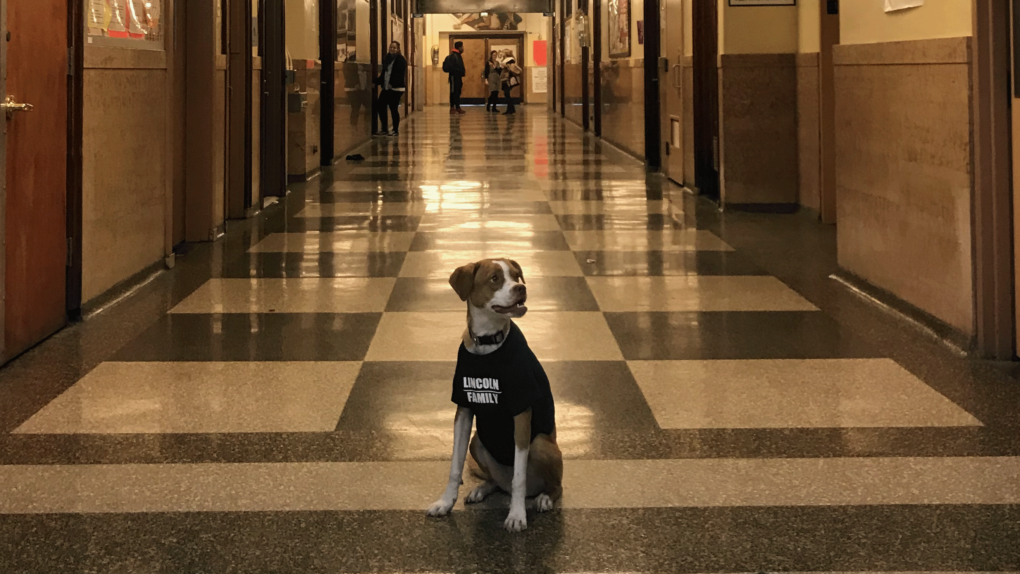
"caption": "Nina, a boxer/beagle comfort dog, spends most days socializing, sitting with students during counseling sessions and lightening the mood at Abraham Lincoln High School in Brooklyn. ",
"description": null,
"title": "Nina-on-Railsplitters-avenue",
"credit": "Courtesy of David Robinson",
"status": "inherit",
"isLoading": false,
"fetchFailed": false
},
"mindshift_50614": {
"type": "attachments",
"id": "mindshift_50614",
"meta": {
"index": "attachments_1716263798",
"site": "mindshift",
"id": "50614",
"found": true
},
"parent": 50593,
"imgSizes": {
"small": {
"file": "https://ww2.kqed.org/app/uploads/sites/23/2018/02/Mathical-books-520x354.png",
"width": 520,
"mimeType": "image/png",
"height": 354
},
"twentyfourteen-full-width": {
"file": "https://ww2.kqed.org/app/uploads/sites/23/2018/02/Mathical-books-1038x576.png",
"width": 1038,
"mimeType": "image/png",
"height": 576
},
"thumbnail": {
"file": "https://ww2.kqed.org/app/uploads/sites/23/2018/02/Mathical-books-160x109.png",
"width": 160,
"mimeType": "image/png",
"height": 109
},
"fd-sm": {
"file": "https://ww2.kqed.org/app/uploads/sites/23/2018/02/Mathical-books-960x654.png",
"width": 960,
"mimeType": "image/png",
"height": 654
},
"post-thumbnail": {
"file": "https://ww2.kqed.org/app/uploads/sites/23/2018/02/Mathical-books-672x372.png",
"width": 672,
"mimeType": "image/png",
"height": 372
},
"xsmall": {
"file": "https://ww2.kqed.org/app/uploads/sites/23/2018/02/Mathical-books-375x255.png",
"width": 375,
"mimeType": "image/png",
"height": 255
},
"kqedFullSize": {
"file": "https://ww2.kqed.org/app/uploads/sites/23/2018/02/Mathical-books-e1519331947424.png",
"width": 1920,
"height": 1308
},
"large": {
"file": "https://ww2.kqed.org/app/uploads/sites/23/2018/02/Mathical-books-1020x695.png",
"width": 1020,
"mimeType": "image/png",
"height": 695
},
"xlarge": {
"file": "https://ww2.kqed.org/app/uploads/sites/23/2018/02/Mathical-books-1180x804.png",
"width": 1180,
"mimeType": "image/png",
"height": 804
},
"guest-author-50": {
"file": "https://ww2.kqed.org/app/uploads/sites/23/2018/02/Mathical-books-50x50.png",
"width": 50,
"mimeType": "image/png",
"height": 50
},
"guest-author-96": {
"file": "https://ww2.kqed.org/app/uploads/sites/23/2018/02/Mathical-books-96x96.png",
"width": 96,
"mimeType": "image/png",
"height": 96
},
"medium": {
"file": "https://ww2.kqed.org/app/uploads/sites/23/2018/02/Mathical-books-800x545.png",
"width": 800,
"mimeType": "image/png",
"height": 545
},
"guest-author-64": {
"file": "https://ww2.kqed.org/app/uploads/sites/23/2018/02/Mathical-books-64x64.png",
"width": 64,
"mimeType": "image/png",
"height": 64
},
"guest-author-32": {
"file": "https://ww2.kqed.org/app/uploads/sites/23/2018/02/Mathical-books-32x32.png",
"width": 32,
"mimeType": "image/png",
"height": 32
},
"fd-lrg": {
"file": "https://ww2.kqed.org/app/uploads/sites/23/2018/02/Mathical-books-1920x1308.png",
"width": 1920,
"mimeType": "image/png",
"height": 1308
},
"fd-med": {
"file": "https://ww2.kqed.org/app/uploads/sites/23/2018/02/Mathical-books-1180x804.png",
"width": 1180,
"mimeType": "image/png",
"height": 804
},
"full-width": {
"file": "https://ww2.kqed.org/app/uploads/sites/23/2018/02/Mathical-books-1920x1308.png",
"width": 1920,
"mimeType": "image/png",
"height": 1308
},
"detail": {
"file": "https://ww2.kqed.org/app/uploads/sites/23/2018/02/Mathical-books-150x150.png",
"width": 150,
"mimeType": "image/png",
"height": 150
},
"medium_large": {
"file": "https://ww2.kqed.org/app/uploads/sites/23/2018/02/Mathical-books-768x523.png",
"width": 768,
"mimeType": "image/png",
"height": 523
},
"guest-author-128": {
"file": "https://ww2.kqed.org/app/uploads/sites/23/2018/02/Mathical-books-128x128.png",
"width": 128,
"mimeType": "image/png",
"height": 128
},
"xxsmall": {
"file": "https://ww2.kqed.org/app/uploads/sites/23/2018/02/Mathical-books-240x163.png",
"width": 240,
"mimeType": "image/png",
"height": 163
}
},
"publishDate": 1519331896,
"modified": 1519331896,
"caption": null,
"description": null,
"title": "Mathical-books",
"credit": null,
"status": "inherit",
"isLoading": false,
"fetchFailed": false
},
"mindshift_50579": {
"type": "attachments",
"id": "mindshift_50579",
"meta": {
"index": "attachments_1716263798",
"site": "mindshift",
"id": "50579",
"found": true
},
"parent": 50576,
"imgSizes": {
"small": {
"file": "https://ww2.kqed.org/app/uploads/sites/23/2018/02/iStock-859761634-520x325.jpg",
"width": 520,
"mimeType": "image/jpeg",
"height": 325
},
"twentyfourteen-full-width": {
"file": "https://ww2.kqed.org/app/uploads/sites/23/2018/02/iStock-859761634-1038x576.jpg",
"width": 1038,
"mimeType": "image/jpeg",
"height": 576
},
"thumbnail": {
"file": "https://ww2.kqed.org/app/uploads/sites/23/2018/02/iStock-859761634-160x100.jpg",
"width": 160,
"mimeType": "image/jpeg",
"height": 100
},
"fd-sm": {
"file": "https://ww2.kqed.org/app/uploads/sites/23/2018/02/iStock-859761634-960x600.jpg",
"width": 960,
"mimeType": "image/jpeg",
"height": 600
},
"post-thumbnail": {
"file": "https://ww2.kqed.org/app/uploads/sites/23/2018/02/iStock-859761634-672x372.jpg",
"width": 672,
"mimeType": "image/jpeg",
"height": 372
},
"xsmall": {
"file": "https://ww2.kqed.org/app/uploads/sites/23/2018/02/iStock-859761634-375x234.jpg",
"width": 375,
"mimeType": "image/jpeg",
"height": 234
},
"kqedFullSize": {
"file": "https://ww2.kqed.org/app/uploads/sites/23/2018/02/iStock-859761634-e1519165269859.jpg",
"width": 1920,
"height": 1200
},
"large": {
"file": "https://ww2.kqed.org/app/uploads/sites/23/2018/02/iStock-859761634-1020x638.jpg",
"width": 1020,
"mimeType": "image/jpeg",
"height": 638
},
"xlarge": {
"file": "https://ww2.kqed.org/app/uploads/sites/23/2018/02/iStock-859761634-1180x738.jpg",
"width": 1180,
"mimeType": "image/jpeg",
"height": 738
},
"guest-author-50": {
"file": "https://ww2.kqed.org/app/uploads/sites/23/2018/02/iStock-859761634-50x50.jpg",
"width": 50,
"mimeType": "image/jpeg",
"height": 50
},
"guest-author-96": {
"file": "https://ww2.kqed.org/app/uploads/sites/23/2018/02/iStock-859761634-96x96.jpg",
"width": 96,
"mimeType": "image/jpeg",
"height": 96
},
"medium": {
"file": "https://ww2.kqed.org/app/uploads/sites/23/2018/02/iStock-859761634-800x500.jpg",
"width": 800,
"mimeType": "image/jpeg",
"height": 500
},
"guest-author-64": {
"file": "https://ww2.kqed.org/app/uploads/sites/23/2018/02/iStock-859761634-64x64.jpg",
"width": 64,
"mimeType": "image/jpeg",
"height": 64
},
"guest-author-32": {
"file": "https://ww2.kqed.org/app/uploads/sites/23/2018/02/iStock-859761634-32x32.jpg",
"width": 32,
"mimeType": "image/jpeg",
"height": 32
},
"fd-lrg": {
"file": "https://ww2.kqed.org/app/uploads/sites/23/2018/02/iStock-859761634-1920x1200.jpg",
"width": 1920,
"mimeType": "image/jpeg",
"height": 1200
},
"fd-med": {
"file": "https://ww2.kqed.org/app/uploads/sites/23/2018/02/iStock-859761634-1180x738.jpg",
"width": 1180,
"mimeType": "image/jpeg",
"height": 738
},
"full-width": {
"file": "https://ww2.kqed.org/app/uploads/sites/23/2018/02/iStock-859761634-1920x1200.jpg",
"width": 1920,
"mimeType": "image/jpeg",
"height": 1200
},
"detail": {
"file": "https://ww2.kqed.org/app/uploads/sites/23/2018/02/iStock-859761634-150x150.jpg",
"width": 150,
"mimeType": "image/jpeg",
"height": 150
},
"medium_large": {
"file": "https://ww2.kqed.org/app/uploads/sites/23/2018/02/iStock-859761634-768x480.jpg",
"width": 768,
"mimeType": "image/jpeg",
"height": 480
},
"guest-author-128": {
"file": "https://ww2.kqed.org/app/uploads/sites/23/2018/02/iStock-859761634-128x128.jpg",
"width": 128,
"mimeType": "image/jpeg",
"height": 128
},
"xxsmall": {
"file": "https://ww2.kqed.org/app/uploads/sites/23/2018/02/iStock-859761634-240x150.jpg",
"width": 240,
"mimeType": "image/jpeg",
"height": 150
}
},
"publishDate": 1519165244,
"modified": 1519165258,
"caption": null,
"description": null,
"title": "Brain Side",
"credit": "iStock/Jakarin2521",
"status": "inherit",
"isLoading": false,
"fetchFailed": false
},
"mindshift_50571": {
"type": "attachments",
"id": "mindshift_50571",
"meta": {
"index": "attachments_1716263798",
"site": "mindshift",
"id": "50571",
"found": true
},
"parent": 50570,
"imgSizes": {
"small": {
"file": "https://ww2.kqed.org/app/uploads/sites/23/2018/02/lossatthedinnertable_custom-69f84c9d2c3dfca5482633152eeed00d919408ea-520x335.jpg",
"width": 520,
"mimeType": "image/jpeg",
"height": 335
},
"twentyfourteen-full-width": {
"file": "https://ww2.kqed.org/app/uploads/sites/23/2018/02/lossatthedinnertable_custom-69f84c9d2c3dfca5482633152eeed00d919408ea-1038x576.jpg",
"width": 1038,
"mimeType": "image/jpeg",
"height": 576
},
"thumbnail": {
"file": "https://ww2.kqed.org/app/uploads/sites/23/2018/02/lossatthedinnertable_custom-69f84c9d2c3dfca5482633152eeed00d919408ea-160x103.jpg",
"width": 160,
"mimeType": "image/jpeg",
"height": 103
},
"fd-sm": {
"file": "https://ww2.kqed.org/app/uploads/sites/23/2018/02/lossatthedinnertable_custom-69f84c9d2c3dfca5482633152eeed00d919408ea-960x618.jpg",
"width": 960,
"mimeType": "image/jpeg",
"height": 618
},
"post-thumbnail": {
"file": "https://ww2.kqed.org/app/uploads/sites/23/2018/02/lossatthedinnertable_custom-69f84c9d2c3dfca5482633152eeed00d919408ea-672x372.jpg",
"width": 672,
"mimeType": "image/jpeg",
"height": 372
},
"xsmall": {
"file": "https://ww2.kqed.org/app/uploads/sites/23/2018/02/lossatthedinnertable_custom-69f84c9d2c3dfca5482633152eeed00d919408ea-375x241.jpg",
"width": 375,
"mimeType": "image/jpeg",
"height": 241
},
"kqedFullSize": {
"file": "https://ww2.kqed.org/app/uploads/sites/23/2018/02/lossatthedinnertable_custom-69f84c9d2c3dfca5482633152eeed00d919408ea-e1519135056791.jpg",
"width": 1920,
"height": 1235
},
"large": {
"file": "https://ww2.kqed.org/app/uploads/sites/23/2018/02/lossatthedinnertable_custom-69f84c9d2c3dfca5482633152eeed00d919408ea-1020x656.jpg",
"width": 1020,
"mimeType": "image/jpeg",
"height": 656
},
"xlarge": {
"file": "https://ww2.kqed.org/app/uploads/sites/23/2018/02/lossatthedinnertable_custom-69f84c9d2c3dfca5482633152eeed00d919408ea-1180x759.jpg",
"width": 1180,
"mimeType": "image/jpeg",
"height": 759
},
"guest-author-50": {
"file": "https://ww2.kqed.org/app/uploads/sites/23/2018/02/lossatthedinnertable_custom-69f84c9d2c3dfca5482633152eeed00d919408ea-50x50.jpg",
"width": 50,
"mimeType": "image/jpeg",
"height": 50
},
"guest-author-96": {
"file": "https://ww2.kqed.org/app/uploads/sites/23/2018/02/lossatthedinnertable_custom-69f84c9d2c3dfca5482633152eeed00d919408ea-96x96.jpg",
"width": 96,
"mimeType": "image/jpeg",
"height": 96
},
"medium": {
"file": "https://ww2.kqed.org/app/uploads/sites/23/2018/02/lossatthedinnertable_custom-69f84c9d2c3dfca5482633152eeed00d919408ea-800x515.jpg",
"width": 800,
"mimeType": "image/jpeg",
"height": 515
},
"guest-author-64": {
"file": "https://ww2.kqed.org/app/uploads/sites/23/2018/02/lossatthedinnertable_custom-69f84c9d2c3dfca5482633152eeed00d919408ea-64x64.jpg",
"width": 64,
"mimeType": "image/jpeg",
"height": 64
},
"guest-author-32": {
"file": "https://ww2.kqed.org/app/uploads/sites/23/2018/02/lossatthedinnertable_custom-69f84c9d2c3dfca5482633152eeed00d919408ea-32x32.jpg",
"width": 32,
"mimeType": "image/jpeg",
"height": 32
},
"fd-lrg": {
"file": "https://ww2.kqed.org/app/uploads/sites/23/2018/02/lossatthedinnertable_custom-69f84c9d2c3dfca5482633152eeed00d919408ea-1920x1235.jpg",
"width": 1920,
"mimeType": "image/jpeg",
"height": 1235
},
"fd-med": {
"file": "https://ww2.kqed.org/app/uploads/sites/23/2018/02/lossatthedinnertable_custom-69f84c9d2c3dfca5482633152eeed00d919408ea-1180x759.jpg",
"width": 1180,
"mimeType": "image/jpeg",
"height": 759
},
"full-width": {
"file": "https://ww2.kqed.org/app/uploads/sites/23/2018/02/lossatthedinnertable_custom-69f84c9d2c3dfca5482633152eeed00d919408ea-1920x1235.jpg",
"width": 1920,
"mimeType": "image/jpeg",
"height": 1235
},
"detail": {
"file": "https://ww2.kqed.org/app/uploads/sites/23/2018/02/lossatthedinnertable_custom-69f84c9d2c3dfca5482633152eeed00d919408ea-150x150.jpg",
"width": 150,
"mimeType": "image/jpeg",
"height": 150
},
"medium_large": {
"file": "https://ww2.kqed.org/app/uploads/sites/23/2018/02/lossatthedinnertable_custom-69f84c9d2c3dfca5482633152eeed00d919408ea-768x494.jpg",
"width": 768,
"mimeType": "image/jpeg",
"height": 494
},
"guest-author-128": {
"file": "https://ww2.kqed.org/app/uploads/sites/23/2018/02/lossatthedinnertable_custom-69f84c9d2c3dfca5482633152eeed00d919408ea-128x128.jpg",
"width": 128,
"mimeType": "image/jpeg",
"height": 128
},
"xxsmall": {
"file": "https://ww2.kqed.org/app/uploads/sites/23/2018/02/lossatthedinnertable_custom-69f84c9d2c3dfca5482633152eeed00d919408ea-240x154.jpg",
"width": 240,
"mimeType": "image/jpeg",
"height": 154
}
},
"publishDate": 1519135038,
"modified": 1519135077,
"caption": null,
"description": "Loss at the dinner table",
"title": "Loss at the dinner table",
"credit": "NPR/LA Johnson",
"status": "inherit",
"isLoading": false,
"fetchFailed": false
},
"mindshift_50563": {
"type": "attachments",
"id": "mindshift_50563",
"meta": {
"index": "attachments_1716263798",
"site": "mindshift",
"id": "50563",
"found": true
},
"parent": 50562,
"imgSizes": {
"small": {
"file": "https://ww2.kqed.org/app/uploads/sites/23/2018/02/maker-space_slide-e56e0affefee5e349bcd3aba37ba2a11c61b6471-520x347.jpe",
"width": 520,
"mimeType": "image/jpeg",
"height": 347
},
"twentyfourteen-full-width": {
"file": "https://ww2.kqed.org/app/uploads/sites/23/2018/02/maker-space_slide-e56e0affefee5e349bcd3aba37ba2a11c61b6471-1038x576.jpe",
"width": 1038,
"mimeType": "image/jpeg",
"height": 576
},
"thumbnail": {
"file": "https://ww2.kqed.org/app/uploads/sites/23/2018/02/maker-space_slide-e56e0affefee5e349bcd3aba37ba2a11c61b6471-160x107.jpe",
"width": 160,
"mimeType": "image/jpeg",
"height": 107
},
"fd-sm": {
"file": "https://ww2.kqed.org/app/uploads/sites/23/2018/02/maker-space_slide-e56e0affefee5e349bcd3aba37ba2a11c61b6471-960x640.jpe",
"width": 960,
"mimeType": "image/jpeg",
"height": 640
},
"post-thumbnail": {
"file": "https://ww2.kqed.org/app/uploads/sites/23/2018/02/maker-space_slide-e56e0affefee5e349bcd3aba37ba2a11c61b6471-672x372.jpe",
"width": 672,
"mimeType": "image/jpeg",
"height": 372
},
"xsmall": {
"file": "https://ww2.kqed.org/app/uploads/sites/23/2018/02/maker-space_slide-e56e0affefee5e349bcd3aba37ba2a11c61b6471-375x250.jpe",
"width": 375,
"mimeType": "image/jpeg",
"height": 250
},
"kqedFullSize": {
"file": "https://ww2.kqed.org/app/uploads/sites/23/2018/02/maker-space_slide-e56e0affefee5e349bcd3aba37ba2a11c61b6471-e1518702024788.jpe",
"width": 1920,
"height": 1280
},
"large": {
"file": "https://ww2.kqed.org/app/uploads/sites/23/2018/02/maker-space_slide-e56e0affefee5e349bcd3aba37ba2a11c61b6471-1020x680.jpe",
"width": 1020,
"mimeType": "image/jpeg",
"height": 680
},
"xlarge": {
"file": "https://ww2.kqed.org/app/uploads/sites/23/2018/02/maker-space_slide-e56e0affefee5e349bcd3aba37ba2a11c61b6471-1180x787.jpe",
"width": 1180,
"mimeType": "image/jpeg",
"height": 787
},
"guest-author-50": {
"file": "https://ww2.kqed.org/app/uploads/sites/23/2018/02/maker-space_slide-e56e0affefee5e349bcd3aba37ba2a11c61b6471-50x50.jpe",
"width": 50,
"mimeType": "image/jpeg",
"height": 50
},
"guest-author-96": {
"file": "https://ww2.kqed.org/app/uploads/sites/23/2018/02/maker-space_slide-e56e0affefee5e349bcd3aba37ba2a11c61b6471-96x96.jpe",
"width": 96,
"mimeType": "image/jpeg",
"height": 96
},
"medium": {
"file": "https://ww2.kqed.org/app/uploads/sites/23/2018/02/maker-space_slide-e56e0affefee5e349bcd3aba37ba2a11c61b6471-800x533.jpe",
"width": 800,
"mimeType": "image/jpeg",
"height": 533
},
"guest-author-64": {
"file": "https://ww2.kqed.org/app/uploads/sites/23/2018/02/maker-space_slide-e56e0affefee5e349bcd3aba37ba2a11c61b6471-64x64.jpe",
"width": 64,
"mimeType": "image/jpeg",
"height": 64
},
"guest-author-32": {
"file": "https://ww2.kqed.org/app/uploads/sites/23/2018/02/maker-space_slide-e56e0affefee5e349bcd3aba37ba2a11c61b6471-32x32.jpe",
"width": 32,
"mimeType": "image/jpeg",
"height": 32
},
"fd-lrg": {
"file": "https://ww2.kqed.org/app/uploads/sites/23/2018/02/maker-space_slide-e56e0affefee5e349bcd3aba37ba2a11c61b6471-1920x1280.jpe",
"width": 1920,
"mimeType": "image/jpeg",
"height": 1280
},
"fd-med": {
"file": "https://ww2.kqed.org/app/uploads/sites/23/2018/02/maker-space_slide-e56e0affefee5e349bcd3aba37ba2a11c61b6471-1180x787.jpe",
"width": 1180,
"mimeType": "image/jpeg",
"height": 787
},
"full-width": {
"file": "https://ww2.kqed.org/app/uploads/sites/23/2018/02/maker-space_slide-e56e0affefee5e349bcd3aba37ba2a11c61b6471-1920x1280.jpe",
"width": 1920,
"mimeType": "image/jpeg",
"height": 1280
},
"detail": {
"file": "https://ww2.kqed.org/app/uploads/sites/23/2018/02/maker-space_slide-e56e0affefee5e349bcd3aba37ba2a11c61b6471-150x150.jpe",
"width": 150,
"mimeType": "image/jpeg",
"height": 150
},
"medium_large": {
"file": "https://ww2.kqed.org/app/uploads/sites/23/2018/02/maker-space_slide-e56e0affefee5e349bcd3aba37ba2a11c61b6471-768x512.jpe",
"width": 768,
"mimeType": "image/jpeg",
"height": 512
},
"guest-author-128": {
"file": "https://ww2.kqed.org/app/uploads/sites/23/2018/02/maker-space_slide-e56e0affefee5e349bcd3aba37ba2a11c61b6471-128x128.jpe",
"width": 128,
"mimeType": "image/jpeg",
"height": 128
},
"xxsmall": {
"file": "https://ww2.kqed.org/app/uploads/sites/23/2018/02/maker-space_slide-e56e0affefee5e349bcd3aba37ba2a11c61b6471-240x160.jpe",
"width": 240,
"mimeType": "image/jpeg",
"height": 160
}
},
"publishDate": 1518701745,
"modified": 1518702069,
"caption": null,
"description": null,
"title": "Self-driven child",
"credit": "Chris Kindred for NPR",
"status": "inherit",
"isLoading": false,
"fetchFailed": false
},
"mindshift_50553": {
"type": "attachments",
"id": "mindshift_50553",
"meta": {
"index": "attachments_1716263798",
"site": "mindshift",
"id": "50553",
"found": true
},
"parent": 50552,
"imgSizes": {
"small": {
"file": "https://ww2.kqed.org/app/uploads/sites/23/2018/02/phone-1_wide-975a9e40808c50f9e2275e127a5548be69bddcbf-520x292.jpe",
"width": 520,
"mimeType": "image/jpeg",
"height": 292
},
"twentyfourteen-full-width": {
"file": "https://ww2.kqed.org/app/uploads/sites/23/2018/02/phone-1_wide-975a9e40808c50f9e2275e127a5548be69bddcbf-1038x576.jpe",
"width": 1038,
"mimeType": "image/jpeg",
"height": 576
},
"thumbnail": {
"file": "https://ww2.kqed.org/app/uploads/sites/23/2018/02/phone-1_wide-975a9e40808c50f9e2275e127a5548be69bddcbf-160x90.jpe",
"width": 160,
"mimeType": "image/jpeg",
"height": 90
},
"fd-sm": {
"file": "https://ww2.kqed.org/app/uploads/sites/23/2018/02/phone-1_wide-975a9e40808c50f9e2275e127a5548be69bddcbf-960x540.jpe",
"width": 960,
"mimeType": "image/jpeg",
"height": 540
},
"post-thumbnail": {
"file": "https://ww2.kqed.org/app/uploads/sites/23/2018/02/phone-1_wide-975a9e40808c50f9e2275e127a5548be69bddcbf-672x372.jpe",
"width": 672,
"mimeType": "image/jpeg",
"height": 372
},
"xsmall": {
"file": "https://ww2.kqed.org/app/uploads/sites/23/2018/02/phone-1_wide-975a9e40808c50f9e2275e127a5548be69bddcbf-375x211.jpe",
"width": 375,
"mimeType": "image/jpeg",
"height": 211
},
"kqedFullSize": {
"file": "https://ww2.kqed.org/app/uploads/sites/23/2018/02/phone-1_wide-975a9e40808c50f9e2275e127a5548be69bddcbf-e1518532324353.jpe",
"width": 1920,
"height": 1080
},
"large": {
"file": "https://ww2.kqed.org/app/uploads/sites/23/2018/02/phone-1_wide-975a9e40808c50f9e2275e127a5548be69bddcbf-1020x574.jpe",
"width": 1020,
"mimeType": "image/jpeg",
"height": 574
},
"xlarge": {
"file": "https://ww2.kqed.org/app/uploads/sites/23/2018/02/phone-1_wide-975a9e40808c50f9e2275e127a5548be69bddcbf-1180x664.jpe",
"width": 1180,
"mimeType": "image/jpeg",
"height": 664
},
"guest-author-50": {
"file": "https://ww2.kqed.org/app/uploads/sites/23/2018/02/phone-1_wide-975a9e40808c50f9e2275e127a5548be69bddcbf-50x50.jpe",
"width": 50,
"mimeType": "image/jpeg",
"height": 50
},
"guest-author-96": {
"file": "https://ww2.kqed.org/app/uploads/sites/23/2018/02/phone-1_wide-975a9e40808c50f9e2275e127a5548be69bddcbf-96x96.jpe",
"width": 96,
"mimeType": "image/jpeg",
"height": 96
},
"medium": {
"file": "https://ww2.kqed.org/app/uploads/sites/23/2018/02/phone-1_wide-975a9e40808c50f9e2275e127a5548be69bddcbf-800x450.jpe",
"width": 800,
"mimeType": "image/jpeg",
"height": 450
},
"guest-author-64": {
"file": "https://ww2.kqed.org/app/uploads/sites/23/2018/02/phone-1_wide-975a9e40808c50f9e2275e127a5548be69bddcbf-64x64.jpe",
"width": 64,
"mimeType": "image/jpeg",
"height": 64
},
"guest-author-32": {
"file": "https://ww2.kqed.org/app/uploads/sites/23/2018/02/phone-1_wide-975a9e40808c50f9e2275e127a5548be69bddcbf-32x32.jpe",
"width": 32,
"mimeType": "image/jpeg",
"height": 32
},
"fd-lrg": {
"file": "https://ww2.kqed.org/app/uploads/sites/23/2018/02/phone-1_wide-975a9e40808c50f9e2275e127a5548be69bddcbf-1920x1080.jpe",
"width": 1920,
"mimeType": "image/jpeg",
"height": 1080
},
"fd-med": {
"file": "https://ww2.kqed.org/app/uploads/sites/23/2018/02/phone-1_wide-975a9e40808c50f9e2275e127a5548be69bddcbf-1180x664.jpe",
"width": 1180,
"mimeType": "image/jpeg",
"height": 664
},
"full-width": {
"file": "https://ww2.kqed.org/app/uploads/sites/23/2018/02/phone-1_wide-975a9e40808c50f9e2275e127a5548be69bddcbf-1920x1080.jpe",
"width": 1920,
"mimeType": "image/jpeg",
"height": 1080
},
"detail": {
"file": "https://ww2.kqed.org/app/uploads/sites/23/2018/02/phone-1_wide-975a9e40808c50f9e2275e127a5548be69bddcbf-150x150.jpe",
"width": 150,
"mimeType": "image/jpeg",
"height": 150
},
"medium_large": {
"file": "https://ww2.kqed.org/app/uploads/sites/23/2018/02/phone-1_wide-975a9e40808c50f9e2275e127a5548be69bddcbf-768x432.jpe",
"width": 768,
"mimeType": "image/jpeg",
"height": 432
},
"guest-author-128": {
"file": "https://ww2.kqed.org/app/uploads/sites/23/2018/02/phone-1_wide-975a9e40808c50f9e2275e127a5548be69bddcbf-128x128.jpe",
"width": 128,
"mimeType": "image/jpeg",
"height": 128
},
"xxsmall": {
"file": "https://ww2.kqed.org/app/uploads/sites/23/2018/02/phone-1_wide-975a9e40808c50f9e2275e127a5548be69bddcbf-240x135.jpe",
"width": 240,
"mimeType": "image/jpeg",
"height": 135
}
},
"publishDate": 1518532232,
"modified": 1518532338,
"caption": "For many people, checking their smartphone can be addicting.",
"description": null,
"title": "For many people, checking their smartphone can be addicting.",
"credit": "Ryan Johnson for NPR",
"status": "inherit",
"isLoading": false,
"fetchFailed": false
},
"mindshift_50537": {
"type": "attachments",
"id": "mindshift_50537",
"meta": {
"index": "attachments_1716263798",
"site": "mindshift",
"id": "50537",
"found": true
},
"parent": 50518,
"imgSizes": {
"small": {
"file": "https://ww2.kqed.org/app/uploads/sites/23/2018/02/iStock-501646960-520x347.jpg",
"width": 520,
"mimeType": "image/jpeg",
"height": 347
},
"twentyfourteen-full-width": {
"file": "https://ww2.kqed.org/app/uploads/sites/23/2018/02/iStock-501646960-1038x576.jpg",
"width": 1038,
"mimeType": "image/jpeg",
"height": 576
},
"thumbnail": {
"file": "https://ww2.kqed.org/app/uploads/sites/23/2018/02/iStock-501646960-160x107.jpg",
"width": 160,
"mimeType": "image/jpeg",
"height": 107
},
"fd-sm": {
"file": "https://ww2.kqed.org/app/uploads/sites/23/2018/02/iStock-501646960-960x640.jpg",
"width": 960,
"mimeType": "image/jpeg",
"height": 640
},
"post-thumbnail": {
"file": "https://ww2.kqed.org/app/uploads/sites/23/2018/02/iStock-501646960-672x372.jpg",
"width": 672,
"mimeType": "image/jpeg",
"height": 372
},
"xsmall": {
"file": "https://ww2.kqed.org/app/uploads/sites/23/2018/02/iStock-501646960-375x250.jpg",
"width": 375,
"mimeType": "image/jpeg",
"height": 250
},
"kqedFullSize": {
"file": "https://ww2.kqed.org/app/uploads/sites/23/2018/02/iStock-501646960-e1518098120511.jpg",
"width": 1920,
"height": 1280
},
"large": {
"file": "https://ww2.kqed.org/app/uploads/sites/23/2018/02/iStock-501646960-1020x680.jpg",
"width": 1020,
"mimeType": "image/jpeg",
"height": 680
},
"xlarge": {
"file": "https://ww2.kqed.org/app/uploads/sites/23/2018/02/iStock-501646960-1180x787.jpg",
"width": 1180,
"mimeType": "image/jpeg",
"height": 787
},
"guest-author-50": {
"file": "https://ww2.kqed.org/app/uploads/sites/23/2018/02/iStock-501646960-50x50.jpg",
"width": 50,
"mimeType": "image/jpeg",
"height": 50
},
"guest-author-96": {
"file": "https://ww2.kqed.org/app/uploads/sites/23/2018/02/iStock-501646960-96x96.jpg",
"width": 96,
"mimeType": "image/jpeg",
"height": 96
},
"medium": {
"file": "https://ww2.kqed.org/app/uploads/sites/23/2018/02/iStock-501646960-800x533.jpg",
"width": 800,
"mimeType": "image/jpeg",
"height": 533
},
"guest-author-64": {
"file": "https://ww2.kqed.org/app/uploads/sites/23/2018/02/iStock-501646960-64x64.jpg",
"width": 64,
"mimeType": "image/jpeg",
"height": 64
},
"guest-author-32": {
"file": "https://ww2.kqed.org/app/uploads/sites/23/2018/02/iStock-501646960-32x32.jpg",
"width": 32,
"mimeType": "image/jpeg",
"height": 32
},
"fd-lrg": {
"file": "https://ww2.kqed.org/app/uploads/sites/23/2018/02/iStock-501646960-1920x1280.jpg",
"width": 1920,
"mimeType": "image/jpeg",
"height": 1280
},
"fd-med": {
"file": "https://ww2.kqed.org/app/uploads/sites/23/2018/02/iStock-501646960-1180x787.jpg",
"width": 1180,
"mimeType": "image/jpeg",
"height": 787
},
"full-width": {
"file": "https://ww2.kqed.org/app/uploads/sites/23/2018/02/iStock-501646960-1920x1280.jpg",
"width": 1920,
"mimeType": "image/jpeg",
"height": 1280
},
"detail": {
"file": "https://ww2.kqed.org/app/uploads/sites/23/2018/02/iStock-501646960-150x150.jpg",
"width": 150,
"mimeType": "image/jpeg",
"height": 150
},
"medium_large": {
"file": "https://ww2.kqed.org/app/uploads/sites/23/2018/02/iStock-501646960-768x512.jpg",
"width": 768,
"mimeType": "image/jpeg",
"height": 512
},
"guest-author-128": {
"file": "https://ww2.kqed.org/app/uploads/sites/23/2018/02/iStock-501646960-128x128.jpg",
"width": 128,
"mimeType": "image/jpeg",
"height": 128
},
"xxsmall": {
"file": "https://ww2.kqed.org/app/uploads/sites/23/2018/02/iStock-501646960-240x160.jpg",
"width": 240,
"mimeType": "image/jpeg",
"height": 160
}
},
"publishDate": 1518098098,
"modified": 1518098130,
"caption": null,
"description": null,
"title": "heart",
"credit": "iStock/andrej_k",
"status": "inherit",
"isLoading": false,
"fetchFailed": false
},
"mindshift_50526": {
"type": "attachments",
"id": "mindshift_50526",
"meta": {
"index": "attachments_1716263798",
"site": "mindshift",
"id": "50526",
"found": true
},
"parent": 50525,
"imgSizes": {
"small": {
"file": "https://ww2.kqed.org/app/uploads/sites/23/2018/02/biesingernprscreensfinal_custom-02b214cdbd5ce119dd60547eabfeab88a30c02d6-520x325.jpe",
"width": 520,
"mimeType": "image/jpeg",
"height": 325
},
"twentyfourteen-full-width": {
"file": "https://ww2.kqed.org/app/uploads/sites/23/2018/02/biesingernprscreensfinal_custom-02b214cdbd5ce119dd60547eabfeab88a30c02d6-1038x576.jpe",
"width": 1038,
"mimeType": "image/jpeg",
"height": 576
},
"thumbnail": {
"file": "https://ww2.kqed.org/app/uploads/sites/23/2018/02/biesingernprscreensfinal_custom-02b214cdbd5ce119dd60547eabfeab88a30c02d6-160x100.jpe",
"width": 160,
"mimeType": "image/jpeg",
"height": 100
},
"fd-sm": {
"file": "https://ww2.kqed.org/app/uploads/sites/23/2018/02/biesingernprscreensfinal_custom-02b214cdbd5ce119dd60547eabfeab88a30c02d6-960x599.jpe",
"width": 960,
"mimeType": "image/jpeg",
"height": 599
},
"post-thumbnail": {
"file": "https://ww2.kqed.org/app/uploads/sites/23/2018/02/biesingernprscreensfinal_custom-02b214cdbd5ce119dd60547eabfeab88a30c02d6-672x372.jpe",
"width": 672,
"mimeType": "image/jpeg",
"height": 372
},
"xsmall": {
"file": "https://ww2.kqed.org/app/uploads/sites/23/2018/02/biesingernprscreensfinal_custom-02b214cdbd5ce119dd60547eabfeab88a30c02d6-375x234.jpe",
"width": 375,
"mimeType": "image/jpeg",
"height": 234
},
"kqedFullSize": {
"file": "https://ww2.kqed.org/app/uploads/sites/23/2018/02/biesingernprscreensfinal_custom-02b214cdbd5ce119dd60547eabfeab88a30c02d6-e1518022987628.jpe",
"width": 1920,
"height": 1198
},
"large": {
"file": "https://ww2.kqed.org/app/uploads/sites/23/2018/02/biesingernprscreensfinal_custom-02b214cdbd5ce119dd60547eabfeab88a30c02d6-1020x637.jpe",
"width": 1020,
"mimeType": "image/jpeg",
"height": 637
},
"xlarge": {
"file": "https://ww2.kqed.org/app/uploads/sites/23/2018/02/biesingernprscreensfinal_custom-02b214cdbd5ce119dd60547eabfeab88a30c02d6-1180x736.jpe",
"width": 1180,
"mimeType": "image/jpeg",
"height": 736
},
"guest-author-50": {
"file": "https://ww2.kqed.org/app/uploads/sites/23/2018/02/biesingernprscreensfinal_custom-02b214cdbd5ce119dd60547eabfeab88a30c02d6-50x50.jpe",
"width": 50,
"mimeType": "image/jpeg",
"height": 50
},
"guest-author-96": {
"file": "https://ww2.kqed.org/app/uploads/sites/23/2018/02/biesingernprscreensfinal_custom-02b214cdbd5ce119dd60547eabfeab88a30c02d6-96x96.jpe",
"width": 96,
"mimeType": "image/jpeg",
"height": 96
},
"medium": {
"file": "https://ww2.kqed.org/app/uploads/sites/23/2018/02/biesingernprscreensfinal_custom-02b214cdbd5ce119dd60547eabfeab88a30c02d6-800x499.jpe",
"width": 800,
"mimeType": "image/jpeg",
"height": 499
},
"guest-author-64": {
"file": "https://ww2.kqed.org/app/uploads/sites/23/2018/02/biesingernprscreensfinal_custom-02b214cdbd5ce119dd60547eabfeab88a30c02d6-64x64.jpe",
"width": 64,
"mimeType": "image/jpeg",
"height": 64
},
"guest-author-32": {
"file": "https://ww2.kqed.org/app/uploads/sites/23/2018/02/biesingernprscreensfinal_custom-02b214cdbd5ce119dd60547eabfeab88a30c02d6-32x32.jpe",
"width": 32,
"mimeType": "image/jpeg",
"height": 32
},
"fd-lrg": {
"file": "https://ww2.kqed.org/app/uploads/sites/23/2018/02/biesingernprscreensfinal_custom-02b214cdbd5ce119dd60547eabfeab88a30c02d6-1920x1198.jpe",
"width": 1920,
"mimeType": "image/jpeg",
"height": 1198
},
"fd-med": {
"file": "https://ww2.kqed.org/app/uploads/sites/23/2018/02/biesingernprscreensfinal_custom-02b214cdbd5ce119dd60547eabfeab88a30c02d6-1180x736.jpe",
"width": 1180,
"mimeType": "image/jpeg",
"height": 736
},
"full-width": {
"file": "https://ww2.kqed.org/app/uploads/sites/23/2018/02/biesingernprscreensfinal_custom-02b214cdbd5ce119dd60547eabfeab88a30c02d6-1920x1198.jpe",
"width": 1920,
"mimeType": "image/jpeg",
"height": 1198
},
"detail": {
"file": "https://ww2.kqed.org/app/uploads/sites/23/2018/02/biesingernprscreensfinal_custom-02b214cdbd5ce119dd60547eabfeab88a30c02d6-150x150.jpe",
"width": 150,
"mimeType": "image/jpeg",
"height": 150
},
"medium_large": {
"file": "https://ww2.kqed.org/app/uploads/sites/23/2018/02/biesingernprscreensfinal_custom-02b214cdbd5ce119dd60547eabfeab88a30c02d6-768x479.jpe",
"width": 768,
"mimeType": "image/jpeg",
"height": 479
},
"guest-author-128": {
"file": "https://ww2.kqed.org/app/uploads/sites/23/2018/02/biesingernprscreensfinal_custom-02b214cdbd5ce119dd60547eabfeab88a30c02d6-128x128.jpe",
"width": 128,
"mimeType": "image/jpeg",
"height": 128
},
"xxsmall": {
"file": "https://ww2.kqed.org/app/uploads/sites/23/2018/02/biesingernprscreensfinal_custom-02b214cdbd5ce119dd60547eabfeab88a30c02d6-240x150.jpe",
"width": 240,
"mimeType": "image/jpeg",
"height": 150
}
},
"publishDate": 1518022900,
"modified": 1518022996,
"caption": null,
"description": "Screentime Experts",
"title": "Screentime Experts",
"credit": "Raymond Biesinger for NPR",
"status": "inherit",
"isLoading": false,
"fetchFailed": false
},
"mindshift_50511": {
"type": "attachments",
"id": "mindshift_50511",
"meta": {
"index": "attachments_1716263798",
"site": "mindshift",
"id": "50511",
"found": true
},
"parent": 50510,
"imgSizes": {
"small": {
"file": "https://ww2.kqed.org/app/uploads/sites/23/2018/02/npr_screens_new2_custom-4e22cedc1e58d03955066863206b94c28ae47c77-520x325.jpg",
"width": 520,
"mimeType": "image/jpeg",
"height": 325
},
"twentyfourteen-full-width": {
"file": "https://ww2.kqed.org/app/uploads/sites/23/2018/02/npr_screens_new2_custom-4e22cedc1e58d03955066863206b94c28ae47c77-1038x576.jpg",
"width": 1038,
"mimeType": "image/jpeg",
"height": 576
},
"thumbnail": {
"file": "https://ww2.kqed.org/app/uploads/sites/23/2018/02/npr_screens_new2_custom-4e22cedc1e58d03955066863206b94c28ae47c77-160x100.jpg",
"width": 160,
"mimeType": "image/jpeg",
"height": 100
},
"fd-sm": {
"file": "https://ww2.kqed.org/app/uploads/sites/23/2018/02/npr_screens_new2_custom-4e22cedc1e58d03955066863206b94c28ae47c77-960x599.jpg",
"width": 960,
"mimeType": "image/jpeg",
"height": 599
},
"post-thumbnail": {
"file": "https://ww2.kqed.org/app/uploads/sites/23/2018/02/npr_screens_new2_custom-4e22cedc1e58d03955066863206b94c28ae47c77-672x372.jpg",
"width": 672,
"mimeType": "image/jpeg",
"height": 372
},
"xsmall": {
"file": "https://ww2.kqed.org/app/uploads/sites/23/2018/02/npr_screens_new2_custom-4e22cedc1e58d03955066863206b94c28ae47c77-375x234.jpg",
"width": 375,
"mimeType": "image/jpeg",
"height": 234
},
"kqedFullSize": {
"file": "https://ww2.kqed.org/app/uploads/sites/23/2018/02/npr_screens_new2_custom-4e22cedc1e58d03955066863206b94c28ae47c77-e1517856427891.jpg",
"width": 1920,
"height": 1198
},
"large": {
"file": "https://ww2.kqed.org/app/uploads/sites/23/2018/02/npr_screens_new2_custom-4e22cedc1e58d03955066863206b94c28ae47c77-1020x637.jpg",
"width": 1020,
"mimeType": "image/jpeg",
"height": 637
},
"xlarge": {
"file": "https://ww2.kqed.org/app/uploads/sites/23/2018/02/npr_screens_new2_custom-4e22cedc1e58d03955066863206b94c28ae47c77-1180x736.jpg",
"width": 1180,
"mimeType": "image/jpeg",
"height": 736
},
"guest-author-50": {
"file": "https://ww2.kqed.org/app/uploads/sites/23/2018/02/npr_screens_new2_custom-4e22cedc1e58d03955066863206b94c28ae47c77-50x50.jpg",
"width": 50,
"mimeType": "image/jpeg",
"height": 50
},
"guest-author-96": {
"file": "https://ww2.kqed.org/app/uploads/sites/23/2018/02/npr_screens_new2_custom-4e22cedc1e58d03955066863206b94c28ae47c77-96x96.jpg",
"width": 96,
"mimeType": "image/jpeg",
"height": 96
},
"medium": {
"file": "https://ww2.kqed.org/app/uploads/sites/23/2018/02/npr_screens_new2_custom-4e22cedc1e58d03955066863206b94c28ae47c77-800x499.jpg",
"width": 800,
"mimeType": "image/jpeg",
"height": 499
},
"guest-author-64": {
"file": "https://ww2.kqed.org/app/uploads/sites/23/2018/02/npr_screens_new2_custom-4e22cedc1e58d03955066863206b94c28ae47c77-64x64.jpg",
"width": 64,
"mimeType": "image/jpeg",
"height": 64
},
"guest-author-32": {
"file": "https://ww2.kqed.org/app/uploads/sites/23/2018/02/npr_screens_new2_custom-4e22cedc1e58d03955066863206b94c28ae47c77-32x32.jpg",
"width": 32,
"mimeType": "image/jpeg",
"height": 32
},
"fd-lrg": {
"file": "https://ww2.kqed.org/app/uploads/sites/23/2018/02/npr_screens_new2_custom-4e22cedc1e58d03955066863206b94c28ae47c77-1920x1198.jpg",
"width": 1920,
"mimeType": "image/jpeg",
"height": 1198
},
"fd-med": {
"file": "https://ww2.kqed.org/app/uploads/sites/23/2018/02/npr_screens_new2_custom-4e22cedc1e58d03955066863206b94c28ae47c77-1180x736.jpg",
"width": 1180,
"mimeType": "image/jpeg",
"height": 736
},
"full-width": {
"file": "https://ww2.kqed.org/app/uploads/sites/23/2018/02/npr_screens_new2_custom-4e22cedc1e58d03955066863206b94c28ae47c77-1920x1198.jpg",
"width": 1920,
"mimeType": "image/jpeg",
"height": 1198
},
"detail": {
"file": "https://ww2.kqed.org/app/uploads/sites/23/2018/02/npr_screens_new2_custom-4e22cedc1e58d03955066863206b94c28ae47c77-150x150.jpg",
"width": 150,
"mimeType": "image/jpeg",
"height": 150
},
"medium_large": {
"file": "https://ww2.kqed.org/app/uploads/sites/23/2018/02/npr_screens_new2_custom-4e22cedc1e58d03955066863206b94c28ae47c77-768x479.jpg",
"width": 768,
"mimeType": "image/jpeg",
"height": 479
},
"guest-author-128": {
"file": "https://ww2.kqed.org/app/uploads/sites/23/2018/02/npr_screens_new2_custom-4e22cedc1e58d03955066863206b94c28ae47c77-128x128.jpg",
"width": 128,
"mimeType": "image/jpeg",
"height": 128
},
"xxsmall": {
"file": "https://ww2.kqed.org/app/uploads/sites/23/2018/02/npr_screens_new2_custom-4e22cedc1e58d03955066863206b94c28ae47c77-240x150.jpg",
"width": 240,
"mimeType": "image/jpeg",
"height": 150
}
},
"publishDate": 1517856155,
"modified": 1517856442,
"caption": null,
"description": "Teen tech addiction",
"title": "Teen tech addiction",
"credit": "Lilli Carré for NPR",
"status": "inherit",
"isLoading": false,
"fetchFailed": false
},
"mindshift_50454": {
"type": "attachments",
"id": "mindshift_50454",
"meta": {
"index": "attachments_1716263798",
"site": "mindshift",
"id": "50454",
"found": true
},
"parent": 50429,
"imgSizes": {
"small": {
"file": "https://ww2.kqed.org/app/uploads/sites/23/2018/01/iStock-911463836-520x293.jpg",
"width": 520,
"mimeType": "image/jpeg",
"height": 293
},
"twentyfourteen-full-width": {
"file": "https://ww2.kqed.org/app/uploads/sites/23/2018/01/iStock-911463836-1038x576.jpg",
"width": 1038,
"mimeType": "image/jpeg",
"height": 576
},
"thumbnail": {
"file": "https://ww2.kqed.org/app/uploads/sites/23/2018/01/iStock-911463836-160x90.jpg",
"width": 160,
"mimeType": "image/jpeg",
"height": 90
},
"fd-sm": {
"file": "https://ww2.kqed.org/app/uploads/sites/23/2018/01/iStock-911463836-960x540.jpg",
"width": 960,
"mimeType": "image/jpeg",
"height": 540
},
"post-thumbnail": {
"file": "https://ww2.kqed.org/app/uploads/sites/23/2018/01/iStock-911463836-672x372.jpg",
"width": 672,
"mimeType": "image/jpeg",
"height": 372
},
"xsmall": {
"file": "https://ww2.kqed.org/app/uploads/sites/23/2018/01/iStock-911463836-375x211.jpg",
"width": 375,
"mimeType": "image/jpeg",
"height": 211
},
"kqedFullSize": {
"file": "https://ww2.kqed.org/app/uploads/sites/23/2018/01/iStock-911463836-e1517442592147.jpg",
"width": 1920,
"height": 1080
},
"large": {
"file": "https://ww2.kqed.org/app/uploads/sites/23/2018/01/iStock-911463836-1020x574.jpg",
"width": 1020,
"mimeType": "image/jpeg",
"height": 574
},
"xlarge": {
"file": "https://ww2.kqed.org/app/uploads/sites/23/2018/01/iStock-911463836-1180x664.jpg",
"width": 1180,
"mimeType": "image/jpeg",
"height": 664
},
"guest-author-50": {
"file": "https://ww2.kqed.org/app/uploads/sites/23/2018/01/iStock-911463836-50x50.jpg",
"width": 50,
"mimeType": "image/jpeg",
"height": 50
},
"guest-author-96": {
"file": "https://ww2.kqed.org/app/uploads/sites/23/2018/01/iStock-911463836-96x96.jpg",
"width": 96,
"mimeType": "image/jpeg",
"height": 96
},
"medium": {
"file": "https://ww2.kqed.org/app/uploads/sites/23/2018/01/iStock-911463836-800x450.jpg",
"width": 800,
"mimeType": "image/jpeg",
"height": 450
},
"guest-author-64": {
"file": "https://ww2.kqed.org/app/uploads/sites/23/2018/01/iStock-911463836-64x64.jpg",
"width": 64,
"mimeType": "image/jpeg",
"height": 64
},
"guest-author-32": {
"file": "https://ww2.kqed.org/app/uploads/sites/23/2018/01/iStock-911463836-32x32.jpg",
"width": 32,
"mimeType": "image/jpeg",
"height": 32
},
"fd-lrg": {
"file": "https://ww2.kqed.org/app/uploads/sites/23/2018/01/iStock-911463836-1920x1080.jpg",
"width": 1920,
"mimeType": "image/jpeg",
"height": 1080
},
"fd-med": {
"file": "https://ww2.kqed.org/app/uploads/sites/23/2018/01/iStock-911463836-1180x664.jpg",
"width": 1180,
"mimeType": "image/jpeg",
"height": 664
},
"full-width": {
"file": "https://ww2.kqed.org/app/uploads/sites/23/2018/01/iStock-911463836-1920x1080.jpg",
"width": 1920,
"mimeType": "image/jpeg",
"height": 1080
},
"detail": {
"file": "https://ww2.kqed.org/app/uploads/sites/23/2018/01/iStock-911463836-150x150.jpg",
"width": 150,
"mimeType": "image/jpeg",
"height": 150
},
"medium_large": {
"file": "https://ww2.kqed.org/app/uploads/sites/23/2018/01/iStock-911463836-768x432.jpg",
"width": 768,
"mimeType": "image/jpeg",
"height": 432
},
"guest-author-128": {
"file": "https://ww2.kqed.org/app/uploads/sites/23/2018/01/iStock-911463836-128x128.jpg",
"width": 128,
"mimeType": "image/jpeg",
"height": 128
},
"xxsmall": {
"file": "https://ww2.kqed.org/app/uploads/sites/23/2018/01/iStock-911463836-240x135.jpg",
"width": 240,
"mimeType": "image/jpeg",
"height": 135
}
},
"publishDate": 1517442569,
"modified": 1517442605,
"caption": null,
"description": null,
"title": null,
"credit": "iStock/Grandfailure",
"status": "inherit",
"isLoading": false,
"fetchFailed": false
},
"mindshift_50049": {
"type": "attachments",
"id": "mindshift_50049",
"meta": {
"index": "attachments_1716263798",
"site": "mindshift",
"id": "50049",
"found": true
},
"parent": 50048,
"imgSizes": {
"small": {
"file": "https://ww2.kqed.org/app/uploads/sites/23/2018/01/paigevickers_npr_finals_9-5-03_smaller_custom-4789586620d63d2bf424134d17ca31f87635df77-520x292.jpg",
"width": 520,
"mimeType": "image/jpeg",
"height": 292
},
"twentyfourteen-full-width": {
"file": "https://ww2.kqed.org/app/uploads/sites/23/2018/01/paigevickers_npr_finals_9-5-03_smaller_custom-4789586620d63d2bf424134d17ca31f87635df77-1038x576.jpg",
"width": 1038,
"mimeType": "image/jpeg",
"height": 576
},
"thumbnail": {
"file": "https://ww2.kqed.org/app/uploads/sites/23/2018/01/paigevickers_npr_finals_9-5-03_smaller_custom-4789586620d63d2bf424134d17ca31f87635df77-160x90.jpg",
"width": 160,
"mimeType": "image/jpeg",
"height": 90
},
"fd-sm": {
"file": "https://ww2.kqed.org/app/uploads/sites/23/2018/01/paigevickers_npr_finals_9-5-03_smaller_custom-4789586620d63d2bf424134d17ca31f87635df77-960x539.jpg",
"width": 960,
"mimeType": "image/jpeg",
"height": 539
},
"post-thumbnail": {
"file": "https://ww2.kqed.org/app/uploads/sites/23/2018/01/paigevickers_npr_finals_9-5-03_smaller_custom-4789586620d63d2bf424134d17ca31f87635df77-672x372.jpg",
"width": 672,
"mimeType": "image/jpeg",
"height": 372
},
"xsmall": {
"file": "https://ww2.kqed.org/app/uploads/sites/23/2018/01/paigevickers_npr_finals_9-5-03_smaller_custom-4789586620d63d2bf424134d17ca31f87635df77-375x211.jpg",
"width": 375,
"mimeType": "image/jpeg",
"height": 211
},
"kqedFullSize": {
"file": "https://ww2.kqed.org/app/uploads/sites/23/2018/01/paigevickers_npr_finals_9-5-03_smaller_custom-4789586620d63d2bf424134d17ca31f87635df77-e1516869902488.jpg",
"width": 1920,
"height": 1078
},
"large": {
"file": "https://ww2.kqed.org/app/uploads/sites/23/2018/01/paigevickers_npr_finals_9-5-03_smaller_custom-4789586620d63d2bf424134d17ca31f87635df77-1020x573.jpg",
"width": 1020,
"mimeType": "image/jpeg",
"height": 573
},
"xlarge": {
"file": "https://ww2.kqed.org/app/uploads/sites/23/2018/01/paigevickers_npr_finals_9-5-03_smaller_custom-4789586620d63d2bf424134d17ca31f87635df77-1180x663.jpg",
"width": 1180,
"mimeType": "image/jpeg",
"height": 663
},
"guest-author-50": {
"file": "https://ww2.kqed.org/app/uploads/sites/23/2018/01/paigevickers_npr_finals_9-5-03_smaller_custom-4789586620d63d2bf424134d17ca31f87635df77-50x50.jpg",
"width": 50,
"mimeType": "image/jpeg",
"height": 50
},
"guest-author-96": {
"file": "https://ww2.kqed.org/app/uploads/sites/23/2018/01/paigevickers_npr_finals_9-5-03_smaller_custom-4789586620d63d2bf424134d17ca31f87635df77-96x96.jpg",
"width": 96,
"mimeType": "image/jpeg",
"height": 96
},
"medium": {
"file": "https://ww2.kqed.org/app/uploads/sites/23/2018/01/paigevickers_npr_finals_9-5-03_smaller_custom-4789586620d63d2bf424134d17ca31f87635df77-800x449.jpg",
"width": 800,
"mimeType": "image/jpeg",
"height": 449
},
"guest-author-64": {
"file": "https://ww2.kqed.org/app/uploads/sites/23/2018/01/paigevickers_npr_finals_9-5-03_smaller_custom-4789586620d63d2bf424134d17ca31f87635df77-64x64.jpg",
"width": 64,
"mimeType": "image/jpeg",
"height": 64
},
"guest-author-32": {
"file": "https://ww2.kqed.org/app/uploads/sites/23/2018/01/paigevickers_npr_finals_9-5-03_smaller_custom-4789586620d63d2bf424134d17ca31f87635df77-32x32.jpg",
"width": 32,
"mimeType": "image/jpeg",
"height": 32
},
"fd-lrg": {
"file": "https://ww2.kqed.org/app/uploads/sites/23/2018/01/paigevickers_npr_finals_9-5-03_smaller_custom-4789586620d63d2bf424134d17ca31f87635df77-1920x1078.jpg",
"width": 1920,
"mimeType": "image/jpeg",
"height": 1078
},
"fd-med": {
"file": "https://ww2.kqed.org/app/uploads/sites/23/2018/01/paigevickers_npr_finals_9-5-03_smaller_custom-4789586620d63d2bf424134d17ca31f87635df77-1180x663.jpg",
"width": 1180,
"mimeType": "image/jpeg",
"height": 663
},
"full-width": {
"file": "https://ww2.kqed.org/app/uploads/sites/23/2018/01/paigevickers_npr_finals_9-5-03_smaller_custom-4789586620d63d2bf424134d17ca31f87635df77-1920x1078.jpg",
"width": 1920,
"mimeType": "image/jpeg",
"height": 1078
},
"detail": {
"file": "https://ww2.kqed.org/app/uploads/sites/23/2018/01/paigevickers_npr_finals_9-5-03_smaller_custom-4789586620d63d2bf424134d17ca31f87635df77-150x150.jpg",
"width": 150,
"mimeType": "image/jpeg",
"height": 150
},
"medium_large": {
"file": "https://ww2.kqed.org/app/uploads/sites/23/2018/01/paigevickers_npr_finals_9-5-03_smaller_custom-4789586620d63d2bf424134d17ca31f87635df77-768x431.jpg",
"width": 768,
"mimeType": "image/jpeg",
"height": 431
},
"guest-author-128": {
"file": "https://ww2.kqed.org/app/uploads/sites/23/2018/01/paigevickers_npr_finals_9-5-03_smaller_custom-4789586620d63d2bf424134d17ca31f87635df77-128x128.jpg",
"width": 128,
"mimeType": "image/jpeg",
"height": 128
},
"xxsmall": {
"file": "https://ww2.kqed.org/app/uploads/sites/23/2018/01/paigevickers_npr_finals_9-5-03_smaller_custom-4789586620d63d2bf424134d17ca31f87635df77-240x135.jpg",
"width": 240,
"mimeType": "image/jpeg",
"height": 135
}
},
"publishDate": 1516869690,
"modified": 1516869914,
"caption": null,
"description": "Laptops in the classroom: yay or nay?",
"title": "Laptops in the classroom: yay or nay?",
"credit": "Paige Vickers for NPR",
"status": "inherit",
"isLoading": false,
"fetchFailed": false
}
},
"audioPlayerReducer": {
"postId": "stream_live",
"isPaused": true,
"isPlaying": false,
"pfsActive": false,
"pledgeModalIsOpen": true,
"playerDrawerIsOpen": false,
"liveAudioPlayStartedAt": 0,
"liveAudioPlayContext": ""
},
"authorsReducer": {
"byline_mindshift_50663": {
"type": "authors",
"id": "byline_mindshift_50663",
"meta": {
"override": true
},
"slug": "byline_mindshift_50663",
"name": "Allison Aubrey",
"isLoading": false
},
"byline_mindshift_50576": {
"type": "authors",
"id": "byline_mindshift_50576",
"meta": {
"override": true
},
"slug": "byline_mindshift_50576",
"name": "\u003ca href=\"http://hechingerreport.org/\">Daisy Yuhas, The Hechinger Report\u003c/a>",
"isLoading": false
},
"byline_mindshift_50570": {
"type": "authors",
"id": "byline_mindshift_50570",
"meta": {
"override": true
},
"slug": "byline_mindshift_50570",
"name": "Cory Turner",
"isLoading": false
},
"byline_mindshift_50562": {
"type": "authors",
"id": "byline_mindshift_50562",
"meta": {
"override": true
},
"slug": "byline_mindshift_50562",
"name": "Cory Turner",
"isLoading": false
},
"byline_mindshift_50552": {
"type": "authors",
"id": "byline_mindshift_50552",
"meta": {
"override": true
},
"slug": "byline_mindshift_50552",
"name": "Allison Aubrey",
"isLoading": false
},
"byline_mindshift_50518": {
"type": "authors",
"id": "byline_mindshift_50518",
"meta": {
"override": true
},
"slug": "byline_mindshift_50518",
"name": "\u003ca href=\"https://twitter.com/kristenlepore\">Kristen Rae Lepore\u003c/a>",
"isLoading": false
},
"byline_mindshift_50525": {
"type": "authors",
"id": "byline_mindshift_50525",
"meta": {
"override": true
},
"slug": "byline_mindshift_50525",
"name": "Anya Kamenetz",
"isLoading": false
},
"byline_mindshift_50510": {
"type": "authors",
"id": "byline_mindshift_50510",
"meta": {
"override": true
},
"slug": "byline_mindshift_50510",
"name": "Anya Kamenetz",
"isLoading": false
},
"byline_mindshift_50048": {
"type": "authors",
"id": "byline_mindshift_50048",
"meta": {
"override": true
},
"slug": "byline_mindshift_50048",
"name": "Anya Kamenetz",
"isLoading": false
},
"lindaflan": {
"type": "authors",
"id": "4613",
"meta": {
"index": "authors_1716337520",
"id": "4613",
"found": true
},
"name": "Linda Flanagan",
"firstName": "Linda",
"lastName": "Flanagan",
"slug": "lindaflan",
"email": "lindaflan@comcast.net",
"display_author_email": false,
"staff_mastheads": [],
"title": null,
"bio": "Linda Flanagan is a freelance writer, researcher, and editor. Her work has appeared in The Atlantic, The Wall St. Journal, Newsweek, Running Times, and Mind/Shift, and she blogs regularly for the Huffington Post. Linda writes about education, culture, athletics, youth sports, mental health, politics, college admissions, and other curiosities. She also reviews books and conducts interviews.",
"avatar": "https://secure.gravatar.com/avatar/6bca04c0736bf5eaea80654019de688f?s=600&d=blank&r=g",
"twitter": "LindaFlanagan2",
"facebook": null,
"instagram": null,
"linkedin": null,
"sites": [
{
"site": "mindshift",
"roles": [
"contributor"
]
}
],
"headData": {
"title": "Linda Flanagan | KQED",
"description": null,
"ogImgSrc": "https://secure.gravatar.com/avatar/6bca04c0736bf5eaea80654019de688f?s=600&d=blank&r=g",
"twImgSrc": "https://secure.gravatar.com/avatar/6bca04c0736bf5eaea80654019de688f?s=600&d=blank&r=g"
},
"isLoading": false,
"link": "/author/lindaflan"
},
"kdnewhouse": {
"type": "authors",
"id": "11487",
"meta": {
"index": "authors_1716337520",
"id": "11487",
"found": true
},
"name": "Kara Newhouse",
"firstName": "Kara",
"lastName": "Newhouse",
"slug": "kdnewhouse",
"email": "knewhouse@kqed.org",
"display_author_email": false,
"staff_mastheads": [],
"title": "MindShift Editor",
"bio": null,
"avatar": "https://secure.gravatar.com/avatar/3dceed6fb271527113abfa9a8e9df34e?s=600&d=blank&r=g",
"twitter": null,
"facebook": null,
"instagram": null,
"linkedin": null,
"sites": [
{
"site": "",
"roles": [
"editor"
]
},
{
"site": "mindshift",
"roles": []
}
],
"headData": {
"title": "Kara Newhouse | KQED",
"description": "MindShift Editor",
"ogImgSrc": "https://secure.gravatar.com/avatar/3dceed6fb271527113abfa9a8e9df34e?s=600&d=blank&r=g",
"twImgSrc": "https://secure.gravatar.com/avatar/3dceed6fb271527113abfa9a8e9df34e?s=600&d=blank&r=g"
},
"isLoading": false,
"link": "/author/kdnewhouse"
}
},
"pagesReducer": {
"mindshift_category_big-ideas": {
"type": "terms",
"id": "mindshift_192",
"meta": {
"index": "terms_1716263798",
"site": "mindshift",
"id": "192",
"score": 14.406956
},
"featImg": null,
"name": "Big Ideas",
"description": "The latest findings from experts in the field related to the future of learning.",
"taxonomy": "category",
"headData": {
"twImgId": null,
"twTitle": null,
"ogTitle": null,
"ogImgId": null,
"twDescription": null,
"description": "The latest findings from experts in the field related to the future of learning.",
"title": "Big Ideas Archives | KQED Mindshift",
"ogDescription": null
},
"ttid": 192,
"slug": "big-ideas",
"isLoading": false,
"title": "Big Ideas",
"pageMeta": {
"site": "mindshift",
"WpPageTemplate": "page-topic-editorial",
"currentPage": 30
},
"blocks": [
{
"blockName": "kqed/company-paragraph",
"content": "The latest findings from experts in the field related to the future of learning."
},
{
"blockName": "kqed/post-list",
"attrs": {
"layout": "cardArticle2",
"query": "posts/mindshift?category=big-ideas",
"seeMore": false,
"paginated": true,
"page": 30
}
},
{
"blockName": "kqed/ad"
}
]
}
},
"pfsSessionReducer": {},
"postsReducer": {
"stream_live": {
"type": "live",
"id": "stream_live",
"audioUrl": "https://streams.kqed.org/kqedradio",
"title": "Live Stream",
"excerpt": "Live Stream information currently unavailable.",
"link": "/radio",
"featImg": "",
"label": {
"name": "KQED Live",
"link": "/"
}
},
"stream_kqedNewscast": {
"type": "posts",
"id": "stream_kqedNewscast",
"audioUrl": "https://www.kqed.org/.stream/anon/radio/RDnews/newscast.mp3?_=1",
"title": "KQED Newscast",
"featImg": "",
"label": {
"name": "88.5 FM",
"link": "/"
}
},
"mindshift_50663": {
"type": "posts",
"id": "mindshift_50663",
"meta": {
"index": "posts_1716263798",
"site": "mindshift",
"id": "50663",
"score": null,
"sort": [
1519705081000
]
},
"parent": 0,
"labelTerm": {
"site": "mindshift"
},
"blocks": [],
"publishDate": 1519705081,
"format": "standard",
"disqusTitle": "Pediatricians Call For Universal Depression Screening For Teens",
"title": "Pediatricians Call For Universal Depression Screening For Teens",
"headTitle": "MindShift | KQED News",
"content": "\u003cp>Only about 50 percent of adolescents with depression \u003ca href=\"https://www.ncbi.nlm.nih.gov/pubmed/11430842\">get diagnosed\u003c/a> before reaching adulthood. And as many as 2 in 3 depressed teens don't get the care that could help them.\u003c/p>\n\u003cp>\"It's a huge problem,\" says \u003ca href=\"https://www.columbiapsychiatry.org/profile/rachel-zuckerbrot-md\">Dr. Rachel Zuckerbrot\u003c/a>, a board-certified child and adolescent psychiatrist and associate professor at Columbia University.\u003c/p>\n\u003cp>To address this divide, the American Academy of Pediatrics has\u003ca href=\"http://pediatrics.aappublications.org/content/pediatrics/120/5/e1299.full.pdf?ck=nck\"> issued\u003c/a> updated guidelines this week that call for universal screening for depression.\u003c/p>\n\u003cp>\"What we're endorsing is that everyone, 12 and up, be screened ... at least once a year,\" Zuckerbrot says. The screening, she says, could be done during a well-visit, a sports' physical or during another office visit.\u003c/p>\n\u003cp>Zuckerbrot helped write the guidelines, which have been in development for a while. The U.S. Preventive Services Task Force also \u003ca href=\"https://www.uspreventiveservicestaskforce.org/Page/Document/UpdateSummaryFinal/depression-in-children-and-adolescents-screening1\">recommends\u003c/a> depression screening, and many pediatricians have already woven the screenings into their practices.\u003c/p>\n\u003cp>[ad fullwidth]\u003c/p>\n\u003cp>\"Teenagers are often more honest when they're not looking somebody in the face who's asking questions,\" about their emotional health Zuckerbrot says. So, most pediatricians use a self-reported questionnaire that teens fill out themselves, either on an electronic device or on paper.\u003c/p>\n\u003cp>\"It's an opportunity for the adolescent to answer questions about themselves privately,\" she says.\u003c/p>\n\u003cp>https://www.youtube.com/watch?v=Eh0EZ2LD_vk&feature=youtu.be\u003c/p>\n\u003cp>The questionnaires contain a range of questions. For instance, one version, \u003ca href=\"http://www.cqaimh.org/pdf/tool_phq2.pdf\">asks\u003c/a>: 'Over the past two weeks, how often have you been bothered by any of the following problems: feeling down, depressed or hopeless? Or, little interest or pleasure in doing things?' Teens are also asked questions such as, 'Are you having difficulty with sleep, either too much or too little?' 'Any problems with eating?'\u003c/p>\n\u003cp>The new recommendations also call for families with a depressed teen to develop a safety plan to restrict the young person's access to lethal means of harm. Suicide is a leading cause of death for children aged 10 to 17, and \"adolescent suicide risk is strongly associated with firearm availability,\" \u003ca href=\"http://pediatrics.aappublications.org/content/130/5/e1416.full\">according\u003c/a> to an AAP report.\u003c/p>\n\u003cp>There's growing awareness in the U.S. of the need for young people to have good access to mental health care\u003cstrong>, \u003c/strong>says \u003ca href=\"https://www.linkedin.com/in/douglas-newton-md-mph-99544a109\">Dr. Doug Newton\u003c/a>, a child psychiatrist at Kaiser Permanente in Colorado. \"As a nation this has become part of the dialogue; it increasing\"\u003c/p>\n\u003cp>\"People are aware of what's happening in our schools and the importance of mental health,\" Newton says. Kaiser Permanente has a stigma-reduction campaign called \u003ca href=\"https://findyourwords.org/\">Find Your Words\u003c/a>.\u003c/p>\n\u003cp>https://www.youtube.com/watch?v=izYw5j15OUk&feature=youtu.be\u003c/p>\n\u003cp>\"Stigma is a huge challenge,\" he says, \"specifically for adolescents. Often times they're not coming in to get help because of the stigma attached.\"\u003c/p>\n\u003cp>It's not easy to talk about depression, yet the problem is fairly common. During the teenage years, there's about a 20 percent [chance] of having depression or anxiety, research suggests.\u003c/p>\n\u003cp>\"It's highly prevalent,\" Newton says. The goal of the \"Find Your Words\" campaign is to help make depression easier for everyone to talk about.\u003c/p>\n\u003cp>Another challenge to diagnosis is that families often don't detect depression, or they confuse it for something else.\u003c/p>\n\u003cp>\u003c/p>\n\u003cp>\"Sometimes teens are acting out or misbehaving,\" Zuckerbrot says. They're seen as being hostile or bad. \"When, instead, they're really suffering from depression.\"\u003c/p>\n\u003cdiv class=\"fullattribution\">Copyright 2018 NPR. To see more, visit http://www.npr.org/.\u003cimg src=\"https://www.google-analytics.com/__utm.gif?utmac=UA-5828686-4&utmdt=Pediatricians+Call+For+Universal+Depression+Screening+For+Teens&utme=8(APIKey)9(MDAxOTAwOTE4MDEyMTkxMDAzNjczZDljZA004)\">\u003c/div>\n\n",
"disqusIdentifier": "50663 https://ww2.kqed.org/mindshift/?p=50663",
"disqusUrl": "https://ww2.kqed.org/mindshift/2018/02/26/pediatricians-call-for-universal-depression-screening-for-teens/",
"stats": {
"hasVideo": true,
"hasChartOrMap": false,
"hasAudio": false,
"hasPolis": false,
"wordCount": 565,
"hasGoogleForm": false,
"hasGallery": false,
"hasHearkenModule": false,
"iframeSrcs": [],
"paragraphCount": 18
},
"modified": 1519716393,
"excerpt": "The nation's leading group of pediatricians has updated its guidelines for tackling teen mental health issues. One recommendation: Annual depression screening for all adolescents 12 and older.",
"headData": {
"twImgId": "",
"twTitle": "",
"ogTitle": "",
"ogImgId": "",
"twDescription": "",
"description": "The nation's leading group of pediatricians has updated its guidelines for tackling teen mental health issues. One recommendation: Annual depression screening for all adolescents 12 and older.",
"title": "Pediatricians Call For Universal Depression Screening For Teens | KQED",
"ogDescription": "",
"schema": {
"@context": "https://schema.org",
"@type": "Article",
"headline": "Pediatricians Call For Universal Depression Screening For Teens",
"datePublished": "2018-02-26T20:18:01-08:00",
"dateModified": "2018-02-26T23:26:33-08:00",
"image": "https://cdn.kqed.org/wp-content/uploads/2020/02/KQED-OG-Image@1x.png"
}
},
"guestAuthors": [],
"slug": "pediatricians-call-for-universal-depression-screening-for-teens",
"status": "publish",
"nprApiLink": "http://api.npr.org/query?id=588334959&apiKey=MDAxOTAwOTE4MDEyMTkxMDAzNjczZDljZA004",
"nprByline": "Allison Aubrey",
"nprStoryDate": "Mon, 26 Feb 2018 00:03:00 -0500",
"nprLastModifiedDate": "Mon, 26 Feb 2018 17:11:28 -0500",
"nprHtmlLink": "https://www.npr.org/sections/health-shots/2018/02/26/588334959/pediatrians-call-for-universal-depression-screening-for-teens?ft=nprml&f=588334959",
"nprAudio": "https://ondemand.npr.org/anon.npr-mp3/npr/me/2018/02/20180226_me_pediatricians_call_for_universal_depression_screening_for_teens.mp3?orgId=1&topicId=1128&d=144&p=3&story=588334959&ft=nprml&f=588334959",
"nprImageAgency": "Getty Images",
"nprImageCredit": "Johner Bildbyra",
"nprAudioM3u": "http://api.npr.org/m3u/1588776322-f5b332.m3u?orgId=1&topicId=1128&d=144&p=3&story=588334959&ft=nprml&f=588334959",
"nprStoryId": "588334959",
"nprRetrievedStory": "1",
"nprPubDate": "Mon, 26 Feb 2018 17:11:00 -0500",
"path": "/mindshift/50663/pediatricians-call-for-universal-depression-screening-for-teens",
"audioUrl": "https://ondemand.npr.org/anon.npr-mp3/npr/me/2018/02/20180226_me_pediatricians_call_for_universal_depression_screening_for_teens.mp3?orgId=1&topicId=1128&d=144&p=3&story=588334959&ft=nprml&f=588334959",
"audioTrackLength": null,
"parsedContent": [
{
"type": "contentString",
"content": "\u003cdiv class=\"post-body\">\u003cp>\u003cp>Only about 50 percent of adolescents with depression \u003ca href=\"https://www.ncbi.nlm.nih.gov/pubmed/11430842\">get diagnosed\u003c/a> before reaching adulthood. And as many as 2 in 3 depressed teens don't get the care that could help them.\u003c/p>\n\u003cp>\"It's a huge problem,\" says \u003ca href=\"https://www.columbiapsychiatry.org/profile/rachel-zuckerbrot-md\">Dr. Rachel Zuckerbrot\u003c/a>, a board-certified child and adolescent psychiatrist and associate professor at Columbia University.\u003c/p>\n\u003cp>To address this divide, the American Academy of Pediatrics has\u003ca href=\"http://pediatrics.aappublications.org/content/pediatrics/120/5/e1299.full.pdf?ck=nck\"> issued\u003c/a> updated guidelines this week that call for universal screening for depression.\u003c/p>\n\u003cp>\"What we're endorsing is that everyone, 12 and up, be screened ... at least once a year,\" Zuckerbrot says. The screening, she says, could be done during a well-visit, a sports' physical or during another office visit.\u003c/p>\n\u003cp>Zuckerbrot helped write the guidelines, which have been in development for a while. The U.S. Preventive Services Task Force also \u003ca href=\"https://www.uspreventiveservicestaskforce.org/Page/Document/UpdateSummaryFinal/depression-in-children-and-adolescents-screening1\">recommends\u003c/a> depression screening, and many pediatricians have already woven the screenings into their practices.\u003c/p>\n\u003cp>\u003c/p>\u003c/div>",
"attributes": {
"named": {},
"numeric": []
}
},
{
"type": "component",
"content": "",
"name": "ad",
"attributes": {
"named": {
"label": "fullwidth"
},
"numeric": [
"fullwidth"
]
}
},
{
"type": "contentString",
"content": "\u003cdiv class=\"post-body\">\u003cp>\u003c/p>\n\u003cp>\"Teenagers are often more honest when they're not looking somebody in the face who's asking questions,\" about their emotional health Zuckerbrot says. So, most pediatricians use a self-reported questionnaire that teens fill out themselves, either on an electronic device or on paper.\u003c/p>\n\u003cp>\"It's an opportunity for the adolescent to answer questions about themselves privately,\" she says.\u003c/p>\u003c/p>\u003cp>\u003cspan class='utils-parseShortcode-shortcodes-__youtubeShortcode__embedYoutube'>\n \u003cspan class='utils-parseShortcode-shortcodes-__youtubeShortcode__embedYoutubeInside'>\n \u003ciframe\n loading='lazy'\n class='utils-parseShortcode-shortcodes-__youtubeShortcode__youtubePlayer'\n type='text/html'\n src='//www.youtube.com/embed/Eh0EZ2LD_vk'\n title='//www.youtube.com/embed/Eh0EZ2LD_vk'\n allowfullscreen='true'\n style='border:0;'>\u003c/iframe>\n \u003c/span>\n \u003c/span>\u003c/p>\u003cp>\u003cp>The questionnaires contain a range of questions. For instance, one version, \u003ca href=\"http://www.cqaimh.org/pdf/tool_phq2.pdf\">asks\u003c/a>: 'Over the past two weeks, how often have you been bothered by any of the following problems: feeling down, depressed or hopeless? Or, little interest or pleasure in doing things?' Teens are also asked questions such as, 'Are you having difficulty with sleep, either too much or too little?' 'Any problems with eating?'\u003c/p>\n\u003cp>The new recommendations also call for families with a depressed teen to develop a safety plan to restrict the young person's access to lethal means of harm. Suicide is a leading cause of death for children aged 10 to 17, and \"adolescent suicide risk is strongly associated with firearm availability,\" \u003ca href=\"http://pediatrics.aappublications.org/content/130/5/e1416.full\">according\u003c/a> to an AAP report.\u003c/p>\n\u003cp>There's growing awareness in the U.S. of the need for young people to have good access to mental health care\u003cstrong>, \u003c/strong>says \u003ca href=\"https://www.linkedin.com/in/douglas-newton-md-mph-99544a109\">Dr. Doug Newton\u003c/a>, a child psychiatrist at Kaiser Permanente in Colorado. \"As a nation this has become part of the dialogue; it increasing\"\u003c/p>\n\u003cp>\"People are aware of what's happening in our schools and the importance of mental health,\" Newton says. Kaiser Permanente has a stigma-reduction campaign called \u003ca href=\"https://findyourwords.org/\">Find Your Words\u003c/a>.\u003c/p>\u003c/p>\u003cp>\u003cspan class='utils-parseShortcode-shortcodes-__youtubeShortcode__embedYoutube'>\n \u003cspan class='utils-parseShortcode-shortcodes-__youtubeShortcode__embedYoutubeInside'>\n \u003ciframe\n loading='lazy'\n class='utils-parseShortcode-shortcodes-__youtubeShortcode__youtubePlayer'\n type='text/html'\n src='//www.youtube.com/embed/izYw5j15OUk'\n title='//www.youtube.com/embed/izYw5j15OUk'\n allowfullscreen='true'\n style='border:0;'>\u003c/iframe>\n \u003c/span>\n \u003c/span>\u003c/p>\u003cp>\u003cp>\"Stigma is a huge challenge,\" he says, \"specifically for adolescents. Often times they're not coming in to get help because of the stigma attached.\"\u003c/p>\n\u003cp>It's not easy to talk about depression, yet the problem is fairly common. During the teenage years, there's about a 20 percent [chance] of having depression or anxiety, research suggests.\u003c/p>\n\u003cp>\"It's highly prevalent,\" Newton says. The goal of the \"Find Your Words\" campaign is to help make depression easier for everyone to talk about.\u003c/p>\n\u003cp>Another challenge to diagnosis is that families often don't detect depression, or they confuse it for something else.\u003c/p>\n\u003cp>\u003c/p>\n\u003cp>\"Sometimes teens are acting out or misbehaving,\" Zuckerbrot says. They're seen as being hostile or bad. \"When, instead, they're really suffering from depression.\"\u003c/p>\n\u003cdiv class=\"fullattribution\">Copyright 2018 NPR. To see more, visit http://www.npr.org/.\u003cimg src=\"https://www.google-analytics.com/__utm.gif?utmac=UA-5828686-4&utmdt=Pediatricians+Call+For+Universal+Depression+Screening+For+Teens&utme=8(APIKey)9(MDAxOTAwOTE4MDEyMTkxMDAzNjczZDljZA004)\">\u003c/div>\n\n\u003c/div>\u003c/p>",
"attributes": {
"named": {},
"numeric": []
}
}
],
"link": "/mindshift/50663/pediatricians-call-for-universal-depression-screening-for-teens",
"authors": [
"byline_mindshift_50663"
],
"categories": [
"mindshift_192"
],
"tags": [
"mindshift_21093",
"mindshift_20784",
"mindshift_1040",
"mindshift_20865",
"mindshift_1038"
],
"featImg": "mindshift_50664",
"label": "mindshift"
},
"mindshift_50580": {
"type": "posts",
"id": "mindshift_50580",
"meta": {
"index": "posts_1716263798",
"site": "mindshift",
"id": "50580",
"score": null,
"sort": [
1519635511000
]
},
"parent": 0,
"labelTerm": {
"site": "mindshift"
},
"blocks": [],
"publishDate": 1519635511,
"format": "standard",
"disqusTitle": "Making Comfort Dogs an Everyday Part of School",
"title": "Making Comfort Dogs an Everyday Part of School",
"headTitle": "MindShift | KQED News",
"content": "\u003cp>Cameron is no ordinary dog, and not just because he was born on Valentine’s Day. To Maggie, a first-grader at Burgundy Farm Country Day School, the Labrador/terrier mix with chestnut-brown eyes and “really fluffy” black hair who spends most days on campus is more like a friend. When Cameron is near, Maggie feels “really, really, happy,” she said. “I feel safe around him,” she added. “He’ll lay down and ask me to scratch his tummy,” she explained, because Cameron likes Maggie.\u003c/p>\n\u003cp>Cameron is one of a handful of dogs at Burgundy, a K-8 private day school in Alexandria, Virginia. Dogs started showing up there when the head of school, Jeff Sindler, brought his lumbering lab, Luke, to the main office building where Sindler works. After Luke died, Sindler adopted Cameron and brought him to campus, too, where the dog Maggie describes as “really cute” became a school favorite.\u003c/p>\n\u003cp>“They don’t care if you’re good at basketball, or a great reader, or popular,” Sindler said. “They just want to be loved—equal opportunity,” he added. Cameron and the other dogs on campus—always on a leash and with their owner—go a long way toward improving students’ social and emotional well-being, he said: They reduce tension and soothe anxiety, and elicit happy feelings from students.\u003c/p>\n\u003cfigure id=\"attachment_50657\" class=\"wp-caption alignnone\" style=\"max-width: 453px\">\u003cimg class=\"wp-image-50657 size-full\" src=\"https://ww2.kqed.org/mindshift/wp-content/uploads/sites/23/2018/02/Cameron-CC.png\" alt=\"\" width=\"453\" height=\"293\" srcset=\"https://ww2.kqed.org/app/uploads/sites/23/2018/02/Cameron-CC.png 453w, https://ww2.kqed.org/app/uploads/sites/23/2018/02/Cameron-CC-160x103.png 160w, https://ww2.kqed.org/app/uploads/sites/23/2018/02/Cameron-CC-240x155.png 240w, https://ww2.kqed.org/app/uploads/sites/23/2018/02/Cameron-CC-375x243.png 375w\" sizes=\"(max-width: 453px) 100vw, 453px\">\u003cfigcaption class=\"wp-caption-text\">Cameron is one of several dogs at Burgundy Farm Country Day school in Alexandria, Virginia. He waits for visitors at the top of the stairs that lead to the main office. \u003ccite>(Courtesy of Meghan Williams)\u003c/cite>\u003c/figcaption>\u003c/figure>\n\u003cp>“They bring out some super-basic and important emotions,” he said, and are especially helpful for children and adults who struggle in social interactions. Just as important, dogs on school grounds set a positive, welcoming tone. They help preserve the school climate that Sindler believes Burgundy embodies: one that is accepting, supportive and curious. “Dogs are one way to hold on to that atmosphere,” Sindler said, adding that “schools should be fun and exciting, and dogs can be a big part of that.”\u003c/p>\n\u003cp>According to research \u003ca href=\"https://iilab.yale.edu/\">carried\u003c/a> out at the Yale Innovative Interactions Lab, there is something distinctive about dogs that makes them so companionable. Unlike cats, \u003ca href=\"https://www.washingtonpost.com/news/animalia/wp/2018/01/22/fur-and-fury-at-40000-feet-as-more-people-bring-animals-on-planes/?utm_term=.a14aa02992c3\">parakeets\u003c/a> or \u003ca href=\"https://www.washingtonpost.com/opinions/a-snake-on-a-plane-for-emotional-support/2018/02/07/3931607c-0b69-11e8-8b0d-891602206fb7_story.html?utm_term=.50b92fb9f436\">snakes,\u003c/a> dogs have \u003ca href=\"https://phys.org/news/2013-05-dogs-domesticated-earlier-thought.html\">co-evolved\u003c/a> with humans for about 30,000 years, prompting them to develop skills that make them adept at understanding social and emotional cues from humans. Dogs make eye contact, for example. They follow where a person points. When frightened, they seek comfort from humans. And according to Yale researcher Molly Crossman, who studies how humans interact with dogs, “there is encouraging, preliminary evidence that dogs might reduce stress.”\u003c/p>\n\u003cp>[ad fullwidth]\u003c/p>\n\u003cp>\u003ca href=\"https://www.usatoday.com/story/news/nation-now/2017/03/28/hospital-full-time-comfort-dog/99727894/\">Hospitals\u003c/a>, \u003ca href=\"http://onlinelibrary.wiley.com/doi/10.1111/psyg.12159/full\">nursing homes\u003c/a>, \u003ca href=\"http://www.pewtrusts.org/en/research-and-analysis/blogs/stateline/2017/06/26/canines-helping-out-in-the-courtroom\">courthouses\u003c/a>, \u003ca href=\"https://www.nbcnews.com/feature/college-game-plan/campus-therapy-dogs-offer-helping-paw-stressed-students-n556576\">colleges and universities\u003c/a>, and other groups have pounced on such studies and brought in dogs and other animals as a way to reduce stress among their populations. But there’s one large cohort that’s usually excluded from the canine influx: children in public schools. With the exception of service and police dogs, and the occasional visit from a designated “\u003ca href=\"http://newyorktherapyanimals.org/r-e-a-d/\">reading\u003c/a>” dog, ordinary dogs are largely absent from public schools. Many towns pass ordinances that forbid dogs from even stepping on school property, let alone taking up residence in the guidance department or principal’s office. Some school districts enact no-dogs rules to protect children who are afraid of or allergic to the animals and to keep school property free of dog waste.\u003c/p>\n\u003cp>But a new program started in New York City that incorporates dogs in ordinary classrooms may be challenging the no-dogs rule. \u003ca href=\"http://schools.nyc.gov/Offices/mediarelations/NewsandSpeeches/2017-2018/ComfortDogExpansion.htm\">The Comfort Dog Pilot Program\u003c/a>, launched in fall 2016 by the Department of Education, pairs select dogs from the North Shore Animal League America with participating New York City schools. Begun as a pilot with seven schools, the program expanded at the start of the 2017 school year to include a total of 42 varied elementary, middle and high schools. Chancellor of City Schools Carmen Fariña gave the go-ahead for the idea when a fifth-grade boy from Queens made the suggestion. In addition to offering ordinary comfort, some of the dogs are deployed in teachers’ lesson plans to encourage empathy, cooperation and decision-making as part of the \u003ca href=\"http://education.muttigrees.org/how-does-it-work\">Mutt-i-grees Curriculum\u003c/a>.\u003c/p>\n\u003cp>“It’s an innovative approach to social-emotional learning,” said Miranda Barbot, a spokeswoman at the NYC education department who is familiar with the program.\u003c/p>\n\u003cfigure id=\"attachment_50655\" class=\"wp-caption alignnone\" style=\"max-width: 1920px\">\u003cimg class=\"size-full wp-image-50655\" src=\"https://ww2.kqed.org/mindshift/wp-content/uploads/sites/23/2018/02/Nina-saying-hi-in-the-Hallway-2.png\" alt=\"\" width=\"1920\" height=\"2560\" srcset=\"https://ww2.kqed.org/app/uploads/sites/23/2018/02/Nina-saying-hi-in-the-Hallway-2.png 1920w, https://ww2.kqed.org/app/uploads/sites/23/2018/02/Nina-saying-hi-in-the-Hallway-2-160x213.png 160w, https://ww2.kqed.org/app/uploads/sites/23/2018/02/Nina-saying-hi-in-the-Hallway-2-800x1067.png 800w, https://ww2.kqed.org/app/uploads/sites/23/2018/02/Nina-saying-hi-in-the-Hallway-2-768x1024.png 768w, https://ww2.kqed.org/app/uploads/sites/23/2018/02/Nina-saying-hi-in-the-Hallway-2-1020x1360.png 1020w, https://ww2.kqed.org/app/uploads/sites/23/2018/02/Nina-saying-hi-in-the-Hallway-2-1180x1573.png 1180w, https://ww2.kqed.org/app/uploads/sites/23/2018/02/Nina-saying-hi-in-the-Hallway-2-960x1280.png 960w, https://ww2.kqed.org/app/uploads/sites/23/2018/02/Nina-saying-hi-in-the-Hallway-2-240x320.png 240w, https://ww2.kqed.org/app/uploads/sites/23/2018/02/Nina-saying-hi-in-the-Hallway-2-375x500.png 375w, https://ww2.kqed.org/app/uploads/sites/23/2018/02/Nina-saying-hi-in-the-Hallway-2-520x693.png 520w\" sizes=\"(max-width: 1920px) 100vw, 1920px\">\u003cfigcaption class=\"wp-caption-text\">Several people at Abraham Lincoln High School in Brooklyn stop to pet Nina in the hallway. \u003ccite>(Courtesy of David Robinson)\u003c/cite>\u003c/figcaption>\u003c/figure>\n\u003cp>Nina is a 9-month-old boxer/beagle mix with a toffee-colored coat and a distinctive underbite. Rescued from a kill shelter in Virginia, she made her way up to New York and now trots off most days to \u003ca href=\"http://schools.nyc.gov/schoolportals/21/k410/default.htm\">Abraham Lincoln High School\u003c/a> in Brooklyn with Dave Robinson, an assistant principal there who adopted her. Robinson and school principal Ari A. Hoogenboom applied to the Comfort Dog Program when they heard how well it had worked in elementary and middle schools around the city. “Our attitude was, if something’s good, let’s do it here,” Hoogenboom said. Abraham Lincoln High School educates some 2,000 kids from various backgrounds and is the only large high school in New York with a comfort dog.\u003c/p>\n\u003cp>Hoogenboom recognized that some teenagers might not want to interact with Nina, either because of allergies, fear or a cultural inhibition. Before bringing in Nina, he sent all parents a “positive option letter” that they had to sign before their child could interact with her. Having a dog in school requires sensitivity to faculty, too, Hoogenboom said.\u003c/p>\n\u003cp>[mindshift-podcast]\u003c/p>\n\u003cp>Nina gets to work early. In the morning, she holds office hours (with Robinson) so that students can drop in for impromptu social visits. After lunch, she spends two hours in counseling sessions with small groups of kids, where she “does the basic stuff,” Robinson said: wags her tail, looks at students with her doe-like eyes and exudes indiscriminate affection. Hoogenboom and Robinson said she has had a positive effect on both students and teachers. Attendance at counseling sessions has picked up because kids want to see Nina, and her presence in the meetings gets students to talk more openly. She has helped kids in crisis, offering elemental comfort that humans could not provide. And she sets a welcoming tone at school that has proved helpful in lowering tension.\u003c/p>\n\u003cp>“We’ve had instances with students who were agitated and about to get in a conflict, and she helped bring them down from 10 to 0,” Robinson said.\u003c/p>\n\u003cfigure id=\"attachment_50656\" class=\"wp-caption alignnone\" style=\"max-width: 1920px\">\u003cimg class=\"wp-image-50656 size-full\" src=\"https://ww2.kqed.org/mindshift/wp-content/uploads/sites/23/2018/02/Nina-and-Principal-Hoogenboom-1.png\" alt=\"\" width=\"1920\" height=\"2286\" srcset=\"https://ww2.kqed.org/app/uploads/sites/23/2018/02/Nina-and-Principal-Hoogenboom-1.png 1920w, https://ww2.kqed.org/app/uploads/sites/23/2018/02/Nina-and-Principal-Hoogenboom-1-160x191.png 160w, https://ww2.kqed.org/app/uploads/sites/23/2018/02/Nina-and-Principal-Hoogenboom-1-800x953.png 800w, https://ww2.kqed.org/app/uploads/sites/23/2018/02/Nina-and-Principal-Hoogenboom-1-768x914.png 768w, https://ww2.kqed.org/app/uploads/sites/23/2018/02/Nina-and-Principal-Hoogenboom-1-1020x1214.png 1020w, https://ww2.kqed.org/app/uploads/sites/23/2018/02/Nina-and-Principal-Hoogenboom-1-1180x1405.png 1180w, https://ww2.kqed.org/app/uploads/sites/23/2018/02/Nina-and-Principal-Hoogenboom-1-960x1143.png 960w, https://ww2.kqed.org/app/uploads/sites/23/2018/02/Nina-and-Principal-Hoogenboom-1-240x286.png 240w, https://ww2.kqed.org/app/uploads/sites/23/2018/02/Nina-and-Principal-Hoogenboom-1-375x446.png 375w, https://ww2.kqed.org/app/uploads/sites/23/2018/02/Nina-and-Principal-Hoogenboom-1-520x619.png 520w\" sizes=\"(max-width: 1920px) 100vw, 1920px\">\u003cfigcaption class=\"wp-caption-text\">Nina with principal Ari Hoogenboom. \u003ccite>(Courtesy of Dave Robinson)\u003c/cite>\u003c/figcaption>\u003c/figure>\n\u003cp>Sindler has observed similar reactions to his dogs, not only with the children at Burgundy but also among students at a year-round school in Baltimore where he used to work. Children there often came from challenging backgrounds: Many lived in poverty, or had to travel through dangerous neighborhoods to get to school, or shared a too-crowded home. When these emotionally needy children encountered Luke, Sindler’s benevolent Labrador, they relaxed and were more prepared to learn. The dog seemed to fill unmet emotional needs. For children whose primary experiences with dogs had been limited to frightening confrontations involving growling and teeth, the interactions with Luke also softened their perception of animals. For Sindler, including Luke was all part of an effort to create a safe environment where learning could flourish.\u003c/p>\n\u003cp>[ad floatright]\u003c/p>\n\u003cp>Crossman from Yale is careful to point out that public enthusiasm for the efficacy of dogs as support animals far outstrips actual evidence that canines do in fact ease anxiety. Dog-crazy humans are so hopelessly \u003ca href=\"https://www.ncbi.nlm.nih.gov/pubmed/29023782\">partial\u003c/a> to the animals that they might perceive emotional benefits that do not exist. Further research is needed, she said. But many students and teachers swear by them. If by some decree all dogs were forced to leave campus, something special would be lost, said Max, an eighth-grader at Burgundy who is especially happy when the math teacher’s dog lopes around during exams.\u003c/p>\n\n",
"disqusIdentifier": "50580 https://ww2.kqed.org/mindshift/?p=50580",
"disqusUrl": "https://ww2.kqed.org/mindshift/2018/02/26/making-comfort-dogs-an-everyday-part-of-school/",
"stats": {
"hasVideo": false,
"hasChartOrMap": false,
"hasAudio": false,
"hasPolis": false,
"wordCount": 1390,
"hasGoogleForm": false,
"hasGallery": false,
"hasHearkenModule": false,
"iframeSrcs": [],
"paragraphCount": 17
},
"modified": 1579712157,
"excerpt": "Some schools, including a public high school in New York City, are embracing a program that allows comfort dogs on campus. Educators say the dogs' regular presence helps soothe students and lighten the mood. ",
"headData": {
"twImgId": "",
"twTitle": "",
"ogTitle": "",
"ogImgId": "",
"twDescription": "",
"description": "Some schools, including a public high school in New York City, are embracing a program that allows comfort dogs on campus. Educators say the dogs' regular presence helps soothe students and lighten the mood. ",
"title": "Making Comfort Dogs an Everyday Part of School | KQED",
"ogDescription": "",
"schema": {
"@context": "https://schema.org",
"@type": "Article",
"headline": "Making Comfort Dogs an Everyday Part of School",
"datePublished": "2018-02-26T00:58:31-08:00",
"dateModified": "2020-01-22T08:55:57-08:00",
"image": "https://cdn.kqed.org/wp-content/uploads/2020/02/KQED-OG-Image@1x.png"
}
},
"guestAuthors": [],
"slug": "making-comfort-dogs-an-everyday-part-of-school",
"status": "publish",
"path": "/mindshift/50580/making-comfort-dogs-an-everyday-part-of-school",
"audioTrackLength": null,
"parsedContent": [
{
"type": "contentString",
"content": "\u003cdiv class=\"post-body\">\u003cp>\u003cp>Cameron is no ordinary dog, and not just because he was born on Valentine’s Day. To Maggie, a first-grader at Burgundy Farm Country Day School, the Labrador/terrier mix with chestnut-brown eyes and “really fluffy” black hair who spends most days on campus is more like a friend. When Cameron is near, Maggie feels “really, really, happy,” she said. “I feel safe around him,” she added. “He’ll lay down and ask me to scratch his tummy,” she explained, because Cameron likes Maggie.\u003c/p>\n\u003cp>Cameron is one of a handful of dogs at Burgundy, a K-8 private day school in Alexandria, Virginia. Dogs started showing up there when the head of school, Jeff Sindler, brought his lumbering lab, Luke, to the main office building where Sindler works. After Luke died, Sindler adopted Cameron and brought him to campus, too, where the dog Maggie describes as “really cute” became a school favorite.\u003c/p>\n\u003cp>“They don’t care if you’re good at basketball, or a great reader, or popular,” Sindler said. “They just want to be loved—equal opportunity,” he added. Cameron and the other dogs on campus—always on a leash and with their owner—go a long way toward improving students’ social and emotional well-being, he said: They reduce tension and soothe anxiety, and elicit happy feelings from students.\u003c/p>\n\u003cfigure id=\"attachment_50657\" class=\"wp-caption alignnone\" style=\"max-width: 453px\">\u003cimg class=\"wp-image-50657 size-full\" src=\"https://ww2.kqed.org/mindshift/wp-content/uploads/sites/23/2018/02/Cameron-CC.png\" alt=\"\" width=\"453\" height=\"293\" srcset=\"https://ww2.kqed.org/app/uploads/sites/23/2018/02/Cameron-CC.png 453w, https://ww2.kqed.org/app/uploads/sites/23/2018/02/Cameron-CC-160x103.png 160w, https://ww2.kqed.org/app/uploads/sites/23/2018/02/Cameron-CC-240x155.png 240w, https://ww2.kqed.org/app/uploads/sites/23/2018/02/Cameron-CC-375x243.png 375w\" sizes=\"(max-width: 453px) 100vw, 453px\">\u003cfigcaption class=\"wp-caption-text\">Cameron is one of several dogs at Burgundy Farm Country Day school in Alexandria, Virginia. He waits for visitors at the top of the stairs that lead to the main office. \u003ccite>(Courtesy of Meghan Williams)\u003c/cite>\u003c/figcaption>\u003c/figure>\n\u003cp>“They bring out some super-basic and important emotions,” he said, and are especially helpful for children and adults who struggle in social interactions. Just as important, dogs on school grounds set a positive, welcoming tone. They help preserve the school climate that Sindler believes Burgundy embodies: one that is accepting, supportive and curious. “Dogs are one way to hold on to that atmosphere,” Sindler said, adding that “schools should be fun and exciting, and dogs can be a big part of that.”\u003c/p>\n\u003cp>According to research \u003ca href=\"https://iilab.yale.edu/\">carried\u003c/a> out at the Yale Innovative Interactions Lab, there is something distinctive about dogs that makes them so companionable. Unlike cats, \u003ca href=\"https://www.washingtonpost.com/news/animalia/wp/2018/01/22/fur-and-fury-at-40000-feet-as-more-people-bring-animals-on-planes/?utm_term=.a14aa02992c3\">parakeets\u003c/a> or \u003ca href=\"https://www.washingtonpost.com/opinions/a-snake-on-a-plane-for-emotional-support/2018/02/07/3931607c-0b69-11e8-8b0d-891602206fb7_story.html?utm_term=.50b92fb9f436\">snakes,\u003c/a> dogs have \u003ca href=\"https://phys.org/news/2013-05-dogs-domesticated-earlier-thought.html\">co-evolved\u003c/a> with humans for about 30,000 years, prompting them to develop skills that make them adept at understanding social and emotional cues from humans. Dogs make eye contact, for example. They follow where a person points. When frightened, they seek comfort from humans. And according to Yale researcher Molly Crossman, who studies how humans interact with dogs, “there is encouraging, preliminary evidence that dogs might reduce stress.”\u003c/p>\n\u003cp>\u003c/p>\u003c/div>",
"attributes": {
"named": {},
"numeric": []
}
},
{
"type": "component",
"content": "",
"name": "ad",
"attributes": {
"named": {
"label": "fullwidth"
},
"numeric": [
"fullwidth"
]
}
},
{
"type": "contentString",
"content": "\u003cdiv class=\"post-body\">\u003cp>\u003c/p>\n\u003cp>\u003ca href=\"https://www.usatoday.com/story/news/nation-now/2017/03/28/hospital-full-time-comfort-dog/99727894/\">Hospitals\u003c/a>, \u003ca href=\"http://onlinelibrary.wiley.com/doi/10.1111/psyg.12159/full\">nursing homes\u003c/a>, \u003ca href=\"http://www.pewtrusts.org/en/research-and-analysis/blogs/stateline/2017/06/26/canines-helping-out-in-the-courtroom\">courthouses\u003c/a>, \u003ca href=\"https://www.nbcnews.com/feature/college-game-plan/campus-therapy-dogs-offer-helping-paw-stressed-students-n556576\">colleges and universities\u003c/a>, and other groups have pounced on such studies and brought in dogs and other animals as a way to reduce stress among their populations. But there’s one large cohort that’s usually excluded from the canine influx: children in public schools. With the exception of service and police dogs, and the occasional visit from a designated “\u003ca href=\"http://newyorktherapyanimals.org/r-e-a-d/\">reading\u003c/a>” dog, ordinary dogs are largely absent from public schools. Many towns pass ordinances that forbid dogs from even stepping on school property, let alone taking up residence in the guidance department or principal’s office. Some school districts enact no-dogs rules to protect children who are afraid of or allergic to the animals and to keep school property free of dog waste.\u003c/p>\n\u003cp>But a new program started in New York City that incorporates dogs in ordinary classrooms may be challenging the no-dogs rule. \u003ca href=\"http://schools.nyc.gov/Offices/mediarelations/NewsandSpeeches/2017-2018/ComfortDogExpansion.htm\">The Comfort Dog Pilot Program\u003c/a>, launched in fall 2016 by the Department of Education, pairs select dogs from the North Shore Animal League America with participating New York City schools. Begun as a pilot with seven schools, the program expanded at the start of the 2017 school year to include a total of 42 varied elementary, middle and high schools. Chancellor of City Schools Carmen Fariña gave the go-ahead for the idea when a fifth-grade boy from Queens made the suggestion. In addition to offering ordinary comfort, some of the dogs are deployed in teachers’ lesson plans to encourage empathy, cooperation and decision-making as part of the \u003ca href=\"http://education.muttigrees.org/how-does-it-work\">Mutt-i-grees Curriculum\u003c/a>.\u003c/p>\n\u003cp>“It’s an innovative approach to social-emotional learning,” said Miranda Barbot, a spokeswoman at the NYC education department who is familiar with the program.\u003c/p>\n\u003cfigure id=\"attachment_50655\" class=\"wp-caption alignnone\" style=\"max-width: 1920px\">\u003cimg class=\"size-full wp-image-50655\" src=\"https://ww2.kqed.org/mindshift/wp-content/uploads/sites/23/2018/02/Nina-saying-hi-in-the-Hallway-2.png\" alt=\"\" width=\"1920\" height=\"2560\" srcset=\"https://ww2.kqed.org/app/uploads/sites/23/2018/02/Nina-saying-hi-in-the-Hallway-2.png 1920w, https://ww2.kqed.org/app/uploads/sites/23/2018/02/Nina-saying-hi-in-the-Hallway-2-160x213.png 160w, https://ww2.kqed.org/app/uploads/sites/23/2018/02/Nina-saying-hi-in-the-Hallway-2-800x1067.png 800w, https://ww2.kqed.org/app/uploads/sites/23/2018/02/Nina-saying-hi-in-the-Hallway-2-768x1024.png 768w, https://ww2.kqed.org/app/uploads/sites/23/2018/02/Nina-saying-hi-in-the-Hallway-2-1020x1360.png 1020w, https://ww2.kqed.org/app/uploads/sites/23/2018/02/Nina-saying-hi-in-the-Hallway-2-1180x1573.png 1180w, https://ww2.kqed.org/app/uploads/sites/23/2018/02/Nina-saying-hi-in-the-Hallway-2-960x1280.png 960w, https://ww2.kqed.org/app/uploads/sites/23/2018/02/Nina-saying-hi-in-the-Hallway-2-240x320.png 240w, https://ww2.kqed.org/app/uploads/sites/23/2018/02/Nina-saying-hi-in-the-Hallway-2-375x500.png 375w, https://ww2.kqed.org/app/uploads/sites/23/2018/02/Nina-saying-hi-in-the-Hallway-2-520x693.png 520w\" sizes=\"(max-width: 1920px) 100vw, 1920px\">\u003cfigcaption class=\"wp-caption-text\">Several people at Abraham Lincoln High School in Brooklyn stop to pet Nina in the hallway. \u003ccite>(Courtesy of David Robinson)\u003c/cite>\u003c/figcaption>\u003c/figure>\n\u003cp>Nina is a 9-month-old boxer/beagle mix with a toffee-colored coat and a distinctive underbite. Rescued from a kill shelter in Virginia, she made her way up to New York and now trots off most days to \u003ca href=\"http://schools.nyc.gov/schoolportals/21/k410/default.htm\">Abraham Lincoln High School\u003c/a> in Brooklyn with Dave Robinson, an assistant principal there who adopted her. Robinson and school principal Ari A. Hoogenboom applied to the Comfort Dog Program when they heard how well it had worked in elementary and middle schools around the city. “Our attitude was, if something’s good, let’s do it here,” Hoogenboom said. Abraham Lincoln High School educates some 2,000 kids from various backgrounds and is the only large high school in New York with a comfort dog.\u003c/p>\n\u003cp>Hoogenboom recognized that some teenagers might not want to interact with Nina, either because of allergies, fear or a cultural inhibition. Before bringing in Nina, he sent all parents a “positive option letter” that they had to sign before their child could interact with her. Having a dog in school requires sensitivity to faculty, too, Hoogenboom said.\u003c/p>\n\u003cp>\u003c/p>\u003cp>\u003caside class=\"alignleft utils-parseShortcode-shortcodes-__mindshiftPodcastShortcode__mindshift\">\u003cimg src=https://cdn.kqed.org/wp-content/uploads/2023/02/mindshiftLogo.png alt=\"Bay Curious Podcast\" loading=\"lazy\" />\n \u003ca href=\"/mindshift/category/mindshiftpodcast\">MindShift\u003c/a> has a podcast! Listen on Apple Podcasts, Google Podcasts, NPR One or your favorite podcast app.\n Subscribe on \u003ca href=\"https://podcasts.apple.com/us/podcast/stories-teachers-share-mindshift/id1078765985\" target=\"_blank\" rel=\"noopener noreferrer\">Apple Podcasts\u003c/a>,\n \u003ca href=\"https://play.google.com/music/listen?u=0#/ps/I4hhfs3azg3avjzbuowzeal5sze\" target=\"_blank\" rel=\"noopener noreferrer\">Google Podcasts\u003c/a>,\n \u003ca href=\"https://one.npr.org/?sharedMediaId=669511148:669511150\" target=\"_blank\" rel=\"noopener noreferrer\">NPR One\u003c/a>,\n \u003ca href=\"https://www.stitcher.com/podcast/kqed/stories-teachers-share\" target=\"_blank\" rel=\"noopener noreferrer\">Stitcher\u003c/a>,\n \u003ca href=\"https://open.spotify.com/show/0MxSpNYZKNprFLCl7eEtyx\" target=\"_blank\" rel=\"noopener noreferrer\">Spotify\u003c/a> or your favorite podcast platform.\u003c/aside>\u003c/p>\u003cp>\u003c/p>\n\u003cp>Nina gets to work early. In the morning, she holds office hours (with Robinson) so that students can drop in for impromptu social visits. After lunch, she spends two hours in counseling sessions with small groups of kids, where she “does the basic stuff,” Robinson said: wags her tail, looks at students with her doe-like eyes and exudes indiscriminate affection. Hoogenboom and Robinson said she has had a positive effect on both students and teachers. Attendance at counseling sessions has picked up because kids want to see Nina, and her presence in the meetings gets students to talk more openly. She has helped kids in crisis, offering elemental comfort that humans could not provide. And she sets a welcoming tone at school that has proved helpful in lowering tension.\u003c/p>\n\u003cp>“We’ve had instances with students who were agitated and about to get in a conflict, and she helped bring them down from 10 to 0,” Robinson said.\u003c/p>\n\u003cfigure id=\"attachment_50656\" class=\"wp-caption alignnone\" style=\"max-width: 1920px\">\u003cimg class=\"wp-image-50656 size-full\" src=\"https://ww2.kqed.org/mindshift/wp-content/uploads/sites/23/2018/02/Nina-and-Principal-Hoogenboom-1.png\" alt=\"\" width=\"1920\" height=\"2286\" srcset=\"https://ww2.kqed.org/app/uploads/sites/23/2018/02/Nina-and-Principal-Hoogenboom-1.png 1920w, https://ww2.kqed.org/app/uploads/sites/23/2018/02/Nina-and-Principal-Hoogenboom-1-160x191.png 160w, https://ww2.kqed.org/app/uploads/sites/23/2018/02/Nina-and-Principal-Hoogenboom-1-800x953.png 800w, https://ww2.kqed.org/app/uploads/sites/23/2018/02/Nina-and-Principal-Hoogenboom-1-768x914.png 768w, https://ww2.kqed.org/app/uploads/sites/23/2018/02/Nina-and-Principal-Hoogenboom-1-1020x1214.png 1020w, https://ww2.kqed.org/app/uploads/sites/23/2018/02/Nina-and-Principal-Hoogenboom-1-1180x1405.png 1180w, https://ww2.kqed.org/app/uploads/sites/23/2018/02/Nina-and-Principal-Hoogenboom-1-960x1143.png 960w, https://ww2.kqed.org/app/uploads/sites/23/2018/02/Nina-and-Principal-Hoogenboom-1-240x286.png 240w, https://ww2.kqed.org/app/uploads/sites/23/2018/02/Nina-and-Principal-Hoogenboom-1-375x446.png 375w, https://ww2.kqed.org/app/uploads/sites/23/2018/02/Nina-and-Principal-Hoogenboom-1-520x619.png 520w\" sizes=\"(max-width: 1920px) 100vw, 1920px\">\u003cfigcaption class=\"wp-caption-text\">Nina with principal Ari Hoogenboom. \u003ccite>(Courtesy of Dave Robinson)\u003c/cite>\u003c/figcaption>\u003c/figure>\n\u003cp>Sindler has observed similar reactions to his dogs, not only with the children at Burgundy but also among students at a year-round school in Baltimore where he used to work. Children there often came from challenging backgrounds: Many lived in poverty, or had to travel through dangerous neighborhoods to get to school, or shared a too-crowded home. When these emotionally needy children encountered Luke, Sindler’s benevolent Labrador, they relaxed and were more prepared to learn. The dog seemed to fill unmet emotional needs. For children whose primary experiences with dogs had been limited to frightening confrontations involving growling and teeth, the interactions with Luke also softened their perception of animals. For Sindler, including Luke was all part of an effort to create a safe environment where learning could flourish.\u003c/p>\n\u003cp>\u003c/p>\u003c/div>",
"attributes": {
"named": {},
"numeric": []
}
},
{
"type": "component",
"content": "",
"name": "ad",
"attributes": {
"named": {
"label": "floatright"
},
"numeric": [
"floatright"
]
}
},
{
"type": "contentString",
"content": "\u003cdiv class=\"post-body\">\u003cp>\u003c/p>\n\u003cp>Crossman from Yale is careful to point out that public enthusiasm for the efficacy of dogs as support animals far outstrips actual evidence that canines do in fact ease anxiety. Dog-crazy humans are so hopelessly \u003ca href=\"https://www.ncbi.nlm.nih.gov/pubmed/29023782\">partial\u003c/a> to the animals that they might perceive emotional benefits that do not exist. Further research is needed, she said. But many students and teachers swear by them. If by some decree all dogs were forced to leave campus, something special would be lost, said Max, an eighth-grader at Burgundy who is especially happy when the math teacher’s dog lopes around during exams.\u003c/p>\n\n\u003c/div>\u003c/p>",
"attributes": {
"named": {},
"numeric": []
}
}
],
"link": "/mindshift/50580/making-comfort-dogs-an-everyday-part-of-school",
"authors": [
"4613"
],
"categories": [
"mindshift_192",
"mindshift_194"
],
"tags": [
"mindshift_21174",
"mindshift_20784",
"mindshift_1040",
"mindshift_21049",
"mindshift_943",
"mindshift_21066"
],
"featImg": "mindshift_50650",
"label": "mindshift"
},
"mindshift_50593": {
"type": "posts",
"id": "mindshift_50593",
"meta": {
"index": "posts_1716263798",
"site": "mindshift",
"id": "50593",
"score": null,
"sort": [
1519371733000
]
},
"parent": 0,
"labelTerm": {
"site": "mindshift"
},
"blocks": [],
"publishDate": 1519371733,
"format": "standard",
"disqusTitle": "10 Books to Spark a Love of Math in Kids of All Ages",
"title": "10 Books to Spark a Love of Math in Kids of All Ages",
"headTitle": "MindShift | KQED News",
"content": "\u003cp>\u003cspan style=\"font-weight: 400\">Math is at play in every sphere of our lives, from recipes to internet security to the electoral college. \u003c/span>\u003cspan style=\"font-weight: 400\">But \u003c/span>\u003cspan style=\"font-weight: 400\">that reality can be hard to convey through the drills, static numbers and strict rules that make up so much of K-12 math education. Educators have made strides to \u003ca href=\"https://ww2.kqed.org/mindshift/tag/math/\">engage students through math\u003c/a>. One way to bring the subject to life, according to a math research organization, is through literature.\u003c/span>\u003c/p>\n\u003cp>\u003cspan style=\"font-weight: 400\">“Mathematics is very creative and playful and joyful,\" says Kirsten Bohl, a spokeswoman for the \u003ca href=\"https://www.msri.org\">Mathematical Sciences Research Institute\u003c/a>. \"Books connect with that sense of wonder and imagination and creativity.” \u003c/span>\u003c/p>\n\u003cp>\u003cspan style=\"font-weight: 400\">To spotlight such books, MSRI created the \u003ca href=\"http://www.mathicalbooks.org/\">Mathical Book Prize\u003c/a> in 2015. Each year a panel of librarians, teachers, mathematicians and early childhood experts selects winners and honor books in five age categories. \u003ca href=\"http://www.mathicalbooks.org/\">This year’s picks\u003c/a> brings the full Mathical list to more than 50 titles that cross genres and formats, including picture books, graphic novels, biographies, and young adult novels. \u003c/span>\u003c/p>\n\u003cp>\u003cspan style=\"font-weight: 400\">What matters most, according to \u003ca href=\"http://www.math.wisc.edu/~ellenber/\">Jordan Ellenberg\u003c/a>, co-chair of the selection committee, is that the books succeed in communicating mathematical ideas or problems and also succeed as great books.\u003c/span>\u003c/p>\n\u003cp>\u003cspan style=\"font-weight: 400\">“Anybody can stick a lot of math in a book,” says Ellenberg, a University of Wisconsin professor of math who also holds a master’s degree in creative writing. “If it’s a bad book, it’s not going to interest kids.”\u003c/span>\u003c/p>\n\u003cp>[ad fullwidth]\u003c/p>\n\u003cp>\u003cspan style=\"font-weight: 400\">The committee also looks for books touching on a range of interests. “A lot of kids don’t think of themselves as math people, but the intention of the award is to help kids understand that math is for everybody,” says Bohl.\u003c/span>\u003c/p>\n\u003cp>\u003cspan style=\"font-weight: 400\">Below are 10 books on the Mathical list, including this year’s winners.\u003c/span>\u003c/p>\n\u003cp>\u003ci>\u003cspan style=\"font-weight: 400\">\u003ca href=\"https://www.goodreads.com/book/show/34002095-baby-goes-to-market\">\u003cimg class=\"alignleft wp-image-50600\" src=\"https://ww2.kqed.org/mindshift/wp-content/uploads/sites/23/2018/02/Baby-Goes-to-market.jpg\" alt=\"\" width=\"250\" height=\"281\" srcset=\"https://ww2.kqed.org/app/uploads/sites/23/2018/02/Baby-Goes-to-market.jpg 577w, https://ww2.kqed.org/app/uploads/sites/23/2018/02/Baby-Goes-to-market-160x180.jpg 160w, https://ww2.kqed.org/app/uploads/sites/23/2018/02/Baby-Goes-to-market-240x270.jpg 240w, https://ww2.kqed.org/app/uploads/sites/23/2018/02/Baby-Goes-to-market-375x421.jpg 375w, https://ww2.kqed.org/app/uploads/sites/23/2018/02/Baby-Goes-to-market-520x584.jpg 520w\" sizes=\"(max-width: 250px) 100vw, 250px\">\u003c/a>\u003c/span>\u003c/i>\u003cspan style=\"font-weight: 400\">\u003cstrong>\u003ca href=\"https://www.goodreads.com/book/show/34002095-baby-goes-to-market\">Baby Goes to Market\u003c/a>\u003c/strong>\u003c/span>\u003cspan style=\"font-weight: 400\">\u003cbr>\n\u003c/span>\u003cspan style=\"font-weight: 400\">Written by Atinuke, illustrated by Angela Brooksbank\u003cbr>\nPre-K\u003cbr>\n\u003c/span>2018 Mathical prize winner\u003c/p>\n\u003cp>\u003cspan style=\"font-weight: 400\">At a Nigerian outdoor market, Mama shops while Baby attracts edible gifts from the vendors. Baby eats one of each treat before adding the rest to the basket. When the basket gets heavy, Mama hurries home to feed “Poor Baby!” who’s “not had one single thing to eat.” According to Ellenberg, the math in a children’s book need not be announced in the title, but children should be able to recognize that it’s happening. For example, Fran Wilson, one of the other judges, shared that second-graders in her classroom pointed out the subtraction at play in \u003c/span>\u003ci>\u003cspan style=\"font-weight: 400\">Baby Goes to Market \u003c/span>\u003c/i>\u003cspan style=\"font-weight: 400\">without her prompting. “That's a sign of a real winning book,” says Wilson.\u003c/span>\u003c/p>\n\u003cp>\u003ci>\u003cspan style=\"font-weight: 400\">\u003ca href=\"https://www.goodreads.com/book/show/18209408-have-you-seen-my-dragon\">\u003cimg class=\"alignleft wp-image-50606\" src=\"https://ww2.kqed.org/mindshift/wp-content/uploads/sites/23/2018/02/Have-you-seen-my-dragon.jpg\" alt=\"\" width=\"250\" height=\"222\" srcset=\"https://ww2.kqed.org/app/uploads/sites/23/2018/02/Have-you-seen-my-dragon.jpg 318w, https://ww2.kqed.org/app/uploads/sites/23/2018/02/Have-you-seen-my-dragon-160x142.jpg 160w, https://ww2.kqed.org/app/uploads/sites/23/2018/02/Have-you-seen-my-dragon-240x214.jpg 240w\" sizes=\"(max-width: 250px) 100vw, 250px\">\u003c/a>\u003c/span>\u003c/i>\u003cspan style=\"font-weight: 400\">\u003cstrong>\u003ca href=\"https://www.goodreads.com/book/show/18209408-have-you-seen-my-dragon\">Have You Seen My Dragon?\u003c/a>\u003c/strong>\u003c/span>\u003cspan style=\"font-weight: 400\"> By Steve Light\u003cbr>\nPre-K\u003cbr>\n\u003c/span>2015 Mathical prize winner\u003c/p>\n\u003cp>\u003cspan style=\"font-weight: 400\">A child narrator searches high and low for his pet in this multilayered counting book. Children will enjoy spotting the roving dragon amid a richly detailed, pen-and-ink cityscape. They will also practice counting via a set of objects featured in spot color on each spread: two hot dogs, five water towers, 12 pigeons, and so on — up to the 20 lanterns in a final scene where the child and dragon are reunited.\u003c/span>\u003c/p>\n\u003cp>\u003ci>\u003cspan style=\"font-weight: 400\">\u003ca href=\"https://www.goodreads.com/book/show/34541734-sheep-won-t-sleep\">\u003cimg class=\"alignleft wp-image-50609\" src=\"https://ww2.kqed.org/mindshift/wp-content/uploads/sites/23/2018/02/Sheep-Wont-Sleep.jpg\" alt=\"\" width=\"250\" height=\"299\" srcset=\"https://ww2.kqed.org/app/uploads/sites/23/2018/02/Sheep-Wont-Sleep.jpg 204w, https://ww2.kqed.org/app/uploads/sites/23/2018/02/Sheep-Wont-Sleep-160x191.jpg 160w\" sizes=\"(max-width: 250px) 100vw, 250px\">\u003c/a>\u003c/span>\u003c/i>\u003cspan style=\"font-weight: 400\">\u003ca href=\"https://www.goodreads.com/book/show/34541734-sheep-won-t-sleep\">\u003cstrong>Sheep Won't Sleep: Counting by 2's, 5's, and 10's\u003c/strong>\u003c/a>\u003c/span>\u003cspan style=\"font-weight: 400\">\u003cbr>\nWritten by Judy Cox, illustrated by Nina Cuneo\u003cbr>\nGrades K-2\u003cbr>\n\u003c/span>2018 Mathical prize winner\u003c/p>\n\u003cp>\u003cspan style=\"font-weight: 400\">Clarissa tries all the usual tricks for falling asleep, including counting sheep. When that fails, the sheep suggest counting alpacas — this time in pairs. When that also fails, the alpacas recommend counting llamas — by fives. As the trend continues, Clarissa’s room fills up with woolly animals in bold colors and patterns. The comical storyline and bright illustrations will engage early elementary schoolers as they practice advanced counting skills.\u003c/span>\u003c/p>\n\u003cp>\u003ci>\u003cspan style=\"font-weight: 400\">\u003ca href=\"https://www.goodreads.com/book/show/25937878-absolutely-one-thing\">\u003cimg class=\"alignleft wp-image-50602\" src=\"https://ww2.kqed.org/mindshift/wp-content/uploads/sites/23/2018/02/Absolutely-One-Thing.jpg\" alt=\"\" width=\"250\" height=\"274\" srcset=\"https://ww2.kqed.org/app/uploads/sites/23/2018/02/Absolutely-One-Thing.jpg 456w, https://ww2.kqed.org/app/uploads/sites/23/2018/02/Absolutely-One-Thing-160x175.jpg 160w, https://ww2.kqed.org/app/uploads/sites/23/2018/02/Absolutely-One-Thing-240x263.jpg 240w, https://ww2.kqed.org/app/uploads/sites/23/2018/02/Absolutely-One-Thing-375x411.jpg 375w\" sizes=\"(max-width: 250px) 100vw, 250px\">\u003c/a>\u003c/span>\u003c/i>\u003cstrong>\u003ca href=\"https://www.goodreads.com/book/show/25937878-absolutely-one-thing\">Absolutely One Thing \u003c/a>\u003c/strong>\u003ci>\u003cspan style=\"font-weight: 400\">\u003cbr>\n\u003c/span>\u003c/i>\u003cspan style=\"font-weight: 400\">By Lauren Child\u003cbr>\nGrades K-2\u003cbr>\n\u003c/span>2017 Mathical prize winner\u003c/p>\n\u003cp>\u003cspan style=\"font-weight: 400\">Big brother Charlie guides little sister Lola through the rules of numbers as they trek to the store to pick out a toy. Younger readers will enjoy correcting Lola’s faulty number sense, while older readers can join Charlie in embedded calculations, such as: how many stickers does Lola have left after sticking five on the pavement, three on a tree, two on her shoes, one on her brother and one on the dog? (Answer: zero.) Although the pages are chock full of digits, a well-paced plot, sibling humor and funky illustrations make for a breezy read.\u003c/span>\u003c/p>\n\u003cp>\u003ca href=\"https://www.goodreads.com/book/show/33154778-a-hundred-billion-trillion-stars\">\u003cimg class=\"alignleft wp-image-50611\" src=\"https://ww2.kqed.org/mindshift/wp-content/uploads/sites/23/2018/02/A-Hundred-Billion-Trillion-Stars.png\" alt=\"\" width=\"250\" height=\"250\" srcset=\"https://ww2.kqed.org/app/uploads/sites/23/2018/02/A-Hundred-Billion-Trillion-Stars.png 751w, https://ww2.kqed.org/app/uploads/sites/23/2018/02/A-Hundred-Billion-Trillion-Stars-160x160.png 160w, https://ww2.kqed.org/app/uploads/sites/23/2018/02/A-Hundred-Billion-Trillion-Stars-240x240.png 240w, https://ww2.kqed.org/app/uploads/sites/23/2018/02/A-Hundred-Billion-Trillion-Stars-375x375.png 375w, https://ww2.kqed.org/app/uploads/sites/23/2018/02/A-Hundred-Billion-Trillion-Stars-520x519.png 520w, https://ww2.kqed.org/app/uploads/sites/23/2018/02/A-Hundred-Billion-Trillion-Stars-32x32.png 32w, https://ww2.kqed.org/app/uploads/sites/23/2018/02/A-Hundred-Billion-Trillion-Stars-50x50.png 50w, https://ww2.kqed.org/app/uploads/sites/23/2018/02/A-Hundred-Billion-Trillion-Stars-64x64.png 64w, https://ww2.kqed.org/app/uploads/sites/23/2018/02/A-Hundred-Billion-Trillion-Stars-96x96.png 96w, https://ww2.kqed.org/app/uploads/sites/23/2018/02/A-Hundred-Billion-Trillion-Stars-128x128.png 128w, https://ww2.kqed.org/app/uploads/sites/23/2018/02/A-Hundred-Billion-Trillion-Stars-150x150.png 150w\" sizes=\"(max-width: 250px) 100vw, 250px\">\u003c/a>\u003ca href=\"https://www.goodreads.com/book/show/33154778-a-hundred-billion-trillion-stars\">\u003cstrong>A Hundred Billion Trillion Stars\u003c/strong>\u003c/a>\u003ci>\u003cspan style=\"font-weight: 400\">\u003cbr>\n\u003c/span>\u003c/i>\u003cspan style=\"font-weight: 400\">Written by Seth Fishman, illustrated by Isabel Greenberg\u003cbr>\nGrades 3-5\u003cb>\u003cbr>\n\u003c/b>\u003c/span>2018 Mathical prize winner\u003c/p>\n\u003cp>\u003cspan style=\"font-weight: 400\">How do you convey the immensity of numbers like three hundred seventy billion billion? Writing 37 followed by 19 zeros likely won’t do the job. Instead, this book uses awe-inducing facts from the cosmos (a hundred billion trillion stars in the universe) and the ground beneath our feet (10 quadrillion ants on Earth) to explore scale and estimation. According to Ellenberg, literature can’t replace classroom instruction in the practice of math but books like this one can spark a “dizzy excitement” that’s also important to the learning process. “You can tell a kid there’s no largest number,\" he says. \"If they can feel it, that’s a different story.\"\u003c/span>\u003c/p>\n\u003cp>\u003ci>\u003cspan style=\"font-weight: 400\">\u003ca href=\"https://www.goodreads.com/book/show/23310720-secret-coders\">\u003cimg class=\"alignleft wp-image-50608\" src=\"https://ww2.kqed.org/mindshift/wp-content/uploads/sites/23/2018/02/Secret-Coders.jpg\" alt=\"\" width=\"250\" height=\"350\" srcset=\"https://ww2.kqed.org/app/uploads/sites/23/2018/02/Secret-Coders.jpg 356w, https://ww2.kqed.org/app/uploads/sites/23/2018/02/Secret-Coders-160x224.jpg 160w, https://ww2.kqed.org/app/uploads/sites/23/2018/02/Secret-Coders-240x336.jpg 240w\" sizes=\"(max-width: 250px) 100vw, 250px\">\u003c/a>\u003c/span>\u003c/i>\u003ca href=\"https://www.goodreads.com/book/show/23310720-secret-coders\">\u003cspan style=\"font-weight: 400\">\u003cstrong>Secret Coders #1: Get with the Program\u003c/strong>\u003c/span>\u003ci>\u003cspan style=\"font-weight: 400\">\u003cbr>\n\u003c/span>\u003c/i>\u003c/a>\u003cspan style=\"font-weight: 400\">Written by Gene Luen Yang, illustrated by Mike Holmes\u003cbr>\nGrades 3-5\u003cbr>\n\u003c/span>2016 Mathical prize winner\u003c/p>\n\u003cp>\u003cspan style=\"font-weight: 400\">Hopper knows there’s something strange about her new school. When she and basketball star Eni team up to find out what, things turn out weirder than she imagined. Readers are introduced to the principles of programming through logic puzzles, a robotic turtle and creepy birds in this adventure-filled graphic novel from the 2016 National Ambassador for Young People’s Literature. The book is the first in a series. Mathical also offers an \u003c/span>\u003ca href=\"http://mathicalbooks.org/wp-content/uploads/2017/04/Mathical-Tip-Sheet-Secret-Coders.pdf\">\u003cspan style=\"font-weight: 400\">educator tip sheet for \u003c/span>\u003ci>\u003cspan style=\"font-weight: 400\">Secret Coders.\u003c/span>\u003c/i>\u003c/a>\u003c/p>\n\u003cp>\u003ca href=\"https://www.goodreads.com/book/show/26309813-giant-pumpkin-suite\">\u003cimg class=\"alignleft wp-image-50604\" src=\"https://ww2.kqed.org/mindshift/wp-content/uploads/sites/23/2018/02/Giant-Pumpkin-Suite.jpg\" alt=\"\" width=\"250\" height=\"366\" srcset=\"https://ww2.kqed.org/app/uploads/sites/23/2018/02/Giant-Pumpkin-Suite.jpg 318w, https://ww2.kqed.org/app/uploads/sites/23/2018/02/Giant-Pumpkin-Suite-160x234.jpg 160w, https://ww2.kqed.org/app/uploads/sites/23/2018/02/Giant-Pumpkin-Suite-240x352.jpg 240w\" sizes=\"(max-width: 250px) 100vw, 250px\">\u003c/a>\u003c/p>\n\u003cp>\u003ca href=\"https://www.goodreads.com/book/show/26309813-giant-pumpkin-suite\">\u003cstrong>Giant Pumpkin Suite\u003cbr>\n\u003c/strong>\u003c/a>\u003cspan style=\"font-weight: 400\">By Melanie Heuiser Hill\u003cbr>\nGrades 6-8\u003cbr>\n\u003c/span>2018 Mathical honor book*\u003c/p>\n\u003cp>\u003cspan style=\"font-weight: 400\">In addition to presenting calculations, figures, and puzzles, another way for a book to be mathematical is by portraying characters who love and practice math. In \u003c/span>\u003ci>\u003cspan style=\"font-weight: 400\">Giant Pumpkin Suite\u003c/span>\u003c/i>\u003cspan style=\"font-weight: 400\">, math and cello enthusiast Rose deals with literal and figurative growing pains as she joins her shorter, nonmusical twin brother in a project to grow a record-breaking pumpkin for the state fair. “We want kids to see mathematics but we also want kids to see mathematicians, because math is in the end a human activity,” says Ellenberg.\u003c/span>\u003c/p>\n\u003cp>\u003ci>\u003cspan style=\"font-weight: 400\">\u003ca href=\"https://www.goodreads.com/book/show/22858940-really-big-numbers\">\u003cimg class=\"alignleft wp-image-50607\" src=\"https://ww2.kqed.org/mindshift/wp-content/uploads/sites/23/2018/02/Really-Big-Numbers.jpg\" alt=\"\" width=\"250\" height=\"250\" srcset=\"https://ww2.kqed.org/app/uploads/sites/23/2018/02/Really-Big-Numbers.jpg 300w, https://ww2.kqed.org/app/uploads/sites/23/2018/02/Really-Big-Numbers-160x160.jpg 160w, https://ww2.kqed.org/app/uploads/sites/23/2018/02/Really-Big-Numbers-240x240.jpg 240w, https://ww2.kqed.org/app/uploads/sites/23/2018/02/Really-Big-Numbers-32x32.jpg 32w, https://ww2.kqed.org/app/uploads/sites/23/2018/02/Really-Big-Numbers-50x50.jpg 50w, https://ww2.kqed.org/app/uploads/sites/23/2018/02/Really-Big-Numbers-64x64.jpg 64w, https://ww2.kqed.org/app/uploads/sites/23/2018/02/Really-Big-Numbers-96x96.jpg 96w, https://ww2.kqed.org/app/uploads/sites/23/2018/02/Really-Big-Numbers-128x128.jpg 128w, https://ww2.kqed.org/app/uploads/sites/23/2018/02/Really-Big-Numbers-150x150.jpg 150w\" sizes=\"(max-width: 250px) 100vw, 250px\">\u003c/a>\u003c/span>\u003c/i>\u003cspan style=\"font-weight: 400\">\u003cstrong>\u003ca href=\"https://www.goodreads.com/book/show/22858940-really-big-numbers\">Really Big Numbers\u003c/a>\u003c/strong>\u003c/span>\u003cspan style=\"font-weight: 400\">\u003cbr>\nBy Richard Evan Schwartz\u003cbr>\nGrades 6-8\u003cbr>\n\u003c/span>2015 Mathical prize winner\u003c/p>\n\u003cp>\u003cspan style=\"font-weight: 400\">With frank, funny narration Schwartz takes readers on a numerical journey that begins at one and proceeds through mind-bogglingly large figures — but still ends very far from infinity. Complex ideas are tackled through everyday objects and patterns in whimsical, geometric drawings. Unanswered questions on some spreads will encourage readers to keep pondering and calculating after putting the book down. Mathical also provides an educator \u003ca href=\"http://mathicalbooks.org/wp-content/uploads/2015/10/Really-Big-Numbers-grades-3-5.pdf\">tip sheet\u003c/a> for this book. \u003c/span>\u003c/p>\n\u003cp>\u003ca href=\"https://www.goodreads.com/book/show/30840370-hidden-figures\">\u003cimg class=\"alignleft wp-image-50605\" src=\"https://ww2.kqed.org/mindshift/wp-content/uploads/sites/23/2018/02/Hidden-Figures.png\" alt=\"\" width=\"250\" height=\"363\" srcset=\"https://ww2.kqed.org/app/uploads/sites/23/2018/02/Hidden-Figures.png 220w, https://ww2.kqed.org/app/uploads/sites/23/2018/02/Hidden-Figures-160x232.png 160w\" sizes=\"(max-width: 250px) 100vw, 250px\">\u003c/a>\u003c/p>\n\u003cp>\u003ca href=\"https://www.goodreads.com/book/show/30840370-hidden-figures\">\u003cstrong>Hidden Figures: The American Dream and the Untold Story of the Black Women Mathematicians Who Helped Win the Space Race\u003c/strong>\u003c/a>\u003cspan style=\"font-weight: 400\">\u003cbr>\nBy Margot Lee Shetterly\u003cbr>\nGrades 9-12\u003cbr>\n\u003c/span>\u003cspan style=\"font-weight: 400\">2018 Mathical honor book*\u003c/span>\u003c/p>\n\u003cp>\u003cspan style=\"font-weight: 400\">Better known as one 2017’s hit movies, Hidden Figures tells the inspiring story of African-African women “computers” whose brains and grit helped launch NASA astronauts into orbit. With more depth than the film, this book illuminates the interconnections between math, careers and social history. A \u003c/span>\u003ca href=\"https://www.commonsensemedia.org/book-reviews/hidden-figures-young-readers-edition\">\u003cspan style=\"font-weight: 400\">young readers’ edition\u003c/span>\u003c/a>\u003cspan style=\"font-weight: 400\"> and a \u003c/span>\u003ca href=\"https://www.amazon.com/Hidden-Figures-Story-Black-Women/dp/0062742469/ref=sr_1_4?ie=UTF8&qid=1518807007&sr=8-4&keywords=hidden+figures&dpID=610nZiMUWlL&preST=_SX218_BO1,204,203,200_QL40_&dpSrc=srch\">\u003cspan style=\"font-weight: 400\">picture book version\u003c/span>\u003c/a>\u003cspan style=\"font-weight: 400\"> also are available.\u003c/span>\u003c/p>\n\u003cp>\u003cstrong>\u003ca href=\"https://www.goodreads.com/book/show/25689033-genius\">\u003cimg class=\"alignleft wp-image-50612\" src=\"https://ww2.kqed.org/mindshift/wp-content/uploads/sites/23/2018/02/Genius-The-Game.jpg\" alt=\"\" width=\"250\" height=\"377\" srcset=\"https://ww2.kqed.org/app/uploads/sites/23/2018/02/Genius-The-Game.jpg 204w, https://ww2.kqed.org/app/uploads/sites/23/2018/02/Genius-The-Game-160x242.jpg 160w\" sizes=\"(max-width: 250px) 100vw, 250px\">\u003c/a>Genius: The Game\u003c/strong>\u003cspan style=\"font-weight: 400\">\u003cbr>\nBy Leopoldo Gout\u003cbr>\nGrades 9-12\u003cbr>\n\u003c/span>2017 Mathical prize winner\u003c/p>\n\u003cp>\u003cspan style=\"font-weight: 400\">Three online friends and tech prodigies from diverse parts of the world connect in real life during a high-stakes global tech challenge. Together they embark on a quest not only to win “the Game” but also to solve their individual problems: Rex is searching for his missing brother, Tunde is on the run from a military warlord, and Painted Wolf must conceal her identity after exposing corrupt Chinese officials. Told in realistic, rotating voices and filled with suspensful plot twists, this book will grip teenage readers regardless of their prior interest in coding or programming.\u003c/span>\u003c/p>\n\u003cp>[ad floatright]\u003c/p>\n\u003cp>\u003cem>\u003cspan style=\"font-weight: 400\">*The Mathical selection committee did not name winners for middle or high school grades this year. According to Bohl, that decision reflects the lack of frontlist titles that were submitted by publishers for the older age groups.\u003c/span>\u003c/em>\u003c/p>\n\n",
"disqusIdentifier": "50593 https://ww2.kqed.org/mindshift/?p=50593",
"disqusUrl": "https://ww2.kqed.org/mindshift/2018/02/22/10-books-to-spark-a-love-of-math-in-kids-of-all-ages/",
"stats": {
"hasVideo": false,
"hasChartOrMap": false,
"hasAudio": false,
"hasPolis": false,
"wordCount": 1432,
"hasGoogleForm": false,
"hasGallery": false,
"hasHearkenModule": false,
"iframeSrcs": [],
"paragraphCount": 32
},
"modified": 1598022902,
"excerpt": "A math research organization curates a list of \"Mathical\" books each year that have great stories featuring math for students of all ages. ",
"headData": {
"twImgId": "",
"twTitle": "",
"ogTitle": "",
"ogImgId": "",
"twDescription": "",
"description": "A math research organization curates a list of "Mathical" books each year that have great stories featuring math for students of all ages. ",
"title": "10 Books to Spark a Love of Math in Kids of All Ages - MindShift",
"ogDescription": "",
"schema": {
"@context": "https://schema.org",
"@type": "Article",
"headline": "10 Books to Spark a Love of Math in Kids of All Ages",
"datePublished": "2018-02-22T23:42:13-08:00",
"dateModified": "2020-08-21T08:15:02-07:00",
"image": "https://cdn.kqed.org/wp-content/uploads/2020/02/KQED-OG-Image@1x.png"
}
},
"guestAuthors": [],
"slug": "10-books-to-spark-a-love-of-math-in-kids-of-all-ages",
"status": "publish",
"path": "/mindshift/50593/10-books-to-spark-a-love-of-math-in-kids-of-all-ages",
"audioTrackLength": null,
"parsedContent": [
{
"type": "contentString",
"content": "\u003cdiv class=\"post-body\">\u003cp>\u003cp>\u003cspan style=\"font-weight: 400\">Math is at play in every sphere of our lives, from recipes to internet security to the electoral college. \u003c/span>\u003cspan style=\"font-weight: 400\">But \u003c/span>\u003cspan style=\"font-weight: 400\">that reality can be hard to convey through the drills, static numbers and strict rules that make up so much of K-12 math education. Educators have made strides to \u003ca href=\"https://ww2.kqed.org/mindshift/tag/math/\">engage students through math\u003c/a>. One way to bring the subject to life, according to a math research organization, is through literature.\u003c/span>\u003c/p>\n\u003cp>\u003cspan style=\"font-weight: 400\">“Mathematics is very creative and playful and joyful,\" says Kirsten Bohl, a spokeswoman for the \u003ca href=\"https://www.msri.org\">Mathematical Sciences Research Institute\u003c/a>. \"Books connect with that sense of wonder and imagination and creativity.” \u003c/span>\u003c/p>\n\u003cp>\u003cspan style=\"font-weight: 400\">To spotlight such books, MSRI created the \u003ca href=\"http://www.mathicalbooks.org/\">Mathical Book Prize\u003c/a> in 2015. Each year a panel of librarians, teachers, mathematicians and early childhood experts selects winners and honor books in five age categories. \u003ca href=\"http://www.mathicalbooks.org/\">This year’s picks\u003c/a> brings the full Mathical list to more than 50 titles that cross genres and formats, including picture books, graphic novels, biographies, and young adult novels. \u003c/span>\u003c/p>\n\u003cp>\u003cspan style=\"font-weight: 400\">What matters most, according to \u003ca href=\"http://www.math.wisc.edu/~ellenber/\">Jordan Ellenberg\u003c/a>, co-chair of the selection committee, is that the books succeed in communicating mathematical ideas or problems and also succeed as great books.\u003c/span>\u003c/p>\n\u003cp>\u003cspan style=\"font-weight: 400\">“Anybody can stick a lot of math in a book,” says Ellenberg, a University of Wisconsin professor of math who also holds a master’s degree in creative writing. “If it’s a bad book, it’s not going to interest kids.”\u003c/span>\u003c/p>\n\u003cp>\u003c/p>\u003c/div>",
"attributes": {
"named": {},
"numeric": []
}
},
{
"type": "component",
"content": "",
"name": "ad",
"attributes": {
"named": {
"label": "fullwidth"
},
"numeric": [
"fullwidth"
]
}
},
{
"type": "contentString",
"content": "\u003cdiv class=\"post-body\">\u003cp>\u003c/p>\n\u003cp>\u003cspan style=\"font-weight: 400\">The committee also looks for books touching on a range of interests. “A lot of kids don’t think of themselves as math people, but the intention of the award is to help kids understand that math is for everybody,” says Bohl.\u003c/span>\u003c/p>\n\u003cp>\u003cspan style=\"font-weight: 400\">Below are 10 books on the Mathical list, including this year’s winners.\u003c/span>\u003c/p>\n\u003cp>\u003ci>\u003cspan style=\"font-weight: 400\">\u003ca href=\"https://www.goodreads.com/book/show/34002095-baby-goes-to-market\">\u003cimg class=\"alignleft wp-image-50600\" src=\"https://ww2.kqed.org/mindshift/wp-content/uploads/sites/23/2018/02/Baby-Goes-to-market.jpg\" alt=\"\" width=\"250\" height=\"281\" srcset=\"https://ww2.kqed.org/app/uploads/sites/23/2018/02/Baby-Goes-to-market.jpg 577w, https://ww2.kqed.org/app/uploads/sites/23/2018/02/Baby-Goes-to-market-160x180.jpg 160w, https://ww2.kqed.org/app/uploads/sites/23/2018/02/Baby-Goes-to-market-240x270.jpg 240w, https://ww2.kqed.org/app/uploads/sites/23/2018/02/Baby-Goes-to-market-375x421.jpg 375w, https://ww2.kqed.org/app/uploads/sites/23/2018/02/Baby-Goes-to-market-520x584.jpg 520w\" sizes=\"(max-width: 250px) 100vw, 250px\">\u003c/a>\u003c/span>\u003c/i>\u003cspan style=\"font-weight: 400\">\u003cstrong>\u003ca href=\"https://www.goodreads.com/book/show/34002095-baby-goes-to-market\">Baby Goes to Market\u003c/a>\u003c/strong>\u003c/span>\u003cspan style=\"font-weight: 400\">\u003cbr>\n\u003c/span>\u003cspan style=\"font-weight: 400\">Written by Atinuke, illustrated by Angela Brooksbank\u003cbr>\nPre-K\u003cbr>\n\u003c/span>2018 Mathical prize winner\u003c/p>\n\u003cp>\u003cspan style=\"font-weight: 400\">At a Nigerian outdoor market, Mama shops while Baby attracts edible gifts from the vendors. Baby eats one of each treat before adding the rest to the basket. When the basket gets heavy, Mama hurries home to feed “Poor Baby!” who’s “not had one single thing to eat.” According to Ellenberg, the math in a children’s book need not be announced in the title, but children should be able to recognize that it’s happening. For example, Fran Wilson, one of the other judges, shared that second-graders in her classroom pointed out the subtraction at play in \u003c/span>\u003ci>\u003cspan style=\"font-weight: 400\">Baby Goes to Market \u003c/span>\u003c/i>\u003cspan style=\"font-weight: 400\">without her prompting. “That's a sign of a real winning book,” says Wilson.\u003c/span>\u003c/p>\n\u003cp>\u003ci>\u003cspan style=\"font-weight: 400\">\u003ca href=\"https://www.goodreads.com/book/show/18209408-have-you-seen-my-dragon\">\u003cimg class=\"alignleft wp-image-50606\" src=\"https://ww2.kqed.org/mindshift/wp-content/uploads/sites/23/2018/02/Have-you-seen-my-dragon.jpg\" alt=\"\" width=\"250\" height=\"222\" srcset=\"https://ww2.kqed.org/app/uploads/sites/23/2018/02/Have-you-seen-my-dragon.jpg 318w, https://ww2.kqed.org/app/uploads/sites/23/2018/02/Have-you-seen-my-dragon-160x142.jpg 160w, https://ww2.kqed.org/app/uploads/sites/23/2018/02/Have-you-seen-my-dragon-240x214.jpg 240w\" sizes=\"(max-width: 250px) 100vw, 250px\">\u003c/a>\u003c/span>\u003c/i>\u003cspan style=\"font-weight: 400\">\u003cstrong>\u003ca href=\"https://www.goodreads.com/book/show/18209408-have-you-seen-my-dragon\">Have You Seen My Dragon?\u003c/a>\u003c/strong>\u003c/span>\u003cspan style=\"font-weight: 400\"> By Steve Light\u003cbr>\nPre-K\u003cbr>\n\u003c/span>2015 Mathical prize winner\u003c/p>\n\u003cp>\u003cspan style=\"font-weight: 400\">A child narrator searches high and low for his pet in this multilayered counting book. Children will enjoy spotting the roving dragon amid a richly detailed, pen-and-ink cityscape. They will also practice counting via a set of objects featured in spot color on each spread: two hot dogs, five water towers, 12 pigeons, and so on — up to the 20 lanterns in a final scene where the child and dragon are reunited.\u003c/span>\u003c/p>\n\u003cp>\u003ci>\u003cspan style=\"font-weight: 400\">\u003ca href=\"https://www.goodreads.com/book/show/34541734-sheep-won-t-sleep\">\u003cimg class=\"alignleft wp-image-50609\" src=\"https://ww2.kqed.org/mindshift/wp-content/uploads/sites/23/2018/02/Sheep-Wont-Sleep.jpg\" alt=\"\" width=\"250\" height=\"299\" srcset=\"https://ww2.kqed.org/app/uploads/sites/23/2018/02/Sheep-Wont-Sleep.jpg 204w, https://ww2.kqed.org/app/uploads/sites/23/2018/02/Sheep-Wont-Sleep-160x191.jpg 160w\" sizes=\"(max-width: 250px) 100vw, 250px\">\u003c/a>\u003c/span>\u003c/i>\u003cspan style=\"font-weight: 400\">\u003ca href=\"https://www.goodreads.com/book/show/34541734-sheep-won-t-sleep\">\u003cstrong>Sheep Won't Sleep: Counting by 2's, 5's, and 10's\u003c/strong>\u003c/a>\u003c/span>\u003cspan style=\"font-weight: 400\">\u003cbr>\nWritten by Judy Cox, illustrated by Nina Cuneo\u003cbr>\nGrades K-2\u003cbr>\n\u003c/span>2018 Mathical prize winner\u003c/p>\n\u003cp>\u003cspan style=\"font-weight: 400\">Clarissa tries all the usual tricks for falling asleep, including counting sheep. When that fails, the sheep suggest counting alpacas — this time in pairs. When that also fails, the alpacas recommend counting llamas — by fives. As the trend continues, Clarissa’s room fills up with woolly animals in bold colors and patterns. The comical storyline and bright illustrations will engage early elementary schoolers as they practice advanced counting skills.\u003c/span>\u003c/p>\n\u003cp>\u003ci>\u003cspan style=\"font-weight: 400\">\u003ca href=\"https://www.goodreads.com/book/show/25937878-absolutely-one-thing\">\u003cimg class=\"alignleft wp-image-50602\" src=\"https://ww2.kqed.org/mindshift/wp-content/uploads/sites/23/2018/02/Absolutely-One-Thing.jpg\" alt=\"\" width=\"250\" height=\"274\" srcset=\"https://ww2.kqed.org/app/uploads/sites/23/2018/02/Absolutely-One-Thing.jpg 456w, https://ww2.kqed.org/app/uploads/sites/23/2018/02/Absolutely-One-Thing-160x175.jpg 160w, https://ww2.kqed.org/app/uploads/sites/23/2018/02/Absolutely-One-Thing-240x263.jpg 240w, https://ww2.kqed.org/app/uploads/sites/23/2018/02/Absolutely-One-Thing-375x411.jpg 375w\" sizes=\"(max-width: 250px) 100vw, 250px\">\u003c/a>\u003c/span>\u003c/i>\u003cstrong>\u003ca href=\"https://www.goodreads.com/book/show/25937878-absolutely-one-thing\">Absolutely One Thing \u003c/a>\u003c/strong>\u003ci>\u003cspan style=\"font-weight: 400\">\u003cbr>\n\u003c/span>\u003c/i>\u003cspan style=\"font-weight: 400\">By Lauren Child\u003cbr>\nGrades K-2\u003cbr>\n\u003c/span>2017 Mathical prize winner\u003c/p>\n\u003cp>\u003cspan style=\"font-weight: 400\">Big brother Charlie guides little sister Lola through the rules of numbers as they trek to the store to pick out a toy. Younger readers will enjoy correcting Lola’s faulty number sense, while older readers can join Charlie in embedded calculations, such as: how many stickers does Lola have left after sticking five on the pavement, three on a tree, two on her shoes, one on her brother and one on the dog? (Answer: zero.) Although the pages are chock full of digits, a well-paced plot, sibling humor and funky illustrations make for a breezy read.\u003c/span>\u003c/p>\n\u003cp>\u003ca href=\"https://www.goodreads.com/book/show/33154778-a-hundred-billion-trillion-stars\">\u003cimg class=\"alignleft wp-image-50611\" src=\"https://ww2.kqed.org/mindshift/wp-content/uploads/sites/23/2018/02/A-Hundred-Billion-Trillion-Stars.png\" alt=\"\" width=\"250\" height=\"250\" srcset=\"https://ww2.kqed.org/app/uploads/sites/23/2018/02/A-Hundred-Billion-Trillion-Stars.png 751w, https://ww2.kqed.org/app/uploads/sites/23/2018/02/A-Hundred-Billion-Trillion-Stars-160x160.png 160w, https://ww2.kqed.org/app/uploads/sites/23/2018/02/A-Hundred-Billion-Trillion-Stars-240x240.png 240w, https://ww2.kqed.org/app/uploads/sites/23/2018/02/A-Hundred-Billion-Trillion-Stars-375x375.png 375w, https://ww2.kqed.org/app/uploads/sites/23/2018/02/A-Hundred-Billion-Trillion-Stars-520x519.png 520w, https://ww2.kqed.org/app/uploads/sites/23/2018/02/A-Hundred-Billion-Trillion-Stars-32x32.png 32w, https://ww2.kqed.org/app/uploads/sites/23/2018/02/A-Hundred-Billion-Trillion-Stars-50x50.png 50w, https://ww2.kqed.org/app/uploads/sites/23/2018/02/A-Hundred-Billion-Trillion-Stars-64x64.png 64w, https://ww2.kqed.org/app/uploads/sites/23/2018/02/A-Hundred-Billion-Trillion-Stars-96x96.png 96w, https://ww2.kqed.org/app/uploads/sites/23/2018/02/A-Hundred-Billion-Trillion-Stars-128x128.png 128w, https://ww2.kqed.org/app/uploads/sites/23/2018/02/A-Hundred-Billion-Trillion-Stars-150x150.png 150w\" sizes=\"(max-width: 250px) 100vw, 250px\">\u003c/a>\u003ca href=\"https://www.goodreads.com/book/show/33154778-a-hundred-billion-trillion-stars\">\u003cstrong>A Hundred Billion Trillion Stars\u003c/strong>\u003c/a>\u003ci>\u003cspan style=\"font-weight: 400\">\u003cbr>\n\u003c/span>\u003c/i>\u003cspan style=\"font-weight: 400\">Written by Seth Fishman, illustrated by Isabel Greenberg\u003cbr>\nGrades 3-5\u003cb>\u003cbr>\n\u003c/b>\u003c/span>2018 Mathical prize winner\u003c/p>\n\u003cp>\u003cspan style=\"font-weight: 400\">How do you convey the immensity of numbers like three hundred seventy billion billion? Writing 37 followed by 19 zeros likely won’t do the job. Instead, this book uses awe-inducing facts from the cosmos (a hundred billion trillion stars in the universe) and the ground beneath our feet (10 quadrillion ants on Earth) to explore scale and estimation. According to Ellenberg, literature can’t replace classroom instruction in the practice of math but books like this one can spark a “dizzy excitement” that’s also important to the learning process. “You can tell a kid there’s no largest number,\" he says. \"If they can feel it, that’s a different story.\"\u003c/span>\u003c/p>\n\u003cp>\u003ci>\u003cspan style=\"font-weight: 400\">\u003ca href=\"https://www.goodreads.com/book/show/23310720-secret-coders\">\u003cimg class=\"alignleft wp-image-50608\" src=\"https://ww2.kqed.org/mindshift/wp-content/uploads/sites/23/2018/02/Secret-Coders.jpg\" alt=\"\" width=\"250\" height=\"350\" srcset=\"https://ww2.kqed.org/app/uploads/sites/23/2018/02/Secret-Coders.jpg 356w, https://ww2.kqed.org/app/uploads/sites/23/2018/02/Secret-Coders-160x224.jpg 160w, https://ww2.kqed.org/app/uploads/sites/23/2018/02/Secret-Coders-240x336.jpg 240w\" sizes=\"(max-width: 250px) 100vw, 250px\">\u003c/a>\u003c/span>\u003c/i>\u003ca href=\"https://www.goodreads.com/book/show/23310720-secret-coders\">\u003cspan style=\"font-weight: 400\">\u003cstrong>Secret Coders #1: Get with the Program\u003c/strong>\u003c/span>\u003ci>\u003cspan style=\"font-weight: 400\">\u003cbr>\n\u003c/span>\u003c/i>\u003c/a>\u003cspan style=\"font-weight: 400\">Written by Gene Luen Yang, illustrated by Mike Holmes\u003cbr>\nGrades 3-5\u003cbr>\n\u003c/span>2016 Mathical prize winner\u003c/p>\n\u003cp>\u003cspan style=\"font-weight: 400\">Hopper knows there’s something strange about her new school. When she and basketball star Eni team up to find out what, things turn out weirder than she imagined. Readers are introduced to the principles of programming through logic puzzles, a robotic turtle and creepy birds in this adventure-filled graphic novel from the 2016 National Ambassador for Young People’s Literature. The book is the first in a series. Mathical also offers an \u003c/span>\u003ca href=\"http://mathicalbooks.org/wp-content/uploads/2017/04/Mathical-Tip-Sheet-Secret-Coders.pdf\">\u003cspan style=\"font-weight: 400\">educator tip sheet for \u003c/span>\u003ci>\u003cspan style=\"font-weight: 400\">Secret Coders.\u003c/span>\u003c/i>\u003c/a>\u003c/p>\n\u003cp>\u003ca href=\"https://www.goodreads.com/book/show/26309813-giant-pumpkin-suite\">\u003cimg class=\"alignleft wp-image-50604\" src=\"https://ww2.kqed.org/mindshift/wp-content/uploads/sites/23/2018/02/Giant-Pumpkin-Suite.jpg\" alt=\"\" width=\"250\" height=\"366\" srcset=\"https://ww2.kqed.org/app/uploads/sites/23/2018/02/Giant-Pumpkin-Suite.jpg 318w, https://ww2.kqed.org/app/uploads/sites/23/2018/02/Giant-Pumpkin-Suite-160x234.jpg 160w, https://ww2.kqed.org/app/uploads/sites/23/2018/02/Giant-Pumpkin-Suite-240x352.jpg 240w\" sizes=\"(max-width: 250px) 100vw, 250px\">\u003c/a>\u003c/p>\n\u003cp>\u003ca href=\"https://www.goodreads.com/book/show/26309813-giant-pumpkin-suite\">\u003cstrong>Giant Pumpkin Suite\u003cbr>\n\u003c/strong>\u003c/a>\u003cspan style=\"font-weight: 400\">By Melanie Heuiser Hill\u003cbr>\nGrades 6-8\u003cbr>\n\u003c/span>2018 Mathical honor book*\u003c/p>\n\u003cp>\u003cspan style=\"font-weight: 400\">In addition to presenting calculations, figures, and puzzles, another way for a book to be mathematical is by portraying characters who love and practice math. In \u003c/span>\u003ci>\u003cspan style=\"font-weight: 400\">Giant Pumpkin Suite\u003c/span>\u003c/i>\u003cspan style=\"font-weight: 400\">, math and cello enthusiast Rose deals with literal and figurative growing pains as she joins her shorter, nonmusical twin brother in a project to grow a record-breaking pumpkin for the state fair. “We want kids to see mathematics but we also want kids to see mathematicians, because math is in the end a human activity,” says Ellenberg.\u003c/span>\u003c/p>\n\u003cp>\u003ci>\u003cspan style=\"font-weight: 400\">\u003ca href=\"https://www.goodreads.com/book/show/22858940-really-big-numbers\">\u003cimg class=\"alignleft wp-image-50607\" src=\"https://ww2.kqed.org/mindshift/wp-content/uploads/sites/23/2018/02/Really-Big-Numbers.jpg\" alt=\"\" width=\"250\" height=\"250\" srcset=\"https://ww2.kqed.org/app/uploads/sites/23/2018/02/Really-Big-Numbers.jpg 300w, https://ww2.kqed.org/app/uploads/sites/23/2018/02/Really-Big-Numbers-160x160.jpg 160w, https://ww2.kqed.org/app/uploads/sites/23/2018/02/Really-Big-Numbers-240x240.jpg 240w, https://ww2.kqed.org/app/uploads/sites/23/2018/02/Really-Big-Numbers-32x32.jpg 32w, https://ww2.kqed.org/app/uploads/sites/23/2018/02/Really-Big-Numbers-50x50.jpg 50w, https://ww2.kqed.org/app/uploads/sites/23/2018/02/Really-Big-Numbers-64x64.jpg 64w, https://ww2.kqed.org/app/uploads/sites/23/2018/02/Really-Big-Numbers-96x96.jpg 96w, https://ww2.kqed.org/app/uploads/sites/23/2018/02/Really-Big-Numbers-128x128.jpg 128w, https://ww2.kqed.org/app/uploads/sites/23/2018/02/Really-Big-Numbers-150x150.jpg 150w\" sizes=\"(max-width: 250px) 100vw, 250px\">\u003c/a>\u003c/span>\u003c/i>\u003cspan style=\"font-weight: 400\">\u003cstrong>\u003ca href=\"https://www.goodreads.com/book/show/22858940-really-big-numbers\">Really Big Numbers\u003c/a>\u003c/strong>\u003c/span>\u003cspan style=\"font-weight: 400\">\u003cbr>\nBy Richard Evan Schwartz\u003cbr>\nGrades 6-8\u003cbr>\n\u003c/span>2015 Mathical prize winner\u003c/p>\n\u003cp>\u003cspan style=\"font-weight: 400\">With frank, funny narration Schwartz takes readers on a numerical journey that begins at one and proceeds through mind-bogglingly large figures — but still ends very far from infinity. Complex ideas are tackled through everyday objects and patterns in whimsical, geometric drawings. Unanswered questions on some spreads will encourage readers to keep pondering and calculating after putting the book down. Mathical also provides an educator \u003ca href=\"http://mathicalbooks.org/wp-content/uploads/2015/10/Really-Big-Numbers-grades-3-5.pdf\">tip sheet\u003c/a> for this book. \u003c/span>\u003c/p>\n\u003cp>\u003ca href=\"https://www.goodreads.com/book/show/30840370-hidden-figures\">\u003cimg class=\"alignleft wp-image-50605\" src=\"https://ww2.kqed.org/mindshift/wp-content/uploads/sites/23/2018/02/Hidden-Figures.png\" alt=\"\" width=\"250\" height=\"363\" srcset=\"https://ww2.kqed.org/app/uploads/sites/23/2018/02/Hidden-Figures.png 220w, https://ww2.kqed.org/app/uploads/sites/23/2018/02/Hidden-Figures-160x232.png 160w\" sizes=\"(max-width: 250px) 100vw, 250px\">\u003c/a>\u003c/p>\n\u003cp>\u003ca href=\"https://www.goodreads.com/book/show/30840370-hidden-figures\">\u003cstrong>Hidden Figures: The American Dream and the Untold Story of the Black Women Mathematicians Who Helped Win the Space Race\u003c/strong>\u003c/a>\u003cspan style=\"font-weight: 400\">\u003cbr>\nBy Margot Lee Shetterly\u003cbr>\nGrades 9-12\u003cbr>\n\u003c/span>\u003cspan style=\"font-weight: 400\">2018 Mathical honor book*\u003c/span>\u003c/p>\n\u003cp>\u003cspan style=\"font-weight: 400\">Better known as one 2017’s hit movies, Hidden Figures tells the inspiring story of African-African women “computers” whose brains and grit helped launch NASA astronauts into orbit. With more depth than the film, this book illuminates the interconnections between math, careers and social history. A \u003c/span>\u003ca href=\"https://www.commonsensemedia.org/book-reviews/hidden-figures-young-readers-edition\">\u003cspan style=\"font-weight: 400\">young readers’ edition\u003c/span>\u003c/a>\u003cspan style=\"font-weight: 400\"> and a \u003c/span>\u003ca href=\"https://www.amazon.com/Hidden-Figures-Story-Black-Women/dp/0062742469/ref=sr_1_4?ie=UTF8&qid=1518807007&sr=8-4&keywords=hidden+figures&dpID=610nZiMUWlL&preST=_SX218_BO1,204,203,200_QL40_&dpSrc=srch\">\u003cspan style=\"font-weight: 400\">picture book version\u003c/span>\u003c/a>\u003cspan style=\"font-weight: 400\"> also are available.\u003c/span>\u003c/p>\n\u003cp>\u003cstrong>\u003ca href=\"https://www.goodreads.com/book/show/25689033-genius\">\u003cimg class=\"alignleft wp-image-50612\" src=\"https://ww2.kqed.org/mindshift/wp-content/uploads/sites/23/2018/02/Genius-The-Game.jpg\" alt=\"\" width=\"250\" height=\"377\" srcset=\"https://ww2.kqed.org/app/uploads/sites/23/2018/02/Genius-The-Game.jpg 204w, https://ww2.kqed.org/app/uploads/sites/23/2018/02/Genius-The-Game-160x242.jpg 160w\" sizes=\"(max-width: 250px) 100vw, 250px\">\u003c/a>Genius: The Game\u003c/strong>\u003cspan style=\"font-weight: 400\">\u003cbr>\nBy Leopoldo Gout\u003cbr>\nGrades 9-12\u003cbr>\n\u003c/span>2017 Mathical prize winner\u003c/p>\n\u003cp>\u003cspan style=\"font-weight: 400\">Three online friends and tech prodigies from diverse parts of the world connect in real life during a high-stakes global tech challenge. Together they embark on a quest not only to win “the Game” but also to solve their individual problems: Rex is searching for his missing brother, Tunde is on the run from a military warlord, and Painted Wolf must conceal her identity after exposing corrupt Chinese officials. Told in realistic, rotating voices and filled with suspensful plot twists, this book will grip teenage readers regardless of their prior interest in coding or programming.\u003c/span>\u003c/p>\n\u003cp>\u003c/p>\u003c/div>",
"attributes": {
"named": {},
"numeric": []
}
},
{
"type": "component",
"content": "",
"name": "ad",
"attributes": {
"named": {
"label": "floatright"
},
"numeric": [
"floatright"
]
}
},
{
"type": "contentString",
"content": "\u003cdiv class=\"post-body\">\u003cp>\u003c/p>\n\u003cp>\u003cem>\u003cspan style=\"font-weight: 400\">*The Mathical selection committee did not name winners for middle or high school grades this year. According to Bohl, that decision reflects the lack of frontlist titles that were submitted by publishers for the older age groups.\u003c/span>\u003c/em>\u003c/p>\n\n\u003c/div>\u003c/p>",
"attributes": {
"named": {},
"numeric": []
}
}
],
"link": "/mindshift/50593/10-books-to-spark-a-love-of-math-in-kids-of-all-ages",
"authors": [
"11487"
],
"categories": [
"mindshift_192",
"mindshift_193"
],
"tags": [
"mindshift_20784",
"mindshift_1040",
"mindshift_392",
"mindshift_21173",
"mindshift_21172"
],
"featImg": "mindshift_50614",
"label": "mindshift"
},
"mindshift_50576": {
"type": "posts",
"id": "mindshift_50576",
"meta": {
"index": "posts_1716263798",
"site": "mindshift",
"id": "50576",
"score": null,
"sort": [
1519200105000
]
},
"parent": 0,
"labelTerm": {
"site": "mindshift"
},
"blocks": [],
"publishDate": 1519200105,
"format": "standard",
"disqusTitle": "Can Electric Stimulation Help Brains Perform Better?",
"title": "Can Electric Stimulation Help Brains Perform Better?",
"headTitle": "MindShift | KQED News",
"content": "\u003cp>Imagine a device that in just 30 minutes makes your brain more receptive to new information, cutting the time it takes to learn in half. Some neuroscientists say they have \u003ca href=\"https://www.ncbi.nlm.nih.gov/pmc/articles/PMC3387543//\">demonstrated this very feat\u003c/a>.\u003c/p>\n\u003cp>Their work is part of an effort to explore how low levels of continuous electrical current, delivered to the brain via electrodes placed on the scalp, could alter neural activity and improve a person’s performance. In one experiment, for example, \u003ca href=\"https://www.ncbi.nlm.nih.gov/pmc/articles/PMC3387543/\">electric stimulation accelerated how quickly\u003c/a> participants learned to spot concealed bombs or snipers in a military training simulation.\u003c/p>\n\u003cp>“We almost doubled people’s learning rate,” says Vincent Clark, a professor of psychology and clinical neuroscience at the University of New Mexico who conducted this research with his colleagues. Since the 2012 publication of that research, he and \u003ca href=\"http://journals.plos.org/plosone/article?id=10.1371/journal.pone.0034993\">other scholars have replicated\u003c/a> the study several times with similar results.\u003c/p>\n\u003cp>Clark’s study is not a lone example. Findings suggest this form of electric stimulation — known as transcranial direct current stimulation, or tDCS — could \u003ca href=\"http://www.cell.com/current-biology/abstract/S0960-9822(10)01234-0\">make you better at math\u003c/a>, \u003ca href=\"http://www.tandfonline.com/doi/full/10.1080/17588928.2013.768221\">more creative\u003c/a> and even \u003ca href=\"https://www.nature.com/articles/s41598-017-01055-1\">boost memory\u003c/a>. Last year, the federal Defense Advanced Research Projects Agency (DARPA) announced it would support a program using this technique in order to explore whether tDCS could accelerate foreign language learning \u003ca href=\"https://blogs.scientificamerican.com/talking-back/can-stimulating-a-nerve-in-the-ear-make-you-a-whiz-in-mandarin-class/\">by 30 percent\u003c/a>. (The Department of Defense also financed the University of New Mexico team’s research.) And some members of the U.S. ski jumping team competing in the Winter Olympics \u003ca href=\"https://spectrum.ieee.org/biomedical/bionics/olympic-athletes-are-electrifying-their-brains-and-you-can-too\">trained using electric stimulation headbands\u003c/a> from the company Halo Neuroscience, which sells their headsets to the general public.\u003c/p>\n\u003cp>The technique, which has existed for nearly two decades, is relatively simple. People place electrodes over regions of the brain relevant to a given task, then activate the electric stimulation while practicing that task. Researchers believe the electricity can encourage brain cells to form new connections and that such connectivity is fundamental to the process of learning. Transcranial direct current stimulation is one of several non-invasive approaches used to stimulate the brain, but it’s unique in that brave do-it-yourself-ers are trying out tDCS at home. That’s because the equipment is fairly cheap and safety concerns are minimal. At its most basic, the electrodes and a nine-volt battery can cost less than $100. Several studies have \u003ca href=\"https://www.ncbi.nlm.nih.gov/pubmed/27372845\">found only minor side effects\u003c/a>: at worst, \u003ca href=\"https://www.sciencedirect.com/science/article/pii/S2467981X16300233\">skin discomfort\u003c/a> under the electrodes.\u003c/p>\n\u003cp>[ad fullwidth]\u003c/p>\n\u003cp>There’s evidence its popularity is steadily growing. For several years, Reddit has hosted a forum on DIY tDCS; it attracts as many as 10,000 visitors each month who trade opinions on topics such as which headset to purchase or how to use stimulation to help with mastering the guitar. On Youtube, enthusiasts share how \u003ca href=\"https://www.youtube.com/watch?v=6CZE6fq2nnk\">they experienced “euphoria”\u003c/a> during stimulation or \u003ca href=\"https://www.youtube.com/watch?v=LZyT_TiPSHw\">improved their chess performance\u003c/a>.\u003c/p>\n\u003cp>But more recently, companies have made it easier for people to try tDCS at home. On Amazon, the Halo headset, which costs $719, features \u003ca href=\"https://www.haloneuro.com/testimonials\">more than 100 reviews\u003c/a> and a four-star rating. Caputron, which sells tDCS equipment, has noted a surge in sales around exam time, leading the company to suspect that college \u003ca href=\"https://www.npr.org/sections/alltechconsidered/2017/01/07/507133313/students-zap-their-brains-for-a-boost-for-better-or-worse\">students are zapping their brain\u003c/a> to boost study sessions. (In light of that pattern, CEO Robin Azzam notes that the company now sends out discount codes during those timeframes.)\u003c/p>\n\u003cp>But for all of the excitement about this approach to mind enhancement, there’s a lot that’s still unknown. And that’s especially true for students who are seeking an edge during cram time.\u003c/p>\n\u003cp>“The evidence base, as far as the ability to make you perform well on exams and other things, is absolutely incomplete, which is not to say it does or does not work,” says Marom Bikson, a professor at the Grove School of Engineering at the City College of New York, who has studied tDCS.\u003c/p>\n\u003cp>Bikson says the research on how tDCS might affect attention, behavior and cognition is still young. He also suspects that, as when students take Adderall or down coffee during exam time, those using tDCS “off-label” are influenced more by anecdotes about the experience than by hard data.\u003c/p>\n\u003cp>And there are plenty of reasons to be wary of the claims surrounding electric stimulation, according to Emiliano Santarnecchi, a Harvard Medical School instructor in neurology. He says, “It’s not as simple as it seems.”\u003c/p>\n\u003cp>Santarnecchi employs electrical stimulation in his research and sees it as a powerful tool for learning about the brain. But he says the strongest evidence of tDCS’s effectiveness as a cognitive enhancer comes from studies that pool data from multiple published papers, looking for an overall effect. Unfortunately, that strategy often involves combining many small studies of poor quality to yield a seemingly more significant result. It also means unpublished data that did not find an effect associated with stimulation are neglected.\u003c/p>\n\u003cp>Santarnecchi says he is also concerned by the lack of knowledge surrounding the effects on other brain regions as a particular area is stimulated. It’s possible, for example, that there might be a hidden cost, such as damage to an unstimulated part of the brain. Nor do we know much about the long-term effects of repeated use of tDCS or if the brain habituates to stimulation over time.\u003c/p>\n\u003cp>He also emphasizes that every brain is different and it’s hard to know how any one person might react to tDCS. Some data suggest that \u003ca href=\"https://www.ncbi.nlm.nih.gov/pmc/articles/PMC3932631/\">people may respond differently based on their genes\u003c/a> or even their skill in the domain they’re trying to improve. For example, in 2016, one research team found that stimulating part of the prefrontal cortex — an area of the brain that’s involved in thinking and decision making — could improve improvisational ability in amateur jazz musicians but \u003ca href=\"https://www.ncbi.nlm.nih.gov/pmc/articles/PMC5110534/\">might harm the performance of experts\u003c/a>.\u003c/p>\n\u003cp>And there are those who doubt the efficacy of tDCS altogether. Some scientists argue that many of the gains people attribute to brain zapping could be chalked up to a placebo effect. (A tingling sensation at the scalp, after all, would surely cause many of us to believe something interesting is happening.) There are even researchers who challenge \u003ca href=\"https://www.nature.com/articles/s41467-018-02928-3\">whether the electrical current used in these studies can reach the brain\u003c/a> at all.\u003c/p>\n\u003cp>None of these caveats diminish how exciting brain stimulation could be as a possible tool for \u003ca href=\"https://www.ncbi.nlm.nih.gov/pubmed/22465297\">studying the brain\u003c/a> and even a new form of medicine. Stimulating the motor cortex, for example, could \u003ca href=\"https://www.ncbi.nlm.nih.gov/pmc/articles/PMC2779259/\">help stroke patients\u003c/a> make greater gains during physical therapy. Already, tDCS is approved in Europe to help people suffering from \u003ca href=\"https://soterixmedical.com/newsroom/press/2016/01/soterix-medical-launches-painx-tdcs-treatment-in-eu-with/23\">pain conditions\u003c/a> and \u003ca href=\"https://spectrum.ieee.org/the-human-os/biomedical/devices/treating-depression-with-tdcs-startup-ybrain-aims-for-the-mainstream\">depression\u003c/a>, and scientists are exploring its potential to help people with epilepsy, schizophrenia and other conditions. (In fact, many DIY-ers are \u003ca href=\"https://www.researchgate.net/publication/322087600_Who_Uses_Direct-to-Consumer_Brain_Stimulation_Products_and_Why_A_Study_of_Home_Users_of_tDCS_Devices\">trying to self-treat\u003c/a> their depressive symptoms.)\u003c/p>\n\u003cp>[ad floatright]\u003c/p>\n\u003cp>But until more is known about how it works and the best ways to use it, at-home tDCS is very much an “at your own risk” experiment. For some people, that uncertainty is part of the appeal. For the rest of us, it’s worth remembering that we already have some low-risk “biohacks” for learning: eating healthy, staying hydrated, exercising regularly and getting a good night’s sleep.\u003c/p>\n\n",
"disqusIdentifier": "50576 https://ww2.kqed.org/mindshift/?p=50576",
"disqusUrl": "https://ww2.kqed.org/mindshift/2018/02/21/can-electric-stimulation-help-brains-perform-better/",
"stats": {
"hasVideo": false,
"hasChartOrMap": false,
"hasAudio": false,
"hasPolis": false,
"wordCount": 1223,
"hasGoogleForm": false,
"hasGallery": false,
"hasHearkenModule": false,
"iframeSrcs": [],
"paragraphCount": 19
},
"modified": 1519200105,
"excerpt": "Electric stimulation is becoming more accessible to people who feel like it can help them with mental tasks. But evidence for the practice is limited and the technique is very much an \"at your own risk\" experience. ",
"headData": {
"twImgId": "",
"twTitle": "",
"ogTitle": "",
"ogImgId": "",
"twDescription": "",
"description": "Electric stimulation is becoming more accessible to people who feel like it can help them with mental tasks. But evidence for the practice is limited and the technique is very much an "at your own risk" experience. ",
"title": "Can Electric Stimulation Help Brains Perform Better? | KQED",
"ogDescription": "",
"schema": {
"@context": "https://schema.org",
"@type": "Article",
"headline": "Can Electric Stimulation Help Brains Perform Better?",
"datePublished": "2018-02-21T00:01:45-08:00",
"dateModified": "2018-02-21T00:01:45-08:00",
"image": "https://cdn.kqed.org/wp-content/uploads/2020/02/KQED-OG-Image@1x.png"
}
},
"guestAuthors": [],
"slug": "can-electric-stimulation-help-brains-perform-better",
"status": "publish",
"nprByline": "\u003ca href=\"http://hechingerreport.org/\">Daisy Yuhas, The Hechinger Report\u003c/a>",
"path": "/mindshift/50576/can-electric-stimulation-help-brains-perform-better",
"audioTrackLength": null,
"parsedContent": [
{
"type": "contentString",
"content": "\u003cdiv class=\"post-body\">\u003cp>\u003cp>Imagine a device that in just 30 minutes makes your brain more receptive to new information, cutting the time it takes to learn in half. Some neuroscientists say they have \u003ca href=\"https://www.ncbi.nlm.nih.gov/pmc/articles/PMC3387543//\">demonstrated this very feat\u003c/a>.\u003c/p>\n\u003cp>Their work is part of an effort to explore how low levels of continuous electrical current, delivered to the brain via electrodes placed on the scalp, could alter neural activity and improve a person’s performance. In one experiment, for example, \u003ca href=\"https://www.ncbi.nlm.nih.gov/pmc/articles/PMC3387543/\">electric stimulation accelerated how quickly\u003c/a> participants learned to spot concealed bombs or snipers in a military training simulation.\u003c/p>\n\u003cp>“We almost doubled people’s learning rate,” says Vincent Clark, a professor of psychology and clinical neuroscience at the University of New Mexico who conducted this research with his colleagues. Since the 2012 publication of that research, he and \u003ca href=\"http://journals.plos.org/plosone/article?id=10.1371/journal.pone.0034993\">other scholars have replicated\u003c/a> the study several times with similar results.\u003c/p>\n\u003cp>Clark’s study is not a lone example. Findings suggest this form of electric stimulation — known as transcranial direct current stimulation, or tDCS — could \u003ca href=\"http://www.cell.com/current-biology/abstract/S0960-9822(10)01234-0\">make you better at math\u003c/a>, \u003ca href=\"http://www.tandfonline.com/doi/full/10.1080/17588928.2013.768221\">more creative\u003c/a> and even \u003ca href=\"https://www.nature.com/articles/s41598-017-01055-1\">boost memory\u003c/a>. Last year, the federal Defense Advanced Research Projects Agency (DARPA) announced it would support a program using this technique in order to explore whether tDCS could accelerate foreign language learning \u003ca href=\"https://blogs.scientificamerican.com/talking-back/can-stimulating-a-nerve-in-the-ear-make-you-a-whiz-in-mandarin-class/\">by 30 percent\u003c/a>. (The Department of Defense also financed the University of New Mexico team’s research.) And some members of the U.S. ski jumping team competing in the Winter Olympics \u003ca href=\"https://spectrum.ieee.org/biomedical/bionics/olympic-athletes-are-electrifying-their-brains-and-you-can-too\">trained using electric stimulation headbands\u003c/a> from the company Halo Neuroscience, which sells their headsets to the general public.\u003c/p>\n\u003cp>The technique, which has existed for nearly two decades, is relatively simple. People place electrodes over regions of the brain relevant to a given task, then activate the electric stimulation while practicing that task. Researchers believe the electricity can encourage brain cells to form new connections and that such connectivity is fundamental to the process of learning. Transcranial direct current stimulation is one of several non-invasive approaches used to stimulate the brain, but it’s unique in that brave do-it-yourself-ers are trying out tDCS at home. That’s because the equipment is fairly cheap and safety concerns are minimal. At its most basic, the electrodes and a nine-volt battery can cost less than $100. Several studies have \u003ca href=\"https://www.ncbi.nlm.nih.gov/pubmed/27372845\">found only minor side effects\u003c/a>: at worst, \u003ca href=\"https://www.sciencedirect.com/science/article/pii/S2467981X16300233\">skin discomfort\u003c/a> under the electrodes.\u003c/p>\n\u003cp>\u003c/p>\u003c/div>",
"attributes": {
"named": {},
"numeric": []
}
},
{
"type": "component",
"content": "",
"name": "ad",
"attributes": {
"named": {
"label": "fullwidth"
},
"numeric": [
"fullwidth"
]
}
},
{
"type": "contentString",
"content": "\u003cdiv class=\"post-body\">\u003cp>\u003c/p>\n\u003cp>There’s evidence its popularity is steadily growing. For several years, Reddit has hosted a forum on DIY tDCS; it attracts as many as 10,000 visitors each month who trade opinions on topics such as which headset to purchase or how to use stimulation to help with mastering the guitar. On Youtube, enthusiasts share how \u003ca href=\"https://www.youtube.com/watch?v=6CZE6fq2nnk\">they experienced “euphoria”\u003c/a> during stimulation or \u003ca href=\"https://www.youtube.com/watch?v=LZyT_TiPSHw\">improved their chess performance\u003c/a>.\u003c/p>\n\u003cp>But more recently, companies have made it easier for people to try tDCS at home. On Amazon, the Halo headset, which costs $719, features \u003ca href=\"https://www.haloneuro.com/testimonials\">more than 100 reviews\u003c/a> and a four-star rating. Caputron, which sells tDCS equipment, has noted a surge in sales around exam time, leading the company to suspect that college \u003ca href=\"https://www.npr.org/sections/alltechconsidered/2017/01/07/507133313/students-zap-their-brains-for-a-boost-for-better-or-worse\">students are zapping their brain\u003c/a> to boost study sessions. (In light of that pattern, CEO Robin Azzam notes that the company now sends out discount codes during those timeframes.)\u003c/p>\n\u003cp>But for all of the excitement about this approach to mind enhancement, there’s a lot that’s still unknown. And that’s especially true for students who are seeking an edge during cram time.\u003c/p>\n\u003cp>“The evidence base, as far as the ability to make you perform well on exams and other things, is absolutely incomplete, which is not to say it does or does not work,” says Marom Bikson, a professor at the Grove School of Engineering at the City College of New York, who has studied tDCS.\u003c/p>\n\u003cp>Bikson says the research on how tDCS might affect attention, behavior and cognition is still young. He also suspects that, as when students take Adderall or down coffee during exam time, those using tDCS “off-label” are influenced more by anecdotes about the experience than by hard data.\u003c/p>\n\u003cp>And there are plenty of reasons to be wary of the claims surrounding electric stimulation, according to Emiliano Santarnecchi, a Harvard Medical School instructor in neurology. He says, “It’s not as simple as it seems.”\u003c/p>\n\u003cp>Santarnecchi employs electrical stimulation in his research and sees it as a powerful tool for learning about the brain. But he says the strongest evidence of tDCS’s effectiveness as a cognitive enhancer comes from studies that pool data from multiple published papers, looking for an overall effect. Unfortunately, that strategy often involves combining many small studies of poor quality to yield a seemingly more significant result. It also means unpublished data that did not find an effect associated with stimulation are neglected.\u003c/p>\n\u003cp>Santarnecchi says he is also concerned by the lack of knowledge surrounding the effects on other brain regions as a particular area is stimulated. It’s possible, for example, that there might be a hidden cost, such as damage to an unstimulated part of the brain. Nor do we know much about the long-term effects of repeated use of tDCS or if the brain habituates to stimulation over time.\u003c/p>\n\u003cp>He also emphasizes that every brain is different and it’s hard to know how any one person might react to tDCS. Some data suggest that \u003ca href=\"https://www.ncbi.nlm.nih.gov/pmc/articles/PMC3932631/\">people may respond differently based on their genes\u003c/a> or even their skill in the domain they’re trying to improve. For example, in 2016, one research team found that stimulating part of the prefrontal cortex — an area of the brain that’s involved in thinking and decision making — could improve improvisational ability in amateur jazz musicians but \u003ca href=\"https://www.ncbi.nlm.nih.gov/pmc/articles/PMC5110534/\">might harm the performance of experts\u003c/a>.\u003c/p>\n\u003cp>And there are those who doubt the efficacy of tDCS altogether. Some scientists argue that many of the gains people attribute to brain zapping could be chalked up to a placebo effect. (A tingling sensation at the scalp, after all, would surely cause many of us to believe something interesting is happening.) There are even researchers who challenge \u003ca href=\"https://www.nature.com/articles/s41467-018-02928-3\">whether the electrical current used in these studies can reach the brain\u003c/a> at all.\u003c/p>\n\u003cp>None of these caveats diminish how exciting brain stimulation could be as a possible tool for \u003ca href=\"https://www.ncbi.nlm.nih.gov/pubmed/22465297\">studying the brain\u003c/a> and even a new form of medicine. Stimulating the motor cortex, for example, could \u003ca href=\"https://www.ncbi.nlm.nih.gov/pmc/articles/PMC2779259/\">help stroke patients\u003c/a> make greater gains during physical therapy. Already, tDCS is approved in Europe to help people suffering from \u003ca href=\"https://soterixmedical.com/newsroom/press/2016/01/soterix-medical-launches-painx-tdcs-treatment-in-eu-with/23\">pain conditions\u003c/a> and \u003ca href=\"https://spectrum.ieee.org/the-human-os/biomedical/devices/treating-depression-with-tdcs-startup-ybrain-aims-for-the-mainstream\">depression\u003c/a>, and scientists are exploring its potential to help people with epilepsy, schizophrenia and other conditions. (In fact, many DIY-ers are \u003ca href=\"https://www.researchgate.net/publication/322087600_Who_Uses_Direct-to-Consumer_Brain_Stimulation_Products_and_Why_A_Study_of_Home_Users_of_tDCS_Devices\">trying to self-treat\u003c/a> their depressive symptoms.)\u003c/p>\n\u003cp>\u003c/p>\u003c/div>",
"attributes": {
"named": {},
"numeric": []
}
},
{
"type": "component",
"content": "",
"name": "ad",
"attributes": {
"named": {
"label": "floatright"
},
"numeric": [
"floatright"
]
}
},
{
"type": "contentString",
"content": "\u003cdiv class=\"post-body\">\u003cp>\u003c/p>\n\u003cp>But until more is known about how it works and the best ways to use it, at-home tDCS is very much an “at your own risk” experiment. For some people, that uncertainty is part of the appeal. For the rest of us, it’s worth remembering that we already have some low-risk “biohacks” for learning: eating healthy, staying hydrated, exercising regularly and getting a good night’s sleep.\u003c/p>\n\n\u003c/div>\u003c/p>",
"attributes": {
"named": {},
"numeric": []
}
}
],
"link": "/mindshift/50576/can-electric-stimulation-help-brains-perform-better",
"authors": [
"byline_mindshift_50576"
],
"categories": [
"mindshift_192"
],
"tags": [
"mindshift_767",
"mindshift_20784",
"mindshift_1040",
"mindshift_20556",
"mindshift_21171"
],
"featImg": "mindshift_50579",
"label": "mindshift"
},
"mindshift_50570": {
"type": "posts",
"id": "mindshift_50570",
"meta": {
"index": "posts_1716263798",
"site": "mindshift",
"id": "50570",
"score": null,
"sort": [
1518962420000
]
},
"parent": 0,
"labelTerm": {
"site": "mindshift"
},
"blocks": [],
"publishDate": 1518962420,
"format": "standard",
"disqusTitle": "How To Talk With Kids About Terrible Things",
"title": "How To Talk With Kids About Terrible Things",
"headTitle": "MindShift | KQED News",
"content": "\u003cp>For the more than 3,000 students at Marjory Stoneman Douglas High School, Wednesday's mass shooting was terrifying and life-changing. But what of the tens of millions of other children, in schools across the country, who have since heard about what happened and now struggle with their own feelings of fear, confusion and uncertainty?\u003c/p>\n\u003cp>For their parents and teachers, we've put together a quick primer with help from the \u003ca href=\"http://www.nasponline.org/resources-and-publications/resources/school-safety-and-crisis/talking-to-children-about-violence-tips-for-parents-and-teachers\">National Association of School Psychologists\u003c/a> and Melissa Reeves, a former NASP president and co-author of its PREPaRE School Crisis Prevention and Intervention curriculum.\u003c/p>\n\u003cp>\u003cstrong>Tune in\u003c/strong>\u003c/p>\n\u003cp>First, pay attention. Not just to what kids say, but what they do.\u003c/p>\n\u003cp>\"Watch for clues that [children] may want to talk, such as hovering around while you do the dishes or yard work,\" NASP recommends. \"Some children prefer writing, playing music, or doing an art project as an outlet.\"\u003c/p>\n\u003cp>[ad fullwidth]\u003c/p>\n\u003cp>For younger children, drawing or imaginative play can help them give voice to their fear, anxiety and other difficult feelings.\u003c/p>\n\u003cp>When the conversation starts ...\u003c/p>\n\u003cp>\u003cstrong>Emphasize: You are safe\u003c/strong>\u003c/p>\n\u003cp>\"The cardinal rule when talking about this kind of tragedy with children of all ages,\" Reeves says, \"is for adults to reinforce the safety efforts that their schools and the adults in their lives are already taking to keep them safe.\"\u003c/p>\n\u003cp>Be specific, reminding them that's why the school doors are locked all day and why they practice emergency lockdown drills.\u003c/p>\n\u003cp>Also, remind children and teens that, in spite of the headlines, schools are still the safest place for them to be. Unfortunately, Reeves says, this important message is undermined by relentless media coverage; disturbing news and images of the Parkland shooting have been ubiquitous (more on this later).\u003c/p>\n\u003cp>In its guidance, NASP offers this reminder: \"Although there is no absolute guarantee that something bad will never happen, it is important to understand the difference between the \u003cem>possibility\u003c/em> of something happening and \u003cem>probability\u003c/em> that it will affect you (our school community).\"\u003c/p>\n\u003cp>\u003cstrong>Let their questions be your guide\u003c/strong>\u003c/p>\n\u003cp>This is especially true for young children, who may know very little about what actually happened but heard something on TV or glimpsed a disturbing photograph online or in the newspaper.\u003c/p>\n\u003cp>\"If students are saying, 'We heard something really bad happened at a school yesterday,' keep it general,\" Reeves advises.\u003c/p>\n\u003cp>Ask, \"What did you hear?\"\u003c/p>\n\u003cp>If the child says, \"Some kids got really hurt,\" you can respond reassuringly but without unnecessary detail. Reeves suggests something like this:\u003c/p>\n\u003cp>\" 'Yes, some kids did get hurt, and here's what the adults are doing at your school to make sure you stay safe.' \"\u003c/p>\n\u003cp>For older kids who may know more details about the shooting — and that many students were killed — it's important, Reeves says, to acknowledge the tragedy and not make promises that you, as a parent or teacher, can't keep.\u003c/p>\n\u003cp>Instead of saying, \"I'm positive nothing bad will ever happen at your school,\" walk them through the concrete steps being taken to ensure their safety.\u003c/p>\n\u003cp>\u003cstrong>Control, control, control\u003c/strong>\u003c/p>\n\u003cp>A school shooting anywhere can make students everywhere feel powerless, and that sense of helplessness can feed anxiety.\u003c/p>\n\u003cp>\"What you want to do is give them a sense of control,\" Reeves says.\u003c/p>\n\u003cp>For young students, \u003ca href=\"http://www.nasponline.org/resources-and-publications/resources/school-safety-and-crisis/talking-to-children-about-violence-tips-for-parents-and-teachers\">NASP recommends\u003c/a> emphasizing simple examples of adult-led school safety like \"exterior doors being locked, child monitoring efforts on the playground, and emergency drills practiced during the school day.\"\u003c/p>\n\u003cp>These things should not only help a child feel safer but also give her a sense of agency.\u003c/p>\n\u003cp>For older students, that list expands to include reporting strangers on campus as well as potential threats made by classmates or members of the immediate community.\u003c/p>\n\u003cp>\u003cstrong>Social media\u003c/strong>\u003c/p>\n\u003cp>One important risk for parents and teachers to keep in mind comes from teens' exposure to social media. Disturbing photos and videos taken during the Parkland shooting quickly began circulating.\u003c/p>\n\u003cp>For some teens, Reeves says, engaging with this kind of material can cause what's known as secondary trauma. \"Parents must monitor their kids' social media use and give them permission to step away.\"\u003c/p>\n\u003cp>As an example, Reeves offers the story of her own daughter who, she says, had been texting back and forth with friends after the school shooting at Sandy Hook Elementary in Newtown, Conn. In that case, they weren't sharing graphic images or news reports — just seemingly harmless messages of grief and support.\u003c/p>\n\u003cp>But, Reeves says, with every new message coming in, she could sense her daughter's anxiety level rising. And, she says, her daughter resisted turning off her phone for fear that her friends would think she didn't care.\u003c/p>\n\u003cp>\"I find many students, when you explain to them that this can be traumatizing and give them permission to step away, they're very relieved,\" Reeves says.\u003c/p>\n\u003cp>Technology has eroded teens' boundaries, Reeves believes, making them want to share everything over social media. Her message to them is clear:\u003c/p>\n\u003cp>\"This is not healthy. This is hurting you, and this could be hurting your friends.\"\u003c/p>\n\u003cp>\u003c/p>\n\u003cp>\u003cem>Note: Teachers and parents, how have you navigated difficult conversations about tragedies like the Parkland school shooting? We'd like to hear from you. Send us an email to npred@npr.org.\u003c/em>\u003c/p>\n\u003cdiv class=\"fullattribution\">Copyright 2018 NPR. To see more, visit http://www.npr.org/.\u003cimg src=\"https://www.google-analytics.com/__utm.gif?utmac=UA-5828686-4&utmdt=How+To+Talk+With+Kids+About+Terrible+Things&utme=8(APIKey)9(MDAxOTAwOTE4MDEyMTkxMDAzNjczZDljZA004)\">\u003c/div>\n\n",
"disqusIdentifier": "50570 https://ww2.kqed.org/mindshift/?p=50570",
"disqusUrl": "https://ww2.kqed.org/mindshift/2018/02/18/how-to-talk-with-kids-about-terrible-things/",
"stats": {
"hasVideo": false,
"hasChartOrMap": false,
"hasAudio": false,
"hasPolis": false,
"wordCount": 881,
"hasGoogleForm": false,
"hasGallery": false,
"hasHearkenModule": false,
"iframeSrcs": [],
"paragraphCount": 37
},
"modified": 1519135254,
"excerpt": "The school shooting in Parkland, Fla., has children all over the country asking difficult questions. Here are a few tips for their parents and teachers.",
"headData": {
"twImgId": "",
"twTitle": "",
"ogTitle": "",
"ogImgId": "",
"twDescription": "",
"description": "The school shooting in Parkland, Fla., has children all over the country asking difficult questions. Here are a few tips for their parents and teachers.",
"title": "How To Talk With Kids About Terrible Things | KQED",
"ogDescription": "",
"schema": {
"@context": "https://schema.org",
"@type": "Article",
"headline": "How To Talk With Kids About Terrible Things",
"datePublished": "2018-02-18T06:00:20-08:00",
"dateModified": "2018-02-20T06:00:54-08:00",
"image": "https://cdn.kqed.org/wp-content/uploads/2020/02/KQED-OG-Image@1x.png"
}
},
"guestAuthors": [],
"slug": "how-to-talk-with-kids-about-terrible-things",
"status": "publish",
"nprApiLink": "http://api.npr.org/query?id=586447438&apiKey=MDAxOTAwOTE4MDEyMTkxMDAzNjczZDljZA004",
"nprByline": "Cory Turner",
"nprStoryDate": "Sun, 18 Feb 2018 06:11:20 -0500",
"nprLastModifiedDate": "Sun, 18 Feb 2018 06:11:20 -0500",
"nprHtmlLink": "https://www.npr.org/sections/ed/2018/02/18/586447438/how-to-talk-with-kids-about-terrible-things?ft=nprml&f=586447438",
"nprImageAgency": "NPR",
"nprImageCredit": "LA Johnson",
"nprStoryId": "586447438",
"nprRetrievedStory": "1",
"nprPubDate": "Sun, 18 Feb 2018 06:11:00 -0500",
"path": "/mindshift/50570/how-to-talk-with-kids-about-terrible-things",
"audioTrackLength": null,
"parsedContent": [
{
"type": "contentString",
"content": "\u003cdiv class=\"post-body\">\u003cp>\u003cp>For the more than 3,000 students at Marjory Stoneman Douglas High School, Wednesday's mass shooting was terrifying and life-changing. But what of the tens of millions of other children, in schools across the country, who have since heard about what happened and now struggle with their own feelings of fear, confusion and uncertainty?\u003c/p>\n\u003cp>For their parents and teachers, we've put together a quick primer with help from the \u003ca href=\"http://www.nasponline.org/resources-and-publications/resources/school-safety-and-crisis/talking-to-children-about-violence-tips-for-parents-and-teachers\">National Association of School Psychologists\u003c/a> and Melissa Reeves, a former NASP president and co-author of its PREPaRE School Crisis Prevention and Intervention curriculum.\u003c/p>\n\u003cp>\u003cstrong>Tune in\u003c/strong>\u003c/p>\n\u003cp>First, pay attention. Not just to what kids say, but what they do.\u003c/p>\n\u003cp>\"Watch for clues that [children] may want to talk, such as hovering around while you do the dishes or yard work,\" NASP recommends. \"Some children prefer writing, playing music, or doing an art project as an outlet.\"\u003c/p>\n\u003cp>\u003c/p>\u003c/div>",
"attributes": {
"named": {},
"numeric": []
}
},
{
"type": "component",
"content": "",
"name": "ad",
"attributes": {
"named": {
"label": "fullwidth"
},
"numeric": [
"fullwidth"
]
}
},
{
"type": "contentString",
"content": "\u003cdiv class=\"post-body\">\u003cp>\u003c/p>\n\u003cp>For younger children, drawing or imaginative play can help them give voice to their fear, anxiety and other difficult feelings.\u003c/p>\n\u003cp>When the conversation starts ...\u003c/p>\n\u003cp>\u003cstrong>Emphasize: You are safe\u003c/strong>\u003c/p>\n\u003cp>\"The cardinal rule when talking about this kind of tragedy with children of all ages,\" Reeves says, \"is for adults to reinforce the safety efforts that their schools and the adults in their lives are already taking to keep them safe.\"\u003c/p>\n\u003cp>Be specific, reminding them that's why the school doors are locked all day and why they practice emergency lockdown drills.\u003c/p>\n\u003cp>Also, remind children and teens that, in spite of the headlines, schools are still the safest place for them to be. Unfortunately, Reeves says, this important message is undermined by relentless media coverage; disturbing news and images of the Parkland shooting have been ubiquitous (more on this later).\u003c/p>\n\u003cp>In its guidance, NASP offers this reminder: \"Although there is no absolute guarantee that something bad will never happen, it is important to understand the difference between the \u003cem>possibility\u003c/em> of something happening and \u003cem>probability\u003c/em> that it will affect you (our school community).\"\u003c/p>\n\u003cp>\u003cstrong>Let their questions be your guide\u003c/strong>\u003c/p>\n\u003cp>This is especially true for young children, who may know very little about what actually happened but heard something on TV or glimpsed a disturbing photograph online or in the newspaper.\u003c/p>\n\u003cp>\"If students are saying, 'We heard something really bad happened at a school yesterday,' keep it general,\" Reeves advises.\u003c/p>\n\u003cp>Ask, \"What did you hear?\"\u003c/p>\n\u003cp>If the child says, \"Some kids got really hurt,\" you can respond reassuringly but without unnecessary detail. Reeves suggests something like this:\u003c/p>\n\u003cp>\" 'Yes, some kids did get hurt, and here's what the adults are doing at your school to make sure you stay safe.' \"\u003c/p>\n\u003cp>For older kids who may know more details about the shooting — and that many students were killed — it's important, Reeves says, to acknowledge the tragedy and not make promises that you, as a parent or teacher, can't keep.\u003c/p>\n\u003cp>Instead of saying, \"I'm positive nothing bad will ever happen at your school,\" walk them through the concrete steps being taken to ensure their safety.\u003c/p>\n\u003cp>\u003cstrong>Control, control, control\u003c/strong>\u003c/p>\n\u003cp>A school shooting anywhere can make students everywhere feel powerless, and that sense of helplessness can feed anxiety.\u003c/p>\n\u003cp>\"What you want to do is give them a sense of control,\" Reeves says.\u003c/p>\n\u003cp>For young students, \u003ca href=\"http://www.nasponline.org/resources-and-publications/resources/school-safety-and-crisis/talking-to-children-about-violence-tips-for-parents-and-teachers\">NASP recommends\u003c/a> emphasizing simple examples of adult-led school safety like \"exterior doors being locked, child monitoring efforts on the playground, and emergency drills practiced during the school day.\"\u003c/p>\n\u003cp>These things should not only help a child feel safer but also give her a sense of agency.\u003c/p>\n\u003cp>For older students, that list expands to include reporting strangers on campus as well as potential threats made by classmates or members of the immediate community.\u003c/p>\n\u003cp>\u003cstrong>Social media\u003c/strong>\u003c/p>\n\u003cp>One important risk for parents and teachers to keep in mind comes from teens' exposure to social media. Disturbing photos and videos taken during the Parkland shooting quickly began circulating.\u003c/p>\n\u003cp>For some teens, Reeves says, engaging with this kind of material can cause what's known as secondary trauma. \"Parents must monitor their kids' social media use and give them permission to step away.\"\u003c/p>\n\u003cp>As an example, Reeves offers the story of her own daughter who, she says, had been texting back and forth with friends after the school shooting at Sandy Hook Elementary in Newtown, Conn. In that case, they weren't sharing graphic images or news reports — just seemingly harmless messages of grief and support.\u003c/p>\n\u003cp>But, Reeves says, with every new message coming in, she could sense her daughter's anxiety level rising. And, she says, her daughter resisted turning off her phone for fear that her friends would think she didn't care.\u003c/p>\n\u003cp>\"I find many students, when you explain to them that this can be traumatizing and give them permission to step away, they're very relieved,\" Reeves says.\u003c/p>\n\u003cp>Technology has eroded teens' boundaries, Reeves believes, making them want to share everything over social media. Her message to them is clear:\u003c/p>\n\u003cp>\"This is not healthy. This is hurting you, and this could be hurting your friends.\"\u003c/p>\n\u003cp>\u003c/p>\n\u003cp>\u003cem>Note: Teachers and parents, how have you navigated difficult conversations about tragedies like the Parkland school shooting? We'd like to hear from you. Send us an email to npred@npr.org.\u003c/em>\u003c/p>\n\u003cdiv class=\"fullattribution\">Copyright 2018 NPR. To see more, visit http://www.npr.org/.\u003cimg src=\"https://www.google-analytics.com/__utm.gif?utmac=UA-5828686-4&utmdt=How+To+Talk+With+Kids+About+Terrible+Things&utme=8(APIKey)9(MDAxOTAwOTE4MDEyMTkxMDAzNjczZDljZA004)\">\u003c/div>\n\n\u003c/div>\u003c/p>",
"attributes": {
"named": {},
"numeric": []
}
}
],
"link": "/mindshift/50570/how-to-talk-with-kids-about-terrible-things",
"authors": [
"byline_mindshift_50570"
],
"categories": [
"mindshift_192"
],
"tags": [
"mindshift_20784",
"mindshift_1040",
"mindshift_20865",
"mindshift_20568"
],
"featImg": "mindshift_50571",
"label": "mindshift"
},
"mindshift_50562": {
"type": "posts",
"id": "mindshift_50562",
"meta": {
"index": "posts_1716263798",
"site": "mindshift",
"id": "50562",
"score": null,
"sort": [
1518702669000
]
},
"parent": 0,
"labelTerm": {
"site": "mindshift"
},
"blocks": [],
"publishDate": 1518702669,
"format": "standard",
"disqusTitle": "The Key To Raising A Happy Child",
"title": "The Key To Raising A Happy Child",
"headTitle": "MindShift | KQED News",
"content": "\u003cp>For much of the past half-century, children, adolescents and young adults in the U.S. have been saying \u003ca href=\"http://journals.sagepub.com/doi/abs/10.1207/s15327957pspr0803_5\">they feel as though\u003c/a> their lives are increasingly out of their control. At the same time, rates of anxiety and depression have risen steadily.\u003c/p>\n\u003cp>What's the fix? Feeling in control of your own destiny. Let's call it \"agency.\"\u003c/p>\n\u003cp>\"Agency may be the one most important factor in human happiness and well-being.\"\u003c/p>\n\u003cp>So write William Stixrud and Ned Johnson in their new book, \u003cem>The Self-Driven Child: The Science and Sense of Giving Your Kids More Control Over Their Lives. \u003c/em>Feeling out of control can cause debilitating stress and destroy self-motivation.\u003c/p>\n\u003cp>\u003ca href=\"https://www.amazon.com/Self-Driven-Child-Science-Giving-Control/dp/0735222517\">\u003cimg class=\"alignleft wp-image-50565 size-full\" src=\"https://ww2.kqed.org/mindshift/wp-content/uploads/sites/23/2018/02/The-Self-Driven-Child.jpg\" alt=\"\" width=\"200\" height=\"304\" srcset=\"https://ww2.kqed.org/app/uploads/sites/23/2018/02/The-Self-Driven-Child.jpg 200w, https://ww2.kqed.org/app/uploads/sites/23/2018/02/The-Self-Driven-Child-160x243.jpg 160w\" sizes=\"(max-width: 200px) 100vw, 200px\">\u003c/a>Building agency begins with parents, because it has to be cultivated and nurtured in childhood, write Stixrud and Johnson. But many parents find that difficult, since giving kids more control requires parents to give up some of their own.\u003c/p>\n\u003cp>[ad fullwidth]\u003c/p>\n\u003cp>Instead of trusting kids with choices — small at first, but bigger as adolescence progresses — many parents insist on micromanaging everything from homework to friendships. For these parents, Stixrud and Johnson have a simple message:\u003c/p>\n\u003cp>Stop. Instead of thinking of yourself as your child's boss or manager, try \u003cem>consultant\u003c/em>.\u003c/p>\n\u003cp>To discuss the book's big ideas, I spoke with Bill Stixrud, a neuropsychologist who has spent the past 30 years helping parents and kids navigate life's challenges. Our interview has been edited for length and clarity.\u003c/p>\n\u003cp>\u003cstrong>Let's start with a basic definition from the book's title. What does it mean for a child to be self-driven?\u003c/strong>\u003c/p>\n\u003cp>When I used to do psychotherapy, I was struck by how many young adults I saw who said, \"I feel like I've spent my whole life trying to live up to other people's expectations. I want to try to figure out what's really important to me.\"\u003c/p>\n\u003cp>I think that the self-driven child is driven by internal motivation as opposed to other people's expectations, rewards, insecurity or fear.\u003c/p>\n\u003cp>To be self-driven, kids need to have a sense of control over their lives and are energetic about directing their lives in the direction they want to go.\u003c/p>\n\u003cp>\u003cstrong>Consultants, not managers? I can imagine some parents feeling really uncomfortable giving up that much control over their children's lives. \u003c/strong>\u003c/p>\n\u003cp>When I used to do therapy — I'm going going back 30 years now — I'd see family after family that said, \"I hate the time after dinner at our house because it's World War III.\" And I was struck by how many of these meaningless fights would happen over homework — completely unproductive fights, hugely stressful, pitting the kid against his parents.\u003c/p>\n\u003cp>I just came up with this phrase: \"I love you too much to fight with you about your homework.\"\u003c/p>\n\u003cp>What I said to parents is that, if you decide you're not going to fight about this anymore, you say instead, \"How can I help?\" You think about yourself as a consultant and acknowledge respectfully that it's the kid's homework. You can't \u003cem>make\u003c/em> your child do it. What you can do is offer to help.\u003c/p>\n\u003cp>You can set up what I call consulting hours between 6:30 and 7:30 p.m., and just say, \"I'm not going to fight with you. I just love you too much. I don't want all this friction. This is your work, and I respect that you can figure this out and I'll help you.\" A family just told me that the temperature went down in their house by 20 degrees.\u003c/p>\n\u003cp>\u003cstrong>Letting go can be especially hard for anxious parents, who worry a lot about their kids getting good grades, getting into a good college, landing a good job, etc. How do you help them let go?\u003c/strong>\u003c/p>\n\u003cp>All of us have what I call a shared delusion: that the path to becoming successful is extremely narrow and, if you fall off it, you're sunk. And it just doesn't take very long to look around and realize how untrue that is.\u003c/p>\n\u003cp>Research suggests that it doesn't make that much difference where you go to college in terms of how successful you are financially or professionally or how satisfied you are or how happy you are. The idea that, somehow, getting into the most elite college at any cost is the right focus of a kid's development is completely wrong. It's wrong-headed. And many parents with enough support can come to see that and make peace with it. But it's a big project because so much of the world that we live in gives the opposite message.\u003c/p>\n\u003cp>Also, we need to make peace with reality. And the reality is, you can't make a kid do his work. And that means it can't be the parent's responsibility to ensure that the kid always does his homework and does it well.\u003c/p>\n\u003cp>In some ways, it's also disrespectful to the kid. You know, I start with the assumption that kids have a brain in their head and they want their lives to work. They want to do well. That's why we want to change the energy, so the energy is coming from the kid seeking help from us rather than us trying to boss the kid, sending the message, \"You can't do this on your own.\"\u003c/p>\n\u003cp>\u003cstrong>One of my favorite moments in the book is when you reveal how you, as a parent, approached homework and report cards with your kids. What was the message you were trying to convey to them?\u003c/strong>\u003c/p>\n\u003cp>When my kids were little, I had just been reading some research that suggested there's a very low correlation between grades and success in life. And so, when my kids were in elementary school, I said, \"I'm happy to look at your report card, but I don't care that much. I care much more that you work hard to develop yourself, and part of that is developing yourself as a student. But also it means developing yourself as a person. If you want to be an athlete or musician or whatever is important to you, I care much more about that because that's the stuff — that self-development — that helps you be successful. It's not the grades.\"\u003c/p>\n\u003cp>When my daughter was in high school, she came to a lecture I gave on the adolescent brain, in which I mentioned this low correlation between grades and success and how research on valedictorians suggests that they don't do better than other college graduates once they're in their mid-20s. Driving home, she said, \"You know, I liked the lecture, but I don't really believe that you believe that stuff about the grades.\"\u003c/p>\n\u003cp>I told her, \"I absolutely believe it.\" In fact, I believed it enough that I offered her a hundred bucks to get a C on her next report card.\u003c/p>\n\u003cp>\u003cstrong>I assume she was an A student at the time?\u003c/strong>\u003c/p>\n\u003cp>Yeah, she's now got a Ph.D. in economics from the University of Chicago. She's a brilliant girl and a really good student. But I offered her a hundred dollars for a C, so she could understand and have the experience that, you know, one bad thing or one thing that seems like a disaster is just not that big a deal.\u003c/p>\n\u003cp>\u003cstrong>She didn't take you up on it? \u003c/strong>\u003c/p>\n\u003cp>She never did. But I think it helped her to know that there's many ways people become successful. And I think that message was really helpful to my son, who did not learn easily and needed help to get through school. He was a later bloomer but ultimately got a Ph.D. in psychology and is an incredible person.\u003c/p>\n\u003cp>I walked this walk with him — in the sense that I never oversaw his homework. If I happened to notice that he hadn't done a very good job on something, I'd offer some suggestions, and often he'd take me up on it. Other times, he wouldn't. And I'd say, \"This is your education. I'll help wherever I can.\"\u003c/p>\n\u003cp>\u003cstrong>On the subject of homework, you say: Inspire but don't require.\u003c/strong>\u003c/p>\n\u003cp>I wrote a couple papers on homework in 1986, and I reviewed what we know about the effects of homework on learning. And I was dumbfounded to learn at that time that there's virtually no correlation between the amount of time spent on homework and what you learn in elementary school. And that's partly why I concluded that it doesn't make sense to fight with kids and have all this stress about something that doesn't seem to contribute to learning.\u003c/p>\n\u003cp>Thirty-some years later, it's still the case that there's no compelling evidence that homework contributes to learning in elementary school and even in middle school — or in high school beyond two, 2 1/2 hours. It just doesn't do much.\u003c/p>\n\u003cp>I think the wisest thing is to try to inspire kids to learn at home. I don't want kids going home and being on social media or video games all night. I want them to be working on developing themselves, and I want teachers to inspire kids to learn. Tell them, \"Here's what you're going to get out of this assignment. I think it will help you. Or find a different way to learn this material.\" But don't require homework and grade it because, in my opinion, it confuses the means for the end.\u003c/p>\n\u003cp>\u003cstrong>You say the best way to motivate a child for the things you think he should focus on is to let him spend time on the things he wants to focus on. Why?\u003c/strong>\u003c/p>\n\u003cp>There's a scientist by the name of Reed Larson who studies adolescent development with a strong \u003ca href=\"https://experts.illinois.edu/en/publications/intrinsic-motivation-and-positive-development\">focus on motivation\u003c/a>. And he concluded some years ago that the best way to develop a self-motivated, older-adolescent adult is to encourage their participation in their pastimes — in the stuff they love.\u003c/p>\n\u003cp>The point he's made is that, if a kid is deeply involved in something that he loves to do, he's going to create a brain-state that combines high focus, high energy, high effort and low stress. Ideally, at least in our professional lives, that's where we want to be most of the time. We want to be interested, engaged, active, alert, and focused but not highly stressed.\u003c/p>\n\u003cp>In my own experience, I was a C+ student in high school, but I spent at least two or three hours a night working on rock 'n' roll music. I was in a band and learned to play instruments and learning chord structure and practicing harmony parts. Oftentimes, I'd tell myself, \"Well, I'll go into my music room for half an hour, and then I'll do some homework.\" But commonly, two-and-a-half hours later, I'd come out and have no idea where all the time went.\u003c/p>\n\u003cp>[ad floatright]\u003c/p>\n\u003cp>I feel that I really sculpted a brain that, once I found something professionally that really speaks to me, I could go pedal to the metal.\u003c/p>\n\u003cdiv class=\"fullattribution\">Copyright 2018 NPR. To see more, visit http://www.npr.org/.\u003cimg src=\"https://www.google-analytics.com/__utm.gif?utmac=UA-5828686-4&utmdt=The+Key+To+Raising+A+Happy+Child&utme=8(APIKey)9(MDAxOTAwOTE4MDEyMTkxMDAzNjczZDljZA004)\">\u003c/div>\n\n",
"disqusIdentifier": "50562 https://ww2.kqed.org/mindshift/?p=50562",
"disqusUrl": "https://ww2.kqed.org/mindshift/2018/02/15/the-key-to-raising-a-happy-child/",
"stats": {
"hasVideo": false,
"hasChartOrMap": false,
"hasAudio": false,
"hasPolis": false,
"wordCount": 1908,
"hasGoogleForm": false,
"hasGallery": false,
"hasHearkenModule": false,
"iframeSrcs": [],
"paragraphCount": 42
},
"modified": 1518702888,
"excerpt": "A new book warns parents: Stop micromanaging your kids. Think of yourself less as their boss, and more like a consultant.",
"headData": {
"twImgId": "",
"twTitle": "",
"ogTitle": "",
"ogImgId": "",
"twDescription": "",
"description": "A new book warns parents: Stop micromanaging your kids. Think of yourself less as their boss, and more like a consultant.",
"title": "The Key To Raising A Happy Child | KQED",
"ogDescription": "",
"schema": {
"@context": "https://schema.org",
"@type": "Article",
"headline": "The Key To Raising A Happy Child",
"datePublished": "2018-02-15T05:51:09-08:00",
"dateModified": "2018-02-15T05:54:48-08:00",
"image": "https://cdn.kqed.org/wp-content/uploads/2020/02/KQED-OG-Image@1x.png"
}
},
"guestAuthors": [],
"slug": "the-key-to-raising-a-happy-child",
"status": "publish",
"nprApiLink": "http://api.npr.org/query?id=584275859&apiKey=MDAxOTAwOTE4MDEyMTkxMDAzNjczZDljZA004",
"nprByline": "Cory Turner",
"nprStoryDate": "Wed, 14 Feb 2018 06:00:00 -0500",
"nprLastModifiedDate": "Wed, 14 Feb 2018 16:47:28 -0500",
"nprHtmlLink": "https://www.npr.org/sections/ed/2018/02/14/584275859/the-key-to-raising-a-happy-child?ft=nprml&f=584275859",
"nprImageAgency": "Chris Kindred for NPR",
"nprStoryId": "584275859",
"nprRetrievedStory": "1",
"nprPubDate": "Wed, 14 Feb 2018 16:47:00 -0500",
"path": "/mindshift/50562/the-key-to-raising-a-happy-child",
"audioTrackLength": null,
"parsedContent": [
{
"type": "contentString",
"content": "\u003cdiv class=\"post-body\">\u003cp>\u003cp>For much of the past half-century, children, adolescents and young adults in the U.S. have been saying \u003ca href=\"http://journals.sagepub.com/doi/abs/10.1207/s15327957pspr0803_5\">they feel as though\u003c/a> their lives are increasingly out of their control. At the same time, rates of anxiety and depression have risen steadily.\u003c/p>\n\u003cp>What's the fix? Feeling in control of your own destiny. Let's call it \"agency.\"\u003c/p>\n\u003cp>\"Agency may be the one most important factor in human happiness and well-being.\"\u003c/p>\n\u003cp>So write William Stixrud and Ned Johnson in their new book, \u003cem>The Self-Driven Child: The Science and Sense of Giving Your Kids More Control Over Their Lives. \u003c/em>Feeling out of control can cause debilitating stress and destroy self-motivation.\u003c/p>\n\u003cp>\u003ca href=\"https://www.amazon.com/Self-Driven-Child-Science-Giving-Control/dp/0735222517\">\u003cimg class=\"alignleft wp-image-50565 size-full\" src=\"https://ww2.kqed.org/mindshift/wp-content/uploads/sites/23/2018/02/The-Self-Driven-Child.jpg\" alt=\"\" width=\"200\" height=\"304\" srcset=\"https://ww2.kqed.org/app/uploads/sites/23/2018/02/The-Self-Driven-Child.jpg 200w, https://ww2.kqed.org/app/uploads/sites/23/2018/02/The-Self-Driven-Child-160x243.jpg 160w\" sizes=\"(max-width: 200px) 100vw, 200px\">\u003c/a>Building agency begins with parents, because it has to be cultivated and nurtured in childhood, write Stixrud and Johnson. But many parents find that difficult, since giving kids more control requires parents to give up some of their own.\u003c/p>\n\u003cp>\u003c/p>\u003c/div>",
"attributes": {
"named": {},
"numeric": []
}
},
{
"type": "component",
"content": "",
"name": "ad",
"attributes": {
"named": {
"label": "fullwidth"
},
"numeric": [
"fullwidth"
]
}
},
{
"type": "contentString",
"content": "\u003cdiv class=\"post-body\">\u003cp>\u003c/p>\n\u003cp>Instead of trusting kids with choices — small at first, but bigger as adolescence progresses — many parents insist on micromanaging everything from homework to friendships. For these parents, Stixrud and Johnson have a simple message:\u003c/p>\n\u003cp>Stop. Instead of thinking of yourself as your child's boss or manager, try \u003cem>consultant\u003c/em>.\u003c/p>\n\u003cp>To discuss the book's big ideas, I spoke with Bill Stixrud, a neuropsychologist who has spent the past 30 years helping parents and kids navigate life's challenges. Our interview has been edited for length and clarity.\u003c/p>\n\u003cp>\u003cstrong>Let's start with a basic definition from the book's title. What does it mean for a child to be self-driven?\u003c/strong>\u003c/p>\n\u003cp>When I used to do psychotherapy, I was struck by how many young adults I saw who said, \"I feel like I've spent my whole life trying to live up to other people's expectations. I want to try to figure out what's really important to me.\"\u003c/p>\n\u003cp>I think that the self-driven child is driven by internal motivation as opposed to other people's expectations, rewards, insecurity or fear.\u003c/p>\n\u003cp>To be self-driven, kids need to have a sense of control over their lives and are energetic about directing their lives in the direction they want to go.\u003c/p>\n\u003cp>\u003cstrong>Consultants, not managers? I can imagine some parents feeling really uncomfortable giving up that much control over their children's lives. \u003c/strong>\u003c/p>\n\u003cp>When I used to do therapy — I'm going going back 30 years now — I'd see family after family that said, \"I hate the time after dinner at our house because it's World War III.\" And I was struck by how many of these meaningless fights would happen over homework — completely unproductive fights, hugely stressful, pitting the kid against his parents.\u003c/p>\n\u003cp>I just came up with this phrase: \"I love you too much to fight with you about your homework.\"\u003c/p>\n\u003cp>What I said to parents is that, if you decide you're not going to fight about this anymore, you say instead, \"How can I help?\" You think about yourself as a consultant and acknowledge respectfully that it's the kid's homework. You can't \u003cem>make\u003c/em> your child do it. What you can do is offer to help.\u003c/p>\n\u003cp>You can set up what I call consulting hours between 6:30 and 7:30 p.m., and just say, \"I'm not going to fight with you. I just love you too much. I don't want all this friction. This is your work, and I respect that you can figure this out and I'll help you.\" A family just told me that the temperature went down in their house by 20 degrees.\u003c/p>\n\u003cp>\u003cstrong>Letting go can be especially hard for anxious parents, who worry a lot about their kids getting good grades, getting into a good college, landing a good job, etc. How do you help them let go?\u003c/strong>\u003c/p>\n\u003cp>All of us have what I call a shared delusion: that the path to becoming successful is extremely narrow and, if you fall off it, you're sunk. And it just doesn't take very long to look around and realize how untrue that is.\u003c/p>\n\u003cp>Research suggests that it doesn't make that much difference where you go to college in terms of how successful you are financially or professionally or how satisfied you are or how happy you are. The idea that, somehow, getting into the most elite college at any cost is the right focus of a kid's development is completely wrong. It's wrong-headed. And many parents with enough support can come to see that and make peace with it. But it's a big project because so much of the world that we live in gives the opposite message.\u003c/p>\n\u003cp>Also, we need to make peace with reality. And the reality is, you can't make a kid do his work. And that means it can't be the parent's responsibility to ensure that the kid always does his homework and does it well.\u003c/p>\n\u003cp>In some ways, it's also disrespectful to the kid. You know, I start with the assumption that kids have a brain in their head and they want their lives to work. They want to do well. That's why we want to change the energy, so the energy is coming from the kid seeking help from us rather than us trying to boss the kid, sending the message, \"You can't do this on your own.\"\u003c/p>\n\u003cp>\u003cstrong>One of my favorite moments in the book is when you reveal how you, as a parent, approached homework and report cards with your kids. What was the message you were trying to convey to them?\u003c/strong>\u003c/p>\n\u003cp>When my kids were little, I had just been reading some research that suggested there's a very low correlation between grades and success in life. And so, when my kids were in elementary school, I said, \"I'm happy to look at your report card, but I don't care that much. I care much more that you work hard to develop yourself, and part of that is developing yourself as a student. But also it means developing yourself as a person. If you want to be an athlete or musician or whatever is important to you, I care much more about that because that's the stuff — that self-development — that helps you be successful. It's not the grades.\"\u003c/p>\n\u003cp>When my daughter was in high school, she came to a lecture I gave on the adolescent brain, in which I mentioned this low correlation between grades and success and how research on valedictorians suggests that they don't do better than other college graduates once they're in their mid-20s. Driving home, she said, \"You know, I liked the lecture, but I don't really believe that you believe that stuff about the grades.\"\u003c/p>\n\u003cp>I told her, \"I absolutely believe it.\" In fact, I believed it enough that I offered her a hundred bucks to get a C on her next report card.\u003c/p>\n\u003cp>\u003cstrong>I assume she was an A student at the time?\u003c/strong>\u003c/p>\n\u003cp>Yeah, she's now got a Ph.D. in economics from the University of Chicago. She's a brilliant girl and a really good student. But I offered her a hundred dollars for a C, so she could understand and have the experience that, you know, one bad thing or one thing that seems like a disaster is just not that big a deal.\u003c/p>\n\u003cp>\u003cstrong>She didn't take you up on it? \u003c/strong>\u003c/p>\n\u003cp>She never did. But I think it helped her to know that there's many ways people become successful. And I think that message was really helpful to my son, who did not learn easily and needed help to get through school. He was a later bloomer but ultimately got a Ph.D. in psychology and is an incredible person.\u003c/p>\n\u003cp>I walked this walk with him — in the sense that I never oversaw his homework. If I happened to notice that he hadn't done a very good job on something, I'd offer some suggestions, and often he'd take me up on it. Other times, he wouldn't. And I'd say, \"This is your education. I'll help wherever I can.\"\u003c/p>\n\u003cp>\u003cstrong>On the subject of homework, you say: Inspire but don't require.\u003c/strong>\u003c/p>\n\u003cp>I wrote a couple papers on homework in 1986, and I reviewed what we know about the effects of homework on learning. And I was dumbfounded to learn at that time that there's virtually no correlation between the amount of time spent on homework and what you learn in elementary school. And that's partly why I concluded that it doesn't make sense to fight with kids and have all this stress about something that doesn't seem to contribute to learning.\u003c/p>\n\u003cp>Thirty-some years later, it's still the case that there's no compelling evidence that homework contributes to learning in elementary school and even in middle school — or in high school beyond two, 2 1/2 hours. It just doesn't do much.\u003c/p>\n\u003cp>I think the wisest thing is to try to inspire kids to learn at home. I don't want kids going home and being on social media or video games all night. I want them to be working on developing themselves, and I want teachers to inspire kids to learn. Tell them, \"Here's what you're going to get out of this assignment. I think it will help you. Or find a different way to learn this material.\" But don't require homework and grade it because, in my opinion, it confuses the means for the end.\u003c/p>\n\u003cp>\u003cstrong>You say the best way to motivate a child for the things you think he should focus on is to let him spend time on the things he wants to focus on. Why?\u003c/strong>\u003c/p>\n\u003cp>There's a scientist by the name of Reed Larson who studies adolescent development with a strong \u003ca href=\"https://experts.illinois.edu/en/publications/intrinsic-motivation-and-positive-development\">focus on motivation\u003c/a>. And he concluded some years ago that the best way to develop a self-motivated, older-adolescent adult is to encourage their participation in their pastimes — in the stuff they love.\u003c/p>\n\u003cp>The point he's made is that, if a kid is deeply involved in something that he loves to do, he's going to create a brain-state that combines high focus, high energy, high effort and low stress. Ideally, at least in our professional lives, that's where we want to be most of the time. We want to be interested, engaged, active, alert, and focused but not highly stressed.\u003c/p>\n\u003cp>In my own experience, I was a C+ student in high school, but I spent at least two or three hours a night working on rock 'n' roll music. I was in a band and learned to play instruments and learning chord structure and practicing harmony parts. Oftentimes, I'd tell myself, \"Well, I'll go into my music room for half an hour, and then I'll do some homework.\" But commonly, two-and-a-half hours later, I'd come out and have no idea where all the time went.\u003c/p>\n\u003cp>\u003c/p>\u003c/div>",
"attributes": {
"named": {},
"numeric": []
}
},
{
"type": "component",
"content": "",
"name": "ad",
"attributes": {
"named": {
"label": "floatright"
},
"numeric": [
"floatright"
]
}
},
{
"type": "contentString",
"content": "\u003cdiv class=\"post-body\">\u003cp>\u003c/p>\n\u003cp>I feel that I really sculpted a brain that, once I found something professionally that really speaks to me, I could go pedal to the metal.\u003c/p>\n\u003cdiv class=\"fullattribution\">Copyright 2018 NPR. To see more, visit http://www.npr.org/.\u003cimg src=\"https://www.google-analytics.com/__utm.gif?utmac=UA-5828686-4&utmdt=The+Key+To+Raising+A+Happy+Child&utme=8(APIKey)9(MDAxOTAwOTE4MDEyMTkxMDAzNjczZDljZA004)\">\u003c/div>\n\n\u003c/div>\u003c/p>",
"attributes": {
"named": {},
"numeric": []
}
}
],
"link": "/mindshift/50562/the-key-to-raising-a-happy-child",
"authors": [
"byline_mindshift_50562"
],
"categories": [
"mindshift_192"
],
"tags": [
"mindshift_20984",
"mindshift_20784",
"mindshift_1040",
"mindshift_21110",
"mindshift_563",
"mindshift_20772",
"mindshift_20870",
"mindshift_20557"
],
"featImg": "mindshift_50563",
"label": "mindshift"
},
"mindshift_50552": {
"type": "posts",
"id": "mindshift_50552",
"meta": {
"index": "posts_1716263798",
"site": "mindshift",
"id": "50552",
"score": null,
"sort": [
1518532458000
]
},
"parent": 0,
"labelTerm": {
"site": "mindshift"
},
"blocks": [],
"publishDate": 1518532458,
"format": "standard",
"disqusTitle": "Smartphone Detox: How Teens Can Power Down In A Wired World",
"title": "Smartphone Detox: How Teens Can Power Down In A Wired World",
"headTitle": "MindShift | KQED News",
"content": "\u003cp>If the Russian psychologist Ivan Pavlov were alive today, what would he say about smartphones? He might not think of them as phones at all, but instead as remarkable tools for understanding how technology can manipulate our brains.\u003c/p>\n\u003cp>Pavlov's own findings — from experiments he did more than a century ago, \u003ca href=\"https://www.nobelprize.org/educational/medicine/pavlov/readmore.html\">involving food, buzzers and slobbering dogs\u003c/a> — offer key insights into why our phones have become almost an extension of our bodies, modern researchers say. The findings also provide clues to how we can break our dependence.\u003c/p>\n\u003cp>Pavlov originally set off to study canine digestion. But one day, he noticed something peculiar while feeding his dogs. If he played a sound — like a metronome or buzzer — before mealtimes, eventually the sound started to have a special meaning for the animals. It meant food was coming! The dogs actually started drooling when they heard the sound, even if no food was around.\u003c/p>\n\u003cp>Hearing the buzzer had become pleasurable.\u003c/p>\n\u003cp>That's exactly what's happening with smartphones, says \u003ca href=\"http://virtual-addiction.com/about-us/\">David Greenfield\u003c/a>, a psychologist and assistant clinical professor of psychiatry at the University of Connecticut.\u003c/p>\n\u003cp>[ad fullwidth]\u003c/p>\n\u003cp>When we hear a ding or little ditty alerting us to a new text, email or Facebook post, cells in our brains likely release dopamine — one of the chemical transmitters in the brain's reward circuitry. That dopamine makes us feel pleasure, Greenfield says.\u003c/p>\n\u003cp>\"That ping is telling us there is some type of reward there, waiting for us,\" Greenfield says.\u003c/p>\n\u003cp>Over time, that ping can become more powerful than the reward itself. Research on animals suggests dopamine levels in the brain can be twice as high when you anticipate the reward as when you actually receive it.\u003c/p>\n\u003cp>In other words, just hearing the notification can be more pleasurable than the text, email or tweet. \"Smartphone notifications have turned us all into Pavlov's dogs,\" Greenfield says.\u003c/p>\n\u003cp>\u003cstrong>Signs you might need to cut back\u003c/strong>\u003c/p>\n\u003cp>The average adult checks their phone 50 to 300 times each day, Greenfield says. And smartphones use psychological tricks that encourage our continued high usage — some of the same tricks slot machines use to hook gamblers.\u003c/p>\n\u003cp>\"For example, every time you look at your phone, you don't know what you're going to find — how relevant or desirable a message is going to be,\" Greenfield says. \"So you keep checking it over and over again because every once in a while, there's something good there.\" (This is called \u003ca href=\"https://www.psychologytoday.com/blog/brain-wise/201311/use-unpredictable-rewards-keep-behavior-going\">a variable ratio schedule\u003c/a> of reinforcement. Animal studies suggest it makes dopamine skyrocket in the brain's reward circuity and is possibly one reason people keep playing slot machines.)\u003c/p>\n\u003cp>A growing number of doctors and psychologists are concerned about our relationship with the phone. There's a debate about what to call the problem. Some say \"disorder\" or \"problematic behavior.\" Others think over-reliance on a smartphone can become a behavioral addiction, like gambling.\u003c/p>\n\u003cp>\"It's a spectrum disorder,\" says \u003ca href=\"https://profiles.stanford.edu/anna-lembke\">Dr. Anna Lembke\u003c/a>, a psychiatrist at Stanford University, who studies addiction. \"There are mild, moderate and extreme forms.\" And for many people, there's no problem at all.\u003c/p>\n\u003cp>In this way, the phone is kind of like alcohol, Lembke says. Moderate alcohol consumption can be beneficial, for some people.\u003c/p>\n\u003cp>\"You can make an argument that a temperate amount of smartphone or screen use might be good for people,\" Lembke says. \"So I'm not saying, 'Everybody get rid of their smartphones because they're completely addictive,' But instead, let's be very thoughtful about how we're how we're using these devices, because we can use them in pathological ways.\"\u003c/p>\n\u003cp>Signs you might be experiencing problematic use, Lembke says, include these:\u003c/p>\n\u003cul>\n\u003cli>Interacting with the device keeps you up late or otherwise interferes with your sleep.\u003c/li>\n\u003cli>It reduces the time you have to be with friends or family.\u003c/li>\n\u003cli>It interferes with your ability to finish work or homework.\u003c/li>\n\u003cli>It causes you to be rude, even subconsciously. \"For instance,\" Lembke asks, \"are you in the middle of having a conversation with someone and just dropping down and scrolling through your phone?\" That's a bad sign.\u003c/li>\n\u003cli>It's squelching your creativity. \"I think that's really what people don't realize with their smartphone usage,\" Lembke says. \"It can really deprive you of a kind of seamless flow of creative thought that generates from your own brain.\"\u003c/li>\n\u003c/ul>\n\u003cp>\u003cstrong>Consider a digital detox one day a week\u003c/strong>\u003c/p>\n\u003cp>\u003ca href=\"http://www.letitripple.org/about/tiffany-shlain/\">Tiffany Shlain\u003c/a>, a San Francisco Bay Area filmmaker, and her family power down all their devices every Friday evening, for a 24-hour period.\u003c/p>\n\u003cp>\"It's something we look forward to each week,\" Shlain says. She and her husband, \u003ca href=\"http://goldberg.berkeley.edu/\">Ken Goldberg\u003c/a>, a professor in the field of robotics at the University of California, Berkeley, are very tech savvy. But they find they need a break.\u003c/p>\n\u003cp>\"During the week, [we're] like an emotional pinball machine responding to all the external forces,\" Shlain says. The buzzes, beeps, emails, alerts and notifications never end.\u003c/p>\n\u003cp>Shutting the smartphones off shuts out all those distractions.\u003c/p>\n\u003cp>\"You're making your time sacred again — reclaiming it,\" Shlain says. \"You stop all the noise.\"\u003c/p>\n\u003cp>When they started the digital break about nine years ago, which they call \"Tech Shabbat,\" Saturdays suddenly felt very different. The family's not religious, she says, but they love the Jewish Sabbath ritual of setting aside a day for rest or restoration.\u003c/p>\n\u003cp>\"The days felt much longer, and we generally feel much more relaxed,\" says Goldberg.\u003c/p>\n\u003cp>Their daughter, Odessa Shlain Goldberg, a ninth-grader, says the unplugging takes some of the pressure off.\u003c/p>\n\u003cp>\"There's no FOMO — fear of missing out — or seeing what my friends are doing,\" Odessa says. \"It's a family day.\"\u003c/p>\n\u003cp>The teen says the perspective she gains from the digital power-down carries over into the rest of the week. For instance, she thinks differently about social media. She realizes the social media feeds often make other people's lives appear more exciting or glamorous.\u003c/p>\n\u003cp>\"If you're sitting at home scrolling, you're not having that glamorous experience,\" she says. \"So it feels a little discouraging.\"\u003c/p>\n\u003cp>\u003cstrong>Smartphones can compound teen angst, but there's a sweet spot\u003c/strong>\u003c/p>\n\u003cp>Odessa is definitely not alone in those observations. Social media can amplify the anxieties that come along with adolescence.\u003c/p>\n\u003cp>A recent study of high school students, \u003ca href=\"http://psycnet.apa.org/record/2018-02758-001\">published\u003c/a> in the journal \u003cem>Emotion\u003c/em>, found that too much time spent on digital devices is linked to lower self-esteem and a decrease in well-being. The survey asked teens how much time they spent — outside of schoolwork — on activities such as texting, gaming, searching the internet or using social media.\u003c/p>\n\u003cp>\"We found teens who spend five or more hours a day online are twice as likely to say they're unhappy,\" compared to those who spend less time plugged in, explains the study's author, \u003ca href=\"http://www.psychology.sdsu.edu/people/jean-twenge/\">Jean Twenge\u003c/a>, a professor of psychology at San Diego State University.\u003c/p>\n\u003cp>Twenge's research suggests digital abstinence is not good either. Teens who have no access to screens or social media may feel shut out, she says.\u003c/p>\n\u003cp>But there may be a sweet spot. According to the survey data, \"the teens who spend a little time — an hour or two hours a day [on their devices] — those are actually the happiest teens,\" Twenge says.\u003c/p>\n\u003cp>At its best, technology connects us to new ideas and people. It makes the world smaller and opens up possibilities.\u003c/p>\n\u003cp>\"The ability to connect with people across the world is one the great benefits,\" Odessa believes. She says she's made some of her friends \"purely online.\"\u003c/p>\n\u003cp>\"We need to wrestle with it more,\" her mother says.\u003c/p>\n\u003cp>[ad floatright]\u003c/p>\n\u003cp>Technology is not going away. Our lives are becoming more wired all the time. But Shlain and Odessa say taking a weekly break helps their whole family find a happy medium in dealing with their phones.\u003c/p>\n\u003cdiv class=\"fullattribution\">Copyright 2018 NPR. To see more, visit http://www.npr.org/.\u003cimg src=\"https://www.google-analytics.com/__utm.gif?utmac=UA-5828686-4&utmdt=Smartphone+Detox%3A+How+To+Power+Down+In+A+Wired+World&utme=8(APIKey)9(MDAxOTAwOTE4MDEyMTkxMDAzNjczZDljZA004)\">\u003c/div>\n\n",
"disqusIdentifier": "50552 https://ww2.kqed.org/mindshift/?p=50552",
"disqusUrl": "https://ww2.kqed.org/mindshift/2018/02/13/smartphone-detox-how-teens-can-power-down-in-a-wired-world/",
"stats": {
"hasVideo": false,
"hasChartOrMap": false,
"hasAudio": false,
"hasPolis": false,
"wordCount": 1328,
"hasGoogleForm": false,
"hasGallery": false,
"hasHearkenModule": false,
"iframeSrcs": [],
"paragraphCount": 41
},
"modified": 1518532458,
"excerpt": "In an era when many kids get a first smartphone at age 10, psychologists say the devices have turned us into Pavlov's dogs — drooling for the next notification, buzz or text. Ready to dial back?",
"headData": {
"twImgId": "",
"twTitle": "",
"ogTitle": "",
"ogImgId": "",
"twDescription": "",
"description": "In an era when many kids get a first smartphone at age 10, psychologists say the devices have turned us into Pavlov's dogs — drooling for the next notification, buzz or text. Ready to dial back?",
"title": "Smartphone Detox: How Teens Can Power Down In A Wired World | KQED",
"ogDescription": "",
"schema": {
"@context": "https://schema.org",
"@type": "Article",
"headline": "Smartphone Detox: How Teens Can Power Down In A Wired World",
"datePublished": "2018-02-13T06:34:18-08:00",
"dateModified": "2018-02-13T06:34:18-08:00",
"image": "https://cdn.kqed.org/wp-content/uploads/2020/02/KQED-OG-Image@1x.png"
}
},
"guestAuthors": [],
"slug": "smartphone-detox-how-teens-can-power-down-in-a-wired-world",
"status": "publish",
"nprApiLink": "http://api.npr.org/query?id=584389201&apiKey=MDAxOTAwOTE4MDEyMTkxMDAzNjczZDljZA004",
"nprByline": "Allison Aubrey",
"nprStoryDate": "Mon, 12 Feb 2018 05:03:00 -0500",
"nprLastModifiedDate": "Mon, 12 Feb 2018 14:59:19 -0500",
"nprHtmlLink": "https://www.npr.org/sections/health-shots/2018/02/12/584389201/smartphone-detox-how-to-power-down-in-a-wired-world?ft=nprml&f=584389201",
"nprAudio": "https://ondemand.npr.org/anon.npr-mp3/npr/me/2018/02/20180212_me_smartphone_detox_how_to_power_down_in_a_wired_world.mp3?orgId=1&topicId=1128&d=204&p=3&story=584389201&ft=nprml&f=584389201",
"nprImageAgency": "Ryan Johnson for NPR",
"nprAudioM3u": "http://api.npr.org/m3u/1585032374-b5b587.m3u?orgId=1&topicId=1128&d=204&p=3&story=584389201&ft=nprml&f=584389201",
"nprStoryId": "584389201",
"nprRetrievedStory": "1",
"nprPubDate": "Mon, 12 Feb 2018 14:36:00 -0500",
"path": "/mindshift/50552/smartphone-detox-how-teens-can-power-down-in-a-wired-world",
"audioUrl": "https://ondemand.npr.org/anon.npr-mp3/npr/me/2018/02/20180212_me_smartphone_detox_how_to_power_down_in_a_wired_world.mp3?orgId=1&topicId=1128&d=204&p=3&story=584389201&ft=nprml&f=584389201",
"audioTrackLength": null,
"parsedContent": [
{
"type": "contentString",
"content": "\u003cdiv class=\"post-body\">\u003cp>\u003cp>If the Russian psychologist Ivan Pavlov were alive today, what would he say about smartphones? He might not think of them as phones at all, but instead as remarkable tools for understanding how technology can manipulate our brains.\u003c/p>\n\u003cp>Pavlov's own findings — from experiments he did more than a century ago, \u003ca href=\"https://www.nobelprize.org/educational/medicine/pavlov/readmore.html\">involving food, buzzers and slobbering dogs\u003c/a> — offer key insights into why our phones have become almost an extension of our bodies, modern researchers say. The findings also provide clues to how we can break our dependence.\u003c/p>\n\u003cp>Pavlov originally set off to study canine digestion. But one day, he noticed something peculiar while feeding his dogs. If he played a sound — like a metronome or buzzer — before mealtimes, eventually the sound started to have a special meaning for the animals. It meant food was coming! The dogs actually started drooling when they heard the sound, even if no food was around.\u003c/p>\n\u003cp>Hearing the buzzer had become pleasurable.\u003c/p>\n\u003cp>That's exactly what's happening with smartphones, says \u003ca href=\"http://virtual-addiction.com/about-us/\">David Greenfield\u003c/a>, a psychologist and assistant clinical professor of psychiatry at the University of Connecticut.\u003c/p>\n\u003cp>\u003c/p>\u003c/div>",
"attributes": {
"named": {},
"numeric": []
}
},
{
"type": "component",
"content": "",
"name": "ad",
"attributes": {
"named": {
"label": "fullwidth"
},
"numeric": [
"fullwidth"
]
}
},
{
"type": "contentString",
"content": "\u003cdiv class=\"post-body\">\u003cp>\u003c/p>\n\u003cp>When we hear a ding or little ditty alerting us to a new text, email or Facebook post, cells in our brains likely release dopamine — one of the chemical transmitters in the brain's reward circuitry. That dopamine makes us feel pleasure, Greenfield says.\u003c/p>\n\u003cp>\"That ping is telling us there is some type of reward there, waiting for us,\" Greenfield says.\u003c/p>\n\u003cp>Over time, that ping can become more powerful than the reward itself. Research on animals suggests dopamine levels in the brain can be twice as high when you anticipate the reward as when you actually receive it.\u003c/p>\n\u003cp>In other words, just hearing the notification can be more pleasurable than the text, email or tweet. \"Smartphone notifications have turned us all into Pavlov's dogs,\" Greenfield says.\u003c/p>\n\u003cp>\u003cstrong>Signs you might need to cut back\u003c/strong>\u003c/p>\n\u003cp>The average adult checks their phone 50 to 300 times each day, Greenfield says. And smartphones use psychological tricks that encourage our continued high usage — some of the same tricks slot machines use to hook gamblers.\u003c/p>\n\u003cp>\"For example, every time you look at your phone, you don't know what you're going to find — how relevant or desirable a message is going to be,\" Greenfield says. \"So you keep checking it over and over again because every once in a while, there's something good there.\" (This is called \u003ca href=\"https://www.psychologytoday.com/blog/brain-wise/201311/use-unpredictable-rewards-keep-behavior-going\">a variable ratio schedule\u003c/a> of reinforcement. Animal studies suggest it makes dopamine skyrocket in the brain's reward circuity and is possibly one reason people keep playing slot machines.)\u003c/p>\n\u003cp>A growing number of doctors and psychologists are concerned about our relationship with the phone. There's a debate about what to call the problem. Some say \"disorder\" or \"problematic behavior.\" Others think over-reliance on a smartphone can become a behavioral addiction, like gambling.\u003c/p>\n\u003cp>\"It's a spectrum disorder,\" says \u003ca href=\"https://profiles.stanford.edu/anna-lembke\">Dr. Anna Lembke\u003c/a>, a psychiatrist at Stanford University, who studies addiction. \"There are mild, moderate and extreme forms.\" And for many people, there's no problem at all.\u003c/p>\n\u003cp>In this way, the phone is kind of like alcohol, Lembke says. Moderate alcohol consumption can be beneficial, for some people.\u003c/p>\n\u003cp>\"You can make an argument that a temperate amount of smartphone or screen use might be good for people,\" Lembke says. \"So I'm not saying, 'Everybody get rid of their smartphones because they're completely addictive,' But instead, let's be very thoughtful about how we're how we're using these devices, because we can use them in pathological ways.\"\u003c/p>\n\u003cp>Signs you might be experiencing problematic use, Lembke says, include these:\u003c/p>\n\u003cul>\n\u003cli>Interacting with the device keeps you up late or otherwise interferes with your sleep.\u003c/li>\n\u003cli>It reduces the time you have to be with friends or family.\u003c/li>\n\u003cli>It interferes with your ability to finish work or homework.\u003c/li>\n\u003cli>It causes you to be rude, even subconsciously. \"For instance,\" Lembke asks, \"are you in the middle of having a conversation with someone and just dropping down and scrolling through your phone?\" That's a bad sign.\u003c/li>\n\u003cli>It's squelching your creativity. \"I think that's really what people don't realize with their smartphone usage,\" Lembke says. \"It can really deprive you of a kind of seamless flow of creative thought that generates from your own brain.\"\u003c/li>\n\u003c/ul>\n\u003cp>\u003cstrong>Consider a digital detox one day a week\u003c/strong>\u003c/p>\n\u003cp>\u003ca href=\"http://www.letitripple.org/about/tiffany-shlain/\">Tiffany Shlain\u003c/a>, a San Francisco Bay Area filmmaker, and her family power down all their devices every Friday evening, for a 24-hour period.\u003c/p>\n\u003cp>\"It's something we look forward to each week,\" Shlain says. She and her husband, \u003ca href=\"http://goldberg.berkeley.edu/\">Ken Goldberg\u003c/a>, a professor in the field of robotics at the University of California, Berkeley, are very tech savvy. But they find they need a break.\u003c/p>\n\u003cp>\"During the week, [we're] like an emotional pinball machine responding to all the external forces,\" Shlain says. The buzzes, beeps, emails, alerts and notifications never end.\u003c/p>\n\u003cp>Shutting the smartphones off shuts out all those distractions.\u003c/p>\n\u003cp>\"You're making your time sacred again — reclaiming it,\" Shlain says. \"You stop all the noise.\"\u003c/p>\n\u003cp>When they started the digital break about nine years ago, which they call \"Tech Shabbat,\" Saturdays suddenly felt very different. The family's not religious, she says, but they love the Jewish Sabbath ritual of setting aside a day for rest or restoration.\u003c/p>\n\u003cp>\"The days felt much longer, and we generally feel much more relaxed,\" says Goldberg.\u003c/p>\n\u003cp>Their daughter, Odessa Shlain Goldberg, a ninth-grader, says the unplugging takes some of the pressure off.\u003c/p>\n\u003cp>\"There's no FOMO — fear of missing out — or seeing what my friends are doing,\" Odessa says. \"It's a family day.\"\u003c/p>\n\u003cp>The teen says the perspective she gains from the digital power-down carries over into the rest of the week. For instance, she thinks differently about social media. She realizes the social media feeds often make other people's lives appear more exciting or glamorous.\u003c/p>\n\u003cp>\"If you're sitting at home scrolling, you're not having that glamorous experience,\" she says. \"So it feels a little discouraging.\"\u003c/p>\n\u003cp>\u003cstrong>Smartphones can compound teen angst, but there's a sweet spot\u003c/strong>\u003c/p>\n\u003cp>Odessa is definitely not alone in those observations. Social media can amplify the anxieties that come along with adolescence.\u003c/p>\n\u003cp>A recent study of high school students, \u003ca href=\"http://psycnet.apa.org/record/2018-02758-001\">published\u003c/a> in the journal \u003cem>Emotion\u003c/em>, found that too much time spent on digital devices is linked to lower self-esteem and a decrease in well-being. The survey asked teens how much time they spent — outside of schoolwork — on activities such as texting, gaming, searching the internet or using social media.\u003c/p>\n\u003cp>\"We found teens who spend five or more hours a day online are twice as likely to say they're unhappy,\" compared to those who spend less time plugged in, explains the study's author, \u003ca href=\"http://www.psychology.sdsu.edu/people/jean-twenge/\">Jean Twenge\u003c/a>, a professor of psychology at San Diego State University.\u003c/p>\n\u003cp>Twenge's research suggests digital abstinence is not good either. Teens who have no access to screens or social media may feel shut out, she says.\u003c/p>\n\u003cp>But there may be a sweet spot. According to the survey data, \"the teens who spend a little time — an hour or two hours a day [on their devices] — those are actually the happiest teens,\" Twenge says.\u003c/p>\n\u003cp>At its best, technology connects us to new ideas and people. It makes the world smaller and opens up possibilities.\u003c/p>\n\u003cp>\"The ability to connect with people across the world is one the great benefits,\" Odessa believes. She says she's made some of her friends \"purely online.\"\u003c/p>\n\u003cp>\"We need to wrestle with it more,\" her mother says.\u003c/p>\n\u003cp>\u003c/p>\u003c/div>",
"attributes": {
"named": {},
"numeric": []
}
},
{
"type": "component",
"content": "",
"name": "ad",
"attributes": {
"named": {
"label": "floatright"
},
"numeric": [
"floatright"
]
}
},
{
"type": "contentString",
"content": "\u003cdiv class=\"post-body\">\u003cp>\u003c/p>\n\u003cp>Technology is not going away. Our lives are becoming more wired all the time. But Shlain and Odessa say taking a weekly break helps their whole family find a happy medium in dealing with their phones.\u003c/p>\n\u003cdiv class=\"fullattribution\">Copyright 2018 NPR. To see more, visit http://www.npr.org/.\u003cimg src=\"https://www.google-analytics.com/__utm.gif?utmac=UA-5828686-4&utmdt=Smartphone+Detox%3A+How+To+Power+Down+In+A+Wired+World&utme=8(APIKey)9(MDAxOTAwOTE4MDEyMTkxMDAzNjczZDljZA004)\">\u003c/div>\n\n\u003c/div>\u003c/p>",
"attributes": {
"named": {},
"numeric": []
}
}
],
"link": "/mindshift/50552/smartphone-detox-how-teens-can-power-down-in-a-wired-world",
"authors": [
"byline_mindshift_50552"
],
"categories": [
"mindshift_192"
],
"tags": [
"mindshift_20784",
"mindshift_1040",
"mindshift_21116",
"mindshift_20816"
],
"featImg": "mindshift_50553",
"label": "mindshift"
},
"mindshift_50518": {
"type": "posts",
"id": "mindshift_50518",
"meta": {
"index": "posts_1716263798",
"site": "mindshift",
"id": "50518",
"score": null,
"sort": [
1518098860000
]
},
"parent": 0,
"labelTerm": {
"site": "mindshift"
},
"blocks": [],
"publishDate": 1518098860,
"format": "standard",
"disqusTitle": "How to Teach Teens About Love, Consent and Emotional Intelligence",
"title": "How to Teach Teens About Love, Consent and Emotional Intelligence",
"headTitle": "MindShift | KQED News",
"content": "\u003cp>\u003cspan style=\"font-weight: 400\">Navigating love and relationships can be difficult at any age, but especially so in the angsty teenage years. Budding romances can be fun and exhilarating but also confusing and uncomfortable. In these moments of confusion, teens often turn to friends or the internet for advice. But what if teens were trained with other options? What if lessons in love and romance were taught more explicitly in schools and at home?\u003c/span>\u003c/p>\n\u003cp>\u003cspan style=\"font-weight: 400\">It turns out that teens are yearning for these lessons. They're looking for more guidance from parents on emotional aspects of romantic relationships — everything from “how to develop a mature relationship” to “how to deal with breakups,” according to a \u003c/span>\u003ca href=\"https://mcc.gse.harvard.edu/files/gse-mcc/files/mcc_the_talk_executive-summary.pdf\">\u003cspan style=\"font-weight: 400\">survey\u003c/span>\u003c/a>\u003cspan style=\"font-weight: 400\"> by the Harvard Graduate School of Education’s\u003c/span>\u003ca href=\"https://mcc.gse.harvard.edu/\"> \u003cspan style=\"font-weight: 400\">Making Caring Common\u003c/span>\u003c/a>\u003cspan style=\"font-weight: 400\"> project. \u003c/span>\u003c/p>\n\u003cp>\u003cspan style=\"font-weight: 400\">“Our data is showing a lot of kids do want to have this conversation,” said Richard Weissbourd, a Harvard psychologist who co-authored the \u003ca href=\"https://mcc.gse.harvard.edu/thetalk\">study\u003c/a> of the 18- to 25-year-olds. He said that teachers and parents should be establishing themselves as experts on mature relationships and, in turn, creating an environment in which teens feel comfortable seeking advice about those experiences.\u003c/span>\u003c/p>\n\u003cp>\u003cspan style=\"font-weight: 400\">“There are a huge amount of mistakes and misunderstandings that go on here on a daily basis, and good sex education can really help with that,\" he said.\u003c/span>\u003c/p>\n\u003cp>\u003cspan style=\"font-weight: 400\">The majority of us have experienced lessons on human anatomy and pregnancy prevention in school, but what Weissbourd is referring to when he says “good sex education” goes beyond the basics. \u003c/span>\u003c/p>\n\u003cp>[ad fullwidth]\u003c/p>\n\u003cp>\u003cspan style=\"font-weight: 400\">Health educators like \u003ca href=\"http://www.shafiazaloom.com/\">Shafia Zaloom\u003c/a> are trying to create a more holistic approach to sex ed by teaching lessons in love and intimacy. She teaches a six-week course at the Urban School of San Francisco that follows the lifespan of a romantic relationship. The curriculum she has developed encompasses human sexuality and personal integrity with specific lessons in topics like sexual orientation, consent, good sex and pleasure.\u003c/span>\u003c/p>\n\u003cp>\u003cspan style=\"font-weight: 400\">“I teach it because human relationships are one of the most important aspects of our lives. The quality of our relationships determines the quality of our lives,” she said. “Authentic connection matters and makes a difference. The focus of my work has always been on social justice and equity as well. There’s a lot of work to do with this in the realm of sex education.”\u003c/span>\u003c/p>\n\u003cp>\u003cspan style=\"font-weight: 400\">One of Zaloom's students, a 15-year-old boy, says his favorite part has been learning about the nuance of consent. In one class, students watched and analyzed a sex scene from the movie “Super Bad.” He says that activity opened up his eyes to how media can alter our perception of reality. \u003c/span>\u003c/p>\n\u003cp>\u003cspan style=\"font-weight: 400\">“When I watch movies, I usually don't think in my head if it's consensual or not, I just go with it, but looking back on it, I'm like, ‘O\u003c/span>\u003ci>\u003cspan style=\"font-weight: 400\">h wait, that's not consensual\u003c/span>\u003c/i>\u003cspan style=\"font-weight: 400\">,\u003c/span>\u003ci>\u003cspan style=\"font-weight: 400\"> I don't know why he's doing that,’” \u003c/span>\u003c/i>\u003cspan style=\"font-weight: 400\">he said.\u003c/span>\u003ci>\u003cspan style=\"font-weight: 400\"> “\u003c/span>\u003c/i>\u003cspan style=\"font-weight: 400\">You got to be taught those things, you can't just be influenced by the things you see in the movies, you need to learn about it in real life.” \u003c/span>\u003c/p>\n\u003cp>\u003cspan style=\"font-weight: 400\">Zaloom acknowledges that, as an adult, initiating these conversations with teens can be nerve-wracking. Her advice is to: “Pace yourself. Have lots of smaller conversations (vs. the BIG TALK) over time that scaffolds the learning.” \u003c/span>\u003c/p>\n\u003cp>\u003cspan style=\"font-weight: 400\">Below are a handful of additional tips from educators and researchers on how to effectively teach about love, consent and emotional intelligence. \u003c/span>\u003c/p>\n\u003cp>\u003cb>Create a safe space\u003c/b>\u003c/p>\n\u003cp>\u003cspan style=\"font-weight: 400\">Matthew Lippman is a high school English teacher at Beaver Country Day School in Chestnut Hill, Massachusetts. A few years ago, he began teaching a course called MEMOIR: LOVE.\u003c/span>\u003c/p>\n\u003cp>\u003cspan style=\"font-weight: 400\">“The first thing is that you want to really set up a space that is safe and that will be, at times, uncomfortable. Super uncomfortable,” said Lippman. “Trust the kids. They know what they are talking about in big and deep and meaningful ways. I think it is very important to let them, in their own way, guide the conversation. This means that ‘getting out of the way’ is really important.”\u003c/span>\u003c/p>\n\u003cp>\u003cb>Talk about your own romantic relationships\u003c/b>\u003c/p>\n\u003cp>\u003cspan style=\"font-weight: 400\">Tackling these conversations with teens can be intimidating, especially if you’ve never done it before. For starters, Weissbourd suggests developing go-to language. One way to do this is to talk about your own relationships. Even if they didn’t last forever, there can be value in learning about failed relationships.\u003c/span>\u003c/p>\n\u003cp>\u003cspan style=\"font-weight: 400\">Here are some questions to ask yourself as you begin teaching teens about romantic relationships: What was healthy about my relationships? What was unhealthy? If they were troubled in some way, why did they become that way? What attitudes or behaviors would you change if you could? Were there warning signs in your relationship or concerning qualities in your partner that you should have seen or taken more seriously?\u003c/span>\u003c/p>\n\u003cp>\u003cspan style=\"font-weight: 400\">“It’s often helpful to discuss these questions with trusted friends or to consult experts. Share with your teens any lessons you’ve learned about the skills, attitudes and sensitivities that it takes to maintain a healthy romantic relationship or any close relationship,” the \u003ca href=\"https://mcc.gse.harvard.edu/files/gse-mcc/files/mcc_the_talk_final.pdf\">Harvard\u003c/a> \u003ca href=\"https://mcc.gse.harvard.edu/files/gse-mcc/files/mcc_the_talk_final.pdf\">study suggests\u003c/a>.\u003c/span>\u003c/p>\n\u003cp>\u003cb>Facilitate conversations about ethical decision-making\u003c/b>\u003c/p>\n\u003cp>\u003cspan style=\"font-weight: 400\">What do I do if I know my friend is cheating on his girlfriend, who is also my friend? Is infidelity justified under any circumstances? Is it exploitation when a high school senior hooks up with a first-year student? These types of questions can engage teens in lively conversation — and help them formulate their own opinions about how to handle complicated situations. It also helps students gain perspective, especially when they’re dissecting these hypothetical situations with the opposite sex.\u003c/span>\u003c/p>\n\u003cp>\u003cspan style=\"font-weight: 400\">One 15-year-old girl who took Zaloom’s class said the course gave her communication tools and helped her establish her own moral compass. \u003c/span>\u003c/p>\n\u003cp>\u003cspan style=\"font-weight: 400\">“Knowing my priorities and values before going into situations taught me how to interact with people,” she said. “Not just a value for relationships ... life in general. It’s really applicable to everyday life and how I can go through life with an open mind and always willing to hear from other people.”\u003c/span>\u003c/p>\n\u003cp>\u003cb>Create empathy through perspective exercises\u003c/b>\u003c/p>\n\u003cp>\u003cspan style=\"font-weight: 400\">When teaching about consent, building empathy is imperative, says Zaloom.\u003c/span>\u003c/p>\n\u003cp>\u003cspan style=\"font-weight: 400\">“The social science shows through research that the only one common piece people who perpetrate assault share is a lack of empathy,” said Zaloom. “Empathy is the foundation of one's capacity to have healthy and caring relationships, to truly respect someone. Needless to say, we talk a ton about empathy.”\u003c/span>\u003c/p>\n\u003cp>\u003cspan style=\"font-weight: 400\">One way to do this is to have kids interact, share experiences and \u003c/span>\u003cspan style=\"font-weight: 400\">listen \u003c/span>\u003cspan style=\"font-weight: 400\">to each other. For instance, one lesson teaches kids how to ask someone out. Students explain to each other what they're attracted to and how various scenarios make them feel. \u003c/span>\u003c/p>\n\u003cp>\u003cspan style=\"font-weight: 400\">“It’s really great advice, actually,” said Zaloom's 15-year-old male student. “It was really interesting hearing about the other gender. … I didn't understand how important confidence is to a girl — being confident but not being too dominant and not being a jerk.”\u003c/span>\u003c/p>\n\u003cp>\u003cb>Teach about different kinds of love \u003c/b>\u003c/p>\n\u003cp>\u003cspan style=\"font-weight: 400\">Infatuation. Romance. Jealousy. Unconditional love. There is nuance in love, and educators say this is important for kids to understand, especially when they’re feeling these emotions for the first time. In\u003c/span> \u003cspan style=\"font-weight: 400\">Lippman’s course on love, he said students “read and talked and wrote about love in all of its forms and iterations” because “it is one of these topics that lives in everything.”\u003c/span>\u003c/p>\n\u003cp>\u003cspan style=\"font-weight: 400\">This is when talking about your own experiences with love and dating can be beneficial. Weissbourd puts it like this: \"When I said I love my wife on our wedding day, that was something different than when I say I love her now. The love I have for her now is deeper and more dazzling but it's quieter. it's not intoxication in the same way. We don't talk about these different types of love.\"\u003c/span>\u003c/p>\n\u003cp>\u003cb>Use pop culture and other forms of media as models\u003c/b>\u003c/p>\n\u003cp>\u003cspan style=\"font-weight: 400\">When looking to incorporate forms of media into your own class, Lippman says, “I find that music is a great literature and one that really speaks to the kids. The most important thing is to be relevant.”\u003c/span>\u003c/p>\n\u003cp>\u003cspan style=\"font-weight: 400\">Here’s a list of his favorite teaching materials, including books, poetry and music: \u003c/span>\u003c/p>\n\u003cul>\n\u003cli style=\"font-weight: 400\">\u003cspan style=\"font-weight: 400\">Rainer Marie Rilke’s \u003c/span>\u003ci>\u003cspan style=\"font-weight: 400\">Letters To A Young Poet\u003c/span>\u003c/i>\u003c/li>\n\u003cli style=\"font-weight: 400\">\u003cspan style=\"font-weight: 400\">Matthew Dickman and Tracy K. Smith's poetry \u003c/span>\u003c/li>\n\u003cli style=\"font-weight: 400\">\u003cspan style=\"font-weight: 400\">Leslie Jamison’s \u003c/span>\u003ci>\u003cspan style=\"font-weight: 400\">The Empathy Exams \u003c/span>\u003c/i>\u003c/li>\n\u003cli style=\"font-weight: 400\">\u003cspan style=\"font-weight: 400\">Roxane Gay’s \u003c/span>\u003ci>\u003cspan style=\"font-weight: 400\">Bad Feminist\u003c/span>\u003c/i>\u003cspan style=\"font-weight: 400\">. \u003c/span>\u003c/li>\n\u003cli style=\"font-weight: 400\">\u003cspan style=\"font-weight: 400\">W.P. Kinsella’s \u003c/span>\u003ci>\u003cspan style=\"font-weight: 400\">Shoeless Joe\u003c/span>\u003c/i>\u003c/li>\n\u003cli style=\"font-weight: 400\">\u003cspan style=\"font-weight: 400\">Roberta Flack’s “The First Time Ever I Saw Your Face” \u003c/span>\u003c/li>\n\u003cli style=\"font-weight: 400\">\u003cspan style=\"font-weight: 400\">U2’s “One”\u003c/span>\u003c/li>\n\u003c/ul>\n\u003cp>[ad floatright]\u003c/p>\n\u003cp>\u003cspan style=\"font-weight: 400\">Ultimately, says Zaloom, remember that the majority of sex education is about values. \"Many parents are already teaching about values. Now the challenge is to guide kids to understand what those values sound, look and feel like within the context of sexuality.\" \u003c/span>\u003c/p>\n\n",
"disqusIdentifier": "50518 https://ww2.kqed.org/mindshift/?p=50518",
"disqusUrl": "https://ww2.kqed.org/mindshift/2018/02/08/how-to-teach-teens-about-love-consent-and-emotional-intelligence/",
"stats": {
"hasVideo": false,
"hasChartOrMap": false,
"hasAudio": false,
"hasPolis": false,
"wordCount": 1555,
"hasGoogleForm": false,
"hasGallery": false,
"hasHearkenModule": false,
"iframeSrcs": [],
"paragraphCount": 36
},
"modified": 1518098860,
"excerpt": "A Harvard survey reveals that teens want more clear guidance about love and romantic relationships from their parents and teachers. ",
"headData": {
"twImgId": "",
"twTitle": "",
"ogTitle": "",
"ogImgId": "",
"twDescription": "",
"description": "A Harvard survey reveals that teens want more clear guidance about love and romantic relationships from their parents and teachers. ",
"title": "How to Teach Teens About Love, Consent and Emotional Intelligence | KQED",
"ogDescription": "",
"schema": {
"@context": "https://schema.org",
"@type": "Article",
"headline": "How to Teach Teens About Love, Consent and Emotional Intelligence",
"datePublished": "2018-02-08T06:07:40-08:00",
"dateModified": "2018-02-08T06:07:40-08:00",
"image": "https://cdn.kqed.org/wp-content/uploads/2020/02/KQED-OG-Image@1x.png"
}
},
"guestAuthors": [],
"slug": "how-to-teach-teens-about-love-consent-and-emotional-intelligence",
"status": "publish",
"nprByline": "\u003ca href=\"https://twitter.com/kristenlepore\">Kristen Rae Lepore\u003c/a>",
"path": "/mindshift/50518/how-to-teach-teens-about-love-consent-and-emotional-intelligence",
"audioTrackLength": null,
"parsedContent": [
{
"type": "contentString",
"content": "\u003cdiv class=\"post-body\">\u003cp>\u003cp>\u003cspan style=\"font-weight: 400\">Navigating love and relationships can be difficult at any age, but especially so in the angsty teenage years. Budding romances can be fun and exhilarating but also confusing and uncomfortable. In these moments of confusion, teens often turn to friends or the internet for advice. But what if teens were trained with other options? What if lessons in love and romance were taught more explicitly in schools and at home?\u003c/span>\u003c/p>\n\u003cp>\u003cspan style=\"font-weight: 400\">It turns out that teens are yearning for these lessons. They're looking for more guidance from parents on emotional aspects of romantic relationships — everything from “how to develop a mature relationship” to “how to deal with breakups,” according to a \u003c/span>\u003ca href=\"https://mcc.gse.harvard.edu/files/gse-mcc/files/mcc_the_talk_executive-summary.pdf\">\u003cspan style=\"font-weight: 400\">survey\u003c/span>\u003c/a>\u003cspan style=\"font-weight: 400\"> by the Harvard Graduate School of Education’s\u003c/span>\u003ca href=\"https://mcc.gse.harvard.edu/\"> \u003cspan style=\"font-weight: 400\">Making Caring Common\u003c/span>\u003c/a>\u003cspan style=\"font-weight: 400\"> project. \u003c/span>\u003c/p>\n\u003cp>\u003cspan style=\"font-weight: 400\">“Our data is showing a lot of kids do want to have this conversation,” said Richard Weissbourd, a Harvard psychologist who co-authored the \u003ca href=\"https://mcc.gse.harvard.edu/thetalk\">study\u003c/a> of the 18- to 25-year-olds. He said that teachers and parents should be establishing themselves as experts on mature relationships and, in turn, creating an environment in which teens feel comfortable seeking advice about those experiences.\u003c/span>\u003c/p>\n\u003cp>\u003cspan style=\"font-weight: 400\">“There are a huge amount of mistakes and misunderstandings that go on here on a daily basis, and good sex education can really help with that,\" he said.\u003c/span>\u003c/p>\n\u003cp>\u003cspan style=\"font-weight: 400\">The majority of us have experienced lessons on human anatomy and pregnancy prevention in school, but what Weissbourd is referring to when he says “good sex education” goes beyond the basics. \u003c/span>\u003c/p>\n\u003cp>\u003c/p>\u003c/div>",
"attributes": {
"named": {},
"numeric": []
}
},
{
"type": "component",
"content": "",
"name": "ad",
"attributes": {
"named": {
"label": "fullwidth"
},
"numeric": [
"fullwidth"
]
}
},
{
"type": "contentString",
"content": "\u003cdiv class=\"post-body\">\u003cp>\u003c/p>\n\u003cp>\u003cspan style=\"font-weight: 400\">Health educators like \u003ca href=\"http://www.shafiazaloom.com/\">Shafia Zaloom\u003c/a> are trying to create a more holistic approach to sex ed by teaching lessons in love and intimacy. She teaches a six-week course at the Urban School of San Francisco that follows the lifespan of a romantic relationship. The curriculum she has developed encompasses human sexuality and personal integrity with specific lessons in topics like sexual orientation, consent, good sex and pleasure.\u003c/span>\u003c/p>\n\u003cp>\u003cspan style=\"font-weight: 400\">“I teach it because human relationships are one of the most important aspects of our lives. The quality of our relationships determines the quality of our lives,” she said. “Authentic connection matters and makes a difference. The focus of my work has always been on social justice and equity as well. There’s a lot of work to do with this in the realm of sex education.”\u003c/span>\u003c/p>\n\u003cp>\u003cspan style=\"font-weight: 400\">One of Zaloom's students, a 15-year-old boy, says his favorite part has been learning about the nuance of consent. In one class, students watched and analyzed a sex scene from the movie “Super Bad.” He says that activity opened up his eyes to how media can alter our perception of reality. \u003c/span>\u003c/p>\n\u003cp>\u003cspan style=\"font-weight: 400\">“When I watch movies, I usually don't think in my head if it's consensual or not, I just go with it, but looking back on it, I'm like, ‘O\u003c/span>\u003ci>\u003cspan style=\"font-weight: 400\">h wait, that's not consensual\u003c/span>\u003c/i>\u003cspan style=\"font-weight: 400\">,\u003c/span>\u003ci>\u003cspan style=\"font-weight: 400\"> I don't know why he's doing that,’” \u003c/span>\u003c/i>\u003cspan style=\"font-weight: 400\">he said.\u003c/span>\u003ci>\u003cspan style=\"font-weight: 400\"> “\u003c/span>\u003c/i>\u003cspan style=\"font-weight: 400\">You got to be taught those things, you can't just be influenced by the things you see in the movies, you need to learn about it in real life.” \u003c/span>\u003c/p>\n\u003cp>\u003cspan style=\"font-weight: 400\">Zaloom acknowledges that, as an adult, initiating these conversations with teens can be nerve-wracking. Her advice is to: “Pace yourself. Have lots of smaller conversations (vs. the BIG TALK) over time that scaffolds the learning.” \u003c/span>\u003c/p>\n\u003cp>\u003cspan style=\"font-weight: 400\">Below are a handful of additional tips from educators and researchers on how to effectively teach about love, consent and emotional intelligence. \u003c/span>\u003c/p>\n\u003cp>\u003cb>Create a safe space\u003c/b>\u003c/p>\n\u003cp>\u003cspan style=\"font-weight: 400\">Matthew Lippman is a high school English teacher at Beaver Country Day School in Chestnut Hill, Massachusetts. A few years ago, he began teaching a course called MEMOIR: LOVE.\u003c/span>\u003c/p>\n\u003cp>\u003cspan style=\"font-weight: 400\">“The first thing is that you want to really set up a space that is safe and that will be, at times, uncomfortable. Super uncomfortable,” said Lippman. “Trust the kids. They know what they are talking about in big and deep and meaningful ways. I think it is very important to let them, in their own way, guide the conversation. This means that ‘getting out of the way’ is really important.”\u003c/span>\u003c/p>\n\u003cp>\u003cb>Talk about your own romantic relationships\u003c/b>\u003c/p>\n\u003cp>\u003cspan style=\"font-weight: 400\">Tackling these conversations with teens can be intimidating, especially if you’ve never done it before. For starters, Weissbourd suggests developing go-to language. One way to do this is to talk about your own relationships. Even if they didn’t last forever, there can be value in learning about failed relationships.\u003c/span>\u003c/p>\n\u003cp>\u003cspan style=\"font-weight: 400\">Here are some questions to ask yourself as you begin teaching teens about romantic relationships: What was healthy about my relationships? What was unhealthy? If they were troubled in some way, why did they become that way? What attitudes or behaviors would you change if you could? Were there warning signs in your relationship or concerning qualities in your partner that you should have seen or taken more seriously?\u003c/span>\u003c/p>\n\u003cp>\u003cspan style=\"font-weight: 400\">“It’s often helpful to discuss these questions with trusted friends or to consult experts. Share with your teens any lessons you’ve learned about the skills, attitudes and sensitivities that it takes to maintain a healthy romantic relationship or any close relationship,” the \u003ca href=\"https://mcc.gse.harvard.edu/files/gse-mcc/files/mcc_the_talk_final.pdf\">Harvard\u003c/a> \u003ca href=\"https://mcc.gse.harvard.edu/files/gse-mcc/files/mcc_the_talk_final.pdf\">study suggests\u003c/a>.\u003c/span>\u003c/p>\n\u003cp>\u003cb>Facilitate conversations about ethical decision-making\u003c/b>\u003c/p>\n\u003cp>\u003cspan style=\"font-weight: 400\">What do I do if I know my friend is cheating on his girlfriend, who is also my friend? Is infidelity justified under any circumstances? Is it exploitation when a high school senior hooks up with a first-year student? These types of questions can engage teens in lively conversation — and help them formulate their own opinions about how to handle complicated situations. It also helps students gain perspective, especially when they’re dissecting these hypothetical situations with the opposite sex.\u003c/span>\u003c/p>\n\u003cp>\u003cspan style=\"font-weight: 400\">One 15-year-old girl who took Zaloom’s class said the course gave her communication tools and helped her establish her own moral compass. \u003c/span>\u003c/p>\n\u003cp>\u003cspan style=\"font-weight: 400\">“Knowing my priorities and values before going into situations taught me how to interact with people,” she said. “Not just a value for relationships ... life in general. It’s really applicable to everyday life and how I can go through life with an open mind and always willing to hear from other people.”\u003c/span>\u003c/p>\n\u003cp>\u003cb>Create empathy through perspective exercises\u003c/b>\u003c/p>\n\u003cp>\u003cspan style=\"font-weight: 400\">When teaching about consent, building empathy is imperative, says Zaloom.\u003c/span>\u003c/p>\n\u003cp>\u003cspan style=\"font-weight: 400\">“The social science shows through research that the only one common piece people who perpetrate assault share is a lack of empathy,” said Zaloom. “Empathy is the foundation of one's capacity to have healthy and caring relationships, to truly respect someone. Needless to say, we talk a ton about empathy.”\u003c/span>\u003c/p>\n\u003cp>\u003cspan style=\"font-weight: 400\">One way to do this is to have kids interact, share experiences and \u003c/span>\u003cspan style=\"font-weight: 400\">listen \u003c/span>\u003cspan style=\"font-weight: 400\">to each other. For instance, one lesson teaches kids how to ask someone out. Students explain to each other what they're attracted to and how various scenarios make them feel. \u003c/span>\u003c/p>\n\u003cp>\u003cspan style=\"font-weight: 400\">“It’s really great advice, actually,” said Zaloom's 15-year-old male student. “It was really interesting hearing about the other gender. … I didn't understand how important confidence is to a girl — being confident but not being too dominant and not being a jerk.”\u003c/span>\u003c/p>\n\u003cp>\u003cb>Teach about different kinds of love \u003c/b>\u003c/p>\n\u003cp>\u003cspan style=\"font-weight: 400\">Infatuation. Romance. Jealousy. Unconditional love. There is nuance in love, and educators say this is important for kids to understand, especially when they’re feeling these emotions for the first time. In\u003c/span> \u003cspan style=\"font-weight: 400\">Lippman’s course on love, he said students “read and talked and wrote about love in all of its forms and iterations” because “it is one of these topics that lives in everything.”\u003c/span>\u003c/p>\n\u003cp>\u003cspan style=\"font-weight: 400\">This is when talking about your own experiences with love and dating can be beneficial. Weissbourd puts it like this: \"When I said I love my wife on our wedding day, that was something different than when I say I love her now. The love I have for her now is deeper and more dazzling but it's quieter. it's not intoxication in the same way. We don't talk about these different types of love.\"\u003c/span>\u003c/p>\n\u003cp>\u003cb>Use pop culture and other forms of media as models\u003c/b>\u003c/p>\n\u003cp>\u003cspan style=\"font-weight: 400\">When looking to incorporate forms of media into your own class, Lippman says, “I find that music is a great literature and one that really speaks to the kids. The most important thing is to be relevant.”\u003c/span>\u003c/p>\n\u003cp>\u003cspan style=\"font-weight: 400\">Here’s a list of his favorite teaching materials, including books, poetry and music: \u003c/span>\u003c/p>\n\u003cul>\n\u003cli style=\"font-weight: 400\">\u003cspan style=\"font-weight: 400\">Rainer Marie Rilke’s \u003c/span>\u003ci>\u003cspan style=\"font-weight: 400\">Letters To A Young Poet\u003c/span>\u003c/i>\u003c/li>\n\u003cli style=\"font-weight: 400\">\u003cspan style=\"font-weight: 400\">Matthew Dickman and Tracy K. Smith's poetry \u003c/span>\u003c/li>\n\u003cli style=\"font-weight: 400\">\u003cspan style=\"font-weight: 400\">Leslie Jamison’s \u003c/span>\u003ci>\u003cspan style=\"font-weight: 400\">The Empathy Exams \u003c/span>\u003c/i>\u003c/li>\n\u003cli style=\"font-weight: 400\">\u003cspan style=\"font-weight: 400\">Roxane Gay’s \u003c/span>\u003ci>\u003cspan style=\"font-weight: 400\">Bad Feminist\u003c/span>\u003c/i>\u003cspan style=\"font-weight: 400\">. \u003c/span>\u003c/li>\n\u003cli style=\"font-weight: 400\">\u003cspan style=\"font-weight: 400\">W.P. Kinsella’s \u003c/span>\u003ci>\u003cspan style=\"font-weight: 400\">Shoeless Joe\u003c/span>\u003c/i>\u003c/li>\n\u003cli style=\"font-weight: 400\">\u003cspan style=\"font-weight: 400\">Roberta Flack’s “The First Time Ever I Saw Your Face” \u003c/span>\u003c/li>\n\u003cli style=\"font-weight: 400\">\u003cspan style=\"font-weight: 400\">U2’s “One”\u003c/span>\u003c/li>\n\u003c/ul>\n\u003cp>\u003c/p>\u003c/div>",
"attributes": {
"named": {},
"numeric": []
}
},
{
"type": "component",
"content": "",
"name": "ad",
"attributes": {
"named": {
"label": "floatright"
},
"numeric": [
"floatright"
]
}
},
{
"type": "contentString",
"content": "\u003cdiv class=\"post-body\">\u003cp>\u003c/p>\n\u003cp>\u003cspan style=\"font-weight: 400\">Ultimately, says Zaloom, remember that the majority of sex education is about values. \"Many parents are already teaching about values. Now the challenge is to guide kids to understand what those values sound, look and feel like within the context of sexuality.\" \u003c/span>\u003c/p>\n\n\u003c/div>\u003c/p>",
"attributes": {
"named": {},
"numeric": []
}
}
],
"link": "/mindshift/50518/how-to-teach-teens-about-love-consent-and-emotional-intelligence",
"authors": [
"byline_mindshift_50518"
],
"categories": [
"mindshift_192",
"mindshift_194"
],
"tags": [
"mindshift_21157",
"mindshift_20699",
"mindshift_20784",
"mindshift_1040",
"mindshift_819",
"mindshift_21113",
"mindshift_20963"
],
"featImg": "mindshift_50537",
"label": "mindshift"
},
"mindshift_50525": {
"type": "posts",
"id": "mindshift_50525",
"meta": {
"index": "posts_1716263798",
"site": "mindshift",
"id": "50525",
"score": null,
"sort": [
1518023104000
]
},
"parent": 0,
"labelTerm": {
"site": "mindshift"
},
"blocks": [],
"publishDate": 1518023104,
"format": "standard",
"disqusTitle": "What The Screen Time Experts Do With Their Own Kids",
"title": "What The Screen Time Experts Do With Their Own Kids",
"headTitle": "MindShift | KQED News",
"content": "\u003cp>Parents today struggle to set screen time guidelines.\u003c/p>\n\u003cp>One big reason is a lack of role models. Grandma doesn't have any tried-and-true sayings about iPad time. This stuff is just too new.\u003c/p>\n\u003cp>But many experts on kids and media are also parents themselves. So when I was interviewing dozens of them \u003ca href=\"https://www.npr.org/sections/ed/2018/01/29/579555277/what-kind-of-screen-time-parent-are-you-take-this-quiz-and-find-out\">for my book The Art of Screen Time\u003cem>,\u003c/em>\u003c/a> I asked them how they made screen time rules at home.\u003c/p>\n\u003cp>None of them held themselves up as paragons, but it was interesting to see how the priorities they focused on in their own research corresponded with the priorities they set at home.\u003c/p>\n\u003cp>\u003cstrong>House Rules for the research pediatrician:\u003c/strong>\u003c/p>\n\u003cp>[ad fullwidth]\u003c/p>\n\u003cp>Dr. Jenny Radesky is the lead author of the most recent revision of the \u003ca href=\"http://pediatrics.aappublications.org/content/early/2016/10/19/peds.2016-2591\"> guidelines on media and children\u003c/a> from the American Academy of Pediatrics. She is also the mother of two young boys, and as she says, \"We're not a tech-averse household.\"\u003c/p>\n\u003cp>She and her husband both grew up watching \"tons of TV\" and playing video games. \"We have a big flatscreen TV,\" Radesky says. \"I have a smartphone.\"\u003c/p>\n\u003cp>In fact, she says, as a doctor she may be more prone to distraction than he is: \"My husband's really good. His stuff is always just on the kitchen counter and he hardly checks it unless it rings. But if I'm on call I have my pager on. If something is an emergency that's how I can be found.\"\u003c/p>\n\u003cp>For the kids, since they started school, the rule is \"no media on weekdays.\" They unplug at family dinner and before bed. They have a family movie night on Fridays, which is an example of the principle Radesky touts in her research, of \"joint media engagement,\" or simply sharing screen time.\u003c/p>\n\u003cp>On weekends, they allow the kids cartoons, apps and games like Minecraft. But more than just limiting time, says Radesky, \"I try to help my older son be aware of the way he reacts to video games or how to interpret information we find online.\" For example, she tries to explain how he is being manipulated by games that ask him to make purchases while playing.\u003c/p>\n\u003cp>\u003cstrong>House Rules for the sleep researcher:\u003c/strong>\u003c/p>\n\u003cp>Lauren Hale is a sleep researcher at Stony Brook University in New York. She sums up her findings from over a decade of research: \"As kids and adults watch or use screens, with light shining in their eyes and close to their face, bedtime gets delayed. It takes longer to fall asleep, sleep quality is reduced and total sleep time is decreased.\"\u003c/p>\n\u003cp>Hale is also the mother of two young children. She strictly enforces these rules: No screens in the hour before bed, no screens in the bedroom and no screens as part of the bedtime routine. It seems to be sinking in. When he was 4 years old, her son told his grandmother: \"You don't want to look at a screen before bed because it tells your brain to stay awake.\"\u003c/p>\n\u003cp>\u003cstrong>House Rules for the anti-obesity doctor:\u003c/strong>\u003c/p>\n\u003cp>Tom Warshawski, a pediatrician in Canada and founder of the Childhood Obesity Foundation there, has been involved in education efforts to get parents to cut back on media time.\u003c/p>\n\u003cp>His materials promote the formula 5- 2- 1- 0. That means five servings of fruits and vegetables a day, no more than two hours of screens, one hour of physical activity, and no sugary beverages.\u003c/p>\n\u003cp>He and his wife, also a doctor, split their pediatrics practice when their son and daughter were young so that one of them could always be home.\u003c/p>\n\u003cp>\"We limited TV to an hour on weekdays after all other homework was done,\" he says. \"We said categorically no video games — my daughter didn't care, but my son thought it was extremely oppressive and unfair. Then he resigned himself. Ultimately, both of them have thanked us.\"\u003c/p>\n\u003cp>\u003cstrong>House Rules for the media and violence researcher:\u003c/strong>\u003c/p>\n\u003cp>Douglas Gentile, a professor at Iowa State University, has two nearly grown daughters. He says when they were younger, he \"pretty much followed AAP guidelines: one hour a day in elementary school, two hours as they got older. But I'm much more strict on content than I am on time.\"\u003c/p>\n\u003cp>Not surprisingly, he doesn't rely on ratings. Instead, he would watch something himself before allowing his girls to see it. They were big fans of the Harry Potter books; they would wait for each movie to come out on video and then watch it in short bits, fast-forwarding through the scary parts.\u003c/p>\n\u003cp>But, he says, being the strict dad did once backfire in a funny way. He's a huge Star Wars fan. \"I was 13 when the original movie came out. I waited 10 years, ever since she was born, to share this pivotal, important movie with my older daughter.\"\u003c/p>\n\u003cp>Based on his description, though, she wasn't having it.\u003c/p>\n\u003cp>\"She says, 'No. All they do is fight all the way through it.'\u003c/p>\n\u003cp>\" 'Oh, please?'\u003c/p>\n\u003cp>\" 'No, Dad.' \"\u003c/p>\n\u003cp>\u003c/p>\n\u003cp>Reluctantly, Gentile saw her point: \"She had learned the lesson — if the movie is just about people fighting, it's not going to make her feel happy. She's not going to enjoy it.\"\u003c/p>\n\u003cdiv class=\"fullattribution\">Copyright 2018 NPR. To see more, visit http://www.npr.org/.\u003cimg src=\"https://www.google-analytics.com/__utm.gif?utmac=UA-5828686-4&utmdt=What+The+Screen+Time+Experts+Do+With+Their+Own+Kids&utme=8(APIKey)9(MDAxOTAwOTE4MDEyMTkxMDAzNjczZDljZA004)\">\u003c/div>\n\n",
"disqusIdentifier": "50525 https://ww2.kqed.org/mindshift/?p=50525",
"disqusUrl": "https://ww2.kqed.org/mindshift/2018/02/07/what-the-screen-time-experts-do-with-their-own-kids/",
"stats": {
"hasVideo": false,
"hasChartOrMap": false,
"hasAudio": false,
"hasPolis": false,
"wordCount": 884,
"hasGoogleForm": false,
"hasGallery": false,
"hasHearkenModule": false,
"iframeSrcs": [],
"paragraphCount": 29
},
"modified": 1518023104,
"excerpt": "Many of these experts are also parents, and their work informs their approach to making rules with their kids about phones, TV and other media.",
"headData": {
"twImgId": "",
"twTitle": "",
"ogTitle": "",
"ogImgId": "",
"twDescription": "",
"description": "Many of these experts are also parents, and their work informs their approach to making rules with their kids about phones, TV and other media.",
"title": "What The Screen Time Experts Do With Their Own Kids | KQED",
"ogDescription": "",
"schema": {
"@context": "https://schema.org",
"@type": "Article",
"headline": "What The Screen Time Experts Do With Their Own Kids",
"datePublished": "2018-02-07T09:05:04-08:00",
"dateModified": "2018-02-07T09:05:04-08:00",
"image": "https://cdn.kqed.org/wp-content/uploads/2020/02/KQED-OG-Image@1x.png"
}
},
"guestAuthors": [],
"slug": "what-the-screen-time-experts-do-with-their-own-kids",
"status": "publish",
"nprApiLink": "http://api.npr.org/query?id=579555110&apiKey=MDAxOTAwOTE4MDEyMTkxMDAzNjczZDljZA004",
"nprByline": "Anya Kamenetz",
"nprStoryDate": "Tue, 06 Feb 2018 06:01:00 -0500",
"nprLastModifiedDate": "Tue, 06 Feb 2018 13:31:07 -0500",
"nprHtmlLink": "https://www.npr.org/sections/ed/2018/02/06/579555110/what-the-screen-time-experts-do-with-their-own-kids?ft=nprml&f=579555110",
"nprImageAgency": "Raymond Biesinger for NPR",
"nprStoryId": "579555110",
"nprRetrievedStory": "1",
"nprPubDate": "Tue, 06 Feb 2018 13:30:00 -0500",
"path": "/mindshift/50525/what-the-screen-time-experts-do-with-their-own-kids",
"audioTrackLength": null,
"parsedContent": [
{
"type": "contentString",
"content": "\u003cdiv class=\"post-body\">\u003cp>\u003cp>Parents today struggle to set screen time guidelines.\u003c/p>\n\u003cp>One big reason is a lack of role models. Grandma doesn't have any tried-and-true sayings about iPad time. This stuff is just too new.\u003c/p>\n\u003cp>But many experts on kids and media are also parents themselves. So when I was interviewing dozens of them \u003ca href=\"https://www.npr.org/sections/ed/2018/01/29/579555277/what-kind-of-screen-time-parent-are-you-take-this-quiz-and-find-out\">for my book The Art of Screen Time\u003cem>,\u003c/em>\u003c/a> I asked them how they made screen time rules at home.\u003c/p>\n\u003cp>None of them held themselves up as paragons, but it was interesting to see how the priorities they focused on in their own research corresponded with the priorities they set at home.\u003c/p>\n\u003cp>\u003cstrong>House Rules for the research pediatrician:\u003c/strong>\u003c/p>\n\u003cp>\u003c/p>\u003c/div>",
"attributes": {
"named": {},
"numeric": []
}
},
{
"type": "component",
"content": "",
"name": "ad",
"attributes": {
"named": {
"label": "fullwidth"
},
"numeric": [
"fullwidth"
]
}
},
{
"type": "contentString",
"content": "\u003cdiv class=\"post-body\">\u003cp>\u003c/p>\n\u003cp>Dr. Jenny Radesky is the lead author of the most recent revision of the \u003ca href=\"http://pediatrics.aappublications.org/content/early/2016/10/19/peds.2016-2591\"> guidelines on media and children\u003c/a> from the American Academy of Pediatrics. She is also the mother of two young boys, and as she says, \"We're not a tech-averse household.\"\u003c/p>\n\u003cp>She and her husband both grew up watching \"tons of TV\" and playing video games. \"We have a big flatscreen TV,\" Radesky says. \"I have a smartphone.\"\u003c/p>\n\u003cp>In fact, she says, as a doctor she may be more prone to distraction than he is: \"My husband's really good. His stuff is always just on the kitchen counter and he hardly checks it unless it rings. But if I'm on call I have my pager on. If something is an emergency that's how I can be found.\"\u003c/p>\n\u003cp>For the kids, since they started school, the rule is \"no media on weekdays.\" They unplug at family dinner and before bed. They have a family movie night on Fridays, which is an example of the principle Radesky touts in her research, of \"joint media engagement,\" or simply sharing screen time.\u003c/p>\n\u003cp>On weekends, they allow the kids cartoons, apps and games like Minecraft. But more than just limiting time, says Radesky, \"I try to help my older son be aware of the way he reacts to video games or how to interpret information we find online.\" For example, she tries to explain how he is being manipulated by games that ask him to make purchases while playing.\u003c/p>\n\u003cp>\u003cstrong>House Rules for the sleep researcher:\u003c/strong>\u003c/p>\n\u003cp>Lauren Hale is a sleep researcher at Stony Brook University in New York. She sums up her findings from over a decade of research: \"As kids and adults watch or use screens, with light shining in their eyes and close to their face, bedtime gets delayed. It takes longer to fall asleep, sleep quality is reduced and total sleep time is decreased.\"\u003c/p>\n\u003cp>Hale is also the mother of two young children. She strictly enforces these rules: No screens in the hour before bed, no screens in the bedroom and no screens as part of the bedtime routine. It seems to be sinking in. When he was 4 years old, her son told his grandmother: \"You don't want to look at a screen before bed because it tells your brain to stay awake.\"\u003c/p>\n\u003cp>\u003cstrong>House Rules for the anti-obesity doctor:\u003c/strong>\u003c/p>\n\u003cp>Tom Warshawski, a pediatrician in Canada and founder of the Childhood Obesity Foundation there, has been involved in education efforts to get parents to cut back on media time.\u003c/p>\n\u003cp>His materials promote the formula 5- 2- 1- 0. That means five servings of fruits and vegetables a day, no more than two hours of screens, one hour of physical activity, and no sugary beverages.\u003c/p>\n\u003cp>He and his wife, also a doctor, split their pediatrics practice when their son and daughter were young so that one of them could always be home.\u003c/p>\n\u003cp>\"We limited TV to an hour on weekdays after all other homework was done,\" he says. \"We said categorically no video games — my daughter didn't care, but my son thought it was extremely oppressive and unfair. Then he resigned himself. Ultimately, both of them have thanked us.\"\u003c/p>\n\u003cp>\u003cstrong>House Rules for the media and violence researcher:\u003c/strong>\u003c/p>\n\u003cp>Douglas Gentile, a professor at Iowa State University, has two nearly grown daughters. He says when they were younger, he \"pretty much followed AAP guidelines: one hour a day in elementary school, two hours as they got older. But I'm much more strict on content than I am on time.\"\u003c/p>\n\u003cp>Not surprisingly, he doesn't rely on ratings. Instead, he would watch something himself before allowing his girls to see it. They were big fans of the Harry Potter books; they would wait for each movie to come out on video and then watch it in short bits, fast-forwarding through the scary parts.\u003c/p>\n\u003cp>But, he says, being the strict dad did once backfire in a funny way. He's a huge Star Wars fan. \"I was 13 when the original movie came out. I waited 10 years, ever since she was born, to share this pivotal, important movie with my older daughter.\"\u003c/p>\n\u003cp>Based on his description, though, she wasn't having it.\u003c/p>\n\u003cp>\"She says, 'No. All they do is fight all the way through it.'\u003c/p>\n\u003cp>\" 'Oh, please?'\u003c/p>\n\u003cp>\" 'No, Dad.' \"\u003c/p>\n\u003cp>\u003c/p>\n\u003cp>Reluctantly, Gentile saw her point: \"She had learned the lesson — if the movie is just about people fighting, it's not going to make her feel happy. She's not going to enjoy it.\"\u003c/p>\n\u003cdiv class=\"fullattribution\">Copyright 2018 NPR. To see more, visit http://www.npr.org/.\u003cimg src=\"https://www.google-analytics.com/__utm.gif?utmac=UA-5828686-4&utmdt=What+The+Screen+Time+Experts+Do+With+Their+Own+Kids&utme=8(APIKey)9(MDAxOTAwOTE4MDEyMTkxMDAzNjczZDljZA004)\">\u003c/div>\n\n\u003c/div>\u003c/p>",
"attributes": {
"named": {},
"numeric": []
}
}
],
"link": "/mindshift/50525/what-the-screen-time-experts-do-with-their-own-kids",
"authors": [
"byline_mindshift_50525"
],
"categories": [
"mindshift_192",
"mindshift_195"
],
"tags": [
"mindshift_20565",
"mindshift_20678",
"mindshift_20784",
"mindshift_1040",
"mindshift_20940",
"mindshift_21116",
"mindshift_20816"
],
"featImg": "mindshift_50526",
"label": "mindshift"
},
"mindshift_50510": {
"type": "posts",
"id": "mindshift_50510",
"meta": {
"index": "posts_1716263798",
"site": "mindshift",
"id": "50510",
"score": null,
"sort": [
1517856559000
]
},
"parent": 0,
"labelTerm": {
"site": "mindshift"
},
"blocks": [],
"publishDate": 1517856559,
"format": "standard",
"disqusTitle": "Teens and Tech: Distinguishing Addiction from Habit",
"title": "Teens and Tech: Distinguishing Addiction from Habit",
"headTitle": "MindShift | KQED News",
"content": "\u003cp>Look up from this screen right now. Take a look around. On a bus. In a cafe. Even at a stoplight. Chances are, most of the other people in your line of sight are staring at their phones or other devices. And if they don't happen to have one out, it is certainly tucked away in a pocket or bag.\u003c/p>\n\u003cp>But are we truly addicted to technology? And what about our kids? It's a scary question, and a big one for scientists right now. Still, while the debate rages on, some doctors and technologists are focusing on solutions.\u003c/p>\n\u003cp>\"There is a fairly even split in the scientific community about whether 'tech addiction' is a real thing,\" says Dr. Michael Bishop. He runs Summerland, which he calls \"a summer camp for screen overuse,\" for teens.\u003c/p>\n\u003cp>\u003cstrong>Dueling diagnoses\u003c/strong>\u003c/p>\n\u003cp>\"Technology addiction\" doesn't appear in the latest Diagnostic and Statistical Manual, the DSM-V, published in 2013. That's the Bible of the psychiatric profession in the United States. The closest it comes is something called \"Internet Gaming Disorder,\" and that is listed as a condition for further study, not an official diagnosis.\u003c/p>\n\u003cp>[ad fullwidth]\u003c/p>\n\u003cp>This omission is important not only because it shapes therapists' and doctors' understanding of their patients, but because without an official DSM code, it is harder to bill insurers for treatment of a specific issue.\u003c/p>\n\u003cp>The World Health Organization has, by contrast, listed \"gaming disorder\" as a \u003ca href=\"https://icd.who.int/dev11/l-m/en#/http%3a%2f%2fid.who.int%2ficd%2fentity%2f1448597234\">disorder due to an addictive behavior\u003c/a> in the next edition of the International Classification of Diseases, an internationally used diagnostic manual.\u003c/p>\n\u003cp>Dr. Nicholas Kardaras is the author of the 2016 book \u003cem>Glow Kids: How Screen Addiction Is Hijacking Our Kids. \u003c/em>When I ask him about the term \"addiction\" he doesn't miss a beat.\u003c/p>\n\u003cp>There are brain-imaging studies of the effects of screen time, he says. And he also has treated many teens who are so wrapped up in video games that they don't even get up to use the bathroom.\u003c/p>\n\u003cp>He says the evidence is clear, but we're not ready to face it.\u003c/p>\n\u003cp>\"We have, as a society, gone all-in on tech,\" he says. \"So we don't want some buzz-killing truth-sayers telling us that the emperor has no clothes and that the devices that we've all so fallen in love with can be a problem\" — especially for kids and their developing brains, he adds.\u003c/p>\n\u003cp>Addiction may not be an official term in the U.S., at least not yet. But researchers and clinicians like Bishop, who avoid using it, are still concerned about some of the patterns of behavior they see.\u003c/p>\n\u003cp>\"I came to this issue out of a place of deep skepticism: addicted to video games? That can't be right,\" said Dr. Douglas Gentile at Iowa State University, who has been researching the effects of media on children for decades.\u003c/p>\n\u003cp>But, \"I've been forced by data to accept that it's a problem,\" he told me when I interviewed him\u003ca href=\"https://www.npr.org/sections/ed/2018/01/29/579555277/what-kind-of-screen-time-parent-are-you-take-this-quiz-and-find-out\"> for my book\u003c/a> \u003cem>The Art of Screen Time\u003c/em>. \"Addiction to video games and Internet use, defined as 'serious dysfunction in multiple aspects of your life that achieves clinical significance,' does seem to exist.\"\u003c/p>\n\u003cp>\u003cstrong>Measuring problematic use\u003c/strong>\u003c/p>\n\u003cp>Gentile's definition doesn't address the question of whether media can cause changes in your brain, or create a true physical dependency.\u003c/p>\n\u003cp>It also doesn't address the question, raised by some of the clinicians I've spoken with, of whether media overuse is best thought of as a symptom of something else, such as depression, anxiety or ADHD. Gentile's definition simply asks whether someone's relationship to media is causing problems to the extent that they would benefit from getting some help.\u003c/p>\n\u003cp>Gentile was one of the co-authors of a study published in November that tried to shed more light on that question. The study \u003ca href=\"http://psycnet.apa.org/record/2017-51599-001\">has the subtitle\u003c/a> \"A Parent Report Measure of Screen Media 'Addiction' in Children.\" Note that the term addiction is in quotes here. In the study, researchers asked parents of school-aged children to complete a questionnaire based on the criteria for \"Internet Gaming Disorder.\"\u003c/p>\n\u003cp>For example, it asked, is their preferred media activity the only thing that puts them in a good mood? Are they angry or otherwise unhappy when forced to unplug? Is their use increasing over time? Do they sneak around to use screens? Does it interfere with family activities, friendships or school?\u003c/p>\n\u003cp>The experts I've talked to say the question of whether an adult, or a child, has a problem with technology can't be answered simply by measuring screen time. What matters most, this study suggests, is your relationship to it, and that requires looking at the full context of life.\u003c/p>\n\u003cp>\u003cstrong>Seeking treatment\u003c/strong>\u003c/p>\n\u003cp>Though tech addiction isn't officially recognized yet in the United States, there are in-patient treatment facilities for teens that try to address the problem.\u003c/p>\n\u003cp>For my book, I interviewed a teenage boy who attended a wilderness therapy program in Utah called Outback.\u003c/p>\n\u003cp>\"I started playing when I was around 9 years old,\" said Griffin, whose last name I didn't use to protect his privacy. He chose email over a phone interview. \"I played because I found it fun, but after a while I played mostly because I preferred it over socializing and confronting my problems.\"\u003c/p>\n\u003cp>After he spent weeks hiking through the wilderness, his mother saw a lot of improvement in his demeanor and focus. However, Griffin came home to a reality where he still needed a laptop for high school and still used a smartphone to connect with friends.\u003c/p>\n\u003cp>Bishop, who runs two therapeutic Summerland camps in California and North Carolina, says the teens who come to him fall into two broad categories. There are the ones, overwhelmingly boys, who spend so much time playing video games that, in his words, they \"fall behind in their social skills.\" Often they are battling depression or anxiety, or may be on the autism spectrum.\u003c/p>\n\u003cp>Then, there is a group of mostly girls who misuse and overuse social media. They may be obsessed with taking selfies — Bishop calls them \"selfists\" — or they may have sent inappropriate pictures of themselves or bullied others online.\u003c/p>\n\u003cp>Regardless of the problem, \"We feel the issue is best conceptualized as a 'habit' over an 'addiction,' \" Bishop says. \"When teens think about their behavior as a habit, they are more empowered to change.\"\u003c/p>\n\u003cp>Labeling someone an addict, essentially saying they have a chronic disease, is a powerful move. And it may be especially dangerous for teens, who are in the process of forming their identities, says Maia Szalavitz.\u003c/p>\n\u003cp>Szalavitz is an addiction expert and the author of \u003cem>Unbroken Brain: A Revolutionary New Way Of Understanding Addiction. \u003c/em>Based on her experience with drug and alcohol addiction, she thinks grouping kids together who have problems with screens can be counterproductive. Young people with milder problems may learn from their more \"deviant peers,\" she says. For that reason, she would encourage families to start with individual or family counseling.\u003c/p>\n\u003cp>Different habits demand different approaches to treatment. People who have problematic relationships with alcohol, drugs or gambling can choose abstinence, though it's far from easy. Those who are binge eaters, however, cannot. They must rebuild their relationships with food while continuing to eat every day.\u003c/p>\n\u003cp>In today's world, technology may be more like food than it is like alcohol. Video games or social media may be avoidable, but most students need to use computers for school assignments, build tech skills for the workplace, and learn to combat distraction and procrastination as part of growing up.\u003c/p>\n\u003cp>How can people, especially young people, forge healthier relationships with technology while continuing to use it every day? Some technologists believe that what has to happen is a change in the tech itself.\u003c/p>\n\u003cp>\u003cstrong>A public health approach\u003c/strong>\u003c/p>\n\u003cp>Tristan Harris is the cofounder of the Center for Humane Technology, an organization dedicated to pushing for more \"humane\" technology. A former \"design ethicist\" at Google, he tells NPR's Steve Inskeep that he saw the tech industry turning toward something \"less and less about actually trying to benefit people and more and more about how do we keep people hooked. \"\u003c/p>\n\u003cp>In other words, as long as these companies make their money from advertising, they will have incentive to try to design products that maximize the time you spend using them, whether or not it makes your life better. Harris' solution is to pressure the industry to turn to new business models, such as subscription services. \"We're trying to completely change the incentives away from addiction, and the way to do that is to change the business model.\"\u003c/p>\n\u003cp>Along with Common Sense Media, a nonprofit that offers parents research and resources on kids' media use, they are currently launching a \"Truth About Tech\" campaign that Harris compares to \u003ca href=\"https://www.npr.org/sections/health-shots/2017/11/27/566014966/in-ads-tobacco-companies-admit-they-made-cigarettes-more-addictive\">anti-smoking campaigns\u003c/a> exposing the workings of Big Tobacco.\u003c/p>\n\u003cp>\u003cstrong>Fighting tech with tech\u003c/strong>\u003c/p>\n\u003cp>For over a decade Gabe Zichermann was a self-described \"cheerleader\" for what's called \"gamification.\" He consulted with the world's largest corporations and governments on how to make their products and policies as compelling as a video game.\u003c/p>\n\u003cp>But, he says, \"There was a moment I realized that things had gone too far.\" He was in a restaurant and looked around and saw \"literally everyone was looking at their phones.\" Zichermann started thinking about his family history and about his own relationship to technology.\u003c/p>\n\u003cp>He realized that his work up to that point had been contributing to some serious social problems. Like Harris, he is concerned that in a world of ubiquitous and free content, platform and device makers make more money the more time you spend on screens.\u003c/p>\n\u003cp>This, he says, results in \"a ton of compulsive behavior\" — around everything from pornography to World of Warcraft to Facebook. Feeling \"partially responsible,\" Zichermann set out to create an anti-addiction app.\u003c/p>\n\u003cp>It's called Onward, and it has a number of different features and approaches in both free and paid modes.\u003c/p>\n\u003cp>It can simply monitor in the background and give you a report of your use, which for some people, says Zichermann, is enough to motivate change. Or it can share that report with someone else — say, a parent — for accountability (the app is rated for use by 13-year-olds and above).\u003c/p>\n\u003cp>Or, say you want to stop browsing Facebook during business hours. The paid mode of the app allows you to block Facebook, but it can also monitor in the background to try to predict when you \u003cem>might \u003c/em>be about to surf there. \"The idea is that when the drink is in your hand, it's too late,\" says Zichermann.\u003c/p>\n\u003cp>In that moment, the app serves up an intervention like a breathing exercise, or an invitation to get in touch with a friend. Zichermann calls this, \"a robot sitting on your shoulder — the angel of your good intention.\"\u003c/p>\n\u003cp>The company has partnered with both UCLA Health and Columbia University Medical Center to research the efficacy of the app, and Zichermann says they plan to seek FDA approval as a so-called \"digiceutical.\"\u003c/p>\n\u003cp>In essence, Zichermann is trying to gamify balance — to keep score and offer people rewards for turning away from behavior that's become a problem.\u003c/p>\n\u003cp>[ad floatright]\u003c/p>\n\u003cp>The word \"addiction\" may currently be attracting controversy, but you don't need a doctor's official pronouncement to work on putting the devices down more often — or to encourage your kids to do so as well.\u003c/p>\n\u003cdiv class=\"fullattribution\">Copyright 2018 NPR. To see more, visit http://www.npr.org/.\u003cimg src=\"https://www.google-analytics.com/__utm.gif?utmac=UA-5828686-4&utmdt=Screen+Addiction+Among+Teens%3A+Is+There+Such+A+Thing%3F+&utme=8(APIKey)9(MDAxOTAwOTE4MDEyMTkxMDAzNjczZDljZA004)\">\u003c/div>\n\n",
"disqusIdentifier": "50510 https://ww2.kqed.org/mindshift/?p=50510",
"disqusUrl": "https://ww2.kqed.org/mindshift/2018/02/05/teens-and-tech-distinguishing-addiction-from-habit/",
"stats": {
"hasVideo": false,
"hasChartOrMap": false,
"hasAudio": false,
"hasPolis": false,
"wordCount": 1943,
"hasGoogleForm": false,
"hasGallery": false,
"hasHearkenModule": false,
"iframeSrcs": [],
"paragraphCount": 51
},
"modified": 1517856559,
"excerpt": "The psychiatric profession is still divided, but there are treatment programs, apps and a new public campaign to address media overuse.",
"headData": {
"twImgId": "",
"twTitle": "",
"ogTitle": "",
"ogImgId": "",
"twDescription": "",
"description": "The psychiatric profession is still divided, but there are treatment programs, apps and a new public campaign to address media overuse.",
"title": "Teens and Tech: Distinguishing Addiction from Habit | KQED",
"ogDescription": "",
"schema": {
"@context": "https://schema.org",
"@type": "Article",
"headline": "Teens and Tech: Distinguishing Addiction from Habit",
"datePublished": "2018-02-05T10:49:19-08:00",
"dateModified": "2018-02-05T10:49:19-08:00",
"image": "https://cdn.kqed.org/wp-content/uploads/2020/02/KQED-OG-Image@1x.png"
}
},
"guestAuthors": [],
"slug": "teens-and-tech-distinguishing-addiction-from-habit",
"status": "publish",
"nprApiLink": "http://api.npr.org/query?id=579554273&apiKey=MDAxOTAwOTE4MDEyMTkxMDAzNjczZDljZA004",
"nprByline": "Anya Kamenetz",
"nprStoryDate": "Mon, 05 Feb 2018 05:00:00 -0500",
"nprLastModifiedDate": "Mon, 05 Feb 2018 11:26:29 -0500",
"nprHtmlLink": "https://www.npr.org/sections/ed/2018/02/05/579554273/screen-addiction-among-teens-is-there-such-a-thing?ft=nprml&f=579554273",
"nprAudio": "https://ondemand.npr.org/anon.npr-mp3/npr/me/2018/02/20180205_me_screen_addiction_among_teens_is_there_such_a_thing_.mp3?orgId=1&topicId=1013&aggIds=130593764&d=264&p=3&story=579554273&ft=nprml&f=579554273",
"nprImageAgency": "Lilli Carré for NPR",
"nprAudioM3u": "http://api.npr.org/m3u/1583279208-c4d810.m3u?orgId=1&topicId=1013&aggIds=130593764&d=264&p=3&story=579554273&ft=nprml&f=579554273",
"nprStoryId": "579554273",
"nprRetrievedStory": "1",
"nprPubDate": "Mon, 05 Feb 2018 11:33:00 -0500",
"path": "/mindshift/50510/teens-and-tech-distinguishing-addiction-from-habit",
"audioUrl": "https://ondemand.npr.org/anon.npr-mp3/npr/me/2018/02/20180205_me_screen_addiction_among_teens_is_there_such_a_thing_.mp3?orgId=1&topicId=1013&aggIds=130593764&d=264&p=3&story=579554273&ft=nprml&f=579554273",
"audioTrackLength": null,
"parsedContent": [
{
"type": "contentString",
"content": "\u003cdiv class=\"post-body\">\u003cp>\u003cp>Look up from this screen right now. Take a look around. On a bus. In a cafe. Even at a stoplight. Chances are, most of the other people in your line of sight are staring at their phones or other devices. And if they don't happen to have one out, it is certainly tucked away in a pocket or bag.\u003c/p>\n\u003cp>But are we truly addicted to technology? And what about our kids? It's a scary question, and a big one for scientists right now. Still, while the debate rages on, some doctors and technologists are focusing on solutions.\u003c/p>\n\u003cp>\"There is a fairly even split in the scientific community about whether 'tech addiction' is a real thing,\" says Dr. Michael Bishop. He runs Summerland, which he calls \"a summer camp for screen overuse,\" for teens.\u003c/p>\n\u003cp>\u003cstrong>Dueling diagnoses\u003c/strong>\u003c/p>\n\u003cp>\"Technology addiction\" doesn't appear in the latest Diagnostic and Statistical Manual, the DSM-V, published in 2013. That's the Bible of the psychiatric profession in the United States. The closest it comes is something called \"Internet Gaming Disorder,\" and that is listed as a condition for further study, not an official diagnosis.\u003c/p>\n\u003cp>\u003c/p>\u003c/div>",
"attributes": {
"named": {},
"numeric": []
}
},
{
"type": "component",
"content": "",
"name": "ad",
"attributes": {
"named": {
"label": "fullwidth"
},
"numeric": [
"fullwidth"
]
}
},
{
"type": "contentString",
"content": "\u003cdiv class=\"post-body\">\u003cp>\u003c/p>\n\u003cp>This omission is important not only because it shapes therapists' and doctors' understanding of their patients, but because without an official DSM code, it is harder to bill insurers for treatment of a specific issue.\u003c/p>\n\u003cp>The World Health Organization has, by contrast, listed \"gaming disorder\" as a \u003ca href=\"https://icd.who.int/dev11/l-m/en#/http%3a%2f%2fid.who.int%2ficd%2fentity%2f1448597234\">disorder due to an addictive behavior\u003c/a> in the next edition of the International Classification of Diseases, an internationally used diagnostic manual.\u003c/p>\n\u003cp>Dr. Nicholas Kardaras is the author of the 2016 book \u003cem>Glow Kids: How Screen Addiction Is Hijacking Our Kids. \u003c/em>When I ask him about the term \"addiction\" he doesn't miss a beat.\u003c/p>\n\u003cp>There are brain-imaging studies of the effects of screen time, he says. And he also has treated many teens who are so wrapped up in video games that they don't even get up to use the bathroom.\u003c/p>\n\u003cp>He says the evidence is clear, but we're not ready to face it.\u003c/p>\n\u003cp>\"We have, as a society, gone all-in on tech,\" he says. \"So we don't want some buzz-killing truth-sayers telling us that the emperor has no clothes and that the devices that we've all so fallen in love with can be a problem\" — especially for kids and their developing brains, he adds.\u003c/p>\n\u003cp>Addiction may not be an official term in the U.S., at least not yet. But researchers and clinicians like Bishop, who avoid using it, are still concerned about some of the patterns of behavior they see.\u003c/p>\n\u003cp>\"I came to this issue out of a place of deep skepticism: addicted to video games? That can't be right,\" said Dr. Douglas Gentile at Iowa State University, who has been researching the effects of media on children for decades.\u003c/p>\n\u003cp>But, \"I've been forced by data to accept that it's a problem,\" he told me when I interviewed him\u003ca href=\"https://www.npr.org/sections/ed/2018/01/29/579555277/what-kind-of-screen-time-parent-are-you-take-this-quiz-and-find-out\"> for my book\u003c/a> \u003cem>The Art of Screen Time\u003c/em>. \"Addiction to video games and Internet use, defined as 'serious dysfunction in multiple aspects of your life that achieves clinical significance,' does seem to exist.\"\u003c/p>\n\u003cp>\u003cstrong>Measuring problematic use\u003c/strong>\u003c/p>\n\u003cp>Gentile's definition doesn't address the question of whether media can cause changes in your brain, or create a true physical dependency.\u003c/p>\n\u003cp>It also doesn't address the question, raised by some of the clinicians I've spoken with, of whether media overuse is best thought of as a symptom of something else, such as depression, anxiety or ADHD. Gentile's definition simply asks whether someone's relationship to media is causing problems to the extent that they would benefit from getting some help.\u003c/p>\n\u003cp>Gentile was one of the co-authors of a study published in November that tried to shed more light on that question. The study \u003ca href=\"http://psycnet.apa.org/record/2017-51599-001\">has the subtitle\u003c/a> \"A Parent Report Measure of Screen Media 'Addiction' in Children.\" Note that the term addiction is in quotes here. In the study, researchers asked parents of school-aged children to complete a questionnaire based on the criteria for \"Internet Gaming Disorder.\"\u003c/p>\n\u003cp>For example, it asked, is their preferred media activity the only thing that puts them in a good mood? Are they angry or otherwise unhappy when forced to unplug? Is their use increasing over time? Do they sneak around to use screens? Does it interfere with family activities, friendships or school?\u003c/p>\n\u003cp>The experts I've talked to say the question of whether an adult, or a child, has a problem with technology can't be answered simply by measuring screen time. What matters most, this study suggests, is your relationship to it, and that requires looking at the full context of life.\u003c/p>\n\u003cp>\u003cstrong>Seeking treatment\u003c/strong>\u003c/p>\n\u003cp>Though tech addiction isn't officially recognized yet in the United States, there are in-patient treatment facilities for teens that try to address the problem.\u003c/p>\n\u003cp>For my book, I interviewed a teenage boy who attended a wilderness therapy program in Utah called Outback.\u003c/p>\n\u003cp>\"I started playing when I was around 9 years old,\" said Griffin, whose last name I didn't use to protect his privacy. He chose email over a phone interview. \"I played because I found it fun, but after a while I played mostly because I preferred it over socializing and confronting my problems.\"\u003c/p>\n\u003cp>After he spent weeks hiking through the wilderness, his mother saw a lot of improvement in his demeanor and focus. However, Griffin came home to a reality where he still needed a laptop for high school and still used a smartphone to connect with friends.\u003c/p>\n\u003cp>Bishop, who runs two therapeutic Summerland camps in California and North Carolina, says the teens who come to him fall into two broad categories. There are the ones, overwhelmingly boys, who spend so much time playing video games that, in his words, they \"fall behind in their social skills.\" Often they are battling depression or anxiety, or may be on the autism spectrum.\u003c/p>\n\u003cp>Then, there is a group of mostly girls who misuse and overuse social media. They may be obsessed with taking selfies — Bishop calls them \"selfists\" — or they may have sent inappropriate pictures of themselves or bullied others online.\u003c/p>\n\u003cp>Regardless of the problem, \"We feel the issue is best conceptualized as a 'habit' over an 'addiction,' \" Bishop says. \"When teens think about their behavior as a habit, they are more empowered to change.\"\u003c/p>\n\u003cp>Labeling someone an addict, essentially saying they have a chronic disease, is a powerful move. And it may be especially dangerous for teens, who are in the process of forming their identities, says Maia Szalavitz.\u003c/p>\n\u003cp>Szalavitz is an addiction expert and the author of \u003cem>Unbroken Brain: A Revolutionary New Way Of Understanding Addiction. \u003c/em>Based on her experience with drug and alcohol addiction, she thinks grouping kids together who have problems with screens can be counterproductive. Young people with milder problems may learn from their more \"deviant peers,\" she says. For that reason, she would encourage families to start with individual or family counseling.\u003c/p>\n\u003cp>Different habits demand different approaches to treatment. People who have problematic relationships with alcohol, drugs or gambling can choose abstinence, though it's far from easy. Those who are binge eaters, however, cannot. They must rebuild their relationships with food while continuing to eat every day.\u003c/p>\n\u003cp>In today's world, technology may be more like food than it is like alcohol. Video games or social media may be avoidable, but most students need to use computers for school assignments, build tech skills for the workplace, and learn to combat distraction and procrastination as part of growing up.\u003c/p>\n\u003cp>How can people, especially young people, forge healthier relationships with technology while continuing to use it every day? Some technologists believe that what has to happen is a change in the tech itself.\u003c/p>\n\u003cp>\u003cstrong>A public health approach\u003c/strong>\u003c/p>\n\u003cp>Tristan Harris is the cofounder of the Center for Humane Technology, an organization dedicated to pushing for more \"humane\" technology. A former \"design ethicist\" at Google, he tells NPR's Steve Inskeep that he saw the tech industry turning toward something \"less and less about actually trying to benefit people and more and more about how do we keep people hooked. \"\u003c/p>\n\u003cp>In other words, as long as these companies make their money from advertising, they will have incentive to try to design products that maximize the time you spend using them, whether or not it makes your life better. Harris' solution is to pressure the industry to turn to new business models, such as subscription services. \"We're trying to completely change the incentives away from addiction, and the way to do that is to change the business model.\"\u003c/p>\n\u003cp>Along with Common Sense Media, a nonprofit that offers parents research and resources on kids' media use, they are currently launching a \"Truth About Tech\" campaign that Harris compares to \u003ca href=\"https://www.npr.org/sections/health-shots/2017/11/27/566014966/in-ads-tobacco-companies-admit-they-made-cigarettes-more-addictive\">anti-smoking campaigns\u003c/a> exposing the workings of Big Tobacco.\u003c/p>\n\u003cp>\u003cstrong>Fighting tech with tech\u003c/strong>\u003c/p>\n\u003cp>For over a decade Gabe Zichermann was a self-described \"cheerleader\" for what's called \"gamification.\" He consulted with the world's largest corporations and governments on how to make their products and policies as compelling as a video game.\u003c/p>\n\u003cp>But, he says, \"There was a moment I realized that things had gone too far.\" He was in a restaurant and looked around and saw \"literally everyone was looking at their phones.\" Zichermann started thinking about his family history and about his own relationship to technology.\u003c/p>\n\u003cp>He realized that his work up to that point had been contributing to some serious social problems. Like Harris, he is concerned that in a world of ubiquitous and free content, platform and device makers make more money the more time you spend on screens.\u003c/p>\n\u003cp>This, he says, results in \"a ton of compulsive behavior\" — around everything from pornography to World of Warcraft to Facebook. Feeling \"partially responsible,\" Zichermann set out to create an anti-addiction app.\u003c/p>\n\u003cp>It's called Onward, and it has a number of different features and approaches in both free and paid modes.\u003c/p>\n\u003cp>It can simply monitor in the background and give you a report of your use, which for some people, says Zichermann, is enough to motivate change. Or it can share that report with someone else — say, a parent — for accountability (the app is rated for use by 13-year-olds and above).\u003c/p>\n\u003cp>Or, say you want to stop browsing Facebook during business hours. The paid mode of the app allows you to block Facebook, but it can also monitor in the background to try to predict when you \u003cem>might \u003c/em>be about to surf there. \"The idea is that when the drink is in your hand, it's too late,\" says Zichermann.\u003c/p>\n\u003cp>In that moment, the app serves up an intervention like a breathing exercise, or an invitation to get in touch with a friend. Zichermann calls this, \"a robot sitting on your shoulder — the angel of your good intention.\"\u003c/p>\n\u003cp>The company has partnered with both UCLA Health and Columbia University Medical Center to research the efficacy of the app, and Zichermann says they plan to seek FDA approval as a so-called \"digiceutical.\"\u003c/p>\n\u003cp>In essence, Zichermann is trying to gamify balance — to keep score and offer people rewards for turning away from behavior that's become a problem.\u003c/p>\n\u003cp>\u003c/p>\u003c/div>",
"attributes": {
"named": {},
"numeric": []
}
},
{
"type": "component",
"content": "",
"name": "ad",
"attributes": {
"named": {
"label": "floatright"
},
"numeric": [
"floatright"
]
}
},
{
"type": "contentString",
"content": "\u003cdiv class=\"post-body\">\u003cp>\u003c/p>\n\u003cp>The word \"addiction\" may currently be attracting controversy, but you don't need a doctor's official pronouncement to work on putting the devices down more often — or to encourage your kids to do so as well.\u003c/p>\n\u003cdiv class=\"fullattribution\">Copyright 2018 NPR. To see more, visit http://www.npr.org/.\u003cimg src=\"https://www.google-analytics.com/__utm.gif?utmac=UA-5828686-4&utmdt=Screen+Addiction+Among+Teens%3A+Is+There+Such+A+Thing%3F+&utme=8(APIKey)9(MDAxOTAwOTE4MDEyMTkxMDAzNjczZDljZA004)\">\u003c/div>\n\n\u003c/div>\u003c/p>",
"attributes": {
"named": {},
"numeric": []
}
}
],
"link": "/mindshift/50510/teens-and-tech-distinguishing-addiction-from-habit",
"authors": [
"byline_mindshift_50510"
],
"categories": [
"mindshift_192",
"mindshift_195"
],
"tags": [
"mindshift_20589",
"mindshift_20525",
"mindshift_20784",
"mindshift_1040",
"mindshift_478",
"mindshift_20865",
"mindshift_21116",
"mindshift_20816"
],
"featImg": "mindshift_50511",
"label": "mindshift"
},
"mindshift_50429": {
"type": "posts",
"id": "mindshift_50429",
"meta": {
"index": "posts_1716263798",
"site": "mindshift",
"id": "50429",
"score": null,
"sort": [
1517492961000
]
},
"parent": 0,
"labelTerm": {
"site": "mindshift"
},
"blocks": [],
"publishDate": 1517492961,
"format": "standard",
"disqusTitle": "8 Ways to Help Older Kids Develop a Sense of Imagination",
"title": "8 Ways to Help Older Kids Develop a Sense of Imagination",
"headTitle": "MindShift | KQED News",
"content": "\u003cp>Celebrated American author \u003ca href=\"http://www.ursulakleguin.com/\">Ursula K. Le Guin\u003c/a> -- dubbed by the Library of Congress in 2000 as a “living legend” for her contributions to science fiction, who died in January at the age of 88 -- had strong feelings about the imagination.\u003c/p>\n\u003cp>“In America the imagination is generally looked on as something that might be useful when the TV is out of order,” she \u003ca href=\"https://www.brainpickings.org/2017/04/13/ursula-k-le-guin-operating-instructions-words-are-my-matter/\">wrote\u003c/a> in \u003cem>Words Are My Matter\u003c/em>. But the ability to imagine is what drives all creativity, enables clear thinking and inspires a sense of humanity. “I think the imagination is the single most useful tool mankind possesses,” she wrote.\u003c/p>\n\u003cp>Imaginative play comes naturally to children, but it’s a habit of mind that needs to be taught and reinforced throughout life: “Young human beings need exercises in imagination as they need exercise in all the basic skills of life, bodily and mental: for growth, for health, for competence, for joy,\" Le Guin wrote. \"This need continues as long as the mind is alive.”\u003c/p>\n\u003cp>Imagination might be vital to a clear mind, but it’s not something that’s widely taught or understood, especially among older students. In a 2007 study of prospective teachers, 68 percent \u003ca href=\"http://www.sciencedirect.com/science/article/pii/S1871187108000266\">said\u003c/a> they believed students needed to focus on memorizing the right answer rather than thinking imaginatively. In his improbably popular TED talk on creativity and schools, Sir Ken Robinson \u003ca href=\"https://www.ted.com/talks/ken_robinson_says_schools_kill_creativity/transcript?language=en\">said\u003c/a> that humans are born with creativity and “we get educated out of it.” Jenny Smith, who graduated from Millburn High School in 2013, said that her secondary school focused singularly on academic benchmarks. “No one really cared about trying to develop our imaginations,” she said. “There was a curriculum, and they stuck to it.\"\u003c/p>\n\u003cp>Researcher \u003ca href=\"http://www.ascd.org/Publications/Books/Overview/Cultivating-Curiosity-in-K-12-Classrooms.aspx\">Wendy Ostroff\u003c/a>, author of \u003cem>Cultivating Curiosity in K-12 Classrooms\u003c/em>, is a student of imagination and curiosity. Like Robinson, Ostroff believes many schools are set up in such a way as to wring out kids’ natural imaginativeness. “School is very oriented towards concepts,” she said, with walls between the creative classes like art and drama and “real” subjects where students have to perform. Lacking flexibility and time, teachers are required to hit “learning outcomes” and hew closely to lesson plans. Students respond by trying to please the teacher and get A’s, often losing any intrinsic interest in the subject along the way. “This is the opposite of imagination and creativity,” she said.\u003c/p>\n\u003cp>[ad fullwidth]\u003c/p>\n\u003cp>Because imaginative thinking hones creativity and improves students’ social and emotional skills, it’s something that teachers and schools should fold into their planning. Ostroff identified several strategies teachers can adopt to encourage older students to activate their dormant imaginations.\u003c/p>\n\u003cp>\u003cstrong>Give students more control\u003c/strong>. Loosening the classroom structure and allowing students more power over their work can activate their curiosity. Ostroff encourages teachers to “flip the system,” so that students understand that the learning is for them, and not the teachers. As a practical matter, this might mean assigning essays and allowing the students to determine their length, or telling kids to turn the papers in when they’re done rather than on a particular day, or simply offering a free-write period, where students write what they please for their eyes only. Teachers also can invite students to decide for themselves how a paper or assignment is assessed, and to encourage kids to reflect on and evaluate their own work. “They start to crack open when they feel like they’re in charge,” Ostroff said.\u003c/p>\n\u003cp>\u003cstrong>Have students track their Google searches.\u003c/strong> Internet search engines can seem to provide all the answers, blocking students from thinking expansively. For Ostroff, “Google is the beginning of the learning, not the end.” She recommends the following assignment: Ask students to Google something that they find intensely interesting. Then, suggest that they click the hyperlink that’s most appealing, and then the one after that. They should keep track of what interested them in each link, so they develop an awareness of their own process. A student might start by searching “Mayans,” then move to “jewelry they wore,” then “precious metals,” then to “mining.” The point is to understand that learning is not simply finding an answer; it’s going deeper to figure out the next question. The first Google search should be the start of a larger inquiry. “Learning is about letting yourself get carried away,” Ostroff said.\u003c/p>\n\u003cp>\u003cstrong>Tell collaborative stories\u003c/strong>. Reading and telling stories is an effective way to learn. To spark imagination, the teacher might start by writing the first few lines of a story or poem on a piece of paper. She then passes the paper to a student, who adds more to the story. Every student receives the paper in turn, but reads only the written contribution of the student before her. (The paper should be folded to conceal all but the most recent addition.) This kind of impromptu storytelling, with its unpredictable outcome, keeps students engaged and thinking creatively.\u003c/p>\n\u003cp>\u003cstrong>Try improv\u003c/strong>. Once the domain of jazz musicians and comedians, improvisation has found its way into businesses and \u003ca href=\"https://ww2.kqed.org/mindshift/2015/01/30/how-improv-can-open-up-the-mind-to-learning-in-the-classroom-and-beyond/\">schools\u003c/a>. Improv is the practice of telling stories, or playing music, without scripts. One person begins the story with a few lines, and turns to the person next to her to continue it, and so on, until everyone in the group has contributed. The inviolate rule of improv is “yes, and”—meaning every contribution is accepted, regardless of its randomness, and woven into the story. Improv sparks creativity and spontaneity, and its nonjudgmental tone frees up the introverted or fearful. Because improv tends toward playfulness, it also allows some lightness into the classroom, and to learning.\u003c/p>\n\u003cp>\u003cstrong>Introduce real-life experiences whenever possible.\u003c/strong> What might seem bloodless or irrelevant in the classroom can come alive if students see the subject play out before them. To bring energy to science and math, for example, a teacher might take her class to a Maker Faire, where kids (and sometimes adults) use their imaginations and minds to create new things. Ostroff suggests something as simple as taking a walk in pursuit of objects that can be used to build sculptures; or, if a manufacturer is nearby, asking for their remnants to build machines. Another interesting project for teenagers is building a “\u003ca href=\"http://cubekc.org/\">box city\u003c/a>,” in which students construct their own buildings and work to combine them into a model city. Done right, the box city will take into account economics, geography, history and culture, and give children hands-on experience with design and urban planning.\u003c/p>\n\u003cp>\u003cstrong>Encourage doodling\u003c/strong>. Drawing pictures or coloring while listening is both common and useful: it enables the \u003ca href=\"http://www.proquest.com/blog/pqblog/2015/K122015-Current-Research-Supports-Doodling-.html\">doodler\u003c/a> to stay focused and heightens intellectual arousal. Teachers can capitalize on that benefit by including doodling in class work. For example, students can be given notebooks to doodle in when listening, and asked to do a “doodle content analysis” of their scribbles. As well, teachers might ask students to select one or more drawings to modify for an art project, or to combine several doodles into a mural. The point is to be mindful of the value of doodling—how it enhances imagination and improves focus—and to invite students to continue the practice.\u003c/p>\n\u003cp>\u003cstrong>Imagine a classroom “creative council.” \u003c/strong>The council is an imaginary body of visionaries and experts that the students could “create” and then look to for answers to problems. A teacher might ask students to recommend people from the past or present who could “sit” on this council and serve as sources of wisdom. Ostroff writes, “We can tap into their knowledge virtually, by imagining and researching their potential responses and actions.” If students selected Marie Curie, for example, they would speculate about how she would respond to a particular issue. How would she approach the problem? What would she say we’re forgetting? This kind of made-up collective compels students to better understand how another thinks and even provides a kind of “imaginary mentorship.”\u003c/p>\n\u003cp>[ad floatright]\u003c/p>\n\u003cp>\u003cstrong>Lighten up.\u003c/strong> “The message kids are getting in school is that learning isn’t fun,” Ostroff said. High school kids especially, who are reminded regularly to get serious about their studies, lose their sense of playfulness and replace it with a grim determination to do well. For their part, teachers feel the weight of lesson plans and standardized testing, all of it compressed into shorter days. Ostroff appreciates the challenge for students and teachers who are caught up in an efficiency model of education. By relaxing lesson plans, trying improv and giving students more voice in their education, teachers can shed some of the burden and restore the joy in learning.\u003c/p>\n\n",
"disqusIdentifier": "50429 https://ww2.kqed.org/mindshift/?p=50429",
"disqusUrl": "https://ww2.kqed.org/mindshift/2018/02/01/how-to-help-older-kids-develop-a-sense-of-imagination/",
"stats": {
"hasVideo": false,
"hasChartOrMap": false,
"hasAudio": false,
"hasPolis": false,
"wordCount": 1498,
"hasGoogleForm": false,
"hasGallery": false,
"hasHearkenModule": false,
"iframeSrcs": [],
"paragraphCount": 16
},
"modified": 1517508682,
"excerpt": "As kids get older, the activities that cultivate imagination often get sidelined by the demands of academics. Professor Wendy Ostroff explains why imagination is so important and has suggestions for bringing back the spark.",
"headData": {
"twImgId": "",
"twTitle": "",
"ogTitle": "",
"ogImgId": "",
"twDescription": "",
"description": "As kids get older, the activities that cultivate imagination often get sidelined by the demands of academics. Professor Wendy Ostroff explains why imagination is so important and has suggestions for bringing back the spark.",
"title": "8 Ways to Help Older Kids Develop a Sense of Imagination | KQED",
"ogDescription": "",
"schema": {
"@context": "https://schema.org",
"@type": "Article",
"headline": "8 Ways to Help Older Kids Develop a Sense of Imagination",
"datePublished": "2018-02-01T05:49:21-08:00",
"dateModified": "2018-02-01T10:11:22-08:00",
"image": "https://cdn.kqed.org/wp-content/uploads/2020/02/KQED-OG-Image@1x.png"
}
},
"guestAuthors": [],
"slug": "how-to-help-older-kids-develop-a-sense-of-imagination",
"status": "publish",
"path": "/mindshift/50429/how-to-help-older-kids-develop-a-sense-of-imagination",
"audioTrackLength": null,
"parsedContent": [
{
"type": "contentString",
"content": "\u003cdiv class=\"post-body\">\u003cp>\u003cp>Celebrated American author \u003ca href=\"http://www.ursulakleguin.com/\">Ursula K. Le Guin\u003c/a> -- dubbed by the Library of Congress in 2000 as a “living legend” for her contributions to science fiction, who died in January at the age of 88 -- had strong feelings about the imagination.\u003c/p>\n\u003cp>“In America the imagination is generally looked on as something that might be useful when the TV is out of order,” she \u003ca href=\"https://www.brainpickings.org/2017/04/13/ursula-k-le-guin-operating-instructions-words-are-my-matter/\">wrote\u003c/a> in \u003cem>Words Are My Matter\u003c/em>. But the ability to imagine is what drives all creativity, enables clear thinking and inspires a sense of humanity. “I think the imagination is the single most useful tool mankind possesses,” she wrote.\u003c/p>\n\u003cp>Imaginative play comes naturally to children, but it’s a habit of mind that needs to be taught and reinforced throughout life: “Young human beings need exercises in imagination as they need exercise in all the basic skills of life, bodily and mental: for growth, for health, for competence, for joy,\" Le Guin wrote. \"This need continues as long as the mind is alive.”\u003c/p>\n\u003cp>Imagination might be vital to a clear mind, but it’s not something that’s widely taught or understood, especially among older students. In a 2007 study of prospective teachers, 68 percent \u003ca href=\"http://www.sciencedirect.com/science/article/pii/S1871187108000266\">said\u003c/a> they believed students needed to focus on memorizing the right answer rather than thinking imaginatively. In his improbably popular TED talk on creativity and schools, Sir Ken Robinson \u003ca href=\"https://www.ted.com/talks/ken_robinson_says_schools_kill_creativity/transcript?language=en\">said\u003c/a> that humans are born with creativity and “we get educated out of it.” Jenny Smith, who graduated from Millburn High School in 2013, said that her secondary school focused singularly on academic benchmarks. “No one really cared about trying to develop our imaginations,” she said. “There was a curriculum, and they stuck to it.\"\u003c/p>\n\u003cp>Researcher \u003ca href=\"http://www.ascd.org/Publications/Books/Overview/Cultivating-Curiosity-in-K-12-Classrooms.aspx\">Wendy Ostroff\u003c/a>, author of \u003cem>Cultivating Curiosity in K-12 Classrooms\u003c/em>, is a student of imagination and curiosity. Like Robinson, Ostroff believes many schools are set up in such a way as to wring out kids’ natural imaginativeness. “School is very oriented towards concepts,” she said, with walls between the creative classes like art and drama and “real” subjects where students have to perform. Lacking flexibility and time, teachers are required to hit “learning outcomes” and hew closely to lesson plans. Students respond by trying to please the teacher and get A’s, often losing any intrinsic interest in the subject along the way. “This is the opposite of imagination and creativity,” she said.\u003c/p>\n\u003cp>\u003c/p>\u003c/div>",
"attributes": {
"named": {},
"numeric": []
}
},
{
"type": "component",
"content": "",
"name": "ad",
"attributes": {
"named": {
"label": "fullwidth"
},
"numeric": [
"fullwidth"
]
}
},
{
"type": "contentString",
"content": "\u003cdiv class=\"post-body\">\u003cp>\u003c/p>\n\u003cp>Because imaginative thinking hones creativity and improves students’ social and emotional skills, it’s something that teachers and schools should fold into their planning. Ostroff identified several strategies teachers can adopt to encourage older students to activate their dormant imaginations.\u003c/p>\n\u003cp>\u003cstrong>Give students more control\u003c/strong>. Loosening the classroom structure and allowing students more power over their work can activate their curiosity. Ostroff encourages teachers to “flip the system,” so that students understand that the learning is for them, and not the teachers. As a practical matter, this might mean assigning essays and allowing the students to determine their length, or telling kids to turn the papers in when they’re done rather than on a particular day, or simply offering a free-write period, where students write what they please for their eyes only. Teachers also can invite students to decide for themselves how a paper or assignment is assessed, and to encourage kids to reflect on and evaluate their own work. “They start to crack open when they feel like they’re in charge,” Ostroff said.\u003c/p>\n\u003cp>\u003cstrong>Have students track their Google searches.\u003c/strong> Internet search engines can seem to provide all the answers, blocking students from thinking expansively. For Ostroff, “Google is the beginning of the learning, not the end.” She recommends the following assignment: Ask students to Google something that they find intensely interesting. Then, suggest that they click the hyperlink that’s most appealing, and then the one after that. They should keep track of what interested them in each link, so they develop an awareness of their own process. A student might start by searching “Mayans,” then move to “jewelry they wore,” then “precious metals,” then to “mining.” The point is to understand that learning is not simply finding an answer; it’s going deeper to figure out the next question. The first Google search should be the start of a larger inquiry. “Learning is about letting yourself get carried away,” Ostroff said.\u003c/p>\n\u003cp>\u003cstrong>Tell collaborative stories\u003c/strong>. Reading and telling stories is an effective way to learn. To spark imagination, the teacher might start by writing the first few lines of a story or poem on a piece of paper. She then passes the paper to a student, who adds more to the story. Every student receives the paper in turn, but reads only the written contribution of the student before her. (The paper should be folded to conceal all but the most recent addition.) This kind of impromptu storytelling, with its unpredictable outcome, keeps students engaged and thinking creatively.\u003c/p>\n\u003cp>\u003cstrong>Try improv\u003c/strong>. Once the domain of jazz musicians and comedians, improvisation has found its way into businesses and \u003ca href=\"https://ww2.kqed.org/mindshift/2015/01/30/how-improv-can-open-up-the-mind-to-learning-in-the-classroom-and-beyond/\">schools\u003c/a>. Improv is the practice of telling stories, or playing music, without scripts. One person begins the story with a few lines, and turns to the person next to her to continue it, and so on, until everyone in the group has contributed. The inviolate rule of improv is “yes, and”—meaning every contribution is accepted, regardless of its randomness, and woven into the story. Improv sparks creativity and spontaneity, and its nonjudgmental tone frees up the introverted or fearful. Because improv tends toward playfulness, it also allows some lightness into the classroom, and to learning.\u003c/p>\n\u003cp>\u003cstrong>Introduce real-life experiences whenever possible.\u003c/strong> What might seem bloodless or irrelevant in the classroom can come alive if students see the subject play out before them. To bring energy to science and math, for example, a teacher might take her class to a Maker Faire, where kids (and sometimes adults) use their imaginations and minds to create new things. Ostroff suggests something as simple as taking a walk in pursuit of objects that can be used to build sculptures; or, if a manufacturer is nearby, asking for their remnants to build machines. Another interesting project for teenagers is building a “\u003ca href=\"http://cubekc.org/\">box city\u003c/a>,” in which students construct their own buildings and work to combine them into a model city. Done right, the box city will take into account economics, geography, history and culture, and give children hands-on experience with design and urban planning.\u003c/p>\n\u003cp>\u003cstrong>Encourage doodling\u003c/strong>. Drawing pictures or coloring while listening is both common and useful: it enables the \u003ca href=\"http://www.proquest.com/blog/pqblog/2015/K122015-Current-Research-Supports-Doodling-.html\">doodler\u003c/a> to stay focused and heightens intellectual arousal. Teachers can capitalize on that benefit by including doodling in class work. For example, students can be given notebooks to doodle in when listening, and asked to do a “doodle content analysis” of their scribbles. As well, teachers might ask students to select one or more drawings to modify for an art project, or to combine several doodles into a mural. The point is to be mindful of the value of doodling—how it enhances imagination and improves focus—and to invite students to continue the practice.\u003c/p>\n\u003cp>\u003cstrong>Imagine a classroom “creative council.” \u003c/strong>The council is an imaginary body of visionaries and experts that the students could “create” and then look to for answers to problems. A teacher might ask students to recommend people from the past or present who could “sit” on this council and serve as sources of wisdom. Ostroff writes, “We can tap into their knowledge virtually, by imagining and researching their potential responses and actions.” If students selected Marie Curie, for example, they would speculate about how she would respond to a particular issue. How would she approach the problem? What would she say we’re forgetting? This kind of made-up collective compels students to better understand how another thinks and even provides a kind of “imaginary mentorship.”\u003c/p>\n\u003cp>\u003c/p>\u003c/div>",
"attributes": {
"named": {},
"numeric": []
}
},
{
"type": "component",
"content": "",
"name": "ad",
"attributes": {
"named": {
"label": "floatright"
},
"numeric": [
"floatright"
]
}
},
{
"type": "contentString",
"content": "\u003cdiv class=\"post-body\">\u003cp>\u003c/p>\n\u003cp>\u003cstrong>Lighten up.\u003c/strong> “The message kids are getting in school is that learning isn’t fun,” Ostroff said. High school kids especially, who are reminded regularly to get serious about their studies, lose their sense of playfulness and replace it with a grim determination to do well. For their part, teachers feel the weight of lesson plans and standardized testing, all of it compressed into shorter days. Ostroff appreciates the challenge for students and teachers who are caught up in an efficiency model of education. By relaxing lesson plans, trying improv and giving students more voice in their education, teachers can shed some of the burden and restore the joy in learning.\u003c/p>\n\n\u003c/div>\u003c/p>",
"attributes": {
"named": {},
"numeric": []
}
}
],
"link": "/mindshift/50429/how-to-help-older-kids-develop-a-sense-of-imagination",
"authors": [
"4613"
],
"categories": [
"mindshift_192"
],
"tags": [
"mindshift_862",
"mindshift_20838",
"mindshift_20784",
"mindshift_1040",
"mindshift_20983",
"mindshift_20812",
"mindshift_21166",
"mindshift_20852",
"mindshift_1038"
],
"featImg": "mindshift_50454",
"label": "mindshift"
},
"mindshift_50048": {
"type": "posts",
"id": "mindshift_50048",
"meta": {
"index": "posts_1716263798",
"site": "mindshift",
"id": "50048",
"score": null,
"sort": [
1516869958000
]
},
"parent": 0,
"labelTerm": {
"site": "mindshift"
},
"blocks": [],
"publishDate": 1516869958,
"format": "standard",
"disqusTitle": "Laptops And Phones In The Classroom: Yea, Nay Or A Third Way?",
"title": "Laptops And Phones In The Classroom: Yea, Nay Or A Third Way?",
"headTitle": "MindShift | KQED News",
"content": "\u003cp>\u003cem>\"If something on their desk or in their pocket dings, rings or vibrates — they will lose focus.\"\u003c/em>\u003c/p>\n\u003cp>\u003cem>\"Students are doing so much in class, distraction and disruption isn't really something I worry about.\"\u003c/em>\u003c/p>\n\u003cp>How should teachers — both K-12 and college — deal with the use of computers and phones by students in class?\u003c/p>\n\u003cp>On the one hand, those sleek little supercomputers promise to connect us to all human knowledge. On the other hand, they are also scientifically designed by some of the world's top geniuses to feel as compelling as oxygen.\u003c/p>\n\u003cp>So where does that leave teachers? Should you ban these devices in the classroom? Let students go whole hog? Or is there a happy medium?\u003c/p>\n\u003cp>[ad fullwidth]\u003c/p>\n\u003cp>This seemingly simple topic ends up being what one professor and pedagogy expert calls \"a Rorschach test for so much that's going on in education.\"\u003c/p>\n\u003cp>Recently, the California state teachers' pension fund weighed in — as a large investor in Apple, the makers of the iPhone. In an open letter, along with another activist shareholder, they\u003ca href=\"https://thinkdifferentlyaboutkids.com/\"> called on the company\u003c/a> to study digital distraction among youth and to make it easier to limit young people's use.\u003c/p>\n\u003cp>The letter cited a national survey that found two-thirds of K-12 teachers said the number of students who are negatively distracted by digital technologies in the classroom is growing. Of those teachers surveyed, 75 percent said students' ability to focus on educational tasks has decreased.\u003c/p>\n\u003cp>Research at the college level backs that up; a small, 2017 study \u003ca href=\"https://www.scientificamerican.com/article/students-are-better-off-without-a-laptop-in-the-classroom/\">at the University of Michigan\u003c/a> found students in an introductory psychology course spent up to a third of class time surfing the web to non-academic sites — even though they knew that the researchers were tracking their computer use.\u003c/p>\n\u003cp>Sounds ominous. But the debate over devices in the classroom has many more perspectives. I spoke with four professors, a high school teacher, a psychiatrist and a technologist to get a range of different views.\u003c/p>\n\u003cp>\u003cstrong>No way, no how\u003c/strong>\u003c/p>\n\u003cp>Allia Griffin teaches in the Department of Ethnic Studies at Santa Clara University in California. Her policy is simple: \"Phones/devices must be turned off and not visible during class time.\"\u003c/p>\n\u003cp>Her reason is simple too: \"Phones are distracting. My experience has been that no matter how invested a student may be in a class discussion or lecture, if something on their desk or in their pocket dings, rings or vibrates — they will lose focus.\"\u003c/p>\n\u003cp>And she worries about missed opportunities to socialize face-to-face. \"Beyond being distracting, students also use phones/laptops/devices as objects to hide behind to avoid participating in class or interacting with their peers.\"\u003c/p>\n\u003cp>Frequently, Griffin adds, \"I will walk into a classroom on the first day of the quarter and will find 30 students sitting silently in their seats and individually texting or Instagram-ing on their phones. This is a tragic scene. The college classroom is ... a unique space to exchange ideas and thoughts and develop the ability to communicate with a variety of people.\"\u003c/p>\n\u003cp>\u003cstrong>\"Candy\" is unhealthy\u003c/strong>\u003c/p>\n\u003cp>Katherine Welzenbach teaches high school chemistry in Overland Park, Kan. She, too, bans cellphones — and even backpacks, where phones often hide — in her classes.\u003c/p>\n\u003cp>These devices are worse than distracting, she says. They can connect teens to cyberbullying, hate speech, sexting and other \"unhealthy\" experiences.\u003c/p>\n\u003cp>Welzenbach is vocal about her stance, despite what she calls \"shaming\" of teachers like herself who take a hard line. \"Teachers who see cell phones as distractions are often labeled as being 'unengaging.' \"\u003c/p>\n\u003cp>She understands the argument that teens need to learn to use the Internet appropriately. But she uses healthy eating as an analogy: Don't give kids unlimited access to \"Halloween candy and Christmas cookies while they are still learning to eat a balanced diet.\"\u003c/p>\n\u003cp>\u003cstrong>Distraction has an upside\u003c/strong>\u003c/p>\n\u003cp>What you're really talking about when you talk about laptop bans, says Jesse Stommel, is student freedom.\u003c/p>\n\u003cp>\"Ultimately, I see strict laptop policies (and especially blanket bans) as a form of control,\" explains Stommel, who directs the Division of Teaching and Learning Technologies at the University of Mary Washington in Fredericksburg, Va.\u003c/p>\n\u003cp>And that, he tells NPR, is a bad thing. \"I don't think the attention of students is actually something teachers can or should control.\"\u003c/p>\n\u003cp>Stommel, who's been engaged in many debates over laptop bans on Twitter, calls the issue \"weirdly divisive\" but also, in the end, \"a red herring.\"\u003c/p>\n\u003cp>Instead of an \"authoritarian approach,\" he suggests a conversation.\u003c/p>\n\u003cp>\"We can talk to students about attention and have them talk to us about how attention works for them,\" Stommel says. \"This is the kind of metacognitive work that is the stuff of learning.\"\u003c/p>\n\u003cp>Distraction, he adds, can actually be a gateway to learning. It can be necessary for \"peak experiences like making connections, having epiphanies, understanding abstract concepts.\"\u003c/p>\n\u003cp>There may also be times, he says, that the phone or computer can be an in-class tool. \"We can also ask students to use their devices in ways that help them and the rest of the class, looking up a confusing term, polling their friends on Facebook about a topic we're discussing or taking collaborative notes in an open document.\"\u003c/p>\n\u003cp>On the other hand, says Stommel, there may be times and places to shut it down, too: \"We can ask students to close their laptops at particular moments, recognizing that it is useful to learn different things, at different times, in different ways.\"\u003c/p>\n\u003cp>\u003cstrong>Embrace diversity\u003c/strong>\u003c/p>\n\u003cp>Catherine Prendergast, a professor of English at the University of Illinois at Urbana-Champaign, also believes that blanket bans are a bad idea. But her concern is a little different than Stommel's. She's thinking about students with special needs.\u003c/p>\n\u003cp>\"Federal law, including the Americans with Disabilities Act [ADA], extends to protect students' classrooms,\" she tells NPR. \"If a student needs to use a laptop as an accommodation, they have a right to do so.\"\u003c/p>\n\u003cp>But making the student ask to bring a laptop could be seen as an invasion of privacy, Prendergast says. Better to allow them for all: \"The ADA enjoins us to affirmatively seek to remove barriers to education and to make our classrooms more inclusive, not less.\"\u003c/p>\n\u003cp>\u003cstrong> Some students need to be device-free\u003c/strong>\u003c/p>\n\u003cp>Victoria Dunckley, a Los Angeles-based psychiatrist and the author of \u003cem>Reset Your Child's Brain,\u003c/em> has a different perspective. She prescribes strict limits on screen time to young people who are suffering from a variety of psychological ills. She says she's encountered \"pushback\" when trying to shield her patients from using devices at schools that have integrated them into the classroom.\u003c/p>\n\u003cp>\u003cstrong>If your students are distracted, then improve your teaching \u003c/strong>\u003c/p>\n\u003cp>Derek Bruff is a mathematician and director of the Center for Teaching at Vanderbilt University in Nashville.\u003c/p>\n\u003cp>He says research finds that note-taking by hand can lead to better recall than note-taking by typing on a computer. The reason is that when you write more slowly by hand, you have to think through what you're hearing and put down only the most important bits; touch-typers tend to transcribe what a person is saying without doing much processing of what they're hearing.\u003c/p>\n\u003cp>However, Bruff adds, comparing those two scenarios misses a point that's backed up by even more research: Lecturing while someone takes notes is not a very engaging or effective mode of teaching to begin with.\u003c/p>\n\u003cp>\"If you're going to spend 80 to 100 percent of your class time lecturing, phones are going to be distracting to students,\" he says.\u003c/p>\n\u003cp>What works much better? Getting students to collaborate and debate in small groups, for one thing. He's also seen anecdotally that, \"If you give students something productive and on-topic to do with their devices,\" it reduces idle browsing. He calls this the \"Google jockey\" approach.\u003c/p>\n\u003cp>Like Stommel, he believes there is a time and a place for laptops and phones, but also a time and place to exclude them. \"Sometimes you want three students around a piece of paper.\"\u003c/p>\n\u003cp>\u003cstrong>Fight technology with technology\u003c/strong>\u003c/p>\n\u003cp>Alanna Harvey is the co-founder and marketing director of Flipd, a phone app that limits the use of your phone. You can set a timer to lock yourself out of all functions except for basic texts and phone calls.\u003c/p>\n\u003cp>Not long after launch, they noticed that college students were among their biggest user base, and began aiming the app at educators.\u003c/p>\n\u003cp>\"Our research and discussions with customers have consistently found that digital distractions are negatively impacting the learning experience for students and educators,\" she says.\u003c/p>\n\u003cp>Harvey argues that Flipd offers a fresh, not coercive approach. Rather than instituting a ban, the company encourages professors to offer extra credit for installing the app and using it during class.\u003c/p>\n\u003cp>Highly engaging lesson plans, as Bruff advocates, are all well and good, but they're no match for the latest game or social network, Harvey says.\u003c/p>\n\u003cp>\"Some of the most engaging professors I know are Flipd customers,\" she says. \"Which I believe suggests that the problem isn't the professor, it may not even be the students, but it's the devices we know that are designed to influence and manipulate our behavior in many ways.\"\u003c/p>\n\u003cp>\u003cstrong>Bring policies in line with values\u003c/strong>\u003c/p>\n\u003cp>John Warner, who teaches English at the College of Charleston in South Carolina, has been on both sides of the device divide.\u003c/p>\n\u003cp>As recently as four years ago he had a policy of \"no laptops in class, except for specific, designated activities,\" and banned cell phones except for emergencies. But after engaging in debates online with Stommel and others, his position shifted.\u003c/p>\n\u003cp>He sees himself as \"more of a catalyst for learning, rather than a conduit of information.\" In order to live up to that value, he in turn needed his students to be what he calls \"self-governing\" over technology.\u003c/p>\n\u003cp>[ad floatright]\u003c/p>\n\u003cp>Warner says it's been working well. He has small writing classes, with about 20 students, and he almost never asks them to simply sit and take notes. \"Students are doing so much in class,\" he says, \"distraction and disruption isn't really something I worry about. They're too busy.\"\u003c/p>\n\u003cdiv class=\"fullattribution\">Copyright 2018 NPR. To see more, visit http://www.npr.org/.\u003cimg src=\"https://www.google-analytics.com/__utm.gif?utmac=UA-5828686-4&utmdt=Laptops+And+Phones+In+The+Classroom%3A+Yea%2C+Nay+Or+A+Third+Way%3F&utme=8(APIKey)9(MDAxOTAwOTE4MDEyMTkxMDAzNjczZDljZA004)\">\u003c/div>\n\n",
"disqusIdentifier": "50048 https://ww2.kqed.org/mindshift/?p=50048",
"disqusUrl": "https://ww2.kqed.org/mindshift/2018/01/25/laptops-and-phones-in-the-classroom-yea-nay-or-a-third-way/",
"stats": {
"hasVideo": false,
"hasChartOrMap": false,
"hasAudio": false,
"hasPolis": false,
"wordCount": 1721,
"hasGoogleForm": false,
"hasGallery": false,
"hasHearkenModule": false,
"iframeSrcs": [],
"paragraphCount": 57
},
"modified": 1516869958,
"excerpt": "We asked teachers, professors, a psychiatrist and a technologist for their thoughts, and we heard a range of opinions on one of the most \"weirdly divisive\" issues in education.",
"headData": {
"twImgId": "",
"twTitle": "",
"ogTitle": "",
"ogImgId": "",
"twDescription": "",
"description": "We asked teachers, professors, a psychiatrist and a technologist for their thoughts, and we heard a range of opinions on one of the most "weirdly divisive" issues in education.",
"title": "Laptops And Phones In The Classroom: Yea, Nay Or A Third Way? | KQED",
"ogDescription": "",
"schema": {
"@context": "https://schema.org",
"@type": "Article",
"headline": "Laptops And Phones In The Classroom: Yea, Nay Or A Third Way?",
"datePublished": "2018-01-25T00:45:58-08:00",
"dateModified": "2018-01-25T00:45:58-08:00",
"image": "https://cdn.kqed.org/wp-content/uploads/2020/02/KQED-OG-Image@1x.png"
}
},
"guestAuthors": [],
"slug": "laptops-and-phones-in-the-classroom-yea-nay-or-a-third-way",
"status": "publish",
"nprApiLink": "http://api.npr.org/query?id=578437957&apiKey=MDAxOTAwOTE4MDEyMTkxMDAzNjczZDljZA004",
"nprByline": "Anya Kamenetz",
"nprStoryDate": "Wed, 24 Jan 2018 06:00:00 -0500",
"nprLastModifiedDate": "Wed, 24 Jan 2018 12:02:36 -0500",
"nprHtmlLink": "https://www.npr.org/sections/ed/2018/01/24/578437957/laptops-and-phones-in-the-classroom-yea-nay-or-a-third-way?ft=nprml&f=578437957",
"nprImageAgency": "Paige Vickers for NPR",
"nprStoryId": "578437957",
"nprRetrievedStory": "1",
"nprPubDate": "Wed, 24 Jan 2018 12:02:00 -0500",
"path": "/mindshift/50048/laptops-and-phones-in-the-classroom-yea-nay-or-a-third-way",
"audioTrackLength": null,
"parsedContent": [
{
"type": "contentString",
"content": "\u003cdiv class=\"post-body\">\u003cp>\u003cp>\u003cem>\"If something on their desk or in their pocket dings, rings or vibrates — they will lose focus.\"\u003c/em>\u003c/p>\n\u003cp>\u003cem>\"Students are doing so much in class, distraction and disruption isn't really something I worry about.\"\u003c/em>\u003c/p>\n\u003cp>How should teachers — both K-12 and college — deal with the use of computers and phones by students in class?\u003c/p>\n\u003cp>On the one hand, those sleek little supercomputers promise to connect us to all human knowledge. On the other hand, they are also scientifically designed by some of the world's top geniuses to feel as compelling as oxygen.\u003c/p>\n\u003cp>So where does that leave teachers? Should you ban these devices in the classroom? Let students go whole hog? Or is there a happy medium?\u003c/p>\n\u003cp>\u003c/p>\u003c/div>",
"attributes": {
"named": {},
"numeric": []
}
},
{
"type": "component",
"content": "",
"name": "ad",
"attributes": {
"named": {
"label": "fullwidth"
},
"numeric": [
"fullwidth"
]
}
},
{
"type": "contentString",
"content": "\u003cdiv class=\"post-body\">\u003cp>\u003c/p>\n\u003cp>This seemingly simple topic ends up being what one professor and pedagogy expert calls \"a Rorschach test for so much that's going on in education.\"\u003c/p>\n\u003cp>Recently, the California state teachers' pension fund weighed in — as a large investor in Apple, the makers of the iPhone. In an open letter, along with another activist shareholder, they\u003ca href=\"https://thinkdifferentlyaboutkids.com/\"> called on the company\u003c/a> to study digital distraction among youth and to make it easier to limit young people's use.\u003c/p>\n\u003cp>The letter cited a national survey that found two-thirds of K-12 teachers said the number of students who are negatively distracted by digital technologies in the classroom is growing. Of those teachers surveyed, 75 percent said students' ability to focus on educational tasks has decreased.\u003c/p>\n\u003cp>Research at the college level backs that up; a small, 2017 study \u003ca href=\"https://www.scientificamerican.com/article/students-are-better-off-without-a-laptop-in-the-classroom/\">at the University of Michigan\u003c/a> found students in an introductory psychology course spent up to a third of class time surfing the web to non-academic sites — even though they knew that the researchers were tracking their computer use.\u003c/p>\n\u003cp>Sounds ominous. But the debate over devices in the classroom has many more perspectives. I spoke with four professors, a high school teacher, a psychiatrist and a technologist to get a range of different views.\u003c/p>\n\u003cp>\u003cstrong>No way, no how\u003c/strong>\u003c/p>\n\u003cp>Allia Griffin teaches in the Department of Ethnic Studies at Santa Clara University in California. Her policy is simple: \"Phones/devices must be turned off and not visible during class time.\"\u003c/p>\n\u003cp>Her reason is simple too: \"Phones are distracting. My experience has been that no matter how invested a student may be in a class discussion or lecture, if something on their desk or in their pocket dings, rings or vibrates — they will lose focus.\"\u003c/p>\n\u003cp>And she worries about missed opportunities to socialize face-to-face. \"Beyond being distracting, students also use phones/laptops/devices as objects to hide behind to avoid participating in class or interacting with their peers.\"\u003c/p>\n\u003cp>Frequently, Griffin adds, \"I will walk into a classroom on the first day of the quarter and will find 30 students sitting silently in their seats and individually texting or Instagram-ing on their phones. This is a tragic scene. The college classroom is ... a unique space to exchange ideas and thoughts and develop the ability to communicate with a variety of people.\"\u003c/p>\n\u003cp>\u003cstrong>\"Candy\" is unhealthy\u003c/strong>\u003c/p>\n\u003cp>Katherine Welzenbach teaches high school chemistry in Overland Park, Kan. She, too, bans cellphones — and even backpacks, where phones often hide — in her classes.\u003c/p>\n\u003cp>These devices are worse than distracting, she says. They can connect teens to cyberbullying, hate speech, sexting and other \"unhealthy\" experiences.\u003c/p>\n\u003cp>Welzenbach is vocal about her stance, despite what she calls \"shaming\" of teachers like herself who take a hard line. \"Teachers who see cell phones as distractions are often labeled as being 'unengaging.' \"\u003c/p>\n\u003cp>She understands the argument that teens need to learn to use the Internet appropriately. But she uses healthy eating as an analogy: Don't give kids unlimited access to \"Halloween candy and Christmas cookies while they are still learning to eat a balanced diet.\"\u003c/p>\n\u003cp>\u003cstrong>Distraction has an upside\u003c/strong>\u003c/p>\n\u003cp>What you're really talking about when you talk about laptop bans, says Jesse Stommel, is student freedom.\u003c/p>\n\u003cp>\"Ultimately, I see strict laptop policies (and especially blanket bans) as a form of control,\" explains Stommel, who directs the Division of Teaching and Learning Technologies at the University of Mary Washington in Fredericksburg, Va.\u003c/p>\n\u003cp>And that, he tells NPR, is a bad thing. \"I don't think the attention of students is actually something teachers can or should control.\"\u003c/p>\n\u003cp>Stommel, who's been engaged in many debates over laptop bans on Twitter, calls the issue \"weirdly divisive\" but also, in the end, \"a red herring.\"\u003c/p>\n\u003cp>Instead of an \"authoritarian approach,\" he suggests a conversation.\u003c/p>\n\u003cp>\"We can talk to students about attention and have them talk to us about how attention works for them,\" Stommel says. \"This is the kind of metacognitive work that is the stuff of learning.\"\u003c/p>\n\u003cp>Distraction, he adds, can actually be a gateway to learning. It can be necessary for \"peak experiences like making connections, having epiphanies, understanding abstract concepts.\"\u003c/p>\n\u003cp>There may also be times, he says, that the phone or computer can be an in-class tool. \"We can also ask students to use their devices in ways that help them and the rest of the class, looking up a confusing term, polling their friends on Facebook about a topic we're discussing or taking collaborative notes in an open document.\"\u003c/p>\n\u003cp>On the other hand, says Stommel, there may be times and places to shut it down, too: \"We can ask students to close their laptops at particular moments, recognizing that it is useful to learn different things, at different times, in different ways.\"\u003c/p>\n\u003cp>\u003cstrong>Embrace diversity\u003c/strong>\u003c/p>\n\u003cp>Catherine Prendergast, a professor of English at the University of Illinois at Urbana-Champaign, also believes that blanket bans are a bad idea. But her concern is a little different than Stommel's. She's thinking about students with special needs.\u003c/p>\n\u003cp>\"Federal law, including the Americans with Disabilities Act [ADA], extends to protect students' classrooms,\" she tells NPR. \"If a student needs to use a laptop as an accommodation, they have a right to do so.\"\u003c/p>\n\u003cp>But making the student ask to bring a laptop could be seen as an invasion of privacy, Prendergast says. Better to allow them for all: \"The ADA enjoins us to affirmatively seek to remove barriers to education and to make our classrooms more inclusive, not less.\"\u003c/p>\n\u003cp>\u003cstrong> Some students need to be device-free\u003c/strong>\u003c/p>\n\u003cp>Victoria Dunckley, a Los Angeles-based psychiatrist and the author of \u003cem>Reset Your Child's Brain,\u003c/em> has a different perspective. She prescribes strict limits on screen time to young people who are suffering from a variety of psychological ills. She says she's encountered \"pushback\" when trying to shield her patients from using devices at schools that have integrated them into the classroom.\u003c/p>\n\u003cp>\u003cstrong>If your students are distracted, then improve your teaching \u003c/strong>\u003c/p>\n\u003cp>Derek Bruff is a mathematician and director of the Center for Teaching at Vanderbilt University in Nashville.\u003c/p>\n\u003cp>He says research finds that note-taking by hand can lead to better recall than note-taking by typing on a computer. The reason is that when you write more slowly by hand, you have to think through what you're hearing and put down only the most important bits; touch-typers tend to transcribe what a person is saying without doing much processing of what they're hearing.\u003c/p>\n\u003cp>However, Bruff adds, comparing those two scenarios misses a point that's backed up by even more research: Lecturing while someone takes notes is not a very engaging or effective mode of teaching to begin with.\u003c/p>\n\u003cp>\"If you're going to spend 80 to 100 percent of your class time lecturing, phones are going to be distracting to students,\" he says.\u003c/p>\n\u003cp>What works much better? Getting students to collaborate and debate in small groups, for one thing. He's also seen anecdotally that, \"If you give students something productive and on-topic to do with their devices,\" it reduces idle browsing. He calls this the \"Google jockey\" approach.\u003c/p>\n\u003cp>Like Stommel, he believes there is a time and a place for laptops and phones, but also a time and place to exclude them. \"Sometimes you want three students around a piece of paper.\"\u003c/p>\n\u003cp>\u003cstrong>Fight technology with technology\u003c/strong>\u003c/p>\n\u003cp>Alanna Harvey is the co-founder and marketing director of Flipd, a phone app that limits the use of your phone. You can set a timer to lock yourself out of all functions except for basic texts and phone calls.\u003c/p>\n\u003cp>Not long after launch, they noticed that college students were among their biggest user base, and began aiming the app at educators.\u003c/p>\n\u003cp>\"Our research and discussions with customers have consistently found that digital distractions are negatively impacting the learning experience for students and educators,\" she says.\u003c/p>\n\u003cp>Harvey argues that Flipd offers a fresh, not coercive approach. Rather than instituting a ban, the company encourages professors to offer extra credit for installing the app and using it during class.\u003c/p>\n\u003cp>Highly engaging lesson plans, as Bruff advocates, are all well and good, but they're no match for the latest game or social network, Harvey says.\u003c/p>\n\u003cp>\"Some of the most engaging professors I know are Flipd customers,\" she says. \"Which I believe suggests that the problem isn't the professor, it may not even be the students, but it's the devices we know that are designed to influence and manipulate our behavior in many ways.\"\u003c/p>\n\u003cp>\u003cstrong>Bring policies in line with values\u003c/strong>\u003c/p>\n\u003cp>John Warner, who teaches English at the College of Charleston in South Carolina, has been on both sides of the device divide.\u003c/p>\n\u003cp>As recently as four years ago he had a policy of \"no laptops in class, except for specific, designated activities,\" and banned cell phones except for emergencies. But after engaging in debates online with Stommel and others, his position shifted.\u003c/p>\n\u003cp>He sees himself as \"more of a catalyst for learning, rather than a conduit of information.\" In order to live up to that value, he in turn needed his students to be what he calls \"self-governing\" over technology.\u003c/p>\n\u003cp>\u003c/p>\u003c/div>",
"attributes": {
"named": {},
"numeric": []
}
},
{
"type": "component",
"content": "",
"name": "ad",
"attributes": {
"named": {
"label": "floatright"
},
"numeric": [
"floatright"
]
}
},
{
"type": "contentString",
"content": "\u003cdiv class=\"post-body\">\u003cp>\u003c/p>\n\u003cp>Warner says it's been working well. He has small writing classes, with about 20 students, and he almost never asks them to simply sit and take notes. \"Students are doing so much in class,\" he says, \"distraction and disruption isn't really something I worry about. They're too busy.\"\u003c/p>\n\u003cdiv class=\"fullattribution\">Copyright 2018 NPR. To see more, visit http://www.npr.org/.\u003cimg src=\"https://www.google-analytics.com/__utm.gif?utmac=UA-5828686-4&utmdt=Laptops+And+Phones+In+The+Classroom%3A+Yea%2C+Nay+Or+A+Third+Way%3F&utme=8(APIKey)9(MDAxOTAwOTE4MDEyMTkxMDAzNjczZDljZA004)\">\u003c/div>\n\n\u003c/div>\u003c/p>",
"attributes": {
"named": {},
"numeric": []
}
}
],
"link": "/mindshift/50048/laptops-and-phones-in-the-classroom-yea-nay-or-a-third-way",
"authors": [
"byline_mindshift_50048"
],
"categories": [
"mindshift_192",
"mindshift_195"
],
"tags": [
"mindshift_685",
"mindshift_20784",
"mindshift_1040",
"mindshift_21116",
"mindshift_20816"
],
"featImg": "mindshift_50049",
"label": "mindshift"
}
},
"podcastsReducer": {
"isFetching": false,
"fetchFailed": false,
"hasFetched": false,
"podcasts": {}
},
"radioProgramsReducer": {
"isFetching": false,
"fetchFailed": false,
"hasFetched": false,
"radioPrograms": {}
},
"radioSearchSegmentsReducer": {},
"programsReducer": {
"all-things-considered": {
"id": "all-things-considered",
"title": "All Things Considered",
"info": "Every weekday, \u003cem>All Things Considered\u003c/em> hosts Robert Siegel, Audie Cornish, Ari Shapiro, and Kelly McEvers present the program's trademark mix of news, interviews, commentaries, reviews, and offbeat features. Michel Martin hosts on the weekends.",
"airtime": "MON-FRI 1pm-2pm, 4:30pm-6:30pm\u003cbr />SAT-SUN 5pm-6pm",
"imageSrc": "https://cdn.kqed.org/wp-content/uploads/2024/04/All-Things-Considered-Podcast-Tile-360x360-1.jpg",
"officialWebsiteLink": "https://www.npr.org/programs/all-things-considered/",
"meta": {
"site": "news",
"source": "npr"
},
"link": "/radio/program/all-things-considered"
},
"american-suburb-podcast": {
"id": "american-suburb-podcast",
"title": "American Suburb: The Podcast",
"tagline": "The flip side of gentrification, told through one town",
"info": "Gentrification is changing cities across America, forcing people from neighborhoods they have long called home. Call them the displaced. Now those priced out of the Bay Area are looking for a better life in an unlikely place. American Suburb follows this migration to one California town along the Delta, 45 miles from San Francisco. But is this once sleepy suburb ready for them?",
"imageSrc": "https://cdn.kqed.org/wp-content/uploads/2024/04/American-Suburb-Podcast-Tile-703x703-1.jpg",
"officialWebsiteLink": "/news/series/american-suburb-podcast",
"meta": {
"site": "news",
"source": "kqed",
"order": 19
},
"link": "/news/series/american-suburb-podcast/",
"subscribe": {
"npr": "https://rpb3r.app.goo.gl/RBrW",
"apple": "https://itunes.apple.com/WebObjects/MZStore.woa/wa/viewPodcast?mt=2&id=1287748328",
"tuneIn": "https://tunein.com/radio/American-Suburb-p1086805/",
"rss": "https://ww2.kqed.org/news/series/american-suburb-podcast/feed/podcast",
"google": "https://podcasts.google.com/feed/aHR0cHM6Ly9mZWVkcy5tZWdhcGhvbmUuZm0vS1FJTkMzMDExODgxNjA5"
}
},
"baycurious": {
"id": "baycurious",
"title": "Bay Curious",
"tagline": "Exploring the Bay Area, one question at a time",
"info": "KQED’s new podcast, Bay Curious, gets to the bottom of the mysteries — both profound and peculiar — that give the Bay Area its unique identity. And we’ll do it with your help! You ask the questions. You decide what Bay Curious investigates. And you join us on the journey to find the answers.",
"imageSrc": "https://cdn.kqed.org/wp-content/uploads/2024/04/Bay-Curious-Podcast-Tile-703x703-1.jpg",
"imageAlt": "KQED Bay Curious",
"officialWebsiteLink": "/news/series/baycurious",
"meta": {
"site": "news",
"source": "kqed",
"order": 3
},
"link": "/podcasts/baycurious",
"subscribe": {
"apple": "https://podcasts.apple.com/us/podcast/bay-curious/id1172473406",
"npr": "https://www.npr.org/podcasts/500557090/bay-curious",
"rss": "https://ww2.kqed.org/news/category/bay-curious-podcast/feed/podcast",
"amazon": "https://music.amazon.com/podcasts/9a90d476-aa04-455d-9a4c-0871ed6216d4/bay-curious",
"stitcher": "https://www.stitcher.com/podcast/kqed/bay-curious",
"spotify": "https://open.spotify.com/show/6O76IdmhixfijmhTZLIJ8k"
}
},
"bbc-world-service": {
"id": "bbc-world-service",
"title": "BBC World Service",
"info": "The day's top stories from BBC News compiled twice daily in the week, once at weekends.",
"airtime": "MON-FRI 9pm-10pm, TUE-FRI 1am-2am",
"imageSrc": "https://cdn.kqed.org/wp-content/uploads/2024/04/BBC-World-Service-Podcast-Tile-360x360-1.jpg",
"officialWebsiteLink": "https://www.bbc.co.uk/sounds/play/live:bbc_world_service",
"meta": {
"site": "news",
"source": "BBC World Service"
},
"link": "/radio/program/bbc-world-service",
"subscribe": {
"apple": "https://itunes.apple.com/us/podcast/global-news-podcast/id135067274?mt=2",
"tuneIn": "https://tunein.com/radio/BBC-World-Service-p455581/",
"rss": "https://podcasts.files.bbci.co.uk/p02nq0gn.rss"
}
},
"californiareport": {
"id": "californiareport",
"title": "The California Report",
"tagline": "California, day by day",
"info": "KQED’s statewide radio news program providing daily coverage of issues, trends and public policy decisions.",
"imageSrc": "https://cdn.kqed.org/wp-content/uploads/2024/04/The-California-Report-Podcast-Tile-703x703-1.jpg",
"imageAlt": "KQED The California Report",
"officialWebsiteLink": "/californiareport",
"meta": {
"site": "news",
"source": "kqed",
"order": 8
},
"link": "/californiareport",
"subscribe": {
"apple": "https://podcasts.apple.com/us/podcast/kqeds-the-california-report/id79681292",
"amazon": "https://music.amazon.com/podcasts/26099305-72af-4542-9dde-ac1807fe36d5/kqed-s-the-california-report",
"npr": "https://www.npr.org/podcasts/432285393/the-california-report",
"stitcher": "https://www.stitcher.com/podcast/kqedfm-kqeds-the-california-report-podcast-8838",
"rss": "https://ww2.kqed.org/news/tag/tcram/feed/podcast"
}
},
"californiareportmagazine": {
"id": "californiareportmagazine",
"title": "The California Report Magazine",
"tagline": "Your state, your stories",
"info": "Every week, The California Report Magazine takes you on a road trip for the ears: to visit the places and meet the people who make California unique. The in-depth storytelling podcast from the California Report.",
"airtime": "FRI 4:30pm-5pm, 6:30pm-7pm, 11pm-11:30pm",
"imageSrc": "https://cdn.kqed.org/wp-content/uploads/2024/04/The-California-Report-Magazine-Podcast-Tile-703x703-1.jpg",
"imageAlt": "KQED The California Report Magazine",
"officialWebsiteLink": "/californiareportmagazine",
"meta": {
"site": "news",
"source": "kqed",
"order": 10
},
"link": "/californiareportmagazine",
"subscribe": {
"apple": "https://podcasts.apple.com/us/podcast/the-california-report-magazine/id1314750545",
"google": "https://podcasts.google.com/feed/aHR0cHM6Ly9mZWVkcy5tZWdhcGhvbmUuZm0vS1FJTkM3NjkwNjk1OTAz",
"npr": "https://www.npr.org/podcasts/564733126/the-california-report-magazine",
"stitcher": "https://www.stitcher.com/podcast/kqed/the-california-report-magazine",
"rss": "https://ww2.kqed.org/news/tag/tcrmag/feed/podcast"
}
},
"city-arts": {
"id": "city-arts",
"title": "City Arts & Lectures",
"info": "A one-hour radio program to hear celebrated writers, artists and thinkers address contemporary ideas and values, often discussing the creative process. Please note: tapes or transcripts are not available",
"imageSrc": "https://ww2.kqed.org/radio/wp-content/uploads/sites/50/2018/05/cityartsandlecture-300x300.jpg",
"officialWebsiteLink": "https://www.cityarts.net/",
"airtime": "SUN 1pm-2pm, TUE 10pm, WED 1am",
"meta": {
"site": "news",
"source": "City Arts & Lectures"
},
"link": "https://www.cityarts.net",
"subscribe": {
"tuneIn": "https://tunein.com/radio/City-Arts-and-Lectures-p692/",
"rss": "https://www.cityarts.net/feed/"
}
},
"closealltabs": {
"id": "closealltabs",
"title": "Close All Tabs",
"tagline": "Your irreverent guide to the trends redefining our world",
"info": "Close All Tabs breaks down how digital culture shapes our world through thoughtful insights and irreverent humor.",
"imageSrc": "https://cdn.kqed.org/wp-content/uploads/2025/02/CAT_2_Tile-scaled.jpg",
"imageAlt": "KQED Close All Tabs",
"officialWebsiteLink": "/podcasts/closealltabs",
"meta": {
"site": "news",
"source": "kqed",
"order": 1
},
"link": "/podcasts/closealltabs",
"subscribe": {
"apple": "https://podcasts.apple.com/us/podcast/close-all-tabs/id214663465",
"rss": "https://feeds.megaphone.fm/KQINC6993880386",
"amazon": "https://music.amazon.com/podcasts/92d9d4ac-67a3-4eed-b10a-fb45d45b1ef2/close-all-tabs",
"spotify": "https://open.spotify.com/show/6LAJFHnGK1pYXYzv6SIol6?si=deb0cae19813417c"
}
},
"code-switch-life-kit": {
"id": "code-switch-life-kit",
"title": "Code Switch / Life Kit",
"info": "\u003cem>Code Switch\u003c/em>, which listeners will hear in the first part of the hour, has fearless and much-needed conversations about race. Hosted by journalists of color, the show tackles the subject of race head-on, exploring how it impacts every part of society — from politics and pop culture to history, sports and more.\u003cbr />\u003cbr />\u003cem>Life Kit\u003c/em>, which will be in the second part of the hour, guides you through spaces and feelings no one prepares you for — from finances to mental health, from workplace microaggressions to imposter syndrome, from relationships to parenting. The show features experts with real world experience and shares their knowledge. Because everyone needs a little help being human.\u003cbr />\u003cbr />\u003ca href=\"https://www.npr.org/podcasts/510312/codeswitch\">\u003cem>Code Switch\u003c/em> offical site and podcast\u003c/a>\u003cbr />\u003ca href=\"https://www.npr.org/lifekit\">\u003cem>Life Kit\u003c/em> offical site and podcast\u003c/a>\u003cbr />",
"airtime": "SUN 9pm-10pm",
"imageSrc": "https://cdn.kqed.org/wp-content/uploads/2024/04/Code-Switch-Life-Kit-Podcast-Tile-360x360-1.jpg",
"meta": {
"site": "radio",
"source": "npr"
},
"link": "/radio/program/code-switch-life-kit",
"subscribe": {
"apple": "https://podcasts.apple.com/podcast/1112190608?mt=2&at=11l79Y&ct=nprdirectory",
"google": "https://podcasts.google.com/feed/aHR0cHM6Ly93d3cubnByLm9yZy9yc3MvcG9kY2FzdC5waHA_aWQ9NTEwMzEy",
"spotify": "https://open.spotify.com/show/3bExJ9JQpkwNhoHvaIIuyV",
"rss": "https://feeds.npr.org/510312/podcast.xml"
}
},
"commonwealth-club": {
"id": "commonwealth-club",
"title": "Commonwealth Club of California Podcast",
"info": "The Commonwealth Club of California is the nation's oldest and largest public affairs forum. As a non-partisan forum, The Club brings to the public airwaves diverse viewpoints on important topics. The Club's weekly radio broadcast - the oldest in the U.S., dating back to 1924 - is carried across the nation on public radio stations and is now podcasting. Our website archive features audio of our recent programs, as well as selected speeches from our long and distinguished history. This podcast feed is usually updated twice a week and is always un-edited.",
"airtime": "THU 10pm, FRI 1am",
"imageSrc": "https://cdn.kqed.org/wp-content/uploads/2024/04/Commonwealth-Club-Podcast-Tile-360x360-1.jpg",
"officialWebsiteLink": "https://www.commonwealthclub.org/podcasts",
"meta": {
"site": "news",
"source": "Commonwealth Club of California"
},
"link": "/radio/program/commonwealth-club",
"subscribe": {
"apple": "https://itunes.apple.com/us/podcast/commonwealth-club-of-california-podcast/id976334034?mt=2",
"google": "https://podcasts.google.com/feed/aHR0cDovL3d3dy5jb21tb253ZWFsdGhjbHViLm9yZy9hdWRpby9wb2RjYXN0L3dlZWtseS54bWw",
"tuneIn": "https://tunein.com/radio/Commonwealth-Club-of-California-p1060/"
}
},
"forum": {
"id": "forum",
"title": "Forum",
"tagline": "The conversation starts here",
"info": "KQED’s live call-in program discussing local, state, national and international issues, as well as in-depth interviews.",
"airtime": "MON-FRI 9am-11am, 10pm-11pm",
"imageSrc": "https://cdn.kqed.org/wp-content/uploads/2024/04/Forum-Podcast-Tile-703x703-1.jpg",
"imageAlt": "KQED Forum with Mina Kim and Alexis Madrigal",
"officialWebsiteLink": "/forum",
"meta": {
"site": "news",
"source": "kqed",
"order": 9
},
"link": "/forum",
"subscribe": {
"apple": "https://podcasts.apple.com/us/podcast/kqeds-forum/id73329719",
"google": "https://podcasts.google.com/feed/aHR0cHM6Ly9mZWVkcy5tZWdhcGhvbmUuZm0vS1FJTkM5NTU3MzgxNjMz",
"npr": "https://www.npr.org/podcasts/432307980/forum",
"stitcher": "https://www.stitcher.com/podcast/kqedfm-kqeds-forum-podcast",
"rss": "https://feeds.megaphone.fm/KQINC9557381633"
}
},
"freakonomics-radio": {
"id": "freakonomics-radio",
"title": "Freakonomics Radio",
"info": "Freakonomics Radio is a one-hour award-winning podcast and public-radio project hosted by Stephen Dubner, with co-author Steve Levitt as a regular guest. It is produced in partnership with WNYC.",
"imageSrc": "https://ww2.kqed.org/news/wp-content/uploads/sites/10/2018/05/freakonomicsRadio.png",
"officialWebsiteLink": "http://freakonomics.com/",
"airtime": "SUN 1am-2am, SAT 3pm-4pm",
"meta": {
"site": "radio",
"source": "WNYC"
},
"link": "/radio/program/freakonomics-radio",
"subscribe": {
"npr": "https://rpb3r.app.goo.gl/4s8b",
"apple": "https://itunes.apple.com/us/podcast/freakonomics-radio/id354668519",
"tuneIn": "https://tunein.com/podcasts/WNYC-Podcasts/Freakonomics-Radio-p272293/",
"rss": "https://feeds.feedburner.com/freakonomicsradio"
}
},
"fresh-air": {
"id": "fresh-air",
"title": "Fresh Air",
"info": "Hosted by Terry Gross, \u003cem>Fresh Air from WHYY\u003c/em> is the Peabody Award-winning weekday magazine of contemporary arts and issues. One of public radio's most popular programs, Fresh Air features intimate conversations with today's biggest luminaries.",
"airtime": "MON-FRI 7pm-8pm",
"imageSrc": "https://cdn.kqed.org/wp-content/uploads/2024/04/Fresh-Air-Podcast-Tile-360x360-1.jpg",
"officialWebsiteLink": "https://www.npr.org/programs/fresh-air/",
"meta": {
"site": "radio",
"source": "npr"
},
"link": "/radio/program/fresh-air",
"subscribe": {
"npr": "https://rpb3r.app.goo.gl/4s8b",
"apple": "https://itunes.apple.com/WebObjects/MZStore.woa/wa/viewPodcast?s=143441&mt=2&id=214089682&at=11l79Y&ct=nprdirectory",
"tuneIn": "https://tunein.com/radio/Fresh-Air-p17/",
"rss": "https://feeds.npr.org/381444908/podcast.xml"
}
},
"here-and-now": {
"id": "here-and-now",
"title": "Here & Now",
"info": "A live production of NPR and WBUR Boston, in collaboration with stations across the country, Here & Now reflects the fluid world of news as it's happening in the middle of the day, with timely, in-depth news, interviews and conversation. Hosted by Robin Young, Jeremy Hobson and Tonya Mosley.",
"airtime": "MON-THU 11am-12pm",
"imageSrc": "https://cdn.kqed.org/wp-content/uploads/2024/04/Here-And-Now-Podcast-Tile-360x360-1.jpg",
"officialWebsiteLink": "http://www.wbur.org/hereandnow",
"meta": {
"site": "news",
"source": "npr"
},
"link": "/radio/program/here-and-now",
"subsdcribe": {
"apple": "https://itunes.apple.com/WebObjects/MZStore.woa/wa/viewPodcast?mt=2&id=426698661",
"tuneIn": "https://tunein.com/radio/Here--Now-p211/",
"rss": "https://feeds.npr.org/510051/podcast.xml"
}
},
"hidden-brain": {
"id": "hidden-brain",
"title": "Hidden Brain",
"info": "Shankar Vedantam uses science and storytelling to reveal the unconscious patterns that drive human behavior, shape our choices and direct our relationships.",
"imageSrc": "https://ww2.kqed.org/radio/wp-content/uploads/sites/50/2018/05/hiddenbrain.jpg",
"officialWebsiteLink": "https://www.npr.org/series/423302056/hidden-brain",
"airtime": "SUN 7pm-8pm",
"meta": {
"site": "news",
"source": "NPR"
},
"link": "/radio/program/hidden-brain",
"subscribe": {
"apple": "https://itunes.apple.com/us/podcast/hidden-brain/id1028908750?mt=2",
"tuneIn": "https://tunein.com/podcasts/Science-Podcasts/Hidden-Brain-p787503/",
"rss": "https://feeds.npr.org/510308/podcast.xml"
}
},
"how-i-built-this": {
"id": "how-i-built-this",
"title": "How I Built This with Guy Raz",
"info": "Guy Raz dives into the stories behind some of the world's best known companies. How I Built This weaves a narrative journey about innovators, entrepreneurs and idealists—and the movements they built.",
"imageSrc": "https://ww2.kqed.org/news/wp-content/uploads/sites/10/2018/05/howIBuiltThis.png",
"officialWebsiteLink": "https://www.npr.org/podcasts/510313/how-i-built-this",
"airtime": "SUN 7:30pm-8pm",
"meta": {
"site": "news",
"source": "npr"
},
"link": "/radio/program/how-i-built-this",
"subscribe": {
"npr": "https://rpb3r.app.goo.gl/3zxy",
"apple": "https://itunes.apple.com/us/podcast/how-i-built-this-with-guy-raz/id1150510297?mt=2",
"tuneIn": "https://tunein.com/podcasts/Arts--Culture-Podcasts/How-I-Built-This-p910896/",
"rss": "https://feeds.npr.org/510313/podcast.xml"
}
},
"hyphenacion": {
"id": "hyphenacion",
"title": "Hyphenación",
"tagline": "Where conversation and cultura meet",
"info": "What kind of no sabo word is Hyphenación? For us, it’s about living within a hyphenation. Like being a third-gen Mexican-American from the Texas border now living that Bay Area Chicano life. Like Xorje! Each week we bring together a couple of hyphenated Latinos to talk all about personal life choices: family, careers, relationships, belonging … everything is on the table. ",
"imageSrc": "https://cdn.kqed.org/wp-content/uploads/2025/03/Hyphenacion_FinalAssets_PodcastTile.png",
"imageAlt": "KQED Hyphenación",
"officialWebsiteLink": "/podcasts/hyphenacion",
"meta": {
"site": "news",
"source": "kqed",
"order": 15
},
"link": "/podcasts/hyphenacion",
"subscribe": {
"apple": "https://podcasts.apple.com/us/podcast/hyphenaci%C3%B3n/id1191591838",
"spotify": "https://open.spotify.com/show/2p3Fifq96nw9BPcmFdIq0o?si=39209f7b25774f38",
"youtube": "https://www.youtube.com/c/kqedarts",
"amazon": "https://music.amazon.com/podcasts/6c3dd23c-93fb-4aab-97ba-1725fa6315f1/hyphenaci%C3%B3n",
"rss": "https://feeds.megaphone.fm/KQINC2275451163"
}
},
"jerrybrown": {
"id": "jerrybrown",
"title": "The Political Mind of Jerry Brown",
"tagline": "Lessons from a lifetime in politics",
"info": "The Political Mind of Jerry Brown brings listeners the wisdom of the former Governor, Mayor, and presidential candidate. Scott Shafer interviewed Brown for more than 40 hours, covering the former governor's life and half-century in the political game – and Brown has some lessons he'd like to share. ",
"imageSrc": "https://cdn.kqed.org/wp-content/uploads/2024/04/The-Political-Mind-of-Jerry-Brown-Podcast-Tile-703x703-1.jpg",
"imageAlt": "KQED The Political Mind of Jerry Brown",
"officialWebsiteLink": "/podcasts/jerrybrown",
"meta": {
"site": "news",
"source": "kqed",
"order": 18
},
"link": "/podcasts/jerrybrown",
"subscribe": {
"npr": "https://www.npr.org/podcasts/790253322/the-political-mind-of-jerry-brown",
"apple": "https://itunes.apple.com/us/podcast/id1492194549",
"rss": "https://ww2.kqed.org/news/series/jerrybrown/feed/podcast/",
"tuneIn": "http://tun.in/pjGcK",
"stitcher": "https://www.stitcher.com/podcast/kqed/the-political-mind-of-jerry-brown",
"spotify": "https://open.spotify.com/show/54C1dmuyFyKMFttY6X2j6r?si=K8SgRCoISNK6ZbjpXrX5-w",
"amazon": "https://music.amazon.com/podcasts/44420f75-3b0e-4301-ab3b-16da6b09e543/the-political-mind-of-jerry-brown"
}
},
"latino-usa": {
"id": "latino-usa",
"title": "Latino USA",
"airtime": "MON 1am-2am, SUN 6pm-7pm",
"info": "Latino USA, the radio journal of news and culture, is the only national, English-language radio program produced from a Latino perspective.",
"imageSrc": "https://ww2.kqed.org/radio/wp-content/uploads/sites/50/2018/04/latinoUsa.jpg",
"officialWebsiteLink": "http://latinousa.org/",
"meta": {
"site": "news",
"source": "npr"
},
"link": "/radio/program/latino-usa",
"subscribe": {
"npr": "https://rpb3r.app.goo.gl/xtTd",
"apple": "https://itunes.apple.com/WebObjects/MZStore.woa/wa/viewPodcast?s=143441&mt=2&id=79681317&at=11l79Y&ct=nprdirectory",
"tuneIn": "https://tunein.com/radio/Latino-USA-p621/",
"rss": "https://feeds.npr.org/510016/podcast.xml"
}
},
"marketplace": {
"id": "marketplace",
"title": "Marketplace",
"info": "Our flagship program, helmed by Kai Ryssdal, examines what the day in money delivered, through stories, conversations, newsworthy numbers and more. Updated Monday through Friday at about 3:30 p.m. PT.",
"airtime": "MON-FRI 4pm-4:30pm, MON-WED 6:30pm-7pm",
"imageSrc": "https://cdn.kqed.org/wp-content/uploads/2024/04/Marketplace-Podcast-Tile-360x360-1.jpg",
"officialWebsiteLink": "https://www.marketplace.org/",
"meta": {
"site": "news",
"source": "American Public Media"
},
"link": "/radio/program/marketplace",
"subscribe": {
"apple": "https://itunes.apple.com/WebObjects/MZStore.woa/wa/viewPodcast?s=143441&mt=2&id=201853034&at=11l79Y&ct=nprdirectory",
"tuneIn": "https://tunein.com/radio/APM-Marketplace-p88/",
"rss": "https://feeds.publicradio.org/public_feeds/marketplace-pm/rss/rss"
}
},
"masters-of-scale": {
"id": "masters-of-scale",
"title": "Masters of Scale",
"info": "Masters of Scale is an original podcast in which LinkedIn co-founder and Greylock Partner Reid Hoffman sets out to describe and prove theories that explain how great entrepreneurs take their companies from zero to a gazillion in ingenious fashion.",
"airtime": "Every other Wednesday June 12 through October 16 at 8pm (repeats Thursdays at 2am)",
"imageSrc": "https://cdn.kqed.org/wp-content/uploads/2024/04/Masters-of-Scale-Podcast-Tile-360x360-1.jpg",
"officialWebsiteLink": "https://mastersofscale.com/",
"meta": {
"site": "radio",
"source": "WaitWhat"
},
"link": "/radio/program/masters-of-scale",
"subscribe": {
"apple": "http://mastersofscale.app.link/",
"rss": "https://rss.art19.com/masters-of-scale"
}
},
"mindshift": {
"id": "mindshift",
"title": "MindShift",
"tagline": "A podcast about the future of learning and how we raise our kids",
"info": "The MindShift podcast explores the innovations in education that are shaping how kids learn. Hosts Ki Sung and Katrina Schwartz introduce listeners to educators, researchers, parents and students who are developing effective ways to improve how kids learn. We cover topics like how fed-up administrators are developing surprising tactics to deal with classroom disruptions; how listening to podcasts are helping kids develop reading skills; the consequences of overparenting; and why interdisciplinary learning can engage students on all ends of the traditional achievement spectrum. This podcast is part of the MindShift education site, a division of KQED News. KQED is an NPR/PBS member station based in San Francisco. You can also visit the MindShift website for episodes and supplemental blog posts or tweet us \u003ca href=\"https://twitter.com/MindShiftKQED\">@MindShiftKQED\u003c/a> or visit us at \u003ca href=\"/mindshift\">MindShift.KQED.org\u003c/a>",
"imageSrc": "https://cdn.kqed.org/wp-content/uploads/2024/04/Mindshift-Podcast-Tile-703x703-1.jpg",
"imageAlt": "KQED MindShift: How We Will Learn",
"officialWebsiteLink": "/mindshift/",
"meta": {
"site": "news",
"source": "kqed",
"order": 12
},
"link": "/podcasts/mindshift",
"subscribe": {
"apple": "https://podcasts.apple.com/us/podcast/mindshift-podcast/id1078765985",
"google": "https://podcasts.google.com/feed/aHR0cHM6Ly9mZWVkcy5tZWdhcGhvbmUuZm0vS1FJTkM1NzY0NjAwNDI5",
"npr": "https://www.npr.org/podcasts/464615685/mind-shift-podcast",
"stitcher": "https://www.stitcher.com/podcast/kqed/stories-teachers-share",
"spotify": "https://open.spotify.com/show/0MxSpNYZKNprFLCl7eEtyx"
}
},
"morning-edition": {
"id": "morning-edition",
"title": "Morning Edition",
"info": "\u003cem>Morning Edition\u003c/em> takes listeners around the country and the world with multi-faceted stories and commentaries every weekday. Hosts Steve Inskeep, David Greene and Rachel Martin bring you the latest breaking news and features to prepare you for the day.",
"airtime": "MON-FRI 3am-9am",
"imageSrc": "https://cdn.kqed.org/wp-content/uploads/2024/04/Morning-Edition-Podcast-Tile-360x360-1.jpg",
"officialWebsiteLink": "https://www.npr.org/programs/morning-edition/",
"meta": {
"site": "news",
"source": "npr"
},
"link": "/radio/program/morning-edition"
},
"onourwatch": {
"id": "onourwatch",
"title": "On Our Watch",
"tagline": "Deeply-reported investigative journalism",
"info": "For decades, the process for how police police themselves has been inconsistent – if not opaque. In some states, like California, these proceedings were completely hidden. After a new police transparency law unsealed scores of internal affairs files, our reporters set out to examine these cases and the shadow world of police discipline. On Our Watch brings listeners into the rooms where officers are questioned and witnesses are interrogated to find out who this system is really protecting. Is it the officers, or the public they've sworn to serve?",
"imageSrc": "https://cdn.kqed.org/wp-content/uploads/2024/04/On-Our-Watch-Podcast-Tile-703x703-1.jpg",
"imageAlt": "On Our Watch from NPR and KQED",
"officialWebsiteLink": "/podcasts/onourwatch",
"meta": {
"site": "news",
"source": "kqed",
"order": 11
},
"link": "/podcasts/onourwatch",
"subscribe": {
"apple": "https://podcasts.apple.com/podcast/id1567098962",
"google": "https://podcasts.google.com/feed/aHR0cHM6Ly9mZWVkcy5ucHIub3JnLzUxMDM2MC9wb2RjYXN0LnhtbD9zYz1nb29nbGVwb2RjYXN0cw",
"npr": "https://rpb3r.app.goo.gl/onourwatch",
"spotify": "https://open.spotify.com/show/0OLWoyizopu6tY1XiuX70x",
"tuneIn": "https://tunein.com/radio/On-Our-Watch-p1436229/",
"stitcher": "https://www.stitcher.com/show/on-our-watch",
"rss": "https://feeds.npr.org/510360/podcast.xml"
}
},
"on-the-media": {
"id": "on-the-media",
"title": "On The Media",
"info": "Our weekly podcast explores how the media 'sausage' is made, casts an incisive eye on fluctuations in the marketplace of ideas, and examines threats to the freedom of information and expression in America and abroad. For one hour a week, the show tries to lift the veil from the process of \"making media,\" especially news media, because it's through that lens that we see the world and the world sees us",
"airtime": "SUN 2pm-3pm, MON 12am-1am",
"imageSrc": "https://ww2.kqed.org/radio/wp-content/uploads/sites/50/2018/04/onTheMedia.png",
"officialWebsiteLink": "https://www.wnycstudios.org/shows/otm",
"meta": {
"site": "news",
"source": "wnyc"
},
"link": "/radio/program/on-the-media",
"subscribe": {
"apple": "https://itunes.apple.com/us/podcast/on-the-media/id73330715?mt=2",
"tuneIn": "https://tunein.com/radio/On-the-Media-p69/",
"rss": "http://feeds.wnyc.org/onthemedia"
}
},
"pbs-newshour": {
"id": "pbs-newshour",
"title": "PBS NewsHour",
"info": "Analysis, background reports and updates from the PBS NewsHour putting today's news in context.",
"airtime": "MON-FRI 3pm-4pm",
"imageSrc": "https://cdn.kqed.org/wp-content/uploads/2024/04/PBS-News-Hour-Podcast-Tile-360x360-1.jpg",
"officialWebsiteLink": "https://www.pbs.org/newshour/",
"meta": {
"site": "news",
"source": "pbs"
},
"link": "/radio/program/pbs-newshour",
"subscribe": {
"apple": "https://itunes.apple.com/us/podcast/pbs-newshour-full-show/id394432287?mt=2",
"tuneIn": "https://tunein.com/radio/PBS-NewsHour---Full-Show-p425698/",
"rss": "https://www.pbs.org/newshour/feeds/rss/podcasts/show"
}
},
"perspectives": {
"id": "perspectives",
"title": "Perspectives",
"tagline": "KQED's series of daily listener commentaries since 1991",
"info": "KQED's series of daily listener commentaries since 1991.",
"imageSrc": "https://cdn.kqed.org/wp-content/uploads/2025/01/Perspectives_Tile_Final.jpg",
"imageAlt": "KQED Perspectives",
"officialWebsiteLink": "/perspectives/",
"meta": {
"site": "radio",
"source": "kqed",
"order": 14
},
"link": "/perspectives",
"subscribe": {
"apple": "https://podcasts.apple.com/us/podcast/id73801135",
"npr": "https://www.npr.org/podcasts/432309616/perspectives",
"rss": "https://ww2.kqed.org/perspectives/category/perspectives/feed/",
"google": "https://podcasts.google.com/feed/aHR0cHM6Ly93dzIua3FlZC5vcmcvcGVyc3BlY3RpdmVzL2NhdGVnb3J5L3BlcnNwZWN0aXZlcy9mZWVkLw"
}
},
"planet-money": {
"id": "planet-money",
"title": "Planet Money",
"info": "The economy explained. Imagine you could call up a friend and say, Meet me at the bar and tell me what's going on with the economy. Now imagine that's actually a fun evening.",
"airtime": "SUN 3pm-4pm",
"imageSrc": "https://ww2.kqed.org/radio/wp-content/uploads/sites/50/2018/04/planetmoney.jpg",
"officialWebsiteLink": "https://www.npr.org/sections/money/",
"meta": {
"site": "news",
"source": "npr"
},
"link": "/radio/program/planet-money",
"subscribe": {
"npr": "https://rpb3r.app.goo.gl/M4f5",
"apple": "https://itunes.apple.com/us/podcast/planet-money/id290783428?mt=2",
"tuneIn": "https://tunein.com/podcasts/Business--Economics-Podcasts/Planet-Money-p164680/",
"rss": "https://feeds.npr.org/510289/podcast.xml"
}
},
"politicalbreakdown": {
"id": "politicalbreakdown",
"title": "Political Breakdown",
"tagline": "Politics from a personal perspective",
"info": "Political Breakdown is a new series that explores the political intersection of California and the nation. Each week hosts Scott Shafer and Marisa Lagos are joined with a new special guest to unpack politics -- with personality — and offer an insider’s glimpse at how politics happens.",
"airtime": "THU 6:30pm-7pm",
"imageSrc": "https://cdn.kqed.org/wp-content/uploads/2024/04/Political-Breakdown-2024-Podcast-Tile-703x703-1.jpg",
"imageAlt": "KQED Political Breakdown",
"officialWebsiteLink": "/podcasts/politicalbreakdown",
"meta": {
"site": "radio",
"source": "kqed",
"order": 5
},
"link": "/podcasts/politicalbreakdown",
"subscribe": {
"apple": "https://podcasts.apple.com/us/podcast/political-breakdown/id1327641087",
"amazon": "https://music.amazon.com/podcasts/e0c2d153-ad36-4c8d-901d-f1da6a724824/political-breakdown",
"npr": "https://www.npr.org/podcasts/572155894/political-breakdown",
"stitcher": "https://www.stitcher.com/podcast/kqed/political-breakdown",
"spotify": "https://open.spotify.com/show/07RVyIjIdk2WDuVehvBMoN",
"rss": "https://ww2.kqed.org/news/tag/political-breakdown/feed/podcast"
}
},
"possible": {
"id": "possible",
"title": "Possible",
"info": "Possible is hosted by entrepreneur Reid Hoffman and writer Aria Finger. Together in Possible, Hoffman and Finger lead enlightening discussions about building a brighter collective future. The show features interviews with visionary guests like Trevor Noah, Sam Altman and Janette Sadik-Khan. Possible paints an optimistic portrait of the world we can create through science, policy, business, art and our shared humanity. It asks: What if everything goes right for once? How can we get there? Each episode also includes a short fiction story generated by advanced AI GPT-4, serving as a thought-provoking springboard to speculate how humanity could leverage technology for good.",
"airtime": "SUN 2pm",
"imageSrc": "https://cdn.kqed.org/wp-content/uploads/2024/04/Possible-Podcast-Tile-360x360-1.jpg",
"officialWebsiteLink": "https://www.possible.fm/",
"meta": {
"site": "news",
"source": "Possible"
},
"link": "/radio/program/possible",
"subscribe": {
"apple": "https://podcasts.apple.com/us/podcast/possible/id1677184070",
"spotify": "https://open.spotify.com/show/730YpdUSNlMyPQwNnyjp4k"
}
},
"pri-the-world": {
"id": "pri-the-world",
"title": "PRI's The World: Latest Edition",
"info": "Each weekday, host Marco Werman and his team of producers bring you the world's most interesting stories in an hour of radio that reminds us just how small our planet really is.",
"airtime": "MON-FRI 2pm-3pm",
"imageSrc": "https://cdn.kqed.org/wp-content/uploads/2024/04/The-World-Podcast-Tile-360x360-1.jpg",
"officialWebsiteLink": "https://www.pri.org/programs/the-world",
"meta": {
"site": "news",
"source": "PRI"
},
"link": "/radio/program/pri-the-world",
"subscribe": {
"apple": "https://itunes.apple.com/us/podcast/pris-the-world-latest-edition/id278196007?mt=2",
"tuneIn": "https://tunein.com/podcasts/News--Politics-Podcasts/PRIs-The-World-p24/",
"rss": "http://feeds.feedburner.com/pri/theworld"
}
},
"radiolab": {
"id": "radiolab",
"title": "Radiolab",
"info": "A two-time Peabody Award-winner, Radiolab is an investigation told through sounds and stories, and centered around one big idea. In the Radiolab world, information sounds like music and science and culture collide. Hosted by Jad Abumrad and Robert Krulwich, the show is designed for listeners who demand skepticism, but appreciate wonder. WNYC Studios is the producer of other leading podcasts including Freakonomics Radio, Death, Sex & Money, On the Media and many more.",
"airtime": "SUN 12am-1am, SAT 2pm-3pm",
"imageSrc": "https://ww2.kqed.org/radio/wp-content/uploads/sites/50/2018/04/radiolab1400.png",
"officialWebsiteLink": "https://www.wnycstudios.org/shows/radiolab/",
"meta": {
"site": "science",
"source": "WNYC"
},
"link": "/radio/program/radiolab",
"subscribe": {
"apple": "https://itunes.apple.com/us/podcast/radiolab/id152249110?mt=2",
"tuneIn": "https://tunein.com/radio/RadioLab-p68032/",
"rss": "https://feeds.wnyc.org/radiolab"
}
},
"reveal": {
"id": "reveal",
"title": "Reveal",
"info": "Created by The Center for Investigative Reporting and PRX, Reveal is public radios first one-hour weekly radio show and podcast dedicated to investigative reporting. Credible, fact based and without a partisan agenda, Reveal combines the power and artistry of driveway moment storytelling with data-rich reporting on critically important issues. The result is stories that inform and inspire, arming our listeners with information to right injustices, hold the powerful accountable and improve lives.Reveal is hosted by Al Letson and showcases the award-winning work of CIR and newsrooms large and small across the nation. In a radio and podcast market crowded with choices, Reveal focuses on important and often surprising stories that illuminate the world for our listeners.",
"airtime": "SAT 4pm-5pm",
"imageSrc": "https://ww2.kqed.org/radio/wp-content/uploads/sites/50/2018/04/reveal300px.png",
"officialWebsiteLink": "https://www.revealnews.org/episodes/",
"meta": {
"site": "news",
"source": "npr"
},
"link": "/radio/program/reveal",
"subscribe": {
"apple": "https://itunes.apple.com/us/podcast/reveal/id886009669",
"tuneIn": "https://tunein.com/radio/Reveal-p679597/",
"rss": "http://feeds.revealradio.org/revealpodcast"
}
},
"rightnowish": {
"id": "rightnowish",
"title": "Rightnowish",
"tagline": "Art is where you find it",
"info": "Rightnowish digs into life in the Bay Area right now… ish. Journalist Pendarvis Harshaw takes us to galleries painted on the sides of liquor stores in West Oakland. We'll dance in warehouses in the Bayview, make smoothies with kids in South Berkeley, and listen to classical music in a 1984 Cutlass Supreme in Richmond. Every week, Pen talks to movers and shakers about how the Bay Area shapes what they create, and how they shape the place we call home.",
"imageSrc": "https://cdn.kqed.org/wp-content/uploads/2024/04/Rightnowish-Podcast-Tile-500x500-1.jpg",
"imageAlt": "KQED Rightnowish with Pendarvis Harshaw",
"officialWebsiteLink": "/podcasts/rightnowish",
"meta": {
"site": "arts",
"source": "kqed",
"order": 16
},
"link": "/podcasts/rightnowish",
"subscribe": {
"npr": "https://www.npr.org/podcasts/721590300/rightnowish",
"rss": "https://ww2.kqed.org/arts/programs/rightnowish/feed/podcast",
"apple": "https://podcasts.apple.com/us/podcast/rightnowish/id1482187648",
"stitcher": "https://www.stitcher.com/podcast/kqed/rightnowish",
"google": "https://podcasts.google.com/feed/aHR0cHM6Ly9mZWVkcy5tZWdhcGhvbmUuZm0vS1FJTkMxMjU5MTY3NDc4",
"spotify": "https://open.spotify.com/show/7kEJuafTzTVan7B78ttz1I"
}
},
"science-friday": {
"id": "science-friday",
"title": "Science Friday",
"info": "Science Friday is a weekly science talk show, broadcast live over public radio stations nationwide. Each week, the show focuses on science topics that are in the news and tries to bring an educated, balanced discussion to bear on the scientific issues at hand. Panels of expert guests join host Ira Flatow, a veteran science journalist, to discuss science and to take questions from listeners during the call-in portion of the program.",
"airtime": "FRI 11am-1pm",
"imageSrc": "https://cdn.kqed.org/wp-content/uploads/2024/04/Science-Friday-Podcast-Tile-360x360-1.jpg",
"officialWebsiteLink": "https://www.wnycstudios.org/shows/science-friday",
"meta": {
"site": "news",
"source": "npr"
},
"link": "/radio/program/science-friday",
"subscribe": {
"apple": "https://itunes.apple.com/WebObjects/MZStore.woa/wa/viewPodcast?s=143441&mt=2&id=73329284&at=11l79Y&ct=nprdirectory",
"tuneIn": "https://tunein.com/radio/Science-Friday-p394/",
"rss": "http://feeds.wnyc.org/science-friday"
}
},
"snap-judgment": {
"id": "snap-judgment",
"title": "Snap Judgment",
"tagline": "Real stories with killer beats",
"info": "The Snap Judgment radio show and podcast mixes real stories with killer beats to produce cinematic, dramatic radio. Snap's musical brand of storytelling dares listeners to see the world through the eyes of another. This is storytelling... with a BEAT!! Snap first aired on public radio stations nationwide in July 2010. Today, Snap Judgment airs on over 450 public radio stations and is brought to the airwaves by KQED & PRX.",
"airtime": "SAT 1pm-2pm, 9pm-10pm",
"imageSrc": "https://cdn.kqed.org/wp-content/uploads/2024/05/Snap-Judgment-Podcast-Tile-703x703-1.jpg",
"imageAlt": "KQED Snap Judgment",
"officialWebsiteLink": "https://snapjudgment.org",
"meta": {
"site": "arts",
"source": "kqed",
"order": 4
},
"link": "https://snapjudgment.org",
"subscribe": {
"apple": "https://podcasts.apple.com/us/podcast/snap-judgment/id283657561",
"npr": "https://www.npr.org/podcasts/449018144/snap-judgment",
"stitcher": "https://www.pandora.com/podcast/snap-judgment/PC:241?source=stitcher-sunset",
"spotify": "https://open.spotify.com/show/3Cct7ZWmxHNAtLgBTqjC5v",
"rss": "https://snap.feed.snapjudgment.org/"
}
},
"soldout": {
"id": "soldout",
"title": "SOLD OUT: Rethinking Housing in America",
"tagline": "A new future for housing",
"info": "Sold Out: Rethinking Housing in America",
"imageSrc": "https://cdn.kqed.org/wp-content/uploads/2024/04/Sold-Out-Podcast-Tile-703x703-1.jpg",
"imageAlt": "KQED Sold Out: Rethinking Housing in America",
"officialWebsiteLink": "/podcasts/soldout",
"meta": {
"site": "news",
"source": "kqed",
"order": 13
},
"link": "/podcasts/soldout",
"subscribe": {
"npr": "https://www.npr.org/podcasts/911586047/s-o-l-d-o-u-t-a-new-future-for-housing",
"apple": "https://podcasts.apple.com/us/podcast/introducing-sold-out-rethinking-housing-in-america/id1531354937",
"rss": "https://feeds.megaphone.fm/soldout",
"spotify": "https://open.spotify.com/show/38dTBSk2ISFoPiyYNoKn1X",
"stitcher": "https://www.stitcher.com/podcast/kqed/sold-out-rethinking-housing-in-america",
"tunein": "https://tunein.com/radio/SOLD-OUT-Rethinking-Housing-in-America-p1365871/"
}
},
"spooked": {
"id": "spooked",
"title": "Spooked",
"tagline": "True-life supernatural stories",
"info": "",
"imageSrc": "https://cdn.kqed.org/wp-content/uploads/2024/10/Spooked-Podcast-Tile-703x703-1.jpg",
"imageAlt": "KQED Spooked",
"officialWebsiteLink": "https://spookedpodcast.org/",
"meta": {
"site": "news",
"source": "kqed",
"order": 7
},
"link": "https://spookedpodcast.org/",
"subscribe": {
"apple": "https://podcasts.apple.com/us/podcast/spooked/id1279361017",
"npr": "https://www.npr.org/podcasts/549547848/snap-judgment-presents-spooked",
"spotify": "https://open.spotify.com/show/76571Rfl3m7PLJQZKQIGCT",
"rss": "https://feeds.simplecast.com/TBotaapn"
}
},
"tech-nation": {
"id": "tech-nation",
"title": "Tech Nation Radio Podcast",
"info": "Tech Nation is a weekly public radio program, hosted by Dr. Moira Gunn. Founded in 1993, it has grown from a simple interview show to a multi-faceted production, featuring conversations with noted technology and science leaders, and a weekly science and technology-related commentary.",
"airtime": "FRI 10pm",
"imageSrc": "https://cdn.kqed.org/wp-content/uploads/2024/04/Tech-Nation-Radio-Podcast-Tile-360x360-1.jpg",
"officialWebsiteLink": "http://technation.podomatic.com/",
"meta": {
"site": "science",
"source": "Tech Nation Media"
},
"link": "/radio/program/tech-nation",
"subscribe": {
"rss": "https://technation.podomatic.com/rss2.xml"
}
},
"ted-radio-hour": {
"id": "ted-radio-hour",
"title": "TED Radio Hour",
"info": "The TED Radio Hour is a journey through fascinating ideas, astonishing inventions, fresh approaches to old problems, and new ways to think and create.",
"airtime": "SUN 3pm-4pm, SAT 10pm-11pm",
"imageSrc": "https://ww2.kqed.org/radio/wp-content/uploads/sites/50/2018/04/tedRadioHour.jpg",
"officialWebsiteLink": "https://www.npr.org/programs/ted-radio-hour/?showDate=2018-06-22",
"meta": {
"site": "news",
"source": "npr"
},
"link": "/radio/program/ted-radio-hour",
"subscribe": {
"npr": "https://rpb3r.app.goo.gl/8vsS",
"apple": "https://itunes.apple.com/WebObjects/MZStore.woa/wa/viewPodcast?s=143441&mt=2&id=523121474&at=11l79Y&ct=nprdirectory",
"tuneIn": "https://tunein.com/radio/TED-Radio-Hour-p418021/",
"rss": "https://feeds.npr.org/510298/podcast.xml"
}
},
"thebay": {
"id": "thebay",
"title": "The Bay",
"tagline": "Local news to keep you rooted",
"info": "Host Devin Katayama walks you through the biggest story of the day with reporters and newsmakers.",
"imageSrc": "https://cdn.kqed.org/wp-content/uploads/2024/04/The-Bay-Podcast-Tile-703x703-1.jpg",
"imageAlt": "KQED The Bay",
"officialWebsiteLink": "/podcasts/thebay",
"meta": {
"site": "radio",
"source": "kqed",
"order": 2
},
"link": "/podcasts/thebay",
"subscribe": {
"apple": "https://podcasts.apple.com/us/podcast/the-bay/id1350043452",
"amazon": "https://music.amazon.com/podcasts/d800ea4c-7a2c-42f2-b861-edaf78a5db0b/the-bay",
"npr": "https://www.npr.org/podcasts/586725995/the-bay",
"stitcher": "https://www.stitcher.com/podcast/kqed/the-bay",
"spotify": "https://open.spotify.com/show/4BIKBKIujizLHlIlBNaAqQ",
"rss": "https://feeds.megaphone.fm/KQINC8259786327"
}
},
"thelatest": {
"id": "thelatest",
"title": "The Latest",
"tagline": "Trusted local news in real time",
"info": "",
"imageSrc": "https://cdn.kqed.org/wp-content/uploads/2025/05/The-Latest-2025-Podcast-Tile-703x703-1.jpg",
"imageAlt": "KQED The Latest",
"officialWebsiteLink": "/thelatest",
"meta": {
"site": "news",
"source": "kqed",
"order": 6
},
"link": "/thelatest",
"subscribe": {
"apple": "https://podcasts.apple.com/us/podcast/the-latest-from-kqed/id1197721799",
"npr": "https://www.npr.org/podcasts/1257949365/the-latest-from-k-q-e-d",
"spotify": "https://open.spotify.com/show/5KIIXMgM9GTi5AepwOYvIZ?si=bd3053fec7244dba",
"rss": "https://feeds.megaphone.fm/KQINC9137121918"
}
},
"theleap": {
"id": "theleap",
"title": "The Leap",
"tagline": "What if you closed your eyes, and jumped?",
"info": "Stories about people making dramatic, risky changes, told by award-winning public radio reporter Judy Campbell.",
"imageSrc": "https://cdn.kqed.org/wp-content/uploads/2024/04/The-Leap-Podcast-Tile-703x703-1.jpg",
"imageAlt": "KQED The Leap",
"officialWebsiteLink": "/podcasts/theleap",
"meta": {
"site": "news",
"source": "kqed",
"order": 17
},
"link": "/podcasts/theleap",
"subscribe": {
"apple": "https://podcasts.apple.com/us/podcast/the-leap/id1046668171",
"npr": "https://www.npr.org/podcasts/447248267/the-leap",
"stitcher": "https://www.stitcher.com/podcast/kqed/the-leap",
"spotify": "https://open.spotify.com/show/3sSlVHHzU0ytLwuGs1SD1U",
"rss": "https://ww2.kqed.org/news/programs/the-leap/feed/podcast"
}
},
"the-moth-radio-hour": {
"id": "the-moth-radio-hour",
"title": "The Moth Radio Hour",
"info": "Since its launch in 1997, The Moth has presented thousands of true stories, told live and without notes, to standing-room-only crowds worldwide. Moth storytellers stand alone, under a spotlight, with only a microphone and a roomful of strangers. The storyteller and the audience embark on a high-wire act of shared experience which is both terrifying and exhilarating. Since 2008, The Moth podcast has featured many of our favorite stories told live on Moth stages around the country. For information on all of our programs and live events, visit themoth.org.",
"airtime": "SAT 8pm-9pm and SUN 11am-12pm",
"imageSrc": "https://ww2.kqed.org/radio/wp-content/uploads/sites/50/2018/04/theMoth.jpg",
"officialWebsiteLink": "https://themoth.org/",
"meta": {
"site": "arts",
"source": "prx"
},
"link": "/radio/program/the-moth-radio-hour",
"subscribe": {
"apple": "https://itunes.apple.com/us/podcast/the-moth-podcast/id275699983?mt=2",
"tuneIn": "https://tunein.com/radio/The-Moth-p273888/",
"rss": "http://feeds.themoth.org/themothpodcast"
}
},
"the-new-yorker-radio-hour": {
"id": "the-new-yorker-radio-hour",
"title": "The New Yorker Radio Hour",
"info": "The New Yorker Radio Hour is a weekly program presented by the magazine's editor, David Remnick, and produced by WNYC Studios and The New Yorker. Each episode features a diverse mix of interviews, profiles, storytelling, and an occasional burst of humor inspired by the magazine, and shaped by its writers, artists, and editors. This isn't a radio version of a magazine, but something all its own, reflecting the rich possibilities of audio storytelling and conversation. Theme music for the show was composed and performed by Merrill Garbus of tUnE-YArDs.",
"airtime": "SAT 10am-11am",
"imageSrc": "https://cdn.kqed.org/wp-content/uploads/2024/04/The-New-Yorker-Podcast-Tile-360x360-1.jpg",
"officialWebsiteLink": "https://www.wnycstudios.org/shows/tnyradiohour",
"meta": {
"site": "arts",
"source": "WNYC"
},
"link": "/radio/program/the-new-yorker-radio-hour",
"subscribe": {
"apple": "https://itunes.apple.com/us/podcast/id1050430296",
"tuneIn": "https://tunein.com/podcasts/WNYC-Podcasts/New-Yorker-Radio-Hour-p803804/",
"rss": "https://feeds.feedburner.com/newyorkerradiohour"
}
},
"the-sam-sanders-show": {
"id": "the-sam-sanders-show",
"title": "The Sam Sanders Show",
"info": "One of public radio's most dynamic voices, Sam Sanders helped launch The NPR Politics Podcast and hosted NPR's hit show It's Been A Minute. Now, the award-winning host returns with something brand new, The Sam Sanders Show. Every week, Sam Sanders and friends dig into the culture that shapes our lives: what's driving the biggest trends, how artists really think, and even the memes you can't stop scrolling past. Sam is beloved for his way of unpacking the world and bringing you up close to fresh currents and engaging conversations. The Sam Sanders Show is smart, funny and always a good time.",
"airtime": "FRI 12-1pm AND SAT 11am-12pm",
"imageSrc": "https://cdn.kqed.org/wp-content/uploads/2025/11/The-Sam-Sanders-Show-Podcast-Tile-400x400-1.jpg",
"officialWebsiteLink": "https://www.kcrw.com/shows/the-sam-sanders-show/latest",
"meta": {
"site": "arts",
"source": "KCRW"
},
"link": "https://www.kcrw.com/shows/the-sam-sanders-show/latest",
"subscribe": {
"rss": "https://feed.cdnstream1.com/zjb/feed/download/ac/28/59/ac28594c-e1d0-4231-8728-61865cdc80e8.xml"
}
},
"the-splendid-table": {
"id": "the-splendid-table",
"title": "The Splendid Table",
"info": "\u003cem>The Splendid Table\u003c/em> hosts our nation's conversations about cooking, sustainability and food culture.",
"imageSrc": "https://cdn.kqed.org/wp-content/uploads/2024/04/The-Splendid-Table-Podcast-Tile-360x360-1.jpg",
"officialWebsiteLink": "https://www.splendidtable.org/",
"airtime": "SUN 10-11 pm",
"meta": {
"site": "radio",
"source": "npr"
},
"link": "/radio/program/the-splendid-table"
},
"this-american-life": {
"id": "this-american-life",
"title": "This American Life",
"info": "This American Life is a weekly public radio show, heard by 2.2 million people on more than 500 stations. Another 2.5 million people download the weekly podcast. It is hosted by Ira Glass, produced in collaboration with Chicago Public Media, delivered to stations by PRX The Public Radio Exchange, and has won all of the major broadcasting awards.",
"airtime": "SAT 12pm-1pm, 7pm-8pm",
"imageSrc": "https://ww2.kqed.org/radio/wp-content/uploads/sites/50/2018/04/thisAmericanLife.png",
"officialWebsiteLink": "https://www.thisamericanlife.org/",
"meta": {
"site": "news",
"source": "wbez"
},
"link": "/radio/program/this-american-life",
"subscribe": {
"apple": "https://itunes.apple.com/WebObjects/MZStore.woa/wa/viewPodcast?s=143441&mt=2&id=201671138&at=11l79Y&ct=nprdirectory",
"rss": "https://www.thisamericanlife.org/podcast/rss.xml"
}
},
"tinydeskradio": {
"id": "tinydeskradio",
"title": "Tiny Desk Radio",
"info": "We're bringing the best of Tiny Desk to the airwaves, only on public radio.",
"airtime": "SUN 8pm and SAT 9pm",
"imageSrc": "https://cdn.kqed.org/wp-content/uploads/2025/04/300x300-For-Member-Station-Logo-Tiny-Desk-Radio-@2x.png",
"officialWebsiteLink": "https://www.npr.org/series/g-s1-52030/tiny-desk-radio",
"meta": {
"site": "news",
"source": "npr"
},
"link": "/radio/program/tinydeskradio",
"subscribe": {
"rss": "https://feeds.npr.org/g-s1-52030/rss.xml"
}
},
"wait-wait-dont-tell-me": {
"id": "wait-wait-dont-tell-me",
"title": "Wait Wait... Don't Tell Me!",
"info": "Peter Sagal and Bill Kurtis host the weekly NPR News quiz show alongside some of the best and brightest news and entertainment personalities.",
"airtime": "SUN 10am-11am, SAT 11am-12pm, SAT 6pm-7pm",
"imageSrc": "https://cdn.kqed.org/wp-content/uploads/2024/04/Wait-Wait-Podcast-Tile-300x300-1.jpg",
"officialWebsiteLink": "https://www.npr.org/programs/wait-wait-dont-tell-me/",
"meta": {
"site": "news",
"source": "npr"
},
"link": "/radio/program/wait-wait-dont-tell-me",
"subscribe": {
"npr": "https://rpb3r.app.goo.gl/Xogv",
"apple": "https://itunes.apple.com/WebObjects/MZStore.woa/wa/viewPodcast?s=143441&mt=2&id=121493804&at=11l79Y&ct=nprdirectory",
"tuneIn": "https://tunein.com/radio/Wait-Wait-Dont-Tell-Me-p46/",
"rss": "https://feeds.npr.org/344098539/podcast.xml"
}
},
"weekend-edition-saturday": {
"id": "weekend-edition-saturday",
"title": "Weekend Edition Saturday",
"info": "Weekend Edition Saturday wraps up the week's news and offers a mix of analysis and features on a wide range of topics, including arts, sports, entertainment, and human interest stories. The two-hour program is hosted by NPR's Peabody Award-winning Scott Simon.",
"airtime": "SAT 5am-10am",
"imageSrc": "https://cdn.kqed.org/wp-content/uploads/2024/04/Weekend-Edition-Podcast-Tile-360x360-1.jpg",
"officialWebsiteLink": "https://www.npr.org/programs/weekend-edition-saturday/",
"meta": {
"site": "news",
"source": "npr"
},
"link": "/radio/program/weekend-edition-saturday"
},
"weekend-edition-sunday": {
"id": "weekend-edition-sunday",
"title": "Weekend Edition Sunday",
"info": "Weekend Edition Sunday features interviews with newsmakers, artists, scientists, politicians, musicians, writers, theologians and historians. The program has covered news events from Nelson Mandela's 1990 release from a South African prison to the capture of Saddam Hussein.",
"airtime": "SUN 5am-10am",
"imageSrc": "https://cdn.kqed.org/wp-content/uploads/2024/04/Weekend-Edition-Podcast-Tile-360x360-1.jpg",
"officialWebsiteLink": "https://www.npr.org/programs/weekend-edition-sunday/",
"meta": {
"site": "news",
"source": "npr"
},
"link": "/radio/program/weekend-edition-sunday"
}
},
"racesReducer": {},
"racesGenElectionReducer": {},
"racesGenElection2026Reducer": {},
"racesGenElection2026PresidentialReducer": {},
"radioSchedulesReducer": {},
"listsReducer": {
"posts/mindshift?category=big-ideas": {
"isFetching": false,
"latestQuery": {
"from": 348,
"size": 12
},
"vitalsOnly": false,
"totalRequested": 12,
"isLoading": false,
"isLoadingMore": true,
"total": {
"value": 993,
"relation": "eq"
},
"items": [
"mindshift_50663",
"mindshift_50580",
"mindshift_50593",
"mindshift_50576",
"mindshift_50570",
"mindshift_50562",
"mindshift_50552",
"mindshift_50518",
"mindshift_50525",
"mindshift_50510",
"mindshift_50429",
"mindshift_50048"
],
"complete": true
}
},
"recallGuideReducer": {
"intros": {},
"policy": {},
"candidates": {}
},
"savedArticleReducer": {
"articles": [],
"status": {}
},
"newslettersReducer": {
"isFetching": false,
"fetchFailed": false,
"hasFetched": false,
"newsletters": {},
"isSubscribing": false,
"isUnsubscribing": false,
"subscribedNewsletters": {}
},
"termsReducer": {
"about": {
"name": "About",
"type": "terms",
"id": "about",
"slug": "about",
"link": "/about",
"taxonomy": "site"
},
"arts": {
"name": "Arts & Culture",
"grouping": [
"arts",
"pop",
"trulyca"
],
"description": "KQED Arts provides daily in-depth coverage of the Bay Area's music, art, film, performing arts, literature and arts news, as well as cultural commentary and criticism.",
"type": "terms",
"id": "arts",
"slug": "arts",
"link": "/arts",
"taxonomy": "site"
},
"artschool": {
"name": "Art School",
"parent": "arts",
"type": "terms",
"id": "artschool",
"slug": "artschool",
"link": "/artschool",
"taxonomy": "site"
},
"bayareabites": {
"name": "KQED food",
"grouping": [
"food",
"bayareabites",
"checkplease"
],
"parent": "food",
"type": "terms",
"id": "bayareabites",
"slug": "bayareabites",
"link": "/food",
"taxonomy": "site"
},
"bayareahiphop": {
"name": "Bay Area Hiphop",
"type": "terms",
"id": "bayareahiphop",
"slug": "bayareahiphop",
"link": "/bayareahiphop",
"taxonomy": "site"
},
"campaign21": {
"name": "Campaign 21",
"type": "terms",
"id": "campaign21",
"slug": "campaign21",
"link": "/campaign21",
"taxonomy": "site"
},
"careers": {
"name": "Careers",
"type": "terms",
"id": "careers",
"slug": "careers",
"link": "/careers",
"taxonomy": "site"
},
"checkplease": {
"name": "KQED food",
"grouping": [
"food",
"bayareabites",
"checkplease"
],
"parent": "food",
"type": "terms",
"id": "checkplease",
"slug": "checkplease",
"link": "/food",
"taxonomy": "site"
},
"education": {
"name": "Education",
"grouping": [
"education"
],
"type": "terms",
"id": "education",
"slug": "education",
"link": "/education",
"taxonomy": "site"
},
"elections": {
"name": "Elections",
"type": "terms",
"id": "elections",
"slug": "elections",
"link": "/elections",
"taxonomy": "site"
},
"events": {
"name": "Events",
"type": "terms",
"id": "events",
"slug": "events",
"link": "/events",
"taxonomy": "site"
},
"event": {
"name": "Event",
"alias": "events",
"type": "terms",
"id": "event",
"slug": "event",
"link": "/event",
"taxonomy": "site"
},
"filmschoolshorts": {
"name": "Film School Shorts",
"type": "terms",
"id": "filmschoolshorts",
"slug": "filmschoolshorts",
"link": "/filmschoolshorts",
"taxonomy": "site"
},
"food": {
"name": "KQED food",
"grouping": [
"food",
"bayareabites",
"checkplease"
],
"type": "terms",
"id": "food",
"slug": "food",
"link": "/food",
"taxonomy": "site"
},
"forum": {
"name": "Forum",
"relatedContentQuery": "posts/forum?",
"parent": "news",
"type": "terms",
"id": "forum",
"slug": "forum",
"link": "/forum",
"taxonomy": "site"
},
"futureofyou": {
"name": "Future of You",
"grouping": [
"science",
"futureofyou"
],
"parent": "science",
"type": "terms",
"id": "futureofyou",
"slug": "futureofyou",
"link": "/futureofyou",
"taxonomy": "site"
},
"jpepinheart": {
"name": "KQED food",
"relatedContentQuery": "posts/food,bayareabites,checkplease",
"parent": "food",
"type": "terms",
"id": "jpepinheart",
"slug": "jpepinheart",
"link": "/food",
"taxonomy": "site"
},
"liveblog": {
"name": "Live Blog",
"type": "terms",
"id": "liveblog",
"slug": "liveblog",
"link": "/liveblog",
"taxonomy": "site"
},
"livetv": {
"name": "Live TV",
"parent": "tv",
"type": "terms",
"id": "livetv",
"slug": "livetv",
"link": "/livetv",
"taxonomy": "site"
},
"lowdown": {
"name": "The Lowdown",
"relatedContentQuery": "posts/lowdown?",
"parent": "news",
"type": "terms",
"id": "lowdown",
"slug": "lowdown",
"link": "/lowdown",
"taxonomy": "site"
},
"mindshift": {
"name": "Mindshift",
"parent": "news",
"description": "MindShift explores the future of education by highlighting the innovative – and sometimes counterintuitive – ways educators and parents are helping all children succeed.",
"type": "terms",
"id": "mindshift",
"slug": "mindshift",
"link": "/mindshift",
"taxonomy": "site"
},
"news": {
"name": "News",
"grouping": [
"news",
"forum"
],
"type": "terms",
"id": "news",
"slug": "news",
"link": "/news",
"taxonomy": "site"
},
"newsletters": {
"name": "newsletters",
"type": "terms",
"id": "newsletters",
"slug": "newsletters",
"link": "/newsletters",
"taxonomy": "site"
},
"perspectives": {
"name": "Perspectives",
"parent": "radio",
"type": "terms",
"id": "perspectives",
"slug": "perspectives",
"link": "/perspectives",
"taxonomy": "site"
},
"podcasts": {
"name": "Podcasts",
"type": "terms",
"id": "podcasts",
"slug": "podcasts",
"link": "/podcasts",
"taxonomy": "site"
},
"pop": {
"name": "Pop",
"parent": "arts",
"type": "terms",
"id": "pop",
"slug": "pop",
"link": "/pop",
"taxonomy": "site"
},
"pressroom": {
"name": "Pressroom",
"type": "terms",
"id": "pressroom",
"slug": "pressroom",
"link": "/pressroom",
"taxonomy": "site"
},
"quest": {
"name": "Quest",
"parent": "science",
"type": "terms",
"id": "quest",
"slug": "quest",
"link": "/quest",
"taxonomy": "site"
},
"radio": {
"name": "Radio",
"grouping": [
"forum",
"perspectives"
],
"description": "Listen to KQED Public Radio – home of Forum and The California Report – on 88.5 FM in San Francisco, 89.3 FM in Sacramento, 88.3 FM in Santa Rosa and 88.1 FM in Martinez.",
"type": "terms",
"id": "radio",
"slug": "radio",
"link": "/radio",
"taxonomy": "site"
},
"root": {
"name": "KQED",
"image": "https://ww2.kqed.org/app/uploads/2020/02/KQED-OG-Image@1x.png",
"imageWidth": 1200,
"imageHeight": 630,
"headData": {
"title": "KQED | News, Radio, Podcasts, TV | Public Media for Northern California",
"description": "KQED provides public radio, television, and independent reporting on issues that matter to the Bay Area. We’re the NPR and PBS member station for Northern California."
},
"type": "terms",
"id": "root",
"slug": "root",
"link": "/root",
"taxonomy": "site"
},
"science": {
"name": "Science",
"grouping": [
"science",
"futureofyou"
],
"description": "KQED Science brings you award-winning science and environment coverage from the Bay Area and beyond.",
"type": "terms",
"id": "science",
"slug": "science",
"link": "/science",
"taxonomy": "site"
},
"stateofhealth": {
"name": "State of Health",
"parent": "science",
"type": "terms",
"id": "stateofhealth",
"slug": "stateofhealth",
"link": "/stateofhealth",
"taxonomy": "site"
},
"support": {
"name": "Support",
"type": "terms",
"id": "support",
"slug": "support",
"link": "/support",
"taxonomy": "site"
},
"thedolist": {
"name": "The Do List",
"parent": "arts",
"type": "terms",
"id": "thedolist",
"slug": "thedolist",
"link": "/thedolist",
"taxonomy": "site"
},
"trulyca": {
"name": "Truly CA",
"grouping": [
"arts",
"pop",
"trulyca"
],
"parent": "arts",
"type": "terms",
"id": "trulyca",
"slug": "trulyca",
"link": "/trulyca",
"taxonomy": "site"
},
"tv": {
"name": "TV",
"type": "terms",
"id": "tv",
"slug": "tv",
"link": "/tv",
"taxonomy": "site"
},
"voterguide": {
"name": "Voter Guide",
"parent": "elections",
"alias": "elections",
"type": "terms",
"id": "voterguide",
"slug": "voterguide",
"link": "/voterguide",
"taxonomy": "site"
},
"guiaelectoral": {
"name": "Guia Electoral",
"parent": "elections",
"alias": "elections",
"type": "terms",
"id": "guiaelectoral",
"slug": "guiaelectoral",
"link": "/guiaelectoral",
"taxonomy": "site"
},
"mindshift_category_big-ideas": {
"isLoading": true
},
"mindshift_192": {
"type": "terms",
"id": "mindshift_192",
"meta": {
"index": "terms_1716263798",
"site": "mindshift",
"id": "192",
"found": true
},
"relationships": {},
"featImg": null,
"name": "Big Ideas",
"description": "The latest findings from experts in the field related to the future of learning.",
"taxonomy": "category",
"headData": {
"twImgId": null,
"twTitle": null,
"ogTitle": null,
"ogImgId": null,
"twDescription": null,
"description": "The latest findings from experts in the field related to the future of learning.",
"title": "Big Ideas Archives | KQED Mindshift",
"ogDescription": null
},
"ttid": 192,
"slug": "big-ideas",
"isLoading": false,
"link": "/mindshift/category/big-ideas"
},
"mindshift_21093": {
"type": "terms",
"id": "mindshift_21093",
"meta": {
"index": "terms_1716263798",
"site": "mindshift",
"id": "21093",
"found": true
},
"relationships": {},
"featImg": null,
"name": "adolescence",
"description": null,
"taxonomy": "tag",
"headData": {
"twImgId": null,
"twTitle": null,
"ogTitle": null,
"ogImgId": null,
"twDescription": null,
"description": null,
"title": "adolescence Archives | KQED Mindshift",
"ogDescription": null
},
"ttid": 20365,
"slug": "adolescence",
"isLoading": false,
"link": "/mindshift/tag/adolescence"
},
"mindshift_20784": {
"type": "terms",
"id": "mindshift_20784",
"meta": {
"index": "terms_1716263798",
"site": "mindshift",
"id": "20784",
"found": true
},
"relationships": {},
"featImg": null,
"name": "featured",
"description": null,
"taxonomy": "tag",
"headData": {
"twImgId": null,
"twTitle": null,
"ogTitle": null,
"ogImgId": null,
"twDescription": null,
"description": null,
"title": "featured Archives | KQED Mindshift",
"ogDescription": null
},
"ttid": 20061,
"slug": "featured",
"isLoading": false,
"link": "/mindshift/tag/featured"
},
"mindshift_1040": {
"type": "terms",
"id": "mindshift_1040",
"meta": {
"index": "terms_1716263798",
"site": "mindshift",
"id": "1040",
"found": true
},
"relationships": {},
"featImg": null,
"name": "full-image",
"description": null,
"taxonomy": "tag",
"headData": {
"twImgId": null,
"twTitle": null,
"ogTitle": null,
"ogImgId": null,
"twDescription": null,
"description": null,
"title": "full-image Archives | KQED Mindshift",
"ogDescription": null
},
"ttid": 1045,
"slug": "full-image",
"isLoading": false,
"link": "/mindshift/tag/full-image"
},
"mindshift_20865": {
"type": "terms",
"id": "mindshift_20865",
"meta": {
"index": "terms_1716263798",
"site": "mindshift",
"id": "20865",
"found": true
},
"relationships": {},
"featImg": null,
"name": "mental health",
"description": null,
"taxonomy": "tag",
"headData": {
"twImgId": null,
"twTitle": null,
"ogTitle": null,
"ogImgId": null,
"twDescription": null,
"description": null,
"title": "mental health Archives - KQED Mindshift",
"ogDescription": null
},
"ttid": 20143,
"slug": "mental-health",
"isLoading": false,
"link": "/mindshift/tag/mental-health"
},
"mindshift_1038": {
"type": "terms",
"id": "mindshift_1038",
"meta": {
"index": "terms_1716263798",
"site": "mindshift",
"id": "1038",
"found": true
},
"relationships": {},
"featImg": null,
"name": "teens",
"description": null,
"taxonomy": "tag",
"headData": {
"twImgId": null,
"twTitle": null,
"ogTitle": null,
"ogImgId": null,
"twDescription": null,
"description": null,
"title": "teens Archives | KQED Mindshift",
"ogDescription": null
},
"ttid": 1043,
"slug": "teens",
"isLoading": false,
"link": "/mindshift/tag/teens"
},
"mindshift_194": {
"type": "terms",
"id": "mindshift_194",
"meta": {
"index": "terms_1716263798",
"site": "mindshift",
"id": "194",
"found": true
},
"relationships": {},
"featImg": null,
"name": "Culture",
"description": "How trends in technology – social networks, Internet privacy, cyberbullying – influence education.",
"taxonomy": "category",
"headData": {
"twImgId": null,
"twTitle": null,
"ogTitle": null,
"ogImgId": null,
"twDescription": null,
"description": "How trends in technology – social networks, Internet privacy, cyberbullying – influence education.",
"title": "Culture Archives | KQED Mindshift",
"ogDescription": null
},
"ttid": 194,
"slug": "culture",
"isLoading": false,
"link": "/mindshift/category/culture"
},
"mindshift_21174": {
"type": "terms",
"id": "mindshift_21174",
"meta": {
"index": "terms_1716263798",
"site": "mindshift",
"id": "21174",
"found": true
},
"relationships": {},
"featImg": null,
"name": "comfort dogs",
"description": null,
"taxonomy": "tag",
"headData": {
"twImgId": null,
"twTitle": null,
"ogTitle": null,
"ogImgId": null,
"twDescription": null,
"description": null,
"title": "comfort dogs Archives | KQED Mindshift",
"ogDescription": null
},
"ttid": 20446,
"slug": "comfort-dogs",
"isLoading": false,
"link": "/mindshift/tag/comfort-dogs"
},
"mindshift_21049": {
"type": "terms",
"id": "mindshift_21049",
"meta": {
"index": "terms_1716263798",
"site": "mindshift",
"id": "21049",
"found": true
},
"relationships": {},
"featImg": null,
"name": "school climate",
"description": null,
"taxonomy": "tag",
"headData": {
"twImgId": null,
"twTitle": null,
"ogTitle": null,
"ogImgId": null,
"twDescription": null,
"description": null,
"title": "school climate Archives | KQED Mindshift",
"ogDescription": null
},
"ttid": 20321,
"slug": "school-climate",
"isLoading": false,
"link": "/mindshift/tag/school-climate"
},
"mindshift_943": {
"type": "terms",
"id": "mindshift_943",
"meta": {
"index": "terms_1716263798",
"site": "mindshift",
"id": "943",
"found": true
},
"relationships": {},
"featImg": null,
"name": "social emotional learning",
"description": null,
"taxonomy": "tag",
"headData": {
"twImgId": null,
"twTitle": null,
"ogTitle": null,
"ogImgId": null,
"twDescription": null,
"description": null,
"title": "social emotional learning Archives - KQED Mindshift",
"ogDescription": null
},
"ttid": 948,
"slug": "social-emotional-learning",
"isLoading": false,
"link": "/mindshift/tag/social-emotional-learning"
},
"mindshift_21066": {
"type": "terms",
"id": "mindshift_21066",
"meta": {
"index": "terms_1716263798",
"site": "mindshift",
"id": "21066",
"found": true
},
"relationships": {},
"featImg": null,
"name": "therapy dogs",
"description": null,
"taxonomy": "tag",
"headData": {
"twImgId": null,
"twTitle": null,
"ogTitle": null,
"ogImgId": null,
"twDescription": null,
"description": null,
"title": "therapy dogs Archives | KQED Mindshift",
"ogDescription": null
},
"ttid": 20338,
"slug": "therapy-dogs",
"isLoading": false,
"link": "/mindshift/tag/therapy-dogs"
},
"mindshift_193": {
"type": "terms",
"id": "mindshift_193",
"meta": {
"index": "terms_1716263798",
"site": "mindshift",
"id": "193",
"found": true
},
"relationships": {},
"featImg": null,
"name": "Teaching Strategies",
"description": "Innovative ideas - projects, processes, curricula, and more - that are transforming how we teach and learn.",
"taxonomy": "category",
"headData": {
"twImgId": null,
"twTitle": null,
"ogTitle": null,
"ogImgId": null,
"twDescription": null,
"description": "Innovative ideas - projects, processes, curricula, and more - that are transforming how we teach and learn.",
"title": "Teaching Strategies Archives | KQED Mindshift",
"ogDescription": null
},
"ttid": 193,
"slug": "teaching-strategies",
"isLoading": false,
"link": "/mindshift/category/teaching-strategies"
},
"mindshift_392": {
"type": "terms",
"id": "mindshift_392",
"meta": {
"index": "terms_1716263798",
"site": "mindshift",
"id": "392",
"found": true
},
"relationships": {},
"featImg": null,
"name": "math",
"description": null,
"taxonomy": "tag",
"headData": {
"twImgId": null,
"twTitle": null,
"ogTitle": null,
"ogImgId": null,
"twDescription": null,
"description": null,
"title": "math Archives - KQED Mindshift",
"ogDescription": null
},
"ttid": 393,
"slug": "math",
"isLoading": false,
"link": "/mindshift/tag/math"
},
"mindshift_21173": {
"type": "terms",
"id": "mindshift_21173",
"meta": {
"index": "terms_1716263798",
"site": "mindshift",
"id": "21173",
"found": true
},
"relationships": {},
"featImg": null,
"name": "Mathematical Sciences Research Institute",
"description": null,
"taxonomy": "tag",
"headData": {
"twImgId": null,
"twTitle": null,
"ogTitle": null,
"ogImgId": null,
"twDescription": null,
"description": null,
"title": "Mathematical Sciences Research Institute Archives | KQED Mindshift",
"ogDescription": null
},
"ttid": 20445,
"slug": "mathematical-sciences-research-institute",
"isLoading": false,
"link": "/mindshift/tag/mathematical-sciences-research-institute"
},
"mindshift_21172": {
"type": "terms",
"id": "mindshift_21172",
"meta": {
"index": "terms_1716263798",
"site": "mindshift",
"id": "21172",
"found": true
},
"relationships": {},
"featImg": null,
"name": "MSRI",
"description": null,
"taxonomy": "tag",
"headData": {
"twImgId": null,
"twTitle": null,
"ogTitle": null,
"ogImgId": null,
"twDescription": null,
"description": null,
"title": "MSRI Archives | KQED Mindshift",
"ogDescription": null
},
"ttid": 20444,
"slug": "msri",
"isLoading": false,
"link": "/mindshift/tag/msri"
},
"mindshift_767": {
"type": "terms",
"id": "mindshift_767",
"meta": {
"index": "terms_1716263798",
"site": "mindshift",
"id": "767",
"found": true
},
"relationships": {},
"featImg": null,
"name": "brain research",
"description": null,
"taxonomy": "tag",
"headData": {
"twImgId": null,
"twTitle": null,
"ogTitle": null,
"ogImgId": null,
"twDescription": null,
"description": null,
"title": "brain research Archives | KQED Mindshift",
"ogDescription": null
},
"ttid": 770,
"slug": "brain-research",
"isLoading": false,
"link": "/mindshift/tag/brain-research"
},
"mindshift_20556": {
"type": "terms",
"id": "mindshift_20556",
"meta": {
"index": "terms_1716263798",
"site": "mindshift",
"id": "20556",
"found": true
},
"relationships": {},
"featImg": null,
"name": "memory",
"description": null,
"taxonomy": "tag",
"headData": {
"twImgId": null,
"twTitle": null,
"ogTitle": null,
"ogImgId": null,
"twDescription": null,
"description": null,
"title": "memory Archives | KQED Mindshift",
"ogDescription": null
},
"ttid": 19833,
"slug": "memory",
"isLoading": false,
"link": "/mindshift/tag/memory"
},
"mindshift_21171": {
"type": "terms",
"id": "mindshift_21171",
"meta": {
"index": "terms_1716263798",
"site": "mindshift",
"id": "21171",
"found": true
},
"relationships": {},
"featImg": null,
"name": "tDCS",
"description": null,
"taxonomy": "tag",
"headData": {
"twImgId": null,
"twTitle": null,
"ogTitle": null,
"ogImgId": null,
"twDescription": null,
"description": null,
"title": "tDCS Archives | KQED Mindshift",
"ogDescription": null
},
"ttid": 20443,
"slug": "tdcs",
"isLoading": false,
"link": "/mindshift/tag/tdcs"
},
"mindshift_20568": {
"type": "terms",
"id": "mindshift_20568",
"meta": {
"index": "terms_1716263798",
"site": "mindshift",
"id": "20568",
"found": true
},
"relationships": {},
"featImg": null,
"name": "parenting",
"description": null,
"taxonomy": "tag",
"headData": {
"twImgId": null,
"twTitle": null,
"ogTitle": null,
"ogImgId": null,
"twDescription": null,
"description": null,
"title": "parenting Archives - KQED Mindshift",
"ogDescription": null
},
"ttid": 19845,
"slug": "parenting",
"isLoading": false,
"link": "/mindshift/tag/parenting"
},
"mindshift_20984": {
"type": "terms",
"id": "mindshift_20984",
"meta": {
"index": "terms_1716263798",
"site": "mindshift",
"id": "20984",
"found": true
},
"relationships": {},
"featImg": null,
"name": "agency",
"description": null,
"taxonomy": "tag",
"headData": {
"twImgId": null,
"twTitle": null,
"ogTitle": null,
"ogImgId": null,
"twDescription": null,
"description": null,
"title": "agency Archives | KQED Mindshift",
"ogDescription": null
},
"ttid": 20256,
"slug": "agency",
"isLoading": false,
"link": "/mindshift/tag/agency"
},
"mindshift_21110": {
"type": "terms",
"id": "mindshift_21110",
"meta": {
"index": "terms_1716263798",
"site": "mindshift",
"id": "21110",
"found": true
},
"relationships": {},
"featImg": null,
"name": "grades",
"description": null,
"taxonomy": "tag",
"headData": {
"twImgId": null,
"twTitle": null,
"ogTitle": null,
"ogImgId": null,
"twDescription": null,
"description": null,
"title": "grades Archives | KQED Mindshift",
"ogDescription": null
},
"ttid": 20382,
"slug": "grades",
"isLoading": false,
"link": "/mindshift/tag/grades"
},
"mindshift_563": {
"type": "terms",
"id": "mindshift_563",
"meta": {
"index": "terms_1716263798",
"site": "mindshift",
"id": "563",
"found": true
},
"relationships": {},
"featImg": null,
"name": "homework",
"description": null,
"taxonomy": "tag",
"headData": {
"twImgId": null,
"twTitle": null,
"ogTitle": null,
"ogImgId": null,
"twDescription": null,
"description": null,
"title": "homework Archives | KQED Mindshift",
"ogDescription": null
},
"ttid": 566,
"slug": "homework",
"isLoading": false,
"link": "/mindshift/tag/homework"
},
"mindshift_20772": {
"type": "terms",
"id": "mindshift_20772",
"meta": {
"index": "terms_1716263798",
"site": "mindshift",
"id": "20772",
"found": true
},
"relationships": {},
"featImg": null,
"name": "intrinsic motivation",
"description": null,
"taxonomy": "tag",
"headData": {
"twImgId": null,
"twTitle": null,
"ogTitle": null,
"ogImgId": null,
"twDescription": null,
"description": null,
"title": "intrinsic motivation Archives | KQED Mindshift",
"ogDescription": null
},
"ttid": 20049,
"slug": "intrinsic-motivation",
"isLoading": false,
"link": "/mindshift/tag/intrinsic-motivation"
},
"mindshift_20870": {
"type": "terms",
"id": "mindshift_20870",
"meta": {
"index": "terms_1716263798",
"site": "mindshift",
"id": "20870",
"found": true
},
"relationships": {},
"featImg": null,
"name": "overparenting",
"description": null,
"taxonomy": "tag",
"headData": {
"twImgId": null,
"twTitle": null,
"ogTitle": null,
"ogImgId": null,
"twDescription": null,
"description": null,
"title": "overparenting Archives | KQED Mindshift",
"ogDescription": null
},
"ttid": 20148,
"slug": "overparenting",
"isLoading": false,
"link": "/mindshift/tag/overparenting"
},
"mindshift_20557": {
"type": "terms",
"id": "mindshift_20557",
"meta": {
"index": "terms_1716263798",
"site": "mindshift",
"id": "20557",
"found": true
},
"relationships": {},
"featImg": null,
"name": "student motivation",
"description": null,
"taxonomy": "tag",
"headData": {
"twImgId": null,
"twTitle": null,
"ogTitle": null,
"ogImgId": null,
"twDescription": null,
"description": null,
"title": "student motivation Archives | KQED Mindshift",
"ogDescription": null
},
"ttid": 19834,
"slug": "student-motivation",
"isLoading": false,
"link": "/mindshift/tag/student-motivation"
},
"mindshift_21116": {
"type": "terms",
"id": "mindshift_21116",
"meta": {
"index": "terms_1716263798",
"site": "mindshift",
"id": "21116",
"found": true
},
"relationships": {},
"featImg": null,
"name": "phone addiction",
"description": null,
"taxonomy": "tag",
"headData": {
"twImgId": null,
"twTitle": null,
"ogTitle": null,
"ogImgId": null,
"twDescription": null,
"description": null,
"title": "phone addiction Archives | KQED Mindshift",
"ogDescription": null
},
"ttid": 20388,
"slug": "phone-addiction",
"isLoading": false,
"link": "/mindshift/tag/phone-addiction"
},
"mindshift_20816": {
"type": "terms",
"id": "mindshift_20816",
"meta": {
"index": "terms_1716263798",
"site": "mindshift",
"id": "20816",
"found": true
},
"relationships": {},
"featImg": null,
"name": "screen time",
"description": null,
"taxonomy": "tag",
"headData": {
"twImgId": null,
"twTitle": null,
"ogTitle": null,
"ogImgId": null,
"twDescription": null,
"description": null,
"title": "screen time Archives | KQED Mindshift",
"ogDescription": null
},
"ttid": 20093,
"slug": "screen-time",
"isLoading": false,
"link": "/mindshift/tag/screen-time"
},
"mindshift_21157": {
"type": "terms",
"id": "mindshift_21157",
"meta": {
"index": "terms_1716263798",
"site": "mindshift",
"id": "21157",
"found": true
},
"relationships": {},
"featImg": null,
"name": "emotional intelligence",
"description": null,
"taxonomy": "tag",
"headData": {
"twImgId": null,
"twTitle": null,
"ogTitle": null,
"ogImgId": null,
"twDescription": null,
"description": null,
"title": "emotional intelligence Archives | KQED Mindshift",
"ogDescription": null
},
"ttid": 20429,
"slug": "emotional-intelligence",
"isLoading": false,
"link": "/mindshift/tag/emotional-intelligence"
},
"mindshift_20699": {
"type": "terms",
"id": "mindshift_20699",
"meta": {
"index": "terms_1716263798",
"site": "mindshift",
"id": "20699",
"found": true
},
"relationships": {},
"featImg": null,
"name": "empathy",
"description": null,
"taxonomy": "tag",
"headData": {
"twImgId": null,
"twTitle": null,
"ogTitle": null,
"ogImgId": null,
"twDescription": null,
"description": null,
"title": "empathy Archives | KQED Mindshift",
"ogDescription": null
},
"ttid": 19976,
"slug": "empathy",
"isLoading": false,
"link": "/mindshift/tag/empathy"
},
"mindshift_819": {
"type": "terms",
"id": "mindshift_819",
"meta": {
"index": "terms_1716263798",
"site": "mindshift",
"id": "819",
"found": true
},
"relationships": {},
"featImg": null,
"name": "Harvard",
"description": null,
"taxonomy": "tag",
"headData": {
"twImgId": null,
"twTitle": null,
"ogTitle": null,
"ogImgId": null,
"twDescription": null,
"description": null,
"title": "Harvard Archives | KQED Mindshift",
"ogDescription": null
},
"ttid": 822,
"slug": "harvard",
"isLoading": false,
"link": "/mindshift/tag/harvard"
},
"mindshift_21113": {
"type": "terms",
"id": "mindshift_21113",
"meta": {
"index": "terms_1716263798",
"site": "mindshift",
"id": "21113",
"found": true
},
"relationships": {},
"featImg": null,
"name": "Making Caring Common",
"description": null,
"taxonomy": "tag",
"headData": {
"twImgId": null,
"twTitle": null,
"ogTitle": null,
"ogImgId": null,
"twDescription": null,
"description": null,
"title": "Making Caring Common Archives | KQED Mindshift",
"ogDescription": null
},
"ttid": 20385,
"slug": "making-caring-common",
"isLoading": false,
"link": "/mindshift/tag/making-caring-common"
},
"mindshift_20963": {
"type": "terms",
"id": "mindshift_20963",
"meta": {
"index": "terms_1716263798",
"site": "mindshift",
"id": "20963",
"found": true
},
"relationships": {},
"featImg": null,
"name": "sex education",
"description": null,
"taxonomy": "tag",
"headData": {
"twImgId": null,
"twTitle": null,
"ogTitle": null,
"ogImgId": null,
"twDescription": null,
"description": null,
"title": "sex education Archives | KQED Mindshift",
"ogDescription": null
},
"ttid": 20235,
"slug": "sex-education",
"isLoading": false,
"link": "/mindshift/tag/sex-education"
},
"mindshift_195": {
"type": "terms",
"id": "mindshift_195",
"meta": {
"index": "terms_1716263798",
"site": "mindshift",
"id": "195",
"found": true
},
"relationships": {},
"featImg": null,
"name": "Digital Tools",
"description": "How devices, software, and the Internet are changing the classroom dynamic.",
"taxonomy": "category",
"headData": {
"twImgId": null,
"twTitle": null,
"ogTitle": null,
"ogImgId": null,
"twDescription": null,
"description": "How devices, software, and the Internet are changing the classroom dynamic.",
"title": "Digital Tools Archives | KQED Mindshift",
"ogDescription": null
},
"ttid": 195,
"slug": "digital-tools",
"isLoading": false,
"link": "/mindshift/category/digital-tools"
},
"mindshift_20565": {
"type": "terms",
"id": "mindshift_20565",
"meta": {
"index": "terms_1716263798",
"site": "mindshift",
"id": "20565",
"found": true
},
"relationships": {},
"featImg": null,
"name": "children and media",
"description": null,
"taxonomy": "tag",
"headData": {
"twImgId": null,
"twTitle": null,
"ogTitle": null,
"ogImgId": null,
"twDescription": null,
"description": null,
"title": "children and media Archives | KQED Mindshift",
"ogDescription": null
},
"ttid": 19842,
"slug": "children-and-media",
"isLoading": false,
"link": "/mindshift/tag/children-and-media"
},
"mindshift_20678": {
"type": "terms",
"id": "mindshift_20678",
"meta": {
"index": "terms_1716263798",
"site": "mindshift",
"id": "20678",
"found": true
},
"relationships": {},
"featImg": null,
"name": "education technology",
"description": null,
"taxonomy": "tag",
"headData": {
"twImgId": null,
"twTitle": null,
"ogTitle": null,
"ogImgId": null,
"twDescription": null,
"description": null,
"title": "education technology Archives | KQED Mindshift",
"ogDescription": null
},
"ttid": 19955,
"slug": "education-technology",
"isLoading": false,
"link": "/mindshift/tag/education-technology"
},
"mindshift_20940": {
"type": "terms",
"id": "mindshift_20940",
"meta": {
"index": "terms_1716263798",
"site": "mindshift",
"id": "20940",
"found": true
},
"relationships": {},
"featImg": null,
"name": "joint media engagement",
"description": null,
"taxonomy": "tag",
"headData": {
"twImgId": null,
"twTitle": null,
"ogTitle": null,
"ogImgId": null,
"twDescription": null,
"description": null,
"title": "joint media engagement Archives | KQED Mindshift",
"ogDescription": null
},
"ttid": 20212,
"slug": "joint-media-engagement",
"isLoading": false,
"link": "/mindshift/tag/joint-media-engagement"
},
"mindshift_20589": {
"type": "terms",
"id": "mindshift_20589",
"meta": {
"index": "terms_1716263798",
"site": "mindshift",
"id": "20589",
"found": true
},
"relationships": {},
"featImg": null,
"name": "anxiety",
"description": null,
"taxonomy": "tag",
"headData": {
"twImgId": null,
"twTitle": null,
"ogTitle": null,
"ogImgId": null,
"twDescription": null,
"description": null,
"title": "anxiety Archives | KQED Mindshift",
"ogDescription": null
},
"ttid": 19866,
"slug": "anxiety",
"isLoading": false,
"link": "/mindshift/tag/anxiety"
},
"mindshift_20525": {
"type": "terms",
"id": "mindshift_20525",
"meta": {
"index": "terms_1716263798",
"site": "mindshift",
"id": "20525",
"found": true
},
"relationships": {},
"featImg": null,
"name": "Common Sense Media",
"description": null,
"taxonomy": "tag",
"headData": {
"twImgId": null,
"twTitle": null,
"ogTitle": null,
"ogImgId": null,
"twDescription": null,
"description": null,
"title": "Common Sense Media Archives | KQED Mindshift",
"ogDescription": null
},
"ttid": 19802,
"slug": "common-sense-media",
"isLoading": false,
"link": "/mindshift/tag/common-sense-media"
},
"mindshift_478": {
"type": "terms",
"id": "mindshift_478",
"meta": {
"index": "terms_1716263798",
"site": "mindshift",
"id": "478",
"found": true
},
"relationships": {},
"featImg": null,
"name": "gamification",
"description": null,
"taxonomy": "tag",
"headData": {
"twImgId": null,
"twTitle": null,
"ogTitle": null,
"ogImgId": null,
"twDescription": null,
"description": null,
"title": "gamification Archives | KQED Mindshift",
"ogDescription": null
},
"ttid": 480,
"slug": "gamification",
"isLoading": false,
"link": "/mindshift/tag/gamification"
},
"mindshift_862": {
"type": "terms",
"id": "mindshift_862",
"meta": {
"index": "terms_1716263798",
"site": "mindshift",
"id": "862",
"found": true
},
"relationships": {},
"featImg": null,
"name": "creativity",
"description": null,
"taxonomy": "tag",
"headData": {
"twImgId": null,
"twTitle": null,
"ogTitle": null,
"ogImgId": null,
"twDescription": null,
"description": null,
"title": "creativity Archives | KQED Mindshift",
"ogDescription": null
},
"ttid": 865,
"slug": "creativity",
"isLoading": false,
"link": "/mindshift/tag/creativity"
},
"mindshift_20838": {
"type": "terms",
"id": "mindshift_20838",
"meta": {
"index": "terms_1716263798",
"site": "mindshift",
"id": "20838",
"found": true
},
"relationships": {},
"featImg": null,
"name": "doodling",
"description": null,
"taxonomy": "tag",
"headData": {
"twImgId": null,
"twTitle": null,
"ogTitle": null,
"ogImgId": null,
"twDescription": null,
"description": null,
"title": "doodling Archives | KQED Mindshift",
"ogDescription": null
},
"ttid": 20116,
"slug": "doodling",
"isLoading": false,
"link": "/mindshift/tag/doodling"
},
"mindshift_20983": {
"type": "terms",
"id": "mindshift_20983",
"meta": {
"index": "terms_1716263798",
"site": "mindshift",
"id": "20983",
"found": true
},
"relationships": {},
"featImg": null,
"name": "imagination",
"description": null,
"taxonomy": "tag",
"headData": {
"twImgId": null,
"twTitle": null,
"ogTitle": null,
"ogImgId": null,
"twDescription": null,
"description": null,
"title": "imagination Archives | KQED Mindshift",
"ogDescription": null
},
"ttid": 20255,
"slug": "imagination",
"isLoading": false,
"link": "/mindshift/tag/imagination"
},
"mindshift_20812": {
"type": "terms",
"id": "mindshift_20812",
"meta": {
"index": "terms_1716263798",
"site": "mindshift",
"id": "20812",
"found": true
},
"relationships": {},
"featImg": null,
"name": "improv",
"description": null,
"taxonomy": "tag",
"headData": {
"twImgId": null,
"twTitle": null,
"ogTitle": null,
"ogImgId": null,
"twDescription": null,
"description": null,
"title": "improv Archives | KQED Mindshift",
"ogDescription": null
},
"ttid": 20089,
"slug": "improv",
"isLoading": false,
"link": "/mindshift/tag/improv"
},
"mindshift_21166": {
"type": "terms",
"id": "mindshift_21166",
"meta": {
"index": "terms_1716263798",
"site": "mindshift",
"id": "21166",
"found": true
},
"relationships": {},
"featImg": null,
"name": "storytelling",
"description": null,
"taxonomy": "tag",
"headData": {
"twImgId": null,
"twTitle": null,
"ogTitle": null,
"ogImgId": null,
"twDescription": null,
"description": null,
"title": "storytelling Archives | KQED Mindshift",
"ogDescription": null
},
"ttid": 20438,
"slug": "storytelling",
"isLoading": false,
"link": "/mindshift/tag/storytelling"
},
"mindshift_20852": {
"type": "terms",
"id": "mindshift_20852",
"meta": {
"index": "terms_1716263798",
"site": "mindshift",
"id": "20852",
"found": true
},
"relationships": {},
"featImg": null,
"name": "student-centered learning",
"description": null,
"taxonomy": "tag",
"headData": {
"twImgId": null,
"twTitle": null,
"ogTitle": null,
"ogImgId": null,
"twDescription": null,
"description": null,
"title": "student-centered learning Archives | KQED Mindshift",
"ogDescription": null
},
"ttid": 20130,
"slug": "student-centered-learning",
"isLoading": false,
"link": "/mindshift/tag/student-centered-learning"
},
"mindshift_685": {
"type": "terms",
"id": "mindshift_685",
"meta": {
"index": "terms_1716263798",
"site": "mindshift",
"id": "685",
"found": true
},
"relationships": {},
"featImg": null,
"name": "cell phone policy",
"description": null,
"taxonomy": "tag",
"headData": {
"twImgId": null,
"twTitle": null,
"ogTitle": null,
"ogImgId": null,
"twDescription": null,
"description": null,
"title": "cell phone policy Archives | KQED Mindshift",
"ogDescription": null
},
"ttid": 688,
"slug": "cell-phone-policy",
"isLoading": false,
"link": "/mindshift/tag/cell-phone-policy"
}
},
"userPermissionsReducer": {
"wpLoggedIn": false
},
"eventsReducer": {},
"fssReducer": {},
"tvDailyScheduleReducer": {},
"tvWeeklyScheduleReducer": {},
"tvPrimetimeScheduleReducer": {},
"tvMonthlyScheduleReducer": {},
"userAccountReducer": {
"user": {
"email": null,
"emailStatus": "EMAIL_UNVALIDATED",
"loggedStatus": "LOGGED_OUT",
"loggingChecked": false,
"articles": [],
"firstName": null,
"lastName": null,
"phoneNumber": null,
"fetchingMembership": false,
"membershipError": false,
"memberships": [
{
"id": null,
"startDate": null,
"firstName": null,
"lastName": null,
"familyNumber": null,
"memberNumber": null,
"memberSince": null,
"expirationDate": null,
"pfsEligible": false,
"isSustaining": false,
"membershipLevel": "Prospect",
"membershipStatus": "Non Member",
"lastGiftDate": null,
"renewalDate": null,
"lastDonationAmount": null
}
]
},
"authModal": {
"isOpen": false,
"view": "LANDING_VIEW"
},
"error": null
},
"youthMediaReducer": {},
"checkPleaseReducer": {
"filterData": {
"region": {
"key": "Restaurant Region",
"filters": [
"Any Region"
]
},
"cuisine": {
"key": "Restaurant Cuisine",
"filters": [
"Any Cuisine"
]
}
},
"restaurantDataById": {},
"restaurantIdsSorted": [],
"error": null
},
"userAgentReducer": {
"userAgent": "Mozilla/5.0 AppleWebKit/537.36 (KHTML, like Gecko; compatible; ClaudeBot/1.0; +claudebot@anthropic.com)",
"isBot": true
},
"requestOutcomesReducer": {
"notFound": []
}
}