window.__IS_SSR__=true
window.__INITIAL_STATE__={
"attachmentsReducer": {
"audio_0": {
"type": "attachments",
"id": "audio_0",
"imgSizes": {
"kqedFullSize": {
"file": "https://ww2.kqed.org/news/wp-content/themes/KQED-unified/img/audio_bgs/background0.jpg"
}
}
},
"audio_1": {
"type": "attachments",
"id": "audio_1",
"imgSizes": {
"kqedFullSize": {
"file": "https://ww2.kqed.org/news/wp-content/themes/KQED-unified/img/audio_bgs/background1.jpg"
}
}
},
"audio_2": {
"type": "attachments",
"id": "audio_2",
"imgSizes": {
"kqedFullSize": {
"file": "https://ww2.kqed.org/news/wp-content/themes/KQED-unified/img/audio_bgs/background2.jpg"
}
}
},
"audio_3": {
"type": "attachments",
"id": "audio_3",
"imgSizes": {
"kqedFullSize": {
"file": "https://ww2.kqed.org/news/wp-content/themes/KQED-unified/img/audio_bgs/background3.jpg"
}
}
},
"audio_4": {
"type": "attachments",
"id": "audio_4",
"imgSizes": {
"kqedFullSize": {
"file": "https://ww2.kqed.org/news/wp-content/themes/KQED-unified/img/audio_bgs/background4.jpg"
}
}
},
"placeholder": {
"type": "attachments",
"id": "placeholder",
"imgSizes": {
"thumbnail": {
"file": "https://cdn.kqed.org/wp-content/uploads/2024/12/KQED-Default-Image-816638274-2000x1333-1-160x107.jpg",
"width": 160,
"height": 107,
"mimeType": "image/jpeg"
},
"medium": {
"file": "https://cdn.kqed.org/wp-content/uploads/2024/12/KQED-Default-Image-816638274-2000x1333-1-800x533.jpg",
"width": 800,
"height": 533,
"mimeType": "image/jpeg"
},
"medium_large": {
"file": "https://cdn.kqed.org/wp-content/uploads/2024/12/KQED-Default-Image-816638274-2000x1333-1-768x512.jpg",
"width": 768,
"height": 512,
"mimeType": "image/jpeg"
},
"large": {
"file": "https://cdn.kqed.org/wp-content/uploads/2024/12/KQED-Default-Image-816638274-2000x1333-1-1020x680.jpg",
"width": 1020,
"height": 680,
"mimeType": "image/jpeg"
},
"1536x1536": {
"file": "https://cdn.kqed.org/wp-content/uploads/2024/12/KQED-Default-Image-816638274-2000x1333-1-1536x1024.jpg",
"width": 1536,
"height": 1024,
"mimeType": "image/jpeg"
},
"fd-lrg": {
"file": "https://cdn.kqed.org/wp-content/uploads/2024/12/KQED-Default-Image-816638274-2000x1333-1-1536x1024.jpg",
"width": 1536,
"height": 1024,
"mimeType": "image/jpeg"
},
"fd-med": {
"file": "https://cdn.kqed.org/wp-content/uploads/2024/12/KQED-Default-Image-816638274-2000x1333-1-1020x680.jpg",
"width": 1020,
"height": 680,
"mimeType": "image/jpeg"
},
"fd-sm": {
"file": "https://cdn.kqed.org/wp-content/uploads/2024/12/KQED-Default-Image-816638274-2000x1333-1-800x533.jpg",
"width": 800,
"height": 533,
"mimeType": "image/jpeg"
},
"post-thumbnail": {
"file": "https://cdn.kqed.org/wp-content/uploads/2024/12/KQED-Default-Image-816638274-2000x1333-1-672x372.jpg",
"width": 672,
"height": 372,
"mimeType": "image/jpeg"
},
"twentyfourteen-full-width": {
"file": "https://cdn.kqed.org/wp-content/uploads/2024/12/KQED-Default-Image-816638274-2000x1333-1-1038x576.jpg",
"width": 1038,
"height": 576,
"mimeType": "image/jpeg"
},
"xxsmall": {
"file": "https://cdn.kqed.org/wp-content/uploads/2024/12/KQED-Default-Image-816638274-2000x1333-1-160x107.jpg",
"width": 160,
"height": 107,
"mimeType": "image/jpeg"
},
"xsmall": {
"file": "https://cdn.kqed.org/wp-content/uploads/2024/12/KQED-Default-Image-816638274-2000x1333-1-672x372.jpg",
"width": 672,
"height": 372,
"mimeType": "image/jpeg"
},
"small": {
"file": "https://cdn.kqed.org/wp-content/uploads/2024/12/KQED-Default-Image-816638274-2000x1333-1-672x372.jpg",
"width": 672,
"height": 372,
"mimeType": "image/jpeg"
},
"xlarge": {
"file": "https://cdn.kqed.org/wp-content/uploads/2024/12/KQED-Default-Image-816638274-2000x1333-1-1020x680.jpg",
"width": 1020,
"height": 680,
"mimeType": "image/jpeg"
},
"full-width": {
"file": "https://cdn.kqed.org/wp-content/uploads/2024/12/KQED-Default-Image-816638274-2000x1333-1-1920x1280.jpg",
"width": 1920,
"height": 1280,
"mimeType": "image/jpeg"
},
"guest-author-32": {
"file": "https://cdn.kqed.org/wp-content/uploads/2025/01/KQED-Default-Image-816638274-1333x1333-1-160x160.jpg",
"width": 32,
"height": 32,
"mimeType": "image/jpeg"
},
"guest-author-50": {
"file": "https://cdn.kqed.org/wp-content/uploads/2025/01/KQED-Default-Image-816638274-1333x1333-1-160x160.jpg",
"width": 50,
"height": 50,
"mimeType": "image/jpeg"
},
"guest-author-64": {
"file": "https://cdn.kqed.org/wp-content/uploads/2025/01/KQED-Default-Image-816638274-1333x1333-1-160x160.jpg",
"width": 64,
"height": 64,
"mimeType": "image/jpeg"
},
"guest-author-96": {
"file": "https://cdn.kqed.org/wp-content/uploads/2025/01/KQED-Default-Image-816638274-1333x1333-1-160x160.jpg",
"width": 96,
"height": 96,
"mimeType": "image/jpeg"
},
"guest-author-128": {
"file": "https://cdn.kqed.org/wp-content/uploads/2025/01/KQED-Default-Image-816638274-1333x1333-1-160x160.jpg",
"width": 128,
"height": 128,
"mimeType": "image/jpeg"
},
"detail": {
"file": "https://cdn.kqed.org/wp-content/uploads/2025/01/KQED-Default-Image-816638274-1333x1333-1-160x160.jpg",
"width": 160,
"height": 160,
"mimeType": "image/jpeg"
},
"kqedFullSize": {
"file": "https://cdn.kqed.org/wp-content/uploads/2024/12/KQED-Default-Image-816638274-2000x1333-1.jpg",
"width": 2000,
"height": 1333
}
}
},
"mindshift_50902": {
"type": "attachments",
"id": "mindshift_50902",
"meta": {
"index": "attachments_1716263798",
"site": "mindshift",
"id": "50902",
"found": true
},
"parent": 0,
"imgSizes": {
"small": {
"file": "https://ww2.kqed.org/app/uploads/sites/23/2018/03/d7a1893_slide-cb90aef39082dbb59723ec706020cfc954d09278-1-520x347.jpg",
"width": 520,
"mimeType": "image/jpeg",
"height": 347
},
"twentyfourteen-full-width": {
"file": "https://ww2.kqed.org/app/uploads/sites/23/2018/03/d7a1893_slide-cb90aef39082dbb59723ec706020cfc954d09278-1-1038x576.jpg",
"width": 1038,
"mimeType": "image/jpeg",
"height": 576
},
"thumbnail": {
"file": "https://ww2.kqed.org/app/uploads/sites/23/2018/03/d7a1893_slide-cb90aef39082dbb59723ec706020cfc954d09278-1-160x107.jpg",
"width": 160,
"mimeType": "image/jpeg",
"height": 107
},
"fd-sm": {
"file": "https://ww2.kqed.org/app/uploads/sites/23/2018/03/d7a1893_slide-cb90aef39082dbb59723ec706020cfc954d09278-1-960x640.jpg",
"width": 960,
"mimeType": "image/jpeg",
"height": 640
},
"post-thumbnail": {
"file": "https://ww2.kqed.org/app/uploads/sites/23/2018/03/d7a1893_slide-cb90aef39082dbb59723ec706020cfc954d09278-1-672x372.jpg",
"width": 672,
"mimeType": "image/jpeg",
"height": 372
},
"xsmall": {
"file": "https://ww2.kqed.org/app/uploads/sites/23/2018/03/d7a1893_slide-cb90aef39082dbb59723ec706020cfc954d09278-1-375x250.jpg",
"width": 375,
"mimeType": "image/jpeg",
"height": 250
},
"kqedFullSize": {
"file": "https://ww2.kqed.org/app/uploads/sites/23/2018/03/d7a1893_slide-cb90aef39082dbb59723ec706020cfc954d09278-1-e1522702367992.jpg",
"width": 1920,
"height": 1280
},
"large": {
"file": "https://ww2.kqed.org/app/uploads/sites/23/2018/03/d7a1893_slide-cb90aef39082dbb59723ec706020cfc954d09278-1-1020x680.jpg",
"width": 1020,
"mimeType": "image/jpeg",
"height": 680
},
"xlarge": {
"file": "https://ww2.kqed.org/app/uploads/sites/23/2018/03/d7a1893_slide-cb90aef39082dbb59723ec706020cfc954d09278-1-1180x787.jpg",
"width": 1180,
"mimeType": "image/jpeg",
"height": 787
},
"guest-author-50": {
"file": "https://ww2.kqed.org/app/uploads/sites/23/2018/03/d7a1893_slide-cb90aef39082dbb59723ec706020cfc954d09278-1-50x50.jpg",
"width": 50,
"mimeType": "image/jpeg",
"height": 50
},
"guest-author-96": {
"file": "https://ww2.kqed.org/app/uploads/sites/23/2018/03/d7a1893_slide-cb90aef39082dbb59723ec706020cfc954d09278-1-96x96.jpg",
"width": 96,
"mimeType": "image/jpeg",
"height": 96
},
"medium": {
"file": "https://ww2.kqed.org/app/uploads/sites/23/2018/03/d7a1893_slide-cb90aef39082dbb59723ec706020cfc954d09278-1-800x533.jpg",
"width": 800,
"mimeType": "image/jpeg",
"height": 533
},
"guest-author-64": {
"file": "https://ww2.kqed.org/app/uploads/sites/23/2018/03/d7a1893_slide-cb90aef39082dbb59723ec706020cfc954d09278-1-64x64.jpg",
"width": 64,
"mimeType": "image/jpeg",
"height": 64
},
"guest-author-32": {
"file": "https://ww2.kqed.org/app/uploads/sites/23/2018/03/d7a1893_slide-cb90aef39082dbb59723ec706020cfc954d09278-1-32x32.jpg",
"width": 32,
"mimeType": "image/jpeg",
"height": 32
},
"fd-lrg": {
"file": "https://ww2.kqed.org/app/uploads/sites/23/2018/03/d7a1893_slide-cb90aef39082dbb59723ec706020cfc954d09278-1-1920x1280.jpg",
"width": 1920,
"mimeType": "image/jpeg",
"height": 1280
},
"fd-med": {
"file": "https://ww2.kqed.org/app/uploads/sites/23/2018/03/d7a1893_slide-cb90aef39082dbb59723ec706020cfc954d09278-1-1180x787.jpg",
"width": 1180,
"mimeType": "image/jpeg",
"height": 787
},
"full-width": {
"file": "https://ww2.kqed.org/app/uploads/sites/23/2018/03/d7a1893_slide-cb90aef39082dbb59723ec706020cfc954d09278-1-1920x1280.jpg",
"width": 1920,
"mimeType": "image/jpeg",
"height": 1280
},
"detail": {
"file": "https://ww2.kqed.org/app/uploads/sites/23/2018/03/d7a1893_slide-cb90aef39082dbb59723ec706020cfc954d09278-1-150x150.jpg",
"width": 150,
"mimeType": "image/jpeg",
"height": 150
},
"medium_large": {
"file": "https://ww2.kqed.org/app/uploads/sites/23/2018/03/d7a1893_slide-cb90aef39082dbb59723ec706020cfc954d09278-1-768x512.jpg",
"width": 768,
"mimeType": "image/jpeg",
"height": 512
},
"guest-author-128": {
"file": "https://ww2.kqed.org/app/uploads/sites/23/2018/03/d7a1893_slide-cb90aef39082dbb59723ec706020cfc954d09278-1-128x128.jpg",
"width": 128,
"mimeType": "image/jpeg",
"height": 128
},
"xxsmall": {
"file": "https://ww2.kqed.org/app/uploads/sites/23/2018/03/d7a1893_slide-cb90aef39082dbb59723ec706020cfc954d09278-1-240x160.jpg",
"width": 240,
"mimeType": "image/jpeg",
"height": 160
}
},
"publishDate": 1522701353,
"modified": 1522702383,
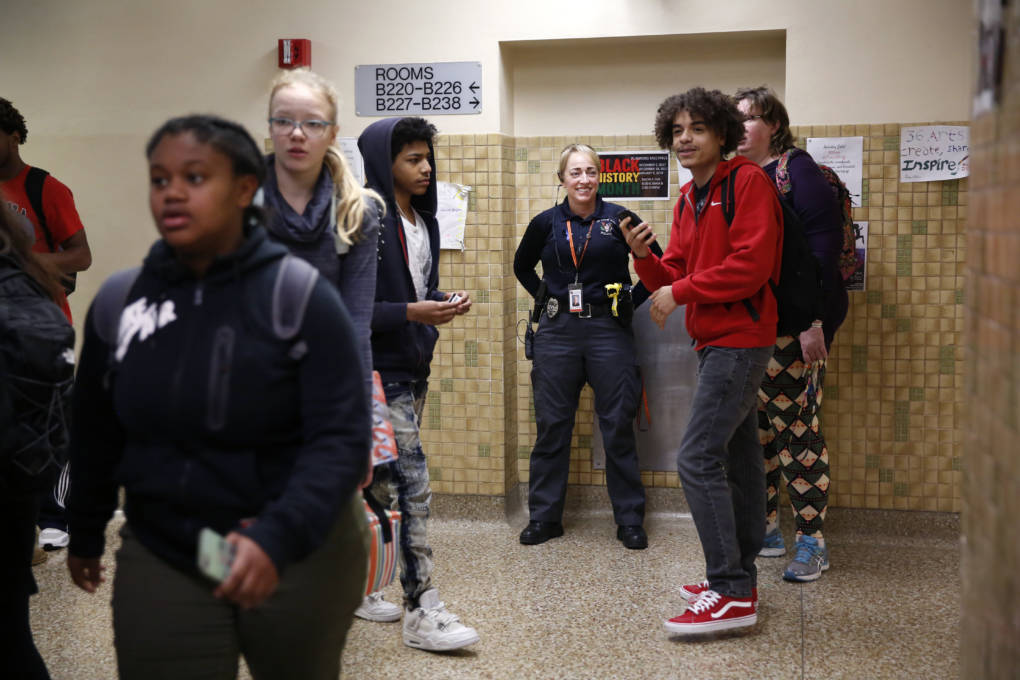
"caption": "In between classes, the police officer assigned to the school, Pam Gronski, jokes with students.",
"description": null,
"title": "In between classes, the police officer assigned to the school, Pam Gronski, jokes with students.",
"credit": "Elissa Nadworny/NPR",
"status": "inherit",
"isLoading": false,
"fetchFailed": false
},
"mindshift_50868": {
"type": "attachments",
"id": "mindshift_50868",
"meta": {
"index": "attachments_1716263798",
"site": "mindshift",
"id": "50868",
"found": true
},
"parent": 50867,
"imgSizes": {
"small": {
"file": "https://ww2.kqed.org/app/uploads/sites/23/2018/03/nhammer-irby11_slide-d94cd39f17df1d3fcf467563bb12a2b895d21e94-520x346.jpg",
"width": 520,
"mimeType": "image/jpeg",
"height": 346
},
"twentyfourteen-full-width": {
"file": "https://ww2.kqed.org/app/uploads/sites/23/2018/03/nhammer-irby11_slide-d94cd39f17df1d3fcf467563bb12a2b895d21e94-1038x576.jpg",
"width": 1038,
"mimeType": "image/jpeg",
"height": 576
},
"thumbnail": {
"file": "https://ww2.kqed.org/app/uploads/sites/23/2018/03/nhammer-irby11_slide-d94cd39f17df1d3fcf467563bb12a2b895d21e94-160x107.jpg",
"width": 160,
"mimeType": "image/jpeg",
"height": 107
},
"fd-sm": {
"file": "https://ww2.kqed.org/app/uploads/sites/23/2018/03/nhammer-irby11_slide-d94cd39f17df1d3fcf467563bb12a2b895d21e94-960x640.jpg",
"width": 960,
"mimeType": "image/jpeg",
"height": 640
},
"post-thumbnail": {
"file": "https://ww2.kqed.org/app/uploads/sites/23/2018/03/nhammer-irby11_slide-d94cd39f17df1d3fcf467563bb12a2b895d21e94-672x372.jpg",
"width": 672,
"mimeType": "image/jpeg",
"height": 372
},
"xsmall": {
"file": "https://ww2.kqed.org/app/uploads/sites/23/2018/03/nhammer-irby11_slide-d94cd39f17df1d3fcf467563bb12a2b895d21e94-375x250.jpg",
"width": 375,
"mimeType": "image/jpeg",
"height": 250
},
"kqedFullSize": {
"file": "https://ww2.kqed.org/app/uploads/sites/23/2018/03/nhammer-irby11_slide-d94cd39f17df1d3fcf467563bb12a2b895d21e94-e1522391393123.jpg",
"width": 1920,
"height": 1279
},
"large": {
"file": "https://ww2.kqed.org/app/uploads/sites/23/2018/03/nhammer-irby11_slide-d94cd39f17df1d3fcf467563bb12a2b895d21e94-1020x680.jpg",
"width": 1020,
"mimeType": "image/jpeg",
"height": 680
},
"xlarge": {
"file": "https://ww2.kqed.org/app/uploads/sites/23/2018/03/nhammer-irby11_slide-d94cd39f17df1d3fcf467563bb12a2b895d21e94-1180x786.jpg",
"width": 1180,
"mimeType": "image/jpeg",
"height": 786
},
"guest-author-50": {
"file": "https://ww2.kqed.org/app/uploads/sites/23/2018/03/nhammer-irby11_slide-d94cd39f17df1d3fcf467563bb12a2b895d21e94-50x50.jpg",
"width": 50,
"mimeType": "image/jpeg",
"height": 50
},
"guest-author-96": {
"file": "https://ww2.kqed.org/app/uploads/sites/23/2018/03/nhammer-irby11_slide-d94cd39f17df1d3fcf467563bb12a2b895d21e94-96x96.jpg",
"width": 96,
"mimeType": "image/jpeg",
"height": 96
},
"medium": {
"file": "https://ww2.kqed.org/app/uploads/sites/23/2018/03/nhammer-irby11_slide-d94cd39f17df1d3fcf467563bb12a2b895d21e94-800x533.jpg",
"width": 800,
"mimeType": "image/jpeg",
"height": 533
},
"guest-author-64": {
"file": "https://ww2.kqed.org/app/uploads/sites/23/2018/03/nhammer-irby11_slide-d94cd39f17df1d3fcf467563bb12a2b895d21e94-64x64.jpg",
"width": 64,
"mimeType": "image/jpeg",
"height": 64
},
"guest-author-32": {
"file": "https://ww2.kqed.org/app/uploads/sites/23/2018/03/nhammer-irby11_slide-d94cd39f17df1d3fcf467563bb12a2b895d21e94-32x32.jpg",
"width": 32,
"mimeType": "image/jpeg",
"height": 32
},
"fd-lrg": {
"file": "https://ww2.kqed.org/app/uploads/sites/23/2018/03/nhammer-irby11_slide-d94cd39f17df1d3fcf467563bb12a2b895d21e94-1920x1279.jpg",
"width": 1920,
"mimeType": "image/jpeg",
"height": 1279
},
"fd-med": {
"file": "https://ww2.kqed.org/app/uploads/sites/23/2018/03/nhammer-irby11_slide-d94cd39f17df1d3fcf467563bb12a2b895d21e94-1180x786.jpg",
"width": 1180,
"mimeType": "image/jpeg",
"height": 786
},
"full-width": {
"file": "https://ww2.kqed.org/app/uploads/sites/23/2018/03/nhammer-irby11_slide-d94cd39f17df1d3fcf467563bb12a2b895d21e94-1920x1279.jpg",
"width": 1920,
"mimeType": "image/jpeg",
"height": 1279
},
"detail": {
"file": "https://ww2.kqed.org/app/uploads/sites/23/2018/03/nhammer-irby11_slide-d94cd39f17df1d3fcf467563bb12a2b895d21e94-150x150.jpg",
"width": 150,
"mimeType": "image/jpeg",
"height": 150
},
"medium_large": {
"file": "https://ww2.kqed.org/app/uploads/sites/23/2018/03/nhammer-irby11_slide-d94cd39f17df1d3fcf467563bb12a2b895d21e94-768x512.jpg",
"width": 768,
"mimeType": "image/jpeg",
"height": 512
},
"guest-author-128": {
"file": "https://ww2.kqed.org/app/uploads/sites/23/2018/03/nhammer-irby11_slide-d94cd39f17df1d3fcf467563bb12a2b895d21e94-128x128.jpg",
"width": 128,
"mimeType": "image/jpeg",
"height": 128
},
"xxsmall": {
"file": "https://ww2.kqed.org/app/uploads/sites/23/2018/03/nhammer-irby11_slide-d94cd39f17df1d3fcf467563bb12a2b895d21e94-240x160.jpg",
"width": 240,
"mimeType": "image/jpeg",
"height": 160
}
},
"publishDate": 1522390606,
"modified": 1522391411,
"caption": "Alvin Irby, founder of Barbershop Books, is on a mission to get kids reading in the barbershop.",
"description": "Alvin Irby, founder of Barbershop Books, is on a mission to get kids reading in the barbershop.",
"title": "Alvin Irby, founder of Barbershop Books, is on a mission to get kids reading in the barbershop.",
"credit": "Nickolai Hammer/NPR",
"status": "inherit",
"isLoading": false,
"fetchFailed": false
},
"mindshift_50856": {
"type": "attachments",
"id": "mindshift_50856",
"meta": {
"index": "attachments_1716263798",
"site": "mindshift",
"id": "50856",
"found": true
},
"parent": 50855,
"imgSizes": {
"small": {
"file": "https://ww2.kqed.org/app/uploads/sites/23/2018/03/marcus-college-prodding-1-520x347.jpg",
"width": 520,
"mimeType": "image/jpeg",
"height": 347
},
"twentyfourteen-full-width": {
"file": "https://ww2.kqed.org/app/uploads/sites/23/2018/03/marcus-college-prodding-1-1038x576.jpg",
"width": 1038,
"mimeType": "image/jpeg",
"height": 576
},
"thumbnail": {
"file": "https://ww2.kqed.org/app/uploads/sites/23/2018/03/marcus-college-prodding-1-160x107.jpg",
"width": 160,
"mimeType": "image/jpeg",
"height": 107
},
"fd-sm": {
"file": "https://ww2.kqed.org/app/uploads/sites/23/2018/03/marcus-college-prodding-1-960x640.jpg",
"width": 960,
"mimeType": "image/jpeg",
"height": 640
},
"post-thumbnail": {
"file": "https://ww2.kqed.org/app/uploads/sites/23/2018/03/marcus-college-prodding-1-672x372.jpg",
"width": 672,
"mimeType": "image/jpeg",
"height": 372
},
"xsmall": {
"file": "https://ww2.kqed.org/app/uploads/sites/23/2018/03/marcus-college-prodding-1-375x250.jpg",
"width": 375,
"mimeType": "image/jpeg",
"height": 250
},
"kqedFullSize": {
"file": "https://ww2.kqed.org/app/uploads/sites/23/2018/03/marcus-college-prodding-1-e1522271425530.jpg",
"width": 1920,
"height": 1280
},
"large": {
"file": "https://ww2.kqed.org/app/uploads/sites/23/2018/03/marcus-college-prodding-1-1020x680.jpg",
"width": 1020,
"mimeType": "image/jpeg",
"height": 680
},
"xlarge": {
"file": "https://ww2.kqed.org/app/uploads/sites/23/2018/03/marcus-college-prodding-1-1180x787.jpg",
"width": 1180,
"mimeType": "image/jpeg",
"height": 787
},
"guest-author-50": {
"file": "https://ww2.kqed.org/app/uploads/sites/23/2018/03/marcus-college-prodding-1-50x50.jpg",
"width": 50,
"mimeType": "image/jpeg",
"height": 50
},
"guest-author-96": {
"file": "https://ww2.kqed.org/app/uploads/sites/23/2018/03/marcus-college-prodding-1-96x96.jpg",
"width": 96,
"mimeType": "image/jpeg",
"height": 96
},
"medium": {
"file": "https://ww2.kqed.org/app/uploads/sites/23/2018/03/marcus-college-prodding-1-800x533.jpg",
"width": 800,
"mimeType": "image/jpeg",
"height": 533
},
"guest-author-64": {
"file": "https://ww2.kqed.org/app/uploads/sites/23/2018/03/marcus-college-prodding-1-64x64.jpg",
"width": 64,
"mimeType": "image/jpeg",
"height": 64
},
"guest-author-32": {
"file": "https://ww2.kqed.org/app/uploads/sites/23/2018/03/marcus-college-prodding-1-32x32.jpg",
"width": 32,
"mimeType": "image/jpeg",
"height": 32
},
"fd-lrg": {
"file": "https://ww2.kqed.org/app/uploads/sites/23/2018/03/marcus-college-prodding-1-1920x1280.jpg",
"width": 1920,
"mimeType": "image/jpeg",
"height": 1280
},
"fd-med": {
"file": "https://ww2.kqed.org/app/uploads/sites/23/2018/03/marcus-college-prodding-1-1180x787.jpg",
"width": 1180,
"mimeType": "image/jpeg",
"height": 787
},
"full-width": {
"file": "https://ww2.kqed.org/app/uploads/sites/23/2018/03/marcus-college-prodding-1-1920x1280.jpg",
"width": 1920,
"mimeType": "image/jpeg",
"height": 1280
},
"detail": {
"file": "https://ww2.kqed.org/app/uploads/sites/23/2018/03/marcus-college-prodding-1-150x150.jpg",
"width": 150,
"mimeType": "image/jpeg",
"height": 150
},
"medium_large": {
"file": "https://ww2.kqed.org/app/uploads/sites/23/2018/03/marcus-college-prodding-1-768x512.jpg",
"width": 768,
"mimeType": "image/jpeg",
"height": 512
},
"guest-author-128": {
"file": "https://ww2.kqed.org/app/uploads/sites/23/2018/03/marcus-college-prodding-1-128x128.jpg",
"width": 128,
"mimeType": "image/jpeg",
"height": 128
},
"xxsmall": {
"file": "https://ww2.kqed.org/app/uploads/sites/23/2018/03/marcus-college-prodding-1-240x160.jpg",
"width": 240,
"mimeType": "image/jpeg",
"height": 160
}
},
"publishDate": 1522271073,
"modified": 1522271418,
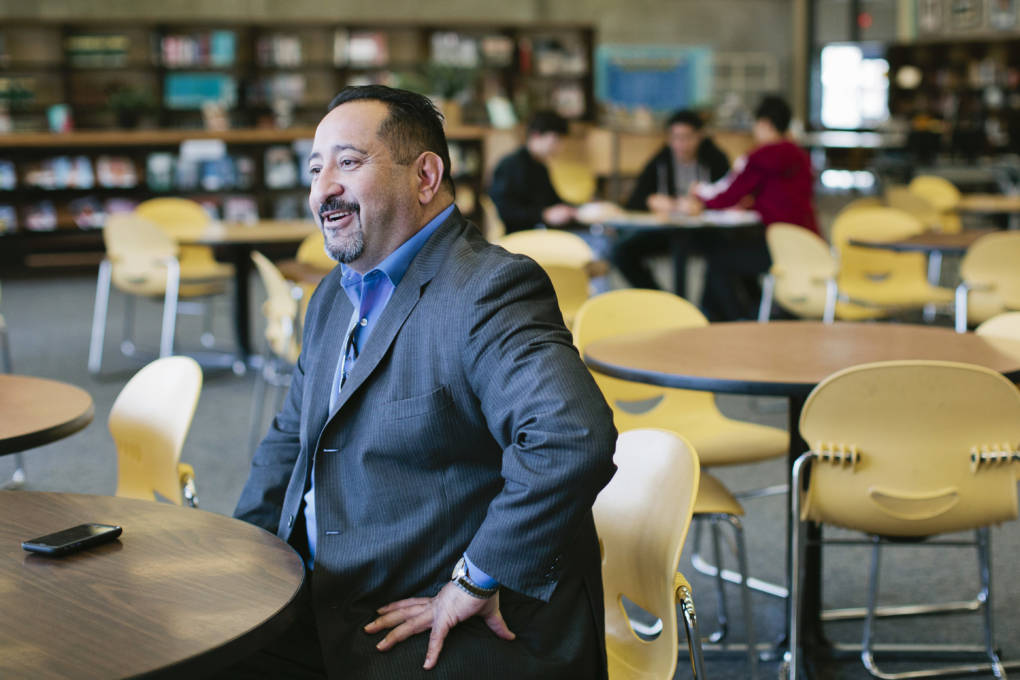
"caption": "Newark Unified School District Superintendent Patrick Sanchez visits Newark Memorial High School in Newark, Calif., Wednesday, February 14, 2018.\n",
"description": null,
"title": "marcus-college-prodding-1",
"credit": "Alison Yin for The Hechinger Report",
"status": "inherit",
"isLoading": false,
"fetchFailed": false
},
"mindshift_50851": {
"type": "attachments",
"id": "mindshift_50851",
"meta": {
"index": "attachments_1716263798",
"site": "mindshift",
"id": "50851",
"found": true
},
"parent": 50849,
"imgSizes": {
"small": {
"file": "https://ww2.kqed.org/app/uploads/sites/23/2018/03/iStock-471301626-520x520.jpg",
"width": 520,
"mimeType": "image/jpeg",
"height": 520
},
"twentyfourteen-full-width": {
"file": "https://ww2.kqed.org/app/uploads/sites/23/2018/03/iStock-471301626-1038x576.jpg",
"width": 1038,
"mimeType": "image/jpeg",
"height": 576
},
"thumbnail": {
"file": "https://ww2.kqed.org/app/uploads/sites/23/2018/03/iStock-471301626-160x160.jpg",
"width": 160,
"mimeType": "image/jpeg",
"height": 160
},
"fd-sm": {
"file": "https://ww2.kqed.org/app/uploads/sites/23/2018/03/iStock-471301626-960x960.jpg",
"width": 960,
"mimeType": "image/jpeg",
"height": 960
},
"post-thumbnail": {
"file": "https://ww2.kqed.org/app/uploads/sites/23/2018/03/iStock-471301626-672x372.jpg",
"width": 672,
"mimeType": "image/jpeg",
"height": 372
},
"xsmall": {
"file": "https://ww2.kqed.org/app/uploads/sites/23/2018/03/iStock-471301626-375x375.jpg",
"width": 375,
"mimeType": "image/jpeg",
"height": 375
},
"kqedFullSize": {
"file": "https://ww2.kqed.org/app/uploads/sites/23/2018/03/iStock-471301626.jpg",
"width": 1732,
"height": 1732
},
"large": {
"file": "https://ww2.kqed.org/app/uploads/sites/23/2018/03/iStock-471301626-1020x1020.jpg",
"width": 1020,
"mimeType": "image/jpeg",
"height": 1020
},
"xlarge": {
"file": "https://ww2.kqed.org/app/uploads/sites/23/2018/03/iStock-471301626-1180x1180.jpg",
"width": 1180,
"mimeType": "image/jpeg",
"height": 1180
},
"guest-author-50": {
"file": "https://ww2.kqed.org/app/uploads/sites/23/2018/03/iStock-471301626-50x50.jpg",
"width": 50,
"mimeType": "image/jpeg",
"height": 50
},
"guest-author-96": {
"file": "https://ww2.kqed.org/app/uploads/sites/23/2018/03/iStock-471301626-96x96.jpg",
"width": 96,
"mimeType": "image/jpeg",
"height": 96
},
"medium": {
"file": "https://ww2.kqed.org/app/uploads/sites/23/2018/03/iStock-471301626-800x800.jpg",
"width": 800,
"mimeType": "image/jpeg",
"height": 800
},
"guest-author-64": {
"file": "https://ww2.kqed.org/app/uploads/sites/23/2018/03/iStock-471301626-64x64.jpg",
"width": 64,
"mimeType": "image/jpeg",
"height": 64
},
"guest-author-32": {
"file": "https://ww2.kqed.org/app/uploads/sites/23/2018/03/iStock-471301626-32x32.jpg",
"width": 32,
"mimeType": "image/jpeg",
"height": 32
},
"fd-med": {
"file": "https://ww2.kqed.org/app/uploads/sites/23/2018/03/iStock-471301626-1180x1180.jpg",
"width": 1180,
"mimeType": "image/jpeg",
"height": 1180
},
"detail": {
"file": "https://ww2.kqed.org/app/uploads/sites/23/2018/03/iStock-471301626-150x150.jpg",
"width": 150,
"mimeType": "image/jpeg",
"height": 150
},
"medium_large": {
"file": "https://ww2.kqed.org/app/uploads/sites/23/2018/03/iStock-471301626-768x768.jpg",
"width": 768,
"mimeType": "image/jpeg",
"height": 768
},
"guest-author-128": {
"file": "https://ww2.kqed.org/app/uploads/sites/23/2018/03/iStock-471301626-128x128.jpg",
"width": 128,
"mimeType": "image/jpeg",
"height": 128
},
"xxsmall": {
"file": "https://ww2.kqed.org/app/uploads/sites/23/2018/03/iStock-471301626-240x240.jpg",
"width": 240,
"mimeType": "image/jpeg",
"height": 240
}
},
"publishDate": 1522192283,
"modified": 1522192301,
"caption": null,
"description": null,
"title": null,
"credit": "iStock/nokhookdesign",
"status": "inherit",
"isLoading": false,
"fetchFailed": false
},
"mindshift_50808": {
"type": "attachments",
"id": "mindshift_50808",
"meta": {
"index": "attachments_1716263798",
"site": "mindshift",
"id": "50808",
"found": true
},
"parent": 50540,
"imgSizes": {
"small": {
"file": "https://ww2.kqed.org/app/uploads/sites/23/2018/03/iStock-147764489-520x416.jpg",
"width": 520,
"mimeType": "image/jpeg",
"height": 416
},
"twentyfourteen-full-width": {
"file": "https://ww2.kqed.org/app/uploads/sites/23/2018/03/iStock-147764489-1038x576.jpg",
"width": 1038,
"mimeType": "image/jpeg",
"height": 576
},
"thumbnail": {
"file": "https://ww2.kqed.org/app/uploads/sites/23/2018/03/iStock-147764489-160x128.jpg",
"width": 160,
"mimeType": "image/jpeg",
"height": 128
},
"fd-sm": {
"file": "https://ww2.kqed.org/app/uploads/sites/23/2018/03/iStock-147764489-960x768.jpg",
"width": 960,
"mimeType": "image/jpeg",
"height": 768
},
"post-thumbnail": {
"file": "https://ww2.kqed.org/app/uploads/sites/23/2018/03/iStock-147764489-672x372.jpg",
"width": 672,
"mimeType": "image/jpeg",
"height": 372
},
"xsmall": {
"file": "https://ww2.kqed.org/app/uploads/sites/23/2018/03/iStock-147764489-375x300.jpg",
"width": 375,
"mimeType": "image/jpeg",
"height": 300
},
"kqedFullSize": {
"file": "https://ww2.kqed.org/app/uploads/sites/23/2018/03/iStock-147764489.jpg",
"width": 1936,
"height": 1549
},
"large": {
"file": "https://ww2.kqed.org/app/uploads/sites/23/2018/03/iStock-147764489-1020x816.jpg",
"width": 1020,
"mimeType": "image/jpeg",
"height": 816
},
"xlarge": {
"file": "https://ww2.kqed.org/app/uploads/sites/23/2018/03/iStock-147764489-1180x944.jpg",
"width": 1180,
"mimeType": "image/jpeg",
"height": 944
},
"guest-author-50": {
"file": "https://ww2.kqed.org/app/uploads/sites/23/2018/03/iStock-147764489-50x50.jpg",
"width": 50,
"mimeType": "image/jpeg",
"height": 50
},
"guest-author-96": {
"file": "https://ww2.kqed.org/app/uploads/sites/23/2018/03/iStock-147764489-96x96.jpg",
"width": 96,
"mimeType": "image/jpeg",
"height": 96
},
"medium": {
"file": "https://ww2.kqed.org/app/uploads/sites/23/2018/03/iStock-147764489-800x640.jpg",
"width": 800,
"mimeType": "image/jpeg",
"height": 640
},
"guest-author-64": {
"file": "https://ww2.kqed.org/app/uploads/sites/23/2018/03/iStock-147764489-64x64.jpg",
"width": 64,
"mimeType": "image/jpeg",
"height": 64
},
"guest-author-32": {
"file": "https://ww2.kqed.org/app/uploads/sites/23/2018/03/iStock-147764489-32x32.jpg",
"width": 32,
"mimeType": "image/jpeg",
"height": 32
},
"fd-lrg": {
"file": "https://ww2.kqed.org/app/uploads/sites/23/2018/03/iStock-147764489-1920x1536.jpg",
"width": 1920,
"mimeType": "image/jpeg",
"height": 1536
},
"fd-med": {
"file": "https://ww2.kqed.org/app/uploads/sites/23/2018/03/iStock-147764489-1180x944.jpg",
"width": 1180,
"mimeType": "image/jpeg",
"height": 944
},
"full-width": {
"file": "https://ww2.kqed.org/app/uploads/sites/23/2018/03/iStock-147764489-1920x1536.jpg",
"width": 1920,
"mimeType": "image/jpeg",
"height": 1536
},
"detail": {
"file": "https://ww2.kqed.org/app/uploads/sites/23/2018/03/iStock-147764489-150x150.jpg",
"width": 150,
"mimeType": "image/jpeg",
"height": 150
},
"medium_large": {
"file": "https://ww2.kqed.org/app/uploads/sites/23/2018/03/iStock-147764489-768x614.jpg",
"width": 768,
"mimeType": "image/jpeg",
"height": 614
},
"guest-author-128": {
"file": "https://ww2.kqed.org/app/uploads/sites/23/2018/03/iStock-147764489-128x128.jpg",
"width": 128,
"mimeType": "image/jpeg",
"height": 128
},
"xxsmall": {
"file": "https://ww2.kqed.org/app/uploads/sites/23/2018/03/iStock-147764489-240x192.jpg",
"width": 240,
"mimeType": "image/jpeg",
"height": 192
}
},
"publishDate": 1521491585,
"modified": 1521491605,
"caption": null,
"description": null,
"title": "Birds sharing and tweeting / Social media dialog",
"credit": "iStock/CurvaBezier",
"status": "inherit",
"isLoading": false,
"fetchFailed": false
},
"mindshift_50815": {
"type": "attachments",
"id": "mindshift_50815",
"meta": {
"index": "attachments_1716263798",
"site": "mindshift",
"id": "50815",
"found": true
},
"parent": 50781,
"imgSizes": {
"small": {
"file": "https://ww2.kqed.org/app/uploads/sites/23/2018/03/iStock-160481055-520x347.jpg",
"width": 520,
"mimeType": "image/jpeg",
"height": 347
},
"twentyfourteen-full-width": {
"file": "https://ww2.kqed.org/app/uploads/sites/23/2018/03/iStock-160481055-1038x576.jpg",
"width": 1038,
"mimeType": "image/jpeg",
"height": 576
},
"thumbnail": {
"file": "https://ww2.kqed.org/app/uploads/sites/23/2018/03/iStock-160481055-160x107.jpg",
"width": 160,
"mimeType": "image/jpeg",
"height": 107
},
"fd-sm": {
"file": "https://ww2.kqed.org/app/uploads/sites/23/2018/03/iStock-160481055-960x640.jpg",
"width": 960,
"mimeType": "image/jpeg",
"height": 640
},
"post-thumbnail": {
"file": "https://ww2.kqed.org/app/uploads/sites/23/2018/03/iStock-160481055-672x372.jpg",
"width": 672,
"mimeType": "image/jpeg",
"height": 372
},
"xsmall": {
"file": "https://ww2.kqed.org/app/uploads/sites/23/2018/03/iStock-160481055-375x250.jpg",
"width": 375,
"mimeType": "image/jpeg",
"height": 250
},
"kqedFullSize": {
"file": "https://ww2.kqed.org/app/uploads/sites/23/2018/03/iStock-160481055-e1521614443194.jpg",
"width": 1920,
"height": 1280
},
"large": {
"file": "https://ww2.kqed.org/app/uploads/sites/23/2018/03/iStock-160481055-1020x680.jpg",
"width": 1020,
"mimeType": "image/jpeg",
"height": 680
},
"xlarge": {
"file": "https://ww2.kqed.org/app/uploads/sites/23/2018/03/iStock-160481055-1180x787.jpg",
"width": 1180,
"mimeType": "image/jpeg",
"height": 787
},
"guest-author-50": {
"file": "https://ww2.kqed.org/app/uploads/sites/23/2018/03/iStock-160481055-50x50.jpg",
"width": 50,
"mimeType": "image/jpeg",
"height": 50
},
"guest-author-96": {
"file": "https://ww2.kqed.org/app/uploads/sites/23/2018/03/iStock-160481055-96x96.jpg",
"width": 96,
"mimeType": "image/jpeg",
"height": 96
},
"medium": {
"file": "https://ww2.kqed.org/app/uploads/sites/23/2018/03/iStock-160481055-800x533.jpg",
"width": 800,
"mimeType": "image/jpeg",
"height": 533
},
"guest-author-64": {
"file": "https://ww2.kqed.org/app/uploads/sites/23/2018/03/iStock-160481055-64x64.jpg",
"width": 64,
"mimeType": "image/jpeg",
"height": 64
},
"guest-author-32": {
"file": "https://ww2.kqed.org/app/uploads/sites/23/2018/03/iStock-160481055-32x32.jpg",
"width": 32,
"mimeType": "image/jpeg",
"height": 32
},
"fd-lrg": {
"file": "https://ww2.kqed.org/app/uploads/sites/23/2018/03/iStock-160481055-1920x1280.jpg",
"width": 1920,
"mimeType": "image/jpeg",
"height": 1280
},
"fd-med": {
"file": "https://ww2.kqed.org/app/uploads/sites/23/2018/03/iStock-160481055-1180x787.jpg",
"width": 1180,
"mimeType": "image/jpeg",
"height": 787
},
"full-width": {
"file": "https://ww2.kqed.org/app/uploads/sites/23/2018/03/iStock-160481055-1920x1280.jpg",
"width": 1920,
"mimeType": "image/jpeg",
"height": 1280
},
"detail": {
"file": "https://ww2.kqed.org/app/uploads/sites/23/2018/03/iStock-160481055-150x150.jpg",
"width": 150,
"mimeType": "image/jpeg",
"height": 150
},
"medium_large": {
"file": "https://ww2.kqed.org/app/uploads/sites/23/2018/03/iStock-160481055-768x512.jpg",
"width": 768,
"mimeType": "image/jpeg",
"height": 512
},
"guest-author-128": {
"file": "https://ww2.kqed.org/app/uploads/sites/23/2018/03/iStock-160481055-128x128.jpg",
"width": 128,
"mimeType": "image/jpeg",
"height": 128
},
"xxsmall": {
"file": "https://ww2.kqed.org/app/uploads/sites/23/2018/03/iStock-160481055-240x160.jpg",
"width": 240,
"mimeType": "image/jpeg",
"height": 160
}
},
"publishDate": 1521614425,
"modified": 1521614457,
"caption": null,
"description": null,
"title": "Trying to hear",
"credit": "iStock/sergey02",
"status": "inherit",
"isLoading": false,
"fetchFailed": false
},
"mindshift_50778": {
"type": "attachments",
"id": "mindshift_50778",
"meta": {
"index": "attachments_1716263798",
"site": "mindshift",
"id": "50778",
"found": true
},
"parent": 50777,
"imgSizes": {
"small": {
"file": "https://ww2.kqed.org/app/uploads/sites/23/2018/03/navigating-public-school-for-creativity_slide-1c13e7cd9067d550921287d4d2f5f0c26475577a-520x347.jpg",
"width": 520,
"mimeType": "image/jpeg",
"height": 347
},
"twentyfourteen-full-width": {
"file": "https://ww2.kqed.org/app/uploads/sites/23/2018/03/navigating-public-school-for-creativity_slide-1c13e7cd9067d550921287d4d2f5f0c26475577a-1038x576.jpg",
"width": 1038,
"mimeType": "image/jpeg",
"height": 576
},
"thumbnail": {
"file": "https://ww2.kqed.org/app/uploads/sites/23/2018/03/navigating-public-school-for-creativity_slide-1c13e7cd9067d550921287d4d2f5f0c26475577a-160x107.jpg",
"width": 160,
"mimeType": "image/jpeg",
"height": 107
},
"fd-sm": {
"file": "https://ww2.kqed.org/app/uploads/sites/23/2018/03/navigating-public-school-for-creativity_slide-1c13e7cd9067d550921287d4d2f5f0c26475577a-960x640.jpg",
"width": 960,
"mimeType": "image/jpeg",
"height": 640
},
"post-thumbnail": {
"file": "https://ww2.kqed.org/app/uploads/sites/23/2018/03/navigating-public-school-for-creativity_slide-1c13e7cd9067d550921287d4d2f5f0c26475577a-672x372.jpg",
"width": 672,
"mimeType": "image/jpeg",
"height": 372
},
"xsmall": {
"file": "https://ww2.kqed.org/app/uploads/sites/23/2018/03/navigating-public-school-for-creativity_slide-1c13e7cd9067d550921287d4d2f5f0c26475577a-375x250.jpg",
"width": 375,
"mimeType": "image/jpeg",
"height": 250
},
"kqedFullSize": {
"file": "https://ww2.kqed.org/app/uploads/sites/23/2018/03/navigating-public-school-for-creativity_slide-1c13e7cd9067d550921287d4d2f5f0c26475577a-e1521057001359.jpg",
"width": 1920,
"height": 1280
},
"large": {
"file": "https://ww2.kqed.org/app/uploads/sites/23/2018/03/navigating-public-school-for-creativity_slide-1c13e7cd9067d550921287d4d2f5f0c26475577a-1020x680.jpg",
"width": 1020,
"mimeType": "image/jpeg",
"height": 680
},
"xlarge": {
"file": "https://ww2.kqed.org/app/uploads/sites/23/2018/03/navigating-public-school-for-creativity_slide-1c13e7cd9067d550921287d4d2f5f0c26475577a-1180x787.jpg",
"width": 1180,
"mimeType": "image/jpeg",
"height": 787
},
"guest-author-50": {
"file": "https://ww2.kqed.org/app/uploads/sites/23/2018/03/navigating-public-school-for-creativity_slide-1c13e7cd9067d550921287d4d2f5f0c26475577a-50x50.jpg",
"width": 50,
"mimeType": "image/jpeg",
"height": 50
},
"guest-author-96": {
"file": "https://ww2.kqed.org/app/uploads/sites/23/2018/03/navigating-public-school-for-creativity_slide-1c13e7cd9067d550921287d4d2f5f0c26475577a-96x96.jpg",
"width": 96,
"mimeType": "image/jpeg",
"height": 96
},
"medium": {
"file": "https://ww2.kqed.org/app/uploads/sites/23/2018/03/navigating-public-school-for-creativity_slide-1c13e7cd9067d550921287d4d2f5f0c26475577a-800x533.jpg",
"width": 800,
"mimeType": "image/jpeg",
"height": 533
},
"guest-author-64": {
"file": "https://ww2.kqed.org/app/uploads/sites/23/2018/03/navigating-public-school-for-creativity_slide-1c13e7cd9067d550921287d4d2f5f0c26475577a-64x64.jpg",
"width": 64,
"mimeType": "image/jpeg",
"height": 64
},
"guest-author-32": {
"file": "https://ww2.kqed.org/app/uploads/sites/23/2018/03/navigating-public-school-for-creativity_slide-1c13e7cd9067d550921287d4d2f5f0c26475577a-32x32.jpg",
"width": 32,
"mimeType": "image/jpeg",
"height": 32
},
"fd-lrg": {
"file": "https://ww2.kqed.org/app/uploads/sites/23/2018/03/navigating-public-school-for-creativity_slide-1c13e7cd9067d550921287d4d2f5f0c26475577a-1920x1280.jpg",
"width": 1920,
"mimeType": "image/jpeg",
"height": 1280
},
"fd-med": {
"file": "https://ww2.kqed.org/app/uploads/sites/23/2018/03/navigating-public-school-for-creativity_slide-1c13e7cd9067d550921287d4d2f5f0c26475577a-1180x787.jpg",
"width": 1180,
"mimeType": "image/jpeg",
"height": 787
},
"full-width": {
"file": "https://ww2.kqed.org/app/uploads/sites/23/2018/03/navigating-public-school-for-creativity_slide-1c13e7cd9067d550921287d4d2f5f0c26475577a-1920x1280.jpg",
"width": 1920,
"mimeType": "image/jpeg",
"height": 1280
},
"detail": {
"file": "https://ww2.kqed.org/app/uploads/sites/23/2018/03/navigating-public-school-for-creativity_slide-1c13e7cd9067d550921287d4d2f5f0c26475577a-150x150.jpg",
"width": 150,
"mimeType": "image/jpeg",
"height": 150
},
"medium_large": {
"file": "https://ww2.kqed.org/app/uploads/sites/23/2018/03/navigating-public-school-for-creativity_slide-1c13e7cd9067d550921287d4d2f5f0c26475577a-768x512.jpg",
"width": 768,
"mimeType": "image/jpeg",
"height": 512
},
"guest-author-128": {
"file": "https://ww2.kqed.org/app/uploads/sites/23/2018/03/navigating-public-school-for-creativity_slide-1c13e7cd9067d550921287d4d2f5f0c26475577a-128x128.jpg",
"width": 128,
"mimeType": "image/jpeg",
"height": 128
},
"xxsmall": {
"file": "https://ww2.kqed.org/app/uploads/sites/23/2018/03/navigating-public-school-for-creativity_slide-1c13e7cd9067d550921287d4d2f5f0c26475577a-240x160.jpg",
"width": 240,
"mimeType": "image/jpeg",
"height": 160
}
},
"publishDate": 1521048352,
"modified": 1521056995,
"caption": null,
"description": "Well-balanced education",
"title": "Well-balanced education",
"credit": "LA Johnson/NPR",
"status": "inherit",
"isLoading": false,
"fetchFailed": false
},
"mindshift_50767": {
"type": "attachments",
"id": "mindshift_50767",
"meta": {
"index": "attachments_1716263798",
"site": "mindshift",
"id": "50767",
"found": true
},
"parent": 50766,
"imgSizes": {
"small": {
"file": "https://ww2.kqed.org/app/uploads/sites/23/2018/03/gettyimages-475158341-ca0ee7b813ba504cb3aeb840e564518991deddf9-520x390.jpg",
"width": 520,
"mimeType": "image/jpeg",
"height": 390
},
"twentyfourteen-full-width": {
"file": "https://ww2.kqed.org/app/uploads/sites/23/2018/03/gettyimages-475158341-ca0ee7b813ba504cb3aeb840e564518991deddf9-1038x576.jpg",
"width": 1038,
"mimeType": "image/jpeg",
"height": 576
},
"thumbnail": {
"file": "https://ww2.kqed.org/app/uploads/sites/23/2018/03/gettyimages-475158341-ca0ee7b813ba504cb3aeb840e564518991deddf9-160x120.jpg",
"width": 160,
"mimeType": "image/jpeg",
"height": 120
},
"fd-sm": {
"file": "https://ww2.kqed.org/app/uploads/sites/23/2018/03/gettyimages-475158341-ca0ee7b813ba504cb3aeb840e564518991deddf9-960x720.jpg",
"width": 960,
"mimeType": "image/jpeg",
"height": 720
},
"post-thumbnail": {
"file": "https://ww2.kqed.org/app/uploads/sites/23/2018/03/gettyimages-475158341-ca0ee7b813ba504cb3aeb840e564518991deddf9-672x372.jpg",
"width": 672,
"mimeType": "image/jpeg",
"height": 372
},
"xsmall": {
"file": "https://ww2.kqed.org/app/uploads/sites/23/2018/03/gettyimages-475158341-ca0ee7b813ba504cb3aeb840e564518991deddf9-375x281.jpg",
"width": 375,
"mimeType": "image/jpeg",
"height": 281
},
"kqedFullSize": {
"file": "https://ww2.kqed.org/app/uploads/sites/23/2018/03/gettyimages-475158341-ca0ee7b813ba504cb3aeb840e564518991deddf9-e1520923672512.jpg",
"width": 1920,
"height": 1440
},
"large": {
"file": "https://ww2.kqed.org/app/uploads/sites/23/2018/03/gettyimages-475158341-ca0ee7b813ba504cb3aeb840e564518991deddf9-1020x765.jpg",
"width": 1020,
"mimeType": "image/jpeg",
"height": 765
},
"xlarge": {
"file": "https://ww2.kqed.org/app/uploads/sites/23/2018/03/gettyimages-475158341-ca0ee7b813ba504cb3aeb840e564518991deddf9-1180x885.jpg",
"width": 1180,
"mimeType": "image/jpeg",
"height": 885
},
"guest-author-50": {
"file": "https://ww2.kqed.org/app/uploads/sites/23/2018/03/gettyimages-475158341-ca0ee7b813ba504cb3aeb840e564518991deddf9-50x50.jpg",
"width": 50,
"mimeType": "image/jpeg",
"height": 50
},
"guest-author-96": {
"file": "https://ww2.kqed.org/app/uploads/sites/23/2018/03/gettyimages-475158341-ca0ee7b813ba504cb3aeb840e564518991deddf9-96x96.jpg",
"width": 96,
"mimeType": "image/jpeg",
"height": 96
},
"medium": {
"file": "https://ww2.kqed.org/app/uploads/sites/23/2018/03/gettyimages-475158341-ca0ee7b813ba504cb3aeb840e564518991deddf9-800x600.jpg",
"width": 800,
"mimeType": "image/jpeg",
"height": 600
},
"guest-author-64": {
"file": "https://ww2.kqed.org/app/uploads/sites/23/2018/03/gettyimages-475158341-ca0ee7b813ba504cb3aeb840e564518991deddf9-64x64.jpg",
"width": 64,
"mimeType": "image/jpeg",
"height": 64
},
"guest-author-32": {
"file": "https://ww2.kqed.org/app/uploads/sites/23/2018/03/gettyimages-475158341-ca0ee7b813ba504cb3aeb840e564518991deddf9-32x32.jpg",
"width": 32,
"mimeType": "image/jpeg",
"height": 32
},
"fd-lrg": {
"file": "https://ww2.kqed.org/app/uploads/sites/23/2018/03/gettyimages-475158341-ca0ee7b813ba504cb3aeb840e564518991deddf9-1920x1440.jpg",
"width": 1920,
"mimeType": "image/jpeg",
"height": 1440
},
"fd-med": {
"file": "https://ww2.kqed.org/app/uploads/sites/23/2018/03/gettyimages-475158341-ca0ee7b813ba504cb3aeb840e564518991deddf9-1180x885.jpg",
"width": 1180,
"mimeType": "image/jpeg",
"height": 885
},
"full-width": {
"file": "https://ww2.kqed.org/app/uploads/sites/23/2018/03/gettyimages-475158341-ca0ee7b813ba504cb3aeb840e564518991deddf9-1920x1440.jpg",
"width": 1920,
"mimeType": "image/jpeg",
"height": 1440
},
"detail": {
"file": "https://ww2.kqed.org/app/uploads/sites/23/2018/03/gettyimages-475158341-ca0ee7b813ba504cb3aeb840e564518991deddf9-150x150.jpg",
"width": 150,
"mimeType": "image/jpeg",
"height": 150
},
"medium_large": {
"file": "https://ww2.kqed.org/app/uploads/sites/23/2018/03/gettyimages-475158341-ca0ee7b813ba504cb3aeb840e564518991deddf9-768x576.jpg",
"width": 768,
"mimeType": "image/jpeg",
"height": 576
},
"guest-author-128": {
"file": "https://ww2.kqed.org/app/uploads/sites/23/2018/03/gettyimages-475158341-ca0ee7b813ba504cb3aeb840e564518991deddf9-128x128.jpg",
"width": 128,
"mimeType": "image/jpeg",
"height": 128
},
"xxsmall": {
"file": "https://ww2.kqed.org/app/uploads/sites/23/2018/03/gettyimages-475158341-ca0ee7b813ba504cb3aeb840e564518991deddf9-240x180.jpg",
"width": 240,
"mimeType": "image/jpeg",
"height": 180
}
},
"publishDate": 1520923573,
"modified": 1520923690,
"caption": null,
"description": "Girl looking at alphabet blocks",
"title": "Girl looking at alphabet blocks",
"credit": "Trina Dalziel/Getty Images/Ikon Images",
"status": "inherit",
"isLoading": false,
"fetchFailed": false
},
"mindshift_50731": {
"type": "attachments",
"id": "mindshift_50731",
"meta": {
"index": "attachments_1716263798",
"site": "mindshift",
"id": "50731",
"found": true
},
"parent": 49558,
"imgSizes": {
"small": {
"file": "https://ww2.kqed.org/app/uploads/sites/23/2018/02/Essien-9-1-520x347.jpg",
"width": 520,
"mimeType": "image/jpeg",
"height": 347
},
"twentyfourteen-full-width": {
"file": "https://ww2.kqed.org/app/uploads/sites/23/2018/02/Essien-9-1-1038x576.jpg",
"width": 1038,
"mimeType": "image/jpeg",
"height": 576
},
"thumbnail": {
"file": "https://ww2.kqed.org/app/uploads/sites/23/2018/02/Essien-9-1-160x107.jpg",
"width": 160,
"mimeType": "image/jpeg",
"height": 107
},
"fd-sm": {
"file": "https://ww2.kqed.org/app/uploads/sites/23/2018/02/Essien-9-1-960x640.jpg",
"width": 960,
"mimeType": "image/jpeg",
"height": 640
},
"post-thumbnail": {
"file": "https://ww2.kqed.org/app/uploads/sites/23/2018/02/Essien-9-1-672x372.jpg",
"width": 672,
"mimeType": "image/jpeg",
"height": 372
},
"xsmall": {
"file": "https://ww2.kqed.org/app/uploads/sites/23/2018/02/Essien-9-1-375x250.jpg",
"width": 375,
"mimeType": "image/jpeg",
"height": 250
},
"kqedFullSize": {
"file": "https://ww2.kqed.org/app/uploads/sites/23/2018/02/Essien-9-1-e1520545659287.jpg",
"width": 1920,
"height": 1280
},
"large": {
"file": "https://ww2.kqed.org/app/uploads/sites/23/2018/02/Essien-9-1-1020x680.jpg",
"width": 1020,
"mimeType": "image/jpeg",
"height": 680
},
"xlarge": {
"file": "https://ww2.kqed.org/app/uploads/sites/23/2018/02/Essien-9-1-1180x787.jpg",
"width": 1180,
"mimeType": "image/jpeg",
"height": 787
},
"guest-author-50": {
"file": "https://ww2.kqed.org/app/uploads/sites/23/2018/02/Essien-9-1-50x50.jpg",
"width": 50,
"mimeType": "image/jpeg",
"height": 50
},
"guest-author-96": {
"file": "https://ww2.kqed.org/app/uploads/sites/23/2018/02/Essien-9-1-96x96.jpg",
"width": 96,
"mimeType": "image/jpeg",
"height": 96
},
"medium": {
"file": "https://ww2.kqed.org/app/uploads/sites/23/2018/02/Essien-9-1-800x533.jpg",
"width": 800,
"mimeType": "image/jpeg",
"height": 533
},
"guest-author-64": {
"file": "https://ww2.kqed.org/app/uploads/sites/23/2018/02/Essien-9-1-64x64.jpg",
"width": 64,
"mimeType": "image/jpeg",
"height": 64
},
"guest-author-32": {
"file": "https://ww2.kqed.org/app/uploads/sites/23/2018/02/Essien-9-1-32x32.jpg",
"width": 32,
"mimeType": "image/jpeg",
"height": 32
},
"fd-lrg": {
"file": "https://ww2.kqed.org/app/uploads/sites/23/2018/02/Essien-9-1-1920x1280.jpg",
"width": 1920,
"mimeType": "image/jpeg",
"height": 1280
},
"fd-med": {
"file": "https://ww2.kqed.org/app/uploads/sites/23/2018/02/Essien-9-1-1180x787.jpg",
"width": 1180,
"mimeType": "image/jpeg",
"height": 787
},
"full-width": {
"file": "https://ww2.kqed.org/app/uploads/sites/23/2018/02/Essien-9-1-1920x1280.jpg",
"width": 1920,
"mimeType": "image/jpeg",
"height": 1280
},
"detail": {
"file": "https://ww2.kqed.org/app/uploads/sites/23/2018/02/Essien-9-1-150x150.jpg",
"width": 150,
"mimeType": "image/jpeg",
"height": 150
},
"medium_large": {
"file": "https://ww2.kqed.org/app/uploads/sites/23/2018/02/Essien-9-1-768x512.jpg",
"width": 768,
"mimeType": "image/jpeg",
"height": 512
},
"guest-author-128": {
"file": "https://ww2.kqed.org/app/uploads/sites/23/2018/02/Essien-9-1-128x128.jpg",
"width": 128,
"mimeType": "image/jpeg",
"height": 128
},
"xxsmall": {
"file": "https://ww2.kqed.org/app/uploads/sites/23/2018/02/Essien-9-1-240x160.jpg",
"width": 240,
"mimeType": "image/jpeg",
"height": 160
}
},
"publishDate": 1520544013,
"modified": 1520544044,
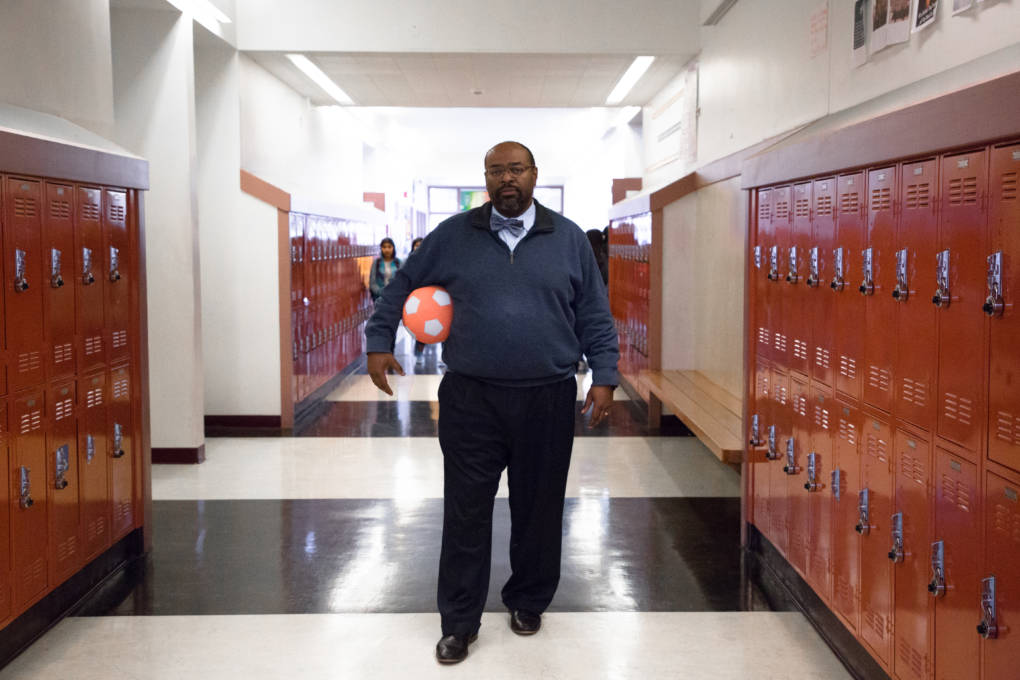
"caption": "Principal Michael Essien helps ensure a smooth passing period at Martin Luther King Jr. Academic Middle School, which included temporarily confiscating a ball from a student. ",
"description": null,
"title": "Essien-9",
"credit": "Samantha Shanahan/KQED",
"status": "inherit",
"isLoading": false,
"fetchFailed": false
},
"mindshift_50747": {
"type": "attachments",
"id": "mindshift_50747",
"meta": {
"index": "attachments_1716263798",
"site": "mindshift",
"id": "50747",
"found": true
},
"parent": 50644,
"imgSizes": {
"small": {
"file": "https://ww2.kqed.org/app/uploads/sites/23/2018/03/iStock-845547734-520x347.jpg",
"width": 520,
"mimeType": "image/jpeg",
"height": 347
},
"twentyfourteen-full-width": {
"file": "https://ww2.kqed.org/app/uploads/sites/23/2018/03/iStock-845547734-1038x576.jpg",
"width": 1038,
"mimeType": "image/jpeg",
"height": 576
},
"thumbnail": {
"file": "https://ww2.kqed.org/app/uploads/sites/23/2018/03/iStock-845547734-160x107.jpg",
"width": 160,
"mimeType": "image/jpeg",
"height": 107
},
"fd-sm": {
"file": "https://ww2.kqed.org/app/uploads/sites/23/2018/03/iStock-845547734-960x640.jpg",
"width": 960,
"mimeType": "image/jpeg",
"height": 640
},
"post-thumbnail": {
"file": "https://ww2.kqed.org/app/uploads/sites/23/2018/03/iStock-845547734-672x372.jpg",
"width": 672,
"mimeType": "image/jpeg",
"height": 372
},
"xsmall": {
"file": "https://ww2.kqed.org/app/uploads/sites/23/2018/03/iStock-845547734-375x250.jpg",
"width": 375,
"mimeType": "image/jpeg",
"height": 250
},
"kqedFullSize": {
"file": "https://ww2.kqed.org/app/uploads/sites/23/2018/03/iStock-845547734-e1520551770211.jpg",
"width": 1920,
"height": 1280
},
"large": {
"file": "https://ww2.kqed.org/app/uploads/sites/23/2018/03/iStock-845547734-1020x680.jpg",
"width": 1020,
"mimeType": "image/jpeg",
"height": 680
},
"xlarge": {
"file": "https://ww2.kqed.org/app/uploads/sites/23/2018/03/iStock-845547734-1180x787.jpg",
"width": 1180,
"mimeType": "image/jpeg",
"height": 787
},
"guest-author-50": {
"file": "https://ww2.kqed.org/app/uploads/sites/23/2018/03/iStock-845547734-50x50.jpg",
"width": 50,
"mimeType": "image/jpeg",
"height": 50
},
"guest-author-96": {
"file": "https://ww2.kqed.org/app/uploads/sites/23/2018/03/iStock-845547734-96x96.jpg",
"width": 96,
"mimeType": "image/jpeg",
"height": 96
},
"medium": {
"file": "https://ww2.kqed.org/app/uploads/sites/23/2018/03/iStock-845547734-800x533.jpg",
"width": 800,
"mimeType": "image/jpeg",
"height": 533
},
"guest-author-64": {
"file": "https://ww2.kqed.org/app/uploads/sites/23/2018/03/iStock-845547734-64x64.jpg",
"width": 64,
"mimeType": "image/jpeg",
"height": 64
},
"guest-author-32": {
"file": "https://ww2.kqed.org/app/uploads/sites/23/2018/03/iStock-845547734-32x32.jpg",
"width": 32,
"mimeType": "image/jpeg",
"height": 32
},
"fd-lrg": {
"file": "https://ww2.kqed.org/app/uploads/sites/23/2018/03/iStock-845547734-1920x1280.jpg",
"width": 1920,
"mimeType": "image/jpeg",
"height": 1280
},
"fd-med": {
"file": "https://ww2.kqed.org/app/uploads/sites/23/2018/03/iStock-845547734-1180x787.jpg",
"width": 1180,
"mimeType": "image/jpeg",
"height": 787
},
"full-width": {
"file": "https://ww2.kqed.org/app/uploads/sites/23/2018/03/iStock-845547734-1920x1280.jpg",
"width": 1920,
"mimeType": "image/jpeg",
"height": 1280
},
"detail": {
"file": "https://ww2.kqed.org/app/uploads/sites/23/2018/03/iStock-845547734-150x150.jpg",
"width": 150,
"mimeType": "image/jpeg",
"height": 150
},
"medium_large": {
"file": "https://ww2.kqed.org/app/uploads/sites/23/2018/03/iStock-845547734-768x512.jpg",
"width": 768,
"mimeType": "image/jpeg",
"height": 512
},
"guest-author-128": {
"file": "https://ww2.kqed.org/app/uploads/sites/23/2018/03/iStock-845547734-128x128.jpg",
"width": 128,
"mimeType": "image/jpeg",
"height": 128
},
"xxsmall": {
"file": "https://ww2.kqed.org/app/uploads/sites/23/2018/03/iStock-845547734-240x160.jpg",
"width": 240,
"mimeType": "image/jpeg",
"height": 160
}
},
"publishDate": 1520551741,
"modified": 1520575677,
"caption": " iStock/patpitchaya",
"description": null,
"title": null,
"credit": "iStock/patpitchaya",
"status": "inherit",
"isLoading": false,
"fetchFailed": false
},
"mindshift_50704": {
"type": "attachments",
"id": "mindshift_50704",
"meta": {
"index": "attachments_1716263798",
"site": "mindshift",
"id": "50704",
"found": true
},
"parent": 50701,
"imgSizes": {
"small": {
"file": "https://ww2.kqed.org/app/uploads/sites/23/2018/03/MaderMsRuralCourses3-520x347.jpg",
"width": 520,
"mimeType": "image/jpeg",
"height": 347
},
"twentyfourteen-full-width": {
"file": "https://ww2.kqed.org/app/uploads/sites/23/2018/03/MaderMsRuralCourses3-1038x576.jpg",
"width": 1038,
"mimeType": "image/jpeg",
"height": 576
},
"thumbnail": {
"file": "https://ww2.kqed.org/app/uploads/sites/23/2018/03/MaderMsRuralCourses3-160x107.jpg",
"width": 160,
"mimeType": "image/jpeg",
"height": 107
},
"fd-sm": {
"file": "https://ww2.kqed.org/app/uploads/sites/23/2018/03/MaderMsRuralCourses3-960x640.jpg",
"width": 960,
"mimeType": "image/jpeg",
"height": 640
},
"post-thumbnail": {
"file": "https://ww2.kqed.org/app/uploads/sites/23/2018/03/MaderMsRuralCourses3-672x372.jpg",
"width": 672,
"mimeType": "image/jpeg",
"height": 372
},
"xsmall": {
"file": "https://ww2.kqed.org/app/uploads/sites/23/2018/03/MaderMsRuralCourses3-375x250.jpg",
"width": 375,
"mimeType": "image/jpeg",
"height": 250
},
"kqedFullSize": {
"file": "https://ww2.kqed.org/app/uploads/sites/23/2018/03/MaderMsRuralCourses3.jpg",
"width": 1800,
"height": 1200
},
"large": {
"file": "https://ww2.kqed.org/app/uploads/sites/23/2018/03/MaderMsRuralCourses3-1020x680.jpg",
"width": 1020,
"mimeType": "image/jpeg",
"height": 680
},
"xlarge": {
"file": "https://ww2.kqed.org/app/uploads/sites/23/2018/03/MaderMsRuralCourses3-1180x787.jpg",
"width": 1180,
"mimeType": "image/jpeg",
"height": 787
},
"guest-author-50": {
"file": "https://ww2.kqed.org/app/uploads/sites/23/2018/03/MaderMsRuralCourses3-50x50.jpg",
"width": 50,
"mimeType": "image/jpeg",
"height": 50
},
"guest-author-96": {
"file": "https://ww2.kqed.org/app/uploads/sites/23/2018/03/MaderMsRuralCourses3-96x96.jpg",
"width": 96,
"mimeType": "image/jpeg",
"height": 96
},
"medium": {
"file": "https://ww2.kqed.org/app/uploads/sites/23/2018/03/MaderMsRuralCourses3-800x533.jpg",
"width": 800,
"mimeType": "image/jpeg",
"height": 533
},
"guest-author-64": {
"file": "https://ww2.kqed.org/app/uploads/sites/23/2018/03/MaderMsRuralCourses3-64x64.jpg",
"width": 64,
"mimeType": "image/jpeg",
"height": 64
},
"guest-author-32": {
"file": "https://ww2.kqed.org/app/uploads/sites/23/2018/03/MaderMsRuralCourses3-32x32.jpg",
"width": 32,
"mimeType": "image/jpeg",
"height": 32
},
"fd-med": {
"file": "https://ww2.kqed.org/app/uploads/sites/23/2018/03/MaderMsRuralCourses3-1180x787.jpg",
"width": 1180,
"mimeType": "image/jpeg",
"height": 787
},
"detail": {
"file": "https://ww2.kqed.org/app/uploads/sites/23/2018/03/MaderMsRuralCourses3-150x150.jpg",
"width": 150,
"mimeType": "image/jpeg",
"height": 150
},
"medium_large": {
"file": "https://ww2.kqed.org/app/uploads/sites/23/2018/03/MaderMsRuralCourses3-768x512.jpg",
"width": 768,
"mimeType": "image/jpeg",
"height": 512
},
"guest-author-128": {
"file": "https://ww2.kqed.org/app/uploads/sites/23/2018/03/MaderMsRuralCourses3-128x128.jpg",
"width": 128,
"mimeType": "image/jpeg",
"height": 128
},
"xxsmall": {
"file": "https://ww2.kqed.org/app/uploads/sites/23/2018/03/MaderMsRuralCourses3-240x160.jpg",
"width": 240,
"mimeType": "image/jpeg",
"height": 160
}
},
"publishDate": 1520350828,
"modified": 1520351005,
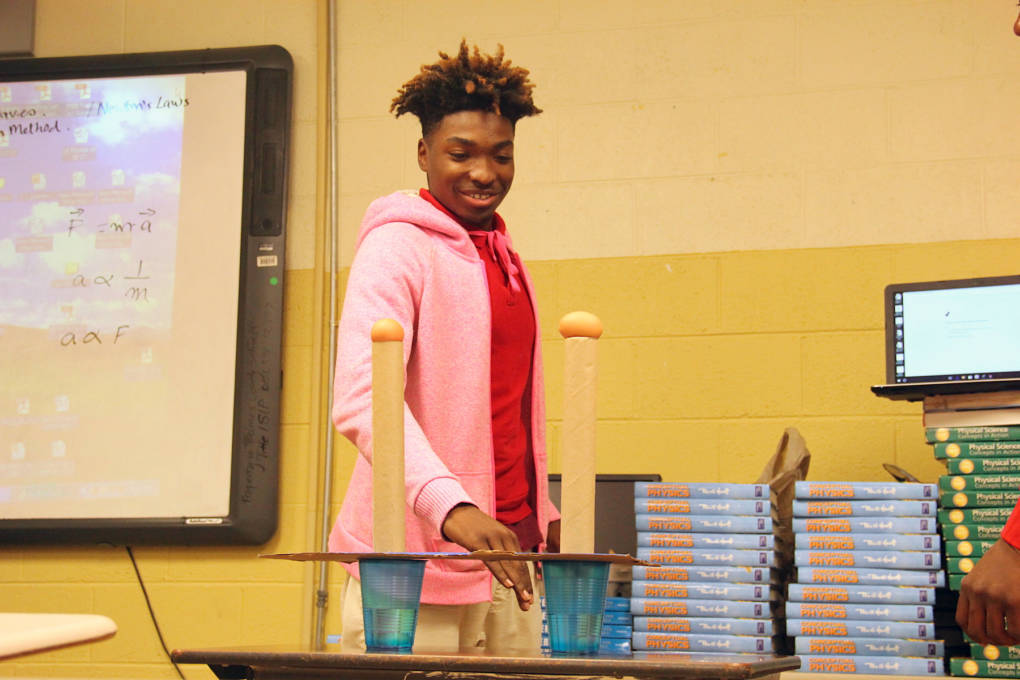
"caption": "Student Jaylen Dennis sets up an experiment to test one of Newton’s Laws. ",
"description": null,
"title": "MaderMsRuralCourses3",
"credit": "Jackie Mader/The Hechinger Report",
"status": "inherit",
"isLoading": false,
"fetchFailed": false
},
"mindshift_50494": {
"type": "attachments",
"id": "mindshift_50494",
"meta": {
"index": "attachments_1716263798",
"site": "mindshift",
"id": "50494",
"found": true
},
"parent": 50485,
"imgSizes": {
"small": {
"file": "https://ww2.kqed.org/app/uploads/sites/23/2018/02/GirlsLeadership-crop-520x292.jpg",
"width": 520,
"mimeType": "image/jpeg",
"height": 292
},
"twentyfourteen-full-width": {
"file": "https://ww2.kqed.org/app/uploads/sites/23/2018/02/GirlsLeadership-crop-1038x576.jpg",
"width": 1038,
"mimeType": "image/jpeg",
"height": 576
},
"thumbnail": {
"file": "https://ww2.kqed.org/app/uploads/sites/23/2018/02/GirlsLeadership-crop-160x90.jpg",
"width": 160,
"mimeType": "image/jpeg",
"height": 90
},
"fd-sm": {
"file": "https://ww2.kqed.org/app/uploads/sites/23/2018/02/GirlsLeadership-crop-960x540.jpg",
"width": 960,
"mimeType": "image/jpeg",
"height": 540
},
"post-thumbnail": {
"file": "https://ww2.kqed.org/app/uploads/sites/23/2018/02/GirlsLeadership-crop-672x372.jpg",
"width": 672,
"mimeType": "image/jpeg",
"height": 372
},
"xsmall": {
"file": "https://ww2.kqed.org/app/uploads/sites/23/2018/02/GirlsLeadership-crop-375x211.jpg",
"width": 375,
"mimeType": "image/jpeg",
"height": 211
},
"kqedFullSize": {
"file": "https://ww2.kqed.org/app/uploads/sites/23/2018/02/GirlsLeadership-crop.jpg",
"width": 2500,
"height": 1406
},
"large": {
"file": "https://ww2.kqed.org/app/uploads/sites/23/2018/02/GirlsLeadership-crop-1020x574.jpg",
"width": 1020,
"mimeType": "image/jpeg",
"height": 574
},
"xlarge": {
"file": "https://ww2.kqed.org/app/uploads/sites/23/2018/02/GirlsLeadership-crop-1180x664.jpg",
"width": 1180,
"mimeType": "image/jpeg",
"height": 664
},
"guest-author-50": {
"file": "https://ww2.kqed.org/app/uploads/sites/23/2018/02/GirlsLeadership-crop-50x50.jpg",
"width": 50,
"mimeType": "image/jpeg",
"height": 50
},
"guest-author-96": {
"file": "https://ww2.kqed.org/app/uploads/sites/23/2018/02/GirlsLeadership-crop-96x96.jpg",
"width": 96,
"mimeType": "image/jpeg",
"height": 96
},
"medium": {
"file": "https://ww2.kqed.org/app/uploads/sites/23/2018/02/GirlsLeadership-crop-800x450.jpg",
"width": 800,
"mimeType": "image/jpeg",
"height": 450
},
"guest-author-64": {
"file": "https://ww2.kqed.org/app/uploads/sites/23/2018/02/GirlsLeadership-crop-64x64.jpg",
"width": 64,
"mimeType": "image/jpeg",
"height": 64
},
"guest-author-32": {
"file": "https://ww2.kqed.org/app/uploads/sites/23/2018/02/GirlsLeadership-crop-32x32.jpg",
"width": 32,
"mimeType": "image/jpeg",
"height": 32
},
"fd-lrg": {
"file": "https://ww2.kqed.org/app/uploads/sites/23/2018/02/GirlsLeadership-crop-1920x1080.jpg",
"width": 1920,
"mimeType": "image/jpeg",
"height": 1080
},
"fd-med": {
"file": "https://ww2.kqed.org/app/uploads/sites/23/2018/02/GirlsLeadership-crop-1180x664.jpg",
"width": 1180,
"mimeType": "image/jpeg",
"height": 664
},
"full-width": {
"file": "https://ww2.kqed.org/app/uploads/sites/23/2018/02/GirlsLeadership-crop-1920x1080.jpg",
"width": 1920,
"mimeType": "image/jpeg",
"height": 1080
},
"detail": {
"file": "https://ww2.kqed.org/app/uploads/sites/23/2018/02/GirlsLeadership-crop-150x150.jpg",
"width": 150,
"mimeType": "image/jpeg",
"height": 150
},
"medium_large": {
"file": "https://ww2.kqed.org/app/uploads/sites/23/2018/02/GirlsLeadership-crop-768x432.jpg",
"width": 768,
"mimeType": "image/jpeg",
"height": 432
},
"guest-author-128": {
"file": "https://ww2.kqed.org/app/uploads/sites/23/2018/02/GirlsLeadership-crop-128x128.jpg",
"width": 128,
"mimeType": "image/jpeg",
"height": 128
},
"xxsmall": {
"file": "https://ww2.kqed.org/app/uploads/sites/23/2018/02/GirlsLeadership-crop-240x135.jpg",
"width": 240,
"mimeType": "image/jpeg",
"height": 135
}
},
"publishDate": 1517606330,
"modified": 1517606387,
"caption": "Participants in a Girls Leadership workshop.",
"description": null,
"title": "GirlsLeadership---crop",
"credit": "Courtesy \u003ca href=\"https://girlsleadership.org/\">Girls Leadership\u003c/a>",
"status": "inherit",
"isLoading": false,
"fetchFailed": false
}
},
"audioPlayerReducer": {
"postId": "stream_live",
"isPaused": true,
"isPlaying": false,
"pfsActive": false,
"pledgeModalIsOpen": true,
"playerDrawerIsOpen": false,
"liveAudioPlayStartedAt": 0,
"liveAudioPlayContext": ""
},
"authorsReducer": {
"byline_mindshift_50889": {
"type": "authors",
"id": "byline_mindshift_50889",
"meta": {
"override": true
},
"slug": "byline_mindshift_50889",
"name": "Anya Kamenetz",
"isLoading": false
},
"byline_mindshift_50867": {
"type": "authors",
"id": "byline_mindshift_50867",
"meta": {
"override": true
},
"slug": "byline_mindshift_50867",
"name": "Cory Turner",
"isLoading": false
},
"byline_mindshift_50855": {
"type": "authors",
"id": "byline_mindshift_50855",
"meta": {
"override": true
},
"slug": "byline_mindshift_50855",
"name": "\u003ca href=\"http://hechingerreport.org/\">Jon Marcus, The Hechinger Report\u003c/a>",
"isLoading": false
},
"byline_mindshift_50849": {
"type": "authors",
"id": "byline_mindshift_50849",
"meta": {
"override": true
},
"slug": "byline_mindshift_50849",
"name": "\u003ca href=\"http://hechingerreport.org/\">Daisy Yuhas, The Hechinger Report\u003c/a>",
"isLoading": false
},
"byline_mindshift_50540": {
"type": "authors",
"id": "byline_mindshift_50540",
"meta": {
"override": true
},
"slug": "byline_mindshift_50540",
"name": "\u003ca href=\"https://twitter.com/kristenlepore\">Kristen Rae Lepore\u003c/a>",
"isLoading": false
},
"byline_mindshift_50781": {
"type": "authors",
"id": "byline_mindshift_50781",
"meta": {
"override": true
},
"slug": "byline_mindshift_50781",
"name": "Suzanne Bouffard",
"isLoading": false
},
"byline_mindshift_50777": {
"type": "authors",
"id": "byline_mindshift_50777",
"meta": {
"override": true
},
"slug": "byline_mindshift_50777",
"name": "Elissa Nadworny",
"isLoading": false
},
"byline_mindshift_50766": {
"type": "authors",
"id": "byline_mindshift_50766",
"meta": {
"override": true
},
"slug": "byline_mindshift_50766",
"name": "\u003ca href=\"https://www.apmreports.org/\">Emily Hanford\u003c/a>",
"isLoading": false
},
"byline_mindshift_50644": {
"type": "authors",
"id": "byline_mindshift_50644",
"meta": {
"override": true
},
"slug": "byline_mindshift_50644",
"name": "\u003ca href=\"https://www.estherlandhuis.com/\">Esther Landhuis\u003c/a>",
"isLoading": false
},
"byline_mindshift_50701": {
"type": "authors",
"id": "byline_mindshift_50701",
"meta": {
"override": true
},
"slug": "byline_mindshift_50701",
"name": "\u003ca href “http://hechingerreport.org/>Jackie Mader, The Hechinger Report\u003c/a>",
"isLoading": false
},
"katrinaschwartz": {
"type": "authors",
"id": "234",
"meta": {
"index": "authors_1716337520",
"id": "234",
"found": true
},
"name": "Katrina Schwartz",
"firstName": "Katrina",
"lastName": "Schwartz",
"slug": "katrinaschwartz",
"email": "kschwartz@kqed.org",
"display_author_email": false,
"staff_mastheads": [
"news"
],
"title": "Producer",
"bio": "Katrina Schwartz is a journalist based in San Francisco. She's worked at KPCC public radio in LA and has reported on air and online for KQED since 2010. She covered how teaching and learning is changing for MindShift between 2012 and 2020. She is the co-host of the MindShift podcast and now produces KQED's Bay Curious podcast.",
"avatar": "https://secure.gravatar.com/avatar/edb4ee79070447a018538c9aae6eeecf28786515b8a0c30e43b6b7dce5aa44c8?s=600&d=blank&r=g",
"twitter": "kschwart",
"bluesky": null,
"facebook": null,
"instagram": null,
"linkedin": null,
"sites": [
{
"site": "",
"roles": [
"editor"
]
},
{
"site": "news",
"roles": [
"editor"
]
},
{
"site": "mindshift",
"roles": [
"administrator"
]
},
{
"site": "stateofhealth",
"roles": [
"author"
]
},
{
"site": "science",
"roles": [
"editor"
]
}
],
"headData": {
"title": "Katrina Schwartz | KQED",
"description": "Producer",
"ogImgSrc": "https://secure.gravatar.com/avatar/edb4ee79070447a018538c9aae6eeecf28786515b8a0c30e43b6b7dce5aa44c8?s=600&d=blank&r=g",
"twImgSrc": "https://secure.gravatar.com/avatar/edb4ee79070447a018538c9aae6eeecf28786515b8a0c30e43b6b7dce5aa44c8?s=600&d=blank&r=g"
},
"isLoading": false,
"link": "/author/katrinaschwartz"
}
},
"pagesReducer": {
"mindshift_category_big-ideas": {
"type": "terms",
"id": "mindshift_192",
"meta": {
"index": "terms_1716263798",
"site": "mindshift",
"id": "192",
"score": 14.406914
},
"featImg": null,
"name": "Big Ideas",
"description": "The latest findings from experts in the field related to the future of learning.",
"taxonomy": "category",
"headData": {
"twImgId": null,
"twTitle": null,
"ogTitle": null,
"ogImgId": null,
"twDescription": null,
"description": "The latest findings from experts in the field related to the future of learning.",
"title": "Big Ideas Archives | KQED Mindshift",
"ogDescription": null
},
"ttid": 192,
"slug": "big-ideas",
"isLoading": false,
"title": "Big Ideas",
"pageMeta": {
"site": "mindshift",
"WpPageTemplate": "page-topic-editorial",
"currentPage": 29
},
"blocks": [
{
"blockName": "kqed/company-paragraph",
"content": "The latest findings from experts in the field related to the future of learning."
},
{
"blockName": "kqed/post-list",
"attrs": {
"layout": "cardArticle2",
"query": "posts/mindshift?category=big-ideas",
"seeMore": false,
"paginated": true,
"page": 29
}
},
{
"blockName": "kqed/ad"
}
]
}
},
"pfsSessionReducer": {},
"postsReducer": {
"stream_live": {
"type": "live",
"id": "stream_live",
"audioUrl": "https://streams.kqed.org/kqedradio",
"title": "Live Stream",
"excerpt": "Live Stream information currently unavailable.",
"link": "/radio",
"featImg": "",
"label": {
"name": "KQED Live",
"link": "/"
}
},
"stream_kqedNewscast": {
"type": "posts",
"id": "stream_kqedNewscast",
"audioUrl": "https://www.kqed.org/.stream/anon/radio/RDnews/newscast.mp3?_=1",
"title": "KQED Newscast",
"featImg": "",
"label": {
"name": "88.5 FM",
"link": "/"
}
},
"mindshift_50889": {
"type": "posts",
"id": "mindshift_50889",
"meta": {
"index": "posts_1716263798",
"site": "mindshift",
"id": "50889",
"score": null,
"sort": [
1522529836000
]
},
"parent": 0,
"labelTerm": {
"site": "mindshift"
},
"blocks": [],
"publishDate": 1522529836,
"format": "standard",
"disqusTitle": "How Deeper Understanding of a Student’s Life Helps with Plans for Success",
"title": "How Deeper Understanding of a Student’s Life Helps with Plans for Success",
"headTitle": "MindShift | KQED News",
"content": "\u003cp>The week before winter break, snow is piled up around St. Louis Park High School, a low-slung, rambling brick complex in suburban Minneapolis. And more snow is falling.\u003c/p>\n\u003cp>This is a big, diverse school with proud roots. Alumni include Joel and Ethan Coen, who shot their semiautobiographical 2009 drama, \u003cem>A Serious Man\u003c/em>, in this area, once a Jewish enclave, which today has immigrants from all over the world.\u003c/p>\n\u003cp>But in 1998, when Angela Jerabek was a school counselor for freshmen here, she was \"discouraged.\" For five years running, about half the ninth-grade students had been failing at least one course.\u003c/p>\n\u003cp>\"I went to the principal to say, 'I don't think I'm doing this job well and I feel like I should resign.' \" Her principal had a different idea.\u003c/p>\n\u003cp>\"He said [the problem] wasn't just with me or just with our high school. That this really was an issue that was occurring in high schools across the country, and that we really needed to look at a new solution.\"\u003c/p>\n\u003cp>[ad fullwidth]\u003c/p>\n\u003cp>And he challenged her to come up with one.\u003c/p>\n\u003cfigure id=\"attachment_50905\" class=\"wp-caption alignnone\" style=\"max-width: 1920px\">\u003cimg class=\"size-full wp-image-50905\" src=\"https://ww2.kqed.org/mindshift/wp-content/uploads/sites/23/2018/03/d7a1514_custom-a9bf80b805a71bbebbc2161f8531de939481349b-1-e1522702535970.jpg\" alt=\"\" width=\"1920\" height=\"1178\">\u003cfigcaption class=\"wp-caption-text\">Teachers Sarah Lindenberg and Kara Cisco chat with Kelly Brown, the BARR coordinator at St. Louis Park. \u003ccite>(Elissa Nadworny/NPR)\u003c/cite>\u003c/figcaption>\u003c/figure>\n\u003cp>One of the biggest questions in education is whether it's even possible to turn around a low-performing school. The Obama administration spent $7 billion on school turnarounds, and \u003ca href=\"https://ies.ed.gov/ncee/pubs/20174013/pdf/20174013.pdf\">their final verdict\u003c/a> was that nothing really worked.\u003c/p>\n\u003cp>The solution Jerabek developed is called the BARR method, for Building Assets, Reducing Risks. And, she has an unusual amount of evidence. Out of 172 projects in a \u003ca href=\"https://www2.ed.gov/programs/innovation/awards.html\">big federal innovation grant program\u003c/a>, BARR is the only one that progressed through randomized controlled trials to win grants at all three levels: innovation, development and scale-up.\u003c/p>\n\u003cp>\u003cstrong>The ninth-grade shock\u003c/strong>\u003c/p>\n\u003cp>BARR doesn't require changing the teachers or the students in a school. It doesn't overhaul the curriculum or discipline. It doesn't require flashy technology. It's based on something simple, and decidedly unsexy: meetings.\u003c/p>\n\u003cp>Jerabek decided to focus her efforts on freshman year. Many students stumble in the transition to high school — more than any other year of school. A failing grade in that first year significantly raises your risk of dropping out. And that, in turn, can shadow your entire life. Just from one F grade. Researchers call this the \u003ca href=\"https://www.ncbi.nlm.nih.gov/pmc/articles/PMC3461187/\">\"ninth-grade shock.\"\u003c/a>\u003c/p>\n\u003cp>So, Jerabek figured out a way that all the adults in a school building could come together to try to cushion that shock.\u003c/p>\n\u003cfigure id=\"attachment_50892\" class=\"wp-caption alignnone\" style=\"max-width: 1920px\">\u003cimg class=\"size-full wp-image-50892\" src=\"https://ww2.kqed.org/mindshift/wp-content/uploads/sites/23/2018/03/d7a1155_slide-7709c764a42158a31750c2fe0b9735edf6dcd24c-e1522702436215.jpg\" alt=\"\" width=\"1920\" height=\"1280\">\u003cfigcaption class=\"wp-caption-text\">Brown chats with Tony between classes \u003ccite>(Elissa Nadworny/NPR)\u003c/cite>\u003c/figcaption>\u003c/figure>\n\u003cp>Up on the third floor here at St. Louis Park, there's a room with no windows, but inspirational posters and free candy on the table. We're here for the weekly block meeting. Here, teachers who share the same group of students sit down over a shared Google doc with the school support staff: the social worker, the counselor, sometimes even the police officer assigned to the school.\u003c/p>\n\u003cp>The core of the BARR method is these meetings, where educators talk about three things. First, the data — on attendance, behavior and grades. Alex Polk, a science teacher, observes of one student: \"She's been late at least 19 times and is late with the same group of people each time.\"\u003c/p>\n\u003cp>Second, the big picture of the students' lives. Daniel Perez, the school social worker, shares his notes from meetings with students: \"He and his mom don't get along, he feels ignored by her, Dad is not in the picture, he does not have friends here at Park and he is not interested in making friends.\"\u003c/p>\n\u003cp>Finally, they come up with a personalized plan for what to do to help each student, like signing them up for tutoring, calling home or holding a mediation.\u003c/p>\n\u003cp>Tjessa Arradando, a sophomore who loves chemistry and writes for the school paper, explains how BARR worked for her.\u003c/p>\n\u003cp>\"I have anxiety, so if I was stressed I'd go down to the counselor's office and they would kind of talk to me, come up with a plan on how to, you know, adjust at certain times.\" She had a pass to get out of class; the counselors let the teachers know about her needs, so Arradando felt like all the adults were on her side. This year, she says, she's managing much better.\u003c/p>\n\u003cfigure id=\"attachment_50898\" class=\"wp-caption alignnone\" style=\"max-width: 5442px\">\u003cimg class=\"wp-image-50898 size-full\" src=\"https://ww2.kqed.org/mindshift/wp-content/uploads/sites/23/2018/03/d7a2864_slide-469a9c99e4d34eba4e1a882346cdee3a44eab8f8-1.jpg\" alt=\"\" width=\"5442\" height=\"3628\">\u003cfigcaption class=\"wp-caption-text\">Tjessa Arradando in her advanced English class. \u003ccite>(Elissa Nadworny/NPR)\u003c/cite>\u003c/figcaption>\u003c/figure>\n\u003cp>\u003cstrong>Building a fuller picture of a student\u003c/strong>\u003c/p>\n\u003cp>In most schools, teachers meet regularly to talk about subject areas or administrative duties. In BARR schools, the point of block meetings is to pool knowledge on students. Most teachers only see a student for no more than 45 minutes a day, Jerabek points out. They may not have the background knowledge to understand what is really going on when a student is acting out.\u003c/p>\n\u003cp>Sometimes, piecing together information creates a startling picture.\u003c/p>\n\u003cp>At a BARR school in California, one teacher raised a concern about a specific group of 14-year-old girls that tended to sit with older boys rather than other freshmen at lunch. A second teacher noticed that the same girls were missing class on Mondays and Fridays. A third teacher was concerned about dress code violations. No one was particularly alarmed, but when they cross-referenced the information and followed up, Jerabek says, they discovered that the girls were being trafficked for sex.\u003c/p>\n\u003cp>There's a second BARR meeting each week called Risk Review, about the kids in the toughest situations. Just on one Thursday, we hear about drug issues, fears of deportation, chronic illness, eating disorders and a student who may not have a place to sleep.\u003c/p>\n\u003cp>Even though BARR, by definition, focuses on students with problems, it also highlights strengths. Kelly Brown, the BARR coordinator at St. Louis Park, probes teachers again and again to name what's going right: like a student with a good sense of humor, say, or a supportive parent.\u003c/p>\n\u003cp>This is deliberate, says Jerabek: \"To be able to identify the strengths does require that you've actually built a relationship with a student.\"\u003c/p>\n\u003cp>There's a classroom component to the BARR method as well, a social and emotional curriculum called iTime. It allows students and teachers to get to know each other better and, again, build positive relationships.\u003c/p>\n\u003cp>For example, in Kara Cisco's civics class on the day we visit, students are giving each other awards based on the Preamble to the Constitution. \"Promote the general welfare\" might be a student who shares their snacks.\u003c/p>\n\u003cp>This combination of hard data and soft skills has paid off. In the first year of BARR here at St. Louis Park, the failure rate for freshmen was cut in half, from 50 percent to 25 percent, and those results stuck.\u003c/p>\n\u003cp>\u003cstrong>Gold-standard evidence\u003c/strong>\u003c/p>\n\u003cp>As BARR spread, researchers tested the model by the gold standard: randomized controlled trials. And they found over and over again, it raises test scores and pass rates, reduces absences and suspensions, and students feel more engaged and challenged at school. The effects are particularly large for students of color, male students and students from low-income families.\u003c/p>\n\u003cp>Across big-city schools like St. Louis Park, there's a 40 percent drop in failure rates from BARR, and in small rural schools it's 29 percent on average.\u003c/p>\n\u003cp>The principal here, Scott Meyers says the BARR model does cost some money, because of the adjustment in teacher schedules. And it may be harder to put in place in districts that are really hurting for support staff like counselors. But, Jerabek likes to point out, BARR shows you can make big changes without changing the students or the teachers in a school, just by focusing on relationships.\u003c/p>\n\u003cp>\"Many students, they just work harder when they know that the adults care about them.\"\u003c/p>\n\u003cp>[ad floatright]\u003c/p>\n\u003cp>These days, Angela Jerabek spends her time flying from Maine to California. BARR is now in 80 schools in 13 states and Washington, D.C. Over the next five years, Jerabek says, that will triple.\u003c/p>\n\u003cdiv class=\"fullattribution\">Copyright 2018 NPR. To see more, visit http://www.npr.org/.\u003cimg src=\"https://www.google-analytics.com/__utm.gif?utmac=UA-5828686-4&utmdt=How+More+Meetings+Might+Be+The+Secret+To+Fixing+High+School&utme=8(APIKey)9(MDAxOTAwOTE4MDEyMTkxMDAzNjczZDljZA004)\">\u003c/div>\n\n",
"disqusIdentifier": "50889 https://ww2.kqed.org/mindshift/?p=50889",
"disqusUrl": "https://ww2.kqed.org/mindshift/2018/03/31/how-deeper-understanding-of-a-students-life-helps-with-plans-for-success/",
"stats": {
"hasVideo": false,
"hasChartOrMap": false,
"hasAudio": false,
"hasPolis": false,
"wordCount": 1361,
"hasGoogleForm": false,
"hasGallery": false,
"hasHearkenModule": false,
"iframeSrcs": [],
"paragraphCount": 36
},
"modified": 1522780492,
"excerpt": "The BARR model, for \"Building Assets, Reducing Risks,\" has serious evidence backing it up as a solution for real improvements in student success.",
"headData": {
"twImgId": "",
"twTitle": "",
"ogTitle": "",
"ogImgId": "",
"twDescription": "",
"description": "The BARR model, for "Building Assets, Reducing Risks," has serious evidence backing it up as a solution for real improvements in student success.",
"title": "How Deeper Understanding of a Student’s Life Helps with Plans for Success | KQED",
"ogDescription": "",
"schema": {
"@context": "https://schema.org",
"@type": "Article",
"headline": "How Deeper Understanding of a Student’s Life Helps with Plans for Success",
"datePublished": "2018-03-31T13:57:16-07:00",
"dateModified": "2018-04-03T11:34:52-07:00",
"image": "https://cdn.kqed.org/wp-content/uploads/2020/02/KQED-OG-Image@1x.png"
}
},
"guestAuthors": [],
"slug": "how-deeper-understanding-of-a-students-life-helps-with-plans-for-success",
"status": "publish",
"nprApiLink": "http://api.npr.org/query?id=596054250&apiKey=MDAxOTAwOTE4MDEyMTkxMDAzNjczZDljZA004",
"nprByline": "Anya Kamenetz",
"nprStoryDate": "Sat, 31 Mar 2018 06:08:00 -0400",
"nprLastModifiedDate": "Mon, 02 Apr 2018 09:17:44 -0400",
"nprHtmlLink": "https://www.npr.org/sections/ed/2018/03/31/596054250/how-more-meetings-might-be-the-secret-to-fixing-high-school?ft=nprml&f=596054250",
"nprAudio": "https://ondemand.npr.org/anon.npr-mp3/npr/atc/2018/04/20180401_atc_how_more_meetings_might_be_the_secret_to_fixing_high_school.mp3?orgId=1&topicId=1013&aggIds=130593764&d=247&p=2&story=596054250&ft=nprml&f=596054250",
"nprImageAgency": "NPR",
"nprImageCredit": "Elissa Nadworny",
"nprAudioM3u": "http://api.npr.org/m3u/1598695859-7e3967.m3u?orgId=1&topicId=1013&aggIds=130593764&d=247&p=2&story=596054250&ft=nprml&f=596054250",
"nprStoryId": "596054250",
"nprRetrievedStory": "1",
"nprPubDate": "Mon, 02 Apr 2018 09:17:00 -0400",
"path": "/mindshift/50889/how-deeper-understanding-of-a-students-life-helps-with-plans-for-success",
"audioUrl": "https://ondemand.npr.org/anon.npr-mp3/npr/atc/2018/04/20180401_atc_how_more_meetings_might_be_the_secret_to_fixing_high_school.mp3?orgId=1&topicId=1013&aggIds=130593764&d=247&p=2&story=596054250&ft=nprml&f=596054250",
"audioTrackLength": null,
"parsedContent": [
{
"type": "contentString",
"content": "\u003cdiv class=\"post-body\">\u003cp>\u003cp>The week before winter break, snow is piled up around St. Louis Park High School, a low-slung, rambling brick complex in suburban Minneapolis. And more snow is falling.\u003c/p>\n\u003cp>This is a big, diverse school with proud roots. Alumni include Joel and Ethan Coen, who shot their semiautobiographical 2009 drama, \u003cem>A Serious Man\u003c/em>, in this area, once a Jewish enclave, which today has immigrants from all over the world.\u003c/p>\n\u003cp>But in 1998, when Angela Jerabek was a school counselor for freshmen here, she was \"discouraged.\" For five years running, about half the ninth-grade students had been failing at least one course.\u003c/p>\n\u003cp>\"I went to the principal to say, 'I don't think I'm doing this job well and I feel like I should resign.' \" Her principal had a different idea.\u003c/p>\n\u003cp>\"He said [the problem] wasn't just with me or just with our high school. That this really was an issue that was occurring in high schools across the country, and that we really needed to look at a new solution.\"\u003c/p>\n\u003cp>\u003c/p>\u003c/div>",
"attributes": {
"named": {},
"numeric": []
}
},
{
"type": "component",
"content": "",
"name": "ad",
"attributes": {
"named": {
"label": "fullwidth"
},
"numeric": [
"fullwidth"
]
}
},
{
"type": "contentString",
"content": "\u003cdiv class=\"post-body\">\u003cp>\u003c/p>\n\u003cp>And he challenged her to come up with one.\u003c/p>\n\u003cfigure id=\"attachment_50905\" class=\"wp-caption alignnone\" style=\"max-width: 1920px\">\u003cimg class=\"size-full wp-image-50905\" src=\"https://ww2.kqed.org/mindshift/wp-content/uploads/sites/23/2018/03/d7a1514_custom-a9bf80b805a71bbebbc2161f8531de939481349b-1-e1522702535970.jpg\" alt=\"\" width=\"1920\" height=\"1178\">\u003cfigcaption class=\"wp-caption-text\">Teachers Sarah Lindenberg and Kara Cisco chat with Kelly Brown, the BARR coordinator at St. Louis Park. \u003ccite>(Elissa Nadworny/NPR)\u003c/cite>\u003c/figcaption>\u003c/figure>\n\u003cp>One of the biggest questions in education is whether it's even possible to turn around a low-performing school. The Obama administration spent $7 billion on school turnarounds, and \u003ca href=\"https://ies.ed.gov/ncee/pubs/20174013/pdf/20174013.pdf\">their final verdict\u003c/a> was that nothing really worked.\u003c/p>\n\u003cp>The solution Jerabek developed is called the BARR method, for Building Assets, Reducing Risks. And, she has an unusual amount of evidence. Out of 172 projects in a \u003ca href=\"https://www2.ed.gov/programs/innovation/awards.html\">big federal innovation grant program\u003c/a>, BARR is the only one that progressed through randomized controlled trials to win grants at all three levels: innovation, development and scale-up.\u003c/p>\n\u003cp>\u003cstrong>The ninth-grade shock\u003c/strong>\u003c/p>\n\u003cp>BARR doesn't require changing the teachers or the students in a school. It doesn't overhaul the curriculum or discipline. It doesn't require flashy technology. It's based on something simple, and decidedly unsexy: meetings.\u003c/p>\n\u003cp>Jerabek decided to focus her efforts on freshman year. Many students stumble in the transition to high school — more than any other year of school. A failing grade in that first year significantly raises your risk of dropping out. And that, in turn, can shadow your entire life. Just from one F grade. Researchers call this the \u003ca href=\"https://www.ncbi.nlm.nih.gov/pmc/articles/PMC3461187/\">\"ninth-grade shock.\"\u003c/a>\u003c/p>\n\u003cp>So, Jerabek figured out a way that all the adults in a school building could come together to try to cushion that shock.\u003c/p>\n\u003cfigure id=\"attachment_50892\" class=\"wp-caption alignnone\" style=\"max-width: 1920px\">\u003cimg class=\"size-full wp-image-50892\" src=\"https://ww2.kqed.org/mindshift/wp-content/uploads/sites/23/2018/03/d7a1155_slide-7709c764a42158a31750c2fe0b9735edf6dcd24c-e1522702436215.jpg\" alt=\"\" width=\"1920\" height=\"1280\">\u003cfigcaption class=\"wp-caption-text\">Brown chats with Tony between classes \u003ccite>(Elissa Nadworny/NPR)\u003c/cite>\u003c/figcaption>\u003c/figure>\n\u003cp>Up on the third floor here at St. Louis Park, there's a room with no windows, but inspirational posters and free candy on the table. We're here for the weekly block meeting. Here, teachers who share the same group of students sit down over a shared Google doc with the school support staff: the social worker, the counselor, sometimes even the police officer assigned to the school.\u003c/p>\n\u003cp>The core of the BARR method is these meetings, where educators talk about three things. First, the data — on attendance, behavior and grades. Alex Polk, a science teacher, observes of one student: \"She's been late at least 19 times and is late with the same group of people each time.\"\u003c/p>\n\u003cp>Second, the big picture of the students' lives. Daniel Perez, the school social worker, shares his notes from meetings with students: \"He and his mom don't get along, he feels ignored by her, Dad is not in the picture, he does not have friends here at Park and he is not interested in making friends.\"\u003c/p>\n\u003cp>Finally, they come up with a personalized plan for what to do to help each student, like signing them up for tutoring, calling home or holding a mediation.\u003c/p>\n\u003cp>Tjessa Arradando, a sophomore who loves chemistry and writes for the school paper, explains how BARR worked for her.\u003c/p>\n\u003cp>\"I have anxiety, so if I was stressed I'd go down to the counselor's office and they would kind of talk to me, come up with a plan on how to, you know, adjust at certain times.\" She had a pass to get out of class; the counselors let the teachers know about her needs, so Arradando felt like all the adults were on her side. This year, she says, she's managing much better.\u003c/p>\n\u003cfigure id=\"attachment_50898\" class=\"wp-caption alignnone\" style=\"max-width: 5442px\">\u003cimg class=\"wp-image-50898 size-full\" src=\"https://ww2.kqed.org/mindshift/wp-content/uploads/sites/23/2018/03/d7a2864_slide-469a9c99e4d34eba4e1a882346cdee3a44eab8f8-1.jpg\" alt=\"\" width=\"5442\" height=\"3628\">\u003cfigcaption class=\"wp-caption-text\">Tjessa Arradando in her advanced English class. \u003ccite>(Elissa Nadworny/NPR)\u003c/cite>\u003c/figcaption>\u003c/figure>\n\u003cp>\u003cstrong>Building a fuller picture of a student\u003c/strong>\u003c/p>\n\u003cp>In most schools, teachers meet regularly to talk about subject areas or administrative duties. In BARR schools, the point of block meetings is to pool knowledge on students. Most teachers only see a student for no more than 45 minutes a day, Jerabek points out. They may not have the background knowledge to understand what is really going on when a student is acting out.\u003c/p>\n\u003cp>Sometimes, piecing together information creates a startling picture.\u003c/p>\n\u003cp>At a BARR school in California, one teacher raised a concern about a specific group of 14-year-old girls that tended to sit with older boys rather than other freshmen at lunch. A second teacher noticed that the same girls were missing class on Mondays and Fridays. A third teacher was concerned about dress code violations. No one was particularly alarmed, but when they cross-referenced the information and followed up, Jerabek says, they discovered that the girls were being trafficked for sex.\u003c/p>\n\u003cp>There's a second BARR meeting each week called Risk Review, about the kids in the toughest situations. Just on one Thursday, we hear about drug issues, fears of deportation, chronic illness, eating disorders and a student who may not have a place to sleep.\u003c/p>\n\u003cp>Even though BARR, by definition, focuses on students with problems, it also highlights strengths. Kelly Brown, the BARR coordinator at St. Louis Park, probes teachers again and again to name what's going right: like a student with a good sense of humor, say, or a supportive parent.\u003c/p>\n\u003cp>This is deliberate, says Jerabek: \"To be able to identify the strengths does require that you've actually built a relationship with a student.\"\u003c/p>\n\u003cp>There's a classroom component to the BARR method as well, a social and emotional curriculum called iTime. It allows students and teachers to get to know each other better and, again, build positive relationships.\u003c/p>\n\u003cp>For example, in Kara Cisco's civics class on the day we visit, students are giving each other awards based on the Preamble to the Constitution. \"Promote the general welfare\" might be a student who shares their snacks.\u003c/p>\n\u003cp>This combination of hard data and soft skills has paid off. In the first year of BARR here at St. Louis Park, the failure rate for freshmen was cut in half, from 50 percent to 25 percent, and those results stuck.\u003c/p>\n\u003cp>\u003cstrong>Gold-standard evidence\u003c/strong>\u003c/p>\n\u003cp>As BARR spread, researchers tested the model by the gold standard: randomized controlled trials. And they found over and over again, it raises test scores and pass rates, reduces absences and suspensions, and students feel more engaged and challenged at school. The effects are particularly large for students of color, male students and students from low-income families.\u003c/p>\n\u003cp>Across big-city schools like St. Louis Park, there's a 40 percent drop in failure rates from BARR, and in small rural schools it's 29 percent on average.\u003c/p>\n\u003cp>The principal here, Scott Meyers says the BARR model does cost some money, because of the adjustment in teacher schedules. And it may be harder to put in place in districts that are really hurting for support staff like counselors. But, Jerabek likes to point out, BARR shows you can make big changes without changing the students or the teachers in a school, just by focusing on relationships.\u003c/p>\n\u003cp>\"Many students, they just work harder when they know that the adults care about them.\"\u003c/p>\n\u003cp>\u003c/p>\u003c/div>",
"attributes": {
"named": {},
"numeric": []
}
},
{
"type": "component",
"content": "",
"name": "ad",
"attributes": {
"named": {
"label": "floatright"
},
"numeric": [
"floatright"
]
}
},
{
"type": "contentString",
"content": "\u003cdiv class=\"post-body\">\u003cp>\u003c/p>\n\u003cp>These days, Angela Jerabek spends her time flying from Maine to California. BARR is now in 80 schools in 13 states and Washington, D.C. Over the next five years, Jerabek says, that will triple.\u003c/p>\n\u003cdiv class=\"fullattribution\">Copyright 2018 NPR. To see more, visit http://www.npr.org/.\u003cimg src=\"https://www.google-analytics.com/__utm.gif?utmac=UA-5828686-4&utmdt=How+More+Meetings+Might+Be+The+Secret+To+Fixing+High+School&utme=8(APIKey)9(MDAxOTAwOTE4MDEyMTkxMDAzNjczZDljZA004)\">\u003c/div>\n\n\u003c/div>\u003c/p>",
"attributes": {
"named": {},
"numeric": []
}
}
],
"link": "/mindshift/50889/how-deeper-understanding-of-a-students-life-helps-with-plans-for-success",
"authors": [
"byline_mindshift_50889"
],
"categories": [
"mindshift_192"
],
"tags": [
"mindshift_21183",
"mindshift_20784",
"mindshift_1040",
"mindshift_20877"
],
"featImg": "mindshift_50902",
"label": "mindshift"
},
"mindshift_50867": {
"type": "posts",
"id": "mindshift_50867",
"meta": {
"index": "posts_1716263798",
"site": "mindshift",
"id": "50867",
"score": null,
"sort": [
1522391482000
]
},
"parent": 0,
"labelTerm": {
"site": "mindshift"
},
"blocks": [],
"publishDate": 1522391482,
"format": "standard",
"disqusTitle": "Turning Kids Into Readers, One Barbershop At A Time",
"title": "Turning Kids Into Readers, One Barbershop At A Time",
"headTitle": "MindShift | KQED News",
"content": "\u003cp>\u003cem>Our series Take A Number is exploring problems around the world — and the people who are trying to solve them — through the lens of a single number.\u003c/em>\u003c/p>\n\u003cp>The solution first: 15. More precisely, \u003cem>15 books\u003c/em>.\u003c/p>\n\u003cp>That's Alvin Irby's answer to a problem he knows all too well as a former kindergarten teacher: How to get children of color excited about reading if they don't have much experience with books or reading outside of school, and the books they see inside of school don't speak to them.\u003c/p>\n\u003cp>One day in March, Irby emerges from the subway in Harlem grateful for the grey hooded sweatshirt under his heavy winter parka. The snow falls in crystals the size of cornflakes. He wears glasses with translucent frames, a touch of cool for a man whose backpack is full of kids' books. When he enters Levels Barbershop, on Lexington Avenue, the place thrums with electric razors, conversation and a movie on the flatscreen.\u003c/p>\n\u003cp>One whole wall is a varied patchwork of exposed brick and mirrors. Overlooking the proceedings is a painting of the patron-saint of movie barbers: Eddie Murphy's foul-mouthed coiffeur from \"Coming To America.\"\u003c/p>\n\u003cp>[ad fullwidth]\u003c/p>\n\u003cp>It's mid-afternoon when Irby walks in, a man on a mission. He needs a trim from his go-to barber, Kenny, but he also wants to check in on his 15 books.\u003c/p>\n\u003cp>\"So the bookshelf is back underneath the coat shelf,\" he says, shedding his layers and pointing to a little book case made of wood and red canvas along the back wall. Emblazoned on the canvas is the name, \"Barbershop Books.\" The small shelves brim with children's books with titles like \u003cem>Not Norman\u003c/em> and \u003cem>Chicka Chicka Boom Boom\u003c/em>. But there are only 12.\u003c/p>\n\u003cp>A few titles have disappeared, as they do, so Irby's here to replace them. Before he gets to the shelf, though, he freezes alongside the black vinyl bench that splits the shop in half and cracks a triumphal smile.\u003c/p>\n\u003cp>\"This is evidence that it's being used!\" he says, pointing to two books for beginning readers that have been left on the bench. He picks one up.\u003c/p>\n\u003cp>\"We have \u003cem>Ninjago\u003c/em>, which is one of the books that often gets permanently borrowed. It's about little LEGO characters who are ninjas.\"\u003c/p>\n\u003cp>Irby lovingly carries the books back to the book case and adds another favorite from his backpack: \u003cem>Diary of a Wimpy Kid\u003c/em>. And then this man on a mission drops his mission statement:\u003c/p>\n\u003cp>\"Now, this is the thing: Would these be used for instructional purposes in the classroom?\"\u003c/p>\n\u003cp>It's a rhetorical question. The answer, too often, is No.\u003c/p>\n\u003cp>\"But they should be!\" Irby yells.\u003c/p>\n\u003cfigure id=\"attachment_50869\" class=\"wp-caption alignnone\" style=\"max-width: 640px\">\u003cimg class=\"size-large wp-image-50869\" src=\"https://ww2.kqed.org/mindshift/wp-content/uploads/sites/23/2018/03/nhammer-books_slide-ddabfca28c6ac7107eeaa42b5d0b069c155e5bdd-1020x679.jpg\" alt=\"\" width=\"640\" height=\"426\">\u003cfigcaption class=\"wp-caption-text\">Last year, Barbershop Books won a $10,000 Innovations in Reading Prize from the \u003ca href=\"//www.nationalbook.org/innovations_in_reading_2017.html\">National Book Foundation.\u003c/a> \u003ccite>(Nickolai Hammer/NPR)\u003c/cite>\u003c/figcaption>\u003c/figure>\n\u003cp>\u003cstrong>Slavery, civil rights, slavery, civil rights ...\u003c/strong>\u003c/p>\n\u003cp>Alvin Irby wears many hats. He is a stand-up comedian, a children's book author, a former kindergarten teacher, the founder of Barbershop Books and, above all, a dynamo.\u003c/p>\n\u003cp>He speaks loudly, even when answering questions in a quiet office that's been emptied by the snow. His nonprofit has put a curated list of 15 books — all picked \u003cem>by kids\u003c/em> — in \u003ca href=\"https://barbershopbooks.org/barbershops/\" target=\"_blank\" rel=\"noopener\">dozens of barbershops\u003c/a>, in predominantly black neighborhoods, across the country. And that's not counting the many barbers who have heard his story and done \u003ca href=\"https://www.npr.org/sections/ed/2016/10/12/496553810/choose-a-book-and-read-to-your-barber-hell-take-a-little-money-off-the-top\" target=\"_blank\" rel=\"noopener\">something similar\u003c/a> on their own.\u003c/p>\n\u003cp>Irby, who just turned 33, says he's hoping to help children of color identify as readers. That means, first and foremost, that reading should be fun. It also means kids need to see their lives and interests reflected in the stories they read.\u003c/p>\n\u003cp>But, Irby says, the publishing industry has a long way to go. When he went to a big book convention recently, few of the kids' titles on display had diverse characters. And those that did felt both foreign and not remotely fun.\u003c/p>\n\u003cp>\"Slavery, civil rights, slavery, civil rights,\" Irby says, rattling through the books' subjects. \"Biography, slavery, civil rights, old dead black person.\"\u003c/p>\n\u003cp>While he was there, Irby also asked the librarians he met if they could name two laugh-out-loud picture books with a black protagonist?\u003c/p>\n\u003cp>\"Crickets!\"\u003c/p>\n\u003cp>Irby's not simply complaining about a problem. He's written his own solution — a children's book, called \u003cem>Gross Greg\u003c/em>, which he self-published because traditional publishers showed little interest.\u003c/p>\n\u003cp>\"It's about a little black boy who loves to eat his boogers,\" Irby says. \"You call them boogers. Greg calls them delicious little sugars.\"\u003c/p>\n\u003cp>The boogers here aren't a frivolous distraction. They're the point. Books about slavery and civil rights have their place, Irby believes, but little black boys and girls deserve books that allow them to be children. And to laugh like children.\u003c/p>\n\u003cp>\u003cstrong>Telling bar jokes in church\u003c/strong>\u003c/p>\n\u003cp>Too many children of color, Irby says, are coming into kindergarten without much exposure to books or reading. While they may lack reading skills, their books — and their schools — often lack what Irby calls cultural competency. By that he means the ability to translate what they want kids to know or do into reading experiences that children find relevant and engaging. In a recent \u003ca href=\"https://www.ted.com/talks/alvin_irby_how_to_inspire_every_child_to_be_a_lifelong_reader\" target=\"_blank\" rel=\"noopener\">TED Talk\u003c/a>, Irby explained, using a metaphor from stand-up comedy.\u003c/p>\n\u003cp>\"Before going onstage, I assess an audience. Are they white? Are they Latino? Are they old, young, professional, conservative?\" Irby says to the small TED audience. \"While performing in a church, I could tell bar jokes, but that might not result in laughter.\"\u003c/p>\n\u003cp>Teachers, schools, and book publishers, he says, need to think of kids the same way. \"As a society, we're creating reading experiences for children that are the equivalent of telling bar jokes in a church, and then we wonder why so many children don't read.\"\u003c/p>\n\u003cp>Irby says, schools need to focus less on leveled, out-of-touch books and reading tests that leave kids feeling defeated and try listening more. Ask students, What are your strengths, your experiences, your interests?\u003c/p>\n\u003cp>\"Once you figure out how students identify,\" Irby says, \"then you can begin to craft [reading] experiences that are customized to who they are and what's most important to them.\"\u003c/p>\n\u003cp>Back in Levels Barbershop, what's most important to Vincent, a sixth-grader and son of a barber, is \u003cem>Diary of a Wimpy Kid, \u003c/em>the book Irby just replaced. Because the hero's story feels real — and really funny.\u003c/p>\n\u003cp>\"Everything goes wrong when he thinks that it's gonna go right,\" Vincent says. \"Or, when something good's about to happen, it just gets ruined by his brother, Roderick.\"\u003c/p>\n\u003cp>Vincent's enthusiasm — he says he's read every last one of the shop's 15 books — is all the motivation Alvin Irby needs to keep growing Barbershop Books. And it is growing.\u003c/p>\n\u003cp>Last year, the program won a $10,000 Innovations in Reading Prize from the \u003ca href=\"http://www.nationalbook.org/innovations_in_reading_2017.html#.WrkbvGrwaUk\" target=\"_blank\" rel=\"noopener\">National Book Foundation\u003c/a>. And next month, Irby will host a New York City fundraiser ...\u003c/p>\n\u003cp>[ad floatright]\u003c/p>\n\u003cp>In a comedy club.\u003c/p>\n\u003cdiv class=\"fullattribution\">Copyright 2018 NPR. To see more, visit http://www.npr.org/.\u003cimg src=\"https://www.google-analytics.com/__utm.gif?utmac=UA-5828686-4&utmdt=Turning+Kids+Into+Readers%2C+One+Barbershop+At+A+Time+&utme=8(APIKey)9(MDAxOTAwOTE4MDEyMTkxMDAzNjczZDljZA004)\">\u003c/div>\n\n",
"disqusIdentifier": "50867 https://ww2.kqed.org/mindshift/?p=50867",
"disqusUrl": "https://ww2.kqed.org/mindshift/2018/03/29/turning-kids-into-readers-one-barbershop-at-a-time/",
"stats": {
"hasVideo": false,
"hasChartOrMap": false,
"hasAudio": false,
"hasPolis": false,
"wordCount": 1195,
"hasGoogleForm": false,
"hasGallery": false,
"hasHearkenModule": false,
"iframeSrcs": [],
"paragraphCount": 38
},
"modified": 1522391482,
"excerpt": "Alvin Irby is on a mission to get kids reading in the barbershop. And he wants to make sure kids understand that books are fun.",
"headData": {
"twImgId": "",
"twTitle": "",
"ogTitle": "",
"ogImgId": "",
"twDescription": "",
"description": "Alvin Irby is on a mission to get kids reading in the barbershop. And he wants to make sure kids understand that books are fun.",
"title": "Turning Kids Into Readers, One Barbershop At A Time | KQED",
"ogDescription": "",
"schema": {
"@context": "https://schema.org",
"@type": "Article",
"headline": "Turning Kids Into Readers, One Barbershop At A Time",
"datePublished": "2018-03-29T23:31:22-07:00",
"dateModified": "2018-03-29T23:31:22-07:00",
"image": "https://cdn.kqed.org/wp-content/uploads/2020/02/KQED-OG-Image@1x.png"
}
},
"guestAuthors": [],
"slug": "turning-kids-into-readers-one-barbershop-at-a-time",
"status": "publish",
"nprApiLink": "http://api.npr.org/query?id=595180210&apiKey=MDAxOTAwOTE4MDEyMTkxMDAzNjczZDljZA004",
"nprByline": "Cory Turner",
"nprStoryDate": "Thu, 29 Mar 2018 19:35:00 -0400",
"nprLastModifiedDate": "Thu, 29 Mar 2018 21:21:43 -0400",
"nprHtmlLink": "https://www.npr.org/sections/ed/2018/03/29/595180210/turning-kids-into-readers-one-barbershop-at-a-time?ft=nprml&f=595180210",
"nprAudio": "https://ondemand.npr.org/anon.npr-mp3/npr/atc/2018/03/20180329_atc_turning_kids_into_readers_one_barbershop_at_a_time_.mp3?orgId=1&topicId=1013&aggIds=572289240&d=265&p=2&story=595180210&ft=nprml&f=595180210",
"nprImageAgency": "NPR",
"nprImageCredit": "Nickolai Hammer",
"nprAudioM3u": "http://api.npr.org/m3u/1598053673-4a1f59.m3u?orgId=1&topicId=1013&aggIds=572289240&d=265&p=2&story=595180210&ft=nprml&f=595180210",
"nprStoryId": "595180210",
"nprRetrievedStory": "1",
"nprPubDate": "Fri, 30 Mar 2018 00:32:00 -0400",
"path": "/mindshift/50867/turning-kids-into-readers-one-barbershop-at-a-time",
"audioUrl": "https://ondemand.npr.org/anon.npr-mp3/npr/atc/2018/03/20180329_atc_turning_kids_into_readers_one_barbershop_at_a_time_.mp3?orgId=1&topicId=1013&aggIds=572289240&d=265&p=2&story=595180210&ft=nprml&f=595180210",
"audioTrackLength": null,
"parsedContent": [
{
"type": "contentString",
"content": "\u003cdiv class=\"post-body\">\u003cp>\u003cp>\u003cem>Our series Take A Number is exploring problems around the world — and the people who are trying to solve them — through the lens of a single number.\u003c/em>\u003c/p>\n\u003cp>The solution first: 15. More precisely, \u003cem>15 books\u003c/em>.\u003c/p>\n\u003cp>That's Alvin Irby's answer to a problem he knows all too well as a former kindergarten teacher: How to get children of color excited about reading if they don't have much experience with books or reading outside of school, and the books they see inside of school don't speak to them.\u003c/p>\n\u003cp>One day in March, Irby emerges from the subway in Harlem grateful for the grey hooded sweatshirt under his heavy winter parka. The snow falls in crystals the size of cornflakes. He wears glasses with translucent frames, a touch of cool for a man whose backpack is full of kids' books. When he enters Levels Barbershop, on Lexington Avenue, the place thrums with electric razors, conversation and a movie on the flatscreen.\u003c/p>\n\u003cp>One whole wall is a varied patchwork of exposed brick and mirrors. Overlooking the proceedings is a painting of the patron-saint of movie barbers: Eddie Murphy's foul-mouthed coiffeur from \"Coming To America.\"\u003c/p>\n\u003cp>\u003c/p>\u003c/div>",
"attributes": {
"named": {},
"numeric": []
}
},
{
"type": "component",
"content": "",
"name": "ad",
"attributes": {
"named": {
"label": "fullwidth"
},
"numeric": [
"fullwidth"
]
}
},
{
"type": "contentString",
"content": "\u003cdiv class=\"post-body\">\u003cp>\u003c/p>\n\u003cp>It's mid-afternoon when Irby walks in, a man on a mission. He needs a trim from his go-to barber, Kenny, but he also wants to check in on his 15 books.\u003c/p>\n\u003cp>\"So the bookshelf is back underneath the coat shelf,\" he says, shedding his layers and pointing to a little book case made of wood and red canvas along the back wall. Emblazoned on the canvas is the name, \"Barbershop Books.\" The small shelves brim with children's books with titles like \u003cem>Not Norman\u003c/em> and \u003cem>Chicka Chicka Boom Boom\u003c/em>. But there are only 12.\u003c/p>\n\u003cp>A few titles have disappeared, as they do, so Irby's here to replace them. Before he gets to the shelf, though, he freezes alongside the black vinyl bench that splits the shop in half and cracks a triumphal smile.\u003c/p>\n\u003cp>\"This is evidence that it's being used!\" he says, pointing to two books for beginning readers that have been left on the bench. He picks one up.\u003c/p>\n\u003cp>\"We have \u003cem>Ninjago\u003c/em>, which is one of the books that often gets permanently borrowed. It's about little LEGO characters who are ninjas.\"\u003c/p>\n\u003cp>Irby lovingly carries the books back to the book case and adds another favorite from his backpack: \u003cem>Diary of a Wimpy Kid\u003c/em>. And then this man on a mission drops his mission statement:\u003c/p>\n\u003cp>\"Now, this is the thing: Would these be used for instructional purposes in the classroom?\"\u003c/p>\n\u003cp>It's a rhetorical question. The answer, too often, is No.\u003c/p>\n\u003cp>\"But they should be!\" Irby yells.\u003c/p>\n\u003cfigure id=\"attachment_50869\" class=\"wp-caption alignnone\" style=\"max-width: 640px\">\u003cimg class=\"size-large wp-image-50869\" src=\"https://ww2.kqed.org/mindshift/wp-content/uploads/sites/23/2018/03/nhammer-books_slide-ddabfca28c6ac7107eeaa42b5d0b069c155e5bdd-1020x679.jpg\" alt=\"\" width=\"640\" height=\"426\">\u003cfigcaption class=\"wp-caption-text\">Last year, Barbershop Books won a $10,000 Innovations in Reading Prize from the \u003ca href=\"//www.nationalbook.org/innovations_in_reading_2017.html\">National Book Foundation.\u003c/a> \u003ccite>(Nickolai Hammer/NPR)\u003c/cite>\u003c/figcaption>\u003c/figure>\n\u003cp>\u003cstrong>Slavery, civil rights, slavery, civil rights ...\u003c/strong>\u003c/p>\n\u003cp>Alvin Irby wears many hats. He is a stand-up comedian, a children's book author, a former kindergarten teacher, the founder of Barbershop Books and, above all, a dynamo.\u003c/p>\n\u003cp>He speaks loudly, even when answering questions in a quiet office that's been emptied by the snow. His nonprofit has put a curated list of 15 books — all picked \u003cem>by kids\u003c/em> — in \u003ca href=\"https://barbershopbooks.org/barbershops/\" target=\"_blank\" rel=\"noopener\">dozens of barbershops\u003c/a>, in predominantly black neighborhoods, across the country. And that's not counting the many barbers who have heard his story and done \u003ca href=\"https://www.npr.org/sections/ed/2016/10/12/496553810/choose-a-book-and-read-to-your-barber-hell-take-a-little-money-off-the-top\" target=\"_blank\" rel=\"noopener\">something similar\u003c/a> on their own.\u003c/p>\n\u003cp>Irby, who just turned 33, says he's hoping to help children of color identify as readers. That means, first and foremost, that reading should be fun. It also means kids need to see their lives and interests reflected in the stories they read.\u003c/p>\n\u003cp>But, Irby says, the publishing industry has a long way to go. When he went to a big book convention recently, few of the kids' titles on display had diverse characters. And those that did felt both foreign and not remotely fun.\u003c/p>\n\u003cp>\"Slavery, civil rights, slavery, civil rights,\" Irby says, rattling through the books' subjects. \"Biography, slavery, civil rights, old dead black person.\"\u003c/p>\n\u003cp>While he was there, Irby also asked the librarians he met if they could name two laugh-out-loud picture books with a black protagonist?\u003c/p>\n\u003cp>\"Crickets!\"\u003c/p>\n\u003cp>Irby's not simply complaining about a problem. He's written his own solution — a children's book, called \u003cem>Gross Greg\u003c/em>, which he self-published because traditional publishers showed little interest.\u003c/p>\n\u003cp>\"It's about a little black boy who loves to eat his boogers,\" Irby says. \"You call them boogers. Greg calls them delicious little sugars.\"\u003c/p>\n\u003cp>The boogers here aren't a frivolous distraction. They're the point. Books about slavery and civil rights have their place, Irby believes, but little black boys and girls deserve books that allow them to be children. And to laugh like children.\u003c/p>\n\u003cp>\u003cstrong>Telling bar jokes in church\u003c/strong>\u003c/p>\n\u003cp>Too many children of color, Irby says, are coming into kindergarten without much exposure to books or reading. While they may lack reading skills, their books — and their schools — often lack what Irby calls cultural competency. By that he means the ability to translate what they want kids to know or do into reading experiences that children find relevant and engaging. In a recent \u003ca href=\"https://www.ted.com/talks/alvin_irby_how_to_inspire_every_child_to_be_a_lifelong_reader\" target=\"_blank\" rel=\"noopener\">TED Talk\u003c/a>, Irby explained, using a metaphor from stand-up comedy.\u003c/p>\n\u003cp>\"Before going onstage, I assess an audience. Are they white? Are they Latino? Are they old, young, professional, conservative?\" Irby says to the small TED audience. \"While performing in a church, I could tell bar jokes, but that might not result in laughter.\"\u003c/p>\n\u003cp>Teachers, schools, and book publishers, he says, need to think of kids the same way. \"As a society, we're creating reading experiences for children that are the equivalent of telling bar jokes in a church, and then we wonder why so many children don't read.\"\u003c/p>\n\u003cp>Irby says, schools need to focus less on leveled, out-of-touch books and reading tests that leave kids feeling defeated and try listening more. Ask students, What are your strengths, your experiences, your interests?\u003c/p>\n\u003cp>\"Once you figure out how students identify,\" Irby says, \"then you can begin to craft [reading] experiences that are customized to who they are and what's most important to them.\"\u003c/p>\n\u003cp>Back in Levels Barbershop, what's most important to Vincent, a sixth-grader and son of a barber, is \u003cem>Diary of a Wimpy Kid, \u003c/em>the book Irby just replaced. Because the hero's story feels real — and really funny.\u003c/p>\n\u003cp>\"Everything goes wrong when he thinks that it's gonna go right,\" Vincent says. \"Or, when something good's about to happen, it just gets ruined by his brother, Roderick.\"\u003c/p>\n\u003cp>Vincent's enthusiasm — he says he's read every last one of the shop's 15 books — is all the motivation Alvin Irby needs to keep growing Barbershop Books. And it is growing.\u003c/p>\n\u003cp>Last year, the program won a $10,000 Innovations in Reading Prize from the \u003ca href=\"http://www.nationalbook.org/innovations_in_reading_2017.html#.WrkbvGrwaUk\" target=\"_blank\" rel=\"noopener\">National Book Foundation\u003c/a>. And next month, Irby will host a New York City fundraiser ...\u003c/p>\n\u003cp>\u003c/p>\u003c/div>",
"attributes": {
"named": {},
"numeric": []
}
},
{
"type": "component",
"content": "",
"name": "ad",
"attributes": {
"named": {
"label": "floatright"
},
"numeric": [
"floatright"
]
}
},
{
"type": "contentString",
"content": "\u003cdiv class=\"post-body\">\u003cp>\u003c/p>\n\u003cp>In a comedy club.\u003c/p>\n\u003cdiv class=\"fullattribution\">Copyright 2018 NPR. To see more, visit http://www.npr.org/.\u003cimg src=\"https://www.google-analytics.com/__utm.gif?utmac=UA-5828686-4&utmdt=Turning+Kids+Into+Readers%2C+One+Barbershop+At+A+Time+&utme=8(APIKey)9(MDAxOTAwOTE4MDEyMTkxMDAzNjczZDljZA004)\">\u003c/div>\n\n\u003c/div>\u003c/p>",
"attributes": {
"named": {},
"numeric": []
}
}
],
"link": "/mindshift/50867/turning-kids-into-readers-one-barbershop-at-a-time",
"authors": [
"byline_mindshift_50867"
],
"categories": [
"mindshift_192"
],
"tags": [
"mindshift_20720",
"mindshift_20784",
"mindshift_1040",
"mindshift_550"
],
"featImg": "mindshift_50868",
"label": "mindshift"
},
"mindshift_50855": {
"type": "posts",
"id": "mindshift_50855",
"meta": {
"index": "posts_1716263798",
"site": "mindshift",
"id": "50855",
"score": null,
"sort": [
1522358991000
]
},
"parent": 0,
"labelTerm": {
"site": "mindshift"
},
"blocks": [],
"publishDate": 1522358991,
"format": "standard",
"disqusTitle": "Can the Right Nudge Help Low-income Kids Go Beyond High School?",
"title": "Can the Right Nudge Help Low-income Kids Go Beyond High School?",
"headTitle": "MindShift | KQED News",
"content": "\u003cp>\u003cem>This story was produced by \u003c/em>\u003ca href=\"http://hechingerreport.org/content/common-core-can-help-english-learners-california-new-study-says_17439/hechingerreport.org\">The Hechinger Report\u003c/a>\u003cem>, a nonprofit, independent news organization focused on inequality and innovation in education. \u003c/em>\u003cem>Sign up \u003c/em>\u003ca href=\"http://eepurl.com/c36ixT\">\u003cem>here\u003c/em>\u003c/a>\u003cem> for our higher-education newsletter.\u003c/em>\u003c/p>\n\u003cp>NEWARK, Calif. — It's a few months before she'll graduate from Newark Memorial High School and Allison Dinsmore doesn't have a plan for what will happen after that.\u003c/p>\n\u003cp>Unlike students in the far wealthier cities and towns surrounding hers, she wasn't prodded since birth by her parents to prepare for college. No one in her family has ever gotten a degree. She never took the ACT or SAT.\u003c/p>\n\u003cp>\"Last year I thought about it a lot because as a junior you start to realize how fast things are going,\" she said in the library, otherwise empty but for students playing cards. \"I didn't know better, and it was too late. I feel like I'm not prepared.\"\u003c/p>\n\u003cp>It's largely the same story among Dinsmore's friends, with whom she hangs out most days around a blue metal picnic table in the high school's asphalt courtyard. \u003ca href=\"http://nmhs.schoolloop.com/file/1346927686470/1440916971118/5912293350730709421.pdf\">Just under half the students here are considered poor\u003c/a>, \u003ca href=\"http://www.newarkunified.org/departments/educational-services/lcap/nusd-demographics/\">more than half are Hispanic\u003c/a> and few of their parents have degrees.\u003c/p>\n\u003cp>[ad fullwidth]\u003c/p>\n\u003cp>Those are exactly the characteristics of the high school students least likely to go to college. It's not that they have less potential than their counterparts in predominantly white, more affluent communities. What they lack is college-educated relatives, counselors, role models or mentors to make sure they take the courses and meet the deadlines they need to, or who encourage them to think about their further educations.\u003c/p>\n\u003cp>\"This is self-perpetuating,\" said the superintendent, Patrick Sánchez, who is trying to change that culture and hangs out with students as a mentor and a coach. \"These are smart kids, but they're not seeing themselves in college, and they're not hearing enough that they can. And kids will act the way you treat them.\"\u003c/p>\n\u003cp>Meanwhile, Sánchez said, \"If you look at a wealthy or predominantly Anglo high school, from the time those kids walk in the door they are continually told they're highly intelligent, that they're all going to succeed.\"\u003c/p>\n\u003cfigure id=\"attachment_50858\" class=\"wp-caption alignnone\" style=\"max-width: 640px\">\u003cimg class=\"size-large wp-image-50858\" src=\"https://ww2.kqed.org/mindshift/wp-content/uploads/sites/23/2018/03/marcus-college-prodding-3-1020x680.jpg\" alt=\"\" width=\"640\" height=\"427\">\u003cfigcaption class=\"wp-caption-text\">Newark Unified School District Superintendent Patrick Sanchez, right, visits with high school seniors at Newark Memorial High School in Newark, Calif., Wednesday, February 14, 2018. \u003ccite>(Alison Yin for The Hechinger Report)\u003c/cite>\u003c/figcaption>\u003c/figure>\n\u003cp>Newark Memorial does have one thing most high schools don't: Silicon Valley. And some local entrepreneurs, backed by advisors from nearby Stanford University and elsewhere, think technology can help to solve this problem.\u003c/p>\n\u003cp>Those entrepreneurs have created a platform, and company, called Siembra — a Spanish word for sowing seeds — that reaches out to low-income, first-generation and racial and ethnic minority high school students on their ever-present smartphones, nagging them to stay on track the same way college-educated parents of wealthier kids do.\u003c/p>\n\u003cp>\"Where do you want to go to college?\" asks the very first text, sent to ninth graders.\u003c/p>\n\u003cp>\"No one has ever asked them that,\" said Julio Garcia, a consulting senior research psychologist at Stanford who studies how assumptions people make about them — largely based on stereotypes — have as much of an impact on the success of students as their aptitude and preparation. \"Many kids have no expectations that they should go to college. They’re below the radar, for all kinds of reasons\u003c/p>\n\u003cp>He experienced that himself, Garcia said, when he was growing up, near Sacramento.\u003c/p>\n\u003cp>\"Occasionally somebody would ask me about going to college. But nobody asked my classmates. It was not considered a viable option, so why waste your time asking the question?\"\u003c/p>\n\u003cp>Sánchez, too, said he was \"low-tracked\" in high school. He went to community college to study automotive and diesel repair. Only later did he become an educator. The first in his own family to go to college, \"I was a statistical anomaly,\" the superintendent said.\u003c/p>\n\u003cp>He's right. Far fewer children of parents who did not finish college — so-called first-generation students — go on to higher educations, \u003ca href=\"https://nces.ed.gov/pubs2018/2018421.pdf\"> a study released in February by the U.S. Department of Education\u003c/a> confirmed: 72 percent, compared to 93 percent of those whose parents have bachelor's degrees and 84 percent whose parents have any postsecondary education.\u003c/p>\n\u003cfigure id=\"attachment_50859\" class=\"wp-caption alignnone\" style=\"max-width: 640px\">\u003cimg class=\"size-large wp-image-50859\" src=\"https://ww2.kqed.org/mindshift/wp-content/uploads/sites/23/2018/03/marcus-college-prodding-5-1020x680.jpg\" alt=\"\" width=\"640\" height=\"427\">\u003cfigcaption class=\"wp-caption-text\">Allison Dinsmore and her boyfriend, Grant Montgomery, students at California’s Newark Memorial High School. Montgomery says college recruiters seldom come to their school. \u003ccite>(Alison Yin for The Hechinger Report)\u003c/cite>\u003c/figcaption>\u003c/figure>\n\u003cp>Nearly half of first-generation students who did continue went to community colleges, which \u003ca href=\"https://www.luminafoundation.org/files/publications/issue_papers/College_Costs_and_Prices.pdf\">spend less per student\u003c/a> than many public \u003ca href=\"https://nces.ed.gov/fastfacts/display.asp?id=66\">primary and secondary schools\u003c/a>, and where the odds of ever graduating are also comparatively low. That's twice the proportion of students whose parents have bachelor's degrees.\u003c/p>\n\u003cp>\"There's a really tremendous gulf,\" said Katie Berger, senior policy analyst for higher education at the nonprofit advocacy organization The Education Trust. \"The scope of this problem is huge.\"\u003c/p>\n\u003cp>It's not because first-generation, low-income and racial and ethnic minority students are less smart than higher-income whites; the lowest-income students with the highest scores on eighth-grade standardized tests are still less likely to go to selective colleges than the highest-income students with the lowest test scores, \u003ca href=\"https://edtrust.org/resource/falling-out-of-the-lead-following-high-achievers-through-high-school-and-beyond/\">according to The Education Trust\u003c/a>.\u003c/p>\n\u003cp>But compared to the children of parents with bachelor's degrees who can help them navigate the complex college application process, far fewer first-generation students take courses in high school such as trigonometry or statistics, often required for college, the Education Department found; only a third as many take calculus and fewer than half as many enroll in Advanced Placement classes.\u003c/p>\n\u003cp>The high schools they attend are also much less likely to have many college counselors. The average public school counselor in the United States is responsible for 483 students, \u003ca href=\"https://www.schoolcounselor.org/asca/media/asca/Publications/ratioreport.pdf\">according to the American School Counselor Association and National Association of College Admissions Counselors\u003c/a>, nearly twice the caseload the association recommends. In California, it's one counselor to 760 students.\u003c/p>\n\u003cp>The result is that fewer than one in five children in the U.S. of parents without higher educations end up getting degrees themselves, \u003ca href=\"http://www.oecd-ilibrary.org/docserver/download/9617041ec072.pdf?expires=1519166176&id=id&accname=guest&checksum=0642899123AE319921D20E4339C0B8CB\">the Organization for Economic Development and Cooperation reports\u003c/a>. That helps contribute to the fact that students from high-income families are nearly five times more likely to get bachelor’s degrees by the time they’re 24 than those from low-income families, \u003ca href=\"http://pellinstitute.org/downloads/publications-Indicators_of_Higher_Education_Equity_in_the_US_2017_Historical_Trend_Report.pdf\">according to the Pell Institute for the Study of Opportunity in Higher Education\u003c/a>.\u003c/p>\n\u003cp>Siembra, a for-profit company that's paid by participating school districts and colleges, has only early results to share. It says students are reading their college reminder texts about 80 percent of the time, and 10 percent respond with follow-up questions for their counselors. In an unrelated project, \u003ca href=\"http://curry.virginia.edu/uploads/resourceLibrary/9_Castleman_SummerTextMessages.pdf\">researchers at the universities of Virginia and Pittsburgh\u003c/a> found that text messages sent during the summer after high school graduation improved the likelihood that high school students would follow through on plans to go to college by up to 7 percentage points.\u003c/p>\n\u003cp>Still, there are inherent shortcomings, Berger said. For example, she said, \"It's not going to help a student to text them to take AP algebra if their high school doesn't offer it.\"\u003c/p>\n\u003cp>Constant reminders are among the many ways Hispanic young people are being pushed to go to college by a charter school called Luis Valdez Leadership Academy, spread among some prefabricated buildings in San Jose's low-income east side. College banners plaster the walls, the teachers double as college counselors and the sponsoring foundation raises money to take students on campus tours. Angela Rascon, a senior here and part of the first class, which will graduate this spring, enthusiastically describes her plans to head for college next year. But when she went to take the SAT at a private school in a wealthier town, Rascon said, she realized that \"I was the only Latina in the room.\"\u003c/p>\n\u003cp>That's more than just a sad statistic. With one-third of college-age students now coming from first-generation backgrounds, it's a big problem for places starved for educated workers — including Silicon Valley, where three-quarters of math and computer workers aged 25 to 44 had to be imported from abroad, according to the 2016 Silicon Valley Index.\u003c/p>\n\u003cp>In Newark, the water heater and Peterbilt truck factories have closed or moved away and most of the largest employers now are small tech companies that are starting to arrive. Yet \u003ca href=\"http://nmhs.schoolloop.com/file/1346927686470/1440916971118/5912293350730709421.pdf\">only about 30 percent\u003c/a> of Newark Memorial graduates meet the requirements for admission to the public University of California system\u003c/p>\n\u003cfigure id=\"attachment_50857\" class=\"wp-caption alignnone\" style=\"max-width: 640px\">\u003cimg class=\"size-large wp-image-50857\" src=\"https://ww2.kqed.org/mindshift/wp-content/uploads/sites/23/2018/03/marcus-college-prodding-7-1020x680.jpg\" alt=\"\" width=\"640\" height=\"427\">\u003cfigcaption class=\"wp-caption-text\">Students at the Luis Valdez Leadership Academy, a charter school on San Jose's low-income east side. Students here are strongly encouraged to go to college. \u003ccite>(Alison Yin for The Hechinger Report )\u003c/cite>\u003c/figcaption>\u003c/figure>\n\u003cp>\"There is increasing recognition that there's an economic imperative to increasing college attainment,\" Berger said.\u003c/p>\n\u003cp>It's also increasingly a concern for colleges and universities that need to fill seats.\u003c/p>\n\u003cp>\"This problem has been around for a while, but it's becoming more urgent,\" said Garcia. \"Because the demographics are changing so rapidly, if your system excludes this group of people, you are condemning your system to mediocrity.\"\u003c/p>\n\u003cp>Siembra sifts through data from its partner schools and districts — seven so far, it says — and unearths good prospects for its handful of client colleges and universities seeking out, say, female Hispanic sophomores who are good at math and science. Some of the students who might otherwise have never gone to college boast grade-point averages as high as 4.2, said founder Timothy Michael Kral, a former corporate finance director at software companies whose own Mexican-American daughter asked him to help the classmates she saw getting little college-going help.\u003c/p>\n\u003cp>\"These students are invisible to the [college] recruiters,\" Kral said. \"No one is telling them how valuable they are.\"\u003c/p>\n\u003cp>It's true, said Grant Montgomery, Dinsmore's boyfriend and fellow senior, back at Newark Memorial High School. \"No one comes and looks at Newark.\"\u003c/p>\n\u003cp>A running back for the Cougars (2-8 this season) Montgomery wears a knee brace from a football injury. He's thinking about going to community college to become a firefighter or electrician. When the team played wealthier schools, he said, he saw students who were bound for four-year-colleges and universities, and bachelor's degrees.\u003c/p>\n\u003cp>\"Their school gives them the pride,\" Montgomery said. \"It's more money over there, and that's the difference.\"\u003c/p>\n\u003cp>[ad floatright]\u003c/p>\n\u003cp>\u003cem>This story was produced by \u003c/em>\u003ca href=\"http://hechingerreport.org/content/common-core-can-help-english-learners-california-new-study-says_17439/hechingerreport.org\">The Hechinger Report\u003c/a>\u003cem>, a nonprofit, independent news organization focused on inequality and innovation in education. \u003c/em>\u003cem>Sign up \u003c/em>\u003ca href=\"http://eepurl.com/c36ixT\">\u003cem>here\u003c/em>\u003c/a>\u003cem> for our higher-education newsletter.\u003c/em>\u003c/p>\n\n",
"disqusIdentifier": "50855 https://ww2.kqed.org/mindshift/?p=50855",
"disqusUrl": "https://ww2.kqed.org/mindshift/2018/03/29/can-the-right-nudge-help-low-income-kids-go-beyond-high-school/",
"stats": {
"hasVideo": false,
"hasChartOrMap": false,
"hasAudio": false,
"hasPolis": false,
"wordCount": 1804,
"hasGoogleForm": false,
"hasGallery": false,
"hasHearkenModule": false,
"iframeSrcs": [],
"paragraphCount": 38
},
"modified": 1522391580,
"excerpt": "A new platform gives some students a message they rarely hear: They can go to college.\r\n\r\n",
"headData": {
"twImgId": "",
"twTitle": "",
"ogTitle": "",
"ogImgId": "",
"twDescription": "",
"description": "A new platform gives some students a message they rarely hear: They can go to college.\r\n\r\n",
"title": "Can the Right Nudge Help Low-income Kids Go Beyond High School? | KQED",
"ogDescription": "",
"schema": {
"@context": "https://schema.org",
"@type": "Article",
"headline": "Can the Right Nudge Help Low-income Kids Go Beyond High School?",
"datePublished": "2018-03-29T14:29:51-07:00",
"dateModified": "2018-03-29T23:33:00-07:00",
"image": "https://cdn.kqed.org/wp-content/uploads/2020/02/KQED-OG-Image@1x.png"
}
},
"guestAuthors": [],
"slug": "can-the-right-nudge-help-low-income-kids-go-beyond-high-school",
"status": "publish",
"nprByline": "\u003ca href=\"http://hechingerreport.org/\">Jon Marcus, The Hechinger Report\u003c/a>",
"path": "/mindshift/50855/can-the-right-nudge-help-low-income-kids-go-beyond-high-school",
"audioTrackLength": null,
"parsedContent": [
{
"type": "contentString",
"content": "\u003cdiv class=\"post-body\">\u003cp>\u003cp>\u003cem>This story was produced by \u003c/em>\u003ca href=\"http://hechingerreport.org/content/common-core-can-help-english-learners-california-new-study-says_17439/hechingerreport.org\">The Hechinger Report\u003c/a>\u003cem>, a nonprofit, independent news organization focused on inequality and innovation in education. \u003c/em>\u003cem>Sign up \u003c/em>\u003ca href=\"http://eepurl.com/c36ixT\">\u003cem>here\u003c/em>\u003c/a>\u003cem> for our higher-education newsletter.\u003c/em>\u003c/p>\n\u003cp>NEWARK, Calif. — It's a few months before she'll graduate from Newark Memorial High School and Allison Dinsmore doesn't have a plan for what will happen after that.\u003c/p>\n\u003cp>Unlike students in the far wealthier cities and towns surrounding hers, she wasn't prodded since birth by her parents to prepare for college. No one in her family has ever gotten a degree. She never took the ACT or SAT.\u003c/p>\n\u003cp>\"Last year I thought about it a lot because as a junior you start to realize how fast things are going,\" she said in the library, otherwise empty but for students playing cards. \"I didn't know better, and it was too late. I feel like I'm not prepared.\"\u003c/p>\n\u003cp>It's largely the same story among Dinsmore's friends, with whom she hangs out most days around a blue metal picnic table in the high school's asphalt courtyard. \u003ca href=\"http://nmhs.schoolloop.com/file/1346927686470/1440916971118/5912293350730709421.pdf\">Just under half the students here are considered poor\u003c/a>, \u003ca href=\"http://www.newarkunified.org/departments/educational-services/lcap/nusd-demographics/\">more than half are Hispanic\u003c/a> and few of their parents have degrees.\u003c/p>\n\u003cp>\u003c/p>\u003c/div>",
"attributes": {
"named": {},
"numeric": []
}
},
{
"type": "component",
"content": "",
"name": "ad",
"attributes": {
"named": {
"label": "fullwidth"
},
"numeric": [
"fullwidth"
]
}
},
{
"type": "contentString",
"content": "\u003cdiv class=\"post-body\">\u003cp>\u003c/p>\n\u003cp>Those are exactly the characteristics of the high school students least likely to go to college. It's not that they have less potential than their counterparts in predominantly white, more affluent communities. What they lack is college-educated relatives, counselors, role models or mentors to make sure they take the courses and meet the deadlines they need to, or who encourage them to think about their further educations.\u003c/p>\n\u003cp>\"This is self-perpetuating,\" said the superintendent, Patrick Sánchez, who is trying to change that culture and hangs out with students as a mentor and a coach. \"These are smart kids, but they're not seeing themselves in college, and they're not hearing enough that they can. And kids will act the way you treat them.\"\u003c/p>\n\u003cp>Meanwhile, Sánchez said, \"If you look at a wealthy or predominantly Anglo high school, from the time those kids walk in the door they are continually told they're highly intelligent, that they're all going to succeed.\"\u003c/p>\n\u003cfigure id=\"attachment_50858\" class=\"wp-caption alignnone\" style=\"max-width: 640px\">\u003cimg class=\"size-large wp-image-50858\" src=\"https://ww2.kqed.org/mindshift/wp-content/uploads/sites/23/2018/03/marcus-college-prodding-3-1020x680.jpg\" alt=\"\" width=\"640\" height=\"427\">\u003cfigcaption class=\"wp-caption-text\">Newark Unified School District Superintendent Patrick Sanchez, right, visits with high school seniors at Newark Memorial High School in Newark, Calif., Wednesday, February 14, 2018. \u003ccite>(Alison Yin for The Hechinger Report)\u003c/cite>\u003c/figcaption>\u003c/figure>\n\u003cp>Newark Memorial does have one thing most high schools don't: Silicon Valley. And some local entrepreneurs, backed by advisors from nearby Stanford University and elsewhere, think technology can help to solve this problem.\u003c/p>\n\u003cp>Those entrepreneurs have created a platform, and company, called Siembra — a Spanish word for sowing seeds — that reaches out to low-income, first-generation and racial and ethnic minority high school students on their ever-present smartphones, nagging them to stay on track the same way college-educated parents of wealthier kids do.\u003c/p>\n\u003cp>\"Where do you want to go to college?\" asks the very first text, sent to ninth graders.\u003c/p>\n\u003cp>\"No one has ever asked them that,\" said Julio Garcia, a consulting senior research psychologist at Stanford who studies how assumptions people make about them — largely based on stereotypes — have as much of an impact on the success of students as their aptitude and preparation. \"Many kids have no expectations that they should go to college. They’re below the radar, for all kinds of reasons\u003c/p>\n\u003cp>He experienced that himself, Garcia said, when he was growing up, near Sacramento.\u003c/p>\n\u003cp>\"Occasionally somebody would ask me about going to college. But nobody asked my classmates. It was not considered a viable option, so why waste your time asking the question?\"\u003c/p>\n\u003cp>Sánchez, too, said he was \"low-tracked\" in high school. He went to community college to study automotive and diesel repair. Only later did he become an educator. The first in his own family to go to college, \"I was a statistical anomaly,\" the superintendent said.\u003c/p>\n\u003cp>He's right. Far fewer children of parents who did not finish college — so-called first-generation students — go on to higher educations, \u003ca href=\"https://nces.ed.gov/pubs2018/2018421.pdf\"> a study released in February by the U.S. Department of Education\u003c/a> confirmed: 72 percent, compared to 93 percent of those whose parents have bachelor's degrees and 84 percent whose parents have any postsecondary education.\u003c/p>\n\u003cfigure id=\"attachment_50859\" class=\"wp-caption alignnone\" style=\"max-width: 640px\">\u003cimg class=\"size-large wp-image-50859\" src=\"https://ww2.kqed.org/mindshift/wp-content/uploads/sites/23/2018/03/marcus-college-prodding-5-1020x680.jpg\" alt=\"\" width=\"640\" height=\"427\">\u003cfigcaption class=\"wp-caption-text\">Allison Dinsmore and her boyfriend, Grant Montgomery, students at California’s Newark Memorial High School. Montgomery says college recruiters seldom come to their school. \u003ccite>(Alison Yin for The Hechinger Report)\u003c/cite>\u003c/figcaption>\u003c/figure>\n\u003cp>Nearly half of first-generation students who did continue went to community colleges, which \u003ca href=\"https://www.luminafoundation.org/files/publications/issue_papers/College_Costs_and_Prices.pdf\">spend less per student\u003c/a> than many public \u003ca href=\"https://nces.ed.gov/fastfacts/display.asp?id=66\">primary and secondary schools\u003c/a>, and where the odds of ever graduating are also comparatively low. That's twice the proportion of students whose parents have bachelor's degrees.\u003c/p>\n\u003cp>\"There's a really tremendous gulf,\" said Katie Berger, senior policy analyst for higher education at the nonprofit advocacy organization The Education Trust. \"The scope of this problem is huge.\"\u003c/p>\n\u003cp>It's not because first-generation, low-income and racial and ethnic minority students are less smart than higher-income whites; the lowest-income students with the highest scores on eighth-grade standardized tests are still less likely to go to selective colleges than the highest-income students with the lowest test scores, \u003ca href=\"https://edtrust.org/resource/falling-out-of-the-lead-following-high-achievers-through-high-school-and-beyond/\">according to The Education Trust\u003c/a>.\u003c/p>\n\u003cp>But compared to the children of parents with bachelor's degrees who can help them navigate the complex college application process, far fewer first-generation students take courses in high school such as trigonometry or statistics, often required for college, the Education Department found; only a third as many take calculus and fewer than half as many enroll in Advanced Placement classes.\u003c/p>\n\u003cp>The high schools they attend are also much less likely to have many college counselors. The average public school counselor in the United States is responsible for 483 students, \u003ca href=\"https://www.schoolcounselor.org/asca/media/asca/Publications/ratioreport.pdf\">according to the American School Counselor Association and National Association of College Admissions Counselors\u003c/a>, nearly twice the caseload the association recommends. In California, it's one counselor to 760 students.\u003c/p>\n\u003cp>The result is that fewer than one in five children in the U.S. of parents without higher educations end up getting degrees themselves, \u003ca href=\"http://www.oecd-ilibrary.org/docserver/download/9617041ec072.pdf?expires=1519166176&id=id&accname=guest&checksum=0642899123AE319921D20E4339C0B8CB\">the Organization for Economic Development and Cooperation reports\u003c/a>. That helps contribute to the fact that students from high-income families are nearly five times more likely to get bachelor’s degrees by the time they’re 24 than those from low-income families, \u003ca href=\"http://pellinstitute.org/downloads/publications-Indicators_of_Higher_Education_Equity_in_the_US_2017_Historical_Trend_Report.pdf\">according to the Pell Institute for the Study of Opportunity in Higher Education\u003c/a>.\u003c/p>\n\u003cp>Siembra, a for-profit company that's paid by participating school districts and colleges, has only early results to share. It says students are reading their college reminder texts about 80 percent of the time, and 10 percent respond with follow-up questions for their counselors. In an unrelated project, \u003ca href=\"http://curry.virginia.edu/uploads/resourceLibrary/9_Castleman_SummerTextMessages.pdf\">researchers at the universities of Virginia and Pittsburgh\u003c/a> found that text messages sent during the summer after high school graduation improved the likelihood that high school students would follow through on plans to go to college by up to 7 percentage points.\u003c/p>\n\u003cp>Still, there are inherent shortcomings, Berger said. For example, she said, \"It's not going to help a student to text them to take AP algebra if their high school doesn't offer it.\"\u003c/p>\n\u003cp>Constant reminders are among the many ways Hispanic young people are being pushed to go to college by a charter school called Luis Valdez Leadership Academy, spread among some prefabricated buildings in San Jose's low-income east side. College banners plaster the walls, the teachers double as college counselors and the sponsoring foundation raises money to take students on campus tours. Angela Rascon, a senior here and part of the first class, which will graduate this spring, enthusiastically describes her plans to head for college next year. But when she went to take the SAT at a private school in a wealthier town, Rascon said, she realized that \"I was the only Latina in the room.\"\u003c/p>\n\u003cp>That's more than just a sad statistic. With one-third of college-age students now coming from first-generation backgrounds, it's a big problem for places starved for educated workers — including Silicon Valley, where three-quarters of math and computer workers aged 25 to 44 had to be imported from abroad, according to the 2016 Silicon Valley Index.\u003c/p>\n\u003cp>In Newark, the water heater and Peterbilt truck factories have closed or moved away and most of the largest employers now are small tech companies that are starting to arrive. Yet \u003ca href=\"http://nmhs.schoolloop.com/file/1346927686470/1440916971118/5912293350730709421.pdf\">only about 30 percent\u003c/a> of Newark Memorial graduates meet the requirements for admission to the public University of California system\u003c/p>\n\u003cfigure id=\"attachment_50857\" class=\"wp-caption alignnone\" style=\"max-width: 640px\">\u003cimg class=\"size-large wp-image-50857\" src=\"https://ww2.kqed.org/mindshift/wp-content/uploads/sites/23/2018/03/marcus-college-prodding-7-1020x680.jpg\" alt=\"\" width=\"640\" height=\"427\">\u003cfigcaption class=\"wp-caption-text\">Students at the Luis Valdez Leadership Academy, a charter school on San Jose's low-income east side. Students here are strongly encouraged to go to college. \u003ccite>(Alison Yin for The Hechinger Report )\u003c/cite>\u003c/figcaption>\u003c/figure>\n\u003cp>\"There is increasing recognition that there's an economic imperative to increasing college attainment,\" Berger said.\u003c/p>\n\u003cp>It's also increasingly a concern for colleges and universities that need to fill seats.\u003c/p>\n\u003cp>\"This problem has been around for a while, but it's becoming more urgent,\" said Garcia. \"Because the demographics are changing so rapidly, if your system excludes this group of people, you are condemning your system to mediocrity.\"\u003c/p>\n\u003cp>Siembra sifts through data from its partner schools and districts — seven so far, it says — and unearths good prospects for its handful of client colleges and universities seeking out, say, female Hispanic sophomores who are good at math and science. Some of the students who might otherwise have never gone to college boast grade-point averages as high as 4.2, said founder Timothy Michael Kral, a former corporate finance director at software companies whose own Mexican-American daughter asked him to help the classmates she saw getting little college-going help.\u003c/p>\n\u003cp>\"These students are invisible to the [college] recruiters,\" Kral said. \"No one is telling them how valuable they are.\"\u003c/p>\n\u003cp>It's true, said Grant Montgomery, Dinsmore's boyfriend and fellow senior, back at Newark Memorial High School. \"No one comes and looks at Newark.\"\u003c/p>\n\u003cp>A running back for the Cougars (2-8 this season) Montgomery wears a knee brace from a football injury. He's thinking about going to community college to become a firefighter or electrician. When the team played wealthier schools, he said, he saw students who were bound for four-year-colleges and universities, and bachelor's degrees.\u003c/p>\n\u003cp>\"Their school gives them the pride,\" Montgomery said. \"It's more money over there, and that's the difference.\"\u003c/p>\n\u003cp>\u003c/p>\u003c/div>",
"attributes": {
"named": {},
"numeric": []
}
},
{
"type": "component",
"content": "",
"name": "ad",
"attributes": {
"named": {
"label": "floatright"
},
"numeric": [
"floatright"
]
}
},
{
"type": "contentString",
"content": "\u003cdiv class=\"post-body\">\u003cp>\u003c/p>\n\u003cp>\u003cem>This story was produced by \u003c/em>\u003ca href=\"http://hechingerreport.org/content/common-core-can-help-english-learners-california-new-study-says_17439/hechingerreport.org\">The Hechinger Report\u003c/a>\u003cem>, a nonprofit, independent news organization focused on inequality and innovation in education. \u003c/em>\u003cem>Sign up \u003c/em>\u003ca href=\"http://eepurl.com/c36ixT\">\u003cem>here\u003c/em>\u003c/a>\u003cem> for our higher-education newsletter.\u003c/em>\u003c/p>\n\n\u003c/div>\u003c/p>",
"attributes": {
"named": {},
"numeric": []
}
}
],
"link": "/mindshift/50855/can-the-right-nudge-help-low-income-kids-go-beyond-high-school",
"authors": [
"byline_mindshift_50855"
],
"categories": [
"mindshift_192"
],
"tags": [
"mindshift_962",
"mindshift_20701",
"mindshift_20784",
"mindshift_1040",
"mindshift_21163"
],
"featImg": "mindshift_50856",
"label": "mindshift"
},
"mindshift_50849": {
"type": "posts",
"id": "mindshift_50849",
"meta": {
"index": "posts_1716263798",
"site": "mindshift",
"id": "50849",
"score": null,
"sort": [
1522220738000
]
},
"parent": 0,
"labelTerm": {
"site": "mindshift"
},
"blocks": [],
"publishDate": 1522220738,
"format": "standard",
"disqusTitle": "Why It's Time to Rethink School Science Fairs",
"title": "Why It's Time to Rethink School Science Fairs",
"headTitle": "MindShift | KQED News",
"content": "\u003cp>Springtime is science fair season. Thousands of kids across the country, from elementary through high school, spend weeks or months coaxing seedlings to grow, building devices to harness solar energy and carefully mixing acids and bases.\u003c/p>\n\u003cp>Often, as was certainly the case for me as an eighth grader in suburban Pennsylvania, the result is an all-hands-on-deck enterprise. Parents regularly join in the effort, helping students design their experiments and test their results — not to mention ferrying them back and forth from stores to pick up supplies.\u003c/p>\n\u003cp>For many, the task is stressful, but also formative. My science fair project, which involved investigating how compressing insulation affects its ability to block heat, was hardly glamorous but it was far and away the most memorable experiment of my first 13 years of school.\u003c/p>\n\u003cp>As educational opportunities, science fairs let students tackle the scientific method hands on. Classically \u003ca href=\"https://www.sciencebuddies.org/science-fair-projects/science-fair/steps-of-the-scientific-method\">that process begins\u003c/a> with identifying a question, developing a hypothesis to answer it and then devising an experiment to test that hunch. In principle, kids who participate will not only learn about science but may be inspired to join the next generation of scientists and engineers. But the fairs also have problems.\u003c/p>\n\u003cp>For starters, there’s a growing sense among some scientists and educators that many science fairs aren’t actually very good at teaching kids about, well, science. The field of science is ever changing and advancing, but the fair sticks to fairly rigid, traditional rules. Real scientific research can be observational, collaborative and creative — approaches that are sometimes verboten to science fair participants. For example, students often have to design experiments that involve manipulating a situation in some way, whereas many actual scientists, such as primatologists and astronomers, simply study their subjects over time, looking for patterns in that data.\u003c/p>\n\u003cp>[ad fullwidth]\u003c/p>\n\u003cp>“Jane Goodall would not have had her science fair project accepted,” said William McComas, a professor of science education at the University of Arkansas, at the February meeting of the American Association for the Advancement of Science. “There’s a sort of archaic notion about how science works that’s embedded into a lot of the judging.”\u003c/p>\n\u003cp>And too often the fair is a burden on families and teachers. Jackie DeLisi, a research scientist at the Education Development Center, a Massachusetts nonprofit, \u003ca href=\"http://sciencefairstudy.edc.org/\">has found that\u003c/a> schools and families invest a lot of time and money in these fairs; teachers may spend as much as six weeks of class time preparing for them. Furthermore, if the fair becomes a contest between kids with financial resources and plenty of parental help, and students without access to fancy supplies or a grown-up’s guidance, it’s worth asking whether science fairs are fair.\u003c/p>\n\u003cp>The good news is that some schools are conducting truly radical experiments on the science fair itself. Among the most intriguing: taking the competition out of science fairs. Under this model, students are evaluated based on their mastery of the scientific method rather than being pitted against one another.\u003c/p>\n\u003cp>It’s a solution that could certainly reduce stress for parents. Susan Messina is a mother in Washington, D.C., whose parody science fair poster, entitled ‘How much turmoil does the science project cause families?’ went viral a few years ago. As she wrote in a \u003ca href=\"https://www.huffingtonpost.com/susan-messina/that-fake-science-fair-poster-that-went-viral-i-made-it-heres-why_b_5053008.html\">\u003cem>Huffington Post\u003c/em> article\u003c/a>: “[B]y getting rid of the stupid competition aspect, we wouldn’t have kids (or, let’s be clear, parents) competing to see who does the coolest project.”\u003c/p>\n\u003cp>And, argues bioethicist Frederick Grinnell of the University of Texas Southwestern Medical Center, the shift might enhance a student’s mastery and enjoyment of science. In a study published last year, Grinnell \u003ca href=\"http://journals.plos.org/plosone/article?id=10.1371/journal.pone.0174252\">surveyed 302 students\u003c/a> (from high school through graduate school) about their experience with science fairs. As part of his analysis, he uncovered that while the students generally enjoyed participating in science fairs, they didn’t care for the competition. “None of the kids like requiring the competitive science fair,” he said.\u003c/p>\n\u003cp>Grinnell even suspects that competitive science fairs might hinder learning — and there’s some research to back him up. For three decades, researchers have been scrutinizing how \u003ca href=\"http://sohs.pbs.uam.es/webjesus/motiv_ev_autorr/lects%20extranjeras/anual%20review%202006.pdf\">competition motivates student behavior\u003c/a>. Experiments by Carol Dweck in 2003, then a professor of psychology at Columbia University, suggest that students who are driven to learn for its own sake or for personal growth tend to \u003ca href=\"https://www.ncbi.nlm.nih.gov/pubmed/14498789\">stick to their studies longer\u003c/a> than their highly competitive peers. People who want to outperform others, it turns out, get an emotional boost when they succeed, but any negative feedback stymies their interest in a subject. Individuals who value learning seem to be more resilient, persisting despite failures.\u003c/p>\n\u003cp>Another downside to competition? It’s distracting. In a pair of studies from 2015 and 2016, Rutgers University psychologists found that competition can \u003ca href=\"https://www.ncbi.nlm.nih.gov/pmc/articles/PMC4554955/\">harm how well our memories perform\u003c/a>. Using neuroimaging, the researchers discovered that when people in the study were told how they were doing on memory exercises relative to other participants, \u003ca href=\"https://onlinelibrary.wiley.com/doi/abs/10.1002/hbm.23396\">areas of the brain\u003c/a> typically associated with how we think about ourselves fired up while actual memory performance weakened. “Participants are so worried about focusing on how the other person is doing they’re not adequately learning,” said Brynne DiMenichi, a research fellow and an author of both papers.\u003c/p>\n\u003cp>Yet competition has its uses. It is a powerful motivator, one that many people enjoy, and, as Dweck, now at Stanford University, points out, learning how to win or lose is valuable. “It’s too extreme to say competition is never good because it also could imply we shouldn’t hold children to standards,” she said.\u003c/p>\n\u003cp>The best approach, argues Dweck, foregrounds the goals of learning and mastery. To do that, she says, science fair judges would evaluate student projects based on the scientific process behind them rather than the flashy final product or spectacular results. Careful interviews with each child, she says, would push students to reflect on scientific inquiry itself. By this logic, a very simple study or an experiment with negative results could still be a winner.\u003c/p>\n\u003cp>The model she describes resembles the “\u003ca href=\"https://eric.ed.gov/?id=EJ921134\">Standards-Based Science Fair\u003c/a>,” developed by Peter Rillero, a professor of science education at Arizona State University in Phoenix. Judges evaluate budding scientists not against each other but based on their performance in certain categories: how well they form a hypothesis, for example, or analyze their data. Grinnell says this approach is now used by many schools that forgo competitive science fairs. Students who do want to push onward to district- or state-level competitions could still “opt in” to that experience, he notes.\u003c/p>\n\u003cp>Making science fairs noncompetitive is just one possible tweak on the classic model, but it’s a reminder that the science fair needs to be flexible to serve diverse communities. In one school DeLisi studied, for example, instructors decided to make the fair an entirely in-class project, thereby leveling the playing field for students from families with limited means. Other schools de-emphasize the scientific method entirely. They may instead prioritize students’ project management skills or focus on making science more interesting to kids by, for instance, inviting scientists discuss their work.\u003c/p>\n\u003cp>“Ultimately the schools need to figure out what they want their students to get out of the experience and how to structure the fair and invest resources to achieve those goals,” DeLisi said. That process may take some trial and error — but that, too, is in the spirit of the scientific method.\u003c/p>\n\u003cp>\u003cem>This story was produced by \u003c/em>\u003ca href=\"http://hechingerreport.org/\">\u003cem>The Hechinger Report\u003c/em>\u003c/a>\u003cem>, a nonprofit, independent news organization focused on inequality and innovation in education. Sign up for \u003c/em>\u003cem>our newsletter\u003c/em>\u003cem>.\u003c/em>\u003c/p>\n\u003cp>[ad floatright]\u003c/p>\n\u003cp> \u003c/p>\n\n",
"disqusIdentifier": "50849 https://ww2.kqed.org/mindshift/?p=50849",
"disqusUrl": "https://ww2.kqed.org/mindshift/2018/03/28/why-its-time-to-rethink-school-science-fairs/",
"stats": {
"hasVideo": false,
"hasChartOrMap": false,
"hasAudio": false,
"hasPolis": false,
"wordCount": 1310,
"hasGoogleForm": false,
"hasGallery": false,
"hasHearkenModule": false,
"iframeSrcs": [],
"paragraphCount": 20
},
"modified": 1522220738,
"excerpt": "Long an educational rite of passage, science fairs are being revamped to make them more effective — and equitable — learning opportunities",
"headData": {
"twImgId": "",
"twTitle": "",
"ogTitle": "",
"ogImgId": "",
"twDescription": "",
"description": "Long an educational rite of passage, science fairs are being revamped to make them more effective — and equitable — learning opportunities",
"title": "Why It's Time to Rethink School Science Fairs | KQED",
"ogDescription": "",
"schema": {
"@context": "https://schema.org",
"@type": "Article",
"headline": "Why It's Time to Rethink School Science Fairs",
"datePublished": "2018-03-28T00:05:38-07:00",
"dateModified": "2018-03-28T00:05:38-07:00",
"image": "https://cdn.kqed.org/wp-content/uploads/2020/02/KQED-OG-Image@1x.png"
}
},
"guestAuthors": [],
"slug": "why-its-time-to-rethink-school-science-fairs",
"status": "publish",
"nprByline": "\u003ca href=\"http://hechingerreport.org/\">Daisy Yuhas, The Hechinger Report\u003c/a>",
"path": "/mindshift/50849/why-its-time-to-rethink-school-science-fairs",
"audioTrackLength": null,
"parsedContent": [
{
"type": "contentString",
"content": "\u003cdiv class=\"post-body\">\u003cp>\u003cp>Springtime is science fair season. Thousands of kids across the country, from elementary through high school, spend weeks or months coaxing seedlings to grow, building devices to harness solar energy and carefully mixing acids and bases.\u003c/p>\n\u003cp>Often, as was certainly the case for me as an eighth grader in suburban Pennsylvania, the result is an all-hands-on-deck enterprise. Parents regularly join in the effort, helping students design their experiments and test their results — not to mention ferrying them back and forth from stores to pick up supplies.\u003c/p>\n\u003cp>For many, the task is stressful, but also formative. My science fair project, which involved investigating how compressing insulation affects its ability to block heat, was hardly glamorous but it was far and away the most memorable experiment of my first 13 years of school.\u003c/p>\n\u003cp>As educational opportunities, science fairs let students tackle the scientific method hands on. Classically \u003ca href=\"https://www.sciencebuddies.org/science-fair-projects/science-fair/steps-of-the-scientific-method\">that process begins\u003c/a> with identifying a question, developing a hypothesis to answer it and then devising an experiment to test that hunch. In principle, kids who participate will not only learn about science but may be inspired to join the next generation of scientists and engineers. But the fairs also have problems.\u003c/p>\n\u003cp>For starters, there’s a growing sense among some scientists and educators that many science fairs aren’t actually very good at teaching kids about, well, science. The field of science is ever changing and advancing, but the fair sticks to fairly rigid, traditional rules. Real scientific research can be observational, collaborative and creative — approaches that are sometimes verboten to science fair participants. For example, students often have to design experiments that involve manipulating a situation in some way, whereas many actual scientists, such as primatologists and astronomers, simply study their subjects over time, looking for patterns in that data.\u003c/p>\n\u003cp>\u003c/p>\u003c/div>",
"attributes": {
"named": {},
"numeric": []
}
},
{
"type": "component",
"content": "",
"name": "ad",
"attributes": {
"named": {
"label": "fullwidth"
},
"numeric": [
"fullwidth"
]
}
},
{
"type": "contentString",
"content": "\u003cdiv class=\"post-body\">\u003cp>\u003c/p>\n\u003cp>“Jane Goodall would not have had her science fair project accepted,” said William McComas, a professor of science education at the University of Arkansas, at the February meeting of the American Association for the Advancement of Science. “There’s a sort of archaic notion about how science works that’s embedded into a lot of the judging.”\u003c/p>\n\u003cp>And too often the fair is a burden on families and teachers. Jackie DeLisi, a research scientist at the Education Development Center, a Massachusetts nonprofit, \u003ca href=\"http://sciencefairstudy.edc.org/\">has found that\u003c/a> schools and families invest a lot of time and money in these fairs; teachers may spend as much as six weeks of class time preparing for them. Furthermore, if the fair becomes a contest between kids with financial resources and plenty of parental help, and students without access to fancy supplies or a grown-up’s guidance, it’s worth asking whether science fairs are fair.\u003c/p>\n\u003cp>The good news is that some schools are conducting truly radical experiments on the science fair itself. Among the most intriguing: taking the competition out of science fairs. Under this model, students are evaluated based on their mastery of the scientific method rather than being pitted against one another.\u003c/p>\n\u003cp>It’s a solution that could certainly reduce stress for parents. Susan Messina is a mother in Washington, D.C., whose parody science fair poster, entitled ‘How much turmoil does the science project cause families?’ went viral a few years ago. As she wrote in a \u003ca href=\"https://www.huffingtonpost.com/susan-messina/that-fake-science-fair-poster-that-went-viral-i-made-it-heres-why_b_5053008.html\">\u003cem>Huffington Post\u003c/em> article\u003c/a>: “[B]y getting rid of the stupid competition aspect, we wouldn’t have kids (or, let’s be clear, parents) competing to see who does the coolest project.”\u003c/p>\n\u003cp>And, argues bioethicist Frederick Grinnell of the University of Texas Southwestern Medical Center, the shift might enhance a student’s mastery and enjoyment of science. In a study published last year, Grinnell \u003ca href=\"http://journals.plos.org/plosone/article?id=10.1371/journal.pone.0174252\">surveyed 302 students\u003c/a> (from high school through graduate school) about their experience with science fairs. As part of his analysis, he uncovered that while the students generally enjoyed participating in science fairs, they didn’t care for the competition. “None of the kids like requiring the competitive science fair,” he said.\u003c/p>\n\u003cp>Grinnell even suspects that competitive science fairs might hinder learning — and there’s some research to back him up. For three decades, researchers have been scrutinizing how \u003ca href=\"http://sohs.pbs.uam.es/webjesus/motiv_ev_autorr/lects%20extranjeras/anual%20review%202006.pdf\">competition motivates student behavior\u003c/a>. Experiments by Carol Dweck in 2003, then a professor of psychology at Columbia University, suggest that students who are driven to learn for its own sake or for personal growth tend to \u003ca href=\"https://www.ncbi.nlm.nih.gov/pubmed/14498789\">stick to their studies longer\u003c/a> than their highly competitive peers. People who want to outperform others, it turns out, get an emotional boost when they succeed, but any negative feedback stymies their interest in a subject. Individuals who value learning seem to be more resilient, persisting despite failures.\u003c/p>\n\u003cp>Another downside to competition? It’s distracting. In a pair of studies from 2015 and 2016, Rutgers University psychologists found that competition can \u003ca href=\"https://www.ncbi.nlm.nih.gov/pmc/articles/PMC4554955/\">harm how well our memories perform\u003c/a>. Using neuroimaging, the researchers discovered that when people in the study were told how they were doing on memory exercises relative to other participants, \u003ca href=\"https://onlinelibrary.wiley.com/doi/abs/10.1002/hbm.23396\">areas of the brain\u003c/a> typically associated with how we think about ourselves fired up while actual memory performance weakened. “Participants are so worried about focusing on how the other person is doing they’re not adequately learning,” said Brynne DiMenichi, a research fellow and an author of both papers.\u003c/p>\n\u003cp>Yet competition has its uses. It is a powerful motivator, one that many people enjoy, and, as Dweck, now at Stanford University, points out, learning how to win or lose is valuable. “It’s too extreme to say competition is never good because it also could imply we shouldn’t hold children to standards,” she said.\u003c/p>\n\u003cp>The best approach, argues Dweck, foregrounds the goals of learning and mastery. To do that, she says, science fair judges would evaluate student projects based on the scientific process behind them rather than the flashy final product or spectacular results. Careful interviews with each child, she says, would push students to reflect on scientific inquiry itself. By this logic, a very simple study or an experiment with negative results could still be a winner.\u003c/p>\n\u003cp>The model she describes resembles the “\u003ca href=\"https://eric.ed.gov/?id=EJ921134\">Standards-Based Science Fair\u003c/a>,” developed by Peter Rillero, a professor of science education at Arizona State University in Phoenix. Judges evaluate budding scientists not against each other but based on their performance in certain categories: how well they form a hypothesis, for example, or analyze their data. Grinnell says this approach is now used by many schools that forgo competitive science fairs. Students who do want to push onward to district- or state-level competitions could still “opt in” to that experience, he notes.\u003c/p>\n\u003cp>Making science fairs noncompetitive is just one possible tweak on the classic model, but it’s a reminder that the science fair needs to be flexible to serve diverse communities. In one school DeLisi studied, for example, instructors decided to make the fair an entirely in-class project, thereby leveling the playing field for students from families with limited means. Other schools de-emphasize the scientific method entirely. They may instead prioritize students’ project management skills or focus on making science more interesting to kids by, for instance, inviting scientists discuss their work.\u003c/p>\n\u003cp>“Ultimately the schools need to figure out what they want their students to get out of the experience and how to structure the fair and invest resources to achieve those goals,” DeLisi said. That process may take some trial and error — but that, too, is in the spirit of the scientific method.\u003c/p>\n\u003cp>\u003cem>This story was produced by \u003c/em>\u003ca href=\"http://hechingerreport.org/\">\u003cem>The Hechinger Report\u003c/em>\u003c/a>\u003cem>, a nonprofit, independent news organization focused on inequality and innovation in education. Sign up for \u003c/em>\u003cem>our newsletter\u003c/em>\u003cem>.\u003c/em>\u003c/p>\n\u003cp>\u003c/p>\u003c/div>",
"attributes": {
"named": {},
"numeric": []
}
},
{
"type": "component",
"content": "",
"name": "ad",
"attributes": {
"named": {
"label": "floatright"
},
"numeric": [
"floatright"
]
}
},
{
"type": "contentString",
"content": "\u003cdiv class=\"post-body\">\u003cp>\u003c/p>\n\u003cp> \u003c/p>\n\n\u003c/div>\u003c/p>",
"attributes": {
"named": {},
"numeric": []
}
}
],
"link": "/mindshift/50849/why-its-time-to-rethink-school-science-fairs",
"authors": [
"byline_mindshift_50849"
],
"categories": [
"mindshift_192"
],
"tags": [
"mindshift_20701",
"mindshift_20784",
"mindshift_1040",
"mindshift_20512",
"mindshift_1022",
"mindshift_391"
],
"featImg": "mindshift_50851",
"label": "mindshift"
},
"mindshift_50540": {
"type": "posts",
"id": "mindshift_50540",
"meta": {
"index": "posts_1716263798",
"site": "mindshift",
"id": "50540",
"score": null,
"sort": [
1522045247000
]
},
"parent": 0,
"labelTerm": {
"site": "mindshift"
},
"blocks": [],
"publishDate": 1522045247,
"format": "standard",
"disqusTitle": "When Pushing Boundaries in Math Education, Where Can Teachers Turn For Help and Camaraderie?",
"title": "When Pushing Boundaries in Math Education, Where Can Teachers Turn For Help and Camaraderie?",
"headTitle": "MindShift | KQED News",
"content": "\u003cp>\u003cspan style=\"font-weight: 400\">Earlier this year, math educator and Desmos executive \u003c/span>\u003ca href=\"http://blog.mrmeyer.com\">\u003cspan style=\"font-weight: 400\">Dan Meyer\u003c/span>\u003c/a>\u003cspan style=\"font-weight: 400\"> published a piece entitled \u003c/span>\u003ca href=\"http://blog.mrmeyer.com/2018/lonely-math-teachers/\">\u003cspan style=\"font-weight: 400\">“Lonely Math Teachers”\u003c/span>\u003c/a>\u003cspan style=\"font-weight: 400\"> in which he raised the shortcomings of social media and the need for innovative math teachers to connect online. In his post, he made the case for Twitter. At its best, he argues, Twitter can be an invaluable tool for professional development among educators. \u003c/span>\u003c/p>\n\u003cp>\u003cspan style=\"font-weight: 400\">He writes: \u003c/span>\u003c/p>\n\u003cblockquote>\u003cp>\u003cspan style=\"font-weight: 400\">For the right teacher, Twitter is the best ambient, low-intensity professional development and community you’ll find. Maybe Twitter isn’t as good for development or community as a high-intensity, three-year program located at your school site. But if you want to get your brain spinning on an interesting problem of practice in the amount of time it takes you to tap an app, \u003c/span>\u003ci>\u003cspan style=\"font-weight: 400\">Twitter is the only game in town\u003c/span>\u003c/i>\u003cspan style=\"font-weight: 400\">.\u003c/span>\u003c/p>\u003c/blockquote>\n\u003cp>\u003cspan style=\"font-weight: 400\">But here’s the problem: It’s takes a lot of courage to put yourself out there, to broadcast your opinions and to ask for input. And just because you put yourself out there, it doesn’t always mean you’ll get a response. Hence Meyer’s new website: \u003c/span>\u003ca href=\"http://www.lonelymathteachers.com\">\u003cspan style=\"font-weight: 400\">Lonely Math Teachers\u003c/span>\u003c/a>\u003cspan style=\"font-weight: 400\">, in which he curates those lonely tweets that have gone unanswered. \u003c/span>\u003c/p>\n\u003cp>https://twitter.com/DavidKButlerUoA/status/891362801041723392?ref_src=twsrc%5Etfw&ref_url=http%3A%2F%2Fblog.mrmeyer.com%2F2018%2Flonely-math-teachers%2F\u003c/p>\n\u003cp>\u003cspan style=\"font-weight: 400\">This conundrum brings us to an important question: As an educator, how do you overcome the shortcomings of social media and network with other innovative teachers beyond the Internet?\u003c/span>\u003c/p>\n\u003cp>[ad fullwidth]\u003c/p>\n\u003cp>\u003cspan style=\"font-weight: 400\"> For answers, \u003c/span>\u003cspan style=\"font-weight: 400\">we turned to various educators, who shared tips on building camaraderie and tapping into existing math communities. These tips and strategies include both online and offline approaches, many of which can be applied to any subject, not just math. \u003c/span>\u003c/p>\n\u003cp>\u003cb>Find mentors and collaborators in your own school\u003c/b>\u003c/p>\n\u003cp>\u003cspan style=\"font-weight: 400\">\"Does your school allow for teachers to build communities ad hoc?\" That’s the first question you should ask yourself, said \u003c/span>\u003ca href=\"http://thejosevilson.com\">\u003cspan style=\"font-weight: 400\">José Luis Vilson\u003c/span>\u003c/a>\u003cspan style=\"font-weight: 400\">, a math teacher and author of \u003c/span>\u003ca href=\"https://www.amazon.com/This-Not-Test-Narrative-Education/dp/1608463702\">\u003ci>\u003cspan style=\"font-weight: 400\">This Is Not A Test: A New Narrative on Race, Class, and Education\u003c/span>\u003c/i>\u003c/a>\u003ci>\u003cspan style=\"font-weight: 400\">.\u003c/span>\u003c/i> \u003cspan style=\"font-weight: 400\">\"Generally, high performing countries spend way more time planning that they do actually working in the classrooms,” he said. \u003c/span>\u003c/p>\n\u003cp>\u003cspan style=\"font-weight: 400\">When Vilson was just starting out as a classroom teacher, he turned to his peers to build upon his own skills and create camaraderie. \u003c/span>\u003cspan style=\"font-weight: 400\">\"I leaned heavily on \u003ca href=\"https://www.kqed.org/mindshift/33897\">visiting all of my colleagues\u003c/a> two to three times a week,” he said. He would spend time observing and then ask follow-up questions in free periods: “'\u003c/span>\u003cspan style=\"font-weight: 400\">How did you do that?' 'What did you do?' 'Can I take notes on that?' \u003c/span>\u003cspan style=\"font-weight: 400\">I started becoming a conglomerate of all the teachers I've seen,\" he said.\u003c/span>\u003c/p>\n\u003cp>\u003cspan style=\"font-weight: 400\">Ultimately, educators don’t all have to teach the same way but those classroom experiences can help you innovate and tailor your curriculum in a way that makes sense for you and your students. \u003c/span>\u003c/p>\n\u003cp>\u003cspan style=\"font-weight: 400\">“Obviously you hear what to do and what not to do—but mainly it’s about what actually fits into your teacher persona,” he said. “We don't all have to do the same thing. We are going to teach in a way that is responsive to the students but also what's responsive to what we envision as a teacher.”\u003c/span>\u003c/p>\n\u003cp>https://www.youtube.com/watch?v=spAErEfmexA&\u003c/p>\n\u003cp>\u003cb>Curate a Twitter feed filled with diverse voices to broaden perspective \u003c/b>\u003c/p>\n\u003cp>\u003ca href=\"https://twitter.com/lybryakebreab\">\u003cspan style=\"font-weight: 400\">Lybrya Kebreab\u003c/span>\u003c/a>\u003cspan style=\"font-weight: 400\"> is a math coach at Westlake Middle School in Oakland, California. She says Twitter is where she found her people. \u003c/span>\u003cspan style=\"font-weight: 400\">\"It was good to see [through Twitter] I wasn't the only person to see the potential of education, and specifically math, to empower students and teachers.\"\u003c/span>\u003c/p>\n\u003cp>\u003cspan style=\"font-weight: 400\">But it took her awhile to actually join in on the conversation. At first, she just observed. \u003c/span>\u003cspan style=\"font-weight: 400\">\"You don't have to say anything to anyone but at least get on and watch and listen to other perspectives for as long as you need to. The whole point is to keep growing.\" \u003c/span>\u003c/p>\n\u003cp>\u003cspan style=\"font-weight: 400\">That being said, it’s easy for social media platforms to become an echo chamber filled with similar voices. Kebreab‘s advice is to\u003c/span>\u003cspan style=\"font-weight: 400\"> curate a diverse feed filled with educators from different backgrounds and expertise. \"People who have done different jobs have a much wider and broader sense of the big picture [of educational systems]. But then people who have only been in one place have a very deep knowledge base—so both of those perspectives are needed,” she said. \"Our upbringing and experiences have a huge impact on how we see things.\"\u003c/span>\u003c/p>\n\u003cp>\u003cspan style=\"font-weight: 400\">Kebreab spent many years as a classroom teacher, and she said Twitter helped her expand her craft. She used the platform as a way to gather new ideas and inspiration around math curriculum. \u003c/span>\u003c/p>\n\u003cp>\u003cspan style=\"font-weight: 400\">\"Anytime I did a math lesson that I really wanted to go well and I wanted different perspectives on, I would just put the idea on Twitter and people would give feedback and specific ideas on how to make it better,” said \u003c/span>\u003cspan style=\"font-weight: 400\">Kebreab. “\u003c/span>\u003cspan style=\"font-weight: 400\">Every time I did that, they saw the lesson from a perspective I didn't see.” She recalls a time when she heard feedback from a teacher in the Midwest: \"That perspective the teacher in Nebraska gave me from Twitter might be similar to the perspective of a kid sitting in my room. But I can't see it with my California perspective—so I am able to reach more children with more eyes on the lesson.\"\u003c/span>\u003c/p>\n\u003cp>\u003cb>Share your point of view, and encourage your peers to do the same \u003c/b>\u003c/p>\n\u003cp>\u003cspan style=\"font-weight: 400\">If you feel comfortable on Twitter, one way to build upon those relationships is to share your experiences on a personal blog. Just last month, Kebreab started a WordPress \u003ca href=\"https://lybryaslogoflearning.wordpress.com/\">blog\u003c/a>. And in her \u003ca href=\"https://lybryaslogoflearning.wordpress.com/2018/01/16/play-full-math/\">first post,\u003c/a> she wrote about why play has become so important to her while teaching math: “I’m obsessed with creating joy, laughter and warm memories of in-depth explorations with equations, shapes, patterns, graphs, conjectures, arguments and counterarguments, and most importantly, connections, in the rooms for which I have been blessed with stewardship,” she writes. \u003c/span>\u003c/p>\n\u003cp>\u003cspan style=\"font-weight: 400\">She kicked off her blog with a topic she’s been exploring for some time and she says that’s a key part of building a community and generating conversation: having a niche. \u003c/span>\u003cb>\"\u003c/b>\u003cspan style=\"font-weight: 400\">I've been incessantly encouraged to start blogging by my Twitter friends and by my friends in my immediate math circle. They said I should write, so I wrote,”\u003c/span>\u003cspan style=\"font-weight: 400\"> she said. “I wanted to write something I was passionate about. And I'm passionate about kids being kids and analyzing consequences for the way adults impose their adult worries onto kids in this culture of high testing.\"\u003c/span>\u003c/p>\n\u003cp>\u003cspan style=\"font-weight: 400\">Thus far, \u003c/span>\u003cspan style=\"font-weight: 400\">Kebreab\u003c/span>\u003cspan style=\"font-weight: 400\"> says all conversations have been respectful, even when there are disagreements or “Twitter fights” as she calls them. “We have to engage the other side or else we aren't really pushing ourselves as much as we could,” she said. Ultimately, she said, the more you talk about what you care about, the more people will come to you for information and support on that specific topic. \"You start to be known for whatever your pocket is, and the more you expose yourself to the people on Twitter, the more people want to interact with you,\" she said. \"The more you put yourself out there, the more people come to support you.\"\u003c/span>\u003c/p>\n\u003cp>https://twitter.com/LybryaKebreab/status/969611633092907008\u003c/p>\n\u003cp>\u003cb>Tap into existing math networks online and in person\u003c/b>\u003c/p>\n\u003cp>\u003cspan style=\"font-weight: 400\">There are collaborators who have been working to \u003c/span>\u003cspan style=\"font-weight: 400\">create and cultivate online and in-person spaces for math educators. \u003c/span>\u003ca href=\"http://tjzager.com\">\u003cspan style=\"font-weight: 400\">Tracy Zager \u003c/span>\u003c/a>\u003cspan style=\"font-weight: 400\">is one of those people. She’s a longtime math coach and author of the book \u003c/span>\u003ca href=\"https://www.stenhouse.com/content/becoming-math-teacher-you-wish-youd-had\">\u003ci>\u003cspan style=\"font-weight: 400\">Becoming the Math Teacher You Wish You Had.\u003c/span>\u003c/i>\u003c/a>\u003c/p>\n\u003cp>\u003cspan style=\"font-weight: 400\">She encourages math educators to use hashtags on social media like #iteachmath, #mtbos, #elemmathchat, #msmathchat, and #swdmathchat. This helps raise the visibility of posts, and it also provides relevant streams of conversation that you can follow. \u003c/span>\u003cb> \u003c/b>\u003cspan style=\"font-weight: 400\">She says to look for \"little teeny moments to send something out.\" For example: \"If I am in a classroom and a kid says or does something interesting, I will take a picture of their work or jot down their thinking, and then tweet with a math teacher twitter hashtag like #mtbos, #iteachmath, or #elemmathchat and ask, \u003c/span>\u003ci>\u003cspan style=\"font-weight: 400\">What would you ask this student? \u003c/span>\u003c/i>\u003cspan style=\"font-weight: 400\">or \u003c/span>\u003ci>\u003cspan style=\"font-weight: 400\">What problem should we pose next? \u003c/span>\u003c/i>\u003cspan style=\"font-weight: 400\">Within a couple hours, the teacher and I will have new ideas to think through together,\" Zager said. \"I can pull all these colleagues into my classrooms with me. I find reaching out to teachers online enriches my conversations and relationships with teachers in person.\"\u003c/span>\u003c/p>\n\u003cp>https://twitter.com/TracyZager/status/956615162349457409\u003c/p>\n\u003cp>\u003cspan style=\"font-weight: 400\">For additional experiences outside of social media, Zager points to teacher organized opportunities like the \u003c/span>\u003ca href=\"https://www.bigmarker.com/communities/GlobalMathDept/conferences\">\u003cspan style=\"font-weight: 400\">Global Math Department\u003c/span>\u003c/a>\u003cspan style=\"font-weight: 400\">’s free weekly webinar, as well as the in-person conference, \u003c/span>\u003ca href=\"http://tmathc.com\">\u003cspan style=\"font-weight: 400\">Twitter Math Camp\u003c/span>\u003c/a>\u003cspan style=\"font-weight: 400\">. \u003c/span>\u003c/p>\n\u003cp>\u003cspan style=\"font-weight: 400\">And then there’s the annual game night for math teachers that \u003c/span>\u003cspan style=\"font-weight: 400\">Zager\u003c/span>\u003cspan style=\"font-weight: 400\"> and a few of her friends dreamt up. The last one took place in San Antonio and was sponsored by the \u003c/span>\u003ca href=\"https://www.nctm.org\">\u003cspan style=\"font-weight: 400\">National Council of of Teachers of Mathematics\u003c/span>\u003c/a>\u003cspan style=\"font-weight: 400\">. (You can follow the tweets at \u003c/span>\u003ca href=\"http://tjzager.com/2017/04/15/ncsmnctm-my-favorite/\">\u003cspan style=\"font-weight: 400\">#MTBoSGameNight.\u003c/span>\u003c/a>\u003cspan style=\"font-weight: 400\">) She says those in person events can deepen \u003c/span>\u003cspan style=\"font-weight: 400\">relationships and foster emotional connections with other math innovators. And oftentimes, those relationships will sustain over time, not only in person but also online. \u003c/span>\u003c/p>\n\u003cp>[ad floatright]\u003c/p>\n\u003cp>\u003cspan style=\"font-weight: 400\">“\u003c/span>\u003cspan style=\"font-weight: 400\">The internet is awash with stuff. There's so much out there and much of it is terrible, so I think that is part of the reason to find a community,” she said. “It helps us find the good stuff more quickly because there is just too much to sift through alone. We can help each other develop good taste in what choices to make and what resources to use in thoughtful ways.”\u003c/span>\u003c/p>\n\n",
"disqusIdentifier": "50540 https://ww2.kqed.org/mindshift/?p=50540",
"disqusUrl": "https://ww2.kqed.org/mindshift/2018/03/25/when-pushing-boundaries-in-math-education-where-can-teachers-turn-for-help-and-camaraderie/",
"stats": {
"hasVideo": true,
"hasChartOrMap": false,
"hasAudio": false,
"hasPolis": false,
"wordCount": 1684,
"hasGoogleForm": false,
"hasGallery": false,
"hasHearkenModule": false,
"iframeSrcs": [],
"paragraphCount": 29
},
"modified": 1522082163,
"excerpt": "When tweets for help go unnoticed, what can educators do? Several experienced math educators share their best resources for connecting online and in person to help improve how they teach. ",
"headData": {
"twImgId": "",
"twTitle": "",
"ogTitle": "",
"ogImgId": "",
"twDescription": "",
"description": "When tweets for help go unnoticed, what can educators do? Several experienced math educators share their best resources for connecting online and in person to help improve how they teach. ",
"title": "When Pushing Boundaries in Math Education, Where Can Teachers Turn For Help and Camaraderie? | KQED",
"ogDescription": "",
"schema": {
"@context": "https://schema.org",
"@type": "Article",
"headline": "When Pushing Boundaries in Math Education, Where Can Teachers Turn For Help and Camaraderie?",
"datePublished": "2018-03-25T23:20:47-07:00",
"dateModified": "2018-03-26T09:36:03-07:00",
"image": "https://cdn.kqed.org/wp-content/uploads/2020/02/KQED-OG-Image@1x.png"
}
},
"guestAuthors": [],
"slug": "when-pushing-boundaries-in-math-education-where-can-teachers-turn-for-help-and-camaraderie",
"status": "publish",
"nprByline": "\u003ca href=\"https://twitter.com/kristenlepore\">Kristen Rae Lepore\u003c/a>",
"path": "/mindshift/50540/when-pushing-boundaries-in-math-education-where-can-teachers-turn-for-help-and-camaraderie",
"audioTrackLength": null,
"parsedContent": [
{
"type": "contentString",
"content": "\u003cdiv class=\"post-body\">\u003cp>\u003cp>\u003cspan style=\"font-weight: 400\">Earlier this year, math educator and Desmos executive \u003c/span>\u003ca href=\"http://blog.mrmeyer.com\">\u003cspan style=\"font-weight: 400\">Dan Meyer\u003c/span>\u003c/a>\u003cspan style=\"font-weight: 400\"> published a piece entitled \u003c/span>\u003ca href=\"http://blog.mrmeyer.com/2018/lonely-math-teachers/\">\u003cspan style=\"font-weight: 400\">“Lonely Math Teachers”\u003c/span>\u003c/a>\u003cspan style=\"font-weight: 400\"> in which he raised the shortcomings of social media and the need for innovative math teachers to connect online. In his post, he made the case for Twitter. At its best, he argues, Twitter can be an invaluable tool for professional development among educators. \u003c/span>\u003c/p>\n\u003cp>\u003cspan style=\"font-weight: 400\">He writes: \u003c/span>\u003c/p>\n\u003cblockquote>\u003cp>\u003cspan style=\"font-weight: 400\">For the right teacher, Twitter is the best ambient, low-intensity professional development and community you’ll find. Maybe Twitter isn’t as good for development or community as a high-intensity, three-year program located at your school site. But if you want to get your brain spinning on an interesting problem of practice in the amount of time it takes you to tap an app, \u003c/span>\u003ci>\u003cspan style=\"font-weight: 400\">Twitter is the only game in town\u003c/span>\u003c/i>\u003cspan style=\"font-weight: 400\">.\u003c/span>\u003c/p>\u003c/blockquote>\n\u003cp>\u003cspan style=\"font-weight: 400\">But here’s the problem: It’s takes a lot of courage to put yourself out there, to broadcast your opinions and to ask for input. And just because you put yourself out there, it doesn’t always mean you’ll get a response. Hence Meyer’s new website: \u003c/span>\u003ca href=\"http://www.lonelymathteachers.com\">\u003cspan style=\"font-weight: 400\">Lonely Math Teachers\u003c/span>\u003c/a>\u003cspan style=\"font-weight: 400\">, in which he curates those lonely tweets that have gone unanswered. \u003c/span>\u003c/p>\u003c/p>\u003c/div>",
"attributes": {
"named": {},
"numeric": []
}
},
{
"type": "component",
"content": "",
"name": "singleTwitterStatus",
"attributes": {
"named": {
"id": "891362801041723392"
},
"numeric": []
}
},
{
"type": "contentString",
"content": "\u003cdiv class=\"post-body\">\u003cp>\n\u003cp>\u003cspan style=\"font-weight: 400\">This conundrum brings us to an important question: As an educator, how do you overcome the shortcomings of social media and network with other innovative teachers beyond the Internet?\u003c/span>\u003c/p>\n\u003cp>\u003c/p>\u003c/div>",
"attributes": {
"named": {},
"numeric": []
}
},
{
"type": "component",
"content": "",
"name": "ad",
"attributes": {
"named": {
"label": "fullwidth"
},
"numeric": [
"fullwidth"
]
}
},
{
"type": "contentString",
"content": "\u003cdiv class=\"post-body\">\u003cp>\u003c/p>\n\u003cp>\u003cspan style=\"font-weight: 400\"> For answers, \u003c/span>\u003cspan style=\"font-weight: 400\">we turned to various educators, who shared tips on building camaraderie and tapping into existing math communities. These tips and strategies include both online and offline approaches, many of which can be applied to any subject, not just math. \u003c/span>\u003c/p>\n\u003cp>\u003cb>Find mentors and collaborators in your own school\u003c/b>\u003c/p>\n\u003cp>\u003cspan style=\"font-weight: 400\">\"Does your school allow for teachers to build communities ad hoc?\" That’s the first question you should ask yourself, said \u003c/span>\u003ca href=\"http://thejosevilson.com\">\u003cspan style=\"font-weight: 400\">José Luis Vilson\u003c/span>\u003c/a>\u003cspan style=\"font-weight: 400\">, a math teacher and author of \u003c/span>\u003ca href=\"https://www.amazon.com/This-Not-Test-Narrative-Education/dp/1608463702\">\u003ci>\u003cspan style=\"font-weight: 400\">This Is Not A Test: A New Narrative on Race, Class, and Education\u003c/span>\u003c/i>\u003c/a>\u003ci>\u003cspan style=\"font-weight: 400\">.\u003c/span>\u003c/i> \u003cspan style=\"font-weight: 400\">\"Generally, high performing countries spend way more time planning that they do actually working in the classrooms,” he said. \u003c/span>\u003c/p>\n\u003cp>\u003cspan style=\"font-weight: 400\">When Vilson was just starting out as a classroom teacher, he turned to his peers to build upon his own skills and create camaraderie. \u003c/span>\u003cspan style=\"font-weight: 400\">\"I leaned heavily on \u003ca href=\"https://www.kqed.org/mindshift/33897\">visiting all of my colleagues\u003c/a> two to three times a week,” he said. He would spend time observing and then ask follow-up questions in free periods: “'\u003c/span>\u003cspan style=\"font-weight: 400\">How did you do that?' 'What did you do?' 'Can I take notes on that?' \u003c/span>\u003cspan style=\"font-weight: 400\">I started becoming a conglomerate of all the teachers I've seen,\" he said.\u003c/span>\u003c/p>\n\u003cp>\u003cspan style=\"font-weight: 400\">Ultimately, educators don’t all have to teach the same way but those classroom experiences can help you innovate and tailor your curriculum in a way that makes sense for you and your students. \u003c/span>\u003c/p>\n\u003cp>\u003cspan style=\"font-weight: 400\">“Obviously you hear what to do and what not to do—but mainly it’s about what actually fits into your teacher persona,” he said. “We don't all have to do the same thing. We are going to teach in a way that is responsive to the students but also what's responsive to what we envision as a teacher.”\u003c/span>\u003c/p>\u003c/p>\u003cp>\u003cspan class='utils-parseShortcode-shortcodes-__youtubeShortcode__embedYoutube'>\n \u003cspan class='utils-parseShortcode-shortcodes-__youtubeShortcode__embedYoutubeInside'>\n \u003ciframe\n loading='lazy'\n class='utils-parseShortcode-shortcodes-__youtubeShortcode__youtubePlayer'\n type='text/html'\n src='//www.youtube.com/embed/spAErEfmexA'\n title='//www.youtube.com/embed/spAErEfmexA'\n allowfullscreen='true'\n style='border:0;'>\u003c/iframe>\n \u003c/span>\n \u003c/span>\u003c/p>\u003cp>\u003cp>\u003cb>Curate a Twitter feed filled with diverse voices to broaden perspective \u003c/b>\u003c/p>\n\u003cp>\u003ca href=\"https://twitter.com/lybryakebreab\">\u003cspan style=\"font-weight: 400\">Lybrya Kebreab\u003c/span>\u003c/a>\u003cspan style=\"font-weight: 400\"> is a math coach at Westlake Middle School in Oakland, California. She says Twitter is where she found her people. \u003c/span>\u003cspan style=\"font-weight: 400\">\"It was good to see [through Twitter] I wasn't the only person to see the potential of education, and specifically math, to empower students and teachers.\"\u003c/span>\u003c/p>\n\u003cp>\u003cspan style=\"font-weight: 400\">But it took her awhile to actually join in on the conversation. At first, she just observed. \u003c/span>\u003cspan style=\"font-weight: 400\">\"You don't have to say anything to anyone but at least get on and watch and listen to other perspectives for as long as you need to. The whole point is to keep growing.\" \u003c/span>\u003c/p>\n\u003cp>\u003cspan style=\"font-weight: 400\">That being said, it’s easy for social media platforms to become an echo chamber filled with similar voices. Kebreab‘s advice is to\u003c/span>\u003cspan style=\"font-weight: 400\"> curate a diverse feed filled with educators from different backgrounds and expertise. \"People who have done different jobs have a much wider and broader sense of the big picture [of educational systems]. But then people who have only been in one place have a very deep knowledge base—so both of those perspectives are needed,” she said. \"Our upbringing and experiences have a huge impact on how we see things.\"\u003c/span>\u003c/p>\n\u003cp>\u003cspan style=\"font-weight: 400\">Kebreab spent many years as a classroom teacher, and she said Twitter helped her expand her craft. She used the platform as a way to gather new ideas and inspiration around math curriculum. \u003c/span>\u003c/p>\n\u003cp>\u003cspan style=\"font-weight: 400\">\"Anytime I did a math lesson that I really wanted to go well and I wanted different perspectives on, I would just put the idea on Twitter and people would give feedback and specific ideas on how to make it better,” said \u003c/span>\u003cspan style=\"font-weight: 400\">Kebreab. “\u003c/span>\u003cspan style=\"font-weight: 400\">Every time I did that, they saw the lesson from a perspective I didn't see.” She recalls a time when she heard feedback from a teacher in the Midwest: \"That perspective the teacher in Nebraska gave me from Twitter might be similar to the perspective of a kid sitting in my room. But I can't see it with my California perspective—so I am able to reach more children with more eyes on the lesson.\"\u003c/span>\u003c/p>\n\u003cp>\u003cb>Share your point of view, and encourage your peers to do the same \u003c/b>\u003c/p>\n\u003cp>\u003cspan style=\"font-weight: 400\">If you feel comfortable on Twitter, one way to build upon those relationships is to share your experiences on a personal blog. Just last month, Kebreab started a WordPress \u003ca href=\"https://lybryaslogoflearning.wordpress.com/\">blog\u003c/a>. And in her \u003ca href=\"https://lybryaslogoflearning.wordpress.com/2018/01/16/play-full-math/\">first post,\u003c/a> she wrote about why play has become so important to her while teaching math: “I’m obsessed with creating joy, laughter and warm memories of in-depth explorations with equations, shapes, patterns, graphs, conjectures, arguments and counterarguments, and most importantly, connections, in the rooms for which I have been blessed with stewardship,” she writes. \u003c/span>\u003c/p>\n\u003cp>\u003cspan style=\"font-weight: 400\">She kicked off her blog with a topic she’s been exploring for some time and she says that’s a key part of building a community and generating conversation: having a niche. \u003c/span>\u003cb>\"\u003c/b>\u003cspan style=\"font-weight: 400\">I've been incessantly encouraged to start blogging by my Twitter friends and by my friends in my immediate math circle. They said I should write, so I wrote,”\u003c/span>\u003cspan style=\"font-weight: 400\"> she said. “I wanted to write something I was passionate about. And I'm passionate about kids being kids and analyzing consequences for the way adults impose their adult worries onto kids in this culture of high testing.\"\u003c/span>\u003c/p>\n\u003cp>\u003cspan style=\"font-weight: 400\">Thus far, \u003c/span>\u003cspan style=\"font-weight: 400\">Kebreab\u003c/span>\u003cspan style=\"font-weight: 400\"> says all conversations have been respectful, even when there are disagreements or “Twitter fights” as she calls them. “We have to engage the other side or else we aren't really pushing ourselves as much as we could,” she said. Ultimately, she said, the more you talk about what you care about, the more people will come to you for information and support on that specific topic. \"You start to be known for whatever your pocket is, and the more you expose yourself to the people on Twitter, the more people want to interact with you,\" she said. \"The more you put yourself out there, the more people come to support you.\"\u003c/span>\u003c/p>\u003c/p>\u003c/div>",
"attributes": {
"named": {},
"numeric": []
}
},
{
"type": "component",
"content": "",
"name": "singleTwitterStatus",
"attributes": {
"named": {
"id": "969611633092907008"
},
"numeric": []
}
},
{
"type": "contentString",
"content": "\u003cdiv class=\"post-body\">\u003cp>\n\u003cp>\u003cb>Tap into existing math networks online and in person\u003c/b>\u003c/p>\n\u003cp>\u003cspan style=\"font-weight: 400\">There are collaborators who have been working to \u003c/span>\u003cspan style=\"font-weight: 400\">create and cultivate online and in-person spaces for math educators. \u003c/span>\u003ca href=\"http://tjzager.com\">\u003cspan style=\"font-weight: 400\">Tracy Zager \u003c/span>\u003c/a>\u003cspan style=\"font-weight: 400\">is one of those people. She’s a longtime math coach and author of the book \u003c/span>\u003ca href=\"https://www.stenhouse.com/content/becoming-math-teacher-you-wish-youd-had\">\u003ci>\u003cspan style=\"font-weight: 400\">Becoming the Math Teacher You Wish You Had.\u003c/span>\u003c/i>\u003c/a>\u003c/p>\n\u003cp>\u003cspan style=\"font-weight: 400\">She encourages math educators to use hashtags on social media like #iteachmath, #mtbos, #elemmathchat, #msmathchat, and #swdmathchat. This helps raise the visibility of posts, and it also provides relevant streams of conversation that you can follow. \u003c/span>\u003cb> \u003c/b>\u003cspan style=\"font-weight: 400\">She says to look for \"little teeny moments to send something out.\" For example: \"If I am in a classroom and a kid says or does something interesting, I will take a picture of their work or jot down their thinking, and then tweet with a math teacher twitter hashtag like #mtbos, #iteachmath, or #elemmathchat and ask, \u003c/span>\u003ci>\u003cspan style=\"font-weight: 400\">What would you ask this student? \u003c/span>\u003c/i>\u003cspan style=\"font-weight: 400\">or \u003c/span>\u003ci>\u003cspan style=\"font-weight: 400\">What problem should we pose next? \u003c/span>\u003c/i>\u003cspan style=\"font-weight: 400\">Within a couple hours, the teacher and I will have new ideas to think through together,\" Zager said. \"I can pull all these colleagues into my classrooms with me. I find reaching out to teachers online enriches my conversations and relationships with teachers in person.\"\u003c/span>\u003c/p>\u003c/p>\u003c/div>",
"attributes": {
"named": {},
"numeric": []
}
},
{
"type": "component",
"content": "",
"name": "singleTwitterStatus",
"attributes": {
"named": {
"id": "956615162349457409"
},
"numeric": []
}
},
{
"type": "contentString",
"content": "\u003cdiv class=\"post-body\">\u003cp>\n\u003cp>\u003cspan style=\"font-weight: 400\">For additional experiences outside of social media, Zager points to teacher organized opportunities like the \u003c/span>\u003ca href=\"https://www.bigmarker.com/communities/GlobalMathDept/conferences\">\u003cspan style=\"font-weight: 400\">Global Math Department\u003c/span>\u003c/a>\u003cspan style=\"font-weight: 400\">’s free weekly webinar, as well as the in-person conference, \u003c/span>\u003ca href=\"http://tmathc.com\">\u003cspan style=\"font-weight: 400\">Twitter Math Camp\u003c/span>\u003c/a>\u003cspan style=\"font-weight: 400\">. \u003c/span>\u003c/p>\n\u003cp>\u003cspan style=\"font-weight: 400\">And then there’s the annual game night for math teachers that \u003c/span>\u003cspan style=\"font-weight: 400\">Zager\u003c/span>\u003cspan style=\"font-weight: 400\"> and a few of her friends dreamt up. The last one took place in San Antonio and was sponsored by the \u003c/span>\u003ca href=\"https://www.nctm.org\">\u003cspan style=\"font-weight: 400\">National Council of of Teachers of Mathematics\u003c/span>\u003c/a>\u003cspan style=\"font-weight: 400\">. (You can follow the tweets at \u003c/span>\u003ca href=\"http://tjzager.com/2017/04/15/ncsmnctm-my-favorite/\">\u003cspan style=\"font-weight: 400\">#MTBoSGameNight.\u003c/span>\u003c/a>\u003cspan style=\"font-weight: 400\">) She says those in person events can deepen \u003c/span>\u003cspan style=\"font-weight: 400\">relationships and foster emotional connections with other math innovators. And oftentimes, those relationships will sustain over time, not only in person but also online. \u003c/span>\u003c/p>\n\u003cp>\u003c/p>\u003c/div>",
"attributes": {
"named": {},
"numeric": []
}
},
{
"type": "component",
"content": "",
"name": "ad",
"attributes": {
"named": {
"label": "floatright"
},
"numeric": [
"floatright"
]
}
},
{
"type": "contentString",
"content": "\u003cdiv class=\"post-body\">\u003cp>\u003c/p>\n\u003cp>\u003cspan style=\"font-weight: 400\">“\u003c/span>\u003cspan style=\"font-weight: 400\">The internet is awash with stuff. There's so much out there and much of it is terrible, so I think that is part of the reason to find a community,” she said. “It helps us find the good stuff more quickly because there is just too much to sift through alone. We can help each other develop good taste in what choices to make and what resources to use in thoughtful ways.”\u003c/span>\u003c/p>\n\n\u003c/div>\u003c/p>",
"attributes": {
"named": {},
"numeric": []
}
}
],
"link": "/mindshift/50540/when-pushing-boundaries-in-math-education-where-can-teachers-turn-for-help-and-camaraderie",
"authors": [
"byline_mindshift_50540"
],
"categories": [
"mindshift_192",
"mindshift_195"
],
"tags": [
"mindshift_20784",
"mindshift_1040",
"mindshift_392",
"mindshift_507",
"mindshift_96"
],
"featImg": "mindshift_50808",
"label": "mindshift"
},
"mindshift_50781": {
"type": "posts",
"id": "mindshift_50781",
"meta": {
"index": "posts_1716263798",
"site": "mindshift",
"id": "50781",
"score": null,
"sort": [
1521616259000
]
},
"parent": 0,
"labelTerm": {
"site": "mindshift"
},
"blocks": [],
"publishDate": 1521616259,
"format": "standard",
"disqusTitle": "Hey, Alexa, What Are You Teaching Our Kids?",
"title": "Hey, Alexa, What Are You Teaching Our Kids?",
"headTitle": "MindShift | KQED News",
"content": "\u003cp>“Alexa, tell me a story.” “Siri, what is 32 divided by 3?” “Google, why does it snow?”\u003c/p>\n\u003cp>\u003ca href=\"https://www.nationalpublicmedia.com/smart-audio-report/\">One in six\u003c/a> Americans now owns a smart speaker like Amazon’s Alexa or Google Home, and \u003ca href=\"https://www.voicebot.ai/2017/04/14/gartner-predicts-75-us-households-will-smart-speakers-2020/\">75 percent of homes\u003c/a> are likely to have one by 2020. That means information and learning opportunities are more accessible to children than ever before, but it also raises unsettling questions for educators and parents. How do children know whether to trust information from these devices’ disembodied voices? Will kids miss opportunities for rich conversation when they ask Alexa a question instead of mom or dad?\u003c/p>\n\u003cp>Smart speakers are so new that we don’t yet know for sure how they are impacting learning and development. But it’s a question of great interest to many media and child development experts as they, like the rest of us, try to keep up with the ever-evolving technology around us.\u003c/p>\n\u003cp>\u003cstrong>Lots of talk but little conversation \u003c/strong>\u003c/p>\n\u003cp>It’s no surprise that children delight in the ease and speed of information provided by smart speakers, given their endless curiosity and appetite for instant gratification. But it takes more than information to learn. Another key ingredient for learning, especially in young children, is conversation. \u003ca href=\"https://www.gse.harvard.edu/news/uk/18/02/brain-changing-power-conversation\">Mounting evidence\u003c/a> shows that children develop better language, literacy and social skills when they are engaged in lots of \u003ca href=\"https://developingchild.harvard.edu/science/key-concepts/serve-and-return/\">“serve-and-return,”\u003c/a> or back-and-forth, dialogue with adults. (They don’t learn as much from \u003ca href=\"https://www.tandfonline.com/doi/abs/10.1080/15475441.2011.579839\">hearing adults talk\u003c/a> around them.) The most beneficial conversations involve \u003ca href=\"http://onlinelibrary.wiley.com/doi/10.1111/cogs.12349/full\">“wh-“ questions\u003c/a>, like why and where, and involve lots of turn-taking.\u003c/p>\n\u003cp>[ad fullwidth]\u003c/p>\n\u003cp>An interaction with a smart speaker is not a conversation — at least not yet — and that concerns some experts. “I’m worried about parents handing off the responsibility for serve-and-return conversations to the device because they’re tired,” says Chip Donohue, director of the \u003ca href=\"http://teccenter.erikson.edu/\">Technology in Early Childhood Center\u003c/a> at the Erikson Institute. We adults do have some bad habits around technology, studies find; for example, \u003ca href=\"https://jamanetwork.com/journals/jamapediatrics/fullarticle/2478386\">parents tend to talk less\u003c/a> with their children in the presence of an electronic toy than a traditional one.\u003c/p>\n\u003cp>Does that mean young children shouldn’t use smart speakers? Not necessarily. The key is to be thoughtful about \u003cem>how\u003c/em> they are using them, advise Donohue and other child development experts. Adults should make sure children are still getting plenty of rich conversation, and they can do that in combination with the devices. For example, if a child asks Alexa, “What’s the weather?,” a parent can turn that into a learning opportunity by asking him a follow-up question like, “Alexa told us it’s raining, so what do you think we should wear?”\u003c/p>\n\u003cp>Parents should also monitor how the child feels about interacting with the device. Children could become frustrated if the devices don’t understand them. On the other hand, some speech therapists suggest the devices could actually motivate children to practice their articulation. It likely depends on the child, and the issue may soon become moot; engineers are \u003ca href=\"https://www.frontiersin.org/articles/10.3389/fnhum.2017.00073/full\">tackling the challenge\u003c/a> of developing \u003ca href=\"https://www.nytimes.com/2014/10/20/business/media/sesame-workshop-to-tackle-preschool-literacy-with-technology.html\">robots attuned to children’s speech patterns\u003c/a>.\u003c/p>\n\u003cp>\u003cstrong>Smart speakers as storytellers\u003c/strong>\u003c/p>\n\u003cp>Children of all ages love stories, so they are likely to be attracted to smart speakers’ storytelling and audiobook functions. Parents can ask, “Alexa, read a bedtime story to Allie,” Amazon suggests on its \u003ca href=\"https://www.amazon.com/gp/browse.html?node=15144553011&tag=googhydr-20&hvadid=245714959094&hvpos=1t1&hvexid=&hvnetw=g&hvrand=15721243467772355848&hvpone=&hvptwo=&hvqmt=b&hvdev=c&ref=pd_sl_4rd22a8txv_e&hvtargid=kwd-319065120890\">website\u003c/a>. Many parents and teachers cringe at the notion of delegating that most classic of bonding moments to a robot. But when an adult isn’t available, children probably do benefit from asking the device for a story. \u003ca href=\"https://www.kqed.org/mindshift/46824/what-types-of-sound-experiences-enable-children-to-learn-best\">Listening to audiobooks and podcasts\u003c/a> can be helpful for reading development, at least \u003ca href=\"https://www.washingtonpost.com/news/answer-sheet/wp/2016/07/31/is-listening-to-a-book-a-cheating/?utm_term=.59f3e0fef718\">for comprehension and vocabulary, although not for decoding\u003c/a>. And listening to audio narration while following along with text \u003ca href=\"https://www.slj.com/2011/06/sljarchives/are-ebooks-any-good/\">helps struggling readers\u003c/a>.\u003c/p>\n\u003cp>Lisa Guernsey, deputy director of the \u003ca href=\"https://www.newamerica.org/education-policy/\">Education Policy\u003c/a> program and director of the \u003ca href=\"https://www.newamerica.org/education-policy/learning-technologies-project/\">Learning Technologies\u003c/a> project at New America, recommends that educators and parents should take a “both-and” approach to printed books and newer media, including smart speakers. Different media offer different benefits. For example, Guernsey points out that audiobooks allow children to engage their imaginations. On the other hand, printed books make it easier to do \u003ca href=\"https://ies.ed.gov/ncee/wwc/Docs/InterventionReports/WWC_Dialogic_Reading_020807.pdf\">dialogic reading\u003c/a>, a highly effective strategy where an adult pauses while reading to ask questions that require thought and analysis. In addition, children’s needs vary. For instance, \u003ca href=\"http://psycnet.apa.org/record/2004-15619-003\">English language learners\u003c/a> and children with \u003ca href=\"https://www.sciencedaily.com/releases/2016/12/161206111709.htm\">below-average vocabulary\u003c/a> levels tend to comprehend less with audio narration than when hearing a present adult read the story.\u003c/p>\n\u003cp>\u003cstrong>Expanding notions of literacy \u003c/strong>\u003c/p>\n\u003cp>Guernsey points out that getting information from smart speakers isn’t all that different from hearing the news in our cars or relying on smartphones — but in all cases, young people are failing to evaluate the information source. According to a \u003ca href=\"https://ed.stanford.edu/news/stanford-researchers-find-students-have-trouble-judging-credibility-information-online\">Stanford study\u003c/a>, 80 percent of middle schoolers thought “sponsored content” on a news website was a real story, and three-quarters of high schoolers couldn’t tell the difference between a real news website and a fake one. Media literacy education is lacking in most schools, according to Sherri Hope Culver, who directs the \u003ca href=\"https://centermil.org/\">Center for Media and Information Literacy\u003c/a> at Temple University, and smart speakers only heighten the urgency of filling that gap.\u003c/p>\n\u003cp>The \u003ca href=\"https://namle.net/\">National Association for Media Literacy Education (NAMLE)\u003c/a> provides helpful resources with questions young people should ask about the content they are consuming, including who created the message, its purpose, and the values that are included and omitted. That is a complex process that requires adult scaffolding, especially when a disembodied voice provides information with no visible cues such as \u003ca href=\"https://www.iste.org/explore/articleDetail?articleid=2093&category=Digital-and-media-literacy&article=Today%27s+news%3a+Real+or+fake%3f+%5bInfographic%5d\">a website’s url, byline and links to credible sources. \u003c/a>“The earlier we start those conversations, the better,” counsels Culver.\u003c/p>\n\u003cp>Smart speakers aren’t inherently beneficial or harmful — it’s the way we use them that determines whether children will gain or lose learning opportunities. As they become increasingly present in our lives, it is important for educators and parents to help children understand the devices’ functions and limitations. \u003ca href=\"https://drive.google.com/file/d/0B552cSaArazGUGpma2RKWDFTYUU/view\">A recent MIT study\u003c/a> found that young children viewed smart speakers as having thoughts and feelings like a human, and Culver thinks the line between technology and humans is likely to get blurrier as devices look and sound more human.\u003c/p>\n\u003cp>[ad floatright]\u003c/p>\n\u003cp>“This is the first moment when we are having that interaction [with robots] on a large scale,” she points out. “It’s fascinating, cool and scary.”\u003c/p>\n\n",
"disqusIdentifier": "50781 https://ww2.kqed.org/mindshift/?p=50781",
"disqusUrl": "https://ww2.kqed.org/mindshift/2018/03/21/hey-alexa-what-are-you-teaching-our-kids/",
"stats": {
"hasVideo": false,
"hasChartOrMap": false,
"hasAudio": false,
"hasPolis": false,
"wordCount": 1119,
"hasGoogleForm": false,
"hasGallery": false,
"hasHearkenModule": false,
"iframeSrcs": [],
"paragraphCount": 18
},
"modified": 1521616259,
"excerpt": "As smart speakers proliferate in homes, childhood development experts are monitoring how kids interact with devices and make informed choices about what they hear. ",
"headData": {
"twImgId": "",
"twTitle": "",
"ogTitle": "",
"ogImgId": "",
"twDescription": "",
"description": "As smart speakers proliferate in homes, childhood development experts are monitoring how kids interact with devices and make informed choices about what they hear. ",
"title": "Hey, Alexa, What Are You Teaching Our Kids? | KQED",
"ogDescription": "",
"schema": {
"@context": "https://schema.org",
"@type": "Article",
"headline": "Hey, Alexa, What Are You Teaching Our Kids?",
"datePublished": "2018-03-21T00:10:59-07:00",
"dateModified": "2018-03-21T00:10:59-07:00",
"image": "https://cdn.kqed.org/wp-content/uploads/2020/02/KQED-OG-Image@1x.png"
}
},
"guestAuthors": [],
"slug": "hey-alexa-what-are-you-teaching-our-kids",
"status": "publish",
"nprByline": "Suzanne Bouffard",
"path": "/mindshift/50781/hey-alexa-what-are-you-teaching-our-kids",
"audioTrackLength": null,
"parsedContent": [
{
"type": "contentString",
"content": "\u003cdiv class=\"post-body\">\u003cp>\u003cp>“Alexa, tell me a story.” “Siri, what is 32 divided by 3?” “Google, why does it snow?”\u003c/p>\n\u003cp>\u003ca href=\"https://www.nationalpublicmedia.com/smart-audio-report/\">One in six\u003c/a> Americans now owns a smart speaker like Amazon’s Alexa or Google Home, and \u003ca href=\"https://www.voicebot.ai/2017/04/14/gartner-predicts-75-us-households-will-smart-speakers-2020/\">75 percent of homes\u003c/a> are likely to have one by 2020. That means information and learning opportunities are more accessible to children than ever before, but it also raises unsettling questions for educators and parents. How do children know whether to trust information from these devices’ disembodied voices? Will kids miss opportunities for rich conversation when they ask Alexa a question instead of mom or dad?\u003c/p>\n\u003cp>Smart speakers are so new that we don’t yet know for sure how they are impacting learning and development. But it’s a question of great interest to many media and child development experts as they, like the rest of us, try to keep up with the ever-evolving technology around us.\u003c/p>\n\u003cp>\u003cstrong>Lots of talk but little conversation \u003c/strong>\u003c/p>\n\u003cp>It’s no surprise that children delight in the ease and speed of information provided by smart speakers, given their endless curiosity and appetite for instant gratification. But it takes more than information to learn. Another key ingredient for learning, especially in young children, is conversation. \u003ca href=\"https://www.gse.harvard.edu/news/uk/18/02/brain-changing-power-conversation\">Mounting evidence\u003c/a> shows that children develop better language, literacy and social skills when they are engaged in lots of \u003ca href=\"https://developingchild.harvard.edu/science/key-concepts/serve-and-return/\">“serve-and-return,”\u003c/a> or back-and-forth, dialogue with adults. (They don’t learn as much from \u003ca href=\"https://www.tandfonline.com/doi/abs/10.1080/15475441.2011.579839\">hearing adults talk\u003c/a> around them.) The most beneficial conversations involve \u003ca href=\"http://onlinelibrary.wiley.com/doi/10.1111/cogs.12349/full\">“wh-“ questions\u003c/a>, like why and where, and involve lots of turn-taking.\u003c/p>\n\u003cp>\u003c/p>\u003c/div>",
"attributes": {
"named": {},
"numeric": []
}
},
{
"type": "component",
"content": "",
"name": "ad",
"attributes": {
"named": {
"label": "fullwidth"
},
"numeric": [
"fullwidth"
]
}
},
{
"type": "contentString",
"content": "\u003cdiv class=\"post-body\">\u003cp>\u003c/p>\n\u003cp>An interaction with a smart speaker is not a conversation — at least not yet — and that concerns some experts. “I’m worried about parents handing off the responsibility for serve-and-return conversations to the device because they’re tired,” says Chip Donohue, director of the \u003ca href=\"http://teccenter.erikson.edu/\">Technology in Early Childhood Center\u003c/a> at the Erikson Institute. We adults do have some bad habits around technology, studies find; for example, \u003ca href=\"https://jamanetwork.com/journals/jamapediatrics/fullarticle/2478386\">parents tend to talk less\u003c/a> with their children in the presence of an electronic toy than a traditional one.\u003c/p>\n\u003cp>Does that mean young children shouldn’t use smart speakers? Not necessarily. The key is to be thoughtful about \u003cem>how\u003c/em> they are using them, advise Donohue and other child development experts. Adults should make sure children are still getting plenty of rich conversation, and they can do that in combination with the devices. For example, if a child asks Alexa, “What’s the weather?,” a parent can turn that into a learning opportunity by asking him a follow-up question like, “Alexa told us it’s raining, so what do you think we should wear?”\u003c/p>\n\u003cp>Parents should also monitor how the child feels about interacting with the device. Children could become frustrated if the devices don’t understand them. On the other hand, some speech therapists suggest the devices could actually motivate children to practice their articulation. It likely depends on the child, and the issue may soon become moot; engineers are \u003ca href=\"https://www.frontiersin.org/articles/10.3389/fnhum.2017.00073/full\">tackling the challenge\u003c/a> of developing \u003ca href=\"https://www.nytimes.com/2014/10/20/business/media/sesame-workshop-to-tackle-preschool-literacy-with-technology.html\">robots attuned to children’s speech patterns\u003c/a>.\u003c/p>\n\u003cp>\u003cstrong>Smart speakers as storytellers\u003c/strong>\u003c/p>\n\u003cp>Children of all ages love stories, so they are likely to be attracted to smart speakers’ storytelling and audiobook functions. Parents can ask, “Alexa, read a bedtime story to Allie,” Amazon suggests on its \u003ca href=\"https://www.amazon.com/gp/browse.html?node=15144553011&tag=googhydr-20&hvadid=245714959094&hvpos=1t1&hvexid=&hvnetw=g&hvrand=15721243467772355848&hvpone=&hvptwo=&hvqmt=b&hvdev=c&ref=pd_sl_4rd22a8txv_e&hvtargid=kwd-319065120890\">website\u003c/a>. Many parents and teachers cringe at the notion of delegating that most classic of bonding moments to a robot. But when an adult isn’t available, children probably do benefit from asking the device for a story. \u003ca href=\"https://www.kqed.org/mindshift/46824/what-types-of-sound-experiences-enable-children-to-learn-best\">Listening to audiobooks and podcasts\u003c/a> can be helpful for reading development, at least \u003ca href=\"https://www.washingtonpost.com/news/answer-sheet/wp/2016/07/31/is-listening-to-a-book-a-cheating/?utm_term=.59f3e0fef718\">for comprehension and vocabulary, although not for decoding\u003c/a>. And listening to audio narration while following along with text \u003ca href=\"https://www.slj.com/2011/06/sljarchives/are-ebooks-any-good/\">helps struggling readers\u003c/a>.\u003c/p>\n\u003cp>Lisa Guernsey, deputy director of the \u003ca href=\"https://www.newamerica.org/education-policy/\">Education Policy\u003c/a> program and director of the \u003ca href=\"https://www.newamerica.org/education-policy/learning-technologies-project/\">Learning Technologies\u003c/a> project at New America, recommends that educators and parents should take a “both-and” approach to printed books and newer media, including smart speakers. Different media offer different benefits. For example, Guernsey points out that audiobooks allow children to engage their imaginations. On the other hand, printed books make it easier to do \u003ca href=\"https://ies.ed.gov/ncee/wwc/Docs/InterventionReports/WWC_Dialogic_Reading_020807.pdf\">dialogic reading\u003c/a>, a highly effective strategy where an adult pauses while reading to ask questions that require thought and analysis. In addition, children’s needs vary. For instance, \u003ca href=\"http://psycnet.apa.org/record/2004-15619-003\">English language learners\u003c/a> and children with \u003ca href=\"https://www.sciencedaily.com/releases/2016/12/161206111709.htm\">below-average vocabulary\u003c/a> levels tend to comprehend less with audio narration than when hearing a present adult read the story.\u003c/p>\n\u003cp>\u003cstrong>Expanding notions of literacy \u003c/strong>\u003c/p>\n\u003cp>Guernsey points out that getting information from smart speakers isn’t all that different from hearing the news in our cars or relying on smartphones — but in all cases, young people are failing to evaluate the information source. According to a \u003ca href=\"https://ed.stanford.edu/news/stanford-researchers-find-students-have-trouble-judging-credibility-information-online\">Stanford study\u003c/a>, 80 percent of middle schoolers thought “sponsored content” on a news website was a real story, and three-quarters of high schoolers couldn’t tell the difference between a real news website and a fake one. Media literacy education is lacking in most schools, according to Sherri Hope Culver, who directs the \u003ca href=\"https://centermil.org/\">Center for Media and Information Literacy\u003c/a> at Temple University, and smart speakers only heighten the urgency of filling that gap.\u003c/p>\n\u003cp>The \u003ca href=\"https://namle.net/\">National Association for Media Literacy Education (NAMLE)\u003c/a> provides helpful resources with questions young people should ask about the content they are consuming, including who created the message, its purpose, and the values that are included and omitted. That is a complex process that requires adult scaffolding, especially when a disembodied voice provides information with no visible cues such as \u003ca href=\"https://www.iste.org/explore/articleDetail?articleid=2093&category=Digital-and-media-literacy&article=Today%27s+news%3a+Real+or+fake%3f+%5bInfographic%5d\">a website’s url, byline and links to credible sources. \u003c/a>“The earlier we start those conversations, the better,” counsels Culver.\u003c/p>\n\u003cp>Smart speakers aren’t inherently beneficial or harmful — it’s the way we use them that determines whether children will gain or lose learning opportunities. As they become increasingly present in our lives, it is important for educators and parents to help children understand the devices’ functions and limitations. \u003ca href=\"https://drive.google.com/file/d/0B552cSaArazGUGpma2RKWDFTYUU/view\">A recent MIT study\u003c/a> found that young children viewed smart speakers as having thoughts and feelings like a human, and Culver thinks the line between technology and humans is likely to get blurrier as devices look and sound more human.\u003c/p>\n\u003cp>\u003c/p>\u003c/div>",
"attributes": {
"named": {},
"numeric": []
}
},
{
"type": "component",
"content": "",
"name": "ad",
"attributes": {
"named": {
"label": "floatright"
},
"numeric": [
"floatright"
]
}
},
{
"type": "contentString",
"content": "\u003cdiv class=\"post-body\">\u003cp>\u003c/p>\n\u003cp>“This is the first moment when we are having that interaction [with robots] on a large scale,” she points out. “It’s fascinating, cool and scary.”\u003c/p>\n\n\u003c/div>\u003c/p>",
"attributes": {
"named": {},
"numeric": []
}
}
],
"link": "/mindshift/50781/hey-alexa-what-are-you-teaching-our-kids",
"authors": [
"byline_mindshift_50781"
],
"categories": [
"mindshift_192",
"mindshift_195"
],
"tags": [
"mindshift_21052",
"mindshift_20565",
"mindshift_20720",
"mindshift_20784",
"mindshift_1040",
"mindshift_21067",
"mindshift_74",
"mindshift_21182"
],
"featImg": "mindshift_50815",
"label": "mindshift"
},
"mindshift_50777": {
"type": "posts",
"id": "mindshift_50777",
"meta": {
"index": "posts_1716263798",
"site": "mindshift",
"id": "50777",
"score": null,
"sort": [
1521091337000
]
},
"parent": 0,
"labelTerm": {
"site": "mindshift"
},
"blocks": [],
"publishDate": 1521091337,
"format": "standard",
"disqusTitle": "How To Find A School Your Kids Will Love (And That You Will, Too)",
"title": "How To Find A School Your Kids Will Love (And That You Will, Too)",
"headTitle": "MindShift | KQED News",
"content": "\u003cp>\"Creativity now is as important in education as literacy, and we should treat it with the same status.\" That's one of the many quotes that has made Sir Ken Robinson's 2006 lecture on rethinking the nation's schools become one of the most popular TED talks — with more than 50 million views.\u003c/p>\n\u003cp>Over the past two decades, Robinson, an author, consultant and former education professor, has argued, among other things, that dance might be more important than math (though, he admits, both are important). And that our system of education is more like a fast food chain — robotic, formalized and industrial.\u003c/p>\n\u003cp>In his new book, \u003cem>You, Your Child, and School: Navigate Your Way to the Best Education,\u003c/em> Robinson takes his ideas about what a school should be and translates them into specific things parents can look for. Our conversation has been edited for length and clarity.\u003c/p>\n\u003chr>\n\u003ch3>Interview Highlights\u003c/h3>\n\u003cp>\u003cstrong>It can be hard to connect these big ideas — like how schools should be more creative — to when you, as a parent, go on a school visit. What are a couple of the things parents should keep an eye out for when they are in a new school? \u003c/strong>\u003c/p>\n\u003cp>There's so much pressure for them to believe that a good school is defined by high test scores and high rates of entrance to college and university, but there's a lot more to education than that.\u003c/p>\n\u003cp>[ad fullwidth]\u003c/p>\n\u003cp>\u003ca href=\"https://www.npr.org/books/titles/593291564/you-your-child-and-school-navigate-your-way-to-the-best-education\">\u003cimg class=\"alignright size-full wp-image-50791\" src=\"https://ww2.kqed.org/mindshift/wp-content/uploads/sites/23/2018/03/Ken-Robinson-e1521091053125.jpg\" alt=\"\" width=\"250\" height=\"378\">\u003c/a>One of the things to look at is the balance of the curriculum — which in shorthand is what it is we want kids to learn, and learn from. You want to make sure that there is a real balance and dynamism in the school curriculum. Testing tends to focus schools, for understandable reasons, on the areas on which they themselves are going to be judged politically. So there's been a narrowing of the curriculum in many areas. We've seen a reduction in things like arts programs, in recess, in practical vocational programs, because they're not subject to these tests. The emphasis on STEM — science technology engineering and math — they're very important. But the arts, the humanities, physical education, are just as important. So that's the first thing. I always encourage parents to take a look at the curriculum.\u003c/p>\n\u003cp>Also look at the quality of teaching, that's the next thing. Assessment is important, it's a vital part of education and testing can have some constructive and important roles in it. It's about the balance. It's about asking what assessment's for, and it should ideally be there to support, encourage and inform children's development and achievement.\u003c/p>\n\u003cp>And then the other is the physical environment of the school. Look at what's on the walls. Is there kids' work on the walls? Exhibitions? That also taps into the overall culture — you know, what sort of values are school promoting and how closely does it work with parents and the broader community? I think these are all reasonable criteria for the health and vitality of a school.\u003c/p>\n\u003cp>\u003cstrong>When looking at a school culture, there are two themes that stick out in your talks and your books. 1: Not being afraid of mistakes. 2: Experimentation to find your passion, to play around and to try new things.\u003c/strong>\u003c/p>\n\u003cp>Trial and error, making mistakes, not getting it, is a natural part of learning and living. And it's a great tragedy I think that the pressure of testing and certain teaching patterns makes children afraid to make mistakes. They become embarrassed if they, say, make a mistake in front of their classmates or if they get a lower grade. They think that they're stupid or dumb for having done it. And it can be something that lives with you for a long time.\u003c/p>\n\u003cp>We're all of us a unique amalgam of our genetic inheritance and the experiences that we have along the way that our dispositions encourage us to have. And part of the role of parents is to understand and not be fearful of that diversity and to try and provide for it differently insofar as you can. And that's something I'm encouraging schools to do as well.\u003c/p>\n\u003cp>It seems to be such an obvious thing to do, that human life is as diverse and as marked by variety as the natural world around us. And if we try to homogenize our kids by offering them a single measured form of education, inevitably we're going to marginalize the talents of most of them.\u003c/p>\n\u003cp>\u003cstrong>The more you understand your own child, the more you can see what they need and then look for that in schools. \u003c/strong>\u003c/p>\n\u003cp>That's really what it is. And for parents, there's nothing more important than their relationship with their children and vice versa. School is a major influence that can enhance it or come between them. And I think if parents can be better informed, encouraged, be given a sense of their options and choices, and also understand more about what their kids are going through — both in school and on the way to it and on the way back from it and be encouraged to think differently about that, then hopefully they'll be able to come to a clearer understanding of the best way of handling it and in the case of their own family.\u003c/p>\n\u003cp>\u003cstrong>I read this book almost as a little bit of a love letter to public schools. Am I off there?\u003c/strong>\u003c/p>\n\u003cp>I think that we should be defending our public schools.\u003c/p>\n\u003cp>Public systems of education have been deeply influential and for many people liberating experiences. I owe everything I do to having gone through the public system of education in the U.K.\u003c/p>\n\u003cp>For the vast majority of kids — I mean the overwhelming majority of kids in Europe, the U.K., here — public education, as I say, isn't their best shot, it's their only shot. Many parents simply can't afford to go private and it's very unlikely anytime soon they would be able to. And there's no reason why a well-funded, well-supported, properly understood system of public education shouldn't meet all the needs that we have in mind.\u003c/p>\n\u003cp>There's an assumption out there that somehow charter schools are inherently better or independent schools are inherently better than well-supported public schools and they're not. I mean there are plenty of really wonderful public schools and plenty of really rather dreary charter schools and uninspiring independent schools too.\u003c/p>\n\u003cp>You know, there are better ways of encouraging, supporting and enabling a healthy system of public education than the ones we've had. All the money that gets spent on testing will be much better invested in the professional development of teachers. A lot of it would be much better invested in improving facilities at schools. A lot of it would be much better invested in creating partnerships with cultural and business organizations in local areas.\u003c/p>\n\u003cp>\u003cstrong>Do you think we've seen the error of our ways? Do you feel that there is some peel-back on testing?\u003c/strong>\u003c/p>\n\u003cp>I think yes, there are changes happening. One of the reasons that testing is being rolled back in some areas is partly because parents have organized and said that we've had this. And teachers, too. And that's also part of what I'm saying about schools, is that there is more room for change in the system than people realize. It isn't a question of lobbying Congress and not doing anything until they pass new legislation. There's an awful lot you can get on and be doing in the interstices of the current system. A lot of things that go on in schools are not a matter of a legal requirement, they're just habits that we fall into and they can be shifted. It's why there are so many good schools out there already doing it.\u003c/p>\n\u003cp>[ad floatright]\u003c/p>\n\u003cp>As a parent, you have an interest, and you have a role, and you have some influence and power. And like all the influence and power you need to understand what is and to use it responsibly.\u003c/p>\n\u003cdiv class=\"fullattribution\">Copyright 2018 NPR. To see more, visit http://www.npr.org/.\u003cimg src=\"https://www.google-analytics.com/__utm.gif?utmac=UA-5828686-4&utmdt=How+To+Find+A+School+Your+Kids+Will+Love+%28And+That+You+Will%2C+Too%29&utme=8(APIKey)9(MDAxOTAwOTE4MDEyMTkxMDAzNjczZDljZA004)\">\u003c/div>\n\n",
"disqusIdentifier": "50777 https://ww2.kqed.org/mindshift/?p=50777",
"disqusUrl": "https://ww2.kqed.org/mindshift/2018/03/14/how-to-find-a-school-your-kids-will-love-and-that-you-will-too/",
"stats": {
"hasVideo": false,
"hasChartOrMap": false,
"hasAudio": false,
"hasPolis": false,
"wordCount": 1397,
"hasGoogleForm": false,
"hasGallery": false,
"hasHearkenModule": false,
"iframeSrcs": [],
"paragraphCount": 25
},
"modified": 1521091337,
"excerpt": "As a parent, how can you tell if a school is good? An education expert, known for his wildly popular TED talk, is out with a new book that helps parents navigate the choices.",
"headData": {
"twImgId": "",
"twTitle": "",
"ogTitle": "",
"ogImgId": "",
"twDescription": "",
"description": "As a parent, how can you tell if a school is good? An education expert, known for his wildly popular TED talk, is out with a new book that helps parents navigate the choices.",
"title": "How To Find A School Your Kids Will Love (And That You Will, Too) | KQED",
"ogDescription": "",
"schema": {
"@context": "https://schema.org",
"@type": "Article",
"headline": "How To Find A School Your Kids Will Love (And That You Will, Too)",
"datePublished": "2018-03-14T22:22:17-07:00",
"dateModified": "2018-03-14T22:22:17-07:00",
"image": "https://cdn.kqed.org/wp-content/uploads/2020/02/KQED-OG-Image@1x.png"
}
},
"guestAuthors": [],
"slug": "how-to-find-a-school-your-kids-will-love-and-that-you-will-too",
"status": "publish",
"nprApiLink": "http://api.npr.org/query?id=592860859&apiKey=MDAxOTAwOTE4MDEyMTkxMDAzNjczZDljZA004",
"nprByline": "Elissa Nadworny",
"nprStoryDate": "Wed, 14 Mar 2018 06:02:12 -0400",
"nprLastModifiedDate": "Wed, 14 Mar 2018 11:31:53 -0400",
"nprHtmlLink": "https://www.npr.org/sections/ed/2018/03/14/592860859/how-to-find-a-school-your-kids-will-love-and-that-you-will-too?ft=nprml&f=592860859",
"nprImageAgency": "NPR",
"nprImageCredit": "LA Johnson",
"nprStoryId": "592860859",
"nprRetrievedStory": "1",
"nprPubDate": "Wed, 14 Mar 2018 11:31:00 -0400",
"path": "/mindshift/50777/how-to-find-a-school-your-kids-will-love-and-that-you-will-too",
"audioTrackLength": null,
"parsedContent": [
{
"type": "contentString",
"content": "\u003cdiv class=\"post-body\">\u003cp>\u003cp>\"Creativity now is as important in education as literacy, and we should treat it with the same status.\" That's one of the many quotes that has made Sir Ken Robinson's 2006 lecture on rethinking the nation's schools become one of the most popular TED talks — with more than 50 million views.\u003c/p>\n\u003cp>Over the past two decades, Robinson, an author, consultant and former education professor, has argued, among other things, that dance might be more important than math (though, he admits, both are important). And that our system of education is more like a fast food chain — robotic, formalized and industrial.\u003c/p>\n\u003cp>In his new book, \u003cem>You, Your Child, and School: Navigate Your Way to the Best Education,\u003c/em> Robinson takes his ideas about what a school should be and translates them into specific things parents can look for. Our conversation has been edited for length and clarity.\u003c/p>\n\u003chr>\n\u003ch3>Interview Highlights\u003c/h3>\n\u003cp>\u003cstrong>It can be hard to connect these big ideas — like how schools should be more creative — to when you, as a parent, go on a school visit. What are a couple of the things parents should keep an eye out for when they are in a new school? \u003c/strong>\u003c/p>\n\u003cp>There's so much pressure for them to believe that a good school is defined by high test scores and high rates of entrance to college and university, but there's a lot more to education than that.\u003c/p>\n\u003cp>\u003c/p>\u003c/div>",
"attributes": {
"named": {},
"numeric": []
}
},
{
"type": "component",
"content": "",
"name": "ad",
"attributes": {
"named": {
"label": "fullwidth"
},
"numeric": [
"fullwidth"
]
}
},
{
"type": "contentString",
"content": "\u003cdiv class=\"post-body\">\u003cp>\u003c/p>\n\u003cp>\u003ca href=\"https://www.npr.org/books/titles/593291564/you-your-child-and-school-navigate-your-way-to-the-best-education\">\u003cimg class=\"alignright size-full wp-image-50791\" src=\"https://ww2.kqed.org/mindshift/wp-content/uploads/sites/23/2018/03/Ken-Robinson-e1521091053125.jpg\" alt=\"\" width=\"250\" height=\"378\">\u003c/a>One of the things to look at is the balance of the curriculum — which in shorthand is what it is we want kids to learn, and learn from. You want to make sure that there is a real balance and dynamism in the school curriculum. Testing tends to focus schools, for understandable reasons, on the areas on which they themselves are going to be judged politically. So there's been a narrowing of the curriculum in many areas. We've seen a reduction in things like arts programs, in recess, in practical vocational programs, because they're not subject to these tests. The emphasis on STEM — science technology engineering and math — they're very important. But the arts, the humanities, physical education, are just as important. So that's the first thing. I always encourage parents to take a look at the curriculum.\u003c/p>\n\u003cp>Also look at the quality of teaching, that's the next thing. Assessment is important, it's a vital part of education and testing can have some constructive and important roles in it. It's about the balance. It's about asking what assessment's for, and it should ideally be there to support, encourage and inform children's development and achievement.\u003c/p>\n\u003cp>And then the other is the physical environment of the school. Look at what's on the walls. Is there kids' work on the walls? Exhibitions? That also taps into the overall culture — you know, what sort of values are school promoting and how closely does it work with parents and the broader community? I think these are all reasonable criteria for the health and vitality of a school.\u003c/p>\n\u003cp>\u003cstrong>When looking at a school culture, there are two themes that stick out in your talks and your books. 1: Not being afraid of mistakes. 2: Experimentation to find your passion, to play around and to try new things.\u003c/strong>\u003c/p>\n\u003cp>Trial and error, making mistakes, not getting it, is a natural part of learning and living. And it's a great tragedy I think that the pressure of testing and certain teaching patterns makes children afraid to make mistakes. They become embarrassed if they, say, make a mistake in front of their classmates or if they get a lower grade. They think that they're stupid or dumb for having done it. And it can be something that lives with you for a long time.\u003c/p>\n\u003cp>We're all of us a unique amalgam of our genetic inheritance and the experiences that we have along the way that our dispositions encourage us to have. And part of the role of parents is to understand and not be fearful of that diversity and to try and provide for it differently insofar as you can. And that's something I'm encouraging schools to do as well.\u003c/p>\n\u003cp>It seems to be such an obvious thing to do, that human life is as diverse and as marked by variety as the natural world around us. And if we try to homogenize our kids by offering them a single measured form of education, inevitably we're going to marginalize the talents of most of them.\u003c/p>\n\u003cp>\u003cstrong>The more you understand your own child, the more you can see what they need and then look for that in schools. \u003c/strong>\u003c/p>\n\u003cp>That's really what it is. And for parents, there's nothing more important than their relationship with their children and vice versa. School is a major influence that can enhance it or come between them. And I think if parents can be better informed, encouraged, be given a sense of their options and choices, and also understand more about what their kids are going through — both in school and on the way to it and on the way back from it and be encouraged to think differently about that, then hopefully they'll be able to come to a clearer understanding of the best way of handling it and in the case of their own family.\u003c/p>\n\u003cp>\u003cstrong>I read this book almost as a little bit of a love letter to public schools. Am I off there?\u003c/strong>\u003c/p>\n\u003cp>I think that we should be defending our public schools.\u003c/p>\n\u003cp>Public systems of education have been deeply influential and for many people liberating experiences. I owe everything I do to having gone through the public system of education in the U.K.\u003c/p>\n\u003cp>For the vast majority of kids — I mean the overwhelming majority of kids in Europe, the U.K., here — public education, as I say, isn't their best shot, it's their only shot. Many parents simply can't afford to go private and it's very unlikely anytime soon they would be able to. And there's no reason why a well-funded, well-supported, properly understood system of public education shouldn't meet all the needs that we have in mind.\u003c/p>\n\u003cp>There's an assumption out there that somehow charter schools are inherently better or independent schools are inherently better than well-supported public schools and they're not. I mean there are plenty of really wonderful public schools and plenty of really rather dreary charter schools and uninspiring independent schools too.\u003c/p>\n\u003cp>You know, there are better ways of encouraging, supporting and enabling a healthy system of public education than the ones we've had. All the money that gets spent on testing will be much better invested in the professional development of teachers. A lot of it would be much better invested in improving facilities at schools. A lot of it would be much better invested in creating partnerships with cultural and business organizations in local areas.\u003c/p>\n\u003cp>\u003cstrong>Do you think we've seen the error of our ways? Do you feel that there is some peel-back on testing?\u003c/strong>\u003c/p>\n\u003cp>I think yes, there are changes happening. One of the reasons that testing is being rolled back in some areas is partly because parents have organized and said that we've had this. And teachers, too. And that's also part of what I'm saying about schools, is that there is more room for change in the system than people realize. It isn't a question of lobbying Congress and not doing anything until they pass new legislation. There's an awful lot you can get on and be doing in the interstices of the current system. A lot of things that go on in schools are not a matter of a legal requirement, they're just habits that we fall into and they can be shifted. It's why there are so many good schools out there already doing it.\u003c/p>\n\u003cp>\u003c/p>\u003c/div>",
"attributes": {
"named": {},
"numeric": []
}
},
{
"type": "component",
"content": "",
"name": "ad",
"attributes": {
"named": {
"label": "floatright"
},
"numeric": [
"floatright"
]
}
},
{
"type": "contentString",
"content": "\u003cdiv class=\"post-body\">\u003cp>\u003c/p>\n\u003cp>As a parent, you have an interest, and you have a role, and you have some influence and power. And like all the influence and power you need to understand what is and to use it responsibly.\u003c/p>\n\u003cdiv class=\"fullattribution\">Copyright 2018 NPR. To see more, visit http://www.npr.org/.\u003cimg src=\"https://www.google-analytics.com/__utm.gif?utmac=UA-5828686-4&utmdt=How+To+Find+A+School+Your+Kids+Will+Love+%28And+That+You+Will%2C+Too%29&utme=8(APIKey)9(MDAxOTAwOTE4MDEyMTkxMDAzNjczZDljZA004)\">\u003c/div>\n\n\u003c/div>\u003c/p>",
"attributes": {
"named": {},
"numeric": []
}
}
],
"link": "/mindshift/50777/how-to-find-a-school-your-kids-will-love-and-that-you-will-too",
"authors": [
"byline_mindshift_50777"
],
"categories": [
"mindshift_192"
],
"tags": [
"mindshift_108",
"mindshift_862",
"mindshift_20784",
"mindshift_1040",
"mindshift_21049",
"mindshift_238",
"mindshift_883"
],
"featImg": "mindshift_50778",
"label": "mindshift"
},
"mindshift_50766": {
"type": "posts",
"id": "mindshift_50766",
"meta": {
"index": "posts_1716263798",
"site": "mindshift",
"id": "50766",
"score": null,
"sort": [
1520923760000
]
},
"parent": 0,
"labelTerm": {
"site": "mindshift"
},
"blocks": [],
"publishDate": 1520923760,
"format": "standard",
"disqusTitle": "Rethinking How Students With Dyslexia Are Taught To Read",
"title": "Rethinking How Students With Dyslexia Are Taught To Read",
"headTitle": "MindShift | KQED News",
"content": "\u003cp>Dyslexia is the most common learning disability, affecting tens of millions of people in the United States. But getting help for children who have it in public school can be a nightmare.\u003c/p>\n\u003cp>\"They wouldn't acknowledge that he had a problem,\" says Christine Beattie about her son Neil. \"They wouldn't say the word 'dyslexia.' \"\u003c/p>\n\u003cp>Other parents, she says, in the Upper Arlington, Ohio, schools were having the same problem. The district in a suburb of Columbus wasn't identifying their children's dyslexia or giving them appropriate help.\u003c/p>\n\u003cp>So, in 2011, the parents pooled their resources and hired a lawyer.\u003c/p>\n\u003cp>\"I was not surprised there was a group of students with dyslexia who were not getting the kind of instruction that they really needed,\" says Kerry Agins, an Ohio special education attorney who represented the Upper Arlington parents. She says the issue of public schools failing to address the needs of students with dyslexia is widespread, in Ohio and across the country.\u003c/p>\n\u003cp>[ad fullwidth]\u003c/p>\n\u003cp>Agins advised the parents to file a group complaint against the district.\u003c/p>\n\u003cp>Parents typically fight special education cases alone, seeking remedies one by one. But a group complaint, Agins told them, could force the school system to make broader change.\u003c/p>\n\u003cp>Nineteen people signed the complaint, including parents, students and graduates of the Upper Arlington public schools.\u003c/p>\n\u003cp>In August 2011, the Ohio Department of Education found the Upper Arlington Schools in violation of the law when it came to promptly and properly identifying students with learning disabilities and finding them eligible for special education services.\u003c/p>\n\u003cp>\"We felt vindicated,\" Christine Beattie recalls. \"Like, we aren't crazy. We know what we're talking about.\"\u003c/p>\n\u003cp>In its decision, the state ordered the Upper Arlington Schools to train teachers and staff on how to identify and evaluate students with learning disabilities.\u003c/p>\n\u003cp>But the parents said this was more than a special ed problem. They say it was a problem with the way kids were being taught to read.\u003c/p>\n\u003cfigure id=\"attachment_50768\" class=\"wp-caption alignright\" style=\"max-width: 200px\">\u003cimg class=\"size-full wp-image-50768\" src=\"https://ww2.kqed.org/mindshift/wp-content/uploads/sites/23/2018/03/ehanford-dyslexia_custom-85f07c25d65fbc1a55d544e19b668219d28b22da.jpg\" alt=\"\" width=\"200\" height=\"143\" srcset=\"https://ww2.kqed.org/app/uploads/sites/23/2018/03/ehanford-dyslexia_custom-85f07c25d65fbc1a55d544e19b668219d28b22da.jpg 200w, https://ww2.kqed.org/app/uploads/sites/23/2018/03/ehanford-dyslexia_custom-85f07c25d65fbc1a55d544e19b668219d28b22da-160x114.jpg 160w\" sizes=\"(max-width: 200px) 100vw, 200px\">\u003cfigcaption class=\"wp-caption-text\">In response to a formal complaint filed by parents, children in Upper Arlington, Ohio, are now taught to read using a phonics-based approach. \u003ccite>(Emily Hanford/APM)\u003c/cite>\u003c/figcaption>\u003c/figure>\n\u003cp>\u003cstrong>How kids learn to read\u003c/strong>\u003c/p>\n\u003cp>The Upper Arlington Schools were using what's referred to as a \"whole language\" approach to reading instruction. It's an approach that became popular in the 1980s and continues to guide reading instruction in many public schools today.\u003c/p>\n\u003cp>Whole language holds that learning to read is a natural process. Children don't need much direct instruction. Instead, surround them with books, and they will become readers.\u003c/p>\n\u003cp>But decades of research shows that reading is not a natural skill. Unlike speaking, which humans learn automatically by being surrounded with speech, we have to be taught to read.\u003c/p>\n\u003cp>People with dyslexia have an especially hard time learning to read because their brains are wired in a way that makes understanding the relationship between sounds and letters difficult.\u003c/p>\n\u003cp>Research shows that they learn to read better when they are explicitly taught the ways that sounds and letters correspond. And research shows that even students without dyslexia learn better this way.\u003c/p>\n\u003cp>Upper Arlington had to retrain its teachers, who had, for the most part, learned whole language-based methods in their teacher-preparation programs.\u003c/p>\n\u003cp>Now, students in Upper Arlington are taught to read using a phonics-based approach that explicitly and systematically teaches them how letters represent sounds to form words on the page.\u003c/p>\n\u003cp>\"O Octopus ah!\" the kids yell in a first- and second-grade classroom at Barrington Elementary School in Upper Arlington.\u003c/p>\n\u003cp>Their teacher, Ashley Stechschulte, is holding up a series of cards with words on them, and the children repeat after her as she sounds out the first letter sound.\u003c/p>\n\u003cp>Then they move to more complex letter-sound combinations. They discuss the word \"sock.\" Stechshulte asks what the letter combination \"ck\" is called.\u003c/p>\n\u003cp>\"A digraph,\" answers a student. A digraph is one sound created when two letters appear together.\u003c/p>\n\u003cp>Stechshulte then asks the class to consider the difference between the digraph \"ck\" and the digraph \"wh,\" as in the word \"whistle.\"\u003c/p>\n\u003cp>\"Who can tell me what's the big difference between these two digraphs?\" Stechshulte asks.\u003c/p>\n\u003cp>A little hand shoots up. It's a boy named Jacob.\u003c/p>\n\u003cp>\"The 'ck' can only go at the end (of a word) and the 'wh' can only go at the beginning,\" says Jacob.\u003c/p>\n\u003cp>The teacher was using \"Fundations,\" a program based on the Wilson Reading System, a structured, phonics-based approach. Fundations is typically used with children who are struggling to learn to read but it can also be used for whole class instruction.\u003c/p>\n\u003cp>For students in Upper Arlington who show signs of dyslexia on a screening test, there is more intensive, one-on-one tutoring available.\u003c/p>\n\u003cp>Brett Tingley, one of the Upper Arlington parents who signed the group complaint, says if all kids get effective reading instruction, fewer children should need special ed services.\u003c/p>\n\u003cp>\"I have started to call it not dyslexia but 'dysteachia,'\" Tingley says. \"It's the teachers who are not giving the right kind of instruction.\"\u003c/p>\n\u003cp>\u003c/p>\n\u003cp>\u003cem>Emily Hanford is senior education correspondent for \u003ca href=\"https://www.apmreports.org/story/2017/09/11/hard-to-read\">APM Reports\u003c/a>.\u003c/em>\u003c/p>\n\u003cdiv class=\"fullattribution\">Copyright 2018 NPR. To see more, visit http://www.npr.org/.\u003cimg src=\"https://www.google-analytics.com/__utm.gif?utmac=UA-5828686-4&utmdt=Rethinking+How+Students+With+Dyslexia+Are+Taught+To+Read&utme=8(APIKey)9(MDAxOTAwOTE4MDEyMTkxMDAzNjczZDljZA004)\">\u003c/div>\n\n",
"disqusIdentifier": "50766 https://ww2.kqed.org/mindshift/?p=50766",
"disqusUrl": "https://ww2.kqed.org/mindshift/2018/03/12/rethinking-how-students-with-dyslexia-are-taught-to-read/",
"stats": {
"hasVideo": false,
"hasChartOrMap": false,
"hasAudio": false,
"hasPolis": false,
"wordCount": 867,
"hasGoogleForm": false,
"hasGallery": false,
"hasHearkenModule": false,
"iframeSrcs": [],
"paragraphCount": 35
},
"modified": 1521742547,
"excerpt": "Dyslexia is the most common learning disability in this country. But it is widely misunderstood, and schools often do a poor job of helping students learn to read.",
"headData": {
"twImgId": "",
"twTitle": "",
"ogTitle": "",
"ogImgId": "",
"twDescription": "",
"description": "Dyslexia is the most common learning disability in this country. But it is widely misunderstood, and schools often do a poor job of helping students learn to read.",
"title": "Rethinking How Students With Dyslexia Are Taught To Read | KQED",
"ogDescription": "",
"schema": {
"@context": "https://schema.org",
"@type": "Article",
"headline": "Rethinking How Students With Dyslexia Are Taught To Read",
"datePublished": "2018-03-12T23:49:20-07:00",
"dateModified": "2018-03-22T11:15:47-07:00",
"image": "https://cdn.kqed.org/wp-content/uploads/2020/02/KQED-OG-Image@1x.png"
}
},
"guestAuthors": [],
"slug": "rethinking-how-students-with-dyslexia-are-taught-to-read",
"status": "publish",
"nprApiLink": "http://api.npr.org/query?id=591504959&apiKey=MDAxOTAwOTE4MDEyMTkxMDAzNjczZDljZA004",
"nprByline": "\u003ca href=\"https://www.apmreports.org/\">Emily Hanford\u003c/a>",
"nprStoryDate": "Sun, 11 Mar 2018 06:00:06 -0400",
"nprLastModifiedDate": "Sun, 11 Mar 2018 06:00:06 -0400",
"nprHtmlLink": "https://www.npr.org/sections/ed/2018/03/11/591504959/rethinking-how-students-with-dyslexia-are-taught-to-read?ft=nprml&f=591504959",
"nprImageAgency": "Getty Images/Ikon Images",
"nprImageCredit": "Trina Dalziel",
"nprStoryId": "591504959",
"nprRetrievedStory": "1",
"nprPubDate": "Sun, 11 Mar 2018 06:00:00 -0400",
"path": "/mindshift/50766/rethinking-how-students-with-dyslexia-are-taught-to-read",
"audioTrackLength": null,
"parsedContent": [
{
"type": "contentString",
"content": "\u003cdiv class=\"post-body\">\u003cp>\u003cp>Dyslexia is the most common learning disability, affecting tens of millions of people in the United States. But getting help for children who have it in public school can be a nightmare.\u003c/p>\n\u003cp>\"They wouldn't acknowledge that he had a problem,\" says Christine Beattie about her son Neil. \"They wouldn't say the word 'dyslexia.' \"\u003c/p>\n\u003cp>Other parents, she says, in the Upper Arlington, Ohio, schools were having the same problem. The district in a suburb of Columbus wasn't identifying their children's dyslexia or giving them appropriate help.\u003c/p>\n\u003cp>So, in 2011, the parents pooled their resources and hired a lawyer.\u003c/p>\n\u003cp>\"I was not surprised there was a group of students with dyslexia who were not getting the kind of instruction that they really needed,\" says Kerry Agins, an Ohio special education attorney who represented the Upper Arlington parents. She says the issue of public schools failing to address the needs of students with dyslexia is widespread, in Ohio and across the country.\u003c/p>\n\u003cp>\u003c/p>\u003c/div>",
"attributes": {
"named": {},
"numeric": []
}
},
{
"type": "component",
"content": "",
"name": "ad",
"attributes": {
"named": {
"label": "fullwidth"
},
"numeric": [
"fullwidth"
]
}
},
{
"type": "contentString",
"content": "\u003cdiv class=\"post-body\">\u003cp>\u003c/p>\n\u003cp>Agins advised the parents to file a group complaint against the district.\u003c/p>\n\u003cp>Parents typically fight special education cases alone, seeking remedies one by one. But a group complaint, Agins told them, could force the school system to make broader change.\u003c/p>\n\u003cp>Nineteen people signed the complaint, including parents, students and graduates of the Upper Arlington public schools.\u003c/p>\n\u003cp>In August 2011, the Ohio Department of Education found the Upper Arlington Schools in violation of the law when it came to promptly and properly identifying students with learning disabilities and finding them eligible for special education services.\u003c/p>\n\u003cp>\"We felt vindicated,\" Christine Beattie recalls. \"Like, we aren't crazy. We know what we're talking about.\"\u003c/p>\n\u003cp>In its decision, the state ordered the Upper Arlington Schools to train teachers and staff on how to identify and evaluate students with learning disabilities.\u003c/p>\n\u003cp>But the parents said this was more than a special ed problem. They say it was a problem with the way kids were being taught to read.\u003c/p>\n\u003cfigure id=\"attachment_50768\" class=\"wp-caption alignright\" style=\"max-width: 200px\">\u003cimg class=\"size-full wp-image-50768\" src=\"https://ww2.kqed.org/mindshift/wp-content/uploads/sites/23/2018/03/ehanford-dyslexia_custom-85f07c25d65fbc1a55d544e19b668219d28b22da.jpg\" alt=\"\" width=\"200\" height=\"143\" srcset=\"https://ww2.kqed.org/app/uploads/sites/23/2018/03/ehanford-dyslexia_custom-85f07c25d65fbc1a55d544e19b668219d28b22da.jpg 200w, https://ww2.kqed.org/app/uploads/sites/23/2018/03/ehanford-dyslexia_custom-85f07c25d65fbc1a55d544e19b668219d28b22da-160x114.jpg 160w\" sizes=\"(max-width: 200px) 100vw, 200px\">\u003cfigcaption class=\"wp-caption-text\">In response to a formal complaint filed by parents, children in Upper Arlington, Ohio, are now taught to read using a phonics-based approach. \u003ccite>(Emily Hanford/APM)\u003c/cite>\u003c/figcaption>\u003c/figure>\n\u003cp>\u003cstrong>How kids learn to read\u003c/strong>\u003c/p>\n\u003cp>The Upper Arlington Schools were using what's referred to as a \"whole language\" approach to reading instruction. It's an approach that became popular in the 1980s and continues to guide reading instruction in many public schools today.\u003c/p>\n\u003cp>Whole language holds that learning to read is a natural process. Children don't need much direct instruction. Instead, surround them with books, and they will become readers.\u003c/p>\n\u003cp>But decades of research shows that reading is not a natural skill. Unlike speaking, which humans learn automatically by being surrounded with speech, we have to be taught to read.\u003c/p>\n\u003cp>People with dyslexia have an especially hard time learning to read because their brains are wired in a way that makes understanding the relationship between sounds and letters difficult.\u003c/p>\n\u003cp>Research shows that they learn to read better when they are explicitly taught the ways that sounds and letters correspond. And research shows that even students without dyslexia learn better this way.\u003c/p>\n\u003cp>Upper Arlington had to retrain its teachers, who had, for the most part, learned whole language-based methods in their teacher-preparation programs.\u003c/p>\n\u003cp>Now, students in Upper Arlington are taught to read using a phonics-based approach that explicitly and systematically teaches them how letters represent sounds to form words on the page.\u003c/p>\n\u003cp>\"O Octopus ah!\" the kids yell in a first- and second-grade classroom at Barrington Elementary School in Upper Arlington.\u003c/p>\n\u003cp>Their teacher, Ashley Stechschulte, is holding up a series of cards with words on them, and the children repeat after her as she sounds out the first letter sound.\u003c/p>\n\u003cp>Then they move to more complex letter-sound combinations. They discuss the word \"sock.\" Stechshulte asks what the letter combination \"ck\" is called.\u003c/p>\n\u003cp>\"A digraph,\" answers a student. A digraph is one sound created when two letters appear together.\u003c/p>\n\u003cp>Stechshulte then asks the class to consider the difference between the digraph \"ck\" and the digraph \"wh,\" as in the word \"whistle.\"\u003c/p>\n\u003cp>\"Who can tell me what's the big difference between these two digraphs?\" Stechshulte asks.\u003c/p>\n\u003cp>A little hand shoots up. It's a boy named Jacob.\u003c/p>\n\u003cp>\"The 'ck' can only go at the end (of a word) and the 'wh' can only go at the beginning,\" says Jacob.\u003c/p>\n\u003cp>The teacher was using \"Fundations,\" a program based on the Wilson Reading System, a structured, phonics-based approach. Fundations is typically used with children who are struggling to learn to read but it can also be used for whole class instruction.\u003c/p>\n\u003cp>For students in Upper Arlington who show signs of dyslexia on a screening test, there is more intensive, one-on-one tutoring available.\u003c/p>\n\u003cp>Brett Tingley, one of the Upper Arlington parents who signed the group complaint, says if all kids get effective reading instruction, fewer children should need special ed services.\u003c/p>\n\u003cp>\"I have started to call it not dyslexia but 'dysteachia,'\" Tingley says. \"It's the teachers who are not giving the right kind of instruction.\"\u003c/p>\n\u003cp>\u003c/p>\n\u003cp>\u003cem>Emily Hanford is senior education correspondent for \u003ca href=\"https://www.apmreports.org/story/2017/09/11/hard-to-read\">APM Reports\u003c/a>.\u003c/em>\u003c/p>\n\u003cdiv class=\"fullattribution\">Copyright 2018 NPR. To see more, visit http://www.npr.org/.\u003cimg src=\"https://www.google-analytics.com/__utm.gif?utmac=UA-5828686-4&utmdt=Rethinking+How+Students+With+Dyslexia+Are+Taught+To+Read&utme=8(APIKey)9(MDAxOTAwOTE4MDEyMTkxMDAzNjczZDljZA004)\">\u003c/div>\n\n\u003c/div>\u003c/p>",
"attributes": {
"named": {},
"numeric": []
}
}
],
"link": "/mindshift/50766/rethinking-how-students-with-dyslexia-are-taught-to-read",
"authors": [
"byline_mindshift_50766"
],
"categories": [
"mindshift_192"
],
"tags": [
"mindshift_160",
"mindshift_20784",
"mindshift_1040",
"mindshift_550"
],
"featImg": "mindshift_50767",
"label": "mindshift"
},
"mindshift_49558": {
"type": "posts",
"id": "mindshift_49558",
"meta": {
"index": "posts_1716263798",
"site": "mindshift",
"id": "49558",
"score": null,
"sort": [
1520839981000
]
},
"parent": 0,
"labelTerm": {
"site": "mindshift"
},
"blocks": [],
"publishDate": 1520839981,
"format": "standard",
"disqusTitle": "A Deeper Look at the Whole School Approach to Behavior",
"title": "A Deeper Look at the Whole School Approach to Behavior",
"headTitle": "MindShift | KQED News",
"content": "\u003cp>\u003cem>To hear a podcast version of this story, check out the \u003ca href=\"https://www.kqed.org/mindshift/category/mindshiftpodcast\">MindShift Podcast\u003c/a> on \u003ca href=\"https://itunes.apple.com/us/podcast/stories-teachers-share-mindshift/id1078765985\">Apple Podcasts\u003c/a>, \u003ca href=\"https://one.npr.org/?sharedMediaId=546984001:546984003\">NPR One\u003c/a>, \u003ca href=\"https://play.google.com/music/m/Drlb2qbaj3fmll7zlzpciyxf2ou?t=A_Whole_School_Approach_to_Behavior_Issues-MindShift_Podcast\">Google Play\u003c/a> or wherever you get your podcasts. \u003c/em>\u003c/p>\n\u003cp>Classroom management is an essential tool for an effective teacher, but it’s not always easy to do well. Without an orderly classroom it’s hard for teachers with upward of 25 kids in their classrooms to lead effective lessons, help students who are struggling, and perhaps most important, to trust students. That’s why getting behavior under control was Michael Essien’s number one goal when he started as the assistant principal at Dr. Martin Luther King Jr. Academic Middle School (MLK) in San Francisco.\u003c/p>\n\u003cp>Essien became an administrator after more than 20 years in Oakland classrooms, where he taught math and special education. He saw firsthand how students responded to project-based learning that was connected to the real world when he became an instructor with the \u003ca href=\"https://mesa.ucop.edu/\" target=\"_blank\" rel=\"noopener noreferrer\">University of California Mathematics, Engineering, Science Achievement (MESA) program\u003c/a>. The program supports students from low-performing or poorly resourced schools in STEM fields through hands-on competitions, summer learning and academic mentoring at school sites throughout the year.\u003c/p>\n\u003cp>“I saw that kids who are in public school, if they were exposed to certain pedagogy and had certain content, that they can learn regardless of situation,” Essien said. The program doesn’t use lectures. Instead, instructors try to hook kids by posing inquiry-based questions and empowering students to find answers for themselves.\u003c/p>\n\u003cp>“Kids had a great time, especially since in the project-based learning they had to produce something in the end,” Essien said. “So we had kids doing things like building prosthetic arms -- like literally building,” or figuring out how to measure the height of the Campanile on UC Berkeley’s campus. Essien was blown away by what kids could do. But even better, he saw those students return to school with more confidence, succeeding even when the pedagogy of their classrooms wasn’t as dynamic.\u003c/p>\n\u003cblockquote class=\"twitter-tweet\">\n\u003cp dir=\"ltr\" lang=\"en\">MLK and Vis Valley students at Oregon St. vs Cal Football game. Producing life long memories \u003ca href=\"https://twitter.com/SFUnified?ref_src=twsrc%5Etfw\">@SFUnified\u003c/a> \u003ca href=\"https://twitter.com/SFUSD_Supe?ref_src=twsrc%5Etfw\">@SFUSD_Supe\u003c/a> \u003ca href=\"https://twitter.com/pliucb?ref_src=twsrc%5Etfw\">@pliucb\u003c/a> \u003ca href=\"https://twitter.com/VVMSFalcons?ref_src=twsrc%5Etfw\">@VVMSFalcons\u003c/a> \u003ca href=\"https://t.co/uDFkbAez4Z\">pic.twitter.com/uDFkbAez4Z\u003c/a>\u003c/p>\n\u003cp>— MLK Middle (@mlk_ms) \u003ca href=\"https://twitter.com/mlk_ms/status/926985955872874496?ref_src=twsrc%5Etfw\">November 5, 2017\u003c/a>\u003c/p>\u003c/blockquote>\n\u003cp>“The students actually developed skills around agency that it didn't make a difference where they went and or who was teaching; kids began to excel in classes,” Essien said.\u003c/p>\n\u003cp>[ad fullwidth]\u003c/p>\n\u003cp>These experiences made him want to lead similar changes on a larger scale, which brought him to MLK Middle. But teachers there were drowning in behavior issues and burning out along the way. Essien knew he needed to help them manage that before he could convince them to take a plunge into new teaching techniques.\u003c/p>\n\u003cp>“We were surviving,” Essien said honestly of the tone at MLK when he started four years ago. “Students weren't learning because students were having challenges in the classroom with their own academic abilities and or behaviors. Teachers who were trying to teach were having a difficult time getting into lessons because they were dealing with behaviors. It was challenging to hold collaborative conversations among the teachers because all teachers could deal with in any setting was the overwhelming behavior.”\u003c/p>\n\u003cp>MLK serves many students who live in poverty, for whom English is not their first language, and who have been poorly served by the education system for a long time. So it’s no surprise that some students are academically behind and struggle to access grade-level content. When Essien started at MLK, teachers dealt with behavior disruptions by sending students out of class to a room where they waited for the deans in charge of discipline to write them up. While that may have calmed down the classroom, kids soon learned that if the day’s lesson was challenging they could make a disturbance and get sent to a room where many of their friends had also been sent.\u003c/p>\n\u003cfigure id=\"attachment_50733\" class=\"wp-caption alignnone\" style=\"max-width: 1920px\">\u003cimg class=\"size-full wp-image-50733\" src=\"https://ww2.kqed.org/mindshift/wp-content/uploads/sites/23/2018/02/Essien-8-e1520544205430.jpg\" alt=\"\" width=\"1920\" height=\"1280\">\u003cfigcaption class=\"wp-caption-text\">Michael Essien greets students warmly during a passing period. \u003ccite>(Samantha Shanahan/KQED)\u003c/cite>\u003c/figcaption>\u003c/figure>\n\u003cp>Eighth-grade English and history teacher Jennifer Founds’ classroom was right next door to this holding room. “You would just hear through the walls sort of like screams and loud music and cursing as the one person supervising this room of 10 kids who've been kicked out of class is trying to keep things under control,” Founds said. Worse, kids wanted to go there precisely because it was chaotic and out of control. “Especially if a kid has no idea how to do the work for the day, or has a bad relationship with the teacher, or doesn't think the teacher believes in them, then they're like, 'I'm out of here,' \" Founds said.\u003c/p>\n\u003cp>Everyone at the school knew something needed to change, but figuring out what would work better was an iterative process. First, Essien thought he could “cocoon” the chronically difficult kids during transition periods, but that didn’t help the classroom dynamic. Then he and the counseling staff tried talking with kids who were sent out of class about what was going on in their lives. They hoped they could leverage the strong relationships they had with kids to get at the underlying problems. They found out that often kids were hungry and \u003ca href=\"https://ww2.kqed.org/mindshift/2017/06/01/when-schools-meet-trauma-with-understanding-not-discipline/\" target=\"_blank\" rel=\"noopener noreferrer\">traumatized\u003c/a>, but that didn’t ultimately solve the classroom behavior issues either.\u003c/p>\n\u003cp>“At the end of the first year it struck me that we were saying we were holding \u003ca href=\"https://ww2.kqed.org/mindshift/2014/12/17/alternative-to-school-suspension-explored-with-restorative-justice/\" target=\"_blank\" rel=\"noopener noreferrer\">restorative conversations, \u003c/a>but they could not be restorative conversations because the kids didn't do anything to us,” Essien said. “What needed to be restored was actually in the classroom between the teacher and the classroom where the disruptive behavior occurred.”\u003c/p>\n\u003cblockquote class=\"twitter-tweet\">\n\u003cp dir=\"ltr\" lang=\"en\">A full day of school-wide behavior expectations for students, with passport accountability and fun BINGO. And still we rise!!!! \u003ca href=\"https://twitter.com/hashtag/MLKstrong?src=hash&ref_src=twsrc%5Etfw\">#MLKstrong\u003c/a> \u003ca href=\"https://t.co/V6QWKaI1ME\">pic.twitter.com/V6QWKaI1ME\u003c/a>\u003c/p>\n\u003cp>— MLK Middle (@mlk_ms) \u003ca href=\"https://twitter.com/mlk_ms/status/900835994609504258?ref_src=twsrc%5Etfw\">August 24, 2017\u003c/a>\u003c/p>\u003c/blockquote>\n\u003cp>So, Essien started trying to support teachers to have restorative conversations in the classroom, at the moment when a disruption occurred. This sounds like a good idea, but in an environment like MLK disruptive behavior was constant, and teachers didn’t always have strong relationships with their students, which are the foundation of effective restorative practices. Restorative practices are still central to the school's approach, but the burden isn't all on teachers now.\u003c/p>\n\u003cp>“We were asking teachers to do too many things,” Essien realized. “They need to be rigorous in their instruction; they need to be big brother/big sister; they need to be counselors; they need to be therapists. And how are teachers supposed to do all of that and still deliver a quality lesson? There was just too much.” He needed to figure out how to remove something from teachers’ plates, not add another big mandate that they felt unprepared to carry out.\u003c/p>\n\u003cp>That’s when Essien hit on the idea of sending support staff -- adults who don’t have teaching roles, like the social worker, deans, academic adviser -- into the classroom to help when a situation arose. He calls it “push-in” and his staff started implementing it at the start of Essien’s third year at MLK, but his first year as principal. They had no information about whether it would work or not because they hadn’t been able to run an accurate trial at the end of the previous year. All they knew was that something had to change.\u003c/p>\n\u003cfigure id=\"attachment_50738\" class=\"wp-caption alignnone\" style=\"max-width: 1920px\">\u003cimg class=\"size-full wp-image-50738\" src=\"https://ww2.kqed.org/mindshift/wp-content/uploads/sites/23/2018/02/Essien-7-e1520545531570.jpg\" alt=\"\" width=\"1920\" height=\"1280\">\u003cfigcaption class=\"wp-caption-text\">Counselor Clifton Szeto returns from helping a teacher and student with a push-in call. \u003ccite>(Samantha Shanahan/KQED)\u003c/cite>\u003c/figcaption>\u003c/figure>\n\u003cp>Here’s how it works: First, Essien got all his teachers trained in de-escalation tactics. They learned about how nonverbal communication, tone, volume, cadence, word choice and proximity work to either escalate or de-escalate a situation. Now, when a teacher sees that a student has become escalated, rather than engaging with her and potentially worsening the situation, teachers pick up the phone, call the office for a push-in, and go back to teaching. The support staff all carry walkie-talkies where they receive the call and they respond on a rotation.\u003c/p>\n\u003cp>“The idea of going to the room and the push-in is to help the teacher repair the damage, the harm that has been done, the disturbance, whatever you want to call it, in the class,” said Antoinette Marracq, who was head counselor at MLK during this transition. When support staff show up in class they can either take over supervising the lesson so the teacher can step out into the hallway and resolve the issue with the student, or intervene themselves. The hope is to help de-escalate the situation and get the student back into class and learning.\u003c/p>\n\u003cp>“Students ended up learning that, when a teacher calls for a push-in that they were never getting out of class, that somebody was coming,” Essien said. Once students got used to the new system, he said, their behavior started to change. Even the threat of a push-in is enough sometimes to convince a student to get back on task. And in some cases the relationships between teachers and students started to improve as teachers were freed up to talk things out with students.\u003c/p>\n\u003cp>“I think it communicates this idea that we're here to learn and our interest, all of our interests, are for students to be in the class and learning and engaged and to feel supported,” Founds said. She says she doesn’t often have to call for push-ins anymore. When the classroom is calmer overall most kids will stay on task and that has allowed her to feel more comfortable giving students more choice and freedom over their assignments.\u003c/p>\n\u003cblockquote class=\"twitter-tweet\">\n\u003cp dir=\"ltr\" lang=\"en\">HONORED for Team \u003ca href=\"https://twitter.com/sfusdCEC?ref_src=twsrc%5Etfw\">@sfusdCEC\u003c/a> to catch a photo with \u003ca href=\"https://twitter.com/SFUSD_Supe?ref_src=twsrc%5Etfw\">@SFUSD_Supe\u003c/a>, Principal \u003ca href=\"https://twitter.com/EssienPmessien?ref_src=twsrc%5Etfw\">@EssienPmessien\u003c/a>, & the amazing \u003ca href=\"https://twitter.com/mlk_ms?ref_src=twsrc%5Etfw\">@mlk_ms\u003c/a> Team! \u003ca href=\"https://twitter.com/hashtag/SFUSDEnrollmentFair17?src=hash&ref_src=twsrc%5Etfw\">#SFUSDEnrollmentFair17\u003c/a> \u003ca href=\"https://t.co/BzV9dqkhSO\">pic.twitter.com/BzV9dqkhSO\u003c/a>\u003c/p>\n\u003cp>— Victor Tam (@PrincipalTam) \u003ca href=\"https://twitter.com/PrincipalTam/status/919321605079044096?ref_src=twsrc%5Etfw\">October 14, 2017\u003c/a>\u003c/p>\u003c/blockquote>\n\u003cp>Eighth-grade students who have experienced these changes agreed that the school culture has improved at MLK. On the whole, they said they felt safer and more supported, although they acknowledged discipline felt stricter. Some students weren’t so sure that the push-in process had improved their relationships with teachers, though. They like teachers who demonstrate some understanding and give them chances to improve before getting upset. It was clear, however, that they like and respect the support staff, even saying they feel bad when a teacher calls for a push-in because it means a support person would have to come to the room.\u003c/p>\n\u003cp>There are still students who want to get out of class and run around the hallways, but they are the exception now. And, when a serious issue does come up, support staff are more available to streamline support systems, make a phone call home, or suspend a student if warranted.\u003c/p>\n\u003cp>The push-in system isn’t easy for the support staff, who all have other jobs like coordinating social services for students, conducting counseling sessions, communicating with parents and taking care of the paperwork that accompanies any kind of disciplinary action.\u003c/p>\n\u003cp>“Push-in is a priority because the student is escalated,” said Clifton Szeto, a dean who handles much of the discipline. “So sometimes we have to drop what we’re doing and go for a push-in, and it makes it hard to get your other things done.” All of the seven support staff have these feelings at times, but they also say the culture and climate of the school has improved dramatically because of the push-in system.\u003c/p>\n\u003cp>Overall, the disruptions feel worth it. Even better, by working more directly alongside teachers, support staff are sharing some of their knowledge about how to form deep relationships with students. Some teachers even ask for feedback on how they handled different situations, looking for guidance on how to improve.\u003c/p>\n\u003cp>\u003cstrong>SHIFTING TEACHING PRACTICES\u003c/strong>\u003c/p>\n\u003cp>As an instructional leader Essien has credibility because he spent so long in the classroom, but when he started at MLK teachers were wary of him. He knew he needed to show them he could teach, so they’d trust him as a thought partner on how teaching practices could change. He remembers leading a three-day inquiry with an algebra class that got students making predictions, talking to the adults in their lives about algebraic concepts, and \u003ca href=\"https://ww2.kqed.org/mindshift/2017/03/27/how-kids-benefit-from-learning-to-explain-math-thinking/\" target=\"_blank\" rel=\"noopener noreferrer\">debating mathematical ideas\u003c/a>. When the lesson was over, the teacher had a new appreciation for what might be possible in his classroom.\u003c/p>\n\u003cblockquote class=\"twitter-tweet\">\n\u003cp dir=\"ltr\" lang=\"en\">Students exploring actual data around diversity of children's books. I love my AMAZING staff \u003ca href=\"https://twitter.com/SFUSD_Supe?ref_src=twsrc%5Etfw\">@SFUSD_Supe\u003c/a> \u003ca href=\"https://twitter.com/SFUnified?ref_src=twsrc%5Etfw\">@SFUnified\u003c/a> \u003ca href=\"https://twitter.com/pliucb?ref_src=twsrc%5Etfw\">@pliucb\u003c/a> \u003ca href=\"https://twitter.com/hashtag/MLKstrong?src=hash&ref_src=twsrc%5Etfw\">#MLKstrong\u003c/a> \u003ca href=\"https://t.co/0XH7Ziw12r\">pic.twitter.com/0XH7Ziw12r\u003c/a>\u003c/p>\n\u003cp>— MLK Middle (@mlk_ms) \u003ca href=\"https://twitter.com/mlk_ms/status/920719246094565376?ref_src=twsrc%5Etfw\">October 18, 2017\u003c/a>\u003c/p>\u003c/blockquote>\n\u003cp>Essien calls this “cognitive disequilibrium,” an experience that displaces teachers from some of their previously held beliefs. With behavior issues causing less stress, teachers are experimenting with project-based learning. MLK held a STEAM night where students displayed their work to the community. Essien said it was a wonderful event, but he noticed that teachers did all the talking. He waited a week so he wouldn’t seem too critical, but then convened teachers to think about how the following year they could get students speaking more. And when the second annual STEAM event rolled around, he said teachers agreed it was even better.\u003c/p>\n\u003cp>“So what made it better? Teachers still did the same work in terms of working with kids and projects, but the students presented.” Now he’s thinking about how he can make sure every kid presents, and how the school could do themed nights in every subject.\u003c/p>\n\u003cfigure id=\"attachment_50740\" class=\"wp-caption alignnone\" style=\"max-width: 1920px\">\u003cimg class=\"size-full wp-image-50740\" src=\"https://ww2.kqed.org/mindshift/wp-content/uploads/sites/23/2018/03/Essien-11-e1520545799781.jpg\" alt=\"\" width=\"1920\" height=\"1280\">\u003cfigcaption class=\"wp-caption-text\">Principal Michael Essien in his office. \u003ccite>(Samantha Shanahan/KQED)\u003c/cite>\u003c/figcaption>\u003c/figure>\n\u003cp>“I’m the guy who is always thinking about how can we drill deeper. How can we make something better,” Essien said. “So although I feel good that we're making these changes, I'm thinking still: How can I support teachers in increasing their capacity.” This quality might also be why Essien has been successful at MLK, something he attributes to his special education training. He’s used to making a plan, evaluating if it’s working, and changing course if goals aren’t being met.\u003c/p>\n\u003cp>MLK still deals with some behavior issues; it hasn’t completely transformed. But there’s a feeling that all the adults in the building are working toward the same goal and they’ve got a leader who has articulated a clear vision -- make MLK Middle the best school in San Francisco. Essien knows his students deserve that.\u003c/p>\n\u003cp>[ad floatright]\u003c/p>\n\u003cp>\u003cem>To hear a podcast version of this story, check out the \u003ca href=\"https://www.kqed.org/mindshift/category/mindshiftpodcast\">MindShift Podcast\u003c/a> on \u003ca href=\"https://itunes.apple.com/us/podcast/stories-teachers-share-mindshift/id1078765985\">Apple Podcasts\u003c/a>, \u003ca href=\"https://one.npr.org/?sharedMediaId=546984001:546984003\">NPR One\u003c/a>, \u003ca href=\"https://play.google.com/music/m/Drlb2qbaj3fmll7zlzpciyxf2ou?t=A_Whole_School_Approach_to_Behavior_Issues-MindShift_Podcast\">Google Play\u003c/a> or wherever you get your podcasts. \u003c/em>\u003c/p>\n\n",
"disqusIdentifier": "49558 https://ww2.kqed.org/mindshift/?p=49558",
"disqusUrl": "https://ww2.kqed.org/mindshift/2018/03/12/a-deeper-look-at-the-whole-school-approach-to-behavior/",
"stats": {
"hasVideo": false,
"hasChartOrMap": false,
"hasAudio": false,
"hasPolis": false,
"wordCount": 2511,
"hasGoogleForm": false,
"hasGallery": false,
"hasHearkenModule": false,
"iframeSrcs": [],
"paragraphCount": 37
},
"modified": 1602948058,
"excerpt": "Before helping kids better engage with learning, teachers at one middle school needed a lot of help managing student behavior. Principal Michael Essien found a solution in the \"push-in\" method, which kept students in class while counselors worked through disruptive behaviors on the spot. ",
"headData": {
"twImgId": "",
"twTitle": "",
"ogTitle": "",
"ogImgId": "",
"twDescription": "",
"description": "Before helping kids better engage with learning, teachers at one middle school needed a lot of help managing student behavior. Principal Michael Essien found a solution in the "push-in" method, which kept students in class while counselors worked through disruptive behaviors on the spot. ",
"title": "A Deeper Look at the Whole School Approach to Behavior - MindShift",
"ogDescription": "",
"schema": {
"@context": "https://schema.org",
"@type": "Article",
"headline": "A Deeper Look at the Whole School Approach to Behavior",
"datePublished": "2018-03-12T00:33:01-07:00",
"dateModified": "2020-10-17T08:20:58-07:00",
"image": "https://cdn.kqed.org/wp-content/uploads/2020/02/KQED-OG-Image@1x.png"
}
},
"guestAuthors": [],
"slug": "a-deeper-look-at-the-whole-school-approach-to-behavior",
"status": "publish",
"path": "/mindshift/49558/a-deeper-look-at-the-whole-school-approach-to-behavior",
"audioTrackLength": null,
"parsedContent": [
{
"type": "contentString",
"content": "\u003cdiv class=\"post-body\">\u003cp>\u003cp>\u003cem>To hear a podcast version of this story, check out the \u003ca href=\"https://www.kqed.org/mindshift/category/mindshiftpodcast\">MindShift Podcast\u003c/a> on \u003ca href=\"https://itunes.apple.com/us/podcast/stories-teachers-share-mindshift/id1078765985\">Apple Podcasts\u003c/a>, \u003ca href=\"https://one.npr.org/?sharedMediaId=546984001:546984003\">NPR One\u003c/a>, \u003ca href=\"https://play.google.com/music/m/Drlb2qbaj3fmll7zlzpciyxf2ou?t=A_Whole_School_Approach_to_Behavior_Issues-MindShift_Podcast\">Google Play\u003c/a> or wherever you get your podcasts. \u003c/em>\u003c/p>\n\u003cp>Classroom management is an essential tool for an effective teacher, but it’s not always easy to do well. Without an orderly classroom it’s hard for teachers with upward of 25 kids in their classrooms to lead effective lessons, help students who are struggling, and perhaps most important, to trust students. That’s why getting behavior under control was Michael Essien’s number one goal when he started as the assistant principal at Dr. Martin Luther King Jr. Academic Middle School (MLK) in San Francisco.\u003c/p>\n\u003cp>Essien became an administrator after more than 20 years in Oakland classrooms, where he taught math and special education. He saw firsthand how students responded to project-based learning that was connected to the real world when he became an instructor with the \u003ca href=\"https://mesa.ucop.edu/\" target=\"_blank\" rel=\"noopener noreferrer\">University of California Mathematics, Engineering, Science Achievement (MESA) program\u003c/a>. The program supports students from low-performing or poorly resourced schools in STEM fields through hands-on competitions, summer learning and academic mentoring at school sites throughout the year.\u003c/p>\n\u003cp>“I saw that kids who are in public school, if they were exposed to certain pedagogy and had certain content, that they can learn regardless of situation,” Essien said. The program doesn’t use lectures. Instead, instructors try to hook kids by posing inquiry-based questions and empowering students to find answers for themselves.\u003c/p>\n\u003cp>“Kids had a great time, especially since in the project-based learning they had to produce something in the end,” Essien said. “So we had kids doing things like building prosthetic arms -- like literally building,” or figuring out how to measure the height of the Campanile on UC Berkeley’s campus. Essien was blown away by what kids could do. But even better, he saw those students return to school with more confidence, succeeding even when the pedagogy of their classrooms wasn’t as dynamic.\u003c/p>\n\u003cblockquote class=\"twitter-tweet\">\n\u003cp dir=\"ltr\" lang=\"en\">MLK and Vis Valley students at Oregon St. vs Cal Football game. Producing life long memories \u003ca href=\"https://twitter.com/SFUnified?ref_src=twsrc%5Etfw\">@SFUnified\u003c/a> \u003ca href=\"https://twitter.com/SFUSD_Supe?ref_src=twsrc%5Etfw\">@SFUSD_Supe\u003c/a> \u003ca href=\"https://twitter.com/pliucb?ref_src=twsrc%5Etfw\">@pliucb\u003c/a> \u003ca href=\"https://twitter.com/VVMSFalcons?ref_src=twsrc%5Etfw\">@VVMSFalcons\u003c/a> \u003ca href=\"https://t.co/uDFkbAez4Z\">pic.twitter.com/uDFkbAez4Z\u003c/a>\u003c/p>\n\u003cp>— MLK Middle (@mlk_ms) \u003ca href=\"https://twitter.com/mlk_ms/status/926985955872874496?ref_src=twsrc%5Etfw\">November 5, 2017\u003c/a>\u003c/p>\u003c/blockquote>\n\u003cp>“The students actually developed skills around agency that it didn't make a difference where they went and or who was teaching; kids began to excel in classes,” Essien said.\u003c/p>\n\u003cp>\u003c/p>\u003c/div>",
"attributes": {
"named": {},
"numeric": []
}
},
{
"type": "component",
"content": "",
"name": "ad",
"attributes": {
"named": {
"label": "fullwidth"
},
"numeric": [
"fullwidth"
]
}
},
{
"type": "contentString",
"content": "\u003cdiv class=\"post-body\">\u003cp>\u003c/p>\n\u003cp>These experiences made him want to lead similar changes on a larger scale, which brought him to MLK Middle. But teachers there were drowning in behavior issues and burning out along the way. Essien knew he needed to help them manage that before he could convince them to take a plunge into new teaching techniques.\u003c/p>\n\u003cp>“We were surviving,” Essien said honestly of the tone at MLK when he started four years ago. “Students weren't learning because students were having challenges in the classroom with their own academic abilities and or behaviors. Teachers who were trying to teach were having a difficult time getting into lessons because they were dealing with behaviors. It was challenging to hold collaborative conversations among the teachers because all teachers could deal with in any setting was the overwhelming behavior.”\u003c/p>\n\u003cp>MLK serves many students who live in poverty, for whom English is not their first language, and who have been poorly served by the education system for a long time. So it’s no surprise that some students are academically behind and struggle to access grade-level content. When Essien started at MLK, teachers dealt with behavior disruptions by sending students out of class to a room where they waited for the deans in charge of discipline to write them up. While that may have calmed down the classroom, kids soon learned that if the day’s lesson was challenging they could make a disturbance and get sent to a room where many of their friends had also been sent.\u003c/p>\n\u003cfigure id=\"attachment_50733\" class=\"wp-caption alignnone\" style=\"max-width: 1920px\">\u003cimg class=\"size-full wp-image-50733\" src=\"https://ww2.kqed.org/mindshift/wp-content/uploads/sites/23/2018/02/Essien-8-e1520544205430.jpg\" alt=\"\" width=\"1920\" height=\"1280\">\u003cfigcaption class=\"wp-caption-text\">Michael Essien greets students warmly during a passing period. \u003ccite>(Samantha Shanahan/KQED)\u003c/cite>\u003c/figcaption>\u003c/figure>\n\u003cp>Eighth-grade English and history teacher Jennifer Founds’ classroom was right next door to this holding room. “You would just hear through the walls sort of like screams and loud music and cursing as the one person supervising this room of 10 kids who've been kicked out of class is trying to keep things under control,” Founds said. Worse, kids wanted to go there precisely because it was chaotic and out of control. “Especially if a kid has no idea how to do the work for the day, or has a bad relationship with the teacher, or doesn't think the teacher believes in them, then they're like, 'I'm out of here,' \" Founds said.\u003c/p>\n\u003cp>Everyone at the school knew something needed to change, but figuring out what would work better was an iterative process. First, Essien thought he could “cocoon” the chronically difficult kids during transition periods, but that didn’t help the classroom dynamic. Then he and the counseling staff tried talking with kids who were sent out of class about what was going on in their lives. They hoped they could leverage the strong relationships they had with kids to get at the underlying problems. They found out that often kids were hungry and \u003ca href=\"https://ww2.kqed.org/mindshift/2017/06/01/when-schools-meet-trauma-with-understanding-not-discipline/\" target=\"_blank\" rel=\"noopener noreferrer\">traumatized\u003c/a>, but that didn’t ultimately solve the classroom behavior issues either.\u003c/p>\n\u003cp>“At the end of the first year it struck me that we were saying we were holding \u003ca href=\"https://ww2.kqed.org/mindshift/2014/12/17/alternative-to-school-suspension-explored-with-restorative-justice/\" target=\"_blank\" rel=\"noopener noreferrer\">restorative conversations, \u003c/a>but they could not be restorative conversations because the kids didn't do anything to us,” Essien said. “What needed to be restored was actually in the classroom between the teacher and the classroom where the disruptive behavior occurred.”\u003c/p>\n\u003cblockquote class=\"twitter-tweet\">\n\u003cp dir=\"ltr\" lang=\"en\">A full day of school-wide behavior expectations for students, with passport accountability and fun BINGO. And still we rise!!!! \u003ca href=\"https://twitter.com/hashtag/MLKstrong?src=hash&ref_src=twsrc%5Etfw\">#MLKstrong\u003c/a> \u003ca href=\"https://t.co/V6QWKaI1ME\">pic.twitter.com/V6QWKaI1ME\u003c/a>\u003c/p>\n\u003cp>— MLK Middle (@mlk_ms) \u003ca href=\"https://twitter.com/mlk_ms/status/900835994609504258?ref_src=twsrc%5Etfw\">August 24, 2017\u003c/a>\u003c/p>\u003c/blockquote>\n\u003cp>So, Essien started trying to support teachers to have restorative conversations in the classroom, at the moment when a disruption occurred. This sounds like a good idea, but in an environment like MLK disruptive behavior was constant, and teachers didn’t always have strong relationships with their students, which are the foundation of effective restorative practices. Restorative practices are still central to the school's approach, but the burden isn't all on teachers now.\u003c/p>\n\u003cp>“We were asking teachers to do too many things,” Essien realized. “They need to be rigorous in their instruction; they need to be big brother/big sister; they need to be counselors; they need to be therapists. And how are teachers supposed to do all of that and still deliver a quality lesson? There was just too much.” He needed to figure out how to remove something from teachers’ plates, not add another big mandate that they felt unprepared to carry out.\u003c/p>\n\u003cp>That’s when Essien hit on the idea of sending support staff -- adults who don’t have teaching roles, like the social worker, deans, academic adviser -- into the classroom to help when a situation arose. He calls it “push-in” and his staff started implementing it at the start of Essien’s third year at MLK, but his first year as principal. They had no information about whether it would work or not because they hadn’t been able to run an accurate trial at the end of the previous year. All they knew was that something had to change.\u003c/p>\n\u003cfigure id=\"attachment_50738\" class=\"wp-caption alignnone\" style=\"max-width: 1920px\">\u003cimg class=\"size-full wp-image-50738\" src=\"https://ww2.kqed.org/mindshift/wp-content/uploads/sites/23/2018/02/Essien-7-e1520545531570.jpg\" alt=\"\" width=\"1920\" height=\"1280\">\u003cfigcaption class=\"wp-caption-text\">Counselor Clifton Szeto returns from helping a teacher and student with a push-in call. \u003ccite>(Samantha Shanahan/KQED)\u003c/cite>\u003c/figcaption>\u003c/figure>\n\u003cp>Here’s how it works: First, Essien got all his teachers trained in de-escalation tactics. They learned about how nonverbal communication, tone, volume, cadence, word choice and proximity work to either escalate or de-escalate a situation. Now, when a teacher sees that a student has become escalated, rather than engaging with her and potentially worsening the situation, teachers pick up the phone, call the office for a push-in, and go back to teaching. The support staff all carry walkie-talkies where they receive the call and they respond on a rotation.\u003c/p>\n\u003cp>“The idea of going to the room and the push-in is to help the teacher repair the damage, the harm that has been done, the disturbance, whatever you want to call it, in the class,” said Antoinette Marracq, who was head counselor at MLK during this transition. When support staff show up in class they can either take over supervising the lesson so the teacher can step out into the hallway and resolve the issue with the student, or intervene themselves. The hope is to help de-escalate the situation and get the student back into class and learning.\u003c/p>\n\u003cp>“Students ended up learning that, when a teacher calls for a push-in that they were never getting out of class, that somebody was coming,” Essien said. Once students got used to the new system, he said, their behavior started to change. Even the threat of a push-in is enough sometimes to convince a student to get back on task. And in some cases the relationships between teachers and students started to improve as teachers were freed up to talk things out with students.\u003c/p>\n\u003cp>“I think it communicates this idea that we're here to learn and our interest, all of our interests, are for students to be in the class and learning and engaged and to feel supported,” Founds said. She says she doesn’t often have to call for push-ins anymore. When the classroom is calmer overall most kids will stay on task and that has allowed her to feel more comfortable giving students more choice and freedom over their assignments.\u003c/p>\n\u003cblockquote class=\"twitter-tweet\">\n\u003cp dir=\"ltr\" lang=\"en\">HONORED for Team \u003ca href=\"https://twitter.com/sfusdCEC?ref_src=twsrc%5Etfw\">@sfusdCEC\u003c/a> to catch a photo with \u003ca href=\"https://twitter.com/SFUSD_Supe?ref_src=twsrc%5Etfw\">@SFUSD_Supe\u003c/a>, Principal \u003ca href=\"https://twitter.com/EssienPmessien?ref_src=twsrc%5Etfw\">@EssienPmessien\u003c/a>, & the amazing \u003ca href=\"https://twitter.com/mlk_ms?ref_src=twsrc%5Etfw\">@mlk_ms\u003c/a> Team! \u003ca href=\"https://twitter.com/hashtag/SFUSDEnrollmentFair17?src=hash&ref_src=twsrc%5Etfw\">#SFUSDEnrollmentFair17\u003c/a> \u003ca href=\"https://t.co/BzV9dqkhSO\">pic.twitter.com/BzV9dqkhSO\u003c/a>\u003c/p>\n\u003cp>— Victor Tam (@PrincipalTam) \u003ca href=\"https://twitter.com/PrincipalTam/status/919321605079044096?ref_src=twsrc%5Etfw\">October 14, 2017\u003c/a>\u003c/p>\u003c/blockquote>\n\u003cp>Eighth-grade students who have experienced these changes agreed that the school culture has improved at MLK. On the whole, they said they felt safer and more supported, although they acknowledged discipline felt stricter. Some students weren’t so sure that the push-in process had improved their relationships with teachers, though. They like teachers who demonstrate some understanding and give them chances to improve before getting upset. It was clear, however, that they like and respect the support staff, even saying they feel bad when a teacher calls for a push-in because it means a support person would have to come to the room.\u003c/p>\n\u003cp>There are still students who want to get out of class and run around the hallways, but they are the exception now. And, when a serious issue does come up, support staff are more available to streamline support systems, make a phone call home, or suspend a student if warranted.\u003c/p>\n\u003cp>The push-in system isn’t easy for the support staff, who all have other jobs like coordinating social services for students, conducting counseling sessions, communicating with parents and taking care of the paperwork that accompanies any kind of disciplinary action.\u003c/p>\n\u003cp>“Push-in is a priority because the student is escalated,” said Clifton Szeto, a dean who handles much of the discipline. “So sometimes we have to drop what we’re doing and go for a push-in, and it makes it hard to get your other things done.” All of the seven support staff have these feelings at times, but they also say the culture and climate of the school has improved dramatically because of the push-in system.\u003c/p>\n\u003cp>Overall, the disruptions feel worth it. Even better, by working more directly alongside teachers, support staff are sharing some of their knowledge about how to form deep relationships with students. Some teachers even ask for feedback on how they handled different situations, looking for guidance on how to improve.\u003c/p>\n\u003cp>\u003cstrong>SHIFTING TEACHING PRACTICES\u003c/strong>\u003c/p>\n\u003cp>As an instructional leader Essien has credibility because he spent so long in the classroom, but when he started at MLK teachers were wary of him. He knew he needed to show them he could teach, so they’d trust him as a thought partner on how teaching practices could change. He remembers leading a three-day inquiry with an algebra class that got students making predictions, talking to the adults in their lives about algebraic concepts, and \u003ca href=\"https://ww2.kqed.org/mindshift/2017/03/27/how-kids-benefit-from-learning-to-explain-math-thinking/\" target=\"_blank\" rel=\"noopener noreferrer\">debating mathematical ideas\u003c/a>. When the lesson was over, the teacher had a new appreciation for what might be possible in his classroom.\u003c/p>\n\u003cblockquote class=\"twitter-tweet\">\n\u003cp dir=\"ltr\" lang=\"en\">Students exploring actual data around diversity of children's books. I love my AMAZING staff \u003ca href=\"https://twitter.com/SFUSD_Supe?ref_src=twsrc%5Etfw\">@SFUSD_Supe\u003c/a> \u003ca href=\"https://twitter.com/SFUnified?ref_src=twsrc%5Etfw\">@SFUnified\u003c/a> \u003ca href=\"https://twitter.com/pliucb?ref_src=twsrc%5Etfw\">@pliucb\u003c/a> \u003ca href=\"https://twitter.com/hashtag/MLKstrong?src=hash&ref_src=twsrc%5Etfw\">#MLKstrong\u003c/a> \u003ca href=\"https://t.co/0XH7Ziw12r\">pic.twitter.com/0XH7Ziw12r\u003c/a>\u003c/p>\n\u003cp>— MLK Middle (@mlk_ms) \u003ca href=\"https://twitter.com/mlk_ms/status/920719246094565376?ref_src=twsrc%5Etfw\">October 18, 2017\u003c/a>\u003c/p>\u003c/blockquote>\n\u003cp>Essien calls this “cognitive disequilibrium,” an experience that displaces teachers from some of their previously held beliefs. With behavior issues causing less stress, teachers are experimenting with project-based learning. MLK held a STEAM night where students displayed their work to the community. Essien said it was a wonderful event, but he noticed that teachers did all the talking. He waited a week so he wouldn’t seem too critical, but then convened teachers to think about how the following year they could get students speaking more. And when the second annual STEAM event rolled around, he said teachers agreed it was even better.\u003c/p>\n\u003cp>“So what made it better? Teachers still did the same work in terms of working with kids and projects, but the students presented.” Now he’s thinking about how he can make sure every kid presents, and how the school could do themed nights in every subject.\u003c/p>\n\u003cfigure id=\"attachment_50740\" class=\"wp-caption alignnone\" style=\"max-width: 1920px\">\u003cimg class=\"size-full wp-image-50740\" src=\"https://ww2.kqed.org/mindshift/wp-content/uploads/sites/23/2018/03/Essien-11-e1520545799781.jpg\" alt=\"\" width=\"1920\" height=\"1280\">\u003cfigcaption class=\"wp-caption-text\">Principal Michael Essien in his office. \u003ccite>(Samantha Shanahan/KQED)\u003c/cite>\u003c/figcaption>\u003c/figure>\n\u003cp>“I’m the guy who is always thinking about how can we drill deeper. How can we make something better,” Essien said. “So although I feel good that we're making these changes, I'm thinking still: How can I support teachers in increasing their capacity.” This quality might also be why Essien has been successful at MLK, something he attributes to his special education training. He’s used to making a plan, evaluating if it’s working, and changing course if goals aren’t being met.\u003c/p>\n\u003cp>MLK still deals with some behavior issues; it hasn’t completely transformed. But there’s a feeling that all the adults in the building are working toward the same goal and they’ve got a leader who has articulated a clear vision -- make MLK Middle the best school in San Francisco. Essien knows his students deserve that.\u003c/p>\n\u003cp>\u003c/p>\u003c/div>",
"attributes": {
"named": {},
"numeric": []
}
},
{
"type": "component",
"content": "",
"name": "ad",
"attributes": {
"named": {
"label": "floatright"
},
"numeric": [
"floatright"
]
}
},
{
"type": "contentString",
"content": "\u003cdiv class=\"post-body\">\u003cp>\u003c/p>\n\u003cp>\u003cem>To hear a podcast version of this story, check out the \u003ca href=\"https://www.kqed.org/mindshift/category/mindshiftpodcast\">MindShift Podcast\u003c/a> on \u003ca href=\"https://itunes.apple.com/us/podcast/stories-teachers-share-mindshift/id1078765985\">Apple Podcasts\u003c/a>, \u003ca href=\"https://one.npr.org/?sharedMediaId=546984001:546984003\">NPR One\u003c/a>, \u003ca href=\"https://play.google.com/music/m/Drlb2qbaj3fmll7zlzpciyxf2ou?t=A_Whole_School_Approach_to_Behavior_Issues-MindShift_Podcast\">Google Play\u003c/a> or wherever you get your podcasts. \u003c/em>\u003c/p>\n\n\u003c/div>\u003c/p>",
"attributes": {
"named": {},
"numeric": []
}
}
],
"link": "/mindshift/49558/a-deeper-look-at-the-whole-school-approach-to-behavior",
"authors": [
"234"
],
"categories": [
"mindshift_192",
"mindshift_193"
],
"tags": [
"mindshift_20794",
"mindshift_20784",
"mindshift_1040",
"mindshift_1041",
"mindshift_20952",
"mindshift_256",
"mindshift_20793",
"mindshift_20795"
],
"featImg": "mindshift_50731",
"label": "mindshift"
},
"mindshift_50644": {
"type": "posts",
"id": "mindshift_50644",
"meta": {
"index": "posts_1716263798",
"site": "mindshift",
"id": "50644",
"score": null,
"sort": [
1520576726000
]
},
"parent": 0,
"labelTerm": {
"site": "mindshift"
},
"blocks": [],
"publishDate": 1520576726,
"format": "standard",
"disqusTitle": "Using Expressive Writing To Keep Students Grounded and Engaged in Science Courses",
"title": "Using Expressive Writing To Keep Students Grounded and Engaged in Science Courses",
"headTitle": "MindShift | KQED News",
"content": "\u003cp>Before attacking a problem set or being introduced to a new concept, some students at San Francisco State University will pause during their science class to do something unusual: ponder life, write thoughts into a journal and share them with classmates. \u003cem>Why am I here? What am I contributing to this class? Who can I go to when times are tough?\u003c/em>\u003c/p>\n\u003cp>While it’s not unexpected for humanities classes to incorporate self-reflection, such activities rarely find a place in science, technology, engineering and mathematics (STEM) — information-rich disciplines with skills and concepts that build on one another.\u003c/p>\n\u003cp>The thought of bringing expressive writing into STEM at SFSU came to \u003ca href=\"https://www.linkedin.com/in/thehopedealer/\">Khanh Tran\u003c/a> when he had an aha! moment while taking an ethnic studies class two years ago. Whereas the ethnic studies class was “all about my personal experience,” science courses are “about someone else’s — someone’s theory, someone’s discovery, someone’s knowledge,” says Tran, a SFSU biology and Asian-American studies major who is \u003cspan style=\"font-weight: 400\">the youngest son of Vietnamese immigrants\u003c/span>. Ethnic studies classes emphasize “what \u003cem>you\u003c/em> know, what you can bring to the classroom.”\u003c/p>\n\u003cfigure id=\"attachment_50721\" class=\"wp-caption alignright\" style=\"max-width: 160px\">\u003cimg class=\"wp-image-50721 size-thumbnail\" src=\"https://ww2.kqed.org/mindshift/wp-content/uploads/sites/23/2018/03/khanh-tran-headshot-160x200.jpg\" alt=\"\" width=\"160\" height=\"200\" srcset=\"https://ww2.kqed.org/app/uploads/sites/23/2018/03/khanh-tran-headshot-160x200.jpg 160w, https://ww2.kqed.org/app/uploads/sites/23/2018/03/khanh-tran-headshot-800x1000.jpg 800w, https://ww2.kqed.org/app/uploads/sites/23/2018/03/khanh-tran-headshot-768x960.jpg 768w, https://ww2.kqed.org/app/uploads/sites/23/2018/03/khanh-tran-headshot-240x300.jpg 240w, https://ww2.kqed.org/app/uploads/sites/23/2018/03/khanh-tran-headshot-375x469.jpg 375w, https://ww2.kqed.org/app/uploads/sites/23/2018/03/khanh-tran-headshot-520x650.jpg 520w, https://ww2.kqed.org/app/uploads/sites/23/2018/03/khanh-tran-headshot.jpg 853w\" sizes=\"(max-width: 160px) 100vw, 160px\">\u003cfigcaption class=\"wp-caption-text\">Courtesy of Khanh Tran \u003ccite>(Courtesy of Khanh Tran)\u003c/cite>\u003c/figcaption>\u003c/figure>\n\u003cp>Every day, as Tran recalls, his ethnic studies professor \u003ca href=\"https://aas.sfsu.edu/content/arlene-daus-magbual-edd\">Arlene Daus-Magbual\u003c/a> began class by asking students a check-in question. \u003cem>On a scale of 1 to 10, how stressed do you feel? Name the animal you feel most aligned with\u003c/em>. One student said she liked the check-ins because they didn’t simply ask what you know “but also how you’re feeling in the heart,” Tran says. The concept of a “heart check” was born. Tran wondered if this sort of activity — a brief time to consider values and purpose — could help first-generation students persist and succeed in STEM majors.\u003c/p>\n\u003cp>Tran shared his thinking with Imani Davis, an African-American classmate studying biology and ethnic studies. The idea resonated. “I never had someone in the sciences reflect who I was as a person,” Davis says. She began to wonder what if students were asked \"Who is someone in the sciences you connect with or reflects the background you’re a part of?”\u003c/p>\n\u003cp>[ad fullwidth]\u003c/p>\n\u003cp>Davis and Tran brought the idea to chemistry professor \u003ca href=\"http://www.sciencemag.org/careers/2017/10/chicana-chemist-paying-it-forward-support-students-underrepresented-groups\">Alegra Eroy-Reveles\u003c/a>, who helped them craft journaling questions for a peer-led program, known as Supplemental Instruction (SI), aimed at supporting students in large-lecture STEM courses. SI classes are open to all but particularly helpful for first-generation college students whose parents didn’t attend college, and students from ethnic groups underrepresented in STEM. The group conducted trial runs of the journaling in SI biology, chemistry and physics classes last spring.\u003c/p>\n\u003cfigure id=\"attachment_50720\" class=\"wp-caption alignnone\" style=\"max-width: 640px\">\u003cimg class=\"size-full wp-image-50720\" src=\"https://ww2.kqed.org/mindshift/wp-content/uploads/sites/23/2018/03/Alegra-Isela-Imani-at-poster.png\" alt=\"\" width=\"640\" height=\"480\" srcset=\"https://ww2.kqed.org/app/uploads/sites/23/2018/03/Alegra-Isela-Imani-at-poster.png 640w, https://ww2.kqed.org/app/uploads/sites/23/2018/03/Alegra-Isela-Imani-at-poster-160x120.png 160w, https://ww2.kqed.org/app/uploads/sites/23/2018/03/Alegra-Isela-Imani-at-poster-240x180.png 240w, https://ww2.kqed.org/app/uploads/sites/23/2018/03/Alegra-Isela-Imani-at-poster-375x281.png 375w, https://ww2.kqed.org/app/uploads/sites/23/2018/03/Alegra-Isela-Imani-at-poster-520x390.png 520w\" sizes=\"(max-width: 640px) 100vw, 640px\">\u003cfigcaption class=\"wp-caption-text\">SFSU students Isela Hernandez and Imani Davis with chemistry professor Alegra Eroy-Reveles presenting their journaling project at a conference last fall. \u003ccite>(Courtesy of Alegra Eroy-Reveles)\u003c/cite>\u003c/figcaption>\u003c/figure>\n\u003cp>Each week as class started, students spent five minutes reflecting on a provided question. They jotted thoughts into a composition book, then had the option of sharing insights and experiences with the class before returning their journals to the instructor. At first a few students balked at the activity, eager to dive straight into course material. Others hesitated because of shame or worry.\u003c/p>\n\u003cp>“We’re taught to think a bit more linearly [in STEM]...to not bring personality or thought or rationale into our classes,” says Sergio Ramirez, an SFSU senior who several years ago took the SI program and now serves as a class facilitator.\u003c/p>\n\u003cp>“At first I didn’t want to open up to anybody,” says Mireya Arreguin, a biology major. “I come from a Mexican family whose parents didn’t go to college, who didn’t even finish middle school. And it was like, why am I here? Am I the only one who’s trying to put up a face?”\u003c/p>\n\u003cfigure id=\"attachment_50715\" class=\"wp-caption alignnone\" style=\"max-width: 1920px\">\u003cimg class=\"size-full wp-image-50715\" src=\"https://ww2.kqed.org/mindshift/wp-content/uploads/sites/23/2018/03/SI-Journal-entry-2-e1520503037310.png\" alt=\"\" width=\"1920\" height=\"1199\">\u003cfigcaption class=\"wp-caption-text\">Supplemental Instruction journal entry by SFSU student Mireya Arreguin. \u003ccite>(Courtesy of Mireya Arreguin)\u003c/cite>\u003c/figcaption>\u003c/figure>\n\u003cp>If students didn’t feel like sharing, the instructors jumped in. “We answered the questions as well,” says Davis. “We didn’t want there to be a divide, like I’m the teacher and you’re the student. We were all peers.”\u003c/p>\n\u003cp>Before long students got more comfortable being honest about their struggles. “We all started opening up and liking it more,” Arreguin says. “It was actually enjoyable and stress-relieving.”\u003c/p>\n\u003cp>In end-of-semester evaluations, students gave feedback on their experience with the in-class journaling. Did it help their learning? Did it help them understand why they’re going to college?\u003c/p>\n\u003cp>“Overwhelmingly yes,” says Eroy-Reveles. “They want to do more.”\u003c/p>\n\u003cp>Some students said they wished their instructors had read what they’d written and given feedback week to week, like an interactive diary.\u003c/p>\n\u003cp>Reading through student responses, Eroy-Reveles and the team assumed the benefits of journaling would fall largely in the realm of self-affirmation. But actually less than a fifth of participants mentioned feeling affirmed. More than 85 percent noted gains from cognitive processing — taking the time to think deeply about themselves, “to look at their life, think about stress levels,\" says Eroy-Reveles. \"That’s what led to greater meaning.”\u003c/p>\n\u003cfigure id=\"attachment_50714\" class=\"wp-caption alignnone\" style=\"max-width: 1920px\">\u003cimg class=\"size-full wp-image-50714\" src=\"https://ww2.kqed.org/mindshift/wp-content/uploads/sites/23/2018/03/SI-Journal-1.png\" alt=\"\" width=\"1920\" height=\"1663\" srcset=\"https://ww2.kqed.org/app/uploads/sites/23/2018/03/SI-Journal-1.png 1920w, https://ww2.kqed.org/app/uploads/sites/23/2018/03/SI-Journal-1-160x139.png 160w, https://ww2.kqed.org/app/uploads/sites/23/2018/03/SI-Journal-1-800x693.png 800w, https://ww2.kqed.org/app/uploads/sites/23/2018/03/SI-Journal-1-768x665.png 768w, https://ww2.kqed.org/app/uploads/sites/23/2018/03/SI-Journal-1-1020x883.png 1020w, https://ww2.kqed.org/app/uploads/sites/23/2018/03/SI-Journal-1-1180x1022.png 1180w, https://ww2.kqed.org/app/uploads/sites/23/2018/03/SI-Journal-1-960x832.png 960w, https://ww2.kqed.org/app/uploads/sites/23/2018/03/SI-Journal-1-240x208.png 240w, https://ww2.kqed.org/app/uploads/sites/23/2018/03/SI-Journal-1-375x325.png 375w, https://ww2.kqed.org/app/uploads/sites/23/2018/03/SI-Journal-1-520x450.png 520w\" sizes=\"(max-width: 1920px) 100vw, 1920px\">\u003cfigcaption class=\"wp-caption-text\">Supplemental Instruction journal entry by SFSU student Jesus Barragan. \u003ccite>(Courtesy of Jesus Barragan)\u003c/cite>\u003c/figcaption>\u003c/figure>\n\u003cp>This semester, about 320 students -- 16 of 23 SI classes (biology, chemistry, physics, math) -- are doing the in-class journaling. With this expanded participation, the team hopes to get a clearer picture of the activity’s impact. For example, does it help students earn better grades or stay in STEM or reduce stress levels? The project is called SEEP (Self-Empowering Expressive Purpose). It’s funded through \u003ca href=\"https://sfbuild.sfsu.edu/home\">SF BUILD\u003c/a> (Building Infrastructure Leading to Diversity), a program the university launched in 2014 as part of the National Institutes of Health’s effort to diversify the biomedical workforce.\u003c/p>\n\u003cp>The self-reflection and journaling component helps students realize their sense of purpose, but it’s the peer-to-peer dialogue that brings affirmation.\u003c/p>\n\u003cp>\u003c/p>\n\u003cp>“It provides hope and healing,” Tran says.\u003c/p>\n\n",
"disqusIdentifier": "50644 https://ww2.kqed.org/mindshift/?p=50644",
"disqusUrl": "https://ww2.kqed.org/mindshift/2018/03/08/using-expressive-writing-to-keep-students-grounded-and-engaged-in-science-courses/",
"stats": {
"hasVideo": false,
"hasChartOrMap": false,
"hasAudio": false,
"hasPolis": false,
"wordCount": 1060,
"hasGoogleForm": false,
"hasGallery": false,
"hasHearkenModule": false,
"iframeSrcs": [],
"paragraphCount": 20
},
"modified": 1520576726,
"excerpt": "First generation college students who are at risk of dropping out of STEM majors can benefit from writing in journals about their purpose in STEM and reflecting deeply on who they are. \r\n",
"headData": {
"twImgId": "",
"twTitle": "",
"ogTitle": "",
"ogImgId": "",
"twDescription": "",
"description": "First generation college students who are at risk of dropping out of STEM majors can benefit from writing in journals about their purpose in STEM and reflecting deeply on who they are. \r\n",
"title": "Using Expressive Writing To Keep Students Grounded and Engaged in Science Courses | KQED",
"ogDescription": "",
"schema": {
"@context": "https://schema.org",
"@type": "Article",
"headline": "Using Expressive Writing To Keep Students Grounded and Engaged in Science Courses",
"datePublished": "2018-03-08T22:25:26-08:00",
"dateModified": "2018-03-08T22:25:26-08:00",
"image": "https://cdn.kqed.org/wp-content/uploads/2020/02/KQED-OG-Image@1x.png"
}
},
"guestAuthors": [],
"slug": "using-expressive-writing-to-keep-students-grounded-and-engaged-in-science-courses",
"status": "publish",
"nprByline": "\u003ca href=\"https://www.estherlandhuis.com/\">Esther Landhuis\u003c/a>",
"path": "/mindshift/50644/using-expressive-writing-to-keep-students-grounded-and-engaged-in-science-courses",
"audioTrackLength": null,
"parsedContent": [
{
"type": "contentString",
"content": "\u003cdiv class=\"post-body\">\u003cp>\u003cp>Before attacking a problem set or being introduced to a new concept, some students at San Francisco State University will pause during their science class to do something unusual: ponder life, write thoughts into a journal and share them with classmates. \u003cem>Why am I here? What am I contributing to this class? Who can I go to when times are tough?\u003c/em>\u003c/p>\n\u003cp>While it’s not unexpected for humanities classes to incorporate self-reflection, such activities rarely find a place in science, technology, engineering and mathematics (STEM) — information-rich disciplines with skills and concepts that build on one another.\u003c/p>\n\u003cp>The thought of bringing expressive writing into STEM at SFSU came to \u003ca href=\"https://www.linkedin.com/in/thehopedealer/\">Khanh Tran\u003c/a> when he had an aha! moment while taking an ethnic studies class two years ago. Whereas the ethnic studies class was “all about my personal experience,” science courses are “about someone else’s — someone’s theory, someone’s discovery, someone’s knowledge,” says Tran, a SFSU biology and Asian-American studies major who is \u003cspan style=\"font-weight: 400\">the youngest son of Vietnamese immigrants\u003c/span>. Ethnic studies classes emphasize “what \u003cem>you\u003c/em> know, what you can bring to the classroom.”\u003c/p>\n\u003cfigure id=\"attachment_50721\" class=\"wp-caption alignright\" style=\"max-width: 160px\">\u003cimg class=\"wp-image-50721 size-thumbnail\" src=\"https://ww2.kqed.org/mindshift/wp-content/uploads/sites/23/2018/03/khanh-tran-headshot-160x200.jpg\" alt=\"\" width=\"160\" height=\"200\" srcset=\"https://ww2.kqed.org/app/uploads/sites/23/2018/03/khanh-tran-headshot-160x200.jpg 160w, https://ww2.kqed.org/app/uploads/sites/23/2018/03/khanh-tran-headshot-800x1000.jpg 800w, https://ww2.kqed.org/app/uploads/sites/23/2018/03/khanh-tran-headshot-768x960.jpg 768w, https://ww2.kqed.org/app/uploads/sites/23/2018/03/khanh-tran-headshot-240x300.jpg 240w, https://ww2.kqed.org/app/uploads/sites/23/2018/03/khanh-tran-headshot-375x469.jpg 375w, https://ww2.kqed.org/app/uploads/sites/23/2018/03/khanh-tran-headshot-520x650.jpg 520w, https://ww2.kqed.org/app/uploads/sites/23/2018/03/khanh-tran-headshot.jpg 853w\" sizes=\"(max-width: 160px) 100vw, 160px\">\u003cfigcaption class=\"wp-caption-text\">Courtesy of Khanh Tran \u003ccite>(Courtesy of Khanh Tran)\u003c/cite>\u003c/figcaption>\u003c/figure>\n\u003cp>Every day, as Tran recalls, his ethnic studies professor \u003ca href=\"https://aas.sfsu.edu/content/arlene-daus-magbual-edd\">Arlene Daus-Magbual\u003c/a> began class by asking students a check-in question. \u003cem>On a scale of 1 to 10, how stressed do you feel? Name the animal you feel most aligned with\u003c/em>. One student said she liked the check-ins because they didn’t simply ask what you know “but also how you’re feeling in the heart,” Tran says. The concept of a “heart check” was born. Tran wondered if this sort of activity — a brief time to consider values and purpose — could help first-generation students persist and succeed in STEM majors.\u003c/p>\n\u003cp>Tran shared his thinking with Imani Davis, an African-American classmate studying biology and ethnic studies. The idea resonated. “I never had someone in the sciences reflect who I was as a person,” Davis says. She began to wonder what if students were asked \"Who is someone in the sciences you connect with or reflects the background you’re a part of?”\u003c/p>\n\u003cp>\u003c/p>\u003c/div>",
"attributes": {
"named": {},
"numeric": []
}
},
{
"type": "component",
"content": "",
"name": "ad",
"attributes": {
"named": {
"label": "fullwidth"
},
"numeric": [
"fullwidth"
]
}
},
{
"type": "contentString",
"content": "\u003cdiv class=\"post-body\">\u003cp>\u003c/p>\n\u003cp>Davis and Tran brought the idea to chemistry professor \u003ca href=\"http://www.sciencemag.org/careers/2017/10/chicana-chemist-paying-it-forward-support-students-underrepresented-groups\">Alegra Eroy-Reveles\u003c/a>, who helped them craft journaling questions for a peer-led program, known as Supplemental Instruction (SI), aimed at supporting students in large-lecture STEM courses. SI classes are open to all but particularly helpful for first-generation college students whose parents didn’t attend college, and students from ethnic groups underrepresented in STEM. The group conducted trial runs of the journaling in SI biology, chemistry and physics classes last spring.\u003c/p>\n\u003cfigure id=\"attachment_50720\" class=\"wp-caption alignnone\" style=\"max-width: 640px\">\u003cimg class=\"size-full wp-image-50720\" src=\"https://ww2.kqed.org/mindshift/wp-content/uploads/sites/23/2018/03/Alegra-Isela-Imani-at-poster.png\" alt=\"\" width=\"640\" height=\"480\" srcset=\"https://ww2.kqed.org/app/uploads/sites/23/2018/03/Alegra-Isela-Imani-at-poster.png 640w, https://ww2.kqed.org/app/uploads/sites/23/2018/03/Alegra-Isela-Imani-at-poster-160x120.png 160w, https://ww2.kqed.org/app/uploads/sites/23/2018/03/Alegra-Isela-Imani-at-poster-240x180.png 240w, https://ww2.kqed.org/app/uploads/sites/23/2018/03/Alegra-Isela-Imani-at-poster-375x281.png 375w, https://ww2.kqed.org/app/uploads/sites/23/2018/03/Alegra-Isela-Imani-at-poster-520x390.png 520w\" sizes=\"(max-width: 640px) 100vw, 640px\">\u003cfigcaption class=\"wp-caption-text\">SFSU students Isela Hernandez and Imani Davis with chemistry professor Alegra Eroy-Reveles presenting their journaling project at a conference last fall. \u003ccite>(Courtesy of Alegra Eroy-Reveles)\u003c/cite>\u003c/figcaption>\u003c/figure>\n\u003cp>Each week as class started, students spent five minutes reflecting on a provided question. They jotted thoughts into a composition book, then had the option of sharing insights and experiences with the class before returning their journals to the instructor. At first a few students balked at the activity, eager to dive straight into course material. Others hesitated because of shame or worry.\u003c/p>\n\u003cp>“We’re taught to think a bit more linearly [in STEM]...to not bring personality or thought or rationale into our classes,” says Sergio Ramirez, an SFSU senior who several years ago took the SI program and now serves as a class facilitator.\u003c/p>\n\u003cp>“At first I didn’t want to open up to anybody,” says Mireya Arreguin, a biology major. “I come from a Mexican family whose parents didn’t go to college, who didn’t even finish middle school. And it was like, why am I here? Am I the only one who’s trying to put up a face?”\u003c/p>\n\u003cfigure id=\"attachment_50715\" class=\"wp-caption alignnone\" style=\"max-width: 1920px\">\u003cimg class=\"size-full wp-image-50715\" src=\"https://ww2.kqed.org/mindshift/wp-content/uploads/sites/23/2018/03/SI-Journal-entry-2-e1520503037310.png\" alt=\"\" width=\"1920\" height=\"1199\">\u003cfigcaption class=\"wp-caption-text\">Supplemental Instruction journal entry by SFSU student Mireya Arreguin. \u003ccite>(Courtesy of Mireya Arreguin)\u003c/cite>\u003c/figcaption>\u003c/figure>\n\u003cp>If students didn’t feel like sharing, the instructors jumped in. “We answered the questions as well,” says Davis. “We didn’t want there to be a divide, like I’m the teacher and you’re the student. We were all peers.”\u003c/p>\n\u003cp>Before long students got more comfortable being honest about their struggles. “We all started opening up and liking it more,” Arreguin says. “It was actually enjoyable and stress-relieving.”\u003c/p>\n\u003cp>In end-of-semester evaluations, students gave feedback on their experience with the in-class journaling. Did it help their learning? Did it help them understand why they’re going to college?\u003c/p>\n\u003cp>“Overwhelmingly yes,” says Eroy-Reveles. “They want to do more.”\u003c/p>\n\u003cp>Some students said they wished their instructors had read what they’d written and given feedback week to week, like an interactive diary.\u003c/p>\n\u003cp>Reading through student responses, Eroy-Reveles and the team assumed the benefits of journaling would fall largely in the realm of self-affirmation. But actually less than a fifth of participants mentioned feeling affirmed. More than 85 percent noted gains from cognitive processing — taking the time to think deeply about themselves, “to look at their life, think about stress levels,\" says Eroy-Reveles. \"That’s what led to greater meaning.”\u003c/p>\n\u003cfigure id=\"attachment_50714\" class=\"wp-caption alignnone\" style=\"max-width: 1920px\">\u003cimg class=\"size-full wp-image-50714\" src=\"https://ww2.kqed.org/mindshift/wp-content/uploads/sites/23/2018/03/SI-Journal-1.png\" alt=\"\" width=\"1920\" height=\"1663\" srcset=\"https://ww2.kqed.org/app/uploads/sites/23/2018/03/SI-Journal-1.png 1920w, https://ww2.kqed.org/app/uploads/sites/23/2018/03/SI-Journal-1-160x139.png 160w, https://ww2.kqed.org/app/uploads/sites/23/2018/03/SI-Journal-1-800x693.png 800w, https://ww2.kqed.org/app/uploads/sites/23/2018/03/SI-Journal-1-768x665.png 768w, https://ww2.kqed.org/app/uploads/sites/23/2018/03/SI-Journal-1-1020x883.png 1020w, https://ww2.kqed.org/app/uploads/sites/23/2018/03/SI-Journal-1-1180x1022.png 1180w, https://ww2.kqed.org/app/uploads/sites/23/2018/03/SI-Journal-1-960x832.png 960w, https://ww2.kqed.org/app/uploads/sites/23/2018/03/SI-Journal-1-240x208.png 240w, https://ww2.kqed.org/app/uploads/sites/23/2018/03/SI-Journal-1-375x325.png 375w, https://ww2.kqed.org/app/uploads/sites/23/2018/03/SI-Journal-1-520x450.png 520w\" sizes=\"(max-width: 1920px) 100vw, 1920px\">\u003cfigcaption class=\"wp-caption-text\">Supplemental Instruction journal entry by SFSU student Jesus Barragan. \u003ccite>(Courtesy of Jesus Barragan)\u003c/cite>\u003c/figcaption>\u003c/figure>\n\u003cp>This semester, about 320 students -- 16 of 23 SI classes (biology, chemistry, physics, math) -- are doing the in-class journaling. With this expanded participation, the team hopes to get a clearer picture of the activity’s impact. For example, does it help students earn better grades or stay in STEM or reduce stress levels? The project is called SEEP (Self-Empowering Expressive Purpose). It’s funded through \u003ca href=\"https://sfbuild.sfsu.edu/home\">SF BUILD\u003c/a> (Building Infrastructure Leading to Diversity), a program the university launched in 2014 as part of the National Institutes of Health’s effort to diversify the biomedical workforce.\u003c/p>\n\u003cp>The self-reflection and journaling component helps students realize their sense of purpose, but it’s the peer-to-peer dialogue that brings affirmation.\u003c/p>\n\u003cp>\u003c/p>\n\u003cp>“It provides hope and healing,” Tran says.\u003c/p>\n\n\u003c/div>\u003c/p>",
"attributes": {
"named": {},
"numeric": []
}
}
],
"link": "/mindshift/50644/using-expressive-writing-to-keep-students-grounded-and-engaged-in-science-courses",
"authors": [
"byline_mindshift_50644"
],
"categories": [
"mindshift_192",
"mindshift_193"
],
"tags": [
"mindshift_21109",
"mindshift_20784",
"mindshift_1040",
"mindshift_21181",
"mindshift_21092",
"mindshift_21180",
"mindshift_47",
"mindshift_21179",
"mindshift_851"
],
"featImg": "mindshift_50747",
"label": "mindshift"
},
"mindshift_50701": {
"type": "posts",
"id": "mindshift_50701",
"meta": {
"index": "posts_1716263798",
"site": "mindshift",
"id": "50701",
"score": null,
"sort": [
1520356085000
]
},
"parent": 0,
"labelTerm": {
"site": "mindshift"
},
"blocks": [],
"publishDate": 1520356085,
"format": "standard",
"disqusTitle": "Can Online Learning Level the AP Playing Field for Rural Students?",
"title": "Can Online Learning Level the AP Playing Field for Rural Students?",
"headTitle": "MindShift | KQED News",
"content": "\u003cp>LEXINGTON, Miss. — Inside a rural high school, five Advanced Placement physics students furiously scribbled notes about a video of a Yale University professor speaking more than 1,200 miles away. With textbooks open, they watched a lecture about Newton’s Laws on a giant screen, while their classroom teacher simultaneously offered examples of those laws in action. When the lecture ended, they had yet another to chance to learn: A physics video chat with their tutor, a sophomore physics major at Yale.\u003c/p>\n\u003cp>The unconventional flurry of both in-person and virtual academics in a school that had never before offered AP physics is part of a broader experiment that experts say could herald the future of education, especially for rural schools. That experiment is starting with these high schoolers in the Mississippi Delta, one of the poorest and most rural parts of the country. It’s too soon to know how well the free pilot program mixing online and in-person learning will work, but one thing is clear: Without it, said \u003ca href=\"http://www.holmes.k12.ms.us/superintendent-1\">Holmes County Superintendent Angel Meeks,\u003c/a> AP physics in this rural Mississippi district “would not exist.”\u003c/p>\n\u003cp>“Students in Holmes County do not have the same benefits as students in more affluent areas,” Meeks said. “This is a once-in-a-lifetime opportunity to provide access and opportunity they might not otherwise have.”\u003c/p>\n\u003cp>Providing a rigorous pre-college curriculum has long been a struggle in many of the more than \u003ca href=\"https://nces.ed.gov/surveys/ruraled/tables/a.1.a.-1.asp\">7,100\u003c/a> U.S. rural school districts, where a lack of teachers, dwindling enrollment numbers and tight budgets make it difficult to offer electives, foreign languages and even basic classes that are a given in many suburban and urban schools. As a result, rural students often lag their peers in advanced courses, and also in college attendance and completion.\u003c/p>\n\u003cp>A \u003ca href=\"https://scholars.unh.edu/cgi/viewcontent.cgi?referer=&httpsredir=1&article=1234&context=carsey\">2015 report\u003c/a> found that the lack of AP classes may increase the financial burden on college-bound rural students: Students who don’t take AP classes don’t earn college credit that could enable them to graduate more quickly, and such students are “more likely to pay for additional remedial coursework when beginning college.”\u003c/p>\n\u003cp>[ad fullwidth]\u003c/p>\n\u003cp>That’s why there’s considerable excitement about the free program bringing AP physics to Mississippi this school year, courtesy of the \u003ca href=\"http://globalteachingproject.com/\">Global Teaching Project\u003c/a>, a Washington D.C.-based education company that is part of a nonprofit consortium in the state. A few years ago, the Holmes County school district offered a few college-level AP courses at only one of its three high schools. After the three schools consolidated during the 2014-15 school year, the newly formed Holmes County Central High School was able to offer five classes, including AP calculus, English language and English literature.\u003c/p>\n\u003cfigure id=\"attachment_50706\" class=\"wp-caption alignnone\" style=\"max-width: 1800px\">\u003cimg class=\"size-full wp-image-50706\" src=\"https://ww2.kqed.org/mindshift/wp-content/uploads/sites/23/2018/03/MaderMsRuralCourses5.jpg\" alt=\"\" width=\"1800\" height=\"1200\" srcset=\"https://ww2.kqed.org/app/uploads/sites/23/2018/03/MaderMsRuralCourses5.jpg 1800w, https://ww2.kqed.org/app/uploads/sites/23/2018/03/MaderMsRuralCourses5-160x107.jpg 160w, https://ww2.kqed.org/app/uploads/sites/23/2018/03/MaderMsRuralCourses5-800x533.jpg 800w, https://ww2.kqed.org/app/uploads/sites/23/2018/03/MaderMsRuralCourses5-768x512.jpg 768w, https://ww2.kqed.org/app/uploads/sites/23/2018/03/MaderMsRuralCourses5-1020x680.jpg 1020w, https://ww2.kqed.org/app/uploads/sites/23/2018/03/MaderMsRuralCourses5-1180x787.jpg 1180w, https://ww2.kqed.org/app/uploads/sites/23/2018/03/MaderMsRuralCourses5-960x640.jpg 960w, https://ww2.kqed.org/app/uploads/sites/23/2018/03/MaderMsRuralCourses5-240x160.jpg 240w, https://ww2.kqed.org/app/uploads/sites/23/2018/03/MaderMsRuralCourses5-375x250.jpg 375w, https://ww2.kqed.org/app/uploads/sites/23/2018/03/MaderMsRuralCourses5-520x347.jpg 520w\" sizes=\"(max-width: 1800px) 100vw, 1800px\">\u003cfigcaption class=\"wp-caption-text\">A word wall of physics vocabulary terms in a classroom at Holmes County Central High School. \u003ccite>(Jackie Mader/The Hechinger Report)\u003c/cite>\u003c/figcaption>\u003c/figure>\n\u003cp>Holmes County, where \u003ca href=\"https://censusreporter.org/profiles/97000US2801980-holmes-county-school-district-ms/\">half the students live below poverty level\u003c/a>, is following a national trend by using online resources to offer more advanced high school courses to its students. It’s a model that Betsy DeVos, the U.S. Secretary of Education, has \u003ca href=\"https://www.politico.com/story/2017/10/08/education-betsy-devos-online-charter-schools-poor-results-243556\">called for\u003c/a>, claiming that virtual schools can offer “valuable options’’ in rural areas, where educators are eager to expand courses, as long as they don’t have to push already tight budgets or direct student funding away from schools.\u003c/p>\n\u003cp>Indeed, many rural districts have turned to online offerings as a fast way to increase college-level courses and either fill in for teachers they don’t have, or make better use of the teachers they do have. If a teacher is not fully qualified or certified to teach a course, some schools opt to have that teacher facilitate an online class for students, checking progress and answering student questions. Earlier this year, Illinois launched a self-directed online AP pilot program for \u003ca href=\"https://www.seattletimes.com/nation-world/rural-schools-in-illinois-online-ap-courses/\">75 students at 10 rural high schools\u003c/a>. In \u003ca href=\"https://www.usnews.com/high-schools/blogs/high-school-notes/articles/2017-02-27/rural-high-schools-get-teens-into-advanced-placement-courses\">Maine\u003c/a>, students at rural schools can take courses through a state-funded online program, but must work with an adult mentor at school during the course. In Colorado, rural districts have worked together to offer more AP courses by creating video conference classrooms, where kids at \u003ca href=\"http://www.hcn.org/articles/how-one-tiny-high-school-hacked-advanced-placement-classes\">one high school can watch courses\u003c/a> taught by a teacher at a neighboring school.\u003c/p>\n\u003cp>Still, as more rural schools look to virtual programs for help, there’s little evidence that online learning is equal to or can exceed outcomes from traditional in-person instruction, and some experts are urging caution — along with greater attention to quality. Some of the more time intensive virtual programs have shown poor outcomes.\u003c/p>\n\u003cp>Gary Miron, an education professor specializing in evaluation, measurement, and research at Western Michigan University’s College of Education and Human Development, is concerned about the rate at which many states are adopting online learning programs, or even making participation in these programs a graduation requirement. “We’re getting legislation [about online learning] pushed in quickly and rolled out really rapidly, and we really still don’t have sufficient evidence,” Miron said.\u003c/p>\n\u003cp>Although it’s not easy to track participation in online programs, a report by the \u003ca href=\"https://www.evergreenedgroup.com/\">Evergreen Education Group\u003c/a>, a leader in digital learning research, estimated that \u003ca href=\"https://www.edweek.org/ew/articles/2017/06/14/online-classes-for-k-12-schools-what-you.html\">some 2.7 million students took about 4.5 million online courses\u003c/a> in 2014-15. That’s a sharp increase from the 2002-03 school year, when, according to the U.S. Department of Education, students took 317,000 online courses.\u003c/p>\n\u003cp>At least \u003ca href=\"http://www.ncsl.org/research/education/online-learning-as-graduation-requirement.aspx\">five states\u003c/a> now require an online course as a graduation requirement, and many schools that turn to online learning find a growing number of programs available, all with varying degrees of depth and breadth. Some choose individual units or lessons within classrooms where students can move at their own pace, with a teacher serving as a facilitator.\u003c/p>\n\u003cp>Schools can also choose programs developed by various organizations or colleges, \u003ca href=\"https://www.washingtonpost.com/news/grade-point/wp/2015/07/22/the-new-frontier-for-advanced-placement-online-ap-lessons-for-free/?utm_term=.f2c08166f74b\">offering lessons intended to supplement teaching in difficult AP subjects\u003c/a>, rather than serving as the sole learning experience for students. They can also turn to organizations like \u003ca href=\"http://www.k12.com/virtual-school-offerings/free-online-public-schools/high-school-program-courses/ap-honors-course-list.html\">K12.com\u003c/a> for online Advanced Placement courses. K12.com says the courses “follow curriculum specified by the College Board.”\u003c/p>\n\u003cp>At the more extreme end of the spectrum, some high school students \u003ca href=\"https://www.edweek.org/ew/articles/2017/06/14/online-classes-for-k-12-schools-what-you.html?r=1331048516&intc=EW-TC17-TOC\">enroll in virtual schools\u003c/a> for all or some classes, which may be run by states, nonprofits, universities, or private companies. Quality can vary greatly. Some states have embraced full-time virtual schools: In Pennsylvania \u003ca href=\"https://www.politico.com/story/2017/10/08/education-betsy-devos-online-charter-schools-poor-results-243556\">more than 30,000 students are enrolled in virtual charter schools that have a graduation rate of only 48 percent\u003c/a>.\u003c/p>\n\u003cp>Nationally, some providers of online education have faced controversy, lawsuits, and even shutdowns for misleading students and failing to provide an education. In 2017, several companies opened so-called “online high schools” that turned out to be \u003ca href=\"https://www.ftc.gov/news-events/press-releases/2017/02/operators-online-high-schools-settle-ftc-charges-they-misled-tens\">no more than diploma mills\u003c/a>. The businesses, charged with violations by the Federal Trade Commission, were later banned from operating in a settlement reached with the federal agency.\u003c/p>\n\u003cp>And while outcomes for students studying in online schools are “\u003ca href=\"http://nepc.colorado.edu/newsletter/2016/04/virtual-schools-annual-2016\">consistently below traditional public schools\u003c/a>,” enrollment in full-time online and blended learning schools continues to increase, according to a 2016 report by the National Education Policy Center. The authors of the report called for more oversight of virtual and blended learning schools, and urged policymakers to slow or stop their growth until more research is done.\u003c/p>\n\u003cfigure id=\"attachment_50705\" class=\"wp-caption alignnone\" style=\"max-width: 1800px\">\u003cimg class=\"size-full wp-image-50705\" src=\"https://ww2.kqed.org/mindshift/wp-content/uploads/sites/23/2018/03/MaderMSruralcourses4.jpg\" alt=\"\" width=\"1800\" height=\"1200\" srcset=\"https://ww2.kqed.org/app/uploads/sites/23/2018/03/MaderMSruralcourses4.jpg 1800w, https://ww2.kqed.org/app/uploads/sites/23/2018/03/MaderMSruralcourses4-160x107.jpg 160w, https://ww2.kqed.org/app/uploads/sites/23/2018/03/MaderMSruralcourses4-800x533.jpg 800w, https://ww2.kqed.org/app/uploads/sites/23/2018/03/MaderMSruralcourses4-768x512.jpg 768w, https://ww2.kqed.org/app/uploads/sites/23/2018/03/MaderMSruralcourses4-1020x680.jpg 1020w, https://ww2.kqed.org/app/uploads/sites/23/2018/03/MaderMSruralcourses4-1180x787.jpg 1180w, https://ww2.kqed.org/app/uploads/sites/23/2018/03/MaderMSruralcourses4-960x640.jpg 960w, https://ww2.kqed.org/app/uploads/sites/23/2018/03/MaderMSruralcourses4-240x160.jpg 240w, https://ww2.kqed.org/app/uploads/sites/23/2018/03/MaderMSruralcourses4-375x250.jpg 375w, https://ww2.kqed.org/app/uploads/sites/23/2018/03/MaderMSruralcourses4-520x347.jpg 520w\" sizes=\"(max-width: 1800px) 100vw, 1800px\">\u003cfigcaption class=\"wp-caption-text\">A stack of old physics textbooks sits in a classroom at Holmes County Central High School. The Global Teaching Project purchased new textbook for students taking AP physics this year. \u003ccite>(Jackie Mader/The Hechinger Report)\u003c/cite>\u003c/figcaption>\u003c/figure>\n\u003cp>\u003cstrong>Potential pathways, solutions\u003c/strong>\u003c/p>\n\u003cp>Other possible solutions for improving access to courses have been offered by rural school advocates, like Robert Mahaffey, executive director of the\u003ca href=\"http://www.ruraledu.org/\"> Rural School and Community Trust,\u003c/a> who proposes expanding courses in rural schools that invest more in their staff, as well as offering teachers more pathways towards credentials and certification\u003c/p>\n\u003cp>“We don’t want to lower the bar or water down that content,” Mahaffey said. “[T]teachers need to be in positions where they’re able to deliver content and not be restricted by particular credentials … how can we create professional pathways for teachers so they can get those certifications?” he added.\u003c/p>\n\u003cp>Miron of Western Michigan is fond of the idea of high schools joining forces to share teachers or using technology so students in one high school can take a class, and participate virtually, as it is taught in a neighboring school.\u003c/p>\n\u003cp>Offering a course online is cheaper than hiring a full-time teacher for each school, but finding a way to offer online courses while still keeping “the ownership of curriculum and instruction local” is ideal, Miron said. By having some control over online learning programs, schools can keep tabs on quality and completion, which may be hard to do for online programs — especially if schools are paying other providers for classes.\u003c/p>\n\u003cp>Miron is also skeptical whether students in high school or younger grades can direct their own learning to the extent that some online programs expect. “It’s naive to think these students can sit and master the curriculum on their own,” Miron said. Programs “may have wonderful technology … but what we strongly believe is kids at the primary and secondary level of education don’t have the metacognitive skills to be successful with online instruction as it’s being delivered.”\u003c/p>\n\u003cp>And, if programs lack oversight, it can be hard for a school to know if a student is performing poorly, or has dropped out, until it’s too late. This is especially true for online programs that enroll high numbers of students, Miron said.\u003c/p>\n\u003cp>A 2012 investigation by the Florida Center for Investigative Reporting and StateImpact Florida, for example, found student-teacher ratios at the online school \u003ca href=\"http://www.k12.com/k12-education.html\">K12.com\u003c/a>, which contracts with various Florida districts to provide online classes, were as high as \u003ca href=\"https://stateimpact.npr.org/florida/2012/09/16/in-k12-courses-275-students-to-a-single-teacher/\">275 students to one teacher\u003c/a>. K12.com offered schools a smaller student-to-teacher ratio for an additional per-student fee. At the time of the reporting, the state’s maximum ratio for brick-and-mortar schools was 25 students to one teacher.\u003c/p>\n\u003cp>\u003cstrong>Why Mississippi?\u003c/strong>\u003c/p>\n\u003cp>In Mississippi, which has lagged the nation in high-speed internet access for students, some districts have cobbled together funds for laptops and other devices that assist students with learning, allowing individual teachers to structure classes with technology. The state also offers a \u003ca href=\"http://www.mde.k12.ms.us/PN/VPS\">free online virtual school\u003c/a> where students can take up to two units of classes each year to supplement in-person courses, but enrollment in that program is limited. The program is currently full and no additional state-funded courses are currently available.\u003c/p>\n\u003cp>The Global Teaching Project chose to pilot its program in 10 low-income high schools in Mississippi because the state is largely rural, lacks certified teachers, and because the “need was so great” said Matthew Dolan, chief executive of the program.\u003c/p>\n\u003cp>Dolan, a Washington-based attorney, hopes the project will eventually be a solution for rural schools nationwide that want the best of both the online and brick-and-mortar education worlds: high-quality expert teachers, student support, resources, small class sizes and human interaction.\u003c/p>\n\u003cp>“[We wanted] to try to come up with a solution for the overwhelming majority of rural schools … that frankly don’t have the teachers to take the lead,” he said. Dolan, who knew several Mississippi lawmakers from his tenure in Washington, was aware that Mississippi allows “consortiums,” or groups of organizations and school districts to band together, creating a vehicle for innovative programs. He relied on the advantages offered by this vehicle, and the Global Teaching Project launched the Mississippi Public School Consortium for Educational Access in 2017.\u003c/p>\n\u003cp>Dolan also relied on connections from his alma maters, Yale and the University of Virginia, to recruit tutors for the non-profit consortium, funded partly by the \u003ca href=\"http://www.jkcf.org/\">Jack Kent Cooke Foundation\u003c/a> which is also among the various funders of \u003cem>The Hechinger Report.\u003c/em>\u003c/p>\n\u003cp>The Global Teaching Project incorporates aspects of successful high-quality online programs, many recommended by the International Association for K-12 Online Learning (iNACOL), which publishes \u003ca href=\"https://www.inacol.org/wp-content/uploads/2015/02/national-standards-for-quality-online-courses-v2.pdf\">standards for quality online learning programs\u003c/a>. These standards include elements like instructor-student and student-student interaction, the presence of frequent assessments, and content aligned with state standards or AP courses.\u003c/p>\n\u003cp>Bruce Friend, chief operating officer for \u003ca href=\"https://www.inacol.org/about/\">iNACOL,\u003c/a> said teacher-student interaction is one of the most important aspects of any online course. “I’m not at all a fan of online learning programs where the teacher serves more as a tutor than the actual teacher,” Friend said. “There’s a difference between me really being your instructor who’s proactively making sure you understand the concepts and skills versus me saying ‘Hey…go through your online course. I’m here if you have any questions.’”\u003c/p>\n\u003cfigure id=\"attachment_50702\" class=\"wp-caption alignnone\" style=\"max-width: 1920px\">\u003cimg class=\"size-full wp-image-50702\" src=\"https://ww2.kqed.org/mindshift/wp-content/uploads/sites/23/2018/03/MaderMSRuralCourses1-e1520350918308.jpg\" alt=\"\" width=\"1920\" height=\"1280\">\u003cfigcaption class=\"wp-caption-text\">Iftikhar Azeem, a physics teacher at Holmes County Central High School, reviews a lesson with students. \u003ccite>(Jackie Mader/The Hechinger Report)\u003c/cite>\u003c/figcaption>\u003c/figure>\n\u003cp>\u003cstrong>How a ‘real-life’ teacher engages students\u003c/strong>\u003c/p>\n\u003cp>At Holmes Central High on a recent winter morning, physics teacher Iftikhar Azeem reviewed three of Newton’s Laws with his students, after watching Yale \u003ca href=\"https://physics.yale.edu/people/meg-urry\">Professor Meg Urry\u003c/a> on the screen set up at the front of the classroom.\u003c/p>\n\u003cp>“If you drop something on the floor, what happens?” Azeem asked.\u003c/p>\n\u003cp>“It stops,” one student offered.\u003c/p>\n\u003cp>“Why?” Azeem persisted.\u003c/p>\n\u003cp>“Friction,” another student answered.\u003c/p>\n\u003cp>“So, is that good or bad?” Azeem asked.\u003c/p>\n\u003cp>“Because otherwise things just keep going and don’t stop!” a student exclaimed.\u003c/p>\n\u003cp>The rest of class contained a flurry of virtual and in-person activities. Azeem led students through a makeshift experiment involving eggs, cardboard rolls, and cups of water to demonstrate how potential energy transitions to kinetic energy. Students checked in with their Yale tutor via video chat. Later, they took out cell phones and texted answers to an online physics program.\u003c/p>\n\u003cp>In May, Azeem’s students will take the AP physics exam, along with a handful of students from the other nine rural high schools participating in the program. Last year, 527 students in the state took the Physics I exam, and only 175 passed. In Mississippi, where \u003ca href=\"http://www.ruraledu.org/user_uploads/file/WRM-2015-16.pdf\">44 percent of students\u003c/a> attend rural schools, performance on Advanced Placement exams has long lagged the national average. In 2017, the average score on all AP exams statewide was a 2.2, compared to a 2.84 nationwide. A 3 is the minimum score accepted by many schools to earn college credit.\u003c/p>\n\u003cp>During the 2015-16 school year, Mississippi rolled out an initiative to increase participation in AP exams, especially among low-income and minority students. That year, participation on AP exams increased 37.9 percent for minority students, according to the state’s \u003ca href=\"http://www.mde.k12.ms.us/TD/news/2016/09/28/mississippi-students-increase-advanced-placement-participation-achievement\">Department of Education\u003c/a>.\u003c/p>\n\u003cp>But access to such courses is still a problem. Many high schools in more rural parts of the state offer just a few, according to a review of College Board data. In many urban, more populated and affluent high schools, students have access to dozens; Oxford High School in Oxford, Mississippi offers 16 AP courses while Madison Central High School just outside of Jackson offers 23 courses.\u003c/p>\n\u003cp>The Holmes County students are effusive in their praise of the program so far. They especially like the personalized video-conference tutoring from an undergraduate. “Having a tutor makes it easier,” said Jaylen Dennis, 17, who plans to major in electrical engineering.\u003c/p>\n\u003cp>His classmate, Tamos Stevenson, who plans to study architecture, agreed. “He understands in the real world why we’re learning this.”\u003c/p>\n\u003cp>Senior Anna Martin, whose college plans include majoring in meteorology, doesn’t mind watching lectures on a video. “If we don’t understand the video, we have a teacher,” she said, motioning at Azeem, a certified physics teacher who knows the topic, but isn’t certified to teach Advanced Placement.\u003c/p>\n\u003cp>Azeem said the program is unique in offering multiple opportunities for students to get help, in person, online or via text. Still, the rural nature of the school creates limitations. Some students don’t have Internet access or computers at home. And the school does not have a physics lab.\u003c/p>\n\u003cp>“We need equipment,” Azeem said.\u003c/p>\n\u003cp>Dolan of the Global Teaching Project said they are attempting to create a model that can be “scaled readily” and, right now, will cost nothing for school districts.\u003c/p>\n\u003cp>For now, the project is funded by grant money and donations that are made to the consortium, but Dolan eventually hopes to make a profit. The most expensive aspect of the course so far has been filming lectures and paying for post-production of videos, which have cost between $100,000 and $150,000. The program also pays college students from the University of Virginia and Yale who act as tutors and meet students in person during a two-week summer program in Mississippi.\u003c/p>\n\u003cp>While staff at the Global Teaching Project would like to see students succeed on the AP exams, they also want to “build a community of achievement in rural Mississippi” that encourages students to “revise their notion of themselves and ambition for themselves.” Next year, the group hopes to offer additional AP courses to the participating schools in Mississippi, and is speaking with other districts around the country about expanding.\u003c/p>\n\u003cp>Holmes County Central High School principal Charles Lacy said the experience is teaching students that “it’s ok to be smart and work hard.” Lacy said he sees online and distance learning as the future when it comes to providing more opportunity for students in areas like Holmes, which doesn’t have certified AP teachers.\u003c/p>\n\u003cp>“It certainly is my hope that this is the pilot for what will be the model in years to come,” Lacy said.\u003c/p>\n\u003cp>Superintendent Meeks said providing a high-quality option for students to take Advanced Placement classes could be a game-changer not just for schools in the Mississippi Delta, but for underprivileged schools nationwide.\u003c/p>\n\u003cp>“If it can succeed in Holmes County … it could succeed in any situation where children are in poverty and where [there is] a lack of resources,” Meeks said.\u003c/p>\n\u003cp>\u003cem>This story was produced by \u003c/em>\u003ca href=\"http://hechingerreport.org/\">The Hechinger Report\u003c/a>\u003cem>, a nonprofit, independent news organization focused on inequality and innovation in education. Sign up for \u003c/em>\u003ca href=\"http://eepurl.com/c36ixT\">\u003cem>our newsletter\u003c/em>\u003c/a>\u003cem>.\u003c/em>\u003c/p>\n\u003cp>[ad floatright]\u003c/p>\n\u003cp> \u003c/p>\n\n",
"disqusIdentifier": "50701 https://ww2.kqed.org/mindshift/?p=50701",
"disqusUrl": "https://ww2.kqed.org/mindshift/2018/03/06/can-online-learning-level-the-ap-playing-field-for-rural-students/",
"stats": {
"hasVideo": false,
"hasChartOrMap": false,
"hasAudio": false,
"hasPolis": false,
"wordCount": 3140,
"hasGoogleForm": false,
"hasGallery": false,
"hasHearkenModule": false,
"iframeSrcs": [],
"paragraphCount": 59
},
"modified": 1520356085,
"excerpt": "Some schools are wading deeper into more immersive online ed, but experts urge caution.\r\n\r\n",
"headData": {
"twImgId": "",
"twTitle": "",
"ogTitle": "",
"ogImgId": "",
"twDescription": "",
"description": "Some schools are wading deeper into more immersive online ed, but experts urge caution.\r\n\r\n",
"title": "Can Online Learning Level the AP Playing Field for Rural Students? | KQED",
"ogDescription": "",
"schema": {
"@context": "https://schema.org",
"@type": "Article",
"headline": "Can Online Learning Level the AP Playing Field for Rural Students?",
"datePublished": "2018-03-06T09:08:05-08:00",
"dateModified": "2018-03-06T09:08:05-08:00",
"image": "https://cdn.kqed.org/wp-content/uploads/2020/02/KQED-OG-Image@1x.png"
}
},
"guestAuthors": [],
"slug": "can-online-learning-level-the-ap-playing-field-for-rural-students",
"status": "publish",
"nprByline": "\u003ca href “http://hechingerreport.org/>Jackie Mader, The Hechinger Report\u003c/a>",
"path": "/mindshift/50701/can-online-learning-level-the-ap-playing-field-for-rural-students",
"audioTrackLength": null,
"parsedContent": [
{
"type": "contentString",
"content": "\u003cdiv class=\"post-body\">\u003cp>\u003cp>LEXINGTON, Miss. — Inside a rural high school, five Advanced Placement physics students furiously scribbled notes about a video of a Yale University professor speaking more than 1,200 miles away. With textbooks open, they watched a lecture about Newton’s Laws on a giant screen, while their classroom teacher simultaneously offered examples of those laws in action. When the lecture ended, they had yet another to chance to learn: A physics video chat with their tutor, a sophomore physics major at Yale.\u003c/p>\n\u003cp>The unconventional flurry of both in-person and virtual academics in a school that had never before offered AP physics is part of a broader experiment that experts say could herald the future of education, especially for rural schools. That experiment is starting with these high schoolers in the Mississippi Delta, one of the poorest and most rural parts of the country. It’s too soon to know how well the free pilot program mixing online and in-person learning will work, but one thing is clear: Without it, said \u003ca href=\"http://www.holmes.k12.ms.us/superintendent-1\">Holmes County Superintendent Angel Meeks,\u003c/a> AP physics in this rural Mississippi district “would not exist.”\u003c/p>\n\u003cp>“Students in Holmes County do not have the same benefits as students in more affluent areas,” Meeks said. “This is a once-in-a-lifetime opportunity to provide access and opportunity they might not otherwise have.”\u003c/p>\n\u003cp>Providing a rigorous pre-college curriculum has long been a struggle in many of the more than \u003ca href=\"https://nces.ed.gov/surveys/ruraled/tables/a.1.a.-1.asp\">7,100\u003c/a> U.S. rural school districts, where a lack of teachers, dwindling enrollment numbers and tight budgets make it difficult to offer electives, foreign languages and even basic classes that are a given in many suburban and urban schools. As a result, rural students often lag their peers in advanced courses, and also in college attendance and completion.\u003c/p>\n\u003cp>A \u003ca href=\"https://scholars.unh.edu/cgi/viewcontent.cgi?referer=&httpsredir=1&article=1234&context=carsey\">2015 report\u003c/a> found that the lack of AP classes may increase the financial burden on college-bound rural students: Students who don’t take AP classes don’t earn college credit that could enable them to graduate more quickly, and such students are “more likely to pay for additional remedial coursework when beginning college.”\u003c/p>\n\u003cp>\u003c/p>\u003c/div>",
"attributes": {
"named": {},
"numeric": []
}
},
{
"type": "component",
"content": "",
"name": "ad",
"attributes": {
"named": {
"label": "fullwidth"
},
"numeric": [
"fullwidth"
]
}
},
{
"type": "contentString",
"content": "\u003cdiv class=\"post-body\">\u003cp>\u003c/p>\n\u003cp>That’s why there’s considerable excitement about the free program bringing AP physics to Mississippi this school year, courtesy of the \u003ca href=\"http://globalteachingproject.com/\">Global Teaching Project\u003c/a>, a Washington D.C.-based education company that is part of a nonprofit consortium in the state. A few years ago, the Holmes County school district offered a few college-level AP courses at only one of its three high schools. After the three schools consolidated during the 2014-15 school year, the newly formed Holmes County Central High School was able to offer five classes, including AP calculus, English language and English literature.\u003c/p>\n\u003cfigure id=\"attachment_50706\" class=\"wp-caption alignnone\" style=\"max-width: 1800px\">\u003cimg class=\"size-full wp-image-50706\" src=\"https://ww2.kqed.org/mindshift/wp-content/uploads/sites/23/2018/03/MaderMsRuralCourses5.jpg\" alt=\"\" width=\"1800\" height=\"1200\" srcset=\"https://ww2.kqed.org/app/uploads/sites/23/2018/03/MaderMsRuralCourses5.jpg 1800w, https://ww2.kqed.org/app/uploads/sites/23/2018/03/MaderMsRuralCourses5-160x107.jpg 160w, https://ww2.kqed.org/app/uploads/sites/23/2018/03/MaderMsRuralCourses5-800x533.jpg 800w, https://ww2.kqed.org/app/uploads/sites/23/2018/03/MaderMsRuralCourses5-768x512.jpg 768w, https://ww2.kqed.org/app/uploads/sites/23/2018/03/MaderMsRuralCourses5-1020x680.jpg 1020w, https://ww2.kqed.org/app/uploads/sites/23/2018/03/MaderMsRuralCourses5-1180x787.jpg 1180w, https://ww2.kqed.org/app/uploads/sites/23/2018/03/MaderMsRuralCourses5-960x640.jpg 960w, https://ww2.kqed.org/app/uploads/sites/23/2018/03/MaderMsRuralCourses5-240x160.jpg 240w, https://ww2.kqed.org/app/uploads/sites/23/2018/03/MaderMsRuralCourses5-375x250.jpg 375w, https://ww2.kqed.org/app/uploads/sites/23/2018/03/MaderMsRuralCourses5-520x347.jpg 520w\" sizes=\"(max-width: 1800px) 100vw, 1800px\">\u003cfigcaption class=\"wp-caption-text\">A word wall of physics vocabulary terms in a classroom at Holmes County Central High School. \u003ccite>(Jackie Mader/The Hechinger Report)\u003c/cite>\u003c/figcaption>\u003c/figure>\n\u003cp>Holmes County, where \u003ca href=\"https://censusreporter.org/profiles/97000US2801980-holmes-county-school-district-ms/\">half the students live below poverty level\u003c/a>, is following a national trend by using online resources to offer more advanced high school courses to its students. It’s a model that Betsy DeVos, the U.S. Secretary of Education, has \u003ca href=\"https://www.politico.com/story/2017/10/08/education-betsy-devos-online-charter-schools-poor-results-243556\">called for\u003c/a>, claiming that virtual schools can offer “valuable options’’ in rural areas, where educators are eager to expand courses, as long as they don’t have to push already tight budgets or direct student funding away from schools.\u003c/p>\n\u003cp>Indeed, many rural districts have turned to online offerings as a fast way to increase college-level courses and either fill in for teachers they don’t have, or make better use of the teachers they do have. If a teacher is not fully qualified or certified to teach a course, some schools opt to have that teacher facilitate an online class for students, checking progress and answering student questions. Earlier this year, Illinois launched a self-directed online AP pilot program for \u003ca href=\"https://www.seattletimes.com/nation-world/rural-schools-in-illinois-online-ap-courses/\">75 students at 10 rural high schools\u003c/a>. In \u003ca href=\"https://www.usnews.com/high-schools/blogs/high-school-notes/articles/2017-02-27/rural-high-schools-get-teens-into-advanced-placement-courses\">Maine\u003c/a>, students at rural schools can take courses through a state-funded online program, but must work with an adult mentor at school during the course. In Colorado, rural districts have worked together to offer more AP courses by creating video conference classrooms, where kids at \u003ca href=\"http://www.hcn.org/articles/how-one-tiny-high-school-hacked-advanced-placement-classes\">one high school can watch courses\u003c/a> taught by a teacher at a neighboring school.\u003c/p>\n\u003cp>Still, as more rural schools look to virtual programs for help, there’s little evidence that online learning is equal to or can exceed outcomes from traditional in-person instruction, and some experts are urging caution — along with greater attention to quality. Some of the more time intensive virtual programs have shown poor outcomes.\u003c/p>\n\u003cp>Gary Miron, an education professor specializing in evaluation, measurement, and research at Western Michigan University’s College of Education and Human Development, is concerned about the rate at which many states are adopting online learning programs, or even making participation in these programs a graduation requirement. “We’re getting legislation [about online learning] pushed in quickly and rolled out really rapidly, and we really still don’t have sufficient evidence,” Miron said.\u003c/p>\n\u003cp>Although it’s not easy to track participation in online programs, a report by the \u003ca href=\"https://www.evergreenedgroup.com/\">Evergreen Education Group\u003c/a>, a leader in digital learning research, estimated that \u003ca href=\"https://www.edweek.org/ew/articles/2017/06/14/online-classes-for-k-12-schools-what-you.html\">some 2.7 million students took about 4.5 million online courses\u003c/a> in 2014-15. That’s a sharp increase from the 2002-03 school year, when, according to the U.S. Department of Education, students took 317,000 online courses.\u003c/p>\n\u003cp>At least \u003ca href=\"http://www.ncsl.org/research/education/online-learning-as-graduation-requirement.aspx\">five states\u003c/a> now require an online course as a graduation requirement, and many schools that turn to online learning find a growing number of programs available, all with varying degrees of depth and breadth. Some choose individual units or lessons within classrooms where students can move at their own pace, with a teacher serving as a facilitator.\u003c/p>\n\u003cp>Schools can also choose programs developed by various organizations or colleges, \u003ca href=\"https://www.washingtonpost.com/news/grade-point/wp/2015/07/22/the-new-frontier-for-advanced-placement-online-ap-lessons-for-free/?utm_term=.f2c08166f74b\">offering lessons intended to supplement teaching in difficult AP subjects\u003c/a>, rather than serving as the sole learning experience for students. They can also turn to organizations like \u003ca href=\"http://www.k12.com/virtual-school-offerings/free-online-public-schools/high-school-program-courses/ap-honors-course-list.html\">K12.com\u003c/a> for online Advanced Placement courses. K12.com says the courses “follow curriculum specified by the College Board.”\u003c/p>\n\u003cp>At the more extreme end of the spectrum, some high school students \u003ca href=\"https://www.edweek.org/ew/articles/2017/06/14/online-classes-for-k-12-schools-what-you.html?r=1331048516&intc=EW-TC17-TOC\">enroll in virtual schools\u003c/a> for all or some classes, which may be run by states, nonprofits, universities, or private companies. Quality can vary greatly. Some states have embraced full-time virtual schools: In Pennsylvania \u003ca href=\"https://www.politico.com/story/2017/10/08/education-betsy-devos-online-charter-schools-poor-results-243556\">more than 30,000 students are enrolled in virtual charter schools that have a graduation rate of only 48 percent\u003c/a>.\u003c/p>\n\u003cp>Nationally, some providers of online education have faced controversy, lawsuits, and even shutdowns for misleading students and failing to provide an education. In 2017, several companies opened so-called “online high schools” that turned out to be \u003ca href=\"https://www.ftc.gov/news-events/press-releases/2017/02/operators-online-high-schools-settle-ftc-charges-they-misled-tens\">no more than diploma mills\u003c/a>. The businesses, charged with violations by the Federal Trade Commission, were later banned from operating in a settlement reached with the federal agency.\u003c/p>\n\u003cp>And while outcomes for students studying in online schools are “\u003ca href=\"http://nepc.colorado.edu/newsletter/2016/04/virtual-schools-annual-2016\">consistently below traditional public schools\u003c/a>,” enrollment in full-time online and blended learning schools continues to increase, according to a 2016 report by the National Education Policy Center. The authors of the report called for more oversight of virtual and blended learning schools, and urged policymakers to slow or stop their growth until more research is done.\u003c/p>\n\u003cfigure id=\"attachment_50705\" class=\"wp-caption alignnone\" style=\"max-width: 1800px\">\u003cimg class=\"size-full wp-image-50705\" src=\"https://ww2.kqed.org/mindshift/wp-content/uploads/sites/23/2018/03/MaderMSruralcourses4.jpg\" alt=\"\" width=\"1800\" height=\"1200\" srcset=\"https://ww2.kqed.org/app/uploads/sites/23/2018/03/MaderMSruralcourses4.jpg 1800w, https://ww2.kqed.org/app/uploads/sites/23/2018/03/MaderMSruralcourses4-160x107.jpg 160w, https://ww2.kqed.org/app/uploads/sites/23/2018/03/MaderMSruralcourses4-800x533.jpg 800w, https://ww2.kqed.org/app/uploads/sites/23/2018/03/MaderMSruralcourses4-768x512.jpg 768w, https://ww2.kqed.org/app/uploads/sites/23/2018/03/MaderMSruralcourses4-1020x680.jpg 1020w, https://ww2.kqed.org/app/uploads/sites/23/2018/03/MaderMSruralcourses4-1180x787.jpg 1180w, https://ww2.kqed.org/app/uploads/sites/23/2018/03/MaderMSruralcourses4-960x640.jpg 960w, https://ww2.kqed.org/app/uploads/sites/23/2018/03/MaderMSruralcourses4-240x160.jpg 240w, https://ww2.kqed.org/app/uploads/sites/23/2018/03/MaderMSruralcourses4-375x250.jpg 375w, https://ww2.kqed.org/app/uploads/sites/23/2018/03/MaderMSruralcourses4-520x347.jpg 520w\" sizes=\"(max-width: 1800px) 100vw, 1800px\">\u003cfigcaption class=\"wp-caption-text\">A stack of old physics textbooks sits in a classroom at Holmes County Central High School. The Global Teaching Project purchased new textbook for students taking AP physics this year. \u003ccite>(Jackie Mader/The Hechinger Report)\u003c/cite>\u003c/figcaption>\u003c/figure>\n\u003cp>\u003cstrong>Potential pathways, solutions\u003c/strong>\u003c/p>\n\u003cp>Other possible solutions for improving access to courses have been offered by rural school advocates, like Robert Mahaffey, executive director of the\u003ca href=\"http://www.ruraledu.org/\"> Rural School and Community Trust,\u003c/a> who proposes expanding courses in rural schools that invest more in their staff, as well as offering teachers more pathways towards credentials and certification\u003c/p>\n\u003cp>“We don’t want to lower the bar or water down that content,” Mahaffey said. “[T]teachers need to be in positions where they’re able to deliver content and not be restricted by particular credentials … how can we create professional pathways for teachers so they can get those certifications?” he added.\u003c/p>\n\u003cp>Miron of Western Michigan is fond of the idea of high schools joining forces to share teachers or using technology so students in one high school can take a class, and participate virtually, as it is taught in a neighboring school.\u003c/p>\n\u003cp>Offering a course online is cheaper than hiring a full-time teacher for each school, but finding a way to offer online courses while still keeping “the ownership of curriculum and instruction local” is ideal, Miron said. By having some control over online learning programs, schools can keep tabs on quality and completion, which may be hard to do for online programs — especially if schools are paying other providers for classes.\u003c/p>\n\u003cp>Miron is also skeptical whether students in high school or younger grades can direct their own learning to the extent that some online programs expect. “It’s naive to think these students can sit and master the curriculum on their own,” Miron said. Programs “may have wonderful technology … but what we strongly believe is kids at the primary and secondary level of education don’t have the metacognitive skills to be successful with online instruction as it’s being delivered.”\u003c/p>\n\u003cp>And, if programs lack oversight, it can be hard for a school to know if a student is performing poorly, or has dropped out, until it’s too late. This is especially true for online programs that enroll high numbers of students, Miron said.\u003c/p>\n\u003cp>A 2012 investigation by the Florida Center for Investigative Reporting and StateImpact Florida, for example, found student-teacher ratios at the online school \u003ca href=\"http://www.k12.com/k12-education.html\">K12.com\u003c/a>, which contracts with various Florida districts to provide online classes, were as high as \u003ca href=\"https://stateimpact.npr.org/florida/2012/09/16/in-k12-courses-275-students-to-a-single-teacher/\">275 students to one teacher\u003c/a>. K12.com offered schools a smaller student-to-teacher ratio for an additional per-student fee. At the time of the reporting, the state’s maximum ratio for brick-and-mortar schools was 25 students to one teacher.\u003c/p>\n\u003cp>\u003cstrong>Why Mississippi?\u003c/strong>\u003c/p>\n\u003cp>In Mississippi, which has lagged the nation in high-speed internet access for students, some districts have cobbled together funds for laptops and other devices that assist students with learning, allowing individual teachers to structure classes with technology. The state also offers a \u003ca href=\"http://www.mde.k12.ms.us/PN/VPS\">free online virtual school\u003c/a> where students can take up to two units of classes each year to supplement in-person courses, but enrollment in that program is limited. The program is currently full and no additional state-funded courses are currently available.\u003c/p>\n\u003cp>The Global Teaching Project chose to pilot its program in 10 low-income high schools in Mississippi because the state is largely rural, lacks certified teachers, and because the “need was so great” said Matthew Dolan, chief executive of the program.\u003c/p>\n\u003cp>Dolan, a Washington-based attorney, hopes the project will eventually be a solution for rural schools nationwide that want the best of both the online and brick-and-mortar education worlds: high-quality expert teachers, student support, resources, small class sizes and human interaction.\u003c/p>\n\u003cp>“[We wanted] to try to come up with a solution for the overwhelming majority of rural schools … that frankly don’t have the teachers to take the lead,” he said. Dolan, who knew several Mississippi lawmakers from his tenure in Washington, was aware that Mississippi allows “consortiums,” or groups of organizations and school districts to band together, creating a vehicle for innovative programs. He relied on the advantages offered by this vehicle, and the Global Teaching Project launched the Mississippi Public School Consortium for Educational Access in 2017.\u003c/p>\n\u003cp>Dolan also relied on connections from his alma maters, Yale and the University of Virginia, to recruit tutors for the non-profit consortium, funded partly by the \u003ca href=\"http://www.jkcf.org/\">Jack Kent Cooke Foundation\u003c/a> which is also among the various funders of \u003cem>The Hechinger Report.\u003c/em>\u003c/p>\n\u003cp>The Global Teaching Project incorporates aspects of successful high-quality online programs, many recommended by the International Association for K-12 Online Learning (iNACOL), which publishes \u003ca href=\"https://www.inacol.org/wp-content/uploads/2015/02/national-standards-for-quality-online-courses-v2.pdf\">standards for quality online learning programs\u003c/a>. These standards include elements like instructor-student and student-student interaction, the presence of frequent assessments, and content aligned with state standards or AP courses.\u003c/p>\n\u003cp>Bruce Friend, chief operating officer for \u003ca href=\"https://www.inacol.org/about/\">iNACOL,\u003c/a> said teacher-student interaction is one of the most important aspects of any online course. “I’m not at all a fan of online learning programs where the teacher serves more as a tutor than the actual teacher,” Friend said. “There’s a difference between me really being your instructor who’s proactively making sure you understand the concepts and skills versus me saying ‘Hey…go through your online course. I’m here if you have any questions.’”\u003c/p>\n\u003cfigure id=\"attachment_50702\" class=\"wp-caption alignnone\" style=\"max-width: 1920px\">\u003cimg class=\"size-full wp-image-50702\" src=\"https://ww2.kqed.org/mindshift/wp-content/uploads/sites/23/2018/03/MaderMSRuralCourses1-e1520350918308.jpg\" alt=\"\" width=\"1920\" height=\"1280\">\u003cfigcaption class=\"wp-caption-text\">Iftikhar Azeem, a physics teacher at Holmes County Central High School, reviews a lesson with students. \u003ccite>(Jackie Mader/The Hechinger Report)\u003c/cite>\u003c/figcaption>\u003c/figure>\n\u003cp>\u003cstrong>How a ‘real-life’ teacher engages students\u003c/strong>\u003c/p>\n\u003cp>At Holmes Central High on a recent winter morning, physics teacher Iftikhar Azeem reviewed three of Newton’s Laws with his students, after watching Yale \u003ca href=\"https://physics.yale.edu/people/meg-urry\">Professor Meg Urry\u003c/a> on the screen set up at the front of the classroom.\u003c/p>\n\u003cp>“If you drop something on the floor, what happens?” Azeem asked.\u003c/p>\n\u003cp>“It stops,” one student offered.\u003c/p>\n\u003cp>“Why?” Azeem persisted.\u003c/p>\n\u003cp>“Friction,” another student answered.\u003c/p>\n\u003cp>“So, is that good or bad?” Azeem asked.\u003c/p>\n\u003cp>“Because otherwise things just keep going and don’t stop!” a student exclaimed.\u003c/p>\n\u003cp>The rest of class contained a flurry of virtual and in-person activities. Azeem led students through a makeshift experiment involving eggs, cardboard rolls, and cups of water to demonstrate how potential energy transitions to kinetic energy. Students checked in with their Yale tutor via video chat. Later, they took out cell phones and texted answers to an online physics program.\u003c/p>\n\u003cp>In May, Azeem’s students will take the AP physics exam, along with a handful of students from the other nine rural high schools participating in the program. Last year, 527 students in the state took the Physics I exam, and only 175 passed. In Mississippi, where \u003ca href=\"http://www.ruraledu.org/user_uploads/file/WRM-2015-16.pdf\">44 percent of students\u003c/a> attend rural schools, performance on Advanced Placement exams has long lagged the national average. In 2017, the average score on all AP exams statewide was a 2.2, compared to a 2.84 nationwide. A 3 is the minimum score accepted by many schools to earn college credit.\u003c/p>\n\u003cp>During the 2015-16 school year, Mississippi rolled out an initiative to increase participation in AP exams, especially among low-income and minority students. That year, participation on AP exams increased 37.9 percent for minority students, according to the state’s \u003ca href=\"http://www.mde.k12.ms.us/TD/news/2016/09/28/mississippi-students-increase-advanced-placement-participation-achievement\">Department of Education\u003c/a>.\u003c/p>\n\u003cp>But access to such courses is still a problem. Many high schools in more rural parts of the state offer just a few, according to a review of College Board data. In many urban, more populated and affluent high schools, students have access to dozens; Oxford High School in Oxford, Mississippi offers 16 AP courses while Madison Central High School just outside of Jackson offers 23 courses.\u003c/p>\n\u003cp>The Holmes County students are effusive in their praise of the program so far. They especially like the personalized video-conference tutoring from an undergraduate. “Having a tutor makes it easier,” said Jaylen Dennis, 17, who plans to major in electrical engineering.\u003c/p>\n\u003cp>His classmate, Tamos Stevenson, who plans to study architecture, agreed. “He understands in the real world why we’re learning this.”\u003c/p>\n\u003cp>Senior Anna Martin, whose college plans include majoring in meteorology, doesn’t mind watching lectures on a video. “If we don’t understand the video, we have a teacher,” she said, motioning at Azeem, a certified physics teacher who knows the topic, but isn’t certified to teach Advanced Placement.\u003c/p>\n\u003cp>Azeem said the program is unique in offering multiple opportunities for students to get help, in person, online or via text. Still, the rural nature of the school creates limitations. Some students don’t have Internet access or computers at home. And the school does not have a physics lab.\u003c/p>\n\u003cp>“We need equipment,” Azeem said.\u003c/p>\n\u003cp>Dolan of the Global Teaching Project said they are attempting to create a model that can be “scaled readily” and, right now, will cost nothing for school districts.\u003c/p>\n\u003cp>For now, the project is funded by grant money and donations that are made to the consortium, but Dolan eventually hopes to make a profit. The most expensive aspect of the course so far has been filming lectures and paying for post-production of videos, which have cost between $100,000 and $150,000. The program also pays college students from the University of Virginia and Yale who act as tutors and meet students in person during a two-week summer program in Mississippi.\u003c/p>\n\u003cp>While staff at the Global Teaching Project would like to see students succeed on the AP exams, they also want to “build a community of achievement in rural Mississippi” that encourages students to “revise their notion of themselves and ambition for themselves.” Next year, the group hopes to offer additional AP courses to the participating schools in Mississippi, and is speaking with other districts around the country about expanding.\u003c/p>\n\u003cp>Holmes County Central High School principal Charles Lacy said the experience is teaching students that “it’s ok to be smart and work hard.” Lacy said he sees online and distance learning as the future when it comes to providing more opportunity for students in areas like Holmes, which doesn’t have certified AP teachers.\u003c/p>\n\u003cp>“It certainly is my hope that this is the pilot for what will be the model in years to come,” Lacy said.\u003c/p>\n\u003cp>Superintendent Meeks said providing a high-quality option for students to take Advanced Placement classes could be a game-changer not just for schools in the Mississippi Delta, but for underprivileged schools nationwide.\u003c/p>\n\u003cp>“If it can succeed in Holmes County … it could succeed in any situation where children are in poverty and where [there is] a lack of resources,” Meeks said.\u003c/p>\n\u003cp>\u003cem>This story was produced by \u003c/em>\u003ca href=\"http://hechingerreport.org/\">The Hechinger Report\u003c/a>\u003cem>, a nonprofit, independent news organization focused on inequality and innovation in education. Sign up for \u003c/em>\u003ca href=\"http://eepurl.com/c36ixT\">\u003cem>our newsletter\u003c/em>\u003c/a>\u003cem>.\u003c/em>\u003c/p>\n\u003cp>\u003c/p>\u003c/div>",
"attributes": {
"named": {},
"numeric": []
}
},
{
"type": "component",
"content": "",
"name": "ad",
"attributes": {
"named": {
"label": "floatright"
},
"numeric": [
"floatright"
]
}
},
{
"type": "contentString",
"content": "\u003cdiv class=\"post-body\">\u003cp>\u003c/p>\n\u003cp> \u003c/p>\n\n\u003c/div>\u003c/p>",
"attributes": {
"named": {},
"numeric": []
}
}
],
"link": "/mindshift/50701/can-online-learning-level-the-ap-playing-field-for-rural-students",
"authors": [
"byline_mindshift_50701"
],
"categories": [
"mindshift_192",
"mindshift_20546",
"mindshift_195"
],
"tags": [
"mindshift_912",
"mindshift_20784",
"mindshift_1040",
"mindshift_384",
"mindshift_607",
"mindshift_20627"
],
"featImg": "mindshift_50704",
"label": "mindshift"
},
"mindshift_50485": {
"type": "posts",
"id": "mindshift_50485",
"meta": {
"index": "posts_1716263798",
"site": "mindshift",
"id": "50485",
"score": null,
"sort": [
1520319105000
]
},
"parent": 0,
"labelTerm": {
"site": "mindshift"
},
"blocks": [],
"publishDate": 1520319105,
"format": "standard",
"disqusTitle": "How Empowering Girls to Confront Conflict and Buck Perfection Helps Their Well-Being",
"title": "How Empowering Girls to Confront Conflict and Buck Perfection Helps Their Well-Being",
"headTitle": "MindShift | KQED News",
"content": "\u003cp>Girls and boys have always grown up with cultural and societal stereotypes swirling around them. Despite the unparalleled access to opportunities that young women have today compared with the past, many are still absorbing strong messages about how they should look, act and be. For girls, many of the most powerful influences come from the media, but young girls could find relief among the real people in their lives. Social media has changed the game, requiring educators and parents to also change strategies to help girls navigate complicated waters.\u003c/p>\n\u003caside class=\"pullquote alignright\">'Girls are focused on all these other people and they’ve lost track of themselves.'\u003ccite>Simone Marean, Co-Founder and CEO of Girls Leadership\u003c/cite>\u003c/aside>\n\u003cp>“There's nothing I talk about practicing with girls that doesn’t also apply to boys,” said Simone Marean, CEO of \u003ca href=\"https://girlsleadership.org/\" target=\"_blank\" rel=\"noopener\">Girls Leadership\u003c/a>, a nonprofit working to help girls find and raise their voices. Marean spoke at the \u003ca href=\"https://www.innovativelearningconference.org/ehome/index.php?eventid=190155&tabid=430590&\" target=\"_blank\" rel=\"noopener\">Innovative Learning Conference\u003c/a> hosted at The Nueva School in Hillsborough, California.\u003c/p>\n\u003cp>Marean is raising two sons, so she knows many of the skills her organization teaches are \u003ca href=\"https://ww2.kqed.org/mindshift/2014/06/25/why-its-imperative-to-teach-empathy-to-boys/\" target=\"_blank\" rel=\"noopener\">important for all humans\u003c/a>, but she also recognizes girls and boys are still socialized differently. “There are reasons why the expectations of girls make it particularly important that we practice this with girls,” she said.\u003c/p>\n\u003cp>\u003c!-- iframe plugin v.4.3 wordpress.org/plugins/iframe/ -->\u003cbr>\n\u003ciframe width=\"640\" height=\"360\" src=\"https://www.youtube.com/embed/Q_QM83gMBCk?rel=0\" frameborder=\"0\" allow=\"autoplay; encrypted-media\" scrolling=\"yes\" class=\"iframe-class\">\u003c/iframe>\u003c/p>\n\u003cp>A growing percentage of girls feel pressure to please everyone in their lives, according to a \u003ca href=\"https://static1.squarespace.com/static/597249b6d7bdcec54c7fdd10/t/59cec40132601ed2cee562bd/1506722842794/Girls%27+Index+Research+Brief+Final.pdf\" target=\"_blank\" rel=\"noopener\">nationwide survey\u003c/a> conducted by Ruling Our eXperiences (ROX). The college application process is more competitive than ever and the comparative culture on social media is always present. “The pressure is greater, but they’re also experiencing it more and more each day as the time on media increases,” Marean said.\u003c/p>\n\u003cp>[ad fullwidth]\u003c/p>\n\u003cp>Some studies show the \u003ca href=\"https://www.theatlantic.com/magazine/archive/2017/09/has-the-smartphone-destroyed-a-generation/534198/\" target=\"_blank\" rel=\"noopener\">rate of depression and anxiety increasing more rapidly among girls\u003c/a>, and social media culture has heightened the sense among many girls that they \u003ca href=\"https://ww2.kqed.org/mindshift/2018/01/22/how-to-find-balance-when-too-much-self-doubt-gets-in-the-way/\" target=\"_blank\" rel=\"noopener\">must be perfect\u003c/a>, presenting a pleasant, well-behaved, curated persona to the world.\u003c/p>\n\u003cp>“Girls are focused on all these other people and they’ve lost track of themselves,” Marean said. She sees the same patterns from early elementary school girls through high school. And while social media has the potential to amplify damaging messages about bodies, \u003ca href=\"https://ww2.kqed.org/mindshift/2016/05/03/why-socializing-girls-to-be-perfect-could-be-the-worst-thing-for-them/\" target=\"_blank\" rel=\"noopener\">perfection\u003c/a> and beauty that have long existed, it would be too simple to ban digital devices. Marean points out when educators and parents act from a place of fear they \u003ca href=\"https://ww2.kqed.org/mindshift/2017/12/28/how-parents-can-help-kids-navigate-the-pressures-of-their-digital-lives/\" target=\"_blank\" rel=\"noopener\">tend to go to extremes\u003c/a>, alienating the girls they love in the process.\u003c/p>\n\u003cp>[contextly_sidebar id=\"oxfRg3sFJL3T8JDL1hNDZHy2iFoWu813\"]\u003c/p>\n\u003cp>Instead, she advocates for helping girls gain the skills to navigate these spaces with a different script. She says it’s crucial that adults start helping young girls to engage in productive conflict, \u003ca href=\"https://ww2.kqed.org/mindshift/2013/04/24/giving-good-praise-to-girls-what-messages-stick/\" target=\"_blank\" rel=\"noopener\">acknowledge and grow from mistakes\u003c/a>, develop emotional intelligence and take responsibility for the role they each play in social situations. While these are concerns for many parents, educators can also help girls develop skills to cope with these modern problems -- and doing so could help with academics, too.\u003c/p>\n\u003cp>“Relationships are integral and foundational to mental health and wellness,” Marean said. “When relationships are struggling there’s no way to take care of the next level of thinking.” Middle school teachers know this better than anyone -- when students are dealing with social drama, they have a lot less mental space for academics.\u003c/p>\n\u003cp>\u003cstrong>EMOTIONAL INTELLIGENCE\u003c/strong>\u003c/p>\n\u003cp>Girls can’t express how they feel effectively until they take time to notice and name their feelings. Marean says girls know they are supposed to feel happy, calm and confident, so they disrespect their other emotions. Many don’t even have the language to talk about more complicated, nuanced and less sunny feelings. But when girls name how they feel in a situation, they can recognize that it’s the situation, not them, that’s the problem. That opens up a wider range of options for how they handle that situation.\u003c/p>\n\u003cp>“When we do that we are giving them a foundation of agency,” Marean said. “It works like a GPS. When you know where you are, you know where you need to go.”\u003c/p>\n\u003cfigure id=\"attachment_50497\" class=\"wp-caption aligncenter\" style=\"max-width: 640px\">\u003cimg class=\"wp-image-50497 size-large\" src=\"https://ww2.kqed.org/mindshift/wp-content/uploads/sites/23/2018/02/GirlsLeadershipCropped-1020x574.jpg\" alt=\"\" width=\"640\" height=\"360\" srcset=\"https://ww2.kqed.org/app/uploads/sites/23/2018/02/GirlsLeadershipCropped-1020x574.jpg 1020w, https://ww2.kqed.org/app/uploads/sites/23/2018/02/GirlsLeadershipCropped-160x90.jpg 160w, https://ww2.kqed.org/app/uploads/sites/23/2018/02/GirlsLeadershipCropped-800x450.jpg 800w, https://ww2.kqed.org/app/uploads/sites/23/2018/02/GirlsLeadershipCropped-768x432.jpg 768w, https://ww2.kqed.org/app/uploads/sites/23/2018/02/GirlsLeadershipCropped-1180x664.jpg 1180w, https://ww2.kqed.org/app/uploads/sites/23/2018/02/GirlsLeadershipCropped-960x540.jpg 960w, https://ww2.kqed.org/app/uploads/sites/23/2018/02/GirlsLeadershipCropped-240x135.jpg 240w, https://ww2.kqed.org/app/uploads/sites/23/2018/02/GirlsLeadershipCropped-375x211.jpg 375w, https://ww2.kqed.org/app/uploads/sites/23/2018/02/GirlsLeadershipCropped-520x292.jpg 520w\" sizes=\"(max-width: 640px) 100vw, 640px\">\u003cfigcaption class=\"wp-caption-text\">Two girls participate in a Girls Leadership workshop. \u003ccite>(Courtesy Girls Leadership)\u003c/cite>\u003c/figcaption>\u003c/figure>\n\u003cp>One way educators and parents can help girls to develop an emotional vocabulary and give permission to feel less than “perfect” feelings is with role modeling. When girls hear that the \u003ca href=\"https://ww2.kqed.org/mindshift/2017/08/18/normalize-setbacks-by-asking-your-kids-for-advice-when-you-struggle/\" target=\"_blank\" rel=\"noopener\">important adults in their lives also feel\u003c/a> excluded or jealous or hurt, it normalizes those complex feelings. And, when a girl comes home talking about a difficult social experience, adults can help her \u003ca href=\"https://ww2.kqed.org/mindshift/2017/04/16/how-empathy-is-important-for-parents-and-teens-when-things-get-stressful/\" target=\"_blank\" rel=\"noopener\">build empathy\u003c/a> by asking how the other person might have felt in that interaction.\u003c/p>\n\u003cp>Educators at the \u003ca href=\"http://galsdenver.org/about-us/\" target=\"_blank\" rel=\"noopener\">Girls Athletic Leadership Schools (GALS)\u003c/a> in Denver are folding emotional intelligence into the core of their academic program. This all-girls public charter school is recognizing that the \u003ca href=\"https://ww2.kqed.org/mindshift/2017/08/14/what-do-we-mean-when-we-say-social-and-emotional-skills/\" target=\"_blank\" rel=\"noopener\">broader social and emotional skill set \u003c/a>being discussed in many areas of education are most effective when contextualized to the lives of specific students groups. Gender is one layer of identity, but the messages girls receive about gender are situated within a broader context of race, class and cultural values.\u003c/p>\n\u003cp>“A big part of our program is girls being able to find their voice and say who they are,” said Lynnsey Gwaltney, the eighth-grade teacher of a class called \u003ca href=\"http://galsdenver.org/schools/gals-denver-middle-school/academics/gals-series/\" target=\"_blank\" rel=\"noopener\">GALS Series\u003c/a> that covers topics like nutrition, well-being, identity, healthy sexuality and knowing one’s boundaries, among other things. This course is given the same weight, and time, as academic classes at the school.\u003c/p>\n\u003cp>[contextly_sidebar id=\"imKuPkFNRf75MGaY6GcElRZqceAh1MLg\"]\u003c/p>\n\u003cp>At the start of the school year, teachers of GALS Series do a lot of relationship-building. They play icebreakers and run around together, do writing exercises and slowly build an environment where students feel comfortable talking about sensitive issues. They often practice role-playing conflict resolution -- a Girls Leadership staple -- and even ask students to bring real situations of conflict to the group for workshopping.\u003c/p>\n\u003cp>\u003ca href=\"https://ww2.kqed.org/mindshift/2017/12/28/how-parents-can-help-kids-navigate-the-pressures-of-their-digital-lives/\" target=\"_blank\" rel=\"noopener\">Social media \u003c/a>is a big part of the conversation throughout middle school. In sixth grade, students are often watching things they don’t really know how to handle. A good example is a trend toward parody videos meant to be funny, but that are actually quite nasty. Together the class talks about how those videos make them feel and some productive ways to handle the emotions elicited.\u003c/p>\n\u003cp>“The biggest thing we’ve done is have a place for students to talk about it and think about what choices they’re making on social media,” Gwaltney said. With her eighth-graders, comparison is a big problem. “That’s the best way to help them to feel they have power in it. They have choice in what they look at and what they put into the world.”\u003c/p>\n\u003cp>GALS Series teachers have also done a lot to help students find their voices when talking with adults. And, they’ve found that the curriculum they developed in-house has to spiral throughout middle school because the conflicts a sixth-grader encounters aren’t the same ones an eighth-grader experiences. It’s worth covering conflict resolution, emotion-naming and social media issues again in the new context.\u003c/p>\n\u003cp>“We support students in bringing it to the forefront and dealing with it in a healthy, productive way as opposed to it existing under the surface as this shady, passive thing,” said Maggie Dickman, the sixth-grade GALS Series teacher. “We deal with conflict.” Role-playing how to handle conflict, normalizing it and demonstrating the good that can come out of direct confrontation is really important for girls.\u003c/p>\n\u003cp>\u003cstrong>CONFLICT AS OPPORTUNITY FOR CHANGE\u003c/strong>\u003c/p>\n\u003cp>In over 15 years of working with girls of all ages, Simone Marean has found that many believe conflict is bad. Girls are often raised to be socially aware and connected, so friendships are extremely important to them.\u003c/p>\n\u003cp>“What we see in our girls is they lack a script to have direct conflict,” Marean said. “They literally don’t know the words. They also lack the permission; they feel like something is wrong with the friendship if they have conflict.”\u003c/p>\n\u003caside class=\"pullquote alignleft\">'Girls are dealing with a lot of the same things, no matter where they live.'\u003ccite>Ife Bell, Cincinnati Public Schools Districtwide School Community Coordinator for After School\u003c/cite>\u003c/aside>\n\u003cp>Marean has found that girls from third grade through high school say the same thing about what it means to be a friend: like all the same things (or hate the same things), do everything together and never fight. That’s an unrealistic expectation for friendship and it doesn’t help equip girls for feelings of jealousy, anger or hurt that are regularly part of healthy relationships.\u003c/p>\n\u003cp>“Conflict is going to happen all the time,” Marean said. “Conflict is part of a normal, healthy, functional relationship. This is how we get things to change.” The challenge is helping girls to see it that way, to not be afraid of it. She cautions that if kids don’t learn how conflict can lead to positive change from the adults in their lives, they’ll learn about it from friends online. And online there’s no eye contact, no tone of voice, and things can get nasty.\u003c/p>\n\u003cp>\u003c!-- iframe plugin v.4.3 wordpress.org/plugins/iframe/ -->\u003cbr>\n\u003ciframe width=\"640\" height=\"360\" src=\"https://www.youtube.com/embed/psN1DORYYV0?rel=0\" frameborder=\"0\" allow=\"autoplay; encrypted-media\" scrolling=\"yes\" class=\"iframe-class\">\u003c/iframe>\u003c/p>\n\u003cp>“Role play is the only way to talk about the how of communication,” Marean said. When a girl comes home upset about something that happened at school, it’s a normal parental reaction to want to take away her pain and get angry on her behalf. But that doesn’t help her develop the skills to deal with the situation.\u003c/p>\n\u003cp>Instead, Marean suggests offering empathy and asking questions about what she wants to do next. At this stage, many younger girls aren’t good at immediately articulating the result they hope for; instead they often go straight for what they want to do. This is where an adult can help them think through how a gut reaction might play out. Role-playing the situation gives the girl a chance to try out the words and debriefing solidifies it.\u003c/p>\n\u003cp>“The number one fear I hear from parents around teaching their girls to have a voice is that what if she does it all and she doesn’t get what she needs? What if her voice is not heard?” Marean said. Her answer: that’s all right; her voice won’t always be heard. But the experience of expressing it can be empowering and it’s a first step.\u003c/p>\n\u003cp>Marean also points to the idea of “contribution” raised in Bruce Patton's book \u003ca href=\"https://www.penguinrandomhouse.com/books/331191/difficult-conversations-by-bruce-patton/9780143118442/\" target=\"_blank\" rel=\"noopener\">“Difficult Conversations.”\u003c/a> Both parties in a conflict contribute to it, so when mediating each person should come to the conversation aware of the ways he or she contributed to the situation. That helps remove some of the right or wrong feeling.\u003c/p>\n\u003cp>“Students often say to me, there are so many girls who need this and we want to take it to them,” said Ife Bell, coordinator of the \u003ca href=\"http://www.iamcps.org/2017/10/25/girls-to-women-molding-young-women-to-be-empowered-compassionate-agents-of-change/\" target=\"_blank\" rel=\"noopener\">Girls to Women\u003c/a> program in Cincinnati Public Schools. Bell works on many of these issues with small groups of girls at several schools across the district. The program she runs comes out of a recognition that outcomes for girls living in poverty are often \u003ca href=\"https://www.npr.org/sections/codeswitch/2015/02/13/384005652/study-black-girls-are-being-pushed-out-of-school\" target=\"_blank\" rel=\"noopener\">just as poor as they are for boys\u003c/a>. The district wanted to focus on helping to empower its young women.\u003c/p>\n\u003cp>[contextly_sidebar id=\"ozTX2lxLYMQZCSW7UPo21NlFYqNQqhcz\"]\u003c/p>\n\u003cp>Bell uses aspects of the Girls Leadership program in conjunction with another girls empowerment curriculum called \u003ca href=\"https://thesisteraccord.com/\" target=\"_blank\" rel=\"noopener\">Sister Accord\u003c/a>. Bell’s approach to her program is one that Girls Leadership has been pivoting to over the past year, in recognition that while a gendered approach to social and emotional skills is necessary in all contexts, how the curriculum plays out may be different in various communities.\u003c/p>\n\u003cp>The original Girls Leadership materials were designed with a white, middle-class lens. Some of it makes assumptions about people’s values and experiences. Marean says the organization is in the midst of a pivot to listen and learn from a diverse set of communities about how to make what they offer more effective in all contexts. Part of the shift revolves around recognizing the strengths different girls bring to any situation, and letting them lead the process of delving into specific experiences and scenarios they confront.\u003c/p>\n\u003cp>“Girls are dealing with a lot of the same things, no matter where they live,” Bell said, although she acknowledges young women growing up in poverty may have experiences they’d like to discuss in addition to the more universal ones. That’s why she works with student leaders in her groups to co-design the activities the Girls to Women facilitators use. In that process, Bell often looks at the scenarios offered by Girls Leadership, which can seem aimed at a white middle-class audience, and have students tweak them until they feel authentic.\u003c/p>\n\u003cp>For example, there’s a role-playing scenario where Jessica and Brittany are talking about spring break at basketball practice. Jessica says she’s going on vacation to Florida with Marybeth’s family, but Brittany has always spent vacations with Marybeth. That example didn’t feel very authentic to Bell or her students, so they changed the names and flipped the scenario in various ways to include a family with only one parent, or a girl who lives with her grandmother, or a girl who hasn’t ever been on vacation before. Sometimes Bell gives a group all the scenarios.\u003c/p>\n\u003cp>“I want them to see that addressing the conflict doesn’t use the same skills every time,” Bell said. She wants students to feel they have a variety of conflict resolution tools to rely on, no matter the situation.\u003c/p>\n\u003cp>One thing Bell wasn’t expecting was how powerful facilitating these conversations would be for herself and the other adult facilitators. Often the emotions, scenarios and strategies are ones adults can use, too, and perhaps never learned.\u003c/p>\n\u003cp>“One of the learnings is a lot of times when women don’t feel empowered to say what they really want to say, they just stop talking,” Bell said. She found an activity illuminating where she wrote down what someone said to her, and her response, along with what she really wanted to say. She began to reflect on how she could communicate more effectively about her emotions at work and in her personal life.\u003c/p>\n\u003cp>“We often speak our outside feelings instead of recognizing our inside feelings,” Bell said. For example, she might say, “I’m mad,” but the other person can’t do much with that. Underneath the feelings of anger are disappointment, fear, hurt or other emotions that can more effectively convey a possible next step to the other person.\u003c/p>\n\u003cp>Marean says Bell’s personal experience with the materials is common among the adults who bring their girls to Girls Leadership workshops. “We have to help the adults look at their own backgrounds and what were the gender expectations in their childhood, in their culture, in their socioeconomic background, because we’re not going to be able to help our girls if we can’t see it ourselves,” Marean said.\u003c/p>\n\u003cp>[ad floatright]\u003c/p>\n\u003cp>Schools across the country are beginning to recognize that social and emotional skills are important to lifelong success in school and beyond, but how to effectively teach those skills in school and at home is more of an open question. Schools like GALS and programs like Girls to Women and Girls Leadership make the case that while the same conflict resolution, communication, emotional intelligence and empathy skills are needed by all kids, regardless of gender, the ways kids experience the world are still different. As much as we’d like to believe the world is an equal place, with the same opportunities for everyone, the fact remains that context matters.\u003c/p>\n\n",
"disqusIdentifier": "50485 https://ww2.kqed.org/mindshift/?p=50485",
"disqusUrl": "https://ww2.kqed.org/mindshift/2018/03/05/how-empowering-girls-to-confront-conflict-and-buck-perfection-helps-their-well-being/",
"stats": {
"hasVideo": true,
"hasChartOrMap": true,
"hasAudio": false,
"hasPolis": false,
"wordCount": 2714,
"hasGoogleForm": false,
"hasGallery": false,
"hasHearkenModule": false,
"iframeSrcs": [
"https://www.youtube.com/embed/Q_QM83gMBCk",
"https://www.youtube.com/embed/psN1DORYYV0"
],
"paragraphCount": 46
},
"modified": 1520319335,
"excerpt": "Social pressure on girls to be perfect has some parents and teachers worried they're not learning the skills they'll need to express their emotions and navigate conflict.",
"headData": {
"twImgId": "",
"twTitle": "",
"ogTitle": "",
"ogImgId": "",
"twDescription": "",
"description": "Social pressure on girls to be perfect has some parents and teachers worried they're not learning the skills they'll need to express their emotions and navigate conflict.",
"title": "How Empowering Girls to Confront Conflict and Buck Perfection Helps Their Well-Being | KQED",
"ogDescription": "",
"schema": {
"@context": "https://schema.org",
"@type": "Article",
"headline": "How Empowering Girls to Confront Conflict and Buck Perfection Helps Their Well-Being",
"datePublished": "2018-03-05T22:51:45-08:00",
"dateModified": "2018-03-05T22:55:35-08:00",
"image": "https://cdn.kqed.org/wp-content/uploads/2020/02/KQED-OG-Image@1x.png"
}
},
"guestAuthors": [],
"slug": "how-empowering-girls-to-confront-conflict-and-buck-perfection-helps-their-well-being",
"status": "publish",
"path": "/mindshift/50485/how-empowering-girls-to-confront-conflict-and-buck-perfection-helps-their-well-being",
"audioTrackLength": null,
"parsedContent": [
{
"type": "contentString",
"content": "\u003cdiv class=\"post-body\">\u003cp>\u003cp>Girls and boys have always grown up with cultural and societal stereotypes swirling around them. Despite the unparalleled access to opportunities that young women have today compared with the past, many are still absorbing strong messages about how they should look, act and be. For girls, many of the most powerful influences come from the media, but young girls could find relief among the real people in their lives. Social media has changed the game, requiring educators and parents to also change strategies to help girls navigate complicated waters.\u003c/p>\n\u003caside class=\"pullquote alignright\">'Girls are focused on all these other people and they’ve lost track of themselves.'\u003ccite>Simone Marean, Co-Founder and CEO of Girls Leadership\u003c/cite>\u003c/aside>\n\u003cp>“There's nothing I talk about practicing with girls that doesn’t also apply to boys,” said Simone Marean, CEO of \u003ca href=\"https://girlsleadership.org/\" target=\"_blank\" rel=\"noopener\">Girls Leadership\u003c/a>, a nonprofit working to help girls find and raise their voices. Marean spoke at the \u003ca href=\"https://www.innovativelearningconference.org/ehome/index.php?eventid=190155&tabid=430590&\" target=\"_blank\" rel=\"noopener\">Innovative Learning Conference\u003c/a> hosted at The Nueva School in Hillsborough, California.\u003c/p>\n\u003cp>Marean is raising two sons, so she knows many of the skills her organization teaches are \u003ca href=\"https://ww2.kqed.org/mindshift/2014/06/25/why-its-imperative-to-teach-empathy-to-boys/\" target=\"_blank\" rel=\"noopener\">important for all humans\u003c/a>, but she also recognizes girls and boys are still socialized differently. “There are reasons why the expectations of girls make it particularly important that we practice this with girls,” she said.\u003c/p>\n\u003cp>\u003c!-- iframe plugin v.4.3 wordpress.org/plugins/iframe/ -->\u003cbr>\n\u003ciframe width=\"640\" height=\"360\" src=\"https://www.youtube.com/embed/Q_QM83gMBCk?rel=0\" frameborder=\"0\" allow=\"autoplay; encrypted-media\" scrolling=\"yes\" class=\"iframe-class\">\u003c/iframe>\u003c/p>\n\u003cp>A growing percentage of girls feel pressure to please everyone in their lives, according to a \u003ca href=\"https://static1.squarespace.com/static/597249b6d7bdcec54c7fdd10/t/59cec40132601ed2cee562bd/1506722842794/Girls%27+Index+Research+Brief+Final.pdf\" target=\"_blank\" rel=\"noopener\">nationwide survey\u003c/a> conducted by Ruling Our eXperiences (ROX). The college application process is more competitive than ever and the comparative culture on social media is always present. “The pressure is greater, but they’re also experiencing it more and more each day as the time on media increases,” Marean said.\u003c/p>\n\u003cp>\u003c/p>\u003c/div>",
"attributes": {
"named": {},
"numeric": []
}
},
{
"type": "component",
"content": "",
"name": "ad",
"attributes": {
"named": {
"label": "fullwidth"
},
"numeric": [
"fullwidth"
]
}
},
{
"type": "contentString",
"content": "\u003cdiv class=\"post-body\">\u003cp>\u003c/p>\n\u003cp>Some studies show the \u003ca href=\"https://www.theatlantic.com/magazine/archive/2017/09/has-the-smartphone-destroyed-a-generation/534198/\" target=\"_blank\" rel=\"noopener\">rate of depression and anxiety increasing more rapidly among girls\u003c/a>, and social media culture has heightened the sense among many girls that they \u003ca href=\"https://ww2.kqed.org/mindshift/2018/01/22/how-to-find-balance-when-too-much-self-doubt-gets-in-the-way/\" target=\"_blank\" rel=\"noopener\">must be perfect\u003c/a>, presenting a pleasant, well-behaved, curated persona to the world.\u003c/p>\n\u003cp>“Girls are focused on all these other people and they’ve lost track of themselves,” Marean said. She sees the same patterns from early elementary school girls through high school. And while social media has the potential to amplify damaging messages about bodies, \u003ca href=\"https://ww2.kqed.org/mindshift/2016/05/03/why-socializing-girls-to-be-perfect-could-be-the-worst-thing-for-them/\" target=\"_blank\" rel=\"noopener\">perfection\u003c/a> and beauty that have long existed, it would be too simple to ban digital devices. Marean points out when educators and parents act from a place of fear they \u003ca href=\"https://ww2.kqed.org/mindshift/2017/12/28/how-parents-can-help-kids-navigate-the-pressures-of-their-digital-lives/\" target=\"_blank\" rel=\"noopener\">tend to go to extremes\u003c/a>, alienating the girls they love in the process.\u003c/p>\n\u003cp>\u003c/p>\u003cp>\u003c/p>\u003cp>\u003c/p>\n\u003cp>Instead, she advocates for helping girls gain the skills to navigate these spaces with a different script. She says it’s crucial that adults start helping young girls to engage in productive conflict, \u003ca href=\"https://ww2.kqed.org/mindshift/2013/04/24/giving-good-praise-to-girls-what-messages-stick/\" target=\"_blank\" rel=\"noopener\">acknowledge and grow from mistakes\u003c/a>, develop emotional intelligence and take responsibility for the role they each play in social situations. While these are concerns for many parents, educators can also help girls develop skills to cope with these modern problems -- and doing so could help with academics, too.\u003c/p>\n\u003cp>“Relationships are integral and foundational to mental health and wellness,” Marean said. “When relationships are struggling there’s no way to take care of the next level of thinking.” Middle school teachers know this better than anyone -- when students are dealing with social drama, they have a lot less mental space for academics.\u003c/p>\n\u003cp>\u003cstrong>EMOTIONAL INTELLIGENCE\u003c/strong>\u003c/p>\n\u003cp>Girls can’t express how they feel effectively until they take time to notice and name their feelings. Marean says girls know they are supposed to feel happy, calm and confident, so they disrespect their other emotions. Many don’t even have the language to talk about more complicated, nuanced and less sunny feelings. But when girls name how they feel in a situation, they can recognize that it’s the situation, not them, that’s the problem. That opens up a wider range of options for how they handle that situation.\u003c/p>\n\u003cp>“When we do that we are giving them a foundation of agency,” Marean said. “It works like a GPS. When you know where you are, you know where you need to go.”\u003c/p>\n\u003cfigure id=\"attachment_50497\" class=\"wp-caption aligncenter\" style=\"max-width: 640px\">\u003cimg class=\"wp-image-50497 size-large\" src=\"https://ww2.kqed.org/mindshift/wp-content/uploads/sites/23/2018/02/GirlsLeadershipCropped-1020x574.jpg\" alt=\"\" width=\"640\" height=\"360\" srcset=\"https://ww2.kqed.org/app/uploads/sites/23/2018/02/GirlsLeadershipCropped-1020x574.jpg 1020w, https://ww2.kqed.org/app/uploads/sites/23/2018/02/GirlsLeadershipCropped-160x90.jpg 160w, https://ww2.kqed.org/app/uploads/sites/23/2018/02/GirlsLeadershipCropped-800x450.jpg 800w, https://ww2.kqed.org/app/uploads/sites/23/2018/02/GirlsLeadershipCropped-768x432.jpg 768w, https://ww2.kqed.org/app/uploads/sites/23/2018/02/GirlsLeadershipCropped-1180x664.jpg 1180w, https://ww2.kqed.org/app/uploads/sites/23/2018/02/GirlsLeadershipCropped-960x540.jpg 960w, https://ww2.kqed.org/app/uploads/sites/23/2018/02/GirlsLeadershipCropped-240x135.jpg 240w, https://ww2.kqed.org/app/uploads/sites/23/2018/02/GirlsLeadershipCropped-375x211.jpg 375w, https://ww2.kqed.org/app/uploads/sites/23/2018/02/GirlsLeadershipCropped-520x292.jpg 520w\" sizes=\"(max-width: 640px) 100vw, 640px\">\u003cfigcaption class=\"wp-caption-text\">Two girls participate in a Girls Leadership workshop. \u003ccite>(Courtesy Girls Leadership)\u003c/cite>\u003c/figcaption>\u003c/figure>\n\u003cp>One way educators and parents can help girls to develop an emotional vocabulary and give permission to feel less than “perfect” feelings is with role modeling. When girls hear that the \u003ca href=\"https://ww2.kqed.org/mindshift/2017/08/18/normalize-setbacks-by-asking-your-kids-for-advice-when-you-struggle/\" target=\"_blank\" rel=\"noopener\">important adults in their lives also feel\u003c/a> excluded or jealous or hurt, it normalizes those complex feelings. And, when a girl comes home talking about a difficult social experience, adults can help her \u003ca href=\"https://ww2.kqed.org/mindshift/2017/04/16/how-empathy-is-important-for-parents-and-teens-when-things-get-stressful/\" target=\"_blank\" rel=\"noopener\">build empathy\u003c/a> by asking how the other person might have felt in that interaction.\u003c/p>\n\u003cp>Educators at the \u003ca href=\"http://galsdenver.org/about-us/\" target=\"_blank\" rel=\"noopener\">Girls Athletic Leadership Schools (GALS)\u003c/a> in Denver are folding emotional intelligence into the core of their academic program. This all-girls public charter school is recognizing that the \u003ca href=\"https://ww2.kqed.org/mindshift/2017/08/14/what-do-we-mean-when-we-say-social-and-emotional-skills/\" target=\"_blank\" rel=\"noopener\">broader social and emotional skill set \u003c/a>being discussed in many areas of education are most effective when contextualized to the lives of specific students groups. Gender is one layer of identity, but the messages girls receive about gender are situated within a broader context of race, class and cultural values.\u003c/p>\n\u003cp>“A big part of our program is girls being able to find their voice and say who they are,” said Lynnsey Gwaltney, the eighth-grade teacher of a class called \u003ca href=\"http://galsdenver.org/schools/gals-denver-middle-school/academics/gals-series/\" target=\"_blank\" rel=\"noopener\">GALS Series\u003c/a> that covers topics like nutrition, well-being, identity, healthy sexuality and knowing one’s boundaries, among other things. This course is given the same weight, and time, as academic classes at the school.\u003c/p>\n\u003cp>\u003c/p>\u003cp>\u003c/p>\u003cp>\u003c/p>\n\u003cp>At the start of the school year, teachers of GALS Series do a lot of relationship-building. They play icebreakers and run around together, do writing exercises and slowly build an environment where students feel comfortable talking about sensitive issues. They often practice role-playing conflict resolution -- a Girls Leadership staple -- and even ask students to bring real situations of conflict to the group for workshopping.\u003c/p>\n\u003cp>\u003ca href=\"https://ww2.kqed.org/mindshift/2017/12/28/how-parents-can-help-kids-navigate-the-pressures-of-their-digital-lives/\" target=\"_blank\" rel=\"noopener\">Social media \u003c/a>is a big part of the conversation throughout middle school. In sixth grade, students are often watching things they don’t really know how to handle. A good example is a trend toward parody videos meant to be funny, but that are actually quite nasty. Together the class talks about how those videos make them feel and some productive ways to handle the emotions elicited.\u003c/p>\n\u003cp>“The biggest thing we’ve done is have a place for students to talk about it and think about what choices they’re making on social media,” Gwaltney said. With her eighth-graders, comparison is a big problem. “That’s the best way to help them to feel they have power in it. They have choice in what they look at and what they put into the world.”\u003c/p>\n\u003cp>GALS Series teachers have also done a lot to help students find their voices when talking with adults. And, they’ve found that the curriculum they developed in-house has to spiral throughout middle school because the conflicts a sixth-grader encounters aren’t the same ones an eighth-grader experiences. It’s worth covering conflict resolution, emotion-naming and social media issues again in the new context.\u003c/p>\n\u003cp>“We support students in bringing it to the forefront and dealing with it in a healthy, productive way as opposed to it existing under the surface as this shady, passive thing,” said Maggie Dickman, the sixth-grade GALS Series teacher. “We deal with conflict.” Role-playing how to handle conflict, normalizing it and demonstrating the good that can come out of direct confrontation is really important for girls.\u003c/p>\n\u003cp>\u003cstrong>CONFLICT AS OPPORTUNITY FOR CHANGE\u003c/strong>\u003c/p>\n\u003cp>In over 15 years of working with girls of all ages, Simone Marean has found that many believe conflict is bad. Girls are often raised to be socially aware and connected, so friendships are extremely important to them.\u003c/p>\n\u003cp>“What we see in our girls is they lack a script to have direct conflict,” Marean said. “They literally don’t know the words. They also lack the permission; they feel like something is wrong with the friendship if they have conflict.”\u003c/p>\n\u003caside class=\"pullquote alignleft\">'Girls are dealing with a lot of the same things, no matter where they live.'\u003ccite>Ife Bell, Cincinnati Public Schools Districtwide School Community Coordinator for After School\u003c/cite>\u003c/aside>\n\u003cp>Marean has found that girls from third grade through high school say the same thing about what it means to be a friend: like all the same things (or hate the same things), do everything together and never fight. That’s an unrealistic expectation for friendship and it doesn’t help equip girls for feelings of jealousy, anger or hurt that are regularly part of healthy relationships.\u003c/p>\n\u003cp>“Conflict is going to happen all the time,” Marean said. “Conflict is part of a normal, healthy, functional relationship. This is how we get things to change.” The challenge is helping girls to see it that way, to not be afraid of it. She cautions that if kids don’t learn how conflict can lead to positive change from the adults in their lives, they’ll learn about it from friends online. And online there’s no eye contact, no tone of voice, and things can get nasty.\u003c/p>\n\u003cp>\u003c!-- iframe plugin v.4.3 wordpress.org/plugins/iframe/ -->\u003cbr>\n\u003ciframe width=\"640\" height=\"360\" src=\"https://www.youtube.com/embed/psN1DORYYV0?rel=0\" frameborder=\"0\" allow=\"autoplay; encrypted-media\" scrolling=\"yes\" class=\"iframe-class\">\u003c/iframe>\u003c/p>\n\u003cp>“Role play is the only way to talk about the how of communication,” Marean said. When a girl comes home upset about something that happened at school, it’s a normal parental reaction to want to take away her pain and get angry on her behalf. But that doesn’t help her develop the skills to deal with the situation.\u003c/p>\n\u003cp>Instead, Marean suggests offering empathy and asking questions about what she wants to do next. At this stage, many younger girls aren’t good at immediately articulating the result they hope for; instead they often go straight for what they want to do. This is where an adult can help them think through how a gut reaction might play out. Role-playing the situation gives the girl a chance to try out the words and debriefing solidifies it.\u003c/p>\n\u003cp>“The number one fear I hear from parents around teaching their girls to have a voice is that what if she does it all and she doesn’t get what she needs? What if her voice is not heard?” Marean said. Her answer: that’s all right; her voice won’t always be heard. But the experience of expressing it can be empowering and it’s a first step.\u003c/p>\n\u003cp>Marean also points to the idea of “contribution” raised in Bruce Patton's book \u003ca href=\"https://www.penguinrandomhouse.com/books/331191/difficult-conversations-by-bruce-patton/9780143118442/\" target=\"_blank\" rel=\"noopener\">“Difficult Conversations.”\u003c/a> Both parties in a conflict contribute to it, so when mediating each person should come to the conversation aware of the ways he or she contributed to the situation. That helps remove some of the right or wrong feeling.\u003c/p>\n\u003cp>“Students often say to me, there are so many girls who need this and we want to take it to them,” said Ife Bell, coordinator of the \u003ca href=\"http://www.iamcps.org/2017/10/25/girls-to-women-molding-young-women-to-be-empowered-compassionate-agents-of-change/\" target=\"_blank\" rel=\"noopener\">Girls to Women\u003c/a> program in Cincinnati Public Schools. Bell works on many of these issues with small groups of girls at several schools across the district. The program she runs comes out of a recognition that outcomes for girls living in poverty are often \u003ca href=\"https://www.npr.org/sections/codeswitch/2015/02/13/384005652/study-black-girls-are-being-pushed-out-of-school\" target=\"_blank\" rel=\"noopener\">just as poor as they are for boys\u003c/a>. The district wanted to focus on helping to empower its young women.\u003c/p>\n\u003cp>\u003c/p>\u003cp>\u003c/p>\u003cp>\u003c/p>\n\u003cp>Bell uses aspects of the Girls Leadership program in conjunction with another girls empowerment curriculum called \u003ca href=\"https://thesisteraccord.com/\" target=\"_blank\" rel=\"noopener\">Sister Accord\u003c/a>. Bell’s approach to her program is one that Girls Leadership has been pivoting to over the past year, in recognition that while a gendered approach to social and emotional skills is necessary in all contexts, how the curriculum plays out may be different in various communities.\u003c/p>\n\u003cp>The original Girls Leadership materials were designed with a white, middle-class lens. Some of it makes assumptions about people’s values and experiences. Marean says the organization is in the midst of a pivot to listen and learn from a diverse set of communities about how to make what they offer more effective in all contexts. Part of the shift revolves around recognizing the strengths different girls bring to any situation, and letting them lead the process of delving into specific experiences and scenarios they confront.\u003c/p>\n\u003cp>“Girls are dealing with a lot of the same things, no matter where they live,” Bell said, although she acknowledges young women growing up in poverty may have experiences they’d like to discuss in addition to the more universal ones. That’s why she works with student leaders in her groups to co-design the activities the Girls to Women facilitators use. In that process, Bell often looks at the scenarios offered by Girls Leadership, which can seem aimed at a white middle-class audience, and have students tweak them until they feel authentic.\u003c/p>\n\u003cp>For example, there’s a role-playing scenario where Jessica and Brittany are talking about spring break at basketball practice. Jessica says she’s going on vacation to Florida with Marybeth’s family, but Brittany has always spent vacations with Marybeth. That example didn’t feel very authentic to Bell or her students, so they changed the names and flipped the scenario in various ways to include a family with only one parent, or a girl who lives with her grandmother, or a girl who hasn’t ever been on vacation before. Sometimes Bell gives a group all the scenarios.\u003c/p>\n\u003cp>“I want them to see that addressing the conflict doesn’t use the same skills every time,” Bell said. She wants students to feel they have a variety of conflict resolution tools to rely on, no matter the situation.\u003c/p>\n\u003cp>One thing Bell wasn’t expecting was how powerful facilitating these conversations would be for herself and the other adult facilitators. Often the emotions, scenarios and strategies are ones adults can use, too, and perhaps never learned.\u003c/p>\n\u003cp>“One of the learnings is a lot of times when women don’t feel empowered to say what they really want to say, they just stop talking,” Bell said. She found an activity illuminating where she wrote down what someone said to her, and her response, along with what she really wanted to say. She began to reflect on how she could communicate more effectively about her emotions at work and in her personal life.\u003c/p>\n\u003cp>“We often speak our outside feelings instead of recognizing our inside feelings,” Bell said. For example, she might say, “I’m mad,” but the other person can’t do much with that. Underneath the feelings of anger are disappointment, fear, hurt or other emotions that can more effectively convey a possible next step to the other person.\u003c/p>\n\u003cp>Marean says Bell’s personal experience with the materials is common among the adults who bring their girls to Girls Leadership workshops. “We have to help the adults look at their own backgrounds and what were the gender expectations in their childhood, in their culture, in their socioeconomic background, because we’re not going to be able to help our girls if we can’t see it ourselves,” Marean said.\u003c/p>\n\u003cp>\u003c/p>\u003c/div>",
"attributes": {
"named": {},
"numeric": []
}
},
{
"type": "component",
"content": "",
"name": "ad",
"attributes": {
"named": {
"label": "floatright"
},
"numeric": [
"floatright"
]
}
},
{
"type": "contentString",
"content": "\u003cdiv class=\"post-body\">\u003cp>\u003c/p>\n\u003cp>Schools across the country are beginning to recognize that social and emotional skills are important to lifelong success in school and beyond, but how to effectively teach those skills in school and at home is more of an open question. Schools like GALS and programs like Girls to Women and Girls Leadership make the case that while the same conflict resolution, communication, emotional intelligence and empathy skills are needed by all kids, regardless of gender, the ways kids experience the world are still different. As much as we’d like to believe the world is an equal place, with the same opportunities for everyone, the fact remains that context matters.\u003c/p>\n\n\u003c/div>\u003c/p>",
"attributes": {
"named": {},
"numeric": []
}
}
],
"link": "/mindshift/50485/how-empowering-girls-to-confront-conflict-and-buck-perfection-helps-their-well-being",
"authors": [
"234"
],
"categories": [
"mindshift_192"
],
"tags": [
"mindshift_21167",
"mindshift_21157",
"mindshift_20699",
"mindshift_20784",
"mindshift_1040",
"mindshift_20825",
"mindshift_20568",
"mindshift_943",
"mindshift_30",
"mindshift_825",
"mindshift_1038"
],
"featImg": "mindshift_50494",
"label": "mindshift"
}
},
"podcastsReducer": {
"isFetching": false,
"fetchFailed": false,
"hasFetched": false,
"podcasts": {}
},
"radioProgramsReducer": {
"isFetching": false,
"fetchFailed": false,
"hasFetched": false,
"radioPrograms": {}
},
"radioSearchSegmentsReducer": {},
"programsReducer": {
"all-things-considered": {
"id": "all-things-considered",
"title": "All Things Considered",
"info": "Every weekday, \u003cem>All Things Considered\u003c/em> hosts Robert Siegel, Audie Cornish, Ari Shapiro, and Kelly McEvers present the program's trademark mix of news, interviews, commentaries, reviews, and offbeat features. Michel Martin hosts on the weekends.",
"airtime": "MON-FRI 1pm-2pm, 4:30pm-6:30pm\u003cbr />SAT-SUN 5pm-6pm",
"imageSrc": "https://cdn.kqed.org/wp-content/uploads/2024/04/All-Things-Considered-Podcast-Tile-360x360-1.jpg",
"officialWebsiteLink": "https://www.npr.org/programs/all-things-considered/",
"meta": {
"site": "news",
"source": "npr"
},
"link": "/radio/program/all-things-considered"
},
"american-suburb-podcast": {
"id": "american-suburb-podcast",
"title": "American Suburb: The Podcast",
"tagline": "The flip side of gentrification, told through one town",
"info": "Gentrification is changing cities across America, forcing people from neighborhoods they have long called home. Call them the displaced. Now those priced out of the Bay Area are looking for a better life in an unlikely place. American Suburb follows this migration to one California town along the Delta, 45 miles from San Francisco. But is this once sleepy suburb ready for them?",
"imageSrc": "https://cdn.kqed.org/wp-content/uploads/2024/04/American-Suburb-Podcast-Tile-703x703-1.jpg",
"officialWebsiteLink": "/news/series/american-suburb-podcast",
"meta": {
"site": "news",
"source": "kqed",
"order": 19
},
"link": "/news/series/american-suburb-podcast/",
"subscribe": {
"npr": "https://rpb3r.app.goo.gl/RBrW",
"apple": "https://itunes.apple.com/WebObjects/MZStore.woa/wa/viewPodcast?mt=2&id=1287748328",
"tuneIn": "https://tunein.com/radio/American-Suburb-p1086805/",
"rss": "https://ww2.kqed.org/news/series/american-suburb-podcast/feed/podcast",
"google": "https://podcasts.google.com/feed/aHR0cHM6Ly9mZWVkcy5tZWdhcGhvbmUuZm0vS1FJTkMzMDExODgxNjA5"
}
},
"baycurious": {
"id": "baycurious",
"title": "Bay Curious",
"tagline": "Exploring the Bay Area, one question at a time",
"info": "KQED’s new podcast, Bay Curious, gets to the bottom of the mysteries — both profound and peculiar — that give the Bay Area its unique identity. And we’ll do it with your help! You ask the questions. You decide what Bay Curious investigates. And you join us on the journey to find the answers.",
"imageSrc": "https://cdn.kqed.org/wp-content/uploads/2024/04/Bay-Curious-Podcast-Tile-703x703-1.jpg",
"imageAlt": "KQED Bay Curious",
"officialWebsiteLink": "/news/series/baycurious",
"meta": {
"site": "news",
"source": "kqed",
"order": 3
},
"link": "/podcasts/baycurious",
"subscribe": {
"apple": "https://podcasts.apple.com/us/podcast/bay-curious/id1172473406",
"npr": "https://www.npr.org/podcasts/500557090/bay-curious",
"rss": "https://ww2.kqed.org/news/category/bay-curious-podcast/feed/podcast",
"amazon": "https://music.amazon.com/podcasts/9a90d476-aa04-455d-9a4c-0871ed6216d4/bay-curious",
"stitcher": "https://www.stitcher.com/podcast/kqed/bay-curious",
"spotify": "https://open.spotify.com/show/6O76IdmhixfijmhTZLIJ8k"
}
},
"bbc-world-service": {
"id": "bbc-world-service",
"title": "BBC World Service",
"info": "The day's top stories from BBC News compiled twice daily in the week, once at weekends.",
"airtime": "MON-FRI 9pm-10pm, TUE-FRI 1am-2am",
"imageSrc": "https://cdn.kqed.org/wp-content/uploads/2024/04/BBC-World-Service-Podcast-Tile-360x360-1.jpg",
"officialWebsiteLink": "https://www.bbc.co.uk/sounds/play/live:bbc_world_service",
"meta": {
"site": "news",
"source": "BBC World Service"
},
"link": "/radio/program/bbc-world-service",
"subscribe": {
"apple": "https://itunes.apple.com/us/podcast/global-news-podcast/id135067274?mt=2",
"tuneIn": "https://tunein.com/radio/BBC-World-Service-p455581/",
"rss": "https://podcasts.files.bbci.co.uk/p02nq0gn.rss"
}
},
"californiareport": {
"id": "californiareport",
"title": "The California Report",
"tagline": "California, day by day",
"info": "KQED’s statewide radio news program providing daily coverage of issues, trends and public policy decisions.",
"imageSrc": "https://cdn.kqed.org/wp-content/uploads/2024/04/The-California-Report-Podcast-Tile-703x703-1.jpg",
"imageAlt": "KQED The California Report",
"officialWebsiteLink": "/californiareport",
"meta": {
"site": "news",
"source": "kqed",
"order": 8
},
"link": "/californiareport",
"subscribe": {
"apple": "https://podcasts.apple.com/us/podcast/kqeds-the-california-report/id79681292",
"amazon": "https://music.amazon.com/podcasts/26099305-72af-4542-9dde-ac1807fe36d5/kqed-s-the-california-report",
"npr": "https://www.npr.org/podcasts/432285393/the-california-report",
"stitcher": "https://www.stitcher.com/podcast/kqedfm-kqeds-the-california-report-podcast-8838",
"rss": "https://ww2.kqed.org/news/tag/tcram/feed/podcast"
}
},
"californiareportmagazine": {
"id": "californiareportmagazine",
"title": "The California Report Magazine",
"tagline": "Your state, your stories",
"info": "Every week, The California Report Magazine takes you on a road trip for the ears: to visit the places and meet the people who make California unique. The in-depth storytelling podcast from the California Report.",
"airtime": "FRI 4:30pm-5pm, 6:30pm-7pm, 11pm-11:30pm",
"imageSrc": "https://cdn.kqed.org/wp-content/uploads/2024/04/The-California-Report-Magazine-Podcast-Tile-703x703-1.jpg",
"imageAlt": "KQED The California Report Magazine",
"officialWebsiteLink": "/californiareportmagazine",
"meta": {
"site": "news",
"source": "kqed",
"order": 10
},
"link": "/californiareportmagazine",
"subscribe": {
"apple": "https://podcasts.apple.com/us/podcast/the-california-report-magazine/id1314750545",
"google": "https://podcasts.google.com/feed/aHR0cHM6Ly9mZWVkcy5tZWdhcGhvbmUuZm0vS1FJTkM3NjkwNjk1OTAz",
"npr": "https://www.npr.org/podcasts/564733126/the-california-report-magazine",
"stitcher": "https://www.stitcher.com/podcast/kqed/the-california-report-magazine",
"rss": "https://ww2.kqed.org/news/tag/tcrmag/feed/podcast"
}
},
"city-arts": {
"id": "city-arts",
"title": "City Arts & Lectures",
"info": "A one-hour radio program to hear celebrated writers, artists and thinkers address contemporary ideas and values, often discussing the creative process. Please note: tapes or transcripts are not available",
"imageSrc": "https://ww2.kqed.org/radio/wp-content/uploads/sites/50/2018/05/cityartsandlecture-300x300.jpg",
"officialWebsiteLink": "https://www.cityarts.net/",
"airtime": "SUN 1pm-2pm, TUE 10pm, WED 1am",
"meta": {
"site": "news",
"source": "City Arts & Lectures"
},
"link": "https://www.cityarts.net",
"subscribe": {
"tuneIn": "https://tunein.com/radio/City-Arts-and-Lectures-p692/",
"rss": "https://www.cityarts.net/feed/"
}
},
"closealltabs": {
"id": "closealltabs",
"title": "Close All Tabs",
"tagline": "Your irreverent guide to the trends redefining our world",
"info": "Close All Tabs breaks down how digital culture shapes our world through thoughtful insights and irreverent humor.",
"imageSrc": "https://cdn.kqed.org/wp-content/uploads/2025/02/CAT_2_Tile-scaled.jpg",
"imageAlt": "KQED Close All Tabs",
"officialWebsiteLink": "/podcasts/closealltabs",
"meta": {
"site": "news",
"source": "kqed",
"order": 1
},
"link": "/podcasts/closealltabs",
"subscribe": {
"apple": "https://podcasts.apple.com/us/podcast/close-all-tabs/id214663465",
"rss": "https://feeds.megaphone.fm/KQINC6993880386",
"amazon": "https://music.amazon.com/podcasts/92d9d4ac-67a3-4eed-b10a-fb45d45b1ef2/close-all-tabs",
"spotify": "https://open.spotify.com/show/6LAJFHnGK1pYXYzv6SIol6?si=deb0cae19813417c"
}
},
"code-switch-life-kit": {
"id": "code-switch-life-kit",
"title": "Code Switch / Life Kit",
"info": "\u003cem>Code Switch\u003c/em>, which listeners will hear in the first part of the hour, has fearless and much-needed conversations about race. Hosted by journalists of color, the show tackles the subject of race head-on, exploring how it impacts every part of society — from politics and pop culture to history, sports and more.\u003cbr />\u003cbr />\u003cem>Life Kit\u003c/em>, which will be in the second part of the hour, guides you through spaces and feelings no one prepares you for — from finances to mental health, from workplace microaggressions to imposter syndrome, from relationships to parenting. The show features experts with real world experience and shares their knowledge. Because everyone needs a little help being human.\u003cbr />\u003cbr />\u003ca href=\"https://www.npr.org/podcasts/510312/codeswitch\">\u003cem>Code Switch\u003c/em> offical site and podcast\u003c/a>\u003cbr />\u003ca href=\"https://www.npr.org/lifekit\">\u003cem>Life Kit\u003c/em> offical site and podcast\u003c/a>\u003cbr />",
"airtime": "SUN 9pm-10pm",
"imageSrc": "https://cdn.kqed.org/wp-content/uploads/2024/04/Code-Switch-Life-Kit-Podcast-Tile-360x360-1.jpg",
"meta": {
"site": "radio",
"source": "npr"
},
"link": "/radio/program/code-switch-life-kit",
"subscribe": {
"apple": "https://podcasts.apple.com/podcast/1112190608?mt=2&at=11l79Y&ct=nprdirectory",
"google": "https://podcasts.google.com/feed/aHR0cHM6Ly93d3cubnByLm9yZy9yc3MvcG9kY2FzdC5waHA_aWQ9NTEwMzEy",
"spotify": "https://open.spotify.com/show/3bExJ9JQpkwNhoHvaIIuyV",
"rss": "https://feeds.npr.org/510312/podcast.xml"
}
},
"commonwealth-club": {
"id": "commonwealth-club",
"title": "Commonwealth Club of California Podcast",
"info": "The Commonwealth Club of California is the nation's oldest and largest public affairs forum. As a non-partisan forum, The Club brings to the public airwaves diverse viewpoints on important topics. The Club's weekly radio broadcast - the oldest in the U.S., dating back to 1924 - is carried across the nation on public radio stations and is now podcasting. Our website archive features audio of our recent programs, as well as selected speeches from our long and distinguished history. This podcast feed is usually updated twice a week and is always un-edited.",
"airtime": "THU 10pm, FRI 1am",
"imageSrc": "https://cdn.kqed.org/wp-content/uploads/2024/04/Commonwealth-Club-Podcast-Tile-360x360-1.jpg",
"officialWebsiteLink": "https://www.commonwealthclub.org/podcasts",
"meta": {
"site": "news",
"source": "Commonwealth Club of California"
},
"link": "/radio/program/commonwealth-club",
"subscribe": {
"apple": "https://itunes.apple.com/us/podcast/commonwealth-club-of-california-podcast/id976334034?mt=2",
"google": "https://podcasts.google.com/feed/aHR0cDovL3d3dy5jb21tb253ZWFsdGhjbHViLm9yZy9hdWRpby9wb2RjYXN0L3dlZWtseS54bWw",
"tuneIn": "https://tunein.com/radio/Commonwealth-Club-of-California-p1060/"
}
},
"forum": {
"id": "forum",
"title": "Forum",
"tagline": "The conversation starts here",
"info": "KQED’s live call-in program discussing local, state, national and international issues, as well as in-depth interviews.",
"airtime": "MON-FRI 9am-11am, 10pm-11pm",
"imageSrc": "https://cdn.kqed.org/wp-content/uploads/2024/04/Forum-Podcast-Tile-703x703-1.jpg",
"imageAlt": "KQED Forum with Mina Kim and Alexis Madrigal",
"officialWebsiteLink": "/forum",
"meta": {
"site": "news",
"source": "kqed",
"order": 9
},
"link": "/forum",
"subscribe": {
"apple": "https://podcasts.apple.com/us/podcast/kqeds-forum/id73329719",
"google": "https://podcasts.google.com/feed/aHR0cHM6Ly9mZWVkcy5tZWdhcGhvbmUuZm0vS1FJTkM5NTU3MzgxNjMz",
"npr": "https://www.npr.org/podcasts/432307980/forum",
"stitcher": "https://www.stitcher.com/podcast/kqedfm-kqeds-forum-podcast",
"rss": "https://feeds.megaphone.fm/KQINC9557381633"
}
},
"freakonomics-radio": {
"id": "freakonomics-radio",
"title": "Freakonomics Radio",
"info": "Freakonomics Radio is a one-hour award-winning podcast and public-radio project hosted by Stephen Dubner, with co-author Steve Levitt as a regular guest. It is produced in partnership with WNYC.",
"imageSrc": "https://ww2.kqed.org/news/wp-content/uploads/sites/10/2018/05/freakonomicsRadio.png",
"officialWebsiteLink": "http://freakonomics.com/",
"airtime": "SUN 1am-2am, SAT 3pm-4pm",
"meta": {
"site": "radio",
"source": "WNYC"
},
"link": "/radio/program/freakonomics-radio",
"subscribe": {
"npr": "https://rpb3r.app.goo.gl/4s8b",
"apple": "https://itunes.apple.com/us/podcast/freakonomics-radio/id354668519",
"tuneIn": "https://tunein.com/podcasts/WNYC-Podcasts/Freakonomics-Radio-p272293/",
"rss": "https://feeds.feedburner.com/freakonomicsradio"
}
},
"fresh-air": {
"id": "fresh-air",
"title": "Fresh Air",
"info": "Hosted by Terry Gross, \u003cem>Fresh Air from WHYY\u003c/em> is the Peabody Award-winning weekday magazine of contemporary arts and issues. One of public radio's most popular programs, Fresh Air features intimate conversations with today's biggest luminaries.",
"airtime": "MON-FRI 7pm-8pm",
"imageSrc": "https://cdn.kqed.org/wp-content/uploads/2024/04/Fresh-Air-Podcast-Tile-360x360-1.jpg",
"officialWebsiteLink": "https://www.npr.org/programs/fresh-air/",
"meta": {
"site": "radio",
"source": "npr"
},
"link": "/radio/program/fresh-air",
"subscribe": {
"npr": "https://rpb3r.app.goo.gl/4s8b",
"apple": "https://itunes.apple.com/WebObjects/MZStore.woa/wa/viewPodcast?s=143441&mt=2&id=214089682&at=11l79Y&ct=nprdirectory",
"tuneIn": "https://tunein.com/radio/Fresh-Air-p17/",
"rss": "https://feeds.npr.org/381444908/podcast.xml"
}
},
"here-and-now": {
"id": "here-and-now",
"title": "Here & Now",
"info": "A live production of NPR and WBUR Boston, in collaboration with stations across the country, Here & Now reflects the fluid world of news as it's happening in the middle of the day, with timely, in-depth news, interviews and conversation. Hosted by Robin Young, Jeremy Hobson and Tonya Mosley.",
"airtime": "MON-THU 11am-12pm",
"imageSrc": "https://cdn.kqed.org/wp-content/uploads/2024/04/Here-And-Now-Podcast-Tile-360x360-1.jpg",
"officialWebsiteLink": "http://www.wbur.org/hereandnow",
"meta": {
"site": "news",
"source": "npr"
},
"link": "/radio/program/here-and-now",
"subsdcribe": {
"apple": "https://itunes.apple.com/WebObjects/MZStore.woa/wa/viewPodcast?mt=2&id=426698661",
"tuneIn": "https://tunein.com/radio/Here--Now-p211/",
"rss": "https://feeds.npr.org/510051/podcast.xml"
}
},
"hidden-brain": {
"id": "hidden-brain",
"title": "Hidden Brain",
"info": "Shankar Vedantam uses science and storytelling to reveal the unconscious patterns that drive human behavior, shape our choices and direct our relationships.",
"imageSrc": "https://ww2.kqed.org/radio/wp-content/uploads/sites/50/2018/05/hiddenbrain.jpg",
"officialWebsiteLink": "https://www.npr.org/series/423302056/hidden-brain",
"airtime": "SUN 7pm-8pm",
"meta": {
"site": "news",
"source": "NPR"
},
"link": "/radio/program/hidden-brain",
"subscribe": {
"apple": "https://itunes.apple.com/us/podcast/hidden-brain/id1028908750?mt=2",
"tuneIn": "https://tunein.com/podcasts/Science-Podcasts/Hidden-Brain-p787503/",
"rss": "https://feeds.npr.org/510308/podcast.xml"
}
},
"how-i-built-this": {
"id": "how-i-built-this",
"title": "How I Built This with Guy Raz",
"info": "Guy Raz dives into the stories behind some of the world's best known companies. How I Built This weaves a narrative journey about innovators, entrepreneurs and idealists—and the movements they built.",
"imageSrc": "https://ww2.kqed.org/news/wp-content/uploads/sites/10/2018/05/howIBuiltThis.png",
"officialWebsiteLink": "https://www.npr.org/podcasts/510313/how-i-built-this",
"airtime": "SUN 7:30pm-8pm",
"meta": {
"site": "news",
"source": "npr"
},
"link": "/radio/program/how-i-built-this",
"subscribe": {
"npr": "https://rpb3r.app.goo.gl/3zxy",
"apple": "https://itunes.apple.com/us/podcast/how-i-built-this-with-guy-raz/id1150510297?mt=2",
"tuneIn": "https://tunein.com/podcasts/Arts--Culture-Podcasts/How-I-Built-This-p910896/",
"rss": "https://feeds.npr.org/510313/podcast.xml"
}
},
"hyphenacion": {
"id": "hyphenacion",
"title": "Hyphenación",
"tagline": "Where conversation and cultura meet",
"info": "What kind of no sabo word is Hyphenación? For us, it’s about living within a hyphenation. Like being a third-gen Mexican-American from the Texas border now living that Bay Area Chicano life. Like Xorje! Each week we bring together a couple of hyphenated Latinos to talk all about personal life choices: family, careers, relationships, belonging … everything is on the table. ",
"imageSrc": "https://cdn.kqed.org/wp-content/uploads/2025/03/Hyphenacion_FinalAssets_PodcastTile.png",
"imageAlt": "KQED Hyphenación",
"officialWebsiteLink": "/podcasts/hyphenacion",
"meta": {
"site": "news",
"source": "kqed",
"order": 15
},
"link": "/podcasts/hyphenacion",
"subscribe": {
"apple": "https://podcasts.apple.com/us/podcast/hyphenaci%C3%B3n/id1191591838",
"spotify": "https://open.spotify.com/show/2p3Fifq96nw9BPcmFdIq0o?si=39209f7b25774f38",
"youtube": "https://www.youtube.com/c/kqedarts",
"amazon": "https://music.amazon.com/podcasts/6c3dd23c-93fb-4aab-97ba-1725fa6315f1/hyphenaci%C3%B3n",
"rss": "https://feeds.megaphone.fm/KQINC2275451163"
}
},
"jerrybrown": {
"id": "jerrybrown",
"title": "The Political Mind of Jerry Brown",
"tagline": "Lessons from a lifetime in politics",
"info": "The Political Mind of Jerry Brown brings listeners the wisdom of the former Governor, Mayor, and presidential candidate. Scott Shafer interviewed Brown for more than 40 hours, covering the former governor's life and half-century in the political game – and Brown has some lessons he'd like to share. ",
"imageSrc": "https://cdn.kqed.org/wp-content/uploads/2024/04/The-Political-Mind-of-Jerry-Brown-Podcast-Tile-703x703-1.jpg",
"imageAlt": "KQED The Political Mind of Jerry Brown",
"officialWebsiteLink": "/podcasts/jerrybrown",
"meta": {
"site": "news",
"source": "kqed",
"order": 18
},
"link": "/podcasts/jerrybrown",
"subscribe": {
"npr": "https://www.npr.org/podcasts/790253322/the-political-mind-of-jerry-brown",
"apple": "https://itunes.apple.com/us/podcast/id1492194549",
"rss": "https://ww2.kqed.org/news/series/jerrybrown/feed/podcast/",
"tuneIn": "http://tun.in/pjGcK",
"stitcher": "https://www.stitcher.com/podcast/kqed/the-political-mind-of-jerry-brown",
"spotify": "https://open.spotify.com/show/54C1dmuyFyKMFttY6X2j6r?si=K8SgRCoISNK6ZbjpXrX5-w",
"amazon": "https://music.amazon.com/podcasts/44420f75-3b0e-4301-ab3b-16da6b09e543/the-political-mind-of-jerry-brown"
}
},
"latino-usa": {
"id": "latino-usa",
"title": "Latino USA",
"airtime": "MON 1am-2am, SUN 6pm-7pm",
"info": "Latino USA, the radio journal of news and culture, is the only national, English-language radio program produced from a Latino perspective.",
"imageSrc": "https://ww2.kqed.org/radio/wp-content/uploads/sites/50/2018/04/latinoUsa.jpg",
"officialWebsiteLink": "http://latinousa.org/",
"meta": {
"site": "news",
"source": "npr"
},
"link": "/radio/program/latino-usa",
"subscribe": {
"npr": "https://rpb3r.app.goo.gl/xtTd",
"apple": "https://itunes.apple.com/WebObjects/MZStore.woa/wa/viewPodcast?s=143441&mt=2&id=79681317&at=11l79Y&ct=nprdirectory",
"tuneIn": "https://tunein.com/radio/Latino-USA-p621/",
"rss": "https://feeds.npr.org/510016/podcast.xml"
}
},
"marketplace": {
"id": "marketplace",
"title": "Marketplace",
"info": "Our flagship program, helmed by Kai Ryssdal, examines what the day in money delivered, through stories, conversations, newsworthy numbers and more. Updated Monday through Friday at about 3:30 p.m. PT.",
"airtime": "MON-FRI 4pm-4:30pm, MON-WED 6:30pm-7pm",
"imageSrc": "https://cdn.kqed.org/wp-content/uploads/2024/04/Marketplace-Podcast-Tile-360x360-1.jpg",
"officialWebsiteLink": "https://www.marketplace.org/",
"meta": {
"site": "news",
"source": "American Public Media"
},
"link": "/radio/program/marketplace",
"subscribe": {
"apple": "https://itunes.apple.com/WebObjects/MZStore.woa/wa/viewPodcast?s=143441&mt=2&id=201853034&at=11l79Y&ct=nprdirectory",
"tuneIn": "https://tunein.com/radio/APM-Marketplace-p88/",
"rss": "https://feeds.publicradio.org/public_feeds/marketplace-pm/rss/rss"
}
},
"masters-of-scale": {
"id": "masters-of-scale",
"title": "Masters of Scale",
"info": "Masters of Scale is an original podcast in which LinkedIn co-founder and Greylock Partner Reid Hoffman sets out to describe and prove theories that explain how great entrepreneurs take their companies from zero to a gazillion in ingenious fashion.",
"airtime": "Every other Wednesday June 12 through October 16 at 8pm (repeats Thursdays at 2am)",
"imageSrc": "https://cdn.kqed.org/wp-content/uploads/2024/04/Masters-of-Scale-Podcast-Tile-360x360-1.jpg",
"officialWebsiteLink": "https://mastersofscale.com/",
"meta": {
"site": "radio",
"source": "WaitWhat"
},
"link": "/radio/program/masters-of-scale",
"subscribe": {
"apple": "http://mastersofscale.app.link/",
"rss": "https://rss.art19.com/masters-of-scale"
}
},
"mindshift": {
"id": "mindshift",
"title": "MindShift",
"tagline": "A podcast about the future of learning and how we raise our kids",
"info": "The MindShift podcast explores the innovations in education that are shaping how kids learn. Hosts Ki Sung and Katrina Schwartz introduce listeners to educators, researchers, parents and students who are developing effective ways to improve how kids learn. We cover topics like how fed-up administrators are developing surprising tactics to deal with classroom disruptions; how listening to podcasts are helping kids develop reading skills; the consequences of overparenting; and why interdisciplinary learning can engage students on all ends of the traditional achievement spectrum. This podcast is part of the MindShift education site, a division of KQED News. KQED is an NPR/PBS member station based in San Francisco. You can also visit the MindShift website for episodes and supplemental blog posts or tweet us \u003ca href=\"https://twitter.com/MindShiftKQED\">@MindShiftKQED\u003c/a> or visit us at \u003ca href=\"/mindshift\">MindShift.KQED.org\u003c/a>",
"imageSrc": "https://cdn.kqed.org/wp-content/uploads/2024/04/Mindshift-Podcast-Tile-703x703-1.jpg",
"imageAlt": "KQED MindShift: How We Will Learn",
"officialWebsiteLink": "/mindshift/",
"meta": {
"site": "news",
"source": "kqed",
"order": 12
},
"link": "/podcasts/mindshift",
"subscribe": {
"apple": "https://podcasts.apple.com/us/podcast/mindshift-podcast/id1078765985",
"google": "https://podcasts.google.com/feed/aHR0cHM6Ly9mZWVkcy5tZWdhcGhvbmUuZm0vS1FJTkM1NzY0NjAwNDI5",
"npr": "https://www.npr.org/podcasts/464615685/mind-shift-podcast",
"stitcher": "https://www.stitcher.com/podcast/kqed/stories-teachers-share",
"spotify": "https://open.spotify.com/show/0MxSpNYZKNprFLCl7eEtyx"
}
},
"morning-edition": {
"id": "morning-edition",
"title": "Morning Edition",
"info": "\u003cem>Morning Edition\u003c/em> takes listeners around the country and the world with multi-faceted stories and commentaries every weekday. Hosts Steve Inskeep, David Greene and Rachel Martin bring you the latest breaking news and features to prepare you for the day.",
"airtime": "MON-FRI 3am-9am",
"imageSrc": "https://cdn.kqed.org/wp-content/uploads/2024/04/Morning-Edition-Podcast-Tile-360x360-1.jpg",
"officialWebsiteLink": "https://www.npr.org/programs/morning-edition/",
"meta": {
"site": "news",
"source": "npr"
},
"link": "/radio/program/morning-edition"
},
"onourwatch": {
"id": "onourwatch",
"title": "On Our Watch",
"tagline": "Deeply-reported investigative journalism",
"info": "For decades, the process for how police police themselves has been inconsistent – if not opaque. In some states, like California, these proceedings were completely hidden. After a new police transparency law unsealed scores of internal affairs files, our reporters set out to examine these cases and the shadow world of police discipline. On Our Watch brings listeners into the rooms where officers are questioned and witnesses are interrogated to find out who this system is really protecting. Is it the officers, or the public they've sworn to serve?",
"imageSrc": "https://cdn.kqed.org/wp-content/uploads/2024/04/On-Our-Watch-Podcast-Tile-703x703-1.jpg",
"imageAlt": "On Our Watch from NPR and KQED",
"officialWebsiteLink": "/podcasts/onourwatch",
"meta": {
"site": "news",
"source": "kqed",
"order": 11
},
"link": "/podcasts/onourwatch",
"subscribe": {
"apple": "https://podcasts.apple.com/podcast/id1567098962",
"google": "https://podcasts.google.com/feed/aHR0cHM6Ly9mZWVkcy5ucHIub3JnLzUxMDM2MC9wb2RjYXN0LnhtbD9zYz1nb29nbGVwb2RjYXN0cw",
"npr": "https://rpb3r.app.goo.gl/onourwatch",
"spotify": "https://open.spotify.com/show/0OLWoyizopu6tY1XiuX70x",
"tuneIn": "https://tunein.com/radio/On-Our-Watch-p1436229/",
"stitcher": "https://www.stitcher.com/show/on-our-watch",
"rss": "https://feeds.npr.org/510360/podcast.xml"
}
},
"on-the-media": {
"id": "on-the-media",
"title": "On The Media",
"info": "Our weekly podcast explores how the media 'sausage' is made, casts an incisive eye on fluctuations in the marketplace of ideas, and examines threats to the freedom of information and expression in America and abroad. For one hour a week, the show tries to lift the veil from the process of \"making media,\" especially news media, because it's through that lens that we see the world and the world sees us",
"airtime": "SUN 2pm-3pm, MON 12am-1am",
"imageSrc": "https://ww2.kqed.org/radio/wp-content/uploads/sites/50/2018/04/onTheMedia.png",
"officialWebsiteLink": "https://www.wnycstudios.org/shows/otm",
"meta": {
"site": "news",
"source": "wnyc"
},
"link": "/radio/program/on-the-media",
"subscribe": {
"apple": "https://itunes.apple.com/us/podcast/on-the-media/id73330715?mt=2",
"tuneIn": "https://tunein.com/radio/On-the-Media-p69/",
"rss": "http://feeds.wnyc.org/onthemedia"
}
},
"pbs-newshour": {
"id": "pbs-newshour",
"title": "PBS NewsHour",
"info": "Analysis, background reports and updates from the PBS NewsHour putting today's news in context.",
"airtime": "MON-FRI 3pm-4pm",
"imageSrc": "https://cdn.kqed.org/wp-content/uploads/2024/04/PBS-News-Hour-Podcast-Tile-360x360-1.jpg",
"officialWebsiteLink": "https://www.pbs.org/newshour/",
"meta": {
"site": "news",
"source": "pbs"
},
"link": "/radio/program/pbs-newshour",
"subscribe": {
"apple": "https://itunes.apple.com/us/podcast/pbs-newshour-full-show/id394432287?mt=2",
"tuneIn": "https://tunein.com/radio/PBS-NewsHour---Full-Show-p425698/",
"rss": "https://www.pbs.org/newshour/feeds/rss/podcasts/show"
}
},
"perspectives": {
"id": "perspectives",
"title": "Perspectives",
"tagline": "KQED's series of daily listener commentaries since 1991",
"info": "KQED's series of daily listener commentaries since 1991.",
"imageSrc": "https://cdn.kqed.org/wp-content/uploads/2025/01/Perspectives_Tile_Final.jpg",
"imageAlt": "KQED Perspectives",
"officialWebsiteLink": "/perspectives/",
"meta": {
"site": "radio",
"source": "kqed",
"order": 14
},
"link": "/perspectives",
"subscribe": {
"apple": "https://podcasts.apple.com/us/podcast/id73801135",
"npr": "https://www.npr.org/podcasts/432309616/perspectives",
"rss": "https://ww2.kqed.org/perspectives/category/perspectives/feed/",
"google": "https://podcasts.google.com/feed/aHR0cHM6Ly93dzIua3FlZC5vcmcvcGVyc3BlY3RpdmVzL2NhdGVnb3J5L3BlcnNwZWN0aXZlcy9mZWVkLw"
}
},
"planet-money": {
"id": "planet-money",
"title": "Planet Money",
"info": "The economy explained. Imagine you could call up a friend and say, Meet me at the bar and tell me what's going on with the economy. Now imagine that's actually a fun evening.",
"airtime": "SUN 3pm-4pm",
"imageSrc": "https://ww2.kqed.org/radio/wp-content/uploads/sites/50/2018/04/planetmoney.jpg",
"officialWebsiteLink": "https://www.npr.org/sections/money/",
"meta": {
"site": "news",
"source": "npr"
},
"link": "/radio/program/planet-money",
"subscribe": {
"npr": "https://rpb3r.app.goo.gl/M4f5",
"apple": "https://itunes.apple.com/us/podcast/planet-money/id290783428?mt=2",
"tuneIn": "https://tunein.com/podcasts/Business--Economics-Podcasts/Planet-Money-p164680/",
"rss": "https://feeds.npr.org/510289/podcast.xml"
}
},
"politicalbreakdown": {
"id": "politicalbreakdown",
"title": "Political Breakdown",
"tagline": "Politics from a personal perspective",
"info": "Political Breakdown is a new series that explores the political intersection of California and the nation. Each week hosts Scott Shafer and Marisa Lagos are joined with a new special guest to unpack politics -- with personality — and offer an insider’s glimpse at how politics happens.",
"airtime": "THU 6:30pm-7pm",
"imageSrc": "https://cdn.kqed.org/wp-content/uploads/2024/04/Political-Breakdown-2024-Podcast-Tile-703x703-1.jpg",
"imageAlt": "KQED Political Breakdown",
"officialWebsiteLink": "/podcasts/politicalbreakdown",
"meta": {
"site": "radio",
"source": "kqed",
"order": 5
},
"link": "/podcasts/politicalbreakdown",
"subscribe": {
"apple": "https://podcasts.apple.com/us/podcast/political-breakdown/id1327641087",
"amazon": "https://music.amazon.com/podcasts/e0c2d153-ad36-4c8d-901d-f1da6a724824/political-breakdown",
"npr": "https://www.npr.org/podcasts/572155894/political-breakdown",
"stitcher": "https://www.stitcher.com/podcast/kqed/political-breakdown",
"spotify": "https://open.spotify.com/show/07RVyIjIdk2WDuVehvBMoN",
"rss": "https://ww2.kqed.org/news/tag/political-breakdown/feed/podcast"
}
},
"possible": {
"id": "possible",
"title": "Possible",
"info": "Possible is hosted by entrepreneur Reid Hoffman and writer Aria Finger. Together in Possible, Hoffman and Finger lead enlightening discussions about building a brighter collective future. The show features interviews with visionary guests like Trevor Noah, Sam Altman and Janette Sadik-Khan. Possible paints an optimistic portrait of the world we can create through science, policy, business, art and our shared humanity. It asks: What if everything goes right for once? How can we get there? Each episode also includes a short fiction story generated by advanced AI GPT-4, serving as a thought-provoking springboard to speculate how humanity could leverage technology for good.",
"airtime": "SUN 2pm",
"imageSrc": "https://cdn.kqed.org/wp-content/uploads/2024/04/Possible-Podcast-Tile-360x360-1.jpg",
"officialWebsiteLink": "https://www.possible.fm/",
"meta": {
"site": "news",
"source": "Possible"
},
"link": "/radio/program/possible",
"subscribe": {
"apple": "https://podcasts.apple.com/us/podcast/possible/id1677184070",
"spotify": "https://open.spotify.com/show/730YpdUSNlMyPQwNnyjp4k"
}
},
"pri-the-world": {
"id": "pri-the-world",
"title": "PRI's The World: Latest Edition",
"info": "Each weekday, host Marco Werman and his team of producers bring you the world's most interesting stories in an hour of radio that reminds us just how small our planet really is.",
"airtime": "MON-FRI 2pm-3pm",
"imageSrc": "https://cdn.kqed.org/wp-content/uploads/2024/04/The-World-Podcast-Tile-360x360-1.jpg",
"officialWebsiteLink": "https://www.pri.org/programs/the-world",
"meta": {
"site": "news",
"source": "PRI"
},
"link": "/radio/program/pri-the-world",
"subscribe": {
"apple": "https://itunes.apple.com/us/podcast/pris-the-world-latest-edition/id278196007?mt=2",
"tuneIn": "https://tunein.com/podcasts/News--Politics-Podcasts/PRIs-The-World-p24/",
"rss": "http://feeds.feedburner.com/pri/theworld"
}
},
"radiolab": {
"id": "radiolab",
"title": "Radiolab",
"info": "A two-time Peabody Award-winner, Radiolab is an investigation told through sounds and stories, and centered around one big idea. In the Radiolab world, information sounds like music and science and culture collide. Hosted by Jad Abumrad and Robert Krulwich, the show is designed for listeners who demand skepticism, but appreciate wonder. WNYC Studios is the producer of other leading podcasts including Freakonomics Radio, Death, Sex & Money, On the Media and many more.",
"airtime": "SUN 12am-1am, SAT 2pm-3pm",
"imageSrc": "https://ww2.kqed.org/radio/wp-content/uploads/sites/50/2018/04/radiolab1400.png",
"officialWebsiteLink": "https://www.wnycstudios.org/shows/radiolab/",
"meta": {
"site": "science",
"source": "WNYC"
},
"link": "/radio/program/radiolab",
"subscribe": {
"apple": "https://itunes.apple.com/us/podcast/radiolab/id152249110?mt=2",
"tuneIn": "https://tunein.com/radio/RadioLab-p68032/",
"rss": "https://feeds.wnyc.org/radiolab"
}
},
"reveal": {
"id": "reveal",
"title": "Reveal",
"info": "Created by The Center for Investigative Reporting and PRX, Reveal is public radios first one-hour weekly radio show and podcast dedicated to investigative reporting. Credible, fact based and without a partisan agenda, Reveal combines the power and artistry of driveway moment storytelling with data-rich reporting on critically important issues. The result is stories that inform and inspire, arming our listeners with information to right injustices, hold the powerful accountable and improve lives.Reveal is hosted by Al Letson and showcases the award-winning work of CIR and newsrooms large and small across the nation. In a radio and podcast market crowded with choices, Reveal focuses on important and often surprising stories that illuminate the world for our listeners.",
"airtime": "SAT 4pm-5pm",
"imageSrc": "https://ww2.kqed.org/radio/wp-content/uploads/sites/50/2018/04/reveal300px.png",
"officialWebsiteLink": "https://www.revealnews.org/episodes/",
"meta": {
"site": "news",
"source": "npr"
},
"link": "/radio/program/reveal",
"subscribe": {
"apple": "https://itunes.apple.com/us/podcast/reveal/id886009669",
"tuneIn": "https://tunein.com/radio/Reveal-p679597/",
"rss": "http://feeds.revealradio.org/revealpodcast"
}
},
"rightnowish": {
"id": "rightnowish",
"title": "Rightnowish",
"tagline": "Art is where you find it",
"info": "Rightnowish digs into life in the Bay Area right now… ish. Journalist Pendarvis Harshaw takes us to galleries painted on the sides of liquor stores in West Oakland. We'll dance in warehouses in the Bayview, make smoothies with kids in South Berkeley, and listen to classical music in a 1984 Cutlass Supreme in Richmond. Every week, Pen talks to movers and shakers about how the Bay Area shapes what they create, and how they shape the place we call home.",
"imageSrc": "https://cdn.kqed.org/wp-content/uploads/2024/04/Rightnowish-Podcast-Tile-500x500-1.jpg",
"imageAlt": "KQED Rightnowish with Pendarvis Harshaw",
"officialWebsiteLink": "/podcasts/rightnowish",
"meta": {
"site": "arts",
"source": "kqed",
"order": 16
},
"link": "/podcasts/rightnowish",
"subscribe": {
"npr": "https://www.npr.org/podcasts/721590300/rightnowish",
"rss": "https://ww2.kqed.org/arts/programs/rightnowish/feed/podcast",
"apple": "https://podcasts.apple.com/us/podcast/rightnowish/id1482187648",
"stitcher": "https://www.stitcher.com/podcast/kqed/rightnowish",
"google": "https://podcasts.google.com/feed/aHR0cHM6Ly9mZWVkcy5tZWdhcGhvbmUuZm0vS1FJTkMxMjU5MTY3NDc4",
"spotify": "https://open.spotify.com/show/7kEJuafTzTVan7B78ttz1I"
}
},
"science-friday": {
"id": "science-friday",
"title": "Science Friday",
"info": "Science Friday is a weekly science talk show, broadcast live over public radio stations nationwide. Each week, the show focuses on science topics that are in the news and tries to bring an educated, balanced discussion to bear on the scientific issues at hand. Panels of expert guests join host Ira Flatow, a veteran science journalist, to discuss science and to take questions from listeners during the call-in portion of the program.",
"airtime": "FRI 11am-1pm",
"imageSrc": "https://cdn.kqed.org/wp-content/uploads/2024/04/Science-Friday-Podcast-Tile-360x360-1.jpg",
"officialWebsiteLink": "https://www.wnycstudios.org/shows/science-friday",
"meta": {
"site": "news",
"source": "npr"
},
"link": "/radio/program/science-friday",
"subscribe": {
"apple": "https://itunes.apple.com/WebObjects/MZStore.woa/wa/viewPodcast?s=143441&mt=2&id=73329284&at=11l79Y&ct=nprdirectory",
"tuneIn": "https://tunein.com/radio/Science-Friday-p394/",
"rss": "http://feeds.wnyc.org/science-friday"
}
},
"snap-judgment": {
"id": "snap-judgment",
"title": "Snap Judgment",
"tagline": "Real stories with killer beats",
"info": "The Snap Judgment radio show and podcast mixes real stories with killer beats to produce cinematic, dramatic radio. Snap's musical brand of storytelling dares listeners to see the world through the eyes of another. This is storytelling... with a BEAT!! Snap first aired on public radio stations nationwide in July 2010. Today, Snap Judgment airs on over 450 public radio stations and is brought to the airwaves by KQED & PRX.",
"airtime": "SAT 1pm-2pm, 9pm-10pm",
"imageSrc": "https://cdn.kqed.org/wp-content/uploads/2024/05/Snap-Judgment-Podcast-Tile-703x703-1.jpg",
"imageAlt": "KQED Snap Judgment",
"officialWebsiteLink": "https://snapjudgment.org",
"meta": {
"site": "arts",
"source": "kqed",
"order": 4
},
"link": "https://snapjudgment.org",
"subscribe": {
"apple": "https://podcasts.apple.com/us/podcast/snap-judgment/id283657561",
"npr": "https://www.npr.org/podcasts/449018144/snap-judgment",
"stitcher": "https://www.pandora.com/podcast/snap-judgment/PC:241?source=stitcher-sunset",
"spotify": "https://open.spotify.com/show/3Cct7ZWmxHNAtLgBTqjC5v",
"rss": "https://snap.feed.snapjudgment.org/"
}
},
"soldout": {
"id": "soldout",
"title": "SOLD OUT: Rethinking Housing in America",
"tagline": "A new future for housing",
"info": "Sold Out: Rethinking Housing in America",
"imageSrc": "https://cdn.kqed.org/wp-content/uploads/2024/04/Sold-Out-Podcast-Tile-703x703-1.jpg",
"imageAlt": "KQED Sold Out: Rethinking Housing in America",
"officialWebsiteLink": "/podcasts/soldout",
"meta": {
"site": "news",
"source": "kqed",
"order": 13
},
"link": "/podcasts/soldout",
"subscribe": {
"npr": "https://www.npr.org/podcasts/911586047/s-o-l-d-o-u-t-a-new-future-for-housing",
"apple": "https://podcasts.apple.com/us/podcast/introducing-sold-out-rethinking-housing-in-america/id1531354937",
"rss": "https://feeds.megaphone.fm/soldout",
"spotify": "https://open.spotify.com/show/38dTBSk2ISFoPiyYNoKn1X",
"stitcher": "https://www.stitcher.com/podcast/kqed/sold-out-rethinking-housing-in-america",
"tunein": "https://tunein.com/radio/SOLD-OUT-Rethinking-Housing-in-America-p1365871/"
}
},
"spooked": {
"id": "spooked",
"title": "Spooked",
"tagline": "True-life supernatural stories",
"info": "",
"imageSrc": "https://cdn.kqed.org/wp-content/uploads/2024/10/Spooked-Podcast-Tile-703x703-1.jpg",
"imageAlt": "KQED Spooked",
"officialWebsiteLink": "https://spookedpodcast.org/",
"meta": {
"site": "news",
"source": "kqed",
"order": 7
},
"link": "https://spookedpodcast.org/",
"subscribe": {
"apple": "https://podcasts.apple.com/us/podcast/spooked/id1279361017",
"npr": "https://www.npr.org/podcasts/549547848/snap-judgment-presents-spooked",
"spotify": "https://open.spotify.com/show/76571Rfl3m7PLJQZKQIGCT",
"rss": "https://feeds.simplecast.com/TBotaapn"
}
},
"tech-nation": {
"id": "tech-nation",
"title": "Tech Nation Radio Podcast",
"info": "Tech Nation is a weekly public radio program, hosted by Dr. Moira Gunn. Founded in 1993, it has grown from a simple interview show to a multi-faceted production, featuring conversations with noted technology and science leaders, and a weekly science and technology-related commentary.",
"airtime": "FRI 10pm",
"imageSrc": "https://cdn.kqed.org/wp-content/uploads/2024/04/Tech-Nation-Radio-Podcast-Tile-360x360-1.jpg",
"officialWebsiteLink": "http://technation.podomatic.com/",
"meta": {
"site": "science",
"source": "Tech Nation Media"
},
"link": "/radio/program/tech-nation",
"subscribe": {
"rss": "https://technation.podomatic.com/rss2.xml"
}
},
"ted-radio-hour": {
"id": "ted-radio-hour",
"title": "TED Radio Hour",
"info": "The TED Radio Hour is a journey through fascinating ideas, astonishing inventions, fresh approaches to old problems, and new ways to think and create.",
"airtime": "SUN 3pm-4pm, SAT 10pm-11pm",
"imageSrc": "https://ww2.kqed.org/radio/wp-content/uploads/sites/50/2018/04/tedRadioHour.jpg",
"officialWebsiteLink": "https://www.npr.org/programs/ted-radio-hour/?showDate=2018-06-22",
"meta": {
"site": "news",
"source": "npr"
},
"link": "/radio/program/ted-radio-hour",
"subscribe": {
"npr": "https://rpb3r.app.goo.gl/8vsS",
"apple": "https://itunes.apple.com/WebObjects/MZStore.woa/wa/viewPodcast?s=143441&mt=2&id=523121474&at=11l79Y&ct=nprdirectory",
"tuneIn": "https://tunein.com/radio/TED-Radio-Hour-p418021/",
"rss": "https://feeds.npr.org/510298/podcast.xml"
}
},
"thebay": {
"id": "thebay",
"title": "The Bay",
"tagline": "Local news to keep you rooted",
"info": "Host Devin Katayama walks you through the biggest story of the day with reporters and newsmakers.",
"imageSrc": "https://cdn.kqed.org/wp-content/uploads/2024/04/The-Bay-Podcast-Tile-703x703-1.jpg",
"imageAlt": "KQED The Bay",
"officialWebsiteLink": "/podcasts/thebay",
"meta": {
"site": "radio",
"source": "kqed",
"order": 2
},
"link": "/podcasts/thebay",
"subscribe": {
"apple": "https://podcasts.apple.com/us/podcast/the-bay/id1350043452",
"amazon": "https://music.amazon.com/podcasts/d800ea4c-7a2c-42f2-b861-edaf78a5db0b/the-bay",
"npr": "https://www.npr.org/podcasts/586725995/the-bay",
"stitcher": "https://www.stitcher.com/podcast/kqed/the-bay",
"spotify": "https://open.spotify.com/show/4BIKBKIujizLHlIlBNaAqQ",
"rss": "https://feeds.megaphone.fm/KQINC8259786327"
}
},
"thelatest": {
"id": "thelatest",
"title": "The Latest",
"tagline": "Trusted local news in real time",
"info": "",
"imageSrc": "https://cdn.kqed.org/wp-content/uploads/2025/05/The-Latest-2025-Podcast-Tile-703x703-1.jpg",
"imageAlt": "KQED The Latest",
"officialWebsiteLink": "/thelatest",
"meta": {
"site": "news",
"source": "kqed",
"order": 6
},
"link": "/thelatest",
"subscribe": {
"apple": "https://podcasts.apple.com/us/podcast/the-latest-from-kqed/id1197721799",
"npr": "https://www.npr.org/podcasts/1257949365/the-latest-from-k-q-e-d",
"spotify": "https://open.spotify.com/show/5KIIXMgM9GTi5AepwOYvIZ?si=bd3053fec7244dba",
"rss": "https://feeds.megaphone.fm/KQINC9137121918"
}
},
"theleap": {
"id": "theleap",
"title": "The Leap",
"tagline": "What if you closed your eyes, and jumped?",
"info": "Stories about people making dramatic, risky changes, told by award-winning public radio reporter Judy Campbell.",
"imageSrc": "https://cdn.kqed.org/wp-content/uploads/2024/04/The-Leap-Podcast-Tile-703x703-1.jpg",
"imageAlt": "KQED The Leap",
"officialWebsiteLink": "/podcasts/theleap",
"meta": {
"site": "news",
"source": "kqed",
"order": 17
},
"link": "/podcasts/theleap",
"subscribe": {
"apple": "https://podcasts.apple.com/us/podcast/the-leap/id1046668171",
"npr": "https://www.npr.org/podcasts/447248267/the-leap",
"stitcher": "https://www.stitcher.com/podcast/kqed/the-leap",
"spotify": "https://open.spotify.com/show/3sSlVHHzU0ytLwuGs1SD1U",
"rss": "https://ww2.kqed.org/news/programs/the-leap/feed/podcast"
}
},
"the-moth-radio-hour": {
"id": "the-moth-radio-hour",
"title": "The Moth Radio Hour",
"info": "Since its launch in 1997, The Moth has presented thousands of true stories, told live and without notes, to standing-room-only crowds worldwide. Moth storytellers stand alone, under a spotlight, with only a microphone and a roomful of strangers. The storyteller and the audience embark on a high-wire act of shared experience which is both terrifying and exhilarating. Since 2008, The Moth podcast has featured many of our favorite stories told live on Moth stages around the country. For information on all of our programs and live events, visit themoth.org.",
"airtime": "SAT 8pm-9pm and SUN 11am-12pm",
"imageSrc": "https://ww2.kqed.org/radio/wp-content/uploads/sites/50/2018/04/theMoth.jpg",
"officialWebsiteLink": "https://themoth.org/",
"meta": {
"site": "arts",
"source": "prx"
},
"link": "/radio/program/the-moth-radio-hour",
"subscribe": {
"apple": "https://itunes.apple.com/us/podcast/the-moth-podcast/id275699983?mt=2",
"tuneIn": "https://tunein.com/radio/The-Moth-p273888/",
"rss": "http://feeds.themoth.org/themothpodcast"
}
},
"the-new-yorker-radio-hour": {
"id": "the-new-yorker-radio-hour",
"title": "The New Yorker Radio Hour",
"info": "The New Yorker Radio Hour is a weekly program presented by the magazine's editor, David Remnick, and produced by WNYC Studios and The New Yorker. Each episode features a diverse mix of interviews, profiles, storytelling, and an occasional burst of humor inspired by the magazine, and shaped by its writers, artists, and editors. This isn't a radio version of a magazine, but something all its own, reflecting the rich possibilities of audio storytelling and conversation. Theme music for the show was composed and performed by Merrill Garbus of tUnE-YArDs.",
"airtime": "SAT 10am-11am",
"imageSrc": "https://cdn.kqed.org/wp-content/uploads/2024/04/The-New-Yorker-Podcast-Tile-360x360-1.jpg",
"officialWebsiteLink": "https://www.wnycstudios.org/shows/tnyradiohour",
"meta": {
"site": "arts",
"source": "WNYC"
},
"link": "/radio/program/the-new-yorker-radio-hour",
"subscribe": {
"apple": "https://itunes.apple.com/us/podcast/id1050430296",
"tuneIn": "https://tunein.com/podcasts/WNYC-Podcasts/New-Yorker-Radio-Hour-p803804/",
"rss": "https://feeds.feedburner.com/newyorkerradiohour"
}
},
"the-sam-sanders-show": {
"id": "the-sam-sanders-show",
"title": "The Sam Sanders Show",
"info": "One of public radio's most dynamic voices, Sam Sanders helped launch The NPR Politics Podcast and hosted NPR's hit show It's Been A Minute. Now, the award-winning host returns with something brand new, The Sam Sanders Show. Every week, Sam Sanders and friends dig into the culture that shapes our lives: what's driving the biggest trends, how artists really think, and even the memes you can't stop scrolling past. Sam is beloved for his way of unpacking the world and bringing you up close to fresh currents and engaging conversations. The Sam Sanders Show is smart, funny and always a good time.",
"airtime": "FRI 12-1pm AND SAT 11am-12pm",
"imageSrc": "https://cdn.kqed.org/wp-content/uploads/2025/11/The-Sam-Sanders-Show-Podcast-Tile-400x400-1.jpg",
"officialWebsiteLink": "https://www.kcrw.com/shows/the-sam-sanders-show/latest",
"meta": {
"site": "arts",
"source": "KCRW"
},
"link": "https://www.kcrw.com/shows/the-sam-sanders-show/latest",
"subscribe": {
"rss": "https://feed.cdnstream1.com/zjb/feed/download/ac/28/59/ac28594c-e1d0-4231-8728-61865cdc80e8.xml"
}
},
"the-splendid-table": {
"id": "the-splendid-table",
"title": "The Splendid Table",
"info": "\u003cem>The Splendid Table\u003c/em> hosts our nation's conversations about cooking, sustainability and food culture.",
"imageSrc": "https://cdn.kqed.org/wp-content/uploads/2024/04/The-Splendid-Table-Podcast-Tile-360x360-1.jpg",
"officialWebsiteLink": "https://www.splendidtable.org/",
"airtime": "SUN 10-11 pm",
"meta": {
"site": "radio",
"source": "npr"
},
"link": "/radio/program/the-splendid-table"
},
"this-american-life": {
"id": "this-american-life",
"title": "This American Life",
"info": "This American Life is a weekly public radio show, heard by 2.2 million people on more than 500 stations. Another 2.5 million people download the weekly podcast. It is hosted by Ira Glass, produced in collaboration with Chicago Public Media, delivered to stations by PRX The Public Radio Exchange, and has won all of the major broadcasting awards.",
"airtime": "SAT 12pm-1pm, 7pm-8pm",
"imageSrc": "https://ww2.kqed.org/radio/wp-content/uploads/sites/50/2018/04/thisAmericanLife.png",
"officialWebsiteLink": "https://www.thisamericanlife.org/",
"meta": {
"site": "news",
"source": "wbez"
},
"link": "/radio/program/this-american-life",
"subscribe": {
"apple": "https://itunes.apple.com/WebObjects/MZStore.woa/wa/viewPodcast?s=143441&mt=2&id=201671138&at=11l79Y&ct=nprdirectory",
"rss": "https://www.thisamericanlife.org/podcast/rss.xml"
}
},
"tinydeskradio": {
"id": "tinydeskradio",
"title": "Tiny Desk Radio",
"info": "We're bringing the best of Tiny Desk to the airwaves, only on public radio.",
"airtime": "SUN 8pm and SAT 9pm",
"imageSrc": "https://cdn.kqed.org/wp-content/uploads/2025/04/300x300-For-Member-Station-Logo-Tiny-Desk-Radio-@2x.png",
"officialWebsiteLink": "https://www.npr.org/series/g-s1-52030/tiny-desk-radio",
"meta": {
"site": "news",
"source": "npr"
},
"link": "/radio/program/tinydeskradio",
"subscribe": {
"rss": "https://feeds.npr.org/g-s1-52030/rss.xml"
}
},
"wait-wait-dont-tell-me": {
"id": "wait-wait-dont-tell-me",
"title": "Wait Wait... Don't Tell Me!",
"info": "Peter Sagal and Bill Kurtis host the weekly NPR News quiz show alongside some of the best and brightest news and entertainment personalities.",
"airtime": "SUN 10am-11am, SAT 11am-12pm, SAT 6pm-7pm",
"imageSrc": "https://cdn.kqed.org/wp-content/uploads/2024/04/Wait-Wait-Podcast-Tile-300x300-1.jpg",
"officialWebsiteLink": "https://www.npr.org/programs/wait-wait-dont-tell-me/",
"meta": {
"site": "news",
"source": "npr"
},
"link": "/radio/program/wait-wait-dont-tell-me",
"subscribe": {
"npr": "https://rpb3r.app.goo.gl/Xogv",
"apple": "https://itunes.apple.com/WebObjects/MZStore.woa/wa/viewPodcast?s=143441&mt=2&id=121493804&at=11l79Y&ct=nprdirectory",
"tuneIn": "https://tunein.com/radio/Wait-Wait-Dont-Tell-Me-p46/",
"rss": "https://feeds.npr.org/344098539/podcast.xml"
}
},
"weekend-edition-saturday": {
"id": "weekend-edition-saturday",
"title": "Weekend Edition Saturday",
"info": "Weekend Edition Saturday wraps up the week's news and offers a mix of analysis and features on a wide range of topics, including arts, sports, entertainment, and human interest stories. The two-hour program is hosted by NPR's Peabody Award-winning Scott Simon.",
"airtime": "SAT 5am-10am",
"imageSrc": "https://cdn.kqed.org/wp-content/uploads/2024/04/Weekend-Edition-Podcast-Tile-360x360-1.jpg",
"officialWebsiteLink": "https://www.npr.org/programs/weekend-edition-saturday/",
"meta": {
"site": "news",
"source": "npr"
},
"link": "/radio/program/weekend-edition-saturday"
},
"weekend-edition-sunday": {
"id": "weekend-edition-sunday",
"title": "Weekend Edition Sunday",
"info": "Weekend Edition Sunday features interviews with newsmakers, artists, scientists, politicians, musicians, writers, theologians and historians. The program has covered news events from Nelson Mandela's 1990 release from a South African prison to the capture of Saddam Hussein.",
"airtime": "SUN 5am-10am",
"imageSrc": "https://cdn.kqed.org/wp-content/uploads/2024/04/Weekend-Edition-Podcast-Tile-360x360-1.jpg",
"officialWebsiteLink": "https://www.npr.org/programs/weekend-edition-sunday/",
"meta": {
"site": "news",
"source": "npr"
},
"link": "/radio/program/weekend-edition-sunday"
}
},
"racesReducer": {},
"racesGenElectionReducer": {},
"racesGenElection2026Reducer": {},
"racesGenElection2026PresidentialReducer": {},
"radioSchedulesReducer": {},
"listsReducer": {
"posts/mindshift?category=big-ideas": {
"isFetching": false,
"latestQuery": {
"from": 336,
"size": 12
},
"vitalsOnly": false,
"totalRequested": 12,
"isLoading": false,
"isLoadingMore": true,
"total": {
"value": 993,
"relation": "eq"
},
"items": [
"mindshift_50889",
"mindshift_50867",
"mindshift_50855",
"mindshift_50849",
"mindshift_50540",
"mindshift_50781",
"mindshift_50777",
"mindshift_50766",
"mindshift_49558",
"mindshift_50644",
"mindshift_50701",
"mindshift_50485"
],
"complete": true
}
},
"recallGuideReducer": {
"intros": {},
"policy": {},
"candidates": {}
},
"savedArticleReducer": {
"articles": [],
"status": {}
},
"newslettersReducer": {
"isFetching": false,
"fetchFailed": false,
"hasFetched": false,
"newsletters": {},
"isSubscribing": false,
"isUnsubscribing": false,
"subscribedNewsletters": {}
},
"termsReducer": {
"about": {
"name": "About",
"type": "terms",
"id": "about",
"slug": "about",
"link": "/about",
"taxonomy": "site"
},
"arts": {
"name": "Arts & Culture",
"grouping": [
"arts",
"pop",
"trulyca"
],
"description": "KQED Arts provides daily in-depth coverage of the Bay Area's music, art, film, performing arts, literature and arts news, as well as cultural commentary and criticism.",
"type": "terms",
"id": "arts",
"slug": "arts",
"link": "/arts",
"taxonomy": "site"
},
"artschool": {
"name": "Art School",
"parent": "arts",
"type": "terms",
"id": "artschool",
"slug": "artschool",
"link": "/artschool",
"taxonomy": "site"
},
"bayareabites": {
"name": "KQED food",
"grouping": [
"food",
"bayareabites",
"checkplease"
],
"parent": "food",
"type": "terms",
"id": "bayareabites",
"slug": "bayareabites",
"link": "/food",
"taxonomy": "site"
},
"bayareahiphop": {
"name": "Bay Area Hiphop",
"type": "terms",
"id": "bayareahiphop",
"slug": "bayareahiphop",
"link": "/bayareahiphop",
"taxonomy": "site"
},
"campaign21": {
"name": "Campaign 21",
"type": "terms",
"id": "campaign21",
"slug": "campaign21",
"link": "/campaign21",
"taxonomy": "site"
},
"careers": {
"name": "Careers",
"type": "terms",
"id": "careers",
"slug": "careers",
"link": "/careers",
"taxonomy": "site"
},
"checkplease": {
"name": "KQED food",
"grouping": [
"food",
"bayareabites",
"checkplease"
],
"parent": "food",
"type": "terms",
"id": "checkplease",
"slug": "checkplease",
"link": "/food",
"taxonomy": "site"
},
"education": {
"name": "Education",
"grouping": [
"education"
],
"type": "terms",
"id": "education",
"slug": "education",
"link": "/education",
"taxonomy": "site"
},
"elections": {
"name": "Elections",
"type": "terms",
"id": "elections",
"slug": "elections",
"link": "/elections",
"taxonomy": "site"
},
"events": {
"name": "Events",
"type": "terms",
"id": "events",
"slug": "events",
"link": "/events",
"taxonomy": "site"
},
"event": {
"name": "Event",
"alias": "events",
"type": "terms",
"id": "event",
"slug": "event",
"link": "/event",
"taxonomy": "site"
},
"filmschoolshorts": {
"name": "Film School Shorts",
"type": "terms",
"id": "filmschoolshorts",
"slug": "filmschoolshorts",
"link": "/filmschoolshorts",
"taxonomy": "site"
},
"food": {
"name": "KQED food",
"grouping": [
"food",
"bayareabites",
"checkplease"
],
"type": "terms",
"id": "food",
"slug": "food",
"link": "/food",
"taxonomy": "site"
},
"forum": {
"name": "Forum",
"relatedContentQuery": "posts/forum?",
"parent": "news",
"type": "terms",
"id": "forum",
"slug": "forum",
"link": "/forum",
"taxonomy": "site"
},
"futureofyou": {
"name": "Future of You",
"grouping": [
"science",
"futureofyou"
],
"parent": "science",
"type": "terms",
"id": "futureofyou",
"slug": "futureofyou",
"link": "/futureofyou",
"taxonomy": "site"
},
"jpepinheart": {
"name": "KQED food",
"relatedContentQuery": "posts/food,bayareabites,checkplease",
"parent": "food",
"type": "terms",
"id": "jpepinheart",
"slug": "jpepinheart",
"link": "/food",
"taxonomy": "site"
},
"liveblog": {
"name": "Live Blog",
"type": "terms",
"id": "liveblog",
"slug": "liveblog",
"link": "/liveblog",
"taxonomy": "site"
},
"livetv": {
"name": "Live TV",
"parent": "tv",
"type": "terms",
"id": "livetv",
"slug": "livetv",
"link": "/livetv",
"taxonomy": "site"
},
"lowdown": {
"name": "The Lowdown",
"relatedContentQuery": "posts/lowdown?",
"parent": "news",
"type": "terms",
"id": "lowdown",
"slug": "lowdown",
"link": "/lowdown",
"taxonomy": "site"
},
"mindshift": {
"name": "Mindshift",
"parent": "news",
"description": "MindShift explores the future of education by highlighting the innovative – and sometimes counterintuitive – ways educators and parents are helping all children succeed.",
"type": "terms",
"id": "mindshift",
"slug": "mindshift",
"link": "/mindshift",
"taxonomy": "site"
},
"news": {
"name": "News",
"grouping": [
"news",
"forum"
],
"type": "terms",
"id": "news",
"slug": "news",
"link": "/news",
"taxonomy": "site"
},
"newsletters": {
"name": "newsletters",
"type": "terms",
"id": "newsletters",
"slug": "newsletters",
"link": "/newsletters",
"taxonomy": "site"
},
"perspectives": {
"name": "Perspectives",
"parent": "radio",
"type": "terms",
"id": "perspectives",
"slug": "perspectives",
"link": "/perspectives",
"taxonomy": "site"
},
"podcasts": {
"name": "Podcasts",
"type": "terms",
"id": "podcasts",
"slug": "podcasts",
"link": "/podcasts",
"taxonomy": "site"
},
"pop": {
"name": "Pop",
"parent": "arts",
"type": "terms",
"id": "pop",
"slug": "pop",
"link": "/pop",
"taxonomy": "site"
},
"pressroom": {
"name": "Pressroom",
"type": "terms",
"id": "pressroom",
"slug": "pressroom",
"link": "/pressroom",
"taxonomy": "site"
},
"quest": {
"name": "Quest",
"parent": "science",
"type": "terms",
"id": "quest",
"slug": "quest",
"link": "/quest",
"taxonomy": "site"
},
"radio": {
"name": "Radio",
"grouping": [
"forum",
"perspectives"
],
"description": "Listen to KQED Public Radio – home of Forum and The California Report – on 88.5 FM in San Francisco, 89.3 FM in Sacramento, 88.3 FM in Santa Rosa and 88.1 FM in Martinez.",
"type": "terms",
"id": "radio",
"slug": "radio",
"link": "/radio",
"taxonomy": "site"
},
"root": {
"name": "KQED",
"image": "https://ww2.kqed.org/app/uploads/2020/02/KQED-OG-Image@1x.png",
"imageWidth": 1200,
"imageHeight": 630,
"headData": {
"title": "KQED | News, Radio, Podcasts, TV | Public Media for Northern California",
"description": "KQED provides public radio, television, and independent reporting on issues that matter to the Bay Area. We’re the NPR and PBS member station for Northern California."
},
"type": "terms",
"id": "root",
"slug": "root",
"link": "/root",
"taxonomy": "site"
},
"science": {
"name": "Science",
"grouping": [
"science",
"futureofyou"
],
"description": "KQED Science brings you award-winning science and environment coverage from the Bay Area and beyond.",
"type": "terms",
"id": "science",
"slug": "science",
"link": "/science",
"taxonomy": "site"
},
"stateofhealth": {
"name": "State of Health",
"parent": "science",
"type": "terms",
"id": "stateofhealth",
"slug": "stateofhealth",
"link": "/stateofhealth",
"taxonomy": "site"
},
"support": {
"name": "Support",
"type": "terms",
"id": "support",
"slug": "support",
"link": "/support",
"taxonomy": "site"
},
"thedolist": {
"name": "The Do List",
"parent": "arts",
"type": "terms",
"id": "thedolist",
"slug": "thedolist",
"link": "/thedolist",
"taxonomy": "site"
},
"trulyca": {
"name": "Truly CA",
"grouping": [
"arts",
"pop",
"trulyca"
],
"parent": "arts",
"type": "terms",
"id": "trulyca",
"slug": "trulyca",
"link": "/trulyca",
"taxonomy": "site"
},
"tv": {
"name": "TV",
"type": "terms",
"id": "tv",
"slug": "tv",
"link": "/tv",
"taxonomy": "site"
},
"voterguide": {
"name": "Voter Guide",
"parent": "elections",
"alias": "elections",
"type": "terms",
"id": "voterguide",
"slug": "voterguide",
"link": "/voterguide",
"taxonomy": "site"
},
"guiaelectoral": {
"name": "Guia Electoral",
"parent": "elections",
"alias": "elections",
"type": "terms",
"id": "guiaelectoral",
"slug": "guiaelectoral",
"link": "/guiaelectoral",
"taxonomy": "site"
},
"mindshift_category_big-ideas": {
"isLoading": true
},
"mindshift_192": {
"type": "terms",
"id": "mindshift_192",
"meta": {
"index": "terms_1716263798",
"site": "mindshift",
"id": "192",
"found": true
},
"relationships": {},
"featImg": null,
"name": "Big Ideas",
"description": "The latest findings from experts in the field related to the future of learning.",
"taxonomy": "category",
"headData": {
"twImgId": null,
"twTitle": null,
"ogTitle": null,
"ogImgId": null,
"twDescription": null,
"description": "The latest findings from experts in the field related to the future of learning.",
"title": "Big Ideas Archives | KQED Mindshift",
"ogDescription": null
},
"ttid": 192,
"slug": "big-ideas",
"isLoading": false,
"link": "/mindshift/category/big-ideas"
},
"mindshift_21183": {
"type": "terms",
"id": "mindshift_21183",
"meta": {
"index": "terms_1716263798",
"site": "mindshift",
"id": "21183",
"found": true
},
"relationships": {},
"featImg": null,
"name": "BARR",
"description": null,
"taxonomy": "tag",
"headData": {
"twImgId": null,
"twTitle": null,
"ogTitle": null,
"ogImgId": null,
"twDescription": null,
"description": null,
"title": "BARR Archives | KQED Mindshift",
"ogDescription": null
},
"ttid": 20455,
"slug": "barr",
"isLoading": false,
"link": "/mindshift/tag/barr"
},
"mindshift_20784": {
"type": "terms",
"id": "mindshift_20784",
"meta": {
"index": "terms_1716263798",
"site": "mindshift",
"id": "20784",
"found": true
},
"relationships": {},
"featImg": null,
"name": "featured",
"description": null,
"taxonomy": "tag",
"headData": {
"twImgId": null,
"twTitle": null,
"ogTitle": null,
"ogImgId": null,
"twDescription": null,
"description": null,
"title": "featured Archives | KQED Mindshift",
"ogDescription": null
},
"ttid": 20061,
"slug": "featured",
"isLoading": false,
"link": "/mindshift/tag/featured"
},
"mindshift_1040": {
"type": "terms",
"id": "mindshift_1040",
"meta": {
"index": "terms_1716263798",
"site": "mindshift",
"id": "1040",
"found": true
},
"relationships": {},
"featImg": null,
"name": "full-image",
"description": null,
"taxonomy": "tag",
"headData": {
"twImgId": null,
"twTitle": null,
"ogTitle": null,
"ogImgId": null,
"twDescription": null,
"description": null,
"title": "full-image Archives | KQED Mindshift",
"ogDescription": null
},
"ttid": 1045,
"slug": "full-image",
"isLoading": false,
"link": "/mindshift/tag/full-image"
},
"mindshift_20877": {
"type": "terms",
"id": "mindshift_20877",
"meta": {
"index": "terms_1716263798",
"site": "mindshift",
"id": "20877",
"found": true
},
"relationships": {},
"featImg": null,
"name": "Ninth Grade",
"description": null,
"taxonomy": "tag",
"headData": {
"twImgId": null,
"twTitle": null,
"ogTitle": null,
"ogImgId": null,
"twDescription": null,
"description": null,
"title": "Ninth Grade Archives | KQED Mindshift",
"ogDescription": null
},
"ttid": 20155,
"slug": "ninth-grade",
"isLoading": false,
"link": "/mindshift/tag/ninth-grade"
},
"mindshift_20720": {
"type": "terms",
"id": "mindshift_20720",
"meta": {
"index": "terms_1716263798",
"site": "mindshift",
"id": "20720",
"found": true
},
"relationships": {},
"featImg": null,
"name": "early childhood education",
"description": null,
"taxonomy": "tag",
"headData": {
"twImgId": null,
"twTitle": null,
"ogTitle": null,
"ogImgId": null,
"twDescription": null,
"description": null,
"title": "early childhood education Archives | KQED Mindshift",
"ogDescription": null
},
"ttid": 19997,
"slug": "early-childhood-education",
"isLoading": false,
"link": "/mindshift/tag/early-childhood-education"
},
"mindshift_550": {
"type": "terms",
"id": "mindshift_550",
"meta": {
"index": "terms_1716263798",
"site": "mindshift",
"id": "550",
"found": true
},
"relationships": {},
"featImg": null,
"name": "Reading",
"description": null,
"taxonomy": "tag",
"headData": {
"twImgId": null,
"twTitle": null,
"ogTitle": null,
"ogImgId": null,
"twDescription": null,
"description": null,
"title": "Reading Archives | KQED Mindshift",
"ogDescription": null
},
"ttid": 553,
"slug": "reading",
"isLoading": false,
"link": "/mindshift/tag/reading"
},
"mindshift_962": {
"type": "terms",
"id": "mindshift_962",
"meta": {
"index": "terms_1716263798",
"site": "mindshift",
"id": "962",
"found": true
},
"relationships": {},
"featImg": null,
"name": "ed tech",
"description": null,
"taxonomy": "tag",
"headData": {
"twImgId": null,
"twTitle": null,
"ogTitle": null,
"ogImgId": null,
"twDescription": null,
"description": null,
"title": "ed tech Archives | KQED Mindshift",
"ogDescription": null
},
"ttid": 967,
"slug": "ed-tech",
"isLoading": false,
"link": "/mindshift/tag/ed-tech"
},
"mindshift_20701": {
"type": "terms",
"id": "mindshift_20701",
"meta": {
"index": "terms_1716263798",
"site": "mindshift",
"id": "20701",
"found": true
},
"relationships": {},
"featImg": null,
"name": "equity",
"description": null,
"taxonomy": "tag",
"headData": {
"twImgId": null,
"twTitle": null,
"ogTitle": null,
"ogImgId": null,
"twDescription": null,
"description": null,
"title": "equity Archives - KQED Mindshift",
"ogDescription": null
},
"ttid": 19978,
"slug": "equity",
"isLoading": false,
"link": "/mindshift/tag/equity"
},
"mindshift_21163": {
"type": "terms",
"id": "mindshift_21163",
"meta": {
"index": "terms_1716263798",
"site": "mindshift",
"id": "21163",
"found": true
},
"relationships": {},
"featImg": null,
"name": "nudge",
"description": null,
"taxonomy": "tag",
"headData": {
"twImgId": null,
"twTitle": null,
"ogTitle": null,
"ogImgId": null,
"twDescription": null,
"description": null,
"title": "nudge Archives | KQED Mindshift",
"ogDescription": null
},
"ttid": 20435,
"slug": "nudge",
"isLoading": false,
"link": "/mindshift/tag/nudge"
},
"mindshift_20512": {
"type": "terms",
"id": "mindshift_20512",
"meta": {
"index": "terms_1716263798",
"site": "mindshift",
"id": "20512",
"found": true
},
"relationships": {},
"featImg": null,
"name": "growth mindset",
"description": null,
"taxonomy": "tag",
"headData": {
"twImgId": null,
"twTitle": null,
"ogTitle": null,
"ogImgId": null,
"twDescription": null,
"description": null,
"title": "growth mindset Archives - KQED Mindshift",
"ogDescription": null
},
"ttid": 19789,
"slug": "growth-mindset",
"isLoading": false,
"link": "/mindshift/tag/growth-mindset"
},
"mindshift_1022": {
"type": "terms",
"id": "mindshift_1022",
"meta": {
"index": "terms_1716263798",
"site": "mindshift",
"id": "1022",
"found": true
},
"relationships": {},
"featImg": null,
"name": "science standards",
"description": null,
"taxonomy": "tag",
"headData": {
"twImgId": null,
"twTitle": null,
"ogTitle": null,
"ogImgId": null,
"twDescription": null,
"description": null,
"title": "science standards Archives | KQED Mindshift",
"ogDescription": null
},
"ttid": 1027,
"slug": "science-standards",
"isLoading": false,
"link": "/mindshift/tag/science-standards"
},
"mindshift_391": {
"type": "terms",
"id": "mindshift_391",
"meta": {
"index": "terms_1716263798",
"site": "mindshift",
"id": "391",
"found": true
},
"relationships": {},
"featImg": null,
"name": "STEM education",
"description": null,
"taxonomy": "tag",
"headData": {
"twImgId": null,
"twTitle": null,
"ogTitle": null,
"ogImgId": null,
"twDescription": null,
"description": null,
"title": "STEM education Archives | KQED Mindshift",
"ogDescription": null
},
"ttid": 392,
"slug": "stem-education",
"isLoading": false,
"link": "/mindshift/tag/stem-education"
},
"mindshift_195": {
"type": "terms",
"id": "mindshift_195",
"meta": {
"index": "terms_1716263798",
"site": "mindshift",
"id": "195",
"found": true
},
"relationships": {},
"featImg": null,
"name": "Digital Tools",
"description": "How devices, software, and the Internet are changing the classroom dynamic.",
"taxonomy": "category",
"headData": {
"twImgId": null,
"twTitle": null,
"ogTitle": null,
"ogImgId": null,
"twDescription": null,
"description": "How devices, software, and the Internet are changing the classroom dynamic.",
"title": "Digital Tools Archives | KQED Mindshift",
"ogDescription": null
},
"ttid": 195,
"slug": "digital-tools",
"isLoading": false,
"link": "/mindshift/category/digital-tools"
},
"mindshift_392": {
"type": "terms",
"id": "mindshift_392",
"meta": {
"index": "terms_1716263798",
"site": "mindshift",
"id": "392",
"found": true
},
"relationships": {},
"featImg": null,
"name": "math",
"description": null,
"taxonomy": "tag",
"headData": {
"twImgId": null,
"twTitle": null,
"ogTitle": null,
"ogImgId": null,
"twDescription": null,
"description": null,
"title": "math Archives - KQED Mindshift",
"ogDescription": null
},
"ttid": 393,
"slug": "math",
"isLoading": false,
"link": "/mindshift/tag/math"
},
"mindshift_507": {
"type": "terms",
"id": "mindshift_507",
"meta": {
"index": "terms_1716263798",
"site": "mindshift",
"id": "507",
"found": true
},
"relationships": {},
"featImg": null,
"name": "PLN",
"description": null,
"taxonomy": "tag",
"headData": {
"twImgId": null,
"twTitle": null,
"ogTitle": null,
"ogImgId": null,
"twDescription": null,
"description": null,
"title": "PLN Archives | KQED Mindshift",
"ogDescription": null
},
"ttid": 510,
"slug": "pln",
"isLoading": false,
"link": "/mindshift/tag/pln"
},
"mindshift_96": {
"type": "terms",
"id": "mindshift_96",
"meta": {
"index": "terms_1716263798",
"site": "mindshift",
"id": "96",
"found": true
},
"relationships": {},
"featImg": null,
"name": "professional development",
"description": null,
"taxonomy": "tag",
"headData": {
"twImgId": null,
"twTitle": null,
"ogTitle": null,
"ogImgId": null,
"twDescription": null,
"description": null,
"title": "professional development Archives | KQED Mindshift",
"ogDescription": null
},
"ttid": 96,
"slug": "professional-development",
"isLoading": false,
"link": "/mindshift/tag/professional-development"
},
"mindshift_21052": {
"type": "terms",
"id": "mindshift_21052",
"meta": {
"index": "terms_1716263798",
"site": "mindshift",
"id": "21052",
"found": true
},
"relationships": {},
"featImg": null,
"name": "auditory learning",
"description": null,
"taxonomy": "tag",
"headData": {
"twImgId": null,
"twTitle": null,
"ogTitle": null,
"ogImgId": null,
"twDescription": null,
"description": null,
"title": "auditory learning Archives | KQED Mindshift",
"ogDescription": null
},
"ttid": 20324,
"slug": "auditory-learning",
"isLoading": false,
"link": "/mindshift/tag/auditory-learning"
},
"mindshift_20565": {
"type": "terms",
"id": "mindshift_20565",
"meta": {
"index": "terms_1716263798",
"site": "mindshift",
"id": "20565",
"found": true
},
"relationships": {},
"featImg": null,
"name": "children and media",
"description": null,
"taxonomy": "tag",
"headData": {
"twImgId": null,
"twTitle": null,
"ogTitle": null,
"ogImgId": null,
"twDescription": null,
"description": null,
"title": "children and media Archives | KQED Mindshift",
"ogDescription": null
},
"ttid": 19842,
"slug": "children-and-media",
"isLoading": false,
"link": "/mindshift/tag/children-and-media"
},
"mindshift_21067": {
"type": "terms",
"id": "mindshift_21067",
"meta": {
"index": "terms_1716263798",
"site": "mindshift",
"id": "21067",
"found": true
},
"relationships": {},
"featImg": null,
"name": "media literacy",
"description": null,
"taxonomy": "tag",
"headData": {
"twImgId": null,
"twTitle": null,
"ogTitle": null,
"ogImgId": null,
"twDescription": null,
"description": null,
"title": "media literacy Archives | KQED Mindshift",
"ogDescription": null
},
"ttid": 20339,
"slug": "media-literacy",
"isLoading": false,
"link": "/mindshift/tag/media-literacy"
},
"mindshift_74": {
"type": "terms",
"id": "mindshift_74",
"meta": {
"index": "terms_1716263798",
"site": "mindshift",
"id": "74",
"found": true
},
"relationships": {},
"featImg": null,
"name": "Podcasts",
"description": null,
"taxonomy": "tag",
"headData": {
"twImgId": null,
"twTitle": null,
"ogTitle": null,
"ogImgId": null,
"twDescription": null,
"description": null,
"title": "Podcasts Archives | KQED Mindshift",
"ogDescription": null
},
"ttid": 74,
"slug": "podcasts",
"isLoading": false,
"link": "/mindshift/tag/podcasts"
},
"mindshift_21182": {
"type": "terms",
"id": "mindshift_21182",
"meta": {
"index": "terms_1716263798",
"site": "mindshift",
"id": "21182",
"found": true
},
"relationships": {},
"featImg": null,
"name": "smart speakers",
"description": null,
"taxonomy": "tag",
"headData": {
"twImgId": null,
"twTitle": null,
"ogTitle": null,
"ogImgId": null,
"twDescription": null,
"description": null,
"title": "smart speakers Archives | KQED Mindshift",
"ogDescription": null
},
"ttid": 20454,
"slug": "smart-speakers",
"isLoading": false,
"link": "/mindshift/tag/smart-speakers"
},
"mindshift_108": {
"type": "terms",
"id": "mindshift_108",
"meta": {
"index": "terms_1716263798",
"site": "mindshift",
"id": "108",
"found": true
},
"relationships": {},
"featImg": null,
"name": "assessment",
"description": null,
"taxonomy": "tag",
"headData": {
"twImgId": null,
"twTitle": null,
"ogTitle": null,
"ogImgId": null,
"twDescription": null,
"description": null,
"title": "assessment Archives | KQED Mindshift",
"ogDescription": null
},
"ttid": 108,
"slug": "assessments",
"isLoading": false,
"link": "/mindshift/tag/assessments"
},
"mindshift_862": {
"type": "terms",
"id": "mindshift_862",
"meta": {
"index": "terms_1716263798",
"site": "mindshift",
"id": "862",
"found": true
},
"relationships": {},
"featImg": null,
"name": "creativity",
"description": null,
"taxonomy": "tag",
"headData": {
"twImgId": null,
"twTitle": null,
"ogTitle": null,
"ogImgId": null,
"twDescription": null,
"description": null,
"title": "creativity Archives | KQED Mindshift",
"ogDescription": null
},
"ttid": 865,
"slug": "creativity",
"isLoading": false,
"link": "/mindshift/tag/creativity"
},
"mindshift_21049": {
"type": "terms",
"id": "mindshift_21049",
"meta": {
"index": "terms_1716263798",
"site": "mindshift",
"id": "21049",
"found": true
},
"relationships": {},
"featImg": null,
"name": "school climate",
"description": null,
"taxonomy": "tag",
"headData": {
"twImgId": null,
"twTitle": null,
"ogTitle": null,
"ogImgId": null,
"twDescription": null,
"description": null,
"title": "school climate Archives | KQED Mindshift",
"ogDescription": null
},
"ttid": 20321,
"slug": "school-climate",
"isLoading": false,
"link": "/mindshift/tag/school-climate"
},
"mindshift_238": {
"type": "terms",
"id": "mindshift_238",
"meta": {
"index": "terms_1716263798",
"site": "mindshift",
"id": "238",
"found": true
},
"relationships": {},
"featImg": null,
"name": "Sir Ken Robinson",
"description": null,
"taxonomy": "tag",
"headData": {
"twImgId": null,
"twTitle": null,
"ogTitle": null,
"ogImgId": null,
"twDescription": null,
"description": null,
"title": "Sir Ken Robinson Archives | KQED Mindshift",
"ogDescription": null
},
"ttid": 238,
"slug": "sir-ken-robinson",
"isLoading": false,
"link": "/mindshift/tag/sir-ken-robinson"
},
"mindshift_883": {
"type": "terms",
"id": "mindshift_883",
"meta": {
"index": "terms_1716263798",
"site": "mindshift",
"id": "883",
"found": true
},
"relationships": {},
"featImg": null,
"name": "standardized tests",
"description": null,
"taxonomy": "tag",
"headData": {
"twImgId": null,
"twTitle": null,
"ogTitle": null,
"ogImgId": null,
"twDescription": null,
"description": null,
"title": "standardized tests Archives | KQED Mindshift",
"ogDescription": null
},
"ttid": 886,
"slug": "standardized-tests",
"isLoading": false,
"link": "/mindshift/tag/standardized-tests"
},
"mindshift_160": {
"type": "terms",
"id": "mindshift_160",
"meta": {
"index": "terms_1716263798",
"site": "mindshift",
"id": "160",
"found": true
},
"relationships": {},
"featImg": null,
"name": "dyslexia",
"description": null,
"taxonomy": "tag",
"headData": {
"twImgId": null,
"twTitle": null,
"ogTitle": null,
"ogImgId": null,
"twDescription": null,
"description": null,
"title": "dyslexia Archives | KQED Mindshift",
"ogDescription": null
},
"ttid": 160,
"slug": "dyslexia",
"isLoading": false,
"link": "/mindshift/tag/dyslexia"
},
"mindshift_193": {
"type": "terms",
"id": "mindshift_193",
"meta": {
"index": "terms_1716263798",
"site": "mindshift",
"id": "193",
"found": true
},
"relationships": {},
"featImg": null,
"name": "Teaching Strategies",
"description": "Innovative ideas - projects, processes, curricula, and more - that are transforming how we teach and learn.",
"taxonomy": "category",
"headData": {
"twImgId": null,
"twTitle": null,
"ogTitle": null,
"ogImgId": null,
"twDescription": null,
"description": "Innovative ideas - projects, processes, curricula, and more - that are transforming how we teach and learn.",
"title": "Teaching Strategies Archives | KQED Mindshift",
"ogDescription": null
},
"ttid": 193,
"slug": "teaching-strategies",
"isLoading": false,
"link": "/mindshift/category/teaching-strategies"
},
"mindshift_20794": {
"type": "terms",
"id": "mindshift_20794",
"meta": {
"index": "terms_1716263798",
"site": "mindshift",
"id": "20794",
"found": true
},
"relationships": {},
"featImg": null,
"name": "discipline",
"description": null,
"taxonomy": "tag",
"headData": {
"twImgId": null,
"twTitle": null,
"ogTitle": null,
"ogImgId": null,
"twDescription": null,
"description": null,
"title": "discipline Archives | KQED Mindshift",
"ogDescription": null
},
"ttid": 20071,
"slug": "discipline",
"isLoading": false,
"link": "/mindshift/tag/discipline"
},
"mindshift_1041": {
"type": "terms",
"id": "mindshift_1041",
"meta": {
"index": "terms_1716263798",
"site": "mindshift",
"id": "1041",
"found": true
},
"relationships": {},
"featImg": null,
"name": "leadership",
"description": null,
"taxonomy": "tag",
"headData": {
"twImgId": null,
"twTitle": null,
"ogTitle": null,
"ogImgId": null,
"twDescription": null,
"description": null,
"title": "leadership Archives | KQED Mindshift",
"ogDescription": null
},
"ttid": 1046,
"slug": "leadership",
"isLoading": false,
"link": "/mindshift/tag/leadership"
},
"mindshift_20952": {
"type": "terms",
"id": "mindshift_20952",
"meta": {
"index": "terms_1716263798",
"site": "mindshift",
"id": "20952",
"found": true
},
"relationships": {},
"featImg": null,
"name": "mental health. behavior",
"description": null,
"taxonomy": "tag",
"headData": {
"twImgId": null,
"twTitle": null,
"ogTitle": null,
"ogImgId": null,
"twDescription": null,
"description": null,
"title": "mental health. behavior Archives | KQED Mindshift",
"ogDescription": null
},
"ttid": 20224,
"slug": "mental-health-behavior",
"isLoading": false,
"link": "/mindshift/tag/mental-health-behavior"
},
"mindshift_256": {
"type": "terms",
"id": "mindshift_256",
"meta": {
"index": "terms_1716263798",
"site": "mindshift",
"id": "256",
"found": true
},
"relationships": {},
"featImg": null,
"name": "Project Based Learning",
"description": "Educators use Project Based Learning to allow students to make projects as they learn certain subjects.",
"taxonomy": "tag",
"headData": {
"twImgId": null,
"twTitle": null,
"ogTitle": null,
"ogImgId": null,
"twDescription": null,
"description": "Educators use Project Based Learning to allow students to make projects as they learn certain subjects.",
"title": "Project Based Learning Archives - KQED Mindshift",
"ogDescription": null
},
"ttid": 256,
"slug": "project-based-learning",
"isLoading": false,
"link": "/mindshift/tag/project-based-learning"
},
"mindshift_20793": {
"type": "terms",
"id": "mindshift_20793",
"meta": {
"index": "terms_1716263798",
"site": "mindshift",
"id": "20793",
"found": true
},
"relationships": {},
"featImg": null,
"name": "restorative justice",
"description": null,
"taxonomy": "tag",
"headData": {
"twImgId": null,
"twTitle": null,
"ogTitle": null,
"ogImgId": null,
"twDescription": null,
"description": null,
"title": "restorative justice Archives | KQED Mindshift",
"ogDescription": null
},
"ttid": 20070,
"slug": "restorative-justice",
"isLoading": false,
"link": "/mindshift/tag/restorative-justice"
},
"mindshift_20795": {
"type": "terms",
"id": "mindshift_20795",
"meta": {
"index": "terms_1716263798",
"site": "mindshift",
"id": "20795",
"found": true
},
"relationships": {},
"featImg": null,
"name": "suspension",
"description": null,
"taxonomy": "tag",
"headData": {
"twImgId": null,
"twTitle": null,
"ogTitle": null,
"ogImgId": null,
"twDescription": null,
"description": null,
"title": "suspension Archives | KQED Mindshift",
"ogDescription": null
},
"ttid": 20072,
"slug": "suspension",
"isLoading": false,
"link": "/mindshift/tag/suspension"
},
"mindshift_21109": {
"type": "terms",
"id": "mindshift_21109",
"meta": {
"index": "terms_1716263798",
"site": "mindshift",
"id": "21109",
"found": true
},
"relationships": {},
"featImg": null,
"name": "college persistence",
"description": null,
"taxonomy": "tag",
"headData": {
"twImgId": null,
"twTitle": null,
"ogTitle": null,
"ogImgId": null,
"twDescription": null,
"description": null,
"title": "college persistence Archives | KQED Mindshift",
"ogDescription": null
},
"ttid": 20381,
"slug": "college-persistence",
"isLoading": false,
"link": "/mindshift/tag/college-persistence"
},
"mindshift_21181": {
"type": "terms",
"id": "mindshift_21181",
"meta": {
"index": "terms_1716263798",
"site": "mindshift",
"id": "21181",
"found": true
},
"relationships": {},
"featImg": null,
"name": "journaling",
"description": null,
"taxonomy": "tag",
"headData": {
"twImgId": null,
"twTitle": null,
"ogTitle": null,
"ogImgId": null,
"twDescription": null,
"description": null,
"title": "journaling Archives | KQED Mindshift",
"ogDescription": null
},
"ttid": 20453,
"slug": "journaling",
"isLoading": false,
"link": "/mindshift/tag/journaling"
},
"mindshift_21092": {
"type": "terms",
"id": "mindshift_21092",
"meta": {
"index": "terms_1716263798",
"site": "mindshift",
"id": "21092",
"found": true
},
"relationships": {},
"featImg": null,
"name": "purpose",
"description": null,
"taxonomy": "tag",
"headData": {
"twImgId": null,
"twTitle": null,
"ogTitle": null,
"ogImgId": null,
"twDescription": null,
"description": null,
"title": "purpose Archives | KQED Mindshift",
"ogDescription": null
},
"ttid": 20364,
"slug": "purpose",
"isLoading": false,
"link": "/mindshift/tag/purpose"
},
"mindshift_21180": {
"type": "terms",
"id": "mindshift_21180",
"meta": {
"index": "terms_1716263798",
"site": "mindshift",
"id": "21180",
"found": true
},
"relationships": {},
"featImg": null,
"name": "San Francisco State University",
"description": null,
"taxonomy": "tag",
"headData": {
"twImgId": null,
"twTitle": null,
"ogTitle": null,
"ogImgId": null,
"twDescription": null,
"description": null,
"title": "San Francisco State University Archives | KQED Mindshift",
"ogDescription": null
},
"ttid": 20452,
"slug": "san-francisco-state-university",
"isLoading": false,
"link": "/mindshift/tag/san-francisco-state-university"
},
"mindshift_47": {
"type": "terms",
"id": "mindshift_47",
"meta": {
"index": "terms_1716263798",
"site": "mindshift",
"id": "47",
"found": true
},
"relationships": {},
"featImg": null,
"name": "STEM",
"description": null,
"taxonomy": "tag",
"headData": {
"twImgId": null,
"twTitle": null,
"ogTitle": null,
"ogImgId": null,
"twDescription": null,
"description": null,
"title": "STEM Archives - KQED Mindshift",
"ogDescription": null
},
"ttid": 47,
"slug": "stem",
"isLoading": false,
"link": "/mindshift/tag/stem"
},
"mindshift_21179": {
"type": "terms",
"id": "mindshift_21179",
"meta": {
"index": "terms_1716263798",
"site": "mindshift",
"id": "21179",
"found": true
},
"relationships": {},
"featImg": null,
"name": "Supplemental Instruction",
"description": null,
"taxonomy": "tag",
"headData": {
"twImgId": null,
"twTitle": null,
"ogTitle": null,
"ogImgId": null,
"twDescription": null,
"description": null,
"title": "Supplemental Instruction Archives | KQED Mindshift",
"ogDescription": null
},
"ttid": 20451,
"slug": "supplemental-instruction",
"isLoading": false,
"link": "/mindshift/tag/supplemental-instruction"
},
"mindshift_851": {
"type": "terms",
"id": "mindshift_851",
"meta": {
"index": "terms_1716263798",
"site": "mindshift",
"id": "851",
"found": true
},
"relationships": {},
"featImg": null,
"name": "writing",
"description": null,
"taxonomy": "tag",
"headData": {
"twImgId": null,
"twTitle": null,
"ogTitle": null,
"ogImgId": null,
"twDescription": null,
"description": null,
"title": "writing Archives | KQED Mindshift",
"ogDescription": null
},
"ttid": 854,
"slug": "writing",
"isLoading": false,
"link": "/mindshift/tag/writing"
},
"mindshift_20546": {
"type": "terms",
"id": "mindshift_20546",
"meta": {
"index": "terms_1716263798",
"site": "mindshift",
"id": "20546",
"found": true
},
"relationships": {},
"featImg": null,
"name": "Blended Learning",
"description": null,
"taxonomy": "category",
"headData": {
"twImgId": null,
"twTitle": null,
"ogTitle": null,
"ogImgId": null,
"twDescription": null,
"description": null,
"title": "Blended Learning Archives | KQED Mindshift",
"ogDescription": null
},
"ttid": 19823,
"slug": "blended-learning-2",
"isLoading": false,
"link": "/mindshift/category/blended-learning-2"
},
"mindshift_912": {
"type": "terms",
"id": "mindshift_912",
"meta": {
"index": "terms_1716263798",
"site": "mindshift",
"id": "912",
"found": true
},
"relationships": {},
"featImg": null,
"name": "Advanced Placement",
"description": null,
"taxonomy": "tag",
"headData": {
"twImgId": null,
"twTitle": null,
"ogTitle": null,
"ogImgId": null,
"twDescription": null,
"description": null,
"title": "Advanced Placement Archives | KQED Mindshift",
"ogDescription": null
},
"ttid": 916,
"slug": "advanced-placement",
"isLoading": false,
"link": "/mindshift/tag/advanced-placement"
},
"mindshift_384": {
"type": "terms",
"id": "mindshift_384",
"meta": {
"index": "terms_1716263798",
"site": "mindshift",
"id": "384",
"found": true
},
"relationships": {},
"featImg": null,
"name": "online education",
"description": null,
"taxonomy": "tag",
"headData": {
"twImgId": null,
"twTitle": null,
"ogTitle": null,
"ogImgId": null,
"twDescription": null,
"description": null,
"title": "online education Archives | KQED Mindshift",
"ogDescription": null
},
"ttid": 385,
"slug": "online-education",
"isLoading": false,
"link": "/mindshift/tag/online-education"
},
"mindshift_607": {
"type": "terms",
"id": "mindshift_607",
"meta": {
"index": "terms_1716263798",
"site": "mindshift",
"id": "607",
"found": true
},
"relationships": {},
"featImg": null,
"name": "online mentoring",
"description": null,
"taxonomy": "tag",
"headData": {
"twImgId": null,
"twTitle": null,
"ogTitle": null,
"ogImgId": null,
"twDescription": null,
"description": null,
"title": "online mentoring Archives | KQED Mindshift",
"ogDescription": null
},
"ttid": 610,
"slug": "online-mentoring",
"isLoading": false,
"link": "/mindshift/tag/online-mentoring"
},
"mindshift_20627": {
"type": "terms",
"id": "mindshift_20627",
"meta": {
"index": "terms_1716263798",
"site": "mindshift",
"id": "20627",
"found": true
},
"relationships": {},
"featImg": null,
"name": "rural schools",
"description": null,
"taxonomy": "tag",
"headData": {
"twImgId": null,
"twTitle": null,
"ogTitle": null,
"ogImgId": null,
"twDescription": null,
"description": null,
"title": "rural schools Archives | KQED Mindshift",
"ogDescription": null
},
"ttid": 19904,
"slug": "rural-schools",
"isLoading": false,
"link": "/mindshift/tag/rural-schools"
},
"mindshift_21167": {
"type": "terms",
"id": "mindshift_21167",
"meta": {
"index": "terms_1716263798",
"site": "mindshift",
"id": "21167",
"found": true
},
"relationships": {},
"featImg": null,
"name": "conflict resolution",
"description": null,
"taxonomy": "tag",
"headData": {
"twImgId": null,
"twTitle": null,
"ogTitle": null,
"ogImgId": null,
"twDescription": null,
"description": null,
"title": "conflict resolution Archives | KQED Mindshift",
"ogDescription": null
},
"ttid": 20439,
"slug": "conflict-resolution",
"isLoading": false,
"link": "/mindshift/tag/conflict-resolution"
},
"mindshift_21157": {
"type": "terms",
"id": "mindshift_21157",
"meta": {
"index": "terms_1716263798",
"site": "mindshift",
"id": "21157",
"found": true
},
"relationships": {},
"featImg": null,
"name": "emotional intelligence",
"description": null,
"taxonomy": "tag",
"headData": {
"twImgId": null,
"twTitle": null,
"ogTitle": null,
"ogImgId": null,
"twDescription": null,
"description": null,
"title": "emotional intelligence Archives | KQED Mindshift",
"ogDescription": null
},
"ttid": 20429,
"slug": "emotional-intelligence",
"isLoading": false,
"link": "/mindshift/tag/emotional-intelligence"
},
"mindshift_20699": {
"type": "terms",
"id": "mindshift_20699",
"meta": {
"index": "terms_1716263798",
"site": "mindshift",
"id": "20699",
"found": true
},
"relationships": {},
"featImg": null,
"name": "empathy",
"description": null,
"taxonomy": "tag",
"headData": {
"twImgId": null,
"twTitle": null,
"ogTitle": null,
"ogImgId": null,
"twDescription": null,
"description": null,
"title": "empathy Archives | KQED Mindshift",
"ogDescription": null
},
"ttid": 19976,
"slug": "empathy",
"isLoading": false,
"link": "/mindshift/tag/empathy"
},
"mindshift_20825": {
"type": "terms",
"id": "mindshift_20825",
"meta": {
"index": "terms_1716263798",
"site": "mindshift",
"id": "20825",
"found": true
},
"relationships": {},
"featImg": null,
"name": "girls",
"description": null,
"taxonomy": "tag",
"headData": {
"twImgId": null,
"twTitle": null,
"ogTitle": null,
"ogImgId": null,
"twDescription": null,
"description": null,
"title": "girls Archives | KQED Mindshift",
"ogDescription": null
},
"ttid": 20102,
"slug": "girls",
"isLoading": false,
"link": "/mindshift/tag/girls"
},
"mindshift_20568": {
"type": "terms",
"id": "mindshift_20568",
"meta": {
"index": "terms_1716263798",
"site": "mindshift",
"id": "20568",
"found": true
},
"relationships": {},
"featImg": null,
"name": "parenting",
"description": null,
"taxonomy": "tag",
"headData": {
"twImgId": null,
"twTitle": null,
"ogTitle": null,
"ogImgId": null,
"twDescription": null,
"description": null,
"title": "parenting Archives - KQED Mindshift",
"ogDescription": null
},
"ttid": 19845,
"slug": "parenting",
"isLoading": false,
"link": "/mindshift/tag/parenting"
},
"mindshift_943": {
"type": "terms",
"id": "mindshift_943",
"meta": {
"index": "terms_1716263798",
"site": "mindshift",
"id": "943",
"found": true
},
"relationships": {},
"featImg": null,
"name": "social emotional learning",
"description": null,
"taxonomy": "tag",
"headData": {
"twImgId": null,
"twTitle": null,
"ogTitle": null,
"ogImgId": null,
"twDescription": null,
"description": null,
"title": "social emotional learning Archives - KQED Mindshift",
"ogDescription": null
},
"ttid": 948,
"slug": "social-emotional-learning",
"isLoading": false,
"link": "/mindshift/tag/social-emotional-learning"
},
"mindshift_30": {
"type": "terms",
"id": "mindshift_30",
"meta": {
"index": "terms_1716263798",
"site": "mindshift",
"id": "30",
"found": true
},
"relationships": {},
"featImg": null,
"name": "Social Media",
"description": null,
"taxonomy": "tag",
"headData": {
"twImgId": null,
"twTitle": null,
"ogTitle": null,
"ogImgId": null,
"twDescription": null,
"description": null,
"title": "Social Media Archives | KQED Mindshift",
"ogDescription": null
},
"ttid": 30,
"slug": "social-media",
"isLoading": false,
"link": "/mindshift/tag/social-media"
},
"mindshift_825": {
"type": "terms",
"id": "mindshift_825",
"meta": {
"index": "terms_1716263798",
"site": "mindshift",
"id": "825",
"found": true
},
"relationships": {},
"featImg": null,
"name": "stereotypes",
"description": null,
"taxonomy": "tag",
"headData": {
"twImgId": null,
"twTitle": null,
"ogTitle": null,
"ogImgId": null,
"twDescription": null,
"description": null,
"title": "stereotypes Archives | KQED Mindshift",
"ogDescription": null
},
"ttid": 828,
"slug": "stereotypes",
"isLoading": false,
"link": "/mindshift/tag/stereotypes"
},
"mindshift_1038": {
"type": "terms",
"id": "mindshift_1038",
"meta": {
"index": "terms_1716263798",
"site": "mindshift",
"id": "1038",
"found": true
},
"relationships": {},
"featImg": null,
"name": "teens",
"description": null,
"taxonomy": "tag",
"headData": {
"twImgId": null,
"twTitle": null,
"ogTitle": null,
"ogImgId": null,
"twDescription": null,
"description": null,
"title": "teens Archives | KQED Mindshift",
"ogDescription": null
},
"ttid": 1043,
"slug": "teens",
"isLoading": false,
"link": "/mindshift/tag/teens"
}
},
"userPermissionsReducer": {
"wpLoggedIn": false
},
"eventsReducer": {},
"fssReducer": {},
"tvDailyScheduleReducer": {},
"tvWeeklyScheduleReducer": {},
"tvPrimetimeScheduleReducer": {},
"tvMonthlyScheduleReducer": {},
"userAccountReducer": {
"user": {
"email": null,
"emailStatus": "EMAIL_UNVALIDATED",
"loggedStatus": "LOGGED_OUT",
"loggingChecked": false,
"articles": [],
"firstName": null,
"lastName": null,
"phoneNumber": null,
"fetchingMembership": false,
"membershipError": false,
"memberships": [
{
"id": null,
"startDate": null,
"firstName": null,
"lastName": null,
"familyNumber": null,
"memberNumber": null,
"memberSince": null,
"expirationDate": null,
"pfsEligible": false,
"isSustaining": false,
"membershipLevel": "Prospect",
"membershipStatus": "Non Member",
"lastGiftDate": null,
"renewalDate": null,
"lastDonationAmount": null
}
]
},
"authModal": {
"isOpen": false,
"view": "LANDING_VIEW"
},
"error": null
},
"youthMediaReducer": {},
"checkPleaseReducer": {
"filterData": {
"region": {
"key": "Restaurant Region",
"filters": [
"Any Region"
]
},
"cuisine": {
"key": "Restaurant Cuisine",
"filters": [
"Any Cuisine"
]
}
},
"restaurantDataById": {},
"restaurantIdsSorted": [],
"error": null
},
"userAgentReducer": {
"userAgent": "Mozilla/5.0 AppleWebKit/537.36 (KHTML, like Gecko; compatible; ClaudeBot/1.0; +claudebot@anthropic.com)",
"isBot": true
},
"requestOutcomesReducer": {
"notFound": []
}
}