window.__IS_SSR__=true
window.__INITIAL_STATE__={
"attachmentsReducer": {
"audio_0": {
"type": "attachments",
"id": "audio_0",
"imgSizes": {
"kqedFullSize": {
"file": "https://ww2.kqed.org/news/wp-content/themes/KQED-unified/img/audio_bgs/background0.jpg"
}
}
},
"audio_1": {
"type": "attachments",
"id": "audio_1",
"imgSizes": {
"kqedFullSize": {
"file": "https://ww2.kqed.org/news/wp-content/themes/KQED-unified/img/audio_bgs/background1.jpg"
}
}
},
"audio_2": {
"type": "attachments",
"id": "audio_2",
"imgSizes": {
"kqedFullSize": {
"file": "https://ww2.kqed.org/news/wp-content/themes/KQED-unified/img/audio_bgs/background2.jpg"
}
}
},
"audio_3": {
"type": "attachments",
"id": "audio_3",
"imgSizes": {
"kqedFullSize": {
"file": "https://ww2.kqed.org/news/wp-content/themes/KQED-unified/img/audio_bgs/background3.jpg"
}
}
},
"audio_4": {
"type": "attachments",
"id": "audio_4",
"imgSizes": {
"kqedFullSize": {
"file": "https://ww2.kqed.org/news/wp-content/themes/KQED-unified/img/audio_bgs/background4.jpg"
}
}
},
"placeholder": {
"type": "attachments",
"id": "placeholder",
"imgSizes": {
"thumbnail": {
"file": "https://cdn.kqed.org/wp-content/uploads/2024/12/KQED-Default-Image-816638274-2000x1333-1-160x107.jpg",
"width": 160,
"height": 107,
"mimeType": "image/jpeg"
},
"medium": {
"file": "https://cdn.kqed.org/wp-content/uploads/2024/12/KQED-Default-Image-816638274-2000x1333-1-800x533.jpg",
"width": 800,
"height": 533,
"mimeType": "image/jpeg"
},
"medium_large": {
"file": "https://cdn.kqed.org/wp-content/uploads/2024/12/KQED-Default-Image-816638274-2000x1333-1-768x512.jpg",
"width": 768,
"height": 512,
"mimeType": "image/jpeg"
},
"large": {
"file": "https://cdn.kqed.org/wp-content/uploads/2024/12/KQED-Default-Image-816638274-2000x1333-1-1020x680.jpg",
"width": 1020,
"height": 680,
"mimeType": "image/jpeg"
},
"1536x1536": {
"file": "https://cdn.kqed.org/wp-content/uploads/2024/12/KQED-Default-Image-816638274-2000x1333-1-1536x1024.jpg",
"width": 1536,
"height": 1024,
"mimeType": "image/jpeg"
},
"fd-lrg": {
"file": "https://cdn.kqed.org/wp-content/uploads/2024/12/KQED-Default-Image-816638274-2000x1333-1-1536x1024.jpg",
"width": 1536,
"height": 1024,
"mimeType": "image/jpeg"
},
"fd-med": {
"file": "https://cdn.kqed.org/wp-content/uploads/2024/12/KQED-Default-Image-816638274-2000x1333-1-1020x680.jpg",
"width": 1020,
"height": 680,
"mimeType": "image/jpeg"
},
"fd-sm": {
"file": "https://cdn.kqed.org/wp-content/uploads/2024/12/KQED-Default-Image-816638274-2000x1333-1-800x533.jpg",
"width": 800,
"height": 533,
"mimeType": "image/jpeg"
},
"post-thumbnail": {
"file": "https://cdn.kqed.org/wp-content/uploads/2024/12/KQED-Default-Image-816638274-2000x1333-1-672x372.jpg",
"width": 672,
"height": 372,
"mimeType": "image/jpeg"
},
"twentyfourteen-full-width": {
"file": "https://cdn.kqed.org/wp-content/uploads/2024/12/KQED-Default-Image-816638274-2000x1333-1-1038x576.jpg",
"width": 1038,
"height": 576,
"mimeType": "image/jpeg"
},
"xxsmall": {
"file": "https://cdn.kqed.org/wp-content/uploads/2024/12/KQED-Default-Image-816638274-2000x1333-1-160x107.jpg",
"width": 160,
"height": 107,
"mimeType": "image/jpeg"
},
"xsmall": {
"file": "https://cdn.kqed.org/wp-content/uploads/2024/12/KQED-Default-Image-816638274-2000x1333-1-672x372.jpg",
"width": 672,
"height": 372,
"mimeType": "image/jpeg"
},
"small": {
"file": "https://cdn.kqed.org/wp-content/uploads/2024/12/KQED-Default-Image-816638274-2000x1333-1-672x372.jpg",
"width": 672,
"height": 372,
"mimeType": "image/jpeg"
},
"xlarge": {
"file": "https://cdn.kqed.org/wp-content/uploads/2024/12/KQED-Default-Image-816638274-2000x1333-1-1020x680.jpg",
"width": 1020,
"height": 680,
"mimeType": "image/jpeg"
},
"full-width": {
"file": "https://cdn.kqed.org/wp-content/uploads/2024/12/KQED-Default-Image-816638274-2000x1333-1-1920x1280.jpg",
"width": 1920,
"height": 1280,
"mimeType": "image/jpeg"
},
"guest-author-32": {
"file": "https://cdn.kqed.org/wp-content/uploads/2025/01/KQED-Default-Image-816638274-1333x1333-1-160x160.jpg",
"width": 32,
"height": 32,
"mimeType": "image/jpeg"
},
"guest-author-50": {
"file": "https://cdn.kqed.org/wp-content/uploads/2025/01/KQED-Default-Image-816638274-1333x1333-1-160x160.jpg",
"width": 50,
"height": 50,
"mimeType": "image/jpeg"
},
"guest-author-64": {
"file": "https://cdn.kqed.org/wp-content/uploads/2025/01/KQED-Default-Image-816638274-1333x1333-1-160x160.jpg",
"width": 64,
"height": 64,
"mimeType": "image/jpeg"
},
"guest-author-96": {
"file": "https://cdn.kqed.org/wp-content/uploads/2025/01/KQED-Default-Image-816638274-1333x1333-1-160x160.jpg",
"width": 96,
"height": 96,
"mimeType": "image/jpeg"
},
"guest-author-128": {
"file": "https://cdn.kqed.org/wp-content/uploads/2025/01/KQED-Default-Image-816638274-1333x1333-1-160x160.jpg",
"width": 128,
"height": 128,
"mimeType": "image/jpeg"
},
"detail": {
"file": "https://cdn.kqed.org/wp-content/uploads/2025/01/KQED-Default-Image-816638274-1333x1333-1-160x160.jpg",
"width": 160,
"height": 160,
"mimeType": "image/jpeg"
},
"kqedFullSize": {
"file": "https://cdn.kqed.org/wp-content/uploads/2024/12/KQED-Default-Image-816638274-2000x1333-1.jpg",
"width": 2000,
"height": 1333
}
}
},
"mindshift_52003": {
"type": "attachments",
"id": "mindshift_52003",
"meta": {
"index": "attachments_1716263798",
"site": "mindshift",
"id": "52003",
"found": true
},
"parent": 52000,
"imgSizes": {
"small": {
"file": "https://ww2.kqed.org/app/uploads/sites/23/2018/08/Tara-Garcia-Mathewson-BARR3-520x780.jpg",
"width": 520,
"mimeType": "image/jpeg",
"height": 780
},
"twentyfourteen-full-width": {
"file": "https://ww2.kqed.org/app/uploads/sites/23/2018/08/Tara-Garcia-Mathewson-BARR3-1038x576.jpg",
"width": 1038,
"mimeType": "image/jpeg",
"height": 576
},
"thumbnail": {
"file": "https://ww2.kqed.org/app/uploads/sites/23/2018/08/Tara-Garcia-Mathewson-BARR3-160x240.jpg",
"width": 160,
"mimeType": "image/jpeg",
"height": 240
},
"fd-sm": {
"file": "https://ww2.kqed.org/app/uploads/sites/23/2018/08/Tara-Garcia-Mathewson-BARR3-960x1440.jpg",
"width": 960,
"mimeType": "image/jpeg",
"height": 1440
},
"post-thumbnail": {
"file": "https://ww2.kqed.org/app/uploads/sites/23/2018/08/Tara-Garcia-Mathewson-BARR3-672x372.jpg",
"width": 672,
"mimeType": "image/jpeg",
"height": 372
},
"xsmall": {
"file": "https://ww2.kqed.org/app/uploads/sites/23/2018/08/Tara-Garcia-Mathewson-BARR3-375x563.jpg",
"width": 375,
"mimeType": "image/jpeg",
"height": 563
},
"kqedFullSize": {
"file": "https://ww2.kqed.org/app/uploads/sites/23/2018/08/Tara-Garcia-Mathewson-BARR3-e1535573538882.jpg",
"width": 1920,
"height": 2880
},
"large": {
"file": "https://ww2.kqed.org/app/uploads/sites/23/2018/08/Tara-Garcia-Mathewson-BARR3-1020x1530.jpg",
"width": 1020,
"mimeType": "image/jpeg",
"height": 1530
},
"xlarge": {
"file": "https://ww2.kqed.org/app/uploads/sites/23/2018/08/Tara-Garcia-Mathewson-BARR3-1180x1770.jpg",
"width": 1180,
"mimeType": "image/jpeg",
"height": 1770
},
"complete_open_graph": {
"file": "https://ww2.kqed.org/app/uploads/sites/23/2018/08/Tara-Garcia-Mathewson-BARR3-800x1200.jpg",
"width": 800,
"mimeType": "image/jpeg",
"height": 1200
},
"guest-author-50": {
"file": "https://ww2.kqed.org/app/uploads/sites/23/2018/08/Tara-Garcia-Mathewson-BARR3-50x50.jpg",
"width": 50,
"mimeType": "image/jpeg",
"height": 50
},
"guest-author-96": {
"file": "https://ww2.kqed.org/app/uploads/sites/23/2018/08/Tara-Garcia-Mathewson-BARR3-96x96.jpg",
"width": 96,
"mimeType": "image/jpeg",
"height": 96
},
"medium": {
"file": "https://ww2.kqed.org/app/uploads/sites/23/2018/08/Tara-Garcia-Mathewson-BARR3-800x1200.jpg",
"width": 800,
"mimeType": "image/jpeg",
"height": 1200
},
"guest-author-64": {
"file": "https://ww2.kqed.org/app/uploads/sites/23/2018/08/Tara-Garcia-Mathewson-BARR3-64x64.jpg",
"width": 64,
"mimeType": "image/jpeg",
"height": 64
},
"guest-author-32": {
"file": "https://ww2.kqed.org/app/uploads/sites/23/2018/08/Tara-Garcia-Mathewson-BARR3-32x32.jpg",
"width": 32,
"mimeType": "image/jpeg",
"height": 32
},
"fd-lrg": {
"file": "https://ww2.kqed.org/app/uploads/sites/23/2018/08/Tara-Garcia-Mathewson-BARR3-1920x2880.jpg",
"width": 1920,
"mimeType": "image/jpeg",
"height": 2880
},
"fd-med": {
"file": "https://ww2.kqed.org/app/uploads/sites/23/2018/08/Tara-Garcia-Mathewson-BARR3-1180x1770.jpg",
"width": 1180,
"mimeType": "image/jpeg",
"height": 1770
},
"full-width": {
"file": "https://ww2.kqed.org/app/uploads/sites/23/2018/08/Tara-Garcia-Mathewson-BARR3-1920x2880.jpg",
"width": 1920,
"mimeType": "image/jpeg",
"height": 2880
},
"detail": {
"file": "https://ww2.kqed.org/app/uploads/sites/23/2018/08/Tara-Garcia-Mathewson-BARR3-150x150.jpg",
"width": 150,
"mimeType": "image/jpeg",
"height": 150
},
"medium_large": {
"file": "https://ww2.kqed.org/app/uploads/sites/23/2018/08/Tara-Garcia-Mathewson-BARR3-768x1152.jpg",
"width": 768,
"mimeType": "image/jpeg",
"height": 1152
},
"guest-author-128": {
"file": "https://ww2.kqed.org/app/uploads/sites/23/2018/08/Tara-Garcia-Mathewson-BARR3-128x128.jpg",
"width": 128,
"mimeType": "image/jpeg",
"height": 128
},
"xxsmall": {
"file": "https://ww2.kqed.org/app/uploads/sites/23/2018/08/Tara-Garcia-Mathewson-BARR3-240x360.jpg",
"width": 240,
"mimeType": "image/jpeg",
"height": 360
}
},
"publishDate": 1535573434,
"modified": 1535573566,
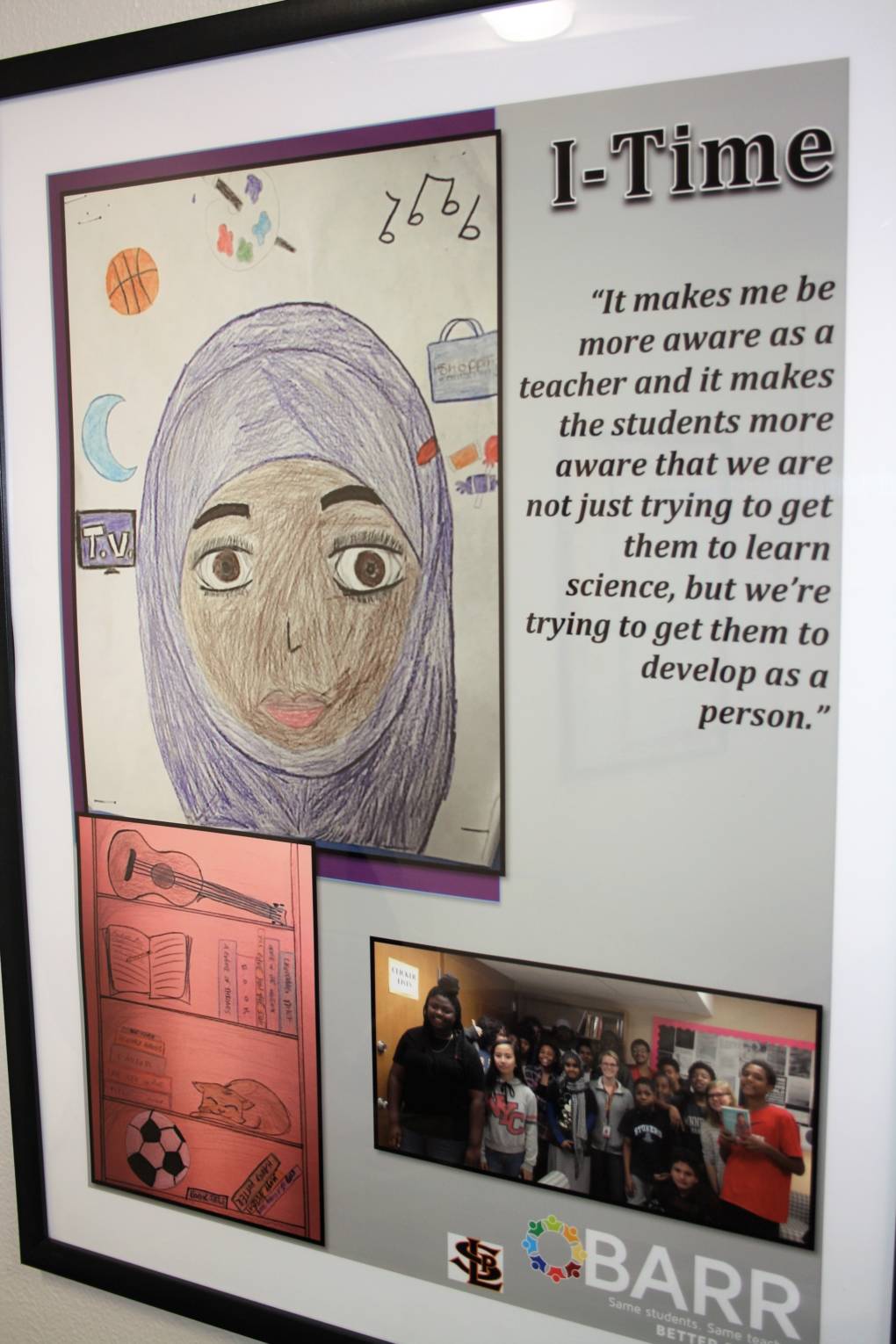
"caption": "Part of the Building Assets, Reducing Risks program is I-Time, which ninth graders have weekly as an opportunity to get to know their peers and teachers and discuss teenage problems. ",
"description": null,
"title": "BARR3",
"credit": "Tara García Mathewson/The Hechinger Report",
"status": "inherit",
"isLoading": false,
"fetchFailed": false
},
"mindshift_51959": {
"type": "attachments",
"id": "mindshift_51959",
"meta": {
"index": "attachments_1716263798",
"site": "mindshift",
"id": "51959",
"found": true
},
"parent": 51736,
"imgSizes": {
"small": {
"file": "https://ww2.kqed.org/app/uploads/sites/23/2018/08/iStock-531317427-520x330.jpg",
"width": 520,
"mimeType": "image/jpeg",
"height": 330
},
"twentyfourteen-full-width": {
"file": "https://ww2.kqed.org/app/uploads/sites/23/2018/08/iStock-531317427-1038x576.jpg",
"width": 1038,
"mimeType": "image/jpeg",
"height": 576
},
"thumbnail": {
"file": "https://ww2.kqed.org/app/uploads/sites/23/2018/08/iStock-531317427-160x101.jpg",
"width": 160,
"mimeType": "image/jpeg",
"height": 101
},
"fd-sm": {
"file": "https://ww2.kqed.org/app/uploads/sites/23/2018/08/iStock-531317427-960x609.jpg",
"width": 960,
"mimeType": "image/jpeg",
"height": 609
},
"post-thumbnail": {
"file": "https://ww2.kqed.org/app/uploads/sites/23/2018/08/iStock-531317427-672x372.jpg",
"width": 672,
"mimeType": "image/jpeg",
"height": 372
},
"xsmall": {
"file": "https://ww2.kqed.org/app/uploads/sites/23/2018/08/iStock-531317427-375x238.jpg",
"width": 375,
"mimeType": "image/jpeg",
"height": 238
},
"kqedFullSize": {
"file": "https://ww2.kqed.org/app/uploads/sites/23/2018/08/iStock-531317427-e1534869901915.jpg",
"width": 1920,
"height": 1217
},
"large": {
"file": "https://ww2.kqed.org/app/uploads/sites/23/2018/08/iStock-531317427-1020x647.jpg",
"width": 1020,
"mimeType": "image/jpeg",
"height": 647
},
"xlarge": {
"file": "https://ww2.kqed.org/app/uploads/sites/23/2018/08/iStock-531317427-1180x748.jpg",
"width": 1180,
"mimeType": "image/jpeg",
"height": 748
},
"complete_open_graph": {
"file": "https://ww2.kqed.org/app/uploads/sites/23/2018/08/iStock-531317427-1200x761.jpg",
"width": 1200,
"mimeType": "image/jpeg",
"height": 761
},
"guest-author-50": {
"file": "https://ww2.kqed.org/app/uploads/sites/23/2018/08/iStock-531317427-50x50.jpg",
"width": 50,
"mimeType": "image/jpeg",
"height": 50
},
"guest-author-96": {
"file": "https://ww2.kqed.org/app/uploads/sites/23/2018/08/iStock-531317427-96x96.jpg",
"width": 96,
"mimeType": "image/jpeg",
"height": 96
},
"medium": {
"file": "https://ww2.kqed.org/app/uploads/sites/23/2018/08/iStock-531317427-800x507.jpg",
"width": 800,
"mimeType": "image/jpeg",
"height": 507
},
"guest-author-64": {
"file": "https://ww2.kqed.org/app/uploads/sites/23/2018/08/iStock-531317427-64x64.jpg",
"width": 64,
"mimeType": "image/jpeg",
"height": 64
},
"guest-author-32": {
"file": "https://ww2.kqed.org/app/uploads/sites/23/2018/08/iStock-531317427-32x32.jpg",
"width": 32,
"mimeType": "image/jpeg",
"height": 32
},
"fd-lrg": {
"file": "https://ww2.kqed.org/app/uploads/sites/23/2018/08/iStock-531317427-1920x1217.jpg",
"width": 1920,
"mimeType": "image/jpeg",
"height": 1217
},
"fd-med": {
"file": "https://ww2.kqed.org/app/uploads/sites/23/2018/08/iStock-531317427-1180x748.jpg",
"width": 1180,
"mimeType": "image/jpeg",
"height": 748
},
"full-width": {
"file": "https://ww2.kqed.org/app/uploads/sites/23/2018/08/iStock-531317427-1920x1217.jpg",
"width": 1920,
"mimeType": "image/jpeg",
"height": 1217
},
"detail": {
"file": "https://ww2.kqed.org/app/uploads/sites/23/2018/08/iStock-531317427-150x150.jpg",
"width": 150,
"mimeType": "image/jpeg",
"height": 150
},
"medium_large": {
"file": "https://ww2.kqed.org/app/uploads/sites/23/2018/08/iStock-531317427-768x487.jpg",
"width": 768,
"mimeType": "image/jpeg",
"height": 487
},
"guest-author-128": {
"file": "https://ww2.kqed.org/app/uploads/sites/23/2018/08/iStock-531317427-128x128.jpg",
"width": 128,
"mimeType": "image/jpeg",
"height": 128
},
"xxsmall": {
"file": "https://ww2.kqed.org/app/uploads/sites/23/2018/08/iStock-531317427-240x152.jpg",
"width": 240,
"mimeType": "image/jpeg",
"height": 152
}
},
"publishDate": 1534869875,
"modified": 1534869894,
"caption": null,
"description": null,
"title": "iStock-531317427",
"credit": "iStock/Heijo",
"status": "inherit",
"isLoading": false,
"fetchFailed": false
},
"mindshift_51948": {
"type": "attachments",
"id": "mindshift_51948",
"meta": {
"index": "attachments_1716263798",
"site": "mindshift",
"id": "51948",
"found": true
},
"parent": 51720,
"imgSizes": {
"small": {
"file": "https://ww2.kqed.org/app/uploads/sites/23/2018/08/iStock-695284970-520x347.jpg",
"width": 520,
"mimeType": "image/jpeg",
"height": 347
},
"twentyfourteen-full-width": {
"file": "https://ww2.kqed.org/app/uploads/sites/23/2018/08/iStock-695284970-1038x576.jpg",
"width": 1038,
"mimeType": "image/jpeg",
"height": 576
},
"thumbnail": {
"file": "https://ww2.kqed.org/app/uploads/sites/23/2018/08/iStock-695284970-160x107.jpg",
"width": 160,
"mimeType": "image/jpeg",
"height": 107
},
"fd-sm": {
"file": "https://ww2.kqed.org/app/uploads/sites/23/2018/08/iStock-695284970-960x640.jpg",
"width": 960,
"mimeType": "image/jpeg",
"height": 640
},
"post-thumbnail": {
"file": "https://ww2.kqed.org/app/uploads/sites/23/2018/08/iStock-695284970-672x372.jpg",
"width": 672,
"mimeType": "image/jpeg",
"height": 372
},
"xsmall": {
"file": "https://ww2.kqed.org/app/uploads/sites/23/2018/08/iStock-695284970-375x250.jpg",
"width": 375,
"mimeType": "image/jpeg",
"height": 250
},
"kqedFullSize": {
"file": "https://ww2.kqed.org/app/uploads/sites/23/2018/08/iStock-695284970-e1534855013612.jpg",
"width": 1920,
"height": 1280
},
"large": {
"file": "https://ww2.kqed.org/app/uploads/sites/23/2018/08/iStock-695284970-1020x680.jpg",
"width": 1020,
"mimeType": "image/jpeg",
"height": 680
},
"xlarge": {
"file": "https://ww2.kqed.org/app/uploads/sites/23/2018/08/iStock-695284970-1180x787.jpg",
"width": 1180,
"mimeType": "image/jpeg",
"height": 787
},
"complete_open_graph": {
"file": "https://ww2.kqed.org/app/uploads/sites/23/2018/08/iStock-695284970-1200x800.jpg",
"width": 1200,
"mimeType": "image/jpeg",
"height": 800
},
"guest-author-50": {
"file": "https://ww2.kqed.org/app/uploads/sites/23/2018/08/iStock-695284970-50x50.jpg",
"width": 50,
"mimeType": "image/jpeg",
"height": 50
},
"guest-author-96": {
"file": "https://ww2.kqed.org/app/uploads/sites/23/2018/08/iStock-695284970-96x96.jpg",
"width": 96,
"mimeType": "image/jpeg",
"height": 96
},
"medium": {
"file": "https://ww2.kqed.org/app/uploads/sites/23/2018/08/iStock-695284970-800x533.jpg",
"width": 800,
"mimeType": "image/jpeg",
"height": 533
},
"guest-author-64": {
"file": "https://ww2.kqed.org/app/uploads/sites/23/2018/08/iStock-695284970-64x64.jpg",
"width": 64,
"mimeType": "image/jpeg",
"height": 64
},
"guest-author-32": {
"file": "https://ww2.kqed.org/app/uploads/sites/23/2018/08/iStock-695284970-32x32.jpg",
"width": 32,
"mimeType": "image/jpeg",
"height": 32
},
"fd-lrg": {
"file": "https://ww2.kqed.org/app/uploads/sites/23/2018/08/iStock-695284970-1920x1280.jpg",
"width": 1920,
"mimeType": "image/jpeg",
"height": 1280
},
"fd-med": {
"file": "https://ww2.kqed.org/app/uploads/sites/23/2018/08/iStock-695284970-1180x787.jpg",
"width": 1180,
"mimeType": "image/jpeg",
"height": 787
},
"full-width": {
"file": "https://ww2.kqed.org/app/uploads/sites/23/2018/08/iStock-695284970-1920x1280.jpg",
"width": 1920,
"mimeType": "image/jpeg",
"height": 1280
},
"detail": {
"file": "https://ww2.kqed.org/app/uploads/sites/23/2018/08/iStock-695284970-150x150.jpg",
"width": 150,
"mimeType": "image/jpeg",
"height": 150
},
"medium_large": {
"file": "https://ww2.kqed.org/app/uploads/sites/23/2018/08/iStock-695284970-768x512.jpg",
"width": 768,
"mimeType": "image/jpeg",
"height": 512
},
"guest-author-128": {
"file": "https://ww2.kqed.org/app/uploads/sites/23/2018/08/iStock-695284970-128x128.jpg",
"width": 128,
"mimeType": "image/jpeg",
"height": 128
},
"xxsmall": {
"file": "https://ww2.kqed.org/app/uploads/sites/23/2018/08/iStock-695284970-240x160.jpg",
"width": 240,
"mimeType": "image/jpeg",
"height": 160
}
},
"publishDate": 1534854391,
"modified": 1534855066,
"caption": null,
"description": null,
"title": "iStock-695284970",
"credit": "iStock/CREATISTA",
"status": "inherit",
"isLoading": false,
"fetchFailed": false
},
"mindshift_51887": {
"type": "attachments",
"id": "mindshift_51887",
"meta": {
"index": "attachments_1716263798",
"site": "mindshift",
"id": "51887",
"found": true
},
"parent": 49092,
"imgSizes": {
"small": {
"file": "https://ww2.kqed.org/app/uploads/sites/23/2018/08/Mindshift-Digital-Distractions-2-520x293.jpg",
"width": 520,
"mimeType": "image/jpeg",
"height": 293
},
"twentyfourteen-full-width": {
"file": "https://ww2.kqed.org/app/uploads/sites/23/2018/08/Mindshift-Digital-Distractions-2-1038x576.jpg",
"width": 1038,
"mimeType": "image/jpeg",
"height": 576
},
"thumbnail": {
"file": "https://ww2.kqed.org/app/uploads/sites/23/2018/08/Mindshift-Digital-Distractions-2-160x90.jpg",
"width": 160,
"mimeType": "image/jpeg",
"height": 90
},
"fd-sm": {
"file": "https://ww2.kqed.org/app/uploads/sites/23/2018/08/Mindshift-Digital-Distractions-2-960x540.jpg",
"width": 960,
"mimeType": "image/jpeg",
"height": 540
},
"post-thumbnail": {
"file": "https://ww2.kqed.org/app/uploads/sites/23/2018/08/Mindshift-Digital-Distractions-2-672x372.jpg",
"width": 672,
"mimeType": "image/jpeg",
"height": 372
},
"xsmall": {
"file": "https://ww2.kqed.org/app/uploads/sites/23/2018/08/Mindshift-Digital-Distractions-2-375x211.jpg",
"width": 375,
"mimeType": "image/jpeg",
"height": 211
},
"kqedFullSize": {
"file": "https://ww2.kqed.org/app/uploads/sites/23/2018/08/Mindshift-Digital-Distractions-2.jpg",
"width": 1920,
"height": 1080
},
"large": {
"file": "https://ww2.kqed.org/app/uploads/sites/23/2018/08/Mindshift-Digital-Distractions-2-1020x574.jpg",
"width": 1020,
"mimeType": "image/jpeg",
"height": 574
},
"xlarge": {
"file": "https://ww2.kqed.org/app/uploads/sites/23/2018/08/Mindshift-Digital-Distractions-2-1180x664.jpg",
"width": 1180,
"mimeType": "image/jpeg",
"height": 664
},
"complete_open_graph": {
"file": "https://ww2.kqed.org/app/uploads/sites/23/2018/08/Mindshift-Digital-Distractions-2-1200x675.jpg",
"width": 1200,
"mimeType": "image/jpeg",
"height": 675
},
"guest-author-50": {
"file": "https://ww2.kqed.org/app/uploads/sites/23/2018/08/Mindshift-Digital-Distractions-2-50x50.jpg",
"width": 50,
"mimeType": "image/jpeg",
"height": 50
},
"guest-author-96": {
"file": "https://ww2.kqed.org/app/uploads/sites/23/2018/08/Mindshift-Digital-Distractions-2-96x96.jpg",
"width": 96,
"mimeType": "image/jpeg",
"height": 96
},
"medium": {
"file": "https://ww2.kqed.org/app/uploads/sites/23/2018/08/Mindshift-Digital-Distractions-2-800x450.jpg",
"width": 800,
"mimeType": "image/jpeg",
"height": 450
},
"guest-author-64": {
"file": "https://ww2.kqed.org/app/uploads/sites/23/2018/08/Mindshift-Digital-Distractions-2-64x64.jpg",
"width": 64,
"mimeType": "image/jpeg",
"height": 64
},
"guest-author-32": {
"file": "https://ww2.kqed.org/app/uploads/sites/23/2018/08/Mindshift-Digital-Distractions-2-32x32.jpg",
"width": 32,
"mimeType": "image/jpeg",
"height": 32
},
"fd-lrg": {
"file": "https://ww2.kqed.org/app/uploads/sites/23/2018/08/Mindshift-Digital-Distractions-2-1920x1080.jpg",
"width": 1920,
"mimeType": "image/jpeg",
"height": 1080
},
"fd-med": {
"file": "https://ww2.kqed.org/app/uploads/sites/23/2018/08/Mindshift-Digital-Distractions-2-1180x664.jpg",
"width": 1180,
"mimeType": "image/jpeg",
"height": 664
},
"full-width": {
"file": "https://ww2.kqed.org/app/uploads/sites/23/2018/08/Mindshift-Digital-Distractions-2-1920x1080.jpg",
"width": 1920,
"mimeType": "image/jpeg",
"height": 1080
},
"detail": {
"file": "https://ww2.kqed.org/app/uploads/sites/23/2018/08/Mindshift-Digital-Distractions-2-150x150.jpg",
"width": 150,
"mimeType": "image/jpeg",
"height": 150
},
"medium_large": {
"file": "https://ww2.kqed.org/app/uploads/sites/23/2018/08/Mindshift-Digital-Distractions-2-768x432.jpg",
"width": 768,
"mimeType": "image/jpeg",
"height": 432
},
"guest-author-128": {
"file": "https://ww2.kqed.org/app/uploads/sites/23/2018/08/Mindshift-Digital-Distractions-2-128x128.jpg",
"width": 128,
"mimeType": "image/jpeg",
"height": 128
},
"xxsmall": {
"file": "https://ww2.kqed.org/app/uploads/sites/23/2018/08/Mindshift-Digital-Distractions-2-240x135.jpg",
"width": 240,
"mimeType": "image/jpeg",
"height": 135
}
},
"publishDate": 1534268541,
"modified": 1534268577,
"caption": null,
"description": null,
"title": "MindShift Digital Distractions 2",
"credit": "KQED/Kelly McLachlan",
"status": "inherit",
"isLoading": false,
"fetchFailed": false
},
"mindshift_51915": {
"type": "attachments",
"id": "mindshift_51915",
"meta": {
"index": "attachments_1716263798",
"site": "mindshift",
"id": "51915",
"found": true
},
"parent": 51909,
"imgSizes": {
"small": {
"file": "https://ww2.kqed.org/app/uploads/sites/23/2018/08/Horizons1-520x293.jpg",
"width": 520,
"mimeType": "image/jpeg",
"height": 293
},
"twentyfourteen-full-width": {
"file": "https://ww2.kqed.org/app/uploads/sites/23/2018/08/Horizons1-1038x576.jpg",
"width": 1038,
"mimeType": "image/jpeg",
"height": 576
},
"thumbnail": {
"file": "https://ww2.kqed.org/app/uploads/sites/23/2018/08/Horizons1-160x90.jpg",
"width": 160,
"mimeType": "image/jpeg",
"height": 90
},
"fd-sm": {
"file": "https://ww2.kqed.org/app/uploads/sites/23/2018/08/Horizons1-960x540.jpg",
"width": 960,
"mimeType": "image/jpeg",
"height": 540
},
"post-thumbnail": {
"file": "https://ww2.kqed.org/app/uploads/sites/23/2018/08/Horizons1-672x372.jpg",
"width": 672,
"mimeType": "image/jpeg",
"height": 372
},
"xsmall": {
"file": "https://ww2.kqed.org/app/uploads/sites/23/2018/08/Horizons1-375x211.jpg",
"width": 375,
"mimeType": "image/jpeg",
"height": 211
},
"kqedFullSize": {
"file": "https://ww2.kqed.org/app/uploads/sites/23/2018/08/Horizons1.jpg",
"width": 5472,
"height": 3078
},
"large": {
"file": "https://ww2.kqed.org/app/uploads/sites/23/2018/08/Horizons1-1020x574.jpg",
"width": 1020,
"mimeType": "image/jpeg",
"height": 574
},
"xlarge": {
"file": "https://ww2.kqed.org/app/uploads/sites/23/2018/08/Horizons1-1180x664.jpg",
"width": 1180,
"mimeType": "image/jpeg",
"height": 664
},
"complete_open_graph": {
"file": "https://ww2.kqed.org/app/uploads/sites/23/2018/08/Horizons1-1200x675.jpg",
"width": 1200,
"mimeType": "image/jpeg",
"height": 675
},
"guest-author-50": {
"file": "https://ww2.kqed.org/app/uploads/sites/23/2018/08/Horizons1-50x50.jpg",
"width": 50,
"mimeType": "image/jpeg",
"height": 50
},
"guest-author-96": {
"file": "https://ww2.kqed.org/app/uploads/sites/23/2018/08/Horizons1-96x96.jpg",
"width": 96,
"mimeType": "image/jpeg",
"height": 96
},
"medium": {
"file": "https://ww2.kqed.org/app/uploads/sites/23/2018/08/Horizons1-800x450.jpg",
"width": 800,
"mimeType": "image/jpeg",
"height": 450
},
"guest-author-64": {
"file": "https://ww2.kqed.org/app/uploads/sites/23/2018/08/Horizons1-64x64.jpg",
"width": 64,
"mimeType": "image/jpeg",
"height": 64
},
"guest-author-32": {
"file": "https://ww2.kqed.org/app/uploads/sites/23/2018/08/Horizons1-32x32.jpg",
"width": 32,
"mimeType": "image/jpeg",
"height": 32
},
"fd-lrg": {
"file": "https://ww2.kqed.org/app/uploads/sites/23/2018/08/Horizons1-1920x1080.jpg",
"width": 1920,
"mimeType": "image/jpeg",
"height": 1080
},
"fd-med": {
"file": "https://ww2.kqed.org/app/uploads/sites/23/2018/08/Horizons1-1180x664.jpg",
"width": 1180,
"mimeType": "image/jpeg",
"height": 664
},
"full-width": {
"file": "https://ww2.kqed.org/app/uploads/sites/23/2018/08/Horizons1-1920x1080.jpg",
"width": 1920,
"mimeType": "image/jpeg",
"height": 1080
},
"detail": {
"file": "https://ww2.kqed.org/app/uploads/sites/23/2018/08/Horizons1-150x150.jpg",
"width": 150,
"mimeType": "image/jpeg",
"height": 150
},
"medium_large": {
"file": "https://ww2.kqed.org/app/uploads/sites/23/2018/08/Horizons1-768x432.jpg",
"width": 768,
"mimeType": "image/jpeg",
"height": 432
},
"guest-author-128": {
"file": "https://ww2.kqed.org/app/uploads/sites/23/2018/08/Horizons1-128x128.jpg",
"width": 128,
"mimeType": "image/jpeg",
"height": 128
},
"xxsmall": {
"file": "https://ww2.kqed.org/app/uploads/sites/23/2018/08/Horizons1-240x135.jpg",
"width": 240,
"mimeType": "image/jpeg",
"height": 135
}
},
"publishDate": 1534532364,
"modified": 1534532445,
"caption": "Kindergarten students in the Horizons summer program at their swim lesson.",
"description": "Kindergarten students in the Horizons summer program at their swim lesson.",
"title": "Horizons1",
"credit": "Abby Rovner/\u003ca href=\"https://www.sffriendsschool.org/about-us/horizons-sffs\">Horizons at San Francisco Friends School\u003c/a>",
"status": "inherit",
"isLoading": false,
"fetchFailed": false
},
"mindshift_51903": {
"type": "attachments",
"id": "mindshift_51903",
"meta": {
"index": "attachments_1716263798",
"site": "mindshift",
"id": "51903",
"found": true
},
"parent": 51901,
"imgSizes": {
"thumbnail": {
"file": "https://ww2.kqed.org/app/uploads/sites/23/2018/08/Michael-Elsen-Rooney-ElsenRooneyVista1-500x0-c-default-160x120.jpg",
"width": 160,
"mimeType": "image/jpeg",
"height": 120
},
"post-thumbnail": {
"file": "https://ww2.kqed.org/app/uploads/sites/23/2018/08/Michael-Elsen-Rooney-ElsenRooneyVista1-500x0-c-default-500x372.jpg",
"width": 500,
"mimeType": "image/jpeg",
"height": 372
},
"xsmall": {
"file": "https://ww2.kqed.org/app/uploads/sites/23/2018/08/Michael-Elsen-Rooney-ElsenRooneyVista1-500x0-c-default-375x281.jpg",
"width": 375,
"mimeType": "image/jpeg",
"height": 281
},
"kqedFullSize": {
"file": "https://ww2.kqed.org/app/uploads/sites/23/2018/08/Michael-Elsen-Rooney-ElsenRooneyVista1-500x0-c-default.jpg",
"width": 500,
"height": 375
},
"guest-author-50": {
"file": "https://ww2.kqed.org/app/uploads/sites/23/2018/08/Michael-Elsen-Rooney-ElsenRooneyVista1-500x0-c-default-50x50.jpg",
"width": 50,
"mimeType": "image/jpeg",
"height": 50
},
"guest-author-96": {
"file": "https://ww2.kqed.org/app/uploads/sites/23/2018/08/Michael-Elsen-Rooney-ElsenRooneyVista1-500x0-c-default-96x96.jpg",
"width": 96,
"mimeType": "image/jpeg",
"height": 96
},
"guest-author-64": {
"file": "https://ww2.kqed.org/app/uploads/sites/23/2018/08/Michael-Elsen-Rooney-ElsenRooneyVista1-500x0-c-default-64x64.jpg",
"width": 64,
"mimeType": "image/jpeg",
"height": 64
},
"detail": {
"file": "https://ww2.kqed.org/app/uploads/sites/23/2018/08/Michael-Elsen-Rooney-ElsenRooneyVista1-500x0-c-default-150x150.jpg",
"width": 150,
"mimeType": "image/jpeg",
"height": 150
},
"guest-author-32": {
"file": "https://ww2.kqed.org/app/uploads/sites/23/2018/08/Michael-Elsen-Rooney-ElsenRooneyVista1-500x0-c-default-32x32.jpg",
"width": 32,
"mimeType": "image/jpeg",
"height": 32
},
"guest-author-128": {
"file": "https://ww2.kqed.org/app/uploads/sites/23/2018/08/Michael-Elsen-Rooney-ElsenRooneyVista1-500x0-c-default-128x128.jpg",
"width": 128,
"mimeType": "image/jpeg",
"height": 128
},
"xxsmall": {
"file": "https://ww2.kqed.org/app/uploads/sites/23/2018/08/Michael-Elsen-Rooney-ElsenRooneyVista1-500x0-c-default-240x180.jpg",
"width": 240,
"mimeType": "image/jpeg",
"height": 180
}
},
"publishDate": 1534489273,
"modified": 1534489317,
"caption": "Teacher Catherine Connelly leads a lesson on giving compliments in Vista’s pioneering new class on social and emotional wellness. Connelly loved the curriculum, but not the rolling furniture. ",
"description": null,
"title": "Michael-Elsen-Rooney-ElsenRooneyVista1-500x0-c-default",
"credit": "The Hechinger Report/Mike Elsen-Rooney",
"status": "inherit",
"isLoading": false,
"fetchFailed": false
},
"mindshift_51879": {
"type": "attachments",
"id": "mindshift_51879",
"meta": {
"index": "attachments_1716263798",
"site": "mindshift",
"id": "51879",
"found": true
},
"parent": 51878,
"imgSizes": {
"small": {
"file": "https://ww2.kqed.org/app/uploads/sites/23/2018/08/civics-to-voters_custom-2211b7ddd9b7cc51da6b8a94af39ea44f6691e49-520x325.jpg",
"width": 520,
"mimeType": "image/jpeg",
"height": 325
},
"twentyfourteen-full-width": {
"file": "https://ww2.kqed.org/app/uploads/sites/23/2018/08/civics-to-voters_custom-2211b7ddd9b7cc51da6b8a94af39ea44f6691e49-1038x576.jpg",
"width": 1038,
"mimeType": "image/jpeg",
"height": 576
},
"thumbnail": {
"file": "https://ww2.kqed.org/app/uploads/sites/23/2018/08/civics-to-voters_custom-2211b7ddd9b7cc51da6b8a94af39ea44f6691e49-160x100.jpg",
"width": 160,
"mimeType": "image/jpeg",
"height": 100
},
"fd-sm": {
"file": "https://ww2.kqed.org/app/uploads/sites/23/2018/08/civics-to-voters_custom-2211b7ddd9b7cc51da6b8a94af39ea44f6691e49-960x599.jpg",
"width": 960,
"mimeType": "image/jpeg",
"height": 599
},
"post-thumbnail": {
"file": "https://ww2.kqed.org/app/uploads/sites/23/2018/08/civics-to-voters_custom-2211b7ddd9b7cc51da6b8a94af39ea44f6691e49-672x372.jpg",
"width": 672,
"mimeType": "image/jpeg",
"height": 372
},
"xsmall": {
"file": "https://ww2.kqed.org/app/uploads/sites/23/2018/08/civics-to-voters_custom-2211b7ddd9b7cc51da6b8a94af39ea44f6691e49-375x234.jpg",
"width": 375,
"mimeType": "image/jpeg",
"height": 234
},
"kqedFullSize": {
"file": "https://ww2.kqed.org/app/uploads/sites/23/2018/08/civics-to-voters_custom-2211b7ddd9b7cc51da6b8a94af39ea44f6691e49-e1534322654141.jpg",
"width": 1920,
"height": 1198
},
"large": {
"file": "https://ww2.kqed.org/app/uploads/sites/23/2018/08/civics-to-voters_custom-2211b7ddd9b7cc51da6b8a94af39ea44f6691e49-1020x637.jpg",
"width": 1020,
"mimeType": "image/jpeg",
"height": 637
},
"xlarge": {
"file": "https://ww2.kqed.org/app/uploads/sites/23/2018/08/civics-to-voters_custom-2211b7ddd9b7cc51da6b8a94af39ea44f6691e49-1180x736.jpg",
"width": 1180,
"mimeType": "image/jpeg",
"height": 736
},
"complete_open_graph": {
"file": "https://ww2.kqed.org/app/uploads/sites/23/2018/08/civics-to-voters_custom-2211b7ddd9b7cc51da6b8a94af39ea44f6691e49-1200x749.jpg",
"width": 1200,
"mimeType": "image/jpeg",
"height": 749
},
"guest-author-50": {
"file": "https://ww2.kqed.org/app/uploads/sites/23/2018/08/civics-to-voters_custom-2211b7ddd9b7cc51da6b8a94af39ea44f6691e49-50x50.jpg",
"width": 50,
"mimeType": "image/jpeg",
"height": 50
},
"guest-author-96": {
"file": "https://ww2.kqed.org/app/uploads/sites/23/2018/08/civics-to-voters_custom-2211b7ddd9b7cc51da6b8a94af39ea44f6691e49-96x96.jpg",
"width": 96,
"mimeType": "image/jpeg",
"height": 96
},
"medium": {
"file": "https://ww2.kqed.org/app/uploads/sites/23/2018/08/civics-to-voters_custom-2211b7ddd9b7cc51da6b8a94af39ea44f6691e49-800x499.jpg",
"width": 800,
"mimeType": "image/jpeg",
"height": 499
},
"guest-author-64": {
"file": "https://ww2.kqed.org/app/uploads/sites/23/2018/08/civics-to-voters_custom-2211b7ddd9b7cc51da6b8a94af39ea44f6691e49-64x64.jpg",
"width": 64,
"mimeType": "image/jpeg",
"height": 64
},
"guest-author-32": {
"file": "https://ww2.kqed.org/app/uploads/sites/23/2018/08/civics-to-voters_custom-2211b7ddd9b7cc51da6b8a94af39ea44f6691e49-32x32.jpg",
"width": 32,
"mimeType": "image/jpeg",
"height": 32
},
"fd-lrg": {
"file": "https://ww2.kqed.org/app/uploads/sites/23/2018/08/civics-to-voters_custom-2211b7ddd9b7cc51da6b8a94af39ea44f6691e49-1920x1198.jpg",
"width": 1920,
"mimeType": "image/jpeg",
"height": 1198
},
"fd-med": {
"file": "https://ww2.kqed.org/app/uploads/sites/23/2018/08/civics-to-voters_custom-2211b7ddd9b7cc51da6b8a94af39ea44f6691e49-1180x736.jpg",
"width": 1180,
"mimeType": "image/jpeg",
"height": 736
},
"full-width": {
"file": "https://ww2.kqed.org/app/uploads/sites/23/2018/08/civics-to-voters_custom-2211b7ddd9b7cc51da6b8a94af39ea44f6691e49-1920x1198.jpg",
"width": 1920,
"mimeType": "image/jpeg",
"height": 1198
},
"detail": {
"file": "https://ww2.kqed.org/app/uploads/sites/23/2018/08/civics-to-voters_custom-2211b7ddd9b7cc51da6b8a94af39ea44f6691e49-150x150.jpg",
"width": 150,
"mimeType": "image/jpeg",
"height": 150
},
"medium_large": {
"file": "https://ww2.kqed.org/app/uploads/sites/23/2018/08/civics-to-voters_custom-2211b7ddd9b7cc51da6b8a94af39ea44f6691e49-768x479.jpg",
"width": 768,
"mimeType": "image/jpeg",
"height": 479
},
"guest-author-128": {
"file": "https://ww2.kqed.org/app/uploads/sites/23/2018/08/civics-to-voters_custom-2211b7ddd9b7cc51da6b8a94af39ea44f6691e49-128x128.jpg",
"width": 128,
"mimeType": "image/jpeg",
"height": 128
},
"xxsmall": {
"file": "https://ww2.kqed.org/app/uploads/sites/23/2018/08/civics-to-voters_custom-2211b7ddd9b7cc51da6b8a94af39ea44f6691e49-240x150.jpg",
"width": 240,
"mimeType": "image/jpeg",
"height": 150
}
},
"publishDate": 1534260627,
"modified": 1534322693,
"caption": "Teaching civics to students can help them be more engaged voters.",
"description": "Teaching civics to students can help them be more engaged voters.",
"title": "Teaching civics to students can help them be more engaged voters.",
"credit": "NPR/LA Johnson",
"status": "inherit",
"isLoading": false,
"fetchFailed": false
},
"mindshift_51858": {
"type": "attachments",
"id": "mindshift_51858",
"meta": {
"index": "attachments_1716263798",
"site": "mindshift",
"id": "51858",
"found": true
},
"parent": 51857,
"imgSizes": {
"small": {
"file": "https://ww2.kqed.org/app/uploads/sites/23/2018/08/c_li_schoholdropin_custom-a5b0bfc3137bad745ef75e4eedd4dc2ae1adab7b-520x325.jpe",
"width": 520,
"mimeType": "image/jpeg",
"height": 325
},
"twentyfourteen-full-width": {
"file": "https://ww2.kqed.org/app/uploads/sites/23/2018/08/c_li_schoholdropin_custom-a5b0bfc3137bad745ef75e4eedd4dc2ae1adab7b-1038x576.jpe",
"width": 1038,
"mimeType": "image/jpeg",
"height": 576
},
"thumbnail": {
"file": "https://ww2.kqed.org/app/uploads/sites/23/2018/08/c_li_schoholdropin_custom-a5b0bfc3137bad745ef75e4eedd4dc2ae1adab7b-160x100.jpe",
"width": 160,
"mimeType": "image/jpeg",
"height": 100
},
"fd-sm": {
"file": "https://ww2.kqed.org/app/uploads/sites/23/2018/08/c_li_schoholdropin_custom-a5b0bfc3137bad745ef75e4eedd4dc2ae1adab7b-960x599.jpe",
"width": 960,
"mimeType": "image/jpeg",
"height": 599
},
"post-thumbnail": {
"file": "https://ww2.kqed.org/app/uploads/sites/23/2018/08/c_li_schoholdropin_custom-a5b0bfc3137bad745ef75e4eedd4dc2ae1adab7b-672x372.jpe",
"width": 672,
"mimeType": "image/jpeg",
"height": 372
},
"xsmall": {
"file": "https://ww2.kqed.org/app/uploads/sites/23/2018/08/c_li_schoholdropin_custom-a5b0bfc3137bad745ef75e4eedd4dc2ae1adab7b-375x234.jpe",
"width": 375,
"mimeType": "image/jpeg",
"height": 234
},
"kqedFullSize": {
"file": "https://ww2.kqed.org/app/uploads/sites/23/2018/08/c_li_schoholdropin_custom-a5b0bfc3137bad745ef75e4eedd4dc2ae1adab7b-e1533823927427.jpe",
"width": 1920,
"height": 1198
},
"large": {
"file": "https://ww2.kqed.org/app/uploads/sites/23/2018/08/c_li_schoholdropin_custom-a5b0bfc3137bad745ef75e4eedd4dc2ae1adab7b-1020x637.jpe",
"width": 1020,
"mimeType": "image/jpeg",
"height": 637
},
"xlarge": {
"file": "https://ww2.kqed.org/app/uploads/sites/23/2018/08/c_li_schoholdropin_custom-a5b0bfc3137bad745ef75e4eedd4dc2ae1adab7b-1180x736.jpe",
"width": 1180,
"mimeType": "image/jpeg",
"height": 736
},
"complete_open_graph": {
"file": "https://ww2.kqed.org/app/uploads/sites/23/2018/08/c_li_schoholdropin_custom-a5b0bfc3137bad745ef75e4eedd4dc2ae1adab7b-1200x749.jpe",
"width": 1200,
"mimeType": "image/jpeg",
"height": 749
},
"guest-author-50": {
"file": "https://ww2.kqed.org/app/uploads/sites/23/2018/08/c_li_schoholdropin_custom-a5b0bfc3137bad745ef75e4eedd4dc2ae1adab7b-50x50.jpe",
"width": 50,
"mimeType": "image/jpeg",
"height": 50
},
"guest-author-96": {
"file": "https://ww2.kqed.org/app/uploads/sites/23/2018/08/c_li_schoholdropin_custom-a5b0bfc3137bad745ef75e4eedd4dc2ae1adab7b-96x96.jpe",
"width": 96,
"mimeType": "image/jpeg",
"height": 96
},
"medium": {
"file": "https://ww2.kqed.org/app/uploads/sites/23/2018/08/c_li_schoholdropin_custom-a5b0bfc3137bad745ef75e4eedd4dc2ae1adab7b-800x499.jpe",
"width": 800,
"mimeType": "image/jpeg",
"height": 499
},
"guest-author-64": {
"file": "https://ww2.kqed.org/app/uploads/sites/23/2018/08/c_li_schoholdropin_custom-a5b0bfc3137bad745ef75e4eedd4dc2ae1adab7b-64x64.jpe",
"width": 64,
"mimeType": "image/jpeg",
"height": 64
},
"guest-author-32": {
"file": "https://ww2.kqed.org/app/uploads/sites/23/2018/08/c_li_schoholdropin_custom-a5b0bfc3137bad745ef75e4eedd4dc2ae1adab7b-32x32.jpe",
"width": 32,
"mimeType": "image/jpeg",
"height": 32
},
"fd-lrg": {
"file": "https://ww2.kqed.org/app/uploads/sites/23/2018/08/c_li_schoholdropin_custom-a5b0bfc3137bad745ef75e4eedd4dc2ae1adab7b-1920x1198.jpe",
"width": 1920,
"mimeType": "image/jpeg",
"height": 1198
},
"fd-med": {
"file": "https://ww2.kqed.org/app/uploads/sites/23/2018/08/c_li_schoholdropin_custom-a5b0bfc3137bad745ef75e4eedd4dc2ae1adab7b-1180x736.jpe",
"width": 1180,
"mimeType": "image/jpeg",
"height": 736
},
"full-width": {
"file": "https://ww2.kqed.org/app/uploads/sites/23/2018/08/c_li_schoholdropin_custom-a5b0bfc3137bad745ef75e4eedd4dc2ae1adab7b-1920x1198.jpe",
"width": 1920,
"mimeType": "image/jpeg",
"height": 1198
},
"detail": {
"file": "https://ww2.kqed.org/app/uploads/sites/23/2018/08/c_li_schoholdropin_custom-a5b0bfc3137bad745ef75e4eedd4dc2ae1adab7b-150x150.jpe",
"width": 150,
"mimeType": "image/jpeg",
"height": 150
},
"medium_large": {
"file": "https://ww2.kqed.org/app/uploads/sites/23/2018/08/c_li_schoholdropin_custom-a5b0bfc3137bad745ef75e4eedd4dc2ae1adab7b-768x479.jpe",
"width": 768,
"mimeType": "image/jpeg",
"height": 479
},
"guest-author-128": {
"file": "https://ww2.kqed.org/app/uploads/sites/23/2018/08/c_li_schoholdropin_custom-a5b0bfc3137bad745ef75e4eedd4dc2ae1adab7b-128x128.jpe",
"width": 128,
"mimeType": "image/jpeg",
"height": 128
},
"xxsmall": {
"file": "https://ww2.kqed.org/app/uploads/sites/23/2018/08/c_li_schoholdropin_custom-a5b0bfc3137bad745ef75e4eedd4dc2ae1adab7b-240x150.jpe",
"width": 240,
"mimeType": "image/jpeg",
"height": 150
}
},
"publishDate": 1533823889,
"modified": 1533823939,
"caption": null,
"description": "School drop-in center",
"title": "School drop-in center",
"credit": "Cornelia Li for NPR",
"status": "inherit",
"isLoading": false,
"fetchFailed": false
},
"mindshift_51855": {
"type": "attachments",
"id": "mindshift_51855",
"meta": {
"index": "attachments_1716263798",
"site": "mindshift",
"id": "51855",
"found": true
},
"parent": 51841,
"imgSizes": {
"small": {
"file": "https://ww2.kqed.org/app/uploads/sites/23/2018/08/RogersCrop-520x293.jpg",
"width": 520,
"mimeType": "image/jpeg",
"height": 293
},
"twentyfourteen-full-width": {
"file": "https://ww2.kqed.org/app/uploads/sites/23/2018/08/RogersCrop-1038x576.jpg",
"width": 1038,
"mimeType": "image/jpeg",
"height": 576
},
"thumbnail": {
"file": "https://ww2.kqed.org/app/uploads/sites/23/2018/08/RogersCrop-160x90.jpg",
"width": 160,
"mimeType": "image/jpeg",
"height": 90
},
"fd-sm": {
"file": "https://ww2.kqed.org/app/uploads/sites/23/2018/08/RogersCrop-960x540.jpg",
"width": 960,
"mimeType": "image/jpeg",
"height": 540
},
"post-thumbnail": {
"file": "https://ww2.kqed.org/app/uploads/sites/23/2018/08/RogersCrop-672x372.jpg",
"width": 672,
"mimeType": "image/jpeg",
"height": 372
},
"xsmall": {
"file": "https://ww2.kqed.org/app/uploads/sites/23/2018/08/RogersCrop-375x211.jpg",
"width": 375,
"mimeType": "image/jpeg",
"height": 211
},
"kqedFullSize": {
"file": "https://ww2.kqed.org/app/uploads/sites/23/2018/08/RogersCrop.jpg",
"width": 1400,
"height": 788
},
"large": {
"file": "https://ww2.kqed.org/app/uploads/sites/23/2018/08/RogersCrop-1020x574.jpg",
"width": 1020,
"mimeType": "image/jpeg",
"height": 574
},
"xlarge": {
"file": "https://ww2.kqed.org/app/uploads/sites/23/2018/08/RogersCrop-1180x664.jpg",
"width": 1180,
"mimeType": "image/jpeg",
"height": 664
},
"complete_open_graph": {
"file": "https://ww2.kqed.org/app/uploads/sites/23/2018/08/RogersCrop-1200x675.jpg",
"width": 1200,
"mimeType": "image/jpeg",
"height": 675
},
"guest-author-50": {
"file": "https://ww2.kqed.org/app/uploads/sites/23/2018/08/RogersCrop-50x50.jpg",
"width": 50,
"mimeType": "image/jpeg",
"height": 50
},
"guest-author-96": {
"file": "https://ww2.kqed.org/app/uploads/sites/23/2018/08/RogersCrop-96x96.jpg",
"width": 96,
"mimeType": "image/jpeg",
"height": 96
},
"medium": {
"file": "https://ww2.kqed.org/app/uploads/sites/23/2018/08/RogersCrop-800x450.jpg",
"width": 800,
"mimeType": "image/jpeg",
"height": 450
},
"guest-author-64": {
"file": "https://ww2.kqed.org/app/uploads/sites/23/2018/08/RogersCrop-64x64.jpg",
"width": 64,
"mimeType": "image/jpeg",
"height": 64
},
"guest-author-32": {
"file": "https://ww2.kqed.org/app/uploads/sites/23/2018/08/RogersCrop-32x32.jpg",
"width": 32,
"mimeType": "image/jpeg",
"height": 32
},
"fd-med": {
"file": "https://ww2.kqed.org/app/uploads/sites/23/2018/08/RogersCrop-1180x664.jpg",
"width": 1180,
"mimeType": "image/jpeg",
"height": 664
},
"detail": {
"file": "https://ww2.kqed.org/app/uploads/sites/23/2018/08/RogersCrop-150x150.jpg",
"width": 150,
"mimeType": "image/jpeg",
"height": 150
},
"medium_large": {
"file": "https://ww2.kqed.org/app/uploads/sites/23/2018/08/RogersCrop-768x432.jpg",
"width": 768,
"mimeType": "image/jpeg",
"height": 432
},
"guest-author-128": {
"file": "https://ww2.kqed.org/app/uploads/sites/23/2018/08/RogersCrop-128x128.jpg",
"width": 128,
"mimeType": "image/jpeg",
"height": 128
},
"xxsmall": {
"file": "https://ww2.kqed.org/app/uploads/sites/23/2018/08/RogersCrop-240x135.jpg",
"width": 240,
"mimeType": "image/jpeg",
"height": 135
}
},
"publishDate": 1533772133,
"modified": 1533772168,
"caption": "Fred Rogers of Mr. Rogers' Neighborhood in the 1980s. ",
"description": null,
"title": "RogersCrop",
"credit": "Getty Images",
"status": "inherit",
"isLoading": false,
"fetchFailed": false
},
"mindshift_51800": {
"type": "attachments",
"id": "mindshift_51800",
"meta": {
"index": "attachments_1716263798",
"site": "mindshift",
"id": "51800",
"found": true
},
"parent": 51795,
"imgSizes": {
"small": {
"file": "https://ww2.kqed.org/app/uploads/sites/23/2018/08/24964891080_75850e40d1_o-520x347.jpg",
"width": 520,
"mimeType": "image/jpeg",
"height": 347
},
"twentyfourteen-full-width": {
"file": "https://ww2.kqed.org/app/uploads/sites/23/2018/08/24964891080_75850e40d1_o-1024x576.jpg",
"width": 1024,
"mimeType": "image/jpeg",
"height": 576
},
"thumbnail": {
"file": "https://ww2.kqed.org/app/uploads/sites/23/2018/08/24964891080_75850e40d1_o-160x107.jpg",
"width": 160,
"mimeType": "image/jpeg",
"height": 107
},
"fd-sm": {
"file": "https://ww2.kqed.org/app/uploads/sites/23/2018/08/24964891080_75850e40d1_o-960x640.jpg",
"width": 960,
"mimeType": "image/jpeg",
"height": 640
},
"post-thumbnail": {
"file": "https://ww2.kqed.org/app/uploads/sites/23/2018/08/24964891080_75850e40d1_o-672x372.jpg",
"width": 672,
"mimeType": "image/jpeg",
"height": 372
},
"xsmall": {
"file": "https://ww2.kqed.org/app/uploads/sites/23/2018/08/24964891080_75850e40d1_o-375x250.jpg",
"width": 375,
"mimeType": "image/jpeg",
"height": 250
},
"kqedFullSize": {
"file": "https://ww2.kqed.org/app/uploads/sites/23/2018/08/24964891080_75850e40d1_o.jpg",
"width": 1024,
"height": 683
},
"large": {
"file": "https://ww2.kqed.org/app/uploads/sites/23/2018/08/24964891080_75850e40d1_o-1020x680.jpg",
"width": 1020,
"mimeType": "image/jpeg",
"height": 680
},
"guest-author-50": {
"file": "https://ww2.kqed.org/app/uploads/sites/23/2018/08/24964891080_75850e40d1_o-50x50.jpg",
"width": 50,
"mimeType": "image/jpeg",
"height": 50
},
"guest-author-96": {
"file": "https://ww2.kqed.org/app/uploads/sites/23/2018/08/24964891080_75850e40d1_o-96x96.jpg",
"width": 96,
"mimeType": "image/jpeg",
"height": 96
},
"medium": {
"file": "https://ww2.kqed.org/app/uploads/sites/23/2018/08/24964891080_75850e40d1_o-800x534.jpg",
"width": 800,
"mimeType": "image/jpeg",
"height": 534
},
"guest-author-64": {
"file": "https://ww2.kqed.org/app/uploads/sites/23/2018/08/24964891080_75850e40d1_o-64x64.jpg",
"width": 64,
"mimeType": "image/jpeg",
"height": 64
},
"guest-author-32": {
"file": "https://ww2.kqed.org/app/uploads/sites/23/2018/08/24964891080_75850e40d1_o-32x32.jpg",
"width": 32,
"mimeType": "image/jpeg",
"height": 32
},
"detail": {
"file": "https://ww2.kqed.org/app/uploads/sites/23/2018/08/24964891080_75850e40d1_o-150x150.jpg",
"width": 150,
"mimeType": "image/jpeg",
"height": 150
},
"medium_large": {
"file": "https://ww2.kqed.org/app/uploads/sites/23/2018/08/24964891080_75850e40d1_o-768x512.jpg",
"width": 768,
"mimeType": "image/jpeg",
"height": 512
},
"guest-author-128": {
"file": "https://ww2.kqed.org/app/uploads/sites/23/2018/08/24964891080_75850e40d1_o-128x128.jpg",
"width": 128,
"mimeType": "image/jpeg",
"height": 128
},
"xxsmall": {
"file": "https://ww2.kqed.org/app/uploads/sites/23/2018/08/24964891080_75850e40d1_o-240x160.jpg",
"width": 240,
"mimeType": "image/jpeg",
"height": 160
}
},
"publishDate": 1533272541,
"modified": 1533272591,
"caption": null,
"description": null,
"title": "24964891080_75850e40d1_o",
"credit": " \u003ca href=\"https://www.flickr.com/photos/ugacommunications/24964891080/in/photolist-E34Amy-5xKHFK-5D3euh-nL2Hwm-tVsfA-5CXWxt-4SZdbv-DVGann-4bnPfz-6iSsgR-wrTga-7bJYCy-tVrDz-Mh668-wrTgq-6iSshg-4XfpYu-4drig1-6iSsjc-Mh67p-7T6czR-wrTgr-5HJLkx-7T6fwi-wrTgn-6iSskg-5HP3BQ-5xKHCM-6iWCqb-5D3esL-D5LPWX-MgTw3-3s4NH-7LSWSY-8Ef6w6-6iWCw5-5TFH3P-4bnP9V-5D3er7-4brQ4o-4a6HjT-6iWCsq-4a6GZK-6iWCsN-eVr2Hf-o3q6DU-4aaLqw-537fUC-6uzzmP-o1tU3J\">Flickr/UGA CAES/Extension\u003c/a>",
"status": "inherit",
"isLoading": false,
"fetchFailed": false
},
"mindshift_51753": {
"type": "attachments",
"id": "mindshift_51753",
"meta": {
"index": "attachments_1716263798",
"site": "mindshift",
"id": "51753",
"found": true
},
"parent": 51746,
"imgSizes": {
"small": {
"file": "https://ww2.kqed.org/app/uploads/sites/23/2018/07/iStock-526834252-520x323.jpg",
"width": 520,
"mimeType": "image/jpeg",
"height": 323
},
"twentyfourteen-full-width": {
"file": "https://ww2.kqed.org/app/uploads/sites/23/2018/07/iStock-526834252-1038x576.jpg",
"width": 1038,
"mimeType": "image/jpeg",
"height": 576
},
"thumbnail": {
"file": "https://ww2.kqed.org/app/uploads/sites/23/2018/07/iStock-526834252-160x99.jpg",
"width": 160,
"mimeType": "image/jpeg",
"height": 99
},
"fd-sm": {
"file": "https://ww2.kqed.org/app/uploads/sites/23/2018/07/iStock-526834252-960x596.jpg",
"width": 960,
"mimeType": "image/jpeg",
"height": 596
},
"post-thumbnail": {
"file": "https://ww2.kqed.org/app/uploads/sites/23/2018/07/iStock-526834252-672x372.jpg",
"width": 672,
"mimeType": "image/jpeg",
"height": 372
},
"xsmall": {
"file": "https://ww2.kqed.org/app/uploads/sites/23/2018/07/iStock-526834252-375x233.jpg",
"width": 375,
"mimeType": "image/jpeg",
"height": 233
},
"kqedFullSize": {
"file": "https://ww2.kqed.org/app/uploads/sites/23/2018/07/iStock-526834252-e1532931622230.jpg",
"width": 1920,
"height": 1193
},
"large": {
"file": "https://ww2.kqed.org/app/uploads/sites/23/2018/07/iStock-526834252-1020x634.jpg",
"width": 1020,
"mimeType": "image/jpeg",
"height": 634
},
"xlarge": {
"file": "https://ww2.kqed.org/app/uploads/sites/23/2018/07/iStock-526834252-1180x733.jpg",
"width": 1180,
"mimeType": "image/jpeg",
"height": 733
},
"complete_open_graph": {
"file": "https://ww2.kqed.org/app/uploads/sites/23/2018/07/iStock-526834252-1200x745.jpg",
"width": 1200,
"mimeType": "image/jpeg",
"height": 745
},
"guest-author-50": {
"file": "https://ww2.kqed.org/app/uploads/sites/23/2018/07/iStock-526834252-50x50.jpg",
"width": 50,
"mimeType": "image/jpeg",
"height": 50
},
"guest-author-96": {
"file": "https://ww2.kqed.org/app/uploads/sites/23/2018/07/iStock-526834252-96x96.jpg",
"width": 96,
"mimeType": "image/jpeg",
"height": 96
},
"medium": {
"file": "https://ww2.kqed.org/app/uploads/sites/23/2018/07/iStock-526834252-800x497.jpg",
"width": 800,
"mimeType": "image/jpeg",
"height": 497
},
"guest-author-64": {
"file": "https://ww2.kqed.org/app/uploads/sites/23/2018/07/iStock-526834252-64x64.jpg",
"width": 64,
"mimeType": "image/jpeg",
"height": 64
},
"guest-author-32": {
"file": "https://ww2.kqed.org/app/uploads/sites/23/2018/07/iStock-526834252-32x32.jpg",
"width": 32,
"mimeType": "image/jpeg",
"height": 32
},
"fd-lrg": {
"file": "https://ww2.kqed.org/app/uploads/sites/23/2018/07/iStock-526834252-1920x1193.jpg",
"width": 1920,
"mimeType": "image/jpeg",
"height": 1193
},
"fd-med": {
"file": "https://ww2.kqed.org/app/uploads/sites/23/2018/07/iStock-526834252-1180x733.jpg",
"width": 1180,
"mimeType": "image/jpeg",
"height": 733
},
"full-width": {
"file": "https://ww2.kqed.org/app/uploads/sites/23/2018/07/iStock-526834252-1920x1193.jpg",
"width": 1920,
"mimeType": "image/jpeg",
"height": 1193
},
"detail": {
"file": "https://ww2.kqed.org/app/uploads/sites/23/2018/07/iStock-526834252-150x150.jpg",
"width": 150,
"mimeType": "image/jpeg",
"height": 150
},
"medium_large": {
"file": "https://ww2.kqed.org/app/uploads/sites/23/2018/07/iStock-526834252-768x477.jpg",
"width": 768,
"mimeType": "image/jpeg",
"height": 477
},
"guest-author-128": {
"file": "https://ww2.kqed.org/app/uploads/sites/23/2018/07/iStock-526834252-128x128.jpg",
"width": 128,
"mimeType": "image/jpeg",
"height": 128
},
"xxsmall": {
"file": "https://ww2.kqed.org/app/uploads/sites/23/2018/07/iStock-526834252-240x149.jpg",
"width": 240,
"mimeType": "image/jpeg",
"height": 149
}
},
"publishDate": 1532931596,
"modified": 1532931615,
"caption": null,
"description": null,
"title": "iStock-526834252",
"credit": "iStock/Rawpixel",
"status": "inherit",
"isLoading": false,
"fetchFailed": false
},
"mindshift_51688": {
"type": "attachments",
"id": "mindshift_51688",
"meta": {
"index": "attachments_1716263798",
"site": "mindshift",
"id": "51688",
"found": true
},
"parent": 51686,
"imgSizes": {
"small": {
"file": "https://ww2.kqed.org/app/uploads/sites/23/2018/07/pittsfield-22-520x332.jpg",
"width": 520,
"mimeType": "image/jpeg",
"height": 332
},
"twentyfourteen-full-width": {
"file": "https://ww2.kqed.org/app/uploads/sites/23/2018/07/pittsfield-22-1038x576.jpg",
"width": 1038,
"mimeType": "image/jpeg",
"height": 576
},
"thumbnail": {
"file": "https://ww2.kqed.org/app/uploads/sites/23/2018/07/pittsfield-22-160x102.jpg",
"width": 160,
"mimeType": "image/jpeg",
"height": 102
},
"fd-sm": {
"file": "https://ww2.kqed.org/app/uploads/sites/23/2018/07/pittsfield-22-960x612.jpg",
"width": 960,
"mimeType": "image/jpeg",
"height": 612
},
"post-thumbnail": {
"file": "https://ww2.kqed.org/app/uploads/sites/23/2018/07/pittsfield-22-672x372.jpg",
"width": 672,
"mimeType": "image/jpeg",
"height": 372
},
"xsmall": {
"file": "https://ww2.kqed.org/app/uploads/sites/23/2018/07/pittsfield-22-375x239.jpg",
"width": 375,
"mimeType": "image/jpeg",
"height": 239
},
"kqedFullSize": {
"file": "https://ww2.kqed.org/app/uploads/sites/23/2018/07/pittsfield-22-e1531859838539.jpg",
"width": 1920,
"height": 1225
},
"large": {
"file": "https://ww2.kqed.org/app/uploads/sites/23/2018/07/pittsfield-22-1020x651.jpg",
"width": 1020,
"mimeType": "image/jpeg",
"height": 651
},
"xlarge": {
"file": "https://ww2.kqed.org/app/uploads/sites/23/2018/07/pittsfield-22-1180x753.jpg",
"width": 1180,
"mimeType": "image/jpeg",
"height": 753
},
"complete_open_graph": {
"file": "https://ww2.kqed.org/app/uploads/sites/23/2018/07/pittsfield-22-1200x765.jpg",
"width": 1200,
"mimeType": "image/jpeg",
"height": 765
},
"guest-author-50": {
"file": "https://ww2.kqed.org/app/uploads/sites/23/2018/07/pittsfield-22-50x50.jpg",
"width": 50,
"mimeType": "image/jpeg",
"height": 50
},
"guest-author-96": {
"file": "https://ww2.kqed.org/app/uploads/sites/23/2018/07/pittsfield-22-96x96.jpg",
"width": 96,
"mimeType": "image/jpeg",
"height": 96
},
"medium": {
"file": "https://ww2.kqed.org/app/uploads/sites/23/2018/07/pittsfield-22-800x510.jpg",
"width": 800,
"mimeType": "image/jpeg",
"height": 510
},
"guest-author-64": {
"file": "https://ww2.kqed.org/app/uploads/sites/23/2018/07/pittsfield-22-64x64.jpg",
"width": 64,
"mimeType": "image/jpeg",
"height": 64
},
"guest-author-32": {
"file": "https://ww2.kqed.org/app/uploads/sites/23/2018/07/pittsfield-22-32x32.jpg",
"width": 32,
"mimeType": "image/jpeg",
"height": 32
},
"fd-lrg": {
"file": "https://ww2.kqed.org/app/uploads/sites/23/2018/07/pittsfield-22-1920x1225.jpg",
"width": 1920,
"mimeType": "image/jpeg",
"height": 1225
},
"fd-med": {
"file": "https://ww2.kqed.org/app/uploads/sites/23/2018/07/pittsfield-22-1180x753.jpg",
"width": 1180,
"mimeType": "image/jpeg",
"height": 753
},
"full-width": {
"file": "https://ww2.kqed.org/app/uploads/sites/23/2018/07/pittsfield-22-1920x1225.jpg",
"width": 1920,
"mimeType": "image/jpeg",
"height": 1225
},
"detail": {
"file": "https://ww2.kqed.org/app/uploads/sites/23/2018/07/pittsfield-22-150x150.jpg",
"width": 150,
"mimeType": "image/jpeg",
"height": 150
},
"medium_large": {
"file": "https://ww2.kqed.org/app/uploads/sites/23/2018/07/pittsfield-22-768x490.jpg",
"width": 768,
"mimeType": "image/jpeg",
"height": 490
},
"guest-author-128": {
"file": "https://ww2.kqed.org/app/uploads/sites/23/2018/07/pittsfield-22-128x128.jpg",
"width": 128,
"mimeType": "image/jpeg",
"height": 128
},
"xxsmall": {
"file": "https://ww2.kqed.org/app/uploads/sites/23/2018/07/pittsfield-22-240x153.jpg",
"width": 240,
"mimeType": "image/jpeg",
"height": 153
}
},
"publishDate": 1531859793,
"modified": 1531859900,
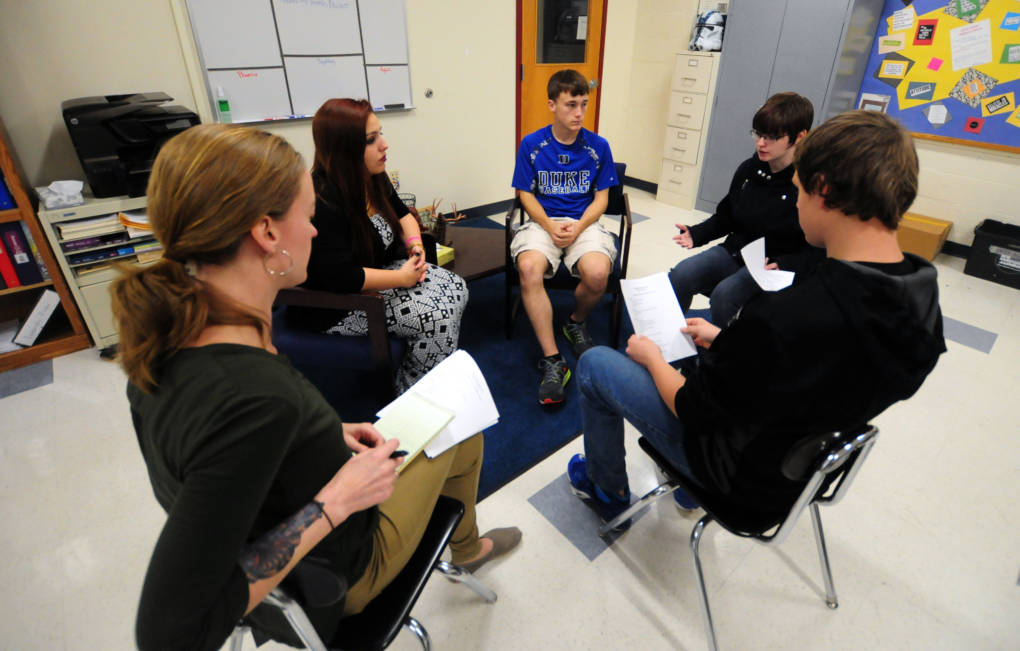
"caption": "Students participate in a restorative circle, a practice that’s part of a movement away from harsh discipline in schools.\n\n",
"description": null,
"title": "JIM VAIKNORAS/Staff photo Danvers Football vs Tewksbury",
"credit": "JIM VAIKNORAS ",
"status": "inherit",
"isLoading": false,
"fetchFailed": false
}
},
"audioPlayerReducer": {
"postId": "stream_live",
"isPaused": true,
"isPlaying": false,
"pfsActive": false,
"pledgeModalIsOpen": true,
"playerDrawerIsOpen": false,
"liveAudioPlayStartedAt": 0,
"liveAudioPlayContext": ""
},
"authorsReducer": {
"byline_mindshift_52000": {
"type": "authors",
"id": "byline_mindshift_52000",
"meta": {
"override": true
},
"slug": "byline_mindshift_52000",
"name": "\u003ca href=\"http://hechingerreport.org/\">Tara García Mathewson, The Hechinger Report\u003c/a>",
"isLoading": false
},
"byline_mindshift_51901": {
"type": "authors",
"id": "byline_mindshift_51901",
"meta": {
"override": true
},
"slug": "byline_mindshift_51901",
"name": "\u003ca href=\"http://hechingerreport.org/\">Mike Elsen-Rooney, The Hechinger Report\u003c/a>",
"isLoading": false
},
"byline_mindshift_51878": {
"type": "authors",
"id": "byline_mindshift_51878",
"meta": {
"override": true
},
"slug": "byline_mindshift_51878",
"name": "Emily Cardinali",
"isLoading": false
},
"byline_mindshift_51857": {
"type": "authors",
"id": "byline_mindshift_51857",
"meta": {
"override": true
},
"slug": "byline_mindshift_51857",
"name": "Anya Kamenetz",
"isLoading": false
},
"byline_mindshift_51841": {
"type": "authors",
"id": "byline_mindshift_51841",
"meta": {
"override": true
},
"slug": "byline_mindshift_51841",
"name": "Anya Kamenetz",
"isLoading": false
},
"byline_mindshift_51795": {
"type": "authors",
"id": "byline_mindshift_51795",
"meta": {
"override": true
},
"slug": "byline_mindshift_51795",
"name": "\u003ca href=\"https://www.gse.harvard.edu/uk/author/leah-shafer/517481\">Leah Shafer, Usable Knowledge\u003c/a>",
"isLoading": false
},
"byline_mindshift_51746": {
"type": "authors",
"id": "byline_mindshift_51746",
"meta": {
"override": true
},
"slug": "byline_mindshift_51746",
"name": "\u003ca href=\"https://www.gse.harvard.edu/uk/author/leah-shafer/517481\">Leah Shafer, Usable Knowledge\u003c/a>",
"isLoading": false
},
"byline_mindshift_51686": {
"type": "authors",
"id": "byline_mindshift_51686",
"meta": {
"override": true
},
"slug": "byline_mindshift_51686",
"name": "\u003ca href=\"http://hechingerreport.org/\">Daisy Yuhas, The Hechinger Report\u003c/a>",
"isLoading": false
},
"katrinaschwartz": {
"type": "authors",
"id": "234",
"meta": {
"index": "authors_1716337520",
"id": "234",
"found": true
},
"name": "Katrina Schwartz",
"firstName": "Katrina",
"lastName": "Schwartz",
"slug": "katrinaschwartz",
"email": "kschwartz@kqed.org",
"display_author_email": false,
"staff_mastheads": [
"news"
],
"title": "Producer",
"bio": "Katrina Schwartz is a journalist based in San Francisco. She's worked at KPCC public radio in LA and has reported on air and online for KQED since 2010. She covered how teaching and learning is changing for MindShift between 2012 and 2020. She is the co-host of the MindShift podcast and now produces KQED's Bay Curious podcast.",
"avatar": "https://secure.gravatar.com/avatar/edb4ee79070447a018538c9aae6eeecf28786515b8a0c30e43b6b7dce5aa44c8?s=600&d=blank&r=g",
"twitter": "kschwart",
"bluesky": null,
"facebook": null,
"instagram": null,
"linkedin": null,
"sites": [
{
"site": "",
"roles": [
"editor"
]
},
{
"site": "news",
"roles": [
"editor"
]
},
{
"site": "mindshift",
"roles": [
"administrator"
]
},
{
"site": "stateofhealth",
"roles": [
"author"
]
},
{
"site": "science",
"roles": [
"editor"
]
}
],
"headData": {
"title": "Katrina Schwartz | KQED",
"description": "Producer",
"ogImgSrc": "https://secure.gravatar.com/avatar/edb4ee79070447a018538c9aae6eeecf28786515b8a0c30e43b6b7dce5aa44c8?s=600&d=blank&r=g",
"twImgSrc": "https://secure.gravatar.com/avatar/edb4ee79070447a018538c9aae6eeecf28786515b8a0c30e43b6b7dce5aa44c8?s=600&d=blank&r=g"
},
"isLoading": false,
"link": "/author/katrinaschwartz"
},
"hollykorbey": {
"type": "authors",
"id": "4445",
"meta": {
"index": "authors_1716337520",
"id": "4445",
"found": true
},
"name": "Holly Korbey",
"firstName": "Holly",
"lastName": "Korbey",
"slug": "hollykorbey",
"email": "holly@hollykorbey.com",
"display_author_email": false,
"staff_mastheads": [],
"title": null,
"bio": "Holly Korbey's work on parenting and education has appeared in The New York Times, The Atlantic, Babble, Brain, Child Magazine, and others. She lives in Nashville with her family. Follow her on Twitter: @HKorbey",
"avatar": "https://secure.gravatar.com/avatar/f385f7a3b90e52ecd5e85c24fbd0a363?s=600&d=blank&r=g",
"twitter": null,
"facebook": null,
"instagram": null,
"linkedin": null,
"sites": [
{
"site": "mindshift",
"roles": [
"contributor"
]
}
],
"headData": {
"title": "Holly Korbey | KQED",
"description": null,
"ogImgSrc": "https://secure.gravatar.com/avatar/f385f7a3b90e52ecd5e85c24fbd0a363?s=600&d=blank&r=g",
"twImgSrc": "https://secure.gravatar.com/avatar/f385f7a3b90e52ecd5e85c24fbd0a363?s=600&d=blank&r=g"
},
"isLoading": false,
"link": "/author/hollykorbey"
}
},
"pagesReducer": {
"mindshift_category_big-ideas": {
"type": "terms",
"id": "mindshift_192",
"meta": {
"index": "terms_1716263798",
"site": "mindshift",
"id": "192",
"score": 14.406702
},
"featImg": null,
"name": "Big Ideas",
"description": "The latest findings from experts in the field related to the future of learning.",
"taxonomy": "category",
"headData": {
"twImgId": null,
"twTitle": null,
"ogTitle": null,
"ogImgId": null,
"twDescription": null,
"description": "The latest findings from experts in the field related to the future of learning.",
"title": "Big Ideas Archives | KQED Mindshift",
"ogDescription": null
},
"ttid": 192,
"slug": "big-ideas",
"isLoading": false,
"title": "Big Ideas",
"pageMeta": {
"site": "mindshift",
"WpPageTemplate": "page-topic-editorial",
"currentPage": 24
},
"blocks": [
{
"blockName": "kqed/company-paragraph",
"content": "The latest findings from experts in the field related to the future of learning."
},
{
"blockName": "kqed/post-list",
"attrs": {
"layout": "cardArticle2",
"query": "posts/mindshift?category=big-ideas",
"seeMore": false,
"paginated": true,
"page": 24
}
},
{
"blockName": "kqed/ad"
}
]
}
},
"pfsSessionReducer": {},
"postsReducer": {
"stream_live": {
"type": "live",
"id": "stream_live",
"audioUrl": "https://streams.kqed.org/kqedradio",
"title": "Live Stream",
"excerpt": "Live Stream information currently unavailable.",
"link": "/radio",
"featImg": "",
"label": {
"name": "KQED Live",
"link": "/"
}
},
"stream_kqedNewscast": {
"type": "posts",
"id": "stream_kqedNewscast",
"audioUrl": "https://www.kqed.org/.stream/anon/radio/RDnews/newscast.mp3?_=1",
"title": "KQED Newscast",
"featImg": "",
"label": {
"name": "88.5 FM",
"link": "/"
}
},
"mindshift_52000": {
"type": "posts",
"id": "mindshift_52000",
"meta": {
"index": "posts_1716263798",
"site": "mindshift",
"id": "52000",
"score": null,
"sort": [
1535626829000
]
},
"parent": 0,
"labelTerm": {
"site": "mindshift"
},
"blocks": [],
"publishDate": 1535626829,
"format": "standard",
"disqusTitle": "What Makes the BARR Program Effective in Helping Ninth Graders in Virtually Every Type of School?",
"title": "What Makes the BARR Program Effective in Helping Ninth Graders in Virtually Every Type of School?",
"headTitle": "MindShift | KQED News",
"content": "\u003cp>\u003cem>This story was produced by \u003c/em>\u003ca href=\"http://www.hechingerreport.org\">The Hechinger Report\u003c/a>\u003cem>, a nonprofit, independent news organization focused on inequality and innovation in education. Sign up for \u003c/em>\u003ca href=\"http://eepurl.com/c36ixT\">\u003cem>our newsletter\u003c/em>\u003c/a>\u003cem>.\u003c/em>\u003c/p>\n\u003cp>MINNEAPOLIS – There’s a school improvement model that has gotten consistent results in large schools, small schools, high-performing ones, low-performing ones, those with large achievement gaps, diverse schools, homogenous ones, and schools that are rural, urban and suburban. An impressive track record of hard evidence has made it the only program to earn three levels of competitive grant funding from the federal government since 2010.\u003c/p>\n\u003cp>But you’ve probably never heard of it.\u003c/p>\n\u003cp>The Building Assets, Reducing Risks program, known as BARR, was started by a Minneapolis school counselor in 1999, and remained in relative obscurity for a decade. Since 2010, its creator, Angela Jerabek, has sought research support to test the BARR program in other schools. The BARR mantra – “Same Students. Same Teachers. Better Results.” – has led Jerabek to aggressively seek out schools in different regions, with different demographics, to test her theory. So far, it holds up.\u003c/p>\n\u003cp>At large, diverse Hemet High School in urban southern California, this program helped close the achievement gap between ninth-grade Latino students and their peers within two years. At mid-sized Noble High School in predominantly white, rural southern Maine, ninth-graders participating in the program were absent half as much as their peers who weren’t exposed to it. At large, majority-Latino Bryan Adams High School in Dallas, the number of freshman failing classes dropped from 44 percent to 28 percent in one year.\u003c/p>\n\u003cp>[ad fullwidth]\u003c/p>\n\u003cp>No matter where a school starts, the BARR model seems to make it better, and it does so without hiring all new teachers, transforming the school curriculum, or spending a lot of money – though it does require a strong commitment in time.\u003c/p>\n\u003cp>BARR targets students during a make-or-break year: ninth grade. The UChicago Consortium on School Research \u003ca href=\"https://consortium.uchicago.edu/publications/track-indicator-predictor-high-school-graduation\">has found\u003c/a> that students who earn at least five credits in ninth grade (enough to go on to 10th grade) and get no more than a one-semester failing grade in a core course are 3.5 times more likely to graduate on time.\u003c/p>\n\u003cp>But these students are hard to reach.\u003c/p>\n\u003cp>“If you’re going to change kids’ trajectories, the earlier you do it, the easier it is,” said Johannes Bos, a senior vice president at the American Institutes for Research who specializes in randomized control trials in education and has studied the BARR model for the last two years. “You can have nice solid impacts in early childhood programs, or in first-grade programs or as late as third grade, but once you get into ninth grade, it becomes really difficult to change, especially academic, outcomes.”\u003c/p>\n\u003cp>BARR does it by prioritizing strong relationships and a focus on student strengths. It forces teachers to track student progress closely and creates a structure for stepping in at the first sign something might be wrong.\u003c/p>\n\u003cp>“Our system is to catch those coughs before they become pneumonia,” said Justin Barbeau, technical assistance director at the BARR Center and a former social studies teacher at St. Louis Park High School. “It’s really about giving kids the things they need.”\u003c/p>\n\u003cp>BARR has eight broad strategies, and on their own, they sound like plain old, good schooling: focus on the whole student; prioritize social and emotional learning; provide professional development for teachers, counselors and administrators; create teams of students; give teachers time to talk about the students on their respective teams; engage families; engage administrators; and meet to discuss the highest-risk students.\u003c/p>\n\u003cp>Giving a concrete structure to such a holistic focus is what sets BARR apart.\u003c/p>\n\u003cp>The model requires at least three ninth-grade teachers from core content areas (like English or math) to be on a BARR team. These teachers should have the same students in their classes so they can all bring personal experiences with these kids to their joint conversations. But teachers also split up students and become the main point of contact for a subset of them, which seems to reduce the likelihood anyone will get overlooked.\u003c/p>\n\u003cp>The BARR model dictates teachers should meet at least once per week and a larger team of the BARR teachers plus counseling staff should, too.\u003c/p>\n\u003cp>In both meetings, educators work off spreadsheets that identify the students, their grades in all their classes, their strengths, the things they struggle with (in and out of school), specific problems they’re having, achievable goals to get or keep them on track and a running list of solutions teachers have tried. Having access to this comprehensive information is crucial to the model. It creates accountability for educators as they develop and execute plans to intervene with struggling students, and it keeps a running record of a student’s experiences.\u003c/p>\n\u003cp>Nancy Simard, BARR coordinator and guidance director at Noble High School in Maine, said team meetings have happened at Noble since the 1990s, but BARR made them more effective. Instead of simply bringing up kids whom teachers happened to be worried about that day, teams track all students, monitoring progress and setbacks for everyone, along with attempts to intervene when students need extra support.\u003c/p>\n\u003cp>“If you’re just talking about kids in general, it doesn’t give you the structure to have those really pointed conversations about what’s working and what isn’t working for the child,” Simard said. “It really helps us target, not only our interventions, but thinking about student strengths.”\u003c/p>\n\u003cfigure id=\"attachment_52002\" class=\"wp-caption alignnone\" style=\"max-width: 800px\">\u003cimg class=\"size-medium wp-image-52002\" src=\"https://ww2.kqed.org/mindshift/wp-content/uploads/sites/23/2018/08/Tara-Garcia-Mathewson-BARR4-800x533.jpg\" alt=\"\" width=\"800\" height=\"533\">\u003cfigcaption class=\"wp-caption-text\">St. Louis Park High School students, just outside of Minneapolis, work together to build the tallest straw tower as part of a class exercise related to the Building Assets, Reducing Risks program. \u003ccite>(Tara García Mathewson/The Hechinger Report)\u003c/cite>\u003c/figcaption>\u003c/figure>\n\u003cp>During a BARR meeting with teachers and counselors at St. Louis Park High School just outside Minneapolis this past winter, the team worked through a list of students highlighted on a shared spreadsheet. One had missed a lot of school recently and his grades were low. The team clicked into the school’s learning management system to pull up more information about his attendance, missing assignments and class schedule. A teacher pointed out that he wants to go into the music industry and doesn’t seem to think high school is useful on that path. The team discussed options for working business courses into his schedule, along with more music, and strategized ways to get him more engaged in the rest of his classes. There was general agreement that his grades did not reflect his capacity.\u003c/p>\n\u003cp>“He has so much ability, but he’s putting in so little effort,” said Sara Peterson, the ninth-grade science teacher.\u003c/p>\n\u003cp>As they wrapped up their conversation, they filled out a Google form, describing the plan to help keep the student on track, noting his strengths and interests. This automatically populated the spreadsheet and created a record for teachers to review as they followed up with the student and helped change his schedule for the next semester.\u003c/p>\n\u003cp>These meetings happen weekly, as teams cycle through all the ninth-graders.\u003c/p>\n\u003cp>When teacher teams run out of ideas for how to help students in trouble, they pass along the challenge to a school “risk review team,” made up of administrators, counseling staff members and others. This team meets weekly to discuss the highest-need students, struggling with severe mental health problems, family dysfunction and serious crises.\u003c/p>\n\u003cp>The goal in all of these meetings is to discuss students’ strengths and capitalize on them. The various elements of BARR serve as a safety net of sorts. They ensure adults are watching every kid, ready to step in when needed.\u003c/p>\n\u003cp>The program will be in more than 100 schools in 15 states this coming academic year (up from 80 last year), and the BARR Center expects to expand to 250 schools by 2020, thanks to money from the federal government to support its scale-up.\u003c/p>\n\u003cp>John B. King Jr., president and CEO of the Education Trust and former secretary of education in the Obama Administration, said what he likes best about BARR, besides its promising early results, is that it “is grounded in the simple idea that relationships matter.”\u003c/p>\n\u003cp>\"The BARR model reflects the conviction that all students can excel regardless of race, zip code, or family income when they are provided with the right supports,\" King said at a BARR conference last year.\u003c/p>\n\u003cfigure id=\"attachment_52005\" class=\"wp-caption alignnone\" style=\"max-width: 800px\">\u003cimg class=\"size-medium wp-image-52005\" src=\"https://ww2.kqed.org/mindshift/wp-content/uploads/sites/23/2018/08/Tara-Garcia-Mathewson-BARR1-800x450.jpg\" alt=\"\" width=\"800\" height=\"450\">\u003cfigcaption class=\"wp-caption-text\">Freshmen at St. Louis Park High School, just outside of Minneapolis, take time out of their social studies class for a team-building exercise that is part of the school’s Building Assets, Reducing Risks program. \u003ccite>(Tara García Mathewson/The Hechinger Report)\u003c/cite>\u003c/figcaption>\u003c/figure>\n\u003cp>Along with all the behind-the-scenes work by teachers, the BARR program features a weekly period for students called “I-Time,” which replaces a portion of one core class. (The “I” in I-Time is for the pronoun, with the period focusing on individuals.) The BARR teachers take turns teaching an I-Time, choosing from a list of lessons concerned with developing students’ social and emotional skills, addressing issues like bullying and substance abuse, and giving students a chance to get to know both their peers and their teachers in a more relaxed, social setting.\u003c/p>\n\u003cp>Relationships developed in I-Time are meant to increase student engagement in the school community and increase the likelihood kids will show up. Steady attendance means students are present to learn the material that will help them pass classes and do well on tests, two metrics that BARR schools track to consider the program’s success.\u003c/p>\n\u003cp>Sarah Lindenberg, a ninth-grade social studies teacher at St. Louis Park, started one I-Time class with a straw tower construction project. Students were split into small teams and given 40 straws plus two feet of tape. Their task was to construct the largest free-standing tower they could in 15 minutes. The challenge required them to work together, practice design thinking and move quickly.\u003c/p>\n\u003cp>“Communication is key,” Lindenberg called out as she walked around the room, monitoring team progress.\u003c/p>\n\u003cp>Students picked up on the friendly competition, urging their teams on to win. While a handful weren’t particularly active contributors in their groups, most were highly engaged.\u003c/p>\n\u003cp>I-Time lessons range widely, content-wise, from fun games to serious discussions. At nearby St. Anthony Village High School, a small suburban school just northeast of Minneapolis that is in its third year with BARR, ninth-grader Alice Grooms, 15, said she particularly liked an I-Time that her math teacher had led earlier this year. Students put pieces of paper on their backs and let their peers write notes to them, anonymously. At the end of the activity, students could read through the comments.\u003c/p>\n\u003cp>Grooms, whose hair is dyed bright orange, got several notes commending her style and celebrating that she isn’t afraid to be herself.\u003c/p>\n\u003cp>“People that I didn’t really know were giving me compliments, so that felt really nice,” Grooms said. I-Time offers a chance to get to know peers on a deeper level, she said: “I really like spending time with kids in my class who I see every day but I feel like I don’t know that well.”\u003c/p>\n\u003cfigure id=\"attachment_52004\" class=\"wp-caption alignnone\" style=\"max-width: 800px\">\u003cimg class=\"size-medium wp-image-52004\" src=\"https://ww2.kqed.org/mindshift/wp-content/uploads/sites/23/2018/08/Tara-Garcia-Mathewson-BARR2-800x533.jpg\" alt=\"\" width=\"800\" height=\"533\">\u003cfigcaption class=\"wp-caption-text\">Alicia Grooms, 15, is a freshman at St. Anthony Village High School, where she has been able to get to know some of her classmates better through the Building Assets, Reducing Risk program. \u003ccite>(Tara García Mathewson/The Hechinger Report)\u003c/cite>\u003c/figcaption>\u003c/figure>\n\u003cp>Teachers get some of the same benefits from I-Time. They learn more about students that can inform intervention plans and deepen their understanding of why students are behaving in certain ways. I-Time generates great fodder for the “strengths” column on the BARR teachers’ spreadsheets.\u003c/p>\n\u003cp>Bos, the A.I.R. researcher, said BARR is less intensive than many programs aimed at high schoolers. It doesn’t require a lot of training for teachers — just six days over three years — and schools don’t have to overhaul their curriculum, purchase new products or hire a number of new staff members.\u003c/p>\n\u003cp>“Most interventions are definitely more intensive, more expensive and more invasive,” Bos said. Most also target smaller groups of students, based on some specific risk factor, rather than an entire grade level. And when it comes to impact, focusing intensive services on a small population can garner big results within it. Because BARR focuses on all students, its measured effects can be considered relatively modest. But they’re consistently present, and Bos said BARR is one of the best programs he has studied when it comes to value for the money.\u003c/p>\n\u003cp>Its power also lies in the universality of its potential impact. In all the different types of schools in which it has been tried, BARR has led to fewer course failures among ninth graders, higher attendance, better standardized test scores, and reports from both teachers and students that they feel more supported.\u003c/p>\n\u003cp>Astein Osei, the superintendent of St. Louis Park Public Schools, sees the root of BARR’s success in its focus on positives.\u003c/p>\n\u003cp>“In education, unfortunately there is a lot of emphasis on deficits,” Osei said. “We’re always trying to figure out how to help students with their deficits. The BARR model flips that on its head.” It asks, he said, what are students good at and how can we connect with them?\u003c/p>\n\u003cp>And the benefits flow from there.\u003c/p>\n\u003cp>[ad floatright]\u003c/p>\n\u003cp>\u003cem>This story was produced by \u003c/em>\u003ca href=\"http://www.hechingerreport.org\">The Hechinger Report\u003c/a>\u003cem>, a nonprofit, independent news organization focused on inequality and innovation in education. Sign up for \u003c/em>\u003ca href=\"http://eepurl.com/c36ixT\">\u003cem>our newsletter\u003c/em>\u003c/a>\u003cem>.\u003c/em>\u003c/p>\n\n",
"disqusIdentifier": "52000 https://ww2.kqed.org/mindshift/?p=52000",
"disqusUrl": "https://ww2.kqed.org/mindshift/2018/08/30/what-makes-the-barr-program-effective-in-helping-ninth-graders-in-virtually-every-type-of-school/",
"stats": {
"hasVideo": false,
"hasChartOrMap": false,
"hasAudio": false,
"hasPolis": false,
"wordCount": 2344,
"hasGoogleForm": false,
"hasGallery": false,
"hasHearkenModule": false,
"iframeSrcs": [],
"paragraphCount": 45
},
"modified": 1535610667,
"excerpt": "The ‘Building Assets, Reducing Risks’ model focuses on relationships and student strengths. The model uses a holistic approach with students to “catch those coughs before they become pneumonia.”",
"headData": {
"twImgId": "",
"twTitle": "",
"ogTitle": "",
"ogImgId": "",
"twDescription": "",
"description": "The ‘Building Assets, Reducing Risks’ model focuses on relationships and student strengths. The model uses a holistic approach with students to “catch those coughs before they become pneumonia.”",
"title": "What Makes the BARR Program Effective in Helping Ninth Graders in Virtually Every Type of School? | KQED",
"ogDescription": "",
"schema": {
"@context": "https://schema.org",
"@type": "Article",
"headline": "What Makes the BARR Program Effective in Helping Ninth Graders in Virtually Every Type of School?",
"datePublished": "2018-08-30T04:00:29-07:00",
"dateModified": "2018-08-29T23:31:07-07:00",
"image": "https://cdn.kqed.org/wp-content/uploads/2020/02/KQED-OG-Image@1x.png"
}
},
"guestAuthors": [],
"slug": "what-makes-the-barr-program-effective-in-helping-ninth-graders-in-virtually-every-type-of-school",
"status": "publish",
"nprByline": "\u003ca href=\"http://hechingerreport.org/\">Tara García Mathewson, The Hechinger Report\u003c/a>",
"path": "/mindshift/52000/what-makes-the-barr-program-effective-in-helping-ninth-graders-in-virtually-every-type-of-school",
"audioTrackLength": null,
"parsedContent": [
{
"type": "contentString",
"content": "\u003cdiv class=\"post-body\">\u003cp>\u003cp>\u003cem>This story was produced by \u003c/em>\u003ca href=\"http://www.hechingerreport.org\">The Hechinger Report\u003c/a>\u003cem>, a nonprofit, independent news organization focused on inequality and innovation in education. Sign up for \u003c/em>\u003ca href=\"http://eepurl.com/c36ixT\">\u003cem>our newsletter\u003c/em>\u003c/a>\u003cem>.\u003c/em>\u003c/p>\n\u003cp>MINNEAPOLIS – There’s a school improvement model that has gotten consistent results in large schools, small schools, high-performing ones, low-performing ones, those with large achievement gaps, diverse schools, homogenous ones, and schools that are rural, urban and suburban. An impressive track record of hard evidence has made it the only program to earn three levels of competitive grant funding from the federal government since 2010.\u003c/p>\n\u003cp>But you’ve probably never heard of it.\u003c/p>\n\u003cp>The Building Assets, Reducing Risks program, known as BARR, was started by a Minneapolis school counselor in 1999, and remained in relative obscurity for a decade. Since 2010, its creator, Angela Jerabek, has sought research support to test the BARR program in other schools. The BARR mantra – “Same Students. Same Teachers. Better Results.” – has led Jerabek to aggressively seek out schools in different regions, with different demographics, to test her theory. So far, it holds up.\u003c/p>\n\u003cp>At large, diverse Hemet High School in urban southern California, this program helped close the achievement gap between ninth-grade Latino students and their peers within two years. At mid-sized Noble High School in predominantly white, rural southern Maine, ninth-graders participating in the program were absent half as much as their peers who weren’t exposed to it. At large, majority-Latino Bryan Adams High School in Dallas, the number of freshman failing classes dropped from 44 percent to 28 percent in one year.\u003c/p>\n\u003cp>\u003c/p>\u003c/div>",
"attributes": {
"named": {},
"numeric": []
}
},
{
"type": "component",
"content": "",
"name": "ad",
"attributes": {
"named": {
"label": "fullwidth"
},
"numeric": [
"fullwidth"
]
}
},
{
"type": "contentString",
"content": "\u003cdiv class=\"post-body\">\u003cp>\u003c/p>\n\u003cp>No matter where a school starts, the BARR model seems to make it better, and it does so without hiring all new teachers, transforming the school curriculum, or spending a lot of money – though it does require a strong commitment in time.\u003c/p>\n\u003cp>BARR targets students during a make-or-break year: ninth grade. The UChicago Consortium on School Research \u003ca href=\"https://consortium.uchicago.edu/publications/track-indicator-predictor-high-school-graduation\">has found\u003c/a> that students who earn at least five credits in ninth grade (enough to go on to 10th grade) and get no more than a one-semester failing grade in a core course are 3.5 times more likely to graduate on time.\u003c/p>\n\u003cp>But these students are hard to reach.\u003c/p>\n\u003cp>“If you’re going to change kids’ trajectories, the earlier you do it, the easier it is,” said Johannes Bos, a senior vice president at the American Institutes for Research who specializes in randomized control trials in education and has studied the BARR model for the last two years. “You can have nice solid impacts in early childhood programs, or in first-grade programs or as late as third grade, but once you get into ninth grade, it becomes really difficult to change, especially academic, outcomes.”\u003c/p>\n\u003cp>BARR does it by prioritizing strong relationships and a focus on student strengths. It forces teachers to track student progress closely and creates a structure for stepping in at the first sign something might be wrong.\u003c/p>\n\u003cp>“Our system is to catch those coughs before they become pneumonia,” said Justin Barbeau, technical assistance director at the BARR Center and a former social studies teacher at St. Louis Park High School. “It’s really about giving kids the things they need.”\u003c/p>\n\u003cp>BARR has eight broad strategies, and on their own, they sound like plain old, good schooling: focus on the whole student; prioritize social and emotional learning; provide professional development for teachers, counselors and administrators; create teams of students; give teachers time to talk about the students on their respective teams; engage families; engage administrators; and meet to discuss the highest-risk students.\u003c/p>\n\u003cp>Giving a concrete structure to such a holistic focus is what sets BARR apart.\u003c/p>\n\u003cp>The model requires at least three ninth-grade teachers from core content areas (like English or math) to be on a BARR team. These teachers should have the same students in their classes so they can all bring personal experiences with these kids to their joint conversations. But teachers also split up students and become the main point of contact for a subset of them, which seems to reduce the likelihood anyone will get overlooked.\u003c/p>\n\u003cp>The BARR model dictates teachers should meet at least once per week and a larger team of the BARR teachers plus counseling staff should, too.\u003c/p>\n\u003cp>In both meetings, educators work off spreadsheets that identify the students, their grades in all their classes, their strengths, the things they struggle with (in and out of school), specific problems they’re having, achievable goals to get or keep them on track and a running list of solutions teachers have tried. Having access to this comprehensive information is crucial to the model. It creates accountability for educators as they develop and execute plans to intervene with struggling students, and it keeps a running record of a student’s experiences.\u003c/p>\n\u003cp>Nancy Simard, BARR coordinator and guidance director at Noble High School in Maine, said team meetings have happened at Noble since the 1990s, but BARR made them more effective. Instead of simply bringing up kids whom teachers happened to be worried about that day, teams track all students, monitoring progress and setbacks for everyone, along with attempts to intervene when students need extra support.\u003c/p>\n\u003cp>“If you’re just talking about kids in general, it doesn’t give you the structure to have those really pointed conversations about what’s working and what isn’t working for the child,” Simard said. “It really helps us target, not only our interventions, but thinking about student strengths.”\u003c/p>\n\u003cfigure id=\"attachment_52002\" class=\"wp-caption alignnone\" style=\"max-width: 800px\">\u003cimg class=\"size-medium wp-image-52002\" src=\"https://ww2.kqed.org/mindshift/wp-content/uploads/sites/23/2018/08/Tara-Garcia-Mathewson-BARR4-800x533.jpg\" alt=\"\" width=\"800\" height=\"533\">\u003cfigcaption class=\"wp-caption-text\">St. Louis Park High School students, just outside of Minneapolis, work together to build the tallest straw tower as part of a class exercise related to the Building Assets, Reducing Risks program. \u003ccite>(Tara García Mathewson/The Hechinger Report)\u003c/cite>\u003c/figcaption>\u003c/figure>\n\u003cp>During a BARR meeting with teachers and counselors at St. Louis Park High School just outside Minneapolis this past winter, the team worked through a list of students highlighted on a shared spreadsheet. One had missed a lot of school recently and his grades were low. The team clicked into the school’s learning management system to pull up more information about his attendance, missing assignments and class schedule. A teacher pointed out that he wants to go into the music industry and doesn’t seem to think high school is useful on that path. The team discussed options for working business courses into his schedule, along with more music, and strategized ways to get him more engaged in the rest of his classes. There was general agreement that his grades did not reflect his capacity.\u003c/p>\n\u003cp>“He has so much ability, but he’s putting in so little effort,” said Sara Peterson, the ninth-grade science teacher.\u003c/p>\n\u003cp>As they wrapped up their conversation, they filled out a Google form, describing the plan to help keep the student on track, noting his strengths and interests. This automatically populated the spreadsheet and created a record for teachers to review as they followed up with the student and helped change his schedule for the next semester.\u003c/p>\n\u003cp>These meetings happen weekly, as teams cycle through all the ninth-graders.\u003c/p>\n\u003cp>When teacher teams run out of ideas for how to help students in trouble, they pass along the challenge to a school “risk review team,” made up of administrators, counseling staff members and others. This team meets weekly to discuss the highest-need students, struggling with severe mental health problems, family dysfunction and serious crises.\u003c/p>\n\u003cp>The goal in all of these meetings is to discuss students’ strengths and capitalize on them. The various elements of BARR serve as a safety net of sorts. They ensure adults are watching every kid, ready to step in when needed.\u003c/p>\n\u003cp>The program will be in more than 100 schools in 15 states this coming academic year (up from 80 last year), and the BARR Center expects to expand to 250 schools by 2020, thanks to money from the federal government to support its scale-up.\u003c/p>\n\u003cp>John B. King Jr., president and CEO of the Education Trust and former secretary of education in the Obama Administration, said what he likes best about BARR, besides its promising early results, is that it “is grounded in the simple idea that relationships matter.”\u003c/p>\n\u003cp>\"The BARR model reflects the conviction that all students can excel regardless of race, zip code, or family income when they are provided with the right supports,\" King said at a BARR conference last year.\u003c/p>\n\u003cfigure id=\"attachment_52005\" class=\"wp-caption alignnone\" style=\"max-width: 800px\">\u003cimg class=\"size-medium wp-image-52005\" src=\"https://ww2.kqed.org/mindshift/wp-content/uploads/sites/23/2018/08/Tara-Garcia-Mathewson-BARR1-800x450.jpg\" alt=\"\" width=\"800\" height=\"450\">\u003cfigcaption class=\"wp-caption-text\">Freshmen at St. Louis Park High School, just outside of Minneapolis, take time out of their social studies class for a team-building exercise that is part of the school’s Building Assets, Reducing Risks program. \u003ccite>(Tara García Mathewson/The Hechinger Report)\u003c/cite>\u003c/figcaption>\u003c/figure>\n\u003cp>Along with all the behind-the-scenes work by teachers, the BARR program features a weekly period for students called “I-Time,” which replaces a portion of one core class. (The “I” in I-Time is for the pronoun, with the period focusing on individuals.) The BARR teachers take turns teaching an I-Time, choosing from a list of lessons concerned with developing students’ social and emotional skills, addressing issues like bullying and substance abuse, and giving students a chance to get to know both their peers and their teachers in a more relaxed, social setting.\u003c/p>\n\u003cp>Relationships developed in I-Time are meant to increase student engagement in the school community and increase the likelihood kids will show up. Steady attendance means students are present to learn the material that will help them pass classes and do well on tests, two metrics that BARR schools track to consider the program’s success.\u003c/p>\n\u003cp>Sarah Lindenberg, a ninth-grade social studies teacher at St. Louis Park, started one I-Time class with a straw tower construction project. Students were split into small teams and given 40 straws plus two feet of tape. Their task was to construct the largest free-standing tower they could in 15 minutes. The challenge required them to work together, practice design thinking and move quickly.\u003c/p>\n\u003cp>“Communication is key,” Lindenberg called out as she walked around the room, monitoring team progress.\u003c/p>\n\u003cp>Students picked up on the friendly competition, urging their teams on to win. While a handful weren’t particularly active contributors in their groups, most were highly engaged.\u003c/p>\n\u003cp>I-Time lessons range widely, content-wise, from fun games to serious discussions. At nearby St. Anthony Village High School, a small suburban school just northeast of Minneapolis that is in its third year with BARR, ninth-grader Alice Grooms, 15, said she particularly liked an I-Time that her math teacher had led earlier this year. Students put pieces of paper on their backs and let their peers write notes to them, anonymously. At the end of the activity, students could read through the comments.\u003c/p>\n\u003cp>Grooms, whose hair is dyed bright orange, got several notes commending her style and celebrating that she isn’t afraid to be herself.\u003c/p>\n\u003cp>“People that I didn’t really know were giving me compliments, so that felt really nice,” Grooms said. I-Time offers a chance to get to know peers on a deeper level, she said: “I really like spending time with kids in my class who I see every day but I feel like I don’t know that well.”\u003c/p>\n\u003cfigure id=\"attachment_52004\" class=\"wp-caption alignnone\" style=\"max-width: 800px\">\u003cimg class=\"size-medium wp-image-52004\" src=\"https://ww2.kqed.org/mindshift/wp-content/uploads/sites/23/2018/08/Tara-Garcia-Mathewson-BARR2-800x533.jpg\" alt=\"\" width=\"800\" height=\"533\">\u003cfigcaption class=\"wp-caption-text\">Alicia Grooms, 15, is a freshman at St. Anthony Village High School, where she has been able to get to know some of her classmates better through the Building Assets, Reducing Risk program. \u003ccite>(Tara García Mathewson/The Hechinger Report)\u003c/cite>\u003c/figcaption>\u003c/figure>\n\u003cp>Teachers get some of the same benefits from I-Time. They learn more about students that can inform intervention plans and deepen their understanding of why students are behaving in certain ways. I-Time generates great fodder for the “strengths” column on the BARR teachers’ spreadsheets.\u003c/p>\n\u003cp>Bos, the A.I.R. researcher, said BARR is less intensive than many programs aimed at high schoolers. It doesn’t require a lot of training for teachers — just six days over three years — and schools don’t have to overhaul their curriculum, purchase new products or hire a number of new staff members.\u003c/p>\n\u003cp>“Most interventions are definitely more intensive, more expensive and more invasive,” Bos said. Most also target smaller groups of students, based on some specific risk factor, rather than an entire grade level. And when it comes to impact, focusing intensive services on a small population can garner big results within it. Because BARR focuses on all students, its measured effects can be considered relatively modest. But they’re consistently present, and Bos said BARR is one of the best programs he has studied when it comes to value for the money.\u003c/p>\n\u003cp>Its power also lies in the universality of its potential impact. In all the different types of schools in which it has been tried, BARR has led to fewer course failures among ninth graders, higher attendance, better standardized test scores, and reports from both teachers and students that they feel more supported.\u003c/p>\n\u003cp>Astein Osei, the superintendent of St. Louis Park Public Schools, sees the root of BARR’s success in its focus on positives.\u003c/p>\n\u003cp>“In education, unfortunately there is a lot of emphasis on deficits,” Osei said. “We’re always trying to figure out how to help students with their deficits. The BARR model flips that on its head.” It asks, he said, what are students good at and how can we connect with them?\u003c/p>\n\u003cp>And the benefits flow from there.\u003c/p>\n\u003cp>\u003c/p>\u003c/div>",
"attributes": {
"named": {},
"numeric": []
}
},
{
"type": "component",
"content": "",
"name": "ad",
"attributes": {
"named": {
"label": "floatright"
},
"numeric": [
"floatright"
]
}
},
{
"type": "contentString",
"content": "\u003cdiv class=\"post-body\">\u003cp>\u003c/p>\n\u003cp>\u003cem>This story was produced by \u003c/em>\u003ca href=\"http://www.hechingerreport.org\">The Hechinger Report\u003c/a>\u003cem>, a nonprofit, independent news organization focused on inequality and innovation in education. Sign up for \u003c/em>\u003ca href=\"http://eepurl.com/c36ixT\">\u003cem>our newsletter\u003c/em>\u003c/a>\u003cem>.\u003c/em>\u003c/p>\n\n\u003c/div>\u003c/p>",
"attributes": {
"named": {},
"numeric": []
}
}
],
"link": "/mindshift/52000/what-makes-the-barr-program-effective-in-helping-ninth-graders-in-virtually-every-type-of-school",
"authors": [
"byline_mindshift_52000"
],
"categories": [
"mindshift_192",
"mindshift_193"
],
"tags": [
"mindshift_21183",
"mindshift_20784",
"mindshift_1040",
"mindshift_146",
"mindshift_20877",
"mindshift_943"
],
"featImg": "mindshift_52003",
"label": "mindshift"
},
"mindshift_51736": {
"type": "posts",
"id": "mindshift_51736",
"meta": {
"index": "posts_1716263798",
"site": "mindshift",
"id": "51736",
"score": null,
"sort": [
1535016064000
]
},
"parent": 0,
"labelTerm": {
"site": "mindshift"
},
"blocks": [],
"publishDate": 1535016064,
"format": "standard",
"disqusTitle": "What Adolescent Girls Wish Their Parents Understood About Them",
"title": "What Adolescent Girls Wish Their Parents Understood About Them",
"headTitle": "MindShift | KQED News",
"content": "\u003cp>\u003cem>This excerpt is from the girls' section of \"\u003ca href=\"http://www.sasquatchbooks.com/book/?isbn=9781632171801&will-puberty-last-my-whole-life-by-julie-metzger\">Will Puberty Last My Whole Life? REAL Answers to REAL Questions from Preteens About Body Changes, Sex, and Other Growing-Up Stuff\u003c/a>\" by Julie Metzger and Robert Lehmann. Some of the questions most frequently asked by adolescent girls are featured in this chapter, \"\u003cspan class=\"s1\">How Can I Make My Family Seem Like More of an Option to Talk To? …And Other Questions About Your Relationship with Your Parents.\"\u003c/span>\u003c/em>\u003c/p>\n\u003cp class=\"p1\">\u003cstrong>\u003cspan class=\"s1\">What if you like a boy but you don’t know how to break it to your parents that their baby girl LIKES SOMEONE?\u003c/span>\u003c/strong>\u003c/p>\n\u003cp class=\"p3\">\u003cspan class=\"s1\">Talking with grown-ups about friendships and relationships can sometimes be challenging for a lot of reasons. They might be surprised by what you have to say, might change their opinions about you or your friend, or might have advice that you weren’t looking for. “Liking” someone means you have feelings for the person that seem different than feelings you have for other friends—that you are interested in that person in a new or bigger way than you used to be. You may worry that your mom might not think you are old enough to \u003cem>like \u003c/em>\u003c/span>\u003cspan class=\"s1\">someone, and that she will be concerned or surprised. It can help to start off the conversation with something like, “Some of my feelings are changing about people. I think I like someone in my class and \u003cem>I would like to tell you about it\u003c/em> but I am worried what you will say or think.”\u003c/span>\u003c/p>\n\u003cp class=\"p1\">\u003cstrong>\u003cspan class=\"s1\">It seems like my mom and I are FIGHTING ALL THE TIME. I just think she doesn’t understand. She thinks I don’t understand. It’s, well, it’s majorly weird! What do I do?\u003c/span>\u003c/strong>\u003c/p>\n\u003cp class=\"p4\">\u003cspan class=\"s1\">Living with your family gives you an important place to learn skills that you’ll use \u003cem>throughout the rest of your life\u003c/em>. However, it isn’t always easy for parents and kids to get along. Sometimes there are topics or emotions that are uncomfortable and difficult. Maybe you feel like your mom gives you too much advice or that her ideas \u003c/span>\u003c/p>\n\u003cp>[ad fullwidth]\u003c/p>\n\u003cp class=\"p4\">\u003cspan class=\"s1\">don’t feel realistic. Maybe you think she is critical, or you argue more than anything else. It might be helpful to just \u003cem>talk about talking\u003c/em> with your mom. Try to find a time to connect when there isn’t something to argue about. You could start with, “It always seems like we are arguing—it would be nice to talk things over without yelling at each other.” Let her know how you are feeling—\u003cem>most likely she is hoping for some changes as well\u003c/em>. If you find you are always fighting, learning how to take a break and come back together when you both calm down can be key. Families who are struggling may need to call upon resources like counselors to help them work on \u003c/span>\u003cspan class=\"s1\">ways to improve their communication.\u003c/span>\u003c/p>\n\u003cfigure id=\"attachment_51742\" class=\"wp-caption alignnone\" style=\"max-width: 625px\">\u003cimg class=\"wp-image-51742 size-full\" src=\"https://ww2.kqed.org/mindshift/wp-content/uploads/sites/23/2018/07/What-I-Wish-Parents-Understood.png\" alt=\"\" width=\"625\" height=\"821\" srcset=\"https://ww2.kqed.org/app/uploads/sites/23/2018/07/What-I-Wish-Parents-Understood.png 625w, https://ww2.kqed.org/app/uploads/sites/23/2018/07/What-I-Wish-Parents-Understood-160x210.png 160w, https://ww2.kqed.org/app/uploads/sites/23/2018/07/What-I-Wish-Parents-Understood-240x315.png 240w, https://ww2.kqed.org/app/uploads/sites/23/2018/07/What-I-Wish-Parents-Understood-375x493.png 375w, https://ww2.kqed.org/app/uploads/sites/23/2018/07/What-I-Wish-Parents-Understood-520x683.png 520w\" sizes=\"(max-width: 625px) 100vw, 625px\">\u003cfigcaption class=\"wp-caption-text\">From \u003ca href=\"http://www.sasquatchbooks.com/book/?isbn=9781632171801&will-puberty-last-my-whole-life-by-julie-metzger\">Will Puberty Last My Whole Life? REAL Answers to REAL Questions from Preteens About Body Changes, Sex, and Other Growing-Up Stuff\u003c/a>\u003c/figcaption>\u003c/figure>\n\u003cp class=\"p1\">\u003cstrong>\u003cspan class=\"s1\">How can I make MY FAMILY seem like more of an option to talk to?\u003c/span>\u003c/strong>\u003c/p>\n\u003cp class=\"p4\">\u003cspan class=\"s1\">Sometimes it’s challenging to bring up certain topics with your family. That might be because they don’t have any practice talking about those topics, which makes them feel as uncomfortable as you do. Maybe you feel like they don’t “hear” what you are trying to say. Or maybe just finding a time to talk is half the challenge—grown-ups can be distracted by lots of responsibilities, so you need to invite them into the conversation. You might try saying something like, “\u003cem>I would love to talk through\u003c/em> something that is going on with my friends. Would you have some time after dinner?” Or, “Would you want to walk the dog together tonight? \u003cem>I have something on my mind.\u003c/em>” Sometimes it’s easier to start the conversation by writing them a note.\u003c/span>\u003c/p>\n\u003cp class=\"p1\">\u003cstrong>\u003cspan class=\"s1\">My family doesn’t like to see me growing up, so I don’t know how they will accept that I am growing up. How can I show them kindly that I’m NOT\u003cspan class=\"Apple-converted-space\"> \u003c/span>A\u003cspan class=\"Apple-converted-space\"> \u003c/span>BABY anymore?\u003c/span>\u003c/strong>\u003c/p>\n\u003cp class=\"p4\">\u003cspan class=\"s1\">Sometimes our bodies and our brains\u003cem> change so fast\u003c/em> that our parents can’t keep track. And sometimes we feel ready to have new responsibilities, but our parents are less certain. Every family makes adjustments as each person grows up, and part of the process is \u003cem>negotiating decisions within a family\u003c/em>. If you feel ready to make your own decision but your family is less certain, have a conversation with them to say what you are thinking and experiencing. Everyone has the courage for even a one-minute conversation—it’s a place to start. \u003c/span>\u003c/p>\n\u003cp class=\"p1\">\u003cstrong>\u003cspan class=\"s1\">Should my dad know I am going through puberty?\u003c/span>\u003c/strong>\u003c/p>\n\u003cp class=\"p4\">\u003cspan class=\"s1\">Dads are invested in their daughters’ lives in puberty \u003cem>and beyond\u003c/em>! Some dads may not have much experience talking about girls’ body changes since they have only been through their own puberty experience. Using your own words and stories will \u003cem>help your dad understand\u003c/em> what puberty is like for a girl. Dads can be amazing advocates—they want the puberty experience to go well for their daughters. Sharing your\u003cem> thoughts and feelings\u003c/em> with your dad helps him to discover some of the ways you are growing up.\u003c/span>\u003c/p>\n\u003cp class=\"p1\">\u003cstrong>\u003cspan class=\"s1\">\u003ca href=\"http://www.sasquatchbooks.com/book/?isbn=9781632171801&will-puberty-last-my-whole-life-by-julie-metzger\">\u003cimg class=\"alignleft wp-image-51954\" src=\"https://ww2.kqed.org/mindshift/wp-content/uploads/sites/23/2018/07/Puberty_fullcover_Girls-1-800x939.jpg\" alt=\"\" width=\"250\" height=\"293\" srcset=\"https://ww2.kqed.org/app/uploads/sites/23/2018/07/Puberty_fullcover_Girls-1-800x939.jpg 800w, https://ww2.kqed.org/app/uploads/sites/23/2018/07/Puberty_fullcover_Girls-1-160x188.jpg 160w, https://ww2.kqed.org/app/uploads/sites/23/2018/07/Puberty_fullcover_Girls-1-768x901.jpg 768w, https://ww2.kqed.org/app/uploads/sites/23/2018/07/Puberty_fullcover_Girls-1-1020x1197.jpg 1020w, https://ww2.kqed.org/app/uploads/sites/23/2018/07/Puberty_fullcover_Girls-1-1023x1200.jpg 1023w, https://ww2.kqed.org/app/uploads/sites/23/2018/07/Puberty_fullcover_Girls-1-1180x1385.jpg 1180w, https://ww2.kqed.org/app/uploads/sites/23/2018/07/Puberty_fullcover_Girls-1-960x1127.jpg 960w, https://ww2.kqed.org/app/uploads/sites/23/2018/07/Puberty_fullcover_Girls-1-240x282.jpg 240w, https://ww2.kqed.org/app/uploads/sites/23/2018/07/Puberty_fullcover_Girls-1-375x440.jpg 375w, https://ww2.kqed.org/app/uploads/sites/23/2018/07/Puberty_fullcover_Girls-1-520x610.jpg 520w\" sizes=\"(max-width: 250px) 100vw, 250px\">\u003c/a>Why do teens start to HATE their parents?\u003c/span>\u003c/strong>\u003c/p>\n\u003cp class=\"p4\">\u003cspan class=\"s1\">Becoming a teenager does not mean you will automatically hate your parents. In fact, most teens say that their parents are the \u003cem>most important people in their lives\u003c/em>. As we get older, we begin to develop our own ideas and opinions, and sometimes those ideas are different from our parents’ ideas, which creates conflict. As we work through our conflicts with our families, it’s important to take a break from the conversation when it gets too heated, coming back to it when we can be calmer. It’s also important to look for things that we can agree on and to make compromises when we can’t agree. \u003cem>Living with your family helps\u003c/em> you to learn about how to get along with others, how to love others, how to be challenged, and how to grow.\u003c/span>\u003c/p>\n\u003cp class=\"p1\">\u003cstrong>\u003cspan class=\"s1\">Why do I think that sometimes MY FAMILY is driving me crazy?\u003c/span>\u003c/strong>\u003c/p>\n\u003cp class=\"p4\">\u003cspan class=\"s1\">Have you ever noticed that your family members can be your biggest cheerleaders and \u003cem>at the same time\u003c/em> they are the people that bug you the most? That’s because families are where some of our most important growing up takes place. We learn about ourselves while living with our families because we practice how to be in relationships, get along, have major arguments, and share space, responsibilities, and time. Everyone in the family is learning how to live together and navigate through \u003cem>life\u003c/em> . . . it’s not easy. \u003c/span>\u003c/p>\n\u003cp>[ad floatright]\u003c/p>\n\u003cp class=\"p4\">\u003cspan class=\"s1\">In every healthy family some of the decisions are made by the grown-ups, some by the kids, while other decisions are \u003cem>shared\u003c/em>. When you are little, most of the decisions are made by the grown-ups; then, as you get older, more and more of the decisions are shared; and \u003cem>finally, with practice\u003c/em>, more and more of the decisions become your own. Sometimes as we are growing up we believe that we are ready to make our own decisions before the grown-ups do. This can be frustrating and annoying for everyone because everyone sees the world differently. It can help to talk about how your family determines when someone is old enough to take part in making their own decisions.\u003c/span>\u003c/p>\n\u003cdiv>\u003cem>\u003cimg class=\"wp-image-51723 alignleft\" src=\"https://ww2.kqed.org/mindshift/wp-content/uploads/sites/23/2018/07/Julie-Metzger-And-Rob-Lehman-by-Linda-Brooks_2011.jpeg\" alt=\"\" width=\"250\" height=\"200\" srcset=\"https://ww2.kqed.org/app/uploads/sites/23/2018/07/Julie-Metzger-And-Rob-Lehman-by-Linda-Brooks_2011.jpeg 864w, https://ww2.kqed.org/app/uploads/sites/23/2018/07/Julie-Metzger-And-Rob-Lehman-by-Linda-Brooks_2011-160x128.jpeg 160w, https://ww2.kqed.org/app/uploads/sites/23/2018/07/Julie-Metzger-And-Rob-Lehman-by-Linda-Brooks_2011-800x641.jpeg 800w, https://ww2.kqed.org/app/uploads/sites/23/2018/07/Julie-Metzger-And-Rob-Lehman-by-Linda-Brooks_2011-768x615.jpeg 768w, https://ww2.kqed.org/app/uploads/sites/23/2018/07/Julie-Metzger-And-Rob-Lehman-by-Linda-Brooks_2011-240x192.jpeg 240w, https://ww2.kqed.org/app/uploads/sites/23/2018/07/Julie-Metzger-And-Rob-Lehman-by-Linda-Brooks_2011-375x300.jpeg 375w, https://ww2.kqed.org/app/uploads/sites/23/2018/07/Julie-Metzger-And-Rob-Lehman-by-Linda-Brooks_2011-520x416.jpeg 520w\" sizes=\"(max-width: 250px) 100vw, 250px\">Julie Metzger is a registered nurse with a master’s degree \u003c/em>\u003cem>in pediatric nursing. She has worked extensively in the field \u003c/em>\u003cem>of parent education on adolescent development, sexuality, \u003c/em>\u003cem>parenting, and communication between parent and child.\u003c/em>\u003c/div>\n\u003cdiv>\u003c/div>\n\u003cdiv>\u003cem>Dr. Robert Lehman is an adolescent health specialist. He has devoted his career to providing direct health care services \u003c/em>\u003cem>to youth, teaching health care professionals about the special \u003c/em>\u003cem>needs of adolescents, and addressing teen health issues and \u003c/em>\u003cem>policies on local, regional, and national levels.\u003c/em>\u003c/div>\n\u003cdiv>\u003c/div>\n\u003cdiv>\u003cem>Together they created and teach the \u003ca href=\"https://www.greatconversations.com/\">Great Conversations\u003c/a> classes for parents and their preteens.\u003c/em>\u003c/div>\n\n",
"disqusIdentifier": "51736 https://ww2.kqed.org/mindshift/?p=51736",
"disqusUrl": "https://ww2.kqed.org/mindshift/2018/08/23/what-adolescent-girls-wish-their-parents-understood-about-them/",
"stats": {
"hasVideo": false,
"hasChartOrMap": false,
"hasAudio": false,
"hasPolis": false,
"wordCount": 1400,
"hasGoogleForm": false,
"hasGallery": false,
"hasHearkenModule": false,
"iframeSrcs": [],
"paragraphCount": 3
},
"modified": 1535016064,
"excerpt": "Puberty educator Julie Metzger shares what adolescent girls want parents to know most about what they're experiencing. ",
"headData": {
"twImgId": "",
"twTitle": "",
"ogTitle": "",
"ogImgId": "",
"twDescription": "",
"description": "Puberty educator Julie Metzger shares what adolescent girls want parents to know most about what they're experiencing. ",
"title": "What Adolescent Girls Wish Their Parents Understood About Them | KQED",
"ogDescription": "",
"schema": {
"@context": "https://schema.org",
"@type": "Article",
"headline": "What Adolescent Girls Wish Their Parents Understood About Them",
"datePublished": "2018-08-23T02:21:04-07:00",
"dateModified": "2018-08-23T02:21:04-07:00",
"image": "https://cdn.kqed.org/wp-content/uploads/2020/02/KQED-OG-Image@1x.png"
}
},
"guestAuthors": [],
"slug": "what-adolescent-girls-wish-their-parents-understood-about-them",
"status": "publish",
"path": "/mindshift/51736/what-adolescent-girls-wish-their-parents-understood-about-them",
"audioTrackLength": null,
"parsedContent": [
{
"type": "contentString",
"content": "\u003cdiv class=\"post-body\">\u003cp>\u003cp>\u003cem>This excerpt is from the girls' section of \"\u003ca href=\"http://www.sasquatchbooks.com/book/?isbn=9781632171801&will-puberty-last-my-whole-life-by-julie-metzger\">Will Puberty Last My Whole Life? REAL Answers to REAL Questions from Preteens About Body Changes, Sex, and Other Growing-Up Stuff\u003c/a>\" by Julie Metzger and Robert Lehmann. Some of the questions most frequently asked by adolescent girls are featured in this chapter, \"\u003cspan class=\"s1\">How Can I Make My Family Seem Like More of an Option to Talk To? …And Other Questions About Your Relationship with Your Parents.\"\u003c/span>\u003c/em>\u003c/p>\n\u003cp class=\"p1\">\u003cstrong>\u003cspan class=\"s1\">What if you like a boy but you don’t know how to break it to your parents that their baby girl LIKES SOMEONE?\u003c/span>\u003c/strong>\u003c/p>\n\u003cp class=\"p3\">\u003cspan class=\"s1\">Talking with grown-ups about friendships and relationships can sometimes be challenging for a lot of reasons. They might be surprised by what you have to say, might change their opinions about you or your friend, or might have advice that you weren’t looking for. “Liking” someone means you have feelings for the person that seem different than feelings you have for other friends—that you are interested in that person in a new or bigger way than you used to be. You may worry that your mom might not think you are old enough to \u003cem>like \u003c/em>\u003c/span>\u003cspan class=\"s1\">someone, and that she will be concerned or surprised. It can help to start off the conversation with something like, “Some of my feelings are changing about people. I think I like someone in my class and \u003cem>I would like to tell you about it\u003c/em> but I am worried what you will say or think.”\u003c/span>\u003c/p>\n\u003cp class=\"p1\">\u003cstrong>\u003cspan class=\"s1\">It seems like my mom and I are FIGHTING ALL THE TIME. I just think she doesn’t understand. She thinks I don’t understand. It’s, well, it’s majorly weird! What do I do?\u003c/span>\u003c/strong>\u003c/p>\n\u003cp class=\"p4\">\u003cspan class=\"s1\">Living with your family gives you an important place to learn skills that you’ll use \u003cem>throughout the rest of your life\u003c/em>. However, it isn’t always easy for parents and kids to get along. Sometimes there are topics or emotions that are uncomfortable and difficult. Maybe you feel like your mom gives you too much advice or that her ideas \u003c/span>\u003c/p>\n\u003cp>\u003c/p>\u003c/div>",
"attributes": {
"named": {},
"numeric": []
}
},
{
"type": "component",
"content": "",
"name": "ad",
"attributes": {
"named": {
"label": "fullwidth"
},
"numeric": [
"fullwidth"
]
}
},
{
"type": "contentString",
"content": "\u003cdiv class=\"post-body\">\u003cp>\u003c/p>\n\u003cp class=\"p4\">\u003cspan class=\"s1\">don’t feel realistic. Maybe you think she is critical, or you argue more than anything else. It might be helpful to just \u003cem>talk about talking\u003c/em> with your mom. Try to find a time to connect when there isn’t something to argue about. You could start with, “It always seems like we are arguing—it would be nice to talk things over without yelling at each other.” Let her know how you are feeling—\u003cem>most likely she is hoping for some changes as well\u003c/em>. If you find you are always fighting, learning how to take a break and come back together when you both calm down can be key. Families who are struggling may need to call upon resources like counselors to help them work on \u003c/span>\u003cspan class=\"s1\">ways to improve their communication.\u003c/span>\u003c/p>\n\u003cfigure id=\"attachment_51742\" class=\"wp-caption alignnone\" style=\"max-width: 625px\">\u003cimg class=\"wp-image-51742 size-full\" src=\"https://ww2.kqed.org/mindshift/wp-content/uploads/sites/23/2018/07/What-I-Wish-Parents-Understood.png\" alt=\"\" width=\"625\" height=\"821\" srcset=\"https://ww2.kqed.org/app/uploads/sites/23/2018/07/What-I-Wish-Parents-Understood.png 625w, https://ww2.kqed.org/app/uploads/sites/23/2018/07/What-I-Wish-Parents-Understood-160x210.png 160w, https://ww2.kqed.org/app/uploads/sites/23/2018/07/What-I-Wish-Parents-Understood-240x315.png 240w, https://ww2.kqed.org/app/uploads/sites/23/2018/07/What-I-Wish-Parents-Understood-375x493.png 375w, https://ww2.kqed.org/app/uploads/sites/23/2018/07/What-I-Wish-Parents-Understood-520x683.png 520w\" sizes=\"(max-width: 625px) 100vw, 625px\">\u003cfigcaption class=\"wp-caption-text\">From \u003ca href=\"http://www.sasquatchbooks.com/book/?isbn=9781632171801&will-puberty-last-my-whole-life-by-julie-metzger\">Will Puberty Last My Whole Life? REAL Answers to REAL Questions from Preteens About Body Changes, Sex, and Other Growing-Up Stuff\u003c/a>\u003c/figcaption>\u003c/figure>\n\u003cp class=\"p1\">\u003cstrong>\u003cspan class=\"s1\">How can I make MY FAMILY seem like more of an option to talk to?\u003c/span>\u003c/strong>\u003c/p>\n\u003cp class=\"p4\">\u003cspan class=\"s1\">Sometimes it’s challenging to bring up certain topics with your family. That might be because they don’t have any practice talking about those topics, which makes them feel as uncomfortable as you do. Maybe you feel like they don’t “hear” what you are trying to say. Or maybe just finding a time to talk is half the challenge—grown-ups can be distracted by lots of responsibilities, so you need to invite them into the conversation. You might try saying something like, “\u003cem>I would love to talk through\u003c/em> something that is going on with my friends. Would you have some time after dinner?” Or, “Would you want to walk the dog together tonight? \u003cem>I have something on my mind.\u003c/em>” Sometimes it’s easier to start the conversation by writing them a note.\u003c/span>\u003c/p>\n\u003cp class=\"p1\">\u003cstrong>\u003cspan class=\"s1\">My family doesn’t like to see me growing up, so I don’t know how they will accept that I am growing up. How can I show them kindly that I’m NOT\u003cspan class=\"Apple-converted-space\"> \u003c/span>A\u003cspan class=\"Apple-converted-space\"> \u003c/span>BABY anymore?\u003c/span>\u003c/strong>\u003c/p>\n\u003cp class=\"p4\">\u003cspan class=\"s1\">Sometimes our bodies and our brains\u003cem> change so fast\u003c/em> that our parents can’t keep track. And sometimes we feel ready to have new responsibilities, but our parents are less certain. Every family makes adjustments as each person grows up, and part of the process is \u003cem>negotiating decisions within a family\u003c/em>. If you feel ready to make your own decision but your family is less certain, have a conversation with them to say what you are thinking and experiencing. Everyone has the courage for even a one-minute conversation—it’s a place to start. \u003c/span>\u003c/p>\n\u003cp class=\"p1\">\u003cstrong>\u003cspan class=\"s1\">Should my dad know I am going through puberty?\u003c/span>\u003c/strong>\u003c/p>\n\u003cp class=\"p4\">\u003cspan class=\"s1\">Dads are invested in their daughters’ lives in puberty \u003cem>and beyond\u003c/em>! Some dads may not have much experience talking about girls’ body changes since they have only been through their own puberty experience. Using your own words and stories will \u003cem>help your dad understand\u003c/em> what puberty is like for a girl. Dads can be amazing advocates—they want the puberty experience to go well for their daughters. Sharing your\u003cem> thoughts and feelings\u003c/em> with your dad helps him to discover some of the ways you are growing up.\u003c/span>\u003c/p>\n\u003cp class=\"p1\">\u003cstrong>\u003cspan class=\"s1\">\u003ca href=\"http://www.sasquatchbooks.com/book/?isbn=9781632171801&will-puberty-last-my-whole-life-by-julie-metzger\">\u003cimg class=\"alignleft wp-image-51954\" src=\"https://ww2.kqed.org/mindshift/wp-content/uploads/sites/23/2018/07/Puberty_fullcover_Girls-1-800x939.jpg\" alt=\"\" width=\"250\" height=\"293\" srcset=\"https://ww2.kqed.org/app/uploads/sites/23/2018/07/Puberty_fullcover_Girls-1-800x939.jpg 800w, https://ww2.kqed.org/app/uploads/sites/23/2018/07/Puberty_fullcover_Girls-1-160x188.jpg 160w, https://ww2.kqed.org/app/uploads/sites/23/2018/07/Puberty_fullcover_Girls-1-768x901.jpg 768w, https://ww2.kqed.org/app/uploads/sites/23/2018/07/Puberty_fullcover_Girls-1-1020x1197.jpg 1020w, https://ww2.kqed.org/app/uploads/sites/23/2018/07/Puberty_fullcover_Girls-1-1023x1200.jpg 1023w, https://ww2.kqed.org/app/uploads/sites/23/2018/07/Puberty_fullcover_Girls-1-1180x1385.jpg 1180w, https://ww2.kqed.org/app/uploads/sites/23/2018/07/Puberty_fullcover_Girls-1-960x1127.jpg 960w, https://ww2.kqed.org/app/uploads/sites/23/2018/07/Puberty_fullcover_Girls-1-240x282.jpg 240w, https://ww2.kqed.org/app/uploads/sites/23/2018/07/Puberty_fullcover_Girls-1-375x440.jpg 375w, https://ww2.kqed.org/app/uploads/sites/23/2018/07/Puberty_fullcover_Girls-1-520x610.jpg 520w\" sizes=\"(max-width: 250px) 100vw, 250px\">\u003c/a>Why do teens start to HATE their parents?\u003c/span>\u003c/strong>\u003c/p>\n\u003cp class=\"p4\">\u003cspan class=\"s1\">Becoming a teenager does not mean you will automatically hate your parents. In fact, most teens say that their parents are the \u003cem>most important people in their lives\u003c/em>. As we get older, we begin to develop our own ideas and opinions, and sometimes those ideas are different from our parents’ ideas, which creates conflict. As we work through our conflicts with our families, it’s important to take a break from the conversation when it gets too heated, coming back to it when we can be calmer. It’s also important to look for things that we can agree on and to make compromises when we can’t agree. \u003cem>Living with your family helps\u003c/em> you to learn about how to get along with others, how to love others, how to be challenged, and how to grow.\u003c/span>\u003c/p>\n\u003cp class=\"p1\">\u003cstrong>\u003cspan class=\"s1\">Why do I think that sometimes MY FAMILY is driving me crazy?\u003c/span>\u003c/strong>\u003c/p>\n\u003cp class=\"p4\">\u003cspan class=\"s1\">Have you ever noticed that your family members can be your biggest cheerleaders and \u003cem>at the same time\u003c/em> they are the people that bug you the most? That’s because families are where some of our most important growing up takes place. We learn about ourselves while living with our families because we practice how to be in relationships, get along, have major arguments, and share space, responsibilities, and time. Everyone in the family is learning how to live together and navigate through \u003cem>life\u003c/em> . . . it’s not easy. \u003c/span>\u003c/p>\n\u003cp>\u003c/p>\u003c/div>",
"attributes": {
"named": {},
"numeric": []
}
},
{
"type": "component",
"content": "",
"name": "ad",
"attributes": {
"named": {
"label": "floatright"
},
"numeric": [
"floatright"
]
}
},
{
"type": "contentString",
"content": "\u003cdiv class=\"post-body\">\u003cp>\u003c/p>\n\u003cp class=\"p4\">\u003cspan class=\"s1\">In every healthy family some of the decisions are made by the grown-ups, some by the kids, while other decisions are \u003cem>shared\u003c/em>. When you are little, most of the decisions are made by the grown-ups; then, as you get older, more and more of the decisions are shared; and \u003cem>finally, with practice\u003c/em>, more and more of the decisions become your own. Sometimes as we are growing up we believe that we are ready to make our own decisions before the grown-ups do. This can be frustrating and annoying for everyone because everyone sees the world differently. It can help to talk about how your family determines when someone is old enough to take part in making their own decisions.\u003c/span>\u003c/p>\n\u003cdiv>\u003cem>\u003cimg class=\"wp-image-51723 alignleft\" src=\"https://ww2.kqed.org/mindshift/wp-content/uploads/sites/23/2018/07/Julie-Metzger-And-Rob-Lehman-by-Linda-Brooks_2011.jpeg\" alt=\"\" width=\"250\" height=\"200\" srcset=\"https://ww2.kqed.org/app/uploads/sites/23/2018/07/Julie-Metzger-And-Rob-Lehman-by-Linda-Brooks_2011.jpeg 864w, https://ww2.kqed.org/app/uploads/sites/23/2018/07/Julie-Metzger-And-Rob-Lehman-by-Linda-Brooks_2011-160x128.jpeg 160w, https://ww2.kqed.org/app/uploads/sites/23/2018/07/Julie-Metzger-And-Rob-Lehman-by-Linda-Brooks_2011-800x641.jpeg 800w, https://ww2.kqed.org/app/uploads/sites/23/2018/07/Julie-Metzger-And-Rob-Lehman-by-Linda-Brooks_2011-768x615.jpeg 768w, https://ww2.kqed.org/app/uploads/sites/23/2018/07/Julie-Metzger-And-Rob-Lehman-by-Linda-Brooks_2011-240x192.jpeg 240w, https://ww2.kqed.org/app/uploads/sites/23/2018/07/Julie-Metzger-And-Rob-Lehman-by-Linda-Brooks_2011-375x300.jpeg 375w, https://ww2.kqed.org/app/uploads/sites/23/2018/07/Julie-Metzger-And-Rob-Lehman-by-Linda-Brooks_2011-520x416.jpeg 520w\" sizes=\"(max-width: 250px) 100vw, 250px\">Julie Metzger is a registered nurse with a master’s degree \u003c/em>\u003cem>in pediatric nursing. She has worked extensively in the field \u003c/em>\u003cem>of parent education on adolescent development, sexuality, \u003c/em>\u003cem>parenting, and communication between parent and child.\u003c/em>\u003c/div>\n\u003cdiv>\u003c/div>\n\u003cdiv>\u003cem>Dr. Robert Lehman is an adolescent health specialist. He has devoted his career to providing direct health care services \u003c/em>\u003cem>to youth, teaching health care professionals about the special \u003c/em>\u003cem>needs of adolescents, and addressing teen health issues and \u003c/em>\u003cem>policies on local, regional, and national levels.\u003c/em>\u003c/div>\n\u003cdiv>\u003c/div>\n\u003cdiv>\u003cem>Together they created and teach the \u003ca href=\"https://www.greatconversations.com/\">Great Conversations\u003c/a> classes for parents and their preteens.\u003c/em>\u003c/div>\n\n\u003c/div>\u003c/p>",
"attributes": {
"named": {},
"numeric": []
}
}
],
"link": "/mindshift/51736/what-adolescent-girls-wish-their-parents-understood-about-them",
"authors": [
"4354"
],
"categories": [
"mindshift_192"
],
"tags": [
"mindshift_21093",
"mindshift_20784",
"mindshift_1040",
"mindshift_20568",
"mindshift_21210",
"mindshift_20963"
],
"featImg": "mindshift_51959",
"label": "mindshift"
},
"mindshift_51720": {
"type": "posts",
"id": "mindshift_51720",
"meta": {
"index": "posts_1716263798",
"site": "mindshift",
"id": "51720",
"score": null,
"sort": [
1534922811000
]
},
"parent": 0,
"labelTerm": {
"site": "mindshift"
},
"blocks": [],
"publishDate": 1534922811,
"format": "standard",
"disqusTitle": "How to Answer the Questions Boys Ask Most Often About Puberty",
"title": "How to Answer the Questions Boys Ask Most Often About Puberty",
"headTitle": "MindShift | KQED News",
"content": "\u003cp>\u003cem>Excerpted from the boys' section of \"\u003ca href=\"http://www.sasquatchbooks.com/book/?isbn=9781632171801&will-puberty-last-my-whole-life-by-julie-metzger\">Will Puberty Last My Whole Life? REAL Answers to REAL Questions from Preteens About Body Changes, Sex, and Other Growing-Up Stuff\u003c/a>\" by Dr. Robert Lehmann and Julie Metzger. Some of the questions most frequently asked by adolescent boys are featured in this chapter, \"Will Puberty Last MY Whole Life?. . . And Other Questions About Puberty\" especially the question, \"Am I Normal?\" \u003c/em>\u003c/p>\n\u003cp class=\"p4\">\u003cspan class=\"s1\">\u003cb>What exactly is puberty? Can you feel puberty?\u003c/b>\u003c/span>\u003c/p>\n\u003cp class=\"p5\">\u003cspan class=\"s1\">Puberty is the time when your body (and your \u003cem>thoughts and emotions\u003c/em> too!) goes through all sorts of changes, mostly in your preteen and teenage years. \u003c/span>\u003cspan class=\"s1\">\u003cem>Can you feel it?\u003c/em> Not exactly, but you certainly can see that it’s happening. Puberty \u003c/span>\u003cspan class=\"s1\">is the time when your body changes from a boy’s to a man’s. It’s set to start \u003c/span>\u003cspan class=\"s1\">just like an alarm clock. At a certain age (determined by what you inherited from \u003c/span>\u003cspan class=\"s1\">your birth mother and birth father), a message from your brain \u003c/span>gives the signal. It tells a gland just under your brain, called the pituitary, to make a lot of a certain chemical, or hormone, that then travels all over your body. When it gets to your \u003cspan class=\"s1\">testicles, which are glands themselves, it tells them to make another hormone, called testosterone. This then \u003cem>flows all through your body\u003c/em>, telling different parts to \u003c/span>\u003cspan class=\"s1\">do different things—it tells your bones to grow faster, making you taller; it tells your muscles to get bigger and stronger; it tells your skin to grow hair in new places and produce oil; and it tells your voice box to grow longer, making your voice get lower. When you’re all done, you will \u003cem>look, act, and think\u003c/em> like a man.\u003c/span>\u003c/p>\n\u003cp class=\"p4\">\u003cspan class=\"s1\">\u003cb>How big is a HORMONE?\u003c/b>\u003c/span>\u003c/p>\n\u003cp class=\"p6\">\u003cspan class=\"s1\">A hormone is a chemical.\u003cem> You can’t see it\u003c/em>, but it is carried by your blood to all parts of your body, including your brain, which also changes during puberty. Puberty starts when a lot of this hormone, called testosterone, gets released by the testicles and causes \u003cem>all these amazing changes.\u003c/em>\u003c/span>\u003c/p>\n\u003cp>[ad fullwidth]\u003c/p>\n\u003cp class=\"p4\">\u003cspan class=\"s1\">\u003cb>Is it WEIRD going through puberty?\u003c/b>\u003c/span>\u003c/p>\n\u003cp class=\"p6\">\u003cspan class=\"s1\">Some people wish they could stay just the way they were as kids, while others can’t \u003c/span>\u003cspan class=\"s1\">wait to grow up. The thing is, everyone goes through puberty and has to experience the same changes. You might think that all this is weird because it’s new, but you can be certain that \u003cem>it’s normal\u003c/em>—everyone else is doing it too.\u003c/span>\u003c/p>\n\u003cp class=\"p8\">\u003cspan class=\"s1\">\u003cb>I wonder when I will have PUBERTY. I wonder if it will be hard. \u003c/b>\u003c/span>\u003c/p>\n\u003cp class=\"p9\">\u003cspan class=\"s1\">\u003cem>Most boys\u003c/em> start puberty between the ages of ten and twelve, though a few can start \u003c/span>\u003cspan class=\"s1\">earlier and a few later—and all of them are normal. The first thing you’ll see is pubic hair, the hair growing around your penis. The next place you’ll see hair is in your armpits, then on your arms, legs, and other places, with your full beard not coming in until much later. In the meantime, you’ll be growing taller, getting bigger muscles, and developing a lower voice. It might be confusing, surprising, or even astounding, but it’s not hard—it’s normal and \u003cem>everybody goes through it\u003c/em>!\u003c/span>\u003c/p>\n\u003cp class=\"p6\">\u003cspan class=\"s1\">(Girls’ puberty is slightly different in timing and other things—for information, see \u003c/span>\u003cspan class=\"s1\">the girls’ side!)\u003c/span>\u003c/p>\n\u003cp class=\"p4\">\u003cspan class=\"s1\">\u003cb>\u003ca href=\"http://www.sasquatchbooks.com/book/?isbn=9781632171801&will-puberty-last-my-whole-life-by-julie-metzger\">\u003cimg class=\"alignleft wp-image-51949 size-full\" src=\"https://ww2.kqed.org/mindshift/wp-content/uploads/sites/23/2018/08/Puberty_fullcover_boys-e1534855102458.jpg\" alt=\"\" width=\"250\" height=\"294\">\u003c/a>What if I don’t feel like all the other boys?\u003c/b>\u003c/span>\u003c/p>\n\u003cp class=\"p6\">\u003cspan class=\"s1\">There could be \u003cem>many reasons\u003c/em> to feel that way. Sometimes it’s because you’re experiencing puberty earlier or later, or slower or faster than the other boys you know. You might feel different from them, even though you’re all normal. It could be because you’re attracted to boys, or both boys and girls, or no one right now. And sometimes, \u003c/span>\u003cspan class=\"s1\">a kid who is born with boy reproductive parts doesn’t feel like a “boy” inside—maybe \u003c/span>\u003cspan class=\"s1\">they feel more like a girl, or a mix of boy and girl, or maybe they feel \u003cem>really confused\u003c/em> about the whole gender thing. When we feel different, we tend to keep those things to ourselves and worry about them a lot. Try talking to a trusted adult about what makes you feel different. You’ll probably find there are others who feel the same way as \u003c/span>\u003cspan class=\"s1\">you. And that in itself can make you feel a whole lot better.\u003c/span>\u003c/p>\n\u003cp class=\"p4\">\u003cspan class=\"s1\">\u003cb>Can I still do things that I like to do (like building models)?\u003c/b>\u003c/span>\u003c/p>\n\u003cp class=\"p10\">\u003cspan class=\"s1\">When your body—and the rest of you—grows up, you will naturally get interested in a lot of new things. Just because you add new interests doesn’t mean you have to lose all the old ones.\u003c/span>\u003c/p>\n\u003cp class=\"p4\">\u003cspan class=\"s1\">\u003cb>A question I have is how much \u003c/b>\u003c/span>\u003cspan class=\"s1\">\u003cb>will I be like my dad?\u003c/b>\u003c/span>\u003c/p>\n\u003cp class=\"p10\">\u003cspan class=\"s1\">We inherit most of what we are from our birth mothers and birth fathers—hair color, height, foot size, good looks, and lots of other things—but we are a \u003cem>mix of both\u003c/em> of their families. So some of us take after one more than the other and some of us look like a little bit of both. But we are more than just what we inherit. We are influenced by our friends, by what we learn, and\u003cem> by our experiences\u003c/em>—all of these things help make us unique individuals.\u003c/span>\u003c/p>\n\u003cp class=\"p4\">\u003cspan class=\"s1\">\u003cb>Why is puberty so EMBARRASSING?\u003c/b>\u003c/span>\u003c/p>\n\u003cp class=\"p6\">\u003cspan class=\"s1\">Maybe puberty feels embarrassing because it has a lot to do with our bodies, and there are some parts of our bodies that we don’t talk about very much, so it takes some getting used to. Maybe puberty feels embarrassing also because it’s new and \u003cem>because it happens no matter what\u003c/em>. Hopefully, after reading all these questions asked by other kids your age, it will be a little less embarrassing for you.\u003c/span>\u003c/p>\n\u003cp class=\"p4\">\u003cspan class=\"s1\">\u003cb>Is it OK to talk about this with my friends? \u003c/b>\u003c/span>\u003c/p>\n\u003cp class=\"p6\">\u003cspan class=\"s1\">You bet. In fact, show them this book! You should also talk about this stuff with your parents or other trusted adults in your life—after all, they’ve definitely gone through this themselves and can help you understand and get through the changes that are coming. They want this to go well for you. The more you talk about growing up and the more questions you ask about it, the less scary it will seem. Here’s a\u003cem> fun exercise you can do\u003c/em>: ask a parent or other adult in your life to name three things that make them glad they’re grown up. The more adults you ask, the more things you’ll learn to\u003cem> look forward\u003c/em> to as you grow up yourself.\u003c/span>\u003c/p>\n\u003cp class=\"p4\">\u003cspan class=\"s1\">\u003cb>How do you know if you’re NORMAL?\u003c/b>\u003c/span>\u003c/p>\n\u003cp class=\"p6\">\u003cspan class=\"s1\">It’s normal to worry about \u003cem>whether you’re normal\u003c/em>! Boys, men, girls, and women all think about this. Your friends might be a little ahead of or a little behind you as \u003c/span>\u003cspan class=\"s1\">they progress through puberty, but “normal” includes all of these paths to growing up. Some boys look at their friends or other boys at school and wonder why they seem to be so far ahead in puberty, or why they look so different. \u003c/span>\u003c/p>\n\u003cp class=\"p6\">\u003cspan class=\"s1\">Throughout your preteen and teen years, you might see others who are taller or more \u003c/span>\u003cspan class=\"s1\">muscular than you. Remember that the timing of puberty for you is set by what you \u003cem>inherit from your birth parents\u003c/em>—not everyone starts at the same time or goes at the same speed. You could be the exact same age as another person but be at a different place in puberty. That’s OK—you’ll all be adults in time. This is a terrific example of being \u003cem>different but normal\u003c/em>. And, if you’re one of those boys who is progressing a little later than his friends, the good news is that you might continue growing even after they’ve stopped. So you might wind up taller than them in the long run!\u003c/span>\u003c/p>\n\u003cp class=\"p4\">\u003cspan class=\"s1\">\u003cb>Will puberty last my WHOLE LIFE?\u003c/b>\u003c/span>\u003c/p>\n\u003cp>[ad floatright]\u003c/p>\n\u003cp class=\"p5\">\u003cspan class=\"s1\">Puberty is over when you no longer grow any taller. \u003cem>For the average guy\u003c/em>, that’s at about age eighteen, though some can stop sooner while others can continue growing after high school. (Girls tend to start earlier and end sooner than boys.) But being a grown-up is a totally different thing, since it also involves the responsibilities of an adult. \u003cem>And guess what\u003c/em>? Although puberty ends near the end of our teen years, our bodies (and minds!) continue to change throughout our lives. So you’re not the only one growing and changing in the house—\u003cem>everyone is\u003c/em>.\u003c/span>\u003c/p>\n\u003cdiv>\u003c/div>\n\u003cdiv>\u003cem>\u003cimg class=\"wp-image-51723 alignleft\" src=\"https://ww2.kqed.org/mindshift/wp-content/uploads/sites/23/2018/07/Julie-Metzger-And-Rob-Lehman-by-Linda-Brooks_2011.jpeg\" alt=\"\" width=\"250\" height=\"200\" srcset=\"https://ww2.kqed.org/app/uploads/sites/23/2018/07/Julie-Metzger-And-Rob-Lehman-by-Linda-Brooks_2011.jpeg 864w, https://ww2.kqed.org/app/uploads/sites/23/2018/07/Julie-Metzger-And-Rob-Lehman-by-Linda-Brooks_2011-160x128.jpeg 160w, https://ww2.kqed.org/app/uploads/sites/23/2018/07/Julie-Metzger-And-Rob-Lehman-by-Linda-Brooks_2011-800x641.jpeg 800w, https://ww2.kqed.org/app/uploads/sites/23/2018/07/Julie-Metzger-And-Rob-Lehman-by-Linda-Brooks_2011-768x615.jpeg 768w, https://ww2.kqed.org/app/uploads/sites/23/2018/07/Julie-Metzger-And-Rob-Lehman-by-Linda-Brooks_2011-240x192.jpeg 240w, https://ww2.kqed.org/app/uploads/sites/23/2018/07/Julie-Metzger-And-Rob-Lehman-by-Linda-Brooks_2011-375x300.jpeg 375w, https://ww2.kqed.org/app/uploads/sites/23/2018/07/Julie-Metzger-And-Rob-Lehman-by-Linda-Brooks_2011-520x416.jpeg 520w\" sizes=\"(max-width: 250px) 100vw, 250px\">Dr. Robert Lehman is an adolescent health specialist. He has devoted his career to providing direct health care services \u003c/em>\u003cem>to youth, teaching health care professionals about the special \u003c/em>\u003cem>needs of adolescents, and addressing teen health issues and \u003c/em>\u003cem>policies on local, regional, and national levels.\u003c/em>\u003c/div>\n\u003cdiv>\u003c/div>\n\u003cdiv>\n\u003cdiv>\u003cem>Julie Metzger is a registered nurse with a master’s degree \u003c/em>\u003cem>in pediatric nursing. She has worked extensively in the field \u003c/em>\u003cem>of parent education on adolescent development, sexuality, \u003c/em>\u003cem>parenting, and communication between parent and child.\u003c/em>\u003c/div>\n\u003c/div>\n\u003cdiv>\u003c/div>\n\u003cdiv>\u003cem>Together they created and teach the \u003ca href=\"https://www.greatconversations.com/\">Great Conversations\u003c/a> classes for parents and their preteens.\u003c/em>\u003c/div>\n\n",
"disqusIdentifier": "51720 https://ww2.kqed.org/mindshift/?p=51720",
"disqusUrl": "https://ww2.kqed.org/mindshift/2018/08/22/how-to-answer-the-questions-boys-ask-most-often-about-puberty/",
"stats": {
"hasVideo": false,
"hasChartOrMap": false,
"hasAudio": false,
"hasPolis": false,
"wordCount": 1576,
"hasGoogleForm": false,
"hasGallery": false,
"hasHearkenModule": false,
"iframeSrcs": [],
"paragraphCount": 3
},
"modified": 1534922811,
"excerpt": "\"How do you know if you’re normal?\" is the question boys ask most frequently of puberty educator Dr. Robert Lehmann. He and Julie Metzger model for parents how to answer questions kids have about puberty. ",
"headData": {
"twImgId": "",
"twTitle": "",
"ogTitle": "",
"ogImgId": "",
"twDescription": "",
"description": ""How do you know if you’re normal?" is the question boys ask most frequently of puberty educator Dr. Robert Lehmann. He and Julie Metzger model for parents how to answer questions kids have about puberty. ",
"title": "How to Answer the Questions Boys Ask Most Often About Puberty | KQED",
"ogDescription": "",
"schema": {
"@context": "https://schema.org",
"@type": "Article",
"headline": "How to Answer the Questions Boys Ask Most Often About Puberty",
"datePublished": "2018-08-22T00:26:51-07:00",
"dateModified": "2018-08-22T00:26:51-07:00",
"image": "https://cdn.kqed.org/wp-content/uploads/2020/02/KQED-OG-Image@1x.png"
}
},
"guestAuthors": [],
"slug": "how-to-answer-the-questions-boys-ask-most-often-about-puberty",
"status": "publish",
"path": "/mindshift/51720/how-to-answer-the-questions-boys-ask-most-often-about-puberty",
"audioTrackLength": null,
"parsedContent": [
{
"type": "contentString",
"content": "\u003cdiv class=\"post-body\">\u003cp>\u003cp>\u003cem>Excerpted from the boys' section of \"\u003ca href=\"http://www.sasquatchbooks.com/book/?isbn=9781632171801&will-puberty-last-my-whole-life-by-julie-metzger\">Will Puberty Last My Whole Life? REAL Answers to REAL Questions from Preteens About Body Changes, Sex, and Other Growing-Up Stuff\u003c/a>\" by Dr. Robert Lehmann and Julie Metzger. Some of the questions most frequently asked by adolescent boys are featured in this chapter, \"Will Puberty Last MY Whole Life?. . . And Other Questions About Puberty\" especially the question, \"Am I Normal?\" \u003c/em>\u003c/p>\n\u003cp class=\"p4\">\u003cspan class=\"s1\">\u003cb>What exactly is puberty? Can you feel puberty?\u003c/b>\u003c/span>\u003c/p>\n\u003cp class=\"p5\">\u003cspan class=\"s1\">Puberty is the time when your body (and your \u003cem>thoughts and emotions\u003c/em> too!) goes through all sorts of changes, mostly in your preteen and teenage years. \u003c/span>\u003cspan class=\"s1\">\u003cem>Can you feel it?\u003c/em> Not exactly, but you certainly can see that it’s happening. Puberty \u003c/span>\u003cspan class=\"s1\">is the time when your body changes from a boy’s to a man’s. It’s set to start \u003c/span>\u003cspan class=\"s1\">just like an alarm clock. At a certain age (determined by what you inherited from \u003c/span>\u003cspan class=\"s1\">your birth mother and birth father), a message from your brain \u003c/span>gives the signal. It tells a gland just under your brain, called the pituitary, to make a lot of a certain chemical, or hormone, that then travels all over your body. When it gets to your \u003cspan class=\"s1\">testicles, which are glands themselves, it tells them to make another hormone, called testosterone. This then \u003cem>flows all through your body\u003c/em>, telling different parts to \u003c/span>\u003cspan class=\"s1\">do different things—it tells your bones to grow faster, making you taller; it tells your muscles to get bigger and stronger; it tells your skin to grow hair in new places and produce oil; and it tells your voice box to grow longer, making your voice get lower. When you’re all done, you will \u003cem>look, act, and think\u003c/em> like a man.\u003c/span>\u003c/p>\n\u003cp class=\"p4\">\u003cspan class=\"s1\">\u003cb>How big is a HORMONE?\u003c/b>\u003c/span>\u003c/p>\n\u003cp class=\"p6\">\u003cspan class=\"s1\">A hormone is a chemical.\u003cem> You can’t see it\u003c/em>, but it is carried by your blood to all parts of your body, including your brain, which also changes during puberty. Puberty starts when a lot of this hormone, called testosterone, gets released by the testicles and causes \u003cem>all these amazing changes.\u003c/em>\u003c/span>\u003c/p>\n\u003cp>\u003c/p>\u003c/div>",
"attributes": {
"named": {},
"numeric": []
}
},
{
"type": "component",
"content": "",
"name": "ad",
"attributes": {
"named": {
"label": "fullwidth"
},
"numeric": [
"fullwidth"
]
}
},
{
"type": "contentString",
"content": "\u003cdiv class=\"post-body\">\u003cp>\u003c/p>\n\u003cp class=\"p4\">\u003cspan class=\"s1\">\u003cb>Is it WEIRD going through puberty?\u003c/b>\u003c/span>\u003c/p>\n\u003cp class=\"p6\">\u003cspan class=\"s1\">Some people wish they could stay just the way they were as kids, while others can’t \u003c/span>\u003cspan class=\"s1\">wait to grow up. The thing is, everyone goes through puberty and has to experience the same changes. You might think that all this is weird because it’s new, but you can be certain that \u003cem>it’s normal\u003c/em>—everyone else is doing it too.\u003c/span>\u003c/p>\n\u003cp class=\"p8\">\u003cspan class=\"s1\">\u003cb>I wonder when I will have PUBERTY. I wonder if it will be hard. \u003c/b>\u003c/span>\u003c/p>\n\u003cp class=\"p9\">\u003cspan class=\"s1\">\u003cem>Most boys\u003c/em> start puberty between the ages of ten and twelve, though a few can start \u003c/span>\u003cspan class=\"s1\">earlier and a few later—and all of them are normal. The first thing you’ll see is pubic hair, the hair growing around your penis. The next place you’ll see hair is in your armpits, then on your arms, legs, and other places, with your full beard not coming in until much later. In the meantime, you’ll be growing taller, getting bigger muscles, and developing a lower voice. It might be confusing, surprising, or even astounding, but it’s not hard—it’s normal and \u003cem>everybody goes through it\u003c/em>!\u003c/span>\u003c/p>\n\u003cp class=\"p6\">\u003cspan class=\"s1\">(Girls’ puberty is slightly different in timing and other things—for information, see \u003c/span>\u003cspan class=\"s1\">the girls’ side!)\u003c/span>\u003c/p>\n\u003cp class=\"p4\">\u003cspan class=\"s1\">\u003cb>\u003ca href=\"http://www.sasquatchbooks.com/book/?isbn=9781632171801&will-puberty-last-my-whole-life-by-julie-metzger\">\u003cimg class=\"alignleft wp-image-51949 size-full\" src=\"https://ww2.kqed.org/mindshift/wp-content/uploads/sites/23/2018/08/Puberty_fullcover_boys-e1534855102458.jpg\" alt=\"\" width=\"250\" height=\"294\">\u003c/a>What if I don’t feel like all the other boys?\u003c/b>\u003c/span>\u003c/p>\n\u003cp class=\"p6\">\u003cspan class=\"s1\">There could be \u003cem>many reasons\u003c/em> to feel that way. Sometimes it’s because you’re experiencing puberty earlier or later, or slower or faster than the other boys you know. You might feel different from them, even though you’re all normal. It could be because you’re attracted to boys, or both boys and girls, or no one right now. And sometimes, \u003c/span>\u003cspan class=\"s1\">a kid who is born with boy reproductive parts doesn’t feel like a “boy” inside—maybe \u003c/span>\u003cspan class=\"s1\">they feel more like a girl, or a mix of boy and girl, or maybe they feel \u003cem>really confused\u003c/em> about the whole gender thing. When we feel different, we tend to keep those things to ourselves and worry about them a lot. Try talking to a trusted adult about what makes you feel different. You’ll probably find there are others who feel the same way as \u003c/span>\u003cspan class=\"s1\">you. And that in itself can make you feel a whole lot better.\u003c/span>\u003c/p>\n\u003cp class=\"p4\">\u003cspan class=\"s1\">\u003cb>Can I still do things that I like to do (like building models)?\u003c/b>\u003c/span>\u003c/p>\n\u003cp class=\"p10\">\u003cspan class=\"s1\">When your body—and the rest of you—grows up, you will naturally get interested in a lot of new things. Just because you add new interests doesn’t mean you have to lose all the old ones.\u003c/span>\u003c/p>\n\u003cp class=\"p4\">\u003cspan class=\"s1\">\u003cb>A question I have is how much \u003c/b>\u003c/span>\u003cspan class=\"s1\">\u003cb>will I be like my dad?\u003c/b>\u003c/span>\u003c/p>\n\u003cp class=\"p10\">\u003cspan class=\"s1\">We inherit most of what we are from our birth mothers and birth fathers—hair color, height, foot size, good looks, and lots of other things—but we are a \u003cem>mix of both\u003c/em> of their families. So some of us take after one more than the other and some of us look like a little bit of both. But we are more than just what we inherit. We are influenced by our friends, by what we learn, and\u003cem> by our experiences\u003c/em>—all of these things help make us unique individuals.\u003c/span>\u003c/p>\n\u003cp class=\"p4\">\u003cspan class=\"s1\">\u003cb>Why is puberty so EMBARRASSING?\u003c/b>\u003c/span>\u003c/p>\n\u003cp class=\"p6\">\u003cspan class=\"s1\">Maybe puberty feels embarrassing because it has a lot to do with our bodies, and there are some parts of our bodies that we don’t talk about very much, so it takes some getting used to. Maybe puberty feels embarrassing also because it’s new and \u003cem>because it happens no matter what\u003c/em>. Hopefully, after reading all these questions asked by other kids your age, it will be a little less embarrassing for you.\u003c/span>\u003c/p>\n\u003cp class=\"p4\">\u003cspan class=\"s1\">\u003cb>Is it OK to talk about this with my friends? \u003c/b>\u003c/span>\u003c/p>\n\u003cp class=\"p6\">\u003cspan class=\"s1\">You bet. In fact, show them this book! You should also talk about this stuff with your parents or other trusted adults in your life—after all, they’ve definitely gone through this themselves and can help you understand and get through the changes that are coming. They want this to go well for you. The more you talk about growing up and the more questions you ask about it, the less scary it will seem. Here’s a\u003cem> fun exercise you can do\u003c/em>: ask a parent or other adult in your life to name three things that make them glad they’re grown up. The more adults you ask, the more things you’ll learn to\u003cem> look forward\u003c/em> to as you grow up yourself.\u003c/span>\u003c/p>\n\u003cp class=\"p4\">\u003cspan class=\"s1\">\u003cb>How do you know if you’re NORMAL?\u003c/b>\u003c/span>\u003c/p>\n\u003cp class=\"p6\">\u003cspan class=\"s1\">It’s normal to worry about \u003cem>whether you’re normal\u003c/em>! Boys, men, girls, and women all think about this. Your friends might be a little ahead of or a little behind you as \u003c/span>\u003cspan class=\"s1\">they progress through puberty, but “normal” includes all of these paths to growing up. Some boys look at their friends or other boys at school and wonder why they seem to be so far ahead in puberty, or why they look so different. \u003c/span>\u003c/p>\n\u003cp class=\"p6\">\u003cspan class=\"s1\">Throughout your preteen and teen years, you might see others who are taller or more \u003c/span>\u003cspan class=\"s1\">muscular than you. Remember that the timing of puberty for you is set by what you \u003cem>inherit from your birth parents\u003c/em>—not everyone starts at the same time or goes at the same speed. You could be the exact same age as another person but be at a different place in puberty. That’s OK—you’ll all be adults in time. This is a terrific example of being \u003cem>different but normal\u003c/em>. And, if you’re one of those boys who is progressing a little later than his friends, the good news is that you might continue growing even after they’ve stopped. So you might wind up taller than them in the long run!\u003c/span>\u003c/p>\n\u003cp class=\"p4\">\u003cspan class=\"s1\">\u003cb>Will puberty last my WHOLE LIFE?\u003c/b>\u003c/span>\u003c/p>\n\u003cp>\u003c/p>\u003c/div>",
"attributes": {
"named": {},
"numeric": []
}
},
{
"type": "component",
"content": "",
"name": "ad",
"attributes": {
"named": {
"label": "floatright"
},
"numeric": [
"floatright"
]
}
},
{
"type": "contentString",
"content": "\u003cdiv class=\"post-body\">\u003cp>\u003c/p>\n\u003cp class=\"p5\">\u003cspan class=\"s1\">Puberty is over when you no longer grow any taller. \u003cem>For the average guy\u003c/em>, that’s at about age eighteen, though some can stop sooner while others can continue growing after high school. (Girls tend to start earlier and end sooner than boys.) But being a grown-up is a totally different thing, since it also involves the responsibilities of an adult. \u003cem>And guess what\u003c/em>? Although puberty ends near the end of our teen years, our bodies (and minds!) continue to change throughout our lives. So you’re not the only one growing and changing in the house—\u003cem>everyone is\u003c/em>.\u003c/span>\u003c/p>\n\u003cdiv>\u003c/div>\n\u003cdiv>\u003cem>\u003cimg class=\"wp-image-51723 alignleft\" src=\"https://ww2.kqed.org/mindshift/wp-content/uploads/sites/23/2018/07/Julie-Metzger-And-Rob-Lehman-by-Linda-Brooks_2011.jpeg\" alt=\"\" width=\"250\" height=\"200\" srcset=\"https://ww2.kqed.org/app/uploads/sites/23/2018/07/Julie-Metzger-And-Rob-Lehman-by-Linda-Brooks_2011.jpeg 864w, https://ww2.kqed.org/app/uploads/sites/23/2018/07/Julie-Metzger-And-Rob-Lehman-by-Linda-Brooks_2011-160x128.jpeg 160w, https://ww2.kqed.org/app/uploads/sites/23/2018/07/Julie-Metzger-And-Rob-Lehman-by-Linda-Brooks_2011-800x641.jpeg 800w, https://ww2.kqed.org/app/uploads/sites/23/2018/07/Julie-Metzger-And-Rob-Lehman-by-Linda-Brooks_2011-768x615.jpeg 768w, https://ww2.kqed.org/app/uploads/sites/23/2018/07/Julie-Metzger-And-Rob-Lehman-by-Linda-Brooks_2011-240x192.jpeg 240w, https://ww2.kqed.org/app/uploads/sites/23/2018/07/Julie-Metzger-And-Rob-Lehman-by-Linda-Brooks_2011-375x300.jpeg 375w, https://ww2.kqed.org/app/uploads/sites/23/2018/07/Julie-Metzger-And-Rob-Lehman-by-Linda-Brooks_2011-520x416.jpeg 520w\" sizes=\"(max-width: 250px) 100vw, 250px\">Dr. Robert Lehman is an adolescent health specialist. He has devoted his career to providing direct health care services \u003c/em>\u003cem>to youth, teaching health care professionals about the special \u003c/em>\u003cem>needs of adolescents, and addressing teen health issues and \u003c/em>\u003cem>policies on local, regional, and national levels.\u003c/em>\u003c/div>\n\u003cdiv>\u003c/div>\n\u003cdiv>\n\u003cdiv>\u003cem>Julie Metzger is a registered nurse with a master’s degree \u003c/em>\u003cem>in pediatric nursing. She has worked extensively in the field \u003c/em>\u003cem>of parent education on adolescent development, sexuality, \u003c/em>\u003cem>parenting, and communication between parent and child.\u003c/em>\u003c/div>\n\u003c/div>\n\u003cdiv>\u003c/div>\n\u003cdiv>\u003cem>Together they created and teach the \u003ca href=\"https://www.greatconversations.com/\">Great Conversations\u003c/a> classes for parents and their preteens.\u003c/em>\u003c/div>\n\n\u003c/div>\u003c/p>",
"attributes": {
"named": {},
"numeric": []
}
}
],
"link": "/mindshift/51720/how-to-answer-the-questions-boys-ask-most-often-about-puberty",
"authors": [
"4354"
],
"categories": [
"mindshift_192"
],
"tags": [
"mindshift_21093",
"mindshift_20784",
"mindshift_1040",
"mindshift_20568",
"mindshift_21210",
"mindshift_20963",
"mindshift_943"
],
"featImg": "mindshift_51948",
"label": "mindshift"
},
"mindshift_49092": {
"type": "posts",
"id": "mindshift_49092",
"meta": {
"index": "posts_1716263798",
"site": "mindshift",
"id": "49092",
"score": null,
"sort": [
1534856052000
]
},
"parent": 0,
"labelTerm": {
"site": "mindshift"
},
"blocks": [],
"publishDate": 1534856052,
"format": "standard",
"disqusTitle": "Digital Text is Changing How Kids Read—Just Not in the Way That You Think",
"title": "Digital Text is Changing How Kids Read—Just Not in the Way That You Think",
"headTitle": "MindShift | KQED News",
"content": "\u003cp>After his bath each night, Julie Atkinson’s eight-year-old son grabs the iPad and settles into bed for some reading time through kids’ book app Epic! Though Atkinson and her husband were accustomed to reading to him, now their son explores different subjects on his own inside the app’s 25,000 titles, reading biographies, history and fiction all pre-selected for his reading level. Atkinson is impressed with Epic’s quality titles, and likes the recommendation feature that makes the monthly subscription service feel like Netflix.\u003c/p>\n\u003cp>But Atkinson, who guesses that her family of four in Orinda, California, spends half their reading time with physical books, said that she has noticed a difference between how her son reads paper books and how he reads digitally. He has a tendency to skim more in Epic! “He might be more inclined to flip in Epic!, just flip through and see if he likes a book, skipping around. When it’s a physical book, he’s going to sit and read until he’s tired of reading. But in Epic!, he knows there are so many [books], he will read a little faster.”\u003c/p>\n\u003cp>According to San Jose State University researcher Ziming Lu, this is typical \u003ca href=\"http://www.emeraldinsight.com/doi/abs/10.1108/00220410510632040\">“screen-based reading behavior,”\u003c/a> with more time spent browsing, scanning and skimming than in-depth reading. As reading experiences move online, experts have been exploring how reading from a screen may be changing our brains. Reading expert Maryanne Wolf, author of \u003ca href=\"https://www.goodreads.com/book/show/289751.Proust_and_the_Squid\">\u003cem>Proust and the Squid\u003c/em>\u003c/a>, has voiced concerns that digital reading will negatively affect the brain’s ability to \u003ca href=\"http://www.newyorker.com/science/maria-konnikova/being-a-better-online-reader\">read deeply\u003c/a> for sophisticated understanding, something that Nicholas Carr also explored in his book, \u003cem>\u003ca href=\"https://www.amazon.com/Shallows-What-Internet-Doing-Brains/dp/0393339750\">The Shallows\u003c/a>.\u003c/em> Teachers are trying to steer students toward digital reading strategies that \u003ca href=\"https://ww2.kqed.org/mindshift/2016/10/16/strategies-to-help-students-go-deep-when-reading-digitally/\">practice deep reading\u003c/a>, and nine out of ten parents say that having their children read \u003ca href=\"http://www.pewresearch.org/fact-tank/2013/05/28/in-a-digital-age-parents-value-printed-books-for-their-kids/\">paper books\u003c/a> is important to them.\u003c/p>\n\u003cp>But since digital reading is still in its infancy, for many adults it’s hard to know exactly what the issues are—what’s happening to a young brain when reading online? Should kids be reading more paper books, and why? Do other digital activities, like video games and social media apps, affect kids’ ability to reach deep understanding when reading longer content, like books? And how do today’s kids learn to toggle between paper and the screen?\u003c/p>\n\u003cp>The digital revolution and all of our personal devices have produced a sort of reading paradox: because of the time spent with digital tech, kids are reading more now, in literal words, than ever. Yet the relationship between reading and digital tech is complicated.\u003c/p>\n\u003cp>[ad fullwidth]\u003c/p>\n\u003cp>Cognitive scientist \u003ca href=\"http://www.danielwillingham.com/\">Daniel T. Willingham\u003c/a> said that digital devices aren’t changing the way kids read in terms of actual cognitive processes—putting together letters to make words, and words to make sentences. In fact, Willingham is quick to point out that in terms of “raw words,” kids are reading more now than they were a decade ago (thanks mostly to text messaging). But he does believe, as he writes in his book, \u003ca href=\"https://www.goodreads.com/book/show/32285196-the-reading-mind\">\u003cem>The Reading Mind: A Cognitive Approach to Understanding How the Mind Reads\u003c/em>\u003c/a>, that kids’ reading \u003cem>habits\u003c/em> are changing. And it’s reasonable to guess that digital technology, in all its three-second-video and Snapchat glory, is changing those habits.\u003c/p>\n\u003cp>In the chapter “Reading After the Digital Revolution,” Willingham, who has four children of his own, takes a measured approach toward screen reading.\u003c/p>\n\u003cp>“Digital reading is good in some ways, and bad in others,” he said: in other words, it’s complicated. Much of the online interaction that kids take part in involves reading, including texting, social media and even gaming. And all that online reading increases ‘word knowledge,’ or repeated exposure to words, even if there isn’t a big range of vocabulary words to draw from in text messages back and forth to friends. But will all of this reading of texts and Instagram posts make kids better readers?\u003c/p>\n\u003cp>“Probably not,” he said. “Based on theory, it’s not going to influence reading comprehension at all. After all, they’re not reading a \u003cem>New York Times\u003c/em> article on Instagram. They’re mostly taking selfies and posting comments.”\u003c/p>\n\u003cfigure id=\"attachment_51888\" class=\"wp-caption alignnone\" style=\"max-width: 1920px\">\u003cimg class=\"wp-image-51888 size-full\" src=\"https://ww2.kqed.org/mindshift/wp-content/uploads/sites/23/2018/08/Mindshift-Digital-Distractions-3.jpg\" alt=\"\" width=\"1920\" height=\"1080\" srcset=\"https://ww2.kqed.org/app/uploads/sites/23/2018/08/Mindshift-Digital-Distractions-3.jpg 1920w, https://ww2.kqed.org/app/uploads/sites/23/2018/08/Mindshift-Digital-Distractions-3-160x90.jpg 160w, https://ww2.kqed.org/app/uploads/sites/23/2018/08/Mindshift-Digital-Distractions-3-800x450.jpg 800w, https://ww2.kqed.org/app/uploads/sites/23/2018/08/Mindshift-Digital-Distractions-3-768x432.jpg 768w, https://ww2.kqed.org/app/uploads/sites/23/2018/08/Mindshift-Digital-Distractions-3-1020x574.jpg 1020w, https://ww2.kqed.org/app/uploads/sites/23/2018/08/Mindshift-Digital-Distractions-3-1200x675.jpg 1200w, https://ww2.kqed.org/app/uploads/sites/23/2018/08/Mindshift-Digital-Distractions-3-1180x664.jpg 1180w, https://ww2.kqed.org/app/uploads/sites/23/2018/08/Mindshift-Digital-Distractions-3-960x540.jpg 960w, https://ww2.kqed.org/app/uploads/sites/23/2018/08/Mindshift-Digital-Distractions-3-240x135.jpg 240w, https://ww2.kqed.org/app/uploads/sites/23/2018/08/Mindshift-Digital-Distractions-3-375x211.jpg 375w, https://ww2.kqed.org/app/uploads/sites/23/2018/08/Mindshift-Digital-Distractions-3-520x293.jpg 520w\" sizes=\"(max-width: 1920px) 100vw, 1920px\">\u003cfigcaption class=\"wp-caption-text\">KQED/Kelly McLachlan \u003ccite>(KQED/Kelly McLachlan)\u003c/cite>\u003c/figcaption>\u003c/figure>\n\u003cp>For many parents and teachers worried that spending so much time with video games and Snapchats will shred kids’ attention spans—the average 8-12-year-old spends about six hours a day in front of a screen, and\u003ca href=\"https://www.washingtonpost.com/news/the-switch/wp/2015/11/03/teens-spend-nearly-nine-hours-every-day-consuming-media/?utm_term=.c7e5872a6ea9\"> teenagers spend more than nine\u003c/a> — Willingham thinks they may be concerned about the wrong thing. He isn’t convinced that spending so many hours playing Super Smash Bros will shorten kids’ attention spans, making them unable to sustain the attention to read a book. He’s more concerned that Super Smash Bros has trained kids’ brains to crave experiences that are more like fast-paced video games.\u003c/p>\n\u003cp>“The change we are seeing is not that kids can’t pay attention to things, it’s that they’re not as interested in paying attention to things,” he said. “They have less patience for being bored. What I think that all the digital activities have in common is that, with very little effort from me, something interesting happens. And if I’m bored, another interesting experience is very easy to obtain.” Instead, reading's payoff often comes after some effort and maybe even a little boredom in the beginning. But the slower-paced pleasure comes with more satisfaction in the end.\u003c/p>\n\u003cp>\u003cstrong>Watermelon for dessert instead of chocolate \u003c/strong>\u003c/p>\n\u003cp>Willingham said it’s a mistake for adults to deny the fun of a kitty cat video or Buzzfeed listicle—but instead to help kids distinguish between the easy pleasures of some digital media, and the more complex payoff that comes when reaching the end of the \u003cem>Harry Potter\u003c/em> series. He recommends telling kids that you want them to experience both, part of a larger strategy to \u003ca href=\"https://ww2.kqed.org/mindshift/2016/10/31/how-to-help-students-develop-a-love-of-reading/\">make reading a family value\u003c/a>.\u003c/p>\n\u003cp>“It’s watermelon or chocolate for dessert. I love watermelon and so do my kids, but chocolate is more tempting,” he said. “I want my kids to enjoy chocolate, but I want them to eat watermelon because it’s a little more enriching and it's a different \u003cem>kind \u003c/em>of enjoyment.\"\u003c/p>\n\u003cp>“So I think that reading is enriching in ways that lots of digital experiences aren’t enriching. Parents and teachers should confront this head on, and say [to their kids and students], ‘There are fast pleasures with a quick payoff, and there are things that build slowly and take more sustained effort on your part. And I want you to experience both.’”\u003c/p>\n\u003cp>Taking time to experience the slower pace and pleasures of reading is especially important for younger children, and Willingham is in favor of limiting screen time in order to give kids space to discover the pleasures of reading. Kids who never experienced the satisfaction of reaching the end of a book won’t know to make room for it when they are older.\u003c/p>\n\u003cp>And for older kids, coordinate with their friends’ parents and teachers to reduce the amount of time spent online. Every little bit helps to build their long-pleasure reading muscles.\u003c/p>\n\u003cfigure id=\"attachment_51881\" class=\"wp-caption alignnone\" style=\"max-width: 1920px\">\u003cimg class=\"wp-image-51881 size-full\" src=\"https://ww2.kqed.org/mindshift/wp-content/uploads/sites/23/2017/08/Mindshift-Digital-Distractions-Illustration-1.jpeg\" alt=\"\" width=\"1920\" height=\"1080\" srcset=\"https://ww2.kqed.org/app/uploads/sites/23/2017/08/Mindshift-Digital-Distractions-Illustration-1.jpeg 1920w, https://ww2.kqed.org/app/uploads/sites/23/2017/08/Mindshift-Digital-Distractions-Illustration-1-160x90.jpeg 160w, https://ww2.kqed.org/app/uploads/sites/23/2017/08/Mindshift-Digital-Distractions-Illustration-1-800x450.jpeg 800w, https://ww2.kqed.org/app/uploads/sites/23/2017/08/Mindshift-Digital-Distractions-Illustration-1-768x432.jpeg 768w, https://ww2.kqed.org/app/uploads/sites/23/2017/08/Mindshift-Digital-Distractions-Illustration-1-1020x574.jpeg 1020w, https://ww2.kqed.org/app/uploads/sites/23/2017/08/Mindshift-Digital-Distractions-Illustration-1-1200x675.jpeg 1200w, https://ww2.kqed.org/app/uploads/sites/23/2017/08/Mindshift-Digital-Distractions-Illustration-1-1180x664.jpeg 1180w, https://ww2.kqed.org/app/uploads/sites/23/2017/08/Mindshift-Digital-Distractions-Illustration-1-960x540.jpeg 960w, https://ww2.kqed.org/app/uploads/sites/23/2017/08/Mindshift-Digital-Distractions-Illustration-1-240x135.jpeg 240w, https://ww2.kqed.org/app/uploads/sites/23/2017/08/Mindshift-Digital-Distractions-Illustration-1-375x211.jpeg 375w, https://ww2.kqed.org/app/uploads/sites/23/2017/08/Mindshift-Digital-Distractions-Illustration-1-520x293.jpeg 520w\" sizes=\"(max-width: 1920px) 100vw, 1920px\">\u003cfigcaption class=\"wp-caption-text\">KQED/Kelly McLachlan \u003ccite>(KQED/Kelly McLachlan)\u003c/cite>\u003c/figcaption>\u003c/figure>\n\u003cp>\u003cstrong>How reading online changes attention\u003c/strong>\u003c/p>\n\u003cp>According to Julie Coiro, a reading researcher at the University of Rhode Island, moving from digital to paper and back again is only a piece of the attention puzzle: the larger and more pressing issue is how reading online is taxing kids’ attention. Online reading, Coiro noticed, complicates the comprehension process “a million-fold.”\u003c/p>\n\u003cp>As more and more of kids’ reading takes place online, especially for schoolwork, Coiro has been studying how kids’ brains have had to adjust. Her research, conducted on middle- and high school students as well as college students, shows that reading online requires \u003cem>more\u003c/em> attention than reading a paper book. Every single action a student takes online offers multiple choices, requiring an astounding amount of self-regulation to both find and understand needed information.\u003c/p>\n\u003cp>Each time a student reads online content, Coiro said, they are faced with almost limitless input and decisions, including images, video and multiple hyperlinks that lead to even more information. As kids navigate a website, they must constantly ask themselves: is this the information I’m looking for? What if I click on one of the many links, will that get me closer or farther away from what I need? This process doesn’t happen automatically, she said, but the brain must work to make each choice a wise one.\u003c/p>\n\u003cp>“It used to be that there was a pre-reading, the reading itself, and the evaluation at the end of your chapter or at the end of a book,” Coiro said. “Now that process happens repeatedly in about 4 seconds: I choose a link. I decide whether I want to be here/I don’t want to be here, and then, where should I go next?”\u003c/p>\n\u003cp>In one of Coiro’s studies of\u003ca href=\"http://journals.sagepub.com/doi/abs/10.1177/1086296X11421979\"> middle schoolers\u003c/a>, she found that good readers on paper weren’t necessarily good readers online. The ability to generate search terms, evaluate the information and integrate ideas from multiple sources and media makes online reading comprehension, she argues, a critical set of skills that builds on those required to read a physical book.\u003c/p>\n\u003cp>“We make the assumption that we’re going to keep them safe and protected if we have kids read mostly in the print world,” Coiro said. “And if they’re good readers in that world, they’re just going to naturally be a good reader in a complex online world. That’s so not the case.”\u003c/p>\n\u003cp>To navigate a new world straddled between digital and physical reading, adults are finding ways to try and balance both. Though there is plenty of distracting media out there vying for kids’ attention, digital reading companies like\u003ca href=\"https://www.getepic.com/\"> Epic!\u003c/a> are trying to keep the reading experience as close to a real book as possible. Suren Markosian, Epic!’s co-founder and CEO, created the app in part for his own young children. He said they made a conscious choice to keep ads, video content and hyperlinks outside of the book-reading experience. “Once inside a book, you get a full-screen view,” he said. “You are basically committing to reading the book and nothing else.”\u003c/p>\n\u003cp>Some teachers have taken a more aggressive approach toward making space for reading, taking Willingham’s advice to talk to students head-on about putting down digital devices. Jarred Amato, a high school ELA teacher in Nashville, Tennessee, created a 24-hour \u003ca href=\"http://nashvillepublicradio.org/post/nashville-high-schoolers-give-phones-day-see-how-they-survived#stream/0\">digital cleanse\u003c/a> for his freshman to crack the surface of what he calls their “smartphone addiction.”\u003c/p>\n\u003cp>[ad floatright]\u003c/p>\n\u003cp>“Students need to develop a reading routine, so I give my students daily time to read independently in my classroom,” he said. “Once they find a book that hooks them, they're far more likely to unplug from technology and continue reading at home.”\u003c/p>\n\n",
"disqusIdentifier": "49092 https://ww2.kqed.org/mindshift/?p=49092",
"disqusUrl": "https://ww2.kqed.org/mindshift/2018/08/21/digital-text-is-changing-how-kids-read-just-not-in-the-way-that-you-think/",
"stats": {
"hasVideo": false,
"hasChartOrMap": false,
"hasAudio": false,
"hasPolis": false,
"wordCount": 1934,
"hasGoogleForm": false,
"hasGallery": false,
"hasHearkenModule": false,
"iframeSrcs": [],
"paragraphCount": 29
},
"modified": 1534856052,
"excerpt": "Technology is increasing the number of words kids see, but the way they interact with digital text may create challenges to reading deeply. ",
"headData": {
"twImgId": "",
"twTitle": "",
"ogTitle": "",
"ogImgId": "",
"twDescription": "",
"description": "Technology is increasing the number of words kids see, but the way they interact with digital text may create challenges to reading deeply. ",
"title": "Digital Text is Changing How Kids Read—Just Not in the Way That You Think | KQED",
"ogDescription": "",
"schema": {
"@context": "https://schema.org",
"@type": "Article",
"headline": "Digital Text is Changing How Kids Read—Just Not in the Way That You Think",
"datePublished": "2018-08-21T05:54:12-07:00",
"dateModified": "2018-08-21T05:54:12-07:00",
"image": "https://cdn.kqed.org/wp-content/uploads/2020/02/KQED-OG-Image@1x.png"
}
},
"guestAuthors": [],
"slug": "digital-text-is-changing-how-kids-read-just-not-in-the-way-that-you-think",
"status": "publish",
"path": "/mindshift/49092/digital-text-is-changing-how-kids-read-just-not-in-the-way-that-you-think",
"audioTrackLength": null,
"parsedContent": [
{
"type": "contentString",
"content": "\u003cdiv class=\"post-body\">\u003cp>\u003cp>After his bath each night, Julie Atkinson’s eight-year-old son grabs the iPad and settles into bed for some reading time through kids’ book app Epic! Though Atkinson and her husband were accustomed to reading to him, now their son explores different subjects on his own inside the app’s 25,000 titles, reading biographies, history and fiction all pre-selected for his reading level. Atkinson is impressed with Epic’s quality titles, and likes the recommendation feature that makes the monthly subscription service feel like Netflix.\u003c/p>\n\u003cp>But Atkinson, who guesses that her family of four in Orinda, California, spends half their reading time with physical books, said that she has noticed a difference between how her son reads paper books and how he reads digitally. He has a tendency to skim more in Epic! “He might be more inclined to flip in Epic!, just flip through and see if he likes a book, skipping around. When it’s a physical book, he’s going to sit and read until he’s tired of reading. But in Epic!, he knows there are so many [books], he will read a little faster.”\u003c/p>\n\u003cp>According to San Jose State University researcher Ziming Lu, this is typical \u003ca href=\"http://www.emeraldinsight.com/doi/abs/10.1108/00220410510632040\">“screen-based reading behavior,”\u003c/a> with more time spent browsing, scanning and skimming than in-depth reading. As reading experiences move online, experts have been exploring how reading from a screen may be changing our brains. Reading expert Maryanne Wolf, author of \u003ca href=\"https://www.goodreads.com/book/show/289751.Proust_and_the_Squid\">\u003cem>Proust and the Squid\u003c/em>\u003c/a>, has voiced concerns that digital reading will negatively affect the brain’s ability to \u003ca href=\"http://www.newyorker.com/science/maria-konnikova/being-a-better-online-reader\">read deeply\u003c/a> for sophisticated understanding, something that Nicholas Carr also explored in his book, \u003cem>\u003ca href=\"https://www.amazon.com/Shallows-What-Internet-Doing-Brains/dp/0393339750\">The Shallows\u003c/a>.\u003c/em> Teachers are trying to steer students toward digital reading strategies that \u003ca href=\"https://ww2.kqed.org/mindshift/2016/10/16/strategies-to-help-students-go-deep-when-reading-digitally/\">practice deep reading\u003c/a>, and nine out of ten parents say that having their children read \u003ca href=\"http://www.pewresearch.org/fact-tank/2013/05/28/in-a-digital-age-parents-value-printed-books-for-their-kids/\">paper books\u003c/a> is important to them.\u003c/p>\n\u003cp>But since digital reading is still in its infancy, for many adults it’s hard to know exactly what the issues are—what’s happening to a young brain when reading online? Should kids be reading more paper books, and why? Do other digital activities, like video games and social media apps, affect kids’ ability to reach deep understanding when reading longer content, like books? And how do today’s kids learn to toggle between paper and the screen?\u003c/p>\n\u003cp>The digital revolution and all of our personal devices have produced a sort of reading paradox: because of the time spent with digital tech, kids are reading more now, in literal words, than ever. Yet the relationship between reading and digital tech is complicated.\u003c/p>\n\u003cp>\u003c/p>\u003c/div>",
"attributes": {
"named": {},
"numeric": []
}
},
{
"type": "component",
"content": "",
"name": "ad",
"attributes": {
"named": {
"label": "fullwidth"
},
"numeric": [
"fullwidth"
]
}
},
{
"type": "contentString",
"content": "\u003cdiv class=\"post-body\">\u003cp>\u003c/p>\n\u003cp>Cognitive scientist \u003ca href=\"http://www.danielwillingham.com/\">Daniel T. Willingham\u003c/a> said that digital devices aren’t changing the way kids read in terms of actual cognitive processes—putting together letters to make words, and words to make sentences. In fact, Willingham is quick to point out that in terms of “raw words,” kids are reading more now than they were a decade ago (thanks mostly to text messaging). But he does believe, as he writes in his book, \u003ca href=\"https://www.goodreads.com/book/show/32285196-the-reading-mind\">\u003cem>The Reading Mind: A Cognitive Approach to Understanding How the Mind Reads\u003c/em>\u003c/a>, that kids’ reading \u003cem>habits\u003c/em> are changing. And it’s reasonable to guess that digital technology, in all its three-second-video and Snapchat glory, is changing those habits.\u003c/p>\n\u003cp>In the chapter “Reading After the Digital Revolution,” Willingham, who has four children of his own, takes a measured approach toward screen reading.\u003c/p>\n\u003cp>“Digital reading is good in some ways, and bad in others,” he said: in other words, it’s complicated. Much of the online interaction that kids take part in involves reading, including texting, social media and even gaming. And all that online reading increases ‘word knowledge,’ or repeated exposure to words, even if there isn’t a big range of vocabulary words to draw from in text messages back and forth to friends. But will all of this reading of texts and Instagram posts make kids better readers?\u003c/p>\n\u003cp>“Probably not,” he said. “Based on theory, it’s not going to influence reading comprehension at all. After all, they’re not reading a \u003cem>New York Times\u003c/em> article on Instagram. They’re mostly taking selfies and posting comments.”\u003c/p>\n\u003cfigure id=\"attachment_51888\" class=\"wp-caption alignnone\" style=\"max-width: 1920px\">\u003cimg class=\"wp-image-51888 size-full\" src=\"https://ww2.kqed.org/mindshift/wp-content/uploads/sites/23/2018/08/Mindshift-Digital-Distractions-3.jpg\" alt=\"\" width=\"1920\" height=\"1080\" srcset=\"https://ww2.kqed.org/app/uploads/sites/23/2018/08/Mindshift-Digital-Distractions-3.jpg 1920w, https://ww2.kqed.org/app/uploads/sites/23/2018/08/Mindshift-Digital-Distractions-3-160x90.jpg 160w, https://ww2.kqed.org/app/uploads/sites/23/2018/08/Mindshift-Digital-Distractions-3-800x450.jpg 800w, https://ww2.kqed.org/app/uploads/sites/23/2018/08/Mindshift-Digital-Distractions-3-768x432.jpg 768w, https://ww2.kqed.org/app/uploads/sites/23/2018/08/Mindshift-Digital-Distractions-3-1020x574.jpg 1020w, https://ww2.kqed.org/app/uploads/sites/23/2018/08/Mindshift-Digital-Distractions-3-1200x675.jpg 1200w, https://ww2.kqed.org/app/uploads/sites/23/2018/08/Mindshift-Digital-Distractions-3-1180x664.jpg 1180w, https://ww2.kqed.org/app/uploads/sites/23/2018/08/Mindshift-Digital-Distractions-3-960x540.jpg 960w, https://ww2.kqed.org/app/uploads/sites/23/2018/08/Mindshift-Digital-Distractions-3-240x135.jpg 240w, https://ww2.kqed.org/app/uploads/sites/23/2018/08/Mindshift-Digital-Distractions-3-375x211.jpg 375w, https://ww2.kqed.org/app/uploads/sites/23/2018/08/Mindshift-Digital-Distractions-3-520x293.jpg 520w\" sizes=\"(max-width: 1920px) 100vw, 1920px\">\u003cfigcaption class=\"wp-caption-text\">KQED/Kelly McLachlan \u003ccite>(KQED/Kelly McLachlan)\u003c/cite>\u003c/figcaption>\u003c/figure>\n\u003cp>For many parents and teachers worried that spending so much time with video games and Snapchats will shred kids’ attention spans—the average 8-12-year-old spends about six hours a day in front of a screen, and\u003ca href=\"https://www.washingtonpost.com/news/the-switch/wp/2015/11/03/teens-spend-nearly-nine-hours-every-day-consuming-media/?utm_term=.c7e5872a6ea9\"> teenagers spend more than nine\u003c/a> — Willingham thinks they may be concerned about the wrong thing. He isn’t convinced that spending so many hours playing Super Smash Bros will shorten kids’ attention spans, making them unable to sustain the attention to read a book. He’s more concerned that Super Smash Bros has trained kids’ brains to crave experiences that are more like fast-paced video games.\u003c/p>\n\u003cp>“The change we are seeing is not that kids can’t pay attention to things, it’s that they’re not as interested in paying attention to things,” he said. “They have less patience for being bored. What I think that all the digital activities have in common is that, with very little effort from me, something interesting happens. And if I’m bored, another interesting experience is very easy to obtain.” Instead, reading's payoff often comes after some effort and maybe even a little boredom in the beginning. But the slower-paced pleasure comes with more satisfaction in the end.\u003c/p>\n\u003cp>\u003cstrong>Watermelon for dessert instead of chocolate \u003c/strong>\u003c/p>\n\u003cp>Willingham said it’s a mistake for adults to deny the fun of a kitty cat video or Buzzfeed listicle—but instead to help kids distinguish between the easy pleasures of some digital media, and the more complex payoff that comes when reaching the end of the \u003cem>Harry Potter\u003c/em> series. He recommends telling kids that you want them to experience both, part of a larger strategy to \u003ca href=\"https://ww2.kqed.org/mindshift/2016/10/31/how-to-help-students-develop-a-love-of-reading/\">make reading a family value\u003c/a>.\u003c/p>\n\u003cp>“It’s watermelon or chocolate for dessert. I love watermelon and so do my kids, but chocolate is more tempting,” he said. “I want my kids to enjoy chocolate, but I want them to eat watermelon because it’s a little more enriching and it's a different \u003cem>kind \u003c/em>of enjoyment.\"\u003c/p>\n\u003cp>“So I think that reading is enriching in ways that lots of digital experiences aren’t enriching. Parents and teachers should confront this head on, and say [to their kids and students], ‘There are fast pleasures with a quick payoff, and there are things that build slowly and take more sustained effort on your part. And I want you to experience both.’”\u003c/p>\n\u003cp>Taking time to experience the slower pace and pleasures of reading is especially important for younger children, and Willingham is in favor of limiting screen time in order to give kids space to discover the pleasures of reading. Kids who never experienced the satisfaction of reaching the end of a book won’t know to make room for it when they are older.\u003c/p>\n\u003cp>And for older kids, coordinate with their friends’ parents and teachers to reduce the amount of time spent online. Every little bit helps to build their long-pleasure reading muscles.\u003c/p>\n\u003cfigure id=\"attachment_51881\" class=\"wp-caption alignnone\" style=\"max-width: 1920px\">\u003cimg class=\"wp-image-51881 size-full\" src=\"https://ww2.kqed.org/mindshift/wp-content/uploads/sites/23/2017/08/Mindshift-Digital-Distractions-Illustration-1.jpeg\" alt=\"\" width=\"1920\" height=\"1080\" srcset=\"https://ww2.kqed.org/app/uploads/sites/23/2017/08/Mindshift-Digital-Distractions-Illustration-1.jpeg 1920w, https://ww2.kqed.org/app/uploads/sites/23/2017/08/Mindshift-Digital-Distractions-Illustration-1-160x90.jpeg 160w, https://ww2.kqed.org/app/uploads/sites/23/2017/08/Mindshift-Digital-Distractions-Illustration-1-800x450.jpeg 800w, https://ww2.kqed.org/app/uploads/sites/23/2017/08/Mindshift-Digital-Distractions-Illustration-1-768x432.jpeg 768w, https://ww2.kqed.org/app/uploads/sites/23/2017/08/Mindshift-Digital-Distractions-Illustration-1-1020x574.jpeg 1020w, https://ww2.kqed.org/app/uploads/sites/23/2017/08/Mindshift-Digital-Distractions-Illustration-1-1200x675.jpeg 1200w, https://ww2.kqed.org/app/uploads/sites/23/2017/08/Mindshift-Digital-Distractions-Illustration-1-1180x664.jpeg 1180w, https://ww2.kqed.org/app/uploads/sites/23/2017/08/Mindshift-Digital-Distractions-Illustration-1-960x540.jpeg 960w, https://ww2.kqed.org/app/uploads/sites/23/2017/08/Mindshift-Digital-Distractions-Illustration-1-240x135.jpeg 240w, https://ww2.kqed.org/app/uploads/sites/23/2017/08/Mindshift-Digital-Distractions-Illustration-1-375x211.jpeg 375w, https://ww2.kqed.org/app/uploads/sites/23/2017/08/Mindshift-Digital-Distractions-Illustration-1-520x293.jpeg 520w\" sizes=\"(max-width: 1920px) 100vw, 1920px\">\u003cfigcaption class=\"wp-caption-text\">KQED/Kelly McLachlan \u003ccite>(KQED/Kelly McLachlan)\u003c/cite>\u003c/figcaption>\u003c/figure>\n\u003cp>\u003cstrong>How reading online changes attention\u003c/strong>\u003c/p>\n\u003cp>According to Julie Coiro, a reading researcher at the University of Rhode Island, moving from digital to paper and back again is only a piece of the attention puzzle: the larger and more pressing issue is how reading online is taxing kids’ attention. Online reading, Coiro noticed, complicates the comprehension process “a million-fold.”\u003c/p>\n\u003cp>As more and more of kids’ reading takes place online, especially for schoolwork, Coiro has been studying how kids’ brains have had to adjust. Her research, conducted on middle- and high school students as well as college students, shows that reading online requires \u003cem>more\u003c/em> attention than reading a paper book. Every single action a student takes online offers multiple choices, requiring an astounding amount of self-regulation to both find and understand needed information.\u003c/p>\n\u003cp>Each time a student reads online content, Coiro said, they are faced with almost limitless input and decisions, including images, video and multiple hyperlinks that lead to even more information. As kids navigate a website, they must constantly ask themselves: is this the information I’m looking for? What if I click on one of the many links, will that get me closer or farther away from what I need? This process doesn’t happen automatically, she said, but the brain must work to make each choice a wise one.\u003c/p>\n\u003cp>“It used to be that there was a pre-reading, the reading itself, and the evaluation at the end of your chapter or at the end of a book,” Coiro said. “Now that process happens repeatedly in about 4 seconds: I choose a link. I decide whether I want to be here/I don’t want to be here, and then, where should I go next?”\u003c/p>\n\u003cp>In one of Coiro’s studies of\u003ca href=\"http://journals.sagepub.com/doi/abs/10.1177/1086296X11421979\"> middle schoolers\u003c/a>, she found that good readers on paper weren’t necessarily good readers online. The ability to generate search terms, evaluate the information and integrate ideas from multiple sources and media makes online reading comprehension, she argues, a critical set of skills that builds on those required to read a physical book.\u003c/p>\n\u003cp>“We make the assumption that we’re going to keep them safe and protected if we have kids read mostly in the print world,” Coiro said. “And if they’re good readers in that world, they’re just going to naturally be a good reader in a complex online world. That’s so not the case.”\u003c/p>\n\u003cp>To navigate a new world straddled between digital and physical reading, adults are finding ways to try and balance both. Though there is plenty of distracting media out there vying for kids’ attention, digital reading companies like\u003ca href=\"https://www.getepic.com/\"> Epic!\u003c/a> are trying to keep the reading experience as close to a real book as possible. Suren Markosian, Epic!’s co-founder and CEO, created the app in part for his own young children. He said they made a conscious choice to keep ads, video content and hyperlinks outside of the book-reading experience. “Once inside a book, you get a full-screen view,” he said. “You are basically committing to reading the book and nothing else.”\u003c/p>\n\u003cp>Some teachers have taken a more aggressive approach toward making space for reading, taking Willingham’s advice to talk to students head-on about putting down digital devices. Jarred Amato, a high school ELA teacher in Nashville, Tennessee, created a 24-hour \u003ca href=\"http://nashvillepublicradio.org/post/nashville-high-schoolers-give-phones-day-see-how-they-survived#stream/0\">digital cleanse\u003c/a> for his freshman to crack the surface of what he calls their “smartphone addiction.”\u003c/p>\n\u003cp>\u003c/p>\u003c/div>",
"attributes": {
"named": {},
"numeric": []
}
},
{
"type": "component",
"content": "",
"name": "ad",
"attributes": {
"named": {
"label": "floatright"
},
"numeric": [
"floatright"
]
}
},
{
"type": "contentString",
"content": "\u003cdiv class=\"post-body\">\u003cp>\u003c/p>\n\u003cp>“Students need to develop a reading routine, so I give my students daily time to read independently in my classroom,” he said. “Once they find a book that hooks them, they're far more likely to unplug from technology and continue reading at home.”\u003c/p>\n\n\u003c/div>\u003c/p>",
"attributes": {
"named": {},
"numeric": []
}
}
],
"link": "/mindshift/49092/digital-text-is-changing-how-kids-read-just-not-in-the-way-that-you-think",
"authors": [
"4445"
],
"categories": [
"mindshift_192",
"mindshift_195"
],
"tags": [
"mindshift_21129",
"mindshift_20693",
"mindshift_20678",
"mindshift_20784",
"mindshift_1040",
"mindshift_21116",
"mindshift_21128",
"mindshift_30"
],
"featImg": "mindshift_51887",
"label": "mindshift"
},
"mindshift_51909": {
"type": "posts",
"id": "mindshift_51909",
"meta": {
"index": "posts_1716263798",
"site": "mindshift",
"id": "51909",
"score": null,
"sort": [
1534747406000
]
},
"parent": 0,
"labelTerm": {
"site": "mindshift"
},
"blocks": [],
"publishDate": 1534747406,
"format": "audio",
"disqusTitle": "How Can Private Schools Contribute To the Public Good?",
"title": "How Can Private Schools Contribute To the Public Good?",
"headTitle": "MindShift | KQED News",
"content": "\u003cp>All kids forget some of what they learned during the school year over summer, but more affluent families often pay for travel or summer opportunities that \u003ca href=\"https://hechingerreport.org/money-makes-the-difference-for-kindergarteners-in-the-summer/\" target=\"_blank\" rel=\"noopener\">mitigate this loss\u003c/a>. That's why some call summer the \"most unequal time of the year.\" \u003ca href=\"https://www.ewa.org/sites/main/files/file-attachments/summer_learning_gap-2.pdf\" target=\"_blank\" rel=\"noopener\"> Johns Hopkins researchers found\u003c/a> that summer learning loss in elementary school accounts for two-thirds of the achievement gap between low-income children and their middle-income peers by ninth grade.\u003c/p>\n\u003cp>Many non-profits and city programs recognize this problem and offer programming for low-income kids. But the goals and quality of these programs can vary and the demand for them is high. That's why some private schools are stepping in to contribute resources to this problem. \u003ca href=\"https://www.horizonsnational.org/about/\" target=\"_blank\" rel=\"noopener\">Horizons\u003c/a> is a public-private partnership trying to reduce the summer learning gap by giving low-income children the academic support and other \u003ca href=\"https://www.economist.com/international/2018/08/11/summer-camps-entertain-educate-and-give-kids-a-competitive-edge\">enriching experiences that their more affluent peers pay for over the break\u003c/a>.\u003c/p>\n\u003cp>Through Horizons, private schools and universities open their campuses and offer a high-quality summer experience to low-income public school students. Kids get extra instruction in reading, writing and math, but they also do hands-on science and have plenty of time to play. Each class has about 17 students, and is staffed with a credentialed teacher, a teaching assistant and two high school student volunteers.\u003c/p>\n\u003cp>“We are making an impact on the kids’ ability to achieve at grade level as they go through school,” said Abby Rovner, director of the \u003ca href=\"https://www.horizonsatsffs.org/\">Horizons program housed at the San Francisco Friends School\u003c/a>.* “By not allowing them to slide back in their academic skills, and by giving them all kinds of enriching, exciting experiences so that they get back to school the next year ready to learn, I feel like summer after summer we’re supporting their academic growth, but also their confidence, their love of learning and also their vision for themselves.”\u003c/p>\n\u003cfigure id=\"attachment_51912\" class=\"wp-caption aligncenter\" style=\"max-width: 5472px\">\u003cimg class=\"size-full wp-image-51912\" src=\"https://ww2.kqed.org/mindshift/wp-content/uploads/sites/23/2018/08/Horizons4.jpg\" alt=\"\" width=\"5472\" height=\"3648\" srcset=\"https://ww2.kqed.org/app/uploads/sites/23/2018/08/Horizons4.jpg 5472w, https://ww2.kqed.org/app/uploads/sites/23/2018/08/Horizons4-160x107.jpg 160w, https://ww2.kqed.org/app/uploads/sites/23/2018/08/Horizons4-800x533.jpg 800w, https://ww2.kqed.org/app/uploads/sites/23/2018/08/Horizons4-768x512.jpg 768w, https://ww2.kqed.org/app/uploads/sites/23/2018/08/Horizons4-1020x680.jpg 1020w, https://ww2.kqed.org/app/uploads/sites/23/2018/08/Horizons4-1200x800.jpg 1200w, https://ww2.kqed.org/app/uploads/sites/23/2018/08/Horizons4-1180x787.jpg 1180w, https://ww2.kqed.org/app/uploads/sites/23/2018/08/Horizons4-960x640.jpg 960w, https://ww2.kqed.org/app/uploads/sites/23/2018/08/Horizons4-240x160.jpg 240w, https://ww2.kqed.org/app/uploads/sites/23/2018/08/Horizons4-375x250.jpg 375w, https://ww2.kqed.org/app/uploads/sites/23/2018/08/Horizons4-520x347.jpg 520w\" sizes=\"(max-width: 5472px) 100vw, 5472px\">\u003cfigcaption class=\"wp-caption-text\">Students gain confidence in non-academic areas that teachers work to transfer back into academic learning. \u003ccite>(Abby Rovner/Horizons at SFFS)\u003c/cite>\u003c/figcaption>\u003c/figure>\n\u003cp>This is a cohort-model, so the same kids return year after year. In addition to targeted reading and math support, kids get to do a lot of the activities that many public schools can no longer afford. They have two recesses, drama, art and dance. This summer students attended the theater, where they saw \u003cem>School of Rock\u003c/em>; they went kayaking; and they visited the \u003ca href=\"https://www.exploratorium.edu/\" target=\"_blank\" rel=\"noopener\">Exploratorium\u003c/a>, among other field trips.\u003c/p>\n\u003cp>[ad fullwidth]\u003c/p>\n\u003cp>“I really strongly believe that experiences and access to arts enrichment and hands-on science is a huge equity issue for low-income children,” Rovner said. “It opens their eyes to what’s possible for them, to things they may or may not love and want to pursue. It gives them different ways to understand what they read when they’re back in the classroom doing academic learning. And it brings joy and excitement for learning into their lives.”\u003c/p>\n\u003cp>\u003ca href=\"https://www.horizonsnational.org/inspire/program-elements/swimming/\" target=\"_blank\" rel=\"noopener\">Swimming is a surprisingly important part of this program.\u003c/a> Students often start out knowing nothing about swimming, feeling uncomfortable in the water, and unsure of their abilities. Pretty soon, though, they’re kicking, swimming underwater and pushing themselves to try new moves. That willingness to take risks, experiment, and tackle something hard comes straight back to the classroom.\u003c/p>\n\u003cp>“With the kids it builds so much confidence so quickly,” said kindergarten teacher Roxy Cano. She says some of her most timid swimmers were also scared to try new things in the classroom. But Cano said, “to see them overcome something, and then to name it and talk to them about that, and tell them look you did this, you should be proud of yourself,” they start to try new things in the classroom too.\u003c/p>\n\u003cp>Many kids said swimming was their favorite part of the summer. And every adult said it was a crucial part of the program’s success.\u003c/p>\n\u003cp>“I’ll be the first to admit that I was one of the biggest doubters and now I’m one of the biggest champions because the power of it is really apparent,” said Guybe Slangen, director of community engagement at the San Francisco Friends School.\u003c/p>\n\u003cp>Slangen’s job is to connect the school to the community where it sits, a historically Latino neighborhood that has been rapidly gentrifying. He’s done that in several ways, often coordinating Friends school teachers and students to work with organizations in the community. When Slangen heard about the Horizons program at a conference, he wanted to bring it to his school.\u003c/p>\n\u003cp>“That model, is what’s so exciting about it because you can have private schools that contribute to and support the great work that public schools are doing,” Slangen said.\u003c/p>\n\u003cp>[vimeo 283523113 w=640 h=360]\u003c/p>\n\u003cp>Slangen is aware private schools occupy a complicated space in San Francisco and also in the larger education conversation. But he said too often they’ve been afraid to address the issue head on.\u003c/p>\n\u003cp>“I don’t see independent schools going anywhere anytime soon,” Slangen said. “But what can we do with what we have now and how might we be able to make an impact, a difference? To be a little bit more equitable, a little bit more accessible, a little bit more of the solution.”\u003c/p>\n\u003cp>To that end, Horizons at the San Francisco Friends School partners with local public schools in its neighborhood, most of which serve a largely Latino and low-income population of students. Rovner works with kindergarten teachers who recommend students that are behind grade level to the program. After parents apply and get in, those kids come back year after year, all the way through eighth grade. This cohort model creates a unique community of teachers, parents, and students each summer.\u003c/p>\n\u003cfigure id=\"attachment_51911\" class=\"wp-caption aligncenter\" style=\"max-width: 4000px\">\u003cimg class=\"size-full wp-image-51911\" src=\"https://ww2.kqed.org/mindshift/wp-content/uploads/sites/23/2018/08/Horizons5.jpg\" alt=\"Fourth grade Horizons students are practicing reading like detectives, looking for clues to predict what will happen next.\" width=\"4000\" height=\"3000\" srcset=\"https://ww2.kqed.org/app/uploads/sites/23/2018/08/Horizons5.jpg 4000w, https://ww2.kqed.org/app/uploads/sites/23/2018/08/Horizons5-160x120.jpg 160w, https://ww2.kqed.org/app/uploads/sites/23/2018/08/Horizons5-800x600.jpg 800w, https://ww2.kqed.org/app/uploads/sites/23/2018/08/Horizons5-768x576.jpg 768w, https://ww2.kqed.org/app/uploads/sites/23/2018/08/Horizons5-1020x765.jpg 1020w, https://ww2.kqed.org/app/uploads/sites/23/2018/08/Horizons5-1200x900.jpg 1200w, https://ww2.kqed.org/app/uploads/sites/23/2018/08/Horizons5-1180x885.jpg 1180w, https://ww2.kqed.org/app/uploads/sites/23/2018/08/Horizons5-960x720.jpg 960w, https://ww2.kqed.org/app/uploads/sites/23/2018/08/Horizons5-240x180.jpg 240w, https://ww2.kqed.org/app/uploads/sites/23/2018/08/Horizons5-375x281.jpg 375w, https://ww2.kqed.org/app/uploads/sites/23/2018/08/Horizons5-520x390.jpg 520w\" sizes=\"(max-width: 4000px) 100vw, 4000px\">\u003cfigcaption class=\"wp-caption-text\">Fourth grade Horizons students are practicing reading like detectives, looking for clues to predict what will happen next. \u003ccite>(Katrina Schwartz/KQED)\u003c/cite>\u003c/figcaption>\u003c/figure>\n\u003cp>“The narrow and deep impact that we are having with these kids can really make a huge impact,” Slangen said. “Those relationships only deepen and strengthen over time and we can see the impact over time, not only with the students, but with the families as well.”\u003c/p>\n\u003cp>Horizons National has been around \u003ca href=\"https://www.horizonsnational.org/about/history-1/\" target=\"_blank\" rel=\"noopener\">since the 1960s\u003c/a>, time enough to \u003ca href=\"https://www.horizonsnational.org/transform/student-impact/\" target=\"_blank\" rel=\"noopener\">measure the impact\u003c/a> of its program on student success. They estimate that students gain eight to twelve weeks of learning over each six-week summer session. And 97 percent of students who participate in Horizons go on to graduate high school, with 91 percent attending college or other post-secondary training. The Horizons program at the San Francisco Friends School has seen similar math and reading gains based on pre and post tests of its students, but don’t have official numbers because the program is still small with just 84 students.\u003c/p>\n\u003cfigure id=\"attachment_51914\" class=\"wp-caption aligncenter\" style=\"max-width: 4898px\">\u003cimg class=\"size-full wp-image-51914\" src=\"https://ww2.kqed.org/mindshift/wp-content/uploads/sites/23/2018/08/Horizons2.jpg\" alt=\"Fourth grade Horizons students listen to their teacher during circle time.\" width=\"4898\" height=\"2755\" srcset=\"https://ww2.kqed.org/app/uploads/sites/23/2018/08/Horizons2.jpg 4898w, https://ww2.kqed.org/app/uploads/sites/23/2018/08/Horizons2-160x90.jpg 160w, https://ww2.kqed.org/app/uploads/sites/23/2018/08/Horizons2-800x450.jpg 800w, https://ww2.kqed.org/app/uploads/sites/23/2018/08/Horizons2-768x432.jpg 768w, https://ww2.kqed.org/app/uploads/sites/23/2018/08/Horizons2-1020x574.jpg 1020w, https://ww2.kqed.org/app/uploads/sites/23/2018/08/Horizons2-1200x675.jpg 1200w, https://ww2.kqed.org/app/uploads/sites/23/2018/08/Horizons2-1180x664.jpg 1180w, https://ww2.kqed.org/app/uploads/sites/23/2018/08/Horizons2-960x540.jpg 960w, https://ww2.kqed.org/app/uploads/sites/23/2018/08/Horizons2-240x135.jpg 240w, https://ww2.kqed.org/app/uploads/sites/23/2018/08/Horizons2-375x211.jpg 375w, https://ww2.kqed.org/app/uploads/sites/23/2018/08/Horizons2-520x292.jpg 520w\" sizes=\"(max-width: 4898px) 100vw, 4898px\">\u003cfigcaption class=\"wp-caption-text\">Fourth grade Horizons students listen to their teacher during circle time. \u003ccite>(Courtesy Horizons at SFFS)\u003c/cite>\u003c/figcaption>\u003c/figure>\n\u003cp>Parents often gather in the morning at drop-off or at afternoon pick-up chatting together or with teachers. They appreciate how responsive Rovner and the other teachers are to their questions and concerns.\u003c/p>\n\u003cp>“You have a question, it gets answered. You have a doubt, it gets resolved,” said Christine Pineda, whose daughter is in the Horizons program. Although Pineda grew up in the neighborhood, she and her daughter lived for several years in El Salvador with her husband. When it came time for her daughter to start school, Pineda moved back to the States. Her daughter struggled with English at her new school. Pineda said her daughters’ comfort and expression in English has improved since starting Horizons.\u003cbr>\n\u003cstrong>\u003cbr>\nWHO ARE THE TEACHERS?\u003c/strong>\u003c/p>\n\u003cp>Rovner tries to hire credentialed teachers whenever she can, although some of the teachers this summer were teachers-in-training. She’s looking for people who want to teach in hands-on, experiential ways and who are excited about the mission of the program. But it can be challenging to find teachers who want to commit seven weeks of their summer break to more teaching. Many are just too burned out.\u003c/p>\n\u003cp>Roxy Cano teaches at a public elementary school in San Francisco all year, but said the environment is different enough at Horizons that she doesn’t feel burnt out. For one thing, she’s got a lot more support. She’s used to having 22 students in a classroom by herself. At Horizons, she has 17 students and multiple adults who help her. That frees her up to give focused one-on-one attention to the kids who really need it, and makes it feel more possible to get to things like science which don’t always fit into the regular school year.\u003c/p>\n\u003cfigure id=\"attachment_51913\" class=\"wp-caption aligncenter\" style=\"max-width: 3264px\">\u003cimg class=\"size-full wp-image-51913\" src=\"https://ww2.kqed.org/mindshift/wp-content/uploads/sites/23/2018/08/Horizons3.jpg\" alt=\"Horizons students during art class.\" width=\"3264\" height=\"2448\" srcset=\"https://ww2.kqed.org/app/uploads/sites/23/2018/08/Horizons3.jpg 3264w, https://ww2.kqed.org/app/uploads/sites/23/2018/08/Horizons3-160x120.jpg 160w, https://ww2.kqed.org/app/uploads/sites/23/2018/08/Horizons3-800x600.jpg 800w, https://ww2.kqed.org/app/uploads/sites/23/2018/08/Horizons3-768x576.jpg 768w, https://ww2.kqed.org/app/uploads/sites/23/2018/08/Horizons3-1020x765.jpg 1020w, https://ww2.kqed.org/app/uploads/sites/23/2018/08/Horizons3-1200x900.jpg 1200w, https://ww2.kqed.org/app/uploads/sites/23/2018/08/Horizons3-1180x885.jpg 1180w, https://ww2.kqed.org/app/uploads/sites/23/2018/08/Horizons3-960x720.jpg 960w, https://ww2.kqed.org/app/uploads/sites/23/2018/08/Horizons3-240x180.jpg 240w, https://ww2.kqed.org/app/uploads/sites/23/2018/08/Horizons3-375x281.jpg 375w, https://ww2.kqed.org/app/uploads/sites/23/2018/08/Horizons3-520x390.jpg 520w\" sizes=\"(max-width: 3264px) 100vw, 3264px\">\u003cfigcaption class=\"wp-caption-text\">Horizons students during art class. \u003ccite>(Courtesy Horizons at SFFS)\u003c/cite>\u003c/figcaption>\u003c/figure>\n\u003cp>“I feel like I’m more successful here in the summer program,” Cano said. “Even though this is only a six week program, I feel like I can really see a lot of progress in the students’ reading, in their confidence, and how much they grow socially also.”\u003c/p>\n\u003cp>Cano said she’s got lots of resources and tools to draw from her experience at public school, but it’s a luxury to have the support, professional development, and physical supplies that Horizon provides. During the school year she pays for most supplies out of pocket. At Horizons, they are provided.\u003cbr>\n\u003cstrong>\u003cbr>\nTHE INVESTMENT\u003c/strong>\u003c/p>\n\u003cp>Horizons operates as its own non-profit under the 501(c)3 status of the \u003ca href=\"https://www.sffriendsschool.org/\" target=\"_blank\" rel=\"noopener\">San Francisco Friends School\u003c/a>. It’s a huge help that the private school donates its building to the program each summer, especially in a city as expensive as San Francisco. The school's teachers share their space, books, materials and technology with the Horizons staff and teachers. But additionally, the program has to raise hundreds of thousands of dollars to pay for staff, food, field trips and materials.\u003c/p>\n\u003cp>Rovner estimates they spend about $3,700 per student for the six week summer program, one week of staff professional development, her year round salary and several events for Horizons families during the school year. And their costs go up each year as they add on classes. This is their fourth year, but they intend to grow into a K-8 program.\u003c/p>\n\u003cp>It’s not a cheap program and the fundraising comes on top of other fundraising efforts the private school does for its scholarship fund and other priorities. That may be why Slangen called interest from other private schools “lukewarm.” He said some have shown interest, but there’s often a fear that a program like Horizons, which doesn’t directly serve the Friends school students, will “cannibalize” a school’s development efforts on its own behalf. But Slangen said that hasn’t happened at the Friends School.\u003c/p>\n\u003cp>“We feel there is a lot of opportunity to grow the Horizons network here in the Bay Area,” Slangen said.\u003c/p>\n\u003cp>Slangen also said the school is looking for more ways to integrate the Horizons community with the broader Friends School community of students and parents. Because the two schools use the building at different times of the year they don’t overlap often, but Horizons families are invited to several Friends school events during the school year like a book swap and craft fair. Slangen said he’d like to find more ways to make these two communities feel more like one.\u003c/p>\n\u003cp>[ad floatright]\u003c/p>\n\u003cp>\u003cem>*This story has been edited to make it clear that although the San Francisco Friends School hosts the Horizons program, it is separate and raises its own funds.\u003c/em>\u003c/p>\n\n",
"disqusIdentifier": "51909 https://ww2.kqed.org/mindshift/?p=51909",
"disqusUrl": "https://ww2.kqed.org/mindshift/2018/08/19/how-can-private-schools-contribute-to-the-public-good/",
"stats": {
"hasVideo": true,
"hasChartOrMap": false,
"hasAudio": false,
"hasPolis": false,
"wordCount": 1984,
"hasGoogleForm": false,
"hasGallery": false,
"hasHearkenModule": false,
"iframeSrcs": [],
"paragraphCount": 32
},
"modified": 1534879426,
"excerpt": "A public-private partnership aims to prevent the \"summer slide\" by giving low-income neighborhood kids a private school experience over the summer.",
"headData": {
"twImgId": "",
"twTitle": "",
"ogTitle": "",
"ogImgId": "",
"twDescription": "",
"description": "A public-private partnership aims to prevent the "summer slide" by giving low-income neighborhood kids a private school experience over the summer.",
"title": "How Can Private Schools Contribute To the Public Good? | KQED",
"ogDescription": "",
"schema": {
"@context": "https://schema.org",
"@type": "Article",
"headline": "How Can Private Schools Contribute To the Public Good?",
"datePublished": "2018-08-19T23:43:26-07:00",
"dateModified": "2018-08-21T12:23:46-07:00",
"image": "https://cdn.kqed.org/wp-content/uploads/2020/02/KQED-OG-Image@1x.png"
}
},
"guestAuthors": [],
"slug": "how-can-private-schools-contribute-to-the-public-good",
"status": "publish",
"audioUrl": "https://www.kqed.org/.stream/anon/radio/RDnews/2018/08/SchwartzPublicPrivateSummerSchool.mp3",
"audioTrackLength": 282,
"path": "/mindshift/51909/how-can-private-schools-contribute-to-the-public-good",
"audioDuration": null,
"parsedContent": [
{
"type": "contentString",
"content": "\u003cdiv class=\"post-body\">\u003cp>\u003cp>All kids forget some of what they learned during the school year over summer, but more affluent families often pay for travel or summer opportunities that \u003ca href=\"https://hechingerreport.org/money-makes-the-difference-for-kindergarteners-in-the-summer/\" target=\"_blank\" rel=\"noopener\">mitigate this loss\u003c/a>. That's why some call summer the \"most unequal time of the year.\" \u003ca href=\"https://www.ewa.org/sites/main/files/file-attachments/summer_learning_gap-2.pdf\" target=\"_blank\" rel=\"noopener\"> Johns Hopkins researchers found\u003c/a> that summer learning loss in elementary school accounts for two-thirds of the achievement gap between low-income children and their middle-income peers by ninth grade.\u003c/p>\n\u003cp>Many non-profits and city programs recognize this problem and offer programming for low-income kids. But the goals and quality of these programs can vary and the demand for them is high. That's why some private schools are stepping in to contribute resources to this problem. \u003ca href=\"https://www.horizonsnational.org/about/\" target=\"_blank\" rel=\"noopener\">Horizons\u003c/a> is a public-private partnership trying to reduce the summer learning gap by giving low-income children the academic support and other \u003ca href=\"https://www.economist.com/international/2018/08/11/summer-camps-entertain-educate-and-give-kids-a-competitive-edge\">enriching experiences that their more affluent peers pay for over the break\u003c/a>.\u003c/p>\n\u003cp>Through Horizons, private schools and universities open their campuses and offer a high-quality summer experience to low-income public school students. Kids get extra instruction in reading, writing and math, but they also do hands-on science and have plenty of time to play. Each class has about 17 students, and is staffed with a credentialed teacher, a teaching assistant and two high school student volunteers.\u003c/p>\n\u003cp>“We are making an impact on the kids’ ability to achieve at grade level as they go through school,” said Abby Rovner, director of the \u003ca href=\"https://www.horizonsatsffs.org/\">Horizons program housed at the San Francisco Friends School\u003c/a>.* “By not allowing them to slide back in their academic skills, and by giving them all kinds of enriching, exciting experiences so that they get back to school the next year ready to learn, I feel like summer after summer we’re supporting their academic growth, but also their confidence, their love of learning and also their vision for themselves.”\u003c/p>\n\u003cfigure id=\"attachment_51912\" class=\"wp-caption aligncenter\" style=\"max-width: 5472px\">\u003cimg class=\"size-full wp-image-51912\" src=\"https://ww2.kqed.org/mindshift/wp-content/uploads/sites/23/2018/08/Horizons4.jpg\" alt=\"\" width=\"5472\" height=\"3648\" srcset=\"https://ww2.kqed.org/app/uploads/sites/23/2018/08/Horizons4.jpg 5472w, https://ww2.kqed.org/app/uploads/sites/23/2018/08/Horizons4-160x107.jpg 160w, https://ww2.kqed.org/app/uploads/sites/23/2018/08/Horizons4-800x533.jpg 800w, https://ww2.kqed.org/app/uploads/sites/23/2018/08/Horizons4-768x512.jpg 768w, https://ww2.kqed.org/app/uploads/sites/23/2018/08/Horizons4-1020x680.jpg 1020w, https://ww2.kqed.org/app/uploads/sites/23/2018/08/Horizons4-1200x800.jpg 1200w, https://ww2.kqed.org/app/uploads/sites/23/2018/08/Horizons4-1180x787.jpg 1180w, https://ww2.kqed.org/app/uploads/sites/23/2018/08/Horizons4-960x640.jpg 960w, https://ww2.kqed.org/app/uploads/sites/23/2018/08/Horizons4-240x160.jpg 240w, https://ww2.kqed.org/app/uploads/sites/23/2018/08/Horizons4-375x250.jpg 375w, https://ww2.kqed.org/app/uploads/sites/23/2018/08/Horizons4-520x347.jpg 520w\" sizes=\"(max-width: 5472px) 100vw, 5472px\">\u003cfigcaption class=\"wp-caption-text\">Students gain confidence in non-academic areas that teachers work to transfer back into academic learning. \u003ccite>(Abby Rovner/Horizons at SFFS)\u003c/cite>\u003c/figcaption>\u003c/figure>\n\u003cp>This is a cohort-model, so the same kids return year after year. In addition to targeted reading and math support, kids get to do a lot of the activities that many public schools can no longer afford. They have two recesses, drama, art and dance. This summer students attended the theater, where they saw \u003cem>School of Rock\u003c/em>; they went kayaking; and they visited the \u003ca href=\"https://www.exploratorium.edu/\" target=\"_blank\" rel=\"noopener\">Exploratorium\u003c/a>, among other field trips.\u003c/p>\n\u003cp>\u003c/p>\u003c/div>",
"attributes": {
"named": {},
"numeric": []
}
},
{
"type": "component",
"content": "",
"name": "ad",
"attributes": {
"named": {
"label": "fullwidth"
},
"numeric": [
"fullwidth"
]
}
},
{
"type": "contentString",
"content": "\u003cdiv class=\"post-body\">\u003cp>\u003c/p>\n\u003cp>“I really strongly believe that experiences and access to arts enrichment and hands-on science is a huge equity issue for low-income children,” Rovner said. “It opens their eyes to what’s possible for them, to things they may or may not love and want to pursue. It gives them different ways to understand what they read when they’re back in the classroom doing academic learning. And it brings joy and excitement for learning into their lives.”\u003c/p>\n\u003cp>\u003ca href=\"https://www.horizonsnational.org/inspire/program-elements/swimming/\" target=\"_blank\" rel=\"noopener\">Swimming is a surprisingly important part of this program.\u003c/a> Students often start out knowing nothing about swimming, feeling uncomfortable in the water, and unsure of their abilities. Pretty soon, though, they’re kicking, swimming underwater and pushing themselves to try new moves. That willingness to take risks, experiment, and tackle something hard comes straight back to the classroom.\u003c/p>\n\u003cp>“With the kids it builds so much confidence so quickly,” said kindergarten teacher Roxy Cano. She says some of her most timid swimmers were also scared to try new things in the classroom. But Cano said, “to see them overcome something, and then to name it and talk to them about that, and tell them look you did this, you should be proud of yourself,” they start to try new things in the classroom too.\u003c/p>\n\u003cp>Many kids said swimming was their favorite part of the summer. And every adult said it was a crucial part of the program’s success.\u003c/p>\n\u003cp>“I’ll be the first to admit that I was one of the biggest doubters and now I’m one of the biggest champions because the power of it is really apparent,” said Guybe Slangen, director of community engagement at the San Francisco Friends School.\u003c/p>\n\u003cp>Slangen’s job is to connect the school to the community where it sits, a historically Latino neighborhood that has been rapidly gentrifying. He’s done that in several ways, often coordinating Friends school teachers and students to work with organizations in the community. When Slangen heard about the Horizons program at a conference, he wanted to bring it to his school.\u003c/p>\n\u003cp>“That model, is what’s so exciting about it because you can have private schools that contribute to and support the great work that public schools are doing,” Slangen said.\u003c/p>\n\u003cp>\u003c/p>\u003c/div>",
"attributes": {
"named": {},
"numeric": []
}
},
{
"type": "component",
"content": "",
"name": "vimeo",
"attributes": {
"named": {
"w": "640",
"h": "360",
"label": "283523113"
},
"numeric": [
"283523113"
]
}
},
{
"type": "contentString",
"content": "\u003cdiv class=\"post-body\">\u003cp>\u003c/p>\n\u003cp>Slangen is aware private schools occupy a complicated space in San Francisco and also in the larger education conversation. But he said too often they’ve been afraid to address the issue head on.\u003c/p>\n\u003cp>“I don’t see independent schools going anywhere anytime soon,” Slangen said. “But what can we do with what we have now and how might we be able to make an impact, a difference? To be a little bit more equitable, a little bit more accessible, a little bit more of the solution.”\u003c/p>\n\u003cp>To that end, Horizons at the San Francisco Friends School partners with local public schools in its neighborhood, most of which serve a largely Latino and low-income population of students. Rovner works with kindergarten teachers who recommend students that are behind grade level to the program. After parents apply and get in, those kids come back year after year, all the way through eighth grade. This cohort model creates a unique community of teachers, parents, and students each summer.\u003c/p>\n\u003cfigure id=\"attachment_51911\" class=\"wp-caption aligncenter\" style=\"max-width: 4000px\">\u003cimg class=\"size-full wp-image-51911\" src=\"https://ww2.kqed.org/mindshift/wp-content/uploads/sites/23/2018/08/Horizons5.jpg\" alt=\"Fourth grade Horizons students are practicing reading like detectives, looking for clues to predict what will happen next.\" width=\"4000\" height=\"3000\" srcset=\"https://ww2.kqed.org/app/uploads/sites/23/2018/08/Horizons5.jpg 4000w, https://ww2.kqed.org/app/uploads/sites/23/2018/08/Horizons5-160x120.jpg 160w, https://ww2.kqed.org/app/uploads/sites/23/2018/08/Horizons5-800x600.jpg 800w, https://ww2.kqed.org/app/uploads/sites/23/2018/08/Horizons5-768x576.jpg 768w, https://ww2.kqed.org/app/uploads/sites/23/2018/08/Horizons5-1020x765.jpg 1020w, https://ww2.kqed.org/app/uploads/sites/23/2018/08/Horizons5-1200x900.jpg 1200w, https://ww2.kqed.org/app/uploads/sites/23/2018/08/Horizons5-1180x885.jpg 1180w, https://ww2.kqed.org/app/uploads/sites/23/2018/08/Horizons5-960x720.jpg 960w, https://ww2.kqed.org/app/uploads/sites/23/2018/08/Horizons5-240x180.jpg 240w, https://ww2.kqed.org/app/uploads/sites/23/2018/08/Horizons5-375x281.jpg 375w, https://ww2.kqed.org/app/uploads/sites/23/2018/08/Horizons5-520x390.jpg 520w\" sizes=\"(max-width: 4000px) 100vw, 4000px\">\u003cfigcaption class=\"wp-caption-text\">Fourth grade Horizons students are practicing reading like detectives, looking for clues to predict what will happen next. \u003ccite>(Katrina Schwartz/KQED)\u003c/cite>\u003c/figcaption>\u003c/figure>\n\u003cp>“The narrow and deep impact that we are having with these kids can really make a huge impact,” Slangen said. “Those relationships only deepen and strengthen over time and we can see the impact over time, not only with the students, but with the families as well.”\u003c/p>\n\u003cp>Horizons National has been around \u003ca href=\"https://www.horizonsnational.org/about/history-1/\" target=\"_blank\" rel=\"noopener\">since the 1960s\u003c/a>, time enough to \u003ca href=\"https://www.horizonsnational.org/transform/student-impact/\" target=\"_blank\" rel=\"noopener\">measure the impact\u003c/a> of its program on student success. They estimate that students gain eight to twelve weeks of learning over each six-week summer session. And 97 percent of students who participate in Horizons go on to graduate high school, with 91 percent attending college or other post-secondary training. The Horizons program at the San Francisco Friends School has seen similar math and reading gains based on pre and post tests of its students, but don’t have official numbers because the program is still small with just 84 students.\u003c/p>\n\u003cfigure id=\"attachment_51914\" class=\"wp-caption aligncenter\" style=\"max-width: 4898px\">\u003cimg class=\"size-full wp-image-51914\" src=\"https://ww2.kqed.org/mindshift/wp-content/uploads/sites/23/2018/08/Horizons2.jpg\" alt=\"Fourth grade Horizons students listen to their teacher during circle time.\" width=\"4898\" height=\"2755\" srcset=\"https://ww2.kqed.org/app/uploads/sites/23/2018/08/Horizons2.jpg 4898w, https://ww2.kqed.org/app/uploads/sites/23/2018/08/Horizons2-160x90.jpg 160w, https://ww2.kqed.org/app/uploads/sites/23/2018/08/Horizons2-800x450.jpg 800w, https://ww2.kqed.org/app/uploads/sites/23/2018/08/Horizons2-768x432.jpg 768w, https://ww2.kqed.org/app/uploads/sites/23/2018/08/Horizons2-1020x574.jpg 1020w, https://ww2.kqed.org/app/uploads/sites/23/2018/08/Horizons2-1200x675.jpg 1200w, https://ww2.kqed.org/app/uploads/sites/23/2018/08/Horizons2-1180x664.jpg 1180w, https://ww2.kqed.org/app/uploads/sites/23/2018/08/Horizons2-960x540.jpg 960w, https://ww2.kqed.org/app/uploads/sites/23/2018/08/Horizons2-240x135.jpg 240w, https://ww2.kqed.org/app/uploads/sites/23/2018/08/Horizons2-375x211.jpg 375w, https://ww2.kqed.org/app/uploads/sites/23/2018/08/Horizons2-520x292.jpg 520w\" sizes=\"(max-width: 4898px) 100vw, 4898px\">\u003cfigcaption class=\"wp-caption-text\">Fourth grade Horizons students listen to their teacher during circle time. \u003ccite>(Courtesy Horizons at SFFS)\u003c/cite>\u003c/figcaption>\u003c/figure>\n\u003cp>Parents often gather in the morning at drop-off or at afternoon pick-up chatting together or with teachers. They appreciate how responsive Rovner and the other teachers are to their questions and concerns.\u003c/p>\n\u003cp>“You have a question, it gets answered. You have a doubt, it gets resolved,” said Christine Pineda, whose daughter is in the Horizons program. Although Pineda grew up in the neighborhood, she and her daughter lived for several years in El Salvador with her husband. When it came time for her daughter to start school, Pineda moved back to the States. Her daughter struggled with English at her new school. Pineda said her daughters’ comfort and expression in English has improved since starting Horizons.\u003cbr>\n\u003cstrong>\u003cbr>\nWHO ARE THE TEACHERS?\u003c/strong>\u003c/p>\n\u003cp>Rovner tries to hire credentialed teachers whenever she can, although some of the teachers this summer were teachers-in-training. She’s looking for people who want to teach in hands-on, experiential ways and who are excited about the mission of the program. But it can be challenging to find teachers who want to commit seven weeks of their summer break to more teaching. Many are just too burned out.\u003c/p>\n\u003cp>Roxy Cano teaches at a public elementary school in San Francisco all year, but said the environment is different enough at Horizons that she doesn’t feel burnt out. For one thing, she’s got a lot more support. She’s used to having 22 students in a classroom by herself. At Horizons, she has 17 students and multiple adults who help her. That frees her up to give focused one-on-one attention to the kids who really need it, and makes it feel more possible to get to things like science which don’t always fit into the regular school year.\u003c/p>\n\u003cfigure id=\"attachment_51913\" class=\"wp-caption aligncenter\" style=\"max-width: 3264px\">\u003cimg class=\"size-full wp-image-51913\" src=\"https://ww2.kqed.org/mindshift/wp-content/uploads/sites/23/2018/08/Horizons3.jpg\" alt=\"Horizons students during art class.\" width=\"3264\" height=\"2448\" srcset=\"https://ww2.kqed.org/app/uploads/sites/23/2018/08/Horizons3.jpg 3264w, https://ww2.kqed.org/app/uploads/sites/23/2018/08/Horizons3-160x120.jpg 160w, https://ww2.kqed.org/app/uploads/sites/23/2018/08/Horizons3-800x600.jpg 800w, https://ww2.kqed.org/app/uploads/sites/23/2018/08/Horizons3-768x576.jpg 768w, https://ww2.kqed.org/app/uploads/sites/23/2018/08/Horizons3-1020x765.jpg 1020w, https://ww2.kqed.org/app/uploads/sites/23/2018/08/Horizons3-1200x900.jpg 1200w, https://ww2.kqed.org/app/uploads/sites/23/2018/08/Horizons3-1180x885.jpg 1180w, https://ww2.kqed.org/app/uploads/sites/23/2018/08/Horizons3-960x720.jpg 960w, https://ww2.kqed.org/app/uploads/sites/23/2018/08/Horizons3-240x180.jpg 240w, https://ww2.kqed.org/app/uploads/sites/23/2018/08/Horizons3-375x281.jpg 375w, https://ww2.kqed.org/app/uploads/sites/23/2018/08/Horizons3-520x390.jpg 520w\" sizes=\"(max-width: 3264px) 100vw, 3264px\">\u003cfigcaption class=\"wp-caption-text\">Horizons students during art class. \u003ccite>(Courtesy Horizons at SFFS)\u003c/cite>\u003c/figcaption>\u003c/figure>\n\u003cp>“I feel like I’m more successful here in the summer program,” Cano said. “Even though this is only a six week program, I feel like I can really see a lot of progress in the students’ reading, in their confidence, and how much they grow socially also.”\u003c/p>\n\u003cp>Cano said she’s got lots of resources and tools to draw from her experience at public school, but it’s a luxury to have the support, professional development, and physical supplies that Horizon provides. During the school year she pays for most supplies out of pocket. At Horizons, they are provided.\u003cbr>\n\u003cstrong>\u003cbr>\nTHE INVESTMENT\u003c/strong>\u003c/p>\n\u003cp>Horizons operates as its own non-profit under the 501(c)3 status of the \u003ca href=\"https://www.sffriendsschool.org/\" target=\"_blank\" rel=\"noopener\">San Francisco Friends School\u003c/a>. It’s a huge help that the private school donates its building to the program each summer, especially in a city as expensive as San Francisco. The school's teachers share their space, books, materials and technology with the Horizons staff and teachers. But additionally, the program has to raise hundreds of thousands of dollars to pay for staff, food, field trips and materials.\u003c/p>\n\u003cp>Rovner estimates they spend about $3,700 per student for the six week summer program, one week of staff professional development, her year round salary and several events for Horizons families during the school year. And their costs go up each year as they add on classes. This is their fourth year, but they intend to grow into a K-8 program.\u003c/p>\n\u003cp>It’s not a cheap program and the fundraising comes on top of other fundraising efforts the private school does for its scholarship fund and other priorities. That may be why Slangen called interest from other private schools “lukewarm.” He said some have shown interest, but there’s often a fear that a program like Horizons, which doesn’t directly serve the Friends school students, will “cannibalize” a school’s development efforts on its own behalf. But Slangen said that hasn’t happened at the Friends School.\u003c/p>\n\u003cp>“We feel there is a lot of opportunity to grow the Horizons network here in the Bay Area,” Slangen said.\u003c/p>\n\u003cp>Slangen also said the school is looking for more ways to integrate the Horizons community with the broader Friends School community of students and parents. Because the two schools use the building at different times of the year they don’t overlap often, but Horizons families are invited to several Friends school events during the school year like a book swap and craft fair. Slangen said he’d like to find more ways to make these two communities feel more like one.\u003c/p>\n\u003cp>\u003c/p>\u003c/div>",
"attributes": {
"named": {},
"numeric": []
}
},
{
"type": "component",
"content": "",
"name": "ad",
"attributes": {
"named": {
"label": "floatright"
},
"numeric": [
"floatright"
]
}
},
{
"type": "contentString",
"content": "\u003cdiv class=\"post-body\">\u003cp>\u003c/p>\n\u003cp>\u003cem>*This story has been edited to make it clear that although the San Francisco Friends School hosts the Horizons program, it is separate and raises its own funds.\u003c/em>\u003c/p>\n\n\u003c/div>\u003c/p>",
"attributes": {
"named": {},
"numeric": []
}
}
],
"link": "/mindshift/51909/how-can-private-schools-contribute-to-the-public-good",
"authors": [
"234"
],
"categories": [
"mindshift_192"
],
"tags": [
"mindshift_20784",
"mindshift_1040",
"mindshift_21212",
"mindshift_514"
],
"featImg": "mindshift_51915",
"label": "mindshift"
},
"mindshift_51901": {
"type": "posts",
"id": "mindshift_51901",
"meta": {
"index": "posts_1716263798",
"site": "mindshift",
"id": "51901",
"score": null,
"sort": [
1534490496000
]
},
"parent": 0,
"labelTerm": {
"site": "mindshift"
},
"blocks": [],
"publishDate": 1534490496,
"format": "standard",
"disqusTitle": "Personalized Learning: Mistakes, Moving Furniture and Making it Work",
"title": "Personalized Learning: Mistakes, Moving Furniture and Making it Work",
"headTitle": "MindShift | KQED News",
"content": "\u003cp>\u003cspan class=\"s1\">\u003ci>This story about\u003ca href=\"https://hechingerreport.org/a-year-of-personalized-learning-mistakes-moving-furniture-and-making-it-work/\"> \u003c/a>\u003c/i>\u003ca href=\"https://hechingerreport.org/a-year-of-personalized-learning-mistakes-moving-furniture-and-making-it-work/\">\u003cspan class=\"s2\">\u003ci>personalized learning\u003c/i>\u003c/span>\u003c/a>\u003ci> was produced by\u003ca href=\"https://hechingerreport.org/\"> \u003c/a>\u003c/i>\u003cspan class=\"s2\">The Hechinger Report\u003c/span>\u003ci>, a nonprofit, independent news organization focused on inequality and innovation in education. Sign up for the \u003c/i>\u003ca href=\"https://us2.list-manage.com/subscribe?u=66c306eebb323868c3ce353c1&id=d3ee4c3e04\">\u003cspan class=\"s2\">\u003ci>Hechinger newsletter\u003c/i>\u003c/span>\u003c/a>\u003ci>.\u003c/i>\u003c/span>\u003c/p>\n\u003cp>SAN DIEGO — Vista High School principal Anthony Barela had a vivid image of what school here could look like after a $10 million grant to reimagine learning: Rolling desks and chairs, with students moving freely and talking about their work. Better attendance, class participation and graduation rates.\u003c/p>\n\u003cp>One year later, Barela has watched some of this vision flourish — including new classes and ways of teaching — while other parts never took off.\u003c/p>\n\u003cp>“Oh, I hate [the furniture],” observed teacher Catherine Connelly one spring morning, as she watched a student propel himself across the room in a rolling chair. Connelly, who is pioneering a new course in social and emotional wellness, added: “I don’t know who thought white desks and rolling chairs were good ideas for high school students.”\u003c/p>\n\u003cp>Vista’s trials and errors started when the school became an \u003ca href=\"http://vhs.vistausd.org/vhs-reimagined/xq-super-school/\">XQ\u003c/a> Super School Project, with a five-year grant by the national nonprofit to bring a personalized-learning approach to this suburban district. With year one down, teachers, students and administrators are still negotiating the promise and pitfalls of personalized learning on a large scale, lessons that may shed light on the relatively new reform that so far seems to be facilitating \u003cstrong>\u003ca href=\"https://www.brookings.edu/blog/brown-center-chalkboard/2017/08/15/what-emerging-research-says-about-the-promise-of-personalized-learning/\">modest achievement gains. \u003c/a>\u003c/strong>\u003c/p>\n\u003cp>[ad fullwidth]\u003c/p>\n\u003cp>Barela contends that Vista’s approach is making a tangible impact in an area he’s long considered paramount: attendance. More kids are coming to school; attendance rates among last year’s ninth-grade class were up 15 percent from the previous year’s freshmen, according to Barela, and 10 percent from the same class’s eighth-grade rates. The average GPA for freshmen was slightly higher (0.2 percent) as well.\u003c/p>\n\u003cp>This nearly majority-Latino city began its experiment with personalized learning three years ago, after a districtwide survey revealed that thousands of high schoolers felt their education wasn’t relevant. District officials theorized that students’ disillusionment with the curriculum contributed to Vista High’s 10 percent dropout rate. In response, they launched an experimental Personalized Learning Academy for 150 juniors and seniors deemed at risk of dropping out.\u003c/p>\n\u003cp>Grades and attendance rates for students who signed up for the new academy rose slowly over the next two years, giving Vista officials sufficient evidence that their approach could work on a larger scale. They applied for and \u003ca href=\"http://www.sandiegouniontribune.com/news/education/sd-no-vista-superschool-20160914-story.html\">won\u003c/a> the $10 million XQ grant, which meant that they would need to replicate the features that had made their academy successful on a much larger scale: creating smaller communities, making changes gradually, giving students more control, and focusing on students’ social and emotional wellness.\u003c/p>\n\u003cp>\u003cstrong>Smaller communities\u003c/strong>\u003c/p>\n\u003cp>Vista school officials started by trying to replicate the academy’s intimate structure, in which four teachers shared the same group of 150 students and got a block of time each day to plan lessons together and review who needed additional help. Sharing information helped them develop closer relationships with students and better tailor their lessons.\u003c/p>\n\u003cp>For the 2017-18 school year, they broke up Vista’s freshman class of almost 700 students into six self-contained “houses.” Teachers say they appreciate the chance to work more closely with the students, along with a small group of their colleagues, and believe it’s helped contribute to a drop in disciplinary incidents.\u003c/p>\n\u003cp>“Because of the relationships and collaborations between the teachers,” said freshman math teacher Amanda Peace, “those issues are able to get settled a lot faster than they would in a previous year.”\u003c/p>\n\u003cp>Yet some teachers also said that the intimacy of the house system — in which freshmen often ended up in three or more classes with the same students — caused friction.\u003c/p>\n\u003cp>While students in the pilot academy chose to join the close-knit community, last year’s freshmen had no choice. When they had conflicts, they didn’t get time away from each other, so Peace said her team decided to switch several students’ schedules midyear.\u003c/p>\n\u003cp>But even with such frustrations, the house system kept freshmen who would otherwise be scattered across Vista’s sprawling outdoor campus feeling “like a little family,” said 14-year-old, then-freshman Peyton Kemp.\u003c/p>\n\u003cp>And having small groups of teachers sharing the same students also paid academic dividends.\u003c/p>\n\u003cp>\"I think the students were a little shocked by the connection between teachers,” freshman science teacher Lexi Kunz said. “They hadn’t seen that before. We would have times when they’re working on one assignment and there’d be a very explicit connection in another class, and I think they went, ‘Oh, this is real, they’re really talking to each other.’ ”\u003c/p>\n\u003cfigure id=\"attachment_51904\" class=\"wp-caption alignnone\" style=\"max-width: 500px\">\u003cimg class=\"size-full wp-image-51904\" src=\"https://ww2.kqed.org/mindshift/wp-content/uploads/sites/23/2018/08/Michael-Elsen-Rooney-ElsenRooneyVista2-500x0-c-default.jpg\" alt=\"\" width=\"500\" height=\"375\" srcset=\"https://ww2.kqed.org/app/uploads/sites/23/2018/08/Michael-Elsen-Rooney-ElsenRooneyVista2-500x0-c-default.jpg 500w, https://ww2.kqed.org/app/uploads/sites/23/2018/08/Michael-Elsen-Rooney-ElsenRooneyVista2-500x0-c-default-160x120.jpg 160w, https://ww2.kqed.org/app/uploads/sites/23/2018/08/Michael-Elsen-Rooney-ElsenRooneyVista2-500x0-c-default-240x180.jpg 240w, https://ww2.kqed.org/app/uploads/sites/23/2018/08/Michael-Elsen-Rooney-ElsenRooneyVista2-500x0-c-default-375x281.jpg 375w\" sizes=\"(max-width: 500px) 100vw, 500px\">\u003cfigcaption class=\"wp-caption-text\">Vista’s large freshman class was broken down into “houses” as part of the transformation, creating closer relationships and more interdisciplinary learning. \u003ccite>(The Hechinger Report/Mike Elsen-Rooney)\u003c/cite>\u003c/figcaption>\u003c/figure>\n\u003cp>\u003cstrong>Making changes gradually\u003c/strong>\u003c/p>\n\u003cp>Teachers and administrators in the academy also found that for change to stick, it had to come gradually; students and teachers both needed time to adjust. At the beginning of the 2017-18 school year, freshman history teacher Matt Stuckey, one of the school’s most experienced personalized-learning practitioners, told students that change wouldn’t happen all at once.\u003c/p>\n\u003cp>“Some days, it’s going to feel like what school felt like last year,” Stuckey told them. “Then there’s going to be times when you’re really going to have the independence to show what you’re learning in different ways.’ ”\u003c/p>\n\u003cp>\u003cstrong>More student control over learning\u003c/strong>\u003c/p>\n\u003cp>Personalized learning encompasses a range of techniques meant to give students more control over what they learn and how they learn it. Much of the momentum has come from foundations with roots in Silicon Valley, whose founders believe that a proliferation of cheap technology allows new possibilities for personalizing education. The idea has also appealed to educators who see benefits in letting students learn at their own pace, after years of standardized testing.\u003c/p>\n\u003cp>In Kunz’s windowless freshman physics class on an April school day, a group of about 15 mixed special and general education students squinted up at a projection of a graph.\u003c/p>\n\u003cp>“I had a lovely conversation with Ms. Peace about graphing,” Kunz explained to her students. Peace teaches in the same house as Kunz, and had noticed that this group of students struggled when choosing increments for labeling the x-axis of a graph.\u003c/p>\n\u003cp>Kunz devoted the entire lesson to reinforcing the skill. Students worked quietly — a couple listened to music through headphones — and the special education teacher who co-teaches the course walked around spending additional time with some students.\u003c/p>\n\u003cp>That kind of communication — in which Kunz and Peace tag teamed their teaching of the same concept — is a clear benefit of the house system and of personalized learning’s approach, and simply wouldn’t have happened in previous years, teachers say.\u003c/p>\n\u003cp>But communicating with each other about where to focus is just the first step, according to Craig Gastauer, the former science teacher who’s now in charge of training Vista’s teachers in personalized learning.\u003c/p>\n\u003cp>For example, if Kunz’s reinforcement lesson on graphing had allowed students to fill in the x-axis in the way they thought was correct, then compare answers, they would have understood the process more deeply because they would have found the answers on their own, Gastauer said.\u003c/p>\n\u003cp>From his tiny office in an out-of-the way corner of the campus, Gastauer said that the whole experiment is about trial and error; he ultimately wants to overhaul the school’s grading system, removing letter grades and switching to “competency-based” diplomas that would allow students more flexibility in how to demonstrate they’ve acquired the knowledge necessary to graduate from high school.\u003c/p>\n\u003cp>“We want to make sure first we have a curriculum that’s inviting to the students where they can work with teachers to co-create parts of the curriculum,” he said.\u003c/p>\n\u003cp>Teachers have come a long way since the beginning of the last school year, when many said they felt “under the microscope” and fearful they’d be criticized for not adapting quickly enough to the changes, Gastauer said. They felt additional pressure from amped-up media around the XQ grant, which celebrated its 10 “super schools” last September with a flashy national TV event featuring actor Tom Hanks.\u003c/p>\n\u003cfigure id=\"attachment_51905\" class=\"wp-caption alignnone\" style=\"max-width: 500px\">\u003cimg class=\"size-full wp-image-51905\" src=\"https://ww2.kqed.org/mindshift/wp-content/uploads/sites/23/2018/08/Michael-Elsen-Rooney-ElsenRooneyVista3-500x0-c-default.jpg\" alt=\"\" width=\"500\" height=\"375\" srcset=\"https://ww2.kqed.org/app/uploads/sites/23/2018/08/Michael-Elsen-Rooney-ElsenRooneyVista3-500x0-c-default.jpg 500w, https://ww2.kqed.org/app/uploads/sites/23/2018/08/Michael-Elsen-Rooney-ElsenRooneyVista3-500x0-c-default-160x120.jpg 160w, https://ww2.kqed.org/app/uploads/sites/23/2018/08/Michael-Elsen-Rooney-ElsenRooneyVista3-500x0-c-default-240x180.jpg 240w, https://ww2.kqed.org/app/uploads/sites/23/2018/08/Michael-Elsen-Rooney-ElsenRooneyVista3-500x0-c-default-375x281.jpg 375w\" sizes=\"(max-width: 500px) 100vw, 500px\">\u003cfigcaption class=\"wp-caption-text\">With part of the grant money, Vista turned its library into a “learning commons.” The space now serves as one of the school’s primary gathering spaces, a gallery for student art and a technology hub. \u003ccite>(The Hechinger Report/Mike Elsen-Rooney)\u003c/cite>\u003c/figcaption>\u003c/figure>\n\u003cp>\u003cstrong>War, peace and Chromebooks\u003c/strong>\u003c/p>\n\u003cp>History teacher Caroline Billings embraced the changes. Instead of the traditional global history course she’d taught in the past, in 2017-18 she led a “challenge” class in which freshmen designed self-directed projects based on the \u003ca href=\"http://www.unfoundation.org/features/globalgoals/the-global-goals.html\">United Nations Sustainable Development Goals.\u003c/a>\u003c/p>\n\u003cp>On an April morning in Billings’ class, students chatted in groups and surfed the internet on Chromebook laptops, as part of a unit on peace. Later, as a final project, the groups would propose ways to incorporate the study of peace into the 2018-19 history curriculum.\u003c/p>\n\u003cp>Billings assigned each group of three a different aspect of peace studies to research. One group typed “France” into the Google search bar, another browsed search results for “domestic peace.”\u003c/p>\n\u003cp>Avery Mortensen, 14, appreciated that Billings started the unit by having students read a critique of teaching peace in history class, and called the class more “student involving” than previous history courses.\u003c/p>\n\u003cp>Other students struggled with the freedom of toting the personal Chromebook laptops the school gave out. “It’s more like a personal thing when you get distracted on the Chromebook, not the Chromebook itself,” said 15-year-old Emiah Mills.\u003c/p>\n\u003cp>Finding the right balance with the new technology is a focus for teacher training. Gastauer instructs teachers to “plan learning and then ask how can tech enhance. Don’t start with the app.”\u003c/p>\n\u003cp>Before the Chromebooks, Mills had to borrow her grandmother’s computer. Now she gets more done at home, although she admits she also video chats with her friends while working on essays.\u003c/p>\n\u003cp>\u003cstrong>Can wellness be taught?\u003c/strong>\u003c/p>\n\u003cp>Teachers knew that students would at times struggle with the increased freedom and responsibility of personalized learning, and they were ready with a solution they’d piloted in the academy: “wellness” classes dedicated to helping students cope with social and emotional discomfort.\u003c/p>\n\u003cp>Wellness teacher Cindy Brooks said the course supports the broader goal of Vista’s personalized learning push “to get those kids that get lost in the shuffle. Try to bring them in.”\u003c/p>\n\u003cp>Ultimately, wellness class became something of a metaphor for the rollout of personalized learning as a whole, illustrating the challenge of making a concept that worked with a small, self-selecting group succeed on a much larger scale.\u003c/p>\n\u003cp>Eight teachers volunteered to teach the course and write the curriculum, but they had no idea where to start. “It’s a class that no other place was doing,” said wellness teacher Rick Worthington. They cobbled together curriculum materials meant for guidance counselors and health teachers.\u003c/p>\n\u003cp>“We’re literally learning as we go along,” Worthington said. “You can know what stress is and what anxiety is, but how do you teach a teenager?”\u003c/p>\n\u003cp>In the beginning, students were antagonistic. “That’s the worst beginning of a school year I’ve ever had,” Worthington said. The eight teachers were directly encountering aspects of their students’ lives they used to see only from a distance, but had little framework for teaching them coping skills for what came after school.\u003c/p>\n\u003cp>The wellness class gave teachers a chance to “step back from the content area of teaching to make that a priority,” former English teacher Cindy Brooks added.\u003c/p>\n\u003cp>In addition to daily lessons on topics like how to receive a compliment, wellness teachers checked in with students every week about grades and helped mediate conflicts in other classes.\u003c/p>\n\u003cp>Gradually, students started to look forward to wellness class. “It’s a good break from school work,” said 15-year-old Namrit Ahluwalia. “Regular school days take our mind away from who we actually are.”\u003c/p>\n\u003cp>At some point in the school year, administrators realized that none of the eight wellness teachers had experience with English Language Learners. ELL specialists like Kim Collier tried to help, but Collier had no experience with the curriculum wellness teachers were creating on the fly.\u003c/p>\n\u003cp>“We tried to make some adjustments, but the train was moving,” Collier said. This year, Collier will run a training with wellness teachers before school starts to make sure the course is accessible to ELL students.\u003c/p>\n\u003cp>\u003cstrong>What changes are ahead?\u003c/strong>\u003c/p>\n\u003cp>There will be other adjustments going forward as well. This fall, Vista’s house system will migrate to the 10th grade, and will expand each year until the whole school runs under the new system.\u003c/p>\n\u003cp>There are still open questions about how the school will shift into its second year. Some freshmen teachers want to follow their current students to the 10th grade. There will also be a new leader: Principal Barela stepped down to be near family in Colorado. He will be replaced by \u003ca href=\"http://vhs.vistausd.org/about/welcome-vista-high-school/\">Kyle Ruggles,\u003c/a> a former elementary school principal who most recently oversaw academic and behavioral support programs for the Vista school district.\u003c/p>\n\u003cp>Much of Barela’s vision will remain. And science teacher Blaine Darling says teachers sound different now when speaking about personalized learning. “For the first time, it’s given everyone a common language,” Darling said. “The conversations that are happening are happening outside of staff meetings.”\u003c/p>\n\u003cp>That’s exactly what Vista is hoping for: a new kind of teaching that will last, long after the grant is spent. It’s why science teacher Gastauer wasn’t upset at criticism of the moving furniture: Already, Vista has introduced a new version with individual desks instead of long tables, and has gotten much better feedback from teachers.\u003c/p>\n\u003cp>“The focus has always been on our teachers feeling like they’re comfortable,” Barela said, “and making sure the reason we’re doing that is for our students to be able to leave here better off than when they arrived.”\u003c/p>\n\u003cp>[ad floatright]\u003c/p>\n\u003cp class=\"p1\">\u003cspan class=\"s1\">\u003ci>This story about\u003ca href=\"https://hechingerreport.org/a-year-of-personalized-learning-mistakes-moving-furniture-and-making-it-work/\"> \u003c/a>\u003c/i>\u003ca href=\"https://hechingerreport.org/a-year-of-personalized-learning-mistakes-moving-furniture-and-making-it-work/\">\u003cspan class=\"s2\">\u003ci>personalized learning\u003c/i>\u003c/span>\u003c/a>\u003ci> was produced by\u003ca href=\"https://hechingerreport.org/\"> \u003c/a>\u003c/i>\u003cspan class=\"s2\">The Hechinger Report\u003c/span>\u003ci>, a nonprofit, independent news organization focused on inequality and innovation in education. Sign up for the \u003c/i>\u003ca href=\"https://us2.list-manage.com/subscribe?u=66c306eebb323868c3ce353c1&id=d3ee4c3e04\">\u003cspan class=\"s2\">\u003ci>Hechinger newsletter\u003c/i>\u003c/span>\u003c/a>\u003ci>.\u003c/i>\u003c/span>\u003c/p>\n\n",
"disqusIdentifier": "51901 https://ww2.kqed.org/mindshift/?p=51901",
"disqusUrl": "https://ww2.kqed.org/mindshift/2018/08/17/personalized-learning-mistakes-moving-furniture-and-making-it-work/",
"stats": {
"hasVideo": false,
"hasChartOrMap": false,
"hasAudio": false,
"hasPolis": false,
"wordCount": 2566,
"hasGoogleForm": false,
"hasGallery": false,
"hasHearkenModule": false,
"iframeSrcs": [],
"paragraphCount": 59
},
"modified": 1534490496,
"excerpt": "In the first year of a new personalized learning program, a large San Diego district experiences small victories despite growing pains.",
"headData": {
"twImgId": "",
"twTitle": "",
"ogTitle": "",
"ogImgId": "",
"twDescription": "",
"description": "In the first year of a new personalized learning program, a large San Diego district experiences small victories despite growing pains.",
"title": "Personalized Learning: Mistakes, Moving Furniture and Making it Work | KQED",
"ogDescription": "",
"schema": {
"@context": "https://schema.org",
"@type": "Article",
"headline": "Personalized Learning: Mistakes, Moving Furniture and Making it Work",
"datePublished": "2018-08-17T00:21:36-07:00",
"dateModified": "2018-08-17T00:21:36-07:00",
"image": "https://cdn.kqed.org/wp-content/uploads/2020/02/KQED-OG-Image@1x.png"
}
},
"guestAuthors": [],
"slug": "personalized-learning-mistakes-moving-furniture-and-making-it-work",
"status": "publish",
"nprByline": "\u003ca href=\"http://hechingerreport.org/\">Mike Elsen-Rooney, The Hechinger Report\u003c/a>",
"path": "/mindshift/51901/personalized-learning-mistakes-moving-furniture-and-making-it-work",
"audioTrackLength": null,
"parsedContent": [
{
"type": "contentString",
"content": "\u003cdiv class=\"post-body\">\u003cp>\u003cp>\u003cspan class=\"s1\">\u003ci>This story about\u003ca href=\"https://hechingerreport.org/a-year-of-personalized-learning-mistakes-moving-furniture-and-making-it-work/\"> \u003c/a>\u003c/i>\u003ca href=\"https://hechingerreport.org/a-year-of-personalized-learning-mistakes-moving-furniture-and-making-it-work/\">\u003cspan class=\"s2\">\u003ci>personalized learning\u003c/i>\u003c/span>\u003c/a>\u003ci> was produced by\u003ca href=\"https://hechingerreport.org/\"> \u003c/a>\u003c/i>\u003cspan class=\"s2\">The Hechinger Report\u003c/span>\u003ci>, a nonprofit, independent news organization focused on inequality and innovation in education. Sign up for the \u003c/i>\u003ca href=\"https://us2.list-manage.com/subscribe?u=66c306eebb323868c3ce353c1&id=d3ee4c3e04\">\u003cspan class=\"s2\">\u003ci>Hechinger newsletter\u003c/i>\u003c/span>\u003c/a>\u003ci>.\u003c/i>\u003c/span>\u003c/p>\n\u003cp>SAN DIEGO — Vista High School principal Anthony Barela had a vivid image of what school here could look like after a $10 million grant to reimagine learning: Rolling desks and chairs, with students moving freely and talking about their work. Better attendance, class participation and graduation rates.\u003c/p>\n\u003cp>One year later, Barela has watched some of this vision flourish — including new classes and ways of teaching — while other parts never took off.\u003c/p>\n\u003cp>“Oh, I hate [the furniture],” observed teacher Catherine Connelly one spring morning, as she watched a student propel himself across the room in a rolling chair. Connelly, who is pioneering a new course in social and emotional wellness, added: “I don’t know who thought white desks and rolling chairs were good ideas for high school students.”\u003c/p>\n\u003cp>Vista’s trials and errors started when the school became an \u003ca href=\"http://vhs.vistausd.org/vhs-reimagined/xq-super-school/\">XQ\u003c/a> Super School Project, with a five-year grant by the national nonprofit to bring a personalized-learning approach to this suburban district. With year one down, teachers, students and administrators are still negotiating the promise and pitfalls of personalized learning on a large scale, lessons that may shed light on the relatively new reform that so far seems to be facilitating \u003cstrong>\u003ca href=\"https://www.brookings.edu/blog/brown-center-chalkboard/2017/08/15/what-emerging-research-says-about-the-promise-of-personalized-learning/\">modest achievement gains. \u003c/a>\u003c/strong>\u003c/p>\n\u003cp>\u003c/p>\u003c/div>",
"attributes": {
"named": {},
"numeric": []
}
},
{
"type": "component",
"content": "",
"name": "ad",
"attributes": {
"named": {
"label": "fullwidth"
},
"numeric": [
"fullwidth"
]
}
},
{
"type": "contentString",
"content": "\u003cdiv class=\"post-body\">\u003cp>\u003c/p>\n\u003cp>Barela contends that Vista’s approach is making a tangible impact in an area he’s long considered paramount: attendance. More kids are coming to school; attendance rates among last year’s ninth-grade class were up 15 percent from the previous year’s freshmen, according to Barela, and 10 percent from the same class’s eighth-grade rates. The average GPA for freshmen was slightly higher (0.2 percent) as well.\u003c/p>\n\u003cp>This nearly majority-Latino city began its experiment with personalized learning three years ago, after a districtwide survey revealed that thousands of high schoolers felt their education wasn’t relevant. District officials theorized that students’ disillusionment with the curriculum contributed to Vista High’s 10 percent dropout rate. In response, they launched an experimental Personalized Learning Academy for 150 juniors and seniors deemed at risk of dropping out.\u003c/p>\n\u003cp>Grades and attendance rates for students who signed up for the new academy rose slowly over the next two years, giving Vista officials sufficient evidence that their approach could work on a larger scale. They applied for and \u003ca href=\"http://www.sandiegouniontribune.com/news/education/sd-no-vista-superschool-20160914-story.html\">won\u003c/a> the $10 million XQ grant, which meant that they would need to replicate the features that had made their academy successful on a much larger scale: creating smaller communities, making changes gradually, giving students more control, and focusing on students’ social and emotional wellness.\u003c/p>\n\u003cp>\u003cstrong>Smaller communities\u003c/strong>\u003c/p>\n\u003cp>Vista school officials started by trying to replicate the academy’s intimate structure, in which four teachers shared the same group of 150 students and got a block of time each day to plan lessons together and review who needed additional help. Sharing information helped them develop closer relationships with students and better tailor their lessons.\u003c/p>\n\u003cp>For the 2017-18 school year, they broke up Vista’s freshman class of almost 700 students into six self-contained “houses.” Teachers say they appreciate the chance to work more closely with the students, along with a small group of their colleagues, and believe it’s helped contribute to a drop in disciplinary incidents.\u003c/p>\n\u003cp>“Because of the relationships and collaborations between the teachers,” said freshman math teacher Amanda Peace, “those issues are able to get settled a lot faster than they would in a previous year.”\u003c/p>\n\u003cp>Yet some teachers also said that the intimacy of the house system — in which freshmen often ended up in three or more classes with the same students — caused friction.\u003c/p>\n\u003cp>While students in the pilot academy chose to join the close-knit community, last year’s freshmen had no choice. When they had conflicts, they didn’t get time away from each other, so Peace said her team decided to switch several students’ schedules midyear.\u003c/p>\n\u003cp>But even with such frustrations, the house system kept freshmen who would otherwise be scattered across Vista’s sprawling outdoor campus feeling “like a little family,” said 14-year-old, then-freshman Peyton Kemp.\u003c/p>\n\u003cp>And having small groups of teachers sharing the same students also paid academic dividends.\u003c/p>\n\u003cp>\"I think the students were a little shocked by the connection between teachers,” freshman science teacher Lexi Kunz said. “They hadn’t seen that before. We would have times when they’re working on one assignment and there’d be a very explicit connection in another class, and I think they went, ‘Oh, this is real, they’re really talking to each other.’ ”\u003c/p>\n\u003cfigure id=\"attachment_51904\" class=\"wp-caption alignnone\" style=\"max-width: 500px\">\u003cimg class=\"size-full wp-image-51904\" src=\"https://ww2.kqed.org/mindshift/wp-content/uploads/sites/23/2018/08/Michael-Elsen-Rooney-ElsenRooneyVista2-500x0-c-default.jpg\" alt=\"\" width=\"500\" height=\"375\" srcset=\"https://ww2.kqed.org/app/uploads/sites/23/2018/08/Michael-Elsen-Rooney-ElsenRooneyVista2-500x0-c-default.jpg 500w, https://ww2.kqed.org/app/uploads/sites/23/2018/08/Michael-Elsen-Rooney-ElsenRooneyVista2-500x0-c-default-160x120.jpg 160w, https://ww2.kqed.org/app/uploads/sites/23/2018/08/Michael-Elsen-Rooney-ElsenRooneyVista2-500x0-c-default-240x180.jpg 240w, https://ww2.kqed.org/app/uploads/sites/23/2018/08/Michael-Elsen-Rooney-ElsenRooneyVista2-500x0-c-default-375x281.jpg 375w\" sizes=\"(max-width: 500px) 100vw, 500px\">\u003cfigcaption class=\"wp-caption-text\">Vista’s large freshman class was broken down into “houses” as part of the transformation, creating closer relationships and more interdisciplinary learning. \u003ccite>(The Hechinger Report/Mike Elsen-Rooney)\u003c/cite>\u003c/figcaption>\u003c/figure>\n\u003cp>\u003cstrong>Making changes gradually\u003c/strong>\u003c/p>\n\u003cp>Teachers and administrators in the academy also found that for change to stick, it had to come gradually; students and teachers both needed time to adjust. At the beginning of the 2017-18 school year, freshman history teacher Matt Stuckey, one of the school’s most experienced personalized-learning practitioners, told students that change wouldn’t happen all at once.\u003c/p>\n\u003cp>“Some days, it’s going to feel like what school felt like last year,” Stuckey told them. “Then there’s going to be times when you’re really going to have the independence to show what you’re learning in different ways.’ ”\u003c/p>\n\u003cp>\u003cstrong>More student control over learning\u003c/strong>\u003c/p>\n\u003cp>Personalized learning encompasses a range of techniques meant to give students more control over what they learn and how they learn it. Much of the momentum has come from foundations with roots in Silicon Valley, whose founders believe that a proliferation of cheap technology allows new possibilities for personalizing education. The idea has also appealed to educators who see benefits in letting students learn at their own pace, after years of standardized testing.\u003c/p>\n\u003cp>In Kunz’s windowless freshman physics class on an April school day, a group of about 15 mixed special and general education students squinted up at a projection of a graph.\u003c/p>\n\u003cp>“I had a lovely conversation with Ms. Peace about graphing,” Kunz explained to her students. Peace teaches in the same house as Kunz, and had noticed that this group of students struggled when choosing increments for labeling the x-axis of a graph.\u003c/p>\n\u003cp>Kunz devoted the entire lesson to reinforcing the skill. Students worked quietly — a couple listened to music through headphones — and the special education teacher who co-teaches the course walked around spending additional time with some students.\u003c/p>\n\u003cp>That kind of communication — in which Kunz and Peace tag teamed their teaching of the same concept — is a clear benefit of the house system and of personalized learning’s approach, and simply wouldn’t have happened in previous years, teachers say.\u003c/p>\n\u003cp>But communicating with each other about where to focus is just the first step, according to Craig Gastauer, the former science teacher who’s now in charge of training Vista’s teachers in personalized learning.\u003c/p>\n\u003cp>For example, if Kunz’s reinforcement lesson on graphing had allowed students to fill in the x-axis in the way they thought was correct, then compare answers, they would have understood the process more deeply because they would have found the answers on their own, Gastauer said.\u003c/p>\n\u003cp>From his tiny office in an out-of-the way corner of the campus, Gastauer said that the whole experiment is about trial and error; he ultimately wants to overhaul the school’s grading system, removing letter grades and switching to “competency-based” diplomas that would allow students more flexibility in how to demonstrate they’ve acquired the knowledge necessary to graduate from high school.\u003c/p>\n\u003cp>“We want to make sure first we have a curriculum that’s inviting to the students where they can work with teachers to co-create parts of the curriculum,” he said.\u003c/p>\n\u003cp>Teachers have come a long way since the beginning of the last school year, when many said they felt “under the microscope” and fearful they’d be criticized for not adapting quickly enough to the changes, Gastauer said. They felt additional pressure from amped-up media around the XQ grant, which celebrated its 10 “super schools” last September with a flashy national TV event featuring actor Tom Hanks.\u003c/p>\n\u003cfigure id=\"attachment_51905\" class=\"wp-caption alignnone\" style=\"max-width: 500px\">\u003cimg class=\"size-full wp-image-51905\" src=\"https://ww2.kqed.org/mindshift/wp-content/uploads/sites/23/2018/08/Michael-Elsen-Rooney-ElsenRooneyVista3-500x0-c-default.jpg\" alt=\"\" width=\"500\" height=\"375\" srcset=\"https://ww2.kqed.org/app/uploads/sites/23/2018/08/Michael-Elsen-Rooney-ElsenRooneyVista3-500x0-c-default.jpg 500w, https://ww2.kqed.org/app/uploads/sites/23/2018/08/Michael-Elsen-Rooney-ElsenRooneyVista3-500x0-c-default-160x120.jpg 160w, https://ww2.kqed.org/app/uploads/sites/23/2018/08/Michael-Elsen-Rooney-ElsenRooneyVista3-500x0-c-default-240x180.jpg 240w, https://ww2.kqed.org/app/uploads/sites/23/2018/08/Michael-Elsen-Rooney-ElsenRooneyVista3-500x0-c-default-375x281.jpg 375w\" sizes=\"(max-width: 500px) 100vw, 500px\">\u003cfigcaption class=\"wp-caption-text\">With part of the grant money, Vista turned its library into a “learning commons.” The space now serves as one of the school’s primary gathering spaces, a gallery for student art and a technology hub. \u003ccite>(The Hechinger Report/Mike Elsen-Rooney)\u003c/cite>\u003c/figcaption>\u003c/figure>\n\u003cp>\u003cstrong>War, peace and Chromebooks\u003c/strong>\u003c/p>\n\u003cp>History teacher Caroline Billings embraced the changes. Instead of the traditional global history course she’d taught in the past, in 2017-18 she led a “challenge” class in which freshmen designed self-directed projects based on the \u003ca href=\"http://www.unfoundation.org/features/globalgoals/the-global-goals.html\">United Nations Sustainable Development Goals.\u003c/a>\u003c/p>\n\u003cp>On an April morning in Billings’ class, students chatted in groups and surfed the internet on Chromebook laptops, as part of a unit on peace. Later, as a final project, the groups would propose ways to incorporate the study of peace into the 2018-19 history curriculum.\u003c/p>\n\u003cp>Billings assigned each group of three a different aspect of peace studies to research. One group typed “France” into the Google search bar, another browsed search results for “domestic peace.”\u003c/p>\n\u003cp>Avery Mortensen, 14, appreciated that Billings started the unit by having students read a critique of teaching peace in history class, and called the class more “student involving” than previous history courses.\u003c/p>\n\u003cp>Other students struggled with the freedom of toting the personal Chromebook laptops the school gave out. “It’s more like a personal thing when you get distracted on the Chromebook, not the Chromebook itself,” said 15-year-old Emiah Mills.\u003c/p>\n\u003cp>Finding the right balance with the new technology is a focus for teacher training. Gastauer instructs teachers to “plan learning and then ask how can tech enhance. Don’t start with the app.”\u003c/p>\n\u003cp>Before the Chromebooks, Mills had to borrow her grandmother’s computer. Now she gets more done at home, although she admits she also video chats with her friends while working on essays.\u003c/p>\n\u003cp>\u003cstrong>Can wellness be taught?\u003c/strong>\u003c/p>\n\u003cp>Teachers knew that students would at times struggle with the increased freedom and responsibility of personalized learning, and they were ready with a solution they’d piloted in the academy: “wellness” classes dedicated to helping students cope with social and emotional discomfort.\u003c/p>\n\u003cp>Wellness teacher Cindy Brooks said the course supports the broader goal of Vista’s personalized learning push “to get those kids that get lost in the shuffle. Try to bring them in.”\u003c/p>\n\u003cp>Ultimately, wellness class became something of a metaphor for the rollout of personalized learning as a whole, illustrating the challenge of making a concept that worked with a small, self-selecting group succeed on a much larger scale.\u003c/p>\n\u003cp>Eight teachers volunteered to teach the course and write the curriculum, but they had no idea where to start. “It’s a class that no other place was doing,” said wellness teacher Rick Worthington. They cobbled together curriculum materials meant for guidance counselors and health teachers.\u003c/p>\n\u003cp>“We’re literally learning as we go along,” Worthington said. “You can know what stress is and what anxiety is, but how do you teach a teenager?”\u003c/p>\n\u003cp>In the beginning, students were antagonistic. “That’s the worst beginning of a school year I’ve ever had,” Worthington said. The eight teachers were directly encountering aspects of their students’ lives they used to see only from a distance, but had little framework for teaching them coping skills for what came after school.\u003c/p>\n\u003cp>The wellness class gave teachers a chance to “step back from the content area of teaching to make that a priority,” former English teacher Cindy Brooks added.\u003c/p>\n\u003cp>In addition to daily lessons on topics like how to receive a compliment, wellness teachers checked in with students every week about grades and helped mediate conflicts in other classes.\u003c/p>\n\u003cp>Gradually, students started to look forward to wellness class. “It’s a good break from school work,” said 15-year-old Namrit Ahluwalia. “Regular school days take our mind away from who we actually are.”\u003c/p>\n\u003cp>At some point in the school year, administrators realized that none of the eight wellness teachers had experience with English Language Learners. ELL specialists like Kim Collier tried to help, but Collier had no experience with the curriculum wellness teachers were creating on the fly.\u003c/p>\n\u003cp>“We tried to make some adjustments, but the train was moving,” Collier said. This year, Collier will run a training with wellness teachers before school starts to make sure the course is accessible to ELL students.\u003c/p>\n\u003cp>\u003cstrong>What changes are ahead?\u003c/strong>\u003c/p>\n\u003cp>There will be other adjustments going forward as well. This fall, Vista’s house system will migrate to the 10th grade, and will expand each year until the whole school runs under the new system.\u003c/p>\n\u003cp>There are still open questions about how the school will shift into its second year. Some freshmen teachers want to follow their current students to the 10th grade. There will also be a new leader: Principal Barela stepped down to be near family in Colorado. He will be replaced by \u003ca href=\"http://vhs.vistausd.org/about/welcome-vista-high-school/\">Kyle Ruggles,\u003c/a> a former elementary school principal who most recently oversaw academic and behavioral support programs for the Vista school district.\u003c/p>\n\u003cp>Much of Barela’s vision will remain. And science teacher Blaine Darling says teachers sound different now when speaking about personalized learning. “For the first time, it’s given everyone a common language,” Darling said. “The conversations that are happening are happening outside of staff meetings.”\u003c/p>\n\u003cp>That’s exactly what Vista is hoping for: a new kind of teaching that will last, long after the grant is spent. It’s why science teacher Gastauer wasn’t upset at criticism of the moving furniture: Already, Vista has introduced a new version with individual desks instead of long tables, and has gotten much better feedback from teachers.\u003c/p>\n\u003cp>“The focus has always been on our teachers feeling like they’re comfortable,” Barela said, “and making sure the reason we’re doing that is for our students to be able to leave here better off than when they arrived.”\u003c/p>\n\u003cp>\u003c/p>\u003c/div>",
"attributes": {
"named": {},
"numeric": []
}
},
{
"type": "component",
"content": "",
"name": "ad",
"attributes": {
"named": {
"label": "floatright"
},
"numeric": [
"floatright"
]
}
},
{
"type": "contentString",
"content": "\u003cdiv class=\"post-body\">\u003cp>\u003c/p>\n\u003cp class=\"p1\">\u003cspan class=\"s1\">\u003ci>This story about\u003ca href=\"https://hechingerreport.org/a-year-of-personalized-learning-mistakes-moving-furniture-and-making-it-work/\"> \u003c/a>\u003c/i>\u003ca href=\"https://hechingerreport.org/a-year-of-personalized-learning-mistakes-moving-furniture-and-making-it-work/\">\u003cspan class=\"s2\">\u003ci>personalized learning\u003c/i>\u003c/span>\u003c/a>\u003ci> was produced by\u003ca href=\"https://hechingerreport.org/\"> \u003c/a>\u003c/i>\u003cspan class=\"s2\">The Hechinger Report\u003c/span>\u003ci>, a nonprofit, independent news organization focused on inequality and innovation in education. Sign up for the \u003c/i>\u003ca href=\"https://us2.list-manage.com/subscribe?u=66c306eebb323868c3ce353c1&id=d3ee4c3e04\">\u003cspan class=\"s2\">\u003ci>Hechinger newsletter\u003c/i>\u003c/span>\u003c/a>\u003ci>.\u003c/i>\u003c/span>\u003c/p>\n\n\u003c/div>\u003c/p>",
"attributes": {
"named": {},
"numeric": []
}
}
],
"link": "/mindshift/51901/personalized-learning-mistakes-moving-furniture-and-making-it-work",
"authors": [
"byline_mindshift_51901"
],
"categories": [
"mindshift_192",
"mindshift_193"
],
"tags": [
"mindshift_495",
"mindshift_20784",
"mindshift_1040",
"mindshift_21195",
"mindshift_21088",
"mindshift_20865",
"mindshift_20877",
"mindshift_421",
"mindshift_21194",
"mindshift_943",
"mindshift_21199"
],
"featImg": "mindshift_51903",
"label": "mindshift"
},
"mindshift_51878": {
"type": "posts",
"id": "mindshift_51878",
"meta": {
"index": "posts_1716263798",
"site": "mindshift",
"id": "51878",
"score": null,
"sort": [
1534304395000
]
},
"parent": 0,
"labelTerm": {
"site": "mindshift"
},
"blocks": [],
"publishDate": 1534304395,
"format": "standard",
"disqusTitle": "How To Make A Civics Education Stick",
"title": "How To Make A Civics Education Stick",
"headTitle": "MindShift | KQED News",
"content": "\u003cp>How do you teach kids to be active participants in government? Or to tell the difference between real news and fake news?\u003c/p>\n\u003cp>In their last legislative sessions, \u003ca href=\"https://www.npr.org/sections/ed/2018/07/21/624267576/what-your-state-is-doing-to-beef-up-civics-education\">27 states considered bills or other proposals\u003c/a> that aim to answer these questions. Many of those proposals are rooted in popular ideas about the best ways to teach civics, including when kids should start, what they should learn and how to apply those lessons. Here's a look at some of those concepts.\u003c/p>\n\u003cp>\u003cstrong>Start when they're young, go into college\u003c/strong>\u003c/p>\n\u003cp>Little kids know about rules.\u003c/p>\n\u003cp>If you explain the reasons behind the rules, they'll understand that, too. Charles Quigley, executive director of the Center for Civic Education, says children grasp these concepts as early as kindergarten. That's also a good time to introduce the idea of authority, and that people in authority should follow their own rules.\u003c/p>\n\u003cp>[ad fullwidth]\u003c/p>\n\u003cp>He warns against waiting until high school.\u003c/p>\n\u003cp>\"The knee-jerk reaction to teach civics in high school is too little, too late,\" he says. \"What's the dropout rate in some places? Forty percent? Some never get to that high school class.\"\u003c/p>\n\u003cp>And according to Jim Shon of the Hawaii Educational Policy Center, civics education needs to extend into college. When kids grow up together in school, they build a community and are invested in it. He says after graduation, that community often disappears.\u003c/p>\n\u003cp>\"It is kind of hard to make students grasp the idea that, 'Oh, there's still greater community beyond what you had in school.' That's the baseline of a civic education. This is our community of our country.\"\u003c/p>\n\u003cp>This year, both \u003ca href=\"https://www.flrules.org/gateway/RuleNo.asp?id=6A-10.02413\">Florida\u003c/a> and \u003ca href=\"https://www.senate.mo.gov/18info/BTS_Web/Bill.aspx?SessionType=R&BillID=69921012\">Missouri\u003c/a> approved a civics requirement for public college students.\u003c/p>\n\u003cp>\u003cstrong>Be inclusive\u003c/strong>\u003c/p>\n\u003cp>No one is born with an inherent knowledge of how the U.S. government works, and everyone has some interaction with government every day. But some students learn more about their government than others.\u003c/p>\n\u003cp>On the civics portion of the National Assessment of Educational Progress, commonly called the \"Nation's Report Card,\" students of color and low-income students have \u003ca href=\"https://www.nationsreportcard.gov/hgc_2014/#civics/gaps\">consistently scored lower\u003c/a> than their white, wealthier counterparts. \"If there are students who are not receiving adequate instruction in civics education, and if those students are among the disadvantaged groups, then that's going to perpetuate some of the barriers to political participation and representation that we've seen in the past,\" says Elizabeth Levesque, an education research fellow at the Brookings Institution.\u003c/p>\n\u003cp>That distance between marginalized communities and government has a disenfranchising effect.\u003c/p>\n\u003cp>\"What's happening is the affluent communities — political elites — are getting a good civics education,\" Charles Quigley says. \"This is contributing to the empowerment gap.\"\u003c/p>\n\u003cp>\u003cstrong>Create a lab for civics learning\u003c/strong>\u003c/p>\n\u003cp>The principles of the U.S. government are enshrined in founding documents, but civics classes don't have to be a narrow, boring reading of those texts.\u003c/p>\n\u003cp>\"You'd never have a biology class without having a lab,\" says Louise Dubé, executive director of iCivics. \"Kids must know, they must learn, they must evaluate, they must have the skills — but they must also \u003cem>do\u003c/em>.\"\u003c/p>\n\u003cp>Dubé's organization, founded by retired Supreme Court Justice Sandra Day O'Connor, creates free games and lessons for civics teachers. The games teach students about their personal rights, how local government works and how to anchor their opinions in facts. iCivics is also part of a group supporting a Massachusetts bill that would \u003ca href=\"https://malegislature.gov/Bills/190/S2375\">incorporate hands-on civics projects\u003c/a> into the state's curriculum.\u003c/p>\n\u003cp>At one Florida middle school, students learned about laws by writing bills — and in 2003, one of those \u003ca href=\"https://archive.flsenate.gov/session/index.cfm?BI_Mode=ViewBillInfo&Mode=Bills&ElementID=JumpToBox&SubMenu=1&Year=2003&billnum=1588\">bills made it to the Florida legislature\u003c/a>.\u003c/p>\n\u003cp>A class at Hialeah Middle School came up with the proposal, which would prohibit having and selling drugs within 1,000 feet of public spaces frequented by children. When it passed into law, then-Florida Gov. Jeb Bush held the signing ceremony at their school outside Miami.\u003c/p>\n\u003cp>Michelle Montesino, now 29, was part of that class and still remembers that day. \"It definitely showed me that if you believe in something and you feel something is important, to not be afraid to voice it,\" she says.\u003c/p>\n\u003cp>But you don't need to draft legislation to learn about civics.\u003c/p>\n\u003cp>When social studies teacher Todd Heuston stands in front of his students on the first day of class in Anchorage, Alaska, he knows some of them just aren't interested.\u003c/p>\n\u003cp>\"A lot of students are trying to find ways to take my U.S. government class online,\" he says. \"They don't see any value in it other than it's simply just another hurdle or hoop to go through before graduation.\"\u003c/p>\n\u003cp>It's hard to get his students to connect with what's happening in Washington, so Heuston focuses on local issues like curfew laws and marijuana policy. Then, when national issues come up, his students know how to ground their opinions in facts.\u003c/p>\n\u003cp>\"They don't always apply calculus every single day. They don't always apply history every day. But citizenship, civic engagement and involving themselves in the government is something they do every single day.\"\u003c/p>\n\u003cp>\u003cstrong>\"Question everything\"\u003c/strong>\u003c/p>\n\u003cp>\"Civic participation in 2018 is different from civic participation in 1950,\" says Jon Valant, an education research fellow at the Brookings Institution.\u003c/p>\n\u003cp>Today, Valant says, it's harder to instill empathy for people with different opinions because technology makes it easier to ignore those perspectives. You can unfriend someone on Facebook or mute specific phrases on Twitter. But living in a bubble means you have less opportunity or need to empathize with others.\u003c/p>\n\u003cp>Plus, students are inundated with information from social media, and they need to learn how to wade through it all to find the facts.\u003c/p>\n\u003cp>Amy Raper encourages students to do just that. She's an eighth grade social studies teacher in Pheonix, and says, \"These kids think, 'Oh, Kanye West says this so it must be true.' I'm like, 'Guys, you have to look at everything. Facebook and social media cannot be your only way of finding knowledge.' \"\u003c/p>\n\u003cp>Instead of dismissing the information her students see online, Raper asks them to verify it.\u003c/p>\n\u003cp>[ad floatright]\u003c/p>\n\u003cp>One piece of advice she hopes sticks? \"Question everything.\"\u003c/p>\n\u003cdiv class=\"fullattribution\">Copyright 2018 NPR. To see more, visit http://www.npr.org/.\u003cimg src=\"https://www.google-analytics.com/__utm.gif?utmac=UA-5828686-4&utmdt=How+To+Make+A+Civics+Education+Stick&utme=8(APIKey)9(MDAxOTAwOTE4MDEyMTkxMDAzNjczZDljZA004)\">\u003c/div>\n\n",
"disqusIdentifier": "51878 https://ww2.kqed.org/mindshift/?p=51878",
"disqusUrl": "https://ww2.kqed.org/mindshift/2018/08/14/how-to-make-a-civics-education-stick/",
"stats": {
"hasVideo": false,
"hasChartOrMap": false,
"hasAudio": false,
"hasPolis": false,
"wordCount": 1050,
"hasGoogleForm": false,
"hasGallery": false,
"hasHearkenModule": false,
"iframeSrcs": [],
"paragraphCount": 36
},
"modified": 1534322766,
"excerpt": "In the age of fake news, civics learning involves a lot more than reading the Constitution. One teacher says she encourages her students to \"question everything.\"",
"headData": {
"twImgId": "",
"twTitle": "",
"ogTitle": "",
"ogImgId": "",
"twDescription": "",
"description": "In the age of fake news, civics learning involves a lot more than reading the Constitution. One teacher says she encourages her students to "question everything."",
"title": "How To Make A Civics Education Stick | KQED",
"ogDescription": "",
"schema": {
"@context": "https://schema.org",
"@type": "Article",
"headline": "How To Make A Civics Education Stick",
"datePublished": "2018-08-14T20:39:55-07:00",
"dateModified": "2018-08-15T01:46:06-07:00",
"image": "https://cdn.kqed.org/wp-content/uploads/2020/02/KQED-OG-Image@1x.png"
}
},
"guestAuthors": [],
"slug": "how-to-make-a-civics-education-stick",
"status": "publish",
"nprApiLink": "http://api.npr.org/query?id=632666071&apiKey=MDAxOTAwOTE4MDEyMTkxMDAzNjczZDljZA004",
"nprByline": "Emily Cardinali",
"nprStoryDate": "Tue, 14 Aug 2018 06:00:29 -0400",
"nprLastModifiedDate": "Tue, 14 Aug 2018 06:00:29 -0400",
"nprHtmlLink": "https://www.npr.org/2018/08/14/632666071/how-to-make-a-civics-education-stick?ft=nprml&f=632666071",
"nprImageAgency": "NPR",
"nprImageCredit": "LA Johnson",
"nprStoryId": "632666071",
"nprRetrievedStory": "1",
"nprPubDate": "Tue, 14 Aug 2018 06:00:00 -0400",
"path": "/mindshift/51878/how-to-make-a-civics-education-stick",
"audioTrackLength": null,
"parsedContent": [
{
"type": "contentString",
"content": "\u003cdiv class=\"post-body\">\u003cp>\u003cp>How do you teach kids to be active participants in government? Or to tell the difference between real news and fake news?\u003c/p>\n\u003cp>In their last legislative sessions, \u003ca href=\"https://www.npr.org/sections/ed/2018/07/21/624267576/what-your-state-is-doing-to-beef-up-civics-education\">27 states considered bills or other proposals\u003c/a> that aim to answer these questions. Many of those proposals are rooted in popular ideas about the best ways to teach civics, including when kids should start, what they should learn and how to apply those lessons. Here's a look at some of those concepts.\u003c/p>\n\u003cp>\u003cstrong>Start when they're young, go into college\u003c/strong>\u003c/p>\n\u003cp>Little kids know about rules.\u003c/p>\n\u003cp>If you explain the reasons behind the rules, they'll understand that, too. Charles Quigley, executive director of the Center for Civic Education, says children grasp these concepts as early as kindergarten. That's also a good time to introduce the idea of authority, and that people in authority should follow their own rules.\u003c/p>\n\u003cp>\u003c/p>\u003c/div>",
"attributes": {
"named": {},
"numeric": []
}
},
{
"type": "component",
"content": "",
"name": "ad",
"attributes": {
"named": {
"label": "fullwidth"
},
"numeric": [
"fullwidth"
]
}
},
{
"type": "contentString",
"content": "\u003cdiv class=\"post-body\">\u003cp>\u003c/p>\n\u003cp>He warns against waiting until high school.\u003c/p>\n\u003cp>\"The knee-jerk reaction to teach civics in high school is too little, too late,\" he says. \"What's the dropout rate in some places? Forty percent? Some never get to that high school class.\"\u003c/p>\n\u003cp>And according to Jim Shon of the Hawaii Educational Policy Center, civics education needs to extend into college. When kids grow up together in school, they build a community and are invested in it. He says after graduation, that community often disappears.\u003c/p>\n\u003cp>\"It is kind of hard to make students grasp the idea that, 'Oh, there's still greater community beyond what you had in school.' That's the baseline of a civic education. This is our community of our country.\"\u003c/p>\n\u003cp>This year, both \u003ca href=\"https://www.flrules.org/gateway/RuleNo.asp?id=6A-10.02413\">Florida\u003c/a> and \u003ca href=\"https://www.senate.mo.gov/18info/BTS_Web/Bill.aspx?SessionType=R&BillID=69921012\">Missouri\u003c/a> approved a civics requirement for public college students.\u003c/p>\n\u003cp>\u003cstrong>Be inclusive\u003c/strong>\u003c/p>\n\u003cp>No one is born with an inherent knowledge of how the U.S. government works, and everyone has some interaction with government every day. But some students learn more about their government than others.\u003c/p>\n\u003cp>On the civics portion of the National Assessment of Educational Progress, commonly called the \"Nation's Report Card,\" students of color and low-income students have \u003ca href=\"https://www.nationsreportcard.gov/hgc_2014/#civics/gaps\">consistently scored lower\u003c/a> than their white, wealthier counterparts. \"If there are students who are not receiving adequate instruction in civics education, and if those students are among the disadvantaged groups, then that's going to perpetuate some of the barriers to political participation and representation that we've seen in the past,\" says Elizabeth Levesque, an education research fellow at the Brookings Institution.\u003c/p>\n\u003cp>That distance between marginalized communities and government has a disenfranchising effect.\u003c/p>\n\u003cp>\"What's happening is the affluent communities — political elites — are getting a good civics education,\" Charles Quigley says. \"This is contributing to the empowerment gap.\"\u003c/p>\n\u003cp>\u003cstrong>Create a lab for civics learning\u003c/strong>\u003c/p>\n\u003cp>The principles of the U.S. government are enshrined in founding documents, but civics classes don't have to be a narrow, boring reading of those texts.\u003c/p>\n\u003cp>\"You'd never have a biology class without having a lab,\" says Louise Dubé, executive director of iCivics. \"Kids must know, they must learn, they must evaluate, they must have the skills — but they must also \u003cem>do\u003c/em>.\"\u003c/p>\n\u003cp>Dubé's organization, founded by retired Supreme Court Justice Sandra Day O'Connor, creates free games and lessons for civics teachers. The games teach students about their personal rights, how local government works and how to anchor their opinions in facts. iCivics is also part of a group supporting a Massachusetts bill that would \u003ca href=\"https://malegislature.gov/Bills/190/S2375\">incorporate hands-on civics projects\u003c/a> into the state's curriculum.\u003c/p>\n\u003cp>At one Florida middle school, students learned about laws by writing bills — and in 2003, one of those \u003ca href=\"https://archive.flsenate.gov/session/index.cfm?BI_Mode=ViewBillInfo&Mode=Bills&ElementID=JumpToBox&SubMenu=1&Year=2003&billnum=1588\">bills made it to the Florida legislature\u003c/a>.\u003c/p>\n\u003cp>A class at Hialeah Middle School came up with the proposal, which would prohibit having and selling drugs within 1,000 feet of public spaces frequented by children. When it passed into law, then-Florida Gov. Jeb Bush held the signing ceremony at their school outside Miami.\u003c/p>\n\u003cp>Michelle Montesino, now 29, was part of that class and still remembers that day. \"It definitely showed me that if you believe in something and you feel something is important, to not be afraid to voice it,\" she says.\u003c/p>\n\u003cp>But you don't need to draft legislation to learn about civics.\u003c/p>\n\u003cp>When social studies teacher Todd Heuston stands in front of his students on the first day of class in Anchorage, Alaska, he knows some of them just aren't interested.\u003c/p>\n\u003cp>\"A lot of students are trying to find ways to take my U.S. government class online,\" he says. \"They don't see any value in it other than it's simply just another hurdle or hoop to go through before graduation.\"\u003c/p>\n\u003cp>It's hard to get his students to connect with what's happening in Washington, so Heuston focuses on local issues like curfew laws and marijuana policy. Then, when national issues come up, his students know how to ground their opinions in facts.\u003c/p>\n\u003cp>\"They don't always apply calculus every single day. They don't always apply history every day. But citizenship, civic engagement and involving themselves in the government is something they do every single day.\"\u003c/p>\n\u003cp>\u003cstrong>\"Question everything\"\u003c/strong>\u003c/p>\n\u003cp>\"Civic participation in 2018 is different from civic participation in 1950,\" says Jon Valant, an education research fellow at the Brookings Institution.\u003c/p>\n\u003cp>Today, Valant says, it's harder to instill empathy for people with different opinions because technology makes it easier to ignore those perspectives. You can unfriend someone on Facebook or mute specific phrases on Twitter. But living in a bubble means you have less opportunity or need to empathize with others.\u003c/p>\n\u003cp>Plus, students are inundated with information from social media, and they need to learn how to wade through it all to find the facts.\u003c/p>\n\u003cp>Amy Raper encourages students to do just that. She's an eighth grade social studies teacher in Pheonix, and says, \"These kids think, 'Oh, Kanye West says this so it must be true.' I'm like, 'Guys, you have to look at everything. Facebook and social media cannot be your only way of finding knowledge.' \"\u003c/p>\n\u003cp>Instead of dismissing the information her students see online, Raper asks them to verify it.\u003c/p>\n\u003cp>\u003c/p>\u003c/div>",
"attributes": {
"named": {},
"numeric": []
}
},
{
"type": "component",
"content": "",
"name": "ad",
"attributes": {
"named": {
"label": "floatright"
},
"numeric": [
"floatright"
]
}
},
{
"type": "contentString",
"content": "\u003cdiv class=\"post-body\">\u003cp>\u003c/p>\n\u003cp>One piece of advice she hopes sticks? \"Question everything.\"\u003c/p>\n\u003cdiv class=\"fullattribution\">Copyright 2018 NPR. To see more, visit http://www.npr.org/.\u003cimg src=\"https://www.google-analytics.com/__utm.gif?utmac=UA-5828686-4&utmdt=How+To+Make+A+Civics+Education+Stick&utme=8(APIKey)9(MDAxOTAwOTE4MDEyMTkxMDAzNjczZDljZA004)\">\u003c/div>\n\n\u003c/div>\u003c/p>",
"attributes": {
"named": {},
"numeric": []
}
}
],
"link": "/mindshift/51878/how-to-make-a-civics-education-stick",
"authors": [
"byline_mindshift_51878"
],
"categories": [
"mindshift_192",
"mindshift_193"
],
"tags": [
"mindshift_20533",
"mindshift_20784",
"mindshift_1040"
],
"featImg": "mindshift_51879",
"label": "mindshift"
},
"mindshift_51857": {
"type": "posts",
"id": "mindshift_51857",
"meta": {
"index": "posts_1716263798",
"site": "mindshift",
"id": "51857",
"score": null,
"sort": [
1533824058000
]
},
"parent": 0,
"labelTerm": {
"site": "mindshift"
},
"blocks": [],
"publishDate": 1533824058,
"format": "standard",
"disqusTitle": "'Lies My Teacher Told Me,' And How American History Can Be Used As A Weapon",
"title": "'Lies My Teacher Told Me,' And How American History Can Be Used As A Weapon",
"headTitle": "MindShift | KQED News",
"content": "\u003cp>When I was a high school junior in New Orleans taking AP American History, my teacher assigned us a paperback book. Slim in contrast to our hulking required textbook, it was a funny, compelling, even shocking read. \u003cem>Lies My Teacher Told Me\u003c/em>, by James Loewen, explained how history textbooks got the story of America wrong, usually by soft-pedaling, oversimplifying and burying the thorny drama and uncertainties of the past under a blanket of dull, voice-of-God narration.\u003c/p>\n\u003cp>The book also taught a lot of history. It introduced me to concepts that still help me make sense of the world, like the \"racial nadir\" — the downturn in American race relations, starting after Reconstruction, which saw the rise of lynchings and the Ku Klux Klan. In doing so, \u003cem>Lies My Teacher Told Me\u003c/em> overturned one assumption embedded in the history classes I'd been sitting through all my life: that the United States is constantly ascending from greatness to greatness.\u003c/p>\n\u003cp>The book has racked up many awards and sold around 2 million copies since it was first published in 1995. In a new edition out this summer, James Loewen — now professor emeritus of sociology at the University of Vermont — is championing the cause of critical thinking in the age of fake news.\u003c/p>\n\u003cp>He tells NPR, \"I started out the new edition with the \u003ca href=\"https://www.npr.org/2017/01/21/510994742/trump-administration-goes-to-war-with-the-media-over-inauguration-crowd-size\">famous two photographs of the inaugural crowds\u003c/a> of this guy named President Obama, his first inauguration, and this guy named President Trump, his first and maybe only inauguration. And you just look at those two photos and they're completely different. There's all kinds of grass and gaps that you see in the Trump photo. ... What that does, I hope, is signal to every reader of the book: Yes, there are such things as facts here. You can see with your own eyes.\"\u003c/p>\n\u003cp>\u003cem>The following conversation has been edited for clarity and length.\u003c/em>\u003c/p>\n\u003cp>[ad fullwidth]\u003c/p>\n\u003cp>\u003cstrong>Can you take me back to the original inspiration for the book?\u003c/strong>\u003c/p>\n\u003cp>My first full-time teaching job was at a black college, Tougaloo College in Mississippi. I had 17 new students in my new second semester [freshman sociology] seminar and I didn't want to do all the talking the first day of class so I asked them, \"OK, what is Reconstruction? What comes to your mind from that period?\"\u003c/p>\n\u003cp>And what happened to me was an aha experience, although you might better consider it an oh-no experience: 16 out of my 17 students said, \"Well, Reconstruction was the period right after the Civil War when blacks took over the government of the Southern states. But they were too soon out of slavery and so they screwed up and white folks had to take control again.\"\u003c/p>\n\u003cp>My little heart sank. I mean, there's at least three direct lies in that sentence.\u003c/p>\n\u003cp>Blacks never took over the government of the Southern states — all of the Southern states had white governors throughout the period. All but one had white legislative majorities.\u003c/p>\n\u003cp>Second, the Reconstruction governments did not screw up. Across the South without exception they built the best state constitutions that the Southern states have ever had. Mississippi in particular had better government during Reconstruction than at any later point in the 19th century.\u003c/p>\n\u003cp>A third lie would be, whites didn't take control. It was white supremacist Democrats — indeed, it was the original Ku Klux Klan.\u003c/p>\n\u003cp>So I thought to myself, \"My gosh, what must it do to you to believe that the one time your group was center stage in American history, they screwed up?\"\u003c/p>\n\u003cp>\u003cstrong>So you set out to write your own textbook, didn't you? \u003c/strong>\u003c/p>\n\u003cp>\u003cstrong>[Loewen, along with colleagues and students, co-wrote\u003c/strong> \u003cstrong>a new high school state history textbook called \u003c/strong>\u003cstrong>\u003cem>Mississippi: Conflict and Change\u003c/em>\u003c/strong>\u003cstrong>. Despite high ratings from reviewers, the Mississippi State Textbook Purchasing Board rejected the book on the grounds that it was racially inflammatory. Loewen and his co-authors sued the board.]\u003c/strong>\u003c/p>\n\u003cp>The lawsuit had \u003ca href=\"https://www.npr.org/2018/07/13/628741496/trump-calls-his-criticism-of-british-prime-minister-fake-news\">a \"Perry Mason\" moment\u003c/a> — only your older listeners will understand what that is. Let's say it had a dramatic moment, and that came when John Turnipseed [of the Mississippi State Textbook Purchasing Board] was on the stand.\u003c/p>\n\u003cp>The assistant attorney general for the state of Mississippi asked why he had voted against our book. And he had us turn to [a] page where there's a photo of a lynching. Now, our textbook at that time was the only textbook in America that included a photo of a lynching. And ironically almost none do to this day.\u003c/p>\n\u003cp>Turnipseed is on the stand and he says: \"Now, you know, some ninth graders, especially black male ninth graders, are pretty big, and I worried that teachers, especially white lady teachers, would have trouble controlling their classes with material like this in the book.\"\u003c/p>\n\u003cp>\u003cstrong>Wow.\u003c/strong>\u003c/p>\n\u003cp>The judge — who was an [older] white Mississippian, but a man of honor — took over the questioning, and he said, \"But that happened, didn't it? Didn't Mississippi have more lynchings than any other state?\" And Turnipseed said, and again I quote, \"Well, yes, but that all happened so long ago. Why dwell on it now?\" And the judge said, \"Well, it is a history book.\"\u003c/p>\n\u003cp>\u003cstrong>The U.S. District Court \u003c/strong>\u003ca href=\"https://www.crin.org/en/library/legal-database/loewen-v-turnipseed\">\u003cstrong>found for Loewen\u003c/strong>\u003c/a>\u003cstrong> and the textbook was adopted for several years. \u003c/strong>\u003c/p>\n\u003cp>That whole escapade proved to me that history can be a weapon. And that it had been used against my students. And that's what got me so interested in American history as a weapon.\u003c/p>\n\u003cp>\u003cstrong>The book is called \u003c/strong>\u003cstrong>\u003cem>Lies My Teacher Told Me\u003c/em>\u003c/strong>\u003cstrong> — what's the biggest lie in the book?\u003c/strong>\u003c/p>\n\u003cp>Usually when I'm asked, \"What's the biggest lie?\" I put my hand out in front of me slanting upward and to the right. And what I mean by that is the overall theme of American history is we started out great and we've been getting better ever since kind of automatically. And the trouble with that is two things. First of all, it's not always true\u003cem>. ...\u003c/em>\u003c/p>\n\u003cp>And the second part is what it does to the high school student. It says you don't need to protest; you don't need to write your congressman; you don't need to do any of the things that citizens do, because everything's getting better all the time.\u003c/p>\n\u003cp>\u003cstrong>So it encourages passivity.\u003c/strong>\u003c/p>\n\u003cp>Exactly.\u003c/p>\n\u003cp>\u003cstrong>And then the other part about it is the enormous textbooks. I mean, you talk about the way that they present history as being settled intellectually too.\u003c/strong>\u003c/p>\n\u003cp>It's so boring! If you think about it, the very first thing that happened in terms of American history is people came to the land that we now know as the United States. Now how did they get here?\u003c/p>\n\u003cp>Well, every single textbook that I looked at says that they came across the Bering Strait during an Ice Age. It turns out \u003ca href=\"https://www.npr.org/sections/health-shots/2018/01/03/575326694/ancient-human-remains-document-migration-from-asia-to-america\">they might have\u003c/a>. It also turns out they \u003ca href=\"https://www.npr.org/sections/thetwo-way/2017/04/26/525628056/new-evidence-suggests-humans-arrived-in-the-americas-far-earlier-than-thought\">might not have\u003c/a>. And what we should therefore do is let students in on the fact that we don't know, that there's a controversy here and invite them to go research it themselves. ...\u003c/p>\n\u003cp>And that would be fascinating. That would get them thinking like a historian right from the beginning of a U.S. history course.\u003c/p>\n\u003cp>\u003cstrong>I feel like there is a tension in what you're saying because we do want to debate and understand where there's genuine uncertainty in history, but how do students discriminate among various sources of information? Especially in the age of the Internet and thousands of pages on any subject.\u003c/strong>\u003c/p>\n\u003cp>[ad floatright]\u003c/p>\n\u003cp>Well, I think there's one key question to be asked of any source, and that is \"Why do you find it credible?\" Now, a KKK site on American history is perfectly credible if you're asking the question \"What does the KKK believe about the Civil War?\" OK. If, on the other hand, you're asking, \"Why did the Southern states secede?\" Maybe you don't want to cite a KKK site.\u003c/p>\n\u003cdiv class=\"fullattribution\">Copyright 2018 NPR. To see more, visit http://www.npr.org/.\u003cimg src=\"https://www.google-analytics.com/__utm.gif?utmac=UA-5828686-4&utmdt=%27Lies+My+Teacher+Told+Me%2C%27+And+How+American+History+Can+Be+Used+As+A+Weapon&utme=8(APIKey)9(MDAxOTAwOTE4MDEyMTkxMDAzNjczZDljZA004)\">\u003c/div>\n\n",
"disqusIdentifier": "51857 https://ww2.kqed.org/mindshift/?p=51857",
"disqusUrl": "https://ww2.kqed.org/mindshift/2018/08/09/lies-my-teacher-told-me-and-how-american-history-can-be-used-as-a-weapon/",
"stats": {
"hasVideo": false,
"hasChartOrMap": false,
"hasAudio": false,
"hasPolis": false,
"wordCount": 1367,
"hasGoogleForm": false,
"hasGallery": false,
"hasHearkenModule": false,
"iframeSrcs": [],
"paragraphCount": 35
},
"modified": 1533824058,
"excerpt": "James Loewen's 1995 book explained how history textbooks got the story of America wrong. Now, in a new edition, Loewen champions critical thinking in the age of fake news.",
"headData": {
"twImgId": "",
"twTitle": "",
"ogTitle": "",
"ogImgId": "",
"twDescription": "",
"description": "James Loewen's 1995 book explained how history textbooks got the story of America wrong. Now, in a new edition, Loewen champions critical thinking in the age of fake news.",
"title": "'Lies My Teacher Told Me,' And How American History Can Be Used As A Weapon | KQED",
"ogDescription": "",
"schema": {
"@context": "https://schema.org",
"@type": "Article",
"headline": "'Lies My Teacher Told Me,' And How American History Can Be Used As A Weapon",
"datePublished": "2018-08-09T07:14:18-07:00",
"dateModified": "2018-08-09T07:14:18-07:00",
"image": "https://cdn.kqed.org/wp-content/uploads/2020/02/KQED-OG-Image@1x.png"
}
},
"guestAuthors": [],
"slug": "lies-my-teacher-told-me-and-how-american-history-can-be-used-as-a-weapon",
"status": "publish",
"nprApiLink": "http://api.npr.org/query?id=634991713&apiKey=MDAxOTAwOTE4MDEyMTkxMDAzNjczZDljZA004",
"nprByline": "Anya Kamenetz",
"nprStoryDate": "Thu, 09 Aug 2018 06:00:47 -0400",
"nprLastModifiedDate": "Thu, 09 Aug 2018 06:00:47 -0400",
"nprHtmlLink": "https://www.npr.org/2018/08/09/634991713/lies-my-teacher-told-me-and-how-american-history-can-be-used-as-a-weapon?ft=nprml&f=634991713",
"nprImageAgency": "Cornelia Li for NPR",
"nprStoryId": "634991713",
"nprRetrievedStory": "1",
"nprPubDate": "Thu, 09 Aug 2018 06:00:00 -0400",
"path": "/mindshift/51857/lies-my-teacher-told-me-and-how-american-history-can-be-used-as-a-weapon",
"audioTrackLength": null,
"parsedContent": [
{
"type": "contentString",
"content": "\u003cdiv class=\"post-body\">\u003cp>\u003cp>When I was a high school junior in New Orleans taking AP American History, my teacher assigned us a paperback book. Slim in contrast to our hulking required textbook, it was a funny, compelling, even shocking read. \u003cem>Lies My Teacher Told Me\u003c/em>, by James Loewen, explained how history textbooks got the story of America wrong, usually by soft-pedaling, oversimplifying and burying the thorny drama and uncertainties of the past under a blanket of dull, voice-of-God narration.\u003c/p>\n\u003cp>The book also taught a lot of history. It introduced me to concepts that still help me make sense of the world, like the \"racial nadir\" — the downturn in American race relations, starting after Reconstruction, which saw the rise of lynchings and the Ku Klux Klan. In doing so, \u003cem>Lies My Teacher Told Me\u003c/em> overturned one assumption embedded in the history classes I'd been sitting through all my life: that the United States is constantly ascending from greatness to greatness.\u003c/p>\n\u003cp>The book has racked up many awards and sold around 2 million copies since it was first published in 1995. In a new edition out this summer, James Loewen — now professor emeritus of sociology at the University of Vermont — is championing the cause of critical thinking in the age of fake news.\u003c/p>\n\u003cp>He tells NPR, \"I started out the new edition with the \u003ca href=\"https://www.npr.org/2017/01/21/510994742/trump-administration-goes-to-war-with-the-media-over-inauguration-crowd-size\">famous two photographs of the inaugural crowds\u003c/a> of this guy named President Obama, his first inauguration, and this guy named President Trump, his first and maybe only inauguration. And you just look at those two photos and they're completely different. There's all kinds of grass and gaps that you see in the Trump photo. ... What that does, I hope, is signal to every reader of the book: Yes, there are such things as facts here. You can see with your own eyes.\"\u003c/p>\n\u003cp>\u003cem>The following conversation has been edited for clarity and length.\u003c/em>\u003c/p>\n\u003cp>\u003c/p>\u003c/div>",
"attributes": {
"named": {},
"numeric": []
}
},
{
"type": "component",
"content": "",
"name": "ad",
"attributes": {
"named": {
"label": "fullwidth"
},
"numeric": [
"fullwidth"
]
}
},
{
"type": "contentString",
"content": "\u003cdiv class=\"post-body\">\u003cp>\u003c/p>\n\u003cp>\u003cstrong>Can you take me back to the original inspiration for the book?\u003c/strong>\u003c/p>\n\u003cp>My first full-time teaching job was at a black college, Tougaloo College in Mississippi. I had 17 new students in my new second semester [freshman sociology] seminar and I didn't want to do all the talking the first day of class so I asked them, \"OK, what is Reconstruction? What comes to your mind from that period?\"\u003c/p>\n\u003cp>And what happened to me was an aha experience, although you might better consider it an oh-no experience: 16 out of my 17 students said, \"Well, Reconstruction was the period right after the Civil War when blacks took over the government of the Southern states. But they were too soon out of slavery and so they screwed up and white folks had to take control again.\"\u003c/p>\n\u003cp>My little heart sank. I mean, there's at least three direct lies in that sentence.\u003c/p>\n\u003cp>Blacks never took over the government of the Southern states — all of the Southern states had white governors throughout the period. All but one had white legislative majorities.\u003c/p>\n\u003cp>Second, the Reconstruction governments did not screw up. Across the South without exception they built the best state constitutions that the Southern states have ever had. Mississippi in particular had better government during Reconstruction than at any later point in the 19th century.\u003c/p>\n\u003cp>A third lie would be, whites didn't take control. It was white supremacist Democrats — indeed, it was the original Ku Klux Klan.\u003c/p>\n\u003cp>So I thought to myself, \"My gosh, what must it do to you to believe that the one time your group was center stage in American history, they screwed up?\"\u003c/p>\n\u003cp>\u003cstrong>So you set out to write your own textbook, didn't you? \u003c/strong>\u003c/p>\n\u003cp>\u003cstrong>[Loewen, along with colleagues and students, co-wrote\u003c/strong> \u003cstrong>a new high school state history textbook called \u003c/strong>\u003cstrong>\u003cem>Mississippi: Conflict and Change\u003c/em>\u003c/strong>\u003cstrong>. Despite high ratings from reviewers, the Mississippi State Textbook Purchasing Board rejected the book on the grounds that it was racially inflammatory. Loewen and his co-authors sued the board.]\u003c/strong>\u003c/p>\n\u003cp>The lawsuit had \u003ca href=\"https://www.npr.org/2018/07/13/628741496/trump-calls-his-criticism-of-british-prime-minister-fake-news\">a \"Perry Mason\" moment\u003c/a> — only your older listeners will understand what that is. Let's say it had a dramatic moment, and that came when John Turnipseed [of the Mississippi State Textbook Purchasing Board] was on the stand.\u003c/p>\n\u003cp>The assistant attorney general for the state of Mississippi asked why he had voted against our book. And he had us turn to [a] page where there's a photo of a lynching. Now, our textbook at that time was the only textbook in America that included a photo of a lynching. And ironically almost none do to this day.\u003c/p>\n\u003cp>Turnipseed is on the stand and he says: \"Now, you know, some ninth graders, especially black male ninth graders, are pretty big, and I worried that teachers, especially white lady teachers, would have trouble controlling their classes with material like this in the book.\"\u003c/p>\n\u003cp>\u003cstrong>Wow.\u003c/strong>\u003c/p>\n\u003cp>The judge — who was an [older] white Mississippian, but a man of honor — took over the questioning, and he said, \"But that happened, didn't it? Didn't Mississippi have more lynchings than any other state?\" And Turnipseed said, and again I quote, \"Well, yes, but that all happened so long ago. Why dwell on it now?\" And the judge said, \"Well, it is a history book.\"\u003c/p>\n\u003cp>\u003cstrong>The U.S. District Court \u003c/strong>\u003ca href=\"https://www.crin.org/en/library/legal-database/loewen-v-turnipseed\">\u003cstrong>found for Loewen\u003c/strong>\u003c/a>\u003cstrong> and the textbook was adopted for several years. \u003c/strong>\u003c/p>\n\u003cp>That whole escapade proved to me that history can be a weapon. And that it had been used against my students. And that's what got me so interested in American history as a weapon.\u003c/p>\n\u003cp>\u003cstrong>The book is called \u003c/strong>\u003cstrong>\u003cem>Lies My Teacher Told Me\u003c/em>\u003c/strong>\u003cstrong> — what's the biggest lie in the book?\u003c/strong>\u003c/p>\n\u003cp>Usually when I'm asked, \"What's the biggest lie?\" I put my hand out in front of me slanting upward and to the right. And what I mean by that is the overall theme of American history is we started out great and we've been getting better ever since kind of automatically. And the trouble with that is two things. First of all, it's not always true\u003cem>. ...\u003c/em>\u003c/p>\n\u003cp>And the second part is what it does to the high school student. It says you don't need to protest; you don't need to write your congressman; you don't need to do any of the things that citizens do, because everything's getting better all the time.\u003c/p>\n\u003cp>\u003cstrong>So it encourages passivity.\u003c/strong>\u003c/p>\n\u003cp>Exactly.\u003c/p>\n\u003cp>\u003cstrong>And then the other part about it is the enormous textbooks. I mean, you talk about the way that they present history as being settled intellectually too.\u003c/strong>\u003c/p>\n\u003cp>It's so boring! If you think about it, the very first thing that happened in terms of American history is people came to the land that we now know as the United States. Now how did they get here?\u003c/p>\n\u003cp>Well, every single textbook that I looked at says that they came across the Bering Strait during an Ice Age. It turns out \u003ca href=\"https://www.npr.org/sections/health-shots/2018/01/03/575326694/ancient-human-remains-document-migration-from-asia-to-america\">they might have\u003c/a>. It also turns out they \u003ca href=\"https://www.npr.org/sections/thetwo-way/2017/04/26/525628056/new-evidence-suggests-humans-arrived-in-the-americas-far-earlier-than-thought\">might not have\u003c/a>. And what we should therefore do is let students in on the fact that we don't know, that there's a controversy here and invite them to go research it themselves. ...\u003c/p>\n\u003cp>And that would be fascinating. That would get them thinking like a historian right from the beginning of a U.S. history course.\u003c/p>\n\u003cp>\u003cstrong>I feel like there is a tension in what you're saying because we do want to debate and understand where there's genuine uncertainty in history, but how do students discriminate among various sources of information? Especially in the age of the Internet and thousands of pages on any subject.\u003c/strong>\u003c/p>\n\u003cp>\u003c/p>\u003c/div>",
"attributes": {
"named": {},
"numeric": []
}
},
{
"type": "component",
"content": "",
"name": "ad",
"attributes": {
"named": {
"label": "floatright"
},
"numeric": [
"floatright"
]
}
},
{
"type": "contentString",
"content": "\u003cdiv class=\"post-body\">\u003cp>\u003c/p>\n\u003cp>Well, I think there's one key question to be asked of any source, and that is \"Why do you find it credible?\" Now, a KKK site on American history is perfectly credible if you're asking the question \"What does the KKK believe about the Civil War?\" OK. If, on the other hand, you're asking, \"Why did the Southern states secede?\" Maybe you don't want to cite a KKK site.\u003c/p>\n\u003cdiv class=\"fullattribution\">Copyright 2018 NPR. To see more, visit http://www.npr.org/.\u003cimg src=\"https://www.google-analytics.com/__utm.gif?utmac=UA-5828686-4&utmdt=%27Lies+My+Teacher+Told+Me%2C%27+And+How+American+History+Can+Be+Used+As+A+Weapon&utme=8(APIKey)9(MDAxOTAwOTE4MDEyMTkxMDAzNjczZDljZA004)\">\u003c/div>\n\n\u003c/div>\u003c/p>",
"attributes": {
"named": {},
"numeric": []
}
}
],
"link": "/mindshift/51857/lies-my-teacher-told-me-and-how-american-history-can-be-used-as-a-weapon",
"authors": [
"byline_mindshift_51857"
],
"categories": [
"mindshift_192"
],
"tags": [
"mindshift_20701",
"mindshift_1013",
"mindshift_21067",
"mindshift_20615"
],
"featImg": "mindshift_51858",
"label": "mindshift"
},
"mindshift_51841": {
"type": "posts",
"id": "mindshift_51841",
"meta": {
"index": "posts_1716263798",
"site": "mindshift",
"id": "51841",
"score": null,
"sort": [
1533736297000
]
},
"parent": 0,
"labelTerm": {
"site": "mindshift"
},
"blocks": [],
"publishDate": 1533736297,
"format": "standard",
"disqusTitle": "How Learning Science Is Catching Up To Mr. Rogers",
"title": "How Learning Science Is Catching Up To Mr. Rogers",
"headTitle": "MindShift | KQED News",
"content": "\u003cp>\u003cem>Editor's note on Aug. 8, 2018:\u003c/em> \u003cem>This piece has been substantially updated from a version \u003c/em>\u003ca href=\"https://www.npr.org/sections/ed/2014/05/24/314286509/why-mr-rogers-is-having-a-big-moment-in-education\">\u003cem>published \u003c/em>\u003c/a>\u003cem>in 2014. \u003c/em>\u003c/p>\n\u003cp>A solemn little boy with a bowl haircut is telling Mr. Rogers that his pet got hit by a car. More precisely, he's confiding this to Daniel Striped Tiger, the hand puppet that, Rogers' wife, Joanne, says, \"pretty much \u003cem>was\u003c/em> Fred.\"\u003c/p>\n\u003cp>\"That's scary,\" says Daniel/Fred. He asks for a hug. The boy hugs the tiger. Not a dry eye in the house.\u003c/p>\n\u003cp>That scene is from \u003cem>Won't You Be My Neighbor\u003c/em>, the hit documentary airing across the country with a 99 percent rating from \u003ca href=\"https://www.rottentomatoes.com/m/wont_you_be_my_neighbor/\">critics on Rotten Tomatoes\u003c/a>.\u003c/p>\n\u003cp>At first, such a film might seem superfluous. Why make a movie about a man who appeared as himself in hundreds of highly rated television episodes? Someone as familiar to millions of adults as a childhood friend?\u003c/p>\n\u003cp>[ad fullwidth]\u003c/p>\n\u003cp>Not because it reveals some shocking hidden side to the TV host, husband, father, Presbyterian minister, puppeteer, composer, organist, best-selling author and noted cardigan aficionado. He wasn't gay, says his good friend and co-star Francois Clemmons, who is. He \u003ca href=\"https://navyseals.com/ns-overview/notable-seals/mr-rogers-navy-seal/\">wasn't a Navy SEAL\u003c/a>, either — not sure how that rumor got started.\u003c/p>\n\u003cp>What makes Morgan Neville's biographical documentary so necessary, in fact, is that it shows Rogers was exactly what he appeared to be. Someone who devoted his life to taking seriously and responding to the emotions of children. In a word: to love.\u003c/p>\n\u003cp>Yes, \u003cem>Mr. Rogers' Neighborhood\u003c/em> was slow. It was repetitive. This was thoroughly, developmentally appropriate; Rogers was informed by his coursework at the University of Pittsburgh, by pediatricians like Dr. Benjamin Spock and \u003ca href=\"https://www.npr.org/2018/03/15/594062954/revolutionary-pediatrician-t-berry-brazelton-dies-at-99\">Dr. T. Berry Brazelton\u003c/a>, and his mentor, \u003ca href=\"https://www.pittmed.health.pitt.edu/story/when-fred-met-margaret\">child psychologist\u003c/a> Margaret B. McFarland.\u003c/p>\n\u003cp>The show was also deep, and not afraid to get dark. The topics and the format, it turns out, are as relevant to education and child development as they ever were:\u003c/p>\n\u003cp>\u003cstrong>Trauma\u003c/strong>\u003c/p>\n\u003cp>\"What does assassination mean?\"\u003c/p>\n\u003cp>\"It's when someone is killed, in a surprising way.\"\u003c/p>\n\u003cp>The date was June 7, 1968. Robert F. Kennedy Jr. had been assassinated just days before. Fred Rogers and his team addressed the incident directly in an episode aimed both at children and adults. It explored how to share your own feelings and answer children's questions and common concerns. It also showed how children process scary events through play.\u003c/p>\n\u003cp>It's hard to think of any children's media today, let alone a TV show in its first season, that so directly, and quickly, responds to the news.\u003c/p>\n\u003cp>Yet there is far from a shortage of traumatic events today, and parents and teachers need help talking about them. It's a topic \u003ca href=\"https://www.npr.org/sections/ed/2017/10/05/555373187/how-teachers-and-schools-can-help-when-bad-stuff-happens\">we've covered often\u003c/a> on NPR Ed.\u003c/p>\n\u003cp>NPR's Susan Stamberg appears in the documentary, saying she liked to invite Rogers on the radio to reassure parents and children. In 1979, for example, she had him on to talk about the Iran hostage crisis. He often brought a message that's become \u003ca href=\"https://www.snopes.com/fact-check/look-for-the-helpers/\">almost a meme \u003c/a>today: When the news is scary, \"look for the helpers.\"\u003c/p>\n\u003cp>\u003cstrong>Early childhood education\u003c/strong>\u003c/p>\n\u003cp>\u003cem>Mister Rogers' Neighborhood\u003c/em> focused on one audience: preschoolers. And for good reason. Today, \u003ca href=\"https://www.npr.org/sections/ed/2017/12/12/568378251/does-preschool-pay-off-tulsa-says-yes\">increasing evidence\u003c/a> points to the importance of early childhood education. Its impact can be felt decades down the road — in adults' \u003ca href=\"https://www.npr.org/sections/ed/2018/06/01/615188051/lets-stop-talking-about-the-30-million-word-gap\">education levels,\u003c/a> incomes, even health.\u003c/p>\n\u003cp>\u003cstrong>Social and emotional skills\u003c/strong>\u003c/p>\n\u003cp>Mr. Rogers was in it for the love. \"The whole idea,\" he told CNN in 2003, \"is to look at the television camera and \u003ca href=\"http://www.cnn.com/2003/SHOWBIZ/TV/02/27/rogers.appreciation/\">present as much love as you possibly could\u003c/a> to a person who might feel that he or she needs it.\"\u003c/p>\n\u003cp>But he wasn't all sweetness and light. The shows repeatedly took on emotions like anger and sadness, too. He wanted children to learn that \"feelings are mentionable and manageable.\" I may get mad and even feel violent, went one song, but \"I can stop when I want to.\"\u003c/p>\n\u003cp>His shows, books and songs were carefully designed to give kids the tools to deal with what he called \"the inner drama of childhood\" — from sibling rivalry to loneliness, anger and edgier topics like gender expression \u003ca href=\"http://pbskids.org/rogers/songLyricsEverybodysFancy.html\">(as in the song \"Everybody's Fancy\")\u003c/a>.\u003c/p>\n\u003cp>Today, the science has caught up. Research tells us \u003ca href=\"https://www.npr.org/sections/ed/2017/08/14/542070550/social-and-emotional-skills-everybody-loves-them-but-still-cant-define-them\">social and emotional \u003c/a>skills, including self-regulation, and being able to recognize emotions, \u003ca href=\"http://www.npr.org/blogs/ed/2014/03/17/290089998/does-teaching-kids-to-get-gritty-help-them-get-ahead\">are as important to success as academic achievement\u003c/a>.\u003c/p>\n\u003cp>\u003cstrong>Digital media and young minds\u003c/strong>\u003c/p>\n\u003cp>Fred Rogers' attitude toward electronic media perfectly mirrored the love/hate relationship many of us have with technology today. \"I got into television because I hated it so,\" he told \u003ca href=\"http://transcripts.cnn.com/TRANSCRIPTS/0108/31/lad.09.html\">CNN in 2001\u003c/a>. Over decades, he reached millions of households and won every award in the business. His position was simple: TV is here to stay, and its ubiquity and power must be harnessed to help our youngest and most vulnerable.\u003c/p>\n\u003cp>\"In a young child's mind, parents probably condone what's on the television, just like they choose what's in the refrigerator or on the stove,\" he once said in an interview. \"That's why we who make television for children must be especially careful.\"\u003c/p>\n\u003cp>Yet his position was ambiguous, for even as he condemned most television he became one of the century's most embraced TV personalities. The film portrays him as basically single-handedly saving public media with his heartfelt \u003ca href=\"http://www.fredrogers.org/frc/news/45-years-ago-mister-rogers-addressed-congress\"> testimony\u003c/a> to a Senate panel in 1969.\u003c/p>\n\u003cp>Today, the debate about both the quality and quantity of children's media use is hotter than ever. Four in 10 children under 8 have their own handheld device, and they spent nearly \u003ca href=\"https://www.npr.org/sections/ed/2017/10/19/558178851/young-children-are-spending-much-more-time-in-front-of-small-screens\">an hour a day with them\u003c/a>, according to one 2017 study.\u003c/p>\n\u003cp>Leaving aside the question of dosage, how much of that content could, or should, parents condone?\u003c/p>\n\u003cp>Public television still exists, and there are \u003ca href=\"https://www.npr.org/sections/ed/2018/07/11/627088345/parents-heres-how-to-pick-the-best-kids-apps-for-family-vacations\">highly rated apps and games\u003c/a> from commercial providers. But streaming video like YouTube has flooded the market for kids' media. It gives children instant access to millions of hours of content, a lot of which is probably ill-suited, and some of which doesn't even seem to be made \u003ca href=\"https://www.avclub.com/take-a-trip-to-the-automated-hellscape-of-youtube-video-1820196139\">by human hands\u003c/a>.\u003c/p>\n\u003cp>Which leads to the question: Could a show like \u003cem>Mr. Rogers' Neighborhood\u003c/em> succeed today? Would 2018's children sit still to watch a man take off his loafers and lace up his sneakers, and to watch a little trolley trundle off into the Neighborhood of Make-Believe?\u003c/p>\n\u003cp>There are some \u003ca href=\"https://www.commonsensemedia.org/blog/extra-gentle-tv-shows-for-preschoolers\">gently paced \u003c/a>shows for preschoolers, although nothing quite as slow as the original Neighborhood. Very few are live-action, except for good old Sesame Street.\u003c/p>\n\u003cp>In content? \"Fred Rogers pretty much invented [social and emotional learning] as a topic for a show,\" says Linda Simensky, the vice president of children's programming at PBS. In 2013, they debuted \u003ca href=\"http://www.fredrogers.org/media/daniel-tigers-neighborhood/\">\u003cem>Daniel Tiger's Neighborhood,\u003c/em>\u003c/a> an animated reboot of the Mister Rogers universe. The show is streamed millions of times a month, mostly on mobile devices.\u003c/p>\n\u003cp>Each episode uses a song to teach a strategy for dealing with an emotion, including fear, anger and frustration. \"The whole curriculum is based on Fred's research and teaching,\" Simensky says.\u003c/p>\n\u003cp>Daniel Tiger tackles potty training, allergies, and Mom going to work. But, now in its fourth season, it hasn't taken on politics or current events.\u003c/p>\n\u003cp>It's hard to imagine any TV show for a broad audience of the youngest children responding to, say, Black Lives Matter the way Mr. Rogers took on racial segregation. (There \u003ca href=\"https://skokielibrary.info/lists/520/black-lives-matter-a-reading-list-for-children-families/\">are always\u003c/a> \u003ca href=\"https://www.npr.org/sections/ed/2017/07/06/534443123/summer-reading-for-your-woke-kid\">more options in picture books\u003c/a>.) In 1969, when swimming pools had become \u003ca href=\"https://www.npr.org/sections/codeswitch/2015/06/09/412913702/who-gets-to-hang-out-at-the-pool\">racial battlegrounds\u003c/a>, Rogers filmed himself \u003ca href=\"http://www.neighborhoodarchive.com/mrn/episodes/1065/index.html\">soaking his feet\u003c/a> on a hot summer day with his friend Officer Clemmons.\u003c/p>\n\u003cp>The good news is that Mr. Rogers left us enough episodes that there is one to fit almost anything that might come up in the news today.\u003c/p>\n\u003cp>[ad floatright]\u003c/p>\n\u003cp>In one episode from the very first week of the show, the hand-puppet King Friday XIII opposes change. So he decides to build a wall around his kingdom. Some of the other puppets and people float balloons over the wall with messages like LOVE and PEACEFUL COEXISTENCE, warming the king's heart. The wall comes down.\u003c/p>\n\u003cdiv class=\"fullattribution\">Copyright 2018 NPR. To see more, visit http://www.npr.org/.\u003cimg src=\"https://www.google-analytics.com/__utm.gif?utmac=UA-5828686-4&utmdt=How+Learning+Science+Is+Catching+Up+To+Mr.+Rogers&utme=8(APIKey)9(MDAxOTAwOTE4MDEyMTkxMDAzNjczZDljZA004)\">\u003c/div>\n\n",
"disqusIdentifier": "51841 https://ww2.kqed.org/mindshift/?p=51841",
"disqusUrl": "https://ww2.kqed.org/mindshift/2018/08/08/how-learning-science-is-catching-up-to-mr-rogers/",
"stats": {
"hasVideo": false,
"hasChartOrMap": false,
"hasAudio": false,
"hasPolis": false,
"wordCount": 1368,
"hasGoogleForm": false,
"hasGallery": false,
"hasHearkenModule": false,
"iframeSrcs": [],
"paragraphCount": 40
},
"modified": 1533772192,
"excerpt": "The popular film this summer shows how the topics — and the format — Fred Rogers brought to TV are as relevant to education and child development as they ever were.",
"headData": {
"twImgId": "",
"twTitle": "",
"ogTitle": "",
"ogImgId": "",
"twDescription": "",
"description": "The popular film this summer shows how the topics — and the format — Fred Rogers brought to TV are as relevant to education and child development as they ever were.",
"title": "How Learning Science Is Catching Up To Mr. Rogers | KQED",
"ogDescription": "",
"schema": {
"@context": "https://schema.org",
"@type": "Article",
"headline": "How Learning Science Is Catching Up To Mr. Rogers",
"datePublished": "2018-08-08T06:51:37-07:00",
"dateModified": "2018-08-08T16:49:52-07:00",
"image": "https://cdn.kqed.org/wp-content/uploads/2020/02/KQED-OG-Image@1x.png"
}
},
"guestAuthors": [],
"slug": "how-learning-science-is-catching-up-to-mr-rogers",
"status": "publish",
"nprApiLink": "http://api.npr.org/query?id=635354413&apiKey=MDAxOTAwOTE4MDEyMTkxMDAzNjczZDljZA004",
"nprByline": "Anya Kamenetz",
"nprStoryDate": "Wed, 08 Aug 2018 06:20:00 -0400",
"nprLastModifiedDate": "Wed, 08 Aug 2018 09:11:17 -0400",
"nprHtmlLink": "https://www.npr.org/2018/08/08/635354413/how-learning-science-is-catching-up-to-mr-rogers?ft=nprml&f=635354413",
"nprImageAgency": "Getty Images",
"nprStoryId": "635354413",
"nprRetrievedStory": "1",
"nprPubDate": "Wed, 08 Aug 2018 09:11:00 -0400",
"path": "/mindshift/51841/how-learning-science-is-catching-up-to-mr-rogers",
"audioTrackLength": null,
"parsedContent": [
{
"type": "contentString",
"content": "\u003cdiv class=\"post-body\">\u003cp>\u003cp>\u003cem>Editor's note on Aug. 8, 2018:\u003c/em> \u003cem>This piece has been substantially updated from a version \u003c/em>\u003ca href=\"https://www.npr.org/sections/ed/2014/05/24/314286509/why-mr-rogers-is-having-a-big-moment-in-education\">\u003cem>published \u003c/em>\u003c/a>\u003cem>in 2014. \u003c/em>\u003c/p>\n\u003cp>A solemn little boy with a bowl haircut is telling Mr. Rogers that his pet got hit by a car. More precisely, he's confiding this to Daniel Striped Tiger, the hand puppet that, Rogers' wife, Joanne, says, \"pretty much \u003cem>was\u003c/em> Fred.\"\u003c/p>\n\u003cp>\"That's scary,\" says Daniel/Fred. He asks for a hug. The boy hugs the tiger. Not a dry eye in the house.\u003c/p>\n\u003cp>That scene is from \u003cem>Won't You Be My Neighbor\u003c/em>, the hit documentary airing across the country with a 99 percent rating from \u003ca href=\"https://www.rottentomatoes.com/m/wont_you_be_my_neighbor/\">critics on Rotten Tomatoes\u003c/a>.\u003c/p>\n\u003cp>At first, such a film might seem superfluous. Why make a movie about a man who appeared as himself in hundreds of highly rated television episodes? Someone as familiar to millions of adults as a childhood friend?\u003c/p>\n\u003cp>\u003c/p>\u003c/div>",
"attributes": {
"named": {},
"numeric": []
}
},
{
"type": "component",
"content": "",
"name": "ad",
"attributes": {
"named": {
"label": "fullwidth"
},
"numeric": [
"fullwidth"
]
}
},
{
"type": "contentString",
"content": "\u003cdiv class=\"post-body\">\u003cp>\u003c/p>\n\u003cp>Not because it reveals some shocking hidden side to the TV host, husband, father, Presbyterian minister, puppeteer, composer, organist, best-selling author and noted cardigan aficionado. He wasn't gay, says his good friend and co-star Francois Clemmons, who is. He \u003ca href=\"https://navyseals.com/ns-overview/notable-seals/mr-rogers-navy-seal/\">wasn't a Navy SEAL\u003c/a>, either — not sure how that rumor got started.\u003c/p>\n\u003cp>What makes Morgan Neville's biographical documentary so necessary, in fact, is that it shows Rogers was exactly what he appeared to be. Someone who devoted his life to taking seriously and responding to the emotions of children. In a word: to love.\u003c/p>\n\u003cp>Yes, \u003cem>Mr. Rogers' Neighborhood\u003c/em> was slow. It was repetitive. This was thoroughly, developmentally appropriate; Rogers was informed by his coursework at the University of Pittsburgh, by pediatricians like Dr. Benjamin Spock and \u003ca href=\"https://www.npr.org/2018/03/15/594062954/revolutionary-pediatrician-t-berry-brazelton-dies-at-99\">Dr. T. Berry Brazelton\u003c/a>, and his mentor, \u003ca href=\"https://www.pittmed.health.pitt.edu/story/when-fred-met-margaret\">child psychologist\u003c/a> Margaret B. McFarland.\u003c/p>\n\u003cp>The show was also deep, and not afraid to get dark. The topics and the format, it turns out, are as relevant to education and child development as they ever were:\u003c/p>\n\u003cp>\u003cstrong>Trauma\u003c/strong>\u003c/p>\n\u003cp>\"What does assassination mean?\"\u003c/p>\n\u003cp>\"It's when someone is killed, in a surprising way.\"\u003c/p>\n\u003cp>The date was June 7, 1968. Robert F. Kennedy Jr. had been assassinated just days before. Fred Rogers and his team addressed the incident directly in an episode aimed both at children and adults. It explored how to share your own feelings and answer children's questions and common concerns. It also showed how children process scary events through play.\u003c/p>\n\u003cp>It's hard to think of any children's media today, let alone a TV show in its first season, that so directly, and quickly, responds to the news.\u003c/p>\n\u003cp>Yet there is far from a shortage of traumatic events today, and parents and teachers need help talking about them. It's a topic \u003ca href=\"https://www.npr.org/sections/ed/2017/10/05/555373187/how-teachers-and-schools-can-help-when-bad-stuff-happens\">we've covered often\u003c/a> on NPR Ed.\u003c/p>\n\u003cp>NPR's Susan Stamberg appears in the documentary, saying she liked to invite Rogers on the radio to reassure parents and children. In 1979, for example, she had him on to talk about the Iran hostage crisis. He often brought a message that's become \u003ca href=\"https://www.snopes.com/fact-check/look-for-the-helpers/\">almost a meme \u003c/a>today: When the news is scary, \"look for the helpers.\"\u003c/p>\n\u003cp>\u003cstrong>Early childhood education\u003c/strong>\u003c/p>\n\u003cp>\u003cem>Mister Rogers' Neighborhood\u003c/em> focused on one audience: preschoolers. And for good reason. Today, \u003ca href=\"https://www.npr.org/sections/ed/2017/12/12/568378251/does-preschool-pay-off-tulsa-says-yes\">increasing evidence\u003c/a> points to the importance of early childhood education. Its impact can be felt decades down the road — in adults' \u003ca href=\"https://www.npr.org/sections/ed/2018/06/01/615188051/lets-stop-talking-about-the-30-million-word-gap\">education levels,\u003c/a> incomes, even health.\u003c/p>\n\u003cp>\u003cstrong>Social and emotional skills\u003c/strong>\u003c/p>\n\u003cp>Mr. Rogers was in it for the love. \"The whole idea,\" he told CNN in 2003, \"is to look at the television camera and \u003ca href=\"http://www.cnn.com/2003/SHOWBIZ/TV/02/27/rogers.appreciation/\">present as much love as you possibly could\u003c/a> to a person who might feel that he or she needs it.\"\u003c/p>\n\u003cp>But he wasn't all sweetness and light. The shows repeatedly took on emotions like anger and sadness, too. He wanted children to learn that \"feelings are mentionable and manageable.\" I may get mad and even feel violent, went one song, but \"I can stop when I want to.\"\u003c/p>\n\u003cp>His shows, books and songs were carefully designed to give kids the tools to deal with what he called \"the inner drama of childhood\" — from sibling rivalry to loneliness, anger and edgier topics like gender expression \u003ca href=\"http://pbskids.org/rogers/songLyricsEverybodysFancy.html\">(as in the song \"Everybody's Fancy\")\u003c/a>.\u003c/p>\n\u003cp>Today, the science has caught up. Research tells us \u003ca href=\"https://www.npr.org/sections/ed/2017/08/14/542070550/social-and-emotional-skills-everybody-loves-them-but-still-cant-define-them\">social and emotional \u003c/a>skills, including self-regulation, and being able to recognize emotions, \u003ca href=\"http://www.npr.org/blogs/ed/2014/03/17/290089998/does-teaching-kids-to-get-gritty-help-them-get-ahead\">are as important to success as academic achievement\u003c/a>.\u003c/p>\n\u003cp>\u003cstrong>Digital media and young minds\u003c/strong>\u003c/p>\n\u003cp>Fred Rogers' attitude toward electronic media perfectly mirrored the love/hate relationship many of us have with technology today. \"I got into television because I hated it so,\" he told \u003ca href=\"http://transcripts.cnn.com/TRANSCRIPTS/0108/31/lad.09.html\">CNN in 2001\u003c/a>. Over decades, he reached millions of households and won every award in the business. His position was simple: TV is here to stay, and its ubiquity and power must be harnessed to help our youngest and most vulnerable.\u003c/p>\n\u003cp>\"In a young child's mind, parents probably condone what's on the television, just like they choose what's in the refrigerator or on the stove,\" he once said in an interview. \"That's why we who make television for children must be especially careful.\"\u003c/p>\n\u003cp>Yet his position was ambiguous, for even as he condemned most television he became one of the century's most embraced TV personalities. The film portrays him as basically single-handedly saving public media with his heartfelt \u003ca href=\"http://www.fredrogers.org/frc/news/45-years-ago-mister-rogers-addressed-congress\"> testimony\u003c/a> to a Senate panel in 1969.\u003c/p>\n\u003cp>Today, the debate about both the quality and quantity of children's media use is hotter than ever. Four in 10 children under 8 have their own handheld device, and they spent nearly \u003ca href=\"https://www.npr.org/sections/ed/2017/10/19/558178851/young-children-are-spending-much-more-time-in-front-of-small-screens\">an hour a day with them\u003c/a>, according to one 2017 study.\u003c/p>\n\u003cp>Leaving aside the question of dosage, how much of that content could, or should, parents condone?\u003c/p>\n\u003cp>Public television still exists, and there are \u003ca href=\"https://www.npr.org/sections/ed/2018/07/11/627088345/parents-heres-how-to-pick-the-best-kids-apps-for-family-vacations\">highly rated apps and games\u003c/a> from commercial providers. But streaming video like YouTube has flooded the market for kids' media. It gives children instant access to millions of hours of content, a lot of which is probably ill-suited, and some of which doesn't even seem to be made \u003ca href=\"https://www.avclub.com/take-a-trip-to-the-automated-hellscape-of-youtube-video-1820196139\">by human hands\u003c/a>.\u003c/p>\n\u003cp>Which leads to the question: Could a show like \u003cem>Mr. Rogers' Neighborhood\u003c/em> succeed today? Would 2018's children sit still to watch a man take off his loafers and lace up his sneakers, and to watch a little trolley trundle off into the Neighborhood of Make-Believe?\u003c/p>\n\u003cp>There are some \u003ca href=\"https://www.commonsensemedia.org/blog/extra-gentle-tv-shows-for-preschoolers\">gently paced \u003c/a>shows for preschoolers, although nothing quite as slow as the original Neighborhood. Very few are live-action, except for good old Sesame Street.\u003c/p>\n\u003cp>In content? \"Fred Rogers pretty much invented [social and emotional learning] as a topic for a show,\" says Linda Simensky, the vice president of children's programming at PBS. In 2013, they debuted \u003ca href=\"http://www.fredrogers.org/media/daniel-tigers-neighborhood/\">\u003cem>Daniel Tiger's Neighborhood,\u003c/em>\u003c/a> an animated reboot of the Mister Rogers universe. The show is streamed millions of times a month, mostly on mobile devices.\u003c/p>\n\u003cp>Each episode uses a song to teach a strategy for dealing with an emotion, including fear, anger and frustration. \"The whole curriculum is based on Fred's research and teaching,\" Simensky says.\u003c/p>\n\u003cp>Daniel Tiger tackles potty training, allergies, and Mom going to work. But, now in its fourth season, it hasn't taken on politics or current events.\u003c/p>\n\u003cp>It's hard to imagine any TV show for a broad audience of the youngest children responding to, say, Black Lives Matter the way Mr. Rogers took on racial segregation. (There \u003ca href=\"https://skokielibrary.info/lists/520/black-lives-matter-a-reading-list-for-children-families/\">are always\u003c/a> \u003ca href=\"https://www.npr.org/sections/ed/2017/07/06/534443123/summer-reading-for-your-woke-kid\">more options in picture books\u003c/a>.) In 1969, when swimming pools had become \u003ca href=\"https://www.npr.org/sections/codeswitch/2015/06/09/412913702/who-gets-to-hang-out-at-the-pool\">racial battlegrounds\u003c/a>, Rogers filmed himself \u003ca href=\"http://www.neighborhoodarchive.com/mrn/episodes/1065/index.html\">soaking his feet\u003c/a> on a hot summer day with his friend Officer Clemmons.\u003c/p>\n\u003cp>The good news is that Mr. Rogers left us enough episodes that there is one to fit almost anything that might come up in the news today.\u003c/p>\n\u003cp>\u003c/p>\u003c/div>",
"attributes": {
"named": {},
"numeric": []
}
},
{
"type": "component",
"content": "",
"name": "ad",
"attributes": {
"named": {
"label": "floatright"
},
"numeric": [
"floatright"
]
}
},
{
"type": "contentString",
"content": "\u003cdiv class=\"post-body\">\u003cp>\u003c/p>\n\u003cp>In one episode from the very first week of the show, the hand-puppet King Friday XIII opposes change. So he decides to build a wall around his kingdom. Some of the other puppets and people float balloons over the wall with messages like LOVE and PEACEFUL COEXISTENCE, warming the king's heart. The wall comes down.\u003c/p>\n\u003cdiv class=\"fullattribution\">Copyright 2018 NPR. To see more, visit http://www.npr.org/.\u003cimg src=\"https://www.google-analytics.com/__utm.gif?utmac=UA-5828686-4&utmdt=How+Learning+Science+Is+Catching+Up+To+Mr.+Rogers&utme=8(APIKey)9(MDAxOTAwOTE4MDEyMTkxMDAzNjczZDljZA004)\">\u003c/div>\n\n\u003c/div>\u003c/p>",
"attributes": {
"named": {},
"numeric": []
}
}
],
"link": "/mindshift/51841/how-learning-science-is-catching-up-to-mr-rogers",
"authors": [
"byline_mindshift_51841"
],
"categories": [
"mindshift_192",
"mindshift_193"
],
"tags": [
"mindshift_20784",
"mindshift_1040",
"mindshift_740",
"mindshift_943",
"mindshift_21105"
],
"featImg": "mindshift_51855",
"label": "mindshift"
},
"mindshift_51795": {
"type": "posts",
"id": "mindshift_51795",
"meta": {
"index": "posts_1716263798",
"site": "mindshift",
"id": "51795",
"score": null,
"sort": [
1533273676000
]
},
"parent": 0,
"labelTerm": {
"site": "mindshift"
},
"blocks": [],
"publishDate": 1533273676,
"format": "standard",
"disqusTitle": "How to Make the Benefits of a School Garden Meaningful in a Child's Life",
"title": "How to Make the Benefits of a School Garden Meaningful in a Child's Life",
"headTitle": "MindShift | KQED News",
"content": "\u003cp class=\"uk-media-detail__title\">Amid the litany of education reforms that emphasize innovation and new methods, school gardens stand out as a low-tech change. In an era where kids' lives are more sedentary, and where \u003ca href=\"https://www.cdc.gov/healthyschools/obesity/facts.htm\" rel=\"nofollow\">childhood obesity has risen\u003c/a> dramatically, gardens support and encourage healthful eating as a key component of children's physical wellbeing, which can aid their academic and social success, too. And as the consequences of \u003ca href=\"https://www.tolerance.org/sites/default/files/general/desert%20stats.pdf\" rel=\"nofollow\">food deserts\u003c/a> and poor nutrition on life outcomes become starker, advocates say that school gardens can act as a counterweight — an outdoor respite for children growing up in environments that can be otherwise unsafe or barren.\u003c/p>\n\u003cp>Where cries of \"Eat your broccoli!\" and \"Haven't you had enough sugar?\" fall flat, how exactly can school gardens prompt healthier eating habits — and what are the best practices for establishing one?\u003c/p>\n\u003cp>\u003cstrong>Good Nutrition: What Works, and What Gets In the Way\u003c/strong>\u003c/p>\n\u003cp>We know that increased access to healthful food can improve diet and health. Studies have found that multiple supermarkets within a one mile radius of a person’s home is correlated with a \u003ca href=\"https://www.ncbi.nlm.nih.gov/pubmed/23395954\" rel=\"nofollow\">significantly higher consumption\u003c/a> of fruits and vegetables, and that greater access to produce, lower produce prices, and higher fast-food prices are related to \u003ca href=\"https://www.ncbi.nlm.nih.gov/pubmed/20392882\" rel=\"nofollow\">lower BMI\u003c/a>, especially among low-income teenagers.\u003c/p>\n\u003cp>Changing eating habits goes beyond questions of access. If children aren’t used to trying new foods, they just won’t do it. Cooking nutritious food is also a learned skill, and one that many kids and teens haven’t acquired. And many people are drawn to family dishes, regardless of their nutritional value, because of the emotional connection they have with those foods.\u003c/p>\n\u003cdiv class=\"uk-media-detail__paragraphs\">\n\u003cdiv class=\"paragraphs-items paragraphs-items-field-paragraphs paragraphs-items-field-paragraphs-full paragraphs-items-full\">\n\u003cdiv class=\"field field-name-field-paragraphs field-type-paragraphs field-label-hidden\">\n\u003cdiv class=\"field-items\">\n\u003cdiv class=\"field-item even\">\n\u003cdiv class=\"entity entity-paragraphs-item paragraphs-item-body-content standard\">\n\u003cdiv class=\"content\">\n\u003cdiv class=\"field field-name-field-body field-type-text-long field-label-hidden\">\n\u003cdiv class=\"field-items\">\n\u003cdiv class=\"field-item even\">\n\u003cp>Schools can — and many argue \u003cem>should \u003c/em>— play a critical role in shifting children’s perceptions of food and enhancing access to healthful foods. “Every time kids set foot in the cafeteria, they are absorbing messages about food and what a healthy meal should look like,” says \u003ca href=\"http://www.thelunchtray.com/about-bettina/\" rel=\"nofollow\">Bettina Elias Siegal\u003c/a>, an expert on children and food policy.\u003c/p>\n\u003cp>But the way schools traditionally teach nutrition isn’t working. “In far too many schools around the country, nutrition education looks like an authority figure standing at the front of the classroom pointing at a government poster on the wall. And that has been true for generations, and it has not driven the kind of healthy eating culture that our children need to succeed in school and in life,” says Curt Ellis, the CEO of \u003ca href=\"http://www.foodcorps.org/\" rel=\"nofollow\">FoodCorps\u003c/a>. His organization has placed service members at 350 schools across the country to deliver gardening and cooking lessons and encourage a school-wide culture of health and nutrition.\u003c/p>\n\u003cp>“Just as we have learned that rote memorization is no longer the right way to teach kids math or English skills, the same is true with nutrition education,” Ellis says.\u003c/p>\n\u003cp>\u003cstrong>The Benefits of School Gardens\u003c/strong>\u003c/p>\n\u003cp>School gardens provide students with a real-time look at how food is grown. There are different models for how these gardens work, but in many, children of different ages have regular lessons in the garden, learning how to grow, harvest, and prepare a variety of fruits and vegetables.\u003c/p>\n\u003cp>Several studies have shown that gardens can be key in shifting children’s nutritional practices:\u003c/p>\n\u003cul>\n\u003cli>A 2017 \u003ca href=\"https://www.tc.columbia.edu/media/centers/tisch/FoodCorps-Report-FINAL-08-30-17-v5.pdf\" rel=\"nofollow\">evaluation of FoodCorps\u003c/a> conducted by the \u003ca href=\"https://www.tc.columbia.edu/tisch/\" rel=\"nofollow\">Tisch Center for Food, Education, and Policy\u003c/a> at \u003ca href=\"https://www.tc.columbia.edu/\" rel=\"nofollow\">Teachers College, Columbia University\u003c/a> found that in schools that provide frequent, high-quality opportunities for hands-on nutrition learning, students eat up to three times more fruits and vegetables at school lunch — regardless of whether or not that food was grown in the garden.\u003c/li>\n\u003cli>The effects extend outside the school day, too. A 2018 randomized control \u003ca href=\"https://www.ncbi.nlm.nih.gov/pubmed/29627512\" rel=\"nofollow\">study\u003c/a> by \u003ca href=\"https://www.human.cornell.edu/people/nmw2\" rel=\"nofollow\">Nancy Wells\u003c/a> at \u003ca href=\"http://www.cornell.edu/\" rel=\"nofollow\">Cornell University\u003c/a> found that children whose schools provided regular school garden lessons had more access to low-fat vegetables and fruit \u003cem>at home \u003c/em>than children without that curricula.\u003c/li>\n\u003c/ul>\n\u003cp>Why do gardens have such an impact on children’s eating habits?\u003c/p>\n\u003cul>\n\u003cli>Unlike lectures or worksheets on healthful practices, gardens provide an experiential, hands-on learning environment, “where kids get the chance to smell the leaves of the tomato plant and eat carrots with the dirt still on,” says Ellis. Working in a garden is a real-world activity; it engages students and encourages them to explore and reason independently.\u003c/li>\n\u003cli>While most children receive only 3.4 hours of nutrition education a year*, maintaining a school garden necessitates that nutrition lessons become a consistent, built-in part of students’ educational experience, says Eva Ringstrom, director of impact at FoodCorps. Research has shown that it takes between 35 and 50 hours of nutrition education a year to change kids’ preferences over the long term, she says.\u003c/li>\n\u003cli>That repeated exposure can also build the emotional connections to food that are essential to behavior change. When children spend weeks or months growing their food, they feel proud of and connected to it — which is key to trying new dishes with an open mind.\u003c/li>\n\u003c/ul>\n\u003cp>\u003cstrong>Best Practices for Schools\u003c/strong>\u003c/p>\n\u003cp>For educators considering planting the seeds of a gardening program at their school this year, Ellis, Ringstrom, and Siegel offer best practices on fostering a community of health and wellness.\u003c/p>\n\u003cul>\n\u003cli>\u003cstrong>Focus on skill development — and connect it to the cafeteria, the supermarket, and home. \u003c/strong>Changing how students eat requires more than providing access to fresh foods and shifting students’ preferences. Many students need to be taught how to inspect fruit and vegetables for freshness, or how to wash and cook them. Others need help learning how to hold a lunch tray in one hand and use salad tongs with the other. Make sure your nutritional program extends from the garden to the cafeteria, to the supermarket, and to the kitchen at home.\u003c/li>\n\u003cli>\u003cstrong>Integrate the garden into other classroom lessons.\u003c/strong> Many school gardens are run by a single teacher or volunteer, but the whole school can get involved, too. Students can make predictions and conduct experiments in the garden during science, plot out the dimensions of the garden in math, or learn about the history and politics of food access in social studies, for example.\u003c/li>\n\u003cli>\u003cstrong>Make your approach culturally relevant and place-based.\u003c/strong> Says Ellis, “If we are doing a FoodCorps program in a largely indigenous community in the Southwest, our approach to food and food culture is going to look different from our work in the Mississippi Delta, which is different from rural Iowa.” The climate and traditions of your local community can — and should — matter when it comes to growing food.\u003c/li>\n\u003cli>\u003cstrong>Don’t provide unhealthful food.\u003c/strong> Every way in which students interact with food at their school is a lesson on what should be part of their daily diet. When schools host near-constant fundraisers with cookies and cupcakes, or the cafeteria sells à la carte processed, “copy cat” junk food, it undermines the lessons of the garden program.\u003c/li>\n\u003cli>\u003cstrong>Foster a mindset of exploration.\u003c/strong> Eating healthfully requires kids to be open to trying new foods. Encourage students to taste vegetables from the garden multiple ways. Remind them that liking a new food takes time — and that the same food can taste differently depending on how it's cooked. In the cafeteria, offer “tasting stations” that allow students to try different vegetables before they decide which one they’ll put on their tray.\u003c/li>\n\u003c/ul>\n\u003cp>\u003cstrong>Tips to Encourage Healthy Eating\u003c/strong>\u003c/p>\n\u003cp>From taste tests to iPad surveys to letting students pick the menu — here are the \u003ca href=\"https://www.gse.harvard.edu/news/uk/15/06/lunch-tray-makeover\">strategies that school nutrition experts use\u003c/a> to get kids to try new foods. And watch the \u003ca href=\"https://www.youtube.com/watch?v=lw1xZX2q7II&feature=youtu.be\">video\u003c/a> for a fun 30-second summary.\u003c/p>\n\u003c/div>\n\u003cp>\u003cem>\u003ca href=\"https://twitter.com/leahjshafer\">Leah Shafer\u003c/a> is a staff writer for \u003ca href=\"https://www.gse.harvard.edu/uk\">Usable Knowledge\u003c/a>, which translates education research and well-tested practices so they're accessible to practitioners, policymakers, and parents. \u003ca href=\"https://www.gse.harvard.edu/uk\">Usable Knowledge \u003c/a>is based at the Harvard Graduate School of Education. \u003c/em>\u003c/p>\n\u003cp>\u003cem>*Correction: An earlier version of this article mistakenly stated that children receive 4.3 hours of nutrition per year. We regret this error. \u003c/em>\u003c/p>\n\u003c/div>\n\u003c/div>\n\u003c/div>\n\u003c/div>\n\u003c/div>\n\u003c/div>\n\u003c/div>\n\u003c/div>\n\u003c/div>\n\u003cp>[ad fullwidth]\u003c/p>\u003cp>[ad floatright]\u003c/p>\n",
"disqusIdentifier": "51795 https://ww2.kqed.org/mindshift/?p=51795",
"disqusUrl": "https://ww2.kqed.org/mindshift/2018/08/02/how-to-make-the-benefits-of-a-school-garden-meaningful-in-a-childs-life/",
"stats": {
"hasVideo": false,
"hasChartOrMap": false,
"hasAudio": false,
"hasPolis": false,
"wordCount": 1393,
"hasGoogleForm": false,
"hasGallery": false,
"hasHearkenModule": false,
"iframeSrcs": [],
"paragraphCount": 19
},
"modified": 1533304296,
"excerpt": "The long-lasting benefits of a school garden include supporting health and wellness, and encouraging students to choose nutritious foods. ",
"headData": {
"twImgId": "",
"twTitle": "",
"ogTitle": "",
"ogImgId": "",
"twDescription": "",
"description": "The long-lasting benefits of a school garden include supporting health and wellness, and encouraging students to choose nutritious foods. ",
"title": "How to Make the Benefits of a School Garden Meaningful in a Child's Life | KQED",
"ogDescription": "",
"schema": {
"@context": "https://schema.org",
"@type": "Article",
"headline": "How to Make the Benefits of a School Garden Meaningful in a Child's Life",
"datePublished": "2018-08-02T22:21:16-07:00",
"dateModified": "2018-08-03T06:51:36-07:00",
"image": "https://cdn.kqed.org/wp-content/uploads/2020/02/KQED-OG-Image@1x.png"
}
},
"guestAuthors": [],
"slug": "how-to-make-the-benefits-of-a-school-garden-meaningful-in-a-childs-life",
"status": "publish",
"nprByline": "\u003ca href=\"https://www.gse.harvard.edu/uk/author/leah-shafer/517481\">Leah Shafer, Usable Knowledge\u003c/a>",
"path": "/mindshift/51795/how-to-make-the-benefits-of-a-school-garden-meaningful-in-a-childs-life",
"audioTrackLength": null,
"parsedContent": [
{
"type": "contentString",
"content": "\u003cdiv class=\"post-body\">\u003cp>\u003cp class=\"uk-media-detail__title\">Amid the litany of education reforms that emphasize innovation and new methods, school gardens stand out as a low-tech change. In an era where kids' lives are more sedentary, and where \u003ca href=\"https://www.cdc.gov/healthyschools/obesity/facts.htm\" rel=\"nofollow\">childhood obesity has risen\u003c/a> dramatically, gardens support and encourage healthful eating as a key component of children's physical wellbeing, which can aid their academic and social success, too. And as the consequences of \u003ca href=\"https://www.tolerance.org/sites/default/files/general/desert%20stats.pdf\" rel=\"nofollow\">food deserts\u003c/a> and poor nutrition on life outcomes become starker, advocates say that school gardens can act as a counterweight — an outdoor respite for children growing up in environments that can be otherwise unsafe or barren.\u003c/p>\n\u003cp>Where cries of \"Eat your broccoli!\" and \"Haven't you had enough sugar?\" fall flat, how exactly can school gardens prompt healthier eating habits — and what are the best practices for establishing one?\u003c/p>\n\u003cp>\u003cstrong>Good Nutrition: What Works, and What Gets In the Way\u003c/strong>\u003c/p>\n\u003cp>We know that increased access to healthful food can improve diet and health. Studies have found that multiple supermarkets within a one mile radius of a person’s home is correlated with a \u003ca href=\"https://www.ncbi.nlm.nih.gov/pubmed/23395954\" rel=\"nofollow\">significantly higher consumption\u003c/a> of fruits and vegetables, and that greater access to produce, lower produce prices, and higher fast-food prices are related to \u003ca href=\"https://www.ncbi.nlm.nih.gov/pubmed/20392882\" rel=\"nofollow\">lower BMI\u003c/a>, especially among low-income teenagers.\u003c/p>\n\u003cp>Changing eating habits goes beyond questions of access. If children aren’t used to trying new foods, they just won’t do it. Cooking nutritious food is also a learned skill, and one that many kids and teens haven’t acquired. And many people are drawn to family dishes, regardless of their nutritional value, because of the emotional connection they have with those foods.\u003c/p>\n\u003cdiv class=\"uk-media-detail__paragraphs\">\n\u003cdiv class=\"paragraphs-items paragraphs-items-field-paragraphs paragraphs-items-field-paragraphs-full paragraphs-items-full\">\n\u003cdiv class=\"field field-name-field-paragraphs field-type-paragraphs field-label-hidden\">\n\u003cdiv class=\"field-items\">\n\u003cdiv class=\"field-item even\">\n\u003cdiv class=\"entity entity-paragraphs-item paragraphs-item-body-content standard\">\n\u003cdiv class=\"content\">\n\u003cdiv class=\"field field-name-field-body field-type-text-long field-label-hidden\">\n\u003cdiv class=\"field-items\">\n\u003cdiv class=\"field-item even\">\n\u003cp>Schools can — and many argue \u003cem>should \u003c/em>— play a critical role in shifting children’s perceptions of food and enhancing access to healthful foods. “Every time kids set foot in the cafeteria, they are absorbing messages about food and what a healthy meal should look like,” says \u003ca href=\"http://www.thelunchtray.com/about-bettina/\" rel=\"nofollow\">Bettina Elias Siegal\u003c/a>, an expert on children and food policy.\u003c/p>\n\u003cp>But the way schools traditionally teach nutrition isn’t working. “In far too many schools around the country, nutrition education looks like an authority figure standing at the front of the classroom pointing at a government poster on the wall. And that has been true for generations, and it has not driven the kind of healthy eating culture that our children need to succeed in school and in life,” says Curt Ellis, the CEO of \u003ca href=\"http://www.foodcorps.org/\" rel=\"nofollow\">FoodCorps\u003c/a>. His organization has placed service members at 350 schools across the country to deliver gardening and cooking lessons and encourage a school-wide culture of health and nutrition.\u003c/p>\n\u003cp>“Just as we have learned that rote memorization is no longer the right way to teach kids math or English skills, the same is true with nutrition education,” Ellis says.\u003c/p>\n\u003cp>\u003cstrong>The Benefits of School Gardens\u003c/strong>\u003c/p>\n\u003cp>School gardens provide students with a real-time look at how food is grown. There are different models for how these gardens work, but in many, children of different ages have regular lessons in the garden, learning how to grow, harvest, and prepare a variety of fruits and vegetables.\u003c/p>\n\u003cp>Several studies have shown that gardens can be key in shifting children’s nutritional practices:\u003c/p>\n\u003cul>\n\u003cli>A 2017 \u003ca href=\"https://www.tc.columbia.edu/media/centers/tisch/FoodCorps-Report-FINAL-08-30-17-v5.pdf\" rel=\"nofollow\">evaluation of FoodCorps\u003c/a> conducted by the \u003ca href=\"https://www.tc.columbia.edu/tisch/\" rel=\"nofollow\">Tisch Center for Food, Education, and Policy\u003c/a> at \u003ca href=\"https://www.tc.columbia.edu/\" rel=\"nofollow\">Teachers College, Columbia University\u003c/a> found that in schools that provide frequent, high-quality opportunities for hands-on nutrition learning, students eat up to three times more fruits and vegetables at school lunch — regardless of whether or not that food was grown in the garden.\u003c/li>\n\u003cli>The effects extend outside the school day, too. A 2018 randomized control \u003ca href=\"https://www.ncbi.nlm.nih.gov/pubmed/29627512\" rel=\"nofollow\">study\u003c/a> by \u003ca href=\"https://www.human.cornell.edu/people/nmw2\" rel=\"nofollow\">Nancy Wells\u003c/a> at \u003ca href=\"http://www.cornell.edu/\" rel=\"nofollow\">Cornell University\u003c/a> found that children whose schools provided regular school garden lessons had more access to low-fat vegetables and fruit \u003cem>at home \u003c/em>than children without that curricula.\u003c/li>\n\u003c/ul>\n\u003cp>Why do gardens have such an impact on children’s eating habits?\u003c/p>\n\u003cul>\n\u003cli>Unlike lectures or worksheets on healthful practices, gardens provide an experiential, hands-on learning environment, “where kids get the chance to smell the leaves of the tomato plant and eat carrots with the dirt still on,” says Ellis. Working in a garden is a real-world activity; it engages students and encourages them to explore and reason independently.\u003c/li>\n\u003cli>While most children receive only 3.4 hours of nutrition education a year*, maintaining a school garden necessitates that nutrition lessons become a consistent, built-in part of students’ educational experience, says Eva Ringstrom, director of impact at FoodCorps. Research has shown that it takes between 35 and 50 hours of nutrition education a year to change kids’ preferences over the long term, she says.\u003c/li>\n\u003cli>That repeated exposure can also build the emotional connections to food that are essential to behavior change. When children spend weeks or months growing their food, they feel proud of and connected to it — which is key to trying new dishes with an open mind.\u003c/li>\n\u003c/ul>\n\u003cp>\u003cstrong>Best Practices for Schools\u003c/strong>\u003c/p>\n\u003cp>For educators considering planting the seeds of a gardening program at their school this year, Ellis, Ringstrom, and Siegel offer best practices on fostering a community of health and wellness.\u003c/p>\n\u003cul>\n\u003cli>\u003cstrong>Focus on skill development — and connect it to the cafeteria, the supermarket, and home. \u003c/strong>Changing how students eat requires more than providing access to fresh foods and shifting students’ preferences. Many students need to be taught how to inspect fruit and vegetables for freshness, or how to wash and cook them. Others need help learning how to hold a lunch tray in one hand and use salad tongs with the other. Make sure your nutritional program extends from the garden to the cafeteria, to the supermarket, and to the kitchen at home.\u003c/li>\n\u003cli>\u003cstrong>Integrate the garden into other classroom lessons.\u003c/strong> Many school gardens are run by a single teacher or volunteer, but the whole school can get involved, too. Students can make predictions and conduct experiments in the garden during science, plot out the dimensions of the garden in math, or learn about the history and politics of food access in social studies, for example.\u003c/li>\n\u003cli>\u003cstrong>Make your approach culturally relevant and place-based.\u003c/strong> Says Ellis, “If we are doing a FoodCorps program in a largely indigenous community in the Southwest, our approach to food and food culture is going to look different from our work in the Mississippi Delta, which is different from rural Iowa.” The climate and traditions of your local community can — and should — matter when it comes to growing food.\u003c/li>\n\u003cli>\u003cstrong>Don’t provide unhealthful food.\u003c/strong> Every way in which students interact with food at their school is a lesson on what should be part of their daily diet. When schools host near-constant fundraisers with cookies and cupcakes, or the cafeteria sells à la carte processed, “copy cat” junk food, it undermines the lessons of the garden program.\u003c/li>\n\u003cli>\u003cstrong>Foster a mindset of exploration.\u003c/strong> Eating healthfully requires kids to be open to trying new foods. Encourage students to taste vegetables from the garden multiple ways. Remind them that liking a new food takes time — and that the same food can taste differently depending on how it's cooked. In the cafeteria, offer “tasting stations” that allow students to try different vegetables before they decide which one they’ll put on their tray.\u003c/li>\n\u003c/ul>\n\u003cp>\u003cstrong>Tips to Encourage Healthy Eating\u003c/strong>\u003c/p>\n\u003cp>From taste tests to iPad surveys to letting students pick the menu — here are the \u003ca href=\"https://www.gse.harvard.edu/news/uk/15/06/lunch-tray-makeover\">strategies that school nutrition experts use\u003c/a> to get kids to try new foods. And watch the \u003ca href=\"https://www.youtube.com/watch?v=lw1xZX2q7II&feature=youtu.be\">video\u003c/a> for a fun 30-second summary.\u003c/p>\n\u003c/div>\n\u003cp>\u003cem>\u003ca href=\"https://twitter.com/leahjshafer\">Leah Shafer\u003c/a> is a staff writer for \u003ca href=\"https://www.gse.harvard.edu/uk\">Usable Knowledge\u003c/a>, which translates education research and well-tested practices so they're accessible to practitioners, policymakers, and parents. \u003ca href=\"https://www.gse.harvard.edu/uk\">Usable Knowledge \u003c/a>is based at the Harvard Graduate School of Education. \u003c/em>\u003c/p>\n\u003cp>\u003cem>*Correction: An earlier version of this article mistakenly stated that children receive 4.3 hours of nutrition per year. We regret this error. \u003c/em>\u003c/p>\n\u003c/div>\n\u003c/div>\n\u003c/div>\n\u003c/div>\n\u003c/div>\n\u003c/div>\n\u003c/div>\n\u003c/div>\n\u003c/div>\n\u003cp>\u003c/p>\u003c/div>",
"attributes": {
"named": {},
"numeric": []
}
},
{
"type": "component",
"content": "",
"name": "ad",
"attributes": {
"named": {
"label": "fullwidth"
},
"numeric": [
"fullwidth"
]
}
},
{
"type": "contentString",
"content": "\u003cdiv class=\"post-body\">\u003cp>\u003c/p>\u003cp>\u003c/p>\u003c/div>",
"attributes": {
"named": {},
"numeric": []
}
},
{
"type": "component",
"content": "",
"name": "ad",
"attributes": {
"named": {
"label": "floatright"
},
"numeric": [
"floatright"
]
}
},
{
"type": "contentString",
"content": "\u003cdiv class=\"post-body\">\u003cp>\u003c/p>\n\u003c/div>\u003c/p>",
"attributes": {
"named": {},
"numeric": []
}
}
],
"link": "/mindshift/51795/how-to-make-the-benefits-of-a-school-garden-meaningful-in-a-childs-life",
"authors": [
"byline_mindshift_51795"
],
"categories": [
"mindshift_192"
],
"tags": [
"mindshift_20784",
"mindshift_21206",
"mindshift_1040",
"mindshift_21117"
],
"featImg": "mindshift_51800",
"label": "mindshift"
},
"mindshift_51746": {
"type": "posts",
"id": "mindshift_51746",
"meta": {
"index": "posts_1716263798",
"site": "mindshift",
"id": "51746",
"score": null,
"sort": [
1532931670000
]
},
"parent": 0,
"labelTerm": {
"site": "mindshift"
},
"blocks": [],
"publishDate": 1532931670,
"format": "standard",
"disqusTitle": "What Makes a Good School Culture?",
"title": "What Makes a Good School Culture?",
"headTitle": "MindShift | KQED News",
"content": "\u003cdiv class=\"field-item even\">\n\u003cdiv class=\"entity entity-paragraphs-item paragraphs-item-body-content standard\">\n\u003cdiv class=\"content\">\n\u003cdiv class=\"field field-name-field-body field-type-text-long field-label-hidden\">\n\u003cdiv class=\"field-items\">\n\u003cdiv class=\"field-item even\">\n\u003cp>Most principals have an instinctive awareness that organizational culture is a key element of school success. They might say their school has a “good culture” when teachers are expressing a shared vision and students are succeeding — or that they need to “work on school culture” when several teachers resign or student discipline rates rise.\u003c/p>\n\u003cp>But like many organizational leaders, principals may get stymied when they actually try to describe the elements that create a positive culture. It's tricky to define, and parsing its components can be challenging. Amid the push for tangible outcomes like higher test scores and graduation rates, it can be tempting to think that school culture is just too vague or “soft” to prioritize.\u003c/p>\n\u003cp>That would be a mistake, according to \u003ca href=\"https://www.gse.harvard.edu/faculty/ebony-bridwell-mitchell\">Ebony Bridwell-Mitchell\u003c/a>, an expert in education leadership and management. As she explains, researchers who have studied culture have tracked and demonstrated a strong and significant correlation between organizational culture and an organization’s performance. Once principals understand what constitutes culture — once they learn to see it not as a hazy mass of intangibles, but as something that can be pinpointed and designed — they can start to execute a cultural vision.\u003c/p>\n\u003c/div>\n\u003c/div>\n\u003c/div>\n\u003c/div>\n\u003c/div>\n\u003c/div>\n\u003cdiv class=\"field-item odd\">\n\u003cdiv class=\"paragraph__quote__stage entity entity-paragraphs-item paragraphs-item-quote\">\n\u003cdiv class=\"paragraph__quote__boundary\">\n\u003cdiv class=\"paragraph__quote__body\">\n\u003cdiv class=\"field field-name-field-body field-type-text-long field-label-hidden\">\n\u003cdiv class=\"field-items\">\n\u003cdiv class=\"field-item even\">\n\u003cp>At a recent session of the \u003ca href=\"https://www.gse.harvard.edu/ppe/program/national-institute-urban-school-leaders\">National Institute for Urban School Leaders\u003c/a> at the \u003ca href=\"http://www.gse.harvard.edu/\">Harvard Graduate School of Education\u003c/a>, Bridwell-Mitchell took a deep dive into “culture,” describing the building blocks of an organization’s character and fundamentally how it feels to work there.\u003c/p>\n\u003cp>\u003cstrong>Culture Is Connections\u003c/strong>\u003c/p>\n\u003cp>A culture will be strong or weak depending on the interactions between the people in the organization, she said. In a strong culture, there are many, overlapping, and cohesive interactions among all members of the organization. As a result, knowledge about the organization’s distinctive character — and what it takes to thrive in it — is widely spread and reinforced. In a weak culture, sparse interactions make it difficult for people to learn the organization’s culture, so its character is barely noticeable and the commitment to it is scarce or sporadic.\u003c/p>\n\u003cul>\n\u003cli>Beliefs, values, and actions will spread the farthest and be tightly reinforced when everyone is communicating with everyone else. In a strong school culture, leaders communicate directly with teachers, administrators, counselors, and families, who also all communicate directly with each other.\u003c/li>\n\u003cli>A culture is weaker when communications are limited and there are fewer connections. For example, if certain teachers never hear directly from their principal, an administrator is continually excluded from communications, or any groups of staff members are operating in isolation from others, it will be difficult for messages about shared beliefs and commitments to spread.\u003c/li>\n\u003c/ul>\n\u003cp>\u003cstrong>Culture Is Core Beliefs and Behaviors\u003c/strong>\u003c/p>\n\u003cp>Within that weak or strong structure, what exactly people believe and how they act depends on the messages — both direct and indirect — that the leaders and others in the organization send. A good culture arises from messages that promote traits like collaboration, honesty and hard work.\u003c/p>\n\u003cp>\u003cstrong>Culture is shaped by five interwoven elements, each of which principals have the power to influence: \u003c/strong>\u003c/p>\n\u003col>\n\u003cli>\u003cstrong>Fundamental beliefs and assumptions\u003c/strong>, or the things that people at your school consider to be true. For example: “All students have the potential to succeed,” or “Teaching is a team sport.”\u003c/li>\n\u003cli>\u003cstrong>Shared values\u003c/strong>, or the judgments people at your school make about those belief and assumptions — whether they are right or wrong, good or bad, just or unjust. For example: “It’s wrong that some of our kindergarteners may not receive the same opportunity to graduate from a four-year college,” or “The right thing is for our teachers to be collaborating with colleagues every step of the way.”\u003c/li>\n\u003cli>\u003cstrong>Norms\u003c/strong>, or how members believe they \u003cem>should \u003c/em>act and behave, or what they think is expected of them. For example: “We should talk often and early to parents of young students about what it will take for their children to attend college.” “We all should be present and engaged at our weekly grade-level meetings.”\u003c/li>\n\u003cli>\u003cstrong>Patterns and behaviors\u003c/strong>, or the way people \u003cem>actually \u003c/em>act and behave in your school. For example: There are regularly-scheduled parent engagement nights around college; there is active participation at weekly team curriculum meetings. (But in a weak culture, these patterns and behaviors can be different than the norms.)\u003c/li>\n\u003cli>\u003cstrong>Tangible evidence\u003c/strong>, or the physical, visual, auditory, or other sensory signs that demonstrate the behaviors of the people in your school. For example: Prominently displayed posters showcasing the district’s college enrollment, or a full parking lot an hour before school begins on the mornings when curriculum teams meet.\u003c/li>\n\u003c/ol>\n\u003cp>Each of these components influences and drives the others, forming a circle of reinforcing beliefs and actions, Bridwell-Mitchell says; strong connections among every member of the school community reinforce the circle at every point.\u003c/p>\n\u003c/div>\n\u003c/div>\n\u003c/div>\n\u003c/div>\n\u003c/div>\n\u003c/div>\n\u003c/div>\n\u003cdiv class=\"field field-name-field-sub-headline field-type-text field-label-hidden\">\n\u003cdiv class=\"field-items\">\n\u003cdiv class=\"field-item even\">\u003cem>\u003ca href=\"https://twitter.com/leahjshafer\">Leah Shafer\u003c/a> is a staff writer for \u003ca href=\"https://www.gse.harvard.edu/uk\">Usable Knowledge\u003c/a>, which translates education research and well-tested practices so they're accessible to practitioners, policymakers, and parents. \u003ca href=\"https://www.gse.harvard.edu/uk\">Usable Knowledge \u003c/a>is based at the Harvard Graduate School of Education. \u003c/em>\u003c/div>\n\u003c/div>\n\u003c/div>\n\u003cp>[ad fullwidth]\u003c/p>\u003cp>\u003c/p>\n",
"disqusIdentifier": "51746 https://ww2.kqed.org/mindshift/?p=51746",
"disqusUrl": "https://ww2.kqed.org/mindshift/2018/07/29/what-makes-a-good-school-culture/",
"stats": {
"hasVideo": false,
"hasChartOrMap": false,
"hasAudio": false,
"hasPolis": false,
"wordCount": 877,
"hasGoogleForm": false,
"hasGallery": false,
"hasHearkenModule": false,
"iframeSrcs": [],
"paragraphCount": 12
},
"modified": 1532931670,
"excerpt": "It starts with connections — strong and overlapping interactions among all members of the school community. ",
"headData": {
"twImgId": "",
"twTitle": "",
"ogTitle": "",
"ogImgId": "",
"twDescription": "",
"description": "It starts with connections — strong and overlapping interactions among all members of the school community. ",
"title": "What Makes a Good School Culture? | KQED",
"ogDescription": "",
"schema": {
"@context": "https://schema.org",
"@type": "Article",
"headline": "What Makes a Good School Culture?",
"datePublished": "2018-07-29T23:21:10-07:00",
"dateModified": "2018-07-29T23:21:10-07:00",
"image": "https://cdn.kqed.org/wp-content/uploads/2020/02/KQED-OG-Image@1x.png"
}
},
"guestAuthors": [],
"slug": "what-makes-a-good-school-culture",
"status": "publish",
"nprByline": "\u003ca href=\"https://www.gse.harvard.edu/uk/author/leah-shafer/517481\">Leah Shafer, Usable Knowledge\u003c/a>",
"path": "/mindshift/51746/what-makes-a-good-school-culture",
"audioTrackLength": null,
"parsedContent": [
{
"type": "contentString",
"content": "\u003cdiv class=\"post-body\">\u003cp>\u003cdiv class=\"field-item even\">\n\u003cdiv class=\"entity entity-paragraphs-item paragraphs-item-body-content standard\">\n\u003cdiv class=\"content\">\n\u003cdiv class=\"field field-name-field-body field-type-text-long field-label-hidden\">\n\u003cdiv class=\"field-items\">\n\u003cdiv class=\"field-item even\">\n\u003cp>Most principals have an instinctive awareness that organizational culture is a key element of school success. They might say their school has a “good culture” when teachers are expressing a shared vision and students are succeeding — or that they need to “work on school culture” when several teachers resign or student discipline rates rise.\u003c/p>\n\u003cp>But like many organizational leaders, principals may get stymied when they actually try to describe the elements that create a positive culture. It's tricky to define, and parsing its components can be challenging. Amid the push for tangible outcomes like higher test scores and graduation rates, it can be tempting to think that school culture is just too vague or “soft” to prioritize.\u003c/p>\n\u003cp>That would be a mistake, according to \u003ca href=\"https://www.gse.harvard.edu/faculty/ebony-bridwell-mitchell\">Ebony Bridwell-Mitchell\u003c/a>, an expert in education leadership and management. As she explains, researchers who have studied culture have tracked and demonstrated a strong and significant correlation between organizational culture and an organization’s performance. Once principals understand what constitutes culture — once they learn to see it not as a hazy mass of intangibles, but as something that can be pinpointed and designed — they can start to execute a cultural vision.\u003c/p>\n\u003c/div>\n\u003c/div>\n\u003c/div>\n\u003c/div>\n\u003c/div>\n\u003c/div>\n\u003cdiv class=\"field-item odd\">\n\u003cdiv class=\"paragraph__quote__stage entity entity-paragraphs-item paragraphs-item-quote\">\n\u003cdiv class=\"paragraph__quote__boundary\">\n\u003cdiv class=\"paragraph__quote__body\">\n\u003cdiv class=\"field field-name-field-body field-type-text-long field-label-hidden\">\n\u003cdiv class=\"field-items\">\n\u003cdiv class=\"field-item even\">\n\u003cp>At a recent session of the \u003ca href=\"https://www.gse.harvard.edu/ppe/program/national-institute-urban-school-leaders\">National Institute for Urban School Leaders\u003c/a> at the \u003ca href=\"http://www.gse.harvard.edu/\">Harvard Graduate School of Education\u003c/a>, Bridwell-Mitchell took a deep dive into “culture,” describing the building blocks of an organization’s character and fundamentally how it feels to work there.\u003c/p>\n\u003cp>\u003cstrong>Culture Is Connections\u003c/strong>\u003c/p>\n\u003cp>A culture will be strong or weak depending on the interactions between the people in the organization, she said. In a strong culture, there are many, overlapping, and cohesive interactions among all members of the organization. As a result, knowledge about the organization’s distinctive character — and what it takes to thrive in it — is widely spread and reinforced. In a weak culture, sparse interactions make it difficult for people to learn the organization’s culture, so its character is barely noticeable and the commitment to it is scarce or sporadic.\u003c/p>\n\u003cul>\n\u003cli>Beliefs, values, and actions will spread the farthest and be tightly reinforced when everyone is communicating with everyone else. In a strong school culture, leaders communicate directly with teachers, administrators, counselors, and families, who also all communicate directly with each other.\u003c/li>\n\u003cli>A culture is weaker when communications are limited and there are fewer connections. For example, if certain teachers never hear directly from their principal, an administrator is continually excluded from communications, or any groups of staff members are operating in isolation from others, it will be difficult for messages about shared beliefs and commitments to spread.\u003c/li>\n\u003c/ul>\n\u003cp>\u003cstrong>Culture Is Core Beliefs and Behaviors\u003c/strong>\u003c/p>\n\u003cp>Within that weak or strong structure, what exactly people believe and how they act depends on the messages — both direct and indirect — that the leaders and others in the organization send. A good culture arises from messages that promote traits like collaboration, honesty and hard work.\u003c/p>\n\u003cp>\u003cstrong>Culture is shaped by five interwoven elements, each of which principals have the power to influence: \u003c/strong>\u003c/p>\n\u003col>\n\u003cli>\u003cstrong>Fundamental beliefs and assumptions\u003c/strong>, or the things that people at your school consider to be true. For example: “All students have the potential to succeed,” or “Teaching is a team sport.”\u003c/li>\n\u003cli>\u003cstrong>Shared values\u003c/strong>, or the judgments people at your school make about those belief and assumptions — whether they are right or wrong, good or bad, just or unjust. For example: “It’s wrong that some of our kindergarteners may not receive the same opportunity to graduate from a four-year college,” or “The right thing is for our teachers to be collaborating with colleagues every step of the way.”\u003c/li>\n\u003cli>\u003cstrong>Norms\u003c/strong>, or how members believe they \u003cem>should \u003c/em>act and behave, or what they think is expected of them. For example: “We should talk often and early to parents of young students about what it will take for their children to attend college.” “We all should be present and engaged at our weekly grade-level meetings.”\u003c/li>\n\u003cli>\u003cstrong>Patterns and behaviors\u003c/strong>, or the way people \u003cem>actually \u003c/em>act and behave in your school. For example: There are regularly-scheduled parent engagement nights around college; there is active participation at weekly team curriculum meetings. (But in a weak culture, these patterns and behaviors can be different than the norms.)\u003c/li>\n\u003cli>\u003cstrong>Tangible evidence\u003c/strong>, or the physical, visual, auditory, or other sensory signs that demonstrate the behaviors of the people in your school. For example: Prominently displayed posters showcasing the district’s college enrollment, or a full parking lot an hour before school begins on the mornings when curriculum teams meet.\u003c/li>\n\u003c/ol>\n\u003cp>Each of these components influences and drives the others, forming a circle of reinforcing beliefs and actions, Bridwell-Mitchell says; strong connections among every member of the school community reinforce the circle at every point.\u003c/p>\n\u003c/div>\n\u003c/div>\n\u003c/div>\n\u003c/div>\n\u003c/div>\n\u003c/div>\n\u003c/div>\n\u003cdiv class=\"field field-name-field-sub-headline field-type-text field-label-hidden\">\n\u003cdiv class=\"field-items\">\n\u003cdiv class=\"field-item even\">\u003cem>\u003ca href=\"https://twitter.com/leahjshafer\">Leah Shafer\u003c/a> is a staff writer for \u003ca href=\"https://www.gse.harvard.edu/uk\">Usable Knowledge\u003c/a>, which translates education research and well-tested practices so they're accessible to practitioners, policymakers, and parents. \u003ca href=\"https://www.gse.harvard.edu/uk\">Usable Knowledge \u003c/a>is based at the Harvard Graduate School of Education. \u003c/em>\u003c/div>\n\u003c/div>\n\u003c/div>\n\u003cp>\u003c/p>\u003c/div>",
"attributes": {
"named": {},
"numeric": []
}
},
{
"type": "component",
"content": "",
"name": "ad",
"attributes": {
"named": {
"label": "fullwidth"
},
"numeric": [
"fullwidth"
]
}
},
{
"type": "contentString",
"content": "\u003cdiv class=\"post-body\">\u003cp>\u003c/p>\u003cp>\u003c/p>\n\u003c/div>\u003c/p>",
"attributes": {
"named": {},
"numeric": []
}
}
],
"link": "/mindshift/51746/what-makes-a-good-school-culture",
"authors": [
"byline_mindshift_51746"
],
"categories": [
"mindshift_192"
],
"tags": [
"mindshift_20784",
"mindshift_1040",
"mindshift_486",
"mindshift_943"
],
"featImg": "mindshift_51753",
"label": "mindshift"
},
"mindshift_51686": {
"type": "posts",
"id": "mindshift_51686",
"meta": {
"index": "posts_1716263798",
"site": "mindshift",
"id": "51686",
"score": null,
"sort": [
1532547881000
]
},
"parent": 0,
"labelTerm": {
"site": "mindshift"
},
"blocks": [],
"publishDate": 1532547881,
"format": "standard",
"disqusTitle": "Why Restorative Justice Is About More Than Reducing Suspensions",
"title": "Why Restorative Justice Is About More Than Reducing Suspensions",
"headTitle": "MindShift | KQED News",
"content": "\u003cp>\u003cem>This story about \u003ca href=\"https://hechingerreport.org/restorative-justice-is-about-more-than-just-reducing-suspensions/\">restorative justice\u003c/a> was produced by \u003c/em>\u003ca href=\"https://hechingerreport.org/\">The Hechinger Report\u003c/a>\u003cem>, a nonprofit, independent news organization focused on inequality and innovation in education. Sign up for the \u003c/em>\u003ca href=\"http://hechingerreport.us2.list-manage1.com/subscribe?u=66c306eebb323868c3ce353c1&id=d3ee4c3e04\">Hechinger newsletter\u003c/a>\u003cem>.\u003c/em>\u003c/p>\n\u003cp>With just two words, a classroom can be thrown into chaos. Anne Gregory, an associate professor of psychology at Rutgers University, recalls just such a scenario when an angry high school student shouted an expletive (“F— off!”) at his teacher, bringing class to a halt.\u003c/p>\n\u003cp>Gregory, who studies school discipline, wasn’t present for the outburst itself but she saw its aftermath. At many schools, she explains, the response would be simple: send the student straight to an administrator to mete out punishment, probably a suspension.\u003c/p>\n\u003cp>Instead, the vice principal came to the classroom. He dismissed most students for their lunch break while inviting anyone who felt personally affected by the incident to remain in the room with the teacher and the outspoken student. Then that smaller group, under the vice principal’s guidance, discussed what had just happened.\u003c/p>\n\u003cp>Gregory was witnessing a restorative circle. It’s a practice derived from a movement in education known as restorative justice, an approach to discipline that replaces punishment with repairing harm. And it is \u003ca href=\"http://hechingerreport.org/happens-instead-suspensions-kids-talk-mistakes/\">sweeping across schools nationwide\u003c/a>.\u003c/p>\n\u003cp>[ad fullwidth]\u003c/p>\n\u003cp>In the classroom Gregory observed, all those gathered shared their perspective. The teacher expressed remorse for reacting to the student’s outburst with so much frustration. Another student reflected on her own struggles with anger management. And the young man whose words sparked the incident apologized and described how the stress of a difficult morning had boiled over in his behavior. He then agreed to help his teacher set up her Powerpoint and distribute textbooks at the beginning of each class as a way of compensating his classmates’ lost instructional time.\u003cstrong> \u003c/strong>\u003c/p>\n\u003cp>The incident neatly illustrates how the restorative process brings a community together at a moment when, traditionally, conflict might divide the classroom. But is it worth all of that effort? Evidence from the court system, school surveys and controlled experiments suggests restorative justice can indeed do a lot of good. Although more studies are needed to explore its full effects on schools, the research thus far hints that this approach to discipline helps people feel respected and that they, in turn, show greater respect for rules.\u003c/p>\n\u003cp>To understand restorative justice, it’s worth looking at its roots. \u003ca href=\"https://www.iirp.edu/defining-restorative/history\">About forty years ago\u003c/a>, criminal justice scholars and reformers \u003ca href=\"https://charterforcompassion.org/restorative-justice/restorative-justice-some-facts-and-history\">in North America and Europe\u003c/a> began exploring justice across cultures and studying the perspectives of perpetrators. “Eye for an eye” thinking, they found, may be a longstanding part of Western society, but that’s not true everywhere: some communities place reconciliation above retribution. Inspired by this realization, the restorative justice movement was born.\u003c/p>\n\u003cp>Restorative justice courts in countries including \u003ca href=\"https://www.justice.govt.nz/courts/criminal/charged-with-a-crime/how-restorative-justice-works/\">New Zealand\u003c/a>, \u003ca href=\"http://www.e-ir.info/2012/07/15/gacaca-courts-and-restorative-justice-in-rwanda/\">Rwanda\u003c/a> and \u003ca href=\"https://theconversation.com/why-south-africas-tentative-moves-toward-restorative-justice-need-support-51286\">South Africa\u003c/a>, for example, developed restorative practices based on the traditions of indigenous communities to address issues as diverse as genocide and petty theft. Much like the restorative circle Gregory witnessed, these courts bring victims and offenders together in dialogue to discuss each person’s perspective. Offenders have to take responsibility for their actions and commit to a plan to mitigate the damage they’ve caused.\u003c/p>\n\u003cp>Behavioral science hints at many advantages of this approach. First, although punishment has its uses — for instance, it warns everyone in a community that there are consequences to bad actions, which in turn make us \u003ca href=\"https://pdfs.semanticscholar.org/9e19/811ea59eb1bb8e1401eadf43863d596ba4c4.pdf\">more willing to cooperate\u003c/a> with one another — it is also an imperfect deterrent. In criminal justice, after all, experts broadly recognize that people convicted of crimes have a \u003ca href=\"https://www.nij.gov/topics/corrections/recidivism/Pages/welcome.aspx\">high likelihood of reoffending\u003c/a>.\u003c/p>\n\u003cp>Furthermore, research reveals that punishing offenders may not necessarily meet victims’ needs. Oriel FeldmanHall, an assistant professor of psychology at Brown University, has discovered — using simple scenarios where a person cheats another out of a payout — that most \u003ca href=\"https://www.nature.com/articles/ncomms6306\">“victims” would rather receive compensation\u003c/a> than see offenders punished. (In fact, it’s often third parties who were not personally harmed that are most eager for punishment on the victim’s behalf.)\u003c/p>\n\u003cp>Restorative justice, meanwhile, with its emphasis on community, empathy and perspective-taking, may make up for some of the shortcomings of traditional disciplinary action. In the U.S., for example, juvenile courts that practice restorative justice have significantly \u003ca href=\"http://journals.sagepub.com/doi/pdf/10.1177/1541204016647428\">reduced recidivism\u003c/a> compared with those using traditional approaches.\u003c/p>\n\u003cp>“It’s incredibly amazing what can happen in these courts,” FeldmanHall says. “They’ve been very good at keeping young teenagers from going back to jail.” The thinking goes that the highly participatory process that characterizes restorative justice requires offenders to engage with and understand how their actions have affected others; in turn, the community has to reckon with what drove a perpetrator’s behavior.\u003c/p>\n\u003cp>Encouraged by such successes, psychologists and educators have attempted to translate this work to school discipline. One such translator is Kathy Evans, an associate professor of education at Eastern Mennonite University, co-author of \u003ca href=\"https://zehr-institute.org/book/the-little-book-of-restorative-justice-in-education/\">\u003cem>The Little Book of Restorative Justice in Education\u003c/em>\u003c/a>. She sees three central priorities at the movement’s core: relationship-building, repairing harm and creating more equitable environments.\u003c/p>\n\u003cp>“Restorative justice can’t just be a set of things that we do,” Evans says. “It has to be a framework for how we view teaching and learning.” For example, whereas traditional school discipline emphasizes managing bad behaviors, restorative approaches start by encouraging students and teachers to embrace the idea that all members of the school community should be treated with dignity and fairness. The circle process, in which every voice is heard and multiple perspectives considered, is one example. As a result, proponents argue, students take the school’s rules more seriously because they feel more invested in that community and their school relationships.\u003c/p>\n\u003cp>And there’s evidence for that effect. In 2016, a study led by Jason Okonofua, a professor of psychology at the University of California Berkeley, found that a brief empathy training program for middle-school teachers not only changed their behavior but shifted student perspectives. Post-intervention, the team found, middle schoolers felt more respected \u003cem>and\u003c/em> \u003ca href=\"http://www.pnas.org/content/113/19/5221\">motivated to behave better\u003c/a>.\u003c/p>\n\u003cp>Another study from Anne Gregory and her colleagues \u003ca href=\"http://www.antoniocasella.eu/restorative/Gregory_RJ_2015.pdf\">surveyed 412 students across 29 classrooms\u003c/a> where teachers had received restorative justice training specifically. The researchers found that the more teachers immersed themselves in restorative practices, the better students rated their relationships with these teachers. And the strong relationships in turn linked to a greater sense of respect between teacher and student and fewer disciplinary referrals.\u003c/p>\n\u003cp>Given these findings, it’s perhaps unsurprising that restorative practices are popular with students. In fact, at least some teens and kids adopt the techniques for their own use. A 2016 study from researchers from the University of Maine at Farmington and University of Illinois at Urbana-Champaign discovered that many students liked restorative circles so much that they used \u003ca href=\"http://psycnet.apa.org/record/2016-21281-001\">circles as alternatives to fights\u003c/a> in out-of-class disputes.\u003c/p>\n\u003cp>However, further study is needed to explore all of the possible effects. For example, supporters of restorative justice sometimes tout its potential to reduce racial disparities in discipline. Recently, Gregory and several colleagues \u003ca href=\"http://naspjournals.org/doi/abs/10.17105/SPR-2017-0073.V47-2?code=naps-site\">studied suspension data from a Colorado school district\u003c/a> to explore that question. They found that schools employing restorative responses to disciplinary problems issued fewer out-of-school suspensions than those without such interventions. Yet restorative justice did not, in fact, alter the fact that black students receive disproportionately more suspensions. Additional research will be needed to suss out why.\u003c/p>\n\u003cp>One factor that co-author Yolanda Anyon, an assistant professor at the University of Denver School of Social Work, flags is that schools implement restorative justice in various ways. “What’s happening that’s unfortunate is that restorative justice is being seen as just an alternative to suspension,” she says.\u003c/p>\n\u003cp>Instead, because restorative justice is really, fundamentally, meant to entail a shift in mindsets, it’s a substantial investment of time and energy. “People at every level of the school community need to be on board and fully immersed in both the practice and philosophy of restorative justice,” Gregory says.\u003c/p>\n\u003cp>Or as Evans points out: “We define restorative justice as a shift in culture. We don’t change culture quickly.”\u003c/p>\n\u003cp>\u003cem>This story about \u003ca href=\"https://hechingerreport.org/restorative-justice-is-about-more-than-just-reducing-suspensions/\">restorative justice\u003c/a> was produced by \u003c/em>\u003ca href=\"https://hechingerreport.org/\">The Hechinger Report\u003c/a>\u003cem>, a nonprofit, independent news organization focused on inequality and innovation in education. Sign up for the \u003c/em>\u003ca href=\"http://hechingerreport.us2.list-manage1.com/subscribe?u=66c306eebb323868c3ce353c1&id=d3ee4c3e04\">Hechinger newsletter\u003c/a>\u003cem>.\u003c/em>\u003c/p>\n\u003cp>[ad floatright]\u003c/p>\n\u003cp> \u003c/p>\n\n",
"disqusIdentifier": "51686 https://ww2.kqed.org/mindshift/?p=51686",
"disqusUrl": "https://ww2.kqed.org/mindshift/2018/07/25/how-restorative-justice-is-about-more-than-just-reducing-suspensions/",
"stats": {
"hasVideo": false,
"hasChartOrMap": false,
"hasAudio": false,
"hasPolis": false,
"wordCount": 1441,
"hasGoogleForm": false,
"hasGallery": false,
"hasHearkenModule": false,
"iframeSrcs": [],
"paragraphCount": 25
},
"modified": 1532567584,
"excerpt": "Restorative justice can bring students and teachers together at a moment when, traditionally, conflict might divide them. But is it worth all of the effort? Although more studies are needed to explore its full effects on schools, the research thus far hints that this approach to discipline helps people feel respected and that they, in turn, show greater respect for rules.\r\n\r\n",
"headData": {
"twImgId": "",
"twTitle": "",
"ogTitle": "",
"ogImgId": "",
"twDescription": "",
"description": "Restorative justice can bring students and teachers together at a moment when, traditionally, conflict might divide them. But is it worth all of the effort? Although more studies are needed to explore its full effects on schools, the research thus far hints that this approach to discipline helps people feel respected and that they, in turn, show greater respect for rules.\r\n\r\n",
"title": "Why Restorative Justice Is About More Than Reducing Suspensions | KQED",
"ogDescription": "",
"schema": {
"@context": "https://schema.org",
"@type": "Article",
"headline": "Why Restorative Justice Is About More Than Reducing Suspensions",
"datePublished": "2018-07-25T12:44:41-07:00",
"dateModified": "2018-07-25T18:13:04-07:00",
"image": "https://cdn.kqed.org/wp-content/uploads/2020/02/KQED-OG-Image@1x.png"
}
},
"guestAuthors": [],
"slug": "how-restorative-justice-is-about-more-than-just-reducing-suspensions",
"status": "publish",
"nprByline": "\u003ca href=\"http://hechingerreport.org/\">Daisy Yuhas, The Hechinger Report\u003c/a>",
"path": "/mindshift/51686/how-restorative-justice-is-about-more-than-just-reducing-suspensions",
"audioTrackLength": null,
"parsedContent": [
{
"type": "contentString",
"content": "\u003cdiv class=\"post-body\">\u003cp>\u003cp>\u003cem>This story about \u003ca href=\"https://hechingerreport.org/restorative-justice-is-about-more-than-just-reducing-suspensions/\">restorative justice\u003c/a> was produced by \u003c/em>\u003ca href=\"https://hechingerreport.org/\">The Hechinger Report\u003c/a>\u003cem>, a nonprofit, independent news organization focused on inequality and innovation in education. Sign up for the \u003c/em>\u003ca href=\"http://hechingerreport.us2.list-manage1.com/subscribe?u=66c306eebb323868c3ce353c1&id=d3ee4c3e04\">Hechinger newsletter\u003c/a>\u003cem>.\u003c/em>\u003c/p>\n\u003cp>With just two words, a classroom can be thrown into chaos. Anne Gregory, an associate professor of psychology at Rutgers University, recalls just such a scenario when an angry high school student shouted an expletive (“F— off!”) at his teacher, bringing class to a halt.\u003c/p>\n\u003cp>Gregory, who studies school discipline, wasn’t present for the outburst itself but she saw its aftermath. At many schools, she explains, the response would be simple: send the student straight to an administrator to mete out punishment, probably a suspension.\u003c/p>\n\u003cp>Instead, the vice principal came to the classroom. He dismissed most students for their lunch break while inviting anyone who felt personally affected by the incident to remain in the room with the teacher and the outspoken student. Then that smaller group, under the vice principal’s guidance, discussed what had just happened.\u003c/p>\n\u003cp>Gregory was witnessing a restorative circle. It’s a practice derived from a movement in education known as restorative justice, an approach to discipline that replaces punishment with repairing harm. And it is \u003ca href=\"http://hechingerreport.org/happens-instead-suspensions-kids-talk-mistakes/\">sweeping across schools nationwide\u003c/a>.\u003c/p>\n\u003cp>\u003c/p>\u003c/div>",
"attributes": {
"named": {},
"numeric": []
}
},
{
"type": "component",
"content": "",
"name": "ad",
"attributes": {
"named": {
"label": "fullwidth"
},
"numeric": [
"fullwidth"
]
}
},
{
"type": "contentString",
"content": "\u003cdiv class=\"post-body\">\u003cp>\u003c/p>\n\u003cp>In the classroom Gregory observed, all those gathered shared their perspective. The teacher expressed remorse for reacting to the student’s outburst with so much frustration. Another student reflected on her own struggles with anger management. And the young man whose words sparked the incident apologized and described how the stress of a difficult morning had boiled over in his behavior. He then agreed to help his teacher set up her Powerpoint and distribute textbooks at the beginning of each class as a way of compensating his classmates’ lost instructional time.\u003cstrong> \u003c/strong>\u003c/p>\n\u003cp>The incident neatly illustrates how the restorative process brings a community together at a moment when, traditionally, conflict might divide the classroom. But is it worth all of that effort? Evidence from the court system, school surveys and controlled experiments suggests restorative justice can indeed do a lot of good. Although more studies are needed to explore its full effects on schools, the research thus far hints that this approach to discipline helps people feel respected and that they, in turn, show greater respect for rules.\u003c/p>\n\u003cp>To understand restorative justice, it’s worth looking at its roots. \u003ca href=\"https://www.iirp.edu/defining-restorative/history\">About forty years ago\u003c/a>, criminal justice scholars and reformers \u003ca href=\"https://charterforcompassion.org/restorative-justice/restorative-justice-some-facts-and-history\">in North America and Europe\u003c/a> began exploring justice across cultures and studying the perspectives of perpetrators. “Eye for an eye” thinking, they found, may be a longstanding part of Western society, but that’s not true everywhere: some communities place reconciliation above retribution. Inspired by this realization, the restorative justice movement was born.\u003c/p>\n\u003cp>Restorative justice courts in countries including \u003ca href=\"https://www.justice.govt.nz/courts/criminal/charged-with-a-crime/how-restorative-justice-works/\">New Zealand\u003c/a>, \u003ca href=\"http://www.e-ir.info/2012/07/15/gacaca-courts-and-restorative-justice-in-rwanda/\">Rwanda\u003c/a> and \u003ca href=\"https://theconversation.com/why-south-africas-tentative-moves-toward-restorative-justice-need-support-51286\">South Africa\u003c/a>, for example, developed restorative practices based on the traditions of indigenous communities to address issues as diverse as genocide and petty theft. Much like the restorative circle Gregory witnessed, these courts bring victims and offenders together in dialogue to discuss each person’s perspective. Offenders have to take responsibility for their actions and commit to a plan to mitigate the damage they’ve caused.\u003c/p>\n\u003cp>Behavioral science hints at many advantages of this approach. First, although punishment has its uses — for instance, it warns everyone in a community that there are consequences to bad actions, which in turn make us \u003ca href=\"https://pdfs.semanticscholar.org/9e19/811ea59eb1bb8e1401eadf43863d596ba4c4.pdf\">more willing to cooperate\u003c/a> with one another — it is also an imperfect deterrent. In criminal justice, after all, experts broadly recognize that people convicted of crimes have a \u003ca href=\"https://www.nij.gov/topics/corrections/recidivism/Pages/welcome.aspx\">high likelihood of reoffending\u003c/a>.\u003c/p>\n\u003cp>Furthermore, research reveals that punishing offenders may not necessarily meet victims’ needs. Oriel FeldmanHall, an assistant professor of psychology at Brown University, has discovered — using simple scenarios where a person cheats another out of a payout — that most \u003ca href=\"https://www.nature.com/articles/ncomms6306\">“victims” would rather receive compensation\u003c/a> than see offenders punished. (In fact, it’s often third parties who were not personally harmed that are most eager for punishment on the victim’s behalf.)\u003c/p>\n\u003cp>Restorative justice, meanwhile, with its emphasis on community, empathy and perspective-taking, may make up for some of the shortcomings of traditional disciplinary action. In the U.S., for example, juvenile courts that practice restorative justice have significantly \u003ca href=\"http://journals.sagepub.com/doi/pdf/10.1177/1541204016647428\">reduced recidivism\u003c/a> compared with those using traditional approaches.\u003c/p>\n\u003cp>“It’s incredibly amazing what can happen in these courts,” FeldmanHall says. “They’ve been very good at keeping young teenagers from going back to jail.” The thinking goes that the highly participatory process that characterizes restorative justice requires offenders to engage with and understand how their actions have affected others; in turn, the community has to reckon with what drove a perpetrator’s behavior.\u003c/p>\n\u003cp>Encouraged by such successes, psychologists and educators have attempted to translate this work to school discipline. One such translator is Kathy Evans, an associate professor of education at Eastern Mennonite University, co-author of \u003ca href=\"https://zehr-institute.org/book/the-little-book-of-restorative-justice-in-education/\">\u003cem>The Little Book of Restorative Justice in Education\u003c/em>\u003c/a>. She sees three central priorities at the movement’s core: relationship-building, repairing harm and creating more equitable environments.\u003c/p>\n\u003cp>“Restorative justice can’t just be a set of things that we do,” Evans says. “It has to be a framework for how we view teaching and learning.” For example, whereas traditional school discipline emphasizes managing bad behaviors, restorative approaches start by encouraging students and teachers to embrace the idea that all members of the school community should be treated with dignity and fairness. The circle process, in which every voice is heard and multiple perspectives considered, is one example. As a result, proponents argue, students take the school’s rules more seriously because they feel more invested in that community and their school relationships.\u003c/p>\n\u003cp>And there’s evidence for that effect. In 2016, a study led by Jason Okonofua, a professor of psychology at the University of California Berkeley, found that a brief empathy training program for middle-school teachers not only changed their behavior but shifted student perspectives. Post-intervention, the team found, middle schoolers felt more respected \u003cem>and\u003c/em> \u003ca href=\"http://www.pnas.org/content/113/19/5221\">motivated to behave better\u003c/a>.\u003c/p>\n\u003cp>Another study from Anne Gregory and her colleagues \u003ca href=\"http://www.antoniocasella.eu/restorative/Gregory_RJ_2015.pdf\">surveyed 412 students across 29 classrooms\u003c/a> where teachers had received restorative justice training specifically. The researchers found that the more teachers immersed themselves in restorative practices, the better students rated their relationships with these teachers. And the strong relationships in turn linked to a greater sense of respect between teacher and student and fewer disciplinary referrals.\u003c/p>\n\u003cp>Given these findings, it’s perhaps unsurprising that restorative practices are popular with students. In fact, at least some teens and kids adopt the techniques for their own use. A 2016 study from researchers from the University of Maine at Farmington and University of Illinois at Urbana-Champaign discovered that many students liked restorative circles so much that they used \u003ca href=\"http://psycnet.apa.org/record/2016-21281-001\">circles as alternatives to fights\u003c/a> in out-of-class disputes.\u003c/p>\n\u003cp>However, further study is needed to explore all of the possible effects. For example, supporters of restorative justice sometimes tout its potential to reduce racial disparities in discipline. Recently, Gregory and several colleagues \u003ca href=\"http://naspjournals.org/doi/abs/10.17105/SPR-2017-0073.V47-2?code=naps-site\">studied suspension data from a Colorado school district\u003c/a> to explore that question. They found that schools employing restorative responses to disciplinary problems issued fewer out-of-school suspensions than those without such interventions. Yet restorative justice did not, in fact, alter the fact that black students receive disproportionately more suspensions. Additional research will be needed to suss out why.\u003c/p>\n\u003cp>One factor that co-author Yolanda Anyon, an assistant professor at the University of Denver School of Social Work, flags is that schools implement restorative justice in various ways. “What’s happening that’s unfortunate is that restorative justice is being seen as just an alternative to suspension,” she says.\u003c/p>\n\u003cp>Instead, because restorative justice is really, fundamentally, meant to entail a shift in mindsets, it’s a substantial investment of time and energy. “People at every level of the school community need to be on board and fully immersed in both the practice and philosophy of restorative justice,” Gregory says.\u003c/p>\n\u003cp>Or as Evans points out: “We define restorative justice as a shift in culture. We don’t change culture quickly.”\u003c/p>\n\u003cp>\u003cem>This story about \u003ca href=\"https://hechingerreport.org/restorative-justice-is-about-more-than-just-reducing-suspensions/\">restorative justice\u003c/a> was produced by \u003c/em>\u003ca href=\"https://hechingerreport.org/\">The Hechinger Report\u003c/a>\u003cem>, a nonprofit, independent news organization focused on inequality and innovation in education. Sign up for the \u003c/em>\u003ca href=\"http://hechingerreport.us2.list-manage1.com/subscribe?u=66c306eebb323868c3ce353c1&id=d3ee4c3e04\">Hechinger newsletter\u003c/a>\u003cem>.\u003c/em>\u003c/p>\n\u003cp>\u003c/p>\u003c/div>",
"attributes": {
"named": {},
"numeric": []
}
},
{
"type": "component",
"content": "",
"name": "ad",
"attributes": {
"named": {
"label": "floatright"
},
"numeric": [
"floatright"
]
}
},
{
"type": "contentString",
"content": "\u003cdiv class=\"post-body\">\u003cp>\u003c/p>\n\u003cp> \u003c/p>\n\n\u003c/div>\u003c/p>",
"attributes": {
"named": {},
"numeric": []
}
}
],
"link": "/mindshift/51686/how-restorative-justice-is-about-more-than-just-reducing-suspensions",
"authors": [
"byline_mindshift_51686"
],
"categories": [
"mindshift_192",
"mindshift_193"
],
"tags": [
"mindshift_20794",
"mindshift_20784",
"mindshift_1040",
"mindshift_20793"
],
"featImg": "mindshift_51688",
"label": "mindshift"
}
},
"podcastsReducer": {
"isFetching": false,
"fetchFailed": false,
"hasFetched": false,
"podcasts": {}
},
"radioProgramsReducer": {
"isFetching": false,
"fetchFailed": false,
"hasFetched": false,
"radioPrograms": {}
},
"radioSearchSegmentsReducer": {},
"programsReducer": {
"all-things-considered": {
"id": "all-things-considered",
"title": "All Things Considered",
"info": "Every weekday, \u003cem>All Things Considered\u003c/em> hosts Robert Siegel, Audie Cornish, Ari Shapiro, and Kelly McEvers present the program's trademark mix of news, interviews, commentaries, reviews, and offbeat features. Michel Martin hosts on the weekends.",
"airtime": "MON-FRI 1pm-2pm, 4:30pm-6:30pm\u003cbr />SAT-SUN 5pm-6pm",
"imageSrc": "https://cdn.kqed.org/wp-content/uploads/2024/04/All-Things-Considered-Podcast-Tile-360x360-1.jpg",
"officialWebsiteLink": "https://www.npr.org/programs/all-things-considered/",
"meta": {
"site": "news",
"source": "npr"
},
"link": "/radio/program/all-things-considered"
},
"american-suburb-podcast": {
"id": "american-suburb-podcast",
"title": "American Suburb: The Podcast",
"tagline": "The flip side of gentrification, told through one town",
"info": "Gentrification is changing cities across America, forcing people from neighborhoods they have long called home. Call them the displaced. Now those priced out of the Bay Area are looking for a better life in an unlikely place. American Suburb follows this migration to one California town along the Delta, 45 miles from San Francisco. But is this once sleepy suburb ready for them?",
"imageSrc": "https://cdn.kqed.org/wp-content/uploads/2024/04/American-Suburb-Podcast-Tile-703x703-1.jpg",
"officialWebsiteLink": "/news/series/american-suburb-podcast",
"meta": {
"site": "news",
"source": "kqed",
"order": 19
},
"link": "/news/series/american-suburb-podcast/",
"subscribe": {
"npr": "https://rpb3r.app.goo.gl/RBrW",
"apple": "https://itunes.apple.com/WebObjects/MZStore.woa/wa/viewPodcast?mt=2&id=1287748328",
"tuneIn": "https://tunein.com/radio/American-Suburb-p1086805/",
"rss": "https://ww2.kqed.org/news/series/american-suburb-podcast/feed/podcast",
"google": "https://podcasts.google.com/feed/aHR0cHM6Ly9mZWVkcy5tZWdhcGhvbmUuZm0vS1FJTkMzMDExODgxNjA5"
}
},
"baycurious": {
"id": "baycurious",
"title": "Bay Curious",
"tagline": "Exploring the Bay Area, one question at a time",
"info": "KQED’s new podcast, Bay Curious, gets to the bottom of the mysteries — both profound and peculiar — that give the Bay Area its unique identity. And we’ll do it with your help! You ask the questions. You decide what Bay Curious investigates. And you join us on the journey to find the answers.",
"imageSrc": "https://cdn.kqed.org/wp-content/uploads/2024/04/Bay-Curious-Podcast-Tile-703x703-1.jpg",
"imageAlt": "KQED Bay Curious",
"officialWebsiteLink": "/news/series/baycurious",
"meta": {
"site": "news",
"source": "kqed",
"order": 3
},
"link": "/podcasts/baycurious",
"subscribe": {
"apple": "https://podcasts.apple.com/us/podcast/bay-curious/id1172473406",
"npr": "https://www.npr.org/podcasts/500557090/bay-curious",
"rss": "https://ww2.kqed.org/news/category/bay-curious-podcast/feed/podcast",
"amazon": "https://music.amazon.com/podcasts/9a90d476-aa04-455d-9a4c-0871ed6216d4/bay-curious",
"stitcher": "https://www.stitcher.com/podcast/kqed/bay-curious",
"spotify": "https://open.spotify.com/show/6O76IdmhixfijmhTZLIJ8k"
}
},
"bbc-world-service": {
"id": "bbc-world-service",
"title": "BBC World Service",
"info": "The day's top stories from BBC News compiled twice daily in the week, once at weekends.",
"airtime": "MON-FRI 9pm-10pm, TUE-FRI 1am-2am",
"imageSrc": "https://cdn.kqed.org/wp-content/uploads/2024/04/BBC-World-Service-Podcast-Tile-360x360-1.jpg",
"officialWebsiteLink": "https://www.bbc.co.uk/sounds/play/live:bbc_world_service",
"meta": {
"site": "news",
"source": "BBC World Service"
},
"link": "/radio/program/bbc-world-service",
"subscribe": {
"apple": "https://itunes.apple.com/us/podcast/global-news-podcast/id135067274?mt=2",
"tuneIn": "https://tunein.com/radio/BBC-World-Service-p455581/",
"rss": "https://podcasts.files.bbci.co.uk/p02nq0gn.rss"
}
},
"californiareport": {
"id": "californiareport",
"title": "The California Report",
"tagline": "California, day by day",
"info": "KQED’s statewide radio news program providing daily coverage of issues, trends and public policy decisions.",
"imageSrc": "https://cdn.kqed.org/wp-content/uploads/2024/04/The-California-Report-Podcast-Tile-703x703-1.jpg",
"imageAlt": "KQED The California Report",
"officialWebsiteLink": "/californiareport",
"meta": {
"site": "news",
"source": "kqed",
"order": 8
},
"link": "/californiareport",
"subscribe": {
"apple": "https://podcasts.apple.com/us/podcast/kqeds-the-california-report/id79681292",
"amazon": "https://music.amazon.com/podcasts/26099305-72af-4542-9dde-ac1807fe36d5/kqed-s-the-california-report",
"npr": "https://www.npr.org/podcasts/432285393/the-california-report",
"stitcher": "https://www.stitcher.com/podcast/kqedfm-kqeds-the-california-report-podcast-8838",
"rss": "https://ww2.kqed.org/news/tag/tcram/feed/podcast"
}
},
"californiareportmagazine": {
"id": "californiareportmagazine",
"title": "The California Report Magazine",
"tagline": "Your state, your stories",
"info": "Every week, The California Report Magazine takes you on a road trip for the ears: to visit the places and meet the people who make California unique. The in-depth storytelling podcast from the California Report.",
"airtime": "FRI 4:30pm-5pm, 6:30pm-7pm, 11pm-11:30pm",
"imageSrc": "https://cdn.kqed.org/wp-content/uploads/2024/04/The-California-Report-Magazine-Podcast-Tile-703x703-1.jpg",
"imageAlt": "KQED The California Report Magazine",
"officialWebsiteLink": "/californiareportmagazine",
"meta": {
"site": "news",
"source": "kqed",
"order": 10
},
"link": "/californiareportmagazine",
"subscribe": {
"apple": "https://podcasts.apple.com/us/podcast/the-california-report-magazine/id1314750545",
"google": "https://podcasts.google.com/feed/aHR0cHM6Ly9mZWVkcy5tZWdhcGhvbmUuZm0vS1FJTkM3NjkwNjk1OTAz",
"npr": "https://www.npr.org/podcasts/564733126/the-california-report-magazine",
"stitcher": "https://www.stitcher.com/podcast/kqed/the-california-report-magazine",
"rss": "https://ww2.kqed.org/news/tag/tcrmag/feed/podcast"
}
},
"city-arts": {
"id": "city-arts",
"title": "City Arts & Lectures",
"info": "A one-hour radio program to hear celebrated writers, artists and thinkers address contemporary ideas and values, often discussing the creative process. Please note: tapes or transcripts are not available",
"imageSrc": "https://ww2.kqed.org/radio/wp-content/uploads/sites/50/2018/05/cityartsandlecture-300x300.jpg",
"officialWebsiteLink": "https://www.cityarts.net/",
"airtime": "SUN 1pm-2pm, TUE 10pm, WED 1am",
"meta": {
"site": "news",
"source": "City Arts & Lectures"
},
"link": "https://www.cityarts.net",
"subscribe": {
"tuneIn": "https://tunein.com/radio/City-Arts-and-Lectures-p692/",
"rss": "https://www.cityarts.net/feed/"
}
},
"closealltabs": {
"id": "closealltabs",
"title": "Close All Tabs",
"tagline": "Your irreverent guide to the trends redefining our world",
"info": "Close All Tabs breaks down how digital culture shapes our world through thoughtful insights and irreverent humor.",
"imageSrc": "https://cdn.kqed.org/wp-content/uploads/2025/02/CAT_2_Tile-scaled.jpg",
"imageAlt": "KQED Close All Tabs",
"officialWebsiteLink": "/podcasts/closealltabs",
"meta": {
"site": "news",
"source": "kqed",
"order": 1
},
"link": "/podcasts/closealltabs",
"subscribe": {
"apple": "https://podcasts.apple.com/us/podcast/close-all-tabs/id214663465",
"rss": "https://feeds.megaphone.fm/KQINC6993880386",
"amazon": "https://music.amazon.com/podcasts/92d9d4ac-67a3-4eed-b10a-fb45d45b1ef2/close-all-tabs",
"spotify": "https://open.spotify.com/show/6LAJFHnGK1pYXYzv6SIol6?si=deb0cae19813417c"
}
},
"code-switch-life-kit": {
"id": "code-switch-life-kit",
"title": "Code Switch / Life Kit",
"info": "\u003cem>Code Switch\u003c/em>, which listeners will hear in the first part of the hour, has fearless and much-needed conversations about race. Hosted by journalists of color, the show tackles the subject of race head-on, exploring how it impacts every part of society — from politics and pop culture to history, sports and more.\u003cbr />\u003cbr />\u003cem>Life Kit\u003c/em>, which will be in the second part of the hour, guides you through spaces and feelings no one prepares you for — from finances to mental health, from workplace microaggressions to imposter syndrome, from relationships to parenting. The show features experts with real world experience and shares their knowledge. Because everyone needs a little help being human.\u003cbr />\u003cbr />\u003ca href=\"https://www.npr.org/podcasts/510312/codeswitch\">\u003cem>Code Switch\u003c/em> offical site and podcast\u003c/a>\u003cbr />\u003ca href=\"https://www.npr.org/lifekit\">\u003cem>Life Kit\u003c/em> offical site and podcast\u003c/a>\u003cbr />",
"airtime": "SUN 9pm-10pm",
"imageSrc": "https://cdn.kqed.org/wp-content/uploads/2024/04/Code-Switch-Life-Kit-Podcast-Tile-360x360-1.jpg",
"meta": {
"site": "radio",
"source": "npr"
},
"link": "/radio/program/code-switch-life-kit",
"subscribe": {
"apple": "https://podcasts.apple.com/podcast/1112190608?mt=2&at=11l79Y&ct=nprdirectory",
"google": "https://podcasts.google.com/feed/aHR0cHM6Ly93d3cubnByLm9yZy9yc3MvcG9kY2FzdC5waHA_aWQ9NTEwMzEy",
"spotify": "https://open.spotify.com/show/3bExJ9JQpkwNhoHvaIIuyV",
"rss": "https://feeds.npr.org/510312/podcast.xml"
}
},
"commonwealth-club": {
"id": "commonwealth-club",
"title": "Commonwealth Club of California Podcast",
"info": "The Commonwealth Club of California is the nation's oldest and largest public affairs forum. As a non-partisan forum, The Club brings to the public airwaves diverse viewpoints on important topics. The Club's weekly radio broadcast - the oldest in the U.S., dating back to 1924 - is carried across the nation on public radio stations and is now podcasting. Our website archive features audio of our recent programs, as well as selected speeches from our long and distinguished history. This podcast feed is usually updated twice a week and is always un-edited.",
"airtime": "THU 10pm, FRI 1am",
"imageSrc": "https://cdn.kqed.org/wp-content/uploads/2024/04/Commonwealth-Club-Podcast-Tile-360x360-1.jpg",
"officialWebsiteLink": "https://www.commonwealthclub.org/podcasts",
"meta": {
"site": "news",
"source": "Commonwealth Club of California"
},
"link": "/radio/program/commonwealth-club",
"subscribe": {
"apple": "https://itunes.apple.com/us/podcast/commonwealth-club-of-california-podcast/id976334034?mt=2",
"google": "https://podcasts.google.com/feed/aHR0cDovL3d3dy5jb21tb253ZWFsdGhjbHViLm9yZy9hdWRpby9wb2RjYXN0L3dlZWtseS54bWw",
"tuneIn": "https://tunein.com/radio/Commonwealth-Club-of-California-p1060/"
}
},
"forum": {
"id": "forum",
"title": "Forum",
"tagline": "The conversation starts here",
"info": "KQED’s live call-in program discussing local, state, national and international issues, as well as in-depth interviews.",
"airtime": "MON-FRI 9am-11am, 10pm-11pm",
"imageSrc": "https://cdn.kqed.org/wp-content/uploads/2024/04/Forum-Podcast-Tile-703x703-1.jpg",
"imageAlt": "KQED Forum with Mina Kim and Alexis Madrigal",
"officialWebsiteLink": "/forum",
"meta": {
"site": "news",
"source": "kqed",
"order": 9
},
"link": "/forum",
"subscribe": {
"apple": "https://podcasts.apple.com/us/podcast/kqeds-forum/id73329719",
"google": "https://podcasts.google.com/feed/aHR0cHM6Ly9mZWVkcy5tZWdhcGhvbmUuZm0vS1FJTkM5NTU3MzgxNjMz",
"npr": "https://www.npr.org/podcasts/432307980/forum",
"stitcher": "https://www.stitcher.com/podcast/kqedfm-kqeds-forum-podcast",
"rss": "https://feeds.megaphone.fm/KQINC9557381633"
}
},
"freakonomics-radio": {
"id": "freakonomics-radio",
"title": "Freakonomics Radio",
"info": "Freakonomics Radio is a one-hour award-winning podcast and public-radio project hosted by Stephen Dubner, with co-author Steve Levitt as a regular guest. It is produced in partnership with WNYC.",
"imageSrc": "https://ww2.kqed.org/news/wp-content/uploads/sites/10/2018/05/freakonomicsRadio.png",
"officialWebsiteLink": "http://freakonomics.com/",
"airtime": "SUN 1am-2am, SAT 3pm-4pm",
"meta": {
"site": "radio",
"source": "WNYC"
},
"link": "/radio/program/freakonomics-radio",
"subscribe": {
"npr": "https://rpb3r.app.goo.gl/4s8b",
"apple": "https://itunes.apple.com/us/podcast/freakonomics-radio/id354668519",
"tuneIn": "https://tunein.com/podcasts/WNYC-Podcasts/Freakonomics-Radio-p272293/",
"rss": "https://feeds.feedburner.com/freakonomicsradio"
}
},
"fresh-air": {
"id": "fresh-air",
"title": "Fresh Air",
"info": "Hosted by Terry Gross, \u003cem>Fresh Air from WHYY\u003c/em> is the Peabody Award-winning weekday magazine of contemporary arts and issues. One of public radio's most popular programs, Fresh Air features intimate conversations with today's biggest luminaries.",
"airtime": "MON-FRI 7pm-8pm",
"imageSrc": "https://cdn.kqed.org/wp-content/uploads/2024/04/Fresh-Air-Podcast-Tile-360x360-1.jpg",
"officialWebsiteLink": "https://www.npr.org/programs/fresh-air/",
"meta": {
"site": "radio",
"source": "npr"
},
"link": "/radio/program/fresh-air",
"subscribe": {
"npr": "https://rpb3r.app.goo.gl/4s8b",
"apple": "https://itunes.apple.com/WebObjects/MZStore.woa/wa/viewPodcast?s=143441&mt=2&id=214089682&at=11l79Y&ct=nprdirectory",
"tuneIn": "https://tunein.com/radio/Fresh-Air-p17/",
"rss": "https://feeds.npr.org/381444908/podcast.xml"
}
},
"here-and-now": {
"id": "here-and-now",
"title": "Here & Now",
"info": "A live production of NPR and WBUR Boston, in collaboration with stations across the country, Here & Now reflects the fluid world of news as it's happening in the middle of the day, with timely, in-depth news, interviews and conversation. Hosted by Robin Young, Jeremy Hobson and Tonya Mosley.",
"airtime": "MON-THU 11am-12pm",
"imageSrc": "https://cdn.kqed.org/wp-content/uploads/2024/04/Here-And-Now-Podcast-Tile-360x360-1.jpg",
"officialWebsiteLink": "http://www.wbur.org/hereandnow",
"meta": {
"site": "news",
"source": "npr"
},
"link": "/radio/program/here-and-now",
"subsdcribe": {
"apple": "https://itunes.apple.com/WebObjects/MZStore.woa/wa/viewPodcast?mt=2&id=426698661",
"tuneIn": "https://tunein.com/radio/Here--Now-p211/",
"rss": "https://feeds.npr.org/510051/podcast.xml"
}
},
"hidden-brain": {
"id": "hidden-brain",
"title": "Hidden Brain",
"info": "Shankar Vedantam uses science and storytelling to reveal the unconscious patterns that drive human behavior, shape our choices and direct our relationships.",
"imageSrc": "https://ww2.kqed.org/radio/wp-content/uploads/sites/50/2018/05/hiddenbrain.jpg",
"officialWebsiteLink": "https://www.npr.org/series/423302056/hidden-brain",
"airtime": "SUN 7pm-8pm",
"meta": {
"site": "news",
"source": "NPR"
},
"link": "/radio/program/hidden-brain",
"subscribe": {
"apple": "https://itunes.apple.com/us/podcast/hidden-brain/id1028908750?mt=2",
"tuneIn": "https://tunein.com/podcasts/Science-Podcasts/Hidden-Brain-p787503/",
"rss": "https://feeds.npr.org/510308/podcast.xml"
}
},
"how-i-built-this": {
"id": "how-i-built-this",
"title": "How I Built This with Guy Raz",
"info": "Guy Raz dives into the stories behind some of the world's best known companies. How I Built This weaves a narrative journey about innovators, entrepreneurs and idealists—and the movements they built.",
"imageSrc": "https://ww2.kqed.org/news/wp-content/uploads/sites/10/2018/05/howIBuiltThis.png",
"officialWebsiteLink": "https://www.npr.org/podcasts/510313/how-i-built-this",
"airtime": "SUN 7:30pm-8pm",
"meta": {
"site": "news",
"source": "npr"
},
"link": "/radio/program/how-i-built-this",
"subscribe": {
"npr": "https://rpb3r.app.goo.gl/3zxy",
"apple": "https://itunes.apple.com/us/podcast/how-i-built-this-with-guy-raz/id1150510297?mt=2",
"tuneIn": "https://tunein.com/podcasts/Arts--Culture-Podcasts/How-I-Built-This-p910896/",
"rss": "https://feeds.npr.org/510313/podcast.xml"
}
},
"hyphenacion": {
"id": "hyphenacion",
"title": "Hyphenación",
"tagline": "Where conversation and cultura meet",
"info": "What kind of no sabo word is Hyphenación? For us, it’s about living within a hyphenation. Like being a third-gen Mexican-American from the Texas border now living that Bay Area Chicano life. Like Xorje! Each week we bring together a couple of hyphenated Latinos to talk all about personal life choices: family, careers, relationships, belonging … everything is on the table. ",
"imageSrc": "https://cdn.kqed.org/wp-content/uploads/2025/03/Hyphenacion_FinalAssets_PodcastTile.png",
"imageAlt": "KQED Hyphenación",
"officialWebsiteLink": "/podcasts/hyphenacion",
"meta": {
"site": "news",
"source": "kqed",
"order": 15
},
"link": "/podcasts/hyphenacion",
"subscribe": {
"apple": "https://podcasts.apple.com/us/podcast/hyphenaci%C3%B3n/id1191591838",
"spotify": "https://open.spotify.com/show/2p3Fifq96nw9BPcmFdIq0o?si=39209f7b25774f38",
"youtube": "https://www.youtube.com/c/kqedarts",
"amazon": "https://music.amazon.com/podcasts/6c3dd23c-93fb-4aab-97ba-1725fa6315f1/hyphenaci%C3%B3n",
"rss": "https://feeds.megaphone.fm/KQINC2275451163"
}
},
"jerrybrown": {
"id": "jerrybrown",
"title": "The Political Mind of Jerry Brown",
"tagline": "Lessons from a lifetime in politics",
"info": "The Political Mind of Jerry Brown brings listeners the wisdom of the former Governor, Mayor, and presidential candidate. Scott Shafer interviewed Brown for more than 40 hours, covering the former governor's life and half-century in the political game – and Brown has some lessons he'd like to share. ",
"imageSrc": "https://cdn.kqed.org/wp-content/uploads/2024/04/The-Political-Mind-of-Jerry-Brown-Podcast-Tile-703x703-1.jpg",
"imageAlt": "KQED The Political Mind of Jerry Brown",
"officialWebsiteLink": "/podcasts/jerrybrown",
"meta": {
"site": "news",
"source": "kqed",
"order": 18
},
"link": "/podcasts/jerrybrown",
"subscribe": {
"npr": "https://www.npr.org/podcasts/790253322/the-political-mind-of-jerry-brown",
"apple": "https://itunes.apple.com/us/podcast/id1492194549",
"rss": "https://ww2.kqed.org/news/series/jerrybrown/feed/podcast/",
"tuneIn": "http://tun.in/pjGcK",
"stitcher": "https://www.stitcher.com/podcast/kqed/the-political-mind-of-jerry-brown",
"spotify": "https://open.spotify.com/show/54C1dmuyFyKMFttY6X2j6r?si=K8SgRCoISNK6ZbjpXrX5-w",
"amazon": "https://music.amazon.com/podcasts/44420f75-3b0e-4301-ab3b-16da6b09e543/the-political-mind-of-jerry-brown"
}
},
"latino-usa": {
"id": "latino-usa",
"title": "Latino USA",
"airtime": "MON 1am-2am, SUN 6pm-7pm",
"info": "Latino USA, the radio journal of news and culture, is the only national, English-language radio program produced from a Latino perspective.",
"imageSrc": "https://ww2.kqed.org/radio/wp-content/uploads/sites/50/2018/04/latinoUsa.jpg",
"officialWebsiteLink": "http://latinousa.org/",
"meta": {
"site": "news",
"source": "npr"
},
"link": "/radio/program/latino-usa",
"subscribe": {
"npr": "https://rpb3r.app.goo.gl/xtTd",
"apple": "https://itunes.apple.com/WebObjects/MZStore.woa/wa/viewPodcast?s=143441&mt=2&id=79681317&at=11l79Y&ct=nprdirectory",
"tuneIn": "https://tunein.com/radio/Latino-USA-p621/",
"rss": "https://feeds.npr.org/510016/podcast.xml"
}
},
"marketplace": {
"id": "marketplace",
"title": "Marketplace",
"info": "Our flagship program, helmed by Kai Ryssdal, examines what the day in money delivered, through stories, conversations, newsworthy numbers and more. Updated Monday through Friday at about 3:30 p.m. PT.",
"airtime": "MON-FRI 4pm-4:30pm, MON-WED 6:30pm-7pm",
"imageSrc": "https://cdn.kqed.org/wp-content/uploads/2024/04/Marketplace-Podcast-Tile-360x360-1.jpg",
"officialWebsiteLink": "https://www.marketplace.org/",
"meta": {
"site": "news",
"source": "American Public Media"
},
"link": "/radio/program/marketplace",
"subscribe": {
"apple": "https://itunes.apple.com/WebObjects/MZStore.woa/wa/viewPodcast?s=143441&mt=2&id=201853034&at=11l79Y&ct=nprdirectory",
"tuneIn": "https://tunein.com/radio/APM-Marketplace-p88/",
"rss": "https://feeds.publicradio.org/public_feeds/marketplace-pm/rss/rss"
}
},
"masters-of-scale": {
"id": "masters-of-scale",
"title": "Masters of Scale",
"info": "Masters of Scale is an original podcast in which LinkedIn co-founder and Greylock Partner Reid Hoffman sets out to describe and prove theories that explain how great entrepreneurs take their companies from zero to a gazillion in ingenious fashion.",
"airtime": "Every other Wednesday June 12 through October 16 at 8pm (repeats Thursdays at 2am)",
"imageSrc": "https://cdn.kqed.org/wp-content/uploads/2024/04/Masters-of-Scale-Podcast-Tile-360x360-1.jpg",
"officialWebsiteLink": "https://mastersofscale.com/",
"meta": {
"site": "radio",
"source": "WaitWhat"
},
"link": "/radio/program/masters-of-scale",
"subscribe": {
"apple": "http://mastersofscale.app.link/",
"rss": "https://rss.art19.com/masters-of-scale"
}
},
"mindshift": {
"id": "mindshift",
"title": "MindShift",
"tagline": "A podcast about the future of learning and how we raise our kids",
"info": "The MindShift podcast explores the innovations in education that are shaping how kids learn. Hosts Ki Sung and Katrina Schwartz introduce listeners to educators, researchers, parents and students who are developing effective ways to improve how kids learn. We cover topics like how fed-up administrators are developing surprising tactics to deal with classroom disruptions; how listening to podcasts are helping kids develop reading skills; the consequences of overparenting; and why interdisciplinary learning can engage students on all ends of the traditional achievement spectrum. This podcast is part of the MindShift education site, a division of KQED News. KQED is an NPR/PBS member station based in San Francisco. You can also visit the MindShift website for episodes and supplemental blog posts or tweet us \u003ca href=\"https://twitter.com/MindShiftKQED\">@MindShiftKQED\u003c/a> or visit us at \u003ca href=\"/mindshift\">MindShift.KQED.org\u003c/a>",
"imageSrc": "https://cdn.kqed.org/wp-content/uploads/2024/04/Mindshift-Podcast-Tile-703x703-1.jpg",
"imageAlt": "KQED MindShift: How We Will Learn",
"officialWebsiteLink": "/mindshift/",
"meta": {
"site": "news",
"source": "kqed",
"order": 12
},
"link": "/podcasts/mindshift",
"subscribe": {
"apple": "https://podcasts.apple.com/us/podcast/mindshift-podcast/id1078765985",
"google": "https://podcasts.google.com/feed/aHR0cHM6Ly9mZWVkcy5tZWdhcGhvbmUuZm0vS1FJTkM1NzY0NjAwNDI5",
"npr": "https://www.npr.org/podcasts/464615685/mind-shift-podcast",
"stitcher": "https://www.stitcher.com/podcast/kqed/stories-teachers-share",
"spotify": "https://open.spotify.com/show/0MxSpNYZKNprFLCl7eEtyx"
}
},
"morning-edition": {
"id": "morning-edition",
"title": "Morning Edition",
"info": "\u003cem>Morning Edition\u003c/em> takes listeners around the country and the world with multi-faceted stories and commentaries every weekday. Hosts Steve Inskeep, David Greene and Rachel Martin bring you the latest breaking news and features to prepare you for the day.",
"airtime": "MON-FRI 3am-9am",
"imageSrc": "https://cdn.kqed.org/wp-content/uploads/2024/04/Morning-Edition-Podcast-Tile-360x360-1.jpg",
"officialWebsiteLink": "https://www.npr.org/programs/morning-edition/",
"meta": {
"site": "news",
"source": "npr"
},
"link": "/radio/program/morning-edition"
},
"onourwatch": {
"id": "onourwatch",
"title": "On Our Watch",
"tagline": "Deeply-reported investigative journalism",
"info": "For decades, the process for how police police themselves has been inconsistent – if not opaque. In some states, like California, these proceedings were completely hidden. After a new police transparency law unsealed scores of internal affairs files, our reporters set out to examine these cases and the shadow world of police discipline. On Our Watch brings listeners into the rooms where officers are questioned and witnesses are interrogated to find out who this system is really protecting. Is it the officers, or the public they've sworn to serve?",
"imageSrc": "https://cdn.kqed.org/wp-content/uploads/2024/04/On-Our-Watch-Podcast-Tile-703x703-1.jpg",
"imageAlt": "On Our Watch from NPR and KQED",
"officialWebsiteLink": "/podcasts/onourwatch",
"meta": {
"site": "news",
"source": "kqed",
"order": 11
},
"link": "/podcasts/onourwatch",
"subscribe": {
"apple": "https://podcasts.apple.com/podcast/id1567098962",
"google": "https://podcasts.google.com/feed/aHR0cHM6Ly9mZWVkcy5ucHIub3JnLzUxMDM2MC9wb2RjYXN0LnhtbD9zYz1nb29nbGVwb2RjYXN0cw",
"npr": "https://rpb3r.app.goo.gl/onourwatch",
"spotify": "https://open.spotify.com/show/0OLWoyizopu6tY1XiuX70x",
"tuneIn": "https://tunein.com/radio/On-Our-Watch-p1436229/",
"stitcher": "https://www.stitcher.com/show/on-our-watch",
"rss": "https://feeds.npr.org/510360/podcast.xml"
}
},
"on-the-media": {
"id": "on-the-media",
"title": "On The Media",
"info": "Our weekly podcast explores how the media 'sausage' is made, casts an incisive eye on fluctuations in the marketplace of ideas, and examines threats to the freedom of information and expression in America and abroad. For one hour a week, the show tries to lift the veil from the process of \"making media,\" especially news media, because it's through that lens that we see the world and the world sees us",
"airtime": "SUN 2pm-3pm, MON 12am-1am",
"imageSrc": "https://ww2.kqed.org/radio/wp-content/uploads/sites/50/2018/04/onTheMedia.png",
"officialWebsiteLink": "https://www.wnycstudios.org/shows/otm",
"meta": {
"site": "news",
"source": "wnyc"
},
"link": "/radio/program/on-the-media",
"subscribe": {
"apple": "https://itunes.apple.com/us/podcast/on-the-media/id73330715?mt=2",
"tuneIn": "https://tunein.com/radio/On-the-Media-p69/",
"rss": "http://feeds.wnyc.org/onthemedia"
}
},
"pbs-newshour": {
"id": "pbs-newshour",
"title": "PBS NewsHour",
"info": "Analysis, background reports and updates from the PBS NewsHour putting today's news in context.",
"airtime": "MON-FRI 3pm-4pm",
"imageSrc": "https://cdn.kqed.org/wp-content/uploads/2024/04/PBS-News-Hour-Podcast-Tile-360x360-1.jpg",
"officialWebsiteLink": "https://www.pbs.org/newshour/",
"meta": {
"site": "news",
"source": "pbs"
},
"link": "/radio/program/pbs-newshour",
"subscribe": {
"apple": "https://itunes.apple.com/us/podcast/pbs-newshour-full-show/id394432287?mt=2",
"tuneIn": "https://tunein.com/radio/PBS-NewsHour---Full-Show-p425698/",
"rss": "https://www.pbs.org/newshour/feeds/rss/podcasts/show"
}
},
"perspectives": {
"id": "perspectives",
"title": "Perspectives",
"tagline": "KQED's series of daily listener commentaries since 1991",
"info": "KQED's series of daily listener commentaries since 1991.",
"imageSrc": "https://cdn.kqed.org/wp-content/uploads/2025/01/Perspectives_Tile_Final.jpg",
"imageAlt": "KQED Perspectives",
"officialWebsiteLink": "/perspectives/",
"meta": {
"site": "radio",
"source": "kqed",
"order": 14
},
"link": "/perspectives",
"subscribe": {
"apple": "https://podcasts.apple.com/us/podcast/id73801135",
"npr": "https://www.npr.org/podcasts/432309616/perspectives",
"rss": "https://ww2.kqed.org/perspectives/category/perspectives/feed/",
"google": "https://podcasts.google.com/feed/aHR0cHM6Ly93dzIua3FlZC5vcmcvcGVyc3BlY3RpdmVzL2NhdGVnb3J5L3BlcnNwZWN0aXZlcy9mZWVkLw"
}
},
"planet-money": {
"id": "planet-money",
"title": "Planet Money",
"info": "The economy explained. Imagine you could call up a friend and say, Meet me at the bar and tell me what's going on with the economy. Now imagine that's actually a fun evening.",
"airtime": "SUN 3pm-4pm",
"imageSrc": "https://ww2.kqed.org/radio/wp-content/uploads/sites/50/2018/04/planetmoney.jpg",
"officialWebsiteLink": "https://www.npr.org/sections/money/",
"meta": {
"site": "news",
"source": "npr"
},
"link": "/radio/program/planet-money",
"subscribe": {
"npr": "https://rpb3r.app.goo.gl/M4f5",
"apple": "https://itunes.apple.com/us/podcast/planet-money/id290783428?mt=2",
"tuneIn": "https://tunein.com/podcasts/Business--Economics-Podcasts/Planet-Money-p164680/",
"rss": "https://feeds.npr.org/510289/podcast.xml"
}
},
"politicalbreakdown": {
"id": "politicalbreakdown",
"title": "Political Breakdown",
"tagline": "Politics from a personal perspective",
"info": "Political Breakdown is a new series that explores the political intersection of California and the nation. Each week hosts Scott Shafer and Marisa Lagos are joined with a new special guest to unpack politics -- with personality — and offer an insider’s glimpse at how politics happens.",
"airtime": "THU 6:30pm-7pm",
"imageSrc": "https://cdn.kqed.org/wp-content/uploads/2024/04/Political-Breakdown-2024-Podcast-Tile-703x703-1.jpg",
"imageAlt": "KQED Political Breakdown",
"officialWebsiteLink": "/podcasts/politicalbreakdown",
"meta": {
"site": "radio",
"source": "kqed",
"order": 5
},
"link": "/podcasts/politicalbreakdown",
"subscribe": {
"apple": "https://podcasts.apple.com/us/podcast/political-breakdown/id1327641087",
"amazon": "https://music.amazon.com/podcasts/e0c2d153-ad36-4c8d-901d-f1da6a724824/political-breakdown",
"npr": "https://www.npr.org/podcasts/572155894/political-breakdown",
"stitcher": "https://www.stitcher.com/podcast/kqed/political-breakdown",
"spotify": "https://open.spotify.com/show/07RVyIjIdk2WDuVehvBMoN",
"rss": "https://ww2.kqed.org/news/tag/political-breakdown/feed/podcast"
}
},
"possible": {
"id": "possible",
"title": "Possible",
"info": "Possible is hosted by entrepreneur Reid Hoffman and writer Aria Finger. Together in Possible, Hoffman and Finger lead enlightening discussions about building a brighter collective future. The show features interviews with visionary guests like Trevor Noah, Sam Altman and Janette Sadik-Khan. Possible paints an optimistic portrait of the world we can create through science, policy, business, art and our shared humanity. It asks: What if everything goes right for once? How can we get there? Each episode also includes a short fiction story generated by advanced AI GPT-4, serving as a thought-provoking springboard to speculate how humanity could leverage technology for good.",
"airtime": "SUN 2pm",
"imageSrc": "https://cdn.kqed.org/wp-content/uploads/2024/04/Possible-Podcast-Tile-360x360-1.jpg",
"officialWebsiteLink": "https://www.possible.fm/",
"meta": {
"site": "news",
"source": "Possible"
},
"link": "/radio/program/possible",
"subscribe": {
"apple": "https://podcasts.apple.com/us/podcast/possible/id1677184070",
"spotify": "https://open.spotify.com/show/730YpdUSNlMyPQwNnyjp4k"
}
},
"pri-the-world": {
"id": "pri-the-world",
"title": "PRI's The World: Latest Edition",
"info": "Each weekday, host Marco Werman and his team of producers bring you the world's most interesting stories in an hour of radio that reminds us just how small our planet really is.",
"airtime": "MON-FRI 2pm-3pm",
"imageSrc": "https://cdn.kqed.org/wp-content/uploads/2024/04/The-World-Podcast-Tile-360x360-1.jpg",
"officialWebsiteLink": "https://www.pri.org/programs/the-world",
"meta": {
"site": "news",
"source": "PRI"
},
"link": "/radio/program/pri-the-world",
"subscribe": {
"apple": "https://itunes.apple.com/us/podcast/pris-the-world-latest-edition/id278196007?mt=2",
"tuneIn": "https://tunein.com/podcasts/News--Politics-Podcasts/PRIs-The-World-p24/",
"rss": "http://feeds.feedburner.com/pri/theworld"
}
},
"radiolab": {
"id": "radiolab",
"title": "Radiolab",
"info": "A two-time Peabody Award-winner, Radiolab is an investigation told through sounds and stories, and centered around one big idea. In the Radiolab world, information sounds like music and science and culture collide. Hosted by Jad Abumrad and Robert Krulwich, the show is designed for listeners who demand skepticism, but appreciate wonder. WNYC Studios is the producer of other leading podcasts including Freakonomics Radio, Death, Sex & Money, On the Media and many more.",
"airtime": "SUN 12am-1am, SAT 2pm-3pm",
"imageSrc": "https://ww2.kqed.org/radio/wp-content/uploads/sites/50/2018/04/radiolab1400.png",
"officialWebsiteLink": "https://www.wnycstudios.org/shows/radiolab/",
"meta": {
"site": "science",
"source": "WNYC"
},
"link": "/radio/program/radiolab",
"subscribe": {
"apple": "https://itunes.apple.com/us/podcast/radiolab/id152249110?mt=2",
"tuneIn": "https://tunein.com/radio/RadioLab-p68032/",
"rss": "https://feeds.wnyc.org/radiolab"
}
},
"reveal": {
"id": "reveal",
"title": "Reveal",
"info": "Created by The Center for Investigative Reporting and PRX, Reveal is public radios first one-hour weekly radio show and podcast dedicated to investigative reporting. Credible, fact based and without a partisan agenda, Reveal combines the power and artistry of driveway moment storytelling with data-rich reporting on critically important issues. The result is stories that inform and inspire, arming our listeners with information to right injustices, hold the powerful accountable and improve lives.Reveal is hosted by Al Letson and showcases the award-winning work of CIR and newsrooms large and small across the nation. In a radio and podcast market crowded with choices, Reveal focuses on important and often surprising stories that illuminate the world for our listeners.",
"airtime": "SAT 4pm-5pm",
"imageSrc": "https://ww2.kqed.org/radio/wp-content/uploads/sites/50/2018/04/reveal300px.png",
"officialWebsiteLink": "https://www.revealnews.org/episodes/",
"meta": {
"site": "news",
"source": "npr"
},
"link": "/radio/program/reveal",
"subscribe": {
"apple": "https://itunes.apple.com/us/podcast/reveal/id886009669",
"tuneIn": "https://tunein.com/radio/Reveal-p679597/",
"rss": "http://feeds.revealradio.org/revealpodcast"
}
},
"rightnowish": {
"id": "rightnowish",
"title": "Rightnowish",
"tagline": "Art is where you find it",
"info": "Rightnowish digs into life in the Bay Area right now… ish. Journalist Pendarvis Harshaw takes us to galleries painted on the sides of liquor stores in West Oakland. We'll dance in warehouses in the Bayview, make smoothies with kids in South Berkeley, and listen to classical music in a 1984 Cutlass Supreme in Richmond. Every week, Pen talks to movers and shakers about how the Bay Area shapes what they create, and how they shape the place we call home.",
"imageSrc": "https://cdn.kqed.org/wp-content/uploads/2024/04/Rightnowish-Podcast-Tile-500x500-1.jpg",
"imageAlt": "KQED Rightnowish with Pendarvis Harshaw",
"officialWebsiteLink": "/podcasts/rightnowish",
"meta": {
"site": "arts",
"source": "kqed",
"order": 16
},
"link": "/podcasts/rightnowish",
"subscribe": {
"npr": "https://www.npr.org/podcasts/721590300/rightnowish",
"rss": "https://ww2.kqed.org/arts/programs/rightnowish/feed/podcast",
"apple": "https://podcasts.apple.com/us/podcast/rightnowish/id1482187648",
"stitcher": "https://www.stitcher.com/podcast/kqed/rightnowish",
"google": "https://podcasts.google.com/feed/aHR0cHM6Ly9mZWVkcy5tZWdhcGhvbmUuZm0vS1FJTkMxMjU5MTY3NDc4",
"spotify": "https://open.spotify.com/show/7kEJuafTzTVan7B78ttz1I"
}
},
"science-friday": {
"id": "science-friday",
"title": "Science Friday",
"info": "Science Friday is a weekly science talk show, broadcast live over public radio stations nationwide. Each week, the show focuses on science topics that are in the news and tries to bring an educated, balanced discussion to bear on the scientific issues at hand. Panels of expert guests join host Ira Flatow, a veteran science journalist, to discuss science and to take questions from listeners during the call-in portion of the program.",
"airtime": "FRI 11am-1pm",
"imageSrc": "https://cdn.kqed.org/wp-content/uploads/2024/04/Science-Friday-Podcast-Tile-360x360-1.jpg",
"officialWebsiteLink": "https://www.wnycstudios.org/shows/science-friday",
"meta": {
"site": "news",
"source": "npr"
},
"link": "/radio/program/science-friday",
"subscribe": {
"apple": "https://itunes.apple.com/WebObjects/MZStore.woa/wa/viewPodcast?s=143441&mt=2&id=73329284&at=11l79Y&ct=nprdirectory",
"tuneIn": "https://tunein.com/radio/Science-Friday-p394/",
"rss": "http://feeds.wnyc.org/science-friday"
}
},
"snap-judgment": {
"id": "snap-judgment",
"title": "Snap Judgment",
"tagline": "Real stories with killer beats",
"info": "The Snap Judgment radio show and podcast mixes real stories with killer beats to produce cinematic, dramatic radio. Snap's musical brand of storytelling dares listeners to see the world through the eyes of another. This is storytelling... with a BEAT!! Snap first aired on public radio stations nationwide in July 2010. Today, Snap Judgment airs on over 450 public radio stations and is brought to the airwaves by KQED & PRX.",
"airtime": "SAT 1pm-2pm, 9pm-10pm",
"imageSrc": "https://cdn.kqed.org/wp-content/uploads/2024/05/Snap-Judgment-Podcast-Tile-703x703-1.jpg",
"imageAlt": "KQED Snap Judgment",
"officialWebsiteLink": "https://snapjudgment.org",
"meta": {
"site": "arts",
"source": "kqed",
"order": 4
},
"link": "https://snapjudgment.org",
"subscribe": {
"apple": "https://podcasts.apple.com/us/podcast/snap-judgment/id283657561",
"npr": "https://www.npr.org/podcasts/449018144/snap-judgment",
"stitcher": "https://www.pandora.com/podcast/snap-judgment/PC:241?source=stitcher-sunset",
"spotify": "https://open.spotify.com/show/3Cct7ZWmxHNAtLgBTqjC5v",
"rss": "https://snap.feed.snapjudgment.org/"
}
},
"soldout": {
"id": "soldout",
"title": "SOLD OUT: Rethinking Housing in America",
"tagline": "A new future for housing",
"info": "Sold Out: Rethinking Housing in America",
"imageSrc": "https://cdn.kqed.org/wp-content/uploads/2024/04/Sold-Out-Podcast-Tile-703x703-1.jpg",
"imageAlt": "KQED Sold Out: Rethinking Housing in America",
"officialWebsiteLink": "/podcasts/soldout",
"meta": {
"site": "news",
"source": "kqed",
"order": 13
},
"link": "/podcasts/soldout",
"subscribe": {
"npr": "https://www.npr.org/podcasts/911586047/s-o-l-d-o-u-t-a-new-future-for-housing",
"apple": "https://podcasts.apple.com/us/podcast/introducing-sold-out-rethinking-housing-in-america/id1531354937",
"rss": "https://feeds.megaphone.fm/soldout",
"spotify": "https://open.spotify.com/show/38dTBSk2ISFoPiyYNoKn1X",
"stitcher": "https://www.stitcher.com/podcast/kqed/sold-out-rethinking-housing-in-america",
"tunein": "https://tunein.com/radio/SOLD-OUT-Rethinking-Housing-in-America-p1365871/"
}
},
"spooked": {
"id": "spooked",
"title": "Spooked",
"tagline": "True-life supernatural stories",
"info": "",
"imageSrc": "https://cdn.kqed.org/wp-content/uploads/2024/10/Spooked-Podcast-Tile-703x703-1.jpg",
"imageAlt": "KQED Spooked",
"officialWebsiteLink": "https://spookedpodcast.org/",
"meta": {
"site": "news",
"source": "kqed",
"order": 7
},
"link": "https://spookedpodcast.org/",
"subscribe": {
"apple": "https://podcasts.apple.com/us/podcast/spooked/id1279361017",
"npr": "https://www.npr.org/podcasts/549547848/snap-judgment-presents-spooked",
"spotify": "https://open.spotify.com/show/76571Rfl3m7PLJQZKQIGCT",
"rss": "https://feeds.simplecast.com/TBotaapn"
}
},
"tech-nation": {
"id": "tech-nation",
"title": "Tech Nation Radio Podcast",
"info": "Tech Nation is a weekly public radio program, hosted by Dr. Moira Gunn. Founded in 1993, it has grown from a simple interview show to a multi-faceted production, featuring conversations with noted technology and science leaders, and a weekly science and technology-related commentary.",
"airtime": "FRI 10pm",
"imageSrc": "https://cdn.kqed.org/wp-content/uploads/2024/04/Tech-Nation-Radio-Podcast-Tile-360x360-1.jpg",
"officialWebsiteLink": "http://technation.podomatic.com/",
"meta": {
"site": "science",
"source": "Tech Nation Media"
},
"link": "/radio/program/tech-nation",
"subscribe": {
"rss": "https://technation.podomatic.com/rss2.xml"
}
},
"ted-radio-hour": {
"id": "ted-radio-hour",
"title": "TED Radio Hour",
"info": "The TED Radio Hour is a journey through fascinating ideas, astonishing inventions, fresh approaches to old problems, and new ways to think and create.",
"airtime": "SUN 3pm-4pm, SAT 10pm-11pm",
"imageSrc": "https://ww2.kqed.org/radio/wp-content/uploads/sites/50/2018/04/tedRadioHour.jpg",
"officialWebsiteLink": "https://www.npr.org/programs/ted-radio-hour/?showDate=2018-06-22",
"meta": {
"site": "news",
"source": "npr"
},
"link": "/radio/program/ted-radio-hour",
"subscribe": {
"npr": "https://rpb3r.app.goo.gl/8vsS",
"apple": "https://itunes.apple.com/WebObjects/MZStore.woa/wa/viewPodcast?s=143441&mt=2&id=523121474&at=11l79Y&ct=nprdirectory",
"tuneIn": "https://tunein.com/radio/TED-Radio-Hour-p418021/",
"rss": "https://feeds.npr.org/510298/podcast.xml"
}
},
"thebay": {
"id": "thebay",
"title": "The Bay",
"tagline": "Local news to keep you rooted",
"info": "Host Devin Katayama walks you through the biggest story of the day with reporters and newsmakers.",
"imageSrc": "https://cdn.kqed.org/wp-content/uploads/2024/04/The-Bay-Podcast-Tile-703x703-1.jpg",
"imageAlt": "KQED The Bay",
"officialWebsiteLink": "/podcasts/thebay",
"meta": {
"site": "radio",
"source": "kqed",
"order": 2
},
"link": "/podcasts/thebay",
"subscribe": {
"apple": "https://podcasts.apple.com/us/podcast/the-bay/id1350043452",
"amazon": "https://music.amazon.com/podcasts/d800ea4c-7a2c-42f2-b861-edaf78a5db0b/the-bay",
"npr": "https://www.npr.org/podcasts/586725995/the-bay",
"stitcher": "https://www.stitcher.com/podcast/kqed/the-bay",
"spotify": "https://open.spotify.com/show/4BIKBKIujizLHlIlBNaAqQ",
"rss": "https://feeds.megaphone.fm/KQINC8259786327"
}
},
"thelatest": {
"id": "thelatest",
"title": "The Latest",
"tagline": "Trusted local news in real time",
"info": "",
"imageSrc": "https://cdn.kqed.org/wp-content/uploads/2025/05/The-Latest-2025-Podcast-Tile-703x703-1.jpg",
"imageAlt": "KQED The Latest",
"officialWebsiteLink": "/thelatest",
"meta": {
"site": "news",
"source": "kqed",
"order": 6
},
"link": "/thelatest",
"subscribe": {
"apple": "https://podcasts.apple.com/us/podcast/the-latest-from-kqed/id1197721799",
"npr": "https://www.npr.org/podcasts/1257949365/the-latest-from-k-q-e-d",
"spotify": "https://open.spotify.com/show/5KIIXMgM9GTi5AepwOYvIZ?si=bd3053fec7244dba",
"rss": "https://feeds.megaphone.fm/KQINC9137121918"
}
},
"theleap": {
"id": "theleap",
"title": "The Leap",
"tagline": "What if you closed your eyes, and jumped?",
"info": "Stories about people making dramatic, risky changes, told by award-winning public radio reporter Judy Campbell.",
"imageSrc": "https://cdn.kqed.org/wp-content/uploads/2024/04/The-Leap-Podcast-Tile-703x703-1.jpg",
"imageAlt": "KQED The Leap",
"officialWebsiteLink": "/podcasts/theleap",
"meta": {
"site": "news",
"source": "kqed",
"order": 17
},
"link": "/podcasts/theleap",
"subscribe": {
"apple": "https://podcasts.apple.com/us/podcast/the-leap/id1046668171",
"npr": "https://www.npr.org/podcasts/447248267/the-leap",
"stitcher": "https://www.stitcher.com/podcast/kqed/the-leap",
"spotify": "https://open.spotify.com/show/3sSlVHHzU0ytLwuGs1SD1U",
"rss": "https://ww2.kqed.org/news/programs/the-leap/feed/podcast"
}
},
"the-moth-radio-hour": {
"id": "the-moth-radio-hour",
"title": "The Moth Radio Hour",
"info": "Since its launch in 1997, The Moth has presented thousands of true stories, told live and without notes, to standing-room-only crowds worldwide. Moth storytellers stand alone, under a spotlight, with only a microphone and a roomful of strangers. The storyteller and the audience embark on a high-wire act of shared experience which is both terrifying and exhilarating. Since 2008, The Moth podcast has featured many of our favorite stories told live on Moth stages around the country. For information on all of our programs and live events, visit themoth.org.",
"airtime": "SAT 8pm-9pm and SUN 11am-12pm",
"imageSrc": "https://ww2.kqed.org/radio/wp-content/uploads/sites/50/2018/04/theMoth.jpg",
"officialWebsiteLink": "https://themoth.org/",
"meta": {
"site": "arts",
"source": "prx"
},
"link": "/radio/program/the-moth-radio-hour",
"subscribe": {
"apple": "https://itunes.apple.com/us/podcast/the-moth-podcast/id275699983?mt=2",
"tuneIn": "https://tunein.com/radio/The-Moth-p273888/",
"rss": "http://feeds.themoth.org/themothpodcast"
}
},
"the-new-yorker-radio-hour": {
"id": "the-new-yorker-radio-hour",
"title": "The New Yorker Radio Hour",
"info": "The New Yorker Radio Hour is a weekly program presented by the magazine's editor, David Remnick, and produced by WNYC Studios and The New Yorker. Each episode features a diverse mix of interviews, profiles, storytelling, and an occasional burst of humor inspired by the magazine, and shaped by its writers, artists, and editors. This isn't a radio version of a magazine, but something all its own, reflecting the rich possibilities of audio storytelling and conversation. Theme music for the show was composed and performed by Merrill Garbus of tUnE-YArDs.",
"airtime": "SAT 10am-11am",
"imageSrc": "https://cdn.kqed.org/wp-content/uploads/2024/04/The-New-Yorker-Podcast-Tile-360x360-1.jpg",
"officialWebsiteLink": "https://www.wnycstudios.org/shows/tnyradiohour",
"meta": {
"site": "arts",
"source": "WNYC"
},
"link": "/radio/program/the-new-yorker-radio-hour",
"subscribe": {
"apple": "https://itunes.apple.com/us/podcast/id1050430296",
"tuneIn": "https://tunein.com/podcasts/WNYC-Podcasts/New-Yorker-Radio-Hour-p803804/",
"rss": "https://feeds.feedburner.com/newyorkerradiohour"
}
},
"the-sam-sanders-show": {
"id": "the-sam-sanders-show",
"title": "The Sam Sanders Show",
"info": "One of public radio's most dynamic voices, Sam Sanders helped launch The NPR Politics Podcast and hosted NPR's hit show It's Been A Minute. Now, the award-winning host returns with something brand new, The Sam Sanders Show. Every week, Sam Sanders and friends dig into the culture that shapes our lives: what's driving the biggest trends, how artists really think, and even the memes you can't stop scrolling past. Sam is beloved for his way of unpacking the world and bringing you up close to fresh currents and engaging conversations. The Sam Sanders Show is smart, funny and always a good time.",
"airtime": "FRI 12-1pm AND SAT 11am-12pm",
"imageSrc": "https://cdn.kqed.org/wp-content/uploads/2025/11/The-Sam-Sanders-Show-Podcast-Tile-400x400-1.jpg",
"officialWebsiteLink": "https://www.kcrw.com/shows/the-sam-sanders-show/latest",
"meta": {
"site": "arts",
"source": "KCRW"
},
"link": "https://www.kcrw.com/shows/the-sam-sanders-show/latest",
"subscribe": {
"rss": "https://feed.cdnstream1.com/zjb/feed/download/ac/28/59/ac28594c-e1d0-4231-8728-61865cdc80e8.xml"
}
},
"the-splendid-table": {
"id": "the-splendid-table",
"title": "The Splendid Table",
"info": "\u003cem>The Splendid Table\u003c/em> hosts our nation's conversations about cooking, sustainability and food culture.",
"imageSrc": "https://cdn.kqed.org/wp-content/uploads/2024/04/The-Splendid-Table-Podcast-Tile-360x360-1.jpg",
"officialWebsiteLink": "https://www.splendidtable.org/",
"airtime": "SUN 10-11 pm",
"meta": {
"site": "radio",
"source": "npr"
},
"link": "/radio/program/the-splendid-table"
},
"this-american-life": {
"id": "this-american-life",
"title": "This American Life",
"info": "This American Life is a weekly public radio show, heard by 2.2 million people on more than 500 stations. Another 2.5 million people download the weekly podcast. It is hosted by Ira Glass, produced in collaboration with Chicago Public Media, delivered to stations by PRX The Public Radio Exchange, and has won all of the major broadcasting awards.",
"airtime": "SAT 12pm-1pm, 7pm-8pm",
"imageSrc": "https://ww2.kqed.org/radio/wp-content/uploads/sites/50/2018/04/thisAmericanLife.png",
"officialWebsiteLink": "https://www.thisamericanlife.org/",
"meta": {
"site": "news",
"source": "wbez"
},
"link": "/radio/program/this-american-life",
"subscribe": {
"apple": "https://itunes.apple.com/WebObjects/MZStore.woa/wa/viewPodcast?s=143441&mt=2&id=201671138&at=11l79Y&ct=nprdirectory",
"rss": "https://www.thisamericanlife.org/podcast/rss.xml"
}
},
"tinydeskradio": {
"id": "tinydeskradio",
"title": "Tiny Desk Radio",
"info": "We're bringing the best of Tiny Desk to the airwaves, only on public radio.",
"airtime": "SUN 8pm and SAT 9pm",
"imageSrc": "https://cdn.kqed.org/wp-content/uploads/2025/04/300x300-For-Member-Station-Logo-Tiny-Desk-Radio-@2x.png",
"officialWebsiteLink": "https://www.npr.org/series/g-s1-52030/tiny-desk-radio",
"meta": {
"site": "news",
"source": "npr"
},
"link": "/radio/program/tinydeskradio",
"subscribe": {
"rss": "https://feeds.npr.org/g-s1-52030/rss.xml"
}
},
"wait-wait-dont-tell-me": {
"id": "wait-wait-dont-tell-me",
"title": "Wait Wait... Don't Tell Me!",
"info": "Peter Sagal and Bill Kurtis host the weekly NPR News quiz show alongside some of the best and brightest news and entertainment personalities.",
"airtime": "SUN 10am-11am, SAT 11am-12pm, SAT 6pm-7pm",
"imageSrc": "https://cdn.kqed.org/wp-content/uploads/2024/04/Wait-Wait-Podcast-Tile-300x300-1.jpg",
"officialWebsiteLink": "https://www.npr.org/programs/wait-wait-dont-tell-me/",
"meta": {
"site": "news",
"source": "npr"
},
"link": "/radio/program/wait-wait-dont-tell-me",
"subscribe": {
"npr": "https://rpb3r.app.goo.gl/Xogv",
"apple": "https://itunes.apple.com/WebObjects/MZStore.woa/wa/viewPodcast?s=143441&mt=2&id=121493804&at=11l79Y&ct=nprdirectory",
"tuneIn": "https://tunein.com/radio/Wait-Wait-Dont-Tell-Me-p46/",
"rss": "https://feeds.npr.org/344098539/podcast.xml"
}
},
"weekend-edition-saturday": {
"id": "weekend-edition-saturday",
"title": "Weekend Edition Saturday",
"info": "Weekend Edition Saturday wraps up the week's news and offers a mix of analysis and features on a wide range of topics, including arts, sports, entertainment, and human interest stories. The two-hour program is hosted by NPR's Peabody Award-winning Scott Simon.",
"airtime": "SAT 5am-10am",
"imageSrc": "https://cdn.kqed.org/wp-content/uploads/2024/04/Weekend-Edition-Podcast-Tile-360x360-1.jpg",
"officialWebsiteLink": "https://www.npr.org/programs/weekend-edition-saturday/",
"meta": {
"site": "news",
"source": "npr"
},
"link": "/radio/program/weekend-edition-saturday"
},
"weekend-edition-sunday": {
"id": "weekend-edition-sunday",
"title": "Weekend Edition Sunday",
"info": "Weekend Edition Sunday features interviews with newsmakers, artists, scientists, politicians, musicians, writers, theologians and historians. The program has covered news events from Nelson Mandela's 1990 release from a South African prison to the capture of Saddam Hussein.",
"airtime": "SUN 5am-10am",
"imageSrc": "https://cdn.kqed.org/wp-content/uploads/2024/04/Weekend-Edition-Podcast-Tile-360x360-1.jpg",
"officialWebsiteLink": "https://www.npr.org/programs/weekend-edition-sunday/",
"meta": {
"site": "news",
"source": "npr"
},
"link": "/radio/program/weekend-edition-sunday"
}
},
"racesReducer": {},
"racesGenElectionReducer": {},
"racesGenElection2026Reducer": {},
"racesGenElection2026PresidentialReducer": {},
"radioSchedulesReducer": {},
"listsReducer": {
"posts/mindshift?category=big-ideas": {
"isFetching": false,
"latestQuery": {
"from": 276,
"size": 12
},
"vitalsOnly": false,
"totalRequested": 12,
"isLoading": false,
"isLoadingMore": true,
"total": {
"value": 993,
"relation": "eq"
},
"items": [
"mindshift_52000",
"mindshift_51736",
"mindshift_51720",
"mindshift_49092",
"mindshift_51909",
"mindshift_51901",
"mindshift_51878",
"mindshift_51857",
"mindshift_51841",
"mindshift_51795",
"mindshift_51746",
"mindshift_51686"
],
"complete": true
}
},
"recallGuideReducer": {
"intros": {},
"policy": {},
"candidates": {}
},
"savedArticleReducer": {
"articles": [],
"status": {}
},
"newslettersReducer": {
"isFetching": false,
"fetchFailed": false,
"hasFetched": false,
"newsletters": {},
"isSubscribing": false,
"isUnsubscribing": false,
"subscribedNewsletters": {}
},
"termsReducer": {
"about": {
"name": "About",
"type": "terms",
"id": "about",
"slug": "about",
"link": "/about",
"taxonomy": "site"
},
"arts": {
"name": "Arts & Culture",
"grouping": [
"arts",
"pop",
"trulyca"
],
"description": "KQED Arts provides daily in-depth coverage of the Bay Area's music, art, film, performing arts, literature and arts news, as well as cultural commentary and criticism.",
"type": "terms",
"id": "arts",
"slug": "arts",
"link": "/arts",
"taxonomy": "site"
},
"artschool": {
"name": "Art School",
"parent": "arts",
"type": "terms",
"id": "artschool",
"slug": "artschool",
"link": "/artschool",
"taxonomy": "site"
},
"bayareabites": {
"name": "KQED food",
"grouping": [
"food",
"bayareabites",
"checkplease"
],
"parent": "food",
"type": "terms",
"id": "bayareabites",
"slug": "bayareabites",
"link": "/food",
"taxonomy": "site"
},
"bayareahiphop": {
"name": "Bay Area Hiphop",
"type": "terms",
"id": "bayareahiphop",
"slug": "bayareahiphop",
"link": "/bayareahiphop",
"taxonomy": "site"
},
"campaign21": {
"name": "Campaign 21",
"type": "terms",
"id": "campaign21",
"slug": "campaign21",
"link": "/campaign21",
"taxonomy": "site"
},
"careers": {
"name": "Careers",
"type": "terms",
"id": "careers",
"slug": "careers",
"link": "/careers",
"taxonomy": "site"
},
"checkplease": {
"name": "KQED food",
"grouping": [
"food",
"bayareabites",
"checkplease"
],
"parent": "food",
"type": "terms",
"id": "checkplease",
"slug": "checkplease",
"link": "/food",
"taxonomy": "site"
},
"education": {
"name": "Education",
"grouping": [
"education"
],
"type": "terms",
"id": "education",
"slug": "education",
"link": "/education",
"taxonomy": "site"
},
"elections": {
"name": "Elections",
"type": "terms",
"id": "elections",
"slug": "elections",
"link": "/elections",
"taxonomy": "site"
},
"events": {
"name": "Events",
"type": "terms",
"id": "events",
"slug": "events",
"link": "/events",
"taxonomy": "site"
},
"event": {
"name": "Event",
"alias": "events",
"type": "terms",
"id": "event",
"slug": "event",
"link": "/event",
"taxonomy": "site"
},
"filmschoolshorts": {
"name": "Film School Shorts",
"type": "terms",
"id": "filmschoolshorts",
"slug": "filmschoolshorts",
"link": "/filmschoolshorts",
"taxonomy": "site"
},
"food": {
"name": "KQED food",
"grouping": [
"food",
"bayareabites",
"checkplease"
],
"type": "terms",
"id": "food",
"slug": "food",
"link": "/food",
"taxonomy": "site"
},
"forum": {
"name": "Forum",
"relatedContentQuery": "posts/forum?",
"parent": "news",
"type": "terms",
"id": "forum",
"slug": "forum",
"link": "/forum",
"taxonomy": "site"
},
"futureofyou": {
"name": "Future of You",
"grouping": [
"science",
"futureofyou"
],
"parent": "science",
"type": "terms",
"id": "futureofyou",
"slug": "futureofyou",
"link": "/futureofyou",
"taxonomy": "site"
},
"jpepinheart": {
"name": "KQED food",
"relatedContentQuery": "posts/food,bayareabites,checkplease",
"parent": "food",
"type": "terms",
"id": "jpepinheart",
"slug": "jpepinheart",
"link": "/food",
"taxonomy": "site"
},
"liveblog": {
"name": "Live Blog",
"type": "terms",
"id": "liveblog",
"slug": "liveblog",
"link": "/liveblog",
"taxonomy": "site"
},
"livetv": {
"name": "Live TV",
"parent": "tv",
"type": "terms",
"id": "livetv",
"slug": "livetv",
"link": "/livetv",
"taxonomy": "site"
},
"lowdown": {
"name": "The Lowdown",
"relatedContentQuery": "posts/lowdown?",
"parent": "news",
"type": "terms",
"id": "lowdown",
"slug": "lowdown",
"link": "/lowdown",
"taxonomy": "site"
},
"mindshift": {
"name": "Mindshift",
"parent": "news",
"description": "MindShift explores the future of education by highlighting the innovative – and sometimes counterintuitive – ways educators and parents are helping all children succeed.",
"type": "terms",
"id": "mindshift",
"slug": "mindshift",
"link": "/mindshift",
"taxonomy": "site"
},
"news": {
"name": "News",
"grouping": [
"news",
"forum"
],
"type": "terms",
"id": "news",
"slug": "news",
"link": "/news",
"taxonomy": "site"
},
"newsletters": {
"name": "newsletters",
"type": "terms",
"id": "newsletters",
"slug": "newsletters",
"link": "/newsletters",
"taxonomy": "site"
},
"perspectives": {
"name": "Perspectives",
"parent": "radio",
"type": "terms",
"id": "perspectives",
"slug": "perspectives",
"link": "/perspectives",
"taxonomy": "site"
},
"podcasts": {
"name": "Podcasts",
"type": "terms",
"id": "podcasts",
"slug": "podcasts",
"link": "/podcasts",
"taxonomy": "site"
},
"pop": {
"name": "Pop",
"parent": "arts",
"type": "terms",
"id": "pop",
"slug": "pop",
"link": "/pop",
"taxonomy": "site"
},
"pressroom": {
"name": "Pressroom",
"type": "terms",
"id": "pressroom",
"slug": "pressroom",
"link": "/pressroom",
"taxonomy": "site"
},
"quest": {
"name": "Quest",
"parent": "science",
"type": "terms",
"id": "quest",
"slug": "quest",
"link": "/quest",
"taxonomy": "site"
},
"radio": {
"name": "Radio",
"grouping": [
"forum",
"perspectives"
],
"description": "Listen to KQED Public Radio – home of Forum and The California Report – on 88.5 FM in San Francisco, 89.3 FM in Sacramento, 88.3 FM in Santa Rosa and 88.1 FM in Martinez.",
"type": "terms",
"id": "radio",
"slug": "radio",
"link": "/radio",
"taxonomy": "site"
},
"root": {
"name": "KQED",
"image": "https://ww2.kqed.org/app/uploads/2020/02/KQED-OG-Image@1x.png",
"imageWidth": 1200,
"imageHeight": 630,
"headData": {
"title": "KQED | News, Radio, Podcasts, TV | Public Media for Northern California",
"description": "KQED provides public radio, television, and independent reporting on issues that matter to the Bay Area. We’re the NPR and PBS member station for Northern California."
},
"type": "terms",
"id": "root",
"slug": "root",
"link": "/root",
"taxonomy": "site"
},
"science": {
"name": "Science",
"grouping": [
"science",
"futureofyou"
],
"description": "KQED Science brings you award-winning science and environment coverage from the Bay Area and beyond.",
"type": "terms",
"id": "science",
"slug": "science",
"link": "/science",
"taxonomy": "site"
},
"stateofhealth": {
"name": "State of Health",
"parent": "science",
"type": "terms",
"id": "stateofhealth",
"slug": "stateofhealth",
"link": "/stateofhealth",
"taxonomy": "site"
},
"support": {
"name": "Support",
"type": "terms",
"id": "support",
"slug": "support",
"link": "/support",
"taxonomy": "site"
},
"thedolist": {
"name": "The Do List",
"parent": "arts",
"type": "terms",
"id": "thedolist",
"slug": "thedolist",
"link": "/thedolist",
"taxonomy": "site"
},
"trulyca": {
"name": "Truly CA",
"grouping": [
"arts",
"pop",
"trulyca"
],
"parent": "arts",
"type": "terms",
"id": "trulyca",
"slug": "trulyca",
"link": "/trulyca",
"taxonomy": "site"
},
"tv": {
"name": "TV",
"type": "terms",
"id": "tv",
"slug": "tv",
"link": "/tv",
"taxonomy": "site"
},
"voterguide": {
"name": "Voter Guide",
"parent": "elections",
"alias": "elections",
"type": "terms",
"id": "voterguide",
"slug": "voterguide",
"link": "/voterguide",
"taxonomy": "site"
},
"guiaelectoral": {
"name": "Guia Electoral",
"parent": "elections",
"alias": "elections",
"type": "terms",
"id": "guiaelectoral",
"slug": "guiaelectoral",
"link": "/guiaelectoral",
"taxonomy": "site"
},
"mindshift_category_big-ideas": {
"isLoading": true
},
"mindshift_192": {
"type": "terms",
"id": "mindshift_192",
"meta": {
"index": "terms_1716263798",
"site": "mindshift",
"id": "192",
"found": true
},
"relationships": {},
"featImg": null,
"name": "Big Ideas",
"description": "The latest findings from experts in the field related to the future of learning.",
"taxonomy": "category",
"headData": {
"twImgId": null,
"twTitle": null,
"ogTitle": null,
"ogImgId": null,
"twDescription": null,
"description": "The latest findings from experts in the field related to the future of learning.",
"title": "Big Ideas Archives | KQED Mindshift",
"ogDescription": null
},
"ttid": 192,
"slug": "big-ideas",
"isLoading": false,
"link": "/mindshift/category/big-ideas"
},
"mindshift_193": {
"type": "terms",
"id": "mindshift_193",
"meta": {
"index": "terms_1716263798",
"site": "mindshift",
"id": "193",
"found": true
},
"relationships": {},
"featImg": null,
"name": "Teaching Strategies",
"description": "Innovative ideas - projects, processes, curricula, and more - that are transforming how we teach and learn.",
"taxonomy": "category",
"headData": {
"twImgId": null,
"twTitle": null,
"ogTitle": null,
"ogImgId": null,
"twDescription": null,
"description": "Innovative ideas - projects, processes, curricula, and more - that are transforming how we teach and learn.",
"title": "Teaching Strategies Archives | KQED Mindshift",
"ogDescription": null
},
"ttid": 193,
"slug": "teaching-strategies",
"isLoading": false,
"link": "/mindshift/category/teaching-strategies"
},
"mindshift_21183": {
"type": "terms",
"id": "mindshift_21183",
"meta": {
"index": "terms_1716263798",
"site": "mindshift",
"id": "21183",
"found": true
},
"relationships": {},
"featImg": null,
"name": "BARR",
"description": null,
"taxonomy": "tag",
"headData": {
"twImgId": null,
"twTitle": null,
"ogTitle": null,
"ogImgId": null,
"twDescription": null,
"description": null,
"title": "BARR Archives | KQED Mindshift",
"ogDescription": null
},
"ttid": 20455,
"slug": "barr",
"isLoading": false,
"link": "/mindshift/tag/barr"
},
"mindshift_20784": {
"type": "terms",
"id": "mindshift_20784",
"meta": {
"index": "terms_1716263798",
"site": "mindshift",
"id": "20784",
"found": true
},
"relationships": {},
"featImg": null,
"name": "featured",
"description": null,
"taxonomy": "tag",
"headData": {
"twImgId": null,
"twTitle": null,
"ogTitle": null,
"ogImgId": null,
"twDescription": null,
"description": null,
"title": "featured Archives | KQED Mindshift",
"ogDescription": null
},
"ttid": 20061,
"slug": "featured",
"isLoading": false,
"link": "/mindshift/tag/featured"
},
"mindshift_1040": {
"type": "terms",
"id": "mindshift_1040",
"meta": {
"index": "terms_1716263798",
"site": "mindshift",
"id": "1040",
"found": true
},
"relationships": {},
"featImg": null,
"name": "full-image",
"description": null,
"taxonomy": "tag",
"headData": {
"twImgId": null,
"twTitle": null,
"ogTitle": null,
"ogImgId": null,
"twDescription": null,
"description": null,
"title": "full-image Archives | KQED Mindshift",
"ogDescription": null
},
"ttid": 1045,
"slug": "full-image",
"isLoading": false,
"link": "/mindshift/tag/full-image"
},
"mindshift_146": {
"type": "terms",
"id": "mindshift_146",
"meta": {
"index": "terms_1716263798",
"site": "mindshift",
"id": "146",
"found": true
},
"relationships": {},
"featImg": null,
"name": "High School",
"description": null,
"taxonomy": "tag",
"headData": {
"twImgId": null,
"twTitle": null,
"ogTitle": null,
"ogImgId": null,
"twDescription": null,
"description": null,
"title": "High School Archives | KQED Mindshift",
"ogDescription": null
},
"ttid": 146,
"slug": "high-school",
"isLoading": false,
"link": "/mindshift/tag/high-school"
},
"mindshift_20877": {
"type": "terms",
"id": "mindshift_20877",
"meta": {
"index": "terms_1716263798",
"site": "mindshift",
"id": "20877",
"found": true
},
"relationships": {},
"featImg": null,
"name": "Ninth Grade",
"description": null,
"taxonomy": "tag",
"headData": {
"twImgId": null,
"twTitle": null,
"ogTitle": null,
"ogImgId": null,
"twDescription": null,
"description": null,
"title": "Ninth Grade Archives | KQED Mindshift",
"ogDescription": null
},
"ttid": 20155,
"slug": "ninth-grade",
"isLoading": false,
"link": "/mindshift/tag/ninth-grade"
},
"mindshift_943": {
"type": "terms",
"id": "mindshift_943",
"meta": {
"index": "terms_1716263798",
"site": "mindshift",
"id": "943",
"found": true
},
"relationships": {},
"featImg": null,
"name": "social emotional learning",
"description": null,
"taxonomy": "tag",
"headData": {
"twImgId": null,
"twTitle": null,
"ogTitle": null,
"ogImgId": null,
"twDescription": null,
"description": null,
"title": "social emotional learning Archives - KQED Mindshift",
"ogDescription": null
},
"ttid": 948,
"slug": "social-emotional-learning",
"isLoading": false,
"link": "/mindshift/tag/social-emotional-learning"
},
"mindshift_21093": {
"type": "terms",
"id": "mindshift_21093",
"meta": {
"index": "terms_1716263798",
"site": "mindshift",
"id": "21093",
"found": true
},
"relationships": {},
"featImg": null,
"name": "adolescence",
"description": null,
"taxonomy": "tag",
"headData": {
"twImgId": null,
"twTitle": null,
"ogTitle": null,
"ogImgId": null,
"twDescription": null,
"description": null,
"title": "adolescence Archives | KQED Mindshift",
"ogDescription": null
},
"ttid": 20365,
"slug": "adolescence",
"isLoading": false,
"link": "/mindshift/tag/adolescence"
},
"mindshift_20568": {
"type": "terms",
"id": "mindshift_20568",
"meta": {
"index": "terms_1716263798",
"site": "mindshift",
"id": "20568",
"found": true
},
"relationships": {},
"featImg": null,
"name": "parenting",
"description": null,
"taxonomy": "tag",
"headData": {
"twImgId": null,
"twTitle": null,
"ogTitle": null,
"ogImgId": null,
"twDescription": null,
"description": null,
"title": "parenting Archives - KQED Mindshift",
"ogDescription": null
},
"ttid": 19845,
"slug": "parenting",
"isLoading": false,
"link": "/mindshift/tag/parenting"
},
"mindshift_21210": {
"type": "terms",
"id": "mindshift_21210",
"meta": {
"index": "terms_1716263798",
"site": "mindshift",
"id": "21210",
"found": true
},
"relationships": {},
"featImg": null,
"name": "puberty",
"description": null,
"taxonomy": "tag",
"headData": {
"twImgId": null,
"twTitle": null,
"ogTitle": null,
"ogImgId": null,
"twDescription": null,
"description": null,
"title": "puberty Archives | KQED Mindshift",
"ogDescription": null
},
"ttid": 20482,
"slug": "puberty",
"isLoading": false,
"link": "/mindshift/tag/puberty"
},
"mindshift_20963": {
"type": "terms",
"id": "mindshift_20963",
"meta": {
"index": "terms_1716263798",
"site": "mindshift",
"id": "20963",
"found": true
},
"relationships": {},
"featImg": null,
"name": "sex education",
"description": null,
"taxonomy": "tag",
"headData": {
"twImgId": null,
"twTitle": null,
"ogTitle": null,
"ogImgId": null,
"twDescription": null,
"description": null,
"title": "sex education Archives | KQED Mindshift",
"ogDescription": null
},
"ttid": 20235,
"slug": "sex-education",
"isLoading": false,
"link": "/mindshift/tag/sex-education"
},
"mindshift_195": {
"type": "terms",
"id": "mindshift_195",
"meta": {
"index": "terms_1716263798",
"site": "mindshift",
"id": "195",
"found": true
},
"relationships": {},
"featImg": null,
"name": "Digital Tools",
"description": "How devices, software, and the Internet are changing the classroom dynamic.",
"taxonomy": "category",
"headData": {
"twImgId": null,
"twTitle": null,
"ogTitle": null,
"ogImgId": null,
"twDescription": null,
"description": "How devices, software, and the Internet are changing the classroom dynamic.",
"title": "Digital Tools Archives | KQED Mindshift",
"ogDescription": null
},
"ttid": 195,
"slug": "digital-tools",
"isLoading": false,
"link": "/mindshift/category/digital-tools"
},
"mindshift_21129": {
"type": "terms",
"id": "mindshift_21129",
"meta": {
"index": "terms_1716263798",
"site": "mindshift",
"id": "21129",
"found": true
},
"relationships": {},
"featImg": null,
"name": "digital reading",
"description": null,
"taxonomy": "tag",
"headData": {
"twImgId": null,
"twTitle": null,
"ogTitle": null,
"ogImgId": null,
"twDescription": null,
"description": null,
"title": "digital reading Archives | KQED Mindshift",
"ogDescription": null
},
"ttid": 20401,
"slug": "digital-reading",
"isLoading": false,
"link": "/mindshift/tag/digital-reading"
},
"mindshift_20693": {
"type": "terms",
"id": "mindshift_20693",
"meta": {
"index": "terms_1716263798",
"site": "mindshift",
"id": "20693",
"found": true
},
"relationships": {},
"featImg": null,
"name": "distraction",
"description": null,
"taxonomy": "tag",
"headData": {
"twImgId": null,
"twTitle": null,
"ogTitle": null,
"ogImgId": null,
"twDescription": null,
"description": null,
"title": "distraction Archives | KQED Mindshift",
"ogDescription": null
},
"ttid": 19970,
"slug": "distraction",
"isLoading": false,
"link": "/mindshift/tag/distraction"
},
"mindshift_20678": {
"type": "terms",
"id": "mindshift_20678",
"meta": {
"index": "terms_1716263798",
"site": "mindshift",
"id": "20678",
"found": true
},
"relationships": {},
"featImg": null,
"name": "education technology",
"description": null,
"taxonomy": "tag",
"headData": {
"twImgId": null,
"twTitle": null,
"ogTitle": null,
"ogImgId": null,
"twDescription": null,
"description": null,
"title": "education technology Archives | KQED Mindshift",
"ogDescription": null
},
"ttid": 19955,
"slug": "education-technology",
"isLoading": false,
"link": "/mindshift/tag/education-technology"
},
"mindshift_21116": {
"type": "terms",
"id": "mindshift_21116",
"meta": {
"index": "terms_1716263798",
"site": "mindshift",
"id": "21116",
"found": true
},
"relationships": {},
"featImg": null,
"name": "phone addiction",
"description": null,
"taxonomy": "tag",
"headData": {
"twImgId": null,
"twTitle": null,
"ogTitle": null,
"ogImgId": null,
"twDescription": null,
"description": null,
"title": "phone addiction Archives | KQED Mindshift",
"ogDescription": null
},
"ttid": 20388,
"slug": "phone-addiction",
"isLoading": false,
"link": "/mindshift/tag/phone-addiction"
},
"mindshift_21128": {
"type": "terms",
"id": "mindshift_21128",
"meta": {
"index": "terms_1716263798",
"site": "mindshift",
"id": "21128",
"found": true
},
"relationships": {},
"featImg": null,
"name": "reading comprehension",
"description": null,
"taxonomy": "tag",
"headData": {
"twImgId": null,
"twTitle": null,
"ogTitle": null,
"ogImgId": null,
"twDescription": null,
"description": null,
"title": "reading comprehension Archives | KQED Mindshift",
"ogDescription": null
},
"ttid": 20400,
"slug": "reading-comprehension",
"isLoading": false,
"link": "/mindshift/tag/reading-comprehension"
},
"mindshift_30": {
"type": "terms",
"id": "mindshift_30",
"meta": {
"index": "terms_1716263798",
"site": "mindshift",
"id": "30",
"found": true
},
"relationships": {},
"featImg": null,
"name": "Social Media",
"description": null,
"taxonomy": "tag",
"headData": {
"twImgId": null,
"twTitle": null,
"ogTitle": null,
"ogImgId": null,
"twDescription": null,
"description": null,
"title": "Social Media Archives | KQED Mindshift",
"ogDescription": null
},
"ttid": 30,
"slug": "social-media",
"isLoading": false,
"link": "/mindshift/tag/social-media"
},
"mindshift_21212": {
"type": "terms",
"id": "mindshift_21212",
"meta": {
"index": "terms_1716263798",
"site": "mindshift",
"id": "21212",
"found": true
},
"relationships": {},
"featImg": null,
"name": "public-private partnership",
"description": null,
"taxonomy": "tag",
"headData": {
"twImgId": null,
"twTitle": null,
"ogTitle": null,
"ogImgId": null,
"twDescription": null,
"description": null,
"title": "public-private partnership Archives | KQED Mindshift",
"ogDescription": null
},
"ttid": 20484,
"slug": "public-private-partnership",
"isLoading": false,
"link": "/mindshift/tag/public-private-partnership"
},
"mindshift_514": {
"type": "terms",
"id": "mindshift_514",
"meta": {
"index": "terms_1716263798",
"site": "mindshift",
"id": "514",
"found": true
},
"relationships": {},
"featImg": null,
"name": "summer slide",
"description": null,
"taxonomy": "tag",
"headData": {
"twImgId": null,
"twTitle": null,
"ogTitle": null,
"ogImgId": null,
"twDescription": null,
"description": null,
"title": "summer slide Archives | KQED Mindshift",
"ogDescription": null
},
"ttid": 517,
"slug": "summer-slide",
"isLoading": false,
"link": "/mindshift/tag/summer-slide"
},
"mindshift_495": {
"type": "terms",
"id": "mindshift_495",
"meta": {
"index": "terms_1716263798",
"site": "mindshift",
"id": "495",
"found": true
},
"relationships": {},
"featImg": null,
"name": "Chromebooks for education",
"description": null,
"taxonomy": "tag",
"headData": {
"twImgId": null,
"twTitle": null,
"ogTitle": null,
"ogImgId": null,
"twDescription": null,
"description": null,
"title": "Chromebooks for education Archives | KQED Mindshift",
"ogDescription": null
},
"ttid": 498,
"slug": "chromebooks-for-education",
"isLoading": false,
"link": "/mindshift/tag/chromebooks-for-education"
},
"mindshift_21195": {
"type": "terms",
"id": "mindshift_21195",
"meta": {
"index": "terms_1716263798",
"site": "mindshift",
"id": "21195",
"found": true
},
"relationships": {},
"featImg": null,
"name": "house system",
"description": null,
"taxonomy": "tag",
"headData": {
"twImgId": null,
"twTitle": null,
"ogTitle": null,
"ogImgId": null,
"twDescription": null,
"description": null,
"title": "house system Archives | KQED Mindshift",
"ogDescription": null
},
"ttid": 20467,
"slug": "house-system",
"isLoading": false,
"link": "/mindshift/tag/house-system"
},
"mindshift_21088": {
"type": "terms",
"id": "mindshift_21088",
"meta": {
"index": "terms_1716263798",
"site": "mindshift",
"id": "21088",
"found": true
},
"relationships": {},
"featImg": null,
"name": "interdisciplinary",
"description": null,
"taxonomy": "tag",
"headData": {
"twImgId": null,
"twTitle": null,
"ogTitle": null,
"ogImgId": null,
"twDescription": null,
"description": null,
"title": "interdisciplinary Archives | KQED Mindshift",
"ogDescription": null
},
"ttid": 20360,
"slug": "interdisciplinary",
"isLoading": false,
"link": "/mindshift/tag/interdisciplinary"
},
"mindshift_20865": {
"type": "terms",
"id": "mindshift_20865",
"meta": {
"index": "terms_1716263798",
"site": "mindshift",
"id": "20865",
"found": true
},
"relationships": {},
"featImg": null,
"name": "mental health",
"description": null,
"taxonomy": "tag",
"headData": {
"twImgId": null,
"twTitle": null,
"ogTitle": null,
"ogImgId": null,
"twDescription": null,
"description": null,
"title": "mental health Archives - KQED Mindshift",
"ogDescription": null
},
"ttid": 20143,
"slug": "mental-health",
"isLoading": false,
"link": "/mindshift/tag/mental-health"
},
"mindshift_421": {
"type": "terms",
"id": "mindshift_421",
"meta": {
"index": "terms_1716263798",
"site": "mindshift",
"id": "421",
"found": true
},
"relationships": {},
"featImg": null,
"name": "personalized learning",
"description": null,
"taxonomy": "tag",
"headData": {
"twImgId": null,
"twTitle": null,
"ogTitle": null,
"ogImgId": null,
"twDescription": null,
"description": null,
"title": "personalized learning Archives | KQED Mindshift",
"ogDescription": null
},
"ttid": 422,
"slug": "personalized-learning",
"isLoading": false,
"link": "/mindshift/tag/personalized-learning"
},
"mindshift_21194": {
"type": "terms",
"id": "mindshift_21194",
"meta": {
"index": "terms_1716263798",
"site": "mindshift",
"id": "21194",
"found": true
},
"relationships": {},
"featImg": null,
"name": "small learning communities",
"description": null,
"taxonomy": "tag",
"headData": {
"twImgId": null,
"twTitle": null,
"ogTitle": null,
"ogImgId": null,
"twDescription": null,
"description": null,
"title": "small learning communities Archives | KQED Mindshift",
"ogDescription": null
},
"ttid": 20466,
"slug": "small-learning-communities",
"isLoading": false,
"link": "/mindshift/tag/small-learning-communities"
},
"mindshift_21199": {
"type": "terms",
"id": "mindshift_21199",
"meta": {
"index": "terms_1716263798",
"site": "mindshift",
"id": "21199",
"found": true
},
"relationships": {},
"featImg": null,
"name": "XQ",
"description": null,
"taxonomy": "tag",
"headData": {
"twImgId": null,
"twTitle": null,
"ogTitle": null,
"ogImgId": null,
"twDescription": null,
"description": null,
"title": "XQ Archives | KQED Mindshift",
"ogDescription": null
},
"ttid": 20471,
"slug": "xq",
"isLoading": false,
"link": "/mindshift/tag/xq"
},
"mindshift_20533": {
"type": "terms",
"id": "mindshift_20533",
"meta": {
"index": "terms_1716263798",
"site": "mindshift",
"id": "20533",
"found": true
},
"relationships": {},
"featImg": null,
"name": "civics",
"description": null,
"taxonomy": "tag",
"headData": {
"twImgId": null,
"twTitle": null,
"ogTitle": null,
"ogImgId": null,
"twDescription": null,
"description": null,
"title": "civics Archives | KQED Mindshift",
"ogDescription": null
},
"ttid": 19810,
"slug": "civics",
"isLoading": false,
"link": "/mindshift/tag/civics"
},
"mindshift_20701": {
"type": "terms",
"id": "mindshift_20701",
"meta": {
"index": "terms_1716263798",
"site": "mindshift",
"id": "20701",
"found": true
},
"relationships": {},
"featImg": null,
"name": "equity",
"description": null,
"taxonomy": "tag",
"headData": {
"twImgId": null,
"twTitle": null,
"ogTitle": null,
"ogImgId": null,
"twDescription": null,
"description": null,
"title": "equity Archives - KQED Mindshift",
"ogDescription": null
},
"ttid": 19978,
"slug": "equity",
"isLoading": false,
"link": "/mindshift/tag/equity"
},
"mindshift_1013": {
"type": "terms",
"id": "mindshift_1013",
"meta": {
"index": "terms_1716263798",
"site": "mindshift",
"id": "1013",
"found": true
},
"relationships": {},
"featImg": null,
"name": "history",
"description": null,
"taxonomy": "tag",
"headData": {
"twImgId": null,
"twTitle": null,
"ogTitle": null,
"ogImgId": null,
"twDescription": null,
"description": null,
"title": "history Archives | KQED Mindshift",
"ogDescription": null
},
"ttid": 1018,
"slug": "history",
"isLoading": false,
"link": "/mindshift/tag/history"
},
"mindshift_21067": {
"type": "terms",
"id": "mindshift_21067",
"meta": {
"index": "terms_1716263798",
"site": "mindshift",
"id": "21067",
"found": true
},
"relationships": {},
"featImg": null,
"name": "media literacy",
"description": null,
"taxonomy": "tag",
"headData": {
"twImgId": null,
"twTitle": null,
"ogTitle": null,
"ogImgId": null,
"twDescription": null,
"description": null,
"title": "media literacy Archives | KQED Mindshift",
"ogDescription": null
},
"ttid": 20339,
"slug": "media-literacy",
"isLoading": false,
"link": "/mindshift/tag/media-literacy"
},
"mindshift_20615": {
"type": "terms",
"id": "mindshift_20615",
"meta": {
"index": "terms_1716263798",
"site": "mindshift",
"id": "20615",
"found": true
},
"relationships": {},
"featImg": null,
"name": "social studies",
"description": null,
"taxonomy": "tag",
"headData": {
"twImgId": null,
"twTitle": null,
"ogTitle": null,
"ogImgId": null,
"twDescription": null,
"description": null,
"title": "social studies Archives | KQED Mindshift",
"ogDescription": null
},
"ttid": 19892,
"slug": "social-studies",
"isLoading": false,
"link": "/mindshift/tag/social-studies"
},
"mindshift_740": {
"type": "terms",
"id": "mindshift_740",
"meta": {
"index": "terms_1716263798",
"site": "mindshift",
"id": "740",
"found": true
},
"relationships": {},
"featImg": null,
"name": "PBS Kids",
"description": null,
"taxonomy": "tag",
"headData": {
"twImgId": null,
"twTitle": null,
"ogTitle": null,
"ogImgId": null,
"twDescription": null,
"description": null,
"title": "PBS Kids Archives | KQED Mindshift",
"ogDescription": null
},
"ttid": 743,
"slug": "pbs-kids",
"isLoading": false,
"link": "/mindshift/tag/pbs-kids"
},
"mindshift_21105": {
"type": "terms",
"id": "mindshift_21105",
"meta": {
"index": "terms_1716263798",
"site": "mindshift",
"id": "21105",
"found": true
},
"relationships": {},
"featImg": null,
"name": "trauma",
"description": null,
"taxonomy": "tag",
"headData": {
"twImgId": null,
"twTitle": null,
"ogTitle": null,
"ogImgId": null,
"twDescription": null,
"description": null,
"title": "trauma Archives | KQED Mindshift",
"ogDescription": null
},
"ttid": 20377,
"slug": "trauma",
"isLoading": false,
"link": "/mindshift/tag/trauma"
},
"mindshift_21206": {
"type": "terms",
"id": "mindshift_21206",
"meta": {
"index": "terms_1716263798",
"site": "mindshift",
"id": "21206",
"found": true
},
"relationships": {},
"featImg": null,
"name": "food education",
"description": null,
"taxonomy": "tag",
"headData": {
"twImgId": null,
"twTitle": null,
"ogTitle": null,
"ogImgId": null,
"twDescription": null,
"description": null,
"title": "food education Archives | KQED Mindshift",
"ogDescription": null
},
"ttid": 20478,
"slug": "food-education",
"isLoading": false,
"link": "/mindshift/tag/food-education"
},
"mindshift_21117": {
"type": "terms",
"id": "mindshift_21117",
"meta": {
"index": "terms_1716263798",
"site": "mindshift",
"id": "21117",
"found": true
},
"relationships": {},
"featImg": null,
"name": "outdoor education",
"description": null,
"taxonomy": "tag",
"headData": {
"twImgId": null,
"twTitle": null,
"ogTitle": null,
"ogImgId": null,
"twDescription": null,
"description": null,
"title": "outdoor education Archives | KQED Mindshift",
"ogDescription": null
},
"ttid": 20389,
"slug": "outdoor-education",
"isLoading": false,
"link": "/mindshift/tag/outdoor-education"
},
"mindshift_486": {
"type": "terms",
"id": "mindshift_486",
"meta": {
"index": "terms_1716263798",
"site": "mindshift",
"id": "486",
"found": true
},
"relationships": {},
"featImg": null,
"name": "school culture",
"description": null,
"taxonomy": "tag",
"headData": {
"twImgId": null,
"twTitle": null,
"ogTitle": null,
"ogImgId": null,
"twDescription": null,
"description": null,
"title": "school culture Archives | KQED Mindshift",
"ogDescription": null
},
"ttid": 489,
"slug": "school-culture",
"isLoading": false,
"link": "/mindshift/tag/school-culture"
},
"mindshift_20794": {
"type": "terms",
"id": "mindshift_20794",
"meta": {
"index": "terms_1716263798",
"site": "mindshift",
"id": "20794",
"found": true
},
"relationships": {},
"featImg": null,
"name": "discipline",
"description": null,
"taxonomy": "tag",
"headData": {
"twImgId": null,
"twTitle": null,
"ogTitle": null,
"ogImgId": null,
"twDescription": null,
"description": null,
"title": "discipline Archives | KQED Mindshift",
"ogDescription": null
},
"ttid": 20071,
"slug": "discipline",
"isLoading": false,
"link": "/mindshift/tag/discipline"
},
"mindshift_20793": {
"type": "terms",
"id": "mindshift_20793",
"meta": {
"index": "terms_1716263798",
"site": "mindshift",
"id": "20793",
"found": true
},
"relationships": {},
"featImg": null,
"name": "restorative justice",
"description": null,
"taxonomy": "tag",
"headData": {
"twImgId": null,
"twTitle": null,
"ogTitle": null,
"ogImgId": null,
"twDescription": null,
"description": null,
"title": "restorative justice Archives | KQED Mindshift",
"ogDescription": null
},
"ttid": 20070,
"slug": "restorative-justice",
"isLoading": false,
"link": "/mindshift/tag/restorative-justice"
}
},
"userPermissionsReducer": {
"wpLoggedIn": false
},
"eventsReducer": {},
"fssReducer": {},
"tvDailyScheduleReducer": {},
"tvWeeklyScheduleReducer": {},
"tvPrimetimeScheduleReducer": {},
"tvMonthlyScheduleReducer": {},
"userAccountReducer": {
"user": {
"email": null,
"emailStatus": "EMAIL_UNVALIDATED",
"loggedStatus": "LOGGED_OUT",
"loggingChecked": false,
"articles": [],
"firstName": null,
"lastName": null,
"phoneNumber": null,
"fetchingMembership": false,
"membershipError": false,
"memberships": [
{
"id": null,
"startDate": null,
"firstName": null,
"lastName": null,
"familyNumber": null,
"memberNumber": null,
"memberSince": null,
"expirationDate": null,
"pfsEligible": false,
"isSustaining": false,
"membershipLevel": "Prospect",
"membershipStatus": "Non Member",
"lastGiftDate": null,
"renewalDate": null,
"lastDonationAmount": null
}
]
},
"authModal": {
"isOpen": false,
"view": "LANDING_VIEW"
},
"error": null
},
"youthMediaReducer": {},
"checkPleaseReducer": {
"filterData": {
"region": {
"key": "Restaurant Region",
"filters": [
"Any Region"
]
},
"cuisine": {
"key": "Restaurant Cuisine",
"filters": [
"Any Cuisine"
]
}
},
"restaurantDataById": {},
"restaurantIdsSorted": [],
"error": null
},
"userAgentReducer": {
"userAgent": "Mozilla/5.0 AppleWebKit/537.36 (KHTML, like Gecko; compatible; ClaudeBot/1.0; +claudebot@anthropic.com)",
"isBot": true
},
"requestOutcomesReducer": {
"notFound": []
}
}