window.__IS_SSR__=true
window.__INITIAL_STATE__={
"attachmentsReducer": {
"audio_0": {
"type": "attachments",
"id": "audio_0",
"imgSizes": {
"kqedFullSize": {
"file": "https://ww2.kqed.org/news/wp-content/themes/KQED-unified/img/audio_bgs/background0.jpg"
}
}
},
"audio_1": {
"type": "attachments",
"id": "audio_1",
"imgSizes": {
"kqedFullSize": {
"file": "https://ww2.kqed.org/news/wp-content/themes/KQED-unified/img/audio_bgs/background1.jpg"
}
}
},
"audio_2": {
"type": "attachments",
"id": "audio_2",
"imgSizes": {
"kqedFullSize": {
"file": "https://ww2.kqed.org/news/wp-content/themes/KQED-unified/img/audio_bgs/background2.jpg"
}
}
},
"audio_3": {
"type": "attachments",
"id": "audio_3",
"imgSizes": {
"kqedFullSize": {
"file": "https://ww2.kqed.org/news/wp-content/themes/KQED-unified/img/audio_bgs/background3.jpg"
}
}
},
"audio_4": {
"type": "attachments",
"id": "audio_4",
"imgSizes": {
"kqedFullSize": {
"file": "https://ww2.kqed.org/news/wp-content/themes/KQED-unified/img/audio_bgs/background4.jpg"
}
}
},
"placeholder": {
"type": "attachments",
"id": "placeholder",
"imgSizes": {
"thumbnail": {
"file": "https://cdn.kqed.org/wp-content/uploads/2024/12/KQED-Default-Image-816638274-2000x1333-1-160x107.jpg",
"width": 160,
"height": 107,
"mimeType": "image/jpeg"
},
"medium": {
"file": "https://cdn.kqed.org/wp-content/uploads/2024/12/KQED-Default-Image-816638274-2000x1333-1-800x533.jpg",
"width": 800,
"height": 533,
"mimeType": "image/jpeg"
},
"medium_large": {
"file": "https://cdn.kqed.org/wp-content/uploads/2024/12/KQED-Default-Image-816638274-2000x1333-1-768x512.jpg",
"width": 768,
"height": 512,
"mimeType": "image/jpeg"
},
"large": {
"file": "https://cdn.kqed.org/wp-content/uploads/2024/12/KQED-Default-Image-816638274-2000x1333-1-1020x680.jpg",
"width": 1020,
"height": 680,
"mimeType": "image/jpeg"
},
"1536x1536": {
"file": "https://cdn.kqed.org/wp-content/uploads/2024/12/KQED-Default-Image-816638274-2000x1333-1-1536x1024.jpg",
"width": 1536,
"height": 1024,
"mimeType": "image/jpeg"
},
"fd-lrg": {
"file": "https://cdn.kqed.org/wp-content/uploads/2024/12/KQED-Default-Image-816638274-2000x1333-1-1536x1024.jpg",
"width": 1536,
"height": 1024,
"mimeType": "image/jpeg"
},
"fd-med": {
"file": "https://cdn.kqed.org/wp-content/uploads/2024/12/KQED-Default-Image-816638274-2000x1333-1-1020x680.jpg",
"width": 1020,
"height": 680,
"mimeType": "image/jpeg"
},
"fd-sm": {
"file": "https://cdn.kqed.org/wp-content/uploads/2024/12/KQED-Default-Image-816638274-2000x1333-1-800x533.jpg",
"width": 800,
"height": 533,
"mimeType": "image/jpeg"
},
"post-thumbnail": {
"file": "https://cdn.kqed.org/wp-content/uploads/2024/12/KQED-Default-Image-816638274-2000x1333-1-672x372.jpg",
"width": 672,
"height": 372,
"mimeType": "image/jpeg"
},
"twentyfourteen-full-width": {
"file": "https://cdn.kqed.org/wp-content/uploads/2024/12/KQED-Default-Image-816638274-2000x1333-1-1038x576.jpg",
"width": 1038,
"height": 576,
"mimeType": "image/jpeg"
},
"xxsmall": {
"file": "https://cdn.kqed.org/wp-content/uploads/2024/12/KQED-Default-Image-816638274-2000x1333-1-160x107.jpg",
"width": 160,
"height": 107,
"mimeType": "image/jpeg"
},
"xsmall": {
"file": "https://cdn.kqed.org/wp-content/uploads/2024/12/KQED-Default-Image-816638274-2000x1333-1-672x372.jpg",
"width": 672,
"height": 372,
"mimeType": "image/jpeg"
},
"small": {
"file": "https://cdn.kqed.org/wp-content/uploads/2024/12/KQED-Default-Image-816638274-2000x1333-1-672x372.jpg",
"width": 672,
"height": 372,
"mimeType": "image/jpeg"
},
"xlarge": {
"file": "https://cdn.kqed.org/wp-content/uploads/2024/12/KQED-Default-Image-816638274-2000x1333-1-1020x680.jpg",
"width": 1020,
"height": 680,
"mimeType": "image/jpeg"
},
"full-width": {
"file": "https://cdn.kqed.org/wp-content/uploads/2024/12/KQED-Default-Image-816638274-2000x1333-1-1920x1280.jpg",
"width": 1920,
"height": 1280,
"mimeType": "image/jpeg"
},
"guest-author-32": {
"file": "https://cdn.kqed.org/wp-content/uploads/2025/01/KQED-Default-Image-816638274-1333x1333-1-160x160.jpg",
"width": 32,
"height": 32,
"mimeType": "image/jpeg"
},
"guest-author-50": {
"file": "https://cdn.kqed.org/wp-content/uploads/2025/01/KQED-Default-Image-816638274-1333x1333-1-160x160.jpg",
"width": 50,
"height": 50,
"mimeType": "image/jpeg"
},
"guest-author-64": {
"file": "https://cdn.kqed.org/wp-content/uploads/2025/01/KQED-Default-Image-816638274-1333x1333-1-160x160.jpg",
"width": 64,
"height": 64,
"mimeType": "image/jpeg"
},
"guest-author-96": {
"file": "https://cdn.kqed.org/wp-content/uploads/2025/01/KQED-Default-Image-816638274-1333x1333-1-160x160.jpg",
"width": 96,
"height": 96,
"mimeType": "image/jpeg"
},
"guest-author-128": {
"file": "https://cdn.kqed.org/wp-content/uploads/2025/01/KQED-Default-Image-816638274-1333x1333-1-160x160.jpg",
"width": 128,
"height": 128,
"mimeType": "image/jpeg"
},
"detail": {
"file": "https://cdn.kqed.org/wp-content/uploads/2025/01/KQED-Default-Image-816638274-1333x1333-1-160x160.jpg",
"width": 160,
"height": 160,
"mimeType": "image/jpeg"
},
"kqedFullSize": {
"file": "https://cdn.kqed.org/wp-content/uploads/2024/12/KQED-Default-Image-816638274-2000x1333-1.jpg",
"width": 2000,
"height": 1333
}
}
},
"mindshift_52251": {
"type": "attachments",
"id": "mindshift_52251",
"meta": {
"index": "attachments_1716263798",
"site": "mindshift",
"id": "52251",
"found": true
},
"parent": 52180,
"imgSizes": {
"small": {
"file": "https://ww2.kqed.org/app/uploads/sites/23/2018/09/iStock-935874416-520x347.jpg",
"width": 520,
"mimeType": "image/jpeg",
"height": 347
},
"twentyfourteen-full-width": {
"file": "https://ww2.kqed.org/app/uploads/sites/23/2018/09/iStock-935874416-1038x576.jpg",
"width": 1038,
"mimeType": "image/jpeg",
"height": 576
},
"thumbnail": {
"file": "https://ww2.kqed.org/app/uploads/sites/23/2018/09/iStock-935874416-160x107.jpg",
"width": 160,
"mimeType": "image/jpeg",
"height": 107
},
"fd-sm": {
"file": "https://ww2.kqed.org/app/uploads/sites/23/2018/09/iStock-935874416-960x641.jpg",
"width": 960,
"mimeType": "image/jpeg",
"height": 641
},
"post-thumbnail": {
"file": "https://ww2.kqed.org/app/uploads/sites/23/2018/09/iStock-935874416-672x372.jpg",
"width": 672,
"mimeType": "image/jpeg",
"height": 372
},
"xsmall": {
"file": "https://ww2.kqed.org/app/uploads/sites/23/2018/09/iStock-935874416-375x250.jpg",
"width": 375,
"mimeType": "image/jpeg",
"height": 250
},
"kqedFullSize": {
"file": "https://ww2.kqed.org/app/uploads/sites/23/2018/09/iStock-935874416-e1538113734153.jpg",
"width": 1920,
"height": 1282
},
"large": {
"file": "https://ww2.kqed.org/app/uploads/sites/23/2018/09/iStock-935874416-1020x681.jpg",
"width": 1020,
"mimeType": "image/jpeg",
"height": 681
},
"xlarge": {
"file": "https://ww2.kqed.org/app/uploads/sites/23/2018/09/iStock-935874416-1180x788.jpg",
"width": 1180,
"mimeType": "image/jpeg",
"height": 788
},
"complete_open_graph": {
"file": "https://ww2.kqed.org/app/uploads/sites/23/2018/09/iStock-935874416-1200x801.jpg",
"width": 1200,
"mimeType": "image/jpeg",
"height": 801
},
"guest-author-50": {
"file": "https://ww2.kqed.org/app/uploads/sites/23/2018/09/iStock-935874416-50x50.jpg",
"width": 50,
"mimeType": "image/jpeg",
"height": 50
},
"guest-author-96": {
"file": "https://ww2.kqed.org/app/uploads/sites/23/2018/09/iStock-935874416-96x96.jpg",
"width": 96,
"mimeType": "image/jpeg",
"height": 96
},
"medium": {
"file": "https://ww2.kqed.org/app/uploads/sites/23/2018/09/iStock-935874416-800x534.jpg",
"width": 800,
"mimeType": "image/jpeg",
"height": 534
},
"guest-author-64": {
"file": "https://ww2.kqed.org/app/uploads/sites/23/2018/09/iStock-935874416-64x64.jpg",
"width": 64,
"mimeType": "image/jpeg",
"height": 64
},
"guest-author-32": {
"file": "https://ww2.kqed.org/app/uploads/sites/23/2018/09/iStock-935874416-32x32.jpg",
"width": 32,
"mimeType": "image/jpeg",
"height": 32
},
"fd-lrg": {
"file": "https://ww2.kqed.org/app/uploads/sites/23/2018/09/iStock-935874416-1920x1282.jpg",
"width": 1920,
"mimeType": "image/jpeg",
"height": 1282
},
"fd-med": {
"file": "https://ww2.kqed.org/app/uploads/sites/23/2018/09/iStock-935874416-1180x788.jpg",
"width": 1180,
"mimeType": "image/jpeg",
"height": 788
},
"full-width": {
"file": "https://ww2.kqed.org/app/uploads/sites/23/2018/09/iStock-935874416-1920x1282.jpg",
"width": 1920,
"mimeType": "image/jpeg",
"height": 1282
},
"detail": {
"file": "https://ww2.kqed.org/app/uploads/sites/23/2018/09/iStock-935874416-150x150.jpg",
"width": 150,
"mimeType": "image/jpeg",
"height": 150
},
"medium_large": {
"file": "https://ww2.kqed.org/app/uploads/sites/23/2018/09/iStock-935874416-768x513.jpg",
"width": 768,
"mimeType": "image/jpeg",
"height": 513
},
"guest-author-128": {
"file": "https://ww2.kqed.org/app/uploads/sites/23/2018/09/iStock-935874416-128x128.jpg",
"width": 128,
"mimeType": "image/jpeg",
"height": 128
},
"xxsmall": {
"file": "https://ww2.kqed.org/app/uploads/sites/23/2018/09/iStock-935874416-240x160.jpg",
"width": 240,
"mimeType": "image/jpeg",
"height": 160
}
},
"publishDate": 1538113706,
"modified": 1538113726,
"caption": null,
"description": null,
"title": "iStock-935874416",
"credit": "iStock/flukyfluky",
"status": "inherit",
"isLoading": false,
"fetchFailed": false
},
"mindshift_52239": {
"type": "attachments",
"id": "mindshift_52239",
"meta": {
"index": "attachments_1716263798",
"site": "mindshift",
"id": "52239",
"found": true
},
"parent": 52238,
"imgSizes": {
"small": {
"file": "https://ww2.kqed.org/app/uploads/sites/23/2018/09/cbp_0176_slide-a83868a4c26ec2dd2315ba90b5cb7727491ccaae-520x347.jpg",
"width": 520,
"mimeType": "image/jpeg",
"height": 347
},
"twentyfourteen-full-width": {
"file": "https://ww2.kqed.org/app/uploads/sites/23/2018/09/cbp_0176_slide-a83868a4c26ec2dd2315ba90b5cb7727491ccaae-1038x576.jpg",
"width": 1038,
"mimeType": "image/jpeg",
"height": 576
},
"thumbnail": {
"file": "https://ww2.kqed.org/app/uploads/sites/23/2018/09/cbp_0176_slide-a83868a4c26ec2dd2315ba90b5cb7727491ccaae-160x107.jpg",
"width": 160,
"mimeType": "image/jpeg",
"height": 107
},
"fd-sm": {
"file": "https://ww2.kqed.org/app/uploads/sites/23/2018/09/cbp_0176_slide-a83868a4c26ec2dd2315ba90b5cb7727491ccaae-960x640.jpg",
"width": 960,
"mimeType": "image/jpeg",
"height": 640
},
"post-thumbnail": {
"file": "https://ww2.kqed.org/app/uploads/sites/23/2018/09/cbp_0176_slide-a83868a4c26ec2dd2315ba90b5cb7727491ccaae-672x372.jpg",
"width": 672,
"mimeType": "image/jpeg",
"height": 372
},
"xsmall": {
"file": "https://ww2.kqed.org/app/uploads/sites/23/2018/09/cbp_0176_slide-a83868a4c26ec2dd2315ba90b5cb7727491ccaae-375x250.jpg",
"width": 375,
"mimeType": "image/jpeg",
"height": 250
},
"kqedFullSize": {
"file": "https://ww2.kqed.org/app/uploads/sites/23/2018/09/cbp_0176_slide-a83868a4c26ec2dd2315ba90b5cb7727491ccaae-e1537942552546.jpg",
"width": 1920,
"height": 1280
},
"large": {
"file": "https://ww2.kqed.org/app/uploads/sites/23/2018/09/cbp_0176_slide-a83868a4c26ec2dd2315ba90b5cb7727491ccaae-1020x680.jpg",
"width": 1020,
"mimeType": "image/jpeg",
"height": 680
},
"xlarge": {
"file": "https://ww2.kqed.org/app/uploads/sites/23/2018/09/cbp_0176_slide-a83868a4c26ec2dd2315ba90b5cb7727491ccaae-1180x787.jpg",
"width": 1180,
"mimeType": "image/jpeg",
"height": 787
},
"complete_open_graph": {
"file": "https://ww2.kqed.org/app/uploads/sites/23/2018/09/cbp_0176_slide-a83868a4c26ec2dd2315ba90b5cb7727491ccaae-1200x800.jpg",
"width": 1200,
"mimeType": "image/jpeg",
"height": 800
},
"guest-author-50": {
"file": "https://ww2.kqed.org/app/uploads/sites/23/2018/09/cbp_0176_slide-a83868a4c26ec2dd2315ba90b5cb7727491ccaae-50x50.jpg",
"width": 50,
"mimeType": "image/jpeg",
"height": 50
},
"guest-author-96": {
"file": "https://ww2.kqed.org/app/uploads/sites/23/2018/09/cbp_0176_slide-a83868a4c26ec2dd2315ba90b5cb7727491ccaae-96x96.jpg",
"width": 96,
"mimeType": "image/jpeg",
"height": 96
},
"medium": {
"file": "https://ww2.kqed.org/app/uploads/sites/23/2018/09/cbp_0176_slide-a83868a4c26ec2dd2315ba90b5cb7727491ccaae-800x533.jpg",
"width": 800,
"mimeType": "image/jpeg",
"height": 533
},
"guest-author-64": {
"file": "https://ww2.kqed.org/app/uploads/sites/23/2018/09/cbp_0176_slide-a83868a4c26ec2dd2315ba90b5cb7727491ccaae-64x64.jpg",
"width": 64,
"mimeType": "image/jpeg",
"height": 64
},
"guest-author-32": {
"file": "https://ww2.kqed.org/app/uploads/sites/23/2018/09/cbp_0176_slide-a83868a4c26ec2dd2315ba90b5cb7727491ccaae-32x32.jpg",
"width": 32,
"mimeType": "image/jpeg",
"height": 32
},
"fd-lrg": {
"file": "https://ww2.kqed.org/app/uploads/sites/23/2018/09/cbp_0176_slide-a83868a4c26ec2dd2315ba90b5cb7727491ccaae-1920x1280.jpg",
"width": 1920,
"mimeType": "image/jpeg",
"height": 1280
},
"fd-med": {
"file": "https://ww2.kqed.org/app/uploads/sites/23/2018/09/cbp_0176_slide-a83868a4c26ec2dd2315ba90b5cb7727491ccaae-1180x787.jpg",
"width": 1180,
"mimeType": "image/jpeg",
"height": 787
},
"full-width": {
"file": "https://ww2.kqed.org/app/uploads/sites/23/2018/09/cbp_0176_slide-a83868a4c26ec2dd2315ba90b5cb7727491ccaae-1920x1280.jpg",
"width": 1920,
"mimeType": "image/jpeg",
"height": 1280
},
"detail": {
"file": "https://ww2.kqed.org/app/uploads/sites/23/2018/09/cbp_0176_slide-a83868a4c26ec2dd2315ba90b5cb7727491ccaae-150x150.jpg",
"width": 150,
"mimeType": "image/jpeg",
"height": 150
},
"medium_large": {
"file": "https://ww2.kqed.org/app/uploads/sites/23/2018/09/cbp_0176_slide-a83868a4c26ec2dd2315ba90b5cb7727491ccaae-768x512.jpg",
"width": 768,
"mimeType": "image/jpeg",
"height": 512
},
"guest-author-128": {
"file": "https://ww2.kqed.org/app/uploads/sites/23/2018/09/cbp_0176_slide-a83868a4c26ec2dd2315ba90b5cb7727491ccaae-128x128.jpg",
"width": 128,
"mimeType": "image/jpeg",
"height": 128
},
"xxsmall": {
"file": "https://ww2.kqed.org/app/uploads/sites/23/2018/09/cbp_0176_slide-a83868a4c26ec2dd2315ba90b5cb7727491ccaae-240x160.jpg",
"width": 240,
"mimeType": "image/jpeg",
"height": 160
}
},
"publishDate": 1537942517,
"modified": 1537942562,
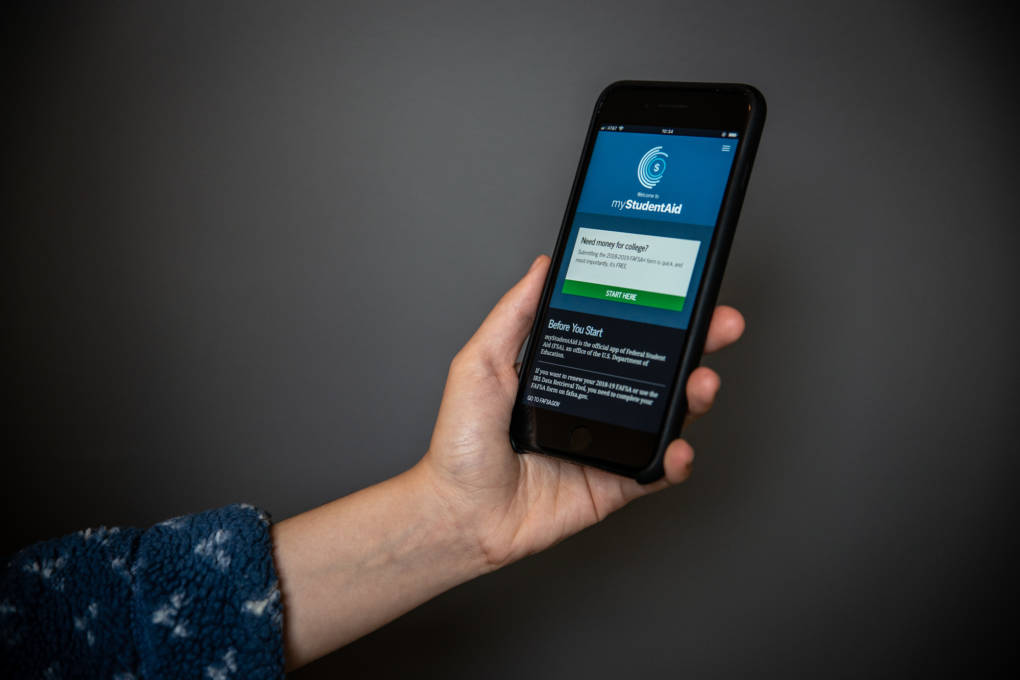
"caption": "The U.S. Department of Education unveiled the My Student Aid app to help make the 2019-'20 FAFSA application process easier.",
"description": null,
"title": "The U.S. Department of Education unveiled the My Student Aid app to help make the 2019-'20 FAFSA application process easier.",
"credit": "Cameron Pollack/NPR",
"status": "inherit",
"isLoading": false,
"fetchFailed": false
},
"mindshift_52227": {
"type": "attachments",
"id": "mindshift_52227",
"meta": {
"index": "attachments_1716263798",
"site": "mindshift",
"id": "52227",
"found": true
},
"parent": 52224,
"imgSizes": {
"small": {
"file": "https://ww2.kqed.org/app/uploads/sites/23/2018/09/iStock-996079470-520x347.jpg",
"width": 520,
"mimeType": "image/jpeg",
"height": 347
},
"twentyfourteen-full-width": {
"file": "https://ww2.kqed.org/app/uploads/sites/23/2018/09/iStock-996079470-1038x576.jpg",
"width": 1038,
"mimeType": "image/jpeg",
"height": 576
},
"thumbnail": {
"file": "https://ww2.kqed.org/app/uploads/sites/23/2018/09/iStock-996079470-160x107.jpg",
"width": 160,
"mimeType": "image/jpeg",
"height": 107
},
"fd-sm": {
"file": "https://ww2.kqed.org/app/uploads/sites/23/2018/09/iStock-996079470-960x640.jpg",
"width": 960,
"mimeType": "image/jpeg",
"height": 640
},
"post-thumbnail": {
"file": "https://ww2.kqed.org/app/uploads/sites/23/2018/09/iStock-996079470-672x372.jpg",
"width": 672,
"mimeType": "image/jpeg",
"height": 372
},
"xsmall": {
"file": "https://ww2.kqed.org/app/uploads/sites/23/2018/09/iStock-996079470-375x250.jpg",
"width": 375,
"mimeType": "image/jpeg",
"height": 250
},
"kqedFullSize": {
"file": "https://ww2.kqed.org/app/uploads/sites/23/2018/09/iStock-996079470-e1537772249319.jpg",
"width": 1920,
"height": 1280
},
"large": {
"file": "https://ww2.kqed.org/app/uploads/sites/23/2018/09/iStock-996079470-1020x680.jpg",
"width": 1020,
"mimeType": "image/jpeg",
"height": 680
},
"xlarge": {
"file": "https://ww2.kqed.org/app/uploads/sites/23/2018/09/iStock-996079470-1180x787.jpg",
"width": 1180,
"mimeType": "image/jpeg",
"height": 787
},
"complete_open_graph": {
"file": "https://ww2.kqed.org/app/uploads/sites/23/2018/09/iStock-996079470-1200x800.jpg",
"width": 1200,
"mimeType": "image/jpeg",
"height": 800
},
"guest-author-50": {
"file": "https://ww2.kqed.org/app/uploads/sites/23/2018/09/iStock-996079470-50x50.jpg",
"width": 50,
"mimeType": "image/jpeg",
"height": 50
},
"guest-author-96": {
"file": "https://ww2.kqed.org/app/uploads/sites/23/2018/09/iStock-996079470-96x96.jpg",
"width": 96,
"mimeType": "image/jpeg",
"height": 96
},
"medium": {
"file": "https://ww2.kqed.org/app/uploads/sites/23/2018/09/iStock-996079470-800x533.jpg",
"width": 800,
"mimeType": "image/jpeg",
"height": 533
},
"guest-author-64": {
"file": "https://ww2.kqed.org/app/uploads/sites/23/2018/09/iStock-996079470-64x64.jpg",
"width": 64,
"mimeType": "image/jpeg",
"height": 64
},
"guest-author-32": {
"file": "https://ww2.kqed.org/app/uploads/sites/23/2018/09/iStock-996079470-32x32.jpg",
"width": 32,
"mimeType": "image/jpeg",
"height": 32
},
"fd-lrg": {
"file": "https://ww2.kqed.org/app/uploads/sites/23/2018/09/iStock-996079470-1920x1280.jpg",
"width": 1920,
"mimeType": "image/jpeg",
"height": 1280
},
"fd-med": {
"file": "https://ww2.kqed.org/app/uploads/sites/23/2018/09/iStock-996079470-1180x787.jpg",
"width": 1180,
"mimeType": "image/jpeg",
"height": 787
},
"full-width": {
"file": "https://ww2.kqed.org/app/uploads/sites/23/2018/09/iStock-996079470-1920x1280.jpg",
"width": 1920,
"mimeType": "image/jpeg",
"height": 1280
},
"detail": {
"file": "https://ww2.kqed.org/app/uploads/sites/23/2018/09/iStock-996079470-150x150.jpg",
"width": 150,
"mimeType": "image/jpeg",
"height": 150
},
"medium_large": {
"file": "https://ww2.kqed.org/app/uploads/sites/23/2018/09/iStock-996079470-768x512.jpg",
"width": 768,
"mimeType": "image/jpeg",
"height": 512
},
"guest-author-128": {
"file": "https://ww2.kqed.org/app/uploads/sites/23/2018/09/iStock-996079470-128x128.jpg",
"width": 128,
"mimeType": "image/jpeg",
"height": 128
},
"xxsmall": {
"file": "https://ww2.kqed.org/app/uploads/sites/23/2018/09/iStock-996079470-240x160.jpg",
"width": 240,
"mimeType": "image/jpeg",
"height": 160
}
},
"publishDate": 1537772234,
"modified": 1537772263,
"caption": null,
"description": null,
"title": "iStock-996079470",
"credit": "iStock/tommaso79",
"status": "inherit",
"isLoading": false,
"fetchFailed": false
},
"mindshift_52196": {
"type": "attachments",
"id": "mindshift_52196",
"meta": {
"index": "attachments_1716263798",
"site": "mindshift",
"id": "52196",
"found": true
},
"parent": 52193,
"imgSizes": {
"small": {
"file": "https://ww2.kqed.org/app/uploads/sites/23/2018/09/GonserRobotProof1-520x347.jpg",
"width": 520,
"mimeType": "image/jpeg",
"height": 347
},
"twentyfourteen-full-width": {
"file": "https://ww2.kqed.org/app/uploads/sites/23/2018/09/GonserRobotProof1-1038x576.jpg",
"width": 1038,
"mimeType": "image/jpeg",
"height": 576
},
"thumbnail": {
"file": "https://ww2.kqed.org/app/uploads/sites/23/2018/09/GonserRobotProof1-160x107.jpg",
"width": 160,
"mimeType": "image/jpeg",
"height": 107
},
"fd-sm": {
"file": "https://ww2.kqed.org/app/uploads/sites/23/2018/09/GonserRobotProof1-960x640.jpg",
"width": 960,
"mimeType": "image/jpeg",
"height": 640
},
"post-thumbnail": {
"file": "https://ww2.kqed.org/app/uploads/sites/23/2018/09/GonserRobotProof1-672x372.jpg",
"width": 672,
"mimeType": "image/jpeg",
"height": 372
},
"xsmall": {
"file": "https://ww2.kqed.org/app/uploads/sites/23/2018/09/GonserRobotProof1-375x250.jpg",
"width": 375,
"mimeType": "image/jpeg",
"height": 250
},
"kqedFullSize": {
"file": "https://ww2.kqed.org/app/uploads/sites/23/2018/09/GonserRobotProof1-e1537248892227.jpg",
"width": 1920,
"height": 1280
},
"large": {
"file": "https://ww2.kqed.org/app/uploads/sites/23/2018/09/GonserRobotProof1-1020x680.jpg",
"width": 1020,
"mimeType": "image/jpeg",
"height": 680
},
"xlarge": {
"file": "https://ww2.kqed.org/app/uploads/sites/23/2018/09/GonserRobotProof1-1180x787.jpg",
"width": 1180,
"mimeType": "image/jpeg",
"height": 787
},
"complete_open_graph": {
"file": "https://ww2.kqed.org/app/uploads/sites/23/2018/09/GonserRobotProof1-1200x800.jpg",
"width": 1200,
"mimeType": "image/jpeg",
"height": 800
},
"guest-author-50": {
"file": "https://ww2.kqed.org/app/uploads/sites/23/2018/09/GonserRobotProof1-50x50.jpg",
"width": 50,
"mimeType": "image/jpeg",
"height": 50
},
"guest-author-96": {
"file": "https://ww2.kqed.org/app/uploads/sites/23/2018/09/GonserRobotProof1-96x96.jpg",
"width": 96,
"mimeType": "image/jpeg",
"height": 96
},
"medium": {
"file": "https://ww2.kqed.org/app/uploads/sites/23/2018/09/GonserRobotProof1-800x533.jpg",
"width": 800,
"mimeType": "image/jpeg",
"height": 533
},
"guest-author-64": {
"file": "https://ww2.kqed.org/app/uploads/sites/23/2018/09/GonserRobotProof1-64x64.jpg",
"width": 64,
"mimeType": "image/jpeg",
"height": 64
},
"guest-author-32": {
"file": "https://ww2.kqed.org/app/uploads/sites/23/2018/09/GonserRobotProof1-32x32.jpg",
"width": 32,
"mimeType": "image/jpeg",
"height": 32
},
"fd-lrg": {
"file": "https://ww2.kqed.org/app/uploads/sites/23/2018/09/GonserRobotProof1-1920x1280.jpg",
"width": 1920,
"mimeType": "image/jpeg",
"height": 1280
},
"fd-med": {
"file": "https://ww2.kqed.org/app/uploads/sites/23/2018/09/GonserRobotProof1-1180x787.jpg",
"width": 1180,
"mimeType": "image/jpeg",
"height": 787
},
"full-width": {
"file": "https://ww2.kqed.org/app/uploads/sites/23/2018/09/GonserRobotProof1-1920x1280.jpg",
"width": 1920,
"mimeType": "image/jpeg",
"height": 1280
},
"detail": {
"file": "https://ww2.kqed.org/app/uploads/sites/23/2018/09/GonserRobotProof1-150x150.jpg",
"width": 150,
"mimeType": "image/jpeg",
"height": 150
},
"medium_large": {
"file": "https://ww2.kqed.org/app/uploads/sites/23/2018/09/GonserRobotProof1-768x512.jpg",
"width": 768,
"mimeType": "image/jpeg",
"height": 512
},
"guest-author-128": {
"file": "https://ww2.kqed.org/app/uploads/sites/23/2018/09/GonserRobotProof1-128x128.jpg",
"width": 128,
"mimeType": "image/jpeg",
"height": 128
},
"xxsmall": {
"file": "https://ww2.kqed.org/app/uploads/sites/23/2018/09/GonserRobotProof1-240x160.jpg",
"width": 240,
"mimeType": "image/jpeg",
"height": 160
}
},
"publishDate": 1537248845,
"modified": 1537248885,
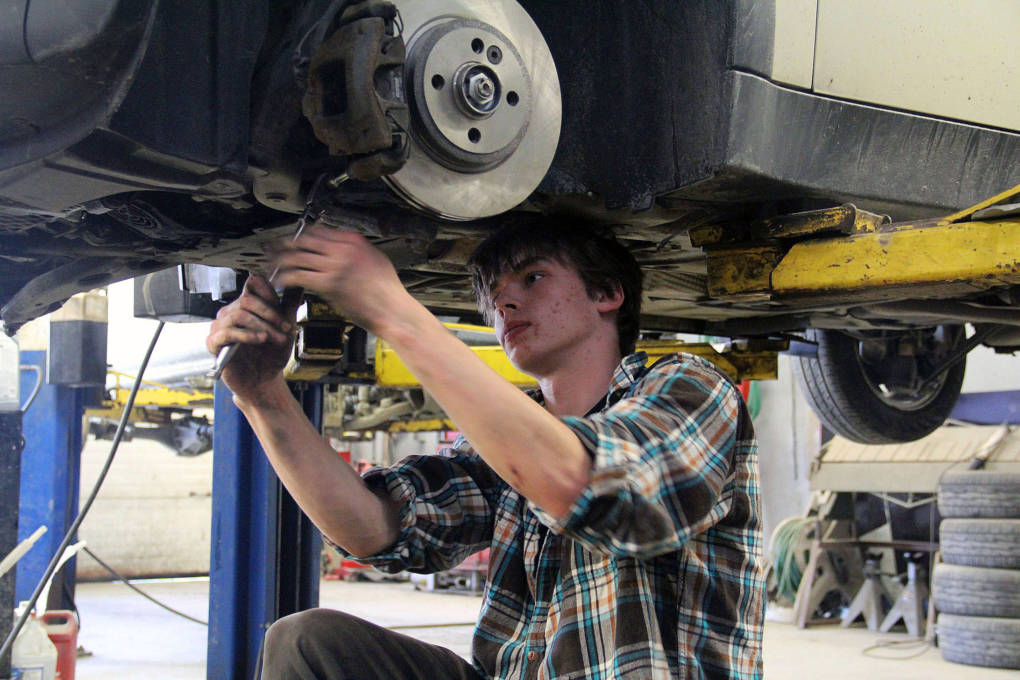
"caption": "A high school student repairs a car in an automotive shop class. Jobs in automotive body repair are relatively safe from automation, and they don't require a college degree. ",
"description": null,
"title": "GonserRobotProof1",
"credit": "The Hechinger Report/Jackie Mader",
"status": "inherit",
"isLoading": false,
"fetchFailed": false
},
"mindshift_52190": {
"type": "attachments",
"id": "mindshift_52190",
"meta": {
"index": "attachments_1716263798",
"site": "mindshift",
"id": "52190",
"found": true
},
"parent": 52189,
"imgSizes": {
"small": {
"file": "https://ww2.kqed.org/app/uploads/sites/23/2018/09/childdoor_enl-69bb36017d460a3e15ed64732a8d295557a457b1-520x346.jpg",
"width": 520,
"mimeType": "image/jpeg",
"height": 346
},
"twentyfourteen-full-width": {
"file": "https://ww2.kqed.org/app/uploads/sites/23/2018/09/childdoor_enl-69bb36017d460a3e15ed64732a8d295557a457b1-1038x576.jpg",
"width": 1038,
"mimeType": "image/jpeg",
"height": 576
},
"thumbnail": {
"file": "https://ww2.kqed.org/app/uploads/sites/23/2018/09/childdoor_enl-69bb36017d460a3e15ed64732a8d295557a457b1-160x107.jpg",
"width": 160,
"mimeType": "image/jpeg",
"height": 107
},
"fd-sm": {
"file": "https://ww2.kqed.org/app/uploads/sites/23/2018/09/childdoor_enl-69bb36017d460a3e15ed64732a8d295557a457b1-960x639.jpg",
"width": 960,
"mimeType": "image/jpeg",
"height": 639
},
"post-thumbnail": {
"file": "https://ww2.kqed.org/app/uploads/sites/23/2018/09/childdoor_enl-69bb36017d460a3e15ed64732a8d295557a457b1-672x372.jpg",
"width": 672,
"mimeType": "image/jpeg",
"height": 372
},
"xsmall": {
"file": "https://ww2.kqed.org/app/uploads/sites/23/2018/09/childdoor_enl-69bb36017d460a3e15ed64732a8d295557a457b1-375x250.jpg",
"width": 375,
"mimeType": "image/jpeg",
"height": 250
},
"kqedFullSize": {
"file": "https://ww2.kqed.org/app/uploads/sites/23/2018/09/childdoor_enl-69bb36017d460a3e15ed64732a8d295557a457b1-e1537248682365.jpg",
"width": 1920,
"height": 1279
},
"large": {
"file": "https://ww2.kqed.org/app/uploads/sites/23/2018/09/childdoor_enl-69bb36017d460a3e15ed64732a8d295557a457b1-1020x679.jpg",
"width": 1020,
"mimeType": "image/jpeg",
"height": 679
},
"xlarge": {
"file": "https://ww2.kqed.org/app/uploads/sites/23/2018/09/childdoor_enl-69bb36017d460a3e15ed64732a8d295557a457b1-1180x786.jpg",
"width": 1180,
"mimeType": "image/jpeg",
"height": 786
},
"complete_open_graph": {
"file": "https://ww2.kqed.org/app/uploads/sites/23/2018/09/childdoor_enl-69bb36017d460a3e15ed64732a8d295557a457b1-1200x799.jpg",
"width": 1200,
"mimeType": "image/jpeg",
"height": 799
},
"guest-author-50": {
"file": "https://ww2.kqed.org/app/uploads/sites/23/2018/09/childdoor_enl-69bb36017d460a3e15ed64732a8d295557a457b1-50x50.jpg",
"width": 50,
"mimeType": "image/jpeg",
"height": 50
},
"guest-author-96": {
"file": "https://ww2.kqed.org/app/uploads/sites/23/2018/09/childdoor_enl-69bb36017d460a3e15ed64732a8d295557a457b1-96x96.jpg",
"width": 96,
"mimeType": "image/jpeg",
"height": 96
},
"medium": {
"file": "https://ww2.kqed.org/app/uploads/sites/23/2018/09/childdoor_enl-69bb36017d460a3e15ed64732a8d295557a457b1-800x533.jpg",
"width": 800,
"mimeType": "image/jpeg",
"height": 533
},
"guest-author-64": {
"file": "https://ww2.kqed.org/app/uploads/sites/23/2018/09/childdoor_enl-69bb36017d460a3e15ed64732a8d295557a457b1-64x64.jpg",
"width": 64,
"mimeType": "image/jpeg",
"height": 64
},
"guest-author-32": {
"file": "https://ww2.kqed.org/app/uploads/sites/23/2018/09/childdoor_enl-69bb36017d460a3e15ed64732a8d295557a457b1-32x32.jpg",
"width": 32,
"mimeType": "image/jpeg",
"height": 32
},
"fd-lrg": {
"file": "https://ww2.kqed.org/app/uploads/sites/23/2018/09/childdoor_enl-69bb36017d460a3e15ed64732a8d295557a457b1-1920x1279.jpg",
"width": 1920,
"mimeType": "image/jpeg",
"height": 1279
},
"fd-med": {
"file": "https://ww2.kqed.org/app/uploads/sites/23/2018/09/childdoor_enl-69bb36017d460a3e15ed64732a8d295557a457b1-1180x786.jpg",
"width": 1180,
"mimeType": "image/jpeg",
"height": 786
},
"full-width": {
"file": "https://ww2.kqed.org/app/uploads/sites/23/2018/09/childdoor_enl-69bb36017d460a3e15ed64732a8d295557a457b1-1920x1279.jpg",
"width": 1920,
"mimeType": "image/jpeg",
"height": 1279
},
"detail": {
"file": "https://ww2.kqed.org/app/uploads/sites/23/2018/09/childdoor_enl-69bb36017d460a3e15ed64732a8d295557a457b1-150x150.jpg",
"width": 150,
"mimeType": "image/jpeg",
"height": 150
},
"medium_large": {
"file": "https://ww2.kqed.org/app/uploads/sites/23/2018/09/childdoor_enl-69bb36017d460a3e15ed64732a8d295557a457b1-768x511.jpg",
"width": 768,
"mimeType": "image/jpeg",
"height": 511
},
"guest-author-128": {
"file": "https://ww2.kqed.org/app/uploads/sites/23/2018/09/childdoor_enl-69bb36017d460a3e15ed64732a8d295557a457b1-128x128.jpg",
"width": 128,
"mimeType": "image/jpeg",
"height": 128
},
"xxsmall": {
"file": "https://ww2.kqed.org/app/uploads/sites/23/2018/09/childdoor_enl-69bb36017d460a3e15ed64732a8d295557a457b1-240x160.jpg",
"width": 240,
"mimeType": "image/jpeg",
"height": 160
}
},
"publishDate": 1537248571,
"modified": 1537248698,
"caption": "Nearly 62 percent of respondents had at least one ACE and a quarter reported three or more. The remaining respondents had at least two ACEs, including 16 percent with four or more such experiences.",
"description": null,
"title": "Nearly 62 percent of respondents had at least one ACE and a quarter reported three or more. The remaining respondents had at least two ACEs, including 16 percent with four or more such experiences.",
"credit": " Elva Etienne/Getty Images",
"status": "inherit",
"isLoading": false,
"fetchFailed": false
},
"mindshift_52097": {
"type": "attachments",
"id": "mindshift_52097",
"meta": {
"index": "attachments_1716263798",
"site": "mindshift",
"id": "52097",
"found": true
},
"parent": 51589,
"imgSizes": {
"small": {
"file": "https://ww2.kqed.org/app/uploads/sites/23/2018/09/PTSD-TED-ED-520x297.png",
"width": 520,
"mimeType": "image/png",
"height": 297
},
"twentyfourteen-full-width": {
"file": "https://ww2.kqed.org/app/uploads/sites/23/2018/09/PTSD-TED-ED-1038x576.png",
"width": 1038,
"mimeType": "image/png",
"height": 576
},
"thumbnail": {
"file": "https://ww2.kqed.org/app/uploads/sites/23/2018/09/PTSD-TED-ED-160x91.png",
"width": 160,
"mimeType": "image/png",
"height": 91
},
"fd-sm": {
"file": "https://ww2.kqed.org/app/uploads/sites/23/2018/09/PTSD-TED-ED-960x548.png",
"width": 960,
"mimeType": "image/png",
"height": 548
},
"post-thumbnail": {
"file": "https://ww2.kqed.org/app/uploads/sites/23/2018/09/PTSD-TED-ED-672x372.png",
"width": 672,
"mimeType": "image/png",
"height": 372
},
"xsmall": {
"file": "https://ww2.kqed.org/app/uploads/sites/23/2018/09/PTSD-TED-ED-375x214.png",
"width": 375,
"mimeType": "image/png",
"height": 214
},
"kqedFullSize": {
"file": "https://ww2.kqed.org/app/uploads/sites/23/2018/09/PTSD-TED-ED.png",
"width": 1278,
"height": 730
},
"large": {
"file": "https://ww2.kqed.org/app/uploads/sites/23/2018/09/PTSD-TED-ED-1020x583.png",
"width": 1020,
"mimeType": "image/png",
"height": 583
},
"xlarge": {
"file": "https://ww2.kqed.org/app/uploads/sites/23/2018/09/PTSD-TED-ED-1180x674.png",
"width": 1180,
"mimeType": "image/png",
"height": 674
},
"complete_open_graph": {
"file": "https://ww2.kqed.org/app/uploads/sites/23/2018/09/PTSD-TED-ED-1200x685.png",
"width": 1200,
"mimeType": "image/png",
"height": 685
},
"guest-author-50": {
"file": "https://ww2.kqed.org/app/uploads/sites/23/2018/09/PTSD-TED-ED-50x50.png",
"width": 50,
"mimeType": "image/png",
"height": 50
},
"guest-author-96": {
"file": "https://ww2.kqed.org/app/uploads/sites/23/2018/09/PTSD-TED-ED-96x96.png",
"width": 96,
"mimeType": "image/png",
"height": 96
},
"medium": {
"file": "https://ww2.kqed.org/app/uploads/sites/23/2018/09/PTSD-TED-ED-800x457.png",
"width": 800,
"mimeType": "image/png",
"height": 457
},
"guest-author-64": {
"file": "https://ww2.kqed.org/app/uploads/sites/23/2018/09/PTSD-TED-ED-64x64.png",
"width": 64,
"mimeType": "image/png",
"height": 64
},
"guest-author-32": {
"file": "https://ww2.kqed.org/app/uploads/sites/23/2018/09/PTSD-TED-ED-32x32.png",
"width": 32,
"mimeType": "image/png",
"height": 32
},
"fd-med": {
"file": "https://ww2.kqed.org/app/uploads/sites/23/2018/09/PTSD-TED-ED-1180x674.png",
"width": 1180,
"mimeType": "image/png",
"height": 674
},
"detail": {
"file": "https://ww2.kqed.org/app/uploads/sites/23/2018/09/PTSD-TED-ED-150x150.png",
"width": 150,
"mimeType": "image/png",
"height": 150
},
"medium_large": {
"file": "https://ww2.kqed.org/app/uploads/sites/23/2018/09/PTSD-TED-ED-768x439.png",
"width": 768,
"mimeType": "image/png",
"height": 439
},
"guest-author-128": {
"file": "https://ww2.kqed.org/app/uploads/sites/23/2018/09/PTSD-TED-ED-128x128.png",
"width": 128,
"mimeType": "image/png",
"height": 128
},
"xxsmall": {
"file": "https://ww2.kqed.org/app/uploads/sites/23/2018/09/PTSD-TED-ED-240x137.png",
"width": 240,
"mimeType": "image/png",
"height": 137
}
},
"publishDate": 1536174851,
"modified": 1536174892,
"caption": null,
"description": null,
"title": "PTSD-TED-ED",
"credit": "\u003ca href=\"https://www.ted.com/talks/joelle_rabow_maletis_the_psychology_of_post_traumatic_stress_disorder#t-295212\">TED-Ed\u003c/a>",
"status": "inherit",
"isLoading": false,
"fetchFailed": false
},
"mindshift_52175": {
"type": "attachments",
"id": "mindshift_52175",
"meta": {
"index": "attachments_1716263798",
"site": "mindshift",
"id": "52175",
"found": true
},
"parent": 52174,
"imgSizes": {
"small": {
"file": "https://ww2.kqed.org/app/uploads/sites/23/2018/09/runners-tothegoal_slide-cb6cd78752286e6dee659fafc3f78d1aa8011f86-520x347.jpg",
"width": 520,
"mimeType": "image/jpeg",
"height": 347
},
"twentyfourteen-full-width": {
"file": "https://ww2.kqed.org/app/uploads/sites/23/2018/09/runners-tothegoal_slide-cb6cd78752286e6dee659fafc3f78d1aa8011f86-1038x576.jpg",
"width": 1038,
"mimeType": "image/jpeg",
"height": 576
},
"thumbnail": {
"file": "https://ww2.kqed.org/app/uploads/sites/23/2018/09/runners-tothegoal_slide-cb6cd78752286e6dee659fafc3f78d1aa8011f86-160x107.jpg",
"width": 160,
"mimeType": "image/jpeg",
"height": 107
},
"fd-sm": {
"file": "https://ww2.kqed.org/app/uploads/sites/23/2018/09/runners-tothegoal_slide-cb6cd78752286e6dee659fafc3f78d1aa8011f86-960x640.jpg",
"width": 960,
"mimeType": "image/jpeg",
"height": 640
},
"post-thumbnail": {
"file": "https://ww2.kqed.org/app/uploads/sites/23/2018/09/runners-tothegoal_slide-cb6cd78752286e6dee659fafc3f78d1aa8011f86-672x372.jpg",
"width": 672,
"mimeType": "image/jpeg",
"height": 372
},
"xsmall": {
"file": "https://ww2.kqed.org/app/uploads/sites/23/2018/09/runners-tothegoal_slide-cb6cd78752286e6dee659fafc3f78d1aa8011f86-375x250.jpg",
"width": 375,
"mimeType": "image/jpeg",
"height": 250
},
"kqedFullSize": {
"file": "https://ww2.kqed.org/app/uploads/sites/23/2018/09/runners-tothegoal_slide-cb6cd78752286e6dee659fafc3f78d1aa8011f86-e1536836219658.jpg",
"width": 1920,
"height": 1280
},
"large": {
"file": "https://ww2.kqed.org/app/uploads/sites/23/2018/09/runners-tothegoal_slide-cb6cd78752286e6dee659fafc3f78d1aa8011f86-1020x680.jpg",
"width": 1020,
"mimeType": "image/jpeg",
"height": 680
},
"xlarge": {
"file": "https://ww2.kqed.org/app/uploads/sites/23/2018/09/runners-tothegoal_slide-cb6cd78752286e6dee659fafc3f78d1aa8011f86-1180x787.jpg",
"width": 1180,
"mimeType": "image/jpeg",
"height": 787
},
"complete_open_graph": {
"file": "https://ww2.kqed.org/app/uploads/sites/23/2018/09/runners-tothegoal_slide-cb6cd78752286e6dee659fafc3f78d1aa8011f86-1200x800.jpg",
"width": 1200,
"mimeType": "image/jpeg",
"height": 800
},
"guest-author-50": {
"file": "https://ww2.kqed.org/app/uploads/sites/23/2018/09/runners-tothegoal_slide-cb6cd78752286e6dee659fafc3f78d1aa8011f86-50x50.jpg",
"width": 50,
"mimeType": "image/jpeg",
"height": 50
},
"guest-author-96": {
"file": "https://ww2.kqed.org/app/uploads/sites/23/2018/09/runners-tothegoal_slide-cb6cd78752286e6dee659fafc3f78d1aa8011f86-96x96.jpg",
"width": 96,
"mimeType": "image/jpeg",
"height": 96
},
"medium": {
"file": "https://ww2.kqed.org/app/uploads/sites/23/2018/09/runners-tothegoal_slide-cb6cd78752286e6dee659fafc3f78d1aa8011f86-800x533.jpg",
"width": 800,
"mimeType": "image/jpeg",
"height": 533
},
"guest-author-64": {
"file": "https://ww2.kqed.org/app/uploads/sites/23/2018/09/runners-tothegoal_slide-cb6cd78752286e6dee659fafc3f78d1aa8011f86-64x64.jpg",
"width": 64,
"mimeType": "image/jpeg",
"height": 64
},
"guest-author-32": {
"file": "https://ww2.kqed.org/app/uploads/sites/23/2018/09/runners-tothegoal_slide-cb6cd78752286e6dee659fafc3f78d1aa8011f86-32x32.jpg",
"width": 32,
"mimeType": "image/jpeg",
"height": 32
},
"fd-lrg": {
"file": "https://ww2.kqed.org/app/uploads/sites/23/2018/09/runners-tothegoal_slide-cb6cd78752286e6dee659fafc3f78d1aa8011f86-1920x1280.jpg",
"width": 1920,
"mimeType": "image/jpeg",
"height": 1280
},
"fd-med": {
"file": "https://ww2.kqed.org/app/uploads/sites/23/2018/09/runners-tothegoal_slide-cb6cd78752286e6dee659fafc3f78d1aa8011f86-1180x787.jpg",
"width": 1180,
"mimeType": "image/jpeg",
"height": 787
},
"full-width": {
"file": "https://ww2.kqed.org/app/uploads/sites/23/2018/09/runners-tothegoal_slide-cb6cd78752286e6dee659fafc3f78d1aa8011f86-1920x1280.jpg",
"width": 1920,
"mimeType": "image/jpeg",
"height": 1280
},
"detail": {
"file": "https://ww2.kqed.org/app/uploads/sites/23/2018/09/runners-tothegoal_slide-cb6cd78752286e6dee659fafc3f78d1aa8011f86-150x150.jpg",
"width": 150,
"mimeType": "image/jpeg",
"height": 150
},
"medium_large": {
"file": "https://ww2.kqed.org/app/uploads/sites/23/2018/09/runners-tothegoal_slide-cb6cd78752286e6dee659fafc3f78d1aa8011f86-768x512.jpg",
"width": 768,
"mimeType": "image/jpeg",
"height": 512
},
"guest-author-128": {
"file": "https://ww2.kqed.org/app/uploads/sites/23/2018/09/runners-tothegoal_slide-cb6cd78752286e6dee659fafc3f78d1aa8011f86-128x128.jpg",
"width": 128,
"mimeType": "image/jpeg",
"height": 128
},
"xxsmall": {
"file": "https://ww2.kqed.org/app/uploads/sites/23/2018/09/runners-tothegoal_slide-cb6cd78752286e6dee659fafc3f78d1aa8011f86-240x160.jpg",
"width": 240,
"mimeType": "image/jpeg",
"height": 160
}
},
"publishDate": 1536836073,
"modified": 1536836237,
"caption": null,
"description": "Some runners have more baggage than others.",
"title": "Some runners have more baggage than others.",
"credit": "NPR/LA Johnson",
"status": "inherit",
"isLoading": false,
"fetchFailed": false
},
"mindshift_52144": {
"type": "attachments",
"id": "mindshift_52144",
"meta": {
"index": "attachments_1716263798",
"site": "mindshift",
"id": "52144",
"found": true
},
"parent": 52116,
"imgSizes": {
"small": {
"file": "https://ww2.kqed.org/app/uploads/sites/23/2018/09/iStock-616100524-520x346.jpg",
"width": 520,
"mimeType": "image/jpeg",
"height": 346
},
"twentyfourteen-full-width": {
"file": "https://ww2.kqed.org/app/uploads/sites/23/2018/09/iStock-616100524-1038x576.jpg",
"width": 1038,
"mimeType": "image/jpeg",
"height": 576
},
"thumbnail": {
"file": "https://ww2.kqed.org/app/uploads/sites/23/2018/09/iStock-616100524-160x106.jpg",
"width": 160,
"mimeType": "image/jpeg",
"height": 106
},
"fd-sm": {
"file": "https://ww2.kqed.org/app/uploads/sites/23/2018/09/iStock-616100524-960x638.jpg",
"width": 960,
"mimeType": "image/jpeg",
"height": 638
},
"post-thumbnail": {
"file": "https://ww2.kqed.org/app/uploads/sites/23/2018/09/iStock-616100524-672x372.jpg",
"width": 672,
"mimeType": "image/jpeg",
"height": 372
},
"xsmall": {
"file": "https://ww2.kqed.org/app/uploads/sites/23/2018/09/iStock-616100524-375x249.jpg",
"width": 375,
"mimeType": "image/jpeg",
"height": 249
},
"kqedFullSize": {
"file": "https://ww2.kqed.org/app/uploads/sites/23/2018/09/iStock-616100524-e1536583308899.jpg",
"width": 1920,
"height": 1277
},
"large": {
"file": "https://ww2.kqed.org/app/uploads/sites/23/2018/09/iStock-616100524-1020x678.jpg",
"width": 1020,
"mimeType": "image/jpeg",
"height": 678
},
"xlarge": {
"file": "https://ww2.kqed.org/app/uploads/sites/23/2018/09/iStock-616100524-1180x785.jpg",
"width": 1180,
"mimeType": "image/jpeg",
"height": 785
},
"complete_open_graph": {
"file": "https://ww2.kqed.org/app/uploads/sites/23/2018/09/iStock-616100524-1200x798.jpg",
"width": 1200,
"mimeType": "image/jpeg",
"height": 798
},
"guest-author-50": {
"file": "https://ww2.kqed.org/app/uploads/sites/23/2018/09/iStock-616100524-50x50.jpg",
"width": 50,
"mimeType": "image/jpeg",
"height": 50
},
"guest-author-96": {
"file": "https://ww2.kqed.org/app/uploads/sites/23/2018/09/iStock-616100524-96x96.jpg",
"width": 96,
"mimeType": "image/jpeg",
"height": 96
},
"medium": {
"file": "https://ww2.kqed.org/app/uploads/sites/23/2018/09/iStock-616100524-800x532.jpg",
"width": 800,
"mimeType": "image/jpeg",
"height": 532
},
"guest-author-64": {
"file": "https://ww2.kqed.org/app/uploads/sites/23/2018/09/iStock-616100524-64x64.jpg",
"width": 64,
"mimeType": "image/jpeg",
"height": 64
},
"guest-author-32": {
"file": "https://ww2.kqed.org/app/uploads/sites/23/2018/09/iStock-616100524-32x32.jpg",
"width": 32,
"mimeType": "image/jpeg",
"height": 32
},
"fd-lrg": {
"file": "https://ww2.kqed.org/app/uploads/sites/23/2018/09/iStock-616100524-1920x1277.jpg",
"width": 1920,
"mimeType": "image/jpeg",
"height": 1277
},
"fd-med": {
"file": "https://ww2.kqed.org/app/uploads/sites/23/2018/09/iStock-616100524-1180x785.jpg",
"width": 1180,
"mimeType": "image/jpeg",
"height": 785
},
"full-width": {
"file": "https://ww2.kqed.org/app/uploads/sites/23/2018/09/iStock-616100524-1920x1277.jpg",
"width": 1920,
"mimeType": "image/jpeg",
"height": 1277
},
"detail": {
"file": "https://ww2.kqed.org/app/uploads/sites/23/2018/09/iStock-616100524-150x150.jpg",
"width": 150,
"mimeType": "image/jpeg",
"height": 150
},
"medium_large": {
"file": "https://ww2.kqed.org/app/uploads/sites/23/2018/09/iStock-616100524-768x511.jpg",
"width": 768,
"mimeType": "image/jpeg",
"height": 511
},
"guest-author-128": {
"file": "https://ww2.kqed.org/app/uploads/sites/23/2018/09/iStock-616100524-128x128.jpg",
"width": 128,
"mimeType": "image/jpeg",
"height": 128
},
"xxsmall": {
"file": "https://ww2.kqed.org/app/uploads/sites/23/2018/09/iStock-616100524-240x160.jpg",
"width": 240,
"mimeType": "image/jpeg",
"height": 160
}
},
"publishDate": 1536583256,
"modified": 1536583272,
"caption": null,
"description": null,
"title": "American School Buses",
"credit": "iStock/Allard1",
"status": "inherit",
"isLoading": false,
"fetchFailed": false
},
"mindshift_52127": {
"type": "attachments",
"id": "mindshift_52127",
"meta": {
"index": "attachments_1716263798",
"site": "mindshift",
"id": "52127",
"found": true
},
"parent": 52121,
"imgSizes": {
"small": {
"file": "https://ww2.kqed.org/app/uploads/sites/23/2018/09/iStock-938993594-520x372.jpg",
"width": 520,
"mimeType": "image/jpeg",
"height": 372
},
"twentyfourteen-full-width": {
"file": "https://ww2.kqed.org/app/uploads/sites/23/2018/09/iStock-938993594-1038x576.jpg",
"width": 1038,
"mimeType": "image/jpeg",
"height": 576
},
"thumbnail": {
"file": "https://ww2.kqed.org/app/uploads/sites/23/2018/09/iStock-938993594-160x115.jpg",
"width": 160,
"mimeType": "image/jpeg",
"height": 115
},
"fd-sm": {
"file": "https://ww2.kqed.org/app/uploads/sites/23/2018/09/iStock-938993594-960x687.jpg",
"width": 960,
"mimeType": "image/jpeg",
"height": 687
},
"post-thumbnail": {
"file": "https://ww2.kqed.org/app/uploads/sites/23/2018/09/iStock-938993594-672x372.jpg",
"width": 672,
"mimeType": "image/jpeg",
"height": 372
},
"xsmall": {
"file": "https://ww2.kqed.org/app/uploads/sites/23/2018/09/iStock-938993594-375x268.jpg",
"width": 375,
"mimeType": "image/jpeg",
"height": 268
},
"kqedFullSize": {
"file": "https://ww2.kqed.org/app/uploads/sites/23/2018/09/iStock-938993594.jpg",
"width": 2047,
"height": 1465
},
"large": {
"file": "https://ww2.kqed.org/app/uploads/sites/23/2018/09/iStock-938993594-1020x730.jpg",
"width": 1020,
"mimeType": "image/jpeg",
"height": 730
},
"xlarge": {
"file": "https://ww2.kqed.org/app/uploads/sites/23/2018/09/iStock-938993594-1180x845.jpg",
"width": 1180,
"mimeType": "image/jpeg",
"height": 845
},
"complete_open_graph": {
"file": "https://ww2.kqed.org/app/uploads/sites/23/2018/09/iStock-938993594-1200x859.jpg",
"width": 1200,
"mimeType": "image/jpeg",
"height": 859
},
"guest-author-50": {
"file": "https://ww2.kqed.org/app/uploads/sites/23/2018/09/iStock-938993594-50x50.jpg",
"width": 50,
"mimeType": "image/jpeg",
"height": 50
},
"guest-author-96": {
"file": "https://ww2.kqed.org/app/uploads/sites/23/2018/09/iStock-938993594-96x96.jpg",
"width": 96,
"mimeType": "image/jpeg",
"height": 96
},
"medium": {
"file": "https://ww2.kqed.org/app/uploads/sites/23/2018/09/iStock-938993594-800x573.jpg",
"width": 800,
"mimeType": "image/jpeg",
"height": 573
},
"guest-author-64": {
"file": "https://ww2.kqed.org/app/uploads/sites/23/2018/09/iStock-938993594-64x64.jpg",
"width": 64,
"mimeType": "image/jpeg",
"height": 64
},
"guest-author-32": {
"file": "https://ww2.kqed.org/app/uploads/sites/23/2018/09/iStock-938993594-32x32.jpg",
"width": 32,
"mimeType": "image/jpeg",
"height": 32
},
"fd-lrg": {
"file": "https://ww2.kqed.org/app/uploads/sites/23/2018/09/iStock-938993594-1920x1374.jpg",
"width": 1920,
"mimeType": "image/jpeg",
"height": 1374
},
"fd-med": {
"file": "https://ww2.kqed.org/app/uploads/sites/23/2018/09/iStock-938993594-1180x845.jpg",
"width": 1180,
"mimeType": "image/jpeg",
"height": 845
},
"full-width": {
"file": "https://ww2.kqed.org/app/uploads/sites/23/2018/09/iStock-938993594-1920x1374.jpg",
"width": 1920,
"mimeType": "image/jpeg",
"height": 1374
},
"detail": {
"file": "https://ww2.kqed.org/app/uploads/sites/23/2018/09/iStock-938993594-150x150.jpg",
"width": 150,
"mimeType": "image/jpeg",
"height": 150
},
"medium_large": {
"file": "https://ww2.kqed.org/app/uploads/sites/23/2018/09/iStock-938993594-768x550.jpg",
"width": 768,
"mimeType": "image/jpeg",
"height": 550
},
"guest-author-128": {
"file": "https://ww2.kqed.org/app/uploads/sites/23/2018/09/iStock-938993594-128x128.jpg",
"width": 128,
"mimeType": "image/jpeg",
"height": 128
},
"xxsmall": {
"file": "https://ww2.kqed.org/app/uploads/sites/23/2018/09/iStock-938993594-240x172.jpg",
"width": 240,
"mimeType": "image/jpeg",
"height": 172
}
},
"publishDate": 1536364193,
"modified": 1536364210,
"caption": null,
"description": null,
"title": "Aerial view of various coffee",
"credit": "iStock/Rawpixel",
"status": "inherit",
"isLoading": false,
"fetchFailed": false
},
"mindshift_52090": {
"type": "attachments",
"id": "mindshift_52090",
"meta": {
"index": "attachments_1716263798",
"site": "mindshift",
"id": "52090",
"found": true
},
"parent": 51781,
"imgSizes": {
"small": {
"file": "https://ww2.kqed.org/app/uploads/sites/23/2018/09/14791463053_6714f5174c_k-520x347.jpg",
"width": 520,
"mimeType": "image/jpeg",
"height": 347
},
"twentyfourteen-full-width": {
"file": "https://ww2.kqed.org/app/uploads/sites/23/2018/09/14791463053_6714f5174c_k-1038x576.jpg",
"width": 1038,
"mimeType": "image/jpeg",
"height": 576
},
"thumbnail": {
"file": "https://ww2.kqed.org/app/uploads/sites/23/2018/09/14791463053_6714f5174c_k-160x107.jpg",
"width": 160,
"mimeType": "image/jpeg",
"height": 107
},
"fd-sm": {
"file": "https://ww2.kqed.org/app/uploads/sites/23/2018/09/14791463053_6714f5174c_k-960x640.jpg",
"width": 960,
"mimeType": "image/jpeg",
"height": 640
},
"post-thumbnail": {
"file": "https://ww2.kqed.org/app/uploads/sites/23/2018/09/14791463053_6714f5174c_k-672x372.jpg",
"width": 672,
"mimeType": "image/jpeg",
"height": 372
},
"xsmall": {
"file": "https://ww2.kqed.org/app/uploads/sites/23/2018/09/14791463053_6714f5174c_k-375x250.jpg",
"width": 375,
"mimeType": "image/jpeg",
"height": 250
},
"kqedFullSize": {
"file": "https://ww2.kqed.org/app/uploads/sites/23/2018/09/14791463053_6714f5174c_k.jpg",
"width": 2048,
"height": 1365
},
"large": {
"file": "https://ww2.kqed.org/app/uploads/sites/23/2018/09/14791463053_6714f5174c_k-1020x680.jpg",
"width": 1020,
"mimeType": "image/jpeg",
"height": 680
},
"xlarge": {
"file": "https://ww2.kqed.org/app/uploads/sites/23/2018/09/14791463053_6714f5174c_k-1180x786.jpg",
"width": 1180,
"mimeType": "image/jpeg",
"height": 786
},
"complete_open_graph": {
"file": "https://ww2.kqed.org/app/uploads/sites/23/2018/09/14791463053_6714f5174c_k-1200x800.jpg",
"width": 1200,
"mimeType": "image/jpeg",
"height": 800
},
"guest-author-50": {
"file": "https://ww2.kqed.org/app/uploads/sites/23/2018/09/14791463053_6714f5174c_k-50x50.jpg",
"width": 50,
"mimeType": "image/jpeg",
"height": 50
},
"guest-author-96": {
"file": "https://ww2.kqed.org/app/uploads/sites/23/2018/09/14791463053_6714f5174c_k-96x96.jpg",
"width": 96,
"mimeType": "image/jpeg",
"height": 96
},
"medium": {
"file": "https://ww2.kqed.org/app/uploads/sites/23/2018/09/14791463053_6714f5174c_k-800x533.jpg",
"width": 800,
"mimeType": "image/jpeg",
"height": 533
},
"guest-author-64": {
"file": "https://ww2.kqed.org/app/uploads/sites/23/2018/09/14791463053_6714f5174c_k-64x64.jpg",
"width": 64,
"mimeType": "image/jpeg",
"height": 64
},
"guest-author-32": {
"file": "https://ww2.kqed.org/app/uploads/sites/23/2018/09/14791463053_6714f5174c_k-32x32.jpg",
"width": 32,
"mimeType": "image/jpeg",
"height": 32
},
"fd-lrg": {
"file": "https://ww2.kqed.org/app/uploads/sites/23/2018/09/14791463053_6714f5174c_k-1920x1280.jpg",
"width": 1920,
"mimeType": "image/jpeg",
"height": 1280
},
"fd-med": {
"file": "https://ww2.kqed.org/app/uploads/sites/23/2018/09/14791463053_6714f5174c_k-1180x786.jpg",
"width": 1180,
"mimeType": "image/jpeg",
"height": 786
},
"full-width": {
"file": "https://ww2.kqed.org/app/uploads/sites/23/2018/09/14791463053_6714f5174c_k-1920x1280.jpg",
"width": 1920,
"mimeType": "image/jpeg",
"height": 1280
},
"detail": {
"file": "https://ww2.kqed.org/app/uploads/sites/23/2018/09/14791463053_6714f5174c_k-150x150.jpg",
"width": 150,
"mimeType": "image/jpeg",
"height": 150
},
"medium_large": {
"file": "https://ww2.kqed.org/app/uploads/sites/23/2018/09/14791463053_6714f5174c_k-768x512.jpg",
"width": 768,
"mimeType": "image/jpeg",
"height": 512
},
"guest-author-128": {
"file": "https://ww2.kqed.org/app/uploads/sites/23/2018/09/14791463053_6714f5174c_k-128x128.jpg",
"width": 128,
"mimeType": "image/jpeg",
"height": 128
},
"xxsmall": {
"file": "https://ww2.kqed.org/app/uploads/sites/23/2018/09/14791463053_6714f5174c_k-240x160.jpg",
"width": 240,
"mimeType": "image/jpeg",
"height": 160
}
},
"publishDate": 1536124417,
"modified": 1536124433,
"caption": null,
"description": null,
"title": "14791463053_6714f5174c_k",
"credit": "\u003ca href=\"https://www.flickr.com/photos/28277470@N05/14791463053/in/photolist-ox57D4-hMdodw-rhtap8-9pZUP3-hMe2b6-ehc8yL-2SWksV-a7rum-hMdXBc-bnXL2A-apR3rV-amvSHt-WhLL2d-591k2C-6uPMXG-6robm-ahP39z-4vV3pg-8e4Gp3-aV73ik-b32qAV-b32qne-aDb2bZ-b1XXjc-hMdo3G-aDeRZb-b1XXtX-6WcT9e-9UCWmv-aDeRCL-goQirQ-aqvMu2-b1XUsB-aqyte3-4nEBdm-aXuuq2-aDeSB9-5hqGJi-iqWY-5MbtZA-7KFzkU-fsiePk-oaa39i-amvRqD-dWgW1Z-7FDBTJ-2LXKgh-amvLng-dTVzHB-Wu9CyG\">Flickr/William Tung\u003c/a>",
"status": "inherit",
"isLoading": false,
"fetchFailed": false
},
"mindshift_52065": {
"type": "attachments",
"id": "mindshift_52065",
"meta": {
"index": "attachments_1716263798",
"site": "mindshift",
"id": "52065",
"found": true
},
"parent": 0,
"imgSizes": {
"small": {
"file": "https://ww2.kqed.org/app/uploads/sites/23/2018/09/letitgrowfront_enl-08dc14d0d91d3036acdcafe29bf2eec2bb029a71-5-520x382.jpg",
"width": 520,
"mimeType": "image/jpeg",
"height": 382
},
"twentyfourteen-full-width": {
"file": "https://ww2.kqed.org/app/uploads/sites/23/2018/09/letitgrowfront_enl-08dc14d0d91d3036acdcafe29bf2eec2bb029a71-5-1038x576.jpg",
"width": 1038,
"mimeType": "image/jpeg",
"height": 576
},
"thumbnail": {
"file": "https://ww2.kqed.org/app/uploads/sites/23/2018/09/letitgrowfront_enl-08dc14d0d91d3036acdcafe29bf2eec2bb029a71-5-160x118.jpg",
"width": 160,
"mimeType": "image/jpeg",
"height": 118
},
"fd-sm": {
"file": "https://ww2.kqed.org/app/uploads/sites/23/2018/09/letitgrowfront_enl-08dc14d0d91d3036acdcafe29bf2eec2bb029a71-5-960x706.jpg",
"width": 960,
"mimeType": "image/jpeg",
"height": 706
},
"post-thumbnail": {
"file": "https://ww2.kqed.org/app/uploads/sites/23/2018/09/letitgrowfront_enl-08dc14d0d91d3036acdcafe29bf2eec2bb029a71-5-672x372.jpg",
"width": 672,
"mimeType": "image/jpeg",
"height": 372
},
"xsmall": {
"file": "https://ww2.kqed.org/app/uploads/sites/23/2018/09/letitgrowfront_enl-08dc14d0d91d3036acdcafe29bf2eec2bb029a71-5-375x276.jpg",
"width": 375,
"mimeType": "image/jpeg",
"height": 276
},
"kqedFullSize": {
"file": "https://ww2.kqed.org/app/uploads/sites/23/2018/09/letitgrowfront_enl-08dc14d0d91d3036acdcafe29bf2eec2bb029a71-5-e1536034375950.jpg",
"width": 1920,
"height": 1412
},
"large": {
"file": "https://ww2.kqed.org/app/uploads/sites/23/2018/09/letitgrowfront_enl-08dc14d0d91d3036acdcafe29bf2eec2bb029a71-5-1020x750.jpg",
"width": 1020,
"mimeType": "image/jpeg",
"height": 750
},
"xlarge": {
"file": "https://ww2.kqed.org/app/uploads/sites/23/2018/09/letitgrowfront_enl-08dc14d0d91d3036acdcafe29bf2eec2bb029a71-5-1180x868.jpg",
"width": 1180,
"mimeType": "image/jpeg",
"height": 868
},
"complete_open_graph": {
"file": "https://ww2.kqed.org/app/uploads/sites/23/2018/09/letitgrowfront_enl-08dc14d0d91d3036acdcafe29bf2eec2bb029a71-5-1200x883.jpg",
"width": 1200,
"mimeType": "image/jpeg",
"height": 883
},
"guest-author-50": {
"file": "https://ww2.kqed.org/app/uploads/sites/23/2018/09/letitgrowfront_enl-08dc14d0d91d3036acdcafe29bf2eec2bb029a71-5-50x50.jpg",
"width": 50,
"mimeType": "image/jpeg",
"height": 50
},
"guest-author-96": {
"file": "https://ww2.kqed.org/app/uploads/sites/23/2018/09/letitgrowfront_enl-08dc14d0d91d3036acdcafe29bf2eec2bb029a71-5-96x96.jpg",
"width": 96,
"mimeType": "image/jpeg",
"height": 96
},
"medium": {
"file": "https://ww2.kqed.org/app/uploads/sites/23/2018/09/letitgrowfront_enl-08dc14d0d91d3036acdcafe29bf2eec2bb029a71-5-800x588.jpg",
"width": 800,
"mimeType": "image/jpeg",
"height": 588
},
"guest-author-64": {
"file": "https://ww2.kqed.org/app/uploads/sites/23/2018/09/letitgrowfront_enl-08dc14d0d91d3036acdcafe29bf2eec2bb029a71-5-64x64.jpg",
"width": 64,
"mimeType": "image/jpeg",
"height": 64
},
"guest-author-32": {
"file": "https://ww2.kqed.org/app/uploads/sites/23/2018/09/letitgrowfront_enl-08dc14d0d91d3036acdcafe29bf2eec2bb029a71-5-32x32.jpg",
"width": 32,
"mimeType": "image/jpeg",
"height": 32
},
"fd-lrg": {
"file": "https://ww2.kqed.org/app/uploads/sites/23/2018/09/letitgrowfront_enl-08dc14d0d91d3036acdcafe29bf2eec2bb029a71-5-1920x1412.jpg",
"width": 1920,
"mimeType": "image/jpeg",
"height": 1412
},
"fd-med": {
"file": "https://ww2.kqed.org/app/uploads/sites/23/2018/09/letitgrowfront_enl-08dc14d0d91d3036acdcafe29bf2eec2bb029a71-5-1180x868.jpg",
"width": 1180,
"mimeType": "image/jpeg",
"height": 868
},
"full-width": {
"file": "https://ww2.kqed.org/app/uploads/sites/23/2018/09/letitgrowfront_enl-08dc14d0d91d3036acdcafe29bf2eec2bb029a71-5-1920x1412.jpg",
"width": 1920,
"mimeType": "image/jpeg",
"height": 1412
},
"detail": {
"file": "https://ww2.kqed.org/app/uploads/sites/23/2018/09/letitgrowfront_enl-08dc14d0d91d3036acdcafe29bf2eec2bb029a71-5-150x150.jpg",
"width": 150,
"mimeType": "image/jpeg",
"height": 150
},
"medium_large": {
"file": "https://ww2.kqed.org/app/uploads/sites/23/2018/09/letitgrowfront_enl-08dc14d0d91d3036acdcafe29bf2eec2bb029a71-5-768x565.jpg",
"width": 768,
"mimeType": "image/jpeg",
"height": 565
},
"guest-author-128": {
"file": "https://ww2.kqed.org/app/uploads/sites/23/2018/09/letitgrowfront_enl-08dc14d0d91d3036acdcafe29bf2eec2bb029a71-5-128x128.jpg",
"width": 128,
"mimeType": "image/jpeg",
"height": 128
},
"xxsmall": {
"file": "https://ww2.kqed.org/app/uploads/sites/23/2018/09/letitgrowfront_enl-08dc14d0d91d3036acdcafe29bf2eec2bb029a71-5-240x177.jpg",
"width": 240,
"mimeType": "image/jpeg",
"height": 177
}
},
"publishDate": 1536034151,
"modified": 1536034485,
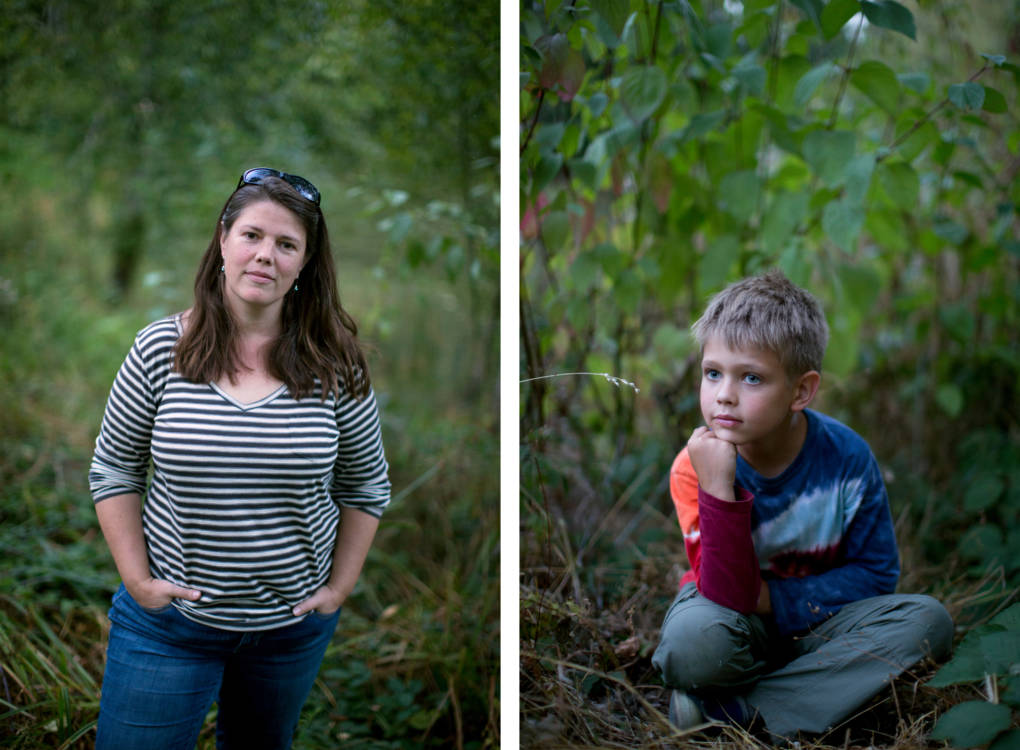
"caption": "Laura Randall, pictured at Mill Pond Park in Portland, gives her son, Matthew Randall, 7, a lot of freedom to explore on his own.",
"description": null,
"title": "Laura Randall, pictured at Mill Pond Park in Portland, gives her son, Matthew Randall, 7, a lot of freedom to explore on his own.",
"credit": "Beth Nakamura for NPR",
"status": "inherit",
"isLoading": false,
"fetchFailed": false
},
"mindshift_52137": {
"type": "attachments",
"id": "mindshift_52137",
"meta": {
"index": "attachments_1716263798",
"site": "mindshift",
"id": "52137",
"found": true
},
"parent": 52136,
"imgSizes": {
"small": {
"file": "https://ww2.kqed.org/app/uploads/sites/23/2018/08/precription-for-playtime_custom-a540d6ad3e735dcf45d250fb01c88af1ba8e2eaa-520x325.jpg",
"width": 520,
"mimeType": "image/jpeg",
"height": 325
},
"twentyfourteen-full-width": {
"file": "https://ww2.kqed.org/app/uploads/sites/23/2018/08/precription-for-playtime_custom-a540d6ad3e735dcf45d250fb01c88af1ba8e2eaa-1038x576.jpg",
"width": 1038,
"mimeType": "image/jpeg",
"height": 576
},
"thumbnail": {
"file": "https://ww2.kqed.org/app/uploads/sites/23/2018/08/precription-for-playtime_custom-a540d6ad3e735dcf45d250fb01c88af1ba8e2eaa-160x100.jpg",
"width": 160,
"mimeType": "image/jpeg",
"height": 100
},
"fd-sm": {
"file": "https://ww2.kqed.org/app/uploads/sites/23/2018/08/precription-for-playtime_custom-a540d6ad3e735dcf45d250fb01c88af1ba8e2eaa-960x599.jpg",
"width": 960,
"mimeType": "image/jpeg",
"height": 599
},
"post-thumbnail": {
"file": "https://ww2.kqed.org/app/uploads/sites/23/2018/08/precription-for-playtime_custom-a540d6ad3e735dcf45d250fb01c88af1ba8e2eaa-672x372.jpg",
"width": 672,
"mimeType": "image/jpeg",
"height": 372
},
"xsmall": {
"file": "https://ww2.kqed.org/app/uploads/sites/23/2018/08/precription-for-playtime_custom-a540d6ad3e735dcf45d250fb01c88af1ba8e2eaa-375x234.jpg",
"width": 375,
"mimeType": "image/jpeg",
"height": 234
},
"kqedFullSize": {
"file": "https://ww2.kqed.org/app/uploads/sites/23/2018/08/precription-for-playtime_custom-a540d6ad3e735dcf45d250fb01c88af1ba8e2eaa-e1536556693520.jpg",
"width": 1920,
"height": 1198
},
"large": {
"file": "https://ww2.kqed.org/app/uploads/sites/23/2018/08/precription-for-playtime_custom-a540d6ad3e735dcf45d250fb01c88af1ba8e2eaa-1020x637.jpg",
"width": 1020,
"mimeType": "image/jpeg",
"height": 637
},
"xlarge": {
"file": "https://ww2.kqed.org/app/uploads/sites/23/2018/08/precription-for-playtime_custom-a540d6ad3e735dcf45d250fb01c88af1ba8e2eaa-1180x736.jpg",
"width": 1180,
"mimeType": "image/jpeg",
"height": 736
},
"complete_open_graph": {
"file": "https://ww2.kqed.org/app/uploads/sites/23/2018/08/precription-for-playtime_custom-a540d6ad3e735dcf45d250fb01c88af1ba8e2eaa-1200x749.jpg",
"width": 1200,
"mimeType": "image/jpeg",
"height": 749
},
"guest-author-50": {
"file": "https://ww2.kqed.org/app/uploads/sites/23/2018/08/precription-for-playtime_custom-a540d6ad3e735dcf45d250fb01c88af1ba8e2eaa-50x50.jpg",
"width": 50,
"mimeType": "image/jpeg",
"height": 50
},
"guest-author-96": {
"file": "https://ww2.kqed.org/app/uploads/sites/23/2018/08/precription-for-playtime_custom-a540d6ad3e735dcf45d250fb01c88af1ba8e2eaa-96x96.jpg",
"width": 96,
"mimeType": "image/jpeg",
"height": 96
},
"medium": {
"file": "https://ww2.kqed.org/app/uploads/sites/23/2018/08/precription-for-playtime_custom-a540d6ad3e735dcf45d250fb01c88af1ba8e2eaa-800x499.jpg",
"width": 800,
"mimeType": "image/jpeg",
"height": 499
},
"guest-author-64": {
"file": "https://ww2.kqed.org/app/uploads/sites/23/2018/08/precription-for-playtime_custom-a540d6ad3e735dcf45d250fb01c88af1ba8e2eaa-64x64.jpg",
"width": 64,
"mimeType": "image/jpeg",
"height": 64
},
"guest-author-32": {
"file": "https://ww2.kqed.org/app/uploads/sites/23/2018/08/precription-for-playtime_custom-a540d6ad3e735dcf45d250fb01c88af1ba8e2eaa-32x32.jpg",
"width": 32,
"mimeType": "image/jpeg",
"height": 32
},
"fd-lrg": {
"file": "https://ww2.kqed.org/app/uploads/sites/23/2018/08/precription-for-playtime_custom-a540d6ad3e735dcf45d250fb01c88af1ba8e2eaa-1920x1198.jpg",
"width": 1920,
"mimeType": "image/jpeg",
"height": 1198
},
"fd-med": {
"file": "https://ww2.kqed.org/app/uploads/sites/23/2018/08/precription-for-playtime_custom-a540d6ad3e735dcf45d250fb01c88af1ba8e2eaa-1180x736.jpg",
"width": 1180,
"mimeType": "image/jpeg",
"height": 736
},
"full-width": {
"file": "https://ww2.kqed.org/app/uploads/sites/23/2018/08/precription-for-playtime_custom-a540d6ad3e735dcf45d250fb01c88af1ba8e2eaa-1920x1198.jpg",
"width": 1920,
"mimeType": "image/jpeg",
"height": 1198
},
"detail": {
"file": "https://ww2.kqed.org/app/uploads/sites/23/2018/08/precription-for-playtime_custom-a540d6ad3e735dcf45d250fb01c88af1ba8e2eaa-150x150.jpg",
"width": 150,
"mimeType": "image/jpeg",
"height": 150
},
"medium_large": {
"file": "https://ww2.kqed.org/app/uploads/sites/23/2018/08/precription-for-playtime_custom-a540d6ad3e735dcf45d250fb01c88af1ba8e2eaa-768x479.jpg",
"width": 768,
"mimeType": "image/jpeg",
"height": 479
},
"guest-author-128": {
"file": "https://ww2.kqed.org/app/uploads/sites/23/2018/08/precription-for-playtime_custom-a540d6ad3e735dcf45d250fb01c88af1ba8e2eaa-128x128.jpg",
"width": 128,
"mimeType": "image/jpeg",
"height": 128
},
"xxsmall": {
"file": "https://ww2.kqed.org/app/uploads/sites/23/2018/08/precription-for-playtime_custom-a540d6ad3e735dcf45d250fb01c88af1ba8e2eaa-240x150.jpg",
"width": 240,
"mimeType": "image/jpeg",
"height": 150
}
},
"publishDate": 1536556633,
"modified": 1536556705,
"caption": null,
"description": "Prescription for playtime.",
"title": "Prescription for playtime.",
"credit": "NPR/LA Johnson",
"status": "inherit",
"isLoading": false,
"fetchFailed": false
}
},
"audioPlayerReducer": {
"postId": "stream_live",
"isPaused": true,
"isPlaying": false,
"pfsActive": false,
"pledgeModalIsOpen": true,
"playerDrawerIsOpen": false,
"liveAudioPlayStartedAt": 0,
"liveAudioPlayContext": ""
},
"authorsReducer": {
"byline_mindshift_52238": {
"type": "authors",
"id": "byline_mindshift_52238",
"meta": {
"override": true
},
"slug": "byline_mindshift_52238",
"name": "Cory Turner",
"isLoading": false
},
"byline_mindshift_52224": {
"type": "authors",
"id": "byline_mindshift_52224",
"meta": {
"override": true
},
"slug": "byline_mindshift_52224",
"name": "April Fulton",
"isLoading": false
},
"byline_mindshift_52193": {
"type": "authors",
"id": "byline_mindshift_52193",
"meta": {
"override": true
},
"slug": "byline_mindshift_52193",
"name": "\u003ca href=\"http://hechingerreport.org/\">Sarah Gonser, The Hechinger Report\u003c/a>",
"isLoading": false
},
"byline_mindshift_52189": {
"type": "authors",
"id": "byline_mindshift_52189",
"meta": {
"override": true
},
"slug": "byline_mindshift_52189",
"name": "Tara Haelle",
"isLoading": false
},
"byline_mindshift_52174": {
"type": "authors",
"id": "byline_mindshift_52174",
"meta": {
"override": true
},
"slug": "byline_mindshift_52174",
"name": "Cory Turner",
"isLoading": false
},
"byline_mindshift_52116": {
"type": "authors",
"id": "byline_mindshift_52116",
"meta": {
"override": true
},
"slug": "byline_mindshift_52116",
"name": "\u003ca href=\"https://twitter.com/gailcornwall\">Gail Cornwall\u003c/a>",
"isLoading": false
},
"byline_mindshift_52121": {
"type": "authors",
"id": "byline_mindshift_52121",
"meta": {
"override": true
},
"slug": "byline_mindshift_52121",
"name": "\u003ca href=\"http://hechingerreport.org/\">Laura Pappano, The Hechinger Report\u003c/a>",
"isLoading": false
},
"byline_mindshift_52070": {
"type": "authors",
"id": "byline_mindshift_52070",
"meta": {
"override": true
},
"slug": "byline_mindshift_52070",
"name": "DEENA PRICHEP",
"isLoading": false
},
"byline_mindshift_52136": {
"type": "authors",
"id": "byline_mindshift_52136",
"meta": {
"override": true
},
"slug": "byline_mindshift_52136",
"name": "Anya Kamenetz",
"isLoading": false
},
"katrinaschwartz": {
"type": "authors",
"id": "234",
"meta": {
"index": "authors_1716337520",
"id": "234",
"found": true
},
"name": "Katrina Schwartz",
"firstName": "Katrina",
"lastName": "Schwartz",
"slug": "katrinaschwartz",
"email": "kschwartz@kqed.org",
"display_author_email": false,
"staff_mastheads": [
"news"
],
"title": "Producer",
"bio": "Katrina Schwartz is a journalist based in San Francisco. She's worked at KPCC public radio in LA and has reported on air and online for KQED since 2010. She covered how teaching and learning is changing for MindShift between 2012 and 2020. She is the co-host of the MindShift podcast and now produces KQED's Bay Curious podcast.",
"avatar": "https://secure.gravatar.com/avatar/edb4ee79070447a018538c9aae6eeecf28786515b8a0c30e43b6b7dce5aa44c8?s=600&d=blank&r=g",
"twitter": "kschwart",
"bluesky": null,
"facebook": null,
"instagram": null,
"linkedin": null,
"sites": [
{
"site": "",
"roles": [
"editor"
]
},
{
"site": "news",
"roles": [
"editor"
]
},
{
"site": "mindshift",
"roles": [
"administrator"
]
},
{
"site": "stateofhealth",
"roles": [
"author"
]
},
{
"site": "science",
"roles": [
"editor"
]
}
],
"headData": {
"title": "Katrina Schwartz | KQED",
"description": "Producer",
"ogImgSrc": "https://secure.gravatar.com/avatar/edb4ee79070447a018538c9aae6eeecf28786515b8a0c30e43b6b7dce5aa44c8?s=600&d=blank&r=g",
"twImgSrc": "https://secure.gravatar.com/avatar/edb4ee79070447a018538c9aae6eeecf28786515b8a0c30e43b6b7dce5aa44c8?s=600&d=blank&r=g"
},
"isLoading": false,
"link": "/author/katrinaschwartz"
},
"dfkris": {
"type": "authors",
"id": "11087",
"meta": {
"index": "authors_1716337520",
"id": "11087",
"found": true
},
"name": "Deborah Farmer Kris",
"firstName": "Deborah Farmer",
"lastName": "Kris",
"slug": "dfkris",
"email": "dfkris@gmail.com",
"display_author_email": false,
"staff_mastheads": [],
"title": null,
"bio": "\u003cem>\u003ca href=\"https://twitter.com/@dfkris\">Deborah Farmer Kris\u003c/a> has taught elementary, middle and high school and served as a charter school administrator. She spent a decade as an associate at Boston University’s \u003c/em>\u003cem>\u003ca href=\"http://www.bu.edu/ccsr/about-us/\">Center for Character and Social Responsibility\u003c/a>, \u003c/em>\u003cem>researching, writing, and consulting with schools. She is the mother of two young children. You can follower her on Twitter \u003ca href=\"https://twitter.com/@dfkris\">@dfkris\u003c/a>.\u003c/em>",
"avatar": "https://secure.gravatar.com/avatar/48efe6f17031ed31222b74af9605fe5a?s=600&d=blank&r=g",
"twitter": "dfkris",
"facebook": null,
"instagram": null,
"linkedin": null,
"sites": [
{
"site": "mindshift",
"roles": [
"author"
]
}
],
"headData": {
"title": "Deborah Farmer Kris | KQED",
"description": null,
"ogImgSrc": "https://secure.gravatar.com/avatar/48efe6f17031ed31222b74af9605fe5a?s=600&d=blank&r=g",
"twImgSrc": "https://secure.gravatar.com/avatar/48efe6f17031ed31222b74af9605fe5a?s=600&d=blank&r=g"
},
"isLoading": false,
"link": "/author/dfkris"
},
"pauldarvasi": {
"type": "authors",
"id": "11107",
"meta": {
"index": "authors_1716337520",
"id": "11107",
"found": true
},
"name": "Paul Darvasi",
"firstName": "Paul",
"lastName": "Darvasi",
"slug": "pauldarvasi",
"email": "pauldarvasi@gmail.com",
"display_author_email": false,
"staff_mastheads": [],
"title": null,
"bio": "Paul Darvasi is an experienced educator whose research, speaking and writing explore the intersections of learning, technology, narrative and games. You can follow him on Twitter:\u003ca href=\"https://twitter.com/PaulDarvasi\"> @pauldarvasi\u003c/a>",
"avatar": "https://secure.gravatar.com/avatar/df387897a1bf0cd4b720b8175112731a?s=600&d=blank&r=g",
"twitter": "pauldarvasi",
"facebook": null,
"instagram": null,
"linkedin": null,
"sites": [
{
"site": "mindshift",
"roles": [
"contributor"
]
}
],
"headData": {
"title": "Paul Darvasi | KQED",
"description": null,
"ogImgSrc": "https://secure.gravatar.com/avatar/df387897a1bf0cd4b720b8175112731a?s=600&d=blank&r=g",
"twImgSrc": "https://secure.gravatar.com/avatar/df387897a1bf0cd4b720b8175112731a?s=600&d=blank&r=g"
},
"isLoading": false,
"link": "/author/pauldarvasi"
}
},
"pagesReducer": {
"mindshift_category_big-ideas": {
"type": "terms",
"id": "mindshift_192",
"meta": {
"index": "terms_1716263798",
"site": "mindshift",
"id": "192",
"score": 14.406744
},
"featImg": null,
"name": "Big Ideas",
"description": "The latest findings from experts in the field related to the future of learning.",
"taxonomy": "category",
"headData": {
"twImgId": null,
"twTitle": null,
"ogTitle": null,
"ogImgId": null,
"twDescription": null,
"description": "The latest findings from experts in the field related to the future of learning.",
"title": "Big Ideas Archives | KQED Mindshift",
"ogDescription": null
},
"ttid": 192,
"slug": "big-ideas",
"isLoading": false,
"title": "Big Ideas",
"pageMeta": {
"site": "mindshift",
"WpPageTemplate": "page-topic-editorial",
"currentPage": 23
},
"blocks": [
{
"blockName": "kqed/company-paragraph",
"content": "The latest findings from experts in the field related to the future of learning."
},
{
"blockName": "kqed/post-list",
"attrs": {
"layout": "cardArticle2",
"query": "posts/mindshift?category=big-ideas",
"seeMore": false,
"paginated": true,
"page": 23
}
},
{
"blockName": "kqed/ad"
}
]
}
},
"pfsSessionReducer": {},
"postsReducer": {
"stream_live": {
"type": "live",
"id": "stream_live",
"audioUrl": "https://streams.kqed.org/kqedradio",
"title": "Live Stream",
"excerpt": "Live Stream information currently unavailable.",
"link": "/radio",
"featImg": "",
"label": {
"name": "KQED Live",
"link": "/"
}
},
"stream_kqedNewscast": {
"type": "posts",
"id": "stream_kqedNewscast",
"audioUrl": "https://www.kqed.org/.stream/anon/radio/RDnews/newscast.mp3?_=1",
"title": "KQED Newscast",
"featImg": "",
"label": {
"name": "88.5 FM",
"link": "/"
}
},
"mindshift_52180": {
"type": "posts",
"id": "mindshift_52180",
"meta": {
"index": "posts_1716263798",
"site": "mindshift",
"id": "52180",
"score": null,
"sort": [
1538201000000
]
},
"parent": 0,
"labelTerm": {
"site": "mindshift"
},
"blocks": [],
"publishDate": 1538201000,
"format": "standard",
"disqusTitle": "How to Help Kids Manage Sleep, Schoolwork and Screens",
"title": "How to Help Kids Manage Sleep, Schoolwork and Screens",
"headTitle": "MindShift | KQED News",
"content": "\u003cp>\u003cspan style=\"font-weight: 400\">In the aftermath of a huge New England snowstorm, a friend’s car \u003c/span>\u003ca href=\"https://parenting.blogs.nytimes.com/2014/03/14/why-kids-love-a-minor-crisis/\">\u003cspan style=\"font-weight: 400\">got stuck driving down KJ Dell’Antonia’s driveway\u003c/span>\u003c/a>\u003cspan style=\"font-weight: 400\">. So she and her four children bundled up and headed out with shovels. After freeing the car once, it slid into a snowbank, and they had to start again as the sun was setting. It was “\u003c/span>\u003cspan style=\"font-weight: 400\">hard, unpleasant work.\u003c/span>\u003cspan style=\"font-weight: 400\">” Yet after getting the friend safely on her way, one of the children turned to Dell’Antonia and said, “That was fun!”\u003c/span>\u003c/p>\n\u003cp>\u003cspan style=\"font-weight: 400\">This story is emblematic of the paradoxes and possibilities of daily family life. In her new book \u003c/span>\u003ca href=\"https://www.amazon.com/How-Happier-Parent-Raising-Family/dp/0735210470/\">\u003ci>\u003cspan style=\"font-weight: 400\">How to Be a Happier Parent\u003c/span>\u003c/i>\u003c/a>\u003cspan style=\"font-weight: 400\">, Dell’Antonia – \u003c/span>\u003cspan style=\"font-weight: 400\">the former lead editor of the \u003c/span>\u003ci>\u003cspan style=\"font-weight: 400\">New York Times\u003c/span>\u003c/i> \u003ci>\u003cspan style=\"font-weight: 400\">Motherlode\u003c/span>\u003c/i>\u003cspan style=\"font-weight: 400\"> blog –\u003c/span>\u003cb> \u003c/b>\u003cspan style=\"font-weight: 400\">writes about “how to create the best possible family life we can with the hand we’ve been dealt.” \u003c/span>\u003c/p>\n\u003cp>\u003cspan style=\"font-weight: 400\">According to her research and lived experience, happier parenting often involves reframing our expectations and approach to the tough spots of family life. From chores to sibling relationships, she recommends first changing how we think about those issues and then change what can be done. \u003c/span>\u003c/p>\n\u003cp>\u003cspan style=\"font-weight: 400\">Take family responsibilities. “A kid who has everything done for them begins to see themselves as a \u003c/span>\u003ci>\u003cspan style=\"font-weight: 400\">job\u003c/span>\u003c/i>\u003cspan style=\"font-weight: 400\"> for their parents instead of as a joy or a help,” said Dell-Antonia. This setup harms kids in at least two ways. It leads to an “an artificial sense of their own importance” while also undercutting the vital role children \u003c/span>\u003ci>\u003cspan style=\"font-weight: 400\">could\u003c/span>\u003c/i>\u003cspan style=\"font-weight: 400\"> play in family life. \u003c/span>\u003c/p>\n\u003cp>\u003cspan style=\"font-weight: 400\">“Everyone is happier when they are part of a larger community. For kids, the family is that community. When they are part of the day-to-day running of a household, it tells them, ‘I’m part of the team, and without me, things don’t work as well.’ They feel like they are a helpful and necessary part of their family.”\u003c/span>\u003c/p>\n\u003cp>[ad fullwidth]\u003c/p>\n\u003cp>\u003cspan style=\"font-weight: 400\">Viewing children as inherently capable changes our approach to interacting with them. “They can do things,” said Dell’Antonia. “But we mostly don’t let them.” \u003c/span>\u003c/p>\n\u003cp>\u003cspan style=\"font-weight: 400\">In other words, assume capacity, expect responsibility and keep the lines of communication wide open. This basic approach can help parents and children navigate perennial struggles such as sleep, schoolwork and screens.\u003c/span>\u003c/p>\n\u003cp>\u003cb>Sleep and Teenagers\u003c/b>\u003c/p>\n\u003cp>\u003cspan style=\"font-weight: 400\">How do we change how we think about sleep? Abundant research confirms that lack of sleep can have cascading consequences – from \u003c/span>\u003ca href=\"https://www.kqed.org/mindshift/33885/why-teens-lack-of-sleep-may-cause-depression\">\u003cspan style=\"font-weight: 400\">poor mental health\u003c/span>\u003c/a>\u003cspan style=\"font-weight: 400\"> to \u003c/span>\u003ca href=\"https://www.kqed.org/mindshift/46898/why-late-nights-lead-to-crankier-more-emotional-teens\">\u003cspan style=\"font-weight: 400\">emotional reactivity\u003c/span>\u003c/a>\u003cspan style=\"font-weight: 400\"> to \u003c/span>\u003ca href=\"https://www.kqed.org/mindshift/26079/why-sleeping-may-be-more-important-than-studying\">\u003cspan style=\"font-weight: 400\">impaired cognition\u003c/span>\u003c/a>\u003cspan style=\"font-weight: 400\">. \u003c/span>\u003c/p>\n\u003cp>\u003cspan style=\"font-weight: 400\">A parent’s instinct might be to either attempt to impose sleep rules or take a completely hands-off approach. But a third way, said Dell’Antonia, is engaging teens in the \u003c/span>\u003ci>\u003cspan style=\"font-weight: 400\">why\u003c/span>\u003c/i>\u003cspan style=\"font-weight: 400\"> and then letting them manage the \u003c/span>\u003ci>\u003cspan style=\"font-weight: 400\">how\u003c/span>\u003c/i>\u003cspan style=\"font-weight: 400\"> for themselves. Instead of focusing on the consequences of sleep deprivation, identify the sleep \u003c/span>\u003ci>\u003cspan style=\"font-weight: 400\">benefits\u003c/span>\u003c/i>\u003cspan style=\"font-weight: 400\"> that will be most appealing to your child – from \u003c/span>\u003ca href=\"https://www.ncbi.nlm.nih.gov/pubmed/29135639\">\u003cspan style=\"font-weight: 400\">increasing their speed as an athlete\u003c/span>\u003c/a>\u003cspan style=\"font-weight: 400\"> to performing better in school. After all, the \u003c/span>\u003ca href=\"https://www.psychologytoday.com/us/blog/thinking-about-kids/201110/teens-respond-pleasure-not-pain-parent-accordingly\">\u003cspan style=\"font-weight: 400\">teenage brain is more motivated\u003c/span>\u003c/a>\u003cspan style=\"font-weight: 400\"> by the possibility of pleasure than by the fear of pain.\u003c/span> \u003cspan style=\"font-weight: 400\">“If you teach your kids why sleep is important and what it can do for them, they can genuinely want and learn to change,” said Dell’Antonia. \u003c/span>\u003c/p>\n\u003cp>\u003cspan style=\"font-weight: 400\">Parents can model this mental shift; “Don’t talk about it as ‘you \u003c/span>\u003ci>\u003cspan style=\"font-weight: 400\">have \u003c/span>\u003c/i>\u003cspan style=\"font-weight: 400\">to go to sleep’ – it’s not a bad place to go! You ‘get to go to sleep.’ In fact, your morning self is begging you to go to sleep right now.” \u003c/span>\u003c/p>\n\u003cp>\u003cspan style=\"font-weight: 400\">Making healthy family sleep habits a reality might involve rethinking schedule – or \u003c/span>\u003ci>\u003cspan style=\"font-weight: 400\">over\u003c/span>\u003c/i>\u003cspan style=\"font-weight: 400\">scheduling. For kids in multiple afterschool activities, after dinner marks the moment “you finally get free of other people telling you what to do,” said Dell’Antonia. “If they are of the mindset that they don’t get any free time, some of those afternoon activities might need to go. It might be too much. You can’t have better mornings without significant shifts in days and evenings.”\u003c/span>\u003c/p>\n\u003cp>\u003cb>Homework Battles\u003c/b>\u003cspan style=\"font-weight: 400\"> \u003c/span>\u003c/p>\n\u003cp>\u003cspan style=\"font-weight: 400\">“In my own research, homework appears among the top four of anecdotally reported stress points for parents,” said Dell’Antonia. “Homework seems to nip away at our feelings of satisfaction as parents,” especially when parents reported getting into regular arguments with their kids about it. \u003c/span>\u003c/p>\n\u003cp>\u003cspan style=\"font-weight: 400\">She has a simple message for parents caught up in homework drama: “It’s not your homework. It’s just not. It’s not your job to make sure it gets done. It’s not your job to make sure it gets back in the backpack. It’s not your job to make sure it gets returned to school. It doesn’t matter how it gets done – it’s that they learn how to do it themselves.” \u003c/span>\u003c/p>\n\u003cp>\u003cspan style=\"font-weight: 400\">This means parents have to take the long view – weeks, months, “even years,” said Dell’Antonia. If you are deeply entwined, you have to take steps to “extract yourself from the process.” For example, instead of editing a child’s essay, you could instead let them read it out loud to you so they can hear how it sounds to an audience. You can help them structure time and space to get work done – without hovering or micromanaging. If a child really needs more support – but you find yourself in a power struggle – talk to the teacher about options or look for an outside tutor or homework helper. \u003c/span>\u003c/p>\n\u003cp>\u003cspan style=\"font-weight: 400\">If family life is not tenable with the current homework pattern, she says to work with your child to shift the responsibility onto their shoulders and tell the teacher “when and if homework gets to you, it will be my \u003c/span>\u003ci>\u003cspan style=\"font-weight: 400\">kid’s\u003c/span>\u003c/i>\u003cspan style=\"font-weight: 400\"> work.” \u003c/span>\u003c/p>\n\u003cp>\u003cb>Screen Time Dilemmas\u003c/b>\u003c/p>\n\u003cp>\u003cspan style=\"font-weight: 400\">“Screen time is tough,” said Dell’Antonia. “Life is totally different for our kids than it was for us. We can accept that it is scary and hard for \u003c/span>\u003cspan style=\"font-weight: 400\">all\u003c/span>\u003cspan style=\"font-weight: 400\"> of us.” \u003c/span>\u003c/p>\n\u003cp>\u003cspan style=\"font-weight: 400\">The goal “is not to prevent your kids from using any technology in your house, but teaching them how to manage it \u003c/span>\u003ci>\u003cspan style=\"font-weight: 400\">out\u003c/span>\u003c/i>\u003cspan style=\"font-weight: 400\"> of your house.” After all, no one wants to “send a kid out in the world who is just going to play Fortnight until they run out of food and money!” \u003c/span>\u003c/p>\n\u003cp>\u003cspan style=\"font-weight: 400\">In her research, happier families have an ongoing family dialogue about their family’s values and how screens fit into that. And that means adults – not just tweens and teens -- are seeking to build and model healthier screen habits.\u003c/span>\u003c/p>\n\u003cp>\u003cspan style=\"font-weight: 400\">Once you have a shared vision, there are still details to work out. In her book, Dell’Antonia offers some questions you can use to start a discussion with teens -- whether at the dinner table or in the car. These include: \u003c/span>\u003c/p>\n\u003cul>\n\u003cli style=\"font-weight: 400\">\u003cspan style=\"font-weight: 400\">How much screen time would you consider reasonable on a school night? \u003c/span>\u003c/li>\n\u003cli style=\"font-weight: 400\">\u003cspan style=\"font-weight: 400\">Do you want to consume, or do you want to create?\u003c/span>\u003c/li>\n\u003cli style=\"font-weight: 400\">\u003cspan style=\"font-weight: 400\">When is the latest you think you should be sending or receiving a text?\u003c/span>\u003c/li>\n\u003cli style=\"font-weight: 400\">\u003cspan style=\"font-weight: 400\">Is it hard for you not to look at your phone while you do homework? What would help?\u003c/span>\u003c/li>\n\u003cli style=\"font-weight: 400\">\u003cspan style=\"font-weight: 400\">What are some things you like to do on the weekend? How much of that time do you want to spend on watching things or playing video games?\u003c/span>\u003c/li>\n\u003cli style=\"font-weight: 400\">\u003cspan style=\"font-weight: 400\">What will you do if you get a text that’s scary or sexy or otherwise worries you?\u003c/span>\u003c/li>\n\u003cli style=\"font-weight: 400\">\u003cspan style=\"font-weight: 400\">When your friends are angry with one another, how do you see them using their online connection? How will you use yours? \u003c/span>\u003c/li>\n\u003c/ul>\n\u003cp>\u003cspan style=\"font-weight: 400\">What does a good parent-child conversation about digital habits look like? “It looks casual. It looks like listening. It doesn’t look like a checklist,” said Dell’Antonia. “Talk about a celebrity who did something stupid on Twitter. That’s an opening! Take every single opening to have a conversation. How does it make you feel when you see a picture of a party you are not invited to? What’s the problem with sending nude pictures? Teens are aware of this stuff. Find a way to make yourself a part of \u003c/span>\u003ci>\u003cspan style=\"font-weight: 400\">their\u003c/span>\u003c/i>\u003cspan style=\"font-weight: 400\"> conversation. If you’re slamming down rules that do not match their needs and understandings, you aren’t in it with them – you are making it all harder.” \u003c/span>\u003c/p>\n\u003cp>\u003cb>Embracing the Happiness of Raising Teens\u003c/b>\u003c/p>\n\u003cp>\u003cspan style=\"font-weight: 400\">Parents of younger children often worried about how they will navigate the teen years, and how this will affect family happiness. Remember, said Dell’Antonia, “She is not going to turn into a different kid on her 13th birthday. This is still your child. There are still going to be great moments and bad moments. Bigger consequences, bigger relationships, bigger connections. I will have three teenagers this fall. It’s great, and in some ways, better.”\u003c/span>\u003c/p>\n\u003cp>[ad floatright]\u003c/p>\n\u003cp>\u003cspan style=\"font-weight: 400\">It’s not always easy to parent a teenager – but then, it’s not always easy to \u003c/span>\u003ci>\u003cspan style=\"font-weight: 400\">be\u003c/span>\u003c/i>\u003cspan style=\"font-weight: 400\"> a teenager. So when they are cranky in the morning or don’t finish their homework, “you don’t need to make it worse,” said Dell’Antonia. “When your kids are having a bad morning, you don’t need to chime in. They know they will be late to school. They know they will face external consequences. You can go with silence, you can go with positivity, but you don’t need to pile on to them ... and you don’t need to soak [their upsetness] into you.” At an age when they may want to pull away, let them know, in big and small ways, that they are an indispensable part of the family: “Our kids really thrive when they feel needed, when they feel important.” \u003c/span>\u003c/p>\n\n",
"disqusIdentifier": "52180 https://ww2.kqed.org/mindshift/?p=52180",
"disqusUrl": "https://ww2.kqed.org/mindshift/2018/09/28/how-to-help-kids-manage-sleep-schoolwork-and-screens/",
"stats": {
"hasVideo": false,
"hasChartOrMap": false,
"hasAudio": false,
"hasPolis": false,
"wordCount": 1708,
"hasGoogleForm": false,
"hasGallery": false,
"hasHearkenModule": false,
"iframeSrcs": [],
"paragraphCount": 28
},
"modified": 1538201000,
"excerpt": "When parents assume capacity and expect responsibility from their kids, navigating tough spots can go more smoothly. ",
"headData": {
"twImgId": "",
"twTitle": "",
"ogTitle": "",
"ogImgId": "",
"twDescription": "",
"description": "When parents assume capacity and expect responsibility from their kids, navigating tough spots can go more smoothly. ",
"title": "How to Help Kids Manage Sleep, Schoolwork and Screens | KQED",
"ogDescription": "",
"schema": {
"@context": "https://schema.org",
"@type": "Article",
"headline": "How to Help Kids Manage Sleep, Schoolwork and Screens",
"datePublished": "2018-09-28T23:03:20-07:00",
"dateModified": "2018-09-28T23:03:20-07:00",
"image": "https://cdn.kqed.org/wp-content/uploads/2020/02/KQED-OG-Image@1x.png"
}
},
"guestAuthors": [],
"slug": "how-to-help-kids-manage-sleep-schoolwork-and-screens",
"status": "publish",
"path": "/mindshift/52180/how-to-help-kids-manage-sleep-schoolwork-and-screens",
"audioTrackLength": null,
"parsedContent": [
{
"type": "contentString",
"content": "\u003cdiv class=\"post-body\">\u003cp>\u003cp>\u003cspan style=\"font-weight: 400\">In the aftermath of a huge New England snowstorm, a friend’s car \u003c/span>\u003ca href=\"https://parenting.blogs.nytimes.com/2014/03/14/why-kids-love-a-minor-crisis/\">\u003cspan style=\"font-weight: 400\">got stuck driving down KJ Dell’Antonia’s driveway\u003c/span>\u003c/a>\u003cspan style=\"font-weight: 400\">. So she and her four children bundled up and headed out with shovels. After freeing the car once, it slid into a snowbank, and they had to start again as the sun was setting. It was “\u003c/span>\u003cspan style=\"font-weight: 400\">hard, unpleasant work.\u003c/span>\u003cspan style=\"font-weight: 400\">” Yet after getting the friend safely on her way, one of the children turned to Dell’Antonia and said, “That was fun!”\u003c/span>\u003c/p>\n\u003cp>\u003cspan style=\"font-weight: 400\">This story is emblematic of the paradoxes and possibilities of daily family life. In her new book \u003c/span>\u003ca href=\"https://www.amazon.com/How-Happier-Parent-Raising-Family/dp/0735210470/\">\u003ci>\u003cspan style=\"font-weight: 400\">How to Be a Happier Parent\u003c/span>\u003c/i>\u003c/a>\u003cspan style=\"font-weight: 400\">, Dell’Antonia – \u003c/span>\u003cspan style=\"font-weight: 400\">the former lead editor of the \u003c/span>\u003ci>\u003cspan style=\"font-weight: 400\">New York Times\u003c/span>\u003c/i> \u003ci>\u003cspan style=\"font-weight: 400\">Motherlode\u003c/span>\u003c/i>\u003cspan style=\"font-weight: 400\"> blog –\u003c/span>\u003cb> \u003c/b>\u003cspan style=\"font-weight: 400\">writes about “how to create the best possible family life we can with the hand we’ve been dealt.” \u003c/span>\u003c/p>\n\u003cp>\u003cspan style=\"font-weight: 400\">According to her research and lived experience, happier parenting often involves reframing our expectations and approach to the tough spots of family life. From chores to sibling relationships, she recommends first changing how we think about those issues and then change what can be done. \u003c/span>\u003c/p>\n\u003cp>\u003cspan style=\"font-weight: 400\">Take family responsibilities. “A kid who has everything done for them begins to see themselves as a \u003c/span>\u003ci>\u003cspan style=\"font-weight: 400\">job\u003c/span>\u003c/i>\u003cspan style=\"font-weight: 400\"> for their parents instead of as a joy or a help,” said Dell-Antonia. This setup harms kids in at least two ways. It leads to an “an artificial sense of their own importance” while also undercutting the vital role children \u003c/span>\u003ci>\u003cspan style=\"font-weight: 400\">could\u003c/span>\u003c/i>\u003cspan style=\"font-weight: 400\"> play in family life. \u003c/span>\u003c/p>\n\u003cp>\u003cspan style=\"font-weight: 400\">“Everyone is happier when they are part of a larger community. For kids, the family is that community. When they are part of the day-to-day running of a household, it tells them, ‘I’m part of the team, and without me, things don’t work as well.’ They feel like they are a helpful and necessary part of their family.”\u003c/span>\u003c/p>\n\u003cp>\u003c/p>\u003c/div>",
"attributes": {
"named": {},
"numeric": []
}
},
{
"type": "component",
"content": "",
"name": "ad",
"attributes": {
"named": {
"label": "fullwidth"
},
"numeric": [
"fullwidth"
]
}
},
{
"type": "contentString",
"content": "\u003cdiv class=\"post-body\">\u003cp>\u003c/p>\n\u003cp>\u003cspan style=\"font-weight: 400\">Viewing children as inherently capable changes our approach to interacting with them. “They can do things,” said Dell’Antonia. “But we mostly don’t let them.” \u003c/span>\u003c/p>\n\u003cp>\u003cspan style=\"font-weight: 400\">In other words, assume capacity, expect responsibility and keep the lines of communication wide open. This basic approach can help parents and children navigate perennial struggles such as sleep, schoolwork and screens.\u003c/span>\u003c/p>\n\u003cp>\u003cb>Sleep and Teenagers\u003c/b>\u003c/p>\n\u003cp>\u003cspan style=\"font-weight: 400\">How do we change how we think about sleep? Abundant research confirms that lack of sleep can have cascading consequences – from \u003c/span>\u003ca href=\"https://www.kqed.org/mindshift/33885/why-teens-lack-of-sleep-may-cause-depression\">\u003cspan style=\"font-weight: 400\">poor mental health\u003c/span>\u003c/a>\u003cspan style=\"font-weight: 400\"> to \u003c/span>\u003ca href=\"https://www.kqed.org/mindshift/46898/why-late-nights-lead-to-crankier-more-emotional-teens\">\u003cspan style=\"font-weight: 400\">emotional reactivity\u003c/span>\u003c/a>\u003cspan style=\"font-weight: 400\"> to \u003c/span>\u003ca href=\"https://www.kqed.org/mindshift/26079/why-sleeping-may-be-more-important-than-studying\">\u003cspan style=\"font-weight: 400\">impaired cognition\u003c/span>\u003c/a>\u003cspan style=\"font-weight: 400\">. \u003c/span>\u003c/p>\n\u003cp>\u003cspan style=\"font-weight: 400\">A parent’s instinct might be to either attempt to impose sleep rules or take a completely hands-off approach. But a third way, said Dell’Antonia, is engaging teens in the \u003c/span>\u003ci>\u003cspan style=\"font-weight: 400\">why\u003c/span>\u003c/i>\u003cspan style=\"font-weight: 400\"> and then letting them manage the \u003c/span>\u003ci>\u003cspan style=\"font-weight: 400\">how\u003c/span>\u003c/i>\u003cspan style=\"font-weight: 400\"> for themselves. Instead of focusing on the consequences of sleep deprivation, identify the sleep \u003c/span>\u003ci>\u003cspan style=\"font-weight: 400\">benefits\u003c/span>\u003c/i>\u003cspan style=\"font-weight: 400\"> that will be most appealing to your child – from \u003c/span>\u003ca href=\"https://www.ncbi.nlm.nih.gov/pubmed/29135639\">\u003cspan style=\"font-weight: 400\">increasing their speed as an athlete\u003c/span>\u003c/a>\u003cspan style=\"font-weight: 400\"> to performing better in school. After all, the \u003c/span>\u003ca href=\"https://www.psychologytoday.com/us/blog/thinking-about-kids/201110/teens-respond-pleasure-not-pain-parent-accordingly\">\u003cspan style=\"font-weight: 400\">teenage brain is more motivated\u003c/span>\u003c/a>\u003cspan style=\"font-weight: 400\"> by the possibility of pleasure than by the fear of pain.\u003c/span> \u003cspan style=\"font-weight: 400\">“If you teach your kids why sleep is important and what it can do for them, they can genuinely want and learn to change,” said Dell’Antonia. \u003c/span>\u003c/p>\n\u003cp>\u003cspan style=\"font-weight: 400\">Parents can model this mental shift; “Don’t talk about it as ‘you \u003c/span>\u003ci>\u003cspan style=\"font-weight: 400\">have \u003c/span>\u003c/i>\u003cspan style=\"font-weight: 400\">to go to sleep’ – it’s not a bad place to go! You ‘get to go to sleep.’ In fact, your morning self is begging you to go to sleep right now.” \u003c/span>\u003c/p>\n\u003cp>\u003cspan style=\"font-weight: 400\">Making healthy family sleep habits a reality might involve rethinking schedule – or \u003c/span>\u003ci>\u003cspan style=\"font-weight: 400\">over\u003c/span>\u003c/i>\u003cspan style=\"font-weight: 400\">scheduling. For kids in multiple afterschool activities, after dinner marks the moment “you finally get free of other people telling you what to do,” said Dell’Antonia. “If they are of the mindset that they don’t get any free time, some of those afternoon activities might need to go. It might be too much. You can’t have better mornings without significant shifts in days and evenings.”\u003c/span>\u003c/p>\n\u003cp>\u003cb>Homework Battles\u003c/b>\u003cspan style=\"font-weight: 400\"> \u003c/span>\u003c/p>\n\u003cp>\u003cspan style=\"font-weight: 400\">“In my own research, homework appears among the top four of anecdotally reported stress points for parents,” said Dell’Antonia. “Homework seems to nip away at our feelings of satisfaction as parents,” especially when parents reported getting into regular arguments with their kids about it. \u003c/span>\u003c/p>\n\u003cp>\u003cspan style=\"font-weight: 400\">She has a simple message for parents caught up in homework drama: “It’s not your homework. It’s just not. It’s not your job to make sure it gets done. It’s not your job to make sure it gets back in the backpack. It’s not your job to make sure it gets returned to school. It doesn’t matter how it gets done – it’s that they learn how to do it themselves.” \u003c/span>\u003c/p>\n\u003cp>\u003cspan style=\"font-weight: 400\">This means parents have to take the long view – weeks, months, “even years,” said Dell’Antonia. If you are deeply entwined, you have to take steps to “extract yourself from the process.” For example, instead of editing a child’s essay, you could instead let them read it out loud to you so they can hear how it sounds to an audience. You can help them structure time and space to get work done – without hovering or micromanaging. If a child really needs more support – but you find yourself in a power struggle – talk to the teacher about options or look for an outside tutor or homework helper. \u003c/span>\u003c/p>\n\u003cp>\u003cspan style=\"font-weight: 400\">If family life is not tenable with the current homework pattern, she says to work with your child to shift the responsibility onto their shoulders and tell the teacher “when and if homework gets to you, it will be my \u003c/span>\u003ci>\u003cspan style=\"font-weight: 400\">kid’s\u003c/span>\u003c/i>\u003cspan style=\"font-weight: 400\"> work.” \u003c/span>\u003c/p>\n\u003cp>\u003cb>Screen Time Dilemmas\u003c/b>\u003c/p>\n\u003cp>\u003cspan style=\"font-weight: 400\">“Screen time is tough,” said Dell’Antonia. “Life is totally different for our kids than it was for us. We can accept that it is scary and hard for \u003c/span>\u003cspan style=\"font-weight: 400\">all\u003c/span>\u003cspan style=\"font-weight: 400\"> of us.” \u003c/span>\u003c/p>\n\u003cp>\u003cspan style=\"font-weight: 400\">The goal “is not to prevent your kids from using any technology in your house, but teaching them how to manage it \u003c/span>\u003ci>\u003cspan style=\"font-weight: 400\">out\u003c/span>\u003c/i>\u003cspan style=\"font-weight: 400\"> of your house.” After all, no one wants to “send a kid out in the world who is just going to play Fortnight until they run out of food and money!” \u003c/span>\u003c/p>\n\u003cp>\u003cspan style=\"font-weight: 400\">In her research, happier families have an ongoing family dialogue about their family’s values and how screens fit into that. And that means adults – not just tweens and teens -- are seeking to build and model healthier screen habits.\u003c/span>\u003c/p>\n\u003cp>\u003cspan style=\"font-weight: 400\">Once you have a shared vision, there are still details to work out. In her book, Dell’Antonia offers some questions you can use to start a discussion with teens -- whether at the dinner table or in the car. These include: \u003c/span>\u003c/p>\n\u003cul>\n\u003cli style=\"font-weight: 400\">\u003cspan style=\"font-weight: 400\">How much screen time would you consider reasonable on a school night? \u003c/span>\u003c/li>\n\u003cli style=\"font-weight: 400\">\u003cspan style=\"font-weight: 400\">Do you want to consume, or do you want to create?\u003c/span>\u003c/li>\n\u003cli style=\"font-weight: 400\">\u003cspan style=\"font-weight: 400\">When is the latest you think you should be sending or receiving a text?\u003c/span>\u003c/li>\n\u003cli style=\"font-weight: 400\">\u003cspan style=\"font-weight: 400\">Is it hard for you not to look at your phone while you do homework? What would help?\u003c/span>\u003c/li>\n\u003cli style=\"font-weight: 400\">\u003cspan style=\"font-weight: 400\">What are some things you like to do on the weekend? How much of that time do you want to spend on watching things or playing video games?\u003c/span>\u003c/li>\n\u003cli style=\"font-weight: 400\">\u003cspan style=\"font-weight: 400\">What will you do if you get a text that’s scary or sexy or otherwise worries you?\u003c/span>\u003c/li>\n\u003cli style=\"font-weight: 400\">\u003cspan style=\"font-weight: 400\">When your friends are angry with one another, how do you see them using their online connection? How will you use yours? \u003c/span>\u003c/li>\n\u003c/ul>\n\u003cp>\u003cspan style=\"font-weight: 400\">What does a good parent-child conversation about digital habits look like? “It looks casual. It looks like listening. It doesn’t look like a checklist,” said Dell’Antonia. “Talk about a celebrity who did something stupid on Twitter. That’s an opening! Take every single opening to have a conversation. How does it make you feel when you see a picture of a party you are not invited to? What’s the problem with sending nude pictures? Teens are aware of this stuff. Find a way to make yourself a part of \u003c/span>\u003ci>\u003cspan style=\"font-weight: 400\">their\u003c/span>\u003c/i>\u003cspan style=\"font-weight: 400\"> conversation. If you’re slamming down rules that do not match their needs and understandings, you aren’t in it with them – you are making it all harder.” \u003c/span>\u003c/p>\n\u003cp>\u003cb>Embracing the Happiness of Raising Teens\u003c/b>\u003c/p>\n\u003cp>\u003cspan style=\"font-weight: 400\">Parents of younger children often worried about how they will navigate the teen years, and how this will affect family happiness. Remember, said Dell’Antonia, “She is not going to turn into a different kid on her 13th birthday. This is still your child. There are still going to be great moments and bad moments. Bigger consequences, bigger relationships, bigger connections. I will have three teenagers this fall. It’s great, and in some ways, better.”\u003c/span>\u003c/p>\n\u003cp>\u003c/p>\u003c/div>",
"attributes": {
"named": {},
"numeric": []
}
},
{
"type": "component",
"content": "",
"name": "ad",
"attributes": {
"named": {
"label": "floatright"
},
"numeric": [
"floatright"
]
}
},
{
"type": "contentString",
"content": "\u003cdiv class=\"post-body\">\u003cp>\u003c/p>\n\u003cp>\u003cspan style=\"font-weight: 400\">It’s not always easy to parent a teenager – but then, it’s not always easy to \u003c/span>\u003ci>\u003cspan style=\"font-weight: 400\">be\u003c/span>\u003c/i>\u003cspan style=\"font-weight: 400\"> a teenager. So when they are cranky in the morning or don’t finish their homework, “you don’t need to make it worse,” said Dell’Antonia. “When your kids are having a bad morning, you don’t need to chime in. They know they will be late to school. They know they will face external consequences. You can go with silence, you can go with positivity, but you don’t need to pile on to them ... and you don’t need to soak [their upsetness] into you.” At an age when they may want to pull away, let them know, in big and small ways, that they are an indispensable part of the family: “Our kids really thrive when they feel needed, when they feel important.” \u003c/span>\u003c/p>\n\n\u003c/div>\u003c/p>",
"attributes": {
"named": {},
"numeric": []
}
}
],
"link": "/mindshift/52180/how-to-help-kids-manage-sleep-schoolwork-and-screens",
"authors": [
"11087"
],
"categories": [
"mindshift_192"
],
"tags": [
"mindshift_20984",
"mindshift_822",
"mindshift_20784",
"mindshift_1040",
"mindshift_563",
"mindshift_20870",
"mindshift_20568",
"mindshift_20816",
"mindshift_990"
],
"featImg": "mindshift_52251",
"label": "mindshift"
},
"mindshift_52238": {
"type": "posts",
"id": "mindshift_52238",
"meta": {
"index": "posts_1716263798",
"site": "mindshift",
"id": "52238",
"score": null,
"sort": [
1537942714000
]
},
"parent": 0,
"labelTerm": {
"site": "mindshift"
},
"blocks": [],
"publishDate": 1537942714,
"format": "standard",
"disqusTitle": "Need Help Paying For College? There's An App For That",
"title": "Need Help Paying For College? There's An App For That",
"headTitle": "MindShift | KQED News",
"content": "\u003cp>At midnight, Oct. 1, the rush begins.\u003c/p>\n\u003cp>That's when first-time and returning college students can get their first look at the 2019-'20 FAFSA, the Free Application for Federal Student Aid. Anyone who wants the government's help paying for college has to finish the notoriously complicated form. But this year, in an effort to make it easier, the U.S. Department of Education has given the FAFSA a new look: a smartphone application.\u003c/p>\n\u003cp>\"Every year, we handle over 250 million transactions of some shape, form or fashion,\" says A. Wayne Johnson, the chief strategy and transformation officer at the department's office of Federal Student Aid.\u003c/p>\n\u003cp>The problem, Johnson says, is that students who most need help paying for college often have the hardest time filling out the FAFSA. It asks questions about families' income and tax status that many low-income students struggle to answer because the only computer in their lives is at school — where their parents can't help them. That's why, when Johnson arrived at the department last year, he says, \"the very first thing that I wrote on my board was FAFSA.\"\u003c/p>\n\u003cp>As in: How can the department make this thing easier\u003cem>?\u003c/em>\u003c/p>\n\u003cp>[ad fullwidth]\u003c/p>\n\u003cp>Considering the government received 19 million FAFSA forms in 2016-'17, making it easier could help a lot of potential borrowers.\u003c/p>\n\u003cp>\"We want the experience of a student to be every bit as good as if they were a customer of American Express, a customer of a major credit union,\" Johnson says.\u003c/p>\n\u003cp>He should know. His hiring was controversial with some Democrats because he comes from the private banking world. Johnson has worked for VISA and even run his own, private student loan company. Since coming to the department, Johnson says he's fast-tracked the development of the My Student Aid app.\u003c/p>\n\u003cp>Ultimately, the department hopes the app will be a one-stop shop for students. A place they can research colleges, check their loan balance and even make a payment. But the real game-changer comes soon, Oct. 1, when borrowers will be able to fill out the FAFSA on their phones using the new app.\u003c/p>\n\u003cp>\"Many families, including low-income families, rely on smartphones solely for their internet access,\" says Kim Cook, executive director of the National College Access Network.\u003c/p>\n\u003cp>Cook says, in the past, many students had no choice but to fill out the FAFSA in a school computer lab. They still can, especially if they're getting help from a counselor, but now they can also take it home — for the questions that only a parent can answer. They'll also be able to access the \u003ca href=\"https://www.npr.org/sections/ed/2017/03/15/520181124/applying-for-college-aid-just-got-harder\">IRS' data-retrieval tool\u003c/a>, which helps students by autopopulating the FAFSA with key tax information.\u003c/p>\n\u003cp>Cook believes this new app also changes the game for school counselors and advocates, like her, who are trying to spread the word about the importance of applying for federal student aid. A mobile FAFSA allows them \"to meet students where they are, at festivals, at football games. To meet parents where they are, maybe at brownbag lunches or financial aid nights.\"\u003c/p>\n\u003cp>Maybe you're thinking, 'This sounds great, but what does the Education Department know about building a good app?'\u003c/p>\n\u003cp>It turns out, Cook's group worked with the department to do early user-testing.\u003c/p>\n\u003cp>\"Students flew through this app,\" Cook says. \"It was amazing to see how native they are to using apps. They said the app was easy. Parents as well.\"\u003c/p>\n\u003cp>Cook says they did find a few hang-ups, and the department insists it's listening and already making changes.\u003c/p>\n\u003cp>\u003c/p>\n\u003cp>The fact is, this form still won't be easy for everyone. It never will be — unless Congress \u003ca href=\"https://www.npr.org/sections/ed/2015/03/04/387533091/shrink-the-fafsa-good-luck-with-that\">radically rewrites\u003c/a> the FAFSA. For now, though, students can take some comfort knowing that it may not be easy, but it did just get easier.\u003c/p>\n\u003cdiv class=\"fullattribution\">Copyright 2018 NPR. To see more, visit http://www.npr.org/.\u003cimg src=\"https://www.google-analytics.com/__utm.gif?utmac=UA-5828686-4&utmdt=Need+Help+Paying+For+College%3F+There%27s+An+App+For+That+&utme=8(APIKey)9(MDAxOTAwOTE4MDEyMTkxMDAzNjczZDljZA004)\">\u003c/div>\n\n",
"disqusIdentifier": "52238 https://ww2.kqed.org/mindshift/?p=52238",
"disqusUrl": "https://ww2.kqed.org/mindshift/2018/09/25/need-help-paying-for-college-theres-an-app-for-that/",
"stats": {
"hasVideo": false,
"hasChartOrMap": false,
"hasAudio": false,
"hasPolis": false,
"wordCount": 660,
"hasGoogleForm": false,
"hasGallery": false,
"hasHearkenModule": false,
"iframeSrcs": [],
"paragraphCount": 19
},
"modified": 1537942714,
"excerpt": "The U.S. Department of Education has developed a new smartphone app that it hopes will make the notoriously difficult Free Application For Federal Student Aid a little easier.",
"headData": {
"twImgId": "",
"twTitle": "",
"ogTitle": "",
"ogImgId": "",
"twDescription": "",
"description": "The U.S. Department of Education has developed a new smartphone app that it hopes will make the notoriously difficult Free Application For Federal Student Aid a little easier.",
"title": "Need Help Paying For College? There's An App For That | KQED",
"ogDescription": "",
"schema": {
"@context": "https://schema.org",
"@type": "Article",
"headline": "Need Help Paying For College? There's An App For That",
"datePublished": "2018-09-25T23:18:34-07:00",
"dateModified": "2018-09-25T23:18:34-07:00",
"image": "https://cdn.kqed.org/wp-content/uploads/2020/02/KQED-OG-Image@1x.png"
}
},
"guestAuthors": [],
"slug": "need-help-paying-for-college-theres-an-app-for-that",
"status": "publish",
"nprApiLink": "http://api.npr.org/query?id=649602940&apiKey=MDAxOTAwOTE4MDEyMTkxMDAzNjczZDljZA004",
"nprByline": "Cory Turner",
"nprStoryDate": "Tue, 25 Sep 2018 05:07:00 -0400",
"nprLastModifiedDate": "Tue, 25 Sep 2018 11:15:03 -0400",
"nprHtmlLink": "https://www.npr.org/2018/09/25/649602940/need-help-paying-for-college-theres-an-app-for-that?ft=nprml&f=649602940",
"nprAudio": "https://ondemand.npr.org/anon.npr-mp3/npr/me/2018/09/20180925_me_need_help_paying_for_college_theres_an_app_for_that_.mp3?orgId=1&topicId=1013&d=224&p=3&story=649602940&ft=nprml&f=649602940",
"audioTrackLength": 224,
"nprImageAgency": "Cameron Pollack/NPR",
"nprAudioM3u": "http://api.npr.org/m3u/1651373848-71fc25.m3u?orgId=1&topicId=1013&d=224&p=3&story=649602940&ft=nprml&f=649602940",
"nprStoryId": "649602940",
"nprRetrievedStory": "1",
"nprPubDate": "Tue, 25 Sep 2018 11:11:00 -0400",
"path": "/mindshift/52238/need-help-paying-for-college-theres-an-app-for-that",
"audioUrl": "https://ondemand.npr.org/anon.npr-mp3/npr/me/2018/09/20180925_me_need_help_paying_for_college_theres_an_app_for_that_.mp3?orgId=1&topicId=1013&d=224&p=3&story=649602940&ft=nprml&f=649602940",
"parsedContent": [
{
"type": "contentString",
"content": "\u003cdiv class=\"post-body\">\u003cp>\u003cp>At midnight, Oct. 1, the rush begins.\u003c/p>\n\u003cp>That's when first-time and returning college students can get their first look at the 2019-'20 FAFSA, the Free Application for Federal Student Aid. Anyone who wants the government's help paying for college has to finish the notoriously complicated form. But this year, in an effort to make it easier, the U.S. Department of Education has given the FAFSA a new look: a smartphone application.\u003c/p>\n\u003cp>\"Every year, we handle over 250 million transactions of some shape, form or fashion,\" says A. Wayne Johnson, the chief strategy and transformation officer at the department's office of Federal Student Aid.\u003c/p>\n\u003cp>The problem, Johnson says, is that students who most need help paying for college often have the hardest time filling out the FAFSA. It asks questions about families' income and tax status that many low-income students struggle to answer because the only computer in their lives is at school — where their parents can't help them. That's why, when Johnson arrived at the department last year, he says, \"the very first thing that I wrote on my board was FAFSA.\"\u003c/p>\n\u003cp>As in: How can the department make this thing easier\u003cem>?\u003c/em>\u003c/p>\n\u003cp>\u003c/p>\u003c/div>",
"attributes": {
"named": {},
"numeric": []
}
},
{
"type": "component",
"content": "",
"name": "ad",
"attributes": {
"named": {
"label": "fullwidth"
},
"numeric": [
"fullwidth"
]
}
},
{
"type": "contentString",
"content": "\u003cdiv class=\"post-body\">\u003cp>\u003c/p>\n\u003cp>Considering the government received 19 million FAFSA forms in 2016-'17, making it easier could help a lot of potential borrowers.\u003c/p>\n\u003cp>\"We want the experience of a student to be every bit as good as if they were a customer of American Express, a customer of a major credit union,\" Johnson says.\u003c/p>\n\u003cp>He should know. His hiring was controversial with some Democrats because he comes from the private banking world. Johnson has worked for VISA and even run his own, private student loan company. Since coming to the department, Johnson says he's fast-tracked the development of the My Student Aid app.\u003c/p>\n\u003cp>Ultimately, the department hopes the app will be a one-stop shop for students. A place they can research colleges, check their loan balance and even make a payment. But the real game-changer comes soon, Oct. 1, when borrowers will be able to fill out the FAFSA on their phones using the new app.\u003c/p>\n\u003cp>\"Many families, including low-income families, rely on smartphones solely for their internet access,\" says Kim Cook, executive director of the National College Access Network.\u003c/p>\n\u003cp>Cook says, in the past, many students had no choice but to fill out the FAFSA in a school computer lab. They still can, especially if they're getting help from a counselor, but now they can also take it home — for the questions that only a parent can answer. They'll also be able to access the \u003ca href=\"https://www.npr.org/sections/ed/2017/03/15/520181124/applying-for-college-aid-just-got-harder\">IRS' data-retrieval tool\u003c/a>, which helps students by autopopulating the FAFSA with key tax information.\u003c/p>\n\u003cp>Cook believes this new app also changes the game for school counselors and advocates, like her, who are trying to spread the word about the importance of applying for federal student aid. A mobile FAFSA allows them \"to meet students where they are, at festivals, at football games. To meet parents where they are, maybe at brownbag lunches or financial aid nights.\"\u003c/p>\n\u003cp>Maybe you're thinking, 'This sounds great, but what does the Education Department know about building a good app?'\u003c/p>\n\u003cp>It turns out, Cook's group worked with the department to do early user-testing.\u003c/p>\n\u003cp>\"Students flew through this app,\" Cook says. \"It was amazing to see how native they are to using apps. They said the app was easy. Parents as well.\"\u003c/p>\n\u003cp>Cook says they did find a few hang-ups, and the department insists it's listening and already making changes.\u003c/p>\n\u003cp>\u003c/p>\n\u003cp>The fact is, this form still won't be easy for everyone. It never will be — unless Congress \u003ca href=\"https://www.npr.org/sections/ed/2015/03/04/387533091/shrink-the-fafsa-good-luck-with-that\">radically rewrites\u003c/a> the FAFSA. For now, though, students can take some comfort knowing that it may not be easy, but it did just get easier.\u003c/p>\n\u003cdiv class=\"fullattribution\">Copyright 2018 NPR. To see more, visit http://www.npr.org/.\u003cimg src=\"https://www.google-analytics.com/__utm.gif?utmac=UA-5828686-4&utmdt=Need+Help+Paying+For+College%3F+There%27s+An+App+For+That+&utme=8(APIKey)9(MDAxOTAwOTE4MDEyMTkxMDAzNjczZDljZA004)\">\u003c/div>\n\n\u003c/div>\u003c/p>",
"attributes": {
"named": {},
"numeric": []
}
}
],
"link": "/mindshift/52238/need-help-paying-for-college-theres-an-app-for-that",
"authors": [
"byline_mindshift_52238"
],
"categories": [
"mindshift_192"
],
"tags": [
"mindshift_21189",
"mindshift_20733",
"mindshift_21225"
],
"featImg": "mindshift_52239",
"label": "mindshift"
},
"mindshift_52224": {
"type": "posts",
"id": "mindshift_52224",
"meta": {
"index": "posts_1716263798",
"site": "mindshift",
"id": "52224",
"score": null,
"sort": [
1537772337000
]
},
"parent": 0,
"labelTerm": {
"site": "mindshift"
},
"blocks": [],
"publishDate": 1537772337,
"format": "standard",
"disqusTitle": "How Parents Can Help Improve the Quality of a Teen's Sleep",
"title": "How Parents Can Help Improve the Quality of a Teen's Sleep",
"headTitle": "MindShift | KQED News",
"content": "\u003cp>Within three days of starting high school this year, my ninth-grader could not get into bed before 11 p.m. or wake up by 6 a.m. He complained he couldn't fall asleep but felt foggy during the school day and had to reread lessons a few times at night to finish his homework. And forget morning activities on the weekends — he was in bed.\u003c/p>\n\u003cp>We're not the only family struggling to get restful shut-eye.\u003c/p>\n\u003cp>\"What parents are sharing with us is that the 'normal life' of a typical American high schooler is interfering with sleep,\" says \u003ca href=\"https://chear.org/people/faculty-investigators/sarah-clark\">Sarah Clark\u003c/a>, co-director of C.S. Mott Children's Hospital \u003ca href=\"http://mottnpch.org/\">National Poll on Children's Health\u003c/a> at the University of Michigan.\u003c/p>\n\u003cp>In the \u003ca href=\"https://mottpoll.org/sites/default/files/documents/091718_Sleep.pdf\">poll\u003c/a> of 2,000 parents from various ethnic groups and backgrounds that Clark and her team published this month, 1 in 6 parents say their teen experiences frequent sleep problems — \"having trouble falling asleep or staying asleep 3 or more nights per week.\"\u003c/p>\n\u003cp>More than half the parents say it's because their teens won't get off their electronic devices, and 43 percent blame irregular schedules with homework and activities.\u003c/p>\n\u003cp>[ad fullwidth]\u003c/p>\n\u003cp>A significant percentage of parents say their kids worry about school (31 percent), and 23 percent say their teens stay up worrying about their social lives.\u003c/p>\n\u003cp>It's likely that the numbers of teens who have trouble sleeping is even higher than the poll of parents suggests, Clark says, because kids can hide their nighttime electronics use and parents may not frequently check in on older children.\u003c/p>\n\u003cp>How can parents help? Start with knowing what kids need.\u003c/p>\n\u003cp>The average American teenager gets \u003ca href=\"https://www.nationwidechildrens.org/specialties/sleep-disorder-center/sleep-in-adolescents\">seven hours\u003c/a> of sleep a night, wedging it in between homework, outside activities, dinner and maybe a job. But research \u003ca href=\"https://www.npr.org/sections/health-shots/2012/02/14/146881838/how-much-sleep-do-kids-need-not-such-a-mystery-after-all\">suggests\u003c/a> teens need more like nine hours.\u003c/p>\n\u003cp>Unfortunately, even their bodies work against them, says \u003ca href=\"https://vivo.brown.edu/display/mcarskad\">Mary Carskadon\u003c/a>, a longtime sleep researcher and professor of psychiatry and human behavior at Brown University. As children grow into the middle and teen years, they are naturally inclined to \u003ca href=\"https://www.ncbi.nlm.nih.gov/pmc/articles/PMC3130594/\">go to bed later\u003c/a> and sleep later in the morning. But an early school start time doesn't allow it.\u003c/p>\n\u003cp>\"If kids' body clocks are shifting later and the school is starting earlier, there's no time left to recover,\" Carskadon says.\u003c/p>\n\u003cp>She and Clark have evidence-based tips for weary teens and their parents:\u003c/p>\n\u003cul>\n\u003cli>\u003cstrong>Put electronics away and out of reach.\u003c/strong> Research has long shown that screen time interferes with good sleep because \u003ca href=\"https://www.npr.org/sections/health-shots/2016/11/19/502610055/heavy-screen-time-rewires-young-brains-for-better-and-worse\">it's stimulating\u003c/a>, and those \"\u003ca href=\"https://www.npr.org/2017/12/03/568133027/encore-blue-light-and-sleep\">blue light filters\u003c/a>\" that minimize the most troublesome part of the spectrum won't help much if you're stressed out. So do whatever it takes to make sleep hours electronics-free. \"If I were an entrepreneur, my get-rich-quick scheme would be the family tech lockbox,\" says Carskadon. (There are already a few \u003ca href=\"http://www.distractagone.com/\">phone lockers\u003c/a> in the works or \u003ca href=\"https://www.amazon.com/Mounted-Phone-Locker-Storage-Acrylic/dp/B0765C89CY\">on the market\u003c/a> that may do the trick.)\u003c/li>\n\u003cli>\u003cstrong>Instill a regular bedtime routine.\u003c/strong> Try to turn the lights out at around the same time and wake up at the same time, even on weekends, because the evidence shows you can't really \"make up\" missed sleep \u003ca href=\"https://www.npr.org/2018/07/20/630792401/sleep-scientist-warns-against-walking-through-life-in-an-underslept-state\">on the weekends\u003c/a>.\u003c/li>\n\u003cli>\u003cstrong>Sleep masks are useful, but avoid long naps. \u003c/strong>Sleep masks can help create an environment conducive to sleep, says Carskadon, as can trying to prevent sleepy kids from taking long, late afternoon naps. A 20-minute nap \u003ca href=\"https://www.npr.org/sections/health-shots/2017/05/15/527952956/stressed-out-high-schoolers-advised-to-take-a-nap-pod\">might be refreshing\u003c/a>, but longer sleep sessions during the day can make it harder to get good rest at night. \"The kids who struggle most at night are the ones who will be falling asleep in school, going to the nurse's office, and pouring a bowl of Cheerios and falling asleep in them,\" Carskadon says.\u003c/li>\n\u003cli>\u003cstrong>Limit caffeine — even more than you already do.\u003c/strong> After school, many teens grab a soda or an energy drink to power through the rest of the afternoon. But this just makes going to bed on time more difficult, which, in turn, makes the next day harder. The disruptions add up. In the Mott survey, 54 percent of parents had their teens limit caffeine in the evening, notes Clark, although she suggests cutting it back earlier in the day or even completely.\u003c/li>\n\u003cli>\u003cstrong>Pull back on the crammed schedule.\u003c/strong> This is antithetical to what many parents of high school students and some students themselves think they should do to get into college. But does your teen really need to star in the school play, run for student council and be the starting quarterback for the high school football team? \"Pick one,\" says Carskadon.\u003c/li>\n\u003cli>\u003cstrong>Teach time management.\u003c/strong> If you don't have four hours straight to get homework done at night, break it up into chunks. \"If you have 45 minutes before your activity, go to the library and get one or two subjects out of the way,\" Clark suggests.\u003c/li>\n\u003cli>\u003cstrong>Before trying a drugstore sleep aid, talk to your doctor.\u003c/strong> The Mott survey suggests parents frequently turn to remedies like melatonin and over-the-counter drugs like Tylenol PM or NyQuil. But Clark encourages parents and teens to discuss these with a physician first. Melatonin isn't always gentle or effective, and scientists still \u003ca href=\"https://nccih.nih.gov/health/melatonin\">don't know much\u003c/a> about its long-term effects, according to the National Institutes of Health. And the heavy use of OTC drugs can be habit-forming and \u003ca href=\"https://www.npr.org/templates/story/story.php?storyId=106167255\">hard on the liver\u003c/a>.\u003c/li>\n\u003cli>\u003cstrong>Pursue policy changes.\u003c/strong> Most sleep scientists say it would be healthier for older children to \u003ca href=\"https://www.nytimes.com/2018/09/20/opinion/sunday/sleep-school-start-time-screens-teenagers.html?action=click&module=MoreInSection&pgtype=Article®ion=Footer&contentCollection=Opinion\">start school later\u003c/a> in the morning than most U.S. school districts do. The California Legislature \u003ca href=\"http://www.latimes.com/politics/essential/la-pol-ca-essential-politics-may-2018-tired-teens-could-get-to-sleep-in-after-1535779353-htmlstory.html\">passed a bill\u003c/a> last month requiring most middle schools and high schools to start no earlier than 8:30 a.m. by 2021, but Gov. Jerry Brown vetoed it on Thursday. Such a change nationally won't come easily. \"The school start time issue is very fraught,\" Carskadon notes. Many teachers are fighting it, and working parents may not be able to shift their schedules and other child care obligations.\u003c/li>\n\u003c/ul>\n\u003cp>Meanwhile, Clark and Carskadon say, the most effective thing we parents can do is listen to our kids — talk with them about their sleep challenges and help them set a regular sleep schedule. It's never to early (or too late) to find healthy ways to relieve \u003ca href=\"https://www.npr.org/sections/health-shots/2014/07/17/332058265/skimping-on-sleep-can-stress-body-and-brain\">daytime stresses\u003c/a> that can disrupt sleep at night, whatever your age.\u003c/p>\n\u003cp>https://www.youtube.com/watch?v=qVvpLzO6ZMw&feature=youtu.be\u003c/p>\n\u003cp>[ad floatright]\u003c/p>\n\u003cp>Best idea yet, parents: We can set a good example, by putting our own electronics away — really away — at bedtime.\u003c/p>\n\u003cdiv class=\"fullattribution\">Copyright 2018 NPR. To see more, visit http://www.npr.org/.\u003cimg src=\"https://www.google-analytics.com/__utm.gif?utmac=UA-5828686-4&utmdt=Teens+Sleeping+Too+Much%2C+Or+Not+Enough%3F+Parents+Can+Help&utme=8(APIKey)9(MDAxOTAwOTE4MDEyMTkxMDAzNjczZDljZA004)\">\u003c/div>\n\n",
"disqusIdentifier": "52224 https://ww2.kqed.org/mindshift/?p=52224",
"disqusUrl": "https://ww2.kqed.org/mindshift/2018/09/23/how-parents-can-help-improve-the-quality-of-a-teens-sleep/",
"stats": {
"hasVideo": true,
"hasChartOrMap": false,
"hasAudio": false,
"hasPolis": false,
"wordCount": 1109,
"hasGoogleForm": false,
"hasGallery": false,
"hasHearkenModule": false,
"iframeSrcs": [],
"paragraphCount": 16
},
"modified": 1537772337,
"excerpt": "Though teenagers need about nine hours of rest a night, most get only seven and are suffering. A new survey suggests their parents are struggling, too. Here's how to improve the quality of teen sleep.",
"headData": {
"twImgId": "",
"twTitle": "",
"ogTitle": "",
"ogImgId": "",
"twDescription": "",
"description": "Though teenagers need about nine hours of rest a night, most get only seven and are suffering. A new survey suggests their parents are struggling, too. Here's how to improve the quality of teen sleep.",
"title": "How Parents Can Help Improve the Quality of a Teen's Sleep | KQED",
"ogDescription": "",
"schema": {
"@context": "https://schema.org",
"@type": "Article",
"headline": "How Parents Can Help Improve the Quality of a Teen's Sleep",
"datePublished": "2018-09-23T23:58:57-07:00",
"dateModified": "2018-09-23T23:58:57-07:00",
"image": "https://cdn.kqed.org/wp-content/uploads/2020/02/KQED-OG-Image@1x.png"
}
},
"guestAuthors": [],
"slug": "how-parents-can-help-improve-the-quality-of-a-teens-sleep",
"status": "publish",
"nprApiLink": "http://api.npr.org/query?id=650452971&apiKey=MDAxOTAwOTE4MDEyMTkxMDAzNjczZDljZA004",
"nprByline": "April Fulton",
"nprStoryDate": "Sun, 23 Sep 2018 07:00:28 -0400",
"nprLastModifiedDate": "Sun, 23 Sep 2018 15:02:55 -0400",
"nprHtmlLink": "https://www.npr.org/sections/health-shots/2018/09/23/650452971/teens-sleeping-too-much-or-not-enough-parents-can-help?ft=nprml&f=650452971",
"nprStoryId": "650452971",
"nprRetrievedStory": "1",
"nprPubDate": "Sun, 23 Sep 2018 15:02:00 -0400",
"path": "/mindshift/52224/how-parents-can-help-improve-the-quality-of-a-teens-sleep",
"audioTrackLength": null,
"parsedContent": [
{
"type": "contentString",
"content": "\u003cdiv class=\"post-body\">\u003cp>\u003cp>Within three days of starting high school this year, my ninth-grader could not get into bed before 11 p.m. or wake up by 6 a.m. He complained he couldn't fall asleep but felt foggy during the school day and had to reread lessons a few times at night to finish his homework. And forget morning activities on the weekends — he was in bed.\u003c/p>\n\u003cp>We're not the only family struggling to get restful shut-eye.\u003c/p>\n\u003cp>\"What parents are sharing with us is that the 'normal life' of a typical American high schooler is interfering with sleep,\" says \u003ca href=\"https://chear.org/people/faculty-investigators/sarah-clark\">Sarah Clark\u003c/a>, co-director of C.S. Mott Children's Hospital \u003ca href=\"http://mottnpch.org/\">National Poll on Children's Health\u003c/a> at the University of Michigan.\u003c/p>\n\u003cp>In the \u003ca href=\"https://mottpoll.org/sites/default/files/documents/091718_Sleep.pdf\">poll\u003c/a> of 2,000 parents from various ethnic groups and backgrounds that Clark and her team published this month, 1 in 6 parents say their teen experiences frequent sleep problems — \"having trouble falling asleep or staying asleep 3 or more nights per week.\"\u003c/p>\n\u003cp>More than half the parents say it's because their teens won't get off their electronic devices, and 43 percent blame irregular schedules with homework and activities.\u003c/p>\n\u003cp>\u003c/p>\u003c/div>",
"attributes": {
"named": {},
"numeric": []
}
},
{
"type": "component",
"content": "",
"name": "ad",
"attributes": {
"named": {
"label": "fullwidth"
},
"numeric": [
"fullwidth"
]
}
},
{
"type": "contentString",
"content": "\u003cdiv class=\"post-body\">\u003cp>\u003c/p>\n\u003cp>A significant percentage of parents say their kids worry about school (31 percent), and 23 percent say their teens stay up worrying about their social lives.\u003c/p>\n\u003cp>It's likely that the numbers of teens who have trouble sleeping is even higher than the poll of parents suggests, Clark says, because kids can hide their nighttime electronics use and parents may not frequently check in on older children.\u003c/p>\n\u003cp>How can parents help? Start with knowing what kids need.\u003c/p>\n\u003cp>The average American teenager gets \u003ca href=\"https://www.nationwidechildrens.org/specialties/sleep-disorder-center/sleep-in-adolescents\">seven hours\u003c/a> of sleep a night, wedging it in between homework, outside activities, dinner and maybe a job. But research \u003ca href=\"https://www.npr.org/sections/health-shots/2012/02/14/146881838/how-much-sleep-do-kids-need-not-such-a-mystery-after-all\">suggests\u003c/a> teens need more like nine hours.\u003c/p>\n\u003cp>Unfortunately, even their bodies work against them, says \u003ca href=\"https://vivo.brown.edu/display/mcarskad\">Mary Carskadon\u003c/a>, a longtime sleep researcher and professor of psychiatry and human behavior at Brown University. As children grow into the middle and teen years, they are naturally inclined to \u003ca href=\"https://www.ncbi.nlm.nih.gov/pmc/articles/PMC3130594/\">go to bed later\u003c/a> and sleep later in the morning. But an early school start time doesn't allow it.\u003c/p>\n\u003cp>\"If kids' body clocks are shifting later and the school is starting earlier, there's no time left to recover,\" Carskadon says.\u003c/p>\n\u003cp>She and Clark have evidence-based tips for weary teens and their parents:\u003c/p>\n\u003cul>\n\u003cli>\u003cstrong>Put electronics away and out of reach.\u003c/strong> Research has long shown that screen time interferes with good sleep because \u003ca href=\"https://www.npr.org/sections/health-shots/2016/11/19/502610055/heavy-screen-time-rewires-young-brains-for-better-and-worse\">it's stimulating\u003c/a>, and those \"\u003ca href=\"https://www.npr.org/2017/12/03/568133027/encore-blue-light-and-sleep\">blue light filters\u003c/a>\" that minimize the most troublesome part of the spectrum won't help much if you're stressed out. So do whatever it takes to make sleep hours electronics-free. \"If I were an entrepreneur, my get-rich-quick scheme would be the family tech lockbox,\" says Carskadon. (There are already a few \u003ca href=\"http://www.distractagone.com/\">phone lockers\u003c/a> in the works or \u003ca href=\"https://www.amazon.com/Mounted-Phone-Locker-Storage-Acrylic/dp/B0765C89CY\">on the market\u003c/a> that may do the trick.)\u003c/li>\n\u003cli>\u003cstrong>Instill a regular bedtime routine.\u003c/strong> Try to turn the lights out at around the same time and wake up at the same time, even on weekends, because the evidence shows you can't really \"make up\" missed sleep \u003ca href=\"https://www.npr.org/2018/07/20/630792401/sleep-scientist-warns-against-walking-through-life-in-an-underslept-state\">on the weekends\u003c/a>.\u003c/li>\n\u003cli>\u003cstrong>Sleep masks are useful, but avoid long naps. \u003c/strong>Sleep masks can help create an environment conducive to sleep, says Carskadon, as can trying to prevent sleepy kids from taking long, late afternoon naps. A 20-minute nap \u003ca href=\"https://www.npr.org/sections/health-shots/2017/05/15/527952956/stressed-out-high-schoolers-advised-to-take-a-nap-pod\">might be refreshing\u003c/a>, but longer sleep sessions during the day can make it harder to get good rest at night. \"The kids who struggle most at night are the ones who will be falling asleep in school, going to the nurse's office, and pouring a bowl of Cheerios and falling asleep in them,\" Carskadon says.\u003c/li>\n\u003cli>\u003cstrong>Limit caffeine — even more than you already do.\u003c/strong> After school, many teens grab a soda or an energy drink to power through the rest of the afternoon. But this just makes going to bed on time more difficult, which, in turn, makes the next day harder. The disruptions add up. In the Mott survey, 54 percent of parents had their teens limit caffeine in the evening, notes Clark, although she suggests cutting it back earlier in the day or even completely.\u003c/li>\n\u003cli>\u003cstrong>Pull back on the crammed schedule.\u003c/strong> This is antithetical to what many parents of high school students and some students themselves think they should do to get into college. But does your teen really need to star in the school play, run for student council and be the starting quarterback for the high school football team? \"Pick one,\" says Carskadon.\u003c/li>\n\u003cli>\u003cstrong>Teach time management.\u003c/strong> If you don't have four hours straight to get homework done at night, break it up into chunks. \"If you have 45 minutes before your activity, go to the library and get one or two subjects out of the way,\" Clark suggests.\u003c/li>\n\u003cli>\u003cstrong>Before trying a drugstore sleep aid, talk to your doctor.\u003c/strong> The Mott survey suggests parents frequently turn to remedies like melatonin and over-the-counter drugs like Tylenol PM or NyQuil. But Clark encourages parents and teens to discuss these with a physician first. Melatonin isn't always gentle or effective, and scientists still \u003ca href=\"https://nccih.nih.gov/health/melatonin\">don't know much\u003c/a> about its long-term effects, according to the National Institutes of Health. And the heavy use of OTC drugs can be habit-forming and \u003ca href=\"https://www.npr.org/templates/story/story.php?storyId=106167255\">hard on the liver\u003c/a>.\u003c/li>\n\u003cli>\u003cstrong>Pursue policy changes.\u003c/strong> Most sleep scientists say it would be healthier for older children to \u003ca href=\"https://www.nytimes.com/2018/09/20/opinion/sunday/sleep-school-start-time-screens-teenagers.html?action=click&module=MoreInSection&pgtype=Article®ion=Footer&contentCollection=Opinion\">start school later\u003c/a> in the morning than most U.S. school districts do. The California Legislature \u003ca href=\"http://www.latimes.com/politics/essential/la-pol-ca-essential-politics-may-2018-tired-teens-could-get-to-sleep-in-after-1535779353-htmlstory.html\">passed a bill\u003c/a> last month requiring most middle schools and high schools to start no earlier than 8:30 a.m. by 2021, but Gov. Jerry Brown vetoed it on Thursday. Such a change nationally won't come easily. \"The school start time issue is very fraught,\" Carskadon notes. Many teachers are fighting it, and working parents may not be able to shift their schedules and other child care obligations.\u003c/li>\n\u003c/ul>\n\u003cp>Meanwhile, Clark and Carskadon say, the most effective thing we parents can do is listen to our kids — talk with them about their sleep challenges and help them set a regular sleep schedule. It's never to early (or too late) to find healthy ways to relieve \u003ca href=\"https://www.npr.org/sections/health-shots/2014/07/17/332058265/skimping-on-sleep-can-stress-body-and-brain\">daytime stresses\u003c/a> that can disrupt sleep at night, whatever your age.\u003c/p>\u003c/p>\u003cp>\u003cspan class='utils-parseShortcode-shortcodes-__youtubeShortcode__embedYoutube'>\n \u003cspan class='utils-parseShortcode-shortcodes-__youtubeShortcode__embedYoutubeInside'>\n \u003ciframe\n loading='lazy'\n class='utils-parseShortcode-shortcodes-__youtubeShortcode__youtubePlayer'\n type='text/html'\n src='//www.youtube.com/embed/qVvpLzO6ZMw'\n title='//www.youtube.com/embed/qVvpLzO6ZMw'\n allowfullscreen='true'\n style='border:0;'>\u003c/iframe>\n \u003c/span>\n \u003c/span>\u003c/p>\u003cp>\u003cp>\u003c/p>\u003c/div>",
"attributes": {
"named": {},
"numeric": []
}
},
{
"type": "component",
"content": "",
"name": "ad",
"attributes": {
"named": {
"label": "floatright"
},
"numeric": [
"floatright"
]
}
},
{
"type": "contentString",
"content": "\u003cdiv class=\"post-body\">\u003cp>\u003c/p>\n\u003cp>Best idea yet, parents: We can set a good example, by putting our own electronics away — really away — at bedtime.\u003c/p>\n\u003cdiv class=\"fullattribution\">Copyright 2018 NPR. To see more, visit http://www.npr.org/.\u003cimg src=\"https://www.google-analytics.com/__utm.gif?utmac=UA-5828686-4&utmdt=Teens+Sleeping+Too+Much%2C+Or+Not+Enough%3F+Parents+Can+Help&utme=8(APIKey)9(MDAxOTAwOTE4MDEyMTkxMDAzNjczZDljZA004)\">\u003c/div>\n\n\u003c/div>\u003c/p>",
"attributes": {
"named": {},
"numeric": []
}
}
],
"link": "/mindshift/52224/how-parents-can-help-improve-the-quality-of-a-teens-sleep",
"authors": [
"byline_mindshift_52224"
],
"categories": [
"mindshift_192",
"mindshift_194"
],
"tags": [
"mindshift_20784",
"mindshift_1040",
"mindshift_20865",
"mindshift_21116",
"mindshift_991",
"mindshift_990"
],
"featImg": "mindshift_52227",
"label": "mindshift"
},
"mindshift_52193": {
"type": "posts",
"id": "mindshift_52193",
"meta": {
"index": "posts_1716263798",
"site": "mindshift",
"id": "52193",
"score": null,
"sort": [
1537288541000
]
},
"parent": 0,
"labelTerm": {
"site": "mindshift"
},
"blocks": [],
"publishDate": 1537288541,
"format": "standard",
"disqusTitle": "Ten Jobs That Should Be Safe From Automation",
"title": "Ten Jobs That Should Be Safe From Automation",
"headTitle": "MindShift | KQED News",
"content": "\u003cp>\u003cem>This story about \u003c/em>\u003ca href=\"https://hechingerreport.org/ten-jobs-that-are-safe-from-robots/\">\u003cem>robots and jobs\u003c/em>\u003c/a>\u003cem> was produced by \u003c/em>\u003ca href=\"http://hechingerreport.org/\">The Hechinger Report\u003c/a>\u003cem>, a nonprofit, independent news organization focused on inequality and innovation in education. Sign up for \u003c/em>\u003ca href=\"http://eepurl.com/c36ixT\">our newsletter\u003c/a>\u003cem>.\u003c/em>\u003c/p>\n\u003cp>\u003cem> \u003c/em>Yes, the robots are definitely coming for the jobs of America’s \u003ca href=\"https://www.bls.gov/ooh/sales/cashiers.htm\">3.5 million cashiers\u003c/a>. Just ask the retail workers who’ve already been \u003ca href=\"https://www.cnbc.com/2018/01/09/between-walmart-and-kroger-500-stores-are-about-to-ditch-cashiers.html\">displaced \u003c/a>\u003ca href=\"https://www.cnbc.com/2018/01/09/between-walmart-and-kroger-500-stores-are-about-to-ditch-cashiers.html\">by\u003c/a>\u003ca href=\"https://www.cnbc.com/2018/01/09/between-walmart-and-kroger-500-stores-are-about-to-ditch-cashiers.html\"> automated checkout machines\u003c/a>. Robots may also be coming for radiologists, whose expertise diagnosing diseases through X-rays and MRIs is facing stiff \u003ca href=\"https://www.newyorker.com/magazine/2017/04/03/ai-versus-md\">competition from artificial intelligence\u003c/a>. And robots are starting to do some of the work in professions as diverse as \u003ca href=\"https://www.washingtonpost.com/news/innovations/wp/2018/05/17/will-robots-replace-chefs-at-this-new-boston-restaurant-they-already-have/?utm_term=.de9a87225e7b\">chef\u003c/a>, \u003ca href=\"http://www.chicagotribune.com/business/ct-white-collar-job-automation-0910-biz-20170907-story.html\">office clerk\u003c/a> and \u003ca href=\"https://www.wired.com/2016/10/ubers-self-driving-truck-makes-first-delivery-50000-beers/\">tractor-trailer operator\u003c/a>.\u003c/p>\n\u003cp>For most of us, though, the robot invasion will simply change the tasks we do, not destroy our jobs altogether. That’s according to researchers who study the impact of automation on jobs. They also note that, as the spread of artificial intelligence automates the rote parts of our jobs, it will not only force us to upgrade our skills but also free us up to take on more sophisticated tasks. Meanwhile, the education system will have to adapt by focusing on giving people the high-level problem-solving and interpersonal skills that robots may never be able to master.\u003c/p>\n\u003cp>Over the next decade, at least one-third of the tasks in about \u003ca href=\"https://www.mckinsey.com/featured-insights/future-of-organizations-and-work/jobs-lost-jobs-gained-what-the-future-of-work-will-mean-for-jobs-skills-and-wages\">60 percent\u003c/a> of jobs could be automated, according to research by consulting firm McKinsey & Company. Globally, the firm estimates that up to \u003ca href=\"https://www.mckinsey.com/featured-insights/future-of-organizations-and-work/jobs-lost-jobs-gained-what-the-future-of-work-will-mean-for-jobs-skills-and-wages\">30 percent\u003c/a> of current work hours will be automated. Less than \u003ca href=\"https://www.mckinsey.com/featured-insights/digital-disruption/harnessing-automation-for-a-future-that-works\">5 percent\u003c/a> of jobs, McKinsey says, will disappear completely in that period. Here, we take a look at jobs that, to the extent that workforce and automation research can predict the future, will continue to depend largely on uniquely human skills, thus remaining relatively robot-proof.\u003c/p>\n\u003cp>The most vulnerable jobs are low-skill positions in very structured and predictable settings, such as heavy-machinery operations and fast-food work. Significant parts of white-collar jobs that involve collecting and processing information — paralegal work, accounting and mortgage origination, for example — are also likely to be automated. “The jobs that will go away are the jobs that are routine in nature,” said Joseph B. Fuller, professor of management practice at Harvard Business School. Jobs that don't require much deviation from a central task, he noted, are the easiest to describe in an algorithm and thus prime candidates for automation.\u003c/p>\n\u003cp>[ad fullwidth]\u003c/p>\n\u003cp>In contrast, robot-proof jobs tend to involve tasks like decision-making and problem-solving, and require a flexible mindset and a willingness to multitask. They’re also likely to require higher education, according to a Georgetown University Center on Education and the Workforce analysis conducted for The Hechinger Report. “For the most part, a bachelor’s degree has a higher probability of giving you automation protection,” said Megan Fasules, an assistant professor and research economist at the center who compiled the data. “So even if my job has a degree of automation, a bachelor’s degree might allow me to have the skills to adapt to changes more easily.”\u003c/p>\n\u003cp>As artificial intelligence enters workplaces, many jobs will become hybrid versions of earlier jobs. Job roles and skills will mix together in new ways — forcing education programs to adapt as well. For example, Harvard’s Fuller cites the growing demand for registered nurses with specialized computer science skills. “I’ve looked all across the U.S., there is no such education program available.”\u003c/p>\n\u003cp>Workers in all job levels will need to keep sharpening their skills and continuing to learn, according to Benjamin Pring, co-founder and managing director of The Center for the Future of Work, a research unit funded by Cognizant, a tech services company. “If you’re a doctor, you should aim to be an even smarter doctor. If you’re a garbage collector, you should aim to be a smarter garbage collector.”\u003c/p>\n\u003cfigure id=\"attachment_52195\" class=\"wp-caption alignnone\" style=\"max-width: 800px\">\u003cimg class=\"size-medium wp-image-52195\" src=\"https://ww2.kqed.org/mindshift/wp-content/uploads/sites/23/2018/09/GonserRobotProofJobs2-800x533.jpg\" alt=\"\" width=\"800\" height=\"533\" srcset=\"https://ww2.kqed.org/app/uploads/sites/23/2018/09/GonserRobotProofJobs2-800x533.jpg 800w, https://ww2.kqed.org/app/uploads/sites/23/2018/09/GonserRobotProofJobs2-160x107.jpg 160w, https://ww2.kqed.org/app/uploads/sites/23/2018/09/GonserRobotProofJobs2-768x512.jpg 768w, https://ww2.kqed.org/app/uploads/sites/23/2018/09/GonserRobotProofJobs2-1020x679.jpg 1020w, https://ww2.kqed.org/app/uploads/sites/23/2018/09/GonserRobotProofJobs2-1200x799.jpg 1200w, https://ww2.kqed.org/app/uploads/sites/23/2018/09/GonserRobotProofJobs2-1180x786.jpg 1180w, https://ww2.kqed.org/app/uploads/sites/23/2018/09/GonserRobotProofJobs2-960x639.jpg 960w, https://ww2.kqed.org/app/uploads/sites/23/2018/09/GonserRobotProofJobs2-240x160.jpg 240w, https://ww2.kqed.org/app/uploads/sites/23/2018/09/GonserRobotProofJobs2-375x250.jpg 375w, https://ww2.kqed.org/app/uploads/sites/23/2018/09/GonserRobotProofJobs2-520x346.jpg 520w\" sizes=\"(max-width: 800px) 100vw, 800px\">\u003cfigcaption class=\"wp-caption-text\">A high school teacher in New York helps a student during class. Due to its highly interpersonal nature, high school teaching ranks very low on the automation-risk scale. \u003ccite>(The Hechinger Report/Jackie Mader)\u003c/cite>\u003c/figcaption>\u003c/figure>\n\u003cp>He says that a more \u003ca href=\"https://hechingerreport.org/is-the-new-education-reform-hiding-in-plain-sight/\">personalized method\u003c/a> of education, rather than a one-size-fits-all approach, may do the best job of preparing young people for the future work environment. Whereas traditional, standardized teaching models work for motivated students, they often leave less motivated or struggling students behind, he says. “A more personalized approach, where the performance of each child is improved, will create, in aggregate, smarter people who can thrive in this era in which tools and machines are smarter than ourselves,” said Pring.\u003c/p>\n\u003cp>But there’s only so much educators, and workers, can do now to prepare. “The notion that we can train someone in 2018 for job requirements in 2028 isn’t realistic,” Fuller said. Given the fast pace of change, job training will have to be fluid rather than static, helping people gather the skills to survive as workplaces and needs continuously evolve.\u003c/p>\n\u003cp>[youtube https://www.youtube.com/watch?v=OjJvDiZJeGE]\u003c/p>\n\u003cp>In its analysis for The Hechinger Report, the Georgetown University Center on Education and the Workforce identified 10 robot-proof jobs, in sizable fields that pay a solid middle-class wage. The analysis was based on information from the \u003ca href=\"https://www.onetcenter.org/whatsnew.html\">O*NET Resource Center\u003c/a> and the U.S. Census Bureau, American Community Survey, 2016. Job wages and details are from the Bureau of Labor Statistics.\u003c/p>\n\u003cp>\u003cstrong>Best robot-proof jobs requiring a high-school degree but no college:\u003c/strong>\u003c/p>\n\u003cp>\u003cstrong>Automotive body and glass repairs\u003c/strong>\u003c/p>\n\u003cp>With a median wage of \u003ca href=\"https://www.bls.gov/ooh/installation-maintenance-and-repair/automotive-service-technicians-and-mechanics.htm\">$40,580\u003c/a>, this is among the better jobs that don’t call for education beyond high school — especially now that auto shops are well-ventilated, so that fumes and dust are dispersed. And because this job requires technical knowledge plus problem-solving and customer service skills, it has a low risk of automation.\u003c/p>\n\u003cp>\u003cstrong>Heavy vehicle and mobile equipment service technicians\u003c/strong>\u003c/p>\n\u003cp>These mechanics inspect and repair the vehicles and machinery used in such growing fields as construction, farming and rail transportation. Employers will hire workers right out of high school, though postsecondary training is an asset. With a median wage of \u003ca href=\"https://www.bls.gov/ooh/installation-maintenance-and-repair/heavy-vehicle-and-mobile-equipment-service-technicians.htm\">$49,440\u003c/a> and required (and robot-proof) customer service and problem-solving skills and technical know-how, the real downside to this job is that it’s tough, physical and often dirty work.\u003c/p>\n\u003cp>\u003cstrong>Best robot-proof jobs requiring a certification or 2-year degree:\u003c/strong>\u003c/p>\n\u003cp>\u003cstrong>Bus and truck mechanics and diesel engine specialists\u003c/strong>\u003c/p>\n\u003cp>Industry certification in diesel engine repair, or other postsecondary preparation, is strongly preferred for this job. This is physically demanding work, often in noisy repair shops, and it pays a middle-class wage of \u003ca href=\"https://www.bls.gov/ooh/installation-maintenance-and-repair/diesel-service-technicians-and-mechanics.htm\">$46,360\u003c/a>. Because this job requires the ability to troubleshoot, deal with customers and handle sophisticated technology such as engine diagnostic software, it rates low for automation risk.\u003c/p>\n\u003cp>\u003cstrong>Line installers and workers\u003c/strong>\u003c/p>\n\u003cp>Line workers install and repair electrical power systems and telecommunications cables. The job requires a high school diploma, technical certification and on-the-job training, and it can be physically demanding and hazardous. Still, because of the degree of customer interaction, complex problem-solving and critical thinking involved in the job, it is relatively automation-proof and pays \u003ca href=\"https://www.bls.gov/ooh/Installation-Maintenance-and-Repair/Line-installers-and-repairers.htm\">$64,190\u003c/a> per year.\u003c/p>\n\u003cp>\u003cstrong>Best robot-proof jobs requiring a bachelor’s degree or more:\u003c/strong>\u003c/p>\n\u003cp>\u003cstrong>High school teachers\u003c/strong>\u003c/p>\n\u003cp>High school teachers need at least a bachelor’s degree and, to work in public schools, a teaching license or certification. The median wage is \u003ca href=\"https://www.bls.gov/ooh/education-training-and-library/high-school-teachers.htm\">$59,170\u003c/a> and, with some variation by region, employment in the profession is expected to grow. While there is the big upside of summer and holiday vacations, this advantage is offset by the reality that teachers tend to work evenings and weekends grading papers and preparing lessons. Due to its highly interpersonal nature, high school teaching ranks very low on the automation-risk scale.\u003c/p>\n\u003cp>\u003cstrong>Occupational therapists\u003c/strong>\u003c/p>\n\u003cp>Occupational therapists work in settings such as hospitals and schools to help ill, injured or disabled people build the skills needed for everyday life. Demand for the jobs, which pay an average of \u003ca href=\"https://www.bls.gov/ooh/healthcare/occupational-therapists.htm\">$83,200\u003c/a>, is increasing rapidly: Employment is projected to grow 24 percent in the next decade. This job requires sophisticated reasoning, strong communication skills and high-level problem-solving and decision-making abilities — making it an unpredictable, challenging and thus robot-proof job.\u003c/p>\n\u003cp>\u003cstrong>Special education teachers\u003c/strong>\u003c/p>\n\u003cp>Special education teachers work with students with disabilities, from preschool through high school, and earn a median annual wage of \u003ca href=\"https://www.bls.gov/ooh/education-training-and-library/special-education-teachers.htm\">$58,980\u003c/a>. This job requires a bachelor’s degree and a state certification or license. While some special education teachers receive summers and holidays off, many work year-round. The job’s automation-proof skills include the ability to build strong relationships with students and co-workers, modify curriculum based on students’ needs and assess students’ abilities.\u003c/p>\n\u003cp>\u003cstrong>Aerospace engineers\u003c/strong>\u003c/p>\n\u003cp>Investment in redesigning aircraft to be quieter and more fuel efficient is driving job creation for aerospace engineers. With a median annual wage of \u003ca href=\"https://www.bls.gov/ooh/architecture-and-engineering/aerospace-engineers.htm\">$113,030\u003c/a>, positions require a bachelor’s degree in aerospace engineering or a related science or engineering field. Workers must possess deep technical knowledge, critical-thinking skills and complex problem-solving abilities, among many other automation-proof skills.\u003c/p>\n\u003cp>\u003cstrong>Nurse practitioners and nurse midwives\u003c/strong>\u003c/p>\n\u003cp>Nurse practitioners and nurse midwives need a master’s degree and a state license, at minimum; they must also pass a national certification exam. The average annual wage is \u003ca href=\"https://www.bls.gov/ooh/healthcare/nurse-anesthetists-nurse-midwives-and-nurse-practitioners.htm\">$110,930\u003c/a>. As Americans age, this job sector is projected to grow a whopping 31 percent in the next decade. Because this job requires a unique and demanding combination of critical-thinking and social skills and adaptability, it ranks low for risk of automation.\u003c/p>\n\u003cp>\u003cstrong>Writers and authors\u003c/strong>\u003c/p>\n\u003cp>These jobs — \u003ca href=\"https://www.bls.gov/ooh/media-and-communication/writers-and-authors.htm#tab-1\">in copy and technical writing, book authorship and other fields\u003c/a> — pay a median annual wage of $61,820 and generally require at least a bachelor’s degree. While computer programs are starting to \u003ca href=\"https://www.poynter.org/news/will-robots-automate-our-journalism-jobs-many-ways-they-already-have\">produce simple news articles\u003c/a>, the overall threat of a robot penning the next novel you read, or the next advertising jingle you hear, is very low.\u003c/p>\n\u003cp>[ad floatright]\u003c/p>\n\u003cp>\u003cem>This story about \u003c/em>\u003ca href=\"https://hechingerreport.org/ten-jobs-that-are-safe-from-robots/\">\u003cem>robots and jobs\u003c/em>\u003c/a>\u003cem> was produced by \u003c/em>\u003ca href=\"http://hechingerreport.org/\">The Hechinger Report\u003c/a>\u003cem>, a nonprofit, independent news organization focused on inequality and innovation in education. Sign up for \u003c/em>\u003ca href=\"http://eepurl.com/c36ixT\">our newsletter\u003c/a>\u003cem>. Do you have questions about the future of work? Submit them \u003ca href=\"https://hechingerreport.org/special-reports/map-to-the-middle-class/\">here\u003c/a>.\u003c/em>\u003c/p>\n\n",
"disqusIdentifier": "52193 https://ww2.kqed.org/mindshift/?p=52193",
"disqusUrl": "https://ww2.kqed.org/mindshift/2018/09/18/ten-jobs-that-should-be-safe-from-automation/",
"stats": {
"hasVideo": true,
"hasChartOrMap": false,
"hasAudio": false,
"hasPolis": false,
"wordCount": 1757,
"hasGoogleForm": false,
"hasGallery": false,
"hasHearkenModule": false,
"iframeSrcs": [],
"paragraphCount": 37
},
"modified": 1549926781,
"excerpt": "By 2028, likely one-third of the current tasks in most jobs will be automated. Competing with robots will require adaptability and, for the best jobs, a college education. The Center on Education and the Workforce says that the middle-class jobs at lowest risk of automation include aerospace engineers and nurse practitioners.\r\n",
"headData": {
"twImgId": "",
"twTitle": "",
"ogTitle": "",
"ogImgId": "",
"twDescription": "",
"description": "By 2028, likely one-third of the current tasks in most jobs will be automated. Competing with robots will require adaptability and, for the best jobs, a college education. The Center on Education and the Workforce says that the middle-class jobs at lowest risk of automation include aerospace engineers and nurse practitioners.\r\n",
"title": "Ten Jobs That Should Be Safe From Automation | KQED",
"ogDescription": "",
"schema": {
"@context": "https://schema.org",
"@type": "Article",
"headline": "Ten Jobs That Should Be Safe From Automation",
"datePublished": "2018-09-18T09:35:41-07:00",
"dateModified": "2019-02-11T15:13:01-08:00",
"image": "https://cdn.kqed.org/wp-content/uploads/2020/02/KQED-OG-Image@1x.png"
}
},
"guestAuthors": [],
"slug": "ten-jobs-that-should-be-safe-from-automation",
"status": "publish",
"nprByline": "\u003ca href=\"http://hechingerreport.org/\">Sarah Gonser, The Hechinger Report\u003c/a>",
"path": "/mindshift/52193/ten-jobs-that-should-be-safe-from-automation",
"audioTrackLength": null,
"parsedContent": [
{
"type": "contentString",
"content": "\u003cdiv class=\"post-body\">\u003cp>\u003cp>\u003cem>This story about \u003c/em>\u003ca href=\"https://hechingerreport.org/ten-jobs-that-are-safe-from-robots/\">\u003cem>robots and jobs\u003c/em>\u003c/a>\u003cem> was produced by \u003c/em>\u003ca href=\"http://hechingerreport.org/\">The Hechinger Report\u003c/a>\u003cem>, a nonprofit, independent news organization focused on inequality and innovation in education. Sign up for \u003c/em>\u003ca href=\"http://eepurl.com/c36ixT\">our newsletter\u003c/a>\u003cem>.\u003c/em>\u003c/p>\n\u003cp>\u003cem> \u003c/em>Yes, the robots are definitely coming for the jobs of America’s \u003ca href=\"https://www.bls.gov/ooh/sales/cashiers.htm\">3.5 million cashiers\u003c/a>. Just ask the retail workers who’ve already been \u003ca href=\"https://www.cnbc.com/2018/01/09/between-walmart-and-kroger-500-stores-are-about-to-ditch-cashiers.html\">displaced \u003c/a>\u003ca href=\"https://www.cnbc.com/2018/01/09/between-walmart-and-kroger-500-stores-are-about-to-ditch-cashiers.html\">by\u003c/a>\u003ca href=\"https://www.cnbc.com/2018/01/09/between-walmart-and-kroger-500-stores-are-about-to-ditch-cashiers.html\"> automated checkout machines\u003c/a>. Robots may also be coming for radiologists, whose expertise diagnosing diseases through X-rays and MRIs is facing stiff \u003ca href=\"https://www.newyorker.com/magazine/2017/04/03/ai-versus-md\">competition from artificial intelligence\u003c/a>. And robots are starting to do some of the work in professions as diverse as \u003ca href=\"https://www.washingtonpost.com/news/innovations/wp/2018/05/17/will-robots-replace-chefs-at-this-new-boston-restaurant-they-already-have/?utm_term=.de9a87225e7b\">chef\u003c/a>, \u003ca href=\"http://www.chicagotribune.com/business/ct-white-collar-job-automation-0910-biz-20170907-story.html\">office clerk\u003c/a> and \u003ca href=\"https://www.wired.com/2016/10/ubers-self-driving-truck-makes-first-delivery-50000-beers/\">tractor-trailer operator\u003c/a>.\u003c/p>\n\u003cp>For most of us, though, the robot invasion will simply change the tasks we do, not destroy our jobs altogether. That’s according to researchers who study the impact of automation on jobs. They also note that, as the spread of artificial intelligence automates the rote parts of our jobs, it will not only force us to upgrade our skills but also free us up to take on more sophisticated tasks. Meanwhile, the education system will have to adapt by focusing on giving people the high-level problem-solving and interpersonal skills that robots may never be able to master.\u003c/p>\n\u003cp>Over the next decade, at least one-third of the tasks in about \u003ca href=\"https://www.mckinsey.com/featured-insights/future-of-organizations-and-work/jobs-lost-jobs-gained-what-the-future-of-work-will-mean-for-jobs-skills-and-wages\">60 percent\u003c/a> of jobs could be automated, according to research by consulting firm McKinsey & Company. Globally, the firm estimates that up to \u003ca href=\"https://www.mckinsey.com/featured-insights/future-of-organizations-and-work/jobs-lost-jobs-gained-what-the-future-of-work-will-mean-for-jobs-skills-and-wages\">30 percent\u003c/a> of current work hours will be automated. Less than \u003ca href=\"https://www.mckinsey.com/featured-insights/digital-disruption/harnessing-automation-for-a-future-that-works\">5 percent\u003c/a> of jobs, McKinsey says, will disappear completely in that period. Here, we take a look at jobs that, to the extent that workforce and automation research can predict the future, will continue to depend largely on uniquely human skills, thus remaining relatively robot-proof.\u003c/p>\n\u003cp>The most vulnerable jobs are low-skill positions in very structured and predictable settings, such as heavy-machinery operations and fast-food work. Significant parts of white-collar jobs that involve collecting and processing information — paralegal work, accounting and mortgage origination, for example — are also likely to be automated. “The jobs that will go away are the jobs that are routine in nature,” said Joseph B. Fuller, professor of management practice at Harvard Business School. Jobs that don't require much deviation from a central task, he noted, are the easiest to describe in an algorithm and thus prime candidates for automation.\u003c/p>\n\u003cp>\u003c/p>\u003c/div>",
"attributes": {
"named": {},
"numeric": []
}
},
{
"type": "component",
"content": "",
"name": "ad",
"attributes": {
"named": {
"label": "fullwidth"
},
"numeric": [
"fullwidth"
]
}
},
{
"type": "contentString",
"content": "\u003cdiv class=\"post-body\">\u003cp>\u003c/p>\n\u003cp>In contrast, robot-proof jobs tend to involve tasks like decision-making and problem-solving, and require a flexible mindset and a willingness to multitask. They’re also likely to require higher education, according to a Georgetown University Center on Education and the Workforce analysis conducted for The Hechinger Report. “For the most part, a bachelor’s degree has a higher probability of giving you automation protection,” said Megan Fasules, an assistant professor and research economist at the center who compiled the data. “So even if my job has a degree of automation, a bachelor’s degree might allow me to have the skills to adapt to changes more easily.”\u003c/p>\n\u003cp>As artificial intelligence enters workplaces, many jobs will become hybrid versions of earlier jobs. Job roles and skills will mix together in new ways — forcing education programs to adapt as well. For example, Harvard’s Fuller cites the growing demand for registered nurses with specialized computer science skills. “I’ve looked all across the U.S., there is no such education program available.”\u003c/p>\n\u003cp>Workers in all job levels will need to keep sharpening their skills and continuing to learn, according to Benjamin Pring, co-founder and managing director of The Center for the Future of Work, a research unit funded by Cognizant, a tech services company. “If you’re a doctor, you should aim to be an even smarter doctor. If you’re a garbage collector, you should aim to be a smarter garbage collector.”\u003c/p>\n\u003cfigure id=\"attachment_52195\" class=\"wp-caption alignnone\" style=\"max-width: 800px\">\u003cimg class=\"size-medium wp-image-52195\" src=\"https://ww2.kqed.org/mindshift/wp-content/uploads/sites/23/2018/09/GonserRobotProofJobs2-800x533.jpg\" alt=\"\" width=\"800\" height=\"533\" srcset=\"https://ww2.kqed.org/app/uploads/sites/23/2018/09/GonserRobotProofJobs2-800x533.jpg 800w, https://ww2.kqed.org/app/uploads/sites/23/2018/09/GonserRobotProofJobs2-160x107.jpg 160w, https://ww2.kqed.org/app/uploads/sites/23/2018/09/GonserRobotProofJobs2-768x512.jpg 768w, https://ww2.kqed.org/app/uploads/sites/23/2018/09/GonserRobotProofJobs2-1020x679.jpg 1020w, https://ww2.kqed.org/app/uploads/sites/23/2018/09/GonserRobotProofJobs2-1200x799.jpg 1200w, https://ww2.kqed.org/app/uploads/sites/23/2018/09/GonserRobotProofJobs2-1180x786.jpg 1180w, https://ww2.kqed.org/app/uploads/sites/23/2018/09/GonserRobotProofJobs2-960x639.jpg 960w, https://ww2.kqed.org/app/uploads/sites/23/2018/09/GonserRobotProofJobs2-240x160.jpg 240w, https://ww2.kqed.org/app/uploads/sites/23/2018/09/GonserRobotProofJobs2-375x250.jpg 375w, https://ww2.kqed.org/app/uploads/sites/23/2018/09/GonserRobotProofJobs2-520x346.jpg 520w\" sizes=\"(max-width: 800px) 100vw, 800px\">\u003cfigcaption class=\"wp-caption-text\">A high school teacher in New York helps a student during class. Due to its highly interpersonal nature, high school teaching ranks very low on the automation-risk scale. \u003ccite>(The Hechinger Report/Jackie Mader)\u003c/cite>\u003c/figcaption>\u003c/figure>\n\u003cp>He says that a more \u003ca href=\"https://hechingerreport.org/is-the-new-education-reform-hiding-in-plain-sight/\">personalized method\u003c/a> of education, rather than a one-size-fits-all approach, may do the best job of preparing young people for the future work environment. Whereas traditional, standardized teaching models work for motivated students, they often leave less motivated or struggling students behind, he says. “A more personalized approach, where the performance of each child is improved, will create, in aggregate, smarter people who can thrive in this era in which tools and machines are smarter than ourselves,” said Pring.\u003c/p>\n\u003cp>But there’s only so much educators, and workers, can do now to prepare. “The notion that we can train someone in 2018 for job requirements in 2028 isn’t realistic,” Fuller said. Given the fast pace of change, job training will have to be fluid rather than static, helping people gather the skills to survive as workplaces and needs continuously evolve.\u003c/p>\n\u003cp>\u003c/p>\u003cp>\u003cspan class='utils-parseShortcode-shortcodes-__youtubeShortcode__embedYoutube'>\n \u003cspan class='utils-parseShortcode-shortcodes-__youtubeShortcode__embedYoutubeInside'>\n \u003ciframe\n loading='lazy'\n class='utils-parseShortcode-shortcodes-__youtubeShortcode__youtubePlayer'\n type='text/html'\n src='//www.youtube.com/embed/OjJvDiZJeGE'\n title='//www.youtube.com/embed/OjJvDiZJeGE'\n allowfullscreen='true'\n style='border:0;'>\u003c/iframe>\n \u003c/span>\n \u003c/span>\u003c/p>\u003cp>\u003c/p>\n\u003cp>In its analysis for The Hechinger Report, the Georgetown University Center on Education and the Workforce identified 10 robot-proof jobs, in sizable fields that pay a solid middle-class wage. The analysis was based on information from the \u003ca href=\"https://www.onetcenter.org/whatsnew.html\">O*NET Resource Center\u003c/a> and the U.S. Census Bureau, American Community Survey, 2016. Job wages and details are from the Bureau of Labor Statistics.\u003c/p>\n\u003cp>\u003cstrong>Best robot-proof jobs requiring a high-school degree but no college:\u003c/strong>\u003c/p>\n\u003cp>\u003cstrong>Automotive body and glass repairs\u003c/strong>\u003c/p>\n\u003cp>With a median wage of \u003ca href=\"https://www.bls.gov/ooh/installation-maintenance-and-repair/automotive-service-technicians-and-mechanics.htm\">$40,580\u003c/a>, this is among the better jobs that don’t call for education beyond high school — especially now that auto shops are well-ventilated, so that fumes and dust are dispersed. And because this job requires technical knowledge plus problem-solving and customer service skills, it has a low risk of automation.\u003c/p>\n\u003cp>\u003cstrong>Heavy vehicle and mobile equipment service technicians\u003c/strong>\u003c/p>\n\u003cp>These mechanics inspect and repair the vehicles and machinery used in such growing fields as construction, farming and rail transportation. Employers will hire workers right out of high school, though postsecondary training is an asset. With a median wage of \u003ca href=\"https://www.bls.gov/ooh/installation-maintenance-and-repair/heavy-vehicle-and-mobile-equipment-service-technicians.htm\">$49,440\u003c/a> and required (and robot-proof) customer service and problem-solving skills and technical know-how, the real downside to this job is that it’s tough, physical and often dirty work.\u003c/p>\n\u003cp>\u003cstrong>Best robot-proof jobs requiring a certification or 2-year degree:\u003c/strong>\u003c/p>\n\u003cp>\u003cstrong>Bus and truck mechanics and diesel engine specialists\u003c/strong>\u003c/p>\n\u003cp>Industry certification in diesel engine repair, or other postsecondary preparation, is strongly preferred for this job. This is physically demanding work, often in noisy repair shops, and it pays a middle-class wage of \u003ca href=\"https://www.bls.gov/ooh/installation-maintenance-and-repair/diesel-service-technicians-and-mechanics.htm\">$46,360\u003c/a>. Because this job requires the ability to troubleshoot, deal with customers and handle sophisticated technology such as engine diagnostic software, it rates low for automation risk.\u003c/p>\n\u003cp>\u003cstrong>Line installers and workers\u003c/strong>\u003c/p>\n\u003cp>Line workers install and repair electrical power systems and telecommunications cables. The job requires a high school diploma, technical certification and on-the-job training, and it can be physically demanding and hazardous. Still, because of the degree of customer interaction, complex problem-solving and critical thinking involved in the job, it is relatively automation-proof and pays \u003ca href=\"https://www.bls.gov/ooh/Installation-Maintenance-and-Repair/Line-installers-and-repairers.htm\">$64,190\u003c/a> per year.\u003c/p>\n\u003cp>\u003cstrong>Best robot-proof jobs requiring a bachelor’s degree or more:\u003c/strong>\u003c/p>\n\u003cp>\u003cstrong>High school teachers\u003c/strong>\u003c/p>\n\u003cp>High school teachers need at least a bachelor’s degree and, to work in public schools, a teaching license or certification. The median wage is \u003ca href=\"https://www.bls.gov/ooh/education-training-and-library/high-school-teachers.htm\">$59,170\u003c/a> and, with some variation by region, employment in the profession is expected to grow. While there is the big upside of summer and holiday vacations, this advantage is offset by the reality that teachers tend to work evenings and weekends grading papers and preparing lessons. Due to its highly interpersonal nature, high school teaching ranks very low on the automation-risk scale.\u003c/p>\n\u003cp>\u003cstrong>Occupational therapists\u003c/strong>\u003c/p>\n\u003cp>Occupational therapists work in settings such as hospitals and schools to help ill, injured or disabled people build the skills needed for everyday life. Demand for the jobs, which pay an average of \u003ca href=\"https://www.bls.gov/ooh/healthcare/occupational-therapists.htm\">$83,200\u003c/a>, is increasing rapidly: Employment is projected to grow 24 percent in the next decade. This job requires sophisticated reasoning, strong communication skills and high-level problem-solving and decision-making abilities — making it an unpredictable, challenging and thus robot-proof job.\u003c/p>\n\u003cp>\u003cstrong>Special education teachers\u003c/strong>\u003c/p>\n\u003cp>Special education teachers work with students with disabilities, from preschool through high school, and earn a median annual wage of \u003ca href=\"https://www.bls.gov/ooh/education-training-and-library/special-education-teachers.htm\">$58,980\u003c/a>. This job requires a bachelor’s degree and a state certification or license. While some special education teachers receive summers and holidays off, many work year-round. The job’s automation-proof skills include the ability to build strong relationships with students and co-workers, modify curriculum based on students’ needs and assess students’ abilities.\u003c/p>\n\u003cp>\u003cstrong>Aerospace engineers\u003c/strong>\u003c/p>\n\u003cp>Investment in redesigning aircraft to be quieter and more fuel efficient is driving job creation for aerospace engineers. With a median annual wage of \u003ca href=\"https://www.bls.gov/ooh/architecture-and-engineering/aerospace-engineers.htm\">$113,030\u003c/a>, positions require a bachelor’s degree in aerospace engineering or a related science or engineering field. Workers must possess deep technical knowledge, critical-thinking skills and complex problem-solving abilities, among many other automation-proof skills.\u003c/p>\n\u003cp>\u003cstrong>Nurse practitioners and nurse midwives\u003c/strong>\u003c/p>\n\u003cp>Nurse practitioners and nurse midwives need a master’s degree and a state license, at minimum; they must also pass a national certification exam. The average annual wage is \u003ca href=\"https://www.bls.gov/ooh/healthcare/nurse-anesthetists-nurse-midwives-and-nurse-practitioners.htm\">$110,930\u003c/a>. As Americans age, this job sector is projected to grow a whopping 31 percent in the next decade. Because this job requires a unique and demanding combination of critical-thinking and social skills and adaptability, it ranks low for risk of automation.\u003c/p>\n\u003cp>\u003cstrong>Writers and authors\u003c/strong>\u003c/p>\n\u003cp>These jobs — \u003ca href=\"https://www.bls.gov/ooh/media-and-communication/writers-and-authors.htm#tab-1\">in copy and technical writing, book authorship and other fields\u003c/a> — pay a median annual wage of $61,820 and generally require at least a bachelor’s degree. While computer programs are starting to \u003ca href=\"https://www.poynter.org/news/will-robots-automate-our-journalism-jobs-many-ways-they-already-have\">produce simple news articles\u003c/a>, the overall threat of a robot penning the next novel you read, or the next advertising jingle you hear, is very low.\u003c/p>\n\u003cp>\u003c/p>\u003c/div>",
"attributes": {
"named": {},
"numeric": []
}
},
{
"type": "component",
"content": "",
"name": "ad",
"attributes": {
"named": {
"label": "floatright"
},
"numeric": [
"floatright"
]
}
},
{
"type": "contentString",
"content": "\u003cdiv class=\"post-body\">\u003cp>\u003c/p>\n\u003cp>\u003cem>This story about \u003c/em>\u003ca href=\"https://hechingerreport.org/ten-jobs-that-are-safe-from-robots/\">\u003cem>robots and jobs\u003c/em>\u003c/a>\u003cem> was produced by \u003c/em>\u003ca href=\"http://hechingerreport.org/\">The Hechinger Report\u003c/a>\u003cem>, a nonprofit, independent news organization focused on inequality and innovation in education. Sign up for \u003c/em>\u003ca href=\"http://eepurl.com/c36ixT\">our newsletter\u003c/a>\u003cem>. Do you have questions about the future of work? Submit them \u003ca href=\"https://hechingerreport.org/special-reports/map-to-the-middle-class/\">here\u003c/a>.\u003c/em>\u003c/p>\n\n\u003c/div>\u003c/p>",
"attributes": {
"named": {},
"numeric": []
}
}
],
"link": "/mindshift/52193/ten-jobs-that-should-be-safe-from-automation",
"authors": [
"byline_mindshift_52193"
],
"categories": [
"mindshift_192"
],
"tags": [
"mindshift_1023",
"mindshift_21220",
"mindshift_21188",
"mindshift_20784",
"mindshift_1040",
"mindshift_110"
],
"featImg": "mindshift_52196",
"label": "mindshift"
},
"mindshift_52189": {
"type": "posts",
"id": "mindshift_52189",
"meta": {
"index": "posts_1716263798",
"site": "mindshift",
"id": "52189",
"score": null,
"sort": [
1537250884000
]
},
"parent": 0,
"labelTerm": {
"site": "mindshift"
},
"blocks": [],
"publishDate": 1537250884,
"format": "standard",
"disqusTitle": "Childhood Trauma And Its Lifelong Health Effects More Prevalent Among Minorities",
"title": "Childhood Trauma And Its Lifelong Health Effects More Prevalent Among Minorities",
"headTitle": "MindShift | KQED News",
"content": "\u003cp>When researchers first discovered a link in the late 1990s between childhood adversity and chronic health problems later in life, the real revelation was how common those experiences were across all socioeconomic groups.\u003c/p>\n\u003cp>But the first major study to focus on adverse childhood experiences (ACEs) was limited to a single healthcare system in San Diego. Now a new study — the \u003ca href=\"http://10.1001/jamapediatrics.2018.2537\">largest nationally representative study\u003c/a> to date on ACEs — confirms that these experiences are universal, yet highlights some disparities among socioeconomic groups. People with low-income and educational attainment, people of color and people who identified as gay, lesbian or bisexual had significantly higher chance of having experienced adversity in childhood.\u003c/p>\n\u003cp>The study finds three out of five adults across the U.S. had at least one adverse experience in their childhood, such as divorce, a parent's death, physical or emotional abuse, or a family member's incarceration or substance abuse problem. A quarter of adults have at least three such experiences in childhood, which – according to other research — increases their risk for most common chronic diseases, from heart disease and cancer to depression and substance abuse.\u003c/p>\n\u003cp>\"This is the first study of this kind that allows us to talk about adverse childhood experience as a public health problem in the same way we talk about obesity or hypertension or any other highly prevalent population risk factor,\" says Adam Schickedanz, an assistant professor of pediatrics at the David Geffen School of Medicine at UCLA, who was not involved in the research. \"Up until now, we haven't really had a study that takes a national look.\"\u003c/p>\n\u003cp>The study researchers, led by Centers for Disease Control and Prevention researcher Melissa T. Merrick, analyzed data from 214,157 adults in 23 states between 2011 and 2014. The participants answered 11 questions about whether they'd experienced what have now become \u003ca href=\"http://www.samhsa.gov/capt/practicing-effective-prevention/prevention-behavioral-health/adverse-childhood-experiences\">well recognized as ACEs\u003c/a>: parental separation or divorce, child abuse (physical, emotional and sexual), domestic violence and living with someone who has been incarcerated or has a mental illness or a substance use disorder.\u003c/p>\n\u003cp>[ad fullwidth]\u003c/p>\n\u003cp>Nearly 62 percent of respondents had at least one ACE and a quarter reported three or more. The remaining respondents had at least two ACEs, including 16 percent with four or more such experiences.\u003c/p>\n\u003cp>Those identifying as black or Latino and those with less than a high school education or an annual income below $15,000 were more likely to have more ACEs. But a relatively new finding was that multiracial and gay, lesbian and bisexual individuals carried the greatest burden.\u003c/p>\n\u003cp>Multiracial participants reported roughly 2.5 ACEs, and bisexual adults reported 3.1, both the highest scores reported. Women, younger adults, unemployed people and those unable to work also tended to have higher scores.\u003c/p>\n\u003cp>But Schickedanz cautions that, while the disparities are real, it's important to recognize how common these experiences are among all people, including white and middle class families.\u003c/p>\n\u003cp>\"This [study] shows that ACEs affect people from all walks of life everywhere,\" he says.\u003c/p>\n\u003cp>\u003cstrong>The link between trauma and health\u003c/strong>\u003c/p>\n\u003cp>The \u003ca href=\"http://www.ajpmonline.org/article/S0749-3797(98)00017-8/abstract\">original ACE study\u003c/a>, published in 1998, analyzed data from more than 9,000 primarily middle class adults in the San Diego area, starting in 1995-1997. Its publication opened people's eyes to how common adverse experiences are even among children in seemingly more privileged homes. Nearly 40 percent of \u003ca href=\"http://www.cdc.gov/violenceprevention/acestudy/about.html\">participants \u003c/a>had at least a college degree, and 75 percent were white.\u003c/p>\n\u003cp>More than a quarter of those original participants reported physical abuse in childhood, and one in five reported sexual abuse. And the study identified the link between adverse childhood experiences and poor physical and mental health decades later.\u003c/p>\n\u003cp>Since that study, an increasing number of states have begun collecting data on ACEs with the \u003ca href=\"http://www.cdc.gov/brfss/index.html\">Behavioral Risk Factor Surveillance System\u003c/a>, the database used by the new study's researchers. All states use the system, and \u003ca href=\"http://www.cdc.gov/violenceprevention/acestudy/ace_brfss.html\">32 states since 2009\u003c/a> have collected ACEs data.\u003c/p>\n\u003cp>The CDC tracks the many \u003ca href=\"http://www.cdc.gov/violenceprevention/acestudy/journal.html\">ACE-related studies\u003c/a> published on a website \u003ca href=\"http://www.cdc.gov/violenceprevention/acestudy/index.html\">section specifically about ACEs\u003c/a>. Studies have linked a greater number of ACEs with greater risk of heart disease, cancer, bone fractures and chronic lung or liver diseases, diabetes and stroke. Those with the most ACEs, four to six or more, tend to have higher rates of mental illness.\u003c/p>\n\u003cp>Scientists have just begun understanding the social and biological mechanisms that might explain how highly stressful experiences in childhood could translate to greater risks for heart disease or diabetes. One way has to do with the stress response itself: the body produces and releases the hormones cortisol and adrenaline while increasing blood sugar and blood pressure — all of which help with the body's need for fight or flight.\u003c/p>\n\u003cp>But chronic stress means chronically high levels of these substances, which isn't healthy in the long term. Consistently high blood sugar, for example, increases the risk of diabetes, and high blood pressure is linked to heart disease.\u003c/p>\n\u003cp>\u003cstrong>Opportunities for intervention\u003c/strong>\u003c/p>\n\u003cp>This new study suggests a need to target prevention resources where they can help most, says \u003ca href=\"http://developingchild.harvard.edu/about/who-we-are/\">Jack Shonkoff\u003c/a>, a professor of child health and development at the Harvard T.H. Chan School of Public Health. This also requires identifying what makes some people more susceptible than others to the effects of adversity.\u003c/p>\n\u003cp>\"Nobody is immune to adverse experiences in childhood but for some population groups, they're a larger burden of childhood adversity than others,\" he says. \"We need to focus on targeting limited resources to the people at greatest risk and making sure those resources go into programs that reduce or mitigate adversity.\"\u003c/p>\n\u003cp>Doing that will require developing tools to screen for people's sensitivity to adversity, he says. He also notes that ACEs alone don't account for health disparities. Genetics play a key role in health outcomes as well, he explains.\u003c/p>\n\u003cp>\"Environmental risk factors are only part of the story. You can't separate genetics from environment,\" Shonkoff says.\u003c/p>\n\u003cp>To address the consequences of childhood adversity, it will be important to develop programs that help children learn healthy coping mechanisms and strengthen families and communities overall, says Andrew Garner, a clinical professor of pediatrics at Case Western Reserve University School of Medicine in Cleveland.\u003c/p>\n\u003cp>\"Our objective is not to put kids in a bubble but teach kids how to deal with adversity in a healthy manner,\" Garner says. \"If parents are in survival mode, their kids are in survival mode too, and they're not going to learn as well and learn coping mechanisms. Those poor coping mechanisms are what we think links adversity to poor health outcomes.\"\u003c/p>\n\u003cp>For example, youth who cope by using drugs, alcohol, sex or other risky behaviors are increasing their risk of substance abuse problems, teen pregnancy and sexually transmitted infections, all of which increase risk of other chronic diseases later on.\u003c/p>\n\u003cp>Garner and Schickedanz both pointed to increasing levels of social isolation documented by other researchers as a substantial likely contributor to the health outcomes linked to ACEs.\u003c/p>\n\u003cp>\"If you look the very highest risk group, it's bisexuals, and we know they may feel isolated. The second highest is multiracial people who may not necessary feel they belong in any particular group,\" Garner says. \"We know from biology that it's really bad to be socially isolated and we're seeing that disparities in adversity are mirrored in health outcomes later on.\"\u003c/p>\n\u003cp>But Garner emphasizes that an ACE score is \"not destiny.\" In addition to social programs that address underlying income and racial disparities, it's vital to teach kids resilience.\u003c/p>\n\u003cp>\"Resilience reflects using skills, and the beauty of that is that skills can be learned, taught, modeled, practiced and reinforced, and kids learn better when they're in relationships,\" he says. \"We need to do better job of primary prevention by focusing on emotional learning and promoting safe, stable, nurturing relationships.\"\u003c/p>\n\u003cp>[ad floatright]\u003c/p>\n\u003cp>\u003cem>Tara Haelle is a freelance health and science writer.\u003c/em>\u003c/p>\n\u003cdiv class=\"fullattribution\">Copyright 2018 NPR. To see more, visit http://www.npr.org/.\u003cimg src=\"https://www.google-analytics.com/__utm.gif?utmac=UA-5828686-4&utmdt=Childhood+Trauma+And+Its+Lifelong+Health+Effects+More+Prevalent+Among+Minorities&utme=8(APIKey)9(MDAxOTAwOTE4MDEyMTkxMDAzNjczZDljZA004)\">\u003c/div>\n\n",
"disqusIdentifier": "52189 https://ww2.kqed.org/mindshift/?p=52189",
"disqusUrl": "https://ww2.kqed.org/mindshift/2018/09/17/childhood-trauma-and-its-lifelong-health-effects-more-prevalent-among-minorities/",
"stats": {
"hasVideo": false,
"hasChartOrMap": false,
"hasAudio": false,
"hasPolis": false,
"wordCount": 1332,
"hasGoogleForm": false,
"hasGallery": false,
"hasHearkenModule": false,
"iframeSrcs": [],
"paragraphCount": 32
},
"modified": 1537250884,
"excerpt": "The largest study of its kind shows a high prevalence of adverse childhood experiences — or ACEs — across the population, but especially among some vulnerable groups. ",
"headData": {
"twImgId": "",
"twTitle": "",
"ogTitle": "",
"ogImgId": "",
"twDescription": "",
"description": "The largest study of its kind shows a high prevalence of adverse childhood experiences — or ACEs — across the population, but especially among some vulnerable groups. ",
"title": "Childhood Trauma And Its Lifelong Health Effects More Prevalent Among Minorities | KQED",
"ogDescription": "",
"schema": {
"@context": "https://schema.org",
"@type": "Article",
"headline": "Childhood Trauma And Its Lifelong Health Effects More Prevalent Among Minorities",
"datePublished": "2018-09-17T23:08:04-07:00",
"dateModified": "2018-09-17T23:08:04-07:00",
"image": "https://cdn.kqed.org/wp-content/uploads/2020/02/KQED-OG-Image@1x.png"
}
},
"guestAuthors": [],
"slug": "childhood-trauma-and-its-lifelong-health-effects-more-prevalent-among-minorities",
"status": "publish",
"nprApiLink": "http://api.npr.org/query?id=648710859&apiKey=MDAxOTAwOTE4MDEyMTkxMDAzNjczZDljZA004",
"nprByline": "Tara Haelle",
"nprStoryDate": "Mon, 17 Sep 2018 12:20:14 -0400",
"nprLastModifiedDate": "Mon, 17 Sep 2018 14:33:02 -0400",
"nprHtmlLink": "https://www.npr.org/sections/health-shots/2018/09/17/648710859/childhood-trauma-and-its-lifelong-health-effects-more-prevalent-among-minorities?ft=nprml&f=648710859",
"nprImageAgency": "Elva Etienne/Getty Images",
"nprStoryId": "648710859",
"nprRetrievedStory": "1",
"nprPubDate": "Mon, 17 Sep 2018 14:33:00 -0400",
"path": "/mindshift/52189/childhood-trauma-and-its-lifelong-health-effects-more-prevalent-among-minorities",
"audioTrackLength": null,
"parsedContent": [
{
"type": "contentString",
"content": "\u003cdiv class=\"post-body\">\u003cp>\u003cp>When researchers first discovered a link in the late 1990s between childhood adversity and chronic health problems later in life, the real revelation was how common those experiences were across all socioeconomic groups.\u003c/p>\n\u003cp>But the first major study to focus on adverse childhood experiences (ACEs) was limited to a single healthcare system in San Diego. Now a new study — the \u003ca href=\"http://10.1001/jamapediatrics.2018.2537\">largest nationally representative study\u003c/a> to date on ACEs — confirms that these experiences are universal, yet highlights some disparities among socioeconomic groups. People with low-income and educational attainment, people of color and people who identified as gay, lesbian or bisexual had significantly higher chance of having experienced adversity in childhood.\u003c/p>\n\u003cp>The study finds three out of five adults across the U.S. had at least one adverse experience in their childhood, such as divorce, a parent's death, physical or emotional abuse, or a family member's incarceration or substance abuse problem. A quarter of adults have at least three such experiences in childhood, which – according to other research — increases their risk for most common chronic diseases, from heart disease and cancer to depression and substance abuse.\u003c/p>\n\u003cp>\"This is the first study of this kind that allows us to talk about adverse childhood experience as a public health problem in the same way we talk about obesity or hypertension or any other highly prevalent population risk factor,\" says Adam Schickedanz, an assistant professor of pediatrics at the David Geffen School of Medicine at UCLA, who was not involved in the research. \"Up until now, we haven't really had a study that takes a national look.\"\u003c/p>\n\u003cp>The study researchers, led by Centers for Disease Control and Prevention researcher Melissa T. Merrick, analyzed data from 214,157 adults in 23 states between 2011 and 2014. The participants answered 11 questions about whether they'd experienced what have now become \u003ca href=\"http://www.samhsa.gov/capt/practicing-effective-prevention/prevention-behavioral-health/adverse-childhood-experiences\">well recognized as ACEs\u003c/a>: parental separation or divorce, child abuse (physical, emotional and sexual), domestic violence and living with someone who has been incarcerated or has a mental illness or a substance use disorder.\u003c/p>\n\u003cp>\u003c/p>\u003c/div>",
"attributes": {
"named": {},
"numeric": []
}
},
{
"type": "component",
"content": "",
"name": "ad",
"attributes": {
"named": {
"label": "fullwidth"
},
"numeric": [
"fullwidth"
]
}
},
{
"type": "contentString",
"content": "\u003cdiv class=\"post-body\">\u003cp>\u003c/p>\n\u003cp>Nearly 62 percent of respondents had at least one ACE and a quarter reported three or more. The remaining respondents had at least two ACEs, including 16 percent with four or more such experiences.\u003c/p>\n\u003cp>Those identifying as black or Latino and those with less than a high school education or an annual income below $15,000 were more likely to have more ACEs. But a relatively new finding was that multiracial and gay, lesbian and bisexual individuals carried the greatest burden.\u003c/p>\n\u003cp>Multiracial participants reported roughly 2.5 ACEs, and bisexual adults reported 3.1, both the highest scores reported. Women, younger adults, unemployed people and those unable to work also tended to have higher scores.\u003c/p>\n\u003cp>But Schickedanz cautions that, while the disparities are real, it's important to recognize how common these experiences are among all people, including white and middle class families.\u003c/p>\n\u003cp>\"This [study] shows that ACEs affect people from all walks of life everywhere,\" he says.\u003c/p>\n\u003cp>\u003cstrong>The link between trauma and health\u003c/strong>\u003c/p>\n\u003cp>The \u003ca href=\"http://www.ajpmonline.org/article/S0749-3797(98)00017-8/abstract\">original ACE study\u003c/a>, published in 1998, analyzed data from more than 9,000 primarily middle class adults in the San Diego area, starting in 1995-1997. Its publication opened people's eyes to how common adverse experiences are even among children in seemingly more privileged homes. Nearly 40 percent of \u003ca href=\"http://www.cdc.gov/violenceprevention/acestudy/about.html\">participants \u003c/a>had at least a college degree, and 75 percent were white.\u003c/p>\n\u003cp>More than a quarter of those original participants reported physical abuse in childhood, and one in five reported sexual abuse. And the study identified the link between adverse childhood experiences and poor physical and mental health decades later.\u003c/p>\n\u003cp>Since that study, an increasing number of states have begun collecting data on ACEs with the \u003ca href=\"http://www.cdc.gov/brfss/index.html\">Behavioral Risk Factor Surveillance System\u003c/a>, the database used by the new study's researchers. All states use the system, and \u003ca href=\"http://www.cdc.gov/violenceprevention/acestudy/ace_brfss.html\">32 states since 2009\u003c/a> have collected ACEs data.\u003c/p>\n\u003cp>The CDC tracks the many \u003ca href=\"http://www.cdc.gov/violenceprevention/acestudy/journal.html\">ACE-related studies\u003c/a> published on a website \u003ca href=\"http://www.cdc.gov/violenceprevention/acestudy/index.html\">section specifically about ACEs\u003c/a>. Studies have linked a greater number of ACEs with greater risk of heart disease, cancer, bone fractures and chronic lung or liver diseases, diabetes and stroke. Those with the most ACEs, four to six or more, tend to have higher rates of mental illness.\u003c/p>\n\u003cp>Scientists have just begun understanding the social and biological mechanisms that might explain how highly stressful experiences in childhood could translate to greater risks for heart disease or diabetes. One way has to do with the stress response itself: the body produces and releases the hormones cortisol and adrenaline while increasing blood sugar and blood pressure — all of which help with the body's need for fight or flight.\u003c/p>\n\u003cp>But chronic stress means chronically high levels of these substances, which isn't healthy in the long term. Consistently high blood sugar, for example, increases the risk of diabetes, and high blood pressure is linked to heart disease.\u003c/p>\n\u003cp>\u003cstrong>Opportunities for intervention\u003c/strong>\u003c/p>\n\u003cp>This new study suggests a need to target prevention resources where they can help most, says \u003ca href=\"http://developingchild.harvard.edu/about/who-we-are/\">Jack Shonkoff\u003c/a>, a professor of child health and development at the Harvard T.H. Chan School of Public Health. This also requires identifying what makes some people more susceptible than others to the effects of adversity.\u003c/p>\n\u003cp>\"Nobody is immune to adverse experiences in childhood but for some population groups, they're a larger burden of childhood adversity than others,\" he says. \"We need to focus on targeting limited resources to the people at greatest risk and making sure those resources go into programs that reduce or mitigate adversity.\"\u003c/p>\n\u003cp>Doing that will require developing tools to screen for people's sensitivity to adversity, he says. He also notes that ACEs alone don't account for health disparities. Genetics play a key role in health outcomes as well, he explains.\u003c/p>\n\u003cp>\"Environmental risk factors are only part of the story. You can't separate genetics from environment,\" Shonkoff says.\u003c/p>\n\u003cp>To address the consequences of childhood adversity, it will be important to develop programs that help children learn healthy coping mechanisms and strengthen families and communities overall, says Andrew Garner, a clinical professor of pediatrics at Case Western Reserve University School of Medicine in Cleveland.\u003c/p>\n\u003cp>\"Our objective is not to put kids in a bubble but teach kids how to deal with adversity in a healthy manner,\" Garner says. \"If parents are in survival mode, their kids are in survival mode too, and they're not going to learn as well and learn coping mechanisms. Those poor coping mechanisms are what we think links adversity to poor health outcomes.\"\u003c/p>\n\u003cp>For example, youth who cope by using drugs, alcohol, sex or other risky behaviors are increasing their risk of substance abuse problems, teen pregnancy and sexually transmitted infections, all of which increase risk of other chronic diseases later on.\u003c/p>\n\u003cp>Garner and Schickedanz both pointed to increasing levels of social isolation documented by other researchers as a substantial likely contributor to the health outcomes linked to ACEs.\u003c/p>\n\u003cp>\"If you look the very highest risk group, it's bisexuals, and we know they may feel isolated. The second highest is multiracial people who may not necessary feel they belong in any particular group,\" Garner says. \"We know from biology that it's really bad to be socially isolated and we're seeing that disparities in adversity are mirrored in health outcomes later on.\"\u003c/p>\n\u003cp>But Garner emphasizes that an ACE score is \"not destiny.\" In addition to social programs that address underlying income and racial disparities, it's vital to teach kids resilience.\u003c/p>\n\u003cp>\"Resilience reflects using skills, and the beauty of that is that skills can be learned, taught, modeled, practiced and reinforced, and kids learn better when they're in relationships,\" he says. \"We need to do better job of primary prevention by focusing on emotional learning and promoting safe, stable, nurturing relationships.\"\u003c/p>\n\u003cp>\u003c/p>\u003c/div>",
"attributes": {
"named": {},
"numeric": []
}
},
{
"type": "component",
"content": "",
"name": "ad",
"attributes": {
"named": {
"label": "floatright"
},
"numeric": [
"floatright"
]
}
},
{
"type": "contentString",
"content": "\u003cdiv class=\"post-body\">\u003cp>\u003c/p>\n\u003cp>\u003cem>Tara Haelle is a freelance health and science writer.\u003c/em>\u003c/p>\n\u003cdiv class=\"fullattribution\">Copyright 2018 NPR. To see more, visit http://www.npr.org/.\u003cimg src=\"https://www.google-analytics.com/__utm.gif?utmac=UA-5828686-4&utmdt=Childhood+Trauma+And+Its+Lifelong+Health+Effects+More+Prevalent+Among+Minorities&utme=8(APIKey)9(MDAxOTAwOTE4MDEyMTkxMDAzNjczZDljZA004)\">\u003c/div>\n\n\u003c/div>\u003c/p>",
"attributes": {
"named": {},
"numeric": []
}
}
],
"link": "/mindshift/52189/childhood-trauma-and-its-lifelong-health-effects-more-prevalent-among-minorities",
"authors": [
"byline_mindshift_52189"
],
"categories": [
"mindshift_192"
],
"tags": [
"mindshift_21143",
"mindshift_20784",
"mindshift_1040",
"mindshift_21038",
"mindshift_21105"
],
"featImg": "mindshift_52190",
"label": "mindshift"
},
"mindshift_51589": {
"type": "posts",
"id": "mindshift_51589",
"meta": {
"index": "posts_1716263798",
"site": "mindshift",
"id": "51589",
"score": null,
"sort": [
1536932532000
]
},
"parent": 0,
"labelTerm": {
"site": "mindshift"
},
"blocks": [],
"publishDate": 1536932532,
"format": "standard",
"disqusTitle": "What's Going On In the Brain Of A Child Who Has Experienced Trauma?",
"title": "What's Going On In the Brain Of A Child Who Has Experienced Trauma?",
"headTitle": "MindShift | KQED News",
"content": "\u003cp>Educators are increasingly recognizing that \u003ca href=\"https://www.kqed.org/mindshift/48401/how-schools-use-brain-science-to-help-traumatized-kids-heal-and-learn\" target=\"_blank\" rel=\"noopener\">students often have complicated lives outside of school\u003c/a> that affect how ready they are to learn. Many students experience \u003ca href=\"https://www.kqed.org/mindshift/49894/how-trauma-abuse-and-neglect-in-childhood-connects-to-serious-diseases-in-adults\" target=\"_blank\" rel=\"noopener\">some kind of trauma in their lives\u003c/a>, whether it's a health problem, divorce, violence in their neighborhood, or a combination of experiences. Research shows these experiences affect kids' brains and behavior -- a challenge for teachers expecting to arrive in class and only focus on content.\u003c/p>\n\u003cp>\u003ca href=\"https://www.kqed.org/mindshift/45322/how-trauma-informed-teaching-builds-a-sense-of-safety-and-care\" target=\"_blank\" rel=\"noopener\">Trauma-informed teaching\u003c/a> has become a popular topic of conversation in recent years, as teachers try to adapt their methods to best serve the kids in front of them. It all starts with understanding what kids who have experienced trauma might be feeling. This \u003ca href=\"https://www.ted.com/talks/joelle_rabow_maletis_the_psychology_of_post_traumatic_stress_disorder#t-16\" target=\"_blank\" rel=\"noopener\">TED-Ed video\u003c/a> lays out the biology and reminds viewers of some of the symptoms of Post Traumatic Stress Disorder:\u003c/p>\n\u003cul>\n\u003cli>intrusive thoughts\u003c/li>\n\u003cli>reactive symptoms like irritability and difficulty sleeping\u003c/li>\n\u003cli>negative thoughts like anger, guilt, and fear\u003c/li>\n\u003cli>avoiding reminders of trauma\u003c/li>\n\u003c/ul>\n\u003cp>https://www.youtube.com/watch?v=b_n9qegR7C4\u003c/p>\n\u003cp>[ad fullwidth]\u003c/p>\u003cp>\u003c/p>\n",
"disqusIdentifier": "51589 https://ww2.kqed.org/mindshift/?p=51589",
"disqusUrl": "https://ww2.kqed.org/mindshift/2018/09/14/whats-going-on-in-the-brain-of-a-child-who-has-experienced-trauma/",
"stats": {
"hasVideo": true,
"hasChartOrMap": false,
"hasAudio": false,
"hasPolis": false,
"wordCount": 163,
"hasGoogleForm": false,
"hasGallery": false,
"hasHearkenModule": false,
"iframeSrcs": [],
"paragraphCount": 4
},
"modified": 1549926879,
"excerpt": "A helpful TED-Ed explainer for understanding the biological effects of trauma.",
"headData": {
"twImgId": "",
"twTitle": "",
"ogTitle": "",
"ogImgId": "",
"twDescription": "",
"description": "A helpful TED-Ed explainer for understanding the biological effects of trauma.",
"title": "What's Going On In the Brain Of A Child Who Has Experienced Trauma? | KQED",
"ogDescription": "",
"schema": {
"@context": "https://schema.org",
"@type": "Article",
"headline": "What's Going On In the Brain Of A Child Who Has Experienced Trauma?",
"datePublished": "2018-09-14T06:42:12-07:00",
"dateModified": "2019-02-11T15:14:39-08:00",
"image": "https://cdn.kqed.org/wp-content/uploads/2020/02/KQED-OG-Image@1x.png"
}
},
"guestAuthors": [],
"slug": "whats-going-on-in-the-brain-of-a-child-who-has-experienced-trauma",
"status": "publish",
"path": "/mindshift/51589/whats-going-on-in-the-brain-of-a-child-who-has-experienced-trauma",
"audioTrackLength": null,
"parsedContent": [
{
"type": "contentString",
"content": "\u003cdiv class=\"post-body\">\u003cp>\u003cp>Educators are increasingly recognizing that \u003ca href=\"https://www.kqed.org/mindshift/48401/how-schools-use-brain-science-to-help-traumatized-kids-heal-and-learn\" target=\"_blank\" rel=\"noopener\">students often have complicated lives outside of school\u003c/a> that affect how ready they are to learn. Many students experience \u003ca href=\"https://www.kqed.org/mindshift/49894/how-trauma-abuse-and-neglect-in-childhood-connects-to-serious-diseases-in-adults\" target=\"_blank\" rel=\"noopener\">some kind of trauma in their lives\u003c/a>, whether it's a health problem, divorce, violence in their neighborhood, or a combination of experiences. Research shows these experiences affect kids' brains and behavior -- a challenge for teachers expecting to arrive in class and only focus on content.\u003c/p>\n\u003cp>\u003ca href=\"https://www.kqed.org/mindshift/45322/how-trauma-informed-teaching-builds-a-sense-of-safety-and-care\" target=\"_blank\" rel=\"noopener\">Trauma-informed teaching\u003c/a> has become a popular topic of conversation in recent years, as teachers try to adapt their methods to best serve the kids in front of them. It all starts with understanding what kids who have experienced trauma might be feeling. This \u003ca href=\"https://www.ted.com/talks/joelle_rabow_maletis_the_psychology_of_post_traumatic_stress_disorder#t-16\" target=\"_blank\" rel=\"noopener\">TED-Ed video\u003c/a> lays out the biology and reminds viewers of some of the symptoms of Post Traumatic Stress Disorder:\u003c/p>\n\u003cul>\n\u003cli>intrusive thoughts\u003c/li>\n\u003cli>reactive symptoms like irritability and difficulty sleeping\u003c/li>\n\u003cli>negative thoughts like anger, guilt, and fear\u003c/li>\n\u003cli>avoiding reminders of trauma\u003c/li>\n\u003c/ul>\u003c/p>\u003cp>\u003cspan class='utils-parseShortcode-shortcodes-__youtubeShortcode__embedYoutube'>\n \u003cspan class='utils-parseShortcode-shortcodes-__youtubeShortcode__embedYoutubeInside'>\n \u003ciframe\n loading='lazy'\n class='utils-parseShortcode-shortcodes-__youtubeShortcode__youtubePlayer'\n type='text/html'\n src='//www.youtube.com/embed/b_n9qegR7C4'\n title='//www.youtube.com/embed/b_n9qegR7C4'\n allowfullscreen='true'\n style='border:0;'>\u003c/iframe>\n \u003c/span>\n \u003c/span>\u003c/p>\u003cp>\u003cp>\u003c/p>\u003c/div>",
"attributes": {
"named": {},
"numeric": []
}
},
{
"type": "component",
"content": "",
"name": "ad",
"attributes": {
"named": {
"label": "fullwidth"
},
"numeric": [
"fullwidth"
]
}
},
{
"type": "contentString",
"content": "\u003cdiv class=\"post-body\">\u003cp>\u003c/p>\u003cp>\u003c/p>\n\u003c/div>\u003c/p>",
"attributes": {
"named": {},
"numeric": []
}
}
],
"link": "/mindshift/51589/whats-going-on-in-the-brain-of-a-child-who-has-experienced-trauma",
"authors": [
"234"
],
"categories": [
"mindshift_192"
],
"tags": [
"mindshift_21143",
"mindshift_20784",
"mindshift_1040",
"mindshift_20865",
"mindshift_21105",
"mindshift_20999"
],
"featImg": "mindshift_52097",
"label": "mindshift"
},
"mindshift_52174": {
"type": "posts",
"id": "mindshift_52174",
"meta": {
"index": "posts_1716263798",
"site": "mindshift",
"id": "52174",
"score": null,
"sort": [
1536836300000
]
},
"parent": 0,
"labelTerm": {
"site": "mindshift"
},
"blocks": [],
"publishDate": 1536836300,
"format": "standard",
"disqusTitle": "If 'Free College' Sounds Too Good To Be True, That's Because It Often Is",
"title": "If 'Free College' Sounds Too Good To Be True, That's Because It Often Is",
"headTitle": "MindShift | KQED News",
"content": "\u003cp>To millions of parents and students, they're magical words: free college.\u003c/p>\n\u003cp>But is the idea pure fantasy?\u003c/p>\n\u003cp>More than a dozen states now offer grants, often called scholarships, promising to help qualifying students pay for some or all of their college education. In fact, that word, \"promise,\" shows up again and again in these programs' official names: Nevada Promise, Oklahoma's Promise, Oregon Promise, Tennessee Promise ... you get the idea.\u003c/p>\n\u003cp>Sometimes referred to as \"free college\" programs, most are relatively new, sparked by the relentless rise in college costs and by a desire among state leaders to improve college access, especially for low-income students. Hundreds more free college programs have popped up at \u003ca href=\"http://ahead-penn.org/creating-knowledge/college-promise/search\">the local level\u003c/a>, too. But a new review of 15 of these statewide programs, conducted by \u003ca href=\"https://edtrust.org/resource/a-promise-fulfilled/\">The Education Trust\u003c/a>, finds that states vary wildly in how they define both \"free\" and \"college.\"\u003c/p>\n\u003cp>\"I mean, I get paid to do this,\" laughs Katie Berger, a senior analyst at the nonprofit advocacy group, \"and it was very challenging for me to understand the nuances in a lot of these programs. ... And if it's hard for me to understand, I can't imagine how challenging it is for low-income students and first-generation students to wrap their heads around this.\"\u003c/p>\n\u003cp>[ad fullwidth]\u003c/p>\n\u003cp>To help measure and make sense of states' free college efforts, Berger and The Education Trust used eight criteria, with a particular focus on equity. None of the programs managed a perfect score. Only one, in Washington, met seven of the criteria. Berger says that's because every free college program is a complex balance of priorities and costs. \"All of these choices represent trade-offs. There is no truly universal, college-is-completely-free-for-everyone-ever [program].\"\u003c/p>\n\u003cp>Here's what The Education Trust was looking for:\u003c/p>\n\u003cul>\n\u003cli>\u003cstrong>Covers at least four years of tuition \u003c/strong>and\u003cstrong> covers a bachelor's degree at a four-year institution: \u003c/strong>These first two criteria are close cousins. The idea behind both is that when a state only covers tuition for two years of schooling — or excludes traditional, four-year institutions — it often ends up channeling students into lower-quality programs that have lower graduation rates and offer limited job prospects.\u003c/li>\n\u003cli>\u003cstrong>Helps low-income students cover living expenses\u003c/strong> and\u003cstrong> covers fees in addition to tuition: \u003c/strong>\"[Students] have to eat. They have to have shelter. They have to buy books,\" says Tiffany Jones, director of higher education policy at The Education Trust. \"If a politician is selling a program saying, 'I'm making college free,' and they're not dealing with any of that stuff except for tuition, that can be really problematic.\"\u003c/li>\n\u003cli>\u003cstrong>Includes adults and returning students: \u003c/strong>More than a third of students currently enrolled in a higher education program are 25 or older. Yet The Education Trust found that just two free college programs, in Hawaii and Tennessee, currently include older or returning students.\u003c/li>\n\u003cli>\u003cstrong>No college G.P.A requirement above 2.0, or a C-average\u003c/strong>\u003c/li>\n\u003cli>\u003cstrong>Allows students to enroll half-time: \u003c/strong>This is a big one for low-income or older students who want or need to work while they're in school. More than half of current free college programs prohibit this kind of part-time enrollment.\u003c/li>\n\u003cli>\u003cstrong>Grant does not convert to a loan if criteria isn't met\u003c/strong>\u003c/li>\n\u003c/ul>\n\u003cp>To see these programs side-by-side, we've put together a handy chart at the end of this story. But first, a closer look at two programs that make very different promises.\u003c/p>\n\u003cp>\u003cstrong>In Indiana, an early promise\u003c/strong>\u003c/p>\n\u003cp>While many states are new to free college, Hoosiers have been at it for years. The state's \u003ca href=\"https://scholars.in.gov/\">21st Century Scholars\u003c/a> program is nearly three decades old, and is one of the top-rated programs on The Education Trust's list, meeting six of eight criteria.\u003c/p>\n\u003cp>21st Century Scholars can attend any participating two- or four-year institution, public or private, and the program covers four years of tuition and fees. Also, students won't receive less help from the state if they get other grants that can be used to cover non-tuition costs. The only knocks against the program, when measured against The Education Trust's rubric, are that it is not available to adult and returning students and participants cannot enroll part-time.\u003c/p>\n\u003cp>But what really sets Indiana's program apart is when it kicks in: \u003cem>seventh grade\u003c/em>.\u003c/p>\n\u003cp>\"It's an \u003cem>early\u003c/em> promise program,\" says Teresa Lubbers, Indiana's commissioner for higher education.\u003c/p>\n\u003cp>Any seventh- or eighth-grader who qualifies for free or reduced price lunch can apply. In return for promising to pay their way through college, the state asks participants to meet 12 requirements in high school, the toughest of which is maintaining a B-average. Other requirements include visiting a college campus, taking a career interests assessment and filing a Free Application for Federal Student Aid, or FAFSA.\u003c/p>\n\u003cp>The program has grown over the years. Lubbers says roughly 20,000 participants are now in college with another 80,000 working their way through middle and high school. Other states may blanch at the sticker price: Last year alone, Lubbers says, the program awarded more than $160 million in financial aid. But Lubbers believes that price will drop with the state's unemployment rate and that there's still bipartisan support for the program.\u003c/p>\n\u003cp>\"We're about changing the culture of a state that did not need education beyond high school to have a middle-class lifestyle,\" Lubbers says. \"The world has shifted, and we are committed to make sure Hoosiers are not left behind.\"\u003c/p>\n\u003cp>\u003cstrong>In Oregon, a need-blind promise\u003c/strong>\u003c/p>\n\u003cp>The \u003ca href=\"https://oregonstudentaid.gov/oregon-promise.aspx\">Oregon Promise program\u003c/a> is much newer to the free college scene than Indiana's. Now in its third year, it's also smaller and, in many ways, more restrictive. Oregon Promise does not cover school fees or four-year institutions. It is a two-year grant (meaning it covers a maximum of 90 credits), and it is applicable only at community colleges.\u003c/p>\n\u003cp>Not surprisingly, Oregon Promise costs the state far less each year than Indiana's program. Instead of $160 million, Oregon's program costs the state $20-25 million a year, according to Ben Cannon, the executive director of the Oregon Higher Education Coordinating Commission.\u003c/p>\n\u003cp>Perhaps the biggest difference, though, is \u003cem>who\u003c/em> benefits. Again, Indiana restricts its free college program to low-income students. Oregon does not.\u003c/p>\n\u003cp>This is why, in the first year of Oregon's program, fewer than half of all participants qualified for a federal Pell Grant (a common measure of low-income status). The state does have a separate, larger program — the Oregon Opportunity Grant — that is targeted to low-income students, but it has been \u003ca href=\"https://truthout.org/articles/eligible-for-financial-aid-nearly-a-million-students-never-get-it/\">badly underfunded\u003c/a>. In short, when it comes to the promise of free college, Oregon has chosen to pick up the tab for many students who don't need help.\u003c/p>\n\u003cp>This question of who should benefit from a free college program has stirred fierce debate. The problem with need-blind access, says Tiffany Jones at The Education Trust, is that it often results in more money going to students who don't need it than to low-income participants. That's because some programs scale back state aid to students who get additional help from, say, a federal Pell Grant.\u003c/p>\n\u003cp>\"We just want to be careful,\" says Jones, \"that we aren't buying into the idea [of free college] but in reality spending a lot of money on wealthy students — not necessarily these students who struggle — and then, when the money is running out and 10, 15 years from now we look back, and we're saying 'OK, let's do something for low-income students.'\"\u003c/p>\n\u003cp>The review also found that the programs with income caps often fared better in enrolling students of color. For example, in Indiana, African-Americans account for roughly 10 percent of the state population but 15 percent of 21st Century Scholars. It's a similar story for Latino students. In the case of Oregon's program, black students are underrepresented, though Latino students are not.\u003c/p>\n\u003cp>Oregon official Ben Cannon argues the decision to provide need-blind access may actually drive \u003cem>more\u003c/em> low-income students into college.\u003c/p>\n\u003cp>\"Simplicity in messaging is really, really important for these programs. They are, more than anything, marketing programs,\" Cannon says. \"They succeed because they convince students and their families that college is accessible.\"\u003c/p>\n\u003cp>Need-blind access, Cannon argues, makes it easier for teachers to promote the program in their classrooms and may reduce the stigma some low-income students feel participating in a strictly means-tested aid program.\u003c/p>\n\u003cp>But Cannon also acknowledges the risk: Every dollar Oregon spends on more affluent students, is one dollar less it has to spend on vulnerable students.\u003c/p>\n\u003cp>\"Whether that is a price worth paying,\" Cannon says, \"given the fact we're funding students who don't need the financial help, is, I think, one we need more time and more research to better ascertain.\"\u003c/p>\n\u003cp>No doubt, the many states that haven't yet committed to free college are watching and taking notes.\u003c/p>\n\u003cp>[ad floatright]\u003c/p>\n\u003cp>\u003cem>(\u003c/em>\u003ca href=\"https://apps.npr.org/dailygraphics/graphics/free-college-comparison-20180905/child.html\">\u003cem>Not seeing the chart? Click here.\u003c/em>\u003c/a>\u003cem>)\u003c/em>\u003c/p>\n\u003cdiv class=\"fullattribution\">Copyright 2018 NPR. To see more, visit http://www.npr.org/.\u003cimg src=\"https://www.google-analytics.com/__utm.gif?utmac=UA-5828686-4&utmdt=If+%27Free+College%27+Sounds+Too+Good+To+Be+True%2C+That%27s+Because+It+Often+Is&utme=8(APIKey)9(MDAxOTAwOTE4MDEyMTkxMDAzNjczZDljZA004)\">\u003c/div>\n\n",
"disqusIdentifier": "52174 https://ww2.kqed.org/mindshift/?p=52174",
"disqusUrl": "https://ww2.kqed.org/mindshift/2018/09/13/if-free-college-sounds-too-good-to-be-true-thats-because-it-often-is/",
"stats": {
"hasVideo": false,
"hasChartOrMap": false,
"hasAudio": false,
"hasPolis": false,
"wordCount": 1541,
"hasGoogleForm": false,
"hasGallery": false,
"hasHearkenModule": false,
"iframeSrcs": [],
"paragraphCount": 33
},
"modified": 1536836336,
"excerpt": "More than a dozen states offer what are known as free college programs. But a new review finds states vary wildly in how they define both \"free\" and \"college.\"",
"headData": {
"twImgId": "",
"twTitle": "",
"ogTitle": "",
"ogImgId": "",
"twDescription": "",
"description": "More than a dozen states offer what are known as free college programs. But a new review finds states vary wildly in how they define both "free" and "college."",
"title": "If 'Free College' Sounds Too Good To Be True, That's Because It Often Is | KQED",
"ogDescription": "",
"schema": {
"@context": "https://schema.org",
"@type": "Article",
"headline": "If 'Free College' Sounds Too Good To Be True, That's Because It Often Is",
"datePublished": "2018-09-13T03:58:20-07:00",
"dateModified": "2018-09-13T03:58:56-07:00",
"image": "https://cdn.kqed.org/wp-content/uploads/2020/02/KQED-OG-Image@1x.png"
}
},
"guestAuthors": [],
"slug": "if-free-college-sounds-too-good-to-be-true-thats-because-it-often-is",
"status": "publish",
"nprApiLink": "http://api.npr.org/query?id=643673271&apiKey=MDAxOTAwOTE4MDEyMTkxMDAzNjczZDljZA004",
"nprByline": "Cory Turner",
"nprStoryDate": "Wed, 12 Sep 2018 06:36:37 -0400",
"nprLastModifiedDate": "Wed, 12 Sep 2018 08:44:18 -0400",
"nprHtmlLink": "https://www.npr.org/sections/ed/2018/09/12/643673271/if-free-college-sounds-too-good-to-be-true-that-s-because-it-often-is?ft=nprml&f=643673271",
"nprImageAgency": "NPR",
"nprImageCredit": "LA Johnson",
"nprStoryId": "643673271",
"nprRetrievedStory": "1",
"nprPubDate": "Wed, 12 Sep 2018 08:32:00 -0400",
"path": "/mindshift/52174/if-free-college-sounds-too-good-to-be-true-thats-because-it-often-is",
"audioTrackLength": null,
"parsedContent": [
{
"type": "contentString",
"content": "\u003cdiv class=\"post-body\">\u003cp>\u003cp>To millions of parents and students, they're magical words: free college.\u003c/p>\n\u003cp>But is the idea pure fantasy?\u003c/p>\n\u003cp>More than a dozen states now offer grants, often called scholarships, promising to help qualifying students pay for some or all of their college education. In fact, that word, \"promise,\" shows up again and again in these programs' official names: Nevada Promise, Oklahoma's Promise, Oregon Promise, Tennessee Promise ... you get the idea.\u003c/p>\n\u003cp>Sometimes referred to as \"free college\" programs, most are relatively new, sparked by the relentless rise in college costs and by a desire among state leaders to improve college access, especially for low-income students. Hundreds more free college programs have popped up at \u003ca href=\"http://ahead-penn.org/creating-knowledge/college-promise/search\">the local level\u003c/a>, too. But a new review of 15 of these statewide programs, conducted by \u003ca href=\"https://edtrust.org/resource/a-promise-fulfilled/\">The Education Trust\u003c/a>, finds that states vary wildly in how they define both \"free\" and \"college.\"\u003c/p>\n\u003cp>\"I mean, I get paid to do this,\" laughs Katie Berger, a senior analyst at the nonprofit advocacy group, \"and it was very challenging for me to understand the nuances in a lot of these programs. ... And if it's hard for me to understand, I can't imagine how challenging it is for low-income students and first-generation students to wrap their heads around this.\"\u003c/p>\n\u003cp>\u003c/p>\u003c/div>",
"attributes": {
"named": {},
"numeric": []
}
},
{
"type": "component",
"content": "",
"name": "ad",
"attributes": {
"named": {
"label": "fullwidth"
},
"numeric": [
"fullwidth"
]
}
},
{
"type": "contentString",
"content": "\u003cdiv class=\"post-body\">\u003cp>\u003c/p>\n\u003cp>To help measure and make sense of states' free college efforts, Berger and The Education Trust used eight criteria, with a particular focus on equity. None of the programs managed a perfect score. Only one, in Washington, met seven of the criteria. Berger says that's because every free college program is a complex balance of priorities and costs. \"All of these choices represent trade-offs. There is no truly universal, college-is-completely-free-for-everyone-ever [program].\"\u003c/p>\n\u003cp>Here's what The Education Trust was looking for:\u003c/p>\n\u003cul>\n\u003cli>\u003cstrong>Covers at least four years of tuition \u003c/strong>and\u003cstrong> covers a bachelor's degree at a four-year institution: \u003c/strong>These first two criteria are close cousins. The idea behind both is that when a state only covers tuition for two years of schooling — or excludes traditional, four-year institutions — it often ends up channeling students into lower-quality programs that have lower graduation rates and offer limited job prospects.\u003c/li>\n\u003cli>\u003cstrong>Helps low-income students cover living expenses\u003c/strong> and\u003cstrong> covers fees in addition to tuition: \u003c/strong>\"[Students] have to eat. They have to have shelter. They have to buy books,\" says Tiffany Jones, director of higher education policy at The Education Trust. \"If a politician is selling a program saying, 'I'm making college free,' and they're not dealing with any of that stuff except for tuition, that can be really problematic.\"\u003c/li>\n\u003cli>\u003cstrong>Includes adults and returning students: \u003c/strong>More than a third of students currently enrolled in a higher education program are 25 or older. Yet The Education Trust found that just two free college programs, in Hawaii and Tennessee, currently include older or returning students.\u003c/li>\n\u003cli>\u003cstrong>No college G.P.A requirement above 2.0, or a C-average\u003c/strong>\u003c/li>\n\u003cli>\u003cstrong>Allows students to enroll half-time: \u003c/strong>This is a big one for low-income or older students who want or need to work while they're in school. More than half of current free college programs prohibit this kind of part-time enrollment.\u003c/li>\n\u003cli>\u003cstrong>Grant does not convert to a loan if criteria isn't met\u003c/strong>\u003c/li>\n\u003c/ul>\n\u003cp>To see these programs side-by-side, we've put together a handy chart at the end of this story. But first, a closer look at two programs that make very different promises.\u003c/p>\n\u003cp>\u003cstrong>In Indiana, an early promise\u003c/strong>\u003c/p>\n\u003cp>While many states are new to free college, Hoosiers have been at it for years. The state's \u003ca href=\"https://scholars.in.gov/\">21st Century Scholars\u003c/a> program is nearly three decades old, and is one of the top-rated programs on The Education Trust's list, meeting six of eight criteria.\u003c/p>\n\u003cp>21st Century Scholars can attend any participating two- or four-year institution, public or private, and the program covers four years of tuition and fees. Also, students won't receive less help from the state if they get other grants that can be used to cover non-tuition costs. The only knocks against the program, when measured against The Education Trust's rubric, are that it is not available to adult and returning students and participants cannot enroll part-time.\u003c/p>\n\u003cp>But what really sets Indiana's program apart is when it kicks in: \u003cem>seventh grade\u003c/em>.\u003c/p>\n\u003cp>\"It's an \u003cem>early\u003c/em> promise program,\" says Teresa Lubbers, Indiana's commissioner for higher education.\u003c/p>\n\u003cp>Any seventh- or eighth-grader who qualifies for free or reduced price lunch can apply. In return for promising to pay their way through college, the state asks participants to meet 12 requirements in high school, the toughest of which is maintaining a B-average. Other requirements include visiting a college campus, taking a career interests assessment and filing a Free Application for Federal Student Aid, or FAFSA.\u003c/p>\n\u003cp>The program has grown over the years. Lubbers says roughly 20,000 participants are now in college with another 80,000 working their way through middle and high school. Other states may blanch at the sticker price: Last year alone, Lubbers says, the program awarded more than $160 million in financial aid. But Lubbers believes that price will drop with the state's unemployment rate and that there's still bipartisan support for the program.\u003c/p>\n\u003cp>\"We're about changing the culture of a state that did not need education beyond high school to have a middle-class lifestyle,\" Lubbers says. \"The world has shifted, and we are committed to make sure Hoosiers are not left behind.\"\u003c/p>\n\u003cp>\u003cstrong>In Oregon, a need-blind promise\u003c/strong>\u003c/p>\n\u003cp>The \u003ca href=\"https://oregonstudentaid.gov/oregon-promise.aspx\">Oregon Promise program\u003c/a> is much newer to the free college scene than Indiana's. Now in its third year, it's also smaller and, in many ways, more restrictive. Oregon Promise does not cover school fees or four-year institutions. It is a two-year grant (meaning it covers a maximum of 90 credits), and it is applicable only at community colleges.\u003c/p>\n\u003cp>Not surprisingly, Oregon Promise costs the state far less each year than Indiana's program. Instead of $160 million, Oregon's program costs the state $20-25 million a year, according to Ben Cannon, the executive director of the Oregon Higher Education Coordinating Commission.\u003c/p>\n\u003cp>Perhaps the biggest difference, though, is \u003cem>who\u003c/em> benefits. Again, Indiana restricts its free college program to low-income students. Oregon does not.\u003c/p>\n\u003cp>This is why, in the first year of Oregon's program, fewer than half of all participants qualified for a federal Pell Grant (a common measure of low-income status). The state does have a separate, larger program — the Oregon Opportunity Grant — that is targeted to low-income students, but it has been \u003ca href=\"https://truthout.org/articles/eligible-for-financial-aid-nearly-a-million-students-never-get-it/\">badly underfunded\u003c/a>. In short, when it comes to the promise of free college, Oregon has chosen to pick up the tab for many students who don't need help.\u003c/p>\n\u003cp>This question of who should benefit from a free college program has stirred fierce debate. The problem with need-blind access, says Tiffany Jones at The Education Trust, is that it often results in more money going to students who don't need it than to low-income participants. That's because some programs scale back state aid to students who get additional help from, say, a federal Pell Grant.\u003c/p>\n\u003cp>\"We just want to be careful,\" says Jones, \"that we aren't buying into the idea [of free college] but in reality spending a lot of money on wealthy students — not necessarily these students who struggle — and then, when the money is running out and 10, 15 years from now we look back, and we're saying 'OK, let's do something for low-income students.'\"\u003c/p>\n\u003cp>The review also found that the programs with income caps often fared better in enrolling students of color. For example, in Indiana, African-Americans account for roughly 10 percent of the state population but 15 percent of 21st Century Scholars. It's a similar story for Latino students. In the case of Oregon's program, black students are underrepresented, though Latino students are not.\u003c/p>\n\u003cp>Oregon official Ben Cannon argues the decision to provide need-blind access may actually drive \u003cem>more\u003c/em> low-income students into college.\u003c/p>\n\u003cp>\"Simplicity in messaging is really, really important for these programs. They are, more than anything, marketing programs,\" Cannon says. \"They succeed because they convince students and their families that college is accessible.\"\u003c/p>\n\u003cp>Need-blind access, Cannon argues, makes it easier for teachers to promote the program in their classrooms and may reduce the stigma some low-income students feel participating in a strictly means-tested aid program.\u003c/p>\n\u003cp>But Cannon also acknowledges the risk: Every dollar Oregon spends on more affluent students, is one dollar less it has to spend on vulnerable students.\u003c/p>\n\u003cp>\"Whether that is a price worth paying,\" Cannon says, \"given the fact we're funding students who don't need the financial help, is, I think, one we need more time and more research to better ascertain.\"\u003c/p>\n\u003cp>No doubt, the many states that haven't yet committed to free college are watching and taking notes.\u003c/p>\n\u003cp>\u003c/p>\u003c/div>",
"attributes": {
"named": {},
"numeric": []
}
},
{
"type": "component",
"content": "",
"name": "ad",
"attributes": {
"named": {
"label": "floatright"
},
"numeric": [
"floatright"
]
}
},
{
"type": "contentString",
"content": "\u003cdiv class=\"post-body\">\u003cp>\u003c/p>\n\u003cp>\u003cem>(\u003c/em>\u003ca href=\"https://apps.npr.org/dailygraphics/graphics/free-college-comparison-20180905/child.html\">\u003cem>Not seeing the chart? Click here.\u003c/em>\u003c/a>\u003cem>)\u003c/em>\u003c/p>\n\u003cdiv class=\"fullattribution\">Copyright 2018 NPR. To see more, visit http://www.npr.org/.\u003cimg src=\"https://www.google-analytics.com/__utm.gif?utmac=UA-5828686-4&utmdt=If+%27Free+College%27+Sounds+Too+Good+To+Be+True%2C+That%27s+Because+It+Often+Is&utme=8(APIKey)9(MDAxOTAwOTE4MDEyMTkxMDAzNjczZDljZA004)\">\u003c/div>\n\n\u003c/div>\u003c/p>",
"attributes": {
"named": {},
"numeric": []
}
}
],
"link": "/mindshift/52174/if-free-college-sounds-too-good-to-be-true-thats-because-it-often-is",
"authors": [
"byline_mindshift_52174"
],
"categories": [
"mindshift_192"
],
"tags": [
"mindshift_21189",
"mindshift_21219",
"mindshift_21218"
],
"featImg": "mindshift_52175",
"label": "mindshift"
},
"mindshift_52116": {
"type": "posts",
"id": "mindshift_52116",
"meta": {
"index": "posts_1716263798",
"site": "mindshift",
"id": "52116",
"score": null,
"sort": [
1536583728000
]
},
"parent": 0,
"labelTerm": {
"site": "mindshift"
},
"blocks": [],
"publishDate": 1536583728,
"format": "standard",
"disqusTitle": "How to Create Learning Opportunities For Kids on the Bus",
"title": "How to Create Learning Opportunities For Kids on the Bus",
"headTitle": "MindShift | KQED News",
"content": "\u003cdiv>\n\u003cp>Though her own children are long since grown, Sheila Hall rides alongside her “babies” on a yellow school bus for about an hour every weekday morning during the school year. In the afternoon she accompanies the group of primarily African-American and Latino kids for the return trip, while many of their classmates at Rooftop School in the San Francisco Unified School District stay behind for after-school activities like French, guitar and “Lego robotics.”\u003c/p>\n\u003cp>One of the biggest \u003ca href=\"https://www.forbes.com/sites/gailcornwall/2018/05/01/why-tech-is-prepping-to-overhaul-school-transportation/#740bc60b588a\">flaws with traditional school transportation\u003c/a>, says Todd Ely, director of the Center for Local Government Research and Training at the University of Colorado Denver, is that 66-passenger buses must make several stops along an indirect path. That design translates to long swaths of time with energetic children managed in triage fashion. (“Never put a student off your bus” and “never use profanity” are two tips for drivers in a \u003ca href=\"https://www.aft.org/sites/default/files/schoolbusbehavior0907.pdf\">pamphlet\u003c/a> from the American Federation of Teachers.)\u003c/p>\n\u003cp>Buses are also expensive to operate, which means most of the more than \u003ca href=\"http://citiesandschools.berkeley.edu/reports/CC%2BSYellowBus2014.pdf\">25 million children\u003c/a> in the U.S. who ride them are offered only one return trip: right after school. As a result, transportation-dependent kids like Hall’s babies miss out on a \u003ca href=\"http://citiesandschools.berkeley.edu/reports/CC%2BSYellowBus2014.pdf\">hidden curriculum\u003c/a> of on-site after-school enrichment, as well as interpersonal engagement, like impromptu conversations with teachers. The status quo puts the rural students and low-income children in large urban districts who rack up the most bus minutes at a disadvantage compared to their peers who live within walking distance of school or whose parents have the time and money to drive.\u003c/p>\n\u003cfigure id=\"attachment_52119\" class=\"wp-caption alignright\" style=\"max-width: 800px\">\u003cimg class=\"wp-image-52119 size-medium\" src=\"https://ww2.kqed.org/mindshift/wp-content/uploads/sites/23/2018/09/IMG_7670-28129-1-e1536348070103-800x1067.jpg\" alt=\"\" width=\"800\" height=\"1067\">\u003cfigcaption class=\"wp-caption-text\">Sheila Hall and her roller bag of student activities.\u003c/figcaption>\u003c/figure>\n\u003cp>Some are trying to change that with a variety of \u003ca href=\"https://www.usnews.com/news/best-states/articles/2018-06-06/will-ride-sharing-replace-traditional-school-buses\">ride-sharing\u003c/a> initiatives that decrease transit time, but long rides sometimes can’t be helped and even relatively short ones could be better managed. Ely says: “I always thought, just put Bill Nye the Science Guy on. You don’t want kids just watching TV, but … if it’s something that’s going to broaden exposure, it would be beneficial. At least the time isn’t lost time.” Districts have experimented with piping music onto buses, but Ely would prefer more, envisioning “interactive games where kids have clickers, and they’re actually responding to questions.”\u003c/p>\n\u003cp>It sounds fanciful, but one district has brought something along these lines to life. Over the last two years, Google piloted its \u003ca href=\"https://apnews.com/5f394f60d0344748bb4f9be0579bc762\">Rolling Study Halls\u003c/a> program, providing grants to help equip school buses with Wi-Fi and stripped-down laptops. Priscilla Calcutt, director of instructional technology for the Berkeley County School District in South Carolina, says the students who live in the more high-poverty areas of her district ride the bus for 90 to 120 minutes each direction. For them, “the Wi-Fi has been a great tool.” The district has filters in place that block certain websites and keywords on both the district-provided Chromebooks and kids’ handheld devices, “but they could play games if they wanted to on the bus on the way home,” Calcutt says. Or they can get a jump on the \u003ca href=\"http://www.wbtv.com/story/32124689/wifi-on-school-buses-why-not-says-caldwell-county/\">evening’s homework\u003c/a>.\u003c/p>\n\u003cp>To incentivize enrichment over entertainment, Berkeley County instructional technologist Jessica Levine helped create “bus challenges” aligned with Achieve3000, a reading and writing instruction platform used by the district’s schools. Calcutt explains: “One of the bus challenges would be to read two articles from Achieve3000 and score 80 percent or higher on your quiz.” For tackling the extra work, students earn incentives such as badges, a dance or a pizza party. A virtual help desk, Levine says, allows kids to connect with teachers and ask questions about the challenges, or get help with other homework, all while in transit.\u003c/p>\n\u003cp>These innovations, aligned as they are with in-school work, function as a virtual analog of something \u003ca href=\"http://milehighconnects.org/wp-content/uploads/2014/12/Transportation-Extended-Learning-Time-Report-2014-sm.pdf\">academic research \u003c/a>shows districts relying on busing often can’t adopt: extended learning programs such as longer school days. They also help level the playing field vis-a-vis children who have essentially cobbled that together by living close to school (they get after-school tutoring on site and hop on Achieve3000 from home, Calcutt says).\u003c/p>\n\u003cp>Though the district doesn’t have data directly tying the program to improved academic performance, Levine says teachers report the kids coming off the bus with “improved overall attitude” and bus drivers see less misbehavior “because students are engaged in doing something.” It’s enough to justify \u003ca href=\"https://gizmodo.com/googles-school-bus-wi-fi-rollout-means-kids-can-cram-be-1824263022\">Google expanding\u003c/a> the program.\u003c/p>\n\u003cp>During the 2016-17 school year, Berkeley County even had teachers on the bus giving coding lessons thanks to a grant awarded to the College of Charleston, but Calcutt says the model wasn’t sustainable, both financially (once the grant money ran out) and due to other demands on teachers’ time (their training often takes place after school, and even when that’s not an issue, riding four hours round trip after teaching a full day is a tall order).\u003c/p>\n\u003cp>On the other side of the country, Rooftop’s on-site after-school program director, Leslie Einhorn, sees an easy solution to that logistical hurdle: putting someone who doesn’t teach at the school on the bus. The instructor could work in conjunction with high-tech solutions or go analog, she says, getting the kids involved in something like singing. But she and parent advocates haven’t been able to arrange \u003ca href=\"https://www.forbes.com/sites/gailcornwall/2018/05/01/why-tech-is-prepping-to-overhaul-school-transportation/#54c33b7b588a\">evening bus service\u003c/a> to try it out. In a 2014 grant application, Einhorn tried to work around that hurdle, proposing what she calls “escorted transportation” where her instructors would ride public transit with students, spending the hour-plus commute facilitating conversations that boost social-emotional development.\u003c/p>\n\u003cp>The school’s principal decided not to wait for any of these big ideas to materialize. In her first semester on the job, Nancy Bui five times rode the bus that delivers students from the Bayview neighborhood up into the hills where her school is nestled, the same one that bus monitor Sheila Hall boards. Bui and her vice principal observed not just what one would expect—that incendiary pairing: boredom and energy—but also anxiety. Second-grade teacher Nicole Wickstrom agrees, describing students having arrived at her classroom in the morning “often in a state of fight-or-flight or heightened emotions.”\u003c/p>\n\u003cp>On a shoestring budget and with the help of the school’s art coordinators, Bui launched a program dubbed #FirstClass that distributes kits filled with supplies like markers, modeling clay, connect-the-dots, origami and whiteboards. Hall brings extras along in a rolling backpack, “like a stewardess, only for enrichment materials instead of drinks,” Bui jokes before adding, “though Ms. Sheila is so much more than that.” The school’s literacy specialist got involved, too, ensuring that vocabulary words included on cards in the kits serve students’ individual needs.\u003c/p>\n\u003cp>“It’s boring; it’s bumpy,” Bui says: “Traffic happens. Things happen.” Four times during the 2017-18 school year the bus was involved in an accident. The first occurred before the #FirstClass rollout, and Bui calls it “a disaster.” But after a subsequent fender bender, she says: “The police were shocked. They were like, ‘They’re so happy!’” Wickstrom echoes the qualitative conclusions of her teacher counterparts in South Carolina, saying engaging in something meaningful on the bus “can allow them to come to school ready to learn.”\u003c/p>\n\u003cp>As promising as these small programs are, Professor Ely hasn’t heard anyone else “talking about how to make that time more constructive.” He says: “I don’t think that’s out there. It’s still a logistics field where if you talk to transportation people, it’s all time and distance for them. They’re not educators.”\u003c/p>\n\u003cp>Yet high-quality, in-transit enrichment—in conjunction with programs that decrease ride times—could address a problem that has plagued integration efforts for more than half a century: how to keep the burden of transportation from falling solely on the backs of brown-skinned and low-income children. Decreasing the level of strain is a step in the right direction, Ely says. There’s a second theory—that the more appealing busing can be made, the more likely wealthier families are to use it—but Pedro Noguera, director of the Center for the Transformation of Schools at UCLA’s Graduate School of Education and Information Studies, is skeptical.\u003c/p>\n\u003cp>“I like the idea of using travel time to educate or sing,” he says, but knowing what he does about racial bias and fear, he isn’t “sure if anything will make the bus attractive to the white middle class, unless it was to attend school with white elites.” The kids who currently ride buses need programs to ensure bus time isn’t wasted time, Noguera concludes, but they deserve far more.\u003c/p>\n\u003cp>\u003cem>Gail Cornwall is a former public school teacher and lawyer whose children attend Rooftop Elementary School in San Francisco.\u003c/em>\u003c/p>\n\u003c/div>\n\u003cp>[ad fullwidth]\u003c/p>\u003cp>[ad floatright]\u003c/p>\n",
"disqusIdentifier": "52116 https://ww2.kqed.org/mindshift/?p=52116",
"disqusUrl": "https://ww2.kqed.org/mindshift/2018/09/10/how-to-create-learning-opportunities-for-kids-on-the-bus/",
"stats": {
"hasVideo": false,
"hasChartOrMap": false,
"hasAudio": false,
"hasPolis": false,
"wordCount": 1608,
"hasGoogleForm": false,
"hasGallery": false,
"hasHearkenModule": false,
"iframeSrcs": [],
"paragraphCount": 19
},
"modified": 1536583728,
"excerpt": "Kids who have to get on buses right after school can miss out on after school activities and help. Some schools are helping make up for that difference by bringing digital and analog learning opportunities to the bus. ",
"headData": {
"twImgId": "",
"twTitle": "",
"ogTitle": "",
"ogImgId": "",
"twDescription": "",
"description": "Kids who have to get on buses right after school can miss out on after school activities and help. Some schools are helping make up for that difference by bringing digital and analog learning opportunities to the bus. ",
"title": "How to Create Learning Opportunities For Kids on the Bus | KQED",
"ogDescription": "",
"schema": {
"@context": "https://schema.org",
"@type": "Article",
"headline": "How to Create Learning Opportunities For Kids on the Bus",
"datePublished": "2018-09-10T05:48:48-07:00",
"dateModified": "2018-09-10T05:48:48-07:00",
"image": "https://cdn.kqed.org/wp-content/uploads/2020/02/KQED-OG-Image@1x.png"
}
},
"guestAuthors": [],
"slug": "how-to-create-learning-opportunities-for-kids-on-the-bus",
"status": "publish",
"nprByline": "\u003ca href=\"https://twitter.com/gailcornwall\">Gail Cornwall\u003c/a>",
"path": "/mindshift/52116/how-to-create-learning-opportunities-for-kids-on-the-bus",
"audioTrackLength": null,
"parsedContent": [
{
"type": "contentString",
"content": "\u003cdiv class=\"post-body\">\u003cp>\u003cdiv>\n\u003cp>Though her own children are long since grown, Sheila Hall rides alongside her “babies” on a yellow school bus for about an hour every weekday morning during the school year. In the afternoon she accompanies the group of primarily African-American and Latino kids for the return trip, while many of their classmates at Rooftop School in the San Francisco Unified School District stay behind for after-school activities like French, guitar and “Lego robotics.”\u003c/p>\n\u003cp>One of the biggest \u003ca href=\"https://www.forbes.com/sites/gailcornwall/2018/05/01/why-tech-is-prepping-to-overhaul-school-transportation/#740bc60b588a\">flaws with traditional school transportation\u003c/a>, says Todd Ely, director of the Center for Local Government Research and Training at the University of Colorado Denver, is that 66-passenger buses must make several stops along an indirect path. That design translates to long swaths of time with energetic children managed in triage fashion. (“Never put a student off your bus” and “never use profanity” are two tips for drivers in a \u003ca href=\"https://www.aft.org/sites/default/files/schoolbusbehavior0907.pdf\">pamphlet\u003c/a> from the American Federation of Teachers.)\u003c/p>\n\u003cp>Buses are also expensive to operate, which means most of the more than \u003ca href=\"http://citiesandschools.berkeley.edu/reports/CC%2BSYellowBus2014.pdf\">25 million children\u003c/a> in the U.S. who ride them are offered only one return trip: right after school. As a result, transportation-dependent kids like Hall’s babies miss out on a \u003ca href=\"http://citiesandschools.berkeley.edu/reports/CC%2BSYellowBus2014.pdf\">hidden curriculum\u003c/a> of on-site after-school enrichment, as well as interpersonal engagement, like impromptu conversations with teachers. The status quo puts the rural students and low-income children in large urban districts who rack up the most bus minutes at a disadvantage compared to their peers who live within walking distance of school or whose parents have the time and money to drive.\u003c/p>\n\u003cfigure id=\"attachment_52119\" class=\"wp-caption alignright\" style=\"max-width: 800px\">\u003cimg class=\"wp-image-52119 size-medium\" src=\"https://ww2.kqed.org/mindshift/wp-content/uploads/sites/23/2018/09/IMG_7670-28129-1-e1536348070103-800x1067.jpg\" alt=\"\" width=\"800\" height=\"1067\">\u003cfigcaption class=\"wp-caption-text\">Sheila Hall and her roller bag of student activities.\u003c/figcaption>\u003c/figure>\n\u003cp>Some are trying to change that with a variety of \u003ca href=\"https://www.usnews.com/news/best-states/articles/2018-06-06/will-ride-sharing-replace-traditional-school-buses\">ride-sharing\u003c/a> initiatives that decrease transit time, but long rides sometimes can’t be helped and even relatively short ones could be better managed. Ely says: “I always thought, just put Bill Nye the Science Guy on. You don’t want kids just watching TV, but … if it’s something that’s going to broaden exposure, it would be beneficial. At least the time isn’t lost time.” Districts have experimented with piping music onto buses, but Ely would prefer more, envisioning “interactive games where kids have clickers, and they’re actually responding to questions.”\u003c/p>\n\u003cp>It sounds fanciful, but one district has brought something along these lines to life. Over the last two years, Google piloted its \u003ca href=\"https://apnews.com/5f394f60d0344748bb4f9be0579bc762\">Rolling Study Halls\u003c/a> program, providing grants to help equip school buses with Wi-Fi and stripped-down laptops. Priscilla Calcutt, director of instructional technology for the Berkeley County School District in South Carolina, says the students who live in the more high-poverty areas of her district ride the bus for 90 to 120 minutes each direction. For them, “the Wi-Fi has been a great tool.” The district has filters in place that block certain websites and keywords on both the district-provided Chromebooks and kids’ handheld devices, “but they could play games if they wanted to on the bus on the way home,” Calcutt says. Or they can get a jump on the \u003ca href=\"http://www.wbtv.com/story/32124689/wifi-on-school-buses-why-not-says-caldwell-county/\">evening’s homework\u003c/a>.\u003c/p>\n\u003cp>To incentivize enrichment over entertainment, Berkeley County instructional technologist Jessica Levine helped create “bus challenges” aligned with Achieve3000, a reading and writing instruction platform used by the district’s schools. Calcutt explains: “One of the bus challenges would be to read two articles from Achieve3000 and score 80 percent or higher on your quiz.” For tackling the extra work, students earn incentives such as badges, a dance or a pizza party. A virtual help desk, Levine says, allows kids to connect with teachers and ask questions about the challenges, or get help with other homework, all while in transit.\u003c/p>\n\u003cp>These innovations, aligned as they are with in-school work, function as a virtual analog of something \u003ca href=\"http://milehighconnects.org/wp-content/uploads/2014/12/Transportation-Extended-Learning-Time-Report-2014-sm.pdf\">academic research \u003c/a>shows districts relying on busing often can’t adopt: extended learning programs such as longer school days. They also help level the playing field vis-a-vis children who have essentially cobbled that together by living close to school (they get after-school tutoring on site and hop on Achieve3000 from home, Calcutt says).\u003c/p>\n\u003cp>Though the district doesn’t have data directly tying the program to improved academic performance, Levine says teachers report the kids coming off the bus with “improved overall attitude” and bus drivers see less misbehavior “because students are engaged in doing something.” It’s enough to justify \u003ca href=\"https://gizmodo.com/googles-school-bus-wi-fi-rollout-means-kids-can-cram-be-1824263022\">Google expanding\u003c/a> the program.\u003c/p>\n\u003cp>During the 2016-17 school year, Berkeley County even had teachers on the bus giving coding lessons thanks to a grant awarded to the College of Charleston, but Calcutt says the model wasn’t sustainable, both financially (once the grant money ran out) and due to other demands on teachers’ time (their training often takes place after school, and even when that’s not an issue, riding four hours round trip after teaching a full day is a tall order).\u003c/p>\n\u003cp>On the other side of the country, Rooftop’s on-site after-school program director, Leslie Einhorn, sees an easy solution to that logistical hurdle: putting someone who doesn’t teach at the school on the bus. The instructor could work in conjunction with high-tech solutions or go analog, she says, getting the kids involved in something like singing. But she and parent advocates haven’t been able to arrange \u003ca href=\"https://www.forbes.com/sites/gailcornwall/2018/05/01/why-tech-is-prepping-to-overhaul-school-transportation/#54c33b7b588a\">evening bus service\u003c/a> to try it out. In a 2014 grant application, Einhorn tried to work around that hurdle, proposing what she calls “escorted transportation” where her instructors would ride public transit with students, spending the hour-plus commute facilitating conversations that boost social-emotional development.\u003c/p>\n\u003cp>The school’s principal decided not to wait for any of these big ideas to materialize. In her first semester on the job, Nancy Bui five times rode the bus that delivers students from the Bayview neighborhood up into the hills where her school is nestled, the same one that bus monitor Sheila Hall boards. Bui and her vice principal observed not just what one would expect—that incendiary pairing: boredom and energy—but also anxiety. Second-grade teacher Nicole Wickstrom agrees, describing students having arrived at her classroom in the morning “often in a state of fight-or-flight or heightened emotions.”\u003c/p>\n\u003cp>On a shoestring budget and with the help of the school’s art coordinators, Bui launched a program dubbed #FirstClass that distributes kits filled with supplies like markers, modeling clay, connect-the-dots, origami and whiteboards. Hall brings extras along in a rolling backpack, “like a stewardess, only for enrichment materials instead of drinks,” Bui jokes before adding, “though Ms. Sheila is so much more than that.” The school’s literacy specialist got involved, too, ensuring that vocabulary words included on cards in the kits serve students’ individual needs.\u003c/p>\n\u003cp>“It’s boring; it’s bumpy,” Bui says: “Traffic happens. Things happen.” Four times during the 2017-18 school year the bus was involved in an accident. The first occurred before the #FirstClass rollout, and Bui calls it “a disaster.” But after a subsequent fender bender, she says: “The police were shocked. They were like, ‘They’re so happy!’” Wickstrom echoes the qualitative conclusions of her teacher counterparts in South Carolina, saying engaging in something meaningful on the bus “can allow them to come to school ready to learn.”\u003c/p>\n\u003cp>As promising as these small programs are, Professor Ely hasn’t heard anyone else “talking about how to make that time more constructive.” He says: “I don’t think that’s out there. It’s still a logistics field where if you talk to transportation people, it’s all time and distance for them. They’re not educators.”\u003c/p>\n\u003cp>Yet high-quality, in-transit enrichment—in conjunction with programs that decrease ride times—could address a problem that has plagued integration efforts for more than half a century: how to keep the burden of transportation from falling solely on the backs of brown-skinned and low-income children. Decreasing the level of strain is a step in the right direction, Ely says. There’s a second theory—that the more appealing busing can be made, the more likely wealthier families are to use it—but Pedro Noguera, director of the Center for the Transformation of Schools at UCLA’s Graduate School of Education and Information Studies, is skeptical.\u003c/p>\n\u003cp>“I like the idea of using travel time to educate or sing,” he says, but knowing what he does about racial bias and fear, he isn’t “sure if anything will make the bus attractive to the white middle class, unless it was to attend school with white elites.” The kids who currently ride buses need programs to ensure bus time isn’t wasted time, Noguera concludes, but they deserve far more.\u003c/p>\n\u003cp>\u003cem>Gail Cornwall is a former public school teacher and lawyer whose children attend Rooftop Elementary School in San Francisco.\u003c/em>\u003c/p>\n\u003c/div>\n\u003cp>\u003c/p>\u003c/div>",
"attributes": {
"named": {},
"numeric": []
}
},
{
"type": "component",
"content": "",
"name": "ad",
"attributes": {
"named": {
"label": "fullwidth"
},
"numeric": [
"fullwidth"
]
}
},
{
"type": "contentString",
"content": "\u003cdiv class=\"post-body\">\u003cp>\u003c/p>\u003cp>\u003c/p>\u003c/div>",
"attributes": {
"named": {},
"numeric": []
}
},
{
"type": "component",
"content": "",
"name": "ad",
"attributes": {
"named": {
"label": "floatright"
},
"numeric": [
"floatright"
]
}
},
{
"type": "contentString",
"content": "\u003cdiv class=\"post-body\">\u003cp>\u003c/p>\n\u003c/div>\u003c/p>",
"attributes": {
"named": {},
"numeric": []
}
}
],
"link": "/mindshift/52116/how-to-create-learning-opportunities-for-kids-on-the-bus",
"authors": [
"byline_mindshift_52116"
],
"categories": [
"mindshift_192"
],
"tags": [
"mindshift_20928",
"mindshift_252",
"mindshift_20701",
"mindshift_20784",
"mindshift_1040",
"mindshift_20801",
"mindshift_21216"
],
"featImg": "mindshift_52144",
"label": "mindshift"
},
"mindshift_52121": {
"type": "posts",
"id": "mindshift_52121",
"meta": {
"index": "posts_1716263798",
"site": "mindshift",
"id": "52121",
"score": null,
"sort": [
1536364541000
]
},
"parent": 0,
"labelTerm": {
"site": "mindshift"
},
"blocks": [],
"publishDate": 1536364541,
"format": "standard",
"disqusTitle": "What Putting Teachers in Charge of Personalized Learning Can Look Like",
"title": "What Putting Teachers in Charge of Personalized Learning Can Look Like",
"headTitle": "MindShift | KQED News",
"content": "\u003cp>\u003ci>This story about \u003c/i>\u003ca href=\"https://hechingerreport.org/a-handmade-forerunner-of-personalized-learning-forged-by-teachers/\" target=\"_blank\" rel=\"noopener noreferrer\">\u003ci>personalized learning\u003c/i>\u003c/a>\u003ci> was produced by \u003c/i>\u003ca href=\"https://hechingerreport.org/\" target=\"_blank\" rel=\"noopener noreferrer\">The Hechinger Report\u003c/a>\u003ci>, a nonprofit, independent news organization focused on inequality and innovation in education. Sign up for the\u003ca href=\"https://us2.list-manage.com/subscribe?u=66c306eebb323868c3ce353c1&id=d3ee4c3e04\"> \u003c/a>\u003c/i>\u003ca href=\"https://us2.list-manage.com/subscribe?u=66c306eebb323868c3ce353c1&id=d3ee4c3e04\">\u003ci>Hechinger newsletter\u003c/i>\u003c/a>\u003ci>.\u003c/i>\u003c/p>\n\u003cp>The idea was never to disregard the individual student.\u003c/p>\n\u003cp>Yet, over the past 25 years the official quest for educational progress has tightly molded itself around measurable content standards and achievement goals, making testing the single most powerful legacy of education reform in America.\u003c/p>\n\u003cp>That measurement mania has dominated what being in school \u003cem>feels \u003c/em>like for students (and teachers), as well as what counts and what gets discussed. It glosses over the herky-jerky reality of learning and the nuanced practice of teaching. Which is what stirred teachers at Orchard Lake Elementary School in Minnesota back in 2011.\u003c/p>\n\u003cp>In what now looks prescient – years before the “personalized learning” craze ignited a new national interest in tailoring schooling with the student at its center – a group of teachers saw trouble with the lockstep approach to progress.\u003c/p>\n\u003cp>[ad fullwidth]\u003c/p>\n\u003cp>In most schools, “It is, ‘OK you are nine years old, you sit here for nine months and then you get to the next box,’ ” said Julene Oxton, one of the Lakeville Area Public School teachers who were bothered by the system. Test scores were fine, said Oxton, “but what was really happening down in the trenches was that not every kid was getting their needs met.”\u003c/p>\n\u003cfigure id=\"attachment_52124\" class=\"wp-caption alignnone\" style=\"max-width: 750px\">\u003cimg class=\"size-full wp-image-52124\" src=\"https://ww2.kqed.org/mindshift/wp-content/uploads/sites/23/2018/09/IMG_0266-750x0-c-default.jpg\" alt=\"\" width=\"750\" height=\"1000\" srcset=\"https://ww2.kqed.org/app/uploads/sites/23/2018/09/IMG_0266-750x0-c-default.jpg 750w, https://ww2.kqed.org/app/uploads/sites/23/2018/09/IMG_0266-750x0-c-default-160x213.jpg 160w, https://ww2.kqed.org/app/uploads/sites/23/2018/09/IMG_0266-750x0-c-default-240x320.jpg 240w, https://ww2.kqed.org/app/uploads/sites/23/2018/09/IMG_0266-750x0-c-default-375x500.jpg 375w, https://ww2.kqed.org/app/uploads/sites/23/2018/09/IMG_0266-750x0-c-default-520x693.jpg 520w\" sizes=\"(max-width: 750px) 100vw, 750px\">\u003cfigcaption class=\"wp-caption-text\">Jenn Zweber and a group of students in grades K through 3 discuss the impact of a Service Learning project on their community, during the first year that Impact Academy at Orchard Lake opened in Lakeville, Minnesota. \u003ccite>(Julene Oxton)\u003c/cite>\u003c/figcaption>\u003c/figure>\n\u003cp>Even though federal law since No Child Left Behind had required tracking student performance in ways that encouraged teachers to notice each child, the top-down system – curriculum, schedule, student groupings – ignored individual differences. (Some say the system also shut down earlier stabs at student-centered innovation.)\u003c/p>\n\u003cp>That got teachers gathering on Sundays in Oxton’s living room. With 106 years of classroom leadership among them, seven educators over the next two years grappled with a key question: Could you keep the same 6 ½-hour school day, and the same school personnel, but design a radically different learning experience for students?\u003c/p>\n\u003cp>In other words, could you innovate within the rigid confines of a traditional public school?\u003c/p>\n\u003cp>What the teachers created was a handmade forerunner of what good educational software does now: Find students’ granular learning level and customize instruction. (Physically, it did require knocking down walls to make fluid learning spaces.)\u003c/p>\n\u003cp>Each student was assigned to a K-5, multi-age “community.” Teachers arranged the schedule so that all students had reading and math simultaneously. They chunked the curriculum into “strands,” with assessments so students could progress at their own pace.\u003c/p>\n\u003cp>During reading and math blocks, students got their “right fit” group. A fourth grader could tackle fifth-grade math topics, then speed up or slow down. If a student was spatially inclined and “got geometry,” he or she zipped ahead. If, say, algebra was confounding, the same student could slow down. As a result, students are constantly “moving up and down the ladder,” said Oxton.\u003c/p>\n\u003cp>The approach has worked, she said, because when students are in lessons, “the learning is relevant to them, it is do-able.” Even those who need more time, she said, “are like, ‘Wow, I can do this.’ That breeds a success mindset.”\u003c/p>\n\u003cp>The teachers called it Impact Academy and piloted it in the fall of 2013 within Orchard Lake Elementary. In 2016-2017, it was expanded to the entire school, where it continues. Oxton, who served two years as the district’s Innovation Coordinator, said so many educators came to observe the model that she has gathered them into a network, a move supported by the St. Paul-based \u003ca href=\"https://www.bushfoundation.org/\">Bush Foundation\u003c/a>.\u003c/p>\n\u003cp>Now three elementary schools in Minnesota – two charters and one district – are using the approach this year for math. This fall, Oxton will also be working with \u003ca href=\"http://edvisions.org/\">EdVisions\u003c/a>, a St. Paul nonprofit that has focused on charters, to build innovations in district schools.\u003c/p>\n\u003cp>Lars Edsal, executive director of \u003ca href=\"https://www.educationevolving.org/\">Education Evolving\u003c/a>, a Minnesota nonprofit advocating teacher-driven, student-centered learning, sees an exploding conversation around personalized learning that is focused on the power of teacher innovation.\u003c/p>\n\u003cp>“There is a middle ground between the top-down scripted approach and the teacher as the lone wolf in the classroom,” he said. “We are designers, we are entrepreneurs.”\u003c/p>\n\u003cp>Teachers understand the subtle needs of their students, said Oxton. She is not opposed to technology, but believes that just because tech has gotten good at presenting 3-D, does not mean every math concept should be taught on a screen. Especially in elementary school, she said, “there is nothing like picking up base-10 blocks or money – and feeling it.”\u003c/p>\n\u003cp>\u003c/p>\n\u003cp>\u003ci>This story about \u003c/i>\u003ca href=\"https://hechingerreport.org/a-handmade-forerunner-of-personalized-learning-forged-by-teachers/\" target=\"_blank\" rel=\"noopener noreferrer\">\u003ci>personalized learning\u003c/i>\u003c/a>\u003ci> was produced by \u003c/i>\u003ca href=\"https://hechingerreport.org/\" target=\"_blank\" rel=\"noopener noreferrer\">The Hechinger Report\u003c/a>\u003ci>, a nonprofit, independent news organization focused on inequality and innovation in education. Sign up for the\u003ca href=\"https://us2.list-manage.com/subscribe?u=66c306eebb323868c3ce353c1&id=d3ee4c3e04\"> \u003c/a>\u003c/i>\u003ca href=\"https://us2.list-manage.com/subscribe?u=66c306eebb323868c3ce353c1&id=d3ee4c3e04\">\u003ci>Hechinger newsletter\u003c/i>\u003c/a>\u003ci>.\u003c/i>\u003c/p>\n\n",
"disqusIdentifier": "52121 https://ww2.kqed.org/mindshift/?p=52121",
"disqusUrl": "https://ww2.kqed.org/mindshift/2018/09/07/what-putting-teachers-in-charge-of-personalized-learning-can-look-like/",
"stats": {
"hasVideo": false,
"hasChartOrMap": false,
"hasAudio": false,
"hasPolis": false,
"wordCount": 887,
"hasGoogleForm": false,
"hasGallery": false,
"hasHearkenModule": false,
"iframeSrcs": [],
"paragraphCount": 21
},
"modified": 1536364541,
"excerpt": "Long before the movement gathered momentum, a student-centered model arose in Minnesota.",
"headData": {
"twImgId": "",
"twTitle": "",
"ogTitle": "",
"ogImgId": "",
"twDescription": "",
"description": "Long before the movement gathered momentum, a student-centered model arose in Minnesota.",
"title": "What Putting Teachers in Charge of Personalized Learning Can Look Like | KQED",
"ogDescription": "",
"schema": {
"@context": "https://schema.org",
"@type": "Article",
"headline": "What Putting Teachers in Charge of Personalized Learning Can Look Like",
"datePublished": "2018-09-07T16:55:41-07:00",
"dateModified": "2018-09-07T16:55:41-07:00",
"image": "https://cdn.kqed.org/wp-content/uploads/2020/02/KQED-OG-Image@1x.png"
}
},
"guestAuthors": [],
"slug": "what-putting-teachers-in-charge-of-personalized-learning-can-look-like",
"status": "publish",
"nprByline": "\u003ca href=\"http://hechingerreport.org/\">Laura Pappano, The Hechinger Report\u003c/a>",
"path": "/mindshift/52121/what-putting-teachers-in-charge-of-personalized-learning-can-look-like",
"audioTrackLength": null,
"parsedContent": [
{
"type": "contentString",
"content": "\u003cdiv class=\"post-body\">\u003cp>\u003cp>\u003ci>This story about \u003c/i>\u003ca href=\"https://hechingerreport.org/a-handmade-forerunner-of-personalized-learning-forged-by-teachers/\" target=\"_blank\" rel=\"noopener noreferrer\">\u003ci>personalized learning\u003c/i>\u003c/a>\u003ci> was produced by \u003c/i>\u003ca href=\"https://hechingerreport.org/\" target=\"_blank\" rel=\"noopener noreferrer\">The Hechinger Report\u003c/a>\u003ci>, a nonprofit, independent news organization focused on inequality and innovation in education. Sign up for the\u003ca href=\"https://us2.list-manage.com/subscribe?u=66c306eebb323868c3ce353c1&id=d3ee4c3e04\"> \u003c/a>\u003c/i>\u003ca href=\"https://us2.list-manage.com/subscribe?u=66c306eebb323868c3ce353c1&id=d3ee4c3e04\">\u003ci>Hechinger newsletter\u003c/i>\u003c/a>\u003ci>.\u003c/i>\u003c/p>\n\u003cp>The idea was never to disregard the individual student.\u003c/p>\n\u003cp>Yet, over the past 25 years the official quest for educational progress has tightly molded itself around measurable content standards and achievement goals, making testing the single most powerful legacy of education reform in America.\u003c/p>\n\u003cp>That measurement mania has dominated what being in school \u003cem>feels \u003c/em>like for students (and teachers), as well as what counts and what gets discussed. It glosses over the herky-jerky reality of learning and the nuanced practice of teaching. Which is what stirred teachers at Orchard Lake Elementary School in Minnesota back in 2011.\u003c/p>\n\u003cp>In what now looks prescient – years before the “personalized learning” craze ignited a new national interest in tailoring schooling with the student at its center – a group of teachers saw trouble with the lockstep approach to progress.\u003c/p>\n\u003cp>\u003c/p>\u003c/div>",
"attributes": {
"named": {},
"numeric": []
}
},
{
"type": "component",
"content": "",
"name": "ad",
"attributes": {
"named": {
"label": "fullwidth"
},
"numeric": [
"fullwidth"
]
}
},
{
"type": "contentString",
"content": "\u003cdiv class=\"post-body\">\u003cp>\u003c/p>\n\u003cp>In most schools, “It is, ‘OK you are nine years old, you sit here for nine months and then you get to the next box,’ ” said Julene Oxton, one of the Lakeville Area Public School teachers who were bothered by the system. Test scores were fine, said Oxton, “but what was really happening down in the trenches was that not every kid was getting their needs met.”\u003c/p>\n\u003cfigure id=\"attachment_52124\" class=\"wp-caption alignnone\" style=\"max-width: 750px\">\u003cimg class=\"size-full wp-image-52124\" src=\"https://ww2.kqed.org/mindshift/wp-content/uploads/sites/23/2018/09/IMG_0266-750x0-c-default.jpg\" alt=\"\" width=\"750\" height=\"1000\" srcset=\"https://ww2.kqed.org/app/uploads/sites/23/2018/09/IMG_0266-750x0-c-default.jpg 750w, https://ww2.kqed.org/app/uploads/sites/23/2018/09/IMG_0266-750x0-c-default-160x213.jpg 160w, https://ww2.kqed.org/app/uploads/sites/23/2018/09/IMG_0266-750x0-c-default-240x320.jpg 240w, https://ww2.kqed.org/app/uploads/sites/23/2018/09/IMG_0266-750x0-c-default-375x500.jpg 375w, https://ww2.kqed.org/app/uploads/sites/23/2018/09/IMG_0266-750x0-c-default-520x693.jpg 520w\" sizes=\"(max-width: 750px) 100vw, 750px\">\u003cfigcaption class=\"wp-caption-text\">Jenn Zweber and a group of students in grades K through 3 discuss the impact of a Service Learning project on their community, during the first year that Impact Academy at Orchard Lake opened in Lakeville, Minnesota. \u003ccite>(Julene Oxton)\u003c/cite>\u003c/figcaption>\u003c/figure>\n\u003cp>Even though federal law since No Child Left Behind had required tracking student performance in ways that encouraged teachers to notice each child, the top-down system – curriculum, schedule, student groupings – ignored individual differences. (Some say the system also shut down earlier stabs at student-centered innovation.)\u003c/p>\n\u003cp>That got teachers gathering on Sundays in Oxton’s living room. With 106 years of classroom leadership among them, seven educators over the next two years grappled with a key question: Could you keep the same 6 ½-hour school day, and the same school personnel, but design a radically different learning experience for students?\u003c/p>\n\u003cp>In other words, could you innovate within the rigid confines of a traditional public school?\u003c/p>\n\u003cp>What the teachers created was a handmade forerunner of what good educational software does now: Find students’ granular learning level and customize instruction. (Physically, it did require knocking down walls to make fluid learning spaces.)\u003c/p>\n\u003cp>Each student was assigned to a K-5, multi-age “community.” Teachers arranged the schedule so that all students had reading and math simultaneously. They chunked the curriculum into “strands,” with assessments so students could progress at their own pace.\u003c/p>\n\u003cp>During reading and math blocks, students got their “right fit” group. A fourth grader could tackle fifth-grade math topics, then speed up or slow down. If a student was spatially inclined and “got geometry,” he or she zipped ahead. If, say, algebra was confounding, the same student could slow down. As a result, students are constantly “moving up and down the ladder,” said Oxton.\u003c/p>\n\u003cp>The approach has worked, she said, because when students are in lessons, “the learning is relevant to them, it is do-able.” Even those who need more time, she said, “are like, ‘Wow, I can do this.’ That breeds a success mindset.”\u003c/p>\n\u003cp>The teachers called it Impact Academy and piloted it in the fall of 2013 within Orchard Lake Elementary. In 2016-2017, it was expanded to the entire school, where it continues. Oxton, who served two years as the district’s Innovation Coordinator, said so many educators came to observe the model that she has gathered them into a network, a move supported by the St. Paul-based \u003ca href=\"https://www.bushfoundation.org/\">Bush Foundation\u003c/a>.\u003c/p>\n\u003cp>Now three elementary schools in Minnesota – two charters and one district – are using the approach this year for math. This fall, Oxton will also be working with \u003ca href=\"http://edvisions.org/\">EdVisions\u003c/a>, a St. Paul nonprofit that has focused on charters, to build innovations in district schools.\u003c/p>\n\u003cp>Lars Edsal, executive director of \u003ca href=\"https://www.educationevolving.org/\">Education Evolving\u003c/a>, a Minnesota nonprofit advocating teacher-driven, student-centered learning, sees an exploding conversation around personalized learning that is focused on the power of teacher innovation.\u003c/p>\n\u003cp>“There is a middle ground between the top-down scripted approach and the teacher as the lone wolf in the classroom,” he said. “We are designers, we are entrepreneurs.”\u003c/p>\n\u003cp>Teachers understand the subtle needs of their students, said Oxton. She is not opposed to technology, but believes that just because tech has gotten good at presenting 3-D, does not mean every math concept should be taught on a screen. Especially in elementary school, she said, “there is nothing like picking up base-10 blocks or money – and feeling it.”\u003c/p>\n\u003cp>\u003c/p>\n\u003cp>\u003ci>This story about \u003c/i>\u003ca href=\"https://hechingerreport.org/a-handmade-forerunner-of-personalized-learning-forged-by-teachers/\" target=\"_blank\" rel=\"noopener noreferrer\">\u003ci>personalized learning\u003c/i>\u003c/a>\u003ci> was produced by \u003c/i>\u003ca href=\"https://hechingerreport.org/\" target=\"_blank\" rel=\"noopener noreferrer\">The Hechinger Report\u003c/a>\u003ci>, a nonprofit, independent news organization focused on inequality and innovation in education. Sign up for the\u003ca href=\"https://us2.list-manage.com/subscribe?u=66c306eebb323868c3ce353c1&id=d3ee4c3e04\"> \u003c/a>\u003c/i>\u003ca href=\"https://us2.list-manage.com/subscribe?u=66c306eebb323868c3ce353c1&id=d3ee4c3e04\">\u003ci>Hechinger newsletter\u003c/i>\u003c/a>\u003ci>.\u003c/i>\u003c/p>\n\n\u003c/div>\u003c/p>",
"attributes": {
"named": {},
"numeric": []
}
}
],
"link": "/mindshift/52121/what-putting-teachers-in-charge-of-personalized-learning-can-look-like",
"authors": [
"byline_mindshift_52121"
],
"categories": [
"mindshift_192"
],
"tags": [
"mindshift_20784",
"mindshift_1040",
"mindshift_310",
"mindshift_421",
"mindshift_20685"
],
"featImg": "mindshift_52127",
"label": "mindshift"
},
"mindshift_51781": {
"type": "posts",
"id": "mindshift_51781",
"meta": {
"index": "posts_1716263798",
"site": "mindshift",
"id": "51781",
"score": null,
"sort": [
1536127745000
]
},
"parent": 0,
"labelTerm": {
"site": "mindshift"
},
"blocks": [],
"publishDate": 1536127745,
"format": "standard",
"disqusTitle": "Hacking the Education Narrative with Dungeons & Dragons",
"title": "Hacking the Education Narrative with Dungeons & Dragons",
"headTitle": "MindShift | KQED News",
"content": "\u003cp>A timid ninth-grade student cautiously approaches the table with downcast eyes, picks up the oddly shaped dice, shakes them awkwardly and rolls. Cheers erupt from her fellow players and she is transported to a distant shore where she becomes a formidable Amazon warrior, shipwrecked with a party of companions. They’re exhausted and about to turn in at their makeshift camp when the night air is pierced by the shrieks of ambushing raiders. The fierce warrior uses her newfound strength to drive them back into the surf while her friends hoot and holler encouragements. In the months that follow, her confidence grows with every setback and triumph until she overcomes her greatest adversary: school.\u003c/p>\n\u003cp>Kade Wells, a Houston-area teacher and occasional wizard, loves to tell this story when describing the remarkable transformations he has witnessed since introducing \u003cem>Dungeons & Dragons\u003c/em> to his students.\u003c/p>\n\u003cp>“She was the sweetest girl,\" said Wells, but had several struggles academically. After warming up to the game, her social and emotional growth \"happened almost instantly, and her reading improved almost overnight. Her teachers came to me shortly after, exulting that she was asking and answering questions and had become a leader in all of her classes.”\u003c/p>\n\u003cp>Wells is one of a growing cadre of teachers, professors and therapists who are using the iconic tabletop role-playing game (RPG) and others like it as tools for teaching, learning and social-emotional development. And many report that the potent alchemical elixir of role-play, learning and storytelling has, in many cases, been transformational.\u003c/p>\n\u003cp>But \u003cem>Dungeons & Dragons\u003c/em>? Really?\u003c/p>\n\u003cp>[ad fullwidth]\u003c/p>\n\u003cp>Really. In a reversal of fortune that seems lifted from fantasy, the once stigmatized refuge of the antisocial is now the new social, and it has returned from exile with a vengeance. No longer played in the shameful obscurity of closed dorms and basements, \u003cem>Dungeons & Dragons\u003c/em> groups are claiming public spaces, and campaigns are \u003ca href=\"https://www.theverge.com/2017/11/16/16666344/dungeons-and-dragons-twitch-roleplay-rpgs-critical-role-streaming-gaming\">proudly streamed\u003c/a> on Twitch, YouTube and featured in dozens of popular podcasts. And, perhaps most remarkably, the fear that immersive role-play might damage vulnerable adolescents has been replaced with the radical notion that D&D might actually be saving lives and, according to educator and filmmaker Maria Laura Ruggiero, even the world.\u003c/p>\n\u003cp>https://www.youtube.com/watch?v=2PEt5RdNHNw\u003c/p>\n\u003cp>\u003cstrong>The Return of the King\u003c/strong>\u003c/p>\n\u003cp>Despite its early commercial success in the late '70s and early '80s, \u003cem>Dungeons & Dragons \u003c/em>occupied a dubious place in the popular imagination. It was widely ridiculed as escapist fantasy for socially awkward adolescents, and sparked a few eruptions of the \u003ca href=\"https://www.nytimes.com/2016/04/18/us/when-dungeons-dragons-set-off-a-moral-panic.html\">moral panic\u003c/a> that seems to greet all new cultural phenomena that captivate our youth. It reached its zenith when it was memorably featured in the opening scene of Steven Spielberg’s beloved \u003cem>E.T. the Extra-Terrestrial\u003c/em>, marking the start of a slow decline until 1997 when, faced with bankruptcy, the original publisher sold the game to the franchise’s current owner, Wizards of the Coast.\u003c/p>\n\u003cp>Meanwhile, in the decades that \u003cem>D&D\u003c/em> receded, the spell it cast on popular culture seemed to spread inversely to its decline. Its influence enchanted every corner of the entertainment industry and, in the process, conjured the conditions for its own resurrection.\u003c/p>\n\u003cp>“RPGs are a very flexible form and, as the popularity of computer games exploded in the last decades, the digital RPG has been right there enjoying the ride,\" said Trent Hergenrader, a professor from the Rochester Institute of Technology who uses role-playing games like \u003cem>Dungeons & Dragons\u003c/em> to teach creative writing. \"Game series like \u003cem>Final Fantasy¸ Mass Effect, Dragon Age\u003c/em>, \u003cem>Fallout \u003c/em>and \u003cem>Elder Scrolls\u003c/em> have enormous followings, and it’s no secret that they grow out of \u003cem>D&D\u003c/em> and other tabletop RPGs.”\u003c/p>\n\u003cp>Besides video games, \u003cem>D&D\u003c/em>’s sword and sorcery ethos pervades hundreds of novels, board games, films and TV shows, including global media behemoths like \u003cem>Game of Thrones\u003c/em> and \u003cem>Harry Potter\u003c/em>. It was also a major plot element in the Netflix nostalgic megahit \u003ca href=\"https://screenrant.com/stranger-things-2-dungeons-dragons-references-explained/\">\u003cem>Stranger Things\u003c/em>\u003c/a>.\u003c/p>\n\u003cp>But its tendrils run much deeper than influencing the fantasy genre.\u003c/p>\n\u003cp>Born in a time where entertainment was largely passive and spectatorial, \u003cem>Dungeons & Dragons\u003c/em> was a bellwether for our current modes of interactive and participatory culture. Many of the geeky kids who played at collaborative and interactive storytelling while earning loot, levels and experience points have gone on to shape the modern world. Its legacy directly or indirectly accounts for social media profiles, video games, interactive theater, loyalty points, the gamification of anything, and the burgeoning array of board game cafes and escape rooms that are cropping up in cities around the world.\u003c/p>\n\u003cp>“The first \u003cem>D&D\u003c/em> generation has grown up,” said Hergenrader. “We’re writers, publishers, professors, artists and journalists now. We’re old enough to be nostalgic for our youth. As a 40-something child of the '80s myself, I can look back at my time playing tabletop RPGs, and understand how important they were for my budding imagination. Far from being an embarrassing hobby, playing RPGs turns out to be one of \u003cem>the\u003c/em> formative experiences for many of my generation.”\u003c/p>\n\u003cp>\u003cem>D&D\u003c/em> may have anticipated the interactivity of the digital age but, in a twist of irony, York University professor and professional \u003ca href=\"http://www.blackdragongames.ca/\">Dungeon Master for hire\u003c/a> Ian Slater partially credits the games resurgence to a growing desire to socialize away from screens.\u003c/p>\n\u003cp>“Between our phones and our computers we do so many things on screen, and although we don’t want to give it up, there is something refreshing and kind of subversive about playing a pen and paper tabletop game,” said Slater.\u003c/p>\n\u003cp>The explosive return of \u003cem>Dungeons & Dragons\u003c/em> speaks to its relevance in a society now willing to embrace what it was once so eager to cast away, which is one of many paradoxes raised by its resurgence: It’s both old and new; it offers digital interactivity in an analog format; it is steeped in fantasy, but has (as will be seen) real-world impact; it was reviled for being antisocial and is now celebrated for its sociability; it was once accused of being immoral, and is now used for moral instruction.\u003c/p>\n\u003cp>\u003cstrong>Hacking the Education Narrative\u003c/strong>\u003c/p>\n\u003cp>Maria Laura Ruggiero is an award-winning filmmaker, narrative designer and self-styled storyhacker who believes that \u003cem>Dungeons & Dragons\u003c/em> can save the world, her topic in a recent \u003ca href=\"https://schedule.sxswedu.com/2018/events/PP76787\">session at SXSW EDU\u003c/a>. It sounds like a stretch, but she backs up her provocative claim with some persuasive logic.\u003c/p>\n\u003cp>Stories and narratives not only shape individual identity, but also set the template for culture and society. “Understanding that the world is made of stories, and we are nothing but the stories we tell ourselves, can be a very powerful experience,” said Ruggiero.\u003c/p>\n\u003cp>She believes that “hacking” social and personal narratives with new and improved stories can imaginatively re-envision reality to produce a better self and, by extension, a better world. As a collaborative, dynamic storytelling system that demands sustained role-play, \u003cem>Dungeons & Dragons\u003c/em> acts as a sort of crucible to deconstruct and recast new identities and new worlds.\u003c/p>\n\u003cp>“\u003cem>D&D\u003c/em> gives us a powerful tool to explore new realities and how those realities are built: through action, choices, community, negotiation, resilience and responsibility,\" said Ruggiero. \"It’s not a novelty that stories change the world, but by exercising all those characteristics in a game, it becomes an obvious lesson: If you want to make any change, change the narrative first. Changing your own narrative as a character affects not only you, but your group. Group narratives affect community narratives and it all becomes an empowering cycle that is key for humanity.”\u003c/p>\n\u003cp>This plays into a theoretical strain in the humanities, known as the “\u003ca href=\"https://www.sunypress.edu/pdf/60665.pdf\">narrative turn,\u003c/a>” which frames most human knowledge production, including science, as an amplification of the fundamental human impulse to make sense of and organize the world with stories. In preliterate societies, stories contained collective histories and memories, defined cultural identity, instructed on social norms and morality, explained where the world originated and how it works and, of course, they entertained. Today, these functions have extended to a variety of institutions and technologies, all of which can still be understood in a narrative context.\u003c/p>\n\u003cp>Consequently, education is a dominant and influential narrative with an often predictable plotline and a broad but familiar cast of characters, including bullies, jocks, dropouts, keeners, inspiring teachers and bad teachers, to name a few. Of course there is much to celebrate but, in too many cases, the education story is about pain, injustice, exclusion, coercion, insecurity and unhealthy competition. And it’s a story that fails many of our youth and ultimately society.\u003c/p>\n\u003cp>[ad floatright]\u003c/p>\n\u003cp>Educators like Kade Wells who have hacked the education narrative with \u003cem>D&D\u003c/em> anecdotally report significant emotional and cognitive transformations in the lives of their students. In a research paper on his experience, Wells echoes Ruggiero when he writes: “My \u003cem>D&D\u003c/em> kids are changed forever and they, in turn, will change others with what they have learned. From what I, and others just like me are witnessing, these strategies need to be a primary focus for the future of teaching.”\u003c/p>\n\n",
"disqusIdentifier": "51781 https://ww2.kqed.org/mindshift/?p=51781",
"disqusUrl": "https://ww2.kqed.org/mindshift/2018/09/04/hacking-the-education-narrative-with-dungeons-dragons/",
"stats": {
"hasVideo": true,
"hasChartOrMap": false,
"hasAudio": false,
"hasPolis": false,
"wordCount": 1564,
"hasGoogleForm": false,
"hasGallery": false,
"hasHearkenModule": false,
"iframeSrcs": [],
"paragraphCount": 27
},
"modified": 1536210947,
"excerpt": "Teachers who are using tabletop role-playing game Dungeons & Dragons at school are discovering the social-emotional and academic benefits of this kind of play. ",
"headData": {
"twImgId": "",
"twTitle": "",
"ogTitle": "",
"ogImgId": "",
"twDescription": "",
"description": "Teachers who are using tabletop role-playing game Dungeons & Dragons at school are discovering the social-emotional and academic benefits of this kind of play. ",
"title": "Hacking the Education Narrative with Dungeons & Dragons | KQED",
"ogDescription": "",
"schema": {
"@context": "https://schema.org",
"@type": "Article",
"headline": "Hacking the Education Narrative with Dungeons & Dragons",
"datePublished": "2018-09-04T23:09:05-07:00",
"dateModified": "2018-09-05T22:15:47-07:00",
"image": "https://cdn.kqed.org/wp-content/uploads/2020/02/KQED-OG-Image@1x.png"
}
},
"guestAuthors": [],
"slug": "hacking-the-education-narrative-with-dungeons-dragons",
"status": "publish",
"path": "/mindshift/51781/hacking-the-education-narrative-with-dungeons-dragons",
"audioTrackLength": null,
"parsedContent": [
{
"type": "contentString",
"content": "\u003cdiv class=\"post-body\">\u003cp>\u003cp>A timid ninth-grade student cautiously approaches the table with downcast eyes, picks up the oddly shaped dice, shakes them awkwardly and rolls. Cheers erupt from her fellow players and she is transported to a distant shore where she becomes a formidable Amazon warrior, shipwrecked with a party of companions. They’re exhausted and about to turn in at their makeshift camp when the night air is pierced by the shrieks of ambushing raiders. The fierce warrior uses her newfound strength to drive them back into the surf while her friends hoot and holler encouragements. In the months that follow, her confidence grows with every setback and triumph until she overcomes her greatest adversary: school.\u003c/p>\n\u003cp>Kade Wells, a Houston-area teacher and occasional wizard, loves to tell this story when describing the remarkable transformations he has witnessed since introducing \u003cem>Dungeons & Dragons\u003c/em> to his students.\u003c/p>\n\u003cp>“She was the sweetest girl,\" said Wells, but had several struggles academically. After warming up to the game, her social and emotional growth \"happened almost instantly, and her reading improved almost overnight. Her teachers came to me shortly after, exulting that she was asking and answering questions and had become a leader in all of her classes.”\u003c/p>\n\u003cp>Wells is one of a growing cadre of teachers, professors and therapists who are using the iconic tabletop role-playing game (RPG) and others like it as tools for teaching, learning and social-emotional development. And many report that the potent alchemical elixir of role-play, learning and storytelling has, in many cases, been transformational.\u003c/p>\n\u003cp>But \u003cem>Dungeons & Dragons\u003c/em>? Really?\u003c/p>\n\u003cp>\u003c/p>\u003c/div>",
"attributes": {
"named": {},
"numeric": []
}
},
{
"type": "component",
"content": "",
"name": "ad",
"attributes": {
"named": {
"label": "fullwidth"
},
"numeric": [
"fullwidth"
]
}
},
{
"type": "contentString",
"content": "\u003cdiv class=\"post-body\">\u003cp>\u003c/p>\n\u003cp>Really. In a reversal of fortune that seems lifted from fantasy, the once stigmatized refuge of the antisocial is now the new social, and it has returned from exile with a vengeance. No longer played in the shameful obscurity of closed dorms and basements, \u003cem>Dungeons & Dragons\u003c/em> groups are claiming public spaces, and campaigns are \u003ca href=\"https://www.theverge.com/2017/11/16/16666344/dungeons-and-dragons-twitch-roleplay-rpgs-critical-role-streaming-gaming\">proudly streamed\u003c/a> on Twitch, YouTube and featured in dozens of popular podcasts. And, perhaps most remarkably, the fear that immersive role-play might damage vulnerable adolescents has been replaced with the radical notion that D&D might actually be saving lives and, according to educator and filmmaker Maria Laura Ruggiero, even the world.\u003c/p>\u003c/p>\u003cp>\u003cspan class='utils-parseShortcode-shortcodes-__youtubeShortcode__embedYoutube'>\n \u003cspan class='utils-parseShortcode-shortcodes-__youtubeShortcode__embedYoutubeInside'>\n \u003ciframe\n loading='lazy'\n class='utils-parseShortcode-shortcodes-__youtubeShortcode__youtubePlayer'\n type='text/html'\n src='//www.youtube.com/embed/2PEt5RdNHNw'\n title='//www.youtube.com/embed/2PEt5RdNHNw'\n allowfullscreen='true'\n style='border:0;'>\u003c/iframe>\n \u003c/span>\n \u003c/span>\u003c/p>\u003cp>\u003cp>\u003cstrong>The Return of the King\u003c/strong>\u003c/p>\n\u003cp>Despite its early commercial success in the late '70s and early '80s, \u003cem>Dungeons & Dragons \u003c/em>occupied a dubious place in the popular imagination. It was widely ridiculed as escapist fantasy for socially awkward adolescents, and sparked a few eruptions of the \u003ca href=\"https://www.nytimes.com/2016/04/18/us/when-dungeons-dragons-set-off-a-moral-panic.html\">moral panic\u003c/a> that seems to greet all new cultural phenomena that captivate our youth. It reached its zenith when it was memorably featured in the opening scene of Steven Spielberg’s beloved \u003cem>E.T. the Extra-Terrestrial\u003c/em>, marking the start of a slow decline until 1997 when, faced with bankruptcy, the original publisher sold the game to the franchise’s current owner, Wizards of the Coast.\u003c/p>\n\u003cp>Meanwhile, in the decades that \u003cem>D&D\u003c/em> receded, the spell it cast on popular culture seemed to spread inversely to its decline. Its influence enchanted every corner of the entertainment industry and, in the process, conjured the conditions for its own resurrection.\u003c/p>\n\u003cp>“RPGs are a very flexible form and, as the popularity of computer games exploded in the last decades, the digital RPG has been right there enjoying the ride,\" said Trent Hergenrader, a professor from the Rochester Institute of Technology who uses role-playing games like \u003cem>Dungeons & Dragons\u003c/em> to teach creative writing. \"Game series like \u003cem>Final Fantasy¸ Mass Effect, Dragon Age\u003c/em>, \u003cem>Fallout \u003c/em>and \u003cem>Elder Scrolls\u003c/em> have enormous followings, and it’s no secret that they grow out of \u003cem>D&D\u003c/em> and other tabletop RPGs.”\u003c/p>\n\u003cp>Besides video games, \u003cem>D&D\u003c/em>’s sword and sorcery ethos pervades hundreds of novels, board games, films and TV shows, including global media behemoths like \u003cem>Game of Thrones\u003c/em> and \u003cem>Harry Potter\u003c/em>. It was also a major plot element in the Netflix nostalgic megahit \u003ca href=\"https://screenrant.com/stranger-things-2-dungeons-dragons-references-explained/\">\u003cem>Stranger Things\u003c/em>\u003c/a>.\u003c/p>\n\u003cp>But its tendrils run much deeper than influencing the fantasy genre.\u003c/p>\n\u003cp>Born in a time where entertainment was largely passive and spectatorial, \u003cem>Dungeons & Dragons\u003c/em> was a bellwether for our current modes of interactive and participatory culture. Many of the geeky kids who played at collaborative and interactive storytelling while earning loot, levels and experience points have gone on to shape the modern world. Its legacy directly or indirectly accounts for social media profiles, video games, interactive theater, loyalty points, the gamification of anything, and the burgeoning array of board game cafes and escape rooms that are cropping up in cities around the world.\u003c/p>\n\u003cp>“The first \u003cem>D&D\u003c/em> generation has grown up,” said Hergenrader. “We’re writers, publishers, professors, artists and journalists now. We’re old enough to be nostalgic for our youth. As a 40-something child of the '80s myself, I can look back at my time playing tabletop RPGs, and understand how important they were for my budding imagination. Far from being an embarrassing hobby, playing RPGs turns out to be one of \u003cem>the\u003c/em> formative experiences for many of my generation.”\u003c/p>\n\u003cp>\u003cem>D&D\u003c/em> may have anticipated the interactivity of the digital age but, in a twist of irony, York University professor and professional \u003ca href=\"http://www.blackdragongames.ca/\">Dungeon Master for hire\u003c/a> Ian Slater partially credits the games resurgence to a growing desire to socialize away from screens.\u003c/p>\n\u003cp>“Between our phones and our computers we do so many things on screen, and although we don’t want to give it up, there is something refreshing and kind of subversive about playing a pen and paper tabletop game,” said Slater.\u003c/p>\n\u003cp>The explosive return of \u003cem>Dungeons & Dragons\u003c/em> speaks to its relevance in a society now willing to embrace what it was once so eager to cast away, which is one of many paradoxes raised by its resurgence: It’s both old and new; it offers digital interactivity in an analog format; it is steeped in fantasy, but has (as will be seen) real-world impact; it was reviled for being antisocial and is now celebrated for its sociability; it was once accused of being immoral, and is now used for moral instruction.\u003c/p>\n\u003cp>\u003cstrong>Hacking the Education Narrative\u003c/strong>\u003c/p>\n\u003cp>Maria Laura Ruggiero is an award-winning filmmaker, narrative designer and self-styled storyhacker who believes that \u003cem>Dungeons & Dragons\u003c/em> can save the world, her topic in a recent \u003ca href=\"https://schedule.sxswedu.com/2018/events/PP76787\">session at SXSW EDU\u003c/a>. It sounds like a stretch, but she backs up her provocative claim with some persuasive logic.\u003c/p>\n\u003cp>Stories and narratives not only shape individual identity, but also set the template for culture and society. “Understanding that the world is made of stories, and we are nothing but the stories we tell ourselves, can be a very powerful experience,” said Ruggiero.\u003c/p>\n\u003cp>She believes that “hacking” social and personal narratives with new and improved stories can imaginatively re-envision reality to produce a better self and, by extension, a better world. As a collaborative, dynamic storytelling system that demands sustained role-play, \u003cem>Dungeons & Dragons\u003c/em> acts as a sort of crucible to deconstruct and recast new identities and new worlds.\u003c/p>\n\u003cp>“\u003cem>D&D\u003c/em> gives us a powerful tool to explore new realities and how those realities are built: through action, choices, community, negotiation, resilience and responsibility,\" said Ruggiero. \"It’s not a novelty that stories change the world, but by exercising all those characteristics in a game, it becomes an obvious lesson: If you want to make any change, change the narrative first. Changing your own narrative as a character affects not only you, but your group. Group narratives affect community narratives and it all becomes an empowering cycle that is key for humanity.”\u003c/p>\n\u003cp>This plays into a theoretical strain in the humanities, known as the “\u003ca href=\"https://www.sunypress.edu/pdf/60665.pdf\">narrative turn,\u003c/a>” which frames most human knowledge production, including science, as an amplification of the fundamental human impulse to make sense of and organize the world with stories. In preliterate societies, stories contained collective histories and memories, defined cultural identity, instructed on social norms and morality, explained where the world originated and how it works and, of course, they entertained. Today, these functions have extended to a variety of institutions and technologies, all of which can still be understood in a narrative context.\u003c/p>\n\u003cp>Consequently, education is a dominant and influential narrative with an often predictable plotline and a broad but familiar cast of characters, including bullies, jocks, dropouts, keeners, inspiring teachers and bad teachers, to name a few. Of course there is much to celebrate but, in too many cases, the education story is about pain, injustice, exclusion, coercion, insecurity and unhealthy competition. And it’s a story that fails many of our youth and ultimately society.\u003c/p>\n\u003cp>\u003c/p>\u003c/div>",
"attributes": {
"named": {},
"numeric": []
}
},
{
"type": "component",
"content": "",
"name": "ad",
"attributes": {
"named": {
"label": "floatright"
},
"numeric": [
"floatright"
]
}
},
{
"type": "contentString",
"content": "\u003cdiv class=\"post-body\">\u003cp>\u003c/p>\n\u003cp>Educators like Kade Wells who have hacked the education narrative with \u003cem>D&D\u003c/em> anecdotally report significant emotional and cognitive transformations in the lives of their students. In a research paper on his experience, Wells echoes Ruggiero when he writes: “My \u003cem>D&D\u003c/em> kids are changed forever and they, in turn, will change others with what they have learned. From what I, and others just like me are witnessing, these strategies need to be a primary focus for the future of teaching.”\u003c/p>\n\n\u003c/div>\u003c/p>",
"attributes": {
"named": {},
"numeric": []
}
}
],
"link": "/mindshift/51781/hacking-the-education-narrative-with-dungeons-dragons",
"authors": [
"11107"
],
"categories": [
"mindshift_192",
"mindshift_193"
],
"tags": [
"mindshift_21211",
"mindshift_20784",
"mindshift_1040",
"mindshift_498",
"mindshift_20774",
"mindshift_1011",
"mindshift_20931"
],
"featImg": "mindshift_52090",
"label": "mindshift"
},
"mindshift_52070": {
"type": "posts",
"id": "mindshift_52070",
"meta": {
"index": "posts_1716263798",
"site": "mindshift",
"id": "52070",
"score": null,
"sort": [
1536035145000
]
},
"parent": 0,
"labelTerm": {
"site": "mindshift"
},
"blocks": [],
"publishDate": 1536035145,
"format": "standard",
"disqusTitle": "To Raise Confident, Independent Kids, Some Parents Are Trying To 'Let Grow'",
"title": "To Raise Confident, Independent Kids, Some Parents Are Trying To 'Let Grow'",
"headTitle": "MindShift | KQED News",
"content": "\u003cp>Walking through the woods alone can be a scary prospect for a kid, but not for 7-year-old Matthew of Portland, Oregon. He doesn't have much of a backyard at his condo, so the woods behind his house essentially serve the same purpose. He spends hours out there: swinging on a tire swing, tromping across the ravine to a friend's house, and using garden shears to cut a path. He lays down sticks to form a bridge across the small stream that flows in the winter.\u003c/p>\n\u003cp>And he does all of this without any adult supervision.\u003c/p>\n\u003cp>Matthew's mom, Laura Randall, wants her son to gain the sort of skills and confidence that only come with doing things yourself. But she didn't just toss her 7-year-old out the door with some hiking boots and garden shears one day. They worked up to it gradually with what Randall calls \"experiments in independence.\"\u003c/p>\n\u003cp>\"Just those moments, incrementally bigger moments, where he can choose to be on his own,\" Randall explains. Randall knows this isn't the norm for today's parenting style, where kids are shuttled from one supervised, structured activity to another. Gone are the days where kids ride their bikes alone until the streetlights come on.\u003c/p>\n\u003cp>And Randall has encountered people who think she's a bad parent — like the man who identified himself as an off-duty police officer, and started yelling at her when she left Matthew alone in the car for a few minutes while she ran into the pharmacy to pick up a prescription.\u003c/p>\n\u003cfigure id=\"attachment_52066\" class=\"wp-caption alignnone\" style=\"max-width: 800px\">\u003cimg class=\"size-medium wp-image-52066\" src=\"https://ww2.kqed.org/mindshift/wp-content/uploads/sites/23/2018/09/let-it-grow101757-5e5e84ec07de7b7e8a2af7607a79dc8ef8206daf-5-800x600.jpg\" alt=\"\" width=\"800\" height=\"600\">\u003cfigcaption class=\"wp-caption-text\">Matthew makes a transaction at the counter of a local market in his neighborhood. \u003ccite>(Beth Nakamura for NPR)\u003c/cite>\u003c/figcaption>\u003c/figure>\n\u003cp>Randall knows that parents in several states have \u003ca href=\"https://www.npr.org/2018/08/27/641351421/raising-kids-in-an-age-of-fear-results-in-impossible-choices-for-parents\">been arrested for leaving kids unattended\u003c/a>, for letting them walk to the park on their own, or even allowing them walk to school. And so she was worried about what this man might do.\u003c/p>\n\u003cp>[ad fullwidth]\u003c/p>\n\u003cp>\"[H]e ... says, 'Do you know how many kids go missing a year?' And I said 'By coincidence, I think I do know, and it's very small!' \"\u003c/p>\n\u003cp>They talked it out, and the man eventually threw up his hands and walked away. Randall's heart was pounding, but she felt confident defending her parenting — partly because she had connected with a group called Free Range Kids, which promotes childhood independence, and gives families the information they need to push back against a culture of overprotection. Its founder is Lenore Skenazy.\u003c/p>\n\u003cp>\"This very pessimistic, fearful way of looking at childhood isn't based in reality,\" Skenazy explains. \"It is something that we have been taught.\"\u003c/p>\n\u003cp>For years, Skenazy sought to correct the \u003ca href=\"https://letgrow.org/resources/really/\">misconception of childhood dangers\u003c/a> — telling parents that childhood abductions and murders are at \u003ca href=\"https://www.washingtonpost.com/news/wonk/wp/2015/04/14/theres-never-been-a-safer-time-to-be-a-kid-in-america/?utm_term=.91947bf92bc6\">record lows\u003c/a>, even as \u003ca href=\"http://www.freerangekids.com/crime-statistics/\">perceptions of danger\u003c/a> have risen.\u003c/p>\n\u003cfigure id=\"attachment_52067\" class=\"wp-caption alignnone\" style=\"max-width: 800px\">\u003cimg class=\"size-medium wp-image-52067\" src=\"https://ww2.kqed.org/mindshift/wp-content/uploads/sites/23/2018/09/let-it-grow101759_enl-0988e941800002033784ab9a5051ff79e4700680-5-800x527.jpg\" alt=\"\" width=\"800\" height=\"527\">\u003cfigcaption class=\"wp-caption-text\">Laura Randall and her son, Matthew, 7, toast each other with pizza on a recent weeknight in their neighborhood. \u003ccite>(Beth Nakamura for NPR)\u003c/cite>\u003c/figcaption>\u003c/figure>\n\u003cp>But even as she talked about the benefits of giving kids independence, of free time, and of self-directed play, she realized that addressing the individual parents was only half the battle. Because even if they have the facts, parents could still feel uncomfortable if they're the only ones affording their kids these freedoms. Also, it could get lonely being the only kid riding your bike down the street.\u003c/p>\n\u003cp>\"You send your kid outside and there's nobody out there for them to play with — they're gonna come right back in,\" Skenazy laughs. \"Because there is somebody to play with if they're online.\"\u003c/p>\n\u003cp>Skenazy set out not just to change parents' minds, but the culture at large. And founded a project called \u003ca href=\"http://letgrow.org/\">Let Grow\u003c/a>.\u003c/p>\n\u003cp>While its goal is a cultural shift, its methods are almost laughably simple. Let Grow is reaching out to elementary schools across the country to assign kids the Let Grow project as homework. Participating kids decide to do something on their own that they haven't done before — whether it's walking the dog around the block, or making dinner, or walking a few aisles over in the supermarket to get some eggs. The schools also set up \"Let Grow play clubs\" — mixed ages, no structure, and no adult direction. Just free, child-led play.\u003c/p>\n\u003cp>\u003ca href=\"https://www.pmschools.org/domain/931\">Lori Koerner\u003c/a> is the principal at Tremont Elementary in Long Island, one of a dozen New York schools piloting the project. She said that they saw a direct effect in the classroom. \"The children were just more self-assured, and confident.\"\u003c/p>\n\u003cfigure id=\"attachment_52068\" class=\"wp-caption alignnone\" style=\"max-width: 800px\">\u003cimg class=\"size-medium wp-image-52068\" src=\"https://ww2.kqed.org/mindshift/wp-content/uploads/sites/23/2018/09/let-it-grow101771_enl-a0ad81cb3858136498b352788203ae52ab3b1356-5-800x533.jpg\" alt=\"\" width=\"800\" height=\"533\">\u003cfigcaption class=\"wp-caption-text\">At the park, Matthew went off on his own, and encountered two men and their dogs. He asked the men if he could play with them and they said yes. \u003ccite>(Beth Nakamura for NPR)\u003c/cite>\u003c/figcaption>\u003c/figure>\n\u003cp>Koerner says with Let Grow, kids discover skills and abilities they didn't know they had. And they also discover what it's like to fail. While on the surface might not sound all that appealing, failure is how kids learn how to overcome obstacles, try out new ideas, and become \u003ca href=\"https://hbr.org/2015/01/what-resilience-means-and-why-it-matters\">resilient\u003c/a>. It's also \u003ca href=\"https://www.forbes.com/sites/amymorin/2014/12/14/5-ways-resilient-people-use-failure-to-their-advantage/#a6e6acb10f8b\">how adults learn as well\u003c/a> — ask any CEO.)\u003c/p>\n\u003cp>\"If we don't offer them these opportunities to communicate, to collaborate, to problem-solve, then how can they be successful in a global society?\" Koerner asks.\u003c/p>\n\u003cp>According to psychologists, that's an important question. \u003ca href=\"https://www.bc.edu/bc-web/schools/mcas/departments/psychology/people/faculty-directory/peter-gray.html\">Dr. Peter Gray\u003c/a>, research professor at Boston College who focuses on child play, says that erring on the side of caution isn't helping children. By trying to give kids a leg up, scheduling every free minute with karate or Little League or music lessons, parents are in fact doing them enormous harm.\u003c/p>\n\u003cp>Gray says that over the past 50 years, as we've seen a \u003ca href=\"https://www.psychologytoday.com/files/attachments/1195/ajp-decline-play-published.pdf\">decline in children's freedom\u003c/a>, we've seen an increase in responses on standardized questionnaires that indicate both depression and anxiety disorders. Specifically, an eight-fold increase on depression, and five-to-ten-fold increase on generalized anxiety disorder. Gray notes that this is just a correlation, and he's looked at many possible explanations.\u003c/p>\n\u003cp>\"It doesn't correlate with economic cycles, wars, or divorce rates. But it correlates very well with the decline of children's freedom to play.\"\u003c/p>\n\u003cp>To Gray, this makes perfect sense. Especially when you consider that not having control of their decisions and life creates an external rather than internal \u003ca href=\"https://www.psychologytoday.com/us/blog/moments-matter/201708/locus-control\">locus of control\u003c/a>.\u003c/p>\n\u003cp>Internal locus of control is \"the degree to which you feel that you're in control of your own life, versus the degree you feel you're a victim of fate and circumstance and powerful other people,\" he says. \"Every decade, young people report less internal locus of control, more external locus of control.\"\u003c/p>\n\u003cp>Putting kids in control helps them learn to solve problems, and cope better in new environments. Gray says \u003ca href=\"http://www.journalofplay.org/sites/www.journalofplay.org/files/pdf-articles/7-1-article-how-play-makes-for-a-more-adaptable-brain.pdf\">animal studies\u003c/a> even indicate that free play can promote pathways in the prefrontal cortex, strengthening control over the emotion-eliciting areas of the limbic system.\u003c/p>\n\u003cp>For parents, like Laura Randall, it's all part of the goal of parenting.\u003c/p>\n\u003cp>\"There's the short game, where you're sort of doing the best you can in the moment,\" Randall explains. \"But there's the long game. And there's paying attention to allowing a little risk, because it will pay off in the long run.\"\u003c/p>\n\u003cp>Randall understands that life has real risks. But so does getting in a car. And most of us still do it every day, because that's how to get where we want to go. For her son Matthew to become a confident, competent adult, Randall wants him to go outside, make his own mistakes, and figure things out. And she hopes he won't be the only kid out there doing it.\u003c/p>\n\u003cp>[ad floatright]\u003c/p>\n\u003cp>Copyright 2017 NPR. To see more, visit http://www.npr.org/.\u003cimg src=\"https://www.google-analytics.com/__utm.gif?utmac=UA-5828686-4&utmdt=Want+Change+In+Education%3F+Look+Beyond+The+Usual+Suspects+%28Like+Finland%29&utme=8(APIKey)9(MDAxOTAwOTE4MDEyMTkxMDAzNjczZDljZA004)\">\u003c/p>\n\n",
"disqusIdentifier": "52070 https://ww2.kqed.org/mindshift/?p=52070",
"disqusUrl": "https://ww2.kqed.org/mindshift/2018/09/03/to-raise-confident-independent-kids-some-parents-are-trying-to-let-grow/",
"stats": {
"hasVideo": false,
"hasChartOrMap": false,
"hasAudio": false,
"hasPolis": false,
"wordCount": 1328,
"hasGoogleForm": false,
"hasGallery": false,
"hasHearkenModule": false,
"iframeSrcs": [],
"paragraphCount": 29
},
"modified": 1536035145,
"excerpt": "Raising free-range kids in the age of helicopter parenting is tough. But supporters of free play and a more independent childhood say the longer term benefits are in the child's best interests. ",
"headData": {
"twImgId": "",
"twTitle": "",
"ogTitle": "",
"ogImgId": "",
"twDescription": "",
"description": "Raising free-range kids in the age of helicopter parenting is tough. But supporters of free play and a more independent childhood say the longer term benefits are in the child's best interests. ",
"title": "To Raise Confident, Independent Kids, Some Parents Are Trying To 'Let Grow' | KQED",
"ogDescription": "",
"schema": {
"@context": "https://schema.org",
"@type": "Article",
"headline": "To Raise Confident, Independent Kids, Some Parents Are Trying To 'Let Grow'",
"datePublished": "2018-09-03T21:25:45-07:00",
"dateModified": "2018-09-03T21:25:45-07:00",
"image": "https://cdn.kqed.org/wp-content/uploads/2020/02/KQED-OG-Image@1x.png"
}
},
"guestAuthors": [],
"slug": "to-raise-confident-independent-kids-some-parents-are-trying-to-let-grow",
"status": "publish",
"nprByline": "DEENA PRICHEP",
"path": "/mindshift/52070/to-raise-confident-independent-kids-some-parents-are-trying-to-let-grow",
"audioTrackLength": null,
"parsedContent": [
{
"type": "contentString",
"content": "\u003cdiv class=\"post-body\">\u003cp>\u003cp>Walking through the woods alone can be a scary prospect for a kid, but not for 7-year-old Matthew of Portland, Oregon. He doesn't have much of a backyard at his condo, so the woods behind his house essentially serve the same purpose. He spends hours out there: swinging on a tire swing, tromping across the ravine to a friend's house, and using garden shears to cut a path. He lays down sticks to form a bridge across the small stream that flows in the winter.\u003c/p>\n\u003cp>And he does all of this without any adult supervision.\u003c/p>\n\u003cp>Matthew's mom, Laura Randall, wants her son to gain the sort of skills and confidence that only come with doing things yourself. But she didn't just toss her 7-year-old out the door with some hiking boots and garden shears one day. They worked up to it gradually with what Randall calls \"experiments in independence.\"\u003c/p>\n\u003cp>\"Just those moments, incrementally bigger moments, where he can choose to be on his own,\" Randall explains. Randall knows this isn't the norm for today's parenting style, where kids are shuttled from one supervised, structured activity to another. Gone are the days where kids ride their bikes alone until the streetlights come on.\u003c/p>\n\u003cp>And Randall has encountered people who think she's a bad parent — like the man who identified himself as an off-duty police officer, and started yelling at her when she left Matthew alone in the car for a few minutes while she ran into the pharmacy to pick up a prescription.\u003c/p>\n\u003cfigure id=\"attachment_52066\" class=\"wp-caption alignnone\" style=\"max-width: 800px\">\u003cimg class=\"size-medium wp-image-52066\" src=\"https://ww2.kqed.org/mindshift/wp-content/uploads/sites/23/2018/09/let-it-grow101757-5e5e84ec07de7b7e8a2af7607a79dc8ef8206daf-5-800x600.jpg\" alt=\"\" width=\"800\" height=\"600\">\u003cfigcaption class=\"wp-caption-text\">Matthew makes a transaction at the counter of a local market in his neighborhood. \u003ccite>(Beth Nakamura for NPR)\u003c/cite>\u003c/figcaption>\u003c/figure>\n\u003cp>Randall knows that parents in several states have \u003ca href=\"https://www.npr.org/2018/08/27/641351421/raising-kids-in-an-age-of-fear-results-in-impossible-choices-for-parents\">been arrested for leaving kids unattended\u003c/a>, for letting them walk to the park on their own, or even allowing them walk to school. And so she was worried about what this man might do.\u003c/p>\n\u003cp>\u003c/p>\u003c/div>",
"attributes": {
"named": {},
"numeric": []
}
},
{
"type": "component",
"content": "",
"name": "ad",
"attributes": {
"named": {
"label": "fullwidth"
},
"numeric": [
"fullwidth"
]
}
},
{
"type": "contentString",
"content": "\u003cdiv class=\"post-body\">\u003cp>\u003c/p>\n\u003cp>\"[H]e ... says, 'Do you know how many kids go missing a year?' And I said 'By coincidence, I think I do know, and it's very small!' \"\u003c/p>\n\u003cp>They talked it out, and the man eventually threw up his hands and walked away. Randall's heart was pounding, but she felt confident defending her parenting — partly because she had connected with a group called Free Range Kids, which promotes childhood independence, and gives families the information they need to push back against a culture of overprotection. Its founder is Lenore Skenazy.\u003c/p>\n\u003cp>\"This very pessimistic, fearful way of looking at childhood isn't based in reality,\" Skenazy explains. \"It is something that we have been taught.\"\u003c/p>\n\u003cp>For years, Skenazy sought to correct the \u003ca href=\"https://letgrow.org/resources/really/\">misconception of childhood dangers\u003c/a> — telling parents that childhood abductions and murders are at \u003ca href=\"https://www.washingtonpost.com/news/wonk/wp/2015/04/14/theres-never-been-a-safer-time-to-be-a-kid-in-america/?utm_term=.91947bf92bc6\">record lows\u003c/a>, even as \u003ca href=\"http://www.freerangekids.com/crime-statistics/\">perceptions of danger\u003c/a> have risen.\u003c/p>\n\u003cfigure id=\"attachment_52067\" class=\"wp-caption alignnone\" style=\"max-width: 800px\">\u003cimg class=\"size-medium wp-image-52067\" src=\"https://ww2.kqed.org/mindshift/wp-content/uploads/sites/23/2018/09/let-it-grow101759_enl-0988e941800002033784ab9a5051ff79e4700680-5-800x527.jpg\" alt=\"\" width=\"800\" height=\"527\">\u003cfigcaption class=\"wp-caption-text\">Laura Randall and her son, Matthew, 7, toast each other with pizza on a recent weeknight in their neighborhood. \u003ccite>(Beth Nakamura for NPR)\u003c/cite>\u003c/figcaption>\u003c/figure>\n\u003cp>But even as she talked about the benefits of giving kids independence, of free time, and of self-directed play, she realized that addressing the individual parents was only half the battle. Because even if they have the facts, parents could still feel uncomfortable if they're the only ones affording their kids these freedoms. Also, it could get lonely being the only kid riding your bike down the street.\u003c/p>\n\u003cp>\"You send your kid outside and there's nobody out there for them to play with — they're gonna come right back in,\" Skenazy laughs. \"Because there is somebody to play with if they're online.\"\u003c/p>\n\u003cp>Skenazy set out not just to change parents' minds, but the culture at large. And founded a project called \u003ca href=\"http://letgrow.org/\">Let Grow\u003c/a>.\u003c/p>\n\u003cp>While its goal is a cultural shift, its methods are almost laughably simple. Let Grow is reaching out to elementary schools across the country to assign kids the Let Grow project as homework. Participating kids decide to do something on their own that they haven't done before — whether it's walking the dog around the block, or making dinner, or walking a few aisles over in the supermarket to get some eggs. The schools also set up \"Let Grow play clubs\" — mixed ages, no structure, and no adult direction. Just free, child-led play.\u003c/p>\n\u003cp>\u003ca href=\"https://www.pmschools.org/domain/931\">Lori Koerner\u003c/a> is the principal at Tremont Elementary in Long Island, one of a dozen New York schools piloting the project. She said that they saw a direct effect in the classroom. \"The children were just more self-assured, and confident.\"\u003c/p>\n\u003cfigure id=\"attachment_52068\" class=\"wp-caption alignnone\" style=\"max-width: 800px\">\u003cimg class=\"size-medium wp-image-52068\" src=\"https://ww2.kqed.org/mindshift/wp-content/uploads/sites/23/2018/09/let-it-grow101771_enl-a0ad81cb3858136498b352788203ae52ab3b1356-5-800x533.jpg\" alt=\"\" width=\"800\" height=\"533\">\u003cfigcaption class=\"wp-caption-text\">At the park, Matthew went off on his own, and encountered two men and their dogs. He asked the men if he could play with them and they said yes. \u003ccite>(Beth Nakamura for NPR)\u003c/cite>\u003c/figcaption>\u003c/figure>\n\u003cp>Koerner says with Let Grow, kids discover skills and abilities they didn't know they had. And they also discover what it's like to fail. While on the surface might not sound all that appealing, failure is how kids learn how to overcome obstacles, try out new ideas, and become \u003ca href=\"https://hbr.org/2015/01/what-resilience-means-and-why-it-matters\">resilient\u003c/a>. It's also \u003ca href=\"https://www.forbes.com/sites/amymorin/2014/12/14/5-ways-resilient-people-use-failure-to-their-advantage/#a6e6acb10f8b\">how adults learn as well\u003c/a> — ask any CEO.)\u003c/p>\n\u003cp>\"If we don't offer them these opportunities to communicate, to collaborate, to problem-solve, then how can they be successful in a global society?\" Koerner asks.\u003c/p>\n\u003cp>According to psychologists, that's an important question. \u003ca href=\"https://www.bc.edu/bc-web/schools/mcas/departments/psychology/people/faculty-directory/peter-gray.html\">Dr. Peter Gray\u003c/a>, research professor at Boston College who focuses on child play, says that erring on the side of caution isn't helping children. By trying to give kids a leg up, scheduling every free minute with karate or Little League or music lessons, parents are in fact doing them enormous harm.\u003c/p>\n\u003cp>Gray says that over the past 50 years, as we've seen a \u003ca href=\"https://www.psychologytoday.com/files/attachments/1195/ajp-decline-play-published.pdf\">decline in children's freedom\u003c/a>, we've seen an increase in responses on standardized questionnaires that indicate both depression and anxiety disorders. Specifically, an eight-fold increase on depression, and five-to-ten-fold increase on generalized anxiety disorder. Gray notes that this is just a correlation, and he's looked at many possible explanations.\u003c/p>\n\u003cp>\"It doesn't correlate with economic cycles, wars, or divorce rates. But it correlates very well with the decline of children's freedom to play.\"\u003c/p>\n\u003cp>To Gray, this makes perfect sense. Especially when you consider that not having control of their decisions and life creates an external rather than internal \u003ca href=\"https://www.psychologytoday.com/us/blog/moments-matter/201708/locus-control\">locus of control\u003c/a>.\u003c/p>\n\u003cp>Internal locus of control is \"the degree to which you feel that you're in control of your own life, versus the degree you feel you're a victim of fate and circumstance and powerful other people,\" he says. \"Every decade, young people report less internal locus of control, more external locus of control.\"\u003c/p>\n\u003cp>Putting kids in control helps them learn to solve problems, and cope better in new environments. Gray says \u003ca href=\"http://www.journalofplay.org/sites/www.journalofplay.org/files/pdf-articles/7-1-article-how-play-makes-for-a-more-adaptable-brain.pdf\">animal studies\u003c/a> even indicate that free play can promote pathways in the prefrontal cortex, strengthening control over the emotion-eliciting areas of the limbic system.\u003c/p>\n\u003cp>For parents, like Laura Randall, it's all part of the goal of parenting.\u003c/p>\n\u003cp>\"There's the short game, where you're sort of doing the best you can in the moment,\" Randall explains. \"But there's the long game. And there's paying attention to allowing a little risk, because it will pay off in the long run.\"\u003c/p>\n\u003cp>Randall understands that life has real risks. But so does getting in a car. And most of us still do it every day, because that's how to get where we want to go. For her son Matthew to become a confident, competent adult, Randall wants him to go outside, make his own mistakes, and figure things out. And she hopes he won't be the only kid out there doing it.\u003c/p>\n\u003cp>\u003c/p>\u003c/div>",
"attributes": {
"named": {},
"numeric": []
}
},
{
"type": "component",
"content": "",
"name": "ad",
"attributes": {
"named": {
"label": "floatright"
},
"numeric": [
"floatright"
]
}
},
{
"type": "contentString",
"content": "\u003cdiv class=\"post-body\">\u003cp>\u003c/p>\n\u003cp>Copyright 2017 NPR. To see more, visit http://www.npr.org/.\u003cimg src=\"https://www.google-analytics.com/__utm.gif?utmac=UA-5828686-4&utmdt=Want+Change+In+Education%3F+Look+Beyond+The+Usual+Suspects+%28Like+Finland%29&utme=8(APIKey)9(MDAxOTAwOTE4MDEyMTkxMDAzNjczZDljZA004)\">\u003c/p>\n\n\u003c/div>\u003c/p>",
"attributes": {
"named": {},
"numeric": []
}
}
],
"link": "/mindshift/52070/to-raise-confident-independent-kids-some-parents-are-trying-to-let-grow",
"authors": [
"byline_mindshift_52070"
],
"categories": [
"mindshift_192",
"mindshift_194"
],
"tags": [
"mindshift_20984",
"mindshift_20784",
"mindshift_21214",
"mindshift_1040",
"mindshift_20870",
"mindshift_20570",
"mindshift_20764"
],
"featImg": "mindshift_52065",
"label": "mindshift"
},
"mindshift_52136": {
"type": "posts",
"id": "mindshift_52136",
"meta": {
"index": "posts_1716263798",
"site": "mindshift",
"id": "52136",
"score": null,
"sort": [
1535779042000
]
},
"parent": 0,
"labelTerm": {
"site": "mindshift"
},
"blocks": [],
"publishDate": 1535779042,
"format": "standard",
"disqusTitle": "Five Proven Benefits Of Play",
"title": "Five Proven Benefits Of Play",
"headTitle": "MindShift | KQED News",
"content": "\u003cp>It may be a new school year, yet I come to sing the praises of trampolines and bubble-blowing, pillow forts and peekaboo, Monopoly and Marco Polo.\u003c/p>\n\u003cp>A\u003ca href=\"http://pediatrics.aappublications.org/content/early/2018/08/16/peds.2018-2058.short\"> new paper\u003c/a> in the journal \u003cem>Pediatrics\u003c/em> summarizes the evidence for letting kids let loose. \"Play is not frivolous,\" the paper insists, twice. \"It is brain building.\" The authors — Michael Yogman, Andrew Garner, Jeffrey Hutchinson, Kathy Hirsh-Pasek and Roberta Michnick Golinkoff — ask pediatricians to take an active role by writing a \"prescription for play\" for their young patients in the first two years of life.\u003c/p>\n\u003cp>\"Play is disappearing,\" says Hirsh-Pasek, a developmental psychologist who is a professor at Temple University and a senior fellow at the Brookings Institution. By targeting doctors, she explains, the paper hopes to build on the success of a literacy initiative called Reach Out and Read. That program reaches nearly 5 million children annually by giving out children's books at \u003ca href=\"http://www.reachoutandread.org/our-impact/\">doctor visits\u003c/a>. \"You have an opportunity there\" to change behavior, she says.\u003c/p>\n\u003cp>Prescribing play for kids? Really?\u003c/p>\n\u003cp>It's a sign that \"we're living in different times,\" comments Anthony DeBenedet, a doctor, and co-author of \u003cem>The Art of Roughhousing\u003c/em> and the author of \u003cem>Playful Intelligence, \u003c/em>who was not involved in the paper. But he calls the article \"beautiful\" in the way it marshals the hard evidence in favor of climbing trees and talking on banana phones.\u003c/p>\n\u003cp>[ad fullwidth]\u003c/p>\n\u003cp>Play is, by definition, intrinsically motivated. People and many animals do it just because. But apparently parents and teachers these days need more of a nudge than that to make the space for play. So here are some of the research findings that appear in the paper.\u003c/p>\n\u003cp>\u003cstrong>1. Play is essential for healthy brain development.\u003c/strong>\u003c/p>\n\u003cp>In order to grow and develop healthy connections, our brains need plenty of something called brain-derived neurotrophic factor, or BDNF\u003cem>. \u003c/em>This paper cites \u003ca href=\"https://www.ncbi.nlm.nih.gov/pubmed/11927369\">studies showing\u003c/a> what happened when young rats were allowed to tussle and tumble together. Half an hour of this kind of play actually\u003cem> changed the expression of their genes\u003c/em> in a way that promoted the production of BDNF.\u003c/p>\n\u003cp>\u003cstrong>2. Play reduces obesity and associated diseases.\u003c/strong>\u003c/p>\n\u003cp>Toddlers with plenty of chances to run, jump and climb grow into kids who are physically confident and more likely to be active and healthy adults.\u003ca href=\"https://www.ncbi.nlm.nih.gov/pubmed/26372047\"> One study\u003c/a> cited in this paper looked at children in Head Start preschools, which serve low-income communities. The young ones who got at least an hour a day of outdoor play showed significant improvement in their body mass indexes. Those who got the most outdoor time were 42 percent less likely to be overweight by the end of the year, with positive associations strongest among children who grew up in the least-safe neighborhoods.\u003c/p>\n\u003cp>\u003cstrong>3. Play helps children manage stress and even recover from trauma.\u003c/strong>\u003c/p>\n\u003cp>This is an emerging area, and \"we need much more research,\" says Hirsh-Pasek. The paper cites animal studies, as well as \u003ca href=\"https://www.ncbi.nlm.nih.gov/pubmed/27613020\">a study\u003c/a> of a yearlong intervention in a preschool. Young children with disruptive behavior were assigned to play regularly, one-on-one with a teacher, with the adult letting the child take the lead. This is an approach known as \u003ca href=\"https://static1.squarespace.com/static/519fe4bae4b02061e74e5de7/t/54629eece4b0d7f5011b1d2e/1415749356761/Banking+Time+Techniques+Handout.pdf%20)\">\"banking time,\"\u003c/a> as in storing up warm, relationship-building moments. Compared to a control group, the children showed improved behavior and reduced cortisol, a stress hormone.\u003c/p>\n\u003cp>\u003cstrong>4. Play helps families bond.\u003c/strong>\u003c/p>\n\u003cp>Continuing with the theme of banking time, play is also important for building relationships between parents or other caregivers and kids, Hirsh-Pasek points out. \"The conversations with kids that come out in play are brain-builders.\" And play encourages \u003ca href=\"https://www.ncbi.nlm.nih.gov/pubmed/25417896\">emotional attunement\u003c/a> — getting on the same page, feelings-wise — which in turn can help children learn to regulate their emotions when the cookie crumbles.\u003c/p>\n\u003cp>\u003cstrong>5. Play contributes to academic skills.\u003c/strong>\u003c/p>\n\u003cp>No, everything doesn't have to be about test scores! But play is also good for test scores, says Hirsh-Pasek. This paper argues that at tender ages, improvisational pretend-play, not direct instruction, is what really feeds both language development and general knowledge, not to mention, again, kids' intrinsic motivation. Hirsh-Pasek suggests that parents start small.\u003c/p>\n\u003cp>\u003c/p>\n\u003cp>\"Playing with blocks for even two minutes helps you use words together. It builds greater STEM learning skills. And I think it benefits parents, too!\"\u003c/p>\n\u003cdiv class=\"fullattribution\">Copyright 2018 NPR. To see more, visit http://www.npr.org/.\u003cimg src=\"https://www.google-analytics.com/__utm.gif?utmac=UA-5828686-4&utmdt=5+Proven+Benefits+Of+Play&utme=8(APIKey)9(MDAxOTAwOTE4MDEyMTkxMDAzNjczZDljZA004)\">\u003c/div>\n\n",
"disqusIdentifier": "52136 https://ww2.kqed.org/mindshift/?p=52136",
"disqusUrl": "https://ww2.kqed.org/mindshift/2018/08/31/five-proven-benefits-of-play/",
"stats": {
"hasVideo": false,
"hasChartOrMap": false,
"hasAudio": false,
"hasPolis": false,
"wordCount": 731,
"hasGoogleForm": false,
"hasGallery": false,
"hasHearkenModule": false,
"iframeSrcs": [],
"paragraphCount": 19
},
"modified": 1536556732,
"excerpt": "The nation's doctors are being enlisted in a new fight: reclaiming children's right to play. A research paper urges pediatricians to prescribe playtime.",
"headData": {
"twImgId": "",
"twTitle": "",
"ogTitle": "",
"ogImgId": "",
"twDescription": "",
"description": "The nation's doctors are being enlisted in a new fight: reclaiming children's right to play. A research paper urges pediatricians to prescribe playtime.",
"title": "Five Proven Benefits Of Play | KQED",
"ogDescription": "",
"schema": {
"@context": "https://schema.org",
"@type": "Article",
"headline": "Five Proven Benefits Of Play",
"datePublished": "2018-08-31T22:17:22-07:00",
"dateModified": "2018-09-09T22:18:52-07:00",
"image": "https://cdn.kqed.org/wp-content/uploads/2020/02/KQED-OG-Image@1x.png"
}
},
"guestAuthors": [],
"slug": "five-proven-benefits-of-play",
"status": "publish",
"nprApiLink": "http://api.npr.org/query?id=642567651&apiKey=MDAxOTAwOTE4MDEyMTkxMDAzNjczZDljZA004",
"nprByline": "Anya Kamenetz",
"nprStoryDate": "Fri, 31 Aug 2018 06:15:00 -0400",
"nprLastModifiedDate": "Wed, 05 Sep 2018 12:27:41 -0400",
"nprHtmlLink": "https://www.npr.org/sections/ed/2018/08/31/642567651/5-proven-benefits-of-play?ft=nprml&f=642567651",
"nprImageAgency": "NPR",
"nprImageCredit": "LA Johnson",
"nprStoryId": "642567651",
"nprRetrievedStory": "1",
"nprPubDate": "Wed, 05 Sep 2018 12:27:00 -0400",
"path": "/mindshift/52136/five-proven-benefits-of-play",
"audioTrackLength": null,
"parsedContent": [
{
"type": "contentString",
"content": "\u003cdiv class=\"post-body\">\u003cp>\u003cp>It may be a new school year, yet I come to sing the praises of trampolines and bubble-blowing, pillow forts and peekaboo, Monopoly and Marco Polo.\u003c/p>\n\u003cp>A\u003ca href=\"http://pediatrics.aappublications.org/content/early/2018/08/16/peds.2018-2058.short\"> new paper\u003c/a> in the journal \u003cem>Pediatrics\u003c/em> summarizes the evidence for letting kids let loose. \"Play is not frivolous,\" the paper insists, twice. \"It is brain building.\" The authors — Michael Yogman, Andrew Garner, Jeffrey Hutchinson, Kathy Hirsh-Pasek and Roberta Michnick Golinkoff — ask pediatricians to take an active role by writing a \"prescription for play\" for their young patients in the first two years of life.\u003c/p>\n\u003cp>\"Play is disappearing,\" says Hirsh-Pasek, a developmental psychologist who is a professor at Temple University and a senior fellow at the Brookings Institution. By targeting doctors, she explains, the paper hopes to build on the success of a literacy initiative called Reach Out and Read. That program reaches nearly 5 million children annually by giving out children's books at \u003ca href=\"http://www.reachoutandread.org/our-impact/\">doctor visits\u003c/a>. \"You have an opportunity there\" to change behavior, she says.\u003c/p>\n\u003cp>Prescribing play for kids? Really?\u003c/p>\n\u003cp>It's a sign that \"we're living in different times,\" comments Anthony DeBenedet, a doctor, and co-author of \u003cem>The Art of Roughhousing\u003c/em> and the author of \u003cem>Playful Intelligence, \u003c/em>who was not involved in the paper. But he calls the article \"beautiful\" in the way it marshals the hard evidence in favor of climbing trees and talking on banana phones.\u003c/p>\n\u003cp>\u003c/p>\u003c/div>",
"attributes": {
"named": {},
"numeric": []
}
},
{
"type": "component",
"content": "",
"name": "ad",
"attributes": {
"named": {
"label": "fullwidth"
},
"numeric": [
"fullwidth"
]
}
},
{
"type": "contentString",
"content": "\u003cdiv class=\"post-body\">\u003cp>\u003c/p>\n\u003cp>Play is, by definition, intrinsically motivated. People and many animals do it just because. But apparently parents and teachers these days need more of a nudge than that to make the space for play. So here are some of the research findings that appear in the paper.\u003c/p>\n\u003cp>\u003cstrong>1. Play is essential for healthy brain development.\u003c/strong>\u003c/p>\n\u003cp>In order to grow and develop healthy connections, our brains need plenty of something called brain-derived neurotrophic factor, or BDNF\u003cem>. \u003c/em>This paper cites \u003ca href=\"https://www.ncbi.nlm.nih.gov/pubmed/11927369\">studies showing\u003c/a> what happened when young rats were allowed to tussle and tumble together. Half an hour of this kind of play actually\u003cem> changed the expression of their genes\u003c/em> in a way that promoted the production of BDNF.\u003c/p>\n\u003cp>\u003cstrong>2. Play reduces obesity and associated diseases.\u003c/strong>\u003c/p>\n\u003cp>Toddlers with plenty of chances to run, jump and climb grow into kids who are physically confident and more likely to be active and healthy adults.\u003ca href=\"https://www.ncbi.nlm.nih.gov/pubmed/26372047\"> One study\u003c/a> cited in this paper looked at children in Head Start preschools, which serve low-income communities. The young ones who got at least an hour a day of outdoor play showed significant improvement in their body mass indexes. Those who got the most outdoor time were 42 percent less likely to be overweight by the end of the year, with positive associations strongest among children who grew up in the least-safe neighborhoods.\u003c/p>\n\u003cp>\u003cstrong>3. Play helps children manage stress and even recover from trauma.\u003c/strong>\u003c/p>\n\u003cp>This is an emerging area, and \"we need much more research,\" says Hirsh-Pasek. The paper cites animal studies, as well as \u003ca href=\"https://www.ncbi.nlm.nih.gov/pubmed/27613020\">a study\u003c/a> of a yearlong intervention in a preschool. Young children with disruptive behavior were assigned to play regularly, one-on-one with a teacher, with the adult letting the child take the lead. This is an approach known as \u003ca href=\"https://static1.squarespace.com/static/519fe4bae4b02061e74e5de7/t/54629eece4b0d7f5011b1d2e/1415749356761/Banking+Time+Techniques+Handout.pdf%20)\">\"banking time,\"\u003c/a> as in storing up warm, relationship-building moments. Compared to a control group, the children showed improved behavior and reduced cortisol, a stress hormone.\u003c/p>\n\u003cp>\u003cstrong>4. Play helps families bond.\u003c/strong>\u003c/p>\n\u003cp>Continuing with the theme of banking time, play is also important for building relationships between parents or other caregivers and kids, Hirsh-Pasek points out. \"The conversations with kids that come out in play are brain-builders.\" And play encourages \u003ca href=\"https://www.ncbi.nlm.nih.gov/pubmed/25417896\">emotional attunement\u003c/a> — getting on the same page, feelings-wise — which in turn can help children learn to regulate their emotions when the cookie crumbles.\u003c/p>\n\u003cp>\u003cstrong>5. Play contributes to academic skills.\u003c/strong>\u003c/p>\n\u003cp>No, everything doesn't have to be about test scores! But play is also good for test scores, says Hirsh-Pasek. This paper argues that at tender ages, improvisational pretend-play, not direct instruction, is what really feeds both language development and general knowledge, not to mention, again, kids' intrinsic motivation. Hirsh-Pasek suggests that parents start small.\u003c/p>\n\u003cp>\u003c/p>\n\u003cp>\"Playing with blocks for even two minutes helps you use words together. It builds greater STEM learning skills. And I think it benefits parents, too!\"\u003c/p>\n\u003cdiv class=\"fullattribution\">Copyright 2018 NPR. To see more, visit http://www.npr.org/.\u003cimg src=\"https://www.google-analytics.com/__utm.gif?utmac=UA-5828686-4&utmdt=5+Proven+Benefits+Of+Play&utme=8(APIKey)9(MDAxOTAwOTE4MDEyMTkxMDAzNjczZDljZA004)\">\u003c/div>\n\n\u003c/div>\u003c/p>",
"attributes": {
"named": {},
"numeric": []
}
}
],
"link": "/mindshift/52136/five-proven-benefits-of-play",
"authors": [
"byline_mindshift_52136"
],
"categories": [
"mindshift_192"
],
"tags": [
"mindshift_21214"
],
"featImg": "mindshift_52137",
"label": "mindshift"
}
},
"podcastsReducer": {
"isFetching": false,
"fetchFailed": false,
"hasFetched": false,
"podcasts": {}
},
"radioProgramsReducer": {
"isFetching": false,
"fetchFailed": false,
"hasFetched": false,
"radioPrograms": {}
},
"radioSearchSegmentsReducer": {},
"programsReducer": {
"all-things-considered": {
"id": "all-things-considered",
"title": "All Things Considered",
"info": "Every weekday, \u003cem>All Things Considered\u003c/em> hosts Robert Siegel, Audie Cornish, Ari Shapiro, and Kelly McEvers present the program's trademark mix of news, interviews, commentaries, reviews, and offbeat features. Michel Martin hosts on the weekends.",
"airtime": "MON-FRI 1pm-2pm, 4:30pm-6:30pm\u003cbr />SAT-SUN 5pm-6pm",
"imageSrc": "https://cdn.kqed.org/wp-content/uploads/2024/04/All-Things-Considered-Podcast-Tile-360x360-1.jpg",
"officialWebsiteLink": "https://www.npr.org/programs/all-things-considered/",
"meta": {
"site": "news",
"source": "npr"
},
"link": "/radio/program/all-things-considered"
},
"american-suburb-podcast": {
"id": "american-suburb-podcast",
"title": "American Suburb: The Podcast",
"tagline": "The flip side of gentrification, told through one town",
"info": "Gentrification is changing cities across America, forcing people from neighborhoods they have long called home. Call them the displaced. Now those priced out of the Bay Area are looking for a better life in an unlikely place. American Suburb follows this migration to one California town along the Delta, 45 miles from San Francisco. But is this once sleepy suburb ready for them?",
"imageSrc": "https://cdn.kqed.org/wp-content/uploads/2024/04/American-Suburb-Podcast-Tile-703x703-1.jpg",
"officialWebsiteLink": "/news/series/american-suburb-podcast",
"meta": {
"site": "news",
"source": "kqed",
"order": 19
},
"link": "/news/series/american-suburb-podcast/",
"subscribe": {
"npr": "https://rpb3r.app.goo.gl/RBrW",
"apple": "https://itunes.apple.com/WebObjects/MZStore.woa/wa/viewPodcast?mt=2&id=1287748328",
"tuneIn": "https://tunein.com/radio/American-Suburb-p1086805/",
"rss": "https://ww2.kqed.org/news/series/american-suburb-podcast/feed/podcast",
"google": "https://podcasts.google.com/feed/aHR0cHM6Ly9mZWVkcy5tZWdhcGhvbmUuZm0vS1FJTkMzMDExODgxNjA5"
}
},
"baycurious": {
"id": "baycurious",
"title": "Bay Curious",
"tagline": "Exploring the Bay Area, one question at a time",
"info": "KQED’s new podcast, Bay Curious, gets to the bottom of the mysteries — both profound and peculiar — that give the Bay Area its unique identity. And we’ll do it with your help! You ask the questions. You decide what Bay Curious investigates. And you join us on the journey to find the answers.",
"imageSrc": "https://cdn.kqed.org/wp-content/uploads/2024/04/Bay-Curious-Podcast-Tile-703x703-1.jpg",
"imageAlt": "KQED Bay Curious",
"officialWebsiteLink": "/news/series/baycurious",
"meta": {
"site": "news",
"source": "kqed",
"order": 3
},
"link": "/podcasts/baycurious",
"subscribe": {
"apple": "https://podcasts.apple.com/us/podcast/bay-curious/id1172473406",
"npr": "https://www.npr.org/podcasts/500557090/bay-curious",
"rss": "https://ww2.kqed.org/news/category/bay-curious-podcast/feed/podcast",
"amazon": "https://music.amazon.com/podcasts/9a90d476-aa04-455d-9a4c-0871ed6216d4/bay-curious",
"stitcher": "https://www.stitcher.com/podcast/kqed/bay-curious",
"spotify": "https://open.spotify.com/show/6O76IdmhixfijmhTZLIJ8k"
}
},
"bbc-world-service": {
"id": "bbc-world-service",
"title": "BBC World Service",
"info": "The day's top stories from BBC News compiled twice daily in the week, once at weekends.",
"airtime": "MON-FRI 9pm-10pm, TUE-FRI 1am-2am",
"imageSrc": "https://cdn.kqed.org/wp-content/uploads/2024/04/BBC-World-Service-Podcast-Tile-360x360-1.jpg",
"officialWebsiteLink": "https://www.bbc.co.uk/sounds/play/live:bbc_world_service",
"meta": {
"site": "news",
"source": "BBC World Service"
},
"link": "/radio/program/bbc-world-service",
"subscribe": {
"apple": "https://itunes.apple.com/us/podcast/global-news-podcast/id135067274?mt=2",
"tuneIn": "https://tunein.com/radio/BBC-World-Service-p455581/",
"rss": "https://podcasts.files.bbci.co.uk/p02nq0gn.rss"
}
},
"californiareport": {
"id": "californiareport",
"title": "The California Report",
"tagline": "California, day by day",
"info": "KQED’s statewide radio news program providing daily coverage of issues, trends and public policy decisions.",
"imageSrc": "https://cdn.kqed.org/wp-content/uploads/2024/04/The-California-Report-Podcast-Tile-703x703-1.jpg",
"imageAlt": "KQED The California Report",
"officialWebsiteLink": "/californiareport",
"meta": {
"site": "news",
"source": "kqed",
"order": 8
},
"link": "/californiareport",
"subscribe": {
"apple": "https://podcasts.apple.com/us/podcast/kqeds-the-california-report/id79681292",
"amazon": "https://music.amazon.com/podcasts/26099305-72af-4542-9dde-ac1807fe36d5/kqed-s-the-california-report",
"npr": "https://www.npr.org/podcasts/432285393/the-california-report",
"stitcher": "https://www.stitcher.com/podcast/kqedfm-kqeds-the-california-report-podcast-8838",
"rss": "https://ww2.kqed.org/news/tag/tcram/feed/podcast"
}
},
"californiareportmagazine": {
"id": "californiareportmagazine",
"title": "The California Report Magazine",
"tagline": "Your state, your stories",
"info": "Every week, The California Report Magazine takes you on a road trip for the ears: to visit the places and meet the people who make California unique. The in-depth storytelling podcast from the California Report.",
"airtime": "FRI 4:30pm-5pm, 6:30pm-7pm, 11pm-11:30pm",
"imageSrc": "https://cdn.kqed.org/wp-content/uploads/2024/04/The-California-Report-Magazine-Podcast-Tile-703x703-1.jpg",
"imageAlt": "KQED The California Report Magazine",
"officialWebsiteLink": "/californiareportmagazine",
"meta": {
"site": "news",
"source": "kqed",
"order": 10
},
"link": "/californiareportmagazine",
"subscribe": {
"apple": "https://podcasts.apple.com/us/podcast/the-california-report-magazine/id1314750545",
"google": "https://podcasts.google.com/feed/aHR0cHM6Ly9mZWVkcy5tZWdhcGhvbmUuZm0vS1FJTkM3NjkwNjk1OTAz",
"npr": "https://www.npr.org/podcasts/564733126/the-california-report-magazine",
"stitcher": "https://www.stitcher.com/podcast/kqed/the-california-report-magazine",
"rss": "https://ww2.kqed.org/news/tag/tcrmag/feed/podcast"
}
},
"city-arts": {
"id": "city-arts",
"title": "City Arts & Lectures",
"info": "A one-hour radio program to hear celebrated writers, artists and thinkers address contemporary ideas and values, often discussing the creative process. Please note: tapes or transcripts are not available",
"imageSrc": "https://ww2.kqed.org/radio/wp-content/uploads/sites/50/2018/05/cityartsandlecture-300x300.jpg",
"officialWebsiteLink": "https://www.cityarts.net/",
"airtime": "SUN 1pm-2pm, TUE 10pm, WED 1am",
"meta": {
"site": "news",
"source": "City Arts & Lectures"
},
"link": "https://www.cityarts.net",
"subscribe": {
"tuneIn": "https://tunein.com/radio/City-Arts-and-Lectures-p692/",
"rss": "https://www.cityarts.net/feed/"
}
},
"closealltabs": {
"id": "closealltabs",
"title": "Close All Tabs",
"tagline": "Your irreverent guide to the trends redefining our world",
"info": "Close All Tabs breaks down how digital culture shapes our world through thoughtful insights and irreverent humor.",
"imageSrc": "https://cdn.kqed.org/wp-content/uploads/2025/02/CAT_2_Tile-scaled.jpg",
"imageAlt": "KQED Close All Tabs",
"officialWebsiteLink": "/podcasts/closealltabs",
"meta": {
"site": "news",
"source": "kqed",
"order": 1
},
"link": "/podcasts/closealltabs",
"subscribe": {
"apple": "https://podcasts.apple.com/us/podcast/close-all-tabs/id214663465",
"rss": "https://feeds.megaphone.fm/KQINC6993880386",
"amazon": "https://music.amazon.com/podcasts/92d9d4ac-67a3-4eed-b10a-fb45d45b1ef2/close-all-tabs",
"spotify": "https://open.spotify.com/show/6LAJFHnGK1pYXYzv6SIol6?si=deb0cae19813417c"
}
},
"code-switch-life-kit": {
"id": "code-switch-life-kit",
"title": "Code Switch / Life Kit",
"info": "\u003cem>Code Switch\u003c/em>, which listeners will hear in the first part of the hour, has fearless and much-needed conversations about race. Hosted by journalists of color, the show tackles the subject of race head-on, exploring how it impacts every part of society — from politics and pop culture to history, sports and more.\u003cbr />\u003cbr />\u003cem>Life Kit\u003c/em>, which will be in the second part of the hour, guides you through spaces and feelings no one prepares you for — from finances to mental health, from workplace microaggressions to imposter syndrome, from relationships to parenting. The show features experts with real world experience and shares their knowledge. Because everyone needs a little help being human.\u003cbr />\u003cbr />\u003ca href=\"https://www.npr.org/podcasts/510312/codeswitch\">\u003cem>Code Switch\u003c/em> offical site and podcast\u003c/a>\u003cbr />\u003ca href=\"https://www.npr.org/lifekit\">\u003cem>Life Kit\u003c/em> offical site and podcast\u003c/a>\u003cbr />",
"airtime": "SUN 9pm-10pm",
"imageSrc": "https://cdn.kqed.org/wp-content/uploads/2024/04/Code-Switch-Life-Kit-Podcast-Tile-360x360-1.jpg",
"meta": {
"site": "radio",
"source": "npr"
},
"link": "/radio/program/code-switch-life-kit",
"subscribe": {
"apple": "https://podcasts.apple.com/podcast/1112190608?mt=2&at=11l79Y&ct=nprdirectory",
"google": "https://podcasts.google.com/feed/aHR0cHM6Ly93d3cubnByLm9yZy9yc3MvcG9kY2FzdC5waHA_aWQ9NTEwMzEy",
"spotify": "https://open.spotify.com/show/3bExJ9JQpkwNhoHvaIIuyV",
"rss": "https://feeds.npr.org/510312/podcast.xml"
}
},
"commonwealth-club": {
"id": "commonwealth-club",
"title": "Commonwealth Club of California Podcast",
"info": "The Commonwealth Club of California is the nation's oldest and largest public affairs forum. As a non-partisan forum, The Club brings to the public airwaves diverse viewpoints on important topics. The Club's weekly radio broadcast - the oldest in the U.S., dating back to 1924 - is carried across the nation on public radio stations and is now podcasting. Our website archive features audio of our recent programs, as well as selected speeches from our long and distinguished history. This podcast feed is usually updated twice a week and is always un-edited.",
"airtime": "THU 10pm, FRI 1am",
"imageSrc": "https://cdn.kqed.org/wp-content/uploads/2024/04/Commonwealth-Club-Podcast-Tile-360x360-1.jpg",
"officialWebsiteLink": "https://www.commonwealthclub.org/podcasts",
"meta": {
"site": "news",
"source": "Commonwealth Club of California"
},
"link": "/radio/program/commonwealth-club",
"subscribe": {
"apple": "https://itunes.apple.com/us/podcast/commonwealth-club-of-california-podcast/id976334034?mt=2",
"google": "https://podcasts.google.com/feed/aHR0cDovL3d3dy5jb21tb253ZWFsdGhjbHViLm9yZy9hdWRpby9wb2RjYXN0L3dlZWtseS54bWw",
"tuneIn": "https://tunein.com/radio/Commonwealth-Club-of-California-p1060/"
}
},
"forum": {
"id": "forum",
"title": "Forum",
"tagline": "The conversation starts here",
"info": "KQED’s live call-in program discussing local, state, national and international issues, as well as in-depth interviews.",
"airtime": "MON-FRI 9am-11am, 10pm-11pm",
"imageSrc": "https://cdn.kqed.org/wp-content/uploads/2024/04/Forum-Podcast-Tile-703x703-1.jpg",
"imageAlt": "KQED Forum with Mina Kim and Alexis Madrigal",
"officialWebsiteLink": "/forum",
"meta": {
"site": "news",
"source": "kqed",
"order": 9
},
"link": "/forum",
"subscribe": {
"apple": "https://podcasts.apple.com/us/podcast/kqeds-forum/id73329719",
"google": "https://podcasts.google.com/feed/aHR0cHM6Ly9mZWVkcy5tZWdhcGhvbmUuZm0vS1FJTkM5NTU3MzgxNjMz",
"npr": "https://www.npr.org/podcasts/432307980/forum",
"stitcher": "https://www.stitcher.com/podcast/kqedfm-kqeds-forum-podcast",
"rss": "https://feeds.megaphone.fm/KQINC9557381633"
}
},
"freakonomics-radio": {
"id": "freakonomics-radio",
"title": "Freakonomics Radio",
"info": "Freakonomics Radio is a one-hour award-winning podcast and public-radio project hosted by Stephen Dubner, with co-author Steve Levitt as a regular guest. It is produced in partnership with WNYC.",
"imageSrc": "https://ww2.kqed.org/news/wp-content/uploads/sites/10/2018/05/freakonomicsRadio.png",
"officialWebsiteLink": "http://freakonomics.com/",
"airtime": "SUN 1am-2am, SAT 3pm-4pm",
"meta": {
"site": "radio",
"source": "WNYC"
},
"link": "/radio/program/freakonomics-radio",
"subscribe": {
"npr": "https://rpb3r.app.goo.gl/4s8b",
"apple": "https://itunes.apple.com/us/podcast/freakonomics-radio/id354668519",
"tuneIn": "https://tunein.com/podcasts/WNYC-Podcasts/Freakonomics-Radio-p272293/",
"rss": "https://feeds.feedburner.com/freakonomicsradio"
}
},
"fresh-air": {
"id": "fresh-air",
"title": "Fresh Air",
"info": "Hosted by Terry Gross, \u003cem>Fresh Air from WHYY\u003c/em> is the Peabody Award-winning weekday magazine of contemporary arts and issues. One of public radio's most popular programs, Fresh Air features intimate conversations with today's biggest luminaries.",
"airtime": "MON-FRI 7pm-8pm",
"imageSrc": "https://cdn.kqed.org/wp-content/uploads/2024/04/Fresh-Air-Podcast-Tile-360x360-1.jpg",
"officialWebsiteLink": "https://www.npr.org/programs/fresh-air/",
"meta": {
"site": "radio",
"source": "npr"
},
"link": "/radio/program/fresh-air",
"subscribe": {
"npr": "https://rpb3r.app.goo.gl/4s8b",
"apple": "https://itunes.apple.com/WebObjects/MZStore.woa/wa/viewPodcast?s=143441&mt=2&id=214089682&at=11l79Y&ct=nprdirectory",
"tuneIn": "https://tunein.com/radio/Fresh-Air-p17/",
"rss": "https://feeds.npr.org/381444908/podcast.xml"
}
},
"here-and-now": {
"id": "here-and-now",
"title": "Here & Now",
"info": "A live production of NPR and WBUR Boston, in collaboration with stations across the country, Here & Now reflects the fluid world of news as it's happening in the middle of the day, with timely, in-depth news, interviews and conversation. Hosted by Robin Young, Jeremy Hobson and Tonya Mosley.",
"airtime": "MON-THU 11am-12pm",
"imageSrc": "https://cdn.kqed.org/wp-content/uploads/2024/04/Here-And-Now-Podcast-Tile-360x360-1.jpg",
"officialWebsiteLink": "http://www.wbur.org/hereandnow",
"meta": {
"site": "news",
"source": "npr"
},
"link": "/radio/program/here-and-now",
"subsdcribe": {
"apple": "https://itunes.apple.com/WebObjects/MZStore.woa/wa/viewPodcast?mt=2&id=426698661",
"tuneIn": "https://tunein.com/radio/Here--Now-p211/",
"rss": "https://feeds.npr.org/510051/podcast.xml"
}
},
"hidden-brain": {
"id": "hidden-brain",
"title": "Hidden Brain",
"info": "Shankar Vedantam uses science and storytelling to reveal the unconscious patterns that drive human behavior, shape our choices and direct our relationships.",
"imageSrc": "https://ww2.kqed.org/radio/wp-content/uploads/sites/50/2018/05/hiddenbrain.jpg",
"officialWebsiteLink": "https://www.npr.org/series/423302056/hidden-brain",
"airtime": "SUN 7pm-8pm",
"meta": {
"site": "news",
"source": "NPR"
},
"link": "/radio/program/hidden-brain",
"subscribe": {
"apple": "https://itunes.apple.com/us/podcast/hidden-brain/id1028908750?mt=2",
"tuneIn": "https://tunein.com/podcasts/Science-Podcasts/Hidden-Brain-p787503/",
"rss": "https://feeds.npr.org/510308/podcast.xml"
}
},
"how-i-built-this": {
"id": "how-i-built-this",
"title": "How I Built This with Guy Raz",
"info": "Guy Raz dives into the stories behind some of the world's best known companies. How I Built This weaves a narrative journey about innovators, entrepreneurs and idealists—and the movements they built.",
"imageSrc": "https://ww2.kqed.org/news/wp-content/uploads/sites/10/2018/05/howIBuiltThis.png",
"officialWebsiteLink": "https://www.npr.org/podcasts/510313/how-i-built-this",
"airtime": "SUN 7:30pm-8pm",
"meta": {
"site": "news",
"source": "npr"
},
"link": "/radio/program/how-i-built-this",
"subscribe": {
"npr": "https://rpb3r.app.goo.gl/3zxy",
"apple": "https://itunes.apple.com/us/podcast/how-i-built-this-with-guy-raz/id1150510297?mt=2",
"tuneIn": "https://tunein.com/podcasts/Arts--Culture-Podcasts/How-I-Built-This-p910896/",
"rss": "https://feeds.npr.org/510313/podcast.xml"
}
},
"hyphenacion": {
"id": "hyphenacion",
"title": "Hyphenación",
"tagline": "Where conversation and cultura meet",
"info": "What kind of no sabo word is Hyphenación? For us, it’s about living within a hyphenation. Like being a third-gen Mexican-American from the Texas border now living that Bay Area Chicano life. Like Xorje! Each week we bring together a couple of hyphenated Latinos to talk all about personal life choices: family, careers, relationships, belonging … everything is on the table. ",
"imageSrc": "https://cdn.kqed.org/wp-content/uploads/2025/03/Hyphenacion_FinalAssets_PodcastTile.png",
"imageAlt": "KQED Hyphenación",
"officialWebsiteLink": "/podcasts/hyphenacion",
"meta": {
"site": "news",
"source": "kqed",
"order": 15
},
"link": "/podcasts/hyphenacion",
"subscribe": {
"apple": "https://podcasts.apple.com/us/podcast/hyphenaci%C3%B3n/id1191591838",
"spotify": "https://open.spotify.com/show/2p3Fifq96nw9BPcmFdIq0o?si=39209f7b25774f38",
"youtube": "https://www.youtube.com/c/kqedarts",
"amazon": "https://music.amazon.com/podcasts/6c3dd23c-93fb-4aab-97ba-1725fa6315f1/hyphenaci%C3%B3n",
"rss": "https://feeds.megaphone.fm/KQINC2275451163"
}
},
"jerrybrown": {
"id": "jerrybrown",
"title": "The Political Mind of Jerry Brown",
"tagline": "Lessons from a lifetime in politics",
"info": "The Political Mind of Jerry Brown brings listeners the wisdom of the former Governor, Mayor, and presidential candidate. Scott Shafer interviewed Brown for more than 40 hours, covering the former governor's life and half-century in the political game – and Brown has some lessons he'd like to share. ",
"imageSrc": "https://cdn.kqed.org/wp-content/uploads/2024/04/The-Political-Mind-of-Jerry-Brown-Podcast-Tile-703x703-1.jpg",
"imageAlt": "KQED The Political Mind of Jerry Brown",
"officialWebsiteLink": "/podcasts/jerrybrown",
"meta": {
"site": "news",
"source": "kqed",
"order": 18
},
"link": "/podcasts/jerrybrown",
"subscribe": {
"npr": "https://www.npr.org/podcasts/790253322/the-political-mind-of-jerry-brown",
"apple": "https://itunes.apple.com/us/podcast/id1492194549",
"rss": "https://ww2.kqed.org/news/series/jerrybrown/feed/podcast/",
"tuneIn": "http://tun.in/pjGcK",
"stitcher": "https://www.stitcher.com/podcast/kqed/the-political-mind-of-jerry-brown",
"spotify": "https://open.spotify.com/show/54C1dmuyFyKMFttY6X2j6r?si=K8SgRCoISNK6ZbjpXrX5-w",
"amazon": "https://music.amazon.com/podcasts/44420f75-3b0e-4301-ab3b-16da6b09e543/the-political-mind-of-jerry-brown"
}
},
"latino-usa": {
"id": "latino-usa",
"title": "Latino USA",
"airtime": "MON 1am-2am, SUN 6pm-7pm",
"info": "Latino USA, the radio journal of news and culture, is the only national, English-language radio program produced from a Latino perspective.",
"imageSrc": "https://ww2.kqed.org/radio/wp-content/uploads/sites/50/2018/04/latinoUsa.jpg",
"officialWebsiteLink": "http://latinousa.org/",
"meta": {
"site": "news",
"source": "npr"
},
"link": "/radio/program/latino-usa",
"subscribe": {
"npr": "https://rpb3r.app.goo.gl/xtTd",
"apple": "https://itunes.apple.com/WebObjects/MZStore.woa/wa/viewPodcast?s=143441&mt=2&id=79681317&at=11l79Y&ct=nprdirectory",
"tuneIn": "https://tunein.com/radio/Latino-USA-p621/",
"rss": "https://feeds.npr.org/510016/podcast.xml"
}
},
"marketplace": {
"id": "marketplace",
"title": "Marketplace",
"info": "Our flagship program, helmed by Kai Ryssdal, examines what the day in money delivered, through stories, conversations, newsworthy numbers and more. Updated Monday through Friday at about 3:30 p.m. PT.",
"airtime": "MON-FRI 4pm-4:30pm, MON-WED 6:30pm-7pm",
"imageSrc": "https://cdn.kqed.org/wp-content/uploads/2024/04/Marketplace-Podcast-Tile-360x360-1.jpg",
"officialWebsiteLink": "https://www.marketplace.org/",
"meta": {
"site": "news",
"source": "American Public Media"
},
"link": "/radio/program/marketplace",
"subscribe": {
"apple": "https://itunes.apple.com/WebObjects/MZStore.woa/wa/viewPodcast?s=143441&mt=2&id=201853034&at=11l79Y&ct=nprdirectory",
"tuneIn": "https://tunein.com/radio/APM-Marketplace-p88/",
"rss": "https://feeds.publicradio.org/public_feeds/marketplace-pm/rss/rss"
}
},
"masters-of-scale": {
"id": "masters-of-scale",
"title": "Masters of Scale",
"info": "Masters of Scale is an original podcast in which LinkedIn co-founder and Greylock Partner Reid Hoffman sets out to describe and prove theories that explain how great entrepreneurs take their companies from zero to a gazillion in ingenious fashion.",
"airtime": "Every other Wednesday June 12 through October 16 at 8pm (repeats Thursdays at 2am)",
"imageSrc": "https://cdn.kqed.org/wp-content/uploads/2024/04/Masters-of-Scale-Podcast-Tile-360x360-1.jpg",
"officialWebsiteLink": "https://mastersofscale.com/",
"meta": {
"site": "radio",
"source": "WaitWhat"
},
"link": "/radio/program/masters-of-scale",
"subscribe": {
"apple": "http://mastersofscale.app.link/",
"rss": "https://rss.art19.com/masters-of-scale"
}
},
"mindshift": {
"id": "mindshift",
"title": "MindShift",
"tagline": "A podcast about the future of learning and how we raise our kids",
"info": "The MindShift podcast explores the innovations in education that are shaping how kids learn. Hosts Ki Sung and Katrina Schwartz introduce listeners to educators, researchers, parents and students who are developing effective ways to improve how kids learn. We cover topics like how fed-up administrators are developing surprising tactics to deal with classroom disruptions; how listening to podcasts are helping kids develop reading skills; the consequences of overparenting; and why interdisciplinary learning can engage students on all ends of the traditional achievement spectrum. This podcast is part of the MindShift education site, a division of KQED News. KQED is an NPR/PBS member station based in San Francisco. You can also visit the MindShift website for episodes and supplemental blog posts or tweet us \u003ca href=\"https://twitter.com/MindShiftKQED\">@MindShiftKQED\u003c/a> or visit us at \u003ca href=\"/mindshift\">MindShift.KQED.org\u003c/a>",
"imageSrc": "https://cdn.kqed.org/wp-content/uploads/2024/04/Mindshift-Podcast-Tile-703x703-1.jpg",
"imageAlt": "KQED MindShift: How We Will Learn",
"officialWebsiteLink": "/mindshift/",
"meta": {
"site": "news",
"source": "kqed",
"order": 12
},
"link": "/podcasts/mindshift",
"subscribe": {
"apple": "https://podcasts.apple.com/us/podcast/mindshift-podcast/id1078765985",
"google": "https://podcasts.google.com/feed/aHR0cHM6Ly9mZWVkcy5tZWdhcGhvbmUuZm0vS1FJTkM1NzY0NjAwNDI5",
"npr": "https://www.npr.org/podcasts/464615685/mind-shift-podcast",
"stitcher": "https://www.stitcher.com/podcast/kqed/stories-teachers-share",
"spotify": "https://open.spotify.com/show/0MxSpNYZKNprFLCl7eEtyx"
}
},
"morning-edition": {
"id": "morning-edition",
"title": "Morning Edition",
"info": "\u003cem>Morning Edition\u003c/em> takes listeners around the country and the world with multi-faceted stories and commentaries every weekday. Hosts Steve Inskeep, David Greene and Rachel Martin bring you the latest breaking news and features to prepare you for the day.",
"airtime": "MON-FRI 3am-9am",
"imageSrc": "https://cdn.kqed.org/wp-content/uploads/2024/04/Morning-Edition-Podcast-Tile-360x360-1.jpg",
"officialWebsiteLink": "https://www.npr.org/programs/morning-edition/",
"meta": {
"site": "news",
"source": "npr"
},
"link": "/radio/program/morning-edition"
},
"onourwatch": {
"id": "onourwatch",
"title": "On Our Watch",
"tagline": "Deeply-reported investigative journalism",
"info": "For decades, the process for how police police themselves has been inconsistent – if not opaque. In some states, like California, these proceedings were completely hidden. After a new police transparency law unsealed scores of internal affairs files, our reporters set out to examine these cases and the shadow world of police discipline. On Our Watch brings listeners into the rooms where officers are questioned and witnesses are interrogated to find out who this system is really protecting. Is it the officers, or the public they've sworn to serve?",
"imageSrc": "https://cdn.kqed.org/wp-content/uploads/2024/04/On-Our-Watch-Podcast-Tile-703x703-1.jpg",
"imageAlt": "On Our Watch from NPR and KQED",
"officialWebsiteLink": "/podcasts/onourwatch",
"meta": {
"site": "news",
"source": "kqed",
"order": 11
},
"link": "/podcasts/onourwatch",
"subscribe": {
"apple": "https://podcasts.apple.com/podcast/id1567098962",
"google": "https://podcasts.google.com/feed/aHR0cHM6Ly9mZWVkcy5ucHIub3JnLzUxMDM2MC9wb2RjYXN0LnhtbD9zYz1nb29nbGVwb2RjYXN0cw",
"npr": "https://rpb3r.app.goo.gl/onourwatch",
"spotify": "https://open.spotify.com/show/0OLWoyizopu6tY1XiuX70x",
"tuneIn": "https://tunein.com/radio/On-Our-Watch-p1436229/",
"stitcher": "https://www.stitcher.com/show/on-our-watch",
"rss": "https://feeds.npr.org/510360/podcast.xml"
}
},
"on-the-media": {
"id": "on-the-media",
"title": "On The Media",
"info": "Our weekly podcast explores how the media 'sausage' is made, casts an incisive eye on fluctuations in the marketplace of ideas, and examines threats to the freedom of information and expression in America and abroad. For one hour a week, the show tries to lift the veil from the process of \"making media,\" especially news media, because it's through that lens that we see the world and the world sees us",
"airtime": "SUN 2pm-3pm, MON 12am-1am",
"imageSrc": "https://ww2.kqed.org/radio/wp-content/uploads/sites/50/2018/04/onTheMedia.png",
"officialWebsiteLink": "https://www.wnycstudios.org/shows/otm",
"meta": {
"site": "news",
"source": "wnyc"
},
"link": "/radio/program/on-the-media",
"subscribe": {
"apple": "https://itunes.apple.com/us/podcast/on-the-media/id73330715?mt=2",
"tuneIn": "https://tunein.com/radio/On-the-Media-p69/",
"rss": "http://feeds.wnyc.org/onthemedia"
}
},
"pbs-newshour": {
"id": "pbs-newshour",
"title": "PBS NewsHour",
"info": "Analysis, background reports and updates from the PBS NewsHour putting today's news in context.",
"airtime": "MON-FRI 3pm-4pm",
"imageSrc": "https://cdn.kqed.org/wp-content/uploads/2024/04/PBS-News-Hour-Podcast-Tile-360x360-1.jpg",
"officialWebsiteLink": "https://www.pbs.org/newshour/",
"meta": {
"site": "news",
"source": "pbs"
},
"link": "/radio/program/pbs-newshour",
"subscribe": {
"apple": "https://itunes.apple.com/us/podcast/pbs-newshour-full-show/id394432287?mt=2",
"tuneIn": "https://tunein.com/radio/PBS-NewsHour---Full-Show-p425698/",
"rss": "https://www.pbs.org/newshour/feeds/rss/podcasts/show"
}
},
"perspectives": {
"id": "perspectives",
"title": "Perspectives",
"tagline": "KQED's series of daily listener commentaries since 1991",
"info": "KQED's series of daily listener commentaries since 1991.",
"imageSrc": "https://cdn.kqed.org/wp-content/uploads/2025/01/Perspectives_Tile_Final.jpg",
"imageAlt": "KQED Perspectives",
"officialWebsiteLink": "/perspectives/",
"meta": {
"site": "radio",
"source": "kqed",
"order": 14
},
"link": "/perspectives",
"subscribe": {
"apple": "https://podcasts.apple.com/us/podcast/id73801135",
"npr": "https://www.npr.org/podcasts/432309616/perspectives",
"rss": "https://ww2.kqed.org/perspectives/category/perspectives/feed/",
"google": "https://podcasts.google.com/feed/aHR0cHM6Ly93dzIua3FlZC5vcmcvcGVyc3BlY3RpdmVzL2NhdGVnb3J5L3BlcnNwZWN0aXZlcy9mZWVkLw"
}
},
"planet-money": {
"id": "planet-money",
"title": "Planet Money",
"info": "The economy explained. Imagine you could call up a friend and say, Meet me at the bar and tell me what's going on with the economy. Now imagine that's actually a fun evening.",
"airtime": "SUN 3pm-4pm",
"imageSrc": "https://ww2.kqed.org/radio/wp-content/uploads/sites/50/2018/04/planetmoney.jpg",
"officialWebsiteLink": "https://www.npr.org/sections/money/",
"meta": {
"site": "news",
"source": "npr"
},
"link": "/radio/program/planet-money",
"subscribe": {
"npr": "https://rpb3r.app.goo.gl/M4f5",
"apple": "https://itunes.apple.com/us/podcast/planet-money/id290783428?mt=2",
"tuneIn": "https://tunein.com/podcasts/Business--Economics-Podcasts/Planet-Money-p164680/",
"rss": "https://feeds.npr.org/510289/podcast.xml"
}
},
"politicalbreakdown": {
"id": "politicalbreakdown",
"title": "Political Breakdown",
"tagline": "Politics from a personal perspective",
"info": "Political Breakdown is a new series that explores the political intersection of California and the nation. Each week hosts Scott Shafer and Marisa Lagos are joined with a new special guest to unpack politics -- with personality — and offer an insider’s glimpse at how politics happens.",
"airtime": "THU 6:30pm-7pm",
"imageSrc": "https://cdn.kqed.org/wp-content/uploads/2024/04/Political-Breakdown-2024-Podcast-Tile-703x703-1.jpg",
"imageAlt": "KQED Political Breakdown",
"officialWebsiteLink": "/podcasts/politicalbreakdown",
"meta": {
"site": "radio",
"source": "kqed",
"order": 5
},
"link": "/podcasts/politicalbreakdown",
"subscribe": {
"apple": "https://podcasts.apple.com/us/podcast/political-breakdown/id1327641087",
"amazon": "https://music.amazon.com/podcasts/e0c2d153-ad36-4c8d-901d-f1da6a724824/political-breakdown",
"npr": "https://www.npr.org/podcasts/572155894/political-breakdown",
"stitcher": "https://www.stitcher.com/podcast/kqed/political-breakdown",
"spotify": "https://open.spotify.com/show/07RVyIjIdk2WDuVehvBMoN",
"rss": "https://ww2.kqed.org/news/tag/political-breakdown/feed/podcast"
}
},
"possible": {
"id": "possible",
"title": "Possible",
"info": "Possible is hosted by entrepreneur Reid Hoffman and writer Aria Finger. Together in Possible, Hoffman and Finger lead enlightening discussions about building a brighter collective future. The show features interviews with visionary guests like Trevor Noah, Sam Altman and Janette Sadik-Khan. Possible paints an optimistic portrait of the world we can create through science, policy, business, art and our shared humanity. It asks: What if everything goes right for once? How can we get there? Each episode also includes a short fiction story generated by advanced AI GPT-4, serving as a thought-provoking springboard to speculate how humanity could leverage technology for good.",
"airtime": "SUN 2pm",
"imageSrc": "https://cdn.kqed.org/wp-content/uploads/2024/04/Possible-Podcast-Tile-360x360-1.jpg",
"officialWebsiteLink": "https://www.possible.fm/",
"meta": {
"site": "news",
"source": "Possible"
},
"link": "/radio/program/possible",
"subscribe": {
"apple": "https://podcasts.apple.com/us/podcast/possible/id1677184070",
"spotify": "https://open.spotify.com/show/730YpdUSNlMyPQwNnyjp4k"
}
},
"pri-the-world": {
"id": "pri-the-world",
"title": "PRI's The World: Latest Edition",
"info": "Each weekday, host Marco Werman and his team of producers bring you the world's most interesting stories in an hour of radio that reminds us just how small our planet really is.",
"airtime": "MON-FRI 2pm-3pm",
"imageSrc": "https://cdn.kqed.org/wp-content/uploads/2024/04/The-World-Podcast-Tile-360x360-1.jpg",
"officialWebsiteLink": "https://www.pri.org/programs/the-world",
"meta": {
"site": "news",
"source": "PRI"
},
"link": "/radio/program/pri-the-world",
"subscribe": {
"apple": "https://itunes.apple.com/us/podcast/pris-the-world-latest-edition/id278196007?mt=2",
"tuneIn": "https://tunein.com/podcasts/News--Politics-Podcasts/PRIs-The-World-p24/",
"rss": "http://feeds.feedburner.com/pri/theworld"
}
},
"radiolab": {
"id": "radiolab",
"title": "Radiolab",
"info": "A two-time Peabody Award-winner, Radiolab is an investigation told through sounds and stories, and centered around one big idea. In the Radiolab world, information sounds like music and science and culture collide. Hosted by Jad Abumrad and Robert Krulwich, the show is designed for listeners who demand skepticism, but appreciate wonder. WNYC Studios is the producer of other leading podcasts including Freakonomics Radio, Death, Sex & Money, On the Media and many more.",
"airtime": "SUN 12am-1am, SAT 2pm-3pm",
"imageSrc": "https://ww2.kqed.org/radio/wp-content/uploads/sites/50/2018/04/radiolab1400.png",
"officialWebsiteLink": "https://www.wnycstudios.org/shows/radiolab/",
"meta": {
"site": "science",
"source": "WNYC"
},
"link": "/radio/program/radiolab",
"subscribe": {
"apple": "https://itunes.apple.com/us/podcast/radiolab/id152249110?mt=2",
"tuneIn": "https://tunein.com/radio/RadioLab-p68032/",
"rss": "https://feeds.wnyc.org/radiolab"
}
},
"reveal": {
"id": "reveal",
"title": "Reveal",
"info": "Created by The Center for Investigative Reporting and PRX, Reveal is public radios first one-hour weekly radio show and podcast dedicated to investigative reporting. Credible, fact based and without a partisan agenda, Reveal combines the power and artistry of driveway moment storytelling with data-rich reporting on critically important issues. The result is stories that inform and inspire, arming our listeners with information to right injustices, hold the powerful accountable and improve lives.Reveal is hosted by Al Letson and showcases the award-winning work of CIR and newsrooms large and small across the nation. In a radio and podcast market crowded with choices, Reveal focuses on important and often surprising stories that illuminate the world for our listeners.",
"airtime": "SAT 4pm-5pm",
"imageSrc": "https://ww2.kqed.org/radio/wp-content/uploads/sites/50/2018/04/reveal300px.png",
"officialWebsiteLink": "https://www.revealnews.org/episodes/",
"meta": {
"site": "news",
"source": "npr"
},
"link": "/radio/program/reveal",
"subscribe": {
"apple": "https://itunes.apple.com/us/podcast/reveal/id886009669",
"tuneIn": "https://tunein.com/radio/Reveal-p679597/",
"rss": "http://feeds.revealradio.org/revealpodcast"
}
},
"rightnowish": {
"id": "rightnowish",
"title": "Rightnowish",
"tagline": "Art is where you find it",
"info": "Rightnowish digs into life in the Bay Area right now… ish. Journalist Pendarvis Harshaw takes us to galleries painted on the sides of liquor stores in West Oakland. We'll dance in warehouses in the Bayview, make smoothies with kids in South Berkeley, and listen to classical music in a 1984 Cutlass Supreme in Richmond. Every week, Pen talks to movers and shakers about how the Bay Area shapes what they create, and how they shape the place we call home.",
"imageSrc": "https://cdn.kqed.org/wp-content/uploads/2024/04/Rightnowish-Podcast-Tile-500x500-1.jpg",
"imageAlt": "KQED Rightnowish with Pendarvis Harshaw",
"officialWebsiteLink": "/podcasts/rightnowish",
"meta": {
"site": "arts",
"source": "kqed",
"order": 16
},
"link": "/podcasts/rightnowish",
"subscribe": {
"npr": "https://www.npr.org/podcasts/721590300/rightnowish",
"rss": "https://ww2.kqed.org/arts/programs/rightnowish/feed/podcast",
"apple": "https://podcasts.apple.com/us/podcast/rightnowish/id1482187648",
"stitcher": "https://www.stitcher.com/podcast/kqed/rightnowish",
"google": "https://podcasts.google.com/feed/aHR0cHM6Ly9mZWVkcy5tZWdhcGhvbmUuZm0vS1FJTkMxMjU5MTY3NDc4",
"spotify": "https://open.spotify.com/show/7kEJuafTzTVan7B78ttz1I"
}
},
"science-friday": {
"id": "science-friday",
"title": "Science Friday",
"info": "Science Friday is a weekly science talk show, broadcast live over public radio stations nationwide. Each week, the show focuses on science topics that are in the news and tries to bring an educated, balanced discussion to bear on the scientific issues at hand. Panels of expert guests join host Ira Flatow, a veteran science journalist, to discuss science and to take questions from listeners during the call-in portion of the program.",
"airtime": "FRI 11am-1pm",
"imageSrc": "https://cdn.kqed.org/wp-content/uploads/2024/04/Science-Friday-Podcast-Tile-360x360-1.jpg",
"officialWebsiteLink": "https://www.wnycstudios.org/shows/science-friday",
"meta": {
"site": "news",
"source": "npr"
},
"link": "/radio/program/science-friday",
"subscribe": {
"apple": "https://itunes.apple.com/WebObjects/MZStore.woa/wa/viewPodcast?s=143441&mt=2&id=73329284&at=11l79Y&ct=nprdirectory",
"tuneIn": "https://tunein.com/radio/Science-Friday-p394/",
"rss": "http://feeds.wnyc.org/science-friday"
}
},
"snap-judgment": {
"id": "snap-judgment",
"title": "Snap Judgment",
"tagline": "Real stories with killer beats",
"info": "The Snap Judgment radio show and podcast mixes real stories with killer beats to produce cinematic, dramatic radio. Snap's musical brand of storytelling dares listeners to see the world through the eyes of another. This is storytelling... with a BEAT!! Snap first aired on public radio stations nationwide in July 2010. Today, Snap Judgment airs on over 450 public radio stations and is brought to the airwaves by KQED & PRX.",
"airtime": "SAT 1pm-2pm, 9pm-10pm",
"imageSrc": "https://cdn.kqed.org/wp-content/uploads/2024/05/Snap-Judgment-Podcast-Tile-703x703-1.jpg",
"imageAlt": "KQED Snap Judgment",
"officialWebsiteLink": "https://snapjudgment.org",
"meta": {
"site": "arts",
"source": "kqed",
"order": 4
},
"link": "https://snapjudgment.org",
"subscribe": {
"apple": "https://podcasts.apple.com/us/podcast/snap-judgment/id283657561",
"npr": "https://www.npr.org/podcasts/449018144/snap-judgment",
"stitcher": "https://www.pandora.com/podcast/snap-judgment/PC:241?source=stitcher-sunset",
"spotify": "https://open.spotify.com/show/3Cct7ZWmxHNAtLgBTqjC5v",
"rss": "https://snap.feed.snapjudgment.org/"
}
},
"soldout": {
"id": "soldout",
"title": "SOLD OUT: Rethinking Housing in America",
"tagline": "A new future for housing",
"info": "Sold Out: Rethinking Housing in America",
"imageSrc": "https://cdn.kqed.org/wp-content/uploads/2024/04/Sold-Out-Podcast-Tile-703x703-1.jpg",
"imageAlt": "KQED Sold Out: Rethinking Housing in America",
"officialWebsiteLink": "/podcasts/soldout",
"meta": {
"site": "news",
"source": "kqed",
"order": 13
},
"link": "/podcasts/soldout",
"subscribe": {
"npr": "https://www.npr.org/podcasts/911586047/s-o-l-d-o-u-t-a-new-future-for-housing",
"apple": "https://podcasts.apple.com/us/podcast/introducing-sold-out-rethinking-housing-in-america/id1531354937",
"rss": "https://feeds.megaphone.fm/soldout",
"spotify": "https://open.spotify.com/show/38dTBSk2ISFoPiyYNoKn1X",
"stitcher": "https://www.stitcher.com/podcast/kqed/sold-out-rethinking-housing-in-america",
"tunein": "https://tunein.com/radio/SOLD-OUT-Rethinking-Housing-in-America-p1365871/"
}
},
"spooked": {
"id": "spooked",
"title": "Spooked",
"tagline": "True-life supernatural stories",
"info": "",
"imageSrc": "https://cdn.kqed.org/wp-content/uploads/2024/10/Spooked-Podcast-Tile-703x703-1.jpg",
"imageAlt": "KQED Spooked",
"officialWebsiteLink": "https://spookedpodcast.org/",
"meta": {
"site": "news",
"source": "kqed",
"order": 7
},
"link": "https://spookedpodcast.org/",
"subscribe": {
"apple": "https://podcasts.apple.com/us/podcast/spooked/id1279361017",
"npr": "https://www.npr.org/podcasts/549547848/snap-judgment-presents-spooked",
"spotify": "https://open.spotify.com/show/76571Rfl3m7PLJQZKQIGCT",
"rss": "https://feeds.simplecast.com/TBotaapn"
}
},
"tech-nation": {
"id": "tech-nation",
"title": "Tech Nation Radio Podcast",
"info": "Tech Nation is a weekly public radio program, hosted by Dr. Moira Gunn. Founded in 1993, it has grown from a simple interview show to a multi-faceted production, featuring conversations with noted technology and science leaders, and a weekly science and technology-related commentary.",
"airtime": "FRI 10pm",
"imageSrc": "https://cdn.kqed.org/wp-content/uploads/2024/04/Tech-Nation-Radio-Podcast-Tile-360x360-1.jpg",
"officialWebsiteLink": "http://technation.podomatic.com/",
"meta": {
"site": "science",
"source": "Tech Nation Media"
},
"link": "/radio/program/tech-nation",
"subscribe": {
"rss": "https://technation.podomatic.com/rss2.xml"
}
},
"ted-radio-hour": {
"id": "ted-radio-hour",
"title": "TED Radio Hour",
"info": "The TED Radio Hour is a journey through fascinating ideas, astonishing inventions, fresh approaches to old problems, and new ways to think and create.",
"airtime": "SUN 3pm-4pm, SAT 10pm-11pm",
"imageSrc": "https://ww2.kqed.org/radio/wp-content/uploads/sites/50/2018/04/tedRadioHour.jpg",
"officialWebsiteLink": "https://www.npr.org/programs/ted-radio-hour/?showDate=2018-06-22",
"meta": {
"site": "news",
"source": "npr"
},
"link": "/radio/program/ted-radio-hour",
"subscribe": {
"npr": "https://rpb3r.app.goo.gl/8vsS",
"apple": "https://itunes.apple.com/WebObjects/MZStore.woa/wa/viewPodcast?s=143441&mt=2&id=523121474&at=11l79Y&ct=nprdirectory",
"tuneIn": "https://tunein.com/radio/TED-Radio-Hour-p418021/",
"rss": "https://feeds.npr.org/510298/podcast.xml"
}
},
"thebay": {
"id": "thebay",
"title": "The Bay",
"tagline": "Local news to keep you rooted",
"info": "Host Devin Katayama walks you through the biggest story of the day with reporters and newsmakers.",
"imageSrc": "https://cdn.kqed.org/wp-content/uploads/2024/04/The-Bay-Podcast-Tile-703x703-1.jpg",
"imageAlt": "KQED The Bay",
"officialWebsiteLink": "/podcasts/thebay",
"meta": {
"site": "radio",
"source": "kqed",
"order": 2
},
"link": "/podcasts/thebay",
"subscribe": {
"apple": "https://podcasts.apple.com/us/podcast/the-bay/id1350043452",
"amazon": "https://music.amazon.com/podcasts/d800ea4c-7a2c-42f2-b861-edaf78a5db0b/the-bay",
"npr": "https://www.npr.org/podcasts/586725995/the-bay",
"stitcher": "https://www.stitcher.com/podcast/kqed/the-bay",
"spotify": "https://open.spotify.com/show/4BIKBKIujizLHlIlBNaAqQ",
"rss": "https://feeds.megaphone.fm/KQINC8259786327"
}
},
"thelatest": {
"id": "thelatest",
"title": "The Latest",
"tagline": "Trusted local news in real time",
"info": "",
"imageSrc": "https://cdn.kqed.org/wp-content/uploads/2025/05/The-Latest-2025-Podcast-Tile-703x703-1.jpg",
"imageAlt": "KQED The Latest",
"officialWebsiteLink": "/thelatest",
"meta": {
"site": "news",
"source": "kqed",
"order": 6
},
"link": "/thelatest",
"subscribe": {
"apple": "https://podcasts.apple.com/us/podcast/the-latest-from-kqed/id1197721799",
"npr": "https://www.npr.org/podcasts/1257949365/the-latest-from-k-q-e-d",
"spotify": "https://open.spotify.com/show/5KIIXMgM9GTi5AepwOYvIZ?si=bd3053fec7244dba",
"rss": "https://feeds.megaphone.fm/KQINC9137121918"
}
},
"theleap": {
"id": "theleap",
"title": "The Leap",
"tagline": "What if you closed your eyes, and jumped?",
"info": "Stories about people making dramatic, risky changes, told by award-winning public radio reporter Judy Campbell.",
"imageSrc": "https://cdn.kqed.org/wp-content/uploads/2024/04/The-Leap-Podcast-Tile-703x703-1.jpg",
"imageAlt": "KQED The Leap",
"officialWebsiteLink": "/podcasts/theleap",
"meta": {
"site": "news",
"source": "kqed",
"order": 17
},
"link": "/podcasts/theleap",
"subscribe": {
"apple": "https://podcasts.apple.com/us/podcast/the-leap/id1046668171",
"npr": "https://www.npr.org/podcasts/447248267/the-leap",
"stitcher": "https://www.stitcher.com/podcast/kqed/the-leap",
"spotify": "https://open.spotify.com/show/3sSlVHHzU0ytLwuGs1SD1U",
"rss": "https://ww2.kqed.org/news/programs/the-leap/feed/podcast"
}
},
"the-moth-radio-hour": {
"id": "the-moth-radio-hour",
"title": "The Moth Radio Hour",
"info": "Since its launch in 1997, The Moth has presented thousands of true stories, told live and without notes, to standing-room-only crowds worldwide. Moth storytellers stand alone, under a spotlight, with only a microphone and a roomful of strangers. The storyteller and the audience embark on a high-wire act of shared experience which is both terrifying and exhilarating. Since 2008, The Moth podcast has featured many of our favorite stories told live on Moth stages around the country. For information on all of our programs and live events, visit themoth.org.",
"airtime": "SAT 8pm-9pm and SUN 11am-12pm",
"imageSrc": "https://ww2.kqed.org/radio/wp-content/uploads/sites/50/2018/04/theMoth.jpg",
"officialWebsiteLink": "https://themoth.org/",
"meta": {
"site": "arts",
"source": "prx"
},
"link": "/radio/program/the-moth-radio-hour",
"subscribe": {
"apple": "https://itunes.apple.com/us/podcast/the-moth-podcast/id275699983?mt=2",
"tuneIn": "https://tunein.com/radio/The-Moth-p273888/",
"rss": "http://feeds.themoth.org/themothpodcast"
}
},
"the-new-yorker-radio-hour": {
"id": "the-new-yorker-radio-hour",
"title": "The New Yorker Radio Hour",
"info": "The New Yorker Radio Hour is a weekly program presented by the magazine's editor, David Remnick, and produced by WNYC Studios and The New Yorker. Each episode features a diverse mix of interviews, profiles, storytelling, and an occasional burst of humor inspired by the magazine, and shaped by its writers, artists, and editors. This isn't a radio version of a magazine, but something all its own, reflecting the rich possibilities of audio storytelling and conversation. Theme music for the show was composed and performed by Merrill Garbus of tUnE-YArDs.",
"airtime": "SAT 10am-11am",
"imageSrc": "https://cdn.kqed.org/wp-content/uploads/2024/04/The-New-Yorker-Podcast-Tile-360x360-1.jpg",
"officialWebsiteLink": "https://www.wnycstudios.org/shows/tnyradiohour",
"meta": {
"site": "arts",
"source": "WNYC"
},
"link": "/radio/program/the-new-yorker-radio-hour",
"subscribe": {
"apple": "https://itunes.apple.com/us/podcast/id1050430296",
"tuneIn": "https://tunein.com/podcasts/WNYC-Podcasts/New-Yorker-Radio-Hour-p803804/",
"rss": "https://feeds.feedburner.com/newyorkerradiohour"
}
},
"the-sam-sanders-show": {
"id": "the-sam-sanders-show",
"title": "The Sam Sanders Show",
"info": "One of public radio's most dynamic voices, Sam Sanders helped launch The NPR Politics Podcast and hosted NPR's hit show It's Been A Minute. Now, the award-winning host returns with something brand new, The Sam Sanders Show. Every week, Sam Sanders and friends dig into the culture that shapes our lives: what's driving the biggest trends, how artists really think, and even the memes you can't stop scrolling past. Sam is beloved for his way of unpacking the world and bringing you up close to fresh currents and engaging conversations. The Sam Sanders Show is smart, funny and always a good time.",
"airtime": "FRI 12-1pm AND SAT 11am-12pm",
"imageSrc": "https://cdn.kqed.org/wp-content/uploads/2025/11/The-Sam-Sanders-Show-Podcast-Tile-400x400-1.jpg",
"officialWebsiteLink": "https://www.kcrw.com/shows/the-sam-sanders-show/latest",
"meta": {
"site": "arts",
"source": "KCRW"
},
"link": "https://www.kcrw.com/shows/the-sam-sanders-show/latest",
"subscribe": {
"rss": "https://feed.cdnstream1.com/zjb/feed/download/ac/28/59/ac28594c-e1d0-4231-8728-61865cdc80e8.xml"
}
},
"the-splendid-table": {
"id": "the-splendid-table",
"title": "The Splendid Table",
"info": "\u003cem>The Splendid Table\u003c/em> hosts our nation's conversations about cooking, sustainability and food culture.",
"imageSrc": "https://cdn.kqed.org/wp-content/uploads/2024/04/The-Splendid-Table-Podcast-Tile-360x360-1.jpg",
"officialWebsiteLink": "https://www.splendidtable.org/",
"airtime": "SUN 10-11 pm",
"meta": {
"site": "radio",
"source": "npr"
},
"link": "/radio/program/the-splendid-table"
},
"this-american-life": {
"id": "this-american-life",
"title": "This American Life",
"info": "This American Life is a weekly public radio show, heard by 2.2 million people on more than 500 stations. Another 2.5 million people download the weekly podcast. It is hosted by Ira Glass, produced in collaboration with Chicago Public Media, delivered to stations by PRX The Public Radio Exchange, and has won all of the major broadcasting awards.",
"airtime": "SAT 12pm-1pm, 7pm-8pm",
"imageSrc": "https://ww2.kqed.org/radio/wp-content/uploads/sites/50/2018/04/thisAmericanLife.png",
"officialWebsiteLink": "https://www.thisamericanlife.org/",
"meta": {
"site": "news",
"source": "wbez"
},
"link": "/radio/program/this-american-life",
"subscribe": {
"apple": "https://itunes.apple.com/WebObjects/MZStore.woa/wa/viewPodcast?s=143441&mt=2&id=201671138&at=11l79Y&ct=nprdirectory",
"rss": "https://www.thisamericanlife.org/podcast/rss.xml"
}
},
"tinydeskradio": {
"id": "tinydeskradio",
"title": "Tiny Desk Radio",
"info": "We're bringing the best of Tiny Desk to the airwaves, only on public radio.",
"airtime": "SUN 8pm and SAT 9pm",
"imageSrc": "https://cdn.kqed.org/wp-content/uploads/2025/04/300x300-For-Member-Station-Logo-Tiny-Desk-Radio-@2x.png",
"officialWebsiteLink": "https://www.npr.org/series/g-s1-52030/tiny-desk-radio",
"meta": {
"site": "news",
"source": "npr"
},
"link": "/radio/program/tinydeskradio",
"subscribe": {
"rss": "https://feeds.npr.org/g-s1-52030/rss.xml"
}
},
"wait-wait-dont-tell-me": {
"id": "wait-wait-dont-tell-me",
"title": "Wait Wait... Don't Tell Me!",
"info": "Peter Sagal and Bill Kurtis host the weekly NPR News quiz show alongside some of the best and brightest news and entertainment personalities.",
"airtime": "SUN 10am-11am, SAT 11am-12pm, SAT 6pm-7pm",
"imageSrc": "https://cdn.kqed.org/wp-content/uploads/2024/04/Wait-Wait-Podcast-Tile-300x300-1.jpg",
"officialWebsiteLink": "https://www.npr.org/programs/wait-wait-dont-tell-me/",
"meta": {
"site": "news",
"source": "npr"
},
"link": "/radio/program/wait-wait-dont-tell-me",
"subscribe": {
"npr": "https://rpb3r.app.goo.gl/Xogv",
"apple": "https://itunes.apple.com/WebObjects/MZStore.woa/wa/viewPodcast?s=143441&mt=2&id=121493804&at=11l79Y&ct=nprdirectory",
"tuneIn": "https://tunein.com/radio/Wait-Wait-Dont-Tell-Me-p46/",
"rss": "https://feeds.npr.org/344098539/podcast.xml"
}
},
"weekend-edition-saturday": {
"id": "weekend-edition-saturday",
"title": "Weekend Edition Saturday",
"info": "Weekend Edition Saturday wraps up the week's news and offers a mix of analysis and features on a wide range of topics, including arts, sports, entertainment, and human interest stories. The two-hour program is hosted by NPR's Peabody Award-winning Scott Simon.",
"airtime": "SAT 5am-10am",
"imageSrc": "https://cdn.kqed.org/wp-content/uploads/2024/04/Weekend-Edition-Podcast-Tile-360x360-1.jpg",
"officialWebsiteLink": "https://www.npr.org/programs/weekend-edition-saturday/",
"meta": {
"site": "news",
"source": "npr"
},
"link": "/radio/program/weekend-edition-saturday"
},
"weekend-edition-sunday": {
"id": "weekend-edition-sunday",
"title": "Weekend Edition Sunday",
"info": "Weekend Edition Sunday features interviews with newsmakers, artists, scientists, politicians, musicians, writers, theologians and historians. The program has covered news events from Nelson Mandela's 1990 release from a South African prison to the capture of Saddam Hussein.",
"airtime": "SUN 5am-10am",
"imageSrc": "https://cdn.kqed.org/wp-content/uploads/2024/04/Weekend-Edition-Podcast-Tile-360x360-1.jpg",
"officialWebsiteLink": "https://www.npr.org/programs/weekend-edition-sunday/",
"meta": {
"site": "news",
"source": "npr"
},
"link": "/radio/program/weekend-edition-sunday"
}
},
"racesReducer": {},
"racesGenElectionReducer": {},
"racesGenElection2026Reducer": {},
"racesGenElection2026PresidentialReducer": {},
"radioSchedulesReducer": {},
"listsReducer": {
"posts/mindshift?category=big-ideas": {
"isFetching": false,
"latestQuery": {
"from": 264,
"size": 12
},
"vitalsOnly": false,
"totalRequested": 12,
"isLoading": false,
"isLoadingMore": true,
"total": {
"value": 993,
"relation": "eq"
},
"items": [
"mindshift_52180",
"mindshift_52238",
"mindshift_52224",
"mindshift_52193",
"mindshift_52189",
"mindshift_51589",
"mindshift_52174",
"mindshift_52116",
"mindshift_52121",
"mindshift_51781",
"mindshift_52070",
"mindshift_52136"
],
"complete": true
}
},
"recallGuideReducer": {
"intros": {},
"policy": {},
"candidates": {}
},
"savedArticleReducer": {
"articles": [],
"status": {}
},
"newslettersReducer": {
"isFetching": false,
"fetchFailed": false,
"hasFetched": false,
"newsletters": {},
"isSubscribing": false,
"isUnsubscribing": false,
"subscribedNewsletters": {}
},
"termsReducer": {
"about": {
"name": "About",
"type": "terms",
"id": "about",
"slug": "about",
"link": "/about",
"taxonomy": "site"
},
"arts": {
"name": "Arts & Culture",
"grouping": [
"arts",
"pop",
"trulyca"
],
"description": "KQED Arts provides daily in-depth coverage of the Bay Area's music, art, film, performing arts, literature and arts news, as well as cultural commentary and criticism.",
"type": "terms",
"id": "arts",
"slug": "arts",
"link": "/arts",
"taxonomy": "site"
},
"artschool": {
"name": "Art School",
"parent": "arts",
"type": "terms",
"id": "artschool",
"slug": "artschool",
"link": "/artschool",
"taxonomy": "site"
},
"bayareabites": {
"name": "KQED food",
"grouping": [
"food",
"bayareabites",
"checkplease"
],
"parent": "food",
"type": "terms",
"id": "bayareabites",
"slug": "bayareabites",
"link": "/food",
"taxonomy": "site"
},
"bayareahiphop": {
"name": "Bay Area Hiphop",
"type": "terms",
"id": "bayareahiphop",
"slug": "bayareahiphop",
"link": "/bayareahiphop",
"taxonomy": "site"
},
"campaign21": {
"name": "Campaign 21",
"type": "terms",
"id": "campaign21",
"slug": "campaign21",
"link": "/campaign21",
"taxonomy": "site"
},
"careers": {
"name": "Careers",
"type": "terms",
"id": "careers",
"slug": "careers",
"link": "/careers",
"taxonomy": "site"
},
"checkplease": {
"name": "KQED food",
"grouping": [
"food",
"bayareabites",
"checkplease"
],
"parent": "food",
"type": "terms",
"id": "checkplease",
"slug": "checkplease",
"link": "/food",
"taxonomy": "site"
},
"education": {
"name": "Education",
"grouping": [
"education"
],
"type": "terms",
"id": "education",
"slug": "education",
"link": "/education",
"taxonomy": "site"
},
"elections": {
"name": "Elections",
"type": "terms",
"id": "elections",
"slug": "elections",
"link": "/elections",
"taxonomy": "site"
},
"events": {
"name": "Events",
"type": "terms",
"id": "events",
"slug": "events",
"link": "/events",
"taxonomy": "site"
},
"event": {
"name": "Event",
"alias": "events",
"type": "terms",
"id": "event",
"slug": "event",
"link": "/event",
"taxonomy": "site"
},
"filmschoolshorts": {
"name": "Film School Shorts",
"type": "terms",
"id": "filmschoolshorts",
"slug": "filmschoolshorts",
"link": "/filmschoolshorts",
"taxonomy": "site"
},
"food": {
"name": "KQED food",
"grouping": [
"food",
"bayareabites",
"checkplease"
],
"type": "terms",
"id": "food",
"slug": "food",
"link": "/food",
"taxonomy": "site"
},
"forum": {
"name": "Forum",
"relatedContentQuery": "posts/forum?",
"parent": "news",
"type": "terms",
"id": "forum",
"slug": "forum",
"link": "/forum",
"taxonomy": "site"
},
"futureofyou": {
"name": "Future of You",
"grouping": [
"science",
"futureofyou"
],
"parent": "science",
"type": "terms",
"id": "futureofyou",
"slug": "futureofyou",
"link": "/futureofyou",
"taxonomy": "site"
},
"jpepinheart": {
"name": "KQED food",
"relatedContentQuery": "posts/food,bayareabites,checkplease",
"parent": "food",
"type": "terms",
"id": "jpepinheart",
"slug": "jpepinheart",
"link": "/food",
"taxonomy": "site"
},
"liveblog": {
"name": "Live Blog",
"type": "terms",
"id": "liveblog",
"slug": "liveblog",
"link": "/liveblog",
"taxonomy": "site"
},
"livetv": {
"name": "Live TV",
"parent": "tv",
"type": "terms",
"id": "livetv",
"slug": "livetv",
"link": "/livetv",
"taxonomy": "site"
},
"lowdown": {
"name": "The Lowdown",
"relatedContentQuery": "posts/lowdown?",
"parent": "news",
"type": "terms",
"id": "lowdown",
"slug": "lowdown",
"link": "/lowdown",
"taxonomy": "site"
},
"mindshift": {
"name": "Mindshift",
"parent": "news",
"description": "MindShift explores the future of education by highlighting the innovative – and sometimes counterintuitive – ways educators and parents are helping all children succeed.",
"type": "terms",
"id": "mindshift",
"slug": "mindshift",
"link": "/mindshift",
"taxonomy": "site"
},
"news": {
"name": "News",
"grouping": [
"news",
"forum"
],
"type": "terms",
"id": "news",
"slug": "news",
"link": "/news",
"taxonomy": "site"
},
"newsletters": {
"name": "newsletters",
"type": "terms",
"id": "newsletters",
"slug": "newsletters",
"link": "/newsletters",
"taxonomy": "site"
},
"perspectives": {
"name": "Perspectives",
"parent": "radio",
"type": "terms",
"id": "perspectives",
"slug": "perspectives",
"link": "/perspectives",
"taxonomy": "site"
},
"podcasts": {
"name": "Podcasts",
"type": "terms",
"id": "podcasts",
"slug": "podcasts",
"link": "/podcasts",
"taxonomy": "site"
},
"pop": {
"name": "Pop",
"parent": "arts",
"type": "terms",
"id": "pop",
"slug": "pop",
"link": "/pop",
"taxonomy": "site"
},
"pressroom": {
"name": "Pressroom",
"type": "terms",
"id": "pressroom",
"slug": "pressroom",
"link": "/pressroom",
"taxonomy": "site"
},
"quest": {
"name": "Quest",
"parent": "science",
"type": "terms",
"id": "quest",
"slug": "quest",
"link": "/quest",
"taxonomy": "site"
},
"radio": {
"name": "Radio",
"grouping": [
"forum",
"perspectives"
],
"description": "Listen to KQED Public Radio – home of Forum and The California Report – on 88.5 FM in San Francisco, 89.3 FM in Sacramento, 88.3 FM in Santa Rosa and 88.1 FM in Martinez.",
"type": "terms",
"id": "radio",
"slug": "radio",
"link": "/radio",
"taxonomy": "site"
},
"root": {
"name": "KQED",
"image": "https://ww2.kqed.org/app/uploads/2020/02/KQED-OG-Image@1x.png",
"imageWidth": 1200,
"imageHeight": 630,
"headData": {
"title": "KQED | News, Radio, Podcasts, TV | Public Media for Northern California",
"description": "KQED provides public radio, television, and independent reporting on issues that matter to the Bay Area. We’re the NPR and PBS member station for Northern California."
},
"type": "terms",
"id": "root",
"slug": "root",
"link": "/root",
"taxonomy": "site"
},
"science": {
"name": "Science",
"grouping": [
"science",
"futureofyou"
],
"description": "KQED Science brings you award-winning science and environment coverage from the Bay Area and beyond.",
"type": "terms",
"id": "science",
"slug": "science",
"link": "/science",
"taxonomy": "site"
},
"stateofhealth": {
"name": "State of Health",
"parent": "science",
"type": "terms",
"id": "stateofhealth",
"slug": "stateofhealth",
"link": "/stateofhealth",
"taxonomy": "site"
},
"support": {
"name": "Support",
"type": "terms",
"id": "support",
"slug": "support",
"link": "/support",
"taxonomy": "site"
},
"thedolist": {
"name": "The Do List",
"parent": "arts",
"type": "terms",
"id": "thedolist",
"slug": "thedolist",
"link": "/thedolist",
"taxonomy": "site"
},
"trulyca": {
"name": "Truly CA",
"grouping": [
"arts",
"pop",
"trulyca"
],
"parent": "arts",
"type": "terms",
"id": "trulyca",
"slug": "trulyca",
"link": "/trulyca",
"taxonomy": "site"
},
"tv": {
"name": "TV",
"type": "terms",
"id": "tv",
"slug": "tv",
"link": "/tv",
"taxonomy": "site"
},
"voterguide": {
"name": "Voter Guide",
"parent": "elections",
"alias": "elections",
"type": "terms",
"id": "voterguide",
"slug": "voterguide",
"link": "/voterguide",
"taxonomy": "site"
},
"guiaelectoral": {
"name": "Guia Electoral",
"parent": "elections",
"alias": "elections",
"type": "terms",
"id": "guiaelectoral",
"slug": "guiaelectoral",
"link": "/guiaelectoral",
"taxonomy": "site"
},
"mindshift_category_big-ideas": {
"isLoading": true
},
"mindshift_192": {
"type": "terms",
"id": "mindshift_192",
"meta": {
"index": "terms_1716263798",
"site": "mindshift",
"id": "192",
"found": true
},
"relationships": {},
"featImg": null,
"name": "Big Ideas",
"description": "The latest findings from experts in the field related to the future of learning.",
"taxonomy": "category",
"headData": {
"twImgId": null,
"twTitle": null,
"ogTitle": null,
"ogImgId": null,
"twDescription": null,
"description": "The latest findings from experts in the field related to the future of learning.",
"title": "Big Ideas Archives | KQED Mindshift",
"ogDescription": null
},
"ttid": 192,
"slug": "big-ideas",
"isLoading": false,
"link": "/mindshift/category/big-ideas"
},
"mindshift_20984": {
"type": "terms",
"id": "mindshift_20984",
"meta": {
"index": "terms_1716263798",
"site": "mindshift",
"id": "20984",
"found": true
},
"relationships": {},
"featImg": null,
"name": "agency",
"description": null,
"taxonomy": "tag",
"headData": {
"twImgId": null,
"twTitle": null,
"ogTitle": null,
"ogImgId": null,
"twDescription": null,
"description": null,
"title": "agency Archives | KQED Mindshift",
"ogDescription": null
},
"ttid": 20256,
"slug": "agency",
"isLoading": false,
"link": "/mindshift/tag/agency"
},
"mindshift_822": {
"type": "terms",
"id": "mindshift_822",
"meta": {
"index": "terms_1716263798",
"site": "mindshift",
"id": "822",
"found": true
},
"relationships": {},
"featImg": null,
"name": "digital citizenship",
"description": null,
"taxonomy": "tag",
"headData": {
"twImgId": null,
"twTitle": null,
"ogTitle": null,
"ogImgId": null,
"twDescription": null,
"description": null,
"title": "digital citizenship Archives | KQED Mindshift",
"ogDescription": null
},
"ttid": 825,
"slug": "digital-citizenship",
"isLoading": false,
"link": "/mindshift/tag/digital-citizenship"
},
"mindshift_20784": {
"type": "terms",
"id": "mindshift_20784",
"meta": {
"index": "terms_1716263798",
"site": "mindshift",
"id": "20784",
"found": true
},
"relationships": {},
"featImg": null,
"name": "featured",
"description": null,
"taxonomy": "tag",
"headData": {
"twImgId": null,
"twTitle": null,
"ogTitle": null,
"ogImgId": null,
"twDescription": null,
"description": null,
"title": "featured Archives | KQED Mindshift",
"ogDescription": null
},
"ttid": 20061,
"slug": "featured",
"isLoading": false,
"link": "/mindshift/tag/featured"
},
"mindshift_1040": {
"type": "terms",
"id": "mindshift_1040",
"meta": {
"index": "terms_1716263798",
"site": "mindshift",
"id": "1040",
"found": true
},
"relationships": {},
"featImg": null,
"name": "full-image",
"description": null,
"taxonomy": "tag",
"headData": {
"twImgId": null,
"twTitle": null,
"ogTitle": null,
"ogImgId": null,
"twDescription": null,
"description": null,
"title": "full-image Archives | KQED Mindshift",
"ogDescription": null
},
"ttid": 1045,
"slug": "full-image",
"isLoading": false,
"link": "/mindshift/tag/full-image"
},
"mindshift_563": {
"type": "terms",
"id": "mindshift_563",
"meta": {
"index": "terms_1716263798",
"site": "mindshift",
"id": "563",
"found": true
},
"relationships": {},
"featImg": null,
"name": "homework",
"description": null,
"taxonomy": "tag",
"headData": {
"twImgId": null,
"twTitle": null,
"ogTitle": null,
"ogImgId": null,
"twDescription": null,
"description": null,
"title": "homework Archives | KQED Mindshift",
"ogDescription": null
},
"ttid": 566,
"slug": "homework",
"isLoading": false,
"link": "/mindshift/tag/homework"
},
"mindshift_20870": {
"type": "terms",
"id": "mindshift_20870",
"meta": {
"index": "terms_1716263798",
"site": "mindshift",
"id": "20870",
"found": true
},
"relationships": {},
"featImg": null,
"name": "overparenting",
"description": null,
"taxonomy": "tag",
"headData": {
"twImgId": null,
"twTitle": null,
"ogTitle": null,
"ogImgId": null,
"twDescription": null,
"description": null,
"title": "overparenting Archives | KQED Mindshift",
"ogDescription": null
},
"ttid": 20148,
"slug": "overparenting",
"isLoading": false,
"link": "/mindshift/tag/overparenting"
},
"mindshift_20568": {
"type": "terms",
"id": "mindshift_20568",
"meta": {
"index": "terms_1716263798",
"site": "mindshift",
"id": "20568",
"found": true
},
"relationships": {},
"featImg": null,
"name": "parenting",
"description": null,
"taxonomy": "tag",
"headData": {
"twImgId": null,
"twTitle": null,
"ogTitle": null,
"ogImgId": null,
"twDescription": null,
"description": null,
"title": "parenting Archives - KQED Mindshift",
"ogDescription": null
},
"ttid": 19845,
"slug": "parenting",
"isLoading": false,
"link": "/mindshift/tag/parenting"
},
"mindshift_20816": {
"type": "terms",
"id": "mindshift_20816",
"meta": {
"index": "terms_1716263798",
"site": "mindshift",
"id": "20816",
"found": true
},
"relationships": {},
"featImg": null,
"name": "screen time",
"description": null,
"taxonomy": "tag",
"headData": {
"twImgId": null,
"twTitle": null,
"ogTitle": null,
"ogImgId": null,
"twDescription": null,
"description": null,
"title": "screen time Archives | KQED Mindshift",
"ogDescription": null
},
"ttid": 20093,
"slug": "screen-time",
"isLoading": false,
"link": "/mindshift/tag/screen-time"
},
"mindshift_990": {
"type": "terms",
"id": "mindshift_990",
"meta": {
"index": "terms_1716263798",
"site": "mindshift",
"id": "990",
"found": true
},
"relationships": {},
"featImg": null,
"name": "sleep and learning",
"description": null,
"taxonomy": "tag",
"headData": {
"twImgId": null,
"twTitle": null,
"ogTitle": null,
"ogImgId": null,
"twDescription": null,
"description": null,
"title": "sleep and learning Archives | KQED Mindshift",
"ogDescription": null
},
"ttid": 995,
"slug": "sleep-and-learning",
"isLoading": false,
"link": "/mindshift/tag/sleep-and-learning"
},
"mindshift_21189": {
"type": "terms",
"id": "mindshift_21189",
"meta": {
"index": "terms_1716263798",
"site": "mindshift",
"id": "21189",
"found": true
},
"relationships": {},
"featImg": null,
"name": "college admissions",
"description": null,
"taxonomy": "tag",
"headData": {
"twImgId": null,
"twTitle": null,
"ogTitle": null,
"ogImgId": null,
"twDescription": null,
"description": null,
"title": "college admissions Archives | KQED Mindshift",
"ogDescription": null
},
"ttid": 20461,
"slug": "college-admissions",
"isLoading": false,
"link": "/mindshift/tag/college-admissions"
},
"mindshift_20733": {
"type": "terms",
"id": "mindshift_20733",
"meta": {
"index": "terms_1716263798",
"site": "mindshift",
"id": "20733",
"found": true
},
"relationships": {},
"featImg": null,
"name": "college applications",
"description": null,
"taxonomy": "tag",
"headData": {
"twImgId": null,
"twTitle": null,
"ogTitle": null,
"ogImgId": null,
"twDescription": null,
"description": null,
"title": "college applications Archives | KQED Mindshift",
"ogDescription": null
},
"ttid": 20010,
"slug": "college-applications",
"isLoading": false,
"link": "/mindshift/tag/college-applications"
},
"mindshift_21225": {
"type": "terms",
"id": "mindshift_21225",
"meta": {
"index": "terms_1716263798",
"site": "mindshift",
"id": "21225",
"found": true
},
"relationships": {},
"featImg": null,
"name": "fafsa",
"description": null,
"taxonomy": "tag",
"headData": {
"twImgId": null,
"twTitle": null,
"ogTitle": null,
"ogImgId": null,
"twDescription": null,
"description": null,
"title": "fafsa Archives | KQED Mindshift",
"ogDescription": null
},
"ttid": 20497,
"slug": "fafsa",
"isLoading": false,
"link": "/mindshift/tag/fafsa"
},
"mindshift_194": {
"type": "terms",
"id": "mindshift_194",
"meta": {
"index": "terms_1716263798",
"site": "mindshift",
"id": "194",
"found": true
},
"relationships": {},
"featImg": null,
"name": "Culture",
"description": "How trends in technology – social networks, Internet privacy, cyberbullying – influence education.",
"taxonomy": "category",
"headData": {
"twImgId": null,
"twTitle": null,
"ogTitle": null,
"ogImgId": null,
"twDescription": null,
"description": "How trends in technology – social networks, Internet privacy, cyberbullying – influence education.",
"title": "Culture Archives | KQED Mindshift",
"ogDescription": null
},
"ttid": 194,
"slug": "culture",
"isLoading": false,
"link": "/mindshift/category/culture"
},
"mindshift_20865": {
"type": "terms",
"id": "mindshift_20865",
"meta": {
"index": "terms_1716263798",
"site": "mindshift",
"id": "20865",
"found": true
},
"relationships": {},
"featImg": null,
"name": "mental health",
"description": null,
"taxonomy": "tag",
"headData": {
"twImgId": null,
"twTitle": null,
"ogTitle": null,
"ogImgId": null,
"twDescription": null,
"description": null,
"title": "mental health Archives - KQED Mindshift",
"ogDescription": null
},
"ttid": 20143,
"slug": "mental-health",
"isLoading": false,
"link": "/mindshift/tag/mental-health"
},
"mindshift_21116": {
"type": "terms",
"id": "mindshift_21116",
"meta": {
"index": "terms_1716263798",
"site": "mindshift",
"id": "21116",
"found": true
},
"relationships": {},
"featImg": null,
"name": "phone addiction",
"description": null,
"taxonomy": "tag",
"headData": {
"twImgId": null,
"twTitle": null,
"ogTitle": null,
"ogImgId": null,
"twDescription": null,
"description": null,
"title": "phone addiction Archives | KQED Mindshift",
"ogDescription": null
},
"ttid": 20388,
"slug": "phone-addiction",
"isLoading": false,
"link": "/mindshift/tag/phone-addiction"
},
"mindshift_991": {
"type": "terms",
"id": "mindshift_991",
"meta": {
"index": "terms_1716263798",
"site": "mindshift",
"id": "991",
"found": true
},
"relationships": {},
"featImg": null,
"name": "sleep",
"description": null,
"taxonomy": "tag",
"headData": {
"twImgId": null,
"twTitle": null,
"ogTitle": null,
"ogImgId": null,
"twDescription": null,
"description": null,
"title": "sleep Archives | KQED Mindshift",
"ogDescription": null
},
"ttid": 996,
"slug": "sleep",
"isLoading": false,
"link": "/mindshift/tag/sleep"
},
"mindshift_1023": {
"type": "terms",
"id": "mindshift_1023",
"meta": {
"index": "terms_1716263798",
"site": "mindshift",
"id": "1023",
"found": true
},
"relationships": {},
"featImg": null,
"name": "artificial intelligence",
"description": null,
"taxonomy": "tag",
"headData": {
"twImgId": null,
"twTitle": null,
"ogTitle": null,
"ogImgId": null,
"twDescription": null,
"description": null,
"title": "artificial intelligence Archives | KQED Mindshift",
"ogDescription": null
},
"ttid": 1028,
"slug": "artificial-intelligence",
"isLoading": false,
"link": "/mindshift/tag/artificial-intelligence"
},
"mindshift_21220": {
"type": "terms",
"id": "mindshift_21220",
"meta": {
"index": "terms_1716263798",
"site": "mindshift",
"id": "21220",
"found": true
},
"relationships": {},
"featImg": null,
"name": "automation",
"description": null,
"taxonomy": "tag",
"headData": {
"twImgId": null,
"twTitle": null,
"ogTitle": null,
"ogImgId": null,
"twDescription": null,
"description": null,
"title": "automation Archives | KQED Mindshift",
"ogDescription": null
},
"ttid": 20492,
"slug": "automation",
"isLoading": false,
"link": "/mindshift/tag/automation"
},
"mindshift_21188": {
"type": "terms",
"id": "mindshift_21188",
"meta": {
"index": "terms_1716263798",
"site": "mindshift",
"id": "21188",
"found": true
},
"relationships": {},
"featImg": null,
"name": "Career and Technical Education",
"description": null,
"taxonomy": "tag",
"headData": {
"twImgId": null,
"twTitle": null,
"ogTitle": null,
"ogImgId": null,
"twDescription": null,
"description": null,
"title": "Career and Technical Education Archives | KQED Mindshift",
"ogDescription": null
},
"ttid": 20460,
"slug": "career-and-technical-education",
"isLoading": false,
"link": "/mindshift/tag/career-and-technical-education"
},
"mindshift_110": {
"type": "terms",
"id": "mindshift_110",
"meta": {
"index": "terms_1716263798",
"site": "mindshift",
"id": "110",
"found": true
},
"relationships": {},
"featImg": null,
"name": "future of education",
"description": null,
"taxonomy": "tag",
"headData": {
"twImgId": null,
"twTitle": null,
"ogTitle": null,
"ogImgId": null,
"twDescription": null,
"description": null,
"title": "future of education Archives | KQED Mindshift",
"ogDescription": null
},
"ttid": 110,
"slug": "future-of-education",
"isLoading": false,
"link": "/mindshift/tag/future-of-education"
},
"mindshift_21143": {
"type": "terms",
"id": "mindshift_21143",
"meta": {
"index": "terms_1716263798",
"site": "mindshift",
"id": "21143",
"found": true
},
"relationships": {},
"featImg": null,
"name": "adverse childhood experiences",
"description": null,
"taxonomy": "tag",
"headData": {
"twImgId": null,
"twTitle": null,
"ogTitle": null,
"ogImgId": null,
"twDescription": null,
"description": null,
"title": "adverse childhood experiences Archives | KQED Mindshift",
"ogDescription": null
},
"ttid": 20415,
"slug": "adverse-childhood-experiences",
"isLoading": false,
"link": "/mindshift/tag/adverse-childhood-experiences"
},
"mindshift_21038": {
"type": "terms",
"id": "mindshift_21038",
"meta": {
"index": "terms_1716263798",
"site": "mindshift",
"id": "21038",
"found": true
},
"relationships": {},
"featImg": null,
"name": "resilience",
"description": null,
"taxonomy": "tag",
"headData": {
"twImgId": null,
"twTitle": null,
"ogTitle": null,
"ogImgId": null,
"twDescription": null,
"description": null,
"title": "resilience Archives | KQED Mindshift",
"ogDescription": null
},
"ttid": 20310,
"slug": "resilience",
"isLoading": false,
"link": "/mindshift/tag/resilience"
},
"mindshift_21105": {
"type": "terms",
"id": "mindshift_21105",
"meta": {
"index": "terms_1716263798",
"site": "mindshift",
"id": "21105",
"found": true
},
"relationships": {},
"featImg": null,
"name": "trauma",
"description": null,
"taxonomy": "tag",
"headData": {
"twImgId": null,
"twTitle": null,
"ogTitle": null,
"ogImgId": null,
"twDescription": null,
"description": null,
"title": "trauma Archives | KQED Mindshift",
"ogDescription": null
},
"ttid": 20377,
"slug": "trauma",
"isLoading": false,
"link": "/mindshift/tag/trauma"
},
"mindshift_20999": {
"type": "terms",
"id": "mindshift_20999",
"meta": {
"index": "terms_1716263798",
"site": "mindshift",
"id": "20999",
"found": true
},
"relationships": {},
"featImg": null,
"name": "trauma-informed teaching",
"description": null,
"taxonomy": "tag",
"headData": {
"twImgId": null,
"twTitle": null,
"ogTitle": null,
"ogImgId": null,
"twDescription": null,
"description": null,
"title": "trauma-informed teaching Archives | KQED Mindshift",
"ogDescription": null
},
"ttid": 20271,
"slug": "trauma-informed-teaching",
"isLoading": false,
"link": "/mindshift/tag/trauma-informed-teaching"
},
"mindshift_21219": {
"type": "terms",
"id": "mindshift_21219",
"meta": {
"index": "terms_1716263798",
"site": "mindshift",
"id": "21219",
"found": true
},
"relationships": {},
"featImg": null,
"name": "Education Trust",
"description": null,
"taxonomy": "tag",
"headData": {
"twImgId": null,
"twTitle": null,
"ogTitle": null,
"ogImgId": null,
"twDescription": null,
"description": null,
"title": "Education Trust Archives | KQED Mindshift",
"ogDescription": null
},
"ttid": 20491,
"slug": "education-trust",
"isLoading": false,
"link": "/mindshift/tag/education-trust"
},
"mindshift_21218": {
"type": "terms",
"id": "mindshift_21218",
"meta": {
"index": "terms_1716263798",
"site": "mindshift",
"id": "21218",
"found": true
},
"relationships": {},
"featImg": null,
"name": "free college",
"description": null,
"taxonomy": "tag",
"headData": {
"twImgId": null,
"twTitle": null,
"ogTitle": null,
"ogImgId": null,
"twDescription": null,
"description": null,
"title": "free college Archives | KQED Mindshift",
"ogDescription": null
},
"ttid": 20490,
"slug": "free-college",
"isLoading": false,
"link": "/mindshift/tag/free-college"
},
"mindshift_20928": {
"type": "terms",
"id": "mindshift_20928",
"meta": {
"index": "terms_1716263798",
"site": "mindshift",
"id": "20928",
"found": true
},
"relationships": {},
"featImg": null,
"name": "afterschool",
"description": null,
"taxonomy": "tag",
"headData": {
"twImgId": null,
"twTitle": null,
"ogTitle": null,
"ogImgId": null,
"twDescription": null,
"description": null,
"title": "afterschool Archives | KQED Mindshift",
"ogDescription": null
},
"ttid": 20200,
"slug": "afterschool",
"isLoading": false,
"link": "/mindshift/tag/afterschool"
},
"mindshift_252": {
"type": "terms",
"id": "mindshift_252",
"meta": {
"index": "terms_1716263798",
"site": "mindshift",
"id": "252",
"found": true
},
"relationships": {},
"featImg": null,
"name": "digital-divide",
"description": null,
"taxonomy": "tag",
"headData": {
"twImgId": null,
"twTitle": null,
"ogTitle": null,
"ogImgId": null,
"twDescription": null,
"description": null,
"title": "digital-divide Archives | KQED Mindshift",
"ogDescription": null
},
"ttid": 252,
"slug": "digital-divide",
"isLoading": false,
"link": "/mindshift/tag/digital-divide"
},
"mindshift_20701": {
"type": "terms",
"id": "mindshift_20701",
"meta": {
"index": "terms_1716263798",
"site": "mindshift",
"id": "20701",
"found": true
},
"relationships": {},
"featImg": null,
"name": "equity",
"description": null,
"taxonomy": "tag",
"headData": {
"twImgId": null,
"twTitle": null,
"ogTitle": null,
"ogImgId": null,
"twDescription": null,
"description": null,
"title": "equity Archives - KQED Mindshift",
"ogDescription": null
},
"ttid": 19978,
"slug": "equity",
"isLoading": false,
"link": "/mindshift/tag/equity"
},
"mindshift_20801": {
"type": "terms",
"id": "mindshift_20801",
"meta": {
"index": "terms_1716263798",
"site": "mindshift",
"id": "20801",
"found": true
},
"relationships": {},
"featImg": null,
"name": "internet access",
"description": null,
"taxonomy": "tag",
"headData": {
"twImgId": null,
"twTitle": null,
"ogTitle": null,
"ogImgId": null,
"twDescription": null,
"description": null,
"title": "internet access Archives | KQED Mindshift",
"ogDescription": null
},
"ttid": 20078,
"slug": "internet-access",
"isLoading": false,
"link": "/mindshift/tag/internet-access"
},
"mindshift_21216": {
"type": "terms",
"id": "mindshift_21216",
"meta": {
"index": "terms_1716263798",
"site": "mindshift",
"id": "21216",
"found": true
},
"relationships": {},
"featImg": null,
"name": "school transportation",
"description": null,
"taxonomy": "tag",
"headData": {
"twImgId": null,
"twTitle": null,
"ogTitle": null,
"ogImgId": null,
"twDescription": null,
"description": null,
"title": "school transportation Archives | KQED Mindshift",
"ogDescription": null
},
"ttid": 20488,
"slug": "school-transportation",
"isLoading": false,
"link": "/mindshift/tag/school-transportation"
},
"mindshift_310": {
"type": "terms",
"id": "mindshift_310",
"meta": {
"index": "terms_1716263798",
"site": "mindshift",
"id": "310",
"found": true
},
"relationships": {},
"featImg": null,
"name": "Hechinger",
"description": null,
"taxonomy": "tag",
"headData": {
"twImgId": null,
"twTitle": null,
"ogTitle": null,
"ogImgId": null,
"twDescription": null,
"description": null,
"title": "Hechinger Archives | KQED Mindshift",
"ogDescription": null
},
"ttid": 311,
"slug": "hechinger",
"isLoading": false,
"link": "/mindshift/tag/hechinger"
},
"mindshift_421": {
"type": "terms",
"id": "mindshift_421",
"meta": {
"index": "terms_1716263798",
"site": "mindshift",
"id": "421",
"found": true
},
"relationships": {},
"featImg": null,
"name": "personalized learning",
"description": null,
"taxonomy": "tag",
"headData": {
"twImgId": null,
"twTitle": null,
"ogTitle": null,
"ogImgId": null,
"twDescription": null,
"description": null,
"title": "personalized learning Archives | KQED Mindshift",
"ogDescription": null
},
"ttid": 422,
"slug": "personalized-learning",
"isLoading": false,
"link": "/mindshift/tag/personalized-learning"
},
"mindshift_20685": {
"type": "terms",
"id": "mindshift_20685",
"meta": {
"index": "terms_1716263798",
"site": "mindshift",
"id": "20685",
"found": true
},
"relationships": {},
"featImg": null,
"name": "Teacher Powered School",
"description": null,
"taxonomy": "tag",
"headData": {
"twImgId": null,
"twTitle": null,
"ogTitle": null,
"ogImgId": null,
"twDescription": null,
"description": null,
"title": "Teacher Powered School Archives | KQED Mindshift",
"ogDescription": null
},
"ttid": 19962,
"slug": "teacher-powered-school",
"isLoading": false,
"link": "/mindshift/tag/teacher-powered-school"
},
"mindshift_193": {
"type": "terms",
"id": "mindshift_193",
"meta": {
"index": "terms_1716263798",
"site": "mindshift",
"id": "193",
"found": true
},
"relationships": {},
"featImg": null,
"name": "Teaching Strategies",
"description": "Innovative ideas - projects, processes, curricula, and more - that are transforming how we teach and learn.",
"taxonomy": "category",
"headData": {
"twImgId": null,
"twTitle": null,
"ogTitle": null,
"ogImgId": null,
"twDescription": null,
"description": "Innovative ideas - projects, processes, curricula, and more - that are transforming how we teach and learn.",
"title": "Teaching Strategies Archives | KQED Mindshift",
"ogDescription": null
},
"ttid": 193,
"slug": "teaching-strategies",
"isLoading": false,
"link": "/mindshift/category/teaching-strategies"
},
"mindshift_21211": {
"type": "terms",
"id": "mindshift_21211",
"meta": {
"index": "terms_1716263798",
"site": "mindshift",
"id": "21211",
"found": true
},
"relationships": {},
"featImg": null,
"name": "Dungeons & Dragons",
"description": null,
"taxonomy": "tag",
"headData": {
"twImgId": null,
"twTitle": null,
"ogTitle": null,
"ogImgId": null,
"twDescription": null,
"description": null,
"title": "Dungeons & Dragons Archives | KQED Mindshift",
"ogDescription": null
},
"ttid": 20483,
"slug": "dungeons-dragons",
"isLoading": false,
"link": "/mindshift/tag/dungeons-dragons"
},
"mindshift_498": {
"type": "terms",
"id": "mindshift_498",
"meta": {
"index": "terms_1716263798",
"site": "mindshift",
"id": "498",
"found": true
},
"relationships": {},
"featImg": null,
"name": "play",
"description": null,
"taxonomy": "tag",
"headData": {
"twImgId": null,
"twTitle": null,
"ogTitle": null,
"ogImgId": null,
"twDescription": null,
"description": null,
"title": "play Archives | KQED Mindshift",
"ogDescription": null
},
"ttid": 501,
"slug": "play",
"isLoading": false,
"link": "/mindshift/tag/play"
},
"mindshift_20774": {
"type": "terms",
"id": "mindshift_20774",
"meta": {
"index": "terms_1716263798",
"site": "mindshift",
"id": "20774",
"found": true
},
"relationships": {},
"featImg": null,
"name": "role-playing games",
"description": null,
"taxonomy": "tag",
"headData": {
"twImgId": null,
"twTitle": null,
"ogTitle": null,
"ogImgId": null,
"twDescription": null,
"description": null,
"title": "role-playing games Archives | KQED Mindshift",
"ogDescription": null
},
"ttid": 20051,
"slug": "role-playing-games",
"isLoading": false,
"link": "/mindshift/tag/role-playing-games"
},
"mindshift_1011": {
"type": "terms",
"id": "mindshift_1011",
"meta": {
"index": "terms_1716263798",
"site": "mindshift",
"id": "1011",
"found": true
},
"relationships": {},
"featImg": null,
"name": "SXSWEdu",
"description": null,
"taxonomy": "tag",
"headData": {
"twImgId": null,
"twTitle": null,
"ogTitle": null,
"ogImgId": null,
"twDescription": null,
"description": null,
"title": "SXSWEdu Archives | KQED Mindshift",
"ogDescription": null
},
"ttid": 1016,
"slug": "sxswedu",
"isLoading": false,
"link": "/mindshift/tag/sxswedu"
},
"mindshift_20931": {
"type": "terms",
"id": "mindshift_20931",
"meta": {
"index": "terms_1716263798",
"site": "mindshift",
"id": "20931",
"found": true
},
"relationships": {},
"featImg": null,
"name": "tabletop role-playing games",
"description": null,
"taxonomy": "tag",
"headData": {
"twImgId": null,
"twTitle": null,
"ogTitle": null,
"ogImgId": null,
"twDescription": null,
"description": null,
"title": "tabletop role-playing games Archives | KQED Mindshift",
"ogDescription": null
},
"ttid": 20203,
"slug": "tabletop-role-playing-games",
"isLoading": false,
"link": "/mindshift/tag/tabletop-role-playing-games"
},
"mindshift_21214": {
"type": "terms",
"id": "mindshift_21214",
"meta": {
"index": "terms_1716263798",
"site": "mindshift",
"id": "21214",
"found": true
},
"relationships": {},
"featImg": null,
"name": "free play",
"description": null,
"taxonomy": "tag",
"headData": {
"twImgId": null,
"twTitle": null,
"ogTitle": null,
"ogImgId": null,
"twDescription": null,
"description": null,
"title": "free play Archives | KQED Mindshift",
"ogDescription": null
},
"ttid": 20486,
"slug": "free-play",
"isLoading": false,
"link": "/mindshift/tag/free-play"
},
"mindshift_20570": {
"type": "terms",
"id": "mindshift_20570",
"meta": {
"index": "terms_1716263798",
"site": "mindshift",
"id": "20570",
"found": true
},
"relationships": {},
"featImg": null,
"name": "Peter Gray",
"description": null,
"taxonomy": "tag",
"headData": {
"twImgId": null,
"twTitle": null,
"ogTitle": null,
"ogImgId": null,
"twDescription": null,
"description": null,
"title": "Peter Gray Archives | KQED Mindshift",
"ogDescription": null
},
"ttid": 19847,
"slug": "peter-gray",
"isLoading": false,
"link": "/mindshift/tag/peter-gray"
},
"mindshift_20764": {
"type": "terms",
"id": "mindshift_20764",
"meta": {
"index": "terms_1716263798",
"site": "mindshift",
"id": "20764",
"found": true
},
"relationships": {},
"featImg": null,
"name": "self-directed learning",
"description": null,
"taxonomy": "tag",
"headData": {
"twImgId": null,
"twTitle": null,
"ogTitle": null,
"ogImgId": null,
"twDescription": null,
"description": null,
"title": "self-directed learning Archives | KQED Mindshift",
"ogDescription": null
},
"ttid": 20041,
"slug": "self-directed-learning",
"isLoading": false,
"link": "/mindshift/tag/self-directed-learning"
}
},
"userPermissionsReducer": {
"wpLoggedIn": false
},
"eventsReducer": {},
"fssReducer": {},
"tvDailyScheduleReducer": {},
"tvWeeklyScheduleReducer": {},
"tvPrimetimeScheduleReducer": {},
"tvMonthlyScheduleReducer": {},
"userAccountReducer": {
"user": {
"email": null,
"emailStatus": "EMAIL_UNVALIDATED",
"loggedStatus": "LOGGED_OUT",
"loggingChecked": false,
"articles": [],
"firstName": null,
"lastName": null,
"phoneNumber": null,
"fetchingMembership": false,
"membershipError": false,
"memberships": [
{
"id": null,
"startDate": null,
"firstName": null,
"lastName": null,
"familyNumber": null,
"memberNumber": null,
"memberSince": null,
"expirationDate": null,
"pfsEligible": false,
"isSustaining": false,
"membershipLevel": "Prospect",
"membershipStatus": "Non Member",
"lastGiftDate": null,
"renewalDate": null,
"lastDonationAmount": null
}
]
},
"authModal": {
"isOpen": false,
"view": "LANDING_VIEW"
},
"error": null
},
"youthMediaReducer": {},
"checkPleaseReducer": {
"filterData": {
"region": {
"key": "Restaurant Region",
"filters": [
"Any Region"
]
},
"cuisine": {
"key": "Restaurant Cuisine",
"filters": [
"Any Cuisine"
]
}
},
"restaurantDataById": {},
"restaurantIdsSorted": [],
"error": null
},
"userAgentReducer": {
"userAgent": "Mozilla/5.0 AppleWebKit/537.36 (KHTML, like Gecko; compatible; ClaudeBot/1.0; +claudebot@anthropic.com)",
"isBot": true
},
"requestOutcomesReducer": {
"notFound": []
}
}