window.__IS_SSR__=true
window.__INITIAL_STATE__={
"attachmentsReducer": {
"audio_0": {
"type": "attachments",
"id": "audio_0",
"imgSizes": {
"kqedFullSize": {
"file": "https://ww2.kqed.org/news/wp-content/themes/KQED-unified/img/audio_bgs/background0.jpg"
}
}
},
"audio_1": {
"type": "attachments",
"id": "audio_1",
"imgSizes": {
"kqedFullSize": {
"file": "https://ww2.kqed.org/news/wp-content/themes/KQED-unified/img/audio_bgs/background1.jpg"
}
}
},
"audio_2": {
"type": "attachments",
"id": "audio_2",
"imgSizes": {
"kqedFullSize": {
"file": "https://ww2.kqed.org/news/wp-content/themes/KQED-unified/img/audio_bgs/background2.jpg"
}
}
},
"audio_3": {
"type": "attachments",
"id": "audio_3",
"imgSizes": {
"kqedFullSize": {
"file": "https://ww2.kqed.org/news/wp-content/themes/KQED-unified/img/audio_bgs/background3.jpg"
}
}
},
"audio_4": {
"type": "attachments",
"id": "audio_4",
"imgSizes": {
"kqedFullSize": {
"file": "https://ww2.kqed.org/news/wp-content/themes/KQED-unified/img/audio_bgs/background4.jpg"
}
}
},
"placeholder": {
"type": "attachments",
"id": "placeholder",
"imgSizes": {
"thumbnail": {
"file": "https://cdn.kqed.org/wp-content/uploads/2024/12/KQED-Default-Image-816638274-2000x1333-1-160x107.jpg",
"width": 160,
"height": 107,
"mimeType": "image/jpeg"
},
"medium": {
"file": "https://cdn.kqed.org/wp-content/uploads/2024/12/KQED-Default-Image-816638274-2000x1333-1-800x533.jpg",
"width": 800,
"height": 533,
"mimeType": "image/jpeg"
},
"medium_large": {
"file": "https://cdn.kqed.org/wp-content/uploads/2024/12/KQED-Default-Image-816638274-2000x1333-1-768x512.jpg",
"width": 768,
"height": 512,
"mimeType": "image/jpeg"
},
"large": {
"file": "https://cdn.kqed.org/wp-content/uploads/2024/12/KQED-Default-Image-816638274-2000x1333-1-1020x680.jpg",
"width": 1020,
"height": 680,
"mimeType": "image/jpeg"
},
"1536x1536": {
"file": "https://cdn.kqed.org/wp-content/uploads/2024/12/KQED-Default-Image-816638274-2000x1333-1-1536x1024.jpg",
"width": 1536,
"height": 1024,
"mimeType": "image/jpeg"
},
"fd-lrg": {
"file": "https://cdn.kqed.org/wp-content/uploads/2024/12/KQED-Default-Image-816638274-2000x1333-1-1536x1024.jpg",
"width": 1536,
"height": 1024,
"mimeType": "image/jpeg"
},
"fd-med": {
"file": "https://cdn.kqed.org/wp-content/uploads/2024/12/KQED-Default-Image-816638274-2000x1333-1-1020x680.jpg",
"width": 1020,
"height": 680,
"mimeType": "image/jpeg"
},
"fd-sm": {
"file": "https://cdn.kqed.org/wp-content/uploads/2024/12/KQED-Default-Image-816638274-2000x1333-1-800x533.jpg",
"width": 800,
"height": 533,
"mimeType": "image/jpeg"
},
"post-thumbnail": {
"file": "https://cdn.kqed.org/wp-content/uploads/2024/12/KQED-Default-Image-816638274-2000x1333-1-672x372.jpg",
"width": 672,
"height": 372,
"mimeType": "image/jpeg"
},
"twentyfourteen-full-width": {
"file": "https://cdn.kqed.org/wp-content/uploads/2024/12/KQED-Default-Image-816638274-2000x1333-1-1038x576.jpg",
"width": 1038,
"height": 576,
"mimeType": "image/jpeg"
},
"xxsmall": {
"file": "https://cdn.kqed.org/wp-content/uploads/2024/12/KQED-Default-Image-816638274-2000x1333-1-160x107.jpg",
"width": 160,
"height": 107,
"mimeType": "image/jpeg"
},
"xsmall": {
"file": "https://cdn.kqed.org/wp-content/uploads/2024/12/KQED-Default-Image-816638274-2000x1333-1-672x372.jpg",
"width": 672,
"height": 372,
"mimeType": "image/jpeg"
},
"small": {
"file": "https://cdn.kqed.org/wp-content/uploads/2024/12/KQED-Default-Image-816638274-2000x1333-1-672x372.jpg",
"width": 672,
"height": 372,
"mimeType": "image/jpeg"
},
"xlarge": {
"file": "https://cdn.kqed.org/wp-content/uploads/2024/12/KQED-Default-Image-816638274-2000x1333-1-1020x680.jpg",
"width": 1020,
"height": 680,
"mimeType": "image/jpeg"
},
"full-width": {
"file": "https://cdn.kqed.org/wp-content/uploads/2024/12/KQED-Default-Image-816638274-2000x1333-1-1920x1280.jpg",
"width": 1920,
"height": 1280,
"mimeType": "image/jpeg"
},
"guest-author-32": {
"file": "https://cdn.kqed.org/wp-content/uploads/2025/01/KQED-Default-Image-816638274-1333x1333-1-160x160.jpg",
"width": 32,
"height": 32,
"mimeType": "image/jpeg"
},
"guest-author-50": {
"file": "https://cdn.kqed.org/wp-content/uploads/2025/01/KQED-Default-Image-816638274-1333x1333-1-160x160.jpg",
"width": 50,
"height": 50,
"mimeType": "image/jpeg"
},
"guest-author-64": {
"file": "https://cdn.kqed.org/wp-content/uploads/2025/01/KQED-Default-Image-816638274-1333x1333-1-160x160.jpg",
"width": 64,
"height": 64,
"mimeType": "image/jpeg"
},
"guest-author-96": {
"file": "https://cdn.kqed.org/wp-content/uploads/2025/01/KQED-Default-Image-816638274-1333x1333-1-160x160.jpg",
"width": 96,
"height": 96,
"mimeType": "image/jpeg"
},
"guest-author-128": {
"file": "https://cdn.kqed.org/wp-content/uploads/2025/01/KQED-Default-Image-816638274-1333x1333-1-160x160.jpg",
"width": 128,
"height": 128,
"mimeType": "image/jpeg"
},
"detail": {
"file": "https://cdn.kqed.org/wp-content/uploads/2025/01/KQED-Default-Image-816638274-1333x1333-1-160x160.jpg",
"width": 160,
"height": 160,
"mimeType": "image/jpeg"
},
"kqedFullSize": {
"file": "https://cdn.kqed.org/wp-content/uploads/2024/12/KQED-Default-Image-816638274-2000x1333-1.jpg",
"width": 2000,
"height": 1333
}
}
},
"mindshift_54759": {
"type": "attachments",
"id": "mindshift_54759",
"meta": {
"index": "attachments_1716263798",
"site": "mindshift",
"id": "54759",
"found": true
},
"parent": 54750,
"imgSizes": {
"twentyfourteen-full-width": {
"file": "https://ww2.kqed.org/app/uploads/sites/23/2019/11/adult-learning-culture-1038x576.jpg",
"width": 1038,
"mimeType": "image/jpeg",
"height": 576
},
"thumbnail": {
"file": "https://ww2.kqed.org/app/uploads/sites/23/2019/11/adult-learning-culture-160x160.jpg",
"width": 160,
"mimeType": "image/jpeg",
"height": 160
},
"post-thumbnail": {
"file": "https://ww2.kqed.org/app/uploads/sites/23/2019/11/adult-learning-culture-672x372.jpg",
"width": 672,
"mimeType": "image/jpeg",
"height": 372
},
"kqedFullSize": {
"file": "https://ww2.kqed.org/app/uploads/sites/23/2019/11/adult-learning-culture.jpg",
"width": 1732,
"height": 1732
},
"large": {
"file": "https://ww2.kqed.org/app/uploads/sites/23/2019/11/adult-learning-culture-1020x1020.jpg",
"width": 1020,
"mimeType": "image/jpeg",
"height": 1020
},
"complete_open_graph": {
"file": "https://ww2.kqed.org/app/uploads/sites/23/2019/11/adult-learning-culture-1200x1200.jpg",
"width": 1200,
"mimeType": "image/jpeg",
"height": 1200
},
"medium": {
"file": "https://ww2.kqed.org/app/uploads/sites/23/2019/11/adult-learning-culture-800x800.jpg",
"width": 800,
"mimeType": "image/jpeg",
"height": 800
},
"medium_large": {
"file": "https://ww2.kqed.org/app/uploads/sites/23/2019/11/adult-learning-culture-768x768.jpg",
"width": 768,
"mimeType": "image/jpeg",
"height": 768
}
},
"publishDate": 1572989632,
"modified": 1572989666,
"caption": null,
"description": null,
"title": "Young People Collective Learning, Exam Preparation",
"credit": "iStock/Tera Vector",
"status": "inherit",
"isLoading": false,
"fetchFailed": false
},
"mindshift_55199": {
"type": "attachments",
"id": "mindshift_55199",
"meta": {
"index": "attachments_1716263798",
"site": "mindshift",
"id": "55199",
"found": true
},
"parent": 55195,
"imgSizes": {
"twentyfourteen-full-width": {
"file": "https://ww2.kqed.org/app/uploads/sites/23/2020/01/mental-health-excused-absences-1038x576.jpg",
"width": 1038,
"mimeType": "image/jpeg",
"height": 576
},
"thumbnail": {
"file": "https://ww2.kqed.org/app/uploads/sites/23/2020/01/mental-health-excused-absences-160x137.jpg",
"width": 160,
"mimeType": "image/jpeg",
"height": 137
},
"post-thumbnail": {
"file": "https://ww2.kqed.org/app/uploads/sites/23/2020/01/mental-health-excused-absences-672x372.jpg",
"width": 672,
"mimeType": "image/jpeg",
"height": 372
},
"kqedFullSize": {
"file": "https://ww2.kqed.org/app/uploads/sites/23/2020/01/mental-health-excused-absences.jpg",
"width": 1870,
"height": 1603
},
"large": {
"file": "https://ww2.kqed.org/app/uploads/sites/23/2020/01/mental-health-excused-absences-1020x874.jpg",
"width": 1020,
"mimeType": "image/jpeg",
"height": 874
},
"medium": {
"file": "https://ww2.kqed.org/app/uploads/sites/23/2020/01/mental-health-excused-absences-800x686.jpg",
"width": 800,
"mimeType": "image/jpeg",
"height": 686
},
"medium_large": {
"file": "https://ww2.kqed.org/app/uploads/sites/23/2020/01/mental-health-excused-absences-768x658.jpg",
"width": 768,
"mimeType": "image/jpeg",
"height": 658
}
},
"publishDate": 1579223013,
"modified": 1579223073,
"caption": null,
"description": null,
"title": "mental-health-excused-absences",
"credit": "Ponomariova_Maria/iStock",
"status": "inherit",
"isLoading": false,
"fetchFailed": false
},
"mindshift_55213": {
"type": "attachments",
"id": "mindshift_55213",
"meta": {
"index": "attachments_1716263798",
"site": "mindshift",
"id": "55213",
"found": true
},
"parent": 55212,
"imgSizes": {
"twentyfourteen-full-width": {
"file": "https://ww2.kqed.org/app/uploads/sites/23/2020/01/kendra-gonzales-coaching-linda-haverty-1_wide-16bfd22b1538d9a7218bd0a0dab7bb6228d15e3a-1038x576.jpg",
"width": 1038,
"mimeType": "image/jpeg",
"height": 576
},
"thumbnail": {
"file": "https://ww2.kqed.org/app/uploads/sites/23/2020/01/kendra-gonzales-coaching-linda-haverty-1_wide-16bfd22b1538d9a7218bd0a0dab7bb6228d15e3a-160x90.jpg",
"width": 160,
"mimeType": "image/jpeg",
"height": 90
},
"post-thumbnail": {
"file": "https://ww2.kqed.org/app/uploads/sites/23/2020/01/kendra-gonzales-coaching-linda-haverty-1_wide-16bfd22b1538d9a7218bd0a0dab7bb6228d15e3a-672x372.jpg",
"width": 672,
"mimeType": "image/jpeg",
"height": 372
},
"kqedFullSize": {
"file": "https://ww2.kqed.org/app/uploads/sites/23/2020/01/kendra-gonzales-coaching-linda-haverty-1_wide-16bfd22b1538d9a7218bd0a0dab7bb6228d15e3a-e1579676224251.jpg",
"width": 1920,
"height": 1080
},
"large": {
"file": "https://ww2.kqed.org/app/uploads/sites/23/2020/01/kendra-gonzales-coaching-linda-haverty-1_wide-16bfd22b1538d9a7218bd0a0dab7bb6228d15e3a-1020x574.jpg",
"width": 1020,
"mimeType": "image/jpeg",
"height": 574
},
"full-width": {
"file": "https://ww2.kqed.org/app/uploads/sites/23/2020/01/kendra-gonzales-coaching-linda-haverty-1_wide-16bfd22b1538d9a7218bd0a0dab7bb6228d15e3a-1920x1080.jpg",
"width": 1920,
"mimeType": "image/jpeg",
"height": 1080
},
"medium": {
"file": "https://ww2.kqed.org/app/uploads/sites/23/2020/01/kendra-gonzales-coaching-linda-haverty-1_wide-16bfd22b1538d9a7218bd0a0dab7bb6228d15e3a-800x450.jpg",
"width": 800,
"mimeType": "image/jpeg",
"height": 450
},
"medium_large": {
"file": "https://ww2.kqed.org/app/uploads/sites/23/2020/01/kendra-gonzales-coaching-linda-haverty-1_wide-16bfd22b1538d9a7218bd0a0dab7bb6228d15e3a-768x432.jpg",
"width": 768,
"mimeType": "image/jpeg",
"height": 432
}
},
"publishDate": 1579676106,
"modified": 1579676242,
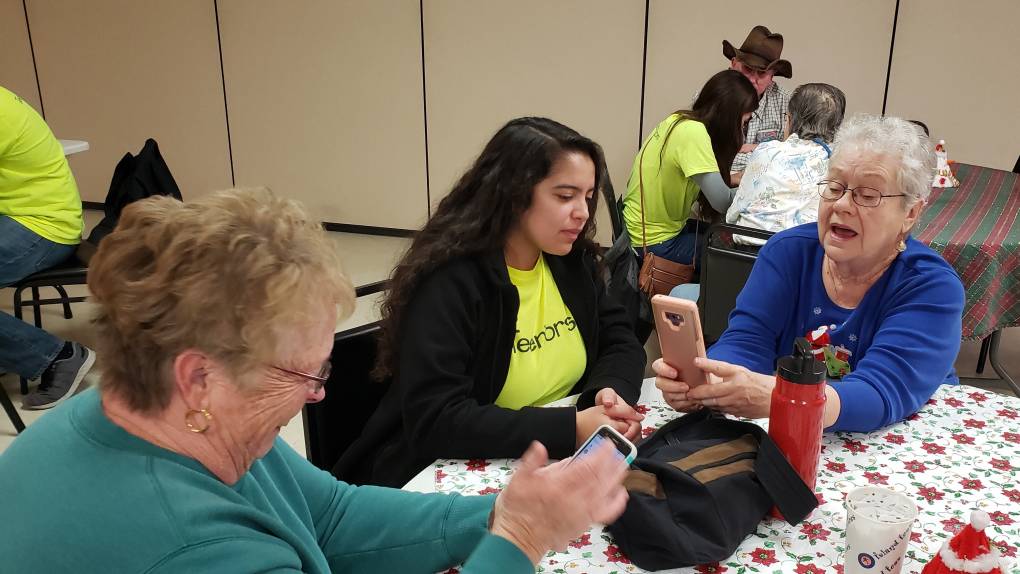
"caption": "Kendra Gonzales coaches Linda Haverty on how to add a photo of a friend to her contacts list on her phone.\n",
"description": "Kendra Gonzales coaches Linda Haverty on how to add a photo of a friend to her contacts list on her phone.",
"title": "Kendra Gonzales coaches Linda Haverty on how to add a photo of a friend to her contacts list on her phone.",
"credit": "Megan Kamerick/KUNM",
"status": "inherit",
"isLoading": false,
"fetchFailed": false
},
"mindshift_55189": {
"type": "attachments",
"id": "mindshift_55189",
"meta": {
"index": "attachments_1716263798",
"site": "mindshift",
"id": "55189",
"found": true
},
"parent": 55169,
"imgSizes": {
"twentyfourteen-full-width": {
"file": "https://ww2.kqed.org/app/uploads/sites/23/2020/01/make-art-still_wide-d70306f780183e78e1f0fa29f03a50edd0dc1575-3-1038x576.jpg",
"width": 1038,
"mimeType": "image/jpeg",
"height": 576
},
"thumbnail": {
"file": "https://ww2.kqed.org/app/uploads/sites/23/2020/01/make-art-still_wide-d70306f780183e78e1f0fa29f03a50edd0dc1575-3-160x90.jpg",
"width": 160,
"mimeType": "image/jpeg",
"height": 90
},
"post-thumbnail": {
"file": "https://ww2.kqed.org/app/uploads/sites/23/2020/01/make-art-still_wide-d70306f780183e78e1f0fa29f03a50edd0dc1575-3-672x372.jpg",
"width": 672,
"mimeType": "image/jpeg",
"height": 372
},
"kqedFullSize": {
"file": "https://ww2.kqed.org/app/uploads/sites/23/2020/01/make-art-still_wide-d70306f780183e78e1f0fa29f03a50edd0dc1575-3.jpg",
"width": 1606,
"height": 903
},
"large": {
"file": "https://ww2.kqed.org/app/uploads/sites/23/2020/01/make-art-still_wide-d70306f780183e78e1f0fa29f03a50edd0dc1575-3-1020x574.jpg",
"width": 1020,
"mimeType": "image/jpeg",
"height": 574
},
"complete_open_graph": {
"file": "https://ww2.kqed.org/app/uploads/sites/23/2020/01/make-art-still_wide-d70306f780183e78e1f0fa29f03a50edd0dc1575-3-1200x675.jpg",
"width": 1200,
"mimeType": "image/jpeg",
"height": 675
},
"medium": {
"file": "https://ww2.kqed.org/app/uploads/sites/23/2020/01/make-art-still_wide-d70306f780183e78e1f0fa29f03a50edd0dc1575-3-800x450.jpg",
"width": 800,
"mimeType": "image/jpeg",
"height": 450
},
"medium_large": {
"file": "https://ww2.kqed.org/app/uploads/sites/23/2020/01/make-art-still_wide-d70306f780183e78e1f0fa29f03a50edd0dc1575-3-768x432.jpg",
"width": 768,
"mimeType": "image/jpeg",
"height": 432
}
},
"publishDate": 1579037700,
"modified": 1579037979,
"caption": null,
"description": "Making art is fun. But there’s a lot more to it. It might serve an evolutionary purpose -- and emerging research shows that it can help us feel happy and relaxed.",
"title": "Making art is fun. But there's a lot more to it. It might serve an evolutionary purpose — and emerging research shows that it can help us feel happy and relaxed.",
"credit": "Meredith Rizzo/NPR",
"status": "inherit",
"isLoading": false,
"fetchFailed": false
},
"mindshift_55140": {
"type": "attachments",
"id": "mindshift_55140",
"meta": {
"index": "attachments_1716263798",
"site": "mindshift",
"id": "55140",
"found": true
},
"parent": 55127,
"imgSizes": {
"twentyfourteen-full-width": {
"file": "https://ww2.kqed.org/app/uploads/sites/23/2020/01/iStock-1136656991-1038x576.jpg",
"width": 1038,
"mimeType": "image/jpeg",
"height": 576
},
"thumbnail": {
"file": "https://ww2.kqed.org/app/uploads/sites/23/2020/01/iStock-1136656991-160x116.jpg",
"width": 160,
"mimeType": "image/jpeg",
"height": 116
},
"post-thumbnail": {
"file": "https://ww2.kqed.org/app/uploads/sites/23/2020/01/iStock-1136656991-672x372.jpg",
"width": 672,
"mimeType": "image/jpeg",
"height": 372
},
"kqedFullSize": {
"file": "https://ww2.kqed.org/app/uploads/sites/23/2020/01/iStock-1136656991-e1578553428461.jpg",
"width": 1920,
"height": 1393
},
"large": {
"file": "https://ww2.kqed.org/app/uploads/sites/23/2020/01/iStock-1136656991-1020x740.jpg",
"width": 1020,
"mimeType": "image/jpeg",
"height": 740
},
"complete_open_graph": {
"file": "https://ww2.kqed.org/app/uploads/sites/23/2020/01/iStock-1136656991-1200x871.jpg",
"width": 1200,
"mimeType": "image/jpeg",
"height": 871
},
"full-width": {
"file": "https://ww2.kqed.org/app/uploads/sites/23/2020/01/iStock-1136656991-1920x1393.jpg",
"width": 1920,
"mimeType": "image/jpeg",
"height": 1393
},
"medium": {
"file": "https://ww2.kqed.org/app/uploads/sites/23/2020/01/iStock-1136656991-800x580.jpg",
"width": 800,
"mimeType": "image/jpeg",
"height": 580
},
"medium_large": {
"file": "https://ww2.kqed.org/app/uploads/sites/23/2020/01/iStock-1136656991-768x557.jpg",
"width": 768,
"mimeType": "image/jpeg",
"height": 557
}
},
"publishDate": 1578553408,
"modified": 1578553443,
"caption": null,
"description": null,
"title": "iStock-1136656991",
"credit": "Alexmia/iStock",
"status": "inherit",
"isLoading": false,
"fetchFailed": false
},
"mindshift_55131": {
"type": "attachments",
"id": "mindshift_55131",
"meta": {
"index": "attachments_1716263798",
"site": "mindshift",
"id": "55131",
"found": true
},
"parent": 55130,
"imgSizes": {
"twentyfourteen-full-width": {
"file": "https://ww2.kqed.org/app/uploads/sites/23/2020/01/runners_enl-aa606a160d910b3323c603d90c2810bffa1be837-1038x576.jpg",
"width": 1038,
"mimeType": "image/jpeg",
"height": 576
},
"thumbnail": {
"file": "https://ww2.kqed.org/app/uploads/sites/23/2020/01/runners_enl-aa606a160d910b3323c603d90c2810bffa1be837-160x107.jpg",
"width": 160,
"mimeType": "image/jpeg",
"height": 107
},
"post-thumbnail": {
"file": "https://ww2.kqed.org/app/uploads/sites/23/2020/01/runners_enl-aa606a160d910b3323c603d90c2810bffa1be837-672x372.jpg",
"width": 672,
"mimeType": "image/jpeg",
"height": 372
},
"kqedFullSize": {
"file": "https://ww2.kqed.org/app/uploads/sites/23/2020/01/runners_enl-aa606a160d910b3323c603d90c2810bffa1be837-e1578379452376.jpg",
"width": 1920,
"height": 1280
},
"large": {
"file": "https://ww2.kqed.org/app/uploads/sites/23/2020/01/runners_enl-aa606a160d910b3323c603d90c2810bffa1be837-1020x680.jpg",
"width": 1020,
"mimeType": "image/jpeg",
"height": 680
},
"complete_open_graph": {
"file": "https://ww2.kqed.org/app/uploads/sites/23/2020/01/runners_enl-aa606a160d910b3323c603d90c2810bffa1be837-1200x800.jpg",
"width": 1200,
"mimeType": "image/jpeg",
"height": 800
},
"full-width": {
"file": "https://ww2.kqed.org/app/uploads/sites/23/2020/01/runners_enl-aa606a160d910b3323c603d90c2810bffa1be837-1920x1280.jpg",
"width": 1920,
"mimeType": "image/jpeg",
"height": 1280
},
"medium": {
"file": "https://ww2.kqed.org/app/uploads/sites/23/2020/01/runners_enl-aa606a160d910b3323c603d90c2810bffa1be837-800x533.jpg",
"width": 800,
"mimeType": "image/jpeg",
"height": 533
},
"medium_large": {
"file": "https://ww2.kqed.org/app/uploads/sites/23/2020/01/runners_enl-aa606a160d910b3323c603d90c2810bffa1be837-768x512.jpg",
"width": 768,
"mimeType": "image/jpeg",
"height": 512
}
},
"publishDate": 1578379290,
"modified": 1578379473,
"caption": "In a new book The Joy of Movement: How Exercise Helps Us Find Happiness, Hope, Connection, and Courage, author Kelly McGonigal argues that we should look beyond weight loss to the many social and emotional benefits of exercise.\n",
"description": null,
"title": "In a new book The Joy of Movement: How Exercise Helps Us Find Happiness, Hope, Connection, and Courage, author Kelly McGonigal argues that we should look beyond weight loss to the many social and emotional benefits of exercise.",
"credit": "Boris Austin/Getty Images",
"status": "inherit",
"isLoading": false,
"fetchFailed": false
},
"mindshift_55109": {
"type": "attachments",
"id": "mindshift_55109",
"meta": {
"index": "attachments_1716263798",
"site": "mindshift",
"id": "55109",
"found": true
},
"parent": 55108,
"imgSizes": {
"twentyfourteen-full-width": {
"file": "https://ww2.kqed.org/app/uploads/sites/23/2019/12/npr-finalmikedriver-final4-082a7531cd9a466343e8d83d3dea80f9228d2a75-1038x576.jpg",
"width": 1038,
"mimeType": "image/jpeg",
"height": 576
},
"thumbnail": {
"file": "https://ww2.kqed.org/app/uploads/sites/23/2019/12/npr-finalmikedriver-final4-082a7531cd9a466343e8d83d3dea80f9228d2a75-160x120.jpg",
"width": 160,
"mimeType": "image/jpeg",
"height": 120
},
"post-thumbnail": {
"file": "https://ww2.kqed.org/app/uploads/sites/23/2019/12/npr-finalmikedriver-final4-082a7531cd9a466343e8d83d3dea80f9228d2a75-672x372.jpg",
"width": 672,
"mimeType": "image/jpeg",
"height": 372
},
"kqedFullSize": {
"file": "https://ww2.kqed.org/app/uploads/sites/23/2019/12/npr-finalmikedriver-final4-082a7531cd9a466343e8d83d3dea80f9228d2a75-e1578036395108.jpg",
"width": 1920,
"height": 1440
},
"large": {
"file": "https://ww2.kqed.org/app/uploads/sites/23/2019/12/npr-finalmikedriver-final4-082a7531cd9a466343e8d83d3dea80f9228d2a75-1020x765.jpg",
"width": 1020,
"mimeType": "image/jpeg",
"height": 765
},
"complete_open_graph": {
"file": "https://ww2.kqed.org/app/uploads/sites/23/2019/12/npr-finalmikedriver-final4-082a7531cd9a466343e8d83d3dea80f9228d2a75-1200x900.jpg",
"width": 1200,
"mimeType": "image/jpeg",
"height": 900
},
"full-width": {
"file": "https://ww2.kqed.org/app/uploads/sites/23/2019/12/npr-finalmikedriver-final4-082a7531cd9a466343e8d83d3dea80f9228d2a75-1920x1440.jpg",
"width": 1920,
"mimeType": "image/jpeg",
"height": 1440
},
"medium": {
"file": "https://ww2.kqed.org/app/uploads/sites/23/2019/12/npr-finalmikedriver-final4-082a7531cd9a466343e8d83d3dea80f9228d2a75-800x600.jpg",
"width": 800,
"mimeType": "image/jpeg",
"height": 600
},
"medium_large": {
"file": "https://ww2.kqed.org/app/uploads/sites/23/2019/12/npr-finalmikedriver-final4-082a7531cd9a466343e8d83d3dea80f9228d2a75-768x576.jpg",
"width": 768,
"mimeType": "image/jpeg",
"height": 576
}
},
"publishDate": 1578036325,
"modified": 1578036422,
"caption": "We all struggle with healthy habits — including experts. They just have science-tested tips to get them back on track.",
"description": "We all struggle with healthy habits — including experts. They just have science-tested tips to get them back on track.",
"title": "We all struggle with healthy habits — including experts. They just have science-tested tips to get them back on track.",
"credit": "Michael Driver for NPR",
"status": "inherit",
"isLoading": false,
"fetchFailed": false
},
"mindshift_55104": {
"type": "attachments",
"id": "mindshift_55104",
"meta": {
"index": "attachments_1716263798",
"site": "mindshift",
"id": "55104",
"found": true
},
"parent": 55098,
"imgSizes": {
"twentyfourteen-full-width": {
"file": "https://ww2.kqed.org/app/uploads/sites/23/2019/12/fugees-yoga-960x600-c-default-960x576.png",
"width": 960,
"mimeType": "image/png",
"height": 576
},
"thumbnail": {
"file": "https://ww2.kqed.org/app/uploads/sites/23/2019/12/fugees-yoga-960x600-c-default-160x100.png",
"width": 160,
"mimeType": "image/png",
"height": 100
},
"post-thumbnail": {
"file": "https://ww2.kqed.org/app/uploads/sites/23/2019/12/fugees-yoga-960x600-c-default-672x372.png",
"width": 672,
"mimeType": "image/png",
"height": 372
},
"kqedFullSize": {
"file": "https://ww2.kqed.org/app/uploads/sites/23/2019/12/fugees-yoga-960x600-c-default.png",
"width": 960,
"height": 600
},
"medium": {
"file": "https://ww2.kqed.org/app/uploads/sites/23/2019/12/fugees-yoga-960x600-c-default-800x500.png",
"width": 800,
"mimeType": "image/png",
"height": 500
},
"medium_large": {
"file": "https://ww2.kqed.org/app/uploads/sites/23/2019/12/fugees-yoga-960x600-c-default-768x480.png",
"width": 768,
"mimeType": "image/png",
"height": 480
}
},
"publishDate": 1577116097,
"modified": 1577116147,
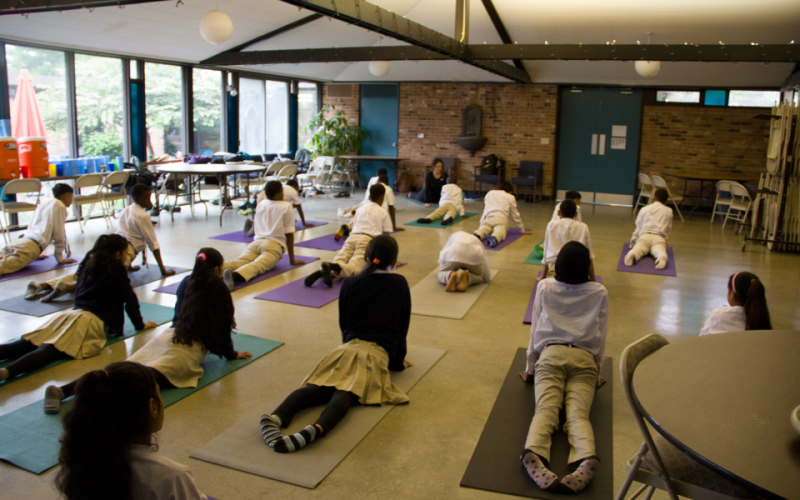
"caption": "At Fugees Academy, the day begins with yoga. The exercises help students stay focused and cope with past trauma. ",
"description": null,
"title": "fugees-yoga-960x600-c-default",
"credit": "Aaricka Washington/The Hechinger Report",
"status": "inherit",
"isLoading": false,
"fetchFailed": false
},
"mindshift_55091": {
"type": "attachments",
"id": "mindshift_55091",
"meta": {
"index": "attachments_1716263798",
"site": "mindshift",
"id": "55091",
"found": true
},
"parent": 54999,
"imgSizes": {
"twentyfourteen-full-width": {
"file": "https://ww2.kqed.org/app/uploads/sites/23/2019/12/D18_224_016-1038x576.jpg",
"width": 1038,
"mimeType": "image/jpeg",
"height": 576
},
"thumbnail": {
"file": "https://ww2.kqed.org/app/uploads/sites/23/2019/12/D18_224_016-160x107.jpg",
"width": 160,
"mimeType": "image/jpeg",
"height": 107
},
"post-thumbnail": {
"file": "https://ww2.kqed.org/app/uploads/sites/23/2019/12/D18_224_016-672x372.jpg",
"width": 672,
"mimeType": "image/jpeg",
"height": 372
},
"kqedFullSize": {
"file": "https://ww2.kqed.org/app/uploads/sites/23/2019/12/D18_224_016-e1576741233589.jpg",
"width": 1920,
"height": 1280
},
"large": {
"file": "https://ww2.kqed.org/app/uploads/sites/23/2019/12/D18_224_016-1020x680.jpg",
"width": 1020,
"mimeType": "image/jpeg",
"height": 680
},
"complete_open_graph": {
"file": "https://ww2.kqed.org/app/uploads/sites/23/2019/12/D18_224_016-1200x800.jpg",
"width": 1200,
"mimeType": "image/jpeg",
"height": 800
},
"full-width": {
"file": "https://ww2.kqed.org/app/uploads/sites/23/2019/12/D18_224_016-1920x1280.jpg",
"width": 1920,
"mimeType": "image/jpeg",
"height": 1280
},
"medium": {
"file": "https://ww2.kqed.org/app/uploads/sites/23/2019/12/D18_224_016-800x533.jpg",
"width": 800,
"mimeType": "image/jpeg",
"height": 533
},
"medium_large": {
"file": "https://ww2.kqed.org/app/uploads/sites/23/2019/12/D18_224_016-768x512.jpg",
"width": 768,
"mimeType": "image/jpeg",
"height": 512
}
},
"publishDate": 1576741197,
"modified": 1576742106,
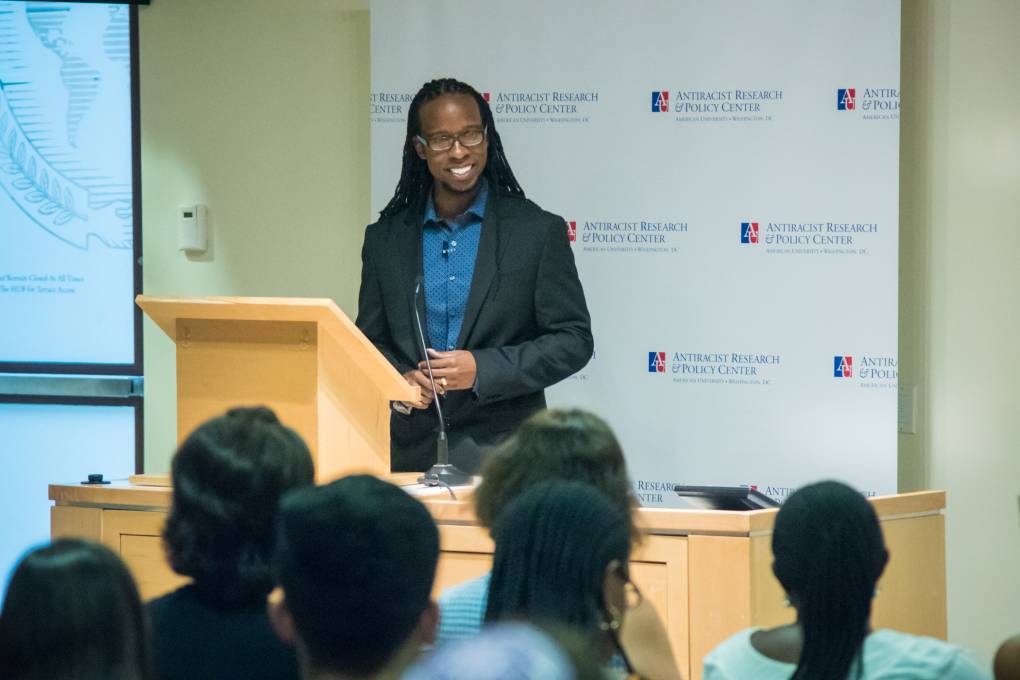
"caption": "Ibram X. Kendi, Director of the Antiracist Research & Policy Center at American University. He is author of \"How to Be An Antiracist.\"",
"description": null,
"title": "D18_224_016",
"credit": "Courtesy of American University",
"status": "inherit",
"isLoading": false,
"fetchFailed": false
},
"mindshift_55064": {
"type": "attachments",
"id": "mindshift_55064",
"meta": {
"index": "attachments_1716263798",
"site": "mindshift",
"id": "55064",
"found": true
},
"parent": 55063,
"imgSizes": {
"twentyfourteen-full-width": {
"file": "https://ww2.kqed.org/app/uploads/sites/23/2019/12/mjensen-npr_enrollment-less_custom-c450187fdc4e7635260074138df7ca69cec8d8a3-1038x576.jpg",
"width": 1038,
"mimeType": "image/jpeg",
"height": 576
},
"thumbnail": {
"file": "https://ww2.kqed.org/app/uploads/sites/23/2019/12/mjensen-npr_enrollment-less_custom-c450187fdc4e7635260074138df7ca69cec8d8a3-160x100.jpg",
"width": 160,
"mimeType": "image/jpeg",
"height": 100
},
"post-thumbnail": {
"file": "https://ww2.kqed.org/app/uploads/sites/23/2019/12/mjensen-npr_enrollment-less_custom-c450187fdc4e7635260074138df7ca69cec8d8a3-672x372.jpg",
"width": 672,
"mimeType": "image/jpeg",
"height": 372
},
"kqedFullSize": {
"file": "https://ww2.kqed.org/app/uploads/sites/23/2019/12/mjensen-npr_enrollment-less_custom-c450187fdc4e7635260074138df7ca69cec8d8a3-e1576565603504.jpg",
"width": 1920,
"height": 1198
},
"large": {
"file": "https://ww2.kqed.org/app/uploads/sites/23/2019/12/mjensen-npr_enrollment-less_custom-c450187fdc4e7635260074138df7ca69cec8d8a3-1020x637.jpg",
"width": 1020,
"mimeType": "image/jpeg",
"height": 637
},
"complete_open_graph": {
"file": "https://ww2.kqed.org/app/uploads/sites/23/2019/12/mjensen-npr_enrollment-less_custom-c450187fdc4e7635260074138df7ca69cec8d8a3-1200x749.jpg",
"width": 1200,
"mimeType": "image/jpeg",
"height": 749
},
"full-width": {
"file": "https://ww2.kqed.org/app/uploads/sites/23/2019/12/mjensen-npr_enrollment-less_custom-c450187fdc4e7635260074138df7ca69cec8d8a3-1920x1198.jpg",
"width": 1920,
"mimeType": "image/jpeg",
"height": 1198
},
"medium": {
"file": "https://ww2.kqed.org/app/uploads/sites/23/2019/12/mjensen-npr_enrollment-less_custom-c450187fdc4e7635260074138df7ca69cec8d8a3-800x499.jpg",
"width": 800,
"mimeType": "image/jpeg",
"height": 499
},
"medium_large": {
"file": "https://ww2.kqed.org/app/uploads/sites/23/2019/12/mjensen-npr_enrollment-less_custom-c450187fdc4e7635260074138df7ca69cec8d8a3-768x479.jpg",
"width": 768,
"mimeType": "image/jpeg",
"height": 479
}
},
"publishDate": 1576565568,
"modified": 1576565625,
"caption": "Fewer college students",
"description": "Meredith Jensen for NPR",
"title": "Meredith Jensen for NPR",
"credit": "Credit: Meredith Jensen for NPR",
"status": "inherit",
"isLoading": false,
"fetchFailed": false
},
"mindshift_55032": {
"type": "attachments",
"id": "mindshift_55032",
"meta": {
"index": "attachments_1716263798",
"site": "mindshift",
"id": "55032",
"found": true
},
"parent": 55031,
"imgSizes": {
"twentyfourteen-full-width": {
"file": "https://ww2.kqed.org/app/uploads/sites/23/2019/12/20191104_dull_videogame-50_custom-b2c497eebbf403f5121ee90a6e26d29fb7785b30-1038x576.jpg",
"width": 1038,
"mimeType": "image/jpeg",
"height": 576
},
"thumbnail": {
"file": "https://ww2.kqed.org/app/uploads/sites/23/2019/12/20191104_dull_videogame-50_custom-b2c497eebbf403f5121ee90a6e26d29fb7785b30-160x107.jpg",
"width": 160,
"mimeType": "image/jpeg",
"height": 107
},
"post-thumbnail": {
"file": "https://ww2.kqed.org/app/uploads/sites/23/2019/12/20191104_dull_videogame-50_custom-b2c497eebbf403f5121ee90a6e26d29fb7785b30-672x372.jpg",
"width": 672,
"mimeType": "image/jpeg",
"height": 372
},
"kqedFullSize": {
"file": "https://ww2.kqed.org/app/uploads/sites/23/2019/12/20191104_dull_videogame-50_custom-b2c497eebbf403f5121ee90a6e26d29fb7785b30-e1576134907292.jpg",
"width": 1920,
"height": 1279
},
"large": {
"file": "https://ww2.kqed.org/app/uploads/sites/23/2019/12/20191104_dull_videogame-50_custom-b2c497eebbf403f5121ee90a6e26d29fb7785b30-1020x679.jpg",
"width": 1020,
"mimeType": "image/jpeg",
"height": 679
},
"complete_open_graph": {
"file": "https://ww2.kqed.org/app/uploads/sites/23/2019/12/20191104_dull_videogame-50_custom-b2c497eebbf403f5121ee90a6e26d29fb7785b30-1200x799.jpg",
"width": 1200,
"mimeType": "image/jpeg",
"height": 799
},
"full-width": {
"file": "https://ww2.kqed.org/app/uploads/sites/23/2019/12/20191104_dull_videogame-50_custom-b2c497eebbf403f5121ee90a6e26d29fb7785b30-1920x1279.jpg",
"width": 1920,
"mimeType": "image/jpeg",
"height": 1279
},
"medium": {
"file": "https://ww2.kqed.org/app/uploads/sites/23/2019/12/20191104_dull_videogame-50_custom-b2c497eebbf403f5121ee90a6e26d29fb7785b30-800x533.jpg",
"width": 800,
"mimeType": "image/jpeg",
"height": 533
},
"medium_large": {
"file": "https://ww2.kqed.org/app/uploads/sites/23/2019/12/20191104_dull_videogame-50_custom-b2c497eebbf403f5121ee90a6e26d29fb7785b30-768x511.jpg",
"width": 768,
"mimeType": "image/jpeg",
"height": 511
}
},
"publishDate": 1576134801,
"modified": 1576134926,
"caption": "Lual Mayen, CEO of Junub Games, says that before he taught himself how to code at a refugee camp, \"I never thought video games were made by people. I thought they just fall from heaven.\"\n",
"description": null,
"title": "Lual Mayen, CEO of Junub Games, says that before he taught himself how to code at a refugee camp, \"I never thought video games were made by people. I thought they just fall from heaven.\"",
"credit": "Catie Dull/NPR",
"status": "inherit",
"isLoading": false,
"fetchFailed": false
},
"mindshift_55008": {
"type": "attachments",
"id": "mindshift_55008",
"meta": {
"index": "attachments_1716263798",
"site": "mindshift",
"id": "55008",
"found": true
},
"parent": 55006,
"imgSizes": {
"twentyfourteen-full-width": {
"file": "https://ww2.kqed.org/app/uploads/sites/23/2019/12/40048940305_073d5c5ab7_k-1038x576.jpg",
"width": 1038,
"mimeType": "image/jpeg",
"height": 576
},
"thumbnail": {
"file": "https://ww2.kqed.org/app/uploads/sites/23/2019/12/40048940305_073d5c5ab7_k-160x107.jpg",
"width": 160,
"mimeType": "image/jpeg",
"height": 107
},
"post-thumbnail": {
"file": "https://ww2.kqed.org/app/uploads/sites/23/2019/12/40048940305_073d5c5ab7_k-672x372.jpg",
"width": 672,
"mimeType": "image/jpeg",
"height": 372
},
"kqedFullSize": {
"file": "https://ww2.kqed.org/app/uploads/sites/23/2019/12/40048940305_073d5c5ab7_k-e1575968864915.jpg",
"width": 1920,
"height": 1282
},
"large": {
"file": "https://ww2.kqed.org/app/uploads/sites/23/2019/12/40048940305_073d5c5ab7_k-1020x681.jpg",
"width": 1020,
"mimeType": "image/jpeg",
"height": 681
},
"complete_open_graph": {
"file": "https://ww2.kqed.org/app/uploads/sites/23/2019/12/40048940305_073d5c5ab7_k-1200x801.jpg",
"width": 1200,
"mimeType": "image/jpeg",
"height": 801
},
"full-width": {
"file": "https://ww2.kqed.org/app/uploads/sites/23/2019/12/40048940305_073d5c5ab7_k-1920x1282.jpg",
"width": 1920,
"mimeType": "image/jpeg",
"height": 1282
},
"medium": {
"file": "https://ww2.kqed.org/app/uploads/sites/23/2019/12/40048940305_073d5c5ab7_k-800x534.jpg",
"width": 800,
"mimeType": "image/jpeg",
"height": 534
},
"medium_large": {
"file": "https://ww2.kqed.org/app/uploads/sites/23/2019/12/40048940305_073d5c5ab7_k-768x513.jpg",
"width": 768,
"mimeType": "image/jpeg",
"height": 513
}
},
"publishDate": 1575967493,
"modified": 1575968856,
"caption": null,
"description": null,
"title": null,
"credit": "\u003ca href=\"https://www.flickr.com/photos/_maekke_/40048940305/in/photolist-241ZhEM-SGtEWU-G4vUWF-NePqC3-Hz7sWD-NADqWH-NADqHX-G8SCYA-CS5C2r-RiL9ym-S84Dnn-rNVsDb-sipuiQ-DxwnDP-pCsVyQ-rsJvpG-AM1fSR-24FrwJp-qVshzX-e5tdzr-4NY4Uv-Cm7sCE-rsCtZf-jFafQm-D1HfCJ-GtN2ko-QSrEnG-dVkn23-LP1X3V-Yt5NZi-AUexc1-bivq8K-BEcWEK-pTJn1y-XYigti-B6qQow-M8FqB7-Gx852q-rsJvBf-bBtR8B-dUZVWx-zJtKeV-CjKxat-7zLguB-naA2GR-Q4cqWq-Zz3f7R-ncWre6-BZ1eYv-qS3ck3\">Flickr/Markus Meier\u003c/a>",
"status": "inherit",
"isLoading": false,
"fetchFailed": false
}
},
"audioPlayerReducer": {
"postId": "stream_live",
"isPaused": true,
"isPlaying": false,
"pfsActive": false,
"pledgeModalIsOpen": true,
"playerDrawerIsOpen": false,
"liveAudioPlayStartedAt": 0,
"liveAudioPlayContext": ""
},
"authorsReducer": {
"byline_mindshift_55212": {
"type": "authors",
"id": "byline_mindshift_55212",
"meta": {
"override": true
},
"slug": "byline_mindshift_55212",
"name": "Megan Kamerick, KUNM",
"isLoading": false
},
"byline_mindshift_55169": {
"type": "authors",
"id": "byline_mindshift_55169",
"meta": {
"override": true
},
"slug": "byline_mindshift_55169",
"name": "Malaka Gharib",
"isLoading": false
},
"byline_mindshift_55127": {
"type": "authors",
"id": "byline_mindshift_55127",
"meta": {
"override": true
},
"slug": "byline_mindshift_55127",
"name": "\u003ca href=\"https://www.gse.harvard.edu/\">Emily Boudreau, Usable Knowledge\u003c/a>",
"isLoading": false
},
"byline_mindshift_55130": {
"type": "authors",
"id": "byline_mindshift_55130",
"meta": {
"override": true
},
"slug": "byline_mindshift_55130",
"name": "Stephanie O'Neill",
"isLoading": false
},
"byline_mindshift_55108": {
"type": "authors",
"id": "byline_mindshift_55108",
"meta": {
"override": true
},
"slug": "byline_mindshift_55108",
"name": "Emily Vaughn and L. Carol Ritchie",
"isLoading": false
},
"byline_mindshift_55098": {
"type": "authors",
"id": "byline_mindshift_55098",
"meta": {
"override": true
},
"slug": "byline_mindshift_55098",
"name": "\u003ca href=\"https://hechingerreport.org/\">Aaricka Washington, The Hechinger Report\u003c/a>",
"isLoading": false
},
"byline_mindshift_55063": {
"type": "authors",
"id": "byline_mindshift_55063",
"meta": {
"override": true
},
"slug": "byline_mindshift_55063",
"name": "Elissa Nadworny and Max Larkin",
"isLoading": false
},
"byline_mindshift_55031": {
"type": "authors",
"id": "byline_mindshift_55031",
"meta": {
"override": true
},
"slug": "byline_mindshift_55031",
"name": "Emily Vaughn",
"isLoading": false
},
"byline_mindshift_55006": {
"type": "authors",
"id": "byline_mindshift_55006",
"meta": {
"override": true
},
"slug": "byline_mindshift_55006",
"name": "\u003ca href=\"https://hechingerreport.org/\">By Tara García Mathewson, The Hechinger Report\u003c/a>",
"isLoading": false
},
"katrinaschwartz": {
"type": "authors",
"id": "234",
"meta": {
"index": "authors_1716337520",
"id": "234",
"found": true
},
"name": "Katrina Schwartz",
"firstName": "Katrina",
"lastName": "Schwartz",
"slug": "katrinaschwartz",
"email": "kschwartz@kqed.org",
"display_author_email": false,
"staff_mastheads": [
"news"
],
"title": "Producer",
"bio": "Katrina Schwartz is a journalist based in San Francisco. She's worked at KPCC public radio in LA and has reported on air and online for KQED since 2010. She covered how teaching and learning is changing for MindShift between 2012 and 2020. She is the co-host of the MindShift podcast and now produces KQED's Bay Curious podcast.",
"avatar": "https://secure.gravatar.com/avatar/edb4ee79070447a018538c9aae6eeecf28786515b8a0c30e43b6b7dce5aa44c8?s=600&d=blank&r=g",
"twitter": "kschwart",
"bluesky": null,
"facebook": null,
"instagram": null,
"linkedin": null,
"sites": [
{
"site": "",
"roles": [
"editor"
]
},
{
"site": "news",
"roles": [
"editor"
]
},
{
"site": "mindshift",
"roles": [
"administrator"
]
},
{
"site": "stateofhealth",
"roles": [
"author"
]
},
{
"site": "science",
"roles": [
"editor"
]
}
],
"headData": {
"title": "Katrina Schwartz | KQED",
"description": "Producer",
"ogImgSrc": "https://secure.gravatar.com/avatar/edb4ee79070447a018538c9aae6eeecf28786515b8a0c30e43b6b7dce5aa44c8?s=600&d=blank&r=g",
"twImgSrc": "https://secure.gravatar.com/avatar/edb4ee79070447a018538c9aae6eeecf28786515b8a0c30e43b6b7dce5aa44c8?s=600&d=blank&r=g"
},
"isLoading": false,
"link": "/author/katrinaschwartz"
}
},
"pagesReducer": {
"mindshift_category_big-ideas": {
"type": "terms",
"id": "mindshift_192",
"meta": {
"index": "terms_1716263798",
"site": "mindshift",
"id": "192",
"score": 14.406576
},
"featImg": null,
"name": "Big Ideas",
"description": "The latest findings from experts in the field related to the future of learning.",
"taxonomy": "category",
"headData": {
"twImgId": null,
"twTitle": null,
"ogTitle": null,
"ogImgId": null,
"twDescription": null,
"description": "The latest findings from experts in the field related to the future of learning.",
"title": "Big Ideas Archives | KQED Mindshift",
"ogDescription": null
},
"ttid": 192,
"slug": "big-ideas",
"isLoading": false,
"title": "Big Ideas",
"pageMeta": {
"site": "mindshift",
"WpPageTemplate": "page-topic-editorial",
"currentPage": 11
},
"blocks": [
{
"blockName": "kqed/company-paragraph",
"content": "The latest findings from experts in the field related to the future of learning."
},
{
"blockName": "kqed/post-list",
"attrs": {
"layout": "cardArticle2",
"query": "posts/mindshift?category=big-ideas",
"seeMore": false,
"paginated": true,
"page": 11
}
},
{
"blockName": "kqed/ad"
}
]
}
},
"pfsSessionReducer": {},
"postsReducer": {
"stream_live": {
"type": "live",
"id": "stream_live",
"audioUrl": "https://streams.kqed.org/kqedradio",
"title": "Live Stream",
"excerpt": "Live Stream information currently unavailable.",
"link": "/radio",
"featImg": "",
"label": {
"name": "KQED Live",
"link": "/"
}
},
"stream_kqedNewscast": {
"type": "posts",
"id": "stream_kqedNewscast",
"audioUrl": "https://www.kqed.org/.stream/anon/radio/RDnews/newscast.mp3?_=1",
"title": "KQED Newscast",
"featImg": "",
"label": {
"name": "88.5 FM",
"link": "/"
}
},
"mindshift_54750": {
"type": "posts",
"id": "mindshift_54750",
"meta": {
"index": "posts_1716263798",
"site": "mindshift",
"id": "54750",
"score": null,
"sort": [
1580110176000
]
},
"parent": 0,
"labelTerm": {
"site": "mindshift"
},
"blocks": [],
"publishDate": 1580110176,
"format": "standard",
"disqusTitle": "Why Focusing On Adult Learning Builds A School Culture Where Students Thrive",
"title": "Why Focusing On Adult Learning Builds A School Culture Where Students Thrive",
"headTitle": "MindShift | KQED News",
"content": "\u003cp>When policymakers and school leaders talk about improving schools, much of the focus is on test scores, teaching strategies, curriculum and other services consumed directly by students. Often less attention is paid to the culture of adult learning in a school building, but maybe it’s time that changed. Harvard researchers have been studying the impact of what they call a “growth culture” on the effectiveness and productivity of companies. Now, they’re expanding that work into schools.\u003c/p>\n\u003cp>“Schools if they’re doing a good job, they’re really designed to be places where kids can learn and grow in powerful ways,” said \u003ca href=\"https://www.gse.harvard.edu/faculty/deborah-helsing\" target=\"_blank\" rel=\"noopener noreferrer\">Deb Helsing\u003c/a>, co-author of \"\u003ca href=\"https://ssir.org/articles/entry/becoming_a_deliberately_developmental_organization\" target=\"_blank\" rel=\"noopener noreferrer\">An Everyone Culture: Becoming a Deliberately Developmental Organization\u003c/a>\" and a Harvard Graduate School of Education lecturer. “We just haven’t ever thought that the adult learning and development happening in schools is a necessary and integral part of creating powerful environments for kids.”\u003c/p>\n\u003cp>Helsing and her colleagues, Robert Kegan and Lisa Lahey, found that \u003ca href=\"https://hbr.org/2016/10/the-key-to-adaptable-companies-is-relentlessly-developing-people\" target=\"_blank\" rel=\"noopener noreferrer\">when adults continue to learn at their jobs they are better at creating that experience for other people\u003c/a>. She says if schools are going to be places where students consistently push against the edge of what they don’t know, testing new theories, and trying things out while learning from mistakes, those same qualities must be present for their teachers. It’s difficult for a teacher to facilitate that type of learning environment if they haven’t experienced it themselves.\u003c/p>\n\u003cp>“If you are experiencing learning that in some way connects to or challenges fundamental assumptions you are making about yourself and the world, that’s when it’s going to be the most powerful,” Helsing said.\u003c/p>\n\u003cp>To get to that place, adults need to be part of a community of colleagues who support their growth. They need to feel safe to be vulnerable, to admit failings or mistakes and to trust that their colleagues are giving feedback in order to help them improve. But it also requires that adults are consistently pushing against the edge of what they don’t know.\u003c/p>\n\u003cp>[ad fullwidth]\u003c/p>\n\u003cp>“How do you create the kind of challenge so people don’t get comfortable, but are constantly identifying new growth edges that challenge basic assumptions they have?” Helsing asked.\u003c/p>\n\u003cp>Working right at that edge, where fundamental beliefs and mindsets surface and can be examined, is how adults move forward in their learning, said Helsing. This theory of change recognizes that those beliefs may have served the person well for most of their career, but have now become a hindrance to growth. Having time and space to look at those values within the context of their work can help people see that and move forward.\u003c/p>\n\u003cp>And for a growth culture to truly take hold and become self-perpetuating, the system needs to have structures that support this work as part of the day-to-day functioning of the school or district. Pushing at growth edges has to become a regular part of how the work gets done for it to become cultural change.\u003c/p>\n\u003cp>These three areas, what Helsing calls “home, edge and groove,” are crucial to a growth culture in any workplace, including schools. But schools are not businesses and don’t operate in the same way as for-profit companies. To test whether this model could help a district change its adult learning culture, Pivot Learning has been working with \u003ca href=\"https://www.mpusd.net/\" target=\"_blank\" rel=\"noopener noreferrer\">Monterey Peninsula Unified School District\u003c/a> to gather data on the current culture and improve upon it.\u003c/p>\n\u003cp>“The key thing is how do we make sure this connects with the mission critical work the schools are already doing? This can’t be extra,” said Robert Curtis, vice president of education programs at Pivot Learning.\u003c/p>\n\u003cp>Curtis understands that teachers and schools already have too many demands on their time. For a growth culture to take hold and actually change how adult learning in the district happens, it can’t be extra work. Instead, Curtis and others encouraged the four schools and one district department who volunteered to participate in the study to consider this a way to move forward on the issues that are already central to them.\u003c/p>\n\u003cp>“We’re trying to build the internal capacity for them to learn together and create a safe space for leaders to try things out,” Curtis said.\u003c/p>\n\u003cp>Pivot Learning chose Monterey for \u003ca href=\"https://www.pivotlearning.org/wp-content/uploads/2019/09/pivot-growth-culture-whitepaper.pdf\" target=\"_blank\" rel=\"noopener noreferrer\">this study\u003c/a> because it’s superintendent \u003ca href=\"https://www.mpusd.net/apps/pages/index.jsp?uREC_ID=1006811&type=d&pREC_ID=1318042\" target=\"_blank\" rel=\"noopener noreferrer\">PK Diffenbaugh\u003c/a> went through the Harvard leadership training and already believes in the power of growth culture. He was looking for ways to better \u003ca href=\"https://drive.google.com/file/d/1FqjDgISU8rBn1RlJIiSVFsCosuXSC9Xv/view\" target=\"_blank\" rel=\"noopener noreferrer\">support his staff to continue their learning journey\u003c/a>, convinced by research that shows higher teacher satisfaction, retention and success when a school has a strong adult learning culture.\u003c/p>\n\u003cp>\u003cstrong>Monte Vista Elementary School\u003c/strong>\u003c/p>\n\u003cp>One of the first things Pivot Learning did was conduct a survey of district staff about how they perceive the adult learning culture in the district. The survey asked questions about how safe people felt trying new things or being vulnerable with co-workers; whether there were internal processes to surface feedback to leaders; are there clear processes for improving the work everyone does?\u003c/p>\n\u003cp>Of the 1,100 staff in the district 770 completed the survey, which showed Monterey was like many other places – it had room to improve. Then district leadership and Pivot looked for teams interested in working on improving their cultures, eventually recruiting four schools and the human resource department to participate in the study.\u003c/p>\n\u003cp>\u003ca href=\"https://montevista.mpusd.net/\" target=\"_blank\" rel=\"noopener noreferrer\">Monte Vista Elementary\u003c/a> was a clear outlier in the district from survey responses. It was clear that principal Joe Ashby had already been working to create a strong school culture, which was reflected in the survey responses from his staff. His school was also improving more rapidly than schools with lower culture scores.\u003c/p>\n\u003cp>“Put your teachers through experiences that create special places,” Ashby said. “When you come together as a staff, anchor them in a purpose, build connections and create a space for vulnerability.”\u003c/p>\n\u003cp>When Ashby became principal five years ago he had done his own survey of his staff. He found they were thirsty for professional development that would connect directly to what they were doing in the classroom. Ashby came in with a strong vision of using student data, instructional rounds and teacher-leaders to improve student achievement. He then worked with teacher leaders to align professional development to those goals. He conducted one-on-ones with staff and helped grade level teams set goals.\u003c/p>\n\u003cp>“Anything that I was putting out wasn’t just coming from me,” Ashby said. “It was coming from their fellow teachers.”\u003c/p>\n\u003cp>Ashby’s leadership style naturally aligned with many of the principles of a growth culture, one reason why his school’s staff responses were more positive than other parts of the district. But he wanted to get even better, so he volunteered to participate in the Pivot Learning trainings around growth culture with key members of his leadership team.\u003c/p>\n\u003cp>\u003cstrong>Strategies to Build a Growth Culture\u003c/strong>\u003c/p>\n\u003cp>Once a month, the participating schools and human resources department would convene to learn together and try out \u003ca href=\"https://drive.google.com/drive/folders/1Cd1-1ThUbNDebzL88e5EJtte4VwA7xLo\" target=\"_blank\" rel=\"noopener noreferrer\">strategies\u003c/a> for building culture. They shared with one another how activities went with their school site staff and got ideas from one another.\u003c/p>\n\u003cp>“We tried to anchor this in what we want for students,” Curtis said. Pivot Learning shared tools and strategies to create space for staff vulnerability and feedback and helped leaders to articulate how individual goals connect to larger shared goals.\u003c/p>\n\u003cp>They used the Youth Truth survey to bring student feedback into their conversations about improvement. That survey revealed that a majority of students didn’t feel known by their teachers or felt that teachers held low expectations for them. That data got school leaders thinking about how to help their staff build relationships with students.\u003c/p>\n\u003cp>One practice that Curtis encouraged at every professional development session was a check-in – a chance for each person to say what’s on their mind and what they need to let go of in their personal lives in order to focus on the work at hand. It’s a protocol that acknowledges that every professional has a personal life too. Principals decided to bring that protocol back to their schools to try with teachers during staff meetings. If it was successful there, they hoped teachers would then do something similar with students.\u003c/p>\n\u003cp>In another activity that school leaders tested in the Pivot Learning professional development, each person had to \u003ca href=\"https://docs.google.com/presentation/d/1hH_hEL-_1EPbgvSV4D0MdPU9wJHuNkTUQ-P2slr7hKA/edit#slide=id.p1\" target=\"_blank\" rel=\"noopener noreferrer\">create a user manual\u003c/a> for working with them. Curtis encouraged the principals to reflect on how they like to communicate, what their values are, how others can help or support them and what people commonly misunderstand about them. Practicing the activity together empowered principals and the head of human resources to bring the activity back to their employees.\u003c/p>\n\u003cp>Along the way, leaders were confronting their own mindsets and how they might get in the way of the work. For example, leaders often thought they were clearly communicating one message to their staff, only to find out through survey responses that staff disagreed.\u003c/p>\n\u003cp>“There were a lot of assumptions, that they thought they were vulnerable, but then they took the survey and were surprised that most of the staff didn’t think they were open to feedback,” Curtis said.\u003c/p>\n\u003cp>That was often hard for principals like Ashby to hear, but forced them to reevaluate how they were communicating their own professional goals to staff. It wasn’t clear enough that they truly desired feedback in order to reach those goals. They had to rethink how to open up lines of communication and actively work to make staff feel more comfortable giving them honest feedback.\u003c/p>\n\u003cp>Realizations like this are central to the growth culture theory of change. It’s only when working right up against the edge of the unknown that that these types of mindsets surface. And only when they are clearly getting in the way of a leader or teacher’s goals, will they be addressed.\u003c/p>\n\u003cp>“If you’re pouring in resources and time and you’re not addressing underlying beliefs and culture then I don’t think many of these things are going to be successful,” Curtis said of school improvement efforts.\u003c/p>\n\u003cp>After \u003ca href=\"https://docs.google.com/presentation/d/1sEW113-CIGzrlfWdF6_qJo3JSgNnLn71z53pmyTVJ_E/edit#slide=id.g63a3ce1e1e_2_185\" target=\"_blank\" rel=\"noopener noreferrer\">spending a year with the leadership teams\u003c/a> working on strategies to develop a growth culture and encouraging those leaders to use those strategies with staff, Pivot Learning gave Monterey Unified staff another survey to see if they had improved. All the participating sites showed some improvement on the post-survey and the district overall saw a slight improvement.\u003c/p>\n\u003cp>“The principals are still getting together and continuing to work on this,” Curtis said. “There’s a huge value in the network and having allies across the district that you can connect with.”\u003c/p>\n\u003cp>One of the biggest unexpected wins for principals may lie with the transformation in the human resources department. As a central office department, the human resources staff didn’t normally get to participate in professional development of this type. But members of that department experienced some of the most tremendous improvement in creating a growth culture of any of the pilot sites. Perhaps more importantly, they were in the same room with principals and teachers as they made themselves vulnerable. They heard the reports from leaders each week about what strategies worked well and which ones didn’t. All that collaborative work gave the human resources professionals a much better idea of who to look for when the district hires.\u003c/p>\n\u003cp>“Learning is really the engine here and it’s hard,” said Deb Hesling, the Harvard professor whose work, along with colleagues, inspired this approach to professional development. “You’re getting out to the edge of what you know, and you’re testing new ideas out, and making mistakes and learning from those mistakes.”\u003c/p>\n\u003cp>[ad floatright]\u003c/p>\n\u003cp>A big takeaway from this pilot study is that leaders must lead the work in a transparent way. And they have to challenge their own assumptions about how their staff perceive them. For many teachers, a principal who encourages risk taking, failure and learning may feel very different and a bit scary. Leaders can’t assume that all teachers will take them at their word when they say they invite feedback. And when they get negative feedback, they have to model graciously accepting it and making visible steps towards using it.\u003c/p>\n\n",
"disqusIdentifier": "54750 https://ww2.kqed.org/mindshift/?p=54750",
"disqusUrl": "https://ww2.kqed.org/mindshift/2020/01/26/why-focusing-on-adult-learning-builds-a-school-culture-where-students-thrive/",
"stats": {
"hasVideo": false,
"hasChartOrMap": false,
"hasAudio": false,
"hasPolis": false,
"wordCount": 2129,
"hasGoogleForm": false,
"hasGallery": false,
"hasHearkenModule": false,
"iframeSrcs": [],
"paragraphCount": 39
},
"modified": 1580110176,
"excerpt": "Teachers and administrators in Monterey, California experimented with strategies to build school cultures where the adults are always learning and transferring that excitement and willingness to take risks to students.",
"headData": {
"twImgId": "",
"twTitle": "",
"ogTitle": "",
"ogImgId": "",
"twDescription": "",
"description": "Teachers and administrators in Monterey, California experimented with strategies to build school cultures where the adults are always learning and transferring that excitement and willingness to take risks to students.",
"title": "Why Focusing On Adult Learning Builds A School Culture Where Students Thrive | KQED",
"ogDescription": "",
"schema": {
"@context": "https://schema.org",
"@type": "Article",
"headline": "Why Focusing On Adult Learning Builds A School Culture Where Students Thrive",
"datePublished": "2020-01-26T23:29:36-08:00",
"dateModified": "2020-01-26T23:29:36-08:00",
"image": "https://cdn.kqed.org/wp-content/uploads/2020/02/KQED-OG-Image@1x.png"
}
},
"guestAuthors": [],
"slug": "why-focusing-on-adult-learning-builds-a-school-culture-where-students-thrive",
"status": "publish",
"path": "/mindshift/54750/why-focusing-on-adult-learning-builds-a-school-culture-where-students-thrive",
"audioTrackLength": null,
"parsedContent": [
{
"type": "contentString",
"content": "\u003cdiv class=\"post-body\">\u003cp>\u003cp>When policymakers and school leaders talk about improving schools, much of the focus is on test scores, teaching strategies, curriculum and other services consumed directly by students. Often less attention is paid to the culture of adult learning in a school building, but maybe it’s time that changed. Harvard researchers have been studying the impact of what they call a “growth culture” on the effectiveness and productivity of companies. Now, they’re expanding that work into schools.\u003c/p>\n\u003cp>“Schools if they’re doing a good job, they’re really designed to be places where kids can learn and grow in powerful ways,” said \u003ca href=\"https://www.gse.harvard.edu/faculty/deborah-helsing\" target=\"_blank\" rel=\"noopener noreferrer\">Deb Helsing\u003c/a>, co-author of \"\u003ca href=\"https://ssir.org/articles/entry/becoming_a_deliberately_developmental_organization\" target=\"_blank\" rel=\"noopener noreferrer\">An Everyone Culture: Becoming a Deliberately Developmental Organization\u003c/a>\" and a Harvard Graduate School of Education lecturer. “We just haven’t ever thought that the adult learning and development happening in schools is a necessary and integral part of creating powerful environments for kids.”\u003c/p>\n\u003cp>Helsing and her colleagues, Robert Kegan and Lisa Lahey, found that \u003ca href=\"https://hbr.org/2016/10/the-key-to-adaptable-companies-is-relentlessly-developing-people\" target=\"_blank\" rel=\"noopener noreferrer\">when adults continue to learn at their jobs they are better at creating that experience for other people\u003c/a>. She says if schools are going to be places where students consistently push against the edge of what they don’t know, testing new theories, and trying things out while learning from mistakes, those same qualities must be present for their teachers. It’s difficult for a teacher to facilitate that type of learning environment if they haven’t experienced it themselves.\u003c/p>\n\u003cp>“If you are experiencing learning that in some way connects to or challenges fundamental assumptions you are making about yourself and the world, that’s when it’s going to be the most powerful,” Helsing said.\u003c/p>\n\u003cp>To get to that place, adults need to be part of a community of colleagues who support their growth. They need to feel safe to be vulnerable, to admit failings or mistakes and to trust that their colleagues are giving feedback in order to help them improve. But it also requires that adults are consistently pushing against the edge of what they don’t know.\u003c/p>\n\u003cp>\u003c/p>\u003c/div>",
"attributes": {
"named": {},
"numeric": []
}
},
{
"type": "component",
"content": "",
"name": "ad",
"attributes": {
"named": {
"label": "fullwidth"
},
"numeric": [
"fullwidth"
]
}
},
{
"type": "contentString",
"content": "\u003cdiv class=\"post-body\">\u003cp>\u003c/p>\n\u003cp>“How do you create the kind of challenge so people don’t get comfortable, but are constantly identifying new growth edges that challenge basic assumptions they have?” Helsing asked.\u003c/p>\n\u003cp>Working right at that edge, where fundamental beliefs and mindsets surface and can be examined, is how adults move forward in their learning, said Helsing. This theory of change recognizes that those beliefs may have served the person well for most of their career, but have now become a hindrance to growth. Having time and space to look at those values within the context of their work can help people see that and move forward.\u003c/p>\n\u003cp>And for a growth culture to truly take hold and become self-perpetuating, the system needs to have structures that support this work as part of the day-to-day functioning of the school or district. Pushing at growth edges has to become a regular part of how the work gets done for it to become cultural change.\u003c/p>\n\u003cp>These three areas, what Helsing calls “home, edge and groove,” are crucial to a growth culture in any workplace, including schools. But schools are not businesses and don’t operate in the same way as for-profit companies. To test whether this model could help a district change its adult learning culture, Pivot Learning has been working with \u003ca href=\"https://www.mpusd.net/\" target=\"_blank\" rel=\"noopener noreferrer\">Monterey Peninsula Unified School District\u003c/a> to gather data on the current culture and improve upon it.\u003c/p>\n\u003cp>“The key thing is how do we make sure this connects with the mission critical work the schools are already doing? This can’t be extra,” said Robert Curtis, vice president of education programs at Pivot Learning.\u003c/p>\n\u003cp>Curtis understands that teachers and schools already have too many demands on their time. For a growth culture to take hold and actually change how adult learning in the district happens, it can’t be extra work. Instead, Curtis and others encouraged the four schools and one district department who volunteered to participate in the study to consider this a way to move forward on the issues that are already central to them.\u003c/p>\n\u003cp>“We’re trying to build the internal capacity for them to learn together and create a safe space for leaders to try things out,” Curtis said.\u003c/p>\n\u003cp>Pivot Learning chose Monterey for \u003ca href=\"https://www.pivotlearning.org/wp-content/uploads/2019/09/pivot-growth-culture-whitepaper.pdf\" target=\"_blank\" rel=\"noopener noreferrer\">this study\u003c/a> because it’s superintendent \u003ca href=\"https://www.mpusd.net/apps/pages/index.jsp?uREC_ID=1006811&type=d&pREC_ID=1318042\" target=\"_blank\" rel=\"noopener noreferrer\">PK Diffenbaugh\u003c/a> went through the Harvard leadership training and already believes in the power of growth culture. He was looking for ways to better \u003ca href=\"https://drive.google.com/file/d/1FqjDgISU8rBn1RlJIiSVFsCosuXSC9Xv/view\" target=\"_blank\" rel=\"noopener noreferrer\">support his staff to continue their learning journey\u003c/a>, convinced by research that shows higher teacher satisfaction, retention and success when a school has a strong adult learning culture.\u003c/p>\n\u003cp>\u003cstrong>Monte Vista Elementary School\u003c/strong>\u003c/p>\n\u003cp>One of the first things Pivot Learning did was conduct a survey of district staff about how they perceive the adult learning culture in the district. The survey asked questions about how safe people felt trying new things or being vulnerable with co-workers; whether there were internal processes to surface feedback to leaders; are there clear processes for improving the work everyone does?\u003c/p>\n\u003cp>Of the 1,100 staff in the district 770 completed the survey, which showed Monterey was like many other places – it had room to improve. Then district leadership and Pivot looked for teams interested in working on improving their cultures, eventually recruiting four schools and the human resource department to participate in the study.\u003c/p>\n\u003cp>\u003ca href=\"https://montevista.mpusd.net/\" target=\"_blank\" rel=\"noopener noreferrer\">Monte Vista Elementary\u003c/a> was a clear outlier in the district from survey responses. It was clear that principal Joe Ashby had already been working to create a strong school culture, which was reflected in the survey responses from his staff. His school was also improving more rapidly than schools with lower culture scores.\u003c/p>\n\u003cp>“Put your teachers through experiences that create special places,” Ashby said. “When you come together as a staff, anchor them in a purpose, build connections and create a space for vulnerability.”\u003c/p>\n\u003cp>When Ashby became principal five years ago he had done his own survey of his staff. He found they were thirsty for professional development that would connect directly to what they were doing in the classroom. Ashby came in with a strong vision of using student data, instructional rounds and teacher-leaders to improve student achievement. He then worked with teacher leaders to align professional development to those goals. He conducted one-on-ones with staff and helped grade level teams set goals.\u003c/p>\n\u003cp>“Anything that I was putting out wasn’t just coming from me,” Ashby said. “It was coming from their fellow teachers.”\u003c/p>\n\u003cp>Ashby’s leadership style naturally aligned with many of the principles of a growth culture, one reason why his school’s staff responses were more positive than other parts of the district. But he wanted to get even better, so he volunteered to participate in the Pivot Learning trainings around growth culture with key members of his leadership team.\u003c/p>\n\u003cp>\u003cstrong>Strategies to Build a Growth Culture\u003c/strong>\u003c/p>\n\u003cp>Once a month, the participating schools and human resources department would convene to learn together and try out \u003ca href=\"https://drive.google.com/drive/folders/1Cd1-1ThUbNDebzL88e5EJtte4VwA7xLo\" target=\"_blank\" rel=\"noopener noreferrer\">strategies\u003c/a> for building culture. They shared with one another how activities went with their school site staff and got ideas from one another.\u003c/p>\n\u003cp>“We tried to anchor this in what we want for students,” Curtis said. Pivot Learning shared tools and strategies to create space for staff vulnerability and feedback and helped leaders to articulate how individual goals connect to larger shared goals.\u003c/p>\n\u003cp>They used the Youth Truth survey to bring student feedback into their conversations about improvement. That survey revealed that a majority of students didn’t feel known by their teachers or felt that teachers held low expectations for them. That data got school leaders thinking about how to help their staff build relationships with students.\u003c/p>\n\u003cp>One practice that Curtis encouraged at every professional development session was a check-in – a chance for each person to say what’s on their mind and what they need to let go of in their personal lives in order to focus on the work at hand. It’s a protocol that acknowledges that every professional has a personal life too. Principals decided to bring that protocol back to their schools to try with teachers during staff meetings. If it was successful there, they hoped teachers would then do something similar with students.\u003c/p>\n\u003cp>In another activity that school leaders tested in the Pivot Learning professional development, each person had to \u003ca href=\"https://docs.google.com/presentation/d/1hH_hEL-_1EPbgvSV4D0MdPU9wJHuNkTUQ-P2slr7hKA/edit#slide=id.p1\" target=\"_blank\" rel=\"noopener noreferrer\">create a user manual\u003c/a> for working with them. Curtis encouraged the principals to reflect on how they like to communicate, what their values are, how others can help or support them and what people commonly misunderstand about them. Practicing the activity together empowered principals and the head of human resources to bring the activity back to their employees.\u003c/p>\n\u003cp>Along the way, leaders were confronting their own mindsets and how they might get in the way of the work. For example, leaders often thought they were clearly communicating one message to their staff, only to find out through survey responses that staff disagreed.\u003c/p>\n\u003cp>“There were a lot of assumptions, that they thought they were vulnerable, but then they took the survey and were surprised that most of the staff didn’t think they were open to feedback,” Curtis said.\u003c/p>\n\u003cp>That was often hard for principals like Ashby to hear, but forced them to reevaluate how they were communicating their own professional goals to staff. It wasn’t clear enough that they truly desired feedback in order to reach those goals. They had to rethink how to open up lines of communication and actively work to make staff feel more comfortable giving them honest feedback.\u003c/p>\n\u003cp>Realizations like this are central to the growth culture theory of change. It’s only when working right up against the edge of the unknown that that these types of mindsets surface. And only when they are clearly getting in the way of a leader or teacher’s goals, will they be addressed.\u003c/p>\n\u003cp>“If you’re pouring in resources and time and you’re not addressing underlying beliefs and culture then I don’t think many of these things are going to be successful,” Curtis said of school improvement efforts.\u003c/p>\n\u003cp>After \u003ca href=\"https://docs.google.com/presentation/d/1sEW113-CIGzrlfWdF6_qJo3JSgNnLn71z53pmyTVJ_E/edit#slide=id.g63a3ce1e1e_2_185\" target=\"_blank\" rel=\"noopener noreferrer\">spending a year with the leadership teams\u003c/a> working on strategies to develop a growth culture and encouraging those leaders to use those strategies with staff, Pivot Learning gave Monterey Unified staff another survey to see if they had improved. All the participating sites showed some improvement on the post-survey and the district overall saw a slight improvement.\u003c/p>\n\u003cp>“The principals are still getting together and continuing to work on this,” Curtis said. “There’s a huge value in the network and having allies across the district that you can connect with.”\u003c/p>\n\u003cp>One of the biggest unexpected wins for principals may lie with the transformation in the human resources department. As a central office department, the human resources staff didn’t normally get to participate in professional development of this type. But members of that department experienced some of the most tremendous improvement in creating a growth culture of any of the pilot sites. Perhaps more importantly, they were in the same room with principals and teachers as they made themselves vulnerable. They heard the reports from leaders each week about what strategies worked well and which ones didn’t. All that collaborative work gave the human resources professionals a much better idea of who to look for when the district hires.\u003c/p>\n\u003cp>“Learning is really the engine here and it’s hard,” said Deb Hesling, the Harvard professor whose work, along with colleagues, inspired this approach to professional development. “You’re getting out to the edge of what you know, and you’re testing new ideas out, and making mistakes and learning from those mistakes.”\u003c/p>\n\u003cp>\u003c/p>\u003c/div>",
"attributes": {
"named": {},
"numeric": []
}
},
{
"type": "component",
"content": "",
"name": "ad",
"attributes": {
"named": {
"label": "floatright"
},
"numeric": [
"floatright"
]
}
},
{
"type": "contentString",
"content": "\u003cdiv class=\"post-body\">\u003cp>\u003c/p>\n\u003cp>A big takeaway from this pilot study is that leaders must lead the work in a transparent way. And they have to challenge their own assumptions about how their staff perceive them. For many teachers, a principal who encourages risk taking, failure and learning may feel very different and a bit scary. Leaders can’t assume that all teachers will take them at their word when they say they invite feedback. And when they get negative feedback, they have to model graciously accepting it and making visible steps towards using it.\u003c/p>\n\n\u003c/div>\u003c/p>",
"attributes": {
"named": {},
"numeric": []
}
}
],
"link": "/mindshift/54750/why-focusing-on-adult-learning-builds-a-school-culture-where-students-thrive",
"authors": [
"234"
],
"categories": [
"mindshift_192",
"mindshift_193"
],
"tags": [
"mindshift_37",
"mindshift_21178",
"mindshift_20784",
"mindshift_1040",
"mindshift_20512",
"mindshift_1041",
"mindshift_96",
"mindshift_21049",
"mindshift_486"
],
"featImg": "mindshift_54759",
"label": "mindshift"
},
"mindshift_55195": {
"type": "posts",
"id": "mindshift_55195",
"meta": {
"index": "posts_1716263798",
"site": "mindshift",
"id": "55195",
"score": null,
"sort": [
1579787667000
]
},
"parent": 0,
"labelTerm": {
"site": "mindshift"
},
"blocks": [],
"publishDate": 1579787667,
"format": "standard",
"disqusTitle": "California Considers Permitting Students Excused Mental Health Days",
"title": "California Considers Permitting Students Excused Mental Health Days",
"headTitle": "MindShift | KQED News",
"content": "\u003cp>Parents, educators and clinicians are seeing an alarming increase in mental health problems among young people. Various national surveys show the rates of \u003ca href=\"https://www.kqed.org/mindshift/47606/why-depression-strikes-todays-teen-girls-especially-hard\">depression\u003c/a>, \u003ca href=\"https://www.kqed.org/mindshift/54144/how-can-schools-help-kids-with-anxiety\">anxiety\u003c/a>, and \u003ca href=\"https://www.kqed.org/mindshift/51242/hospitals-see-growing-numbers-of-kids-and-teens-at-risk-for-suicide\">suicide\u003c/a> on the rise, but what to do about it is less clear.\u003c/p>\n\u003cp>In July of 2019, Oregon passed a bill that allows students to take excused absences for mental health related issues. \u003ca href=\"https://www.kqed.org/mindshift/53999/oregon-students-allowed-to-take-mental-health-days-as-excused-absences\">Students advocated for the bill\u003c/a>, saying it would reduce stigma about mental health issues, and encourage young people to seek the treatment they need.\u003c/p>\n\u003cp>Now, the California legislature is considering something similar. State Senator \u003ca href=\"https://sd25.senate.ca.gov/\">Anthony Portantino\u003c/a> has introduced a bill that would change the education code to allow for mental health related excused absences. For him, mental health is a personal issue.\u003c/p>\n\u003cp>\"I had a brother who took his own life,\" Portantino said. \"And one of the reasons I talk about it is so people understand that mental health issues affect all of us.\"\u003c/p>\n\u003cp>He says anything that reduces stigma could go a long way to prevent tragedies like the one his family suffered.\u003c/p>\n\u003cp>[ad fullwidth]\u003c/p>\n\u003cp>\"It's not the time to be shy. It's the time to bring these conversations out of the shadows so we can help those who need it.\"\u003c/p>\n\u003cp>Portantino isn't concerned that students will abuse the excused absences. If anything, he thinks it will take a lot of convincing to help families drop the barriers they hold around mental health.\u003c/p>\n\u003cp>But what would this really mean to schools?\u003c/p>\n\u003cp>\"Young people are already missing school because of mental health challenges,\" said Jenn Rader, director of the \u003ca href=\"http://www.jamesmorehouseproject.org/\">James Morehouse Project\u003c/a> at El Cerrito High School just outside of San Francisco. \"So if this would make that reality more visible for all of us, and bring into sharper focus for all of us what it is we’re all up against, that would be a positive step.\"\u003c/p>\n\u003cp>Rader hadn't heard of the legislation, but was intrigued. She'd like to see what results Oregon sees a year into implementation, but agrees with Portantino that reducing stigma around mental health would be valuable.\u003c/p>\n\u003cp>El Cerrito High operates on a block schedule, which means each student only has four classes a semester with a year's worth of material condensed into each class. That makes it extra difficult to catch up when students miss a lot of instructional time. Rader says there's a clear correlation between students with mental health challenges and absences, especially for those with anxiety.\u003c/p>\n\u003cp>\u003ca href=\"https://childmind.org/bio/mark-reinecke-phd/\">Dr. Mark Reinecke\u003c/a> of the Child Mind Institute says the state needs to tread carefully with legislation like this. He understands the need for parity between mental health and physical health, but says it all depends on the specific situation.\u003c/p>\n\u003cp>“There are some situations where this entirely sensible and others where it doesn't make sense,\" Reinecke said.\u003c/p>\n\u003cp>Take anxiety, for example. Allowing kids with \u003ca href=\"https://www.kqed.org/mindshift/49476/how-to-handle-anxiety-fueled-refusals-to-go-to-school\">school avoidance problems\u003c/a> or social anxiety to stay home from \"is absolutely the wrong thing to be offering them. For those youngsters, what we want is exposure, we want the youngster to approach the things they fear.\"\u003c/p>\n\u003cp>Reinecke says letting anxious students avoid school only reinforces the behavior. But kids aren't doomed to suffer with anxiety forever. Research has show \u003ca href=\"https://www.kqed.org/mindshift/49190/for-teens-knee-deep-in-negativity-reframing-thoughts-can-help\">Cognitive Behavioral Therapy\u003c/a> to be an effective treatment. For a student with debilitating depression, on the other hand, an excused absence to see a therapist may be very helpful.\u003c/p>\n\u003cp>The problem, says Reinecke, is that parents make these decisions in different ways. Some parents take a lot of convincing to call the school if a child is sick. Others, let them stay home at the slightest sign of fever. Excused absences for mental health issues would be similarly murky, he said.\u003c/p>\n\u003cp>\u003c/p>\n\u003cp>\u003cem>If you or someone you know may be considering suicide, contact the National Suicide Prevention Lifeline at 1-800-273-8255 (En Español: 1-888-628-9454; Deaf and Hard of Hearing: 1-800-799-4889) or the Crisis Text Line by texting HOME to 741741.\u003c/em>\u003c/p>\n\n",
"disqusIdentifier": "55195 https://ww2.kqed.org/mindshift/?p=55195",
"disqusUrl": "https://ww2.kqed.org/mindshift/2020/01/23/california-considers-permitting-students-excused-mental-health-days/",
"stats": {
"hasVideo": false,
"hasChartOrMap": false,
"hasAudio": false,
"hasPolis": false,
"wordCount": 668,
"hasGoogleForm": false,
"hasGallery": false,
"hasHearkenModule": false,
"iframeSrcs": [],
"paragraphCount": 19
},
"modified": 1579820383,
"excerpt": "Will California follow Oregon's lead and allow students to take excused mental health days?",
"headData": {
"twImgId": "",
"twTitle": "",
"ogTitle": "",
"ogImgId": "",
"twDescription": "",
"description": "Will California follow Oregon's lead and allow students to take excused mental health days?",
"title": "California Considers Permitting Students Excused Mental Health Days | KQED",
"ogDescription": "",
"schema": {
"@context": "https://schema.org",
"@type": "Article",
"headline": "California Considers Permitting Students Excused Mental Health Days",
"datePublished": "2020-01-23T05:54:27-08:00",
"dateModified": "2020-01-23T14:59:43-08:00",
"image": "https://cdn.kqed.org/wp-content/uploads/2020/02/KQED-OG-Image@1x.png"
}
},
"guestAuthors": [],
"slug": "california-considers-permitting-students-excused-mental-health-days",
"status": "publish",
"path": "/mindshift/55195/california-considers-permitting-students-excused-mental-health-days",
"audioTrackLength": null,
"parsedContent": [
{
"type": "contentString",
"content": "\u003cdiv class=\"post-body\">\u003cp>\u003cp>Parents, educators and clinicians are seeing an alarming increase in mental health problems among young people. Various national surveys show the rates of \u003ca href=\"https://www.kqed.org/mindshift/47606/why-depression-strikes-todays-teen-girls-especially-hard\">depression\u003c/a>, \u003ca href=\"https://www.kqed.org/mindshift/54144/how-can-schools-help-kids-with-anxiety\">anxiety\u003c/a>, and \u003ca href=\"https://www.kqed.org/mindshift/51242/hospitals-see-growing-numbers-of-kids-and-teens-at-risk-for-suicide\">suicide\u003c/a> on the rise, but what to do about it is less clear.\u003c/p>\n\u003cp>In July of 2019, Oregon passed a bill that allows students to take excused absences for mental health related issues. \u003ca href=\"https://www.kqed.org/mindshift/53999/oregon-students-allowed-to-take-mental-health-days-as-excused-absences\">Students advocated for the bill\u003c/a>, saying it would reduce stigma about mental health issues, and encourage young people to seek the treatment they need.\u003c/p>\n\u003cp>Now, the California legislature is considering something similar. State Senator \u003ca href=\"https://sd25.senate.ca.gov/\">Anthony Portantino\u003c/a> has introduced a bill that would change the education code to allow for mental health related excused absences. For him, mental health is a personal issue.\u003c/p>\n\u003cp>\"I had a brother who took his own life,\" Portantino said. \"And one of the reasons I talk about it is so people understand that mental health issues affect all of us.\"\u003c/p>\n\u003cp>He says anything that reduces stigma could go a long way to prevent tragedies like the one his family suffered.\u003c/p>\n\u003cp>\u003c/p>\u003c/div>",
"attributes": {
"named": {},
"numeric": []
}
},
{
"type": "component",
"content": "",
"name": "ad",
"attributes": {
"named": {
"label": "fullwidth"
},
"numeric": [
"fullwidth"
]
}
},
{
"type": "contentString",
"content": "\u003cdiv class=\"post-body\">\u003cp>\u003c/p>\n\u003cp>\"It's not the time to be shy. It's the time to bring these conversations out of the shadows so we can help those who need it.\"\u003c/p>\n\u003cp>Portantino isn't concerned that students will abuse the excused absences. If anything, he thinks it will take a lot of convincing to help families drop the barriers they hold around mental health.\u003c/p>\n\u003cp>But what would this really mean to schools?\u003c/p>\n\u003cp>\"Young people are already missing school because of mental health challenges,\" said Jenn Rader, director of the \u003ca href=\"http://www.jamesmorehouseproject.org/\">James Morehouse Project\u003c/a> at El Cerrito High School just outside of San Francisco. \"So if this would make that reality more visible for all of us, and bring into sharper focus for all of us what it is we’re all up against, that would be a positive step.\"\u003c/p>\n\u003cp>Rader hadn't heard of the legislation, but was intrigued. She'd like to see what results Oregon sees a year into implementation, but agrees with Portantino that reducing stigma around mental health would be valuable.\u003c/p>\n\u003cp>El Cerrito High operates on a block schedule, which means each student only has four classes a semester with a year's worth of material condensed into each class. That makes it extra difficult to catch up when students miss a lot of instructional time. Rader says there's a clear correlation between students with mental health challenges and absences, especially for those with anxiety.\u003c/p>\n\u003cp>\u003ca href=\"https://childmind.org/bio/mark-reinecke-phd/\">Dr. Mark Reinecke\u003c/a> of the Child Mind Institute says the state needs to tread carefully with legislation like this. He understands the need for parity between mental health and physical health, but says it all depends on the specific situation.\u003c/p>\n\u003cp>“There are some situations where this entirely sensible and others where it doesn't make sense,\" Reinecke said.\u003c/p>\n\u003cp>Take anxiety, for example. Allowing kids with \u003ca href=\"https://www.kqed.org/mindshift/49476/how-to-handle-anxiety-fueled-refusals-to-go-to-school\">school avoidance problems\u003c/a> or social anxiety to stay home from \"is absolutely the wrong thing to be offering them. For those youngsters, what we want is exposure, we want the youngster to approach the things they fear.\"\u003c/p>\n\u003cp>Reinecke says letting anxious students avoid school only reinforces the behavior. But kids aren't doomed to suffer with anxiety forever. Research has show \u003ca href=\"https://www.kqed.org/mindshift/49190/for-teens-knee-deep-in-negativity-reframing-thoughts-can-help\">Cognitive Behavioral Therapy\u003c/a> to be an effective treatment. For a student with debilitating depression, on the other hand, an excused absence to see a therapist may be very helpful.\u003c/p>\n\u003cp>The problem, says Reinecke, is that parents make these decisions in different ways. Some parents take a lot of convincing to call the school if a child is sick. Others, let them stay home at the slightest sign of fever. Excused absences for mental health issues would be similarly murky, he said.\u003c/p>\n\u003cp>\u003c/p>\n\u003cp>\u003cem>If you or someone you know may be considering suicide, contact the National Suicide Prevention Lifeline at 1-800-273-8255 (En Español: 1-888-628-9454; Deaf and Hard of Hearing: 1-800-799-4889) or the Crisis Text Line by texting HOME to 741741.\u003c/em>\u003c/p>\n\n\u003c/div>\u003c/p>",
"attributes": {
"named": {},
"numeric": []
}
}
],
"link": "/mindshift/55195/california-considers-permitting-students-excused-mental-health-days",
"authors": [
"234"
],
"categories": [
"mindshift_192"
],
"tags": [
"mindshift_20784",
"mindshift_1040",
"mindshift_20865"
],
"featImg": "mindshift_55199",
"label": "mindshift"
},
"mindshift_55212": {
"type": "posts",
"id": "mindshift_55212",
"meta": {
"index": "posts_1716263798",
"site": "mindshift",
"id": "55212",
"score": null,
"sort": [
1579676342000
]
},
"parent": 0,
"labelTerm": {
"site": "mindshift"
},
"blocks": [],
"publishDate": 1579676342,
"format": "standard",
"disqusTitle": "When Teens Share Tech Skills With Seniors, Both Can Feel More Connected",
"title": "When Teens Share Tech Skills With Seniors, Both Can Feel More Connected",
"headTitle": "MindShift | KQED News",
"content": "\u003cp>The United States now has 46 million people age 65 or older. That's a record number, according to a \u003ca href=\"https://www.pewresearch.org/internet/2017/05/17/technology-use-among-seniors/\">study by the Pew Research Center.\u003c/a>\u003c/p>\n\u003cp>More of these senior citizens are adopting technology, but most also say they need help using new electronic devices such as smart phones. Falling behind on technology puts seniors at risk for social isolation, which makes them vulnerable to poor health and earlier death. It's also expensive. A \u003ca href=\"https://www.aarp.org/home-family/friends-family/info-2019/medical-cure-for-loneliness.html\">study by AARP\u003c/a> found isolation is associated with nearly $7 billion in additional annual spending by Medicare.\u003c/p>\n\u003cp>A startup company in Albuquerque has made matching tech-savvy young people with seniors its mission. \u003ca href=\"https://www.teeniors.com/\">Teeniors\u003c/a> coaches them on using smartphones, computers and tablets.\u003c/p>\n\u003cp>Founder Trish Lopez pitched the idea at a startup weekend for women entrepreneurs in 2015 after realizing that her mother needed help.\u003c/p>\n\u003cp>\"She'd lose a password, she'd lose a document and then she didn't know some simple commands like Control Z that could undo everything she had just done,\" Lopez said. \"And so she would start all over again.\"\u003c/p>\n\u003cp>[ad fullwidth]\u003c/p>\n\u003cp>As a new mom herself and busy with work, Lopez said she wanted to be able send someone to help her mother.\u003c/p>\n\u003cp>\"But also, I wished I had the patience to help her in the way I wanted to,\" she said.\u003c/p>\n\u003cp>Patience and listening are some of the fundamental skills young people learn as Teeniors, and the program has served more than 3,000 seniors in New Mexico. It added a nonprofit arm in 2018 and has landed grants from Comcast and Facebook to serve those who can't afford to pay. The mission, Lopez said, is to empower senior citizens.\u003c/p>\n\u003cp>\"I think that's why we've been so successful,\" she said. \"The intergenerational learning experience is really remarkable and that's why I always say the main service we provide is not tech support. It is human connection.\"\u003c/p>\n\u003cp>Lopez has seen many Teeniors flourish through those connections. She has also seen many seniors break down when a Teenior helps them understand technology that seemed beyond their comprehension.\u003c/p>\n\u003cp>That was certainly true for Camilla Dorcey, 76. She was talking to a friend recently in her home in northeast Albuquerque about a new car she was getting that day. But not long ago, that routine task was beyond her, said Dorcey who at one time struggled using her smartphone.\u003c/p>\n\u003cp>\"People would be ringing me and I didn't know how to answer it,\" Dorcey said. \"I'd be crying and frustrated and feeling totally useless and old.\"\u003c/p>\n\u003cp>The Pew study found that 4 in 10 seniors own smartphones, but they often lack confidence in learning and using these devices. Dorcey is a retired teacher from Lesotho, Africa, who lived all over the world before moving to Albuquerque with her second husband. When he died suddenly, she was left alone and isolated, too ashamed to admit she didn't know how to answer her new phone. She tried to get help at stores, but clerks were mystified why she was confused.\u003c/p>\n\u003cp>\"They said 'Oh a child' — I hate that phrase — 'a child could do this,\" Dorcey said. \"But they never gave me a child.'\u003c/p>\n\u003cp>Dorcey found a Teenior instead, who helped her download WhatsApp. Now she talks to family and friends regularly in Africa and Europe for free. On the last day of 2019, she greeted friends in England enthusiastically over the app, wishing them a happy new year.\u003c/p>\n\u003cp>\"Oh it's amazing,\" Dorcey said. \"I can see them. I can talk to them. It's really been great. I feel free again.\"\u003c/p>\n\u003cp>Tess Reynolds, 17, is the Teenior who helped Dorcey. Reynolds said she can relate to seniors who may need more time to learn because she has a learning disability and people used to push her to finish her schoolwork more quickly.\u003c/p>\n\u003cp>\"So I know how it feels to be rushed,\" Reynolds said. \"I want to make sure that doesn't happen.\"\u003c/p>\n\u003cp>The experience of working for Teeniors has also convinced Reynolds that she wants to become a senior home health aide.\u003c/p>\n\u003cp>\"And this is such a great help to really become what you want to be,\" she said.\u003c/p>\n\u003cp>At a Teeniors event in December at a senior center about 40 minutes south of Albuquerque, 21-year-old Kendra Gonzales was helping Linda Haverty add a photo of a friend to her contacts list.\u003c/p>\n\u003cp>\"I went from a flip top to this. It was like going from a tank to a Ferrari,\" said Haverty, who is 81. \"And the next time it was Facebook. I'm still struggling with social media. And Kendra's wonderful.\"\u003c/p>\n\u003cp>Haverty's family is scattered around the Midwest and she said keeping up on technology is vital to staying connected to them.\u003c/p>\n\u003cp>\"Yesterday I was going through Facebook and found out I have a great-grandson that was born on my birthday...and I didn't know about it,\" she said.\u003c/p>\n\u003cp>Gonzales has been with Teeniors for four years. It helped her land jobs and decide on a career in public service. She's working toward a criminal justice degree, and through Teeniors she learned skills such as public speaking and coaching.\u003c/p>\n\u003cp>\"[I learned] things that I don't think the school system helped me with,\" Gonzales said. \"This has helped me more, in a great way.\"\u003c/p>\n\u003cp>Trish Lopez never anticipated how Teeniors would affect the young people she employs. It's not just teaching them tech skills, but also soft skills employers need such as emotional intelligence, problem-solving and communication. Their feedback has surprised her.\u003c/p>\n\u003cp>\"Some of them believe it's helped them overcome their depression and anxiety and struggles in their personal relationships,\" she said. \"Just the work of being a Teenior, for the small amount of hours they do it every month, has made an enormous impact on their lives.\"\u003c/p>\n\u003cp>Yannick Hutchinson, 24, just graduated with an architecture degree and said being part of Teeniors will help him learn to communicate better with clients. It also helped when he was struggling with depression.\u003c/p>\n\u003cp>\"It was definitely something that pulled me back from that dark, dark area,\" he said. \"It was nice, it was a breath of fresh air.\"\u003c/p>\n\u003cp>Lopez had considered dropping him from the coaching pool after he was late several times and that's when Hutchinson opened up about his struggles.\u003c/p>\n\u003cp>\"We definitely worked it out and I definitely feel I'm more of an asset to this organization now,\" he said. \"I need to understand I'm being counted on by people and I need to be responsible for that.\"\u003c/p>\n\u003cp>\u003ca href=\"https://aese.psu.edu/extension/intergenerational/program-areas/technology/using-technology-to-connect-generations-profiles#page=3\">Variations of the Teeniors model\u003c/a> exist around the country, according to \u003ca href=\"https://www.gu.org/\">Generations United\u003c/a>, based in Washington, D.C. Executive Director Donna Butts said intergenerational programs offer alternatives to our tendency to segregate people by age.\u003c/p>\n\u003cp>\"We really are much stronger when we're together and value the wisdom of older adults and the energy and new experience of young people,\" she said.\u003c/p>\n\u003cp>Butts adds that since America's older generation is disproportionately white compared to the younger population, there are real risks to such segregation.\u003c/p>\n\u003cp>\"And that can be really, really harmful when we have generations that don't look like each other, they don't know each other and they don't understand why they need to invest in each other,\" she said.\u003c/p>\n\u003cp>She said intergenerational programs can overcome those barriers. That was certainly true for Camilla Dorcey.\u003c/p>\n\u003cp>[ad floatright]\u003c/p>\n\u003cp>\"I think Teeniors are maybe seeing old people as not totally ready to be put in the grave,\" she said. \"For me, it's making me think teenagers should not all be in jail. We're beginning to see a connection between humans of a different age.\"\u003c/p>\n\u003cdiv class=\"fullattribution\">Copyright 2020 KUNM. To see more, visit \u003ca href=\"https://www.kunm.org\">KUNM\u003c/a>.\u003cimg src=\"https://www.google-analytics.com/__utm.gif?utmac=UA-5828686-4&utmdt=Youth+Teaching+Tech+To+Seniors+Fosters+Generational+Connections&utme=8(APIKey)9(MDAxOTAwOTE4MDEyMTkxMDAzNjczZDljZA004)\">\u003c/div>\n\n",
"disqusIdentifier": "55212 https://ww2.kqed.org/mindshift/?p=55212",
"disqusUrl": "https://ww2.kqed.org/mindshift/2020/01/21/when-teens-share-tech-skills-with-seniors-both-can-feel-more-connected/",
"stats": {
"hasVideo": false,
"hasChartOrMap": false,
"hasAudio": false,
"hasPolis": false,
"wordCount": 1302,
"hasGoogleForm": false,
"hasGallery": false,
"hasHearkenModule": false,
"iframeSrcs": [],
"paragraphCount": 40
},
"modified": 1579676342,
"excerpt": "Senior citizens who don't keep up with technology are at risk of social isolation. A New Mexico nonprofit pairs tech-savvy youth with seniors, and both generations benefit from the human connection.",
"headData": {
"twImgId": "",
"twTitle": "",
"ogTitle": "",
"ogImgId": "",
"twDescription": "",
"description": "Senior citizens who don't keep up with technology are at risk of social isolation. A New Mexico nonprofit pairs tech-savvy youth with seniors, and both generations benefit from the human connection.",
"title": "When Teens Share Tech Skills With Seniors, Both Can Feel More Connected | KQED",
"ogDescription": "",
"schema": {
"@context": "https://schema.org",
"@type": "Article",
"headline": "When Teens Share Tech Skills With Seniors, Both Can Feel More Connected",
"datePublished": "2020-01-21T22:59:02-08:00",
"dateModified": "2020-01-21T22:59:02-08:00",
"image": "https://cdn.kqed.org/wp-content/uploads/2020/02/KQED-OG-Image@1x.png"
}
},
"guestAuthors": [],
"slug": "when-teens-share-tech-skills-with-seniors-both-can-feel-more-connected",
"status": "publish",
"nprApiLink": "http://api.npr.org/query?id=796583594&apiKey=MDAxOTAwOTE4MDEyMTkxMDAzNjczZDljZA004",
"nprByline": "Megan Kamerick, KUNM",
"nprStoryDate": "Mon, 20 Jan 2020 07:00:51 -0500",
"nprLastModifiedDate": "Mon, 20 Jan 2020 07:00:51 -0500",
"nprHtmlLink": "https://www.npr.org/2020/01/20/796583594/youth-teaching-tech-to-seniors-fosters-generational-connections?ft=nprml&f=796583594",
"nprImageAgency": "KUNM",
"nprImageCredit": "Megan Kamerick",
"nprStoryId": "796583594",
"nprRetrievedStory": "1",
"nprPubDate": "Mon, 20 Jan 2020 07:00:00 -0500",
"path": "/mindshift/55212/when-teens-share-tech-skills-with-seniors-both-can-feel-more-connected",
"audioTrackLength": null,
"parsedContent": [
{
"type": "contentString",
"content": "\u003cdiv class=\"post-body\">\u003cp>\u003cp>The United States now has 46 million people age 65 or older. That's a record number, according to a \u003ca href=\"https://www.pewresearch.org/internet/2017/05/17/technology-use-among-seniors/\">study by the Pew Research Center.\u003c/a>\u003c/p>\n\u003cp>More of these senior citizens are adopting technology, but most also say they need help using new electronic devices such as smart phones. Falling behind on technology puts seniors at risk for social isolation, which makes them vulnerable to poor health and earlier death. It's also expensive. A \u003ca href=\"https://www.aarp.org/home-family/friends-family/info-2019/medical-cure-for-loneliness.html\">study by AARP\u003c/a> found isolation is associated with nearly $7 billion in additional annual spending by Medicare.\u003c/p>\n\u003cp>A startup company in Albuquerque has made matching tech-savvy young people with seniors its mission. \u003ca href=\"https://www.teeniors.com/\">Teeniors\u003c/a> coaches them on using smartphones, computers and tablets.\u003c/p>\n\u003cp>Founder Trish Lopez pitched the idea at a startup weekend for women entrepreneurs in 2015 after realizing that her mother needed help.\u003c/p>\n\u003cp>\"She'd lose a password, she'd lose a document and then she didn't know some simple commands like Control Z that could undo everything she had just done,\" Lopez said. \"And so she would start all over again.\"\u003c/p>\n\u003cp>\u003c/p>\u003c/div>",
"attributes": {
"named": {},
"numeric": []
}
},
{
"type": "component",
"content": "",
"name": "ad",
"attributes": {
"named": {
"label": "fullwidth"
},
"numeric": [
"fullwidth"
]
}
},
{
"type": "contentString",
"content": "\u003cdiv class=\"post-body\">\u003cp>\u003c/p>\n\u003cp>As a new mom herself and busy with work, Lopez said she wanted to be able send someone to help her mother.\u003c/p>\n\u003cp>\"But also, I wished I had the patience to help her in the way I wanted to,\" she said.\u003c/p>\n\u003cp>Patience and listening are some of the fundamental skills young people learn as Teeniors, and the program has served more than 3,000 seniors in New Mexico. It added a nonprofit arm in 2018 and has landed grants from Comcast and Facebook to serve those who can't afford to pay. The mission, Lopez said, is to empower senior citizens.\u003c/p>\n\u003cp>\"I think that's why we've been so successful,\" she said. \"The intergenerational learning experience is really remarkable and that's why I always say the main service we provide is not tech support. It is human connection.\"\u003c/p>\n\u003cp>Lopez has seen many Teeniors flourish through those connections. She has also seen many seniors break down when a Teenior helps them understand technology that seemed beyond their comprehension.\u003c/p>\n\u003cp>That was certainly true for Camilla Dorcey, 76. She was talking to a friend recently in her home in northeast Albuquerque about a new car she was getting that day. But not long ago, that routine task was beyond her, said Dorcey who at one time struggled using her smartphone.\u003c/p>\n\u003cp>\"People would be ringing me and I didn't know how to answer it,\" Dorcey said. \"I'd be crying and frustrated and feeling totally useless and old.\"\u003c/p>\n\u003cp>The Pew study found that 4 in 10 seniors own smartphones, but they often lack confidence in learning and using these devices. Dorcey is a retired teacher from Lesotho, Africa, who lived all over the world before moving to Albuquerque with her second husband. When he died suddenly, she was left alone and isolated, too ashamed to admit she didn't know how to answer her new phone. She tried to get help at stores, but clerks were mystified why she was confused.\u003c/p>\n\u003cp>\"They said 'Oh a child' — I hate that phrase — 'a child could do this,\" Dorcey said. \"But they never gave me a child.'\u003c/p>\n\u003cp>Dorcey found a Teenior instead, who helped her download WhatsApp. Now she talks to family and friends regularly in Africa and Europe for free. On the last day of 2019, she greeted friends in England enthusiastically over the app, wishing them a happy new year.\u003c/p>\n\u003cp>\"Oh it's amazing,\" Dorcey said. \"I can see them. I can talk to them. It's really been great. I feel free again.\"\u003c/p>\n\u003cp>Tess Reynolds, 17, is the Teenior who helped Dorcey. Reynolds said she can relate to seniors who may need more time to learn because she has a learning disability and people used to push her to finish her schoolwork more quickly.\u003c/p>\n\u003cp>\"So I know how it feels to be rushed,\" Reynolds said. \"I want to make sure that doesn't happen.\"\u003c/p>\n\u003cp>The experience of working for Teeniors has also convinced Reynolds that she wants to become a senior home health aide.\u003c/p>\n\u003cp>\"And this is such a great help to really become what you want to be,\" she said.\u003c/p>\n\u003cp>At a Teeniors event in December at a senior center about 40 minutes south of Albuquerque, 21-year-old Kendra Gonzales was helping Linda Haverty add a photo of a friend to her contacts list.\u003c/p>\n\u003cp>\"I went from a flip top to this. It was like going from a tank to a Ferrari,\" said Haverty, who is 81. \"And the next time it was Facebook. I'm still struggling with social media. And Kendra's wonderful.\"\u003c/p>\n\u003cp>Haverty's family is scattered around the Midwest and she said keeping up on technology is vital to staying connected to them.\u003c/p>\n\u003cp>\"Yesterday I was going through Facebook and found out I have a great-grandson that was born on my birthday...and I didn't know about it,\" she said.\u003c/p>\n\u003cp>Gonzales has been with Teeniors for four years. It helped her land jobs and decide on a career in public service. She's working toward a criminal justice degree, and through Teeniors she learned skills such as public speaking and coaching.\u003c/p>\n\u003cp>\"[I learned] things that I don't think the school system helped me with,\" Gonzales said. \"This has helped me more, in a great way.\"\u003c/p>\n\u003cp>Trish Lopez never anticipated how Teeniors would affect the young people she employs. It's not just teaching them tech skills, but also soft skills employers need such as emotional intelligence, problem-solving and communication. Their feedback has surprised her.\u003c/p>\n\u003cp>\"Some of them believe it's helped them overcome their depression and anxiety and struggles in their personal relationships,\" she said. \"Just the work of being a Teenior, for the small amount of hours they do it every month, has made an enormous impact on their lives.\"\u003c/p>\n\u003cp>Yannick Hutchinson, 24, just graduated with an architecture degree and said being part of Teeniors will help him learn to communicate better with clients. It also helped when he was struggling with depression.\u003c/p>\n\u003cp>\"It was definitely something that pulled me back from that dark, dark area,\" he said. \"It was nice, it was a breath of fresh air.\"\u003c/p>\n\u003cp>Lopez had considered dropping him from the coaching pool after he was late several times and that's when Hutchinson opened up about his struggles.\u003c/p>\n\u003cp>\"We definitely worked it out and I definitely feel I'm more of an asset to this organization now,\" he said. \"I need to understand I'm being counted on by people and I need to be responsible for that.\"\u003c/p>\n\u003cp>\u003ca href=\"https://aese.psu.edu/extension/intergenerational/program-areas/technology/using-technology-to-connect-generations-profiles#page=3\">Variations of the Teeniors model\u003c/a> exist around the country, according to \u003ca href=\"https://www.gu.org/\">Generations United\u003c/a>, based in Washington, D.C. Executive Director Donna Butts said intergenerational programs offer alternatives to our tendency to segregate people by age.\u003c/p>\n\u003cp>\"We really are much stronger when we're together and value the wisdom of older adults and the energy and new experience of young people,\" she said.\u003c/p>\n\u003cp>Butts adds that since America's older generation is disproportionately white compared to the younger population, there are real risks to such segregation.\u003c/p>\n\u003cp>\"And that can be really, really harmful when we have generations that don't look like each other, they don't know each other and they don't understand why they need to invest in each other,\" she said.\u003c/p>\n\u003cp>She said intergenerational programs can overcome those barriers. That was certainly true for Camilla Dorcey.\u003c/p>\n\u003cp>\u003c/p>\u003c/div>",
"attributes": {
"named": {},
"numeric": []
}
},
{
"type": "component",
"content": "",
"name": "ad",
"attributes": {
"named": {
"label": "floatright"
},
"numeric": [
"floatright"
]
}
},
{
"type": "contentString",
"content": "\u003cdiv class=\"post-body\">\u003cp>\u003c/p>\n\u003cp>\"I think Teeniors are maybe seeing old people as not totally ready to be put in the grave,\" she said. \"For me, it's making me think teenagers should not all be in jail. We're beginning to see a connection between humans of a different age.\"\u003c/p>\n\u003cdiv class=\"fullattribution\">Copyright 2020 KUNM. To see more, visit \u003ca href=\"https://www.kunm.org\">KUNM\u003c/a>.\u003cimg src=\"https://www.google-analytics.com/__utm.gif?utmac=UA-5828686-4&utmdt=Youth+Teaching+Tech+To+Seniors+Fosters+Generational+Connections&utme=8(APIKey)9(MDAxOTAwOTE4MDEyMTkxMDAzNjczZDljZA004)\">\u003c/div>\n\n\u003c/div>\u003c/p>",
"attributes": {
"named": {},
"numeric": []
}
}
],
"link": "/mindshift/55212/when-teens-share-tech-skills-with-seniors-both-can-feel-more-connected",
"authors": [
"byline_mindshift_55212"
],
"categories": [
"mindshift_192"
],
"tags": [
"mindshift_20784",
"mindshift_1040",
"mindshift_21213",
"mindshift_943",
"mindshift_963"
],
"featImg": "mindshift_55213",
"label": "mindshift"
},
"mindshift_55169": {
"type": "posts",
"id": "mindshift_55169",
"meta": {
"index": "posts_1716263798",
"site": "mindshift",
"id": "55169",
"score": null,
"sort": [
1578895741000
]
},
"parent": 0,
"labelTerm": {
"site": "mindshift"
},
"blocks": [],
"publishDate": 1578895741,
"format": "standard",
"disqusTitle": "What Happens in Your Brain When You Make Art",
"title": "What Happens in Your Brain When You Make Art",
"headTitle": "MindShift | KQED News",
"content": "\u003cp>A lot of my free time is spent doodling. I'm a journalist on NPR's science desk by day. But all the time in between, I am an artist — specifically, a cartoonist.\u003c/p>\n\u003cp>I draw in between tasks. I sketch at the coffee shop before work. And I like challenging myself to complete a zine — a little magazine — on my 20-minute bus commute.\u003c/p>\n\u003cp>I do these things partly because it's fun and entertaining. But I suspect there's something deeper going on. Because when I create, I feel like it clears my head. It helps me make sense of my emotions. And it somehow, it makes me feel calmer and more relaxed.\u003c/p>\n\u003cp>That made me wonder: What is going on in my brain when I draw? Why does it feel so nice? And how can I get other people — even if they don't consider themselves artists — on the creativity train?\u003c/p>\n\u003cp>It turns out there's a lot happening in our minds and bodies when we make art.\u003c/p>\n\u003cp>[ad fullwidth]\u003c/p>\n\u003cp>\"Creativity in and of itself is important for remaining healthy, remaining connected to yourself and connected to the world,\" says \u003ca href=\"https://www.uab.edu/cas/psychology/people/faculty/christianne-strang\">Christianne Strang\u003c/a>, a professor of neuroscience at the University of Alabama Birmingham and the former president of the \u003ca href=\"https://arttherapy.org/\">American Art Therapy Association\u003c/a>.\u003c/p>\n\u003cp>This idea extends to any type of visual creative expression: drawing, painting, collaging, sculpting clay, writing poetry, cake decorating, knitting, scrapbooking — the sky's the limit.\u003c/p>\n\u003cp>\"Anything that engages your creative mind — the ability to make connections between unrelated things and imagine new ways to communicate — is good for you,\" says \u003ca href=\"https://drexel.edu/cnhp/faculty/profiles/KaimalGirija/\">Girija Kaimal\u003c/a>. She is a professor at Drexel University and a researcher in art therapy, leading art sessions with members of the military suffering from traumatic brain injury and caregivers of cancer patients.\u003c/p>\n\u003cp>But she's a big believer that art is for everybody — and no matter what your skill level, it's something you should try to do on a regular basis. Here's why:\u003c/p>\n\u003cp>\u003cstrong>It helps you imagine a more hopeful future\u003c/strong>\u003c/p>\n\u003cp>Art's ability to flex our imaginations may be one of the reasons why we've been making art since we were cave-dwellers, says Kaimal. It might serve an evolutionary purpose. She has a theory that art-making helps us navigate problems that might arise in the future. She \u003ca href=\"https://www.tandfonline.com/doi/abs/10.1080/07421656.2019.1667670?journalCode=uart20\">wrote about this\u003c/a> in October in the \u003cem>Journal of the American Art Therapy Association\u003c/em>.\u003c/p>\n\u003cp>Her theory builds off of an idea developed in the last few years — that our brain is a predictive machine. The brain uses \"information to make predictions about we might do next — and more importantly what we need to do next to survive and thrive,\" says Kaimal.\u003c/p>\n\u003cp>When you make art, you're making a series of decisions — what kind of drawing utensil to use, what color, how to translate what you're seeing onto the paper. And ultimately, interpreting the images — figuring out what it means.\u003c/p>\n\u003cp>\"So what our brain is doing every day, every moment, consciously and unconsciously, is trying to imagine what is going to come and preparing yourself to face that,\" she says.\u003c/p>\n\u003cp>[mindshift-podcast]\u003c/p>\n\u003cp>Kaimal has seen this play out at her clinical practice as an art therapist with a student who was severely depressed. \"She was despairing. Her grades were really poor and she had a sense of hopelessness,\" she recalls.\u003c/p>\n\u003cp>The student took out a piece of paper and colored the whole sheet with thick black marker. Kaimal didn't say anything.\u003c/p>\n\u003cp>\"She looked at that black sheet of paper and stared at it for some time,\" says Kaimal. \"And then she said, 'Wow. That looks really dark and bleak.' \"\u003c/p>\n\u003cp>And then something amazing happened, says Kaimal. The student looked around and grabbed some pink sculpting clay. And she started making ... flowers: \"She said, you know what? I think maybe this reminds me of spring.\"\u003c/p>\n\u003cp>Through that session and through creating art, says Kaimal, the student was able to imagine possibilities and see a future beyond the present moment in which she was despairing and depressed.\u003c/p>\n\u003cp>\"This act of imagination is actually an act of survival,\" she says. \"It is preparing us to imagine possibilities and hopefully survive those possibilities.\"\u003c/p>\n\u003cp>\u003cstrong>It activates the reward center of our brain\u003c/strong>\u003c/p>\n\u003cp>For a lot of people, making art can be nerve-wracking. What are you going to make? What kind of materials should you use? What if you can't execute it? What if it ... sucks?\u003c/p>\n\u003cp>Studies show that despite those fears, \"engaging in any sort of visual expression results in the reward pathway in the brain being activated,\" says Kaimal. \"Which means that you feel good and it's perceived as a pleasurable experience.\"\u003c/p>\n\u003cp>She and a team of researchers discovered this in a \u003ca href=\"https://www.sciencedirect.com/science/article/pii/S019745561630171X\">2017 paper published\u003c/a> in the journal \u003cem>The Arts in Psychotherapy\u003c/em>. They measured blood flow to the brain's reward center, the medial prefrontal cortex, in 26 participants as they completed three art activities: coloring in a mandala, doodling and drawing freely on a blank sheet of paper. And indeed — the researchers found an increase in blood flow to this part of the brain when the participants were making art.\u003c/p>\n\u003cp>This research suggests making art may have benefit for people dealing with health conditions that activate the reward pathways in the brain, like addictive behaviors, eating disorders or mood disorders, the researchers wrote.\u003c/p>\n\u003cp>\u003cstrong>It lowers stress\u003c/strong>\u003c/p>\n\u003cp>Although the research in the field of art therapy is emerging, there's evidence that making art can lower stress and anxiety. In \u003ca href=\"https://www.ncbi.nlm.nih.gov/pmc/articles/PMC5004743/\">a 2016 paper\u003c/a> in the \u003cem>Journal of the American Art Therapy Association\u003c/em>, Kaimal and a group of researchers measured cortisol levels of 39 healthy adults. Cortisol is a hormone that helps the body respond to stress.\u003c/p>\n\u003cp>They found that 45 minutes of creating art in a studio setting with an art therapist significant lowered cortisol levels.\u003c/p>\n\u003cp>The paper also showed that there were no differences in health outcomes between people who identify as experienced artists and people who don't. So that means that no matter your skill level, you'll be able to feel all the good things that come with making art.\u003c/p>\n\u003cp>\u003cstrong>It lets you focus deeply \u003c/strong>\u003c/p>\n\u003cp>Ultimately, says Kaimal, making art should induce what the scientific community calls \"flow\" — the wonderful thing that happens when you're in the zone. \"It's that sense of losing yourself, losing all awareness. You're so in the moment and fully present that you forget all sense of time and space,\" she says.\u003c/p>\n\u003cp>And what's happening in your brain when you're in flow state? \"It activates several networks including relaxed reflective state, focused attention to task and sense of pleasure,\" she says. Kaimal points to \u003ca href=\"https://www.frontiersin.org/articles/10.3389/fpsyg.2018.00300/full\">a 2018 study published\u003c/a> in the journal \u003cem>Frontiers in Psychology\u003c/em>, which found that flow was characterized by increased theta wave activity in the frontal areas of the brain — and moderate alpha wave activities in the frontal and central areas.\u003c/p>\n\u003cp>\u003cstrong>So what kind of art should you try?\u003c/strong>\u003c/p>\n\u003cp>Some types of art appear to yield greater health benefits than others.\u003c/p>\n\u003cp>Kaimal says modeling clay, for example, is wonderful to play around with. \"It engages both your hands and many parts of your brain in sensory experiences,\" she says. \"Your sense of touch, your sense of three-dimensional space, sight, maybe a little bit of sound — all of these are engaged in using several parts of yourself for self-expression, and likely to be more beneficial.\"\u003c/p>\n\u003cp>A number of studies have shown that \u003ca href=\"https://www.sciencedirect.com/science/article/pii/S019745561630171X#bib0095\">coloring inside a shape\u003c/a> — specifically a pre-drawn geometric mandala design — is more effective in boosting mood than coloring on a blank paper or even coloring inside a square shape. And\u003ca href=\"https://www.tandfonline.com/doi/abs/10.1080/07421656.2012.680047\"> one 2012 study\u003c/a> published in \u003cem>Journal of the American Art Therapy Association\u003c/em> showed that coloring inside a mandala reduces anxiety to a greater degree compared to coloring in a plaid design or a plain sheet of paper.\u003c/p>\n\u003cp>Strang says there's no one medium or art activity that's \"better\" than another. \"Some days you want to may go home and paint. Other days you might want to sketch,\" she says. \"Do what's most beneficial to you at any given time.\"\u003c/p>\n\u003cp>\u003cstrong>Process your emotions\u003c/strong>\u003c/p>\n\u003cp>It's important to note: if you're going through serious mental health distress, you should seek the guidance of a professional art therapist, says Strang.\u003c/p>\n\u003cp>However, if you're making art to connect with your own creativity, decrease anxiety and hone your coping skills, \"by all means, figure out how to allow yourself to do that,\" she says.\u003c/p>\n\u003cp>Just let those \"lines, shapes and colors translate your emotional experience into something visual,\" she says. \"Use the feelings that you feel in your body, your memories. Because words don't often get it.\"\u003c/p>\n\u003cp>Her words made me reflect on all those moments when I reached into my purse for my pen and sketchbook. A lot of the time, I was using my drawings and little musings to communicate how I was feeling. What I was doing was helping myself deal. It was cathartic. And that catharsis gave me a sense of relief.\u003c/p>\n\u003cp>A few months ago, I got into an argument with someone. On my bus ride to work the next day, I was still stewing over it. In frustration, I pulled out my notebook and wrote out the old adage, \"Do not let the world make you hard.\"\u003c/p>\n\u003cp>I carefully ripped the message off the page and affixed it to the seat in front of me on the bus. I thought, let this be a reminder to anyone who reads it!\u003c/p>\n\u003cp>I took a photo of the note and posted it to my Instagram. Looking back at the image later that night, I realized who the message was really for. Myself.\u003c/p>\n\u003cp>[ad floatright]\u003c/p>\n\u003cp>\u003cem>Malaka Gharib is a writer and editor on NPR's science desk and the author of \u003c/em>\u003ca href=\"https://www.amazon.com/Was-Their-American-Dream-Graphic/dp/0525575111/ref=tmm_pap_swatch_0?_encoding=UTF8&qid=&sr=\">I Was Their American Dream: A Graphic Memoir\u003c/a>.\u003c/p>\n\u003cdiv class=\"fullattribution\">Copyright 2020 NPR. To see more, visit https://www.npr.org.\u003cimg src=\"https://www.google-analytics.com/__utm.gif?utmac=UA-5828686-4&utmdt=Feeling+Artsy%3F+Here%27s+How+Making+Art+Helps+Your+Brain&utme=8(APIKey)9(MDAxOTAwOTE4MDEyMTkxMDAzNjczZDljZA004)\">\u003c/div>\n\n",
"disqusIdentifier": "55169 https://ww2.kqed.org/mindshift/?p=55169",
"disqusUrl": "https://ww2.kqed.org/mindshift/2020/01/12/what-happens-in-your-brain-when-you-make-art/",
"stats": {
"hasVideo": false,
"hasChartOrMap": false,
"hasAudio": false,
"hasPolis": false,
"wordCount": 1682,
"hasGoogleForm": false,
"hasGallery": false,
"hasHearkenModule": false,
"iframeSrcs": [],
"paragraphCount": 49
},
"modified": 1662959948,
"excerpt": "Making art is fun. But there's a lot more to it. It might serve an evolutionary purpose — and emerging research shows that it can help us process difficult emotions and tap into joy.",
"headData": {
"twImgId": "",
"twTitle": "",
"ogTitle": "",
"ogImgId": "",
"twDescription": "",
"description": "Making art is fun. But there's a lot more to it. It might serve an evolutionary purpose — and emerging research shows that it can help us process difficult emotions and tap into joy.",
"title": "What Happens in Your Brain When You Make Art - MindShift",
"ogDescription": "",
"schema": {
"@context": "https://schema.org",
"@type": "Article",
"headline": "What Happens in Your Brain When You Make Art",
"datePublished": "2020-01-12T22:09:01-08:00",
"dateModified": "2022-09-11T22:19:08-07:00",
"image": "https://cdn.kqed.org/wp-content/uploads/2020/02/KQED-OG-Image@1x.png"
}
},
"guestAuthors": [],
"slug": "what-happens-in-your-brain-when-you-make-art",
"status": "publish",
"nprApiLink": "http://api.npr.org/query?id=795010044&apiKey=MDAxOTAwOTE4MDEyMTkxMDAzNjczZDljZA004",
"nprByline": "Malaka Gharib",
"nprStoryDate": "Sat, 11 Jan 2020 07:00:41 -0500",
"nprLastModifiedDate": "Sat, 11 Jan 2020 07:00:41 -0500",
"nprHtmlLink": "https://www.npr.org/sections/health-shots/2020/01/11/795010044/feeling-artsy-heres-how-making-art-helps-your-brain?ft=nprml&f=795010044",
"nprImageAgency": "Meredith Rizzo/NPR",
"WpOldSlug": "what-happens-in-your-brain-when-you-make-art__trashed",
"nprStoryId": "795010044",
"nprRetrievedStory": "1",
"nprPubDate": "Sat, 11 Jan 2020 07:00:00 -0500",
"path": "/mindshift/55169/what-happens-in-your-brain-when-you-make-art",
"audioTrackLength": null,
"parsedContent": [
{
"type": "contentString",
"content": "\u003cdiv class=\"post-body\">\u003cp>\u003cp>A lot of my free time is spent doodling. I'm a journalist on NPR's science desk by day. But all the time in between, I am an artist — specifically, a cartoonist.\u003c/p>\n\u003cp>I draw in between tasks. I sketch at the coffee shop before work. And I like challenging myself to complete a zine — a little magazine — on my 20-minute bus commute.\u003c/p>\n\u003cp>I do these things partly because it's fun and entertaining. But I suspect there's something deeper going on. Because when I create, I feel like it clears my head. It helps me make sense of my emotions. And it somehow, it makes me feel calmer and more relaxed.\u003c/p>\n\u003cp>That made me wonder: What is going on in my brain when I draw? Why does it feel so nice? And how can I get other people — even if they don't consider themselves artists — on the creativity train?\u003c/p>\n\u003cp>It turns out there's a lot happening in our minds and bodies when we make art.\u003c/p>\n\u003cp>\u003c/p>\u003c/div>",
"attributes": {
"named": {},
"numeric": []
}
},
{
"type": "component",
"content": "",
"name": "ad",
"attributes": {
"named": {
"label": "fullwidth"
},
"numeric": [
"fullwidth"
]
}
},
{
"type": "contentString",
"content": "\u003cdiv class=\"post-body\">\u003cp>\u003c/p>\n\u003cp>\"Creativity in and of itself is important for remaining healthy, remaining connected to yourself and connected to the world,\" says \u003ca href=\"https://www.uab.edu/cas/psychology/people/faculty/christianne-strang\">Christianne Strang\u003c/a>, a professor of neuroscience at the University of Alabama Birmingham and the former president of the \u003ca href=\"https://arttherapy.org/\">American Art Therapy Association\u003c/a>.\u003c/p>\n\u003cp>This idea extends to any type of visual creative expression: drawing, painting, collaging, sculpting clay, writing poetry, cake decorating, knitting, scrapbooking — the sky's the limit.\u003c/p>\n\u003cp>\"Anything that engages your creative mind — the ability to make connections between unrelated things and imagine new ways to communicate — is good for you,\" says \u003ca href=\"https://drexel.edu/cnhp/faculty/profiles/KaimalGirija/\">Girija Kaimal\u003c/a>. She is a professor at Drexel University and a researcher in art therapy, leading art sessions with members of the military suffering from traumatic brain injury and caregivers of cancer patients.\u003c/p>\n\u003cp>But she's a big believer that art is for everybody — and no matter what your skill level, it's something you should try to do on a regular basis. Here's why:\u003c/p>\n\u003cp>\u003cstrong>It helps you imagine a more hopeful future\u003c/strong>\u003c/p>\n\u003cp>Art's ability to flex our imaginations may be one of the reasons why we've been making art since we were cave-dwellers, says Kaimal. It might serve an evolutionary purpose. She has a theory that art-making helps us navigate problems that might arise in the future. She \u003ca href=\"https://www.tandfonline.com/doi/abs/10.1080/07421656.2019.1667670?journalCode=uart20\">wrote about this\u003c/a> in October in the \u003cem>Journal of the American Art Therapy Association\u003c/em>.\u003c/p>\n\u003cp>Her theory builds off of an idea developed in the last few years — that our brain is a predictive machine. The brain uses \"information to make predictions about we might do next — and more importantly what we need to do next to survive and thrive,\" says Kaimal.\u003c/p>\n\u003cp>When you make art, you're making a series of decisions — what kind of drawing utensil to use, what color, how to translate what you're seeing onto the paper. And ultimately, interpreting the images — figuring out what it means.\u003c/p>\n\u003cp>\"So what our brain is doing every day, every moment, consciously and unconsciously, is trying to imagine what is going to come and preparing yourself to face that,\" she says.\u003c/p>\n\u003cp>\u003c/p>\u003cp>\u003caside class=\"alignleft utils-parseShortcode-shortcodes-__mindshiftPodcastShortcode__mindshift\">\u003cimg src=https://cdn.kqed.org/wp-content/uploads/2023/02/mindshiftLogo.png alt=\"Bay Curious Podcast\" loading=\"lazy\" />\n \u003ca href=\"/mindshift/category/mindshiftpodcast\">MindShift\u003c/a> has a podcast! Listen on Apple Podcasts, Google Podcasts, NPR One or your favorite podcast app.\n Subscribe on \u003ca href=\"https://podcasts.apple.com/us/podcast/stories-teachers-share-mindshift/id1078765985\" target=\"_blank\" rel=\"noopener noreferrer\">Apple Podcasts\u003c/a>,\n \u003ca href=\"https://play.google.com/music/listen?u=0#/ps/I4hhfs3azg3avjzbuowzeal5sze\" target=\"_blank\" rel=\"noopener noreferrer\">Google Podcasts\u003c/a>,\n \u003ca href=\"https://one.npr.org/?sharedMediaId=669511148:669511150\" target=\"_blank\" rel=\"noopener noreferrer\">NPR One\u003c/a>,\n \u003ca href=\"https://www.stitcher.com/podcast/kqed/stories-teachers-share\" target=\"_blank\" rel=\"noopener noreferrer\">Stitcher\u003c/a>,\n \u003ca href=\"https://open.spotify.com/show/0MxSpNYZKNprFLCl7eEtyx\" target=\"_blank\" rel=\"noopener noreferrer\">Spotify\u003c/a> or your favorite podcast platform.\u003c/aside>\u003c/p>\u003cp>\u003c/p>\n\u003cp>Kaimal has seen this play out at her clinical practice as an art therapist with a student who was severely depressed. \"She was despairing. Her grades were really poor and she had a sense of hopelessness,\" she recalls.\u003c/p>\n\u003cp>The student took out a piece of paper and colored the whole sheet with thick black marker. Kaimal didn't say anything.\u003c/p>\n\u003cp>\"She looked at that black sheet of paper and stared at it for some time,\" says Kaimal. \"And then she said, 'Wow. That looks really dark and bleak.' \"\u003c/p>\n\u003cp>And then something amazing happened, says Kaimal. The student looked around and grabbed some pink sculpting clay. And she started making ... flowers: \"She said, you know what? I think maybe this reminds me of spring.\"\u003c/p>\n\u003cp>Through that session and through creating art, says Kaimal, the student was able to imagine possibilities and see a future beyond the present moment in which she was despairing and depressed.\u003c/p>\n\u003cp>\"This act of imagination is actually an act of survival,\" she says. \"It is preparing us to imagine possibilities and hopefully survive those possibilities.\"\u003c/p>\n\u003cp>\u003cstrong>It activates the reward center of our brain\u003c/strong>\u003c/p>\n\u003cp>For a lot of people, making art can be nerve-wracking. What are you going to make? What kind of materials should you use? What if you can't execute it? What if it ... sucks?\u003c/p>\n\u003cp>Studies show that despite those fears, \"engaging in any sort of visual expression results in the reward pathway in the brain being activated,\" says Kaimal. \"Which means that you feel good and it's perceived as a pleasurable experience.\"\u003c/p>\n\u003cp>She and a team of researchers discovered this in a \u003ca href=\"https://www.sciencedirect.com/science/article/pii/S019745561630171X\">2017 paper published\u003c/a> in the journal \u003cem>The Arts in Psychotherapy\u003c/em>. They measured blood flow to the brain's reward center, the medial prefrontal cortex, in 26 participants as they completed three art activities: coloring in a mandala, doodling and drawing freely on a blank sheet of paper. And indeed — the researchers found an increase in blood flow to this part of the brain when the participants were making art.\u003c/p>\n\u003cp>This research suggests making art may have benefit for people dealing with health conditions that activate the reward pathways in the brain, like addictive behaviors, eating disorders or mood disorders, the researchers wrote.\u003c/p>\n\u003cp>\u003cstrong>It lowers stress\u003c/strong>\u003c/p>\n\u003cp>Although the research in the field of art therapy is emerging, there's evidence that making art can lower stress and anxiety. In \u003ca href=\"https://www.ncbi.nlm.nih.gov/pmc/articles/PMC5004743/\">a 2016 paper\u003c/a> in the \u003cem>Journal of the American Art Therapy Association\u003c/em>, Kaimal and a group of researchers measured cortisol levels of 39 healthy adults. Cortisol is a hormone that helps the body respond to stress.\u003c/p>\n\u003cp>They found that 45 minutes of creating art in a studio setting with an art therapist significant lowered cortisol levels.\u003c/p>\n\u003cp>The paper also showed that there were no differences in health outcomes between people who identify as experienced artists and people who don't. So that means that no matter your skill level, you'll be able to feel all the good things that come with making art.\u003c/p>\n\u003cp>\u003cstrong>It lets you focus deeply \u003c/strong>\u003c/p>\n\u003cp>Ultimately, says Kaimal, making art should induce what the scientific community calls \"flow\" — the wonderful thing that happens when you're in the zone. \"It's that sense of losing yourself, losing all awareness. You're so in the moment and fully present that you forget all sense of time and space,\" she says.\u003c/p>\n\u003cp>And what's happening in your brain when you're in flow state? \"It activates several networks including relaxed reflective state, focused attention to task and sense of pleasure,\" she says. Kaimal points to \u003ca href=\"https://www.frontiersin.org/articles/10.3389/fpsyg.2018.00300/full\">a 2018 study published\u003c/a> in the journal \u003cem>Frontiers in Psychology\u003c/em>, which found that flow was characterized by increased theta wave activity in the frontal areas of the brain — and moderate alpha wave activities in the frontal and central areas.\u003c/p>\n\u003cp>\u003cstrong>So what kind of art should you try?\u003c/strong>\u003c/p>\n\u003cp>Some types of art appear to yield greater health benefits than others.\u003c/p>\n\u003cp>Kaimal says modeling clay, for example, is wonderful to play around with. \"It engages both your hands and many parts of your brain in sensory experiences,\" she says. \"Your sense of touch, your sense of three-dimensional space, sight, maybe a little bit of sound — all of these are engaged in using several parts of yourself for self-expression, and likely to be more beneficial.\"\u003c/p>\n\u003cp>A number of studies have shown that \u003ca href=\"https://www.sciencedirect.com/science/article/pii/S019745561630171X#bib0095\">coloring inside a shape\u003c/a> — specifically a pre-drawn geometric mandala design — is more effective in boosting mood than coloring on a blank paper or even coloring inside a square shape. And\u003ca href=\"https://www.tandfonline.com/doi/abs/10.1080/07421656.2012.680047\"> one 2012 study\u003c/a> published in \u003cem>Journal of the American Art Therapy Association\u003c/em> showed that coloring inside a mandala reduces anxiety to a greater degree compared to coloring in a plaid design or a plain sheet of paper.\u003c/p>\n\u003cp>Strang says there's no one medium or art activity that's \"better\" than another. \"Some days you want to may go home and paint. Other days you might want to sketch,\" she says. \"Do what's most beneficial to you at any given time.\"\u003c/p>\n\u003cp>\u003cstrong>Process your emotions\u003c/strong>\u003c/p>\n\u003cp>It's important to note: if you're going through serious mental health distress, you should seek the guidance of a professional art therapist, says Strang.\u003c/p>\n\u003cp>However, if you're making art to connect with your own creativity, decrease anxiety and hone your coping skills, \"by all means, figure out how to allow yourself to do that,\" she says.\u003c/p>\n\u003cp>Just let those \"lines, shapes and colors translate your emotional experience into something visual,\" she says. \"Use the feelings that you feel in your body, your memories. Because words don't often get it.\"\u003c/p>\n\u003cp>Her words made me reflect on all those moments when I reached into my purse for my pen and sketchbook. A lot of the time, I was using my drawings and little musings to communicate how I was feeling. What I was doing was helping myself deal. It was cathartic. And that catharsis gave me a sense of relief.\u003c/p>\n\u003cp>A few months ago, I got into an argument with someone. On my bus ride to work the next day, I was still stewing over it. In frustration, I pulled out my notebook and wrote out the old adage, \"Do not let the world make you hard.\"\u003c/p>\n\u003cp>I carefully ripped the message off the page and affixed it to the seat in front of me on the bus. I thought, let this be a reminder to anyone who reads it!\u003c/p>\n\u003cp>I took a photo of the note and posted it to my Instagram. Looking back at the image later that night, I realized who the message was really for. Myself.\u003c/p>\n\u003cp>\u003c/p>\u003c/div>",
"attributes": {
"named": {},
"numeric": []
}
},
{
"type": "component",
"content": "",
"name": "ad",
"attributes": {
"named": {
"label": "floatright"
},
"numeric": [
"floatright"
]
}
},
{
"type": "contentString",
"content": "\u003cdiv class=\"post-body\">\u003cp>\u003c/p>\n\u003cp>\u003cem>Malaka Gharib is a writer and editor on NPR's science desk and the author of \u003c/em>\u003ca href=\"https://www.amazon.com/Was-Their-American-Dream-Graphic/dp/0525575111/ref=tmm_pap_swatch_0?_encoding=UTF8&qid=&sr=\">I Was Their American Dream: A Graphic Memoir\u003c/a>.\u003c/p>\n\u003cdiv class=\"fullattribution\">Copyright 2020 NPR. To see more, visit https://www.npr.org.\u003cimg src=\"https://www.google-analytics.com/__utm.gif?utmac=UA-5828686-4&utmdt=Feeling+Artsy%3F+Here%27s+How+Making+Art+Helps+Your+Brain&utme=8(APIKey)9(MDAxOTAwOTE4MDEyMTkxMDAzNjczZDljZA004)\">\u003c/div>\n\n\u003c/div>\u003c/p>",
"attributes": {
"named": {},
"numeric": []
}
}
],
"link": "/mindshift/55169/what-happens-in-your-brain-when-you-make-art",
"authors": [
"byline_mindshift_55169"
],
"categories": [
"mindshift_192"
],
"tags": [
"mindshift_1036",
"mindshift_20854",
"mindshift_20784",
"mindshift_1040",
"mindshift_20865"
],
"featImg": "mindshift_55189",
"label": "mindshift"
},
"mindshift_55127": {
"type": "posts",
"id": "mindshift_55127",
"meta": {
"index": "posts_1716263798",
"site": "mindshift",
"id": "55127",
"score": null,
"sort": [
1578553940000
]
},
"parent": 0,
"labelTerm": {
"site": "mindshift"
},
"blocks": [],
"publishDate": 1578553940,
"format": "standard",
"disqusTitle": "Safeguarding the Mental Health of Teachers",
"title": "Safeguarding the Mental Health of Teachers",
"headTitle": "MindShift | KQED News",
"content": "\u003cdiv class=\"uk-media-detail__paragraphs\">\n\u003cdiv class=\"paragraphs-items paragraphs-items-field-paragraphs paragraphs-items-field-paragraphs-full paragraphs-items-full\">\n\u003cdiv class=\"field field-name-field-paragraphs field-type-paragraphs field-label-hidden\">\n\u003cdiv class=\"field-items\">\n\u003cdiv class=\"field-item even\">\n\u003cdiv class=\"entity entity-paragraphs-item paragraphs-item-body-content standard\">\n\u003cdiv class=\"content\">\n\u003cdiv class=\"field field-name-field-body field-type-text-long field-label-hidden\">\n\u003cdiv class=\"field-items\">\n\u003cdiv class=\"field-item even\">\n\u003cp>Teachers tell their students that \u003ca href=\"https://www.edsurge.com/news/2019-08-07-new-study-shows-where-growth-mindset-training-works-and-where-it-doesn-t\">mindset\u003c/a> matters. Yet teachers do not always allow themselves space to receive those same messages of reflection and self-care.\u003c/p>\n\u003cp>\u003cstrong>Henry Seton\u003c/strong>, a longtime high school teacher and department head, learned that firsthand. In a courageous and insightful \u003ca href=\"http://www.ascd.org/publications/educational-leadership/oct19/vol77/num02/The-Elephant-in-the-Classroom.aspx\">essay in \u003cem>Educational Leadership\u003c/em>\u003c/a>, Seton explored the hurdles that teachers face — especially those who work in schools in high-poverty settings — in safeguarding their mental health. He also revealed the challenges he’d faced in his own life.\u003c/p>\n\u003cp>“Teachers are attuned to the social-emotional wellbeing of our students and trained to monitor for signs such as trauma, anxiety, bullying, or microaggressions,” he wrote. “Yet we are still just learning how to discuss a huge, lurking threat to our work: our own mental health.”\u003c/p>\n\u003cp>Usable Knowledge sat down with Seton, who earned his master's degree at the Harvard Graduate School of Education last May, to talk about the ways in which school communities can both hinder and support the wellbeing of their members.\u003c/p>\n\u003ch2>Where do you think the silence around teacher mental health originates from?\u003c/h2>\n\u003cp>I think so many educators, especially in high-poverty settings, are barely holding on as is. To acknowledge, head on, where we are in terms of our mental health might not be something we feel like we can bear. High-poverty schools also often attract a certain type of intensity junkie who loves the intensity of that work — a person who, previously, has always been able to get through it. Talking about issues of mental health can be seen as a weakness and there’s this mentality of “I just need to be tougher. I just need to work harder and work smarter.”\u003c/p>\n\u003ch2>How have you seen that mindset translate into a school culture? Did you feel equipped, at an early stage in your career, to handle it?\u003c/h2>\n\u003cp>I worked for a decade at a young charter school that, like many young start-up organizations, had a blurring of work-life boundaries. It was predominately young people in their twenties, and we were all super mission-oriented, very energetic, very committed. I think we came into the work with a lot of unprocessed insecurities, whether it was our desire to be a savior or issues of our own guilt, that we were never doing enough. Just like open offices today, you see who gets there earliest, you see who stays there latest.\u003c/p>\n\u003cp>And there’s always this feeling that you could be doing more. Instead of the neighbor’s grass being greener, it’s the classroom next door that’s always operating at a higher level than yours. We all loved each other and worked hard to support each other but intimidated each other to death. It drove us to wonderful growth and phenomenal outcomes for students. Also, at times, it burnt through our emotional resilience and destabilized our emotional constancy with one another and with students. It affected our mental health. As the school transitioned, it did learn how to support teachers over time, but that transition is difficult for all sorts of schools and organizations.\u003c/p>\n\u003c/div>\n\u003c/div>\n\u003c/div>\n\u003c/div>\n\u003c/div>\n\u003c/div>\n\u003cdiv class=\"field-item even\">\n\u003cdiv class=\"entity entity-paragraphs-item paragraphs-item-body-content standard\">\n\u003cdiv class=\"content\">\n\u003cdiv class=\"field field-name-field-body field-type-text-long field-label-hidden\">\n\u003cdiv class=\"field-items\">\n\u003cdiv class=\"field-item even\">\n\u003ch2>How do schools perpetuate the silence around teacher wellbeing — and how might schools break that silence?\u003c/h2>\n\u003cp>It’s not uncommon to have school leaders who sometimes sleep in their offices because they’re so busy, who don’t take a single break during the day. I want to name school leaders, in particular, as people who can steer the conversation. They often model, I think unintentionally, that we can’t take breaks, we can’t ease up, we need to always be going full throttle. That trickles down in organizations to the point where we feel we can’t attend to ourselves.\u003c/p>\n\u003ch2>What do you see as the first step toward making teaching more sustainable?\u003c/h2>\n\u003cp>Technology makes it so easy to stay connected with the work, but this can also make it hard to find balance. If we could double the amount of time teachers stay in high-poverty settings, we would change the education sector so much. In order to stay in this game — which is something I want to do for my whole life — teachers need to have boundaries. Veteran teachers, in order to survive, inevitably learn how to erect boundaries. But young teachers in younger schools don’t always have the model of boundary setting. There are not as many older teacher colleagues with children who, by necessity, set stricter boundaries.\u003c/p>\n\u003ch2>You mentioned school leaders as being a group that had a lot of influence over how issues around teacher mental health and wellbeing are talked about in a school community. What else might leaders do?\u003c/h2>\n\u003cp>I believe the number one step is leaders talking about these issues more vulnerably. I was really impressed by \u003ca href=\"https://www.evamoskowitz.com/\" rel=\"nofollow\">Eva Moskowitz\u003c/a> of Success Academy Charter Schools. She has a reputation for being very hard-driving in terms of how she leads her organization, but she spoke in her memoir about the importance of therapists for teachers to be able to process this work, which I thought was phenomenal. It’s just so rare in the high-performing charter space and high-poverty settings that school leaders talk about seeing therapists or the importance of mindfulness practices, let alone practice vulnerability in front of their staff. And I think that’s so critical because it gives everybody else that permission to discuss this…. Leaders need to regularly gather input around the stress points for teachers and respond to it. Healthcare plans for teachers should allow access to free or minimal copay mental health services. And there needs to be a space for teachers to process the intensity of their work.\u003c/p>\n\u003c/div>\n\u003c/div>\n\u003c/div>\n\u003c/div>\n\u003c/div>\n\u003c/div>\n\u003cdiv class=\"field-item even\">\n\u003cdiv class=\"entity entity-paragraphs-item paragraphs-item-body-content standard\">\n\u003cdiv class=\"content\">\n\u003cdiv class=\"field field-name-field-body field-type-text-long field-label-hidden\">\n\u003cdiv class=\"field-items\">\n\u003cdiv class=\"field-item even\">\n\u003ch2>\u003cstrong>How could that space be created?\u003c/strong>\u003c/h2>\n\u003cp>The most important thing we can do for each other is just to listen. If we have the bandwidth and time to just stop and listen to a colleague, that’s just such an important first step towards healing and wholeness. Listening dyads are connected to the Buddhist tradition. You just listen and you don’t need to say anything or even respond. Then, if colleagues are open to it, you can talk towards some action steps.\u003c/p>\n\u003ch2>Where might people begin to find resources, supports, and answers to questions?\u003c/h2>\n\u003cp>I see more colleagues starting to talk about issues related to mental health. I feel like terms like mindfulness, vulnerability, and self-compassion are coming up more in teacher spaces. The number one place I’d start is Elena Aguilar’s work on cultivating resilience in educators. It is the best introduction to a myriad of practices that support teacher mental health — everything from mindfulness, to compassion, gratitude. Authors like Brené Brown have appeared in TED Talks that have helped bring attention to it. But I think there’s still more we can do — we’re still not discussing it enough.\u003c/p>\n\u003c/div>\n\u003c/div>\n\u003c/div>\n\u003c/div>\n\u003c/div>\n\u003c/div>\n\u003cdiv class=\"field-item odd\">\n\u003cdiv class=\"paragraph__resource-list__stage entity entity-paragraphs-item paragraphs-item-resource-list\">\n\u003cdiv class=\"paragraph__resource-list__boundary\">\n\u003cdiv class=\"field field-name-field-title field-type-text field-label-hidden\">\n\u003cdiv class=\"field-items\">\n\u003cdiv class=\"field-item even\">Additional Resources:\u003c/div>\n\u003c/div>\n\u003c/div>\n\u003cdiv class=\"field-collection-container clearfix\">\n\u003cdiv class=\"field field-name-field-resource field-type-field-collection field-label-hidden\">\n\u003cdiv class=\"field-items\">\n\u003cdiv class=\"field-item even\">\n\u003cdiv class=\"field-collection-view clearfix view-mode-full\">\n\u003cdiv class=\"fc__resource entity entity-field-collection-item field-collection-item-field-resource clearfix\">\u003ca class=\"fc__resource__link\" href=\"https://www.gse.harvard.edu/news/18/09/harvard-edcast-demoralized-not-drained\" data-resource-type=\"link\">A recent Harvard EdCast explores why teachers leave the profession and how leaders can better provide support\u003c/a>\u003c/div>\n\u003c/div>\n\u003c/div>\n\u003cdiv class=\"field-item odd\">\n\u003cdiv class=\"field-collection-view clearfix view-mode-full\">\n\u003cdiv class=\"fc__resource entity entity-field-collection-item field-collection-item-field-resource clearfix\">\u003ca class=\"fc__resource__link\" href=\"https://www.gse.harvard.edu/news/ed/19/01/5-easy-steps-helping-early-childhood-educators-de-stress\" data-resource-type=\"link\">Harvard Ed. Magazine offers tips for early childhood educators to practice mindfulness and destress\u003c/a>\u003c/div>\n\u003c/div>\n\u003c/div>\n\u003cdiv class=\"field-item even\">\n\u003cdiv class=\"field-collection-view clearfix view-mode-full field-collection-view-final\">\n\u003cdiv class=\"fc__resource entity entity-field-collection-item field-collection-item-field-resource clearfix\">\u003ca class=\"fc__resource__link\" href=\"https://www.gse.harvard.edu/news/uk/19/08/helping-new-teachers-thrive\" data-resource-type=\"link\">A guide to helping first-year teachers cultivate resilience \u003c/a>\u003c/div>\n\u003c/div>\n\u003c/div>\n\u003c/div>\n\u003c/div>\n\u003c/div>\n\u003c/div>\n\u003c/div>\n\u003c/div>\n\u003c/div>\n\u003c/div>\n\u003c/div>\n\u003c/div>\n\u003cdiv class=\"uk-media-detail__comments-stage\">\n\u003cdiv class=\"uk-media-detail__comments-boundary\">\n\u003cdiv id=\"fb-root\" class=\" fb_reset\">\n\u003cdiv>\n\u003cdiv>\u003c/div>\n\u003c/div>\n\u003c/div>\n\u003cdiv data-width=\"100%\" data-href=\"http://www.gse.harvard.edu/news/uk/19/12/safeguarding-mental-health-teachers\" data-numposts=\"5\" data-colorscheme=\"light\">\u003c/div>\n\u003cdiv class=\"fb-comments fb_iframe_widget fb_iframe_widget_fluid_desktop\" data-width=\"100%\" data-href=\"http://www.gse.harvard.edu/news/uk/19/12/safeguarding-mental-health-teachers\" data-numposts=\"5\" data-colorscheme=\"light\">\u003cem>This post originally appeared in \u003ca href=\"https://www.gse.harvard.edu/uk\">Usable Knowledge\u003c/a>, which translates education research and well-tested practices so they're accessible to practitioners, policymakers, and parents. \u003ca href=\"https://www.gse.harvard.edu/uk\">Usable Knowledge \u003c/a>is based at the Harvard Graduate School of Education. \u003c/em>\u003c/div>\n\u003c/div>\n\u003c/div>\n\u003cp>[ad fullwidth]\u003c/p>\u003cp>[ad floatright]\u003c/p>\n",
"disqusIdentifier": "55127 https://ww2.kqed.org/mindshift/?p=55127",
"disqusUrl": "https://ww2.kqed.org/mindshift/2020/01/08/safeguarding-the-mental-health-of-teachers/",
"stats": {
"hasVideo": false,
"hasChartOrMap": false,
"hasAudio": false,
"hasPolis": false,
"wordCount": 1269,
"hasGoogleForm": false,
"hasGallery": false,
"hasHearkenModule": false,
"iframeSrcs": [],
"paragraphCount": 14
},
"modified": 1578553940,
"excerpt": "Why it's important for teachers — and their schools — to create space to acknowledge and respond to the stress of the job.",
"headData": {
"twImgId": "",
"twTitle": "",
"ogTitle": "",
"ogImgId": "",
"twDescription": "",
"description": "Why it's important for teachers — and their schools — to create space to acknowledge and respond to the stress of the job.",
"title": "Safeguarding the Mental Health of Teachers | KQED",
"ogDescription": "",
"schema": {
"@context": "https://schema.org",
"@type": "Article",
"headline": "Safeguarding the Mental Health of Teachers",
"datePublished": "2020-01-08T23:12:20-08:00",
"dateModified": "2020-01-08T23:12:20-08:00",
"image": "https://cdn.kqed.org/wp-content/uploads/2020/02/KQED-OG-Image@1x.png"
}
},
"guestAuthors": [],
"slug": "safeguarding-the-mental-health-of-teachers",
"status": "publish",
"nprByline": "\u003ca href=\"https://www.gse.harvard.edu/\">Emily Boudreau, Usable Knowledge\u003c/a>",
"path": "/mindshift/55127/safeguarding-the-mental-health-of-teachers",
"audioTrackLength": null,
"parsedContent": [
{
"type": "contentString",
"content": "\u003cdiv class=\"post-body\">\u003cp>\u003cdiv class=\"uk-media-detail__paragraphs\">\n\u003cdiv class=\"paragraphs-items paragraphs-items-field-paragraphs paragraphs-items-field-paragraphs-full paragraphs-items-full\">\n\u003cdiv class=\"field field-name-field-paragraphs field-type-paragraphs field-label-hidden\">\n\u003cdiv class=\"field-items\">\n\u003cdiv class=\"field-item even\">\n\u003cdiv class=\"entity entity-paragraphs-item paragraphs-item-body-content standard\">\n\u003cdiv class=\"content\">\n\u003cdiv class=\"field field-name-field-body field-type-text-long field-label-hidden\">\n\u003cdiv class=\"field-items\">\n\u003cdiv class=\"field-item even\">\n\u003cp>Teachers tell their students that \u003ca href=\"https://www.edsurge.com/news/2019-08-07-new-study-shows-where-growth-mindset-training-works-and-where-it-doesn-t\">mindset\u003c/a> matters. Yet teachers do not always allow themselves space to receive those same messages of reflection and self-care.\u003c/p>\n\u003cp>\u003cstrong>Henry Seton\u003c/strong>, a longtime high school teacher and department head, learned that firsthand. In a courageous and insightful \u003ca href=\"http://www.ascd.org/publications/educational-leadership/oct19/vol77/num02/The-Elephant-in-the-Classroom.aspx\">essay in \u003cem>Educational Leadership\u003c/em>\u003c/a>, Seton explored the hurdles that teachers face — especially those who work in schools in high-poverty settings — in safeguarding their mental health. He also revealed the challenges he’d faced in his own life.\u003c/p>\n\u003cp>“Teachers are attuned to the social-emotional wellbeing of our students and trained to monitor for signs such as trauma, anxiety, bullying, or microaggressions,” he wrote. “Yet we are still just learning how to discuss a huge, lurking threat to our work: our own mental health.”\u003c/p>\n\u003cp>Usable Knowledge sat down with Seton, who earned his master's degree at the Harvard Graduate School of Education last May, to talk about the ways in which school communities can both hinder and support the wellbeing of their members.\u003c/p>\n\u003ch2>Where do you think the silence around teacher mental health originates from?\u003c/h2>\n\u003cp>I think so many educators, especially in high-poverty settings, are barely holding on as is. To acknowledge, head on, where we are in terms of our mental health might not be something we feel like we can bear. High-poverty schools also often attract a certain type of intensity junkie who loves the intensity of that work — a person who, previously, has always been able to get through it. Talking about issues of mental health can be seen as a weakness and there’s this mentality of “I just need to be tougher. I just need to work harder and work smarter.”\u003c/p>\n\u003ch2>How have you seen that mindset translate into a school culture? Did you feel equipped, at an early stage in your career, to handle it?\u003c/h2>\n\u003cp>I worked for a decade at a young charter school that, like many young start-up organizations, had a blurring of work-life boundaries. It was predominately young people in their twenties, and we were all super mission-oriented, very energetic, very committed. I think we came into the work with a lot of unprocessed insecurities, whether it was our desire to be a savior or issues of our own guilt, that we were never doing enough. Just like open offices today, you see who gets there earliest, you see who stays there latest.\u003c/p>\n\u003cp>And there’s always this feeling that you could be doing more. Instead of the neighbor’s grass being greener, it’s the classroom next door that’s always operating at a higher level than yours. We all loved each other and worked hard to support each other but intimidated each other to death. It drove us to wonderful growth and phenomenal outcomes for students. Also, at times, it burnt through our emotional resilience and destabilized our emotional constancy with one another and with students. It affected our mental health. As the school transitioned, it did learn how to support teachers over time, but that transition is difficult for all sorts of schools and organizations.\u003c/p>\n\u003c/div>\n\u003c/div>\n\u003c/div>\n\u003c/div>\n\u003c/div>\n\u003c/div>\n\u003cdiv class=\"field-item even\">\n\u003cdiv class=\"entity entity-paragraphs-item paragraphs-item-body-content standard\">\n\u003cdiv class=\"content\">\n\u003cdiv class=\"field field-name-field-body field-type-text-long field-label-hidden\">\n\u003cdiv class=\"field-items\">\n\u003cdiv class=\"field-item even\">\n\u003ch2>How do schools perpetuate the silence around teacher wellbeing — and how might schools break that silence?\u003c/h2>\n\u003cp>It’s not uncommon to have school leaders who sometimes sleep in their offices because they’re so busy, who don’t take a single break during the day. I want to name school leaders, in particular, as people who can steer the conversation. They often model, I think unintentionally, that we can’t take breaks, we can’t ease up, we need to always be going full throttle. That trickles down in organizations to the point where we feel we can’t attend to ourselves.\u003c/p>\n\u003ch2>What do you see as the first step toward making teaching more sustainable?\u003c/h2>\n\u003cp>Technology makes it so easy to stay connected with the work, but this can also make it hard to find balance. If we could double the amount of time teachers stay in high-poverty settings, we would change the education sector so much. In order to stay in this game — which is something I want to do for my whole life — teachers need to have boundaries. Veteran teachers, in order to survive, inevitably learn how to erect boundaries. But young teachers in younger schools don’t always have the model of boundary setting. There are not as many older teacher colleagues with children who, by necessity, set stricter boundaries.\u003c/p>\n\u003ch2>You mentioned school leaders as being a group that had a lot of influence over how issues around teacher mental health and wellbeing are talked about in a school community. What else might leaders do?\u003c/h2>\n\u003cp>I believe the number one step is leaders talking about these issues more vulnerably. I was really impressed by \u003ca href=\"https://www.evamoskowitz.com/\" rel=\"nofollow\">Eva Moskowitz\u003c/a> of Success Academy Charter Schools. She has a reputation for being very hard-driving in terms of how she leads her organization, but she spoke in her memoir about the importance of therapists for teachers to be able to process this work, which I thought was phenomenal. It’s just so rare in the high-performing charter space and high-poverty settings that school leaders talk about seeing therapists or the importance of mindfulness practices, let alone practice vulnerability in front of their staff. And I think that’s so critical because it gives everybody else that permission to discuss this…. Leaders need to regularly gather input around the stress points for teachers and respond to it. Healthcare plans for teachers should allow access to free or minimal copay mental health services. And there needs to be a space for teachers to process the intensity of their work.\u003c/p>\n\u003c/div>\n\u003c/div>\n\u003c/div>\n\u003c/div>\n\u003c/div>\n\u003c/div>\n\u003cdiv class=\"field-item even\">\n\u003cdiv class=\"entity entity-paragraphs-item paragraphs-item-body-content standard\">\n\u003cdiv class=\"content\">\n\u003cdiv class=\"field field-name-field-body field-type-text-long field-label-hidden\">\n\u003cdiv class=\"field-items\">\n\u003cdiv class=\"field-item even\">\n\u003ch2>\u003cstrong>How could that space be created?\u003c/strong>\u003c/h2>\n\u003cp>The most important thing we can do for each other is just to listen. If we have the bandwidth and time to just stop and listen to a colleague, that’s just such an important first step towards healing and wholeness. Listening dyads are connected to the Buddhist tradition. You just listen and you don’t need to say anything or even respond. Then, if colleagues are open to it, you can talk towards some action steps.\u003c/p>\n\u003ch2>Where might people begin to find resources, supports, and answers to questions?\u003c/h2>\n\u003cp>I see more colleagues starting to talk about issues related to mental health. I feel like terms like mindfulness, vulnerability, and self-compassion are coming up more in teacher spaces. The number one place I’d start is Elena Aguilar’s work on cultivating resilience in educators. It is the best introduction to a myriad of practices that support teacher mental health — everything from mindfulness, to compassion, gratitude. Authors like Brené Brown have appeared in TED Talks that have helped bring attention to it. But I think there’s still more we can do — we’re still not discussing it enough.\u003c/p>\n\u003c/div>\n\u003c/div>\n\u003c/div>\n\u003c/div>\n\u003c/div>\n\u003c/div>\n\u003cdiv class=\"field-item odd\">\n\u003cdiv class=\"paragraph__resource-list__stage entity entity-paragraphs-item paragraphs-item-resource-list\">\n\u003cdiv class=\"paragraph__resource-list__boundary\">\n\u003cdiv class=\"field field-name-field-title field-type-text field-label-hidden\">\n\u003cdiv class=\"field-items\">\n\u003cdiv class=\"field-item even\">Additional Resources:\u003c/div>\n\u003c/div>\n\u003c/div>\n\u003cdiv class=\"field-collection-container clearfix\">\n\u003cdiv class=\"field field-name-field-resource field-type-field-collection field-label-hidden\">\n\u003cdiv class=\"field-items\">\n\u003cdiv class=\"field-item even\">\n\u003cdiv class=\"field-collection-view clearfix view-mode-full\">\n\u003cdiv class=\"fc__resource entity entity-field-collection-item field-collection-item-field-resource clearfix\">\u003ca class=\"fc__resource__link\" href=\"https://www.gse.harvard.edu/news/18/09/harvard-edcast-demoralized-not-drained\" data-resource-type=\"link\">A recent Harvard EdCast explores why teachers leave the profession and how leaders can better provide support\u003c/a>\u003c/div>\n\u003c/div>\n\u003c/div>\n\u003cdiv class=\"field-item odd\">\n\u003cdiv class=\"field-collection-view clearfix view-mode-full\">\n\u003cdiv class=\"fc__resource entity entity-field-collection-item field-collection-item-field-resource clearfix\">\u003ca class=\"fc__resource__link\" href=\"https://www.gse.harvard.edu/news/ed/19/01/5-easy-steps-helping-early-childhood-educators-de-stress\" data-resource-type=\"link\">Harvard Ed. Magazine offers tips for early childhood educators to practice mindfulness and destress\u003c/a>\u003c/div>\n\u003c/div>\n\u003c/div>\n\u003cdiv class=\"field-item even\">\n\u003cdiv class=\"field-collection-view clearfix view-mode-full field-collection-view-final\">\n\u003cdiv class=\"fc__resource entity entity-field-collection-item field-collection-item-field-resource clearfix\">\u003ca class=\"fc__resource__link\" href=\"https://www.gse.harvard.edu/news/uk/19/08/helping-new-teachers-thrive\" data-resource-type=\"link\">A guide to helping first-year teachers cultivate resilience \u003c/a>\u003c/div>\n\u003c/div>\n\u003c/div>\n\u003c/div>\n\u003c/div>\n\u003c/div>\n\u003c/div>\n\u003c/div>\n\u003c/div>\n\u003c/div>\n\u003c/div>\n\u003c/div>\n\u003c/div>\n\u003cdiv class=\"uk-media-detail__comments-stage\">\n\u003cdiv class=\"uk-media-detail__comments-boundary\">\n\u003cdiv id=\"fb-root\" class=\" fb_reset\">\n\u003cdiv>\n\u003cdiv>\u003c/div>\n\u003c/div>\n\u003c/div>\n\u003cdiv data-width=\"100%\" data-href=\"http://www.gse.harvard.edu/news/uk/19/12/safeguarding-mental-health-teachers\" data-numposts=\"5\" data-colorscheme=\"light\">\u003c/div>\n\u003cdiv class=\"fb-comments fb_iframe_widget fb_iframe_widget_fluid_desktop\" data-width=\"100%\" data-href=\"http://www.gse.harvard.edu/news/uk/19/12/safeguarding-mental-health-teachers\" data-numposts=\"5\" data-colorscheme=\"light\">\u003cem>This post originally appeared in \u003ca href=\"https://www.gse.harvard.edu/uk\">Usable Knowledge\u003c/a>, which translates education research and well-tested practices so they're accessible to practitioners, policymakers, and parents. \u003ca href=\"https://www.gse.harvard.edu/uk\">Usable Knowledge \u003c/a>is based at the Harvard Graduate School of Education. \u003c/em>\u003c/div>\n\u003c/div>\n\u003c/div>\n\u003cp>\u003c/p>\u003c/div>",
"attributes": {
"named": {},
"numeric": []
}
},
{
"type": "component",
"content": "",
"name": "ad",
"attributes": {
"named": {
"label": "fullwidth"
},
"numeric": [
"fullwidth"
]
}
},
{
"type": "contentString",
"content": "\u003cdiv class=\"post-body\">\u003cp>\u003c/p>\u003cp>\u003c/p>\u003c/div>",
"attributes": {
"named": {},
"numeric": []
}
},
{
"type": "component",
"content": "",
"name": "ad",
"attributes": {
"named": {
"label": "floatright"
},
"numeric": [
"floatright"
]
}
},
{
"type": "contentString",
"content": "\u003cdiv class=\"post-body\">\u003cp>\u003c/p>\n\u003c/div>\u003c/p>",
"attributes": {
"named": {},
"numeric": []
}
}
],
"link": "/mindshift/55127/safeguarding-the-mental-health-of-teachers",
"authors": [
"byline_mindshift_55127"
],
"categories": [
"mindshift_192",
"mindshift_21280"
],
"tags": [
"mindshift_21027",
"mindshift_20784",
"mindshift_1040",
"mindshift_20865",
"mindshift_21038"
],
"featImg": "mindshift_55140",
"label": "mindshift"
},
"mindshift_55130": {
"type": "posts",
"id": "mindshift_55130",
"meta": {
"index": "posts_1716263798",
"site": "mindshift",
"id": "55130",
"score": null,
"sort": [
1578379634000
]
},
"parent": 0,
"labelTerm": {
"site": "mindshift"
},
"blocks": [],
"publishDate": 1578379634,
"format": "standard",
"disqusTitle": "Hope, Happiness And Social Connection: Hidden Benefits Of Regular Exercise",
"title": "Hope, Happiness And Social Connection: Hidden Benefits Of Regular Exercise",
"headTitle": "MindShift | KQED News",
"content": "\u003cp>If ever there was a time to up your fitness game, the arrival of the new year and the new decade is it. But after the allure of the new gym membership wears off, our sedentary habits, more often than not, consume our promise of daily workouts. It doesn't have to be this way, says health psychologist and author, \u003ca href=\"http://kellymcgonigal.com/\">Kelly McGonigal\u003c/a>.\u003c/p>\n\u003cp>In her new book, \u003cem>The Joy of Movement: How Exercise Helps Us Find Happiness, Hope, Connection, and Courage, \u003c/em>the Stanford University lecturer offer new motivation to get moving that has less to do with how we look, or feeling duty-bound to exercise, and everything to do with how movement makes us feel. She shares with readers the often profound, yet lesser-known benefits of exercise that make it a worthy, lifelong activity whether you're young, old, fit or disabled.\u003c/p>\n\u003cp>\u003ca href=\"https://www.npr.org/books/titles/790344340/the-joy-of-movement-how-exercise-helps-us-find-happiness-hope-connection-and-cou\">\u003cimg class=\"size-full wp-image-55133 alignright\" src=\"https://ww2.kqed.org/app/uploads/sites/23/2020/01/movement-e1578379584718.jpg\" alt=\"\" width=\"250\" height=\"375\">\u003c/a>\"I want them to understand [exercise] in a different way than the usual conversation we always have about weight loss, preventing disease and making our bodies look a certain way,\" McGonigal tells NPR.\u003c/p>\n\u003cp>Among its many life-altering rewards: the generation of hope, happiness, a sense of purpose, greater life satisfaction and rewarding connections with others.\u003c/p>\n\u003cp>\"These benefits are seen throughout the life span,\" she writes. \"They apply to every socioeconomic strata and appear to be culturally universal.\"\u003c/p>\n\u003cp>[ad fullwidth]\u003c/p>\n\u003cp>And they aren't activity-specific and they don't require you to be a superathlete. Whether you run, swim, dance, bike, lift weights, do yoga or participate in team sports — it doesn't matter, McGonigal says — moderate physical activity does far more than make us physically stronger and healthier.\u003c/p>\n\u003cp>Here are five of the ways movement can help you enjoy life.\u003c/p>\n\u003cp>\u003cstrong>1) Activate pleasure \u003c/strong>\u003c/p>\n\u003cp>During exercise, McGonigal explains, our brains release neurotransmitters, in particular dopamine and endocannabinoids, that can generate a natural high similar to that of cannabis, or marijuana.\u003c/p>\n\u003cp>\"Many of the effects of cannabis are consistent with descriptions of exercise-induced highs, including the sudden disappearance of worries or stress, a reduction in pain, the slowing of time and a heightening of the senses,\" she writes.\u003c/p>\n\u003cp>And while exercise activates the same channels of the brain's reward system that addictive drugs do, she explains, it does so \"in a way that has the complete opposite effect on your capacity to enjoy life.\"\u003c/p>\n\u003cp>Exactly how it all works isn't fully understood.\u003c/p>\n\u003cp>\"But the basic idea is that your brain will have a more robust response to everyday pleasures,\" she says, \"whether it's your child smiling at you, or the taste of food or your enjoyment of looking at something beautiful — and that's the exact opposite effect of addiction.\"\u003c/p>\n\u003cp>\u003cstrong>2) Become a \"more social version of yourself\"\u003c/strong>\u003c/p>\n\u003cp>In a chapter on the collective joy of exercise, McGonigal explains how endorphins — another type of neurotransmitters released during sustained physical activity — help bond us to others. It's a connection, she writes, that \"can be experienced anytime and anywhere people gather to move in unison,\" be it during the flow of yoga class, during the synchronicity of team rowing, while running with friends or while practicing tai chi with others.\u003c/p>\n\u003cp>And it also helps explain why those with whom we participate on teams or share fitness friendships often feel like family, she says. Endorphins help strengthen ties to individuals we're not related to, which helps us build extended families and important social networks that help stave off loneliness and social isolation.\u003c/p>\n\u003cp>Of course, humans can build bonds through sedentary activities as well, McGonigal says.\u003c/p>\n\u003cp>\"But there's something about getting your heart rate up a little bit and using your muscles that creates that brain state that makes you more willing to trust others — that enhances the pleasure you get from interacting with others that often makes you this more social version of yourself,\" she says.\u003c/p>\n\u003cp>\u003cstrong>3) Help with depression\u003c/strong>\u003c/p>\n\u003cp>In a section on \"green exercise,\" McGonigal discusses the positive shifts in mood and outlook reported by those who\u003ca href=\"https://pubs.acs.org/doi/abs/10.1021/es903183r\"> exercise in nature.\u003c/a>\u003c/p>\n\u003cp>\"It actually alters what's happening in your brain in a way that looks really similar to meditation,\" she says. \"People report feeling connected to all of life ... and they feel more hopeful about life itself.\"\u003c/p>\n\u003cp>Indeed, an \u003ca href=\"https://www.ncbi.nlm.nih.gov/pubmed/22486584\">Austrian study\u003c/a> McGonigal cites found that among people who had previously attempted suicide, the addition of mountain hiking to their standard medical treatment reduced suicidal thinking and hopelessness.\u003c/p>\n\u003cp>McGonigal says she heard many similar stories among those she interviewed for the book: \"So many people who struggle with anxiety, grief or depression find a kind of relief in being active in nature that they don't find any other way.\"\u003c/p>\n\u003cp>\u003cstrong>4) Reveal hidden strength \u003c/strong>\u003c/p>\n\u003cp>Even for those who don't struggle with mental or physical illness, adopting a regular exercise routine can provide powerful transformation. McGonigal shares stories of several women who overcame limiting beliefs through exercise to reveal new, more powerful selves.\u003c/p>\n\u003cp>\"If there is a voice in your head saying, 'You're too old, too awkward, too big, too broken, too weak,' physical sensations from movement can provide a compelling counterargument,\" McGonigal writes. \"Even deeply held beliefs about ourselves can be challenged by direct, physical experiences, as new sensations overtake old memories and stories.\"\u003c/p>\n\u003cp>\u003cstrong>5) A boost for the brain\u003c/strong>\u003c/p>\n\u003cp>McGonigal offers insights drawn from research into ultraendurance athletes and how they survive mentally and physically grueling events designed to last six or more hours.\u003c/p>\n\u003cp>When researchers at the Berlin-based Center for Space Medicine and Extreme Environments measured the blood of ultraendurance athletes, they found high levels a family of proteins called myokines, known to help the body burn fat as fuel, to act as natural antidepressants and to provide a possible shield against cognitive decline.\u003c/p>\n\u003cp>But as she reports, you don't need to be a superathlete to experience the benefits of myokines. McGonigal cites a 2018 study that identified 35 of these proteins released by the quadriceps muscles during just one hour of bike riding.\u003c/p>\n\u003cp>Emerging research, she says, suggests that when exercised, your muscles become \"basically a pharmacy for your physical and mental health.\"\u003c/p>\n\u003cp>[ad floatright]\u003c/p>\n\u003cp>\"If you are willing to move,\" she writes, \"your muscles will give you hope. Your brain will orchestrate pleasure. And your entire physiology will adjust to help you find the energy, purpose and courage you need to keep going.\"\u003c/p>\n\u003cdiv class=\"fullattribution\">Copyright 2020 NPR. To see more, visit https://www.npr.org.\u003cimg src=\"https://www.google-analytics.com/__utm.gif?utmac=UA-5828686-4&utmdt=Hope%2C+Happiness+And+Social+Connection%3A+Hidden+Benefits+Of+Regular+Exercise+&utme=8(APIKey)9(MDAxOTAwOTE4MDEyMTkxMDAzNjczZDljZA004)\">\u003c/div>\n\n",
"disqusIdentifier": "55130 https://ww2.kqed.org/mindshift/?p=55130",
"disqusUrl": "https://ww2.kqed.org/mindshift/2020/01/06/hope-happiness-and-social-connection-hidden-benefits-of-regular-exercise/",
"stats": {
"hasVideo": false,
"hasChartOrMap": false,
"hasAudio": false,
"hasPolis": false,
"wordCount": 1075,
"hasGoogleForm": false,
"hasGallery": false,
"hasHearkenModule": false,
"iframeSrcs": [],
"paragraphCount": 34
},
"modified": 1578379634,
"excerpt": "A new book, \u003cem>The Joy of Movement,\u003c/em> offers more motivation to exercise. It's not just about getting fit or looking good: Exercise can give you courage, pleasure and better friendships. ",
"headData": {
"twImgId": "",
"twTitle": "",
"ogTitle": "",
"ogImgId": "",
"twDescription": "",
"description": "A new book, The Joy of Movement, offers more motivation to exercise. It's not just about getting fit or looking good: Exercise can give you courage, pleasure and better friendships. ",
"title": "Hope, Happiness And Social Connection: Hidden Benefits Of Regular Exercise | KQED",
"ogDescription": "",
"schema": {
"@context": "https://schema.org",
"@type": "Article",
"headline": "Hope, Happiness And Social Connection: Hidden Benefits Of Regular Exercise",
"datePublished": "2020-01-06T22:47:14-08:00",
"dateModified": "2020-01-06T22:47:14-08:00",
"image": "https://cdn.kqed.org/wp-content/uploads/2020/02/KQED-OG-Image@1x.png"
}
},
"guestAuthors": [],
"slug": "hope-happiness-and-social-connection-hidden-benefits-of-regular-exercise",
"status": "publish",
"nprApiLink": "http://api.npr.org/query?id=790346204&apiKey=MDAxOTAwOTE4MDEyMTkxMDAzNjczZDljZA004",
"nprByline": "Stephanie O'Neill",
"nprStoryDate": "Sat, 04 Jan 2020 07:00:50 -0500",
"nprLastModifiedDate": "Sat, 04 Jan 2020 18:49:52 -0500",
"nprHtmlLink": "https://www.npr.org/sections/health-shots/2020/01/04/790346204/hope-happiness-and-social-connection-hidden-benefits-of-regular-exercise?ft=nprml&f=790346204",
"nprImageAgency": "Getty Images",
"nprImageCredit": "Boris Austin",
"nprStoryId": "790346204",
"nprRetrievedStory": "1",
"nprPubDate": "Sat, 04 Jan 2020 18:49:00 -0500",
"path": "/mindshift/55130/hope-happiness-and-social-connection-hidden-benefits-of-regular-exercise",
"audioTrackLength": null,
"parsedContent": [
{
"type": "contentString",
"content": "\u003cdiv class=\"post-body\">\u003cp>\u003cp>If ever there was a time to up your fitness game, the arrival of the new year and the new decade is it. But after the allure of the new gym membership wears off, our sedentary habits, more often than not, consume our promise of daily workouts. It doesn't have to be this way, says health psychologist and author, \u003ca href=\"http://kellymcgonigal.com/\">Kelly McGonigal\u003c/a>.\u003c/p>\n\u003cp>In her new book, \u003cem>The Joy of Movement: How Exercise Helps Us Find Happiness, Hope, Connection, and Courage, \u003c/em>the Stanford University lecturer offer new motivation to get moving that has less to do with how we look, or feeling duty-bound to exercise, and everything to do with how movement makes us feel. She shares with readers the often profound, yet lesser-known benefits of exercise that make it a worthy, lifelong activity whether you're young, old, fit or disabled.\u003c/p>\n\u003cp>\u003ca href=\"https://www.npr.org/books/titles/790344340/the-joy-of-movement-how-exercise-helps-us-find-happiness-hope-connection-and-cou\">\u003cimg class=\"size-full wp-image-55133 alignright\" src=\"https://ww2.kqed.org/app/uploads/sites/23/2020/01/movement-e1578379584718.jpg\" alt=\"\" width=\"250\" height=\"375\">\u003c/a>\"I want them to understand [exercise] in a different way than the usual conversation we always have about weight loss, preventing disease and making our bodies look a certain way,\" McGonigal tells NPR.\u003c/p>\n\u003cp>Among its many life-altering rewards: the generation of hope, happiness, a sense of purpose, greater life satisfaction and rewarding connections with others.\u003c/p>\n\u003cp>\"These benefits are seen throughout the life span,\" she writes. \"They apply to every socioeconomic strata and appear to be culturally universal.\"\u003c/p>\n\u003cp>\u003c/p>\u003c/div>",
"attributes": {
"named": {},
"numeric": []
}
},
{
"type": "component",
"content": "",
"name": "ad",
"attributes": {
"named": {
"label": "fullwidth"
},
"numeric": [
"fullwidth"
]
}
},
{
"type": "contentString",
"content": "\u003cdiv class=\"post-body\">\u003cp>\u003c/p>\n\u003cp>And they aren't activity-specific and they don't require you to be a superathlete. Whether you run, swim, dance, bike, lift weights, do yoga or participate in team sports — it doesn't matter, McGonigal says — moderate physical activity does far more than make us physically stronger and healthier.\u003c/p>\n\u003cp>Here are five of the ways movement can help you enjoy life.\u003c/p>\n\u003cp>\u003cstrong>1) Activate pleasure \u003c/strong>\u003c/p>\n\u003cp>During exercise, McGonigal explains, our brains release neurotransmitters, in particular dopamine and endocannabinoids, that can generate a natural high similar to that of cannabis, or marijuana.\u003c/p>\n\u003cp>\"Many of the effects of cannabis are consistent with descriptions of exercise-induced highs, including the sudden disappearance of worries or stress, a reduction in pain, the slowing of time and a heightening of the senses,\" she writes.\u003c/p>\n\u003cp>And while exercise activates the same channels of the brain's reward system that addictive drugs do, she explains, it does so \"in a way that has the complete opposite effect on your capacity to enjoy life.\"\u003c/p>\n\u003cp>Exactly how it all works isn't fully understood.\u003c/p>\n\u003cp>\"But the basic idea is that your brain will have a more robust response to everyday pleasures,\" she says, \"whether it's your child smiling at you, or the taste of food or your enjoyment of looking at something beautiful — and that's the exact opposite effect of addiction.\"\u003c/p>\n\u003cp>\u003cstrong>2) Become a \"more social version of yourself\"\u003c/strong>\u003c/p>\n\u003cp>In a chapter on the collective joy of exercise, McGonigal explains how endorphins — another type of neurotransmitters released during sustained physical activity — help bond us to others. It's a connection, she writes, that \"can be experienced anytime and anywhere people gather to move in unison,\" be it during the flow of yoga class, during the synchronicity of team rowing, while running with friends or while practicing tai chi with others.\u003c/p>\n\u003cp>And it also helps explain why those with whom we participate on teams or share fitness friendships often feel like family, she says. Endorphins help strengthen ties to individuals we're not related to, which helps us build extended families and important social networks that help stave off loneliness and social isolation.\u003c/p>\n\u003cp>Of course, humans can build bonds through sedentary activities as well, McGonigal says.\u003c/p>\n\u003cp>\"But there's something about getting your heart rate up a little bit and using your muscles that creates that brain state that makes you more willing to trust others — that enhances the pleasure you get from interacting with others that often makes you this more social version of yourself,\" she says.\u003c/p>\n\u003cp>\u003cstrong>3) Help with depression\u003c/strong>\u003c/p>\n\u003cp>In a section on \"green exercise,\" McGonigal discusses the positive shifts in mood and outlook reported by those who\u003ca href=\"https://pubs.acs.org/doi/abs/10.1021/es903183r\"> exercise in nature.\u003c/a>\u003c/p>\n\u003cp>\"It actually alters what's happening in your brain in a way that looks really similar to meditation,\" she says. \"People report feeling connected to all of life ... and they feel more hopeful about life itself.\"\u003c/p>\n\u003cp>Indeed, an \u003ca href=\"https://www.ncbi.nlm.nih.gov/pubmed/22486584\">Austrian study\u003c/a> McGonigal cites found that among people who had previously attempted suicide, the addition of mountain hiking to their standard medical treatment reduced suicidal thinking and hopelessness.\u003c/p>\n\u003cp>McGonigal says she heard many similar stories among those she interviewed for the book: \"So many people who struggle with anxiety, grief or depression find a kind of relief in being active in nature that they don't find any other way.\"\u003c/p>\n\u003cp>\u003cstrong>4) Reveal hidden strength \u003c/strong>\u003c/p>\n\u003cp>Even for those who don't struggle with mental or physical illness, adopting a regular exercise routine can provide powerful transformation. McGonigal shares stories of several women who overcame limiting beliefs through exercise to reveal new, more powerful selves.\u003c/p>\n\u003cp>\"If there is a voice in your head saying, 'You're too old, too awkward, too big, too broken, too weak,' physical sensations from movement can provide a compelling counterargument,\" McGonigal writes. \"Even deeply held beliefs about ourselves can be challenged by direct, physical experiences, as new sensations overtake old memories and stories.\"\u003c/p>\n\u003cp>\u003cstrong>5) A boost for the brain\u003c/strong>\u003c/p>\n\u003cp>McGonigal offers insights drawn from research into ultraendurance athletes and how they survive mentally and physically grueling events designed to last six or more hours.\u003c/p>\n\u003cp>When researchers at the Berlin-based Center for Space Medicine and Extreme Environments measured the blood of ultraendurance athletes, they found high levels a family of proteins called myokines, known to help the body burn fat as fuel, to act as natural antidepressants and to provide a possible shield against cognitive decline.\u003c/p>\n\u003cp>But as she reports, you don't need to be a superathlete to experience the benefits of myokines. McGonigal cites a 2018 study that identified 35 of these proteins released by the quadriceps muscles during just one hour of bike riding.\u003c/p>\n\u003cp>Emerging research, she says, suggests that when exercised, your muscles become \"basically a pharmacy for your physical and mental health.\"\u003c/p>\n\u003cp>\u003c/p>\u003c/div>",
"attributes": {
"named": {},
"numeric": []
}
},
{
"type": "component",
"content": "",
"name": "ad",
"attributes": {
"named": {
"label": "floatright"
},
"numeric": [
"floatright"
]
}
},
{
"type": "contentString",
"content": "\u003cdiv class=\"post-body\">\u003cp>\u003c/p>\n\u003cp>\"If you are willing to move,\" she writes, \"your muscles will give you hope. Your brain will orchestrate pleasure. And your entire physiology will adjust to help you find the energy, purpose and courage you need to keep going.\"\u003c/p>\n\u003cdiv class=\"fullattribution\">Copyright 2020 NPR. To see more, visit https://www.npr.org.\u003cimg src=\"https://www.google-analytics.com/__utm.gif?utmac=UA-5828686-4&utmdt=Hope%2C+Happiness+And+Social+Connection%3A+Hidden+Benefits+Of+Regular+Exercise+&utme=8(APIKey)9(MDAxOTAwOTE4MDEyMTkxMDAzNjczZDljZA004)\">\u003c/div>\n\n\u003c/div>\u003c/p>",
"attributes": {
"named": {},
"numeric": []
}
}
],
"link": "/mindshift/55130/hope-happiness-and-social-connection-hidden-benefits-of-regular-exercise",
"authors": [
"byline_mindshift_55130"
],
"categories": [
"mindshift_192"
],
"tags": [
"mindshift_20694",
"mindshift_20784",
"mindshift_1040",
"mindshift_20865",
"mindshift_21057",
"mindshift_943"
],
"featImg": "mindshift_55131",
"label": "mindshift"
},
"mindshift_55108": {
"type": "posts",
"id": "mindshift_55108",
"meta": {
"index": "posts_1716263798",
"site": "mindshift",
"id": "55108",
"score": null,
"sort": [
1578036741000
]
},
"parent": 0,
"labelTerm": {
"site": "mindshift"
},
"blocks": [],
"publishDate": 1578036741,
"format": "standard",
"disqusTitle": "Start Fresh: 6 Tips For Emotional Well-Being",
"title": "Start Fresh: 6 Tips For Emotional Well-Being",
"headTitle": "MindShift | KQED News",
"content": "\u003cp>As a college student, \u003ca href=\"https://oid.wharton.upenn.edu/profile/kmilkman/\">Katy Milkman\u003c/a> played tennis and loved going to the gym. But when she started graduate school, her exercise routine started to flunk.\u003c/p>\n\u003cp>\"At the end of a long day of classes, I was exhausted,\" Milkman says. \"Frankly, the last thing I wanted to do was drag myself to the gym. What I really wanted to do was watch TV or read Harry Potter.\"\u003c/p>\n\u003cp>What got her back to regular workouts was something she calls \"temptation bundling.\" She resolved to indulge in her love of wizard-lit only while at the gym, by listening to audiobooks with earbuds.\u003c/p>\n\u003cp>Milkman, now a professor at the Wharton School of Business who specializes in human decision-making, says that when it comes to making a behavioral change, the trick is to \u003ca href=\"https://www.npr.org/sections/health-shots/2019/08/16/747332849/fresh-starts-guilty-pleasures-and-other-pro-tips-for-sticking-to-good-habits?utm_source=npr_newsletter&utm_medium=email&utm_content=20191228&utm_term=4309970&utm_campaign=health&utm_id=6480438&orgid=305&utm_source=npr_newsletter&utm_medium=email&utm_content=20191229&utm_term=4310790&utm_campaign=health&utm_id=20963634&orgid=151\">pair the thing you dread with something you love\u003c/a>.\u003c/p>\n\u003cp>Looking for more tips like these to make your New Year's resolution stick? Whatever your goals, we have insights that can make it a little easier for you to achieve them. Here are six \"life recipes\" for good mental health from research that NPR reporters covered this year:\u003c/p>\n\u003cfigure id=\"attachment_55110\" class=\"wp-caption alignnone\" style=\"max-width: 1920px\">\u003cimg class=\"size-full wp-image-55110\" src=\"https://ww2.kqed.org/app/uploads/sites/23/2019/12/caretaker-self-care_wide-4adce35da6f48000f25dceb19d7b18cef4715092-e1578036474716.jpe\" alt=\"\" width=\"1920\" height=\"1080\">\u003cfigcaption class=\"wp-caption-text\">Stressed-out family caregivers who were taught how to reframe negative thoughts and focus on positive experiences actually reduced their anxiety and depression, a study found. \u003ccite>(Cornelia Li for NPR)\u003c/cite>\u003c/figcaption>\u003c/figure>\n\u003cp>\u003cstrong>Cultivate joy \u003c/strong>\u003c/p>\n\u003cp>[ad fullwidth]\u003c/p>\n\u003cp>Feeling stressed? Just \u003ca href=\"https://www.npr.org/sections/health-shots/2019/05/05/719780061/from-gloom-to-gratitude-8-skills-to-cultivate-joy\">eight techniques — a \"buffet of life skills\" — can make a significant improvement in well-being\u003c/a>, say scientists who taught the techniques to caregivers of people with dementia. After learning techniques such as how to keep a gratitude journal, for example, and how to quickly reframe negative experiences in a positive light — these family caregivers reported impressive decreases in both stress and anxiety.\u003c/p>\n\u003cp>\u003cstrong>Prepare to fail. It's part of succeeding\u003c/strong>\u003c/p>\n\u003cp>If you're trying to get a new routine to stick — whether it's getting more exercise, eating less sugar or learning to play the ukulele — scholars who study human behavior say \u003ca href=\"https://www.npr.org/sections/health-shots/2019/08/16/747332849/fresh-starts-guilty-pleasures-and-other-pro-tips-for-sticking-to-good-habits\">the key is to accept failure as a part of the process\u003c/a>. Expect that at some point you will mess up. And when that happens, don't give in to the \"what-the-heck\" effect — the feeling that since you've missed one session, your whole plan is a bust. Just get back to taking steps toward your goal, and don't beat yourself up.\u003c/p>\n\u003cp>\u003cstrong>Help an anxious partner the right way\u003c/strong>\u003c/p>\n\u003cp>You can \u003ca href=\"https://www.npr.org/sections/health-shots/2019/07/24/744465884/how-to-help-your-anxious-partner-and-yourself\">support a partner who has an anxiety disorder\u003c/a> without sinking yourself, say therapists: First, don't try to fix things immediately. Instead, acknowledge your loved one's perspective. \"You can move to logic, but not before the person feels like they're not being judged and ... misunderstood,\" says licensed psychologist Carolyn Daitch. Learning how to gently maintain boundaries is important, too.\u003c/p>\n\u003cp>\u003cimg class=\"alignnone size-full wp-image-55112\" src=\"https://ww2.kqed.org/app/uploads/sites/23/2020/01/anger_animation-e1578036649558.jpg\" alt=\"\" width=\"1920\" height=\"1080\">\u003c/p>\n\u003cp>\u003cstrong>Feeling extra angry? Get checked out for depression\u003c/strong>\u003c/p>\n\u003cp>Many patients — and doctors — associate depression with feelings of hopelessness, sadness and lack of motivation. But a growing number of psychiatrists say\u003ca href=\"https://www.npr.org/sections/health-shots/2019/02/04/689747637/if-youre-often-angry-or-irritable-you-may-be-depressed\"> depression is also behind some hypercritical tendencies and outbursts of anger\u003c/a>. The good news: This sort of irritability is responsive to counseling and medication.\u003c/p>\n\u003cp>\u003cstrong>Redefine exercise: Move a little bit, often\u003c/strong>\u003c/p>\n\u003cp>Maria Godoy, one of NPR's editors, learned to love exercise when she realized every little bit counts. \"I reframed what I thought of as exercise,\" she says. Vacuuming with gusto, taking the stairs — these\u003ca href=\"https://www.npr.org/sections/health-shots/2019/01/14/684118974/from-couch-potato-to-fitness-buff-how-i-learned-to-love-exercise\"> little bursts of movement throughout the day add up\u003c/a>, like pennies in a piggy bank.\u003c/p>\n\u003cp>\u003cstrong>Take a minute today to consider your life's purpose\u003c/strong>\u003c/p>\n\u003cp>\u003c/p>\n\u003cp>Having a purpose in life seems to have a more powerful impact on decreasing a person's risk of premature death than exercising regularly, quitting smoking or curbing your alcohol intake, research suggests. Maybe you find greatest meaning in guarding the environment, raising good children, making music or touching lives through your volunteer work. It doesn't seem to matter what your life's purpose is, a growing body of research suggests. \u003ca href=\"https://www.npr.org/sections/health-shots/2019/05/25/726695968/whats-your-purpose-finding-a-sense-of-meaning-in-life-is-linked-to-health\">What matters is that you feel you have one\u003c/a>.\u003c/p>\n\u003cdiv class=\"fullattribution\">Copyright 2020 NPR. To see more, visit https://www.npr.org.\u003cimg src=\"https://www.google-analytics.com/__utm.gif?utmac=UA-5828686-4&utmdt=Start+Fresh%3A+6+Tips+For+Emotional+Well-Being+In+2020&utme=8(APIKey)9(MDAxOTAwOTE4MDEyMTkxMDAzNjczZDljZA004)\">\u003c/div>\n\n",
"disqusIdentifier": "55108 https://ww2.kqed.org/mindshift/?p=55108",
"disqusUrl": "https://ww2.kqed.org/mindshift/2020/01/02/start-fresh-6-tips-for-emotional-well-being/",
"stats": {
"hasVideo": false,
"hasChartOrMap": false,
"hasAudio": false,
"hasPolis": false,
"wordCount": 687,
"hasGoogleForm": false,
"hasGallery": false,
"hasHearkenModule": false,
"iframeSrcs": [],
"paragraphCount": 20
},
"modified": 1578036828,
"excerpt": "Joy can be cultivated. Hostility often masks depression. As one year ends and another begins, these six insights and tips from psychologists offer hope for a good new year.",
"headData": {
"twImgId": "",
"twTitle": "",
"ogTitle": "",
"ogImgId": "",
"twDescription": "",
"description": "Joy can be cultivated. Hostility often masks depression. As one year ends and another begins, these six insights and tips from psychologists offer hope for a good new year.",
"title": "Start Fresh: 6 Tips For Emotional Well-Being | KQED",
"ogDescription": "",
"schema": {
"@context": "https://schema.org",
"@type": "Article",
"headline": "Start Fresh: 6 Tips For Emotional Well-Being",
"datePublished": "2020-01-02T23:32:21-08:00",
"dateModified": "2020-01-02T23:33:48-08:00",
"image": "https://cdn.kqed.org/wp-content/uploads/2020/02/KQED-OG-Image@1x.png"
}
},
"guestAuthors": [],
"slug": "start-fresh-6-tips-for-emotional-well-being",
"status": "publish",
"nprApiLink": "http://api.npr.org/query?id=792505428&apiKey=MDAxOTAwOTE4MDEyMTkxMDAzNjczZDljZA004",
"nprByline": "Emily Vaughn and L. Carol Ritchie",
"nprStoryDate": "Tue, 31 Dec 2019 10:26:10 -0500",
"nprLastModifiedDate": "Thu, 02 Jan 2020 13:00:45 -0500",
"nprHtmlLink": "https://www.npr.org/sections/health-shots/2019/12/31/792505428/start-fresh-6-tips-for-mental-health-in-2020?ft=nprml&f=792505428",
"nprImageAgency": "Michael Driver for NPR",
"nprStoryId": "792505428",
"nprRetrievedStory": "1",
"nprPubDate": "Thu, 02 Jan 2020 13:00:00 -0500",
"path": "/mindshift/55108/start-fresh-6-tips-for-emotional-well-being",
"audioTrackLength": null,
"parsedContent": [
{
"type": "contentString",
"content": "\u003cdiv class=\"post-body\">\u003cp>\u003cp>As a college student, \u003ca href=\"https://oid.wharton.upenn.edu/profile/kmilkman/\">Katy Milkman\u003c/a> played tennis and loved going to the gym. But when she started graduate school, her exercise routine started to flunk.\u003c/p>\n\u003cp>\"At the end of a long day of classes, I was exhausted,\" Milkman says. \"Frankly, the last thing I wanted to do was drag myself to the gym. What I really wanted to do was watch TV or read Harry Potter.\"\u003c/p>\n\u003cp>What got her back to regular workouts was something she calls \"temptation bundling.\" She resolved to indulge in her love of wizard-lit only while at the gym, by listening to audiobooks with earbuds.\u003c/p>\n\u003cp>Milkman, now a professor at the Wharton School of Business who specializes in human decision-making, says that when it comes to making a behavioral change, the trick is to \u003ca href=\"https://www.npr.org/sections/health-shots/2019/08/16/747332849/fresh-starts-guilty-pleasures-and-other-pro-tips-for-sticking-to-good-habits?utm_source=npr_newsletter&utm_medium=email&utm_content=20191228&utm_term=4309970&utm_campaign=health&utm_id=6480438&orgid=305&utm_source=npr_newsletter&utm_medium=email&utm_content=20191229&utm_term=4310790&utm_campaign=health&utm_id=20963634&orgid=151\">pair the thing you dread with something you love\u003c/a>.\u003c/p>\n\u003cp>Looking for more tips like these to make your New Year's resolution stick? Whatever your goals, we have insights that can make it a little easier for you to achieve them. Here are six \"life recipes\" for good mental health from research that NPR reporters covered this year:\u003c/p>\n\u003cfigure id=\"attachment_55110\" class=\"wp-caption alignnone\" style=\"max-width: 1920px\">\u003cimg class=\"size-full wp-image-55110\" src=\"https://ww2.kqed.org/app/uploads/sites/23/2019/12/caretaker-self-care_wide-4adce35da6f48000f25dceb19d7b18cef4715092-e1578036474716.jpe\" alt=\"\" width=\"1920\" height=\"1080\">\u003cfigcaption class=\"wp-caption-text\">Stressed-out family caregivers who were taught how to reframe negative thoughts and focus on positive experiences actually reduced their anxiety and depression, a study found. \u003ccite>(Cornelia Li for NPR)\u003c/cite>\u003c/figcaption>\u003c/figure>\n\u003cp>\u003cstrong>Cultivate joy \u003c/strong>\u003c/p>\n\u003cp>\u003c/p>\u003c/div>",
"attributes": {
"named": {},
"numeric": []
}
},
{
"type": "component",
"content": "",
"name": "ad",
"attributes": {
"named": {
"label": "fullwidth"
},
"numeric": [
"fullwidth"
]
}
},
{
"type": "contentString",
"content": "\u003cdiv class=\"post-body\">\u003cp>\u003c/p>\n\u003cp>Feeling stressed? Just \u003ca href=\"https://www.npr.org/sections/health-shots/2019/05/05/719780061/from-gloom-to-gratitude-8-skills-to-cultivate-joy\">eight techniques — a \"buffet of life skills\" — can make a significant improvement in well-being\u003c/a>, say scientists who taught the techniques to caregivers of people with dementia. After learning techniques such as how to keep a gratitude journal, for example, and how to quickly reframe negative experiences in a positive light — these family caregivers reported impressive decreases in both stress and anxiety.\u003c/p>\n\u003cp>\u003cstrong>Prepare to fail. It's part of succeeding\u003c/strong>\u003c/p>\n\u003cp>If you're trying to get a new routine to stick — whether it's getting more exercise, eating less sugar or learning to play the ukulele — scholars who study human behavior say \u003ca href=\"https://www.npr.org/sections/health-shots/2019/08/16/747332849/fresh-starts-guilty-pleasures-and-other-pro-tips-for-sticking-to-good-habits\">the key is to accept failure as a part of the process\u003c/a>. Expect that at some point you will mess up. And when that happens, don't give in to the \"what-the-heck\" effect — the feeling that since you've missed one session, your whole plan is a bust. Just get back to taking steps toward your goal, and don't beat yourself up.\u003c/p>\n\u003cp>\u003cstrong>Help an anxious partner the right way\u003c/strong>\u003c/p>\n\u003cp>You can \u003ca href=\"https://www.npr.org/sections/health-shots/2019/07/24/744465884/how-to-help-your-anxious-partner-and-yourself\">support a partner who has an anxiety disorder\u003c/a> without sinking yourself, say therapists: First, don't try to fix things immediately. Instead, acknowledge your loved one's perspective. \"You can move to logic, but not before the person feels like they're not being judged and ... misunderstood,\" says licensed psychologist Carolyn Daitch. Learning how to gently maintain boundaries is important, too.\u003c/p>\n\u003cp>\u003cimg class=\"alignnone size-full wp-image-55112\" src=\"https://ww2.kqed.org/app/uploads/sites/23/2020/01/anger_animation-e1578036649558.jpg\" alt=\"\" width=\"1920\" height=\"1080\">\u003c/p>\n\u003cp>\u003cstrong>Feeling extra angry? Get checked out for depression\u003c/strong>\u003c/p>\n\u003cp>Many patients — and doctors — associate depression with feelings of hopelessness, sadness and lack of motivation. But a growing number of psychiatrists say\u003ca href=\"https://www.npr.org/sections/health-shots/2019/02/04/689747637/if-youre-often-angry-or-irritable-you-may-be-depressed\"> depression is also behind some hypercritical tendencies and outbursts of anger\u003c/a>. The good news: This sort of irritability is responsive to counseling and medication.\u003c/p>\n\u003cp>\u003cstrong>Redefine exercise: Move a little bit, often\u003c/strong>\u003c/p>\n\u003cp>Maria Godoy, one of NPR's editors, learned to love exercise when she realized every little bit counts. \"I reframed what I thought of as exercise,\" she says. Vacuuming with gusto, taking the stairs — these\u003ca href=\"https://www.npr.org/sections/health-shots/2019/01/14/684118974/from-couch-potato-to-fitness-buff-how-i-learned-to-love-exercise\"> little bursts of movement throughout the day add up\u003c/a>, like pennies in a piggy bank.\u003c/p>\n\u003cp>\u003cstrong>Take a minute today to consider your life's purpose\u003c/strong>\u003c/p>\n\u003cp>\u003c/p>\n\u003cp>Having a purpose in life seems to have a more powerful impact on decreasing a person's risk of premature death than exercising regularly, quitting smoking or curbing your alcohol intake, research suggests. Maybe you find greatest meaning in guarding the environment, raising good children, making music or touching lives through your volunteer work. It doesn't seem to matter what your life's purpose is, a growing body of research suggests. \u003ca href=\"https://www.npr.org/sections/health-shots/2019/05/25/726695968/whats-your-purpose-finding-a-sense-of-meaning-in-life-is-linked-to-health\">What matters is that you feel you have one\u003c/a>.\u003c/p>\n\u003cdiv class=\"fullattribution\">Copyright 2020 NPR. To see more, visit https://www.npr.org.\u003cimg src=\"https://www.google-analytics.com/__utm.gif?utmac=UA-5828686-4&utmdt=Start+Fresh%3A+6+Tips+For+Emotional+Well-Being+In+2020&utme=8(APIKey)9(MDAxOTAwOTE4MDEyMTkxMDAzNjczZDljZA004)\">\u003c/div>\n\n\u003c/div>\u003c/p>",
"attributes": {
"named": {},
"numeric": []
}
}
],
"link": "/mindshift/55108/start-fresh-6-tips-for-emotional-well-being",
"authors": [
"byline_mindshift_55108"
],
"categories": [
"mindshift_192"
],
"tags": [
"mindshift_20589",
"mindshift_20784",
"mindshift_1040",
"mindshift_21324",
"mindshift_20865",
"mindshift_20987",
"mindshift_21092",
"mindshift_943"
],
"featImg": "mindshift_55109",
"label": "mindshift"
},
"mindshift_55098": {
"type": "posts",
"id": "mindshift_55098",
"meta": {
"index": "posts_1716263798",
"site": "mindshift",
"id": "55098",
"score": null,
"sort": [
1577116726000
]
},
"parent": 0,
"labelTerm": {
"site": "mindshift"
},
"blocks": [],
"publishDate": 1577116726,
"format": "standard",
"disqusTitle": "School Network Takes Turbocharged Approach to Education for Refugee Students",
"title": "School Network Takes Turbocharged Approach to Education for Refugee Students",
"headTitle": "MindShift | KQED News",
"content": "\u003cp>\u003cem>This story about\u003c/em> \u003cem>Fugees Academy was produced by \u003c/em>\u003ca href=\"http://hechingerreport.org/\">\u003cem>The Hechinger Report\u003c/em>\u003c/a>\u003cem>, a nonprofit, independent news organization focused on inequality and innovation in education. Sign up for \u003c/em>\u003ca href=\"http://eepurl.com/c36ixT\">\u003cem>Hechinger’s newsletter\u003c/em>\u003c/a>\u003cem>.\u003c/em>\u003c/p>\n\u003cp>COLUMBUS, Ohio — Mariam was on a roll. A bubbly sixth grader in a bright pink hijab, she sat in a semi-circle with her four classmates, trying to identify as many words with a long “a” vowel sound as she could.\u003c/p>\n\u003cp>“Rake,” she said.\u003c/p>\n\u003cp>“Rake — perfect,” Sharon George, her teacher, said encouragingly. “So, take your yellow marker and highlight the ‘a’ in rake.”\u003c/p>\n\u003cp>The English language, George told her students, is hard. The rules of pronunciation and grammar are complicated and full of exceptions. It can be difficult for students who’ve grown up in the United States — let alone those who’ve only just arrived after having their learning disrupted by war and conflict.\u003c/p>\n\u003cp>[ad fullwidth]\u003c/p>\n\u003cp>The students in George’s class are all refugees. Mariam came to the United States from Sudan. Her classmates are from Somalia, Syria, Burundi and Nepal. They have chosen this school, Fugees Academy, for its explicit focus on serving young refugee students and helping them through high school and into college.\u003c/p>\n\u003cp>Fugees Academy is perhaps the only school in the nation to enroll refugee students exclusively. It was founded on the belief that these learners need more focused attention than they often receive in traditional public schools, and that they need to go back to basics to learn English. Fugees (its name is a play on “refugees”) tries to squeeze in many of the elements of a K-8 curriculum into three years of middle school, helping students learn two to three years of the English language in one. The school also places an emphasis on helping students overcome trauma they may have faced on their journey to the United States.\u003c/p>\n\u003cfigure id=\"attachment_55101\" class=\"wp-caption alignnone\" style=\"max-width: 500px\">\u003cimg class=\"size-full wp-image-55101\" src=\"https://ww2.kqed.org/app/uploads/sites/23/2019/12/fugees-art-500x0-c-default.png\" alt=\"\" width=\"500\" height=\"333\" srcset=\"https://ww2.kqed.org/app/uploads/sites/23/2019/12/fugees-art-500x0-c-default.png 500w, https://ww2.kqed.org/app/uploads/sites/23/2019/12/fugees-art-500x0-c-default-160x107.png 160w\" sizes=\"(max-width: 500px) 100vw, 500px\">\u003cfigcaption class=\"wp-caption-text\">Arts are a central focus of the curriculum at the Fugees Academy, a school network serving refugees. \u003ccite>(Aaricka Washington/The Hechinger Report)\u003c/cite>\u003c/figcaption>\u003c/figure>\n\u003cp>The academy is tiny but growing. Its original Atlanta campus has 89 students and there are 42 at a new school in Columbus, Ohio, which opened last year. Two additional schools are in the works. Early results are encouraging: The Atlanta high school’s graduation rate is 92 percent and 74 percent of graduates have gone on to college, according to Luma Mufleh, its founder. And yet, the school is expanding at a moment when the political climate in the United States has grown increasingly hostile to refugees, adding to the social and emotional challenges of its students and elevating the need for the non-academic work the school specializes in.\u003c/p>\n\u003cp>“We do a lot of work of explaining what they are hearing and seeing and reassuring them that this country does want them and the bulk of America believes in them, but sometimes it’s hard,” Mufleh said.\u003c/p>\n\u003cp>Mufleh, whose mother was a Syrian refugee, grew up in Jordan, and moved to the United States for college in the early 1990s. In 2004, while working as a café owner near Atlanta, she stumbled on a group of boys playing soccer. She learned that they’d moved to the U.S. from countries like Afghanistan and Liberia. She began coaching them, founding a soccer program. Later, when she discovered that some of the boys were receiving good grades in school even though they couldn’t read English, she decided to start a school as well.\u003c/p>\n\u003cfigure id=\"attachment_55102\" class=\"wp-caption alignnone\" style=\"max-width: 500px\">\u003cimg class=\"size-full wp-image-55102\" src=\"https://ww2.kqed.org/app/uploads/sites/23/2019/12/Fugees-hall-500x0-c-default.png\" alt=\"\" width=\"500\" height=\"333\" srcset=\"https://ww2.kqed.org/app/uploads/sites/23/2019/12/Fugees-hall-500x0-c-default.png 500w, https://ww2.kqed.org/app/uploads/sites/23/2019/12/Fugees-hall-500x0-c-default-160x107.png 160w\" sizes=\"(max-width: 500px) 100vw, 500px\">\u003cfigcaption class=\"wp-caption-text\">The Fugees’ Columbus school opened last year for sixth graders. By 2020, the school network will have a total of four schools. \u003ccite>(Aaricka Washington/The Hechinger Report)\u003c/cite>\u003c/figcaption>\u003c/figure>\n\u003cp>With help from private donors, she opened her first school in 2007 in the Atlanta suburbs. Serving grades 6 through 12, the private institution graduated 22 students in its first four years. Last year, Mufleh opened the Columbus school, offering classes for sixth grade only. The school will add a grade each year, with the goal of eventually growing to three times the size of the Atlanta school. Mufleh hopes to add a third school in Cleveland, Ohio in 2020; a second Georgia school recently won approval from the state. The newer schools are set up as public charter schools; the Ohio institutions will be funded primarily by a state voucher program.\u003c/p>\n\u003cp>Vouchers and charter schools are controversial because they draw money away from the traditional public school system, which educates the vast majority of U.S. students. But Mufleh said the private and charter models offer far more flexibility. Traditional public schools, for example, cannot focus exclusively on refugees, because they are not allowed to ask students about their immigration status over concerns it could lead to discrimination, said Julie Sugarman, a senior policy analyst at the nonprofit Migration Policy Institute.\u003c/p>\n\u003cp>Schools that cater to special populations like refugees can also educate students at grade levels that are years behind their age. Mufleh said that approach is key to helping refugee students achieve academically. Often, when refugee students arrive in the United States, they are placed temporarily in “newcomer centers” where they learn alongside similarly situated students for a period of time. Within six months or so, they are moved to regular classes. But the students are grouped by age, not by their skill-level, and teachers don’t have the time to help them catch up in English and other areas, Mufleh said.\u003c/p>\n\u003cp>Emily Futransky, chief academic officer of Fugees Family, the nonprofit that runs the academy, tries to identify instructional methods to help the school meet the educational needs of young refugees. Finding a curriculum that addresses the students’ skill level while acknowledging their age can be difficult. For example, the school uses phonics, an approach often geared toward elementary schoolers, to teach sixth graders to read. Futransky said the school has received pushback for her use of the early elementary method, which helps kids connect sounds to letters.\u003c/p>\n\u003cp>One source of criticism has come from the education company responsible for the phonics curriculum, Wilson Language Training’s Fundations, Futransky said. But she and her colleagues say the school has evidence that older kids can benefit from the K-3 program, too. “We meet the students where they are at,” said Mufleh, who noted that she’s seen kids who weren’t reading at age 11 or 12 advance several grade levels in a year. (In an email, Angela Penfold, senior director of strategic program development at Wilson, said, “The school will know best what is needed to teach its unique student population.”)\u003c/p>\n\u003cfigure id=\"attachment_55100\" class=\"wp-caption alignnone\" style=\"max-width: 1920px\">\u003cimg class=\"size-full wp-image-55100\" src=\"https://ww2.kqed.org/app/uploads/sites/23/2019/12/Sharon-George.jpg\" alt=\"\" width=\"1920\" height=\"1280\" srcset=\"https://ww2.kqed.org/app/uploads/sites/23/2019/12/Sharon-George.jpg 1920w, https://ww2.kqed.org/app/uploads/sites/23/2019/12/Sharon-George-160x107.jpg 160w, https://ww2.kqed.org/app/uploads/sites/23/2019/12/Sharon-George-800x533.jpg 800w, https://ww2.kqed.org/app/uploads/sites/23/2019/12/Sharon-George-768x512.jpg 768w, https://ww2.kqed.org/app/uploads/sites/23/2019/12/Sharon-George-1020x680.jpg 1020w, https://ww2.kqed.org/app/uploads/sites/23/2019/12/Sharon-George-1200x800.jpg 1200w\" sizes=\"(max-width: 1920px) 100vw, 1920px\">\u003cfigcaption class=\"wp-caption-text\">Sharon George has taught English for 19 years. At Fugees, she uses phonics to help English language learners grasp the basics in order to catch up to their peers. \u003ccite>(Aaricka Washington/The Hechinger Report)\u003c/cite>\u003c/figcaption>\u003c/figure>\n\u003cp>Sugarman said that the newcomer centers vary in quality, like all schools and programs. And she said that grouping refugee kids in their own school may be necessary, even though it could exacerbate their separation from other students. “We have such a shortage of teachers who understand how to do English language learner instruction that incorporates language development into academic content development,” she said. “I am more concerned with kids getting appropriate instruction, especially at the beginner levels, than I am about the fact that they’re being segregated.”\u003c/p>\n\u003cp>On a recent weekday, three staff members greeted students at the front doors of St. Andrew Presbyterian Church, the one-story building that houses the Fugees school. After saying hello to their teachers, the students hustled through the building’s brown doors and into the cafeteria where they ate breakfast and lined up according to their “house,” akin to an advisory group.\u003c/p>\n\u003cp>The school day runs from 8 a.m. to 6 p.m. It starts with yoga and ends with soccer practice and after-school tutoring. Fugees Academy runs year-round, with six weeks of summer programming. The idea is to pack in as much as possible so students have the opportunity to catch up with — and outpace — their peers.\u003c/p>\n\u003cp>Lewis Makor, 27, is the school’s co-leader for the Columbus campus. A Sudanese refugee with a calm, warm disposition, he was among the first six students to attend the Atlanta school when it opened in 2007. Back then, Fugees only offered classes for middle school students, so after he finished eighth grade, Makor attended high school at his neighborhood public school. He went to college for two years, but dropped out and struggled to hold a job. Mufleh called him last year and told him she needed his help for the new school.\u003c/p>\n\u003cp>Mufleh said she makes a point of hiring Fugees graduates and other refugees. She wants students to be able to see people who look like them in positions of authority. About 30 percent of Fugees’ employees are foreign-born.\u003c/p>\n\u003cp>One recent weekday in Columbus, students twisted into different positions as Kassandra Young, the school’s yoga instructor, led them through each move, reminding them to inhale and exhale. Yoga gives students time for self-reflection, which is vital for students who’ve faced trauma, she explained.\u003c/p>\n\u003cp>In arts class, teachers encourage students to present their projects and critique each other’s work. That helps students develop communication skills and the ability to interact with each other, teachers here said. Fugees Academy also helps celebrate students’ cultural identities by holding monthly potlucks and integrating books from different cultures into the curriculum (students are reading Middle Eastern and South Korean versions of Little Red Riding Hood, for example). Accents are celebrated rather than being seen as something to poke fun at. Each afternoon students gather in the cafeteria for “accountability time,” where they share news about the day and process what’s gone right and wrong.\u003c/p>\n\u003cp>“Academic achievement is important for us, but it’s also about belonging and integration and our students making sense of this new country,” said Mufleh.\u003c/p>\n\u003cp>Each summer, Mufleh and her staff make a push to recruit new students. They go into neighborhoods and knock on doors. Some of the students they enroll have just arrived from abroad, while others have spent years in U.S. schools.\u003c/p>\n\u003cp>Manjil, a 13-year-old from Nepal, enrolled in Fugees Academy after three years at a traditional public school that focuses on English language learners. When he started at Fugees, he was still reading at roughly a kindergarten level.\u003c/p>\n\u003cp>He said he didn’t take his classes seriously and often got in trouble. At first, he got in trouble at the academy, too. Once he threw wet toilet paper at a teacher.\u003c/p>\n\u003cp>“When I first came to school, I was frustrated,” he said. “School was like a joke to me.”\u003c/p>\n\u003cp>But Manjil said he gradually grew more motivated. He began to embrace the responsibilities the school gives it students, such as helping tidy classrooms and the school grounds. Now, he even enjoys helping his mom clean their house, he said.\u003c/p>\n\u003cp>The Trump administration’s anti-refugee policies have complicated the work of the school and the lives of its students. Since 2016, the government has drastically reduced the number of refugees resettled in the United States. That year, the United States admitted nearly 85,000 refugees; \u003ca href=\"https://www.washingtonpost.com/politics/trump-administration-proposes-slashing-refugee-limit-for-the-third-consecutive-year-to-a-historic-low-of-18000/2019/09/26/3a554a60-e0a4-11e9-be96-6adb81821e90_story.html\">next year it will admit 18,000\u003c/a>, an historic low.\u003c/p>\n\u003cp>Mufleh said she is optimistic that those cuts won’t dim the school’s future. Atlanta, Columbus and Cleveland all have significant refugee populations and are expected to remain hubs for resettlement, she said.\u003c/p>\n\u003cp>But many Fugees Academy students are painfully aware of the anti-refugee sentiment that often bubbles up, particularly on social media. Mufleh recalled a student texting her a picture of a flyer circulating online that threatened harm to Muslims.\u003c/p>\n\u003cp>“It’s tough on our staff and our faculty and team that are on the frontlines; they bear the brunt of that,” said Mufleh. “You have to stay in control most of the time and present the united front and not fly off the handle on what’s going on.”\u003c/p>\n\u003cp>It’s grown harder to gain the trust of parents, too, school leaders said. That’s where the employees’ diversity comes into play: Often staff can speak directly with prospective parents in their native tongues and help them feel comfortable. According to Mufleh, just 15 percent of students’ parents have finished middle school.\u003c/p>\n\u003cp>In George’s sixth grade classroom, students finished up their phonics lesson. George has taught English for 19 years in public schools. Never has she been so mindful of just how fast her students need to learn and how far they need to go, she said.\u003c/p>\n\u003cp>“Every minute,” she said, “has to count.”\u003c/p>\n\u003cp>[ad floatright]\u003c/p>\n\u003cp>\u003cem>This story about\u003c/em> \u003cem>\u003ca href=\"https://hechingerreport.org/school-network-takes-turbocharged-approach-to-education-for-refugee-students/\">Fugees Academy\u003c/a> was produced by \u003c/em>\u003ca href=\"http://hechingerreport.org/\">\u003cem>The Hechinger Report\u003c/em>\u003c/a>\u003cem>, a nonprofit, independent news organization focused on inequality and innovation in education. Sign up for \u003c/em>\u003ca href=\"http://eepurl.com/c36ixT\">\u003cem>Hechinger’s newsletter\u003c/em>\u003c/a>\u003cem>.\u003c/em>\u003c/p>\n\n",
"disqusIdentifier": "55098 https://ww2.kqed.org/mindshift/?p=55098",
"disqusUrl": "https://ww2.kqed.org/mindshift/2019/12/23/school-network-takes-turbocharged-approach-to-education-for-refugee-students/",
"stats": {
"hasVideo": false,
"hasChartOrMap": false,
"hasAudio": false,
"hasPolis": false,
"wordCount": 2216,
"hasGoogleForm": false,
"hasGallery": false,
"hasHearkenModule": false,
"iframeSrcs": [],
"paragraphCount": 38
},
"modified": 1577116726,
"excerpt": "Fugees Academy, perhaps the nation’s only school to serve refugees exclusively, tries to pack three years of English into one. The school only serves refugees and it does so by helping students return to the basics of learning English and by focusing on students’ social and emotional needs.\r\n\r\n ",
"headData": {
"twImgId": "",
"twTitle": "",
"ogTitle": "",
"ogImgId": "",
"twDescription": "",
"description": "Fugees Academy, perhaps the nation’s only school to serve refugees exclusively, tries to pack three years of English into one. The school only serves refugees and it does so by helping students return to the basics of learning English and by focusing on students’ social and emotional needs.\r\n\r\n ",
"title": "School Network Takes Turbocharged Approach to Education for Refugee Students | KQED",
"ogDescription": "",
"schema": {
"@context": "https://schema.org",
"@type": "Article",
"headline": "School Network Takes Turbocharged Approach to Education for Refugee Students",
"datePublished": "2019-12-23T07:58:46-08:00",
"dateModified": "2019-12-23T07:58:46-08:00",
"image": "https://cdn.kqed.org/wp-content/uploads/2020/02/KQED-OG-Image@1x.png"
}
},
"guestAuthors": [],
"slug": "school-network-takes-turbocharged-approach-to-education-for-refugee-students",
"status": "publish",
"nprByline": "\u003ca href=\"https://hechingerreport.org/\">Aaricka Washington, The Hechinger Report\u003c/a>",
"path": "/mindshift/55098/school-network-takes-turbocharged-approach-to-education-for-refugee-students",
"audioTrackLength": null,
"parsedContent": [
{
"type": "contentString",
"content": "\u003cdiv class=\"post-body\">\u003cp>\u003cp>\u003cem>This story about\u003c/em> \u003cem>Fugees Academy was produced by \u003c/em>\u003ca href=\"http://hechingerreport.org/\">\u003cem>The Hechinger Report\u003c/em>\u003c/a>\u003cem>, a nonprofit, independent news organization focused on inequality and innovation in education. Sign up for \u003c/em>\u003ca href=\"http://eepurl.com/c36ixT\">\u003cem>Hechinger’s newsletter\u003c/em>\u003c/a>\u003cem>.\u003c/em>\u003c/p>\n\u003cp>COLUMBUS, Ohio — Mariam was on a roll. A bubbly sixth grader in a bright pink hijab, she sat in a semi-circle with her four classmates, trying to identify as many words with a long “a” vowel sound as she could.\u003c/p>\n\u003cp>“Rake,” she said.\u003c/p>\n\u003cp>“Rake — perfect,” Sharon George, her teacher, said encouragingly. “So, take your yellow marker and highlight the ‘a’ in rake.”\u003c/p>\n\u003cp>The English language, George told her students, is hard. The rules of pronunciation and grammar are complicated and full of exceptions. It can be difficult for students who’ve grown up in the United States — let alone those who’ve only just arrived after having their learning disrupted by war and conflict.\u003c/p>\n\u003cp>\u003c/p>\u003c/div>",
"attributes": {
"named": {},
"numeric": []
}
},
{
"type": "component",
"content": "",
"name": "ad",
"attributes": {
"named": {
"label": "fullwidth"
},
"numeric": [
"fullwidth"
]
}
},
{
"type": "contentString",
"content": "\u003cdiv class=\"post-body\">\u003cp>\u003c/p>\n\u003cp>The students in George’s class are all refugees. Mariam came to the United States from Sudan. Her classmates are from Somalia, Syria, Burundi and Nepal. They have chosen this school, Fugees Academy, for its explicit focus on serving young refugee students and helping them through high school and into college.\u003c/p>\n\u003cp>Fugees Academy is perhaps the only school in the nation to enroll refugee students exclusively. It was founded on the belief that these learners need more focused attention than they often receive in traditional public schools, and that they need to go back to basics to learn English. Fugees (its name is a play on “refugees”) tries to squeeze in many of the elements of a K-8 curriculum into three years of middle school, helping students learn two to three years of the English language in one. The school also places an emphasis on helping students overcome trauma they may have faced on their journey to the United States.\u003c/p>\n\u003cfigure id=\"attachment_55101\" class=\"wp-caption alignnone\" style=\"max-width: 500px\">\u003cimg class=\"size-full wp-image-55101\" src=\"https://ww2.kqed.org/app/uploads/sites/23/2019/12/fugees-art-500x0-c-default.png\" alt=\"\" width=\"500\" height=\"333\" srcset=\"https://ww2.kqed.org/app/uploads/sites/23/2019/12/fugees-art-500x0-c-default.png 500w, https://ww2.kqed.org/app/uploads/sites/23/2019/12/fugees-art-500x0-c-default-160x107.png 160w\" sizes=\"(max-width: 500px) 100vw, 500px\">\u003cfigcaption class=\"wp-caption-text\">Arts are a central focus of the curriculum at the Fugees Academy, a school network serving refugees. \u003ccite>(Aaricka Washington/The Hechinger Report)\u003c/cite>\u003c/figcaption>\u003c/figure>\n\u003cp>The academy is tiny but growing. Its original Atlanta campus has 89 students and there are 42 at a new school in Columbus, Ohio, which opened last year. Two additional schools are in the works. Early results are encouraging: The Atlanta high school’s graduation rate is 92 percent and 74 percent of graduates have gone on to college, according to Luma Mufleh, its founder. And yet, the school is expanding at a moment when the political climate in the United States has grown increasingly hostile to refugees, adding to the social and emotional challenges of its students and elevating the need for the non-academic work the school specializes in.\u003c/p>\n\u003cp>“We do a lot of work of explaining what they are hearing and seeing and reassuring them that this country does want them and the bulk of America believes in them, but sometimes it’s hard,” Mufleh said.\u003c/p>\n\u003cp>Mufleh, whose mother was a Syrian refugee, grew up in Jordan, and moved to the United States for college in the early 1990s. In 2004, while working as a café owner near Atlanta, she stumbled on a group of boys playing soccer. She learned that they’d moved to the U.S. from countries like Afghanistan and Liberia. She began coaching them, founding a soccer program. Later, when she discovered that some of the boys were receiving good grades in school even though they couldn’t read English, she decided to start a school as well.\u003c/p>\n\u003cfigure id=\"attachment_55102\" class=\"wp-caption alignnone\" style=\"max-width: 500px\">\u003cimg class=\"size-full wp-image-55102\" src=\"https://ww2.kqed.org/app/uploads/sites/23/2019/12/Fugees-hall-500x0-c-default.png\" alt=\"\" width=\"500\" height=\"333\" srcset=\"https://ww2.kqed.org/app/uploads/sites/23/2019/12/Fugees-hall-500x0-c-default.png 500w, https://ww2.kqed.org/app/uploads/sites/23/2019/12/Fugees-hall-500x0-c-default-160x107.png 160w\" sizes=\"(max-width: 500px) 100vw, 500px\">\u003cfigcaption class=\"wp-caption-text\">The Fugees’ Columbus school opened last year for sixth graders. By 2020, the school network will have a total of four schools. \u003ccite>(Aaricka Washington/The Hechinger Report)\u003c/cite>\u003c/figcaption>\u003c/figure>\n\u003cp>With help from private donors, she opened her first school in 2007 in the Atlanta suburbs. Serving grades 6 through 12, the private institution graduated 22 students in its first four years. Last year, Mufleh opened the Columbus school, offering classes for sixth grade only. The school will add a grade each year, with the goal of eventually growing to three times the size of the Atlanta school. Mufleh hopes to add a third school in Cleveland, Ohio in 2020; a second Georgia school recently won approval from the state. The newer schools are set up as public charter schools; the Ohio institutions will be funded primarily by a state voucher program.\u003c/p>\n\u003cp>Vouchers and charter schools are controversial because they draw money away from the traditional public school system, which educates the vast majority of U.S. students. But Mufleh said the private and charter models offer far more flexibility. Traditional public schools, for example, cannot focus exclusively on refugees, because they are not allowed to ask students about their immigration status over concerns it could lead to discrimination, said Julie Sugarman, a senior policy analyst at the nonprofit Migration Policy Institute.\u003c/p>\n\u003cp>Schools that cater to special populations like refugees can also educate students at grade levels that are years behind their age. Mufleh said that approach is key to helping refugee students achieve academically. Often, when refugee students arrive in the United States, they are placed temporarily in “newcomer centers” where they learn alongside similarly situated students for a period of time. Within six months or so, they are moved to regular classes. But the students are grouped by age, not by their skill-level, and teachers don’t have the time to help them catch up in English and other areas, Mufleh said.\u003c/p>\n\u003cp>Emily Futransky, chief academic officer of Fugees Family, the nonprofit that runs the academy, tries to identify instructional methods to help the school meet the educational needs of young refugees. Finding a curriculum that addresses the students’ skill level while acknowledging their age can be difficult. For example, the school uses phonics, an approach often geared toward elementary schoolers, to teach sixth graders to read. Futransky said the school has received pushback for her use of the early elementary method, which helps kids connect sounds to letters.\u003c/p>\n\u003cp>One source of criticism has come from the education company responsible for the phonics curriculum, Wilson Language Training’s Fundations, Futransky said. But she and her colleagues say the school has evidence that older kids can benefit from the K-3 program, too. “We meet the students where they are at,” said Mufleh, who noted that she’s seen kids who weren’t reading at age 11 or 12 advance several grade levels in a year. (In an email, Angela Penfold, senior director of strategic program development at Wilson, said, “The school will know best what is needed to teach its unique student population.”)\u003c/p>\n\u003cfigure id=\"attachment_55100\" class=\"wp-caption alignnone\" style=\"max-width: 1920px\">\u003cimg class=\"size-full wp-image-55100\" src=\"https://ww2.kqed.org/app/uploads/sites/23/2019/12/Sharon-George.jpg\" alt=\"\" width=\"1920\" height=\"1280\" srcset=\"https://ww2.kqed.org/app/uploads/sites/23/2019/12/Sharon-George.jpg 1920w, https://ww2.kqed.org/app/uploads/sites/23/2019/12/Sharon-George-160x107.jpg 160w, https://ww2.kqed.org/app/uploads/sites/23/2019/12/Sharon-George-800x533.jpg 800w, https://ww2.kqed.org/app/uploads/sites/23/2019/12/Sharon-George-768x512.jpg 768w, https://ww2.kqed.org/app/uploads/sites/23/2019/12/Sharon-George-1020x680.jpg 1020w, https://ww2.kqed.org/app/uploads/sites/23/2019/12/Sharon-George-1200x800.jpg 1200w\" sizes=\"(max-width: 1920px) 100vw, 1920px\">\u003cfigcaption class=\"wp-caption-text\">Sharon George has taught English for 19 years. At Fugees, she uses phonics to help English language learners grasp the basics in order to catch up to their peers. \u003ccite>(Aaricka Washington/The Hechinger Report)\u003c/cite>\u003c/figcaption>\u003c/figure>\n\u003cp>Sugarman said that the newcomer centers vary in quality, like all schools and programs. And she said that grouping refugee kids in their own school may be necessary, even though it could exacerbate their separation from other students. “We have such a shortage of teachers who understand how to do English language learner instruction that incorporates language development into academic content development,” she said. “I am more concerned with kids getting appropriate instruction, especially at the beginner levels, than I am about the fact that they’re being segregated.”\u003c/p>\n\u003cp>On a recent weekday, three staff members greeted students at the front doors of St. Andrew Presbyterian Church, the one-story building that houses the Fugees school. After saying hello to their teachers, the students hustled through the building’s brown doors and into the cafeteria where they ate breakfast and lined up according to their “house,” akin to an advisory group.\u003c/p>\n\u003cp>The school day runs from 8 a.m. to 6 p.m. It starts with yoga and ends with soccer practice and after-school tutoring. Fugees Academy runs year-round, with six weeks of summer programming. The idea is to pack in as much as possible so students have the opportunity to catch up with — and outpace — their peers.\u003c/p>\n\u003cp>Lewis Makor, 27, is the school’s co-leader for the Columbus campus. A Sudanese refugee with a calm, warm disposition, he was among the first six students to attend the Atlanta school when it opened in 2007. Back then, Fugees only offered classes for middle school students, so after he finished eighth grade, Makor attended high school at his neighborhood public school. He went to college for two years, but dropped out and struggled to hold a job. Mufleh called him last year and told him she needed his help for the new school.\u003c/p>\n\u003cp>Mufleh said she makes a point of hiring Fugees graduates and other refugees. She wants students to be able to see people who look like them in positions of authority. About 30 percent of Fugees’ employees are foreign-born.\u003c/p>\n\u003cp>One recent weekday in Columbus, students twisted into different positions as Kassandra Young, the school’s yoga instructor, led them through each move, reminding them to inhale and exhale. Yoga gives students time for self-reflection, which is vital for students who’ve faced trauma, she explained.\u003c/p>\n\u003cp>In arts class, teachers encourage students to present their projects and critique each other’s work. That helps students develop communication skills and the ability to interact with each other, teachers here said. Fugees Academy also helps celebrate students’ cultural identities by holding monthly potlucks and integrating books from different cultures into the curriculum (students are reading Middle Eastern and South Korean versions of Little Red Riding Hood, for example). Accents are celebrated rather than being seen as something to poke fun at. Each afternoon students gather in the cafeteria for “accountability time,” where they share news about the day and process what’s gone right and wrong.\u003c/p>\n\u003cp>“Academic achievement is important for us, but it’s also about belonging and integration and our students making sense of this new country,” said Mufleh.\u003c/p>\n\u003cp>Each summer, Mufleh and her staff make a push to recruit new students. They go into neighborhoods and knock on doors. Some of the students they enroll have just arrived from abroad, while others have spent years in U.S. schools.\u003c/p>\n\u003cp>Manjil, a 13-year-old from Nepal, enrolled in Fugees Academy after three years at a traditional public school that focuses on English language learners. When he started at Fugees, he was still reading at roughly a kindergarten level.\u003c/p>\n\u003cp>He said he didn’t take his classes seriously and often got in trouble. At first, he got in trouble at the academy, too. Once he threw wet toilet paper at a teacher.\u003c/p>\n\u003cp>“When I first came to school, I was frustrated,” he said. “School was like a joke to me.”\u003c/p>\n\u003cp>But Manjil said he gradually grew more motivated. He began to embrace the responsibilities the school gives it students, such as helping tidy classrooms and the school grounds. Now, he even enjoys helping his mom clean their house, he said.\u003c/p>\n\u003cp>The Trump administration’s anti-refugee policies have complicated the work of the school and the lives of its students. Since 2016, the government has drastically reduced the number of refugees resettled in the United States. That year, the United States admitted nearly 85,000 refugees; \u003ca href=\"https://www.washingtonpost.com/politics/trump-administration-proposes-slashing-refugee-limit-for-the-third-consecutive-year-to-a-historic-low-of-18000/2019/09/26/3a554a60-e0a4-11e9-be96-6adb81821e90_story.html\">next year it will admit 18,000\u003c/a>, an historic low.\u003c/p>\n\u003cp>Mufleh said she is optimistic that those cuts won’t dim the school’s future. Atlanta, Columbus and Cleveland all have significant refugee populations and are expected to remain hubs for resettlement, she said.\u003c/p>\n\u003cp>But many Fugees Academy students are painfully aware of the anti-refugee sentiment that often bubbles up, particularly on social media. Mufleh recalled a student texting her a picture of a flyer circulating online that threatened harm to Muslims.\u003c/p>\n\u003cp>“It’s tough on our staff and our faculty and team that are on the frontlines; they bear the brunt of that,” said Mufleh. “You have to stay in control most of the time and present the united front and not fly off the handle on what’s going on.”\u003c/p>\n\u003cp>It’s grown harder to gain the trust of parents, too, school leaders said. That’s where the employees’ diversity comes into play: Often staff can speak directly with prospective parents in their native tongues and help them feel comfortable. According to Mufleh, just 15 percent of students’ parents have finished middle school.\u003c/p>\n\u003cp>In George’s sixth grade classroom, students finished up their phonics lesson. George has taught English for 19 years in public schools. Never has she been so mindful of just how fast her students need to learn and how far they need to go, she said.\u003c/p>\n\u003cp>“Every minute,” she said, “has to count.”\u003c/p>\n\u003cp>\u003c/p>\u003c/div>",
"attributes": {
"named": {},
"numeric": []
}
},
{
"type": "component",
"content": "",
"name": "ad",
"attributes": {
"named": {
"label": "floatright"
},
"numeric": [
"floatright"
]
}
},
{
"type": "contentString",
"content": "\u003cdiv class=\"post-body\">\u003cp>\u003c/p>\n\u003cp>\u003cem>This story about\u003c/em> \u003cem>\u003ca href=\"https://hechingerreport.org/school-network-takes-turbocharged-approach-to-education-for-refugee-students/\">Fugees Academy\u003c/a> was produced by \u003c/em>\u003ca href=\"http://hechingerreport.org/\">\u003cem>The Hechinger Report\u003c/em>\u003c/a>\u003cem>, a nonprofit, independent news organization focused on inequality and innovation in education. Sign up for \u003c/em>\u003ca href=\"http://eepurl.com/c36ixT\">\u003cem>Hechinger’s newsletter\u003c/em>\u003c/a>\u003cem>.\u003c/em>\u003c/p>\n\n\u003c/div>\u003c/p>",
"attributes": {
"named": {},
"numeric": []
}
}
],
"link": "/mindshift/55098/school-network-takes-turbocharged-approach-to-education-for-refugee-students",
"authors": [
"byline_mindshift_55098"
],
"categories": [
"mindshift_192"
],
"tags": [
"mindshift_20851",
"mindshift_20784",
"mindshift_1040",
"mindshift_21323"
],
"featImg": "mindshift_55104",
"label": "mindshift"
},
"mindshift_54999": {
"type": "posts",
"id": "mindshift_54999",
"meta": {
"index": "posts_1716263798",
"site": "mindshift",
"id": "54999",
"score": null,
"sort": [
1576742311000
]
},
"parent": 0,
"labelTerm": {
"site": "mindshift"
},
"blocks": [],
"publishDate": 1576742311,
"format": "standard",
"title": "How Ibram X. Kendi's Definition of Antiracism Applies to Schools",
"headTitle": "How Ibram X. Kendi’s Definition of Antiracism Applies to Schools | KQED",
"content": "\u003cp>Americans of all backgrounds are increasingly aware of how race affects every part of life in this country. Conversations about how to address racial injustice and how to create equitable systems are happening in many industries, including education. Political conversations, increased representation of diverse voices, and data showing inequality in many areas of society are all creating a moment in which many educators are examining their practices and the policies at their schools with the intention of improving outcomes for all students. But confronting racism is hard, and many people don’t want to think about how racism plays out in their own lives.\u003c/p>\n\u003cp>A common refrain on MindShift articles that describe how \u003ca href=\"https://www.kqed.org/mindshift/53512/how-schools-can-help-teachers-understand-and-address-racial-bias\">schools are trying to address bias among teachers\u003c/a>, that \u003ca href=\"https://www.kqed.org/mindshift/54150/teaching-6-year-olds-about-privilege-and-power\">highlight a teacher’s efforts\u003c/a> to be more culturally competent, or that cite research showing the \u003ca href=\"https://www.kqed.org/mindshift/47991/why-having-one-black-teacher-could-help-keep-black-students-in-school\">impact teachers of color have on their students\u003c/a>, is to implore that not everything is about race. Many people who comment say it’s more productive to focus on the individuals sitting in class, on helping them take personal responsibility for their lives, than to focus on big systemic issues like racism.\u003c/p>\n\u003cp>Many people wonder: If we talk about race all the time, aren’t we just exacerbating tensions? Wouldn’t it be better to treat everyone equally and move on?\u003c/p>\n\u003cp>As a race theory scholar,\u003ca href=\"https://www.ibramxkendi.com/\"> Ibram X. Kendi\u003c/a> hears this argument a lot. When it comes up, he uses his cancer analogy. Kendi was diagnosed with stage 4 colon cancer, which he has been fighting for the past two years. As he received treatment, he couldn’t help noticing the commonalities between cancer and racism — they are both metastatic.\u003c/p>\n\u003cp>“It has literally spread to every part of our body politic,” Professor Kendi said on \u003ca href=\"https://www.kqed.org/forum/2010101873264/ibram-x-kendi-explains-how-to-be-an-antiracist\">KQED’s Forum program\u003c/a>. Thinking about racism as a cancer makes the argument, “If we don’t talk about it, it will go away,” seem ridiculous.\u003c/p>\n\u003cp>[ad fullwidth]\u003c/p>\n\u003cp>“In no other capacity is a problem solved by not talking about it,” Kendi said. “And yes, it’s extremely hard to treat racism. It’s extremely painful. Just like it’s extremely hard to treat cancer.”\u003c/p>\n\u003cp>He argues that, like his cancer, racism exists in every part of the American system. The country was founded upon racism and its effects can be seen in everything from housing to economic inequality to education. He says the “treatment” for racism is similar to the one he received for cancer. Scan the body to see where the tumors (or racist policies) are, surgically remove them, then flood the whole body with medicine to make sure even the invisible tumors are treated. That systemic treatment prevents a recurrence of the cancer. Then watch the body closely for signs of new tumors and treat quickly if there are signs the cancer is returning.\u003c/p>\n\u003cp>“Americans want to heal America of racism without pain. That’s impossible,” Kendi said. He fought his cancer diagnosis despite feeling despair. Now Americans must fight racism by becoming what he terms “antiracists.”\u003c/p>\n\u003cp>His contribution to the current conversation around racism is a deceptively simple one.\u003c/p>\n\u003cp>“I define an antiracist as someone who is expressing an antiracist idea or supporting an antiracist policy with their actions,” Kendi said. “And I define an antiracist idea as any idea that says the racial groups are equal.”\u003c/p>\n\u003cp>In \u003cem>How to Be An Antiracist, \u003c/em>Kendi writes:\u003c/p>\n\u003cblockquote>\u003cp>“To be antiracist is to think nothing is behaviorally wrong or right — inferior or superior — with any of the racial groups. Whenever the antiracist sees individuals behaving positively or negatively, the antiracist sees exactly that: individuals behaving positively or negatively, not representatives of whole races. To be antiracist is to deracialize behavior, to remove the tattooed stereotype from every racialized body. Behavior is something humans do, not races do.”\u003c/p>\u003c/blockquote>\n\u003cp>In this sense Kendi seems to agree with teachers who prefer to focus on helping the individual students in front of them, no matter who they are. But, he doesn’t let people off the hook so easily. Becoming antiracist requires every individual to choose every day to think, act and advocate for equality, which will require changing systems and policies that may have gone unexamined for a long time.\u003c/p>\n\u003cp>In a \u003ca href=\"https://twitter.com/triciaebarvia/status/1193712623226933248\">Twitter thread\u003c/a>, high school English teacher and \u003ca href=\"https://disrupttexts.org/about/\">a founder\u003c/a> of the \u003ca href=\"https://disrupttexts.org/lets-get-to-work/\">#DisruptTexts\u003c/a> Twitter chat and movement Tricia Ebarvia distilled the central argument of \u003cem>How To Be An Antiracist\u003c/em> and its application to education. Ebarvia writes:\u003c/p>\n\u003cblockquote>\u003cp>We usually think that racist ideas lead to racist actions.\u003c/p>\n\u003cp>But according to Kendi, racist policies came before racist ideas.\u003c/p>\n\u003cp>Those in power act out of self-interest. Thus, they enact racist policies (slavery, immigration, redlining) to maintain that power…\u003c/p>\n\u003cp>These policies then result in racial inequities (lack of wealth or education)…\u003c/p>\n\u003cp>Which lead to the development of racist ideas by others who see these inequities and need a reason to justify why these inequities exist (example: [Black, Indigenous, People of Color] must be “less than’).\u003c/p>\u003c/blockquote>\n\u003cp>Educational achievement is a good example of the destructive cycle Kendi describes and that Ebarvia synthesizes so neatly. Kendi reminds readers that the standardized IQ test was a tool \u003ca href=\"/Users/KSCHWA~1/AppData/Local/Temp/galton-1869-genius-v3.pdf\">developed by eugenicists\u003c/a> in the early 20th century. Even the definition of intelligence, and \u003ca href=\"http://www.nea.org/home/73288.htm\">the tests and assumptions\u003c/a> based upon that definition, exist within a \u003ca href=\"/Users/KSCHWA~1/AppData/Local/Temp/THE_MEASUREMENT_OF_INTELLIGENCE.pdf\">racialized context\u003c/a>.\u003c/p>\n\u003cp>Kendi lays out how racist ideas and policies are perpetuated in education: Achievement in this country is based on test scores, and since white and Asian students get higher test scores on average than their black and Latinx peers, they are considered to be achieving on a higher level. And then because we connect achievement to intelligence, we think that white and Asian students are intellectually superior to black and Latinx ones. People who think this way then point to the test scores as empirical evidence of their claim.\u003c/p>\n\u003cp>“We’re fundamentally saying that the problem is the test takers, as opposed to the test,” Kendi said about that argument. “And we’re completely ignoring things like the multibillion-dollar test prep industry that’s concentrated in white and Asian neighborhoods. We’re completely ignoring the massive amount of disparities between schools in terms of resources. And that’s why more and more educational scholars are talking about the opportunity gap instead of the achievement gap.”\u003c/p>\n\u003cp>Tricia Ebarvia sees the interplay between racist policies and the ideas in the curriculum that schools teach. \u003ca href=\"https://twitter.com/triciaebarvia/status/1193712623226933248\">Ebarvia tweets\u003c/a>:\u003c/p>\n\u003cblockquote>\u003cp>How books became “canonized” is directly related to racialized power.\u003c/p>\n\u003cp>Those in power—predominantly White men who had access to and control of the academy—enacted policies to maintain their power, just as almost any dominant power does.\u003c/p>\u003c/blockquote>\n\u003cp>She goes on to explain that those policies kept women and people of color out of spaces of intellectual and creative power. And because they were not there, racist ideas sprung up to explain their absence.\u003c/p>\n\u003cblockquote>\u003cp>Women & BIPOC must be “less than”: not “literary” or “rigorous” enough.\u003c/p>\n\u003cp>This racist, sexist thinking is just used to justify the absence of women & BIPOC writers.\u003c/p>\n\u003cp>This viewpoint is ignorant of the racist, sexist powers and policies that excluded them in the first place.\u003c/p>\n\u003cp>Fast-forward and teachers and students socialized in this “canon” of work have internalized these racist, sexist ideas about what constitutes “literary value” — and they reproduce it in curricular choices, year after year.\u003c/p>\u003c/blockquote>\n\u003cp>For Ebarvia, Kendi’s emphasis on racist policies provides the key to moving forward. She points out curriculum is policy, and it’s an easy place for teachers to start acting like antiracists.\u003c/p>\n\u003ch2>\u003cstrong>HOW TO BE AN ANTIRACIST\u003c/strong>\u003c/h2>\n\u003cp>For Kendi, there’s no middle ground. Actions, ideas and policies are either racist or not. He points to the fact that racist has a dictionary definition, one that should be applied evenly to anyone, of any race, who expresses racist ideas or who supports racist policies.\u003c/p>\n\u003cp>He contends that white supremacists have won the rhetorical battle by successfully positioning the term “racist” as a personal attack, that being racist makes you a bad person.\u003c/p>\n\u003cp>“We should not be saying this is who a person is,” Kendi said. “We should be saying this is what a person is doing in the moment. And the reason that’s critical is because when you study the history of racist ideas and antiracist ideas, you find the same person saying both racist and antiracist ideas in the same book, in the same speech, in the same article. So then, how would you define that person in a general sense?”\u003c/p>\n\u003cp>Kendi holds himself to this same standard. He admits that when he was younger he professed racist views. In high school, he gave a speech condemning black youth for not valuing education, for getting pregnant and not making something of themselves.\u003c/p>\n\u003cp>“I reproduced these ideas and spent my senior year thinking the problem was black people — as a black person — as opposed to racism.”\u003c/p>\n\u003cp>He continued to believe that black people were the problem when he got to college, where he saw white police officers and poll workers preventing black people from voting in the 2000 election. That made him think there was something wrong with both black people and white people.\u003c/p>\n\u003cp>“But eventually, I began to see that the problem wasn’t actually a group of people. The problem was racist power and policy,” Kendi said.\u003c/p>\n\u003cp>He’d like to move the conversation about racism away from being perpetrator and intent-focused to being victim and outcome-focused. He’s less concerned about who is saying the racist comment than on the fact that the comment is being made at all.\u003c/p>\n\u003cp>“When we stop being so intent- and perpetrator-focused, and start being more outcome- and victim-centered, then we are able to decenter whiteness,” Kendi said. “Then we are able to put the victims of racism at the center of our analysis.”\u003c/p>\n\u003cp>It boils down to this: If one thinks the fundamental racist problem in society is “those bad people,” then one can essentially do nothing. But if racism is bad policies, then “you need a collective effort to change those policies.”\u003c/p>\n\u003cp>“Once we get over our denial, and once we admit the ways in which we’ve consumed racist ideas, then we next try to adopt antiracist ideas,” Kendi said. “There’s nothing wrong with any racial groups.”\u003c/p>\n\u003cp>[ad floatright]\u003c/p>\n\u003cp>A crucial point he makes in \u003cem>How to Be An Antiracist\u003c/em> is that eradicating racism requires action. By eliminating the space between racist and antiracist, he’s calling on everyone who considers themselves to be antiracist to back up those ideas with actions that change policy. For educators, that means taking a hard look at the policies and systems that perpetuate the decades-long opportunity gap that exists for different groups of students.\u003c/p>\n\n",
"stats": {
"hasVideo": false,
"hasChartOrMap": false,
"hasAudio": false,
"hasPolis": false,
"wordCount": 1886,
"hasGoogleForm": false,
"hasGallery": false,
"hasHearkenModule": false,
"iframeSrcs": [],
"paragraphCount": 45
},
"modified": 1702043085,
"excerpt": "Ibram X. Kendi urges every American, including teachers, to think about how they can be antiracist in their ideas, actions and advocacy for policies.",
"headData": {
"twImgId": "",
"twTitle": "",
"ogTitle": "",
"ogImgId": "",
"twDescription": "",
"description": "Ibram X. Kendi urges every American, including teachers, to think about how they can be antiracist in their ideas, actions and advocacy for policies.",
"title": "How Ibram X. Kendi's Definition of Antiracism Applies to Schools | KQED",
"ogDescription": "",
"schema": {
"@context": "https://schema.org",
"@type": "Article",
"headline": "How Ibram X. Kendi's Definition of Antiracism Applies to Schools",
"datePublished": "2019-12-18T23:58:31-08:00",
"dateModified": "2023-12-08T05:44:45-08:00",
"image": "https://cdn.kqed.org/wp-content/uploads/2020/02/KQED-OG-Image@1x.png"
}
},
"guestAuthors": [],
"slug": "how-ibram-x-kendis-definition-of-antiracism-applies-to-schools",
"status": "publish",
"sticky": false,
"path": "/mindshift/54999/how-ibram-x-kendis-definition-of-antiracism-applies-to-schools",
"audioTrackLength": null,
"parsedContent": [
{
"type": "contentString",
"content": "\u003cdiv class=\"post-body\">\u003cp>\u003cp>Americans of all backgrounds are increasingly aware of how race affects every part of life in this country. Conversations about how to address racial injustice and how to create equitable systems are happening in many industries, including education. Political conversations, increased representation of diverse voices, and data showing inequality in many areas of society are all creating a moment in which many educators are examining their practices and the policies at their schools with the intention of improving outcomes for all students. But confronting racism is hard, and many people don’t want to think about how racism plays out in their own lives.\u003c/p>\n\u003cp>A common refrain on MindShift articles that describe how \u003ca href=\"https://www.kqed.org/mindshift/53512/how-schools-can-help-teachers-understand-and-address-racial-bias\">schools are trying to address bias among teachers\u003c/a>, that \u003ca href=\"https://www.kqed.org/mindshift/54150/teaching-6-year-olds-about-privilege-and-power\">highlight a teacher’s efforts\u003c/a> to be more culturally competent, or that cite research showing the \u003ca href=\"https://www.kqed.org/mindshift/47991/why-having-one-black-teacher-could-help-keep-black-students-in-school\">impact teachers of color have on their students\u003c/a>, is to implore that not everything is about race. Many people who comment say it’s more productive to focus on the individuals sitting in class, on helping them take personal responsibility for their lives, than to focus on big systemic issues like racism.\u003c/p>\n\u003cp>Many people wonder: If we talk about race all the time, aren’t we just exacerbating tensions? Wouldn’t it be better to treat everyone equally and move on?\u003c/p>\n\u003cp>As a race theory scholar,\u003ca href=\"https://www.ibramxkendi.com/\"> Ibram X. Kendi\u003c/a> hears this argument a lot. When it comes up, he uses his cancer analogy. Kendi was diagnosed with stage 4 colon cancer, which he has been fighting for the past two years. As he received treatment, he couldn’t help noticing the commonalities between cancer and racism — they are both metastatic.\u003c/p>\n\u003cp>“It has literally spread to every part of our body politic,” Professor Kendi said on \u003ca href=\"https://www.kqed.org/forum/2010101873264/ibram-x-kendi-explains-how-to-be-an-antiracist\">KQED’s Forum program\u003c/a>. Thinking about racism as a cancer makes the argument, “If we don’t talk about it, it will go away,” seem ridiculous.\u003c/p>\n\u003cp>\u003c/p>\u003c/div>",
"attributes": {
"named": {},
"numeric": []
}
},
{
"type": "component",
"content": "",
"name": "ad",
"attributes": {
"named": {
"label": "fullwidth"
},
"numeric": [
"fullwidth"
]
}
},
{
"type": "contentString",
"content": "\u003cdiv class=\"post-body\">\u003cp>\u003c/p>\n\u003cp>“In no other capacity is a problem solved by not talking about it,” Kendi said. “And yes, it’s extremely hard to treat racism. It’s extremely painful. Just like it’s extremely hard to treat cancer.”\u003c/p>\n\u003cp>He argues that, like his cancer, racism exists in every part of the American system. The country was founded upon racism and its effects can be seen in everything from housing to economic inequality to education. He says the “treatment” for racism is similar to the one he received for cancer. Scan the body to see where the tumors (or racist policies) are, surgically remove them, then flood the whole body with medicine to make sure even the invisible tumors are treated. That systemic treatment prevents a recurrence of the cancer. Then watch the body closely for signs of new tumors and treat quickly if there are signs the cancer is returning.\u003c/p>\n\u003cp>“Americans want to heal America of racism without pain. That’s impossible,” Kendi said. He fought his cancer diagnosis despite feeling despair. Now Americans must fight racism by becoming what he terms “antiracists.”\u003c/p>\n\u003cp>His contribution to the current conversation around racism is a deceptively simple one.\u003c/p>\n\u003cp>“I define an antiracist as someone who is expressing an antiracist idea or supporting an antiracist policy with their actions,” Kendi said. “And I define an antiracist idea as any idea that says the racial groups are equal.”\u003c/p>\n\u003cp>In \u003cem>How to Be An Antiracist, \u003c/em>Kendi writes:\u003c/p>\n\u003cblockquote>\u003cp>“To be antiracist is to think nothing is behaviorally wrong or right — inferior or superior — with any of the racial groups. Whenever the antiracist sees individuals behaving positively or negatively, the antiracist sees exactly that: individuals behaving positively or negatively, not representatives of whole races. To be antiracist is to deracialize behavior, to remove the tattooed stereotype from every racialized body. Behavior is something humans do, not races do.”\u003c/p>\u003c/blockquote>\n\u003cp>In this sense Kendi seems to agree with teachers who prefer to focus on helping the individual students in front of them, no matter who they are. But, he doesn’t let people off the hook so easily. Becoming antiracist requires every individual to choose every day to think, act and advocate for equality, which will require changing systems and policies that may have gone unexamined for a long time.\u003c/p>\n\u003cp>In a \u003ca href=\"https://twitter.com/triciaebarvia/status/1193712623226933248\">Twitter thread\u003c/a>, high school English teacher and \u003ca href=\"https://disrupttexts.org/about/\">a founder\u003c/a> of the \u003ca href=\"https://disrupttexts.org/lets-get-to-work/\">#DisruptTexts\u003c/a> Twitter chat and movement Tricia Ebarvia distilled the central argument of \u003cem>How To Be An Antiracist\u003c/em> and its application to education. Ebarvia writes:\u003c/p>\n\u003cblockquote>\u003cp>We usually think that racist ideas lead to racist actions.\u003c/p>\n\u003cp>But according to Kendi, racist policies came before racist ideas.\u003c/p>\n\u003cp>Those in power act out of self-interest. Thus, they enact racist policies (slavery, immigration, redlining) to maintain that power…\u003c/p>\n\u003cp>These policies then result in racial inequities (lack of wealth or education)…\u003c/p>\n\u003cp>Which lead to the development of racist ideas by others who see these inequities and need a reason to justify why these inequities exist (example: [Black, Indigenous, People of Color] must be “less than’).\u003c/p>\u003c/blockquote>\n\u003cp>Educational achievement is a good example of the destructive cycle Kendi describes and that Ebarvia synthesizes so neatly. Kendi reminds readers that the standardized IQ test was a tool \u003ca href=\"/Users/KSCHWA~1/AppData/Local/Temp/galton-1869-genius-v3.pdf\">developed by eugenicists\u003c/a> in the early 20th century. Even the definition of intelligence, and \u003ca href=\"http://www.nea.org/home/73288.htm\">the tests and assumptions\u003c/a> based upon that definition, exist within a \u003ca href=\"/Users/KSCHWA~1/AppData/Local/Temp/THE_MEASUREMENT_OF_INTELLIGENCE.pdf\">racialized context\u003c/a>.\u003c/p>\n\u003cp>Kendi lays out how racist ideas and policies are perpetuated in education: Achievement in this country is based on test scores, and since white and Asian students get higher test scores on average than their black and Latinx peers, they are considered to be achieving on a higher level. And then because we connect achievement to intelligence, we think that white and Asian students are intellectually superior to black and Latinx ones. People who think this way then point to the test scores as empirical evidence of their claim.\u003c/p>\n\u003cp>“We’re fundamentally saying that the problem is the test takers, as opposed to the test,” Kendi said about that argument. “And we’re completely ignoring things like the multibillion-dollar test prep industry that’s concentrated in white and Asian neighborhoods. We’re completely ignoring the massive amount of disparities between schools in terms of resources. And that’s why more and more educational scholars are talking about the opportunity gap instead of the achievement gap.”\u003c/p>\n\u003cp>Tricia Ebarvia sees the interplay between racist policies and the ideas in the curriculum that schools teach. \u003ca href=\"https://twitter.com/triciaebarvia/status/1193712623226933248\">Ebarvia tweets\u003c/a>:\u003c/p>\n\u003cblockquote>\u003cp>How books became “canonized” is directly related to racialized power.\u003c/p>\n\u003cp>Those in power—predominantly White men who had access to and control of the academy—enacted policies to maintain their power, just as almost any dominant power does.\u003c/p>\u003c/blockquote>\n\u003cp>She goes on to explain that those policies kept women and people of color out of spaces of intellectual and creative power. And because they were not there, racist ideas sprung up to explain their absence.\u003c/p>\n\u003cblockquote>\u003cp>Women & BIPOC must be “less than”: not “literary” or “rigorous” enough.\u003c/p>\n\u003cp>This racist, sexist thinking is just used to justify the absence of women & BIPOC writers.\u003c/p>\n\u003cp>This viewpoint is ignorant of the racist, sexist powers and policies that excluded them in the first place.\u003c/p>\n\u003cp>Fast-forward and teachers and students socialized in this “canon” of work have internalized these racist, sexist ideas about what constitutes “literary value” — and they reproduce it in curricular choices, year after year.\u003c/p>\u003c/blockquote>\n\u003cp>For Ebarvia, Kendi’s emphasis on racist policies provides the key to moving forward. She points out curriculum is policy, and it’s an easy place for teachers to start acting like antiracists.\u003c/p>\n\u003ch2>\u003cstrong>HOW TO BE AN ANTIRACIST\u003c/strong>\u003c/h2>\n\u003cp>For Kendi, there’s no middle ground. Actions, ideas and policies are either racist or not. He points to the fact that racist has a dictionary definition, one that should be applied evenly to anyone, of any race, who expresses racist ideas or who supports racist policies.\u003c/p>\n\u003cp>He contends that white supremacists have won the rhetorical battle by successfully positioning the term “racist” as a personal attack, that being racist makes you a bad person.\u003c/p>\n\u003cp>“We should not be saying this is who a person is,” Kendi said. “We should be saying this is what a person is doing in the moment. And the reason that’s critical is because when you study the history of racist ideas and antiracist ideas, you find the same person saying both racist and antiracist ideas in the same book, in the same speech, in the same article. So then, how would you define that person in a general sense?”\u003c/p>\n\u003cp>Kendi holds himself to this same standard. He admits that when he was younger he professed racist views. In high school, he gave a speech condemning black youth for not valuing education, for getting pregnant and not making something of themselves.\u003c/p>\n\u003cp>“I reproduced these ideas and spent my senior year thinking the problem was black people — as a black person — as opposed to racism.”\u003c/p>\n\u003cp>He continued to believe that black people were the problem when he got to college, where he saw white police officers and poll workers preventing black people from voting in the 2000 election. That made him think there was something wrong with both black people and white people.\u003c/p>\n\u003cp>“But eventually, I began to see that the problem wasn’t actually a group of people. The problem was racist power and policy,” Kendi said.\u003c/p>\n\u003cp>He’d like to move the conversation about racism away from being perpetrator and intent-focused to being victim and outcome-focused. He’s less concerned about who is saying the racist comment than on the fact that the comment is being made at all.\u003c/p>\n\u003cp>“When we stop being so intent- and perpetrator-focused, and start being more outcome- and victim-centered, then we are able to decenter whiteness,” Kendi said. “Then we are able to put the victims of racism at the center of our analysis.”\u003c/p>\n\u003cp>It boils down to this: If one thinks the fundamental racist problem in society is “those bad people,” then one can essentially do nothing. But if racism is bad policies, then “you need a collective effort to change those policies.”\u003c/p>\n\u003cp>“Once we get over our denial, and once we admit the ways in which we’ve consumed racist ideas, then we next try to adopt antiracist ideas,” Kendi said. “There’s nothing wrong with any racial groups.”\u003c/p>\n\u003cp>\u003c/p>\u003c/div>",
"attributes": {
"named": {},
"numeric": []
}
},
{
"type": "component",
"content": "",
"name": "ad",
"attributes": {
"named": {
"label": "floatright"
},
"numeric": [
"floatright"
]
}
},
{
"type": "contentString",
"content": "\u003cdiv class=\"post-body\">\u003cp>\u003c/p>\n\u003cp>A crucial point he makes in \u003cem>How to Be An Antiracist\u003c/em> is that eradicating racism requires action. By eliminating the space between racist and antiracist, he’s calling on everyone who considers themselves to be antiracist to back up those ideas with actions that change policy. For educators, that means taking a hard look at the policies and systems that perpetuate the decades-long opportunity gap that exists for different groups of students.\u003c/p>\n\n\u003c/div>\u003c/p>",
"attributes": {
"named": {},
"numeric": []
}
}
],
"link": "/mindshift/54999/how-ibram-x-kendis-definition-of-antiracism-applies-to-schools",
"authors": [
"234"
],
"categories": [
"mindshift_192"
],
"tags": [
"mindshift_21319",
"mindshift_21322",
"mindshift_20818",
"mindshift_21321",
"mindshift_20701",
"mindshift_20784",
"mindshift_1040",
"mindshift_21863",
"mindshift_21317",
"mindshift_21860"
],
"featImg": "mindshift_55091",
"label": "mindshift"
},
"mindshift_55063": {
"type": "posts",
"id": "mindshift_55063",
"meta": {
"index": "posts_1716263798",
"site": "mindshift",
"id": "55063",
"score": null,
"sort": [
1576566107000
]
},
"parent": 0,
"labelTerm": {
"site": "mindshift"
},
"blocks": [],
"publishDate": 1576566107,
"format": "standard",
"disqusTitle": "Fewer Students Are Going To College. Here's Why That Matters",
"title": "Fewer Students Are Going To College. Here's Why That Matters",
"headTitle": "MindShift | KQED News",
"content": "\u003cp>This fall, there were nearly 250,000 fewer students enrolled in college than a year ago, according to \u003ca href=\"https://www.studentclearinghouse.org/nscblog/fall-enrollments-decline-for-8th-consecutive-year/\">new numbers out Monday\u003c/a> from the National Student Clearinghouse Research Center, which tracks college enrollment by student.\u003c/p>\n\u003cp>\"That's a lot of students that we're losing,\" says Doug Shapiro, who leads the research center at the Clearinghouse.\u003c/p>\n\u003cp>And this year isn't the first time this has happened. Over the past eight years, college enrollment nationwide has fallen about 11%. Every sector — public state schools, community colleges, for-profits and private liberal arts schools — has felt the decline, though it has been especially painful for small private colleges, where, \u003ca href=\"https://www.insidehighered.com/news/2019/01/24/green-mountain-latest-small-college-close\">in some cases, institutions have been forced to close\u003c/a>.\u003c/p>\n\u003cp>\"We're in a crisis right now, and it's a complicated one,\" says Angel Pérez, who oversees enrollment at Trinity College, a small liberal arts school in Hartford, Conn.\u003c/p>\n\u003cp>\u003cimg class=\"alignnone size-full wp-image-55067\" src=\"https://ww2.kqed.org/app/uploads/sites/23/2019/12/Student-Enrollment-1.png\" alt=\"\" width=\"795\" height=\"573\" srcset=\"https://ww2.kqed.org/app/uploads/sites/23/2019/12/Student-Enrollment-1.png 795w, https://ww2.kqed.org/app/uploads/sites/23/2019/12/Student-Enrollment-1-160x115.png 160w, https://ww2.kqed.org/app/uploads/sites/23/2019/12/Student-Enrollment-1-768x554.png 768w\" sizes=\"(max-width: 795px) 100vw, 795px\">\u003c/p>\n\u003cp>[ad fullwidth]\u003c/p>\n\u003cp>\u003ca href=\"https://apps.npr.org/dailygraphics/graphics/student-enrollment-20191209?mode=childlink&utm_source=nprnews&utm_medium=app&utm_campaign=storyredirect\">\u003cstrong>Don't see the graphic above? Click here.\u003c/strong>\u003c/a>\u003c/p>\n\u003ch2>\u003cstrong>Why is this happening?\u003c/strong>\u003c/h2>\n\u003cp>The biggest factor for the years of decline is the strong economy. The last time U.S. college enrollment went up was 2011, at the tail end of the recession. As the economy gets better, unemployment goes down — \u003ca href=\"https://www.bls.gov/news.release/pdf/empsit.pdf\">it's currently at 3.5 %\u003c/a> — and more people leave college, or postpone it, and head to work.\u003c/p>\n\u003cp>When the recession hit a decade ago, the reverse happened: Many people, especially older adults, returned to college. That bump in college enrollment set records, and in some ways the current downturn is simply \"colleges returning to more historic levels of enrollment,\" Shapiro says.\u003c/p>\n\u003cp>U.S. demographics are also shifting. The number of high school graduates is flat — and in some cases declining — because of lower birth rates about 20 years ago. Those numbers are also projected to decline, so the trend of fewer students coming from high school isn't going away anytime soon.\u003c/p>\n\u003cp>And finally, there's the cost of college. \u003ca href=\"https://www.npr.org/2019/11/05/769465302/most-of-the-nations-top-public-universities-aren-t-affordable-for-low-income-stu\">States are putting less money into higher education\u003c/a>, and that's led to an increased reliance on tuition. As tuition goes up, and grants and scholarships don't keep pace, that's pushed the cost of college down to students and their families. Without state investment, institutions are strapped, and so are American families.\u003c/p>\n\u003cp>These factors — and the data that support them — find their way into Pérez's meetings with the budget team at Trinity College. \"Decreasing demographics, a decreasing ability to pay and an increasing lack of desire to pay from the people who can afford it\" are the things that keep him up at night, worrying he may not fill his freshman class.\u003c/p>\n\u003cp>Even families who are able to afford higher education are starting to ask themselves whether the cost is worth it. \"All of it becomes the perfect storm,\" he says.\u003c/p>\n\u003ch2>\u003cstrong>The benefits of a degree\u003c/strong>\u003c/h2>\n\u003cp>A strong economy and soaring college costs have made it even more difficult for colleges to persuade students to enroll.\u003c/p>\n\u003cp>And yet, employers still need skilled workers, whether it's a profession that requires a four-year degree, other jobs that require an associate degree, or skills or trades that need certificates or credentials. If fewer people are getting those credentials, those jobs often sit empty.\u003c/p>\n\u003cp>Community colleges play a large role in \"skilling up,\" offering associate degrees in technical and high-demand fields. But enrollment at community colleges is down about 100,000 students from the fall of 2018.\u003c/p>\n\u003cp>And despite a healthy economy, many of the jobs that are being filled right now are low-wage ones, Shapiro explains. \"Adults are feeling that, as long as they have a job, they don't need to go to college,\" he says. \"And yet many of those jobs today don't really have the career potential or the earnings potential to support a family that they could get if they had a college degree.\"\u003c/p>\n\u003cp>In addition to increased earnings over time, research shows that having a college degree means you are less likely to be unemployed and more likely to weather uncertain economic conditions, such as a recession. So if people are choosing not to go to college right now, there may be consequences down the road.\u003c/p>\n\u003ch2>\u003cstrong>Creative recruitment\u003c/strong>\u003c/h2>\n\u003cp>It's a simple solution: When you don't have enough students, it makes sense to find and recruit some additional students. In the 1970s and '80s, schools faced a similar enrollment crisis. Back then, colleges focused mainly on recruiting women. Today that resource is tapped out: Female students make up more than half of all enrollment.\u003c/p>\n\u003cp>So the question now is, what is the next group of students for recruiters to target? Based on the shifting demographics in public schools, it's likely that Hispanics and first-generation college students are at the top of that list and will make up a greater share of any future increase in enrollment\u003c/p>\n\u003cp>Pine Manor College, a small private college in the Boston area, knows the pain of this enrollment crisis all too well. Because it serves less than 350 students, the college has to fight for each one. Recruitment has become essential to Pine Manor's survival.\u003c/p>\n\u003cp>For years, the college drew many of its students from nearby communities. But as New England graduates fewer high schoolers, Pine Manor has set its sights beyond Boston, by about 2,000 miles. Tom O'Reilly, the college's president, now makes regular recruiting trips to El Paso, Texas.\u003c/p>\n\u003cp>\"We're very intentional about who we're going to serve,\" says O'Reilly, who is specifically looking for students whose parents haven't gone to college.\u003c/p>\n\u003cp>The pitch is not for everyone. While Pine Manor is generous with aid, it's still more expensive than community college. It's also far from home — and often, far from warm.\u003c/p>\n\u003cp>But, so far, O'Reilly says, these trips are paying off. Texans now make up 6% of Pine Manor's enrollment — that's almost two dozen paying students who had probably never heard of, let alone considered, the school until they heard directly from its president.\u003c/p>\n\u003ch2>\u003cstrong>Returning adults \u003c/strong>\u003c/h2>\n\u003cp>While a lot of recruiting focuses on high school students, many colleges might do well to look at another pool of potential students: adults returning to college. New research shows there are about 36 million Americans — mainly adults — \u003ca href=\"https://www.studentclearinghouse.org/blog/nearly-1-million-students-with-some-college-returned-and-earned-a-degree-since-2014/\">who have some college and no degree\u003c/a>. These students offer a huge opportunity for colleges, and in some communities they are far more prevalent than seniors in high school.\u003c/p>\n\u003cp>\"In Michigan, we have about 100,000 high school students, but we have about a million adults with some college and no degree,\" says Erica Orians, \u003ca href=\"https://www.mcca.org/mcca-staff\">who works with community colleges in that state\u003c/a>. That means for every high schooler, there are 10 prospective adult students there.\u003c/p>\n\u003cp>The challenge is that returning adult students are a lot harder to recruit. For high school students, Orians says, \"we know where those people are. High schoolers are a captive audience.\" But when it comes to adults, she says, \"they are everywhere. They are working. They are parents. They are engaged with their community.\"\u003c/p>\n\u003cp>Adults have lives, she says, \"they move, they change their addresses and their phone numbers.\"\u003c/p>\n\u003ch2>\u003cstrong>Change is hard\u003c/strong>\u003c/h2>\n\u003cp>Of course, it's much more complicated than simply recruiting more — or different — students. \"A lot of schools believe, 'If we recruit hard enough, we will get people who want to come,' \" Pérez says. \"I just don't believe that's enough.\"\u003c/p>\n\u003cp>Still, every year, he says, Trinity College — and many others — put more resources into the admissions effort. But the school is also looking at other options, such as \u003ca href=\"https://www.hartfordbusiness.com/article/tech-giant-infosys-to-tap-trinity-colleges-liberal-arts-talent\">exploring partnerships with a global tech \u003c/a>company, bringing in additional revenue by helping train their existing employees in liberal arts.\u003c/p>\n\u003cp>To stave off the enrollment decline, colleges have to get creative, and be open to change. \"Putting an institution's future in the hands of hope,\" Pérez says, \"that's not a good strategy\"\u003c/p>\n\u003cp>One change that may be easier is a greater focus on retaining the students who are already enrolled. It's a lot easier to keep existing students than to find new ones, so more and more schools are investing in helping their current students graduate. They're beefing up support services including counselors, offering detailed plans to help them graduate and using data to flag and ultimately prevent them from dropping out.\u003c/p>\n\u003cp>[ad floatright]\u003c/p>\n\u003cp>And it's paying off. Last week, \u003ca href=\"https://www.studentclearinghouse.org/blog/national-six-year-and-eight-year-college-completion-rates-reach-new-highs-59-7-and-61-8-respectively/\">new numbers on graduation rates\u003c/a> revealed that 60% of students who start college get their degree in six years. That's the highest its been in nearly a decade.\u003c/p>\n\u003cdiv class=\"fullattribution\">Copyright 2019 NPR. To see more, visit https://www.npr.org.\u003cimg src=\"https://www.google-analytics.com/__utm.gif?utmac=UA-5828686-4&utmdt=Fewer+Students+Are+Going+To+College.+Here%27s+Why+That+Matters&utme=8(APIKey)9(MDAxOTAwOTE4MDEyMTkxMDAzNjczZDljZA004)\">\u003c/div>\n\n",
"disqusIdentifier": "55063 https://ww2.kqed.org/mindshift/?p=55063",
"disqusUrl": "https://ww2.kqed.org/mindshift/2019/12/16/fewer-students-are-going-to-college-heres-why-that-matters/",
"stats": {
"hasVideo": false,
"hasChartOrMap": false,
"hasAudio": false,
"hasPolis": false,
"wordCount": 1465,
"hasGoogleForm": false,
"hasGallery": false,
"hasHearkenModule": false,
"iframeSrcs": [],
"paragraphCount": 35
},
"modified": 1576566107,
"excerpt": "College enrollment continues to decline, according to data released Monday. Small colleges have been forced to close; others are getting creative when it comes to finding and keeping students. ",
"headData": {
"twImgId": "",
"twTitle": "",
"ogTitle": "",
"ogImgId": "",
"twDescription": "",
"description": "College enrollment continues to decline, according to data released Monday. Small colleges have been forced to close; others are getting creative when it comes to finding and keeping students. ",
"title": "Fewer Students Are Going To College. Here's Why That Matters | KQED",
"ogDescription": "",
"schema": {
"@context": "https://schema.org",
"@type": "Article",
"headline": "Fewer Students Are Going To College. Here's Why That Matters",
"datePublished": "2019-12-16T23:01:47-08:00",
"dateModified": "2019-12-16T23:01:47-08:00",
"image": "https://cdn.kqed.org/wp-content/uploads/2020/02/KQED-OG-Image@1x.png"
}
},
"guestAuthors": [],
"slug": "fewer-students-are-going-to-college-heres-why-that-matters",
"status": "publish",
"nprApiLink": "http://api.npr.org/query?id=787909495&apiKey=MDAxOTAwOTE4MDEyMTkxMDAzNjczZDljZA004",
"nprByline": "Elissa Nadworny and Max Larkin",
"nprStoryDate": "Mon, 16 Dec 2019 05:00:00 -0500",
"nprLastModifiedDate": "Mon, 16 Dec 2019 15:27:28 -0500",
"nprHtmlLink": "https://www.npr.org/2019/12/16/787909495/fewer-students-are-going-to-college-heres-why-that-matters?ft=nprml&f=787909495",
"nprAudio": "https://ondemand.npr.org/anon.npr-mp3/npr/me/2019/12/20191216_me_fewer_students_are_going_to_college_heres_why_that_matters.mp3?orgId=1&topicId=1013&d=403&p=3&story=787909495&ft=nprml&f=787909495",
"nprImageAgency": "Meredith Jensen for NPR",
"nprAudioM3u": "http://api.npr.org/m3u/1788334229-128d70.m3u?orgId=1&topicId=1013&d=403&p=3&story=787909495&ft=nprml&f=787909495",
"nprStoryId": "787909495",
"nprRetrievedStory": "1",
"nprPubDate": "Mon, 16 Dec 2019 15:27:00 -0500",
"path": "/mindshift/55063/fewer-students-are-going-to-college-heres-why-that-matters",
"audioUrl": "https://ondemand.npr.org/anon.npr-mp3/npr/me/2019/12/20191216_me_fewer_students_are_going_to_college_heres_why_that_matters.mp3?orgId=1&topicId=1013&d=403&p=3&story=787909495&ft=nprml&f=787909495",
"audioTrackLength": null,
"parsedContent": [
{
"type": "contentString",
"content": "\u003cdiv class=\"post-body\">\u003cp>\u003cp>This fall, there were nearly 250,000 fewer students enrolled in college than a year ago, according to \u003ca href=\"https://www.studentclearinghouse.org/nscblog/fall-enrollments-decline-for-8th-consecutive-year/\">new numbers out Monday\u003c/a> from the National Student Clearinghouse Research Center, which tracks college enrollment by student.\u003c/p>\n\u003cp>\"That's a lot of students that we're losing,\" says Doug Shapiro, who leads the research center at the Clearinghouse.\u003c/p>\n\u003cp>And this year isn't the first time this has happened. Over the past eight years, college enrollment nationwide has fallen about 11%. Every sector — public state schools, community colleges, for-profits and private liberal arts schools — has felt the decline, though it has been especially painful for small private colleges, where, \u003ca href=\"https://www.insidehighered.com/news/2019/01/24/green-mountain-latest-small-college-close\">in some cases, institutions have been forced to close\u003c/a>.\u003c/p>\n\u003cp>\"We're in a crisis right now, and it's a complicated one,\" says Angel Pérez, who oversees enrollment at Trinity College, a small liberal arts school in Hartford, Conn.\u003c/p>\n\u003cp>\u003cimg class=\"alignnone size-full wp-image-55067\" src=\"https://ww2.kqed.org/app/uploads/sites/23/2019/12/Student-Enrollment-1.png\" alt=\"\" width=\"795\" height=\"573\" srcset=\"https://ww2.kqed.org/app/uploads/sites/23/2019/12/Student-Enrollment-1.png 795w, https://ww2.kqed.org/app/uploads/sites/23/2019/12/Student-Enrollment-1-160x115.png 160w, https://ww2.kqed.org/app/uploads/sites/23/2019/12/Student-Enrollment-1-768x554.png 768w\" sizes=\"(max-width: 795px) 100vw, 795px\">\u003c/p>\n\u003cp>\u003c/p>\u003c/div>",
"attributes": {
"named": {},
"numeric": []
}
},
{
"type": "component",
"content": "",
"name": "ad",
"attributes": {
"named": {
"label": "fullwidth"
},
"numeric": [
"fullwidth"
]
}
},
{
"type": "contentString",
"content": "\u003cdiv class=\"post-body\">\u003cp>\u003c/p>\n\u003cp>\u003ca href=\"https://apps.npr.org/dailygraphics/graphics/student-enrollment-20191209?mode=childlink&utm_source=nprnews&utm_medium=app&utm_campaign=storyredirect\">\u003cstrong>Don't see the graphic above? Click here.\u003c/strong>\u003c/a>\u003c/p>\n\u003ch2>\u003cstrong>Why is this happening?\u003c/strong>\u003c/h2>\n\u003cp>The biggest factor for the years of decline is the strong economy. The last time U.S. college enrollment went up was 2011, at the tail end of the recession. As the economy gets better, unemployment goes down — \u003ca href=\"https://www.bls.gov/news.release/pdf/empsit.pdf\">it's currently at 3.5 %\u003c/a> — and more people leave college, or postpone it, and head to work.\u003c/p>\n\u003cp>When the recession hit a decade ago, the reverse happened: Many people, especially older adults, returned to college. That bump in college enrollment set records, and in some ways the current downturn is simply \"colleges returning to more historic levels of enrollment,\" Shapiro says.\u003c/p>\n\u003cp>U.S. demographics are also shifting. The number of high school graduates is flat — and in some cases declining — because of lower birth rates about 20 years ago. Those numbers are also projected to decline, so the trend of fewer students coming from high school isn't going away anytime soon.\u003c/p>\n\u003cp>And finally, there's the cost of college. \u003ca href=\"https://www.npr.org/2019/11/05/769465302/most-of-the-nations-top-public-universities-aren-t-affordable-for-low-income-stu\">States are putting less money into higher education\u003c/a>, and that's led to an increased reliance on tuition. As tuition goes up, and grants and scholarships don't keep pace, that's pushed the cost of college down to students and their families. Without state investment, institutions are strapped, and so are American families.\u003c/p>\n\u003cp>These factors — and the data that support them — find their way into Pérez's meetings with the budget team at Trinity College. \"Decreasing demographics, a decreasing ability to pay and an increasing lack of desire to pay from the people who can afford it\" are the things that keep him up at night, worrying he may not fill his freshman class.\u003c/p>\n\u003cp>Even families who are able to afford higher education are starting to ask themselves whether the cost is worth it. \"All of it becomes the perfect storm,\" he says.\u003c/p>\n\u003ch2>\u003cstrong>The benefits of a degree\u003c/strong>\u003c/h2>\n\u003cp>A strong economy and soaring college costs have made it even more difficult for colleges to persuade students to enroll.\u003c/p>\n\u003cp>And yet, employers still need skilled workers, whether it's a profession that requires a four-year degree, other jobs that require an associate degree, or skills or trades that need certificates or credentials. If fewer people are getting those credentials, those jobs often sit empty.\u003c/p>\n\u003cp>Community colleges play a large role in \"skilling up,\" offering associate degrees in technical and high-demand fields. But enrollment at community colleges is down about 100,000 students from the fall of 2018.\u003c/p>\n\u003cp>And despite a healthy economy, many of the jobs that are being filled right now are low-wage ones, Shapiro explains. \"Adults are feeling that, as long as they have a job, they don't need to go to college,\" he says. \"And yet many of those jobs today don't really have the career potential or the earnings potential to support a family that they could get if they had a college degree.\"\u003c/p>\n\u003cp>In addition to increased earnings over time, research shows that having a college degree means you are less likely to be unemployed and more likely to weather uncertain economic conditions, such as a recession. So if people are choosing not to go to college right now, there may be consequences down the road.\u003c/p>\n\u003ch2>\u003cstrong>Creative recruitment\u003c/strong>\u003c/h2>\n\u003cp>It's a simple solution: When you don't have enough students, it makes sense to find and recruit some additional students. In the 1970s and '80s, schools faced a similar enrollment crisis. Back then, colleges focused mainly on recruiting women. Today that resource is tapped out: Female students make up more than half of all enrollment.\u003c/p>\n\u003cp>So the question now is, what is the next group of students for recruiters to target? Based on the shifting demographics in public schools, it's likely that Hispanics and first-generation college students are at the top of that list and will make up a greater share of any future increase in enrollment\u003c/p>\n\u003cp>Pine Manor College, a small private college in the Boston area, knows the pain of this enrollment crisis all too well. Because it serves less than 350 students, the college has to fight for each one. Recruitment has become essential to Pine Manor's survival.\u003c/p>\n\u003cp>For years, the college drew many of its students from nearby communities. But as New England graduates fewer high schoolers, Pine Manor has set its sights beyond Boston, by about 2,000 miles. Tom O'Reilly, the college's president, now makes regular recruiting trips to El Paso, Texas.\u003c/p>\n\u003cp>\"We're very intentional about who we're going to serve,\" says O'Reilly, who is specifically looking for students whose parents haven't gone to college.\u003c/p>\n\u003cp>The pitch is not for everyone. While Pine Manor is generous with aid, it's still more expensive than community college. It's also far from home — and often, far from warm.\u003c/p>\n\u003cp>But, so far, O'Reilly says, these trips are paying off. Texans now make up 6% of Pine Manor's enrollment — that's almost two dozen paying students who had probably never heard of, let alone considered, the school until they heard directly from its president.\u003c/p>\n\u003ch2>\u003cstrong>Returning adults \u003c/strong>\u003c/h2>\n\u003cp>While a lot of recruiting focuses on high school students, many colleges might do well to look at another pool of potential students: adults returning to college. New research shows there are about 36 million Americans — mainly adults — \u003ca href=\"https://www.studentclearinghouse.org/blog/nearly-1-million-students-with-some-college-returned-and-earned-a-degree-since-2014/\">who have some college and no degree\u003c/a>. These students offer a huge opportunity for colleges, and in some communities they are far more prevalent than seniors in high school.\u003c/p>\n\u003cp>\"In Michigan, we have about 100,000 high school students, but we have about a million adults with some college and no degree,\" says Erica Orians, \u003ca href=\"https://www.mcca.org/mcca-staff\">who works with community colleges in that state\u003c/a>. That means for every high schooler, there are 10 prospective adult students there.\u003c/p>\n\u003cp>The challenge is that returning adult students are a lot harder to recruit. For high school students, Orians says, \"we know where those people are. High schoolers are a captive audience.\" But when it comes to adults, she says, \"they are everywhere. They are working. They are parents. They are engaged with their community.\"\u003c/p>\n\u003cp>Adults have lives, she says, \"they move, they change their addresses and their phone numbers.\"\u003c/p>\n\u003ch2>\u003cstrong>Change is hard\u003c/strong>\u003c/h2>\n\u003cp>Of course, it's much more complicated than simply recruiting more — or different — students. \"A lot of schools believe, 'If we recruit hard enough, we will get people who want to come,' \" Pérez says. \"I just don't believe that's enough.\"\u003c/p>\n\u003cp>Still, every year, he says, Trinity College — and many others — put more resources into the admissions effort. But the school is also looking at other options, such as \u003ca href=\"https://www.hartfordbusiness.com/article/tech-giant-infosys-to-tap-trinity-colleges-liberal-arts-talent\">exploring partnerships with a global tech \u003c/a>company, bringing in additional revenue by helping train their existing employees in liberal arts.\u003c/p>\n\u003cp>To stave off the enrollment decline, colleges have to get creative, and be open to change. \"Putting an institution's future in the hands of hope,\" Pérez says, \"that's not a good strategy\"\u003c/p>\n\u003cp>One change that may be easier is a greater focus on retaining the students who are already enrolled. It's a lot easier to keep existing students than to find new ones, so more and more schools are investing in helping their current students graduate. They're beefing up support services including counselors, offering detailed plans to help them graduate and using data to flag and ultimately prevent them from dropping out.\u003c/p>\n\u003cp>\u003c/p>\u003c/div>",
"attributes": {
"named": {},
"numeric": []
}
},
{
"type": "component",
"content": "",
"name": "ad",
"attributes": {
"named": {
"label": "floatright"
},
"numeric": [
"floatright"
]
}
},
{
"type": "contentString",
"content": "\u003cdiv class=\"post-body\">\u003cp>\u003c/p>\n\u003cp>And it's paying off. Last week, \u003ca href=\"https://www.studentclearinghouse.org/blog/national-six-year-and-eight-year-college-completion-rates-reach-new-highs-59-7-and-61-8-respectively/\">new numbers on graduation rates\u003c/a> revealed that 60% of students who start college get their degree in six years. That's the highest its been in nearly a decade.\u003c/p>\n\u003cdiv class=\"fullattribution\">Copyright 2019 NPR. To see more, visit https://www.npr.org.\u003cimg src=\"https://www.google-analytics.com/__utm.gif?utmac=UA-5828686-4&utmdt=Fewer+Students+Are+Going+To+College.+Here%27s+Why+That+Matters&utme=8(APIKey)9(MDAxOTAwOTE4MDEyMTkxMDAzNjczZDljZA004)\">\u003c/div>\n\n\u003c/div>\u003c/p>",
"attributes": {
"named": {},
"numeric": []
}
}
],
"link": "/mindshift/55063/fewer-students-are-going-to-college-heres-why-that-matters",
"authors": [
"byline_mindshift_55063"
],
"categories": [
"mindshift_192"
],
"tags": [
"mindshift_21261",
"mindshift_20733",
"mindshift_20784",
"mindshift_1040"
],
"featImg": "mindshift_55064",
"label": "mindshift"
},
"mindshift_55031": {
"type": "posts",
"id": "mindshift_55031",
"meta": {
"index": "posts_1716263798",
"site": "mindshift",
"id": "55031",
"score": null,
"sort": [
1576135407000
]
},
"parent": 0,
"labelTerm": {
"site": "mindshift"
},
"blocks": [],
"publishDate": 1576135407,
"format": "standard",
"disqusTitle": "A Video Game About Conflict Resolution Helps Develop Empathy for Refugees",
"title": "A Video Game About Conflict Resolution Helps Develop Empathy for Refugees",
"headTitle": "MindShift | KQED News",
"content": "\u003cp>Lual Mayen, a video game developer based in Washington, D.C., remembers the first time he saw a computer. He was just a kid at the time. It was 2007, and his family was registering for benefits at a refugee camp in Uganda, where they'd settled after fleeing civil war in South Sudan.\u003c/p>\n\u003cp>He didn't tell anyone at first, but in that moment he knew in his heart that he wanted to learn to code, he says. More than a decade later, Mayen is garnering international recognition from Facebook and the global gaming community for an innovative video game that brings players into the life of a refugee. The latest version of the game — called \"Salaam,\" which means \"peace\" in Arabic — will be released on Thursday.\u003c/p>\n\u003cp>But before that could happen, Mayen had to get his mom to take him seriously.\u003c/p>\n\u003cp>When he eventually confessed his dream to his mother, he says she laughed at him. \"She looked at me like I was crazy. 'What are you going to do with a computer? Who's gonna train you?' But because she was a mother to me, she didn't discourage me.\"\u003c/p>\n\u003cp>Mayen says his mother quietly began putting away part of her earnings from mending clothes for other refugees at the camp. After three years she saved $300 and surprised him with a laptop.\u003c/p>\n\u003cp>[ad fullwidth]\u003c/p>\n\u003cp>Mayen was astonished and grateful for the gift, but he says it also came with a downside. He worried that if he didn't take advantage of her gift, his mother would take his or his brothers' desires less seriously. Also, he wasn't sure where to begin learning to use it.\u003c/p>\n\u003cp>His first hurdle to mastering the computer was simple but significant: finding a place to charge it. He eventually found a generator in a distant part of the refugee camp and says he walked three hours each direction to get there every day.\u003c/p>\n\u003cp>Next, he needed instruction. He couldn't access the Internet, but a friend gave him coding tutorials loaded onto a flash drive. That same friend also gave him a copy of his first video game: Grand Theft Auto.\u003c/p>\n\u003cp>Mayen says he was drawn to the game, which is famously violent, but \"I felt like this is what is actually happening in my country. This is war.\" He started to wonder what if, instead of a game that encourages players to take violent actions, \"I could make the same thing happen, but for peace and conflict resolution?\"\u003c/p>\n\u003cp>That was the inspiration for the mobile phone game, Salaam, which he spent the following months creating. In the game, players take on the identity of a refugee escaping a conflict zone and have to gather resources like food and medicine while running away from violence to stay alive.\u003c/p>\n\u003cfigure id=\"attachment_55033\" class=\"wp-caption alignnone\" style=\"max-width: 1920px\">\u003cimg class=\"size-full wp-image-55033\" src=\"https://ww2.kqed.org/app/uploads/sites/23/2019/12/game_diptych-1_custom-2142cdda5f1e85ab4862af63c1216e17e1da8b32-e1576134958974.jpg\" alt=\"\" width=\"1920\" height=\"1169\">\u003cfigcaption class=\"wp-caption-text\">Screen shots of Salaam. Players gather resources like food and medicine while running away from violence to stay alive. \u003ccite>(Salaam Game)\u003c/cite>\u003c/figcaption>\u003c/figure>\n\u003cp>Mayen shared the game on his Facebook page, and that's when he started attracting international attention. Most notably, more than 26 million people watched via livestream as Mayen was \u003ca href=\"https://www.facebook.com/fbgaminghome/blog/the-game-awards-2018-recognizing-this-years-global-gaming-citizens\">named a Global Gaming Citizen\u003c/a> at the 2018 Game Awards in Los Angeles, for using gaming to promote \"positivity\" and community.\u003c/p>\n\u003cp>Even within that category Mayen is a standout, says Leo Olebe. He's the global director of games partnerships at Facebook, which co-developed the Global Gaming Citizen category for the Game Awards. \"In the games business, it's really easy to fall back on orcs and goblins,\" says Olebe. \"It's really hard to take this throughline of peace and conflict resolution and carry it through everything that you do. And Lual does that. It's mind-blowing stuff.\"\u003c/p>\n\u003cp>Mayen is now focused on bringing Salaam to a larger audience by releasing an enhanced version on Facebook Instant Games, through the company he created, \u003ca href=\"https://junubgames.com/\">Junub Games\u003c/a>. His vision is to use the game to inspire empathy for refugees. And he says he's working on a charitable component so that when players make in-app purchases of extra resources in the game, a portion would go to a grassroots organization at a refugee camp. As people pay to \"stay alive\" a little longer in the game, they're supporting actual refugees' lives.\u003c/p>\n\u003cp>Olebe says so-called \"social impact games\" like Salaam are a category that has the potential to push the industry to expand its definition of success.\u003c/p>\n\u003cp>\"Lual is actually making a difference in this world by inspiring people to be better,\" he says. \"That's a very different and important metric relative to retention rates or lifetime value of a player or other things people talk about more often in the games industry. I don't even know how you place a value on helping somebody better understand the world. He's playing a whole different game altogether.\"\u003c/p>\n\u003cfigure id=\"attachment_55034\" class=\"wp-caption alignnone\" style=\"max-width: 1920px\">\u003cimg class=\"size-full wp-image-55034\" src=\"https://ww2.kqed.org/app/uploads/sites/23/2019/12/20191104_dull_videogame-128-2_custom-a2559173009cbcff5a21ee7c7514f58a78281b2f-e1576135007615.jpg\" alt=\"\" width=\"1920\" height=\"1498\">\u003cfigcaption class=\"wp-caption-text\">South Sudanese refugee Lual Mayen explains his video game during a visit to NPR. \u003ccite>(Catie Dull/NPR)\u003c/cite>\u003c/figcaption>\u003c/figure>\n\u003cp>Games where a player takes on another person's perspective or becomes immersed in a specific environment can be beneficial in building positive interpersonal relationships, according to \u003ca href=\"https://centerhealthyminds.org/about/people/tammi-kral\">Tammi Kral\u003c/a>, a research assistant at the Center for Healthy Minds at University of Wisconsin-Madison who is not affiliated with Junub Games or Salaam. Kral says that as video game developers explore the potential for games to inspire \"prosocial\" behavior, they would do well to collaborate with psychologists and behavioral scientists who understand the impact of games on specific brain networks.\u003c/p>\n\u003cp>The video game also comes at a time when the Trump administration has \u003ca href=\"https://www.npr.org/2019/09/26/764839236/trump-administration-drastically-cuts-number-of-refugees-allowed-to-enter-the-u\">slashed the number of refugees\u003c/a> who will be permitted to resettle in the U.S. in the coming year by nearly half to 18,000 — a record low since the modern refugee program was established in 1980.\u003c/p>\n\u003cp>Building empathy for refugees is especially pressing \"under an administration that overtly expresses anti-immigrant sentiment and promulgates harmful policies against refugees and immigrants,\" says Rachel Landry, acting director of refugee resettlement and asylum policy and advocacy at the \u003ca href=\"https://www.rescue.org/\">International Rescue Committee.\u003c/a>\u003c/p>\n\u003cp>Mayen says Junub plans to premiere the newer, enhanced version of Salaam on December 12 during the livestream of the 2019 Game Awards. He says the main objective of the game remains the same: taking a character from a war-torn environment to a peaceful context that's left intentionally undefined.\u003c/p>\n\u003cp>[ad floatright]\u003c/p>\n\u003cp>\"It's not a country. It's not a camp. It's just a place you can have peace of mind,\" he says. \"It's not about the destination. The main thing is helping people understand the journey of the refugee and to have empathy for what refugees have to go through.\"\u003c/p>\n\u003cdiv class=\"fullattribution\">Copyright 2019 NPR. To see more, visit https://www.npr.org.\u003cimg src=\"https://www.google-analytics.com/__utm.gif?utmac=UA-5828686-4&utmdt=A+Kid+In+A+Refugee+Camp+Thought+Video+Games+Fell+From+Heaven.+Now+He+Makes+Them&utme=8(APIKey)9(MDAxOTAwOTE4MDEyMTkxMDAzNjczZDljZA004)\">\u003c/div>\n\n",
"disqusIdentifier": "55031 https://ww2.kqed.org/mindshift/?p=55031",
"disqusUrl": "https://ww2.kqed.org/mindshift/2019/12/11/a-video-game-about-conflict-resolution-helps-develop-empathy-for-refugees/",
"stats": {
"hasVideo": false,
"hasChartOrMap": false,
"hasAudio": false,
"hasPolis": false,
"wordCount": 1128,
"hasGoogleForm": false,
"hasGallery": false,
"hasHearkenModule": false,
"iframeSrcs": [],
"paragraphCount": 22
},
"modified": 1576135534,
"excerpt": "Lual Mayen grew up in a camp in Uganda. Now he's the award-winning CEO of a game development company in Washington, D.C., that has just released 'Salaam' — a game about refugees and peace.",
"headData": {
"twImgId": "",
"twTitle": "",
"ogTitle": "",
"ogImgId": "",
"twDescription": "",
"description": "Lual Mayen grew up in a camp in Uganda. Now he's the award-winning CEO of a game development company in Washington, D.C., that has just released 'Salaam' — a game about refugees and peace.",
"title": "A Video Game About Conflict Resolution Helps Develop Empathy for Refugees | KQED",
"ogDescription": "",
"schema": {
"@context": "https://schema.org",
"@type": "Article",
"headline": "A Video Game About Conflict Resolution Helps Develop Empathy for Refugees",
"datePublished": "2019-12-11T23:23:27-08:00",
"dateModified": "2019-12-11T23:25:34-08:00",
"image": "https://cdn.kqed.org/wp-content/uploads/2020/02/KQED-OG-Image@1x.png"
}
},
"guestAuthors": [],
"slug": "a-video-game-about-conflict-resolution-helps-develop-empathy-for-refugees",
"status": "publish",
"nprApiLink": "http://api.npr.org/query?id=786740227&apiKey=MDAxOTAwOTE4MDEyMTkxMDAzNjczZDljZA004",
"nprByline": "Emily Vaughn",
"nprStoryDate": "Wed, 11 Dec 2019 12:00:48 -0500",
"nprLastModifiedDate": "Wed, 11 Dec 2019 12:00:48 -0500",
"nprHtmlLink": "https://www.npr.org/sections/goatsandsoda/2019/12/11/786740227/a-kid-in-a-refugee-camp-thought-video-games-fell-from-heaven-now-he-makes-them?ft=nprml&f=786740227",
"nprImageAgency": "NPR",
"nprImageCredit": "Catie Dull",
"nprStoryId": "786740227",
"nprRetrievedStory": "1",
"nprPubDate": "Wed, 11 Dec 2019 12:00:00 -0500",
"path": "/mindshift/55031/a-video-game-about-conflict-resolution-helps-develop-empathy-for-refugees",
"audioTrackLength": null,
"parsedContent": [
{
"type": "contentString",
"content": "\u003cdiv class=\"post-body\">\u003cp>\u003cp>Lual Mayen, a video game developer based in Washington, D.C., remembers the first time he saw a computer. He was just a kid at the time. It was 2007, and his family was registering for benefits at a refugee camp in Uganda, where they'd settled after fleeing civil war in South Sudan.\u003c/p>\n\u003cp>He didn't tell anyone at first, but in that moment he knew in his heart that he wanted to learn to code, he says. More than a decade later, Mayen is garnering international recognition from Facebook and the global gaming community for an innovative video game that brings players into the life of a refugee. The latest version of the game — called \"Salaam,\" which means \"peace\" in Arabic — will be released on Thursday.\u003c/p>\n\u003cp>But before that could happen, Mayen had to get his mom to take him seriously.\u003c/p>\n\u003cp>When he eventually confessed his dream to his mother, he says she laughed at him. \"She looked at me like I was crazy. 'What are you going to do with a computer? Who's gonna train you?' But because she was a mother to me, she didn't discourage me.\"\u003c/p>\n\u003cp>Mayen says his mother quietly began putting away part of her earnings from mending clothes for other refugees at the camp. After three years she saved $300 and surprised him with a laptop.\u003c/p>\n\u003cp>\u003c/p>\u003c/div>",
"attributes": {
"named": {},
"numeric": []
}
},
{
"type": "component",
"content": "",
"name": "ad",
"attributes": {
"named": {
"label": "fullwidth"
},
"numeric": [
"fullwidth"
]
}
},
{
"type": "contentString",
"content": "\u003cdiv class=\"post-body\">\u003cp>\u003c/p>\n\u003cp>Mayen was astonished and grateful for the gift, but he says it also came with a downside. He worried that if he didn't take advantage of her gift, his mother would take his or his brothers' desires less seriously. Also, he wasn't sure where to begin learning to use it.\u003c/p>\n\u003cp>His first hurdle to mastering the computer was simple but significant: finding a place to charge it. He eventually found a generator in a distant part of the refugee camp and says he walked three hours each direction to get there every day.\u003c/p>\n\u003cp>Next, he needed instruction. He couldn't access the Internet, but a friend gave him coding tutorials loaded onto a flash drive. That same friend also gave him a copy of his first video game: Grand Theft Auto.\u003c/p>\n\u003cp>Mayen says he was drawn to the game, which is famously violent, but \"I felt like this is what is actually happening in my country. This is war.\" He started to wonder what if, instead of a game that encourages players to take violent actions, \"I could make the same thing happen, but for peace and conflict resolution?\"\u003c/p>\n\u003cp>That was the inspiration for the mobile phone game, Salaam, which he spent the following months creating. In the game, players take on the identity of a refugee escaping a conflict zone and have to gather resources like food and medicine while running away from violence to stay alive.\u003c/p>\n\u003cfigure id=\"attachment_55033\" class=\"wp-caption alignnone\" style=\"max-width: 1920px\">\u003cimg class=\"size-full wp-image-55033\" src=\"https://ww2.kqed.org/app/uploads/sites/23/2019/12/game_diptych-1_custom-2142cdda5f1e85ab4862af63c1216e17e1da8b32-e1576134958974.jpg\" alt=\"\" width=\"1920\" height=\"1169\">\u003cfigcaption class=\"wp-caption-text\">Screen shots of Salaam. Players gather resources like food and medicine while running away from violence to stay alive. \u003ccite>(Salaam Game)\u003c/cite>\u003c/figcaption>\u003c/figure>\n\u003cp>Mayen shared the game on his Facebook page, and that's when he started attracting international attention. Most notably, more than 26 million people watched via livestream as Mayen was \u003ca href=\"https://www.facebook.com/fbgaminghome/blog/the-game-awards-2018-recognizing-this-years-global-gaming-citizens\">named a Global Gaming Citizen\u003c/a> at the 2018 Game Awards in Los Angeles, for using gaming to promote \"positivity\" and community.\u003c/p>\n\u003cp>Even within that category Mayen is a standout, says Leo Olebe. He's the global director of games partnerships at Facebook, which co-developed the Global Gaming Citizen category for the Game Awards. \"In the games business, it's really easy to fall back on orcs and goblins,\" says Olebe. \"It's really hard to take this throughline of peace and conflict resolution and carry it through everything that you do. And Lual does that. It's mind-blowing stuff.\"\u003c/p>\n\u003cp>Mayen is now focused on bringing Salaam to a larger audience by releasing an enhanced version on Facebook Instant Games, through the company he created, \u003ca href=\"https://junubgames.com/\">Junub Games\u003c/a>. His vision is to use the game to inspire empathy for refugees. And he says he's working on a charitable component so that when players make in-app purchases of extra resources in the game, a portion would go to a grassroots organization at a refugee camp. As people pay to \"stay alive\" a little longer in the game, they're supporting actual refugees' lives.\u003c/p>\n\u003cp>Olebe says so-called \"social impact games\" like Salaam are a category that has the potential to push the industry to expand its definition of success.\u003c/p>\n\u003cp>\"Lual is actually making a difference in this world by inspiring people to be better,\" he says. \"That's a very different and important metric relative to retention rates or lifetime value of a player or other things people talk about more often in the games industry. I don't even know how you place a value on helping somebody better understand the world. He's playing a whole different game altogether.\"\u003c/p>\n\u003cfigure id=\"attachment_55034\" class=\"wp-caption alignnone\" style=\"max-width: 1920px\">\u003cimg class=\"size-full wp-image-55034\" src=\"https://ww2.kqed.org/app/uploads/sites/23/2019/12/20191104_dull_videogame-128-2_custom-a2559173009cbcff5a21ee7c7514f58a78281b2f-e1576135007615.jpg\" alt=\"\" width=\"1920\" height=\"1498\">\u003cfigcaption class=\"wp-caption-text\">South Sudanese refugee Lual Mayen explains his video game during a visit to NPR. \u003ccite>(Catie Dull/NPR)\u003c/cite>\u003c/figcaption>\u003c/figure>\n\u003cp>Games where a player takes on another person's perspective or becomes immersed in a specific environment can be beneficial in building positive interpersonal relationships, according to \u003ca href=\"https://centerhealthyminds.org/about/people/tammi-kral\">Tammi Kral\u003c/a>, a research assistant at the Center for Healthy Minds at University of Wisconsin-Madison who is not affiliated with Junub Games or Salaam. Kral says that as video game developers explore the potential for games to inspire \"prosocial\" behavior, they would do well to collaborate with psychologists and behavioral scientists who understand the impact of games on specific brain networks.\u003c/p>\n\u003cp>The video game also comes at a time when the Trump administration has \u003ca href=\"https://www.npr.org/2019/09/26/764839236/trump-administration-drastically-cuts-number-of-refugees-allowed-to-enter-the-u\">slashed the number of refugees\u003c/a> who will be permitted to resettle in the U.S. in the coming year by nearly half to 18,000 — a record low since the modern refugee program was established in 1980.\u003c/p>\n\u003cp>Building empathy for refugees is especially pressing \"under an administration that overtly expresses anti-immigrant sentiment and promulgates harmful policies against refugees and immigrants,\" says Rachel Landry, acting director of refugee resettlement and asylum policy and advocacy at the \u003ca href=\"https://www.rescue.org/\">International Rescue Committee.\u003c/a>\u003c/p>\n\u003cp>Mayen says Junub plans to premiere the newer, enhanced version of Salaam on December 12 during the livestream of the 2019 Game Awards. He says the main objective of the game remains the same: taking a character from a war-torn environment to a peaceful context that's left intentionally undefined.\u003c/p>\n\u003cp>\u003c/p>\u003c/div>",
"attributes": {
"named": {},
"numeric": []
}
},
{
"type": "component",
"content": "",
"name": "ad",
"attributes": {
"named": {
"label": "floatright"
},
"numeric": [
"floatright"
]
}
},
{
"type": "contentString",
"content": "\u003cdiv class=\"post-body\">\u003cp>\u003c/p>\n\u003cp>\"It's not a country. It's not a camp. It's just a place you can have peace of mind,\" he says. \"It's not about the destination. The main thing is helping people understand the journey of the refugee and to have empathy for what refugees have to go through.\"\u003c/p>\n\u003cdiv class=\"fullattribution\">Copyright 2019 NPR. To see more, visit https://www.npr.org.\u003cimg src=\"https://www.google-analytics.com/__utm.gif?utmac=UA-5828686-4&utmdt=A+Kid+In+A+Refugee+Camp+Thought+Video+Games+Fell+From+Heaven.+Now+He+Makes+Them&utme=8(APIKey)9(MDAxOTAwOTE4MDEyMTkxMDAzNjczZDljZA004)\">\u003c/div>\n\n\u003c/div>\u003c/p>",
"attributes": {
"named": {},
"numeric": []
}
}
],
"link": "/mindshift/55031/a-video-game-about-conflict-resolution-helps-develop-empathy-for-refugees",
"authors": [
"byline_mindshift_55031"
],
"categories": [
"mindshift_192"
],
"tags": [
"mindshift_20699",
"mindshift_20701",
"mindshift_20784",
"mindshift_1040",
"mindshift_282",
"mindshift_548",
"mindshift_20655",
"mindshift_943"
],
"featImg": "mindshift_55032",
"label": "mindshift"
},
"mindshift_55006": {
"type": "posts",
"id": "mindshift_55006",
"meta": {
"index": "posts_1716263798",
"site": "mindshift",
"id": "55006",
"score": null,
"sort": [
1575968823000
]
},
"parent": 0,
"labelTerm": {
"site": "mindshift"
},
"blocks": [],
"publishDate": 1575968823,
"format": "standard",
"disqusTitle": "The Teacher’s Role in Finland's Phenomenon-based Learning",
"title": "The Teacher’s Role in Finland's Phenomenon-based Learning",
"headTitle": "MindShift | KQED News",
"content": "\u003cp>At the Hiidenkivi Comprehensive School near Helsinki, Finland, students don’t spend all their time learning what other people have discovered. They set out to discover new things on their own.\u003c/p>\n\u003cp>The students do this through nine-week long, interdisciplinary projects that the Finnish call “phenomenon-based learning,” a term coined by the country’s National Agency for Education.\u003c/p>\n\u003cp>Phenomenon-based learning is a lot like project-based learning, a more familiar term in the United States. Both prioritize hands-on activities that give students control over the direction of the project and both emphasize assignments that relate to the real world. They also emphasize student mastery of transferrable skills rather than a narrow set of facts identified by teachers. This gives kids more freedom to explore topics they find most interesting within a broad project theme. But in Finland, phenomenon-based learning is nonnegotiably interdisciplinary, something that can get left out of projects in the U.S. And it must be driven by students’ own questions about the world, something central to another “PBL,” problem-based learning.\u003c/p>\n\u003cp>Petteri Elo has taught at the Hiidenkivi Comprehensive School for over 12 years. He described how phenomenon-based learning works at his school during the recent Global Education Symposium in Cambridge, Massachusetts, organized by EF Educational Tours. While Finland’s education agency requires all schools to offer at least one extended phenomenon-based learning activity each year, schools and individual teachers get wide latitude to do so as they wish. At Hiidenkivi, students in grades one* through nine tackle two nine-week-long assignments per year that cross four academic subject areas each. Students recently explored topics within “sustainable development” across physics, chemistry, geography and math. In geography, for example, they focused on the Arctic and global warming; in math they practiced statistics.\u003c/p>\n\u003cp>Elo is a champion of phenomenon-based learning and its value to students. But some of his colleagues took a while to adopt his enthusiasm. After the elementary grades, when teachers specialize in individual subjects, it can be complicated to coordinate an interdisciplinary project. Many of Elo’s colleagues also struggled to understand their role in a learning process that is supposed to be student-centered.\u003c/p>\n\u003cp>[ad fullwidth]\u003c/p>\n\u003cp>“When you say that phenomenon-based learning has to be student-centered, teachers think I can’t do anything, I just have to step back and let the students do their thing,” Elo said.\u003c/p>\n\u003cp>He hasn’t found that to be true.\u003c/p>\n\u003cp>Teachers have to make sure students know the foundational knowledge they need on a given topic to even consider developing a research question within it. They need to teach students how to craft appropriate research questions that can lead to interesting and engaging, and hopefully even original, research opportunities. And they need to pause the student-directed investigations to teach and model the skills students should be using on their own along the way.\u003c/p>\n\u003cp>Elo finds he constantly shifts from a more traditional direct-instruction approach to a hands-off one depending on what students need. Importantly, this back-and-forth ensures students get instruction on given skills or content right when they need to incorporate it into their projects. Before they would interview a professor via a video call, Elo would help them prepare good questions, for example, then leave them to run the interview on their own.\u003c/p>\n\u003cp>This system makes everything they learn more relevant to the students, a core goal of phenomenon-based learning in the first place.\u003c/p>\n\u003cp>“I withdraw when I see the kids don’t need me and they got it,” Elo said. There is still plenty for him to do in the classroom, however. “In my mind, I am teaching and modeling like crazy, but it’s not the content, it’s the skills.”\u003c/p>\n\u003cp>\u003cem>*Clarification: This story was updated to clarify that students in all grades complete phenomenon-based learning assignments.\u003c/em>\u003c/p>\n\u003cp>\u003c/p>\n\u003cp>\u003cem>This story about \u003ca href=\"https://hechingerreport.org/the-teachers-role-in-phenomenon-based-learning/\">phenomenon based learning\u003c/a> was produced by \u003c/em>\u003ca href=\"http://hechingerreport.org/\">\u003cem>The Hechinger Report\u003c/em>\u003c/a>\u003cem>, a nonprofit, independent news organization focused on inequality and innovation in education. Sign up for \u003c/em>\u003ca href=\"http://eepurl.com/c36ixT\">\u003cem>Hechinger’s newsletter\u003c/em>\u003c/a>\u003cem>.\u003c/em>\u003c/p>\n\n",
"disqusIdentifier": "55006 https://ww2.kqed.org/mindshift/?p=55006",
"disqusUrl": "https://ww2.kqed.org/mindshift/2019/12/10/the-teachers-role-in-finlands-phenomenon-based-learning/",
"stats": {
"hasVideo": false,
"hasChartOrMap": false,
"hasAudio": false,
"hasPolis": false,
"wordCount": 706,
"hasGoogleForm": false,
"hasGallery": false,
"hasHearkenModule": false,
"iframeSrcs": [],
"paragraphCount": 15
},
"modified": 1575968872,
"excerpt": "Finland’s version of project-based learning requires teachers to strike a new balance in the classroom. ",
"headData": {
"twImgId": "",
"twTitle": "",
"ogTitle": "",
"ogImgId": "",
"twDescription": "",
"description": "Finland’s version of project-based learning requires teachers to strike a new balance in the classroom. ",
"title": "The Teacher’s Role in Finland's Phenomenon-based Learning | KQED",
"ogDescription": "",
"schema": {
"@context": "https://schema.org",
"@type": "Article",
"headline": "The Teacher’s Role in Finland's Phenomenon-based Learning",
"datePublished": "2019-12-10T01:07:03-08:00",
"dateModified": "2019-12-10T01:07:52-08:00",
"image": "https://cdn.kqed.org/wp-content/uploads/2020/02/KQED-OG-Image@1x.png"
}
},
"guestAuthors": [],
"slug": "the-teachers-role-in-finlands-phenomenon-based-learning",
"status": "publish",
"nprByline": "\u003ca href=\"https://hechingerreport.org/\">By Tara García Mathewson, The Hechinger Report\u003c/a>",
"path": "/mindshift/55006/the-teachers-role-in-finlands-phenomenon-based-learning",
"audioTrackLength": null,
"parsedContent": [
{
"type": "contentString",
"content": "\u003cdiv class=\"post-body\">\u003cp>\u003cp>At the Hiidenkivi Comprehensive School near Helsinki, Finland, students don’t spend all their time learning what other people have discovered. They set out to discover new things on their own.\u003c/p>\n\u003cp>The students do this through nine-week long, interdisciplinary projects that the Finnish call “phenomenon-based learning,” a term coined by the country’s National Agency for Education.\u003c/p>\n\u003cp>Phenomenon-based learning is a lot like project-based learning, a more familiar term in the United States. Both prioritize hands-on activities that give students control over the direction of the project and both emphasize assignments that relate to the real world. They also emphasize student mastery of transferrable skills rather than a narrow set of facts identified by teachers. This gives kids more freedom to explore topics they find most interesting within a broad project theme. But in Finland, phenomenon-based learning is nonnegotiably interdisciplinary, something that can get left out of projects in the U.S. And it must be driven by students’ own questions about the world, something central to another “PBL,” problem-based learning.\u003c/p>\n\u003cp>Petteri Elo has taught at the Hiidenkivi Comprehensive School for over 12 years. He described how phenomenon-based learning works at his school during the recent Global Education Symposium in Cambridge, Massachusetts, organized by EF Educational Tours. While Finland’s education agency requires all schools to offer at least one extended phenomenon-based learning activity each year, schools and individual teachers get wide latitude to do so as they wish. At Hiidenkivi, students in grades one* through nine tackle two nine-week-long assignments per year that cross four academic subject areas each. Students recently explored topics within “sustainable development” across physics, chemistry, geography and math. In geography, for example, they focused on the Arctic and global warming; in math they practiced statistics.\u003c/p>\n\u003cp>Elo is a champion of phenomenon-based learning and its value to students. But some of his colleagues took a while to adopt his enthusiasm. After the elementary grades, when teachers specialize in individual subjects, it can be complicated to coordinate an interdisciplinary project. Many of Elo’s colleagues also struggled to understand their role in a learning process that is supposed to be student-centered.\u003c/p>\n\u003cp>\u003c/p>\u003c/div>",
"attributes": {
"named": {},
"numeric": []
}
},
{
"type": "component",
"content": "",
"name": "ad",
"attributes": {
"named": {
"label": "fullwidth"
},
"numeric": [
"fullwidth"
]
}
},
{
"type": "contentString",
"content": "\u003cdiv class=\"post-body\">\u003cp>\u003c/p>\n\u003cp>“When you say that phenomenon-based learning has to be student-centered, teachers think I can’t do anything, I just have to step back and let the students do their thing,” Elo said.\u003c/p>\n\u003cp>He hasn’t found that to be true.\u003c/p>\n\u003cp>Teachers have to make sure students know the foundational knowledge they need on a given topic to even consider developing a research question within it. They need to teach students how to craft appropriate research questions that can lead to interesting and engaging, and hopefully even original, research opportunities. And they need to pause the student-directed investigations to teach and model the skills students should be using on their own along the way.\u003c/p>\n\u003cp>Elo finds he constantly shifts from a more traditional direct-instruction approach to a hands-off one depending on what students need. Importantly, this back-and-forth ensures students get instruction on given skills or content right when they need to incorporate it into their projects. Before they would interview a professor via a video call, Elo would help them prepare good questions, for example, then leave them to run the interview on their own.\u003c/p>\n\u003cp>This system makes everything they learn more relevant to the students, a core goal of phenomenon-based learning in the first place.\u003c/p>\n\u003cp>“I withdraw when I see the kids don’t need me and they got it,” Elo said. There is still plenty for him to do in the classroom, however. “In my mind, I am teaching and modeling like crazy, but it’s not the content, it’s the skills.”\u003c/p>\n\u003cp>\u003cem>*Clarification: This story was updated to clarify that students in all grades complete phenomenon-based learning assignments.\u003c/em>\u003c/p>\n\u003cp>\u003c/p>\n\u003cp>\u003cem>This story about \u003ca href=\"https://hechingerreport.org/the-teachers-role-in-phenomenon-based-learning/\">phenomenon based learning\u003c/a> was produced by \u003c/em>\u003ca href=\"http://hechingerreport.org/\">\u003cem>The Hechinger Report\u003c/em>\u003c/a>\u003cem>, a nonprofit, independent news organization focused on inequality and innovation in education. Sign up for \u003c/em>\u003ca href=\"http://eepurl.com/c36ixT\">\u003cem>Hechinger’s newsletter\u003c/em>\u003c/a>\u003cem>.\u003c/em>\u003c/p>\n\n\u003c/div>\u003c/p>",
"attributes": {
"named": {},
"numeric": []
}
}
],
"link": "/mindshift/55006/the-teachers-role-in-finlands-phenomenon-based-learning",
"authors": [
"byline_mindshift_55006"
],
"categories": [
"mindshift_192"
],
"tags": [
"mindshift_20784",
"mindshift_799",
"mindshift_1040",
"mindshift_21318",
"mindshift_256"
],
"featImg": "mindshift_55008",
"label": "mindshift"
}
},
"podcastsReducer": {
"isFetching": false,
"fetchFailed": false,
"hasFetched": false,
"podcasts": {}
},
"radioProgramsReducer": {
"isFetching": false,
"fetchFailed": false,
"hasFetched": false,
"radioPrograms": {}
},
"radioSearchSegmentsReducer": {},
"programsReducer": {
"all-things-considered": {
"id": "all-things-considered",
"title": "All Things Considered",
"info": "Every weekday, \u003cem>All Things Considered\u003c/em> hosts Robert Siegel, Audie Cornish, Ari Shapiro, and Kelly McEvers present the program's trademark mix of news, interviews, commentaries, reviews, and offbeat features. Michel Martin hosts on the weekends.",
"airtime": "MON-FRI 1pm-2pm, 4:30pm-6:30pm\u003cbr />SAT-SUN 5pm-6pm",
"imageSrc": "https://cdn.kqed.org/wp-content/uploads/2024/04/All-Things-Considered-Podcast-Tile-360x360-1.jpg",
"officialWebsiteLink": "https://www.npr.org/programs/all-things-considered/",
"meta": {
"site": "news",
"source": "npr"
},
"link": "/radio/program/all-things-considered"
},
"american-suburb-podcast": {
"id": "american-suburb-podcast",
"title": "American Suburb: The Podcast",
"tagline": "The flip side of gentrification, told through one town",
"info": "Gentrification is changing cities across America, forcing people from neighborhoods they have long called home. Call them the displaced. Now those priced out of the Bay Area are looking for a better life in an unlikely place. American Suburb follows this migration to one California town along the Delta, 45 miles from San Francisco. But is this once sleepy suburb ready for them?",
"imageSrc": "https://cdn.kqed.org/wp-content/uploads/2024/04/American-Suburb-Podcast-Tile-703x703-1.jpg",
"officialWebsiteLink": "/news/series/american-suburb-podcast",
"meta": {
"site": "news",
"source": "kqed",
"order": 19
},
"link": "/news/series/american-suburb-podcast/",
"subscribe": {
"npr": "https://rpb3r.app.goo.gl/RBrW",
"apple": "https://itunes.apple.com/WebObjects/MZStore.woa/wa/viewPodcast?mt=2&id=1287748328",
"tuneIn": "https://tunein.com/radio/American-Suburb-p1086805/",
"rss": "https://ww2.kqed.org/news/series/american-suburb-podcast/feed/podcast",
"google": "https://podcasts.google.com/feed/aHR0cHM6Ly9mZWVkcy5tZWdhcGhvbmUuZm0vS1FJTkMzMDExODgxNjA5"
}
},
"baycurious": {
"id": "baycurious",
"title": "Bay Curious",
"tagline": "Exploring the Bay Area, one question at a time",
"info": "KQED’s new podcast, Bay Curious, gets to the bottom of the mysteries — both profound and peculiar — that give the Bay Area its unique identity. And we’ll do it with your help! You ask the questions. You decide what Bay Curious investigates. And you join us on the journey to find the answers.",
"imageSrc": "https://cdn.kqed.org/wp-content/uploads/2024/04/Bay-Curious-Podcast-Tile-703x703-1.jpg",
"imageAlt": "KQED Bay Curious",
"officialWebsiteLink": "/news/series/baycurious",
"meta": {
"site": "news",
"source": "kqed",
"order": 3
},
"link": "/podcasts/baycurious",
"subscribe": {
"apple": "https://podcasts.apple.com/us/podcast/bay-curious/id1172473406",
"npr": "https://www.npr.org/podcasts/500557090/bay-curious",
"rss": "https://ww2.kqed.org/news/category/bay-curious-podcast/feed/podcast",
"amazon": "https://music.amazon.com/podcasts/9a90d476-aa04-455d-9a4c-0871ed6216d4/bay-curious",
"stitcher": "https://www.stitcher.com/podcast/kqed/bay-curious",
"spotify": "https://open.spotify.com/show/6O76IdmhixfijmhTZLIJ8k"
}
},
"bbc-world-service": {
"id": "bbc-world-service",
"title": "BBC World Service",
"info": "The day's top stories from BBC News compiled twice daily in the week, once at weekends.",
"airtime": "MON-FRI 9pm-10pm, TUE-FRI 1am-2am",
"imageSrc": "https://cdn.kqed.org/wp-content/uploads/2024/04/BBC-World-Service-Podcast-Tile-360x360-1.jpg",
"officialWebsiteLink": "https://www.bbc.co.uk/sounds/play/live:bbc_world_service",
"meta": {
"site": "news",
"source": "BBC World Service"
},
"link": "/radio/program/bbc-world-service",
"subscribe": {
"apple": "https://itunes.apple.com/us/podcast/global-news-podcast/id135067274?mt=2",
"tuneIn": "https://tunein.com/radio/BBC-World-Service-p455581/",
"rss": "https://podcasts.files.bbci.co.uk/p02nq0gn.rss"
}
},
"californiareport": {
"id": "californiareport",
"title": "The California Report",
"tagline": "California, day by day",
"info": "KQED’s statewide radio news program providing daily coverage of issues, trends and public policy decisions.",
"imageSrc": "https://cdn.kqed.org/wp-content/uploads/2024/04/The-California-Report-Podcast-Tile-703x703-1.jpg",
"imageAlt": "KQED The California Report",
"officialWebsiteLink": "/californiareport",
"meta": {
"site": "news",
"source": "kqed",
"order": 8
},
"link": "/californiareport",
"subscribe": {
"apple": "https://podcasts.apple.com/us/podcast/kqeds-the-california-report/id79681292",
"amazon": "https://music.amazon.com/podcasts/26099305-72af-4542-9dde-ac1807fe36d5/kqed-s-the-california-report",
"npr": "https://www.npr.org/podcasts/432285393/the-california-report",
"stitcher": "https://www.stitcher.com/podcast/kqedfm-kqeds-the-california-report-podcast-8838",
"rss": "https://ww2.kqed.org/news/tag/tcram/feed/podcast"
}
},
"californiareportmagazine": {
"id": "californiareportmagazine",
"title": "The California Report Magazine",
"tagline": "Your state, your stories",
"info": "Every week, The California Report Magazine takes you on a road trip for the ears: to visit the places and meet the people who make California unique. The in-depth storytelling podcast from the California Report.",
"airtime": "FRI 4:30pm-5pm, 6:30pm-7pm, 11pm-11:30pm",
"imageSrc": "https://cdn.kqed.org/wp-content/uploads/2024/04/The-California-Report-Magazine-Podcast-Tile-703x703-1.jpg",
"imageAlt": "KQED The California Report Magazine",
"officialWebsiteLink": "/californiareportmagazine",
"meta": {
"site": "news",
"source": "kqed",
"order": 10
},
"link": "/californiareportmagazine",
"subscribe": {
"apple": "https://podcasts.apple.com/us/podcast/the-california-report-magazine/id1314750545",
"google": "https://podcasts.google.com/feed/aHR0cHM6Ly9mZWVkcy5tZWdhcGhvbmUuZm0vS1FJTkM3NjkwNjk1OTAz",
"npr": "https://www.npr.org/podcasts/564733126/the-california-report-magazine",
"stitcher": "https://www.stitcher.com/podcast/kqed/the-california-report-magazine",
"rss": "https://ww2.kqed.org/news/tag/tcrmag/feed/podcast"
}
},
"city-arts": {
"id": "city-arts",
"title": "City Arts & Lectures",
"info": "A one-hour radio program to hear celebrated writers, artists and thinkers address contemporary ideas and values, often discussing the creative process. Please note: tapes or transcripts are not available",
"imageSrc": "https://ww2.kqed.org/radio/wp-content/uploads/sites/50/2018/05/cityartsandlecture-300x300.jpg",
"officialWebsiteLink": "https://www.cityarts.net/",
"airtime": "SUN 1pm-2pm, TUE 10pm, WED 1am",
"meta": {
"site": "news",
"source": "City Arts & Lectures"
},
"link": "https://www.cityarts.net",
"subscribe": {
"tuneIn": "https://tunein.com/radio/City-Arts-and-Lectures-p692/",
"rss": "https://www.cityarts.net/feed/"
}
},
"closealltabs": {
"id": "closealltabs",
"title": "Close All Tabs",
"tagline": "Your irreverent guide to the trends redefining our world",
"info": "Close All Tabs breaks down how digital culture shapes our world through thoughtful insights and irreverent humor.",
"imageSrc": "https://cdn.kqed.org/wp-content/uploads/2025/02/CAT_2_Tile-scaled.jpg",
"imageAlt": "KQED Close All Tabs",
"officialWebsiteLink": "/podcasts/closealltabs",
"meta": {
"site": "news",
"source": "kqed",
"order": 1
},
"link": "/podcasts/closealltabs",
"subscribe": {
"apple": "https://podcasts.apple.com/us/podcast/close-all-tabs/id214663465",
"rss": "https://feeds.megaphone.fm/KQINC6993880386",
"amazon": "https://music.amazon.com/podcasts/92d9d4ac-67a3-4eed-b10a-fb45d45b1ef2/close-all-tabs",
"spotify": "https://open.spotify.com/show/6LAJFHnGK1pYXYzv6SIol6?si=deb0cae19813417c"
}
},
"code-switch-life-kit": {
"id": "code-switch-life-kit",
"title": "Code Switch / Life Kit",
"info": "\u003cem>Code Switch\u003c/em>, which listeners will hear in the first part of the hour, has fearless and much-needed conversations about race. Hosted by journalists of color, the show tackles the subject of race head-on, exploring how it impacts every part of society — from politics and pop culture to history, sports and more.\u003cbr />\u003cbr />\u003cem>Life Kit\u003c/em>, which will be in the second part of the hour, guides you through spaces and feelings no one prepares you for — from finances to mental health, from workplace microaggressions to imposter syndrome, from relationships to parenting. The show features experts with real world experience and shares their knowledge. Because everyone needs a little help being human.\u003cbr />\u003cbr />\u003ca href=\"https://www.npr.org/podcasts/510312/codeswitch\">\u003cem>Code Switch\u003c/em> offical site and podcast\u003c/a>\u003cbr />\u003ca href=\"https://www.npr.org/lifekit\">\u003cem>Life Kit\u003c/em> offical site and podcast\u003c/a>\u003cbr />",
"airtime": "SUN 9pm-10pm",
"imageSrc": "https://cdn.kqed.org/wp-content/uploads/2024/04/Code-Switch-Life-Kit-Podcast-Tile-360x360-1.jpg",
"meta": {
"site": "radio",
"source": "npr"
},
"link": "/radio/program/code-switch-life-kit",
"subscribe": {
"apple": "https://podcasts.apple.com/podcast/1112190608?mt=2&at=11l79Y&ct=nprdirectory",
"google": "https://podcasts.google.com/feed/aHR0cHM6Ly93d3cubnByLm9yZy9yc3MvcG9kY2FzdC5waHA_aWQ9NTEwMzEy",
"spotify": "https://open.spotify.com/show/3bExJ9JQpkwNhoHvaIIuyV",
"rss": "https://feeds.npr.org/510312/podcast.xml"
}
},
"commonwealth-club": {
"id": "commonwealth-club",
"title": "Commonwealth Club of California Podcast",
"info": "The Commonwealth Club of California is the nation's oldest and largest public affairs forum. As a non-partisan forum, The Club brings to the public airwaves diverse viewpoints on important topics. The Club's weekly radio broadcast - the oldest in the U.S., dating back to 1924 - is carried across the nation on public radio stations and is now podcasting. Our website archive features audio of our recent programs, as well as selected speeches from our long and distinguished history. This podcast feed is usually updated twice a week and is always un-edited.",
"airtime": "THU 10pm, FRI 1am",
"imageSrc": "https://cdn.kqed.org/wp-content/uploads/2024/04/Commonwealth-Club-Podcast-Tile-360x360-1.jpg",
"officialWebsiteLink": "https://www.commonwealthclub.org/podcasts",
"meta": {
"site": "news",
"source": "Commonwealth Club of California"
},
"link": "/radio/program/commonwealth-club",
"subscribe": {
"apple": "https://itunes.apple.com/us/podcast/commonwealth-club-of-california-podcast/id976334034?mt=2",
"google": "https://podcasts.google.com/feed/aHR0cDovL3d3dy5jb21tb253ZWFsdGhjbHViLm9yZy9hdWRpby9wb2RjYXN0L3dlZWtseS54bWw",
"tuneIn": "https://tunein.com/radio/Commonwealth-Club-of-California-p1060/"
}
},
"forum": {
"id": "forum",
"title": "Forum",
"tagline": "The conversation starts here",
"info": "KQED’s live call-in program discussing local, state, national and international issues, as well as in-depth interviews.",
"airtime": "MON-FRI 9am-11am, 10pm-11pm",
"imageSrc": "https://cdn.kqed.org/wp-content/uploads/2024/04/Forum-Podcast-Tile-703x703-1.jpg",
"imageAlt": "KQED Forum with Mina Kim and Alexis Madrigal",
"officialWebsiteLink": "/forum",
"meta": {
"site": "news",
"source": "kqed",
"order": 9
},
"link": "/forum",
"subscribe": {
"apple": "https://podcasts.apple.com/us/podcast/kqeds-forum/id73329719",
"google": "https://podcasts.google.com/feed/aHR0cHM6Ly9mZWVkcy5tZWdhcGhvbmUuZm0vS1FJTkM5NTU3MzgxNjMz",
"npr": "https://www.npr.org/podcasts/432307980/forum",
"stitcher": "https://www.stitcher.com/podcast/kqedfm-kqeds-forum-podcast",
"rss": "https://feeds.megaphone.fm/KQINC9557381633"
}
},
"freakonomics-radio": {
"id": "freakonomics-radio",
"title": "Freakonomics Radio",
"info": "Freakonomics Radio is a one-hour award-winning podcast and public-radio project hosted by Stephen Dubner, with co-author Steve Levitt as a regular guest. It is produced in partnership with WNYC.",
"imageSrc": "https://ww2.kqed.org/news/wp-content/uploads/sites/10/2018/05/freakonomicsRadio.png",
"officialWebsiteLink": "http://freakonomics.com/",
"airtime": "SUN 1am-2am, SAT 3pm-4pm",
"meta": {
"site": "radio",
"source": "WNYC"
},
"link": "/radio/program/freakonomics-radio",
"subscribe": {
"npr": "https://rpb3r.app.goo.gl/4s8b",
"apple": "https://itunes.apple.com/us/podcast/freakonomics-radio/id354668519",
"tuneIn": "https://tunein.com/podcasts/WNYC-Podcasts/Freakonomics-Radio-p272293/",
"rss": "https://feeds.feedburner.com/freakonomicsradio"
}
},
"fresh-air": {
"id": "fresh-air",
"title": "Fresh Air",
"info": "Hosted by Terry Gross, \u003cem>Fresh Air from WHYY\u003c/em> is the Peabody Award-winning weekday magazine of contemporary arts and issues. One of public radio's most popular programs, Fresh Air features intimate conversations with today's biggest luminaries.",
"airtime": "MON-FRI 7pm-8pm",
"imageSrc": "https://cdn.kqed.org/wp-content/uploads/2024/04/Fresh-Air-Podcast-Tile-360x360-1.jpg",
"officialWebsiteLink": "https://www.npr.org/programs/fresh-air/",
"meta": {
"site": "radio",
"source": "npr"
},
"link": "/radio/program/fresh-air",
"subscribe": {
"npr": "https://rpb3r.app.goo.gl/4s8b",
"apple": "https://itunes.apple.com/WebObjects/MZStore.woa/wa/viewPodcast?s=143441&mt=2&id=214089682&at=11l79Y&ct=nprdirectory",
"tuneIn": "https://tunein.com/radio/Fresh-Air-p17/",
"rss": "https://feeds.npr.org/381444908/podcast.xml"
}
},
"here-and-now": {
"id": "here-and-now",
"title": "Here & Now",
"info": "A live production of NPR and WBUR Boston, in collaboration with stations across the country, Here & Now reflects the fluid world of news as it's happening in the middle of the day, with timely, in-depth news, interviews and conversation. Hosted by Robin Young, Jeremy Hobson and Tonya Mosley.",
"airtime": "MON-THU 11am-12pm",
"imageSrc": "https://cdn.kqed.org/wp-content/uploads/2024/04/Here-And-Now-Podcast-Tile-360x360-1.jpg",
"officialWebsiteLink": "http://www.wbur.org/hereandnow",
"meta": {
"site": "news",
"source": "npr"
},
"link": "/radio/program/here-and-now",
"subsdcribe": {
"apple": "https://itunes.apple.com/WebObjects/MZStore.woa/wa/viewPodcast?mt=2&id=426698661",
"tuneIn": "https://tunein.com/radio/Here--Now-p211/",
"rss": "https://feeds.npr.org/510051/podcast.xml"
}
},
"hidden-brain": {
"id": "hidden-brain",
"title": "Hidden Brain",
"info": "Shankar Vedantam uses science and storytelling to reveal the unconscious patterns that drive human behavior, shape our choices and direct our relationships.",
"imageSrc": "https://ww2.kqed.org/radio/wp-content/uploads/sites/50/2018/05/hiddenbrain.jpg",
"officialWebsiteLink": "https://www.npr.org/series/423302056/hidden-brain",
"airtime": "SUN 7pm-8pm",
"meta": {
"site": "news",
"source": "NPR"
},
"link": "/radio/program/hidden-brain",
"subscribe": {
"apple": "https://itunes.apple.com/us/podcast/hidden-brain/id1028908750?mt=2",
"tuneIn": "https://tunein.com/podcasts/Science-Podcasts/Hidden-Brain-p787503/",
"rss": "https://feeds.npr.org/510308/podcast.xml"
}
},
"how-i-built-this": {
"id": "how-i-built-this",
"title": "How I Built This with Guy Raz",
"info": "Guy Raz dives into the stories behind some of the world's best known companies. How I Built This weaves a narrative journey about innovators, entrepreneurs and idealists—and the movements they built.",
"imageSrc": "https://ww2.kqed.org/news/wp-content/uploads/sites/10/2018/05/howIBuiltThis.png",
"officialWebsiteLink": "https://www.npr.org/podcasts/510313/how-i-built-this",
"airtime": "SUN 7:30pm-8pm",
"meta": {
"site": "news",
"source": "npr"
},
"link": "/radio/program/how-i-built-this",
"subscribe": {
"npr": "https://rpb3r.app.goo.gl/3zxy",
"apple": "https://itunes.apple.com/us/podcast/how-i-built-this-with-guy-raz/id1150510297?mt=2",
"tuneIn": "https://tunein.com/podcasts/Arts--Culture-Podcasts/How-I-Built-This-p910896/",
"rss": "https://feeds.npr.org/510313/podcast.xml"
}
},
"hyphenacion": {
"id": "hyphenacion",
"title": "Hyphenación",
"tagline": "Where conversation and cultura meet",
"info": "What kind of no sabo word is Hyphenación? For us, it’s about living within a hyphenation. Like being a third-gen Mexican-American from the Texas border now living that Bay Area Chicano life. Like Xorje! Each week we bring together a couple of hyphenated Latinos to talk all about personal life choices: family, careers, relationships, belonging … everything is on the table. ",
"imageSrc": "https://cdn.kqed.org/wp-content/uploads/2025/03/Hyphenacion_FinalAssets_PodcastTile.png",
"imageAlt": "KQED Hyphenación",
"officialWebsiteLink": "/podcasts/hyphenacion",
"meta": {
"site": "news",
"source": "kqed",
"order": 15
},
"link": "/podcasts/hyphenacion",
"subscribe": {
"apple": "https://podcasts.apple.com/us/podcast/hyphenaci%C3%B3n/id1191591838",
"spotify": "https://open.spotify.com/show/2p3Fifq96nw9BPcmFdIq0o?si=39209f7b25774f38",
"youtube": "https://www.youtube.com/c/kqedarts",
"amazon": "https://music.amazon.com/podcasts/6c3dd23c-93fb-4aab-97ba-1725fa6315f1/hyphenaci%C3%B3n",
"rss": "https://feeds.megaphone.fm/KQINC2275451163"
}
},
"jerrybrown": {
"id": "jerrybrown",
"title": "The Political Mind of Jerry Brown",
"tagline": "Lessons from a lifetime in politics",
"info": "The Political Mind of Jerry Brown brings listeners the wisdom of the former Governor, Mayor, and presidential candidate. Scott Shafer interviewed Brown for more than 40 hours, covering the former governor's life and half-century in the political game – and Brown has some lessons he'd like to share. ",
"imageSrc": "https://cdn.kqed.org/wp-content/uploads/2024/04/The-Political-Mind-of-Jerry-Brown-Podcast-Tile-703x703-1.jpg",
"imageAlt": "KQED The Political Mind of Jerry Brown",
"officialWebsiteLink": "/podcasts/jerrybrown",
"meta": {
"site": "news",
"source": "kqed",
"order": 18
},
"link": "/podcasts/jerrybrown",
"subscribe": {
"npr": "https://www.npr.org/podcasts/790253322/the-political-mind-of-jerry-brown",
"apple": "https://itunes.apple.com/us/podcast/id1492194549",
"rss": "https://ww2.kqed.org/news/series/jerrybrown/feed/podcast/",
"tuneIn": "http://tun.in/pjGcK",
"stitcher": "https://www.stitcher.com/podcast/kqed/the-political-mind-of-jerry-brown",
"spotify": "https://open.spotify.com/show/54C1dmuyFyKMFttY6X2j6r?si=K8SgRCoISNK6ZbjpXrX5-w",
"amazon": "https://music.amazon.com/podcasts/44420f75-3b0e-4301-ab3b-16da6b09e543/the-political-mind-of-jerry-brown"
}
},
"latino-usa": {
"id": "latino-usa",
"title": "Latino USA",
"airtime": "MON 1am-2am, SUN 6pm-7pm",
"info": "Latino USA, the radio journal of news and culture, is the only national, English-language radio program produced from a Latino perspective.",
"imageSrc": "https://ww2.kqed.org/radio/wp-content/uploads/sites/50/2018/04/latinoUsa.jpg",
"officialWebsiteLink": "http://latinousa.org/",
"meta": {
"site": "news",
"source": "npr"
},
"link": "/radio/program/latino-usa",
"subscribe": {
"npr": "https://rpb3r.app.goo.gl/xtTd",
"apple": "https://itunes.apple.com/WebObjects/MZStore.woa/wa/viewPodcast?s=143441&mt=2&id=79681317&at=11l79Y&ct=nprdirectory",
"tuneIn": "https://tunein.com/radio/Latino-USA-p621/",
"rss": "https://feeds.npr.org/510016/podcast.xml"
}
},
"marketplace": {
"id": "marketplace",
"title": "Marketplace",
"info": "Our flagship program, helmed by Kai Ryssdal, examines what the day in money delivered, through stories, conversations, newsworthy numbers and more. Updated Monday through Friday at about 3:30 p.m. PT.",
"airtime": "MON-FRI 4pm-4:30pm, MON-WED 6:30pm-7pm",
"imageSrc": "https://cdn.kqed.org/wp-content/uploads/2024/04/Marketplace-Podcast-Tile-360x360-1.jpg",
"officialWebsiteLink": "https://www.marketplace.org/",
"meta": {
"site": "news",
"source": "American Public Media"
},
"link": "/radio/program/marketplace",
"subscribe": {
"apple": "https://itunes.apple.com/WebObjects/MZStore.woa/wa/viewPodcast?s=143441&mt=2&id=201853034&at=11l79Y&ct=nprdirectory",
"tuneIn": "https://tunein.com/radio/APM-Marketplace-p88/",
"rss": "https://feeds.publicradio.org/public_feeds/marketplace-pm/rss/rss"
}
},
"masters-of-scale": {
"id": "masters-of-scale",
"title": "Masters of Scale",
"info": "Masters of Scale is an original podcast in which LinkedIn co-founder and Greylock Partner Reid Hoffman sets out to describe and prove theories that explain how great entrepreneurs take their companies from zero to a gazillion in ingenious fashion.",
"airtime": "Every other Wednesday June 12 through October 16 at 8pm (repeats Thursdays at 2am)",
"imageSrc": "https://cdn.kqed.org/wp-content/uploads/2024/04/Masters-of-Scale-Podcast-Tile-360x360-1.jpg",
"officialWebsiteLink": "https://mastersofscale.com/",
"meta": {
"site": "radio",
"source": "WaitWhat"
},
"link": "/radio/program/masters-of-scale",
"subscribe": {
"apple": "http://mastersofscale.app.link/",
"rss": "https://rss.art19.com/masters-of-scale"
}
},
"mindshift": {
"id": "mindshift",
"title": "MindShift",
"tagline": "A podcast about the future of learning and how we raise our kids",
"info": "The MindShift podcast explores the innovations in education that are shaping how kids learn. Hosts Ki Sung and Katrina Schwartz introduce listeners to educators, researchers, parents and students who are developing effective ways to improve how kids learn. We cover topics like how fed-up administrators are developing surprising tactics to deal with classroom disruptions; how listening to podcasts are helping kids develop reading skills; the consequences of overparenting; and why interdisciplinary learning can engage students on all ends of the traditional achievement spectrum. This podcast is part of the MindShift education site, a division of KQED News. KQED is an NPR/PBS member station based in San Francisco. You can also visit the MindShift website for episodes and supplemental blog posts or tweet us \u003ca href=\"https://twitter.com/MindShiftKQED\">@MindShiftKQED\u003c/a> or visit us at \u003ca href=\"/mindshift\">MindShift.KQED.org\u003c/a>",
"imageSrc": "https://cdn.kqed.org/wp-content/uploads/2024/04/Mindshift-Podcast-Tile-703x703-1.jpg",
"imageAlt": "KQED MindShift: How We Will Learn",
"officialWebsiteLink": "/mindshift/",
"meta": {
"site": "news",
"source": "kqed",
"order": 12
},
"link": "/podcasts/mindshift",
"subscribe": {
"apple": "https://podcasts.apple.com/us/podcast/mindshift-podcast/id1078765985",
"google": "https://podcasts.google.com/feed/aHR0cHM6Ly9mZWVkcy5tZWdhcGhvbmUuZm0vS1FJTkM1NzY0NjAwNDI5",
"npr": "https://www.npr.org/podcasts/464615685/mind-shift-podcast",
"stitcher": "https://www.stitcher.com/podcast/kqed/stories-teachers-share",
"spotify": "https://open.spotify.com/show/0MxSpNYZKNprFLCl7eEtyx"
}
},
"morning-edition": {
"id": "morning-edition",
"title": "Morning Edition",
"info": "\u003cem>Morning Edition\u003c/em> takes listeners around the country and the world with multi-faceted stories and commentaries every weekday. Hosts Steve Inskeep, David Greene and Rachel Martin bring you the latest breaking news and features to prepare you for the day.",
"airtime": "MON-FRI 3am-9am",
"imageSrc": "https://cdn.kqed.org/wp-content/uploads/2024/04/Morning-Edition-Podcast-Tile-360x360-1.jpg",
"officialWebsiteLink": "https://www.npr.org/programs/morning-edition/",
"meta": {
"site": "news",
"source": "npr"
},
"link": "/radio/program/morning-edition"
},
"onourwatch": {
"id": "onourwatch",
"title": "On Our Watch",
"tagline": "Deeply-reported investigative journalism",
"info": "For decades, the process for how police police themselves has been inconsistent – if not opaque. In some states, like California, these proceedings were completely hidden. After a new police transparency law unsealed scores of internal affairs files, our reporters set out to examine these cases and the shadow world of police discipline. On Our Watch brings listeners into the rooms where officers are questioned and witnesses are interrogated to find out who this system is really protecting. Is it the officers, or the public they've sworn to serve?",
"imageSrc": "https://cdn.kqed.org/wp-content/uploads/2024/04/On-Our-Watch-Podcast-Tile-703x703-1.jpg",
"imageAlt": "On Our Watch from NPR and KQED",
"officialWebsiteLink": "/podcasts/onourwatch",
"meta": {
"site": "news",
"source": "kqed",
"order": 11
},
"link": "/podcasts/onourwatch",
"subscribe": {
"apple": "https://podcasts.apple.com/podcast/id1567098962",
"google": "https://podcasts.google.com/feed/aHR0cHM6Ly9mZWVkcy5ucHIub3JnLzUxMDM2MC9wb2RjYXN0LnhtbD9zYz1nb29nbGVwb2RjYXN0cw",
"npr": "https://rpb3r.app.goo.gl/onourwatch",
"spotify": "https://open.spotify.com/show/0OLWoyizopu6tY1XiuX70x",
"tuneIn": "https://tunein.com/radio/On-Our-Watch-p1436229/",
"stitcher": "https://www.stitcher.com/show/on-our-watch",
"rss": "https://feeds.npr.org/510360/podcast.xml"
}
},
"on-the-media": {
"id": "on-the-media",
"title": "On The Media",
"info": "Our weekly podcast explores how the media 'sausage' is made, casts an incisive eye on fluctuations in the marketplace of ideas, and examines threats to the freedom of information and expression in America and abroad. For one hour a week, the show tries to lift the veil from the process of \"making media,\" especially news media, because it's through that lens that we see the world and the world sees us",
"airtime": "SUN 2pm-3pm, MON 12am-1am",
"imageSrc": "https://ww2.kqed.org/radio/wp-content/uploads/sites/50/2018/04/onTheMedia.png",
"officialWebsiteLink": "https://www.wnycstudios.org/shows/otm",
"meta": {
"site": "news",
"source": "wnyc"
},
"link": "/radio/program/on-the-media",
"subscribe": {
"apple": "https://itunes.apple.com/us/podcast/on-the-media/id73330715?mt=2",
"tuneIn": "https://tunein.com/radio/On-the-Media-p69/",
"rss": "http://feeds.wnyc.org/onthemedia"
}
},
"pbs-newshour": {
"id": "pbs-newshour",
"title": "PBS NewsHour",
"info": "Analysis, background reports and updates from the PBS NewsHour putting today's news in context.",
"airtime": "MON-FRI 3pm-4pm",
"imageSrc": "https://cdn.kqed.org/wp-content/uploads/2024/04/PBS-News-Hour-Podcast-Tile-360x360-1.jpg",
"officialWebsiteLink": "https://www.pbs.org/newshour/",
"meta": {
"site": "news",
"source": "pbs"
},
"link": "/radio/program/pbs-newshour",
"subscribe": {
"apple": "https://itunes.apple.com/us/podcast/pbs-newshour-full-show/id394432287?mt=2",
"tuneIn": "https://tunein.com/radio/PBS-NewsHour---Full-Show-p425698/",
"rss": "https://www.pbs.org/newshour/feeds/rss/podcasts/show"
}
},
"perspectives": {
"id": "perspectives",
"title": "Perspectives",
"tagline": "KQED's series of daily listener commentaries since 1991",
"info": "KQED's series of daily listener commentaries since 1991.",
"imageSrc": "https://cdn.kqed.org/wp-content/uploads/2025/01/Perspectives_Tile_Final.jpg",
"imageAlt": "KQED Perspectives",
"officialWebsiteLink": "/perspectives/",
"meta": {
"site": "radio",
"source": "kqed",
"order": 14
},
"link": "/perspectives",
"subscribe": {
"apple": "https://podcasts.apple.com/us/podcast/id73801135",
"npr": "https://www.npr.org/podcasts/432309616/perspectives",
"rss": "https://ww2.kqed.org/perspectives/category/perspectives/feed/",
"google": "https://podcasts.google.com/feed/aHR0cHM6Ly93dzIua3FlZC5vcmcvcGVyc3BlY3RpdmVzL2NhdGVnb3J5L3BlcnNwZWN0aXZlcy9mZWVkLw"
}
},
"planet-money": {
"id": "planet-money",
"title": "Planet Money",
"info": "The economy explained. Imagine you could call up a friend and say, Meet me at the bar and tell me what's going on with the economy. Now imagine that's actually a fun evening.",
"airtime": "SUN 3pm-4pm",
"imageSrc": "https://ww2.kqed.org/radio/wp-content/uploads/sites/50/2018/04/planetmoney.jpg",
"officialWebsiteLink": "https://www.npr.org/sections/money/",
"meta": {
"site": "news",
"source": "npr"
},
"link": "/radio/program/planet-money",
"subscribe": {
"npr": "https://rpb3r.app.goo.gl/M4f5",
"apple": "https://itunes.apple.com/us/podcast/planet-money/id290783428?mt=2",
"tuneIn": "https://tunein.com/podcasts/Business--Economics-Podcasts/Planet-Money-p164680/",
"rss": "https://feeds.npr.org/510289/podcast.xml"
}
},
"politicalbreakdown": {
"id": "politicalbreakdown",
"title": "Political Breakdown",
"tagline": "Politics from a personal perspective",
"info": "Political Breakdown is a new series that explores the political intersection of California and the nation. Each week hosts Scott Shafer and Marisa Lagos are joined with a new special guest to unpack politics -- with personality — and offer an insider’s glimpse at how politics happens.",
"airtime": "THU 6:30pm-7pm",
"imageSrc": "https://cdn.kqed.org/wp-content/uploads/2024/04/Political-Breakdown-2024-Podcast-Tile-703x703-1.jpg",
"imageAlt": "KQED Political Breakdown",
"officialWebsiteLink": "/podcasts/politicalbreakdown",
"meta": {
"site": "radio",
"source": "kqed",
"order": 5
},
"link": "/podcasts/politicalbreakdown",
"subscribe": {
"apple": "https://podcasts.apple.com/us/podcast/political-breakdown/id1327641087",
"amazon": "https://music.amazon.com/podcasts/e0c2d153-ad36-4c8d-901d-f1da6a724824/political-breakdown",
"npr": "https://www.npr.org/podcasts/572155894/political-breakdown",
"stitcher": "https://www.stitcher.com/podcast/kqed/political-breakdown",
"spotify": "https://open.spotify.com/show/07RVyIjIdk2WDuVehvBMoN",
"rss": "https://ww2.kqed.org/news/tag/political-breakdown/feed/podcast"
}
},
"possible": {
"id": "possible",
"title": "Possible",
"info": "Possible is hosted by entrepreneur Reid Hoffman and writer Aria Finger. Together in Possible, Hoffman and Finger lead enlightening discussions about building a brighter collective future. The show features interviews with visionary guests like Trevor Noah, Sam Altman and Janette Sadik-Khan. Possible paints an optimistic portrait of the world we can create through science, policy, business, art and our shared humanity. It asks: What if everything goes right for once? How can we get there? Each episode also includes a short fiction story generated by advanced AI GPT-4, serving as a thought-provoking springboard to speculate how humanity could leverage technology for good.",
"airtime": "SUN 2pm",
"imageSrc": "https://cdn.kqed.org/wp-content/uploads/2024/04/Possible-Podcast-Tile-360x360-1.jpg",
"officialWebsiteLink": "https://www.possible.fm/",
"meta": {
"site": "news",
"source": "Possible"
},
"link": "/radio/program/possible",
"subscribe": {
"apple": "https://podcasts.apple.com/us/podcast/possible/id1677184070",
"spotify": "https://open.spotify.com/show/730YpdUSNlMyPQwNnyjp4k"
}
},
"pri-the-world": {
"id": "pri-the-world",
"title": "PRI's The World: Latest Edition",
"info": "Each weekday, host Marco Werman and his team of producers bring you the world's most interesting stories in an hour of radio that reminds us just how small our planet really is.",
"airtime": "MON-FRI 2pm-3pm",
"imageSrc": "https://cdn.kqed.org/wp-content/uploads/2024/04/The-World-Podcast-Tile-360x360-1.jpg",
"officialWebsiteLink": "https://www.pri.org/programs/the-world",
"meta": {
"site": "news",
"source": "PRI"
},
"link": "/radio/program/pri-the-world",
"subscribe": {
"apple": "https://itunes.apple.com/us/podcast/pris-the-world-latest-edition/id278196007?mt=2",
"tuneIn": "https://tunein.com/podcasts/News--Politics-Podcasts/PRIs-The-World-p24/",
"rss": "http://feeds.feedburner.com/pri/theworld"
}
},
"radiolab": {
"id": "radiolab",
"title": "Radiolab",
"info": "A two-time Peabody Award-winner, Radiolab is an investigation told through sounds and stories, and centered around one big idea. In the Radiolab world, information sounds like music and science and culture collide. Hosted by Jad Abumrad and Robert Krulwich, the show is designed for listeners who demand skepticism, but appreciate wonder. WNYC Studios is the producer of other leading podcasts including Freakonomics Radio, Death, Sex & Money, On the Media and many more.",
"airtime": "SUN 12am-1am, SAT 2pm-3pm",
"imageSrc": "https://ww2.kqed.org/radio/wp-content/uploads/sites/50/2018/04/radiolab1400.png",
"officialWebsiteLink": "https://www.wnycstudios.org/shows/radiolab/",
"meta": {
"site": "science",
"source": "WNYC"
},
"link": "/radio/program/radiolab",
"subscribe": {
"apple": "https://itunes.apple.com/us/podcast/radiolab/id152249110?mt=2",
"tuneIn": "https://tunein.com/radio/RadioLab-p68032/",
"rss": "https://feeds.wnyc.org/radiolab"
}
},
"reveal": {
"id": "reveal",
"title": "Reveal",
"info": "Created by The Center for Investigative Reporting and PRX, Reveal is public radios first one-hour weekly radio show and podcast dedicated to investigative reporting. Credible, fact based and without a partisan agenda, Reveal combines the power and artistry of driveway moment storytelling with data-rich reporting on critically important issues. The result is stories that inform and inspire, arming our listeners with information to right injustices, hold the powerful accountable and improve lives.Reveal is hosted by Al Letson and showcases the award-winning work of CIR and newsrooms large and small across the nation. In a radio and podcast market crowded with choices, Reveal focuses on important and often surprising stories that illuminate the world for our listeners.",
"airtime": "SAT 4pm-5pm",
"imageSrc": "https://ww2.kqed.org/radio/wp-content/uploads/sites/50/2018/04/reveal300px.png",
"officialWebsiteLink": "https://www.revealnews.org/episodes/",
"meta": {
"site": "news",
"source": "npr"
},
"link": "/radio/program/reveal",
"subscribe": {
"apple": "https://itunes.apple.com/us/podcast/reveal/id886009669",
"tuneIn": "https://tunein.com/radio/Reveal-p679597/",
"rss": "http://feeds.revealradio.org/revealpodcast"
}
},
"rightnowish": {
"id": "rightnowish",
"title": "Rightnowish",
"tagline": "Art is where you find it",
"info": "Rightnowish digs into life in the Bay Area right now… ish. Journalist Pendarvis Harshaw takes us to galleries painted on the sides of liquor stores in West Oakland. We'll dance in warehouses in the Bayview, make smoothies with kids in South Berkeley, and listen to classical music in a 1984 Cutlass Supreme in Richmond. Every week, Pen talks to movers and shakers about how the Bay Area shapes what they create, and how they shape the place we call home.",
"imageSrc": "https://cdn.kqed.org/wp-content/uploads/2024/04/Rightnowish-Podcast-Tile-500x500-1.jpg",
"imageAlt": "KQED Rightnowish with Pendarvis Harshaw",
"officialWebsiteLink": "/podcasts/rightnowish",
"meta": {
"site": "arts",
"source": "kqed",
"order": 16
},
"link": "/podcasts/rightnowish",
"subscribe": {
"npr": "https://www.npr.org/podcasts/721590300/rightnowish",
"rss": "https://ww2.kqed.org/arts/programs/rightnowish/feed/podcast",
"apple": "https://podcasts.apple.com/us/podcast/rightnowish/id1482187648",
"stitcher": "https://www.stitcher.com/podcast/kqed/rightnowish",
"google": "https://podcasts.google.com/feed/aHR0cHM6Ly9mZWVkcy5tZWdhcGhvbmUuZm0vS1FJTkMxMjU5MTY3NDc4",
"spotify": "https://open.spotify.com/show/7kEJuafTzTVan7B78ttz1I"
}
},
"science-friday": {
"id": "science-friday",
"title": "Science Friday",
"info": "Science Friday is a weekly science talk show, broadcast live over public radio stations nationwide. Each week, the show focuses on science topics that are in the news and tries to bring an educated, balanced discussion to bear on the scientific issues at hand. Panels of expert guests join host Ira Flatow, a veteran science journalist, to discuss science and to take questions from listeners during the call-in portion of the program.",
"airtime": "FRI 11am-1pm",
"imageSrc": "https://cdn.kqed.org/wp-content/uploads/2024/04/Science-Friday-Podcast-Tile-360x360-1.jpg",
"officialWebsiteLink": "https://www.wnycstudios.org/shows/science-friday",
"meta": {
"site": "news",
"source": "npr"
},
"link": "/radio/program/science-friday",
"subscribe": {
"apple": "https://itunes.apple.com/WebObjects/MZStore.woa/wa/viewPodcast?s=143441&mt=2&id=73329284&at=11l79Y&ct=nprdirectory",
"tuneIn": "https://tunein.com/radio/Science-Friday-p394/",
"rss": "http://feeds.wnyc.org/science-friday"
}
},
"snap-judgment": {
"id": "snap-judgment",
"title": "Snap Judgment",
"tagline": "Real stories with killer beats",
"info": "The Snap Judgment radio show and podcast mixes real stories with killer beats to produce cinematic, dramatic radio. Snap's musical brand of storytelling dares listeners to see the world through the eyes of another. This is storytelling... with a BEAT!! Snap first aired on public radio stations nationwide in July 2010. Today, Snap Judgment airs on over 450 public radio stations and is brought to the airwaves by KQED & PRX.",
"airtime": "SAT 1pm-2pm, 9pm-10pm",
"imageSrc": "https://cdn.kqed.org/wp-content/uploads/2024/05/Snap-Judgment-Podcast-Tile-703x703-1.jpg",
"imageAlt": "KQED Snap Judgment",
"officialWebsiteLink": "https://snapjudgment.org",
"meta": {
"site": "arts",
"source": "kqed",
"order": 4
},
"link": "https://snapjudgment.org",
"subscribe": {
"apple": "https://podcasts.apple.com/us/podcast/snap-judgment/id283657561",
"npr": "https://www.npr.org/podcasts/449018144/snap-judgment",
"stitcher": "https://www.pandora.com/podcast/snap-judgment/PC:241?source=stitcher-sunset",
"spotify": "https://open.spotify.com/show/3Cct7ZWmxHNAtLgBTqjC5v",
"rss": "https://snap.feed.snapjudgment.org/"
}
},
"soldout": {
"id": "soldout",
"title": "SOLD OUT: Rethinking Housing in America",
"tagline": "A new future for housing",
"info": "Sold Out: Rethinking Housing in America",
"imageSrc": "https://cdn.kqed.org/wp-content/uploads/2024/04/Sold-Out-Podcast-Tile-703x703-1.jpg",
"imageAlt": "KQED Sold Out: Rethinking Housing in America",
"officialWebsiteLink": "/podcasts/soldout",
"meta": {
"site": "news",
"source": "kqed",
"order": 13
},
"link": "/podcasts/soldout",
"subscribe": {
"npr": "https://www.npr.org/podcasts/911586047/s-o-l-d-o-u-t-a-new-future-for-housing",
"apple": "https://podcasts.apple.com/us/podcast/introducing-sold-out-rethinking-housing-in-america/id1531354937",
"rss": "https://feeds.megaphone.fm/soldout",
"spotify": "https://open.spotify.com/show/38dTBSk2ISFoPiyYNoKn1X",
"stitcher": "https://www.stitcher.com/podcast/kqed/sold-out-rethinking-housing-in-america",
"tunein": "https://tunein.com/radio/SOLD-OUT-Rethinking-Housing-in-America-p1365871/"
}
},
"spooked": {
"id": "spooked",
"title": "Spooked",
"tagline": "True-life supernatural stories",
"info": "",
"imageSrc": "https://cdn.kqed.org/wp-content/uploads/2024/10/Spooked-Podcast-Tile-703x703-1.jpg",
"imageAlt": "KQED Spooked",
"officialWebsiteLink": "https://spookedpodcast.org/",
"meta": {
"site": "news",
"source": "kqed",
"order": 7
},
"link": "https://spookedpodcast.org/",
"subscribe": {
"apple": "https://podcasts.apple.com/us/podcast/spooked/id1279361017",
"npr": "https://www.npr.org/podcasts/549547848/snap-judgment-presents-spooked",
"spotify": "https://open.spotify.com/show/76571Rfl3m7PLJQZKQIGCT",
"rss": "https://feeds.simplecast.com/TBotaapn"
}
},
"tech-nation": {
"id": "tech-nation",
"title": "Tech Nation Radio Podcast",
"info": "Tech Nation is a weekly public radio program, hosted by Dr. Moira Gunn. Founded in 1993, it has grown from a simple interview show to a multi-faceted production, featuring conversations with noted technology and science leaders, and a weekly science and technology-related commentary.",
"airtime": "FRI 10pm",
"imageSrc": "https://cdn.kqed.org/wp-content/uploads/2024/04/Tech-Nation-Radio-Podcast-Tile-360x360-1.jpg",
"officialWebsiteLink": "http://technation.podomatic.com/",
"meta": {
"site": "science",
"source": "Tech Nation Media"
},
"link": "/radio/program/tech-nation",
"subscribe": {
"rss": "https://technation.podomatic.com/rss2.xml"
}
},
"ted-radio-hour": {
"id": "ted-radio-hour",
"title": "TED Radio Hour",
"info": "The TED Radio Hour is a journey through fascinating ideas, astonishing inventions, fresh approaches to old problems, and new ways to think and create.",
"airtime": "SUN 3pm-4pm, SAT 10pm-11pm",
"imageSrc": "https://ww2.kqed.org/radio/wp-content/uploads/sites/50/2018/04/tedRadioHour.jpg",
"officialWebsiteLink": "https://www.npr.org/programs/ted-radio-hour/?showDate=2018-06-22",
"meta": {
"site": "news",
"source": "npr"
},
"link": "/radio/program/ted-radio-hour",
"subscribe": {
"npr": "https://rpb3r.app.goo.gl/8vsS",
"apple": "https://itunes.apple.com/WebObjects/MZStore.woa/wa/viewPodcast?s=143441&mt=2&id=523121474&at=11l79Y&ct=nprdirectory",
"tuneIn": "https://tunein.com/radio/TED-Radio-Hour-p418021/",
"rss": "https://feeds.npr.org/510298/podcast.xml"
}
},
"thebay": {
"id": "thebay",
"title": "The Bay",
"tagline": "Local news to keep you rooted",
"info": "Host Devin Katayama walks you through the biggest story of the day with reporters and newsmakers.",
"imageSrc": "https://cdn.kqed.org/wp-content/uploads/2024/04/The-Bay-Podcast-Tile-703x703-1.jpg",
"imageAlt": "KQED The Bay",
"officialWebsiteLink": "/podcasts/thebay",
"meta": {
"site": "radio",
"source": "kqed",
"order": 2
},
"link": "/podcasts/thebay",
"subscribe": {
"apple": "https://podcasts.apple.com/us/podcast/the-bay/id1350043452",
"amazon": "https://music.amazon.com/podcasts/d800ea4c-7a2c-42f2-b861-edaf78a5db0b/the-bay",
"npr": "https://www.npr.org/podcasts/586725995/the-bay",
"stitcher": "https://www.stitcher.com/podcast/kqed/the-bay",
"spotify": "https://open.spotify.com/show/4BIKBKIujizLHlIlBNaAqQ",
"rss": "https://feeds.megaphone.fm/KQINC8259786327"
}
},
"thelatest": {
"id": "thelatest",
"title": "The Latest",
"tagline": "Trusted local news in real time",
"info": "",
"imageSrc": "https://cdn.kqed.org/wp-content/uploads/2025/05/The-Latest-2025-Podcast-Tile-703x703-1.jpg",
"imageAlt": "KQED The Latest",
"officialWebsiteLink": "/thelatest",
"meta": {
"site": "news",
"source": "kqed",
"order": 6
},
"link": "/thelatest",
"subscribe": {
"apple": "https://podcasts.apple.com/us/podcast/the-latest-from-kqed/id1197721799",
"npr": "https://www.npr.org/podcasts/1257949365/the-latest-from-k-q-e-d",
"spotify": "https://open.spotify.com/show/5KIIXMgM9GTi5AepwOYvIZ?si=bd3053fec7244dba",
"rss": "https://feeds.megaphone.fm/KQINC9137121918"
}
},
"theleap": {
"id": "theleap",
"title": "The Leap",
"tagline": "What if you closed your eyes, and jumped?",
"info": "Stories about people making dramatic, risky changes, told by award-winning public radio reporter Judy Campbell.",
"imageSrc": "https://cdn.kqed.org/wp-content/uploads/2024/04/The-Leap-Podcast-Tile-703x703-1.jpg",
"imageAlt": "KQED The Leap",
"officialWebsiteLink": "/podcasts/theleap",
"meta": {
"site": "news",
"source": "kqed",
"order": 17
},
"link": "/podcasts/theleap",
"subscribe": {
"apple": "https://podcasts.apple.com/us/podcast/the-leap/id1046668171",
"npr": "https://www.npr.org/podcasts/447248267/the-leap",
"stitcher": "https://www.stitcher.com/podcast/kqed/the-leap",
"spotify": "https://open.spotify.com/show/3sSlVHHzU0ytLwuGs1SD1U",
"rss": "https://ww2.kqed.org/news/programs/the-leap/feed/podcast"
}
},
"the-moth-radio-hour": {
"id": "the-moth-radio-hour",
"title": "The Moth Radio Hour",
"info": "Since its launch in 1997, The Moth has presented thousands of true stories, told live and without notes, to standing-room-only crowds worldwide. Moth storytellers stand alone, under a spotlight, with only a microphone and a roomful of strangers. The storyteller and the audience embark on a high-wire act of shared experience which is both terrifying and exhilarating. Since 2008, The Moth podcast has featured many of our favorite stories told live on Moth stages around the country. For information on all of our programs and live events, visit themoth.org.",
"airtime": "SAT 8pm-9pm and SUN 11am-12pm",
"imageSrc": "https://ww2.kqed.org/radio/wp-content/uploads/sites/50/2018/04/theMoth.jpg",
"officialWebsiteLink": "https://themoth.org/",
"meta": {
"site": "arts",
"source": "prx"
},
"link": "/radio/program/the-moth-radio-hour",
"subscribe": {
"apple": "https://itunes.apple.com/us/podcast/the-moth-podcast/id275699983?mt=2",
"tuneIn": "https://tunein.com/radio/The-Moth-p273888/",
"rss": "http://feeds.themoth.org/themothpodcast"
}
},
"the-new-yorker-radio-hour": {
"id": "the-new-yorker-radio-hour",
"title": "The New Yorker Radio Hour",
"info": "The New Yorker Radio Hour is a weekly program presented by the magazine's editor, David Remnick, and produced by WNYC Studios and The New Yorker. Each episode features a diverse mix of interviews, profiles, storytelling, and an occasional burst of humor inspired by the magazine, and shaped by its writers, artists, and editors. This isn't a radio version of a magazine, but something all its own, reflecting the rich possibilities of audio storytelling and conversation. Theme music for the show was composed and performed by Merrill Garbus of tUnE-YArDs.",
"airtime": "SAT 10am-11am",
"imageSrc": "https://cdn.kqed.org/wp-content/uploads/2024/04/The-New-Yorker-Podcast-Tile-360x360-1.jpg",
"officialWebsiteLink": "https://www.wnycstudios.org/shows/tnyradiohour",
"meta": {
"site": "arts",
"source": "WNYC"
},
"link": "/radio/program/the-new-yorker-radio-hour",
"subscribe": {
"apple": "https://itunes.apple.com/us/podcast/id1050430296",
"tuneIn": "https://tunein.com/podcasts/WNYC-Podcasts/New-Yorker-Radio-Hour-p803804/",
"rss": "https://feeds.feedburner.com/newyorkerradiohour"
}
},
"the-sam-sanders-show": {
"id": "the-sam-sanders-show",
"title": "The Sam Sanders Show",
"info": "One of public radio's most dynamic voices, Sam Sanders helped launch The NPR Politics Podcast and hosted NPR's hit show It's Been A Minute. Now, the award-winning host returns with something brand new, The Sam Sanders Show. Every week, Sam Sanders and friends dig into the culture that shapes our lives: what's driving the biggest trends, how artists really think, and even the memes you can't stop scrolling past. Sam is beloved for his way of unpacking the world and bringing you up close to fresh currents and engaging conversations. The Sam Sanders Show is smart, funny and always a good time.",
"airtime": "FRI 12-1pm AND SAT 11am-12pm",
"imageSrc": "https://cdn.kqed.org/wp-content/uploads/2025/11/The-Sam-Sanders-Show-Podcast-Tile-400x400-1.jpg",
"officialWebsiteLink": "https://www.kcrw.com/shows/the-sam-sanders-show/latest",
"meta": {
"site": "arts",
"source": "KCRW"
},
"link": "https://www.kcrw.com/shows/the-sam-sanders-show/latest",
"subscribe": {
"rss": "https://feed.cdnstream1.com/zjb/feed/download/ac/28/59/ac28594c-e1d0-4231-8728-61865cdc80e8.xml"
}
},
"the-splendid-table": {
"id": "the-splendid-table",
"title": "The Splendid Table",
"info": "\u003cem>The Splendid Table\u003c/em> hosts our nation's conversations about cooking, sustainability and food culture.",
"imageSrc": "https://cdn.kqed.org/wp-content/uploads/2024/04/The-Splendid-Table-Podcast-Tile-360x360-1.jpg",
"officialWebsiteLink": "https://www.splendidtable.org/",
"airtime": "SUN 10-11 pm",
"meta": {
"site": "radio",
"source": "npr"
},
"link": "/radio/program/the-splendid-table"
},
"this-american-life": {
"id": "this-american-life",
"title": "This American Life",
"info": "This American Life is a weekly public radio show, heard by 2.2 million people on more than 500 stations. Another 2.5 million people download the weekly podcast. It is hosted by Ira Glass, produced in collaboration with Chicago Public Media, delivered to stations by PRX The Public Radio Exchange, and has won all of the major broadcasting awards.",
"airtime": "SAT 12pm-1pm, 7pm-8pm",
"imageSrc": "https://ww2.kqed.org/radio/wp-content/uploads/sites/50/2018/04/thisAmericanLife.png",
"officialWebsiteLink": "https://www.thisamericanlife.org/",
"meta": {
"site": "news",
"source": "wbez"
},
"link": "/radio/program/this-american-life",
"subscribe": {
"apple": "https://itunes.apple.com/WebObjects/MZStore.woa/wa/viewPodcast?s=143441&mt=2&id=201671138&at=11l79Y&ct=nprdirectory",
"rss": "https://www.thisamericanlife.org/podcast/rss.xml"
}
},
"tinydeskradio": {
"id": "tinydeskradio",
"title": "Tiny Desk Radio",
"info": "We're bringing the best of Tiny Desk to the airwaves, only on public radio.",
"airtime": "SUN 8pm and SAT 9pm",
"imageSrc": "https://cdn.kqed.org/wp-content/uploads/2025/04/300x300-For-Member-Station-Logo-Tiny-Desk-Radio-@2x.png",
"officialWebsiteLink": "https://www.npr.org/series/g-s1-52030/tiny-desk-radio",
"meta": {
"site": "news",
"source": "npr"
},
"link": "/radio/program/tinydeskradio",
"subscribe": {
"rss": "https://feeds.npr.org/g-s1-52030/rss.xml"
}
},
"wait-wait-dont-tell-me": {
"id": "wait-wait-dont-tell-me",
"title": "Wait Wait... Don't Tell Me!",
"info": "Peter Sagal and Bill Kurtis host the weekly NPR News quiz show alongside some of the best and brightest news and entertainment personalities.",
"airtime": "SUN 10am-11am, SAT 11am-12pm, SAT 6pm-7pm",
"imageSrc": "https://cdn.kqed.org/wp-content/uploads/2024/04/Wait-Wait-Podcast-Tile-300x300-1.jpg",
"officialWebsiteLink": "https://www.npr.org/programs/wait-wait-dont-tell-me/",
"meta": {
"site": "news",
"source": "npr"
},
"link": "/radio/program/wait-wait-dont-tell-me",
"subscribe": {
"npr": "https://rpb3r.app.goo.gl/Xogv",
"apple": "https://itunes.apple.com/WebObjects/MZStore.woa/wa/viewPodcast?s=143441&mt=2&id=121493804&at=11l79Y&ct=nprdirectory",
"tuneIn": "https://tunein.com/radio/Wait-Wait-Dont-Tell-Me-p46/",
"rss": "https://feeds.npr.org/344098539/podcast.xml"
}
},
"weekend-edition-saturday": {
"id": "weekend-edition-saturday",
"title": "Weekend Edition Saturday",
"info": "Weekend Edition Saturday wraps up the week's news and offers a mix of analysis and features on a wide range of topics, including arts, sports, entertainment, and human interest stories. The two-hour program is hosted by NPR's Peabody Award-winning Scott Simon.",
"airtime": "SAT 5am-10am",
"imageSrc": "https://cdn.kqed.org/wp-content/uploads/2024/04/Weekend-Edition-Podcast-Tile-360x360-1.jpg",
"officialWebsiteLink": "https://www.npr.org/programs/weekend-edition-saturday/",
"meta": {
"site": "news",
"source": "npr"
},
"link": "/radio/program/weekend-edition-saturday"
},
"weekend-edition-sunday": {
"id": "weekend-edition-sunday",
"title": "Weekend Edition Sunday",
"info": "Weekend Edition Sunday features interviews with newsmakers, artists, scientists, politicians, musicians, writers, theologians and historians. The program has covered news events from Nelson Mandela's 1990 release from a South African prison to the capture of Saddam Hussein.",
"airtime": "SUN 5am-10am",
"imageSrc": "https://cdn.kqed.org/wp-content/uploads/2024/04/Weekend-Edition-Podcast-Tile-360x360-1.jpg",
"officialWebsiteLink": "https://www.npr.org/programs/weekend-edition-sunday/",
"meta": {
"site": "news",
"source": "npr"
},
"link": "/radio/program/weekend-edition-sunday"
}
},
"racesReducer": {},
"racesGenElectionReducer": {},
"racesGenElection2026Reducer": {},
"racesGenElection2026PresidentialReducer": {},
"radioSchedulesReducer": {},
"listsReducer": {
"posts/mindshift?category=big-ideas": {
"isFetching": false,
"latestQuery": {
"from": 120,
"size": 12
},
"vitalsOnly": false,
"totalRequested": 12,
"isLoading": false,
"isLoadingMore": true,
"total": {
"value": 993,
"relation": "eq"
},
"items": [
"mindshift_54750",
"mindshift_55195",
"mindshift_55212",
"mindshift_55169",
"mindshift_55127",
"mindshift_55130",
"mindshift_55108",
"mindshift_55098",
"mindshift_54999",
"mindshift_55063",
"mindshift_55031",
"mindshift_55006"
],
"complete": true
}
},
"recallGuideReducer": {
"intros": {},
"policy": {},
"candidates": {}
},
"savedArticleReducer": {
"articles": [],
"status": {}
},
"newslettersReducer": {
"isFetching": false,
"fetchFailed": false,
"hasFetched": false,
"newsletters": {},
"isSubscribing": false,
"isUnsubscribing": false,
"subscribedNewsletters": {}
},
"termsReducer": {
"about": {
"name": "About",
"type": "terms",
"id": "about",
"slug": "about",
"link": "/about",
"taxonomy": "site"
},
"arts": {
"name": "Arts & Culture",
"grouping": [
"arts",
"pop",
"trulyca"
],
"description": "KQED Arts provides daily in-depth coverage of the Bay Area's music, art, film, performing arts, literature and arts news, as well as cultural commentary and criticism.",
"type": "terms",
"id": "arts",
"slug": "arts",
"link": "/arts",
"taxonomy": "site"
},
"artschool": {
"name": "Art School",
"parent": "arts",
"type": "terms",
"id": "artschool",
"slug": "artschool",
"link": "/artschool",
"taxonomy": "site"
},
"bayareabites": {
"name": "KQED food",
"grouping": [
"food",
"bayareabites",
"checkplease"
],
"parent": "food",
"type": "terms",
"id": "bayareabites",
"slug": "bayareabites",
"link": "/food",
"taxonomy": "site"
},
"bayareahiphop": {
"name": "Bay Area Hiphop",
"type": "terms",
"id": "bayareahiphop",
"slug": "bayareahiphop",
"link": "/bayareahiphop",
"taxonomy": "site"
},
"campaign21": {
"name": "Campaign 21",
"type": "terms",
"id": "campaign21",
"slug": "campaign21",
"link": "/campaign21",
"taxonomy": "site"
},
"careers": {
"name": "Careers",
"type": "terms",
"id": "careers",
"slug": "careers",
"link": "/careers",
"taxonomy": "site"
},
"checkplease": {
"name": "KQED food",
"grouping": [
"food",
"bayareabites",
"checkplease"
],
"parent": "food",
"type": "terms",
"id": "checkplease",
"slug": "checkplease",
"link": "/food",
"taxonomy": "site"
},
"education": {
"name": "Education",
"grouping": [
"education"
],
"type": "terms",
"id": "education",
"slug": "education",
"link": "/education",
"taxonomy": "site"
},
"elections": {
"name": "Elections",
"type": "terms",
"id": "elections",
"slug": "elections",
"link": "/elections",
"taxonomy": "site"
},
"events": {
"name": "Events",
"type": "terms",
"id": "events",
"slug": "events",
"link": "/events",
"taxonomy": "site"
},
"event": {
"name": "Event",
"alias": "events",
"type": "terms",
"id": "event",
"slug": "event",
"link": "/event",
"taxonomy": "site"
},
"filmschoolshorts": {
"name": "Film School Shorts",
"type": "terms",
"id": "filmschoolshorts",
"slug": "filmschoolshorts",
"link": "/filmschoolshorts",
"taxonomy": "site"
},
"food": {
"name": "KQED food",
"grouping": [
"food",
"bayareabites",
"checkplease"
],
"type": "terms",
"id": "food",
"slug": "food",
"link": "/food",
"taxonomy": "site"
},
"forum": {
"name": "Forum",
"relatedContentQuery": "posts/forum?",
"parent": "news",
"type": "terms",
"id": "forum",
"slug": "forum",
"link": "/forum",
"taxonomy": "site"
},
"futureofyou": {
"name": "Future of You",
"grouping": [
"science",
"futureofyou"
],
"parent": "science",
"type": "terms",
"id": "futureofyou",
"slug": "futureofyou",
"link": "/futureofyou",
"taxonomy": "site"
},
"jpepinheart": {
"name": "KQED food",
"relatedContentQuery": "posts/food,bayareabites,checkplease",
"parent": "food",
"type": "terms",
"id": "jpepinheart",
"slug": "jpepinheart",
"link": "/food",
"taxonomy": "site"
},
"liveblog": {
"name": "Live Blog",
"type": "terms",
"id": "liveblog",
"slug": "liveblog",
"link": "/liveblog",
"taxonomy": "site"
},
"livetv": {
"name": "Live TV",
"parent": "tv",
"type": "terms",
"id": "livetv",
"slug": "livetv",
"link": "/livetv",
"taxonomy": "site"
},
"lowdown": {
"name": "The Lowdown",
"relatedContentQuery": "posts/lowdown?",
"parent": "news",
"type": "terms",
"id": "lowdown",
"slug": "lowdown",
"link": "/lowdown",
"taxonomy": "site"
},
"mindshift": {
"name": "Mindshift",
"parent": "news",
"description": "MindShift explores the future of education by highlighting the innovative – and sometimes counterintuitive – ways educators and parents are helping all children succeed.",
"type": "terms",
"id": "mindshift",
"slug": "mindshift",
"link": "/mindshift",
"taxonomy": "site"
},
"news": {
"name": "News",
"grouping": [
"news",
"forum"
],
"type": "terms",
"id": "news",
"slug": "news",
"link": "/news",
"taxonomy": "site"
},
"newsletters": {
"name": "newsletters",
"type": "terms",
"id": "newsletters",
"slug": "newsletters",
"link": "/newsletters",
"taxonomy": "site"
},
"perspectives": {
"name": "Perspectives",
"parent": "radio",
"type": "terms",
"id": "perspectives",
"slug": "perspectives",
"link": "/perspectives",
"taxonomy": "site"
},
"podcasts": {
"name": "Podcasts",
"type": "terms",
"id": "podcasts",
"slug": "podcasts",
"link": "/podcasts",
"taxonomy": "site"
},
"pop": {
"name": "Pop",
"parent": "arts",
"type": "terms",
"id": "pop",
"slug": "pop",
"link": "/pop",
"taxonomy": "site"
},
"pressroom": {
"name": "Pressroom",
"type": "terms",
"id": "pressroom",
"slug": "pressroom",
"link": "/pressroom",
"taxonomy": "site"
},
"quest": {
"name": "Quest",
"parent": "science",
"type": "terms",
"id": "quest",
"slug": "quest",
"link": "/quest",
"taxonomy": "site"
},
"radio": {
"name": "Radio",
"grouping": [
"forum",
"perspectives"
],
"description": "Listen to KQED Public Radio – home of Forum and The California Report – on 88.5 FM in San Francisco, 89.3 FM in Sacramento, 88.3 FM in Santa Rosa and 88.1 FM in Martinez.",
"type": "terms",
"id": "radio",
"slug": "radio",
"link": "/radio",
"taxonomy": "site"
},
"root": {
"name": "KQED",
"image": "https://ww2.kqed.org/app/uploads/2020/02/KQED-OG-Image@1x.png",
"imageWidth": 1200,
"imageHeight": 630,
"headData": {
"title": "KQED | News, Radio, Podcasts, TV | Public Media for Northern California",
"description": "KQED provides public radio, television, and independent reporting on issues that matter to the Bay Area. We’re the NPR and PBS member station for Northern California."
},
"type": "terms",
"id": "root",
"slug": "root",
"link": "/root",
"taxonomy": "site"
},
"science": {
"name": "Science",
"grouping": [
"science",
"futureofyou"
],
"description": "KQED Science brings you award-winning science and environment coverage from the Bay Area and beyond.",
"type": "terms",
"id": "science",
"slug": "science",
"link": "/science",
"taxonomy": "site"
},
"stateofhealth": {
"name": "State of Health",
"parent": "science",
"type": "terms",
"id": "stateofhealth",
"slug": "stateofhealth",
"link": "/stateofhealth",
"taxonomy": "site"
},
"support": {
"name": "Support",
"type": "terms",
"id": "support",
"slug": "support",
"link": "/support",
"taxonomy": "site"
},
"thedolist": {
"name": "The Do List",
"parent": "arts",
"type": "terms",
"id": "thedolist",
"slug": "thedolist",
"link": "/thedolist",
"taxonomy": "site"
},
"trulyca": {
"name": "Truly CA",
"grouping": [
"arts",
"pop",
"trulyca"
],
"parent": "arts",
"type": "terms",
"id": "trulyca",
"slug": "trulyca",
"link": "/trulyca",
"taxonomy": "site"
},
"tv": {
"name": "TV",
"type": "terms",
"id": "tv",
"slug": "tv",
"link": "/tv",
"taxonomy": "site"
},
"voterguide": {
"name": "Voter Guide",
"parent": "elections",
"alias": "elections",
"type": "terms",
"id": "voterguide",
"slug": "voterguide",
"link": "/voterguide",
"taxonomy": "site"
},
"guiaelectoral": {
"name": "Guia Electoral",
"parent": "elections",
"alias": "elections",
"type": "terms",
"id": "guiaelectoral",
"slug": "guiaelectoral",
"link": "/guiaelectoral",
"taxonomy": "site"
},
"mindshift_category_big-ideas": {
"isLoading": true
},
"mindshift_192": {
"type": "terms",
"id": "mindshift_192",
"meta": {
"index": "terms_1716263798",
"site": "mindshift",
"id": "192",
"found": true
},
"relationships": {},
"featImg": null,
"name": "Big Ideas",
"description": "The latest findings from experts in the field related to the future of learning.",
"taxonomy": "category",
"headData": {
"twImgId": null,
"twTitle": null,
"ogTitle": null,
"ogImgId": null,
"twDescription": null,
"description": "The latest findings from experts in the field related to the future of learning.",
"title": "Big Ideas Archives | KQED Mindshift",
"ogDescription": null
},
"ttid": 192,
"slug": "big-ideas",
"isLoading": false,
"link": "/mindshift/category/big-ideas"
},
"mindshift_193": {
"type": "terms",
"id": "mindshift_193",
"meta": {
"index": "terms_1716263798",
"site": "mindshift",
"id": "193",
"found": true
},
"relationships": {},
"featImg": null,
"name": "Teaching Strategies",
"description": "Innovative ideas - projects, processes, curricula, and more - that are transforming how we teach and learn.",
"taxonomy": "category",
"headData": {
"twImgId": null,
"twTitle": null,
"ogTitle": null,
"ogImgId": null,
"twDescription": null,
"description": "Innovative ideas - projects, processes, curricula, and more - that are transforming how we teach and learn.",
"title": "Teaching Strategies Archives | KQED Mindshift",
"ogDescription": null
},
"ttid": 193,
"slug": "teaching-strategies",
"isLoading": false,
"link": "/mindshift/category/teaching-strategies"
},
"mindshift_37": {
"type": "terms",
"id": "mindshift_37",
"meta": {
"index": "terms_1716263798",
"site": "mindshift",
"id": "37",
"found": true
},
"relationships": {},
"featImg": null,
"name": "Adult education",
"description": null,
"taxonomy": "tag",
"headData": {
"twImgId": null,
"twTitle": null,
"ogTitle": null,
"ogImgId": null,
"twDescription": null,
"description": null,
"title": "Adult education Archives | KQED Mindshift",
"ogDescription": null
},
"ttid": 37,
"slug": "adult-education",
"isLoading": false,
"link": "/mindshift/tag/adult-education"
},
"mindshift_21178": {
"type": "terms",
"id": "mindshift_21178",
"meta": {
"index": "terms_1716263798",
"site": "mindshift",
"id": "21178",
"found": true
},
"relationships": {},
"featImg": null,
"name": "change",
"description": null,
"taxonomy": "tag",
"headData": {
"twImgId": null,
"twTitle": null,
"ogTitle": null,
"ogImgId": null,
"twDescription": null,
"description": null,
"title": "change Archives | KQED Mindshift",
"ogDescription": null
},
"ttid": 20450,
"slug": "change",
"isLoading": false,
"link": "/mindshift/tag/change"
},
"mindshift_20784": {
"type": "terms",
"id": "mindshift_20784",
"meta": {
"index": "terms_1716263798",
"site": "mindshift",
"id": "20784",
"found": true
},
"relationships": {},
"featImg": null,
"name": "featured",
"description": null,
"taxonomy": "tag",
"headData": {
"twImgId": null,
"twTitle": null,
"ogTitle": null,
"ogImgId": null,
"twDescription": null,
"description": null,
"title": "featured Archives | KQED Mindshift",
"ogDescription": null
},
"ttid": 20061,
"slug": "featured",
"isLoading": false,
"link": "/mindshift/tag/featured"
},
"mindshift_1040": {
"type": "terms",
"id": "mindshift_1040",
"meta": {
"index": "terms_1716263798",
"site": "mindshift",
"id": "1040",
"found": true
},
"relationships": {},
"featImg": null,
"name": "full-image",
"description": null,
"taxonomy": "tag",
"headData": {
"twImgId": null,
"twTitle": null,
"ogTitle": null,
"ogImgId": null,
"twDescription": null,
"description": null,
"title": "full-image Archives | KQED Mindshift",
"ogDescription": null
},
"ttid": 1045,
"slug": "full-image",
"isLoading": false,
"link": "/mindshift/tag/full-image"
},
"mindshift_20512": {
"type": "terms",
"id": "mindshift_20512",
"meta": {
"index": "terms_1716263798",
"site": "mindshift",
"id": "20512",
"found": true
},
"relationships": {},
"featImg": null,
"name": "growth mindset",
"description": null,
"taxonomy": "tag",
"headData": {
"twImgId": null,
"twTitle": null,
"ogTitle": null,
"ogImgId": null,
"twDescription": null,
"description": null,
"title": "growth mindset Archives - KQED Mindshift",
"ogDescription": null
},
"ttid": 19789,
"slug": "growth-mindset",
"isLoading": false,
"link": "/mindshift/tag/growth-mindset"
},
"mindshift_1041": {
"type": "terms",
"id": "mindshift_1041",
"meta": {
"index": "terms_1716263798",
"site": "mindshift",
"id": "1041",
"found": true
},
"relationships": {},
"featImg": null,
"name": "leadership",
"description": null,
"taxonomy": "tag",
"headData": {
"twImgId": null,
"twTitle": null,
"ogTitle": null,
"ogImgId": null,
"twDescription": null,
"description": null,
"title": "leadership Archives | KQED Mindshift",
"ogDescription": null
},
"ttid": 1046,
"slug": "leadership",
"isLoading": false,
"link": "/mindshift/tag/leadership"
},
"mindshift_96": {
"type": "terms",
"id": "mindshift_96",
"meta": {
"index": "terms_1716263798",
"site": "mindshift",
"id": "96",
"found": true
},
"relationships": {},
"featImg": null,
"name": "professional development",
"description": null,
"taxonomy": "tag",
"headData": {
"twImgId": null,
"twTitle": null,
"ogTitle": null,
"ogImgId": null,
"twDescription": null,
"description": null,
"title": "professional development Archives | KQED Mindshift",
"ogDescription": null
},
"ttid": 96,
"slug": "professional-development",
"isLoading": false,
"link": "/mindshift/tag/professional-development"
},
"mindshift_21049": {
"type": "terms",
"id": "mindshift_21049",
"meta": {
"index": "terms_1716263798",
"site": "mindshift",
"id": "21049",
"found": true
},
"relationships": {},
"featImg": null,
"name": "school climate",
"description": null,
"taxonomy": "tag",
"headData": {
"twImgId": null,
"twTitle": null,
"ogTitle": null,
"ogImgId": null,
"twDescription": null,
"description": null,
"title": "school climate Archives | KQED Mindshift",
"ogDescription": null
},
"ttid": 20321,
"slug": "school-climate",
"isLoading": false,
"link": "/mindshift/tag/school-climate"
},
"mindshift_486": {
"type": "terms",
"id": "mindshift_486",
"meta": {
"index": "terms_1716263798",
"site": "mindshift",
"id": "486",
"found": true
},
"relationships": {},
"featImg": null,
"name": "school culture",
"description": null,
"taxonomy": "tag",
"headData": {
"twImgId": null,
"twTitle": null,
"ogTitle": null,
"ogImgId": null,
"twDescription": null,
"description": null,
"title": "school culture Archives | KQED Mindshift",
"ogDescription": null
},
"ttid": 489,
"slug": "school-culture",
"isLoading": false,
"link": "/mindshift/tag/school-culture"
},
"mindshift_20865": {
"type": "terms",
"id": "mindshift_20865",
"meta": {
"index": "terms_1716263798",
"site": "mindshift",
"id": "20865",
"found": true
},
"relationships": {},
"featImg": null,
"name": "mental health",
"description": null,
"taxonomy": "tag",
"headData": {
"twImgId": null,
"twTitle": null,
"ogTitle": null,
"ogImgId": null,
"twDescription": null,
"description": null,
"title": "mental health Archives - KQED Mindshift",
"ogDescription": null
},
"ttid": 20143,
"slug": "mental-health",
"isLoading": false,
"link": "/mindshift/tag/mental-health"
},
"mindshift_21213": {
"type": "terms",
"id": "mindshift_21213",
"meta": {
"index": "terms_1716263798",
"site": "mindshift",
"id": "21213",
"found": true
},
"relationships": {},
"featImg": null,
"name": "relationships",
"description": null,
"taxonomy": "tag",
"headData": {
"twImgId": null,
"twTitle": null,
"ogTitle": null,
"ogImgId": null,
"twDescription": null,
"description": null,
"title": "relationships Archives - KQED Mindshift",
"ogDescription": null
},
"ttid": 20485,
"slug": "relationships",
"isLoading": false,
"link": "/mindshift/tag/relationships"
},
"mindshift_943": {
"type": "terms",
"id": "mindshift_943",
"meta": {
"index": "terms_1716263798",
"site": "mindshift",
"id": "943",
"found": true
},
"relationships": {},
"featImg": null,
"name": "social emotional learning",
"description": null,
"taxonomy": "tag",
"headData": {
"twImgId": null,
"twTitle": null,
"ogTitle": null,
"ogImgId": null,
"twDescription": null,
"description": null,
"title": "social emotional learning Archives - KQED Mindshift",
"ogDescription": null
},
"ttid": 948,
"slug": "social-emotional-learning",
"isLoading": false,
"link": "/mindshift/tag/social-emotional-learning"
},
"mindshift_963": {
"type": "terms",
"id": "mindshift_963",
"meta": {
"index": "terms_1716263798",
"site": "mindshift",
"id": "963",
"found": true
},
"relationships": {},
"featImg": null,
"name": "teaching with tech",
"description": null,
"taxonomy": "tag",
"headData": {
"twImgId": null,
"twTitle": null,
"ogTitle": null,
"ogImgId": null,
"twDescription": null,
"description": null,
"title": "teaching with tech Archives | KQED Mindshift",
"ogDescription": null
},
"ttid": 968,
"slug": "teaching-with-tech",
"isLoading": false,
"link": "/mindshift/tag/teaching-with-tech"
},
"mindshift_1036": {
"type": "terms",
"id": "mindshift_1036",
"meta": {
"index": "terms_1716263798",
"site": "mindshift",
"id": "1036",
"found": true
},
"relationships": {},
"featImg": null,
"name": "art",
"description": null,
"taxonomy": "tag",
"headData": {
"twImgId": null,
"twTitle": null,
"ogTitle": null,
"ogImgId": null,
"twDescription": null,
"description": null,
"title": "art Archives | KQED Mindshift",
"ogDescription": null
},
"ttid": 1041,
"slug": "art",
"isLoading": false,
"link": "/mindshift/tag/art"
},
"mindshift_20854": {
"type": "terms",
"id": "mindshift_20854",
"meta": {
"index": "terms_1716263798",
"site": "mindshift",
"id": "20854",
"found": true
},
"relationships": {},
"featImg": null,
"name": "art education",
"description": null,
"taxonomy": "tag",
"headData": {
"twImgId": null,
"twTitle": null,
"ogTitle": null,
"ogImgId": null,
"twDescription": null,
"description": null,
"title": "art education Archives | KQED Mindshift",
"ogDescription": null
},
"ttid": 20132,
"slug": "art-education",
"isLoading": false,
"link": "/mindshift/tag/art-education"
},
"mindshift_21280": {
"type": "terms",
"id": "mindshift_21280",
"meta": {
"index": "terms_1716263798",
"site": "mindshift",
"id": "21280",
"found": true
},
"relationships": {},
"featImg": null,
"name": "Mental Health",
"description": null,
"taxonomy": "category",
"headData": {
"twImgId": null,
"twTitle": null,
"ogTitle": null,
"ogImgId": null,
"twDescription": null,
"description": null,
"title": "Mental Health Archives | KQED Mindshift",
"ogDescription": null
},
"ttid": 20552,
"slug": "mental-health",
"isLoading": false,
"link": "/mindshift/category/mental-health"
},
"mindshift_21027": {
"type": "terms",
"id": "mindshift_21027",
"meta": {
"index": "terms_1716263798",
"site": "mindshift",
"id": "21027",
"found": true
},
"relationships": {},
"featImg": null,
"name": "burnout",
"description": null,
"taxonomy": "tag",
"headData": {
"twImgId": null,
"twTitle": null,
"ogTitle": null,
"ogImgId": null,
"twDescription": null,
"description": null,
"title": "burnout Archives | KQED Mindshift",
"ogDescription": null
},
"ttid": 20299,
"slug": "burnout",
"isLoading": false,
"link": "/mindshift/tag/burnout"
},
"mindshift_21038": {
"type": "terms",
"id": "mindshift_21038",
"meta": {
"index": "terms_1716263798",
"site": "mindshift",
"id": "21038",
"found": true
},
"relationships": {},
"featImg": null,
"name": "resilience",
"description": null,
"taxonomy": "tag",
"headData": {
"twImgId": null,
"twTitle": null,
"ogTitle": null,
"ogImgId": null,
"twDescription": null,
"description": null,
"title": "resilience Archives | KQED Mindshift",
"ogDescription": null
},
"ttid": 20310,
"slug": "resilience",
"isLoading": false,
"link": "/mindshift/tag/resilience"
},
"mindshift_20694": {
"type": "terms",
"id": "mindshift_20694",
"meta": {
"index": "terms_1716263798",
"site": "mindshift",
"id": "20694",
"found": true
},
"relationships": {},
"featImg": null,
"name": "exercise",
"description": null,
"taxonomy": "tag",
"headData": {
"twImgId": null,
"twTitle": null,
"ogTitle": null,
"ogImgId": null,
"twDescription": null,
"description": null,
"title": "exercise Archives | KQED Mindshift",
"ogDescription": null
},
"ttid": 19971,
"slug": "exercise",
"isLoading": false,
"link": "/mindshift/tag/exercise"
},
"mindshift_21057": {
"type": "terms",
"id": "mindshift_21057",
"meta": {
"index": "terms_1716263798",
"site": "mindshift",
"id": "21057",
"found": true
},
"relationships": {},
"featImg": null,
"name": "physical education",
"description": null,
"taxonomy": "tag",
"headData": {
"twImgId": null,
"twTitle": null,
"ogTitle": null,
"ogImgId": null,
"twDescription": null,
"description": null,
"title": "physical education Archives | KQED Mindshift",
"ogDescription": null
},
"ttid": 20329,
"slug": "physical-education",
"isLoading": false,
"link": "/mindshift/tag/physical-education"
},
"mindshift_20589": {
"type": "terms",
"id": "mindshift_20589",
"meta": {
"index": "terms_1716263798",
"site": "mindshift",
"id": "20589",
"found": true
},
"relationships": {},
"featImg": null,
"name": "anxiety",
"description": null,
"taxonomy": "tag",
"headData": {
"twImgId": null,
"twTitle": null,
"ogTitle": null,
"ogImgId": null,
"twDescription": null,
"description": null,
"title": "anxiety Archives | KQED Mindshift",
"ogDescription": null
},
"ttid": 19866,
"slug": "anxiety",
"isLoading": false,
"link": "/mindshift/tag/anxiety"
},
"mindshift_21324": {
"type": "terms",
"id": "mindshift_21324",
"meta": {
"index": "terms_1716263798",
"site": "mindshift",
"id": "21324",
"found": true
},
"relationships": {},
"featImg": null,
"name": "joy",
"description": null,
"taxonomy": "tag",
"headData": {
"twImgId": null,
"twTitle": null,
"ogTitle": null,
"ogImgId": null,
"twDescription": null,
"description": null,
"title": "joy Archives | KQED Mindshift",
"ogDescription": null
},
"ttid": 20596,
"slug": "joy",
"isLoading": false,
"link": "/mindshift/tag/joy"
},
"mindshift_20987": {
"type": "terms",
"id": "mindshift_20987",
"meta": {
"index": "terms_1716263798",
"site": "mindshift",
"id": "20987",
"found": true
},
"relationships": {},
"featImg": null,
"name": "productive failure",
"description": null,
"taxonomy": "tag",
"headData": {
"twImgId": null,
"twTitle": null,
"ogTitle": null,
"ogImgId": null,
"twDescription": null,
"description": null,
"title": "productive failure Archives | KQED Mindshift",
"ogDescription": null
},
"ttid": 20259,
"slug": "productive-failure",
"isLoading": false,
"link": "/mindshift/tag/productive-failure"
},
"mindshift_21092": {
"type": "terms",
"id": "mindshift_21092",
"meta": {
"index": "terms_1716263798",
"site": "mindshift",
"id": "21092",
"found": true
},
"relationships": {},
"featImg": null,
"name": "purpose",
"description": null,
"taxonomy": "tag",
"headData": {
"twImgId": null,
"twTitle": null,
"ogTitle": null,
"ogImgId": null,
"twDescription": null,
"description": null,
"title": "purpose Archives | KQED Mindshift",
"ogDescription": null
},
"ttid": 20364,
"slug": "purpose",
"isLoading": false,
"link": "/mindshift/tag/purpose"
},
"mindshift_20851": {
"type": "terms",
"id": "mindshift_20851",
"meta": {
"index": "terms_1716263798",
"site": "mindshift",
"id": "20851",
"found": true
},
"relationships": {},
"featImg": null,
"name": "English Language Learners",
"description": null,
"taxonomy": "tag",
"headData": {
"twImgId": null,
"twTitle": null,
"ogTitle": null,
"ogImgId": null,
"twDescription": null,
"description": null,
"title": "English Language Learners Archives | KQED Mindshift",
"ogDescription": null
},
"ttid": 20129,
"slug": "english-language-learners",
"isLoading": false,
"link": "/mindshift/tag/english-language-learners"
},
"mindshift_21323": {
"type": "terms",
"id": "mindshift_21323",
"meta": {
"index": "terms_1716263798",
"site": "mindshift",
"id": "21323",
"found": true
},
"relationships": {},
"featImg": null,
"name": "refugees",
"description": null,
"taxonomy": "tag",
"headData": {
"twImgId": null,
"twTitle": null,
"ogTitle": null,
"ogImgId": null,
"twDescription": null,
"description": null,
"title": "refugees Archives | KQED Mindshift",
"ogDescription": null
},
"ttid": 20595,
"slug": "refugees",
"isLoading": false,
"link": "/mindshift/tag/refugees"
},
"mindshift_21319": {
"type": "terms",
"id": "mindshift_21319",
"meta": {
"index": "terms_1716263798",
"site": "mindshift",
"id": "21319",
"found": true
},
"relationships": {},
"featImg": null,
"name": "#DisruptTexts",
"description": null,
"taxonomy": "tag",
"headData": {
"twImgId": null,
"twTitle": null,
"ogTitle": null,
"ogImgId": null,
"twDescription": null,
"description": null,
"title": "#DisruptTexts Archives | KQED Mindshift",
"ogDescription": null
},
"ttid": 20591,
"slug": "disrupttexts",
"isLoading": false,
"link": "/mindshift/tag/disrupttexts"
},
"mindshift_21322": {
"type": "terms",
"id": "mindshift_21322",
"meta": {
"index": "terms_1716263798",
"site": "mindshift",
"id": "21322",
"found": true
},
"relationships": {},
"featImg": null,
"name": "antiracist",
"description": null,
"taxonomy": "tag",
"headData": {
"twImgId": null,
"twTitle": null,
"ogTitle": null,
"ogImgId": null,
"twDescription": null,
"description": null,
"title": "antiracist Archives | KQED Mindshift",
"ogDescription": null
},
"ttid": 20594,
"slug": "antiracist",
"isLoading": false,
"link": "/mindshift/tag/antiracist"
},
"mindshift_20818": {
"type": "terms",
"id": "mindshift_20818",
"meta": {
"index": "terms_1716263798",
"site": "mindshift",
"id": "20818",
"found": true
},
"relationships": {},
"featImg": null,
"name": "bias",
"description": null,
"taxonomy": "tag",
"headData": {
"twImgId": null,
"twTitle": null,
"ogTitle": null,
"ogImgId": null,
"twDescription": null,
"description": null,
"title": "bias Archives | KQED Mindshift",
"ogDescription": null
},
"ttid": 20095,
"slug": "bias",
"isLoading": false,
"link": "/mindshift/tag/bias"
},
"mindshift_21321": {
"type": "terms",
"id": "mindshift_21321",
"meta": {
"index": "terms_1716263798",
"site": "mindshift",
"id": "21321",
"found": true
},
"relationships": {},
"featImg": null,
"name": "BIPOC",
"description": null,
"taxonomy": "tag",
"headData": {
"twImgId": null,
"twTitle": null,
"ogTitle": null,
"ogImgId": null,
"twDescription": null,
"description": null,
"title": "BIPOC Archives | KQED Mindshift",
"ogDescription": null
},
"ttid": 20593,
"slug": "bipoc",
"isLoading": false,
"link": "/mindshift/tag/bipoc"
},
"mindshift_20701": {
"type": "terms",
"id": "mindshift_20701",
"meta": {
"index": "terms_1716263798",
"site": "mindshift",
"id": "20701",
"found": true
},
"relationships": {},
"featImg": null,
"name": "equity",
"description": null,
"taxonomy": "tag",
"headData": {
"twImgId": null,
"twTitle": null,
"ogTitle": null,
"ogImgId": null,
"twDescription": null,
"description": null,
"title": "equity Archives - KQED Mindshift",
"ogDescription": null
},
"ttid": 19978,
"slug": "equity",
"isLoading": false,
"link": "/mindshift/tag/equity"
},
"mindshift_21863": {
"type": "terms",
"id": "mindshift_21863",
"meta": {
"index": "terms_1716263798",
"site": "mindshift",
"id": "21863",
"found": true
},
"relationships": {},
"featImg": null,
"name": "Ibram X. Kendi",
"description": null,
"taxonomy": "tag",
"headData": {
"twImgId": null,
"twTitle": null,
"ogTitle": null,
"ogImgId": null,
"twDescription": null,
"description": null,
"title": "Ibram X. Kendi Archives - KQED Mindshift",
"ogDescription": null
},
"ttid": 21135,
"slug": "ibram-x-kendi",
"isLoading": false,
"link": "/mindshift/tag/ibram-x-kendi"
},
"mindshift_21317": {
"type": "terms",
"id": "mindshift_21317",
"meta": {
"index": "terms_1716263798",
"site": "mindshift",
"id": "21317",
"found": true
},
"relationships": {},
"featImg": null,
"name": "racism",
"description": null,
"taxonomy": "tag",
"headData": {
"twImgId": null,
"twTitle": null,
"ogTitle": null,
"ogImgId": null,
"twDescription": null,
"description": null,
"title": "racism Archives | KQED Mindshift",
"ogDescription": null
},
"ttid": 20589,
"slug": "racism",
"isLoading": false,
"link": "/mindshift/tag/racism"
},
"mindshift_21860": {
"type": "terms",
"id": "mindshift_21860",
"meta": {
"index": "terms_1716263798",
"site": "mindshift",
"id": "21860",
"found": true
},
"relationships": {},
"featImg": null,
"name": "Tricia Ebarvia",
"description": null,
"taxonomy": "tag",
"headData": {
"twImgId": null,
"twTitle": null,
"ogTitle": null,
"ogImgId": null,
"twDescription": null,
"description": null,
"title": "Tricia Ebarvia Archives - KQED Mindshift",
"ogDescription": null
},
"ttid": 21132,
"slug": "tricia-ebarvia",
"isLoading": false,
"link": "/mindshift/tag/tricia-ebarvia"
},
"mindshift_21261": {
"type": "terms",
"id": "mindshift_21261",
"meta": {
"index": "terms_1716263798",
"site": "mindshift",
"id": "21261",
"found": true
},
"relationships": {},
"featImg": null,
"name": "college",
"description": null,
"taxonomy": "tag",
"headData": {
"twImgId": null,
"twTitle": null,
"ogTitle": null,
"ogImgId": null,
"twDescription": null,
"description": null,
"title": "college Archives | KQED Mindshift",
"ogDescription": null
},
"ttid": 20533,
"slug": "college",
"isLoading": false,
"link": "/mindshift/tag/college"
},
"mindshift_20733": {
"type": "terms",
"id": "mindshift_20733",
"meta": {
"index": "terms_1716263798",
"site": "mindshift",
"id": "20733",
"found": true
},
"relationships": {},
"featImg": null,
"name": "college applications",
"description": null,
"taxonomy": "tag",
"headData": {
"twImgId": null,
"twTitle": null,
"ogTitle": null,
"ogImgId": null,
"twDescription": null,
"description": null,
"title": "college applications Archives | KQED Mindshift",
"ogDescription": null
},
"ttid": 20010,
"slug": "college-applications",
"isLoading": false,
"link": "/mindshift/tag/college-applications"
},
"mindshift_20699": {
"type": "terms",
"id": "mindshift_20699",
"meta": {
"index": "terms_1716263798",
"site": "mindshift",
"id": "20699",
"found": true
},
"relationships": {},
"featImg": null,
"name": "empathy",
"description": null,
"taxonomy": "tag",
"headData": {
"twImgId": null,
"twTitle": null,
"ogTitle": null,
"ogImgId": null,
"twDescription": null,
"description": null,
"title": "empathy Archives | KQED Mindshift",
"ogDescription": null
},
"ttid": 19976,
"slug": "empathy",
"isLoading": false,
"link": "/mindshift/tag/empathy"
},
"mindshift_282": {
"type": "terms",
"id": "mindshift_282",
"meta": {
"index": "terms_1716263798",
"site": "mindshift",
"id": "282",
"found": true
},
"relationships": {},
"featImg": null,
"name": "game design",
"description": null,
"taxonomy": "tag",
"headData": {
"twImgId": null,
"twTitle": null,
"ogTitle": null,
"ogImgId": null,
"twDescription": null,
"description": null,
"title": "game design Archives | KQED Mindshift",
"ogDescription": null
},
"ttid": 283,
"slug": "game-design",
"isLoading": false,
"link": "/mindshift/tag/game-design"
},
"mindshift_548": {
"type": "terms",
"id": "mindshift_548",
"meta": {
"index": "terms_1716263798",
"site": "mindshift",
"id": "548",
"found": true
},
"relationships": {},
"featImg": null,
"name": "game-based learning",
"description": null,
"taxonomy": "tag",
"headData": {
"twImgId": null,
"twTitle": null,
"ogTitle": null,
"ogImgId": null,
"twDescription": null,
"description": null,
"title": "game-based learning Archives | KQED Mindshift",
"ogDescription": null
},
"ttid": 551,
"slug": "game-based-learning",
"isLoading": false,
"link": "/mindshift/tag/game-based-learning"
},
"mindshift_20655": {
"type": "terms",
"id": "mindshift_20655",
"meta": {
"index": "terms_1716263798",
"site": "mindshift",
"id": "20655",
"found": true
},
"relationships": {},
"featImg": null,
"name": "Games and learning",
"description": null,
"taxonomy": "tag",
"headData": {
"twImgId": null,
"twTitle": null,
"ogTitle": null,
"ogImgId": null,
"twDescription": null,
"description": null,
"title": "Games and learning Archives | KQED Mindshift",
"ogDescription": null
},
"ttid": 19932,
"slug": "games-and-learning",
"isLoading": false,
"link": "/mindshift/tag/games-and-learning"
},
"mindshift_799": {
"type": "terms",
"id": "mindshift_799",
"meta": {
"index": "terms_1716263798",
"site": "mindshift",
"id": "799",
"found": true
},
"relationships": {},
"featImg": null,
"name": "Finland",
"description": null,
"taxonomy": "tag",
"headData": {
"twImgId": null,
"twTitle": null,
"ogTitle": null,
"ogImgId": null,
"twDescription": null,
"description": null,
"title": "Finland Archives | KQED Mindshift",
"ogDescription": null
},
"ttid": 802,
"slug": "finland",
"isLoading": false,
"link": "/mindshift/tag/finland"
},
"mindshift_21318": {
"type": "terms",
"id": "mindshift_21318",
"meta": {
"index": "terms_1716263798",
"site": "mindshift",
"id": "21318",
"found": true
},
"relationships": {},
"featImg": null,
"name": "phenomenon-based learning",
"description": null,
"taxonomy": "tag",
"headData": {
"twImgId": null,
"twTitle": null,
"ogTitle": null,
"ogImgId": null,
"twDescription": null,
"description": null,
"title": "phenomenon-based learning Archives | KQED Mindshift",
"ogDescription": null
},
"ttid": 20590,
"slug": "phenomenon-based-learning",
"isLoading": false,
"link": "/mindshift/tag/phenomenon-based-learning"
},
"mindshift_256": {
"type": "terms",
"id": "mindshift_256",
"meta": {
"index": "terms_1716263798",
"site": "mindshift",
"id": "256",
"found": true
},
"relationships": {},
"featImg": null,
"name": "Project Based Learning",
"description": "Educators use Project Based Learning to allow students to make projects as they learn certain subjects.",
"taxonomy": "tag",
"headData": {
"twImgId": null,
"twTitle": null,
"ogTitle": null,
"ogImgId": null,
"twDescription": null,
"description": "Educators use Project Based Learning to allow students to make projects as they learn certain subjects.",
"title": "Project Based Learning Archives - KQED Mindshift",
"ogDescription": null
},
"ttid": 256,
"slug": "project-based-learning",
"isLoading": false,
"link": "/mindshift/tag/project-based-learning"
}
},
"userPermissionsReducer": {
"wpLoggedIn": false
},
"eventsReducer": {},
"fssReducer": {},
"tvDailyScheduleReducer": {},
"tvWeeklyScheduleReducer": {},
"tvPrimetimeScheduleReducer": {},
"tvMonthlyScheduleReducer": {},
"userAccountReducer": {
"user": {
"email": null,
"emailStatus": "EMAIL_UNVALIDATED",
"loggedStatus": "LOGGED_OUT",
"loggingChecked": false,
"articles": [],
"firstName": null,
"lastName": null,
"phoneNumber": null,
"fetchingMembership": false,
"membershipError": false,
"memberships": [
{
"id": null,
"startDate": null,
"firstName": null,
"lastName": null,
"familyNumber": null,
"memberNumber": null,
"memberSince": null,
"expirationDate": null,
"pfsEligible": false,
"isSustaining": false,
"membershipLevel": "Prospect",
"membershipStatus": "Non Member",
"lastGiftDate": null,
"renewalDate": null,
"lastDonationAmount": null
}
]
},
"authModal": {
"isOpen": false,
"view": "LANDING_VIEW"
},
"error": null
},
"youthMediaReducer": {},
"checkPleaseReducer": {
"filterData": {
"region": {
"key": "Restaurant Region",
"filters": [
"Any Region"
]
},
"cuisine": {
"key": "Restaurant Cuisine",
"filters": [
"Any Cuisine"
]
}
},
"restaurantDataById": {},
"restaurantIdsSorted": [],
"error": null
},
"userAgentReducer": {
"userAgent": "Mozilla/5.0 AppleWebKit/537.36 (KHTML, like Gecko; compatible; ClaudeBot/1.0; +claudebot@anthropic.com)",
"isBot": true
},
"requestOutcomesReducer": {
"notFound": []
}
}