window.__IS_SSR__=true
window.__INITIAL_STATE__={
"attachmentsReducer": {
"audio_0": {
"type": "attachments",
"id": "audio_0",
"imgSizes": {
"kqedFullSize": {
"file": "https://ww2.kqed.org/news/wp-content/themes/KQED-unified/img/audio_bgs/background0.jpg"
}
}
},
"audio_1": {
"type": "attachments",
"id": "audio_1",
"imgSizes": {
"kqedFullSize": {
"file": "https://ww2.kqed.org/news/wp-content/themes/KQED-unified/img/audio_bgs/background1.jpg"
}
}
},
"audio_2": {
"type": "attachments",
"id": "audio_2",
"imgSizes": {
"kqedFullSize": {
"file": "https://ww2.kqed.org/news/wp-content/themes/KQED-unified/img/audio_bgs/background2.jpg"
}
}
},
"audio_3": {
"type": "attachments",
"id": "audio_3",
"imgSizes": {
"kqedFullSize": {
"file": "https://ww2.kqed.org/news/wp-content/themes/KQED-unified/img/audio_bgs/background3.jpg"
}
}
},
"audio_4": {
"type": "attachments",
"id": "audio_4",
"imgSizes": {
"kqedFullSize": {
"file": "https://ww2.kqed.org/news/wp-content/themes/KQED-unified/img/audio_bgs/background4.jpg"
}
}
},
"placeholder": {
"type": "attachments",
"id": "placeholder",
"imgSizes": {
"thumbnail": {
"file": "https://cdn.kqed.org/wp-content/uploads/2024/12/KQED-Default-Image-816638274-2000x1333-1-160x107.jpg",
"width": 160,
"height": 107,
"mimeType": "image/jpeg"
},
"medium": {
"file": "https://cdn.kqed.org/wp-content/uploads/2024/12/KQED-Default-Image-816638274-2000x1333-1-800x533.jpg",
"width": 800,
"height": 533,
"mimeType": "image/jpeg"
},
"medium_large": {
"file": "https://cdn.kqed.org/wp-content/uploads/2024/12/KQED-Default-Image-816638274-2000x1333-1-768x512.jpg",
"width": 768,
"height": 512,
"mimeType": "image/jpeg"
},
"large": {
"file": "https://cdn.kqed.org/wp-content/uploads/2024/12/KQED-Default-Image-816638274-2000x1333-1-1020x680.jpg",
"width": 1020,
"height": 680,
"mimeType": "image/jpeg"
},
"1536x1536": {
"file": "https://cdn.kqed.org/wp-content/uploads/2024/12/KQED-Default-Image-816638274-2000x1333-1-1536x1024.jpg",
"width": 1536,
"height": 1024,
"mimeType": "image/jpeg"
},
"fd-lrg": {
"file": "https://cdn.kqed.org/wp-content/uploads/2024/12/KQED-Default-Image-816638274-2000x1333-1-1536x1024.jpg",
"width": 1536,
"height": 1024,
"mimeType": "image/jpeg"
},
"fd-med": {
"file": "https://cdn.kqed.org/wp-content/uploads/2024/12/KQED-Default-Image-816638274-2000x1333-1-1020x680.jpg",
"width": 1020,
"height": 680,
"mimeType": "image/jpeg"
},
"fd-sm": {
"file": "https://cdn.kqed.org/wp-content/uploads/2024/12/KQED-Default-Image-816638274-2000x1333-1-800x533.jpg",
"width": 800,
"height": 533,
"mimeType": "image/jpeg"
},
"post-thumbnail": {
"file": "https://cdn.kqed.org/wp-content/uploads/2024/12/KQED-Default-Image-816638274-2000x1333-1-672x372.jpg",
"width": 672,
"height": 372,
"mimeType": "image/jpeg"
},
"twentyfourteen-full-width": {
"file": "https://cdn.kqed.org/wp-content/uploads/2024/12/KQED-Default-Image-816638274-2000x1333-1-1038x576.jpg",
"width": 1038,
"height": 576,
"mimeType": "image/jpeg"
},
"xxsmall": {
"file": "https://cdn.kqed.org/wp-content/uploads/2024/12/KQED-Default-Image-816638274-2000x1333-1-160x107.jpg",
"width": 160,
"height": 107,
"mimeType": "image/jpeg"
},
"xsmall": {
"file": "https://cdn.kqed.org/wp-content/uploads/2024/12/KQED-Default-Image-816638274-2000x1333-1-672x372.jpg",
"width": 672,
"height": 372,
"mimeType": "image/jpeg"
},
"small": {
"file": "https://cdn.kqed.org/wp-content/uploads/2024/12/KQED-Default-Image-816638274-2000x1333-1-672x372.jpg",
"width": 672,
"height": 372,
"mimeType": "image/jpeg"
},
"xlarge": {
"file": "https://cdn.kqed.org/wp-content/uploads/2024/12/KQED-Default-Image-816638274-2000x1333-1-1020x680.jpg",
"width": 1020,
"height": 680,
"mimeType": "image/jpeg"
},
"full-width": {
"file": "https://cdn.kqed.org/wp-content/uploads/2024/12/KQED-Default-Image-816638274-2000x1333-1-1920x1280.jpg",
"width": 1920,
"height": 1280,
"mimeType": "image/jpeg"
},
"guest-author-32": {
"file": "https://cdn.kqed.org/wp-content/uploads/2025/01/KQED-Default-Image-816638274-1333x1333-1-160x160.jpg",
"width": 32,
"height": 32,
"mimeType": "image/jpeg"
},
"guest-author-50": {
"file": "https://cdn.kqed.org/wp-content/uploads/2025/01/KQED-Default-Image-816638274-1333x1333-1-160x160.jpg",
"width": 50,
"height": 50,
"mimeType": "image/jpeg"
},
"guest-author-64": {
"file": "https://cdn.kqed.org/wp-content/uploads/2025/01/KQED-Default-Image-816638274-1333x1333-1-160x160.jpg",
"width": 64,
"height": 64,
"mimeType": "image/jpeg"
},
"guest-author-96": {
"file": "https://cdn.kqed.org/wp-content/uploads/2025/01/KQED-Default-Image-816638274-1333x1333-1-160x160.jpg",
"width": 96,
"height": 96,
"mimeType": "image/jpeg"
},
"guest-author-128": {
"file": "https://cdn.kqed.org/wp-content/uploads/2025/01/KQED-Default-Image-816638274-1333x1333-1-160x160.jpg",
"width": 128,
"height": 128,
"mimeType": "image/jpeg"
},
"detail": {
"file": "https://cdn.kqed.org/wp-content/uploads/2025/01/KQED-Default-Image-816638274-1333x1333-1-160x160.jpg",
"width": 160,
"height": 160,
"mimeType": "image/jpeg"
},
"kqedFullSize": {
"file": "https://cdn.kqed.org/wp-content/uploads/2024/12/KQED-Default-Image-816638274-2000x1333-1.jpg",
"width": 2000,
"height": 1333
}
}
},
"mindshift_55005": {
"type": "attachments",
"id": "mindshift_55005",
"meta": {
"index": "attachments_1716263798",
"site": "mindshift",
"id": "55005",
"found": true
},
"parent": 54980,
"imgSizes": {
"twentyfourteen-full-width": {
"file": "https://ww2.kqed.org/app/uploads/sites/23/2019/12/iStock-1131999993-1038x576.jpg",
"width": 1038,
"mimeType": "image/jpeg",
"height": 576
},
"thumbnail": {
"file": "https://ww2.kqed.org/app/uploads/sites/23/2019/12/iStock-1131999993-160x111.jpg",
"width": 160,
"mimeType": "image/jpeg",
"height": 111
},
"post-thumbnail": {
"file": "https://ww2.kqed.org/app/uploads/sites/23/2019/12/iStock-1131999993-672x372.jpg",
"width": 672,
"mimeType": "image/jpeg",
"height": 372
},
"kqedFullSize": {
"file": "https://ww2.kqed.org/app/uploads/sites/23/2019/12/iStock-1131999993-e1575877161101.jpg",
"width": 1920,
"height": 1336
},
"large": {
"file": "https://ww2.kqed.org/app/uploads/sites/23/2019/12/iStock-1131999993-1020x710.jpg",
"width": 1020,
"mimeType": "image/jpeg",
"height": 710
},
"complete_open_graph": {
"file": "https://ww2.kqed.org/app/uploads/sites/23/2019/12/iStock-1131999993-1200x835.jpg",
"width": 1200,
"mimeType": "image/jpeg",
"height": 835
},
"full-width": {
"file": "https://ww2.kqed.org/app/uploads/sites/23/2019/12/iStock-1131999993-1920x1336.jpg",
"width": 1920,
"mimeType": "image/jpeg",
"height": 1336
},
"medium": {
"file": "https://ww2.kqed.org/app/uploads/sites/23/2019/12/iStock-1131999993-800x557.jpg",
"width": 800,
"mimeType": "image/jpeg",
"height": 557
},
"medium_large": {
"file": "https://ww2.kqed.org/app/uploads/sites/23/2019/12/iStock-1131999993-768x534.jpg",
"width": 768,
"mimeType": "image/jpeg",
"height": 534
}
},
"publishDate": 1575877143,
"modified": 1575877178,
"caption": null,
"description": null,
"title": "iStock-1131999993",
"credit": "photographer/iStock",
"status": "inherit",
"isLoading": false,
"fetchFailed": false
},
"mindshift_54975": {
"type": "attachments",
"id": "mindshift_54975",
"meta": {
"index": "attachments_1716263798",
"site": "mindshift",
"id": "54975",
"found": true
},
"parent": 54968,
"imgSizes": {
"twentyfourteen-full-width": {
"file": "https://ww2.kqed.org/app/uploads/sites/23/2019/12/iStock-677080112-e1575442864539-1038x576.jpg",
"width": 1038,
"mimeType": "image/jpeg",
"height": 576
},
"thumbnail": {
"file": "https://ww2.kqed.org/app/uploads/sites/23/2019/12/iStock-677080112-e1575442864539-160x117.jpg",
"width": 160,
"mimeType": "image/jpeg",
"height": 117
},
"post-thumbnail": {
"file": "https://ww2.kqed.org/app/uploads/sites/23/2019/12/iStock-677080112-e1575442864539-672x372.jpg",
"width": 672,
"mimeType": "image/jpeg",
"height": 372
},
"kqedFullSize": {
"file": "https://ww2.kqed.org/app/uploads/sites/23/2019/12/iStock-677080112-e1575442864539.jpg",
"width": 1732,
"height": 1268
},
"large": {
"file": "https://ww2.kqed.org/app/uploads/sites/23/2019/12/iStock-677080112-e1575442864539-1020x747.jpg",
"width": 1020,
"mimeType": "image/jpeg",
"height": 747
},
"complete_open_graph": {
"file": "https://ww2.kqed.org/app/uploads/sites/23/2019/12/iStock-677080112-e1575442864539-1200x879.jpg",
"width": 1200,
"mimeType": "image/jpeg",
"height": 879
},
"medium": {
"file": "https://ww2.kqed.org/app/uploads/sites/23/2019/12/iStock-677080112-e1575442864539-800x586.jpg",
"width": 800,
"mimeType": "image/jpeg",
"height": 586
},
"medium_large": {
"file": "https://ww2.kqed.org/app/uploads/sites/23/2019/12/iStock-677080112-e1575442864539-768x562.jpg",
"width": 768,
"mimeType": "image/jpeg",
"height": 562
}
},
"publishDate": 1575410439,
"modified": 1575442955,
"caption": null,
"description": null,
"title": null,
"credit": "frimages/iStock",
"status": "inherit",
"isLoading": false,
"fetchFailed": false
},
"mindshift_54963": {
"type": "attachments",
"id": "mindshift_54963",
"meta": {
"index": "attachments_1716263798",
"site": "mindshift",
"id": "54963",
"found": true
},
"parent": 54962,
"imgSizes": {
"twentyfourteen-full-width": {
"file": "https://ww2.kqed.org/app/uploads/sites/23/2019/11/jacquiline_alantara_spanglish_wide-58d1d4c5553c8190d8a707f7a798223b274a3d18-1038x576.jpg",
"width": 1038,
"mimeType": "image/jpeg",
"height": 576
},
"thumbnail": {
"file": "https://ww2.kqed.org/app/uploads/sites/23/2019/11/jacquiline_alantara_spanglish_wide-58d1d4c5553c8190d8a707f7a798223b274a3d18-160x90.jpg",
"width": 160,
"mimeType": "image/jpeg",
"height": 90
},
"post-thumbnail": {
"file": "https://ww2.kqed.org/app/uploads/sites/23/2019/11/jacquiline_alantara_spanglish_wide-58d1d4c5553c8190d8a707f7a798223b274a3d18-672x372.jpg",
"width": 672,
"mimeType": "image/jpeg",
"height": 372
},
"kqedFullSize": {
"file": "https://ww2.kqed.org/app/uploads/sites/23/2019/11/jacquiline_alantara_spanglish_wide-58d1d4c5553c8190d8a707f7a798223b274a3d18-e1575273057821.jpg",
"width": 1920,
"height": 1080
},
"large": {
"file": "https://ww2.kqed.org/app/uploads/sites/23/2019/11/jacquiline_alantara_spanglish_wide-58d1d4c5553c8190d8a707f7a798223b274a3d18-1020x574.jpg",
"width": 1020,
"mimeType": "image/jpeg",
"height": 574
},
"complete_open_graph": {
"file": "https://ww2.kqed.org/app/uploads/sites/23/2019/11/jacquiline_alantara_spanglish_wide-58d1d4c5553c8190d8a707f7a798223b274a3d18-1200x675.jpg",
"width": 1200,
"mimeType": "image/jpeg",
"height": 675
},
"full-width": {
"file": "https://ww2.kqed.org/app/uploads/sites/23/2019/11/jacquiline_alantara_spanglish_wide-58d1d4c5553c8190d8a707f7a798223b274a3d18-1920x1080.jpg",
"width": 1920,
"mimeType": "image/jpeg",
"height": 1080
},
"medium": {
"file": "https://ww2.kqed.org/app/uploads/sites/23/2019/11/jacquiline_alantara_spanglish_wide-58d1d4c5553c8190d8a707f7a798223b274a3d18-800x450.jpg",
"width": 800,
"mimeType": "image/jpeg",
"height": 450
},
"medium_large": {
"file": "https://ww2.kqed.org/app/uploads/sites/23/2019/11/jacquiline_alantara_spanglish_wide-58d1d4c5553c8190d8a707f7a798223b274a3d18-768x432.jpg",
"width": 768,
"mimeType": "image/jpeg",
"height": 432
}
},
"publishDate": 1575273022,
"modified": 1575273070,
"caption": null,
"description": "Spanglish",
"title": "Spanglish",
"credit": "Jacqueline Alcántara for NPR",
"status": "inherit",
"isLoading": false,
"fetchFailed": false
},
"mindshift_54913": {
"type": "attachments",
"id": "mindshift_54913",
"meta": {
"index": "attachments_1716263798",
"site": "mindshift",
"id": "54913",
"found": true
},
"parent": 54907,
"imgSizes": {
"twentyfourteen-full-width": {
"file": "https://ww2.kqed.org/app/uploads/sites/23/2019/11/Danielle-Dreilinger-tower-e1574783369633-1038x576.jpg",
"width": 1038,
"mimeType": "image/jpeg",
"height": 576
},
"thumbnail": {
"file": "https://ww2.kqed.org/app/uploads/sites/23/2019/11/Danielle-Dreilinger-tower-e1574783369633-160x155.jpg",
"width": 160,
"mimeType": "image/jpeg",
"height": 155
},
"post-thumbnail": {
"file": "https://ww2.kqed.org/app/uploads/sites/23/2019/11/Danielle-Dreilinger-tower-e1574783369633-672x372.jpg",
"width": 672,
"mimeType": "image/jpeg",
"height": 372
},
"kqedFullSize": {
"file": "https://ww2.kqed.org/app/uploads/sites/23/2019/11/Danielle-Dreilinger-tower-e1574783369633.jpg",
"width": 1921,
"height": 1862
},
"large": {
"file": "https://ww2.kqed.org/app/uploads/sites/23/2019/11/Danielle-Dreilinger-tower-e1574783369633-1020x989.jpg",
"width": 1020,
"mimeType": "image/jpeg",
"height": 989
},
"complete_open_graph": {
"file": "https://ww2.kqed.org/app/uploads/sites/23/2019/11/Danielle-Dreilinger-tower-e1574783369633-1200x1163.jpg",
"width": 1200,
"mimeType": "image/jpeg",
"height": 1163
},
"full-width": {
"file": "https://ww2.kqed.org/app/uploads/sites/23/2019/11/Danielle-Dreilinger-tower-e1574783369633-1920x1861.jpg",
"width": 1920,
"mimeType": "image/jpeg",
"height": 1861
},
"medium": {
"file": "https://ww2.kqed.org/app/uploads/sites/23/2019/11/Danielle-Dreilinger-tower-e1574783369633-800x775.jpg",
"width": 800,
"mimeType": "image/jpeg",
"height": 775
},
"medium_large": {
"file": "https://ww2.kqed.org/app/uploads/sites/23/2019/11/Danielle-Dreilinger-tower-e1574783369633-768x744.jpg",
"width": 768,
"mimeType": "image/jpeg",
"height": 744
}
},
"publishDate": 1574782963,
"modified": 1574783105,
"caption": "Attendees at the National Association for Gifted Children convention, mostly teachers and administrators of gifted education programs, work on an engineering project given to Minnesota first graders to let them demonstrate creative thinking, logical reasoning and other behaviors that might mean they’d benefit from gifted services. ",
"description": null,
"title": "Danielle Dreilinger - tower",
"credit": "Danielle Dreilinger for The Hechinger Report",
"status": "inherit",
"isLoading": false,
"fetchFailed": false
},
"mindshift_54865": {
"type": "attachments",
"id": "mindshift_54865",
"meta": {
"index": "attachments_1716263798",
"site": "mindshift",
"id": "54865",
"found": true
},
"parent": 54853,
"imgSizes": {
"twentyfourteen-full-width": {
"file": "https://ww2.kqed.org/app/uploads/sites/23/2019/11/emotion-scientists-1038x576.jpg",
"width": 1038,
"mimeType": "image/jpeg",
"height": 576
},
"thumbnail": {
"file": "https://ww2.kqed.org/app/uploads/sites/23/2019/11/emotion-scientists-160x111.jpg",
"width": 160,
"mimeType": "image/jpeg",
"height": 111
},
"post-thumbnail": {
"file": "https://ww2.kqed.org/app/uploads/sites/23/2019/11/emotion-scientists-672x372.jpg",
"width": 672,
"mimeType": "image/jpeg",
"height": 372
},
"kqedFullSize": {
"file": "https://ww2.kqed.org/app/uploads/sites/23/2019/11/emotion-scientists.jpg",
"width": 1920,
"height": 1332
},
"large": {
"file": "https://ww2.kqed.org/app/uploads/sites/23/2019/11/emotion-scientists-1020x708.jpg",
"width": 1020,
"mimeType": "image/jpeg",
"height": 708
},
"complete_open_graph": {
"file": "https://ww2.kqed.org/app/uploads/sites/23/2019/11/emotion-scientists-1200x833.jpg",
"width": 1200,
"mimeType": "image/jpeg",
"height": 833
},
"full-width": {
"file": "https://ww2.kqed.org/app/uploads/sites/23/2019/11/emotion-scientists-1920x1332.jpg",
"width": 1920,
"mimeType": "image/jpeg",
"height": 1332
},
"medium": {
"file": "https://ww2.kqed.org/app/uploads/sites/23/2019/11/emotion-scientists-800x555.jpg",
"width": 800,
"mimeType": "image/jpeg",
"height": 555
},
"medium_large": {
"file": "https://ww2.kqed.org/app/uploads/sites/23/2019/11/emotion-scientists-768x533.jpg",
"width": 768,
"mimeType": "image/jpeg",
"height": 533
}
},
"publishDate": 1574204401,
"modified": 1574204714,
"caption": "Emotions determine success in five key areas: attention, memory, and learning, decisions, quality of relationships, mental and physical health, and creativity and general performance.",
"description": "Emotions determine success in five key areas: attention, memory, and learning, decisions, quality of relationships, mental and physical health, and creativity and general performance.",
"title": "emotion-scientists",
"credit": "iStock/Feodora Chiosea",
"status": "inherit",
"isLoading": false,
"fetchFailed": false
},
"mindshift_54795": {
"type": "attachments",
"id": "mindshift_54795",
"meta": {
"index": "attachments_1716263798",
"site": "mindshift",
"id": "54795",
"found": true
},
"parent": 54532,
"imgSizes": {
"twentyfourteen-full-width": {
"file": "https://ww2.kqed.org/app/uploads/sites/23/2019/11/iStock-1135017016-1038x576.jpg",
"width": 1038,
"mimeType": "image/jpeg",
"height": 576
},
"thumbnail": {
"file": "https://ww2.kqed.org/app/uploads/sites/23/2019/11/iStock-1135017016-160x107.jpg",
"width": 160,
"mimeType": "image/jpeg",
"height": 107
},
"post-thumbnail": {
"file": "https://ww2.kqed.org/app/uploads/sites/23/2019/11/iStock-1135017016-672x372.jpg",
"width": 672,
"mimeType": "image/jpeg",
"height": 372
},
"kqedFullSize": {
"file": "https://ww2.kqed.org/app/uploads/sites/23/2019/11/iStock-1135017016-e1573537431462.jpg",
"width": 1920,
"height": 1280
},
"large": {
"file": "https://ww2.kqed.org/app/uploads/sites/23/2019/11/iStock-1135017016-1020x680.jpg",
"width": 1020,
"mimeType": "image/jpeg",
"height": 680
},
"complete_open_graph": {
"file": "https://ww2.kqed.org/app/uploads/sites/23/2019/11/iStock-1135017016-1200x800.jpg",
"width": 1200,
"mimeType": "image/jpeg",
"height": 800
},
"full-width": {
"file": "https://ww2.kqed.org/app/uploads/sites/23/2019/11/iStock-1135017016-1920x1280.jpg",
"width": 1920,
"mimeType": "image/jpeg",
"height": 1280
},
"medium": {
"file": "https://ww2.kqed.org/app/uploads/sites/23/2019/11/iStock-1135017016-800x533.jpg",
"width": 800,
"mimeType": "image/jpeg",
"height": 533
},
"medium_large": {
"file": "https://ww2.kqed.org/app/uploads/sites/23/2019/11/iStock-1135017016-768x512.jpg",
"width": 768,
"mimeType": "image/jpeg",
"height": 512
}
},
"publishDate": 1573537408,
"modified": 1573537482,
"caption": null,
"description": "How to develop a love of reading in teens",
"title": "Book heart",
"credit": "R_Tee/iStock",
"status": "inherit",
"isLoading": false,
"fetchFailed": false
},
"mindshift_54782": {
"type": "attachments",
"id": "mindshift_54782",
"meta": {
"index": "attachments_1716263798",
"site": "mindshift",
"id": "54782",
"found": true
},
"parent": 54781,
"imgSizes": {
"twentyfourteen-full-width": {
"file": "https://ww2.kqed.org/app/uploads/sites/23/2019/11/math_brain-1_custom-f4c09f99525e6abd1ec92751677188e22c9cc6e0-1038x576.jpg",
"width": 1038,
"mimeType": "image/jpeg",
"height": 576
},
"thumbnail": {
"file": "https://ww2.kqed.org/app/uploads/sites/23/2019/11/math_brain-1_custom-f4c09f99525e6abd1ec92751677188e22c9cc6e0-160x107.jpg",
"width": 160,
"mimeType": "image/jpeg",
"height": 107
},
"post-thumbnail": {
"file": "https://ww2.kqed.org/app/uploads/sites/23/2019/11/math_brain-1_custom-f4c09f99525e6abd1ec92751677188e22c9cc6e0-672x372.jpg",
"width": 672,
"mimeType": "image/jpeg",
"height": 372
},
"kqedFullSize": {
"file": "https://ww2.kqed.org/app/uploads/sites/23/2019/11/math_brain-1_custom-f4c09f99525e6abd1ec92751677188e22c9cc6e0-e1573236732761.jpg",
"width": 1920,
"height": 1278
},
"large": {
"file": "https://ww2.kqed.org/app/uploads/sites/23/2019/11/math_brain-1_custom-f4c09f99525e6abd1ec92751677188e22c9cc6e0-1020x679.jpg",
"width": 1020,
"mimeType": "image/jpeg",
"height": 679
},
"complete_open_graph": {
"file": "https://ww2.kqed.org/app/uploads/sites/23/2019/11/math_brain-1_custom-f4c09f99525e6abd1ec92751677188e22c9cc6e0-1200x799.jpg",
"width": 1200,
"mimeType": "image/jpeg",
"height": 799
},
"full-width": {
"file": "https://ww2.kqed.org/app/uploads/sites/23/2019/11/math_brain-1_custom-f4c09f99525e6abd1ec92751677188e22c9cc6e0-1920x1278.jpg",
"width": 1920,
"mimeType": "image/jpeg",
"height": 1278
},
"medium": {
"file": "https://ww2.kqed.org/app/uploads/sites/23/2019/11/math_brain-1_custom-f4c09f99525e6abd1ec92751677188e22c9cc6e0-800x533.jpg",
"width": 800,
"mimeType": "image/jpeg",
"height": 533
},
"medium_large": {
"file": "https://ww2.kqed.org/app/uploads/sites/23/2019/11/math_brain-1_custom-f4c09f99525e6abd1ec92751677188e22c9cc6e0-768x511.jpg",
"width": 768,
"mimeType": "image/jpeg",
"height": 511
}
},
"publishDate": 1573236695,
"modified": 1573236864,
"caption": null,
"description": "Two fourth-graders rock side to side while doing math equations at Charles Pinckney Elementary School's \"Brain Room\" in Charleston, S.C., in 2015.",
"title": "Two fourth-graders rock side to side while doing math equations at Charles Pinckney Elementary School's \"Brain Room\" in Charleston, S.C., in 2015.",
"credit": "John McDonnell/The Washington Post/Getty Images",
"status": "inherit",
"isLoading": false,
"fetchFailed": false
},
"mindshift_54754": {
"type": "attachments",
"id": "mindshift_54754",
"meta": {
"index": "attachments_1716263798",
"site": "mindshift",
"id": "54754",
"found": true
},
"parent": 54753,
"imgSizes": {
"thumbnail": {
"file": "https://ww2.kqed.org/app/uploads/sites/23/2019/11/tallulah_fontaine-npr-graduation_slide-6a76faf4034012b261b9d612bcb9f892ed5b5d01-160x107.jpg",
"width": 160,
"mimeType": "image/jpeg",
"height": 107
},
"post-thumbnail": {
"file": "https://ww2.kqed.org/app/uploads/sites/23/2019/11/tallulah_fontaine-npr-graduation_slide-6a76faf4034012b261b9d612bcb9f892ed5b5d01-672x372.jpg",
"width": 672,
"mimeType": "image/jpeg",
"height": 372
},
"kqedFullSize": {
"file": "https://ww2.kqed.org/app/uploads/sites/23/2019/11/tallulah_fontaine-npr-graduation_slide-6a76faf4034012b261b9d612bcb9f892ed5b5d01.jpg",
"width": 749,
"height": 499
}
},
"publishDate": 1572988385,
"modified": 1572988436,
"caption": null,
"description": "College affordability.",
"title": "College affordability.",
"credit": "Tallulah Fontaine for NPR",
"status": "inherit",
"isLoading": false,
"fetchFailed": false
},
"mindshift_54714": {
"type": "attachments",
"id": "mindshift_54714",
"meta": {
"index": "attachments_1716263798",
"site": "mindshift",
"id": "54714",
"found": true
},
"parent": 54713,
"imgSizes": {
"twentyfourteen-full-width": {
"file": "https://ww2.kqed.org/app/uploads/sites/23/2019/10/screentime-parenting-promo-01_slide-3bed511ad33efe4db34ee54eb05b19d42062b6bc-1038x576.jpg",
"width": 1038,
"mimeType": "image/jpeg",
"height": 576
},
"thumbnail": {
"file": "https://ww2.kqed.org/app/uploads/sites/23/2019/10/screentime-parenting-promo-01_slide-3bed511ad33efe4db34ee54eb05b19d42062b6bc-160x107.jpg",
"width": 160,
"mimeType": "image/jpeg",
"height": 107
},
"post-thumbnail": {
"file": "https://ww2.kqed.org/app/uploads/sites/23/2019/10/screentime-parenting-promo-01_slide-3bed511ad33efe4db34ee54eb05b19d42062b6bc-672x372.jpg",
"width": 672,
"mimeType": "image/jpeg",
"height": 372
},
"kqedFullSize": {
"file": "https://ww2.kqed.org/app/uploads/sites/23/2019/10/screentime-parenting-promo-01_slide-3bed511ad33efe4db34ee54eb05b19d42062b6bc-e1572586235731.jpg",
"width": 1920,
"height": 1280
},
"large": {
"file": "https://ww2.kqed.org/app/uploads/sites/23/2019/10/screentime-parenting-promo-01_slide-3bed511ad33efe4db34ee54eb05b19d42062b6bc-1020x680.jpg",
"width": 1020,
"mimeType": "image/jpeg",
"height": 680
},
"complete_open_graph": {
"file": "https://ww2.kqed.org/app/uploads/sites/23/2019/10/screentime-parenting-promo-01_slide-3bed511ad33efe4db34ee54eb05b19d42062b6bc-1200x800.jpg",
"width": 1200,
"mimeType": "image/jpeg",
"height": 800
},
"full-width": {
"file": "https://ww2.kqed.org/app/uploads/sites/23/2019/10/screentime-parenting-promo-01_slide-3bed511ad33efe4db34ee54eb05b19d42062b6bc-1920x1280.jpg",
"width": 1920,
"mimeType": "image/jpeg",
"height": 1280
},
"medium": {
"file": "https://ww2.kqed.org/app/uploads/sites/23/2019/10/screentime-parenting-promo-01_slide-3bed511ad33efe4db34ee54eb05b19d42062b6bc-800x533.jpg",
"width": 800,
"mimeType": "image/jpeg",
"height": 533
},
"medium_large": {
"file": "https://ww2.kqed.org/app/uploads/sites/23/2019/10/screentime-parenting-promo-01_slide-3bed511ad33efe4db34ee54eb05b19d42062b6bc-768x512.jpg",
"width": 768,
"mimeType": "image/jpeg",
"height": 512
}
},
"publishDate": 1572586152,
"modified": 1572586275,
"caption": "Just over half of American children now own a smartphone by the age of 11.",
"description": "Just over half of American children now own a smartphone by the age of 11.",
"title": "Just over half of American children now own a smartphone by the age of 11.",
"credit": "LA Johnson/NPR",
"status": "inherit",
"isLoading": false,
"fetchFailed": false
},
"mindshift_54707": {
"type": "attachments",
"id": "mindshift_54707",
"meta": {
"index": "attachments_1716263798",
"site": "mindshift",
"id": "54707",
"found": true
},
"parent": 54704,
"imgSizes": {
"twentyfourteen-full-width": {
"file": "https://ww2.kqed.org/app/uploads/sites/23/2019/10/iStock-911999970-1038x576.jpg",
"width": 1038,
"mimeType": "image/jpeg",
"height": 576
},
"thumbnail": {
"file": "https://ww2.kqed.org/app/uploads/sites/23/2019/10/iStock-911999970-160x107.jpg",
"width": 160,
"mimeType": "image/jpeg",
"height": 107
},
"post-thumbnail": {
"file": "https://ww2.kqed.org/app/uploads/sites/23/2019/10/iStock-911999970-672x372.jpg",
"width": 672,
"mimeType": "image/jpeg",
"height": 372
},
"kqedFullSize": {
"file": "https://ww2.kqed.org/app/uploads/sites/23/2019/10/iStock-911999970-e1572502347268.jpg",
"width": 1920,
"height": 1280
},
"large": {
"file": "https://ww2.kqed.org/app/uploads/sites/23/2019/10/iStock-911999970-1020x680.jpg",
"width": 1020,
"mimeType": "image/jpeg",
"height": 680
},
"complete_open_graph": {
"file": "https://ww2.kqed.org/app/uploads/sites/23/2019/10/iStock-911999970-1200x800.jpg",
"width": 1200,
"mimeType": "image/jpeg",
"height": 800
},
"full-width": {
"file": "https://ww2.kqed.org/app/uploads/sites/23/2019/10/iStock-911999970-1920x1280.jpg",
"width": 1920,
"mimeType": "image/jpeg",
"height": 1280
},
"medium": {
"file": "https://ww2.kqed.org/app/uploads/sites/23/2019/10/iStock-911999970-800x533.jpg",
"width": 800,
"mimeType": "image/jpeg",
"height": 533
},
"medium_large": {
"file": "https://ww2.kqed.org/app/uploads/sites/23/2019/10/iStock-911999970-768x512.jpg",
"width": 768,
"mimeType": "image/jpeg",
"height": 512
}
},
"publishDate": 1572502304,
"modified": 1572502340,
"caption": null,
"description": null,
"title": "iStock-911999970",
"credit": "iStock/HannesEichinger",
"status": "inherit",
"isLoading": false,
"fetchFailed": false
},
"mindshift_54685": {
"type": "attachments",
"id": "mindshift_54685",
"meta": {
"index": "attachments_1716263798",
"site": "mindshift",
"id": "54685",
"found": true
},
"parent": 54684,
"imgSizes": {
"twentyfourteen-full-width": {
"file": "https://ww2.kqed.org/app/uploads/sites/23/2019/10/mentorship-ask1_web-site-copy-1-_wide-ef7b4604d31a1ac0a5aa483ecef2b6fbf9ba0781-1038x576.png",
"width": 1038,
"mimeType": "image/png",
"height": 576
},
"thumbnail": {
"file": "https://ww2.kqed.org/app/uploads/sites/23/2019/10/mentorship-ask1_web-site-copy-1-_wide-ef7b4604d31a1ac0a5aa483ecef2b6fbf9ba0781-160x90.png",
"width": 160,
"mimeType": "image/png",
"height": 90
},
"post-thumbnail": {
"file": "https://ww2.kqed.org/app/uploads/sites/23/2019/10/mentorship-ask1_web-site-copy-1-_wide-ef7b4604d31a1ac0a5aa483ecef2b6fbf9ba0781-672x372.png",
"width": 672,
"mimeType": "image/png",
"height": 372
},
"kqedFullSize": {
"file": "https://ww2.kqed.org/app/uploads/sites/23/2019/10/mentorship-ask1_web-site-copy-1-_wide-ef7b4604d31a1ac0a5aa483ecef2b6fbf9ba0781-e1572245939332.png",
"width": 1920,
"height": 1080
},
"large": {
"file": "https://ww2.kqed.org/app/uploads/sites/23/2019/10/mentorship-ask1_web-site-copy-1-_wide-ef7b4604d31a1ac0a5aa483ecef2b6fbf9ba0781-1020x574.png",
"width": 1020,
"mimeType": "image/png",
"height": 574
},
"complete_open_graph": {
"file": "https://ww2.kqed.org/app/uploads/sites/23/2019/10/mentorship-ask1_web-site-copy-1-_wide-ef7b4604d31a1ac0a5aa483ecef2b6fbf9ba0781-1200x675.png",
"width": 1200,
"mimeType": "image/png",
"height": 675
},
"full-width": {
"file": "https://ww2.kqed.org/app/uploads/sites/23/2019/10/mentorship-ask1_web-site-copy-1-_wide-ef7b4604d31a1ac0a5aa483ecef2b6fbf9ba0781-1920x1080.png",
"width": 1920,
"mimeType": "image/png",
"height": 1080
},
"medium": {
"file": "https://ww2.kqed.org/app/uploads/sites/23/2019/10/mentorship-ask1_web-site-copy-1-_wide-ef7b4604d31a1ac0a5aa483ecef2b6fbf9ba0781-800x450.png",
"width": 800,
"mimeType": "image/png",
"height": 450
},
"medium_large": {
"file": "https://ww2.kqed.org/app/uploads/sites/23/2019/10/mentorship-ask1_web-site-copy-1-_wide-ef7b4604d31a1ac0a5aa483ecef2b6fbf9ba0781-768x432.png",
"width": 768,
"mimeType": "image/png",
"height": 432
}
},
"publishDate": 1572245898,
"modified": 1572245960,
"caption": "The right mentoring relationship can be a powerful tool for professional growth — it can lead to a new job, a promotion or even a better work-life balance.",
"description": null,
"title": "The right mentoring relationship can be a powerful tool for professional growth — it can lead to a new job, a promotion or even a better work-life balance.",
"credit": "Rene Sanchez/NPR",
"status": "inherit",
"isLoading": false,
"fetchFailed": false
},
"mindshift_54673": {
"type": "attachments",
"id": "mindshift_54673",
"meta": {
"index": "attachments_1716263798",
"site": "mindshift",
"id": "54673",
"found": true
},
"parent": 54652,
"imgSizes": {
"twentyfourteen-full-width": {
"file": "https://ww2.kqed.org/app/uploads/sites/23/2019/10/fieldintellectual1-1-1038x576.jpg",
"width": 1038,
"mimeType": "image/jpeg",
"height": 576
},
"thumbnail": {
"file": "https://ww2.kqed.org/app/uploads/sites/23/2019/10/fieldintellectual1-1-160x109.jpg",
"width": 160,
"mimeType": "image/jpeg",
"height": 109
},
"post-thumbnail": {
"file": "https://ww2.kqed.org/app/uploads/sites/23/2019/10/fieldintellectual1-1-672x372.jpg",
"width": 672,
"mimeType": "image/jpeg",
"height": 372
},
"kqedFullSize": {
"file": "https://ww2.kqed.org/app/uploads/sites/23/2019/10/fieldintellectual1-1.jpg",
"width": 1920,
"height": 1307
},
"large": {
"file": "https://ww2.kqed.org/app/uploads/sites/23/2019/10/fieldintellectual1-1-1020x694.jpg",
"width": 1020,
"mimeType": "image/jpeg",
"height": 694
},
"complete_open_graph": {
"file": "https://ww2.kqed.org/app/uploads/sites/23/2019/10/fieldintellectual1-1-1200x817.jpg",
"width": 1200,
"mimeType": "image/jpeg",
"height": 817
},
"full-width": {
"file": "https://ww2.kqed.org/app/uploads/sites/23/2019/10/fieldintellectual1-1-1920x1307.jpg",
"width": 1920,
"mimeType": "image/jpeg",
"height": 1307
},
"medium": {
"file": "https://ww2.kqed.org/app/uploads/sites/23/2019/10/fieldintellectual1-1-800x545.jpg",
"width": 800,
"mimeType": "image/jpeg",
"height": 545
},
"medium_large": {
"file": "https://ww2.kqed.org/app/uploads/sites/23/2019/10/fieldintellectual1-1-768x523.jpg",
"width": 768,
"mimeType": "image/jpeg",
"height": 523
}
},
"publishDate": 1572067268,
"modified": 1572067360,
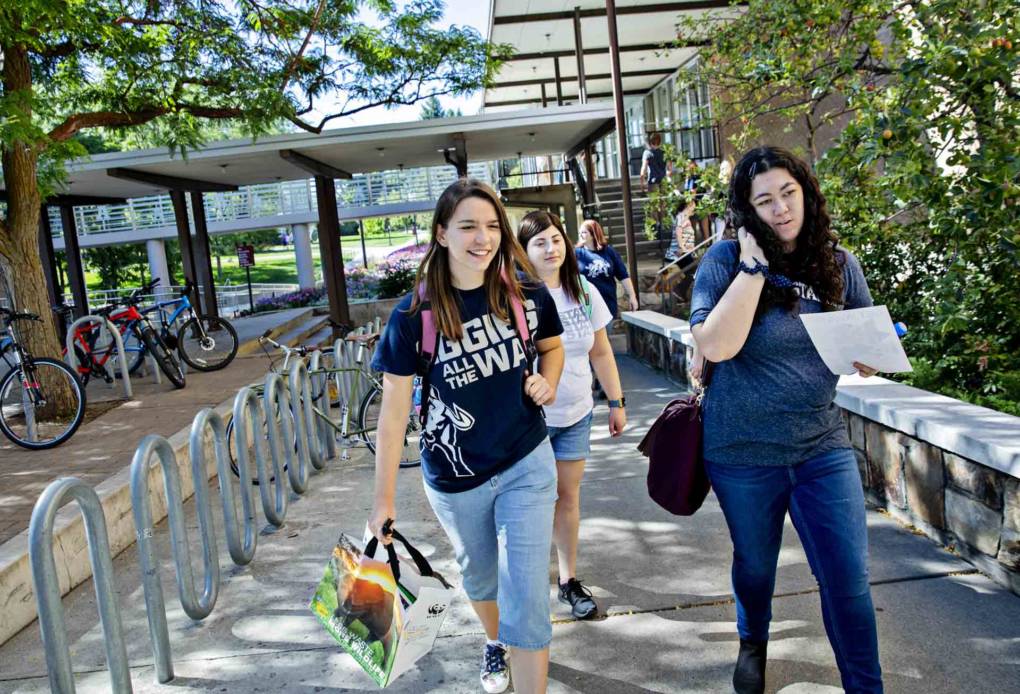
"caption": "Aggies Elevated students and roommates Courtney Jorgensen, left, and Jessica Otty, right, walk with their Base Camp cohort to learn how to catch the bus. Base Camp is a two-day orientation focused on helping students with special needs learn important class and lifestyle skills to transition into college. ",
"description": null,
"title": "_fieldintellectual1",
"credit": "Kim Raff for The Hechinger Report ",
"status": "inherit",
"isLoading": false,
"fetchFailed": false
}
},
"audioPlayerReducer": {
"postId": "stream_live",
"isPaused": true,
"isPlaying": false,
"pfsActive": false,
"pledgeModalIsOpen": true,
"playerDrawerIsOpen": false,
"liveAudioPlayStartedAt": 0,
"liveAudioPlayContext": ""
},
"authorsReducer": {
"byline_mindshift_54962": {
"type": "authors",
"id": "byline_mindshift_54962",
"meta": {
"override": true
},
"slug": "byline_mindshift_54962",
"name": "Camille Phillips",
"isLoading": false
},
"byline_mindshift_54907": {
"type": "authors",
"id": "byline_mindshift_54907",
"meta": {
"override": true
},
"slug": "byline_mindshift_54907",
"name": "\u003ca href=\"https://hechingerreport.org/up-to-3-6-million-students-should-be-labeled-gifted-but-arent/\">Danielle Dreilinger, The Hechinger Report\u003c/a>",
"isLoading": false
},
"byline_mindshift_54781": {
"type": "authors",
"id": "byline_mindshift_54781",
"meta": {
"override": true
},
"slug": "byline_mindshift_54781",
"name": "Jon Hamilton",
"isLoading": false
},
"byline_mindshift_54753": {
"type": "authors",
"id": "byline_mindshift_54753",
"meta": {
"override": true
},
"slug": "byline_mindshift_54753",
"name": "Alexis Marshall",
"isLoading": false
},
"byline_mindshift_54713": {
"type": "authors",
"id": "byline_mindshift_54713",
"meta": {
"override": true
},
"slug": "byline_mindshift_54713",
"name": "Anya Kamenetz",
"isLoading": false
},
"byline_mindshift_54704": {
"type": "authors",
"id": "byline_mindshift_54704",
"meta": {
"override": true
},
"slug": "byline_mindshift_54704",
"name": "\u003ca href=\"https://www.chalkbeat.org/posts/us/2019/10/28/stem-elementary-school-girls-math-gender-gap-research/\">Matthew Barnum, Chalkbeat\u003c/a>",
"isLoading": false
},
"byline_mindshift_54684": {
"type": "authors",
"id": "byline_mindshift_54684",
"meta": {
"override": true
},
"slug": "byline_mindshift_54684",
"name": "Anjuli Sastry",
"isLoading": false
},
"byline_mindshift_54652": {
"type": "authors",
"id": "byline_mindshift_54652",
"meta": {
"override": true
},
"slug": "byline_mindshift_54652",
"name": "\u003ca href=\"https://hechingerreport.org/\">Kelly Field, The Hechinger Report\u003c/a>",
"isLoading": false
},
"katrinaschwartz": {
"type": "authors",
"id": "234",
"meta": {
"index": "authors_1716337520",
"id": "234",
"found": true
},
"name": "Katrina Schwartz",
"firstName": "Katrina",
"lastName": "Schwartz",
"slug": "katrinaschwartz",
"email": "kschwartz@kqed.org",
"display_author_email": false,
"staff_mastheads": [
"news"
],
"title": "Producer",
"bio": "Katrina Schwartz is a journalist based in San Francisco. She's worked at KPCC public radio in LA and has reported on air and online for KQED since 2010. She covered how teaching and learning is changing for MindShift between 2012 and 2020. She is the co-host of the MindShift podcast and now produces KQED's Bay Curious podcast.",
"avatar": "https://secure.gravatar.com/avatar/edb4ee79070447a018538c9aae6eeecf28786515b8a0c30e43b6b7dce5aa44c8?s=600&d=blank&r=g",
"twitter": "kschwart",
"bluesky": null,
"facebook": null,
"instagram": null,
"linkedin": null,
"sites": [
{
"site": "",
"roles": [
"editor"
]
},
{
"site": "news",
"roles": [
"editor"
]
},
{
"site": "mindshift",
"roles": [
"administrator"
]
},
{
"site": "stateofhealth",
"roles": [
"author"
]
},
{
"site": "science",
"roles": [
"editor"
]
}
],
"headData": {
"title": "Katrina Schwartz | KQED",
"description": "Producer",
"ogImgSrc": "https://secure.gravatar.com/avatar/edb4ee79070447a018538c9aae6eeecf28786515b8a0c30e43b6b7dce5aa44c8?s=600&d=blank&r=g",
"twImgSrc": "https://secure.gravatar.com/avatar/edb4ee79070447a018538c9aae6eeecf28786515b8a0c30e43b6b7dce5aa44c8?s=600&d=blank&r=g"
},
"isLoading": false,
"link": "/author/katrinaschwartz"
},
"hollykorbey": {
"type": "authors",
"id": "4445",
"meta": {
"index": "authors_1716337520",
"id": "4445",
"found": true
},
"name": "Holly Korbey",
"firstName": "Holly",
"lastName": "Korbey",
"slug": "hollykorbey",
"email": "holly@hollykorbey.com",
"display_author_email": false,
"staff_mastheads": [],
"title": null,
"bio": "Holly Korbey's work on parenting and education has appeared in The New York Times, The Atlantic, Babble, Brain, Child Magazine, and others. She lives in Nashville with her family. Follow her on Twitter: @HKorbey",
"avatar": "https://secure.gravatar.com/avatar/f385f7a3b90e52ecd5e85c24fbd0a363?s=600&d=blank&r=g",
"twitter": null,
"facebook": null,
"instagram": null,
"linkedin": null,
"sites": [
{
"site": "mindshift",
"roles": [
"contributor"
]
}
],
"headData": {
"title": "Holly Korbey | KQED",
"description": null,
"ogImgSrc": "https://secure.gravatar.com/avatar/f385f7a3b90e52ecd5e85c24fbd0a363?s=600&d=blank&r=g",
"twImgSrc": "https://secure.gravatar.com/avatar/f385f7a3b90e52ecd5e85c24fbd0a363?s=600&d=blank&r=g"
},
"isLoading": false,
"link": "/author/hollykorbey"
},
"kdnewhouse": {
"type": "authors",
"id": "11487",
"meta": {
"index": "authors_1716337520",
"id": "11487",
"found": true
},
"name": "Kara Newhouse",
"firstName": "Kara",
"lastName": "Newhouse",
"slug": "kdnewhouse",
"email": "knewhouse@kqed.org",
"display_author_email": false,
"staff_mastheads": [],
"title": "MindShift Editor",
"bio": null,
"avatar": "https://secure.gravatar.com/avatar/3dceed6fb271527113abfa9a8e9df34e?s=600&d=blank&r=g",
"twitter": null,
"facebook": null,
"instagram": null,
"linkedin": null,
"sites": [
{
"site": "",
"roles": [
"editor"
]
},
{
"site": "mindshift",
"roles": []
}
],
"headData": {
"title": "Kara Newhouse | KQED",
"description": "MindShift Editor",
"ogImgSrc": "https://secure.gravatar.com/avatar/3dceed6fb271527113abfa9a8e9df34e?s=600&d=blank&r=g",
"twImgSrc": "https://secure.gravatar.com/avatar/3dceed6fb271527113abfa9a8e9df34e?s=600&d=blank&r=g"
},
"isLoading": false,
"link": "/author/kdnewhouse"
}
},
"pagesReducer": {
"mindshift_category_big-ideas": {
"type": "terms",
"id": "mindshift_192",
"meta": {
"index": "terms_1716263798",
"site": "mindshift",
"id": "192",
"score": 14.406617
},
"featImg": null,
"name": "Big Ideas",
"description": "The latest findings from experts in the field related to the future of learning.",
"taxonomy": "category",
"headData": {
"twImgId": null,
"twTitle": null,
"ogTitle": null,
"ogImgId": null,
"twDescription": null,
"description": "The latest findings from experts in the field related to the future of learning.",
"title": "Big Ideas Archives | KQED Mindshift",
"ogDescription": null
},
"ttid": 192,
"slug": "big-ideas",
"isLoading": false,
"title": "Big Ideas",
"pageMeta": {
"site": "mindshift",
"WpPageTemplate": "page-topic-editorial",
"currentPage": 12
},
"blocks": [
{
"blockName": "kqed/company-paragraph",
"content": "The latest findings from experts in the field related to the future of learning."
},
{
"blockName": "kqed/post-list",
"attrs": {
"layout": "cardArticle2",
"query": "posts/mindshift?category=big-ideas",
"seeMore": false,
"paginated": true,
"page": 12
}
},
{
"blockName": "kqed/ad"
}
]
}
},
"pfsSessionReducer": {},
"postsReducer": {
"stream_live": {
"type": "live",
"id": "stream_live",
"audioUrl": "https://streams.kqed.org/kqedradio",
"title": "Live Stream",
"excerpt": "Live Stream information currently unavailable.",
"link": "/radio",
"featImg": "",
"label": {
"name": "KQED Live",
"link": "/"
}
},
"stream_kqedNewscast": {
"type": "posts",
"id": "stream_kqedNewscast",
"audioUrl": "https://www.kqed.org/.stream/anon/radio/RDnews/newscast.mp3?_=1",
"title": "KQED Newscast",
"featImg": "",
"label": {
"name": "88.5 FM",
"link": "/"
}
},
"mindshift_54980": {
"type": "posts",
"id": "mindshift_54980",
"meta": {
"index": "posts_1716263798",
"site": "mindshift",
"id": "54980",
"score": null,
"sort": [
1575877890000
]
},
"parent": 0,
"labelTerm": {
"site": "mindshift"
},
"blocks": [],
"publishDate": 1575877890,
"format": "standard",
"title": "Why Teachers Want Math with More Human Ties",
"headTitle": "Why Teachers Want Math with More Human Ties | KQED",
"content": "\u003cp>Mathematics is created by humans, math teachers are humans and math students are humans. Yet many contemporary math classrooms erase humans from the equation.\u003c/p>\n\u003cp>“Often mathematics is talked about as if it were apolitical, objective, and cold. A sterile textbook, a teacher writing on a chalkboard and rarely turning around,” said \u003ca href=\"https://samjshah.com/about/\">Sam Shah\u003c/a>, a high school math teacher in Brooklyn, New York.\u003c/p>\n\u003cp>For many students, that model of math class is unengaging or \u003ca href=\"https://www.kqed.org/mindshift/52749/how-to-make-sure-your-math-anxiety-doesnt-make-your-kids-hate-math\">anxiety-provoking\u003c/a>. With \u003ca href=\"https://www.usnews.com/news/education-news/articles/2019-10-30/across-the-board-scores-drop-in-math-and-reading-for-us-students\">math scores declining or stagnant\u003c/a> among U.S. fourth- and eighth-graders in the last decade, and the country ranking \u003ca href=\"https://hechingerreport.org/u-s-now-ranks-near-bottom-among-35-industrialized-nations-math/\">near the bottom of industrialized nations\u003c/a> for high school math performance, some educators are looking to reimagine math classrooms as more interactional, humanizing spaces. In August, Shah and \u003ca href=\"https://hemakhodai.com/\">Hema Khodai\u003c/a> — an instructional resource teacher in Mississauga, Ontario — organized the Virtual Conference on Humanizing Mathematics to help shift the paradigm. In a month-long series of \u003ca href=\"https://samjshah.com/humanizing-mathematics-convention-center/\">blog posts\u003c/a> and \u003ca href=\"https://twitter.com/search?q=%23vconhm&src=typed_query\">social media threads\u003c/a>, math educators swapped ideas, reflections and questions about how to bring math to life and put humans — particularly students — at the center.\u003c/p>\n\u003ch2>\u003cb>Making Room for Mistakes\u003c/b>\u003c/h2>\n\u003cp>According to Vanderbilt education \u003ca href=\"https://peabody.vanderbilt.edu/bio/ilana-horn\">researcher Ilana Horn\u003c/a>, a humanizing math classroom is “one where kids can bring their ideas and interact with their ideas about math to be able to make sense of it.” \u003ca href=\"https://www.kqed.org/mindshift/54389/3-ways-to-shape-math-into-a-positive-experience\">Dominant narratives about math\u003c/a> often inhibit those possibilities, and dehumanize math, Horn said in an interview with MindShift. Among those narratives is the belief that speed and accuracy are the hallmarks of math intelligence. To counter that idea, Horn said teachers can point to the history of mathematical advances that resulted from thinking systematically, asking astute questions, looking for patterns and other types of intelligence.\u003c/p>\n\u003cp>Horn also suggested that teachers affirm to students that everyone makes mistakes. When teachers \u003ca href=\"https://amte.net/content/inviting-rough-draft-thinking-humanize-mathematics-classroom-affiliate-webinar\">encourage “rough draft thinking”\u003c/a> in math class, students can \u003ca href=\"https://www.kqed.org/mindshift/53524/how-revising-math-exams-turns-students-into-learners-not-processors\">see math as a process\u003c/a>, not a race to the correct answer. In a \u003ca href=\"https://picrust.wordpress.com/2019/07/29/where-does-chocolate-milk-come-from/\">blog post\u003c/a> for the Virtual Conference on Humanizing Mathematics, teacher \u003ca href=\"https://twitter.com/allison_krasnow\">Allison Krasnow\u003c/a> discussed her 5-year-old son’s idea that chocolate milk comes from brown cows as a playful example of rough draft thinking. Though her elder son quickly dismissed his brother’s conjecture, Krasnow reflected on how the exchange showed her younger child’s developing reasoning skills. Wondering how many such moments she misses with students, Krasnow encouraged teachers to “delight in (rough draft thinking) and know that it’s necessary for deeper understanding of the mathematics we’re learning together.”\u003c/p>\n\u003ch2>\u003cb>Knowing Students as People\u003c/b>\u003c/h2>\n\u003cp>For Khodai, creating humanizing classrooms starts with understanding students as people. “Mathematical identities are developed over time through exposure and experience and it is important for me to know the identity of my learners to best serve them,” she said.\u003c/p>\n\u003cp>[ad fullwidth]\u003c/p>\n\u003cp>Shah said that one way he gets to know his students is \u003ca href=\"https://www.saravanderwerf.com/week-1-day-1-name-tents-with-feedback/\">name tents\u003c/a>, a practice popularized by Minnesota teacher and blogger \u003ca href=\"https://twitter.com/saravdwerf\">Sara VanDerWerf\u003c/a>. During the first week of school, students write comments and questions on the inside of a paper name tent, and the teacher responds daily. Student feedback can range from math-related — “I’m a little overwhelmed because I didn’t retain much from middle school” — to personal information — “I have three cats (three too many).” Some teachers have found the feedback from name tents so helpful they \u003ca href=\"https://marybourassa.blogspot.com/2019/09/keeping-conversation-going.html\">keep the conversations going beyond the first week\u003c/a>. Other ways to \u003ca href=\"http://misscalculate.blogspot.com/2019/08/belongingness.html\">help students feel seen and cared for\u003c/a> throughout the year include cracking jokes, giving authentic compliments, celebrating birthdays and asking non-math questions, wrote virtual conference participant, Illinois teacher \u003ca href=\"https://twitter.com/misscalcul8\">Elissa Miller\u003c/a>.\u003c/p>\n\u003ch2>\u003cb>Understanding the Bigger Picture\u003c/b>\u003c/h2>\n\u003cp>Knowing students also means understanding how race, class and other categories of identity can shape math identities. Several virtual conference participants shared their own backgrounds as examples. In \u003ca href=\"https://teachingwithmath.wordpress.com/2019/08/08/how-i-became-a-doer-of-mathematics/\">a video post\u003c/a>, Florida principal Makeda Brome described how her parents and pop culture figures like \u003ca href=\"https://en.wikipedia.org/wiki/Dwayne_Cleofis_Wayne\">Dwayne Wayne\u003c/a> enabled her to see herself as a “doer of mathematics” early in life. As she advanced in her education, though, she saw fewer and fewer black girls in math, which motivated her to \u003ca href=\"https://mathematicallygiftedandblack.com/rising-stars/\">be an example\u003c/a>.\u003c/p>\n\u003cp>https://www.youtube.com/watch?v=m_Wi_FB71iI\u003c/p>\n\u003cp>For graduate student Usha Shanmugathasan, her family’s status as refugees and her father’s death when she was a child \u003ca href=\"http://hemakhodai.com/Shanmugathasan/\">made math a necessity\u003c/a>. “Now, at the age of 12, I was budgeting, comparing prices and looking for sales, and balancing the cheque book,” Shanmugathasan wrote. “I was learning about integers at school and at home I was helping to figure out how to deal with debt, and how to pay rent and eat on a meager income. This was the dichotomous math of my life.”\u003c/p>\n\u003cp>The mathematical skills and thinking of students from marginalized groups have often been erased by Western schooling, according to University of Illinois professor \u003ca href=\"https://twitter.com/RG1gal\">Rochelle Gutiérrez\u003c/a>. In her \u003ca href=\"http://hemakhodai.com/gutierrez/\">blog post\u003c/a> for the virtual conference, Gutiérrez added the prefix “re-” to the term “humanizing mathematics,” noting that humans have been doing mathematics in “humane (beautiful) ways for centuries/millennia.”\u003c/p>\n\u003cp>She also outlined \u003ca href=\"https://www.youtube.com/watch?v=D266LYIigS0&list=PLHyI3Fbmv0SfUMTemP8HvPQdG5HCbYp-0&index=9&t=0s\">eight dimensions\u003c/a> for rehumanizing mathematics and four questions that educators can use to reimagine their practices:\u003c/p>\n\u003col>\n\u003cli style=\"font-weight: 400\">In mathematics, what feels dehumanizing to my students?\u003c/li>\n\u003cli style=\"font-weight: 400\">In mathematics, what feels dehumanizing to me, other teachers, or families/communities?\u003c/li>\n\u003cli style=\"font-weight: 400\">What might feel more rehumanizing?\u003c/li>\n\u003cli style=\"font-weight: 400\">Who can help me rehumanize this space?\u003c/li>\n\u003c/ol>\n\u003cp>\u003c/p>\n\u003cp>In planning the virtual conference, Shah, the co-organizer, said he had hoped to mine techniques to import into his own classroom. What affected him more, though, were the human stories participants shared and the ways those reminded him of his power and responsibility as a teacher. Math classrooms do not succeed or fail just on curriculum, Shah said, but “on understanding that the room is filled with complex, wonderful individuals who are bringing their whole histories and selves to class each day.”\u003c/p>\n\n",
"stats": {
"hasVideo": true,
"hasChartOrMap": false,
"hasAudio": false,
"hasPolis": false,
"wordCount": 1010,
"hasGoogleForm": false,
"hasGallery": false,
"hasHearkenModule": false,
"iframeSrcs": [],
"paragraphCount": 14
},
"modified": 1695654974,
"excerpt": "Math teachers are trying to shift the lens through which students interact with the subject by prioritizing how math affects people and celebrating what individuals contribute when doing math. ",
"headData": {
"twImgId": "",
"twTitle": "",
"ogTitle": "",
"ogImgId": "",
"twDescription": "",
"description": "Math teachers are trying to shift the lens through which students interact with the subject by prioritizing how math affects people and celebrating what individuals contribute when doing math. ",
"title": "Why Teachers Want Math with More Human Ties | KQED",
"ogDescription": "",
"schema": {
"@context": "https://schema.org",
"@type": "Article",
"headline": "Why Teachers Want Math with More Human Ties",
"datePublished": "2019-12-08T23:51:30-08:00",
"dateModified": "2023-09-25T08:16:14-07:00",
"image": "https://cdn.kqed.org/wp-content/uploads/2020/02/KQED-OG-Image@1x.png"
}
},
"guestAuthors": [],
"slug": "why-teachers-want-math-with-more-human-ties",
"status": "publish",
"excludeFromSiteSearch": "Include",
"articleAge": "0",
"path": "/mindshift/54980/why-teachers-want-math-with-more-human-ties",
"audioTrackLength": null,
"parsedContent": [
{
"type": "contentString",
"content": "\u003cdiv class=\"post-body\">\u003cp>\u003cp>Mathematics is created by humans, math teachers are humans and math students are humans. Yet many contemporary math classrooms erase humans from the equation.\u003c/p>\n\u003cp>“Often mathematics is talked about as if it were apolitical, objective, and cold. A sterile textbook, a teacher writing on a chalkboard and rarely turning around,” said \u003ca href=\"https://samjshah.com/about/\">Sam Shah\u003c/a>, a high school math teacher in Brooklyn, New York.\u003c/p>\n\u003cp>For many students, that model of math class is unengaging or \u003ca href=\"https://www.kqed.org/mindshift/52749/how-to-make-sure-your-math-anxiety-doesnt-make-your-kids-hate-math\">anxiety-provoking\u003c/a>. With \u003ca href=\"https://www.usnews.com/news/education-news/articles/2019-10-30/across-the-board-scores-drop-in-math-and-reading-for-us-students\">math scores declining or stagnant\u003c/a> among U.S. fourth- and eighth-graders in the last decade, and the country ranking \u003ca href=\"https://hechingerreport.org/u-s-now-ranks-near-bottom-among-35-industrialized-nations-math/\">near the bottom of industrialized nations\u003c/a> for high school math performance, some educators are looking to reimagine math classrooms as more interactional, humanizing spaces. In August, Shah and \u003ca href=\"https://hemakhodai.com/\">Hema Khodai\u003c/a> — an instructional resource teacher in Mississauga, Ontario — organized the Virtual Conference on Humanizing Mathematics to help shift the paradigm. In a month-long series of \u003ca href=\"https://samjshah.com/humanizing-mathematics-convention-center/\">blog posts\u003c/a> and \u003ca href=\"https://twitter.com/search?q=%23vconhm&src=typed_query\">social media threads\u003c/a>, math educators swapped ideas, reflections and questions about how to bring math to life and put humans — particularly students — at the center.\u003c/p>\n\u003ch2>\u003cb>Making Room for Mistakes\u003c/b>\u003c/h2>\n\u003cp>According to Vanderbilt education \u003ca href=\"https://peabody.vanderbilt.edu/bio/ilana-horn\">researcher Ilana Horn\u003c/a>, a humanizing math classroom is “one where kids can bring their ideas and interact with their ideas about math to be able to make sense of it.” \u003ca href=\"https://www.kqed.org/mindshift/54389/3-ways-to-shape-math-into-a-positive-experience\">Dominant narratives about math\u003c/a> often inhibit those possibilities, and dehumanize math, Horn said in an interview with MindShift. Among those narratives is the belief that speed and accuracy are the hallmarks of math intelligence. To counter that idea, Horn said teachers can point to the history of mathematical advances that resulted from thinking systematically, asking astute questions, looking for patterns and other types of intelligence.\u003c/p>\n\u003cp>Horn also suggested that teachers affirm to students that everyone makes mistakes. When teachers \u003ca href=\"https://amte.net/content/inviting-rough-draft-thinking-humanize-mathematics-classroom-affiliate-webinar\">encourage “rough draft thinking”\u003c/a> in math class, students can \u003ca href=\"https://www.kqed.org/mindshift/53524/how-revising-math-exams-turns-students-into-learners-not-processors\">see math as a process\u003c/a>, not a race to the correct answer. In a \u003ca href=\"https://picrust.wordpress.com/2019/07/29/where-does-chocolate-milk-come-from/\">blog post\u003c/a> for the Virtual Conference on Humanizing Mathematics, teacher \u003ca href=\"https://twitter.com/allison_krasnow\">Allison Krasnow\u003c/a> discussed her 5-year-old son’s idea that chocolate milk comes from brown cows as a playful example of rough draft thinking. Though her elder son quickly dismissed his brother’s conjecture, Krasnow reflected on how the exchange showed her younger child’s developing reasoning skills. Wondering how many such moments she misses with students, Krasnow encouraged teachers to “delight in (rough draft thinking) and know that it’s necessary for deeper understanding of the mathematics we’re learning together.”\u003c/p>\n\u003ch2>\u003cb>Knowing Students as People\u003c/b>\u003c/h2>\n\u003cp>For Khodai, creating humanizing classrooms starts with understanding students as people. “Mathematical identities are developed over time through exposure and experience and it is important for me to know the identity of my learners to best serve them,” she said.\u003c/p>\n\u003cp>\u003c/p>\u003c/div>",
"attributes": {
"named": {},
"numeric": []
}
},
{
"type": "component",
"content": "",
"name": "ad",
"attributes": {
"named": {
"label": "fullwidth"
},
"numeric": [
"fullwidth"
]
}
},
{
"type": "contentString",
"content": "\u003cdiv class=\"post-body\">\u003cp>\u003c/p>\n\u003cp>Shah said that one way he gets to know his students is \u003ca href=\"https://www.saravanderwerf.com/week-1-day-1-name-tents-with-feedback/\">name tents\u003c/a>, a practice popularized by Minnesota teacher and blogger \u003ca href=\"https://twitter.com/saravdwerf\">Sara VanDerWerf\u003c/a>. During the first week of school, students write comments and questions on the inside of a paper name tent, and the teacher responds daily. Student feedback can range from math-related — “I’m a little overwhelmed because I didn’t retain much from middle school” — to personal information — “I have three cats (three too many).” Some teachers have found the feedback from name tents so helpful they \u003ca href=\"https://marybourassa.blogspot.com/2019/09/keeping-conversation-going.html\">keep the conversations going beyond the first week\u003c/a>. Other ways to \u003ca href=\"http://misscalculate.blogspot.com/2019/08/belongingness.html\">help students feel seen and cared for\u003c/a> throughout the year include cracking jokes, giving authentic compliments, celebrating birthdays and asking non-math questions, wrote virtual conference participant, Illinois teacher \u003ca href=\"https://twitter.com/misscalcul8\">Elissa Miller\u003c/a>.\u003c/p>\n\u003ch2>\u003cb>Understanding the Bigger Picture\u003c/b>\u003c/h2>\n\u003cp>Knowing students also means understanding how race, class and other categories of identity can shape math identities. Several virtual conference participants shared their own backgrounds as examples. In \u003ca href=\"https://teachingwithmath.wordpress.com/2019/08/08/how-i-became-a-doer-of-mathematics/\">a video post\u003c/a>, Florida principal Makeda Brome described how her parents and pop culture figures like \u003ca href=\"https://en.wikipedia.org/wiki/Dwayne_Cleofis_Wayne\">Dwayne Wayne\u003c/a> enabled her to see herself as a “doer of mathematics” early in life. As she advanced in her education, though, she saw fewer and fewer black girls in math, which motivated her to \u003ca href=\"https://mathematicallygiftedandblack.com/rising-stars/\">be an example\u003c/a>.\u003c/p>\u003c/p>\u003cp>\u003cspan class='utils-parseShortcode-shortcodes-__youtubeShortcode__embedYoutube'>\n \u003cspan class='utils-parseShortcode-shortcodes-__youtubeShortcode__embedYoutubeInside'>\n \u003ciframe\n loading='lazy'\n class='utils-parseShortcode-shortcodes-__youtubeShortcode__youtubePlayer'\n type='text/html'\n src='//www.youtube.com/embed/m_Wi_FB71iI'\n title='//www.youtube.com/embed/m_Wi_FB71iI'\n allowfullscreen='true'\n style='border:0;'>\u003c/iframe>\n \u003c/span>\n \u003c/span>\u003c/p>\u003cp>\u003cp>For graduate student Usha Shanmugathasan, her family’s status as refugees and her father’s death when she was a child \u003ca href=\"http://hemakhodai.com/Shanmugathasan/\">made math a necessity\u003c/a>. “Now, at the age of 12, I was budgeting, comparing prices and looking for sales, and balancing the cheque book,” Shanmugathasan wrote. “I was learning about integers at school and at home I was helping to figure out how to deal with debt, and how to pay rent and eat on a meager income. This was the dichotomous math of my life.”\u003c/p>\n\u003cp>The mathematical skills and thinking of students from marginalized groups have often been erased by Western schooling, according to University of Illinois professor \u003ca href=\"https://twitter.com/RG1gal\">Rochelle Gutiérrez\u003c/a>. In her \u003ca href=\"http://hemakhodai.com/gutierrez/\">blog post\u003c/a> for the virtual conference, Gutiérrez added the prefix “re-” to the term “humanizing mathematics,” noting that humans have been doing mathematics in “humane (beautiful) ways for centuries/millennia.”\u003c/p>\n\u003cp>She also outlined \u003ca href=\"https://www.youtube.com/watch?v=D266LYIigS0&list=PLHyI3Fbmv0SfUMTemP8HvPQdG5HCbYp-0&index=9&t=0s\">eight dimensions\u003c/a> for rehumanizing mathematics and four questions that educators can use to reimagine their practices:\u003c/p>\n\u003col>\n\u003cli style=\"font-weight: 400\">In mathematics, what feels dehumanizing to my students?\u003c/li>\n\u003cli style=\"font-weight: 400\">In mathematics, what feels dehumanizing to me, other teachers, or families/communities?\u003c/li>\n\u003cli style=\"font-weight: 400\">What might feel more rehumanizing?\u003c/li>\n\u003cli style=\"font-weight: 400\">Who can help me rehumanize this space?\u003c/li>\n\u003c/ol>\n\u003cp>\u003c/p>\n\u003cp>In planning the virtual conference, Shah, the co-organizer, said he had hoped to mine techniques to import into his own classroom. What affected him more, though, were the human stories participants shared and the ways those reminded him of his power and responsibility as a teacher. Math classrooms do not succeed or fail just on curriculum, Shah said, but “on understanding that the room is filled with complex, wonderful individuals who are bringing their whole histories and selves to class each day.”\u003c/p>\n\n\u003c/div>\u003c/p>",
"attributes": {
"named": {},
"numeric": []
}
}
],
"link": "/mindshift/54980/why-teachers-want-math-with-more-human-ties",
"authors": [
"11487"
],
"categories": [
"mindshift_192",
"mindshift_20874"
],
"tags": [
"mindshift_21316",
"mindshift_20701",
"mindshift_20784",
"mindshift_1040",
"mindshift_21341",
"mindshift_392",
"mindshift_20893",
"mindshift_20813",
"mindshift_21053",
"mindshift_21315"
],
"featImg": "mindshift_55005",
"label": "mindshift"
},
"mindshift_54968": {
"type": "posts",
"id": "mindshift_54968",
"meta": {
"index": "posts_1716263798",
"site": "mindshift",
"id": "54968",
"score": null,
"sort": [
1575443931000
]
},
"parent": 0,
"labelTerm": {
"site": "mindshift"
},
"blocks": [],
"publishDate": 1575443931,
"format": "standard",
"disqusTitle": "How Classroom Political Discussions — Controversies, Too — Prepare Students for Needed Civic Participation",
"title": "How Classroom Political Discussions — Controversies, Too — Prepare Students for Needed Civic Participation",
"headTitle": "MindShift | KQED News",
"content": "\u003cdiv>\n\u003cp>\u003cem>Excerpted from \u003ca href=\"https://www.amazon.com/Building-Better-Citizens-Civics-Education/dp/1475843445\">Building Better Citizens: A New Civics Education for All\u003c/a> by Holly Korbey. \u003c/em>\u003c/p>\n\u003ch2 class=\"p1\">\u003cspan class=\"s1\">A Twenty-first Century Guide to Politics in the Classroom \u003c/span>\u003c/h2>\n\u003cp class=\"p1\">\u003cspan class=\"s1\">In a four-year study of classroom political discussions between 2005 and 2009, Diana Hess, dean of University of Wisconsin–Madison’s School of Education, and Paula McAvoy, assistant professor of Social Studies Education at the North Carolina State University, set out to examine what students learned from classroom political discussions, and whether those experiences influenced their future civic engagement and behavior. In addition, they wanted to study the teachers providing the “high quality” discussions to find out what they were doing right. \u003c/span>\u003c/p>\n\u003cp class=\"p1\">\u003cspan class=\"s1\">In their book about the research, \u003cem>\u003ca href=\"http://thepoliticalclassroom.com/\">The Political Classroom\u003c/a>\u003c/em>, Hess and McAvoy argue that schools, in order to fulfill their democratic mission, should be political (though not partisan). Political classrooms “seek to teach young people to see each other as political equals and to inculcate them into the practice of reason-giving and considering how their views and behaviors affect others.” In political classrooms, students learn how to discuss topics that have multiple, competing views, and practice listening and questioning. \u003c/span>\u003c/p>\n\u003cp class=\"p1\">\u003cspan class=\"s1\">Creating the kind of political classrooms and democratic education that students need has always been difficult, but is now even more so in our current highly polarized climate. McAvoy and Hess note that often teachers choose to avoid having political discussions in classes that are teaching the lessons of politics (like history, government, and civics) because facilitating talks about controversial topics is full of pedagogical challenges—navigating students’ family cultural and religious values, the polarized political climate outside of school, and the fear of parent backlash all make creating a positive environment for political discussions much more difficult. \u003c/span>\u003c/p>\n\u003cp class=\"p1\">\u003cspan class=\"s1\">Teachers are also wary—rightfully—of how their attitudes and personal opinions can influence the developing ideas of impressionable young people, and must also be aware that students have more first amendment rights to free speech than they do as state employees. “Teachers are in a position of authority and can dramatically affect the life prospects of students [who] understandably will self-censor to avoid offending the person who controls their grade,” wrote political science professor Joshua Dunn at University of Colorado Colorado Springs in the upcoming essay collection \u003cem>Talking Out of Turn: Teacher Speech for Hire\u003c/em>. All around, classroom political discussions can be fraught with minefields. \u003c/span>\u003c/p>\n\u003cp class=\"p1\">\u003cspan class=\"s1\">But that shouldn’t discourage teachers from holding political discussions in class. When done well, Hess and McAvoy argue, allowing students to talk to each other about controversial topics has the potential to increase civic knowledge, skills, and dispositions that lead to adult civic engagement. The key to creating a positive environment for discussion, they found, was guidance by a well-prepared and knowledgeable teacher. \u003c/span>\u003c/p>\n\u003ch2 class=\"p1\">\u003cspan class=\"s1\">\u003cb>Best Practice Educators\u003c/b> \u003c/span>\u003c/h2>\n\u003cp class=\"p1\">\u003cspan class=\"s1\">To find out what was happening inside classrooms where students learned the most from discussing controversial topics, McAvoy and Hess studied the work of 35 social studies, history, and government educators, some that used curriculum that focused on deliberation of controversial political issues and some that taught lecture style. Then they compared the two types of teachers to see how they engaged students and what students learned. \u003c/span>\u003c/p>\n\u003cp class=\"p1\">\u003cspan class=\"s1\">All of the teachers they studied had quite a bit of teaching experience, and the majority had degrees in history or political science. Out of this group, the researchers found 10 to 12 teachers they labeled “Best Practice teachers,” who conducted political discussions where students learned a lot and later showed indications of increased civic knowledge and engagement. These Best Practice educators held discussions of controversial topics at least once a week in class, were all politically aware and engaged themselves, and often shared that knowledge and enthusiasm with their students. \u003c/span>\u003c/p>\n\u003cp class=\"p1\">\u003cspan class=\"s1\">McAvoy said in an interview that Best Practice teachers also had a lot of support and professional development to learn how to conduct classroom political discussions. Teachers sometimes assume, McAvoy said, that classroom discussions don’t require much preparation upfront, but the opposite is true. Good discussions have lots of upfront preparation, including the teacher creating discussable questions, students reading something in advance, incorporating discussions into a unit of study, and educators making sure that students are talking to each other, not the teacher. \u003c/span>\u003c/p>\n\u003cp class=\"p1\">\u003cspan class=\"s1\">Surprise discussions sprung on students can go off the rails quickly. “If the Monday morning after the Charlottesville riots a teacher just walks into her classroom and asks the students, ‘Well, what did you guys think of that?’ That’s going to be a disaster,” McAvoy said. An open discussion right after a tragic event, with questions like “how do you feel about this situation?” or “do you have questions?” allows students to process—but it’s not the time to debate free speech, or what to do about monuments. “If you let kids just shoot from the hip, it will be divisive and will allow students to just state their biases and their prejudices without any guidance,” McAvoy notes. Using discussion strategies like role-playing, supporting statements with text and research, and student understanding of knowing how and when they are supposed to participate will make a discussion more productive and effective. \u003c/span>\u003c/p>\n\u003cp class=\"p1\">\u003cspan class=\"s1\">Best Practice teachers also know how to push student thinking, especially if, like many American schools today that are “sorted” into more like-minded groups, the class mostly agrees with one another on certain topics. In their book, McAvoy and Hess describe how social studies teacher Joel Kushner at Academy High School plays “devil’s advocate” to his left-leaning students on topics like abortion, trying to nudge them to understand the pro-life point of view and see there are reasonable competing ideas on both sides of the issue. Kushner said, \u003c/span>\u003c/p>\n\u003cblockquote>\n\u003cp class=\"p1\">\u003cspan class=\"s1\">With abortion, I try to make the arguments as best I can. I divide it up: today is the pro-choice view, today is the pro-life view, and I get the strongest arguments I can. I think Don Marquis has a good secular pro-life argument, and some of my very good students picked up on that. . . . So [some students] in the end were giving a pro-life argument and it was very interesting and got a little heated. So that’s what I do: I make the best arguments that I can, and I actually enjoy it. It’s a challenge for me. \u003c/span>\u003c/p>\n\u003c/blockquote>\n\u003cp class=\"p1\">\u003cspan class=\"s1\">McAvoy and Hess found that students who participated in well-planned, controversial political discussions benefitted in multiple ways. One big benefit was that discussions allowed students to realize, often for the first time, that their peers disagreed with them, a key part of being a citizen in a democracy. The researchers worry that the twenty-first-century polarized climate creates many more like-minded schools in which teachers and students see the world more or less the same way—a big problem for democracy. \u003c/span>\u003c/p>\n\u003cp class=\"p1\">\u003cspan class=\"s1\">For like-minded schools, encouraging discussions about opposing points of view becomes even more important. Students who practiced discussion also became more interested in politics in a social way, and shared political thoughts with family, friends, and coworkers. And perhaps most importantly, students who participated in Best Practice discussions were more likely to display the kind of interest in political activities—from reading the news to listening to people with different views to being more interested in politics in general—that predict future civic and political engagement. \u003c/span>\u003c/p>\n\u003cp class=\"p1\">\u003cspan class=\"s1\">McAvoy and Hess argue strongly for more classes serving a wider range of students to engage in the kind of deliberations that prepare young people for participating in democracy. “Democratic education requires teachers to create a political classroom in which young people develop the skills, knowledge, and dispositions that allow them to collectively make decisions about how we ought to live together,” they wrote.\u003c/span>\u003c/p>\n\u003ch2 class=\"p1\">\u003cspan class=\"s1\">Debate Team for the Twenty-first Century \u003c/span>\u003c/h2>\n\u003cp class=\"p1\">\u003cspan class=\"s1\">In his first years as debate coach, high school English teacher Scott Wunn approached debate team in the same way he did when he coached wrestling: both wrestling and debate were competitions that required intense focus and fierce collective energy in order to win. They appeared to be individual competitions, but couldn’t be further from the truth—both fed off the energy and experience of the whole group. Both required resistance training and development of core skills to succeed. And in order to win a debate or a wrestling match, the opponent must not be ignored or circumvented, but overcome. \u003c/span>\u003c/p>\n\u003cp class=\"p1\">\u003cspan class=\"s1\">But in the 10 years he coached debate at a high school in Des Moines, Iowa, Wunn found the more he immersed himself in the team, the more he learned. Unlike wrestling matches, each academic debate was unique and brought new challenges—how to make a point, a counterpoint, how to support an argument—and Wunn found himself a more well-rounded thinker. His teaching practice improved, and so did his research skills. \u003c/span>\u003c/p>\n\u003cp class=\"p1\">\u003cspan class=\"s1\">\u003ca href=\"https://www.amazon.com/Building-Better-Citizens-Civics-Education/dp/1475843445\">\u003cimg class=\"alignleft size-full wp-image-54971\" src=\"https://ww2.kqed.org/app/uploads/sites/23/2019/12/BBC.jpeg\" alt=\"\" width=\"178\" height=\"283\" srcset=\"https://ww2.kqed.org/app/uploads/sites/23/2019/12/BBC.jpeg 178w, https://ww2.kqed.org/app/uploads/sites/23/2019/12/BBC-160x254.jpeg 160w\" sizes=\"(max-width: 178px) 100vw, 178px\">\u003c/a>Helping students prepare to argue both sides of an assigned topic nuanced his worldview, providing Wunn with what he calls “a stronger understanding of the gray area of life.” Debate and wrestling weren’t as alike as he first thought, and he figured that the skills he was gaining must also be happening with his students. Over the years, a more complex view took shape regarding the skills that debate provided for kids, bigger than simply winning or losing a well-planned argument. Wunn noticed that debaters picked up crucial skills that colleges and businesses alike said they were looking for in young people, like the ability to collaborate with team members and think critically about a topic—often this happened not in the library but on their feet, responding to an opponent during a debate. The twenty-first-century skills making headlines were developed naturally during the process of researching, preparing, and participating in a debate. \u003c/span>\u003c/p>\n\u003cp class=\"p1\">\u003cspan class=\"s1\">In addition, the new millennium brought digital technology to debate topics and gave debaters greater access to information than ever before. Access to the internet made student arguments more nuanced and more complex, the depth of analysis more robust. Information gave students power; debates at the turn of the new century, Wunn said, became much more real, and students found the immediacy of bringing current events scraped off the web into their debates intoxicating.\u003c/span>\u003c/p>\n\u003cp class=\"p1\">\u003cspan class=\"s1\">All of these collective factors put together have ignited a large debate revival, one that’s remodeled itself for the new century. Wunn became executive director of the National Speech and Debate Association in 2003, and began working to transform the association, adding 60,000 students nationwide to the association’s membership as well as adding a popular new category of debate that focuses on issues surrounding current events. \u003c/span>\u003c/p>\n\u003cp class=\"p1\">\u003cspan class=\"s1\">Under Wunn’s direction, an after-school club with a reputation for incubating future Alex P. Keatons—argumentative young men in nubucks and ties, interested in the intricacies of international policy—has opened its once-closed circle to increasing numbers of young women and people of color. The association hosts an annual national tournament with more than 3,000 students participating, and now sponsors a global debate team of 12 high schoolers that travel the world. They’ve qualified for the World Schools Debating Championship, what Wunn called the “Olympics” of debate. \u003c/span>\u003c/p>\n\u003cp class=\"p1\">\u003cspan class=\"s1\">Though Wunn has been working toward debate domination for more than 15 years, he said the biggest surge of interest has come in the last four or five as polarization has increased and political rhetoric in the public eye has gotten more heated. In debate, Wunn noted, debaters must be prepared to argue both sides of an issue in order to win, which he said gives them a piece currently missing from political conversations they might encounter on social media. \u003c/span>\u003c/p>\n\u003cp class=\"p1\">\u003cspan class=\"s1\">More educators have reached out to the group because they’re concerned about civic engagement skills and civil discourse, as well as teaching students the importance of face-to-face communication. It didn’t hurt that Parkland activist David Hogg kept referring to himself as a “debate nerd,” either. Every middle and high school in Broward County, Florida, where Parkland is located, has a debate program, and debate instruction begins in fourth grade. With a new category called Public Forum, Wunn has worked to make debate more classroom-friendly. Teachers can have two teams of two students debate a current event topic such as immigration or health care for 40 minutes and still have time left over for reflection and discussion. \u003c/span>\u003c/p>\n\u003cp class=\"p1\">\u003cspan class=\"s1\">Some have suggested that debate not be relegated to social studies class or an after-school club, but be integrated into every subject. Economist Robert Litan has argued for a “counterintuitive” solution to nationwide polarization and cable TV shouting matches: “debatify” more subjects, and allow students to treat other subjects—science, literature—with the same rigorous research and argumentation practices given to world politics and policies. Litan argues that debate isn’t only fun, but also provides a kind of resilience training for hearing other points of view. \u003c/span>\u003c/p>\n\u003cp class=\"p1\">\u003cspan class=\"s1\">Expanding debate’s reach isn’t easy, as it still remains largely an activity for whiter, wealthier kids. But recent research has shown the promise of debate in urban minority communities; in one 2011 study of the Chicago Urban Debate League, debaters were more likely “to graduate from high school, performed better on the ACT, and showed greater gains in cumulative GPA relative to similar comparison students,” even after researchers controlled for self-selection into the activity. \u003c/span>\u003c/p>\n\u003cp class=\"p1\">\u003cspan class=\"s1\">But Wunn wants to make debate even more inclusive. In Wunn’s perfect world, all young people, no matter their background, would be equipped with the skills debate provides—civil discourse and the ability to see and understand key arguments about both sides of pressing issues. Debaters don’t flinch when information is thrown at them, he said. They know how to use information, how to substantiate their arguments, how to understand the legitimate positions of all sides. To be citizens of the twenty-first century, to have the focus to overcome opponents, to win. Like the verbal version of wrestling—except with more informed citizens and a more equitable democracy as the prize at the end of a match.\u003c/span>\u003c/p>\n\u003c/div>\n\u003cdiv>\u003c/div>\n\u003cdiv>\u003cimg class=\"alignleft size-full wp-image-54970\" src=\"https://ww2.kqed.org/app/uploads/sites/23/2019/12/Holly-Headshot-Select-150dpi-e1575357056430.jpg\" alt=\"\" width=\"250\" height=\"292\">\u003cem>Holly Korbey is an education and parenting journalist and the author of \u003ca href=\"https://www.hollykorbey.com/buildingbettercitizens\">Building Better Citizens\u003c/a>. Her work has appeared in The Washington Post, The New York Times, The Atlantic, The Boston Globe, and others. She is a regular contributor on education for Edutopia and MindShift. Follow her on Twitter \u003ca href=\"https://twitter.com/HKorbey\">@hkorbey. \u003c/a>\u003c/em>\u003c/div>\n\u003cdiv>\u003c/div>\n\u003cdiv>\u003c/div>\n\u003cdiv>\n\u003cdiv>\u003c/div>\n\u003c/div>\n\u003cp>[ad fullwidth]\u003c/p>\u003cp>[ad floatright]\u003c/p>\n",
"disqusIdentifier": "54968 https://ww2.kqed.org/mindshift/?p=54968",
"disqusUrl": "https://ww2.kqed.org/mindshift/2019/12/03/how-classroom-political-discussions-controversies-too-prepare-students-for-needed-civic-participation/",
"stats": {
"hasVideo": false,
"hasChartOrMap": false,
"hasAudio": false,
"hasPolis": false,
"wordCount": 2482,
"hasGoogleForm": false,
"hasGallery": false,
"hasHearkenModule": false,
"iframeSrcs": [],
"paragraphCount": 3
},
"modified": 1575443931,
"excerpt": "Students who participate in well-planned discussions about controversial issues at school are better prepared for civic participation than those who stay unchallenged within echo chambers. ",
"headData": {
"twImgId": "",
"twTitle": "",
"ogTitle": "",
"ogImgId": "",
"twDescription": "",
"description": "Students who participate in well-planned discussions about controversial issues at school are better prepared for civic participation than those who stay unchallenged within echo chambers. ",
"title": "How Classroom Political Discussions — Controversies, Too — Prepare Students for Needed Civic Participation | KQED",
"ogDescription": "",
"schema": {
"@context": "https://schema.org",
"@type": "Article",
"headline": "How Classroom Political Discussions — Controversies, Too — Prepare Students for Needed Civic Participation",
"datePublished": "2019-12-03T23:18:51-08:00",
"dateModified": "2019-12-03T23:18:51-08:00",
"image": "https://cdn.kqed.org/wp-content/uploads/2020/02/KQED-OG-Image@1x.png"
}
},
"guestAuthors": [],
"slug": "how-classroom-political-discussions-controversies-too-prepare-students-for-needed-civic-participation",
"status": "publish",
"path": "/mindshift/54968/how-classroom-political-discussions-controversies-too-prepare-students-for-needed-civic-participation",
"audioTrackLength": null,
"parsedContent": [
{
"type": "contentString",
"content": "\u003cdiv class=\"post-body\">\u003cp>\u003cdiv>\n\u003cp>\u003cem>Excerpted from \u003ca href=\"https://www.amazon.com/Building-Better-Citizens-Civics-Education/dp/1475843445\">Building Better Citizens: A New Civics Education for All\u003c/a> by Holly Korbey. \u003c/em>\u003c/p>\n\u003ch2 class=\"p1\">\u003cspan class=\"s1\">A Twenty-first Century Guide to Politics in the Classroom \u003c/span>\u003c/h2>\n\u003cp class=\"p1\">\u003cspan class=\"s1\">In a four-year study of classroom political discussions between 2005 and 2009, Diana Hess, dean of University of Wisconsin–Madison’s School of Education, and Paula McAvoy, assistant professor of Social Studies Education at the North Carolina State University, set out to examine what students learned from classroom political discussions, and whether those experiences influenced their future civic engagement and behavior. In addition, they wanted to study the teachers providing the “high quality” discussions to find out what they were doing right. \u003c/span>\u003c/p>\n\u003cp class=\"p1\">\u003cspan class=\"s1\">In their book about the research, \u003cem>\u003ca href=\"http://thepoliticalclassroom.com/\">The Political Classroom\u003c/a>\u003c/em>, Hess and McAvoy argue that schools, in order to fulfill their democratic mission, should be political (though not partisan). Political classrooms “seek to teach young people to see each other as political equals and to inculcate them into the practice of reason-giving and considering how their views and behaviors affect others.” In political classrooms, students learn how to discuss topics that have multiple, competing views, and practice listening and questioning. \u003c/span>\u003c/p>\n\u003cp class=\"p1\">\u003cspan class=\"s1\">Creating the kind of political classrooms and democratic education that students need has always been difficult, but is now even more so in our current highly polarized climate. McAvoy and Hess note that often teachers choose to avoid having political discussions in classes that are teaching the lessons of politics (like history, government, and civics) because facilitating talks about controversial topics is full of pedagogical challenges—navigating students’ family cultural and religious values, the polarized political climate outside of school, and the fear of parent backlash all make creating a positive environment for political discussions much more difficult. \u003c/span>\u003c/p>\n\u003cp class=\"p1\">\u003cspan class=\"s1\">Teachers are also wary—rightfully—of how their attitudes and personal opinions can influence the developing ideas of impressionable young people, and must also be aware that students have more first amendment rights to free speech than they do as state employees. “Teachers are in a position of authority and can dramatically affect the life prospects of students [who] understandably will self-censor to avoid offending the person who controls their grade,” wrote political science professor Joshua Dunn at University of Colorado Colorado Springs in the upcoming essay collection \u003cem>Talking Out of Turn: Teacher Speech for Hire\u003c/em>. All around, classroom political discussions can be fraught with minefields. \u003c/span>\u003c/p>\n\u003cp class=\"p1\">\u003cspan class=\"s1\">But that shouldn’t discourage teachers from holding political discussions in class. When done well, Hess and McAvoy argue, allowing students to talk to each other about controversial topics has the potential to increase civic knowledge, skills, and dispositions that lead to adult civic engagement. The key to creating a positive environment for discussion, they found, was guidance by a well-prepared and knowledgeable teacher. \u003c/span>\u003c/p>\n\u003ch2 class=\"p1\">\u003cspan class=\"s1\">\u003cb>Best Practice Educators\u003c/b> \u003c/span>\u003c/h2>\n\u003cp class=\"p1\">\u003cspan class=\"s1\">To find out what was happening inside classrooms where students learned the most from discussing controversial topics, McAvoy and Hess studied the work of 35 social studies, history, and government educators, some that used curriculum that focused on deliberation of controversial political issues and some that taught lecture style. Then they compared the two types of teachers to see how they engaged students and what students learned. \u003c/span>\u003c/p>\n\u003cp class=\"p1\">\u003cspan class=\"s1\">All of the teachers they studied had quite a bit of teaching experience, and the majority had degrees in history or political science. Out of this group, the researchers found 10 to 12 teachers they labeled “Best Practice teachers,” who conducted political discussions where students learned a lot and later showed indications of increased civic knowledge and engagement. These Best Practice educators held discussions of controversial topics at least once a week in class, were all politically aware and engaged themselves, and often shared that knowledge and enthusiasm with their students. \u003c/span>\u003c/p>\n\u003cp class=\"p1\">\u003cspan class=\"s1\">McAvoy said in an interview that Best Practice teachers also had a lot of support and professional development to learn how to conduct classroom political discussions. Teachers sometimes assume, McAvoy said, that classroom discussions don’t require much preparation upfront, but the opposite is true. Good discussions have lots of upfront preparation, including the teacher creating discussable questions, students reading something in advance, incorporating discussions into a unit of study, and educators making sure that students are talking to each other, not the teacher. \u003c/span>\u003c/p>\n\u003cp class=\"p1\">\u003cspan class=\"s1\">Surprise discussions sprung on students can go off the rails quickly. “If the Monday morning after the Charlottesville riots a teacher just walks into her classroom and asks the students, ‘Well, what did you guys think of that?’ That’s going to be a disaster,” McAvoy said. An open discussion right after a tragic event, with questions like “how do you feel about this situation?” or “do you have questions?” allows students to process—but it’s not the time to debate free speech, or what to do about monuments. “If you let kids just shoot from the hip, it will be divisive and will allow students to just state their biases and their prejudices without any guidance,” McAvoy notes. Using discussion strategies like role-playing, supporting statements with text and research, and student understanding of knowing how and when they are supposed to participate will make a discussion more productive and effective. \u003c/span>\u003c/p>\n\u003cp class=\"p1\">\u003cspan class=\"s1\">Best Practice teachers also know how to push student thinking, especially if, like many American schools today that are “sorted” into more like-minded groups, the class mostly agrees with one another on certain topics. In their book, McAvoy and Hess describe how social studies teacher Joel Kushner at Academy High School plays “devil’s advocate” to his left-leaning students on topics like abortion, trying to nudge them to understand the pro-life point of view and see there are reasonable competing ideas on both sides of the issue. Kushner said, \u003c/span>\u003c/p>\n\u003cblockquote>\n\u003cp class=\"p1\">\u003cspan class=\"s1\">With abortion, I try to make the arguments as best I can. I divide it up: today is the pro-choice view, today is the pro-life view, and I get the strongest arguments I can. I think Don Marquis has a good secular pro-life argument, and some of my very good students picked up on that. . . . So [some students] in the end were giving a pro-life argument and it was very interesting and got a little heated. So that’s what I do: I make the best arguments that I can, and I actually enjoy it. It’s a challenge for me. \u003c/span>\u003c/p>\n\u003c/blockquote>\n\u003cp class=\"p1\">\u003cspan class=\"s1\">McAvoy and Hess found that students who participated in well-planned, controversial political discussions benefitted in multiple ways. One big benefit was that discussions allowed students to realize, often for the first time, that their peers disagreed with them, a key part of being a citizen in a democracy. The researchers worry that the twenty-first-century polarized climate creates many more like-minded schools in which teachers and students see the world more or less the same way—a big problem for democracy. \u003c/span>\u003c/p>\n\u003cp class=\"p1\">\u003cspan class=\"s1\">For like-minded schools, encouraging discussions about opposing points of view becomes even more important. Students who practiced discussion also became more interested in politics in a social way, and shared political thoughts with family, friends, and coworkers. And perhaps most importantly, students who participated in Best Practice discussions were more likely to display the kind of interest in political activities—from reading the news to listening to people with different views to being more interested in politics in general—that predict future civic and political engagement. \u003c/span>\u003c/p>\n\u003cp class=\"p1\">\u003cspan class=\"s1\">McAvoy and Hess argue strongly for more classes serving a wider range of students to engage in the kind of deliberations that prepare young people for participating in democracy. “Democratic education requires teachers to create a political classroom in which young people develop the skills, knowledge, and dispositions that allow them to collectively make decisions about how we ought to live together,” they wrote.\u003c/span>\u003c/p>\n\u003ch2 class=\"p1\">\u003cspan class=\"s1\">Debate Team for the Twenty-first Century \u003c/span>\u003c/h2>\n\u003cp class=\"p1\">\u003cspan class=\"s1\">In his first years as debate coach, high school English teacher Scott Wunn approached debate team in the same way he did when he coached wrestling: both wrestling and debate were competitions that required intense focus and fierce collective energy in order to win. They appeared to be individual competitions, but couldn’t be further from the truth—both fed off the energy and experience of the whole group. Both required resistance training and development of core skills to succeed. And in order to win a debate or a wrestling match, the opponent must not be ignored or circumvented, but overcome. \u003c/span>\u003c/p>\n\u003cp class=\"p1\">\u003cspan class=\"s1\">But in the 10 years he coached debate at a high school in Des Moines, Iowa, Wunn found the more he immersed himself in the team, the more he learned. Unlike wrestling matches, each academic debate was unique and brought new challenges—how to make a point, a counterpoint, how to support an argument—and Wunn found himself a more well-rounded thinker. His teaching practice improved, and so did his research skills. \u003c/span>\u003c/p>\n\u003cp class=\"p1\">\u003cspan class=\"s1\">\u003ca href=\"https://www.amazon.com/Building-Better-Citizens-Civics-Education/dp/1475843445\">\u003cimg class=\"alignleft size-full wp-image-54971\" src=\"https://ww2.kqed.org/app/uploads/sites/23/2019/12/BBC.jpeg\" alt=\"\" width=\"178\" height=\"283\" srcset=\"https://ww2.kqed.org/app/uploads/sites/23/2019/12/BBC.jpeg 178w, https://ww2.kqed.org/app/uploads/sites/23/2019/12/BBC-160x254.jpeg 160w\" sizes=\"(max-width: 178px) 100vw, 178px\">\u003c/a>Helping students prepare to argue both sides of an assigned topic nuanced his worldview, providing Wunn with what he calls “a stronger understanding of the gray area of life.” Debate and wrestling weren’t as alike as he first thought, and he figured that the skills he was gaining must also be happening with his students. Over the years, a more complex view took shape regarding the skills that debate provided for kids, bigger than simply winning or losing a well-planned argument. Wunn noticed that debaters picked up crucial skills that colleges and businesses alike said they were looking for in young people, like the ability to collaborate with team members and think critically about a topic—often this happened not in the library but on their feet, responding to an opponent during a debate. The twenty-first-century skills making headlines were developed naturally during the process of researching, preparing, and participating in a debate. \u003c/span>\u003c/p>\n\u003cp class=\"p1\">\u003cspan class=\"s1\">In addition, the new millennium brought digital technology to debate topics and gave debaters greater access to information than ever before. Access to the internet made student arguments more nuanced and more complex, the depth of analysis more robust. Information gave students power; debates at the turn of the new century, Wunn said, became much more real, and students found the immediacy of bringing current events scraped off the web into their debates intoxicating.\u003c/span>\u003c/p>\n\u003cp class=\"p1\">\u003cspan class=\"s1\">All of these collective factors put together have ignited a large debate revival, one that’s remodeled itself for the new century. Wunn became executive director of the National Speech and Debate Association in 2003, and began working to transform the association, adding 60,000 students nationwide to the association’s membership as well as adding a popular new category of debate that focuses on issues surrounding current events. \u003c/span>\u003c/p>\n\u003cp class=\"p1\">\u003cspan class=\"s1\">Under Wunn’s direction, an after-school club with a reputation for incubating future Alex P. Keatons—argumentative young men in nubucks and ties, interested in the intricacies of international policy—has opened its once-closed circle to increasing numbers of young women and people of color. The association hosts an annual national tournament with more than 3,000 students participating, and now sponsors a global debate team of 12 high schoolers that travel the world. They’ve qualified for the World Schools Debating Championship, what Wunn called the “Olympics” of debate. \u003c/span>\u003c/p>\n\u003cp class=\"p1\">\u003cspan class=\"s1\">Though Wunn has been working toward debate domination for more than 15 years, he said the biggest surge of interest has come in the last four or five as polarization has increased and political rhetoric in the public eye has gotten more heated. In debate, Wunn noted, debaters must be prepared to argue both sides of an issue in order to win, which he said gives them a piece currently missing from political conversations they might encounter on social media. \u003c/span>\u003c/p>\n\u003cp class=\"p1\">\u003cspan class=\"s1\">More educators have reached out to the group because they’re concerned about civic engagement skills and civil discourse, as well as teaching students the importance of face-to-face communication. It didn’t hurt that Parkland activist David Hogg kept referring to himself as a “debate nerd,” either. Every middle and high school in Broward County, Florida, where Parkland is located, has a debate program, and debate instruction begins in fourth grade. With a new category called Public Forum, Wunn has worked to make debate more classroom-friendly. Teachers can have two teams of two students debate a current event topic such as immigration or health care for 40 minutes and still have time left over for reflection and discussion. \u003c/span>\u003c/p>\n\u003cp class=\"p1\">\u003cspan class=\"s1\">Some have suggested that debate not be relegated to social studies class or an after-school club, but be integrated into every subject. Economist Robert Litan has argued for a “counterintuitive” solution to nationwide polarization and cable TV shouting matches: “debatify” more subjects, and allow students to treat other subjects—science, literature—with the same rigorous research and argumentation practices given to world politics and policies. Litan argues that debate isn’t only fun, but also provides a kind of resilience training for hearing other points of view. \u003c/span>\u003c/p>\n\u003cp class=\"p1\">\u003cspan class=\"s1\">Expanding debate’s reach isn’t easy, as it still remains largely an activity for whiter, wealthier kids. But recent research has shown the promise of debate in urban minority communities; in one 2011 study of the Chicago Urban Debate League, debaters were more likely “to graduate from high school, performed better on the ACT, and showed greater gains in cumulative GPA relative to similar comparison students,” even after researchers controlled for self-selection into the activity. \u003c/span>\u003c/p>\n\u003cp class=\"p1\">\u003cspan class=\"s1\">But Wunn wants to make debate even more inclusive. In Wunn’s perfect world, all young people, no matter their background, would be equipped with the skills debate provides—civil discourse and the ability to see and understand key arguments about both sides of pressing issues. Debaters don’t flinch when information is thrown at them, he said. They know how to use information, how to substantiate their arguments, how to understand the legitimate positions of all sides. To be citizens of the twenty-first century, to have the focus to overcome opponents, to win. Like the verbal version of wrestling—except with more informed citizens and a more equitable democracy as the prize at the end of a match.\u003c/span>\u003c/p>\n\u003c/div>\n\u003cdiv>\u003c/div>\n\u003cdiv>\u003cimg class=\"alignleft size-full wp-image-54970\" src=\"https://ww2.kqed.org/app/uploads/sites/23/2019/12/Holly-Headshot-Select-150dpi-e1575357056430.jpg\" alt=\"\" width=\"250\" height=\"292\">\u003cem>Holly Korbey is an education and parenting journalist and the author of \u003ca href=\"https://www.hollykorbey.com/buildingbettercitizens\">Building Better Citizens\u003c/a>. Her work has appeared in The Washington Post, The New York Times, The Atlantic, The Boston Globe, and others. She is a regular contributor on education for Edutopia and MindShift. Follow her on Twitter \u003ca href=\"https://twitter.com/HKorbey\">@hkorbey. \u003c/a>\u003c/em>\u003c/div>\n\u003cdiv>\u003c/div>\n\u003cdiv>\u003c/div>\n\u003cdiv>\n\u003cdiv>\u003c/div>\n\u003c/div>\n\u003cp>\u003c/p>\u003c/div>",
"attributes": {
"named": {},
"numeric": []
}
},
{
"type": "component",
"content": "",
"name": "ad",
"attributes": {
"named": {
"label": "fullwidth"
},
"numeric": [
"fullwidth"
]
}
},
{
"type": "contentString",
"content": "\u003cdiv class=\"post-body\">\u003cp>\u003c/p>\u003cp>\u003c/p>\u003c/div>",
"attributes": {
"named": {},
"numeric": []
}
},
{
"type": "component",
"content": "",
"name": "ad",
"attributes": {
"named": {
"label": "floatright"
},
"numeric": [
"floatright"
]
}
},
{
"type": "contentString",
"content": "\u003cdiv class=\"post-body\">\u003cp>\u003c/p>\n\u003c/div>\u003c/p>",
"attributes": {
"named": {},
"numeric": []
}
}
],
"link": "/mindshift/54968/how-classroom-political-discussions-controversies-too-prepare-students-for-needed-civic-participation",
"authors": [
"4445"
],
"categories": [
"mindshift_192",
"mindshift_193"
],
"tags": [
"mindshift_20533",
"mindshift_21233",
"mindshift_20784",
"mindshift_1040",
"mindshift_21022",
"mindshift_21314",
"mindshift_419",
"mindshift_20615"
],
"featImg": "mindshift_54975",
"label": "mindshift"
},
"mindshift_54962": {
"type": "posts",
"id": "mindshift_54962",
"meta": {
"index": "posts_1716263798",
"site": "mindshift",
"id": "54962",
"score": null,
"sort": [
1575186631000
]
},
"parent": 0,
"labelTerm": {
"site": "mindshift"
},
"blocks": [],
"publishDate": 1575186631,
"format": "standard",
"disqusTitle": "These Students Speak Perfect Spanglish — And Now They're Learning To Own It",
"title": "These Students Speak Perfect Spanglish — And Now They're Learning To Own It",
"headTitle": "MindShift | KQED News",
"content": "\u003cp>\u003cem>Porfa please. Pero like. Janguear \u003c/em>(to hang out).\u003c/p>\n\u003cp>These Spanglish phrases are all the results of contact between Spanish and English. In a Texas college classroom, students are learning that Spanglish — a version of Spanish that's influenced by English — is just as valid as any other Spanish dialect.\u003c/p>\n\u003cp>\"What history teaches us is that the only constant is change,\" explains Meghann Peace, who teaches this class primarily in Spanish at St. Mary's University in San Antonio. \"When two or more languages are in constant geographic and social contact, there will always be linguistic consequences.\"\u003c/p>\n\u003cp>And yet Spanglish, or U.S. Spanish, is sometimes looked down upon by native speakers of both languages. Even in a state like Texas, where nearly 30% of the population speaks Spanish at home, there's a perception that it's better to speak \"pure Spanish.\"\u003c/p>\n\u003cp>Peace is teaching her students — who mostly grew up speaking a mix of Spanish and English — to challenge those negative perceptions.\u003c/p>\n\u003cp>[ad fullwidth]\u003c/p>\n\u003cp>\"I think the one that judges me the most is myself,\" says freshman Angie Bravo, 18.\u003c/p>\n\u003cp>Bravo grew up in Laredo, Texas, just across the border from Mexico. Her first language was Spanish, and she wishes she were better at it. But this semester, she's learning there's nothing wrong with the way she speaks the language. It's just a different dialect from the one spoken in Madrid or Mexico City.\u003c/p>\n\u003cp>\u003cstrong>The pressure to be perfect\u003c/strong>\u003c/p>\n\u003cp>U.S. Spanish has been in college course catalogs for several years. According to a 2016 survey from New Mexico State University, more than 40 colleges across the country are teaching about it.\u003c/p>\n\u003cp>Peace asks her students if they ever get negative reactions when they speak U.S. Spanish.\u003c/p>\n\u003cp>Mary Villines, a biology major from the Rio Grande Valley, says she does. She says people who speak only Spanish or English will sometimes assume she doesn't speak their language well and correct her.\u003c/p>\n\u003cp>\"But what bothers me is that they only speak one language,\" Villines explains in Spanish. \"How are you going to correct me when you don't even know what I'm saying?\"\u003c/p>\n\u003cp>Elisha Carrillo, an international and global studies major, also feels the pressure to speak flawlessly.\u003c/p>\n\u003cp>\"I think people get confused because they assume if you're brown, you speak perfect Spanish,\" she says after class. \"People everywhere just expect you to be a certain way because of how you look.\"\u003c/p>\n\u003cp>Carrillo's family has lived in San Antonio for generations. She says her mom and grandma speak Spanish, but they didn't really teach it to her. Instead, Carrillo learned the language in school.\u003c/p>\n\u003cp>\"My grandparents talk a lot about being discriminated in school for speaking Spanish,\" Carrillo says.\u003c/p>\n\u003cp>There's a long history of \"English only\" policies in some American schools, \u003ca href=\"https://www.npr.org/2017/10/20/558739863/the-day-a-texas-school-held-a-funeral-for-the-spanish-language\">including in Texas\u003c/a>.\u003c/p>\n\u003cp>\"I think, just like subconsciously, they think, 'Oh, we're not supposed to speak that.' \"\u003c/p>\n\u003cp>\u003cstrong>\"Should I be Hispanic, or should I be American?\"\u003c/strong>\u003c/p>\n\u003cp>Spanglish isn't the only dialect that has popped up from contact between two languages — there's also \u003ca href=\"https://www.theguardian.com/education/2015/mar/11/a-quick-guide-to-speaking-franglais\">Franglais\u003c/a>, \u003ca href=\"https://files.eric.ed.gov/fulltext/EJ720543.pdf\">Taglish\u003c/a> and \u003ca href=\"http://citeseerx.ist.psu.edu/viewdoc/download?doi=10.1.1.138.5703&rep=rep1&type=pdf\">Portuñol\u003c/a>.\u003c/p>\n\u003cp>And while Spanglish is sometimes thought of as a random mishmash of two languages, Peace tells her class the dialect is actually very systematic. She says its speakers follow both languages' rules when they code-switch.\u003c/p>\n\u003cp>She writes an example on the classroom's whiteboard — the phrase \"a girl who was walking her dog.\" In Spanish, it would be \"una chica que estaba paseando su perro.\" One way to say it in Spanglish: \"una girl que estaba walking her dog.\"\u003c/p>\n\u003cp>Then she gives an example of a sentence that doesn't work as well in Spanglish: \"I already told you the most interesting story.\" In Spanish, it would be, \"Ya te dije la historia más interesante.\" Peace says this one is harder to translate into Spanglish because it has a different sentence structure in Spanish and English.\u003c/p>\n\u003cp>\"Bilingual speakers have to know both languages very, very well in order to code-switch in the same sentence,\" she explains in Spanish.\u003c/p>\n\u003cp>That lesson resonates with Bravo, who grew up near the border.\u003c/p>\n\u003cp>\"It's taught me to be a lot more accepting,\" Bravo says.\u003c/p>\n\u003cp>\"I didn't really take into account the rules that we don't speak about but we understand.\"\u003c/p>\n\u003cp>For Bravo, language is intertwined with identity.\u003c/p>\n\u003cp>\"When I was growing up, I had a lot of issues [around] being Hispanic. I didn't understand, like, what does it mean to be Hispanic? Should I be Hispanic, or should I be American? And so I think it's because I struggled with that that I want to be able to do both,\" Bravo says. \"To be able to speak Spanglish is to be able to say to people that I am Mexican American, and that's OK.\"\u003c/p>\n\u003cp>Peace has one thing to say to those who believe Spanglish is an attack on a \"pure\" language: \"A standard dialect is simply the standard because the people who are in power made it the standard.\"\u003c/p>\n\u003cp>\u003c/p>\n\u003cp>Pure languages, she says, don't exist.\u003c/p>\n\u003cdiv class=\"fullattribution\">Copyright 2019 Texas Public Radio. To see more, visit \u003ca href=\"https://www.tpr.org/\">Texas Public Radio\u003c/a>.\u003cimg src=\"https://www.google-analytics.com/__utm.gif?utmac=UA-5828686-4&utmdt=These+Students+Speak+Perfect+Spanglish+%E2%80%94+And+Now+They%27re+Learning+To+Own+It&utme=8(APIKey)9(MDAxOTAwOTE4MDEyMTkxMDAzNjczZDljZA004)\">\u003c/div>\n\n",
"disqusIdentifier": "54962 https://ww2.kqed.org/mindshift/?p=54962",
"disqusUrl": "https://ww2.kqed.org/mindshift/2019/11/30/these-students-speak-perfect-spanglish-and-now-theyre-learning-to-own-it/",
"stats": {
"hasVideo": false,
"hasChartOrMap": false,
"hasAudio": false,
"hasPolis": false,
"wordCount": 873,
"hasGoogleForm": false,
"hasGallery": false,
"hasHearkenModule": false,
"iframeSrcs": [],
"paragraphCount": 33
},
"modified": 1575273293,
"excerpt": "\"To be able to speak Spanglish is to be able to say to people that I am Mexican American, and that's OK,\" says college freshman Angie Bravo.",
"headData": {
"twImgId": "",
"twTitle": "",
"ogTitle": "",
"ogImgId": "",
"twDescription": "",
"description": ""To be able to speak Spanglish is to be able to say to people that I am Mexican American, and that's OK," says college freshman Angie Bravo.",
"title": "These Students Speak Perfect Spanglish — And Now They're Learning To Own It | KQED",
"ogDescription": "",
"schema": {
"@context": "https://schema.org",
"@type": "Article",
"headline": "These Students Speak Perfect Spanglish — And Now They're Learning To Own It",
"datePublished": "2019-11-30T23:50:31-08:00",
"dateModified": "2019-12-01T23:54:53-08:00",
"image": "https://cdn.kqed.org/wp-content/uploads/2020/02/KQED-OG-Image@1x.png"
}
},
"guestAuthors": [],
"slug": "these-students-speak-perfect-spanglish-and-now-theyre-learning-to-own-it",
"status": "publish",
"nprApiLink": "http://api.npr.org/query?id=775035698&apiKey=MDAxOTAwOTE4MDEyMTkxMDAzNjczZDljZA004",
"nprByline": "Camille Phillips",
"nprStoryDate": "Fri, 29 Nov 2019 11:00:18 -0500",
"nprLastModifiedDate": "Fri, 29 Nov 2019 11:00:18 -0500",
"nprHtmlLink": "https://www.npr.org/2019/11/29/775035698/these-students-speak-perfect-spanglish-and-now-theyre-learning-to-own-it?ft=nprml&f=775035698",
"nprAudio": "https://ondemand.npr.org/anon.npr-mp3/npr/me/2019/10/20191025_me_students_challenge_negative_perceptions_of_spanglish.mp3?orgId=188&topicId=1013&d=210&story=775035698&ft=nprml&f=775035698",
"nprImageAgency": "Jacqueline Alcántara for NPR",
"nprAudioM3u": "http://api.npr.org/m3u/1783472079-dbb37d.m3u?orgId=188&topicId=1013&d=210&story=775035698&ft=nprml&f=775035698",
"nprStoryId": "775035698",
"nprRetrievedStory": "1",
"nprPubDate": "Fri, 29 Nov 2019 11:00:00 -0500",
"path": "/mindshift/54962/these-students-speak-perfect-spanglish-and-now-theyre-learning-to-own-it",
"audioUrl": "https://ondemand.npr.org/anon.npr-mp3/npr/me/2019/10/20191025_me_students_challenge_negative_perceptions_of_spanglish.mp3?orgId=188&topicId=1013&d=210&story=775035698&ft=nprml&f=775035698",
"audioTrackLength": null,
"parsedContent": [
{
"type": "contentString",
"content": "\u003cdiv class=\"post-body\">\u003cp>\u003cp>\u003cem>Porfa please. Pero like. Janguear \u003c/em>(to hang out).\u003c/p>\n\u003cp>These Spanglish phrases are all the results of contact between Spanish and English. In a Texas college classroom, students are learning that Spanglish — a version of Spanish that's influenced by English — is just as valid as any other Spanish dialect.\u003c/p>\n\u003cp>\"What history teaches us is that the only constant is change,\" explains Meghann Peace, who teaches this class primarily in Spanish at St. Mary's University in San Antonio. \"When two or more languages are in constant geographic and social contact, there will always be linguistic consequences.\"\u003c/p>\n\u003cp>And yet Spanglish, or U.S. Spanish, is sometimes looked down upon by native speakers of both languages. Even in a state like Texas, where nearly 30% of the population speaks Spanish at home, there's a perception that it's better to speak \"pure Spanish.\"\u003c/p>\n\u003cp>Peace is teaching her students — who mostly grew up speaking a mix of Spanish and English — to challenge those negative perceptions.\u003c/p>\n\u003cp>\u003c/p>\u003c/div>",
"attributes": {
"named": {},
"numeric": []
}
},
{
"type": "component",
"content": "",
"name": "ad",
"attributes": {
"named": {
"label": "fullwidth"
},
"numeric": [
"fullwidth"
]
}
},
{
"type": "contentString",
"content": "\u003cdiv class=\"post-body\">\u003cp>\u003c/p>\n\u003cp>\"I think the one that judges me the most is myself,\" says freshman Angie Bravo, 18.\u003c/p>\n\u003cp>Bravo grew up in Laredo, Texas, just across the border from Mexico. Her first language was Spanish, and she wishes she were better at it. But this semester, she's learning there's nothing wrong with the way she speaks the language. It's just a different dialect from the one spoken in Madrid or Mexico City.\u003c/p>\n\u003cp>\u003cstrong>The pressure to be perfect\u003c/strong>\u003c/p>\n\u003cp>U.S. Spanish has been in college course catalogs for several years. According to a 2016 survey from New Mexico State University, more than 40 colleges across the country are teaching about it.\u003c/p>\n\u003cp>Peace asks her students if they ever get negative reactions when they speak U.S. Spanish.\u003c/p>\n\u003cp>Mary Villines, a biology major from the Rio Grande Valley, says she does. She says people who speak only Spanish or English will sometimes assume she doesn't speak their language well and correct her.\u003c/p>\n\u003cp>\"But what bothers me is that they only speak one language,\" Villines explains in Spanish. \"How are you going to correct me when you don't even know what I'm saying?\"\u003c/p>\n\u003cp>Elisha Carrillo, an international and global studies major, also feels the pressure to speak flawlessly.\u003c/p>\n\u003cp>\"I think people get confused because they assume if you're brown, you speak perfect Spanish,\" she says after class. \"People everywhere just expect you to be a certain way because of how you look.\"\u003c/p>\n\u003cp>Carrillo's family has lived in San Antonio for generations. She says her mom and grandma speak Spanish, but they didn't really teach it to her. Instead, Carrillo learned the language in school.\u003c/p>\n\u003cp>\"My grandparents talk a lot about being discriminated in school for speaking Spanish,\" Carrillo says.\u003c/p>\n\u003cp>There's a long history of \"English only\" policies in some American schools, \u003ca href=\"https://www.npr.org/2017/10/20/558739863/the-day-a-texas-school-held-a-funeral-for-the-spanish-language\">including in Texas\u003c/a>.\u003c/p>\n\u003cp>\"I think, just like subconsciously, they think, 'Oh, we're not supposed to speak that.' \"\u003c/p>\n\u003cp>\u003cstrong>\"Should I be Hispanic, or should I be American?\"\u003c/strong>\u003c/p>\n\u003cp>Spanglish isn't the only dialect that has popped up from contact between two languages — there's also \u003ca href=\"https://www.theguardian.com/education/2015/mar/11/a-quick-guide-to-speaking-franglais\">Franglais\u003c/a>, \u003ca href=\"https://files.eric.ed.gov/fulltext/EJ720543.pdf\">Taglish\u003c/a> and \u003ca href=\"http://citeseerx.ist.psu.edu/viewdoc/download?doi=10.1.1.138.5703&rep=rep1&type=pdf\">Portuñol\u003c/a>.\u003c/p>\n\u003cp>And while Spanglish is sometimes thought of as a random mishmash of two languages, Peace tells her class the dialect is actually very systematic. She says its speakers follow both languages' rules when they code-switch.\u003c/p>\n\u003cp>She writes an example on the classroom's whiteboard — the phrase \"a girl who was walking her dog.\" In Spanish, it would be \"una chica que estaba paseando su perro.\" One way to say it in Spanglish: \"una girl que estaba walking her dog.\"\u003c/p>\n\u003cp>Then she gives an example of a sentence that doesn't work as well in Spanglish: \"I already told you the most interesting story.\" In Spanish, it would be, \"Ya te dije la historia más interesante.\" Peace says this one is harder to translate into Spanglish because it has a different sentence structure in Spanish and English.\u003c/p>\n\u003cp>\"Bilingual speakers have to know both languages very, very well in order to code-switch in the same sentence,\" she explains in Spanish.\u003c/p>\n\u003cp>That lesson resonates with Bravo, who grew up near the border.\u003c/p>\n\u003cp>\"It's taught me to be a lot more accepting,\" Bravo says.\u003c/p>\n\u003cp>\"I didn't really take into account the rules that we don't speak about but we understand.\"\u003c/p>\n\u003cp>For Bravo, language is intertwined with identity.\u003c/p>\n\u003cp>\"When I was growing up, I had a lot of issues [around] being Hispanic. I didn't understand, like, what does it mean to be Hispanic? Should I be Hispanic, or should I be American? And so I think it's because I struggled with that that I want to be able to do both,\" Bravo says. \"To be able to speak Spanglish is to be able to say to people that I am Mexican American, and that's OK.\"\u003c/p>\n\u003cp>Peace has one thing to say to those who believe Spanglish is an attack on a \"pure\" language: \"A standard dialect is simply the standard because the people who are in power made it the standard.\"\u003c/p>\n\u003cp>\u003c/p>\n\u003cp>Pure languages, she says, don't exist.\u003c/p>\n\u003cdiv class=\"fullattribution\">Copyright 2019 Texas Public Radio. To see more, visit \u003ca href=\"https://www.tpr.org/\">Texas Public Radio\u003c/a>.\u003cimg src=\"https://www.google-analytics.com/__utm.gif?utmac=UA-5828686-4&utmdt=These+Students+Speak+Perfect+Spanglish+%E2%80%94+And+Now+They%27re+Learning+To+Own+It&utme=8(APIKey)9(MDAxOTAwOTE4MDEyMTkxMDAzNjczZDljZA004)\">\u003c/div>\n\n\u003c/div>\u003c/p>",
"attributes": {
"named": {},
"numeric": []
}
}
],
"link": "/mindshift/54962/these-students-speak-perfect-spanglish-and-now-theyre-learning-to-own-it",
"authors": [
"byline_mindshift_54962"
],
"categories": [
"mindshift_192"
],
"tags": [
"mindshift_20851",
"mindshift_20784",
"mindshift_1040",
"mindshift_815",
"mindshift_21312",
"mindshift_21313"
],
"featImg": "mindshift_54963",
"label": "mindshift"
},
"mindshift_54907": {
"type": "posts",
"id": "mindshift_54907",
"meta": {
"index": "posts_1716263798",
"site": "mindshift",
"id": "54907",
"score": null,
"sort": [
1574783866000
]
},
"parent": 0,
"labelTerm": {
"site": "mindshift"
},
"blocks": [],
"publishDate": 1574783866,
"format": "standard",
"disqusTitle": "Up to 3.6 million Students Should be Labeled Gifted, But Aren’t",
"title": "Up to 3.6 million Students Should be Labeled Gifted, But Aren’t",
"headTitle": "MindShift | KQED News",
"content": "\u003cp>\u003cem>This story about identifying gifted students was produced by \u003c/em>\u003ca href=\"https://hechingerreport.org/up-to-3-6-million-students-should-be-labeled-gifted-but-arent/\">\u003cem>The Hechinger Report\u003c/em>\u003c/a>\u003cem>, a nonprofit, independent news organization focused on inequality and innovation in education. Sign up for \u003c/em>\u003ca href=\"http://eepurl.com/c36ixT\">\u003cem>Hechinger’s newsletter\u003c/em>\u003c/a>\u003cem>.\u003c/em>\u003c/p>\n\u003cp>ALBUQUERQUE, N.M. — As many as 3.6 million gifted children are being overlooked in school — more than the 3.3 million U.S. public school children already labeled as gifted.\u003c/p>\n\u003cp>That’s according to a report from Purdue University’s Gifted Education Research and Resource Institute, GER2I, released this month at the annual convention of the National Association for Gifted Children, or NAGC.\u003c/p>\n\u003cp>Four of 10 children attended public schools where not a single student was identified as gifted, even though most states legally require schools to find and serve gifted children and provide money to do so.\u003c/p>\n\u003cp>There’s “untapped potential around the country,” \u003ca href=\"https://www.education.purdue.edu/geri/new-publications/gifted-education-in-the-united-states/\">the report’s\u003c/a> co-author Gilman Whiting of Vanderbilt University said.\u003c/p>\n\u003cp>[ad fullwidth]\u003c/p>\n\u003cp>The report comes at a time when \u003ca href=\"https://www.nytimes.com/2019/08/26/nyregion/gifted-programs-nyc-desegregation.html\">New York City\u003c/a> and \u003ca href=\"https://www.seattletimes.com/education-lab/faq-whats-next-for-seattle-schools-gifted-programs/\">Seattle\u003c/a> are arguing over proposals to eliminate gifted education altogether due to racial discrimination and inequality in gifted programs.\u003c/p>\n\u003cp>Research has shown for many years that Asian, white and higher-income students are disproportionately likely to be classified as gifted. The GER2I report paints a dismal picture of ongoing inequality in gifted education despite efforts to find more gifted children of color and gifted children from low-income families.\u003c/p>\n\u003cfigure id=\"attachment_54914\" class=\"wp-caption alignnone\" style=\"max-width: 1920px\">\u003cimg class=\"size-full wp-image-54914\" src=\"https://ww2.kqed.org/app/uploads/sites/23/2019/11/Danielle-Dreilinger-volcanoes-erupt-e1574783056265.jpg\" alt=\"\" width=\"1920\" height=\"1525\">\u003cfigcaption class=\"wp-caption-text\">Student work from Lew Wallace Elementary, a small, low-income school in Albuquerque. According to federal data, 74 percent of its students are Latino, 13 percent white, 2.5 percent Asian American and 2.5 percent African American. Of the 21 students classified as gifted, 48 percent are Latino, 33 percent white and 10 percent Asian American; none are African American. \u003ccite>(Danielle Dreilinger for The Hechinger Report)\u003c/cite>\u003c/figcaption>\u003c/figure>\n\u003cp>After analyzing public school civil rights data from the federal Education Department for the 2015-16 school year, the most recent available, researchers were startled to find very few bright spots.\u003c/p>\n\u003cp>“Nothing has actually changed,” GER2I director Marcia Gentry said to a room of educators at the conference. “You came here to be depressed, right?”\u003c/p>\n\u003cp>On average, in the six of 10 schools that have identified gifted children, 10 percent of students were classified as gifted. However, there was a wealth gap: Low-income schools identified 8 percent of their students as gifted, compared to 13 percent of students at wealthier schools, according to the report.\u003c/p>\n\u003cp>Gentry estimated that two- thirds to three-quarters of gifted African American students are overlooked. “We’re losing talent,” she said.\u003c/p>\n\u003cp>Gifted students typically get to jump ahead in lessons, take more challenging classes or participate in enrichment activities, such as engineering or drama. As with special education students, gifted children may attend separate programs, or they may receive services in an ordinary classroom. Some bright students who don’t get extra resources do fine on their own but lose the opportunity to, say, take college math in high school, experts at the conference said. However, some get bored, disengage, underperform and even drop out, or are simply never noticed or encouraged.\u003c/p>\n\u003cp>A majority of states required schools to find gifted children at the time the data was collected. Most, Gentry said, based their definition of giftedness on federal guidelines: “Students, children, or youth who give evidence of high achievement capability in areas such as intellectual, creative, artistic, or leadership capacity, or in specific academic fields, and who need services and activities not ordinarily provided by the school in order to fully develop those capabilities.”\u003c/p>\n\u003cfigure id=\"attachment_54911\" class=\"wp-caption alignnone\" style=\"max-width: 1920px\">\u003cimg class=\"size-full wp-image-54911\" src=\"https://ww2.kqed.org/app/uploads/sites/23/2019/11/Danielle-Dreilinger-master-of-stealth-e1574783164829.jpg\" alt=\"\" width=\"1920\" height=\"2619\">\u003cfigcaption class=\"wp-caption-text\">Student work from Zia Elementary, a low-income Albuquerque school. According to federal data, 54 percent of itse students are Latino, 30 percent white, 3 percent African American and 2 percent Asian American. The gifted enrollment of 59 students is 37 percent Latino, 48 percent white and 3 percent African American; none are Asian American. \u003ccite>(Danielle Dreilinger for The Hechinger Report)\u003c/cite>\u003c/figcaption>\u003c/figure>\n\u003cp>And yet, a child considered gifted at one school might not make the cut in the state next door, or even in a nearby district. State rules and oversight for identifying gifted students vary widely, and education departments generally don’t do a good job of communicating the parameters. This year, Ohio approved \u003ca href=\"http://education.ohio.gov/getattachment/Topics/Common-Application-for-Requests-for-Qualifications/2019-2020-Approved-Assessment-List.pdf.aspx?lang=en-US\">27 different tests\u003c/a> for identifying gifted students. The GER2I report measured access to special gifted services, not the quality of those services.\u003c/p>\n\u003cp>In some states, racial disparities are vast. In Virginia, black students make up one-quarter of public school students, but 11 percent of gifted students. Idaho, Montana, New Hampshire and Wyoming each identified fewer than 35 black children — statewide — as gifted. South Dakota has no state mandate to find or specially educate gifted students. The number of identified gifted students of color there is vanishingly small: Just 31 of the state’s almost 4,000 African American students and 56 of its 15,000 Native students were labeled as gifted. Alaska found only 241 of its almost 31,000 Native students to be gifted. The research team is currently calculating gifted identification among English language learners.\u003c/p>\n\u003cp>Across the board, the share of white and Asian students in gifted education was about the same as, or higher than, their presence in their overall student body. Gentry told the conference attendees that she preferred not to call them “overrepresented” in gifted education but instead to say “well-represented,” because “I don’t want to un-identify kids.”\u003c/p>\n\u003cp>To calculate the number of 3.6 million overlooked students, the researchers first applied the 10 percent average to the roughly 4 of 10 schools that had identified no gifted students at all, Gentry said. Then they adjusted that number for the thousands of Latinx, African American, Native American/Alaska Native and Native Hawaiian/Pacific Islander students who would have been included if they were found to be gifted at the same rate as their white and Asian peers.\u003c/p>\n\u003cp>The NAGC conference had an intense focus on remedying inequality in gifted education. “There is no question that there is a systemic bias within our system,” the association board president Jonathan Plucker said at the opening session, which was titled, “Giftedness Knows No Boundaries.” Dozens of sessions focused on “equity” or “cultural competency” or “underserved populations.”\u003c/p>\n\u003cp>Experts at the conference argued that screening all children for giftedness, not just those whose parents or teachers request it, can ameliorate inequality. They also advised erring on the side of helping more children, not fewer; using tasks and tests that don’t rely on children being good at math or English, to avoid mistaking early academic advantages for an overall ability to learn; and ranking low-income and minority children against their peers, not against an overall, national set of test scores.\u003c/p>\n\u003cp>Gentry said that the inequities are stark, and “I don’t want to whitewash it anymore.” But she believes that gifted education should be fixed, not eliminated, otherwise “maybe we hurt the underrepresented kids the most.”\u003c/p>\n\u003cp>\u003cem>This story about identifying gifted students was produced by \u003c/em>\u003cem>The Hechinger Report\u003c/em>\u003cem>, a nonprofit, independent news organization focused on inequality and innovation in education. Sign up for \u003c/em>\u003ca href=\"http://eepurl.com/c36ixT\">\u003cem>Hechinger’s newsletter\u003c/em>\u003c/a>\u003cem>.\u003c/em>\u003c/p>\n\u003cp>[ad floatright]\u003c/p>\n\u003cp> \u003c/p>\n\n",
"disqusIdentifier": "54907 https://ww2.kqed.org/mindshift/?p=54907",
"disqusUrl": "https://ww2.kqed.org/mindshift/2019/11/26/up-to-3-6-million-students-should-be-labeled-gifted-but-arent/",
"stats": {
"hasVideo": false,
"hasChartOrMap": false,
"hasAudio": false,
"hasPolis": false,
"wordCount": 1232,
"hasGoogleForm": false,
"hasGallery": false,
"hasHearkenModule": false,
"iframeSrcs": [],
"paragraphCount": 23
},
"modified": 1574783866,
"excerpt": "New report argues that schools are overlooking gifted students who would benefit from services, including large numbers of black and Latino students.",
"headData": {
"twImgId": "",
"twTitle": "",
"ogTitle": "",
"ogImgId": "",
"twDescription": "",
"description": "New report argues that schools are overlooking gifted students who would benefit from services, including large numbers of black and Latino students.",
"title": "Up to 3.6 million Students Should be Labeled Gifted, But Aren’t | KQED",
"ogDescription": "",
"schema": {
"@context": "https://schema.org",
"@type": "Article",
"headline": "Up to 3.6 million Students Should be Labeled Gifted, But Aren’t",
"datePublished": "2019-11-26T07:57:46-08:00",
"dateModified": "2019-11-26T07:57:46-08:00",
"image": "https://cdn.kqed.org/wp-content/uploads/2020/02/KQED-OG-Image@1x.png"
}
},
"guestAuthors": [],
"slug": "up-to-3-6-million-students-should-be-labeled-gifted-but-arent",
"status": "publish",
"nprByline": "\u003ca href=\"https://hechingerreport.org/up-to-3-6-million-students-should-be-labeled-gifted-but-arent/\">Danielle Dreilinger, The Hechinger Report\u003c/a>",
"path": "/mindshift/54907/up-to-3-6-million-students-should-be-labeled-gifted-but-arent",
"audioTrackLength": null,
"parsedContent": [
{
"type": "contentString",
"content": "\u003cdiv class=\"post-body\">\u003cp>\u003cp>\u003cem>This story about identifying gifted students was produced by \u003c/em>\u003ca href=\"https://hechingerreport.org/up-to-3-6-million-students-should-be-labeled-gifted-but-arent/\">\u003cem>The Hechinger Report\u003c/em>\u003c/a>\u003cem>, a nonprofit, independent news organization focused on inequality and innovation in education. Sign up for \u003c/em>\u003ca href=\"http://eepurl.com/c36ixT\">\u003cem>Hechinger’s newsletter\u003c/em>\u003c/a>\u003cem>.\u003c/em>\u003c/p>\n\u003cp>ALBUQUERQUE, N.M. — As many as 3.6 million gifted children are being overlooked in school — more than the 3.3 million U.S. public school children already labeled as gifted.\u003c/p>\n\u003cp>That’s according to a report from Purdue University’s Gifted Education Research and Resource Institute, GER2I, released this month at the annual convention of the National Association for Gifted Children, or NAGC.\u003c/p>\n\u003cp>Four of 10 children attended public schools where not a single student was identified as gifted, even though most states legally require schools to find and serve gifted children and provide money to do so.\u003c/p>\n\u003cp>There’s “untapped potential around the country,” \u003ca href=\"https://www.education.purdue.edu/geri/new-publications/gifted-education-in-the-united-states/\">the report’s\u003c/a> co-author Gilman Whiting of Vanderbilt University said.\u003c/p>\n\u003cp>\u003c/p>\u003c/div>",
"attributes": {
"named": {},
"numeric": []
}
},
{
"type": "component",
"content": "",
"name": "ad",
"attributes": {
"named": {
"label": "fullwidth"
},
"numeric": [
"fullwidth"
]
}
},
{
"type": "contentString",
"content": "\u003cdiv class=\"post-body\">\u003cp>\u003c/p>\n\u003cp>The report comes at a time when \u003ca href=\"https://www.nytimes.com/2019/08/26/nyregion/gifted-programs-nyc-desegregation.html\">New York City\u003c/a> and \u003ca href=\"https://www.seattletimes.com/education-lab/faq-whats-next-for-seattle-schools-gifted-programs/\">Seattle\u003c/a> are arguing over proposals to eliminate gifted education altogether due to racial discrimination and inequality in gifted programs.\u003c/p>\n\u003cp>Research has shown for many years that Asian, white and higher-income students are disproportionately likely to be classified as gifted. The GER2I report paints a dismal picture of ongoing inequality in gifted education despite efforts to find more gifted children of color and gifted children from low-income families.\u003c/p>\n\u003cfigure id=\"attachment_54914\" class=\"wp-caption alignnone\" style=\"max-width: 1920px\">\u003cimg class=\"size-full wp-image-54914\" src=\"https://ww2.kqed.org/app/uploads/sites/23/2019/11/Danielle-Dreilinger-volcanoes-erupt-e1574783056265.jpg\" alt=\"\" width=\"1920\" height=\"1525\">\u003cfigcaption class=\"wp-caption-text\">Student work from Lew Wallace Elementary, a small, low-income school in Albuquerque. According to federal data, 74 percent of its students are Latino, 13 percent white, 2.5 percent Asian American and 2.5 percent African American. Of the 21 students classified as gifted, 48 percent are Latino, 33 percent white and 10 percent Asian American; none are African American. \u003ccite>(Danielle Dreilinger for The Hechinger Report)\u003c/cite>\u003c/figcaption>\u003c/figure>\n\u003cp>After analyzing public school civil rights data from the federal Education Department for the 2015-16 school year, the most recent available, researchers were startled to find very few bright spots.\u003c/p>\n\u003cp>“Nothing has actually changed,” GER2I director Marcia Gentry said to a room of educators at the conference. “You came here to be depressed, right?”\u003c/p>\n\u003cp>On average, in the six of 10 schools that have identified gifted children, 10 percent of students were classified as gifted. However, there was a wealth gap: Low-income schools identified 8 percent of their students as gifted, compared to 13 percent of students at wealthier schools, according to the report.\u003c/p>\n\u003cp>Gentry estimated that two- thirds to three-quarters of gifted African American students are overlooked. “We’re losing talent,” she said.\u003c/p>\n\u003cp>Gifted students typically get to jump ahead in lessons, take more challenging classes or participate in enrichment activities, such as engineering or drama. As with special education students, gifted children may attend separate programs, or they may receive services in an ordinary classroom. Some bright students who don’t get extra resources do fine on their own but lose the opportunity to, say, take college math in high school, experts at the conference said. However, some get bored, disengage, underperform and even drop out, or are simply never noticed or encouraged.\u003c/p>\n\u003cp>A majority of states required schools to find gifted children at the time the data was collected. Most, Gentry said, based their definition of giftedness on federal guidelines: “Students, children, or youth who give evidence of high achievement capability in areas such as intellectual, creative, artistic, or leadership capacity, or in specific academic fields, and who need services and activities not ordinarily provided by the school in order to fully develop those capabilities.”\u003c/p>\n\u003cfigure id=\"attachment_54911\" class=\"wp-caption alignnone\" style=\"max-width: 1920px\">\u003cimg class=\"size-full wp-image-54911\" src=\"https://ww2.kqed.org/app/uploads/sites/23/2019/11/Danielle-Dreilinger-master-of-stealth-e1574783164829.jpg\" alt=\"\" width=\"1920\" height=\"2619\">\u003cfigcaption class=\"wp-caption-text\">Student work from Zia Elementary, a low-income Albuquerque school. According to federal data, 54 percent of itse students are Latino, 30 percent white, 3 percent African American and 2 percent Asian American. The gifted enrollment of 59 students is 37 percent Latino, 48 percent white and 3 percent African American; none are Asian American. \u003ccite>(Danielle Dreilinger for The Hechinger Report)\u003c/cite>\u003c/figcaption>\u003c/figure>\n\u003cp>And yet, a child considered gifted at one school might not make the cut in the state next door, or even in a nearby district. State rules and oversight for identifying gifted students vary widely, and education departments generally don’t do a good job of communicating the parameters. This year, Ohio approved \u003ca href=\"http://education.ohio.gov/getattachment/Topics/Common-Application-for-Requests-for-Qualifications/2019-2020-Approved-Assessment-List.pdf.aspx?lang=en-US\">27 different tests\u003c/a> for identifying gifted students. The GER2I report measured access to special gifted services, not the quality of those services.\u003c/p>\n\u003cp>In some states, racial disparities are vast. In Virginia, black students make up one-quarter of public school students, but 11 percent of gifted students. Idaho, Montana, New Hampshire and Wyoming each identified fewer than 35 black children — statewide — as gifted. South Dakota has no state mandate to find or specially educate gifted students. The number of identified gifted students of color there is vanishingly small: Just 31 of the state’s almost 4,000 African American students and 56 of its 15,000 Native students were labeled as gifted. Alaska found only 241 of its almost 31,000 Native students to be gifted. The research team is currently calculating gifted identification among English language learners.\u003c/p>\n\u003cp>Across the board, the share of white and Asian students in gifted education was about the same as, or higher than, their presence in their overall student body. Gentry told the conference attendees that she preferred not to call them “overrepresented” in gifted education but instead to say “well-represented,” because “I don’t want to un-identify kids.”\u003c/p>\n\u003cp>To calculate the number of 3.6 million overlooked students, the researchers first applied the 10 percent average to the roughly 4 of 10 schools that had identified no gifted students at all, Gentry said. Then they adjusted that number for the thousands of Latinx, African American, Native American/Alaska Native and Native Hawaiian/Pacific Islander students who would have been included if they were found to be gifted at the same rate as their white and Asian peers.\u003c/p>\n\u003cp>The NAGC conference had an intense focus on remedying inequality in gifted education. “There is no question that there is a systemic bias within our system,” the association board president Jonathan Plucker said at the opening session, which was titled, “Giftedness Knows No Boundaries.” Dozens of sessions focused on “equity” or “cultural competency” or “underserved populations.”\u003c/p>\n\u003cp>Experts at the conference argued that screening all children for giftedness, not just those whose parents or teachers request it, can ameliorate inequality. They also advised erring on the side of helping more children, not fewer; using tasks and tests that don’t rely on children being good at math or English, to avoid mistaking early academic advantages for an overall ability to learn; and ranking low-income and minority children against their peers, not against an overall, national set of test scores.\u003c/p>\n\u003cp>Gentry said that the inequities are stark, and “I don’t want to whitewash it anymore.” But she believes that gifted education should be fixed, not eliminated, otherwise “maybe we hurt the underrepresented kids the most.”\u003c/p>\n\u003cp>\u003cem>This story about identifying gifted students was produced by \u003c/em>\u003cem>The Hechinger Report\u003c/em>\u003cem>, a nonprofit, independent news organization focused on inequality and innovation in education. Sign up for \u003c/em>\u003ca href=\"http://eepurl.com/c36ixT\">\u003cem>Hechinger’s newsletter\u003c/em>\u003c/a>\u003cem>.\u003c/em>\u003c/p>\n\u003cp>\u003c/p>\u003c/div>",
"attributes": {
"named": {},
"numeric": []
}
},
{
"type": "component",
"content": "",
"name": "ad",
"attributes": {
"named": {
"label": "floatright"
},
"numeric": [
"floatright"
]
}
},
{
"type": "contentString",
"content": "\u003cdiv class=\"post-body\">\u003cp>\u003c/p>\n\u003cp> \u003c/p>\n\n\u003c/div>\u003c/p>",
"attributes": {
"named": {},
"numeric": []
}
}
],
"link": "/mindshift/54907/up-to-3-6-million-students-should-be-labeled-gifted-but-arent",
"authors": [
"byline_mindshift_54907"
],
"categories": [
"mindshift_192"
],
"tags": [
"mindshift_20701",
"mindshift_20784",
"mindshift_1040",
"mindshift_20555",
"mindshift_21284"
],
"featImg": "mindshift_54913",
"label": "mindshift"
},
"mindshift_54853": {
"type": "posts",
"id": "mindshift_54853",
"meta": {
"index": "posts_1716263798",
"site": "mindshift",
"id": "54853",
"score": null,
"sort": [
1574320857000
]
},
"parent": 0,
"labelTerm": {
"site": "mindshift"
},
"blocks": [],
"publishDate": 1574320857,
"format": "standard",
"disqusTitle": "Why It's Imperative We All Learn To Be 'Emotion Scientists'",
"title": "Why It's Imperative We All Learn To Be 'Emotion Scientists'",
"headTitle": "MindShift | KQED News",
"content": "\u003cp>\u003cem>From \"\u003ca href=\"https://us.macmillan.com/books/9781250212849\">Permission to Feel:\u003c/a> \u003ca href=\"https://us.macmillan.com/books/9781250212849\">Unlocking the Power of Emotions to Help Our Kids, Ourselves, and Our Society Thrive\"\u003c/a> by Marc Brackett. Copyright (c) 2019 by the author and reprinted with permission of Celadon Books, a division of Macmillan Publishing Group, LLC.\u003c/em>\u003c/p>\n\u003cp>\u003cstrong>By Marc Brackett\u003c/strong>\u003c/p>\n\u003cp>Our lives are saturated with emotions – sadness, disappointment, anxiety, irritation, enthusiasm, and even tranquility. Sometimes – often – those feelings are inconvenient. They get in the way of our busy lives, or at least that’s what we tell ourselves. So we do our best to ignore them. It's everywhere, from the stiff upper lip of our country's Puritan founders to the tough-it-out ethos of schoolyards and playgrounds. We all believe that our feelings are important and deserve to be addressed respectfully and fully. But we also think of emotions as being disruptive and unproductive – at work, at home, and everywhere else. Until the 1980s, most psychologists viewed emotions as extraneous noise, useless static. Our feelings slow us down and get in the way of achieving our goals. We've all heard the message: Get over it. Stop focusing on yourself (as though such a thing were possible!). Don't be so sensitive. Time to move on.\u003c/p>\n\u003cp>The irony, though, is that when we ignore our feelings, or suppress them, they only become stronger. The really powerful emotions build up inside us, like a dark force that inevitably poisons everything we do, whether we like it or not. Hurt feelings don’t vanish on their own. They don't heal themselves. If we don’t express our emotions, they pile up like a debt that will eventually come due.\u003c/p>\n\u003cp>And I'm not talking only about the times we’re feeling something unpleasant. We may also fail to understand exactly how we feel when things are going great. We're content just to enjoy the emotions and not probe too deeply. It's a mistake, of course. If we're going to make positive choices in the future, we need to know what will bring us happiness – and why.\u003c/p>\n\u003cp>[ad fullwidth]\u003c/p>\n\u003cp>Proof of our inability to deal constructively with our emotional lives is all around us. In 2015, in collaboration with the Robert Wood Johnson Foundation and Born This Way Foundation (founded by Lady Gaga and her mother, Cynthia Germanotta), we conducted a large-scale survey of twenty-two thousand teenagers from across the United States and asked them to describe how they feel while in school. Three- quarters of the words they used were negative, with \"tired,\" \"bored,\" and \"stressed\" topping the list. This wasn't surprising given that around 30 percent of elementary and middle school students now experience adjustment problems severe enough to require regular counseling. In economically disadvantaged schools, this runs as high as 60 percent.\u003c/p>\n\u003cp>American youths now rank in the bottom quarter among developed nations in well- being and life satisfaction, according to a report by UNICEF. Research shows that our youths have stress levels that surpass those of adults. Our teenagers are now world leaders in violence, binge drinking, marijuana use, and obesity. More than half of college students experience overwhelming anxiety, and a third report intense depression. And over the last two decades, there has been a 28-percent increase in our suicide rate.\u003c/p>\n\u003cfigure id=\"attachment_54858\" class=\"wp-caption alignright\" style=\"max-width: 250px\">\u003cimg class=\"wp-image-54858\" src=\"https://ww2.kqed.org/app/uploads/sites/23/2019/11/MarcBrackettPhD_sm-1020x1342.jpg\" alt=\"Marc Brackett headshot\" width=\"250\" height=\"329\" srcset=\"https://ww2.kqed.org/app/uploads/sites/23/2019/11/MarcBrackettPhD_sm-1020x1342.jpg 1020w, https://ww2.kqed.org/app/uploads/sites/23/2019/11/MarcBrackettPhD_sm-160x211.jpg 160w, https://ww2.kqed.org/app/uploads/sites/23/2019/11/MarcBrackettPhD_sm-800x1053.jpg 800w, https://ww2.kqed.org/app/uploads/sites/23/2019/11/MarcBrackettPhD_sm-768x1010.jpg 768w, https://ww2.kqed.org/app/uploads/sites/23/2019/11/MarcBrackettPhD_sm-912x1200.jpg 912w, https://ww2.kqed.org/app/uploads/sites/23/2019/11/MarcBrackettPhD_sm.jpg 1080w\" sizes=\"(max-width: 250px) 100vw, 250px\">\u003cfigcaption class=\"wp-caption-text\">Marc Bracket is the author of \"Permission to Feel,\" and is the Founder and Director of the Yale Center For Emotional Intelligence. \u003ccite>(Courtesy The Yale Center For Emotional Intelligence)\u003c/cite>\u003c/figcaption>\u003c/figure>\n\u003cp>How clearly will kids think when they are feeling tired, bored, and stressed? How well do they absorb new information when they are anxious? Do they take their studies seriously? Do they feel inclined to express their curiosity and pursue learning?\u003c/p>\n\u003cp>Here's a story that tells me a lot about the emotional atmosphere in schools.\u003c/p>\n\u003cp>The superintendent of a major metropolitan district was out making classroom visits. As she walked the halls with the principal, she saw a little girl headed to a classroom and greeted her, attempting to start up a conversation.\u003c/p>\n\u003cp>The girl refused to acknowledge her.\u003c/p>\n\u003cp>\"She wouldn’t say hello to me,\" the superintendent told me. After a moment of mutual confusion, the little girl put her head down and continued on her way. Apparently, students had been told they could walk only on the white line painted down the middle of the corridors. \"Stepping over to talk to me would mean breaking the rules,\" said the superintendent.\u003c/p>\n\u003cp>We'll never know how that conversation might have gone. The natural instinct of both student and educator to engage with each other was squelched by the school's demand for order above all else.\u003c/p>\n\u003cp>What can happen in a single exchange? A moment of small talk in a hallway? Probably very little. Although if you are like me, you have some memories from early childhood that stand out from the fog of years, that have endured over time for no other reason than that a grown-up made space in his or her life, for a moment, for you. A small thing like that, if it is heartfelt, can reverberate.\u003c/p>\n\u003cp>It's not only students who feel oppressed. What about their teachers? In 2017, in collaboration with the New Teacher Center, we surveyed more than five thousand educators and found that they spend nearly 70 percent of their workdays feeling \"frustrated,\" \"overwhelmed,\" and \"stressed.\" This conforms with Gallup data showing that nearly half of U.S. teachers report high stress on a daily basis. A frightening snapshot of our educational system, wouldn’t you agree?\u003c/p>\n\u003cp>How effective are our educators when they feel just as frustrated, overwhelmed, and stressed as the kids? Will they give 100 percent to their lessons? Do they snap at students unintentionally, or ignore their needs, because they are emotionally exhausted? Are they leaving work feeling burned out, dreading tomorrow's return to the classroom?\u003c/p>\n\u003cp>If we don't understand emotions and find strategies to deal with them, they will take over our lives, as they did for me as a child. Fear and anxiety made it impossible for me to try to deal with my problems. I was paralyzed. The science now proves why. If there had been someone to teach me the skills – if there had been someone to even tell me there were such skills – I might have felt more in control of my situation. Instead, all I could do was endure it.\u003c/p>\n\u003cp>During presentations, I’ll often make the observation that many children today are in serious crisis mode. Usually this will prompt someone to ask a question that’s really more of an opinion: \"Don't you think these kids lack the toughness and moral fiber that people had generations ago?\"\u003c/p>\n\u003cp>My response to this has matured over the years. Once, a statement like that would really rile me. It sounded like somebody looking for a reason to feel superior and blame the victims. Now I think it’s irresponsible.\u003c/p>\n\u003cp>Let's suppose that children today do lack the emotional strength we, or some other generation, had in abundance. Let's assume that in the past kids were just as challenged — maybe more — but they were able to buckle down and deal with it.\u003c/p>\n\u003cp>So what?\u003c/p>\n\u003cp>Would that mean we abdicate responsibility for doing our best to help today’s kids? If they do require a little help, isn’t it our job to give it to them, without judging? And if they need so much support, how did they end up that way? Did it have anything to do with how we raised them?\u003c/p>\n\u003cp>There was a time, not so long ago, that children did have a serious need that was not being met. Our national response was instructive. In 1945, while World War II was still raging, a general (and former teacher) named Lewis B. Hershey testified before Congress that almost half of all army draftees were turned away for reasons owing to poor nutrition. He was in a good position to know: Hershey was in charge of the Selective Service System. He saw the underfed and malnourished young American men and realized their unfitness for war.\u003c/p>\n\u003cp>Congress did not issue a proclamation condemning the fecklessness of the younger generation. It passed a bipartisan bill: the National School Lunch Act.\u003c/p>\n\u003cp>In other words, we fed our kids. It's time to feed our kids again.\u003c/p>\n\u003cp>At the Yale Center for Emotional Intelligence, that's all we think about: how we can help people to identify their emotions, understand the influence of their feelings on all aspects of their lives, and develop the skills to make sure they use their emotions in healthy, productive ways.\u003c/p>\n\u003cp>Once, after a talk to mental health professionals at a major hospital, the head of child psychiatry approached me. He said, \"Marc, great job. But, you know, according to our data we're going to need another eight thousand child psychiatrists to deal with the problems these kids will be having.\"\u003c/p>\n\u003cp>I was stunned.\u003c/p>\n\u003cp>\"You misunderstood me. I want to put you all out of business,\" I said half-jokingly.\u003c/p>\n\u003cp>He was thinking that all those troubled children would need professional interventions in order to deal with their lives. I was saying that we need to remake education so that it includes emotion skills—so that professional interventions become less necessary.\u003c/p>\n\u003cp>\u003ca href=\"https://us.macmillan.com/books/9781250212849\">\u003cimg class=\"alignright wp-image-54860\" src=\"https://ww2.kqed.org/app/uploads/sites/23/2019/11/Permission-Final-Cover1-160x243.jpg\" alt=\"\" width=\"250\" height=\"380\" srcset=\"https://ww2.kqed.org/app/uploads/sites/23/2019/11/Permission-Final-Cover1-160x243.jpg 160w, https://ww2.kqed.org/app/uploads/sites/23/2019/11/Permission-Final-Cover1.jpg 540w\" sizes=\"(max-width: 250px) 100vw, 250px\">\u003c/a>\u003c/p>\n\u003cp>It’s been nearly thirty years since the idea of emotional intelligence was introduced by my mentors, Peter Salovey, professor of psychology and current president of Yale University, and Jack Mayer, professor of psychology at the University of New Hampshire. It's been a quarter century since Daniel Goleman published his bestselling book, \u003cem>Emotional Intelligence\u003c/em>, which popularized the concept. And yet we're still grappling with the most basic questions, such as \"How are you feeling?\"\u003c/p>\n\u003cp>Feelings are a form of information. They’re like news reports from inside our psyches, sending messages about what’s going on inside the unique person that is each of us in response to whatever internal or external events we’re experiencing. We need to access that information and then figure out what it’s telling us. That way we can make the most informed decisions.\u003c/p>\n\u003cp>That’s a major challenge. It’s not as though every emotion comes with a label telling us precisely what prompted it, and why, and what can be done to resolve it. Our thinking and behavior absolutely change in response to what we’re feeling. But we don’t always know why or how best to address our emotions. For parents, this might be a familiar scenario: we see a child who’s clearly suffering, and the reason isn’t apparent. Ask simply, “What’s wrong?” and the answer will almost never reveal the source of the anguish. Maybe the child doesn’t even know what’s wrong.\u003c/p>\n\u003cp>Here’s an example: Anger can sometimes seem unprovoked or inexplicable, but in almost every case it’s a response to what we perceive as unfair treatment. We’ve suffered an injustice of some kind, big or small, and it makes us mad. Someone cut in front of you in line— and you’re irritated. You were up for a promotion at work, but it went to the boss’s niece— and you’re outraged. But it’s the same basic dynamic at work.\u003c/p>\n\u003cp>Most of us don’t enjoy dealing with anger, whether it’s our own or someone else’s. When a parent or teacher is faced with what might appear to be an angry child, often the first impulse is to threaten discipline—if you don’t stop yelling, or speaking rudely, or stamping your feet, you’ll go sit in the corner, or I’ll send you to your room, or you’ll lose your privileges!\u003c/p>\n\u003cp>When it’s an adult who’s angry, our response isn’t much different. We immediately pull back. We stop listening sympathetically. We feel under attack, which makes it nearly impossible for us to deal with the information the person is conveying. But that anger was an important message. If we can try to mollify the injustice that sparked it, the anger will go away, because it’s outlived its usefulness. If not, it will fester, even if it seems to subside.\u003c/p>\n\u003cp>Thankfully, there’s a science to understanding emotion. It’s not just a matter of intuition, opinion, or gut instinct. We are not born with an innate talent for recognizing what we or anyone else is feeling and why. We all have to learn it. I had to learn it.\u003c/p>\n\u003cp>As with any science, there’s a process of discovery, a method of investigation. After three decades of research and practical experience, we at the Yale Center have identified the talents needed to become what we’ve termed an “emotion scientist.”\u003c/p>\n\u003cp>Here are the five skills we've identified. We need to\u003c/p>\n\u003cul>\n\u003cli>recognize our own emotions and those of others, not just in the things we think, feel, and say but in facial expressions, body language, vocal tones, and other nonverbal signals.\u003c/li>\n\u003cli>understand those feelings and determine their source— what experiences actually caused them— and then see how they’ve influenced our behaviors.\u003c/li>\n\u003cli>label emotions with a nuanced vocabulary.\u003c/li>\n\u003cli>express our feelings in accordance with cultural norms and social contexts in a way that tries to inform and invites empathy from the listener.\u003c/li>\n\u003cli>regulate emotions, rather than letting them regulate us, by finding practical strategies for dealing with what we and other feel.\u003c/li>\n\u003c/ul>\n\u003cp>The rest of this book is devoted to teaching those skills and how to use them.\u003c/p>\n\u003cp>In the late 1990s, Uncle Marvin and I set out together to bring these skills to schools. We failed. We were prepared to deliver classroom instruction only to children. But some teachers were resistant. “Teaching kids about anxiety makes me nervous,” one said. “I’m not opening that Pandora’s box of talking about how these kids feel,” said another. If the teachers didn’t believe in the importance of these emotion skills, they’d never be effective at instructing their students. So Marvin and I, along with new colleagues at Yale, went back to the drawing board. We saw that we would never reach children until we first enlisted teachers who understood the importance of emotion skills. And soon after that we realized that only if there was commitment at the very top, at the school board, superintendent, and principal levels, could entire school systems be transformed.\u003c/p>\n\u003cp>Then it became clear that the skills must be even more widely shared. We adults all need to understand how our emotions influence us and everyone around us, not just schoolchildren. We need to develop the skills and be positive role models. Educators and parents have to demonstrate the ability to identify, discuss, and regulate their own emotions before they can teach the skills to others. Our classroom research shows that where there is an emotionally skilled teacher present, students disrupt less, focus more, and perform better academically. Our studies show that where there is an emotionally skilled principal, there are teachers who are less stressed and more satisfied. And where there is an emotionally skilled parent, there are children who have a greater ability to identify and regulate their emotions.\u003c/p>\n\u003cp>Once our children grow into emotionally skilled adults, the entire culture will change— for the better. But learning the skills and improving the way we respond to our feelings doesn’t mean we’ll suddenly become happy all the time. Perpetual happiness can’t be our goal— it’s just not how real life works. We need the ability to experience and express all emotions, to down- or up- regulate both pleasant and unpleasant emotions in order to achieve greater well- being, make the most informed decisions, build and maintain meaningful relationships, and realize our potential.\u003c/p>\n\u003cp>But that starts with all of us. If you’re a parent, ask yourself this: What are the qualities you most want your children to possess as they grow into adults? Is it math skills, scientific knowledge, athletic ability? Or is it confidence, kindness, a sense of purpose, the wisdom to build healthy, lasting relationships? When we consult with corporations, they tell us they’re searching for employees who persevere with a task, who take personal responsibility for their work, who can get along with others and function as members of a team. Not technical abilities or specialized knowledge— they’re looking first for emotional attributes. A colleague from the RAND Corporation told me that technology advances so rapidly today that companies don’t hire workers for their current skills— firms are looking for people who are flexible, who can present new ideas, inspire cooperation in groups, manage and lead teams, and so on.\u003c/p>\n\u003cp>We may acquire some of those skills by osmosis—by watching and emulating others who possess them. But for the most part they must be taught. And they are best learned in communities. Emotion skills are both personal and mutual. They can be used privately, but their best application is throughout a community, so that a network emerges to reinforce its own influence. I have seen this happen— these skills are being deployed in thousands of schools all over the world, with dramatic results. The children benefit, naturally: there is less bullying and emotional distress, better attendance, fewer suspensions, and greater academic achievement. But we have also seen that schools where these skills are taught have teachers with lower levels of stress and burnout, fewer intentions to leave the profession, greater job satisfaction, and more engaging classrooms.\u003c/p>\n\u003cp>We all want our lives, and the lives of the people we love, to be free of hardship and troubling events.\u003c/p>\n\u003cp>We can never make that happen.\u003c/p>\n\u003cp>We all want our lives to be filled with healthy relationships, compassion, and a sense of purpose.\u003c/p>\n\u003cp>That we can make happen.\u003c/p>\n\u003cp>Uncle Marvin showed me how. It starts with the permission to feel, the first step of the process.\u003c/p>\n\u003cp>[ad floatright]\u003c/p>\n\u003cp>\u003cem>\u003ca href=\"https://www.marcbrackett.com/about/about-marc-brackett-ph-d/\">Marc Brackett, Ph.D\u003c/a>., is the Founder and Director of the \u003ca href=\"http://ei.yale.edu/\" target=\"_blank\" rel=\"noopener noreferrer\">Yale Center for Emotional Intelligence\u003c/a> and a Professor in the Child Study Center of Yale University. He is the author of \"\u003ca href=\"https://us.macmillan.com/books/9781250212849\">Permission to Feel:\u003c/a> \u003ca href=\"https://us.macmillan.com/books/9781250212849\">Unlocking the Power of Emotions to Help Our Kids, Ourselves, and Our Society Thrive.\"\u003c/a> He is the lead developer of \u003ca href=\"http://ei.yale.edu/ruler/how-ruler-works/\" target=\"_blank\" rel=\"noopener noreferrer\">RULER\u003c/a>, an evidence-based approach to social and emotional learning that has been adopted by nearly 2,000 pre-K through high schools across the United States and in other countries. He also serves on the Board of Directors for the Collaborative for Academic, Social, and Emotional Learning (\u003ca href=\"https://casel.org/\" target=\"_blank\" rel=\"noopener noreferrer\">CASEL\u003c/a>).\u003cbr>\n\u003c/em>\u003c/p>\n\n",
"disqusIdentifier": "54853 https://ww2.kqed.org/mindshift/?p=54853",
"disqusUrl": "https://ww2.kqed.org/mindshift/2019/11/20/why-its-imperative-we-all-learn-to-be-emotion-scientists/",
"stats": {
"hasVideo": false,
"hasChartOrMap": false,
"hasAudio": false,
"hasPolis": false,
"wordCount": 3245,
"hasGoogleForm": false,
"hasGallery": false,
"hasHearkenModule": false,
"iframeSrcs": [],
"paragraphCount": 54
},
"modified": 1574320857,
"excerpt": "Emotions affect everything from how well we pay attention to our mental and physical health. And yet many of us never learn to talk about them with specificity. Marc Brackett's work at the Yale Center For Emotional Intelligence is to help people learn to recognize and thus manage their emotions for better life success.",
"headData": {
"twImgId": "",
"twTitle": "",
"ogTitle": "",
"ogImgId": "",
"twDescription": "",
"description": "Emotions affect everything from how well we pay attention to our mental and physical health. And yet many of us never learn to talk about them with specificity. Marc Brackett's work at the Yale Center For Emotional Intelligence is to help people learn to recognize and thus manage their emotions for better life success.",
"title": "Why It's Imperative We All Learn To Be 'Emotion Scientists' | KQED",
"ogDescription": "",
"schema": {
"@context": "https://schema.org",
"@type": "Article",
"headline": "Why It's Imperative We All Learn To Be 'Emotion Scientists'",
"datePublished": "2019-11-20T23:20:57-08:00",
"dateModified": "2019-11-20T23:20:57-08:00",
"image": "https://cdn.kqed.org/wp-content/uploads/2020/02/KQED-OG-Image@1x.png"
}
},
"guestAuthors": [],
"slug": "why-its-imperative-we-all-learn-to-be-emotion-scientists",
"status": "publish",
"path": "/mindshift/54853/why-its-imperative-we-all-learn-to-be-emotion-scientists",
"audioTrackLength": null,
"parsedContent": [
{
"type": "contentString",
"content": "\u003cdiv class=\"post-body\">\u003cp>\u003cp>\u003cem>From \"\u003ca href=\"https://us.macmillan.com/books/9781250212849\">Permission to Feel:\u003c/a> \u003ca href=\"https://us.macmillan.com/books/9781250212849\">Unlocking the Power of Emotions to Help Our Kids, Ourselves, and Our Society Thrive\"\u003c/a> by Marc Brackett. Copyright (c) 2019 by the author and reprinted with permission of Celadon Books, a division of Macmillan Publishing Group, LLC.\u003c/em>\u003c/p>\n\u003cp>\u003cstrong>By Marc Brackett\u003c/strong>\u003c/p>\n\u003cp>Our lives are saturated with emotions – sadness, disappointment, anxiety, irritation, enthusiasm, and even tranquility. Sometimes – often – those feelings are inconvenient. They get in the way of our busy lives, or at least that’s what we tell ourselves. So we do our best to ignore them. It's everywhere, from the stiff upper lip of our country's Puritan founders to the tough-it-out ethos of schoolyards and playgrounds. We all believe that our feelings are important and deserve to be addressed respectfully and fully. But we also think of emotions as being disruptive and unproductive – at work, at home, and everywhere else. Until the 1980s, most psychologists viewed emotions as extraneous noise, useless static. Our feelings slow us down and get in the way of achieving our goals. We've all heard the message: Get over it. Stop focusing on yourself (as though such a thing were possible!). Don't be so sensitive. Time to move on.\u003c/p>\n\u003cp>The irony, though, is that when we ignore our feelings, or suppress them, they only become stronger. The really powerful emotions build up inside us, like a dark force that inevitably poisons everything we do, whether we like it or not. Hurt feelings don’t vanish on their own. They don't heal themselves. If we don’t express our emotions, they pile up like a debt that will eventually come due.\u003c/p>\n\u003cp>And I'm not talking only about the times we’re feeling something unpleasant. We may also fail to understand exactly how we feel when things are going great. We're content just to enjoy the emotions and not probe too deeply. It's a mistake, of course. If we're going to make positive choices in the future, we need to know what will bring us happiness – and why.\u003c/p>\n\u003cp>\u003c/p>\u003c/div>",
"attributes": {
"named": {},
"numeric": []
}
},
{
"type": "component",
"content": "",
"name": "ad",
"attributes": {
"named": {
"label": "fullwidth"
},
"numeric": [
"fullwidth"
]
}
},
{
"type": "contentString",
"content": "\u003cdiv class=\"post-body\">\u003cp>\u003c/p>\n\u003cp>Proof of our inability to deal constructively with our emotional lives is all around us. In 2015, in collaboration with the Robert Wood Johnson Foundation and Born This Way Foundation (founded by Lady Gaga and her mother, Cynthia Germanotta), we conducted a large-scale survey of twenty-two thousand teenagers from across the United States and asked them to describe how they feel while in school. Three- quarters of the words they used were negative, with \"tired,\" \"bored,\" and \"stressed\" topping the list. This wasn't surprising given that around 30 percent of elementary and middle school students now experience adjustment problems severe enough to require regular counseling. In economically disadvantaged schools, this runs as high as 60 percent.\u003c/p>\n\u003cp>American youths now rank in the bottom quarter among developed nations in well- being and life satisfaction, according to a report by UNICEF. Research shows that our youths have stress levels that surpass those of adults. Our teenagers are now world leaders in violence, binge drinking, marijuana use, and obesity. More than half of college students experience overwhelming anxiety, and a third report intense depression. And over the last two decades, there has been a 28-percent increase in our suicide rate.\u003c/p>\n\u003cfigure id=\"attachment_54858\" class=\"wp-caption alignright\" style=\"max-width: 250px\">\u003cimg class=\"wp-image-54858\" src=\"https://ww2.kqed.org/app/uploads/sites/23/2019/11/MarcBrackettPhD_sm-1020x1342.jpg\" alt=\"Marc Brackett headshot\" width=\"250\" height=\"329\" srcset=\"https://ww2.kqed.org/app/uploads/sites/23/2019/11/MarcBrackettPhD_sm-1020x1342.jpg 1020w, https://ww2.kqed.org/app/uploads/sites/23/2019/11/MarcBrackettPhD_sm-160x211.jpg 160w, https://ww2.kqed.org/app/uploads/sites/23/2019/11/MarcBrackettPhD_sm-800x1053.jpg 800w, https://ww2.kqed.org/app/uploads/sites/23/2019/11/MarcBrackettPhD_sm-768x1010.jpg 768w, https://ww2.kqed.org/app/uploads/sites/23/2019/11/MarcBrackettPhD_sm-912x1200.jpg 912w, https://ww2.kqed.org/app/uploads/sites/23/2019/11/MarcBrackettPhD_sm.jpg 1080w\" sizes=\"(max-width: 250px) 100vw, 250px\">\u003cfigcaption class=\"wp-caption-text\">Marc Bracket is the author of \"Permission to Feel,\" and is the Founder and Director of the Yale Center For Emotional Intelligence. \u003ccite>(Courtesy The Yale Center For Emotional Intelligence)\u003c/cite>\u003c/figcaption>\u003c/figure>\n\u003cp>How clearly will kids think when they are feeling tired, bored, and stressed? How well do they absorb new information when they are anxious? Do they take their studies seriously? Do they feel inclined to express their curiosity and pursue learning?\u003c/p>\n\u003cp>Here's a story that tells me a lot about the emotional atmosphere in schools.\u003c/p>\n\u003cp>The superintendent of a major metropolitan district was out making classroom visits. As she walked the halls with the principal, she saw a little girl headed to a classroom and greeted her, attempting to start up a conversation.\u003c/p>\n\u003cp>The girl refused to acknowledge her.\u003c/p>\n\u003cp>\"She wouldn’t say hello to me,\" the superintendent told me. After a moment of mutual confusion, the little girl put her head down and continued on her way. Apparently, students had been told they could walk only on the white line painted down the middle of the corridors. \"Stepping over to talk to me would mean breaking the rules,\" said the superintendent.\u003c/p>\n\u003cp>We'll never know how that conversation might have gone. The natural instinct of both student and educator to engage with each other was squelched by the school's demand for order above all else.\u003c/p>\n\u003cp>What can happen in a single exchange? A moment of small talk in a hallway? Probably very little. Although if you are like me, you have some memories from early childhood that stand out from the fog of years, that have endured over time for no other reason than that a grown-up made space in his or her life, for a moment, for you. A small thing like that, if it is heartfelt, can reverberate.\u003c/p>\n\u003cp>It's not only students who feel oppressed. What about their teachers? In 2017, in collaboration with the New Teacher Center, we surveyed more than five thousand educators and found that they spend nearly 70 percent of their workdays feeling \"frustrated,\" \"overwhelmed,\" and \"stressed.\" This conforms with Gallup data showing that nearly half of U.S. teachers report high stress on a daily basis. A frightening snapshot of our educational system, wouldn’t you agree?\u003c/p>\n\u003cp>How effective are our educators when they feel just as frustrated, overwhelmed, and stressed as the kids? Will they give 100 percent to their lessons? Do they snap at students unintentionally, or ignore their needs, because they are emotionally exhausted? Are they leaving work feeling burned out, dreading tomorrow's return to the classroom?\u003c/p>\n\u003cp>If we don't understand emotions and find strategies to deal with them, they will take over our lives, as they did for me as a child. Fear and anxiety made it impossible for me to try to deal with my problems. I was paralyzed. The science now proves why. If there had been someone to teach me the skills – if there had been someone to even tell me there were such skills – I might have felt more in control of my situation. Instead, all I could do was endure it.\u003c/p>\n\u003cp>During presentations, I’ll often make the observation that many children today are in serious crisis mode. Usually this will prompt someone to ask a question that’s really more of an opinion: \"Don't you think these kids lack the toughness and moral fiber that people had generations ago?\"\u003c/p>\n\u003cp>My response to this has matured over the years. Once, a statement like that would really rile me. It sounded like somebody looking for a reason to feel superior and blame the victims. Now I think it’s irresponsible.\u003c/p>\n\u003cp>Let's suppose that children today do lack the emotional strength we, or some other generation, had in abundance. Let's assume that in the past kids were just as challenged — maybe more — but they were able to buckle down and deal with it.\u003c/p>\n\u003cp>So what?\u003c/p>\n\u003cp>Would that mean we abdicate responsibility for doing our best to help today’s kids? If they do require a little help, isn’t it our job to give it to them, without judging? And if they need so much support, how did they end up that way? Did it have anything to do with how we raised them?\u003c/p>\n\u003cp>There was a time, not so long ago, that children did have a serious need that was not being met. Our national response was instructive. In 1945, while World War II was still raging, a general (and former teacher) named Lewis B. Hershey testified before Congress that almost half of all army draftees were turned away for reasons owing to poor nutrition. He was in a good position to know: Hershey was in charge of the Selective Service System. He saw the underfed and malnourished young American men and realized their unfitness for war.\u003c/p>\n\u003cp>Congress did not issue a proclamation condemning the fecklessness of the younger generation. It passed a bipartisan bill: the National School Lunch Act.\u003c/p>\n\u003cp>In other words, we fed our kids. It's time to feed our kids again.\u003c/p>\n\u003cp>At the Yale Center for Emotional Intelligence, that's all we think about: how we can help people to identify their emotions, understand the influence of their feelings on all aspects of their lives, and develop the skills to make sure they use their emotions in healthy, productive ways.\u003c/p>\n\u003cp>Once, after a talk to mental health professionals at a major hospital, the head of child psychiatry approached me. He said, \"Marc, great job. But, you know, according to our data we're going to need another eight thousand child psychiatrists to deal with the problems these kids will be having.\"\u003c/p>\n\u003cp>I was stunned.\u003c/p>\n\u003cp>\"You misunderstood me. I want to put you all out of business,\" I said half-jokingly.\u003c/p>\n\u003cp>He was thinking that all those troubled children would need professional interventions in order to deal with their lives. I was saying that we need to remake education so that it includes emotion skills—so that professional interventions become less necessary.\u003c/p>\n\u003cp>\u003ca href=\"https://us.macmillan.com/books/9781250212849\">\u003cimg class=\"alignright wp-image-54860\" src=\"https://ww2.kqed.org/app/uploads/sites/23/2019/11/Permission-Final-Cover1-160x243.jpg\" alt=\"\" width=\"250\" height=\"380\" srcset=\"https://ww2.kqed.org/app/uploads/sites/23/2019/11/Permission-Final-Cover1-160x243.jpg 160w, https://ww2.kqed.org/app/uploads/sites/23/2019/11/Permission-Final-Cover1.jpg 540w\" sizes=\"(max-width: 250px) 100vw, 250px\">\u003c/a>\u003c/p>\n\u003cp>It’s been nearly thirty years since the idea of emotional intelligence was introduced by my mentors, Peter Salovey, professor of psychology and current president of Yale University, and Jack Mayer, professor of psychology at the University of New Hampshire. It's been a quarter century since Daniel Goleman published his bestselling book, \u003cem>Emotional Intelligence\u003c/em>, which popularized the concept. And yet we're still grappling with the most basic questions, such as \"How are you feeling?\"\u003c/p>\n\u003cp>Feelings are a form of information. They’re like news reports from inside our psyches, sending messages about what’s going on inside the unique person that is each of us in response to whatever internal or external events we’re experiencing. We need to access that information and then figure out what it’s telling us. That way we can make the most informed decisions.\u003c/p>\n\u003cp>That’s a major challenge. It’s not as though every emotion comes with a label telling us precisely what prompted it, and why, and what can be done to resolve it. Our thinking and behavior absolutely change in response to what we’re feeling. But we don’t always know why or how best to address our emotions. For parents, this might be a familiar scenario: we see a child who’s clearly suffering, and the reason isn’t apparent. Ask simply, “What’s wrong?” and the answer will almost never reveal the source of the anguish. Maybe the child doesn’t even know what’s wrong.\u003c/p>\n\u003cp>Here’s an example: Anger can sometimes seem unprovoked or inexplicable, but in almost every case it’s a response to what we perceive as unfair treatment. We’ve suffered an injustice of some kind, big or small, and it makes us mad. Someone cut in front of you in line— and you’re irritated. You were up for a promotion at work, but it went to the boss’s niece— and you’re outraged. But it’s the same basic dynamic at work.\u003c/p>\n\u003cp>Most of us don’t enjoy dealing with anger, whether it’s our own or someone else’s. When a parent or teacher is faced with what might appear to be an angry child, often the first impulse is to threaten discipline—if you don’t stop yelling, or speaking rudely, or stamping your feet, you’ll go sit in the corner, or I’ll send you to your room, or you’ll lose your privileges!\u003c/p>\n\u003cp>When it’s an adult who’s angry, our response isn’t much different. We immediately pull back. We stop listening sympathetically. We feel under attack, which makes it nearly impossible for us to deal with the information the person is conveying. But that anger was an important message. If we can try to mollify the injustice that sparked it, the anger will go away, because it’s outlived its usefulness. If not, it will fester, even if it seems to subside.\u003c/p>\n\u003cp>Thankfully, there’s a science to understanding emotion. It’s not just a matter of intuition, opinion, or gut instinct. We are not born with an innate talent for recognizing what we or anyone else is feeling and why. We all have to learn it. I had to learn it.\u003c/p>\n\u003cp>As with any science, there’s a process of discovery, a method of investigation. After three decades of research and practical experience, we at the Yale Center have identified the talents needed to become what we’ve termed an “emotion scientist.”\u003c/p>\n\u003cp>Here are the five skills we've identified. We need to\u003c/p>\n\u003cul>\n\u003cli>recognize our own emotions and those of others, not just in the things we think, feel, and say but in facial expressions, body language, vocal tones, and other nonverbal signals.\u003c/li>\n\u003cli>understand those feelings and determine their source— what experiences actually caused them— and then see how they’ve influenced our behaviors.\u003c/li>\n\u003cli>label emotions with a nuanced vocabulary.\u003c/li>\n\u003cli>express our feelings in accordance with cultural norms and social contexts in a way that tries to inform and invites empathy from the listener.\u003c/li>\n\u003cli>regulate emotions, rather than letting them regulate us, by finding practical strategies for dealing with what we and other feel.\u003c/li>\n\u003c/ul>\n\u003cp>The rest of this book is devoted to teaching those skills and how to use them.\u003c/p>\n\u003cp>In the late 1990s, Uncle Marvin and I set out together to bring these skills to schools. We failed. We were prepared to deliver classroom instruction only to children. But some teachers were resistant. “Teaching kids about anxiety makes me nervous,” one said. “I’m not opening that Pandora’s box of talking about how these kids feel,” said another. If the teachers didn’t believe in the importance of these emotion skills, they’d never be effective at instructing their students. So Marvin and I, along with new colleagues at Yale, went back to the drawing board. We saw that we would never reach children until we first enlisted teachers who understood the importance of emotion skills. And soon after that we realized that only if there was commitment at the very top, at the school board, superintendent, and principal levels, could entire school systems be transformed.\u003c/p>\n\u003cp>Then it became clear that the skills must be even more widely shared. We adults all need to understand how our emotions influence us and everyone around us, not just schoolchildren. We need to develop the skills and be positive role models. Educators and parents have to demonstrate the ability to identify, discuss, and regulate their own emotions before they can teach the skills to others. Our classroom research shows that where there is an emotionally skilled teacher present, students disrupt less, focus more, and perform better academically. Our studies show that where there is an emotionally skilled principal, there are teachers who are less stressed and more satisfied. And where there is an emotionally skilled parent, there are children who have a greater ability to identify and regulate their emotions.\u003c/p>\n\u003cp>Once our children grow into emotionally skilled adults, the entire culture will change— for the better. But learning the skills and improving the way we respond to our feelings doesn’t mean we’ll suddenly become happy all the time. Perpetual happiness can’t be our goal— it’s just not how real life works. We need the ability to experience and express all emotions, to down- or up- regulate both pleasant and unpleasant emotions in order to achieve greater well- being, make the most informed decisions, build and maintain meaningful relationships, and realize our potential.\u003c/p>\n\u003cp>But that starts with all of us. If you’re a parent, ask yourself this: What are the qualities you most want your children to possess as they grow into adults? Is it math skills, scientific knowledge, athletic ability? Or is it confidence, kindness, a sense of purpose, the wisdom to build healthy, lasting relationships? When we consult with corporations, they tell us they’re searching for employees who persevere with a task, who take personal responsibility for their work, who can get along with others and function as members of a team. Not technical abilities or specialized knowledge— they’re looking first for emotional attributes. A colleague from the RAND Corporation told me that technology advances so rapidly today that companies don’t hire workers for their current skills— firms are looking for people who are flexible, who can present new ideas, inspire cooperation in groups, manage and lead teams, and so on.\u003c/p>\n\u003cp>We may acquire some of those skills by osmosis—by watching and emulating others who possess them. But for the most part they must be taught. And they are best learned in communities. Emotion skills are both personal and mutual. They can be used privately, but their best application is throughout a community, so that a network emerges to reinforce its own influence. I have seen this happen— these skills are being deployed in thousands of schools all over the world, with dramatic results. The children benefit, naturally: there is less bullying and emotional distress, better attendance, fewer suspensions, and greater academic achievement. But we have also seen that schools where these skills are taught have teachers with lower levels of stress and burnout, fewer intentions to leave the profession, greater job satisfaction, and more engaging classrooms.\u003c/p>\n\u003cp>We all want our lives, and the lives of the people we love, to be free of hardship and troubling events.\u003c/p>\n\u003cp>We can never make that happen.\u003c/p>\n\u003cp>We all want our lives to be filled with healthy relationships, compassion, and a sense of purpose.\u003c/p>\n\u003cp>That we can make happen.\u003c/p>\n\u003cp>Uncle Marvin showed me how. It starts with the permission to feel, the first step of the process.\u003c/p>\n\u003cp>\u003c/p>\u003c/div>",
"attributes": {
"named": {},
"numeric": []
}
},
{
"type": "component",
"content": "",
"name": "ad",
"attributes": {
"named": {
"label": "floatright"
},
"numeric": [
"floatright"
]
}
},
{
"type": "contentString",
"content": "\u003cdiv class=\"post-body\">\u003cp>\u003c/p>\n\u003cp>\u003cem>\u003ca href=\"https://www.marcbrackett.com/about/about-marc-brackett-ph-d/\">Marc Brackett, Ph.D\u003c/a>., is the Founder and Director of the \u003ca href=\"http://ei.yale.edu/\" target=\"_blank\" rel=\"noopener noreferrer\">Yale Center for Emotional Intelligence\u003c/a> and a Professor in the Child Study Center of Yale University. He is the author of \"\u003ca href=\"https://us.macmillan.com/books/9781250212849\">Permission to Feel:\u003c/a> \u003ca href=\"https://us.macmillan.com/books/9781250212849\">Unlocking the Power of Emotions to Help Our Kids, Ourselves, and Our Society Thrive.\"\u003c/a> He is the lead developer of \u003ca href=\"http://ei.yale.edu/ruler/how-ruler-works/\" target=\"_blank\" rel=\"noopener noreferrer\">RULER\u003c/a>, an evidence-based approach to social and emotional learning that has been adopted by nearly 2,000 pre-K through high schools across the United States and in other countries. He also serves on the Board of Directors for the Collaborative for Academic, Social, and Emotional Learning (\u003ca href=\"https://casel.org/\" target=\"_blank\" rel=\"noopener noreferrer\">CASEL\u003c/a>).\u003cbr>\n\u003c/em>\u003c/p>\n\n\u003c/div>\u003c/p>",
"attributes": {
"named": {},
"numeric": []
}
}
],
"link": "/mindshift/54853/why-its-imperative-we-all-learn-to-be-emotion-scientists",
"authors": [
"4354"
],
"categories": [
"mindshift_192"
],
"tags": [
"mindshift_21247",
"mindshift_21157",
"mindshift_21047",
"mindshift_20784",
"mindshift_1040",
"mindshift_20865",
"mindshift_943"
],
"featImg": "mindshift_54865",
"label": "mindshift"
},
"mindshift_54532": {
"type": "posts",
"id": "mindshift_54532",
"meta": {
"index": "posts_1716263798",
"site": "mindshift",
"id": "54532",
"score": null,
"sort": [
1573537576000
]
},
"parent": 0,
"labelTerm": {
"site": "mindshift"
},
"blocks": [],
"publishDate": 1573537576,
"format": "standard",
"disqusTitle": "Tips And Tricks Parents Can Use To Nurture a Love of Reading in Kids",
"title": "Tips And Tricks Parents Can Use To Nurture a Love of Reading in Kids",
"headTitle": "MindShift | KQED News",
"content": "\u003cp>For many families, reading is a pleasurable activity when kids are young, but becomes a battle \u003ca href=\"https://www.kqed.org/mindshift/46501/how-to-help-students-develop-a-love-of-reading\" target=\"_blank\" rel=\"noopener\">as kids get older\u003c/a>. Parents are more aware than ever that strong reading skills are fundamental to academic success. Teachers also feel pressure to make sure students are reading on or above grade level, often with their evaluations and salaries hanging in the balance. On top of it all, parents are increasingly finding that it’s hard to tempt kids to read when there are more alluring entertainment options like video games, social media and TV to occupy their time. All of this has turned reading into a battleground, when it should be a joyful experience.\u003c/p>\n\u003cp>“Your job is to teach your children how to love to read,” said Pamela Paul on \u003ca href=\"https://www.kqed.org/forum/2010101873465/pamela-paul-on-teaching-kids-to-love-reading\" target=\"_blank\" rel=\"noopener\">KQED’s Forum program\u003c/a>. Paul edits the New York Times Book Review and co-authored, with Maria Russo, the book \u003cem>\u003ca href=\"https://www.nytimes.com/guides/books/how-to-raise-a-reader\" target=\"_blank\" rel=\"noopener\">How to Raise a Reader\u003c/a>\u003c/em>.\u003c/p>\n\u003cp>Paul understands parental anxiety about setting children up for success -- she has three children herself -- but she reminds parents that it’s the teacher's job to teach kids how to read. They are the ones focused on raising reading levels and giving assessments to determine reading levels. If parents focus too much on their child’s reading level, obsessing over what group they’re in and how they compare to other students, they risk making reading seem like a chore to their kids.\u003c/p>\n\u003cp>“I have a lot of sympathy for teachers and a lot of times it’s not their choice,” Paul said. “It may be state or district imposed.” But she says the best way parents can support teachers is to help their child learn to love reading. And sometimes that means \u003ca href=\"https://www.kqed.org/mindshift/39760/how-do-you-foster-a-love-of-reading-in-young-children\" target=\"_blank\" rel=\"noopener\">protecting a space at home\u003c/a> where kids can read whatever they like, even if it’s below their grade level, or not what adults might consider to be “good” literature.\u003c/p>\n\u003cp>“The last thing you should do is put pressure on them,” Paul said. “Because that kid, believe me, he knows he’s at that level and he feels bad about it.” Feeling bad at something usually isn’t fun, so if a kid is reminded of their reading level at home, he probably won’t want to read for pleasure.\u003cbr>\n\u003cstrong>\u003cbr>\nParental Attitudes Toward Books Matter\u003c/strong>\u003c/p>\n\u003cp>[ad fullwidth]\u003c/p>\n\u003cp>“It does start with the parent,” Paul said. “So even if you haven’t been reading a lot, it is important to bring books into your life because kids look to their parents as role models.” For parents who aren’t already big readers, she suggests that parenthood could be a chance to make good on those resolutions to read more.\u003c/p>\n\u003cp>She recommends starting a reading routine with infants, even though it may seem like they aren’t getting much out of books at that age. For one thing, it can help parents, who may not have ever read aloud, get comfortable with the idea. Reading time can become a daily ritual for connection, child snuggling with their parent, hearing their voice, playing with the pages. From a very early age, kids are building positive memories and associations with reading.\u003c/p>\n\u003cp>And there’s no reason this protected time has to stop as children grow older, Paul said. People love stories — that’s why audiobooks and podcasts are so popular. Many parents, and teachers, continue to \u003ca href=\"https://www.kqed.org/mindshift/28582/why-reading-aloud-to-older-children-is-valuable\" target=\"_blank\" rel=\"noopener\">read to older kids\u003c/a> who continue to find it pleasurable. Reading a book aloud together also gives parents an opportunity to start conversations with their kids about the book or its themes.\u003c/p>\n\u003cp>Paul also points to research showing that mothers are more likely than fathers to read to their children, and that both parents are more likely to read to their daughters than to their sons. Paul hopes parents are mindful of these gender gaps and work to reverse them. The research shows that \u003ca href=\"https://www.theatlantic.com/education/archive/2018/09/why-girls-are-better-reading-boys/571429/\" target=\"_blank\" rel=\"noopener\">girls are often more avid readers than boys\u003c/a>, a trend that parents may inadvertently be perpetuating from an early age.\u003c/p>\n\u003cp>Paul also recommends surrounding kids with books at home. Put books in every room. Stack them on the coffee table, in the TV room, put them in the bathroom, make it easy for kids to pick up a book wherever they are. She even suggests sneakier tactics, like piling books about turtles on the coffee table if a child just mentioned being interested in them, for example.\u003c/p>\n\u003cp>She also understands the temptation to hand kids a phone or iPad when waiting in line at the grocery store or at the doctor’s office. But, those are also perfect moments to pull out a book. She recommends parents always have one or two along for those moments.\u003c/p>\n\u003cp>The goal is to develop an \u003ca href=\"https://www.kqed.org/mindshift/46501/how-to-help-students-develop-a-love-of-reading\" target=\"_blank\" rel=\"noopener\">intrinsic love of reading\u003c/a>, so make reading special. In her house, Paul’s kids have a set bedtime. But they are allowed to stay up \u003ca href=\"https://www.kqed.org/mindshift/29045/the-case-for-preserving-the-pleasure-of-deep-reading\" target=\"_blank\" rel=\"noopener\">30 minutes longer\u003c/a> if they are reading in bed. This type of strategy makes reading special, a treat that comes with privileges. That’s very different from rewarding a child for reading with candy or screen time -- extrinsic rewards that send the message that reading must not be very fun.\u003c/p>\n\u003cp>And since technology is often the alternative to reading, Paul recommends\u003ca href=\"https://www.kqed.org/mindshift/53992/how-parents-can-model-better-screen-time-behavior-for-their-kids\" target=\"_blank\" rel=\"noopener\"> parents follow the same rules\u003c/a> they set for kids. If there’s a rule of no phones at the table, that goes for parents, too. And if there’s a no screens after 8 o’clock rule, with those last few minutes before bed being reading time, that goes for parents, too.\u003cbr>\n\u003cstrong>\u003cbr>\nLet Kids Read What They Want\u003c/strong>\u003c/p>\n\u003cp>In the spirit of making reading pleasurable, Paul reminds parents not to judge what their kids read. It may not be high literature, but that’s all right. Comics, books about baseball statistics, fantasy, graphic novels, these are all great forms of reading. Just as adults sometimes like to enjoy a trashy read, kids do, too. That doesn’t mean they aren’t starting to learn the difference between good and bad writing.\u003c/p>\n\u003cp>“If you want kids to read, they need to have what they want to read around them,” Paul said.\u003c/p>\n\u003cp>Some parents worry that if they let their children choose what they read, they will encounter subjects or language that is inappropriate for them. Paul isn’t too worried about this issue. She points out that most kids will skip over the parts of books for which they aren’t developmentally ready.\u003c/p>\n\u003cp>“Kids take in what they’re ready for,” she said. And often, the other stuff doesn’t quite register. But if it does, Paul would much rather kids get their first exposure to sensitive topics from a book, which has been carefully edited, rather than from the internet or friends, where misinformation abounds.\u003c/p>\n\u003cp>And there are more great young adult books available than ever before, many of which tackle the exact themes that concern young people. Authors are taking on identity, social justice and family issues.\u003c/p>\n\u003cp>“Really good books can validate a situation and help a child feel not so alone,” Paul said.\u003c/p>\n\u003cp>Or, on the flip side, books may offer children a window into experiences they didn’t realize other kids their age were having. That builds empathy. Rather than being scared that kids will encounter difficult topics, parents can use these reading experiences as jumping-off points for more nuanced conversations.\u003c/p>\n\u003cp>Paul remembers when her 10-year-old daughter came to her and asked for help with a word she didn’t know -- heroin. The book was about how the opioid epidemic was affecting a young girl’s family. Paul admits she was surprised, but she’s glad her daughter is building an awareness of what other families may be dealing with. And, she was glad the book contextualized the issue, not glorifying drug use in any way.\u003c/p>\n\u003cp>\u003cstrong>What About Teens Who Won’t Read Anymore?\u003c/strong>\u003c/p>\n\u003cp>This exact scenario happened to Maria Russo, co-author of \u003cem>How To Raise A Reader\u003c/em>. She followed all the practices she recommends in the book and her daughter was an avid reader for most of her childhood. But then, when she was a teenager, she abruptly stopped.\u003c/p>\n\u003cp>Adolescence is a time of incredible change, often accompanied by the desire to rebel. Young people are defining their identity in new ways, often in opposition to their parents, at least at first. Therefore, it’s no surprise that they may drop habits from their earlier life as they figure out who they want to be. Give them time: They may pick reading up again later, as Russo’s daughter did.\u003c/p>\n\u003cp>As with many aspects of parenting teenagers, parents have to walk a line between giving their kids independence and support. When it comes to reading, it may be that kids just need the right book at the right time. Maybe it’s a book about a social issue she’s involved with, or an athlete’s biography. Maybe the book that will get that child reading again is one that reflects his or her racial identity or sexual orientation. Or maybe that teen is tired of reading about people his age and wants something a bit more adult.\u003c/p>\n\u003cp>Paul suggests rearranging the bookshelves at home to make it easier for a kid to stumble upon something she’s interested in reading. Maybe organize all the fiction and nonfiction together, or subtly turn books that might appeal with the book cover out, so it’s more enticing.\u003c/p>\n\u003cp>[ad floatright]\u003c/p>\n\u003cp>The overall message Paul wants parents to hear is not to let anxiety about how well a child is reading at school get in the way of encouraging them to enjoy it. Read together as a family. Model reading as a fun activity. Give books as gifts, or make trips to the library a regular part of the family routine. Make books the easy choice of entertainment, and reading a special treat all on its own.\u003c/p>\n\n",
"disqusIdentifier": "54532 https://ww2.kqed.org/mindshift/?p=54532",
"disqusUrl": "https://ww2.kqed.org/mindshift/2019/11/11/tips-and-tricks-parents-can-use-to-nurture-a-love-of-reading-in-kids/",
"stats": {
"hasVideo": false,
"hasChartOrMap": false,
"hasAudio": false,
"hasPolis": false,
"wordCount": 1716,
"hasGoogleForm": false,
"hasGallery": false,
"hasHearkenModule": false,
"iframeSrcs": [],
"paragraphCount": 29
},
"modified": 1573537576,
"excerpt": "Raising kids to love reading often comes down to forming habits, family norms and intrinsic motivation. A lot of it starts by parents modeling their own love of books.",
"headData": {
"twImgId": "",
"twTitle": "",
"ogTitle": "",
"ogImgId": "",
"twDescription": "",
"description": "Raising kids to love reading often comes down to forming habits, family norms and intrinsic motivation. A lot of it starts by parents modeling their own love of books.",
"title": "Tips And Tricks Parents Can Use To Nurture a Love of Reading in Kids | KQED",
"ogDescription": "",
"schema": {
"@context": "https://schema.org",
"@type": "Article",
"headline": "Tips And Tricks Parents Can Use To Nurture a Love of Reading in Kids",
"datePublished": "2019-11-11T21:46:16-08:00",
"dateModified": "2019-11-11T21:46:16-08:00",
"image": "https://cdn.kqed.org/wp-content/uploads/2020/02/KQED-OG-Image@1x.png"
}
},
"guestAuthors": [],
"slug": "tips-and-tricks-parents-can-use-to-nurture-a-love-of-reading-in-kids",
"status": "publish",
"path": "/mindshift/54532/tips-and-tricks-parents-can-use-to-nurture-a-love-of-reading-in-kids",
"audioTrackLength": null,
"parsedContent": [
{
"type": "contentString",
"content": "\u003cdiv class=\"post-body\">\u003cp>\u003cp>For many families, reading is a pleasurable activity when kids are young, but becomes a battle \u003ca href=\"https://www.kqed.org/mindshift/46501/how-to-help-students-develop-a-love-of-reading\" target=\"_blank\" rel=\"noopener\">as kids get older\u003c/a>. Parents are more aware than ever that strong reading skills are fundamental to academic success. Teachers also feel pressure to make sure students are reading on or above grade level, often with their evaluations and salaries hanging in the balance. On top of it all, parents are increasingly finding that it’s hard to tempt kids to read when there are more alluring entertainment options like video games, social media and TV to occupy their time. All of this has turned reading into a battleground, when it should be a joyful experience.\u003c/p>\n\u003cp>“Your job is to teach your children how to love to read,” said Pamela Paul on \u003ca href=\"https://www.kqed.org/forum/2010101873465/pamela-paul-on-teaching-kids-to-love-reading\" target=\"_blank\" rel=\"noopener\">KQED’s Forum program\u003c/a>. Paul edits the New York Times Book Review and co-authored, with Maria Russo, the book \u003cem>\u003ca href=\"https://www.nytimes.com/guides/books/how-to-raise-a-reader\" target=\"_blank\" rel=\"noopener\">How to Raise a Reader\u003c/a>\u003c/em>.\u003c/p>\n\u003cp>Paul understands parental anxiety about setting children up for success -- she has three children herself -- but she reminds parents that it’s the teacher's job to teach kids how to read. They are the ones focused on raising reading levels and giving assessments to determine reading levels. If parents focus too much on their child’s reading level, obsessing over what group they’re in and how they compare to other students, they risk making reading seem like a chore to their kids.\u003c/p>\n\u003cp>“I have a lot of sympathy for teachers and a lot of times it’s not their choice,” Paul said. “It may be state or district imposed.” But she says the best way parents can support teachers is to help their child learn to love reading. And sometimes that means \u003ca href=\"https://www.kqed.org/mindshift/39760/how-do-you-foster-a-love-of-reading-in-young-children\" target=\"_blank\" rel=\"noopener\">protecting a space at home\u003c/a> where kids can read whatever they like, even if it’s below their grade level, or not what adults might consider to be “good” literature.\u003c/p>\n\u003cp>“The last thing you should do is put pressure on them,” Paul said. “Because that kid, believe me, he knows he’s at that level and he feels bad about it.” Feeling bad at something usually isn’t fun, so if a kid is reminded of their reading level at home, he probably won’t want to read for pleasure.\u003cbr>\n\u003cstrong>\u003cbr>\nParental Attitudes Toward Books Matter\u003c/strong>\u003c/p>\n\u003cp>\u003c/p>\u003c/div>",
"attributes": {
"named": {},
"numeric": []
}
},
{
"type": "component",
"content": "",
"name": "ad",
"attributes": {
"named": {
"label": "fullwidth"
},
"numeric": [
"fullwidth"
]
}
},
{
"type": "contentString",
"content": "\u003cdiv class=\"post-body\">\u003cp>\u003c/p>\n\u003cp>“It does start with the parent,” Paul said. “So even if you haven’t been reading a lot, it is important to bring books into your life because kids look to their parents as role models.” For parents who aren’t already big readers, she suggests that parenthood could be a chance to make good on those resolutions to read more.\u003c/p>\n\u003cp>She recommends starting a reading routine with infants, even though it may seem like they aren’t getting much out of books at that age. For one thing, it can help parents, who may not have ever read aloud, get comfortable with the idea. Reading time can become a daily ritual for connection, child snuggling with their parent, hearing their voice, playing with the pages. From a very early age, kids are building positive memories and associations with reading.\u003c/p>\n\u003cp>And there’s no reason this protected time has to stop as children grow older, Paul said. People love stories — that’s why audiobooks and podcasts are so popular. Many parents, and teachers, continue to \u003ca href=\"https://www.kqed.org/mindshift/28582/why-reading-aloud-to-older-children-is-valuable\" target=\"_blank\" rel=\"noopener\">read to older kids\u003c/a> who continue to find it pleasurable. Reading a book aloud together also gives parents an opportunity to start conversations with their kids about the book or its themes.\u003c/p>\n\u003cp>Paul also points to research showing that mothers are more likely than fathers to read to their children, and that both parents are more likely to read to their daughters than to their sons. Paul hopes parents are mindful of these gender gaps and work to reverse them. The research shows that \u003ca href=\"https://www.theatlantic.com/education/archive/2018/09/why-girls-are-better-reading-boys/571429/\" target=\"_blank\" rel=\"noopener\">girls are often more avid readers than boys\u003c/a>, a trend that parents may inadvertently be perpetuating from an early age.\u003c/p>\n\u003cp>Paul also recommends surrounding kids with books at home. Put books in every room. Stack them on the coffee table, in the TV room, put them in the bathroom, make it easy for kids to pick up a book wherever they are. She even suggests sneakier tactics, like piling books about turtles on the coffee table if a child just mentioned being interested in them, for example.\u003c/p>\n\u003cp>She also understands the temptation to hand kids a phone or iPad when waiting in line at the grocery store or at the doctor’s office. But, those are also perfect moments to pull out a book. She recommends parents always have one or two along for those moments.\u003c/p>\n\u003cp>The goal is to develop an \u003ca href=\"https://www.kqed.org/mindshift/46501/how-to-help-students-develop-a-love-of-reading\" target=\"_blank\" rel=\"noopener\">intrinsic love of reading\u003c/a>, so make reading special. In her house, Paul’s kids have a set bedtime. But they are allowed to stay up \u003ca href=\"https://www.kqed.org/mindshift/29045/the-case-for-preserving-the-pleasure-of-deep-reading\" target=\"_blank\" rel=\"noopener\">30 minutes longer\u003c/a> if they are reading in bed. This type of strategy makes reading special, a treat that comes with privileges. That’s very different from rewarding a child for reading with candy or screen time -- extrinsic rewards that send the message that reading must not be very fun.\u003c/p>\n\u003cp>And since technology is often the alternative to reading, Paul recommends\u003ca href=\"https://www.kqed.org/mindshift/53992/how-parents-can-model-better-screen-time-behavior-for-their-kids\" target=\"_blank\" rel=\"noopener\"> parents follow the same rules\u003c/a> they set for kids. If there’s a rule of no phones at the table, that goes for parents, too. And if there’s a no screens after 8 o’clock rule, with those last few minutes before bed being reading time, that goes for parents, too.\u003cbr>\n\u003cstrong>\u003cbr>\nLet Kids Read What They Want\u003c/strong>\u003c/p>\n\u003cp>In the spirit of making reading pleasurable, Paul reminds parents not to judge what their kids read. It may not be high literature, but that’s all right. Comics, books about baseball statistics, fantasy, graphic novels, these are all great forms of reading. Just as adults sometimes like to enjoy a trashy read, kids do, too. That doesn’t mean they aren’t starting to learn the difference between good and bad writing.\u003c/p>\n\u003cp>“If you want kids to read, they need to have what they want to read around them,” Paul said.\u003c/p>\n\u003cp>Some parents worry that if they let their children choose what they read, they will encounter subjects or language that is inappropriate for them. Paul isn’t too worried about this issue. She points out that most kids will skip over the parts of books for which they aren’t developmentally ready.\u003c/p>\n\u003cp>“Kids take in what they’re ready for,” she said. And often, the other stuff doesn’t quite register. But if it does, Paul would much rather kids get their first exposure to sensitive topics from a book, which has been carefully edited, rather than from the internet or friends, where misinformation abounds.\u003c/p>\n\u003cp>And there are more great young adult books available than ever before, many of which tackle the exact themes that concern young people. Authors are taking on identity, social justice and family issues.\u003c/p>\n\u003cp>“Really good books can validate a situation and help a child feel not so alone,” Paul said.\u003c/p>\n\u003cp>Or, on the flip side, books may offer children a window into experiences they didn’t realize other kids their age were having. That builds empathy. Rather than being scared that kids will encounter difficult topics, parents can use these reading experiences as jumping-off points for more nuanced conversations.\u003c/p>\n\u003cp>Paul remembers when her 10-year-old daughter came to her and asked for help with a word she didn’t know -- heroin. The book was about how the opioid epidemic was affecting a young girl’s family. Paul admits she was surprised, but she’s glad her daughter is building an awareness of what other families may be dealing with. And, she was glad the book contextualized the issue, not glorifying drug use in any way.\u003c/p>\n\u003cp>\u003cstrong>What About Teens Who Won’t Read Anymore?\u003c/strong>\u003c/p>\n\u003cp>This exact scenario happened to Maria Russo, co-author of \u003cem>How To Raise A Reader\u003c/em>. She followed all the practices she recommends in the book and her daughter was an avid reader for most of her childhood. But then, when she was a teenager, she abruptly stopped.\u003c/p>\n\u003cp>Adolescence is a time of incredible change, often accompanied by the desire to rebel. Young people are defining their identity in new ways, often in opposition to their parents, at least at first. Therefore, it’s no surprise that they may drop habits from their earlier life as they figure out who they want to be. Give them time: They may pick reading up again later, as Russo’s daughter did.\u003c/p>\n\u003cp>As with many aspects of parenting teenagers, parents have to walk a line between giving their kids independence and support. When it comes to reading, it may be that kids just need the right book at the right time. Maybe it’s a book about a social issue she’s involved with, or an athlete’s biography. Maybe the book that will get that child reading again is one that reflects his or her racial identity or sexual orientation. Or maybe that teen is tired of reading about people his age and wants something a bit more adult.\u003c/p>\n\u003cp>Paul suggests rearranging the bookshelves at home to make it easier for a kid to stumble upon something she’s interested in reading. Maybe organize all the fiction and nonfiction together, or subtly turn books that might appeal with the book cover out, so it’s more enticing.\u003c/p>\n\u003cp>\u003c/p>\u003c/div>",
"attributes": {
"named": {},
"numeric": []
}
},
{
"type": "component",
"content": "",
"name": "ad",
"attributes": {
"named": {
"label": "floatright"
},
"numeric": [
"floatright"
]
}
},
{
"type": "contentString",
"content": "\u003cdiv class=\"post-body\">\u003cp>\u003c/p>\n\u003cp>The overall message Paul wants parents to hear is not to let anxiety about how well a child is reading at school get in the way of encouraging them to enjoy it. Read together as a family. Model reading as a fun activity. Give books as gifts, or make trips to the library a regular part of the family routine. Make books the easy choice of entertainment, and reading a special treat all on its own.\u003c/p>\n\n\u003c/div>\u003c/p>",
"attributes": {
"named": {},
"numeric": []
}
}
],
"link": "/mindshift/54532/tips-and-tricks-parents-can-use-to-nurture-a-love-of-reading-in-kids",
"authors": [
"234"
],
"categories": [
"mindshift_192"
],
"tags": [
"mindshift_20784",
"mindshift_1040",
"mindshift_20568",
"mindshift_550"
],
"featImg": "mindshift_54795",
"label": "mindshift"
},
"mindshift_54781": {
"type": "posts",
"id": "mindshift_54781",
"meta": {
"index": "posts_1716263798",
"site": "mindshift",
"id": "54781",
"score": null,
"sort": [
1573237994000
]
},
"parent": 0,
"labelTerm": {
"site": "mindshift"
},
"blocks": [],
"publishDate": 1573237994,
"format": "standard",
"disqusTitle": "Math Looks The Same In The Brains Of Boys And Girls, Study Finds",
"title": "Math Looks The Same In The Brains Of Boys And Girls, Study Finds",
"headTitle": "MindShift | KQED News",
"content": "\u003cp>There's new evidence that girls start out with the same math abilities as boys.\u003c/p>\n\u003cp>A study of 104 children from ages 3 to 10 found similar patterns of brain activity in boys and girls as they engaged in basic math tasks, researchers reported Friday in the journal \u003cem>Science of Learning\u003c/em>.\u003c/p>\n\u003cp>\"They are indistinguishable,\" says \u003ca href=\"https://www.cmu.edu/dietrich/psychology/people/core-training-faculty/cantlon-jessica.html\">Jessica Cantlon\u003c/a>, an author of the study and professor of developmental neuroscience at Carnegie Mellon University.\u003c/p>\n\u003cp>The finding challenges the \u003ca href=\"https://www.researchgate.net/publication/264047238_Women_Men_and_the_Sciences\">idea\u003c/a> that more boys than girls end up in STEM fields (science, technology, engineering and mathematics) because they are inherently better at the sort of thinking those fields require. It also backs other \u003ca href=\"https://www.ncbi.nlm.nih.gov/pmc/articles/PMC3057475/\">studies\u003c/a> that found similar math abilities in males and females early in life.\u003c/p>\n\u003cp>\"The results of this study are not too surprising because typically we don't see sex differences at the ages assessed in this study or for the types of math tasks they did, which were fairly simple,\" says \u003ca href=\"https://psychology.missouri.edu/people/geary\">David Geary\u003c/a>, a psychologist and curators' distinguished professor at the University of Missouri who was not involved in the research.\u003c/p>\n\u003cp>[ad fullwidth]\u003c/p>\n\u003cp>But there is evidence of sex differences in some exceptional older students, Geary says.\u003c/p>\n\u003cp>For example, boys outnumber girls by about 3 to 1 when researchers identify adolescents who achieve \"very, very high-end performance in mathematics,\" Geary says, adding that scientists are still trying to understand why that gap exists.\u003c/p>\n\u003cp>The new study came from \u003ca href=\"https://www.nature.com/articles/s41539-018-0028-7\">earlier research\u003c/a> by Cantlon that found boys and girls as old as 8 had similar abilities when it came to perceiving numbers and grasping elementary mathematics concepts.\u003c/p>\n\u003cp>That research showed how kids behaved, but not what was going on in their brains, Cantlon says.\u003c/p>\n\u003cp>So she and a team of scientists studied children as they engaged in math tasks while lying in a magnetic resonance scanner that monitored activity throughout the brain. The children watched an educational video that included clips from \u003cem>Sesame Street\u003c/em> and covered math topics such as counting and addition as well as reading topics for comparison.\u003c/p>\n\u003cfigure id=\"attachment_54783\" class=\"wp-caption alignnone\" style=\"max-width: 1920px\">\u003cimg class=\"size-full wp-image-54783\" src=\"https://ww2.kqed.org/mindshift/wp-content/uploads/sites/23/2019/11/cantlon_custom-e1fa47d83872186a579353f77f5e8c537f69c55e-e1573237910932.jpg\" alt=\"\" width=\"1920\" height=\"1279\">\u003cfigcaption class=\"wp-caption-text\">Carnegie Mellon University neuroscientist Jessica Cantlon explains a math game to a participant. \u003ccite>(Carnegie Mellon University)\u003c/cite>\u003c/figcaption>\u003c/figure>\n\u003cp>The researchers found that in kids, just like adults, math activities create a lot of activity in the \u003ca href=\"https://www.ncbi.nlm.nih.gov/pubmed/27566976\">intraparietal sulcus\u003c/a>, a brain area involved in estimating the number of objects in a group, processing number words, and performing addition and subtraction.\u003c/p>\n\u003cp>And that activity was remarkably similar in boys and girls, Cantlon says. In fact, \"you can't tell one group from the other,\" she says.\u003c/p>\n\u003cp>The researchers also found that boys and girls were equally engaged in watching the video and that brain maturity did not vary by gender. (The new study refers to gender rather than sex because researchers relied on parents' reports of a child's gender rather than chromosome tests.)\u003c/p>\n\u003cp>Finally, a standardized test of mathematics ability found no difference between boys and girls.\u003c/p>\n\u003cp>So why are fields like mathematics and computer science so dominated by men?\u003c/p>\n\u003cp>Cantlon suspects the answer involves the societal messages girls and young women get, and the difficulty of entering a field that includes very few women. \"You can look at ratios of women and men participating in different activities and you can get the hint,\" she says.\u003c/p>\n\u003cp>But Geary says an international \u003ca href=\"https://journals.sagepub.com/doi/10.1177/0956797617741719\">study\u003c/a> he did with \u003ca href=\"https://journals.sagepub.com/action/doSearch?target=default&ContribAuthorStored=Stoet%2C+Gijsbert\">Gijsbert Stoet\u003c/a> at the University of Essex suggests a different explanation.\u003c/p>\n\u003cp>Using an international database on adolescent achievement in science, mathematics and reading, they found that in two-thirds of all countries, female students performed at least as well as males in science.\u003c/p>\n\u003cp>Yet paradoxically, females in wealthier countries with more gender equality, including the U.S., were less likely than females in other countries to get degrees in fields such as math and computer science.\u003c/p>\n\u003cp>Geary thinks the reason may be that women in these countries are under less pressure to choose a field that promises an economic payback and have more freedom to pursue what interests them most.\u003c/p>\n\u003cp>Also, males may be more likely to choose science because they are \u003ca href=\"https://psycnet.apa.org/doiLanding?doi=10.1037%2Famp0000356\">less likely than females\u003c/a> to have strong reading, writing and language skills, Geary says.\u003c/p>\n\u003cp>A \u003ca href=\"https://cepa.stanford.edu/sites/default/files/wp18-13-v201806_0.pdf\">study\u003c/a> of gender achievement gaps in U.S. schools found that the gaps varied widely depending on whether the school was in a wealthy area.\u003c/p>\n\u003cp>When all school districts are pooled together, \"there isn't really a gender achievement gap in math, but there is in reading,\" says \u003ca href=\"https://www.stjohns.edu/academics/faculty/erin-m-fahle\">Erin Fahle\u003c/a>, an assistant professor at St. John's University and an author of the gender gap study. Males were about two-thirds of an academic year behind females, she says.\u003c/p>\n\u003cp>But when the researchers focused on more affluent school districts, \"boys tended to do better than girls in math,\" Fahle says.\u003c/p>\n\u003cp>\u003c/p>\n\u003cp>That research, along with the new study, makes a compelling case that factors other than biological differences explain why girls are less likely to pursue degrees and jobs in math and science, she says.\u003c/p>\n\u003cdiv class=\"fullattribution\">Copyright 2019 NPR. To see more, visit https://www.npr.org.\u003cimg src=\"https://www.google-analytics.com/__utm.gif?utmac=UA-5828686-4&utmdt=Math+Looks+The+Same+In+The+Brains+Of+Boys+And+Girls%2C+Study+Finds&utme=8(APIKey)9(MDAxOTAwOTE4MDEyMTkxMDAzNjczZDljZA004)\">\u003c/div>\n\n",
"disqusIdentifier": "54781 https://ww2.kqed.org/mindshift/?p=54781",
"disqusUrl": "https://ww2.kqed.org/mindshift/2019/11/08/math-looks-the-same-in-the-brains-of-boys-and-girls-study-finds/",
"stats": {
"hasVideo": false,
"hasChartOrMap": false,
"hasAudio": false,
"hasPolis": false,
"wordCount": 831,
"hasGoogleForm": false,
"hasGallery": false,
"hasHearkenModule": false,
"iframeSrcs": [],
"paragraphCount": 27
},
"modified": 1573238157,
"excerpt": "Brain scans of 104 boys and girls doing basic math tasks found no gender differences. The finding adds to the evidence that boys and girls start out with equal ability in math.",
"headData": {
"twImgId": "",
"twTitle": "",
"ogTitle": "",
"ogImgId": "",
"twDescription": "",
"description": "Brain scans of 104 boys and girls doing basic math tasks found no gender differences. The finding adds to the evidence that boys and girls start out with equal ability in math.",
"title": "Math Looks The Same In The Brains Of Boys And Girls, Study Finds | KQED",
"ogDescription": "",
"schema": {
"@context": "https://schema.org",
"@type": "Article",
"headline": "Math Looks The Same In The Brains Of Boys And Girls, Study Finds",
"datePublished": "2019-11-08T10:33:14-08:00",
"dateModified": "2019-11-08T10:35:57-08:00",
"image": "https://cdn.kqed.org/wp-content/uploads/2020/02/KQED-OG-Image@1x.png"
}
},
"guestAuthors": [],
"slug": "math-looks-the-same-in-the-brains-of-boys-and-girls-study-finds",
"status": "publish",
"nprApiLink": "http://api.npr.org/query?id=777187543&apiKey=MDAxOTAwOTE4MDEyMTkxMDAzNjczZDljZA004",
"nprByline": "Jon Hamilton",
"nprStoryDate": "Fri, 08 Nov 2019 05:01:02 -0500",
"nprLastModifiedDate": "Fri, 08 Nov 2019 08:44:44 -0500",
"nprHtmlLink": "https://www.npr.org/sections/health-shots/2019/11/08/777187543/math-looks-the-same-in-the-brains-of-boys-and-girls-study-finds?ft=nprml&f=777187543",
"nprImageAgency": "The Washington Post/Getty Images",
"nprImageCredit": "John McDonnell",
"nprStoryId": "777187543",
"nprRetrievedStory": "1",
"nprPubDate": "Fri, 08 Nov 2019 08:44:00 -0500",
"path": "/mindshift/54781/math-looks-the-same-in-the-brains-of-boys-and-girls-study-finds",
"audioTrackLength": null,
"parsedContent": [
{
"type": "contentString",
"content": "\u003cdiv class=\"post-body\">\u003cp>\u003cp>There's new evidence that girls start out with the same math abilities as boys.\u003c/p>\n\u003cp>A study of 104 children from ages 3 to 10 found similar patterns of brain activity in boys and girls as they engaged in basic math tasks, researchers reported Friday in the journal \u003cem>Science of Learning\u003c/em>.\u003c/p>\n\u003cp>\"They are indistinguishable,\" says \u003ca href=\"https://www.cmu.edu/dietrich/psychology/people/core-training-faculty/cantlon-jessica.html\">Jessica Cantlon\u003c/a>, an author of the study and professor of developmental neuroscience at Carnegie Mellon University.\u003c/p>\n\u003cp>The finding challenges the \u003ca href=\"https://www.researchgate.net/publication/264047238_Women_Men_and_the_Sciences\">idea\u003c/a> that more boys than girls end up in STEM fields (science, technology, engineering and mathematics) because they are inherently better at the sort of thinking those fields require. It also backs other \u003ca href=\"https://www.ncbi.nlm.nih.gov/pmc/articles/PMC3057475/\">studies\u003c/a> that found similar math abilities in males and females early in life.\u003c/p>\n\u003cp>\"The results of this study are not too surprising because typically we don't see sex differences at the ages assessed in this study or for the types of math tasks they did, which were fairly simple,\" says \u003ca href=\"https://psychology.missouri.edu/people/geary\">David Geary\u003c/a>, a psychologist and curators' distinguished professor at the University of Missouri who was not involved in the research.\u003c/p>\n\u003cp>\u003c/p>\u003c/div>",
"attributes": {
"named": {},
"numeric": []
}
},
{
"type": "component",
"content": "",
"name": "ad",
"attributes": {
"named": {
"label": "fullwidth"
},
"numeric": [
"fullwidth"
]
}
},
{
"type": "contentString",
"content": "\u003cdiv class=\"post-body\">\u003cp>\u003c/p>\n\u003cp>But there is evidence of sex differences in some exceptional older students, Geary says.\u003c/p>\n\u003cp>For example, boys outnumber girls by about 3 to 1 when researchers identify adolescents who achieve \"very, very high-end performance in mathematics,\" Geary says, adding that scientists are still trying to understand why that gap exists.\u003c/p>\n\u003cp>The new study came from \u003ca href=\"https://www.nature.com/articles/s41539-018-0028-7\">earlier research\u003c/a> by Cantlon that found boys and girls as old as 8 had similar abilities when it came to perceiving numbers and grasping elementary mathematics concepts.\u003c/p>\n\u003cp>That research showed how kids behaved, but not what was going on in their brains, Cantlon says.\u003c/p>\n\u003cp>So she and a team of scientists studied children as they engaged in math tasks while lying in a magnetic resonance scanner that monitored activity throughout the brain. The children watched an educational video that included clips from \u003cem>Sesame Street\u003c/em> and covered math topics such as counting and addition as well as reading topics for comparison.\u003c/p>\n\u003cfigure id=\"attachment_54783\" class=\"wp-caption alignnone\" style=\"max-width: 1920px\">\u003cimg class=\"size-full wp-image-54783\" src=\"https://ww2.kqed.org/mindshift/wp-content/uploads/sites/23/2019/11/cantlon_custom-e1fa47d83872186a579353f77f5e8c537f69c55e-e1573237910932.jpg\" alt=\"\" width=\"1920\" height=\"1279\">\u003cfigcaption class=\"wp-caption-text\">Carnegie Mellon University neuroscientist Jessica Cantlon explains a math game to a participant. \u003ccite>(Carnegie Mellon University)\u003c/cite>\u003c/figcaption>\u003c/figure>\n\u003cp>The researchers found that in kids, just like adults, math activities create a lot of activity in the \u003ca href=\"https://www.ncbi.nlm.nih.gov/pubmed/27566976\">intraparietal sulcus\u003c/a>, a brain area involved in estimating the number of objects in a group, processing number words, and performing addition and subtraction.\u003c/p>\n\u003cp>And that activity was remarkably similar in boys and girls, Cantlon says. In fact, \"you can't tell one group from the other,\" she says.\u003c/p>\n\u003cp>The researchers also found that boys and girls were equally engaged in watching the video and that brain maturity did not vary by gender. (The new study refers to gender rather than sex because researchers relied on parents' reports of a child's gender rather than chromosome tests.)\u003c/p>\n\u003cp>Finally, a standardized test of mathematics ability found no difference between boys and girls.\u003c/p>\n\u003cp>So why are fields like mathematics and computer science so dominated by men?\u003c/p>\n\u003cp>Cantlon suspects the answer involves the societal messages girls and young women get, and the difficulty of entering a field that includes very few women. \"You can look at ratios of women and men participating in different activities and you can get the hint,\" she says.\u003c/p>\n\u003cp>But Geary says an international \u003ca href=\"https://journals.sagepub.com/doi/10.1177/0956797617741719\">study\u003c/a> he did with \u003ca href=\"https://journals.sagepub.com/action/doSearch?target=default&ContribAuthorStored=Stoet%2C+Gijsbert\">Gijsbert Stoet\u003c/a> at the University of Essex suggests a different explanation.\u003c/p>\n\u003cp>Using an international database on adolescent achievement in science, mathematics and reading, they found that in two-thirds of all countries, female students performed at least as well as males in science.\u003c/p>\n\u003cp>Yet paradoxically, females in wealthier countries with more gender equality, including the U.S., were less likely than females in other countries to get degrees in fields such as math and computer science.\u003c/p>\n\u003cp>Geary thinks the reason may be that women in these countries are under less pressure to choose a field that promises an economic payback and have more freedom to pursue what interests them most.\u003c/p>\n\u003cp>Also, males may be more likely to choose science because they are \u003ca href=\"https://psycnet.apa.org/doiLanding?doi=10.1037%2Famp0000356\">less likely than females\u003c/a> to have strong reading, writing and language skills, Geary says.\u003c/p>\n\u003cp>A \u003ca href=\"https://cepa.stanford.edu/sites/default/files/wp18-13-v201806_0.pdf\">study\u003c/a> of gender achievement gaps in U.S. schools found that the gaps varied widely depending on whether the school was in a wealthy area.\u003c/p>\n\u003cp>When all school districts are pooled together, \"there isn't really a gender achievement gap in math, but there is in reading,\" says \u003ca href=\"https://www.stjohns.edu/academics/faculty/erin-m-fahle\">Erin Fahle\u003c/a>, an assistant professor at St. John's University and an author of the gender gap study. Males were about two-thirds of an academic year behind females, she says.\u003c/p>\n\u003cp>But when the researchers focused on more affluent school districts, \"boys tended to do better than girls in math,\" Fahle says.\u003c/p>\n\u003cp>\u003c/p>\n\u003cp>That research, along with the new study, makes a compelling case that factors other than biological differences explain why girls are less likely to pursue degrees and jobs in math and science, she says.\u003c/p>\n\u003cdiv class=\"fullattribution\">Copyright 2019 NPR. To see more, visit https://www.npr.org.\u003cimg src=\"https://www.google-analytics.com/__utm.gif?utmac=UA-5828686-4&utmdt=Math+Looks+The+Same+In+The+Brains+Of+Boys+And+Girls%2C+Study+Finds&utme=8(APIKey)9(MDAxOTAwOTE4MDEyMTkxMDAzNjczZDljZA004)\">\u003c/div>\n\n\u003c/div>\u003c/p>",
"attributes": {
"named": {},
"numeric": []
}
}
],
"link": "/mindshift/54781/math-looks-the-same-in-the-brains-of-boys-and-girls-study-finds",
"authors": [
"byline_mindshift_54781"
],
"categories": [
"mindshift_192"
],
"tags": [
"mindshift_20784",
"mindshift_1040",
"mindshift_21304",
"mindshift_20825",
"mindshift_392",
"mindshift_20893",
"mindshift_391"
],
"featImg": "mindshift_54782",
"label": "mindshift"
},
"mindshift_54753": {
"type": "posts",
"id": "mindshift_54753",
"meta": {
"index": "posts_1716263798",
"site": "mindshift",
"id": "54753",
"score": null,
"sort": [
1572993818000
]
},
"parent": 0,
"labelTerm": {
"site": "mindshift"
},
"blocks": [],
"publishDate": 1572993818,
"format": "standard",
"disqusTitle": "Most Of Nation's Top Public Universities Aren't Affordable For Low-Income Students",
"title": "Most Of Nation's Top Public Universities Aren't Affordable For Low-Income Students",
"headTitle": "MindShift | KQED News",
"content": "\u003cp>America's top public universities, known as flagships, are generally the most well-resourced public universities in their respective states — think the University of Michigan in Ann Arbor or the University of Tennessee in Knoxville. They're rigorous schools, and many were built on federal land grants meant to serve the \"industrial classes.\" Today, only four public flagship universities are affordable for students from low-income families, according to a \u003ca href=\"http://www.ihep.org/press/news-releases/ihep-analysis-finds-majority-state-flagship-universities-fall-short-their\">report \u003c/a>from the Institute for Higher Education Policy.\u003c/p>\n\u003cp>Access to public universities can be critical for low-income students because those institutions can\u003ca href=\"https://www.insidehighered.com/quicktakes/2019/04/04/social-mobility-comprehensive-public-universities\"> serve as engines for upward mobility\u003c/a>. And these schools aren't living up to their responsibility to remain affordable, says Mamie Voight, one of the study's authors from IHEP.\u003c/p>\n\u003cp>\"They are a public institution. They are funded by state taxpayer dollars,\" she explains. \"They have an incredibly important role to play in both preparing the workforce for tomorrow and educating the workforce for tomorrow.\"\u003c/p>\n\u003cp>While the definition of what makes a school a flagship is a little murky, many are the main campus of a larger statewide system. Flagship universities receive almost 40% more state funding per full-time undergraduate student than other public four-year schools. They also tend to have higher graduation rates.\u003c/p>\n\u003cp>A combination of factors makes many of these schools unaffordable for low-income students. State funding for higher education suffered big cuts during the Great Recession, which contributed to \u003ca href=\"https://www.cbpp.org/research/state-budget-and-tax/unkept-promises-state-cuts-to-higher-education-threaten-access-and\">tuition increases\u003c/a>. Another factor: The federal Pell Grant program, which helps students \"who display exceptional financial need,\" hasn't kept pace with the increased cost of college. In many states, need-based grants and scholarship aid awarded by the state and public institutions don't make up the difference.\u003c/p>\n\u003cp>[ad fullwidth]\u003c/p>\n\u003cp>\u003cstrong>How to be affordable\u003c/strong>\u003c/p>\n\u003cp>A huge part of staying affordable is prioritizing need-based aid at the state and institution levels, according to some of the most affordable schools in the study, such as the University of Wisconsin-Madison and the University of North Carolina at Chapel Hill.\u003c/p>\n\u003cp>\"There is a strong commitment here to really considering affordability and accessibility as part of that public mission,\" says Rachelle Feldman, UNC's associate provost and director of scholarships and student aid.\u003c/p>\n\u003cp>UNC has the Carolina Covenant, a need-based program that uses grants, scholarships and a work-study jobs to cover college costs, including living expenses. The University of Wisconsin-Madison has a similar program called FASTrack.\u003c/p>\n\u003cp>Both universities say their financial aid programs have helped them recruit more diverse classes. \"We not only would be a less diverse school if we weren't focusing on need-based aid — we'd be a weaker school because the students who enroll here with need-based student aid earned the right to be here,\" says Stephen Farmer, UNC's vice provost for enrollment and undergraduate admissions.\u003c/p>\n\u003cp>But even at a school that's affordable for low-income students, there may not be many of them on campus. Among the 10 most affordable flagships in the study, half had \"extraordinarily low enrollment rates\" of low-income students. That could be because of recruitment priorities and practices at the institutions, according to the report.\u003c/p>\n\u003cp>Fewer than 15% of UW-Madison's students receive Pell Grants — that's about half the 30% rate at comparable four-year college campuses nationally. \"We recognize that there's much work for us to do to ensure that students ... see UW-Madison as an institution that's accessible and affordable,\" says Derek Kindle, the school's director of student financial aid.\u003c/p>\n\u003cp>\u003cstrong>Obstacles to affordability\u003c/strong>\u003c/p>\n\u003cp>Pennsylvania State University ranked among the least affordable flagships. It suffers from a lack of funding from the state; Pennsylvania ranks \u003ca href=\"https://sheeo.org/wp-content/uploads/2019/04/Fig10.jpg\">among the worst \u003c/a>in higher ed spending per capita.\u003c/p>\n\u003cp>Penn State awards need-based aid on a case-by-case basis, according to Wyatt DuBois, a spokesperson for the school, which he thinks may have affected its rankings in the IHEP study.\u003c/p>\n\u003cp>The report calculated affordability by using the net-price calculator on each school's website. Schools that awarded more aid based on lower income or demonstrated financial need ranked higher on affordability.\u003c/p>\n\u003cp>But the calculation isn't that simple, says Sandy Baum, a senior fellow at the Urban Institute, because affordability is actually more of a continuum. Affordability, she says, is \"not really a yes-or-no question. It's not like if something is $100 more expensive, suddenly you can't afford it,\" she says.\u003c/p>\n\u003cp>The study also didn't measure students' ability to take out loans. Depending on what career students go into — and estimating the salary they'll eventually make — some students may be able to afford to take out more student loans than others.\u003c/p>\n\u003cp>\"If you're going to study early childhood education and what you really want to be is a preschool teacher, then you can't afford to borrow as much as somebody who's studying electrical engineering who's likely to earn more money,\" Baum says.\u003c/p>\n\u003cp>But what about tuition? Baum acknowledged that tuition rates are high and outpacing need-based aid, putting a quality college education out of reach for many low-income students.\u003c/p>\n\u003cp>\u003c/p>\n\u003cp>\"Need-based aid has gone up but not enough,\" says Baum. \"And so it is harder and harder for students and families to pay.\"\u003c/p>\n\u003cdiv class=\"fullattribution\">Copyright 2019 NPR. To see more, visit https://www.npr.org.\u003cimg src=\"https://www.google-analytics.com/__utm.gif?utmac=UA-5828686-4&utmdt=Most+Of+Nation%27s+Top+Public+Universities+Aren%27t+Affordable+For+Low-Income+Students&utme=8(APIKey)9(MDAxOTAwOTE4MDEyMTkxMDAzNjczZDljZA004)\">\u003c/div>\n\n",
"disqusIdentifier": "54753 https://ww2.kqed.org/mindshift/?p=54753",
"disqusUrl": "https://ww2.kqed.org/mindshift/2019/11/05/most-of-nations-top-public-universities-arent-affordable-for-low-income-students/",
"stats": {
"hasVideo": false,
"hasChartOrMap": false,
"hasAudio": false,
"hasPolis": false,
"wordCount": 898,
"hasGoogleForm": false,
"hasGallery": false,
"hasHearkenModule": false,
"iframeSrcs": [],
"paragraphCount": 23
},
"modified": 1572993818,
"excerpt": "Public flagship universities are critical for low-income students because they serve as engines for upward mobility. But a new report finds they're often out of reach financially.",
"headData": {
"twImgId": "",
"twTitle": "",
"ogTitle": "",
"ogImgId": "",
"twDescription": "",
"description": "Public flagship universities are critical for low-income students because they serve as engines for upward mobility. But a new report finds they're often out of reach financially.",
"title": "Most Of Nation's Top Public Universities Aren't Affordable For Low-Income Students | KQED",
"ogDescription": "",
"schema": {
"@context": "https://schema.org",
"@type": "Article",
"headline": "Most Of Nation's Top Public Universities Aren't Affordable For Low-Income Students",
"datePublished": "2019-11-05T14:43:38-08:00",
"dateModified": "2019-11-05T14:43:38-08:00",
"image": "https://cdn.kqed.org/wp-content/uploads/2020/02/KQED-OG-Image@1x.png"
}
},
"guestAuthors": [],
"slug": "most-of-nations-top-public-universities-arent-affordable-for-low-income-students",
"status": "publish",
"nprApiLink": "http://api.npr.org/query?id=769465302&apiKey=MDAxOTAwOTE4MDEyMTkxMDAzNjczZDljZA004",
"nprByline": "Alexis Marshall",
"nprStoryDate": "Tue, 05 Nov 2019 09:59:23 -0500",
"nprLastModifiedDate": "Tue, 05 Nov 2019 10:47:35 -0500",
"nprHtmlLink": "https://www.npr.org/2019/11/05/769465302/most-of-the-nations-top-public-universities-aren-t-affordable-for-low-income-stu?ft=nprml&f=769465302",
"nprImageAgency": "Tallulah Fontaine for NPR",
"nprStoryId": "769465302",
"nprRetrievedStory": "1",
"nprPubDate": "Tue, 05 Nov 2019 10:47:00 -0500",
"path": "/mindshift/54753/most-of-nations-top-public-universities-arent-affordable-for-low-income-students",
"audioTrackLength": null,
"parsedContent": [
{
"type": "contentString",
"content": "\u003cdiv class=\"post-body\">\u003cp>\u003cp>America's top public universities, known as flagships, are generally the most well-resourced public universities in their respective states — think the University of Michigan in Ann Arbor or the University of Tennessee in Knoxville. They're rigorous schools, and many were built on federal land grants meant to serve the \"industrial classes.\" Today, only four public flagship universities are affordable for students from low-income families, according to a \u003ca href=\"http://www.ihep.org/press/news-releases/ihep-analysis-finds-majority-state-flagship-universities-fall-short-their\">report \u003c/a>from the Institute for Higher Education Policy.\u003c/p>\n\u003cp>Access to public universities can be critical for low-income students because those institutions can\u003ca href=\"https://www.insidehighered.com/quicktakes/2019/04/04/social-mobility-comprehensive-public-universities\"> serve as engines for upward mobility\u003c/a>. And these schools aren't living up to their responsibility to remain affordable, says Mamie Voight, one of the study's authors from IHEP.\u003c/p>\n\u003cp>\"They are a public institution. They are funded by state taxpayer dollars,\" she explains. \"They have an incredibly important role to play in both preparing the workforce for tomorrow and educating the workforce for tomorrow.\"\u003c/p>\n\u003cp>While the definition of what makes a school a flagship is a little murky, many are the main campus of a larger statewide system. Flagship universities receive almost 40% more state funding per full-time undergraduate student than other public four-year schools. They also tend to have higher graduation rates.\u003c/p>\n\u003cp>A combination of factors makes many of these schools unaffordable for low-income students. State funding for higher education suffered big cuts during the Great Recession, which contributed to \u003ca href=\"https://www.cbpp.org/research/state-budget-and-tax/unkept-promises-state-cuts-to-higher-education-threaten-access-and\">tuition increases\u003c/a>. Another factor: The federal Pell Grant program, which helps students \"who display exceptional financial need,\" hasn't kept pace with the increased cost of college. In many states, need-based grants and scholarship aid awarded by the state and public institutions don't make up the difference.\u003c/p>\n\u003cp>\u003c/p>\u003c/div>",
"attributes": {
"named": {},
"numeric": []
}
},
{
"type": "component",
"content": "",
"name": "ad",
"attributes": {
"named": {
"label": "fullwidth"
},
"numeric": [
"fullwidth"
]
}
},
{
"type": "contentString",
"content": "\u003cdiv class=\"post-body\">\u003cp>\u003c/p>\n\u003cp>\u003cstrong>How to be affordable\u003c/strong>\u003c/p>\n\u003cp>A huge part of staying affordable is prioritizing need-based aid at the state and institution levels, according to some of the most affordable schools in the study, such as the University of Wisconsin-Madison and the University of North Carolina at Chapel Hill.\u003c/p>\n\u003cp>\"There is a strong commitment here to really considering affordability and accessibility as part of that public mission,\" says Rachelle Feldman, UNC's associate provost and director of scholarships and student aid.\u003c/p>\n\u003cp>UNC has the Carolina Covenant, a need-based program that uses grants, scholarships and a work-study jobs to cover college costs, including living expenses. The University of Wisconsin-Madison has a similar program called FASTrack.\u003c/p>\n\u003cp>Both universities say their financial aid programs have helped them recruit more diverse classes. \"We not only would be a less diverse school if we weren't focusing on need-based aid — we'd be a weaker school because the students who enroll here with need-based student aid earned the right to be here,\" says Stephen Farmer, UNC's vice provost for enrollment and undergraduate admissions.\u003c/p>\n\u003cp>But even at a school that's affordable for low-income students, there may not be many of them on campus. Among the 10 most affordable flagships in the study, half had \"extraordinarily low enrollment rates\" of low-income students. That could be because of recruitment priorities and practices at the institutions, according to the report.\u003c/p>\n\u003cp>Fewer than 15% of UW-Madison's students receive Pell Grants — that's about half the 30% rate at comparable four-year college campuses nationally. \"We recognize that there's much work for us to do to ensure that students ... see UW-Madison as an institution that's accessible and affordable,\" says Derek Kindle, the school's director of student financial aid.\u003c/p>\n\u003cp>\u003cstrong>Obstacles to affordability\u003c/strong>\u003c/p>\n\u003cp>Pennsylvania State University ranked among the least affordable flagships. It suffers from a lack of funding from the state; Pennsylvania ranks \u003ca href=\"https://sheeo.org/wp-content/uploads/2019/04/Fig10.jpg\">among the worst \u003c/a>in higher ed spending per capita.\u003c/p>\n\u003cp>Penn State awards need-based aid on a case-by-case basis, according to Wyatt DuBois, a spokesperson for the school, which he thinks may have affected its rankings in the IHEP study.\u003c/p>\n\u003cp>The report calculated affordability by using the net-price calculator on each school's website. Schools that awarded more aid based on lower income or demonstrated financial need ranked higher on affordability.\u003c/p>\n\u003cp>But the calculation isn't that simple, says Sandy Baum, a senior fellow at the Urban Institute, because affordability is actually more of a continuum. Affordability, she says, is \"not really a yes-or-no question. It's not like if something is $100 more expensive, suddenly you can't afford it,\" she says.\u003c/p>\n\u003cp>The study also didn't measure students' ability to take out loans. Depending on what career students go into — and estimating the salary they'll eventually make — some students may be able to afford to take out more student loans than others.\u003c/p>\n\u003cp>\"If you're going to study early childhood education and what you really want to be is a preschool teacher, then you can't afford to borrow as much as somebody who's studying electrical engineering who's likely to earn more money,\" Baum says.\u003c/p>\n\u003cp>But what about tuition? Baum acknowledged that tuition rates are high and outpacing need-based aid, putting a quality college education out of reach for many low-income students.\u003c/p>\n\u003cp>\u003c/p>\n\u003cp>\"Need-based aid has gone up but not enough,\" says Baum. \"And so it is harder and harder for students and families to pay.\"\u003c/p>\n\u003cdiv class=\"fullattribution\">Copyright 2019 NPR. To see more, visit https://www.npr.org.\u003cimg src=\"https://www.google-analytics.com/__utm.gif?utmac=UA-5828686-4&utmdt=Most+Of+Nation%27s+Top+Public+Universities+Aren%27t+Affordable+For+Low-Income+Students&utme=8(APIKey)9(MDAxOTAwOTE4MDEyMTkxMDAzNjczZDljZA004)\">\u003c/div>\n\n\u003c/div>\u003c/p>",
"attributes": {
"named": {},
"numeric": []
}
}
],
"link": "/mindshift/54753/most-of-nations-top-public-universities-arent-affordable-for-low-income-students",
"authors": [
"byline_mindshift_54753"
],
"categories": [
"mindshift_192"
],
"tags": [
"mindshift_21261",
"mindshift_21305",
"mindshift_21306",
"mindshift_68"
],
"featImg": "mindshift_54754",
"label": "mindshift"
},
"mindshift_54713": {
"type": "posts",
"id": "mindshift_54713",
"meta": {
"index": "posts_1716263798",
"site": "mindshift",
"id": "54713",
"score": null,
"sort": [
1572586681000
]
},
"parent": 0,
"labelTerm": {
"site": "mindshift"
},
"blocks": [],
"publishDate": 1572586681,
"format": "standard",
"disqusTitle": "It's A Smartphone Life: More Than Half Of U.S. Children Now Have One",
"title": "It's A Smartphone Life: More Than Half Of U.S. Children Now Have One",
"headTitle": "MindShift | KQED News",
"content": "\u003cp>Just over half of children in the United States — 53 percent — now own a smartphone by the age of 11. And 84 percent of teenagers now have their own phones, immersing themselves in a rich and complex world of experiences that adults sometimes need a lot of decoding to understand.\u003c/p>\n\u003cp>These stats come from a new, nationally representative \u003ca href=\"https://www.commonsensemedia.org/research/the-common-sense-census-media-use-by-tweens-and-teens-2019\">survey\u003c/a> of media use among children ages 8-18, by Common Sense Media, which has been tracking this since 2003.\u003c/p>\n\u003cp>The findings highlight the myriad ways young people are using their devices. Just ask Ashley Mingo, a junior at the Hudson High School of Learning Technologies in New York City.\u003c/p>\n\u003cp>\"Pinterest — that's where I look for drawing inspiration and sometimes clothes inspiration when I'm leaving for school,\" the 16-year-old explains as she gives a reporter a tour of her smartphone. \"Tumblr for writing and reading, and Snapchat to post selfies and see what people say. And \u003ca href=\"https://www.webtoons.com/en/\">Webtoon\u003c/a> to read comics and see how comics are formed and how creators got from their beginnings to now.\"\u003c/p>\n\u003cp>The home screen is a shot of her favorite K-pop music star, from a group called Stray Kids.\u003c/p>\n\u003cp>[ad fullwidth]\u003c/p>\n\u003cp>She says she discovered K-pop while watching a \"multi-animator project\" — often a music video that's animated collaboratively by many different people. \"And I was like, this song sounds really cool! What is this from? And then I ended up Googling them ... and it went downhill from there!\" she says with a huge grin.\u003c/p>\n\u003cp>She names some of her favorite bands: \"Stray Kids, BTS, Exo, AB6IX,Twice, Dreamcatcher, Red Velvet ... \" She keeps up with her favorite groups on Instagram and Snapchat, where she's in a huge fan group chat — she knows only a few of the people in real life.\u003c/p>\n\u003cp>Mingo appeared as a teen representative on a panel in New York City to announce the findings of the new report. It asked children to self-report how often they did an activity, how much they like it, and how much time they spent doing it \"yesterday.\" The totals? More than 7 hours a day for teens, and nearly 5 hours a day for \"tweens\" ages 8-12.\u003c/p>\n\u003cp>One caveat: The survey didn't fully account for multitasking — which is a pretty common habit. So an hour spent playing a video game while texting with your friends could be counted on the survey as two hours of media use. However, Vicky Rideout, lead author of the report, points out that screen use also commonly happens during commuting, mealtimes, chores, socializing or other non-screen activities.\u003c/p>\n\u003cp>Ashley Mingo says she gets a lot out of her phone. But she sees a downside too. \"Most of the time, because I'm on it so much, I completely forget about sleep and then I'm like, I have to wake up 2 hours later, I really should go to sleep!\"\u003c/p>\n\u003cp>[ad floatright]\u003c/p>\n\u003cp>Here are some other highlights of the report, paired with context from our other reporting:\u003c/p>\n\u003cul>\n\u003cli>As it has for decades, video viewing beats all other screen media activity — averaging 2 hours, 52 minutes per day for teens and 2 and a half hours for tweens.\u003c/li>\n\u003cli>Online video viewing has doubled — and most children say it is their most enjoyable online activity. There is a corresponding decrease in watching old-fashioned TV, whether broadcast, or time-shifted onto a digital recorder.\u003c/li>\n\u003cli>About 1 in 5 children has a phone by age 8. There could be a silver lining to children getting their first phones closer to elementary school than high school. Scholars like \u003ca href=\"https://www.npr.org/2019/01/15/679304393/forget-screen-time-rules-lean-in-to-parenting-your-wired-child\">Jordan Shapiro\u003c/a> and \u003ca href=\"https://www.npr.org/2019/08/12/750577697/what-parents-may-not-realize-when-they-post-about-their-kids-online\">Stacey Steinberg\u003c/a> have argued that parents need to model healthy social media use with younger children, and let them participate. And parenting expert \u003ca href=\"https://www.npr.org/2019/09/16/761315420/from-1st-phones-to-online-porn-answers-to-your-screen-time-questions\">Ana Homayoun \u003c/a>says that parents can help establish healthier habits with the first phone by taking a heavier hand while children are younger — by checking the phone periodically, actively coaching kids on social media etiquette and handing the phone over only at certain designated times.\u003c/li>\n\u003cli>Young people from families making $35,000 or less a year spend much more time with screen media — nearly two hours per day more when compared with families making more than $100,000. Vicky Rideout notes that gap has been pretty persistent over time. \"Entertainment media is an affordable alternative to after-school programs or private piano lessons,\" she says. And there can be opportunities for \"informal learning\" — with the right guidance.\u003c/li>\n\u003cli>There are big gender differences, particularly over video games. Almost three-fourths of boys say they enjoy playing video games \"a lot,\" whereas fewer than 1 in 4 girls say the same. \u003ca href=\"https://www.npr.org/2019/05/28/727585904/is-gaming-disorder-an-illness-the-who-says-yes-adding-it-to-its-list-of-diseases\">Video games are the online activity\u003c/a> most associated with problematic overuse or addiction.\u003c/li>\n\u003cli>The favorite media-based activity among girls is listening to music — like Ashley Mingo's K-pop faves.\u003c/li>\n\u003cli>And girls also report liking social media much more than boys do. Seven in 10 teen girls use social media every day. Compared with other online activities, \u003ca href=\"https://www.npr.org/2019/08/27/754362629/the-scientific-debate-over-teens-screens-and-mental-health\">social media use\u003c/a> is more associated with anxiety, depression, \u003ca href=\"https://www.npr.org/2019/10/03/766507832/instagram-now-lets-you-control-your-bullys-comments\">cyberbullying\u003c/a> and self-image issues.\u003c/li>\n\u003cli>African-American and Hispanic teens have distinctive patterns of use. Each group reports spending more than two hours a day on social media, whereas for white teens it's about an hour and a half. (Mingo, who is African-American, would qualify as a high user of social media between Pinterest, Snapchat and Tumblr). They also report enjoying social media more than white teens. Other research has suggested that people of color are more\u003ca href=\"https://www.npr.org/2018/08/05/635127389/majority-of-black-americans-value-social-media-for-amplifying-lesser-known-issue\"> likely to value social media as a means of getting involved in politics\u003c/a>, that youth of color \u003ca href=\"https://www.diversityinc.com/study-shows-black-teens-use-social-media-differently-than-whites/\">follow more celebrities and public figures\u003c/a> than white teens do, and that \u003ca href=\"https://www.washingtonpost.com/news/monkey-cage/wp/2016/09/09/how-social-media-helps-young-people-especially-minorities-and-the-poor-get-politically-engaged/\">social media is sometimes a path to political participation and civic engagement\u003c/a>.\u003c/li>\n\u003cli>Screens are a bigger-than-ever part of schoolwork. Nearly 6 in 10 teens do homework on a computer every day. This can be a problem given\u003ca href=\"https://www.npr.org/sections/ed/2018/01/24/578437957/laptops-and-phones-in-the-classroom-yea-nay-or-a-third-way\"> the temptation to multitask\u003c/a>. It's also an equity issue. Although lower-income teens spend more time consuming entertainment media, they are less likely to have access to laptops, and they spend more time doing homework on mobile phones instead.\u003c/li>\n\u003cli>Teens report spending only 3 percent of their screen time on creative pursuits like writing, or making art, or music — outside of homework or school projects. But some researchers, like Emily Weinstein at Harvard, and\u003ca href=\"https://www.npr.org/2019/08/06/748810990/in-the-age-of-smartphones-parents-are-encouraged-to-be-media-mentors-not-gatekee\"> Mimi Ito at the University of California, Irvine\u003c/a>, note that social media platforms \u003ca href=\"https://www.npr.org/2019/07/10/738533536/what-tiktoks-explosion-could-mean-for-music\">like TikTok\u003c/a>, Snapchat or Instagram can be platforms for creative expression in ways that aren't necessarily captured by a survey like this. It also may be that teens use their consumption to inform and inspire their creative expression, like Mingo, an aspiring animator, does.\u003c/li>\n\u003c/ul>\n\u003cdiv class=\"fullattribution\">Copyright 2019 NPR. To see more, visit https://www.npr.org.\u003cimg src=\"https://www.google-analytics.com/__utm.gif?utmac=UA-5828686-4&utmdt=It%27s+A+Smartphone+Life%3A+More+Than+Half+Of+U.S.+Children+Now+Have+One&utme=8(APIKey)9(MDAxOTAwOTE4MDEyMTkxMDAzNjczZDljZA004)\">\u003c/div>\n\n",
"disqusIdentifier": "54713 https://ww2.kqed.org/mindshift/?p=54713",
"disqusUrl": "https://ww2.kqed.org/mindshift/2019/10/31/its-a-smartphone-life-more-than-half-of-u-s-children-now-have-one/",
"stats": {
"hasVideo": false,
"hasChartOrMap": false,
"hasAudio": false,
"hasPolis": false,
"wordCount": 1148,
"hasGoogleForm": false,
"hasGallery": false,
"hasHearkenModule": false,
"iframeSrcs": [],
"paragraphCount": 13
},
"modified": 1572586681,
"excerpt": "A broad new national survey examines media use among children and teenagers and the very different ways young people are using their devices.",
"headData": {
"twImgId": "",
"twTitle": "",
"ogTitle": "",
"ogImgId": "",
"twDescription": "",
"description": "A broad new national survey examines media use among children and teenagers and the very different ways young people are using their devices.",
"title": "It's A Smartphone Life: More Than Half Of U.S. Children Now Have One | KQED",
"ogDescription": "",
"schema": {
"@context": "https://schema.org",
"@type": "Article",
"headline": "It's A Smartphone Life: More Than Half Of U.S. Children Now Have One",
"datePublished": "2019-10-31T22:38:01-07:00",
"dateModified": "2019-10-31T22:38:01-07:00",
"image": "https://cdn.kqed.org/wp-content/uploads/2020/02/KQED-OG-Image@1x.png"
}
},
"guestAuthors": [],
"slug": "its-a-smartphone-life-more-than-half-of-u-s-children-now-have-one",
"status": "publish",
"nprApiLink": "http://api.npr.org/query?id=774838891&apiKey=MDAxOTAwOTE4MDEyMTkxMDAzNjczZDljZA004",
"nprByline": "Anya Kamenetz",
"nprStoryDate": "Thu, 31 Oct 2019 12:05:19 -0400",
"nprLastModifiedDate": "Thu, 31 Oct 2019 12:35:46 -0400",
"nprHtmlLink": "https://www.npr.org/2019/10/31/774838891/its-a-smartphone-life-more-than-half-of-u-s-children-now-have-one?ft=nprml&f=774838891",
"nprAudio": "https://ondemand.npr.org/anon.npr-mp3/npr/me/2019/10/20191029_me_report_more_than_half_of_us_children_now_own_a_smartphone_by_age_11.mp3?orgId=1&topicId=1013&d=206&story=774838891&ft=nprml&f=774838891",
"nprImageAgency": "NPR",
"nprImageCredit": "LA Johnson",
"nprAudioM3u": "http://api.npr.org/m3u/1774841718-9270d0.m3u?orgId=1&topicId=1013&d=206&story=774838891&ft=nprml&f=774838891",
"nprStoryId": "774838891",
"nprRetrievedStory": "1",
"nprPubDate": "Thu, 31 Oct 2019 12:35:00 -0400",
"path": "/mindshift/54713/its-a-smartphone-life-more-than-half-of-u-s-children-now-have-one",
"audioUrl": "https://ondemand.npr.org/anon.npr-mp3/npr/me/2019/10/20191029_me_report_more_than_half_of_us_children_now_own_a_smartphone_by_age_11.mp3?orgId=1&topicId=1013&d=206&story=774838891&ft=nprml&f=774838891",
"audioTrackLength": null,
"parsedContent": [
{
"type": "contentString",
"content": "\u003cdiv class=\"post-body\">\u003cp>\u003cp>Just over half of children in the United States — 53 percent — now own a smartphone by the age of 11. And 84 percent of teenagers now have their own phones, immersing themselves in a rich and complex world of experiences that adults sometimes need a lot of decoding to understand.\u003c/p>\n\u003cp>These stats come from a new, nationally representative \u003ca href=\"https://www.commonsensemedia.org/research/the-common-sense-census-media-use-by-tweens-and-teens-2019\">survey\u003c/a> of media use among children ages 8-18, by Common Sense Media, which has been tracking this since 2003.\u003c/p>\n\u003cp>The findings highlight the myriad ways young people are using their devices. Just ask Ashley Mingo, a junior at the Hudson High School of Learning Technologies in New York City.\u003c/p>\n\u003cp>\"Pinterest — that's where I look for drawing inspiration and sometimes clothes inspiration when I'm leaving for school,\" the 16-year-old explains as she gives a reporter a tour of her smartphone. \"Tumblr for writing and reading, and Snapchat to post selfies and see what people say. And \u003ca href=\"https://www.webtoons.com/en/\">Webtoon\u003c/a> to read comics and see how comics are formed and how creators got from their beginnings to now.\"\u003c/p>\n\u003cp>The home screen is a shot of her favorite K-pop music star, from a group called Stray Kids.\u003c/p>\n\u003cp>\u003c/p>\u003c/div>",
"attributes": {
"named": {},
"numeric": []
}
},
{
"type": "component",
"content": "",
"name": "ad",
"attributes": {
"named": {
"label": "fullwidth"
},
"numeric": [
"fullwidth"
]
}
},
{
"type": "contentString",
"content": "\u003cdiv class=\"post-body\">\u003cp>\u003c/p>\n\u003cp>She says she discovered K-pop while watching a \"multi-animator project\" — often a music video that's animated collaboratively by many different people. \"And I was like, this song sounds really cool! What is this from? And then I ended up Googling them ... and it went downhill from there!\" she says with a huge grin.\u003c/p>\n\u003cp>She names some of her favorite bands: \"Stray Kids, BTS, Exo, AB6IX,Twice, Dreamcatcher, Red Velvet ... \" She keeps up with her favorite groups on Instagram and Snapchat, where she's in a huge fan group chat — she knows only a few of the people in real life.\u003c/p>\n\u003cp>Mingo appeared as a teen representative on a panel in New York City to announce the findings of the new report. It asked children to self-report how often they did an activity, how much they like it, and how much time they spent doing it \"yesterday.\" The totals? More than 7 hours a day for teens, and nearly 5 hours a day for \"tweens\" ages 8-12.\u003c/p>\n\u003cp>One caveat: The survey didn't fully account for multitasking — which is a pretty common habit. So an hour spent playing a video game while texting with your friends could be counted on the survey as two hours of media use. However, Vicky Rideout, lead author of the report, points out that screen use also commonly happens during commuting, mealtimes, chores, socializing or other non-screen activities.\u003c/p>\n\u003cp>Ashley Mingo says she gets a lot out of her phone. But she sees a downside too. \"Most of the time, because I'm on it so much, I completely forget about sleep and then I'm like, I have to wake up 2 hours later, I really should go to sleep!\"\u003c/p>\n\u003cp>\u003c/p>\u003c/div>",
"attributes": {
"named": {},
"numeric": []
}
},
{
"type": "component",
"content": "",
"name": "ad",
"attributes": {
"named": {
"label": "floatright"
},
"numeric": [
"floatright"
]
}
},
{
"type": "contentString",
"content": "\u003cdiv class=\"post-body\">\u003cp>\u003c/p>\n\u003cp>Here are some other highlights of the report, paired with context from our other reporting:\u003c/p>\n\u003cul>\n\u003cli>As it has for decades, video viewing beats all other screen media activity — averaging 2 hours, 52 minutes per day for teens and 2 and a half hours for tweens.\u003c/li>\n\u003cli>Online video viewing has doubled — and most children say it is their most enjoyable online activity. There is a corresponding decrease in watching old-fashioned TV, whether broadcast, or time-shifted onto a digital recorder.\u003c/li>\n\u003cli>About 1 in 5 children has a phone by age 8. There could be a silver lining to children getting their first phones closer to elementary school than high school. Scholars like \u003ca href=\"https://www.npr.org/2019/01/15/679304393/forget-screen-time-rules-lean-in-to-parenting-your-wired-child\">Jordan Shapiro\u003c/a> and \u003ca href=\"https://www.npr.org/2019/08/12/750577697/what-parents-may-not-realize-when-they-post-about-their-kids-online\">Stacey Steinberg\u003c/a> have argued that parents need to model healthy social media use with younger children, and let them participate. And parenting expert \u003ca href=\"https://www.npr.org/2019/09/16/761315420/from-1st-phones-to-online-porn-answers-to-your-screen-time-questions\">Ana Homayoun \u003c/a>says that parents can help establish healthier habits with the first phone by taking a heavier hand while children are younger — by checking the phone periodically, actively coaching kids on social media etiquette and handing the phone over only at certain designated times.\u003c/li>\n\u003cli>Young people from families making $35,000 or less a year spend much more time with screen media — nearly two hours per day more when compared with families making more than $100,000. Vicky Rideout notes that gap has been pretty persistent over time. \"Entertainment media is an affordable alternative to after-school programs or private piano lessons,\" she says. And there can be opportunities for \"informal learning\" — with the right guidance.\u003c/li>\n\u003cli>There are big gender differences, particularly over video games. Almost three-fourths of boys say they enjoy playing video games \"a lot,\" whereas fewer than 1 in 4 girls say the same. \u003ca href=\"https://www.npr.org/2019/05/28/727585904/is-gaming-disorder-an-illness-the-who-says-yes-adding-it-to-its-list-of-diseases\">Video games are the online activity\u003c/a> most associated with problematic overuse or addiction.\u003c/li>\n\u003cli>The favorite media-based activity among girls is listening to music — like Ashley Mingo's K-pop faves.\u003c/li>\n\u003cli>And girls also report liking social media much more than boys do. Seven in 10 teen girls use social media every day. Compared with other online activities, \u003ca href=\"https://www.npr.org/2019/08/27/754362629/the-scientific-debate-over-teens-screens-and-mental-health\">social media use\u003c/a> is more associated with anxiety, depression, \u003ca href=\"https://www.npr.org/2019/10/03/766507832/instagram-now-lets-you-control-your-bullys-comments\">cyberbullying\u003c/a> and self-image issues.\u003c/li>\n\u003cli>African-American and Hispanic teens have distinctive patterns of use. Each group reports spending more than two hours a day on social media, whereas for white teens it's about an hour and a half. (Mingo, who is African-American, would qualify as a high user of social media between Pinterest, Snapchat and Tumblr). They also report enjoying social media more than white teens. Other research has suggested that people of color are more\u003ca href=\"https://www.npr.org/2018/08/05/635127389/majority-of-black-americans-value-social-media-for-amplifying-lesser-known-issue\"> likely to value social media as a means of getting involved in politics\u003c/a>, that youth of color \u003ca href=\"https://www.diversityinc.com/study-shows-black-teens-use-social-media-differently-than-whites/\">follow more celebrities and public figures\u003c/a> than white teens do, and that \u003ca href=\"https://www.washingtonpost.com/news/monkey-cage/wp/2016/09/09/how-social-media-helps-young-people-especially-minorities-and-the-poor-get-politically-engaged/\">social media is sometimes a path to political participation and civic engagement\u003c/a>.\u003c/li>\n\u003cli>Screens are a bigger-than-ever part of schoolwork. Nearly 6 in 10 teens do homework on a computer every day. This can be a problem given\u003ca href=\"https://www.npr.org/sections/ed/2018/01/24/578437957/laptops-and-phones-in-the-classroom-yea-nay-or-a-third-way\"> the temptation to multitask\u003c/a>. It's also an equity issue. Although lower-income teens spend more time consuming entertainment media, they are less likely to have access to laptops, and they spend more time doing homework on mobile phones instead.\u003c/li>\n\u003cli>Teens report spending only 3 percent of their screen time on creative pursuits like writing, or making art, or music — outside of homework or school projects. But some researchers, like Emily Weinstein at Harvard, and\u003ca href=\"https://www.npr.org/2019/08/06/748810990/in-the-age-of-smartphones-parents-are-encouraged-to-be-media-mentors-not-gatekee\"> Mimi Ito at the University of California, Irvine\u003c/a>, note that social media platforms \u003ca href=\"https://www.npr.org/2019/07/10/738533536/what-tiktoks-explosion-could-mean-for-music\">like TikTok\u003c/a>, Snapchat or Instagram can be platforms for creative expression in ways that aren't necessarily captured by a survey like this. It also may be that teens use their consumption to inform and inspire their creative expression, like Mingo, an aspiring animator, does.\u003c/li>\n\u003c/ul>\n\u003cdiv class=\"fullattribution\">Copyright 2019 NPR. To see more, visit https://www.npr.org.\u003cimg src=\"https://www.google-analytics.com/__utm.gif?utmac=UA-5828686-4&utmdt=It%27s+A+Smartphone+Life%3A+More+Than+Half+Of+U.S.+Children+Now+Have+One&utme=8(APIKey)9(MDAxOTAwOTE4MDEyMTkxMDAzNjczZDljZA004)\">\u003c/div>\n\n\u003c/div>\u003c/p>",
"attributes": {
"named": {},
"numeric": []
}
}
],
"link": "/mindshift/54713/its-a-smartphone-life-more-than-half-of-u-s-children-now-have-one",
"authors": [
"byline_mindshift_54713"
],
"categories": [
"mindshift_192"
],
"tags": [
"mindshift_968",
"mindshift_273",
"mindshift_20602",
"mindshift_20784",
"mindshift_1040"
],
"featImg": "mindshift_54714",
"label": "mindshift"
},
"mindshift_54704": {
"type": "posts",
"id": "mindshift_54704",
"meta": {
"index": "posts_1716263798",
"site": "mindshift",
"id": "54704",
"score": null,
"sort": [
1572502466000
]
},
"parent": 0,
"labelTerm": {
"site": "mindshift"
},
"blocks": [],
"publishDate": 1572502466,
"format": "standard",
"disqusTitle": "How the Gender Gap in STEM Might Get its Start in Elementary School",
"title": "How the Gender Gap in STEM Might Get its Start in Elementary School",
"headTitle": "MindShift | KQED News",
"content": "\u003cp>\u003cem>Originally posted on \u003ca href=\"https://www.chalkbeat.org/posts/us/2019/10/28/stem-elementary-school-girls-math-gender-gap-research/?utm_source=republish&utm_medium=web&utm_campaign=republish\">Chalkbeat\u003c/a> on October 28, 2019\u003c/em>\u003c/p>\n\u003cp>On average, girls do as well as boys on elementary- and middle-school \u003ca href=\"https://www.nationsreportcard.gov/math_2017/nation/gaps?grade=8\">math tests\u003c/a>. But by the time students enter the workforce, a big gender gap has emerged, with men \u003ca href=\"https://ira.asee.org/wp-content/uploads/2019/07/2018-Engineering-by-Numbers-Engineering-Statistics-UPDATED-15-July-2019.pdf\">earning nearly\u003c/a> 80 percent of bachelor’s degrees in engineering and computer science.\u003c/p>\n\u003cp>A \u003ca href=\"https://www.sciencedirect.com/science/article/abs/pii/S0272775718305910\">new study\u003c/a> offers evidence that the disparity might be getting its start in elementary school classrooms.\u003c/p>\n\u003cp>The paper offers data from a single district, but the pattern it uncovers is striking. Girls are less likely to be nominated for, selected for, and continue in the district’s advanced math program. Despite their comparable math scores, the program loses girls at every step — a phenomenon that could contribute to fewer women entering math-focused fields later in life.\u003c/p>\n\u003cp>“It’s heartbreaking,” said Marisa Shuman, a math and computer science teacher at an all-girls public school in New York City and a Math For America master teacher. “Not only are we not taking them or asking them to be in it, whatever they’re doing in this program for some reason is not keeping [girls] and showing them that they have a place in this world of STEM.”\u003c/p>\n\u003cp>[ad fullwidth]\u003c/p>\n\u003cp>The study, which \u003ca href=\"https://www.sciencedirect.com/science/article/abs/pii/S0272775718305910\">was recently published\u003c/a> in a peer-reviewed academic journal, focuses on a math acceleration program in Wake County, North Carolina.\u003c/p>\n\u003cp>Students in the Raleigh-area elementary schools can be nominated to participate by their teachers or parents. Then, if they score well on a special qualifying test, they skip a grade in math. For most students, that means walking down the hall to the next grade’s class for math. Fifth-graders take an online class focused on sixth-grade content.\u003c/p>\n\u003cp>Researchers Steven Hemelt of the University of North Carolina and Matthew Lenard of Harvard found that the third-graders who scored particularly well on the state math test are about evenly split, gender wise — 53% male, 46% female. But there was a bigger disparity among those nominated for the accelerated math program. That group was 61% male, 39% female.\u003c/p>\n\u003cp>The gender gap grew when looking at students who passed the qualifying test and joined the program, who were 67% male, 33% female. And when the researchers looked at who remained in the program into middle school, the gap had extended to 69% male, 31% female.\u003c/p>\n\u003cp>There are other signs that this program is not effectively supporting girls. Hemelt and Lenard show that girls who do join the accelerated math program see their state test scores decline as a result, while boys don’t. (A complicating factor here is that students still take grade-level tests, so they’re not being directly assessed on the advanced content that they’re being taught.)\u003c/p>\n\u003cp>There is also some evidence that participating girls have lower educational ambitions because of the program. Those girls were less likely than other high-achieving girls who didn’t move ahead in math to say that they hope to continue their education after high school or that school is important to achieving their future goals.\u003c/p>\n\u003cp>“Acceleration may have a somewhat demoralizing effect on girls’ aspirations,” write Hemelt and Lenard. “All told, this collection of findings implies a diminished opportunity for girls to accumulate (and benefit from) advanced math skills as they move through middle and high school.”\u003c/p>\n\u003cp>Similar \u003ca href=\"https://papers.ssrn.com/sol3/papers.cfm?abstract_id=3296472\">trends have been shown\u003c/a> to play out in college, according to separate research. In high school, girls score as well as boys in math, and girls are more likely to graduate and enroll in college. But they’re far less likely to earn a college degree in a STEM field. There’s some \u003ca href=\"https://www.sciencedirect.com/science/article/pii/S0272775717304235\">evidence\u003c/a> that much of that disparity traces back to the fact that girls report less interest in engineering as a career as early as ninth grade — interest that may be shaped by factors like experiences in math class and societal expectations.\u003c/p>\n\u003cp>It’s not clear what exactly explains the North Carolina results. Hemelt and Lenard hypothesize that “stereotype threat” might be at play. That’s the idea that individuals perform worse on tasks when they feel at risk of confirming a stereotype about their group, like girls being worse at math.\u003c/p>\n\u003cp>A 2013 \u003ca href=\"https://srcd.onlinelibrary.wiley.com/doi/abs/10.1111/cdev.12128\">study\u003c/a> found evidence that the phenomenon reduced math scores for young girls, though a recent \u003ca href=\"https://psycnet.apa.org/doiLanding?doi=10.1037%2Fapl0000420\">overview of research\u003c/a> found that the impact of stereotype threat is generally quite small.\u003c/p>\n\u003cp>Another theory is bias working against girls in math, perhaps from educators and family members. One \u003ca href=\"https://www.nber.org/papers/w20909.pdf\">striking study\u003c/a>, for instance, showed that sixth-grade girls in Israel did worse on math tests and were less likely to complete advanced math and science courses in high school as a result of being assigned to teachers who showed evidence of bias against girls in math. The paper found that this form of prejudice — estimated using scores on teacher-graded exams versus exams that were blind-graded — was fairly prevalent among teachers.\u003c/p>\n\u003cp>Shuman, the math teacher, says that girls may get the message that math isn’t for them. “I think it comes from a lot of things,” she said. “When you think of a mathematician, you think of an old man.”\u003c/p>\n\u003cp>She also suggested that girls in advanced math programs might feel isolated. “Is she the only girl in a group of boys? If so, then that is going to have an impact,” Shuman said. “If you view yourself as different, then you’re going to be less likely — often, not always — to share. You’re less likely to take a risk. You’re less likely to volunteer an answer. And all of those things are how you learn and how you get better.”\u003c/p>\n\u003cp>\u003c/p>\n\u003cp>\u003cem>\u003ca href=\"https://www.chalkbeat.org\">Chalkbeat\u003c/a> is a nonprofit news site covering educational change in public schools.\u003c/em>\u003c/p>\n\n",
"disqusIdentifier": "54704 https://ww2.kqed.org/mindshift/?p=54704",
"disqusUrl": "https://ww2.kqed.org/mindshift/2019/10/30/how-the-gender-gap-in-stem-might-get-its-start-in-elementary-school/",
"stats": {
"hasVideo": false,
"hasChartOrMap": false,
"hasAudio": false,
"hasPolis": false,
"wordCount": 1000,
"hasGoogleForm": false,
"hasGallery": false,
"hasHearkenModule": false,
"iframeSrcs": [],
"paragraphCount": 21
},
"modified": 1572502497,
"excerpt": "Even when test scores are similar between boys and girls, girls are less likely to get recommended for accelerated math programs. ",
"headData": {
"twImgId": "",
"twTitle": "",
"ogTitle": "",
"ogImgId": "",
"twDescription": "",
"description": "Even when test scores are similar between boys and girls, girls are less likely to get recommended for accelerated math programs. ",
"title": "How the Gender Gap in STEM Might Get its Start in Elementary School | KQED",
"ogDescription": "",
"schema": {
"@context": "https://schema.org",
"@type": "Article",
"headline": "How the Gender Gap in STEM Might Get its Start in Elementary School",
"datePublished": "2019-10-30T23:14:26-07:00",
"dateModified": "2019-10-30T23:14:57-07:00",
"image": "https://cdn.kqed.org/wp-content/uploads/2020/02/KQED-OG-Image@1x.png"
}
},
"guestAuthors": [],
"slug": "how-the-gender-gap-in-stem-might-get-its-start-in-elementary-school",
"status": "publish",
"nprByline": "\u003ca href=\"https://www.chalkbeat.org/posts/us/2019/10/28/stem-elementary-school-girls-math-gender-gap-research/\">Matthew Barnum, Chalkbeat\u003c/a>",
"path": "/mindshift/54704/how-the-gender-gap-in-stem-might-get-its-start-in-elementary-school",
"audioTrackLength": null,
"parsedContent": [
{
"type": "contentString",
"content": "\u003cdiv class=\"post-body\">\u003cp>\u003cp>\u003cem>Originally posted on \u003ca href=\"https://www.chalkbeat.org/posts/us/2019/10/28/stem-elementary-school-girls-math-gender-gap-research/?utm_source=republish&utm_medium=web&utm_campaign=republish\">Chalkbeat\u003c/a> on October 28, 2019\u003c/em>\u003c/p>\n\u003cp>On average, girls do as well as boys on elementary- and middle-school \u003ca href=\"https://www.nationsreportcard.gov/math_2017/nation/gaps?grade=8\">math tests\u003c/a>. But by the time students enter the workforce, a big gender gap has emerged, with men \u003ca href=\"https://ira.asee.org/wp-content/uploads/2019/07/2018-Engineering-by-Numbers-Engineering-Statistics-UPDATED-15-July-2019.pdf\">earning nearly\u003c/a> 80 percent of bachelor’s degrees in engineering and computer science.\u003c/p>\n\u003cp>A \u003ca href=\"https://www.sciencedirect.com/science/article/abs/pii/S0272775718305910\">new study\u003c/a> offers evidence that the disparity might be getting its start in elementary school classrooms.\u003c/p>\n\u003cp>The paper offers data from a single district, but the pattern it uncovers is striking. Girls are less likely to be nominated for, selected for, and continue in the district’s advanced math program. Despite their comparable math scores, the program loses girls at every step — a phenomenon that could contribute to fewer women entering math-focused fields later in life.\u003c/p>\n\u003cp>“It’s heartbreaking,” said Marisa Shuman, a math and computer science teacher at an all-girls public school in New York City and a Math For America master teacher. “Not only are we not taking them or asking them to be in it, whatever they’re doing in this program for some reason is not keeping [girls] and showing them that they have a place in this world of STEM.”\u003c/p>\n\u003cp>\u003c/p>\u003c/div>",
"attributes": {
"named": {},
"numeric": []
}
},
{
"type": "component",
"content": "",
"name": "ad",
"attributes": {
"named": {
"label": "fullwidth"
},
"numeric": [
"fullwidth"
]
}
},
{
"type": "contentString",
"content": "\u003cdiv class=\"post-body\">\u003cp>\u003c/p>\n\u003cp>The study, which \u003ca href=\"https://www.sciencedirect.com/science/article/abs/pii/S0272775718305910\">was recently published\u003c/a> in a peer-reviewed academic journal, focuses on a math acceleration program in Wake County, North Carolina.\u003c/p>\n\u003cp>Students in the Raleigh-area elementary schools can be nominated to participate by their teachers or parents. Then, if they score well on a special qualifying test, they skip a grade in math. For most students, that means walking down the hall to the next grade’s class for math. Fifth-graders take an online class focused on sixth-grade content.\u003c/p>\n\u003cp>Researchers Steven Hemelt of the University of North Carolina and Matthew Lenard of Harvard found that the third-graders who scored particularly well on the state math test are about evenly split, gender wise — 53% male, 46% female. But there was a bigger disparity among those nominated for the accelerated math program. That group was 61% male, 39% female.\u003c/p>\n\u003cp>The gender gap grew when looking at students who passed the qualifying test and joined the program, who were 67% male, 33% female. And when the researchers looked at who remained in the program into middle school, the gap had extended to 69% male, 31% female.\u003c/p>\n\u003cp>There are other signs that this program is not effectively supporting girls. Hemelt and Lenard show that girls who do join the accelerated math program see their state test scores decline as a result, while boys don’t. (A complicating factor here is that students still take grade-level tests, so they’re not being directly assessed on the advanced content that they’re being taught.)\u003c/p>\n\u003cp>There is also some evidence that participating girls have lower educational ambitions because of the program. Those girls were less likely than other high-achieving girls who didn’t move ahead in math to say that they hope to continue their education after high school or that school is important to achieving their future goals.\u003c/p>\n\u003cp>“Acceleration may have a somewhat demoralizing effect on girls’ aspirations,” write Hemelt and Lenard. “All told, this collection of findings implies a diminished opportunity for girls to accumulate (and benefit from) advanced math skills as they move through middle and high school.”\u003c/p>\n\u003cp>Similar \u003ca href=\"https://papers.ssrn.com/sol3/papers.cfm?abstract_id=3296472\">trends have been shown\u003c/a> to play out in college, according to separate research. In high school, girls score as well as boys in math, and girls are more likely to graduate and enroll in college. But they’re far less likely to earn a college degree in a STEM field. There’s some \u003ca href=\"https://www.sciencedirect.com/science/article/pii/S0272775717304235\">evidence\u003c/a> that much of that disparity traces back to the fact that girls report less interest in engineering as a career as early as ninth grade — interest that may be shaped by factors like experiences in math class and societal expectations.\u003c/p>\n\u003cp>It’s not clear what exactly explains the North Carolina results. Hemelt and Lenard hypothesize that “stereotype threat” might be at play. That’s the idea that individuals perform worse on tasks when they feel at risk of confirming a stereotype about their group, like girls being worse at math.\u003c/p>\n\u003cp>A 2013 \u003ca href=\"https://srcd.onlinelibrary.wiley.com/doi/abs/10.1111/cdev.12128\">study\u003c/a> found evidence that the phenomenon reduced math scores for young girls, though a recent \u003ca href=\"https://psycnet.apa.org/doiLanding?doi=10.1037%2Fapl0000420\">overview of research\u003c/a> found that the impact of stereotype threat is generally quite small.\u003c/p>\n\u003cp>Another theory is bias working against girls in math, perhaps from educators and family members. One \u003ca href=\"https://www.nber.org/papers/w20909.pdf\">striking study\u003c/a>, for instance, showed that sixth-grade girls in Israel did worse on math tests and were less likely to complete advanced math and science courses in high school as a result of being assigned to teachers who showed evidence of bias against girls in math. The paper found that this form of prejudice — estimated using scores on teacher-graded exams versus exams that were blind-graded — was fairly prevalent among teachers.\u003c/p>\n\u003cp>Shuman, the math teacher, says that girls may get the message that math isn’t for them. “I think it comes from a lot of things,” she said. “When you think of a mathematician, you think of an old man.”\u003c/p>\n\u003cp>She also suggested that girls in advanced math programs might feel isolated. “Is she the only girl in a group of boys? If so, then that is going to have an impact,” Shuman said. “If you view yourself as different, then you’re going to be less likely — often, not always — to share. You’re less likely to take a risk. You’re less likely to volunteer an answer. And all of those things are how you learn and how you get better.”\u003c/p>\n\u003cp>\u003c/p>\n\u003cp>\u003cem>\u003ca href=\"https://www.chalkbeat.org\">Chalkbeat\u003c/a> is a nonprofit news site covering educational change in public schools.\u003c/em>\u003c/p>\n\n\u003c/div>\u003c/p>",
"attributes": {
"named": {},
"numeric": []
}
}
],
"link": "/mindshift/54704/how-the-gender-gap-in-stem-might-get-its-start-in-elementary-school",
"authors": [
"byline_mindshift_54704"
],
"categories": [
"mindshift_192"
],
"tags": [
"mindshift_20784",
"mindshift_1040",
"mindshift_21304",
"mindshift_392",
"mindshift_391"
],
"featImg": "mindshift_54707",
"label": "mindshift"
},
"mindshift_54684": {
"type": "posts",
"id": "mindshift_54684",
"meta": {
"index": "posts_1716263798",
"site": "mindshift",
"id": "54684",
"score": null,
"sort": [
1572159517000
]
},
"parent": 0,
"labelTerm": {
"site": "mindshift"
},
"blocks": [],
"publishDate": 1572159517,
"format": "standard",
"disqusTitle": "How To Find A Mentor And Make It Work",
"title": "How To Find A Mentor And Make It Work",
"headTitle": "MindShift | KQED News",
"content": "\u003cp>Imagine this: Someone you admire sets aside time to meet, sharing how they accomplished their goals, cheering you on and giving you feedback and advice. That is what we call a mentor.\u003c/p>\n\u003cp>The right mentoring relationship can be a powerful tool for professional growth — it can lead to a new job, a promotion or even a better work-life balance.\u003c/p>\n\u003cp>One of the trickiest things about mentoring though, is that it's often informal, and that can make it difficult to find an entry point. Since we know that women and people of color face discrimination \u003ca href=\"https://www.pewsocialtrends.org/2018/01/09/women-and-men-in-stem-often-at-odds-over-workplace-equity/\">at higher rates\u003c/a> than white men do in certain fields like STEM, it can be especially helpful for women and people of color to intentionally seek out mentors.\u003c/p>\n\u003cp>Here's how to find a good mentor, make the ask and make it work (formally).\u003c/p>\n\u003ch3>\u003cstrong>1. Finding the Right Mentor\u003c/strong>\u003c/h3>\n\u003cp>\u003cstrong>\u003cem>Know your goals (both short and long term). \u003c/em>\u003c/strong>What do you want to accomplish professionally in the next three months? Can you do it in your current role or will it require you to switch jobs? The more specific you are with your goals, the easier it will be to find the right mentor. One strategy to create effective, easily achievable goals is to work \u003ca href=\"https://www.npr.org/assets/news/2019/10/smart-goals.pdf\">SMART\u003c/a>: specific, measurable, achievable, relevant, and timebound. Envisioning your dreams this way allows you to break down lofty ideas into individual goals that are easier to accomplish through short-term steps.\u003c/p>\n\u003cp>[ad fullwidth]\u003c/p>\n\u003cp>\u003cstrong>\u003cem>Who do you look up to?\u003c/em>\u003c/strong> Whose job would you like to have in the next 5, 10 or 15 years? Is this person inside or outside your workplace? Who is your immediate role model where you work? Keep a running list of the jobs and people you are visualizing. Consider an identity-based mentor in your organization, especially if you need to talk about issues you're facing as an underrepresented person in your professional surroundings.\u003c/p>\n\u003cp>\u003cstrong>\u003cem>Do the research\u003c/em>\u003c/strong>\u003cstrong>. \u003c/strong>You may or may not be able to ask one of those people to be your mentor, but what are the stepping stones to get to someone in a similar position? Take notes on the path that person took to get to where they are today.\u003c/p>\n\u003cp>\u003cstrong>\u003cem>Be cognizant of your existing network.\u003c/em>\u003c/strong> The more aware someone already is of your work and abilities, the more effective they will be at mentoring you. Think about whether someone is already informally mentoring you — can you ask them to help you? If someone isn't aware of your work or you've never talked to them, look for a connection. Make sure the person you are thinking about also has the expertise you're looking for. (We'll talk more about this in the next section.)\u003c/p>\n\u003cp>\u003cstrong>\u003cem>Recognize the difference between a mentor and a sponsor.\u003c/em>\u003c/strong> For example, mentors give advice on but can't give you the new job, raise, or promotion. In contrast, sponsors can do that for you. They can be a boss, recruiter, or even employer in a new industry. Don't expect mentors to be sponsors, but they can put you in touch with sponsors. Mentors can also be in your life for the long-term, while sponsors are often more short-term.\u003c/p>\n\u003cp>\u003cimg class=\"alignright size-full wp-image-54686\" src=\"https://ww2.kqed.org/mindshift/wp-content/uploads/sites/23/2019/10/mentorship-ask2_web-site-copy-2_wide-3c1c1befbe5ce9d478855883d38d74d417632c94-e1572245994107.png\" alt=\"\" width=\"1920\" height=\"1080\">\u003c/p>\n\u003ch3>\u003cstrong>2. Making the Ask \u003c/strong>\u003c/h3>\n\u003cp>\u003cstrong>\u003cem>Have an elevator pitch ready.\u003c/em>\u003c/strong> Be clear of your goals and why you think this person is the right mentor for you. Be up front about your time-commitment, what you're willing to put into the relationship and what you expect from them. If you're clear about what you need from the start, communication will flow smoothly. You can even practice this elevator pitch to other people before asking the possible mentor.\u003c/p>\n\u003cp>\u003cstrong>\u003cem>Make sure it's the right fit before asking.\u003c/em>\u003c/strong> You can feel this out by having informal meetings where you discuss your goals and trajectory, before asking them to be your mentor.\u003c/p>\n\u003cp>\u003cstrong>\u003cem>Mention what you like about the person's work, especially if you've never met. \u003c/em>\u003c/strong>Say your boss introduced you to a possible mentor and neither of you know each other. Do the research about the possible mentor's work. Then open with what you like about their work. That will show that you have a thoughtful approach.\u003c/p>\n\u003cp>\u003cstrong>\u003cem>If it's a cold email, it's okay to start with the informational interview ask.\u003c/em>\u003c/strong> But again, be specific about what you like about the person's work and why you want to meet. Why is talking to you worth their time? If you've never met before, consider starting with a phone call and work with the person's schedule. Keep in mind that informational interview requests are common. The way you stand out, as we mentioned before, is showing you did the research about their career and being specific and honest about what you're asking of them.\u003c/p>\n\u003cp>\u003cstrong>\u003cem>Try to ask for formal mentorship in-person. \u003c/em>\u003c/strong>This isn't always possible, but when you feel someone is the right fit, do your best to meet in-person to make the ask. It shows that you will be open to feedback in the long term.\u003c/p>\n\u003cp>\u003cstrong>\u003cem>Whether it's in-person or via email, here are some things to mention:\u003c/em>\u003c/strong>\u003c/p>\n\u003cul>\n\u003cli>Tell them specifically what you've gotten out of past conversations with them. (This might be from that first informal meeting.)\u003c/li>\n\u003cli>Be clear about how often you want to meet for and how long, and make sure it works for them. (You can reassess this later in the relationship.)\u003c/li>\n\u003cli>Mention you'll put together agendas prior to each meeting that align with the goals discussed above.\u003c/li>\n\u003cli>Finally, make sure they are considering this mentorship as an option and not an obligation. We're all busy, and you should approach the ask fully aware they might say no. And that's okay! If they do say no, mention you admire their path and thank them for considering. That leaves the door open for a future relationship.\u003c/li>\n\u003c/ul>\n\u003ch3>\u003cstrong>3. Tips on Being a Good Mentee\u003c/strong>\u003c/h3>\n\u003cp>So you've found the right mentor. Now what?\u003c/p>\n\u003cp>\u003cstrong>\u003cem>Goals still matter.\u003c/em>\u003c/strong> If you mention your specific, achievable goals from the beginning of the relationship, your mentor can help you stay on track at each meeting.\u003c/p>\n\u003cp>\u003cstrong>\u003cem>Meet consistently.\u003c/em>\u003c/strong> Figure out how often (i.e. once a week or once a month over four to six months), how long (i.e. half hour or one hour) and how you want to meet and make it consistent. In-person or over video conference is a good start so that you can get to know each other better. Gradually progress to phone calls once you're comfortable. Decide whether you or your mentor want to send out calendar invites to protect the time you plan to meet. This might mean keeping your supervisor in the loop.\u003c/p>\n\u003cp>\u003cstrong>\u003cem>Set an agenda.\u003c/em>\u003c/strong> Before each meeting, send your mentor an agenda — a piece you may want to read with your mentor, a new project you've worked on and want feedback on or indicate that you're trying to ask for a promotion or raise.\u003c/p>\n\u003cp>\u003cstrong>\u003cem>Be open to feedback: positive or constructive.\u003c/em>\u003c/strong> Sometimes it can be hard to take a compliment or look back and appreciate your own work. In the same vein, be open to hearing tough feedback.\u003c/p>\n\u003cp>\u003cstrong>\u003cem>Take notes as you're meeting so that you can follow up via email\u003c/em>\u003c/strong>\u003cem>.\u003c/em> That will help a busy mentor stay on track and know what to focus on with you over the course of your relationship.\u003c/p>\n\u003cp>\u003cstrong>\u003cem>Decide on an end date.\u003c/em>\u003c/strong> Based on how long those short-term goals will take to achieve, decide how long you want the mentorship relationship to last. A good rule of thumb is usually four to six months, with the option to keep meeting informally.\u003c/p>\n\u003cp>\u003cstrong>\u003cem>This relationship is not a therapy session\u003c/em>\u003c/strong>\u003cstrong>.\u003c/strong> Remember to make and keep boundaries. We are human, and often personal issues will come into play during your sessions, especially if you have a pre-existing relationship or are talking about work-life balance. It's okay to vent. But make sure not to monopolize the session with personal issues or make it only about venting.\u003c/p>\n\u003cp>\u003cstrong>\u003cem>Finally, consider establishing a board of mentors.\u003c/em>\u003c/strong> No one mentor can help you achieve all of your goals. Maybe one mentor can help you consider a path to leadership because they are a supervisor. Maybe another can help with technical skills specific to making a job change. Another mentor may be aware of your skill set and could turn into a sponsor down the line. There is no right or wrong number of mentors as you progress through your professional career. Even if a formal mentorship period ends, keep these mentors in your life and updated of your achievements and pitfalls. They can be a guide when you're unsure and will feel appreciated that they helped you get to the place you're at in your career. Win-win!\u003c/p>\n\u003cp>Some mentorships will end, based on where each person is at in life. Don't feel guilty, but close the loop respectfully. And remember to take care of yourself, above all else. Good luck!\u003c/p>\n\u003cp>[ad floatright]\u003c/p>\n\u003cp>\u003cem>Anjuli Sastry is the co-founder of NPR's Women of Color mentorship program, which has paired up more than 100 NPR employees for mentoring. Sastry was also a member of the inaugural \u003c/em>\u003ca href=\"https://journalists.org/group/journalism-mentorship-collaborative-fellows/\">\u003cem>ONA Mentorship Collaborative\u003c/em>\u003c/a>\u003cem>. She spoke about mentorship at Werk It: A Women's Podcast Festival in Los Angeles in October 2019. Hear her talk \u003c/em>\u003ca href=\"https://youtu.be/K-mK5K-8E-o?t=3405\">\u003cem>here\u003c/em>\u003c/a>\u003cem>. \u003c/em>\u003c/p>\n\u003cdiv class=\"fullattribution\">Copyright 2019 NPR. To see more, visit https://www.npr.org.\u003cimg src=\"https://www.google-analytics.com/__utm.gif?utmac=UA-5828686-4&utmdt=How+To+Find+A+Mentor+And+Make+It+Work&utme=8(APIKey)9(MDAxOTAwOTE4MDEyMTkxMDAzNjczZDljZA004)\">\u003c/div>\n\n",
"disqusIdentifier": "54684 https://ww2.kqed.org/mindshift/?p=54684",
"disqusUrl": "https://ww2.kqed.org/mindshift/2019/10/26/how-to-find-a-mentor-and-make-it-work/",
"stats": {
"hasVideo": false,
"hasChartOrMap": false,
"hasAudio": false,
"hasPolis": false,
"wordCount": 1594,
"hasGoogleForm": false,
"hasGallery": false,
"hasHearkenModule": false,
"iframeSrcs": [],
"paragraphCount": 29
},
"modified": 1572246147,
"excerpt": "The right mentoring relationship can be a powerful tool for professional growth, but how do you find a mentor and how do you make the ask? ",
"headData": {
"twImgId": "",
"twTitle": "",
"ogTitle": "",
"ogImgId": "",
"twDescription": "",
"description": "The right mentoring relationship can be a powerful tool for professional growth, but how do you find a mentor and how do you make the ask? ",
"title": "How To Find A Mentor And Make It Work | KQED",
"ogDescription": "",
"schema": {
"@context": "https://schema.org",
"@type": "Article",
"headline": "How To Find A Mentor And Make It Work",
"datePublished": "2019-10-26T23:58:37-07:00",
"dateModified": "2019-10-28T00:02:27-07:00",
"image": "https://cdn.kqed.org/wp-content/uploads/2020/02/KQED-OG-Image@1x.png"
}
},
"guestAuthors": [],
"slug": "how-to-find-a-mentor-and-make-it-work",
"status": "publish",
"nprApiLink": "http://api.npr.org/query?id=773158390&apiKey=MDAxOTAwOTE4MDEyMTkxMDAzNjczZDljZA004",
"nprByline": "Anjuli Sastry",
"nprStoryDate": "Fri, 25 Oct 2019 12:25:06 -0400",
"nprLastModifiedDate": "Fri, 25 Oct 2019 12:32:16 -0400",
"nprHtmlLink": "https://www.npr.org/2019/10/25/773158390/how-to-find-a-mentor-and-make-it-work?ft=nprml&f=773158390",
"nprImageAgency": "Rene Sanchez/NPR",
"nprStoryId": "773158390",
"nprRetrievedStory": "1",
"nprPubDate": "Fri, 25 Oct 2019 12:32:00 -0400",
"path": "/mindshift/54684/how-to-find-a-mentor-and-make-it-work",
"audioTrackLength": null,
"parsedContent": [
{
"type": "contentString",
"content": "\u003cdiv class=\"post-body\">\u003cp>\u003cp>Imagine this: Someone you admire sets aside time to meet, sharing how they accomplished their goals, cheering you on and giving you feedback and advice. That is what we call a mentor.\u003c/p>\n\u003cp>The right mentoring relationship can be a powerful tool for professional growth — it can lead to a new job, a promotion or even a better work-life balance.\u003c/p>\n\u003cp>One of the trickiest things about mentoring though, is that it's often informal, and that can make it difficult to find an entry point. Since we know that women and people of color face discrimination \u003ca href=\"https://www.pewsocialtrends.org/2018/01/09/women-and-men-in-stem-often-at-odds-over-workplace-equity/\">at higher rates\u003c/a> than white men do in certain fields like STEM, it can be especially helpful for women and people of color to intentionally seek out mentors.\u003c/p>\n\u003cp>Here's how to find a good mentor, make the ask and make it work (formally).\u003c/p>\n\u003ch3>\u003cstrong>1. Finding the Right Mentor\u003c/strong>\u003c/h3>\n\u003cp>\u003cstrong>\u003cem>Know your goals (both short and long term). \u003c/em>\u003c/strong>What do you want to accomplish professionally in the next three months? Can you do it in your current role or will it require you to switch jobs? The more specific you are with your goals, the easier it will be to find the right mentor. One strategy to create effective, easily achievable goals is to work \u003ca href=\"https://www.npr.org/assets/news/2019/10/smart-goals.pdf\">SMART\u003c/a>: specific, measurable, achievable, relevant, and timebound. Envisioning your dreams this way allows you to break down lofty ideas into individual goals that are easier to accomplish through short-term steps.\u003c/p>\n\u003cp>\u003c/p>\u003c/div>",
"attributes": {
"named": {},
"numeric": []
}
},
{
"type": "component",
"content": "",
"name": "ad",
"attributes": {
"named": {
"label": "fullwidth"
},
"numeric": [
"fullwidth"
]
}
},
{
"type": "contentString",
"content": "\u003cdiv class=\"post-body\">\u003cp>\u003c/p>\n\u003cp>\u003cstrong>\u003cem>Who do you look up to?\u003c/em>\u003c/strong> Whose job would you like to have in the next 5, 10 or 15 years? Is this person inside or outside your workplace? Who is your immediate role model where you work? Keep a running list of the jobs and people you are visualizing. Consider an identity-based mentor in your organization, especially if you need to talk about issues you're facing as an underrepresented person in your professional surroundings.\u003c/p>\n\u003cp>\u003cstrong>\u003cem>Do the research\u003c/em>\u003c/strong>\u003cstrong>. \u003c/strong>You may or may not be able to ask one of those people to be your mentor, but what are the stepping stones to get to someone in a similar position? Take notes on the path that person took to get to where they are today.\u003c/p>\n\u003cp>\u003cstrong>\u003cem>Be cognizant of your existing network.\u003c/em>\u003c/strong> The more aware someone already is of your work and abilities, the more effective they will be at mentoring you. Think about whether someone is already informally mentoring you — can you ask them to help you? If someone isn't aware of your work or you've never talked to them, look for a connection. Make sure the person you are thinking about also has the expertise you're looking for. (We'll talk more about this in the next section.)\u003c/p>\n\u003cp>\u003cstrong>\u003cem>Recognize the difference between a mentor and a sponsor.\u003c/em>\u003c/strong> For example, mentors give advice on but can't give you the new job, raise, or promotion. In contrast, sponsors can do that for you. They can be a boss, recruiter, or even employer in a new industry. Don't expect mentors to be sponsors, but they can put you in touch with sponsors. Mentors can also be in your life for the long-term, while sponsors are often more short-term.\u003c/p>\n\u003cp>\u003cimg class=\"alignright size-full wp-image-54686\" src=\"https://ww2.kqed.org/mindshift/wp-content/uploads/sites/23/2019/10/mentorship-ask2_web-site-copy-2_wide-3c1c1befbe5ce9d478855883d38d74d417632c94-e1572245994107.png\" alt=\"\" width=\"1920\" height=\"1080\">\u003c/p>\n\u003ch3>\u003cstrong>2. Making the Ask \u003c/strong>\u003c/h3>\n\u003cp>\u003cstrong>\u003cem>Have an elevator pitch ready.\u003c/em>\u003c/strong> Be clear of your goals and why you think this person is the right mentor for you. Be up front about your time-commitment, what you're willing to put into the relationship and what you expect from them. If you're clear about what you need from the start, communication will flow smoothly. You can even practice this elevator pitch to other people before asking the possible mentor.\u003c/p>\n\u003cp>\u003cstrong>\u003cem>Make sure it's the right fit before asking.\u003c/em>\u003c/strong> You can feel this out by having informal meetings where you discuss your goals and trajectory, before asking them to be your mentor.\u003c/p>\n\u003cp>\u003cstrong>\u003cem>Mention what you like about the person's work, especially if you've never met. \u003c/em>\u003c/strong>Say your boss introduced you to a possible mentor and neither of you know each other. Do the research about the possible mentor's work. Then open with what you like about their work. That will show that you have a thoughtful approach.\u003c/p>\n\u003cp>\u003cstrong>\u003cem>If it's a cold email, it's okay to start with the informational interview ask.\u003c/em>\u003c/strong> But again, be specific about what you like about the person's work and why you want to meet. Why is talking to you worth their time? If you've never met before, consider starting with a phone call and work with the person's schedule. Keep in mind that informational interview requests are common. The way you stand out, as we mentioned before, is showing you did the research about their career and being specific and honest about what you're asking of them.\u003c/p>\n\u003cp>\u003cstrong>\u003cem>Try to ask for formal mentorship in-person. \u003c/em>\u003c/strong>This isn't always possible, but when you feel someone is the right fit, do your best to meet in-person to make the ask. It shows that you will be open to feedback in the long term.\u003c/p>\n\u003cp>\u003cstrong>\u003cem>Whether it's in-person or via email, here are some things to mention:\u003c/em>\u003c/strong>\u003c/p>\n\u003cul>\n\u003cli>Tell them specifically what you've gotten out of past conversations with them. (This might be from that first informal meeting.)\u003c/li>\n\u003cli>Be clear about how often you want to meet for and how long, and make sure it works for them. (You can reassess this later in the relationship.)\u003c/li>\n\u003cli>Mention you'll put together agendas prior to each meeting that align with the goals discussed above.\u003c/li>\n\u003cli>Finally, make sure they are considering this mentorship as an option and not an obligation. We're all busy, and you should approach the ask fully aware they might say no. And that's okay! If they do say no, mention you admire their path and thank them for considering. That leaves the door open for a future relationship.\u003c/li>\n\u003c/ul>\n\u003ch3>\u003cstrong>3. Tips on Being a Good Mentee\u003c/strong>\u003c/h3>\n\u003cp>So you've found the right mentor. Now what?\u003c/p>\n\u003cp>\u003cstrong>\u003cem>Goals still matter.\u003c/em>\u003c/strong> If you mention your specific, achievable goals from the beginning of the relationship, your mentor can help you stay on track at each meeting.\u003c/p>\n\u003cp>\u003cstrong>\u003cem>Meet consistently.\u003c/em>\u003c/strong> Figure out how often (i.e. once a week or once a month over four to six months), how long (i.e. half hour or one hour) and how you want to meet and make it consistent. In-person or over video conference is a good start so that you can get to know each other better. Gradually progress to phone calls once you're comfortable. Decide whether you or your mentor want to send out calendar invites to protect the time you plan to meet. This might mean keeping your supervisor in the loop.\u003c/p>\n\u003cp>\u003cstrong>\u003cem>Set an agenda.\u003c/em>\u003c/strong> Before each meeting, send your mentor an agenda — a piece you may want to read with your mentor, a new project you've worked on and want feedback on or indicate that you're trying to ask for a promotion or raise.\u003c/p>\n\u003cp>\u003cstrong>\u003cem>Be open to feedback: positive or constructive.\u003c/em>\u003c/strong> Sometimes it can be hard to take a compliment or look back and appreciate your own work. In the same vein, be open to hearing tough feedback.\u003c/p>\n\u003cp>\u003cstrong>\u003cem>Take notes as you're meeting so that you can follow up via email\u003c/em>\u003c/strong>\u003cem>.\u003c/em> That will help a busy mentor stay on track and know what to focus on with you over the course of your relationship.\u003c/p>\n\u003cp>\u003cstrong>\u003cem>Decide on an end date.\u003c/em>\u003c/strong> Based on how long those short-term goals will take to achieve, decide how long you want the mentorship relationship to last. A good rule of thumb is usually four to six months, with the option to keep meeting informally.\u003c/p>\n\u003cp>\u003cstrong>\u003cem>This relationship is not a therapy session\u003c/em>\u003c/strong>\u003cstrong>.\u003c/strong> Remember to make and keep boundaries. We are human, and often personal issues will come into play during your sessions, especially if you have a pre-existing relationship or are talking about work-life balance. It's okay to vent. But make sure not to monopolize the session with personal issues or make it only about venting.\u003c/p>\n\u003cp>\u003cstrong>\u003cem>Finally, consider establishing a board of mentors.\u003c/em>\u003c/strong> No one mentor can help you achieve all of your goals. Maybe one mentor can help you consider a path to leadership because they are a supervisor. Maybe another can help with technical skills specific to making a job change. Another mentor may be aware of your skill set and could turn into a sponsor down the line. There is no right or wrong number of mentors as you progress through your professional career. Even if a formal mentorship period ends, keep these mentors in your life and updated of your achievements and pitfalls. They can be a guide when you're unsure and will feel appreciated that they helped you get to the place you're at in your career. Win-win!\u003c/p>\n\u003cp>Some mentorships will end, based on where each person is at in life. Don't feel guilty, but close the loop respectfully. And remember to take care of yourself, above all else. Good luck!\u003c/p>\n\u003cp>\u003c/p>\u003c/div>",
"attributes": {
"named": {},
"numeric": []
}
},
{
"type": "component",
"content": "",
"name": "ad",
"attributes": {
"named": {
"label": "floatright"
},
"numeric": [
"floatright"
]
}
},
{
"type": "contentString",
"content": "\u003cdiv class=\"post-body\">\u003cp>\u003c/p>\n\u003cp>\u003cem>Anjuli Sastry is the co-founder of NPR's Women of Color mentorship program, which has paired up more than 100 NPR employees for mentoring. Sastry was also a member of the inaugural \u003c/em>\u003ca href=\"https://journalists.org/group/journalism-mentorship-collaborative-fellows/\">\u003cem>ONA Mentorship Collaborative\u003c/em>\u003c/a>\u003cem>. She spoke about mentorship at Werk It: A Women's Podcast Festival in Los Angeles in October 2019. Hear her talk \u003c/em>\u003ca href=\"https://youtu.be/K-mK5K-8E-o?t=3405\">\u003cem>here\u003c/em>\u003c/a>\u003cem>. \u003c/em>\u003c/p>\n\u003cdiv class=\"fullattribution\">Copyright 2019 NPR. To see more, visit https://www.npr.org.\u003cimg src=\"https://www.google-analytics.com/__utm.gif?utmac=UA-5828686-4&utmdt=How+To+Find+A+Mentor+And+Make+It+Work&utme=8(APIKey)9(MDAxOTAwOTE4MDEyMTkxMDAzNjczZDljZA004)\">\u003c/div>\n\n\u003c/div>\u003c/p>",
"attributes": {
"named": {},
"numeric": []
}
}
],
"link": "/mindshift/54684/how-to-find-a-mentor-and-make-it-work",
"authors": [
"byline_mindshift_54684"
],
"categories": [
"mindshift_192"
],
"tags": [
"mindshift_20784",
"mindshift_1040",
"mindshift_21010"
],
"featImg": "mindshift_54685",
"label": "mindshift"
},
"mindshift_54652": {
"type": "posts",
"id": "mindshift_54652",
"meta": {
"index": "posts_1716263798",
"site": "mindshift",
"id": "54652",
"score": null,
"sort": [
1572067875000
]
},
"parent": 0,
"labelTerm": {
"site": "mindshift"
},
"blocks": [],
"publishDate": 1572067875,
"format": "standard",
"disqusTitle": "Helping Students with Intellectual Disabilities Conquer College",
"title": "Helping Students with Intellectual Disabilities Conquer College",
"headTitle": "MindShift | KQED News",
"content": "\u003cp>\u003cem>This story about \u003c/em>\u003ca href=\"https://hechingerreport.org/helping-students-with-intellectual-disabilities-conquer-college/\">\u003cem>intellectual disabilities\u003c/em>\u003c/a>\u003cem> was produced by \u003c/em>\u003ca href=\"http://hechingerreport.org/\">\u003cem>The Hechinger Report\u003c/em>\u003c/a>\u003cem>, a nonprofit, independent news organization focused on inequality and innovation in education. Sign up for \u003c/em>\u003ca href=\"https://hechingerreport.org/newsletters/\">\u003cem>Hechinger’s newsletter\u003c/em>\u003c/a>\u003cem>.\u003c/em>\u003c/p>\n\u003cp>LOGAN, Utah — It was Day One of orientation for the 15 students in Utah State University’s program for students with intellectual disabilities, and the group was playing a game of Get-to-Know-You Bingo. Courtney Jorgensen, pen in hand, wandered the courtyard, searching for the unlikely individuals who didn’t use Facebook and didn’t like dessert.\u003c/p>\n\u003cp>“I know one we both have!” Jorgensen’s new roommate, Jessica, exclaimed, marking an X in a box in the left column. “We both love to dance.”\u003c/p>\n\u003cp>It was a bittersweet moment for Casey and Dean Jorgensen, Courtney’s parents, who live two hours away from the college, in Grantsville, Utah. They’d always hoped that their daughter might be able to attend college, but a college education was never a guarantee. They were excited for her, but like many parents of college freshmen, not quite ready when the time came to go.\u003c/p>\n\u003cp>“I’m probably going to cry all the way home,” said Casey.\u003c/p>\n\u003cp>[ad fullwidth]\u003c/p>\n\u003cp>Some students in the Aggies Elevated program, named for the university’s agricultural college origins, have Down Syndrome, some have autism and several have multiple diagnoses. All have IQs of 70 or less.\u003c/p>\n\u003cp>Without a program like Aggies Elevated, many of these students would be living at home, working menial, minimum-wage jobs. The employment rate for adults with cognitive disabilities is just \u003ca href=\"https://www.thinkwork.org/sites/default/files/files/statedata2018_web_F.pdf\">19 percent\u003c/a>, according to recent estimates. Those who do work make half of what adults without disabilities earn.\u003c/p>\n\u003cfigure id=\"attachment_54674\" class=\"wp-caption alignnone\" style=\"max-width: 1920px\">\u003cimg class=\"size-full wp-image-54674\" src=\"https://ww2.kqed.org/mindshift/wp-content/uploads/sites/23/2019/10/fieldintellectual2-1.jpg\" alt=\"\" width=\"1920\" height=\"1364\" srcset=\"https://ww2.kqed.org/app/uploads/sites/23/2019/10/fieldintellectual2-1.jpg 1920w, https://ww2.kqed.org/app/uploads/sites/23/2019/10/fieldintellectual2-1-160x114.jpg 160w, https://ww2.kqed.org/app/uploads/sites/23/2019/10/fieldintellectual2-1-800x568.jpg 800w, https://ww2.kqed.org/app/uploads/sites/23/2019/10/fieldintellectual2-1-768x546.jpg 768w, https://ww2.kqed.org/app/uploads/sites/23/2019/10/fieldintellectual2-1-1020x725.jpg 1020w, https://ww2.kqed.org/app/uploads/sites/23/2019/10/fieldintellectual2-1-1200x853.jpg 1200w\" sizes=\"(max-width: 1920px) 100vw, 1920px\">\u003cfigcaption class=\"wp-caption-text\">Aggies Elevated students and advisors wait for the bus. \u003ccite>(Kim Raff for The Hechinger Report)\u003c/cite>\u003c/figcaption>\u003c/figure>\n\u003cp>The goal of Aggies Elevated — and the 274 other postsecondary transition programs for students with cognitive disabilities scattered across the country — is to prepare students for meaningful work and independent living. By the end of the two-year program, these students should have not only a certificate, but also the connections and confidence they will need to become self-sufficient adults.\u003c/p>\n\u003cp>Results so far are encouraging. Close to two-thirds of students who completed one of 25 \u003ca href=\"https://thinkcollege.net/tpsid\">federally funded programs\u003c/a> between 2015 and 2017 found paid work within a year, according to a \u003ca href=\"https://thinkcollege.net/resource/program-evaluation/year-three-annual-report-of-the-tpsid-model-demonstration-projects-2017\">recent survey\u003c/a>. Ninety percent of Utah State’s 19 graduates are currently employed, and three-quarters are living on their own, according to program researchers.\u003c/p>\n\u003cp>But there still aren’t enough programs to meet demand, and federal funding for some of them expires next year. That’s left colleges like Utah State scrambling to find other sources of money.\u003c/p>\n\u003cp>Courtney’s dream is to become a florist and a mom. As a child, she’d make weed bouquets for her parents; as a teenager, she won three blue ribbons in the state fair for her floral arrangements. But she couldn’t find work, in part, her mom believes, because “employers see a person with a disability and aren’t willing to take a risk.” She hopes the internships her daughter will get through the program will help convince employers that she’s capable.\u003c/p>\n\u003cfigure id=\"attachment_54680\" class=\"wp-caption alignnone\" style=\"max-width: 1920px\">\u003cimg class=\"size-full wp-image-54680\" src=\"https://ww2.kqed.org/mindshift/wp-content/uploads/sites/23/2019/10/fieldintellectual3-2.jpg\" alt=\"\" width=\"1920\" height=\"1280\" srcset=\"https://ww2.kqed.org/app/uploads/sites/23/2019/10/fieldintellectual3-2.jpg 1920w, https://ww2.kqed.org/app/uploads/sites/23/2019/10/fieldintellectual3-2-160x107.jpg 160w, https://ww2.kqed.org/app/uploads/sites/23/2019/10/fieldintellectual3-2-800x533.jpg 800w, https://ww2.kqed.org/app/uploads/sites/23/2019/10/fieldintellectual3-2-768x512.jpg 768w, https://ww2.kqed.org/app/uploads/sites/23/2019/10/fieldintellectual3-2-1020x680.jpg 1020w, https://ww2.kqed.org/app/uploads/sites/23/2019/10/fieldintellectual3-2-1200x800.jpg 1200w\" sizes=\"(max-width: 1920px) 100vw, 1920px\">\u003cfigcaption class=\"wp-caption-text\">Courtney Jorgensen, right, rides the bus with other Aggies Elevated students. \u003ccite>(Kim Raff for The Hechinger Report)\u003c/cite>\u003c/figcaption>\u003c/figure>\n\u003cp>Courtney, meanwhile, said she’s excited to learn “life skills that will help me throughout my life.” She thinks the hardest thing about college will be having to advocate for herself. “I’m a little shy … well, a lot shy,” she said with a smile. “I struggle with reading and spelling. It’s hard to ask for help.”\u003c/p>\n\u003cp>Courtney’s disability is hard to pin down. When she was young, doctors thought she might be deaf, or have autism, her parents said. They tested other theories, but nothing fit. Eventually, her parents stopped looking for a label.\u003c/p>\n\u003cp>“When she was 8, we were riding in the car and she asked me ‘Mommy, what’s wrong with me?’ ” her mother recalled. “I said ‘Nothing,’ and we went and got ice cream.”\u003c/p>\n\u003cp>By high school, Courtney was a bundle of contradictions. She had trouble processing spoken language, but she sang beautifully; she stumbled over some words, mispronouncing or slurring them, but she could recite theatrical monologues by heart; she had severe clinical anxiety, but she loved socializing, and was active in swimming and theatre.\u003c/p>\n\u003cp>“She’s a mystery,” said Dean. “Doctors have done brain scans and EKGs, but they can’t figure her out.”\u003c/p>\n\u003cp>In school, Courtney had a reduced workload, a paraprofessional teacher assigned to help her in her classes and was allowed other accommodations, like permission to dictate answers and use a calculator. Her school district also provided support to help Courtney transition out of high school, which federal law requires for students who qualify for special education, but her mother says there was little mention of college as part of the program.\u003c/p>\n\u003cp>After graduation, Courtney took part in a life skills program for young adults with intellectual disabilities. But the other participants had more severe disabilities than she did, and Courtney got a little depressed, her dad said. He thinks she’ll fit in better in Aggies Elevated — and maybe even continue on to a four-year degree.\u003c/p>\n\u003cfigure id=\"attachment_54676\" class=\"wp-caption alignnone\" style=\"max-width: 5703px\">\u003cimg class=\"size-full wp-image-54676\" src=\"https://ww2.kqed.org/mindshift/wp-content/uploads/sites/23/2019/10/fieldintellectual4-1.jpg\" alt=\"\" width=\"5703\" height=\"4019\" srcset=\"https://ww2.kqed.org/app/uploads/sites/23/2019/10/fieldintellectual4-1.jpg 5703w, https://ww2.kqed.org/app/uploads/sites/23/2019/10/fieldintellectual4-1-160x113.jpg 160w, https://ww2.kqed.org/app/uploads/sites/23/2019/10/fieldintellectual4-1-800x564.jpg 800w, https://ww2.kqed.org/app/uploads/sites/23/2019/10/fieldintellectual4-1-768x541.jpg 768w, https://ww2.kqed.org/app/uploads/sites/23/2019/10/fieldintellectual4-1-1020x719.jpg 1020w, https://ww2.kqed.org/app/uploads/sites/23/2019/10/fieldintellectual4-1-1200x846.jpg 1200w\" sizes=\"(max-width: 5703px) 100vw, 5703px\">\u003cfigcaption class=\"wp-caption-text\">Aggies Elevated Program Director Sue Reeves helps students Jessica Otty, left, and Courtney Jorgensen, right, fill out an intake form at the local independent living center, Options for Independence. \u003ccite>(Kim Raff for The Hechinger Report)\u003c/cite>\u003c/figcaption>\u003c/figure>\n\u003cp>They found the program through a state resource center and chose it “almost by default,” said Dean. It was the only one in Utah.\u003c/p>\n\u003cp>“We want her to have the experience everyone else can have if she wants it,” he said. “I think this program will be life-changing.”\u003c/p>\n\u003cp>It was students and their parents who pushed for the first programs for students with intellectual disabilities, roughly 20 years ago. Some families even financed them, through donations to the colleges. “They’d been educated in inclusive school environments,” said Robert Morgan, a professor of special education and rehabilitation at Utah State. “Their peers went on to college, and they said ‘why not me?’ ”\u003c/p>\n\u003cp>But selling professors and administrators on the programs wasn’t always easy. Some worried about a dilution of standards, or a lessening of institutional prestige. Others had practical concerns about risk and liability.\u003c/p>\n\u003cp>Morgan encountered many of those objections when he proposed creating a program at Utah State around 2000-01 after hearing about similar efforts elsewhere. He managed to convince colleagues to create an employment preparation program for high school students with an Individualized Education Program (IEPs set forth goals for students with disabilities and specify the services, accommodations and modifications they will receive).\u003c/p>\n\u003cp>That program, which is still in existence, “broke down the resistance” to the creation of a college transition program, Morgan said. When three families approached the college a few years later with an offer to fund a program their children could attend, administrators said yes. The first cohort of eight students enrolled in 2014.\u003c/p>\n\u003cfigure id=\"attachment_54681\" class=\"wp-caption alignnone\" style=\"max-width: 1920px\">\u003cimg class=\"size-full wp-image-54681\" src=\"https://ww2.kqed.org/mindshift/wp-content/uploads/sites/23/2019/10/fieldintellectual5-2.jpg\" alt=\"\" width=\"1920\" height=\"1238\" srcset=\"https://ww2.kqed.org/app/uploads/sites/23/2019/10/fieldintellectual5-2.jpg 1920w, https://ww2.kqed.org/app/uploads/sites/23/2019/10/fieldintellectual5-2-160x103.jpg 160w, https://ww2.kqed.org/app/uploads/sites/23/2019/10/fieldintellectual5-2-800x516.jpg 800w, https://ww2.kqed.org/app/uploads/sites/23/2019/10/fieldintellectual5-2-768x495.jpg 768w, https://ww2.kqed.org/app/uploads/sites/23/2019/10/fieldintellectual5-2-1020x658.jpg 1020w, https://ww2.kqed.org/app/uploads/sites/23/2019/10/fieldintellectual5-2-1200x774.jpg 1200w\" sizes=\"(max-width: 1920px) 100vw, 1920px\">\u003cfigcaption class=\"wp-caption-text\">A board used to talk about healthy relationships with Aggies Elevated students during a presentation at Options for Independence. \u003ccite>(Kim Raff for The Hechinger Report)\u003c/cite>\u003c/figcaption>\u003c/figure>\n\u003cp>Nationally, over the past decade, the number of programs for students with disabilities has increased by 85 percent, according to Think College estimates. Much of that growth can be attributed to a 2008 reauthorization of the Higher Education Act that, among many other changes, allowed students without a high school diploma to receive federal financial aid to attend approved “comprehensive transition and postsecondary programs.” It also created a decade-long $110 million grant program that has financed programs at 44 two- and four-year institutions, including Utah State.\u003c/p>\n\u003cp>Before Congress made that change, students had to pay for programs out-of-pocket or use Medicaid or Vocational Rehabilitation funds, which are designed to help people with mental or physical disabilities become independent and find employment. But not every state allows adults with intellectual disabilities to use such funds for college, and some low-income students couldn’t afford to attend.\u003c/p>\n\u003cp>The law “lit a fire under the movement for sure,” said Cathryn Weir, program director for the Think College National Coordinating Center at the University of Massachusetts Boston.\u003c/p>\n\u003cp>The federally supported programs \u003ca href=\"https://thinkcollege.net/resource/program-evaluation/year-three-annual-report-of-the-tpsid-model-demonstration-projects-2017\">vary widely\u003c/a> in size, ranging from two to 80 students, and cost, ranging from free to $65,206. Some of the transition programs prepare students for a specific profession, while others offer a more general credential. Just under half offer student housing, and three-quarters are considered “academically inclusive,” meaning that at least half of course enrollments are in mainstream courses.\u003c/p>\n\u003cp>Aggies Elevated falls somewhere in the middle, offering some specialized courses, while permitting Aggies students to enroll in freshman- and sophomore-level courses. Students pay standard tuition, room and board, plus a $5,000 program fee.\u003c/p>\n\u003cfigure id=\"attachment_54678\" class=\"wp-caption alignnone\" style=\"max-width: 1920px\">\u003cimg class=\"size-full wp-image-54678\" src=\"https://ww2.kqed.org/mindshift/wp-content/uploads/sites/23/2019/10/fieldintellectual6-1.jpg\" alt=\"\" width=\"1920\" height=\"1276\" srcset=\"https://ww2.kqed.org/app/uploads/sites/23/2019/10/fieldintellectual6-1.jpg 1920w, https://ww2.kqed.org/app/uploads/sites/23/2019/10/fieldintellectual6-1-160x106.jpg 160w, https://ww2.kqed.org/app/uploads/sites/23/2019/10/fieldintellectual6-1-800x532.jpg 800w, https://ww2.kqed.org/app/uploads/sites/23/2019/10/fieldintellectual6-1-768x510.jpg 768w, https://ww2.kqed.org/app/uploads/sites/23/2019/10/fieldintellectual6-1-1020x678.jpg 1020w, https://ww2.kqed.org/app/uploads/sites/23/2019/10/fieldintellectual6-1-1200x798.jpg 1200w\" sizes=\"(max-width: 1920px) 100vw, 1920px\">\u003cfigcaption class=\"wp-caption-text\">Courtney Jorgensen and other Aggies Elevated students practice shopping for groceries. \u003ccite>(Kim Raff for The Hechinger Report)\u003c/cite>\u003c/figcaption>\u003c/figure>\n\u003cp>This year, 25 students applied for the 10 slots. They went through a lengthy application process that involves inventories, interviews and a campus visit, during which applicants interacted. Sue Reeves, the program director, said they’re looking for the student “who wants to go to college that would not otherwise be able to.”\u003c/p>\n\u003cp>“If it’s just their parents’ idea, they’re not going to do well,” she explained.\u003c/p>\n\u003cp>The morning after the Orientation Bingo game, after the chosen 10 said goodbye to their parents and spent the first night on their own in the dorms, they headed to a classroom for a crash course on college expectations. Reeves handed out Post-its and asked students to write down three ways college is the same as high school and three ways it’s different.\u003c/p>\n\u003cp>Courtney sat in the front row, and spoke her answers slowly into her phone. She then transcribed the recording. The device helps her spell words, she explained.\u003c/p>\n\u003cp>Reeves read the students’ responses aloud. Under the “same” category: “You have to be on time;” “You have to turn in your assignments” and “No swords allowed.” Under “different”: “No more 5-minute bells,” “More freedom” and “You have to be responsible for yourself.”\u003c/p>\n\u003cp>“Any Spiderman fans out there?” Reeves asked. “With great freedom ….”\u003c/p>\n\u003cp>“Comes great responsibility,” several students finished, in unison.\u003c/p>\n\u003cp>When Reeves lectured the students about using smartphones in class, Courtney quickly tucked hers into her pocket, worried about breaking the rules. During a break, she asked Reeves if it would be OK to use a phone for transcribing. Reeves reassured her: “If it’s a tool you use, it’s OK,” she said.\u003c/p>\n\u003cp>At the end of the day, Courtney was tired and a bit overwhelmed. When a graduate student mentor asked the students to rate their stress level for the day, on a scale of 1 to 5, she gave hers a 3 or 4.\u003c/p>\n\u003cp>“It’s a lot,” she said simply.\u003c/p>\n\u003cp>But Courtney was raised in the Mormon faith, and “has a firm belief that trials and challenges can make you stronger,” her mother said. One of her favorite religious songs is Laura Story’s “Blessings,” which asks, “What if your healing comes through tears?” Before she left for college, Casey bought two teardrop-shaped crystals — one for her, one for Courtney — to remind her daughter of that line. Courtney put hers on the desk of her dorm room. It reminds her that “you can do it — you’re not alone.”\u003c/p>\n\u003cp>Although the number of college programs for students like Courtney is growing, they’re hardly keeping up with demand, advocates say. In some states, there still isn’t a single program.\u003c/p>\n\u003cp>Even the most established programs face an uncertain future, with funding subject to the whims of changing college administrations, said Weir, of Think College. “The programs are still pioneers, and they constantly have to show their worth and prove themselves,” she said.\u003c/p>\n\u003cp>To help them in that process, Think College published a set of voluntary standards for inclusive higher education in 2012. It’s now working on standards for program accreditation.\u003c/p>\n\u003cp>Weir said that true educational equity for students with intellectual disabilities is still years off: “275 programs sounds like a lot, but there are over 4,000 institutions” in this country.\u003c/p>\n\u003cp>Federal support for the grantees expires next year, and many programs are scrambling to identify new sources of funding. Some are looking to nonprofits or foundations for support, while others are considering scaling back staffing or raising fees, Weir said.\u003c/p>\n\u003cp>At Utah State, the president has pledged to continue Reeves’ position through university funds. The program fee, added this year, and other funding sources will pay for mentors and staff.\u003c/p>\n\u003cp>Colleges got a bit of good news this September, when the Education Department issued guidance clarifying that states can use vocational rehabilitation funds to support students with intellectual disabilities attending college. In recent years, some states — Utah included — have denied funds to students on the grounds that the programs weren’t awarding “industry recognized credentials,” a narrowly defined category that excludes the two-year certificate in Integrated College and Community Studies that Aggies Elevated students earn.\u003c/p>\n\u003cp>Getting to graduation won’t be easy for any of the students in the Aggies Elevated program. Many of them struggle with time management and have trouble with irregular schedules. Several have difficulty navigating new places; some have never been required to turn in homework; some are used to being told where to be at all times, says Reeves.\u003c/p>\n\u003cp>But Weir said college is the “perfect incubator” for young adults with intellectual disabilities, providing a relatively safe space where they can take charge of their own lives. She said the “sense of self-determination and confidence” that students gain through college is key to their success in the labor market.\u003c/p>\n\u003cp>“The skills they learn related to employment are important, but part of it is that their view of themselves changes,” she said. “It’s hard to measure, but it’s quite obvious when you see it. They talk more, they look you in the eye more.”\u003c/p>\n\u003cp>By the second day of orientation, Courtney seemed more confident. During a group grocery-shopping trip, part of a lesson on meal-planning and preparation, she took charge, leading her team to the carrots and watermelons, and asking the questions that drove their decision-making — Small bag or large? One container or two?\u003c/p>\n\u003cp>The students rode the city bus to the store to learn how it works, and on the way home, the driver asked, “Are we having fun?”\u003c/p>\n\u003cp>“Yeah!” the students said.\u003c/p>\n\u003cp>“Got the bus system down?”\u003c/p>\n\u003cp>“No!” replied Courtney, laughing.\u003c/p>\n\u003cp>\u003cem>This story about \u003c/em>\u003ca href=\"https://hechingerreport.org/helping-students-with-intellectual-disabilities-conquer-college/\">\u003cem>intellectual disabilities\u003c/em>\u003c/a>\u003cem> was produced by \u003c/em>\u003ca href=\"http://hechingerreport.org/\">\u003cem>The Hechinger Report\u003c/em>\u003c/a>\u003cem>, a nonprofit, independent news organization focused on inequality and innovation in education. Sign up for \u003c/em>\u003ca href=\"https://hechingerreport.org/newsletters/\">\u003cem>Hechinger’s newsletter\u003c/em>\u003c/a>\u003cem>.\u003c/em>\u003c/p>\n\u003cp>[ad floatright]\u003c/p>\n\u003cp> \u003c/p>\n\n",
"disqusIdentifier": "54652 https://ww2.kqed.org/mindshift/?p=54652",
"disqusUrl": "https://ww2.kqed.org/mindshift/2019/10/25/helping-students-with-intellectual-disabilities-conquer-college/",
"stats": {
"hasVideo": false,
"hasChartOrMap": false,
"hasAudio": false,
"hasPolis": false,
"wordCount": 2633,
"hasGoogleForm": false,
"hasGallery": false,
"hasHearkenModule": false,
"iframeSrcs": [],
"paragraphCount": 58
},
"modified": 1572067875,
"excerpt": "At the 275 postsecondary transition programs for students with intellectual disabilities scattered across the country, students not only earn a certificate, but also the connections and confidence they will need to become self-sufficient adults. The number of such programs is growing, but it’s not keeping up with demand, and even established programs face an uncertain future.",
"headData": {
"twImgId": "",
"twTitle": "",
"ogTitle": "",
"ogImgId": "",
"twDescription": "",
"description": "At the 275 postsecondary transition programs for students with intellectual disabilities scattered across the country, students not only earn a certificate, but also the connections and confidence they will need to become self-sufficient adults. The number of such programs is growing, but it’s not keeping up with demand, and even established programs face an uncertain future.",
"title": "Helping Students with Intellectual Disabilities Conquer College | KQED",
"ogDescription": "",
"schema": {
"@context": "https://schema.org",
"@type": "Article",
"headline": "Helping Students with Intellectual Disabilities Conquer College",
"datePublished": "2019-10-25T22:31:15-07:00",
"dateModified": "2019-10-25T22:31:15-07:00",
"image": "https://cdn.kqed.org/wp-content/uploads/2020/02/KQED-OG-Image@1x.png"
}
},
"guestAuthors": [],
"slug": "helping-students-with-intellectual-disabilities-conquer-college",
"status": "publish",
"nprByline": "\u003ca href=\"https://hechingerreport.org/\">Kelly Field, The Hechinger Report\u003c/a>",
"path": "/mindshift/54652/helping-students-with-intellectual-disabilities-conquer-college",
"audioTrackLength": null,
"parsedContent": [
{
"type": "contentString",
"content": "\u003cdiv class=\"post-body\">\u003cp>\u003cp>\u003cem>This story about \u003c/em>\u003ca href=\"https://hechingerreport.org/helping-students-with-intellectual-disabilities-conquer-college/\">\u003cem>intellectual disabilities\u003c/em>\u003c/a>\u003cem> was produced by \u003c/em>\u003ca href=\"http://hechingerreport.org/\">\u003cem>The Hechinger Report\u003c/em>\u003c/a>\u003cem>, a nonprofit, independent news organization focused on inequality and innovation in education. Sign up for \u003c/em>\u003ca href=\"https://hechingerreport.org/newsletters/\">\u003cem>Hechinger’s newsletter\u003c/em>\u003c/a>\u003cem>.\u003c/em>\u003c/p>\n\u003cp>LOGAN, Utah — It was Day One of orientation for the 15 students in Utah State University’s program for students with intellectual disabilities, and the group was playing a game of Get-to-Know-You Bingo. Courtney Jorgensen, pen in hand, wandered the courtyard, searching for the unlikely individuals who didn’t use Facebook and didn’t like dessert.\u003c/p>\n\u003cp>“I know one we both have!” Jorgensen’s new roommate, Jessica, exclaimed, marking an X in a box in the left column. “We both love to dance.”\u003c/p>\n\u003cp>It was a bittersweet moment for Casey and Dean Jorgensen, Courtney’s parents, who live two hours away from the college, in Grantsville, Utah. They’d always hoped that their daughter might be able to attend college, but a college education was never a guarantee. They were excited for her, but like many parents of college freshmen, not quite ready when the time came to go.\u003c/p>\n\u003cp>“I’m probably going to cry all the way home,” said Casey.\u003c/p>\n\u003cp>\u003c/p>\u003c/div>",
"attributes": {
"named": {},
"numeric": []
}
},
{
"type": "component",
"content": "",
"name": "ad",
"attributes": {
"named": {
"label": "fullwidth"
},
"numeric": [
"fullwidth"
]
}
},
{
"type": "contentString",
"content": "\u003cdiv class=\"post-body\">\u003cp>\u003c/p>\n\u003cp>Some students in the Aggies Elevated program, named for the university’s agricultural college origins, have Down Syndrome, some have autism and several have multiple diagnoses. All have IQs of 70 or less.\u003c/p>\n\u003cp>Without a program like Aggies Elevated, many of these students would be living at home, working menial, minimum-wage jobs. The employment rate for adults with cognitive disabilities is just \u003ca href=\"https://www.thinkwork.org/sites/default/files/files/statedata2018_web_F.pdf\">19 percent\u003c/a>, according to recent estimates. Those who do work make half of what adults without disabilities earn.\u003c/p>\n\u003cfigure id=\"attachment_54674\" class=\"wp-caption alignnone\" style=\"max-width: 1920px\">\u003cimg class=\"size-full wp-image-54674\" src=\"https://ww2.kqed.org/mindshift/wp-content/uploads/sites/23/2019/10/fieldintellectual2-1.jpg\" alt=\"\" width=\"1920\" height=\"1364\" srcset=\"https://ww2.kqed.org/app/uploads/sites/23/2019/10/fieldintellectual2-1.jpg 1920w, https://ww2.kqed.org/app/uploads/sites/23/2019/10/fieldintellectual2-1-160x114.jpg 160w, https://ww2.kqed.org/app/uploads/sites/23/2019/10/fieldintellectual2-1-800x568.jpg 800w, https://ww2.kqed.org/app/uploads/sites/23/2019/10/fieldintellectual2-1-768x546.jpg 768w, https://ww2.kqed.org/app/uploads/sites/23/2019/10/fieldintellectual2-1-1020x725.jpg 1020w, https://ww2.kqed.org/app/uploads/sites/23/2019/10/fieldintellectual2-1-1200x853.jpg 1200w\" sizes=\"(max-width: 1920px) 100vw, 1920px\">\u003cfigcaption class=\"wp-caption-text\">Aggies Elevated students and advisors wait for the bus. \u003ccite>(Kim Raff for The Hechinger Report)\u003c/cite>\u003c/figcaption>\u003c/figure>\n\u003cp>The goal of Aggies Elevated — and the 274 other postsecondary transition programs for students with cognitive disabilities scattered across the country — is to prepare students for meaningful work and independent living. By the end of the two-year program, these students should have not only a certificate, but also the connections and confidence they will need to become self-sufficient adults.\u003c/p>\n\u003cp>Results so far are encouraging. Close to two-thirds of students who completed one of 25 \u003ca href=\"https://thinkcollege.net/tpsid\">federally funded programs\u003c/a> between 2015 and 2017 found paid work within a year, according to a \u003ca href=\"https://thinkcollege.net/resource/program-evaluation/year-three-annual-report-of-the-tpsid-model-demonstration-projects-2017\">recent survey\u003c/a>. Ninety percent of Utah State’s 19 graduates are currently employed, and three-quarters are living on their own, according to program researchers.\u003c/p>\n\u003cp>But there still aren’t enough programs to meet demand, and federal funding for some of them expires next year. That’s left colleges like Utah State scrambling to find other sources of money.\u003c/p>\n\u003cp>Courtney’s dream is to become a florist and a mom. As a child, she’d make weed bouquets for her parents; as a teenager, she won three blue ribbons in the state fair for her floral arrangements. But she couldn’t find work, in part, her mom believes, because “employers see a person with a disability and aren’t willing to take a risk.” She hopes the internships her daughter will get through the program will help convince employers that she’s capable.\u003c/p>\n\u003cfigure id=\"attachment_54680\" class=\"wp-caption alignnone\" style=\"max-width: 1920px\">\u003cimg class=\"size-full wp-image-54680\" src=\"https://ww2.kqed.org/mindshift/wp-content/uploads/sites/23/2019/10/fieldintellectual3-2.jpg\" alt=\"\" width=\"1920\" height=\"1280\" srcset=\"https://ww2.kqed.org/app/uploads/sites/23/2019/10/fieldintellectual3-2.jpg 1920w, https://ww2.kqed.org/app/uploads/sites/23/2019/10/fieldintellectual3-2-160x107.jpg 160w, https://ww2.kqed.org/app/uploads/sites/23/2019/10/fieldintellectual3-2-800x533.jpg 800w, https://ww2.kqed.org/app/uploads/sites/23/2019/10/fieldintellectual3-2-768x512.jpg 768w, https://ww2.kqed.org/app/uploads/sites/23/2019/10/fieldintellectual3-2-1020x680.jpg 1020w, https://ww2.kqed.org/app/uploads/sites/23/2019/10/fieldintellectual3-2-1200x800.jpg 1200w\" sizes=\"(max-width: 1920px) 100vw, 1920px\">\u003cfigcaption class=\"wp-caption-text\">Courtney Jorgensen, right, rides the bus with other Aggies Elevated students. \u003ccite>(Kim Raff for The Hechinger Report)\u003c/cite>\u003c/figcaption>\u003c/figure>\n\u003cp>Courtney, meanwhile, said she’s excited to learn “life skills that will help me throughout my life.” She thinks the hardest thing about college will be having to advocate for herself. “I’m a little shy … well, a lot shy,” she said with a smile. “I struggle with reading and spelling. It’s hard to ask for help.”\u003c/p>\n\u003cp>Courtney’s disability is hard to pin down. When she was young, doctors thought she might be deaf, or have autism, her parents said. They tested other theories, but nothing fit. Eventually, her parents stopped looking for a label.\u003c/p>\n\u003cp>“When she was 8, we were riding in the car and she asked me ‘Mommy, what’s wrong with me?’ ” her mother recalled. “I said ‘Nothing,’ and we went and got ice cream.”\u003c/p>\n\u003cp>By high school, Courtney was a bundle of contradictions. She had trouble processing spoken language, but she sang beautifully; she stumbled over some words, mispronouncing or slurring them, but she could recite theatrical monologues by heart; she had severe clinical anxiety, but she loved socializing, and was active in swimming and theatre.\u003c/p>\n\u003cp>“She’s a mystery,” said Dean. “Doctors have done brain scans and EKGs, but they can’t figure her out.”\u003c/p>\n\u003cp>In school, Courtney had a reduced workload, a paraprofessional teacher assigned to help her in her classes and was allowed other accommodations, like permission to dictate answers and use a calculator. Her school district also provided support to help Courtney transition out of high school, which federal law requires for students who qualify for special education, but her mother says there was little mention of college as part of the program.\u003c/p>\n\u003cp>After graduation, Courtney took part in a life skills program for young adults with intellectual disabilities. But the other participants had more severe disabilities than she did, and Courtney got a little depressed, her dad said. He thinks she’ll fit in better in Aggies Elevated — and maybe even continue on to a four-year degree.\u003c/p>\n\u003cfigure id=\"attachment_54676\" class=\"wp-caption alignnone\" style=\"max-width: 5703px\">\u003cimg class=\"size-full wp-image-54676\" src=\"https://ww2.kqed.org/mindshift/wp-content/uploads/sites/23/2019/10/fieldintellectual4-1.jpg\" alt=\"\" width=\"5703\" height=\"4019\" srcset=\"https://ww2.kqed.org/app/uploads/sites/23/2019/10/fieldintellectual4-1.jpg 5703w, https://ww2.kqed.org/app/uploads/sites/23/2019/10/fieldintellectual4-1-160x113.jpg 160w, https://ww2.kqed.org/app/uploads/sites/23/2019/10/fieldintellectual4-1-800x564.jpg 800w, https://ww2.kqed.org/app/uploads/sites/23/2019/10/fieldintellectual4-1-768x541.jpg 768w, https://ww2.kqed.org/app/uploads/sites/23/2019/10/fieldintellectual4-1-1020x719.jpg 1020w, https://ww2.kqed.org/app/uploads/sites/23/2019/10/fieldintellectual4-1-1200x846.jpg 1200w\" sizes=\"(max-width: 5703px) 100vw, 5703px\">\u003cfigcaption class=\"wp-caption-text\">Aggies Elevated Program Director Sue Reeves helps students Jessica Otty, left, and Courtney Jorgensen, right, fill out an intake form at the local independent living center, Options for Independence. \u003ccite>(Kim Raff for The Hechinger Report)\u003c/cite>\u003c/figcaption>\u003c/figure>\n\u003cp>They found the program through a state resource center and chose it “almost by default,” said Dean. It was the only one in Utah.\u003c/p>\n\u003cp>“We want her to have the experience everyone else can have if she wants it,” he said. “I think this program will be life-changing.”\u003c/p>\n\u003cp>It was students and their parents who pushed for the first programs for students with intellectual disabilities, roughly 20 years ago. Some families even financed them, through donations to the colleges. “They’d been educated in inclusive school environments,” said Robert Morgan, a professor of special education and rehabilitation at Utah State. “Their peers went on to college, and they said ‘why not me?’ ”\u003c/p>\n\u003cp>But selling professors and administrators on the programs wasn’t always easy. Some worried about a dilution of standards, or a lessening of institutional prestige. Others had practical concerns about risk and liability.\u003c/p>\n\u003cp>Morgan encountered many of those objections when he proposed creating a program at Utah State around 2000-01 after hearing about similar efforts elsewhere. He managed to convince colleagues to create an employment preparation program for high school students with an Individualized Education Program (IEPs set forth goals for students with disabilities and specify the services, accommodations and modifications they will receive).\u003c/p>\n\u003cp>That program, which is still in existence, “broke down the resistance” to the creation of a college transition program, Morgan said. When three families approached the college a few years later with an offer to fund a program their children could attend, administrators said yes. The first cohort of eight students enrolled in 2014.\u003c/p>\n\u003cfigure id=\"attachment_54681\" class=\"wp-caption alignnone\" style=\"max-width: 1920px\">\u003cimg class=\"size-full wp-image-54681\" src=\"https://ww2.kqed.org/mindshift/wp-content/uploads/sites/23/2019/10/fieldintellectual5-2.jpg\" alt=\"\" width=\"1920\" height=\"1238\" srcset=\"https://ww2.kqed.org/app/uploads/sites/23/2019/10/fieldintellectual5-2.jpg 1920w, https://ww2.kqed.org/app/uploads/sites/23/2019/10/fieldintellectual5-2-160x103.jpg 160w, https://ww2.kqed.org/app/uploads/sites/23/2019/10/fieldintellectual5-2-800x516.jpg 800w, https://ww2.kqed.org/app/uploads/sites/23/2019/10/fieldintellectual5-2-768x495.jpg 768w, https://ww2.kqed.org/app/uploads/sites/23/2019/10/fieldintellectual5-2-1020x658.jpg 1020w, https://ww2.kqed.org/app/uploads/sites/23/2019/10/fieldintellectual5-2-1200x774.jpg 1200w\" sizes=\"(max-width: 1920px) 100vw, 1920px\">\u003cfigcaption class=\"wp-caption-text\">A board used to talk about healthy relationships with Aggies Elevated students during a presentation at Options for Independence. \u003ccite>(Kim Raff for The Hechinger Report)\u003c/cite>\u003c/figcaption>\u003c/figure>\n\u003cp>Nationally, over the past decade, the number of programs for students with disabilities has increased by 85 percent, according to Think College estimates. Much of that growth can be attributed to a 2008 reauthorization of the Higher Education Act that, among many other changes, allowed students without a high school diploma to receive federal financial aid to attend approved “comprehensive transition and postsecondary programs.” It also created a decade-long $110 million grant program that has financed programs at 44 two- and four-year institutions, including Utah State.\u003c/p>\n\u003cp>Before Congress made that change, students had to pay for programs out-of-pocket or use Medicaid or Vocational Rehabilitation funds, which are designed to help people with mental or physical disabilities become independent and find employment. But not every state allows adults with intellectual disabilities to use such funds for college, and some low-income students couldn’t afford to attend.\u003c/p>\n\u003cp>The law “lit a fire under the movement for sure,” said Cathryn Weir, program director for the Think College National Coordinating Center at the University of Massachusetts Boston.\u003c/p>\n\u003cp>The federally supported programs \u003ca href=\"https://thinkcollege.net/resource/program-evaluation/year-three-annual-report-of-the-tpsid-model-demonstration-projects-2017\">vary widely\u003c/a> in size, ranging from two to 80 students, and cost, ranging from free to $65,206. Some of the transition programs prepare students for a specific profession, while others offer a more general credential. Just under half offer student housing, and three-quarters are considered “academically inclusive,” meaning that at least half of course enrollments are in mainstream courses.\u003c/p>\n\u003cp>Aggies Elevated falls somewhere in the middle, offering some specialized courses, while permitting Aggies students to enroll in freshman- and sophomore-level courses. Students pay standard tuition, room and board, plus a $5,000 program fee.\u003c/p>\n\u003cfigure id=\"attachment_54678\" class=\"wp-caption alignnone\" style=\"max-width: 1920px\">\u003cimg class=\"size-full wp-image-54678\" src=\"https://ww2.kqed.org/mindshift/wp-content/uploads/sites/23/2019/10/fieldintellectual6-1.jpg\" alt=\"\" width=\"1920\" height=\"1276\" srcset=\"https://ww2.kqed.org/app/uploads/sites/23/2019/10/fieldintellectual6-1.jpg 1920w, https://ww2.kqed.org/app/uploads/sites/23/2019/10/fieldintellectual6-1-160x106.jpg 160w, https://ww2.kqed.org/app/uploads/sites/23/2019/10/fieldintellectual6-1-800x532.jpg 800w, https://ww2.kqed.org/app/uploads/sites/23/2019/10/fieldintellectual6-1-768x510.jpg 768w, https://ww2.kqed.org/app/uploads/sites/23/2019/10/fieldintellectual6-1-1020x678.jpg 1020w, https://ww2.kqed.org/app/uploads/sites/23/2019/10/fieldintellectual6-1-1200x798.jpg 1200w\" sizes=\"(max-width: 1920px) 100vw, 1920px\">\u003cfigcaption class=\"wp-caption-text\">Courtney Jorgensen and other Aggies Elevated students practice shopping for groceries. \u003ccite>(Kim Raff for The Hechinger Report)\u003c/cite>\u003c/figcaption>\u003c/figure>\n\u003cp>This year, 25 students applied for the 10 slots. They went through a lengthy application process that involves inventories, interviews and a campus visit, during which applicants interacted. Sue Reeves, the program director, said they’re looking for the student “who wants to go to college that would not otherwise be able to.”\u003c/p>\n\u003cp>“If it’s just their parents’ idea, they’re not going to do well,” she explained.\u003c/p>\n\u003cp>The morning after the Orientation Bingo game, after the chosen 10 said goodbye to their parents and spent the first night on their own in the dorms, they headed to a classroom for a crash course on college expectations. Reeves handed out Post-its and asked students to write down three ways college is the same as high school and three ways it’s different.\u003c/p>\n\u003cp>Courtney sat in the front row, and spoke her answers slowly into her phone. She then transcribed the recording. The device helps her spell words, she explained.\u003c/p>\n\u003cp>Reeves read the students’ responses aloud. Under the “same” category: “You have to be on time;” “You have to turn in your assignments” and “No swords allowed.” Under “different”: “No more 5-minute bells,” “More freedom” and “You have to be responsible for yourself.”\u003c/p>\n\u003cp>“Any Spiderman fans out there?” Reeves asked. “With great freedom ….”\u003c/p>\n\u003cp>“Comes great responsibility,” several students finished, in unison.\u003c/p>\n\u003cp>When Reeves lectured the students about using smartphones in class, Courtney quickly tucked hers into her pocket, worried about breaking the rules. During a break, she asked Reeves if it would be OK to use a phone for transcribing. Reeves reassured her: “If it’s a tool you use, it’s OK,” she said.\u003c/p>\n\u003cp>At the end of the day, Courtney was tired and a bit overwhelmed. When a graduate student mentor asked the students to rate their stress level for the day, on a scale of 1 to 5, she gave hers a 3 or 4.\u003c/p>\n\u003cp>“It’s a lot,” she said simply.\u003c/p>\n\u003cp>But Courtney was raised in the Mormon faith, and “has a firm belief that trials and challenges can make you stronger,” her mother said. One of her favorite religious songs is Laura Story’s “Blessings,” which asks, “What if your healing comes through tears?” Before she left for college, Casey bought two teardrop-shaped crystals — one for her, one for Courtney — to remind her daughter of that line. Courtney put hers on the desk of her dorm room. It reminds her that “you can do it — you’re not alone.”\u003c/p>\n\u003cp>Although the number of college programs for students like Courtney is growing, they’re hardly keeping up with demand, advocates say. In some states, there still isn’t a single program.\u003c/p>\n\u003cp>Even the most established programs face an uncertain future, with funding subject to the whims of changing college administrations, said Weir, of Think College. “The programs are still pioneers, and they constantly have to show their worth and prove themselves,” she said.\u003c/p>\n\u003cp>To help them in that process, Think College published a set of voluntary standards for inclusive higher education in 2012. It’s now working on standards for program accreditation.\u003c/p>\n\u003cp>Weir said that true educational equity for students with intellectual disabilities is still years off: “275 programs sounds like a lot, but there are over 4,000 institutions” in this country.\u003c/p>\n\u003cp>Federal support for the grantees expires next year, and many programs are scrambling to identify new sources of funding. Some are looking to nonprofits or foundations for support, while others are considering scaling back staffing or raising fees, Weir said.\u003c/p>\n\u003cp>At Utah State, the president has pledged to continue Reeves’ position through university funds. The program fee, added this year, and other funding sources will pay for mentors and staff.\u003c/p>\n\u003cp>Colleges got a bit of good news this September, when the Education Department issued guidance clarifying that states can use vocational rehabilitation funds to support students with intellectual disabilities attending college. In recent years, some states — Utah included — have denied funds to students on the grounds that the programs weren’t awarding “industry recognized credentials,” a narrowly defined category that excludes the two-year certificate in Integrated College and Community Studies that Aggies Elevated students earn.\u003c/p>\n\u003cp>Getting to graduation won’t be easy for any of the students in the Aggies Elevated program. Many of them struggle with time management and have trouble with irregular schedules. Several have difficulty navigating new places; some have never been required to turn in homework; some are used to being told where to be at all times, says Reeves.\u003c/p>\n\u003cp>But Weir said college is the “perfect incubator” for young adults with intellectual disabilities, providing a relatively safe space where they can take charge of their own lives. She said the “sense of self-determination and confidence” that students gain through college is key to their success in the labor market.\u003c/p>\n\u003cp>“The skills they learn related to employment are important, but part of it is that their view of themselves changes,” she said. “It’s hard to measure, but it’s quite obvious when you see it. They talk more, they look you in the eye more.”\u003c/p>\n\u003cp>By the second day of orientation, Courtney seemed more confident. During a group grocery-shopping trip, part of a lesson on meal-planning and preparation, she took charge, leading her team to the carrots and watermelons, and asking the questions that drove their decision-making — Small bag or large? One container or two?\u003c/p>\n\u003cp>The students rode the city bus to the store to learn how it works, and on the way home, the driver asked, “Are we having fun?”\u003c/p>\n\u003cp>“Yeah!” the students said.\u003c/p>\n\u003cp>“Got the bus system down?”\u003c/p>\n\u003cp>“No!” replied Courtney, laughing.\u003c/p>\n\u003cp>\u003cem>This story about \u003c/em>\u003ca href=\"https://hechingerreport.org/helping-students-with-intellectual-disabilities-conquer-college/\">\u003cem>intellectual disabilities\u003c/em>\u003c/a>\u003cem> was produced by \u003c/em>\u003ca href=\"http://hechingerreport.org/\">\u003cem>The Hechinger Report\u003c/em>\u003c/a>\u003cem>, a nonprofit, independent news organization focused on inequality and innovation in education. Sign up for \u003c/em>\u003ca href=\"https://hechingerreport.org/newsletters/\">\u003cem>Hechinger’s newsletter\u003c/em>\u003c/a>\u003cem>.\u003c/em>\u003c/p>\n\u003cp>\u003c/p>\u003c/div>",
"attributes": {
"named": {},
"numeric": []
}
},
{
"type": "component",
"content": "",
"name": "ad",
"attributes": {
"named": {
"label": "floatright"
},
"numeric": [
"floatright"
]
}
},
{
"type": "contentString",
"content": "\u003cdiv class=\"post-body\">\u003cp>\u003c/p>\n\u003cp> \u003c/p>\n\n\u003c/div>\u003c/p>",
"attributes": {
"named": {},
"numeric": []
}
}
],
"link": "/mindshift/54652/helping-students-with-intellectual-disabilities-conquer-college",
"authors": [
"byline_mindshift_54652"
],
"categories": [
"mindshift_192"
],
"tags": [
"mindshift_21261",
"mindshift_20784",
"mindshift_1040",
"mindshift_20935",
"mindshift_163"
],
"featImg": "mindshift_54673",
"label": "mindshift"
}
},
"podcastsReducer": {
"isFetching": false,
"fetchFailed": false,
"hasFetched": false,
"podcasts": {}
},
"radioProgramsReducer": {
"isFetching": false,
"fetchFailed": false,
"hasFetched": false,
"radioPrograms": {}
},
"radioSearchSegmentsReducer": {},
"programsReducer": {
"all-things-considered": {
"id": "all-things-considered",
"title": "All Things Considered",
"info": "Every weekday, \u003cem>All Things Considered\u003c/em> hosts Robert Siegel, Audie Cornish, Ari Shapiro, and Kelly McEvers present the program's trademark mix of news, interviews, commentaries, reviews, and offbeat features. Michel Martin hosts on the weekends.",
"airtime": "MON-FRI 1pm-2pm, 4:30pm-6:30pm\u003cbr />SAT-SUN 5pm-6pm",
"imageSrc": "https://cdn.kqed.org/wp-content/uploads/2024/04/All-Things-Considered-Podcast-Tile-360x360-1.jpg",
"officialWebsiteLink": "https://www.npr.org/programs/all-things-considered/",
"meta": {
"site": "news",
"source": "npr"
},
"link": "/radio/program/all-things-considered"
},
"american-suburb-podcast": {
"id": "american-suburb-podcast",
"title": "American Suburb: The Podcast",
"tagline": "The flip side of gentrification, told through one town",
"info": "Gentrification is changing cities across America, forcing people from neighborhoods they have long called home. Call them the displaced. Now those priced out of the Bay Area are looking for a better life in an unlikely place. American Suburb follows this migration to one California town along the Delta, 45 miles from San Francisco. But is this once sleepy suburb ready for them?",
"imageSrc": "https://cdn.kqed.org/wp-content/uploads/2024/04/American-Suburb-Podcast-Tile-703x703-1.jpg",
"officialWebsiteLink": "/news/series/american-suburb-podcast",
"meta": {
"site": "news",
"source": "kqed",
"order": 19
},
"link": "/news/series/american-suburb-podcast/",
"subscribe": {
"npr": "https://rpb3r.app.goo.gl/RBrW",
"apple": "https://itunes.apple.com/WebObjects/MZStore.woa/wa/viewPodcast?mt=2&id=1287748328",
"tuneIn": "https://tunein.com/radio/American-Suburb-p1086805/",
"rss": "https://ww2.kqed.org/news/series/american-suburb-podcast/feed/podcast",
"google": "https://podcasts.google.com/feed/aHR0cHM6Ly9mZWVkcy5tZWdhcGhvbmUuZm0vS1FJTkMzMDExODgxNjA5"
}
},
"baycurious": {
"id": "baycurious",
"title": "Bay Curious",
"tagline": "Exploring the Bay Area, one question at a time",
"info": "KQED’s new podcast, Bay Curious, gets to the bottom of the mysteries — both profound and peculiar — that give the Bay Area its unique identity. And we’ll do it with your help! You ask the questions. You decide what Bay Curious investigates. And you join us on the journey to find the answers.",
"imageSrc": "https://cdn.kqed.org/wp-content/uploads/2024/04/Bay-Curious-Podcast-Tile-703x703-1.jpg",
"imageAlt": "KQED Bay Curious",
"officialWebsiteLink": "/news/series/baycurious",
"meta": {
"site": "news",
"source": "kqed",
"order": 3
},
"link": "/podcasts/baycurious",
"subscribe": {
"apple": "https://podcasts.apple.com/us/podcast/bay-curious/id1172473406",
"npr": "https://www.npr.org/podcasts/500557090/bay-curious",
"rss": "https://ww2.kqed.org/news/category/bay-curious-podcast/feed/podcast",
"amazon": "https://music.amazon.com/podcasts/9a90d476-aa04-455d-9a4c-0871ed6216d4/bay-curious",
"stitcher": "https://www.stitcher.com/podcast/kqed/bay-curious",
"spotify": "https://open.spotify.com/show/6O76IdmhixfijmhTZLIJ8k"
}
},
"bbc-world-service": {
"id": "bbc-world-service",
"title": "BBC World Service",
"info": "The day's top stories from BBC News compiled twice daily in the week, once at weekends.",
"airtime": "MON-FRI 9pm-10pm, TUE-FRI 1am-2am",
"imageSrc": "https://cdn.kqed.org/wp-content/uploads/2024/04/BBC-World-Service-Podcast-Tile-360x360-1.jpg",
"officialWebsiteLink": "https://www.bbc.co.uk/sounds/play/live:bbc_world_service",
"meta": {
"site": "news",
"source": "BBC World Service"
},
"link": "/radio/program/bbc-world-service",
"subscribe": {
"apple": "https://itunes.apple.com/us/podcast/global-news-podcast/id135067274?mt=2",
"tuneIn": "https://tunein.com/radio/BBC-World-Service-p455581/",
"rss": "https://podcasts.files.bbci.co.uk/p02nq0gn.rss"
}
},
"californiareport": {
"id": "californiareport",
"title": "The California Report",
"tagline": "California, day by day",
"info": "KQED’s statewide radio news program providing daily coverage of issues, trends and public policy decisions.",
"imageSrc": "https://cdn.kqed.org/wp-content/uploads/2024/04/The-California-Report-Podcast-Tile-703x703-1.jpg",
"imageAlt": "KQED The California Report",
"officialWebsiteLink": "/californiareport",
"meta": {
"site": "news",
"source": "kqed",
"order": 8
},
"link": "/californiareport",
"subscribe": {
"apple": "https://podcasts.apple.com/us/podcast/kqeds-the-california-report/id79681292",
"amazon": "https://music.amazon.com/podcasts/26099305-72af-4542-9dde-ac1807fe36d5/kqed-s-the-california-report",
"npr": "https://www.npr.org/podcasts/432285393/the-california-report",
"stitcher": "https://www.stitcher.com/podcast/kqedfm-kqeds-the-california-report-podcast-8838",
"rss": "https://ww2.kqed.org/news/tag/tcram/feed/podcast"
}
},
"californiareportmagazine": {
"id": "californiareportmagazine",
"title": "The California Report Magazine",
"tagline": "Your state, your stories",
"info": "Every week, The California Report Magazine takes you on a road trip for the ears: to visit the places and meet the people who make California unique. The in-depth storytelling podcast from the California Report.",
"airtime": "FRI 4:30pm-5pm, 6:30pm-7pm, 11pm-11:30pm",
"imageSrc": "https://cdn.kqed.org/wp-content/uploads/2024/04/The-California-Report-Magazine-Podcast-Tile-703x703-1.jpg",
"imageAlt": "KQED The California Report Magazine",
"officialWebsiteLink": "/californiareportmagazine",
"meta": {
"site": "news",
"source": "kqed",
"order": 10
},
"link": "/californiareportmagazine",
"subscribe": {
"apple": "https://podcasts.apple.com/us/podcast/the-california-report-magazine/id1314750545",
"google": "https://podcasts.google.com/feed/aHR0cHM6Ly9mZWVkcy5tZWdhcGhvbmUuZm0vS1FJTkM3NjkwNjk1OTAz",
"npr": "https://www.npr.org/podcasts/564733126/the-california-report-magazine",
"stitcher": "https://www.stitcher.com/podcast/kqed/the-california-report-magazine",
"rss": "https://ww2.kqed.org/news/tag/tcrmag/feed/podcast"
}
},
"city-arts": {
"id": "city-arts",
"title": "City Arts & Lectures",
"info": "A one-hour radio program to hear celebrated writers, artists and thinkers address contemporary ideas and values, often discussing the creative process. Please note: tapes or transcripts are not available",
"imageSrc": "https://ww2.kqed.org/radio/wp-content/uploads/sites/50/2018/05/cityartsandlecture-300x300.jpg",
"officialWebsiteLink": "https://www.cityarts.net/",
"airtime": "SUN 1pm-2pm, TUE 10pm, WED 1am",
"meta": {
"site": "news",
"source": "City Arts & Lectures"
},
"link": "https://www.cityarts.net",
"subscribe": {
"tuneIn": "https://tunein.com/radio/City-Arts-and-Lectures-p692/",
"rss": "https://www.cityarts.net/feed/"
}
},
"closealltabs": {
"id": "closealltabs",
"title": "Close All Tabs",
"tagline": "Your irreverent guide to the trends redefining our world",
"info": "Close All Tabs breaks down how digital culture shapes our world through thoughtful insights and irreverent humor.",
"imageSrc": "https://cdn.kqed.org/wp-content/uploads/2025/02/CAT_2_Tile-scaled.jpg",
"imageAlt": "KQED Close All Tabs",
"officialWebsiteLink": "/podcasts/closealltabs",
"meta": {
"site": "news",
"source": "kqed",
"order": 1
},
"link": "/podcasts/closealltabs",
"subscribe": {
"apple": "https://podcasts.apple.com/us/podcast/close-all-tabs/id214663465",
"rss": "https://feeds.megaphone.fm/KQINC6993880386",
"amazon": "https://music.amazon.com/podcasts/92d9d4ac-67a3-4eed-b10a-fb45d45b1ef2/close-all-tabs",
"spotify": "https://open.spotify.com/show/6LAJFHnGK1pYXYzv6SIol6?si=deb0cae19813417c"
}
},
"code-switch-life-kit": {
"id": "code-switch-life-kit",
"title": "Code Switch / Life Kit",
"info": "\u003cem>Code Switch\u003c/em>, which listeners will hear in the first part of the hour, has fearless and much-needed conversations about race. Hosted by journalists of color, the show tackles the subject of race head-on, exploring how it impacts every part of society — from politics and pop culture to history, sports and more.\u003cbr />\u003cbr />\u003cem>Life Kit\u003c/em>, which will be in the second part of the hour, guides you through spaces and feelings no one prepares you for — from finances to mental health, from workplace microaggressions to imposter syndrome, from relationships to parenting. The show features experts with real world experience and shares their knowledge. Because everyone needs a little help being human.\u003cbr />\u003cbr />\u003ca href=\"https://www.npr.org/podcasts/510312/codeswitch\">\u003cem>Code Switch\u003c/em> offical site and podcast\u003c/a>\u003cbr />\u003ca href=\"https://www.npr.org/lifekit\">\u003cem>Life Kit\u003c/em> offical site and podcast\u003c/a>\u003cbr />",
"airtime": "SUN 9pm-10pm",
"imageSrc": "https://cdn.kqed.org/wp-content/uploads/2024/04/Code-Switch-Life-Kit-Podcast-Tile-360x360-1.jpg",
"meta": {
"site": "radio",
"source": "npr"
},
"link": "/radio/program/code-switch-life-kit",
"subscribe": {
"apple": "https://podcasts.apple.com/podcast/1112190608?mt=2&at=11l79Y&ct=nprdirectory",
"google": "https://podcasts.google.com/feed/aHR0cHM6Ly93d3cubnByLm9yZy9yc3MvcG9kY2FzdC5waHA_aWQ9NTEwMzEy",
"spotify": "https://open.spotify.com/show/3bExJ9JQpkwNhoHvaIIuyV",
"rss": "https://feeds.npr.org/510312/podcast.xml"
}
},
"commonwealth-club": {
"id": "commonwealth-club",
"title": "Commonwealth Club of California Podcast",
"info": "The Commonwealth Club of California is the nation's oldest and largest public affairs forum. As a non-partisan forum, The Club brings to the public airwaves diverse viewpoints on important topics. The Club's weekly radio broadcast - the oldest in the U.S., dating back to 1924 - is carried across the nation on public radio stations and is now podcasting. Our website archive features audio of our recent programs, as well as selected speeches from our long and distinguished history. This podcast feed is usually updated twice a week and is always un-edited.",
"airtime": "THU 10pm, FRI 1am",
"imageSrc": "https://cdn.kqed.org/wp-content/uploads/2024/04/Commonwealth-Club-Podcast-Tile-360x360-1.jpg",
"officialWebsiteLink": "https://www.commonwealthclub.org/podcasts",
"meta": {
"site": "news",
"source": "Commonwealth Club of California"
},
"link": "/radio/program/commonwealth-club",
"subscribe": {
"apple": "https://itunes.apple.com/us/podcast/commonwealth-club-of-california-podcast/id976334034?mt=2",
"google": "https://podcasts.google.com/feed/aHR0cDovL3d3dy5jb21tb253ZWFsdGhjbHViLm9yZy9hdWRpby9wb2RjYXN0L3dlZWtseS54bWw",
"tuneIn": "https://tunein.com/radio/Commonwealth-Club-of-California-p1060/"
}
},
"forum": {
"id": "forum",
"title": "Forum",
"tagline": "The conversation starts here",
"info": "KQED’s live call-in program discussing local, state, national and international issues, as well as in-depth interviews.",
"airtime": "MON-FRI 9am-11am, 10pm-11pm",
"imageSrc": "https://cdn.kqed.org/wp-content/uploads/2024/04/Forum-Podcast-Tile-703x703-1.jpg",
"imageAlt": "KQED Forum with Mina Kim and Alexis Madrigal",
"officialWebsiteLink": "/forum",
"meta": {
"site": "news",
"source": "kqed",
"order": 9
},
"link": "/forum",
"subscribe": {
"apple": "https://podcasts.apple.com/us/podcast/kqeds-forum/id73329719",
"google": "https://podcasts.google.com/feed/aHR0cHM6Ly9mZWVkcy5tZWdhcGhvbmUuZm0vS1FJTkM5NTU3MzgxNjMz",
"npr": "https://www.npr.org/podcasts/432307980/forum",
"stitcher": "https://www.stitcher.com/podcast/kqedfm-kqeds-forum-podcast",
"rss": "https://feeds.megaphone.fm/KQINC9557381633"
}
},
"freakonomics-radio": {
"id": "freakonomics-radio",
"title": "Freakonomics Radio",
"info": "Freakonomics Radio is a one-hour award-winning podcast and public-radio project hosted by Stephen Dubner, with co-author Steve Levitt as a regular guest. It is produced in partnership with WNYC.",
"imageSrc": "https://ww2.kqed.org/news/wp-content/uploads/sites/10/2018/05/freakonomicsRadio.png",
"officialWebsiteLink": "http://freakonomics.com/",
"airtime": "SUN 1am-2am, SAT 3pm-4pm",
"meta": {
"site": "radio",
"source": "WNYC"
},
"link": "/radio/program/freakonomics-radio",
"subscribe": {
"npr": "https://rpb3r.app.goo.gl/4s8b",
"apple": "https://itunes.apple.com/us/podcast/freakonomics-radio/id354668519",
"tuneIn": "https://tunein.com/podcasts/WNYC-Podcasts/Freakonomics-Radio-p272293/",
"rss": "https://feeds.feedburner.com/freakonomicsradio"
}
},
"fresh-air": {
"id": "fresh-air",
"title": "Fresh Air",
"info": "Hosted by Terry Gross, \u003cem>Fresh Air from WHYY\u003c/em> is the Peabody Award-winning weekday magazine of contemporary arts and issues. One of public radio's most popular programs, Fresh Air features intimate conversations with today's biggest luminaries.",
"airtime": "MON-FRI 7pm-8pm",
"imageSrc": "https://cdn.kqed.org/wp-content/uploads/2024/04/Fresh-Air-Podcast-Tile-360x360-1.jpg",
"officialWebsiteLink": "https://www.npr.org/programs/fresh-air/",
"meta": {
"site": "radio",
"source": "npr"
},
"link": "/radio/program/fresh-air",
"subscribe": {
"npr": "https://rpb3r.app.goo.gl/4s8b",
"apple": "https://itunes.apple.com/WebObjects/MZStore.woa/wa/viewPodcast?s=143441&mt=2&id=214089682&at=11l79Y&ct=nprdirectory",
"tuneIn": "https://tunein.com/radio/Fresh-Air-p17/",
"rss": "https://feeds.npr.org/381444908/podcast.xml"
}
},
"here-and-now": {
"id": "here-and-now",
"title": "Here & Now",
"info": "A live production of NPR and WBUR Boston, in collaboration with stations across the country, Here & Now reflects the fluid world of news as it's happening in the middle of the day, with timely, in-depth news, interviews and conversation. Hosted by Robin Young, Jeremy Hobson and Tonya Mosley.",
"airtime": "MON-THU 11am-12pm",
"imageSrc": "https://cdn.kqed.org/wp-content/uploads/2024/04/Here-And-Now-Podcast-Tile-360x360-1.jpg",
"officialWebsiteLink": "http://www.wbur.org/hereandnow",
"meta": {
"site": "news",
"source": "npr"
},
"link": "/radio/program/here-and-now",
"subsdcribe": {
"apple": "https://itunes.apple.com/WebObjects/MZStore.woa/wa/viewPodcast?mt=2&id=426698661",
"tuneIn": "https://tunein.com/radio/Here--Now-p211/",
"rss": "https://feeds.npr.org/510051/podcast.xml"
}
},
"hidden-brain": {
"id": "hidden-brain",
"title": "Hidden Brain",
"info": "Shankar Vedantam uses science and storytelling to reveal the unconscious patterns that drive human behavior, shape our choices and direct our relationships.",
"imageSrc": "https://ww2.kqed.org/radio/wp-content/uploads/sites/50/2018/05/hiddenbrain.jpg",
"officialWebsiteLink": "https://www.npr.org/series/423302056/hidden-brain",
"airtime": "SUN 7pm-8pm",
"meta": {
"site": "news",
"source": "NPR"
},
"link": "/radio/program/hidden-brain",
"subscribe": {
"apple": "https://itunes.apple.com/us/podcast/hidden-brain/id1028908750?mt=2",
"tuneIn": "https://tunein.com/podcasts/Science-Podcasts/Hidden-Brain-p787503/",
"rss": "https://feeds.npr.org/510308/podcast.xml"
}
},
"how-i-built-this": {
"id": "how-i-built-this",
"title": "How I Built This with Guy Raz",
"info": "Guy Raz dives into the stories behind some of the world's best known companies. How I Built This weaves a narrative journey about innovators, entrepreneurs and idealists—and the movements they built.",
"imageSrc": "https://ww2.kqed.org/news/wp-content/uploads/sites/10/2018/05/howIBuiltThis.png",
"officialWebsiteLink": "https://www.npr.org/podcasts/510313/how-i-built-this",
"airtime": "SUN 7:30pm-8pm",
"meta": {
"site": "news",
"source": "npr"
},
"link": "/radio/program/how-i-built-this",
"subscribe": {
"npr": "https://rpb3r.app.goo.gl/3zxy",
"apple": "https://itunes.apple.com/us/podcast/how-i-built-this-with-guy-raz/id1150510297?mt=2",
"tuneIn": "https://tunein.com/podcasts/Arts--Culture-Podcasts/How-I-Built-This-p910896/",
"rss": "https://feeds.npr.org/510313/podcast.xml"
}
},
"hyphenacion": {
"id": "hyphenacion",
"title": "Hyphenación",
"tagline": "Where conversation and cultura meet",
"info": "What kind of no sabo word is Hyphenación? For us, it’s about living within a hyphenation. Like being a third-gen Mexican-American from the Texas border now living that Bay Area Chicano life. Like Xorje! Each week we bring together a couple of hyphenated Latinos to talk all about personal life choices: family, careers, relationships, belonging … everything is on the table. ",
"imageSrc": "https://cdn.kqed.org/wp-content/uploads/2025/03/Hyphenacion_FinalAssets_PodcastTile.png",
"imageAlt": "KQED Hyphenación",
"officialWebsiteLink": "/podcasts/hyphenacion",
"meta": {
"site": "news",
"source": "kqed",
"order": 15
},
"link": "/podcasts/hyphenacion",
"subscribe": {
"apple": "https://podcasts.apple.com/us/podcast/hyphenaci%C3%B3n/id1191591838",
"spotify": "https://open.spotify.com/show/2p3Fifq96nw9BPcmFdIq0o?si=39209f7b25774f38",
"youtube": "https://www.youtube.com/c/kqedarts",
"amazon": "https://music.amazon.com/podcasts/6c3dd23c-93fb-4aab-97ba-1725fa6315f1/hyphenaci%C3%B3n",
"rss": "https://feeds.megaphone.fm/KQINC2275451163"
}
},
"jerrybrown": {
"id": "jerrybrown",
"title": "The Political Mind of Jerry Brown",
"tagline": "Lessons from a lifetime in politics",
"info": "The Political Mind of Jerry Brown brings listeners the wisdom of the former Governor, Mayor, and presidential candidate. Scott Shafer interviewed Brown for more than 40 hours, covering the former governor's life and half-century in the political game – and Brown has some lessons he'd like to share. ",
"imageSrc": "https://cdn.kqed.org/wp-content/uploads/2024/04/The-Political-Mind-of-Jerry-Brown-Podcast-Tile-703x703-1.jpg",
"imageAlt": "KQED The Political Mind of Jerry Brown",
"officialWebsiteLink": "/podcasts/jerrybrown",
"meta": {
"site": "news",
"source": "kqed",
"order": 18
},
"link": "/podcasts/jerrybrown",
"subscribe": {
"npr": "https://www.npr.org/podcasts/790253322/the-political-mind-of-jerry-brown",
"apple": "https://itunes.apple.com/us/podcast/id1492194549",
"rss": "https://ww2.kqed.org/news/series/jerrybrown/feed/podcast/",
"tuneIn": "http://tun.in/pjGcK",
"stitcher": "https://www.stitcher.com/podcast/kqed/the-political-mind-of-jerry-brown",
"spotify": "https://open.spotify.com/show/54C1dmuyFyKMFttY6X2j6r?si=K8SgRCoISNK6ZbjpXrX5-w",
"amazon": "https://music.amazon.com/podcasts/44420f75-3b0e-4301-ab3b-16da6b09e543/the-political-mind-of-jerry-brown"
}
},
"latino-usa": {
"id": "latino-usa",
"title": "Latino USA",
"airtime": "MON 1am-2am, SUN 6pm-7pm",
"info": "Latino USA, the radio journal of news and culture, is the only national, English-language radio program produced from a Latino perspective.",
"imageSrc": "https://ww2.kqed.org/radio/wp-content/uploads/sites/50/2018/04/latinoUsa.jpg",
"officialWebsiteLink": "http://latinousa.org/",
"meta": {
"site": "news",
"source": "npr"
},
"link": "/radio/program/latino-usa",
"subscribe": {
"npr": "https://rpb3r.app.goo.gl/xtTd",
"apple": "https://itunes.apple.com/WebObjects/MZStore.woa/wa/viewPodcast?s=143441&mt=2&id=79681317&at=11l79Y&ct=nprdirectory",
"tuneIn": "https://tunein.com/radio/Latino-USA-p621/",
"rss": "https://feeds.npr.org/510016/podcast.xml"
}
},
"marketplace": {
"id": "marketplace",
"title": "Marketplace",
"info": "Our flagship program, helmed by Kai Ryssdal, examines what the day in money delivered, through stories, conversations, newsworthy numbers and more. Updated Monday through Friday at about 3:30 p.m. PT.",
"airtime": "MON-FRI 4pm-4:30pm, MON-WED 6:30pm-7pm",
"imageSrc": "https://cdn.kqed.org/wp-content/uploads/2024/04/Marketplace-Podcast-Tile-360x360-1.jpg",
"officialWebsiteLink": "https://www.marketplace.org/",
"meta": {
"site": "news",
"source": "American Public Media"
},
"link": "/radio/program/marketplace",
"subscribe": {
"apple": "https://itunes.apple.com/WebObjects/MZStore.woa/wa/viewPodcast?s=143441&mt=2&id=201853034&at=11l79Y&ct=nprdirectory",
"tuneIn": "https://tunein.com/radio/APM-Marketplace-p88/",
"rss": "https://feeds.publicradio.org/public_feeds/marketplace-pm/rss/rss"
}
},
"masters-of-scale": {
"id": "masters-of-scale",
"title": "Masters of Scale",
"info": "Masters of Scale is an original podcast in which LinkedIn co-founder and Greylock Partner Reid Hoffman sets out to describe and prove theories that explain how great entrepreneurs take their companies from zero to a gazillion in ingenious fashion.",
"airtime": "Every other Wednesday June 12 through October 16 at 8pm (repeats Thursdays at 2am)",
"imageSrc": "https://cdn.kqed.org/wp-content/uploads/2024/04/Masters-of-Scale-Podcast-Tile-360x360-1.jpg",
"officialWebsiteLink": "https://mastersofscale.com/",
"meta": {
"site": "radio",
"source": "WaitWhat"
},
"link": "/radio/program/masters-of-scale",
"subscribe": {
"apple": "http://mastersofscale.app.link/",
"rss": "https://rss.art19.com/masters-of-scale"
}
},
"mindshift": {
"id": "mindshift",
"title": "MindShift",
"tagline": "A podcast about the future of learning and how we raise our kids",
"info": "The MindShift podcast explores the innovations in education that are shaping how kids learn. Hosts Ki Sung and Katrina Schwartz introduce listeners to educators, researchers, parents and students who are developing effective ways to improve how kids learn. We cover topics like how fed-up administrators are developing surprising tactics to deal with classroom disruptions; how listening to podcasts are helping kids develop reading skills; the consequences of overparenting; and why interdisciplinary learning can engage students on all ends of the traditional achievement spectrum. This podcast is part of the MindShift education site, a division of KQED News. KQED is an NPR/PBS member station based in San Francisco. You can also visit the MindShift website for episodes and supplemental blog posts or tweet us \u003ca href=\"https://twitter.com/MindShiftKQED\">@MindShiftKQED\u003c/a> or visit us at \u003ca href=\"/mindshift\">MindShift.KQED.org\u003c/a>",
"imageSrc": "https://cdn.kqed.org/wp-content/uploads/2024/04/Mindshift-Podcast-Tile-703x703-1.jpg",
"imageAlt": "KQED MindShift: How We Will Learn",
"officialWebsiteLink": "/mindshift/",
"meta": {
"site": "news",
"source": "kqed",
"order": 12
},
"link": "/podcasts/mindshift",
"subscribe": {
"apple": "https://podcasts.apple.com/us/podcast/mindshift-podcast/id1078765985",
"google": "https://podcasts.google.com/feed/aHR0cHM6Ly9mZWVkcy5tZWdhcGhvbmUuZm0vS1FJTkM1NzY0NjAwNDI5",
"npr": "https://www.npr.org/podcasts/464615685/mind-shift-podcast",
"stitcher": "https://www.stitcher.com/podcast/kqed/stories-teachers-share",
"spotify": "https://open.spotify.com/show/0MxSpNYZKNprFLCl7eEtyx"
}
},
"morning-edition": {
"id": "morning-edition",
"title": "Morning Edition",
"info": "\u003cem>Morning Edition\u003c/em> takes listeners around the country and the world with multi-faceted stories and commentaries every weekday. Hosts Steve Inskeep, David Greene and Rachel Martin bring you the latest breaking news and features to prepare you for the day.",
"airtime": "MON-FRI 3am-9am",
"imageSrc": "https://cdn.kqed.org/wp-content/uploads/2024/04/Morning-Edition-Podcast-Tile-360x360-1.jpg",
"officialWebsiteLink": "https://www.npr.org/programs/morning-edition/",
"meta": {
"site": "news",
"source": "npr"
},
"link": "/radio/program/morning-edition"
},
"onourwatch": {
"id": "onourwatch",
"title": "On Our Watch",
"tagline": "Deeply-reported investigative journalism",
"info": "For decades, the process for how police police themselves has been inconsistent – if not opaque. In some states, like California, these proceedings were completely hidden. After a new police transparency law unsealed scores of internal affairs files, our reporters set out to examine these cases and the shadow world of police discipline. On Our Watch brings listeners into the rooms where officers are questioned and witnesses are interrogated to find out who this system is really protecting. Is it the officers, or the public they've sworn to serve?",
"imageSrc": "https://cdn.kqed.org/wp-content/uploads/2024/04/On-Our-Watch-Podcast-Tile-703x703-1.jpg",
"imageAlt": "On Our Watch from NPR and KQED",
"officialWebsiteLink": "/podcasts/onourwatch",
"meta": {
"site": "news",
"source": "kqed",
"order": 11
},
"link": "/podcasts/onourwatch",
"subscribe": {
"apple": "https://podcasts.apple.com/podcast/id1567098962",
"google": "https://podcasts.google.com/feed/aHR0cHM6Ly9mZWVkcy5ucHIub3JnLzUxMDM2MC9wb2RjYXN0LnhtbD9zYz1nb29nbGVwb2RjYXN0cw",
"npr": "https://rpb3r.app.goo.gl/onourwatch",
"spotify": "https://open.spotify.com/show/0OLWoyizopu6tY1XiuX70x",
"tuneIn": "https://tunein.com/radio/On-Our-Watch-p1436229/",
"stitcher": "https://www.stitcher.com/show/on-our-watch",
"rss": "https://feeds.npr.org/510360/podcast.xml"
}
},
"on-the-media": {
"id": "on-the-media",
"title": "On The Media",
"info": "Our weekly podcast explores how the media 'sausage' is made, casts an incisive eye on fluctuations in the marketplace of ideas, and examines threats to the freedom of information and expression in America and abroad. For one hour a week, the show tries to lift the veil from the process of \"making media,\" especially news media, because it's through that lens that we see the world and the world sees us",
"airtime": "SUN 2pm-3pm, MON 12am-1am",
"imageSrc": "https://ww2.kqed.org/radio/wp-content/uploads/sites/50/2018/04/onTheMedia.png",
"officialWebsiteLink": "https://www.wnycstudios.org/shows/otm",
"meta": {
"site": "news",
"source": "wnyc"
},
"link": "/radio/program/on-the-media",
"subscribe": {
"apple": "https://itunes.apple.com/us/podcast/on-the-media/id73330715?mt=2",
"tuneIn": "https://tunein.com/radio/On-the-Media-p69/",
"rss": "http://feeds.wnyc.org/onthemedia"
}
},
"pbs-newshour": {
"id": "pbs-newshour",
"title": "PBS NewsHour",
"info": "Analysis, background reports and updates from the PBS NewsHour putting today's news in context.",
"airtime": "MON-FRI 3pm-4pm",
"imageSrc": "https://cdn.kqed.org/wp-content/uploads/2024/04/PBS-News-Hour-Podcast-Tile-360x360-1.jpg",
"officialWebsiteLink": "https://www.pbs.org/newshour/",
"meta": {
"site": "news",
"source": "pbs"
},
"link": "/radio/program/pbs-newshour",
"subscribe": {
"apple": "https://itunes.apple.com/us/podcast/pbs-newshour-full-show/id394432287?mt=2",
"tuneIn": "https://tunein.com/radio/PBS-NewsHour---Full-Show-p425698/",
"rss": "https://www.pbs.org/newshour/feeds/rss/podcasts/show"
}
},
"perspectives": {
"id": "perspectives",
"title": "Perspectives",
"tagline": "KQED's series of daily listener commentaries since 1991",
"info": "KQED's series of daily listener commentaries since 1991.",
"imageSrc": "https://cdn.kqed.org/wp-content/uploads/2025/01/Perspectives_Tile_Final.jpg",
"imageAlt": "KQED Perspectives",
"officialWebsiteLink": "/perspectives/",
"meta": {
"site": "radio",
"source": "kqed",
"order": 14
},
"link": "/perspectives",
"subscribe": {
"apple": "https://podcasts.apple.com/us/podcast/id73801135",
"npr": "https://www.npr.org/podcasts/432309616/perspectives",
"rss": "https://ww2.kqed.org/perspectives/category/perspectives/feed/",
"google": "https://podcasts.google.com/feed/aHR0cHM6Ly93dzIua3FlZC5vcmcvcGVyc3BlY3RpdmVzL2NhdGVnb3J5L3BlcnNwZWN0aXZlcy9mZWVkLw"
}
},
"planet-money": {
"id": "planet-money",
"title": "Planet Money",
"info": "The economy explained. Imagine you could call up a friend and say, Meet me at the bar and tell me what's going on with the economy. Now imagine that's actually a fun evening.",
"airtime": "SUN 3pm-4pm",
"imageSrc": "https://ww2.kqed.org/radio/wp-content/uploads/sites/50/2018/04/planetmoney.jpg",
"officialWebsiteLink": "https://www.npr.org/sections/money/",
"meta": {
"site": "news",
"source": "npr"
},
"link": "/radio/program/planet-money",
"subscribe": {
"npr": "https://rpb3r.app.goo.gl/M4f5",
"apple": "https://itunes.apple.com/us/podcast/planet-money/id290783428?mt=2",
"tuneIn": "https://tunein.com/podcasts/Business--Economics-Podcasts/Planet-Money-p164680/",
"rss": "https://feeds.npr.org/510289/podcast.xml"
}
},
"politicalbreakdown": {
"id": "politicalbreakdown",
"title": "Political Breakdown",
"tagline": "Politics from a personal perspective",
"info": "Political Breakdown is a new series that explores the political intersection of California and the nation. Each week hosts Scott Shafer and Marisa Lagos are joined with a new special guest to unpack politics -- with personality — and offer an insider’s glimpse at how politics happens.",
"airtime": "THU 6:30pm-7pm",
"imageSrc": "https://cdn.kqed.org/wp-content/uploads/2024/04/Political-Breakdown-2024-Podcast-Tile-703x703-1.jpg",
"imageAlt": "KQED Political Breakdown",
"officialWebsiteLink": "/podcasts/politicalbreakdown",
"meta": {
"site": "radio",
"source": "kqed",
"order": 5
},
"link": "/podcasts/politicalbreakdown",
"subscribe": {
"apple": "https://podcasts.apple.com/us/podcast/political-breakdown/id1327641087",
"amazon": "https://music.amazon.com/podcasts/e0c2d153-ad36-4c8d-901d-f1da6a724824/political-breakdown",
"npr": "https://www.npr.org/podcasts/572155894/political-breakdown",
"stitcher": "https://www.stitcher.com/podcast/kqed/political-breakdown",
"spotify": "https://open.spotify.com/show/07RVyIjIdk2WDuVehvBMoN",
"rss": "https://ww2.kqed.org/news/tag/political-breakdown/feed/podcast"
}
},
"possible": {
"id": "possible",
"title": "Possible",
"info": "Possible is hosted by entrepreneur Reid Hoffman and writer Aria Finger. Together in Possible, Hoffman and Finger lead enlightening discussions about building a brighter collective future. The show features interviews with visionary guests like Trevor Noah, Sam Altman and Janette Sadik-Khan. Possible paints an optimistic portrait of the world we can create through science, policy, business, art and our shared humanity. It asks: What if everything goes right for once? How can we get there? Each episode also includes a short fiction story generated by advanced AI GPT-4, serving as a thought-provoking springboard to speculate how humanity could leverage technology for good.",
"airtime": "SUN 2pm",
"imageSrc": "https://cdn.kqed.org/wp-content/uploads/2024/04/Possible-Podcast-Tile-360x360-1.jpg",
"officialWebsiteLink": "https://www.possible.fm/",
"meta": {
"site": "news",
"source": "Possible"
},
"link": "/radio/program/possible",
"subscribe": {
"apple": "https://podcasts.apple.com/us/podcast/possible/id1677184070",
"spotify": "https://open.spotify.com/show/730YpdUSNlMyPQwNnyjp4k"
}
},
"pri-the-world": {
"id": "pri-the-world",
"title": "PRI's The World: Latest Edition",
"info": "Each weekday, host Marco Werman and his team of producers bring you the world's most interesting stories in an hour of radio that reminds us just how small our planet really is.",
"airtime": "MON-FRI 2pm-3pm",
"imageSrc": "https://cdn.kqed.org/wp-content/uploads/2024/04/The-World-Podcast-Tile-360x360-1.jpg",
"officialWebsiteLink": "https://www.pri.org/programs/the-world",
"meta": {
"site": "news",
"source": "PRI"
},
"link": "/radio/program/pri-the-world",
"subscribe": {
"apple": "https://itunes.apple.com/us/podcast/pris-the-world-latest-edition/id278196007?mt=2",
"tuneIn": "https://tunein.com/podcasts/News--Politics-Podcasts/PRIs-The-World-p24/",
"rss": "http://feeds.feedburner.com/pri/theworld"
}
},
"radiolab": {
"id": "radiolab",
"title": "Radiolab",
"info": "A two-time Peabody Award-winner, Radiolab is an investigation told through sounds and stories, and centered around one big idea. In the Radiolab world, information sounds like music and science and culture collide. Hosted by Jad Abumrad and Robert Krulwich, the show is designed for listeners who demand skepticism, but appreciate wonder. WNYC Studios is the producer of other leading podcasts including Freakonomics Radio, Death, Sex & Money, On the Media and many more.",
"airtime": "SUN 12am-1am, SAT 2pm-3pm",
"imageSrc": "https://ww2.kqed.org/radio/wp-content/uploads/sites/50/2018/04/radiolab1400.png",
"officialWebsiteLink": "https://www.wnycstudios.org/shows/radiolab/",
"meta": {
"site": "science",
"source": "WNYC"
},
"link": "/radio/program/radiolab",
"subscribe": {
"apple": "https://itunes.apple.com/us/podcast/radiolab/id152249110?mt=2",
"tuneIn": "https://tunein.com/radio/RadioLab-p68032/",
"rss": "https://feeds.wnyc.org/radiolab"
}
},
"reveal": {
"id": "reveal",
"title": "Reveal",
"info": "Created by The Center for Investigative Reporting and PRX, Reveal is public radios first one-hour weekly radio show and podcast dedicated to investigative reporting. Credible, fact based and without a partisan agenda, Reveal combines the power and artistry of driveway moment storytelling with data-rich reporting on critically important issues. The result is stories that inform and inspire, arming our listeners with information to right injustices, hold the powerful accountable and improve lives.Reveal is hosted by Al Letson and showcases the award-winning work of CIR and newsrooms large and small across the nation. In a radio and podcast market crowded with choices, Reveal focuses on important and often surprising stories that illuminate the world for our listeners.",
"airtime": "SAT 4pm-5pm",
"imageSrc": "https://ww2.kqed.org/radio/wp-content/uploads/sites/50/2018/04/reveal300px.png",
"officialWebsiteLink": "https://www.revealnews.org/episodes/",
"meta": {
"site": "news",
"source": "npr"
},
"link": "/radio/program/reveal",
"subscribe": {
"apple": "https://itunes.apple.com/us/podcast/reveal/id886009669",
"tuneIn": "https://tunein.com/radio/Reveal-p679597/",
"rss": "http://feeds.revealradio.org/revealpodcast"
}
},
"rightnowish": {
"id": "rightnowish",
"title": "Rightnowish",
"tagline": "Art is where you find it",
"info": "Rightnowish digs into life in the Bay Area right now… ish. Journalist Pendarvis Harshaw takes us to galleries painted on the sides of liquor stores in West Oakland. We'll dance in warehouses in the Bayview, make smoothies with kids in South Berkeley, and listen to classical music in a 1984 Cutlass Supreme in Richmond. Every week, Pen talks to movers and shakers about how the Bay Area shapes what they create, and how they shape the place we call home.",
"imageSrc": "https://cdn.kqed.org/wp-content/uploads/2024/04/Rightnowish-Podcast-Tile-500x500-1.jpg",
"imageAlt": "KQED Rightnowish with Pendarvis Harshaw",
"officialWebsiteLink": "/podcasts/rightnowish",
"meta": {
"site": "arts",
"source": "kqed",
"order": 16
},
"link": "/podcasts/rightnowish",
"subscribe": {
"npr": "https://www.npr.org/podcasts/721590300/rightnowish",
"rss": "https://ww2.kqed.org/arts/programs/rightnowish/feed/podcast",
"apple": "https://podcasts.apple.com/us/podcast/rightnowish/id1482187648",
"stitcher": "https://www.stitcher.com/podcast/kqed/rightnowish",
"google": "https://podcasts.google.com/feed/aHR0cHM6Ly9mZWVkcy5tZWdhcGhvbmUuZm0vS1FJTkMxMjU5MTY3NDc4",
"spotify": "https://open.spotify.com/show/7kEJuafTzTVan7B78ttz1I"
}
},
"science-friday": {
"id": "science-friday",
"title": "Science Friday",
"info": "Science Friday is a weekly science talk show, broadcast live over public radio stations nationwide. Each week, the show focuses on science topics that are in the news and tries to bring an educated, balanced discussion to bear on the scientific issues at hand. Panels of expert guests join host Ira Flatow, a veteran science journalist, to discuss science and to take questions from listeners during the call-in portion of the program.",
"airtime": "FRI 11am-1pm",
"imageSrc": "https://cdn.kqed.org/wp-content/uploads/2024/04/Science-Friday-Podcast-Tile-360x360-1.jpg",
"officialWebsiteLink": "https://www.wnycstudios.org/shows/science-friday",
"meta": {
"site": "news",
"source": "npr"
},
"link": "/radio/program/science-friday",
"subscribe": {
"apple": "https://itunes.apple.com/WebObjects/MZStore.woa/wa/viewPodcast?s=143441&mt=2&id=73329284&at=11l79Y&ct=nprdirectory",
"tuneIn": "https://tunein.com/radio/Science-Friday-p394/",
"rss": "http://feeds.wnyc.org/science-friday"
}
},
"snap-judgment": {
"id": "snap-judgment",
"title": "Snap Judgment",
"tagline": "Real stories with killer beats",
"info": "The Snap Judgment radio show and podcast mixes real stories with killer beats to produce cinematic, dramatic radio. Snap's musical brand of storytelling dares listeners to see the world through the eyes of another. This is storytelling... with a BEAT!! Snap first aired on public radio stations nationwide in July 2010. Today, Snap Judgment airs on over 450 public radio stations and is brought to the airwaves by KQED & PRX.",
"airtime": "SAT 1pm-2pm, 9pm-10pm",
"imageSrc": "https://cdn.kqed.org/wp-content/uploads/2024/05/Snap-Judgment-Podcast-Tile-703x703-1.jpg",
"imageAlt": "KQED Snap Judgment",
"officialWebsiteLink": "https://snapjudgment.org",
"meta": {
"site": "arts",
"source": "kqed",
"order": 4
},
"link": "https://snapjudgment.org",
"subscribe": {
"apple": "https://podcasts.apple.com/us/podcast/snap-judgment/id283657561",
"npr": "https://www.npr.org/podcasts/449018144/snap-judgment",
"stitcher": "https://www.pandora.com/podcast/snap-judgment/PC:241?source=stitcher-sunset",
"spotify": "https://open.spotify.com/show/3Cct7ZWmxHNAtLgBTqjC5v",
"rss": "https://snap.feed.snapjudgment.org/"
}
},
"soldout": {
"id": "soldout",
"title": "SOLD OUT: Rethinking Housing in America",
"tagline": "A new future for housing",
"info": "Sold Out: Rethinking Housing in America",
"imageSrc": "https://cdn.kqed.org/wp-content/uploads/2024/04/Sold-Out-Podcast-Tile-703x703-1.jpg",
"imageAlt": "KQED Sold Out: Rethinking Housing in America",
"officialWebsiteLink": "/podcasts/soldout",
"meta": {
"site": "news",
"source": "kqed",
"order": 13
},
"link": "/podcasts/soldout",
"subscribe": {
"npr": "https://www.npr.org/podcasts/911586047/s-o-l-d-o-u-t-a-new-future-for-housing",
"apple": "https://podcasts.apple.com/us/podcast/introducing-sold-out-rethinking-housing-in-america/id1531354937",
"rss": "https://feeds.megaphone.fm/soldout",
"spotify": "https://open.spotify.com/show/38dTBSk2ISFoPiyYNoKn1X",
"stitcher": "https://www.stitcher.com/podcast/kqed/sold-out-rethinking-housing-in-america",
"tunein": "https://tunein.com/radio/SOLD-OUT-Rethinking-Housing-in-America-p1365871/"
}
},
"spooked": {
"id": "spooked",
"title": "Spooked",
"tagline": "True-life supernatural stories",
"info": "",
"imageSrc": "https://cdn.kqed.org/wp-content/uploads/2024/10/Spooked-Podcast-Tile-703x703-1.jpg",
"imageAlt": "KQED Spooked",
"officialWebsiteLink": "https://spookedpodcast.org/",
"meta": {
"site": "news",
"source": "kqed",
"order": 7
},
"link": "https://spookedpodcast.org/",
"subscribe": {
"apple": "https://podcasts.apple.com/us/podcast/spooked/id1279361017",
"npr": "https://www.npr.org/podcasts/549547848/snap-judgment-presents-spooked",
"spotify": "https://open.spotify.com/show/76571Rfl3m7PLJQZKQIGCT",
"rss": "https://feeds.simplecast.com/TBotaapn"
}
},
"tech-nation": {
"id": "tech-nation",
"title": "Tech Nation Radio Podcast",
"info": "Tech Nation is a weekly public radio program, hosted by Dr. Moira Gunn. Founded in 1993, it has grown from a simple interview show to a multi-faceted production, featuring conversations with noted technology and science leaders, and a weekly science and technology-related commentary.",
"airtime": "FRI 10pm",
"imageSrc": "https://cdn.kqed.org/wp-content/uploads/2024/04/Tech-Nation-Radio-Podcast-Tile-360x360-1.jpg",
"officialWebsiteLink": "http://technation.podomatic.com/",
"meta": {
"site": "science",
"source": "Tech Nation Media"
},
"link": "/radio/program/tech-nation",
"subscribe": {
"rss": "https://technation.podomatic.com/rss2.xml"
}
},
"ted-radio-hour": {
"id": "ted-radio-hour",
"title": "TED Radio Hour",
"info": "The TED Radio Hour is a journey through fascinating ideas, astonishing inventions, fresh approaches to old problems, and new ways to think and create.",
"airtime": "SUN 3pm-4pm, SAT 10pm-11pm",
"imageSrc": "https://ww2.kqed.org/radio/wp-content/uploads/sites/50/2018/04/tedRadioHour.jpg",
"officialWebsiteLink": "https://www.npr.org/programs/ted-radio-hour/?showDate=2018-06-22",
"meta": {
"site": "news",
"source": "npr"
},
"link": "/radio/program/ted-radio-hour",
"subscribe": {
"npr": "https://rpb3r.app.goo.gl/8vsS",
"apple": "https://itunes.apple.com/WebObjects/MZStore.woa/wa/viewPodcast?s=143441&mt=2&id=523121474&at=11l79Y&ct=nprdirectory",
"tuneIn": "https://tunein.com/radio/TED-Radio-Hour-p418021/",
"rss": "https://feeds.npr.org/510298/podcast.xml"
}
},
"thebay": {
"id": "thebay",
"title": "The Bay",
"tagline": "Local news to keep you rooted",
"info": "Host Devin Katayama walks you through the biggest story of the day with reporters and newsmakers.",
"imageSrc": "https://cdn.kqed.org/wp-content/uploads/2024/04/The-Bay-Podcast-Tile-703x703-1.jpg",
"imageAlt": "KQED The Bay",
"officialWebsiteLink": "/podcasts/thebay",
"meta": {
"site": "radio",
"source": "kqed",
"order": 2
},
"link": "/podcasts/thebay",
"subscribe": {
"apple": "https://podcasts.apple.com/us/podcast/the-bay/id1350043452",
"amazon": "https://music.amazon.com/podcasts/d800ea4c-7a2c-42f2-b861-edaf78a5db0b/the-bay",
"npr": "https://www.npr.org/podcasts/586725995/the-bay",
"stitcher": "https://www.stitcher.com/podcast/kqed/the-bay",
"spotify": "https://open.spotify.com/show/4BIKBKIujizLHlIlBNaAqQ",
"rss": "https://feeds.megaphone.fm/KQINC8259786327"
}
},
"thelatest": {
"id": "thelatest",
"title": "The Latest",
"tagline": "Trusted local news in real time",
"info": "",
"imageSrc": "https://cdn.kqed.org/wp-content/uploads/2025/05/The-Latest-2025-Podcast-Tile-703x703-1.jpg",
"imageAlt": "KQED The Latest",
"officialWebsiteLink": "/thelatest",
"meta": {
"site": "news",
"source": "kqed",
"order": 6
},
"link": "/thelatest",
"subscribe": {
"apple": "https://podcasts.apple.com/us/podcast/the-latest-from-kqed/id1197721799",
"npr": "https://www.npr.org/podcasts/1257949365/the-latest-from-k-q-e-d",
"spotify": "https://open.spotify.com/show/5KIIXMgM9GTi5AepwOYvIZ?si=bd3053fec7244dba",
"rss": "https://feeds.megaphone.fm/KQINC9137121918"
}
},
"theleap": {
"id": "theleap",
"title": "The Leap",
"tagline": "What if you closed your eyes, and jumped?",
"info": "Stories about people making dramatic, risky changes, told by award-winning public radio reporter Judy Campbell.",
"imageSrc": "https://cdn.kqed.org/wp-content/uploads/2024/04/The-Leap-Podcast-Tile-703x703-1.jpg",
"imageAlt": "KQED The Leap",
"officialWebsiteLink": "/podcasts/theleap",
"meta": {
"site": "news",
"source": "kqed",
"order": 17
},
"link": "/podcasts/theleap",
"subscribe": {
"apple": "https://podcasts.apple.com/us/podcast/the-leap/id1046668171",
"npr": "https://www.npr.org/podcasts/447248267/the-leap",
"stitcher": "https://www.stitcher.com/podcast/kqed/the-leap",
"spotify": "https://open.spotify.com/show/3sSlVHHzU0ytLwuGs1SD1U",
"rss": "https://ww2.kqed.org/news/programs/the-leap/feed/podcast"
}
},
"the-moth-radio-hour": {
"id": "the-moth-radio-hour",
"title": "The Moth Radio Hour",
"info": "Since its launch in 1997, The Moth has presented thousands of true stories, told live and without notes, to standing-room-only crowds worldwide. Moth storytellers stand alone, under a spotlight, with only a microphone and a roomful of strangers. The storyteller and the audience embark on a high-wire act of shared experience which is both terrifying and exhilarating. Since 2008, The Moth podcast has featured many of our favorite stories told live on Moth stages around the country. For information on all of our programs and live events, visit themoth.org.",
"airtime": "SAT 8pm-9pm and SUN 11am-12pm",
"imageSrc": "https://ww2.kqed.org/radio/wp-content/uploads/sites/50/2018/04/theMoth.jpg",
"officialWebsiteLink": "https://themoth.org/",
"meta": {
"site": "arts",
"source": "prx"
},
"link": "/radio/program/the-moth-radio-hour",
"subscribe": {
"apple": "https://itunes.apple.com/us/podcast/the-moth-podcast/id275699983?mt=2",
"tuneIn": "https://tunein.com/radio/The-Moth-p273888/",
"rss": "http://feeds.themoth.org/themothpodcast"
}
},
"the-new-yorker-radio-hour": {
"id": "the-new-yorker-radio-hour",
"title": "The New Yorker Radio Hour",
"info": "The New Yorker Radio Hour is a weekly program presented by the magazine's editor, David Remnick, and produced by WNYC Studios and The New Yorker. Each episode features a diverse mix of interviews, profiles, storytelling, and an occasional burst of humor inspired by the magazine, and shaped by its writers, artists, and editors. This isn't a radio version of a magazine, but something all its own, reflecting the rich possibilities of audio storytelling and conversation. Theme music for the show was composed and performed by Merrill Garbus of tUnE-YArDs.",
"airtime": "SAT 10am-11am",
"imageSrc": "https://cdn.kqed.org/wp-content/uploads/2024/04/The-New-Yorker-Podcast-Tile-360x360-1.jpg",
"officialWebsiteLink": "https://www.wnycstudios.org/shows/tnyradiohour",
"meta": {
"site": "arts",
"source": "WNYC"
},
"link": "/radio/program/the-new-yorker-radio-hour",
"subscribe": {
"apple": "https://itunes.apple.com/us/podcast/id1050430296",
"tuneIn": "https://tunein.com/podcasts/WNYC-Podcasts/New-Yorker-Radio-Hour-p803804/",
"rss": "https://feeds.feedburner.com/newyorkerradiohour"
}
},
"the-sam-sanders-show": {
"id": "the-sam-sanders-show",
"title": "The Sam Sanders Show",
"info": "One of public radio's most dynamic voices, Sam Sanders helped launch The NPR Politics Podcast and hosted NPR's hit show It's Been A Minute. Now, the award-winning host returns with something brand new, The Sam Sanders Show. Every week, Sam Sanders and friends dig into the culture that shapes our lives: what's driving the biggest trends, how artists really think, and even the memes you can't stop scrolling past. Sam is beloved for his way of unpacking the world and bringing you up close to fresh currents and engaging conversations. The Sam Sanders Show is smart, funny and always a good time.",
"airtime": "FRI 12-1pm AND SAT 11am-12pm",
"imageSrc": "https://cdn.kqed.org/wp-content/uploads/2025/11/The-Sam-Sanders-Show-Podcast-Tile-400x400-1.jpg",
"officialWebsiteLink": "https://www.kcrw.com/shows/the-sam-sanders-show/latest",
"meta": {
"site": "arts",
"source": "KCRW"
},
"link": "https://www.kcrw.com/shows/the-sam-sanders-show/latest",
"subscribe": {
"rss": "https://feed.cdnstream1.com/zjb/feed/download/ac/28/59/ac28594c-e1d0-4231-8728-61865cdc80e8.xml"
}
},
"the-splendid-table": {
"id": "the-splendid-table",
"title": "The Splendid Table",
"info": "\u003cem>The Splendid Table\u003c/em> hosts our nation's conversations about cooking, sustainability and food culture.",
"imageSrc": "https://cdn.kqed.org/wp-content/uploads/2024/04/The-Splendid-Table-Podcast-Tile-360x360-1.jpg",
"officialWebsiteLink": "https://www.splendidtable.org/",
"airtime": "SUN 10-11 pm",
"meta": {
"site": "radio",
"source": "npr"
},
"link": "/radio/program/the-splendid-table"
},
"this-american-life": {
"id": "this-american-life",
"title": "This American Life",
"info": "This American Life is a weekly public radio show, heard by 2.2 million people on more than 500 stations. Another 2.5 million people download the weekly podcast. It is hosted by Ira Glass, produced in collaboration with Chicago Public Media, delivered to stations by PRX The Public Radio Exchange, and has won all of the major broadcasting awards.",
"airtime": "SAT 12pm-1pm, 7pm-8pm",
"imageSrc": "https://ww2.kqed.org/radio/wp-content/uploads/sites/50/2018/04/thisAmericanLife.png",
"officialWebsiteLink": "https://www.thisamericanlife.org/",
"meta": {
"site": "news",
"source": "wbez"
},
"link": "/radio/program/this-american-life",
"subscribe": {
"apple": "https://itunes.apple.com/WebObjects/MZStore.woa/wa/viewPodcast?s=143441&mt=2&id=201671138&at=11l79Y&ct=nprdirectory",
"rss": "https://www.thisamericanlife.org/podcast/rss.xml"
}
},
"tinydeskradio": {
"id": "tinydeskradio",
"title": "Tiny Desk Radio",
"info": "We're bringing the best of Tiny Desk to the airwaves, only on public radio.",
"airtime": "SUN 8pm and SAT 9pm",
"imageSrc": "https://cdn.kqed.org/wp-content/uploads/2025/04/300x300-For-Member-Station-Logo-Tiny-Desk-Radio-@2x.png",
"officialWebsiteLink": "https://www.npr.org/series/g-s1-52030/tiny-desk-radio",
"meta": {
"site": "news",
"source": "npr"
},
"link": "/radio/program/tinydeskradio",
"subscribe": {
"rss": "https://feeds.npr.org/g-s1-52030/rss.xml"
}
},
"wait-wait-dont-tell-me": {
"id": "wait-wait-dont-tell-me",
"title": "Wait Wait... Don't Tell Me!",
"info": "Peter Sagal and Bill Kurtis host the weekly NPR News quiz show alongside some of the best and brightest news and entertainment personalities.",
"airtime": "SUN 10am-11am, SAT 11am-12pm, SAT 6pm-7pm",
"imageSrc": "https://cdn.kqed.org/wp-content/uploads/2024/04/Wait-Wait-Podcast-Tile-300x300-1.jpg",
"officialWebsiteLink": "https://www.npr.org/programs/wait-wait-dont-tell-me/",
"meta": {
"site": "news",
"source": "npr"
},
"link": "/radio/program/wait-wait-dont-tell-me",
"subscribe": {
"npr": "https://rpb3r.app.goo.gl/Xogv",
"apple": "https://itunes.apple.com/WebObjects/MZStore.woa/wa/viewPodcast?s=143441&mt=2&id=121493804&at=11l79Y&ct=nprdirectory",
"tuneIn": "https://tunein.com/radio/Wait-Wait-Dont-Tell-Me-p46/",
"rss": "https://feeds.npr.org/344098539/podcast.xml"
}
},
"weekend-edition-saturday": {
"id": "weekend-edition-saturday",
"title": "Weekend Edition Saturday",
"info": "Weekend Edition Saturday wraps up the week's news and offers a mix of analysis and features on a wide range of topics, including arts, sports, entertainment, and human interest stories. The two-hour program is hosted by NPR's Peabody Award-winning Scott Simon.",
"airtime": "SAT 5am-10am",
"imageSrc": "https://cdn.kqed.org/wp-content/uploads/2024/04/Weekend-Edition-Podcast-Tile-360x360-1.jpg",
"officialWebsiteLink": "https://www.npr.org/programs/weekend-edition-saturday/",
"meta": {
"site": "news",
"source": "npr"
},
"link": "/radio/program/weekend-edition-saturday"
},
"weekend-edition-sunday": {
"id": "weekend-edition-sunday",
"title": "Weekend Edition Sunday",
"info": "Weekend Edition Sunday features interviews with newsmakers, artists, scientists, politicians, musicians, writers, theologians and historians. The program has covered news events from Nelson Mandela's 1990 release from a South African prison to the capture of Saddam Hussein.",
"airtime": "SUN 5am-10am",
"imageSrc": "https://cdn.kqed.org/wp-content/uploads/2024/04/Weekend-Edition-Podcast-Tile-360x360-1.jpg",
"officialWebsiteLink": "https://www.npr.org/programs/weekend-edition-sunday/",
"meta": {
"site": "news",
"source": "npr"
},
"link": "/radio/program/weekend-edition-sunday"
}
},
"racesReducer": {},
"racesGenElectionReducer": {},
"racesGenElection2026Reducer": {},
"racesGenElection2026PresidentialReducer": {},
"radioSchedulesReducer": {},
"listsReducer": {
"posts/mindshift?category=big-ideas": {
"isFetching": false,
"latestQuery": {
"from": 132,
"size": 12
},
"vitalsOnly": false,
"totalRequested": 12,
"isLoading": false,
"isLoadingMore": true,
"total": {
"value": 993,
"relation": "eq"
},
"items": [
"mindshift_54980",
"mindshift_54968",
"mindshift_54962",
"mindshift_54907",
"mindshift_54853",
"mindshift_54532",
"mindshift_54781",
"mindshift_54753",
"mindshift_54713",
"mindshift_54704",
"mindshift_54684",
"mindshift_54652"
],
"complete": true
}
},
"recallGuideReducer": {
"intros": {},
"policy": {},
"candidates": {}
},
"savedArticleReducer": {
"articles": [],
"status": {}
},
"newslettersReducer": {
"isFetching": false,
"fetchFailed": false,
"hasFetched": false,
"newsletters": {},
"isSubscribing": false,
"isUnsubscribing": false,
"subscribedNewsletters": {}
},
"termsReducer": {
"about": {
"name": "About",
"type": "terms",
"id": "about",
"slug": "about",
"link": "/about",
"taxonomy": "site"
},
"arts": {
"name": "Arts & Culture",
"grouping": [
"arts",
"pop",
"trulyca"
],
"description": "KQED Arts provides daily in-depth coverage of the Bay Area's music, art, film, performing arts, literature and arts news, as well as cultural commentary and criticism.",
"type": "terms",
"id": "arts",
"slug": "arts",
"link": "/arts",
"taxonomy": "site"
},
"artschool": {
"name": "Art School",
"parent": "arts",
"type": "terms",
"id": "artschool",
"slug": "artschool",
"link": "/artschool",
"taxonomy": "site"
},
"bayareabites": {
"name": "KQED food",
"grouping": [
"food",
"bayareabites",
"checkplease"
],
"parent": "food",
"type": "terms",
"id": "bayareabites",
"slug": "bayareabites",
"link": "/food",
"taxonomy": "site"
},
"bayareahiphop": {
"name": "Bay Area Hiphop",
"type": "terms",
"id": "bayareahiphop",
"slug": "bayareahiphop",
"link": "/bayareahiphop",
"taxonomy": "site"
},
"campaign21": {
"name": "Campaign 21",
"type": "terms",
"id": "campaign21",
"slug": "campaign21",
"link": "/campaign21",
"taxonomy": "site"
},
"careers": {
"name": "Careers",
"type": "terms",
"id": "careers",
"slug": "careers",
"link": "/careers",
"taxonomy": "site"
},
"checkplease": {
"name": "KQED food",
"grouping": [
"food",
"bayareabites",
"checkplease"
],
"parent": "food",
"type": "terms",
"id": "checkplease",
"slug": "checkplease",
"link": "/food",
"taxonomy": "site"
},
"education": {
"name": "Education",
"grouping": [
"education"
],
"type": "terms",
"id": "education",
"slug": "education",
"link": "/education",
"taxonomy": "site"
},
"elections": {
"name": "Elections",
"type": "terms",
"id": "elections",
"slug": "elections",
"link": "/elections",
"taxonomy": "site"
},
"events": {
"name": "Events",
"type": "terms",
"id": "events",
"slug": "events",
"link": "/events",
"taxonomy": "site"
},
"event": {
"name": "Event",
"alias": "events",
"type": "terms",
"id": "event",
"slug": "event",
"link": "/event",
"taxonomy": "site"
},
"filmschoolshorts": {
"name": "Film School Shorts",
"type": "terms",
"id": "filmschoolshorts",
"slug": "filmschoolshorts",
"link": "/filmschoolshorts",
"taxonomy": "site"
},
"food": {
"name": "KQED food",
"grouping": [
"food",
"bayareabites",
"checkplease"
],
"type": "terms",
"id": "food",
"slug": "food",
"link": "/food",
"taxonomy": "site"
},
"forum": {
"name": "Forum",
"relatedContentQuery": "posts/forum?",
"parent": "news",
"type": "terms",
"id": "forum",
"slug": "forum",
"link": "/forum",
"taxonomy": "site"
},
"futureofyou": {
"name": "Future of You",
"grouping": [
"science",
"futureofyou"
],
"parent": "science",
"type": "terms",
"id": "futureofyou",
"slug": "futureofyou",
"link": "/futureofyou",
"taxonomy": "site"
},
"jpepinheart": {
"name": "KQED food",
"relatedContentQuery": "posts/food,bayareabites,checkplease",
"parent": "food",
"type": "terms",
"id": "jpepinheart",
"slug": "jpepinheart",
"link": "/food",
"taxonomy": "site"
},
"liveblog": {
"name": "Live Blog",
"type": "terms",
"id": "liveblog",
"slug": "liveblog",
"link": "/liveblog",
"taxonomy": "site"
},
"livetv": {
"name": "Live TV",
"parent": "tv",
"type": "terms",
"id": "livetv",
"slug": "livetv",
"link": "/livetv",
"taxonomy": "site"
},
"lowdown": {
"name": "The Lowdown",
"relatedContentQuery": "posts/lowdown?",
"parent": "news",
"type": "terms",
"id": "lowdown",
"slug": "lowdown",
"link": "/lowdown",
"taxonomy": "site"
},
"mindshift": {
"name": "Mindshift",
"parent": "news",
"description": "MindShift explores the future of education by highlighting the innovative – and sometimes counterintuitive – ways educators and parents are helping all children succeed.",
"type": "terms",
"id": "mindshift",
"slug": "mindshift",
"link": "/mindshift",
"taxonomy": "site"
},
"news": {
"name": "News",
"grouping": [
"news",
"forum"
],
"type": "terms",
"id": "news",
"slug": "news",
"link": "/news",
"taxonomy": "site"
},
"newsletters": {
"name": "newsletters",
"type": "terms",
"id": "newsletters",
"slug": "newsletters",
"link": "/newsletters",
"taxonomy": "site"
},
"perspectives": {
"name": "Perspectives",
"parent": "radio",
"type": "terms",
"id": "perspectives",
"slug": "perspectives",
"link": "/perspectives",
"taxonomy": "site"
},
"podcasts": {
"name": "Podcasts",
"type": "terms",
"id": "podcasts",
"slug": "podcasts",
"link": "/podcasts",
"taxonomy": "site"
},
"pop": {
"name": "Pop",
"parent": "arts",
"type": "terms",
"id": "pop",
"slug": "pop",
"link": "/pop",
"taxonomy": "site"
},
"pressroom": {
"name": "Pressroom",
"type": "terms",
"id": "pressroom",
"slug": "pressroom",
"link": "/pressroom",
"taxonomy": "site"
},
"quest": {
"name": "Quest",
"parent": "science",
"type": "terms",
"id": "quest",
"slug": "quest",
"link": "/quest",
"taxonomy": "site"
},
"radio": {
"name": "Radio",
"grouping": [
"forum",
"perspectives"
],
"description": "Listen to KQED Public Radio – home of Forum and The California Report – on 88.5 FM in San Francisco, 89.3 FM in Sacramento, 88.3 FM in Santa Rosa and 88.1 FM in Martinez.",
"type": "terms",
"id": "radio",
"slug": "radio",
"link": "/radio",
"taxonomy": "site"
},
"root": {
"name": "KQED",
"image": "https://ww2.kqed.org/app/uploads/2020/02/KQED-OG-Image@1x.png",
"imageWidth": 1200,
"imageHeight": 630,
"headData": {
"title": "KQED | News, Radio, Podcasts, TV | Public Media for Northern California",
"description": "KQED provides public radio, television, and independent reporting on issues that matter to the Bay Area. We’re the NPR and PBS member station for Northern California."
},
"type": "terms",
"id": "root",
"slug": "root",
"link": "/root",
"taxonomy": "site"
},
"science": {
"name": "Science",
"grouping": [
"science",
"futureofyou"
],
"description": "KQED Science brings you award-winning science and environment coverage from the Bay Area and beyond.",
"type": "terms",
"id": "science",
"slug": "science",
"link": "/science",
"taxonomy": "site"
},
"stateofhealth": {
"name": "State of Health",
"parent": "science",
"type": "terms",
"id": "stateofhealth",
"slug": "stateofhealth",
"link": "/stateofhealth",
"taxonomy": "site"
},
"support": {
"name": "Support",
"type": "terms",
"id": "support",
"slug": "support",
"link": "/support",
"taxonomy": "site"
},
"thedolist": {
"name": "The Do List",
"parent": "arts",
"type": "terms",
"id": "thedolist",
"slug": "thedolist",
"link": "/thedolist",
"taxonomy": "site"
},
"trulyca": {
"name": "Truly CA",
"grouping": [
"arts",
"pop",
"trulyca"
],
"parent": "arts",
"type": "terms",
"id": "trulyca",
"slug": "trulyca",
"link": "/trulyca",
"taxonomy": "site"
},
"tv": {
"name": "TV",
"type": "terms",
"id": "tv",
"slug": "tv",
"link": "/tv",
"taxonomy": "site"
},
"voterguide": {
"name": "Voter Guide",
"parent": "elections",
"alias": "elections",
"type": "terms",
"id": "voterguide",
"slug": "voterguide",
"link": "/voterguide",
"taxonomy": "site"
},
"guiaelectoral": {
"name": "Guia Electoral",
"parent": "elections",
"alias": "elections",
"type": "terms",
"id": "guiaelectoral",
"slug": "guiaelectoral",
"link": "/guiaelectoral",
"taxonomy": "site"
},
"mindshift_category_big-ideas": {
"isLoading": true
},
"mindshift_192": {
"type": "terms",
"id": "mindshift_192",
"meta": {
"index": "terms_1716263798",
"site": "mindshift",
"id": "192",
"found": true
},
"relationships": {},
"featImg": null,
"name": "Big Ideas",
"description": "The latest findings from experts in the field related to the future of learning.",
"taxonomy": "category",
"headData": {
"twImgId": null,
"twTitle": null,
"ogTitle": null,
"ogImgId": null,
"twDescription": null,
"description": "The latest findings from experts in the field related to the future of learning.",
"title": "Big Ideas Archives | KQED Mindshift",
"ogDescription": null
},
"ttid": 192,
"slug": "big-ideas",
"isLoading": false,
"link": "/mindshift/category/big-ideas"
},
"mindshift_20874": {
"type": "terms",
"id": "mindshift_20874",
"meta": {
"index": "terms_1716263798",
"site": "mindshift",
"id": "20874",
"found": true
},
"relationships": {},
"featImg": null,
"name": "Teenage Years",
"description": null,
"taxonomy": "category",
"headData": {
"twImgId": null,
"twTitle": null,
"ogTitle": null,
"ogImgId": null,
"twDescription": null,
"description": null,
"title": "Teenage Years Archives | KQED Mindshift",
"ogDescription": null
},
"ttid": 20152,
"slug": "teenage-years",
"isLoading": false,
"link": "/mindshift/category/teenage-years"
},
"mindshift_21316": {
"type": "terms",
"id": "mindshift_21316",
"meta": {
"index": "terms_1716263798",
"site": "mindshift",
"id": "21316",
"found": true
},
"relationships": {},
"featImg": null,
"name": "#mtbos",
"description": null,
"taxonomy": "tag",
"headData": {
"twImgId": null,
"twTitle": null,
"ogTitle": null,
"ogImgId": null,
"twDescription": null,
"description": null,
"title": "#mtbos Archives | KQED Mindshift",
"ogDescription": null
},
"ttid": 20588,
"slug": "mtbos",
"isLoading": false,
"link": "/mindshift/tag/mtbos"
},
"mindshift_20701": {
"type": "terms",
"id": "mindshift_20701",
"meta": {
"index": "terms_1716263798",
"site": "mindshift",
"id": "20701",
"found": true
},
"relationships": {},
"featImg": null,
"name": "equity",
"description": null,
"taxonomy": "tag",
"headData": {
"twImgId": null,
"twTitle": null,
"ogTitle": null,
"ogImgId": null,
"twDescription": null,
"description": null,
"title": "equity Archives - KQED Mindshift",
"ogDescription": null
},
"ttid": 19978,
"slug": "equity",
"isLoading": false,
"link": "/mindshift/tag/equity"
},
"mindshift_20784": {
"type": "terms",
"id": "mindshift_20784",
"meta": {
"index": "terms_1716263798",
"site": "mindshift",
"id": "20784",
"found": true
},
"relationships": {},
"featImg": null,
"name": "featured",
"description": null,
"taxonomy": "tag",
"headData": {
"twImgId": null,
"twTitle": null,
"ogTitle": null,
"ogImgId": null,
"twDescription": null,
"description": null,
"title": "featured Archives | KQED Mindshift",
"ogDescription": null
},
"ttid": 20061,
"slug": "featured",
"isLoading": false,
"link": "/mindshift/tag/featured"
},
"mindshift_1040": {
"type": "terms",
"id": "mindshift_1040",
"meta": {
"index": "terms_1716263798",
"site": "mindshift",
"id": "1040",
"found": true
},
"relationships": {},
"featImg": null,
"name": "full-image",
"description": null,
"taxonomy": "tag",
"headData": {
"twImgId": null,
"twTitle": null,
"ogTitle": null,
"ogImgId": null,
"twDescription": null,
"description": null,
"title": "full-image Archives | KQED Mindshift",
"ogDescription": null
},
"ttid": 1045,
"slug": "full-image",
"isLoading": false,
"link": "/mindshift/tag/full-image"
},
"mindshift_21341": {
"type": "terms",
"id": "mindshift_21341",
"meta": {
"index": "terms_1716263798",
"site": "mindshift",
"id": "21341",
"found": true
},
"relationships": {},
"featImg": null,
"name": "humanizing math",
"description": null,
"taxonomy": "tag",
"headData": {
"twImgId": null,
"twTitle": null,
"ogTitle": null,
"ogImgId": null,
"twDescription": null,
"description": null,
"title": "humanizing math Archives | KQED Mindshift",
"ogDescription": null
},
"ttid": 20613,
"slug": "humanizing-math",
"isLoading": false,
"link": "/mindshift/tag/humanizing-math"
},
"mindshift_392": {
"type": "terms",
"id": "mindshift_392",
"meta": {
"index": "terms_1716263798",
"site": "mindshift",
"id": "392",
"found": true
},
"relationships": {},
"featImg": null,
"name": "math",
"description": null,
"taxonomy": "tag",
"headData": {
"twImgId": null,
"twTitle": null,
"ogTitle": null,
"ogImgId": null,
"twDescription": null,
"description": null,
"title": "math Archives - KQED Mindshift",
"ogDescription": null
},
"ttid": 393,
"slug": "math",
"isLoading": false,
"link": "/mindshift/tag/math"
},
"mindshift_20893": {
"type": "terms",
"id": "mindshift_20893",
"meta": {
"index": "terms_1716263798",
"site": "mindshift",
"id": "20893",
"found": true
},
"relationships": {},
"featImg": null,
"name": "math anxiety",
"description": null,
"taxonomy": "tag",
"headData": {
"twImgId": null,
"twTitle": null,
"ogTitle": null,
"ogImgId": null,
"twDescription": null,
"description": null,
"title": "math anxiety Archives | KQED Mindshift",
"ogDescription": null
},
"ttid": 20171,
"slug": "math-anxiety",
"isLoading": false,
"link": "/mindshift/tag/math-anxiety"
},
"mindshift_20813": {
"type": "terms",
"id": "mindshift_20813",
"meta": {
"index": "terms_1716263798",
"site": "mindshift",
"id": "20813",
"found": true
},
"relationships": {},
"featImg": null,
"name": "math circles",
"description": null,
"taxonomy": "tag",
"headData": {
"twImgId": null,
"twTitle": null,
"ogTitle": null,
"ogImgId": null,
"twDescription": null,
"description": null,
"title": "math circles Archives | KQED Mindshift",
"ogDescription": null
},
"ttid": 20090,
"slug": "math-circles",
"isLoading": false,
"link": "/mindshift/tag/math-circles"
},
"mindshift_21053": {
"type": "terms",
"id": "mindshift_21053",
"meta": {
"index": "terms_1716263798",
"site": "mindshift",
"id": "21053",
"found": true
},
"relationships": {},
"featImg": null,
"name": "stereotype threat",
"description": null,
"taxonomy": "tag",
"headData": {
"twImgId": null,
"twTitle": null,
"ogTitle": null,
"ogImgId": null,
"twDescription": null,
"description": null,
"title": "stereotype threat Archives | KQED Mindshift",
"ogDescription": null
},
"ttid": 20325,
"slug": "stereotype-threat",
"isLoading": false,
"link": "/mindshift/tag/stereotype-threat"
},
"mindshift_21315": {
"type": "terms",
"id": "mindshift_21315",
"meta": {
"index": "terms_1716263798",
"site": "mindshift",
"id": "21315",
"found": true
},
"relationships": {},
"featImg": null,
"name": "Virtual Conference on Humanizing Mathematics",
"description": null,
"taxonomy": "tag",
"headData": {
"twImgId": null,
"twTitle": null,
"ogTitle": null,
"ogImgId": null,
"twDescription": null,
"description": null,
"title": "Virtual Conference on Humanizing Mathematics Archives | KQED Mindshift",
"ogDescription": null
},
"ttid": 20587,
"slug": "virtual-conference-on-humanizing-mathematics",
"isLoading": false,
"link": "/mindshift/tag/virtual-conference-on-humanizing-mathematics"
},
"mindshift_193": {
"type": "terms",
"id": "mindshift_193",
"meta": {
"index": "terms_1716263798",
"site": "mindshift",
"id": "193",
"found": true
},
"relationships": {},
"featImg": null,
"name": "Teaching Strategies",
"description": "Innovative ideas - projects, processes, curricula, and more - that are transforming how we teach and learn.",
"taxonomy": "category",
"headData": {
"twImgId": null,
"twTitle": null,
"ogTitle": null,
"ogImgId": null,
"twDescription": null,
"description": "Innovative ideas - projects, processes, curricula, and more - that are transforming how we teach and learn.",
"title": "Teaching Strategies Archives | KQED Mindshift",
"ogDescription": null
},
"ttid": 193,
"slug": "teaching-strategies",
"isLoading": false,
"link": "/mindshift/category/teaching-strategies"
},
"mindshift_20533": {
"type": "terms",
"id": "mindshift_20533",
"meta": {
"index": "terms_1716263798",
"site": "mindshift",
"id": "20533",
"found": true
},
"relationships": {},
"featImg": null,
"name": "civics",
"description": null,
"taxonomy": "tag",
"headData": {
"twImgId": null,
"twTitle": null,
"ogTitle": null,
"ogImgId": null,
"twDescription": null,
"description": null,
"title": "civics Archives | KQED Mindshift",
"ogDescription": null
},
"ttid": 19810,
"slug": "civics",
"isLoading": false,
"link": "/mindshift/tag/civics"
},
"mindshift_21233": {
"type": "terms",
"id": "mindshift_21233",
"meta": {
"index": "terms_1716263798",
"site": "mindshift",
"id": "21233",
"found": true
},
"relationships": {},
"featImg": null,
"name": "debate",
"description": null,
"taxonomy": "tag",
"headData": {
"twImgId": null,
"twTitle": null,
"ogTitle": null,
"ogImgId": null,
"twDescription": null,
"description": null,
"title": "debate Archives | KQED Mindshift",
"ogDescription": null
},
"ttid": 20505,
"slug": "debate",
"isLoading": false,
"link": "/mindshift/tag/debate"
},
"mindshift_21022": {
"type": "terms",
"id": "mindshift_21022",
"meta": {
"index": "terms_1716263798",
"site": "mindshift",
"id": "21022",
"found": true
},
"relationships": {},
"featImg": null,
"name": "perspective taking",
"description": null,
"taxonomy": "tag",
"headData": {
"twImgId": null,
"twTitle": null,
"ogTitle": null,
"ogImgId": null,
"twDescription": null,
"description": null,
"title": "perspective taking Archives | KQED Mindshift",
"ogDescription": null
},
"ttid": 20294,
"slug": "perspective-taking",
"isLoading": false,
"link": "/mindshift/tag/perspective-taking"
},
"mindshift_21314": {
"type": "terms",
"id": "mindshift_21314",
"meta": {
"index": "terms_1716263798",
"site": "mindshift",
"id": "21314",
"found": true
},
"relationships": {},
"featImg": null,
"name": "politics",
"description": null,
"taxonomy": "tag",
"headData": {
"twImgId": null,
"twTitle": null,
"ogTitle": null,
"ogImgId": null,
"twDescription": null,
"description": null,
"title": "politics Archives | KQED Mindshift",
"ogDescription": null
},
"ttid": 20586,
"slug": "politics",
"isLoading": false,
"link": "/mindshift/tag/politics"
},
"mindshift_419": {
"type": "terms",
"id": "mindshift_419",
"meta": {
"index": "terms_1716263798",
"site": "mindshift",
"id": "419",
"found": true
},
"relationships": {},
"featImg": null,
"name": "social learning",
"description": null,
"taxonomy": "tag",
"headData": {
"twImgId": null,
"twTitle": null,
"ogTitle": null,
"ogImgId": null,
"twDescription": null,
"description": null,
"title": "social learning Archives | KQED Mindshift",
"ogDescription": null
},
"ttid": 420,
"slug": "social-learning",
"isLoading": false,
"link": "/mindshift/tag/social-learning"
},
"mindshift_20615": {
"type": "terms",
"id": "mindshift_20615",
"meta": {
"index": "terms_1716263798",
"site": "mindshift",
"id": "20615",
"found": true
},
"relationships": {},
"featImg": null,
"name": "social studies",
"description": null,
"taxonomy": "tag",
"headData": {
"twImgId": null,
"twTitle": null,
"ogTitle": null,
"ogImgId": null,
"twDescription": null,
"description": null,
"title": "social studies Archives | KQED Mindshift",
"ogDescription": null
},
"ttid": 19892,
"slug": "social-studies",
"isLoading": false,
"link": "/mindshift/tag/social-studies"
},
"mindshift_20851": {
"type": "terms",
"id": "mindshift_20851",
"meta": {
"index": "terms_1716263798",
"site": "mindshift",
"id": "20851",
"found": true
},
"relationships": {},
"featImg": null,
"name": "English Language Learners",
"description": null,
"taxonomy": "tag",
"headData": {
"twImgId": null,
"twTitle": null,
"ogTitle": null,
"ogImgId": null,
"twDescription": null,
"description": null,
"title": "English Language Learners Archives | KQED Mindshift",
"ogDescription": null
},
"ttid": 20129,
"slug": "english-language-learners",
"isLoading": false,
"link": "/mindshift/tag/english-language-learners"
},
"mindshift_815": {
"type": "terms",
"id": "mindshift_815",
"meta": {
"index": "terms_1716263798",
"site": "mindshift",
"id": "815",
"found": true
},
"relationships": {},
"featImg": null,
"name": "language learning",
"description": null,
"taxonomy": "tag",
"headData": {
"twImgId": null,
"twTitle": null,
"ogTitle": null,
"ogImgId": null,
"twDescription": null,
"description": null,
"title": "language learning Archives | KQED Mindshift",
"ogDescription": null
},
"ttid": 818,
"slug": "language-learning",
"isLoading": false,
"link": "/mindshift/tag/language-learning"
},
"mindshift_21312": {
"type": "terms",
"id": "mindshift_21312",
"meta": {
"index": "terms_1716263798",
"site": "mindshift",
"id": "21312",
"found": true
},
"relationships": {},
"featImg": null,
"name": "Spanglish",
"description": null,
"taxonomy": "tag",
"headData": {
"twImgId": null,
"twTitle": null,
"ogTitle": null,
"ogImgId": null,
"twDescription": null,
"description": null,
"title": "Spanglish Archives | KQED Mindshift",
"ogDescription": null
},
"ttid": 20584,
"slug": "spanglish",
"isLoading": false,
"link": "/mindshift/tag/spanglish"
},
"mindshift_21313": {
"type": "terms",
"id": "mindshift_21313",
"meta": {
"index": "terms_1716263798",
"site": "mindshift",
"id": "21313",
"found": true
},
"relationships": {},
"featImg": null,
"name": "Spanish",
"description": null,
"taxonomy": "tag",
"headData": {
"twImgId": null,
"twTitle": null,
"ogTitle": null,
"ogImgId": null,
"twDescription": null,
"description": null,
"title": "Spanish Archives | KQED Mindshift",
"ogDescription": null
},
"ttid": 20585,
"slug": "spanish",
"isLoading": false,
"link": "/mindshift/tag/spanish"
},
"mindshift_20555": {
"type": "terms",
"id": "mindshift_20555",
"meta": {
"index": "terms_1716263798",
"site": "mindshift",
"id": "20555",
"found": true
},
"relationships": {},
"featImg": null,
"name": "gifted and talented",
"description": null,
"taxonomy": "tag",
"headData": {
"twImgId": null,
"twTitle": null,
"ogTitle": null,
"ogImgId": null,
"twDescription": null,
"description": null,
"title": "gifted and talented Archives | KQED Mindshift",
"ogDescription": null
},
"ttid": 19832,
"slug": "gifted-and-talented",
"isLoading": false,
"link": "/mindshift/tag/gifted-and-talented"
},
"mindshift_21284": {
"type": "terms",
"id": "mindshift_21284",
"meta": {
"index": "terms_1716263798",
"site": "mindshift",
"id": "21284",
"found": true
},
"relationships": {},
"featImg": null,
"name": "race",
"description": null,
"taxonomy": "tag",
"headData": {
"twImgId": null,
"twTitle": null,
"ogTitle": null,
"ogImgId": null,
"twDescription": null,
"description": null,
"title": "race Archives | KQED Mindshift",
"ogDescription": null
},
"ttid": 20556,
"slug": "race",
"isLoading": false,
"link": "/mindshift/tag/race"
},
"mindshift_21247": {
"type": "terms",
"id": "mindshift_21247",
"meta": {
"index": "terms_1716263798",
"site": "mindshift",
"id": "21247",
"found": true
},
"relationships": {},
"featImg": null,
"name": "anger",
"description": null,
"taxonomy": "tag",
"headData": {
"twImgId": null,
"twTitle": null,
"ogTitle": null,
"ogImgId": null,
"twDescription": null,
"description": null,
"title": "anger Archives | KQED Mindshift",
"ogDescription": null
},
"ttid": 20519,
"slug": "anger",
"isLoading": false,
"link": "/mindshift/tag/anger"
},
"mindshift_21157": {
"type": "terms",
"id": "mindshift_21157",
"meta": {
"index": "terms_1716263798",
"site": "mindshift",
"id": "21157",
"found": true
},
"relationships": {},
"featImg": null,
"name": "emotional intelligence",
"description": null,
"taxonomy": "tag",
"headData": {
"twImgId": null,
"twTitle": null,
"ogTitle": null,
"ogImgId": null,
"twDescription": null,
"description": null,
"title": "emotional intelligence Archives | KQED Mindshift",
"ogDescription": null
},
"ttid": 20429,
"slug": "emotional-intelligence",
"isLoading": false,
"link": "/mindshift/tag/emotional-intelligence"
},
"mindshift_21047": {
"type": "terms",
"id": "mindshift_21047",
"meta": {
"index": "terms_1716263798",
"site": "mindshift",
"id": "21047",
"found": true
},
"relationships": {},
"featImg": null,
"name": "emotions and learning",
"description": null,
"taxonomy": "tag",
"headData": {
"twImgId": null,
"twTitle": null,
"ogTitle": null,
"ogImgId": null,
"twDescription": null,
"description": null,
"title": "emotions and learning Archives | KQED Mindshift",
"ogDescription": null
},
"ttid": 20319,
"slug": "emotions-and-learning",
"isLoading": false,
"link": "/mindshift/tag/emotions-and-learning"
},
"mindshift_20865": {
"type": "terms",
"id": "mindshift_20865",
"meta": {
"index": "terms_1716263798",
"site": "mindshift",
"id": "20865",
"found": true
},
"relationships": {},
"featImg": null,
"name": "mental health",
"description": null,
"taxonomy": "tag",
"headData": {
"twImgId": null,
"twTitle": null,
"ogTitle": null,
"ogImgId": null,
"twDescription": null,
"description": null,
"title": "mental health Archives - KQED Mindshift",
"ogDescription": null
},
"ttid": 20143,
"slug": "mental-health",
"isLoading": false,
"link": "/mindshift/tag/mental-health"
},
"mindshift_943": {
"type": "terms",
"id": "mindshift_943",
"meta": {
"index": "terms_1716263798",
"site": "mindshift",
"id": "943",
"found": true
},
"relationships": {},
"featImg": null,
"name": "social emotional learning",
"description": null,
"taxonomy": "tag",
"headData": {
"twImgId": null,
"twTitle": null,
"ogTitle": null,
"ogImgId": null,
"twDescription": null,
"description": null,
"title": "social emotional learning Archives - KQED Mindshift",
"ogDescription": null
},
"ttid": 948,
"slug": "social-emotional-learning",
"isLoading": false,
"link": "/mindshift/tag/social-emotional-learning"
},
"mindshift_20568": {
"type": "terms",
"id": "mindshift_20568",
"meta": {
"index": "terms_1716263798",
"site": "mindshift",
"id": "20568",
"found": true
},
"relationships": {},
"featImg": null,
"name": "parenting",
"description": null,
"taxonomy": "tag",
"headData": {
"twImgId": null,
"twTitle": null,
"ogTitle": null,
"ogImgId": null,
"twDescription": null,
"description": null,
"title": "parenting Archives - KQED Mindshift",
"ogDescription": null
},
"ttid": 19845,
"slug": "parenting",
"isLoading": false,
"link": "/mindshift/tag/parenting"
},
"mindshift_550": {
"type": "terms",
"id": "mindshift_550",
"meta": {
"index": "terms_1716263798",
"site": "mindshift",
"id": "550",
"found": true
},
"relationships": {},
"featImg": null,
"name": "Reading",
"description": null,
"taxonomy": "tag",
"headData": {
"twImgId": null,
"twTitle": null,
"ogTitle": null,
"ogImgId": null,
"twDescription": null,
"description": null,
"title": "Reading Archives | KQED Mindshift",
"ogDescription": null
},
"ttid": 553,
"slug": "reading",
"isLoading": false,
"link": "/mindshift/tag/reading"
},
"mindshift_21304": {
"type": "terms",
"id": "mindshift_21304",
"meta": {
"index": "terms_1716263798",
"site": "mindshift",
"id": "21304",
"found": true
},
"relationships": {},
"featImg": null,
"name": "gender bias",
"description": null,
"taxonomy": "tag",
"headData": {
"twImgId": null,
"twTitle": null,
"ogTitle": null,
"ogImgId": null,
"twDescription": null,
"description": null,
"title": "gender bias Archives | KQED Mindshift",
"ogDescription": null
},
"ttid": 20576,
"slug": "gender-bias",
"isLoading": false,
"link": "/mindshift/tag/gender-bias"
},
"mindshift_20825": {
"type": "terms",
"id": "mindshift_20825",
"meta": {
"index": "terms_1716263798",
"site": "mindshift",
"id": "20825",
"found": true
},
"relationships": {},
"featImg": null,
"name": "girls",
"description": null,
"taxonomy": "tag",
"headData": {
"twImgId": null,
"twTitle": null,
"ogTitle": null,
"ogImgId": null,
"twDescription": null,
"description": null,
"title": "girls Archives | KQED Mindshift",
"ogDescription": null
},
"ttid": 20102,
"slug": "girls",
"isLoading": false,
"link": "/mindshift/tag/girls"
},
"mindshift_391": {
"type": "terms",
"id": "mindshift_391",
"meta": {
"index": "terms_1716263798",
"site": "mindshift",
"id": "391",
"found": true
},
"relationships": {},
"featImg": null,
"name": "STEM education",
"description": null,
"taxonomy": "tag",
"headData": {
"twImgId": null,
"twTitle": null,
"ogTitle": null,
"ogImgId": null,
"twDescription": null,
"description": null,
"title": "STEM education Archives | KQED Mindshift",
"ogDescription": null
},
"ttid": 392,
"slug": "stem-education",
"isLoading": false,
"link": "/mindshift/tag/stem-education"
},
"mindshift_21261": {
"type": "terms",
"id": "mindshift_21261",
"meta": {
"index": "terms_1716263798",
"site": "mindshift",
"id": "21261",
"found": true
},
"relationships": {},
"featImg": null,
"name": "college",
"description": null,
"taxonomy": "tag",
"headData": {
"twImgId": null,
"twTitle": null,
"ogTitle": null,
"ogImgId": null,
"twDescription": null,
"description": null,
"title": "college Archives | KQED Mindshift",
"ogDescription": null
},
"ttid": 20533,
"slug": "college",
"isLoading": false,
"link": "/mindshift/tag/college"
},
"mindshift_21305": {
"type": "terms",
"id": "mindshift_21305",
"meta": {
"index": "terms_1716263798",
"site": "mindshift",
"id": "21305",
"found": true
},
"relationships": {},
"featImg": null,
"name": "college affordability",
"description": null,
"taxonomy": "tag",
"headData": {
"twImgId": null,
"twTitle": null,
"ogTitle": null,
"ogImgId": null,
"twDescription": null,
"description": null,
"title": "college affordability Archives | KQED Mindshift",
"ogDescription": null
},
"ttid": 20577,
"slug": "college-affordability",
"isLoading": false,
"link": "/mindshift/tag/college-affordability"
},
"mindshift_21306": {
"type": "terms",
"id": "mindshift_21306",
"meta": {
"index": "terms_1716263798",
"site": "mindshift",
"id": "21306",
"found": true
},
"relationships": {},
"featImg": null,
"name": "financial aid",
"description": null,
"taxonomy": "tag",
"headData": {
"twImgId": null,
"twTitle": null,
"ogTitle": null,
"ogImgId": null,
"twDescription": null,
"description": null,
"title": "financial aid Archives | KQED Mindshift",
"ogDescription": null
},
"ttid": 20578,
"slug": "financial-aid",
"isLoading": false,
"link": "/mindshift/tag/financial-aid"
},
"mindshift_68": {
"type": "terms",
"id": "mindshift_68",
"meta": {
"index": "terms_1716263798",
"site": "mindshift",
"id": "68",
"found": true
},
"relationships": {},
"featImg": null,
"name": "Higher Education",
"description": null,
"taxonomy": "tag",
"headData": {
"twImgId": null,
"twTitle": null,
"ogTitle": null,
"ogImgId": null,
"twDescription": null,
"description": null,
"title": "Higher Education Archives - KQED Mindshift",
"ogDescription": null
},
"ttid": 68,
"slug": "higher-education",
"isLoading": false,
"link": "/mindshift/tag/higher-education"
},
"mindshift_968": {
"type": "terms",
"id": "mindshift_968",
"meta": {
"index": "terms_1716263798",
"site": "mindshift",
"id": "968",
"found": true
},
"relationships": {},
"featImg": null,
"name": "digital literacy",
"description": null,
"taxonomy": "tag",
"headData": {
"twImgId": null,
"twTitle": null,
"ogTitle": null,
"ogImgId": null,
"twDescription": null,
"description": null,
"title": "digital literacy Archives | KQED Mindshift",
"ogDescription": null
},
"ttid": 973,
"slug": "digital-literacy",
"isLoading": false,
"link": "/mindshift/tag/digital-literacy"
},
"mindshift_273": {
"type": "terms",
"id": "mindshift_273",
"meta": {
"index": "terms_1716263798",
"site": "mindshift",
"id": "273",
"found": true
},
"relationships": {},
"featImg": null,
"name": "digital media",
"description": null,
"taxonomy": "tag",
"headData": {
"twImgId": null,
"twTitle": null,
"ogTitle": null,
"ogImgId": null,
"twDescription": null,
"description": null,
"title": "digital media Archives | KQED Mindshift",
"ogDescription": null
},
"ttid": 274,
"slug": "digital-media",
"isLoading": false,
"link": "/mindshift/tag/digital-media"
},
"mindshift_20602": {
"type": "terms",
"id": "mindshift_20602",
"meta": {
"index": "terms_1716263798",
"site": "mindshift",
"id": "20602",
"found": true
},
"relationships": {},
"featImg": null,
"name": "digital native",
"description": null,
"taxonomy": "tag",
"headData": {
"twImgId": null,
"twTitle": null,
"ogTitle": null,
"ogImgId": null,
"twDescription": null,
"description": null,
"title": "digital native Archives | KQED Mindshift",
"ogDescription": null
},
"ttid": 19879,
"slug": "digital-native",
"isLoading": false,
"link": "/mindshift/tag/digital-native"
},
"mindshift_21010": {
"type": "terms",
"id": "mindshift_21010",
"meta": {
"index": "terms_1716263798",
"site": "mindshift",
"id": "21010",
"found": true
},
"relationships": {},
"featImg": null,
"name": "mentorship",
"description": null,
"taxonomy": "tag",
"headData": {
"twImgId": null,
"twTitle": null,
"ogTitle": null,
"ogImgId": null,
"twDescription": null,
"description": null,
"title": "mentorship Archives | KQED Mindshift",
"ogDescription": null
},
"ttid": 20282,
"slug": "mentorship",
"isLoading": false,
"link": "/mindshift/tag/mentorship"
},
"mindshift_20935": {
"type": "terms",
"id": "mindshift_20935",
"meta": {
"index": "terms_1716263798",
"site": "mindshift",
"id": "20935",
"found": true
},
"relationships": {},
"featImg": null,
"name": "individualized education program",
"description": null,
"taxonomy": "tag",
"headData": {
"twImgId": null,
"twTitle": null,
"ogTitle": null,
"ogImgId": null,
"twDescription": null,
"description": null,
"title": "individualized education program Archives | KQED Mindshift",
"ogDescription": null
},
"ttid": 20207,
"slug": "individualized-education-program",
"isLoading": false,
"link": "/mindshift/tag/individualized-education-program"
},
"mindshift_163": {
"type": "terms",
"id": "mindshift_163",
"meta": {
"index": "terms_1716263798",
"site": "mindshift",
"id": "163",
"found": true
},
"relationships": {},
"featImg": null,
"name": "learning disabilities",
"description": null,
"taxonomy": "tag",
"headData": {
"twImgId": null,
"twTitle": null,
"ogTitle": null,
"ogImgId": null,
"twDescription": null,
"description": null,
"title": "learning disabilities Archives | KQED Mindshift",
"ogDescription": null
},
"ttid": 163,
"slug": "learning-disabilities",
"isLoading": false,
"link": "/mindshift/tag/learning-disabilities"
}
},
"userPermissionsReducer": {
"wpLoggedIn": false
},
"eventsReducer": {},
"fssReducer": {},
"tvDailyScheduleReducer": {},
"tvWeeklyScheduleReducer": {},
"tvPrimetimeScheduleReducer": {},
"tvMonthlyScheduleReducer": {},
"userAccountReducer": {
"user": {
"email": null,
"emailStatus": "EMAIL_UNVALIDATED",
"loggedStatus": "LOGGED_OUT",
"loggingChecked": false,
"articles": [],
"firstName": null,
"lastName": null,
"phoneNumber": null,
"fetchingMembership": false,
"membershipError": false,
"memberships": [
{
"id": null,
"startDate": null,
"firstName": null,
"lastName": null,
"familyNumber": null,
"memberNumber": null,
"memberSince": null,
"expirationDate": null,
"pfsEligible": false,
"isSustaining": false,
"membershipLevel": "Prospect",
"membershipStatus": "Non Member",
"lastGiftDate": null,
"renewalDate": null,
"lastDonationAmount": null
}
]
},
"authModal": {
"isOpen": false,
"view": "LANDING_VIEW"
},
"error": null
},
"youthMediaReducer": {},
"checkPleaseReducer": {
"filterData": {
"region": {
"key": "Restaurant Region",
"filters": [
"Any Region"
]
},
"cuisine": {
"key": "Restaurant Cuisine",
"filters": [
"Any Cuisine"
]
}
},
"restaurantDataById": {},
"restaurantIdsSorted": [],
"error": null
},
"userAgentReducer": {
"userAgent": "Mozilla/5.0 AppleWebKit/537.36 (KHTML, like Gecko; compatible; ClaudeBot/1.0; +claudebot@anthropic.com)",
"isBot": true
},
"requestOutcomesReducer": {
"notFound": []
}
}