window.__IS_SSR__=true
window.__INITIAL_STATE__={
"attachmentsReducer": {
"audio_0": {
"type": "attachments",
"id": "audio_0",
"imgSizes": {
"kqedFullSize": {
"file": "https://ww2.kqed.org/news/wp-content/themes/KQED-unified/img/audio_bgs/background0.jpg"
}
}
},
"audio_1": {
"type": "attachments",
"id": "audio_1",
"imgSizes": {
"kqedFullSize": {
"file": "https://ww2.kqed.org/news/wp-content/themes/KQED-unified/img/audio_bgs/background1.jpg"
}
}
},
"audio_2": {
"type": "attachments",
"id": "audio_2",
"imgSizes": {
"kqedFullSize": {
"file": "https://ww2.kqed.org/news/wp-content/themes/KQED-unified/img/audio_bgs/background2.jpg"
}
}
},
"audio_3": {
"type": "attachments",
"id": "audio_3",
"imgSizes": {
"kqedFullSize": {
"file": "https://ww2.kqed.org/news/wp-content/themes/KQED-unified/img/audio_bgs/background3.jpg"
}
}
},
"audio_4": {
"type": "attachments",
"id": "audio_4",
"imgSizes": {
"kqedFullSize": {
"file": "https://ww2.kqed.org/news/wp-content/themes/KQED-unified/img/audio_bgs/background4.jpg"
}
}
},
"placeholder": {
"type": "attachments",
"id": "placeholder",
"imgSizes": {
"thumbnail": {
"file": "https://cdn.kqed.org/wp-content/uploads/2024/12/KQED-Default-Image-816638274-2000x1333-1-160x107.jpg",
"width": 160,
"height": 107,
"mimeType": "image/jpeg"
},
"medium": {
"file": "https://cdn.kqed.org/wp-content/uploads/2024/12/KQED-Default-Image-816638274-2000x1333-1-800x533.jpg",
"width": 800,
"height": 533,
"mimeType": "image/jpeg"
},
"medium_large": {
"file": "https://cdn.kqed.org/wp-content/uploads/2024/12/KQED-Default-Image-816638274-2000x1333-1-768x512.jpg",
"width": 768,
"height": 512,
"mimeType": "image/jpeg"
},
"large": {
"file": "https://cdn.kqed.org/wp-content/uploads/2024/12/KQED-Default-Image-816638274-2000x1333-1-1020x680.jpg",
"width": 1020,
"height": 680,
"mimeType": "image/jpeg"
},
"1536x1536": {
"file": "https://cdn.kqed.org/wp-content/uploads/2024/12/KQED-Default-Image-816638274-2000x1333-1-1536x1024.jpg",
"width": 1536,
"height": 1024,
"mimeType": "image/jpeg"
},
"fd-lrg": {
"file": "https://cdn.kqed.org/wp-content/uploads/2024/12/KQED-Default-Image-816638274-2000x1333-1-1536x1024.jpg",
"width": 1536,
"height": 1024,
"mimeType": "image/jpeg"
},
"fd-med": {
"file": "https://cdn.kqed.org/wp-content/uploads/2024/12/KQED-Default-Image-816638274-2000x1333-1-1020x680.jpg",
"width": 1020,
"height": 680,
"mimeType": "image/jpeg"
},
"fd-sm": {
"file": "https://cdn.kqed.org/wp-content/uploads/2024/12/KQED-Default-Image-816638274-2000x1333-1-800x533.jpg",
"width": 800,
"height": 533,
"mimeType": "image/jpeg"
},
"post-thumbnail": {
"file": "https://cdn.kqed.org/wp-content/uploads/2024/12/KQED-Default-Image-816638274-2000x1333-1-672x372.jpg",
"width": 672,
"height": 372,
"mimeType": "image/jpeg"
},
"twentyfourteen-full-width": {
"file": "https://cdn.kqed.org/wp-content/uploads/2024/12/KQED-Default-Image-816638274-2000x1333-1-1038x576.jpg",
"width": 1038,
"height": 576,
"mimeType": "image/jpeg"
},
"xxsmall": {
"file": "https://cdn.kqed.org/wp-content/uploads/2024/12/KQED-Default-Image-816638274-2000x1333-1-160x107.jpg",
"width": 160,
"height": 107,
"mimeType": "image/jpeg"
},
"xsmall": {
"file": "https://cdn.kqed.org/wp-content/uploads/2024/12/KQED-Default-Image-816638274-2000x1333-1-672x372.jpg",
"width": 672,
"height": 372,
"mimeType": "image/jpeg"
},
"small": {
"file": "https://cdn.kqed.org/wp-content/uploads/2024/12/KQED-Default-Image-816638274-2000x1333-1-672x372.jpg",
"width": 672,
"height": 372,
"mimeType": "image/jpeg"
},
"xlarge": {
"file": "https://cdn.kqed.org/wp-content/uploads/2024/12/KQED-Default-Image-816638274-2000x1333-1-1020x680.jpg",
"width": 1020,
"height": 680,
"mimeType": "image/jpeg"
},
"full-width": {
"file": "https://cdn.kqed.org/wp-content/uploads/2024/12/KQED-Default-Image-816638274-2000x1333-1-1920x1280.jpg",
"width": 1920,
"height": 1280,
"mimeType": "image/jpeg"
},
"guest-author-32": {
"file": "https://cdn.kqed.org/wp-content/uploads/2025/01/KQED-Default-Image-816638274-1333x1333-1-160x160.jpg",
"width": 32,
"height": 32,
"mimeType": "image/jpeg"
},
"guest-author-50": {
"file": "https://cdn.kqed.org/wp-content/uploads/2025/01/KQED-Default-Image-816638274-1333x1333-1-160x160.jpg",
"width": 50,
"height": 50,
"mimeType": "image/jpeg"
},
"guest-author-64": {
"file": "https://cdn.kqed.org/wp-content/uploads/2025/01/KQED-Default-Image-816638274-1333x1333-1-160x160.jpg",
"width": 64,
"height": 64,
"mimeType": "image/jpeg"
},
"guest-author-96": {
"file": "https://cdn.kqed.org/wp-content/uploads/2025/01/KQED-Default-Image-816638274-1333x1333-1-160x160.jpg",
"width": 96,
"height": 96,
"mimeType": "image/jpeg"
},
"guest-author-128": {
"file": "https://cdn.kqed.org/wp-content/uploads/2025/01/KQED-Default-Image-816638274-1333x1333-1-160x160.jpg",
"width": 128,
"height": 128,
"mimeType": "image/jpeg"
},
"detail": {
"file": "https://cdn.kqed.org/wp-content/uploads/2025/01/KQED-Default-Image-816638274-1333x1333-1-160x160.jpg",
"width": 160,
"height": 160,
"mimeType": "image/jpeg"
},
"kqedFullSize": {
"file": "https://cdn.kqed.org/wp-content/uploads/2024/12/KQED-Default-Image-816638274-2000x1333-1.jpg",
"width": 2000,
"height": 1333
}
}
},
"futureofyou_316957": {
"type": "attachments",
"id": "futureofyou_316957",
"meta": {
"index": "attachments_1716263798",
"site": "futureofyou",
"id": "316957",
"found": true
},
"parent": 315823,
"imgSizes": {
"small": {
"file": "https://ww2.kqed.org/app/uploads/sites/13/2017/01/HandDNA-520x284.jpg",
"width": 520,
"mimeType": "image/jpeg",
"height": 284
},
"twentyfourteen-full-width": {
"file": "https://ww2.kqed.org/app/uploads/sites/13/2017/01/HandDNA-1038x576.jpg",
"width": 1038,
"mimeType": "image/jpeg",
"height": 576
},
"thumbnail": {
"file": "https://ww2.kqed.org/app/uploads/sites/13/2017/01/HandDNA-160x87.jpg",
"width": 160,
"mimeType": "image/jpeg",
"height": 87
},
"fd-sm": {
"file": "https://ww2.kqed.org/app/uploads/sites/13/2017/01/HandDNA-960x524.jpg",
"width": 960,
"mimeType": "image/jpeg",
"height": 524
},
"post-thumbnail": {
"file": "https://ww2.kqed.org/app/uploads/sites/13/2017/01/HandDNA-672x372.jpg",
"width": 672,
"mimeType": "image/jpeg",
"height": 372
},
"xsmall": {
"file": "https://ww2.kqed.org/app/uploads/sites/13/2017/01/HandDNA-375x205.jpg",
"width": 375,
"mimeType": "image/jpeg",
"height": 205
},
"kqedFullSize": {
"file": "https://ww2.kqed.org/app/uploads/sites/13/2017/01/HandDNA.jpg",
"width": 1920,
"height": 1048
},
"large": {
"file": "https://ww2.kqed.org/app/uploads/sites/13/2017/01/HandDNA-1020x557.jpg",
"width": 1020,
"mimeType": "image/jpeg",
"height": 557
},
"xlarge": {
"file": "https://ww2.kqed.org/app/uploads/sites/13/2017/01/HandDNA-1180x644.jpg",
"width": 1180,
"mimeType": "image/jpeg",
"height": 644
},
"guest-author-50": {
"file": "https://ww2.kqed.org/app/uploads/sites/13/2017/01/HandDNA-50x50.jpg",
"width": 50,
"mimeType": "image/jpeg",
"height": 50
},
"guest-author-96": {
"file": "https://ww2.kqed.org/app/uploads/sites/13/2017/01/HandDNA-96x96.jpg",
"width": 96,
"mimeType": "image/jpeg",
"height": 96
},
"medium": {
"file": "https://ww2.kqed.org/app/uploads/sites/13/2017/01/HandDNA-800x437.jpg",
"width": 800,
"mimeType": "image/jpeg",
"height": 437
},
"guest-author-64": {
"file": "https://ww2.kqed.org/app/uploads/sites/13/2017/01/HandDNA-64x64.jpg",
"width": 64,
"mimeType": "image/jpeg",
"height": 64
},
"guest-author-32": {
"file": "https://ww2.kqed.org/app/uploads/sites/13/2017/01/HandDNA-32x32.jpg",
"width": 32,
"mimeType": "image/jpeg",
"height": 32
},
"fd-lrg": {
"file": "https://ww2.kqed.org/app/uploads/sites/13/2017/01/HandDNA-1920x1048.jpg",
"width": 1920,
"mimeType": "image/jpeg",
"height": 1048
},
"fd-med": {
"file": "https://ww2.kqed.org/app/uploads/sites/13/2017/01/HandDNA-1180x644.jpg",
"width": 1180,
"mimeType": "image/jpeg",
"height": 644
},
"full-width": {
"file": "https://ww2.kqed.org/app/uploads/sites/13/2017/01/HandDNA-1920x1048.jpg",
"width": 1920,
"mimeType": "image/jpeg",
"height": 1048
},
"detail": {
"file": "https://ww2.kqed.org/app/uploads/sites/13/2017/01/HandDNA-150x150.jpg",
"width": 150,
"mimeType": "image/jpeg",
"height": 150
},
"medium_large": {
"file": "https://ww2.kqed.org/app/uploads/sites/13/2017/01/HandDNA-768x419.jpg",
"width": 768,
"mimeType": "image/jpeg",
"height": 419
},
"guest-author-128": {
"file": "https://ww2.kqed.org/app/uploads/sites/13/2017/01/HandDNA-128x128.jpg",
"width": 128,
"mimeType": "image/jpeg",
"height": 128
},
"xxsmall": {
"file": "https://ww2.kqed.org/app/uploads/sites/13/2017/01/HandDNA-240x131.jpg",
"width": 240,
"mimeType": "image/jpeg",
"height": 131
}
},
"publishDate": 1483990236,
"modified": 1483990279,
"caption": "2016 was another big year in genetics. ",
"description": null,
"title": "handdna",
"credit": "Pixabay",
"status": "inherit",
"isLoading": false,
"fetchFailed": false
},
"futureofyou_297041": {
"type": "attachments",
"id": "futureofyou_297041",
"meta": {
"index": "attachments_1716263798",
"site": "futureofyou",
"id": "297041",
"found": true
},
"parent": 295997,
"imgSizes": {
"small": {
"file": "https://ww2.kqed.org/app/uploads/sites/13/2016/12/Zheng-doudna-520x265.jpg",
"width": 520,
"mimeType": "image/jpeg",
"height": 265
},
"twentyfourteen-full-width": {
"file": "https://ww2.kqed.org/app/uploads/sites/13/2016/12/Zheng-doudna-1038x576.jpg",
"width": 1038,
"mimeType": "image/jpeg",
"height": 576
},
"thumbnail": {
"file": "https://ww2.kqed.org/app/uploads/sites/13/2016/12/Zheng-doudna-160x82.jpg",
"width": 160,
"mimeType": "image/jpeg",
"height": 82
},
"fd-sm": {
"file": "https://ww2.kqed.org/app/uploads/sites/13/2016/12/Zheng-doudna-960x490.jpg",
"width": 960,
"mimeType": "image/jpeg",
"height": 490
},
"post-thumbnail": {
"file": "https://ww2.kqed.org/app/uploads/sites/13/2016/12/Zheng-doudna-672x372.jpg",
"width": 672,
"mimeType": "image/jpeg",
"height": 372
},
"xsmall": {
"file": "https://ww2.kqed.org/app/uploads/sites/13/2016/12/Zheng-doudna-375x191.jpg",
"width": 375,
"mimeType": "image/jpeg",
"height": 191
},
"kqedFullSize": {
"file": "https://ww2.kqed.org/app/uploads/sites/13/2016/12/Zheng-doudna.jpg",
"width": 1176,
"height": 600
},
"large": {
"file": "https://ww2.kqed.org/app/uploads/sites/13/2016/12/Zheng-doudna-1020x520.jpg",
"width": 1020,
"mimeType": "image/jpeg",
"height": 520
},
"guest-author-50": {
"file": "https://ww2.kqed.org/app/uploads/sites/13/2016/12/Zheng-doudna-50x50.jpg",
"width": 50,
"mimeType": "image/jpeg",
"height": 50
},
"guest-author-96": {
"file": "https://ww2.kqed.org/app/uploads/sites/13/2016/12/Zheng-doudna-96x96.jpg",
"width": 96,
"mimeType": "image/jpeg",
"height": 96
},
"medium": {
"file": "https://ww2.kqed.org/app/uploads/sites/13/2016/12/Zheng-doudna-800x408.jpg",
"width": 800,
"mimeType": "image/jpeg",
"height": 408
},
"guest-author-64": {
"file": "https://ww2.kqed.org/app/uploads/sites/13/2016/12/Zheng-doudna-64x64.jpg",
"width": 64,
"mimeType": "image/jpeg",
"height": 64
},
"guest-author-32": {
"file": "https://ww2.kqed.org/app/uploads/sites/13/2016/12/Zheng-doudna-32x32.jpg",
"width": 32,
"mimeType": "image/jpeg",
"height": 32
},
"detail": {
"file": "https://ww2.kqed.org/app/uploads/sites/13/2016/12/Zheng-doudna-150x150.jpg",
"width": 150,
"mimeType": "image/jpeg",
"height": 150
},
"medium_large": {
"file": "https://ww2.kqed.org/app/uploads/sites/13/2016/12/Zheng-doudna-768x392.jpg",
"width": 768,
"mimeType": "image/jpeg",
"height": 392
},
"guest-author-128": {
"file": "https://ww2.kqed.org/app/uploads/sites/13/2016/12/Zheng-doudna-128x128.jpg",
"width": 128,
"mimeType": "image/jpeg",
"height": 128
},
"xxsmall": {
"file": "https://ww2.kqed.org/app/uploads/sites/13/2016/12/Zheng-doudna-240x122.jpg",
"width": 240,
"mimeType": "image/jpeg",
"height": 122
}
},
"publishDate": 1481215554,
"modified": 1481215787,
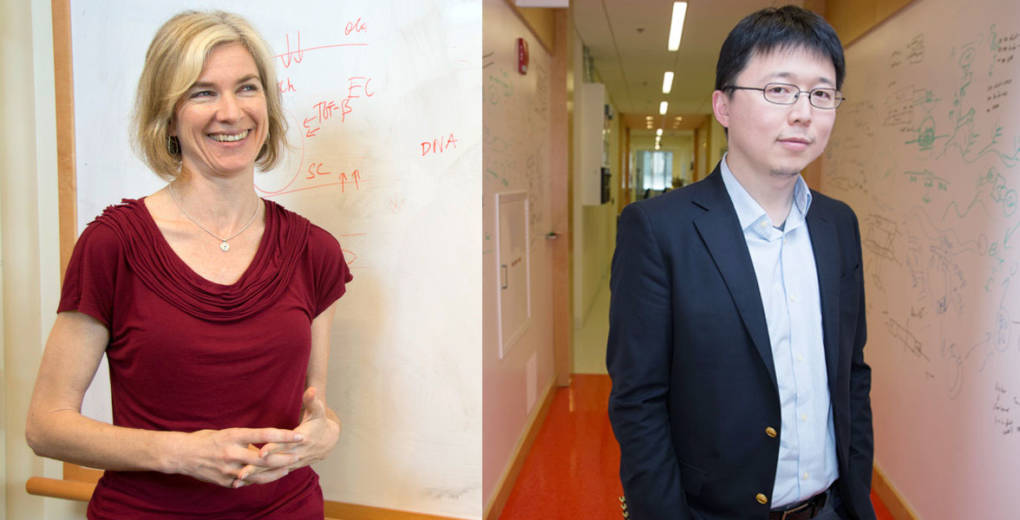
"caption": "Jennifer Doudna of UC Berkeley and Feng Zhang of the Broad Institute.",
"description": null,
"title": "zheng-doudna",
"credit": "Cailey Cotner/UC Berkeley and Bryce Vickmark/MIT",
"status": "inherit",
"isLoading": false,
"fetchFailed": false
},
"futureofyou_250019": {
"type": "attachments",
"id": "futureofyou_250019",
"meta": {
"index": "attachments_1716263798",
"site": "futureofyou",
"id": "250019",
"found": true
},
"parent": 250018,
"imgSizes": {
"twentyfourteen-full-width": {
"file": "https://ww2.kqed.org/app/uploads/sites/13/2016/09/dna-editing_wide-286cfdda3a3bdf20a44fe11a7311f6ed17f902c4-1038x576.jpg",
"width": 1038,
"mimeType": "image/jpeg",
"height": 576
},
"thumbnail": {
"file": "https://ww2.kqed.org/app/uploads/sites/13/2016/09/dna-editing_wide-286cfdda3a3bdf20a44fe11a7311f6ed17f902c4-400x225.jpg",
"width": 400,
"mimeType": "image/jpeg",
"height": 225
},
"fd-sm": {
"file": "https://ww2.kqed.org/app/uploads/sites/13/2016/09/dna-editing_wide-286cfdda3a3bdf20a44fe11a7311f6ed17f902c4-960x540.jpg",
"width": 960,
"mimeType": "image/jpeg",
"height": 540
},
"post-thumbnail": {
"file": "https://ww2.kqed.org/app/uploads/sites/13/2016/09/dna-editing_wide-286cfdda3a3bdf20a44fe11a7311f6ed17f902c4-672x372.jpg",
"width": 672,
"mimeType": "image/jpeg",
"height": 372
},
"kqedFullSize": {
"file": "https://ww2.kqed.org/app/uploads/sites/13/2016/09/dna-editing_wide-286cfdda3a3bdf20a44fe11a7311f6ed17f902c4.jpg",
"width": 3391,
"height": 1906
},
"large": {
"file": "https://ww2.kqed.org/app/uploads/sites/13/2016/09/dna-editing_wide-286cfdda3a3bdf20a44fe11a7311f6ed17f902c4-1180x663.jpg",
"width": 1180,
"mimeType": "image/jpeg",
"height": 663
},
"guest-author-50": {
"file": "https://ww2.kqed.org/app/uploads/sites/13/2016/09/dna-editing_wide-286cfdda3a3bdf20a44fe11a7311f6ed17f902c4-50x50.jpg",
"width": 50,
"mimeType": "image/jpeg",
"height": 50
},
"guest-author-96": {
"file": "https://ww2.kqed.org/app/uploads/sites/13/2016/09/dna-editing_wide-286cfdda3a3bdf20a44fe11a7311f6ed17f902c4-96x96.jpg",
"width": 96,
"mimeType": "image/jpeg",
"height": 96
},
"medium": {
"file": "https://ww2.kqed.org/app/uploads/sites/13/2016/09/dna-editing_wide-286cfdda3a3bdf20a44fe11a7311f6ed17f902c4-800x450.jpg",
"width": 800,
"mimeType": "image/jpeg",
"height": 450
},
"guest-author-64": {
"file": "https://ww2.kqed.org/app/uploads/sites/13/2016/09/dna-editing_wide-286cfdda3a3bdf20a44fe11a7311f6ed17f902c4-64x64.jpg",
"width": 64,
"mimeType": "image/jpeg",
"height": 64
},
"guest-author-32": {
"file": "https://ww2.kqed.org/app/uploads/sites/13/2016/09/dna-editing_wide-286cfdda3a3bdf20a44fe11a7311f6ed17f902c4-32x32.jpg",
"width": 32,
"mimeType": "image/jpeg",
"height": 32
},
"fd-lrg": {
"file": "https://ww2.kqed.org/app/uploads/sites/13/2016/09/dna-editing_wide-286cfdda3a3bdf20a44fe11a7311f6ed17f902c4-1920x1079.jpg",
"width": 1920,
"mimeType": "image/jpeg",
"height": 1079
},
"fd-med": {
"file": "https://ww2.kqed.org/app/uploads/sites/13/2016/09/dna-editing_wide-286cfdda3a3bdf20a44fe11a7311f6ed17f902c4-1180x663.jpg",
"width": 1180,
"mimeType": "image/jpeg",
"height": 663
},
"detail": {
"file": "https://ww2.kqed.org/app/uploads/sites/13/2016/09/dna-editing_wide-286cfdda3a3bdf20a44fe11a7311f6ed17f902c4-150x150.jpg",
"width": 150,
"mimeType": "image/jpeg",
"height": 150
},
"medium_large": {
"file": "https://ww2.kqed.org/app/uploads/sites/13/2016/09/dna-editing_wide-286cfdda3a3bdf20a44fe11a7311f6ed17f902c4-768x432.jpg",
"width": 768,
"mimeType": "image/jpeg",
"height": 432
},
"guest-author-128": {
"file": "https://ww2.kqed.org/app/uploads/sites/13/2016/09/dna-editing_wide-286cfdda3a3bdf20a44fe11a7311f6ed17f902c4-128x128.jpg",
"width": 128,
"mimeType": "image/jpeg",
"height": 128
}
},
"publishDate": 1474561432,
"modified": 1474561677,
"caption": "Easy and precise editing of DNA is making possible experiments with human embryos that raise a host of ethical questions.",
"description": "Easy and precise editing of DNA is making possible experiments with human embryos that raise a host of ethical questions.",
"title": "Easy and precise editing of DNA is making possible experiments with human embryos that raise a host of ethical questions.",
"credit": "Alicia Watkins for NPR",
"status": "inherit",
"isLoading": false,
"fetchFailed": false
},
"futureofyou_185983": {
"type": "attachments",
"id": "futureofyou_185983",
"meta": {
"index": "attachments_1716263798",
"site": "futureofyou",
"id": "185983",
"found": true
},
"parent": 0,
"imgSizes": {
"thumbnail": {
"file": "https://ww2.kqed.org/app/uploads/sites/13/2016/06/DIY-crispr-400x226.jpg",
"width": 400,
"mimeType": "image/jpeg",
"height": 226
},
"post-thumbnail": {
"file": "https://ww2.kqed.org/app/uploads/sites/13/2016/06/DIY-crispr-672x372.jpg",
"width": 672,
"mimeType": "image/jpeg",
"height": 372
},
"kqedFullSize": {
"file": "https://ww2.kqed.org/app/uploads/sites/13/2016/06/DIY-crispr.jpg",
"width": 840,
"height": 474
},
"guest-author-50": {
"file": "https://ww2.kqed.org/app/uploads/sites/13/2016/06/DIY-crispr-50x50.jpg",
"width": 50,
"mimeType": "image/jpeg",
"height": 50
},
"guest-author-96": {
"file": "https://ww2.kqed.org/app/uploads/sites/13/2016/06/DIY-crispr-96x96.jpg",
"width": 96,
"mimeType": "image/jpeg",
"height": 96
},
"medium": {
"file": "https://ww2.kqed.org/app/uploads/sites/13/2016/06/DIY-crispr-800x451.jpg",
"width": 800,
"mimeType": "image/jpeg",
"height": 451
},
"guest-author-64": {
"file": "https://ww2.kqed.org/app/uploads/sites/13/2016/06/DIY-crispr-64x64.jpg",
"width": 64,
"mimeType": "image/jpeg",
"height": 64
},
"detail": {
"file": "https://ww2.kqed.org/app/uploads/sites/13/2016/06/DIY-crispr-150x150.jpg",
"width": 150,
"mimeType": "image/jpeg",
"height": 150
},
"guest-author-32": {
"file": "https://ww2.kqed.org/app/uploads/sites/13/2016/06/DIY-crispr-32x32.jpg",
"width": 32,
"mimeType": "image/jpeg",
"height": 32
},
"medium_large": {
"file": "https://ww2.kqed.org/app/uploads/sites/13/2016/06/DIY-crispr-768x433.jpg",
"width": 768,
"mimeType": "image/jpeg",
"height": 433
},
"guest-author-128": {
"file": "https://ww2.kqed.org/app/uploads/sites/13/2016/06/DIY-crispr-128x128.jpg",
"width": 128,
"mimeType": "image/jpeg",
"height": 128
}
},
"publishDate": 1466195908,
"modified": 1466198564,
"caption": "KQED's Jon Brooks and Danielle Venton try out a DIY Crispr gene-editing kit.",
"description": null,
"title": "DIY crispr",
"credit": "KQED",
"status": "inherit",
"isLoading": false,
"fetchFailed": false
},
"futureofyou_157427": {
"type": "attachments",
"id": "futureofyou_157427",
"meta": {
"index": "attachments_1716263798",
"site": "futureofyou",
"id": "157427",
"found": true
},
"parent": 156660,
"imgSizes": {
"twentyfourteen-full-width": {
"file": "https://ww2.kqed.org/app/uploads/sites/13/2016/05/14256046417_5a3538a4fb_k-1038x576.jpg",
"width": 1038,
"mimeType": "image/jpeg",
"height": 576
},
"thumbnail": {
"file": "https://ww2.kqed.org/app/uploads/sites/13/2016/05/14256046417_5a3538a4fb_k-400x300.jpg",
"width": 400,
"mimeType": "image/jpeg",
"height": 300
},
"fd-sm": {
"file": "https://ww2.kqed.org/app/uploads/sites/13/2016/05/14256046417_5a3538a4fb_k-960x720.jpg",
"width": 960,
"mimeType": "image/jpeg",
"height": 720
},
"post-thumbnail": {
"file": "https://ww2.kqed.org/app/uploads/sites/13/2016/05/14256046417_5a3538a4fb_k-672x372.jpg",
"width": 672,
"mimeType": "image/jpeg",
"height": 372
},
"kqedFullSize": {
"file": "https://ww2.kqed.org/app/uploads/sites/13/2016/05/14256046417_5a3538a4fb_k-e1500913863142.jpg",
"width": 1920,
"height": 1440
},
"large": {
"file": "https://ww2.kqed.org/app/uploads/sites/13/2016/05/14256046417_5a3538a4fb_k-1180x885.jpg",
"width": 1180,
"mimeType": "image/jpeg",
"height": 885
},
"guest-author-96": {
"file": "https://ww2.kqed.org/app/uploads/sites/13/2016/05/14256046417_5a3538a4fb_k-96x96.jpg",
"width": 96,
"mimeType": "image/jpeg",
"height": 96
},
"medium": {
"file": "https://ww2.kqed.org/app/uploads/sites/13/2016/05/14256046417_5a3538a4fb_k-800x600.jpg",
"width": 800,
"mimeType": "image/jpeg",
"height": 600
},
"guest-author-64": {
"file": "https://ww2.kqed.org/app/uploads/sites/13/2016/05/14256046417_5a3538a4fb_k-64x64.jpg",
"width": 64,
"mimeType": "image/jpeg",
"height": 64
},
"guest-author-32": {
"file": "https://ww2.kqed.org/app/uploads/sites/13/2016/05/14256046417_5a3538a4fb_k-32x32.jpg",
"width": 32,
"mimeType": "image/jpeg",
"height": 32
},
"fd-lrg": {
"file": "https://ww2.kqed.org/app/uploads/sites/13/2016/05/14256046417_5a3538a4fb_k-1920x1440.jpg",
"width": 1920,
"mimeType": "image/jpeg",
"height": 1440
},
"fd-med": {
"file": "https://ww2.kqed.org/app/uploads/sites/13/2016/05/14256046417_5a3538a4fb_k-1180x885.jpg",
"width": 1180,
"mimeType": "image/jpeg",
"height": 885
},
"detail": {
"file": "https://ww2.kqed.org/app/uploads/sites/13/2016/05/14256046417_5a3538a4fb_k-150x150.jpg",
"width": 150,
"mimeType": "image/jpeg",
"height": 150
},
"medium_large": {
"file": "https://ww2.kqed.org/app/uploads/sites/13/2016/05/14256046417_5a3538a4fb_k-768x576.jpg",
"width": 768,
"mimeType": "image/jpeg",
"height": 576
},
"guest-author-128": {
"file": "https://ww2.kqed.org/app/uploads/sites/13/2016/05/14256046417_5a3538a4fb_k-128x128.jpg",
"width": 128,
"mimeType": "image/jpeg",
"height": 128
}
},
"publishDate": 1462326150,
"modified": 1462326200,
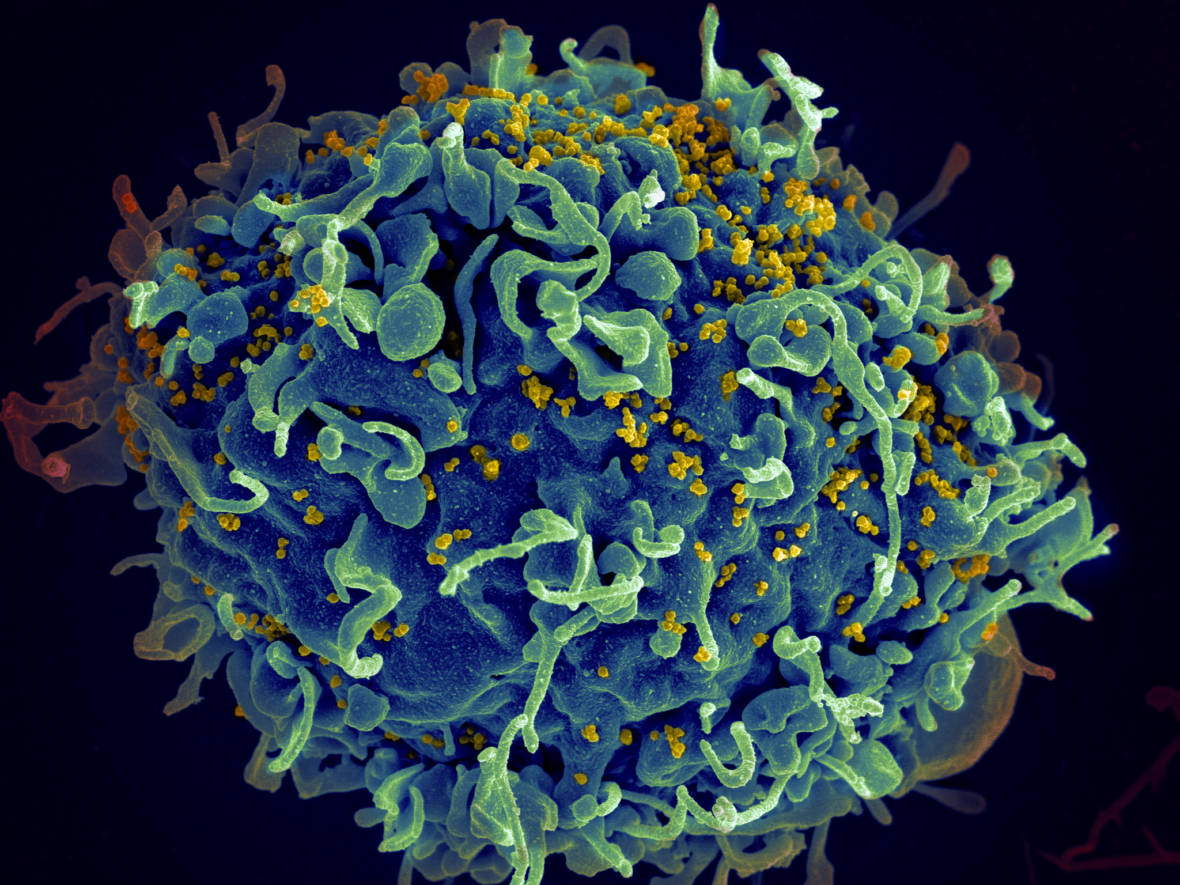
"caption": "This human T cell (blue) is under attack by HIV (yellow), the virus that causes AIDS. ",
"description": null,
"title": "HIV",
"credit": "Seth Pincus, Elizabeth Fischer and Austin Athman/NIH",
"status": "inherit",
"isLoading": false,
"fetchFailed": false
},
"futureofyou_152799": {
"type": "attachments",
"id": "futureofyou_152799",
"meta": {
"index": "attachments_1716263798",
"site": "futureofyou",
"id": "152799",
"found": true
},
"parent": 152236,
"imgSizes": {
"twentyfourteen-full-width": {
"file": "https://ww2.kqed.org/app/uploads/sites/13/2016/04/3DprintCas9-1038x576.jpg",
"width": 1038,
"mimeType": "image/jpeg",
"height": 576
},
"thumbnail": {
"file": "https://ww2.kqed.org/app/uploads/sites/13/2016/04/3DprintCas9-400x259.jpg",
"width": 400,
"mimeType": "image/jpeg",
"height": 259
},
"fd-sm": {
"file": "https://ww2.kqed.org/app/uploads/sites/13/2016/04/3DprintCas9-960x621.jpg",
"width": 960,
"mimeType": "image/jpeg",
"height": 621
},
"post-thumbnail": {
"file": "https://ww2.kqed.org/app/uploads/sites/13/2016/04/3DprintCas9-672x372.jpg",
"width": 672,
"mimeType": "image/jpeg",
"height": 372
},
"kqedFullSize": {
"file": "https://ww2.kqed.org/app/uploads/sites/13/2016/04/3DprintCas9.jpg",
"width": 1920,
"height": 1242
},
"large": {
"file": "https://ww2.kqed.org/app/uploads/sites/13/2016/04/3DprintCas9-1180x763.jpg",
"width": 1180,
"mimeType": "image/jpeg",
"height": 763
},
"guest-author-96": {
"file": "https://ww2.kqed.org/app/uploads/sites/13/2016/04/3DprintCas9-96x96.jpg",
"width": 96,
"mimeType": "image/jpeg",
"height": 96
},
"medium": {
"file": "https://ww2.kqed.org/app/uploads/sites/13/2016/04/3DprintCas9-800x518.jpg",
"width": 800,
"mimeType": "image/jpeg",
"height": 518
},
"guest-author-64": {
"file": "https://ww2.kqed.org/app/uploads/sites/13/2016/04/3DprintCas9-64x64.jpg",
"width": 64,
"mimeType": "image/jpeg",
"height": 64
},
"guest-author-32": {
"file": "https://ww2.kqed.org/app/uploads/sites/13/2016/04/3DprintCas9-32x32.jpg",
"width": 32,
"mimeType": "image/jpeg",
"height": 32
},
"fd-lrg": {
"file": "https://ww2.kqed.org/app/uploads/sites/13/2016/04/3DprintCas9-1920x1242.jpg",
"width": 1920,
"mimeType": "image/jpeg",
"height": 1242
},
"fd-med": {
"file": "https://ww2.kqed.org/app/uploads/sites/13/2016/04/3DprintCas9-1180x763.jpg",
"width": 1180,
"mimeType": "image/jpeg",
"height": 763
},
"detail": {
"file": "https://ww2.kqed.org/app/uploads/sites/13/2016/04/3DprintCas9-75x75.jpg",
"width": 75,
"mimeType": "image/jpeg",
"height": 75
},
"medium_large": {
"file": "https://ww2.kqed.org/app/uploads/sites/13/2016/04/3DprintCas9-768x497.jpg",
"width": 768,
"mimeType": "image/jpeg",
"height": 497
},
"guest-author-128": {
"file": "https://ww2.kqed.org/app/uploads/sites/13/2016/04/3DprintCas9-128x128.jpg",
"width": 128,
"mimeType": "image/jpeg",
"height": 128
}
},
"publishDate": 1461684331,
"modified": 1461684424,
"caption": "A 3D representation of Cas9, the part of CRISPR/Cas9 that changes the DNA. Created with a 3D printer.",
"description": null,
"title": "3DprintCas9",
"credit": "NIH Image Gallery",
"status": "inherit",
"isLoading": false,
"fetchFailed": false
},
"futureofyou_145998": {
"type": "attachments",
"id": "futureofyou_145998",
"meta": {
"index": "attachments_1716263798",
"site": "futureofyou",
"id": "145998",
"found": true
},
"parent": 145993,
"imgSizes": {
"twentyfourteen-full-width": {
"file": "https://ww2.kqed.org/app/uploads/sites/13/2016/04/IMG_0136-1038x576.jpg",
"width": 1038,
"mimeType": "image/jpeg",
"height": 576
},
"thumbnail": {
"file": "https://ww2.kqed.org/app/uploads/sites/13/2016/04/IMG_0136-400x300.jpg",
"width": 400,
"mimeType": "image/jpeg",
"height": 300
},
"fd-sm": {
"file": "https://ww2.kqed.org/app/uploads/sites/13/2016/04/IMG_0136-960x720.jpg",
"width": 960,
"mimeType": "image/jpeg",
"height": 720
},
"post-thumbnail": {
"file": "https://ww2.kqed.org/app/uploads/sites/13/2016/04/IMG_0136-672x372.jpg",
"width": 672,
"mimeType": "image/jpeg",
"height": 372
},
"kqedFullSize": {
"file": "https://ww2.kqed.org/app/uploads/sites/13/2016/04/IMG_0136-e1461619234788.jpg",
"width": 1920,
"height": 1440
},
"large": {
"file": "https://ww2.kqed.org/app/uploads/sites/13/2016/04/IMG_0136-1180x885.jpg",
"width": 1180,
"mimeType": "image/jpeg",
"height": 885
},
"guest-author-96": {
"file": "https://ww2.kqed.org/app/uploads/sites/13/2016/04/IMG_0136-96x96.jpg",
"width": 96,
"mimeType": "image/jpeg",
"height": 96
},
"medium": {
"file": "https://ww2.kqed.org/app/uploads/sites/13/2016/04/IMG_0136-800x600.jpg",
"width": 800,
"mimeType": "image/jpeg",
"height": 600
},
"guest-author-64": {
"file": "https://ww2.kqed.org/app/uploads/sites/13/2016/04/IMG_0136-64x64.jpg",
"width": 64,
"mimeType": "image/jpeg",
"height": 64
},
"guest-author-32": {
"file": "https://ww2.kqed.org/app/uploads/sites/13/2016/04/IMG_0136-32x32.jpg",
"width": 32,
"mimeType": "image/jpeg",
"height": 32
},
"fd-lrg": {
"file": "https://ww2.kqed.org/app/uploads/sites/13/2016/04/IMG_0136-1920x1440.jpg",
"width": 1920,
"mimeType": "image/jpeg",
"height": 1440
},
"fd-med": {
"file": "https://ww2.kqed.org/app/uploads/sites/13/2016/04/IMG_0136-1180x885.jpg",
"width": 1180,
"mimeType": "image/jpeg",
"height": 885
},
"detail": {
"file": "https://ww2.kqed.org/app/uploads/sites/13/2016/04/IMG_0136-75x75.jpg",
"width": 75,
"mimeType": "image/jpeg",
"height": 75
},
"medium_large": {
"file": "https://ww2.kqed.org/app/uploads/sites/13/2016/04/IMG_0136-768x576.jpg",
"width": 768,
"mimeType": "image/jpeg",
"height": 576
},
"guest-author-128": {
"file": "https://ww2.kqed.org/app/uploads/sites/13/2016/04/IMG_0136-128x128.jpg",
"width": 128,
"mimeType": "image/jpeg",
"height": 128
}
},
"publishDate": 1460675384,
"modified": 1461019644,
"caption": "Hemophilia patient Randy Curtis injects his blood with the missing clotting factor.",
"description": null,
"title": "IMG_0136",
"credit": "Lesley McClurg/KQED",
"status": "inherit",
"isLoading": false,
"fetchFailed": false
},
"futureofyou_100149": {
"type": "attachments",
"id": "futureofyou_100149",
"meta": {
"index": "attachments_1716263798",
"site": "futureofyou",
"id": "100149",
"found": true
},
"parent": 94302,
"imgSizes": {
"twentyfourteen-full-width": {
"file": "https://ww2.kqed.org/app/uploads/sites/13/2016/01/crispr-graphic-1038x576.png",
"width": 1038,
"mimeType": "image/png",
"height": 576
},
"thumbnail": {
"file": "https://ww2.kqed.org/app/uploads/sites/13/2016/01/crispr-graphic-400x213.png",
"width": 400,
"mimeType": "image/png",
"height": 213
},
"fd-sm": {
"file": "https://ww2.kqed.org/app/uploads/sites/13/2016/01/crispr-graphic-960x510.png",
"width": 960,
"mimeType": "image/png",
"height": 510
},
"post-thumbnail": {
"file": "https://ww2.kqed.org/app/uploads/sites/13/2016/01/crispr-graphic-672x372.png",
"width": 672,
"mimeType": "image/png",
"height": 372
},
"kqedFullSize": {
"file": "https://ww2.kqed.org/app/uploads/sites/13/2016/01/crispr-graphic.png",
"width": 1197,
"height": 636
},
"large": {
"file": "https://ww2.kqed.org/app/uploads/sites/13/2016/01/crispr-graphic-1180x627.png",
"width": 1180,
"mimeType": "image/png",
"height": 627
},
"guest-author-96": {
"file": "https://ww2.kqed.org/app/uploads/sites/13/2016/01/crispr-graphic-96x96.png",
"width": 96,
"mimeType": "image/png",
"height": 96
},
"medium": {
"file": "https://ww2.kqed.org/app/uploads/sites/13/2016/01/crispr-graphic-800x425.png",
"width": 800,
"mimeType": "image/png",
"height": 425
},
"guest-author-64": {
"file": "https://ww2.kqed.org/app/uploads/sites/13/2016/01/crispr-graphic-64x64.png",
"width": 64,
"mimeType": "image/png",
"height": 64
},
"guest-author-32": {
"file": "https://ww2.kqed.org/app/uploads/sites/13/2016/01/crispr-graphic-32x32.png",
"width": 32,
"mimeType": "image/png",
"height": 32
},
"fd-med": {
"file": "https://ww2.kqed.org/app/uploads/sites/13/2016/01/crispr-graphic-1180x627.png",
"width": 1180,
"mimeType": "image/png",
"height": 627
},
"detail": {
"file": "https://ww2.kqed.org/app/uploads/sites/13/2016/01/crispr-graphic-75x75.png",
"width": 75,
"mimeType": "image/png",
"height": 75
},
"medium_large": {
"file": "https://ww2.kqed.org/app/uploads/sites/13/2016/01/crispr-graphic-768x408.png",
"width": 768,
"mimeType": "image/png",
"height": 408
},
"guest-author-128": {
"file": "https://ww2.kqed.org/app/uploads/sites/13/2016/01/crispr-graphic-128x128.png",
"width": 128,
"mimeType": "image/png",
"height": 128
}
},
"publishDate": 1453251516,
"modified": 1453251628,
"caption": "A graphic illustration of the enzyme Cas9, in the background, clipping a strand of DNA in order to remove a mutated sequence that could cause disease.",
"description": null,
"title": "crispr graphic",
"credit": "UC Berkeley",
"status": "inherit",
"isLoading": false,
"fetchFailed": false
},
"futureofyou_1194": {
"type": "attachments",
"id": "futureofyou_1194",
"meta": {
"index": "attachments_1716263798",
"site": "futureofyou",
"id": "1194",
"found": true
},
"parent": 1168,
"imgSizes": {
"twentyfourteen-full-width": {
"file": "https://ww2.kqed.org/app/uploads/sites/13/2015/04/NHGRIcrispr-1038x576.jpg",
"width": 1038,
"mimeType": "image/jpeg",
"height": 576
},
"thumbnail": {
"file": "https://ww2.kqed.org/app/uploads/sites/13/2015/04/NHGRIcrispr-400x267.jpg",
"width": 400,
"mimeType": "image/jpeg",
"height": 267
},
"fd-sm": {
"file": "https://ww2.kqed.org/app/uploads/sites/13/2015/04/NHGRIcrispr-320x213.jpg",
"width": 320,
"mimeType": "image/jpeg",
"height": 213
},
"post-thumbnail": {
"file": "https://ww2.kqed.org/app/uploads/sites/13/2015/04/NHGRIcrispr-672x372.jpg",
"width": 672,
"mimeType": "image/jpeg",
"height": 372
},
"kqedFullSize": {
"file": "https://ww2.kqed.org/app/uploads/sites/13/2015/04/NHGRIcrispr.jpg",
"width": 1920,
"height": 1280
},
"large": {
"file": "https://ww2.kqed.org/app/uploads/sites/13/2015/04/NHGRIcrispr-1180x787.jpg",
"width": 1180,
"mimeType": "image/jpeg",
"height": 787
},
"guest-author-96": {
"file": "https://ww2.kqed.org/app/uploads/sites/13/2015/04/NHGRIcrispr-96x96.jpg",
"width": 96,
"mimeType": "image/jpeg",
"height": 96
},
"medium": {
"file": "https://ww2.kqed.org/app/uploads/sites/13/2015/04/NHGRIcrispr-800x533.jpg",
"width": 800,
"mimeType": "image/jpeg",
"height": 533
},
"guest-author-64": {
"file": "https://ww2.kqed.org/app/uploads/sites/13/2015/04/NHGRIcrispr-64x64.jpg",
"width": 64,
"mimeType": "image/jpeg",
"height": 64
},
"guest-author-32": {
"file": "https://ww2.kqed.org/app/uploads/sites/13/2015/04/NHGRIcrispr-32x32.jpg",
"width": 32,
"mimeType": "image/jpeg",
"height": 32
},
"fd-lrg": {
"file": "https://ww2.kqed.org/app/uploads/sites/13/2015/04/NHGRIcrispr-1180x787.jpg",
"width": 1180,
"mimeType": "image/jpeg",
"height": 787
},
"fd-med": {
"file": "https://ww2.kqed.org/app/uploads/sites/13/2015/04/NHGRIcrispr-768x512.jpg",
"width": 768,
"mimeType": "image/jpeg",
"height": 512
},
"detail": {
"file": "https://ww2.kqed.org/app/uploads/sites/13/2015/04/NHGRIcrispr-75x75.jpg",
"width": 75,
"mimeType": "image/jpeg",
"height": 75
},
"guest-author-128": {
"file": "https://ww2.kqed.org/app/uploads/sites/13/2015/04/NHGRIcrispr-128x128.jpg",
"width": 128,
"mimeType": "image/jpeg",
"height": 128
}
},
"publishDate": 1428078628,
"modified": 1460050960,
"caption": "The gene editing tool CRISPR allows scientists to remove a damaged part of DNA and replace it with a healthy one.",
"description": null,
"title": "NHGRIcrispr",
"credit": "Ernesto del Aguila III/NHGRI",
"status": "inherit",
"isLoading": false,
"fetchFailed": false
},
"futureofyou_341963": {
"type": "attachments",
"id": "futureofyou_341963",
"meta": {
"index": "attachments_1716263798",
"site": "futureofyou",
"id": "341963",
"found": true
},
"parent": 341847,
"imgSizes": {
"small": {
"file": "https://ww2.kqed.org/app/uploads/sites/13/2017/02/Jennifer-Doudna5-520x348.jpg",
"width": 520,
"mimeType": "image/jpeg",
"height": 348
},
"twentyfourteen-full-width": {
"file": "https://ww2.kqed.org/app/uploads/sites/13/2017/02/Jennifer-Doudna5-1038x576.jpg",
"width": 1038,
"mimeType": "image/jpeg",
"height": 576
},
"thumbnail": {
"file": "https://ww2.kqed.org/app/uploads/sites/13/2017/02/Jennifer-Doudna5-160x107.jpg",
"width": 160,
"mimeType": "image/jpeg",
"height": 107
},
"fd-sm": {
"file": "https://ww2.kqed.org/app/uploads/sites/13/2017/02/Jennifer-Doudna5-960x643.jpg",
"width": 960,
"mimeType": "image/jpeg",
"height": 643
},
"post-thumbnail": {
"file": "https://ww2.kqed.org/app/uploads/sites/13/2017/02/Jennifer-Doudna5-672x372.jpg",
"width": 672,
"mimeType": "image/jpeg",
"height": 372
},
"xsmall": {
"file": "https://ww2.kqed.org/app/uploads/sites/13/2017/02/Jennifer-Doudna5-375x251.jpg",
"width": 375,
"mimeType": "image/jpeg",
"height": 251
},
"kqedFullSize": {
"file": "https://ww2.kqed.org/app/uploads/sites/13/2017/02/Jennifer-Doudna5.jpg",
"width": 1800,
"height": 1206
},
"large": {
"file": "https://ww2.kqed.org/app/uploads/sites/13/2017/02/Jennifer-Doudna5-1020x683.jpg",
"width": 1020,
"mimeType": "image/jpeg",
"height": 683
},
"xlarge": {
"file": "https://ww2.kqed.org/app/uploads/sites/13/2017/02/Jennifer-Doudna5-1180x791.jpg",
"width": 1180,
"mimeType": "image/jpeg",
"height": 791
},
"guest-author-50": {
"file": "https://ww2.kqed.org/app/uploads/sites/13/2017/02/Jennifer-Doudna5-50x50.jpg",
"width": 50,
"mimeType": "image/jpeg",
"height": 50
},
"guest-author-96": {
"file": "https://ww2.kqed.org/app/uploads/sites/13/2017/02/Jennifer-Doudna5-96x96.jpg",
"width": 96,
"mimeType": "image/jpeg",
"height": 96
},
"medium": {
"file": "https://ww2.kqed.org/app/uploads/sites/13/2017/02/Jennifer-Doudna5-800x536.jpg",
"width": 800,
"mimeType": "image/jpeg",
"height": 536
},
"guest-author-64": {
"file": "https://ww2.kqed.org/app/uploads/sites/13/2017/02/Jennifer-Doudna5-64x64.jpg",
"width": 64,
"mimeType": "image/jpeg",
"height": 64
},
"guest-author-32": {
"file": "https://ww2.kqed.org/app/uploads/sites/13/2017/02/Jennifer-Doudna5-32x32.jpg",
"width": 32,
"mimeType": "image/jpeg",
"height": 32
},
"fd-med": {
"file": "https://ww2.kqed.org/app/uploads/sites/13/2017/02/Jennifer-Doudna5-1180x791.jpg",
"width": 1180,
"mimeType": "image/jpeg",
"height": 791
},
"detail": {
"file": "https://ww2.kqed.org/app/uploads/sites/13/2017/02/Jennifer-Doudna5-150x150.jpg",
"width": 150,
"mimeType": "image/jpeg",
"height": 150
},
"medium_large": {
"file": "https://ww2.kqed.org/app/uploads/sites/13/2017/02/Jennifer-Doudna5-768x515.jpg",
"width": 768,
"mimeType": "image/jpeg",
"height": 515
},
"guest-author-128": {
"file": "https://ww2.kqed.org/app/uploads/sites/13/2017/02/Jennifer-Doudna5-128x128.jpg",
"width": 128,
"mimeType": "image/jpeg",
"height": 128
},
"xxsmall": {
"file": "https://ww2.kqed.org/app/uploads/sites/13/2017/02/Jennifer-Doudna5-240x161.jpg",
"width": 240,
"mimeType": "image/jpeg",
"height": 161
}
},
"publishDate": 1487798806,
"modified": 1550272514,
"caption": "Jennifer Doudna, UC Berkeley professor of Biochemistry and Molecular Biology who co-invented CRISPR, a groundbreaking gene-editing technology. ",
"description": "Jennifer Doudna, UC Berkeley professor of Biochemistry and Molecular Biology who co-invented CRISPR, a groundbreaking gene-editing technology. ",
"title": "Doudna, Jennifer",
"credit": "Keegan Houser/UC Berkeley",
"status": "inherit",
"isLoading": false,
"fetchFailed": false
},
"futureofyou_118097": {
"type": "attachments",
"id": "futureofyou_118097",
"meta": {
"index": "attachments_1716263798",
"site": "futureofyou",
"id": "118097",
"found": true
},
"parent": 117571,
"imgSizes": {
"twentyfourteen-full-width": {
"file": "https://ww2.kqed.org/app/uploads/sites/13/2017/02/xfiles-1024x576.jpg",
"width": 1024,
"mimeType": "image/jpeg",
"height": 576
},
"thumbnail": {
"file": "https://ww2.kqed.org/app/uploads/sites/13/2017/02/xfiles-400x225.jpg",
"width": 400,
"mimeType": "image/jpeg",
"height": 225
},
"fd-sm": {
"file": "https://ww2.kqed.org/app/uploads/sites/13/2017/02/xfiles-960x540.jpg",
"width": 960,
"mimeType": "image/jpeg",
"height": 540
},
"post-thumbnail": {
"file": "https://ww2.kqed.org/app/uploads/sites/13/2017/02/xfiles-672x372.jpg",
"width": 672,
"mimeType": "image/jpeg",
"height": 372
},
"kqedFullSize": {
"file": "https://ww2.kqed.org/app/uploads/sites/13/2017/02/xfiles.jpg",
"width": 1024,
"height": 576
},
"guest-author-96": {
"file": "https://ww2.kqed.org/app/uploads/sites/13/2017/02/xfiles-96x96.jpg",
"width": 96,
"mimeType": "image/jpeg",
"height": 96
},
"medium": {
"file": "https://ww2.kqed.org/app/uploads/sites/13/2017/02/xfiles-800x450.jpg",
"width": 800,
"mimeType": "image/jpeg",
"height": 450
},
"guest-author-64": {
"file": "https://ww2.kqed.org/app/uploads/sites/13/2017/02/xfiles-64x64.jpg",
"width": 64,
"mimeType": "image/jpeg",
"height": 64
},
"detail": {
"file": "https://ww2.kqed.org/app/uploads/sites/13/2017/02/xfiles-75x75.jpg",
"width": 75,
"mimeType": "image/jpeg",
"height": 75
},
"guest-author-32": {
"file": "https://ww2.kqed.org/app/uploads/sites/13/2017/02/xfiles-32x32.jpg",
"width": 32,
"mimeType": "image/jpeg",
"height": 32
},
"medium_large": {
"file": "https://ww2.kqed.org/app/uploads/sites/13/2017/02/xfiles-768x432.jpg",
"width": 768,
"mimeType": "image/jpeg",
"height": 432
},
"guest-author-128": {
"file": "https://ww2.kqed.org/app/uploads/sites/13/2017/02/xfiles-128x128.jpg",
"width": 128,
"mimeType": "image/jpeg",
"height": 128
}
},
"publishDate": 1456421932,
"modified": 1456436714,
"caption": "\"The X-Files\" lives!",
"description": null,
"title": "xfiles",
"credit": "FOX",
"status": "inherit",
"isLoading": false,
"fetchFailed": false
}
},
"audioPlayerReducer": {
"postId": "stream_live",
"isPaused": true,
"isPlaying": false,
"pfsActive": false,
"pledgeModalIsOpen": true,
"playerDrawerIsOpen": false,
"liveAudioPlayStartedAt": 0,
"liveAudioPlayContext": ""
},
"authorsReducer": {
"byline_futureofyou_338066": {
"type": "authors",
"id": "byline_futureofyou_338066",
"meta": {
"override": true
},
"slug": "byline_futureofyou_338066",
"name": "Richard Harris\u003cbr />NPR Shots",
"isLoading": false
},
"byline_futureofyou_315823": {
"type": "authors",
"id": "byline_futureofyou_315823",
"meta": {
"override": true
},
"slug": "byline_futureofyou_315823",
"name": "Barry Starr",
"isLoading": false
},
"byline_futureofyou_250018": {
"type": "authors",
"id": "byline_futureofyou_250018",
"meta": {
"override": true
},
"slug": "byline_futureofyou_250018",
"name": "Rob Stein\u003cbr />NPR Shots",
"isLoading": false
},
"byline_futureofyou_183746": {
"type": "authors",
"id": "byline_futureofyou_183746",
"meta": {
"override": true
},
"slug": "byline_futureofyou_183746",
"name": "Danielle Venton",
"isLoading": false
},
"byline_futureofyou_152236": {
"type": "authors",
"id": "byline_futureofyou_152236",
"meta": {
"override": true
},
"slug": "byline_futureofyou_152236",
"name": "Barry Starr\u003cbr />Tech Museum & Stanford University",
"isLoading": false
},
"byline_futureofyou_141522": {
"type": "authors",
"id": "byline_futureofyou_141522",
"meta": {
"override": true
},
"slug": "byline_futureofyou_141522",
"name": "Future of You ",
"isLoading": false
},
"byline_futureofyou_121640": {
"type": "authors",
"id": "byline_futureofyou_121640",
"meta": {
"override": true
},
"slug": "byline_futureofyou_121640",
"name": "Lisa Marie Potter and Jon Brooks",
"isLoading": false
},
"jbrooks": {
"type": "authors",
"id": "80",
"meta": {
"index": "authors_1716337520",
"id": "80",
"found": true
},
"name": "Jon Brooks",
"firstName": "Jon",
"lastName": "Brooks",
"slug": "jbrooks",
"email": "jbrooks@kqed.org",
"display_author_email": true,
"staff_mastheads": [
"science"
],
"title": "Digital Editor",
"bio": "Jon Brooks is a former Digital Editor for KQED Science. He is the former editor of KQED’s daily news blog, News Fix. In 2014, he won a California Journalism Award for his coverage of ride services like Uber and Lyft and the taxi industry. A veteran blogger, he previously worked for Yahoo! in various news writing and editing roles. Jon is also a playwright whose work has been produced in San Francisco, New York, Italy, and around the U.S. He has written about film for his own blog and studied film at Boston University.",
"avatar": "https://secure.gravatar.com/avatar/98887f7ed1c876ed414d4c915e969584?s=600&d=blank&r=g",
"twitter": "jbrooksfoy",
"facebook": null,
"instagram": null,
"linkedin": null,
"sites": [
{
"site": "arts",
"roles": [
"Contributor",
"editor"
]
},
{
"site": "news",
"roles": [
"author"
]
},
{
"site": "futureofyou",
"roles": [
"administrator"
]
},
{
"site": "mindshift",
"roles": [
"editor"
]
},
{
"site": "stateofhealth",
"roles": [
"editor"
]
},
{
"site": "science",
"roles": [
"administrator"
]
},
{
"site": "quest",
"roles": [
"editor"
]
}
],
"headData": {
"title": "Jon Brooks | KQED",
"description": "Digital Editor",
"ogImgSrc": "https://secure.gravatar.com/avatar/98887f7ed1c876ed414d4c915e969584?s=600&d=blank&r=g",
"twImgSrc": "https://secure.gravatar.com/avatar/98887f7ed1c876ed414d4c915e969584?s=600&d=blank&r=g"
},
"isLoading": false,
"link": "/author/jbrooks"
},
"lindseyhoshaw": {
"type": "authors",
"id": "5432",
"meta": {
"index": "authors_1716337520",
"id": "5432",
"found": true
},
"name": "Lindsey Hoshaw",
"firstName": "Lindsey",
"lastName": "Hoshaw",
"slug": "lindseyhoshaw",
"email": "lhoshaw@kqed.org",
"display_author_email": false,
"staff_mastheads": [],
"title": "KQED Contributor",
"bio": "Lindsey Hoshaw is a former interactive producer for KQED Science. Before joining KQED, Lindsey was a science correspondent for The New York Times, The Boston Globe, Forbes and Scientific American. On Twitter @lindseyhoshaw",
"avatar": "https://secure.gravatar.com/avatar/274b07694c998eaa8f26cfabaa941186?s=600&d=mm&r=g",
"twitter": "lindseyhoshaw",
"facebook": "lindsey.hoshaw.9",
"instagram": null,
"linkedin": null,
"sites": [
{
"site": "arts",
"roles": [
"author"
]
},
{
"site": "news",
"roles": [
"subscriber"
]
},
{
"site": "futureofyou",
"roles": [
"editor"
]
},
{
"site": "bayareabites",
"roles": [
"contributor"
]
},
{
"site": "stateofhealth",
"roles": [
"author"
]
},
{
"site": "science",
"roles": [
"edit_theme_options",
"subscriber"
]
},
{
"site": "quest",
"roles": [
"edit_post_subscriptions",
"edit_usergroups",
"unfiltered_html",
"unfiltered_upload",
"leadcoordinator",
"editor"
]
},
{
"site": "food",
"roles": []
}
],
"headData": {
"title": "Lindsey Hoshaw | KQED",
"description": "KQED Contributor",
"ogImgSrc": "https://secure.gravatar.com/avatar/274b07694c998eaa8f26cfabaa941186?s=600&d=mm&r=g",
"twImgSrc": "https://secure.gravatar.com/avatar/274b07694c998eaa8f26cfabaa941186?s=600&d=mm&r=g"
},
"isLoading": false,
"link": "/author/lindseyhoshaw"
},
"dventon": {
"type": "authors",
"id": "11088",
"meta": {
"index": "authors_1716337520",
"id": "11088",
"found": true
},
"name": "Danielle Venton",
"firstName": "Danielle",
"lastName": "Venton",
"slug": "dventon",
"email": "dventon@kqed.org",
"display_author_email": true,
"staff_mastheads": [
"science"
],
"title": "Science reporter",
"bio": "Danielle Venton is a reporter for KQED Science. She covers wildfires, space and oceans (though she is prone to sea sickness).\r\n\r\nBefore joining KQED in 2015, Danielle was a staff reporter at KRCB in Sonoma County and a freelancer. She studied science communication at UC Santa Cruz and formerly worked at CERN in Geneva, Switzerland where she wrote about computing. She lives in Sonoma County and enjoys backpacking.",
"avatar": "https://secure.gravatar.com/avatar/37b292b5c40c8d93959c4f48d73b5286f41b7abd8588277e941905a3ed4c801c?s=600&d=blank&r=g",
"twitter": "DanielleVenton",
"bluesky": null,
"facebook": null,
"instagram": null,
"linkedin": null,
"sites": [
{
"site": "arts",
"roles": [
"contributor"
]
},
{
"site": "news",
"roles": [
"editor"
]
},
{
"site": "futureofyou",
"roles": [
"editor"
]
},
{
"site": "science",
"roles": [
"editor"
]
},
{
"site": "liveblog",
"roles": [
"contributor"
]
}
],
"headData": {
"title": "Danielle Venton | KQED",
"description": "Science reporter",
"ogImgSrc": "https://secure.gravatar.com/avatar/37b292b5c40c8d93959c4f48d73b5286f41b7abd8588277e941905a3ed4c801c?s=600&d=blank&r=g",
"twImgSrc": "https://secure.gravatar.com/avatar/37b292b5c40c8d93959c4f48d73b5286f41b7abd8588277e941905a3ed4c801c?s=600&d=blank&r=g"
},
"isLoading": false,
"link": "/author/dventon"
},
"lesleymcclurg": {
"type": "authors",
"id": "11229",
"meta": {
"index": "authors_1716337520",
"id": "11229",
"found": true
},
"name": "Lesley McClurg",
"firstName": "Lesley",
"lastName": "McClurg",
"slug": "lesleymcclurg",
"email": "lmcclurg@KQED.org",
"display_author_email": false,
"staff_mastheads": [
"news",
"science"
],
"title": "KQED Health Correspondent",
"bio": "Lesley McClurg is a health correspondent and fill-in host whose work is regularly rebroadcast on NPR and PBS programs. She’s earned multiple regional Emmy awards, a national and a regional Edward R. Murrow award, and was named Best Beat Reporter by the Association of Health Care Journalists. The Society of Professional Journalists has recognized her work several times, and the Society of Environmental Journalists spotlighted her coverage of California’s historic drought.\r\n\r\nBefore joining KQED in 2016, Lesley covered food and sustainability for Capital Public Radio, environmental issues for Colorado Public Radio, and reported for KUOW and KCTS 9 in Seattle. Away from the newsroom, she loves skiing with her daughter, mountain biking with her partner, and playing with Ollie, the family’s goldendoodle. On deadline, she runs almost entirely on chocolate chips.\r\n\r\n ",
"avatar": "https://secure.gravatar.com/avatar/bab49e972ea10c774fe0f5e29dba1722b158f7c0d58a360923d1389d380b2978?s=600&d=blank&r=g",
"twitter": "lesleywmcclurg",
"bluesky": null,
"facebook": null,
"instagram": null,
"linkedin": null,
"sites": [
{
"site": "arts",
"roles": [
"author"
]
},
{
"site": "news",
"roles": [
"editor"
]
},
{
"site": "futureofyou",
"roles": [
"editor"
]
},
{
"site": "stateofhealth",
"roles": [
"author"
]
},
{
"site": "science",
"roles": [
"editor"
]
},
{
"site": "quest",
"roles": [
"subscriber"
]
},
{
"site": "forum",
"roles": [
"administrator"
]
},
{
"site": "liveblog",
"roles": [
"author"
]
}
],
"headData": {
"title": "Lesley McClurg | KQED",
"description": "KQED Health Correspondent",
"ogImgSrc": "https://secure.gravatar.com/avatar/bab49e972ea10c774fe0f5e29dba1722b158f7c0d58a360923d1389d380b2978?s=600&d=blank&r=g",
"twImgSrc": "https://secure.gravatar.com/avatar/bab49e972ea10c774fe0f5e29dba1722b158f7c0d58a360923d1389d380b2978?s=600&d=blank&r=g"
},
"isLoading": false,
"link": "/author/lesleymcclurg"
}
},
"pagesReducer": {
"futureofyou_tag_crispr": {
"type": "terms",
"id": "futureofyou_94",
"meta": {
"index": "terms_1716263798",
"site": "futureofyou",
"id": "94",
"score": 9.105264
},
"featImg": null,
"name": "CRISPR",
"description": null,
"taxonomy": "tag",
"headData": {
"twImgId": null,
"twTitle": null,
"ogTitle": null,
"ogImgId": null,
"twDescription": null,
"description": null,
"title": "CRISPR Archives | KQED Arts",
"ogDescription": null
},
"ttid": 94,
"slug": "crispr",
"isLoading": false,
"title": "CRISPR",
"pageMeta": {
"site": "futureofyou",
"WpPageTemplate": "page-topic-editorial",
"currentPage": 3
},
"blocks": [
{
"blockName": "kqed/post-list",
"attrs": {
"layout": "cardArticle2",
"query": "posts/futureofyou?tag=crispr",
"seeMore": false,
"paginated": true,
"page": 3
}
},
{
"blockName": "kqed/ad"
}
]
}
},
"pfsSessionReducer": {},
"postsReducer": {
"stream_live": {
"type": "live",
"id": "stream_live",
"audioUrl": "https://streams.kqed.org/kqedradio",
"title": "Live Stream",
"excerpt": "Live Stream information currently unavailable.",
"link": "/radio",
"featImg": "",
"label": {
"name": "KQED Live",
"link": "/"
}
},
"stream_kqedNewscast": {
"type": "posts",
"id": "stream_kqedNewscast",
"audioUrl": "https://www.kqed.org/.stream/anon/radio/RDnews/newscast.mp3?_=1",
"title": "KQED Newscast",
"featImg": "",
"label": {
"name": "88.5 FM",
"link": "/"
}
},
"futureofyou_338066": {
"type": "posts",
"id": "futureofyou_338066",
"meta": {
"index": "posts_1716263798",
"site": "futureofyou",
"id": "338066",
"score": null,
"sort": [
1487263047000
]
},
"parent": 0,
"labelTerm": {},
"blocks": [],
"publishDate": 1487263047,
"format": "standard",
"disqusTitle": "Broad Institute Wins Decision Over UC Berkeley in CRISPR Patent Battle",
"title": "Broad Institute Wins Decision Over UC Berkeley in CRISPR Patent Battle",
"headTitle": "KQED Future of You | KQED Science",
"content": "\u003cp>The U.S. patent office has delivered a potentially lucrative victory to bioengineer \u003ca href=\"https://www.broadinstitute.org/zhang-lab\">Feng Zhang\u003c/a> of the Broad Institute in Massachusetts, regarding patents for an extraordinarily useful gene-editing tool.\u003c/p>\n\u003cp>\u003ca href=\"http://www.npr.org/tags/419142387/crispr\">CRISPR\u003c/a>, a technology that's already worth billions of dollars, is shaping up to play a big role in medicine and medical research because it can edit DNA with unprecedented accuracy. But exactly who has the right to profit from the technology has been up for debate.\u003c/p>\n\u003cp>Wednesday the U.S. Patent and Trademark Office said patents issued to the Broad Institute in 2014, and then challenged by the University of California, Berkeley, are in fact valid.\u003c/p>\n\u003cp>\"It's a pretty monumental decision here,\" said \u003ca href=\"http://www.nyls.edu/faculty/faculty-profiles/faculty_profiles/jacob-s-sherkow/\">Jacob Sherkow\u003c/a>, an associate professor at the New York Law School, who has been tracking the dispute closely.\u003c/p>\n\u003cp>\"It seems to reward the most valuable aspect of CRISPR to the Broad Institute,\" Sherkow told Shots.\u003c/p>\n\u003cp>[ad fullwidth]\u003c/p>\n\u003cp>The proceedings aren't entirely settled, but as Sherkow sees the situation, the Broad Institute — a joint venture of Harvard University and MIT — will hold the patent for using CRISPR in human beings, other animals, and plants. Sherkow told Shots he believes Cal's patent, which has not yet been issued, could be limited to bacteria.\u003c/p>\n\u003cp>\"Obviously the patents covering the application of this technology in human cells ... are going to be much more financially valuable than using the same technology in bacteria,\" Sherkow says, \"because one can develop drugs and other therapies from them.\"\u003c/p>\n\u003cp>Investors Wednesday seemed to agree with this assessment. The value of companies that were spun off to license the Broad patents rose sharply, while the company based on the Berkeley patent lost value.\u003c/p>\n\u003cp>Potentially, tens of billions of dollars are at stake here, both for the companies and for the universities.\u003c/p>\n\u003cp>Biochemist \u003ca href=\"https://www.hhmi.org/scientists/jennifer-doudna\">Jennifer Doudna\u003c/a>, of U.C. Berkeley and the Howard Hughes Medical Institute, discovered the biology that underlies this technology along with a European colleague, \u003ca href=\"https://www.mpg.de/9343753/infektionsbiologie-charpentier\">Emmanuelle Charpentier\u003c/a>, who is now director of the Institute for Infection Biology at the Max Planck Institute in Berlin.\u003c/p>\n\u003cp>Doudna told Shots she isn't convinced that Berkeley is the big loser here. She said the ruling paves the way for her patent application to move forward.\u003c/p>\n\u003cp>\"We're looking forward to having our patent issued,\" she said. \"And our patent is a very broad patent that covers the composition and the use of this technology in all cell types.\"\u003c/p>\n\u003cp>If the patent office rules the way Doudna hopes it will, people wanting to use CRISPR in higher organisms will have get licenses from both Berkeley and the Broad Institute.\u003c/p>\n\u003cp>\"That's the thing that I think is a bit crazy about the way the decision comes down,\" Doudna said. \"It leaves the field — the situation — where a license would be necessary from both parties. There's not further clarity at this stage.\"\u003c/p>\n\u003cp>\u003c/p>\n\u003cp>There's yet another possibility: Berkeley could appeal Wednesday's ruling, and once again challenge the Broad Institute's patents. Doudna said the university hasn't decided what to do just yet.\u003c/p>\n\u003cdiv class=\"fullattribution\">Copyright 2017 NPR. To see more, visit http://www.npr.org/.\u003cimg src=\"http://www.google-analytics.com/__utm.gif?utmac=UA-5828686-4&utmdt=Broad+Institute+Wins+Big+Battle+Over+CRISPR+Gene-Editing+Patent&utme=8(APIKey)9(MDAxOTAwOTE4MDEyMTkxMDAzNjczZDljZA004)\">\u003c/div>\n\n",
"disqusIdentifier": "338066 https://ww2.kqed.org/futureofyou/?p=338066",
"disqusUrl": "https://ww2.kqed.org/futureofyou/2017/02/16/broad-institute-wins-decision-over-uc-berkeley-in-crispr-patent-battle/",
"stats": {
"hasVideo": false,
"hasChartOrMap": false,
"hasAudio": false,
"hasPolis": false,
"wordCount": 523,
"hasGoogleForm": false,
"hasGallery": false,
"hasHearkenModule": false,
"iframeSrcs": [],
"paragraphCount": 17
},
"modified": 1487263912,
"excerpt": "CRISPR technology is already worth billions of dollars, investors say. This ruling seems to affirm the biggest piece of the pie goes to the Broad, over patent rival University of California, Berkeley.",
"headData": {
"twImgId": "",
"twTitle": "",
"ogTitle": "",
"ogImgId": "",
"twDescription": "",
"description": "CRISPR technology is already worth billions of dollars, investors say. This ruling seems to affirm the biggest piece of the pie goes to the Broad, over patent rival University of California, Berkeley.",
"title": "Broad Institute Wins Decision Over UC Berkeley in CRISPR Patent Battle | KQED",
"ogDescription": "",
"schema": {
"@context": "https://schema.org",
"@type": "Article",
"headline": "Broad Institute Wins Decision Over UC Berkeley in CRISPR Patent Battle",
"datePublished": "2017-02-16T08:37:27-08:00",
"dateModified": "2017-02-16T08:51:52-08:00",
"image": "https://cdn.kqed.org/wp-content/uploads/2020/02/KQED-OG-Image@1x.png"
}
},
"guestAuthors": [],
"slug": "broad-institute-wins-decision-over-uc-berkeley-in-crispr-patent-battle",
"status": "publish",
"nprApiLink": "http://api.npr.org/query?id=515459773&apiKey=MDAxOTAwOTE4MDEyMTkxMDAzNjczZDljZA004",
"nprByline": "Richard Harris\u003cbr />NPR Shots",
"nprStoryDate": "Wed, 15 Feb 2017 19:31:00 -0500",
"nprLastModifiedDate": "Thu, 16 Feb 2017 09:05:42 -0500",
"nprHtmlLink": "http://www.npr.org/sections/health-shots/2017/02/15/515459773/broad-institute-wins-big-battle-over-crispr-gene-editing-patent?ft=nprml&f=515459773",
"nprAudio": "https://ondemand.npr.org/anon.npr-mp3/npr/me/2017/02/20170216_me_broad_institute_wins_big_battle_over_crispr_gene-editing_patent.mp3?orgId=1&topicId=1128&d=190&p=3&story=515459773&t=progseg&e=515529274&seg=16&ft=nprml&f=515459773",
"source": "KQED Future of You",
"nprAudioM3u": "http://api.npr.org/m3u/1515529417-49b234.m3u?orgId=1&topicId=1128&d=190&p=3&story=515459773&t=progseg&e=515529274&seg=16&ft=nprml&f=515459773",
"nprStoryId": "515459773",
"nprRetrievedStory": "1",
"nprPubDate": "Thu, 16 Feb 2017 09:22:00 -0500",
"path": "/futureofyou/338066/broad-institute-wins-decision-over-uc-berkeley-in-crispr-patent-battle",
"audioUrl": "https://ondemand.npr.org/anon.npr-mp3/npr/me/2017/02/20170216_me_broad_institute_wins_big_battle_over_crispr_gene-editing_patent.mp3?orgId=1&topicId=1128&d=190&p=3&story=515459773&t=progseg&e=515529274&seg=16&ft=nprml&f=515459773",
"audioTrackLength": null,
"parsedContent": [
{
"type": "contentString",
"content": "\u003cdiv class=\"post-body\">\u003cp>\u003cp>The U.S. patent office has delivered a potentially lucrative victory to bioengineer \u003ca href=\"https://www.broadinstitute.org/zhang-lab\">Feng Zhang\u003c/a> of the Broad Institute in Massachusetts, regarding patents for an extraordinarily useful gene-editing tool.\u003c/p>\n\u003cp>\u003ca href=\"http://www.npr.org/tags/419142387/crispr\">CRISPR\u003c/a>, a technology that's already worth billions of dollars, is shaping up to play a big role in medicine and medical research because it can edit DNA with unprecedented accuracy. But exactly who has the right to profit from the technology has been up for debate.\u003c/p>\n\u003cp>Wednesday the U.S. Patent and Trademark Office said patents issued to the Broad Institute in 2014, and then challenged by the University of California, Berkeley, are in fact valid.\u003c/p>\n\u003cp>\"It's a pretty monumental decision here,\" said \u003ca href=\"http://www.nyls.edu/faculty/faculty-profiles/faculty_profiles/jacob-s-sherkow/\">Jacob Sherkow\u003c/a>, an associate professor at the New York Law School, who has been tracking the dispute closely.\u003c/p>\n\u003cp>\"It seems to reward the most valuable aspect of CRISPR to the Broad Institute,\" Sherkow told Shots.\u003c/p>\n\u003cp>\u003c/p>\u003c/div>",
"attributes": {
"named": {},
"numeric": []
}
},
{
"type": "component",
"content": "",
"name": "ad",
"attributes": {
"named": {
"label": "fullwidth"
},
"numeric": [
"fullwidth"
]
}
},
{
"type": "contentString",
"content": "\u003cdiv class=\"post-body\">\u003cp>\u003c/p>\n\u003cp>The proceedings aren't entirely settled, but as Sherkow sees the situation, the Broad Institute — a joint venture of Harvard University and MIT — will hold the patent for using CRISPR in human beings, other animals, and plants. Sherkow told Shots he believes Cal's patent, which has not yet been issued, could be limited to bacteria.\u003c/p>\n\u003cp>\"Obviously the patents covering the application of this technology in human cells ... are going to be much more financially valuable than using the same technology in bacteria,\" Sherkow says, \"because one can develop drugs and other therapies from them.\"\u003c/p>\n\u003cp>Investors Wednesday seemed to agree with this assessment. The value of companies that were spun off to license the Broad patents rose sharply, while the company based on the Berkeley patent lost value.\u003c/p>\n\u003cp>Potentially, tens of billions of dollars are at stake here, both for the companies and for the universities.\u003c/p>\n\u003cp>Biochemist \u003ca href=\"https://www.hhmi.org/scientists/jennifer-doudna\">Jennifer Doudna\u003c/a>, of U.C. Berkeley and the Howard Hughes Medical Institute, discovered the biology that underlies this technology along with a European colleague, \u003ca href=\"https://www.mpg.de/9343753/infektionsbiologie-charpentier\">Emmanuelle Charpentier\u003c/a>, who is now director of the Institute for Infection Biology at the Max Planck Institute in Berlin.\u003c/p>\n\u003cp>Doudna told Shots she isn't convinced that Berkeley is the big loser here. She said the ruling paves the way for her patent application to move forward.\u003c/p>\n\u003cp>\"We're looking forward to having our patent issued,\" she said. \"And our patent is a very broad patent that covers the composition and the use of this technology in all cell types.\"\u003c/p>\n\u003cp>If the patent office rules the way Doudna hopes it will, people wanting to use CRISPR in higher organisms will have get licenses from both Berkeley and the Broad Institute.\u003c/p>\n\u003cp>\"That's the thing that I think is a bit crazy about the way the decision comes down,\" Doudna said. \"It leaves the field — the situation — where a license would be necessary from both parties. There's not further clarity at this stage.\"\u003c/p>\n\u003cp>\u003c/p>\n\u003cp>There's yet another possibility: Berkeley could appeal Wednesday's ruling, and once again challenge the Broad Institute's patents. Doudna said the university hasn't decided what to do just yet.\u003c/p>\n\u003cdiv class=\"fullattribution\">Copyright 2017 NPR. To see more, visit http://www.npr.org/.\u003cimg src=\"http://www.google-analytics.com/__utm.gif?utmac=UA-5828686-4&utmdt=Broad+Institute+Wins+Big+Battle+Over+CRISPR+Gene-Editing+Patent&utme=8(APIKey)9(MDAxOTAwOTE4MDEyMTkxMDAzNjczZDljZA004)\">\u003c/div>\n\n\u003c/div>\u003c/p>",
"attributes": {
"named": {},
"numeric": []
}
}
],
"link": "/futureofyou/338066/broad-institute-wins-decision-over-uc-berkeley-in-crispr-patent-battle",
"authors": [
"byline_futureofyou_338066"
],
"categories": [
"futureofyou_452",
"futureofyou_1062",
"futureofyou_1",
"futureofyou_73"
],
"tags": [
"futureofyou_91",
"futureofyou_94",
"futureofyou_790",
"futureofyou_80",
"futureofyou_89"
],
"label": "source_futureofyou_338066"
},
"futureofyou_315823": {
"type": "posts",
"id": "futureofyou_315823",
"meta": {
"index": "posts_1716263798",
"site": "futureofyou",
"id": "315823",
"score": null,
"sort": [
1484072779000
]
},
"parent": 0,
"labelTerm": {},
"blocks": [],
"publishDate": 1484072779,
"format": "standard",
"disqusTitle": "Most Important Genetics Stories 2016",
"title": "Most Important Genetics Stories 2016",
"headTitle": "KQED Future of You | KQED Science",
"content": "\u003cp class=\"p1\">\u003cspan class=\"s1\">Two thousand and sixteen was a big year for genetics, and there was no bigger story than everyone’s favorite gene-editing tool, \u003ca href=\"http://genetics.thetech.org/ask-a-geneticist/why-crispr-revolutionary-and-how-it-works\">CRISPR-Cas9\u003c/a>. But that wasn’t the only story: A “three-parent baby” was born in Mexico, the minimum number of genes needed for bacterial life was determined, gene drives were tentatively approved for dealing with the Zika virus, and four species of giraffes were identified based on DNA alone. And there were many more.\u003c/span>\u003c/p>\n\u003cp class=\"p1\">\u003cspan class=\"s1\">Here's the rundown of our top stories.\u003c/span>\u003c/p>\n\u003cp class=\"p1\">\u003cspan class=\"s1\">\u003cb>The Many Tales of CRISPR-Cas9\u003c/b>\u003c/span>\u003c/p>\n\u003cp class=\"p1\">For the last couple of years, there's been a lot of news about tweaking genes using the CRISPR-Cas9 system. In 2016, scientists began to use this cutting-edge gene-editing tool in earnest.\u003c/p>\n\u003cp class=\"p1\">\u003cspan class=\"s1\">Last year was the first time that CRISPR-Cas9 was \u003ca href=\"http://www.nature.com/news/crispr-gene-editing-tested-in-a-person-for-the-first-time-1.20988\">\u003cspan class=\"s2\">directly used to treat a disease\u003c/span>\u003c/a> in a patient. In late October, Dr. Lu You of Sichuan University in Chengdu, China used CRISPR-Cas9 to change the DNA in a patient’s immune cells so that these cells would attack the patient’s cancer. This approach is called immunotherapy--a \u003ca href=\"http://www.cnn.com/2016/10/26/health/immunotherapy-cancer-treatments/\">\u003cspan class=\"s2\">big story all on its own\u003c/span>\u003c/a>.\u003c/span>\u003c/p>\n\u003cp>[ad fullwidth]\u003c/p>\n\u003cp class=\"p1\">What these researchers did was to remove immune cells from the patient and knock out their PD-1 gene, which can incorrectly determine that cancer cells are not a threat. Removing the gene should theoretically help the immune cells recognize and destroy cancer cells. The researchers grew the modified cells in the lab and then injected them back into the patient. While it is too soon to know if the treatment is effective, we do know that -- so far at least-- the patient hasn't experienced any negative effects.\u003c/p>\n\u003cp class=\"p1\">\u003cspan class=\"s1\">Last year, for only the second time, \u003ca href=\"http://www.nature.com/news/second-chinese-team-reports-gene-editing-in-human-embryos-1.19718\">\u003cspan class=\"s2\">researchers “successfully” changed DNA in human embryos\u003c/span>\u003c/a> using CRISPR-Cas9. (The first time was way back in 2015.) The researchers purposely used nonviable embryos, which were not transferred into a womb.\u003c/span>\u003c/p>\n\u003cp class=\"p1\">\u003cspan class=\"s1\">The reason I included the quotation marks is that gene editing human embryos is still very much a work in progress. Only four of the 26 embryos were successfully edited. And the results were not identical even in these four; some had additional mutations in the targeted gene. \u003c/span>\u003cspan class=\"s1\">These mixed results emphasize how much more work needs to be done before editing human embryos can become routine.\u003c/span>\u003c/p>\n\u003cp class=\"p1\">\u003cspan class=\"s1\">And of course, the \u003ca href=\"https://ww2.kqed.org/futureofyou/2016/01/15/crispr-patent-war-billions-at-stake-for-uc-berkeley/\">\u003cspan class=\"s2\">CRISPR-Cas9 patent war\u003c/span>\u003c/a> between UC Berkeley and the Broad Institute of Harvard and MIT continued to rage on. Whoever wins stands to make a whole lot of money, which makes this a very nasty, ongoing battle unlikely to end soon. \u003c/span>\u003c/p>\n\u003cp>CRISPR-Cas9 even became a player in the GMO field. The \u003ca href=\"https://www.washingtonpost.com/news/speaking-of-science/wp/2016/04/18/why-this-genetically-modified-mushroom-is-bypassing-usda-regulation/?utm_term=.1af905912360\">\u003cspan class=\"s2\">FDA ruled\u003c/span>\u003c/a> that a mushroom with a gene that had been modified with CRISPR-Cas9 didn’t need to jump through the usual regulatory hoops that a genetically modified organism has to.\u003c/p>\n\u003cp class=\"p1\">\u003cspan class=\"s1\">Another big story last year, gene drives, owes its existence to CRISPR-Cas9:\u003c/span>\u003c/p>\n\u003cp class=\"p1\">\u003cspan class=\"s1\">\u003cb>Gene Drives, Mosquitoes and Zika\u003c/b>\u003c/span>\u003c/p>\n\u003cp class=\"p1\">\u003cspan class=\"s1\">Last year, the Zika virus spread like wildfire across South and Central America, leaving over 1,000 babies with the birth defect microcephaly.\u003c/span>\u003c/p>\n\u003cp class=\"p1\">\u003cspan class=\"s1\">Scientists are working on a number of ways to prevent Zika infections. The most controversial is to wipe out the mosquito that carries the virus using \u003ca href=\"http://genetics.thetech.org/driving-genes-wild\">gene drives\u003c/a>. \u003c/span>\u003c/p>\n\u003cp class=\"p1\">\u003cspan class=\"s1\">Gene drives use CRISPR-Cas9 to quickly and easily spread a harmful gene through a population. In this case the idea would be to destroy the population of mosquitoes that carry the Zika virus. \u003c/span>\u003c/p>\n\u003cp class=\"p1\">This method was given \u003ca href=\"http://www.forbes.com/sites/robertglatter/2016/03/14/fda-grants-tentative-approval-for-gmo-mosquito-trial-in-florida-keys/\">\u003cspan class=\"s2\">tentative approval by the FDA\u003c/span>\u003c/a> back in March 2016, but it has not yet been used, as\u003ca href=\"http://blogs.plos.org/scicomm/2016/11/09/as-florida-voters-are-asked-to-weigh-in-on-a-gm-mosquito-field-trial-where-is-and-isnt-the-science-of-zika-virus-control/\"> many Florida residents strongly oppose it\u003c/a>.\u003c/p>\n\u003cp class=\"p1\">Gene drives were mostly theoretical until CRISPR-Cas9 came along to make them a relatively simple thing to make. In fact, so simple that a group of undergraduate students \u003ca href=\"http://gizmodo.com/college-students-show-how-easy-it-is-to-use-terrifying-1790526457\">\u003cspan class=\"s2\">nearly pulled it off\u003c/span>\u003c/a> at the end of 2016.\u003c/p>\n\u003cp class=\"p1\">\u003cb>Child With Three Parents\u003c/b>\u003c/p>\n\u003cp class=\"p1\">\u003cspan class=\"s1\">In 2015, a big controversy swirled around whether to \u003ca href=\"http://genetics.thetech.org/ask/ask70\">\u003cspan class=\"s2\">restart\u003c/span>\u003c/a> a genetic technique that allows some women who carry mitochondrial diseases to have children without passing them on to their kids. In 2016 \u003ca href=\"https://www.newscientist.com/article/2107219-exclusive-worlds-first-baby-born-with-new-3-parent-technique/\">\u003cspan class=\"s2\">a healthy baby boy was born\u003c/span>\u003c/a> in Mexico using this technique.\u003c/span>\u003c/p>\n\u003cp>The technique is controversial for a couple of reasons. First, any girls born will pass their genetically engineered DNA down to their children. This has always been an ethics no-fly zone, as the feeling is that whatever genetic modification we make in a person should stay in that person. Because the woman in Mexico had a son, the issue was sidestepped.\u003c/p>\n\u003cp class=\"p1\">\u003cspan class=\"s1\">The other controversy is that this boy has DNA from three people instead of the usual two. \u003c/span>\u003c/p>\n\u003cfigure id=\"attachment_316963\" class=\"wp-caption aligncenter\" style=\"max-width: 500px\">\u003cimg class=\"wp-image-316963 size-full\" src=\"http://ww2.kqed.org/futureofyou/wp-content/uploads/sites/13/2017/01/3parent.jpg\" alt=\"This egg is now fertilized with dad's sperm.\" width=\"500\" height=\"335\" srcset=\"https://ww2.kqed.org/app/uploads/sites/13/2017/01/3parent.jpg 500w, https://ww2.kqed.org/app/uploads/sites/13/2017/01/3parent-160x107.jpg 160w, https://ww2.kqed.org/app/uploads/sites/13/2017/01/3parent-240x161.jpg 240w, https://ww2.kqed.org/app/uploads/sites/13/2017/01/3parent-375x251.jpg 375w\" sizes=\"(max-width: 500px) 100vw, 500px\">\u003cfigcaption class=\"wp-caption-text\">This egg is now fertilized with dad's sperm. (Image by Barry Starr)\u003c/figcaption>\u003c/figure>\n\u003cp class=\"p1\">The child has mitochondria, and thus mitochondrial DNA, from the donor, along with DNA from his mom and dad. (Mitochondria are the organelles that supply our cells with energy; they have a bit of DNA all their own.) Although this is referred to as having three parents, that might be a bit of an overstatement. After all, s\u003cspan class=\"s1\">omething like 1/300,000\u003c/span>\u003cspan class=\"s3\">\u003csup>th\u003c/sup>\u003c/span>\u003cspan class=\"s1\"> of the child's DNA comes from the donor, with the rest coming from the mother and father. If the donor is a parent, she is a very minor one indeed.\u003c/span>\u003c/p>\n\u003cp class=\"p1\">\u003cb>The Edge of Life\u003c/b>\u003c/p>\n\u003cp class=\"p1\">\u003cspan class=\"s1\">With the exception of viruses, most life has evolved with a thousand or more genes.Humans have somewhere around 22,000 genes; the humble yeast that gives beer and wine its alcohol has around 6,000; and the bacterium with the fewest known number of genes has 901.\u003c/span>\u003c/p>\n\u003cp class=\"p1\">\u003cspan class=\"s1\">In 2016 a group of researchers was able to show that this last bacterium could get by \u003ca href=\"https://www.sciencenews.org/article/scientists-build-minimum-genome-bacterium\">\u003cspan class=\"s2\">with only 473 genes\u003c/span>\u003c/a>. This is the bare bones machinery needed to keep a bacterium going.\u003c/span>\u003c/p>\n\u003cp class=\"p1\">\u003cspan class=\"s1\">What is cool is that we would not have been able to predict that these were the 473 a bacterium would need. We don’t even know what 143 of them do... .\u003c/span>\u003c/p>\n\u003cp>\u003c/p>\n\u003cp class=\"p1\">Genetics is bound to be a hot topic in 2017 as well. Stay tuned.\u003c/p>\n\n",
"disqusIdentifier": "315823 http://ww2.kqed.org/futureofyou/?p=315823",
"disqusUrl": "https://ww2.kqed.org/futureofyou/2017/01/10/most-important-genetics-stories-2016/",
"stats": {
"hasVideo": false,
"hasChartOrMap": false,
"hasAudio": false,
"hasPolis": false,
"wordCount": 1046,
"hasGoogleForm": false,
"hasGallery": false,
"hasHearkenModule": false,
"iframeSrcs": [],
"paragraphCount": 4
},
"modified": 1484086185,
"excerpt": "From CRISPR to gene drives, 2016 was a very potent year in the field of genetics.",
"headData": {
"twImgId": "",
"twTitle": "",
"ogTitle": "",
"ogImgId": "",
"twDescription": "",
"description": "From CRISPR to gene drives, 2016 was a very potent year in the field of genetics.",
"title": "Most Important Genetics Stories 2016 | KQED",
"ogDescription": "",
"schema": {
"@context": "https://schema.org",
"@type": "Article",
"headline": "Most Important Genetics Stories 2016",
"datePublished": "2017-01-10T10:26:19-08:00",
"dateModified": "2017-01-10T14:09:45-08:00",
"image": "https://cdn.kqed.org/wp-content/uploads/2020/02/KQED-OG-Image@1x.png"
}
},
"guestAuthors": [],
"slug": "most-important-genetics-stories-2016",
"status": "publish",
"nprByline": "Barry Starr",
"source": "KQED Future of You",
"path": "/futureofyou/315823/most-important-genetics-stories-2016",
"audioTrackLength": null,
"parsedContent": [
{
"type": "contentString",
"content": "\u003cdiv class=\"post-body\">\u003cp>\u003cp class=\"p1\">\u003cspan class=\"s1\">Two thousand and sixteen was a big year for genetics, and there was no bigger story than everyone’s favorite gene-editing tool, \u003ca href=\"http://genetics.thetech.org/ask-a-geneticist/why-crispr-revolutionary-and-how-it-works\">CRISPR-Cas9\u003c/a>. But that wasn’t the only story: A “three-parent baby” was born in Mexico, the minimum number of genes needed for bacterial life was determined, gene drives were tentatively approved for dealing with the Zika virus, and four species of giraffes were identified based on DNA alone. And there were many more.\u003c/span>\u003c/p>\n\u003cp class=\"p1\">\u003cspan class=\"s1\">Here's the rundown of our top stories.\u003c/span>\u003c/p>\n\u003cp class=\"p1\">\u003cspan class=\"s1\">\u003cb>The Many Tales of CRISPR-Cas9\u003c/b>\u003c/span>\u003c/p>\n\u003cp class=\"p1\">For the last couple of years, there's been a lot of news about tweaking genes using the CRISPR-Cas9 system. In 2016, scientists began to use this cutting-edge gene-editing tool in earnest.\u003c/p>\n\u003cp class=\"p1\">\u003cspan class=\"s1\">Last year was the first time that CRISPR-Cas9 was \u003ca href=\"http://www.nature.com/news/crispr-gene-editing-tested-in-a-person-for-the-first-time-1.20988\">\u003cspan class=\"s2\">directly used to treat a disease\u003c/span>\u003c/a> in a patient. In late October, Dr. Lu You of Sichuan University in Chengdu, China used CRISPR-Cas9 to change the DNA in a patient’s immune cells so that these cells would attack the patient’s cancer. This approach is called immunotherapy--a \u003ca href=\"http://www.cnn.com/2016/10/26/health/immunotherapy-cancer-treatments/\">\u003cspan class=\"s2\">big story all on its own\u003c/span>\u003c/a>.\u003c/span>\u003c/p>\n\u003cp>\u003c/p>\u003c/div>",
"attributes": {
"named": {},
"numeric": []
}
},
{
"type": "component",
"content": "",
"name": "ad",
"attributes": {
"named": {
"label": "fullwidth"
},
"numeric": [
"fullwidth"
]
}
},
{
"type": "contentString",
"content": "\u003cdiv class=\"post-body\">\u003cp>\u003c/p>\n\u003cp class=\"p1\">What these researchers did was to remove immune cells from the patient and knock out their PD-1 gene, which can incorrectly determine that cancer cells are not a threat. Removing the gene should theoretically help the immune cells recognize and destroy cancer cells. The researchers grew the modified cells in the lab and then injected them back into the patient. While it is too soon to know if the treatment is effective, we do know that -- so far at least-- the patient hasn't experienced any negative effects.\u003c/p>\n\u003cp class=\"p1\">\u003cspan class=\"s1\">Last year, for only the second time, \u003ca href=\"http://www.nature.com/news/second-chinese-team-reports-gene-editing-in-human-embryos-1.19718\">\u003cspan class=\"s2\">researchers “successfully” changed DNA in human embryos\u003c/span>\u003c/a> using CRISPR-Cas9. (The first time was way back in 2015.) The researchers purposely used nonviable embryos, which were not transferred into a womb.\u003c/span>\u003c/p>\n\u003cp class=\"p1\">\u003cspan class=\"s1\">The reason I included the quotation marks is that gene editing human embryos is still very much a work in progress. Only four of the 26 embryos were successfully edited. And the results were not identical even in these four; some had additional mutations in the targeted gene. \u003c/span>\u003cspan class=\"s1\">These mixed results emphasize how much more work needs to be done before editing human embryos can become routine.\u003c/span>\u003c/p>\n\u003cp class=\"p1\">\u003cspan class=\"s1\">And of course, the \u003ca href=\"https://ww2.kqed.org/futureofyou/2016/01/15/crispr-patent-war-billions-at-stake-for-uc-berkeley/\">\u003cspan class=\"s2\">CRISPR-Cas9 patent war\u003c/span>\u003c/a> between UC Berkeley and the Broad Institute of Harvard and MIT continued to rage on. Whoever wins stands to make a whole lot of money, which makes this a very nasty, ongoing battle unlikely to end soon. \u003c/span>\u003c/p>\n\u003cp>CRISPR-Cas9 even became a player in the GMO field. The \u003ca href=\"https://www.washingtonpost.com/news/speaking-of-science/wp/2016/04/18/why-this-genetically-modified-mushroom-is-bypassing-usda-regulation/?utm_term=.1af905912360\">\u003cspan class=\"s2\">FDA ruled\u003c/span>\u003c/a> that a mushroom with a gene that had been modified with CRISPR-Cas9 didn’t need to jump through the usual regulatory hoops that a genetically modified organism has to.\u003c/p>\n\u003cp class=\"p1\">\u003cspan class=\"s1\">Another big story last year, gene drives, owes its existence to CRISPR-Cas9:\u003c/span>\u003c/p>\n\u003cp class=\"p1\">\u003cspan class=\"s1\">\u003cb>Gene Drives, Mosquitoes and Zika\u003c/b>\u003c/span>\u003c/p>\n\u003cp class=\"p1\">\u003cspan class=\"s1\">Last year, the Zika virus spread like wildfire across South and Central America, leaving over 1,000 babies with the birth defect microcephaly.\u003c/span>\u003c/p>\n\u003cp class=\"p1\">\u003cspan class=\"s1\">Scientists are working on a number of ways to prevent Zika infections. The most controversial is to wipe out the mosquito that carries the virus using \u003ca href=\"http://genetics.thetech.org/driving-genes-wild\">gene drives\u003c/a>. \u003c/span>\u003c/p>\n\u003cp class=\"p1\">\u003cspan class=\"s1\">Gene drives use CRISPR-Cas9 to quickly and easily spread a harmful gene through a population. In this case the idea would be to destroy the population of mosquitoes that carry the Zika virus. \u003c/span>\u003c/p>\n\u003cp class=\"p1\">This method was given \u003ca href=\"http://www.forbes.com/sites/robertglatter/2016/03/14/fda-grants-tentative-approval-for-gmo-mosquito-trial-in-florida-keys/\">\u003cspan class=\"s2\">tentative approval by the FDA\u003c/span>\u003c/a> back in March 2016, but it has not yet been used, as\u003ca href=\"http://blogs.plos.org/scicomm/2016/11/09/as-florida-voters-are-asked-to-weigh-in-on-a-gm-mosquito-field-trial-where-is-and-isnt-the-science-of-zika-virus-control/\"> many Florida residents strongly oppose it\u003c/a>.\u003c/p>\n\u003cp class=\"p1\">Gene drives were mostly theoretical until CRISPR-Cas9 came along to make them a relatively simple thing to make. In fact, so simple that a group of undergraduate students \u003ca href=\"http://gizmodo.com/college-students-show-how-easy-it-is-to-use-terrifying-1790526457\">\u003cspan class=\"s2\">nearly pulled it off\u003c/span>\u003c/a> at the end of 2016.\u003c/p>\n\u003cp class=\"p1\">\u003cb>Child With Three Parents\u003c/b>\u003c/p>\n\u003cp class=\"p1\">\u003cspan class=\"s1\">In 2015, a big controversy swirled around whether to \u003ca href=\"http://genetics.thetech.org/ask/ask70\">\u003cspan class=\"s2\">restart\u003c/span>\u003c/a> a genetic technique that allows some women who carry mitochondrial diseases to have children without passing them on to their kids. In 2016 \u003ca href=\"https://www.newscientist.com/article/2107219-exclusive-worlds-first-baby-born-with-new-3-parent-technique/\">\u003cspan class=\"s2\">a healthy baby boy was born\u003c/span>\u003c/a> in Mexico using this technique.\u003c/span>\u003c/p>\n\u003cp>The technique is controversial for a couple of reasons. First, any girls born will pass their genetically engineered DNA down to their children. This has always been an ethics no-fly zone, as the feeling is that whatever genetic modification we make in a person should stay in that person. Because the woman in Mexico had a son, the issue was sidestepped.\u003c/p>\n\u003cp class=\"p1\">\u003cspan class=\"s1\">The other controversy is that this boy has DNA from three people instead of the usual two. \u003c/span>\u003c/p>\n\u003cfigure id=\"attachment_316963\" class=\"wp-caption aligncenter\" style=\"max-width: 500px\">\u003cimg class=\"wp-image-316963 size-full\" src=\"http://ww2.kqed.org/futureofyou/wp-content/uploads/sites/13/2017/01/3parent.jpg\" alt=\"This egg is now fertilized with dad's sperm.\" width=\"500\" height=\"335\" srcset=\"https://ww2.kqed.org/app/uploads/sites/13/2017/01/3parent.jpg 500w, https://ww2.kqed.org/app/uploads/sites/13/2017/01/3parent-160x107.jpg 160w, https://ww2.kqed.org/app/uploads/sites/13/2017/01/3parent-240x161.jpg 240w, https://ww2.kqed.org/app/uploads/sites/13/2017/01/3parent-375x251.jpg 375w\" sizes=\"(max-width: 500px) 100vw, 500px\">\u003cfigcaption class=\"wp-caption-text\">This egg is now fertilized with dad's sperm. (Image by Barry Starr)\u003c/figcaption>\u003c/figure>\n\u003cp class=\"p1\">The child has mitochondria, and thus mitochondrial DNA, from the donor, along with DNA from his mom and dad. (Mitochondria are the organelles that supply our cells with energy; they have a bit of DNA all their own.) Although this is referred to as having three parents, that might be a bit of an overstatement. After all, s\u003cspan class=\"s1\">omething like 1/300,000\u003c/span>\u003cspan class=\"s3\">\u003csup>th\u003c/sup>\u003c/span>\u003cspan class=\"s1\"> of the child's DNA comes from the donor, with the rest coming from the mother and father. If the donor is a parent, she is a very minor one indeed.\u003c/span>\u003c/p>\n\u003cp class=\"p1\">\u003cb>The Edge of Life\u003c/b>\u003c/p>\n\u003cp class=\"p1\">\u003cspan class=\"s1\">With the exception of viruses, most life has evolved with a thousand or more genes.Humans have somewhere around 22,000 genes; the humble yeast that gives beer and wine its alcohol has around 6,000; and the bacterium with the fewest known number of genes has 901.\u003c/span>\u003c/p>\n\u003cp class=\"p1\">\u003cspan class=\"s1\">In 2016 a group of researchers was able to show that this last bacterium could get by \u003ca href=\"https://www.sciencenews.org/article/scientists-build-minimum-genome-bacterium\">\u003cspan class=\"s2\">with only 473 genes\u003c/span>\u003c/a>. This is the bare bones machinery needed to keep a bacterium going.\u003c/span>\u003c/p>\n\u003cp class=\"p1\">\u003cspan class=\"s1\">What is cool is that we would not have been able to predict that these were the 473 a bacterium would need. We don’t even know what 143 of them do... .\u003c/span>\u003c/p>\n\u003cp>\u003c/p>\n\u003cp class=\"p1\">Genetics is bound to be a hot topic in 2017 as well. Stay tuned.\u003c/p>\n\n\u003c/div>\u003c/p>",
"attributes": {
"named": {},
"numeric": []
}
}
],
"link": "/futureofyou/315823/most-important-genetics-stories-2016",
"authors": [
"byline_futureofyou_315823"
],
"categories": [
"futureofyou_452",
"futureofyou_1",
"futureofyou_73",
"futureofyou_1064"
],
"tags": [
"futureofyou_94",
"futureofyou_1158",
"futureofyou_120"
],
"featImg": "futureofyou_316957",
"label": "source_futureofyou_315823"
},
"futureofyou_295997": {
"type": "posts",
"id": "futureofyou_295997",
"meta": {
"index": "posts_1716263798",
"site": "futureofyou",
"id": "295997",
"score": null,
"sort": [
1481216406000
]
},
"parent": 0,
"labelTerm": {
"site": "futureofyou"
},
"blocks": [],
"publishDate": 1481216406,
"format": "standard",
"disqusTitle": "Billions at Stake: UC Berkeley's Day in Court vs. Harvard/MIT Over CRISPR",
"title": "Billions at Stake: UC Berkeley's Day in Court vs. Harvard/MIT Over CRISPR",
"headTitle": "KQED Future of You | KQED Science",
"content": "\u003cp>It's called CRISPR-Cas9 — one of the century's biggest scientific breakthroughs in genetic engineering\u003cem> — \u003c/em>and now three major universities are battling it out in court over who owns a patent on the revolutionary technology.\u003c/p>\n\u003cp>On Tuesday, UC Berkeley lawyers defended the university's claim to patent\u003cem> \u003c/em>CRISPR in a dispute that went before a panel of judges at the U.S Patent and Trademark headquarters in Alexandria, Virginia\u003cem>. \u003c/em>The Broad Institute of MIT and Harvard is also claiming it owns the rights to CRISPR.\u003c/p>\n\u003cp>CRISPR is a gene-editing tool that allows scientists to manipulate DNA by snipping out part of a mutated gene and substituting a healthy gene. It has huge implications \u003cem>—\u003c/em> from yielding new cancer therapies to correcting genetic disorders to modifying plant and animal DNA.\u003c/p>\n\u003ch3>Editing DNA Using CRISPR\u003c/h3>\n\u003cdiv class=\"row textColumnWidth\">\n\u003cdiv class=\"small-12 large-4 columns\">\u003cimg class=\"aligncenter size-full wp-image-296418\" src=\"http://ww2.kqed.org/futureofyou/wp-content/uploads/sites/13/2016/12/CRISPR01.png\" alt=\"crispr01\" srcset=\"https://ww2.kqed.org/app/uploads/sites/13/2016/12/CRISPR01.png 750w, https://ww2.kqed.org/app/uploads/sites/13/2016/12/CRISPR01-160x285.png 160w, https://ww2.kqed.org/app/uploads/sites/13/2016/12/CRISPR01-240x427.png 240w, https://ww2.kqed.org/app/uploads/sites/13/2016/12/CRISPR01-375x667.png 375w, https://ww2.kqed.org/app/uploads/sites/13/2016/12/CRISPR01-520x925.png 520w\" sizes=\"(max-width: 750px) 100vw, 750px\">\u003c/div>\n\u003cdiv class=\"small-12 large-4 columns\">\u003cimg class=\"aligncenter size-full wp-image-296419\" src=\"http://ww2.kqed.org/futureofyou/wp-content/uploads/sites/13/2016/12/CRISPR02.png\" alt=\"crispr02\" srcset=\"https://ww2.kqed.org/app/uploads/sites/13/2016/12/CRISPR02.png 750w, https://ww2.kqed.org/app/uploads/sites/13/2016/12/CRISPR02-160x285.png 160w, https://ww2.kqed.org/app/uploads/sites/13/2016/12/CRISPR02-240x427.png 240w, https://ww2.kqed.org/app/uploads/sites/13/2016/12/CRISPR02-375x667.png 375w, https://ww2.kqed.org/app/uploads/sites/13/2016/12/CRISPR02-520x925.png 520w\" sizes=\"(max-width: 750px) 100vw, 750px\">\u003c/div>\n\u003cdiv class=\"small-12 large-4 columns large-4 columns\">\u003cimg class=\"aligncenter size-full wp-image-296420\" src=\"http://ww2.kqed.org/futureofyou/wp-content/uploads/sites/13/2016/12/CRISPR_03_Bug.jpg\" alt=\"crispr_03_bug\" srcset=\"https://ww2.kqed.org/app/uploads/sites/13/2016/12/CRISPR_03_Bug.jpg 375w, https://ww2.kqed.org/app/uploads/sites/13/2016/12/CRISPR_03_Bug-160x285.jpg 160w, https://ww2.kqed.org/app/uploads/sites/13/2016/12/CRISPR_03_Bug-240x427.jpg 240w\" sizes=\"(max-width: 375px) 100vw, 375px\">\u003c/div>\n\u003c/div>\n\u003cp>\"If Berkeley wins it means they’re essentially going to control which commercial companies are able to develop the technology going forward and that will be a huge change in the status quo,\" says New York Law School professor says Jake Sherkow.\u003c/p>\n\u003cp>Sherkow says billions of dollars could be at stake. Companies that use the technology will likely need to pay royalties to whomever owns it -- Broad or Berkeley. Many start-ups including \u003ca href=\"https://www.addgene.org/\" target=\"_blank\">Addgene\u003c/a> -- a biotech non-profit working with Broad -- are already using CRISPR.\u003c/p>\n\u003cp>[ad fullwidth]\u003c/p>\n\u003cp>Both UC Berkeley and the Broad Institute of MIT and Harvard claim to have invented the technology and filed for patents.\u003cem> \u003c/em>\u003c/p>\n\u003cp>Berkeley filed first and even though Broad filed later, Broad fast-tracked its application, which was approved while Berkeley's was still pending. This is what Berkeley is contesting -- the fact that Broad's application was approved while its own was still under review.\u003c/p>\n\u003cp>The court has already ruled that the patent will be issued to the scientists who prove the CRISPR technology works in transforming the genes of a particular kind of cell -- \u003cem>eukaryotic\u003c/em> cells, those found in plants and animals, including humans.\u003c/p>\n\u003cp>In their research, Broad Institute bioengineer Feng Zhang and his team used eukaryotic cells, whereas UC Berkeley biochemist Jennifer Doudna used bacteria cells, not eukaryotic cells.\u003c/p>\n\u003cp>However, Doudna argues that UC Berkeley has a right to the patent because any skilled scientist could apply her team's research technique to eukaryotic cells.\u003c/p>\n\u003cp>Berkeley's lawyers faced more intense questioning on Tuesday than the Broad's.\u003c/p>\n\u003cp>\"It does speak to some of the judges' skepticism of the University of California's claims,\" says Sherkow.\u003c/p>\n\u003cp>\u003c/p>\n\u003cp>The patent judges could make a decision by February but Sherkow says whichever side loses will likely appeal. So a final resolution may not come until 2018 or 2019.\u003c/p>\n\n",
"disqusIdentifier": "295997 http://ww2.kqed.org/futureofyou/?p=295997",
"disqusUrl": "https://ww2.kqed.org/futureofyou/2016/12/08/billions-at-stake-uc-berkeley-gets-day-in-court-vs-harvardmit/",
"stats": {
"hasVideo": false,
"hasChartOrMap": false,
"hasAudio": false,
"hasPolis": false,
"wordCount": 464,
"hasGoogleForm": false,
"hasGallery": false,
"hasHearkenModule": false,
"iframeSrcs": [],
"paragraphCount": 15
},
"modified": 1481222679,
"excerpt": "Who owns the rights to CRISPR? That's up to U.S. patent judges and the decision could be worth billions. ",
"headData": {
"twImgId": "",
"twTitle": "",
"ogTitle": "",
"ogImgId": "",
"twDescription": "",
"description": "Who owns the rights to CRISPR? That's up to U.S. patent judges and the decision could be worth billions. ",
"title": "Billions at Stake: UC Berkeley's Day in Court vs. Harvard/MIT Over CRISPR | KQED",
"ogDescription": "",
"schema": {
"@context": "https://schema.org",
"@type": "Article",
"headline": "Billions at Stake: UC Berkeley's Day in Court vs. Harvard/MIT Over CRISPR",
"datePublished": "2016-12-08T09:00:06-08:00",
"dateModified": "2016-12-08T10:44:39-08:00",
"image": "https://cdn.kqed.org/wp-content/uploads/2020/02/KQED-OG-Image@1x.png"
}
},
"guestAuthors": [],
"slug": "billions-at-stake-uc-berkeley-gets-day-in-court-vs-harvardmit",
"status": "publish",
"path": "/futureofyou/295997/billions-at-stake-uc-berkeley-gets-day-in-court-vs-harvardmit",
"audioTrackLength": null,
"parsedContent": [
{
"type": "contentString",
"content": "\u003cdiv class=\"post-body\">\u003cp>\u003cp>It's called CRISPR-Cas9 — one of the century's biggest scientific breakthroughs in genetic engineering\u003cem> — \u003c/em>and now three major universities are battling it out in court over who owns a patent on the revolutionary technology.\u003c/p>\n\u003cp>On Tuesday, UC Berkeley lawyers defended the university's claim to patent\u003cem> \u003c/em>CRISPR in a dispute that went before a panel of judges at the U.S Patent and Trademark headquarters in Alexandria, Virginia\u003cem>. \u003c/em>The Broad Institute of MIT and Harvard is also claiming it owns the rights to CRISPR.\u003c/p>\n\u003cp>CRISPR is a gene-editing tool that allows scientists to manipulate DNA by snipping out part of a mutated gene and substituting a healthy gene. It has huge implications \u003cem>—\u003c/em> from yielding new cancer therapies to correcting genetic disorders to modifying plant and animal DNA.\u003c/p>\n\u003ch3>Editing DNA Using CRISPR\u003c/h3>\n\u003cdiv class=\"row textColumnWidth\">\n\u003cdiv class=\"small-12 large-4 columns\">\u003cimg class=\"aligncenter size-full wp-image-296418\" src=\"http://ww2.kqed.org/futureofyou/wp-content/uploads/sites/13/2016/12/CRISPR01.png\" alt=\"crispr01\" srcset=\"https://ww2.kqed.org/app/uploads/sites/13/2016/12/CRISPR01.png 750w, https://ww2.kqed.org/app/uploads/sites/13/2016/12/CRISPR01-160x285.png 160w, https://ww2.kqed.org/app/uploads/sites/13/2016/12/CRISPR01-240x427.png 240w, https://ww2.kqed.org/app/uploads/sites/13/2016/12/CRISPR01-375x667.png 375w, https://ww2.kqed.org/app/uploads/sites/13/2016/12/CRISPR01-520x925.png 520w\" sizes=\"(max-width: 750px) 100vw, 750px\">\u003c/div>\n\u003cdiv class=\"small-12 large-4 columns\">\u003cimg class=\"aligncenter size-full wp-image-296419\" src=\"http://ww2.kqed.org/futureofyou/wp-content/uploads/sites/13/2016/12/CRISPR02.png\" alt=\"crispr02\" srcset=\"https://ww2.kqed.org/app/uploads/sites/13/2016/12/CRISPR02.png 750w, https://ww2.kqed.org/app/uploads/sites/13/2016/12/CRISPR02-160x285.png 160w, https://ww2.kqed.org/app/uploads/sites/13/2016/12/CRISPR02-240x427.png 240w, https://ww2.kqed.org/app/uploads/sites/13/2016/12/CRISPR02-375x667.png 375w, https://ww2.kqed.org/app/uploads/sites/13/2016/12/CRISPR02-520x925.png 520w\" sizes=\"(max-width: 750px) 100vw, 750px\">\u003c/div>\n\u003cdiv class=\"small-12 large-4 columns large-4 columns\">\u003cimg class=\"aligncenter size-full wp-image-296420\" src=\"http://ww2.kqed.org/futureofyou/wp-content/uploads/sites/13/2016/12/CRISPR_03_Bug.jpg\" alt=\"crispr_03_bug\" srcset=\"https://ww2.kqed.org/app/uploads/sites/13/2016/12/CRISPR_03_Bug.jpg 375w, https://ww2.kqed.org/app/uploads/sites/13/2016/12/CRISPR_03_Bug-160x285.jpg 160w, https://ww2.kqed.org/app/uploads/sites/13/2016/12/CRISPR_03_Bug-240x427.jpg 240w\" sizes=\"(max-width: 375px) 100vw, 375px\">\u003c/div>\n\u003c/div>\n\u003cp>\"If Berkeley wins it means they’re essentially going to control which commercial companies are able to develop the technology going forward and that will be a huge change in the status quo,\" says New York Law School professor says Jake Sherkow.\u003c/p>\n\u003cp>Sherkow says billions of dollars could be at stake. Companies that use the technology will likely need to pay royalties to whomever owns it -- Broad or Berkeley. Many start-ups including \u003ca href=\"https://www.addgene.org/\" target=\"_blank\">Addgene\u003c/a> -- a biotech non-profit working with Broad -- are already using CRISPR.\u003c/p>\n\u003cp>\u003c/p>\u003c/div>",
"attributes": {
"named": {},
"numeric": []
}
},
{
"type": "component",
"content": "",
"name": "ad",
"attributes": {
"named": {
"label": "fullwidth"
},
"numeric": [
"fullwidth"
]
}
},
{
"type": "contentString",
"content": "\u003cdiv class=\"post-body\">\u003cp>\u003c/p>\n\u003cp>Both UC Berkeley and the Broad Institute of MIT and Harvard claim to have invented the technology and filed for patents.\u003cem> \u003c/em>\u003c/p>\n\u003cp>Berkeley filed first and even though Broad filed later, Broad fast-tracked its application, which was approved while Berkeley's was still pending. This is what Berkeley is contesting -- the fact that Broad's application was approved while its own was still under review.\u003c/p>\n\u003cp>The court has already ruled that the patent will be issued to the scientists who prove the CRISPR technology works in transforming the genes of a particular kind of cell -- \u003cem>eukaryotic\u003c/em> cells, those found in plants and animals, including humans.\u003c/p>\n\u003cp>In their research, Broad Institute bioengineer Feng Zhang and his team used eukaryotic cells, whereas UC Berkeley biochemist Jennifer Doudna used bacteria cells, not eukaryotic cells.\u003c/p>\n\u003cp>However, Doudna argues that UC Berkeley has a right to the patent because any skilled scientist could apply her team's research technique to eukaryotic cells.\u003c/p>\n\u003cp>Berkeley's lawyers faced more intense questioning on Tuesday than the Broad's.\u003c/p>\n\u003cp>\"It does speak to some of the judges' skepticism of the University of California's claims,\" says Sherkow.\u003c/p>\n\u003cp>\u003c/p>\n\u003cp>The patent judges could make a decision by February but Sherkow says whichever side loses will likely appeal. So a final resolution may not come until 2018 or 2019.\u003c/p>\n\n\u003c/div>\u003c/p>",
"attributes": {
"named": {},
"numeric": []
}
}
],
"link": "/futureofyou/295997/billions-at-stake-uc-berkeley-gets-day-in-court-vs-harvardmit",
"authors": [
"5432"
],
"categories": [
"futureofyou_452",
"futureofyou_73",
"futureofyou_1064"
],
"tags": [
"futureofyou_91",
"futureofyou_94",
"futureofyou_790",
"futureofyou_80",
"futureofyou_89"
],
"featImg": "futureofyou_297041",
"label": "futureofyou"
},
"futureofyou_250018": {
"type": "posts",
"id": "futureofyou_250018",
"meta": {
"index": "posts_1716263798",
"site": "futureofyou",
"id": "250018",
"score": null,
"sort": [
1474562357000
]
},
"parent": 0,
"labelTerm": {
"site": "futureofyou"
},
"blocks": [],
"publishDate": 1474562357,
"format": "standard",
"disqusTitle": "Using CRISPR, Scientist Tries to Edit DNA Of Healthy Human Embryos",
"title": "Using CRISPR, Scientist Tries to Edit DNA Of Healthy Human Embryos",
"headTitle": "KQED Future of You | KQED Science",
"content": "\u003cp>A scientist in Sweden has started trying to edit the DNA in healthy human embryos, NPR has learned.\u003c/p>\n\u003cp>The step by the developmental biologist \u003ca href=\"http://ki.se/en/people/frelan\">Fredrik Lanner\u003c/a> makes him the first researcher known to attempt to modify the genes of healthy human embryos. That has long been considered taboo because of safety and ethical concerns.\u003c/p>\n\u003cp>Lanner is attempting to edit genes in human embryos to learn more about how the genes regulate early embryonic development. He hopes the work could lead to new ways to treat infertility and prevent miscarriages. He also hopes to help scientists learn more about embryonic stem cells so they can someday use them to treat many diseases.\u003c/p>\n\u003cp>The fear is that Lanner's work could open the door to others attempting to use genetically modified embryos to make babies.\u003c/p>\n\u003cp>Making changes to the DNA in human embryos could accidentally introduce an error into the human gene pool, inadvertently creating a new disease that would be passed down for generations, critics say.\u003c/p>\n\u003cp>[ad fullwidth]\u003c/p>\n\u003cp>Some also worry the experiments could open the door to so-called designer babies that would let parents pick and choose the traits of their children.\u003c/p>\n\u003cp>Lanner, however, says he is initially planning only to study the modified embryos for the first seven days of their growth and would never let them develop past 14 days. The potential benefits could be enormous, he argues.\u003c/p>\n\u003cp>\"Having children is one of the major drives for a lot of people,\" Lanner says. \"For people who do struggle with this, it can tend to become an extremely important part of your life.\"\u003c/p>\n\u003cp>Lanner also hopes to learn things that could help scientists who are trying to turn stem cells from human embryos into new treatments for diseases.\u003c/p>\n\u003cp>\"If we can understand how these early cells are regulated in the actual embryo, this knowledge will help us in the future to treat patients with diabetes, or Parkinson, or different types of blindness and other diseases,\" he says. \"That's another exciting area of research.\"\u003c/p>\n\u003cp>NPR recently got exclusive access to Lanner's labs at the Karolinska Institute in Stockholm to watch some of his early efforts.\u003c/p>\n\u003cp>During the visit, Lanner and a graduate student carefully thawed five embryos donated by couples who had gone through in vitro fertilization at the Karolinska University Hospital to try to have children.\u003c/p>\n\u003cp>One of the embryos didn't survive the freezing and thawing process. The researchers gingerly placed each of the remaining 2-day-old embryos into a dish on a special microscope.\u003c/p>\n\u003cp>\"You need to be stable on your fingers and hands while doing this,\" Lanner said, quipping, \"You don't want to be dropping the embryos while taking them out.\"\u003c/p>\n\u003cp>With Lanner looking on, the student injected one of each embryo's four cells with a genetic engineering tool known as \u003ca href=\"http://www.npr.org/tags/419142387/crispr\">CRISPR-Cas9\u003c/a> while holding the embryo in place with a thin glass rod.\u003c/p>\n\u003cp>The gene-editing tool comprises two molecules that can zero in on individual genes and make very precise changes to the DNA. It lets scientists modify DNA much more easily and precisely than ever before. Lanner calls the technique a \"game changer.\"\u003c/p>\n\u003cp>\"It's not just quicker or cheaper,\" Lanner says. \"This actually opens the door to start to look at this for the first time, because we could not do this at all previously in the human embryo. The technology was just not efficient enough to try to look at individual gene function as the embryo develops.\"\u003c/p>\n\u003cp>Lanner is planning to methodically knock out a series of genes that he has identified through previous work as being crucial to normal embryonic development. He hopes that will help him learn more about what the genes do and which ones cause infertility.\u003c/p>\n\u003cp>He declined to specify which genes he's targeting until the work is reviewed and published.\u003c/p>\n\u003cp>During the visit by NPR, one of the embryos got severely damaged when the injection needle got clogged. But the researchers successfully injected the remaining three embryos and placed them in an incubator to continue developing. One embryo divided again immediately after being injected, showing that it could still grow.\u003c/p>\n\u003cp>Two of the embryos survived in good enough shape to be analyzed later, Lanner explained in an email afterward.\u003c/p>\n\u003cp>Lanner has now done this on at least a dozen embryos, but is still studying his results and refining his techniques. He remains unsure how well the editing is working so far. However, he's confident he'll be able to modify individual genes in the embryos to determine their function.\u003c/p>\n\u003cp>\"It will be very exciting. We're fortunate to be in this position,\" Lanner says. \"This is a privilege to be in this position.\"\u003c/p>\n\u003cp>But just the act of attempting to edit the DNA in healthy human embryos is extremely controversial. Chinese scientists triggered an \u003ca href=\"http://www.npr.org/sections/health-shots/2015/04/23/401655818/critics-lash-out-at-chinese-scientists-who-edited-dna-in-human-embryos\">international uproar\u003c/a> earlier last year when they tried to edit the DNA of human embryos even though they used only defective embryos that had no hope of developing.\u003c/p>\n\u003cp>Experiments like these intensified \u003ca href=\"http://www.npr.org/sections/health-shots/2015/03/20/394311141/scientists-urge-temporary-moratorium-on-human-genome-edits\">calls for a moratorium\u003c/a> on such research, and the National Academies of Sciences, Engineering and Medicine launched the \u003ca href=\"http://www.nationalacademies.org/gene-editing/index.htm\">Human Gene-Editing Initiative\u003c/a> to \u003ca href=\"http://www.npr.org/sections/health-shots/2015/12/03/458212497/scientists-debate-how-far-to-go-in-editing-human-genes\">sort through\u003c/a> the complex scientific and ethical issues they raise.\u003c/p>\n\u003cp>Organizers of an international summit convened in Washington, D.C., last year as part of that process concluded that it was far too early to try to create a baby from embryos that had their genes edited.\u003c/p>\n\u003cp>But the organizers said basic research like Lanner's could be acceptable. A final report from the gene-editing initiative is expected late this year or early next.\u003c/p>\n\u003cp>Still, not everyone agreed with the summit organizers' assessment. Some people have moral objections to doing any research on human embryos because they consider a human embryo to have the moral standing of a person.\u003c/p>\n\u003cp>And editing the DNA in embryos is controversial even among people who think human embryonic research is acceptable. That's the position of \u003ca href=\"http://www.geneticsandsociety.org/article.php?id=2081\">Marcy Darnovsky\u003c/a>, who heads the Center for Genetics & Society, a watchdog group based in California that supports human embryonic research.\u003c/p>\n\u003cp>\"The production of genetically modified human embryos is actually quite dangerous,\" Darnovsky says. \"It's a step toward attempts to produce genetically modified human beings. This would be reason for grave concern.\"\u003c/p>\n\u003cp>One fear is that scientists could make some kind of mistake, accidentally creating new diseases that would be passed down for generations.\u003c/p>\n\u003cp>\"When you're editing the genes of human embryos, that means you're changing the genes of every cell in the bodies of every offspring, every future generation of that human being,\" Darnovsky says. \"So these are permanent and probably irreversible changes that we just don't know what they would mean.\"\u003c/p>\n\u003cp>But even if it's safe, Darnovsky and others still worry about what designer babies would do to society.\u003c/p>\n\u003cp>\"If we're going to be producing genetically modified babies, we are all too likely to find ourselves in a world where those babies are perceived to be biologically superior. And then we're in a world of genetic haves and have-nots,\" Darnovsky says. \"That could lead to all sorts of social disasters. It's not a world I want to live in.\"\u003c/p>\n\u003cp>Lanner says he has no interest in ever doing anything like that. In fact, at the moment it would be illegal in Sweden. And, Lanner says, much more research would be needed to make sure it would be safe before anyone tries to use a genetically modified embryo to make a baby to prevent diseases.\u003c/p>\n\u003cp>\"It's not a technology that should be taken lightly,\" he says. \"So I really, of course, stand against any sort of thoughts that one should use this to design designer babies or enhance for aesthetic purposes.\"\u003c/p>\n\u003cp>But Lanner argues that basic research is necessary and morally acceptable, and banning it would be counterproductive.\u003c/p>\n\u003cp>\"I think it's wise to be allowed to do fundamental research so we can gain more information about this technology and potentially use it in the future,\" he says.\u003c/p>\n\u003cp>Lanner plans to continue attempting to edit the DNA in healthy human embryos until he develops efficient editing techniques that will allow him to study the genes involved in early embryonic development. Scientists in Britain are \u003ca href=\"http://www.npr.org/2016/02/01/465180953/british-scientists-gain-approval-to-edit-dna-in-human-embryos\">planning\u003c/a> to start similar experiments later this year.\u003c/p>\n\u003cp>[ad floatright]\u003c/p>\n\u003cp>Research using human embryos is legal in the U.S., but not with the support of federal funds. U.S. labs that are known to be active in human embryo research have not announced any plans to proceed with gene-editing experiments.\u003c/p>\n\u003cdiv class=\"fullattribution\">Copyright 2016 NPR. To see more, visit http://www.npr.org/.\u003cimg src=\"http://www.google-analytics.com/__utm.gif?utmac=UA-5828686-4&utmdt=Breaking+Taboo%2C+Swedish+Scientist+Seeks+To+Edit+DNA+Of+Healthy+Human+Embryos&utme=8(APIKey)9(MDAxOTAwOTE4MDEyMTkxMDAzNjczZDljZA004)\">\u003c/div>\n\n",
"disqusIdentifier": "250018 http://ww2.kqed.org/futureofyou/?p=250018",
"disqusUrl": "https://ww2.kqed.org/futureofyou/2016/09/22/using-crispr-scientist-tries-to-edit-dna-of-healthy-human-embryos/",
"stats": {
"hasVideo": false,
"hasChartOrMap": false,
"hasAudio": false,
"hasPolis": false,
"wordCount": 1442,
"hasGoogleForm": false,
"hasGallery": false,
"hasHearkenModule": false,
"iframeSrcs": [],
"paragraphCount": 42
},
"modified": 1475111138,
"excerpt": "A Swedish biologist wants to change the genes of healthy human embryos to find ways to treat infertility and other diseases. The experiments intensify ethical questions about genetic engineering.",
"headData": {
"twImgId": "",
"twTitle": "",
"ogTitle": "",
"ogImgId": "",
"twDescription": "",
"description": "A Swedish biologist wants to change the genes of healthy human embryos to find ways to treat infertility and other diseases. The experiments intensify ethical questions about genetic engineering.",
"title": "Using CRISPR, Scientist Tries to Edit DNA Of Healthy Human Embryos | KQED",
"ogDescription": "",
"schema": {
"@context": "https://schema.org",
"@type": "Article",
"headline": "Using CRISPR, Scientist Tries to Edit DNA Of Healthy Human Embryos",
"datePublished": "2016-09-22T09:39:17-07:00",
"dateModified": "2016-09-28T18:05:38-07:00",
"image": "https://cdn.kqed.org/wp-content/uploads/2020/02/KQED-OG-Image@1x.png"
}
},
"guestAuthors": [],
"slug": "using-crispr-scientist-tries-to-edit-dna-of-healthy-human-embryos",
"status": "publish",
"nprApiLink": "http://api.npr.org/query?id=494591738&apiKey=MDAxOTAwOTE4MDEyMTkxMDAzNjczZDljZA004",
"nprByline": "Rob Stein\u003cbr />NPR Shots",
"nprStoryDate": "Thu, 22 Sep 2016 05:07:00 -0400",
"nprLastModifiedDate": "Thu, 22 Sep 2016 09:58:22 -0400",
"nprHtmlLink": "http://www.npr.org/sections/health-shots/2016/09/22/494591738/breaking-taboo-swedish-scientist-seeks-to-edit-dna-of-healthy-human-embryos?ft=nprml&f=494591738",
"nprAudio": "https://ondemand.npr.org/anon.npr-mp3/npr/me/2016/09/20160922_me_breaking_taboo_swedish_scientist_seeks_to_edit_dna_of_healthy_human_embryos.mp3?orgId=1&topicId=1128&d=251&p=3&story=494591738&t=progseg&e=494976503&seg=1&ft=nprml&f=494591738",
"nprImageAgency": "Alicia Watkins for NPR",
"nprAudioM3u": "http://api.npr.org/m3u/1494984151-933a74.m3u?orgId=1&topicId=1128&d=251&p=3&story=494591738&t=progseg&e=494976503&seg=1&ft=nprml&f=494591738",
"nprStoryId": "494591738",
"nprRetrievedStory": "1",
"nprPubDate": "Thu, 22 Sep 2016 09:58:00 -0400",
"path": "/futureofyou/250018/using-crispr-scientist-tries-to-edit-dna-of-healthy-human-embryos",
"audioUrl": "https://ondemand.npr.org/anon.npr-mp3/npr/me/2016/09/20160922_me_breaking_taboo_swedish_scientist_seeks_to_edit_dna_of_healthy_human_embryos.mp3?orgId=1&topicId=1128&d=251&p=3&story=494591738&t=progseg&e=494976503&seg=1&ft=nprml&f=494591738",
"audioTrackLength": null,
"parsedContent": [
{
"type": "contentString",
"content": "\u003cdiv class=\"post-body\">\u003cp>\u003cp>A scientist in Sweden has started trying to edit the DNA in healthy human embryos, NPR has learned.\u003c/p>\n\u003cp>The step by the developmental biologist \u003ca href=\"http://ki.se/en/people/frelan\">Fredrik Lanner\u003c/a> makes him the first researcher known to attempt to modify the genes of healthy human embryos. That has long been considered taboo because of safety and ethical concerns.\u003c/p>\n\u003cp>Lanner is attempting to edit genes in human embryos to learn more about how the genes regulate early embryonic development. He hopes the work could lead to new ways to treat infertility and prevent miscarriages. He also hopes to help scientists learn more about embryonic stem cells so they can someday use them to treat many diseases.\u003c/p>\n\u003cp>The fear is that Lanner's work could open the door to others attempting to use genetically modified embryos to make babies.\u003c/p>\n\u003cp>Making changes to the DNA in human embryos could accidentally introduce an error into the human gene pool, inadvertently creating a new disease that would be passed down for generations, critics say.\u003c/p>\n\u003cp>\u003c/p>\u003c/div>",
"attributes": {
"named": {},
"numeric": []
}
},
{
"type": "component",
"content": "",
"name": "ad",
"attributes": {
"named": {
"label": "fullwidth"
},
"numeric": [
"fullwidth"
]
}
},
{
"type": "contentString",
"content": "\u003cdiv class=\"post-body\">\u003cp>\u003c/p>\n\u003cp>Some also worry the experiments could open the door to so-called designer babies that would let parents pick and choose the traits of their children.\u003c/p>\n\u003cp>Lanner, however, says he is initially planning only to study the modified embryos for the first seven days of their growth and would never let them develop past 14 days. The potential benefits could be enormous, he argues.\u003c/p>\n\u003cp>\"Having children is one of the major drives for a lot of people,\" Lanner says. \"For people who do struggle with this, it can tend to become an extremely important part of your life.\"\u003c/p>\n\u003cp>Lanner also hopes to learn things that could help scientists who are trying to turn stem cells from human embryos into new treatments for diseases.\u003c/p>\n\u003cp>\"If we can understand how these early cells are regulated in the actual embryo, this knowledge will help us in the future to treat patients with diabetes, or Parkinson, or different types of blindness and other diseases,\" he says. \"That's another exciting area of research.\"\u003c/p>\n\u003cp>NPR recently got exclusive access to Lanner's labs at the Karolinska Institute in Stockholm to watch some of his early efforts.\u003c/p>\n\u003cp>During the visit, Lanner and a graduate student carefully thawed five embryos donated by couples who had gone through in vitro fertilization at the Karolinska University Hospital to try to have children.\u003c/p>\n\u003cp>One of the embryos didn't survive the freezing and thawing process. The researchers gingerly placed each of the remaining 2-day-old embryos into a dish on a special microscope.\u003c/p>\n\u003cp>\"You need to be stable on your fingers and hands while doing this,\" Lanner said, quipping, \"You don't want to be dropping the embryos while taking them out.\"\u003c/p>\n\u003cp>With Lanner looking on, the student injected one of each embryo's four cells with a genetic engineering tool known as \u003ca href=\"http://www.npr.org/tags/419142387/crispr\">CRISPR-Cas9\u003c/a> while holding the embryo in place with a thin glass rod.\u003c/p>\n\u003cp>The gene-editing tool comprises two molecules that can zero in on individual genes and make very precise changes to the DNA. It lets scientists modify DNA much more easily and precisely than ever before. Lanner calls the technique a \"game changer.\"\u003c/p>\n\u003cp>\"It's not just quicker or cheaper,\" Lanner says. \"This actually opens the door to start to look at this for the first time, because we could not do this at all previously in the human embryo. The technology was just not efficient enough to try to look at individual gene function as the embryo develops.\"\u003c/p>\n\u003cp>Lanner is planning to methodically knock out a series of genes that he has identified through previous work as being crucial to normal embryonic development. He hopes that will help him learn more about what the genes do and which ones cause infertility.\u003c/p>\n\u003cp>He declined to specify which genes he's targeting until the work is reviewed and published.\u003c/p>\n\u003cp>During the visit by NPR, one of the embryos got severely damaged when the injection needle got clogged. But the researchers successfully injected the remaining three embryos and placed them in an incubator to continue developing. One embryo divided again immediately after being injected, showing that it could still grow.\u003c/p>\n\u003cp>Two of the embryos survived in good enough shape to be analyzed later, Lanner explained in an email afterward.\u003c/p>\n\u003cp>Lanner has now done this on at least a dozen embryos, but is still studying his results and refining his techniques. He remains unsure how well the editing is working so far. However, he's confident he'll be able to modify individual genes in the embryos to determine their function.\u003c/p>\n\u003cp>\"It will be very exciting. We're fortunate to be in this position,\" Lanner says. \"This is a privilege to be in this position.\"\u003c/p>\n\u003cp>But just the act of attempting to edit the DNA in healthy human embryos is extremely controversial. Chinese scientists triggered an \u003ca href=\"http://www.npr.org/sections/health-shots/2015/04/23/401655818/critics-lash-out-at-chinese-scientists-who-edited-dna-in-human-embryos\">international uproar\u003c/a> earlier last year when they tried to edit the DNA of human embryos even though they used only defective embryos that had no hope of developing.\u003c/p>\n\u003cp>Experiments like these intensified \u003ca href=\"http://www.npr.org/sections/health-shots/2015/03/20/394311141/scientists-urge-temporary-moratorium-on-human-genome-edits\">calls for a moratorium\u003c/a> on such research, and the National Academies of Sciences, Engineering and Medicine launched the \u003ca href=\"http://www.nationalacademies.org/gene-editing/index.htm\">Human Gene-Editing Initiative\u003c/a> to \u003ca href=\"http://www.npr.org/sections/health-shots/2015/12/03/458212497/scientists-debate-how-far-to-go-in-editing-human-genes\">sort through\u003c/a> the complex scientific and ethical issues they raise.\u003c/p>\n\u003cp>Organizers of an international summit convened in Washington, D.C., last year as part of that process concluded that it was far too early to try to create a baby from embryos that had their genes edited.\u003c/p>\n\u003cp>But the organizers said basic research like Lanner's could be acceptable. A final report from the gene-editing initiative is expected late this year or early next.\u003c/p>\n\u003cp>Still, not everyone agreed with the summit organizers' assessment. Some people have moral objections to doing any research on human embryos because they consider a human embryo to have the moral standing of a person.\u003c/p>\n\u003cp>And editing the DNA in embryos is controversial even among people who think human embryonic research is acceptable. That's the position of \u003ca href=\"http://www.geneticsandsociety.org/article.php?id=2081\">Marcy Darnovsky\u003c/a>, who heads the Center for Genetics & Society, a watchdog group based in California that supports human embryonic research.\u003c/p>\n\u003cp>\"The production of genetically modified human embryos is actually quite dangerous,\" Darnovsky says. \"It's a step toward attempts to produce genetically modified human beings. This would be reason for grave concern.\"\u003c/p>\n\u003cp>One fear is that scientists could make some kind of mistake, accidentally creating new diseases that would be passed down for generations.\u003c/p>\n\u003cp>\"When you're editing the genes of human embryos, that means you're changing the genes of every cell in the bodies of every offspring, every future generation of that human being,\" Darnovsky says. \"So these are permanent and probably irreversible changes that we just don't know what they would mean.\"\u003c/p>\n\u003cp>But even if it's safe, Darnovsky and others still worry about what designer babies would do to society.\u003c/p>\n\u003cp>\"If we're going to be producing genetically modified babies, we are all too likely to find ourselves in a world where those babies are perceived to be biologically superior. And then we're in a world of genetic haves and have-nots,\" Darnovsky says. \"That could lead to all sorts of social disasters. It's not a world I want to live in.\"\u003c/p>\n\u003cp>Lanner says he has no interest in ever doing anything like that. In fact, at the moment it would be illegal in Sweden. And, Lanner says, much more research would be needed to make sure it would be safe before anyone tries to use a genetically modified embryo to make a baby to prevent diseases.\u003c/p>\n\u003cp>\"It's not a technology that should be taken lightly,\" he says. \"So I really, of course, stand against any sort of thoughts that one should use this to design designer babies or enhance for aesthetic purposes.\"\u003c/p>\n\u003cp>But Lanner argues that basic research is necessary and morally acceptable, and banning it would be counterproductive.\u003c/p>\n\u003cp>\"I think it's wise to be allowed to do fundamental research so we can gain more information about this technology and potentially use it in the future,\" he says.\u003c/p>\n\u003cp>Lanner plans to continue attempting to edit the DNA in healthy human embryos until he develops efficient editing techniques that will allow him to study the genes involved in early embryonic development. Scientists in Britain are \u003ca href=\"http://www.npr.org/2016/02/01/465180953/british-scientists-gain-approval-to-edit-dna-in-human-embryos\">planning\u003c/a> to start similar experiments later this year.\u003c/p>\n\u003cp>\u003c/p>\u003c/div>",
"attributes": {
"named": {},
"numeric": []
}
},
{
"type": "component",
"content": "",
"name": "ad",
"attributes": {
"named": {
"label": "floatright"
},
"numeric": [
"floatright"
]
}
},
{
"type": "contentString",
"content": "\u003cdiv class=\"post-body\">\u003cp>\u003c/p>\n\u003cp>Research using human embryos is legal in the U.S., but not with the support of federal funds. U.S. labs that are known to be active in human embryo research have not announced any plans to proceed with gene-editing experiments.\u003c/p>\n\u003cdiv class=\"fullattribution\">Copyright 2016 NPR. To see more, visit http://www.npr.org/.\u003cimg src=\"http://www.google-analytics.com/__utm.gif?utmac=UA-5828686-4&utmdt=Breaking+Taboo%2C+Swedish+Scientist+Seeks+To+Edit+DNA+Of+Healthy+Human+Embryos&utme=8(APIKey)9(MDAxOTAwOTE4MDEyMTkxMDAzNjczZDljZA004)\">\u003c/div>\n\n\u003c/div>\u003c/p>",
"attributes": {
"named": {},
"numeric": []
}
}
],
"link": "/futureofyou/250018/using-crispr-scientist-tries-to-edit-dna-of-healthy-human-embryos",
"authors": [
"byline_futureofyou_250018"
],
"categories": [
"futureofyou_1064"
],
"tags": [
"futureofyou_94",
"futureofyou_155"
],
"featImg": "futureofyou_250019",
"label": "futureofyou"
},
"futureofyou_183746": {
"type": "posts",
"id": "futureofyou_183746",
"meta": {
"index": "posts_1716263798",
"site": "futureofyou",
"id": "183746",
"score": null,
"sort": [
1466199702000
]
},
"parent": 0,
"labelTerm": {},
"blocks": [],
"publishDate": 1466199702,
"format": "video",
"disqusTitle": "What Happened When KQED Used a CRISPR Kit to Hack DNA",
"title": "What Happened When KQED Used a CRISPR Kit to Hack DNA",
"headTitle": "Future of You | KQED Future of You | KQED Science",
"content": "\u003cp>In most scientific fields, getting your hands on cutting-edge technology is difficult to impossible. No DIY particle physicists are able to measure the mass of the Higgs Boson in their garage. Access to the most powerful telescopes is hard to come by even for professional astronomers. But this needn’t necessarily be the case in biology.\u003c/p>\n\u003caside class=\"pullquote alignright\">'You can learn about cutting-edge science by actually doing it.'\u003ccite>Josiah Zayner, Biologist\u003c/cite>\u003c/aside>\n\u003cp>A few months ago when I was reporting a piece for KQED\u003cem>,\u003c/em> about Silicon Valley \u003ca href=\"http://ww2.kqed.org/futureofyou/2016/02/22/gene-editing-coming-to-a-kitchen-counter-near-you/\" target=\"_blank\">entrepreneurs embracing\u003c/a> CRISPR/Cas9 gene editing technology, I came across a fascinating person. Josiah Zayner had recently left his job as a synthetic biologist at NASA in order to become a full-time “biohacker.” He now \u003ca href=\"http://www.the-odin.com/\" target=\"_blank\">sells kits\u003c/a> to bio-enthusiasts who, like him, yearn to tinker with bacterial or yeast DNA on their evenings and weekends.\u003c/p>\n\u003cp>\"When you read about CRISPR it just sounds like magic,\" he says. \"A lot of the time when you read about new science it's not actually tangible. In CRISPR I saw an opportunity. It's cutting-edge, yet it's so accessible that you can use it in your home, on your kitchen table. You can learn about cutting-edge science by actually doing it.\"\u003c/p>\n\u003cp>Zayner's kit, which sells for $140, has limited applications. You couldn't use the kit to alter your own genes, for example. It's basic citizen science that offers a lens into an innovative scientific process.\u003c/p>\n\u003cfigure id=\"attachment_188726\" class=\"wp-caption aligncenter\" style=\"max-width: 1216px\">\u003ca href=\"http://ww2.kqed.org/futureofyou/wp-content/uploads/sites/13/2016/06/CRISPRBacteriaKit-e1466545495673.jpg\">\u003cimg class=\"size-full wp-image-188726\" src=\"http://ww2.kqed.org/futureofyou/wp-content/uploads/sites/13/2016/06/CRISPRBacteriaKit-e1466545495673.jpg\" alt=\"The DIY bacterial CRISPR kit from ODIN sells for $140.\" width=\"1216\" height=\"988\" srcset=\"https://ww2.kqed.org/app/uploads/sites/13/2016/06/CRISPRBacteriaKit-e1466545495673.jpg 1216w, https://ww2.kqed.org/app/uploads/sites/13/2016/06/CRISPRBacteriaKit-e1466545495673-400x325.jpg 400w, https://ww2.kqed.org/app/uploads/sites/13/2016/06/CRISPRBacteriaKit-e1466545495673-738x600.jpg 738w, https://ww2.kqed.org/app/uploads/sites/13/2016/06/CRISPRBacteriaKit-e1466545495673-768x624.jpg 768w, https://ww2.kqed.org/app/uploads/sites/13/2016/06/CRISPRBacteriaKit-e1466545495673-1180x959.jpg 1180w, https://ww2.kqed.org/app/uploads/sites/13/2016/06/CRISPRBacteriaKit-e1466545495673-960x780.jpg 960w\" sizes=\"(max-width: 1216px) 100vw, 1216px\">\u003c/a>\u003cfigcaption class=\"wp-caption-text\">The DIY bacterial CRISPR kit from ODIN sells for $140. \u003ccite>(The ODIN)\u003c/cite>\u003c/figcaption>\u003c/figure>\n\u003cp>The CRISPR gene-editing technology, which allows scientists to make changes to specific cells, has created a lot of excitement in the scientific world. At its most basic, the CRISPR/Cas9 system has three components: the Cas9 enzyme which acts as a sort of molecular scissors, guide RNA to lead the scissors to the right spot to cut, and template DNA which takes the place of the 'old' DNA that has been snipped out.\u003c/p>\n\u003cp>[ad fullwidth]\u003c/p>\n\u003cp>In the three years since the first scientific papers on CRISPR were published, a number of applications have been researched. Want to breed more \u003ca href=\"http://www.fastcoexist.com/3059228/what-does-the-new-crispr-edited-mushroom-mean-for-agriculture\" target=\"_blank\">shelf-stable mushrooms or higher-yield corn\u003c/a>? CRISPR has helped with that. Want to \u003ca href=\"http://www.livescience.com/50275-bringing-back-woolly-mammoth-dna.html\" target=\"_blank\">bring back\u003c/a> wooly mammoths? CRISPR has edged scientists closer to that goal.\u003c/p>\n\u003cp>Many expect CRISPR will one day have a dramatic impact on medicine. It is being used to target HIV, Alzheimer's and various cancers. The gene editing tool has also raised concerns about creating \"designer babies.\" Experiments in Sweden, China and the United Kingdom have been approved to attempt the \u003ca href=\"http://www.nature.com/news/gene-editing-research-in-human-embryos-gains-momentum-1.19767\" target=\"_blank\">editing of\u003c/a> human embryos. One team wants to correct a mutation that causes a blood disease, another wants to introduce a mutation that makes humans resistant to HIV infection.\u003c/p>\n\u003cp>Setting aside for the moment the potential promise and peril of a future with genetically-designed organisms, we here at KQED thought it might be fun to give one of Zayner's DIY CRISPR kits a whirl.\u003c/p>\n\u003cp>He sent us a kit that lets you engineer E. coli bacteria so that they can live on a nutrient medium that they otherwise can't. To see the experiment in action watch the video at the top of this post.\u003c/p>\n\u003cfigure id=\"attachment_188727\" class=\"wp-caption aligncenter\" style=\"max-width: 691px\">\u003ca href=\"http://ww2.kqed.org/futureofyou/wp-content/uploads/sites/13/2016/06/DIY.jpg\">\u003cimg class=\"size-full wp-image-188727\" src=\"http://ww2.kqed.org/futureofyou/wp-content/uploads/sites/13/2016/06/DIY.jpg\" alt=\"After the first day, we showed the yeast could grow on the substance on the right (see the whitish lines?), but was unable to grow on the substance on the left. Next: alter the yeast’s DNA to make it able to grow on the toxic substance. \" width=\"691\" height=\"362\" srcset=\"https://ww2.kqed.org/app/uploads/sites/13/2016/06/DIY.jpg 691w, https://ww2.kqed.org/app/uploads/sites/13/2016/06/DIY-400x210.jpg 400w\" sizes=\"(max-width: 691px) 100vw, 691px\">\u003c/a>\u003cfigcaption class=\"wp-caption-text\">After the first day, we showed the yeast could grow on the substance on the right (see the whitish lines?), but was unable to grow on the substance on the left. Next: alter the yeast’s DNA to make it able to grow on the toxic substance. \u003ccite>(Adam Grossberg)\u003c/cite>\u003c/figcaption>\u003c/figure>\n\u003cp>A few questions you might be asking: Did their experiment really work? And is everything here totally safe?\u003c/p>\n\u003cp>To make sure we showed our results to Zayner, who confirmed that, yes, we had actually managed to transform the bacteria. (We cheered.)\u003c/p>\n\u003cp>Regarding safety, it's hard to guarantee anything is \"totally safe.\" That said, nothing sent to us in the box was a controlled substance. For example, the bacterial strain in the kit (\u003ca href=\"http://www.atcc.org/products/all/PTA-5187.aspx\" target=\"_blank\">\u003cem>E. coli\u003c/em> HME63\u003c/a>) is classified as Biosafety level 1, meaning it does not cause sickness in humans. Agar (the \"nutrient jello\") is a gel-like substance that comes from seaweed. It's used in Asian cooking and to treat diabetes and constipation.\u003c/p>\n\u003cp>We did wear protective gloves and cleaned our working space, trying to remember best practices from our college biology classes.\u003c/p>\n\u003cp>Now, Zayner's attitudes do differ from others in the DIY biological community. For example, his tutorial videos show lab material being stored in the freezer, refrigerator or kitchen countertop. Other members of the Do-It-Yourself Biology community are policing themselves under a \u003ca href=\"https://diybio.org/codes\" target=\"_blank\">code of conduct\u003c/a> developed in 2011 that \u003ca href=\"http://www.nature.com/news/governance-learn-from-diy-biologists-1.19507\" target=\"_blank\">frowns upon\u003c/a> such practices. Zayner dismisses these concerns as overly cautious. \"There is nothing here that can hurt you,\" he says.\u003c/p>\n\u003cp>\u003c/p>\n\u003cp>Discussions about how DIY biologists should behave will likely rage on, as will issues over how genetic engineering and its products \u003ca href=\"http://www.nature.com/news/policy-reboot-the-debate-on-genetic-engineering-1.19506\" target=\"_blank\">should be regulated\u003c/a>. Meanwhile, Zayner's company \"The Odin\" is struggling to keep up with demand.\u003c/p>\n\n",
"disqusIdentifier": "183746 http://ww2.kqed.org/futureofyou/?p=183746",
"disqusUrl": "https://ww2.kqed.org/futureofyou/2016/06/17/watch-kqed-hack-dna-with-a-home-science-kit/",
"stats": {
"hasVideo": false,
"hasChartOrMap": false,
"hasAudio": false,
"hasPolis": false,
"wordCount": 855,
"hasGoogleForm": false,
"hasGallery": false,
"hasHearkenModule": false,
"iframeSrcs": [],
"paragraphCount": 17
},
"modified": 1475120636,
"excerpt": "We wanted to see how a new DIY Crispr gene-editing kit worked and we learned a lot from our experiment.",
"headData": {
"twImgId": "",
"twTitle": "",
"ogTitle": "",
"ogImgId": "",
"twDescription": "",
"description": "We wanted to see how a new DIY Crispr gene-editing kit worked and we learned a lot from our experiment.",
"title": "What Happened When KQED Used a CRISPR Kit to Hack DNA | KQED",
"ogDescription": "",
"schema": {
"@context": "https://schema.org",
"@type": "Article",
"headline": "What Happened When KQED Used a CRISPR Kit to Hack DNA",
"datePublished": "2016-06-17T14:41:42-07:00",
"dateModified": "2016-09-28T20:43:56-07:00",
"image": "https://cdn.kqed.org/wp-content/uploads/2020/02/KQED-OG-Image@1x.png"
}
},
"guestAuthors": [],
"slug": "watch-kqed-hack-dna-with-a-home-science-kit",
"status": "publish",
"videoEmbed": "https://youtu.be/izT4W3cQ5ck",
"nprByline": "Danielle Venton",
"source": "Future of You",
"path": "/futureofyou/183746/watch-kqed-hack-dna-with-a-home-science-kit",
"audioTrackLength": null,
"parsedContent": [
{
"type": "contentString",
"content": "\u003cdiv class=\"post-body\">\u003cp>\u003cp>In most scientific fields, getting your hands on cutting-edge technology is difficult to impossible. No DIY particle physicists are able to measure the mass of the Higgs Boson in their garage. Access to the most powerful telescopes is hard to come by even for professional astronomers. But this needn’t necessarily be the case in biology.\u003c/p>\n\u003caside class=\"pullquote alignright\">'You can learn about cutting-edge science by actually doing it.'\u003ccite>Josiah Zayner, Biologist\u003c/cite>\u003c/aside>\n\u003cp>A few months ago when I was reporting a piece for KQED\u003cem>,\u003c/em> about Silicon Valley \u003ca href=\"http://ww2.kqed.org/futureofyou/2016/02/22/gene-editing-coming-to-a-kitchen-counter-near-you/\" target=\"_blank\">entrepreneurs embracing\u003c/a> CRISPR/Cas9 gene editing technology, I came across a fascinating person. Josiah Zayner had recently left his job as a synthetic biologist at NASA in order to become a full-time “biohacker.” He now \u003ca href=\"http://www.the-odin.com/\" target=\"_blank\">sells kits\u003c/a> to bio-enthusiasts who, like him, yearn to tinker with bacterial or yeast DNA on their evenings and weekends.\u003c/p>\n\u003cp>\"When you read about CRISPR it just sounds like magic,\" he says. \"A lot of the time when you read about new science it's not actually tangible. In CRISPR I saw an opportunity. It's cutting-edge, yet it's so accessible that you can use it in your home, on your kitchen table. You can learn about cutting-edge science by actually doing it.\"\u003c/p>\n\u003cp>Zayner's kit, which sells for $140, has limited applications. You couldn't use the kit to alter your own genes, for example. It's basic citizen science that offers a lens into an innovative scientific process.\u003c/p>\n\u003cfigure id=\"attachment_188726\" class=\"wp-caption aligncenter\" style=\"max-width: 1216px\">\u003ca href=\"http://ww2.kqed.org/futureofyou/wp-content/uploads/sites/13/2016/06/CRISPRBacteriaKit-e1466545495673.jpg\">\u003cimg class=\"size-full wp-image-188726\" src=\"http://ww2.kqed.org/futureofyou/wp-content/uploads/sites/13/2016/06/CRISPRBacteriaKit-e1466545495673.jpg\" alt=\"The DIY bacterial CRISPR kit from ODIN sells for $140.\" width=\"1216\" height=\"988\" srcset=\"https://ww2.kqed.org/app/uploads/sites/13/2016/06/CRISPRBacteriaKit-e1466545495673.jpg 1216w, https://ww2.kqed.org/app/uploads/sites/13/2016/06/CRISPRBacteriaKit-e1466545495673-400x325.jpg 400w, https://ww2.kqed.org/app/uploads/sites/13/2016/06/CRISPRBacteriaKit-e1466545495673-738x600.jpg 738w, https://ww2.kqed.org/app/uploads/sites/13/2016/06/CRISPRBacteriaKit-e1466545495673-768x624.jpg 768w, https://ww2.kqed.org/app/uploads/sites/13/2016/06/CRISPRBacteriaKit-e1466545495673-1180x959.jpg 1180w, https://ww2.kqed.org/app/uploads/sites/13/2016/06/CRISPRBacteriaKit-e1466545495673-960x780.jpg 960w\" sizes=\"(max-width: 1216px) 100vw, 1216px\">\u003c/a>\u003cfigcaption class=\"wp-caption-text\">The DIY bacterial CRISPR kit from ODIN sells for $140. \u003ccite>(The ODIN)\u003c/cite>\u003c/figcaption>\u003c/figure>\n\u003cp>The CRISPR gene-editing technology, which allows scientists to make changes to specific cells, has created a lot of excitement in the scientific world. At its most basic, the CRISPR/Cas9 system has three components: the Cas9 enzyme which acts as a sort of molecular scissors, guide RNA to lead the scissors to the right spot to cut, and template DNA which takes the place of the 'old' DNA that has been snipped out.\u003c/p>\n\u003cp>\u003c/p>\u003c/div>",
"attributes": {
"named": {},
"numeric": []
}
},
{
"type": "component",
"content": "",
"name": "ad",
"attributes": {
"named": {
"label": "fullwidth"
},
"numeric": [
"fullwidth"
]
}
},
{
"type": "contentString",
"content": "\u003cdiv class=\"post-body\">\u003cp>\u003c/p>\n\u003cp>In the three years since the first scientific papers on CRISPR were published, a number of applications have been researched. Want to breed more \u003ca href=\"http://www.fastcoexist.com/3059228/what-does-the-new-crispr-edited-mushroom-mean-for-agriculture\" target=\"_blank\">shelf-stable mushrooms or higher-yield corn\u003c/a>? CRISPR has helped with that. Want to \u003ca href=\"http://www.livescience.com/50275-bringing-back-woolly-mammoth-dna.html\" target=\"_blank\">bring back\u003c/a> wooly mammoths? CRISPR has edged scientists closer to that goal.\u003c/p>\n\u003cp>Many expect CRISPR will one day have a dramatic impact on medicine. It is being used to target HIV, Alzheimer's and various cancers. The gene editing tool has also raised concerns about creating \"designer babies.\" Experiments in Sweden, China and the United Kingdom have been approved to attempt the \u003ca href=\"http://www.nature.com/news/gene-editing-research-in-human-embryos-gains-momentum-1.19767\" target=\"_blank\">editing of\u003c/a> human embryos. One team wants to correct a mutation that causes a blood disease, another wants to introduce a mutation that makes humans resistant to HIV infection.\u003c/p>\n\u003cp>Setting aside for the moment the potential promise and peril of a future with genetically-designed organisms, we here at KQED thought it might be fun to give one of Zayner's DIY CRISPR kits a whirl.\u003c/p>\n\u003cp>He sent us a kit that lets you engineer E. coli bacteria so that they can live on a nutrient medium that they otherwise can't. To see the experiment in action watch the video at the top of this post.\u003c/p>\n\u003cfigure id=\"attachment_188727\" class=\"wp-caption aligncenter\" style=\"max-width: 691px\">\u003ca href=\"http://ww2.kqed.org/futureofyou/wp-content/uploads/sites/13/2016/06/DIY.jpg\">\u003cimg class=\"size-full wp-image-188727\" src=\"http://ww2.kqed.org/futureofyou/wp-content/uploads/sites/13/2016/06/DIY.jpg\" alt=\"After the first day, we showed the yeast could grow on the substance on the right (see the whitish lines?), but was unable to grow on the substance on the left. Next: alter the yeast’s DNA to make it able to grow on the toxic substance. \" width=\"691\" height=\"362\" srcset=\"https://ww2.kqed.org/app/uploads/sites/13/2016/06/DIY.jpg 691w, https://ww2.kqed.org/app/uploads/sites/13/2016/06/DIY-400x210.jpg 400w\" sizes=\"(max-width: 691px) 100vw, 691px\">\u003c/a>\u003cfigcaption class=\"wp-caption-text\">After the first day, we showed the yeast could grow on the substance on the right (see the whitish lines?), but was unable to grow on the substance on the left. Next: alter the yeast’s DNA to make it able to grow on the toxic substance. \u003ccite>(Adam Grossberg)\u003c/cite>\u003c/figcaption>\u003c/figure>\n\u003cp>A few questions you might be asking: Did their experiment really work? And is everything here totally safe?\u003c/p>\n\u003cp>To make sure we showed our results to Zayner, who confirmed that, yes, we had actually managed to transform the bacteria. (We cheered.)\u003c/p>\n\u003cp>Regarding safety, it's hard to guarantee anything is \"totally safe.\" That said, nothing sent to us in the box was a controlled substance. For example, the bacterial strain in the kit (\u003ca href=\"http://www.atcc.org/products/all/PTA-5187.aspx\" target=\"_blank\">\u003cem>E. coli\u003c/em> HME63\u003c/a>) is classified as Biosafety level 1, meaning it does not cause sickness in humans. Agar (the \"nutrient jello\") is a gel-like substance that comes from seaweed. It's used in Asian cooking and to treat diabetes and constipation.\u003c/p>\n\u003cp>We did wear protective gloves and cleaned our working space, trying to remember best practices from our college biology classes.\u003c/p>\n\u003cp>Now, Zayner's attitudes do differ from others in the DIY biological community. For example, his tutorial videos show lab material being stored in the freezer, refrigerator or kitchen countertop. Other members of the Do-It-Yourself Biology community are policing themselves under a \u003ca href=\"https://diybio.org/codes\" target=\"_blank\">code of conduct\u003c/a> developed in 2011 that \u003ca href=\"http://www.nature.com/news/governance-learn-from-diy-biologists-1.19507\" target=\"_blank\">frowns upon\u003c/a> such practices. Zayner dismisses these concerns as overly cautious. \"There is nothing here that can hurt you,\" he says.\u003c/p>\n\u003cp>\u003c/p>\n\u003cp>Discussions about how DIY biologists should behave will likely rage on, as will issues over how genetic engineering and its products \u003ca href=\"http://www.nature.com/news/policy-reboot-the-debate-on-genetic-engineering-1.19506\" target=\"_blank\">should be regulated\u003c/a>. Meanwhile, Zayner's company \"The Odin\" is struggling to keep up with demand.\u003c/p>\n\n\u003c/div>\u003c/p>",
"attributes": {
"named": {},
"numeric": []
}
}
],
"link": "/futureofyou/183746/watch-kqed-hack-dna-with-a-home-science-kit",
"authors": [
"byline_futureofyou_183746"
],
"programs": [
"futureofyou_54"
],
"categories": [
"futureofyou_1060"
],
"tags": [
"futureofyou_94",
"futureofyou_960",
"futureofyou_295"
],
"featImg": "futureofyou_185983",
"label": "source_futureofyou_183746"
},
"futureofyou_156660": {
"type": "posts",
"id": "futureofyou_156660",
"meta": {
"index": "posts_1716263798",
"site": "futureofyou",
"id": "156660",
"score": null,
"sort": [
1462516162000
]
},
"parent": 0,
"labelTerm": {},
"blocks": [],
"publishDate": 1462516162,
"format": "standard",
"disqusTitle": "Can CRISPR Slay HIV? Scientists Take a New Tack",
"title": "Can CRISPR Slay HIV? Scientists Take a New Tack",
"headTitle": "KQED Future of You | KQED Science",
"content": "\u003cp>Viruses like HIV and Hepatitis B—some of the world's most intractable maladies—may have a powerful foe in the gene-editing tool CRISPR. Researchers across the world are looking for the best techniques to turn CRISPR into an effective virus slayer, a role that this tool and its henchman, the Cas9 protein, play rather naturally.\u003c/p>\n\u003cp>\"Before we adapted it to do genome editing,\" says George Church of Harvard University, one of the founders of the technology, \"it was basically killing whichever virus it didn't like.\"\u003c/p>\n\u003cp>Now that scientists have learned to harness CRISPR/Cas9, they're hoping someday they'll be able to cure patients of HIV or hepatitis just by snipping the viral DNA out of their cells.\u003c/p>\n\u003cp>Research in this field has taken off. And, despite some twists and turns, many in the field seem confident that the new crop of gene-editing tools related to CRISPR will eventually prove strong enough to face down the power of viral replication.\u003c/p>\n\u003cp>\u003cstrong>HIV Fights Back\u003c/strong>\u003c/p>\n\u003cp>[ad fullwidth]\u003c/p>\n\u003cp>\"Theoretically, Cas9 is an ideal tool to do the job to cleave and remove HIV DNA,\" says Chen Liang of McGill University.\u003c/p>\n\u003cp>Yet in a \u003ca href=\"http://www.cell.com/cell-reports/abstract/S2211-1247(16)30298-4\" target=\"_blank\">study published\u003c/a> by Liang and collaborators last month, \u003ca href=\"http://ww2.kqed.org/futureofyou/2016/04/07/hiv-defeats-crispr-for-now/\" target=\"_blank\">HIV emerged\u003c/a> from the attack able to replicate and resist further intrusions by CRISPR.\u003c/p>\n\u003cfigure id=\"attachment_157425\" class=\"wp-caption aligncenter\" style=\"max-width: 691px\">\u003ca href=\"http://ww2.kqed.org/futureofyou/wp-content/uploads/sites/13/2016/05/26184375732_e2325a371f_b.jpg\">\u003cimg class=\"size-medium wp-image-157425\" src=\"http://ww2.kqed.org/futureofyou/wp-content/uploads/sites/13/2016/05/26184375732_e2325a371f_b-691x600.jpg\" alt=\"This rendering shows HIV virions (red) on bridges between an infected T cell (gold) and uninfected brain cell (blue) in vitro. \" width=\"691\" height=\"600\" srcset=\"https://ww2.kqed.org/app/uploads/sites/13/2016/05/26184375732_e2325a371f_b-691x600.jpg 691w, https://ww2.kqed.org/app/uploads/sites/13/2016/05/26184375732_e2325a371f_b-400x347.jpg 400w, https://ww2.kqed.org/app/uploads/sites/13/2016/05/26184375732_e2325a371f_b-768x667.jpg 768w, https://ww2.kqed.org/app/uploads/sites/13/2016/05/26184375732_e2325a371f_b-960x833.jpg 960w, https://ww2.kqed.org/app/uploads/sites/13/2016/05/26184375732_e2325a371f_b.jpg 1024w\" sizes=\"(max-width: 691px) 100vw, 691px\">\u003c/a>\u003cfigcaption class=\"wp-caption-text\">This rendering shows HIV (red) on bridges between an infected T cell (gold) and uninfected brain cell (blue) in vitro. \u003ccite>(NIH)\u003c/cite>\u003c/figcaption>\u003c/figure>\n\u003cp>In the experiment, Liang used CRISPR/Cas9 to target and snip out a section of the virus' DNA that's essential for replication. Initially, it worked. Viral replication went way down. But then, the virus began to spread again.\u003c/p>\n\u003cp>Their findings essentially mirrored \u003ca href=\"http://www.nature.com/mt/journal/v24/n3/full/mt201624a.html\" target=\"_blank\">a study\u003c/a> published in February by researchers at the University of Amsterdam who also found CRISPR/Cas9 could target HIV, but that HIV could become resistant.\u003c/p>\n\u003cp>HIV is notorious for mutating and dodging attempts to kill it, so Liang says he more or less expected to see it pop up again in the T-cells.\u003c/p>\n\u003cp>\"When we use a new approach [to kill HIV], over time, under the pressure either from drugs or from CRISPR/Cas9 the virus can develop resistance,\" says Liang.\u003c/p>\n\u003cp>But when his team sequenced the \"escaped\" HIV, what they found surprised them.\u003c/p>\n\u003cp>Let's take a look deep inside a cell, to see what Liang's team discovered.\u003c/p>\n\u003cp>When researchers identify the genetic sequences they want to modify, they dose the cells with the Cas9 enzyme and its guide RNA. The guide RNA contains a sequence that matches the part of DNA researchers want to cut out. Once guide RNA lines up with its mirror, Cas9 acts as a pair of DNA scissors, effectively cutting out that piece of HIV DNA.\u003c/p>\n\u003cfigure id=\"attachment_100149\" class=\"wp-caption aligncenter\" style=\"max-width: 800px\">\u003ca href=\"http://ww2.kqed.org/futureofyou/wp-content/uploads/sites/13/2016/01/crispr-graphic.png\">\u003cimg class=\"size-medium wp-image-100149\" src=\"http://ww2.kqed.org/futureofyou/wp-content/uploads/sites/13/2016/01/crispr-graphic-800x425.png\" alt=\"A graphic illustration of the enzyme Cas9, in the background, clipping a strand of DNA in order to remove a mutated sequence that could cause disease.\" width=\"800\" height=\"425\" srcset=\"https://ww2.kqed.org/app/uploads/sites/13/2016/01/crispr-graphic-800x425.png 800w, https://ww2.kqed.org/app/uploads/sites/13/2016/01/crispr-graphic-400x213.png 400w, https://ww2.kqed.org/app/uploads/sites/13/2016/01/crispr-graphic-768x408.png 768w, https://ww2.kqed.org/app/uploads/sites/13/2016/01/crispr-graphic-1180x627.png 1180w, https://ww2.kqed.org/app/uploads/sites/13/2016/01/crispr-graphic-960x510.png 960w, https://ww2.kqed.org/app/uploads/sites/13/2016/01/crispr-graphic.png 1197w\" sizes=\"(max-width: 800px) 100vw, 800px\">\u003c/a>\u003cfigcaption class=\"wp-caption-text\">A graphic illustration of the enzyme Cas9, in the background, clipping a strand of DNA in order to remove a mutated sequence that could cause disease. \u003ccite>(UC Berkeley)\u003c/cite>\u003c/figcaption>\u003c/figure>\n\u003cp>Sensing a break, the cell's own repair mechanisms then patch up the two ends. But that process of repairing the HIV DNA can randomly introduce mutations. Small pieces of DNA can be left out. New pieces of DNA, even just single nucleotides, can be inserted in.\u003c/p>\n\u003cp>Major mutations in the DNA of the virus, Liang's team found, were lethal to it. But if the repair process introduced only tiny mutations (say, a single nucleotide) the virus could often still replicate. Liang says these random mutations are \"the twist in the story.\"\u003c/p>\n\u003cp>So the team sequenced the mutated HIV—the HIV that survived CRISPR and continued to replicate—to find out what was going on. And they found a bunch of mutations where Cas9 was meant to cleave the DNA. As a result, the guide RNA could no longer recognize the target viral sequence. The HIV had become effectively resistant to Cas9.\u003c/p>\n\u003cp>The results, Liang says, doesn't mean CRISPR/Cas9 cannot be used to fight HIV.\u003c/p>\n\u003cp>\"Now we know what the limitation is,\" he says, \"we can come up with ways to go around and fix the problem.\"\u003c/p>\n\u003cp>In the team's current work, they're targeting several sections of DNA at once, rather than attacking just one region.\u003c/p>\n\u003cp>\"It's very similar to introducing a 'cocktail' therapy,\" he says. \"If you use one drug you can only repress the disease for a short time. If you use two or three you can suppress it for a much longer time.\"\u003c/p>\n\u003cp>Liang and collaborators hope to publish their results in the fall. They're among many groups trying similar approaches.\u003c/p>\n\u003cp>Meanwhile, the first gene therapy for HIV could come not from CRISPR, but from an older tool that's farther along. \"Zinc-finger nuclease,\" one of the original gene-editing techniques, has shown promise in helping patients fight HIV by rendering T cells \u003ca href=\"http://www.nature.com/news/gene-editing-method-tackles-hiv-in-first-clinical-test-1.14813\" target=\"_blank\">resistant to infection\u003c/a>. A phase 2 clinical trial is \u003ca href=\"http://investor.sangamo.com/releasedetail.cfm?ReleaseID=946687\" target=\"_blank\">now under way\u003c/a>.\u003c/p>\n\u003cfigure id=\"attachment_157432\" class=\"wp-caption aligncenter\" style=\"max-width: 800px\">\u003ca href=\"http://ww2.kqed.org/futureofyou/wp-content/uploads/sites/13/2016/05/5279776905_4f0477d2fc_b.jpg\">\u003cimg class=\"size-medium wp-image-157432\" src=\"http://ww2.kqed.org/futureofyou/wp-content/uploads/sites/13/2016/05/5279776905_4f0477d2fc_b-800x534.jpg\" alt=\"Electron microscope image of the hepatitis B virus (HBV). Hepatitis B causes inflammation of the liver and can cause both acute and chronic disease.\" width=\"800\" height=\"534\" srcset=\"https://ww2.kqed.org/app/uploads/sites/13/2016/05/5279776905_4f0477d2fc_b-800x534.jpg 800w, https://ww2.kqed.org/app/uploads/sites/13/2016/05/5279776905_4f0477d2fc_b-400x267.jpg 400w, https://ww2.kqed.org/app/uploads/sites/13/2016/05/5279776905_4f0477d2fc_b-768x512.jpg 768w, https://ww2.kqed.org/app/uploads/sites/13/2016/05/5279776905_4f0477d2fc_b-960x640.jpg 960w, https://ww2.kqed.org/app/uploads/sites/13/2016/05/5279776905_4f0477d2fc_b.jpg 1024w\" sizes=\"(max-width: 800px) 100vw, 800px\">\u003c/a>\u003cfigcaption class=\"wp-caption-text\">Electron microscope image of the hepatitis B virus (HBV). Hepatitis B causes inflammation of the liver and can cause both acute and chronic disease. \u003ccite>(Allain Grillet/Sanofi Pasteur/Flickr Creative Commons)\u003c/cite>\u003c/figcaption>\u003c/figure>\n\u003cp>\u003cstrong>Fighting Viruses Far and Wide\u003cbr>\n\u003c/strong>\u003cbr>\nHelp could also be on the way for the 250 million people who are chronically infected with Hepatitis B. Last summer several groups \u003ca href=\"http://www.nature.com/articles/srep10833\" target=\"_blank\">reported\u003c/a> they had used CRISPR/Cas9 to suppress the virus' replication in the lab.\u003c/p>\n\u003cp>Nor is it only human viruses that stand to be affected by the new world of gene editing.\u003c/p>\n\u003cp>A virus causing reproductive failure and respiratory tract illness in young pigs costs billions in losses each year around the globe. But biologists at the University of Missouri have used CRISPR to \u003ca href=\"http://www.nature.com/nbt/journal/v34/n1/full/nbt.3434.html\" target=\"_blank\">breed pigs\u003c/a> that are resistant to porcine reproductive and respiratory syndrome virus. The edited piglets don't have the receptor protein on their cells that allows the virus in. (Most of this receptor's \u003ca href=\"ftp://orbis.lfhk.cuni.cz/Acta_Medica/2009/2009_57.pdf\" target=\"_blank\">functions are still unclear\u003c/a>, but carrying it isn't essential for life.)\u003c/p>\n\u003cp>Evidence is accumulating, says Church, that gene editing will be effective in tackling viruses, at least in the lab. But that doesn't mean, he says, that these diseases will be cured.\u003c/p>\n\u003cp>Church points out that the only approved gene therapy (a treatment for a rare genetic disorder that causes fat to build up in the blood) \u003ca href=\"https://globalgenes.org/raredaily/first-gene-therapy-drug-approved-europe-set-launch-priced-u-s-1-4-million/\" target=\"_blank\">costs more than $1 million\u003c/a> for the possibility of a permanent cure.\u003c/p>\n\u003cp>[ad floatright]\u003c/p>\n\u003cp>For solving global viral pandemics, he says, \"I think the challenge will really be more economic than technical.\"\u003c/p>\n\n",
"disqusIdentifier": "156660 http://ww2.kqed.org/futureofyou/?p=156660",
"disqusUrl": "https://ww2.kqed.org/futureofyou/2016/05/05/can-crispr-slay-hiv-scientists-take-a-new-tack/",
"stats": {
"hasVideo": false,
"hasChartOrMap": false,
"hasAudio": false,
"hasPolis": false,
"wordCount": 1094,
"hasGoogleForm": false,
"hasGallery": false,
"hasHearkenModule": false,
"iframeSrcs": [],
"paragraphCount": 31
},
"modified": 1476850957,
"excerpt": "Recent studies showed HIV can defeat the gene-editing tool CRISPR, but scientists think they've discovered why.",
"headData": {
"twImgId": "",
"twTitle": "",
"ogTitle": "",
"ogImgId": "",
"twDescription": "",
"description": "Recent studies showed HIV can defeat the gene-editing tool CRISPR, but scientists think they've discovered why.",
"title": "Can CRISPR Slay HIV? Scientists Take a New Tack | KQED",
"ogDescription": "",
"schema": {
"@context": "https://schema.org",
"@type": "Article",
"headline": "Can CRISPR Slay HIV? Scientists Take a New Tack",
"datePublished": "2016-05-05T23:29:22-07:00",
"dateModified": "2016-10-18T21:22:37-07:00",
"image": "https://cdn.kqed.org/wp-content/uploads/2020/02/KQED-OG-Image@1x.png"
}
},
"guestAuthors": [],
"slug": "can-crispr-slay-hiv-scientists-take-a-new-tack",
"status": "publish",
"customPermalink": "2016/05/04/can-crispr-slay-hiv-scientists-take-a-new-tack/",
"source": "Big Ideas",
"path": "/futureofyou/156660/can-crispr-slay-hiv-scientists-take-a-new-tack",
"audioTrackLength": null,
"parsedContent": [
{
"type": "contentString",
"content": "\u003cdiv class=\"post-body\">\u003cp>\u003cp>Viruses like HIV and Hepatitis B—some of the world's most intractable maladies—may have a powerful foe in the gene-editing tool CRISPR. Researchers across the world are looking for the best techniques to turn CRISPR into an effective virus slayer, a role that this tool and its henchman, the Cas9 protein, play rather naturally.\u003c/p>\n\u003cp>\"Before we adapted it to do genome editing,\" says George Church of Harvard University, one of the founders of the technology, \"it was basically killing whichever virus it didn't like.\"\u003c/p>\n\u003cp>Now that scientists have learned to harness CRISPR/Cas9, they're hoping someday they'll be able to cure patients of HIV or hepatitis just by snipping the viral DNA out of their cells.\u003c/p>\n\u003cp>Research in this field has taken off. And, despite some twists and turns, many in the field seem confident that the new crop of gene-editing tools related to CRISPR will eventually prove strong enough to face down the power of viral replication.\u003c/p>\n\u003cp>\u003cstrong>HIV Fights Back\u003c/strong>\u003c/p>\n\u003cp>\u003c/p>\u003c/div>",
"attributes": {
"named": {},
"numeric": []
}
},
{
"type": "component",
"content": "",
"name": "ad",
"attributes": {
"named": {
"label": "fullwidth"
},
"numeric": [
"fullwidth"
]
}
},
{
"type": "contentString",
"content": "\u003cdiv class=\"post-body\">\u003cp>\u003c/p>\n\u003cp>\"Theoretically, Cas9 is an ideal tool to do the job to cleave and remove HIV DNA,\" says Chen Liang of McGill University.\u003c/p>\n\u003cp>Yet in a \u003ca href=\"http://www.cell.com/cell-reports/abstract/S2211-1247(16)30298-4\" target=\"_blank\">study published\u003c/a> by Liang and collaborators last month, \u003ca href=\"http://ww2.kqed.org/futureofyou/2016/04/07/hiv-defeats-crispr-for-now/\" target=\"_blank\">HIV emerged\u003c/a> from the attack able to replicate and resist further intrusions by CRISPR.\u003c/p>\n\u003cfigure id=\"attachment_157425\" class=\"wp-caption aligncenter\" style=\"max-width: 691px\">\u003ca href=\"http://ww2.kqed.org/futureofyou/wp-content/uploads/sites/13/2016/05/26184375732_e2325a371f_b.jpg\">\u003cimg class=\"size-medium wp-image-157425\" src=\"http://ww2.kqed.org/futureofyou/wp-content/uploads/sites/13/2016/05/26184375732_e2325a371f_b-691x600.jpg\" alt=\"This rendering shows HIV virions (red) on bridges between an infected T cell (gold) and uninfected brain cell (blue) in vitro. \" width=\"691\" height=\"600\" srcset=\"https://ww2.kqed.org/app/uploads/sites/13/2016/05/26184375732_e2325a371f_b-691x600.jpg 691w, https://ww2.kqed.org/app/uploads/sites/13/2016/05/26184375732_e2325a371f_b-400x347.jpg 400w, https://ww2.kqed.org/app/uploads/sites/13/2016/05/26184375732_e2325a371f_b-768x667.jpg 768w, https://ww2.kqed.org/app/uploads/sites/13/2016/05/26184375732_e2325a371f_b-960x833.jpg 960w, https://ww2.kqed.org/app/uploads/sites/13/2016/05/26184375732_e2325a371f_b.jpg 1024w\" sizes=\"(max-width: 691px) 100vw, 691px\">\u003c/a>\u003cfigcaption class=\"wp-caption-text\">This rendering shows HIV (red) on bridges between an infected T cell (gold) and uninfected brain cell (blue) in vitro. \u003ccite>(NIH)\u003c/cite>\u003c/figcaption>\u003c/figure>\n\u003cp>In the experiment, Liang used CRISPR/Cas9 to target and snip out a section of the virus' DNA that's essential for replication. Initially, it worked. Viral replication went way down. But then, the virus began to spread again.\u003c/p>\n\u003cp>Their findings essentially mirrored \u003ca href=\"http://www.nature.com/mt/journal/v24/n3/full/mt201624a.html\" target=\"_blank\">a study\u003c/a> published in February by researchers at the University of Amsterdam who also found CRISPR/Cas9 could target HIV, but that HIV could become resistant.\u003c/p>\n\u003cp>HIV is notorious for mutating and dodging attempts to kill it, so Liang says he more or less expected to see it pop up again in the T-cells.\u003c/p>\n\u003cp>\"When we use a new approach [to kill HIV], over time, under the pressure either from drugs or from CRISPR/Cas9 the virus can develop resistance,\" says Liang.\u003c/p>\n\u003cp>But when his team sequenced the \"escaped\" HIV, what they found surprised them.\u003c/p>\n\u003cp>Let's take a look deep inside a cell, to see what Liang's team discovered.\u003c/p>\n\u003cp>When researchers identify the genetic sequences they want to modify, they dose the cells with the Cas9 enzyme and its guide RNA. The guide RNA contains a sequence that matches the part of DNA researchers want to cut out. Once guide RNA lines up with its mirror, Cas9 acts as a pair of DNA scissors, effectively cutting out that piece of HIV DNA.\u003c/p>\n\u003cfigure id=\"attachment_100149\" class=\"wp-caption aligncenter\" style=\"max-width: 800px\">\u003ca href=\"http://ww2.kqed.org/futureofyou/wp-content/uploads/sites/13/2016/01/crispr-graphic.png\">\u003cimg class=\"size-medium wp-image-100149\" src=\"http://ww2.kqed.org/futureofyou/wp-content/uploads/sites/13/2016/01/crispr-graphic-800x425.png\" alt=\"A graphic illustration of the enzyme Cas9, in the background, clipping a strand of DNA in order to remove a mutated sequence that could cause disease.\" width=\"800\" height=\"425\" srcset=\"https://ww2.kqed.org/app/uploads/sites/13/2016/01/crispr-graphic-800x425.png 800w, https://ww2.kqed.org/app/uploads/sites/13/2016/01/crispr-graphic-400x213.png 400w, https://ww2.kqed.org/app/uploads/sites/13/2016/01/crispr-graphic-768x408.png 768w, https://ww2.kqed.org/app/uploads/sites/13/2016/01/crispr-graphic-1180x627.png 1180w, https://ww2.kqed.org/app/uploads/sites/13/2016/01/crispr-graphic-960x510.png 960w, https://ww2.kqed.org/app/uploads/sites/13/2016/01/crispr-graphic.png 1197w\" sizes=\"(max-width: 800px) 100vw, 800px\">\u003c/a>\u003cfigcaption class=\"wp-caption-text\">A graphic illustration of the enzyme Cas9, in the background, clipping a strand of DNA in order to remove a mutated sequence that could cause disease. \u003ccite>(UC Berkeley)\u003c/cite>\u003c/figcaption>\u003c/figure>\n\u003cp>Sensing a break, the cell's own repair mechanisms then patch up the two ends. But that process of repairing the HIV DNA can randomly introduce mutations. Small pieces of DNA can be left out. New pieces of DNA, even just single nucleotides, can be inserted in.\u003c/p>\n\u003cp>Major mutations in the DNA of the virus, Liang's team found, were lethal to it. But if the repair process introduced only tiny mutations (say, a single nucleotide) the virus could often still replicate. Liang says these random mutations are \"the twist in the story.\"\u003c/p>\n\u003cp>So the team sequenced the mutated HIV—the HIV that survived CRISPR and continued to replicate—to find out what was going on. And they found a bunch of mutations where Cas9 was meant to cleave the DNA. As a result, the guide RNA could no longer recognize the target viral sequence. The HIV had become effectively resistant to Cas9.\u003c/p>\n\u003cp>The results, Liang says, doesn't mean CRISPR/Cas9 cannot be used to fight HIV.\u003c/p>\n\u003cp>\"Now we know what the limitation is,\" he says, \"we can come up with ways to go around and fix the problem.\"\u003c/p>\n\u003cp>In the team's current work, they're targeting several sections of DNA at once, rather than attacking just one region.\u003c/p>\n\u003cp>\"It's very similar to introducing a 'cocktail' therapy,\" he says. \"If you use one drug you can only repress the disease for a short time. If you use two or three you can suppress it for a much longer time.\"\u003c/p>\n\u003cp>Liang and collaborators hope to publish their results in the fall. They're among many groups trying similar approaches.\u003c/p>\n\u003cp>Meanwhile, the first gene therapy for HIV could come not from CRISPR, but from an older tool that's farther along. \"Zinc-finger nuclease,\" one of the original gene-editing techniques, has shown promise in helping patients fight HIV by rendering T cells \u003ca href=\"http://www.nature.com/news/gene-editing-method-tackles-hiv-in-first-clinical-test-1.14813\" target=\"_blank\">resistant to infection\u003c/a>. A phase 2 clinical trial is \u003ca href=\"http://investor.sangamo.com/releasedetail.cfm?ReleaseID=946687\" target=\"_blank\">now under way\u003c/a>.\u003c/p>\n\u003cfigure id=\"attachment_157432\" class=\"wp-caption aligncenter\" style=\"max-width: 800px\">\u003ca href=\"http://ww2.kqed.org/futureofyou/wp-content/uploads/sites/13/2016/05/5279776905_4f0477d2fc_b.jpg\">\u003cimg class=\"size-medium wp-image-157432\" src=\"http://ww2.kqed.org/futureofyou/wp-content/uploads/sites/13/2016/05/5279776905_4f0477d2fc_b-800x534.jpg\" alt=\"Electron microscope image of the hepatitis B virus (HBV). Hepatitis B causes inflammation of the liver and can cause both acute and chronic disease.\" width=\"800\" height=\"534\" srcset=\"https://ww2.kqed.org/app/uploads/sites/13/2016/05/5279776905_4f0477d2fc_b-800x534.jpg 800w, https://ww2.kqed.org/app/uploads/sites/13/2016/05/5279776905_4f0477d2fc_b-400x267.jpg 400w, https://ww2.kqed.org/app/uploads/sites/13/2016/05/5279776905_4f0477d2fc_b-768x512.jpg 768w, https://ww2.kqed.org/app/uploads/sites/13/2016/05/5279776905_4f0477d2fc_b-960x640.jpg 960w, https://ww2.kqed.org/app/uploads/sites/13/2016/05/5279776905_4f0477d2fc_b.jpg 1024w\" sizes=\"(max-width: 800px) 100vw, 800px\">\u003c/a>\u003cfigcaption class=\"wp-caption-text\">Electron microscope image of the hepatitis B virus (HBV). Hepatitis B causes inflammation of the liver and can cause both acute and chronic disease. \u003ccite>(Allain Grillet/Sanofi Pasteur/Flickr Creative Commons)\u003c/cite>\u003c/figcaption>\u003c/figure>\n\u003cp>\u003cstrong>Fighting Viruses Far and Wide\u003cbr>\n\u003c/strong>\u003cbr>\nHelp could also be on the way for the 250 million people who are chronically infected with Hepatitis B. Last summer several groups \u003ca href=\"http://www.nature.com/articles/srep10833\" target=\"_blank\">reported\u003c/a> they had used CRISPR/Cas9 to suppress the virus' replication in the lab.\u003c/p>\n\u003cp>Nor is it only human viruses that stand to be affected by the new world of gene editing.\u003c/p>\n\u003cp>A virus causing reproductive failure and respiratory tract illness in young pigs costs billions in losses each year around the globe. But biologists at the University of Missouri have used CRISPR to \u003ca href=\"http://www.nature.com/nbt/journal/v34/n1/full/nbt.3434.html\" target=\"_blank\">breed pigs\u003c/a> that are resistant to porcine reproductive and respiratory syndrome virus. The edited piglets don't have the receptor protein on their cells that allows the virus in. (Most of this receptor's \u003ca href=\"ftp://orbis.lfhk.cuni.cz/Acta_Medica/2009/2009_57.pdf\" target=\"_blank\">functions are still unclear\u003c/a>, but carrying it isn't essential for life.)\u003c/p>\n\u003cp>Evidence is accumulating, says Church, that gene editing will be effective in tackling viruses, at least in the lab. But that doesn't mean, he says, that these diseases will be cured.\u003c/p>\n\u003cp>Church points out that the only approved gene therapy (a treatment for a rare genetic disorder that causes fat to build up in the blood) \u003ca href=\"https://globalgenes.org/raredaily/first-gene-therapy-drug-approved-europe-set-launch-priced-u-s-1-4-million/\" target=\"_blank\">costs more than $1 million\u003c/a> for the possibility of a permanent cure.\u003c/p>\n\u003cp>\u003c/p>\u003c/div>",
"attributes": {
"named": {},
"numeric": []
}
},
{
"type": "component",
"content": "",
"name": "ad",
"attributes": {
"named": {
"label": "floatright"
},
"numeric": [
"floatright"
]
}
},
{
"type": "contentString",
"content": "\u003cdiv class=\"post-body\">\u003cp>\u003c/p>\n\u003cp>For solving global viral pandemics, he says, \"I think the challenge will really be more economic than technical.\"\u003c/p>\n\n\u003c/div>\u003c/p>",
"attributes": {
"named": {},
"numeric": []
}
}
],
"link": "/futureofyou/156660/can-crispr-slay-hiv-scientists-take-a-new-tack",
"authors": [
"11088"
],
"categories": [
"futureofyou_1062",
"futureofyou_1064"
],
"tags": [
"futureofyou_94",
"futureofyou_295",
"futureofyou_651"
],
"featImg": "futureofyou_157427",
"label": "source_futureofyou_156660"
},
"futureofyou_152236": {
"type": "posts",
"id": "futureofyou_152236",
"meta": {
"index": "posts_1716263798",
"site": "futureofyou",
"id": "152236",
"score": null,
"sort": [
1461954736000
]
},
"parent": 0,
"labelTerm": {
"site": "futureofyou"
},
"blocks": [],
"publishDate": 1461954736,
"format": "standard",
"disqusTitle": "How New CRISPR/Cas9 Technique Could Be a Game Changer in Curing Genetic Diseases",
"title": "How New CRISPR/Cas9 Technique Could Be a Game Changer in Curing Genetic Diseases",
"headTitle": "KQED Future of You | KQED Science",
"content": "\u003cp>\u003ca href=\"http://gizmodo.com/everything-you-need-to-know-about-crispr-the-new-tool-1702114381\">CRISPR/Cas9\u003c/a> has gotten so much attention lately that even a pop culture hit like \"\u003ca href=\"http://ww2.kqed.org/futureofyou/2016/02/25/how-crispr-made-it-onto-the-x-files/\" target=\"_blank\">The X-Files\" has taken note.\u003c/a> The revolutionary DNA-editing tool is appreciably simpler and more versatile than the techniques scientists had previously\u003cstrong> \u003c/strong>used to alter unwanted DNA.\u003c/p>\n\u003caside class=\"pullquote alignright\">It's like instead of correcting a spelling error by copying and pasting a whole new section that includes the right letter, you can just delete the single incorrect letter and insert the right one.\u003c/aside>\n\u003cp>And now a new process devised by researchers at Dr. David Liu's lab at Harvard University,\u003ca href=\"http://www.ncbi.nlm.nih.gov/pubmed/27096365\"> described\u003c/a> in the journal \u003ca href=\"http://www.nature.com/index.html\">\u003cem>Nature \u003c/em>\u003c/a>last week, appears to make CRISPR/Cas9 more efficient at fixing DNA while causing less collateral damage to boot.\u003c/p>\n\u003cp>While this new version cannot fix as many broken genes as the original, on balance it appears to be a better-behaved genome editing tool, potentially giving scientists a real chance to cure certain genetic diseases.\u003c/p>\n\u003cp>The new technique is so much more precise, you can think of it this way: Where the old system is the equivalent of correcting a single spelling error by copying and pasting a whole new section that includes the right letter, this new technique enables you to make the correction by simply deleting the incorrect letter and substituting the right one.\u003c/p>\n\u003cp>\u003cstrong>The Impact of CRISPR/Cas9\u003c/strong>\u003c/p>\n\u003cp>[ad fullwidth]\u003c/p>\n\u003cp>Even before the development of this new technique, CRISPR/Cas9's ability to easily tweak the DNA in a living cell has been \u003ca href=\"http://www.npr.org/sections/health-shots/2015/12/28/460705645/gene-editing-tool-hailed-as-a-breakthrough-and-it-really-is-one\">transforming biology\u003c/a>. For example, it is now easier to test the function of genes in animals, there have been \u003ca href=\"http://www.fastcoexist.com/3059228/what-does-the-new-crispr-edited-mushroom-mean-for-agriculture\" target=\"_blank\">impacts on agriculture\u003c/a>, and the technique is even being used in exotic applications like \u003ca href=\"http://www.livescience.com/50275-bringing-back-woolly-mammoth-dna.html\" target=\"_blank\">inserting the DNA of extinct woolly mammoths into elephants.\u003c/a>\u003c/p>\n\u003cp>CRISPR/Cas9 will almost certainly transform medicine, as well, giving scientists the ability to treat or cure genetic diseases through the repair of broken genes. Scientists have even tentatively begun to \u003ca href=\"http://futurism.com/scientists-successfully-genetically-modify-human-embryos-hiv/\">tweak DNA in human embryos\u003c/a> as a first step toward curing severe genetic illnesses before they occur.\u003c/p>\n\u003cp>\u003cstrong>The Old Way\u003c/strong>\u003c/p>\n\u003cp>CRISPR/Cas9 edits genes by using three components.\u003c/p>\n\u003cp>RNA, a close relative to DNA, is used as a precise targeting device to home in on a gene that needs correcting. Cas9, an enzyme, travels with the RNA and makes a cut in the DNA at a specific, problematic spot. New, added DNA that has the corrected sequence -- the third component -- is then used by the cell's internal machinery to correct the gene.\u003c/p>\n\u003cp>A key strength of this technique is its ability to send Cas9 where it should and nowhere else -- most of the time. But its efficiency in editing, however, is not as topnotch. Usually only a few cells end up with the desired change, so that in many cases no effect can be seen.\u003c/p>\n\u003cp>Even more problematic is that more often than not, after Cas9 cuts the original DNA, the cell -- in a sort of panic -- will immediately try to fill the gap, adding to or subtracting from the gene's code, potentially damaging the DNA further.\u003c/p>\n\u003cp>\u003cstrong>Now! New and Improved!\u003c/strong>\u003c/p>\n\u003cp>To solve this problem, the Harvard researchers created two radically changed versions of Cas9, which they called BE2 and BE3. Both are much better at changing the DNA and less likely to damage it.\u003c/p>\n\u003cp>The scientists started by using a form of Cas9 that could be directed to the right place in the genome but could not cut DNA. To this inactive Cas9 they added an enzyme (\u003ca href=\"https://en.wikipedia.org/wiki/Cytidine_deaminase\">cytidine deaminase\u003c/a>). This changes an unwanted C -- a molecule called cytosine that is one of the four bases found in someone's genetic code -- into a U, a base found in RNA that is\u003cstrong> \u003c/strong>very similar to a T (thymine), another DNA base.\u003c/p>\n\u003cp>They called this new version BE1. Essentially, BE1 changes Cs to Ts without an incision -- and the resulting damage -- in the DNA.\u003c/p>\n\u003cfigure id=\"attachment_152267\" class=\"wp-caption aligncenter\" style=\"max-width: 800px\">\u003cimg class=\"size-medium wp-image-152267\" src=\"http://ww2.kqed.org/futureofyou/wp-content/uploads/sites/13/2016/04/Alzheimer-800x496.jpg\" alt=\"This new Cas9 can target a common mutation in the APOE gene that increases risk for Alzheimer's. (Pixabay)\" width=\"800\" height=\"496\" srcset=\"https://ww2.kqed.org/app/uploads/sites/13/2016/04/Alzheimer.jpg 800w, https://ww2.kqed.org/app/uploads/sites/13/2016/04/Alzheimer-400x248.jpg 400w, https://ww2.kqed.org/app/uploads/sites/13/2016/04/Alzheimer-768x476.jpg 768w\" sizes=\"(max-width: 800px) 100vw, 800px\">\u003cfigcaption class=\"wp-caption-text\">This new Cas9 can target a common mutation in the APOE gene that increases risk for Alzheimer's. (\u003ca href=\"https://pixabay.com/static/uploads/photo/2012/10/31/05/55/alzheimers-63610_960_720.jpg\">Pixabay\u003c/a>)\u003c/figcaption>\u003c/figure>\n\u003cp>But although BE1 worked very well in a test tube, it didn't perform as well in a cell. That's because cells frequently like to replace the newly added U with the old C. (Click \u003ca href=\"https://en.wikipedia.org/wiki/Deamination#Cytosine\">\u003cu>here\u003c/u>\u003c/a> for why the cell has such a system.)\u003c/p>\n\u003cp>The researchers fixed this problem by kludging onto BE1 something from bacteria called uracil DNA glycosylase inhibitor (UGI), which makes it more difficult for the cell to put back the C. This new version, which still does not cut the DNA, was called BE2.\u003c/p>\n\u003cp>In a final step to make an even better tool, they tweaked Cas9 one last time, partially restoring its ability to cut DNA. However, in this version, Cas9 was engineered to cut only a single strand of DNA, opposite the C. Because cells have a much more precise system for this type of repair, less damage is done. This version was called BE3.\u003c/p>\n\u003cp>This new technique is fundamentally different from the old one. Instead of cutting the DNA and relying on the cell's machinery to repair a gene, BE2 and BE3 actually go in and swap out a single letter of DNA.\u003c/p>\n\u003cp>You can see the advantages of BE2 and BE3 over the old Cas9 in the following results obtained after editing a particular DNA site:\u003c/p>\n\u003ctable>\n\u003ctbody>\n\u003ctr>\n\u003ctd width=\"79\">\u003c/td>\n\u003ctd width=\"120\">% Cells with a Fixed Gene\u003c/td>\n\u003ctd width=\"174\">% Cells with a Damaged Gene\u003c/td>\n\u003ctd width=\"162\">% Cells with an Unaffected Gene\u003c/td>\n\u003c/tr>\n\u003ctr>\n\u003ctd width=\"79\">Old Cas9\u003c/td>\n\u003ctd width=\"120\">0.5\u003c/td>\n\u003ctd width=\"174\">4.3\u003c/td>\n\u003ctd width=\"162\">95.2\u003c/td>\n\u003c/tr>\n\u003ctr>\n\u003ctd width=\"79\">BE2\u003c/td>\n\u003ctd width=\"120\">20\u003c/td>\n\u003ctd width=\"174\">Less than 0.1\u003c/td>\n\u003ctd width=\"162\">79.9\u003c/td>\n\u003c/tr>\n\u003ctr>\n\u003ctd width=\"79\">BE3\u003c/td>\n\u003ctd width=\"120\">37\u003c/td>\n\u003ctd width=\"174\">1.3\u003c/td>\n\u003ctd width=\"162\">61.7\u003c/td>\n\u003c/tr>\n\u003c/tbody>\n\u003c/table>\n\u003cp>Similarly, improved efficiency was seen at 14 other locations in the DNA of six different genes, with the number of cells repaired hitting a high of 75 percent.\u003c/p>\n\u003cp>These improvements are significant enough that the new versions might be able to cure a disease whereas the old Cas9 might fall short.\u003c/p>\n\u003cp>If these results can be repeated at other sites, it looks like the lab will have built a better CRISPR mousetrap.\u003c/p>\n\u003cp>The disadvantage of the new technique is that unlike old-school Cas9, neither BE2 nor BE3 will work on every gene or piece of DNA. Only those genes with mutations in which a C has been changed to a T can be fixed.\u003c/p>\n\u003cp>Because DNA is made up of four bases -- A and G in addition to C and T -- the inability to repair more than one permutation is definitely limiting. But it still means a lot of repaired genes. The authors, in fact, compiled a list of 300-900 mutations in genes that cause diseases like cystic fibrosis and Leigh disease and can be fixed with these new versions of Cas9.\u003c/p>\n\u003cp>Videos: How CRISPR works\u003c/p>\n\u003cp>[vimeo 118031032 w=640 h=360]\u003c/p>\n\u003cp> \u003c/p>\n\u003cp>[ad floatright]\u003c/p>\n\u003cp>[youtube https://www.youtube.com/watch?v=2pp17E4E-O8&w=560&h=315]\u003c/p>\n\n",
"disqusIdentifier": "152236 http://ww2.kqed.org/futureofyou/?p=152236",
"disqusUrl": "https://ww2.kqed.org/futureofyou/2016/04/29/how-a-new-crisprcas9-technique-may-get-us-closer-to-curing-genetic-diseases/",
"stats": {
"hasVideo": true,
"hasChartOrMap": false,
"hasAudio": false,
"hasPolis": false,
"wordCount": 1221,
"hasGoogleForm": false,
"hasGallery": false,
"hasHearkenModule": false,
"iframeSrcs": [],
"paragraphCount": 31
},
"modified": 1476851572,
"excerpt": "The new process is much more precise and causes less collateral damage to corrected DNA.",
"headData": {
"twImgId": "",
"twTitle": "",
"ogTitle": "",
"ogImgId": "",
"twDescription": "",
"description": "The new process is much more precise and causes less collateral damage to corrected DNA.",
"title": "How New CRISPR/Cas9 Technique Could Be a Game Changer in Curing Genetic Diseases | KQED",
"ogDescription": "",
"schema": {
"@context": "https://schema.org",
"@type": "Article",
"headline": "How New CRISPR/Cas9 Technique Could Be a Game Changer in Curing Genetic Diseases",
"datePublished": "2016-04-29T11:32:16-07:00",
"dateModified": "2016-10-18T21:32:52-07:00",
"image": "https://cdn.kqed.org/wp-content/uploads/2020/02/KQED-OG-Image@1x.png"
}
},
"guestAuthors": [],
"slug": "how-a-new-crisprcas9-technique-may-get-us-closer-to-curing-genetic-diseases",
"status": "publish",
"nprByline": "Barry Starr\u003cbr />Tech Museum & Stanford University",
"path": "/futureofyou/152236/how-a-new-crisprcas9-technique-may-get-us-closer-to-curing-genetic-diseases",
"audioTrackLength": null,
"parsedContent": [
{
"type": "contentString",
"content": "\u003cdiv class=\"post-body\">\u003cp>\u003cp>\u003ca href=\"http://gizmodo.com/everything-you-need-to-know-about-crispr-the-new-tool-1702114381\">CRISPR/Cas9\u003c/a> has gotten so much attention lately that even a pop culture hit like \"\u003ca href=\"http://ww2.kqed.org/futureofyou/2016/02/25/how-crispr-made-it-onto-the-x-files/\" target=\"_blank\">The X-Files\" has taken note.\u003c/a> The revolutionary DNA-editing tool is appreciably simpler and more versatile than the techniques scientists had previously\u003cstrong> \u003c/strong>used to alter unwanted DNA.\u003c/p>\n\u003caside class=\"pullquote alignright\">It's like instead of correcting a spelling error by copying and pasting a whole new section that includes the right letter, you can just delete the single incorrect letter and insert the right one.\u003c/aside>\n\u003cp>And now a new process devised by researchers at Dr. David Liu's lab at Harvard University,\u003ca href=\"http://www.ncbi.nlm.nih.gov/pubmed/27096365\"> described\u003c/a> in the journal \u003ca href=\"http://www.nature.com/index.html\">\u003cem>Nature \u003c/em>\u003c/a>last week, appears to make CRISPR/Cas9 more efficient at fixing DNA while causing less collateral damage to boot.\u003c/p>\n\u003cp>While this new version cannot fix as many broken genes as the original, on balance it appears to be a better-behaved genome editing tool, potentially giving scientists a real chance to cure certain genetic diseases.\u003c/p>\n\u003cp>The new technique is so much more precise, you can think of it this way: Where the old system is the equivalent of correcting a single spelling error by copying and pasting a whole new section that includes the right letter, this new technique enables you to make the correction by simply deleting the incorrect letter and substituting the right one.\u003c/p>\n\u003cp>\u003cstrong>The Impact of CRISPR/Cas9\u003c/strong>\u003c/p>\n\u003cp>\u003c/p>\u003c/div>",
"attributes": {
"named": {},
"numeric": []
}
},
{
"type": "component",
"content": "",
"name": "ad",
"attributes": {
"named": {
"label": "fullwidth"
},
"numeric": [
"fullwidth"
]
}
},
{
"type": "contentString",
"content": "\u003cdiv class=\"post-body\">\u003cp>\u003c/p>\n\u003cp>Even before the development of this new technique, CRISPR/Cas9's ability to easily tweak the DNA in a living cell has been \u003ca href=\"http://www.npr.org/sections/health-shots/2015/12/28/460705645/gene-editing-tool-hailed-as-a-breakthrough-and-it-really-is-one\">transforming biology\u003c/a>. For example, it is now easier to test the function of genes in animals, there have been \u003ca href=\"http://www.fastcoexist.com/3059228/what-does-the-new-crispr-edited-mushroom-mean-for-agriculture\" target=\"_blank\">impacts on agriculture\u003c/a>, and the technique is even being used in exotic applications like \u003ca href=\"http://www.livescience.com/50275-bringing-back-woolly-mammoth-dna.html\" target=\"_blank\">inserting the DNA of extinct woolly mammoths into elephants.\u003c/a>\u003c/p>\n\u003cp>CRISPR/Cas9 will almost certainly transform medicine, as well, giving scientists the ability to treat or cure genetic diseases through the repair of broken genes. Scientists have even tentatively begun to \u003ca href=\"http://futurism.com/scientists-successfully-genetically-modify-human-embryos-hiv/\">tweak DNA in human embryos\u003c/a> as a first step toward curing severe genetic illnesses before they occur.\u003c/p>\n\u003cp>\u003cstrong>The Old Way\u003c/strong>\u003c/p>\n\u003cp>CRISPR/Cas9 edits genes by using three components.\u003c/p>\n\u003cp>RNA, a close relative to DNA, is used as a precise targeting device to home in on a gene that needs correcting. Cas9, an enzyme, travels with the RNA and makes a cut in the DNA at a specific, problematic spot. New, added DNA that has the corrected sequence -- the third component -- is then used by the cell's internal machinery to correct the gene.\u003c/p>\n\u003cp>A key strength of this technique is its ability to send Cas9 where it should and nowhere else -- most of the time. But its efficiency in editing, however, is not as topnotch. Usually only a few cells end up with the desired change, so that in many cases no effect can be seen.\u003c/p>\n\u003cp>Even more problematic is that more often than not, after Cas9 cuts the original DNA, the cell -- in a sort of panic -- will immediately try to fill the gap, adding to or subtracting from the gene's code, potentially damaging the DNA further.\u003c/p>\n\u003cp>\u003cstrong>Now! New and Improved!\u003c/strong>\u003c/p>\n\u003cp>To solve this problem, the Harvard researchers created two radically changed versions of Cas9, which they called BE2 and BE3. Both are much better at changing the DNA and less likely to damage it.\u003c/p>\n\u003cp>The scientists started by using a form of Cas9 that could be directed to the right place in the genome but could not cut DNA. To this inactive Cas9 they added an enzyme (\u003ca href=\"https://en.wikipedia.org/wiki/Cytidine_deaminase\">cytidine deaminase\u003c/a>). This changes an unwanted C -- a molecule called cytosine that is one of the four bases found in someone's genetic code -- into a U, a base found in RNA that is\u003cstrong> \u003c/strong>very similar to a T (thymine), another DNA base.\u003c/p>\n\u003cp>They called this new version BE1. Essentially, BE1 changes Cs to Ts without an incision -- and the resulting damage -- in the DNA.\u003c/p>\n\u003cfigure id=\"attachment_152267\" class=\"wp-caption aligncenter\" style=\"max-width: 800px\">\u003cimg class=\"size-medium wp-image-152267\" src=\"http://ww2.kqed.org/futureofyou/wp-content/uploads/sites/13/2016/04/Alzheimer-800x496.jpg\" alt=\"This new Cas9 can target a common mutation in the APOE gene that increases risk for Alzheimer's. (Pixabay)\" width=\"800\" height=\"496\" srcset=\"https://ww2.kqed.org/app/uploads/sites/13/2016/04/Alzheimer.jpg 800w, https://ww2.kqed.org/app/uploads/sites/13/2016/04/Alzheimer-400x248.jpg 400w, https://ww2.kqed.org/app/uploads/sites/13/2016/04/Alzheimer-768x476.jpg 768w\" sizes=\"(max-width: 800px) 100vw, 800px\">\u003cfigcaption class=\"wp-caption-text\">This new Cas9 can target a common mutation in the APOE gene that increases risk for Alzheimer's. (\u003ca href=\"https://pixabay.com/static/uploads/photo/2012/10/31/05/55/alzheimers-63610_960_720.jpg\">Pixabay\u003c/a>)\u003c/figcaption>\u003c/figure>\n\u003cp>But although BE1 worked very well in a test tube, it didn't perform as well in a cell. That's because cells frequently like to replace the newly added U with the old C. (Click \u003ca href=\"https://en.wikipedia.org/wiki/Deamination#Cytosine\">\u003cu>here\u003c/u>\u003c/a> for why the cell has such a system.)\u003c/p>\n\u003cp>The researchers fixed this problem by kludging onto BE1 something from bacteria called uracil DNA glycosylase inhibitor (UGI), which makes it more difficult for the cell to put back the C. This new version, which still does not cut the DNA, was called BE2.\u003c/p>\n\u003cp>In a final step to make an even better tool, they tweaked Cas9 one last time, partially restoring its ability to cut DNA. However, in this version, Cas9 was engineered to cut only a single strand of DNA, opposite the C. Because cells have a much more precise system for this type of repair, less damage is done. This version was called BE3.\u003c/p>\n\u003cp>This new technique is fundamentally different from the old one. Instead of cutting the DNA and relying on the cell's machinery to repair a gene, BE2 and BE3 actually go in and swap out a single letter of DNA.\u003c/p>\n\u003cp>You can see the advantages of BE2 and BE3 over the old Cas9 in the following results obtained after editing a particular DNA site:\u003c/p>\n\u003ctable>\n\u003ctbody>\n\u003ctr>\n\u003ctd width=\"79\">\u003c/td>\n\u003ctd width=\"120\">% Cells with a Fixed Gene\u003c/td>\n\u003ctd width=\"174\">% Cells with a Damaged Gene\u003c/td>\n\u003ctd width=\"162\">% Cells with an Unaffected Gene\u003c/td>\n\u003c/tr>\n\u003ctr>\n\u003ctd width=\"79\">Old Cas9\u003c/td>\n\u003ctd width=\"120\">0.5\u003c/td>\n\u003ctd width=\"174\">4.3\u003c/td>\n\u003ctd width=\"162\">95.2\u003c/td>\n\u003c/tr>\n\u003ctr>\n\u003ctd width=\"79\">BE2\u003c/td>\n\u003ctd width=\"120\">20\u003c/td>\n\u003ctd width=\"174\">Less than 0.1\u003c/td>\n\u003ctd width=\"162\">79.9\u003c/td>\n\u003c/tr>\n\u003ctr>\n\u003ctd width=\"79\">BE3\u003c/td>\n\u003ctd width=\"120\">37\u003c/td>\n\u003ctd width=\"174\">1.3\u003c/td>\n\u003ctd width=\"162\">61.7\u003c/td>\n\u003c/tr>\n\u003c/tbody>\n\u003c/table>\n\u003cp>Similarly, improved efficiency was seen at 14 other locations in the DNA of six different genes, with the number of cells repaired hitting a high of 75 percent.\u003c/p>\n\u003cp>These improvements are significant enough that the new versions might be able to cure a disease whereas the old Cas9 might fall short.\u003c/p>\n\u003cp>If these results can be repeated at other sites, it looks like the lab will have built a better CRISPR mousetrap.\u003c/p>\n\u003cp>The disadvantage of the new technique is that unlike old-school Cas9, neither BE2 nor BE3 will work on every gene or piece of DNA. Only those genes with mutations in which a C has been changed to a T can be fixed.\u003c/p>\n\u003cp>Because DNA is made up of four bases -- A and G in addition to C and T -- the inability to repair more than one permutation is definitely limiting. But it still means a lot of repaired genes. The authors, in fact, compiled a list of 300-900 mutations in genes that cause diseases like cystic fibrosis and Leigh disease and can be fixed with these new versions of Cas9.\u003c/p>\n\u003cp>Videos: How CRISPR works\u003c/p>\n\u003cp>\u003c/p>\u003c/div>",
"attributes": {
"named": {},
"numeric": []
}
},
{
"type": "component",
"content": "",
"name": "vimeo",
"attributes": {
"named": {
"w": "640",
"h": "360",
"label": "118031032"
},
"numeric": [
"118031032"
]
}
},
{
"type": "contentString",
"content": "\u003cdiv class=\"post-body\">\u003cp>\u003c/p>\n\u003cp> \u003c/p>\n\u003cp>\u003c/p>\u003c/div>",
"attributes": {
"named": {},
"numeric": []
}
},
{
"type": "component",
"content": "",
"name": "ad",
"attributes": {
"named": {
"label": "floatright"
},
"numeric": [
"floatright"
]
}
},
{
"type": "contentString",
"content": "\u003cdiv class=\"post-body\">\u003cp>\u003c/p>\n\u003cp>\u003c/p>\u003cp>\u003cspan class='utils-parseShortcode-shortcodes-__youtubeShortcode__embedYoutube'>\n \u003cspan class='utils-parseShortcode-shortcodes-__youtubeShortcode__embedYoutubeInside'>\n \u003ciframe\n loading='lazy'\n class='utils-parseShortcode-shortcodes-__youtubeShortcode__youtubePlayer'\n type='text/html'\n src='//www.youtube.com/embed/2pp17E4E-O8'\n title='//www.youtube.com/embed/2pp17E4E-O8'\n allowfullscreen='true'\n style='border:0;'>\u003c/iframe>\n \u003c/span>\n \u003c/span>\u003c/p>\u003cp>\u003c/p>\n\n\u003c/div>\u003c/p>",
"attributes": {
"named": {},
"numeric": []
}
}
],
"link": "/futureofyou/152236/how-a-new-crisprcas9-technique-may-get-us-closer-to-curing-genetic-diseases",
"authors": [
"byline_futureofyou_152236"
],
"categories": [
"futureofyou_1062",
"futureofyou_1064"
],
"tags": [
"futureofyou_896",
"futureofyou_94",
"futureofyou_120",
"futureofyou_80"
],
"featImg": "futureofyou_152799",
"label": "futureofyou"
},
"futureofyou_145993": {
"type": "posts",
"id": "futureofyou_145993",
"meta": {
"index": "posts_1716263798",
"site": "futureofyou",
"id": "145993",
"score": null,
"sort": [
1461596421000
]
},
"parent": 0,
"labelTerm": {
"site": "futureofyou"
},
"blocks": [],
"publishDate": 1461596421,
"format": "audio",
"disqusTitle": "The Generation That Survived a Death Sentence—Three Times",
"title": "The Generation That Survived a Death Sentence—Three Times",
"headTitle": "KQED Future of You | KQED Science",
"content": "\u003cp>Many people with the rare blood disease, hemophilia, never expected to be alive today because they were told at a young age they would likely die from uncontrolled bleeding.\u003c/p>\n\u003caside class=\"pullquote alignright\">'My mom had taken me to the hematologist and he said, \"You know, these kids don’t live much past 13.\" ’\u003ccite>Randy Curtis, hemophilia patient\u003c/cite>\u003c/aside>\n\u003cp>When Randy Curtis bumped his knee in second grade he received devastating news.\u003c/p>\n\u003cp>“I had fallen or something like that and my mom had taken me to the hematologist and he said, ‘You know, these kids don’t really live past 13.’ So, I went back to school the next day and told my math teacher, 'I don't have to learn this stuff. I’m going to be dead!'” says Curtis.\u003c/p>\n\u003cp>But, he was wrong. He’s now 61-years-old.\u003c/p>\n\u003cp>\u003cb>What Is Hemophilia?\u003c/b>\u003c/p>\n\u003cp>[ad fullwidth]\u003c/p>\n\u003cp>Curtis has hemophilia, a rare genetic disease, where his liver fails to produce a protein that helps his blood clot. Only \u003ca href=\"http://www.wfh.org/en/page.aspx?pid=646\" target=\"_blank\">one in 10,000\u003c/a> boys are born with hemophilia.\u003c/p>\n\u003cp>To prevent something as benign as a bump or a fall, Curtis wore protective gear growing up. He went to school in a wheelchair. He wore braces on his elbows and knees. He spent recess in the school office because injuries could spark days of internal bleeding.\u003c/p>\n\u003cp>“For these children the bleeding doesn’t stop,\" says \u003ca href=\"http://profiles.ucsf.edu/marion.koerper\" target=\"_blank\">Marion Koerper\u003c/a>, a retired UCSF hematologist. \"And, after six or eight hours the ankle or the knee joint is swollen to the point where it’s extremely painful. They can’t straighten their leg, they can’t walk on their leg and they need to be brought in for treatment.\"\u003c/p>\n\u003cfigure id=\"attachment_145999\" class=\"wp-caption alignright\" style=\"max-width: 800px\">\u003cimg class=\"size-medium wp-image-145999\" src=\"http://ww2.kqed.org/futureofyou/wp-content/uploads/sites/13/2016/04/2yrs-old-800x600.jpg\" alt=\"Randy Curtis at 2-years-old with a bruised eye.\" width=\"800\" height=\"600\" srcset=\"https://ww2.kqed.org/app/uploads/sites/13/2016/04/2yrs-old-800x600.jpg 800w, https://ww2.kqed.org/app/uploads/sites/13/2016/04/2yrs-old-400x300.jpg 400w, https://ww2.kqed.org/app/uploads/sites/13/2016/04/2yrs-old-768x576.jpg 768w, https://ww2.kqed.org/app/uploads/sites/13/2016/04/2yrs-old-1180x885.jpg 1180w, https://ww2.kqed.org/app/uploads/sites/13/2016/04/2yrs-old-960x720.jpg 960w, https://ww2.kqed.org/app/uploads/sites/13/2016/04/2yrs-old.jpg 1739w\" sizes=\"(max-width: 800px) 100vw, 800px\">\u003cfigcaption class=\"wp-caption-text\">Randy Curtis at 2-years-old with a bruised eye. \u003ccite>(Curtis family)\u003c/cite>\u003c/figcaption>\u003c/figure>\n\u003cp>Curtis' childhood was peppered with weeklong trips to the hospital every month or so. He lived in fear of an intracranial bleed that would take his life.\u003c/p>\n\u003cp>\u003cb>A Royal History\u003c/b>\u003c/p>\n\u003cp>Hemophilia has often been called the \"royal disease\" because it spread through many noble families in Europe in the 1900s.\u003c/p>\n\u003cp>British monarch Queen Victoria, who ruled from 1837-1901, is believed to have had one son who had hemophilia, and two daughters who were carriers of the disease. One of the princesses married Tsar Nicholas II of Russia, whose son Alexei had hemophilia at the turn of the 20th century. The tale is featured in the 1971 Academy Award winning film \"\u003ca href=\"https://www.youtube.com/watch?v=fCQahAJnW1g\" target=\"_blank\">Nicholas and Alexandra\u003c/a>.\"\u003c/p>\n\u003cp>Hemophilia was carried through various royal family members for three generations before it disappeared.\u003c/p>\n\u003cp>\u003cb>Breakthrough\u003c/b>\u003c/p>\n\u003cp>In the 1950s scientists discovered that fresh frozen plasma, could be transfused in patients in a hospital. But it took days to transfuse enough clotting factor to provide relief for a joint bleed. In 1960 the \u003ca href=\"https://www.hemophilia.org/Bleeding-Disorders/History-of-Bleeding-Disorders\" target=\"_blank\">life expectancy\u003c/a> for severe hemophiliacs was less than 20 years.\u003c/p>\n\u003cp>Then in the late 1960s scientists discovered how to make the missing clotting factor in freeze-dried powder concentrate from human blood plasma. It was a huge breakthrough because suddenly patients could infuse the missing factor at home.\u003c/p>\n\u003cfigure id=\"attachment_146024\" class=\"wp-caption alignright\" style=\"max-width: 450px\">\u003cimg class=\"size-medium wp-image-146024\" src=\"http://ww2.kqed.org/futureofyou/wp-content/uploads/sites/13/2016/04/Casts-450x600.jpg\" alt=\"Doctors put casts on Randy Curtis's ankles during summer months to immobilize his ankles and prevent injuries. \" width=\"450\" height=\"600\" srcset=\"https://ww2.kqed.org/app/uploads/sites/13/2016/04/Casts-450x600.jpg 450w, https://ww2.kqed.org/app/uploads/sites/13/2016/04/Casts-400x533.jpg 400w, https://ww2.kqed.org/app/uploads/sites/13/2016/04/Casts-768x1023.jpg 768w, https://ww2.kqed.org/app/uploads/sites/13/2016/04/Casts.jpg 872w\" sizes=\"(max-width: 450px) 100vw, 450px\">\u003cfigcaption class=\"wp-caption-text\">Doctors put casts on Randy Curtis during summer months to immobilize his ankles and prevent injuries. \u003ccite>(Curtis family)\u003c/cite>\u003c/figcaption>\u003c/figure>\n\u003cp>Randy Curtis has given himself an intravenous injection of clotting factor every few days since he was 14-years-old.\u003c/p>\n\u003cp>The home regimen gave Curtis his life back. No more bleeds. No more hospitals. As long as Curtis injected his medicine his blood would clot normally.\u003c/p>\n\u003cp>“About my second year in college I realized that with the new products that they had out, I was going to have to get a job!” exclaims Curtis. “It was a shocking revelation. And I had a plan for employment.”\u003c/p>\n\u003cp>He graduated with a degree in genetics. He married, had a son and started an MBA program.\u003c/p>\n\u003cp>\u003cb>Elation Turns to Devastation \u003c/b>\u003c/p>\n\u003cp>“Then it all came crashing down when we discovered how many were infected with HIV,” says hematologist Dr. Koerper.\u003c/p>\n\u003cp>Koerper is referring to a medical disaster that occurred in the early 1980s. The clotting factor medication for hemophiliacs was accidentally contaminated with HIV and hepatitis C from human blood donations.\u003c/p>\n\u003cp>“Those were really dark days,” Koeper says hauntingly. “I looked at my patients and said you’re gonna die.”\u003c/p>\n\u003cp>Just as hemophiliac patients received a new lease on life, half (about 10,000) of the hemophiliacs in the U.S. were infected with HIV.\u003c/p>\n\u003cp>\u003c!-- iframe plugin v.4.3 wordpress.org/plugins/iframe/ -->\u003cbr>\n\u003ciframe src=\"//datawrapper.dwcdn.net/3tZGx/12/\" frameborder=\"0\" allowtransparency=\"true\" allowfullscreen=\"allowfullscreen\" webkitallowfullscreen=\"webkitallowfullscreen\" mozallowfullscreen=\"mozallowfullscreen\" oallowfullscreen=\"oallowfullscreen\" msallowfullscreen=\"msallowfullscreen\" width=\"748\" height=\"500\" scrolling=\"yes\" class=\"iframe-class\">\u003c/iframe>\u003c/p>\n\u003cp>“A lot of my really good friends are gone,” says Curtis. “A lot of their wives are gone because there was a lot of spread of HIV before we even knew it was HIV.”\u003c/p>\n\u003cp>Curtis was one of the lucky ones, he never became infected.\u003c/p>\n\u003cp>But a few years ago, he was diagnosed with hepatitis C, a virus he likely acquired at the same time as the HIV crisis when the nation's blood supply was tainted.\u003c/p>\n\u003cp>“This was 48 weeks of hell. This was inteferon, ribavirin and all this stuff that gave you basically the flu everyday for 48 weeks,” explains Curtis.\u003c/p>\n\u003cp>The drugs successfully knocked out hepatitis C. But, the treatment took a toll. Curtis’ system is still recovering a year later from all the drugs. Fortunately, virus contamination is no longer a threat because today’s hemophilia medication is often developed in a lab through the use of DNA technology rather than sourced from human blood.\u003c/p>\n\u003cp>\u003cb>The Future\u003c/b>\u003c/p>\n\u003cp>Pharmaceutical companies manufacture hemophilia medication at plants like \u003ca href=\"http://pharma.bayer.com/en/innovation-partnering/research-focus/hematology/\" target=\"_blank\">Bayer HealthCare's\u003c/a> biotech plant in Berkeley. The company was one of the early players in helping to develop the breakthrough clotting factor.\u003c/p>\n\u003cp>Now researchers are looking beyond treatment, toward a cure using some of the latest, albeit controversial, advances in genetics.\u003c/p>\n\u003cp>“The hope could be that in about ten years a gene therapy product could become available,” says Hans Duerr, who is with Bayer’s hematology unit.\u003c/p>\n\u003cfigure id=\"attachment_146025\" class=\"wp-caption aligncenter\" style=\"max-width: 709px\">\u003cimg class=\"wp-image-146025 size-full\" src=\"http://ww2.kqed.org/futureofyou/wp-content/uploads/sites/13/2016/04/Bayer.jpg\" alt=\"\" width=\"709\" height=\"473\" srcset=\"https://ww2.kqed.org/app/uploads/sites/13/2016/04/Bayer.jpg 709w, https://ww2.kqed.org/app/uploads/sites/13/2016/04/Bayer-400x267.jpg 400w\" sizes=\"(max-width: 709px) 100vw, 709px\">\u003cfigcaption class=\"wp-caption-text\">Bayer scientists manufacturing hemophilia medication at the company's plant in Berkeley, California. \u003ccite>(Bayer HealthCare)\u003c/cite>\u003c/figcaption>\u003c/figure>\n\u003cp>The company recently partnered with \u003ca href=\"http://crisprtx.com/\" target=\"_blank\">CRISPR Therapeutics \u003c/a>— a gene editing startup. Bayer is investing $300 million in the partnership in hopes of altering the genes involved in the disease.\u003c/p>\n\u003cp>\u003cb>First World Success Story\u003c/b>\u003c/p>\n\u003cp>Meanwhile, Randy Curtis is enjoying retirement. He's almost giddy when he looks back on his life.\u003c/p>\n\u003cp>“I’ve been really lucky!” exclaims Curtis. “I mean I’m vertical! Right? I can’t complain!”\u003c/p>\n\u003cp>But, his journey is a First World tale. Hemophilia treatment is extremely expensive. Curtis’ annual treatment is around $250,000.\u003c/p>\n\u003cp>The high cost and lack of access to drugs leaves most hemophiliacs in developing countries without treatment. The majority of patients in the world still don't see puberty.\u003c/p>\n\u003cp>Curtis plans to spend a lot of his retirement volunteering with the National Hemophilia Foundation and World Federation of Hemophilia to improve international care.\u003c/p>\n\u003cp>“We’re building tools for developing countries and showing them how to collect data and do their own advocacy,” says Curtis.\u003c/p>\n\u003cp>[ad floatright]\u003c/p>\n\u003cp>He says he hopes someday \u003cem>all\u003c/em> hemophiliacs will live full active lives.\u003c/p>\n\n",
"disqusIdentifier": "145993 http://ww2.kqed.org/futureofyou/?p=145993",
"disqusUrl": "https://ww2.kqed.org/futureofyou/2016/04/25/the-generation-that-survived-a-death-sentence-three-times/",
"stats": {
"hasVideo": false,
"hasChartOrMap": false,
"hasAudio": false,
"hasPolis": false,
"wordCount": 1204,
"hasGoogleForm": false,
"hasGallery": false,
"hasHearkenModule": false,
"iframeSrcs": [],
"paragraphCount": 46
},
"modified": 1466025383,
"excerpt": "Many people with the rare blood disorder hemophilia never expected to be alive today. But many are now facing retirement thanks to improved treatment.",
"headData": {
"twImgId": "",
"twTitle": "",
"ogTitle": "",
"ogImgId": "",
"twDescription": "",
"description": "Many people with the rare blood disorder hemophilia never expected to be alive today. But many are now facing retirement thanks to improved treatment.",
"title": "The Generation That Survived a Death Sentence—Three Times | KQED",
"ogDescription": "",
"schema": {
"@context": "https://schema.org",
"@type": "Article",
"headline": "The Generation That Survived a Death Sentence—Three Times",
"datePublished": "2016-04-25T08:00:21-07:00",
"dateModified": "2016-06-15T14:16:23-07:00",
"image": "https://cdn.kqed.org/wp-content/uploads/2020/02/KQED-OG-Image@1x.png"
}
},
"guestAuthors": [],
"slug": "the-generation-that-survived-a-death-sentence-three-times",
"status": "publish",
"audioUrl": "http://www.kqed.org/.stream/anon/radio/science/2016/04/WEBHemophiliaMcClurg160422.mp3",
"path": "/futureofyou/145993/the-generation-that-survived-a-death-sentence-three-times",
"audioTrackLength": null,
"parsedContent": [
{
"type": "contentString",
"content": "\u003cdiv class=\"post-body\">\u003cp>\u003cp>Many people with the rare blood disease, hemophilia, never expected to be alive today because they were told at a young age they would likely die from uncontrolled bleeding.\u003c/p>\n\u003caside class=\"pullquote alignright\">'My mom had taken me to the hematologist and he said, \"You know, these kids don’t live much past 13.\" ’\u003ccite>Randy Curtis, hemophilia patient\u003c/cite>\u003c/aside>\n\u003cp>When Randy Curtis bumped his knee in second grade he received devastating news.\u003c/p>\n\u003cp>“I had fallen or something like that and my mom had taken me to the hematologist and he said, ‘You know, these kids don’t really live past 13.’ So, I went back to school the next day and told my math teacher, 'I don't have to learn this stuff. I’m going to be dead!'” says Curtis.\u003c/p>\n\u003cp>But, he was wrong. He’s now 61-years-old.\u003c/p>\n\u003cp>\u003cb>What Is Hemophilia?\u003c/b>\u003c/p>\n\u003cp>\u003c/p>\u003c/div>",
"attributes": {
"named": {},
"numeric": []
}
},
{
"type": "component",
"content": "",
"name": "ad",
"attributes": {
"named": {
"label": "fullwidth"
},
"numeric": [
"fullwidth"
]
}
},
{
"type": "contentString",
"content": "\u003cdiv class=\"post-body\">\u003cp>\u003c/p>\n\u003cp>Curtis has hemophilia, a rare genetic disease, where his liver fails to produce a protein that helps his blood clot. Only \u003ca href=\"http://www.wfh.org/en/page.aspx?pid=646\" target=\"_blank\">one in 10,000\u003c/a> boys are born with hemophilia.\u003c/p>\n\u003cp>To prevent something as benign as a bump or a fall, Curtis wore protective gear growing up. He went to school in a wheelchair. He wore braces on his elbows and knees. He spent recess in the school office because injuries could spark days of internal bleeding.\u003c/p>\n\u003cp>“For these children the bleeding doesn’t stop,\" says \u003ca href=\"http://profiles.ucsf.edu/marion.koerper\" target=\"_blank\">Marion Koerper\u003c/a>, a retired UCSF hematologist. \"And, after six or eight hours the ankle or the knee joint is swollen to the point where it’s extremely painful. They can’t straighten their leg, they can’t walk on their leg and they need to be brought in for treatment.\"\u003c/p>\n\u003cfigure id=\"attachment_145999\" class=\"wp-caption alignright\" style=\"max-width: 800px\">\u003cimg class=\"size-medium wp-image-145999\" src=\"http://ww2.kqed.org/futureofyou/wp-content/uploads/sites/13/2016/04/2yrs-old-800x600.jpg\" alt=\"Randy Curtis at 2-years-old with a bruised eye.\" width=\"800\" height=\"600\" srcset=\"https://ww2.kqed.org/app/uploads/sites/13/2016/04/2yrs-old-800x600.jpg 800w, https://ww2.kqed.org/app/uploads/sites/13/2016/04/2yrs-old-400x300.jpg 400w, https://ww2.kqed.org/app/uploads/sites/13/2016/04/2yrs-old-768x576.jpg 768w, https://ww2.kqed.org/app/uploads/sites/13/2016/04/2yrs-old-1180x885.jpg 1180w, https://ww2.kqed.org/app/uploads/sites/13/2016/04/2yrs-old-960x720.jpg 960w, https://ww2.kqed.org/app/uploads/sites/13/2016/04/2yrs-old.jpg 1739w\" sizes=\"(max-width: 800px) 100vw, 800px\">\u003cfigcaption class=\"wp-caption-text\">Randy Curtis at 2-years-old with a bruised eye. \u003ccite>(Curtis family)\u003c/cite>\u003c/figcaption>\u003c/figure>\n\u003cp>Curtis' childhood was peppered with weeklong trips to the hospital every month or so. He lived in fear of an intracranial bleed that would take his life.\u003c/p>\n\u003cp>\u003cb>A Royal History\u003c/b>\u003c/p>\n\u003cp>Hemophilia has often been called the \"royal disease\" because it spread through many noble families in Europe in the 1900s.\u003c/p>\n\u003cp>British monarch Queen Victoria, who ruled from 1837-1901, is believed to have had one son who had hemophilia, and two daughters who were carriers of the disease. One of the princesses married Tsar Nicholas II of Russia, whose son Alexei had hemophilia at the turn of the 20th century. The tale is featured in the 1971 Academy Award winning film \"\u003ca href=\"https://www.youtube.com/watch?v=fCQahAJnW1g\" target=\"_blank\">Nicholas and Alexandra\u003c/a>.\"\u003c/p>\n\u003cp>Hemophilia was carried through various royal family members for three generations before it disappeared.\u003c/p>\n\u003cp>\u003cb>Breakthrough\u003c/b>\u003c/p>\n\u003cp>In the 1950s scientists discovered that fresh frozen plasma, could be transfused in patients in a hospital. But it took days to transfuse enough clotting factor to provide relief for a joint bleed. In 1960 the \u003ca href=\"https://www.hemophilia.org/Bleeding-Disorders/History-of-Bleeding-Disorders\" target=\"_blank\">life expectancy\u003c/a> for severe hemophiliacs was less than 20 years.\u003c/p>\n\u003cp>Then in the late 1960s scientists discovered how to make the missing clotting factor in freeze-dried powder concentrate from human blood plasma. It was a huge breakthrough because suddenly patients could infuse the missing factor at home.\u003c/p>\n\u003cfigure id=\"attachment_146024\" class=\"wp-caption alignright\" style=\"max-width: 450px\">\u003cimg class=\"size-medium wp-image-146024\" src=\"http://ww2.kqed.org/futureofyou/wp-content/uploads/sites/13/2016/04/Casts-450x600.jpg\" alt=\"Doctors put casts on Randy Curtis's ankles during summer months to immobilize his ankles and prevent injuries. \" width=\"450\" height=\"600\" srcset=\"https://ww2.kqed.org/app/uploads/sites/13/2016/04/Casts-450x600.jpg 450w, https://ww2.kqed.org/app/uploads/sites/13/2016/04/Casts-400x533.jpg 400w, https://ww2.kqed.org/app/uploads/sites/13/2016/04/Casts-768x1023.jpg 768w, https://ww2.kqed.org/app/uploads/sites/13/2016/04/Casts.jpg 872w\" sizes=\"(max-width: 450px) 100vw, 450px\">\u003cfigcaption class=\"wp-caption-text\">Doctors put casts on Randy Curtis during summer months to immobilize his ankles and prevent injuries. \u003ccite>(Curtis family)\u003c/cite>\u003c/figcaption>\u003c/figure>\n\u003cp>Randy Curtis has given himself an intravenous injection of clotting factor every few days since he was 14-years-old.\u003c/p>\n\u003cp>The home regimen gave Curtis his life back. No more bleeds. No more hospitals. As long as Curtis injected his medicine his blood would clot normally.\u003c/p>\n\u003cp>“About my second year in college I realized that with the new products that they had out, I was going to have to get a job!” exclaims Curtis. “It was a shocking revelation. And I had a plan for employment.”\u003c/p>\n\u003cp>He graduated with a degree in genetics. He married, had a son and started an MBA program.\u003c/p>\n\u003cp>\u003cb>Elation Turns to Devastation \u003c/b>\u003c/p>\n\u003cp>“Then it all came crashing down when we discovered how many were infected with HIV,” says hematologist Dr. Koerper.\u003c/p>\n\u003cp>Koerper is referring to a medical disaster that occurred in the early 1980s. The clotting factor medication for hemophiliacs was accidentally contaminated with HIV and hepatitis C from human blood donations.\u003c/p>\n\u003cp>“Those were really dark days,” Koeper says hauntingly. “I looked at my patients and said you’re gonna die.”\u003c/p>\n\u003cp>Just as hemophiliac patients received a new lease on life, half (about 10,000) of the hemophiliacs in the U.S. were infected with HIV.\u003c/p>\n\u003cp>\u003c!-- iframe plugin v.4.3 wordpress.org/plugins/iframe/ -->\u003cbr>\n\u003ciframe src=\"//datawrapper.dwcdn.net/3tZGx/12/\" frameborder=\"0\" allowtransparency=\"true\" allowfullscreen=\"allowfullscreen\" webkitallowfullscreen=\"webkitallowfullscreen\" mozallowfullscreen=\"mozallowfullscreen\" oallowfullscreen=\"oallowfullscreen\" msallowfullscreen=\"msallowfullscreen\" width=\"748\" height=\"500\" scrolling=\"yes\" class=\"iframe-class\">\u003c/iframe>\u003c/p>\n\u003cp>“A lot of my really good friends are gone,” says Curtis. “A lot of their wives are gone because there was a lot of spread of HIV before we even knew it was HIV.”\u003c/p>\n\u003cp>Curtis was one of the lucky ones, he never became infected.\u003c/p>\n\u003cp>But a few years ago, he was diagnosed with hepatitis C, a virus he likely acquired at the same time as the HIV crisis when the nation's blood supply was tainted.\u003c/p>\n\u003cp>“This was 48 weeks of hell. This was inteferon, ribavirin and all this stuff that gave you basically the flu everyday for 48 weeks,” explains Curtis.\u003c/p>\n\u003cp>The drugs successfully knocked out hepatitis C. But, the treatment took a toll. Curtis’ system is still recovering a year later from all the drugs. Fortunately, virus contamination is no longer a threat because today’s hemophilia medication is often developed in a lab through the use of DNA technology rather than sourced from human blood.\u003c/p>\n\u003cp>\u003cb>The Future\u003c/b>\u003c/p>\n\u003cp>Pharmaceutical companies manufacture hemophilia medication at plants like \u003ca href=\"http://pharma.bayer.com/en/innovation-partnering/research-focus/hematology/\" target=\"_blank\">Bayer HealthCare's\u003c/a> biotech plant in Berkeley. The company was one of the early players in helping to develop the breakthrough clotting factor.\u003c/p>\n\u003cp>Now researchers are looking beyond treatment, toward a cure using some of the latest, albeit controversial, advances in genetics.\u003c/p>\n\u003cp>“The hope could be that in about ten years a gene therapy product could become available,” says Hans Duerr, who is with Bayer’s hematology unit.\u003c/p>\n\u003cfigure id=\"attachment_146025\" class=\"wp-caption aligncenter\" style=\"max-width: 709px\">\u003cimg class=\"wp-image-146025 size-full\" src=\"http://ww2.kqed.org/futureofyou/wp-content/uploads/sites/13/2016/04/Bayer.jpg\" alt=\"\" width=\"709\" height=\"473\" srcset=\"https://ww2.kqed.org/app/uploads/sites/13/2016/04/Bayer.jpg 709w, https://ww2.kqed.org/app/uploads/sites/13/2016/04/Bayer-400x267.jpg 400w\" sizes=\"(max-width: 709px) 100vw, 709px\">\u003cfigcaption class=\"wp-caption-text\">Bayer scientists manufacturing hemophilia medication at the company's plant in Berkeley, California. \u003ccite>(Bayer HealthCare)\u003c/cite>\u003c/figcaption>\u003c/figure>\n\u003cp>The company recently partnered with \u003ca href=\"http://crisprtx.com/\" target=\"_blank\">CRISPR Therapeutics \u003c/a>— a gene editing startup. Bayer is investing $300 million in the partnership in hopes of altering the genes involved in the disease.\u003c/p>\n\u003cp>\u003cb>First World Success Story\u003c/b>\u003c/p>\n\u003cp>Meanwhile, Randy Curtis is enjoying retirement. He's almost giddy when he looks back on his life.\u003c/p>\n\u003cp>“I’ve been really lucky!” exclaims Curtis. “I mean I’m vertical! Right? I can’t complain!”\u003c/p>\n\u003cp>But, his journey is a First World tale. Hemophilia treatment is extremely expensive. Curtis’ annual treatment is around $250,000.\u003c/p>\n\u003cp>The high cost and lack of access to drugs leaves most hemophiliacs in developing countries without treatment. The majority of patients in the world still don't see puberty.\u003c/p>\n\u003cp>Curtis plans to spend a lot of his retirement volunteering with the National Hemophilia Foundation and World Federation of Hemophilia to improve international care.\u003c/p>\n\u003cp>“We’re building tools for developing countries and showing them how to collect data and do their own advocacy,” says Curtis.\u003c/p>\n\u003cp>\u003c/p>\u003c/div>",
"attributes": {
"named": {},
"numeric": []
}
},
{
"type": "component",
"content": "",
"name": "ad",
"attributes": {
"named": {
"label": "floatright"
},
"numeric": [
"floatright"
]
}
},
{
"type": "contentString",
"content": "\u003cdiv class=\"post-body\">\u003cp>\u003c/p>\n\u003cp>He says he hopes someday \u003cem>all\u003c/em> hemophiliacs will live full active lives.\u003c/p>\n\n\u003c/div>\u003c/p>",
"attributes": {
"named": {},
"numeric": []
}
}
],
"link": "/futureofyou/145993/the-generation-that-survived-a-death-sentence-three-times",
"authors": [
"11229"
],
"categories": [
"futureofyou_1",
"futureofyou_73"
],
"tags": [
"futureofyou_871",
"futureofyou_94",
"futureofyou_295",
"futureofyou_870",
"futureofyou_80"
],
"featImg": "futureofyou_145998",
"label": "futureofyou"
},
"futureofyou_149592": {
"type": "posts",
"id": "futureofyou_149592",
"meta": {
"index": "posts_1716263798",
"site": "futureofyou",
"id": "149592",
"score": null,
"sort": [
1461194236000
]
},
"parent": 0,
"labelTerm": {
"site": "futureofyou"
},
"blocks": [],
"publishDate": 1461194236,
"format": "standard",
"disqusTitle": "More Precise CRISPR Technique Described as Breakthrough",
"title": "More Precise CRISPR Technique Described as Breakthrough",
"headTitle": "KQED Future of You | KQED Science",
"content": "\u003cp>Good reports on \u003ca href=\"https://www.statnews.com/2016/04/20/clever-crispr-advance-unveiled/\" target=\"_blank\">STAT\u003c/a> and \u003ca href=\"http://www.theverge.com/2016/4/20/11450262/crispr-base-editing-single-nucleotides-dna-gene-liu-harvard\" target=\"_blank\">The Verge\u003c/a> on a new technique in deploying the gene-editing tool CRISPR, as \u003ca href=\"http://www.nature.com/nature/journal/vaop/ncurrent/full/nature17946.html\" target=\"_blank\">published\u003c/a> today in \u003cem>Nature\u003c/em>.\u003c/p>\n\u003cp>As STAT's Sharon Begley describes the current, inexact application of CRISPR on DNA, \"Scientists basically whack the famed double helix with a molecular machete, often triggering the cell’s DNA repair machinery to make all sorts of unwanted changes to the genome beyond what they intended.\"\u003c/p>\n\u003cp>This new method is much more precise, enabling alterations to single letters of a genetic code. \"The researchers think the new technique might eventually be able to edit human DNA to minimize the impact of the 25,000 single-letter mutations that are associated with human diseases,\" writes Arielle Duhaime-Ross in The Verge.\u003c/p>\n\u003cp>CRISPR pioneer George Church told both publications, \"This is arguably the most clever CRISPR gadget to date.\"\u003c/p>\n\u003cp>http://www.theverge.com/2016/4/20/11450262/crispr-base-editing-single-nucleotides-dna-gene-liu-harvard\u003c/p>\n\u003cp>[ad fullwidth]\u003c/p>\u003cp>\u003c/p>\n",
"disqusIdentifier": "149592 http://ww2.kqed.org/futureofyou/?p=149592",
"disqusUrl": "https://ww2.kqed.org/futureofyou/2016/04/20/more-precise-crispr-technique-described-as-breakthrough/",
"stats": {
"hasVideo": false,
"hasChartOrMap": false,
"hasAudio": false,
"hasPolis": false,
"wordCount": 168,
"hasGoogleForm": false,
"hasGallery": false,
"hasHearkenModule": false,
"iframeSrcs": [],
"paragraphCount": 6
},
"modified": 1476852548,
"excerpt": "New method could bring scientists a step closer to minimizing impact of diseases.",
"headData": {
"twImgId": "",
"twTitle": "",
"ogTitle": "",
"ogImgId": "",
"twDescription": "",
"description": "New method could bring scientists a step closer to minimizing impact of diseases.",
"title": "More Precise CRISPR Technique Described as Breakthrough | KQED",
"ogDescription": "",
"schema": {
"@context": "https://schema.org",
"@type": "Article",
"headline": "More Precise CRISPR Technique Described as Breakthrough",
"datePublished": "2016-04-20T16:17:16-07:00",
"dateModified": "2016-10-18T21:49:08-07:00",
"image": "https://cdn.kqed.org/wp-content/uploads/2020/02/KQED-OG-Image@1x.png"
}
},
"guestAuthors": [],
"slug": "more-precise-crispr-technique-described-as-breakthrough",
"status": "publish",
"path": "/futureofyou/149592/more-precise-crispr-technique-described-as-breakthrough",
"audioTrackLength": null,
"parsedContent": [
{
"type": "contentString",
"content": "\u003cdiv class=\"post-body\">\u003cp>\u003cp>Good reports on \u003ca href=\"https://www.statnews.com/2016/04/20/clever-crispr-advance-unveiled/\" target=\"_blank\">STAT\u003c/a> and \u003ca href=\"http://www.theverge.com/2016/4/20/11450262/crispr-base-editing-single-nucleotides-dna-gene-liu-harvard\" target=\"_blank\">The Verge\u003c/a> on a new technique in deploying the gene-editing tool CRISPR, as \u003ca href=\"http://www.nature.com/nature/journal/vaop/ncurrent/full/nature17946.html\" target=\"_blank\">published\u003c/a> today in \u003cem>Nature\u003c/em>.\u003c/p>\n\u003cp>As STAT's Sharon Begley describes the current, inexact application of CRISPR on DNA, \"Scientists basically whack the famed double helix with a molecular machete, often triggering the cell’s DNA repair machinery to make all sorts of unwanted changes to the genome beyond what they intended.\"\u003c/p>\n\u003cp>This new method is much more precise, enabling alterations to single letters of a genetic code. \"The researchers think the new technique might eventually be able to edit human DNA to minimize the impact of the 25,000 single-letter mutations that are associated with human diseases,\" writes Arielle Duhaime-Ross in The Verge.\u003c/p>\n\u003cp>CRISPR pioneer George Church told both publications, \"This is arguably the most clever CRISPR gadget to date.\"\u003c/p>\n\u003cp>http://www.theverge.com/2016/4/20/11450262/crispr-base-editing-single-nucleotides-dna-gene-liu-harvard\u003c/p>\n\u003cp>\u003c/p>\u003c/div>",
"attributes": {
"named": {},
"numeric": []
}
},
{
"type": "component",
"content": "",
"name": "ad",
"attributes": {
"named": {
"label": "fullwidth"
},
"numeric": [
"fullwidth"
]
}
},
{
"type": "contentString",
"content": "\u003cdiv class=\"post-body\">\u003cp>\u003c/p>\u003cp>\u003c/p>\n\u003c/div>\u003c/p>",
"attributes": {
"named": {},
"numeric": []
}
}
],
"link": "/futureofyou/149592/more-precise-crispr-technique-described-as-breakthrough",
"authors": [
"80"
],
"categories": [
"futureofyou_1064"
],
"tags": [
"futureofyou_94"
],
"featImg": "futureofyou_100149",
"label": "futureofyou"
},
"futureofyou_141522": {
"type": "posts",
"id": "futureofyou_141522",
"meta": {
"index": "posts_1716263798",
"site": "futureofyou",
"id": "141522",
"score": null,
"sort": [
1460051052000
]
},
"parent": 0,
"labelTerm": {
"site": "futureofyou"
},
"blocks": [],
"publishDate": 1460051052,
"format": "standard",
"disqusTitle": "HIV Defeats CRISPR, for Now",
"title": "HIV Defeats CRISPR, for Now",
"headTitle": "KQED Future of You | KQED Science",
"content": "\u003cp>Last month Temple University scientists published \u003ca href=\"http://www.nature.com/articles/srep22555\" target=\"_blank\">research\u003c/a> on their \u003ca href=\"http://articles.philly.com/2016-03-24/entertainment/71762044_1_cells-gene-editing-latent-hiv\" target=\"_blank\">removal of HIV DNA\u003c/a> from immune cells, curtailing replication by the virus -- in lab dishes, at least.\u003c/p>\n\u003cp>Today, \u003ca href=\"http://www.cell.com/cell-reports/abstract/S2211-1247(16)30298-4\" target=\"_blank\">new research\u003c/a> from a different group, published in Cell Reports, shows the notoriously wily virus in some cases was strengthened by the technique. It also became resistant to CRISPR attacks.\u003c/p>\n\u003cp>Commenting on the recent discouraging development, Kamel Khalili, from the Temple research group, told New Scientist that \"carpet-bombing\" the virus could solve the problem.\u003c/p>\n\u003cp>“The key could be using multiple viral sites for editing,” he said. “This would reduce any chance for virus escape or the emergence of virus resistant to the initial treatment.\"\u003c/p>\n\u003cp>Read the New Scientist report below ...\u003c/p>\n\u003cp>[ad fullwidth]\u003c/p>\n\u003cp>\u003c/p>\n\u003cp>https://www.newscientist.com/article/2083404-hiv-defies-attempt-to-edit-virus-out-of-human-cells-with-crispr/?utm_source=NSNS&utm_medium=SOC&utm_campaign=hoot&cmpid=SOC%7CNSNS%7C2016-GLOBAL-twitter\u003c/p>\n\n",
"disqusIdentifier": "141522 http://ww2.kqed.org/futureofyou/?p=141522",
"disqusUrl": "https://ww2.kqed.org/futureofyou/2016/04/07/hiv-defeats-crispr-for-now/",
"stats": {
"hasVideo": false,
"hasChartOrMap": false,
"hasAudio": false,
"hasPolis": false,
"wordCount": 161,
"hasGoogleForm": false,
"hasGallery": false,
"hasHearkenModule": false,
"iframeSrcs": [],
"paragraphCount": 7
},
"modified": 1476933502,
"excerpt": "New research is a setback to hopes that the gene-editing technique can snip out HIV DNA.",
"headData": {
"twImgId": "",
"twTitle": "",
"ogTitle": "",
"ogImgId": "",
"twDescription": "",
"description": "New research is a setback to hopes that the gene-editing technique can snip out HIV DNA.",
"title": "HIV Defeats CRISPR, for Now | KQED",
"ogDescription": "",
"schema": {
"@context": "https://schema.org",
"@type": "Article",
"headline": "HIV Defeats CRISPR, for Now",
"datePublished": "2016-04-07T10:44:12-07:00",
"dateModified": "2016-10-19T20:18:22-07:00",
"image": "https://cdn.kqed.org/wp-content/uploads/2020/02/KQED-OG-Image@1x.png"
}
},
"guestAuthors": [],
"slug": "hiv-defeats-crispr-for-now",
"status": "publish",
"nprByline": "Future of You ",
"path": "/futureofyou/141522/hiv-defeats-crispr-for-now",
"audioTrackLength": null,
"parsedContent": [
{
"type": "contentString",
"content": "\u003cdiv class=\"post-body\">\u003cp>\u003cp>Last month Temple University scientists published \u003ca href=\"http://www.nature.com/articles/srep22555\" target=\"_blank\">research\u003c/a> on their \u003ca href=\"http://articles.philly.com/2016-03-24/entertainment/71762044_1_cells-gene-editing-latent-hiv\" target=\"_blank\">removal of HIV DNA\u003c/a> from immune cells, curtailing replication by the virus -- in lab dishes, at least.\u003c/p>\n\u003cp>Today, \u003ca href=\"http://www.cell.com/cell-reports/abstract/S2211-1247(16)30298-4\" target=\"_blank\">new research\u003c/a> from a different group, published in Cell Reports, shows the notoriously wily virus in some cases was strengthened by the technique. It also became resistant to CRISPR attacks.\u003c/p>\n\u003cp>Commenting on the recent discouraging development, Kamel Khalili, from the Temple research group, told New Scientist that \"carpet-bombing\" the virus could solve the problem.\u003c/p>\n\u003cp>“The key could be using multiple viral sites for editing,” he said. “This would reduce any chance for virus escape or the emergence of virus resistant to the initial treatment.\"\u003c/p>\n\u003cp>Read the New Scientist report below ...\u003c/p>\n\u003cp>\u003c/p>\u003c/div>",
"attributes": {
"named": {},
"numeric": []
}
},
{
"type": "component",
"content": "",
"name": "ad",
"attributes": {
"named": {
"label": "fullwidth"
},
"numeric": [
"fullwidth"
]
}
},
{
"type": "contentString",
"content": "\u003cdiv class=\"post-body\">\u003cp>\u003c/p>\n\u003cp>\u003c/p>\n\u003cp>https://www.newscientist.com/article/2083404-hiv-defies-attempt-to-edit-virus-out-of-human-cells-with-crispr/?utm_source=NSNS&utm_medium=SOC&utm_campaign=hoot&cmpid=SOC%7CNSNS%7C2016-GLOBAL-twitter\u003c/p>\n\n\u003c/div>\u003c/p>",
"attributes": {
"named": {},
"numeric": []
}
}
],
"link": "/futureofyou/141522/hiv-defeats-crispr-for-now",
"authors": [
"byline_futureofyou_141522"
],
"categories": [
"futureofyou_1064"
],
"tags": [
"futureofyou_94",
"futureofyou_651",
"futureofyou_80"
],
"featImg": "futureofyou_1194",
"label": "futureofyou"
},
"futureofyou_121640": {
"type": "posts",
"id": "futureofyou_121640",
"meta": {
"index": "posts_1716263798",
"site": "futureofyou",
"id": "121640",
"score": null,
"sort": [
1456965243000
]
},
"parent": 0,
"labelTerm": {
"site": "futureofyou",
"term": 54
},
"blocks": [],
"publishDate": 1456965243,
"format": "standard",
"disqusTitle": "Yes, Even CRISPR Pioneer Jennifer Doudna Experiences Gender Bias",
"title": "Yes, Even CRISPR Pioneer Jennifer Doudna Experiences Gender Bias",
"headTitle": "Future of You | KQED Future of You | KQED Science",
"content": "\u003cp>A Google search for the exact phrase \"\u003ca href=\"https://www.google.com/?gws_rd=ssl#q=%22barriers+to+women+in+science%22\" target=\"_blank\" rel=\"noopener\">barriers to women in science\u003c/a>\" brings up 85,000 results. \"\u003ca href=\"https://www.google.com/?gws_rd=ssl#q=%22barriers+for+women+in+science%22\" target=\"_blank\" rel=\"noopener\">Barriers for women in science\u003c/a>\" fetches another 30k and change.\u003c/p>\n\u003caside class=\"pullquote alignright\">\"I've gotten to a point where I do now see signs of the glass ceiling.\"\u003ccite>Jennifer Doudna\u003c/cite>\u003c/aside>\n\u003cp>Here's a 2010 \u003ca href=\"http://www.aauw.org/files/2013/02/Why-So-Few-Women-in-Science-Technology-Engineering-and-Mathematics.pdf\" target=\"_blank\" rel=\"noopener\">report\u003c/a> from the American Association of University Women that found negative stereotypes contributing to implicit bias against females in the STEM fields. This 2014 \u003ca href=\"http://journals.plos.org/plosone/article?id=10.1371/journal.pone.0102172\" target=\"_blank\" rel=\"noopener\">survey\u003c/a> found 70 percent of female scientist trainees doing fieldwork had experienced sexual harassment.\u003c/p>\n\u003cp>So no, it's not a new concept. And yet, it was still a little unnerving to hear someone as prestigious as Jennifer Doudna -- a pioneer of the gene-editing technique CRISPR whom \u003ca href=\"http://www.nytimes.com/2015/05/12/science/jennifer-doudna-crispr-cas9-genetic-engineering.html\" target=\"_blank\" rel=\"noopener\">The New York Times\u003c/a> said \"helped make one of the most monumental discoveries in biology\" -- \u003ca href=\"http://www.kqed.org/a/forum/R201602151000\" target=\"_blank\" rel=\"noopener\">say on KQED Forum recently\u003c/a> that she, too, was hitting the proverbial glass ceiling. When asked if she'd ever experienced gender discrimination, she told host Michael Krasny:\u003c/p>\n\u003cblockquote>\u003cp>\"This topic comes up a lot and I have to say, earlier in my career, honestly, I never gave it a thought. I didn't think about my gender, I pursued my passion for science and research. But I do have to tell you, as I've gone on in my career, particularly the last 10 years or so, I've gotten to a point where I do now see signs of the glass ceiling. I don't think it's always intentional bias, but ... I do experience bias against women in some settings.\u003c/p>\n\u003cp>\"I think that what we're seeing is that it's very difficult for women to break into the top echelons of leadership in science. I'm not talking so much here about university leadership, but more leadership in the highest levels of public policy and the government, as well as in company board rooms.\"\u003c/p>\u003c/blockquote>\n\u003cp>[soundcloud url=\"https://api.soundcloud.com/tracks/247244078\" params=\"color=ff5500&auto_play=false&hide_related=false&show_comments=true&show_user=true&show_reposts=false\" width=\"100%\" height=\"166\" iframe=\"true\" /]\u003cbr>\n\u003cstrong>Overcoming Bias\u003c/strong>\u003c/p>\n\u003cp>Doudna is not alone. Last month, a panel at the Women in Science Summit in San Francisco shared personal experiences of gender discrimination.\u003c/p>\n\u003cp>[ad fullwidth]\u003c/p>\n\u003cp>\"All along the way I would hear about my opportunities in science,\" said oceanographer Anne Russell. \"For example, ‘You could marry this guy, he’s a really good hydrologist.' [Or] you’d be talking to someone about your ideas and then he puts his arm around you.”\u003c/p>\n\u003cp>Russell now runs her own lab. But she is still aware of the potential for being minimized. When the press covers her research, she said, she makes sure she is the one piloting the boat.\u003c/p>\n\u003cp>Dawn Wright, chief scientist at the Environmental System Research Institute, said she was once on a months-long expedition at sea where she was one of five women on board, and the only woman of color. Despite her trepidation, she became friends with a male oil driller who had never worked with an African-American, let alone one who was a female scientist. She urged her colleagues, outnumbered in the male-dominated sciences, to persevere.\u003c/p>\n\u003cp>\"There is peril out there; we can't avoid it,\" she said. \"But there are really, really good things that can come from it as well if we continue to be courageous.\"\u003c/p>\n\u003cp>Finally there was Jonathan Eisen, a microbiologist at the University of California, Davis who has become an outspoken critic on social media of the lack of diversity at scientific conferences. He said his awareness about barriers to women's participation started when he saw a nanny watching a baby outside a scientific conference; she'd been hired so the infant's mother could attend the conference.\u003c/p>\n\u003cp>\u003c/p>\n\u003cp>“It was literally one of those light bulb epiphany moments where my privilege in my life came front and center to me, because it had never occurred to me to that this would be an issue for anybody,” Eisen said. “I changed on that day from being an oblivious, privileged person to being a little less oblivious, privileged person,” he said.\u003c/p>\n\n",
"disqusIdentifier": "121640 http://ww2.kqed.org/futureofyou/?p=121640",
"disqusUrl": "https://ww2.kqed.org/futureofyou/2016/03/02/yes-even-crispr-pioneer-jennifer-doudna-experiences-gender-bias/",
"stats": {
"hasVideo": false,
"hasChartOrMap": false,
"hasAudio": false,
"hasPolis": false,
"wordCount": 717,
"hasGoogleForm": false,
"hasGallery": false,
"hasHearkenModule": false,
"iframeSrcs": [],
"paragraphCount": 15
},
"modified": 1508352153,
"excerpt": "\"I've gotten to a point where I do now see signs of the glass ceiling.\"",
"headData": {
"twImgId": "",
"twTitle": "",
"ogTitle": "",
"ogImgId": "",
"twDescription": "",
"description": ""I've gotten to a point where I do now see signs of the glass ceiling."",
"title": "Yes, Even CRISPR Pioneer Jennifer Doudna Experiences Gender Bias | KQED",
"ogDescription": "",
"schema": {
"@context": "https://schema.org",
"@type": "Article",
"headline": "Yes, Even CRISPR Pioneer Jennifer Doudna Experiences Gender Bias",
"datePublished": "2016-03-02T16:34:03-08:00",
"dateModified": "2017-10-18T11:42:33-07:00",
"image": "https://cdn.kqed.org/wp-content/uploads/2020/02/KQED-OG-Image@1x.png"
}
},
"guestAuthors": [],
"slug": "yes-even-crispr-pioneer-jennifer-doudna-experiences-gender-bias",
"status": "publish",
"nprByline": "Lisa Marie Potter and Jon Brooks",
"path": "/futureofyou/121640/yes-even-crispr-pioneer-jennifer-doudna-experiences-gender-bias",
"audioTrackLength": null,
"parsedContent": [
{
"type": "contentString",
"content": "\u003cdiv class=\"post-body\">\u003cp>\u003cp>A Google search for the exact phrase \"\u003ca href=\"https://www.google.com/?gws_rd=ssl#q=%22barriers+to+women+in+science%22\" target=\"_blank\" rel=\"noopener\">barriers to women in science\u003c/a>\" brings up 85,000 results. \"\u003ca href=\"https://www.google.com/?gws_rd=ssl#q=%22barriers+for+women+in+science%22\" target=\"_blank\" rel=\"noopener\">Barriers for women in science\u003c/a>\" fetches another 30k and change.\u003c/p>\n\u003caside class=\"pullquote alignright\">\"I've gotten to a point where I do now see signs of the glass ceiling.\"\u003ccite>Jennifer Doudna\u003c/cite>\u003c/aside>\n\u003cp>Here's a 2010 \u003ca href=\"http://www.aauw.org/files/2013/02/Why-So-Few-Women-in-Science-Technology-Engineering-and-Mathematics.pdf\" target=\"_blank\" rel=\"noopener\">report\u003c/a> from the American Association of University Women that found negative stereotypes contributing to implicit bias against females in the STEM fields. This 2014 \u003ca href=\"http://journals.plos.org/plosone/article?id=10.1371/journal.pone.0102172\" target=\"_blank\" rel=\"noopener\">survey\u003c/a> found 70 percent of female scientist trainees doing fieldwork had experienced sexual harassment.\u003c/p>\n\u003cp>So no, it's not a new concept. And yet, it was still a little unnerving to hear someone as prestigious as Jennifer Doudna -- a pioneer of the gene-editing technique CRISPR whom \u003ca href=\"http://www.nytimes.com/2015/05/12/science/jennifer-doudna-crispr-cas9-genetic-engineering.html\" target=\"_blank\" rel=\"noopener\">The New York Times\u003c/a> said \"helped make one of the most monumental discoveries in biology\" -- \u003ca href=\"http://www.kqed.org/a/forum/R201602151000\" target=\"_blank\" rel=\"noopener\">say on KQED Forum recently\u003c/a> that she, too, was hitting the proverbial glass ceiling. When asked if she'd ever experienced gender discrimination, she told host Michael Krasny:\u003c/p>\n\u003cblockquote>\u003cp>\"This topic comes up a lot and I have to say, earlier in my career, honestly, I never gave it a thought. I didn't think about my gender, I pursued my passion for science and research. But I do have to tell you, as I've gone on in my career, particularly the last 10 years or so, I've gotten to a point where I do now see signs of the glass ceiling. I don't think it's always intentional bias, but ... I do experience bias against women in some settings.\u003c/p>\n\u003cp>\"I think that what we're seeing is that it's very difficult for women to break into the top echelons of leadership in science. I'm not talking so much here about university leadership, but more leadership in the highest levels of public policy and the government, as well as in company board rooms.\"\u003c/p>\u003c/blockquote>\n\u003cp>\u003c/p>\u003cp>\u003cdiv class='utils-parseShortcode-shortcodes-__shortcodes__shortcodeWrapper'>\n \u003ciframe width='100%' height='166'\n scrolling='no' frameborder='no'\n src='https://w.soundcloud.com/player/?url=https://api.soundcloud.com/tracks/247244078&visual=true&color=ff5500&auto_play=false&hide_related=false&show_comments=true&show_user=true&show_reposts=false'\n title='https://api.soundcloud.com/tracks/247244078'>\n \u003c/iframe>\n \u003c/div>\u003c/p>\u003cp>\u003cbr>\n\u003cstrong>Overcoming Bias\u003c/strong>\u003c/p>\n\u003cp>Doudna is not alone. Last month, a panel at the Women in Science Summit in San Francisco shared personal experiences of gender discrimination.\u003c/p>\n\u003cp>\u003c/p>\u003c/div>",
"attributes": {
"named": {},
"numeric": []
}
},
{
"type": "component",
"content": "",
"name": "ad",
"attributes": {
"named": {
"label": "fullwidth"
},
"numeric": [
"fullwidth"
]
}
},
{
"type": "contentString",
"content": "\u003cdiv class=\"post-body\">\u003cp>\u003c/p>\n\u003cp>\"All along the way I would hear about my opportunities in science,\" said oceanographer Anne Russell. \"For example, ‘You could marry this guy, he’s a really good hydrologist.' [Or] you’d be talking to someone about your ideas and then he puts his arm around you.”\u003c/p>\n\u003cp>Russell now runs her own lab. But she is still aware of the potential for being minimized. When the press covers her research, she said, she makes sure she is the one piloting the boat.\u003c/p>\n\u003cp>Dawn Wright, chief scientist at the Environmental System Research Institute, said she was once on a months-long expedition at sea where she was one of five women on board, and the only woman of color. Despite her trepidation, she became friends with a male oil driller who had never worked with an African-American, let alone one who was a female scientist. She urged her colleagues, outnumbered in the male-dominated sciences, to persevere.\u003c/p>\n\u003cp>\"There is peril out there; we can't avoid it,\" she said. \"But there are really, really good things that can come from it as well if we continue to be courageous.\"\u003c/p>\n\u003cp>Finally there was Jonathan Eisen, a microbiologist at the University of California, Davis who has become an outspoken critic on social media of the lack of diversity at scientific conferences. He said his awareness about barriers to women's participation started when he saw a nanny watching a baby outside a scientific conference; she'd been hired so the infant's mother could attend the conference.\u003c/p>\n\u003cp>\u003c/p>\n\u003cp>“It was literally one of those light bulb epiphany moments where my privilege in my life came front and center to me, because it had never occurred to me to that this would be an issue for anybody,” Eisen said. “I changed on that day from being an oblivious, privileged person to being a little less oblivious, privileged person,” he said.\u003c/p>\n\n\u003c/div>\u003c/p>",
"attributes": {
"named": {},
"numeric": []
}
}
],
"link": "/futureofyou/121640/yes-even-crispr-pioneer-jennifer-doudna-experiences-gender-bias",
"authors": [
"byline_futureofyou_121640"
],
"programs": [
"futureofyou_54"
],
"categories": [
"futureofyou_1",
"futureofyou_73"
],
"tags": [
"futureofyou_94",
"futureofyou_791",
"futureofyou_790",
"futureofyou_270",
"futureofyou_80"
],
"featImg": "futureofyou_341963",
"label": "futureofyou_54"
},
"futureofyou_117571": {
"type": "posts",
"id": "futureofyou_117571",
"meta": {
"index": "posts_1716263798",
"site": "futureofyou",
"id": "117571",
"score": null,
"sort": [
1456436272000
]
},
"parent": 0,
"labelTerm": {
"site": "futureofyou",
"term": 54
},
"blocks": [],
"publishDate": 1456436272,
"format": "standard",
"disqusTitle": "How CRISPR Made it Onto 'The X-Files'",
"title": "How CRISPR Made it Onto 'The X-Files'",
"headTitle": "Future of You | KQED Future of You | KQED Science",
"content": "\u003cp>\"The X-Files\" revival has gotten some \u003ca href=\"http://www.nytimes.com/2016/01/27/arts/television/x-files-ratings-stay-strong.html\" target=\"_blank\">big ratings\u003c/a>. Clearly a lot of fans (if \u003ca href=\"http://variety.com/2016/tv/features/the-x-files-season-finale-review-my-struggle-ii-1201712181/\" target=\"_blank\">not\u003c/a> \u003ca href=\"http://www.vox.com/2016/2/24/11104426/the-x-files-finale-recap-bad\" target=\"_blank\">critics\u003c/a>) are over the moon at its return, as this Twitter search on \"\u003ca href=\"https://twitter.com/search?q=x-files%20best%20show%20ever&src=typd\" target=\"_blank\">X-Files Best Show Ever\u003c/a>\" will attest.\u003c/p>\n\u003cp>As much as we'd love to jump on the bandwagon and cover the infiltration of alien DNA in our genome, the funding isn't quite there, yet. Luckily, the inclusion of CRISPR/Cas9 as a major plot point in the season finale Monday does give us a convenient excuse to get in on the action.\u003c/p>\n\u003cp>CRISPR/Cas9, as we have been \u003ca href=\"http://ww2.kqed.org/futureofyou/tag/crispr/\" target=\"_blank\">writing about\u003c/a>, is a cutting-edge gene-editing technique that has been heralded as a \u003ca href=\"http://ww2.kqed.org/futureofyou/CRISPR%3A-What-You-Need-to-Know-About-the-Medical-Science-%27Breakthrough-of-the-Year%27\" target=\"_blank\">breakthrough technology\u003c/a>, inspiring \u003ca href=\"http://ww2.kqed.org/futureofyou/2016/02/22/gene-editing-coming-to-a-kitchen-counter-near-you/\" target=\"_blank\">high expectations for\u003c/a> -- as well as \u003ca href=\"https://www.theguardian.com/science/2016/feb/12/rogue-scientists-could-exploit-gene-editing-technology-experts-warn\" target=\"_blank\">warnings about\u003c/a> -- potential uses.\u003c/p>\n\u003cfigure id=\"attachment_118123\" class=\"wp-caption alignright\" style=\"max-width: 338px\">\u003cimg class=\"wp-image-118123 size-medium\" src=\"http://ww2.kqed.org/futureofyou/wp-content/uploads/sites/13/2017/02/duchovny-e1456426674504-338x600.jpg\" alt=\"X-Files science advisor Anne Simon and David Duchovny in Vancouver, August 2015.\" width=\"338\" height=\"600\" srcset=\"https://ww2.kqed.org/app/uploads/sites/13/2017/02/duchovny-e1456426674504-338x600.jpg 338w, https://ww2.kqed.org/app/uploads/sites/13/2017/02/duchovny-e1456426674504-400x711.jpg 400w, https://ww2.kqed.org/app/uploads/sites/13/2017/02/duchovny-e1456426674504-768x1365.jpg 768w, https://ww2.kqed.org/app/uploads/sites/13/2017/02/duchovny-e1456426674504-664x1180.jpg 664w, https://ww2.kqed.org/app/uploads/sites/13/2017/02/duchovny-e1456426674504-960x1707.jpg 960w, https://ww2.kqed.org/app/uploads/sites/13/2017/02/duchovny-e1456426674504.jpg 1080w\" sizes=\"(max-width: 338px) 100vw, 338px\">\u003cfigcaption class=\"wp-caption-text\">X-Files science advisor Anne Simon and David Duchovny in Vancouver, August 2015. \u003ccite>(Courtesy Anne Simon)\u003c/cite>\u003c/figcaption>\u003c/figure>\n\u003cp>Anne Simon, a University of Maryland virologist who also happens to be a science advisor on \"The X-Files,\" has taken note. She co-wrote the finale's story, along with microbiologist Margaret Fearon and show creator Chris Carter. The plot involves humans who are stripped of their immune systems. This is accomplished via CRISPR/Cas9.\u003c/p>\n\u003cp>\"He asked me to come up with something that would kill off everybody,\" she said of Carter Wednesday. \"That took a lot of thought. It had to be something simple enough to get across to the public. I began thinking if you just got rid of the \u003ca href=\"http://ghr.nlm.nih.gov/gene/ADA\" target=\"_blank\">ADA gene\u003c/a> -- I teach this -- you would not have an immune system. That’s the \u003ca href=\"http://ww2.kqed.org/futureofyou/CRISPR%3A-What-You-Need-to-Know-About-the-Medical-Science-%27Breakthrough-of-the-Year%27\" target=\"_blank\">Boy in the Bubble syndrome\u003c/a>. The idea is that a long time ago [the aliens and human conspirators] must have put something in our genome that would get rid of the gene.\"\u003c/p>\n\u003cp>[ad fullwidth]\u003c/p>\n\u003cp>(In the show, the mechanism for introducing alien DNA into the human genome is the smallpox vaccine, which \"doubtless made \u003ca href=\"http://www.pbs.org/wgbh/frontline/article/jenny-mccarthy-were-not-an-anti-vaccine-movement-were-pro-safe-vaccine/\" target=\"_blank\">Jenny McCarthy\u003c/a> the happiest 'X-Files' viewer of the night,\" \u003ca href=\"https://www.yahoo.com/tv/x-files-finale-review-ep-6-my-struggle-141222649.html\" target=\"_blank\">wrote\u003c/a> a Yahoo! TV critic.)\u003c/p>\n\u003cp>Simon said she and co-writer Fearon had to do a lot of explaining to Carter as to how CRISPR works.\u003c/p>\n\u003cp>http://ww2.kqed.org/futureofyou/wp-content/uploads/sites/13/2016/02/CRISPR-is-Here.jpg\u003c/p>\n\u003cp>\"Between the two of us we’re trying to explain it to him on the phone and showing him YouTube videos and stuff, and he \u003cem>kind\u003c/em> of gets it.\"\u003c/p>\n\u003cp>She said she looked at the script every day to check on the science. \"It really is accurate. I was happy at the end.\"\u003c/p>\n\u003cp>Accurate within the bounds of sci-fi/conspiracy theory, of course. Simon said she suggested the story have the mass gene deletion triggered by the increase in CO2 -- global warming. But Carter opted to make the triggering mechanism ... \u003ca href=\"http://thevane.gawker.com/why-i-write-about-and-debunk-the-chemtrail-conspiracy-1581896346\" target=\"_blank\">chemtrails\u003c/a>.\u003c/p>\n\u003cp>\"Chris wanted to use chemtrails, which is \u003ca href=\"http://thevane.gawker.com/why-i-write-about-and-debunk-the-chemtrail-conspiracy-1581896346\" target=\"_blank\">big in conspiracy theories\u003c/a>. I don’t even know what it is,\" Simon said.\u003c/p>\n\u003cp>She first connected with Carter, back in the day, through a family connection. \"He needed to talk to a biologist. I thought, 'We'll get the microscopes right.\"\u003c/p>\n\u003cp>At one point, Carter named a character after Simon, but her fictional self was short-lived. \"I had visions of her being Scully and Mulder’s partner, and helping them solve cases scientifically. And then I get killed off. \"\u003c/p>\n\u003cp>She thinks the character of Dana Scully has been great for encouraging female scientists.\u003c/p>\n\u003cp>\"She has been a wonderful draw for young people. I hear from so many people over Twitter who say they went into science because of 'The X-Files.'\u003c/p>\n\u003cp>\u003c/p>\n\u003cp>Whether the show comes back for more episodes is still an open question. But the signs are \u003ca href=\"http://www.ew.com/article/2016/01/29/x-files-ratings\" target=\"_blank\">encouraging\u003c/a>. FOX, no doubt, is suggesting we all stay tuned.\u003c/p>\n\n",
"disqusIdentifier": "117571 http://ww2.kqed.org/futureofyou/?p=117571",
"disqusUrl": "https://ww2.kqed.org/futureofyou/2016/02/25/how-crispr-made-it-onto-the-x-files/",
"stats": {
"hasVideo": false,
"hasChartOrMap": false,
"hasAudio": false,
"hasPolis": false,
"wordCount": 654,
"hasGoogleForm": false,
"hasGallery": false,
"hasHearkenModule": false,
"iframeSrcs": [],
"paragraphCount": 18
},
"modified": 1456879718,
"excerpt": "The show's science adviser says series creator Chris Carter told her \"to come up with something that kills everybody.\" ",
"headData": {
"twImgId": "",
"twTitle": "",
"ogTitle": "",
"ogImgId": "",
"twDescription": "",
"description": "The show's science adviser says series creator Chris Carter told her "to come up with something that kills everybody." ",
"title": "How CRISPR Made it Onto 'The X-Files' | KQED",
"ogDescription": "",
"schema": {
"@context": "https://schema.org",
"@type": "Article",
"headline": "How CRISPR Made it Onto 'The X-Files'",
"datePublished": "2016-02-25T13:37:52-08:00",
"dateModified": "2016-03-01T16:48:38-08:00",
"image": "https://cdn.kqed.org/wp-content/uploads/2020/02/KQED-OG-Image@1x.png"
}
},
"guestAuthors": [],
"slug": "how-crispr-made-it-onto-the-x-files",
"status": "publish",
"path": "/futureofyou/117571/how-crispr-made-it-onto-the-x-files",
"audioTrackLength": null,
"parsedContent": [
{
"type": "contentString",
"content": "\u003cdiv class=\"post-body\">\u003cp>\u003cp>\"The X-Files\" revival has gotten some \u003ca href=\"http://www.nytimes.com/2016/01/27/arts/television/x-files-ratings-stay-strong.html\" target=\"_blank\">big ratings\u003c/a>. Clearly a lot of fans (if \u003ca href=\"http://variety.com/2016/tv/features/the-x-files-season-finale-review-my-struggle-ii-1201712181/\" target=\"_blank\">not\u003c/a> \u003ca href=\"http://www.vox.com/2016/2/24/11104426/the-x-files-finale-recap-bad\" target=\"_blank\">critics\u003c/a>) are over the moon at its return, as this Twitter search on \"\u003ca href=\"https://twitter.com/search?q=x-files%20best%20show%20ever&src=typd\" target=\"_blank\">X-Files Best Show Ever\u003c/a>\" will attest.\u003c/p>\n\u003cp>As much as we'd love to jump on the bandwagon and cover the infiltration of alien DNA in our genome, the funding isn't quite there, yet. Luckily, the inclusion of CRISPR/Cas9 as a major plot point in the season finale Monday does give us a convenient excuse to get in on the action.\u003c/p>\n\u003cp>CRISPR/Cas9, as we have been \u003ca href=\"http://ww2.kqed.org/futureofyou/tag/crispr/\" target=\"_blank\">writing about\u003c/a>, is a cutting-edge gene-editing technique that has been heralded as a \u003ca href=\"http://ww2.kqed.org/futureofyou/CRISPR%3A-What-You-Need-to-Know-About-the-Medical-Science-%27Breakthrough-of-the-Year%27\" target=\"_blank\">breakthrough technology\u003c/a>, inspiring \u003ca href=\"http://ww2.kqed.org/futureofyou/2016/02/22/gene-editing-coming-to-a-kitchen-counter-near-you/\" target=\"_blank\">high expectations for\u003c/a> -- as well as \u003ca href=\"https://www.theguardian.com/science/2016/feb/12/rogue-scientists-could-exploit-gene-editing-technology-experts-warn\" target=\"_blank\">warnings about\u003c/a> -- potential uses.\u003c/p>\n\u003cfigure id=\"attachment_118123\" class=\"wp-caption alignright\" style=\"max-width: 338px\">\u003cimg class=\"wp-image-118123 size-medium\" src=\"http://ww2.kqed.org/futureofyou/wp-content/uploads/sites/13/2017/02/duchovny-e1456426674504-338x600.jpg\" alt=\"X-Files science advisor Anne Simon and David Duchovny in Vancouver, August 2015.\" width=\"338\" height=\"600\" srcset=\"https://ww2.kqed.org/app/uploads/sites/13/2017/02/duchovny-e1456426674504-338x600.jpg 338w, https://ww2.kqed.org/app/uploads/sites/13/2017/02/duchovny-e1456426674504-400x711.jpg 400w, https://ww2.kqed.org/app/uploads/sites/13/2017/02/duchovny-e1456426674504-768x1365.jpg 768w, https://ww2.kqed.org/app/uploads/sites/13/2017/02/duchovny-e1456426674504-664x1180.jpg 664w, https://ww2.kqed.org/app/uploads/sites/13/2017/02/duchovny-e1456426674504-960x1707.jpg 960w, https://ww2.kqed.org/app/uploads/sites/13/2017/02/duchovny-e1456426674504.jpg 1080w\" sizes=\"(max-width: 338px) 100vw, 338px\">\u003cfigcaption class=\"wp-caption-text\">X-Files science advisor Anne Simon and David Duchovny in Vancouver, August 2015. \u003ccite>(Courtesy Anne Simon)\u003c/cite>\u003c/figcaption>\u003c/figure>\n\u003cp>Anne Simon, a University of Maryland virologist who also happens to be a science advisor on \"The X-Files,\" has taken note. She co-wrote the finale's story, along with microbiologist Margaret Fearon and show creator Chris Carter. The plot involves humans who are stripped of their immune systems. This is accomplished via CRISPR/Cas9.\u003c/p>\n\u003cp>\"He asked me to come up with something that would kill off everybody,\" she said of Carter Wednesday. \"That took a lot of thought. It had to be something simple enough to get across to the public. I began thinking if you just got rid of the \u003ca href=\"http://ghr.nlm.nih.gov/gene/ADA\" target=\"_blank\">ADA gene\u003c/a> -- I teach this -- you would not have an immune system. That’s the \u003ca href=\"http://ww2.kqed.org/futureofyou/CRISPR%3A-What-You-Need-to-Know-About-the-Medical-Science-%27Breakthrough-of-the-Year%27\" target=\"_blank\">Boy in the Bubble syndrome\u003c/a>. The idea is that a long time ago [the aliens and human conspirators] must have put something in our genome that would get rid of the gene.\"\u003c/p>\n\u003cp>\u003c/p>\u003c/div>",
"attributes": {
"named": {},
"numeric": []
}
},
{
"type": "component",
"content": "",
"name": "ad",
"attributes": {
"named": {
"label": "fullwidth"
},
"numeric": [
"fullwidth"
]
}
},
{
"type": "contentString",
"content": "\u003cdiv class=\"post-body\">\u003cp>\u003c/p>\n\u003cp>(In the show, the mechanism for introducing alien DNA into the human genome is the smallpox vaccine, which \"doubtless made \u003ca href=\"http://www.pbs.org/wgbh/frontline/article/jenny-mccarthy-were-not-an-anti-vaccine-movement-were-pro-safe-vaccine/\" target=\"_blank\">Jenny McCarthy\u003c/a> the happiest 'X-Files' viewer of the night,\" \u003ca href=\"https://www.yahoo.com/tv/x-files-finale-review-ep-6-my-struggle-141222649.html\" target=\"_blank\">wrote\u003c/a> a Yahoo! TV critic.)\u003c/p>\n\u003cp>Simon said she and co-writer Fearon had to do a lot of explaining to Carter as to how CRISPR works.\u003c/p>\u003c/p>\u003c/div>",
"attributes": {
"named": {},
"numeric": []
}
},
{
"type": "component",
"content": "",
"name": "kqedEmbed",
"attributes": {
"named": {
"url": "http://ww2.kqed.org/futureofyou/wp-content/uploads/sites/13/2016/02/CRISPR-is-Here.jpg"
},
"numeric": []
}
},
{
"type": "contentString",
"content": "\u003cdiv class=\"post-body\">\u003cp>\u003cp>\"Between the two of us we’re trying to explain it to him on the phone and showing him YouTube videos and stuff, and he \u003cem>kind\u003c/em> of gets it.\"\u003c/p>\n\u003cp>She said she looked at the script every day to check on the science. \"It really is accurate. I was happy at the end.\"\u003c/p>\n\u003cp>Accurate within the bounds of sci-fi/conspiracy theory, of course. Simon said she suggested the story have the mass gene deletion triggered by the increase in CO2 -- global warming. But Carter opted to make the triggering mechanism ... \u003ca href=\"http://thevane.gawker.com/why-i-write-about-and-debunk-the-chemtrail-conspiracy-1581896346\" target=\"_blank\">chemtrails\u003c/a>.\u003c/p>\n\u003cp>\"Chris wanted to use chemtrails, which is \u003ca href=\"http://thevane.gawker.com/why-i-write-about-and-debunk-the-chemtrail-conspiracy-1581896346\" target=\"_blank\">big in conspiracy theories\u003c/a>. I don’t even know what it is,\" Simon said.\u003c/p>\n\u003cp>She first connected with Carter, back in the day, through a family connection. \"He needed to talk to a biologist. I thought, 'We'll get the microscopes right.\"\u003c/p>\n\u003cp>At one point, Carter named a character after Simon, but her fictional self was short-lived. \"I had visions of her being Scully and Mulder’s partner, and helping them solve cases scientifically. And then I get killed off. \"\u003c/p>\n\u003cp>She thinks the character of Dana Scully has been great for encouraging female scientists.\u003c/p>\n\u003cp>\"She has been a wonderful draw for young people. I hear from so many people over Twitter who say they went into science because of 'The X-Files.'\u003c/p>\n\u003cp>\u003c/p>\n\u003cp>Whether the show comes back for more episodes is still an open question. But the signs are \u003ca href=\"http://www.ew.com/article/2016/01/29/x-files-ratings\" target=\"_blank\">encouraging\u003c/a>. FOX, no doubt, is suggesting we all stay tuned.\u003c/p>\n\n\u003c/div>\u003c/p>",
"attributes": {
"named": {},
"numeric": []
}
}
],
"link": "/futureofyou/117571/how-crispr-made-it-onto-the-x-files",
"authors": [
"80"
],
"programs": [
"futureofyou_54"
],
"categories": [
"futureofyou_452",
"futureofyou_1",
"futureofyou_73"
],
"tags": [
"futureofyou_778",
"futureofyou_94",
"futureofyou_80",
"futureofyou_777"
],
"featImg": "futureofyou_118097",
"label": "futureofyou_54"
}
},
"podcastsReducer": {
"isFetching": false,
"fetchFailed": false,
"hasFetched": false,
"podcasts": {}
},
"radioProgramsReducer": {
"isFetching": false,
"fetchFailed": false,
"hasFetched": false,
"radioPrograms": {}
},
"radioSearchSegmentsReducer": {},
"programsReducer": {
"all-things-considered": {
"id": "all-things-considered",
"title": "All Things Considered",
"info": "Every weekday, \u003cem>All Things Considered\u003c/em> hosts Robert Siegel, Audie Cornish, Ari Shapiro, and Kelly McEvers present the program's trademark mix of news, interviews, commentaries, reviews, and offbeat features. Michel Martin hosts on the weekends.",
"airtime": "MON-FRI 1pm-2pm, 4:30pm-6:30pm\u003cbr />SAT-SUN 5pm-6pm",
"imageSrc": "https://cdn.kqed.org/wp-content/uploads/2024/04/All-Things-Considered-Podcast-Tile-360x360-1.jpg",
"officialWebsiteLink": "https://www.npr.org/programs/all-things-considered/",
"meta": {
"site": "news",
"source": "npr"
},
"link": "/radio/program/all-things-considered"
},
"american-suburb-podcast": {
"id": "american-suburb-podcast",
"title": "American Suburb: The Podcast",
"tagline": "The flip side of gentrification, told through one town",
"info": "Gentrification is changing cities across America, forcing people from neighborhoods they have long called home. Call them the displaced. Now those priced out of the Bay Area are looking for a better life in an unlikely place. American Suburb follows this migration to one California town along the Delta, 45 miles from San Francisco. But is this once sleepy suburb ready for them?",
"imageSrc": "https://cdn.kqed.org/wp-content/uploads/2024/04/American-Suburb-Podcast-Tile-703x703-1.jpg",
"officialWebsiteLink": "/news/series/american-suburb-podcast",
"meta": {
"site": "news",
"source": "kqed",
"order": 19
},
"link": "/news/series/american-suburb-podcast/",
"subscribe": {
"npr": "https://rpb3r.app.goo.gl/RBrW",
"apple": "https://itunes.apple.com/WebObjects/MZStore.woa/wa/viewPodcast?mt=2&id=1287748328",
"tuneIn": "https://tunein.com/radio/American-Suburb-p1086805/",
"rss": "https://ww2.kqed.org/news/series/american-suburb-podcast/feed/podcast",
"google": "https://podcasts.google.com/feed/aHR0cHM6Ly9mZWVkcy5tZWdhcGhvbmUuZm0vS1FJTkMzMDExODgxNjA5"
}
},
"baycurious": {
"id": "baycurious",
"title": "Bay Curious",
"tagline": "Exploring the Bay Area, one question at a time",
"info": "KQED’s new podcast, Bay Curious, gets to the bottom of the mysteries — both profound and peculiar — that give the Bay Area its unique identity. And we’ll do it with your help! You ask the questions. You decide what Bay Curious investigates. And you join us on the journey to find the answers.",
"imageSrc": "https://cdn.kqed.org/wp-content/uploads/2024/04/Bay-Curious-Podcast-Tile-703x703-1.jpg",
"imageAlt": "KQED Bay Curious",
"officialWebsiteLink": "/news/series/baycurious",
"meta": {
"site": "news",
"source": "kqed",
"order": 3
},
"link": "/podcasts/baycurious",
"subscribe": {
"apple": "https://podcasts.apple.com/us/podcast/bay-curious/id1172473406",
"npr": "https://www.npr.org/podcasts/500557090/bay-curious",
"rss": "https://ww2.kqed.org/news/category/bay-curious-podcast/feed/podcast",
"amazon": "https://music.amazon.com/podcasts/9a90d476-aa04-455d-9a4c-0871ed6216d4/bay-curious",
"stitcher": "https://www.stitcher.com/podcast/kqed/bay-curious",
"spotify": "https://open.spotify.com/show/6O76IdmhixfijmhTZLIJ8k"
}
},
"bbc-world-service": {
"id": "bbc-world-service",
"title": "BBC World Service",
"info": "The day's top stories from BBC News compiled twice daily in the week, once at weekends.",
"airtime": "MON-FRI 9pm-10pm, TUE-FRI 1am-2am",
"imageSrc": "https://cdn.kqed.org/wp-content/uploads/2024/04/BBC-World-Service-Podcast-Tile-360x360-1.jpg",
"officialWebsiteLink": "https://www.bbc.co.uk/sounds/play/live:bbc_world_service",
"meta": {
"site": "news",
"source": "BBC World Service"
},
"link": "/radio/program/bbc-world-service",
"subscribe": {
"apple": "https://itunes.apple.com/us/podcast/global-news-podcast/id135067274?mt=2",
"tuneIn": "https://tunein.com/radio/BBC-World-Service-p455581/",
"rss": "https://podcasts.files.bbci.co.uk/p02nq0gn.rss"
}
},
"californiareport": {
"id": "californiareport",
"title": "The California Report",
"tagline": "California, day by day",
"info": "KQED’s statewide radio news program providing daily coverage of issues, trends and public policy decisions.",
"imageSrc": "https://cdn.kqed.org/wp-content/uploads/2024/04/The-California-Report-Podcast-Tile-703x703-1.jpg",
"imageAlt": "KQED The California Report",
"officialWebsiteLink": "/californiareport",
"meta": {
"site": "news",
"source": "kqed",
"order": 8
},
"link": "/californiareport",
"subscribe": {
"apple": "https://podcasts.apple.com/us/podcast/kqeds-the-california-report/id79681292",
"amazon": "https://music.amazon.com/podcasts/26099305-72af-4542-9dde-ac1807fe36d5/kqed-s-the-california-report",
"npr": "https://www.npr.org/podcasts/432285393/the-california-report",
"stitcher": "https://www.stitcher.com/podcast/kqedfm-kqeds-the-california-report-podcast-8838",
"rss": "https://ww2.kqed.org/news/tag/tcram/feed/podcast"
}
},
"californiareportmagazine": {
"id": "californiareportmagazine",
"title": "The California Report Magazine",
"tagline": "Your state, your stories",
"info": "Every week, The California Report Magazine takes you on a road trip for the ears: to visit the places and meet the people who make California unique. The in-depth storytelling podcast from the California Report.",
"airtime": "FRI 4:30pm-5pm, 6:30pm-7pm, 11pm-11:30pm",
"imageSrc": "https://cdn.kqed.org/wp-content/uploads/2024/04/The-California-Report-Magazine-Podcast-Tile-703x703-1.jpg",
"imageAlt": "KQED The California Report Magazine",
"officialWebsiteLink": "/californiareportmagazine",
"meta": {
"site": "news",
"source": "kqed",
"order": 10
},
"link": "/californiareportmagazine",
"subscribe": {
"apple": "https://podcasts.apple.com/us/podcast/the-california-report-magazine/id1314750545",
"google": "https://podcasts.google.com/feed/aHR0cHM6Ly9mZWVkcy5tZWdhcGhvbmUuZm0vS1FJTkM3NjkwNjk1OTAz",
"npr": "https://www.npr.org/podcasts/564733126/the-california-report-magazine",
"stitcher": "https://www.stitcher.com/podcast/kqed/the-california-report-magazine",
"rss": "https://ww2.kqed.org/news/tag/tcrmag/feed/podcast"
}
},
"city-arts": {
"id": "city-arts",
"title": "City Arts & Lectures",
"info": "A one-hour radio program to hear celebrated writers, artists and thinkers address contemporary ideas and values, often discussing the creative process. Please note: tapes or transcripts are not available",
"imageSrc": "https://ww2.kqed.org/radio/wp-content/uploads/sites/50/2018/05/cityartsandlecture-300x300.jpg",
"officialWebsiteLink": "https://www.cityarts.net/",
"airtime": "SUN 1pm-2pm, TUE 10pm, WED 1am",
"meta": {
"site": "news",
"source": "City Arts & Lectures"
},
"link": "https://www.cityarts.net",
"subscribe": {
"tuneIn": "https://tunein.com/radio/City-Arts-and-Lectures-p692/",
"rss": "https://www.cityarts.net/feed/"
}
},
"closealltabs": {
"id": "closealltabs",
"title": "Close All Tabs",
"tagline": "Your irreverent guide to the trends redefining our world",
"info": "Close All Tabs breaks down how digital culture shapes our world through thoughtful insights and irreverent humor.",
"imageSrc": "https://cdn.kqed.org/wp-content/uploads/2025/02/CAT_2_Tile-scaled.jpg",
"imageAlt": "KQED Close All Tabs",
"officialWebsiteLink": "/podcasts/closealltabs",
"meta": {
"site": "news",
"source": "kqed",
"order": 1
},
"link": "/podcasts/closealltabs",
"subscribe": {
"apple": "https://podcasts.apple.com/us/podcast/close-all-tabs/id214663465",
"rss": "https://feeds.megaphone.fm/KQINC6993880386",
"amazon": "https://music.amazon.com/podcasts/92d9d4ac-67a3-4eed-b10a-fb45d45b1ef2/close-all-tabs",
"spotify": "https://open.spotify.com/show/6LAJFHnGK1pYXYzv6SIol6?si=deb0cae19813417c"
}
},
"code-switch-life-kit": {
"id": "code-switch-life-kit",
"title": "Code Switch / Life Kit",
"info": "\u003cem>Code Switch\u003c/em>, which listeners will hear in the first part of the hour, has fearless and much-needed conversations about race. Hosted by journalists of color, the show tackles the subject of race head-on, exploring how it impacts every part of society — from politics and pop culture to history, sports and more.\u003cbr />\u003cbr />\u003cem>Life Kit\u003c/em>, which will be in the second part of the hour, guides you through spaces and feelings no one prepares you for — from finances to mental health, from workplace microaggressions to imposter syndrome, from relationships to parenting. The show features experts with real world experience and shares their knowledge. Because everyone needs a little help being human.\u003cbr />\u003cbr />\u003ca href=\"https://www.npr.org/podcasts/510312/codeswitch\">\u003cem>Code Switch\u003c/em> offical site and podcast\u003c/a>\u003cbr />\u003ca href=\"https://www.npr.org/lifekit\">\u003cem>Life Kit\u003c/em> offical site and podcast\u003c/a>\u003cbr />",
"airtime": "SUN 9pm-10pm",
"imageSrc": "https://cdn.kqed.org/wp-content/uploads/2024/04/Code-Switch-Life-Kit-Podcast-Tile-360x360-1.jpg",
"meta": {
"site": "radio",
"source": "npr"
},
"link": "/radio/program/code-switch-life-kit",
"subscribe": {
"apple": "https://podcasts.apple.com/podcast/1112190608?mt=2&at=11l79Y&ct=nprdirectory",
"google": "https://podcasts.google.com/feed/aHR0cHM6Ly93d3cubnByLm9yZy9yc3MvcG9kY2FzdC5waHA_aWQ9NTEwMzEy",
"spotify": "https://open.spotify.com/show/3bExJ9JQpkwNhoHvaIIuyV",
"rss": "https://feeds.npr.org/510312/podcast.xml"
}
},
"commonwealth-club": {
"id": "commonwealth-club",
"title": "Commonwealth Club of California Podcast",
"info": "The Commonwealth Club of California is the nation's oldest and largest public affairs forum. As a non-partisan forum, The Club brings to the public airwaves diverse viewpoints on important topics. The Club's weekly radio broadcast - the oldest in the U.S., dating back to 1924 - is carried across the nation on public radio stations and is now podcasting. Our website archive features audio of our recent programs, as well as selected speeches from our long and distinguished history. This podcast feed is usually updated twice a week and is always un-edited.",
"airtime": "THU 10pm, FRI 1am",
"imageSrc": "https://cdn.kqed.org/wp-content/uploads/2024/04/Commonwealth-Club-Podcast-Tile-360x360-1.jpg",
"officialWebsiteLink": "https://www.commonwealthclub.org/podcasts",
"meta": {
"site": "news",
"source": "Commonwealth Club of California"
},
"link": "/radio/program/commonwealth-club",
"subscribe": {
"apple": "https://itunes.apple.com/us/podcast/commonwealth-club-of-california-podcast/id976334034?mt=2",
"google": "https://podcasts.google.com/feed/aHR0cDovL3d3dy5jb21tb253ZWFsdGhjbHViLm9yZy9hdWRpby9wb2RjYXN0L3dlZWtseS54bWw",
"tuneIn": "https://tunein.com/radio/Commonwealth-Club-of-California-p1060/"
}
},
"forum": {
"id": "forum",
"title": "Forum",
"tagline": "The conversation starts here",
"info": "KQED’s live call-in program discussing local, state, national and international issues, as well as in-depth interviews.",
"airtime": "MON-FRI 9am-11am, 10pm-11pm",
"imageSrc": "https://cdn.kqed.org/wp-content/uploads/2024/04/Forum-Podcast-Tile-703x703-1.jpg",
"imageAlt": "KQED Forum with Mina Kim and Alexis Madrigal",
"officialWebsiteLink": "/forum",
"meta": {
"site": "news",
"source": "kqed",
"order": 9
},
"link": "/forum",
"subscribe": {
"apple": "https://podcasts.apple.com/us/podcast/kqeds-forum/id73329719",
"google": "https://podcasts.google.com/feed/aHR0cHM6Ly9mZWVkcy5tZWdhcGhvbmUuZm0vS1FJTkM5NTU3MzgxNjMz",
"npr": "https://www.npr.org/podcasts/432307980/forum",
"stitcher": "https://www.stitcher.com/podcast/kqedfm-kqeds-forum-podcast",
"rss": "https://feeds.megaphone.fm/KQINC9557381633"
}
},
"freakonomics-radio": {
"id": "freakonomics-radio",
"title": "Freakonomics Radio",
"info": "Freakonomics Radio is a one-hour award-winning podcast and public-radio project hosted by Stephen Dubner, with co-author Steve Levitt as a regular guest. It is produced in partnership with WNYC.",
"imageSrc": "https://ww2.kqed.org/news/wp-content/uploads/sites/10/2018/05/freakonomicsRadio.png",
"officialWebsiteLink": "http://freakonomics.com/",
"airtime": "SUN 1am-2am, SAT 3pm-4pm",
"meta": {
"site": "radio",
"source": "WNYC"
},
"link": "/radio/program/freakonomics-radio",
"subscribe": {
"npr": "https://rpb3r.app.goo.gl/4s8b",
"apple": "https://itunes.apple.com/us/podcast/freakonomics-radio/id354668519",
"tuneIn": "https://tunein.com/podcasts/WNYC-Podcasts/Freakonomics-Radio-p272293/",
"rss": "https://feeds.feedburner.com/freakonomicsradio"
}
},
"fresh-air": {
"id": "fresh-air",
"title": "Fresh Air",
"info": "Hosted by Terry Gross, \u003cem>Fresh Air from WHYY\u003c/em> is the Peabody Award-winning weekday magazine of contemporary arts and issues. One of public radio's most popular programs, Fresh Air features intimate conversations with today's biggest luminaries.",
"airtime": "MON-FRI 7pm-8pm",
"imageSrc": "https://cdn.kqed.org/wp-content/uploads/2024/04/Fresh-Air-Podcast-Tile-360x360-1.jpg",
"officialWebsiteLink": "https://www.npr.org/programs/fresh-air/",
"meta": {
"site": "radio",
"source": "npr"
},
"link": "/radio/program/fresh-air",
"subscribe": {
"npr": "https://rpb3r.app.goo.gl/4s8b",
"apple": "https://itunes.apple.com/WebObjects/MZStore.woa/wa/viewPodcast?s=143441&mt=2&id=214089682&at=11l79Y&ct=nprdirectory",
"tuneIn": "https://tunein.com/radio/Fresh-Air-p17/",
"rss": "https://feeds.npr.org/381444908/podcast.xml"
}
},
"here-and-now": {
"id": "here-and-now",
"title": "Here & Now",
"info": "A live production of NPR and WBUR Boston, in collaboration with stations across the country, Here & Now reflects the fluid world of news as it's happening in the middle of the day, with timely, in-depth news, interviews and conversation. Hosted by Robin Young, Jeremy Hobson and Tonya Mosley.",
"airtime": "MON-THU 11am-12pm",
"imageSrc": "https://cdn.kqed.org/wp-content/uploads/2024/04/Here-And-Now-Podcast-Tile-360x360-1.jpg",
"officialWebsiteLink": "http://www.wbur.org/hereandnow",
"meta": {
"site": "news",
"source": "npr"
},
"link": "/radio/program/here-and-now",
"subsdcribe": {
"apple": "https://itunes.apple.com/WebObjects/MZStore.woa/wa/viewPodcast?mt=2&id=426698661",
"tuneIn": "https://tunein.com/radio/Here--Now-p211/",
"rss": "https://feeds.npr.org/510051/podcast.xml"
}
},
"hidden-brain": {
"id": "hidden-brain",
"title": "Hidden Brain",
"info": "Shankar Vedantam uses science and storytelling to reveal the unconscious patterns that drive human behavior, shape our choices and direct our relationships.",
"imageSrc": "https://ww2.kqed.org/radio/wp-content/uploads/sites/50/2018/05/hiddenbrain.jpg",
"officialWebsiteLink": "https://www.npr.org/series/423302056/hidden-brain",
"airtime": "SUN 7pm-8pm",
"meta": {
"site": "news",
"source": "NPR"
},
"link": "/radio/program/hidden-brain",
"subscribe": {
"apple": "https://itunes.apple.com/us/podcast/hidden-brain/id1028908750?mt=2",
"tuneIn": "https://tunein.com/podcasts/Science-Podcasts/Hidden-Brain-p787503/",
"rss": "https://feeds.npr.org/510308/podcast.xml"
}
},
"how-i-built-this": {
"id": "how-i-built-this",
"title": "How I Built This with Guy Raz",
"info": "Guy Raz dives into the stories behind some of the world's best known companies. How I Built This weaves a narrative journey about innovators, entrepreneurs and idealists—and the movements they built.",
"imageSrc": "https://ww2.kqed.org/news/wp-content/uploads/sites/10/2018/05/howIBuiltThis.png",
"officialWebsiteLink": "https://www.npr.org/podcasts/510313/how-i-built-this",
"airtime": "SUN 7:30pm-8pm",
"meta": {
"site": "news",
"source": "npr"
},
"link": "/radio/program/how-i-built-this",
"subscribe": {
"npr": "https://rpb3r.app.goo.gl/3zxy",
"apple": "https://itunes.apple.com/us/podcast/how-i-built-this-with-guy-raz/id1150510297?mt=2",
"tuneIn": "https://tunein.com/podcasts/Arts--Culture-Podcasts/How-I-Built-This-p910896/",
"rss": "https://feeds.npr.org/510313/podcast.xml"
}
},
"hyphenacion": {
"id": "hyphenacion",
"title": "Hyphenación",
"tagline": "Where conversation and cultura meet",
"info": "What kind of no sabo word is Hyphenación? For us, it’s about living within a hyphenation. Like being a third-gen Mexican-American from the Texas border now living that Bay Area Chicano life. Like Xorje! Each week we bring together a couple of hyphenated Latinos to talk all about personal life choices: family, careers, relationships, belonging … everything is on the table. ",
"imageSrc": "https://cdn.kqed.org/wp-content/uploads/2025/03/Hyphenacion_FinalAssets_PodcastTile.png",
"imageAlt": "KQED Hyphenación",
"officialWebsiteLink": "/podcasts/hyphenacion",
"meta": {
"site": "news",
"source": "kqed",
"order": 15
},
"link": "/podcasts/hyphenacion",
"subscribe": {
"apple": "https://podcasts.apple.com/us/podcast/hyphenaci%C3%B3n/id1191591838",
"spotify": "https://open.spotify.com/show/2p3Fifq96nw9BPcmFdIq0o?si=39209f7b25774f38",
"youtube": "https://www.youtube.com/c/kqedarts",
"amazon": "https://music.amazon.com/podcasts/6c3dd23c-93fb-4aab-97ba-1725fa6315f1/hyphenaci%C3%B3n",
"rss": "https://feeds.megaphone.fm/KQINC2275451163"
}
},
"jerrybrown": {
"id": "jerrybrown",
"title": "The Political Mind of Jerry Brown",
"tagline": "Lessons from a lifetime in politics",
"info": "The Political Mind of Jerry Brown brings listeners the wisdom of the former Governor, Mayor, and presidential candidate. Scott Shafer interviewed Brown for more than 40 hours, covering the former governor's life and half-century in the political game – and Brown has some lessons he'd like to share. ",
"imageSrc": "https://cdn.kqed.org/wp-content/uploads/2024/04/The-Political-Mind-of-Jerry-Brown-Podcast-Tile-703x703-1.jpg",
"imageAlt": "KQED The Political Mind of Jerry Brown",
"officialWebsiteLink": "/podcasts/jerrybrown",
"meta": {
"site": "news",
"source": "kqed",
"order": 18
},
"link": "/podcasts/jerrybrown",
"subscribe": {
"npr": "https://www.npr.org/podcasts/790253322/the-political-mind-of-jerry-brown",
"apple": "https://itunes.apple.com/us/podcast/id1492194549",
"rss": "https://ww2.kqed.org/news/series/jerrybrown/feed/podcast/",
"tuneIn": "http://tun.in/pjGcK",
"stitcher": "https://www.stitcher.com/podcast/kqed/the-political-mind-of-jerry-brown",
"spotify": "https://open.spotify.com/show/54C1dmuyFyKMFttY6X2j6r?si=K8SgRCoISNK6ZbjpXrX5-w",
"amazon": "https://music.amazon.com/podcasts/44420f75-3b0e-4301-ab3b-16da6b09e543/the-political-mind-of-jerry-brown"
}
},
"latino-usa": {
"id": "latino-usa",
"title": "Latino USA",
"airtime": "MON 1am-2am, SUN 6pm-7pm",
"info": "Latino USA, the radio journal of news and culture, is the only national, English-language radio program produced from a Latino perspective.",
"imageSrc": "https://ww2.kqed.org/radio/wp-content/uploads/sites/50/2018/04/latinoUsa.jpg",
"officialWebsiteLink": "http://latinousa.org/",
"meta": {
"site": "news",
"source": "npr"
},
"link": "/radio/program/latino-usa",
"subscribe": {
"npr": "https://rpb3r.app.goo.gl/xtTd",
"apple": "https://itunes.apple.com/WebObjects/MZStore.woa/wa/viewPodcast?s=143441&mt=2&id=79681317&at=11l79Y&ct=nprdirectory",
"tuneIn": "https://tunein.com/radio/Latino-USA-p621/",
"rss": "https://feeds.npr.org/510016/podcast.xml"
}
},
"marketplace": {
"id": "marketplace",
"title": "Marketplace",
"info": "Our flagship program, helmed by Kai Ryssdal, examines what the day in money delivered, through stories, conversations, newsworthy numbers and more. Updated Monday through Friday at about 3:30 p.m. PT.",
"airtime": "MON-FRI 4pm-4:30pm, MON-WED 6:30pm-7pm",
"imageSrc": "https://cdn.kqed.org/wp-content/uploads/2024/04/Marketplace-Podcast-Tile-360x360-1.jpg",
"officialWebsiteLink": "https://www.marketplace.org/",
"meta": {
"site": "news",
"source": "American Public Media"
},
"link": "/radio/program/marketplace",
"subscribe": {
"apple": "https://itunes.apple.com/WebObjects/MZStore.woa/wa/viewPodcast?s=143441&mt=2&id=201853034&at=11l79Y&ct=nprdirectory",
"tuneIn": "https://tunein.com/radio/APM-Marketplace-p88/",
"rss": "https://feeds.publicradio.org/public_feeds/marketplace-pm/rss/rss"
}
},
"masters-of-scale": {
"id": "masters-of-scale",
"title": "Masters of Scale",
"info": "Masters of Scale is an original podcast in which LinkedIn co-founder and Greylock Partner Reid Hoffman sets out to describe and prove theories that explain how great entrepreneurs take their companies from zero to a gazillion in ingenious fashion.",
"airtime": "Every other Wednesday June 12 through October 16 at 8pm (repeats Thursdays at 2am)",
"imageSrc": "https://cdn.kqed.org/wp-content/uploads/2024/04/Masters-of-Scale-Podcast-Tile-360x360-1.jpg",
"officialWebsiteLink": "https://mastersofscale.com/",
"meta": {
"site": "radio",
"source": "WaitWhat"
},
"link": "/radio/program/masters-of-scale",
"subscribe": {
"apple": "http://mastersofscale.app.link/",
"rss": "https://rss.art19.com/masters-of-scale"
}
},
"mindshift": {
"id": "mindshift",
"title": "MindShift",
"tagline": "A podcast about the future of learning and how we raise our kids",
"info": "The MindShift podcast explores the innovations in education that are shaping how kids learn. Hosts Ki Sung and Katrina Schwartz introduce listeners to educators, researchers, parents and students who are developing effective ways to improve how kids learn. We cover topics like how fed-up administrators are developing surprising tactics to deal with classroom disruptions; how listening to podcasts are helping kids develop reading skills; the consequences of overparenting; and why interdisciplinary learning can engage students on all ends of the traditional achievement spectrum. This podcast is part of the MindShift education site, a division of KQED News. KQED is an NPR/PBS member station based in San Francisco. You can also visit the MindShift website for episodes and supplemental blog posts or tweet us \u003ca href=\"https://twitter.com/MindShiftKQED\">@MindShiftKQED\u003c/a> or visit us at \u003ca href=\"/mindshift\">MindShift.KQED.org\u003c/a>",
"imageSrc": "https://cdn.kqed.org/wp-content/uploads/2024/04/Mindshift-Podcast-Tile-703x703-1.jpg",
"imageAlt": "KQED MindShift: How We Will Learn",
"officialWebsiteLink": "/mindshift/",
"meta": {
"site": "news",
"source": "kqed",
"order": 12
},
"link": "/podcasts/mindshift",
"subscribe": {
"apple": "https://podcasts.apple.com/us/podcast/mindshift-podcast/id1078765985",
"google": "https://podcasts.google.com/feed/aHR0cHM6Ly9mZWVkcy5tZWdhcGhvbmUuZm0vS1FJTkM1NzY0NjAwNDI5",
"npr": "https://www.npr.org/podcasts/464615685/mind-shift-podcast",
"stitcher": "https://www.stitcher.com/podcast/kqed/stories-teachers-share",
"spotify": "https://open.spotify.com/show/0MxSpNYZKNprFLCl7eEtyx"
}
},
"morning-edition": {
"id": "morning-edition",
"title": "Morning Edition",
"info": "\u003cem>Morning Edition\u003c/em> takes listeners around the country and the world with multi-faceted stories and commentaries every weekday. Hosts Steve Inskeep, David Greene and Rachel Martin bring you the latest breaking news and features to prepare you for the day.",
"airtime": "MON-FRI 3am-9am",
"imageSrc": "https://cdn.kqed.org/wp-content/uploads/2024/04/Morning-Edition-Podcast-Tile-360x360-1.jpg",
"officialWebsiteLink": "https://www.npr.org/programs/morning-edition/",
"meta": {
"site": "news",
"source": "npr"
},
"link": "/radio/program/morning-edition"
},
"onourwatch": {
"id": "onourwatch",
"title": "On Our Watch",
"tagline": "Deeply-reported investigative journalism",
"info": "For decades, the process for how police police themselves has been inconsistent – if not opaque. In some states, like California, these proceedings were completely hidden. After a new police transparency law unsealed scores of internal affairs files, our reporters set out to examine these cases and the shadow world of police discipline. On Our Watch brings listeners into the rooms where officers are questioned and witnesses are interrogated to find out who this system is really protecting. Is it the officers, or the public they've sworn to serve?",
"imageSrc": "https://cdn.kqed.org/wp-content/uploads/2024/04/On-Our-Watch-Podcast-Tile-703x703-1.jpg",
"imageAlt": "On Our Watch from NPR and KQED",
"officialWebsiteLink": "/podcasts/onourwatch",
"meta": {
"site": "news",
"source": "kqed",
"order": 11
},
"link": "/podcasts/onourwatch",
"subscribe": {
"apple": "https://podcasts.apple.com/podcast/id1567098962",
"google": "https://podcasts.google.com/feed/aHR0cHM6Ly9mZWVkcy5ucHIub3JnLzUxMDM2MC9wb2RjYXN0LnhtbD9zYz1nb29nbGVwb2RjYXN0cw",
"npr": "https://rpb3r.app.goo.gl/onourwatch",
"spotify": "https://open.spotify.com/show/0OLWoyizopu6tY1XiuX70x",
"tuneIn": "https://tunein.com/radio/On-Our-Watch-p1436229/",
"stitcher": "https://www.stitcher.com/show/on-our-watch",
"rss": "https://feeds.npr.org/510360/podcast.xml"
}
},
"on-the-media": {
"id": "on-the-media",
"title": "On The Media",
"info": "Our weekly podcast explores how the media 'sausage' is made, casts an incisive eye on fluctuations in the marketplace of ideas, and examines threats to the freedom of information and expression in America and abroad. For one hour a week, the show tries to lift the veil from the process of \"making media,\" especially news media, because it's through that lens that we see the world and the world sees us",
"airtime": "SUN 2pm-3pm, MON 12am-1am",
"imageSrc": "https://ww2.kqed.org/radio/wp-content/uploads/sites/50/2018/04/onTheMedia.png",
"officialWebsiteLink": "https://www.wnycstudios.org/shows/otm",
"meta": {
"site": "news",
"source": "wnyc"
},
"link": "/radio/program/on-the-media",
"subscribe": {
"apple": "https://itunes.apple.com/us/podcast/on-the-media/id73330715?mt=2",
"tuneIn": "https://tunein.com/radio/On-the-Media-p69/",
"rss": "http://feeds.wnyc.org/onthemedia"
}
},
"pbs-newshour": {
"id": "pbs-newshour",
"title": "PBS NewsHour",
"info": "Analysis, background reports and updates from the PBS NewsHour putting today's news in context.",
"airtime": "MON-FRI 3pm-4pm",
"imageSrc": "https://cdn.kqed.org/wp-content/uploads/2024/04/PBS-News-Hour-Podcast-Tile-360x360-1.jpg",
"officialWebsiteLink": "https://www.pbs.org/newshour/",
"meta": {
"site": "news",
"source": "pbs"
},
"link": "/radio/program/pbs-newshour",
"subscribe": {
"apple": "https://itunes.apple.com/us/podcast/pbs-newshour-full-show/id394432287?mt=2",
"tuneIn": "https://tunein.com/radio/PBS-NewsHour---Full-Show-p425698/",
"rss": "https://www.pbs.org/newshour/feeds/rss/podcasts/show"
}
},
"perspectives": {
"id": "perspectives",
"title": "Perspectives",
"tagline": "KQED's series of daily listener commentaries since 1991",
"info": "KQED's series of daily listener commentaries since 1991.",
"imageSrc": "https://cdn.kqed.org/wp-content/uploads/2025/01/Perspectives_Tile_Final.jpg",
"imageAlt": "KQED Perspectives",
"officialWebsiteLink": "/perspectives/",
"meta": {
"site": "radio",
"source": "kqed",
"order": 14
},
"link": "/perspectives",
"subscribe": {
"apple": "https://podcasts.apple.com/us/podcast/id73801135",
"npr": "https://www.npr.org/podcasts/432309616/perspectives",
"rss": "https://ww2.kqed.org/perspectives/category/perspectives/feed/",
"google": "https://podcasts.google.com/feed/aHR0cHM6Ly93dzIua3FlZC5vcmcvcGVyc3BlY3RpdmVzL2NhdGVnb3J5L3BlcnNwZWN0aXZlcy9mZWVkLw"
}
},
"planet-money": {
"id": "planet-money",
"title": "Planet Money",
"info": "The economy explained. Imagine you could call up a friend and say, Meet me at the bar and tell me what's going on with the economy. Now imagine that's actually a fun evening.",
"airtime": "SUN 3pm-4pm",
"imageSrc": "https://ww2.kqed.org/radio/wp-content/uploads/sites/50/2018/04/planetmoney.jpg",
"officialWebsiteLink": "https://www.npr.org/sections/money/",
"meta": {
"site": "news",
"source": "npr"
},
"link": "/radio/program/planet-money",
"subscribe": {
"npr": "https://rpb3r.app.goo.gl/M4f5",
"apple": "https://itunes.apple.com/us/podcast/planet-money/id290783428?mt=2",
"tuneIn": "https://tunein.com/podcasts/Business--Economics-Podcasts/Planet-Money-p164680/",
"rss": "https://feeds.npr.org/510289/podcast.xml"
}
},
"politicalbreakdown": {
"id": "politicalbreakdown",
"title": "Political Breakdown",
"tagline": "Politics from a personal perspective",
"info": "Political Breakdown is a new series that explores the political intersection of California and the nation. Each week hosts Scott Shafer and Marisa Lagos are joined with a new special guest to unpack politics -- with personality — and offer an insider’s glimpse at how politics happens.",
"airtime": "THU 6:30pm-7pm",
"imageSrc": "https://cdn.kqed.org/wp-content/uploads/2024/04/Political-Breakdown-2024-Podcast-Tile-703x703-1.jpg",
"imageAlt": "KQED Political Breakdown",
"officialWebsiteLink": "/podcasts/politicalbreakdown",
"meta": {
"site": "radio",
"source": "kqed",
"order": 5
},
"link": "/podcasts/politicalbreakdown",
"subscribe": {
"apple": "https://podcasts.apple.com/us/podcast/political-breakdown/id1327641087",
"amazon": "https://music.amazon.com/podcasts/e0c2d153-ad36-4c8d-901d-f1da6a724824/political-breakdown",
"npr": "https://www.npr.org/podcasts/572155894/political-breakdown",
"stitcher": "https://www.stitcher.com/podcast/kqed/political-breakdown",
"spotify": "https://open.spotify.com/show/07RVyIjIdk2WDuVehvBMoN",
"rss": "https://ww2.kqed.org/news/tag/political-breakdown/feed/podcast"
}
},
"possible": {
"id": "possible",
"title": "Possible",
"info": "Possible is hosted by entrepreneur Reid Hoffman and writer Aria Finger. Together in Possible, Hoffman and Finger lead enlightening discussions about building a brighter collective future. The show features interviews with visionary guests like Trevor Noah, Sam Altman and Janette Sadik-Khan. Possible paints an optimistic portrait of the world we can create through science, policy, business, art and our shared humanity. It asks: What if everything goes right for once? How can we get there? Each episode also includes a short fiction story generated by advanced AI GPT-4, serving as a thought-provoking springboard to speculate how humanity could leverage technology for good.",
"airtime": "SUN 2pm",
"imageSrc": "https://cdn.kqed.org/wp-content/uploads/2024/04/Possible-Podcast-Tile-360x360-1.jpg",
"officialWebsiteLink": "https://www.possible.fm/",
"meta": {
"site": "news",
"source": "Possible"
},
"link": "/radio/program/possible",
"subscribe": {
"apple": "https://podcasts.apple.com/us/podcast/possible/id1677184070",
"spotify": "https://open.spotify.com/show/730YpdUSNlMyPQwNnyjp4k"
}
},
"pri-the-world": {
"id": "pri-the-world",
"title": "PRI's The World: Latest Edition",
"info": "Each weekday, host Marco Werman and his team of producers bring you the world's most interesting stories in an hour of radio that reminds us just how small our planet really is.",
"airtime": "MON-FRI 2pm-3pm",
"imageSrc": "https://cdn.kqed.org/wp-content/uploads/2024/04/The-World-Podcast-Tile-360x360-1.jpg",
"officialWebsiteLink": "https://www.pri.org/programs/the-world",
"meta": {
"site": "news",
"source": "PRI"
},
"link": "/radio/program/pri-the-world",
"subscribe": {
"apple": "https://itunes.apple.com/us/podcast/pris-the-world-latest-edition/id278196007?mt=2",
"tuneIn": "https://tunein.com/podcasts/News--Politics-Podcasts/PRIs-The-World-p24/",
"rss": "http://feeds.feedburner.com/pri/theworld"
}
},
"radiolab": {
"id": "radiolab",
"title": "Radiolab",
"info": "A two-time Peabody Award-winner, Radiolab is an investigation told through sounds and stories, and centered around one big idea. In the Radiolab world, information sounds like music and science and culture collide. Hosted by Jad Abumrad and Robert Krulwich, the show is designed for listeners who demand skepticism, but appreciate wonder. WNYC Studios is the producer of other leading podcasts including Freakonomics Radio, Death, Sex & Money, On the Media and many more.",
"airtime": "SUN 12am-1am, SAT 2pm-3pm",
"imageSrc": "https://ww2.kqed.org/radio/wp-content/uploads/sites/50/2018/04/radiolab1400.png",
"officialWebsiteLink": "https://www.wnycstudios.org/shows/radiolab/",
"meta": {
"site": "science",
"source": "WNYC"
},
"link": "/radio/program/radiolab",
"subscribe": {
"apple": "https://itunes.apple.com/us/podcast/radiolab/id152249110?mt=2",
"tuneIn": "https://tunein.com/radio/RadioLab-p68032/",
"rss": "https://feeds.wnyc.org/radiolab"
}
},
"reveal": {
"id": "reveal",
"title": "Reveal",
"info": "Created by The Center for Investigative Reporting and PRX, Reveal is public radios first one-hour weekly radio show and podcast dedicated to investigative reporting. Credible, fact based and without a partisan agenda, Reveal combines the power and artistry of driveway moment storytelling with data-rich reporting on critically important issues. The result is stories that inform and inspire, arming our listeners with information to right injustices, hold the powerful accountable and improve lives.Reveal is hosted by Al Letson and showcases the award-winning work of CIR and newsrooms large and small across the nation. In a radio and podcast market crowded with choices, Reveal focuses on important and often surprising stories that illuminate the world for our listeners.",
"airtime": "SAT 4pm-5pm",
"imageSrc": "https://ww2.kqed.org/radio/wp-content/uploads/sites/50/2018/04/reveal300px.png",
"officialWebsiteLink": "https://www.revealnews.org/episodes/",
"meta": {
"site": "news",
"source": "npr"
},
"link": "/radio/program/reveal",
"subscribe": {
"apple": "https://itunes.apple.com/us/podcast/reveal/id886009669",
"tuneIn": "https://tunein.com/radio/Reveal-p679597/",
"rss": "http://feeds.revealradio.org/revealpodcast"
}
},
"rightnowish": {
"id": "rightnowish",
"title": "Rightnowish",
"tagline": "Art is where you find it",
"info": "Rightnowish digs into life in the Bay Area right now… ish. Journalist Pendarvis Harshaw takes us to galleries painted on the sides of liquor stores in West Oakland. We'll dance in warehouses in the Bayview, make smoothies with kids in South Berkeley, and listen to classical music in a 1984 Cutlass Supreme in Richmond. Every week, Pen talks to movers and shakers about how the Bay Area shapes what they create, and how they shape the place we call home.",
"imageSrc": "https://cdn.kqed.org/wp-content/uploads/2024/04/Rightnowish-Podcast-Tile-500x500-1.jpg",
"imageAlt": "KQED Rightnowish with Pendarvis Harshaw",
"officialWebsiteLink": "/podcasts/rightnowish",
"meta": {
"site": "arts",
"source": "kqed",
"order": 16
},
"link": "/podcasts/rightnowish",
"subscribe": {
"npr": "https://www.npr.org/podcasts/721590300/rightnowish",
"rss": "https://ww2.kqed.org/arts/programs/rightnowish/feed/podcast",
"apple": "https://podcasts.apple.com/us/podcast/rightnowish/id1482187648",
"stitcher": "https://www.stitcher.com/podcast/kqed/rightnowish",
"google": "https://podcasts.google.com/feed/aHR0cHM6Ly9mZWVkcy5tZWdhcGhvbmUuZm0vS1FJTkMxMjU5MTY3NDc4",
"spotify": "https://open.spotify.com/show/7kEJuafTzTVan7B78ttz1I"
}
},
"science-friday": {
"id": "science-friday",
"title": "Science Friday",
"info": "Science Friday is a weekly science talk show, broadcast live over public radio stations nationwide. Each week, the show focuses on science topics that are in the news and tries to bring an educated, balanced discussion to bear on the scientific issues at hand. Panels of expert guests join host Ira Flatow, a veteran science journalist, to discuss science and to take questions from listeners during the call-in portion of the program.",
"airtime": "FRI 11am-1pm",
"imageSrc": "https://cdn.kqed.org/wp-content/uploads/2024/04/Science-Friday-Podcast-Tile-360x360-1.jpg",
"officialWebsiteLink": "https://www.wnycstudios.org/shows/science-friday",
"meta": {
"site": "news",
"source": "npr"
},
"link": "/radio/program/science-friday",
"subscribe": {
"apple": "https://itunes.apple.com/WebObjects/MZStore.woa/wa/viewPodcast?s=143441&mt=2&id=73329284&at=11l79Y&ct=nprdirectory",
"tuneIn": "https://tunein.com/radio/Science-Friday-p394/",
"rss": "http://feeds.wnyc.org/science-friday"
}
},
"snap-judgment": {
"id": "snap-judgment",
"title": "Snap Judgment",
"tagline": "Real stories with killer beats",
"info": "The Snap Judgment radio show and podcast mixes real stories with killer beats to produce cinematic, dramatic radio. Snap's musical brand of storytelling dares listeners to see the world through the eyes of another. This is storytelling... with a BEAT!! Snap first aired on public radio stations nationwide in July 2010. Today, Snap Judgment airs on over 450 public radio stations and is brought to the airwaves by KQED & PRX.",
"airtime": "SAT 1pm-2pm, 9pm-10pm",
"imageSrc": "https://cdn.kqed.org/wp-content/uploads/2024/05/Snap-Judgment-Podcast-Tile-703x703-1.jpg",
"imageAlt": "KQED Snap Judgment",
"officialWebsiteLink": "https://snapjudgment.org",
"meta": {
"site": "arts",
"source": "kqed",
"order": 4
},
"link": "https://snapjudgment.org",
"subscribe": {
"apple": "https://podcasts.apple.com/us/podcast/snap-judgment/id283657561",
"npr": "https://www.npr.org/podcasts/449018144/snap-judgment",
"stitcher": "https://www.pandora.com/podcast/snap-judgment/PC:241?source=stitcher-sunset",
"spotify": "https://open.spotify.com/show/3Cct7ZWmxHNAtLgBTqjC5v",
"rss": "https://snap.feed.snapjudgment.org/"
}
},
"soldout": {
"id": "soldout",
"title": "SOLD OUT: Rethinking Housing in America",
"tagline": "A new future for housing",
"info": "Sold Out: Rethinking Housing in America",
"imageSrc": "https://cdn.kqed.org/wp-content/uploads/2024/04/Sold-Out-Podcast-Tile-703x703-1.jpg",
"imageAlt": "KQED Sold Out: Rethinking Housing in America",
"officialWebsiteLink": "/podcasts/soldout",
"meta": {
"site": "news",
"source": "kqed",
"order": 13
},
"link": "/podcasts/soldout",
"subscribe": {
"npr": "https://www.npr.org/podcasts/911586047/s-o-l-d-o-u-t-a-new-future-for-housing",
"apple": "https://podcasts.apple.com/us/podcast/introducing-sold-out-rethinking-housing-in-america/id1531354937",
"rss": "https://feeds.megaphone.fm/soldout",
"spotify": "https://open.spotify.com/show/38dTBSk2ISFoPiyYNoKn1X",
"stitcher": "https://www.stitcher.com/podcast/kqed/sold-out-rethinking-housing-in-america",
"tunein": "https://tunein.com/radio/SOLD-OUT-Rethinking-Housing-in-America-p1365871/"
}
},
"spooked": {
"id": "spooked",
"title": "Spooked",
"tagline": "True-life supernatural stories",
"info": "",
"imageSrc": "https://cdn.kqed.org/wp-content/uploads/2024/10/Spooked-Podcast-Tile-703x703-1.jpg",
"imageAlt": "KQED Spooked",
"officialWebsiteLink": "https://spookedpodcast.org/",
"meta": {
"site": "news",
"source": "kqed",
"order": 7
},
"link": "https://spookedpodcast.org/",
"subscribe": {
"apple": "https://podcasts.apple.com/us/podcast/spooked/id1279361017",
"npr": "https://www.npr.org/podcasts/549547848/snap-judgment-presents-spooked",
"spotify": "https://open.spotify.com/show/76571Rfl3m7PLJQZKQIGCT",
"rss": "https://feeds.simplecast.com/TBotaapn"
}
},
"tech-nation": {
"id": "tech-nation",
"title": "Tech Nation Radio Podcast",
"info": "Tech Nation is a weekly public radio program, hosted by Dr. Moira Gunn. Founded in 1993, it has grown from a simple interview show to a multi-faceted production, featuring conversations with noted technology and science leaders, and a weekly science and technology-related commentary.",
"airtime": "FRI 10pm",
"imageSrc": "https://cdn.kqed.org/wp-content/uploads/2024/04/Tech-Nation-Radio-Podcast-Tile-360x360-1.jpg",
"officialWebsiteLink": "http://technation.podomatic.com/",
"meta": {
"site": "science",
"source": "Tech Nation Media"
},
"link": "/radio/program/tech-nation",
"subscribe": {
"rss": "https://technation.podomatic.com/rss2.xml"
}
},
"ted-radio-hour": {
"id": "ted-radio-hour",
"title": "TED Radio Hour",
"info": "The TED Radio Hour is a journey through fascinating ideas, astonishing inventions, fresh approaches to old problems, and new ways to think and create.",
"airtime": "SUN 3pm-4pm, SAT 10pm-11pm",
"imageSrc": "https://ww2.kqed.org/radio/wp-content/uploads/sites/50/2018/04/tedRadioHour.jpg",
"officialWebsiteLink": "https://www.npr.org/programs/ted-radio-hour/?showDate=2018-06-22",
"meta": {
"site": "news",
"source": "npr"
},
"link": "/radio/program/ted-radio-hour",
"subscribe": {
"npr": "https://rpb3r.app.goo.gl/8vsS",
"apple": "https://itunes.apple.com/WebObjects/MZStore.woa/wa/viewPodcast?s=143441&mt=2&id=523121474&at=11l79Y&ct=nprdirectory",
"tuneIn": "https://tunein.com/radio/TED-Radio-Hour-p418021/",
"rss": "https://feeds.npr.org/510298/podcast.xml"
}
},
"thebay": {
"id": "thebay",
"title": "The Bay",
"tagline": "Local news to keep you rooted",
"info": "Host Devin Katayama walks you through the biggest story of the day with reporters and newsmakers.",
"imageSrc": "https://cdn.kqed.org/wp-content/uploads/2024/04/The-Bay-Podcast-Tile-703x703-1.jpg",
"imageAlt": "KQED The Bay",
"officialWebsiteLink": "/podcasts/thebay",
"meta": {
"site": "radio",
"source": "kqed",
"order": 2
},
"link": "/podcasts/thebay",
"subscribe": {
"apple": "https://podcasts.apple.com/us/podcast/the-bay/id1350043452",
"amazon": "https://music.amazon.com/podcasts/d800ea4c-7a2c-42f2-b861-edaf78a5db0b/the-bay",
"npr": "https://www.npr.org/podcasts/586725995/the-bay",
"stitcher": "https://www.stitcher.com/podcast/kqed/the-bay",
"spotify": "https://open.spotify.com/show/4BIKBKIujizLHlIlBNaAqQ",
"rss": "https://feeds.megaphone.fm/KQINC8259786327"
}
},
"thelatest": {
"id": "thelatest",
"title": "The Latest",
"tagline": "Trusted local news in real time",
"info": "",
"imageSrc": "https://cdn.kqed.org/wp-content/uploads/2025/05/The-Latest-2025-Podcast-Tile-703x703-1.jpg",
"imageAlt": "KQED The Latest",
"officialWebsiteLink": "/thelatest",
"meta": {
"site": "news",
"source": "kqed",
"order": 6
},
"link": "/thelatest",
"subscribe": {
"apple": "https://podcasts.apple.com/us/podcast/the-latest-from-kqed/id1197721799",
"npr": "https://www.npr.org/podcasts/1257949365/the-latest-from-k-q-e-d",
"spotify": "https://open.spotify.com/show/5KIIXMgM9GTi5AepwOYvIZ?si=bd3053fec7244dba",
"rss": "https://feeds.megaphone.fm/KQINC9137121918"
}
},
"theleap": {
"id": "theleap",
"title": "The Leap",
"tagline": "What if you closed your eyes, and jumped?",
"info": "Stories about people making dramatic, risky changes, told by award-winning public radio reporter Judy Campbell.",
"imageSrc": "https://cdn.kqed.org/wp-content/uploads/2024/04/The-Leap-Podcast-Tile-703x703-1.jpg",
"imageAlt": "KQED The Leap",
"officialWebsiteLink": "/podcasts/theleap",
"meta": {
"site": "news",
"source": "kqed",
"order": 17
},
"link": "/podcasts/theleap",
"subscribe": {
"apple": "https://podcasts.apple.com/us/podcast/the-leap/id1046668171",
"npr": "https://www.npr.org/podcasts/447248267/the-leap",
"stitcher": "https://www.stitcher.com/podcast/kqed/the-leap",
"spotify": "https://open.spotify.com/show/3sSlVHHzU0ytLwuGs1SD1U",
"rss": "https://ww2.kqed.org/news/programs/the-leap/feed/podcast"
}
},
"the-moth-radio-hour": {
"id": "the-moth-radio-hour",
"title": "The Moth Radio Hour",
"info": "Since its launch in 1997, The Moth has presented thousands of true stories, told live and without notes, to standing-room-only crowds worldwide. Moth storytellers stand alone, under a spotlight, with only a microphone and a roomful of strangers. The storyteller and the audience embark on a high-wire act of shared experience which is both terrifying and exhilarating. Since 2008, The Moth podcast has featured many of our favorite stories told live on Moth stages around the country. For information on all of our programs and live events, visit themoth.org.",
"airtime": "SAT 8pm-9pm and SUN 11am-12pm",
"imageSrc": "https://ww2.kqed.org/radio/wp-content/uploads/sites/50/2018/04/theMoth.jpg",
"officialWebsiteLink": "https://themoth.org/",
"meta": {
"site": "arts",
"source": "prx"
},
"link": "/radio/program/the-moth-radio-hour",
"subscribe": {
"apple": "https://itunes.apple.com/us/podcast/the-moth-podcast/id275699983?mt=2",
"tuneIn": "https://tunein.com/radio/The-Moth-p273888/",
"rss": "http://feeds.themoth.org/themothpodcast"
}
},
"the-new-yorker-radio-hour": {
"id": "the-new-yorker-radio-hour",
"title": "The New Yorker Radio Hour",
"info": "The New Yorker Radio Hour is a weekly program presented by the magazine's editor, David Remnick, and produced by WNYC Studios and The New Yorker. Each episode features a diverse mix of interviews, profiles, storytelling, and an occasional burst of humor inspired by the magazine, and shaped by its writers, artists, and editors. This isn't a radio version of a magazine, but something all its own, reflecting the rich possibilities of audio storytelling and conversation. Theme music for the show was composed and performed by Merrill Garbus of tUnE-YArDs.",
"airtime": "SAT 10am-11am",
"imageSrc": "https://cdn.kqed.org/wp-content/uploads/2024/04/The-New-Yorker-Podcast-Tile-360x360-1.jpg",
"officialWebsiteLink": "https://www.wnycstudios.org/shows/tnyradiohour",
"meta": {
"site": "arts",
"source": "WNYC"
},
"link": "/radio/program/the-new-yorker-radio-hour",
"subscribe": {
"apple": "https://itunes.apple.com/us/podcast/id1050430296",
"tuneIn": "https://tunein.com/podcasts/WNYC-Podcasts/New-Yorker-Radio-Hour-p803804/",
"rss": "https://feeds.feedburner.com/newyorkerradiohour"
}
},
"the-sam-sanders-show": {
"id": "the-sam-sanders-show",
"title": "The Sam Sanders Show",
"info": "One of public radio's most dynamic voices, Sam Sanders helped launch The NPR Politics Podcast and hosted NPR's hit show It's Been A Minute. Now, the award-winning host returns with something brand new, The Sam Sanders Show. Every week, Sam Sanders and friends dig into the culture that shapes our lives: what's driving the biggest trends, how artists really think, and even the memes you can't stop scrolling past. Sam is beloved for his way of unpacking the world and bringing you up close to fresh currents and engaging conversations. The Sam Sanders Show is smart, funny and always a good time.",
"airtime": "FRI 12-1pm AND SAT 11am-12pm",
"imageSrc": "https://cdn.kqed.org/wp-content/uploads/2025/11/The-Sam-Sanders-Show-Podcast-Tile-400x400-1.jpg",
"officialWebsiteLink": "https://www.kcrw.com/shows/the-sam-sanders-show/latest",
"meta": {
"site": "arts",
"source": "KCRW"
},
"link": "https://www.kcrw.com/shows/the-sam-sanders-show/latest",
"subscribe": {
"rss": "https://feed.cdnstream1.com/zjb/feed/download/ac/28/59/ac28594c-e1d0-4231-8728-61865cdc80e8.xml"
}
},
"the-splendid-table": {
"id": "the-splendid-table",
"title": "The Splendid Table",
"info": "\u003cem>The Splendid Table\u003c/em> hosts our nation's conversations about cooking, sustainability and food culture.",
"imageSrc": "https://cdn.kqed.org/wp-content/uploads/2024/04/The-Splendid-Table-Podcast-Tile-360x360-1.jpg",
"officialWebsiteLink": "https://www.splendidtable.org/",
"airtime": "SUN 10-11 pm",
"meta": {
"site": "radio",
"source": "npr"
},
"link": "/radio/program/the-splendid-table"
},
"this-american-life": {
"id": "this-american-life",
"title": "This American Life",
"info": "This American Life is a weekly public radio show, heard by 2.2 million people on more than 500 stations. Another 2.5 million people download the weekly podcast. It is hosted by Ira Glass, produced in collaboration with Chicago Public Media, delivered to stations by PRX The Public Radio Exchange, and has won all of the major broadcasting awards.",
"airtime": "SAT 12pm-1pm, 7pm-8pm",
"imageSrc": "https://ww2.kqed.org/radio/wp-content/uploads/sites/50/2018/04/thisAmericanLife.png",
"officialWebsiteLink": "https://www.thisamericanlife.org/",
"meta": {
"site": "news",
"source": "wbez"
},
"link": "/radio/program/this-american-life",
"subscribe": {
"apple": "https://itunes.apple.com/WebObjects/MZStore.woa/wa/viewPodcast?s=143441&mt=2&id=201671138&at=11l79Y&ct=nprdirectory",
"rss": "https://www.thisamericanlife.org/podcast/rss.xml"
}
},
"tinydeskradio": {
"id": "tinydeskradio",
"title": "Tiny Desk Radio",
"info": "We're bringing the best of Tiny Desk to the airwaves, only on public radio.",
"airtime": "SUN 8pm and SAT 9pm",
"imageSrc": "https://cdn.kqed.org/wp-content/uploads/2025/04/300x300-For-Member-Station-Logo-Tiny-Desk-Radio-@2x.png",
"officialWebsiteLink": "https://www.npr.org/series/g-s1-52030/tiny-desk-radio",
"meta": {
"site": "news",
"source": "npr"
},
"link": "/radio/program/tinydeskradio",
"subscribe": {
"rss": "https://feeds.npr.org/g-s1-52030/rss.xml"
}
},
"wait-wait-dont-tell-me": {
"id": "wait-wait-dont-tell-me",
"title": "Wait Wait... Don't Tell Me!",
"info": "Peter Sagal and Bill Kurtis host the weekly NPR News quiz show alongside some of the best and brightest news and entertainment personalities.",
"airtime": "SUN 10am-11am, SAT 11am-12pm, SAT 6pm-7pm",
"imageSrc": "https://cdn.kqed.org/wp-content/uploads/2024/04/Wait-Wait-Podcast-Tile-300x300-1.jpg",
"officialWebsiteLink": "https://www.npr.org/programs/wait-wait-dont-tell-me/",
"meta": {
"site": "news",
"source": "npr"
},
"link": "/radio/program/wait-wait-dont-tell-me",
"subscribe": {
"npr": "https://rpb3r.app.goo.gl/Xogv",
"apple": "https://itunes.apple.com/WebObjects/MZStore.woa/wa/viewPodcast?s=143441&mt=2&id=121493804&at=11l79Y&ct=nprdirectory",
"tuneIn": "https://tunein.com/radio/Wait-Wait-Dont-Tell-Me-p46/",
"rss": "https://feeds.npr.org/344098539/podcast.xml"
}
},
"weekend-edition-saturday": {
"id": "weekend-edition-saturday",
"title": "Weekend Edition Saturday",
"info": "Weekend Edition Saturday wraps up the week's news and offers a mix of analysis and features on a wide range of topics, including arts, sports, entertainment, and human interest stories. The two-hour program is hosted by NPR's Peabody Award-winning Scott Simon.",
"airtime": "SAT 5am-10am",
"imageSrc": "https://cdn.kqed.org/wp-content/uploads/2024/04/Weekend-Edition-Podcast-Tile-360x360-1.jpg",
"officialWebsiteLink": "https://www.npr.org/programs/weekend-edition-saturday/",
"meta": {
"site": "news",
"source": "npr"
},
"link": "/radio/program/weekend-edition-saturday"
},
"weekend-edition-sunday": {
"id": "weekend-edition-sunday",
"title": "Weekend Edition Sunday",
"info": "Weekend Edition Sunday features interviews with newsmakers, artists, scientists, politicians, musicians, writers, theologians and historians. The program has covered news events from Nelson Mandela's 1990 release from a South African prison to the capture of Saddam Hussein.",
"airtime": "SUN 5am-10am",
"imageSrc": "https://cdn.kqed.org/wp-content/uploads/2024/04/Weekend-Edition-Podcast-Tile-360x360-1.jpg",
"officialWebsiteLink": "https://www.npr.org/programs/weekend-edition-sunday/",
"meta": {
"site": "news",
"source": "npr"
},
"link": "/radio/program/weekend-edition-sunday"
}
},
"racesReducer": {},
"racesGenElectionReducer": {},
"racesGenElection2026Reducer": {},
"racesGenElection2026PresidentialReducer": {},
"radioSchedulesReducer": {},
"listsReducer": {
"posts/futureofyou?tag=crispr": {
"isFetching": false,
"latestQuery": {
"from": 24,
"size": 12
},
"vitalsOnly": false,
"totalRequested": 12,
"isLoading": false,
"isLoadingMore": true,
"total": {
"value": 42,
"relation": "eq"
},
"items": [
"futureofyou_338066",
"futureofyou_315823",
"futureofyou_295997",
"futureofyou_250018",
"futureofyou_183746",
"futureofyou_156660",
"futureofyou_152236",
"futureofyou_145993",
"futureofyou_149592",
"futureofyou_141522",
"futureofyou_121640",
"futureofyou_117571"
],
"complete": true
}
},
"recallGuideReducer": {
"intros": {},
"policy": {},
"candidates": {}
},
"savedArticleReducer": {
"articles": [],
"status": {}
},
"newslettersReducer": {
"isFetching": false,
"fetchFailed": false,
"hasFetched": false,
"newsletters": {},
"isSubscribing": false,
"isUnsubscribing": false,
"subscribedNewsletters": {}
},
"termsReducer": {
"about": {
"name": "About",
"type": "terms",
"id": "about",
"slug": "about",
"link": "/about",
"taxonomy": "site"
},
"arts": {
"name": "Arts & Culture",
"grouping": [
"arts",
"pop",
"trulyca"
],
"description": "KQED Arts provides daily in-depth coverage of the Bay Area's music, art, film, performing arts, literature and arts news, as well as cultural commentary and criticism.",
"type": "terms",
"id": "arts",
"slug": "arts",
"link": "/arts",
"taxonomy": "site"
},
"artschool": {
"name": "Art School",
"parent": "arts",
"type": "terms",
"id": "artschool",
"slug": "artschool",
"link": "/artschool",
"taxonomy": "site"
},
"bayareabites": {
"name": "KQED food",
"grouping": [
"food",
"bayareabites",
"checkplease"
],
"parent": "food",
"type": "terms",
"id": "bayareabites",
"slug": "bayareabites",
"link": "/food",
"taxonomy": "site"
},
"bayareahiphop": {
"name": "Bay Area Hiphop",
"type": "terms",
"id": "bayareahiphop",
"slug": "bayareahiphop",
"link": "/bayareahiphop",
"taxonomy": "site"
},
"campaign21": {
"name": "Campaign 21",
"type": "terms",
"id": "campaign21",
"slug": "campaign21",
"link": "/campaign21",
"taxonomy": "site"
},
"careers": {
"name": "Careers",
"type": "terms",
"id": "careers",
"slug": "careers",
"link": "/careers",
"taxonomy": "site"
},
"checkplease": {
"name": "KQED food",
"grouping": [
"food",
"bayareabites",
"checkplease"
],
"parent": "food",
"type": "terms",
"id": "checkplease",
"slug": "checkplease",
"link": "/food",
"taxonomy": "site"
},
"education": {
"name": "Education",
"grouping": [
"education"
],
"type": "terms",
"id": "education",
"slug": "education",
"link": "/education",
"taxonomy": "site"
},
"elections": {
"name": "Elections",
"type": "terms",
"id": "elections",
"slug": "elections",
"link": "/elections",
"taxonomy": "site"
},
"events": {
"name": "Events",
"type": "terms",
"id": "events",
"slug": "events",
"link": "/events",
"taxonomy": "site"
},
"event": {
"name": "Event",
"alias": "events",
"type": "terms",
"id": "event",
"slug": "event",
"link": "/event",
"taxonomy": "site"
},
"filmschoolshorts": {
"name": "Film School Shorts",
"type": "terms",
"id": "filmschoolshorts",
"slug": "filmschoolshorts",
"link": "/filmschoolshorts",
"taxonomy": "site"
},
"food": {
"name": "KQED food",
"grouping": [
"food",
"bayareabites",
"checkplease"
],
"type": "terms",
"id": "food",
"slug": "food",
"link": "/food",
"taxonomy": "site"
},
"forum": {
"name": "Forum",
"relatedContentQuery": "posts/forum?",
"parent": "news",
"type": "terms",
"id": "forum",
"slug": "forum",
"link": "/forum",
"taxonomy": "site"
},
"futureofyou": {
"name": "Future of You",
"grouping": [
"science",
"futureofyou"
],
"parent": "science",
"type": "terms",
"id": "futureofyou",
"slug": "futureofyou",
"link": "/futureofyou",
"taxonomy": "site"
},
"jpepinheart": {
"name": "KQED food",
"relatedContentQuery": "posts/food,bayareabites,checkplease",
"parent": "food",
"type": "terms",
"id": "jpepinheart",
"slug": "jpepinheart",
"link": "/food",
"taxonomy": "site"
},
"liveblog": {
"name": "Live Blog",
"type": "terms",
"id": "liveblog",
"slug": "liveblog",
"link": "/liveblog",
"taxonomy": "site"
},
"livetv": {
"name": "Live TV",
"parent": "tv",
"type": "terms",
"id": "livetv",
"slug": "livetv",
"link": "/livetv",
"taxonomy": "site"
},
"lowdown": {
"name": "The Lowdown",
"relatedContentQuery": "posts/lowdown?",
"parent": "news",
"type": "terms",
"id": "lowdown",
"slug": "lowdown",
"link": "/lowdown",
"taxonomy": "site"
},
"mindshift": {
"name": "Mindshift",
"parent": "news",
"description": "MindShift explores the future of education by highlighting the innovative – and sometimes counterintuitive – ways educators and parents are helping all children succeed.",
"type": "terms",
"id": "mindshift",
"slug": "mindshift",
"link": "/mindshift",
"taxonomy": "site"
},
"news": {
"name": "News",
"grouping": [
"news",
"forum"
],
"type": "terms",
"id": "news",
"slug": "news",
"link": "/news",
"taxonomy": "site"
},
"newsletters": {
"name": "newsletters",
"type": "terms",
"id": "newsletters",
"slug": "newsletters",
"link": "/newsletters",
"taxonomy": "site"
},
"perspectives": {
"name": "Perspectives",
"parent": "radio",
"type": "terms",
"id": "perspectives",
"slug": "perspectives",
"link": "/perspectives",
"taxonomy": "site"
},
"podcasts": {
"name": "Podcasts",
"type": "terms",
"id": "podcasts",
"slug": "podcasts",
"link": "/podcasts",
"taxonomy": "site"
},
"pop": {
"name": "Pop",
"parent": "arts",
"type": "terms",
"id": "pop",
"slug": "pop",
"link": "/pop",
"taxonomy": "site"
},
"pressroom": {
"name": "Pressroom",
"type": "terms",
"id": "pressroom",
"slug": "pressroom",
"link": "/pressroom",
"taxonomy": "site"
},
"quest": {
"name": "Quest",
"parent": "science",
"type": "terms",
"id": "quest",
"slug": "quest",
"link": "/quest",
"taxonomy": "site"
},
"radio": {
"name": "Radio",
"grouping": [
"forum",
"perspectives"
],
"description": "Listen to KQED Public Radio – home of Forum and The California Report – on 88.5 FM in San Francisco, 89.3 FM in Sacramento, 88.3 FM in Santa Rosa and 88.1 FM in Martinez.",
"type": "terms",
"id": "radio",
"slug": "radio",
"link": "/radio",
"taxonomy": "site"
},
"root": {
"name": "KQED",
"image": "https://ww2.kqed.org/app/uploads/2020/02/KQED-OG-Image@1x.png",
"imageWidth": 1200,
"imageHeight": 630,
"headData": {
"title": "KQED | News, Radio, Podcasts, TV | Public Media for Northern California",
"description": "KQED provides public radio, television, and independent reporting on issues that matter to the Bay Area. We’re the NPR and PBS member station for Northern California."
},
"type": "terms",
"id": "root",
"slug": "root",
"link": "/root",
"taxonomy": "site"
},
"science": {
"name": "Science",
"grouping": [
"science",
"futureofyou"
],
"description": "KQED Science brings you award-winning science and environment coverage from the Bay Area and beyond.",
"type": "terms",
"id": "science",
"slug": "science",
"link": "/science",
"taxonomy": "site"
},
"stateofhealth": {
"name": "State of Health",
"parent": "science",
"type": "terms",
"id": "stateofhealth",
"slug": "stateofhealth",
"link": "/stateofhealth",
"taxonomy": "site"
},
"support": {
"name": "Support",
"type": "terms",
"id": "support",
"slug": "support",
"link": "/support",
"taxonomy": "site"
},
"thedolist": {
"name": "The Do List",
"parent": "arts",
"type": "terms",
"id": "thedolist",
"slug": "thedolist",
"link": "/thedolist",
"taxonomy": "site"
},
"trulyca": {
"name": "Truly CA",
"grouping": [
"arts",
"pop",
"trulyca"
],
"parent": "arts",
"type": "terms",
"id": "trulyca",
"slug": "trulyca",
"link": "/trulyca",
"taxonomy": "site"
},
"tv": {
"name": "TV",
"type": "terms",
"id": "tv",
"slug": "tv",
"link": "/tv",
"taxonomy": "site"
},
"voterguide": {
"name": "Voter Guide",
"parent": "elections",
"alias": "elections",
"type": "terms",
"id": "voterguide",
"slug": "voterguide",
"link": "/voterguide",
"taxonomy": "site"
},
"guiaelectoral": {
"name": "Guia Electoral",
"parent": "elections",
"alias": "elections",
"type": "terms",
"id": "guiaelectoral",
"slug": "guiaelectoral",
"link": "/guiaelectoral",
"taxonomy": "site"
},
"futureofyou_tag_crispr": {
"isLoading": true
},
"futureofyou_94": {
"type": "terms",
"id": "futureofyou_94",
"meta": {
"index": "terms_1716263798",
"site": "futureofyou",
"id": "94",
"found": true
},
"relationships": {},
"featImg": null,
"name": "CRISPR",
"description": null,
"taxonomy": "tag",
"headData": {
"twImgId": null,
"twTitle": null,
"ogTitle": null,
"ogImgId": null,
"twDescription": null,
"description": null,
"title": "CRISPR Archives | KQED Arts",
"ogDescription": null
},
"ttid": 94,
"slug": "crispr",
"isLoading": false,
"link": "/futureofyou/tag/crispr"
},
"source_futureofyou_338066": {
"type": "terms",
"id": "source_futureofyou_338066",
"meta": {
"override": true
},
"name": "KQED Future of You",
"isLoading": false
},
"source_futureofyou_315823": {
"type": "terms",
"id": "source_futureofyou_315823",
"meta": {
"override": true
},
"name": "KQED Future of You",
"isLoading": false
},
"source_futureofyou_183746": {
"type": "terms",
"id": "source_futureofyou_183746",
"meta": {
"override": true
},
"name": "Future of You",
"isLoading": false
},
"source_futureofyou_156660": {
"type": "terms",
"id": "source_futureofyou_156660",
"meta": {
"override": true
},
"name": "Big Ideas",
"isLoading": false
},
"futureofyou_452": {
"type": "terms",
"id": "futureofyou_452",
"meta": {
"index": "terms_1716263798",
"site": "futureofyou",
"id": "452",
"found": true
},
"relationships": {},
"featImg": null,
"name": "Health Policy",
"description": null,
"taxonomy": "category",
"headData": {
"twImgId": null,
"twTitle": null,
"ogTitle": null,
"ogImgId": null,
"twDescription": null,
"description": null,
"title": "Health Policy Archives | KQED Arts",
"ogDescription": null
},
"ttid": 452,
"slug": "health-policy",
"isLoading": false,
"link": "/futureofyou/category/health-policy"
},
"futureofyou_1062": {
"type": "terms",
"id": "futureofyou_1062",
"meta": {
"index": "terms_1716263798",
"site": "futureofyou",
"id": "1062",
"found": true
},
"relationships": {},
"featImg": null,
"name": "Hope/Hype",
"description": null,
"taxonomy": "category",
"headData": {
"twImgId": null,
"twTitle": null,
"ogTitle": null,
"ogImgId": null,
"twDescription": null,
"description": null,
"title": "Hope/Hype Archives | KQED Arts",
"ogDescription": null
},
"ttid": 1062,
"slug": "hopehype",
"isLoading": false,
"link": "/futureofyou/category/hopehype"
},
"futureofyou_1": {
"type": "terms",
"id": "futureofyou_1",
"meta": {
"index": "terms_1716263798",
"site": "futureofyou",
"id": "1",
"found": true
},
"relationships": {},
"featImg": null,
"name": "KQED Future Of You",
"description": null,
"taxonomy": "category",
"headData": {
"twImgId": null,
"twTitle": null,
"ogTitle": null,
"ogImgId": null,
"twDescription": null,
"description": null,
"title": "KQED Future Of You Archives | KQED Arts",
"ogDescription": null
},
"ttid": 1,
"slug": "future-of-you",
"isLoading": false,
"link": "/futureofyou/category/future-of-you"
},
"futureofyou_73": {
"type": "terms",
"id": "futureofyou_73",
"meta": {
"index": "terms_1716263798",
"site": "futureofyou",
"id": "73",
"found": true
},
"relationships": {},
"featImg": null,
"name": "KQED News",
"description": null,
"taxonomy": "category",
"headData": {
"twImgId": null,
"twTitle": null,
"ogTitle": null,
"ogImgId": null,
"twDescription": null,
"description": null,
"title": "KQED News Archives | KQED Arts",
"ogDescription": null
},
"ttid": 73,
"slug": "kqed-news",
"isLoading": false,
"link": "/futureofyou/category/kqed-news"
},
"futureofyou_91": {
"type": "terms",
"id": "futureofyou_91",
"meta": {
"index": "terms_1716263798",
"site": "futureofyou",
"id": "91",
"found": true
},
"relationships": {},
"featImg": null,
"name": "Broad Institute",
"description": null,
"taxonomy": "tag",
"headData": {
"twImgId": null,
"twTitle": null,
"ogTitle": null,
"ogImgId": null,
"twDescription": null,
"description": null,
"title": "Broad Institute Archives | KQED Arts",
"ogDescription": null
},
"ttid": 91,
"slug": "broad-institute",
"isLoading": false,
"link": "/futureofyou/tag/broad-institute"
},
"futureofyou_790": {
"type": "terms",
"id": "futureofyou_790",
"meta": {
"index": "terms_1716263798",
"site": "futureofyou",
"id": "790",
"found": true
},
"relationships": {},
"featImg": null,
"name": "Jennifer Doudna",
"description": null,
"taxonomy": "tag",
"headData": {
"twImgId": null,
"twTitle": null,
"ogTitle": null,
"ogImgId": null,
"twDescription": null,
"description": null,
"title": "Jennifer Doudna Archives | KQED Arts",
"ogDescription": null
},
"ttid": 790,
"slug": "jennifer-doudna",
"isLoading": false,
"link": "/futureofyou/tag/jennifer-doudna"
},
"futureofyou_80": {
"type": "terms",
"id": "futureofyou_80",
"meta": {
"index": "terms_1716263798",
"site": "futureofyou",
"id": "80",
"found": true
},
"relationships": {},
"featImg": null,
"name": "kqedscience",
"description": null,
"taxonomy": "tag",
"headData": {
"twImgId": null,
"twTitle": null,
"ogTitle": null,
"ogImgId": null,
"twDescription": null,
"description": null,
"title": "kqedscience Archives | KQED Arts",
"ogDescription": null
},
"ttid": 80,
"slug": "kqedscience",
"isLoading": false,
"link": "/futureofyou/tag/kqedscience"
},
"futureofyou_89": {
"type": "terms",
"id": "futureofyou_89",
"meta": {
"index": "terms_1716263798",
"site": "futureofyou",
"id": "89",
"found": true
},
"relationships": {},
"featImg": null,
"name": "UC Berkeley",
"description": null,
"taxonomy": "tag",
"headData": {
"twImgId": null,
"twTitle": null,
"ogTitle": null,
"ogImgId": null,
"twDescription": null,
"description": null,
"title": "UC Berkeley Archives | KQED Arts",
"ogDescription": null
},
"ttid": 89,
"slug": "uc-berkeley",
"isLoading": false,
"link": "/futureofyou/tag/uc-berkeley"
},
"futureofyou_1064": {
"type": "terms",
"id": "futureofyou_1064",
"meta": {
"index": "terms_1716263798",
"site": "futureofyou",
"id": "1064",
"found": true
},
"relationships": {},
"featImg": null,
"name": "Your Genes",
"description": null,
"taxonomy": "category",
"headData": {
"twImgId": null,
"twTitle": null,
"ogTitle": null,
"ogImgId": null,
"twDescription": null,
"description": null,
"title": "Your Genes Archives | KQED Arts",
"ogDescription": null
},
"ttid": 1064,
"slug": "your-genes",
"isLoading": false,
"link": "/futureofyou/category/your-genes"
},
"futureofyou_1158": {
"type": "terms",
"id": "futureofyou_1158",
"meta": {
"index": "terms_1716263798",
"site": "futureofyou",
"id": "1158",
"found": true
},
"relationships": {},
"featImg": null,
"name": "gene drives",
"description": null,
"taxonomy": "tag",
"headData": {
"twImgId": null,
"twTitle": null,
"ogTitle": null,
"ogImgId": null,
"twDescription": null,
"description": null,
"title": "gene drives Archives | KQED Arts",
"ogDescription": null
},
"ttid": 1158,
"slug": "gene-drives",
"isLoading": false,
"link": "/futureofyou/tag/gene-drives"
},
"futureofyou_120": {
"type": "terms",
"id": "futureofyou_120",
"meta": {
"index": "terms_1716263798",
"site": "futureofyou",
"id": "120",
"found": true
},
"relationships": {},
"featImg": null,
"name": "genetics",
"description": null,
"taxonomy": "tag",
"headData": {
"twImgId": null,
"twTitle": null,
"ogTitle": null,
"ogImgId": null,
"twDescription": null,
"description": null,
"title": "genetics Archives | KQED Arts",
"ogDescription": null
},
"ttid": 120,
"slug": "genetics",
"isLoading": false,
"link": "/futureofyou/tag/genetics"
},
"futureofyou_155": {
"type": "terms",
"id": "futureofyou_155",
"meta": {
"index": "terms_1716263798",
"site": "futureofyou",
"id": "155",
"found": true
},
"relationships": {},
"featImg": null,
"name": "genetic engineering",
"description": null,
"taxonomy": "tag",
"headData": {
"twImgId": null,
"twTitle": null,
"ogTitle": null,
"ogImgId": null,
"twDescription": null,
"description": null,
"title": "genetic engineering Archives | KQED Arts",
"ogDescription": null
},
"ttid": 155,
"slug": "genetic-engineering",
"isLoading": false,
"link": "/futureofyou/tag/genetic-engineering"
},
"futureofyou_54": {
"type": "terms",
"id": "futureofyou_54",
"meta": {
"index": "terms_1716263798",
"site": "futureofyou",
"id": "54",
"found": true
},
"relationships": {},
"featImg": null,
"name": "Future of You",
"description": null,
"taxonomy": "program",
"headData": {
"twImgId": null,
"twTitle": null,
"ogTitle": null,
"ogImgId": null,
"twDescription": null,
"description": null,
"title": "Future of You Archives | KQED Arts",
"ogDescription": null
},
"ttid": 54,
"slug": "future-of-you",
"isLoading": false,
"link": "/futureofyou/program/future-of-you"
},
"futureofyou_1060": {
"type": "terms",
"id": "futureofyou_1060",
"meta": {
"index": "terms_1716263798",
"site": "futureofyou",
"id": "1060",
"found": true
},
"relationships": {},
"featImg": null,
"name": "DIY Health",
"description": null,
"taxonomy": "category",
"headData": {
"twImgId": null,
"twTitle": null,
"ogTitle": null,
"ogImgId": null,
"twDescription": null,
"description": null,
"title": "DIY Health Archives | KQED Arts",
"ogDescription": null
},
"ttid": 1060,
"slug": "diy-health",
"isLoading": false,
"link": "/futureofyou/category/diy-health"
},
"futureofyou_960": {
"type": "terms",
"id": "futureofyou_960",
"meta": {
"index": "terms_1716263798",
"site": "futureofyou",
"id": "960",
"found": true
},
"relationships": {},
"featImg": null,
"name": "diy kit",
"description": null,
"taxonomy": "tag",
"headData": {
"twImgId": null,
"twTitle": null,
"ogTitle": null,
"ogImgId": null,
"twDescription": null,
"description": null,
"title": "diy kit Archives | KQED Arts",
"ogDescription": null
},
"ttid": 960,
"slug": "diy-kit",
"isLoading": false,
"link": "/futureofyou/tag/diy-kit"
},
"futureofyou_295": {
"type": "terms",
"id": "futureofyou_295",
"meta": {
"index": "terms_1716263798",
"site": "futureofyou",
"id": "295",
"found": true
},
"relationships": {},
"featImg": null,
"name": "gene editing",
"description": null,
"taxonomy": "tag",
"headData": {
"twImgId": null,
"twTitle": null,
"ogTitle": null,
"ogImgId": null,
"twDescription": null,
"description": null,
"title": "gene editing Archives | KQED Arts",
"ogDescription": null
},
"ttid": 295,
"slug": "gene-editing",
"isLoading": false,
"link": "/futureofyou/tag/gene-editing"
},
"futureofyou_651": {
"type": "terms",
"id": "futureofyou_651",
"meta": {
"index": "terms_1716263798",
"site": "futureofyou",
"id": "651",
"found": true
},
"relationships": {},
"featImg": null,
"name": "HIV",
"description": null,
"taxonomy": "tag",
"headData": {
"twImgId": null,
"twTitle": null,
"ogTitle": null,
"ogImgId": null,
"twDescription": null,
"description": null,
"title": "HIV Archives | KQED Arts",
"ogDescription": null
},
"ttid": 651,
"slug": "hiv",
"isLoading": false,
"link": "/futureofyou/tag/hiv"
},
"futureofyou_896": {
"type": "terms",
"id": "futureofyou_896",
"meta": {
"index": "terms_1716263798",
"site": "futureofyou",
"id": "896",
"found": true
},
"relationships": {},
"featImg": null,
"name": "Cas9",
"description": null,
"taxonomy": "tag",
"headData": {
"twImgId": null,
"twTitle": null,
"ogTitle": null,
"ogImgId": null,
"twDescription": null,
"description": null,
"title": "Cas9 Archives | KQED Arts",
"ogDescription": null
},
"ttid": 896,
"slug": "cas9",
"isLoading": false,
"link": "/futureofyou/tag/cas9"
},
"futureofyou_871": {
"type": "terms",
"id": "futureofyou_871",
"meta": {
"index": "terms_1716263798",
"site": "futureofyou",
"id": "871",
"found": true
},
"relationships": {},
"featImg": null,
"name": "Bayer",
"description": null,
"taxonomy": "tag",
"headData": {
"twImgId": null,
"twTitle": null,
"ogTitle": null,
"ogImgId": null,
"twDescription": null,
"description": null,
"title": "Bayer Archives | KQED Arts",
"ogDescription": null
},
"ttid": 871,
"slug": "bayer",
"isLoading": false,
"link": "/futureofyou/tag/bayer"
},
"futureofyou_870": {
"type": "terms",
"id": "futureofyou_870",
"meta": {
"index": "terms_1716263798",
"site": "futureofyou",
"id": "870",
"found": true
},
"relationships": {},
"featImg": null,
"name": "Hemophilia",
"description": null,
"taxonomy": "tag",
"headData": {
"twImgId": null,
"twTitle": null,
"ogTitle": null,
"ogImgId": null,
"twDescription": null,
"description": null,
"title": "Hemophilia Archives | KQED Arts",
"ogDescription": null
},
"ttid": 870,
"slug": "hemophilia",
"isLoading": false,
"link": "/futureofyou/tag/hemophilia"
},
"futureofyou_791": {
"type": "terms",
"id": "futureofyou_791",
"meta": {
"index": "terms_1716263798",
"site": "futureofyou",
"id": "791",
"found": true
},
"relationships": {},
"featImg": null,
"name": "gender discrimination",
"description": null,
"taxonomy": "tag",
"headData": {
"twImgId": null,
"twTitle": null,
"ogTitle": null,
"ogImgId": null,
"twDescription": null,
"description": null,
"title": "gender discrimination Archives | KQED Arts",
"ogDescription": null
},
"ttid": 791,
"slug": "gender-discrimination",
"isLoading": false,
"link": "/futureofyou/tag/gender-discrimination"
},
"futureofyou_270": {
"type": "terms",
"id": "futureofyou_270",
"meta": {
"index": "terms_1716263798",
"site": "futureofyou",
"id": "270",
"found": true
},
"relationships": {},
"featImg": null,
"name": "kqednews",
"description": null,
"taxonomy": "tag",
"headData": {
"twImgId": null,
"twTitle": null,
"ogTitle": null,
"ogImgId": null,
"twDescription": null,
"description": null,
"title": "kqednews Archives | KQED Arts",
"ogDescription": null
},
"ttid": 270,
"slug": "kqednews",
"isLoading": false,
"link": "/futureofyou/tag/kqednews"
},
"futureofyou_778": {
"type": "terms",
"id": "futureofyou_778",
"meta": {
"index": "terms_1716263798",
"site": "futureofyou",
"id": "778",
"found": true
},
"relationships": {},
"featImg": null,
"name": "Anne Simon",
"description": null,
"taxonomy": "tag",
"headData": {
"twImgId": null,
"twTitle": null,
"ogTitle": null,
"ogImgId": null,
"twDescription": null,
"description": null,
"title": "Anne Simon Archives | KQED Arts",
"ogDescription": null
},
"ttid": 778,
"slug": "anne-simon",
"isLoading": false,
"link": "/futureofyou/tag/anne-simon"
},
"futureofyou_777": {
"type": "terms",
"id": "futureofyou_777",
"meta": {
"index": "terms_1716263798",
"site": "futureofyou",
"id": "777",
"found": true
},
"relationships": {},
"featImg": null,
"name": "X-Files",
"description": null,
"taxonomy": "tag",
"headData": {
"twImgId": null,
"twTitle": null,
"ogTitle": null,
"ogImgId": null,
"twDescription": null,
"description": null,
"title": "X-Files Archives | KQED Arts",
"ogDescription": null
},
"ttid": 777,
"slug": "x-files",
"isLoading": false,
"link": "/futureofyou/tag/x-files"
}
},
"userPermissionsReducer": {
"wpLoggedIn": false
},
"eventsReducer": {},
"fssReducer": {},
"tvDailyScheduleReducer": {},
"tvWeeklyScheduleReducer": {},
"tvPrimetimeScheduleReducer": {},
"tvMonthlyScheduleReducer": {},
"userAccountReducer": {
"user": {
"email": null,
"emailStatus": "EMAIL_UNVALIDATED",
"loggedStatus": "LOGGED_OUT",
"loggingChecked": false,
"articles": [],
"firstName": null,
"lastName": null,
"phoneNumber": null,
"fetchingMembership": false,
"membershipError": false,
"memberships": [
{
"id": null,
"startDate": null,
"firstName": null,
"lastName": null,
"familyNumber": null,
"memberNumber": null,
"memberSince": null,
"expirationDate": null,
"pfsEligible": false,
"isSustaining": false,
"membershipLevel": "Prospect",
"membershipStatus": "Non Member",
"lastGiftDate": null,
"renewalDate": null,
"lastDonationAmount": null
}
]
},
"authModal": {
"isOpen": false,
"view": "LANDING_VIEW"
},
"error": null
},
"youthMediaReducer": {},
"checkPleaseReducer": {
"filterData": {
"region": {
"key": "Restaurant Region",
"filters": [
"Any Region"
]
},
"cuisine": {
"key": "Restaurant Cuisine",
"filters": [
"Any Cuisine"
]
}
},
"restaurantDataById": {},
"restaurantIdsSorted": [],
"error": null
},
"userAgentReducer": {
"userAgent": "Mozilla/5.0 AppleWebKit/537.36 (KHTML, like Gecko; compatible; ClaudeBot/1.0; +claudebot@anthropic.com)",
"isBot": true
},
"requestOutcomesReducer": {
"notFound": []
}
}