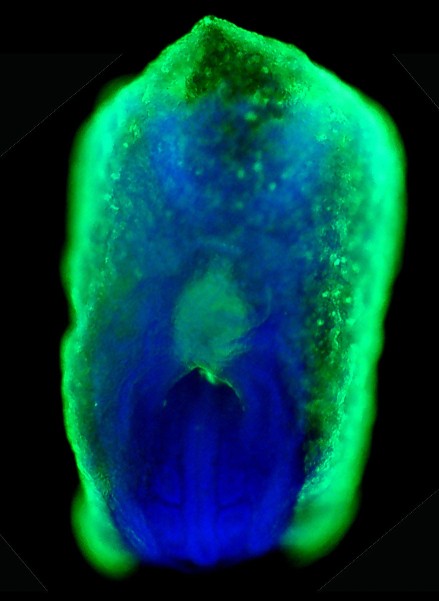
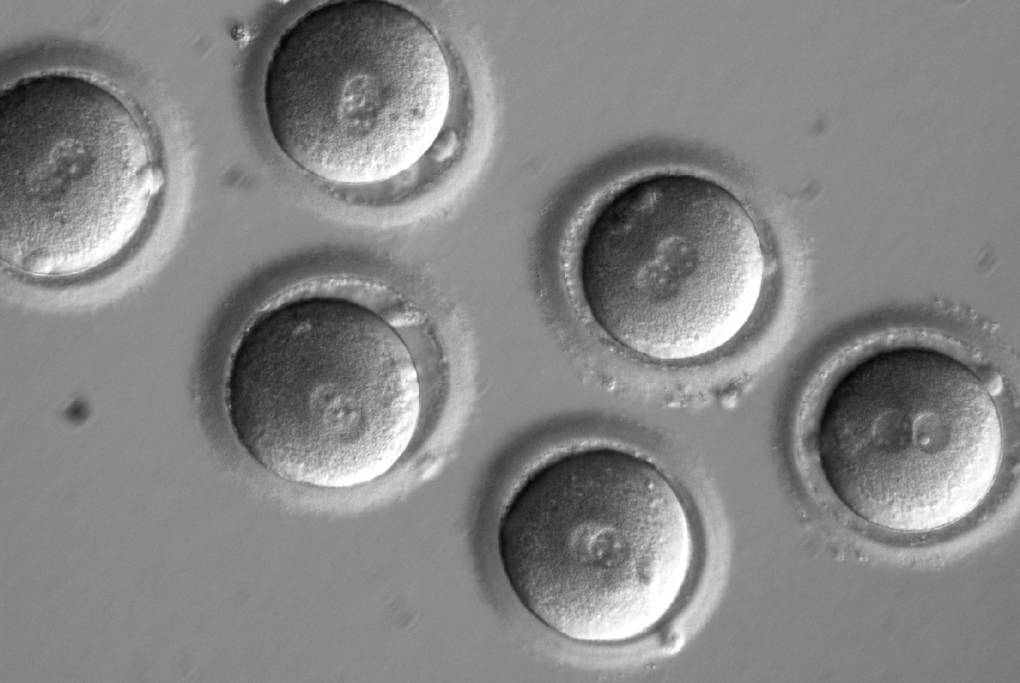
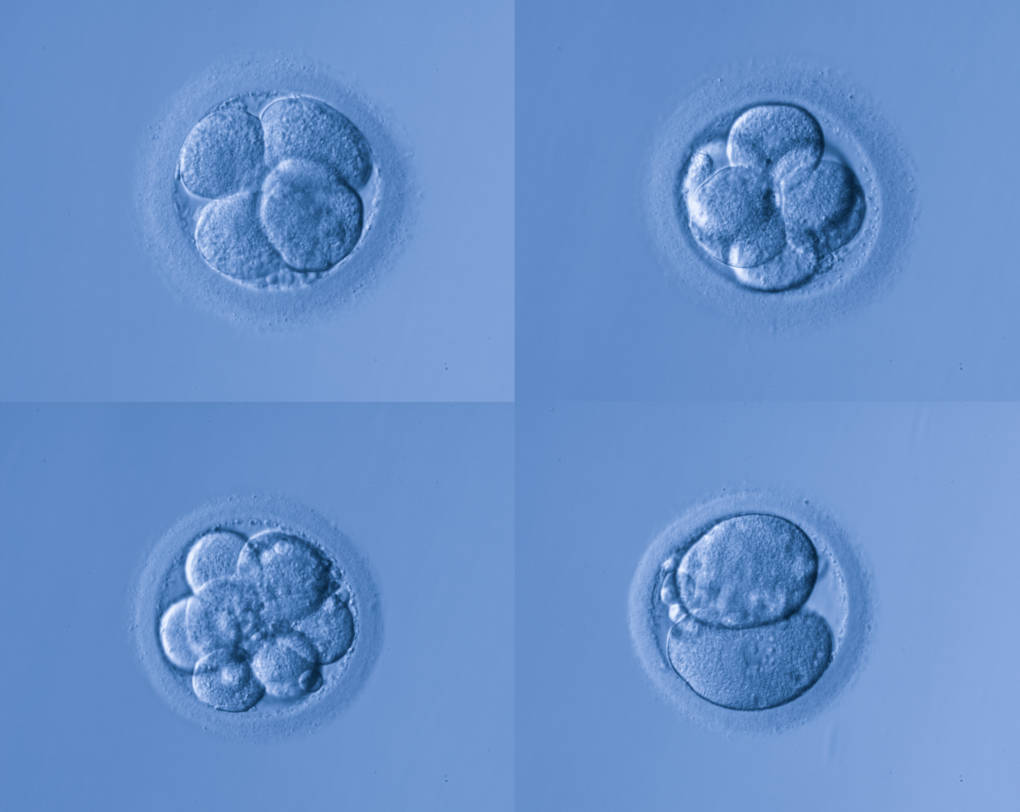
window.__IS_SSR__=true
window.__INITIAL_STATE__={
"attachmentsReducer": {
"audio_0": {
"type": "attachments",
"id": "audio_0",
"imgSizes": {
"kqedFullSize": {
"file": "https://ww2.kqed.org/news/wp-content/themes/KQED-unified/img/audio_bgs/background0.jpg"
}
}
},
"audio_1": {
"type": "attachments",
"id": "audio_1",
"imgSizes": {
"kqedFullSize": {
"file": "https://ww2.kqed.org/news/wp-content/themes/KQED-unified/img/audio_bgs/background1.jpg"
}
}
},
"audio_2": {
"type": "attachments",
"id": "audio_2",
"imgSizes": {
"kqedFullSize": {
"file": "https://ww2.kqed.org/news/wp-content/themes/KQED-unified/img/audio_bgs/background2.jpg"
}
}
},
"audio_3": {
"type": "attachments",
"id": "audio_3",
"imgSizes": {
"kqedFullSize": {
"file": "https://ww2.kqed.org/news/wp-content/themes/KQED-unified/img/audio_bgs/background3.jpg"
}
}
},
"audio_4": {
"type": "attachments",
"id": "audio_4",
"imgSizes": {
"kqedFullSize": {
"file": "https://ww2.kqed.org/news/wp-content/themes/KQED-unified/img/audio_bgs/background4.jpg"
}
}
},
"placeholder": {
"type": "attachments",
"id": "placeholder",
"imgSizes": {
"thumbnail": {
"file": "https://cdn.kqed.org/wp-content/uploads/2024/12/KQED-Default-Image-816638274-2000x1333-1-160x107.jpg",
"width": 160,
"height": 107,
"mimeType": "image/jpeg"
},
"medium": {
"file": "https://cdn.kqed.org/wp-content/uploads/2024/12/KQED-Default-Image-816638274-2000x1333-1-800x533.jpg",
"width": 800,
"height": 533,
"mimeType": "image/jpeg"
},
"medium_large": {
"file": "https://cdn.kqed.org/wp-content/uploads/2024/12/KQED-Default-Image-816638274-2000x1333-1-768x512.jpg",
"width": 768,
"height": 512,
"mimeType": "image/jpeg"
},
"large": {
"file": "https://cdn.kqed.org/wp-content/uploads/2024/12/KQED-Default-Image-816638274-2000x1333-1-1020x680.jpg",
"width": 1020,
"height": 680,
"mimeType": "image/jpeg"
},
"1536x1536": {
"file": "https://cdn.kqed.org/wp-content/uploads/2024/12/KQED-Default-Image-816638274-2000x1333-1-1536x1024.jpg",
"width": 1536,
"height": 1024,
"mimeType": "image/jpeg"
},
"fd-lrg": {
"file": "https://cdn.kqed.org/wp-content/uploads/2024/12/KQED-Default-Image-816638274-2000x1333-1-1536x1024.jpg",
"width": 1536,
"height": 1024,
"mimeType": "image/jpeg"
},
"fd-med": {
"file": "https://cdn.kqed.org/wp-content/uploads/2024/12/KQED-Default-Image-816638274-2000x1333-1-1020x680.jpg",
"width": 1020,
"height": 680,
"mimeType": "image/jpeg"
},
"fd-sm": {
"file": "https://cdn.kqed.org/wp-content/uploads/2024/12/KQED-Default-Image-816638274-2000x1333-1-800x533.jpg",
"width": 800,
"height": 533,
"mimeType": "image/jpeg"
},
"post-thumbnail": {
"file": "https://cdn.kqed.org/wp-content/uploads/2024/12/KQED-Default-Image-816638274-2000x1333-1-672x372.jpg",
"width": 672,
"height": 372,
"mimeType": "image/jpeg"
},
"twentyfourteen-full-width": {
"file": "https://cdn.kqed.org/wp-content/uploads/2024/12/KQED-Default-Image-816638274-2000x1333-1-1038x576.jpg",
"width": 1038,
"height": 576,
"mimeType": "image/jpeg"
},
"xxsmall": {
"file": "https://cdn.kqed.org/wp-content/uploads/2024/12/KQED-Default-Image-816638274-2000x1333-1-160x107.jpg",
"width": 160,
"height": 107,
"mimeType": "image/jpeg"
},
"xsmall": {
"file": "https://cdn.kqed.org/wp-content/uploads/2024/12/KQED-Default-Image-816638274-2000x1333-1-672x372.jpg",
"width": 672,
"height": 372,
"mimeType": "image/jpeg"
},
"small": {
"file": "https://cdn.kqed.org/wp-content/uploads/2024/12/KQED-Default-Image-816638274-2000x1333-1-672x372.jpg",
"width": 672,
"height": 372,
"mimeType": "image/jpeg"
},
"xlarge": {
"file": "https://cdn.kqed.org/wp-content/uploads/2024/12/KQED-Default-Image-816638274-2000x1333-1-1020x680.jpg",
"width": 1020,
"height": 680,
"mimeType": "image/jpeg"
},
"full-width": {
"file": "https://cdn.kqed.org/wp-content/uploads/2024/12/KQED-Default-Image-816638274-2000x1333-1-1920x1280.jpg",
"width": 1920,
"height": 1280,
"mimeType": "image/jpeg"
},
"guest-author-32": {
"file": "https://cdn.kqed.org/wp-content/uploads/2025/01/KQED-Default-Image-816638274-1333x1333-1-160x160.jpg",
"width": 32,
"height": 32,
"mimeType": "image/jpeg"
},
"guest-author-50": {
"file": "https://cdn.kqed.org/wp-content/uploads/2025/01/KQED-Default-Image-816638274-1333x1333-1-160x160.jpg",
"width": 50,
"height": 50,
"mimeType": "image/jpeg"
},
"guest-author-64": {
"file": "https://cdn.kqed.org/wp-content/uploads/2025/01/KQED-Default-Image-816638274-1333x1333-1-160x160.jpg",
"width": 64,
"height": 64,
"mimeType": "image/jpeg"
},
"guest-author-96": {
"file": "https://cdn.kqed.org/wp-content/uploads/2025/01/KQED-Default-Image-816638274-1333x1333-1-160x160.jpg",
"width": 96,
"height": 96,
"mimeType": "image/jpeg"
},
"guest-author-128": {
"file": "https://cdn.kqed.org/wp-content/uploads/2025/01/KQED-Default-Image-816638274-1333x1333-1-160x160.jpg",
"width": 128,
"height": 128,
"mimeType": "image/jpeg"
},
"detail": {
"file": "https://cdn.kqed.org/wp-content/uploads/2025/01/KQED-Default-Image-816638274-1333x1333-1-160x160.jpg",
"width": 160,
"height": 160,
"mimeType": "image/jpeg"
},
"kqedFullSize": {
"file": "https://cdn.kqed.org/wp-content/uploads/2024/12/KQED-Default-Image-816638274-2000x1333-1.jpg",
"width": 2000,
"height": 1333
}
}
},
"futureofyou_435872": {
"type": "attachments",
"id": "futureofyou_435872",
"meta": {
"index": "attachments_1716263798",
"site": "futureofyou",
"id": "435872",
"found": true
},
"parent": 435869,
"imgSizes": {
"twentyfourteen-full-width": {
"file": "https://ww2.kqed.org/app/uploads/sites/13/2017/10/mouse_embryo_M-439x576.jpg",
"width": 439,
"mimeType": "image/jpeg",
"height": 576
},
"thumbnail": {
"file": "https://ww2.kqed.org/app/uploads/sites/13/2017/10/mouse_embryo_M-160x219.jpg",
"width": 160,
"mimeType": "image/jpeg",
"height": 219
},
"post-thumbnail": {
"file": "https://ww2.kqed.org/app/uploads/sites/13/2017/10/mouse_embryo_M-439x372.jpg",
"width": 439,
"mimeType": "image/jpeg",
"height": 372
},
"xsmall": {
"file": "https://ww2.kqed.org/app/uploads/sites/13/2017/10/mouse_embryo_M-375x513.jpg",
"width": 375,
"mimeType": "image/jpeg",
"height": 513
},
"kqedFullSize": {
"file": "https://ww2.kqed.org/app/uploads/sites/13/2017/10/mouse_embryo_M.jpg",
"width": 439,
"height": 601
},
"guest-author-50": {
"file": "https://ww2.kqed.org/app/uploads/sites/13/2017/10/mouse_embryo_M-50x50.jpg",
"width": 50,
"mimeType": "image/jpeg",
"height": 50
},
"guest-author-96": {
"file": "https://ww2.kqed.org/app/uploads/sites/13/2017/10/mouse_embryo_M-96x96.jpg",
"width": 96,
"mimeType": "image/jpeg",
"height": 96
},
"guest-author-64": {
"file": "https://ww2.kqed.org/app/uploads/sites/13/2017/10/mouse_embryo_M-64x64.jpg",
"width": 64,
"mimeType": "image/jpeg",
"height": 64
},
"detail": {
"file": "https://ww2.kqed.org/app/uploads/sites/13/2017/10/mouse_embryo_M-150x150.jpg",
"width": 150,
"mimeType": "image/jpeg",
"height": 150
},
"guest-author-32": {
"file": "https://ww2.kqed.org/app/uploads/sites/13/2017/10/mouse_embryo_M-32x32.jpg",
"width": 32,
"mimeType": "image/jpeg",
"height": 32
},
"guest-author-128": {
"file": "https://ww2.kqed.org/app/uploads/sites/13/2017/10/mouse_embryo_M-128x128.jpg",
"width": 128,
"mimeType": "image/jpeg",
"height": 128
},
"xxsmall": {
"file": "https://ww2.kqed.org/app/uploads/sites/13/2017/10/mouse_embryo_M-240x329.jpg",
"width": 240,
"mimeType": "image/jpeg",
"height": 329
}
},
"publishDate": 1507316279,
"modified": 1507316419,
"caption": "A mouse embryo just eight-and-a-half days old. ",
"description": null,
"title": "mouse_embryo_M",
"credit": "Kenneth Zaret, Fox Chase Cancer Center",
"status": "inherit",
"isLoading": false,
"fetchFailed": false
},
"futureofyou_435555": {
"type": "attachments",
"id": "futureofyou_435555",
"meta": {
"index": "attachments_1716263798",
"site": "futureofyou",
"id": "435555",
"found": true
},
"parent": 435554,
"imgSizes": {
"small": {
"file": "https://ww2.kqed.org/app/uploads/sites/13/2017/09/1_custom-93af7175010decb6cd7b7674624679610ff96bfa-520x346.jpg",
"width": 520,
"mimeType": "image/jpeg",
"height": 346
},
"twentyfourteen-full-width": {
"file": "https://ww2.kqed.org/app/uploads/sites/13/2017/09/1_custom-93af7175010decb6cd7b7674624679610ff96bfa-1038x576.jpg",
"width": 1038,
"mimeType": "image/jpeg",
"height": 576
},
"thumbnail": {
"file": "https://ww2.kqed.org/app/uploads/sites/13/2017/09/1_custom-93af7175010decb6cd7b7674624679610ff96bfa-160x107.jpg",
"width": 160,
"mimeType": "image/jpeg",
"height": 107
},
"fd-sm": {
"file": "https://ww2.kqed.org/app/uploads/sites/13/2017/09/1_custom-93af7175010decb6cd7b7674624679610ff96bfa-960x639.jpg",
"width": 960,
"mimeType": "image/jpeg",
"height": 639
},
"post-thumbnail": {
"file": "https://ww2.kqed.org/app/uploads/sites/13/2017/09/1_custom-93af7175010decb6cd7b7674624679610ff96bfa-672x372.jpg",
"width": 672,
"mimeType": "image/jpeg",
"height": 372
},
"xsmall": {
"file": "https://ww2.kqed.org/app/uploads/sites/13/2017/09/1_custom-93af7175010decb6cd7b7674624679610ff96bfa-375x250.jpg",
"width": 375,
"mimeType": "image/jpeg",
"height": 250
},
"kqedFullSize": {
"file": "https://ww2.kqed.org/app/uploads/sites/13/2017/09/1_custom-93af7175010decb6cd7b7674624679610ff96bfa.jpg",
"width": 2000,
"height": 1332
},
"large": {
"file": "https://ww2.kqed.org/app/uploads/sites/13/2017/09/1_custom-93af7175010decb6cd7b7674624679610ff96bfa-1020x679.jpg",
"width": 1020,
"mimeType": "image/jpeg",
"height": 679
},
"xlarge": {
"file": "https://ww2.kqed.org/app/uploads/sites/13/2017/09/1_custom-93af7175010decb6cd7b7674624679610ff96bfa-1180x786.jpg",
"width": 1180,
"mimeType": "image/jpeg",
"height": 786
},
"guest-author-50": {
"file": "https://ww2.kqed.org/app/uploads/sites/13/2017/09/1_custom-93af7175010decb6cd7b7674624679610ff96bfa-50x50.jpg",
"width": 50,
"mimeType": "image/jpeg",
"height": 50
},
"guest-author-96": {
"file": "https://ww2.kqed.org/app/uploads/sites/13/2017/09/1_custom-93af7175010decb6cd7b7674624679610ff96bfa-96x96.jpg",
"width": 96,
"mimeType": "image/jpeg",
"height": 96
},
"medium": {
"file": "https://ww2.kqed.org/app/uploads/sites/13/2017/09/1_custom-93af7175010decb6cd7b7674624679610ff96bfa-800x533.jpg",
"width": 800,
"mimeType": "image/jpeg",
"height": 533
},
"guest-author-64": {
"file": "https://ww2.kqed.org/app/uploads/sites/13/2017/09/1_custom-93af7175010decb6cd7b7674624679610ff96bfa-64x64.jpg",
"width": 64,
"mimeType": "image/jpeg",
"height": 64
},
"guest-author-32": {
"file": "https://ww2.kqed.org/app/uploads/sites/13/2017/09/1_custom-93af7175010decb6cd7b7674624679610ff96bfa-32x32.jpg",
"width": 32,
"mimeType": "image/jpeg",
"height": 32
},
"fd-lrg": {
"file": "https://ww2.kqed.org/app/uploads/sites/13/2017/09/1_custom-93af7175010decb6cd7b7674624679610ff96bfa-1920x1279.jpg",
"width": 1920,
"mimeType": "image/jpeg",
"height": 1279
},
"fd-med": {
"file": "https://ww2.kqed.org/app/uploads/sites/13/2017/09/1_custom-93af7175010decb6cd7b7674624679610ff96bfa-1180x786.jpg",
"width": 1180,
"mimeType": "image/jpeg",
"height": 786
},
"full-width": {
"file": "https://ww2.kqed.org/app/uploads/sites/13/2017/09/1_custom-93af7175010decb6cd7b7674624679610ff96bfa-1920x1279.jpg",
"width": 1920,
"mimeType": "image/jpeg",
"height": 1279
},
"detail": {
"file": "https://ww2.kqed.org/app/uploads/sites/13/2017/09/1_custom-93af7175010decb6cd7b7674624679610ff96bfa-150x150.jpg",
"width": 150,
"mimeType": "image/jpeg",
"height": 150
},
"medium_large": {
"file": "https://ww2.kqed.org/app/uploads/sites/13/2017/09/1_custom-93af7175010decb6cd7b7674624679610ff96bfa-768x511.jpg",
"width": 768,
"mimeType": "image/jpeg",
"height": 511
},
"guest-author-128": {
"file": "https://ww2.kqed.org/app/uploads/sites/13/2017/09/1_custom-93af7175010decb6cd7b7674624679610ff96bfa-128x128.jpg",
"width": 128,
"mimeType": "image/jpeg",
"height": 128
},
"xxsmall": {
"file": "https://ww2.kqed.org/app/uploads/sites/13/2017/09/1_custom-93af7175010decb6cd7b7674624679610ff96bfa-240x160.jpg",
"width": 240,
"mimeType": "image/jpeg",
"height": 160
}
},
"publishDate": 1505931008,
"modified": 1505931008,
"caption": null,
"description": "Kathy Niakan, a developmental biologist at the Francis Crick Institute in London, used the CRISPR gene editing technique to find out how a gene affects the growth of human embryos.",
"title": "Kathy Niakan, a developmental biologist at the Francis Crick Institute in London, used the CRISPR gene editing technique to find out how a gene affects the growth of human embryos.",
"credit": null,
"status": "inherit",
"isLoading": false,
"fetchFailed": false
},
"futureofyou_1194": {
"type": "attachments",
"id": "futureofyou_1194",
"meta": {
"index": "attachments_1716263798",
"site": "futureofyou",
"id": "1194",
"found": true
},
"parent": 1168,
"imgSizes": {
"twentyfourteen-full-width": {
"file": "https://ww2.kqed.org/app/uploads/sites/13/2015/04/NHGRIcrispr-1038x576.jpg",
"width": 1038,
"mimeType": "image/jpeg",
"height": 576
},
"thumbnail": {
"file": "https://ww2.kqed.org/app/uploads/sites/13/2015/04/NHGRIcrispr-400x267.jpg",
"width": 400,
"mimeType": "image/jpeg",
"height": 267
},
"fd-sm": {
"file": "https://ww2.kqed.org/app/uploads/sites/13/2015/04/NHGRIcrispr-320x213.jpg",
"width": 320,
"mimeType": "image/jpeg",
"height": 213
},
"post-thumbnail": {
"file": "https://ww2.kqed.org/app/uploads/sites/13/2015/04/NHGRIcrispr-672x372.jpg",
"width": 672,
"mimeType": "image/jpeg",
"height": 372
},
"kqedFullSize": {
"file": "https://ww2.kqed.org/app/uploads/sites/13/2015/04/NHGRIcrispr.jpg",
"width": 1920,
"height": 1280
},
"large": {
"file": "https://ww2.kqed.org/app/uploads/sites/13/2015/04/NHGRIcrispr-1180x787.jpg",
"width": 1180,
"mimeType": "image/jpeg",
"height": 787
},
"guest-author-96": {
"file": "https://ww2.kqed.org/app/uploads/sites/13/2015/04/NHGRIcrispr-96x96.jpg",
"width": 96,
"mimeType": "image/jpeg",
"height": 96
},
"medium": {
"file": "https://ww2.kqed.org/app/uploads/sites/13/2015/04/NHGRIcrispr-800x533.jpg",
"width": 800,
"mimeType": "image/jpeg",
"height": 533
},
"guest-author-64": {
"file": "https://ww2.kqed.org/app/uploads/sites/13/2015/04/NHGRIcrispr-64x64.jpg",
"width": 64,
"mimeType": "image/jpeg",
"height": 64
},
"guest-author-32": {
"file": "https://ww2.kqed.org/app/uploads/sites/13/2015/04/NHGRIcrispr-32x32.jpg",
"width": 32,
"mimeType": "image/jpeg",
"height": 32
},
"fd-lrg": {
"file": "https://ww2.kqed.org/app/uploads/sites/13/2015/04/NHGRIcrispr-1180x787.jpg",
"width": 1180,
"mimeType": "image/jpeg",
"height": 787
},
"fd-med": {
"file": "https://ww2.kqed.org/app/uploads/sites/13/2015/04/NHGRIcrispr-768x512.jpg",
"width": 768,
"mimeType": "image/jpeg",
"height": 512
},
"detail": {
"file": "https://ww2.kqed.org/app/uploads/sites/13/2015/04/NHGRIcrispr-75x75.jpg",
"width": 75,
"mimeType": "image/jpeg",
"height": 75
},
"guest-author-128": {
"file": "https://ww2.kqed.org/app/uploads/sites/13/2015/04/NHGRIcrispr-128x128.jpg",
"width": 128,
"mimeType": "image/jpeg",
"height": 128
}
},
"publishDate": 1428078628,
"modified": 1460050960,
"caption": "The gene editing tool CRISPR allows scientists to remove a damaged part of DNA and replace it with a healthy one.",
"description": null,
"title": "NHGRIcrispr",
"credit": "Ernesto del Aguila III/NHGRI",
"status": "inherit",
"isLoading": false,
"fetchFailed": false
},
"futureofyou_435099": {
"type": "attachments",
"id": "futureofyou_435099",
"meta": {
"index": "attachments_1716263798",
"site": "futureofyou",
"id": "435099",
"found": true
},
"parent": 435096,
"imgSizes": {
"small": {
"file": "https://ww2.kqed.org/app/uploads/sites/13/2017/08/iStock-501652356-520x346.jpg",
"width": 520,
"mimeType": "image/jpeg",
"height": 346
},
"twentyfourteen-full-width": {
"file": "https://ww2.kqed.org/app/uploads/sites/13/2017/08/iStock-501652356-1038x576.jpg",
"width": 1038,
"mimeType": "image/jpeg",
"height": 576
},
"thumbnail": {
"file": "https://ww2.kqed.org/app/uploads/sites/13/2017/08/iStock-501652356-160x106.jpg",
"width": 160,
"mimeType": "image/jpeg",
"height": 106
},
"fd-sm": {
"file": "https://ww2.kqed.org/app/uploads/sites/13/2017/08/iStock-501652356-960x639.jpg",
"width": 960,
"mimeType": "image/jpeg",
"height": 639
},
"post-thumbnail": {
"file": "https://ww2.kqed.org/app/uploads/sites/13/2017/08/iStock-501652356-672x372.jpg",
"width": 672,
"mimeType": "image/jpeg",
"height": 372
},
"xsmall": {
"file": "https://ww2.kqed.org/app/uploads/sites/13/2017/08/iStock-501652356-375x250.jpg",
"width": 375,
"mimeType": "image/jpeg",
"height": 250
},
"kqedFullSize": {
"file": "https://ww2.kqed.org/app/uploads/sites/13/2017/08/iStock-501652356.jpg",
"width": 2416,
"height": 1608
},
"large": {
"file": "https://ww2.kqed.org/app/uploads/sites/13/2017/08/iStock-501652356-1020x679.jpg",
"width": 1020,
"mimeType": "image/jpeg",
"height": 679
},
"xlarge": {
"file": "https://ww2.kqed.org/app/uploads/sites/13/2017/08/iStock-501652356-1180x785.jpg",
"width": 1180,
"mimeType": "image/jpeg",
"height": 785
},
"guest-author-50": {
"file": "https://ww2.kqed.org/app/uploads/sites/13/2017/08/iStock-501652356-50x50.jpg",
"width": 50,
"mimeType": "image/jpeg",
"height": 50
},
"guest-author-96": {
"file": "https://ww2.kqed.org/app/uploads/sites/13/2017/08/iStock-501652356-96x96.jpg",
"width": 96,
"mimeType": "image/jpeg",
"height": 96
},
"medium": {
"file": "https://ww2.kqed.org/app/uploads/sites/13/2017/08/iStock-501652356-800x532.jpg",
"width": 800,
"mimeType": "image/jpeg",
"height": 532
},
"guest-author-64": {
"file": "https://ww2.kqed.org/app/uploads/sites/13/2017/08/iStock-501652356-64x64.jpg",
"width": 64,
"mimeType": "image/jpeg",
"height": 64
},
"guest-author-32": {
"file": "https://ww2.kqed.org/app/uploads/sites/13/2017/08/iStock-501652356-32x32.jpg",
"width": 32,
"mimeType": "image/jpeg",
"height": 32
},
"fd-lrg": {
"file": "https://ww2.kqed.org/app/uploads/sites/13/2017/08/iStock-501652356-1920x1278.jpg",
"width": 1920,
"mimeType": "image/jpeg",
"height": 1278
},
"fd-med": {
"file": "https://ww2.kqed.org/app/uploads/sites/13/2017/08/iStock-501652356-1180x785.jpg",
"width": 1180,
"mimeType": "image/jpeg",
"height": 785
},
"full-width": {
"file": "https://ww2.kqed.org/app/uploads/sites/13/2017/08/iStock-501652356-1920x1278.jpg",
"width": 1920,
"mimeType": "image/jpeg",
"height": 1278
},
"detail": {
"file": "https://ww2.kqed.org/app/uploads/sites/13/2017/08/iStock-501652356-150x150.jpg",
"width": 150,
"mimeType": "image/jpeg",
"height": 150
},
"medium_large": {
"file": "https://ww2.kqed.org/app/uploads/sites/13/2017/08/iStock-501652356-768x511.jpg",
"width": 768,
"mimeType": "image/jpeg",
"height": 511
},
"guest-author-128": {
"file": "https://ww2.kqed.org/app/uploads/sites/13/2017/08/iStock-501652356-128x128.jpg",
"width": 128,
"mimeType": "image/jpeg",
"height": 128
},
"xxsmall": {
"file": "https://ww2.kqed.org/app/uploads/sites/13/2017/08/iStock-501652356-240x160.jpg",
"width": 240,
"mimeType": "image/jpeg",
"height": 160
}
},
"publishDate": 1504052725,
"modified": 1504052750,
"caption": "Products and therapies using CRISPR gene editing are inching closer to us every day. Now is the time, scientists say, for the public to draw ethical lines. ",
"description": null,
"title": "iStock-501652356",
"credit": "iStockphoto",
"status": "inherit",
"isLoading": false,
"fetchFailed": false
},
"futureofyou_434994": {
"type": "attachments",
"id": "futureofyou_434994",
"meta": {
"index": "attachments_1716263798",
"site": "futureofyou",
"id": "434994",
"found": true
},
"parent": 434938,
"imgSizes": {
"small": {
"file": "https://ww2.kqed.org/app/uploads/sites/13/2017/08/melanoma-520x347.jpg",
"width": 520,
"mimeType": "image/jpeg",
"height": 347
},
"twentyfourteen-full-width": {
"file": "https://ww2.kqed.org/app/uploads/sites/13/2017/08/melanoma-1038x576.jpg",
"width": 1038,
"mimeType": "image/jpeg",
"height": 576
},
"thumbnail": {
"file": "https://ww2.kqed.org/app/uploads/sites/13/2017/08/melanoma-160x107.jpg",
"width": 160,
"mimeType": "image/jpeg",
"height": 107
},
"fd-sm": {
"file": "https://ww2.kqed.org/app/uploads/sites/13/2017/08/melanoma-960x640.jpg",
"width": 960,
"mimeType": "image/jpeg",
"height": 640
},
"post-thumbnail": {
"file": "https://ww2.kqed.org/app/uploads/sites/13/2017/08/melanoma-672x372.jpg",
"width": 672,
"mimeType": "image/jpeg",
"height": 372
},
"xsmall": {
"file": "https://ww2.kqed.org/app/uploads/sites/13/2017/08/melanoma-375x250.jpg",
"width": 375,
"mimeType": "image/jpeg",
"height": 250
},
"kqedFullSize": {
"file": "https://ww2.kqed.org/app/uploads/sites/13/2017/08/melanoma.jpg",
"width": 1350,
"height": 900
},
"large": {
"file": "https://ww2.kqed.org/app/uploads/sites/13/2017/08/melanoma-1020x680.jpg",
"width": 1020,
"mimeType": "image/jpeg",
"height": 680
},
"xlarge": {
"file": "https://ww2.kqed.org/app/uploads/sites/13/2017/08/melanoma-1180x787.jpg",
"width": 1180,
"mimeType": "image/jpeg",
"height": 787
},
"guest-author-50": {
"file": "https://ww2.kqed.org/app/uploads/sites/13/2017/08/melanoma-50x50.jpg",
"width": 50,
"mimeType": "image/jpeg",
"height": 50
},
"guest-author-96": {
"file": "https://ww2.kqed.org/app/uploads/sites/13/2017/08/melanoma-96x96.jpg",
"width": 96,
"mimeType": "image/jpeg",
"height": 96
},
"medium": {
"file": "https://ww2.kqed.org/app/uploads/sites/13/2017/08/melanoma-800x533.jpg",
"width": 800,
"mimeType": "image/jpeg",
"height": 533
},
"guest-author-64": {
"file": "https://ww2.kqed.org/app/uploads/sites/13/2017/08/melanoma-64x64.jpg",
"width": 64,
"mimeType": "image/jpeg",
"height": 64
},
"guest-author-32": {
"file": "https://ww2.kqed.org/app/uploads/sites/13/2017/08/melanoma-32x32.jpg",
"width": 32,
"mimeType": "image/jpeg",
"height": 32
},
"fd-med": {
"file": "https://ww2.kqed.org/app/uploads/sites/13/2017/08/melanoma-1180x787.jpg",
"width": 1180,
"mimeType": "image/jpeg",
"height": 787
},
"detail": {
"file": "https://ww2.kqed.org/app/uploads/sites/13/2017/08/melanoma-150x150.jpg",
"width": 150,
"mimeType": "image/jpeg",
"height": 150
},
"medium_large": {
"file": "https://ww2.kqed.org/app/uploads/sites/13/2017/08/melanoma-768x512.jpg",
"width": 768,
"mimeType": "image/jpeg",
"height": 512
},
"guest-author-128": {
"file": "https://ww2.kqed.org/app/uploads/sites/13/2017/08/melanoma-128x128.jpg",
"width": 128,
"mimeType": "image/jpeg",
"height": 128
},
"xxsmall": {
"file": "https://ww2.kqed.org/app/uploads/sites/13/2017/08/melanoma-240x160.jpg",
"width": 240,
"mimeType": "image/jpeg",
"height": 160
}
},
"publishDate": 1503442354,
"modified": 1503442460,
"caption": "Human metastatic melanoma cells, stained and magnified to 320 times.",
"description": null,
"title": "melanoma",
"credit": "Dr. Lance Liotta Laboratory/NCI",
"status": "inherit",
"isLoading": false,
"fetchFailed": false
},
"futureofyou_434298": {
"type": "attachments",
"id": "futureofyou_434298",
"meta": {
"index": "attachments_1716263798",
"site": "futureofyou",
"id": "434298",
"found": true
},
"parent": 434297,
"imgSizes": {
"small": {
"file": "https://ww2.kqed.org/app/uploads/sites/13/2017/08/embryos-4_enl-d4312a99871780f2d7d83dea071c2bfc27d56214-520x348.jpg",
"width": 520,
"mimeType": "image/jpeg",
"height": 348
},
"twentyfourteen-full-width": {
"file": "https://ww2.kqed.org/app/uploads/sites/13/2017/08/embryos-4_enl-d4312a99871780f2d7d83dea071c2bfc27d56214-1038x576.jpg",
"width": 1038,
"mimeType": "image/jpeg",
"height": 576
},
"thumbnail": {
"file": "https://ww2.kqed.org/app/uploads/sites/13/2017/08/embryos-4_enl-d4312a99871780f2d7d83dea071c2bfc27d56214-160x107.jpg",
"width": 160,
"mimeType": "image/jpeg",
"height": 107
},
"fd-sm": {
"file": "https://ww2.kqed.org/app/uploads/sites/13/2017/08/embryos-4_enl-d4312a99871780f2d7d83dea071c2bfc27d56214-960x642.jpg",
"width": 960,
"mimeType": "image/jpeg",
"height": 642
},
"post-thumbnail": {
"file": "https://ww2.kqed.org/app/uploads/sites/13/2017/08/embryos-4_enl-d4312a99871780f2d7d83dea071c2bfc27d56214-672x372.jpg",
"width": 672,
"mimeType": "image/jpeg",
"height": 372
},
"xsmall": {
"file": "https://ww2.kqed.org/app/uploads/sites/13/2017/08/embryos-4_enl-d4312a99871780f2d7d83dea071c2bfc27d56214-375x251.jpg",
"width": 375,
"mimeType": "image/jpeg",
"height": 251
},
"kqedFullSize": {
"file": "https://ww2.kqed.org/app/uploads/sites/13/2017/08/embryos-4_enl-d4312a99871780f2d7d83dea071c2bfc27d56214.jpg",
"width": 1224,
"height": 819
},
"large": {
"file": "https://ww2.kqed.org/app/uploads/sites/13/2017/08/embryos-4_enl-d4312a99871780f2d7d83dea071c2bfc27d56214-1020x683.jpg",
"width": 1020,
"mimeType": "image/jpeg",
"height": 683
},
"xlarge": {
"file": "https://ww2.kqed.org/app/uploads/sites/13/2017/08/embryos-4_enl-d4312a99871780f2d7d83dea071c2bfc27d56214-1180x790.jpg",
"width": 1180,
"mimeType": "image/jpeg",
"height": 790
},
"guest-author-50": {
"file": "https://ww2.kqed.org/app/uploads/sites/13/2017/08/embryos-4_enl-d4312a99871780f2d7d83dea071c2bfc27d56214-50x50.jpg",
"width": 50,
"mimeType": "image/jpeg",
"height": 50
},
"guest-author-96": {
"file": "https://ww2.kqed.org/app/uploads/sites/13/2017/08/embryos-4_enl-d4312a99871780f2d7d83dea071c2bfc27d56214-96x96.jpg",
"width": 96,
"mimeType": "image/jpeg",
"height": 96
},
"medium": {
"file": "https://ww2.kqed.org/app/uploads/sites/13/2017/08/embryos-4_enl-d4312a99871780f2d7d83dea071c2bfc27d56214-800x535.jpg",
"width": 800,
"mimeType": "image/jpeg",
"height": 535
},
"guest-author-64": {
"file": "https://ww2.kqed.org/app/uploads/sites/13/2017/08/embryos-4_enl-d4312a99871780f2d7d83dea071c2bfc27d56214-64x64.jpg",
"width": 64,
"mimeType": "image/jpeg",
"height": 64
},
"guest-author-32": {
"file": "https://ww2.kqed.org/app/uploads/sites/13/2017/08/embryos-4_enl-d4312a99871780f2d7d83dea071c2bfc27d56214-32x32.jpg",
"width": 32,
"mimeType": "image/jpeg",
"height": 32
},
"fd-med": {
"file": "https://ww2.kqed.org/app/uploads/sites/13/2017/08/embryos-4_enl-d4312a99871780f2d7d83dea071c2bfc27d56214-1180x790.jpg",
"width": 1180,
"mimeType": "image/jpeg",
"height": 790
},
"detail": {
"file": "https://ww2.kqed.org/app/uploads/sites/13/2017/08/embryos-4_enl-d4312a99871780f2d7d83dea071c2bfc27d56214-150x150.jpg",
"width": 150,
"mimeType": "image/jpeg",
"height": 150
},
"medium_large": {
"file": "https://ww2.kqed.org/app/uploads/sites/13/2017/08/embryos-4_enl-d4312a99871780f2d7d83dea071c2bfc27d56214-768x514.jpg",
"width": 768,
"mimeType": "image/jpeg",
"height": 514
},
"guest-author-128": {
"file": "https://ww2.kqed.org/app/uploads/sites/13/2017/08/embryos-4_enl-d4312a99871780f2d7d83dea071c2bfc27d56214-128x128.jpg",
"width": 128,
"mimeType": "image/jpeg",
"height": 128
},
"xxsmall": {
"file": "https://ww2.kqed.org/app/uploads/sites/13/2017/08/embryos-4_enl-d4312a99871780f2d7d83dea071c2bfc27d56214-240x161.jpg",
"width": 240,
"mimeType": "image/jpeg",
"height": 161
}
},
"publishDate": 1501702296,
"modified": 1501702296,
"caption": null,
"description": "The first sign of successful in vitro fertilization, after co-injection of a gene-correcting enzyme and sperm from a donor with a genetic mutation known to cause hypertrophic cardiomyopathy.",
"title": "The first sign of successful in vitro fertilization, after co-injection of a gene-correcting enzyme and sperm from a donor with a genetic mutation known to cause hypertrophic cardiomyopathy.",
"credit": null,
"status": "inherit",
"isLoading": false,
"fetchFailed": false
},
"futureofyou_432218": {
"type": "attachments",
"id": "futureofyou_432218",
"meta": {
"index": "attachments_1716263798",
"site": "futureofyou",
"id": "432218",
"found": true
},
"parent": 432213,
"imgSizes": {
"small": {
"file": "https://ww2.kqed.org/app/uploads/sites/13/2017/07/Embryo-iStock-509171917-520x414.jpg",
"width": 520,
"mimeType": "image/jpeg",
"height": 414
},
"twentyfourteen-full-width": {
"file": "https://ww2.kqed.org/app/uploads/sites/13/2017/07/Embryo-iStock-509171917-1038x576.jpg",
"width": 1038,
"mimeType": "image/jpeg",
"height": 576
},
"thumbnail": {
"file": "https://ww2.kqed.org/app/uploads/sites/13/2017/07/Embryo-iStock-509171917-160x127.jpg",
"width": 160,
"mimeType": "image/jpeg",
"height": 127
},
"fd-sm": {
"file": "https://ww2.kqed.org/app/uploads/sites/13/2017/07/Embryo-iStock-509171917-960x764.jpg",
"width": 960,
"mimeType": "image/jpeg",
"height": 764
},
"post-thumbnail": {
"file": "https://ww2.kqed.org/app/uploads/sites/13/2017/07/Embryo-iStock-509171917-672x372.jpg",
"width": 672,
"mimeType": "image/jpeg",
"height": 372
},
"xsmall": {
"file": "https://ww2.kqed.org/app/uploads/sites/13/2017/07/Embryo-iStock-509171917-375x298.jpg",
"width": 375,
"mimeType": "image/jpeg",
"height": 298
},
"kqedFullSize": {
"file": "https://ww2.kqed.org/app/uploads/sites/13/2017/07/Embryo-iStock-509171917.jpg",
"width": 2535,
"height": 2017
},
"large": {
"file": "https://ww2.kqed.org/app/uploads/sites/13/2017/07/Embryo-iStock-509171917-1020x812.jpg",
"width": 1020,
"mimeType": "image/jpeg",
"height": 812
},
"xlarge": {
"file": "https://ww2.kqed.org/app/uploads/sites/13/2017/07/Embryo-iStock-509171917-1180x939.jpg",
"width": 1180,
"mimeType": "image/jpeg",
"height": 939
},
"guest-author-50": {
"file": "https://ww2.kqed.org/app/uploads/sites/13/2017/07/Embryo-iStock-509171917-50x50.jpg",
"width": 50,
"mimeType": "image/jpeg",
"height": 50
},
"guest-author-96": {
"file": "https://ww2.kqed.org/app/uploads/sites/13/2017/07/Embryo-iStock-509171917-96x96.jpg",
"width": 96,
"mimeType": "image/jpeg",
"height": 96
},
"medium": {
"file": "https://ww2.kqed.org/app/uploads/sites/13/2017/07/Embryo-iStock-509171917-800x637.jpg",
"width": 800,
"mimeType": "image/jpeg",
"height": 637
},
"guest-author-64": {
"file": "https://ww2.kqed.org/app/uploads/sites/13/2017/07/Embryo-iStock-509171917-64x64.jpg",
"width": 64,
"mimeType": "image/jpeg",
"height": 64
},
"guest-author-32": {
"file": "https://ww2.kqed.org/app/uploads/sites/13/2017/07/Embryo-iStock-509171917-32x32.jpg",
"width": 32,
"mimeType": "image/jpeg",
"height": 32
},
"fd-lrg": {
"file": "https://ww2.kqed.org/app/uploads/sites/13/2017/07/Embryo-iStock-509171917-1920x1528.jpg",
"width": 1920,
"mimeType": "image/jpeg",
"height": 1528
},
"fd-med": {
"file": "https://ww2.kqed.org/app/uploads/sites/13/2017/07/Embryo-iStock-509171917-1180x939.jpg",
"width": 1180,
"mimeType": "image/jpeg",
"height": 939
},
"full-width": {
"file": "https://ww2.kqed.org/app/uploads/sites/13/2017/07/Embryo-iStock-509171917-1920x1528.jpg",
"width": 1920,
"mimeType": "image/jpeg",
"height": 1528
},
"detail": {
"file": "https://ww2.kqed.org/app/uploads/sites/13/2017/07/Embryo-iStock-509171917-150x150.jpg",
"width": 150,
"mimeType": "image/jpeg",
"height": 150
},
"medium_large": {
"file": "https://ww2.kqed.org/app/uploads/sites/13/2017/07/Embryo-iStock-509171917-768x611.jpg",
"width": 768,
"mimeType": "image/jpeg",
"height": 611
},
"guest-author-128": {
"file": "https://ww2.kqed.org/app/uploads/sites/13/2017/07/Embryo-iStock-509171917-128x128.jpg",
"width": 128,
"mimeType": "image/jpeg",
"height": 128
},
"xxsmall": {
"file": "https://ww2.kqed.org/app/uploads/sites/13/2017/07/Embryo-iStock-509171917-240x191.jpg",
"width": 240,
"mimeType": "image/jpeg",
"height": 191
}
},
"publishDate": 1501181317,
"modified": 1501181405,
"caption": "Human embryo in the early stages of division.",
"description": null,
"title": "human egg",
"credit": "Red_Hayabusa/iStockphoto",
"status": "inherit",
"isLoading": false,
"fetchFailed": false
},
"futureofyou_425263": {
"type": "attachments",
"id": "futureofyou_425263",
"meta": {
"index": "attachments_1716263798",
"site": "futureofyou",
"id": "425263",
"found": true
},
"parent": 425262,
"imgSizes": {
"small": {
"file": "https://ww2.kqed.org/app/uploads/sites/13/2017/07/Screen-Shot-2017-07-13-at-9.49.43-AM-520x200.png",
"width": 520,
"mimeType": "image/png",
"height": 200
},
"twentyfourteen-full-width": {
"file": "https://ww2.kqed.org/app/uploads/sites/13/2017/07/Screen-Shot-2017-07-13-at-9.49.43-AM-1038x576.png",
"width": 1038,
"mimeType": "image/png",
"height": 576
},
"thumbnail": {
"file": "https://ww2.kqed.org/app/uploads/sites/13/2017/07/Screen-Shot-2017-07-13-at-9.49.43-AM-160x62.png",
"width": 160,
"mimeType": "image/png",
"height": 62
},
"fd-sm": {
"file": "https://ww2.kqed.org/app/uploads/sites/13/2017/07/Screen-Shot-2017-07-13-at-9.49.43-AM-960x370.png",
"width": 960,
"mimeType": "image/png",
"height": 370
},
"post-thumbnail": {
"file": "https://ww2.kqed.org/app/uploads/sites/13/2017/07/Screen-Shot-2017-07-13-at-9.49.43-AM-672x372.png",
"width": 672,
"mimeType": "image/png",
"height": 372
},
"xsmall": {
"file": "https://ww2.kqed.org/app/uploads/sites/13/2017/07/Screen-Shot-2017-07-13-at-9.49.43-AM-375x144.png",
"width": 375,
"mimeType": "image/png",
"height": 144
},
"kqedFullSize": {
"file": "https://ww2.kqed.org/app/uploads/sites/13/2017/07/Screen-Shot-2017-07-13-at-9.49.43-AM.png",
"width": 2000,
"height": 770
},
"large": {
"file": "https://ww2.kqed.org/app/uploads/sites/13/2017/07/Screen-Shot-2017-07-13-at-9.49.43-AM-1020x393.png",
"width": 1020,
"mimeType": "image/png",
"height": 393
},
"xlarge": {
"file": "https://ww2.kqed.org/app/uploads/sites/13/2017/07/Screen-Shot-2017-07-13-at-9.49.43-AM-1180x454.png",
"width": 1180,
"mimeType": "image/png",
"height": 454
},
"guest-author-50": {
"file": "https://ww2.kqed.org/app/uploads/sites/13/2017/07/Screen-Shot-2017-07-13-at-9.49.43-AM-50x50.png",
"width": 50,
"mimeType": "image/png",
"height": 50
},
"guest-author-96": {
"file": "https://ww2.kqed.org/app/uploads/sites/13/2017/07/Screen-Shot-2017-07-13-at-9.49.43-AM-96x96.png",
"width": 96,
"mimeType": "image/png",
"height": 96
},
"medium": {
"file": "https://ww2.kqed.org/app/uploads/sites/13/2017/07/Screen-Shot-2017-07-13-at-9.49.43-AM-800x308.png",
"width": 800,
"mimeType": "image/png",
"height": 308
},
"guest-author-64": {
"file": "https://ww2.kqed.org/app/uploads/sites/13/2017/07/Screen-Shot-2017-07-13-at-9.49.43-AM-64x64.png",
"width": 64,
"mimeType": "image/png",
"height": 64
},
"guest-author-32": {
"file": "https://ww2.kqed.org/app/uploads/sites/13/2017/07/Screen-Shot-2017-07-13-at-9.49.43-AM-32x32.png",
"width": 32,
"mimeType": "image/png",
"height": 32
},
"fd-lrg": {
"file": "https://ww2.kqed.org/app/uploads/sites/13/2017/07/Screen-Shot-2017-07-13-at-9.49.43-AM-1920x739.png",
"width": 1920,
"mimeType": "image/png",
"height": 739
},
"fd-med": {
"file": "https://ww2.kqed.org/app/uploads/sites/13/2017/07/Screen-Shot-2017-07-13-at-9.49.43-AM-1180x454.png",
"width": 1180,
"mimeType": "image/png",
"height": 454
},
"full-width": {
"file": "https://ww2.kqed.org/app/uploads/sites/13/2017/07/Screen-Shot-2017-07-13-at-9.49.43-AM-1920x739.png",
"width": 1920,
"mimeType": "image/png",
"height": 739
},
"detail": {
"file": "https://ww2.kqed.org/app/uploads/sites/13/2017/07/Screen-Shot-2017-07-13-at-9.49.43-AM-150x150.png",
"width": 150,
"mimeType": "image/png",
"height": 150
},
"medium_large": {
"file": "https://ww2.kqed.org/app/uploads/sites/13/2017/07/Screen-Shot-2017-07-13-at-9.49.43-AM-768x296.png",
"width": 768,
"mimeType": "image/png",
"height": 296
},
"guest-author-128": {
"file": "https://ww2.kqed.org/app/uploads/sites/13/2017/07/Screen-Shot-2017-07-13-at-9.49.43-AM-128x128.png",
"width": 128,
"mimeType": "image/png",
"height": 128
},
"xxsmall": {
"file": "https://ww2.kqed.org/app/uploads/sites/13/2017/07/Screen-Shot-2017-07-13-at-9.49.43-AM-240x92.png",
"width": 240,
"mimeType": "image/png",
"height": 92
}
},
"publishDate": 1499964647,
"modified": 1499964810,
"caption": "Scientists can now turn bacteria into living hard drives. The first video stored in and retrieved from the DNA of living cells was based on \"Sallie Gardner at a Gallop\" -- one of the very first moving pictures.",
"description": null,
"title": "Screen Shot 2017-07-13 at 9.49.43 AM",
"credit": "STAT",
"status": "inherit",
"isLoading": false,
"fetchFailed": false
},
"futureofyou_325792": {
"type": "attachments",
"id": "futureofyou_325792",
"meta": {
"index": "attachments_1716263798",
"site": "futureofyou",
"id": "325792",
"found": true
},
"parent": 325407,
"imgSizes": {
"small": {
"file": "https://ww2.kqed.org/app/uploads/sites/13/2017/01/CRISPR800a-520x346.jpg",
"width": 520,
"mimeType": "image/jpeg",
"height": 346
},
"thumbnail": {
"file": "https://ww2.kqed.org/app/uploads/sites/13/2017/01/CRISPR800a-160x107.jpg",
"width": 160,
"mimeType": "image/jpeg",
"height": 107
},
"post-thumbnail": {
"file": "https://ww2.kqed.org/app/uploads/sites/13/2017/01/CRISPR800a-672x372.jpg",
"width": 672,
"mimeType": "image/jpeg",
"height": 372
},
"xsmall": {
"file": "https://ww2.kqed.org/app/uploads/sites/13/2017/01/CRISPR800a-375x250.jpg",
"width": 375,
"mimeType": "image/jpeg",
"height": 250
},
"kqedFullSize": {
"file": "https://ww2.kqed.org/app/uploads/sites/13/2017/01/CRISPR800a.jpg",
"width": 800,
"height": 533
},
"guest-author-50": {
"file": "https://ww2.kqed.org/app/uploads/sites/13/2017/01/CRISPR800a-50x50.jpg",
"width": 50,
"mimeType": "image/jpeg",
"height": 50
},
"guest-author-96": {
"file": "https://ww2.kqed.org/app/uploads/sites/13/2017/01/CRISPR800a-96x96.jpg",
"width": 96,
"mimeType": "image/jpeg",
"height": 96
},
"medium": {
"file": "https://ww2.kqed.org/app/uploads/sites/13/2017/01/CRISPR800a-800x533.jpg",
"width": 800,
"mimeType": "image/jpeg",
"height": 533
},
"guest-author-64": {
"file": "https://ww2.kqed.org/app/uploads/sites/13/2017/01/CRISPR800a-64x64.jpg",
"width": 64,
"mimeType": "image/jpeg",
"height": 64
},
"guest-author-32": {
"file": "https://ww2.kqed.org/app/uploads/sites/13/2017/01/CRISPR800a-32x32.jpg",
"width": 32,
"mimeType": "image/jpeg",
"height": 32
},
"detail": {
"file": "https://ww2.kqed.org/app/uploads/sites/13/2017/01/CRISPR800a-150x150.jpg",
"width": 150,
"mimeType": "image/jpeg",
"height": 150
},
"medium_large": {
"file": "https://ww2.kqed.org/app/uploads/sites/13/2017/01/CRISPR800a-768x512.jpg",
"width": 768,
"mimeType": "image/jpeg",
"height": 512
},
"guest-author-128": {
"file": "https://ww2.kqed.org/app/uploads/sites/13/2017/01/CRISPR800a-128x128.jpg",
"width": 128,
"mimeType": "image/jpeg",
"height": 128
},
"xxsmall": {
"file": "https://ww2.kqed.org/app/uploads/sites/13/2017/01/CRISPR800a-240x160.jpg",
"width": 240,
"mimeType": "image/jpeg",
"height": 160
}
},
"publishDate": 1485359305,
"modified": 1496263563,
"caption": null,
"description": null,
"title": "CRISPR800a",
"credit": "Wikipedia",
"status": "inherit",
"isLoading": false,
"fetchFailed": false
},
"futureofyou_125387": {
"type": "attachments",
"id": "futureofyou_125387",
"meta": {
"index": "attachments_1716263798",
"site": "futureofyou",
"id": "125387",
"found": true
},
"parent": 124434,
"imgSizes": {
"thumbnail": {
"file": "https://ww2.kqed.org/app/uploads/sites/13/2016/03/MotherBaby-400x266.jpg",
"width": 400,
"mimeType": "image/jpeg",
"height": 266
},
"post-thumbnail": {
"file": "https://ww2.kqed.org/app/uploads/sites/13/2016/03/MotherBaby-672x372.jpg",
"width": 672,
"mimeType": "image/jpeg",
"height": 372
},
"kqedFullSize": {
"file": "https://ww2.kqed.org/app/uploads/sites/13/2016/03/MotherBaby.jpg",
"width": 700,
"height": 466
},
"guest-author-96": {
"file": "https://ww2.kqed.org/app/uploads/sites/13/2016/03/MotherBaby-96x96.jpg",
"width": 96,
"mimeType": "image/jpeg",
"height": 96
},
"guest-author-64": {
"file": "https://ww2.kqed.org/app/uploads/sites/13/2016/03/MotherBaby-64x64.jpg",
"width": 64,
"mimeType": "image/jpeg",
"height": 64
},
"detail": {
"file": "https://ww2.kqed.org/app/uploads/sites/13/2016/03/MotherBaby-75x75.jpg",
"width": 75,
"mimeType": "image/jpeg",
"height": 75
},
"guest-author-32": {
"file": "https://ww2.kqed.org/app/uploads/sites/13/2016/03/MotherBaby-32x32.jpg",
"width": 32,
"mimeType": "image/jpeg",
"height": 32
},
"guest-author-128": {
"file": "https://ww2.kqed.org/app/uploads/sites/13/2016/03/MotherBaby-128x128.jpg",
"width": 128,
"mimeType": "image/jpeg",
"height": 128
}
},
"publishDate": 1457539029,
"modified": 1488241246,
"caption": "A new report makes recommendations for how researchers should approach gene editing in humans. ",
"description": null,
"title": "MotherBaby",
"credit": "Pixabay",
"status": "inherit",
"isLoading": false,
"fetchFailed": false
}
},
"audioPlayerReducer": {
"postId": "stream_live",
"isPaused": true,
"isPlaying": false,
"pfsActive": false,
"pledgeModalIsOpen": true,
"playerDrawerIsOpen": false,
"liveAudioPlayStartedAt": 0,
"liveAudioPlayContext": ""
},
"authorsReducer": {
"byline_futureofyou_435869": {
"type": "authors",
"id": "byline_futureofyou_435869",
"meta": {
"override": true
},
"slug": "byline_futureofyou_435869",
"name": "Barry Starr\u003cbr />Future of You",
"isLoading": false
},
"byline_futureofyou_435554": {
"type": "authors",
"id": "byline_futureofyou_435554",
"meta": {
"override": true
},
"slug": "byline_futureofyou_435554",
"name": "\u003ca href=\"http://www.npr.org/people/146944972/rob-stein\">Rob Stein\u003c/a>\u003c/br>NPR",
"isLoading": false
},
"byline_futureofyou_435064": {
"type": "authors",
"id": "byline_futureofyou_435064",
"meta": {
"override": true
},
"slug": "byline_futureofyou_435064",
"name": "Barry Starr\u003cbr />Future of You",
"isLoading": false
},
"byline_futureofyou_434938": {
"type": "authors",
"id": "byline_futureofyou_434938",
"meta": {
"override": true
},
"slug": "byline_futureofyou_434938",
"name": "Barry Starr",
"isLoading": false
},
"byline_futureofyou_434297": {
"type": "authors",
"id": "byline_futureofyou_434297",
"meta": {
"override": true
},
"slug": "byline_futureofyou_434297",
"name": "Rob Stein\u003c/br>NPR",
"isLoading": false
},
"byline_futureofyou_432213": {
"type": "authors",
"id": "byline_futureofyou_432213",
"meta": {
"override": true
},
"slug": "byline_futureofyou_432213",
"name": "Sharon Begley\u003c/br>STAT",
"isLoading": false
},
"byline_futureofyou_425262": {
"type": "authors",
"id": "byline_futureofyou_425262",
"meta": {
"override": true
},
"slug": "byline_futureofyou_425262",
"name": "Hyacinth Empinado\u003c/br>\u003ca href=\"https://www.statnews.com/\">STAT\u003c/a>",
"isLoading": false
},
"byline_futureofyou_408504": {
"type": "authors",
"id": "byline_futureofyou_408504",
"meta": {
"override": true
},
"slug": "byline_futureofyou_408504",
"name": "Sharon Begley\u003cbr />\u003ca href=\"https://www.statnews.com/2\">STAT\u003c/a>",
"isLoading": false
},
"byline_futureofyou_400898": {
"type": "authors",
"id": "byline_futureofyou_400898",
"meta": {
"override": true
},
"slug": "byline_futureofyou_400898",
"name": "\u003ca href=\"https://theconversation.com/profiles/ian-haydon-358660\">Ian Haydon\u003c/a>, University of Washington\u003cbr />The Conversation",
"isLoading": false
},
"byline_futureofyou_341795": {
"type": "authors",
"id": "byline_futureofyou_341795",
"meta": {
"override": true
},
"slug": "byline_futureofyou_341795",
"name": "Lauran Neergaard\u003cbr/>AP",
"isLoading": false
},
"dventon": {
"type": "authors",
"id": "11088",
"meta": {
"index": "authors_1716337520",
"id": "11088",
"found": true
},
"name": "Danielle Venton",
"firstName": "Danielle",
"lastName": "Venton",
"slug": "dventon",
"email": "dventon@kqed.org",
"display_author_email": true,
"staff_mastheads": [
"science"
],
"title": "Science reporter",
"bio": "Danielle Venton is a reporter for KQED Science. She covers wildfires, space and oceans (though she is prone to sea sickness).\r\n\r\nBefore joining KQED in 2015, Danielle was a staff reporter at KRCB in Sonoma County and a freelancer. She studied science communication at UC Santa Cruz and formerly worked at CERN in Geneva, Switzerland where she wrote about computing. She lives in Sonoma County and enjoys backpacking.",
"avatar": "https://secure.gravatar.com/avatar/37b292b5c40c8d93959c4f48d73b5286f41b7abd8588277e941905a3ed4c801c?s=600&d=blank&r=g",
"twitter": "DanielleVenton",
"bluesky": null,
"facebook": null,
"instagram": null,
"linkedin": null,
"sites": [
{
"site": "arts",
"roles": [
"contributor"
]
},
{
"site": "news",
"roles": [
"editor"
]
},
{
"site": "futureofyou",
"roles": [
"editor"
]
},
{
"site": "science",
"roles": [
"editor"
]
},
{
"site": "liveblog",
"roles": [
"contributor"
]
}
],
"headData": {
"title": "Danielle Venton | KQED",
"description": "Science reporter",
"ogImgSrc": "https://secure.gravatar.com/avatar/37b292b5c40c8d93959c4f48d73b5286f41b7abd8588277e941905a3ed4c801c?s=600&d=blank&r=g",
"twImgSrc": "https://secure.gravatar.com/avatar/37b292b5c40c8d93959c4f48d73b5286f41b7abd8588277e941905a3ed4c801c?s=600&d=blank&r=g"
},
"isLoading": false,
"link": "/author/dventon"
}
},
"pagesReducer": {
"futureofyou_tag_crispr": {
"type": "terms",
"id": "futureofyou_94",
"meta": {
"index": "terms_1716263798",
"site": "futureofyou",
"id": "94",
"score": 9.105264
},
"featImg": null,
"name": "CRISPR",
"description": null,
"taxonomy": "tag",
"headData": {
"twImgId": null,
"twTitle": null,
"ogTitle": null,
"ogImgId": null,
"twDescription": null,
"description": null,
"title": "CRISPR Archives | KQED Arts",
"ogDescription": null
},
"ttid": 94,
"slug": "crispr",
"isLoading": false,
"title": "CRISPR",
"pageMeta": {
"site": "futureofyou",
"WpPageTemplate": "page-topic-editorial",
"currentPage": 2
},
"blocks": [
{
"blockName": "kqed/post-list",
"attrs": {
"layout": "cardArticle2",
"query": "posts/futureofyou?tag=crispr",
"seeMore": false,
"paginated": true,
"page": 2
}
},
{
"blockName": "kqed/ad"
}
]
}
},
"pfsSessionReducer": {},
"postsReducer": {
"stream_live": {
"type": "live",
"id": "stream_live",
"audioUrl": "https://streams.kqed.org/kqedradio",
"title": "Live Stream",
"excerpt": "Live Stream information currently unavailable.",
"link": "/radio",
"featImg": "",
"label": {
"name": "KQED Live",
"link": "/"
}
},
"stream_kqedNewscast": {
"type": "posts",
"id": "stream_kqedNewscast",
"audioUrl": "https://www.kqed.org/.stream/anon/radio/RDnews/newscast.mp3?_=1",
"title": "KQED Newscast",
"featImg": "",
"label": {
"name": "88.5 FM",
"link": "/"
}
},
"futureofyou_435869": {
"type": "posts",
"id": "futureofyou_435869",
"meta": {
"index": "posts_1716263798",
"site": "futureofyou",
"id": "435869",
"score": null,
"sort": [
1507651211000
]
},
"parent": 0,
"labelTerm": {
"site": "futureofyou"
},
"blocks": [],
"publishDate": 1507651211,
"format": "aside",
"disqusTitle": "'Knockout' Studies Now Disabling Genes in Human Embryos",
"title": "'Knockout' Studies Now Disabling Genes in Human Embryos",
"headTitle": "KQED Future of You | KQED Science",
"content": "\u003cp>\u003cspan style=\"font-weight: 400\">The advantage to editing genes in embryos is that you have a good chance of having the edit adopted by all cells across the organism, something that \u003c/span>\u003cspan style=\"font-weight: 400\">is not true when the editing is done postnatally. \u003c/span>\u003c/p>\n\u003cp>\u003cspan style=\"font-weight: 400\">So one way scientists figure out what a gene does is by disabling it in an embryo and seeing what effect its removal has. \u003c/span>\u003c/p>\n\u003cfigure id=\"attachment_435872\" class=\"wp-caption alignright\" style=\"max-width: 439px\">\u003ca href=\"https://ww2.kqed.org/futureofyou/wp-content/uploads/sites/13/2017/10/mouse_embryo_M.jpg\">\u003cimg class=\"size-full wp-image-435872\" src=\"https://ww2.kqed.org/futureofyou/wp-content/uploads/sites/13/2017/10/mouse_embryo_M.jpg\" alt=\"\" width=\"439\" height=\"601\" srcset=\"https://ww2.kqed.org/app/uploads/sites/13/2017/10/mouse_embryo_M.jpg 439w, https://ww2.kqed.org/app/uploads/sites/13/2017/10/mouse_embryo_M-160x219.jpg 160w, https://ww2.kqed.org/app/uploads/sites/13/2017/10/mouse_embryo_M-240x329.jpg 240w, https://ww2.kqed.org/app/uploads/sites/13/2017/10/mouse_embryo_M-375x513.jpg 375w\" sizes=\"(max-width: 439px) 100vw, 439px\">\u003c/a>\u003cfigcaption class=\"wp-caption-text\">A mouse embryo just eight-and-a-half days old. \u003ccite>(Kenneth Zaret, Fox Chase Cancer Center)\u003c/cite>\u003c/figcaption>\u003c/figure>\n\u003cp>\u003cspan style=\"font-weight: 400\">If you disable or “knock out” a particular gene in the embryos of mice, for instance, and they \u003c/span>\u003cspan style=\"font-weight: 400\">don't develop eyes, odds are that gene was involved in making eyes. (Yes, those experiments \u003c/span>\u003ca href=\"https://www.ncbi.nlm.nih.gov/pmc/articles/PMC3504437/\" target=\"_blank\" rel=\"noopener\">\u003cspan style=\"font-weight: 400\">have been done\u003c/span>\u003c/a>\u003cspan style=\"font-weight: 400\">.)\u003c/span>\u003c/p>\n\u003cp>\u003cspan style=\"font-weight: 400\">Up until recently, mice were the most advanced organisms routinely used in gene knockout studies. Scientists would disable a gene in the rodents, see what happens, and extrapolate those results to people. Knocking out genes in mice has been useful in studying diseases like cancer, obesity and diabetes, says the National Human Genome Research Institute in this \u003c/span>\u003ca href=\"https://www.genome.gov/12514551/knockout-mice-fact-sheet/\" target=\"_blank\" rel=\"noopener\">\u003cspan style=\"font-weight: 400\">fact sheet\u003c/span>\u003c/a>\u003cspan style=\"font-weight: 400\">.\u003c/span>\u003c/p>\n\u003cp>\u003cspan style=\"font-weight: 400\">But of course, people aren’t mice. Numerous \u003c/span>\u003ca href=\"https://academic.oup.com/ilarjournal/article/43/2/66/646571/The-Mousetrap-What-We-Can-Learn-When-the-Mouse\" target=\"_blank\" rel=\"noopener\">\u003cspan style=\"font-weight: 400\">examples \u003c/span>\u003c/a>\u003cspan style=\"font-weight: 400\">exist of the eradication of \u003c/span>\u003cspan style=\"font-weight: 400\">equivalent genes in both species that result in different effects for each.\u003c/span>\u003c/p>\n\u003cp>[ad fullwidth]\u003c/p>\n\u003cp>\u003cspan style=\"font-weight: 400\">A recent \u003c/span>\u003ca href=\"https://www.ncbi.nlm.nih.gov/pubmed/28953884\" target=\"_blank\" rel=\"noopener\">\u003cspan style=\"font-weight: 400\">study\u003c/span>\u003c/a>\u003cspan style=\"font-weight: 400\"> on human development published in the journal \u003c/span>\u003ci>\u003cspan style=\"font-weight: 400\">Nature \u003c/span>\u003c/i>\u003cspan style=\"font-weight: 400\">describes an experiment by a team of scientists in London who used the gene-editing tool CRISPR-Cas9 to disable a gene called Oct4 in viable human embryos, an experiment that had previously been performed on mice. \u003c/span>\u003cspan style=\"font-weight: 400\">Oct4 was chosen because it is known to be\u003c/span> \u003cspan style=\"font-weight: 400\">critical to early development.\u003c/span>\u003c/p>\n\u003cp>As expected\u003cb>,\u003c/b>\u003cspan style=\"font-weight: 400\"> losing Oct4 was catastrophic for human embryo development. \u003c/span>What was less expected is that the effects were even more severe than had previously been seen in the embryos of mice.\u003c/p>\n\u003cp>\u003cspan style=\"font-weight: 400\">While none of the main types of cells present at the earliest stages of human embryos managed to develop properly, absent Oct4, that was not true of the mice embryos that lacked the gene. In those, the cells that go on to become the placenta survived. The conclusion: Oct 4 is instrumental in development of the placenta in humans, but not in mice.\u003c/span>\u003c/p>\n\u003cp>\u003cspan style=\"font-weight: 400\">The experiment helped uncover the specific function of the eradicated gene. Knock-out experiments like this one done in human embryos could one day lead to new treatments for infertility that may not have been discovered by relying only on mouse studies. \u003c/span>\u003c/p>\n\u003cp>\u003cb>Disabling a Human Gene\u003c/b>\u003c/p>\n\u003cp>\u003cspan style=\"font-weight: 400\">The Crick Institute study started out with 54 fertilized human eggs. The researchers microinjected 37 of these embryos with the best gene-editing tool available, Cas9, to target the Oct4 gene for destruction. The researchers also microinjected 17 embryos with untargeted Cas9 as a control, to make sure the effects were not due to the injection procedure itself. \u003c/span>\u003c/p>\n\u003cp>\u003cspan style=\"font-weight: 400\">At the earliest stages of development, human embryos with and without a working Oct4 gene behaved similarly. But later on, only 7 of the 37, or 19 percent, of the embryos without the gene went on to develop into a \u003ca href=\"https://www.britannica.com/science/blastocyst\" target=\"_blank\" rel=\"noopener\">blastocyst, \u003c/a>in which cells have grown and divided to number roughly 200. Meanwhile, 8 of the 17, or 47 percent, of the embryos that still contained the gene survived to become blastocysts.\u003c/span>\u003c/p>\n\u003cfigure id=\"attachment_435883\" class=\"wp-caption alignleft\" style=\"max-width: 246px\">\u003ca href=\"https://ww2.kqed.org/futureofyou/wp-content/uploads/sites/13/2017/10/Human_blastocyst.jpg\">\u003cimg class=\"wp-image-435883 size-full\" src=\"https://ww2.kqed.org/futureofyou/wp-content/uploads/sites/13/2017/10/Human_blastocyst.jpg\" alt=\"\" width=\"246\" height=\"247\" srcset=\"https://ww2.kqed.org/app/uploads/sites/13/2017/10/Human_blastocyst.jpg 246w, https://ww2.kqed.org/app/uploads/sites/13/2017/10/Human_blastocyst-160x161.jpg 160w, https://ww2.kqed.org/app/uploads/sites/13/2017/10/Human_blastocyst-240x241.jpg 240w, https://ww2.kqed.org/app/uploads/sites/13/2017/10/Human_blastocyst-32x32.jpg 32w, https://ww2.kqed.org/app/uploads/sites/13/2017/10/Human_blastocyst-50x50.jpg 50w, https://ww2.kqed.org/app/uploads/sites/13/2017/10/Human_blastocyst-64x64.jpg 64w, https://ww2.kqed.org/app/uploads/sites/13/2017/10/Human_blastocyst-96x96.jpg 96w, https://ww2.kqed.org/app/uploads/sites/13/2017/10/Human_blastocyst-128x128.jpg 128w, https://ww2.kqed.org/app/uploads/sites/13/2017/10/Human_blastocyst-150x150.jpg 150w\" sizes=\"(max-width: 246px) 100vw, 246px\">\u003c/a>\u003cfigcaption class=\"wp-caption-text\">A blastocyst is a hollow ball of cells. The outer layer develops into the placenta, and the inner cell mass goes on to become the organism itself. \u003ccite>(National Institutes of Health)\u003c/cite>\u003c/figcaption>\u003c/figure>\n\u003cp>\u003cspan style=\"font-weight: 400\">The other noteworthy result: Of the human embryos that made it to the blastocyst stage, absent Oct4, neither the blastocyst outer layer nor its inner mass developed properly. The outer cells usually go on to become the placenta, while the inner cells develop into a person. In mice, removal of Oct4 did not damage these proto-placenta cells.\u003c/span>\u003c/p>\n\u003cp>\u003cspan style=\"font-weight: 400\">The conclusion: Oct4 is not critical to the development of the placenta in mice, but it is in humans.\u003c/span>\u003c/p>\n\u003cp>\u003cstrong>Ethics of Human Gene Editing\u003c/strong>\u003c/p>\n\u003cp>Scientists created a stir recently after they successfully \u003ca href=\"https://medicalxpress.com/news/2017-08-early-gene-editing-success-inherited-diseases.html\" target=\"_blank\" rel=\"noopener\">edited DNA in a human embryo\u003c/a>\u003cstrong>\u003ca href=\"https://medicalxpress.com/news/2017-08-early-gene-editing-success-inherited-diseases.html\" target=\"_blank\" rel=\"noopener\"> \u003c/a>\u003c/strong>in order to correct a disease-causing mutation, the first time this has been done. The researchers used embryos that were viable but created expressly for use in the experiment. Most previous work on human embryos had been done on embryos that were incapable of developing into fetuses.\u003c/p>\n\u003cp>In the Oct4 experiment\u003cb>, \u003c/b>the embryos were donated by couples who had conceived via \u003ca href=\"http://www.mayoclinic.org/tests-procedures/in-vitro-fertilization/home/ovc-20206838\">in vitro fertilization\u003c/a> and would have otherwise been discarded, as \u003ca href=\"https://www.nytimes.com/2015/06/18/us/embryos-egg-donors-difficult-issues.html?_r=0\">surplus embryos\u003c/a> are often created in IVF to increase the odds of successfully conceiving a child. G\u003cspan style=\"font-weight: 400\">iven the severity of the loss of the Oct4 gene, they never would have developed into human beings, anyway.\u003c/span>\u003c/p>\n\u003caside class=\"pullquote alignright\">As gene-editing techniques progress, the ethics of editing embryonic DNA will come more into play.\u003c/aside>\n\u003cp>As gene-editing techniques progress, the ethics of editing embryonic DNA will come more into play. \u003cspan style=\"font-weight: 400\">Most scientists argue that at this time, no one should proceed if the embryo will go on to fully develop and be born. This proscription even includes gene editing that might cure a life-threatening genetic disease.\u003c/span> Why? The \u003ca href=\"http://www.cell.com/ajhg/fulltext/S0002-9297(17)30247-1\">arguments \u003c/a>include the continuing, high failure rate when even the best gene-editing techniques are applied, and the dangers of edits occurring at off-target locations in the genome. Both could result in birth defects or unintended consequences for the \u003ca href=\"https://en.wikipedia.org/wiki/Human_germline_engineering\" target=\"_blank\" rel=\"noopener\">human germline\u003c/a> — the genetic material that is heritable from one generation to the next.\u003c/p>\n\u003cp>\u003cspan style=\"font-weight: 400\">These views are consistent with a \u003c/span>\u003ca href=\"http://www.sciencemag.org/news/2017/02/us-panel-gives-yellow-light-human-embryo-editing\" target=\"_blank\" rel=\"noopener\">\u003cspan style=\"font-weight: 400\">report \u003c/span>\u003c/a>\u003cspan style=\"font-weight: 400\">from an international committee convened by the U.S. National Academy of Sciences and the National Academy of Medicine in Washington, D.C., which argues that the technology for human genome editing is not yet sophisticated enough to allow the editing of genes that can be passed on to offspring. When the technology \u003cem>is\u003c/em> ready, the NAS says, it should only be allowed under very specific circumstances, such as \u003c/span>a case of both parents who have a genetic disease and want to conceive a child\u003cb>.\u003c/b>\u003cspan style=\"font-weight: 400\"> (Here is a \u003c/span>\u003ca href=\"http://www.sciencemag.org/news/2017/02/us-panel-gives-yellow-light-human-embryo-editing\">\u003cspan style=\"font-weight: 400\">pro vs con discussion\u003c/span>\u003c/a>\u003cspan style=\"font-weight: 400\"> of human genome editing from \u003cem>Science\u003c/em>.)\u003c/span>\u003c/p>\n\u003cp>\u003cspan style=\"font-weight: 400\">But the fact is, like it or not, scientists now have the ability to edit the genes in a human fertilized egg. As capabilities increase, so will the moral stakes. The questions could soon be : When is it okay to fix broken genes in order to prevent life-threatening genetic diseases? And when is it not?\u003c/span>\u003c/p>\n\u003cp>\u003cspan style=\"font-weight: 400\">As CRISPR-Cas9 pioneer Jennifer Doudna has \u003c/span>\u003ca href=\"https://ww2.kqed.org/futureofyou/2017/08/31/as-human-gene-editing-advances-doudna-says-ethical-discussions-cant-wait/\">\u003cspan style=\"font-weight: 400\">counseled\u003c/span>\u003c/a>\u003cspan style=\"font-weight: 400\">, the ethical debates need to be kept current with the rapidly progressing technology. \u003c/span>\u003c/p>\n\u003cp>[ad floatright]\u003c/p>\n\u003cp>\u003cem>Dr. Barry Starr is a scientist in the\u003ca href=\"https://med.stanford.edu/genetics.html\"> Department of Genetics\u003c/a> at Stanford University. He runs the\u003ca href=\"https://med.stanford.edu/genetics/tech.html\"> Stanford at The Tech\u003c/a> program and the\u003ca href=\"http://genetics.thetech.org/\"> Understanding Genetics\u003c/a> website with\u003ca href=\"https://www.thetech.org/\"> The Tech Museum of Innovation\u003c/a> in San Jose, California. \u003c/em>\u003c/p>\n\n",
"disqusIdentifier": "435869 https://ww2.kqed.org/futureofyou/?p=435869",
"disqusUrl": "https://ww2.kqed.org/futureofyou/2017/10/10/disabling-genes-in-human-embryos-to-see-what-happens/",
"stats": {
"hasVideo": false,
"hasChartOrMap": false,
"hasAudio": false,
"hasPolis": false,
"wordCount": 1140,
"hasGoogleForm": false,
"hasGallery": false,
"hasHearkenModule": false,
"iframeSrcs": [],
"paragraphCount": 24
},
"modified": 1507739392,
"excerpt": "A recently published study used the gene-editing tool CRISPR-Cas9 to disable a gene in human embryos that's critical to human development.",
"headData": {
"twImgId": "",
"twTitle": "",
"ogTitle": "",
"ogImgId": "",
"twDescription": "",
"description": "A recently published study used the gene-editing tool CRISPR-Cas9 to disable a gene in human embryos that's critical to human development.",
"title": "'Knockout' Studies Now Disabling Genes in Human Embryos | KQED",
"ogDescription": "",
"schema": {
"@context": "https://schema.org",
"@type": "Article",
"headline": "'Knockout' Studies Now Disabling Genes in Human Embryos",
"datePublished": "2017-10-10T09:00:11-07:00",
"dateModified": "2017-10-11T09:29:52-07:00",
"image": "https://cdn.kqed.org/wp-content/uploads/2020/02/KQED-OG-Image@1x.png"
}
},
"guestAuthors": [],
"slug": "disabling-genes-in-human-embryos-to-see-what-happens",
"status": "publish",
"nprByline": "Barry Starr\u003cbr />Future of You",
"path": "/futureofyou/435869/disabling-genes-in-human-embryos-to-see-what-happens",
"audioTrackLength": null,
"parsedContent": [
{
"type": "contentString",
"content": "\u003cdiv class=\"post-body\">\u003cp>\u003cp>\u003cspan style=\"font-weight: 400\">The advantage to editing genes in embryos is that you have a good chance of having the edit adopted by all cells across the organism, something that \u003c/span>\u003cspan style=\"font-weight: 400\">is not true when the editing is done postnatally. \u003c/span>\u003c/p>\n\u003cp>\u003cspan style=\"font-weight: 400\">So one way scientists figure out what a gene does is by disabling it in an embryo and seeing what effect its removal has. \u003c/span>\u003c/p>\n\u003cfigure id=\"attachment_435872\" class=\"wp-caption alignright\" style=\"max-width: 439px\">\u003ca href=\"https://ww2.kqed.org/futureofyou/wp-content/uploads/sites/13/2017/10/mouse_embryo_M.jpg\">\u003cimg class=\"size-full wp-image-435872\" src=\"https://ww2.kqed.org/futureofyou/wp-content/uploads/sites/13/2017/10/mouse_embryo_M.jpg\" alt=\"\" width=\"439\" height=\"601\" srcset=\"https://ww2.kqed.org/app/uploads/sites/13/2017/10/mouse_embryo_M.jpg 439w, https://ww2.kqed.org/app/uploads/sites/13/2017/10/mouse_embryo_M-160x219.jpg 160w, https://ww2.kqed.org/app/uploads/sites/13/2017/10/mouse_embryo_M-240x329.jpg 240w, https://ww2.kqed.org/app/uploads/sites/13/2017/10/mouse_embryo_M-375x513.jpg 375w\" sizes=\"(max-width: 439px) 100vw, 439px\">\u003c/a>\u003cfigcaption class=\"wp-caption-text\">A mouse embryo just eight-and-a-half days old. \u003ccite>(Kenneth Zaret, Fox Chase Cancer Center)\u003c/cite>\u003c/figcaption>\u003c/figure>\n\u003cp>\u003cspan style=\"font-weight: 400\">If you disable or “knock out” a particular gene in the embryos of mice, for instance, and they \u003c/span>\u003cspan style=\"font-weight: 400\">don't develop eyes, odds are that gene was involved in making eyes. (Yes, those experiments \u003c/span>\u003ca href=\"https://www.ncbi.nlm.nih.gov/pmc/articles/PMC3504437/\" target=\"_blank\" rel=\"noopener\">\u003cspan style=\"font-weight: 400\">have been done\u003c/span>\u003c/a>\u003cspan style=\"font-weight: 400\">.)\u003c/span>\u003c/p>\n\u003cp>\u003cspan style=\"font-weight: 400\">Up until recently, mice were the most advanced organisms routinely used in gene knockout studies. Scientists would disable a gene in the rodents, see what happens, and extrapolate those results to people. Knocking out genes in mice has been useful in studying diseases like cancer, obesity and diabetes, says the National Human Genome Research Institute in this \u003c/span>\u003ca href=\"https://www.genome.gov/12514551/knockout-mice-fact-sheet/\" target=\"_blank\" rel=\"noopener\">\u003cspan style=\"font-weight: 400\">fact sheet\u003c/span>\u003c/a>\u003cspan style=\"font-weight: 400\">.\u003c/span>\u003c/p>\n\u003cp>\u003cspan style=\"font-weight: 400\">But of course, people aren’t mice. Numerous \u003c/span>\u003ca href=\"https://academic.oup.com/ilarjournal/article/43/2/66/646571/The-Mousetrap-What-We-Can-Learn-When-the-Mouse\" target=\"_blank\" rel=\"noopener\">\u003cspan style=\"font-weight: 400\">examples \u003c/span>\u003c/a>\u003cspan style=\"font-weight: 400\">exist of the eradication of \u003c/span>\u003cspan style=\"font-weight: 400\">equivalent genes in both species that result in different effects for each.\u003c/span>\u003c/p>\n\u003cp>\u003c/p>\u003c/div>",
"attributes": {
"named": {},
"numeric": []
}
},
{
"type": "component",
"content": "",
"name": "ad",
"attributes": {
"named": {
"label": "fullwidth"
},
"numeric": [
"fullwidth"
]
}
},
{
"type": "contentString",
"content": "\u003cdiv class=\"post-body\">\u003cp>\u003c/p>\n\u003cp>\u003cspan style=\"font-weight: 400\">A recent \u003c/span>\u003ca href=\"https://www.ncbi.nlm.nih.gov/pubmed/28953884\" target=\"_blank\" rel=\"noopener\">\u003cspan style=\"font-weight: 400\">study\u003c/span>\u003c/a>\u003cspan style=\"font-weight: 400\"> on human development published in the journal \u003c/span>\u003ci>\u003cspan style=\"font-weight: 400\">Nature \u003c/span>\u003c/i>\u003cspan style=\"font-weight: 400\">describes an experiment by a team of scientists in London who used the gene-editing tool CRISPR-Cas9 to disable a gene called Oct4 in viable human embryos, an experiment that had previously been performed on mice. \u003c/span>\u003cspan style=\"font-weight: 400\">Oct4 was chosen because it is known to be\u003c/span> \u003cspan style=\"font-weight: 400\">critical to early development.\u003c/span>\u003c/p>\n\u003cp>As expected\u003cb>,\u003c/b>\u003cspan style=\"font-weight: 400\"> losing Oct4 was catastrophic for human embryo development. \u003c/span>What was less expected is that the effects were even more severe than had previously been seen in the embryos of mice.\u003c/p>\n\u003cp>\u003cspan style=\"font-weight: 400\">While none of the main types of cells present at the earliest stages of human embryos managed to develop properly, absent Oct4, that was not true of the mice embryos that lacked the gene. In those, the cells that go on to become the placenta survived. The conclusion: Oct 4 is instrumental in development of the placenta in humans, but not in mice.\u003c/span>\u003c/p>\n\u003cp>\u003cspan style=\"font-weight: 400\">The experiment helped uncover the specific function of the eradicated gene. Knock-out experiments like this one done in human embryos could one day lead to new treatments for infertility that may not have been discovered by relying only on mouse studies. \u003c/span>\u003c/p>\n\u003cp>\u003cb>Disabling a Human Gene\u003c/b>\u003c/p>\n\u003cp>\u003cspan style=\"font-weight: 400\">The Crick Institute study started out with 54 fertilized human eggs. The researchers microinjected 37 of these embryos with the best gene-editing tool available, Cas9, to target the Oct4 gene for destruction. The researchers also microinjected 17 embryos with untargeted Cas9 as a control, to make sure the effects were not due to the injection procedure itself. \u003c/span>\u003c/p>\n\u003cp>\u003cspan style=\"font-weight: 400\">At the earliest stages of development, human embryos with and without a working Oct4 gene behaved similarly. But later on, only 7 of the 37, or 19 percent, of the embryos without the gene went on to develop into a \u003ca href=\"https://www.britannica.com/science/blastocyst\" target=\"_blank\" rel=\"noopener\">blastocyst, \u003c/a>in which cells have grown and divided to number roughly 200. Meanwhile, 8 of the 17, or 47 percent, of the embryos that still contained the gene survived to become blastocysts.\u003c/span>\u003c/p>\n\u003cfigure id=\"attachment_435883\" class=\"wp-caption alignleft\" style=\"max-width: 246px\">\u003ca href=\"https://ww2.kqed.org/futureofyou/wp-content/uploads/sites/13/2017/10/Human_blastocyst.jpg\">\u003cimg class=\"wp-image-435883 size-full\" src=\"https://ww2.kqed.org/futureofyou/wp-content/uploads/sites/13/2017/10/Human_blastocyst.jpg\" alt=\"\" width=\"246\" height=\"247\" srcset=\"https://ww2.kqed.org/app/uploads/sites/13/2017/10/Human_blastocyst.jpg 246w, https://ww2.kqed.org/app/uploads/sites/13/2017/10/Human_blastocyst-160x161.jpg 160w, https://ww2.kqed.org/app/uploads/sites/13/2017/10/Human_blastocyst-240x241.jpg 240w, https://ww2.kqed.org/app/uploads/sites/13/2017/10/Human_blastocyst-32x32.jpg 32w, https://ww2.kqed.org/app/uploads/sites/13/2017/10/Human_blastocyst-50x50.jpg 50w, https://ww2.kqed.org/app/uploads/sites/13/2017/10/Human_blastocyst-64x64.jpg 64w, https://ww2.kqed.org/app/uploads/sites/13/2017/10/Human_blastocyst-96x96.jpg 96w, https://ww2.kqed.org/app/uploads/sites/13/2017/10/Human_blastocyst-128x128.jpg 128w, https://ww2.kqed.org/app/uploads/sites/13/2017/10/Human_blastocyst-150x150.jpg 150w\" sizes=\"(max-width: 246px) 100vw, 246px\">\u003c/a>\u003cfigcaption class=\"wp-caption-text\">A blastocyst is a hollow ball of cells. The outer layer develops into the placenta, and the inner cell mass goes on to become the organism itself. \u003ccite>(National Institutes of Health)\u003c/cite>\u003c/figcaption>\u003c/figure>\n\u003cp>\u003cspan style=\"font-weight: 400\">The other noteworthy result: Of the human embryos that made it to the blastocyst stage, absent Oct4, neither the blastocyst outer layer nor its inner mass developed properly. The outer cells usually go on to become the placenta, while the inner cells develop into a person. In mice, removal of Oct4 did not damage these proto-placenta cells.\u003c/span>\u003c/p>\n\u003cp>\u003cspan style=\"font-weight: 400\">The conclusion: Oct4 is not critical to the development of the placenta in mice, but it is in humans.\u003c/span>\u003c/p>\n\u003cp>\u003cstrong>Ethics of Human Gene Editing\u003c/strong>\u003c/p>\n\u003cp>Scientists created a stir recently after they successfully \u003ca href=\"https://medicalxpress.com/news/2017-08-early-gene-editing-success-inherited-diseases.html\" target=\"_blank\" rel=\"noopener\">edited DNA in a human embryo\u003c/a>\u003cstrong>\u003ca href=\"https://medicalxpress.com/news/2017-08-early-gene-editing-success-inherited-diseases.html\" target=\"_blank\" rel=\"noopener\"> \u003c/a>\u003c/strong>in order to correct a disease-causing mutation, the first time this has been done. The researchers used embryos that were viable but created expressly for use in the experiment. Most previous work on human embryos had been done on embryos that were incapable of developing into fetuses.\u003c/p>\n\u003cp>In the Oct4 experiment\u003cb>, \u003c/b>the embryos were donated by couples who had conceived via \u003ca href=\"http://www.mayoclinic.org/tests-procedures/in-vitro-fertilization/home/ovc-20206838\">in vitro fertilization\u003c/a> and would have otherwise been discarded, as \u003ca href=\"https://www.nytimes.com/2015/06/18/us/embryos-egg-donors-difficult-issues.html?_r=0\">surplus embryos\u003c/a> are often created in IVF to increase the odds of successfully conceiving a child. G\u003cspan style=\"font-weight: 400\">iven the severity of the loss of the Oct4 gene, they never would have developed into human beings, anyway.\u003c/span>\u003c/p>\n\u003caside class=\"pullquote alignright\">As gene-editing techniques progress, the ethics of editing embryonic DNA will come more into play.\u003c/aside>\n\u003cp>As gene-editing techniques progress, the ethics of editing embryonic DNA will come more into play. \u003cspan style=\"font-weight: 400\">Most scientists argue that at this time, no one should proceed if the embryo will go on to fully develop and be born. This proscription even includes gene editing that might cure a life-threatening genetic disease.\u003c/span> Why? The \u003ca href=\"http://www.cell.com/ajhg/fulltext/S0002-9297(17)30247-1\">arguments \u003c/a>include the continuing, high failure rate when even the best gene-editing techniques are applied, and the dangers of edits occurring at off-target locations in the genome. Both could result in birth defects or unintended consequences for the \u003ca href=\"https://en.wikipedia.org/wiki/Human_germline_engineering\" target=\"_blank\" rel=\"noopener\">human germline\u003c/a> — the genetic material that is heritable from one generation to the next.\u003c/p>\n\u003cp>\u003cspan style=\"font-weight: 400\">These views are consistent with a \u003c/span>\u003ca href=\"http://www.sciencemag.org/news/2017/02/us-panel-gives-yellow-light-human-embryo-editing\" target=\"_blank\" rel=\"noopener\">\u003cspan style=\"font-weight: 400\">report \u003c/span>\u003c/a>\u003cspan style=\"font-weight: 400\">from an international committee convened by the U.S. National Academy of Sciences and the National Academy of Medicine in Washington, D.C., which argues that the technology for human genome editing is not yet sophisticated enough to allow the editing of genes that can be passed on to offspring. When the technology \u003cem>is\u003c/em> ready, the NAS says, it should only be allowed under very specific circumstances, such as \u003c/span>a case of both parents who have a genetic disease and want to conceive a child\u003cb>.\u003c/b>\u003cspan style=\"font-weight: 400\"> (Here is a \u003c/span>\u003ca href=\"http://www.sciencemag.org/news/2017/02/us-panel-gives-yellow-light-human-embryo-editing\">\u003cspan style=\"font-weight: 400\">pro vs con discussion\u003c/span>\u003c/a>\u003cspan style=\"font-weight: 400\"> of human genome editing from \u003cem>Science\u003c/em>.)\u003c/span>\u003c/p>\n\u003cp>\u003cspan style=\"font-weight: 400\">But the fact is, like it or not, scientists now have the ability to edit the genes in a human fertilized egg. As capabilities increase, so will the moral stakes. The questions could soon be : When is it okay to fix broken genes in order to prevent life-threatening genetic diseases? And when is it not?\u003c/span>\u003c/p>\n\u003cp>\u003cspan style=\"font-weight: 400\">As CRISPR-Cas9 pioneer Jennifer Doudna has \u003c/span>\u003ca href=\"https://ww2.kqed.org/futureofyou/2017/08/31/as-human-gene-editing-advances-doudna-says-ethical-discussions-cant-wait/\">\u003cspan style=\"font-weight: 400\">counseled\u003c/span>\u003c/a>\u003cspan style=\"font-weight: 400\">, the ethical debates need to be kept current with the rapidly progressing technology. \u003c/span>\u003c/p>\n\u003cp>\u003c/p>\u003c/div>",
"attributes": {
"named": {},
"numeric": []
}
},
{
"type": "component",
"content": "",
"name": "ad",
"attributes": {
"named": {
"label": "floatright"
},
"numeric": [
"floatright"
]
}
},
{
"type": "contentString",
"content": "\u003cdiv class=\"post-body\">\u003cp>\u003c/p>\n\u003cp>\u003cem>Dr. Barry Starr is a scientist in the\u003ca href=\"https://med.stanford.edu/genetics.html\"> Department of Genetics\u003c/a> at Stanford University. He runs the\u003ca href=\"https://med.stanford.edu/genetics/tech.html\"> Stanford at The Tech\u003c/a> program and the\u003ca href=\"http://genetics.thetech.org/\"> Understanding Genetics\u003c/a> website with\u003ca href=\"https://www.thetech.org/\"> The Tech Museum of Innovation\u003c/a> in San Jose, California. \u003c/em>\u003c/p>\n\n\u003c/div>\u003c/p>",
"attributes": {
"named": {},
"numeric": []
}
}
],
"link": "/futureofyou/435869/disabling-genes-in-human-embryos-to-see-what-happens",
"authors": [
"byline_futureofyou_435869"
],
"categories": [
"futureofyou_1062",
"futureofyou_1064"
],
"tags": [
"futureofyou_94",
"futureofyou_1275",
"futureofyou_120",
"futureofyou_80"
],
"featImg": "futureofyou_435872",
"label": "futureofyou"
},
"futureofyou_435554": {
"type": "posts",
"id": "futureofyou_435554",
"meta": {
"index": "posts_1716263798",
"site": "futureofyou",
"id": "435554",
"score": null,
"sort": [
1505931472000
]
},
"parent": 0,
"labelTerm": {
"site": "futureofyou"
},
"blocks": [],
"publishDate": 1505931472,
"format": "standard",
"disqusTitle": "Editing Embryo DNA Yields Clues About Early Human Development",
"title": "Editing Embryo DNA Yields Clues About Early Human Development",
"headTitle": "KQED Future of You | KQED Science",
"content": "\u003cp>For the first time, scientists have edited the DNA in human embryos to make a fundamental discovery about the earliest days of human development.\u003c/p>\n\u003cp>By modifying a key gene in very early-stage embryos, the researchers demonstrated that a gene plays a crucial role in making sure embryos develop normally, the scientists say.\u003c/p>\n\u003cp>The finding might someday lead to new ways for doctors to help \u003ca href=\"Understanding%20early%20human%20embryonic%20development%20is%20of%20great%20importance,%20and%20gene%20editing%20is%20a%20powerful%20tool%20to%20answer%20questions%20that%20will%20ultimately%20improve%20human%20health\">infertile couples\u003c/a> have children, and could aid future efforts to use embryonic \u003ca href=\"https://stemcells.nih.gov/info/basics/1.htm\">stem cells\u003c/a> to treat incurable diseases, the researchers say.\u003c/p>\n\u003cp>[contextly_sidebar id=\"DxiouDx6uOtnloxxAdrx1bpm338DaD5e\"]The work also provides the first direct evidence that manipulating DNA in human embryos can yield insights into how a single cell becomes a complex human. That has been the major justification for allowing scientists to change human DNA in ways that could be passed town to future generations, a step that had long been considered off limits because of fears about safety and opening the door to \"designer babies.\"\u003c/p>\n\u003cp>\"This proof of principle lays out a framework for future investigations that could transform our understanding of human biology,\" the researchers write in \u003ca href=\"http://nature.com/articles/doi:10.1038/nature24033\">reporting\u003c/a> their findings in the journal \u003cem>Nature \u003c/em>on Wednesday.\u003c/p>\n\u003cp>[ad fullwidth]\u003c/p>\n\u003cp>That statement was seconded by other scientists.\u003c/p>\n\u003cp>\"It opens up a new area of research,\" says \u003ca href=\"http://vesta.cumc.columbia.edu/stemcell/facdb/profile/profile.php?id=de2220\">Dietrich Egli\u003c/a>, a Columbia University biologist who studies stem cells and was not involved in the study. \"Understanding early human embryonic development is of great importance, and gene-editing is a powerful tool to answer questions that will ultimately improve human health.\"\u003c/p>\n\u003cp>[contextly_sidebar id=\"eUKe54zdnORrdRfzHHEn5FhZ3YPM6Geu\"]But the research is renewing a long, intense debate about whether it's ethical to make changes in the genes in eggs, sperm or very early embryos that would be passed down to succeeding generations. While using gene editing for basic research about human development may be useful, critics worry it could lead to attempts to create genetically modified babies.\u003c/p>\n\u003cp>\"The concerns are that we would be opening the door to fertility clinics vying to offer gene-editing to make future children taller or stronger or whatever they wanted to market,\" says \u003ca href=\"https://www.geneticsandsociety.org/user/25\">Marcy Darnovsky\u003c/a>, who heads the Center for Genetics and Society, a genetics watchdog group. \"That could put us into a situation where some children were perceived to be biologically superior to other children.\u003c/p>\n\u003cp>The study comes just weeks after \u003ca href=\"http://www.npr.org/sections/health-shots/2017/08/18/543769759/a-first-look-inside-the-lab-where-scientists-are-editing-dna-in-human-embryos\">another team\u003c/a> of scientists \u003ca href=\"http://www.npr.org/sections/health-shots/2017/08/02/540975224/scientists-precisely-edit-dna-in-human-embryos-to-fix-a-disease-gene\">reported\u003c/a> the group had for the first time edited the DNA in human embryos to correct a genetic defect that causes a heart disorder.\u003c/p>\n\u003cp>The new research was led by \u003ca href=\"https://www.crick.ac.uk/kathy-niakan\">Kathy Niakan, \u003c/a>a developmental biologist at the Francis Crick Institute in London. Niakan's team used a powerful gene-editing technique known as \u003ca href=\"http://www.npr.org/tags/419142387/crispr\">CRISPR\u003c/a> to disable a gene that produces a protein known as OCT4. The procedure was performed in 41 embryos donated by women undergoing treatment for infertility.\u003c/p>\n\u003cp>In the study, more than 80 percent of the embryos with the disabled gene failed to develop into a blastocyst, a ball of 200 cells that is the stage when embryos are usually implanted into the womb during in vitro fertilization (\u003ca href=\"https://medlineplus.gov/ency/article/007279.htm\">IVF\u003c/a>). Many cases of infertility occur because embryos fail to reach this stage.\u003c/p>\n\u003cp>\"That tells us that OCT4 is really important for the development of a human blastocyst,\" Niakan told reporters during a briefing.\u003c/p>\n\u003cp>\"By understanding the key genes that are involved in the development of the blastocyst, this can really inform our understanding of this important, critical window of human development,\" Niakan says.\u003c/p>\n\u003cp>The experiments also show that the gene is involved in forming the cells that eventually become the placenta, the organ that nourishes a developing embryo in the womb, the researchers reported.\u003c/p>\n\u003cp>In addition, OCT4 helps embryonic stem cells specialize into various tissues, which could help scientists figure out how to turn stem cells into replacement cells, tissues and perhaps entire organs to treat diseases, Niakan says.\u003c/p>\n\u003cp>In an unexpected finding, the researchers discovered the gene functions differently in human embryos than in mouse embryos. That shows the need for experiments on human embryos and not just animal embryos, the scientists say.\u003c/p>\n\u003cp>\"This is opening up the possibility of using a really powerful, precise genetics tool to understand gene function,\" Niakan says. \"We would have never gained this insight had we not really studied the function of this gene in human embryos.\"\u003c/p>\n\u003cp>Jennifer Doudna, a biologist at the University of California, Berkeley, who led efforts to develop CRISPR, agrees.\u003c/p>\n\u003cp>\"One of the most fundamental aspects of becoming human is, how do egg and sperm cells combine to form embryos that develop into a person?\" \u003ca href=\"http://rna.berkeley.edu/\">Doudna \u003c/a>says. \"So understanding the genetic basis for that is, in my view, one of the fundamental aspects of developmental biology — or all of biology in a way.\"\u003c/p>\n\u003cp>In 2015, Chinese scientists sparked an \u003ca href=\"http://www.npr.org/templates/transcript/transcript.php?storyId=401655818\">uproar\u003c/a> when they reported attempts to use CRISPR to edit human embryos. And in 2016, the British government approved editing of human embryos for research purposes.\u003c/p>\n\u003cp>With the British government's \u003ca href=\"http://www.npr.org/2016/02/01/465180953/british-scientists-gain-approval-to-edit-dna-in-human-embryos\">approval\u003c/a>, Niakan began her experiments. Scientists in Sweden have begun \u003ca href=\"http://www.npr.org/about-npr/494863809/npr-exclusive-report-stockholm-lab-first-to-try-to-edit-dna-of-healthy-human-emb\">similar research\u003c/a>.\u003c/p>\n\u003cp>In February, the U.S. National Academy of Sciences and the National Academy of Medicine \u003ca href=\"http://www.npr.org/sections/health-shots/2017/02/14/514580162/scientific-panel-says-editing-heritable-human-genes-could-be-ok-in-the-future\">concluded \u003c/a>that editing DNA in humans could be permissible in certain circumstances. That has critics like Darnovsky worried.\u003c/p>\n\u003cp>\"In a world already plagued by distressing levels of inequality, that seems like a very bad idea,\" Darnovsky says. \"We don't want to add ideas that some people are biologically better and some people are biologically inferior to others. That is an idea that has led to horrific abuses throughout history.\"\u003c/p>\n\u003cp>But Niakan defends the work, saying she is only interested in making fundamental discoveries about basic human biology.\u003c/p>\n\u003cp>\u003c/p>\n\u003cp>\"As with any technology, as with any tool, it can be used for a variety of different purposes,\" Niakan says. \"We're choosing to use it to uncover critical roles of genes in development that can increase our knowledge about how human embryos develop.\"\u003c/p>\n\u003cdiv class=\"fullattribution\">Copyright 2017 NPR. To see more, visit http://www.npr.org/.\u003cimg src=\"https://www.google-analytics.com/__utm.gif?utmac=UA-5828686-4&utmdt=Editing+Embryo+DNA+Yields+Clues+About+Early+Human+Development&utme=8(APIKey)9(MDAxOTAwOTE4MDEyMTkxMDAzNjczZDljZA004)\">\u003c/div>\n\n",
"disqusIdentifier": "435554 https://ww2.kqed.org/futureofyou/?p=435554",
"disqusUrl": "https://ww2.kqed.org/futureofyou/2017/09/20/editing-embryo-dna-yields-clues-about-early-human-development/",
"stats": {
"hasVideo": false,
"hasChartOrMap": false,
"hasAudio": false,
"hasPolis": false,
"wordCount": 992,
"hasGoogleForm": false,
"hasGallery": false,
"hasHearkenModule": false,
"iframeSrcs": [],
"paragraphCount": 28
},
"modified": 1506007645,
"excerpt": "Researchers disabled a gene that they think helps determine which human embryos will develop normally. The technique they used is controversial because it could be used to change babies' DNA.",
"headData": {
"twImgId": "",
"twTitle": "",
"ogTitle": "",
"ogImgId": "",
"twDescription": "",
"description": "Researchers disabled a gene that they think helps determine which human embryos will develop normally. The technique they used is controversial because it could be used to change babies' DNA.",
"title": "Editing Embryo DNA Yields Clues About Early Human Development | KQED",
"ogDescription": "",
"schema": {
"@context": "https://schema.org",
"@type": "Article",
"headline": "Editing Embryo DNA Yields Clues About Early Human Development",
"datePublished": "2017-09-20T11:17:52-07:00",
"dateModified": "2017-09-21T08:27:25-07:00",
"image": "https://cdn.kqed.org/wp-content/uploads/2020/02/KQED-OG-Image@1x.png"
}
},
"guestAuthors": [],
"slug": "editing-embryo-dna-yields-clues-about-early-human-development",
"status": "publish",
"nprApiLink": "http://api.npr.org/query?id=551779921&apiKey=MDAxOTAwOTE4MDEyMTkxMDAzNjczZDljZA004",
"nprByline": "\u003ca href=\"http://www.npr.org/people/146944972/rob-stein\">Rob Stein\u003c/a>\u003c/br>NPR",
"nprStoryDate": "Wed, 20 Sep 2017 13:16:22 -0400",
"nprLastModifiedDate": "Wed, 20 Sep 2017 13:16:22 -0400",
"nprHtmlLink": "http://www.npr.org/sections/health-shots/2017/09/20/551779921/editing-embryo-dna-yields-clues-about-early-human-development?ft=nprml&f=551779921",
"nprImageAgency": "Courtesy of The Francis Crick Institute",
"nprStoryId": "551779921",
"nprRetrievedStory": "1",
"nprPubDate": "Wed, 20 Sep 2017 13:16:00 -0400",
"path": "/futureofyou/435554/editing-embryo-dna-yields-clues-about-early-human-development",
"audioTrackLength": null,
"parsedContent": [
{
"type": "contentString",
"content": "\u003cdiv class=\"post-body\">\u003cp>\u003cp>For the first time, scientists have edited the DNA in human embryos to make a fundamental discovery about the earliest days of human development.\u003c/p>\n\u003cp>By modifying a key gene in very early-stage embryos, the researchers demonstrated that a gene plays a crucial role in making sure embryos develop normally, the scientists say.\u003c/p>\n\u003cp>The finding might someday lead to new ways for doctors to help \u003ca href=\"Understanding%20early%20human%20embryonic%20development%20is%20of%20great%20importance,%20and%20gene%20editing%20is%20a%20powerful%20tool%20to%20answer%20questions%20that%20will%20ultimately%20improve%20human%20health\">infertile couples\u003c/a> have children, and could aid future efforts to use embryonic \u003ca href=\"https://stemcells.nih.gov/info/basics/1.htm\">stem cells\u003c/a> to treat incurable diseases, the researchers say.\u003c/p>\n\u003cp>\u003c/p>\u003cp>\u003c/p>\u003cp>The work also provides the first direct evidence that manipulating DNA in human embryos can yield insights into how a single cell becomes a complex human. That has been the major justification for allowing scientists to change human DNA in ways that could be passed town to future generations, a step that had long been considered off limits because of fears about safety and opening the door to \"designer babies.\"\u003c/p>\n\u003cp>\"This proof of principle lays out a framework for future investigations that could transform our understanding of human biology,\" the researchers write in \u003ca href=\"http://nature.com/articles/doi:10.1038/nature24033\">reporting\u003c/a> their findings in the journal \u003cem>Nature \u003c/em>on Wednesday.\u003c/p>\n\u003cp>\u003c/p>\u003c/div>",
"attributes": {
"named": {},
"numeric": []
}
},
{
"type": "component",
"content": "",
"name": "ad",
"attributes": {
"named": {
"label": "fullwidth"
},
"numeric": [
"fullwidth"
]
}
},
{
"type": "contentString",
"content": "\u003cdiv class=\"post-body\">\u003cp>\u003c/p>\n\u003cp>That statement was seconded by other scientists.\u003c/p>\n\u003cp>\"It opens up a new area of research,\" says \u003ca href=\"http://vesta.cumc.columbia.edu/stemcell/facdb/profile/profile.php?id=de2220\">Dietrich Egli\u003c/a>, a Columbia University biologist who studies stem cells and was not involved in the study. \"Understanding early human embryonic development is of great importance, and gene-editing is a powerful tool to answer questions that will ultimately improve human health.\"\u003c/p>\n\u003cp>\u003c/p>\u003cp>\u003c/p>\u003cp>But the research is renewing a long, intense debate about whether it's ethical to make changes in the genes in eggs, sperm or very early embryos that would be passed down to succeeding generations. While using gene editing for basic research about human development may be useful, critics worry it could lead to attempts to create genetically modified babies.\u003c/p>\n\u003cp>\"The concerns are that we would be opening the door to fertility clinics vying to offer gene-editing to make future children taller or stronger or whatever they wanted to market,\" says \u003ca href=\"https://www.geneticsandsociety.org/user/25\">Marcy Darnovsky\u003c/a>, who heads the Center for Genetics and Society, a genetics watchdog group. \"That could put us into a situation where some children were perceived to be biologically superior to other children.\u003c/p>\n\u003cp>The study comes just weeks after \u003ca href=\"http://www.npr.org/sections/health-shots/2017/08/18/543769759/a-first-look-inside-the-lab-where-scientists-are-editing-dna-in-human-embryos\">another team\u003c/a> of scientists \u003ca href=\"http://www.npr.org/sections/health-shots/2017/08/02/540975224/scientists-precisely-edit-dna-in-human-embryos-to-fix-a-disease-gene\">reported\u003c/a> the group had for the first time edited the DNA in human embryos to correct a genetic defect that causes a heart disorder.\u003c/p>\n\u003cp>The new research was led by \u003ca href=\"https://www.crick.ac.uk/kathy-niakan\">Kathy Niakan, \u003c/a>a developmental biologist at the Francis Crick Institute in London. Niakan's team used a powerful gene-editing technique known as \u003ca href=\"http://www.npr.org/tags/419142387/crispr\">CRISPR\u003c/a> to disable a gene that produces a protein known as OCT4. The procedure was performed in 41 embryos donated by women undergoing treatment for infertility.\u003c/p>\n\u003cp>In the study, more than 80 percent of the embryos with the disabled gene failed to develop into a blastocyst, a ball of 200 cells that is the stage when embryos are usually implanted into the womb during in vitro fertilization (\u003ca href=\"https://medlineplus.gov/ency/article/007279.htm\">IVF\u003c/a>). Many cases of infertility occur because embryos fail to reach this stage.\u003c/p>\n\u003cp>\"That tells us that OCT4 is really important for the development of a human blastocyst,\" Niakan told reporters during a briefing.\u003c/p>\n\u003cp>\"By understanding the key genes that are involved in the development of the blastocyst, this can really inform our understanding of this important, critical window of human development,\" Niakan says.\u003c/p>\n\u003cp>The experiments also show that the gene is involved in forming the cells that eventually become the placenta, the organ that nourishes a developing embryo in the womb, the researchers reported.\u003c/p>\n\u003cp>In addition, OCT4 helps embryonic stem cells specialize into various tissues, which could help scientists figure out how to turn stem cells into replacement cells, tissues and perhaps entire organs to treat diseases, Niakan says.\u003c/p>\n\u003cp>In an unexpected finding, the researchers discovered the gene functions differently in human embryos than in mouse embryos. That shows the need for experiments on human embryos and not just animal embryos, the scientists say.\u003c/p>\n\u003cp>\"This is opening up the possibility of using a really powerful, precise genetics tool to understand gene function,\" Niakan says. \"We would have never gained this insight had we not really studied the function of this gene in human embryos.\"\u003c/p>\n\u003cp>Jennifer Doudna, a biologist at the University of California, Berkeley, who led efforts to develop CRISPR, agrees.\u003c/p>\n\u003cp>\"One of the most fundamental aspects of becoming human is, how do egg and sperm cells combine to form embryos that develop into a person?\" \u003ca href=\"http://rna.berkeley.edu/\">Doudna \u003c/a>says. \"So understanding the genetic basis for that is, in my view, one of the fundamental aspects of developmental biology — or all of biology in a way.\"\u003c/p>\n\u003cp>In 2015, Chinese scientists sparked an \u003ca href=\"http://www.npr.org/templates/transcript/transcript.php?storyId=401655818\">uproar\u003c/a> when they reported attempts to use CRISPR to edit human embryos. And in 2016, the British government approved editing of human embryos for research purposes.\u003c/p>\n\u003cp>With the British government's \u003ca href=\"http://www.npr.org/2016/02/01/465180953/british-scientists-gain-approval-to-edit-dna-in-human-embryos\">approval\u003c/a>, Niakan began her experiments. Scientists in Sweden have begun \u003ca href=\"http://www.npr.org/about-npr/494863809/npr-exclusive-report-stockholm-lab-first-to-try-to-edit-dna-of-healthy-human-emb\">similar research\u003c/a>.\u003c/p>\n\u003cp>In February, the U.S. National Academy of Sciences and the National Academy of Medicine \u003ca href=\"http://www.npr.org/sections/health-shots/2017/02/14/514580162/scientific-panel-says-editing-heritable-human-genes-could-be-ok-in-the-future\">concluded \u003c/a>that editing DNA in humans could be permissible in certain circumstances. That has critics like Darnovsky worried.\u003c/p>\n\u003cp>\"In a world already plagued by distressing levels of inequality, that seems like a very bad idea,\" Darnovsky says. \"We don't want to add ideas that some people are biologically better and some people are biologically inferior to others. That is an idea that has led to horrific abuses throughout history.\"\u003c/p>\n\u003cp>But Niakan defends the work, saying she is only interested in making fundamental discoveries about basic human biology.\u003c/p>\n\u003cp>\u003c/p>\n\u003cp>\"As with any technology, as with any tool, it can be used for a variety of different purposes,\" Niakan says. \"We're choosing to use it to uncover critical roles of genes in development that can increase our knowledge about how human embryos develop.\"\u003c/p>\n\u003cdiv class=\"fullattribution\">Copyright 2017 NPR. To see more, visit http://www.npr.org/.\u003cimg src=\"https://www.google-analytics.com/__utm.gif?utmac=UA-5828686-4&utmdt=Editing+Embryo+DNA+Yields+Clues+About+Early+Human+Development&utme=8(APIKey)9(MDAxOTAwOTE4MDEyMTkxMDAzNjczZDljZA004)\">\u003c/div>\n\n\u003c/div>\u003c/p>",
"attributes": {
"named": {},
"numeric": []
}
}
],
"link": "/futureofyou/435554/editing-embryo-dna-yields-clues-about-early-human-development",
"authors": [
"byline_futureofyou_435554"
],
"categories": [
"futureofyou_1",
"futureofyou_73"
],
"tags": [
"futureofyou_94",
"futureofyou_744",
"futureofyou_23"
],
"featImg": "futureofyou_435555",
"label": "futureofyou"
},
"futureofyou_435064": {
"type": "posts",
"id": "futureofyou_435064",
"meta": {
"index": "posts_1716263798",
"site": "futureofyou",
"id": "435064",
"score": null,
"sort": [
1504626638000
]
},
"parent": 0,
"labelTerm": {
"site": "futureofyou"
},
"blocks": [],
"publishDate": 1504626638,
"format": "standard",
"disqusTitle": "Why CRISPR Gene-Editing is So Precise",
"title": "Why CRISPR Gene-Editing is So Precise",
"headTitle": "KQED Future of You | KQED Science",
"content": "\u003cp>\u003cspan style=\"font-weight: 400\">If you are paying even just a little attention to science news, you’ve heard of CRISPR‐Cas9. This is the gene-editing tool often described by the adjective “cutting-edge,” and with good reason. The technique makes it simple to precisely change a piece of \u003c/span>\u003ca href=\"http://genetics.thetech.org/ask/ask417\">\u003cspan style=\"font-weight: 400\">DNA \u003c/span>\u003c/a>\u003cspan style=\"font-weight: 400\">in one or a few cells in living things, including us. \u003c/span>\u003c/p>\n\u003caside class=\"pullquote alignright\">What makes CRISPR‐Cas9 truly revolutionary is how much easier it is to program different destinations in someone’s DNA, so that the gene editing can take place at that spot.\u003c/aside>\n\u003cp>CRISPR is already transforming biological research and medicine. For example, it was recently used to \u003ca href=\"https://ww2.kqed.org/futureofyou/2017/04/03/gene-therapy-may-finally-be-coming-of-age/\">\u003cspan style=\"font-weight: 400\">successfully treat\u003c/span>\u003c/a>\u003cspan style=\"font-weight: 400\"> sickle cell anemia in a French teenager.\u003c/span>\u003c/p>\n\u003cp>\u003cspan style=\"font-weight: 400\">But CRISPR’s power does not lie in its ability to edit a human cell. Scientists have used other technologies, like\u003c/span> \u003ca href=\"https://en.wikipedia.org/wiki/Transcription_activator-like_effector_nuclease\">\u003cspan style=\"font-weight: 400\">TALEN\u003c/span>\u003c/a>\u003cspan style=\"font-weight: 400\"> and \u003c/span>\u003ca href=\"https://en.wikipedia.org/wiki/Zinc_finger_nuclease\">\u003cspan style=\"font-weight: 400\">zinc finger nuclease\u003c/span>\u003c/a>\u003cspan style=\"font-weight: 400\">, that can do the same thing. And these older techniques are being used for successful medical treatments, too. For example, the company Sangamo has an\u003c/span> \u003ca href=\"https://www.nature.com/nature/journal/v528/n7580_supp/full/528S8a.html\">\u003cspan style=\"font-weight: 400\">HIV treatment\u003c/span>\u003c/a>\u003cspan style=\"font-weight: 400\"> pretty far along in clinical trials that uses zinc finger technology. In London, scientists have successfully \u003c/span>\u003ca href=\"https://www.newscientist.com/article/2119252-gene-editing-has-saved-the-lives-of-two-children-with-leukaemia/\">\u003cspan style=\"font-weight: 400\">treated a baby with leukemia\u003c/span>\u003c/a>\u003cspan style=\"font-weight: 400\"> using immune cells edited with TALEN technology.\u003c/span>\u003c/p>\n\u003cp>\u003cspan style=\"font-weight: 400\">What makes CRISPR‐Cas9 truly revolutionary is how much\u003c/span> \u003cspan style=\"font-weight: 400\">easier it is to program different destinations in someone’s DNA, so that the gene editing can take place at that spot.\u003c/span>\u003c/p>\n\u003cp>\u003cspan style=\"font-weight: 400\">To aim a TALEN or a zinc finger at specific locations in your DNA, you have to redesign them\u003c/span>\u003cspan style=\"font-weight: 400\"> each time. I\u003c/span>\u003cspan style=\"font-weight: 400\">n essence, you have to create \u003c/span>\u003cspan style=\"font-weight: 400\">a separate TALEN or zinc finger for each part of the DNA you target.\u003c/span>\u003c/p>\n\u003cp>[ad fullwidth]\u003c/p>\n\u003cp>This is not the case for Cas9, the enzyme that acts as a molecular scissors and makes the incision in the targeted area of the DNA. No matter which specific part of the DNA you send it to, you always use the same Cas9.\u003c/p>\n\u003cp>\u003cspan style=\"font-weight: 400\">What gets Cas9 to the right place in the DNA is what's appropriately called guide RNA. A closely related molecule to DNA, RNA is important for a variety of processes related to translating the information of genes into actions in a cell. These simple RNA molecules are easy to make and deploy as guides. You can use a computer program like this \u003c/span>\u003ca href=\"https://benchling.com/\">\u003cspan style=\"font-weight: 400\">one\u003c/span>\u003c/a>\u003cspan style=\"font-weight: 400\"> to customize RNA. Then you order it from \u003c/span>one of a number of different a companies \u003cspan style=\"font-weight: 400\">and insert it, along with Cas9, into a cell.\u003c/span>\u003c/p>\n\u003cp>This also means it is easy to simultaneously hit multiple spots in the DNA -- you do that by adding more guide RNAs.\u003c/p>\n\u003cp>\u003cspan style=\"font-weight: 400\">Guide RNAs work on the same principle that Watson and Crick, discoverers of the chemical structure of DNA, found in 1953 with the help of X-ray crystallographic photos\u003c/span> \u003cspan style=\"font-weight: 400\">from the work of Rosalind Franklin -- base pairing.\u003c/span>\u003c/p>\n\u003cp>\u003cb>The Power of Base Pairing\u003c/b>\u003c/p>\n\u003cp>\u003cspan style=\"font-weight: 400\">Watson and Crick could not have figured out DNA structure without determining that its\u003c/span> \u003cspan style=\"font-weight: 400\">four nucleotide bases -- those famous As, Gs, Cs and Ts -- line up in the “stairs” of the spiral staircase that forms its shape.\u003c/span> \u003cspan style=\"font-weight: 400\">Watson and Crick found that A always pairs with T, and G always attaches to C.\u003c/span>\u003c/p>\n\u003cp>\u003cspan style=\"font-weight: 400\">This doesn’t only apply to DNA. RNA uses the same base-pairing principle, with one exception: It has a U instead of a T.\u003c/span> \u003cspan style=\"font-weight: 400\">So for RNA, A always pairs with U, and G with C.\u003c/span>\u003c/p>\n\u003cp>The guide RNA gets Cas9 to the right place by relying on these pairing rules. Let’s say you want to target this sequence of DNA:\u003c/p>\n\u003cp>GGCCTT\u003c/p>\n\u003cp>You send an RNA with complementary base pairs that will bond with it:\u003c/p>\n\u003cp>CCGGAA\u003c/p>\n\u003cp>\u003cspan style=\"font-weight: 400\">You then add this guide RNA to the Cas9 “scissors,” sending it to the exact spot you want to snip. \u003c/span>\u003cspan style=\"font-weight: 400\">This is all you have to do if you just want to disable a gene. To fix a gene, you usually need to add, along with Cas9 and the guide RNA, a copy of the “fixed DNA” that the cell can use as a template for repairing that gene.\u003c/span>\u003c/p>\n\u003cp>\u003cspan style=\"font-weight: 400\">A guide RNA has a few other requirements\u003c/span>\u003cb>, \u003c/b>\u003cspan style=\"font-weight: 400\">but the key is to match it with the DNA.\u003c/span>\u003c/p>\n\u003cp>\u003cspan style=\"font-weight: 400\">The example above is a bit misleading, because If we were really to go after just six bases, we’d shred the DNA into hundreds of thousands of pieces. On average there are something like 700,000 bits of DNA with this exact sequence scattered \u003c/span>across the human genome.\u003c/p>\n\u003cp>\u003cspan style=\"font-weight: 400\">This is why scientists target much larger, and thus more specific DNA sequences, along the lines of 20 bases -- \u003c/span>\u003cspan style=\"font-weight: 400\">It is much easier to find stretches of bases this long that are unique.\u003c/span>\u003c/p>\n\u003cp>So remember, the next time you read about CRISPR-Cas9, don't forget about that all-important guide RNA. That's the thing that gets the gene-editing tool to where it's going.\u003c/p>\n\u003cp>\u003c/p>\n\u003cp>\u003cem>\u003cspan style=\"font-weight: 400\">Dr. Barry Starr is a scientist in the\u003c/span>\u003ca href=\"https://med.stanford.edu/genetics.html\"> \u003cspan style=\"font-weight: 400\">Department of Genetics\u003c/span>\u003c/a>\u003cspan style=\"font-weight: 400\"> at Stanford University. He runs the\u003c/span>\u003ca href=\"https://med.stanford.edu/genetics/tech.html\"> \u003cspan style=\"font-weight: 400\">Stanford at The Tech\u003c/span>\u003c/a>\u003cspan style=\"font-weight: 400\"> program and the\u003c/span>\u003ca href=\"http://genetics.thetech.org/\"> \u003cspan style=\"font-weight: 400\">Understanding Genetics\u003c/span>\u003c/a>\u003cspan style=\"font-weight: 400\"> website with\u003c/span>\u003ca href=\"https://www.thetech.org/\"> \u003cspan style=\"font-weight: 400\">The Tech Museum of Innovation\u003c/span>\u003c/a>\u003cspan style=\"font-weight: 400\"> in San Jose, California. \u003c/span>\u003c/em>\u003c/p>\n\n",
"disqusIdentifier": "435064 https://ww2.kqed.org/futureofyou/?p=435064",
"disqusUrl": "https://ww2.kqed.org/futureofyou/2017/09/05/why-crispr-gene-editing-is-so-precise/",
"stats": {
"hasVideo": false,
"hasChartOrMap": false,
"hasAudio": false,
"hasPolis": false,
"wordCount": 863,
"hasGoogleForm": false,
"hasGallery": false,
"hasHearkenModule": false,
"iframeSrcs": [],
"paragraphCount": 24
},
"modified": 1504722061,
"excerpt": "What makes CRISPR‐Cas9 truly revolutionary is how much easier it is to program different destinations in someone’s DNA, so that gene editing can take place at specific spots.",
"headData": {
"twImgId": "",
"twTitle": "",
"ogTitle": "",
"ogImgId": "",
"twDescription": "",
"description": "What makes CRISPR‐Cas9 truly revolutionary is how much easier it is to program different destinations in someone’s DNA, so that gene editing can take place at specific spots.",
"title": "Why CRISPR Gene-Editing is So Precise | KQED",
"ogDescription": "",
"schema": {
"@context": "https://schema.org",
"@type": "Article",
"headline": "Why CRISPR Gene-Editing is So Precise",
"datePublished": "2017-09-05T08:50:38-07:00",
"dateModified": "2017-09-06T11:21:01-07:00",
"image": "https://cdn.kqed.org/wp-content/uploads/2020/02/KQED-OG-Image@1x.png"
}
},
"guestAuthors": [],
"slug": "why-crispr-gene-editing-is-so-precise",
"status": "publish",
"nprByline": "Barry Starr\u003cbr />Future of You",
"path": "/futureofyou/435064/why-crispr-gene-editing-is-so-precise",
"audioTrackLength": null,
"parsedContent": [
{
"type": "contentString",
"content": "\u003cdiv class=\"post-body\">\u003cp>\u003cp>\u003cspan style=\"font-weight: 400\">If you are paying even just a little attention to science news, you’ve heard of CRISPR‐Cas9. This is the gene-editing tool often described by the adjective “cutting-edge,” and with good reason. The technique makes it simple to precisely change a piece of \u003c/span>\u003ca href=\"http://genetics.thetech.org/ask/ask417\">\u003cspan style=\"font-weight: 400\">DNA \u003c/span>\u003c/a>\u003cspan style=\"font-weight: 400\">in one or a few cells in living things, including us. \u003c/span>\u003c/p>\n\u003caside class=\"pullquote alignright\">What makes CRISPR‐Cas9 truly revolutionary is how much easier it is to program different destinations in someone’s DNA, so that the gene editing can take place at that spot.\u003c/aside>\n\u003cp>CRISPR is already transforming biological research and medicine. For example, it was recently used to \u003ca href=\"https://ww2.kqed.org/futureofyou/2017/04/03/gene-therapy-may-finally-be-coming-of-age/\">\u003cspan style=\"font-weight: 400\">successfully treat\u003c/span>\u003c/a>\u003cspan style=\"font-weight: 400\"> sickle cell anemia in a French teenager.\u003c/span>\u003c/p>\n\u003cp>\u003cspan style=\"font-weight: 400\">But CRISPR’s power does not lie in its ability to edit a human cell. Scientists have used other technologies, like\u003c/span> \u003ca href=\"https://en.wikipedia.org/wiki/Transcription_activator-like_effector_nuclease\">\u003cspan style=\"font-weight: 400\">TALEN\u003c/span>\u003c/a>\u003cspan style=\"font-weight: 400\"> and \u003c/span>\u003ca href=\"https://en.wikipedia.org/wiki/Zinc_finger_nuclease\">\u003cspan style=\"font-weight: 400\">zinc finger nuclease\u003c/span>\u003c/a>\u003cspan style=\"font-weight: 400\">, that can do the same thing. And these older techniques are being used for successful medical treatments, too. For example, the company Sangamo has an\u003c/span> \u003ca href=\"https://www.nature.com/nature/journal/v528/n7580_supp/full/528S8a.html\">\u003cspan style=\"font-weight: 400\">HIV treatment\u003c/span>\u003c/a>\u003cspan style=\"font-weight: 400\"> pretty far along in clinical trials that uses zinc finger technology. In London, scientists have successfully \u003c/span>\u003ca href=\"https://www.newscientist.com/article/2119252-gene-editing-has-saved-the-lives-of-two-children-with-leukaemia/\">\u003cspan style=\"font-weight: 400\">treated a baby with leukemia\u003c/span>\u003c/a>\u003cspan style=\"font-weight: 400\"> using immune cells edited with TALEN technology.\u003c/span>\u003c/p>\n\u003cp>\u003cspan style=\"font-weight: 400\">What makes CRISPR‐Cas9 truly revolutionary is how much\u003c/span> \u003cspan style=\"font-weight: 400\">easier it is to program different destinations in someone’s DNA, so that the gene editing can take place at that spot.\u003c/span>\u003c/p>\n\u003cp>\u003cspan style=\"font-weight: 400\">To aim a TALEN or a zinc finger at specific locations in your DNA, you have to redesign them\u003c/span>\u003cspan style=\"font-weight: 400\"> each time. I\u003c/span>\u003cspan style=\"font-weight: 400\">n essence, you have to create \u003c/span>\u003cspan style=\"font-weight: 400\">a separate TALEN or zinc finger for each part of the DNA you target.\u003c/span>\u003c/p>\n\u003cp>\u003c/p>\u003c/div>",
"attributes": {
"named": {},
"numeric": []
}
},
{
"type": "component",
"content": "",
"name": "ad",
"attributes": {
"named": {
"label": "fullwidth"
},
"numeric": [
"fullwidth"
]
}
},
{
"type": "contentString",
"content": "\u003cdiv class=\"post-body\">\u003cp>\u003c/p>\n\u003cp>This is not the case for Cas9, the enzyme that acts as a molecular scissors and makes the incision in the targeted area of the DNA. No matter which specific part of the DNA you send it to, you always use the same Cas9.\u003c/p>\n\u003cp>\u003cspan style=\"font-weight: 400\">What gets Cas9 to the right place in the DNA is what's appropriately called guide RNA. A closely related molecule to DNA, RNA is important for a variety of processes related to translating the information of genes into actions in a cell. These simple RNA molecules are easy to make and deploy as guides. You can use a computer program like this \u003c/span>\u003ca href=\"https://benchling.com/\">\u003cspan style=\"font-weight: 400\">one\u003c/span>\u003c/a>\u003cspan style=\"font-weight: 400\"> to customize RNA. Then you order it from \u003c/span>one of a number of different a companies \u003cspan style=\"font-weight: 400\">and insert it, along with Cas9, into a cell.\u003c/span>\u003c/p>\n\u003cp>This also means it is easy to simultaneously hit multiple spots in the DNA -- you do that by adding more guide RNAs.\u003c/p>\n\u003cp>\u003cspan style=\"font-weight: 400\">Guide RNAs work on the same principle that Watson and Crick, discoverers of the chemical structure of DNA, found in 1953 with the help of X-ray crystallographic photos\u003c/span> \u003cspan style=\"font-weight: 400\">from the work of Rosalind Franklin -- base pairing.\u003c/span>\u003c/p>\n\u003cp>\u003cb>The Power of Base Pairing\u003c/b>\u003c/p>\n\u003cp>\u003cspan style=\"font-weight: 400\">Watson and Crick could not have figured out DNA structure without determining that its\u003c/span> \u003cspan style=\"font-weight: 400\">four nucleotide bases -- those famous As, Gs, Cs and Ts -- line up in the “stairs” of the spiral staircase that forms its shape.\u003c/span> \u003cspan style=\"font-weight: 400\">Watson and Crick found that A always pairs with T, and G always attaches to C.\u003c/span>\u003c/p>\n\u003cp>\u003cspan style=\"font-weight: 400\">This doesn’t only apply to DNA. RNA uses the same base-pairing principle, with one exception: It has a U instead of a T.\u003c/span> \u003cspan style=\"font-weight: 400\">So for RNA, A always pairs with U, and G with C.\u003c/span>\u003c/p>\n\u003cp>The guide RNA gets Cas9 to the right place by relying on these pairing rules. Let’s say you want to target this sequence of DNA:\u003c/p>\n\u003cp>GGCCTT\u003c/p>\n\u003cp>You send an RNA with complementary base pairs that will bond with it:\u003c/p>\n\u003cp>CCGGAA\u003c/p>\n\u003cp>\u003cspan style=\"font-weight: 400\">You then add this guide RNA to the Cas9 “scissors,” sending it to the exact spot you want to snip. \u003c/span>\u003cspan style=\"font-weight: 400\">This is all you have to do if you just want to disable a gene. To fix a gene, you usually need to add, along with Cas9 and the guide RNA, a copy of the “fixed DNA” that the cell can use as a template for repairing that gene.\u003c/span>\u003c/p>\n\u003cp>\u003cspan style=\"font-weight: 400\">A guide RNA has a few other requirements\u003c/span>\u003cb>, \u003c/b>\u003cspan style=\"font-weight: 400\">but the key is to match it with the DNA.\u003c/span>\u003c/p>\n\u003cp>\u003cspan style=\"font-weight: 400\">The example above is a bit misleading, because If we were really to go after just six bases, we’d shred the DNA into hundreds of thousands of pieces. On average there are something like 700,000 bits of DNA with this exact sequence scattered \u003c/span>across the human genome.\u003c/p>\n\u003cp>\u003cspan style=\"font-weight: 400\">This is why scientists target much larger, and thus more specific DNA sequences, along the lines of 20 bases -- \u003c/span>\u003cspan style=\"font-weight: 400\">It is much easier to find stretches of bases this long that are unique.\u003c/span>\u003c/p>\n\u003cp>So remember, the next time you read about CRISPR-Cas9, don't forget about that all-important guide RNA. That's the thing that gets the gene-editing tool to where it's going.\u003c/p>\n\u003cp>\u003c/p>\n\u003cp>\u003cem>\u003cspan style=\"font-weight: 400\">Dr. Barry Starr is a scientist in the\u003c/span>\u003ca href=\"https://med.stanford.edu/genetics.html\"> \u003cspan style=\"font-weight: 400\">Department of Genetics\u003c/span>\u003c/a>\u003cspan style=\"font-weight: 400\"> at Stanford University. He runs the\u003c/span>\u003ca href=\"https://med.stanford.edu/genetics/tech.html\"> \u003cspan style=\"font-weight: 400\">Stanford at The Tech\u003c/span>\u003c/a>\u003cspan style=\"font-weight: 400\"> program and the\u003c/span>\u003ca href=\"http://genetics.thetech.org/\"> \u003cspan style=\"font-weight: 400\">Understanding Genetics\u003c/span>\u003c/a>\u003cspan style=\"font-weight: 400\"> website with\u003c/span>\u003ca href=\"https://www.thetech.org/\"> \u003cspan style=\"font-weight: 400\">The Tech Museum of Innovation\u003c/span>\u003c/a>\u003cspan style=\"font-weight: 400\"> in San Jose, California. \u003c/span>\u003c/em>\u003c/p>\n\n\u003c/div>\u003c/p>",
"attributes": {
"named": {},
"numeric": []
}
}
],
"link": "/futureofyou/435064/why-crispr-gene-editing-is-so-precise",
"authors": [
"byline_futureofyou_435064"
],
"categories": [
"futureofyou_1",
"futureofyou_1064"
],
"tags": [
"futureofyou_94",
"futureofyou_1275",
"futureofyou_898"
],
"featImg": "futureofyou_1194",
"label": "futureofyou"
},
"futureofyou_435096": {
"type": "posts",
"id": "futureofyou_435096",
"meta": {
"index": "posts_1716263798",
"site": "futureofyou",
"id": "435096",
"score": null,
"sort": [
1504197017000
]
},
"guestAuthors": [],
"slug": "as-human-gene-editing-advances-doudna-says-ethical-discussions-cant-wait",
"title": "As Human Gene-Editing Advances, Doudna Says Ethical Discussions Can't Wait",
"publishDate": 1504197017,
"format": "standard",
"headTitle": "As Human Gene-Editing Advances, Doudna Says Ethical Discussions Can’t Wait | KQED",
"labelTerm": {},
"content": "\u003cp>If you want to have a role in shaping the near and coming future of biotechnology, the time is now. A science degree is not required, but a sense of urgency is.\u003c/p>\n\u003cp>This was the primary takeaway from Jennifer Doudna’s recent public remarks at\u003ca href=\"http://crisprcon.org/\" target=\"_blank\" rel=\"noopener noreferrer\"> CRISPRcon\u003c/a>, a two day event at UC Berkeley, intended to get nonspecialists talking about the promise and potential peril of the fast-moving biotech landscape.\u003c/p>\n\u003cp>“Decisions about gene editing have an impact on all of us,” said Michael Krasney, host of KQED’s “Forum” radio program and the CRISPRcon emcee. “That’s why there are no outsiders in discussing this topic.” (For a primer on how CRISPR gene editing works, check out our story “\u003ca href=\"https://ww2.kqed.org/futureofyou/2015/12/30/a-crispr-solution-to-bubble-boy-disease/\" target=\"_blank\" rel=\"noopener noreferrer\">CRISPR: What You Need to Know About the Medical Science ‘Breakthrough of the Year\u003c/a>.”)\u003c/p>\n\u003caside class=\"pullquote alignright\">“We can no longer say, well there’s a lot of technology development to be done before we have to worry about that application, it’s now a question of ‘We know this can work, are we willing to go there or not?'” \u003ccite>Jennifer Doudna, one of the inventors of CRISPR/Cas9 gene-editing technology\u003c/cite>\u003c/aside>\n\u003cp>The National Academies of Sciences, Engineering and Medicine wants public input, as well. The rationale is, if it affects the public, the public should have a say.\u003c/p>\n\u003cp>\u003cstrong>What’s at Stake\u003c/strong>\u003c/p>\n\u003cp>[ad fullwidth]\u003c/p>\n\u003cp>In her new book, “\u003ca href=\"http://www.acrackincreation.com/\" target=\"_blank\" rel=\"noopener noreferrer\">A Crack in Creation: Gene Editing and the Unthinkable Power to Control Evolution\u003c/a>,” Doudna (who co-authored the book with former student Samuel Sternberg) writes humans are “on the cusp of a new age in genetic engineering and biological mastery.”\u003c/p>\n\u003cp>“It won’t be long before CRISPR allows us to bend nature to our will.”\u003c/p>\n\u003cp>CRISPR applications could bring us \u003ca href=\"https://www.sciencedaily.com/releases/2017/05/170518140335.htm\" target=\"_blank\" rel=\"noopener noreferrer\">higher tomato yields\u003c/a> or cattle \u003ca href=\"https://geneticliteracyproject.org/2016/05/11/gene-edited-hornless-cow-improve-animal-welfare-regulatory-fate-unclear/\" target=\"_blank\" rel=\"noopener noreferrer\">born without horns\u003c/a> (allowing livestock to avoid the potentially painful procedure of having them removed). Ongoing medical research using CRISPR includes \u003ca href=\"https://www.nature.com/news/first-crispr-clinical-trial-gets-green-light-from-us-panel-1.20137\" target=\"_blank\" rel=\"noopener noreferrer\">gene editing to target immune response\u003c/a> in cancer patients and to \u003ca href=\"https://www.nature.com/news/crispr-deployed-to-combat-sickle-cell-anaemia-1.20782\" target=\"_blank\" rel=\"noopener noreferrer\">correct sickle-cell anemia\u003c/a>, a painful blood disorder.\u003c/p>\n\u003cp>But the $10 million question at CRISPRcon loomed large:\u003c/p>\n\u003cp>“How do you decide which genes are appropriate for germline editing?” asked a woman in the audience, during a question and answer session with Doudna. Germline editing means that the changes made affect sperm or egg cells, and therefore can be inherited.\u003c/p>\n\u003cp>[contextly_sidebar id=”HfCYio1aAJwJdg2Ip7LwMBF1sWeN5NFY”]”That’s a question that could be debated and discussed for the entire time of the conference,” said Doudna. But her short answer, referencing a \u003ca href=\"http://www.nationalacademies.org/gene-editing/consensus-study/index.htm\" target=\"_blank\" rel=\"noopener noreferrer\">recent report with recommendations\u003c/a> from the National Academies, was, “We look for situations where there would be no other reasonable way to deal with a genetic disease other than gene editing. And when you think about it that way, those situations are rather rare.”\u003c/p>\n\u003cp>Preimplantation genetic diagnosis (for parents using in vitro fertilization) and genetic counseling can offer routes to avoid serious genetic mutations without gene editing. This latter technique would, however, require parents to decide if they are willing to terminate a pregnancy.\u003c/p>\n\u003cp>Doudna believes that in most cases genetic counseling and preimplantation genetic diagnosis are sufficient to deal with disorders caused by a single gene. But some couples might not have any other option to conceive a healthy embryo outside of editing their genes. For example, if both parents both have the same disease-causing gene, “That’s an issue where gene editing could be relevant in the future.”\u003c/p>\n\u003cp>For any parents who want to select for green-eyed, athletic geniuses, their best bet is still a random roll of the dice, not gene-editing, if the National Academies has anything to do with it. “Do not proceed at this time with human genome editing for purposes other than treatment or prevention of disease and disability,” the study recommends.\u003c/p>\n\u003cp>But the question of whether embryos should be edited to avoid disease and disability has reached new urgency, says Doudna, with the publication several weeks ago of the first \u003ca href=\"https://ww2.kqed.org/futureofyou/2017/07/27/scientists-in-us-edit-human-embryos-with-crispr-for-first-time-reports-suggest/\" target=\"_blank\" rel=\"noopener noreferrer\">paper\u003c/a> that lays out a good protocol (a written procedure) for targeting a gene linked to disease. It has the potential of being useful in clinical applications.\u003c/p>\n\u003cp>“What they showed, importantly,” said Doudna, “was that there was very few off-target effects [unintended changes] and also they could avoid something called ‘mosaicism’. ” That arises when the desired edit occurs in only some of the cells in the developing embryo. Both edited and non-editing cells replicate, resulting in an organism with a genetic patchwork, which may or may not be harmful.\u003c/p>\n\u003cp>“We now understand that, when applied in certain ways this technology can be very robust, in viable human embryos. We can no longer say, ‘Well, there’s a lot of technology development to be done before we have to worry about that application.’ It’s now a question of, ‘We know this can work, are we willing to go there or not?’ ”\u003c/p>\n\u003cp>Since CRISPRcon, the paper in question has come in for some \u003ca href=\"https://ipscell.com/2017/08/doubts-raised-on-key-points-of-nature-paper-on-crispr-gene-editing-of-human-embryos/\" target=\"_blank\" rel=\"noopener noreferrer\">recent criticism from scientists\u003c/a> not involved in the research. They call into question the main conclusions of the paper and say more definitive studies are needed. That said, most scientists believe precise editing in embryos will be possible someday, and likely someday soon.\u003c/p>\n\u003cp>\u003c/p>\n\u003cp>For members of the public eager to be part of the debate, events like CRISPRcon provide a rare forum with scientists like Doudna who have \u003ca href=\"https://ipscell.com/2015/06/doudnacongress/\" target=\"_blank\" rel=\"noopener noreferrer\">testified before Congress\u003c/a> regarding the science and ethics of gene editing. But for the average person on the street, the most direct route to voicing opinions and concerns may be \u003ca href=\"http://www.nationalacademies.org/gene-editing/consensus-study/index.htm\" target=\"_blank\" rel=\"noopener noreferrer\">submitting comments\u003c/a> on the homepage of the National Academies’ Human Gene-Editing Initiative. Of course, there is also the tried and true method of \u003ca href=\"https://callyourrep.co/\" target=\"_blank\" rel=\"noopener noreferrer\">calling your representatives\u003c/a>.\u003c/p>\n\n",
"blocks": [],
"excerpt": "Will debating the ethics of gene editing lead to more agreement? Some scientists and policy makers are hoping so. \r\n",
"status": "publish",
"parent": 0,
"modified": 1721105724,
"stats": {
"hasAudio": false,
"hasVideo": false,
"hasChartOrMap": false,
"iframeSrcs": [],
"hasGoogleForm": false,
"hasGallery": false,
"hasHearkenModule": false,
"hasPolis": false,
"paragraphCount": 21,
"wordCount": 1010
},
"headData": {
"title": "As Human Gene-Editing Advances, Doudna Says Ethical Discussions Can’t Wait",
"description": "Will debating the ethics of gene editing lead to more agreement? Some scientists and policy makers are hoping so. \r\n",
"ogTitle": "",
"ogDescription": "",
"ogImgId": "",
"twTitle": "",
"twDescription": "",
"twImgId": "",
"schema": {
"@context": "https://schema.org",
"@type": "Article",
"headline": "As Human Gene-Editing Advances, Doudna Says Ethical Discussions Can't Wait",
"datePublished": "2017-08-31T09:30:17-07:00",
"dateModified": "2024-07-15T21:55:24-07:00",
"image": "https://cdn.kqed.org/wp-content/uploads/2020/02/KQED-OG-Image@1x.png"
}
},
"source": "Future of You",
"sticky": false,
"path": "/futureofyou/435096/as-human-gene-editing-advances-doudna-says-ethical-discussions-cant-wait",
"audioTrackLength": null,
"parsedContent": [
{
"type": "contentString",
"content": "\u003cdiv class=\"post-body\">\u003cp>\u003cp>If you want to have a role in shaping the near and coming future of biotechnology, the time is now. A science degree is not required, but a sense of urgency is.\u003c/p>\n\u003cp>This was the primary takeaway from Jennifer Doudna’s recent public remarks at\u003ca href=\"http://crisprcon.org/\" target=\"_blank\" rel=\"noopener noreferrer\"> CRISPRcon\u003c/a>, a two day event at UC Berkeley, intended to get nonspecialists talking about the promise and potential peril of the fast-moving biotech landscape.\u003c/p>\n\u003cp>“Decisions about gene editing have an impact on all of us,” said Michael Krasney, host of KQED’s “Forum” radio program and the CRISPRcon emcee. “That’s why there are no outsiders in discussing this topic.” (For a primer on how CRISPR gene editing works, check out our story “\u003ca href=\"https://ww2.kqed.org/futureofyou/2015/12/30/a-crispr-solution-to-bubble-boy-disease/\" target=\"_blank\" rel=\"noopener noreferrer\">CRISPR: What You Need to Know About the Medical Science ‘Breakthrough of the Year\u003c/a>.”)\u003c/p>\n\u003caside class=\"pullquote alignright\">“We can no longer say, well there’s a lot of technology development to be done before we have to worry about that application, it’s now a question of ‘We know this can work, are we willing to go there or not?'” \u003ccite>Jennifer Doudna, one of the inventors of CRISPR/Cas9 gene-editing technology\u003c/cite>\u003c/aside>\n\u003cp>The National Academies of Sciences, Engineering and Medicine wants public input, as well. The rationale is, if it affects the public, the public should have a say.\u003c/p>\n\u003cp>\u003cstrong>What’s at Stake\u003c/strong>\u003c/p>\n\u003cp>\u003c/p>\u003c/div>",
"attributes": {
"named": {},
"numeric": []
}
},
{
"type": "component",
"content": "",
"name": "ad",
"attributes": {
"named": {
"label": "fullwidth"
},
"numeric": [
"fullwidth"
]
}
},
{
"type": "contentString",
"content": "\u003cdiv class=\"post-body\">\u003cp>\u003c/p>\n\u003cp>In her new book, “\u003ca href=\"http://www.acrackincreation.com/\" target=\"_blank\" rel=\"noopener noreferrer\">A Crack in Creation: Gene Editing and the Unthinkable Power to Control Evolution\u003c/a>,” Doudna (who co-authored the book with former student Samuel Sternberg) writes humans are “on the cusp of a new age in genetic engineering and biological mastery.”\u003c/p>\n\u003cp>“It won’t be long before CRISPR allows us to bend nature to our will.”\u003c/p>\n\u003cp>CRISPR applications could bring us \u003ca href=\"https://www.sciencedaily.com/releases/2017/05/170518140335.htm\" target=\"_blank\" rel=\"noopener noreferrer\">higher tomato yields\u003c/a> or cattle \u003ca href=\"https://geneticliteracyproject.org/2016/05/11/gene-edited-hornless-cow-improve-animal-welfare-regulatory-fate-unclear/\" target=\"_blank\" rel=\"noopener noreferrer\">born without horns\u003c/a> (allowing livestock to avoid the potentially painful procedure of having them removed). Ongoing medical research using CRISPR includes \u003ca href=\"https://www.nature.com/news/first-crispr-clinical-trial-gets-green-light-from-us-panel-1.20137\" target=\"_blank\" rel=\"noopener noreferrer\">gene editing to target immune response\u003c/a> in cancer patients and to \u003ca href=\"https://www.nature.com/news/crispr-deployed-to-combat-sickle-cell-anaemia-1.20782\" target=\"_blank\" rel=\"noopener noreferrer\">correct sickle-cell anemia\u003c/a>, a painful blood disorder.\u003c/p>\n\u003cp>But the $10 million question at CRISPRcon loomed large:\u003c/p>\n\u003cp>“How do you decide which genes are appropriate for germline editing?” asked a woman in the audience, during a question and answer session with Doudna. Germline editing means that the changes made affect sperm or egg cells, and therefore can be inherited.\u003c/p>\n\u003cp>\u003c/p>\u003cp>\u003c/p>\u003cp>”That’s a question that could be debated and discussed for the entire time of the conference,” said Doudna. But her short answer, referencing a \u003ca href=\"http://www.nationalacademies.org/gene-editing/consensus-study/index.htm\" target=\"_blank\" rel=\"noopener noreferrer\">recent report with recommendations\u003c/a> from the National Academies, was, “We look for situations where there would be no other reasonable way to deal with a genetic disease other than gene editing. And when you think about it that way, those situations are rather rare.”\u003c/p>\n\u003cp>Preimplantation genetic diagnosis (for parents using in vitro fertilization) and genetic counseling can offer routes to avoid serious genetic mutations without gene editing. This latter technique would, however, require parents to decide if they are willing to terminate a pregnancy.\u003c/p>\n\u003cp>Doudna believes that in most cases genetic counseling and preimplantation genetic diagnosis are sufficient to deal with disorders caused by a single gene. But some couples might not have any other option to conceive a healthy embryo outside of editing their genes. For example, if both parents both have the same disease-causing gene, “That’s an issue where gene editing could be relevant in the future.”\u003c/p>\n\u003cp>For any parents who want to select for green-eyed, athletic geniuses, their best bet is still a random roll of the dice, not gene-editing, if the National Academies has anything to do with it. “Do not proceed at this time with human genome editing for purposes other than treatment or prevention of disease and disability,” the study recommends.\u003c/p>\n\u003cp>But the question of whether embryos should be edited to avoid disease and disability has reached new urgency, says Doudna, with the publication several weeks ago of the first \u003ca href=\"https://ww2.kqed.org/futureofyou/2017/07/27/scientists-in-us-edit-human-embryos-with-crispr-for-first-time-reports-suggest/\" target=\"_blank\" rel=\"noopener noreferrer\">paper\u003c/a> that lays out a good protocol (a written procedure) for targeting a gene linked to disease. It has the potential of being useful in clinical applications.\u003c/p>\n\u003cp>“What they showed, importantly,” said Doudna, “was that there was very few off-target effects [unintended changes] and also they could avoid something called ‘mosaicism’. ” That arises when the desired edit occurs in only some of the cells in the developing embryo. Both edited and non-editing cells replicate, resulting in an organism with a genetic patchwork, which may or may not be harmful.\u003c/p>\n\u003cp>“We now understand that, when applied in certain ways this technology can be very robust, in viable human embryos. We can no longer say, ‘Well, there’s a lot of technology development to be done before we have to worry about that application.’ It’s now a question of, ‘We know this can work, are we willing to go there or not?’ ”\u003c/p>\n\u003cp>Since CRISPRcon, the paper in question has come in for some \u003ca href=\"https://ipscell.com/2017/08/doubts-raised-on-key-points-of-nature-paper-on-crispr-gene-editing-of-human-embryos/\" target=\"_blank\" rel=\"noopener noreferrer\">recent criticism from scientists\u003c/a> not involved in the research. They call into question the main conclusions of the paper and say more definitive studies are needed. That said, most scientists believe precise editing in embryos will be possible someday, and likely someday soon.\u003c/p>\n\u003cp>\u003c/p>\n\u003cp>For members of the public eager to be part of the debate, events like CRISPRcon provide a rare forum with scientists like Doudna who have \u003ca href=\"https://ipscell.com/2015/06/doudnacongress/\" target=\"_blank\" rel=\"noopener noreferrer\">testified before Congress\u003c/a> regarding the science and ethics of gene editing. But for the average person on the street, the most direct route to voicing opinions and concerns may be \u003ca href=\"http://www.nationalacademies.org/gene-editing/consensus-study/index.htm\" target=\"_blank\" rel=\"noopener noreferrer\">submitting comments\u003c/a> on the homepage of the National Academies’ Human Gene-Editing Initiative. Of course, there is also the tried and true method of \u003ca href=\"https://callyourrep.co/\" target=\"_blank\" rel=\"noopener noreferrer\">calling your representatives\u003c/a>.\u003c/p>\n\n\u003c/div>\u003c/p>",
"attributes": {
"named": {},
"numeric": []
}
}
],
"link": "/futureofyou/435096/as-human-gene-editing-advances-doudna-says-ethical-discussions-cant-wait",
"authors": [
"11088"
],
"categories": [
"futureofyou_452",
"futureofyou_1062",
"futureofyou_1",
"futureofyou_73"
],
"tags": [
"futureofyou_1308",
"futureofyou_94",
"futureofyou_295",
"futureofyou_953"
],
"featImg": "futureofyou_435099",
"label": "source_futureofyou_435096"
},
"futureofyou_434938": {
"type": "posts",
"id": "futureofyou_434938",
"meta": {
"index": "posts_1716263798",
"site": "futureofyou",
"id": "434938",
"score": null,
"sort": [
1503514774000
]
},
"parent": 0,
"labelTerm": {
"site": "futureofyou"
},
"blocks": [],
"publishDate": 1503514774,
"format": "standard",
"disqusTitle": "CRISPR-Cas9 Used to Uncover Immunotherapy-Resistant Genes",
"title": "CRISPR-Cas9 Used to Uncover Immunotherapy-Resistant Genes",
"headTitle": "KQED Future of You | KQED Science",
"content": "\u003cp>\u003cspan style=\"font-weight: 400\">Immunotherapy -- using a patient’s immune system to recognize and destroy cancer cells -- has been one of the more exciting developments in cancer treatment. Where once there was little hope for some patients, now they can be treated, and with a lot fewer side effects than conventional treatments like chemotherapy and radiation. \u003c/span>\u003c/p>\n\u003caside class=\"pullquote alignright\">Trying to find the genetic culprits that make so many patients resistant to immunotherapy treatment.\u003c/aside>\n\u003cp>But \u003ca href=\"https://ww2.kqed.org/futureofyou/2017/03/17/hype-exceeds-evidence-on-cancer-immunotherapy-commentary/\" target=\"_blank\" rel=\"noopener noreferrer\">not every patient responds\u003c/a> to immunotherapy. For example, the drug Keytruda, used to treat advanced melanoma, does not work in around 60 percent of patients.\u003c/p>\n\u003cp>In a new \u003ca href=\"https://www.nature.com/articles/nature23477.epdf?referrer_access_token=mKoxGWPHyj4t-ukC4sL_U9RgN0jAjWel9jnR3ZoTv0Okbs8jg0lEwUt3XKoawrVg16iZejXcB6lspWAJGFczH8lpUo6hOfGtyRCcmSjWq4g33HqoXWUscKhNXztdf2eBKUYufopzHZZqaSaWT7n6CI8U7FW--zdqjX720jFKI3KCxYG6HzNyDxbEWPBSela-j6r8_wLXlDaPHtPIwCNWC_g6yJkizH863SYaFBbHedzKz_aqbEUuzpFHVih_KU0EpIDA7Ek7FvQ62RvtpKXRpCqNSVhV60SGzlJRca9pndg%3D&tracking_referrer=www.the-scientist.com%3Chttps://protect-us.mimecast.com/s/6ROrB0CgO9YuJ?domain=nature.com\" target=\"_blank\" rel=\"noopener noreferrer\">study\u003c/a>, published this month in \u003ci>\u003cspan style=\"font-weight: 400\">Nature\u003c/span>\u003c/i>\u003cspan style=\"font-weight: 400\">, a group of \u003c/span>scientists from the National Cancer Institute\u003cb> \u003c/b>\u003cspan style=\"font-weight: 400\">set out to find why immunotherapy fails in so many people. The researchers used the gene‐editing tool CRISPR‐Cas9 to uncover \u003c/span>554 \u003cspan style=\"font-weight: 400\">genes that may, when mutated, cause advanced melanoma tumors to be resistant to the treatment\u003c/span>\u003cspan style=\"font-weight: 400\">. If scientists can find which of these genes are the culprits, drugs could potentially be created to correct them, making the cancers responsive to immunotherapy.\u003c/span>\u003c/p>\n\u003cp>\u003cstrong>A Gene Implicated\u003c/strong>\u003c/p>\n\u003cp>Finding these 554 genes was like finding a needle in a haystack. The researchers started out with a cancer cell that responds to immunotherapy. They then disabled, one at a time in the cell, almost all of the known 19,050 human genes, cutting each in different spots. After incapacitating an additional 3,000 parts of the DNA that don't fit the classical definition of a gene, the scientists ended up generating 100,000 different cancer cells, each varying by only a single DNA change. Of these 100,000 cells, 554 showed resistance to immunotherapy.\u003c/p>\n\u003cp>[ad fullwidth]\u003c/p>\n\u003cp>The researchers then showed mutation of one those genes, called APLNR, was most likely responsible for immunotherapy resistance in some cancer patients.\u003c/p>\n\u003cp>When the scientists disabled APLNR in a cancer cell, the cell became resistant. The scientists then added a working copy of APLNR, and the cell's resistance disappeared.\u003c/p>\n\u003cp>Next the researchers searched through databases with the DNA sequences of patients' immunotherapy-resistant tumors. The scientists discovered that some did have mutations in the APLNR gene.\u003c/p>\n\u003cp>Doing the experiment in petri dishes is only the first step. Unlike in this process, real-world cancers can’t be made sensitive to immunotherapy by adding back a working gene, because too few cells would adopt it. Instead, a drug would have to be developed. Researchers will also need to experiment with the other 553 genes to see which behave like APLNR.\u003c/p>\n\u003cp>\u003cstrong>CRISPR-Cas9 -- A Killer App\u003c/strong>\u003c/p>\n\u003cp>This gargantuan effort would have been much more difficult even a few years ago. It's only with the advent of the CRISPR‐Cas9 gene‐editing system that it could be done so efficiently.\u003c/p>\n\u003cp>The big advantage of the enzyme Cas9, the workhorse of the CRISPR‐Cas9 system, is how easily it can be programmed to precisely cut the right spot in the over six feet of DNA each of us has packed into every cell. It's that ease of use that allowed these scientists to program Cas9 to specifically travel to more than 100,000 different spots in the cancer cell’s DNA.\u003c/p>\n\u003cp>This is a really exciting use for CRISPR‐Cas9 that a lot of people have not heard of. While most news stories focus on using the system to directly cure a disease or even to make designer babies, this gene- editing tool is revolutionizing the kind of fundamental research that could help us discover new drugs.\u003c/p>\n\u003cp>To say nothing of what it is teaching us about basic biology.\u003c/p>\n\u003cp>\u003c/p>\n\u003cp>Dr. Barry Starr is a scientist in Stanford University's \u003ca href=\"https://med.stanford.edu/genetics.html\" target=\"_blank\" rel=\"noopener noreferrer\">Department of Genetics\u003c/a>. He runs both the \u003ca href=\"https://med.stanford.edu/genetics/tech.html\" target=\"_blank\" rel=\"noopener noreferrer\">Stanford at The Tech\u003c/a> program and the \u003ca href=\"http://genetics.thetech.org/\" target=\"_blank\" rel=\"noopener noreferrer\">Understanding Genetics\u003c/a> website with \u003ca href=\"https://www.thetech.org/\" target=\"_blank\" rel=\"noopener noreferrer\">The Tech Museum of Innovation\u003c/a> in San Jose, California. He earlier worked as a research scientist in the biotechnology field.\u003c/p>\n\n",
"disqusIdentifier": "434938 https://ww2.kqed.org/futureofyou/?p=434938",
"disqusUrl": "https://ww2.kqed.org/futureofyou/2017/08/23/crispr-cas9-used-to-uncover-immunotherapy-resistant-genes/",
"stats": {
"hasVideo": false,
"hasChartOrMap": false,
"hasAudio": false,
"hasPolis": false,
"wordCount": 666,
"hasGoogleForm": false,
"hasGallery": false,
"hasHearkenModule": false,
"iframeSrcs": [],
"paragraphCount": 17
},
"modified": 1503941266,
"excerpt": "Scientists used the CRISPR‐Cas9 gene-editing tool to uncover 554 genes that may have mutated in ways that make advanced melanoma tumors resistant to immunotherapy.",
"headData": {
"twImgId": "",
"twTitle": "",
"ogTitle": "",
"ogImgId": "",
"twDescription": "",
"description": "Scientists used the CRISPR‐Cas9 gene-editing tool to uncover 554 genes that may have mutated in ways that make advanced melanoma tumors resistant to immunotherapy.",
"title": "CRISPR-Cas9 Used to Uncover Immunotherapy-Resistant Genes | KQED",
"ogDescription": "",
"schema": {
"@context": "https://schema.org",
"@type": "Article",
"headline": "CRISPR-Cas9 Used to Uncover Immunotherapy-Resistant Genes",
"datePublished": "2017-08-23T11:59:34-07:00",
"dateModified": "2017-08-28T10:27:46-07:00",
"image": "https://cdn.kqed.org/wp-content/uploads/2020/02/KQED-OG-Image@1x.png"
}
},
"guestAuthors": [],
"slug": "crispr-cas9-used-to-uncover-immunotherapy-resistant-genes",
"status": "publish",
"nprByline": "Barry Starr",
"path": "/futureofyou/434938/crispr-cas9-used-to-uncover-immunotherapy-resistant-genes",
"audioTrackLength": null,
"parsedContent": [
{
"type": "contentString",
"content": "\u003cdiv class=\"post-body\">\u003cp>\u003cp>\u003cspan style=\"font-weight: 400\">Immunotherapy -- using a patient’s immune system to recognize and destroy cancer cells -- has been one of the more exciting developments in cancer treatment. Where once there was little hope for some patients, now they can be treated, and with a lot fewer side effects than conventional treatments like chemotherapy and radiation. \u003c/span>\u003c/p>\n\u003caside class=\"pullquote alignright\">Trying to find the genetic culprits that make so many patients resistant to immunotherapy treatment.\u003c/aside>\n\u003cp>But \u003ca href=\"https://ww2.kqed.org/futureofyou/2017/03/17/hype-exceeds-evidence-on-cancer-immunotherapy-commentary/\" target=\"_blank\" rel=\"noopener noreferrer\">not every patient responds\u003c/a> to immunotherapy. For example, the drug Keytruda, used to treat advanced melanoma, does not work in around 60 percent of patients.\u003c/p>\n\u003cp>In a new \u003ca href=\"https://www.nature.com/articles/nature23477.epdf?referrer_access_token=mKoxGWPHyj4t-ukC4sL_U9RgN0jAjWel9jnR3ZoTv0Okbs8jg0lEwUt3XKoawrVg16iZejXcB6lspWAJGFczH8lpUo6hOfGtyRCcmSjWq4g33HqoXWUscKhNXztdf2eBKUYufopzHZZqaSaWT7n6CI8U7FW--zdqjX720jFKI3KCxYG6HzNyDxbEWPBSela-j6r8_wLXlDaPHtPIwCNWC_g6yJkizH863SYaFBbHedzKz_aqbEUuzpFHVih_KU0EpIDA7Ek7FvQ62RvtpKXRpCqNSVhV60SGzlJRca9pndg%3D&tracking_referrer=www.the-scientist.com%3Chttps://protect-us.mimecast.com/s/6ROrB0CgO9YuJ?domain=nature.com\" target=\"_blank\" rel=\"noopener noreferrer\">study\u003c/a>, published this month in \u003ci>\u003cspan style=\"font-weight: 400\">Nature\u003c/span>\u003c/i>\u003cspan style=\"font-weight: 400\">, a group of \u003c/span>scientists from the National Cancer Institute\u003cb> \u003c/b>\u003cspan style=\"font-weight: 400\">set out to find why immunotherapy fails in so many people. The researchers used the gene‐editing tool CRISPR‐Cas9 to uncover \u003c/span>554 \u003cspan style=\"font-weight: 400\">genes that may, when mutated, cause advanced melanoma tumors to be resistant to the treatment\u003c/span>\u003cspan style=\"font-weight: 400\">. If scientists can find which of these genes are the culprits, drugs could potentially be created to correct them, making the cancers responsive to immunotherapy.\u003c/span>\u003c/p>\n\u003cp>\u003cstrong>A Gene Implicated\u003c/strong>\u003c/p>\n\u003cp>Finding these 554 genes was like finding a needle in a haystack. The researchers started out with a cancer cell that responds to immunotherapy. They then disabled, one at a time in the cell, almost all of the known 19,050 human genes, cutting each in different spots. After incapacitating an additional 3,000 parts of the DNA that don't fit the classical definition of a gene, the scientists ended up generating 100,000 different cancer cells, each varying by only a single DNA change. Of these 100,000 cells, 554 showed resistance to immunotherapy.\u003c/p>\n\u003cp>\u003c/p>\u003c/div>",
"attributes": {
"named": {},
"numeric": []
}
},
{
"type": "component",
"content": "",
"name": "ad",
"attributes": {
"named": {
"label": "fullwidth"
},
"numeric": [
"fullwidth"
]
}
},
{
"type": "contentString",
"content": "\u003cdiv class=\"post-body\">\u003cp>\u003c/p>\n\u003cp>The researchers then showed mutation of one those genes, called APLNR, was most likely responsible for immunotherapy resistance in some cancer patients.\u003c/p>\n\u003cp>When the scientists disabled APLNR in a cancer cell, the cell became resistant. The scientists then added a working copy of APLNR, and the cell's resistance disappeared.\u003c/p>\n\u003cp>Next the researchers searched through databases with the DNA sequences of patients' immunotherapy-resistant tumors. The scientists discovered that some did have mutations in the APLNR gene.\u003c/p>\n\u003cp>Doing the experiment in petri dishes is only the first step. Unlike in this process, real-world cancers can’t be made sensitive to immunotherapy by adding back a working gene, because too few cells would adopt it. Instead, a drug would have to be developed. Researchers will also need to experiment with the other 553 genes to see which behave like APLNR.\u003c/p>\n\u003cp>\u003cstrong>CRISPR-Cas9 -- A Killer App\u003c/strong>\u003c/p>\n\u003cp>This gargantuan effort would have been much more difficult even a few years ago. It's only with the advent of the CRISPR‐Cas9 gene‐editing system that it could be done so efficiently.\u003c/p>\n\u003cp>The big advantage of the enzyme Cas9, the workhorse of the CRISPR‐Cas9 system, is how easily it can be programmed to precisely cut the right spot in the over six feet of DNA each of us has packed into every cell. It's that ease of use that allowed these scientists to program Cas9 to specifically travel to more than 100,000 different spots in the cancer cell’s DNA.\u003c/p>\n\u003cp>This is a really exciting use for CRISPR‐Cas9 that a lot of people have not heard of. While most news stories focus on using the system to directly cure a disease or even to make designer babies, this gene- editing tool is revolutionizing the kind of fundamental research that could help us discover new drugs.\u003c/p>\n\u003cp>To say nothing of what it is teaching us about basic biology.\u003c/p>\n\u003cp>\u003c/p>\n\u003cp>Dr. Barry Starr is a scientist in Stanford University's \u003ca href=\"https://med.stanford.edu/genetics.html\" target=\"_blank\" rel=\"noopener noreferrer\">Department of Genetics\u003c/a>. He runs both the \u003ca href=\"https://med.stanford.edu/genetics/tech.html\" target=\"_blank\" rel=\"noopener noreferrer\">Stanford at The Tech\u003c/a> program and the \u003ca href=\"http://genetics.thetech.org/\" target=\"_blank\" rel=\"noopener noreferrer\">Understanding Genetics\u003c/a> website with \u003ca href=\"https://www.thetech.org/\" target=\"_blank\" rel=\"noopener noreferrer\">The Tech Museum of Innovation\u003c/a> in San Jose, California. He earlier worked as a research scientist in the biotechnology field.\u003c/p>\n\n\u003c/div>\u003c/p>",
"attributes": {
"named": {},
"numeric": []
}
}
],
"link": "/futureofyou/434938/crispr-cas9-used-to-uncover-immunotherapy-resistant-genes",
"authors": [
"byline_futureofyou_434938"
],
"categories": [
"futureofyou_1062",
"futureofyou_1",
"futureofyou_1064"
],
"tags": [
"futureofyou_94",
"futureofyou_1275",
"futureofyou_686"
],
"featImg": "futureofyou_434994",
"label": "futureofyou"
},
"futureofyou_434297": {
"type": "posts",
"id": "futureofyou_434297",
"meta": {
"index": "posts_1716263798",
"site": "futureofyou",
"id": "434297",
"score": null,
"sort": [
1501703229000
]
},
"parent": 0,
"labelTerm": {
"site": "futureofyou"
},
"blocks": [],
"publishDate": 1501703229,
"format": "standard",
"disqusTitle": "Scientists Precisely Edit DNA in Human Embryos to Fix a Disease Gene",
"title": "Scientists Precisely Edit DNA in Human Embryos to Fix a Disease Gene",
"headTitle": "KQED Future of You | KQED Science",
"content": "\u003cp>Scientists have been tinkering with the DNA in humans and other living things for decades. But one thing has long been considered off-limits: modifying human DNA in any way that could be passed down for generations.\u003c/p>\n\u003cp>Now, an international team of scientists \u003ca href=\"http://nature.com/articles/doi:10.1038/nature23305\">reports\u003c/a> they have, for the first time, figured out a way to successfully edit the DNA in human embryos — without introducing the harmful mutations that were a problem in previous attempts elsewhere. The work was published online Wednesday in the journal \u003cem>Nature.\u003c/em>\u003c/p>\n\u003cp>\"It's a pretty exciting piece of science,\" says \u003ca href=\"https://daley.med.harvard.edu/\">George Daley\u003c/a>, dean of the Harvard Medical School, who was not involved in the research. \"It's a technical tour de force. It's really remarkable.\"\u003c/p>\n\u003cp>[contextly_sidebar id=\"7SHcMEHgm6xBjgR2ZgdXf4oHbyU10mYY\"]The research is ultimately aimed at helping families plagued by genetic diseases. The new experiment used a powerful new gene-editing technique to correct a genetic defect behind a heart disorder that can cause seemingly healthy young people to suddenly die from heart failure.\u003c/p>\n\u003cp>The experiment corrected the defect in nearly two-thirds of several dozen embryos, without causing potentially dangerous mutations elsewhere in the DNA.\u003c/p>\n\u003cp>[ad fullwidth]\u003c/p>\n\u003cp>None of the embryos were used to try to create a baby. But if future experiments confirm the techniques are safe and effective, the scientists say the same approach could be used to prevent a long list of inheritable diseases.\u003c/p>\n\u003cp>\"Potentially, we're talking about thousands of genes and thousands of patients,\" says \u003ca href=\"https://www.ohsu.edu/providers/paula-amato/42A6A8A8BA74496A98855052CA32BFAD\">Paula Amato\u003c/a>, an associate professor of obstetrics and gynecology at Oregon Health & Science University in Portland. She was a member of the scientific team from the U.S., China and South Korea.\u003c/p>\n\u003cp>Other diseases that might ultimately benefit from such an approach include \u003ca href=\"https://medlineplus.gov/huntingtonsdisease.html\">Huntington's disease\u003c/a>, \u003ca href=\"https://ghr.nlm.nih.gov/condition/cystic-fibrosis\">cystic fibrosis\u003c/a>, perhaps an inherited form of \u003ca href=\"https://medlineplus.gov/alzheimersdisease.html\">Alzheimer's disease\u003c/a> and cases of breast and ovarian cancer caused by mutations in the \u003ca href=\"https://www.cancer.gov/about-cancer/causes-prevention/genetics/brca-fact-sheet\">BRCA genes\u003c/a>.\u003c/p>\n\u003cp>Nonetheless, the work is setting off alarm bells among critics around the world.\u003c/p>\n\u003cfigure id=\"attachment_434299\" class=\"wp-caption aligncenter\" style=\"max-width: 800px\">\u003cimg class=\"size-medium wp-image-434299\" src=\"https://ww2.kqed.org/futureofyou/wp-content/uploads/sites/13/2017/08/mitalia-1_custom-57c3c6b2b7ed2aac34d5c34fba0ea89317aa2d29-800x599.jpg\" alt=\"\" width=\"800\" height=\"599\" srcset=\"https://ww2.kqed.org/app/uploads/sites/13/2017/08/mitalia-1_custom-57c3c6b2b7ed2aac34d5c34fba0ea89317aa2d29-800x599.jpg 800w, https://ww2.kqed.org/app/uploads/sites/13/2017/08/mitalia-1_custom-57c3c6b2b7ed2aac34d5c34fba0ea89317aa2d29-160x120.jpg 160w, https://ww2.kqed.org/app/uploads/sites/13/2017/08/mitalia-1_custom-57c3c6b2b7ed2aac34d5c34fba0ea89317aa2d29-768x575.jpg 768w, https://ww2.kqed.org/app/uploads/sites/13/2017/08/mitalia-1_custom-57c3c6b2b7ed2aac34d5c34fba0ea89317aa2d29-1020x764.jpg 1020w, https://ww2.kqed.org/app/uploads/sites/13/2017/08/mitalia-1_custom-57c3c6b2b7ed2aac34d5c34fba0ea89317aa2d29-1180x884.jpg 1180w, https://ww2.kqed.org/app/uploads/sites/13/2017/08/mitalia-1_custom-57c3c6b2b7ed2aac34d5c34fba0ea89317aa2d29-960x719.jpg 960w, https://ww2.kqed.org/app/uploads/sites/13/2017/08/mitalia-1_custom-57c3c6b2b7ed2aac34d5c34fba0ea89317aa2d29-240x180.jpg 240w, https://ww2.kqed.org/app/uploads/sites/13/2017/08/mitalia-1_custom-57c3c6b2b7ed2aac34d5c34fba0ea89317aa2d29-375x281.jpg 375w, https://ww2.kqed.org/app/uploads/sites/13/2017/08/mitalia-1_custom-57c3c6b2b7ed2aac34d5c34fba0ea89317aa2d29-520x389.jpg 520w, https://ww2.kqed.org/app/uploads/sites/13/2017/08/mitalia-1_custom-57c3c6b2b7ed2aac34d5c34fba0ea89317aa2d29.jpg 1773w\" sizes=\"(max-width: 800px) 100vw, 800px\">\u003cfigcaption class=\"wp-caption-text\">Shoukhrat Mitalipov, principal investigator for the embryo editing study, directs the Center for Embryonic Cell and Gene Therapy at Oregon Health \u003ccite>(Courtesy of Kristyna Wentz-Graff/OHSU)\u003c/cite>\u003c/figcaption>\u003c/figure>\n\u003cp>\"I think it's extraordinarily disturbing,\" says \u003ca href=\"https://www.geneticsandsociety.org/article/marcy-darnovsky\">Marcy Darnovsky\u003c/a>, who directs the Center for Genetics and Society, a genetics watchdog group in Berkeley, Calif. \"It's a flagrant disregard of calls for a broad societal consensus in decisions about a really momentous technology that could be used good, but in this case is being used in preparation for an extraordinarily risky application.\"\u003c/p>\n\u003cp>\"If irresponsible scientists are not stopped, the world may soon be presented with a fait accompli of the first [genetically modified] baby,\" says \u003ca href=\"http://www.hgalert.org/topics/hge/threat.htm\">David King\u003c/a>, who heads the U.K-based group Human Genetics Alert. \"We call on governments and international organizations to wake up and pass an immediate global ban on creating cloned or GM babies, before it is too late.\"\u003c/p>\n\u003cp>Amato and others stress that their work is aimed at preventing terrible diseases, not creating genetically enhanced people. And they note that much more research is needed to confirm the technique is safe and effective before anyone tries to make a baby this way.\u003c/p>\n\u003cp>But scientists hoping to continue the work in the U.S. face many regulatory obstacles. The National Institutes of Health will not fund any research involving human embryos (the new work was funded by Oregon Health & Science University). And the Food and Drug Administration is prohibited by Congress from considering any experiments that involve genetically modified human embryos.\u003c/p>\n\u003caside class=\"pullquote alignright\">'This is a strong statement that we can do genome editing. The question that remains is: \u003cem>Should we?\u003c/em>'\u003ccite>George Daley, dean of the Harvard Medical School\u003c/cite>\u003c/aside>\n\u003cp>Nevertheless, the researchers say they're hopeful about continuing the work, perhaps in Britain. The United Kingdom has \u003ca href=\"http://www.npr.org/2016/02/01/465180953/british-scientists-gain-approval-to-edit-dna-in-human-embryos\">permitted\u003c/a> \u003ca href=\"http://www.npr.org/2015/02/03/383578221/u-k-lawmakers-allow-scientists-to-attempt-dna-transplants\">genetic experiments \u003c/a>involving human embryos forbidden in the United States.\u003c/p>\n\u003cp>\"If other countries would be interested, we would be happy to work with their regulatory bodies,\" says \u003ca href=\"http://www.ohsu.edu/xd/research/centers-institutes/embryonic-cell-gene-therapy-center/people.cfm\">Shoukhrat Mitalipov\u003c/a>, director of the Oregon Health & Science University's Center for Embryonic Cell and Gene Therapy.\u003c/p>\n\u003cp>One major concern is safety to a developing embryo — whether genetically modified human embryos would indeed produce healthy babies. But on a broader level, any changes made in the DNA of an embryo would be passed down for generations. That raises fears that any mistakes in the editing that inadvertently caused new diseases could become a permanent part of that family's genetic blueprint.\u003c/p>\n\u003cp>Darnovsky and others also worry that modifying human DNA in an embryo could give rise to \"designer babies.\" That's when parents pick and choose the traits of their children to try to make them smarter, taller, stronger or have other traits that make them seem superior. That's not yet technically possible. But critics fear scientists are already moving in that direction.\u003c/p>\n\u003cp>\"The scenario is that you would have fertility clinics advertising to people who wanted to engineer their future children so that they could be presented as 'enhanced' — as biologically better than everyone else,\" Darnovsky says. \"It's not a world we want to build. It's not a world we want to live in.\"\u003c/p>\n\u003cp>Unscrupulous researchers could also rush the technology into fertility clinics to try to start creating babies they can bill as genetically enhanced before the technology has even been proved safe, and before a societal consensus has been reached about what applications should be permitted.\u003c/p>\n\u003cp>\"This is a strong statement that we can do genome editing,\" says Harvard's Daley. \"The question that remains is: 'Should we?' We need a deeper public discourse around the ethical implications of this technology.\"\u003c/p>\n\u003cp>Darnovsky and some scientists argue that many couples who carry genetic diseases already have safer alternatives to this sort of gene editing. Couples carrying genetic diseases can go through in vitro fertilization (\u003ca href=\"http://www.sart.org/SART_Success_Rates/\">IVF\u003c/a>) and have their embryos tested before being implanted in the womb.\u003c/p>\n\u003cp>\"I will admit to experiencing a sense of puzzlement,\" says \u003ca href=\"http://www.altius.org/#organization\">Fyodor Urnov\u003c/a>, an associate director at the Altius Institute for Biomedical Sciences, a nonprofit research institute in Seattle.\u003c/p>\n\u003cp>\"The question I have is: 'Why did you folks bother, given that there is a safe, effective, approved and ethical way to attain exactly the goal you have set out to do without any of the significant logical and ethic hurdles of having to edit a human embryo?\" Urnov says.\u003c/p>\n\u003cp>Amato and the other scientists on the international team say their approach could offer an alternative for couples for whom those standard options won't work or are less desirable. But they agree the work should only move forward with careful regulatory oversight to prevent abuse.\u003c/p>\n\u003cp>\"Anytime there's a new technology there's a potential for misuse. We have to acknowledge that,\" Amato says. \"Personally I don't feel that's a reason not to pursue the research if you think there's a potential benefit that outweighs that risk. And I think if you can prevent serious disease in future generations, that makes it worthwhile to pursue this.\"\u003c/p>\n\u003cp>The advance was first \u003ca href=\"https://www.technologyreview.com/s/608350/first-human-embryos-edited-in-us/\">reported\u003c/a> last week in \u003cem>Technology Review\u003c/em>, a magazine published by the Massachusetts Institute of Technology. But the details were withheld and the researchers did not elaborate until the scientific paper had finished being vetted by other scientists for publication in \u003cem>Nature.\u003c/em>\u003c/p>\n\u003cp>For their experiments, the scientists obtained sperm from a donor carrying a mutation for the heart disorder \u003ca href=\"http://www.heart.org/HEARTORG/Conditions/More/Cardiomyopathy/What-Is-Cardiomyopathy-in-Adults_UCM_444168_Article.jsp#.WYESnoTyvIU\">cardiomyopathy\u003c/a>. They then used that sperm to fertilize dozens of eggs obtained from healthy women.\u003c/p>\n\u003cp>At the same time as fertilization, the researchers injected a powerful, microscopic gene-editing tool known as \u003ca href=\"http://www.npr.org/tags/419142387/crispr\">CRISPR-Cas9\u003c/a>. The new technique makes it much easier than previous approaches to make very precise changes in DNA.\u003c/p>\n\u003cp>Several scientists likened the approach to doing surgery on fetuses when they are in the womb. But this takes that idea much further and involves repairing damaged DNA at a molecular level in the womb.\u003c/p>\n\u003cp>\"This is nano-surgery,\" says \u003ca href=\"http://arep.med.harvard.edu/gmc/\">George Church\u003c/a>, a prominent Harvard geneticist who also was not involved in the research. \"You're doing it with the finest possible scalpel.\"\u003c/p>\n\u003cp>The editing tool very accurately cut into a mutated gene known as MYBPC3, which causes cardiomyopathy. To the researchers' surprise, the cut triggered the embryos to repair the defective gene on their own. This is a process that had previously been unknown, the scientists say.\u003c/p>\n\u003cp>\"The most exciting moment was when we realized the mechanism of repair,\" Amato says. \"It was fixing itself.\"\u003c/p>\n\u003cp>The researchers then let the embryos develop for several days so they could analyze them to see how well the experiments worked. In one part of the experiments involving 58 embryos, the approach corrected the mutation in more than 70 percent of the embryos, the researchers reported.\u003c/p>\n\u003cp>\"The gene defect was corrected with high efficiency,\" Amato says.\u003c/p>\n\u003cp>In addition, a detailed genetic analysis of the embryos concluded that the gene editing had not caused safety problems.\u003c/p>\n\u003cp>\"I think this is a significant advance,\" Church says. \"This is important.\"\u003c/p>\n\u003cp>In 2015, Chinese scientists \u003ca href=\"http://www.npr.org/sections/health-shots/2015/04/23/401655818/critics-lash-out-at-chinese-scientists-who-edited-dna-in-human-embryos\">reported\u003c/a> trying to edit the DNA of embryos for the first time, also using CRISPR-Cas9. But that experiment involved embryos that could never develop normally. And while those researchers did succeed in editing the targeted defect, it also produced unintended defects elsewhere in the embryos' DNA.\u003c/p>\n\u003cp>The scientists who conducted the new experiments say they think they avoided those problems by injecting CRISPR at the same time the eggs were being fertilized by sperm.\u003c/p>\n\u003cp>\"That was key,\" Mitalipov says.\u003c/p>\n\u003cp>\u003ca href=\"https://law.wisc.edu/profiles/racharo@wisc.edu\">Alta Charo\u003c/a>, a bioethicist at the University of Wisconsin, dismissed concerns about the work leading to designer babies.\u003c/p>\n\u003cp>\"This is not the dawn of the era of the designer baby,\" says Charo, who co-chaired a committee formed by the National Academies of Sciences and the National Academy of Medicine to determine whether such experiments should be permissible. The committee \u003ca href=\"http://www.npr.org/sections/health-shots/2017/02/14/514580162/scientific-panel-says-editing-heritable-human-genes-could-be-ok-in-the-future\">concluded\u003c/a> earlier this year that gene editing of human embryos could be allowed in rare cases when no other options are available — but only to treat diseases.\u003c/p>\n\u003cp>\"I do not think that the constant drumbeat about the fear of designer baby is warranted, Charo says. \"What this is, is a possible step toward being able to edit the DNA in human embryos that's reliable and precise.\"\u003c/p>\n\u003cp>In the meantime, scientists in Britain have won \u003ca href=\"http://www.npr.org/2016/02/01/465180953/british-scientists-gain-approval-to-edit-dna-in-human-embryos\">approval \u003c/a>to use CRISPR to edit the DNA in healthy human embryos to learn more about normal human development. A \u003ca href=\"http://www.npr.org/about-npr/494863809/npr-exclusive-report-stockholm-lab-first-to-try-to-edit-dna-of-healthy-human-emb\">team in Sweden\u003c/a> has started similar experiments.\u003c/p>\n\u003cp>[ad floatright]\u003c/p>\n\u003cp>\"I think this needs to be tightly regulated,\" says \u003ca href=\"http://ki.se/en/people/frelan\">Fredrik Lanner\u003c/a>, a geneticist at the Karolinska Institute in Stockholm who is conducting those experiments. \"This is very exciting. But it also could be a double-edged sword. So I think we really have to be extra cautious with this technology.\"\u003c/p>\n\u003cdiv class=\"fullattribution\">Copyright 2017 NPR. To see more, visit http://www.npr.org/.\u003cimg src=\"https://www.google-analytics.com/__utm.gif?utmac=UA-5828686-4&utmdt=Scientists+Precisely+Edit+DNA+In+Human+Embryos+To+Fix+A+Disease+Gene&utme=8(APIKey)9(MDAxOTAwOTE4MDEyMTkxMDAzNjczZDljZA004)\">\u003c/div>\n\n",
"disqusIdentifier": "434297 https://ww2.kqed.org/futureofyou/?p=434297",
"disqusUrl": "https://ww2.kqed.org/futureofyou/2017/08/02/scientists-precisely-edit-dna-in-human-embryos-to-fix-a-disease-gene/",
"stats": {
"hasVideo": false,
"hasChartOrMap": false,
"hasAudio": false,
"hasPolis": false,
"wordCount": 1804,
"hasGoogleForm": false,
"hasGallery": false,
"hasHearkenModule": false,
"iframeSrcs": [],
"paragraphCount": 46
},
"modified": 1501711262,
"excerpt": "In experimental embryos, scientists were able to repair the gene that causes a serious heart disorder. More research is needed to confirm the method would produce healthy babies, they say.",
"headData": {
"twImgId": "",
"twTitle": "",
"ogTitle": "",
"ogImgId": "",
"twDescription": "",
"description": "In experimental embryos, scientists were able to repair the gene that causes a serious heart disorder. More research is needed to confirm the method would produce healthy babies, they say.",
"title": "Scientists Precisely Edit DNA in Human Embryos to Fix a Disease Gene | KQED",
"ogDescription": "",
"schema": {
"@context": "https://schema.org",
"@type": "Article",
"headline": "Scientists Precisely Edit DNA in Human Embryos to Fix a Disease Gene",
"datePublished": "2017-08-02T12:47:09-07:00",
"dateModified": "2017-08-02T15:01:02-07:00",
"image": "https://cdn.kqed.org/wp-content/uploads/2020/02/KQED-OG-Image@1x.png"
}
},
"guestAuthors": [],
"slug": "scientists-precisely-edit-dna-in-human-embryos-to-fix-a-disease-gene",
"status": "publish",
"nprApiLink": "http://api.npr.org/query?id=540975224&apiKey=MDAxOTAwOTE4MDEyMTkxMDAzNjczZDljZA004",
"nprByline": "Rob Stein\u003c/br>NPR",
"nprStoryDate": "Wed, 02 Aug 2017 13:09:00 -0400",
"nprLastModifiedDate": "Wed, 02 Aug 2017 14:53:14 -0400",
"nprHtmlLink": "http://www.npr.org/sections/health-shots/2017/08/02/540975224/scientists-precisely-edit-dna-in-human-embryos-to-fix-a-disease-gene?ft=nprml&f=540975224",
"nprImageAgency": "Courtesy of OHSU",
"nprStoryId": "540975224",
"nprRetrievedStory": "1",
"nprPubDate": "Wed, 02 Aug 2017 14:53:00 -0400",
"path": "/futureofyou/434297/scientists-precisely-edit-dna-in-human-embryos-to-fix-a-disease-gene",
"audioTrackLength": null,
"parsedContent": [
{
"type": "contentString",
"content": "\u003cdiv class=\"post-body\">\u003cp>\u003cp>Scientists have been tinkering with the DNA in humans and other living things for decades. But one thing has long been considered off-limits: modifying human DNA in any way that could be passed down for generations.\u003c/p>\n\u003cp>Now, an international team of scientists \u003ca href=\"http://nature.com/articles/doi:10.1038/nature23305\">reports\u003c/a> they have, for the first time, figured out a way to successfully edit the DNA in human embryos — without introducing the harmful mutations that were a problem in previous attempts elsewhere. The work was published online Wednesday in the journal \u003cem>Nature.\u003c/em>\u003c/p>\n\u003cp>\"It's a pretty exciting piece of science,\" says \u003ca href=\"https://daley.med.harvard.edu/\">George Daley\u003c/a>, dean of the Harvard Medical School, who was not involved in the research. \"It's a technical tour de force. It's really remarkable.\"\u003c/p>\n\u003cp>\u003c/p>\u003cp>\u003c/p>\u003cp>The research is ultimately aimed at helping families plagued by genetic diseases. The new experiment used a powerful new gene-editing technique to correct a genetic defect behind a heart disorder that can cause seemingly healthy young people to suddenly die from heart failure.\u003c/p>\n\u003cp>The experiment corrected the defect in nearly two-thirds of several dozen embryos, without causing potentially dangerous mutations elsewhere in the DNA.\u003c/p>\n\u003cp>\u003c/p>\u003c/div>",
"attributes": {
"named": {},
"numeric": []
}
},
{
"type": "component",
"content": "",
"name": "ad",
"attributes": {
"named": {
"label": "fullwidth"
},
"numeric": [
"fullwidth"
]
}
},
{
"type": "contentString",
"content": "\u003cdiv class=\"post-body\">\u003cp>\u003c/p>\n\u003cp>None of the embryos were used to try to create a baby. But if future experiments confirm the techniques are safe and effective, the scientists say the same approach could be used to prevent a long list of inheritable diseases.\u003c/p>\n\u003cp>\"Potentially, we're talking about thousands of genes and thousands of patients,\" says \u003ca href=\"https://www.ohsu.edu/providers/paula-amato/42A6A8A8BA74496A98855052CA32BFAD\">Paula Amato\u003c/a>, an associate professor of obstetrics and gynecology at Oregon Health & Science University in Portland. She was a member of the scientific team from the U.S., China and South Korea.\u003c/p>\n\u003cp>Other diseases that might ultimately benefit from such an approach include \u003ca href=\"https://medlineplus.gov/huntingtonsdisease.html\">Huntington's disease\u003c/a>, \u003ca href=\"https://ghr.nlm.nih.gov/condition/cystic-fibrosis\">cystic fibrosis\u003c/a>, perhaps an inherited form of \u003ca href=\"https://medlineplus.gov/alzheimersdisease.html\">Alzheimer's disease\u003c/a> and cases of breast and ovarian cancer caused by mutations in the \u003ca href=\"https://www.cancer.gov/about-cancer/causes-prevention/genetics/brca-fact-sheet\">BRCA genes\u003c/a>.\u003c/p>\n\u003cp>Nonetheless, the work is setting off alarm bells among critics around the world.\u003c/p>\n\u003cfigure id=\"attachment_434299\" class=\"wp-caption aligncenter\" style=\"max-width: 800px\">\u003cimg class=\"size-medium wp-image-434299\" src=\"https://ww2.kqed.org/futureofyou/wp-content/uploads/sites/13/2017/08/mitalia-1_custom-57c3c6b2b7ed2aac34d5c34fba0ea89317aa2d29-800x599.jpg\" alt=\"\" width=\"800\" height=\"599\" srcset=\"https://ww2.kqed.org/app/uploads/sites/13/2017/08/mitalia-1_custom-57c3c6b2b7ed2aac34d5c34fba0ea89317aa2d29-800x599.jpg 800w, https://ww2.kqed.org/app/uploads/sites/13/2017/08/mitalia-1_custom-57c3c6b2b7ed2aac34d5c34fba0ea89317aa2d29-160x120.jpg 160w, https://ww2.kqed.org/app/uploads/sites/13/2017/08/mitalia-1_custom-57c3c6b2b7ed2aac34d5c34fba0ea89317aa2d29-768x575.jpg 768w, https://ww2.kqed.org/app/uploads/sites/13/2017/08/mitalia-1_custom-57c3c6b2b7ed2aac34d5c34fba0ea89317aa2d29-1020x764.jpg 1020w, https://ww2.kqed.org/app/uploads/sites/13/2017/08/mitalia-1_custom-57c3c6b2b7ed2aac34d5c34fba0ea89317aa2d29-1180x884.jpg 1180w, https://ww2.kqed.org/app/uploads/sites/13/2017/08/mitalia-1_custom-57c3c6b2b7ed2aac34d5c34fba0ea89317aa2d29-960x719.jpg 960w, https://ww2.kqed.org/app/uploads/sites/13/2017/08/mitalia-1_custom-57c3c6b2b7ed2aac34d5c34fba0ea89317aa2d29-240x180.jpg 240w, https://ww2.kqed.org/app/uploads/sites/13/2017/08/mitalia-1_custom-57c3c6b2b7ed2aac34d5c34fba0ea89317aa2d29-375x281.jpg 375w, https://ww2.kqed.org/app/uploads/sites/13/2017/08/mitalia-1_custom-57c3c6b2b7ed2aac34d5c34fba0ea89317aa2d29-520x389.jpg 520w, https://ww2.kqed.org/app/uploads/sites/13/2017/08/mitalia-1_custom-57c3c6b2b7ed2aac34d5c34fba0ea89317aa2d29.jpg 1773w\" sizes=\"(max-width: 800px) 100vw, 800px\">\u003cfigcaption class=\"wp-caption-text\">Shoukhrat Mitalipov, principal investigator for the embryo editing study, directs the Center for Embryonic Cell and Gene Therapy at Oregon Health \u003ccite>(Courtesy of Kristyna Wentz-Graff/OHSU)\u003c/cite>\u003c/figcaption>\u003c/figure>\n\u003cp>\"I think it's extraordinarily disturbing,\" says \u003ca href=\"https://www.geneticsandsociety.org/article/marcy-darnovsky\">Marcy Darnovsky\u003c/a>, who directs the Center for Genetics and Society, a genetics watchdog group in Berkeley, Calif. \"It's a flagrant disregard of calls for a broad societal consensus in decisions about a really momentous technology that could be used good, but in this case is being used in preparation for an extraordinarily risky application.\"\u003c/p>\n\u003cp>\"If irresponsible scientists are not stopped, the world may soon be presented with a fait accompli of the first [genetically modified] baby,\" says \u003ca href=\"http://www.hgalert.org/topics/hge/threat.htm\">David King\u003c/a>, who heads the U.K-based group Human Genetics Alert. \"We call on governments and international organizations to wake up and pass an immediate global ban on creating cloned or GM babies, before it is too late.\"\u003c/p>\n\u003cp>Amato and others stress that their work is aimed at preventing terrible diseases, not creating genetically enhanced people. And they note that much more research is needed to confirm the technique is safe and effective before anyone tries to make a baby this way.\u003c/p>\n\u003cp>But scientists hoping to continue the work in the U.S. face many regulatory obstacles. The National Institutes of Health will not fund any research involving human embryos (the new work was funded by Oregon Health & Science University). And the Food and Drug Administration is prohibited by Congress from considering any experiments that involve genetically modified human embryos.\u003c/p>\n\u003caside class=\"pullquote alignright\">'This is a strong statement that we can do genome editing. The question that remains is: \u003cem>Should we?\u003c/em>'\u003ccite>George Daley, dean of the Harvard Medical School\u003c/cite>\u003c/aside>\n\u003cp>Nevertheless, the researchers say they're hopeful about continuing the work, perhaps in Britain. The United Kingdom has \u003ca href=\"http://www.npr.org/2016/02/01/465180953/british-scientists-gain-approval-to-edit-dna-in-human-embryos\">permitted\u003c/a> \u003ca href=\"http://www.npr.org/2015/02/03/383578221/u-k-lawmakers-allow-scientists-to-attempt-dna-transplants\">genetic experiments \u003c/a>involving human embryos forbidden in the United States.\u003c/p>\n\u003cp>\"If other countries would be interested, we would be happy to work with their regulatory bodies,\" says \u003ca href=\"http://www.ohsu.edu/xd/research/centers-institutes/embryonic-cell-gene-therapy-center/people.cfm\">Shoukhrat Mitalipov\u003c/a>, director of the Oregon Health & Science University's Center for Embryonic Cell and Gene Therapy.\u003c/p>\n\u003cp>One major concern is safety to a developing embryo — whether genetically modified human embryos would indeed produce healthy babies. But on a broader level, any changes made in the DNA of an embryo would be passed down for generations. That raises fears that any mistakes in the editing that inadvertently caused new diseases could become a permanent part of that family's genetic blueprint.\u003c/p>\n\u003cp>Darnovsky and others also worry that modifying human DNA in an embryo could give rise to \"designer babies.\" That's when parents pick and choose the traits of their children to try to make them smarter, taller, stronger or have other traits that make them seem superior. That's not yet technically possible. But critics fear scientists are already moving in that direction.\u003c/p>\n\u003cp>\"The scenario is that you would have fertility clinics advertising to people who wanted to engineer their future children so that they could be presented as 'enhanced' — as biologically better than everyone else,\" Darnovsky says. \"It's not a world we want to build. It's not a world we want to live in.\"\u003c/p>\n\u003cp>Unscrupulous researchers could also rush the technology into fertility clinics to try to start creating babies they can bill as genetically enhanced before the technology has even been proved safe, and before a societal consensus has been reached about what applications should be permitted.\u003c/p>\n\u003cp>\"This is a strong statement that we can do genome editing,\" says Harvard's Daley. \"The question that remains is: 'Should we?' We need a deeper public discourse around the ethical implications of this technology.\"\u003c/p>\n\u003cp>Darnovsky and some scientists argue that many couples who carry genetic diseases already have safer alternatives to this sort of gene editing. Couples carrying genetic diseases can go through in vitro fertilization (\u003ca href=\"http://www.sart.org/SART_Success_Rates/\">IVF\u003c/a>) and have their embryos tested before being implanted in the womb.\u003c/p>\n\u003cp>\"I will admit to experiencing a sense of puzzlement,\" says \u003ca href=\"http://www.altius.org/#organization\">Fyodor Urnov\u003c/a>, an associate director at the Altius Institute for Biomedical Sciences, a nonprofit research institute in Seattle.\u003c/p>\n\u003cp>\"The question I have is: 'Why did you folks bother, given that there is a safe, effective, approved and ethical way to attain exactly the goal you have set out to do without any of the significant logical and ethic hurdles of having to edit a human embryo?\" Urnov says.\u003c/p>\n\u003cp>Amato and the other scientists on the international team say their approach could offer an alternative for couples for whom those standard options won't work or are less desirable. But they agree the work should only move forward with careful regulatory oversight to prevent abuse.\u003c/p>\n\u003cp>\"Anytime there's a new technology there's a potential for misuse. We have to acknowledge that,\" Amato says. \"Personally I don't feel that's a reason not to pursue the research if you think there's a potential benefit that outweighs that risk. And I think if you can prevent serious disease in future generations, that makes it worthwhile to pursue this.\"\u003c/p>\n\u003cp>The advance was first \u003ca href=\"https://www.technologyreview.com/s/608350/first-human-embryos-edited-in-us/\">reported\u003c/a> last week in \u003cem>Technology Review\u003c/em>, a magazine published by the Massachusetts Institute of Technology. But the details were withheld and the researchers did not elaborate until the scientific paper had finished being vetted by other scientists for publication in \u003cem>Nature.\u003c/em>\u003c/p>\n\u003cp>For their experiments, the scientists obtained sperm from a donor carrying a mutation for the heart disorder \u003ca href=\"http://www.heart.org/HEARTORG/Conditions/More/Cardiomyopathy/What-Is-Cardiomyopathy-in-Adults_UCM_444168_Article.jsp#.WYESnoTyvIU\">cardiomyopathy\u003c/a>. They then used that sperm to fertilize dozens of eggs obtained from healthy women.\u003c/p>\n\u003cp>At the same time as fertilization, the researchers injected a powerful, microscopic gene-editing tool known as \u003ca href=\"http://www.npr.org/tags/419142387/crispr\">CRISPR-Cas9\u003c/a>. The new technique makes it much easier than previous approaches to make very precise changes in DNA.\u003c/p>\n\u003cp>Several scientists likened the approach to doing surgery on fetuses when they are in the womb. But this takes that idea much further and involves repairing damaged DNA at a molecular level in the womb.\u003c/p>\n\u003cp>\"This is nano-surgery,\" says \u003ca href=\"http://arep.med.harvard.edu/gmc/\">George Church\u003c/a>, a prominent Harvard geneticist who also was not involved in the research. \"You're doing it with the finest possible scalpel.\"\u003c/p>\n\u003cp>The editing tool very accurately cut into a mutated gene known as MYBPC3, which causes cardiomyopathy. To the researchers' surprise, the cut triggered the embryos to repair the defective gene on their own. This is a process that had previously been unknown, the scientists say.\u003c/p>\n\u003cp>\"The most exciting moment was when we realized the mechanism of repair,\" Amato says. \"It was fixing itself.\"\u003c/p>\n\u003cp>The researchers then let the embryos develop for several days so they could analyze them to see how well the experiments worked. In one part of the experiments involving 58 embryos, the approach corrected the mutation in more than 70 percent of the embryos, the researchers reported.\u003c/p>\n\u003cp>\"The gene defect was corrected with high efficiency,\" Amato says.\u003c/p>\n\u003cp>In addition, a detailed genetic analysis of the embryos concluded that the gene editing had not caused safety problems.\u003c/p>\n\u003cp>\"I think this is a significant advance,\" Church says. \"This is important.\"\u003c/p>\n\u003cp>In 2015, Chinese scientists \u003ca href=\"http://www.npr.org/sections/health-shots/2015/04/23/401655818/critics-lash-out-at-chinese-scientists-who-edited-dna-in-human-embryos\">reported\u003c/a> trying to edit the DNA of embryos for the first time, also using CRISPR-Cas9. But that experiment involved embryos that could never develop normally. And while those researchers did succeed in editing the targeted defect, it also produced unintended defects elsewhere in the embryos' DNA.\u003c/p>\n\u003cp>The scientists who conducted the new experiments say they think they avoided those problems by injecting CRISPR at the same time the eggs were being fertilized by sperm.\u003c/p>\n\u003cp>\"That was key,\" Mitalipov says.\u003c/p>\n\u003cp>\u003ca href=\"https://law.wisc.edu/profiles/racharo@wisc.edu\">Alta Charo\u003c/a>, a bioethicist at the University of Wisconsin, dismissed concerns about the work leading to designer babies.\u003c/p>\n\u003cp>\"This is not the dawn of the era of the designer baby,\" says Charo, who co-chaired a committee formed by the National Academies of Sciences and the National Academy of Medicine to determine whether such experiments should be permissible. The committee \u003ca href=\"http://www.npr.org/sections/health-shots/2017/02/14/514580162/scientific-panel-says-editing-heritable-human-genes-could-be-ok-in-the-future\">concluded\u003c/a> earlier this year that gene editing of human embryos could be allowed in rare cases when no other options are available — but only to treat diseases.\u003c/p>\n\u003cp>\"I do not think that the constant drumbeat about the fear of designer baby is warranted, Charo says. \"What this is, is a possible step toward being able to edit the DNA in human embryos that's reliable and precise.\"\u003c/p>\n\u003cp>In the meantime, scientists in Britain have won \u003ca href=\"http://www.npr.org/2016/02/01/465180953/british-scientists-gain-approval-to-edit-dna-in-human-embryos\">approval \u003c/a>to use CRISPR to edit the DNA in healthy human embryos to learn more about normal human development. A \u003ca href=\"http://www.npr.org/about-npr/494863809/npr-exclusive-report-stockholm-lab-first-to-try-to-edit-dna-of-healthy-human-emb\">team in Sweden\u003c/a> has started similar experiments.\u003c/p>\n\u003cp>\u003c/p>\u003c/div>",
"attributes": {
"named": {},
"numeric": []
}
},
{
"type": "component",
"content": "",
"name": "ad",
"attributes": {
"named": {
"label": "floatright"
},
"numeric": [
"floatright"
]
}
},
{
"type": "contentString",
"content": "\u003cdiv class=\"post-body\">\u003cp>\u003c/p>\n\u003cp>\"I think this needs to be tightly regulated,\" says \u003ca href=\"http://ki.se/en/people/frelan\">Fredrik Lanner\u003c/a>, a geneticist at the Karolinska Institute in Stockholm who is conducting those experiments. \"This is very exciting. But it also could be a double-edged sword. So I think we really have to be extra cautious with this technology.\"\u003c/p>\n\u003cdiv class=\"fullattribution\">Copyright 2017 NPR. To see more, visit http://www.npr.org/.\u003cimg src=\"https://www.google-analytics.com/__utm.gif?utmac=UA-5828686-4&utmdt=Scientists+Precisely+Edit+DNA+In+Human+Embryos+To+Fix+A+Disease+Gene&utme=8(APIKey)9(MDAxOTAwOTE4MDEyMTkxMDAzNjczZDljZA004)\">\u003c/div>\n\n\u003c/div>\u003c/p>",
"attributes": {
"named": {},
"numeric": []
}
}
],
"link": "/futureofyou/434297/scientists-precisely-edit-dna-in-human-embryos-to-fix-a-disease-gene",
"authors": [
"byline_futureofyou_434297"
],
"categories": [
"futureofyou_1"
],
"tags": [
"futureofyou_94",
"futureofyou_1275",
"futureofyou_295"
],
"featImg": "futureofyou_434298",
"label": "futureofyou"
},
"futureofyou_432213": {
"type": "posts",
"id": "futureofyou_432213",
"meta": {
"index": "posts_1716263798",
"site": "futureofyou",
"id": "432213",
"score": null,
"sort": [
1501185602000
]
},
"parent": 0,
"labelTerm": {
"site": "futureofyou"
},
"blocks": [],
"publishDate": 1501185602,
"format": "standard",
"disqusTitle": "Scientists in US Edit Human Embryos With CRISPR for First Time",
"title": "Scientists in US Edit Human Embryos With CRISPR for First Time",
"headTitle": "KQED Future of You | KQED Science",
"content": "\u003cp>In a step that some of the nation’s leading scientists have long warned against and that has never before been accomplished, biologists in Oregon have edited the DNA of viable human embryos efficiently and apparently with few mistakes, according to a \u003ca href=\"https://www.technologyreview.com/s/608350/first-human-embryos-edited-in-us/\" target=\"_blank\" rel=\"noopener noreferrer\">report\u003c/a> in Technology Review.\u003c/p>\n\u003cp>The experiment, using the revolutionary genome-editing technique \u003ca href=\"https://www.statnews.com/2017/06/11/crispr-jennifer-doudna-book/\" target=\"_blank\" rel=\"noopener noreferrer\">CRISPR-Cas9\u003c/a>, was led by \u003ca href=\"https://www.statnews.com/2016/07/08/fertility-gene-therapy-mitalipov/\" target=\"_blank\" rel=\"noopener noreferrer\">Shoukhrat Mitalipov\u003c/a> of Oregon Health & Science University. It went beyond previous experiments using CRISPR to alter the DNA of human embryos, all of which were conducted in China, in that it edited the genomes of many more embryos and targeted a gene associated with a significant human disease.\u003c/p>\n\u003cp>“This is the kind of research that is essential if we are to know if it’s possible to safely and precisely make corrections” in embryos’ DNA to repair disease-causing genes,” legal scholar and bioethicist R. Alta Charo of the University of Wisconsin, Madison, told STAT. “While there will be time for the public to decide if they want to get rid of regulatory obstacles to these studies, I do not find them inherently unethical.” Those regulatory barriers include a \u003ca href=\"https://www.nih.gov/about-nih/who-we-are/nih-director/statements/statement-nih-funding-research-using-gene-editing-technologies-human-embryos\">ban\u003c/a> on using National Institutes of Health funding for experiments that use genome-editing technologies in human embryos.\u003c/p>\n\u003cp>The \u003ca href=\"https://link.springer.com/article/10.1007%2Fs13238-015-0153-5\">first \u003c/a>experiment using CRISPR to alter the DNA of human embryos, in 2015, used embryos obtained from fertility clinics that had such serious genetic defects they could never have developed. In the new work, Technology Review reported, Mitalipov and his colleagues created human embryos using sperm donated by men with the genetic mutation that they planned to try to repair with CRISPR. The embryos are described as “clinical quality.” A 2017 \u003ca href=\"https://link.springer.com/article/10.1007%2Fs00438-017-1299-z\">experiment\u003c/a>, also in China, used CRISPR to edit DNA in normal, presumably viable fertilized eggs, or one-cell human embryos.\u003c/p>\n\u003cp>Also in contrast to the experiments in China, those led by Mitalipov reportedly produced very few “\u003ca href=\"https://www.statnews.com/2016/07/18/crispr-off-target-effects/\" target=\"_blank\" rel=\"noopener noreferrer\">off-target\u003c/a>” effects, or editing of genes that CRISPR was supposed to leave alone. And the experiment avoided what is called “mosaicism,” in which only some cells of an embryo have the intended DNA changes. The embryos were not allowed to develop beyond a very early stage.\u003c/p>\n\u003caside class=\"pullquote alignright\">If the embryo is born and grows to adulthood, any children he or she has will inherit the genetic alteration. That has led to fears that such manipulations could alter the course of human evolution.\u003c/aside>\n\u003cp>Because changing the DNA of an early embryo results in changes to cells that will eventually produce sperm and eggs, if the embryo is born and grows to adulthood, any children he or she has will inherit the genetic alteration, which is called germline editing. That has led to fears that such manipulations could alter the course of human evolution.\u003c/p>\n\u003cp>[ad fullwidth]\u003c/p>\n\u003cp>It has also triggered warnings about “designer babies,” in which parents customize their IVF embryos by adding, removing, or changing genes for certain traits.\u003c/p>\n\u003cp>A recent \u003ca href=\"https://www.statnews.com/2017/02/14/national-academy-crispr-report/\">report\u003c/a> on genome editing from the National Academies did not call for a moratorium on research into germline editing, arguing that it might one day be a way for some parents to have healthy, biological children, such as when both mother and father carry genetic mutations that cause severe diseases.\u003c/p>\n\u003cp>“But we anticipated that there would need to be a lot of research to see if you could make these changes without any unintentional effects,”said Charo, who co-chaired the Academies committee. Mitalipov, who did not respond to requests for comment, has now shown that the answer to that might be yes.\u003c/p>\n\u003cp>Some scholars questioned how important the new study is, however. Stanford University law professor and bioethicist Hank Greely \u003ca href=\"https://twitter.com/HankGreelyLSJU/status/890370419651366912\">tweeted\u003c/a> that “the key point” is that no one has tried to implant any edited embryos. “Research embryos” that are “not to be transferred for possible implantation” are “not a big deal,” he \u003ca href=\"https://twitter.com/HankGreelyLSJU/status/890371791947833344\">argued\u003c/a>.\u003c/p>\n\u003cp>\u003c/p>\n\u003cp>\u003cem>This \u003ca href=\"https://www.statnews.com/2017/07/26/human-embryos-edited/\" target=\"_blank\" rel=\"noopener noreferrer\">story\u003c/a> has been updated with additional comments by experts and details of similar experiments. It \u003c/em>\u003cem>was originally published by STAT, an online publication of Boston Globe Media that covers health, medicine and scientific discovery.\u003c/em>\u003c/p>\n\n",
"disqusIdentifier": "432213 https://ww2.kqed.org/futureofyou/?p=432213",
"disqusUrl": "https://ww2.kqed.org/futureofyou/2017/07/27/scientists-in-us-edit-human-embryos-with-crispr-for-first-time-reports-suggest/",
"stats": {
"hasVideo": false,
"hasChartOrMap": false,
"hasAudio": false,
"hasPolis": false,
"wordCount": 716,
"hasGoogleForm": false,
"hasGallery": false,
"hasHearkenModule": false,
"iframeSrcs": [],
"paragraphCount": 13
},
"modified": 1501191109,
"excerpt": "Researchers have altered DNA in human embryos for the first time in the U.S. and made few errors, reports suggest. \r\n",
"headData": {
"twImgId": "",
"twTitle": "",
"ogTitle": "",
"ogImgId": "",
"twDescription": "",
"description": "Researchers have altered DNA in human embryos for the first time in the U.S. and made few errors, reports suggest. \r\n",
"title": "Scientists in US Edit Human Embryos With CRISPR for First Time | KQED",
"ogDescription": "",
"schema": {
"@context": "https://schema.org",
"@type": "Article",
"headline": "Scientists in US Edit Human Embryos With CRISPR for First Time",
"datePublished": "2017-07-27T13:00:02-07:00",
"dateModified": "2017-07-27T14:31:49-07:00",
"image": "https://cdn.kqed.org/wp-content/uploads/2020/02/KQED-OG-Image@1x.png"
}
},
"guestAuthors": [],
"slug": "scientists-in-us-edit-human-embryos-with-crispr-for-first-time-reports-suggest",
"status": "publish",
"nprByline": "Sharon Begley\u003c/br>STAT",
"path": "/futureofyou/432213/scientists-in-us-edit-human-embryos-with-crispr-for-first-time-reports-suggest",
"audioTrackLength": null,
"parsedContent": [
{
"type": "contentString",
"content": "\u003cdiv class=\"post-body\">\u003cp>\u003cp>In a step that some of the nation’s leading scientists have long warned against and that has never before been accomplished, biologists in Oregon have edited the DNA of viable human embryos efficiently and apparently with few mistakes, according to a \u003ca href=\"https://www.technologyreview.com/s/608350/first-human-embryos-edited-in-us/\" target=\"_blank\" rel=\"noopener noreferrer\">report\u003c/a> in Technology Review.\u003c/p>\n\u003cp>The experiment, using the revolutionary genome-editing technique \u003ca href=\"https://www.statnews.com/2017/06/11/crispr-jennifer-doudna-book/\" target=\"_blank\" rel=\"noopener noreferrer\">CRISPR-Cas9\u003c/a>, was led by \u003ca href=\"https://www.statnews.com/2016/07/08/fertility-gene-therapy-mitalipov/\" target=\"_blank\" rel=\"noopener noreferrer\">Shoukhrat Mitalipov\u003c/a> of Oregon Health & Science University. It went beyond previous experiments using CRISPR to alter the DNA of human embryos, all of which were conducted in China, in that it edited the genomes of many more embryos and targeted a gene associated with a significant human disease.\u003c/p>\n\u003cp>“This is the kind of research that is essential if we are to know if it’s possible to safely and precisely make corrections” in embryos’ DNA to repair disease-causing genes,” legal scholar and bioethicist R. Alta Charo of the University of Wisconsin, Madison, told STAT. “While there will be time for the public to decide if they want to get rid of regulatory obstacles to these studies, I do not find them inherently unethical.” Those regulatory barriers include a \u003ca href=\"https://www.nih.gov/about-nih/who-we-are/nih-director/statements/statement-nih-funding-research-using-gene-editing-technologies-human-embryos\">ban\u003c/a> on using National Institutes of Health funding for experiments that use genome-editing technologies in human embryos.\u003c/p>\n\u003cp>The \u003ca href=\"https://link.springer.com/article/10.1007%2Fs13238-015-0153-5\">first \u003c/a>experiment using CRISPR to alter the DNA of human embryos, in 2015, used embryos obtained from fertility clinics that had such serious genetic defects they could never have developed. In the new work, Technology Review reported, Mitalipov and his colleagues created human embryos using sperm donated by men with the genetic mutation that they planned to try to repair with CRISPR. The embryos are described as “clinical quality.” A 2017 \u003ca href=\"https://link.springer.com/article/10.1007%2Fs00438-017-1299-z\">experiment\u003c/a>, also in China, used CRISPR to edit DNA in normal, presumably viable fertilized eggs, or one-cell human embryos.\u003c/p>\n\u003cp>Also in contrast to the experiments in China, those led by Mitalipov reportedly produced very few “\u003ca href=\"https://www.statnews.com/2016/07/18/crispr-off-target-effects/\" target=\"_blank\" rel=\"noopener noreferrer\">off-target\u003c/a>” effects, or editing of genes that CRISPR was supposed to leave alone. And the experiment avoided what is called “mosaicism,” in which only some cells of an embryo have the intended DNA changes. The embryos were not allowed to develop beyond a very early stage.\u003c/p>\n\u003caside class=\"pullquote alignright\">If the embryo is born and grows to adulthood, any children he or she has will inherit the genetic alteration. That has led to fears that such manipulations could alter the course of human evolution.\u003c/aside>\n\u003cp>Because changing the DNA of an early embryo results in changes to cells that will eventually produce sperm and eggs, if the embryo is born and grows to adulthood, any children he or she has will inherit the genetic alteration, which is called germline editing. That has led to fears that such manipulations could alter the course of human evolution.\u003c/p>\n\u003cp>\u003c/p>\u003c/div>",
"attributes": {
"named": {},
"numeric": []
}
},
{
"type": "component",
"content": "",
"name": "ad",
"attributes": {
"named": {
"label": "fullwidth"
},
"numeric": [
"fullwidth"
]
}
},
{
"type": "contentString",
"content": "\u003cdiv class=\"post-body\">\u003cp>\u003c/p>\n\u003cp>It has also triggered warnings about “designer babies,” in which parents customize their IVF embryos by adding, removing, or changing genes for certain traits.\u003c/p>\n\u003cp>A recent \u003ca href=\"https://www.statnews.com/2017/02/14/national-academy-crispr-report/\">report\u003c/a> on genome editing from the National Academies did not call for a moratorium on research into germline editing, arguing that it might one day be a way for some parents to have healthy, biological children, such as when both mother and father carry genetic mutations that cause severe diseases.\u003c/p>\n\u003cp>“But we anticipated that there would need to be a lot of research to see if you could make these changes without any unintentional effects,”said Charo, who co-chaired the Academies committee. Mitalipov, who did not respond to requests for comment, has now shown that the answer to that might be yes.\u003c/p>\n\u003cp>Some scholars questioned how important the new study is, however. Stanford University law professor and bioethicist Hank Greely \u003ca href=\"https://twitter.com/HankGreelyLSJU/status/890370419651366912\">tweeted\u003c/a> that “the key point” is that no one has tried to implant any edited embryos. “Research embryos” that are “not to be transferred for possible implantation” are “not a big deal,” he \u003ca href=\"https://twitter.com/HankGreelyLSJU/status/890371791947833344\">argued\u003c/a>.\u003c/p>\n\u003cp>\u003c/p>\n\u003cp>\u003cem>This \u003ca href=\"https://www.statnews.com/2017/07/26/human-embryos-edited/\" target=\"_blank\" rel=\"noopener noreferrer\">story\u003c/a> has been updated with additional comments by experts and details of similar experiments. It \u003c/em>\u003cem>was originally published by STAT, an online publication of Boston Globe Media that covers health, medicine and scientific discovery.\u003c/em>\u003c/p>\n\n\u003c/div>\u003c/p>",
"attributes": {
"named": {},
"numeric": []
}
}
],
"link": "/futureofyou/432213/scientists-in-us-edit-human-embryos-with-crispr-for-first-time-reports-suggest",
"authors": [
"byline_futureofyou_432213"
],
"categories": [
"futureofyou_1"
],
"tags": [
"futureofyou_94",
"futureofyou_1275",
"futureofyou_295",
"futureofyou_744"
],
"featImg": "futureofyou_432218",
"label": "futureofyou"
},
"futureofyou_425262": {
"type": "posts",
"id": "futureofyou_425262",
"meta": {
"index": "posts_1716263798",
"site": "futureofyou",
"id": "425262",
"score": null,
"sort": [
1500408190000
]
},
"parent": 0,
"labelTerm": {
"site": "futureofyou"
},
"blocks": [],
"publishDate": 1500408190,
"format": "aside",
"disqusTitle": "Watch the First Movie Stored and Retrieved From DNA of Living Cells",
"title": "Watch the First Movie Stored and Retrieved From DNA of Living Cells",
"headTitle": "KQED Future of You | KQED Science",
"content": "\u003cp>\u003c!-- iframe plugin v.4.3 wordpress.org/plugins/iframe/ -->\u003cbr>\n\u003ciframe width=\"600\" height=\"338\" src=\"//content.jwplatform.com/players/Dg4gz7oc-jEuQjxp9.html\" frameborder=\"0\" scrolling=\"no\" class=\"iframe-class\">\u003c/iframe>\u003c/p>\n\u003cp>Forget iTunes or your old zipper case of DVDs. How about storing movies in a Petri dish of E. coli?\u003c/p>\n\u003cp>Researchers at Harvard Medical School and the Wyss Institute for Biologically Inspired Engineering have stored a short video in the DNA of bacteria and then retrieved it. It’s the first time a video has been recorded into living cells, and the development could have environmental applications.\u003c/p>\n\u003cp>“DNA is a great place to store information. Biology uses it quite effectively,” said Seth Shipman, a postdoctoral fellow at Harvard Medical School and first author of the study. “It’s compact, and it’s incredibly stable.”\u003c/p>\n\u003cp>Shipman and his colleagues encoded Eadweard Muybridge’s “Sallie Gardner at a Gallop,” otherwise known as “The Horse in Motion,” one of the earliest series of moving images ever created.\u003c/p>\n\u003cp>[ad fullwidth]\u003c/p>\n\u003cp>Their \u003ca href=\"https://www.nature.com/articles/doi:10.1038/nature23017\" target=\"_blank\" rel=\"noopener noreferrer\">study\u003c/a> was published in \u003cem>Nature\u003c/em> on Wednesday.\u003c/p>\n\u003cp>To get the DNA stored into the bacterial genome, researchers used the CRISPR-Cas system, a powerful gene-editing tool. The researchers chopped up each frame into single-colored pixels. They then created DNA codes that corresponded to each color and strung several codes together.\u003c/p>\n\u003cp>Each bacterium took in snippets of the video and stored it in their DNA. Taken together, the researchers were able to put the pieces back and play the video.\u003c/p>\n\u003cp>With this work, Shipman said they eventually want to create “molecular recorders,” which are living cells that could sense things in the environment, like toxins or heavy metals, and record and store that information within their DNA.\u003c/p>\n\u003cp>\u003c/p>\n\u003cp>\u003cem>This \u003ca href=\"https://www.statnews.com/2017/07/12/crispr-bacteria-video-harvard-wyss/\" target=\"_blank\">story\u003c/a> was originally published by STAT, an online publication of Boston Globe Media that covers health, medicine, and scientific discovery.\u003c/em> \u003c/p>\n\n",
"disqusIdentifier": "425262 https://ww2.kqed.org/futureofyou/?p=425262",
"disqusUrl": "https://ww2.kqed.org/futureofyou/2017/07/18/watch-the-first-movie-stored-and-retrieved-from-dna-of-living-cells/",
"stats": {
"hasVideo": false,
"hasChartOrMap": false,
"hasAudio": false,
"hasPolis": false,
"wordCount": 290,
"hasGoogleForm": false,
"hasGallery": false,
"hasHearkenModule": false,
"iframeSrcs": [],
"paragraphCount": 12
},
"modified": 1500509307,
"excerpt": "For the first time, a video has been recorded into living cells. The ability to store information in DNA could have environmental applications.",
"headData": {
"twImgId": "",
"twTitle": "",
"ogTitle": "",
"ogImgId": "",
"twDescription": "",
"description": "For the first time, a video has been recorded into living cells. The ability to store information in DNA could have environmental applications.",
"title": "Watch the First Movie Stored and Retrieved From DNA of Living Cells | KQED",
"ogDescription": "",
"schema": {
"@context": "https://schema.org",
"@type": "Article",
"headline": "Watch the First Movie Stored and Retrieved From DNA of Living Cells",
"datePublished": "2017-07-18T13:03:10-07:00",
"dateModified": "2017-07-19T17:08:27-07:00",
"image": "https://cdn.kqed.org/wp-content/uploads/2020/02/KQED-OG-Image@1x.png"
}
},
"guestAuthors": [],
"slug": "watch-the-first-movie-stored-and-retrieved-from-dna-of-living-cells",
"status": "publish",
"nprByline": "Hyacinth Empinado\u003c/br>\u003ca href=\"https://www.statnews.com/\">STAT\u003c/a>",
"path": "/futureofyou/425262/watch-the-first-movie-stored-and-retrieved-from-dna-of-living-cells",
"audioTrackLength": null,
"parsedContent": [
{
"type": "contentString",
"content": "\u003cdiv class=\"post-body\">\u003cp>\u003cp>\u003c!-- iframe plugin v.4.3 wordpress.org/plugins/iframe/ -->\u003cbr>\n\u003ciframe width=\"600\" height=\"338\" src=\"//content.jwplatform.com/players/Dg4gz7oc-jEuQjxp9.html\" frameborder=\"0\" scrolling=\"no\" class=\"iframe-class\">\u003c/iframe>\u003c/p>\n\u003cp>Forget iTunes or your old zipper case of DVDs. How about storing movies in a Petri dish of E. coli?\u003c/p>\n\u003cp>Researchers at Harvard Medical School and the Wyss Institute for Biologically Inspired Engineering have stored a short video in the DNA of bacteria and then retrieved it. It’s the first time a video has been recorded into living cells, and the development could have environmental applications.\u003c/p>\n\u003cp>“DNA is a great place to store information. Biology uses it quite effectively,” said Seth Shipman, a postdoctoral fellow at Harvard Medical School and first author of the study. “It’s compact, and it’s incredibly stable.”\u003c/p>\n\u003cp>Shipman and his colleagues encoded Eadweard Muybridge’s “Sallie Gardner at a Gallop,” otherwise known as “The Horse in Motion,” one of the earliest series of moving images ever created.\u003c/p>\n\u003cp>\u003c/p>\u003c/div>",
"attributes": {
"named": {},
"numeric": []
}
},
{
"type": "component",
"content": "",
"name": "ad",
"attributes": {
"named": {
"label": "fullwidth"
},
"numeric": [
"fullwidth"
]
}
},
{
"type": "contentString",
"content": "\u003cdiv class=\"post-body\">\u003cp>\u003c/p>\n\u003cp>Their \u003ca href=\"https://www.nature.com/articles/doi:10.1038/nature23017\" target=\"_blank\" rel=\"noopener noreferrer\">study\u003c/a> was published in \u003cem>Nature\u003c/em> on Wednesday.\u003c/p>\n\u003cp>To get the DNA stored into the bacterial genome, researchers used the CRISPR-Cas system, a powerful gene-editing tool. The researchers chopped up each frame into single-colored pixels. They then created DNA codes that corresponded to each color and strung several codes together.\u003c/p>\n\u003cp>Each bacterium took in snippets of the video and stored it in their DNA. Taken together, the researchers were able to put the pieces back and play the video.\u003c/p>\n\u003cp>With this work, Shipman said they eventually want to create “molecular recorders,” which are living cells that could sense things in the environment, like toxins or heavy metals, and record and store that information within their DNA.\u003c/p>\n\u003cp>\u003c/p>\n\u003cp>\u003cem>This \u003ca href=\"https://www.statnews.com/2017/07/12/crispr-bacteria-video-harvard-wyss/\" target=\"_blank\">story\u003c/a> was originally published by STAT, an online publication of Boston Globe Media that covers health, medicine, and scientific discovery.\u003c/em> \u003c/p>\n\n\u003c/div>\u003c/p>",
"attributes": {
"named": {},
"numeric": []
}
}
],
"link": "/futureofyou/425262/watch-the-first-movie-stored-and-retrieved-from-dna-of-living-cells",
"authors": [
"byline_futureofyou_425262"
],
"categories": [
"futureofyou_1062",
"futureofyou_1",
"futureofyou_73"
],
"tags": [
"futureofyou_94",
"futureofyou_80"
],
"featImg": "futureofyou_425263",
"label": "futureofyou"
},
"futureofyou_408504": {
"type": "posts",
"id": "futureofyou_408504",
"meta": {
"index": "posts_1716263798",
"site": "futureofyou",
"id": "408504",
"score": null,
"sort": [
1497912569000
]
},
"parent": 0,
"labelTerm": {},
"blocks": [],
"publishDate": 1497912569,
"format": "standard",
"disqusTitle": "CRISPR Pioneer Doudna: Humans on Cusp of 'New Age in Biological Mastery'",
"title": "CRISPR Pioneer Doudna: Humans on Cusp of 'New Age in Biological Mastery'",
"headTitle": "KQED Future of You | KQED Science",
"content": "\u003cp>If there was one misstep that doomed the \u003ca href=\"https://www.statnews.com/2017/04/13/crispr-patent-uc-appeal/\">long and bitter fight\u003c/a> by the University of California to wrest key CRISPR patents from the Broad Institute, it was star UC Berkeley scientist Jennifer Doudna’s habit of being scientifically cautious, realistic, and averse to overpromising.\u003c/p>\n\u003cp>A biochemist who co-led a breakthrough \u003ca href=\"http://science.sciencemag.org/content/337/6096/816\" target=\"_blank\" rel=\"noopener noreferrer\">2012 study\u003c/a> of CRISPR-Cas9, Doudna repeatedly emphasized in interviews the challenges of repurposing the molecular system, which bacteria use to fend off viruses, to edit human genomes. The U.S. patent office, in a February \u003ca href=\"https://www.statnews.com/2017/02/15/crispr-patent-ruling/\">ruling\u003c/a> that let the Broad keep its CRISPR patents (for now), relied heavily on those statements — “We weren’t sure if CRISPR/Cas9 would work in … animal cells,” for example — to conclude that when scientists at the Broad \u003ca href=\"https://www.ncbi.nlm.nih.gov/pmc/articles/PMC3795411/\" target=\"_blank\" rel=\"noopener noreferrer\">CRISPR’d human cells\u003c/a> in 2013, it was a non-obvious advance and therefore deserving of patents.\u003c/p>\n\u003cp class=\"danger-zone\">So it’s striking that the careful, measured Doudna who said CRISPR’ing human cells and thereby curing devastating diseases would be a challenge is hardly in evidence in “A Crack in Creation: Gene Editing and the Unthinkable Power to Control Evolution,” the new book she co-authored with her former student Samuel Sternberg. It went on sale last week.\u003c/p>\n\u003cp class=\"danger-zone\">This Doudna doesn’t hold back. We are “on the cusp of a new age in genetic engineering and biological mastery,” she and Sternberg write, dangling the prospect of “life-changing treatments” and “lifesaving cures.” She says she is “not kidding” that CRISPR could bring about “woolly mammoths, winged lizards, and unicorns. … It won’t be long before CRISPR allows us to bend nature to our will.”\u003c/p>\n\u003cp class=\"danger-zone\">The hyperbole contrasts with CRISPR’s stumbles, including altering parts of genomes (in lab studies, not patients yet) it wasn’t supposed to. “I don’t think we’ll have a version of CRISPR that’s 100 percent perfect, so it comes down to a risk-benefit analysis,” Sternberg, a biochemist at \u003ca href=\"https://www.statnews.com/2016/06/22/rachel-haurwitz-crispr-caribou/\">Caribou Biosciences\u003c/a> (which Doudna co-founded), said in an interview. “There has been phenomenal progress in understanding off-target effects; I think it’s a solvable problem. … We have every reason to be optimistic but I hope we avoided overhyping and didn’t give the impression that there would be windfall of cures in the next couple of years.”\u003c/p>\n\u003cp>[ad fullwidth]\u003c/p>\n\u003cp>This is not a tell-all. The farthest Doudna goes in addressing the patent fight — a “disheartening twist” — is to say that because of such rivalries she experienced “the gamut of human relationships, from deep friendships to disturbing betrayals.” She doesn’t name the betrayers.\u003c/p>\n\u003cp>An early \u003ca href=\"https://www.nature.com/nature/journal/v546/n7656/full/546030a.html\" target=\"_blank\" rel=\"noopener noreferrer\">review\u003c/a> chastised Doudna for presenting herself as “so flawless” the book “seems more concealing than revealing,” not “insightful [and] candid.”\u003c/p>\n\u003cp>So what she does choose to reveal is fascinating, especially about her collaboration with Emmanuelle Charpentier. The two are so closely linked that all the prizes they’ve won for CRISPR, they’ve won together; among CRISPR watchers “Doudna and Charpentier” is virtually a macro.\u003c/p>\n\u003cp>But the book’s account of their breakthrough experiment showing that CRISPR could be programmed to edit a precise spot in a genome leaves a different impression. We read that “Martin [Jinek, Doudna’s postdoctoral fellow] showed” and “Martin labored tirelessly,” “Martin and I brainstormed” and “designed an experiment,” and when “Martin walked me through the data,” Doudna knew “we’d done it.”\u003c/p>\n\u003cp>That work was described in the 2012 paper, which is widely recognized — by prize committees, the European Patent Office, and many scientists — as the Bastille moment for the CRISPR revolution. It identified the three crucial molecules in the CRISPR system — one to cut, one to guide the cutting enzyme to its target DNA, one to activate the cutting enzyme — that produced a programmable DNA-cutting machine. “We had built the means to rewrite the code of life,” Doudna and Sternberg write. “Nothing after that would ever be the same.”\u003c/p>\n\u003cp>Although Doudna and her collaborators didn’t actually change genomes in cells — their CRISPR molecules altered cell-free DNA in test tubes — that was an obvious next step. How difficult a next step was the core dispute in the patent fight and one that she repeatedly cautioned was no slam dunk. But “Crack in Creation” says that doing so “was immediately clear to us,” and “there were good reasons to expect success.”\u003c/p>\n\u003cp>That contrasts with her cautious statements, cited by the patent office, at the time. When \u003ca href=\"https://www.statnews.com/2015/11/06/hollywood-inspired-scientist-rewrite-code-life/\">Feng Zhang\u003c/a> of the Broad Institute and \u003ca href=\"https://www.statnews.com/2017/06/08/george-church-narcolepsy/\">George Church\u003c/a> of Harvard used CRISPR to edit genes, it was “just as we had proposed in 2012,” according to the book. She was elated that her 2012 work “inspired others to pursue a line of experimentation similar to our own.”\u003c/p>\n\u003cp>Doudna became a public scientist — she’s given a \u003ca href=\"https://www.ted.com/talks/jennifer_doudna_we_can_now_edit_our_dna_but_let_s_do_it_wisely\" target=\"_blank\" rel=\"noopener noreferrer\">TED talk\u003c/a> and will appear on “Sunday Night with Megyn Kelly” — because of her research, but also because she was instrumental in getting the scientific community to focus on ethical issues it raises, especially about editing embryos in a way that would be inherited by future generations (“germline” editing). She writes that she had nightmares that a man asking her about this was Hitler and that she “began to feel a bit like Dr. Frankenstein.”\u003c/p>\n\u003cp>Her own moral journey is intriguing. She feels germline editing can be safe, and the “it’s unnatural!” argument “doesn’t carry much weight with me anymore,” she writes. “It seems to me that we’d be justified in using” CRISPR to eliminate genes that cause untold suffering, such as those for Huntington’s disease. “When I think about the pain that genetic diseases cause families, the stakes are simply too high to exclude the possibility of eventually using germline editing,” as an expert panel also \u003ca href=\"https://www.statnews.com/2017/02/14/national-academy-crispr-report/\">concluded\u003c/a>.\u003c/p>\n\u003cp>Doudna acknowledges, however, that “it’s difficult to see how we’d do it equitably,” especially when the line between therapy and enhancement is paper thin: Some families might purchase a genetic legacy that gives them less need for sleep, greater endurance, extra-strong bones, leaner or larger muscles, lower risk of diabetes and Alzheimer’s, even less armpit odor — while other families muddle through with the genes nature gave them.\u003c/p>\n\u003cp>That threatens to “transcribe our societies’ financial inequality into our genetic code,” Doudna writes.\u003c/p>\n\u003cp>Her solution? “Redoubl[ing] our commitment to building a society in which all humans are respected and treated equally, regardless of their genetic makeup.”\u003c/p>\n\u003cp>\u003cem>Update, June 14: Doudna, whose office cancelled an interview with STAT before this story ran, said in an email that “positioning Martin Jinek’s role to your readers as above the work of Emmanuelle Charpentier is incorrect and unfair. Our work was conducted closely with Emmanuelle, whose contributions and insights including the role of tracrRNA in the DNA targeting complex were a key aspect of the development of CRISPR-Cas as a gene editing technology.”\u003c/em>\u003c/p>\n\u003cp>\u003cem>\u003cspan style=\"font-weight: 400\">This \u003ca href=\"https://www.statnews.com/2017/06/11/crispr-jennifer-doudna-book/\" target=\"_blank\" rel=\"noopener noreferrer\">story \u003c/a>was originally published by STAT, an online publication of Boston Globe Media that covers health, medicine, and scientific discovery. \u003c/span>\u003c/em>\u003c/p>\n\u003cp> \u003c/p>\n\u003cp>[ad floatright]\u003c/p>\n\u003cp> \u003c/p>\n\n",
"disqusIdentifier": "408504 https://ww2.kqed.org/futureofyou/?p=408504",
"disqusUrl": "https://ww2.kqed.org/futureofyou/2017/06/19/crispr-pioneer-doudna-humans-on-cusp-of-new-age-in-biological-mastery/",
"stats": {
"hasVideo": false,
"hasChartOrMap": false,
"hasAudio": false,
"hasPolis": false,
"wordCount": 1318,
"hasGoogleForm": false,
"hasGallery": false,
"hasHearkenModule": false,
"iframeSrcs": [],
"paragraphCount": 18
},
"modified": 1497976282,
"excerpt": "In 'A Crack in Creation: Gene Editing and the Unthinkable Power to Control Evolution,' UC Berkeley's Jennifer Doudna says CRISPR could result in life-saving cures, woolly mammoths and unicorns.",
"headData": {
"twImgId": "",
"twTitle": "",
"ogTitle": "",
"ogImgId": "",
"twDescription": "",
"description": "In 'A Crack in Creation: Gene Editing and the Unthinkable Power to Control Evolution,' UC Berkeley's Jennifer Doudna says CRISPR could result in life-saving cures, woolly mammoths and unicorns.",
"title": "CRISPR Pioneer Doudna: Humans on Cusp of 'New Age in Biological Mastery' | KQED",
"ogDescription": "",
"schema": {
"@context": "https://schema.org",
"@type": "Article",
"headline": "CRISPR Pioneer Doudna: Humans on Cusp of 'New Age in Biological Mastery'",
"datePublished": "2017-06-19T15:49:29-07:00",
"dateModified": "2017-06-20T09:31:22-07:00",
"image": "https://cdn.kqed.org/wp-content/uploads/2020/02/KQED-OG-Image@1x.png"
}
},
"guestAuthors": [],
"slug": "crispr-pioneer-doudna-humans-on-cusp-of-new-age-in-biological-mastery",
"status": "publish",
"nprByline": "Sharon Begley\u003cbr />\u003ca href=\"https://www.statnews.com/2\">STAT\u003c/a>",
"source": "KQED Future of You",
"path": "/futureofyou/408504/crispr-pioneer-doudna-humans-on-cusp-of-new-age-in-biological-mastery",
"audioTrackLength": null,
"parsedContent": [
{
"type": "contentString",
"content": "\u003cdiv class=\"post-body\">\u003cp>\u003cp>If there was one misstep that doomed the \u003ca href=\"https://www.statnews.com/2017/04/13/crispr-patent-uc-appeal/\">long and bitter fight\u003c/a> by the University of California to wrest key CRISPR patents from the Broad Institute, it was star UC Berkeley scientist Jennifer Doudna’s habit of being scientifically cautious, realistic, and averse to overpromising.\u003c/p>\n\u003cp>A biochemist who co-led a breakthrough \u003ca href=\"http://science.sciencemag.org/content/337/6096/816\" target=\"_blank\" rel=\"noopener noreferrer\">2012 study\u003c/a> of CRISPR-Cas9, Doudna repeatedly emphasized in interviews the challenges of repurposing the molecular system, which bacteria use to fend off viruses, to edit human genomes. The U.S. patent office, in a February \u003ca href=\"https://www.statnews.com/2017/02/15/crispr-patent-ruling/\">ruling\u003c/a> that let the Broad keep its CRISPR patents (for now), relied heavily on those statements — “We weren’t sure if CRISPR/Cas9 would work in … animal cells,” for example — to conclude that when scientists at the Broad \u003ca href=\"https://www.ncbi.nlm.nih.gov/pmc/articles/PMC3795411/\" target=\"_blank\" rel=\"noopener noreferrer\">CRISPR’d human cells\u003c/a> in 2013, it was a non-obvious advance and therefore deserving of patents.\u003c/p>\n\u003cp class=\"danger-zone\">So it’s striking that the careful, measured Doudna who said CRISPR’ing human cells and thereby curing devastating diseases would be a challenge is hardly in evidence in “A Crack in Creation: Gene Editing and the Unthinkable Power to Control Evolution,” the new book she co-authored with her former student Samuel Sternberg. It went on sale last week.\u003c/p>\n\u003cp class=\"danger-zone\">This Doudna doesn’t hold back. We are “on the cusp of a new age in genetic engineering and biological mastery,” she and Sternberg write, dangling the prospect of “life-changing treatments” and “lifesaving cures.” She says she is “not kidding” that CRISPR could bring about “woolly mammoths, winged lizards, and unicorns. … It won’t be long before CRISPR allows us to bend nature to our will.”\u003c/p>\n\u003cp class=\"danger-zone\">The hyperbole contrasts with CRISPR’s stumbles, including altering parts of genomes (in lab studies, not patients yet) it wasn’t supposed to. “I don’t think we’ll have a version of CRISPR that’s 100 percent perfect, so it comes down to a risk-benefit analysis,” Sternberg, a biochemist at \u003ca href=\"https://www.statnews.com/2016/06/22/rachel-haurwitz-crispr-caribou/\">Caribou Biosciences\u003c/a> (which Doudna co-founded), said in an interview. “There has been phenomenal progress in understanding off-target effects; I think it’s a solvable problem. … We have every reason to be optimistic but I hope we avoided overhyping and didn’t give the impression that there would be windfall of cures in the next couple of years.”\u003c/p>\n\u003cp>\u003c/p>\u003c/div>",
"attributes": {
"named": {},
"numeric": []
}
},
{
"type": "component",
"content": "",
"name": "ad",
"attributes": {
"named": {
"label": "fullwidth"
},
"numeric": [
"fullwidth"
]
}
},
{
"type": "contentString",
"content": "\u003cdiv class=\"post-body\">\u003cp>\u003c/p>\n\u003cp>This is not a tell-all. The farthest Doudna goes in addressing the patent fight — a “disheartening twist” — is to say that because of such rivalries she experienced “the gamut of human relationships, from deep friendships to disturbing betrayals.” She doesn’t name the betrayers.\u003c/p>\n\u003cp>An early \u003ca href=\"https://www.nature.com/nature/journal/v546/n7656/full/546030a.html\" target=\"_blank\" rel=\"noopener noreferrer\">review\u003c/a> chastised Doudna for presenting herself as “so flawless” the book “seems more concealing than revealing,” not “insightful [and] candid.”\u003c/p>\n\u003cp>So what she does choose to reveal is fascinating, especially about her collaboration with Emmanuelle Charpentier. The two are so closely linked that all the prizes they’ve won for CRISPR, they’ve won together; among CRISPR watchers “Doudna and Charpentier” is virtually a macro.\u003c/p>\n\u003cp>But the book’s account of their breakthrough experiment showing that CRISPR could be programmed to edit a precise spot in a genome leaves a different impression. We read that “Martin [Jinek, Doudna’s postdoctoral fellow] showed” and “Martin labored tirelessly,” “Martin and I brainstormed” and “designed an experiment,” and when “Martin walked me through the data,” Doudna knew “we’d done it.”\u003c/p>\n\u003cp>That work was described in the 2012 paper, which is widely recognized — by prize committees, the European Patent Office, and many scientists — as the Bastille moment for the CRISPR revolution. It identified the three crucial molecules in the CRISPR system — one to cut, one to guide the cutting enzyme to its target DNA, one to activate the cutting enzyme — that produced a programmable DNA-cutting machine. “We had built the means to rewrite the code of life,” Doudna and Sternberg write. “Nothing after that would ever be the same.”\u003c/p>\n\u003cp>Although Doudna and her collaborators didn’t actually change genomes in cells — their CRISPR molecules altered cell-free DNA in test tubes — that was an obvious next step. How difficult a next step was the core dispute in the patent fight and one that she repeatedly cautioned was no slam dunk. But “Crack in Creation” says that doing so “was immediately clear to us,” and “there were good reasons to expect success.”\u003c/p>\n\u003cp>That contrasts with her cautious statements, cited by the patent office, at the time. When \u003ca href=\"https://www.statnews.com/2015/11/06/hollywood-inspired-scientist-rewrite-code-life/\">Feng Zhang\u003c/a> of the Broad Institute and \u003ca href=\"https://www.statnews.com/2017/06/08/george-church-narcolepsy/\">George Church\u003c/a> of Harvard used CRISPR to edit genes, it was “just as we had proposed in 2012,” according to the book. She was elated that her 2012 work “inspired others to pursue a line of experimentation similar to our own.”\u003c/p>\n\u003cp>Doudna became a public scientist — she’s given a \u003ca href=\"https://www.ted.com/talks/jennifer_doudna_we_can_now_edit_our_dna_but_let_s_do_it_wisely\" target=\"_blank\" rel=\"noopener noreferrer\">TED talk\u003c/a> and will appear on “Sunday Night with Megyn Kelly” — because of her research, but also because she was instrumental in getting the scientific community to focus on ethical issues it raises, especially about editing embryos in a way that would be inherited by future generations (“germline” editing). She writes that she had nightmares that a man asking her about this was Hitler and that she “began to feel a bit like Dr. Frankenstein.”\u003c/p>\n\u003cp>Her own moral journey is intriguing. She feels germline editing can be safe, and the “it’s unnatural!” argument “doesn’t carry much weight with me anymore,” she writes. “It seems to me that we’d be justified in using” CRISPR to eliminate genes that cause untold suffering, such as those for Huntington’s disease. “When I think about the pain that genetic diseases cause families, the stakes are simply too high to exclude the possibility of eventually using germline editing,” as an expert panel also \u003ca href=\"https://www.statnews.com/2017/02/14/national-academy-crispr-report/\">concluded\u003c/a>.\u003c/p>\n\u003cp>Doudna acknowledges, however, that “it’s difficult to see how we’d do it equitably,” especially when the line between therapy and enhancement is paper thin: Some families might purchase a genetic legacy that gives them less need for sleep, greater endurance, extra-strong bones, leaner or larger muscles, lower risk of diabetes and Alzheimer’s, even less armpit odor — while other families muddle through with the genes nature gave them.\u003c/p>\n\u003cp>That threatens to “transcribe our societies’ financial inequality into our genetic code,” Doudna writes.\u003c/p>\n\u003cp>Her solution? “Redoubl[ing] our commitment to building a society in which all humans are respected and treated equally, regardless of their genetic makeup.”\u003c/p>\n\u003cp>\u003cem>Update, June 14: Doudna, whose office cancelled an interview with STAT before this story ran, said in an email that “positioning Martin Jinek’s role to your readers as above the work of Emmanuelle Charpentier is incorrect and unfair. Our work was conducted closely with Emmanuelle, whose contributions and insights including the role of tracrRNA in the DNA targeting complex were a key aspect of the development of CRISPR-Cas as a gene editing technology.”\u003c/em>\u003c/p>\n\u003cp>\u003cem>\u003cspan style=\"font-weight: 400\">This \u003ca href=\"https://www.statnews.com/2017/06/11/crispr-jennifer-doudna-book/\" target=\"_blank\" rel=\"noopener noreferrer\">story \u003c/a>was originally published by STAT, an online publication of Boston Globe Media that covers health, medicine, and scientific discovery. \u003c/span>\u003c/em>\u003c/p>\n\u003cp> \u003c/p>\n\u003cp>\u003c/p>\u003c/div>",
"attributes": {
"named": {},
"numeric": []
}
},
{
"type": "component",
"content": "",
"name": "ad",
"attributes": {
"named": {
"label": "floatright"
},
"numeric": [
"floatright"
]
}
},
{
"type": "contentString",
"content": "\u003cdiv class=\"post-body\">\u003cp>\u003c/p>\n\u003cp> \u003c/p>\n\n\u003c/div>\u003c/p>",
"attributes": {
"named": {},
"numeric": []
}
}
],
"link": "/futureofyou/408504/crispr-pioneer-doudna-humans-on-cusp-of-new-age-in-biological-mastery",
"authors": [
"byline_futureofyou_408504"
],
"categories": [
"futureofyou_452",
"futureofyou_1",
"futureofyou_73"
],
"tags": [
"futureofyou_1308",
"futureofyou_94",
"futureofyou_1275",
"futureofyou_790"
],
"label": "source_futureofyou_408504"
},
"futureofyou_400898": {
"type": "posts",
"id": "futureofyou_400898",
"meta": {
"index": "posts_1716263798",
"site": "futureofyou",
"id": "400898",
"score": null,
"sort": [
1496263793000
]
},
"parent": 0,
"labelTerm": {
"site": "futureofyou"
},
"blocks": [],
"publishDate": 1496263793,
"format": "aside",
"disqusTitle": "CRISPR: Research Showing Unexpected Mutations Causes Controversy",
"title": "CRISPR: Research Showing Unexpected Mutations Causes Controversy",
"headTitle": "KQED Future of You | KQED Science",
"content": "\u003ch1>\u003c/h1>\n\u003cp>A new research paper is stirring up controversy among scientists interested in using DNA editing to treat disease.\u003c/p>\n\u003cp>In a two-page article published in the journal Nature Methods on May 30, a group of six scientists \u003ca href=\"https://doi.org/10.1038/nmeth.4293\">report an alarming number of so-called “off-target mutations”\u003c/a> in mice that underwent an experimental gene repair therapy.\u003c/p>\n\u003cp>CRISPR, the hot new gene-editing technique that’s taken biology by storm, is \u003ca href=\"https://theconversation.com/beyond-just-promise-crispr-is-delivering-in-the-lab-today-77596\">no stranger to headlines\u003c/a>. What is unusual, however, is a scientific article so clearly describing a potentially fatal shortcoming of this promising technology.\u003c/p>\n\u003cp>The research community is digesting this news – with many experts suggesting flaws with the experiment, not the revolutionary technique.\u003c/p>\n\u003ch2>Unwanted DNA changes\u003c/h2>\n\u003cp>The research team sought to repair a genetic mutation known to cause a form of blindness in mice. This could be accomplished, \u003ca href=\"https://doi.org/10.1038/mt.2016.107\">they showed\u003c/a>, by changing just one DNA letter in the mouse genome.\u003c/p>\n\u003cp>[ad fullwidth]\u003c/p>\n\u003cp>They were able to successfully correct the targeted mutation in each of the two mice they treated. But they also observed an alarming number of additional DNA changes — more than 1,600 per mouse — in areas of the genome they did not intend to modify.\u003c/p>\n\u003cp>The authors attribute these unintended mutations to the experimental CRISPR-based gene editing therapy they used.\u003c/p>\n\u003cfigure class=\"align-center zoomable\">\u003ca href=\"https://cdn.theconversation.com/files/171677/area14mp/file-20170531-25652-1ke2711.png\">\u003cimg src=\"https://cdn.theconversation.com/files/171677/width754/file-20170531-25652-1ke2711.png\" alt=\"\">\u003c/a>\u003cfigcaption>\u003cspan class=\"caption\">Cas9, the CRISPR enzyme that snips DNA, in contact with its target.\u003c/span>\u003cbr>\n\u003cspan class=\"attribution\">\u003cspan class=\"source\">rcsb.org | PDB: 5FW2 | doi:10.2210/pdb5fw2/pdb\u003c/span>, \u003ca class=\"license\" href=\"http://creativecommons.org/licenses/by-nd/4.0/\">CC BY-ND\u003c/a>\u003c/span>\u003c/figcaption>\u003c/figure>\n\u003cp>\u003c/p>\n\u003cp>A central promise of CRISPR-based gene editing is its ability to pinpoint particular genes. But if this technology produces dangerous side effects by creating unexpected and unwanted mutations across the genome, that could hamper or even derail many of its applications.\u003c/p>\n\u003cp>Several previous research articles \u003ca href=\"https://doi.org/10.1038/nmeth.3408\">have reported off-target effects of CRISPR\u003c/a>, but far fewer than this group found.\u003c/p>\n\u003ch2>Reaction is skeptical\u003c/h2>\n\u003cp>The publicly traded biotech companies seeking to commercialize CRISPR-based gene therapies – \u003ca href=\"http://www.editasmedicine.com\">Editas Medicine\u003c/a>, \u003ca href=\"http://www.intelliatx.com\">Intellia Therapeutics\u003c/a> and \u003ca href=\"http://www.crisprtx.com\">Crispr Therapeutics\u003c/a> – \u003ca href=\"https://www.statnews.com/2017/05/30/crispr-stocks-off-target/\">all took immediate stock market hits\u003c/a> based on the news.\u003c/p>\n\u003cp>Experts in the field quickly responded.\u003c/p>\n\u003cp>“Either the enzyme is acting at near optimal efficiency or something fishy is going on here,” \u003ca href=\"https://twitter.com/JMTali/status/869742617839448064\">tweeted\u003c/a> Matthew Taliaferro, a postdoctoral fellow at MIT who \u003ca href=\"http://genes.mit.edu/burgelab/index.html\">studies gene expression and genetic disease\u003c/a>.\u003c/p>\n\u003cp>The Cas9 enzyme in the CRISPR system is what actually cuts DNA, leading to genetic changes. Unusually high levels of enzyme activity could account for the observed off-target mutations – more cutting equals more chances for the cell to mutate its DNA. Different labs use slightly different methods to try to ensure the right amount of cuts happen only where intended.\u003c/p>\n\u003cp>“Unusual methods were used,” \u003ca href=\"https://twitter.com/LluisMontoliu/status/869705549453119489https://twitter.com/LluisMontoliu/status/869705549453119489\">tweeted\u003c/a> Lluis Montoliu, who runs a lab at the Spanish National Centre for Biotechnology that specializes in \u003ca href=\"http://wwwuser.cnb.csic.es/%7Emontoliu/indexe.html\">editing mice genes using CRISPR\u003c/a>. He believes the authors used suboptimal molecular components in their injected CRISPR therapies – specifically a plasmid that causes cells to produce too much Cas9 enzyme – likely leading to the off-target effects they observed.\u003c/p>\n\u003cp>\u003ca href=\"//platform.twitter.com/widgets.js\">//platform.twitter.com/widgets.js\u003c/a>\u003c/p>\n\u003cp>\u003ca href=\"http://jcsmr.anu.edu.au/groups/groups/burgio-group\">Gaétan Burgio\u003c/a>, whose laboratory at the Australian National University is working to understand the role that cellular context plays on CRISPR efficiency, believes the paper’s central claim that CRISPR caused such an alarming number of off-target mutations is “\u003ca href=\"https://twitter.com/GaetanBurgio/status/869676177094393856\">not substantiated\u003c/a>.”\u003c/p>\n\u003cp>Burgio says there could be a range of reasons for seeing so many unexpected changes in the mice, including problems with accurately detecting DNA variation, the extremely small number of mice used, random events happening after Cas9 acted or, he concedes, problems with CRISPR itself.\u003c/p>\n\u003cp>Burgio has been editing the DNA of mice using CRISPR since 2014 and has never seen a comparable level of off-target mutation. He says he’s confident that additional research will refute these recent findings.\u003c/p>\n\u003ch2>Continuing CRISPR work\u003c/h2>\n\u003cp>Although the news of this two-mouse experiment fired up the science-focused parts of the Twittersphere, the issue it raises is not new to the field.\u003c/p>\n\u003cp>Researchers have known for a few years now that off-target mutations are likely given certain CRISPR protocols. More precise variants of the Cas9 enzyme \u003ca href=\"https://doi.org/10.1038/nature16526\">have been shown to improve targeting\u003c/a> in human tissue the lab.\u003c/p>\n\u003cp>Researchers have also focused on developing \u003ca href=\"https://doi.org/10.1101/gr.162339.113\">methods to more efficiently locate off-target mutations\u003c/a> in the animals they study.\u003c/p>\n\u003cp>\u003cimg src=\"https://counter.theconversation.edu.au/content/78638/count.gif?distributor=republish-lightbox-basic\" alt=\"The Conversation\" width=\"1\" height=\"1\">As scientists continue to hone the gene-editing technique, we recognize there’s still a way to go before CRISPR will be ready for safe and effective gene therapy in humans.\u003c/p>\n\u003cp>\u003ca href=\"https://theconversation.com/profiles/ian-haydon-358660\">Ian Haydon\u003c/a>, Doctoral Student in Biochemistry, \u003cem>\u003ca href=\"http://theconversation.com/institutions/university-of-washington-699\">University of Washington\u003c/a>\u003c/em>\u003c/p>\n\u003cp>\u003c/p>\n\u003cp>This article was originally published on \u003ca href=\"http://theconversation.com\">The Conversation\u003c/a>. Read the \u003ca href=\"http://theconversation.com/crispr-controversy-raises-questions-about-gene-editing-technique-78638\">original article\u003c/a>.\u003c/p>\n\n",
"disqusIdentifier": "400898 https://ww2.kqed.org/futureofyou/?p=400898",
"disqusUrl": "https://ww2.kqed.org/futureofyou/2017/05/31/crispr-research-showing-unexpected-mutations-causes-controversy/",
"stats": {
"hasVideo": false,
"hasChartOrMap": false,
"hasAudio": false,
"hasPolis": false,
"wordCount": 773,
"hasGoogleForm": false,
"hasGallery": false,
"hasHearkenModule": false,
"iframeSrcs": [],
"paragraphCount": 27
},
"modified": 1496263959,
"excerpt": "A new research study finds an alarming number of so-called 'off-target mutations” in mice that underwent CRISPR gene-editing. But some experts suggest the experiment was flawed.",
"headData": {
"twImgId": "",
"twTitle": "",
"ogTitle": "",
"ogImgId": "",
"twDescription": "",
"description": "A new research study finds an alarming number of so-called 'off-target mutations” in mice that underwent CRISPR gene-editing. But some experts suggest the experiment was flawed.",
"title": "CRISPR: Research Showing Unexpected Mutations Causes Controversy | KQED",
"ogDescription": "",
"schema": {
"@context": "https://schema.org",
"@type": "Article",
"headline": "CRISPR: Research Showing Unexpected Mutations Causes Controversy",
"datePublished": "2017-05-31T13:49:53-07:00",
"dateModified": "2017-05-31T13:52:39-07:00",
"image": "https://cdn.kqed.org/wp-content/uploads/2020/02/KQED-OG-Image@1x.png"
}
},
"guestAuthors": [],
"slug": "crispr-research-showing-unexpected-mutations-causes-controversy",
"status": "publish",
"nprByline": "\u003ca href=\"https://theconversation.com/profiles/ian-haydon-358660\">Ian Haydon\u003c/a>, University of Washington\u003cbr />The Conversation",
"path": "/futureofyou/400898/crispr-research-showing-unexpected-mutations-causes-controversy",
"audioTrackLength": null,
"parsedContent": [
{
"type": "contentString",
"content": "\u003cdiv class=\"post-body\">\u003cp>\u003ch1>\u003c/h1>\n\u003cp>A new research paper is stirring up controversy among scientists interested in using DNA editing to treat disease.\u003c/p>\n\u003cp>In a two-page article published in the journal Nature Methods on May 30, a group of six scientists \u003ca href=\"https://doi.org/10.1038/nmeth.4293\">report an alarming number of so-called “off-target mutations”\u003c/a> in mice that underwent an experimental gene repair therapy.\u003c/p>\n\u003cp>CRISPR, the hot new gene-editing technique that’s taken biology by storm, is \u003ca href=\"https://theconversation.com/beyond-just-promise-crispr-is-delivering-in-the-lab-today-77596\">no stranger to headlines\u003c/a>. What is unusual, however, is a scientific article so clearly describing a potentially fatal shortcoming of this promising technology.\u003c/p>\n\u003cp>The research community is digesting this news – with many experts suggesting flaws with the experiment, not the revolutionary technique.\u003c/p>\n\u003ch2>Unwanted DNA changes\u003c/h2>\n\u003cp>The research team sought to repair a genetic mutation known to cause a form of blindness in mice. This could be accomplished, \u003ca href=\"https://doi.org/10.1038/mt.2016.107\">they showed\u003c/a>, by changing just one DNA letter in the mouse genome.\u003c/p>\n\u003cp>\u003c/p>\u003c/div>",
"attributes": {
"named": {},
"numeric": []
}
},
{
"type": "component",
"content": "",
"name": "ad",
"attributes": {
"named": {
"label": "fullwidth"
},
"numeric": [
"fullwidth"
]
}
},
{
"type": "contentString",
"content": "\u003cdiv class=\"post-body\">\u003cp>\u003c/p>\n\u003cp>They were able to successfully correct the targeted mutation in each of the two mice they treated. But they also observed an alarming number of additional DNA changes — more than 1,600 per mouse — in areas of the genome they did not intend to modify.\u003c/p>\n\u003cp>The authors attribute these unintended mutations to the experimental CRISPR-based gene editing therapy they used.\u003c/p>\n\u003cfigure class=\"align-center zoomable\">\u003ca href=\"https://cdn.theconversation.com/files/171677/area14mp/file-20170531-25652-1ke2711.png\">\u003cimg src=\"https://cdn.theconversation.com/files/171677/width754/file-20170531-25652-1ke2711.png\" alt=\"\">\u003c/a>\u003cfigcaption>\u003cspan class=\"caption\">Cas9, the CRISPR enzyme that snips DNA, in contact with its target.\u003c/span>\u003cbr>\n\u003cspan class=\"attribution\">\u003cspan class=\"source\">rcsb.org | PDB: 5FW2 | doi:10.2210/pdb5fw2/pdb\u003c/span>, \u003ca class=\"license\" href=\"http://creativecommons.org/licenses/by-nd/4.0/\">CC BY-ND\u003c/a>\u003c/span>\u003c/figcaption>\u003c/figure>\n\u003cp>\u003c/p>\n\u003cp>A central promise of CRISPR-based gene editing is its ability to pinpoint particular genes. But if this technology produces dangerous side effects by creating unexpected and unwanted mutations across the genome, that could hamper or even derail many of its applications.\u003c/p>\n\u003cp>Several previous research articles \u003ca href=\"https://doi.org/10.1038/nmeth.3408\">have reported off-target effects of CRISPR\u003c/a>, but far fewer than this group found.\u003c/p>\n\u003ch2>Reaction is skeptical\u003c/h2>\n\u003cp>The publicly traded biotech companies seeking to commercialize CRISPR-based gene therapies – \u003ca href=\"http://www.editasmedicine.com\">Editas Medicine\u003c/a>, \u003ca href=\"http://www.intelliatx.com\">Intellia Therapeutics\u003c/a> and \u003ca href=\"http://www.crisprtx.com\">Crispr Therapeutics\u003c/a> – \u003ca href=\"https://www.statnews.com/2017/05/30/crispr-stocks-off-target/\">all took immediate stock market hits\u003c/a> based on the news.\u003c/p>\n\u003cp>Experts in the field quickly responded.\u003c/p>\n\u003cp>“Either the enzyme is acting at near optimal efficiency or something fishy is going on here,” \u003ca href=\"https://twitter.com/JMTali/status/869742617839448064\">tweeted\u003c/a> Matthew Taliaferro, a postdoctoral fellow at MIT who \u003ca href=\"http://genes.mit.edu/burgelab/index.html\">studies gene expression and genetic disease\u003c/a>.\u003c/p>\n\u003cp>The Cas9 enzyme in the CRISPR system is what actually cuts DNA, leading to genetic changes. Unusually high levels of enzyme activity could account for the observed off-target mutations – more cutting equals more chances for the cell to mutate its DNA. Different labs use slightly different methods to try to ensure the right amount of cuts happen only where intended.\u003c/p>\n\u003cp>“Unusual methods were used,” \u003ca href=\"https://twitter.com/LluisMontoliu/status/869705549453119489https://twitter.com/LluisMontoliu/status/869705549453119489\">tweeted\u003c/a> Lluis Montoliu, who runs a lab at the Spanish National Centre for Biotechnology that specializes in \u003ca href=\"http://wwwuser.cnb.csic.es/%7Emontoliu/indexe.html\">editing mice genes using CRISPR\u003c/a>. He believes the authors used suboptimal molecular components in their injected CRISPR therapies – specifically a plasmid that causes cells to produce too much Cas9 enzyme – likely leading to the off-target effects they observed.\u003c/p>\n\u003cp>\u003ca href=\"//platform.twitter.com/widgets.js\">//platform.twitter.com/widgets.js\u003c/a>\u003c/p>\n\u003cp>\u003ca href=\"http://jcsmr.anu.edu.au/groups/groups/burgio-group\">Gaétan Burgio\u003c/a>, whose laboratory at the Australian National University is working to understand the role that cellular context plays on CRISPR efficiency, believes the paper’s central claim that CRISPR caused such an alarming number of off-target mutations is “\u003ca href=\"https://twitter.com/GaetanBurgio/status/869676177094393856\">not substantiated\u003c/a>.”\u003c/p>\n\u003cp>Burgio says there could be a range of reasons for seeing so many unexpected changes in the mice, including problems with accurately detecting DNA variation, the extremely small number of mice used, random events happening after Cas9 acted or, he concedes, problems with CRISPR itself.\u003c/p>\n\u003cp>Burgio has been editing the DNA of mice using CRISPR since 2014 and has never seen a comparable level of off-target mutation. He says he’s confident that additional research will refute these recent findings.\u003c/p>\n\u003ch2>Continuing CRISPR work\u003c/h2>\n\u003cp>Although the news of this two-mouse experiment fired up the science-focused parts of the Twittersphere, the issue it raises is not new to the field.\u003c/p>\n\u003cp>Researchers have known for a few years now that off-target mutations are likely given certain CRISPR protocols. More precise variants of the Cas9 enzyme \u003ca href=\"https://doi.org/10.1038/nature16526\">have been shown to improve targeting\u003c/a> in human tissue the lab.\u003c/p>\n\u003cp>Researchers have also focused on developing \u003ca href=\"https://doi.org/10.1101/gr.162339.113\">methods to more efficiently locate off-target mutations\u003c/a> in the animals they study.\u003c/p>\n\u003cp>\u003cimg src=\"https://counter.theconversation.edu.au/content/78638/count.gif?distributor=republish-lightbox-basic\" alt=\"The Conversation\" width=\"1\" height=\"1\">As scientists continue to hone the gene-editing technique, we recognize there’s still a way to go before CRISPR will be ready for safe and effective gene therapy in humans.\u003c/p>\n\u003cp>\u003ca href=\"https://theconversation.com/profiles/ian-haydon-358660\">Ian Haydon\u003c/a>, Doctoral Student in Biochemistry, \u003cem>\u003ca href=\"http://theconversation.com/institutions/university-of-washington-699\">University of Washington\u003c/a>\u003c/em>\u003c/p>\n\u003cp>\u003c/p>\n\u003cp>This article was originally published on \u003ca href=\"http://theconversation.com\">The Conversation\u003c/a>. Read the \u003ca href=\"http://theconversation.com/crispr-controversy-raises-questions-about-gene-editing-technique-78638\">original article\u003c/a>.\u003c/p>\n\n\u003c/div>\u003c/p>",
"attributes": {
"named": {},
"numeric": []
}
}
],
"link": "/futureofyou/400898/crispr-research-showing-unexpected-mutations-causes-controversy",
"authors": [
"byline_futureofyou_400898"
],
"categories": [
"futureofyou_1062",
"futureofyou_1",
"futureofyou_1064"
],
"tags": [
"futureofyou_94"
],
"featImg": "futureofyou_325792",
"label": "futureofyou"
},
"futureofyou_372137": {
"type": "posts",
"id": "futureofyou_372137",
"meta": {
"index": "posts_1716263798",
"site": "futureofyou",
"id": "372137",
"score": null,
"sort": [
1492113669000
]
},
"parent": 0,
"labelTerm": {},
"blocks": [],
"publishDate": 1492113669,
"format": "standard",
"disqusTitle": "UC Berkeley Renews Legal Fight Over CRISPR-Cas9 Patent Rights",
"title": "UC Berkeley Renews Legal Fight Over CRISPR-Cas9 Patent Rights",
"headTitle": "KQED Future of You | KQED Science",
"content": "\u003cp>Scientists at the University of California, Berkeley have filed an appeal to overturn \u003ca href=\"https://ww2.kqed.org/futureofyou/2017/02/16/broad-institute-wins-decision-over-uc-berkeley-in-crispr-patent-battle/\" target=\"_blank\">a decision\u003c/a> by the \u003ca href=\"https://www.broadinstitute.org/\" target=\"_blank\">Patent Trial and Appeal Board\u003c/a> filed in mid-February. The board granted a patent to UC for CRISPR-Cas9 gene-editing in bacterial cells, but awarded a separate a patent to the East-Coast based \u003ca href=\"https://www.broadinstitute.org/\" target=\"_blank\">Broad Institute\u003c/a>, jointly owned by Harvard and MIT, for CRISPR's use in plant and animal cells.\u003c/p>\n\u003cp>UC believes they were the first inventors and should have the patent for use in all applications.\u003c/p>\n\u003cp>\"We expect to establish definitively that the team led by [UC's] Jennifer Doudna and Emmanuelle Charpentier was the first to engineer CRISPR-Cas9 for use in all types of environments, including in non-cellular settings and within plant, animal and even human cells,” said Edward Penhoet, associate dean of biology at UC Berkeley \u003ca href=\"http://news.berkeley.edu/2017/04/13/uc-appeals-u-s-patent-board-decision-on-crispr-cas9/\" target=\"_blank\">in a statement\u003c/a>.\u003c/p>\n\u003cp>In \u003ca href=\"https://www.broadinstitute.org/crispr/journalists-statement-and-background-crispr-patent-process\" target=\"_blank\">a separate statement\u003c/a>, the Broad Institute says they expect the outcome of the appeal to remain the same.\u003c/p>\n\u003cp>Billions are at stake. The patent for CRISPR gene editing will make whoever holds it a powerful player in the biomed industry, university research and the future of medicine.\u003c/p>\n\u003cp>[ad fullwidth]\u003c/p>\n\u003cp>For background on the patent dispute, and the new era of gene editing, catch our previous reporting.\u003c/p>\n\u003cp>\u003ca href=\"https://ww2.kqed.org/futureofyou/2016/01/15/crispr-patent-war-billions-at-stake-for-uc-berkeley/\" target=\"_blank\">CRISPR Patent War: Billions at Stake for UC Berkeley\u003c/a> (Jan. 15, 2016 )\u003c/p>\n\u003cp>\u003ca href=\"https://ww2.kqed.org/futureofyou/2017/02/23/crispr-patent-ruling-3-different-takes/\" target=\"_blank\">CRISPR Patent Ruling: 3 Different Takes\u003c/a> (Feb. 23, 2017)\u003c/p>\n\u003cp>\u003c/p>\n\u003cp>\u003ca href=\"https://ww2.kqed.org/futureofyou/2016/04/29/how-a-new-crisprcas9-technique-may-get-us-closer-to-curing-genetic-diseases/\" target=\"_blank\">How New CRISPR/Cas9 Technique Could Be a Game Changer in Curing Genetic Diseases\u003c/a> (Apr. 29, 2016)\u003c/p>\n\n",
"disqusIdentifier": "372137 https://ww2.kqed.org/futureofyou/?p=372137",
"disqusUrl": "https://ww2.kqed.org/futureofyou/2017/04/13/uc-berkeley-renews-legal-fight-over-crispr-cas9-patent-rights/",
"stats": {
"hasVideo": false,
"hasChartOrMap": false,
"hasAudio": false,
"hasPolis": false,
"wordCount": 255,
"hasGoogleForm": false,
"hasGallery": false,
"hasHearkenModule": false,
"iframeSrcs": [],
"paragraphCount": 11
},
"modified": 1492117567,
"excerpt": null,
"headData": {
"twImgId": "",
"twTitle": "",
"ogTitle": "",
"ogImgId": "",
"twDescription": "",
"description": "Scientists at the University of California, Berkeley have filed an appeal to overturn a decision by the Patent Trial and Appeal Board filed in mid-February. The board granted a patent to UC for CRISPR-Cas9 gene-editing in bacterial cells, but awarded a separate a patent to the East-Coast based Broad Institute, jointly owned by Harvard and",
"title": "UC Berkeley Renews Legal Fight Over CRISPR-Cas9 Patent Rights | KQED",
"ogDescription": "",
"schema": {
"@context": "https://schema.org",
"@type": "Article",
"headline": "UC Berkeley Renews Legal Fight Over CRISPR-Cas9 Patent Rights",
"datePublished": "2017-04-13T13:01:09-07:00",
"dateModified": "2017-04-13T14:06:07-07:00",
"image": "https://cdn.kqed.org/wp-content/uploads/2020/02/KQED-OG-Image@1x.png"
}
},
"guestAuthors": [],
"slug": "uc-berkeley-renews-legal-fight-over-crispr-cas9-patent-rights",
"status": "publish",
"source": " KQED Future of You",
"path": "/futureofyou/372137/uc-berkeley-renews-legal-fight-over-crispr-cas9-patent-rights",
"audioTrackLength": null,
"parsedContent": [
{
"type": "contentString",
"content": "\u003cdiv class=\"post-body\">\u003cp>\u003cp>Scientists at the University of California, Berkeley have filed an appeal to overturn \u003ca href=\"https://ww2.kqed.org/futureofyou/2017/02/16/broad-institute-wins-decision-over-uc-berkeley-in-crispr-patent-battle/\" target=\"_blank\">a decision\u003c/a> by the \u003ca href=\"https://www.broadinstitute.org/\" target=\"_blank\">Patent Trial and Appeal Board\u003c/a> filed in mid-February. The board granted a patent to UC for CRISPR-Cas9 gene-editing in bacterial cells, but awarded a separate a patent to the East-Coast based \u003ca href=\"https://www.broadinstitute.org/\" target=\"_blank\">Broad Institute\u003c/a>, jointly owned by Harvard and MIT, for CRISPR's use in plant and animal cells.\u003c/p>\n\u003cp>UC believes they were the first inventors and should have the patent for use in all applications.\u003c/p>\n\u003cp>\"We expect to establish definitively that the team led by [UC's] Jennifer Doudna and Emmanuelle Charpentier was the first to engineer CRISPR-Cas9 for use in all types of environments, including in non-cellular settings and within plant, animal and even human cells,” said Edward Penhoet, associate dean of biology at UC Berkeley \u003ca href=\"http://news.berkeley.edu/2017/04/13/uc-appeals-u-s-patent-board-decision-on-crispr-cas9/\" target=\"_blank\">in a statement\u003c/a>.\u003c/p>\n\u003cp>In \u003ca href=\"https://www.broadinstitute.org/crispr/journalists-statement-and-background-crispr-patent-process\" target=\"_blank\">a separate statement\u003c/a>, the Broad Institute says they expect the outcome of the appeal to remain the same.\u003c/p>\n\u003cp>Billions are at stake. The patent for CRISPR gene editing will make whoever holds it a powerful player in the biomed industry, university research and the future of medicine.\u003c/p>\n\u003cp>\u003c/p>\u003c/div>",
"attributes": {
"named": {},
"numeric": []
}
},
{
"type": "component",
"content": "",
"name": "ad",
"attributes": {
"named": {
"label": "fullwidth"
},
"numeric": [
"fullwidth"
]
}
},
{
"type": "contentString",
"content": "\u003cdiv class=\"post-body\">\u003cp>\u003c/p>\n\u003cp>For background on the patent dispute, and the new era of gene editing, catch our previous reporting.\u003c/p>\n\u003cp>\u003ca href=\"https://ww2.kqed.org/futureofyou/2016/01/15/crispr-patent-war-billions-at-stake-for-uc-berkeley/\" target=\"_blank\">CRISPR Patent War: Billions at Stake for UC Berkeley\u003c/a> (Jan. 15, 2016 )\u003c/p>\n\u003cp>\u003ca href=\"https://ww2.kqed.org/futureofyou/2017/02/23/crispr-patent-ruling-3-different-takes/\" target=\"_blank\">CRISPR Patent Ruling: 3 Different Takes\u003c/a> (Feb. 23, 2017)\u003c/p>\n\u003cp>\u003c/p>\n\u003cp>\u003ca href=\"https://ww2.kqed.org/futureofyou/2016/04/29/how-a-new-crisprcas9-technique-may-get-us-closer-to-curing-genetic-diseases/\" target=\"_blank\">How New CRISPR/Cas9 Technique Could Be a Game Changer in Curing Genetic Diseases\u003c/a> (Apr. 29, 2016)\u003c/p>\n\n\u003c/div>\u003c/p>",
"attributes": {
"named": {},
"numeric": []
}
}
],
"link": "/futureofyou/372137/uc-berkeley-renews-legal-fight-over-crispr-cas9-patent-rights",
"authors": [
"11088"
],
"categories": [
"futureofyou_452",
"futureofyou_1",
"futureofyou_73"
],
"tags": [
"futureofyou_1250",
"futureofyou_94",
"futureofyou_295"
],
"label": "source_futureofyou_372137"
},
"futureofyou_341795": {
"type": "posts",
"id": "futureofyou_341795",
"meta": {
"index": "posts_1716263798",
"site": "futureofyou",
"id": "341795",
"score": null,
"sort": [
1488384313000
]
},
"parent": 0,
"labelTerm": {
"site": "futureofyou",
"term": 1097
},
"blocks": [],
"publishDate": 1488384313,
"format": "standard",
"disqusTitle": "Will Gene Editing Wipe Out Inherited Diseases? Maybe One Day",
"title": "Will Gene Editing Wipe Out Inherited Diseases? Maybe One Day",
"headTitle": "KQED Future of You | KQED Science",
"content": "\u003cp>Don't expect designer babies any time soon — but a recent major ethics report leaves open the possibility of one day altering human heredity to fight genetic diseases, with stringent oversight, using new tools that precisely edit genes inside living cells.\u003c/p>\n\u003cp>What's called genome editing already is transforming biological research, and being used to develop treatments for patients struggling with a range of diseases.\u003c/p>\n\u003cp>The science is nowhere near ready for a huge next step that raises ethical questions — altering sperm, eggs or embryos so that babies don't inherit a disease that runs in the family, says\u003ca href=\"https://nam.edu/human-genome-editing-science-ethics-and-governance/\" target=\"_blank\"> a report\u003c/a> released last month from the \u003ca href=\"https://nam.edu/\" target=\"_blank\">National Academy of Sciences and National Academy of Medicine\u003c/a>.\u003c/p>\n\u003caside class=\"aligncenter noborder\">\n\u003c!-- iframe plugin v.4.3 wordpress.org/plugins/iframe/ -->\u003cbr>\n\u003ciframe width=\"640\" height=\"360\" src=\"https://player.vimeo.com/video/205455452\" frameborder=\"0\" scrolling=\"yes\" class=\"iframe-class\">\u003c/iframe>\n\u003cp class=\"wp-caption-text\">Human Genome Editing Consensus Study: Report Release from \u003ca href=\"https://vimeo.com/academies\">The National Academies\u003c/a>\u003c/p>\n\u003c/aside>\n\u003cp>But if scientists learn how to safely pass alterations of the genetic code to future generations, the panel said \"germline\" editing could be attempted under strict criteria, including that it targets a serious disease with no reasonable alternative and is conducted under rigorous oversight.\u003c/p>\n\u003cp>\"Caution is absolutely needed, but being cautious does not mean prohibition,\" said bioethicist \u003ca href=\"https://law.wisc.edu/profiles/racharo@wisc.edu\" target=\"_blank\">R. Alta Charo of the University of Wisconsin-Madison\u003c/a>.\u003c/p>\n\u003cp>[ad fullwidth]\u003c/p>\n\u003cp>\"This committee is not saying we will or should do germline — heritable — editing. What we are saying is that we can identify a set of strict conditions under which it would be permissible to do it,\" Charo added. \"But we are far, far away from being ready to try.\"\u003c/p>\n\u003cp>Genome editing should not go beyond healing the sick and enhance traits such as physical strength, what's commonly called \"designer babies,\" the panel stressed.\u003c/p>\n\u003cp>But the public should get involved in these debates now, to say what might one day be acceptable.\u003c/p>\n\u003cp>The long-awaited report offers advice — the prestigious academies cannot set policy. But it is considered a step toward creating international norms for responsible development of this powerful technology. The U.S. National Academies and its counterparts in Britain and China have been holding international meetings with the hope of doing just that.\u003c/p>\n\u003caside class=\"pullquote alignright\">The public should get involved in these debates now, to say what might one day be acceptable.\u003c/aside>\n\u003cp>\"Genome editing is a new tool for gene therapy and it has tremendous promise,\" Charo said. But, she added, it has to be pursued in a way that promotes well-being and is responsible, respectful and fair.\u003c/p>\n\u003cp>Genome editing is essentially a biological version of cut-and-paste software, allowing scientists to turn genes on or off, repair or modify them inside living cells. There are a few older methods but one with the wonky name \u003ca href=\"https://ww2.kqed.org/futureofyou/tag/crispr/\" target=\"_blank\">CRISPR-Cas9\u003c/a> is so much faster, cheaper and simpler to use that it has spurred an explosion of research.\u003c/p>\n\u003cp>Under development are ways to treat a range of diseases from sickle cell and hemophilia to cancer. In lab experiments using human cells or animals engineered with humanlike disorders, scientists are unraveling how gene defects fuel disease — and are even trying to grow transplantable human organs inside pigs.\u003c/p>\n\u003cp>That kind of research is very promising, is adequately regulated today and should continue at full speed, the National Academies panel concluded.\u003c/p>\n\u003cp>When it comes to the more sci fi-sounding uses, it's quite possible scientists will learn how to perform germline editing in five to 10 years, said panel co-chair \u003ca href=\"https://ki.mit.edu/people/faculty/hynes\" target=\"_blank\">Richard Hynes of the Massachusetts Institute of Technology\u003c/a>. Safety is one reason for caution, he said, as scientists will have to learn whether editing one gene has unwanted downstream effects.\u003c/p>\n\u003cp>Some critics argue that families plagued by inherited diseases already have other alternatives — adopt, use donated eggs, or undergo\u003cem> in vitro\u003c/em> fertilization and discard resulting embryos that inherit the bad gene. But Charo noted that sometimes parents carry two copies of a lethal gene, guaranteeing any children inherit it. Others oppose the discarding of embryos for religious reasons.\u003c/p>\n\u003cp>For some families, \"you can see there would be strong arguments for doing it\" if the other criteria are met, said \u003ca href=\"https://www.crick.ac.uk/research/a-z-researchers/researchers-k-o/robin-lovell-badge/\" target=\"_blank\">Robin Lovell-Badge of Britain's Francis Crick Institute\u003c/a>.\u003c/p>\n\u003cp>Some countries prohibit any germline editing research. Others, such as Britain, allow laboratory research with genome editing in embryos, not for pregnancy but to understand human development.\u003c/p>\n\u003cp>In the U.S., scientists can perform laboratory embryo research only with private, not government, funding. Any attempt at pregnancy would require permission from the Food and Drug Administration, which is currently prohibited from using federal funds to review any such request.\u003c/p>\n\u003cp>\u003c/p>\n\u003cp>\"The bottom line is there is no planetary government with enforcement power,\" Charo noted.\u003c/p>\n\n",
"disqusIdentifier": "341795 https://ww2.kqed.org/futureofyou/?p=341795",
"disqusUrl": "https://ww2.kqed.org/futureofyou/2017/03/01/will-gene-editing-wipe-out-inherited-diseases-maybe-one-day/",
"stats": {
"hasVideo": true,
"hasChartOrMap": false,
"hasAudio": false,
"hasPolis": false,
"wordCount": 761,
"hasGoogleForm": false,
"hasGallery": false,
"hasHearkenModule": false,
"iframeSrcs": [],
"paragraphCount": 21
},
"modified": 1488414291,
"excerpt": "An ethics report released last month allows for the possibility of one day altering human heredity to fight genetic diseases. It says no to designer babies though. ",
"headData": {
"twImgId": "",
"twTitle": "",
"ogTitle": "",
"ogImgId": "",
"twDescription": "",
"description": "An ethics report released last month allows for the possibility of one day altering human heredity to fight genetic diseases. It says no to designer babies though. ",
"title": "Will Gene Editing Wipe Out Inherited Diseases? Maybe One Day | KQED",
"ogDescription": "",
"schema": {
"@context": "https://schema.org",
"@type": "Article",
"headline": "Will Gene Editing Wipe Out Inherited Diseases? Maybe One Day",
"datePublished": "2017-03-01T08:05:13-08:00",
"dateModified": "2017-03-01T16:24:51-08:00",
"image": "https://cdn.kqed.org/wp-content/uploads/2020/02/KQED-OG-Image@1x.png"
}
},
"guestAuthors": [],
"slug": "will-gene-editing-wipe-out-inherited-diseases-maybe-one-day",
"status": "publish",
"nprByline": "Lauran Neergaard\u003cbr/>AP",
"path": "/futureofyou/341795/will-gene-editing-wipe-out-inherited-diseases-maybe-one-day",
"audioTrackLength": null,
"parsedContent": [
{
"type": "contentString",
"content": "\u003cdiv class=\"post-body\">\u003cp>\u003cp>Don't expect designer babies any time soon — but a recent major ethics report leaves open the possibility of one day altering human heredity to fight genetic diseases, with stringent oversight, using new tools that precisely edit genes inside living cells.\u003c/p>\n\u003cp>What's called genome editing already is transforming biological research, and being used to develop treatments for patients struggling with a range of diseases.\u003c/p>\n\u003cp>The science is nowhere near ready for a huge next step that raises ethical questions — altering sperm, eggs or embryos so that babies don't inherit a disease that runs in the family, says\u003ca href=\"https://nam.edu/human-genome-editing-science-ethics-and-governance/\" target=\"_blank\"> a report\u003c/a> released last month from the \u003ca href=\"https://nam.edu/\" target=\"_blank\">National Academy of Sciences and National Academy of Medicine\u003c/a>.\u003c/p>\n\u003caside class=\"aligncenter noborder\">\n\u003c!-- iframe plugin v.4.3 wordpress.org/plugins/iframe/ -->\u003cbr>\n\u003ciframe width=\"640\" height=\"360\" src=\"https://player.vimeo.com/video/205455452\" frameborder=\"0\" scrolling=\"yes\" class=\"iframe-class\">\u003c/iframe>\n\u003cp class=\"wp-caption-text\">Human Genome Editing Consensus Study: Report Release from \u003ca href=\"https://vimeo.com/academies\">The National Academies\u003c/a>\u003c/p>\n\u003c/aside>\n\u003cp>But if scientists learn how to safely pass alterations of the genetic code to future generations, the panel said \"germline\" editing could be attempted under strict criteria, including that it targets a serious disease with no reasonable alternative and is conducted under rigorous oversight.\u003c/p>\n\u003cp>\"Caution is absolutely needed, but being cautious does not mean prohibition,\" said bioethicist \u003ca href=\"https://law.wisc.edu/profiles/racharo@wisc.edu\" target=\"_blank\">R. Alta Charo of the University of Wisconsin-Madison\u003c/a>.\u003c/p>\n\u003cp>\u003c/p>\u003c/div>",
"attributes": {
"named": {},
"numeric": []
}
},
{
"type": "component",
"content": "",
"name": "ad",
"attributes": {
"named": {
"label": "fullwidth"
},
"numeric": [
"fullwidth"
]
}
},
{
"type": "contentString",
"content": "\u003cdiv class=\"post-body\">\u003cp>\u003c/p>\n\u003cp>\"This committee is not saying we will or should do germline — heritable — editing. What we are saying is that we can identify a set of strict conditions under which it would be permissible to do it,\" Charo added. \"But we are far, far away from being ready to try.\"\u003c/p>\n\u003cp>Genome editing should not go beyond healing the sick and enhance traits such as physical strength, what's commonly called \"designer babies,\" the panel stressed.\u003c/p>\n\u003cp>But the public should get involved in these debates now, to say what might one day be acceptable.\u003c/p>\n\u003cp>The long-awaited report offers advice — the prestigious academies cannot set policy. But it is considered a step toward creating international norms for responsible development of this powerful technology. The U.S. National Academies and its counterparts in Britain and China have been holding international meetings with the hope of doing just that.\u003c/p>\n\u003caside class=\"pullquote alignright\">The public should get involved in these debates now, to say what might one day be acceptable.\u003c/aside>\n\u003cp>\"Genome editing is a new tool for gene therapy and it has tremendous promise,\" Charo said. But, she added, it has to be pursued in a way that promotes well-being and is responsible, respectful and fair.\u003c/p>\n\u003cp>Genome editing is essentially a biological version of cut-and-paste software, allowing scientists to turn genes on or off, repair or modify them inside living cells. There are a few older methods but one with the wonky name \u003ca href=\"https://ww2.kqed.org/futureofyou/tag/crispr/\" target=\"_blank\">CRISPR-Cas9\u003c/a> is so much faster, cheaper and simpler to use that it has spurred an explosion of research.\u003c/p>\n\u003cp>Under development are ways to treat a range of diseases from sickle cell and hemophilia to cancer. In lab experiments using human cells or animals engineered with humanlike disorders, scientists are unraveling how gene defects fuel disease — and are even trying to grow transplantable human organs inside pigs.\u003c/p>\n\u003cp>That kind of research is very promising, is adequately regulated today and should continue at full speed, the National Academies panel concluded.\u003c/p>\n\u003cp>When it comes to the more sci fi-sounding uses, it's quite possible scientists will learn how to perform germline editing in five to 10 years, said panel co-chair \u003ca href=\"https://ki.mit.edu/people/faculty/hynes\" target=\"_blank\">Richard Hynes of the Massachusetts Institute of Technology\u003c/a>. Safety is one reason for caution, he said, as scientists will have to learn whether editing one gene has unwanted downstream effects.\u003c/p>\n\u003cp>Some critics argue that families plagued by inherited diseases already have other alternatives — adopt, use donated eggs, or undergo\u003cem> in vitro\u003c/em> fertilization and discard resulting embryos that inherit the bad gene. But Charo noted that sometimes parents carry two copies of a lethal gene, guaranteeing any children inherit it. Others oppose the discarding of embryos for religious reasons.\u003c/p>\n\u003cp>For some families, \"you can see there would be strong arguments for doing it\" if the other criteria are met, said \u003ca href=\"https://www.crick.ac.uk/research/a-z-researchers/researchers-k-o/robin-lovell-badge/\" target=\"_blank\">Robin Lovell-Badge of Britain's Francis Crick Institute\u003c/a>.\u003c/p>\n\u003cp>Some countries prohibit any germline editing research. Others, such as Britain, allow laboratory research with genome editing in embryos, not for pregnancy but to understand human development.\u003c/p>\n\u003cp>In the U.S., scientists can perform laboratory embryo research only with private, not government, funding. Any attempt at pregnancy would require permission from the Food and Drug Administration, which is currently prohibited from using federal funds to review any such request.\u003c/p>\n\u003cp>\u003c/p>\n\u003cp>\"The bottom line is there is no planetary government with enforcement power,\" Charo noted.\u003c/p>\n\n\u003c/div>\u003c/p>",
"attributes": {
"named": {},
"numeric": []
}
}
],
"link": "/futureofyou/341795/will-gene-editing-wipe-out-inherited-diseases-maybe-one-day",
"authors": [
"byline_futureofyou_341795"
],
"categories": [
"futureofyou_1"
],
"tags": [
"futureofyou_896",
"futureofyou_94",
"futureofyou_295"
],
"collections": [
"futureofyou_1097"
],
"featImg": "futureofyou_125387",
"label": "futureofyou_1097"
}
},
"podcastsReducer": {
"isFetching": false,
"fetchFailed": false,
"hasFetched": false,
"podcasts": {}
},
"radioProgramsReducer": {
"isFetching": false,
"fetchFailed": false,
"hasFetched": false,
"radioPrograms": {}
},
"radioSearchSegmentsReducer": {},
"programsReducer": {
"all-things-considered": {
"id": "all-things-considered",
"title": "All Things Considered",
"info": "Every weekday, \u003cem>All Things Considered\u003c/em> hosts Robert Siegel, Audie Cornish, Ari Shapiro, and Kelly McEvers present the program's trademark mix of news, interviews, commentaries, reviews, and offbeat features. Michel Martin hosts on the weekends.",
"airtime": "MON-FRI 1pm-2pm, 4:30pm-6:30pm\u003cbr />SAT-SUN 5pm-6pm",
"imageSrc": "https://cdn.kqed.org/wp-content/uploads/2024/04/All-Things-Considered-Podcast-Tile-360x360-1.jpg",
"officialWebsiteLink": "https://www.npr.org/programs/all-things-considered/",
"meta": {
"site": "news",
"source": "npr"
},
"link": "/radio/program/all-things-considered"
},
"american-suburb-podcast": {
"id": "american-suburb-podcast",
"title": "American Suburb: The Podcast",
"tagline": "The flip side of gentrification, told through one town",
"info": "Gentrification is changing cities across America, forcing people from neighborhoods they have long called home. Call them the displaced. Now those priced out of the Bay Area are looking for a better life in an unlikely place. American Suburb follows this migration to one California town along the Delta, 45 miles from San Francisco. But is this once sleepy suburb ready for them?",
"imageSrc": "https://cdn.kqed.org/wp-content/uploads/2024/04/American-Suburb-Podcast-Tile-703x703-1.jpg",
"officialWebsiteLink": "/news/series/american-suburb-podcast",
"meta": {
"site": "news",
"source": "kqed",
"order": 19
},
"link": "/news/series/american-suburb-podcast/",
"subscribe": {
"npr": "https://rpb3r.app.goo.gl/RBrW",
"apple": "https://itunes.apple.com/WebObjects/MZStore.woa/wa/viewPodcast?mt=2&id=1287748328",
"tuneIn": "https://tunein.com/radio/American-Suburb-p1086805/",
"rss": "https://ww2.kqed.org/news/series/american-suburb-podcast/feed/podcast",
"google": "https://podcasts.google.com/feed/aHR0cHM6Ly9mZWVkcy5tZWdhcGhvbmUuZm0vS1FJTkMzMDExODgxNjA5"
}
},
"baycurious": {
"id": "baycurious",
"title": "Bay Curious",
"tagline": "Exploring the Bay Area, one question at a time",
"info": "KQED’s new podcast, Bay Curious, gets to the bottom of the mysteries — both profound and peculiar — that give the Bay Area its unique identity. And we’ll do it with your help! You ask the questions. You decide what Bay Curious investigates. And you join us on the journey to find the answers.",
"imageSrc": "https://cdn.kqed.org/wp-content/uploads/2024/04/Bay-Curious-Podcast-Tile-703x703-1.jpg",
"imageAlt": "KQED Bay Curious",
"officialWebsiteLink": "/news/series/baycurious",
"meta": {
"site": "news",
"source": "kqed",
"order": 3
},
"link": "/podcasts/baycurious",
"subscribe": {
"apple": "https://podcasts.apple.com/us/podcast/bay-curious/id1172473406",
"npr": "https://www.npr.org/podcasts/500557090/bay-curious",
"rss": "https://ww2.kqed.org/news/category/bay-curious-podcast/feed/podcast",
"amazon": "https://music.amazon.com/podcasts/9a90d476-aa04-455d-9a4c-0871ed6216d4/bay-curious",
"stitcher": "https://www.stitcher.com/podcast/kqed/bay-curious",
"spotify": "https://open.spotify.com/show/6O76IdmhixfijmhTZLIJ8k"
}
},
"bbc-world-service": {
"id": "bbc-world-service",
"title": "BBC World Service",
"info": "The day's top stories from BBC News compiled twice daily in the week, once at weekends.",
"airtime": "MON-FRI 9pm-10pm, TUE-FRI 1am-2am",
"imageSrc": "https://cdn.kqed.org/wp-content/uploads/2024/04/BBC-World-Service-Podcast-Tile-360x360-1.jpg",
"officialWebsiteLink": "https://www.bbc.co.uk/sounds/play/live:bbc_world_service",
"meta": {
"site": "news",
"source": "BBC World Service"
},
"link": "/radio/program/bbc-world-service",
"subscribe": {
"apple": "https://itunes.apple.com/us/podcast/global-news-podcast/id135067274?mt=2",
"tuneIn": "https://tunein.com/radio/BBC-World-Service-p455581/",
"rss": "https://podcasts.files.bbci.co.uk/p02nq0gn.rss"
}
},
"californiareport": {
"id": "californiareport",
"title": "The California Report",
"tagline": "California, day by day",
"info": "KQED’s statewide radio news program providing daily coverage of issues, trends and public policy decisions.",
"imageSrc": "https://cdn.kqed.org/wp-content/uploads/2024/04/The-California-Report-Podcast-Tile-703x703-1.jpg",
"imageAlt": "KQED The California Report",
"officialWebsiteLink": "/californiareport",
"meta": {
"site": "news",
"source": "kqed",
"order": 8
},
"link": "/californiareport",
"subscribe": {
"apple": "https://podcasts.apple.com/us/podcast/kqeds-the-california-report/id79681292",
"amazon": "https://music.amazon.com/podcasts/26099305-72af-4542-9dde-ac1807fe36d5/kqed-s-the-california-report",
"npr": "https://www.npr.org/podcasts/432285393/the-california-report",
"stitcher": "https://www.stitcher.com/podcast/kqedfm-kqeds-the-california-report-podcast-8838",
"rss": "https://ww2.kqed.org/news/tag/tcram/feed/podcast"
}
},
"californiareportmagazine": {
"id": "californiareportmagazine",
"title": "The California Report Magazine",
"tagline": "Your state, your stories",
"info": "Every week, The California Report Magazine takes you on a road trip for the ears: to visit the places and meet the people who make California unique. The in-depth storytelling podcast from the California Report.",
"airtime": "FRI 4:30pm-5pm, 6:30pm-7pm, 11pm-11:30pm",
"imageSrc": "https://cdn.kqed.org/wp-content/uploads/2024/04/The-California-Report-Magazine-Podcast-Tile-703x703-1.jpg",
"imageAlt": "KQED The California Report Magazine",
"officialWebsiteLink": "/californiareportmagazine",
"meta": {
"site": "news",
"source": "kqed",
"order": 10
},
"link": "/californiareportmagazine",
"subscribe": {
"apple": "https://podcasts.apple.com/us/podcast/the-california-report-magazine/id1314750545",
"google": "https://podcasts.google.com/feed/aHR0cHM6Ly9mZWVkcy5tZWdhcGhvbmUuZm0vS1FJTkM3NjkwNjk1OTAz",
"npr": "https://www.npr.org/podcasts/564733126/the-california-report-magazine",
"stitcher": "https://www.stitcher.com/podcast/kqed/the-california-report-magazine",
"rss": "https://ww2.kqed.org/news/tag/tcrmag/feed/podcast"
}
},
"city-arts": {
"id": "city-arts",
"title": "City Arts & Lectures",
"info": "A one-hour radio program to hear celebrated writers, artists and thinkers address contemporary ideas and values, often discussing the creative process. Please note: tapes or transcripts are not available",
"imageSrc": "https://ww2.kqed.org/radio/wp-content/uploads/sites/50/2018/05/cityartsandlecture-300x300.jpg",
"officialWebsiteLink": "https://www.cityarts.net/",
"airtime": "SUN 1pm-2pm, TUE 10pm, WED 1am",
"meta": {
"site": "news",
"source": "City Arts & Lectures"
},
"link": "https://www.cityarts.net",
"subscribe": {
"tuneIn": "https://tunein.com/radio/City-Arts-and-Lectures-p692/",
"rss": "https://www.cityarts.net/feed/"
}
},
"closealltabs": {
"id": "closealltabs",
"title": "Close All Tabs",
"tagline": "Your irreverent guide to the trends redefining our world",
"info": "Close All Tabs breaks down how digital culture shapes our world through thoughtful insights and irreverent humor.",
"imageSrc": "https://cdn.kqed.org/wp-content/uploads/2025/02/CAT_2_Tile-scaled.jpg",
"imageAlt": "KQED Close All Tabs",
"officialWebsiteLink": "/podcasts/closealltabs",
"meta": {
"site": "news",
"source": "kqed",
"order": 1
},
"link": "/podcasts/closealltabs",
"subscribe": {
"apple": "https://podcasts.apple.com/us/podcast/close-all-tabs/id214663465",
"rss": "https://feeds.megaphone.fm/KQINC6993880386",
"amazon": "https://music.amazon.com/podcasts/92d9d4ac-67a3-4eed-b10a-fb45d45b1ef2/close-all-tabs",
"spotify": "https://open.spotify.com/show/6LAJFHnGK1pYXYzv6SIol6?si=deb0cae19813417c"
}
},
"code-switch-life-kit": {
"id": "code-switch-life-kit",
"title": "Code Switch / Life Kit",
"info": "\u003cem>Code Switch\u003c/em>, which listeners will hear in the first part of the hour, has fearless and much-needed conversations about race. Hosted by journalists of color, the show tackles the subject of race head-on, exploring how it impacts every part of society — from politics and pop culture to history, sports and more.\u003cbr />\u003cbr />\u003cem>Life Kit\u003c/em>, which will be in the second part of the hour, guides you through spaces and feelings no one prepares you for — from finances to mental health, from workplace microaggressions to imposter syndrome, from relationships to parenting. The show features experts with real world experience and shares their knowledge. Because everyone needs a little help being human.\u003cbr />\u003cbr />\u003ca href=\"https://www.npr.org/podcasts/510312/codeswitch\">\u003cem>Code Switch\u003c/em> offical site and podcast\u003c/a>\u003cbr />\u003ca href=\"https://www.npr.org/lifekit\">\u003cem>Life Kit\u003c/em> offical site and podcast\u003c/a>\u003cbr />",
"airtime": "SUN 9pm-10pm",
"imageSrc": "https://cdn.kqed.org/wp-content/uploads/2024/04/Code-Switch-Life-Kit-Podcast-Tile-360x360-1.jpg",
"meta": {
"site": "radio",
"source": "npr"
},
"link": "/radio/program/code-switch-life-kit",
"subscribe": {
"apple": "https://podcasts.apple.com/podcast/1112190608?mt=2&at=11l79Y&ct=nprdirectory",
"google": "https://podcasts.google.com/feed/aHR0cHM6Ly93d3cubnByLm9yZy9yc3MvcG9kY2FzdC5waHA_aWQ9NTEwMzEy",
"spotify": "https://open.spotify.com/show/3bExJ9JQpkwNhoHvaIIuyV",
"rss": "https://feeds.npr.org/510312/podcast.xml"
}
},
"commonwealth-club": {
"id": "commonwealth-club",
"title": "Commonwealth Club of California Podcast",
"info": "The Commonwealth Club of California is the nation's oldest and largest public affairs forum. As a non-partisan forum, The Club brings to the public airwaves diverse viewpoints on important topics. The Club's weekly radio broadcast - the oldest in the U.S., dating back to 1924 - is carried across the nation on public radio stations and is now podcasting. Our website archive features audio of our recent programs, as well as selected speeches from our long and distinguished history. This podcast feed is usually updated twice a week and is always un-edited.",
"airtime": "THU 10pm, FRI 1am",
"imageSrc": "https://cdn.kqed.org/wp-content/uploads/2024/04/Commonwealth-Club-Podcast-Tile-360x360-1.jpg",
"officialWebsiteLink": "https://www.commonwealthclub.org/podcasts",
"meta": {
"site": "news",
"source": "Commonwealth Club of California"
},
"link": "/radio/program/commonwealth-club",
"subscribe": {
"apple": "https://itunes.apple.com/us/podcast/commonwealth-club-of-california-podcast/id976334034?mt=2",
"google": "https://podcasts.google.com/feed/aHR0cDovL3d3dy5jb21tb253ZWFsdGhjbHViLm9yZy9hdWRpby9wb2RjYXN0L3dlZWtseS54bWw",
"tuneIn": "https://tunein.com/radio/Commonwealth-Club-of-California-p1060/"
}
},
"forum": {
"id": "forum",
"title": "Forum",
"tagline": "The conversation starts here",
"info": "KQED’s live call-in program discussing local, state, national and international issues, as well as in-depth interviews.",
"airtime": "MON-FRI 9am-11am, 10pm-11pm",
"imageSrc": "https://cdn.kqed.org/wp-content/uploads/2024/04/Forum-Podcast-Tile-703x703-1.jpg",
"imageAlt": "KQED Forum with Mina Kim and Alexis Madrigal",
"officialWebsiteLink": "/forum",
"meta": {
"site": "news",
"source": "kqed",
"order": 9
},
"link": "/forum",
"subscribe": {
"apple": "https://podcasts.apple.com/us/podcast/kqeds-forum/id73329719",
"google": "https://podcasts.google.com/feed/aHR0cHM6Ly9mZWVkcy5tZWdhcGhvbmUuZm0vS1FJTkM5NTU3MzgxNjMz",
"npr": "https://www.npr.org/podcasts/432307980/forum",
"stitcher": "https://www.stitcher.com/podcast/kqedfm-kqeds-forum-podcast",
"rss": "https://feeds.megaphone.fm/KQINC9557381633"
}
},
"freakonomics-radio": {
"id": "freakonomics-radio",
"title": "Freakonomics Radio",
"info": "Freakonomics Radio is a one-hour award-winning podcast and public-radio project hosted by Stephen Dubner, with co-author Steve Levitt as a regular guest. It is produced in partnership with WNYC.",
"imageSrc": "https://ww2.kqed.org/news/wp-content/uploads/sites/10/2018/05/freakonomicsRadio.png",
"officialWebsiteLink": "http://freakonomics.com/",
"airtime": "SUN 1am-2am, SAT 3pm-4pm",
"meta": {
"site": "radio",
"source": "WNYC"
},
"link": "/radio/program/freakonomics-radio",
"subscribe": {
"npr": "https://rpb3r.app.goo.gl/4s8b",
"apple": "https://itunes.apple.com/us/podcast/freakonomics-radio/id354668519",
"tuneIn": "https://tunein.com/podcasts/WNYC-Podcasts/Freakonomics-Radio-p272293/",
"rss": "https://feeds.feedburner.com/freakonomicsradio"
}
},
"fresh-air": {
"id": "fresh-air",
"title": "Fresh Air",
"info": "Hosted by Terry Gross, \u003cem>Fresh Air from WHYY\u003c/em> is the Peabody Award-winning weekday magazine of contemporary arts and issues. One of public radio's most popular programs, Fresh Air features intimate conversations with today's biggest luminaries.",
"airtime": "MON-FRI 7pm-8pm",
"imageSrc": "https://cdn.kqed.org/wp-content/uploads/2024/04/Fresh-Air-Podcast-Tile-360x360-1.jpg",
"officialWebsiteLink": "https://www.npr.org/programs/fresh-air/",
"meta": {
"site": "radio",
"source": "npr"
},
"link": "/radio/program/fresh-air",
"subscribe": {
"npr": "https://rpb3r.app.goo.gl/4s8b",
"apple": "https://itunes.apple.com/WebObjects/MZStore.woa/wa/viewPodcast?s=143441&mt=2&id=214089682&at=11l79Y&ct=nprdirectory",
"tuneIn": "https://tunein.com/radio/Fresh-Air-p17/",
"rss": "https://feeds.npr.org/381444908/podcast.xml"
}
},
"here-and-now": {
"id": "here-and-now",
"title": "Here & Now",
"info": "A live production of NPR and WBUR Boston, in collaboration with stations across the country, Here & Now reflects the fluid world of news as it's happening in the middle of the day, with timely, in-depth news, interviews and conversation. Hosted by Robin Young, Jeremy Hobson and Tonya Mosley.",
"airtime": "MON-THU 11am-12pm",
"imageSrc": "https://cdn.kqed.org/wp-content/uploads/2024/04/Here-And-Now-Podcast-Tile-360x360-1.jpg",
"officialWebsiteLink": "http://www.wbur.org/hereandnow",
"meta": {
"site": "news",
"source": "npr"
},
"link": "/radio/program/here-and-now",
"subsdcribe": {
"apple": "https://itunes.apple.com/WebObjects/MZStore.woa/wa/viewPodcast?mt=2&id=426698661",
"tuneIn": "https://tunein.com/radio/Here--Now-p211/",
"rss": "https://feeds.npr.org/510051/podcast.xml"
}
},
"hidden-brain": {
"id": "hidden-brain",
"title": "Hidden Brain",
"info": "Shankar Vedantam uses science and storytelling to reveal the unconscious patterns that drive human behavior, shape our choices and direct our relationships.",
"imageSrc": "https://ww2.kqed.org/radio/wp-content/uploads/sites/50/2018/05/hiddenbrain.jpg",
"officialWebsiteLink": "https://www.npr.org/series/423302056/hidden-brain",
"airtime": "SUN 7pm-8pm",
"meta": {
"site": "news",
"source": "NPR"
},
"link": "/radio/program/hidden-brain",
"subscribe": {
"apple": "https://itunes.apple.com/us/podcast/hidden-brain/id1028908750?mt=2",
"tuneIn": "https://tunein.com/podcasts/Science-Podcasts/Hidden-Brain-p787503/",
"rss": "https://feeds.npr.org/510308/podcast.xml"
}
},
"how-i-built-this": {
"id": "how-i-built-this",
"title": "How I Built This with Guy Raz",
"info": "Guy Raz dives into the stories behind some of the world's best known companies. How I Built This weaves a narrative journey about innovators, entrepreneurs and idealists—and the movements they built.",
"imageSrc": "https://ww2.kqed.org/news/wp-content/uploads/sites/10/2018/05/howIBuiltThis.png",
"officialWebsiteLink": "https://www.npr.org/podcasts/510313/how-i-built-this",
"airtime": "SUN 7:30pm-8pm",
"meta": {
"site": "news",
"source": "npr"
},
"link": "/radio/program/how-i-built-this",
"subscribe": {
"npr": "https://rpb3r.app.goo.gl/3zxy",
"apple": "https://itunes.apple.com/us/podcast/how-i-built-this-with-guy-raz/id1150510297?mt=2",
"tuneIn": "https://tunein.com/podcasts/Arts--Culture-Podcasts/How-I-Built-This-p910896/",
"rss": "https://feeds.npr.org/510313/podcast.xml"
}
},
"hyphenacion": {
"id": "hyphenacion",
"title": "Hyphenación",
"tagline": "Where conversation and cultura meet",
"info": "What kind of no sabo word is Hyphenación? For us, it’s about living within a hyphenation. Like being a third-gen Mexican-American from the Texas border now living that Bay Area Chicano life. Like Xorje! Each week we bring together a couple of hyphenated Latinos to talk all about personal life choices: family, careers, relationships, belonging … everything is on the table. ",
"imageSrc": "https://cdn.kqed.org/wp-content/uploads/2025/03/Hyphenacion_FinalAssets_PodcastTile.png",
"imageAlt": "KQED Hyphenación",
"officialWebsiteLink": "/podcasts/hyphenacion",
"meta": {
"site": "news",
"source": "kqed",
"order": 15
},
"link": "/podcasts/hyphenacion",
"subscribe": {
"apple": "https://podcasts.apple.com/us/podcast/hyphenaci%C3%B3n/id1191591838",
"spotify": "https://open.spotify.com/show/2p3Fifq96nw9BPcmFdIq0o?si=39209f7b25774f38",
"youtube": "https://www.youtube.com/c/kqedarts",
"amazon": "https://music.amazon.com/podcasts/6c3dd23c-93fb-4aab-97ba-1725fa6315f1/hyphenaci%C3%B3n",
"rss": "https://feeds.megaphone.fm/KQINC2275451163"
}
},
"jerrybrown": {
"id": "jerrybrown",
"title": "The Political Mind of Jerry Brown",
"tagline": "Lessons from a lifetime in politics",
"info": "The Political Mind of Jerry Brown brings listeners the wisdom of the former Governor, Mayor, and presidential candidate. Scott Shafer interviewed Brown for more than 40 hours, covering the former governor's life and half-century in the political game – and Brown has some lessons he'd like to share. ",
"imageSrc": "https://cdn.kqed.org/wp-content/uploads/2024/04/The-Political-Mind-of-Jerry-Brown-Podcast-Tile-703x703-1.jpg",
"imageAlt": "KQED The Political Mind of Jerry Brown",
"officialWebsiteLink": "/podcasts/jerrybrown",
"meta": {
"site": "news",
"source": "kqed",
"order": 18
},
"link": "/podcasts/jerrybrown",
"subscribe": {
"npr": "https://www.npr.org/podcasts/790253322/the-political-mind-of-jerry-brown",
"apple": "https://itunes.apple.com/us/podcast/id1492194549",
"rss": "https://ww2.kqed.org/news/series/jerrybrown/feed/podcast/",
"tuneIn": "http://tun.in/pjGcK",
"stitcher": "https://www.stitcher.com/podcast/kqed/the-political-mind-of-jerry-brown",
"spotify": "https://open.spotify.com/show/54C1dmuyFyKMFttY6X2j6r?si=K8SgRCoISNK6ZbjpXrX5-w",
"amazon": "https://music.amazon.com/podcasts/44420f75-3b0e-4301-ab3b-16da6b09e543/the-political-mind-of-jerry-brown"
}
},
"latino-usa": {
"id": "latino-usa",
"title": "Latino USA",
"airtime": "MON 1am-2am, SUN 6pm-7pm",
"info": "Latino USA, the radio journal of news and culture, is the only national, English-language radio program produced from a Latino perspective.",
"imageSrc": "https://ww2.kqed.org/radio/wp-content/uploads/sites/50/2018/04/latinoUsa.jpg",
"officialWebsiteLink": "http://latinousa.org/",
"meta": {
"site": "news",
"source": "npr"
},
"link": "/radio/program/latino-usa",
"subscribe": {
"npr": "https://rpb3r.app.goo.gl/xtTd",
"apple": "https://itunes.apple.com/WebObjects/MZStore.woa/wa/viewPodcast?s=143441&mt=2&id=79681317&at=11l79Y&ct=nprdirectory",
"tuneIn": "https://tunein.com/radio/Latino-USA-p621/",
"rss": "https://feeds.npr.org/510016/podcast.xml"
}
},
"marketplace": {
"id": "marketplace",
"title": "Marketplace",
"info": "Our flagship program, helmed by Kai Ryssdal, examines what the day in money delivered, through stories, conversations, newsworthy numbers and more. Updated Monday through Friday at about 3:30 p.m. PT.",
"airtime": "MON-FRI 4pm-4:30pm, MON-WED 6:30pm-7pm",
"imageSrc": "https://cdn.kqed.org/wp-content/uploads/2024/04/Marketplace-Podcast-Tile-360x360-1.jpg",
"officialWebsiteLink": "https://www.marketplace.org/",
"meta": {
"site": "news",
"source": "American Public Media"
},
"link": "/radio/program/marketplace",
"subscribe": {
"apple": "https://itunes.apple.com/WebObjects/MZStore.woa/wa/viewPodcast?s=143441&mt=2&id=201853034&at=11l79Y&ct=nprdirectory",
"tuneIn": "https://tunein.com/radio/APM-Marketplace-p88/",
"rss": "https://feeds.publicradio.org/public_feeds/marketplace-pm/rss/rss"
}
},
"masters-of-scale": {
"id": "masters-of-scale",
"title": "Masters of Scale",
"info": "Masters of Scale is an original podcast in which LinkedIn co-founder and Greylock Partner Reid Hoffman sets out to describe and prove theories that explain how great entrepreneurs take their companies from zero to a gazillion in ingenious fashion.",
"airtime": "Every other Wednesday June 12 through October 16 at 8pm (repeats Thursdays at 2am)",
"imageSrc": "https://cdn.kqed.org/wp-content/uploads/2024/04/Masters-of-Scale-Podcast-Tile-360x360-1.jpg",
"officialWebsiteLink": "https://mastersofscale.com/",
"meta": {
"site": "radio",
"source": "WaitWhat"
},
"link": "/radio/program/masters-of-scale",
"subscribe": {
"apple": "http://mastersofscale.app.link/",
"rss": "https://rss.art19.com/masters-of-scale"
}
},
"mindshift": {
"id": "mindshift",
"title": "MindShift",
"tagline": "A podcast about the future of learning and how we raise our kids",
"info": "The MindShift podcast explores the innovations in education that are shaping how kids learn. Hosts Ki Sung and Katrina Schwartz introduce listeners to educators, researchers, parents and students who are developing effective ways to improve how kids learn. We cover topics like how fed-up administrators are developing surprising tactics to deal with classroom disruptions; how listening to podcasts are helping kids develop reading skills; the consequences of overparenting; and why interdisciplinary learning can engage students on all ends of the traditional achievement spectrum. This podcast is part of the MindShift education site, a division of KQED News. KQED is an NPR/PBS member station based in San Francisco. You can also visit the MindShift website for episodes and supplemental blog posts or tweet us \u003ca href=\"https://twitter.com/MindShiftKQED\">@MindShiftKQED\u003c/a> or visit us at \u003ca href=\"/mindshift\">MindShift.KQED.org\u003c/a>",
"imageSrc": "https://cdn.kqed.org/wp-content/uploads/2024/04/Mindshift-Podcast-Tile-703x703-1.jpg",
"imageAlt": "KQED MindShift: How We Will Learn",
"officialWebsiteLink": "/mindshift/",
"meta": {
"site": "news",
"source": "kqed",
"order": 12
},
"link": "/podcasts/mindshift",
"subscribe": {
"apple": "https://podcasts.apple.com/us/podcast/mindshift-podcast/id1078765985",
"google": "https://podcasts.google.com/feed/aHR0cHM6Ly9mZWVkcy5tZWdhcGhvbmUuZm0vS1FJTkM1NzY0NjAwNDI5",
"npr": "https://www.npr.org/podcasts/464615685/mind-shift-podcast",
"stitcher": "https://www.stitcher.com/podcast/kqed/stories-teachers-share",
"spotify": "https://open.spotify.com/show/0MxSpNYZKNprFLCl7eEtyx"
}
},
"morning-edition": {
"id": "morning-edition",
"title": "Morning Edition",
"info": "\u003cem>Morning Edition\u003c/em> takes listeners around the country and the world with multi-faceted stories and commentaries every weekday. Hosts Steve Inskeep, David Greene and Rachel Martin bring you the latest breaking news and features to prepare you for the day.",
"airtime": "MON-FRI 3am-9am",
"imageSrc": "https://cdn.kqed.org/wp-content/uploads/2024/04/Morning-Edition-Podcast-Tile-360x360-1.jpg",
"officialWebsiteLink": "https://www.npr.org/programs/morning-edition/",
"meta": {
"site": "news",
"source": "npr"
},
"link": "/radio/program/morning-edition"
},
"onourwatch": {
"id": "onourwatch",
"title": "On Our Watch",
"tagline": "Deeply-reported investigative journalism",
"info": "For decades, the process for how police police themselves has been inconsistent – if not opaque. In some states, like California, these proceedings were completely hidden. After a new police transparency law unsealed scores of internal affairs files, our reporters set out to examine these cases and the shadow world of police discipline. On Our Watch brings listeners into the rooms where officers are questioned and witnesses are interrogated to find out who this system is really protecting. Is it the officers, or the public they've sworn to serve?",
"imageSrc": "https://cdn.kqed.org/wp-content/uploads/2024/04/On-Our-Watch-Podcast-Tile-703x703-1.jpg",
"imageAlt": "On Our Watch from NPR and KQED",
"officialWebsiteLink": "/podcasts/onourwatch",
"meta": {
"site": "news",
"source": "kqed",
"order": 11
},
"link": "/podcasts/onourwatch",
"subscribe": {
"apple": "https://podcasts.apple.com/podcast/id1567098962",
"google": "https://podcasts.google.com/feed/aHR0cHM6Ly9mZWVkcy5ucHIub3JnLzUxMDM2MC9wb2RjYXN0LnhtbD9zYz1nb29nbGVwb2RjYXN0cw",
"npr": "https://rpb3r.app.goo.gl/onourwatch",
"spotify": "https://open.spotify.com/show/0OLWoyizopu6tY1XiuX70x",
"tuneIn": "https://tunein.com/radio/On-Our-Watch-p1436229/",
"stitcher": "https://www.stitcher.com/show/on-our-watch",
"rss": "https://feeds.npr.org/510360/podcast.xml"
}
},
"on-the-media": {
"id": "on-the-media",
"title": "On The Media",
"info": "Our weekly podcast explores how the media 'sausage' is made, casts an incisive eye on fluctuations in the marketplace of ideas, and examines threats to the freedom of information and expression in America and abroad. For one hour a week, the show tries to lift the veil from the process of \"making media,\" especially news media, because it's through that lens that we see the world and the world sees us",
"airtime": "SUN 2pm-3pm, MON 12am-1am",
"imageSrc": "https://ww2.kqed.org/radio/wp-content/uploads/sites/50/2018/04/onTheMedia.png",
"officialWebsiteLink": "https://www.wnycstudios.org/shows/otm",
"meta": {
"site": "news",
"source": "wnyc"
},
"link": "/radio/program/on-the-media",
"subscribe": {
"apple": "https://itunes.apple.com/us/podcast/on-the-media/id73330715?mt=2",
"tuneIn": "https://tunein.com/radio/On-the-Media-p69/",
"rss": "http://feeds.wnyc.org/onthemedia"
}
},
"pbs-newshour": {
"id": "pbs-newshour",
"title": "PBS NewsHour",
"info": "Analysis, background reports and updates from the PBS NewsHour putting today's news in context.",
"airtime": "MON-FRI 3pm-4pm",
"imageSrc": "https://cdn.kqed.org/wp-content/uploads/2024/04/PBS-News-Hour-Podcast-Tile-360x360-1.jpg",
"officialWebsiteLink": "https://www.pbs.org/newshour/",
"meta": {
"site": "news",
"source": "pbs"
},
"link": "/radio/program/pbs-newshour",
"subscribe": {
"apple": "https://itunes.apple.com/us/podcast/pbs-newshour-full-show/id394432287?mt=2",
"tuneIn": "https://tunein.com/radio/PBS-NewsHour---Full-Show-p425698/",
"rss": "https://www.pbs.org/newshour/feeds/rss/podcasts/show"
}
},
"perspectives": {
"id": "perspectives",
"title": "Perspectives",
"tagline": "KQED's series of daily listener commentaries since 1991",
"info": "KQED's series of daily listener commentaries since 1991.",
"imageSrc": "https://cdn.kqed.org/wp-content/uploads/2025/01/Perspectives_Tile_Final.jpg",
"imageAlt": "KQED Perspectives",
"officialWebsiteLink": "/perspectives/",
"meta": {
"site": "radio",
"source": "kqed",
"order": 14
},
"link": "/perspectives",
"subscribe": {
"apple": "https://podcasts.apple.com/us/podcast/id73801135",
"npr": "https://www.npr.org/podcasts/432309616/perspectives",
"rss": "https://ww2.kqed.org/perspectives/category/perspectives/feed/",
"google": "https://podcasts.google.com/feed/aHR0cHM6Ly93dzIua3FlZC5vcmcvcGVyc3BlY3RpdmVzL2NhdGVnb3J5L3BlcnNwZWN0aXZlcy9mZWVkLw"
}
},
"planet-money": {
"id": "planet-money",
"title": "Planet Money",
"info": "The economy explained. Imagine you could call up a friend and say, Meet me at the bar and tell me what's going on with the economy. Now imagine that's actually a fun evening.",
"airtime": "SUN 3pm-4pm",
"imageSrc": "https://ww2.kqed.org/radio/wp-content/uploads/sites/50/2018/04/planetmoney.jpg",
"officialWebsiteLink": "https://www.npr.org/sections/money/",
"meta": {
"site": "news",
"source": "npr"
},
"link": "/radio/program/planet-money",
"subscribe": {
"npr": "https://rpb3r.app.goo.gl/M4f5",
"apple": "https://itunes.apple.com/us/podcast/planet-money/id290783428?mt=2",
"tuneIn": "https://tunein.com/podcasts/Business--Economics-Podcasts/Planet-Money-p164680/",
"rss": "https://feeds.npr.org/510289/podcast.xml"
}
},
"politicalbreakdown": {
"id": "politicalbreakdown",
"title": "Political Breakdown",
"tagline": "Politics from a personal perspective",
"info": "Political Breakdown is a new series that explores the political intersection of California and the nation. Each week hosts Scott Shafer and Marisa Lagos are joined with a new special guest to unpack politics -- with personality — and offer an insider’s glimpse at how politics happens.",
"airtime": "THU 6:30pm-7pm",
"imageSrc": "https://cdn.kqed.org/wp-content/uploads/2024/04/Political-Breakdown-2024-Podcast-Tile-703x703-1.jpg",
"imageAlt": "KQED Political Breakdown",
"officialWebsiteLink": "/podcasts/politicalbreakdown",
"meta": {
"site": "radio",
"source": "kqed",
"order": 5
},
"link": "/podcasts/politicalbreakdown",
"subscribe": {
"apple": "https://podcasts.apple.com/us/podcast/political-breakdown/id1327641087",
"amazon": "https://music.amazon.com/podcasts/e0c2d153-ad36-4c8d-901d-f1da6a724824/political-breakdown",
"npr": "https://www.npr.org/podcasts/572155894/political-breakdown",
"stitcher": "https://www.stitcher.com/podcast/kqed/political-breakdown",
"spotify": "https://open.spotify.com/show/07RVyIjIdk2WDuVehvBMoN",
"rss": "https://ww2.kqed.org/news/tag/political-breakdown/feed/podcast"
}
},
"possible": {
"id": "possible",
"title": "Possible",
"info": "Possible is hosted by entrepreneur Reid Hoffman and writer Aria Finger. Together in Possible, Hoffman and Finger lead enlightening discussions about building a brighter collective future. The show features interviews with visionary guests like Trevor Noah, Sam Altman and Janette Sadik-Khan. Possible paints an optimistic portrait of the world we can create through science, policy, business, art and our shared humanity. It asks: What if everything goes right for once? How can we get there? Each episode also includes a short fiction story generated by advanced AI GPT-4, serving as a thought-provoking springboard to speculate how humanity could leverage technology for good.",
"airtime": "SUN 2pm",
"imageSrc": "https://cdn.kqed.org/wp-content/uploads/2024/04/Possible-Podcast-Tile-360x360-1.jpg",
"officialWebsiteLink": "https://www.possible.fm/",
"meta": {
"site": "news",
"source": "Possible"
},
"link": "/radio/program/possible",
"subscribe": {
"apple": "https://podcasts.apple.com/us/podcast/possible/id1677184070",
"spotify": "https://open.spotify.com/show/730YpdUSNlMyPQwNnyjp4k"
}
},
"pri-the-world": {
"id": "pri-the-world",
"title": "PRI's The World: Latest Edition",
"info": "Each weekday, host Marco Werman and his team of producers bring you the world's most interesting stories in an hour of radio that reminds us just how small our planet really is.",
"airtime": "MON-FRI 2pm-3pm",
"imageSrc": "https://cdn.kqed.org/wp-content/uploads/2024/04/The-World-Podcast-Tile-360x360-1.jpg",
"officialWebsiteLink": "https://www.pri.org/programs/the-world",
"meta": {
"site": "news",
"source": "PRI"
},
"link": "/radio/program/pri-the-world",
"subscribe": {
"apple": "https://itunes.apple.com/us/podcast/pris-the-world-latest-edition/id278196007?mt=2",
"tuneIn": "https://tunein.com/podcasts/News--Politics-Podcasts/PRIs-The-World-p24/",
"rss": "http://feeds.feedburner.com/pri/theworld"
}
},
"radiolab": {
"id": "radiolab",
"title": "Radiolab",
"info": "A two-time Peabody Award-winner, Radiolab is an investigation told through sounds and stories, and centered around one big idea. In the Radiolab world, information sounds like music and science and culture collide. Hosted by Jad Abumrad and Robert Krulwich, the show is designed for listeners who demand skepticism, but appreciate wonder. WNYC Studios is the producer of other leading podcasts including Freakonomics Radio, Death, Sex & Money, On the Media and many more.",
"airtime": "SUN 12am-1am, SAT 2pm-3pm",
"imageSrc": "https://ww2.kqed.org/radio/wp-content/uploads/sites/50/2018/04/radiolab1400.png",
"officialWebsiteLink": "https://www.wnycstudios.org/shows/radiolab/",
"meta": {
"site": "science",
"source": "WNYC"
},
"link": "/radio/program/radiolab",
"subscribe": {
"apple": "https://itunes.apple.com/us/podcast/radiolab/id152249110?mt=2",
"tuneIn": "https://tunein.com/radio/RadioLab-p68032/",
"rss": "https://feeds.wnyc.org/radiolab"
}
},
"reveal": {
"id": "reveal",
"title": "Reveal",
"info": "Created by The Center for Investigative Reporting and PRX, Reveal is public radios first one-hour weekly radio show and podcast dedicated to investigative reporting. Credible, fact based and without a partisan agenda, Reveal combines the power and artistry of driveway moment storytelling with data-rich reporting on critically important issues. The result is stories that inform and inspire, arming our listeners with information to right injustices, hold the powerful accountable and improve lives.Reveal is hosted by Al Letson and showcases the award-winning work of CIR and newsrooms large and small across the nation. In a radio and podcast market crowded with choices, Reveal focuses on important and often surprising stories that illuminate the world for our listeners.",
"airtime": "SAT 4pm-5pm",
"imageSrc": "https://ww2.kqed.org/radio/wp-content/uploads/sites/50/2018/04/reveal300px.png",
"officialWebsiteLink": "https://www.revealnews.org/episodes/",
"meta": {
"site": "news",
"source": "npr"
},
"link": "/radio/program/reveal",
"subscribe": {
"apple": "https://itunes.apple.com/us/podcast/reveal/id886009669",
"tuneIn": "https://tunein.com/radio/Reveal-p679597/",
"rss": "http://feeds.revealradio.org/revealpodcast"
}
},
"rightnowish": {
"id": "rightnowish",
"title": "Rightnowish",
"tagline": "Art is where you find it",
"info": "Rightnowish digs into life in the Bay Area right now… ish. Journalist Pendarvis Harshaw takes us to galleries painted on the sides of liquor stores in West Oakland. We'll dance in warehouses in the Bayview, make smoothies with kids in South Berkeley, and listen to classical music in a 1984 Cutlass Supreme in Richmond. Every week, Pen talks to movers and shakers about how the Bay Area shapes what they create, and how they shape the place we call home.",
"imageSrc": "https://cdn.kqed.org/wp-content/uploads/2024/04/Rightnowish-Podcast-Tile-500x500-1.jpg",
"imageAlt": "KQED Rightnowish with Pendarvis Harshaw",
"officialWebsiteLink": "/podcasts/rightnowish",
"meta": {
"site": "arts",
"source": "kqed",
"order": 16
},
"link": "/podcasts/rightnowish",
"subscribe": {
"npr": "https://www.npr.org/podcasts/721590300/rightnowish",
"rss": "https://ww2.kqed.org/arts/programs/rightnowish/feed/podcast",
"apple": "https://podcasts.apple.com/us/podcast/rightnowish/id1482187648",
"stitcher": "https://www.stitcher.com/podcast/kqed/rightnowish",
"google": "https://podcasts.google.com/feed/aHR0cHM6Ly9mZWVkcy5tZWdhcGhvbmUuZm0vS1FJTkMxMjU5MTY3NDc4",
"spotify": "https://open.spotify.com/show/7kEJuafTzTVan7B78ttz1I"
}
},
"science-friday": {
"id": "science-friday",
"title": "Science Friday",
"info": "Science Friday is a weekly science talk show, broadcast live over public radio stations nationwide. Each week, the show focuses on science topics that are in the news and tries to bring an educated, balanced discussion to bear on the scientific issues at hand. Panels of expert guests join host Ira Flatow, a veteran science journalist, to discuss science and to take questions from listeners during the call-in portion of the program.",
"airtime": "FRI 11am-1pm",
"imageSrc": "https://cdn.kqed.org/wp-content/uploads/2024/04/Science-Friday-Podcast-Tile-360x360-1.jpg",
"officialWebsiteLink": "https://www.wnycstudios.org/shows/science-friday",
"meta": {
"site": "news",
"source": "npr"
},
"link": "/radio/program/science-friday",
"subscribe": {
"apple": "https://itunes.apple.com/WebObjects/MZStore.woa/wa/viewPodcast?s=143441&mt=2&id=73329284&at=11l79Y&ct=nprdirectory",
"tuneIn": "https://tunein.com/radio/Science-Friday-p394/",
"rss": "http://feeds.wnyc.org/science-friday"
}
},
"snap-judgment": {
"id": "snap-judgment",
"title": "Snap Judgment",
"tagline": "Real stories with killer beats",
"info": "The Snap Judgment radio show and podcast mixes real stories with killer beats to produce cinematic, dramatic radio. Snap's musical brand of storytelling dares listeners to see the world through the eyes of another. This is storytelling... with a BEAT!! Snap first aired on public radio stations nationwide in July 2010. Today, Snap Judgment airs on over 450 public radio stations and is brought to the airwaves by KQED & PRX.",
"airtime": "SAT 1pm-2pm, 9pm-10pm",
"imageSrc": "https://cdn.kqed.org/wp-content/uploads/2024/05/Snap-Judgment-Podcast-Tile-703x703-1.jpg",
"imageAlt": "KQED Snap Judgment",
"officialWebsiteLink": "https://snapjudgment.org",
"meta": {
"site": "arts",
"source": "kqed",
"order": 4
},
"link": "https://snapjudgment.org",
"subscribe": {
"apple": "https://podcasts.apple.com/us/podcast/snap-judgment/id283657561",
"npr": "https://www.npr.org/podcasts/449018144/snap-judgment",
"stitcher": "https://www.pandora.com/podcast/snap-judgment/PC:241?source=stitcher-sunset",
"spotify": "https://open.spotify.com/show/3Cct7ZWmxHNAtLgBTqjC5v",
"rss": "https://snap.feed.snapjudgment.org/"
}
},
"soldout": {
"id": "soldout",
"title": "SOLD OUT: Rethinking Housing in America",
"tagline": "A new future for housing",
"info": "Sold Out: Rethinking Housing in America",
"imageSrc": "https://cdn.kqed.org/wp-content/uploads/2024/04/Sold-Out-Podcast-Tile-703x703-1.jpg",
"imageAlt": "KQED Sold Out: Rethinking Housing in America",
"officialWebsiteLink": "/podcasts/soldout",
"meta": {
"site": "news",
"source": "kqed",
"order": 13
},
"link": "/podcasts/soldout",
"subscribe": {
"npr": "https://www.npr.org/podcasts/911586047/s-o-l-d-o-u-t-a-new-future-for-housing",
"apple": "https://podcasts.apple.com/us/podcast/introducing-sold-out-rethinking-housing-in-america/id1531354937",
"rss": "https://feeds.megaphone.fm/soldout",
"spotify": "https://open.spotify.com/show/38dTBSk2ISFoPiyYNoKn1X",
"stitcher": "https://www.stitcher.com/podcast/kqed/sold-out-rethinking-housing-in-america",
"tunein": "https://tunein.com/radio/SOLD-OUT-Rethinking-Housing-in-America-p1365871/"
}
},
"spooked": {
"id": "spooked",
"title": "Spooked",
"tagline": "True-life supernatural stories",
"info": "",
"imageSrc": "https://cdn.kqed.org/wp-content/uploads/2024/10/Spooked-Podcast-Tile-703x703-1.jpg",
"imageAlt": "KQED Spooked",
"officialWebsiteLink": "https://spookedpodcast.org/",
"meta": {
"site": "news",
"source": "kqed",
"order": 7
},
"link": "https://spookedpodcast.org/",
"subscribe": {
"apple": "https://podcasts.apple.com/us/podcast/spooked/id1279361017",
"npr": "https://www.npr.org/podcasts/549547848/snap-judgment-presents-spooked",
"spotify": "https://open.spotify.com/show/76571Rfl3m7PLJQZKQIGCT",
"rss": "https://feeds.simplecast.com/TBotaapn"
}
},
"tech-nation": {
"id": "tech-nation",
"title": "Tech Nation Radio Podcast",
"info": "Tech Nation is a weekly public radio program, hosted by Dr. Moira Gunn. Founded in 1993, it has grown from a simple interview show to a multi-faceted production, featuring conversations with noted technology and science leaders, and a weekly science and technology-related commentary.",
"airtime": "FRI 10pm",
"imageSrc": "https://cdn.kqed.org/wp-content/uploads/2024/04/Tech-Nation-Radio-Podcast-Tile-360x360-1.jpg",
"officialWebsiteLink": "http://technation.podomatic.com/",
"meta": {
"site": "science",
"source": "Tech Nation Media"
},
"link": "/radio/program/tech-nation",
"subscribe": {
"rss": "https://technation.podomatic.com/rss2.xml"
}
},
"ted-radio-hour": {
"id": "ted-radio-hour",
"title": "TED Radio Hour",
"info": "The TED Radio Hour is a journey through fascinating ideas, astonishing inventions, fresh approaches to old problems, and new ways to think and create.",
"airtime": "SUN 3pm-4pm, SAT 10pm-11pm",
"imageSrc": "https://ww2.kqed.org/radio/wp-content/uploads/sites/50/2018/04/tedRadioHour.jpg",
"officialWebsiteLink": "https://www.npr.org/programs/ted-radio-hour/?showDate=2018-06-22",
"meta": {
"site": "news",
"source": "npr"
},
"link": "/radio/program/ted-radio-hour",
"subscribe": {
"npr": "https://rpb3r.app.goo.gl/8vsS",
"apple": "https://itunes.apple.com/WebObjects/MZStore.woa/wa/viewPodcast?s=143441&mt=2&id=523121474&at=11l79Y&ct=nprdirectory",
"tuneIn": "https://tunein.com/radio/TED-Radio-Hour-p418021/",
"rss": "https://feeds.npr.org/510298/podcast.xml"
}
},
"thebay": {
"id": "thebay",
"title": "The Bay",
"tagline": "Local news to keep you rooted",
"info": "Host Devin Katayama walks you through the biggest story of the day with reporters and newsmakers.",
"imageSrc": "https://cdn.kqed.org/wp-content/uploads/2024/04/The-Bay-Podcast-Tile-703x703-1.jpg",
"imageAlt": "KQED The Bay",
"officialWebsiteLink": "/podcasts/thebay",
"meta": {
"site": "radio",
"source": "kqed",
"order": 2
},
"link": "/podcasts/thebay",
"subscribe": {
"apple": "https://podcasts.apple.com/us/podcast/the-bay/id1350043452",
"amazon": "https://music.amazon.com/podcasts/d800ea4c-7a2c-42f2-b861-edaf78a5db0b/the-bay",
"npr": "https://www.npr.org/podcasts/586725995/the-bay",
"stitcher": "https://www.stitcher.com/podcast/kqed/the-bay",
"spotify": "https://open.spotify.com/show/4BIKBKIujizLHlIlBNaAqQ",
"rss": "https://feeds.megaphone.fm/KQINC8259786327"
}
},
"thelatest": {
"id": "thelatest",
"title": "The Latest",
"tagline": "Trusted local news in real time",
"info": "",
"imageSrc": "https://cdn.kqed.org/wp-content/uploads/2025/05/The-Latest-2025-Podcast-Tile-703x703-1.jpg",
"imageAlt": "KQED The Latest",
"officialWebsiteLink": "/thelatest",
"meta": {
"site": "news",
"source": "kqed",
"order": 6
},
"link": "/thelatest",
"subscribe": {
"apple": "https://podcasts.apple.com/us/podcast/the-latest-from-kqed/id1197721799",
"npr": "https://www.npr.org/podcasts/1257949365/the-latest-from-k-q-e-d",
"spotify": "https://open.spotify.com/show/5KIIXMgM9GTi5AepwOYvIZ?si=bd3053fec7244dba",
"rss": "https://feeds.megaphone.fm/KQINC9137121918"
}
},
"theleap": {
"id": "theleap",
"title": "The Leap",
"tagline": "What if you closed your eyes, and jumped?",
"info": "Stories about people making dramatic, risky changes, told by award-winning public radio reporter Judy Campbell.",
"imageSrc": "https://cdn.kqed.org/wp-content/uploads/2024/04/The-Leap-Podcast-Tile-703x703-1.jpg",
"imageAlt": "KQED The Leap",
"officialWebsiteLink": "/podcasts/theleap",
"meta": {
"site": "news",
"source": "kqed",
"order": 17
},
"link": "/podcasts/theleap",
"subscribe": {
"apple": "https://podcasts.apple.com/us/podcast/the-leap/id1046668171",
"npr": "https://www.npr.org/podcasts/447248267/the-leap",
"stitcher": "https://www.stitcher.com/podcast/kqed/the-leap",
"spotify": "https://open.spotify.com/show/3sSlVHHzU0ytLwuGs1SD1U",
"rss": "https://ww2.kqed.org/news/programs/the-leap/feed/podcast"
}
},
"the-moth-radio-hour": {
"id": "the-moth-radio-hour",
"title": "The Moth Radio Hour",
"info": "Since its launch in 1997, The Moth has presented thousands of true stories, told live and without notes, to standing-room-only crowds worldwide. Moth storytellers stand alone, under a spotlight, with only a microphone and a roomful of strangers. The storyteller and the audience embark on a high-wire act of shared experience which is both terrifying and exhilarating. Since 2008, The Moth podcast has featured many of our favorite stories told live on Moth stages around the country. For information on all of our programs and live events, visit themoth.org.",
"airtime": "SAT 8pm-9pm and SUN 11am-12pm",
"imageSrc": "https://ww2.kqed.org/radio/wp-content/uploads/sites/50/2018/04/theMoth.jpg",
"officialWebsiteLink": "https://themoth.org/",
"meta": {
"site": "arts",
"source": "prx"
},
"link": "/radio/program/the-moth-radio-hour",
"subscribe": {
"apple": "https://itunes.apple.com/us/podcast/the-moth-podcast/id275699983?mt=2",
"tuneIn": "https://tunein.com/radio/The-Moth-p273888/",
"rss": "http://feeds.themoth.org/themothpodcast"
}
},
"the-new-yorker-radio-hour": {
"id": "the-new-yorker-radio-hour",
"title": "The New Yorker Radio Hour",
"info": "The New Yorker Radio Hour is a weekly program presented by the magazine's editor, David Remnick, and produced by WNYC Studios and The New Yorker. Each episode features a diverse mix of interviews, profiles, storytelling, and an occasional burst of humor inspired by the magazine, and shaped by its writers, artists, and editors. This isn't a radio version of a magazine, but something all its own, reflecting the rich possibilities of audio storytelling and conversation. Theme music for the show was composed and performed by Merrill Garbus of tUnE-YArDs.",
"airtime": "SAT 10am-11am",
"imageSrc": "https://cdn.kqed.org/wp-content/uploads/2024/04/The-New-Yorker-Podcast-Tile-360x360-1.jpg",
"officialWebsiteLink": "https://www.wnycstudios.org/shows/tnyradiohour",
"meta": {
"site": "arts",
"source": "WNYC"
},
"link": "/radio/program/the-new-yorker-radio-hour",
"subscribe": {
"apple": "https://itunes.apple.com/us/podcast/id1050430296",
"tuneIn": "https://tunein.com/podcasts/WNYC-Podcasts/New-Yorker-Radio-Hour-p803804/",
"rss": "https://feeds.feedburner.com/newyorkerradiohour"
}
},
"the-sam-sanders-show": {
"id": "the-sam-sanders-show",
"title": "The Sam Sanders Show",
"info": "One of public radio's most dynamic voices, Sam Sanders helped launch The NPR Politics Podcast and hosted NPR's hit show It's Been A Minute. Now, the award-winning host returns with something brand new, The Sam Sanders Show. Every week, Sam Sanders and friends dig into the culture that shapes our lives: what's driving the biggest trends, how artists really think, and even the memes you can't stop scrolling past. Sam is beloved for his way of unpacking the world and bringing you up close to fresh currents and engaging conversations. The Sam Sanders Show is smart, funny and always a good time.",
"airtime": "FRI 12-1pm AND SAT 11am-12pm",
"imageSrc": "https://cdn.kqed.org/wp-content/uploads/2025/11/The-Sam-Sanders-Show-Podcast-Tile-400x400-1.jpg",
"officialWebsiteLink": "https://www.kcrw.com/shows/the-sam-sanders-show/latest",
"meta": {
"site": "arts",
"source": "KCRW"
},
"link": "https://www.kcrw.com/shows/the-sam-sanders-show/latest",
"subscribe": {
"rss": "https://feed.cdnstream1.com/zjb/feed/download/ac/28/59/ac28594c-e1d0-4231-8728-61865cdc80e8.xml"
}
},
"the-splendid-table": {
"id": "the-splendid-table",
"title": "The Splendid Table",
"info": "\u003cem>The Splendid Table\u003c/em> hosts our nation's conversations about cooking, sustainability and food culture.",
"imageSrc": "https://cdn.kqed.org/wp-content/uploads/2024/04/The-Splendid-Table-Podcast-Tile-360x360-1.jpg",
"officialWebsiteLink": "https://www.splendidtable.org/",
"airtime": "SUN 10-11 pm",
"meta": {
"site": "radio",
"source": "npr"
},
"link": "/radio/program/the-splendid-table"
},
"this-american-life": {
"id": "this-american-life",
"title": "This American Life",
"info": "This American Life is a weekly public radio show, heard by 2.2 million people on more than 500 stations. Another 2.5 million people download the weekly podcast. It is hosted by Ira Glass, produced in collaboration with Chicago Public Media, delivered to stations by PRX The Public Radio Exchange, and has won all of the major broadcasting awards.",
"airtime": "SAT 12pm-1pm, 7pm-8pm",
"imageSrc": "https://ww2.kqed.org/radio/wp-content/uploads/sites/50/2018/04/thisAmericanLife.png",
"officialWebsiteLink": "https://www.thisamericanlife.org/",
"meta": {
"site": "news",
"source": "wbez"
},
"link": "/radio/program/this-american-life",
"subscribe": {
"apple": "https://itunes.apple.com/WebObjects/MZStore.woa/wa/viewPodcast?s=143441&mt=2&id=201671138&at=11l79Y&ct=nprdirectory",
"rss": "https://www.thisamericanlife.org/podcast/rss.xml"
}
},
"tinydeskradio": {
"id": "tinydeskradio",
"title": "Tiny Desk Radio",
"info": "We're bringing the best of Tiny Desk to the airwaves, only on public radio.",
"airtime": "SUN 8pm and SAT 9pm",
"imageSrc": "https://cdn.kqed.org/wp-content/uploads/2025/04/300x300-For-Member-Station-Logo-Tiny-Desk-Radio-@2x.png",
"officialWebsiteLink": "https://www.npr.org/series/g-s1-52030/tiny-desk-radio",
"meta": {
"site": "news",
"source": "npr"
},
"link": "/radio/program/tinydeskradio",
"subscribe": {
"rss": "https://feeds.npr.org/g-s1-52030/rss.xml"
}
},
"wait-wait-dont-tell-me": {
"id": "wait-wait-dont-tell-me",
"title": "Wait Wait... Don't Tell Me!",
"info": "Peter Sagal and Bill Kurtis host the weekly NPR News quiz show alongside some of the best and brightest news and entertainment personalities.",
"airtime": "SUN 10am-11am, SAT 11am-12pm, SAT 6pm-7pm",
"imageSrc": "https://cdn.kqed.org/wp-content/uploads/2024/04/Wait-Wait-Podcast-Tile-300x300-1.jpg",
"officialWebsiteLink": "https://www.npr.org/programs/wait-wait-dont-tell-me/",
"meta": {
"site": "news",
"source": "npr"
},
"link": "/radio/program/wait-wait-dont-tell-me",
"subscribe": {
"npr": "https://rpb3r.app.goo.gl/Xogv",
"apple": "https://itunes.apple.com/WebObjects/MZStore.woa/wa/viewPodcast?s=143441&mt=2&id=121493804&at=11l79Y&ct=nprdirectory",
"tuneIn": "https://tunein.com/radio/Wait-Wait-Dont-Tell-Me-p46/",
"rss": "https://feeds.npr.org/344098539/podcast.xml"
}
},
"weekend-edition-saturday": {
"id": "weekend-edition-saturday",
"title": "Weekend Edition Saturday",
"info": "Weekend Edition Saturday wraps up the week's news and offers a mix of analysis and features on a wide range of topics, including arts, sports, entertainment, and human interest stories. The two-hour program is hosted by NPR's Peabody Award-winning Scott Simon.",
"airtime": "SAT 5am-10am",
"imageSrc": "https://cdn.kqed.org/wp-content/uploads/2024/04/Weekend-Edition-Podcast-Tile-360x360-1.jpg",
"officialWebsiteLink": "https://www.npr.org/programs/weekend-edition-saturday/",
"meta": {
"site": "news",
"source": "npr"
},
"link": "/radio/program/weekend-edition-saturday"
},
"weekend-edition-sunday": {
"id": "weekend-edition-sunday",
"title": "Weekend Edition Sunday",
"info": "Weekend Edition Sunday features interviews with newsmakers, artists, scientists, politicians, musicians, writers, theologians and historians. The program has covered news events from Nelson Mandela's 1990 release from a South African prison to the capture of Saddam Hussein.",
"airtime": "SUN 5am-10am",
"imageSrc": "https://cdn.kqed.org/wp-content/uploads/2024/04/Weekend-Edition-Podcast-Tile-360x360-1.jpg",
"officialWebsiteLink": "https://www.npr.org/programs/weekend-edition-sunday/",
"meta": {
"site": "news",
"source": "npr"
},
"link": "/radio/program/weekend-edition-sunday"
}
},
"racesReducer": {},
"racesGenElectionReducer": {},
"racesGenElection2026Reducer": {},
"racesGenElection2026PresidentialReducer": {},
"radioSchedulesReducer": {},
"listsReducer": {
"posts/futureofyou?tag=crispr": {
"isFetching": false,
"latestQuery": {
"from": 12,
"size": 12
},
"vitalsOnly": false,
"totalRequested": 12,
"isLoading": false,
"isLoadingMore": true,
"total": {
"value": 42,
"relation": "eq"
},
"items": [
"futureofyou_435869",
"futureofyou_435554",
"futureofyou_435064",
"futureofyou_435096",
"futureofyou_434938",
"futureofyou_434297",
"futureofyou_432213",
"futureofyou_425262",
"futureofyou_408504",
"futureofyou_400898",
"futureofyou_372137",
"futureofyou_341795"
],
"complete": true
}
},
"recallGuideReducer": {
"intros": {},
"policy": {},
"candidates": {}
},
"savedArticleReducer": {
"articles": [],
"status": {}
},
"newslettersReducer": {
"isFetching": false,
"fetchFailed": false,
"hasFetched": false,
"newsletters": {},
"isSubscribing": false,
"isUnsubscribing": false,
"subscribedNewsletters": {}
},
"termsReducer": {
"about": {
"name": "About",
"type": "terms",
"id": "about",
"slug": "about",
"link": "/about",
"taxonomy": "site"
},
"arts": {
"name": "Arts & Culture",
"grouping": [
"arts",
"pop",
"trulyca"
],
"description": "KQED Arts provides daily in-depth coverage of the Bay Area's music, art, film, performing arts, literature and arts news, as well as cultural commentary and criticism.",
"type": "terms",
"id": "arts",
"slug": "arts",
"link": "/arts",
"taxonomy": "site"
},
"artschool": {
"name": "Art School",
"parent": "arts",
"type": "terms",
"id": "artschool",
"slug": "artschool",
"link": "/artschool",
"taxonomy": "site"
},
"bayareabites": {
"name": "KQED food",
"grouping": [
"food",
"bayareabites",
"checkplease"
],
"parent": "food",
"type": "terms",
"id": "bayareabites",
"slug": "bayareabites",
"link": "/food",
"taxonomy": "site"
},
"bayareahiphop": {
"name": "Bay Area Hiphop",
"type": "terms",
"id": "bayareahiphop",
"slug": "bayareahiphop",
"link": "/bayareahiphop",
"taxonomy": "site"
},
"campaign21": {
"name": "Campaign 21",
"type": "terms",
"id": "campaign21",
"slug": "campaign21",
"link": "/campaign21",
"taxonomy": "site"
},
"careers": {
"name": "Careers",
"type": "terms",
"id": "careers",
"slug": "careers",
"link": "/careers",
"taxonomy": "site"
},
"checkplease": {
"name": "KQED food",
"grouping": [
"food",
"bayareabites",
"checkplease"
],
"parent": "food",
"type": "terms",
"id": "checkplease",
"slug": "checkplease",
"link": "/food",
"taxonomy": "site"
},
"education": {
"name": "Education",
"grouping": [
"education"
],
"type": "terms",
"id": "education",
"slug": "education",
"link": "/education",
"taxonomy": "site"
},
"elections": {
"name": "Elections",
"type": "terms",
"id": "elections",
"slug": "elections",
"link": "/elections",
"taxonomy": "site"
},
"events": {
"name": "Events",
"type": "terms",
"id": "events",
"slug": "events",
"link": "/events",
"taxonomy": "site"
},
"event": {
"name": "Event",
"alias": "events",
"type": "terms",
"id": "event",
"slug": "event",
"link": "/event",
"taxonomy": "site"
},
"filmschoolshorts": {
"name": "Film School Shorts",
"type": "terms",
"id": "filmschoolshorts",
"slug": "filmschoolshorts",
"link": "/filmschoolshorts",
"taxonomy": "site"
},
"food": {
"name": "KQED food",
"grouping": [
"food",
"bayareabites",
"checkplease"
],
"type": "terms",
"id": "food",
"slug": "food",
"link": "/food",
"taxonomy": "site"
},
"forum": {
"name": "Forum",
"relatedContentQuery": "posts/forum?",
"parent": "news",
"type": "terms",
"id": "forum",
"slug": "forum",
"link": "/forum",
"taxonomy": "site"
},
"futureofyou": {
"name": "Future of You",
"grouping": [
"science",
"futureofyou"
],
"parent": "science",
"type": "terms",
"id": "futureofyou",
"slug": "futureofyou",
"link": "/futureofyou",
"taxonomy": "site"
},
"jpepinheart": {
"name": "KQED food",
"relatedContentQuery": "posts/food,bayareabites,checkplease",
"parent": "food",
"type": "terms",
"id": "jpepinheart",
"slug": "jpepinheart",
"link": "/food",
"taxonomy": "site"
},
"liveblog": {
"name": "Live Blog",
"type": "terms",
"id": "liveblog",
"slug": "liveblog",
"link": "/liveblog",
"taxonomy": "site"
},
"livetv": {
"name": "Live TV",
"parent": "tv",
"type": "terms",
"id": "livetv",
"slug": "livetv",
"link": "/livetv",
"taxonomy": "site"
},
"lowdown": {
"name": "The Lowdown",
"relatedContentQuery": "posts/lowdown?",
"parent": "news",
"type": "terms",
"id": "lowdown",
"slug": "lowdown",
"link": "/lowdown",
"taxonomy": "site"
},
"mindshift": {
"name": "Mindshift",
"parent": "news",
"description": "MindShift explores the future of education by highlighting the innovative – and sometimes counterintuitive – ways educators and parents are helping all children succeed.",
"type": "terms",
"id": "mindshift",
"slug": "mindshift",
"link": "/mindshift",
"taxonomy": "site"
},
"news": {
"name": "News",
"grouping": [
"news",
"forum"
],
"type": "terms",
"id": "news",
"slug": "news",
"link": "/news",
"taxonomy": "site"
},
"newsletters": {
"name": "newsletters",
"type": "terms",
"id": "newsletters",
"slug": "newsletters",
"link": "/newsletters",
"taxonomy": "site"
},
"perspectives": {
"name": "Perspectives",
"parent": "radio",
"type": "terms",
"id": "perspectives",
"slug": "perspectives",
"link": "/perspectives",
"taxonomy": "site"
},
"podcasts": {
"name": "Podcasts",
"type": "terms",
"id": "podcasts",
"slug": "podcasts",
"link": "/podcasts",
"taxonomy": "site"
},
"pop": {
"name": "Pop",
"parent": "arts",
"type": "terms",
"id": "pop",
"slug": "pop",
"link": "/pop",
"taxonomy": "site"
},
"pressroom": {
"name": "Pressroom",
"type": "terms",
"id": "pressroom",
"slug": "pressroom",
"link": "/pressroom",
"taxonomy": "site"
},
"quest": {
"name": "Quest",
"parent": "science",
"type": "terms",
"id": "quest",
"slug": "quest",
"link": "/quest",
"taxonomy": "site"
},
"radio": {
"name": "Radio",
"grouping": [
"forum",
"perspectives"
],
"description": "Listen to KQED Public Radio – home of Forum and The California Report – on 88.5 FM in San Francisco, 89.3 FM in Sacramento, 88.3 FM in Santa Rosa and 88.1 FM in Martinez.",
"type": "terms",
"id": "radio",
"slug": "radio",
"link": "/radio",
"taxonomy": "site"
},
"root": {
"name": "KQED",
"image": "https://ww2.kqed.org/app/uploads/2020/02/KQED-OG-Image@1x.png",
"imageWidth": 1200,
"imageHeight": 630,
"headData": {
"title": "KQED | News, Radio, Podcasts, TV | Public Media for Northern California",
"description": "KQED provides public radio, television, and independent reporting on issues that matter to the Bay Area. We’re the NPR and PBS member station for Northern California."
},
"type": "terms",
"id": "root",
"slug": "root",
"link": "/root",
"taxonomy": "site"
},
"science": {
"name": "Science",
"grouping": [
"science",
"futureofyou"
],
"description": "KQED Science brings you award-winning science and environment coverage from the Bay Area and beyond.",
"type": "terms",
"id": "science",
"slug": "science",
"link": "/science",
"taxonomy": "site"
},
"stateofhealth": {
"name": "State of Health",
"parent": "science",
"type": "terms",
"id": "stateofhealth",
"slug": "stateofhealth",
"link": "/stateofhealth",
"taxonomy": "site"
},
"support": {
"name": "Support",
"type": "terms",
"id": "support",
"slug": "support",
"link": "/support",
"taxonomy": "site"
},
"thedolist": {
"name": "The Do List",
"parent": "arts",
"type": "terms",
"id": "thedolist",
"slug": "thedolist",
"link": "/thedolist",
"taxonomy": "site"
},
"trulyca": {
"name": "Truly CA",
"grouping": [
"arts",
"pop",
"trulyca"
],
"parent": "arts",
"type": "terms",
"id": "trulyca",
"slug": "trulyca",
"link": "/trulyca",
"taxonomy": "site"
},
"tv": {
"name": "TV",
"type": "terms",
"id": "tv",
"slug": "tv",
"link": "/tv",
"taxonomy": "site"
},
"voterguide": {
"name": "Voter Guide",
"parent": "elections",
"alias": "elections",
"type": "terms",
"id": "voterguide",
"slug": "voterguide",
"link": "/voterguide",
"taxonomy": "site"
},
"guiaelectoral": {
"name": "Guia Electoral",
"parent": "elections",
"alias": "elections",
"type": "terms",
"id": "guiaelectoral",
"slug": "guiaelectoral",
"link": "/guiaelectoral",
"taxonomy": "site"
},
"futureofyou_tag_crispr": {
"isLoading": true
},
"futureofyou_94": {
"type": "terms",
"id": "futureofyou_94",
"meta": {
"index": "terms_1716263798",
"site": "futureofyou",
"id": "94",
"found": true
},
"relationships": {},
"featImg": null,
"name": "CRISPR",
"description": null,
"taxonomy": "tag",
"headData": {
"twImgId": null,
"twTitle": null,
"ogTitle": null,
"ogImgId": null,
"twDescription": null,
"description": null,
"title": "CRISPR Archives | KQED Arts",
"ogDescription": null
},
"ttid": 94,
"slug": "crispr",
"isLoading": false,
"link": "/futureofyou/tag/crispr"
},
"source_futureofyou_435096": {
"type": "terms",
"id": "source_futureofyou_435096",
"meta": {
"override": true
},
"name": "Future of You",
"isLoading": false
},
"source_futureofyou_408504": {
"type": "terms",
"id": "source_futureofyou_408504",
"meta": {
"override": true
},
"name": "KQED Future of You",
"isLoading": false
},
"source_futureofyou_372137": {
"type": "terms",
"id": "source_futureofyou_372137",
"meta": {
"override": true
},
"name": " KQED Future of You",
"isLoading": false
},
"futureofyou_1062": {
"type": "terms",
"id": "futureofyou_1062",
"meta": {
"index": "terms_1716263798",
"site": "futureofyou",
"id": "1062",
"found": true
},
"relationships": {},
"featImg": null,
"name": "Hope/Hype",
"description": null,
"taxonomy": "category",
"headData": {
"twImgId": null,
"twTitle": null,
"ogTitle": null,
"ogImgId": null,
"twDescription": null,
"description": null,
"title": "Hope/Hype Archives | KQED Arts",
"ogDescription": null
},
"ttid": 1062,
"slug": "hopehype",
"isLoading": false,
"link": "/futureofyou/category/hopehype"
},
"futureofyou_1064": {
"type": "terms",
"id": "futureofyou_1064",
"meta": {
"index": "terms_1716263798",
"site": "futureofyou",
"id": "1064",
"found": true
},
"relationships": {},
"featImg": null,
"name": "Your Genes",
"description": null,
"taxonomy": "category",
"headData": {
"twImgId": null,
"twTitle": null,
"ogTitle": null,
"ogImgId": null,
"twDescription": null,
"description": null,
"title": "Your Genes Archives | KQED Arts",
"ogDescription": null
},
"ttid": 1064,
"slug": "your-genes",
"isLoading": false,
"link": "/futureofyou/category/your-genes"
},
"futureofyou_1275": {
"type": "terms",
"id": "futureofyou_1275",
"meta": {
"index": "terms_1716263798",
"site": "futureofyou",
"id": "1275",
"found": true
},
"relationships": {},
"featImg": null,
"name": "featured",
"description": null,
"taxonomy": "tag",
"headData": {
"twImgId": null,
"twTitle": null,
"ogTitle": null,
"ogImgId": null,
"twDescription": null,
"description": null,
"title": "featured Archives | KQED Arts",
"ogDescription": null
},
"ttid": 1275,
"slug": "featured",
"isLoading": false,
"link": "/futureofyou/tag/featured"
},
"futureofyou_120": {
"type": "terms",
"id": "futureofyou_120",
"meta": {
"index": "terms_1716263798",
"site": "futureofyou",
"id": "120",
"found": true
},
"relationships": {},
"featImg": null,
"name": "genetics",
"description": null,
"taxonomy": "tag",
"headData": {
"twImgId": null,
"twTitle": null,
"ogTitle": null,
"ogImgId": null,
"twDescription": null,
"description": null,
"title": "genetics Archives | KQED Arts",
"ogDescription": null
},
"ttid": 120,
"slug": "genetics",
"isLoading": false,
"link": "/futureofyou/tag/genetics"
},
"futureofyou_80": {
"type": "terms",
"id": "futureofyou_80",
"meta": {
"index": "terms_1716263798",
"site": "futureofyou",
"id": "80",
"found": true
},
"relationships": {},
"featImg": null,
"name": "kqedscience",
"description": null,
"taxonomy": "tag",
"headData": {
"twImgId": null,
"twTitle": null,
"ogTitle": null,
"ogImgId": null,
"twDescription": null,
"description": null,
"title": "kqedscience Archives | KQED Arts",
"ogDescription": null
},
"ttid": 80,
"slug": "kqedscience",
"isLoading": false,
"link": "/futureofyou/tag/kqedscience"
},
"futureofyou_1": {
"type": "terms",
"id": "futureofyou_1",
"meta": {
"index": "terms_1716263798",
"site": "futureofyou",
"id": "1",
"found": true
},
"relationships": {},
"featImg": null,
"name": "KQED Future Of You",
"description": null,
"taxonomy": "category",
"headData": {
"twImgId": null,
"twTitle": null,
"ogTitle": null,
"ogImgId": null,
"twDescription": null,
"description": null,
"title": "KQED Future Of You Archives | KQED Arts",
"ogDescription": null
},
"ttid": 1,
"slug": "future-of-you",
"isLoading": false,
"link": "/futureofyou/category/future-of-you"
},
"futureofyou_73": {
"type": "terms",
"id": "futureofyou_73",
"meta": {
"index": "terms_1716263798",
"site": "futureofyou",
"id": "73",
"found": true
},
"relationships": {},
"featImg": null,
"name": "KQED News",
"description": null,
"taxonomy": "category",
"headData": {
"twImgId": null,
"twTitle": null,
"ogTitle": null,
"ogImgId": null,
"twDescription": null,
"description": null,
"title": "KQED News Archives | KQED Arts",
"ogDescription": null
},
"ttid": 73,
"slug": "kqed-news",
"isLoading": false,
"link": "/futureofyou/category/kqed-news"
},
"futureofyou_744": {
"type": "terms",
"id": "futureofyou_744",
"meta": {
"index": "terms_1716263798",
"site": "futureofyou",
"id": "744",
"found": true
},
"relationships": {},
"featImg": null,
"name": "human embryos",
"description": null,
"taxonomy": "tag",
"headData": {
"twImgId": null,
"twTitle": null,
"ogTitle": null,
"ogImgId": null,
"twDescription": null,
"description": null,
"title": "human embryos Archives | KQED Arts",
"ogDescription": null
},
"ttid": 744,
"slug": "human-embryos",
"isLoading": false,
"link": "/futureofyou/tag/human-embryos"
},
"futureofyou_23": {
"type": "terms",
"id": "futureofyou_23",
"meta": {
"index": "terms_1716263798",
"site": "futureofyou",
"id": "23",
"found": true
},
"relationships": {},
"featImg": null,
"name": "news",
"description": null,
"taxonomy": "tag",
"headData": {
"twImgId": null,
"twTitle": null,
"ogTitle": null,
"ogImgId": null,
"twDescription": null,
"description": null,
"title": "news Archives | KQED Arts",
"ogDescription": null
},
"ttid": 23,
"slug": "news",
"isLoading": false,
"link": "/futureofyou/tag/news"
},
"futureofyou_898": {
"type": "terms",
"id": "futureofyou_898",
"meta": {
"index": "terms_1716263798",
"site": "futureofyou",
"id": "898",
"found": true
},
"relationships": {},
"featImg": null,
"name": "RNA",
"description": null,
"taxonomy": "tag",
"headData": {
"twImgId": null,
"twTitle": null,
"ogTitle": null,
"ogImgId": null,
"twDescription": null,
"description": null,
"title": "RNA Archives | KQED Arts",
"ogDescription": null
},
"ttid": 898,
"slug": "rna",
"isLoading": false,
"link": "/futureofyou/tag/rna"
},
"futureofyou_452": {
"type": "terms",
"id": "futureofyou_452",
"meta": {
"index": "terms_1716263798",
"site": "futureofyou",
"id": "452",
"found": true
},
"relationships": {},
"featImg": null,
"name": "Health Policy",
"description": null,
"taxonomy": "category",
"headData": {
"twImgId": null,
"twTitle": null,
"ogTitle": null,
"ogImgId": null,
"twDescription": null,
"description": null,
"title": "Health Policy Archives | KQED Arts",
"ogDescription": null
},
"ttid": 452,
"slug": "health-policy",
"isLoading": false,
"link": "/futureofyou/category/health-policy"
},
"futureofyou_1308": {
"type": "terms",
"id": "futureofyou_1308",
"meta": {
"index": "terms_1716263798",
"site": "futureofyou",
"id": "1308",
"found": true
},
"relationships": {},
"featImg": null,
"name": "A Crack in Creation: Gene Editing and the Unthinkable Power to Control Evolution",
"description": null,
"taxonomy": "tag",
"headData": {
"twImgId": null,
"twTitle": null,
"ogTitle": null,
"ogImgId": null,
"twDescription": null,
"description": null,
"title": "A Crack in Creation: Gene Editing and the Unthinkable Power to Control Evolution Archives | KQED Arts",
"ogDescription": null
},
"ttid": 1308,
"slug": "a-crack-in-creation-gene-editing-and-the-unthinkable-power-to-control-evolution",
"isLoading": false,
"link": "/futureofyou/tag/a-crack-in-creation-gene-editing-and-the-unthinkable-power-to-control-evolution"
},
"futureofyou_295": {
"type": "terms",
"id": "futureofyou_295",
"meta": {
"index": "terms_1716263798",
"site": "futureofyou",
"id": "295",
"found": true
},
"relationships": {},
"featImg": null,
"name": "gene editing",
"description": null,
"taxonomy": "tag",
"headData": {
"twImgId": null,
"twTitle": null,
"ogTitle": null,
"ogImgId": null,
"twDescription": null,
"description": null,
"title": "gene editing Archives | KQED Arts",
"ogDescription": null
},
"ttid": 295,
"slug": "gene-editing",
"isLoading": false,
"link": "/futureofyou/tag/gene-editing"
},
"futureofyou_953": {
"type": "terms",
"id": "futureofyou_953",
"meta": {
"index": "terms_1716263798",
"site": "futureofyou",
"id": "953",
"found": true
},
"relationships": {},
"featImg": null,
"name": "medical ethics",
"description": null,
"taxonomy": "tag",
"headData": {
"twImgId": null,
"twTitle": null,
"ogTitle": null,
"ogImgId": null,
"twDescription": null,
"description": null,
"title": "medical ethics Archives | KQED Arts",
"ogDescription": null
},
"ttid": 953,
"slug": "medical-ethics",
"isLoading": false,
"link": "/futureofyou/tag/medical-ethics"
},
"futureofyou_686": {
"type": "terms",
"id": "futureofyou_686",
"meta": {
"index": "terms_1716263798",
"site": "futureofyou",
"id": "686",
"found": true
},
"relationships": {},
"featImg": null,
"name": "immunotherapy",
"description": null,
"taxonomy": "tag",
"headData": {
"twImgId": null,
"twTitle": null,
"ogTitle": null,
"ogImgId": null,
"twDescription": null,
"description": null,
"title": "immunotherapy Archives | KQED Arts",
"ogDescription": null
},
"ttid": 686,
"slug": "immunotherapy",
"isLoading": false,
"link": "/futureofyou/tag/immunotherapy"
},
"futureofyou_790": {
"type": "terms",
"id": "futureofyou_790",
"meta": {
"index": "terms_1716263798",
"site": "futureofyou",
"id": "790",
"found": true
},
"relationships": {},
"featImg": null,
"name": "Jennifer Doudna",
"description": null,
"taxonomy": "tag",
"headData": {
"twImgId": null,
"twTitle": null,
"ogTitle": null,
"ogImgId": null,
"twDescription": null,
"description": null,
"title": "Jennifer Doudna Archives | KQED Arts",
"ogDescription": null
},
"ttid": 790,
"slug": "jennifer-doudna",
"isLoading": false,
"link": "/futureofyou/tag/jennifer-doudna"
},
"futureofyou_1250": {
"type": "terms",
"id": "futureofyou_1250",
"meta": {
"index": "terms_1716263798",
"site": "futureofyou",
"id": "1250",
"found": true
},
"relationships": {},
"featImg": null,
"name": "CRIPSR patent",
"description": null,
"taxonomy": "tag",
"headData": {
"twImgId": null,
"twTitle": null,
"ogTitle": null,
"ogImgId": null,
"twDescription": null,
"description": null,
"title": "CRIPSR patent Archives | KQED Arts",
"ogDescription": null
},
"ttid": 1250,
"slug": "cripsr-patent",
"isLoading": false,
"link": "/futureofyou/tag/cripsr-patent"
},
"futureofyou_896": {
"type": "terms",
"id": "futureofyou_896",
"meta": {
"index": "terms_1716263798",
"site": "futureofyou",
"id": "896",
"found": true
},
"relationships": {},
"featImg": null,
"name": "Cas9",
"description": null,
"taxonomy": "tag",
"headData": {
"twImgId": null,
"twTitle": null,
"ogTitle": null,
"ogImgId": null,
"twDescription": null,
"description": null,
"title": "Cas9 Archives | KQED Arts",
"ogDescription": null
},
"ttid": 896,
"slug": "cas9",
"isLoading": false,
"link": "/futureofyou/tag/cas9"
},
"futureofyou_1097": {
"type": "terms",
"id": "futureofyou_1097",
"meta": {
"index": "terms_1716263798",
"site": "futureofyou",
"id": "1097",
"found": true
},
"relationships": {},
"featImg": null,
"name": "Hope/Hype",
"description": null,
"taxonomy": "collection",
"headData": {
"twImgId": null,
"twTitle": null,
"ogTitle": null,
"ogImgId": null,
"twDescription": null,
"description": null,
"title": "Hope/Hype Archives | KQED Arts",
"ogDescription": null
},
"ttid": 1097,
"slug": "hopehype",
"isLoading": false,
"link": "/futureofyou/collection/hopehype"
}
},
"userPermissionsReducer": {
"wpLoggedIn": false
},
"eventsReducer": {},
"fssReducer": {},
"tvDailyScheduleReducer": {},
"tvWeeklyScheduleReducer": {},
"tvPrimetimeScheduleReducer": {},
"tvMonthlyScheduleReducer": {},
"userAccountReducer": {
"user": {
"email": null,
"emailStatus": "EMAIL_UNVALIDATED",
"loggedStatus": "LOGGED_OUT",
"loggingChecked": false,
"articles": [],
"firstName": null,
"lastName": null,
"phoneNumber": null,
"fetchingMembership": false,
"membershipError": false,
"memberships": [
{
"id": null,
"startDate": null,
"firstName": null,
"lastName": null,
"familyNumber": null,
"memberNumber": null,
"memberSince": null,
"expirationDate": null,
"pfsEligible": false,
"isSustaining": false,
"membershipLevel": "Prospect",
"membershipStatus": "Non Member",
"lastGiftDate": null,
"renewalDate": null,
"lastDonationAmount": null
}
]
},
"authModal": {
"isOpen": false,
"view": "LANDING_VIEW"
},
"error": null
},
"youthMediaReducer": {},
"checkPleaseReducer": {
"filterData": {
"region": {
"key": "Restaurant Region",
"filters": [
"Any Region"
]
},
"cuisine": {
"key": "Restaurant Cuisine",
"filters": [
"Any Cuisine"
]
}
},
"restaurantDataById": {},
"restaurantIdsSorted": [],
"error": null
},
"userAgentReducer": {
"userAgent": "Mozilla/5.0 AppleWebKit/537.36 (KHTML, like Gecko; compatible; ClaudeBot/1.0; +claudebot@anthropic.com)",
"isBot": true
},
"requestOutcomesReducer": {
"notFound": []
}
}