window.__IS_SSR__=true
window.__INITIAL_STATE__={
"attachmentsReducer": {
"audio_0": {
"type": "attachments",
"id": "audio_0",
"imgSizes": {
"kqedFullSize": {
"file": "https://ww2.kqed.org/news/wp-content/themes/KQED-unified/img/audio_bgs/background0.jpg"
}
}
},
"audio_1": {
"type": "attachments",
"id": "audio_1",
"imgSizes": {
"kqedFullSize": {
"file": "https://ww2.kqed.org/news/wp-content/themes/KQED-unified/img/audio_bgs/background1.jpg"
}
}
},
"audio_2": {
"type": "attachments",
"id": "audio_2",
"imgSizes": {
"kqedFullSize": {
"file": "https://ww2.kqed.org/news/wp-content/themes/KQED-unified/img/audio_bgs/background2.jpg"
}
}
},
"audio_3": {
"type": "attachments",
"id": "audio_3",
"imgSizes": {
"kqedFullSize": {
"file": "https://ww2.kqed.org/news/wp-content/themes/KQED-unified/img/audio_bgs/background3.jpg"
}
}
},
"audio_4": {
"type": "attachments",
"id": "audio_4",
"imgSizes": {
"kqedFullSize": {
"file": "https://ww2.kqed.org/news/wp-content/themes/KQED-unified/img/audio_bgs/background4.jpg"
}
}
},
"placeholder": {
"type": "attachments",
"id": "placeholder",
"imgSizes": {
"thumbnail": {
"file": "https://cdn.kqed.org/wp-content/uploads/2024/12/KQED-Default-Image-816638274-2000x1333-1-160x107.jpg",
"width": 160,
"height": 107,
"mimeType": "image/jpeg"
},
"medium": {
"file": "https://cdn.kqed.org/wp-content/uploads/2024/12/KQED-Default-Image-816638274-2000x1333-1-800x533.jpg",
"width": 800,
"height": 533,
"mimeType": "image/jpeg"
},
"medium_large": {
"file": "https://cdn.kqed.org/wp-content/uploads/2024/12/KQED-Default-Image-816638274-2000x1333-1-768x512.jpg",
"width": 768,
"height": 512,
"mimeType": "image/jpeg"
},
"large": {
"file": "https://cdn.kqed.org/wp-content/uploads/2024/12/KQED-Default-Image-816638274-2000x1333-1-1020x680.jpg",
"width": 1020,
"height": 680,
"mimeType": "image/jpeg"
},
"1536x1536": {
"file": "https://cdn.kqed.org/wp-content/uploads/2024/12/KQED-Default-Image-816638274-2000x1333-1-1536x1024.jpg",
"width": 1536,
"height": 1024,
"mimeType": "image/jpeg"
},
"fd-lrg": {
"file": "https://cdn.kqed.org/wp-content/uploads/2024/12/KQED-Default-Image-816638274-2000x1333-1-1536x1024.jpg",
"width": 1536,
"height": 1024,
"mimeType": "image/jpeg"
},
"fd-med": {
"file": "https://cdn.kqed.org/wp-content/uploads/2024/12/KQED-Default-Image-816638274-2000x1333-1-1020x680.jpg",
"width": 1020,
"height": 680,
"mimeType": "image/jpeg"
},
"fd-sm": {
"file": "https://cdn.kqed.org/wp-content/uploads/2024/12/KQED-Default-Image-816638274-2000x1333-1-800x533.jpg",
"width": 800,
"height": 533,
"mimeType": "image/jpeg"
},
"post-thumbnail": {
"file": "https://cdn.kqed.org/wp-content/uploads/2024/12/KQED-Default-Image-816638274-2000x1333-1-672x372.jpg",
"width": 672,
"height": 372,
"mimeType": "image/jpeg"
},
"twentyfourteen-full-width": {
"file": "https://cdn.kqed.org/wp-content/uploads/2024/12/KQED-Default-Image-816638274-2000x1333-1-1038x576.jpg",
"width": 1038,
"height": 576,
"mimeType": "image/jpeg"
},
"xxsmall": {
"file": "https://cdn.kqed.org/wp-content/uploads/2024/12/KQED-Default-Image-816638274-2000x1333-1-160x107.jpg",
"width": 160,
"height": 107,
"mimeType": "image/jpeg"
},
"xsmall": {
"file": "https://cdn.kqed.org/wp-content/uploads/2024/12/KQED-Default-Image-816638274-2000x1333-1-672x372.jpg",
"width": 672,
"height": 372,
"mimeType": "image/jpeg"
},
"small": {
"file": "https://cdn.kqed.org/wp-content/uploads/2024/12/KQED-Default-Image-816638274-2000x1333-1-672x372.jpg",
"width": 672,
"height": 372,
"mimeType": "image/jpeg"
},
"xlarge": {
"file": "https://cdn.kqed.org/wp-content/uploads/2024/12/KQED-Default-Image-816638274-2000x1333-1-1020x680.jpg",
"width": 1020,
"height": 680,
"mimeType": "image/jpeg"
},
"full-width": {
"file": "https://cdn.kqed.org/wp-content/uploads/2024/12/KQED-Default-Image-816638274-2000x1333-1-1920x1280.jpg",
"width": 1920,
"height": 1280,
"mimeType": "image/jpeg"
},
"guest-author-32": {
"file": "https://cdn.kqed.org/wp-content/uploads/2025/01/KQED-Default-Image-816638274-1333x1333-1-160x160.jpg",
"width": 32,
"height": 32,
"mimeType": "image/jpeg"
},
"guest-author-50": {
"file": "https://cdn.kqed.org/wp-content/uploads/2025/01/KQED-Default-Image-816638274-1333x1333-1-160x160.jpg",
"width": 50,
"height": 50,
"mimeType": "image/jpeg"
},
"guest-author-64": {
"file": "https://cdn.kqed.org/wp-content/uploads/2025/01/KQED-Default-Image-816638274-1333x1333-1-160x160.jpg",
"width": 64,
"height": 64,
"mimeType": "image/jpeg"
},
"guest-author-96": {
"file": "https://cdn.kqed.org/wp-content/uploads/2025/01/KQED-Default-Image-816638274-1333x1333-1-160x160.jpg",
"width": 96,
"height": 96,
"mimeType": "image/jpeg"
},
"guest-author-128": {
"file": "https://cdn.kqed.org/wp-content/uploads/2025/01/KQED-Default-Image-816638274-1333x1333-1-160x160.jpg",
"width": 128,
"height": 128,
"mimeType": "image/jpeg"
},
"detail": {
"file": "https://cdn.kqed.org/wp-content/uploads/2025/01/KQED-Default-Image-816638274-1333x1333-1-160x160.jpg",
"width": 160,
"height": 160,
"mimeType": "image/jpeg"
},
"kqedFullSize": {
"file": "https://cdn.kqed.org/wp-content/uploads/2024/12/KQED-Default-Image-816638274-2000x1333-1.jpg",
"width": 2000,
"height": 1333
}
}
},
"futureofyou_105055": {
"type": "attachments",
"id": "futureofyou_105055",
"meta": {
"index": "attachments_1716263798",
"site": "futureofyou",
"id": "105055",
"found": true
},
"parent": 105052,
"imgSizes": {
"thumbnail": {
"file": "https://ww2.kqed.org/app/uploads/sites/13/2016/01/empathy-400x266.jpg",
"width": 400,
"mimeType": "image/jpeg",
"height": 266
},
"post-thumbnail": {
"file": "https://ww2.kqed.org/app/uploads/sites/13/2016/01/empathy-672x372.jpg",
"width": 672,
"mimeType": "image/jpeg",
"height": 372
},
"kqedFullSize": {
"file": "https://ww2.kqed.org/app/uploads/sites/13/2016/01/empathy.jpg",
"width": 770,
"height": 513
},
"guest-author-96": {
"file": "https://ww2.kqed.org/app/uploads/sites/13/2016/01/empathy-96x96.jpg",
"width": 96,
"mimeType": "image/jpeg",
"height": 96
},
"guest-author-64": {
"file": "https://ww2.kqed.org/app/uploads/sites/13/2016/01/empathy-64x64.jpg",
"width": 64,
"mimeType": "image/jpeg",
"height": 64
},
"detail": {
"file": "https://ww2.kqed.org/app/uploads/sites/13/2016/01/empathy-75x75.jpg",
"width": 75,
"mimeType": "image/jpeg",
"height": 75
},
"guest-author-32": {
"file": "https://ww2.kqed.org/app/uploads/sites/13/2016/01/empathy-32x32.jpg",
"width": 32,
"mimeType": "image/jpeg",
"height": 32
},
"medium_large": {
"file": "https://ww2.kqed.org/app/uploads/sites/13/2016/01/empathy-768x512.jpg",
"width": 768,
"mimeType": "image/jpeg",
"height": 512
},
"guest-author-128": {
"file": "https://ww2.kqed.org/app/uploads/sites/13/2016/01/empathy-128x128.jpg",
"width": 128,
"mimeType": "image/jpeg",
"height": 128
}
},
"publishDate": 1454096604,
"modified": 1454096689,
"caption": "David Larson, 66, of Huntington Beach,says HealthLoop technology helped detect a blood clot that could have put him back in the hospital. ",
"description": null,
"title": "empathy",
"credit": null,
"status": "inherit",
"isLoading": false,
"fetchFailed": false
},
"futureofyou_105002": {
"type": "attachments",
"id": "futureofyou_105002",
"meta": {
"index": "attachments_1716263798",
"site": "futureofyou",
"id": "105002",
"found": true
},
"parent": 104998,
"imgSizes": {
"kqedFullSize": {
"file": "https://ww2.kqed.org/app/uploads/sites/13/2016/01/zepatier-logo.png",
"width": 300,
"height": 183
},
"guest-author-96": {
"file": "https://ww2.kqed.org/app/uploads/sites/13/2016/01/zepatier-logo-96x96.png",
"width": 96,
"mimeType": "image/png",
"height": 96
},
"guest-author-64": {
"file": "https://ww2.kqed.org/app/uploads/sites/13/2016/01/zepatier-logo-64x64.png",
"width": 64,
"mimeType": "image/png",
"height": 64
},
"detail": {
"file": "https://ww2.kqed.org/app/uploads/sites/13/2016/01/zepatier-logo-75x75.png",
"width": 75,
"mimeType": "image/png",
"height": 75
},
"guest-author-32": {
"file": "https://ww2.kqed.org/app/uploads/sites/13/2016/01/zepatier-logo-32x32.png",
"width": 32,
"mimeType": "image/png",
"height": 32
},
"guest-author-128": {
"file": "https://ww2.kqed.org/app/uploads/sites/13/2016/01/zepatier-logo-128x128.png",
"width": 128,
"mimeType": "image/png",
"height": 128
}
},
"publishDate": 1454090278,
"modified": 1454090278,
"caption": null,
"description": null,
"title": "zepatier-logo",
"credit": null,
"status": "inherit",
"isLoading": false,
"fetchFailed": false
},
"futureofyou_103649": {
"type": "attachments",
"id": "futureofyou_103649",
"meta": {
"index": "attachments_1716263798",
"site": "futureofyou",
"id": "103649",
"found": true
},
"parent": 103581,
"imgSizes": {
"twentyfourteen-full-width": {
"file": "https://ww2.kqed.org/app/uploads/sites/13/2016/01/Theranos-1038x576.jpg",
"width": 1038,
"mimeType": "image/jpeg",
"height": 576
},
"thumbnail": {
"file": "https://ww2.kqed.org/app/uploads/sites/13/2016/01/Theranos-400x266.jpg",
"width": 400,
"mimeType": "image/jpeg",
"height": 266
},
"fd-sm": {
"file": "https://ww2.kqed.org/app/uploads/sites/13/2016/01/Theranos-960x638.jpg",
"width": 960,
"mimeType": "image/jpeg",
"height": 638
},
"post-thumbnail": {
"file": "https://ww2.kqed.org/app/uploads/sites/13/2016/01/Theranos-672x372.jpg",
"width": 672,
"mimeType": "image/jpeg",
"height": 372
},
"kqedFullSize": {
"file": "https://ww2.kqed.org/app/uploads/sites/13/2016/01/Theranos-e1453851409558.jpg",
"width": 1920,
"height": 1275
},
"large": {
"file": "https://ww2.kqed.org/app/uploads/sites/13/2016/01/Theranos-1180x784.jpg",
"width": 1180,
"mimeType": "image/jpeg",
"height": 784
},
"guest-author-96": {
"file": "https://ww2.kqed.org/app/uploads/sites/13/2016/01/Theranos-96x96.jpg",
"width": 96,
"mimeType": "image/jpeg",
"height": 96
},
"medium": {
"file": "https://ww2.kqed.org/app/uploads/sites/13/2016/01/Theranos-800x531.jpg",
"width": 800,
"mimeType": "image/jpeg",
"height": 531
},
"guest-author-64": {
"file": "https://ww2.kqed.org/app/uploads/sites/13/2016/01/Theranos-64x64.jpg",
"width": 64,
"mimeType": "image/jpeg",
"height": 64
},
"guest-author-32": {
"file": "https://ww2.kqed.org/app/uploads/sites/13/2016/01/Theranos-32x32.jpg",
"width": 32,
"mimeType": "image/jpeg",
"height": 32
},
"fd-lrg": {
"file": "https://ww2.kqed.org/app/uploads/sites/13/2016/01/Theranos-1920x1275.jpg",
"width": 1920,
"mimeType": "image/jpeg",
"height": 1275
},
"fd-med": {
"file": "https://ww2.kqed.org/app/uploads/sites/13/2016/01/Theranos-1180x784.jpg",
"width": 1180,
"mimeType": "image/jpeg",
"height": 784
},
"detail": {
"file": "https://ww2.kqed.org/app/uploads/sites/13/2016/01/Theranos-75x75.jpg",
"width": 75,
"mimeType": "image/jpeg",
"height": 75
},
"medium_large": {
"file": "https://ww2.kqed.org/app/uploads/sites/13/2016/01/Theranos-768x510.jpg",
"width": 768,
"mimeType": "image/jpeg",
"height": 510
},
"guest-author-128": {
"file": "https://ww2.kqed.org/app/uploads/sites/13/2016/01/Theranos-128x128.jpg",
"width": 128,
"mimeType": "image/jpeg",
"height": 128
}
},
"publishDate": 1453851359,
"modified": 1453851403,
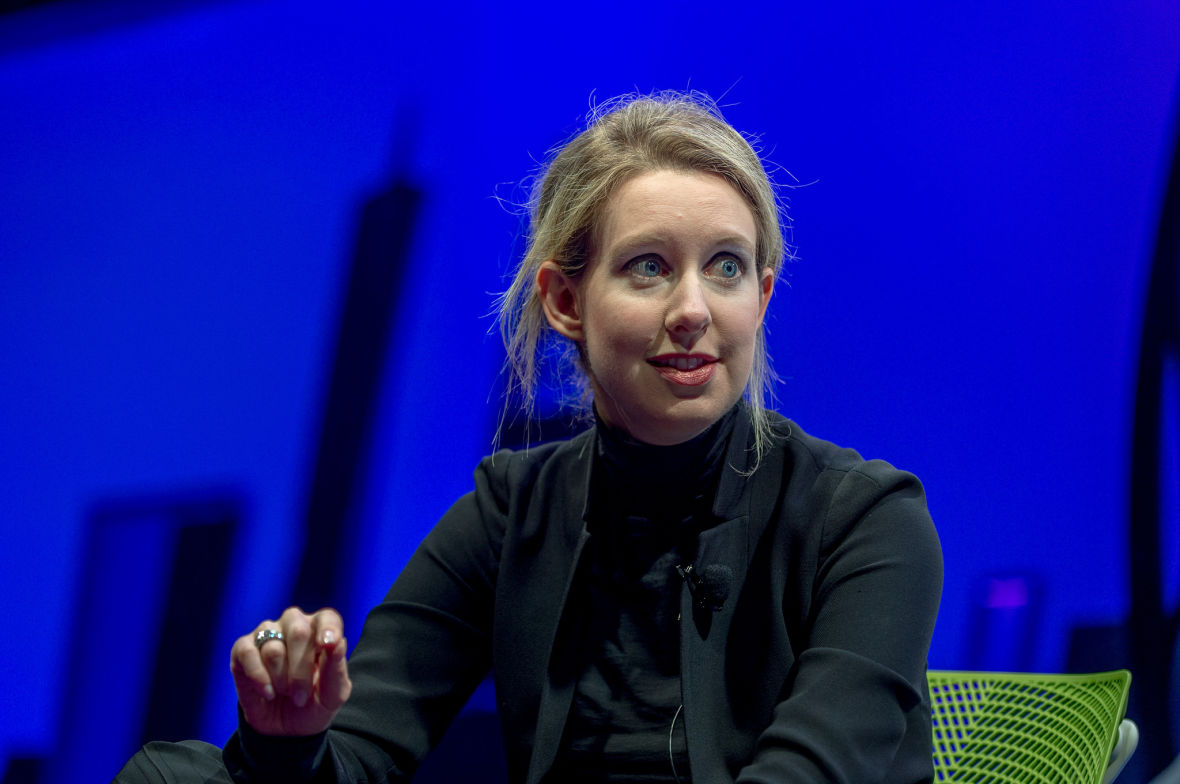
"caption": "Theranos founder and CEO Elizabeth Holmes at the Fortune Global Forum, November 2015.",
"description": null,
"title": "Theranos",
"credit": " Stuart Isett/Fortune Global Forum",
"status": "inherit",
"isLoading": false,
"fetchFailed": false
},
"futureofyou_104498": {
"type": "attachments",
"id": "futureofyou_104498",
"meta": {
"index": "attachments_1716263798",
"site": "futureofyou",
"id": "104498",
"found": true
},
"parent": 104492,
"imgSizes": {
"twentyfourteen-full-width": {
"file": "https://ww2.kqed.org/app/uploads/sites/13/2016/01/rachel-star-800x576.jpg",
"width": 800,
"mimeType": "image/jpeg",
"height": 576
},
"thumbnail": {
"file": "https://ww2.kqed.org/app/uploads/sites/13/2016/01/rachel-star-400x300.jpg",
"width": 400,
"mimeType": "image/jpeg",
"height": 300
},
"post-thumbnail": {
"file": "https://ww2.kqed.org/app/uploads/sites/13/2016/01/rachel-star-672x372.jpg",
"width": 672,
"mimeType": "image/jpeg",
"height": 372
},
"kqedFullSize": {
"file": "https://ww2.kqed.org/app/uploads/sites/13/2016/01/rachel-star.jpg",
"width": 800,
"height": 599
},
"guest-author-96": {
"file": "https://ww2.kqed.org/app/uploads/sites/13/2016/01/rachel-star-96x96.jpg",
"width": 96,
"mimeType": "image/jpeg",
"height": 96
},
"medium": {
"file": "https://ww2.kqed.org/app/uploads/sites/13/2016/01/rachel-star-800x599.jpg",
"width": 800,
"mimeType": "image/jpeg",
"height": 599
},
"guest-author-64": {
"file": "https://ww2.kqed.org/app/uploads/sites/13/2016/01/rachel-star-64x64.jpg",
"width": 64,
"mimeType": "image/jpeg",
"height": 64
},
"detail": {
"file": "https://ww2.kqed.org/app/uploads/sites/13/2016/01/rachel-star-75x75.jpg",
"width": 75,
"mimeType": "image/jpeg",
"height": 75
},
"guest-author-32": {
"file": "https://ww2.kqed.org/app/uploads/sites/13/2016/01/rachel-star-32x32.jpg",
"width": 32,
"mimeType": "image/jpeg",
"height": 32
},
"medium_large": {
"file": "https://ww2.kqed.org/app/uploads/sites/13/2016/01/rachel-star-768x575.jpg",
"width": 768,
"mimeType": "image/jpeg",
"height": 575
},
"guest-author-128": {
"file": "https://ww2.kqed.org/app/uploads/sites/13/2016/01/rachel-star-128x128.jpg",
"width": 128,
"mimeType": "image/jpeg",
"height": 128
}
},
"publishDate": 1454002644,
"modified": 1454003098,
"caption": null,
"description": null,
"title": "rachel-star",
"credit": "(Photo courtesy of Rachel Star Withers)",
"status": "inherit",
"isLoading": false,
"fetchFailed": false
},
"futureofyou_58611": {
"type": "attachments",
"id": "futureofyou_58611",
"meta": {
"index": "attachments_1716263798",
"site": "futureofyou",
"id": "58611",
"found": true
},
"parent": 0,
"imgSizes": {
"thumbnail": {
"file": "https://ww2.kqed.org/app/uploads/sites/13/2015/10/theranos-e1445976010915-400x146.png",
"width": 400,
"mimeType": "image/png",
"height": 146
},
"kqedFullSize": {
"file": "https://ww2.kqed.org/app/uploads/sites/13/2015/10/theranos-e1445976010915.png",
"width": 598,
"height": 218
},
"guest-author-96": {
"file": "https://ww2.kqed.org/app/uploads/sites/13/2015/10/theranos-e1445976010915-96x96.png",
"width": 96,
"mimeType": "image/png",
"height": 96
},
"guest-author-64": {
"file": "https://ww2.kqed.org/app/uploads/sites/13/2015/10/theranos-e1445976010915-64x64.png",
"width": 64,
"mimeType": "image/png",
"height": 64
},
"detail": {
"file": "https://ww2.kqed.org/app/uploads/sites/13/2015/10/theranos-e1445976010915-75x75.png",
"width": 75,
"mimeType": "image/png",
"height": 75
},
"guest-author-32": {
"file": "https://ww2.kqed.org/app/uploads/sites/13/2015/10/theranos-e1445976010915-32x32.png",
"width": 32,
"mimeType": "image/png",
"height": 32
},
"guest-author-128": {
"file": "https://ww2.kqed.org/app/uploads/sites/13/2015/10/theranos-e1445976010915-128x128.png",
"width": 128,
"mimeType": "image/png",
"height": 128
}
},
"publishDate": 1445975846,
"modified": 1454610976,
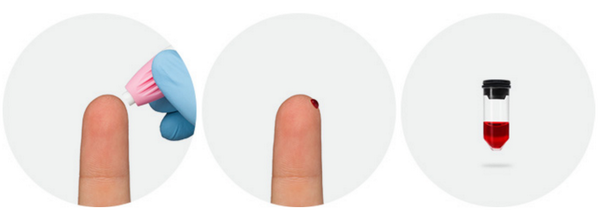
"caption": "Theranos and its finger-prick blood-testing technology has come under siege from a Wall Street Journal investigation.",
"description": "Silicon Valley-based Theranos says it can diagnose a variety of diseases with a finger stick that takes just a few drops of blood — as opposed to a blood draw.",
"title": "theranos",
"credit": "Theranos",
"status": "inherit",
"isLoading": false,
"fetchFailed": false
},
"futureofyou_104009": {
"type": "attachments",
"id": "futureofyou_104009",
"meta": {
"index": "attachments_1716263798",
"site": "futureofyou",
"id": "104009",
"found": true
},
"parent": 103654,
"imgSizes": {
"thumbnail": {
"file": "https://ww2.kqed.org/app/uploads/sites/13/2016/01/Sweat-Sensor-Wristband-400x268.jpg",
"width": 400,
"mimeType": "image/jpeg",
"height": 268
},
"post-thumbnail": {
"file": "https://ww2.kqed.org/app/uploads/sites/13/2016/01/Sweat-Sensor-Wristband-672x372.jpg",
"width": 672,
"mimeType": "image/jpeg",
"height": 372
},
"kqedFullSize": {
"file": "https://ww2.kqed.org/app/uploads/sites/13/2016/01/Sweat-Sensor-Wristband.jpg",
"width": 750,
"height": 502
},
"guest-author-96": {
"file": "https://ww2.kqed.org/app/uploads/sites/13/2016/01/Sweat-Sensor-Wristband-96x96.jpg",
"width": 96,
"mimeType": "image/jpeg",
"height": 96
},
"guest-author-64": {
"file": "https://ww2.kqed.org/app/uploads/sites/13/2016/01/Sweat-Sensor-Wristband-64x64.jpg",
"width": 64,
"mimeType": "image/jpeg",
"height": 64
},
"detail": {
"file": "https://ww2.kqed.org/app/uploads/sites/13/2016/01/Sweat-Sensor-Wristband-75x75.jpg",
"width": 75,
"mimeType": "image/jpeg",
"height": 75
},
"guest-author-32": {
"file": "https://ww2.kqed.org/app/uploads/sites/13/2016/01/Sweat-Sensor-Wristband-32x32.jpg",
"width": 32,
"mimeType": "image/jpeg",
"height": 32
},
"guest-author-128": {
"file": "https://ww2.kqed.org/app/uploads/sites/13/2016/01/Sweat-Sensor-Wristband-128x128.jpg",
"width": 128,
"mimeType": "image/jpeg",
"height": 128
}
},
"publishDate": 1453916336,
"modified": 1453916440,
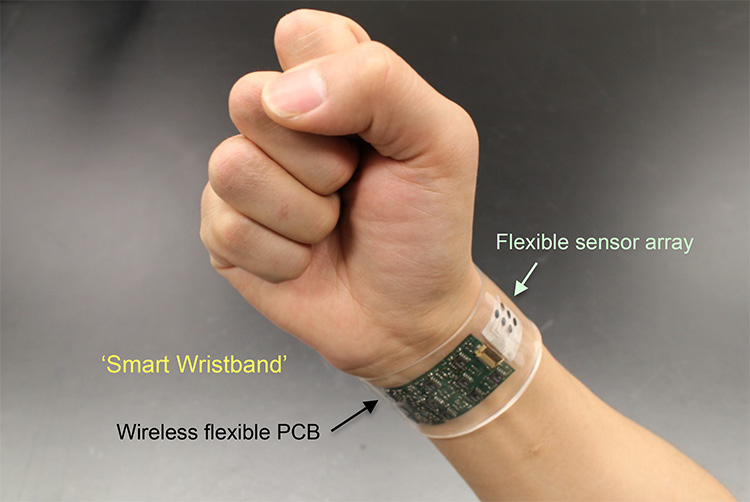
"caption": "A sweat sensor wristband that researchers say can continuously track changes in the chemical composition of sweat.",
"description": null,
"title": "Sweat Sensor-Wristband",
"credit": "UC Berkeley",
"status": "inherit",
"isLoading": false,
"fetchFailed": false
},
"futureofyou_104551": {
"type": "attachments",
"id": "futureofyou_104551",
"meta": {
"index": "attachments_1716263798",
"site": "futureofyou",
"id": "104551",
"found": true
},
"parent": 104523,
"imgSizes": {
"thumbnail": {
"file": "https://ww2.kqed.org/app/uploads/sites/13/2016/01/schizophrenia-400x225.jpeg",
"width": 400,
"mimeType": "image/jpeg",
"height": 225
},
"kqedFullSize": {
"file": "https://ww2.kqed.org/app/uploads/sites/13/2016/01/schizophrenia.jpeg",
"width": 640,
"height": 360
},
"guest-author-96": {
"file": "https://ww2.kqed.org/app/uploads/sites/13/2016/01/schizophrenia-96x96.jpeg",
"width": 96,
"mimeType": "image/jpeg",
"height": 96
},
"guest-author-64": {
"file": "https://ww2.kqed.org/app/uploads/sites/13/2016/01/schizophrenia-64x64.jpeg",
"width": 64,
"mimeType": "image/jpeg",
"height": 64
},
"detail": {
"file": "https://ww2.kqed.org/app/uploads/sites/13/2016/01/schizophrenia-75x75.jpeg",
"width": 75,
"mimeType": "image/jpeg",
"height": 75
},
"guest-author-32": {
"file": "https://ww2.kqed.org/app/uploads/sites/13/2016/01/schizophrenia-32x32.jpeg",
"width": 32,
"mimeType": "image/jpeg",
"height": 32
},
"guest-author-128": {
"file": "https://ww2.kqed.org/app/uploads/sites/13/2016/01/schizophrenia-128x128.jpeg",
"width": 128,
"mimeType": "image/jpeg",
"height": 128
}
},
"publishDate": 1454009687,
"modified": 1454009741,
"caption": "'Reagan' was 19 when she started having hallucinations from schizophrenia.",
"description": "'Reagan' was 19 when she started having hallucinations from schizophrenia.",
"title": "schizophrenia",
"credit": "Marvi Lacar/KQED",
"status": "inherit",
"isLoading": false,
"fetchFailed": false
},
"futureofyou_101672": {
"type": "attachments",
"id": "futureofyou_101672",
"meta": {
"index": "attachments_1716263798",
"site": "futureofyou",
"id": "101672",
"found": true
},
"parent": 101587,
"imgSizes": {
"twentyfourteen-full-width": {
"file": "https://ww2.kqed.org/app/uploads/sites/13/2016/01/Drinks-1038x576.jpg",
"width": 1038,
"mimeType": "image/jpeg",
"height": 576
},
"thumbnail": {
"file": "https://ww2.kqed.org/app/uploads/sites/13/2016/01/Drinks-400x235.jpg",
"width": 400,
"mimeType": "image/jpeg",
"height": 235
},
"fd-sm": {
"file": "https://ww2.kqed.org/app/uploads/sites/13/2016/01/Drinks-960x564.jpg",
"width": 960,
"mimeType": "image/jpeg",
"height": 564
},
"post-thumbnail": {
"file": "https://ww2.kqed.org/app/uploads/sites/13/2016/01/Drinks-672x372.jpg",
"width": 672,
"mimeType": "image/jpeg",
"height": 372
},
"kqedFullSize": {
"file": "https://ww2.kqed.org/app/uploads/sites/13/2016/01/Drinks.jpg",
"width": 1920,
"height": 1128
},
"large": {
"file": "https://ww2.kqed.org/app/uploads/sites/13/2016/01/Drinks-1180x693.jpg",
"width": 1180,
"mimeType": "image/jpeg",
"height": 693
},
"guest-author-96": {
"file": "https://ww2.kqed.org/app/uploads/sites/13/2016/01/Drinks-96x96.jpg",
"width": 96,
"mimeType": "image/jpeg",
"height": 96
},
"medium": {
"file": "https://ww2.kqed.org/app/uploads/sites/13/2016/01/Drinks-800x470.jpg",
"width": 800,
"mimeType": "image/jpeg",
"height": 470
},
"guest-author-64": {
"file": "https://ww2.kqed.org/app/uploads/sites/13/2016/01/Drinks-64x64.jpg",
"width": 64,
"mimeType": "image/jpeg",
"height": 64
},
"guest-author-32": {
"file": "https://ww2.kqed.org/app/uploads/sites/13/2016/01/Drinks-32x32.jpg",
"width": 32,
"mimeType": "image/jpeg",
"height": 32
},
"fd-lrg": {
"file": "https://ww2.kqed.org/app/uploads/sites/13/2016/01/Drinks-1920x1128.jpg",
"width": 1920,
"mimeType": "image/jpeg",
"height": 1128
},
"fd-med": {
"file": "https://ww2.kqed.org/app/uploads/sites/13/2016/01/Drinks-1180x693.jpg",
"width": 1180,
"mimeType": "image/jpeg",
"height": 693
},
"detail": {
"file": "https://ww2.kqed.org/app/uploads/sites/13/2016/01/Drinks-75x75.jpg",
"width": 75,
"mimeType": "image/jpeg",
"height": 75
},
"medium_large": {
"file": "https://ww2.kqed.org/app/uploads/sites/13/2016/01/Drinks-768x451.jpg",
"width": 768,
"mimeType": "image/jpeg",
"height": 451
},
"guest-author-128": {
"file": "https://ww2.kqed.org/app/uploads/sites/13/2016/01/Drinks-128x128.jpg",
"width": 128,
"mimeType": "image/jpeg",
"height": 128
}
},
"publishDate": 1453511235,
"modified": 1453511309,
"caption": "Some people's genes make them like alcohol more than other people. (Pixabay)",
"description": null,
"title": "Drinks",
"credit": null,
"status": "inherit",
"isLoading": false,
"fetchFailed": false
},
"futureofyou_4080": {
"type": "attachments",
"id": "futureofyou_4080",
"meta": {
"index": "attachments_1716263798",
"site": "futureofyou",
"id": "4080",
"found": true
},
"parent": 4079,
"imgSizes": {
"twentyfourteen-full-width": {
"file": "https://ww2.kqed.org/app/uploads/sites/13/2015/06/health-search-data-getty_custom-0c08f74bb7cd5d170e9ed490d25185d2ccf0126c-1038x576.jpg",
"width": 1038,
"mimeType": "image/jpeg",
"height": 576
},
"thumbnail": {
"file": "https://ww2.kqed.org/app/uploads/sites/13/2015/06/health-search-data-getty_custom-0c08f74bb7cd5d170e9ed490d25185d2ccf0126c-400x273.jpg",
"width": 400,
"mimeType": "image/jpeg",
"height": 273
},
"fd-sm": {
"file": "https://ww2.kqed.org/app/uploads/sites/13/2015/06/health-search-data-getty_custom-0c08f74bb7cd5d170e9ed490d25185d2ccf0126c-960x654.jpg",
"width": 960,
"mimeType": "image/jpeg",
"height": 654
},
"post-thumbnail": {
"file": "https://ww2.kqed.org/app/uploads/sites/13/2015/06/health-search-data-getty_custom-0c08f74bb7cd5d170e9ed490d25185d2ccf0126c-672x372.jpg",
"width": 672,
"mimeType": "image/jpeg",
"height": 372
},
"kqedFullSize": {
"file": "https://ww2.kqed.org/app/uploads/sites/13/2015/06/health-search-data-getty_custom-0c08f74bb7cd5d170e9ed490d25185d2ccf0126c-e1453828939113.jpg",
"width": 1920,
"height": 1309
},
"large": {
"file": "https://ww2.kqed.org/app/uploads/sites/13/2015/06/health-search-data-getty_custom-0c08f74bb7cd5d170e9ed490d25185d2ccf0126c-1180x804.jpg",
"width": 1180,
"mimeType": "image/jpeg",
"height": 804
},
"guest-author-96": {
"file": "https://ww2.kqed.org/app/uploads/sites/13/2015/06/health-search-data-getty_custom-0c08f74bb7cd5d170e9ed490d25185d2ccf0126c-96x96.jpg",
"width": 96,
"mimeType": "image/jpeg",
"height": 96
},
"medium": {
"file": "https://ww2.kqed.org/app/uploads/sites/13/2015/06/health-search-data-getty_custom-0c08f74bb7cd5d170e9ed490d25185d2ccf0126c-800x545.jpg",
"width": 800,
"mimeType": "image/jpeg",
"height": 545
},
"guest-author-64": {
"file": "https://ww2.kqed.org/app/uploads/sites/13/2015/06/health-search-data-getty_custom-0c08f74bb7cd5d170e9ed490d25185d2ccf0126c-64x64.jpg",
"width": 64,
"mimeType": "image/jpeg",
"height": 64
},
"guest-author-32": {
"file": "https://ww2.kqed.org/app/uploads/sites/13/2015/06/health-search-data-getty_custom-0c08f74bb7cd5d170e9ed490d25185d2ccf0126c-32x32.jpg",
"width": 32,
"mimeType": "image/jpeg",
"height": 32
},
"fd-med": {
"file": "https://ww2.kqed.org/app/uploads/sites/13/2015/06/health-search-data-getty_custom-0c08f74bb7cd5d170e9ed490d25185d2ccf0126c-1180x804.jpg",
"width": 1180,
"mimeType": "image/jpeg",
"height": 804
},
"detail": {
"file": "https://ww2.kqed.org/app/uploads/sites/13/2015/06/health-search-data-getty_custom-0c08f74bb7cd5d170e9ed490d25185d2ccf0126c-75x75.jpg",
"width": 75,
"mimeType": "image/jpeg",
"height": 75
},
"guest-author-128": {
"file": "https://ww2.kqed.org/app/uploads/sites/13/2015/06/health-search-data-getty_custom-0c08f74bb7cd5d170e9ed490d25185d2ccf0126c-128x128.jpg",
"width": 128,
"mimeType": "image/jpeg",
"height": 128
}
},
"publishDate": 1433954696,
"modified": 1453829058,
"caption": null,
"description": "A researcher found that online medical searches may be seen by hidden parties, and the data sold for profit",
"title": "A researcher found that online medical searches may be seen by hidden parties, and the data sold for profit.",
"credit": "Getty Images",
"status": "inherit",
"isLoading": false,
"fetchFailed": false
},
"futureofyou_103506": {
"type": "attachments",
"id": "futureofyou_103506",
"meta": {
"index": "attachments_1716263798",
"site": "futureofyou",
"id": "103506",
"found": true
},
"parent": 103503,
"imgSizes": {
"twentyfourteen-full-width": {
"file": "https://ww2.kqed.org/app/uploads/sites/13/2016/01/pixar-1038x576.jpg",
"width": 1038,
"mimeType": "image/jpeg",
"height": 576
},
"thumbnail": {
"file": "https://ww2.kqed.org/app/uploads/sites/13/2016/01/pixar-400x296.jpg",
"width": 400,
"mimeType": "image/jpeg",
"height": 296
},
"fd-sm": {
"file": "https://ww2.kqed.org/app/uploads/sites/13/2016/01/pixar-960x711.jpg",
"width": 960,
"mimeType": "image/jpeg",
"height": 711
},
"post-thumbnail": {
"file": "https://ww2.kqed.org/app/uploads/sites/13/2016/01/pixar-672x372.jpg",
"width": 672,
"mimeType": "image/jpeg",
"height": 372
},
"kqedFullSize": {
"file": "https://ww2.kqed.org/app/uploads/sites/13/2016/01/pixar.jpg",
"width": 1920,
"height": 1421
},
"large": {
"file": "https://ww2.kqed.org/app/uploads/sites/13/2016/01/pixar-1180x873.jpg",
"width": 1180,
"mimeType": "image/jpeg",
"height": 873
},
"guest-author-96": {
"file": "https://ww2.kqed.org/app/uploads/sites/13/2016/01/pixar-96x96.jpg",
"width": 96,
"mimeType": "image/jpeg",
"height": 96
},
"medium": {
"file": "https://ww2.kqed.org/app/uploads/sites/13/2016/01/pixar-800x592.jpg",
"width": 800,
"mimeType": "image/jpeg",
"height": 592
},
"guest-author-64": {
"file": "https://ww2.kqed.org/app/uploads/sites/13/2016/01/pixar-64x64.jpg",
"width": 64,
"mimeType": "image/jpeg",
"height": 64
},
"guest-author-32": {
"file": "https://ww2.kqed.org/app/uploads/sites/13/2016/01/pixar-32x32.jpg",
"width": 32,
"mimeType": "image/jpeg",
"height": 32
},
"fd-lrg": {
"file": "https://ww2.kqed.org/app/uploads/sites/13/2016/01/pixar-1920x1421.jpg",
"width": 1920,
"mimeType": "image/jpeg",
"height": 1421
},
"fd-med": {
"file": "https://ww2.kqed.org/app/uploads/sites/13/2016/01/pixar-1180x873.jpg",
"width": 1180,
"mimeType": "image/jpeg",
"height": 873
},
"detail": {
"file": "https://ww2.kqed.org/app/uploads/sites/13/2016/01/pixar-75x75.jpg",
"width": 75,
"mimeType": "image/jpeg",
"height": 75
},
"medium_large": {
"file": "https://ww2.kqed.org/app/uploads/sites/13/2016/01/pixar-768x568.jpg",
"width": 768,
"mimeType": "image/jpeg",
"height": 568
},
"guest-author-128": {
"file": "https://ww2.kqed.org/app/uploads/sites/13/2016/01/pixar-128x128.jpg",
"width": 128,
"mimeType": "image/jpeg",
"height": 128
}
},
"publishDate": 1453830492,
"modified": 1453830492,
"caption": null,
"description": null,
"title": "pixar",
"credit": null,
"status": "inherit",
"isLoading": false,
"fetchFailed": false
},
"futureofyou_96633": {
"type": "attachments",
"id": "futureofyou_96633",
"meta": {
"index": "attachments_1716263798",
"site": "futureofyou",
"id": "96633",
"found": true
},
"parent": 94836,
"imgSizes": {
"thumbnail": {
"file": "https://ww2.kqed.org/app/uploads/sites/13/2016/01/fitbit-400x224.png",
"width": 400,
"mimeType": "image/png",
"height": 224
},
"post-thumbnail": {
"file": "https://ww2.kqed.org/app/uploads/sites/13/2016/01/fitbit-672x372.png",
"width": 672,
"mimeType": "image/png",
"height": 372
},
"kqedFullSize": {
"file": "https://ww2.kqed.org/app/uploads/sites/13/2016/01/fitbit.png",
"width": 821,
"height": 460
},
"guest-author-96": {
"file": "https://ww2.kqed.org/app/uploads/sites/13/2016/01/fitbit-96x96.png",
"width": 96,
"mimeType": "image/png",
"height": 96
},
"medium": {
"file": "https://ww2.kqed.org/app/uploads/sites/13/2016/01/fitbit-800x448.png",
"width": 800,
"mimeType": "image/png",
"height": 448
},
"guest-author-64": {
"file": "https://ww2.kqed.org/app/uploads/sites/13/2016/01/fitbit-64x64.png",
"width": 64,
"mimeType": "image/png",
"height": 64
},
"detail": {
"file": "https://ww2.kqed.org/app/uploads/sites/13/2016/01/fitbit-75x75.png",
"width": 75,
"mimeType": "image/png",
"height": 75
},
"guest-author-32": {
"file": "https://ww2.kqed.org/app/uploads/sites/13/2016/01/fitbit-32x32.png",
"width": 32,
"mimeType": "image/png",
"height": 32
},
"medium_large": {
"file": "https://ww2.kqed.org/app/uploads/sites/13/2016/01/fitbit-768x430.png",
"width": 768,
"mimeType": "image/png",
"height": 430
},
"guest-author-128": {
"file": "https://ww2.kqed.org/app/uploads/sites/13/2016/01/fitbit-128x128.png",
"width": 128,
"mimeType": "image/png",
"height": 128
}
},
"publishDate": 1452620434,
"modified": 1452620441,
"caption": null,
"description": null,
"title": "fitbit",
"credit": "Fitbit",
"status": "inherit",
"isLoading": false,
"fetchFailed": false
}
},
"audioPlayerReducer": {
"postId": "stream_live",
"isPaused": true,
"isPlaying": false,
"pfsActive": false,
"pledgeModalIsOpen": true,
"playerDrawerIsOpen": false,
"liveAudioPlayStartedAt": 0,
"liveAudioPlayContext": ""
},
"authorsReducer": {
"byline_futureofyou_105052": {
"type": "authors",
"id": "byline_futureofyou_105052",
"meta": {
"override": true
},
"slug": "byline_futureofyou_105052",
"name": "Barbara Feder Ostrov\u003cbr />California Healthline",
"isLoading": false
},
"byline_futureofyou_104998": {
"type": "authors",
"id": "byline_futureofyou_104998",
"meta": {
"override": true
},
"slug": "byline_futureofyou_104998",
"name": "Linda A. Johnson\u003cbr />Associated Press",
"isLoading": false
},
"byline_futureofyou_104492": {
"type": "authors",
"id": "byline_futureofyou_104492",
"meta": {
"override": true
},
"slug": "byline_futureofyou_104492",
"name": "Angus Chen\u003cbr />NPR Shots",
"isLoading": false
},
"byline_futureofyou_104523": {
"type": "authors",
"id": "byline_futureofyou_104523",
"meta": {
"override": true
},
"slug": "byline_futureofyou_104523",
"name": "Malcolm Ritter\u003cbr />Associated Press",
"isLoading": false
},
"byline_futureofyou_103480": {
"type": "authors",
"id": "byline_futureofyou_103480",
"meta": {
"override": true
},
"slug": "byline_futureofyou_103480",
"name": "Harlan Krumholz",
"isLoading": false
},
"byline_futureofyou_103503": {
"type": "authors",
"id": "byline_futureofyou_103503",
"meta": {
"override": true
},
"slug": "byline_futureofyou_103503",
"name": " Max Savage Levenson",
"isLoading": false
},
"jbrooks": {
"type": "authors",
"id": "80",
"meta": {
"index": "authors_1716337520",
"id": "80",
"found": true
},
"name": "Jon Brooks",
"firstName": "Jon",
"lastName": "Brooks",
"slug": "jbrooks",
"email": "jbrooks@kqed.org",
"display_author_email": true,
"staff_mastheads": [
"science"
],
"title": "Digital Editor",
"bio": "Jon Brooks is a former Digital Editor for KQED Science. He is the former editor of KQED’s daily news blog, News Fix. In 2014, he won a California Journalism Award for his coverage of ride services like Uber and Lyft and the taxi industry. A veteran blogger, he previously worked for Yahoo! in various news writing and editing roles. Jon is also a playwright whose work has been produced in San Francisco, New York, Italy, and around the U.S. He has written about film for his own blog and studied film at Boston University.",
"avatar": "https://secure.gravatar.com/avatar/98887f7ed1c876ed414d4c915e969584?s=600&d=blank&r=g",
"twitter": "jbrooksfoy",
"facebook": null,
"instagram": null,
"linkedin": null,
"sites": [
{
"site": "arts",
"roles": [
"Contributor",
"editor"
]
},
{
"site": "news",
"roles": [
"author"
]
},
{
"site": "futureofyou",
"roles": [
"administrator"
]
},
{
"site": "mindshift",
"roles": [
"editor"
]
},
{
"site": "stateofhealth",
"roles": [
"editor"
]
},
{
"site": "science",
"roles": [
"administrator"
]
},
{
"site": "quest",
"roles": [
"editor"
]
}
],
"headData": {
"title": "Jon Brooks | KQED",
"description": "Digital Editor",
"ogImgSrc": "https://secure.gravatar.com/avatar/98887f7ed1c876ed414d4c915e969584?s=600&d=blank&r=g",
"twImgSrc": "https://secure.gravatar.com/avatar/98887f7ed1c876ed414d4c915e969584?s=600&d=blank&r=g"
},
"isLoading": false,
"link": "/author/jbrooks"
},
"dr-barry-starr": {
"type": "authors",
"id": "6177",
"meta": {
"index": "authors_1716337520",
"id": "6177",
"found": true
},
"name": "Dr. Barry Starr",
"firstName": "Dr. Barry",
"lastName": "Starr",
"slug": "dr-barry-starr",
"email": "bstarr@thetech.org",
"display_author_email": false,
"staff_mastheads": [],
"title": "KQED Contributor",
"bio": "Dr. Barry Starr (\u003ca href=\"https://twitter.com/geneticsboy\">@geneticsboy\u003c/a>) is a Geneticist-in-Residence at The Tech Museum of Innovation in San Jose, CA and runs their Stanford at The Tech program. The program is part of an ongoing collaboration between the \u003ca href=\"http://genetics.stanford.edu/\">Stanford Department of Genetics\u003c/a> and \u003ca href=\"http://www.thetech.org/\">The Tech Museum of Innovation\u003c/a>. Together these two partners created the \u003ca href=\"http://www.thetech.org/exhibits/permanent/index.php?sGalKey=gtwt&galKey=lt\">Genetics: Technology with a Twist\u003c/a> exhibition.\r\n\r\nYou can also see \u003ca href=\"https://ww2.kqed.org/science/author/dr-barry-starr/\">additional posts by Barry at KQED Science\u003c/a>, and read his \u003ca href=\"http://science.kqed.org/quest/author/dr-barry-starr/\">previous contributions\u003c/a> to \u003ca href=\"http://science.kqed.org/quest/\">QUEST\u003c/a>, a project dedicated to exploring the Science of Sustainability.",
"avatar": "https://secure.gravatar.com/avatar/4a5680e4c642ea0f0f3041af16018969?s=600&d=blank&r=g",
"twitter": "geneticsboy",
"facebook": null,
"instagram": null,
"linkedin": null,
"sites": [
{
"site": "futureofyou",
"roles": []
},
{
"site": "science",
"roles": [
"author"
]
},
{
"site": "quest",
"roles": [
"subscriber"
]
}
],
"headData": {
"title": "Dr. Barry Starr | KQED",
"description": "KQED Contributor",
"ogImgSrc": "https://secure.gravatar.com/avatar/4a5680e4c642ea0f0f3041af16018969?s=600&d=blank&r=g",
"twImgSrc": "https://secure.gravatar.com/avatar/4a5680e4c642ea0f0f3041af16018969?s=600&d=blank&r=g"
},
"isLoading": false,
"link": "/author/dr-barry-starr"
}
},
"pagesReducer": {
"futureofyou_program_future-of-you": {
"type": "terms",
"id": "futureofyou_54",
"meta": {
"index": "terms_1716263798",
"site": "futureofyou",
"id": "54",
"score": 14.775673
},
"featImg": null,
"name": "Future of You",
"description": null,
"taxonomy": "program",
"headData": {
"twImgId": null,
"twTitle": null,
"ogTitle": null,
"ogImgId": null,
"twDescription": null,
"description": null,
"title": "Future of You Archives | KQED Arts",
"ogDescription": null
},
"ttid": 54,
"slug": "future-of-you",
"isLoading": false,
"title": "Future of You",
"pageMeta": {
"site": "futureofyou",
"WpPageTemplate": "page-topic-editorial",
"currentPage": 10
},
"blocks": [
{
"blockName": "kqed/post-list",
"attrs": {
"layout": "cardArticle2",
"query": "posts/futureofyou?program=future-of-you",
"seeMore": false,
"paginated": true,
"page": 10
}
},
{
"blockName": "kqed/ad"
}
]
}
},
"pfsSessionReducer": {},
"postsReducer": {
"stream_live": {
"type": "live",
"id": "stream_live",
"audioUrl": "https://streams.kqed.org/kqedradio",
"title": "Live Stream",
"excerpt": "Live Stream information currently unavailable.",
"link": "/radio",
"featImg": "",
"label": {
"name": "KQED Live",
"link": "/"
}
},
"stream_kqedNewscast": {
"type": "posts",
"id": "stream_kqedNewscast",
"audioUrl": "https://www.kqed.org/.stream/anon/radio/RDnews/newscast.mp3?_=1",
"title": "KQED Newscast",
"featImg": "",
"label": {
"name": "88.5 FM",
"link": "/"
}
},
"futureofyou_105052": {
"type": "posts",
"id": "futureofyou_105052",
"meta": {
"index": "posts_1716263798",
"site": "futureofyou",
"id": "105052",
"score": null,
"sort": [
1454098318000
]
},
"parent": 0,
"labelTerm": {
"site": "futureofyou",
"term": 54
},
"blocks": [],
"publishDate": 1454098318,
"format": "standard",
"disqusTitle": "Can Automating Physician Empathy Work?",
"title": "Can Automating Physician Empathy Work?",
"headTitle": "Future of You | KQED Future of You | KQED Science",
"content": "\u003cp>A health care startup made a wild pitch to Cara Waller, CEO of the Newport Orthopedic Institute. The company said it could get patients more engaged with their care by automating physician empathy.\u003c/p>\n\u003cp>It \"almost made me nauseous,\" she said. How can you automate something as deeply personal as empathy?\u003c/p>\n\u003caside class=\"pullquote alignright\">A patient might receive this automated email: “How are you? Let me know so I can make sure you’re okay.\"\u003c/aside>\n\u003cp>But Waller needed help. Her physicians in Orange County, Calif., perform as many as 500 surgeries a year, manage large numbers of patients at various stages of treatment and recovery. The doctors needed a better way to communicate with patients and track their progress.\u003c/p>\n\u003cp>The California startup, HealthLoop, told Waller its messaging technology would improve patient satisfaction and help keep them out of the hospital. High satisfaction scores and low readmission rates mean higher reimbursements from Medicare. Waller was intrigued and decided to give the technology a try.\u003c/p>\n\u003cp>So far, she's been surprised at patients' enthusiasm for the personalized – but automated — daily emails they receive from their doctors.\u003c/p>\n\u003cp>[ad fullwidth]\u003c/p>\n\u003cp>\"There's a limited number of resources in health care. If you do 500 joint replacements in a year, how do you follow up all of those patients every day?\" Waller said. The technology \"allows you to direct your energy to people who need the hand-holding.\"\u003c/p>\n\u003cp>Though it may sound like an oxymoron, \"automating empathy\" is becoming a catchphrase in health care. The goal is to help doctors stay in touch with patients cheaply and with minimal effort.\u003c/p>\n\u003cp>Automated empathy is a powerful draw for hospitals and other health care providers scrambling to adjust to sweeping changes in how they're paid.\u003c/p>\n\u003cp>Whether the emails actually trigger an empathetic connection or not, the idea of tailoring regular electronic communications to patients counts as an innovation in health care — one that has the potential to save money and improve quality.\u003c/p>\n\u003cp>Companies like HealthLoop are promising that their technologies will help patients stick to treatment and recovery regimens, avoid repeat hospital stays and be more satisfied with their care. Similar companies that aim to improve patient engagement include Wellframe, Curaspan, and Infield Health.\u003c/p>\n\u003cp>HealthLoop's technology is being tested at medical centers that include the Cleveland Clinic, Kaiser Permanente-Southern California and the University of California, San Francisco.\u003c/p>\n\u003cp>How does it work? Doctors can send daily emails with information timed to milestones in surgery prep and recovery. The emails can ask patients or caregivers for feedback on specific issues that come up during recovery.\u003c/p>\n\u003cp>The doctors may write their own email scripts, as Newport Orthopedics' physicians did, or use the company's suggestions. An online dashboard helps doctors and administrators keep track of which patients are doing well and who might need more follow-up care.\u003c/p>\n\u003cp>A patient might see this message: \"How are you? Let me know so I can make sure you're OK. I have four questions for you today.\" The answers to those questions can trigger a call from the doctor's office.\u003c/p>\n\u003cp>One of those calls may have been a lifesaver for David Larson, a Huntington Beach retiree. After Larson responded \"yes\" to an email that asked if he had calf pain after knee surgery, he got a call from his doctor's office telling him to come in immediately. An ultrasound confirmed he had a blood clot that could have landed him in the hospital — or worse. With treatment, the blood clot dissolved.\u003c/p>\n\u003cp>\"There were times when it was like, 'Oh brother, they're contacting me again,' but none of this would have been caught if it wasn't for the email,\" said Larson, 66. \"So it was more than worth it to me. Now I'm back to walking the dog, surfing, riding a bike.\"\u003c/p>\n\u003cp>How to keep patients like Larson from being readmitted to the hospital because of avoidable complications after a hospital stay has long been a vexing and expensive challenge.\u003c/p>\n\u003cp>Almost 1 in 5 Medicare patients discharged from a hospital — approximately 2.6 million seniors a year – must be readmitted within 30 days, at an annual cost of more than $26 billion, according to the Centers for Medicare and Medicaid Services.\u003c/p>\n\u003cp>For decades, hospitals had no financial incentive to keep patients out of the hospital after they were discharged. But under the Affordable Care Act, penalties were established for hospitals with readmission rates higher than the national average for certain conditions.\u003c/p>\n\u003cp>Also under the ACA, hospitals are financially rewarded for high scores on patient satisfaction scores and good performance on other quality measures.\u003c/p>\n\u003cp>The sea change is affecting doctors' groups, either because they are part-owners in hospitals, as Newport Orthopedics is with Hoag Hospital in Newport Beach, Calif., or because they participate in risk-sharing financial partnerships with them.\u003c/p>\n\u003cp>With money on the line, hospitals and other health care providers may be willing to pay for programs like HealthLoop, if the tryouts prove successful. And you could see your own relationship with your physician change as a result, whether you're on Medicare or not: HealthLoop is aimed at all patients, whatever the payment source.\u003c/p>\n\u003cp>Some experts worry that health care providers will come to rely too heavily on electronic communication as a cheap substitute for the hard work of improving the doctor-patient relationship and the quality of care that patients get.\u003c/p>\n\u003cp>\"Automating personalized messages isn't a terrible thing; we all get some of that in our everyday lives,\" said Michael Millenson, a health industry consultant. \"The real question is whether this kind of automated messaging is in conjunction with a cultural change in how doctors think about their patients or not.\"\u003c/p>\n\u003cp>Health care providers have experimented, with varying success, with ways to prevent complications that can lead to re-admissions, said Kristin Carman, vice president of health policy research at the American Institutes for Research.\u003c/p>\n\u003cp>Robocalls reminding you to take your medicine, for example, don't seem to be very effective. And the new technologies don't always address demographic, cultural and language barriers that can prevent patients from communicating with their doctors. For now, HealthLoop is only available in English.\u003c/p>\n\u003cp>Dr. Jordan Shlain, a San Francisco internist, said he founded HealthLoop because he wanted a simple way to keep track of his patients' progress after a hospital visit or procedure.\u003c/p>\n\u003cp>\"Every human has the same kind of trajectory of concerns and anxieties with regard to medical situations,\" Shlain said. \"You know your doctor can't email you every day; you know your doctor usually will not call you. Now you're in a world where your doctor says I'd like to use this system to stay in touch with you and guide you through your recovery.\"\u003c/p>\n\u003cp>Dr. Thomas Vail, professor and chairman of the department of orthopedic surgery at the University of California, San Francisco would agree – up to a point.\u003c/p>\n\u003cp>With his UCSF colleagues, Vail is testing HealthLoop's system with his patients, and the university will be evaluating whether patients who use it experience fewer problems.\u003c/p>\n\u003cp>UCSF helped create some of the language for the automated emails and has a financial relationship with the company, said Dr. Aenor Sawyer, who directs UCSF's Skeletal Health Service and is a leader at the university's Center for Digital Health Innovation.\u003c/p>\n\u003cp>While Vail thinks HealthLoop is potentially promising, he's cautious about its role in his practice. \"I don't think it substitutes for face-to-face communication,\" Vail said, \"but it does help us collectively to not overlook something that might be important.\"\u003c/p>\n\u003cp>[ad floatright]\u003c/p>\n\u003cp>\u003cem>This story was produced by Kaiser Health News, which publishes California Healthline, a service of the California HealthCare Foundation.\u003c/em>\u003c/p>\n\n",
"disqusIdentifier": "105052 http://ww2.kqed.org/futureofyou/?p=105052",
"disqusUrl": "https://ww2.kqed.org/futureofyou/2016/01/29/can-automating-physician-empathy-work/",
"stats": {
"hasVideo": false,
"hasChartOrMap": false,
"hasAudio": false,
"hasPolis": false,
"wordCount": 1291,
"hasGoogleForm": false,
"hasGallery": false,
"hasHearkenModule": false,
"iframeSrcs": [],
"paragraphCount": 35
},
"modified": 1454099559,
"excerpt": "Companies that automate follow-up communications from doctors think they can help prevent repeat hospital stays by patients.",
"headData": {
"twImgId": "",
"twTitle": "",
"ogTitle": "",
"ogImgId": "",
"twDescription": "",
"description": "Companies that automate follow-up communications from doctors think they can help prevent repeat hospital stays by patients.",
"title": "Can Automating Physician Empathy Work? | KQED",
"ogDescription": "",
"schema": {
"@context": "https://schema.org",
"@type": "Article",
"headline": "Can Automating Physician Empathy Work?",
"datePublished": "2016-01-29T12:11:58-08:00",
"dateModified": "2016-01-29T12:32:39-08:00",
"image": "https://cdn.kqed.org/wp-content/uploads/2020/02/KQED-OG-Image@1x.png"
}
},
"guestAuthors": [],
"slug": "can-automating-physician-empathy-work",
"status": "publish",
"nprByline": "Barbara Feder Ostrov\u003cbr />California Healthline",
"path": "/futureofyou/105052/can-automating-physician-empathy-work",
"audioTrackLength": null,
"parsedContent": [
{
"type": "contentString",
"content": "\u003cdiv class=\"post-body\">\u003cp>\u003cp>A health care startup made a wild pitch to Cara Waller, CEO of the Newport Orthopedic Institute. The company said it could get patients more engaged with their care by automating physician empathy.\u003c/p>\n\u003cp>It \"almost made me nauseous,\" she said. How can you automate something as deeply personal as empathy?\u003c/p>\n\u003caside class=\"pullquote alignright\">A patient might receive this automated email: “How are you? Let me know so I can make sure you’re okay.\"\u003c/aside>\n\u003cp>But Waller needed help. Her physicians in Orange County, Calif., perform as many as 500 surgeries a year, manage large numbers of patients at various stages of treatment and recovery. The doctors needed a better way to communicate with patients and track their progress.\u003c/p>\n\u003cp>The California startup, HealthLoop, told Waller its messaging technology would improve patient satisfaction and help keep them out of the hospital. High satisfaction scores and low readmission rates mean higher reimbursements from Medicare. Waller was intrigued and decided to give the technology a try.\u003c/p>\n\u003cp>So far, she's been surprised at patients' enthusiasm for the personalized – but automated — daily emails they receive from their doctors.\u003c/p>\n\u003cp>\u003c/p>\u003c/div>",
"attributes": {
"named": {},
"numeric": []
}
},
{
"type": "component",
"content": "",
"name": "ad",
"attributes": {
"named": {
"label": "fullwidth"
},
"numeric": [
"fullwidth"
]
}
},
{
"type": "contentString",
"content": "\u003cdiv class=\"post-body\">\u003cp>\u003c/p>\n\u003cp>\"There's a limited number of resources in health care. If you do 500 joint replacements in a year, how do you follow up all of those patients every day?\" Waller said. The technology \"allows you to direct your energy to people who need the hand-holding.\"\u003c/p>\n\u003cp>Though it may sound like an oxymoron, \"automating empathy\" is becoming a catchphrase in health care. The goal is to help doctors stay in touch with patients cheaply and with minimal effort.\u003c/p>\n\u003cp>Automated empathy is a powerful draw for hospitals and other health care providers scrambling to adjust to sweeping changes in how they're paid.\u003c/p>\n\u003cp>Whether the emails actually trigger an empathetic connection or not, the idea of tailoring regular electronic communications to patients counts as an innovation in health care — one that has the potential to save money and improve quality.\u003c/p>\n\u003cp>Companies like HealthLoop are promising that their technologies will help patients stick to treatment and recovery regimens, avoid repeat hospital stays and be more satisfied with their care. Similar companies that aim to improve patient engagement include Wellframe, Curaspan, and Infield Health.\u003c/p>\n\u003cp>HealthLoop's technology is being tested at medical centers that include the Cleveland Clinic, Kaiser Permanente-Southern California and the University of California, San Francisco.\u003c/p>\n\u003cp>How does it work? Doctors can send daily emails with information timed to milestones in surgery prep and recovery. The emails can ask patients or caregivers for feedback on specific issues that come up during recovery.\u003c/p>\n\u003cp>The doctors may write their own email scripts, as Newport Orthopedics' physicians did, or use the company's suggestions. An online dashboard helps doctors and administrators keep track of which patients are doing well and who might need more follow-up care.\u003c/p>\n\u003cp>A patient might see this message: \"How are you? Let me know so I can make sure you're OK. I have four questions for you today.\" The answers to those questions can trigger a call from the doctor's office.\u003c/p>\n\u003cp>One of those calls may have been a lifesaver for David Larson, a Huntington Beach retiree. After Larson responded \"yes\" to an email that asked if he had calf pain after knee surgery, he got a call from his doctor's office telling him to come in immediately. An ultrasound confirmed he had a blood clot that could have landed him in the hospital — or worse. With treatment, the blood clot dissolved.\u003c/p>\n\u003cp>\"There were times when it was like, 'Oh brother, they're contacting me again,' but none of this would have been caught if it wasn't for the email,\" said Larson, 66. \"So it was more than worth it to me. Now I'm back to walking the dog, surfing, riding a bike.\"\u003c/p>\n\u003cp>How to keep patients like Larson from being readmitted to the hospital because of avoidable complications after a hospital stay has long been a vexing and expensive challenge.\u003c/p>\n\u003cp>Almost 1 in 5 Medicare patients discharged from a hospital — approximately 2.6 million seniors a year – must be readmitted within 30 days, at an annual cost of more than $26 billion, according to the Centers for Medicare and Medicaid Services.\u003c/p>\n\u003cp>For decades, hospitals had no financial incentive to keep patients out of the hospital after they were discharged. But under the Affordable Care Act, penalties were established for hospitals with readmission rates higher than the national average for certain conditions.\u003c/p>\n\u003cp>Also under the ACA, hospitals are financially rewarded for high scores on patient satisfaction scores and good performance on other quality measures.\u003c/p>\n\u003cp>The sea change is affecting doctors' groups, either because they are part-owners in hospitals, as Newport Orthopedics is with Hoag Hospital in Newport Beach, Calif., or because they participate in risk-sharing financial partnerships with them.\u003c/p>\n\u003cp>With money on the line, hospitals and other health care providers may be willing to pay for programs like HealthLoop, if the tryouts prove successful. And you could see your own relationship with your physician change as a result, whether you're on Medicare or not: HealthLoop is aimed at all patients, whatever the payment source.\u003c/p>\n\u003cp>Some experts worry that health care providers will come to rely too heavily on electronic communication as a cheap substitute for the hard work of improving the doctor-patient relationship and the quality of care that patients get.\u003c/p>\n\u003cp>\"Automating personalized messages isn't a terrible thing; we all get some of that in our everyday lives,\" said Michael Millenson, a health industry consultant. \"The real question is whether this kind of automated messaging is in conjunction with a cultural change in how doctors think about their patients or not.\"\u003c/p>\n\u003cp>Health care providers have experimented, with varying success, with ways to prevent complications that can lead to re-admissions, said Kristin Carman, vice president of health policy research at the American Institutes for Research.\u003c/p>\n\u003cp>Robocalls reminding you to take your medicine, for example, don't seem to be very effective. And the new technologies don't always address demographic, cultural and language barriers that can prevent patients from communicating with their doctors. For now, HealthLoop is only available in English.\u003c/p>\n\u003cp>Dr. Jordan Shlain, a San Francisco internist, said he founded HealthLoop because he wanted a simple way to keep track of his patients' progress after a hospital visit or procedure.\u003c/p>\n\u003cp>\"Every human has the same kind of trajectory of concerns and anxieties with regard to medical situations,\" Shlain said. \"You know your doctor can't email you every day; you know your doctor usually will not call you. Now you're in a world where your doctor says I'd like to use this system to stay in touch with you and guide you through your recovery.\"\u003c/p>\n\u003cp>Dr. Thomas Vail, professor and chairman of the department of orthopedic surgery at the University of California, San Francisco would agree – up to a point.\u003c/p>\n\u003cp>With his UCSF colleagues, Vail is testing HealthLoop's system with his patients, and the university will be evaluating whether patients who use it experience fewer problems.\u003c/p>\n\u003cp>UCSF helped create some of the language for the automated emails and has a financial relationship with the company, said Dr. Aenor Sawyer, who directs UCSF's Skeletal Health Service and is a leader at the university's Center for Digital Health Innovation.\u003c/p>\n\u003cp>While Vail thinks HealthLoop is potentially promising, he's cautious about its role in his practice. \"I don't think it substitutes for face-to-face communication,\" Vail said, \"but it does help us collectively to not overlook something that might be important.\"\u003c/p>\n\u003cp>\u003c/p>\u003c/div>",
"attributes": {
"named": {},
"numeric": []
}
},
{
"type": "component",
"content": "",
"name": "ad",
"attributes": {
"named": {
"label": "floatright"
},
"numeric": [
"floatright"
]
}
},
{
"type": "contentString",
"content": "\u003cdiv class=\"post-body\">\u003cp>\u003c/p>\n\u003cp>\u003cem>This story was produced by Kaiser Health News, which publishes California Healthline, a service of the California HealthCare Foundation.\u003c/em>\u003c/p>\n\n\u003c/div>\u003c/p>",
"attributes": {
"named": {},
"numeric": []
}
}
],
"link": "/futureofyou/105052/can-automating-physician-empathy-work",
"authors": [
"byline_futureofyou_105052"
],
"programs": [
"futureofyou_54"
],
"categories": [
"futureofyou_452",
"futureofyou_1",
"futureofyou_73"
],
"tags": [
"futureofyou_739",
"futureofyou_80"
],
"featImg": "futureofyou_105055",
"label": "futureofyou_54"
},
"futureofyou_104998": {
"type": "posts",
"id": "futureofyou_104998",
"meta": {
"index": "posts_1716263798",
"site": "futureofyou",
"id": "104998",
"score": null,
"sort": [
1454089811000
]
},
"parent": 0,
"labelTerm": {
"site": "futureofyou",
"term": 54
},
"blocks": [],
"publishDate": 1454089811,
"format": "aside",
"disqusTitle": "New Hepatitis C Drug Could Bring Down Cost of Treatment",
"title": "New Hepatitis C Drug Could Bring Down Cost of Treatment",
"headTitle": "Future of You | KQED Future of You | KQED Science",
"content": "\u003cp>Patients with hepatitis C have yet another advanced treatment option, as the Food and Drug Administration on Thursday approved a new once-a-day pill developed by drugmaker Merck.\u003c/p>\n\u003cp>The FDA said Merck can begin marketing Zepatier for patients with two of the subtypes the liver-destroying virus, types 1 and 4. The combination pill includes the medications elbasvir and grazoprevir, which attack the virus in two different ways.\u003c/p>\n\u003cp>Merck & Co. said the price will be $54,600 for a 12-week treatment regimen. Insurers will likely still demand some discounts on that price.\u003c/p>\n\u003cp>The approval is good news for patients, because the growing competition should crimp the sky-high prices for hepatitis C drugs, and the additional option means there's one that will work for nearly every subgroup of people with hepatitis C.\u003c/p>\n\u003cp>[contextly_sidebar id=\"SdBBGkqABQOruS25weRmHsTLEh9KZIaJ\"]Roughly 3 million Americans and millions more in other countries have the blood-borne virus, which doesn't produce symptoms — jaundice, fluid accumulation in the abdomen, bleeding and infections — until significant damage has been done. Many develop liver cancer or cirrhosis and require a liver transplant, but die before a match is available.\u003c/p>\n\u003cp>[ad fullwidth]\u003c/p>\n\u003cp>There are six genetic subtypes of the hepatitis C virus, and the five drugs now approved in the U.S. generally only treat some of those. Patients with both hepatitis C and HIV or another serious condition are particularly difficult to treat, as are those who already have severe liver or kidney damage. Some of the drugs target those patient groups; Merck's is approved for patients with cirrhosis, for example.\u003c/p>\n\u003cp>The five hepatitis C treatments all can cure 90 percent of patients or better in three months or less. By comparison, the prior generation of treatments took a year, barely cured half of patients and required both daily pills and frequent shots of immune-system stimulator interferon. That caused awful flu-like side effects many patients could not tolerate.\u003c/p>\n\u003cp>Merck's Zepatier was approved for treating patients with hepatitis C genotype 1, the most common type in the U.S., and gentopye 4, one of the least common. It was tested in a total of 1,373 patients, with or without liver cirrhosis.\u003c/p>\n\u003cp>Twelve weeks after treatment ended, 94 percent to 97 percent of those with genotype 1, and 97 percent to 100 percent of those with genotype 4, had no virus detectable in their blood, suggesting they'd been cured, according to the FDA.\u003c/p>\n\u003cp>The drug's side effects include fatigue, headache, nausea and problems with liver function.\u003c/p>\n\u003cp>The increasing competition will help insurers and other payers win bigger discounts from all the makers of hepatitis C drugs. That includes market leader Gilead Sciences Inc., which makes Harvoni and Sovaldi; AbbVie Inc., which makes Viekira Pak; Bristol-Myers Squibb Co., which makes Daklinza, and Merck.\u003c/p>\n\u003cp>Harvoni carries a list price of $94,000 for one course of treatment, but insurers have been getting discounts of about 45 percent off that to include the drug on their formulary of covered medicines. It's far and away the market leader.\u003c/p>\n\u003cp>Merck said the list price for Zepatier is in the range of what it believes are the net prices competitors are getting from payers.\u003c/p>\n\u003cp>\u003c/p>\n\u003cp>Also on Thursday, Bristol-Myers said the European Union approved sales there for Daklinza, which won U.S. approval in 2004.\u003c/p>\n\n",
"disqusIdentifier": "104998 http://ww2.kqed.org/futureofyou/?p=104998",
"disqusUrl": "https://ww2.kqed.org/futureofyou/2016/01/29/new-hepatitis-c-drug-could-bring-down-cost-of-treatment/",
"stats": {
"hasVideo": false,
"hasChartOrMap": false,
"hasAudio": false,
"hasPolis": false,
"wordCount": 561,
"hasGoogleForm": false,
"hasGallery": false,
"hasHearkenModule": false,
"iframeSrcs": [],
"paragraphCount": 16
},
"modified": 1454534802,
"excerpt": "The FDA on Thursday approved a new once-a-day pill developed by drugmaker Merck.",
"headData": {
"twImgId": "",
"twTitle": "",
"ogTitle": "",
"ogImgId": "",
"twDescription": "",
"description": "The FDA on Thursday approved a new once-a-day pill developed by drugmaker Merck.",
"title": "New Hepatitis C Drug Could Bring Down Cost of Treatment | KQED",
"ogDescription": "",
"schema": {
"@context": "https://schema.org",
"@type": "Article",
"headline": "New Hepatitis C Drug Could Bring Down Cost of Treatment",
"datePublished": "2016-01-29T09:50:11-08:00",
"dateModified": "2016-02-03T13:26:42-08:00",
"image": "https://cdn.kqed.org/wp-content/uploads/2020/02/KQED-OG-Image@1x.png"
}
},
"guestAuthors": [],
"slug": "new-hepatitis-c-drug-could-bring-down-cost-of-treatment",
"status": "publish",
"nprByline": "Linda A. Johnson\u003cbr />Associated Press",
"path": "/futureofyou/104998/new-hepatitis-c-drug-could-bring-down-cost-of-treatment",
"audioTrackLength": null,
"parsedContent": [
{
"type": "contentString",
"content": "\u003cdiv class=\"post-body\">\u003cp>\u003cp>Patients with hepatitis C have yet another advanced treatment option, as the Food and Drug Administration on Thursday approved a new once-a-day pill developed by drugmaker Merck.\u003c/p>\n\u003cp>The FDA said Merck can begin marketing Zepatier for patients with two of the subtypes the liver-destroying virus, types 1 and 4. The combination pill includes the medications elbasvir and grazoprevir, which attack the virus in two different ways.\u003c/p>\n\u003cp>Merck & Co. said the price will be $54,600 for a 12-week treatment regimen. Insurers will likely still demand some discounts on that price.\u003c/p>\n\u003cp>The approval is good news for patients, because the growing competition should crimp the sky-high prices for hepatitis C drugs, and the additional option means there's one that will work for nearly every subgroup of people with hepatitis C.\u003c/p>\n\u003cp>\u003c/p>\u003cp>\u003c/p>\u003cp>Roughly 3 million Americans and millions more in other countries have the blood-borne virus, which doesn't produce symptoms — jaundice, fluid accumulation in the abdomen, bleeding and infections — until significant damage has been done. Many develop liver cancer or cirrhosis and require a liver transplant, but die before a match is available.\u003c/p>\n\u003cp>\u003c/p>\u003c/div>",
"attributes": {
"named": {},
"numeric": []
}
},
{
"type": "component",
"content": "",
"name": "ad",
"attributes": {
"named": {
"label": "fullwidth"
},
"numeric": [
"fullwidth"
]
}
},
{
"type": "contentString",
"content": "\u003cdiv class=\"post-body\">\u003cp>\u003c/p>\n\u003cp>There are six genetic subtypes of the hepatitis C virus, and the five drugs now approved in the U.S. generally only treat some of those. Patients with both hepatitis C and HIV or another serious condition are particularly difficult to treat, as are those who already have severe liver or kidney damage. Some of the drugs target those patient groups; Merck's is approved for patients with cirrhosis, for example.\u003c/p>\n\u003cp>The five hepatitis C treatments all can cure 90 percent of patients or better in three months or less. By comparison, the prior generation of treatments took a year, barely cured half of patients and required both daily pills and frequent shots of immune-system stimulator interferon. That caused awful flu-like side effects many patients could not tolerate.\u003c/p>\n\u003cp>Merck's Zepatier was approved for treating patients with hepatitis C genotype 1, the most common type in the U.S., and gentopye 4, one of the least common. It was tested in a total of 1,373 patients, with or without liver cirrhosis.\u003c/p>\n\u003cp>Twelve weeks after treatment ended, 94 percent to 97 percent of those with genotype 1, and 97 percent to 100 percent of those with genotype 4, had no virus detectable in their blood, suggesting they'd been cured, according to the FDA.\u003c/p>\n\u003cp>The drug's side effects include fatigue, headache, nausea and problems with liver function.\u003c/p>\n\u003cp>The increasing competition will help insurers and other payers win bigger discounts from all the makers of hepatitis C drugs. That includes market leader Gilead Sciences Inc., which makes Harvoni and Sovaldi; AbbVie Inc., which makes Viekira Pak; Bristol-Myers Squibb Co., which makes Daklinza, and Merck.\u003c/p>\n\u003cp>Harvoni carries a list price of $94,000 for one course of treatment, but insurers have been getting discounts of about 45 percent off that to include the drug on their formulary of covered medicines. It's far and away the market leader.\u003c/p>\n\u003cp>Merck said the list price for Zepatier is in the range of what it believes are the net prices competitors are getting from payers.\u003c/p>\n\u003cp>\u003c/p>\n\u003cp>Also on Thursday, Bristol-Myers said the European Union approved sales there for Daklinza, which won U.S. approval in 2004.\u003c/p>\n\n\u003c/div>\u003c/p>",
"attributes": {
"named": {},
"numeric": []
}
}
],
"link": "/futureofyou/104998/new-hepatitis-c-drug-could-bring-down-cost-of-treatment",
"authors": [
"byline_futureofyou_104998"
],
"programs": [
"futureofyou_54"
],
"categories": [
"futureofyou_452"
],
"tags": [
"futureofyou_736",
"futureofyou_80",
"futureofyou_737",
"futureofyou_738"
],
"featImg": "futureofyou_105002",
"label": "futureofyou_54"
},
"futureofyou_104578": {
"type": "posts",
"id": "futureofyou_104578",
"meta": {
"index": "posts_1716263798",
"site": "futureofyou",
"id": "104578",
"score": null,
"sort": [
1454054348000
]
},
"parent": 0,
"labelTerm": {
"site": "futureofyou",
"term": 54
},
"blocks": [],
"publishDate": 1454054348,
"format": "standard",
"disqusTitle": "Yet Another Partner Pulls Back From Theranos",
"title": "Yet Another Partner Pulls Back From Theranos",
"headTitle": "Future of You | KQED Future of You | KQED Science",
"content": "\u003cp>\u003cstrong>Update Friday, Jan. 29\u003c/strong>: On Thursday, health insurer Capital BlueCross said beleaguered blood-testing company Theranos would stop drawing blood at the insurer's retail store in Enola, Pa., according to \u003ca href=\"http://www.wsj.com/articles/theranos-stops-drawing-blood-from-patients-at-capital-bluecross-pennsylvania-store-1454093470\" target=\"_blank\">The Wall Street Journal\u003c/a> and \u003ca href=\"http://www.pennlive.com/news/2016/01/capital_blue_steps_back_from_e.html\" target=\"_blank\">local reports\u003c/a>.\u003c/p>\n\u003cp>That move came on the same day that Walgreens suspended Theranos services at its Palo Alto, Calif., store and told Theranos to stop sending blood samples taken at any Walgreens to Theranos' Newark lab for testing. That lab was found to be deficient in a way that put patients in \"immediate jeopardy,\" according to the Centers for Medicare & Medicaid Services, which conducted an inspection last fall.\u003c/p>\n\u003cp>\u003cem>Original post\u003c/em>\u003cbr>\nWalgreens is suspending Theranos Lab services at the drugstore chain's outlet in Palo Alto, Calif. (also known as Theranos' hometown). Early Theranos-adopter Walgreens also told the company to \"\u003ca href=\"http://news.walgreens.com/press-releases/general-news/walgreens-informs-theranos-to-cease-use-of-its-newark-calif-lab-for-blood-test-analysis.htm\" target=\"_blank\">immediately cease\u003c/a>\" sending blood samples collected at Walgreens stores to Theranos' Newark, Calif. lab, which the government found out-of-compliance with standards.\u003c/p>\n\u003cp>The Centers for Medicare & Medicaid Services, the agency that conducted the inspection of the Newark lab last fall, said the facility was deficient in a way that puts patients in \"immediate jeopardy.\"\u003c/p>\n\u003cp>According to the agency, that term is defined as “a situation in which immediate corrective action is necessary because the laboratory’s non-compliance … has already caused, is causing, or is likely to cause, at any time, serious injury or harm, or death, to individuals served by the laboratory or to the health and safety of the general public.”\u003c/p>\n\u003cp>[ad fullwidth]\u003c/p>\n\u003cp>Walgreens had offered Theranos' FDA-approved blood test for herpes at the Palo Alto drugstore. An employee there says, with the suspension, the Palo Alto outlet is currently not offering any blood testing.\u003c/p>\n\u003cp>The drugstore chain also says it will require blood samples collected at other stores to be sent to Theranos' certified Arizona lab, or to an accredited outside lab. Theranos has several dozen facilities located in Walgreens outlets in Arizona.\u003c/p>\n\u003cp>Theranos responded to news of the CMS findings by stating that the agency's inspection took place last year, and that the report doesn't reflect current practices. The Silicon Valley company also said it is taking corrective steps. Theranos Vice President of Communications Brooke Buchanan said in an email statement today that, \"We look forward to continuing to work with Walgreens to provide access to reliable, high quality, and low-cost lab testing services.\"\u003c/p>\n\u003cp>She also said the company would fix \"quickly and completely\" the one issue -- related to hematology -- that resulted in the \"immediate jeopardy\" characterization.\u003c/p>\n\u003cp>We asked Buchanan how Theranos planned to address the CMS mandate that it identify and take \"corrective action\" for patients who have been potentially affected by the problems at the lab.\u003c/p>\n\u003cp>\"We are developing our corrective action plan and that is part of the plan,\" she said.\u003c/p>\n\u003cp>Founded by CEO Elizabeth Holmes, Theranos has raised millions by pitching its technology as a cheaper, faster way to run dozens of blood tests.\u003c/p>\n\u003cp>Deerfield, Illinois-based Walgreens said no patient samples will be sent to the Newark lab until the issues raised by CMS have been resolved.\u003c/p>\n\u003cp>Any pulling back by Walgreens could be a serious blow to Theranos, once a Silicon Valley darling that seemed poise to disrupt the blood-testing industry. Over the past several months, however, the company has suffered the slings and arrows of The Wall Street Journal, which has published a string of negative stories casting doubts on Theranos' proprietary blood-testing technology.\u003c/p>\n\u003cp>\u003ca href=\"http://www.bloomberg.com/news/articles/2016-01-28/walgreens-halts-use-of-theranos-california-lab-after-u-s-report?cmpid=twtr1\" target=\"_blank\">Bloomberg\u003c/a> characterized the partnership between Walgreens and the secretive Theranos as \"the most public evidence of Theranos's promise of providing quicker and cheaper lab testing.\"\u003c/p>\n\u003cp>Bloomberg is also reporting that the Cleveland Clinic and Intermountain Healthcare, both of which Theranos hoped would evaluate its technology, are balking:\u003c/p>\n\u003cblockquote>\u003cp>Theranos had asked the Cleveland Clinic, a prominent research hospital, to run a study comparing Theranos’s technology to traditional blood draw, Holmes has said.\u003c/p>\n\u003cp>The Cleveland Clinic, however, said Wednesday that it had started no such program.\u003c/p>\n\u003cp>“The Cleveland Clinic has not begun any work related to the study at this time,” spokeswoman Eileen Sheil said Wednesday. “We are not consultants, nor do we have any financial investments in the company. ..”\u003c/p>\n\u003cp>Intermountain Healthcare, a 22-hospital system based in Utah, said in October that it was planning to run a pilot program with Theranos technology, to be used alongside traditional blood testing for comparison.\u003c/p>\n\u003cp>Intermountain hasn’t used Theranos’s technology yet, according to spokesman Daron Cowley. “We have not yet scheduled a possible pilot” study, Cowley said Wednesday in an e-mail. “We’ll certainly evaluate this and all information before beginning a pilot.”\u003c/p>\u003c/blockquote>\n\u003cp>\u003c/p>\n\u003cp>\u003cem>Associated Press contributed to this report.\u003c/em>\u003c/p>\n\n",
"disqusIdentifier": "104578 http://ww2.kqed.org/futureofyou/?p=104578",
"disqusUrl": "https://ww2.kqed.org/futureofyou/2016/01/28/walgreens-suspends-theranos-service-at-palo-alto/",
"stats": {
"hasVideo": false,
"hasChartOrMap": false,
"hasAudio": false,
"hasPolis": false,
"wordCount": 811,
"hasGoogleForm": false,
"hasGallery": false,
"hasHearkenModule": false,
"iframeSrcs": [],
"paragraphCount": 24
},
"modified": 1454118919,
"excerpt": "In wake of negative inspection at Theranos lab, health insurer joins Walgreens in suspending Theranos blood draws.",
"headData": {
"twImgId": "",
"twTitle": "",
"ogTitle": "",
"ogImgId": "",
"twDescription": "",
"description": "In wake of negative inspection at Theranos lab, health insurer joins Walgreens in suspending Theranos blood draws.",
"title": "Yet Another Partner Pulls Back From Theranos | KQED",
"ogDescription": "",
"schema": {
"@context": "https://schema.org",
"@type": "Article",
"headline": "Yet Another Partner Pulls Back From Theranos",
"datePublished": "2016-01-28T23:59:08-08:00",
"dateModified": "2016-01-29T17:55:19-08:00",
"image": "https://cdn.kqed.org/wp-content/uploads/2020/02/KQED-OG-Image@1x.png"
}
},
"guestAuthors": [],
"slug": "walgreens-suspends-theranos-service-at-palo-alto",
"status": "publish",
"path": "/futureofyou/104578/walgreens-suspends-theranos-service-at-palo-alto",
"audioTrackLength": null,
"parsedContent": [
{
"type": "contentString",
"content": "\u003cdiv class=\"post-body\">\u003cp>\u003cp>\u003cstrong>Update Friday, Jan. 29\u003c/strong>: On Thursday, health insurer Capital BlueCross said beleaguered blood-testing company Theranos would stop drawing blood at the insurer's retail store in Enola, Pa., according to \u003ca href=\"http://www.wsj.com/articles/theranos-stops-drawing-blood-from-patients-at-capital-bluecross-pennsylvania-store-1454093470\" target=\"_blank\">The Wall Street Journal\u003c/a> and \u003ca href=\"http://www.pennlive.com/news/2016/01/capital_blue_steps_back_from_e.html\" target=\"_blank\">local reports\u003c/a>.\u003c/p>\n\u003cp>That move came on the same day that Walgreens suspended Theranos services at its Palo Alto, Calif., store and told Theranos to stop sending blood samples taken at any Walgreens to Theranos' Newark lab for testing. That lab was found to be deficient in a way that put patients in \"immediate jeopardy,\" according to the Centers for Medicare & Medicaid Services, which conducted an inspection last fall.\u003c/p>\n\u003cp>\u003cem>Original post\u003c/em>\u003cbr>\nWalgreens is suspending Theranos Lab services at the drugstore chain's outlet in Palo Alto, Calif. (also known as Theranos' hometown). Early Theranos-adopter Walgreens also told the company to \"\u003ca href=\"http://news.walgreens.com/press-releases/general-news/walgreens-informs-theranos-to-cease-use-of-its-newark-calif-lab-for-blood-test-analysis.htm\" target=\"_blank\">immediately cease\u003c/a>\" sending blood samples collected at Walgreens stores to Theranos' Newark, Calif. lab, which the government found out-of-compliance with standards.\u003c/p>\n\u003cp>The Centers for Medicare & Medicaid Services, the agency that conducted the inspection of the Newark lab last fall, said the facility was deficient in a way that puts patients in \"immediate jeopardy.\"\u003c/p>\n\u003cp>According to the agency, that term is defined as “a situation in which immediate corrective action is necessary because the laboratory’s non-compliance … has already caused, is causing, or is likely to cause, at any time, serious injury or harm, or death, to individuals served by the laboratory or to the health and safety of the general public.”\u003c/p>\n\u003cp>\u003c/p>\u003c/div>",
"attributes": {
"named": {},
"numeric": []
}
},
{
"type": "component",
"content": "",
"name": "ad",
"attributes": {
"named": {
"label": "fullwidth"
},
"numeric": [
"fullwidth"
]
}
},
{
"type": "contentString",
"content": "\u003cdiv class=\"post-body\">\u003cp>\u003c/p>\n\u003cp>Walgreens had offered Theranos' FDA-approved blood test for herpes at the Palo Alto drugstore. An employee there says, with the suspension, the Palo Alto outlet is currently not offering any blood testing.\u003c/p>\n\u003cp>The drugstore chain also says it will require blood samples collected at other stores to be sent to Theranos' certified Arizona lab, or to an accredited outside lab. Theranos has several dozen facilities located in Walgreens outlets in Arizona.\u003c/p>\n\u003cp>Theranos responded to news of the CMS findings by stating that the agency's inspection took place last year, and that the report doesn't reflect current practices. The Silicon Valley company also said it is taking corrective steps. Theranos Vice President of Communications Brooke Buchanan said in an email statement today that, \"We look forward to continuing to work with Walgreens to provide access to reliable, high quality, and low-cost lab testing services.\"\u003c/p>\n\u003cp>She also said the company would fix \"quickly and completely\" the one issue -- related to hematology -- that resulted in the \"immediate jeopardy\" characterization.\u003c/p>\n\u003cp>We asked Buchanan how Theranos planned to address the CMS mandate that it identify and take \"corrective action\" for patients who have been potentially affected by the problems at the lab.\u003c/p>\n\u003cp>\"We are developing our corrective action plan and that is part of the plan,\" she said.\u003c/p>\n\u003cp>Founded by CEO Elizabeth Holmes, Theranos has raised millions by pitching its technology as a cheaper, faster way to run dozens of blood tests.\u003c/p>\n\u003cp>Deerfield, Illinois-based Walgreens said no patient samples will be sent to the Newark lab until the issues raised by CMS have been resolved.\u003c/p>\n\u003cp>Any pulling back by Walgreens could be a serious blow to Theranos, once a Silicon Valley darling that seemed poise to disrupt the blood-testing industry. Over the past several months, however, the company has suffered the slings and arrows of The Wall Street Journal, which has published a string of negative stories casting doubts on Theranos' proprietary blood-testing technology.\u003c/p>\n\u003cp>\u003ca href=\"http://www.bloomberg.com/news/articles/2016-01-28/walgreens-halts-use-of-theranos-california-lab-after-u-s-report?cmpid=twtr1\" target=\"_blank\">Bloomberg\u003c/a> characterized the partnership between Walgreens and the secretive Theranos as \"the most public evidence of Theranos's promise of providing quicker and cheaper lab testing.\"\u003c/p>\n\u003cp>Bloomberg is also reporting that the Cleveland Clinic and Intermountain Healthcare, both of which Theranos hoped would evaluate its technology, are balking:\u003c/p>\n\u003cblockquote>\u003cp>Theranos had asked the Cleveland Clinic, a prominent research hospital, to run a study comparing Theranos’s technology to traditional blood draw, Holmes has said.\u003c/p>\n\u003cp>The Cleveland Clinic, however, said Wednesday that it had started no such program.\u003c/p>\n\u003cp>“The Cleveland Clinic has not begun any work related to the study at this time,” spokeswoman Eileen Sheil said Wednesday. “We are not consultants, nor do we have any financial investments in the company. ..”\u003c/p>\n\u003cp>Intermountain Healthcare, a 22-hospital system based in Utah, said in October that it was planning to run a pilot program with Theranos technology, to be used alongside traditional blood testing for comparison.\u003c/p>\n\u003cp>Intermountain hasn’t used Theranos’s technology yet, according to spokesman Daron Cowley. “We have not yet scheduled a possible pilot” study, Cowley said Wednesday in an e-mail. “We’ll certainly evaluate this and all information before beginning a pilot.”\u003c/p>\u003c/blockquote>\n\u003cp>\u003c/p>\n\u003cp>\u003cem>Associated Press contributed to this report.\u003c/em>\u003c/p>\n\n\u003c/div>\u003c/p>",
"attributes": {
"named": {},
"numeric": []
}
}
],
"link": "/futureofyou/104578/walgreens-suspends-theranos-service-at-palo-alto",
"authors": [
"80"
],
"programs": [
"futureofyou_54"
],
"categories": [
"futureofyou_452",
"futureofyou_1",
"futureofyou_73"
],
"tags": [
"futureofyou_80",
"futureofyou_617",
"futureofyou_245"
],
"featImg": "futureofyou_103649",
"label": "futureofyou_54"
},
"futureofyou_104492": {
"type": "posts",
"id": "futureofyou_104492",
"meta": {
"index": "posts_1716263798",
"site": "futureofyou",
"id": "104492",
"score": null,
"sort": [
1454003318000
]
},
"parent": 0,
"labelTerm": {
"site": "futureofyou",
"term": 54
},
"blocks": [],
"publishDate": 1454003318,
"format": "video",
"disqusTitle": "A Schizophrenic's Poignant Journey -- All Told on YouTube",
"title": "A Schizophrenic's Poignant Journey -- All Told on YouTube",
"headTitle": "Future of You | KQED Future of You | KQED Science",
"content": "\u003cp>When she was 22, Rachel Star Withers uploaded a video to YouTube called \"Normal: Living With Schizophrenia.\" It starts with her striding across her family's property in Fort Mill, S.C. She looks across the rolling grounds, unsmiling. Her eyes are narrow and grim.\u003c/p>\n\u003cp>She sits down in front of a deserted white cottage and starts sharing. \"I see monsters. I see myself chopped up and bloody a lot. Sometimes I'll be walking, and the whole room will just tilt. Like this,\" she grasps the camera and jerks the frame crooked. She surfaces a fleeting grin. \"Try and imagine walking.\"\u003c/p>\n\u003cp>She becomes serious again. \"I'm making this because I don't want you to feel alone, whether you're struggling with any kind of mental illness or just struggling.\"\u003c/p>\n\u003cp>At the time, 2008, there were very few people who had done anything like this online. \"As I got diagnosed [with schizophrenia], I started researching everything. The only stuff I could find was like every horror movie,\" she says. \"I felt so alone for years.\"\u003c/p>\n\u003cp>She decided that schizophrenia was really not that scary. \"I want people to find me and see a real person.\" Over the past eight years, she has made 53 videos documenting her journey with schizophrenia and depression, and her therapy. And she is not the only one. There are hundreds of videos online of people publicly sharing their experiences with mental illness.\u003c/p>\n\u003cp>[ad fullwidth]\u003c/p>\n\u003cp>In her early videos, Withers glowers. She tried to give off an aura of toughness befitting the daughter of a Hell's Angel biker. But there's also a sense that terror is a deep undercurrent in her life. \"All right, let's go,\" she says in the video \"Watch If You Forget,\" where she documents getting electroconvulsive therapy for depression. Then, in the next few seconds, \"I'm about to start the electroshock therapy and, yeah, I'm pretty nervous.\"\u003c/p>\n\u003cp>https://www.youtube.com/watch?v=Q47ZtLI4Huc\u003c/p>\n\u003cp>Things have changed a lot since then. Now, almost all her videos open with Withers flicking her black curls, arms raised with swagger: \"Hey, what's up! I'm Rachel Star!\"\u003c/p>\n\u003cp>\u003cstrong>Millenials More Comfortable Sharing Mental Health Issues\u003c/strong>\u003c/p>\n\u003cp>That public sharing of mental illness might be making a huge impact on the way our society views these disorders, especially for those of us who are digital natives. Millennials tend to be more comfortable talking about mental health issues, according to a \u003ca href=\"http://www.adaa.org/college-aged-adults-face-less-mental-health-stigma\">poll\u003c/a> released Jan. 14 by the Anxiety and Depression Association of America, along with two national suicide prevention foundations.\u003c/p>\n\u003cp>When it came to seeing a mental health professional, for instance, 48 percent of survey respondents between the ages of 18 and 34 said that it was a sign of strength. About 35 percent of all prior generations felt the same way.\u003c/p>\n\u003cp>\"Our young people are accepting that mental health problems exist, and they want help for it, and they are not looking at these things as something to be ashamed of,\" says \u003ca href=\"http://asp.cumc.columbia.edu/facdb/profile_list.asp?uni=aa2289&DepAffil=NYSPI\">Anne Marie Albano\u003c/a>, a clinical psychologist at Columbia University who is on the board for the ADAA.\u003c/p>\n\u003cp>She thinks that social media and videos like Withers' have helped lower stigma around mental illnesses. \"Young people take advantage of this,\" Albano says. \"It gives the opportunity for people to tell their stories and post images. This allows them to feel more hope than prior generations.\"\u003c/p>\n\u003cp>\u003cimg class=\"alignnone size-medium wp-image-104496\" src=\"http://ww2.kqed.org/futureofyou/wp-content/uploads/sites/13/2016/01/poll-800x368.jpg\" alt=\"poll\" width=\"800\" height=\"368\" srcset=\"https://ww2.kqed.org/app/uploads/sites/13/2016/01/poll-800x368.jpg 800w, https://ww2.kqed.org/app/uploads/sites/13/2016/01/poll-400x184.jpg 400w, https://ww2.kqed.org/app/uploads/sites/13/2016/01/poll-768x353.jpg 768w, https://ww2.kqed.org/app/uploads/sites/13/2016/01/poll.jpg 824w\" sizes=\"(max-width: 800px) 100vw, 800px\">\u003c/p>\n\u003cp>There might be other reasons young people are less concerned about stigma surrounding mental illness. Perhaps as you age, your outlook becomes more pessimistic, says \u003ca href=\"http://tdi.dartmouth.edu/faculty/staff-directory/staff-bios/john-naslund\">John Naslund\u003c/a>, a Ph.D. candidate at the Dartmouth Institute for Health Policy and Clinical Practice who studies social media and mental health. He notes that the ADAA poll found that a higher percentage of older adults than young people didn't believe that something like suicide could be prevented. \"Maybe they've been through this before and have had people close to them take their own lives.\"\u003c/p>\n\u003cp>He hopes things really are getting better. \"It's very possible. That would be a very exciting change in the way society views mental illness,\" Naslund says. But the problem has not been solved. Even if information moves quickly, change is slow. \"It's really important to acknowledge that people who have a serious mental disorder still face a lot of stigma,\" he says.\u003c/p>\n\u003cp>\u003cstrong>\"I Felt Like a Freak\"\u003c/strong>\u003c/p>\n\u003cp>When she was younger, Withers struggled with a lot of shame and humiliation over her disorders. \"For so many years, I felt like a freak,\" she says. Part of that was the religious community she had joined. \"Think militant Christian. Like a militaristic type,\" she says. When she was 17, she graduated from high school early to attend the former Teen Mania Ministries Honor Academy in Dallas. \"I honestly thought that's what God wanted me to do.\"\u003c/p>\n\u003cp>At the same time, her mental condition was deteriorating. She says her schizophrenia was starting to emerge and transform into something unmanageable. The counselor at Honor Academy diagnosed her with depression and prescribed pills. They didn't help. Eventually she told them about her hallucinations. \"This being a Christian place, they decided I was possessed by demons.\"\u003c/p>\n\u003cp>For three days, Withers fasted. Each morning, she met three of the school's spiritual advisers, and they spent the day performing an exorcism in a closed room. They read Bible verses, and Withers confessed to everything she could think of that might be construed as a sin — even watching demon-related TV shows like \u003cem>Buffy The Vampire Slayer.\u003c/em>\u003c/p>\n\u003cp>At the end of the crucible, Withers was on the floor, exhausted. \"I was young and here are these people who, you know, I'm told are close to God. I was like ... OK. It must be right,\" she says. \"Surprise! It didn't work. I spent six more months there as an outcast.\"\u003c/p>\n\u003cp>Reducing this kind of stigma is a fundamental reason Withers continues making videos. She wants others to see those struggling with mental disorders with more compassion, and she wants people with a mental diagnosis to see themselves more positively.\u003c/p>\n\u003cp>\u003cimg class=\"alignnone size-full wp-image-104494\" src=\"http://ww2.kqed.org/futureofyou/wp-content/uploads/sites/13/2016/01/blacksnaky.jpg\" alt=\"blacksnaky\" width=\"618\" height=\"347\" srcset=\"https://ww2.kqed.org/app/uploads/sites/13/2016/01/blacksnaky.jpg 618w, https://ww2.kqed.org/app/uploads/sites/13/2016/01/blacksnaky-400x225.jpg 400w\" sizes=\"(max-width: 618px) 100vw, 618px\">\u003c/p>\n\u003cp>\u003cstrong>An Online Community\u003c/strong>\u003c/p>\n\u003cp>After she posted her first video, Withers says, \"People just come out of the woodwork emailing me, messaging me. The friends I've had the longest time, even people I've never met in real life with schizophrenia and like disorders. We just started talking.\" She got invited to mental health forums and to mental health support groups on Facebook.\u003c/p>\n\u003cp>\"Thank you for these videos. They really help me to better understand my sister,\" YouTube user Kathryn Hatzenbuhler posted under one video.\u003c/p>\n\u003cp>These online communities are an important part of Withers' life now. \"Whenever I'm posting on Twitter, I'll put #schizophrenia and #schizophrenic. I'm hoping to find other people who are having problems,\" she says.\u003c/p>\n\u003cp>Withers ended up making a coloring book for kids with schizophrenia, and she shares ways she has figured out to deal with her visions and voices.\u003c/p>\n\u003cp>Via webcam, she showed me two askew mirrors in her room that can be angled away from the viewer. \"People with mental disorders don't do well with mirrors. I just start hallucinating,\" she says. \"It's real hard putting on makeup, you have to imagine. Having the mirrors at an angle helps.\"\u003c/p>\n\u003cp>In one video, she talks about walking up to one of her hallucinations to touch it, and that alone took away some of the fear. \"It's kind of something to help you get used to your hallucinations, so you know how to respond, because the voices are always horrible. The voices are never like, 'Oh my God, you look so good today.' \"\u003c/p>\n\u003cp>https://www.youtube.com/watch?v=v13xt0NvzBA\u003c/p>\n\u003cp>There's no hiding her disorder from anybody on Facebook, so people she knew in real life started finding out. It caused her pain at some jobs (\"This one girl was like, 'Oh she's crazy. I'm not working with her.' \"), but it also led some people to talk about their own or their family's experiences with mental disorder. \"They'll be like, 'So ... I saw your post, Rachel. I had a question.' \"\u003c/p>\n\u003cp>Researchers think there's a potential gold mine of mental health benefits in exchanging messages and encouragement online like this. \"Social support is always the No. 1 variable that predicts a better prognosis and better care management of anyone's illness,\" Albano says.\u003c/p>\n\u003cp>\u003cstrong>Effect of Social Media \u003c/strong>\u003c/p>\n\u003cp>It's a small leap from there to think that participating in mental health-focused communities on YouTube and Facebook might actually be making people healthier and preventing suicides. \"That's probably absolutely correct,\" says \u003ca href=\"https://humansciences.iit.edu/faculty/patrick-corrigan\">Patrick Corrigan\u003c/a>, a professor of psychology at the Illinois Institute of Technology. But scientists are only just now beginning to measure the effect social media might have on clinical outcomes. \"It's quite a new area of thinking, online peer-to-peer support for mental illness,\" Naslund says.\u003c/p>\n\u003cp>But there's an obvious downside to being public on social media about mental health problems. \"Say I have a network of friends and I have a breakdown one day. It will spread through social media, maybe in negative ways,\" says \u003ca href=\"http://socialwork.nyu.edu/our-faculty/full-time/michael-lindsey.html\">Michael Lindsey\u003c/a>, a professor of social work at New York University. That could be through someone's real social groups, like at work or school, or it could be anonymous, via Internet trolls. For those already depressed, anxious or paranoid, cruel comments and messages could have a terrible impact.\u003c/p>\n\u003cp>But in Naslund's research, he says that problems with online attacks have been extraordinarily rare. \"If someone did post a derogatory comment, seemed a little harmful, other people would come to the defense and say, 'Don't listen to that,' \" he says. \"[Social media are] way more supportive than we imagined.\"\u003c/p>\n\u003cp>According to Naslund, the benefits seem to vastly outweigh the harms. \"That's clear in the literature,\" he says.\u003c/p>\n\u003cp>And Withers agrees. She doesn't think that people with mental health problems usually go on social media and spiral out of control even more. \"I'm sure it happens somewhere on some area of the Internet,\" she says. \"But I think usually when I'm feeling depressed and stuff, but then I see someone else thinking of hurting themselves, the opposite kicks in. It's like, no. You have so much to live for. You're able to pull yourself out in a way to help someone else.\"\u003c/p>\n\u003cp>When Withers does get trolls, she blocks them. \"Anything remotely violent towards me gets blocked,\" she says. \"Like — I'm not going to respond to that. Don't call me that word.\"\u003c/p>\n\u003cp>\u003cstrong>A Note of Caution\u003c/strong>\u003c/p>\n\u003cp>Still, she cautions others to think carefully before coming out to the world about their mental illness. It can be dangerous, she admits. She says she gets phone stalkers and death threats. But she is still glad that she did it. It's uncomfortable for her to think what might have happened if she never went online about her depression and schizophrenia. \"I see myself being a lot more closed off,\" she says. \"I hope I would have found other people's videos.\"\u003c/p>\n\u003cp>Withers attributes a lot of her transformation to \u003ca href=\"https://www.nlm.nih.gov/medlineplus/ency/article/007474.htm\">electroconvulsive therapy\u003c/a>. She says it knocked out a lot of her deep depression. And Withers thinks sharing on the Internet has also helped. \"It helps me to vocalize it and put it all out there,\" she says, and it makes her feel like she is less \"broken and sick\" when other users empathize with her online.\u003c/p>\n\u003cp>https://www.youtube.com/watch?v=HbnEBfW0UDs\u003c/p>\n\u003cp>[ad floatright]\u003c/p>\n\u003cp>Recently, she posted a video to YouTube called \"There Will Be Beautiful Days.\" It's short, reaching just past a minute long. Withers smiles and says she knows things are hard now. Maybe harder than they've ever been. But it's going to be OK. And at some point, you'll have some good days. Maybe even just one great day, but it'll be enough. It will make life worth fighting for.\u003c/p>\n\n",
"disqusIdentifier": "104492 http://ww2.kqed.org/futureofyou/?p=104492",
"disqusUrl": "https://ww2.kqed.org/futureofyou/2016/01/28/rachel_star_schizophrenia_youtube/",
"stats": {
"hasVideo": true,
"hasChartOrMap": false,
"hasAudio": false,
"hasPolis": false,
"wordCount": 2010,
"hasGoogleForm": false,
"hasGallery": false,
"hasHearkenModule": false,
"iframeSrcs": [],
"paragraphCount": 44
},
"modified": 1454003846,
"excerpt": "Woman in her 20s has uploaded over 50 videos documenting her journey with schizophrenia and depression.",
"headData": {
"twImgId": "",
"twTitle": "",
"ogTitle": "",
"ogImgId": "",
"twDescription": "",
"description": "Woman in her 20s has uploaded over 50 videos documenting her journey with schizophrenia and depression.",
"title": "A Schizophrenic's Poignant Journey -- All Told on YouTube | KQED",
"ogDescription": "",
"schema": {
"@context": "https://schema.org",
"@type": "Article",
"headline": "A Schizophrenic's Poignant Journey -- All Told on YouTube",
"datePublished": "2016-01-28T09:48:38-08:00",
"dateModified": "2016-01-28T09:57:26-08:00",
"image": "https://cdn.kqed.org/wp-content/uploads/2020/02/KQED-OG-Image@1x.png"
}
},
"guestAuthors": [],
"slug": "rachel_star_schizophrenia_youtube",
"status": "publish",
"nprByline": "Angus Chen\u003cbr />NPR Shots",
"path": "/futureofyou/104492/rachel_star_schizophrenia_youtube",
"audioTrackLength": null,
"parsedContent": [
{
"type": "contentString",
"content": "\u003cdiv class=\"post-body\">\u003cp>\u003cp>When she was 22, Rachel Star Withers uploaded a video to YouTube called \"Normal: Living With Schizophrenia.\" It starts with her striding across her family's property in Fort Mill, S.C. She looks across the rolling grounds, unsmiling. Her eyes are narrow and grim.\u003c/p>\n\u003cp>She sits down in front of a deserted white cottage and starts sharing. \"I see monsters. I see myself chopped up and bloody a lot. Sometimes I'll be walking, and the whole room will just tilt. Like this,\" she grasps the camera and jerks the frame crooked. She surfaces a fleeting grin. \"Try and imagine walking.\"\u003c/p>\n\u003cp>She becomes serious again. \"I'm making this because I don't want you to feel alone, whether you're struggling with any kind of mental illness or just struggling.\"\u003c/p>\n\u003cp>At the time, 2008, there were very few people who had done anything like this online. \"As I got diagnosed [with schizophrenia], I started researching everything. The only stuff I could find was like every horror movie,\" she says. \"I felt so alone for years.\"\u003c/p>\n\u003cp>She decided that schizophrenia was really not that scary. \"I want people to find me and see a real person.\" Over the past eight years, she has made 53 videos documenting her journey with schizophrenia and depression, and her therapy. And she is not the only one. There are hundreds of videos online of people publicly sharing their experiences with mental illness.\u003c/p>\n\u003cp>\u003c/p>\u003c/div>",
"attributes": {
"named": {},
"numeric": []
}
},
{
"type": "component",
"content": "",
"name": "ad",
"attributes": {
"named": {
"label": "fullwidth"
},
"numeric": [
"fullwidth"
]
}
},
{
"type": "contentString",
"content": "\u003cdiv class=\"post-body\">\u003cp>\u003c/p>\n\u003cp>In her early videos, Withers glowers. She tried to give off an aura of toughness befitting the daughter of a Hell's Angel biker. But there's also a sense that terror is a deep undercurrent in her life. \"All right, let's go,\" she says in the video \"Watch If You Forget,\" where she documents getting electroconvulsive therapy for depression. Then, in the next few seconds, \"I'm about to start the electroshock therapy and, yeah, I'm pretty nervous.\"\u003c/p>\u003c/p>\u003cp>\u003cspan class='utils-parseShortcode-shortcodes-__youtubeShortcode__embedYoutube'>\n \u003cspan class='utils-parseShortcode-shortcodes-__youtubeShortcode__embedYoutubeInside'>\n \u003ciframe\n loading='lazy'\n class='utils-parseShortcode-shortcodes-__youtubeShortcode__youtubePlayer'\n type='text/html'\n src='//www.youtube.com/embed/Q47ZtLI4Huc'\n title='//www.youtube.com/embed/Q47ZtLI4Huc'\n allowfullscreen='true'\n style='border:0;'>\u003c/iframe>\n \u003c/span>\n \u003c/span>\u003c/p>\u003cp>\u003cp>Things have changed a lot since then. Now, almost all her videos open with Withers flicking her black curls, arms raised with swagger: \"Hey, what's up! I'm Rachel Star!\"\u003c/p>\n\u003cp>\u003cstrong>Millenials More Comfortable Sharing Mental Health Issues\u003c/strong>\u003c/p>\n\u003cp>That public sharing of mental illness might be making a huge impact on the way our society views these disorders, especially for those of us who are digital natives. Millennials tend to be more comfortable talking about mental health issues, according to a \u003ca href=\"http://www.adaa.org/college-aged-adults-face-less-mental-health-stigma\">poll\u003c/a> released Jan. 14 by the Anxiety and Depression Association of America, along with two national suicide prevention foundations.\u003c/p>\n\u003cp>When it came to seeing a mental health professional, for instance, 48 percent of survey respondents between the ages of 18 and 34 said that it was a sign of strength. About 35 percent of all prior generations felt the same way.\u003c/p>\n\u003cp>\"Our young people are accepting that mental health problems exist, and they want help for it, and they are not looking at these things as something to be ashamed of,\" says \u003ca href=\"http://asp.cumc.columbia.edu/facdb/profile_list.asp?uni=aa2289&DepAffil=NYSPI\">Anne Marie Albano\u003c/a>, a clinical psychologist at Columbia University who is on the board for the ADAA.\u003c/p>\n\u003cp>She thinks that social media and videos like Withers' have helped lower stigma around mental illnesses. \"Young people take advantage of this,\" Albano says. \"It gives the opportunity for people to tell their stories and post images. This allows them to feel more hope than prior generations.\"\u003c/p>\n\u003cp>\u003cimg class=\"alignnone size-medium wp-image-104496\" src=\"http://ww2.kqed.org/futureofyou/wp-content/uploads/sites/13/2016/01/poll-800x368.jpg\" alt=\"poll\" width=\"800\" height=\"368\" srcset=\"https://ww2.kqed.org/app/uploads/sites/13/2016/01/poll-800x368.jpg 800w, https://ww2.kqed.org/app/uploads/sites/13/2016/01/poll-400x184.jpg 400w, https://ww2.kqed.org/app/uploads/sites/13/2016/01/poll-768x353.jpg 768w, https://ww2.kqed.org/app/uploads/sites/13/2016/01/poll.jpg 824w\" sizes=\"(max-width: 800px) 100vw, 800px\">\u003c/p>\n\u003cp>There might be other reasons young people are less concerned about stigma surrounding mental illness. Perhaps as you age, your outlook becomes more pessimistic, says \u003ca href=\"http://tdi.dartmouth.edu/faculty/staff-directory/staff-bios/john-naslund\">John Naslund\u003c/a>, a Ph.D. candidate at the Dartmouth Institute for Health Policy and Clinical Practice who studies social media and mental health. He notes that the ADAA poll found that a higher percentage of older adults than young people didn't believe that something like suicide could be prevented. \"Maybe they've been through this before and have had people close to them take their own lives.\"\u003c/p>\n\u003cp>He hopes things really are getting better. \"It's very possible. That would be a very exciting change in the way society views mental illness,\" Naslund says. But the problem has not been solved. Even if information moves quickly, change is slow. \"It's really important to acknowledge that people who have a serious mental disorder still face a lot of stigma,\" he says.\u003c/p>\n\u003cp>\u003cstrong>\"I Felt Like a Freak\"\u003c/strong>\u003c/p>\n\u003cp>When she was younger, Withers struggled with a lot of shame and humiliation over her disorders. \"For so many years, I felt like a freak,\" she says. Part of that was the religious community she had joined. \"Think militant Christian. Like a militaristic type,\" she says. When she was 17, she graduated from high school early to attend the former Teen Mania Ministries Honor Academy in Dallas. \"I honestly thought that's what God wanted me to do.\"\u003c/p>\n\u003cp>At the same time, her mental condition was deteriorating. She says her schizophrenia was starting to emerge and transform into something unmanageable. The counselor at Honor Academy diagnosed her with depression and prescribed pills. They didn't help. Eventually she told them about her hallucinations. \"This being a Christian place, they decided I was possessed by demons.\"\u003c/p>\n\u003cp>For three days, Withers fasted. Each morning, she met three of the school's spiritual advisers, and they spent the day performing an exorcism in a closed room. They read Bible verses, and Withers confessed to everything she could think of that might be construed as a sin — even watching demon-related TV shows like \u003cem>Buffy The Vampire Slayer.\u003c/em>\u003c/p>\n\u003cp>At the end of the crucible, Withers was on the floor, exhausted. \"I was young and here are these people who, you know, I'm told are close to God. I was like ... OK. It must be right,\" she says. \"Surprise! It didn't work. I spent six more months there as an outcast.\"\u003c/p>\n\u003cp>Reducing this kind of stigma is a fundamental reason Withers continues making videos. She wants others to see those struggling with mental disorders with more compassion, and she wants people with a mental diagnosis to see themselves more positively.\u003c/p>\n\u003cp>\u003cimg class=\"alignnone size-full wp-image-104494\" src=\"http://ww2.kqed.org/futureofyou/wp-content/uploads/sites/13/2016/01/blacksnaky.jpg\" alt=\"blacksnaky\" width=\"618\" height=\"347\" srcset=\"https://ww2.kqed.org/app/uploads/sites/13/2016/01/blacksnaky.jpg 618w, https://ww2.kqed.org/app/uploads/sites/13/2016/01/blacksnaky-400x225.jpg 400w\" sizes=\"(max-width: 618px) 100vw, 618px\">\u003c/p>\n\u003cp>\u003cstrong>An Online Community\u003c/strong>\u003c/p>\n\u003cp>After she posted her first video, Withers says, \"People just come out of the woodwork emailing me, messaging me. The friends I've had the longest time, even people I've never met in real life with schizophrenia and like disorders. We just started talking.\" She got invited to mental health forums and to mental health support groups on Facebook.\u003c/p>\n\u003cp>\"Thank you for these videos. They really help me to better understand my sister,\" YouTube user Kathryn Hatzenbuhler posted under one video.\u003c/p>\n\u003cp>These online communities are an important part of Withers' life now. \"Whenever I'm posting on Twitter, I'll put #schizophrenia and #schizophrenic. I'm hoping to find other people who are having problems,\" she says.\u003c/p>\n\u003cp>Withers ended up making a coloring book for kids with schizophrenia, and she shares ways she has figured out to deal with her visions and voices.\u003c/p>\n\u003cp>Via webcam, she showed me two askew mirrors in her room that can be angled away from the viewer. \"People with mental disorders don't do well with mirrors. I just start hallucinating,\" she says. \"It's real hard putting on makeup, you have to imagine. Having the mirrors at an angle helps.\"\u003c/p>\n\u003cp>In one video, she talks about walking up to one of her hallucinations to touch it, and that alone took away some of the fear. \"It's kind of something to help you get used to your hallucinations, so you know how to respond, because the voices are always horrible. The voices are never like, 'Oh my God, you look so good today.' \"\u003c/p>\u003c/p>\u003cp>\u003cspan class='utils-parseShortcode-shortcodes-__youtubeShortcode__embedYoutube'>\n \u003cspan class='utils-parseShortcode-shortcodes-__youtubeShortcode__embedYoutubeInside'>\n \u003ciframe\n loading='lazy'\n class='utils-parseShortcode-shortcodes-__youtubeShortcode__youtubePlayer'\n type='text/html'\n src='//www.youtube.com/embed/v13xt0NvzBA'\n title='//www.youtube.com/embed/v13xt0NvzBA'\n allowfullscreen='true'\n style='border:0;'>\u003c/iframe>\n \u003c/span>\n \u003c/span>\u003c/p>\u003cp>\u003cp>There's no hiding her disorder from anybody on Facebook, so people she knew in real life started finding out. It caused her pain at some jobs (\"This one girl was like, 'Oh she's crazy. I'm not working with her.' \"), but it also led some people to talk about their own or their family's experiences with mental disorder. \"They'll be like, 'So ... I saw your post, Rachel. I had a question.' \"\u003c/p>\n\u003cp>Researchers think there's a potential gold mine of mental health benefits in exchanging messages and encouragement online like this. \"Social support is always the No. 1 variable that predicts a better prognosis and better care management of anyone's illness,\" Albano says.\u003c/p>\n\u003cp>\u003cstrong>Effect of Social Media \u003c/strong>\u003c/p>\n\u003cp>It's a small leap from there to think that participating in mental health-focused communities on YouTube and Facebook might actually be making people healthier and preventing suicides. \"That's probably absolutely correct,\" says \u003ca href=\"https://humansciences.iit.edu/faculty/patrick-corrigan\">Patrick Corrigan\u003c/a>, a professor of psychology at the Illinois Institute of Technology. But scientists are only just now beginning to measure the effect social media might have on clinical outcomes. \"It's quite a new area of thinking, online peer-to-peer support for mental illness,\" Naslund says.\u003c/p>\n\u003cp>But there's an obvious downside to being public on social media about mental health problems. \"Say I have a network of friends and I have a breakdown one day. It will spread through social media, maybe in negative ways,\" says \u003ca href=\"http://socialwork.nyu.edu/our-faculty/full-time/michael-lindsey.html\">Michael Lindsey\u003c/a>, a professor of social work at New York University. That could be through someone's real social groups, like at work or school, or it could be anonymous, via Internet trolls. For those already depressed, anxious or paranoid, cruel comments and messages could have a terrible impact.\u003c/p>\n\u003cp>But in Naslund's research, he says that problems with online attacks have been extraordinarily rare. \"If someone did post a derogatory comment, seemed a little harmful, other people would come to the defense and say, 'Don't listen to that,' \" he says. \"[Social media are] way more supportive than we imagined.\"\u003c/p>\n\u003cp>According to Naslund, the benefits seem to vastly outweigh the harms. \"That's clear in the literature,\" he says.\u003c/p>\n\u003cp>And Withers agrees. She doesn't think that people with mental health problems usually go on social media and spiral out of control even more. \"I'm sure it happens somewhere on some area of the Internet,\" she says. \"But I think usually when I'm feeling depressed and stuff, but then I see someone else thinking of hurting themselves, the opposite kicks in. It's like, no. You have so much to live for. You're able to pull yourself out in a way to help someone else.\"\u003c/p>\n\u003cp>When Withers does get trolls, she blocks them. \"Anything remotely violent towards me gets blocked,\" she says. \"Like — I'm not going to respond to that. Don't call me that word.\"\u003c/p>\n\u003cp>\u003cstrong>A Note of Caution\u003c/strong>\u003c/p>\n\u003cp>Still, she cautions others to think carefully before coming out to the world about their mental illness. It can be dangerous, she admits. She says she gets phone stalkers and death threats. But she is still glad that she did it. It's uncomfortable for her to think what might have happened if she never went online about her depression and schizophrenia. \"I see myself being a lot more closed off,\" she says. \"I hope I would have found other people's videos.\"\u003c/p>\n\u003cp>Withers attributes a lot of her transformation to \u003ca href=\"https://www.nlm.nih.gov/medlineplus/ency/article/007474.htm\">electroconvulsive therapy\u003c/a>. She says it knocked out a lot of her deep depression. And Withers thinks sharing on the Internet has also helped. \"It helps me to vocalize it and put it all out there,\" she says, and it makes her feel like she is less \"broken and sick\" when other users empathize with her online.\u003c/p>\u003c/p>\u003cp>\u003cspan class='utils-parseShortcode-shortcodes-__youtubeShortcode__embedYoutube'>\n \u003cspan class='utils-parseShortcode-shortcodes-__youtubeShortcode__embedYoutubeInside'>\n \u003ciframe\n loading='lazy'\n class='utils-parseShortcode-shortcodes-__youtubeShortcode__youtubePlayer'\n type='text/html'\n src='//www.youtube.com/embed/HbnEBfW0UDs'\n title='//www.youtube.com/embed/HbnEBfW0UDs'\n allowfullscreen='true'\n style='border:0;'>\u003c/iframe>\n \u003c/span>\n \u003c/span>\u003c/p>\u003cp>\u003cp>\u003c/p>\u003c/div>",
"attributes": {
"named": {},
"numeric": []
}
},
{
"type": "component",
"content": "",
"name": "ad",
"attributes": {
"named": {
"label": "floatright"
},
"numeric": [
"floatright"
]
}
},
{
"type": "contentString",
"content": "\u003cdiv class=\"post-body\">\u003cp>\u003c/p>\n\u003cp>Recently, she posted a video to YouTube called \"There Will Be Beautiful Days.\" It's short, reaching just past a minute long. Withers smiles and says she knows things are hard now. Maybe harder than they've ever been. But it's going to be OK. And at some point, you'll have some good days. Maybe even just one great day, but it'll be enough. It will make life worth fighting for.\u003c/p>\n\n\u003c/div>\u003c/p>",
"attributes": {
"named": {},
"numeric": []
}
}
],
"link": "/futureofyou/104492/rachel_star_schizophrenia_youtube",
"authors": [
"byline_futureofyou_104492"
],
"programs": [
"futureofyou_54"
],
"categories": [
"futureofyou_452",
"futureofyou_1"
],
"tags": [
"futureofyou_80",
"futureofyou_730"
],
"featImg": "futureofyou_104498",
"label": "futureofyou_54"
},
"futureofyou_104100": {
"type": "posts",
"id": "futureofyou_104100",
"meta": {
"index": "posts_1716263798",
"site": "futureofyou",
"id": "104100",
"score": null,
"sort": [
1453930414000
]
},
"parent": 0,
"labelTerm": {
"site": "futureofyou",
"term": 54
},
"blocks": [],
"publishDate": 1453930414,
"format": "standard",
"disqusTitle": "Theranos Lab Problems Pose 'Immediate Jeopardy' to Patients, Government Says",
"title": "Theranos Lab Problems Pose 'Immediate Jeopardy' to Patients, Government Says",
"headTitle": "Future of You | KQED Future of You | KQED Science",
"content": "\u003cp>A government inspection of blood-testing company Theranos' lab has found deficiencies that \"pose immediate jeopardy to patient health and safety.\"\u003c/p>\n\u003cp>Immediate jeopardy, as defined by CMS, means \"a situation in which immediate corrective action is necessary because the laboratory's non-compliance ... has already caused, is causing, or is likely to cause, at any time, serious injury or harm, or death, to individuals served by the laboratory or to the health and safety of the general public.\"\u003c/p>\n\u003cp>The \u003ca href=\"https://www.scribd.com/doc/296874497/Letter-from-CMS-to-Theranos\" target=\"_blank\">letter\u003c/a> informing Theranos of the inspection results was sent to the company on Monday by the Centers for Medicare & Medicaid Services, which oversees lab inspections. It cites five different conditions for certification, specified under the \u003ca href=\"http://www.fda.gov/MedicalDevices/DeviceRegulationandGuidance/IVDRegulatoryAssistance/ucm124105.htm\" target=\"_blank\">Clinical Laboratory Improvement Amendments\u003c/a> of 1988 (CLIA), that have not been met by the lab.\u003c/p>\n\u003cp>CMS has given Theranos 10 days to correct the deficiencies. In addition, the company must show evidence of \"corrective action\" for patients who have been found to have been affected by problems at the lab.\u003c/p>\n\u003cp>After the letter's release, the company defended itself in a statement from vice president Brooke Buchanan. Buchanan said the inspection, conducted in November, didn't reflect the current condition of the lab, and that it had already fixed some of the problems cited by inspectors.\u003c/p>\n\u003cp>[ad fullwidth]\u003c/p>\n\u003cp>\"A full plan of correction will be submitted to CMS within days,\" Buchanan said. (For the full statement, scroll to the bottom.)\u003c/p>\n\u003cp>Read the entire CMS letter here -- more after the jump.\u003c/p>\n\u003cp>[scribd id=296874497 key=key-hOWLaaDMsFe6OQCno57r mode=scroll]\u003c/p>\n\u003cp>The government action underscores negative publicity resulting from a string of articles by The Wall Street Journal alleging \u003ca href=\"http://ww2.kqed.org/futureofyou/2016/01/26/for-theranos-the-bad-news-keeps-coming/\" target=\"_blank\">serious problems\u003c/a> with the company's patented blood-testing process, which is supposed to require blood that can be collected with just the prick of a finger in order to test for a \u003ca href=\"https://www.theranos.com/test-menu\" target=\"_blank\">host of substances and medical conditions\u003c/a>. But currently, it uses the technology for just one test, to detect herpes.\u003c/p>\n\u003cp>\u003c/p>\n\u003cp>\u003cem>Full statement from Theranos\u003c/em>:\u003c/p>\n\u003cblockquote>\u003cp>We received a report from CMS documenting their findings from a scheduled survey in our Newark, CA lab that took place last fall. In line with our commitment to leading the lab industry in transparency, we wanted you to hear directly from us regarding this survey and report:\u003c/p>\n\u003cp>This survey of our Newark, CA lab began months ago and does not reflect the current state of the lab. As the survey took place we were simultaneously conducting a comprehensive review of our laboratory’s systems, processes and procedures to ensure that we have best-in-class quality systems. We value engagement with our regulators, and are committed to ensuring that all our labs operate at the highest standards. We are still reviewing the report, but we addressed many of the observations during the survey and are actively continuing to take corrective action. A full plan of correction will be submitted to CMS within days.\u003c/p>\n\u003cp>CMS’s findings included standard and condition-level deficiencies, and one finding at the “immediate jeopardy” level, based on a condition-level deficiency in one specific area – hematology. To be clear, that finding does not apply to the whole lab, and none of these findings relate to our Arizona lab, where we currently process over 90 percent of our tests.\u003c/p>\n\u003cp>Three of the condition-level deficiencies are related to personnel, such as documentation and oversight; one is related to analytic systems; and the one referenced above to hematology. CMS found that within hematology, certain policies, procedures, and associated events did not meet the relevant standards.\u003c/p>\n\u003cp>We were grateful to have our regulators directly review our alternative proficiency testing processes for our proprietary technologies and related operations. (See more on that at the end of this note below.)\u003c/p>\n\u003cp>As part of our review, we have made policy and personnel changes in our Newark, CA lab, including adding a new CLIA lab director with the conclusion of our lab director search. Our new lab director, Dr. Kingshuk Das, is a board-certified pathologist and M.D. and, among other accomplishments, an Associate Medical Director of UCLA’s Clinical Laboratories. We have also brought on a new clinical consultant, Dr. Waldo Concepcion, the Chief of Clinical Transplantation and Professor of Surgery at Stanford University Medical Center.\u003c/p>\n\u003cp>We value engagement with our regulators, which helps us build best-in-class systems, and are committed to ensuring that all our labs operate at the highest standards.\u003c/p>\n\u003cp>Theranos remains the sole company to call for - and voluntarily submit itself to - stronger regulatory oversight. Theranos has voluntarily committed to FDA review of its laboratory-developed tests and publishing its prices, lab proficiency testing pass rate, customer satisfaction scores, guest visit times, and more, to realize a system in which individuals become more engaged with their health, and early detection and prevention of disease become realities.\u003c/p>\n\u003cp>***\u003c/p>\n\u003cp>CMS issued no findings on the following allegations mentioned in recent media coverage:\u003cbr>\n• An allegation of proficiency testing “cheating”\u003cbr>\n• An allegation that management “instructed lab employees to keep testing patients” despite indications of purported problems\u003cbr>\n• An alleged complaint to CMS in which an R&D employee allegedly “deleted” QC data\u003cbr>\n• An allegation that Theranos improperly hid the existence of its lab holding its proprietary technologies\u003cbr>\n• An allegation that Theranos manipulated data to make its proprietary machines seem more accurate\u003cbr>\n• An allegation of a “dilution” protocol causing inaccurate results\u003cbr>\n• An allegation regarding the handling of a purported “proficiency-testing sample” in February 2014\u003c/p>\u003c/blockquote>\n\n",
"disqusIdentifier": "104100 http://ww2.kqed.org/futureofyou/?p=104100",
"disqusUrl": "https://ww2.kqed.org/futureofyou/2016/01/27/government-says-theranos-lab-problems-pose-immediate-jeopardy-to-patients/",
"stats": {
"hasVideo": false,
"hasChartOrMap": false,
"hasAudio": false,
"hasPolis": false,
"wordCount": 929,
"hasGoogleForm": false,
"hasGallery": false,
"hasHearkenModule": false,
"iframeSrcs": [],
"paragraphCount": 22
},
"modified": 1453946953,
"excerpt": "The Centers for Medicare & Medicaid Services has given Theranos 10 days to correct the deficiences.",
"headData": {
"twImgId": "",
"twTitle": "",
"ogTitle": "",
"ogImgId": "",
"twDescription": "",
"description": "The Centers for Medicare & Medicaid Services has given Theranos 10 days to correct the deficiences.",
"title": "Theranos Lab Problems Pose 'Immediate Jeopardy' to Patients, Government Says | KQED",
"ogDescription": "",
"schema": {
"@context": "https://schema.org",
"@type": "Article",
"headline": "Theranos Lab Problems Pose 'Immediate Jeopardy' to Patients, Government Says",
"datePublished": "2016-01-27T13:33:34-08:00",
"dateModified": "2016-01-27T18:09:13-08:00",
"image": "https://cdn.kqed.org/wp-content/uploads/2020/02/KQED-OG-Image@1x.png"
}
},
"guestAuthors": [],
"slug": "government-says-theranos-lab-problems-pose-immediate-jeopardy-to-patients",
"status": "publish",
"path": "/futureofyou/104100/government-says-theranos-lab-problems-pose-immediate-jeopardy-to-patients",
"audioTrackLength": null,
"parsedContent": [
{
"type": "contentString",
"content": "\u003cdiv class=\"post-body\">\u003cp>\u003cp>A government inspection of blood-testing company Theranos' lab has found deficiencies that \"pose immediate jeopardy to patient health and safety.\"\u003c/p>\n\u003cp>Immediate jeopardy, as defined by CMS, means \"a situation in which immediate corrective action is necessary because the laboratory's non-compliance ... has already caused, is causing, or is likely to cause, at any time, serious injury or harm, or death, to individuals served by the laboratory or to the health and safety of the general public.\"\u003c/p>\n\u003cp>The \u003ca href=\"https://www.scribd.com/doc/296874497/Letter-from-CMS-to-Theranos\" target=\"_blank\">letter\u003c/a> informing Theranos of the inspection results was sent to the company on Monday by the Centers for Medicare & Medicaid Services, which oversees lab inspections. It cites five different conditions for certification, specified under the \u003ca href=\"http://www.fda.gov/MedicalDevices/DeviceRegulationandGuidance/IVDRegulatoryAssistance/ucm124105.htm\" target=\"_blank\">Clinical Laboratory Improvement Amendments\u003c/a> of 1988 (CLIA), that have not been met by the lab.\u003c/p>\n\u003cp>CMS has given Theranos 10 days to correct the deficiencies. In addition, the company must show evidence of \"corrective action\" for patients who have been found to have been affected by problems at the lab.\u003c/p>\n\u003cp>After the letter's release, the company defended itself in a statement from vice president Brooke Buchanan. Buchanan said the inspection, conducted in November, didn't reflect the current condition of the lab, and that it had already fixed some of the problems cited by inspectors.\u003c/p>\n\u003cp>\u003c/p>\u003c/div>",
"attributes": {
"named": {},
"numeric": []
}
},
{
"type": "component",
"content": "",
"name": "ad",
"attributes": {
"named": {
"label": "fullwidth"
},
"numeric": [
"fullwidth"
]
}
},
{
"type": "contentString",
"content": "\u003cdiv class=\"post-body\">\u003cp>\u003c/p>\n\u003cp>\"A full plan of correction will be submitted to CMS within days,\" Buchanan said. (For the full statement, scroll to the bottom.)\u003c/p>\n\u003cp>Read the entire CMS letter here -- more after the jump.\u003c/p>\n\u003cp>\u003c/p>\u003cp>\u003ciframe\n class=\"scribd_iframe_embed\"\n src=\"//www.scribd.com/embeds/296874497/content?start_page=1&view_mode=&access_key=key-hOWLaaDMsFe6OQCno57r\"\n title=\"http://www.scribd.com/doc/296874497\"\n data-auto-height=\"true\" scrolling=\"no\" id=\"scribd_296874497\"\n width=\"100%\" height=\"500\" frameborder=\"0\">\u003c/iframe>\n \u003ca class=\"utils-parseShortcode-shortcodes-__scribdShortcode__scribd_footer\"\n href=\"http://www.scribd.com/doc/296874497\"\n target=\"_blank\" rel=\"noopener noreferrer\">View this document on Scribd\u003c/a>\u003c/p>\u003cp>\u003c/p>\n\u003cp>The government action underscores negative publicity resulting from a string of articles by The Wall Street Journal alleging \u003ca href=\"http://ww2.kqed.org/futureofyou/2016/01/26/for-theranos-the-bad-news-keeps-coming/\" target=\"_blank\">serious problems\u003c/a> with the company's patented blood-testing process, which is supposed to require blood that can be collected with just the prick of a finger in order to test for a \u003ca href=\"https://www.theranos.com/test-menu\" target=\"_blank\">host of substances and medical conditions\u003c/a>. But currently, it uses the technology for just one test, to detect herpes.\u003c/p>\n\u003cp>\u003c/p>\n\u003cp>\u003cem>Full statement from Theranos\u003c/em>:\u003c/p>\n\u003cblockquote>\u003cp>We received a report from CMS documenting their findings from a scheduled survey in our Newark, CA lab that took place last fall. In line with our commitment to leading the lab industry in transparency, we wanted you to hear directly from us regarding this survey and report:\u003c/p>\n\u003cp>This survey of our Newark, CA lab began months ago and does not reflect the current state of the lab. As the survey took place we were simultaneously conducting a comprehensive review of our laboratory’s systems, processes and procedures to ensure that we have best-in-class quality systems. We value engagement with our regulators, and are committed to ensuring that all our labs operate at the highest standards. We are still reviewing the report, but we addressed many of the observations during the survey and are actively continuing to take corrective action. A full plan of correction will be submitted to CMS within days.\u003c/p>\n\u003cp>CMS’s findings included standard and condition-level deficiencies, and one finding at the “immediate jeopardy” level, based on a condition-level deficiency in one specific area – hematology. To be clear, that finding does not apply to the whole lab, and none of these findings relate to our Arizona lab, where we currently process over 90 percent of our tests.\u003c/p>\n\u003cp>Three of the condition-level deficiencies are related to personnel, such as documentation and oversight; one is related to analytic systems; and the one referenced above to hematology. CMS found that within hematology, certain policies, procedures, and associated events did not meet the relevant standards.\u003c/p>\n\u003cp>We were grateful to have our regulators directly review our alternative proficiency testing processes for our proprietary technologies and related operations. (See more on that at the end of this note below.)\u003c/p>\n\u003cp>As part of our review, we have made policy and personnel changes in our Newark, CA lab, including adding a new CLIA lab director with the conclusion of our lab director search. Our new lab director, Dr. Kingshuk Das, is a board-certified pathologist and M.D. and, among other accomplishments, an Associate Medical Director of UCLA’s Clinical Laboratories. We have also brought on a new clinical consultant, Dr. Waldo Concepcion, the Chief of Clinical Transplantation and Professor of Surgery at Stanford University Medical Center.\u003c/p>\n\u003cp>We value engagement with our regulators, which helps us build best-in-class systems, and are committed to ensuring that all our labs operate at the highest standards.\u003c/p>\n\u003cp>Theranos remains the sole company to call for - and voluntarily submit itself to - stronger regulatory oversight. Theranos has voluntarily committed to FDA review of its laboratory-developed tests and publishing its prices, lab proficiency testing pass rate, customer satisfaction scores, guest visit times, and more, to realize a system in which individuals become more engaged with their health, and early detection and prevention of disease become realities.\u003c/p>\n\u003cp>***\u003c/p>\n\u003cp>CMS issued no findings on the following allegations mentioned in recent media coverage:\u003cbr>\n• An allegation of proficiency testing “cheating”\u003cbr>\n• An allegation that management “instructed lab employees to keep testing patients” despite indications of purported problems\u003cbr>\n• An alleged complaint to CMS in which an R&D employee allegedly “deleted” QC data\u003cbr>\n• An allegation that Theranos improperly hid the existence of its lab holding its proprietary technologies\u003cbr>\n• An allegation that Theranos manipulated data to make its proprietary machines seem more accurate\u003cbr>\n• An allegation of a “dilution” protocol causing inaccurate results\u003cbr>\n• An allegation regarding the handling of a purported “proficiency-testing sample” in February 2014\u003c/p>\u003c/blockquote>\n\n\u003c/div>\u003c/p>",
"attributes": {
"named": {},
"numeric": []
}
}
],
"link": "/futureofyou/104100/government-says-theranos-lab-problems-pose-immediate-jeopardy-to-patients",
"authors": [
"80"
],
"programs": [
"futureofyou_54"
],
"categories": [
"futureofyou_452",
"futureofyou_73"
],
"tags": [
"futureofyou_80",
"futureofyou_617"
],
"featImg": "futureofyou_58611",
"label": "futureofyou_54"
},
"futureofyou_103654": {
"type": "posts",
"id": "futureofyou_103654",
"meta": {
"index": "posts_1716263798",
"site": "futureofyou",
"id": "103654",
"score": null,
"sort": [
1453917659000
]
},
"parent": 0,
"labelTerm": {
"site": "futureofyou",
"term": 54
},
"blocks": [],
"publishDate": 1453917659,
"format": "video",
"disqusTitle": "New Wearable Health-Monitoring Device Analyzes Your Sweat",
"title": "New Wearable Health-Monitoring Device Analyzes Your Sweat",
"headTitle": "Future of You | KQED Future of You | KQED Science",
"content": "\u003cp>OK, who \u003cem>wouldn't\u003c/em> want their very own perspiration analysis system?\u003c/p>\n\u003cp>Well, good news, my friends. In a \u003ca href=\"http://www.nature.com/news/wearable-sweat-sensor-paves-way-for-real-time-analysis-of-body-chemistry-1.19254\" target=\"_blank\">paper published Wednesday\u003c/a> in the journal Nature, researchers at Stanford University and UC Berkeley say they have created just such a gadget.\u003c/p>\n\u003cp>And naturally, you can wear it -- as a flexible head or wrist band.\u003c/p>\n\u003cp>The device works by marrying sensors that detect and analyze sodium, potassium, glucose and lactate -- elements found in sweat -- to a wireless circuit board of interconnected chips. The circuit board then beams its analysis to a smartphone or other device.\u003c/p>\n\u003cp>The new system's inventors say the technology could potentially issue alerts for problems like fatigue, dehydration and overheating, as well as open up new fields of research.\u003c/p>\n\u003cp>[ad fullwidth]\u003c/p>\n\u003cp>https://www.youtube.com/watch?v=OzZBVOF8u-0&feature=youtu.be\u003c/p>\n\u003cp>\"With continuous, real-time monitoring of populations of people, we’ll be able to mine the collected data for patterns that can guide clinically oriented investigations and deliver personalized medicine,”said Stanford Genome Technology Center Director Ron Davis, who worked on the project with Sam Emaminejad, a postdoctoral scholar at Stanford and UC Berkeley, and Ali Javey, a UCB researcher in electronic materials.\u003c/p>\n\u003cp>The team tested the device by having individuals exercise for different durations and intensity.\u003c/p>\n\u003cp>\"We were able to show how well the device worked,\" said UC Berkeley's George Brooks, a researcher in exercise physiology and metabolism who worked with the inventors. \"A medical technician could get a reading on somebody instantaneously and then follow that, instead of taking a blood sample and then sending that to a laboratory and waiting several hours for a result.\"\u003c/p>\n\u003cp>So when you can buy it? Well, maybe not next Christmas. From \u003ca href=\"http://www.nature.com/news/wearable-sweat-sensor-paves-way-for-real-time-analysis-of-body-chemistry-1.19254\" target=\"_blank\">Nature\u003c/a>:\u003c/p>\n\u003cp>\u003cem>Javey says he has applied for patents on the technology. But there are still many challenges to overcome before you can expect to buy a sweat sensor incorporated into a wearable fitness band. For one thing, scientists aren’t used to working with such tiny quantities of fluid, and people aren’t always sweating. “Many applications will be outside athletics, where wearable bands or patches will have to locally stimulate sweat,” says [wearable technology researcher Jason] Heikenfeld. \u003c/em>\u003c/p>\n\u003cp>Also in the article, Javey cautions that sweat sensors are not as accurate as blood tests.\u003c/p>\n\u003cp>So for now, don't sweat the results. But maybe soon ...\u003c/p>\n\u003cp>\u003c/p>\n\u003cp> \u003c/p>\n\n",
"disqusIdentifier": "103654 http://ww2.kqed.org/futureofyou/?p=103654",
"disqusUrl": "https://ww2.kqed.org/futureofyou/2016/01/27/new-wearable-health-monitoring-device-analyzes-your-sweat/",
"stats": {
"hasVideo": true,
"hasChartOrMap": false,
"hasAudio": false,
"hasPolis": false,
"wordCount": 414,
"hasGoogleForm": false,
"hasGallery": false,
"hasHearkenModule": false,
"iframeSrcs": [],
"paragraphCount": 14
},
"modified": 1453926551,
"excerpt": "Researchers at Stanford and UC Berkeley say they have created a non-invasive health monitoring device that works by tracking changes in sweat.",
"headData": {
"twImgId": "",
"twTitle": "",
"ogTitle": "",
"ogImgId": "",
"twDescription": "",
"description": "Researchers at Stanford and UC Berkeley say they have created a non-invasive health monitoring device that works by tracking changes in sweat.",
"title": "New Wearable Health-Monitoring Device Analyzes Your Sweat | KQED",
"ogDescription": "",
"schema": {
"@context": "https://schema.org",
"@type": "Article",
"headline": "New Wearable Health-Monitoring Device Analyzes Your Sweat",
"datePublished": "2016-01-27T10:00:59-08:00",
"dateModified": "2016-01-27T12:29:11-08:00",
"image": "https://cdn.kqed.org/wp-content/uploads/2020/02/KQED-OG-Image@1x.png"
}
},
"guestAuthors": [],
"slug": "new-wearable-health-monitoring-device-analyzes-your-sweat",
"status": "publish",
"path": "/futureofyou/103654/new-wearable-health-monitoring-device-analyzes-your-sweat",
"audioTrackLength": null,
"parsedContent": [
{
"type": "contentString",
"content": "\u003cdiv class=\"post-body\">\u003cp>\u003cp>OK, who \u003cem>wouldn't\u003c/em> want their very own perspiration analysis system?\u003c/p>\n\u003cp>Well, good news, my friends. In a \u003ca href=\"http://www.nature.com/news/wearable-sweat-sensor-paves-way-for-real-time-analysis-of-body-chemistry-1.19254\" target=\"_blank\">paper published Wednesday\u003c/a> in the journal Nature, researchers at Stanford University and UC Berkeley say they have created just such a gadget.\u003c/p>\n\u003cp>And naturally, you can wear it -- as a flexible head or wrist band.\u003c/p>\n\u003cp>The device works by marrying sensors that detect and analyze sodium, potassium, glucose and lactate -- elements found in sweat -- to a wireless circuit board of interconnected chips. The circuit board then beams its analysis to a smartphone or other device.\u003c/p>\n\u003cp>The new system's inventors say the technology could potentially issue alerts for problems like fatigue, dehydration and overheating, as well as open up new fields of research.\u003c/p>\n\u003cp>\u003c/p>\u003c/div>",
"attributes": {
"named": {},
"numeric": []
}
},
{
"type": "component",
"content": "",
"name": "ad",
"attributes": {
"named": {
"label": "fullwidth"
},
"numeric": [
"fullwidth"
]
}
},
{
"type": "contentString",
"content": "\u003cdiv class=\"post-body\">\u003cp>\u003c/p>\u003c/p>\u003cp>\u003cspan class='utils-parseShortcode-shortcodes-__youtubeShortcode__embedYoutube'>\n \u003cspan class='utils-parseShortcode-shortcodes-__youtubeShortcode__embedYoutubeInside'>\n \u003ciframe\n loading='lazy'\n class='utils-parseShortcode-shortcodes-__youtubeShortcode__youtubePlayer'\n type='text/html'\n src='//www.youtube.com/embed/OzZBVOF8u-0'\n title='//www.youtube.com/embed/OzZBVOF8u-0'\n allowfullscreen='true'\n style='border:0;'>\u003c/iframe>\n \u003c/span>\n \u003c/span>\u003c/p>\u003cp>\u003cp>\"With continuous, real-time monitoring of populations of people, we’ll be able to mine the collected data for patterns that can guide clinically oriented investigations and deliver personalized medicine,”said Stanford Genome Technology Center Director Ron Davis, who worked on the project with Sam Emaminejad, a postdoctoral scholar at Stanford and UC Berkeley, and Ali Javey, a UCB researcher in electronic materials.\u003c/p>\n\u003cp>The team tested the device by having individuals exercise for different durations and intensity.\u003c/p>\n\u003cp>\"We were able to show how well the device worked,\" said UC Berkeley's George Brooks, a researcher in exercise physiology and metabolism who worked with the inventors. \"A medical technician could get a reading on somebody instantaneously and then follow that, instead of taking a blood sample and then sending that to a laboratory and waiting several hours for a result.\"\u003c/p>\n\u003cp>So when you can buy it? Well, maybe not next Christmas. From \u003ca href=\"http://www.nature.com/news/wearable-sweat-sensor-paves-way-for-real-time-analysis-of-body-chemistry-1.19254\" target=\"_blank\">Nature\u003c/a>:\u003c/p>\n\u003cp>\u003cem>Javey says he has applied for patents on the technology. But there are still many challenges to overcome before you can expect to buy a sweat sensor incorporated into a wearable fitness band. For one thing, scientists aren’t used to working with such tiny quantities of fluid, and people aren’t always sweating. “Many applications will be outside athletics, where wearable bands or patches will have to locally stimulate sweat,” says [wearable technology researcher Jason] Heikenfeld. \u003c/em>\u003c/p>\n\u003cp>Also in the article, Javey cautions that sweat sensors are not as accurate as blood tests.\u003c/p>\n\u003cp>So for now, don't sweat the results. But maybe soon ...\u003c/p>\n\u003cp>\u003c/p>\n\u003cp> \u003c/p>\n\n\u003c/div>\u003c/p>",
"attributes": {
"named": {},
"numeric": []
}
}
],
"link": "/futureofyou/103654/new-wearable-health-monitoring-device-analyzes-your-sweat",
"authors": [
"80"
],
"programs": [
"futureofyou_54"
],
"categories": [
"futureofyou_452",
"futureofyou_1",
"futureofyou_73"
],
"tags": [
"futureofyou_80",
"futureofyou_729",
"futureofyou_53"
],
"featImg": "futureofyou_104009",
"label": "futureofyou_54"
},
"futureofyou_104523": {
"type": "posts",
"id": "futureofyou_104523",
"meta": {
"index": "posts_1716263798",
"site": "futureofyou",
"id": "104523",
"score": null,
"sort": [
1453914027000
]
},
"parent": 0,
"labelTerm": {
"site": "futureofyou",
"term": 54
},
"blocks": [],
"publishDate": 1453914027,
"format": "video",
"disqusTitle": "Scientists Report Big Step Forward in Understanding Schizophrenia",
"title": "Scientists Report Big Step Forward in Understanding Schizophrenia",
"headTitle": "Future of You | KQED Future of You | KQED Science",
"content": "\u003cp>Scientists pursuing the biological roots of schizophrenia have zeroed in on a potential factor — a normal brain process that gets kicked into overdrive. The finding could someday lead to ways to treat the disease or even prevent it.\u003c/p>\n\u003cp>The result — accomplished by analysis of genetics, autopsy brain tissue and laboratory mice — is \"going to be a game-changer\" in terms of understanding schizophrenia and offering routes for treatment and potential for prevention, said Bruce Cuthbert, acting deputy director of the National Institute of Mental Health, which helped fund the research.\u003c/p>\n\u003cp>\u003c!-- iframe plugin v.4.3 wordpress.org/plugins/iframe/ -->\u003cbr>\n\u003ciframe width=\"100%\" height=\"124\" scrolling=\"no\" frameborder=\"no\" src=\"//embed.wbur.org/player/hereandnow/2016/01/27/schizophrenia-gene\" class=\"iframe-class\">\u003c/iframe>\u003c/p>\n\u003cp>An expert unconnected to the research said the study's conclusion was not yet proven, but plausible.\u003c/p>\n\u003cp>Almost 1 percent of the general population will have schizophrenia at some point in their lives. They may hear voices or hallucinate, talk about strange ideas, and believe others are reading their minds or plotting against them.\u003c/p>\n\u003cp>[ad fullwidth]\u003c/p>\n\u003cp>Nobody knows what causes the disorder, so the new result offers a possible peek into a black box. The work is reported in a \u003ca href=\"http://www.nature.com/nature/journal/vaop/ncurrent/full/nature16549.html\" target=\"_blank\">paper\u003c/a> released Wednesday by the journal Nature.\u003c/p>\n\u003cp>The finding might pertain to \"a very substantial fraction of cases, maybe most cases, even,\" said senior author Steven McCarroll, of Harvard Medical School and the Broad Institute in Cambridge, Massachusetts.\u003c/p>\n\u003cp>https://vimeo.com/106122585\u003c/p>\n\u003cp>The result links schizophrenia risk to a problem with a normal process that happens in adolescence and early adulthood, when disease symptoms often appear. That age range is when the brain trims back the number of specialized places on brain cells where the cells signal each other, called synapses. The new work suggests a connection to schizophrenia when this process gets out of hand, deleting too many synapses.\u003c/p>\n\u003cp>\"It's like you have a gardener who was supposed to prune the bushes and just got overactive,\" Cuthbert observed. \"You end up with bushes that are pruned way too much.\"\u003c/p>\n\u003cp>The result doesn't mean over-pruning causes schizophrenia on its own. It could promote the disease in combination with other factors in the brain, McCarroll said.\u003c/p>\n\u003cp>[contextly_sidebar id=\"uuZTjFjJXl20JTX7E1Sm3O0Vq2hq0aGz\"]The work began with a genetic investigation. Previous analysis of the human DNA indicates over 100 places that influence the risk of getting schizophrenia, but detailed biological explanations for those influences are very rare. The new work identified a risk gene and found evidence for the over-pruning idea.\u003c/p>\n\u003cp>Drawing on DNA data from 28,799 people with schizophrenia and 35,986 people without it, the researchers found that a gene called C4 can raise a person's risk by about 30 percent over that of the general population.\u003c/p>\n\u003cp>The gene comes in several forms, and researchers examining brain tissue found evidence that the forms that pose the most risk of schizophrenia were also the most active in the brain. In lab mice, they found that the gene plays a key role in pruning synapses.\u003c/p>\n\u003cp>The study doesn't directly demonstrate that excessive pruning of synapses plays a role in schizophrenia, but the idea makes sense, McCarroll said. It ties together previous observations, among them that schizophrenia most often develops during youth and that patients' brains show unusually few synapses, he said.\u003c/p>\n\u003cp>[contextly_sidebar id=\"602z5KFzIF50tC5NzfumWiNV260SBmeO\"]Dr. Kenneth Kendler, a schizophrenia genetics expert at Virginia Commonwealth University in Richmond who didn't participate in the project, said the work presents an impressive array of results. The evidence that C4 can raise schizophrenia risk is strong, he said. The proposal that it does so through excessive pruning of synapses is \"plausible and interesting, but not yet fully convincing,\" he said.\u003c/p>\n\u003cp>\"We don't yet know (whether) their hypothesis is completely true,\" Kendler said, but the work is still \"a pretty big deal.\"\u003c/p>\n\u003cp>If it's true, scientists can think about finding drugs that would intervene, McCarroll said. They might be useful to give when young people show symptoms that suggest they may be on the road to developing schizophrenia, he said. And even after the diagnosis, such drugs might keep the disease from getting worse, he said.\u003c/p>\n\u003cp>\u003c/p>\n\u003cp>But any such treatments are years away, he cautioned.\u003c/p>\n\n",
"disqusIdentifier": "104523 http://ww2.kqed.org/futureofyou/?p=104523",
"disqusUrl": "https://ww2.kqed.org/futureofyou/2016/01/27/scientists-report-big-step-forward-in-understanding-schizophrenia/",
"stats": {
"hasVideo": false,
"hasChartOrMap": false,
"hasAudio": false,
"hasPolis": false,
"wordCount": 680,
"hasGoogleForm": false,
"hasGallery": false,
"hasHearkenModule": false,
"iframeSrcs": [],
"paragraphCount": 20
},
"modified": 1477271924,
"excerpt": "New work suggests a connection between schizophrenia and the brain's deletion of too many synapses.",
"headData": {
"twImgId": "",
"twTitle": "",
"ogTitle": "",
"ogImgId": "",
"twDescription": "",
"description": "New work suggests a connection between schizophrenia and the brain's deletion of too many synapses.",
"title": "Scientists Report Big Step Forward in Understanding Schizophrenia | KQED",
"ogDescription": "",
"schema": {
"@context": "https://schema.org",
"@type": "Article",
"headline": "Scientists Report Big Step Forward in Understanding Schizophrenia",
"datePublished": "2016-01-27T09:00:27-08:00",
"dateModified": "2016-10-23T18:18:44-07:00",
"image": "https://cdn.kqed.org/wp-content/uploads/2020/02/KQED-OG-Image@1x.png"
}
},
"guestAuthors": [],
"slug": "scientists-report-big-step-forward-in-understanding-schizophrenia",
"status": "publish",
"nprByline": "Malcolm Ritter\u003cbr />Associated Press",
"path": "/futureofyou/104523/scientists-report-big-step-forward-in-understanding-schizophrenia",
"audioTrackLength": null,
"parsedContent": [
{
"type": "contentString",
"content": "\u003cdiv class=\"post-body\">\u003cp>\u003cp>Scientists pursuing the biological roots of schizophrenia have zeroed in on a potential factor — a normal brain process that gets kicked into overdrive. The finding could someday lead to ways to treat the disease or even prevent it.\u003c/p>\n\u003cp>The result — accomplished by analysis of genetics, autopsy brain tissue and laboratory mice — is \"going to be a game-changer\" in terms of understanding schizophrenia and offering routes for treatment and potential for prevention, said Bruce Cuthbert, acting deputy director of the National Institute of Mental Health, which helped fund the research.\u003c/p>\n\u003cp>\u003c!-- iframe plugin v.4.3 wordpress.org/plugins/iframe/ -->\u003cbr>\n\u003ciframe width=\"100%\" height=\"124\" scrolling=\"no\" frameborder=\"no\" src=\"//embed.wbur.org/player/hereandnow/2016/01/27/schizophrenia-gene\" class=\"iframe-class\">\u003c/iframe>\u003c/p>\n\u003cp>An expert unconnected to the research said the study's conclusion was not yet proven, but plausible.\u003c/p>\n\u003cp>Almost 1 percent of the general population will have schizophrenia at some point in their lives. They may hear voices or hallucinate, talk about strange ideas, and believe others are reading their minds or plotting against them.\u003c/p>\n\u003cp>\u003c/p>\u003c/div>",
"attributes": {
"named": {},
"numeric": []
}
},
{
"type": "component",
"content": "",
"name": "ad",
"attributes": {
"named": {
"label": "fullwidth"
},
"numeric": [
"fullwidth"
]
}
},
{
"type": "contentString",
"content": "\u003cdiv class=\"post-body\">\u003cp>\u003c/p>\n\u003cp>Nobody knows what causes the disorder, so the new result offers a possible peek into a black box. The work is reported in a \u003ca href=\"http://www.nature.com/nature/journal/vaop/ncurrent/full/nature16549.html\" target=\"_blank\">paper\u003c/a> released Wednesday by the journal Nature.\u003c/p>\n\u003cp>The finding might pertain to \"a very substantial fraction of cases, maybe most cases, even,\" said senior author Steven McCarroll, of Harvard Medical School and the Broad Institute in Cambridge, Massachusetts.\u003c/p>\u003c/p>\u003c/div>",
"attributes": {
"named": {},
"numeric": []
}
},
{
"type": "component",
"content": "",
"name": "vimeoLink",
"attributes": {
"named": {
"vimeoId": "106122585"
},
"numeric": []
}
},
{
"type": "contentString",
"content": "\u003cdiv class=\"post-body\">\u003cp>\u003cp>The result links schizophrenia risk to a problem with a normal process that happens in adolescence and early adulthood, when disease symptoms often appear. That age range is when the brain trims back the number of specialized places on brain cells where the cells signal each other, called synapses. The new work suggests a connection to schizophrenia when this process gets out of hand, deleting too many synapses.\u003c/p>\n\u003cp>\"It's like you have a gardener who was supposed to prune the bushes and just got overactive,\" Cuthbert observed. \"You end up with bushes that are pruned way too much.\"\u003c/p>\n\u003cp>The result doesn't mean over-pruning causes schizophrenia on its own. It could promote the disease in combination with other factors in the brain, McCarroll said.\u003c/p>\n\u003cp>\u003c/p>\u003cp>\u003c/p>\u003cp>The work began with a genetic investigation. Previous analysis of the human DNA indicates over 100 places that influence the risk of getting schizophrenia, but detailed biological explanations for those influences are very rare. The new work identified a risk gene and found evidence for the over-pruning idea.\u003c/p>\n\u003cp>Drawing on DNA data from 28,799 people with schizophrenia and 35,986 people without it, the researchers found that a gene called C4 can raise a person's risk by about 30 percent over that of the general population.\u003c/p>\n\u003cp>The gene comes in several forms, and researchers examining brain tissue found evidence that the forms that pose the most risk of schizophrenia were also the most active in the brain. In lab mice, they found that the gene plays a key role in pruning synapses.\u003c/p>\n\u003cp>The study doesn't directly demonstrate that excessive pruning of synapses plays a role in schizophrenia, but the idea makes sense, McCarroll said. It ties together previous observations, among them that schizophrenia most often develops during youth and that patients' brains show unusually few synapses, he said.\u003c/p>\n\u003cp>\u003c/p>\u003cp>\u003c/p>\u003cp>Dr. Kenneth Kendler, a schizophrenia genetics expert at Virginia Commonwealth University in Richmond who didn't participate in the project, said the work presents an impressive array of results. The evidence that C4 can raise schizophrenia risk is strong, he said. The proposal that it does so through excessive pruning of synapses is \"plausible and interesting, but not yet fully convincing,\" he said.\u003c/p>\n\u003cp>\"We don't yet know (whether) their hypothesis is completely true,\" Kendler said, but the work is still \"a pretty big deal.\"\u003c/p>\n\u003cp>If it's true, scientists can think about finding drugs that would intervene, McCarroll said. They might be useful to give when young people show symptoms that suggest they may be on the road to developing schizophrenia, he said. And even after the diagnosis, such drugs might keep the disease from getting worse, he said.\u003c/p>\n\u003cp>\u003c/p>\n\u003cp>But any such treatments are years away, he cautioned.\u003c/p>\n\n\u003c/div>\u003c/p>",
"attributes": {
"named": {},
"numeric": []
}
}
],
"link": "/futureofyou/104523/scientists-report-big-step-forward-in-understanding-schizophrenia",
"authors": [
"byline_futureofyou_104523"
],
"programs": [
"futureofyou_54"
],
"categories": [
"futureofyou_1062"
],
"tags": [
"futureofyou_80",
"futureofyou_730"
],
"featImg": "futureofyou_104551",
"label": "futureofyou_54"
},
"futureofyou_103581": {
"type": "posts",
"id": "futureofyou_103581",
"meta": {
"index": "posts_1716263798",
"site": "futureofyou",
"id": "103581",
"score": null,
"sort": [
1453857335000
]
},
"parent": 0,
"labelTerm": {
"site": "futureofyou",
"term": 54
},
"blocks": [],
"publishDate": 1453857335,
"format": "standard",
"disqusTitle": "For Theranos, the Bad News Keeps Coming",
"title": "For Theranos, the Bad News Keeps Coming",
"headTitle": "Future of You | KQED Future of You | KQED Science",
"content": "\u003cp>\u003cstrong>Update Jan. 28\u003c/strong> And yet \u003ca href=\"http://ww2.kqed.org/futureofyou/2016/01/28/walgreens-suspends-theranos-service-at-palo-alto/\" target=\"_blank\">more bad news\u003c/a> for Theranos -- from its biggest public supporter, Walgreens.\u003c/p>\n\u003cp>\u003cstrong>Update Jan. 27\u003c/strong> The Centers for Medicare & Medicaid Services has given Theranos 10 days to correct deficiences at its Newark lab. A government inspection of the lab found problems that “pose immediate jeopardy to patient health and safety,” CMS said. \u003ca href=\"http://ww2.kqed.org/futureofyou/2016/01/27/government-says-theranos-lab-problems-pose-immediate-jeopardy-to-patients/\" target=\"_blank\">See the story here\u003c/a>.\u003c/p>\n\u003cp>\u003cem>Original post\u003c/em>\u003c/p>\n\u003cp>So how much do Theranos employees \u003cem>not\u003c/em> look forward to the morning delivery of The Wall Street Journal?\u003c/p>\n\u003cp>On Sunday, the paper \u003ca href=\"http://www.wsj.com/articles/problems-found-at-theranos-lab-1453684743?utm_content=buffer2ea86&utm_medium=social&utm_source=twitter.com&utm_campaign=buffer\" target=\"_blank\">published another damaging report\u003c/a> documenting the blood-testing company's swift fall from grace. Citing \"people familiar with the matter,\" the Journal said an inspection of Theranos' lab in Newark, Calif. by the Centers for Medicare and Medicaid Services turned up \"serious deficiencies.\"\u003c/p>\n\u003cp>[ad fullwidth]\u003c/p>\n\u003cp>If Theranos is found to be out of compliance with CMS standards, then it could potentially be decertified and barred from Medicare and Medicaid. Decertifications are rare, and providers are usually given the right to correct deficiencies.The paper said the inspection findings were \"about to be made public.\" A spokesperson for CMS told KQED in an email the agency could not say when the report will be released. Theranos did not respond to a request for comment but told the Journal it had not yet seen the report.\u003c/p>\n\u003cp>The Journal story is reporter John Carreyrou's latest bubble-deflating piece on Palo Alto-based Theranos. The company, founded in 2003 by 19-year-old Elizabeth Holmes, was once the epitome of a \"disruptive\" high-flying health care startup, introducing diagnostic tests that required only a pinprick's worth of blood.\u003c/p>\n\u003cp>Last year, the private firm was valued at $9 billion, and \u003ca href=\"http://www.forbes.com/sites/matthewherper/2015/07/15/giving-theranos-a-few-tests/#5e2e7b1c1721\" target=\"_blank\">Fortune called\u003c/a> Holmes the \"world's youngest female billionaire\" (she'll be 32 next week).\u003c/p>\n\u003cp>But over the past several months, the story of Theranos has taken an unpleasant turn. Last October, the FDA said Theranos vials (\"nanotainers\"), which collect the blood from patients' fingers, had been improperly listed by the company as exempt from FDA review and approval. The FDA also said Theranos had inadequate procedures for reviewing complaints — including those suggesting the devices may be faulty.\u003c/p>\n\u003cp>Meanwhile, The Wall Street Journal reported Theranos was having \u003ca href=\"http://www.wsj.com/articles/theranos-has-struggled-with-blood-tests-1444881901\" target=\"_blank\"> a lot of problems\u003c/a> with its breakthrough technology:\u003c/p>\n\u003cblockquote>\u003cp>One former senior employee says Theranos was routinely using the device, named Edison after the prolific inventor, for only 15 tests in December 2014. Some employees were leery about the machine’s accuracy, according to the former employees and emails reviewed by The Wall Street Journal.\u003c/p>\n\u003cp>In a complaint to regulators, one Theranos employee accused the company of failing to report test results that raised questions about the precision of the Edison system. Such a failure could be a violation of federal rules for laboratories, the former employee said.\u003c/p>\n\u003cp>Theranos also hasn’t disclosed publicly that it does the vast majority of its tests with traditional machines bought from companies like Siemens AG.\u003c/p>\u003c/blockquote>\n\u003cp>Theranos stopped using Edison for \u003ca href=\"http://www.bloomberg.com/news/articles/2015-10-16/theranos-limits-new-blood-technology-to-one-in-200-tests\" target=\"_blank\">all but one\u003c/a> of the 200 tests it \u003ca href=\"https://www.theranos.com/test-menu\" target=\"_blank\">lists\u003c/a>. In late December, the Journal published another \u003ca href=\"http://www.wsj.com/articles/at-theranos-many-strategies-and-snags-1451259629\" target=\"_blank\">article\u003c/a> with more revelations, including an alleged incident in which managers at the company deleted data from a quality control test to make Edison's results appear more accurate than they really were, sending the faulty results to the patient.\u003c/p>\n\u003cp>A spokesperson for Theranos told the Journal the company did not believe the incident occurred.\u003c/p>\n\u003cp>Walgreens, meanwhile, has \u003ca href=\"http://www.usatoday.com/story/tech/2015/10/24/walgreens-halts-expansion-its-theranos-centers/74537868/\" target=\"_blank\">put on hold plans to expand\u003c/a> the Theranos stations it hosts in dozens of stores in three states.\u003c/p>\n\u003cp>As the Journal has published its reports, Theranos has issued a \u003ca href=\"https://www.theranos.com/news/press-releases\" target=\"_blank\">string of responses \u003c/a>denouncing the accuracy of the stories. The latest statement is from Dec. 21, in the form of a \u003ca href=\"https://www.theranos.com/news/posts/wall-street-journal-letter-to-the-editor\" target=\"_blank\">letter to the Journal's editor\u003c/a>.\u003c/p>\n\u003cblockquote>\u003cp>The Journal has relied almost entirely on anonymous sources – without disclosing those sources’ qualifications, biases, affiliations, motives, or even how recently they were employed. Theranos has not only made its top scientists and engineers available to the Journal, but has provided exhaustive information and on-the-record statements to address every allegation raised by the Journal. ...\u003c/p>\n\u003cp>By continually relying on mostly anonymous sources, while dismissing concrete facts, documents, and expert scientists and engineers in the field provided by Theranos, the Journal denies its readers the ability to scrutinize and weigh the sources’ identities, motives, and the veracity of their statements.\u003c/p>\u003c/blockquote>\n\u003cp>But last October, Christina Farr, reporting for Future of You,\u003ca href=\"http://ww2.kqed.org/futureofyou/2015/10/15/critics-demand-theranos-lift-veil-of-secrecy-on-blood-test/\" target=\"_blank\"> wrote frankly\u003c/a> about the skepticism surrounding Theranos beyond that of The Wall Street Journal's:\u003c/p>\n\u003cblockquote>\u003cp>(S)ome scientists and health writers saw past the hype months ago. They took to their personal blogs and social media to ask some pertinent questions about the science behind Theranos’ test, which largely went unanswered. Some requested that Theranos publish peer-reviewed studies to prove the validity of its test.\u003c/p>\n\u003cp>At health conferences and gatherings, I’ve heard similar skepticism about Theranos’ science and its multi-billion dollar valuation, as well as increasing calls for proof to back up its claims. Theranos has sought FDA approval for its tests, but it \u003ca href=\"http://www.businessinsider.com/science-of-elizabeth-holmes-theranos-2015-4\" target=\"_blank\">has evaded questions about its technology. \u003c/a>\u003c/p>\n\u003cp>As Dr. David Koch, president of the American Association for Clinical Chemistry and a professor at Emory University \u003ca href=\"http://www.businessinsider.com/science-of-elizabeth-holmes-theranos-2015-4\" target=\"_blank\">told Business Insider in April\u003c/a>: “It’s impossible to comment on how good this is going to be — it may be wonderful and it may bomb, but I really can’t be more definitive because there’s nothing to really look at, to read, to react to.”\u003c/p>\u003c/blockquote>\n\u003cp>\u003c/p>\n\u003cp>More, we're quite sure, to come...\u003c/p>\n\n",
"disqusIdentifier": "103581 http://ww2.kqed.org/futureofyou/?p=103581",
"disqusUrl": "https://ww2.kqed.org/futureofyou/2016/01/26/for-theranos-the-bad-news-keeps-coming/",
"stats": {
"hasVideo": false,
"hasChartOrMap": false,
"hasAudio": false,
"hasPolis": false,
"wordCount": 973,
"hasGoogleForm": false,
"hasGallery": false,
"hasHearkenModule": false,
"iframeSrcs": [],
"paragraphCount": 26
},
"modified": 1454542130,
"excerpt": "The Wall Street Journal reported this weekend that the government has found serious deficiencies in the Theranos lab.",
"headData": {
"twImgId": "",
"twTitle": "",
"ogTitle": "",
"ogImgId": "",
"twDescription": "",
"description": "The Wall Street Journal reported this weekend that the government has found serious deficiencies in the Theranos lab.",
"title": "For Theranos, the Bad News Keeps Coming | KQED",
"ogDescription": "",
"schema": {
"@context": "https://schema.org",
"@type": "Article",
"headline": "For Theranos, the Bad News Keeps Coming",
"datePublished": "2016-01-26T17:15:35-08:00",
"dateModified": "2016-02-03T15:28:50-08:00",
"image": "https://cdn.kqed.org/wp-content/uploads/2020/02/KQED-OG-Image@1x.png"
}
},
"guestAuthors": [],
"slug": "for-theranos-the-bad-news-keeps-coming",
"status": "publish",
"path": "/futureofyou/103581/for-theranos-the-bad-news-keeps-coming",
"audioTrackLength": null,
"parsedContent": [
{
"type": "contentString",
"content": "\u003cdiv class=\"post-body\">\u003cp>\u003cp>\u003cstrong>Update Jan. 28\u003c/strong> And yet \u003ca href=\"http://ww2.kqed.org/futureofyou/2016/01/28/walgreens-suspends-theranos-service-at-palo-alto/\" target=\"_blank\">more bad news\u003c/a> for Theranos -- from its biggest public supporter, Walgreens.\u003c/p>\n\u003cp>\u003cstrong>Update Jan. 27\u003c/strong> The Centers for Medicare & Medicaid Services has given Theranos 10 days to correct deficiences at its Newark lab. A government inspection of the lab found problems that “pose immediate jeopardy to patient health and safety,” CMS said. \u003ca href=\"http://ww2.kqed.org/futureofyou/2016/01/27/government-says-theranos-lab-problems-pose-immediate-jeopardy-to-patients/\" target=\"_blank\">See the story here\u003c/a>.\u003c/p>\n\u003cp>\u003cem>Original post\u003c/em>\u003c/p>\n\u003cp>So how much do Theranos employees \u003cem>not\u003c/em> look forward to the morning delivery of The Wall Street Journal?\u003c/p>\n\u003cp>On Sunday, the paper \u003ca href=\"http://www.wsj.com/articles/problems-found-at-theranos-lab-1453684743?utm_content=buffer2ea86&utm_medium=social&utm_source=twitter.com&utm_campaign=buffer\" target=\"_blank\">published another damaging report\u003c/a> documenting the blood-testing company's swift fall from grace. Citing \"people familiar with the matter,\" the Journal said an inspection of Theranos' lab in Newark, Calif. by the Centers for Medicare and Medicaid Services turned up \"serious deficiencies.\"\u003c/p>\n\u003cp>\u003c/p>\u003c/div>",
"attributes": {
"named": {},
"numeric": []
}
},
{
"type": "component",
"content": "",
"name": "ad",
"attributes": {
"named": {
"label": "fullwidth"
},
"numeric": [
"fullwidth"
]
}
},
{
"type": "contentString",
"content": "\u003cdiv class=\"post-body\">\u003cp>\u003c/p>\n\u003cp>If Theranos is found to be out of compliance with CMS standards, then it could potentially be decertified and barred from Medicare and Medicaid. Decertifications are rare, and providers are usually given the right to correct deficiencies.The paper said the inspection findings were \"about to be made public.\" A spokesperson for CMS told KQED in an email the agency could not say when the report will be released. Theranos did not respond to a request for comment but told the Journal it had not yet seen the report.\u003c/p>\n\u003cp>The Journal story is reporter John Carreyrou's latest bubble-deflating piece on Palo Alto-based Theranos. The company, founded in 2003 by 19-year-old Elizabeth Holmes, was once the epitome of a \"disruptive\" high-flying health care startup, introducing diagnostic tests that required only a pinprick's worth of blood.\u003c/p>\n\u003cp>Last year, the private firm was valued at $9 billion, and \u003ca href=\"http://www.forbes.com/sites/matthewherper/2015/07/15/giving-theranos-a-few-tests/#5e2e7b1c1721\" target=\"_blank\">Fortune called\u003c/a> Holmes the \"world's youngest female billionaire\" (she'll be 32 next week).\u003c/p>\n\u003cp>But over the past several months, the story of Theranos has taken an unpleasant turn. Last October, the FDA said Theranos vials (\"nanotainers\"), which collect the blood from patients' fingers, had been improperly listed by the company as exempt from FDA review and approval. The FDA also said Theranos had inadequate procedures for reviewing complaints — including those suggesting the devices may be faulty.\u003c/p>\n\u003cp>Meanwhile, The Wall Street Journal reported Theranos was having \u003ca href=\"http://www.wsj.com/articles/theranos-has-struggled-with-blood-tests-1444881901\" target=\"_blank\"> a lot of problems\u003c/a> with its breakthrough technology:\u003c/p>\n\u003cblockquote>\u003cp>One former senior employee says Theranos was routinely using the device, named Edison after the prolific inventor, for only 15 tests in December 2014. Some employees were leery about the machine’s accuracy, according to the former employees and emails reviewed by The Wall Street Journal.\u003c/p>\n\u003cp>In a complaint to regulators, one Theranos employee accused the company of failing to report test results that raised questions about the precision of the Edison system. Such a failure could be a violation of federal rules for laboratories, the former employee said.\u003c/p>\n\u003cp>Theranos also hasn’t disclosed publicly that it does the vast majority of its tests with traditional machines bought from companies like Siemens AG.\u003c/p>\u003c/blockquote>\n\u003cp>Theranos stopped using Edison for \u003ca href=\"http://www.bloomberg.com/news/articles/2015-10-16/theranos-limits-new-blood-technology-to-one-in-200-tests\" target=\"_blank\">all but one\u003c/a> of the 200 tests it \u003ca href=\"https://www.theranos.com/test-menu\" target=\"_blank\">lists\u003c/a>. In late December, the Journal published another \u003ca href=\"http://www.wsj.com/articles/at-theranos-many-strategies-and-snags-1451259629\" target=\"_blank\">article\u003c/a> with more revelations, including an alleged incident in which managers at the company deleted data from a quality control test to make Edison's results appear more accurate than they really were, sending the faulty results to the patient.\u003c/p>\n\u003cp>A spokesperson for Theranos told the Journal the company did not believe the incident occurred.\u003c/p>\n\u003cp>Walgreens, meanwhile, has \u003ca href=\"http://www.usatoday.com/story/tech/2015/10/24/walgreens-halts-expansion-its-theranos-centers/74537868/\" target=\"_blank\">put on hold plans to expand\u003c/a> the Theranos stations it hosts in dozens of stores in three states.\u003c/p>\n\u003cp>As the Journal has published its reports, Theranos has issued a \u003ca href=\"https://www.theranos.com/news/press-releases\" target=\"_blank\">string of responses \u003c/a>denouncing the accuracy of the stories. The latest statement is from Dec. 21, in the form of a \u003ca href=\"https://www.theranos.com/news/posts/wall-street-journal-letter-to-the-editor\" target=\"_blank\">letter to the Journal's editor\u003c/a>.\u003c/p>\n\u003cblockquote>\u003cp>The Journal has relied almost entirely on anonymous sources – without disclosing those sources’ qualifications, biases, affiliations, motives, or even how recently they were employed. Theranos has not only made its top scientists and engineers available to the Journal, but has provided exhaustive information and on-the-record statements to address every allegation raised by the Journal. ...\u003c/p>\n\u003cp>By continually relying on mostly anonymous sources, while dismissing concrete facts, documents, and expert scientists and engineers in the field provided by Theranos, the Journal denies its readers the ability to scrutinize and weigh the sources’ identities, motives, and the veracity of their statements.\u003c/p>\u003c/blockquote>\n\u003cp>But last October, Christina Farr, reporting for Future of You,\u003ca href=\"http://ww2.kqed.org/futureofyou/2015/10/15/critics-demand-theranos-lift-veil-of-secrecy-on-blood-test/\" target=\"_blank\"> wrote frankly\u003c/a> about the skepticism surrounding Theranos beyond that of The Wall Street Journal's:\u003c/p>\n\u003cblockquote>\u003cp>(S)ome scientists and health writers saw past the hype months ago. They took to their personal blogs and social media to ask some pertinent questions about the science behind Theranos’ test, which largely went unanswered. Some requested that Theranos publish peer-reviewed studies to prove the validity of its test.\u003c/p>\n\u003cp>At health conferences and gatherings, I’ve heard similar skepticism about Theranos’ science and its multi-billion dollar valuation, as well as increasing calls for proof to back up its claims. Theranos has sought FDA approval for its tests, but it \u003ca href=\"http://www.businessinsider.com/science-of-elizabeth-holmes-theranos-2015-4\" target=\"_blank\">has evaded questions about its technology. \u003c/a>\u003c/p>\n\u003cp>As Dr. David Koch, president of the American Association for Clinical Chemistry and a professor at Emory University \u003ca href=\"http://www.businessinsider.com/science-of-elizabeth-holmes-theranos-2015-4\" target=\"_blank\">told Business Insider in April\u003c/a>: “It’s impossible to comment on how good this is going to be — it may be wonderful and it may bomb, but I really can’t be more definitive because there’s nothing to really look at, to read, to react to.”\u003c/p>\u003c/blockquote>\n\u003cp>\u003c/p>\n\u003cp>More, we're quite sure, to come...\u003c/p>\n\n\u003c/div>\u003c/p>",
"attributes": {
"named": {},
"numeric": []
}
}
],
"link": "/futureofyou/103581/for-theranos-the-bad-news-keeps-coming",
"authors": [
"80"
],
"programs": [
"futureofyou_54"
],
"categories": [
"futureofyou_452",
"futureofyou_1",
"futureofyou_73"
],
"tags": [
"futureofyou_80",
"futureofyou_617"
],
"featImg": "futureofyou_103649",
"label": "futureofyou_54"
},
"futureofyou_101587": {
"type": "posts",
"id": "futureofyou_101587",
"meta": {
"index": "posts_1716263798",
"site": "futureofyou",
"id": "101587",
"score": null,
"sort": [
1453836723000
]
},
"parent": 0,
"labelTerm": {
"site": "futureofyou",
"term": 54
},
"blocks": [],
"publishDate": 1453836723,
"format": "standard",
"disqusTitle": "Alcoholism May Be Rooted in Your DNA",
"title": "Alcoholism May Be Rooted in Your DNA",
"headTitle": "Future of You | KQED Future of You | KQED Science",
"content": "\u003cp>If you’re one of those people who likes drinking more than everyone else, you might have an excuse: You have lazy genes.\u003c/p>\n\u003cp>Well, at least one lazy gene.\u003c/p>\n\u003cp>A \u003ca href=\"https://translate.google.com/translate?hl=en&sl=es&u=http://www.uv.es/gicf/4A2_Andres_GICF_17.pdf&prev=search\">new study\u003c/a> out of the University of Valencia in Spain confirms something about Spaniards that scientists have known about Asians for a long time: People with a “lazy” version of the \u003ca href=\"http://www.omim.org/entry/103720\">ADH1B \u003c/a>gene find alcohol more enjoyable than people with a more efficient one.\u003c/p>\n\u003caside class=\"pullquote alignright\">How much you drink and how it affects you has something to do with your genetics.\u003c/aside>\n\u003cp>People of Asian descent who enjoy alcohol more because of their genes \u003ca href=\"http://www.ncbi.nlm.nih.gov/pubmed/17718397\">are also more likely to suffer from alcoholism\u003c/a>. A recent \u003ca href=\"http://www.ncbi.nlm.nih.gov/pubmed/24735490\">study \u003c/a>confirmed this in British and Irish people, as well.\u003c/p>\n\u003cp>The finding could help counselors tailor treatments for people with alcoholism.\u003c/p>\n\u003cp>[ad fullwidth]\u003c/p>\n\u003cp>\u003cstrong>Why It's Lazy\u003c/strong>\u003c/p>\n\u003cfigure id=\"attachment_102957\" class=\"wp-caption aligncenter\" style=\"max-width: 700px\">\u003cimg class=\"size-full wp-image-102957\" src=\"http://ww2.kqed.org/futureofyou/wp-content/uploads/sites/13/2016/01/Breathalyzer.jpg\" alt=\"A lazy gene means alcohol stays in your blood longer. (Wikimedia Commons)\" width=\"700\" height=\"401\" srcset=\"https://ww2.kqed.org/app/uploads/sites/13/2016/01/Breathalyzer.jpg 700w, https://ww2.kqed.org/app/uploads/sites/13/2016/01/Breathalyzer-400x229.jpg 400w\" sizes=\"(max-width: 700px) 100vw, 700px\">\u003cfigcaption class=\"wp-caption-text\">A lazy gene means alcohol stays in your blood longer. (\u003ca href=\"https://commons.wikimedia.org/wiki/File:Breathalyzer.jpg\">Wikimedia Commons\u003c/a>)\u003c/figcaption>\u003c/figure>\n\u003cp>There are a couple of different classes of genes that get rid of the alcohol once it gets into your bloodstream. The first set, which includes the ADH1B gene turns alcohol into something called acetaldehyde.\u003c/p>\n\u003cp>This is a nasty chemical that can turn your face red, make you sick to your stomach or cause your head to hurt. Our bodies get rid of this chemical using a second gene called ALDH2.\u003c/p>\n\u003cp>If you have the lazy version of ADH1B, alcohol gets turned into acetaldehyde at a leisurely pace. So leisurely that the second gene, ALDH2, has no trouble getting rid of it. There is no time for it to build up and so you only get the pleasurable effects of alcohol.\u003c/p>\n\u003cp>It is a different story if your ADH1B gene is a hard worker. In this case it can be so zealous that it converts alcohol into acetaldehyde too quickly for ALDH2 to handle. Now alcohol can be much less pleasurable because all that aldehyde is making you sick.\u003c/p>\n\u003cp>This is why people with the hard working version are less likely to suffer from alcoholism. And of course why people with the lazy version are more likely to keep drinking. They only have a positive physical reaction to drinking.\u003c/p>\n\u003cp>\u003cstrong>How to Tell if ADH1B Is Lazy\u003c/strong>\u003c/p>\n\u003cp>If you drink, you probably already know if you have a hardworking ADH1B gene. But if you want to see it in your DNA results, here’s how to do it with a personal genetics test like 23andMe.\u003c/p>\n\u003cp>First search for rs1229984 in the search box. Then click on the link with the same name and up will come the following:\u003c/p>\n\u003cp>\u003ca href=\"http://ww2.kqed.org/futureofyou/2016/01/26/alcoholism-may-be-rooted-in-your-dna/starr-graphic/\" rel=\"attachment wp-att-101611\">\u003cimg class=\"aligncenter size-full wp-image-101611\" src=\"http://ww2.kqed.org/futureofyou/wp-content/uploads/sites/13/2016/01/starr-graphic.png\" alt=\"starr graphic\" width=\"775\" height=\"289\" srcset=\"https://ww2.kqed.org/app/uploads/sites/13/2016/01/starr-graphic.png 775w, https://ww2.kqed.org/app/uploads/sites/13/2016/01/starr-graphic-400x149.png 400w, https://ww2.kqed.org/app/uploads/sites/13/2016/01/starr-graphic-768x286.png 768w\" sizes=\"(max-width: 775px) 100vw, 775px\">\u003c/a>\u003c/p>\n\u003cp>The C versions are the lazy ones. So if you are CC (like in the image above), both copies of your ADH1B gene are lazy. This gene does nothing to affect your enjoyment of alcohol.\u003c/p>\n\u003cp>If you have one T, you have one hardworking gene; if you have two Ts, both of your copies are hardworking. You will probably not find alcohol as enjoyable as someone with two C's. But at least you are at a lower risk for alcoholism!\u003c/p>\n\u003cp>It is important to mention that not everyone with a lazy ADH1B gene will suffer from alcoholism. If this were true then most people of European descent would struggle with alcohol as most of them have this version of the gene.\u003c/p>\n\u003cp>No, having this version just makes you more likely to have trouble.\u003c/p>\n\u003cp>\u003cstrong>More Than One Gene\u003c/strong>\u003c/p>\n\u003cp>Of course ADH1B isn't the only gene involved in dealing with alcohol. Other genes, including the ALDH2 are important players too.\u003c/p>\n\u003cp>\u003c/p>\n\u003cp>And some of these genes can come in lazy and hardworking copies too. Click \u003ca href=\"http://ww2.kqed.org/quest/2010/12/20/a-dangerous-blush/\">here \u003c/a>to learn more about the lazy version of ALDH2 and what having that does to your enjoyment of alcohol.\u003c/p>\n\n",
"disqusIdentifier": "101587 http://ww2.kqed.org/futureofyou/?p=101587",
"disqusUrl": "https://ww2.kqed.org/futureofyou/2016/01/26/alcoholism-may-be-rooted-in-your-dna/",
"stats": {
"hasVideo": false,
"hasChartOrMap": false,
"hasAudio": false,
"hasPolis": false,
"wordCount": 638,
"hasGoogleForm": false,
"hasGallery": false,
"hasHearkenModule": false,
"iframeSrcs": [],
"paragraphCount": 24
},
"modified": 1477271940,
"excerpt": "Having a 'lazy gene' can make you want to drink more.",
"headData": {
"twImgId": "",
"twTitle": "",
"ogTitle": "",
"ogImgId": "",
"twDescription": "",
"description": "Having a 'lazy gene' can make you want to drink more.",
"title": "Alcoholism May Be Rooted in Your DNA | KQED",
"ogDescription": "",
"schema": {
"@context": "https://schema.org",
"@type": "Article",
"headline": "Alcoholism May Be Rooted in Your DNA",
"datePublished": "2016-01-26T11:32:03-08:00",
"dateModified": "2016-10-23T18:19:00-07:00",
"image": "https://cdn.kqed.org/wp-content/uploads/2020/02/KQED-OG-Image@1x.png"
}
},
"guestAuthors": [],
"slug": "alcoholism-may-be-rooted-in-your-dna",
"status": "publish",
"path": "/futureofyou/101587/alcoholism-may-be-rooted-in-your-dna",
"audioTrackLength": null,
"parsedContent": [
{
"type": "contentString",
"content": "\u003cdiv class=\"post-body\">\u003cp>\u003cp>If you’re one of those people who likes drinking more than everyone else, you might have an excuse: You have lazy genes.\u003c/p>\n\u003cp>Well, at least one lazy gene.\u003c/p>\n\u003cp>A \u003ca href=\"https://translate.google.com/translate?hl=en&sl=es&u=http://www.uv.es/gicf/4A2_Andres_GICF_17.pdf&prev=search\">new study\u003c/a> out of the University of Valencia in Spain confirms something about Spaniards that scientists have known about Asians for a long time: People with a “lazy” version of the \u003ca href=\"http://www.omim.org/entry/103720\">ADH1B \u003c/a>gene find alcohol more enjoyable than people with a more efficient one.\u003c/p>\n\u003caside class=\"pullquote alignright\">How much you drink and how it affects you has something to do with your genetics.\u003c/aside>\n\u003cp>People of Asian descent who enjoy alcohol more because of their genes \u003ca href=\"http://www.ncbi.nlm.nih.gov/pubmed/17718397\">are also more likely to suffer from alcoholism\u003c/a>. A recent \u003ca href=\"http://www.ncbi.nlm.nih.gov/pubmed/24735490\">study \u003c/a>confirmed this in British and Irish people, as well.\u003c/p>\n\u003cp>The finding could help counselors tailor treatments for people with alcoholism.\u003c/p>\n\u003cp>\u003c/p>\u003c/div>",
"attributes": {
"named": {},
"numeric": []
}
},
{
"type": "component",
"content": "",
"name": "ad",
"attributes": {
"named": {
"label": "fullwidth"
},
"numeric": [
"fullwidth"
]
}
},
{
"type": "contentString",
"content": "\u003cdiv class=\"post-body\">\u003cp>\u003c/p>\n\u003cp>\u003cstrong>Why It's Lazy\u003c/strong>\u003c/p>\n\u003cfigure id=\"attachment_102957\" class=\"wp-caption aligncenter\" style=\"max-width: 700px\">\u003cimg class=\"size-full wp-image-102957\" src=\"http://ww2.kqed.org/futureofyou/wp-content/uploads/sites/13/2016/01/Breathalyzer.jpg\" alt=\"A lazy gene means alcohol stays in your blood longer. (Wikimedia Commons)\" width=\"700\" height=\"401\" srcset=\"https://ww2.kqed.org/app/uploads/sites/13/2016/01/Breathalyzer.jpg 700w, https://ww2.kqed.org/app/uploads/sites/13/2016/01/Breathalyzer-400x229.jpg 400w\" sizes=\"(max-width: 700px) 100vw, 700px\">\u003cfigcaption class=\"wp-caption-text\">A lazy gene means alcohol stays in your blood longer. (\u003ca href=\"https://commons.wikimedia.org/wiki/File:Breathalyzer.jpg\">Wikimedia Commons\u003c/a>)\u003c/figcaption>\u003c/figure>\n\u003cp>There are a couple of different classes of genes that get rid of the alcohol once it gets into your bloodstream. The first set, which includes the ADH1B gene turns alcohol into something called acetaldehyde.\u003c/p>\n\u003cp>This is a nasty chemical that can turn your face red, make you sick to your stomach or cause your head to hurt. Our bodies get rid of this chemical using a second gene called ALDH2.\u003c/p>\n\u003cp>If you have the lazy version of ADH1B, alcohol gets turned into acetaldehyde at a leisurely pace. So leisurely that the second gene, ALDH2, has no trouble getting rid of it. There is no time for it to build up and so you only get the pleasurable effects of alcohol.\u003c/p>\n\u003cp>It is a different story if your ADH1B gene is a hard worker. In this case it can be so zealous that it converts alcohol into acetaldehyde too quickly for ALDH2 to handle. Now alcohol can be much less pleasurable because all that aldehyde is making you sick.\u003c/p>\n\u003cp>This is why people with the hard working version are less likely to suffer from alcoholism. And of course why people with the lazy version are more likely to keep drinking. They only have a positive physical reaction to drinking.\u003c/p>\n\u003cp>\u003cstrong>How to Tell if ADH1B Is Lazy\u003c/strong>\u003c/p>\n\u003cp>If you drink, you probably already know if you have a hardworking ADH1B gene. But if you want to see it in your DNA results, here’s how to do it with a personal genetics test like 23andMe.\u003c/p>\n\u003cp>First search for rs1229984 in the search box. Then click on the link with the same name and up will come the following:\u003c/p>\n\u003cp>\u003ca href=\"http://ww2.kqed.org/futureofyou/2016/01/26/alcoholism-may-be-rooted-in-your-dna/starr-graphic/\" rel=\"attachment wp-att-101611\">\u003cimg class=\"aligncenter size-full wp-image-101611\" src=\"http://ww2.kqed.org/futureofyou/wp-content/uploads/sites/13/2016/01/starr-graphic.png\" alt=\"starr graphic\" width=\"775\" height=\"289\" srcset=\"https://ww2.kqed.org/app/uploads/sites/13/2016/01/starr-graphic.png 775w, https://ww2.kqed.org/app/uploads/sites/13/2016/01/starr-graphic-400x149.png 400w, https://ww2.kqed.org/app/uploads/sites/13/2016/01/starr-graphic-768x286.png 768w\" sizes=\"(max-width: 775px) 100vw, 775px\">\u003c/a>\u003c/p>\n\u003cp>The C versions are the lazy ones. So if you are CC (like in the image above), both copies of your ADH1B gene are lazy. This gene does nothing to affect your enjoyment of alcohol.\u003c/p>\n\u003cp>If you have one T, you have one hardworking gene; if you have two Ts, both of your copies are hardworking. You will probably not find alcohol as enjoyable as someone with two C's. But at least you are at a lower risk for alcoholism!\u003c/p>\n\u003cp>It is important to mention that not everyone with a lazy ADH1B gene will suffer from alcoholism. If this were true then most people of European descent would struggle with alcohol as most of them have this version of the gene.\u003c/p>\n\u003cp>No, having this version just makes you more likely to have trouble.\u003c/p>\n\u003cp>\u003cstrong>More Than One Gene\u003c/strong>\u003c/p>\n\u003cp>Of course ADH1B isn't the only gene involved in dealing with alcohol. Other genes, including the ALDH2 are important players too.\u003c/p>\n\u003cp>\u003c/p>\n\u003cp>And some of these genes can come in lazy and hardworking copies too. Click \u003ca href=\"http://ww2.kqed.org/quest/2010/12/20/a-dangerous-blush/\">here \u003c/a>to learn more about the lazy version of ALDH2 and what having that does to your enjoyment of alcohol.\u003c/p>\n\n\u003c/div>\u003c/p>",
"attributes": {
"named": {},
"numeric": []
}
}
],
"link": "/futureofyou/101587/alcoholism-may-be-rooted-in-your-dna",
"authors": [
"6177"
],
"programs": [
"futureofyou_54"
],
"categories": [
"futureofyou_1064"
],
"tags": [
"futureofyou_727",
"futureofyou_120",
"futureofyou_80",
"futureofyou_728"
],
"featImg": "futureofyou_101672",
"label": "futureofyou_54"
},
"futureofyou_103480": {
"type": "posts",
"id": "futureofyou_103480",
"meta": {
"index": "posts_1716263798",
"site": "futureofyou",
"id": "103480",
"score": null,
"sort": [
1453831790000
]
},
"parent": 0,
"labelTerm": {
"site": "futureofyou",
"term": 54
},
"blocks": [],
"publishDate": 1453831790,
"format": "standard",
"disqusTitle": "Commentary: Medical Journals' Proposal 'Could Change Medical Science Forever'",
"title": "Commentary: Medical Journals' Proposal 'Could Change Medical Science Forever'",
"headTitle": "Future of You | KQED Future of You | KQED Science",
"content": "\u003cp>Medical editors don't usually attract much attention. They perform their daily duties evaluating submissions and producing articles that, on good days, influence practice and policy.\u003c/p>\n\u003cp>But last Wednesday, the editors of the leading medical journals around the world made \u003ca href=\"http://www.icmje.org/news-and-editorials/M15-2928-PAP.pdf\">a proposal\u003c/a> that could change medical science forever. They said that researchers would have to publicly share the data gathered in their clinical studies as a condition of publishing the results in the journals. This idea is now out for public comment.\u003c/p>\n\u003cp>As it stands now, medical scientists can publish their findings without ever making available the data upon which their conclusions were based.\u003c/p>\n\u003caside class=\"alignright\">Leading medical journals are proposing as a condition of publication of research a commitment to share data on individual patients within six months.\u003c/aside>\n\u003cp>Only some of the top journals, such as \u003cem>The BMJ,\u003c/em> have tried to make data sharing a condition of publication. But authors who didn't want to comply could just go elsewhere.\u003c/p>\n\u003cp>Think about it. The scientists who generate the data, with the participation of the people being studied and often with public funding, control it and most often don't share. By holding the data tight, researchers who ran a study are the only ones who can conduct additional analysis and studies.\u003c/p>\n\u003cp>[ad fullwidth]\u003c/p>\n\u003cp>If the proposed change is adopted, as I hope it will be, it would make sharing more compelling.\u003c/p>\n\u003cp>Inaccessible data is a problem rife throughout medical science. Industry traditionally held its data close — but so did academics.\u003c/p>\n\u003cp>These researchers have felt that they deserved the right to future papers for all their hard work gathering the original data. And maybe they didn't want others examining their work.\u003c/p>\n\u003cp>But this practice shields data from scrutiny. It forgoes an opportunity to crowdsource knowledge from scientists who weren't associated with the original study. It also violates the sensible practice of showing your work, not just the presumed answer.\u003c/p>\n\u003cp>Some skeptics contend that those who pore over data generated elsewhere are nothing more than \"\u003ca href=\"http://www.nejm.org/doi/full/10.1056/NEJMe1516564\">research parasites\u003c/a>.\" But that disparaging term neglects the key role that independent scientists can play in bringing new insights and also in validating the quality of the data that were collected. Access is also central to the scientific method and the idea of replication to establish the truth.\u003c/p>\n\u003cp>The editors who made the proposal sought to be sensitive to the rights of researchers, funders and participants. But their intent is clear: It's time to share.\u003c/p>\n\u003cp>The past culture has impeded science. For example, many times in my career as a heart disease researcher, I respectfully requested access to clinical trial data held by others. The response was no — regardless of the merit of the request — and most often from other academics. It is a behavior that would be hard to imagine in other fields, like physics or astronomy.\u003c/p>\n\u003cp>The data from clinical trials have the potential to provide additional knowledge that often goes untapped.\u003c/p>\n\u003cp>There were times my research group was able to gain access to data through the National Heart, Lung and Blood Institute, which promotes sharing of trials it funds, or through litigation. We uncovered insights that weren't in the original articles. Our work produced papers that found their way into the \u003cem>New England Journal of Medicine\u003c/em> and \u003cem>JAMA,\u003c/em> the Journal of the American Medical Association. The findings have since been cited by thousands of other papers, incorporated in treatment guidelines for doctors and patients. In several cases our results upended the original conclusions.\u003c/p>\n\u003cp>Others have also used trial data to replicate and extend findings from the initial studies and made critically important contributions.\u003c/p>\n\u003cp>In recent years the momentum for open science has grown rapidly. This action by the editors follows directly from \u003ca href=\"http://iom.nationalacademies.org/Activities/Research/SharingClinicalTrialData/2015-JAN-14.aspx\">guidance\u003c/a> in 2015 from the National Academy of Medicine (formerly the Institute of Medicine), a body of the nation's top medical experts, that said clearly it is time for the culture of medical research to change.\u003c/p>\n\u003cp>Companies such as GlaxoSmithKline, Johnson & Johnson and Medtronic have led the way in sharing their trial data. Our group at the Yale Center for Outcomes Research and Evaluation started the \u003ca href=\"http://yoda.yale.edu/\">Yale Open Data Access Project\u003c/a> to promote data sharing and was an early advocate for open science. We are showing the feasibility of establishing partnerships with industry and acting as a trusted intermediary. Visit the site, and you can see a variety of trials from Johnson & Johnson that are available to scientists around the world.\u003c/p>\n\u003cp>With sharing, the sky hasn't fallen and worthwhile independent projects that could not have been done otherwise are proceeding. Many academics and companies are lagging, however. As a result, the data from a large number of trials remain off-limits.\u003c/p>\n\u003cp>Amid the progress, there has been a lack of consequences for not sharing. Even as the benefits from sharing are manifold, to be honest, it's easier not to share. Why expose your data to others? Why compromise your ability to publish more at your own pace? Why risk the possibility that someone could find an error? Why let others benefit from your hard work? Why spend the money to do it?\u003c/p>\n\u003cp>The absence of an incentive to share seems about to change. The proposal by the medical editors outlines an approach that would require: a data-sharing policy when the study is started; a commitment to share within six months of publication; and that those who use the data acknowledge those who produced it. The data should be down to the level of the individual patient (identifying information will be removed) rather than just summary data, an important detail that will allow rigorous science to proceed.\u003c/p>\n\u003cp>Among the first things we learn in school are to share and to show our work. This lesson has been lost on medicine for many years. The medical editors are reminding us that we scientists have a principal responsibility to society and to those who agreed to participate in our studies.\u003c/p>\n\u003cp>There are many details to resolve. How will sharing work? Who will pay for it? How will the researchers who produced the work get credit in the subsequent analyses? All good and difficult questions, but it is high time to find solutions.\u003c/p>\n\u003cp>For now, this proposal is out for public comment. It is likely that mostly scientists will weigh in on how the change would affect their work. It would be great, in my view, if the general public participated too. Do people want to see scientific data exposed to the light, available to advance knowledge for generations? The public stands to benefit the most. I hope that voices other than those of my colleagues will be heard.\u003c/p>\n\u003cp>[ad floatright]\u003c/p>\n\u003cp>\u003cem>Harlan Krumholz is a cardiologist and the Harold H. Hines Jr. Professor of Medicine at Yale School of Medicine. He directs the Yale-New Haven Hospital Center for Outcomes Research and Evaluation and is a co-director of the Robert Wood Johnson Foundation Clinical Scholars Program. To comment on the proposal described above, you can go to\u003c/em> \u003ca href=\"http://www.icmje.org/\">www.icmje.org\u003c/a>\u003cem>.\u003c/em>\u003c/p>\n\n",
"disqusIdentifier": "103480 http://ww2.kqed.org/futureofyou/?p=103480",
"disqusUrl": "https://ww2.kqed.org/futureofyou/2016/01/26/commentary-proposal-by-medical-journals-could-change-medical-science-forever/",
"stats": {
"hasVideo": false,
"hasChartOrMap": false,
"hasAudio": false,
"hasPolis": false,
"wordCount": 1177,
"hasGoogleForm": false,
"hasGallery": false,
"hasHearkenModule": false,
"iframeSrcs": [],
"paragraphCount": 26
},
"modified": 1477271978,
"excerpt": "Leading medical journals around the world have proposed requiring researchers to publicly share data as a condition of publication.",
"headData": {
"twImgId": "",
"twTitle": "",
"ogTitle": "",
"ogImgId": "",
"twDescription": "",
"description": "Leading medical journals around the world have proposed requiring researchers to publicly share data as a condition of publication.",
"title": "Commentary: Medical Journals' Proposal 'Could Change Medical Science Forever' | KQED",
"ogDescription": "",
"schema": {
"@context": "https://schema.org",
"@type": "Article",
"headline": "Commentary: Medical Journals' Proposal 'Could Change Medical Science Forever'",
"datePublished": "2016-01-26T10:09:50-08:00",
"dateModified": "2016-10-23T18:19:38-07:00",
"image": "https://cdn.kqed.org/wp-content/uploads/2020/02/KQED-OG-Image@1x.png"
}
},
"guestAuthors": [],
"slug": "commentary-proposal-by-medical-journals-could-change-medical-science-forever",
"status": "publish",
"nprByline": "Harlan Krumholz",
"path": "/futureofyou/103480/commentary-proposal-by-medical-journals-could-change-medical-science-forever",
"audioTrackLength": null,
"parsedContent": [
{
"type": "contentString",
"content": "\u003cdiv class=\"post-body\">\u003cp>\u003cp>Medical editors don't usually attract much attention. They perform their daily duties evaluating submissions and producing articles that, on good days, influence practice and policy.\u003c/p>\n\u003cp>But last Wednesday, the editors of the leading medical journals around the world made \u003ca href=\"http://www.icmje.org/news-and-editorials/M15-2928-PAP.pdf\">a proposal\u003c/a> that could change medical science forever. They said that researchers would have to publicly share the data gathered in their clinical studies as a condition of publishing the results in the journals. This idea is now out for public comment.\u003c/p>\n\u003cp>As it stands now, medical scientists can publish their findings without ever making available the data upon which their conclusions were based.\u003c/p>\n\u003caside class=\"alignright\">Leading medical journals are proposing as a condition of publication of research a commitment to share data on individual patients within six months.\u003c/aside>\n\u003cp>Only some of the top journals, such as \u003cem>The BMJ,\u003c/em> have tried to make data sharing a condition of publication. But authors who didn't want to comply could just go elsewhere.\u003c/p>\n\u003cp>Think about it. The scientists who generate the data, with the participation of the people being studied and often with public funding, control it and most often don't share. By holding the data tight, researchers who ran a study are the only ones who can conduct additional analysis and studies.\u003c/p>\n\u003cp>\u003c/p>\u003c/div>",
"attributes": {
"named": {},
"numeric": []
}
},
{
"type": "component",
"content": "",
"name": "ad",
"attributes": {
"named": {
"label": "fullwidth"
},
"numeric": [
"fullwidth"
]
}
},
{
"type": "contentString",
"content": "\u003cdiv class=\"post-body\">\u003cp>\u003c/p>\n\u003cp>If the proposed change is adopted, as I hope it will be, it would make sharing more compelling.\u003c/p>\n\u003cp>Inaccessible data is a problem rife throughout medical science. Industry traditionally held its data close — but so did academics.\u003c/p>\n\u003cp>These researchers have felt that they deserved the right to future papers for all their hard work gathering the original data. And maybe they didn't want others examining their work.\u003c/p>\n\u003cp>But this practice shields data from scrutiny. It forgoes an opportunity to crowdsource knowledge from scientists who weren't associated with the original study. It also violates the sensible practice of showing your work, not just the presumed answer.\u003c/p>\n\u003cp>Some skeptics contend that those who pore over data generated elsewhere are nothing more than \"\u003ca href=\"http://www.nejm.org/doi/full/10.1056/NEJMe1516564\">research parasites\u003c/a>.\" But that disparaging term neglects the key role that independent scientists can play in bringing new insights and also in validating the quality of the data that were collected. Access is also central to the scientific method and the idea of replication to establish the truth.\u003c/p>\n\u003cp>The editors who made the proposal sought to be sensitive to the rights of researchers, funders and participants. But their intent is clear: It's time to share.\u003c/p>\n\u003cp>The past culture has impeded science. For example, many times in my career as a heart disease researcher, I respectfully requested access to clinical trial data held by others. The response was no — regardless of the merit of the request — and most often from other academics. It is a behavior that would be hard to imagine in other fields, like physics or astronomy.\u003c/p>\n\u003cp>The data from clinical trials have the potential to provide additional knowledge that often goes untapped.\u003c/p>\n\u003cp>There were times my research group was able to gain access to data through the National Heart, Lung and Blood Institute, which promotes sharing of trials it funds, or through litigation. We uncovered insights that weren't in the original articles. Our work produced papers that found their way into the \u003cem>New England Journal of Medicine\u003c/em> and \u003cem>JAMA,\u003c/em> the Journal of the American Medical Association. The findings have since been cited by thousands of other papers, incorporated in treatment guidelines for doctors and patients. In several cases our results upended the original conclusions.\u003c/p>\n\u003cp>Others have also used trial data to replicate and extend findings from the initial studies and made critically important contributions.\u003c/p>\n\u003cp>In recent years the momentum for open science has grown rapidly. This action by the editors follows directly from \u003ca href=\"http://iom.nationalacademies.org/Activities/Research/SharingClinicalTrialData/2015-JAN-14.aspx\">guidance\u003c/a> in 2015 from the National Academy of Medicine (formerly the Institute of Medicine), a body of the nation's top medical experts, that said clearly it is time for the culture of medical research to change.\u003c/p>\n\u003cp>Companies such as GlaxoSmithKline, Johnson & Johnson and Medtronic have led the way in sharing their trial data. Our group at the Yale Center for Outcomes Research and Evaluation started the \u003ca href=\"http://yoda.yale.edu/\">Yale Open Data Access Project\u003c/a> to promote data sharing and was an early advocate for open science. We are showing the feasibility of establishing partnerships with industry and acting as a trusted intermediary. Visit the site, and you can see a variety of trials from Johnson & Johnson that are available to scientists around the world.\u003c/p>\n\u003cp>With sharing, the sky hasn't fallen and worthwhile independent projects that could not have been done otherwise are proceeding. Many academics and companies are lagging, however. As a result, the data from a large number of trials remain off-limits.\u003c/p>\n\u003cp>Amid the progress, there has been a lack of consequences for not sharing. Even as the benefits from sharing are manifold, to be honest, it's easier not to share. Why expose your data to others? Why compromise your ability to publish more at your own pace? Why risk the possibility that someone could find an error? Why let others benefit from your hard work? Why spend the money to do it?\u003c/p>\n\u003cp>The absence of an incentive to share seems about to change. The proposal by the medical editors outlines an approach that would require: a data-sharing policy when the study is started; a commitment to share within six months of publication; and that those who use the data acknowledge those who produced it. The data should be down to the level of the individual patient (identifying information will be removed) rather than just summary data, an important detail that will allow rigorous science to proceed.\u003c/p>\n\u003cp>Among the first things we learn in school are to share and to show our work. This lesson has been lost on medicine for many years. The medical editors are reminding us that we scientists have a principal responsibility to society and to those who agreed to participate in our studies.\u003c/p>\n\u003cp>There are many details to resolve. How will sharing work? Who will pay for it? How will the researchers who produced the work get credit in the subsequent analyses? All good and difficult questions, but it is high time to find solutions.\u003c/p>\n\u003cp>For now, this proposal is out for public comment. It is likely that mostly scientists will weigh in on how the change would affect their work. It would be great, in my view, if the general public participated too. Do people want to see scientific data exposed to the light, available to advance knowledge for generations? The public stands to benefit the most. I hope that voices other than those of my colleagues will be heard.\u003c/p>\n\u003cp>\u003c/p>\u003c/div>",
"attributes": {
"named": {},
"numeric": []
}
},
{
"type": "component",
"content": "",
"name": "ad",
"attributes": {
"named": {
"label": "floatright"
},
"numeric": [
"floatright"
]
}
},
{
"type": "contentString",
"content": "\u003cdiv class=\"post-body\">\u003cp>\u003c/p>\n\u003cp>\u003cem>Harlan Krumholz is a cardiologist and the Harold H. Hines Jr. Professor of Medicine at Yale School of Medicine. He directs the Yale-New Haven Hospital Center for Outcomes Research and Evaluation and is a co-director of the Robert Wood Johnson Foundation Clinical Scholars Program. To comment on the proposal described above, you can go to\u003c/em> \u003ca href=\"http://www.icmje.org/\">www.icmje.org\u003c/a>\u003cem>.\u003c/em>\u003c/p>\n\n\u003c/div>\u003c/p>",
"attributes": {
"named": {},
"numeric": []
}
}
],
"link": "/futureofyou/103480/commentary-proposal-by-medical-journals-could-change-medical-science-forever",
"authors": [
"byline_futureofyou_103480"
],
"programs": [
"futureofyou_54"
],
"categories": [
"futureofyou_1062"
],
"tags": [
"futureofyou_80",
"futureofyou_294"
],
"featImg": "futureofyou_4080",
"label": "futureofyou_54"
},
"futureofyou_103503": {
"type": "posts",
"id": "futureofyou_103503",
"meta": {
"index": "posts_1716263798",
"site": "futureofyou",
"id": "103503",
"score": null,
"sort": [
1453830512000
]
},
"parent": 0,
"labelTerm": {
"site": "news"
},
"blocks": [],
"publishDate": 1453830512,
"format": "standard",
"disqusTitle": "Pixar’s New App Gives the Blind a New Way to Experience Movies",
"title": "Pixar’s New App Gives the Blind a New Way to Experience Movies",
"headTitle": "Future of You | KQED Future of You | KQED Science",
"content": null,
"disqusIdentifier": "103503 http://ww2.kqed.org/futureofyou/?p=103503",
"disqusUrl": "https://ww2.kqed.org/futureofyou/2016/01/26/pixars-new-app-gives-the-blind-a-new-way-to-experience-movies/",
"stats": {
"hasVideo": false,
"hasChartOrMap": false,
"hasAudio": false,
"hasPolis": false,
"wordCount": 0,
"hasGoogleForm": false,
"hasGallery": false,
"hasHearkenModule": false,
"iframeSrcs": [],
"paragraphCount": 0
},
"modified": 1477272001,
"excerpt": null,
"headData": {
"twImgId": "",
"twTitle": "",
"ogTitle": "",
"ogImgId": "",
"twDescription": "",
"description": "",
"title": "Pixar’s New App Gives the Blind a New Way to Experience Movies | KQED",
"ogDescription": "",
"schema": {
"@context": "https://schema.org",
"@type": "Article",
"headline": "Pixar’s New App Gives the Blind a New Way to Experience Movies",
"datePublished": "2016-01-26T09:48:32-08:00",
"dateModified": "2016-10-23T18:20:01-07:00",
"image": "https://cdn.kqed.org/wp-content/uploads/2020/02/KQED-OG-Image@1x.png"
}
},
"guestAuthors": [],
"slug": "pixars-new-app-gives-the-blind-a-new-way-to-experience-movies",
"status": "publish",
"redirect": {
"type": "external",
"url": "http://ww2.kqed.org/news/2016/01/23/pixar-new-app-gives-blind-new-way-to-experience-movies"
},
"rssmiSourceLink": "http://ww2.kqed.org/news/2016/01/23/pixar-new-app-gives-blind-new-way-to-experience-movies",
"nprByline": " Max Savage Levenson",
"path": "/futureofyou/103503/pixars-new-app-gives-the-blind-a-new-way-to-experience-movies",
"audioTrackLength": null,
"link": "http://ww2.kqed.org/news/2016/01/23/pixar-new-app-gives-blind-new-way-to-experience-movies",
"authors": [
"byline_futureofyou_103503"
],
"programs": [
"futureofyou_54"
],
"categories": [
"futureofyou_1060"
],
"featImg": "futureofyou_103506",
"label": "futureofyou"
},
"futureofyou_101634": {
"type": "posts",
"id": "futureofyou_101634",
"meta": {
"index": "posts_1716263798",
"site": "futureofyou",
"id": "101634",
"score": null,
"sort": [
1453509229000
]
},
"parent": 0,
"labelTerm": {
"site": "futureofyou",
"term": 54
},
"blocks": [],
"publishDate": 1453509229,
"format": "standard",
"disqusTitle": "Consumer Reports Says Fitbit Heart Rate Monitors Accurate",
"title": "Consumer Reports Says Fitbit Heart Rate Monitors Accurate",
"headTitle": "Future of You | KQED Future of You | KQED Science",
"content": "\u003cp>A couple of weeks ago Fitbit was \u003ca href=\"http://ww2.kqed.org/futureofyou/2016/01/08/fitbit-hit-with-class-action-lawsuit-over-alleged-misreading-of-heart-rates/\" target=\"_blank\">hit with a class-action lawsuit\u003c/a> alleging the device used to measure heart rates in the company’s Charge HR and Surge fitness watches “do not and cannot consistently and accurately record wearers’ heart rates” during exercise.\u003c/p>\n\u003cp>Today \u003ca href=\"http://www.consumerreports.org/fitness-trackers/taking-the-pulse-of-fitbits-contested-heart-rate-monitors\" target=\"_blank\">Consumer Reports \u003c/a>took on the issue, and published a report stating both models \"passed our tests handily, accurately recording heart rates at everything from a leisurely walk up to a fast run.\"\u003c/p>\n\u003cp>The magazine, widely read by consumers who like to kick the tires on all sorts of products, had previously tested both devices and found the heart rate readings to be accurate.\u003c/p>\n\u003cp>After the lawsuit, which claims the Fitbits “consistently mis-record heart rates by a very significant margin, particularly during exercise,” Consumer Reports went back to its lab to perform more stringent tests, the magazine says. Testers found hardly any variance between the measurements of the Fitbits and a reference heart monitor.\u003c/p>\n\u003cp>Of course, Consumer Reports doesn't get to make the final judgment in the case. But maybe Fitbit will use it as Exhibit A.\u003c/p>\n\u003cp>[ad fullwidth]\u003c/p>\n\u003cp>\u003c/p>\n\u003cp>Consumer Reports said: \"We’ll continue to recommend these two products, but we’ll also be watching the case closely.\"\u003c/p>\n\n",
"disqusIdentifier": "101634 http://ww2.kqed.org/futureofyou/?p=101634",
"disqusUrl": "https://ww2.kqed.org/futureofyou/2016/01/22/consumer-reports-says-fitbit-heart-rate-monitors-accurate/",
"stats": {
"hasVideo": false,
"hasChartOrMap": false,
"hasAudio": false,
"hasPolis": false,
"wordCount": 223,
"hasGoogleForm": false,
"hasGallery": false,
"hasHearkenModule": false,
"iframeSrcs": [],
"paragraphCount": 8
},
"modified": 1477272016,
"excerpt": "The trusted magazine says it will continue to recommend the products.",
"headData": {
"twImgId": "",
"twTitle": "",
"ogTitle": "",
"ogImgId": "",
"twDescription": "",
"description": "The trusted magazine says it will continue to recommend the products.",
"title": "Consumer Reports Says Fitbit Heart Rate Monitors Accurate | KQED",
"ogDescription": "",
"schema": {
"@context": "https://schema.org",
"@type": "Article",
"headline": "Consumer Reports Says Fitbit Heart Rate Monitors Accurate",
"datePublished": "2016-01-22T16:33:49-08:00",
"dateModified": "2016-10-23T18:20:16-07:00",
"image": "https://cdn.kqed.org/wp-content/uploads/2020/02/KQED-OG-Image@1x.png"
}
},
"guestAuthors": [],
"slug": "consumer-reports-says-fitbit-heart-rate-monitors-accurate",
"status": "publish",
"path": "/futureofyou/101634/consumer-reports-says-fitbit-heart-rate-monitors-accurate",
"audioTrackLength": null,
"parsedContent": [
{
"type": "contentString",
"content": "\u003cdiv class=\"post-body\">\u003cp>\u003cp>A couple of weeks ago Fitbit was \u003ca href=\"http://ww2.kqed.org/futureofyou/2016/01/08/fitbit-hit-with-class-action-lawsuit-over-alleged-misreading-of-heart-rates/\" target=\"_blank\">hit with a class-action lawsuit\u003c/a> alleging the device used to measure heart rates in the company’s Charge HR and Surge fitness watches “do not and cannot consistently and accurately record wearers’ heart rates” during exercise.\u003c/p>\n\u003cp>Today \u003ca href=\"http://www.consumerreports.org/fitness-trackers/taking-the-pulse-of-fitbits-contested-heart-rate-monitors\" target=\"_blank\">Consumer Reports \u003c/a>took on the issue, and published a report stating both models \"passed our tests handily, accurately recording heart rates at everything from a leisurely walk up to a fast run.\"\u003c/p>\n\u003cp>The magazine, widely read by consumers who like to kick the tires on all sorts of products, had previously tested both devices and found the heart rate readings to be accurate.\u003c/p>\n\u003cp>After the lawsuit, which claims the Fitbits “consistently mis-record heart rates by a very significant margin, particularly during exercise,” Consumer Reports went back to its lab to perform more stringent tests, the magazine says. Testers found hardly any variance between the measurements of the Fitbits and a reference heart monitor.\u003c/p>\n\u003cp>Of course, Consumer Reports doesn't get to make the final judgment in the case. But maybe Fitbit will use it as Exhibit A.\u003c/p>\n\u003cp>\u003c/p>\u003c/div>",
"attributes": {
"named": {},
"numeric": []
}
},
{
"type": "component",
"content": "",
"name": "ad",
"attributes": {
"named": {
"label": "fullwidth"
},
"numeric": [
"fullwidth"
]
}
},
{
"type": "contentString",
"content": "\u003cdiv class=\"post-body\">\u003cp>\u003c/p>\n\u003cp>\u003c/p>\n\u003cp>Consumer Reports said: \"We’ll continue to recommend these two products, but we’ll also be watching the case closely.\"\u003c/p>\n\n\u003c/div>\u003c/p>",
"attributes": {
"named": {},
"numeric": []
}
}
],
"link": "/futureofyou/101634/consumer-reports-says-fitbit-heart-rate-monitors-accurate",
"authors": [
"80"
],
"programs": [
"futureofyou_54"
],
"categories": [
"futureofyou_1060"
],
"tags": [
"futureofyou_726",
"futureofyou_49"
],
"featImg": "futureofyou_96633",
"label": "futureofyou_54"
}
},
"podcastsReducer": {
"isFetching": false,
"fetchFailed": false,
"hasFetched": false,
"podcasts": {}
},
"radioProgramsReducer": {
"isFetching": false,
"fetchFailed": false,
"hasFetched": false,
"radioPrograms": {}
},
"radioSearchSegmentsReducer": {},
"programsReducer": {
"all-things-considered": {
"id": "all-things-considered",
"title": "All Things Considered",
"info": "Every weekday, \u003cem>All Things Considered\u003c/em> hosts Robert Siegel, Audie Cornish, Ari Shapiro, and Kelly McEvers present the program's trademark mix of news, interviews, commentaries, reviews, and offbeat features. Michel Martin hosts on the weekends.",
"airtime": "MON-FRI 1pm-2pm, 4:30pm-6:30pm\u003cbr />SAT-SUN 5pm-6pm",
"imageSrc": "https://cdn.kqed.org/wp-content/uploads/2024/04/All-Things-Considered-Podcast-Tile-360x360-1.jpg",
"officialWebsiteLink": "https://www.npr.org/programs/all-things-considered/",
"meta": {
"site": "news",
"source": "npr"
},
"link": "/radio/program/all-things-considered"
},
"american-suburb-podcast": {
"id": "american-suburb-podcast",
"title": "American Suburb: The Podcast",
"tagline": "The flip side of gentrification, told through one town",
"info": "Gentrification is changing cities across America, forcing people from neighborhoods they have long called home. Call them the displaced. Now those priced out of the Bay Area are looking for a better life in an unlikely place. American Suburb follows this migration to one California town along the Delta, 45 miles from San Francisco. But is this once sleepy suburb ready for them?",
"imageSrc": "https://cdn.kqed.org/wp-content/uploads/2024/04/American-Suburb-Podcast-Tile-703x703-1.jpg",
"officialWebsiteLink": "/news/series/american-suburb-podcast",
"meta": {
"site": "news",
"source": "kqed",
"order": 19
},
"link": "/news/series/american-suburb-podcast/",
"subscribe": {
"npr": "https://rpb3r.app.goo.gl/RBrW",
"apple": "https://itunes.apple.com/WebObjects/MZStore.woa/wa/viewPodcast?mt=2&id=1287748328",
"tuneIn": "https://tunein.com/radio/American-Suburb-p1086805/",
"rss": "https://ww2.kqed.org/news/series/american-suburb-podcast/feed/podcast",
"google": "https://podcasts.google.com/feed/aHR0cHM6Ly9mZWVkcy5tZWdhcGhvbmUuZm0vS1FJTkMzMDExODgxNjA5"
}
},
"baycurious": {
"id": "baycurious",
"title": "Bay Curious",
"tagline": "Exploring the Bay Area, one question at a time",
"info": "KQED’s new podcast, Bay Curious, gets to the bottom of the mysteries — both profound and peculiar — that give the Bay Area its unique identity. And we’ll do it with your help! You ask the questions. You decide what Bay Curious investigates. And you join us on the journey to find the answers.",
"imageSrc": "https://cdn.kqed.org/wp-content/uploads/2024/04/Bay-Curious-Podcast-Tile-703x703-1.jpg",
"imageAlt": "KQED Bay Curious",
"officialWebsiteLink": "/news/series/baycurious",
"meta": {
"site": "news",
"source": "kqed",
"order": 3
},
"link": "/podcasts/baycurious",
"subscribe": {
"apple": "https://podcasts.apple.com/us/podcast/bay-curious/id1172473406",
"npr": "https://www.npr.org/podcasts/500557090/bay-curious",
"rss": "https://ww2.kqed.org/news/category/bay-curious-podcast/feed/podcast",
"amazon": "https://music.amazon.com/podcasts/9a90d476-aa04-455d-9a4c-0871ed6216d4/bay-curious",
"stitcher": "https://www.stitcher.com/podcast/kqed/bay-curious",
"spotify": "https://open.spotify.com/show/6O76IdmhixfijmhTZLIJ8k"
}
},
"bbc-world-service": {
"id": "bbc-world-service",
"title": "BBC World Service",
"info": "The day's top stories from BBC News compiled twice daily in the week, once at weekends.",
"airtime": "MON-FRI 9pm-10pm, TUE-FRI 1am-2am",
"imageSrc": "https://cdn.kqed.org/wp-content/uploads/2024/04/BBC-World-Service-Podcast-Tile-360x360-1.jpg",
"officialWebsiteLink": "https://www.bbc.co.uk/sounds/play/live:bbc_world_service",
"meta": {
"site": "news",
"source": "BBC World Service"
},
"link": "/radio/program/bbc-world-service",
"subscribe": {
"apple": "https://itunes.apple.com/us/podcast/global-news-podcast/id135067274?mt=2",
"tuneIn": "https://tunein.com/radio/BBC-World-Service-p455581/",
"rss": "https://podcasts.files.bbci.co.uk/p02nq0gn.rss"
}
},
"californiareport": {
"id": "californiareport",
"title": "The California Report",
"tagline": "California, day by day",
"info": "KQED’s statewide radio news program providing daily coverage of issues, trends and public policy decisions.",
"imageSrc": "https://cdn.kqed.org/wp-content/uploads/2024/04/The-California-Report-Podcast-Tile-703x703-1.jpg",
"imageAlt": "KQED The California Report",
"officialWebsiteLink": "/californiareport",
"meta": {
"site": "news",
"source": "kqed",
"order": 8
},
"link": "/californiareport",
"subscribe": {
"apple": "https://podcasts.apple.com/us/podcast/kqeds-the-california-report/id79681292",
"amazon": "https://music.amazon.com/podcasts/26099305-72af-4542-9dde-ac1807fe36d5/kqed-s-the-california-report",
"npr": "https://www.npr.org/podcasts/432285393/the-california-report",
"stitcher": "https://www.stitcher.com/podcast/kqedfm-kqeds-the-california-report-podcast-8838",
"rss": "https://ww2.kqed.org/news/tag/tcram/feed/podcast"
}
},
"californiareportmagazine": {
"id": "californiareportmagazine",
"title": "The California Report Magazine",
"tagline": "Your state, your stories",
"info": "Every week, The California Report Magazine takes you on a road trip for the ears: to visit the places and meet the people who make California unique. The in-depth storytelling podcast from the California Report.",
"airtime": "FRI 4:30pm-5pm, 6:30pm-7pm, 11pm-11:30pm",
"imageSrc": "https://cdn.kqed.org/wp-content/uploads/2024/04/The-California-Report-Magazine-Podcast-Tile-703x703-1.jpg",
"imageAlt": "KQED The California Report Magazine",
"officialWebsiteLink": "/californiareportmagazine",
"meta": {
"site": "news",
"source": "kqed",
"order": 10
},
"link": "/californiareportmagazine",
"subscribe": {
"apple": "https://podcasts.apple.com/us/podcast/the-california-report-magazine/id1314750545",
"google": "https://podcasts.google.com/feed/aHR0cHM6Ly9mZWVkcy5tZWdhcGhvbmUuZm0vS1FJTkM3NjkwNjk1OTAz",
"npr": "https://www.npr.org/podcasts/564733126/the-california-report-magazine",
"stitcher": "https://www.stitcher.com/podcast/kqed/the-california-report-magazine",
"rss": "https://ww2.kqed.org/news/tag/tcrmag/feed/podcast"
}
},
"city-arts": {
"id": "city-arts",
"title": "City Arts & Lectures",
"info": "A one-hour radio program to hear celebrated writers, artists and thinkers address contemporary ideas and values, often discussing the creative process. Please note: tapes or transcripts are not available",
"imageSrc": "https://ww2.kqed.org/radio/wp-content/uploads/sites/50/2018/05/cityartsandlecture-300x300.jpg",
"officialWebsiteLink": "https://www.cityarts.net/",
"airtime": "SUN 1pm-2pm, TUE 10pm, WED 1am",
"meta": {
"site": "news",
"source": "City Arts & Lectures"
},
"link": "https://www.cityarts.net",
"subscribe": {
"tuneIn": "https://tunein.com/radio/City-Arts-and-Lectures-p692/",
"rss": "https://www.cityarts.net/feed/"
}
},
"closealltabs": {
"id": "closealltabs",
"title": "Close All Tabs",
"tagline": "Your irreverent guide to the trends redefining our world",
"info": "Close All Tabs breaks down how digital culture shapes our world through thoughtful insights and irreverent humor.",
"imageSrc": "https://cdn.kqed.org/wp-content/uploads/2025/02/CAT_2_Tile-scaled.jpg",
"imageAlt": "KQED Close All Tabs",
"officialWebsiteLink": "/podcasts/closealltabs",
"meta": {
"site": "news",
"source": "kqed",
"order": 1
},
"link": "/podcasts/closealltabs",
"subscribe": {
"apple": "https://podcasts.apple.com/us/podcast/close-all-tabs/id214663465",
"rss": "https://feeds.megaphone.fm/KQINC6993880386",
"amazon": "https://music.amazon.com/podcasts/92d9d4ac-67a3-4eed-b10a-fb45d45b1ef2/close-all-tabs",
"spotify": "https://open.spotify.com/show/6LAJFHnGK1pYXYzv6SIol6?si=deb0cae19813417c"
}
},
"code-switch-life-kit": {
"id": "code-switch-life-kit",
"title": "Code Switch / Life Kit",
"info": "\u003cem>Code Switch\u003c/em>, which listeners will hear in the first part of the hour, has fearless and much-needed conversations about race. Hosted by journalists of color, the show tackles the subject of race head-on, exploring how it impacts every part of society — from politics and pop culture to history, sports and more.\u003cbr />\u003cbr />\u003cem>Life Kit\u003c/em>, which will be in the second part of the hour, guides you through spaces and feelings no one prepares you for — from finances to mental health, from workplace microaggressions to imposter syndrome, from relationships to parenting. The show features experts with real world experience and shares their knowledge. Because everyone needs a little help being human.\u003cbr />\u003cbr />\u003ca href=\"https://www.npr.org/podcasts/510312/codeswitch\">\u003cem>Code Switch\u003c/em> offical site and podcast\u003c/a>\u003cbr />\u003ca href=\"https://www.npr.org/lifekit\">\u003cem>Life Kit\u003c/em> offical site and podcast\u003c/a>\u003cbr />",
"airtime": "SUN 9pm-10pm",
"imageSrc": "https://cdn.kqed.org/wp-content/uploads/2024/04/Code-Switch-Life-Kit-Podcast-Tile-360x360-1.jpg",
"meta": {
"site": "radio",
"source": "npr"
},
"link": "/radio/program/code-switch-life-kit",
"subscribe": {
"apple": "https://podcasts.apple.com/podcast/1112190608?mt=2&at=11l79Y&ct=nprdirectory",
"google": "https://podcasts.google.com/feed/aHR0cHM6Ly93d3cubnByLm9yZy9yc3MvcG9kY2FzdC5waHA_aWQ9NTEwMzEy",
"spotify": "https://open.spotify.com/show/3bExJ9JQpkwNhoHvaIIuyV",
"rss": "https://feeds.npr.org/510312/podcast.xml"
}
},
"commonwealth-club": {
"id": "commonwealth-club",
"title": "Commonwealth Club of California Podcast",
"info": "The Commonwealth Club of California is the nation's oldest and largest public affairs forum. As a non-partisan forum, The Club brings to the public airwaves diverse viewpoints on important topics. The Club's weekly radio broadcast - the oldest in the U.S., dating back to 1924 - is carried across the nation on public radio stations and is now podcasting. Our website archive features audio of our recent programs, as well as selected speeches from our long and distinguished history. This podcast feed is usually updated twice a week and is always un-edited.",
"airtime": "THU 10pm, FRI 1am",
"imageSrc": "https://cdn.kqed.org/wp-content/uploads/2024/04/Commonwealth-Club-Podcast-Tile-360x360-1.jpg",
"officialWebsiteLink": "https://www.commonwealthclub.org/podcasts",
"meta": {
"site": "news",
"source": "Commonwealth Club of California"
},
"link": "/radio/program/commonwealth-club",
"subscribe": {
"apple": "https://itunes.apple.com/us/podcast/commonwealth-club-of-california-podcast/id976334034?mt=2",
"google": "https://podcasts.google.com/feed/aHR0cDovL3d3dy5jb21tb253ZWFsdGhjbHViLm9yZy9hdWRpby9wb2RjYXN0L3dlZWtseS54bWw",
"tuneIn": "https://tunein.com/radio/Commonwealth-Club-of-California-p1060/"
}
},
"forum": {
"id": "forum",
"title": "Forum",
"tagline": "The conversation starts here",
"info": "KQED’s live call-in program discussing local, state, national and international issues, as well as in-depth interviews.",
"airtime": "MON-FRI 9am-11am, 10pm-11pm",
"imageSrc": "https://cdn.kqed.org/wp-content/uploads/2024/04/Forum-Podcast-Tile-703x703-1.jpg",
"imageAlt": "KQED Forum with Mina Kim and Alexis Madrigal",
"officialWebsiteLink": "/forum",
"meta": {
"site": "news",
"source": "kqed",
"order": 9
},
"link": "/forum",
"subscribe": {
"apple": "https://podcasts.apple.com/us/podcast/kqeds-forum/id73329719",
"google": "https://podcasts.google.com/feed/aHR0cHM6Ly9mZWVkcy5tZWdhcGhvbmUuZm0vS1FJTkM5NTU3MzgxNjMz",
"npr": "https://www.npr.org/podcasts/432307980/forum",
"stitcher": "https://www.stitcher.com/podcast/kqedfm-kqeds-forum-podcast",
"rss": "https://feeds.megaphone.fm/KQINC9557381633"
}
},
"freakonomics-radio": {
"id": "freakonomics-radio",
"title": "Freakonomics Radio",
"info": "Freakonomics Radio is a one-hour award-winning podcast and public-radio project hosted by Stephen Dubner, with co-author Steve Levitt as a regular guest. It is produced in partnership with WNYC.",
"imageSrc": "https://ww2.kqed.org/news/wp-content/uploads/sites/10/2018/05/freakonomicsRadio.png",
"officialWebsiteLink": "http://freakonomics.com/",
"airtime": "SUN 1am-2am, SAT 3pm-4pm",
"meta": {
"site": "radio",
"source": "WNYC"
},
"link": "/radio/program/freakonomics-radio",
"subscribe": {
"npr": "https://rpb3r.app.goo.gl/4s8b",
"apple": "https://itunes.apple.com/us/podcast/freakonomics-radio/id354668519",
"tuneIn": "https://tunein.com/podcasts/WNYC-Podcasts/Freakonomics-Radio-p272293/",
"rss": "https://feeds.feedburner.com/freakonomicsradio"
}
},
"fresh-air": {
"id": "fresh-air",
"title": "Fresh Air",
"info": "Hosted by Terry Gross, \u003cem>Fresh Air from WHYY\u003c/em> is the Peabody Award-winning weekday magazine of contemporary arts and issues. One of public radio's most popular programs, Fresh Air features intimate conversations with today's biggest luminaries.",
"airtime": "MON-FRI 7pm-8pm",
"imageSrc": "https://cdn.kqed.org/wp-content/uploads/2024/04/Fresh-Air-Podcast-Tile-360x360-1.jpg",
"officialWebsiteLink": "https://www.npr.org/programs/fresh-air/",
"meta": {
"site": "radio",
"source": "npr"
},
"link": "/radio/program/fresh-air",
"subscribe": {
"npr": "https://rpb3r.app.goo.gl/4s8b",
"apple": "https://itunes.apple.com/WebObjects/MZStore.woa/wa/viewPodcast?s=143441&mt=2&id=214089682&at=11l79Y&ct=nprdirectory",
"tuneIn": "https://tunein.com/radio/Fresh-Air-p17/",
"rss": "https://feeds.npr.org/381444908/podcast.xml"
}
},
"here-and-now": {
"id": "here-and-now",
"title": "Here & Now",
"info": "A live production of NPR and WBUR Boston, in collaboration with stations across the country, Here & Now reflects the fluid world of news as it's happening in the middle of the day, with timely, in-depth news, interviews and conversation. Hosted by Robin Young, Jeremy Hobson and Tonya Mosley.",
"airtime": "MON-THU 11am-12pm",
"imageSrc": "https://cdn.kqed.org/wp-content/uploads/2024/04/Here-And-Now-Podcast-Tile-360x360-1.jpg",
"officialWebsiteLink": "http://www.wbur.org/hereandnow",
"meta": {
"site": "news",
"source": "npr"
},
"link": "/radio/program/here-and-now",
"subsdcribe": {
"apple": "https://itunes.apple.com/WebObjects/MZStore.woa/wa/viewPodcast?mt=2&id=426698661",
"tuneIn": "https://tunein.com/radio/Here--Now-p211/",
"rss": "https://feeds.npr.org/510051/podcast.xml"
}
},
"hidden-brain": {
"id": "hidden-brain",
"title": "Hidden Brain",
"info": "Shankar Vedantam uses science and storytelling to reveal the unconscious patterns that drive human behavior, shape our choices and direct our relationships.",
"imageSrc": "https://ww2.kqed.org/radio/wp-content/uploads/sites/50/2018/05/hiddenbrain.jpg",
"officialWebsiteLink": "https://www.npr.org/series/423302056/hidden-brain",
"airtime": "SUN 7pm-8pm",
"meta": {
"site": "news",
"source": "NPR"
},
"link": "/radio/program/hidden-brain",
"subscribe": {
"apple": "https://itunes.apple.com/us/podcast/hidden-brain/id1028908750?mt=2",
"tuneIn": "https://tunein.com/podcasts/Science-Podcasts/Hidden-Brain-p787503/",
"rss": "https://feeds.npr.org/510308/podcast.xml"
}
},
"how-i-built-this": {
"id": "how-i-built-this",
"title": "How I Built This with Guy Raz",
"info": "Guy Raz dives into the stories behind some of the world's best known companies. How I Built This weaves a narrative journey about innovators, entrepreneurs and idealists—and the movements they built.",
"imageSrc": "https://ww2.kqed.org/news/wp-content/uploads/sites/10/2018/05/howIBuiltThis.png",
"officialWebsiteLink": "https://www.npr.org/podcasts/510313/how-i-built-this",
"airtime": "SUN 7:30pm-8pm",
"meta": {
"site": "news",
"source": "npr"
},
"link": "/radio/program/how-i-built-this",
"subscribe": {
"npr": "https://rpb3r.app.goo.gl/3zxy",
"apple": "https://itunes.apple.com/us/podcast/how-i-built-this-with-guy-raz/id1150510297?mt=2",
"tuneIn": "https://tunein.com/podcasts/Arts--Culture-Podcasts/How-I-Built-This-p910896/",
"rss": "https://feeds.npr.org/510313/podcast.xml"
}
},
"hyphenacion": {
"id": "hyphenacion",
"title": "Hyphenación",
"tagline": "Where conversation and cultura meet",
"info": "What kind of no sabo word is Hyphenación? For us, it’s about living within a hyphenation. Like being a third-gen Mexican-American from the Texas border now living that Bay Area Chicano life. Like Xorje! Each week we bring together a couple of hyphenated Latinos to talk all about personal life choices: family, careers, relationships, belonging … everything is on the table. ",
"imageSrc": "https://cdn.kqed.org/wp-content/uploads/2025/03/Hyphenacion_FinalAssets_PodcastTile.png",
"imageAlt": "KQED Hyphenación",
"officialWebsiteLink": "/podcasts/hyphenacion",
"meta": {
"site": "news",
"source": "kqed",
"order": 15
},
"link": "/podcasts/hyphenacion",
"subscribe": {
"apple": "https://podcasts.apple.com/us/podcast/hyphenaci%C3%B3n/id1191591838",
"spotify": "https://open.spotify.com/show/2p3Fifq96nw9BPcmFdIq0o?si=39209f7b25774f38",
"youtube": "https://www.youtube.com/c/kqedarts",
"amazon": "https://music.amazon.com/podcasts/6c3dd23c-93fb-4aab-97ba-1725fa6315f1/hyphenaci%C3%B3n",
"rss": "https://feeds.megaphone.fm/KQINC2275451163"
}
},
"jerrybrown": {
"id": "jerrybrown",
"title": "The Political Mind of Jerry Brown",
"tagline": "Lessons from a lifetime in politics",
"info": "The Political Mind of Jerry Brown brings listeners the wisdom of the former Governor, Mayor, and presidential candidate. Scott Shafer interviewed Brown for more than 40 hours, covering the former governor's life and half-century in the political game – and Brown has some lessons he'd like to share. ",
"imageSrc": "https://cdn.kqed.org/wp-content/uploads/2024/04/The-Political-Mind-of-Jerry-Brown-Podcast-Tile-703x703-1.jpg",
"imageAlt": "KQED The Political Mind of Jerry Brown",
"officialWebsiteLink": "/podcasts/jerrybrown",
"meta": {
"site": "news",
"source": "kqed",
"order": 18
},
"link": "/podcasts/jerrybrown",
"subscribe": {
"npr": "https://www.npr.org/podcasts/790253322/the-political-mind-of-jerry-brown",
"apple": "https://itunes.apple.com/us/podcast/id1492194549",
"rss": "https://ww2.kqed.org/news/series/jerrybrown/feed/podcast/",
"tuneIn": "http://tun.in/pjGcK",
"stitcher": "https://www.stitcher.com/podcast/kqed/the-political-mind-of-jerry-brown",
"spotify": "https://open.spotify.com/show/54C1dmuyFyKMFttY6X2j6r?si=K8SgRCoISNK6ZbjpXrX5-w",
"amazon": "https://music.amazon.com/podcasts/44420f75-3b0e-4301-ab3b-16da6b09e543/the-political-mind-of-jerry-brown"
}
},
"latino-usa": {
"id": "latino-usa",
"title": "Latino USA",
"airtime": "MON 1am-2am, SUN 6pm-7pm",
"info": "Latino USA, the radio journal of news and culture, is the only national, English-language radio program produced from a Latino perspective.",
"imageSrc": "https://ww2.kqed.org/radio/wp-content/uploads/sites/50/2018/04/latinoUsa.jpg",
"officialWebsiteLink": "http://latinousa.org/",
"meta": {
"site": "news",
"source": "npr"
},
"link": "/radio/program/latino-usa",
"subscribe": {
"npr": "https://rpb3r.app.goo.gl/xtTd",
"apple": "https://itunes.apple.com/WebObjects/MZStore.woa/wa/viewPodcast?s=143441&mt=2&id=79681317&at=11l79Y&ct=nprdirectory",
"tuneIn": "https://tunein.com/radio/Latino-USA-p621/",
"rss": "https://feeds.npr.org/510016/podcast.xml"
}
},
"marketplace": {
"id": "marketplace",
"title": "Marketplace",
"info": "Our flagship program, helmed by Kai Ryssdal, examines what the day in money delivered, through stories, conversations, newsworthy numbers and more. Updated Monday through Friday at about 3:30 p.m. PT.",
"airtime": "MON-FRI 4pm-4:30pm, MON-WED 6:30pm-7pm",
"imageSrc": "https://cdn.kqed.org/wp-content/uploads/2024/04/Marketplace-Podcast-Tile-360x360-1.jpg",
"officialWebsiteLink": "https://www.marketplace.org/",
"meta": {
"site": "news",
"source": "American Public Media"
},
"link": "/radio/program/marketplace",
"subscribe": {
"apple": "https://itunes.apple.com/WebObjects/MZStore.woa/wa/viewPodcast?s=143441&mt=2&id=201853034&at=11l79Y&ct=nprdirectory",
"tuneIn": "https://tunein.com/radio/APM-Marketplace-p88/",
"rss": "https://feeds.publicradio.org/public_feeds/marketplace-pm/rss/rss"
}
},
"masters-of-scale": {
"id": "masters-of-scale",
"title": "Masters of Scale",
"info": "Masters of Scale is an original podcast in which LinkedIn co-founder and Greylock Partner Reid Hoffman sets out to describe and prove theories that explain how great entrepreneurs take their companies from zero to a gazillion in ingenious fashion.",
"airtime": "Every other Wednesday June 12 through October 16 at 8pm (repeats Thursdays at 2am)",
"imageSrc": "https://cdn.kqed.org/wp-content/uploads/2024/04/Masters-of-Scale-Podcast-Tile-360x360-1.jpg",
"officialWebsiteLink": "https://mastersofscale.com/",
"meta": {
"site": "radio",
"source": "WaitWhat"
},
"link": "/radio/program/masters-of-scale",
"subscribe": {
"apple": "http://mastersofscale.app.link/",
"rss": "https://rss.art19.com/masters-of-scale"
}
},
"mindshift": {
"id": "mindshift",
"title": "MindShift",
"tagline": "A podcast about the future of learning and how we raise our kids",
"info": "The MindShift podcast explores the innovations in education that are shaping how kids learn. Hosts Ki Sung and Katrina Schwartz introduce listeners to educators, researchers, parents and students who are developing effective ways to improve how kids learn. We cover topics like how fed-up administrators are developing surprising tactics to deal with classroom disruptions; how listening to podcasts are helping kids develop reading skills; the consequences of overparenting; and why interdisciplinary learning can engage students on all ends of the traditional achievement spectrum. This podcast is part of the MindShift education site, a division of KQED News. KQED is an NPR/PBS member station based in San Francisco. You can also visit the MindShift website for episodes and supplemental blog posts or tweet us \u003ca href=\"https://twitter.com/MindShiftKQED\">@MindShiftKQED\u003c/a> or visit us at \u003ca href=\"/mindshift\">MindShift.KQED.org\u003c/a>",
"imageSrc": "https://cdn.kqed.org/wp-content/uploads/2024/04/Mindshift-Podcast-Tile-703x703-1.jpg",
"imageAlt": "KQED MindShift: How We Will Learn",
"officialWebsiteLink": "/mindshift/",
"meta": {
"site": "news",
"source": "kqed",
"order": 12
},
"link": "/podcasts/mindshift",
"subscribe": {
"apple": "https://podcasts.apple.com/us/podcast/mindshift-podcast/id1078765985",
"google": "https://podcasts.google.com/feed/aHR0cHM6Ly9mZWVkcy5tZWdhcGhvbmUuZm0vS1FJTkM1NzY0NjAwNDI5",
"npr": "https://www.npr.org/podcasts/464615685/mind-shift-podcast",
"stitcher": "https://www.stitcher.com/podcast/kqed/stories-teachers-share",
"spotify": "https://open.spotify.com/show/0MxSpNYZKNprFLCl7eEtyx"
}
},
"morning-edition": {
"id": "morning-edition",
"title": "Morning Edition",
"info": "\u003cem>Morning Edition\u003c/em> takes listeners around the country and the world with multi-faceted stories and commentaries every weekday. Hosts Steve Inskeep, David Greene and Rachel Martin bring you the latest breaking news and features to prepare you for the day.",
"airtime": "MON-FRI 3am-9am",
"imageSrc": "https://cdn.kqed.org/wp-content/uploads/2024/04/Morning-Edition-Podcast-Tile-360x360-1.jpg",
"officialWebsiteLink": "https://www.npr.org/programs/morning-edition/",
"meta": {
"site": "news",
"source": "npr"
},
"link": "/radio/program/morning-edition"
},
"onourwatch": {
"id": "onourwatch",
"title": "On Our Watch",
"tagline": "Deeply-reported investigative journalism",
"info": "For decades, the process for how police police themselves has been inconsistent – if not opaque. In some states, like California, these proceedings were completely hidden. After a new police transparency law unsealed scores of internal affairs files, our reporters set out to examine these cases and the shadow world of police discipline. On Our Watch brings listeners into the rooms where officers are questioned and witnesses are interrogated to find out who this system is really protecting. Is it the officers, or the public they've sworn to serve?",
"imageSrc": "https://cdn.kqed.org/wp-content/uploads/2024/04/On-Our-Watch-Podcast-Tile-703x703-1.jpg",
"imageAlt": "On Our Watch from NPR and KQED",
"officialWebsiteLink": "/podcasts/onourwatch",
"meta": {
"site": "news",
"source": "kqed",
"order": 11
},
"link": "/podcasts/onourwatch",
"subscribe": {
"apple": "https://podcasts.apple.com/podcast/id1567098962",
"google": "https://podcasts.google.com/feed/aHR0cHM6Ly9mZWVkcy5ucHIub3JnLzUxMDM2MC9wb2RjYXN0LnhtbD9zYz1nb29nbGVwb2RjYXN0cw",
"npr": "https://rpb3r.app.goo.gl/onourwatch",
"spotify": "https://open.spotify.com/show/0OLWoyizopu6tY1XiuX70x",
"tuneIn": "https://tunein.com/radio/On-Our-Watch-p1436229/",
"stitcher": "https://www.stitcher.com/show/on-our-watch",
"rss": "https://feeds.npr.org/510360/podcast.xml"
}
},
"on-the-media": {
"id": "on-the-media",
"title": "On The Media",
"info": "Our weekly podcast explores how the media 'sausage' is made, casts an incisive eye on fluctuations in the marketplace of ideas, and examines threats to the freedom of information and expression in America and abroad. For one hour a week, the show tries to lift the veil from the process of \"making media,\" especially news media, because it's through that lens that we see the world and the world sees us",
"airtime": "SUN 2pm-3pm, MON 12am-1am",
"imageSrc": "https://ww2.kqed.org/radio/wp-content/uploads/sites/50/2018/04/onTheMedia.png",
"officialWebsiteLink": "https://www.wnycstudios.org/shows/otm",
"meta": {
"site": "news",
"source": "wnyc"
},
"link": "/radio/program/on-the-media",
"subscribe": {
"apple": "https://itunes.apple.com/us/podcast/on-the-media/id73330715?mt=2",
"tuneIn": "https://tunein.com/radio/On-the-Media-p69/",
"rss": "http://feeds.wnyc.org/onthemedia"
}
},
"pbs-newshour": {
"id": "pbs-newshour",
"title": "PBS NewsHour",
"info": "Analysis, background reports and updates from the PBS NewsHour putting today's news in context.",
"airtime": "MON-FRI 3pm-4pm",
"imageSrc": "https://cdn.kqed.org/wp-content/uploads/2024/04/PBS-News-Hour-Podcast-Tile-360x360-1.jpg",
"officialWebsiteLink": "https://www.pbs.org/newshour/",
"meta": {
"site": "news",
"source": "pbs"
},
"link": "/radio/program/pbs-newshour",
"subscribe": {
"apple": "https://itunes.apple.com/us/podcast/pbs-newshour-full-show/id394432287?mt=2",
"tuneIn": "https://tunein.com/radio/PBS-NewsHour---Full-Show-p425698/",
"rss": "https://www.pbs.org/newshour/feeds/rss/podcasts/show"
}
},
"perspectives": {
"id": "perspectives",
"title": "Perspectives",
"tagline": "KQED's series of daily listener commentaries since 1991",
"info": "KQED's series of daily listener commentaries since 1991.",
"imageSrc": "https://cdn.kqed.org/wp-content/uploads/2025/01/Perspectives_Tile_Final.jpg",
"imageAlt": "KQED Perspectives",
"officialWebsiteLink": "/perspectives/",
"meta": {
"site": "radio",
"source": "kqed",
"order": 14
},
"link": "/perspectives",
"subscribe": {
"apple": "https://podcasts.apple.com/us/podcast/id73801135",
"npr": "https://www.npr.org/podcasts/432309616/perspectives",
"rss": "https://ww2.kqed.org/perspectives/category/perspectives/feed/",
"google": "https://podcasts.google.com/feed/aHR0cHM6Ly93dzIua3FlZC5vcmcvcGVyc3BlY3RpdmVzL2NhdGVnb3J5L3BlcnNwZWN0aXZlcy9mZWVkLw"
}
},
"planet-money": {
"id": "planet-money",
"title": "Planet Money",
"info": "The economy explained. Imagine you could call up a friend and say, Meet me at the bar and tell me what's going on with the economy. Now imagine that's actually a fun evening.",
"airtime": "SUN 3pm-4pm",
"imageSrc": "https://ww2.kqed.org/radio/wp-content/uploads/sites/50/2018/04/planetmoney.jpg",
"officialWebsiteLink": "https://www.npr.org/sections/money/",
"meta": {
"site": "news",
"source": "npr"
},
"link": "/radio/program/planet-money",
"subscribe": {
"npr": "https://rpb3r.app.goo.gl/M4f5",
"apple": "https://itunes.apple.com/us/podcast/planet-money/id290783428?mt=2",
"tuneIn": "https://tunein.com/podcasts/Business--Economics-Podcasts/Planet-Money-p164680/",
"rss": "https://feeds.npr.org/510289/podcast.xml"
}
},
"politicalbreakdown": {
"id": "politicalbreakdown",
"title": "Political Breakdown",
"tagline": "Politics from a personal perspective",
"info": "Political Breakdown is a new series that explores the political intersection of California and the nation. Each week hosts Scott Shafer and Marisa Lagos are joined with a new special guest to unpack politics -- with personality — and offer an insider’s glimpse at how politics happens.",
"airtime": "THU 6:30pm-7pm",
"imageSrc": "https://cdn.kqed.org/wp-content/uploads/2024/04/Political-Breakdown-2024-Podcast-Tile-703x703-1.jpg",
"imageAlt": "KQED Political Breakdown",
"officialWebsiteLink": "/podcasts/politicalbreakdown",
"meta": {
"site": "radio",
"source": "kqed",
"order": 5
},
"link": "/podcasts/politicalbreakdown",
"subscribe": {
"apple": "https://podcasts.apple.com/us/podcast/political-breakdown/id1327641087",
"amazon": "https://music.amazon.com/podcasts/e0c2d153-ad36-4c8d-901d-f1da6a724824/political-breakdown",
"npr": "https://www.npr.org/podcasts/572155894/political-breakdown",
"stitcher": "https://www.stitcher.com/podcast/kqed/political-breakdown",
"spotify": "https://open.spotify.com/show/07RVyIjIdk2WDuVehvBMoN",
"rss": "https://ww2.kqed.org/news/tag/political-breakdown/feed/podcast"
}
},
"possible": {
"id": "possible",
"title": "Possible",
"info": "Possible is hosted by entrepreneur Reid Hoffman and writer Aria Finger. Together in Possible, Hoffman and Finger lead enlightening discussions about building a brighter collective future. The show features interviews with visionary guests like Trevor Noah, Sam Altman and Janette Sadik-Khan. Possible paints an optimistic portrait of the world we can create through science, policy, business, art and our shared humanity. It asks: What if everything goes right for once? How can we get there? Each episode also includes a short fiction story generated by advanced AI GPT-4, serving as a thought-provoking springboard to speculate how humanity could leverage technology for good.",
"airtime": "SUN 2pm",
"imageSrc": "https://cdn.kqed.org/wp-content/uploads/2024/04/Possible-Podcast-Tile-360x360-1.jpg",
"officialWebsiteLink": "https://www.possible.fm/",
"meta": {
"site": "news",
"source": "Possible"
},
"link": "/radio/program/possible",
"subscribe": {
"apple": "https://podcasts.apple.com/us/podcast/possible/id1677184070",
"spotify": "https://open.spotify.com/show/730YpdUSNlMyPQwNnyjp4k"
}
},
"pri-the-world": {
"id": "pri-the-world",
"title": "PRI's The World: Latest Edition",
"info": "Each weekday, host Marco Werman and his team of producers bring you the world's most interesting stories in an hour of radio that reminds us just how small our planet really is.",
"airtime": "MON-FRI 2pm-3pm",
"imageSrc": "https://cdn.kqed.org/wp-content/uploads/2024/04/The-World-Podcast-Tile-360x360-1.jpg",
"officialWebsiteLink": "https://www.pri.org/programs/the-world",
"meta": {
"site": "news",
"source": "PRI"
},
"link": "/radio/program/pri-the-world",
"subscribe": {
"apple": "https://itunes.apple.com/us/podcast/pris-the-world-latest-edition/id278196007?mt=2",
"tuneIn": "https://tunein.com/podcasts/News--Politics-Podcasts/PRIs-The-World-p24/",
"rss": "http://feeds.feedburner.com/pri/theworld"
}
},
"radiolab": {
"id": "radiolab",
"title": "Radiolab",
"info": "A two-time Peabody Award-winner, Radiolab is an investigation told through sounds and stories, and centered around one big idea. In the Radiolab world, information sounds like music and science and culture collide. Hosted by Jad Abumrad and Robert Krulwich, the show is designed for listeners who demand skepticism, but appreciate wonder. WNYC Studios is the producer of other leading podcasts including Freakonomics Radio, Death, Sex & Money, On the Media and many more.",
"airtime": "SUN 12am-1am, SAT 2pm-3pm",
"imageSrc": "https://ww2.kqed.org/radio/wp-content/uploads/sites/50/2018/04/radiolab1400.png",
"officialWebsiteLink": "https://www.wnycstudios.org/shows/radiolab/",
"meta": {
"site": "science",
"source": "WNYC"
},
"link": "/radio/program/radiolab",
"subscribe": {
"apple": "https://itunes.apple.com/us/podcast/radiolab/id152249110?mt=2",
"tuneIn": "https://tunein.com/radio/RadioLab-p68032/",
"rss": "https://feeds.wnyc.org/radiolab"
}
},
"reveal": {
"id": "reveal",
"title": "Reveal",
"info": "Created by The Center for Investigative Reporting and PRX, Reveal is public radios first one-hour weekly radio show and podcast dedicated to investigative reporting. Credible, fact based and without a partisan agenda, Reveal combines the power and artistry of driveway moment storytelling with data-rich reporting on critically important issues. The result is stories that inform and inspire, arming our listeners with information to right injustices, hold the powerful accountable and improve lives.Reveal is hosted by Al Letson and showcases the award-winning work of CIR and newsrooms large and small across the nation. In a radio and podcast market crowded with choices, Reveal focuses on important and often surprising stories that illuminate the world for our listeners.",
"airtime": "SAT 4pm-5pm",
"imageSrc": "https://ww2.kqed.org/radio/wp-content/uploads/sites/50/2018/04/reveal300px.png",
"officialWebsiteLink": "https://www.revealnews.org/episodes/",
"meta": {
"site": "news",
"source": "npr"
},
"link": "/radio/program/reveal",
"subscribe": {
"apple": "https://itunes.apple.com/us/podcast/reveal/id886009669",
"tuneIn": "https://tunein.com/radio/Reveal-p679597/",
"rss": "http://feeds.revealradio.org/revealpodcast"
}
},
"rightnowish": {
"id": "rightnowish",
"title": "Rightnowish",
"tagline": "Art is where you find it",
"info": "Rightnowish digs into life in the Bay Area right now… ish. Journalist Pendarvis Harshaw takes us to galleries painted on the sides of liquor stores in West Oakland. We'll dance in warehouses in the Bayview, make smoothies with kids in South Berkeley, and listen to classical music in a 1984 Cutlass Supreme in Richmond. Every week, Pen talks to movers and shakers about how the Bay Area shapes what they create, and how they shape the place we call home.",
"imageSrc": "https://cdn.kqed.org/wp-content/uploads/2024/04/Rightnowish-Podcast-Tile-500x500-1.jpg",
"imageAlt": "KQED Rightnowish with Pendarvis Harshaw",
"officialWebsiteLink": "/podcasts/rightnowish",
"meta": {
"site": "arts",
"source": "kqed",
"order": 16
},
"link": "/podcasts/rightnowish",
"subscribe": {
"npr": "https://www.npr.org/podcasts/721590300/rightnowish",
"rss": "https://ww2.kqed.org/arts/programs/rightnowish/feed/podcast",
"apple": "https://podcasts.apple.com/us/podcast/rightnowish/id1482187648",
"stitcher": "https://www.stitcher.com/podcast/kqed/rightnowish",
"google": "https://podcasts.google.com/feed/aHR0cHM6Ly9mZWVkcy5tZWdhcGhvbmUuZm0vS1FJTkMxMjU5MTY3NDc4",
"spotify": "https://open.spotify.com/show/7kEJuafTzTVan7B78ttz1I"
}
},
"science-friday": {
"id": "science-friday",
"title": "Science Friday",
"info": "Science Friday is a weekly science talk show, broadcast live over public radio stations nationwide. Each week, the show focuses on science topics that are in the news and tries to bring an educated, balanced discussion to bear on the scientific issues at hand. Panels of expert guests join host Ira Flatow, a veteran science journalist, to discuss science and to take questions from listeners during the call-in portion of the program.",
"airtime": "FRI 11am-1pm",
"imageSrc": "https://cdn.kqed.org/wp-content/uploads/2024/04/Science-Friday-Podcast-Tile-360x360-1.jpg",
"officialWebsiteLink": "https://www.wnycstudios.org/shows/science-friday",
"meta": {
"site": "news",
"source": "npr"
},
"link": "/radio/program/science-friday",
"subscribe": {
"apple": "https://itunes.apple.com/WebObjects/MZStore.woa/wa/viewPodcast?s=143441&mt=2&id=73329284&at=11l79Y&ct=nprdirectory",
"tuneIn": "https://tunein.com/radio/Science-Friday-p394/",
"rss": "http://feeds.wnyc.org/science-friday"
}
},
"snap-judgment": {
"id": "snap-judgment",
"title": "Snap Judgment",
"tagline": "Real stories with killer beats",
"info": "The Snap Judgment radio show and podcast mixes real stories with killer beats to produce cinematic, dramatic radio. Snap's musical brand of storytelling dares listeners to see the world through the eyes of another. This is storytelling... with a BEAT!! Snap first aired on public radio stations nationwide in July 2010. Today, Snap Judgment airs on over 450 public radio stations and is brought to the airwaves by KQED & PRX.",
"airtime": "SAT 1pm-2pm, 9pm-10pm",
"imageSrc": "https://cdn.kqed.org/wp-content/uploads/2024/05/Snap-Judgment-Podcast-Tile-703x703-1.jpg",
"imageAlt": "KQED Snap Judgment",
"officialWebsiteLink": "https://snapjudgment.org",
"meta": {
"site": "arts",
"source": "kqed",
"order": 4
},
"link": "https://snapjudgment.org",
"subscribe": {
"apple": "https://podcasts.apple.com/us/podcast/snap-judgment/id283657561",
"npr": "https://www.npr.org/podcasts/449018144/snap-judgment",
"stitcher": "https://www.pandora.com/podcast/snap-judgment/PC:241?source=stitcher-sunset",
"spotify": "https://open.spotify.com/show/3Cct7ZWmxHNAtLgBTqjC5v",
"rss": "https://snap.feed.snapjudgment.org/"
}
},
"soldout": {
"id": "soldout",
"title": "SOLD OUT: Rethinking Housing in America",
"tagline": "A new future for housing",
"info": "Sold Out: Rethinking Housing in America",
"imageSrc": "https://cdn.kqed.org/wp-content/uploads/2024/04/Sold-Out-Podcast-Tile-703x703-1.jpg",
"imageAlt": "KQED Sold Out: Rethinking Housing in America",
"officialWebsiteLink": "/podcasts/soldout",
"meta": {
"site": "news",
"source": "kqed",
"order": 13
},
"link": "/podcasts/soldout",
"subscribe": {
"npr": "https://www.npr.org/podcasts/911586047/s-o-l-d-o-u-t-a-new-future-for-housing",
"apple": "https://podcasts.apple.com/us/podcast/introducing-sold-out-rethinking-housing-in-america/id1531354937",
"rss": "https://feeds.megaphone.fm/soldout",
"spotify": "https://open.spotify.com/show/38dTBSk2ISFoPiyYNoKn1X",
"stitcher": "https://www.stitcher.com/podcast/kqed/sold-out-rethinking-housing-in-america",
"tunein": "https://tunein.com/radio/SOLD-OUT-Rethinking-Housing-in-America-p1365871/"
}
},
"spooked": {
"id": "spooked",
"title": "Spooked",
"tagline": "True-life supernatural stories",
"info": "",
"imageSrc": "https://cdn.kqed.org/wp-content/uploads/2024/10/Spooked-Podcast-Tile-703x703-1.jpg",
"imageAlt": "KQED Spooked",
"officialWebsiteLink": "https://spookedpodcast.org/",
"meta": {
"site": "news",
"source": "kqed",
"order": 7
},
"link": "https://spookedpodcast.org/",
"subscribe": {
"apple": "https://podcasts.apple.com/us/podcast/spooked/id1279361017",
"npr": "https://www.npr.org/podcasts/549547848/snap-judgment-presents-spooked",
"spotify": "https://open.spotify.com/show/76571Rfl3m7PLJQZKQIGCT",
"rss": "https://feeds.simplecast.com/TBotaapn"
}
},
"tech-nation": {
"id": "tech-nation",
"title": "Tech Nation Radio Podcast",
"info": "Tech Nation is a weekly public radio program, hosted by Dr. Moira Gunn. Founded in 1993, it has grown from a simple interview show to a multi-faceted production, featuring conversations with noted technology and science leaders, and a weekly science and technology-related commentary.",
"airtime": "FRI 10pm",
"imageSrc": "https://cdn.kqed.org/wp-content/uploads/2024/04/Tech-Nation-Radio-Podcast-Tile-360x360-1.jpg",
"officialWebsiteLink": "http://technation.podomatic.com/",
"meta": {
"site": "science",
"source": "Tech Nation Media"
},
"link": "/radio/program/tech-nation",
"subscribe": {
"rss": "https://technation.podomatic.com/rss2.xml"
}
},
"ted-radio-hour": {
"id": "ted-radio-hour",
"title": "TED Radio Hour",
"info": "The TED Radio Hour is a journey through fascinating ideas, astonishing inventions, fresh approaches to old problems, and new ways to think and create.",
"airtime": "SUN 3pm-4pm, SAT 10pm-11pm",
"imageSrc": "https://ww2.kqed.org/radio/wp-content/uploads/sites/50/2018/04/tedRadioHour.jpg",
"officialWebsiteLink": "https://www.npr.org/programs/ted-radio-hour/?showDate=2018-06-22",
"meta": {
"site": "news",
"source": "npr"
},
"link": "/radio/program/ted-radio-hour",
"subscribe": {
"npr": "https://rpb3r.app.goo.gl/8vsS",
"apple": "https://itunes.apple.com/WebObjects/MZStore.woa/wa/viewPodcast?s=143441&mt=2&id=523121474&at=11l79Y&ct=nprdirectory",
"tuneIn": "https://tunein.com/radio/TED-Radio-Hour-p418021/",
"rss": "https://feeds.npr.org/510298/podcast.xml"
}
},
"thebay": {
"id": "thebay",
"title": "The Bay",
"tagline": "Local news to keep you rooted",
"info": "Host Devin Katayama walks you through the biggest story of the day with reporters and newsmakers.",
"imageSrc": "https://cdn.kqed.org/wp-content/uploads/2024/04/The-Bay-Podcast-Tile-703x703-1.jpg",
"imageAlt": "KQED The Bay",
"officialWebsiteLink": "/podcasts/thebay",
"meta": {
"site": "radio",
"source": "kqed",
"order": 2
},
"link": "/podcasts/thebay",
"subscribe": {
"apple": "https://podcasts.apple.com/us/podcast/the-bay/id1350043452",
"amazon": "https://music.amazon.com/podcasts/d800ea4c-7a2c-42f2-b861-edaf78a5db0b/the-bay",
"npr": "https://www.npr.org/podcasts/586725995/the-bay",
"stitcher": "https://www.stitcher.com/podcast/kqed/the-bay",
"spotify": "https://open.spotify.com/show/4BIKBKIujizLHlIlBNaAqQ",
"rss": "https://feeds.megaphone.fm/KQINC8259786327"
}
},
"thelatest": {
"id": "thelatest",
"title": "The Latest",
"tagline": "Trusted local news in real time",
"info": "",
"imageSrc": "https://cdn.kqed.org/wp-content/uploads/2025/05/The-Latest-2025-Podcast-Tile-703x703-1.jpg",
"imageAlt": "KQED The Latest",
"officialWebsiteLink": "/thelatest",
"meta": {
"site": "news",
"source": "kqed",
"order": 6
},
"link": "/thelatest",
"subscribe": {
"apple": "https://podcasts.apple.com/us/podcast/the-latest-from-kqed/id1197721799",
"npr": "https://www.npr.org/podcasts/1257949365/the-latest-from-k-q-e-d",
"spotify": "https://open.spotify.com/show/5KIIXMgM9GTi5AepwOYvIZ?si=bd3053fec7244dba",
"rss": "https://feeds.megaphone.fm/KQINC9137121918"
}
},
"theleap": {
"id": "theleap",
"title": "The Leap",
"tagline": "What if you closed your eyes, and jumped?",
"info": "Stories about people making dramatic, risky changes, told by award-winning public radio reporter Judy Campbell.",
"imageSrc": "https://cdn.kqed.org/wp-content/uploads/2024/04/The-Leap-Podcast-Tile-703x703-1.jpg",
"imageAlt": "KQED The Leap",
"officialWebsiteLink": "/podcasts/theleap",
"meta": {
"site": "news",
"source": "kqed",
"order": 17
},
"link": "/podcasts/theleap",
"subscribe": {
"apple": "https://podcasts.apple.com/us/podcast/the-leap/id1046668171",
"npr": "https://www.npr.org/podcasts/447248267/the-leap",
"stitcher": "https://www.stitcher.com/podcast/kqed/the-leap",
"spotify": "https://open.spotify.com/show/3sSlVHHzU0ytLwuGs1SD1U",
"rss": "https://ww2.kqed.org/news/programs/the-leap/feed/podcast"
}
},
"the-moth-radio-hour": {
"id": "the-moth-radio-hour",
"title": "The Moth Radio Hour",
"info": "Since its launch in 1997, The Moth has presented thousands of true stories, told live and without notes, to standing-room-only crowds worldwide. Moth storytellers stand alone, under a spotlight, with only a microphone and a roomful of strangers. The storyteller and the audience embark on a high-wire act of shared experience which is both terrifying and exhilarating. Since 2008, The Moth podcast has featured many of our favorite stories told live on Moth stages around the country. For information on all of our programs and live events, visit themoth.org.",
"airtime": "SAT 8pm-9pm and SUN 11am-12pm",
"imageSrc": "https://ww2.kqed.org/radio/wp-content/uploads/sites/50/2018/04/theMoth.jpg",
"officialWebsiteLink": "https://themoth.org/",
"meta": {
"site": "arts",
"source": "prx"
},
"link": "/radio/program/the-moth-radio-hour",
"subscribe": {
"apple": "https://itunes.apple.com/us/podcast/the-moth-podcast/id275699983?mt=2",
"tuneIn": "https://tunein.com/radio/The-Moth-p273888/",
"rss": "http://feeds.themoth.org/themothpodcast"
}
},
"the-new-yorker-radio-hour": {
"id": "the-new-yorker-radio-hour",
"title": "The New Yorker Radio Hour",
"info": "The New Yorker Radio Hour is a weekly program presented by the magazine's editor, David Remnick, and produced by WNYC Studios and The New Yorker. Each episode features a diverse mix of interviews, profiles, storytelling, and an occasional burst of humor inspired by the magazine, and shaped by its writers, artists, and editors. This isn't a radio version of a magazine, but something all its own, reflecting the rich possibilities of audio storytelling and conversation. Theme music for the show was composed and performed by Merrill Garbus of tUnE-YArDs.",
"airtime": "SAT 10am-11am",
"imageSrc": "https://cdn.kqed.org/wp-content/uploads/2024/04/The-New-Yorker-Podcast-Tile-360x360-1.jpg",
"officialWebsiteLink": "https://www.wnycstudios.org/shows/tnyradiohour",
"meta": {
"site": "arts",
"source": "WNYC"
},
"link": "/radio/program/the-new-yorker-radio-hour",
"subscribe": {
"apple": "https://itunes.apple.com/us/podcast/id1050430296",
"tuneIn": "https://tunein.com/podcasts/WNYC-Podcasts/New-Yorker-Radio-Hour-p803804/",
"rss": "https://feeds.feedburner.com/newyorkerradiohour"
}
},
"the-sam-sanders-show": {
"id": "the-sam-sanders-show",
"title": "The Sam Sanders Show",
"info": "One of public radio's most dynamic voices, Sam Sanders helped launch The NPR Politics Podcast and hosted NPR's hit show It's Been A Minute. Now, the award-winning host returns with something brand new, The Sam Sanders Show. Every week, Sam Sanders and friends dig into the culture that shapes our lives: what's driving the biggest trends, how artists really think, and even the memes you can't stop scrolling past. Sam is beloved for his way of unpacking the world and bringing you up close to fresh currents and engaging conversations. The Sam Sanders Show is smart, funny and always a good time.",
"airtime": "FRI 12-1pm AND SAT 11am-12pm",
"imageSrc": "https://cdn.kqed.org/wp-content/uploads/2025/11/The-Sam-Sanders-Show-Podcast-Tile-400x400-1.jpg",
"officialWebsiteLink": "https://www.kcrw.com/shows/the-sam-sanders-show/latest",
"meta": {
"site": "arts",
"source": "KCRW"
},
"link": "https://www.kcrw.com/shows/the-sam-sanders-show/latest",
"subscribe": {
"rss": "https://feed.cdnstream1.com/zjb/feed/download/ac/28/59/ac28594c-e1d0-4231-8728-61865cdc80e8.xml"
}
},
"the-splendid-table": {
"id": "the-splendid-table",
"title": "The Splendid Table",
"info": "\u003cem>The Splendid Table\u003c/em> hosts our nation's conversations about cooking, sustainability and food culture.",
"imageSrc": "https://cdn.kqed.org/wp-content/uploads/2024/04/The-Splendid-Table-Podcast-Tile-360x360-1.jpg",
"officialWebsiteLink": "https://www.splendidtable.org/",
"airtime": "SUN 10-11 pm",
"meta": {
"site": "radio",
"source": "npr"
},
"link": "/radio/program/the-splendid-table"
},
"this-american-life": {
"id": "this-american-life",
"title": "This American Life",
"info": "This American Life is a weekly public radio show, heard by 2.2 million people on more than 500 stations. Another 2.5 million people download the weekly podcast. It is hosted by Ira Glass, produced in collaboration with Chicago Public Media, delivered to stations by PRX The Public Radio Exchange, and has won all of the major broadcasting awards.",
"airtime": "SAT 12pm-1pm, 7pm-8pm",
"imageSrc": "https://ww2.kqed.org/radio/wp-content/uploads/sites/50/2018/04/thisAmericanLife.png",
"officialWebsiteLink": "https://www.thisamericanlife.org/",
"meta": {
"site": "news",
"source": "wbez"
},
"link": "/radio/program/this-american-life",
"subscribe": {
"apple": "https://itunes.apple.com/WebObjects/MZStore.woa/wa/viewPodcast?s=143441&mt=2&id=201671138&at=11l79Y&ct=nprdirectory",
"rss": "https://www.thisamericanlife.org/podcast/rss.xml"
}
},
"tinydeskradio": {
"id": "tinydeskradio",
"title": "Tiny Desk Radio",
"info": "We're bringing the best of Tiny Desk to the airwaves, only on public radio.",
"airtime": "SUN 8pm and SAT 9pm",
"imageSrc": "https://cdn.kqed.org/wp-content/uploads/2025/04/300x300-For-Member-Station-Logo-Tiny-Desk-Radio-@2x.png",
"officialWebsiteLink": "https://www.npr.org/series/g-s1-52030/tiny-desk-radio",
"meta": {
"site": "news",
"source": "npr"
},
"link": "/radio/program/tinydeskradio",
"subscribe": {
"rss": "https://feeds.npr.org/g-s1-52030/rss.xml"
}
},
"wait-wait-dont-tell-me": {
"id": "wait-wait-dont-tell-me",
"title": "Wait Wait... Don't Tell Me!",
"info": "Peter Sagal and Bill Kurtis host the weekly NPR News quiz show alongside some of the best and brightest news and entertainment personalities.",
"airtime": "SUN 10am-11am, SAT 11am-12pm, SAT 6pm-7pm",
"imageSrc": "https://cdn.kqed.org/wp-content/uploads/2024/04/Wait-Wait-Podcast-Tile-300x300-1.jpg",
"officialWebsiteLink": "https://www.npr.org/programs/wait-wait-dont-tell-me/",
"meta": {
"site": "news",
"source": "npr"
},
"link": "/radio/program/wait-wait-dont-tell-me",
"subscribe": {
"npr": "https://rpb3r.app.goo.gl/Xogv",
"apple": "https://itunes.apple.com/WebObjects/MZStore.woa/wa/viewPodcast?s=143441&mt=2&id=121493804&at=11l79Y&ct=nprdirectory",
"tuneIn": "https://tunein.com/radio/Wait-Wait-Dont-Tell-Me-p46/",
"rss": "https://feeds.npr.org/344098539/podcast.xml"
}
},
"weekend-edition-saturday": {
"id": "weekend-edition-saturday",
"title": "Weekend Edition Saturday",
"info": "Weekend Edition Saturday wraps up the week's news and offers a mix of analysis and features on a wide range of topics, including arts, sports, entertainment, and human interest stories. The two-hour program is hosted by NPR's Peabody Award-winning Scott Simon.",
"airtime": "SAT 5am-10am",
"imageSrc": "https://cdn.kqed.org/wp-content/uploads/2024/04/Weekend-Edition-Podcast-Tile-360x360-1.jpg",
"officialWebsiteLink": "https://www.npr.org/programs/weekend-edition-saturday/",
"meta": {
"site": "news",
"source": "npr"
},
"link": "/radio/program/weekend-edition-saturday"
},
"weekend-edition-sunday": {
"id": "weekend-edition-sunday",
"title": "Weekend Edition Sunday",
"info": "Weekend Edition Sunday features interviews with newsmakers, artists, scientists, politicians, musicians, writers, theologians and historians. The program has covered news events from Nelson Mandela's 1990 release from a South African prison to the capture of Saddam Hussein.",
"airtime": "SUN 5am-10am",
"imageSrc": "https://cdn.kqed.org/wp-content/uploads/2024/04/Weekend-Edition-Podcast-Tile-360x360-1.jpg",
"officialWebsiteLink": "https://www.npr.org/programs/weekend-edition-sunday/",
"meta": {
"site": "news",
"source": "npr"
},
"link": "/radio/program/weekend-edition-sunday"
}
},
"racesReducer": {},
"racesGenElectionReducer": {},
"racesGenElection2026Reducer": {},
"radioSchedulesReducer": {},
"listsReducer": {
"posts/futureofyou?program=future-of-you": {
"isFetching": false,
"latestQuery": {
"from": 108,
"size": 12
},
"vitalsOnly": false,
"totalRequested": 12,
"isLoading": false,
"isLoadingMore": true,
"total": {
"value": 168,
"relation": "eq"
},
"items": [
"futureofyou_105052",
"futureofyou_104998",
"futureofyou_104578",
"futureofyou_104492",
"futureofyou_104100",
"futureofyou_103654",
"futureofyou_104523",
"futureofyou_103581",
"futureofyou_101587",
"futureofyou_103480",
"futureofyou_103503",
"futureofyou_101634"
],
"complete": true
}
},
"recallGuideReducer": {
"intros": {},
"policy": {},
"candidates": {}
},
"savedArticleReducer": {
"articles": [],
"status": {}
},
"newslettersReducer": {
"isFetching": false,
"fetchFailed": false,
"hasFetched": false,
"newsletters": {},
"isSubscribing": false,
"isUnsubscribing": false,
"subscribedNewsletters": {}
},
"termsReducer": {
"about": {
"name": "About",
"type": "terms",
"id": "about",
"slug": "about",
"link": "/about",
"taxonomy": "site"
},
"arts": {
"name": "Arts & Culture",
"grouping": [
"arts",
"pop",
"trulyca"
],
"description": "KQED Arts provides daily in-depth coverage of the Bay Area's music, art, film, performing arts, literature and arts news, as well as cultural commentary and criticism.",
"type": "terms",
"id": "arts",
"slug": "arts",
"link": "/arts",
"taxonomy": "site"
},
"artschool": {
"name": "Art School",
"parent": "arts",
"type": "terms",
"id": "artschool",
"slug": "artschool",
"link": "/artschool",
"taxonomy": "site"
},
"bayareabites": {
"name": "KQED food",
"grouping": [
"food",
"bayareabites",
"checkplease"
],
"parent": "food",
"type": "terms",
"id": "bayareabites",
"slug": "bayareabites",
"link": "/food",
"taxonomy": "site"
},
"bayareahiphop": {
"name": "Bay Area Hiphop",
"type": "terms",
"id": "bayareahiphop",
"slug": "bayareahiphop",
"link": "/bayareahiphop",
"taxonomy": "site"
},
"campaign21": {
"name": "Campaign 21",
"type": "terms",
"id": "campaign21",
"slug": "campaign21",
"link": "/campaign21",
"taxonomy": "site"
},
"careers": {
"name": "Careers",
"type": "terms",
"id": "careers",
"slug": "careers",
"link": "/careers",
"taxonomy": "site"
},
"checkplease": {
"name": "KQED food",
"grouping": [
"food",
"bayareabites",
"checkplease"
],
"parent": "food",
"type": "terms",
"id": "checkplease",
"slug": "checkplease",
"link": "/food",
"taxonomy": "site"
},
"education": {
"name": "Education",
"grouping": [
"education"
],
"type": "terms",
"id": "education",
"slug": "education",
"link": "/education",
"taxonomy": "site"
},
"elections": {
"name": "Elections",
"type": "terms",
"id": "elections",
"slug": "elections",
"link": "/elections",
"taxonomy": "site"
},
"events": {
"name": "Events",
"type": "terms",
"id": "events",
"slug": "events",
"link": "/events",
"taxonomy": "site"
},
"event": {
"name": "Event",
"alias": "events",
"type": "terms",
"id": "event",
"slug": "event",
"link": "/event",
"taxonomy": "site"
},
"filmschoolshorts": {
"name": "Film School Shorts",
"type": "terms",
"id": "filmschoolshorts",
"slug": "filmschoolshorts",
"link": "/filmschoolshorts",
"taxonomy": "site"
},
"food": {
"name": "KQED food",
"grouping": [
"food",
"bayareabites",
"checkplease"
],
"type": "terms",
"id": "food",
"slug": "food",
"link": "/food",
"taxonomy": "site"
},
"forum": {
"name": "Forum",
"relatedContentQuery": "posts/forum?",
"parent": "news",
"type": "terms",
"id": "forum",
"slug": "forum",
"link": "/forum",
"taxonomy": "site"
},
"futureofyou": {
"name": "Future of You",
"grouping": [
"science",
"futureofyou"
],
"parent": "science",
"type": "terms",
"id": "futureofyou",
"slug": "futureofyou",
"link": "/futureofyou",
"taxonomy": "site"
},
"jpepinheart": {
"name": "KQED food",
"relatedContentQuery": "posts/food,bayareabites,checkplease",
"parent": "food",
"type": "terms",
"id": "jpepinheart",
"slug": "jpepinheart",
"link": "/food",
"taxonomy": "site"
},
"liveblog": {
"name": "Live Blog",
"type": "terms",
"id": "liveblog",
"slug": "liveblog",
"link": "/liveblog",
"taxonomy": "site"
},
"livetv": {
"name": "Live TV",
"parent": "tv",
"type": "terms",
"id": "livetv",
"slug": "livetv",
"link": "/livetv",
"taxonomy": "site"
},
"lowdown": {
"name": "The Lowdown",
"relatedContentQuery": "posts/lowdown?",
"parent": "news",
"type": "terms",
"id": "lowdown",
"slug": "lowdown",
"link": "/lowdown",
"taxonomy": "site"
},
"mindshift": {
"name": "Mindshift",
"parent": "news",
"description": "MindShift explores the future of education by highlighting the innovative – and sometimes counterintuitive – ways educators and parents are helping all children succeed.",
"type": "terms",
"id": "mindshift",
"slug": "mindshift",
"link": "/mindshift",
"taxonomy": "site"
},
"news": {
"name": "News",
"grouping": [
"news",
"forum"
],
"type": "terms",
"id": "news",
"slug": "news",
"link": "/news",
"taxonomy": "site"
},
"newsletters": {
"name": "newsletters",
"type": "terms",
"id": "newsletters",
"slug": "newsletters",
"link": "/newsletters",
"taxonomy": "site"
},
"perspectives": {
"name": "Perspectives",
"parent": "radio",
"type": "terms",
"id": "perspectives",
"slug": "perspectives",
"link": "/perspectives",
"taxonomy": "site"
},
"podcasts": {
"name": "Podcasts",
"type": "terms",
"id": "podcasts",
"slug": "podcasts",
"link": "/podcasts",
"taxonomy": "site"
},
"pop": {
"name": "Pop",
"parent": "arts",
"type": "terms",
"id": "pop",
"slug": "pop",
"link": "/pop",
"taxonomy": "site"
},
"pressroom": {
"name": "Pressroom",
"type": "terms",
"id": "pressroom",
"slug": "pressroom",
"link": "/pressroom",
"taxonomy": "site"
},
"quest": {
"name": "Quest",
"parent": "science",
"type": "terms",
"id": "quest",
"slug": "quest",
"link": "/quest",
"taxonomy": "site"
},
"radio": {
"name": "Radio",
"grouping": [
"forum",
"perspectives"
],
"description": "Listen to KQED Public Radio – home of Forum and The California Report – on 88.5 FM in San Francisco, 89.3 FM in Sacramento, 88.3 FM in Santa Rosa and 88.1 FM in Martinez.",
"type": "terms",
"id": "radio",
"slug": "radio",
"link": "/radio",
"taxonomy": "site"
},
"root": {
"name": "KQED",
"image": "https://ww2.kqed.org/app/uploads/2020/02/KQED-OG-Image@1x.png",
"imageWidth": 1200,
"imageHeight": 630,
"headData": {
"title": "KQED | News, Radio, Podcasts, TV | Public Media for Northern California",
"description": "KQED provides public radio, television, and independent reporting on issues that matter to the Bay Area. We’re the NPR and PBS member station for Northern California."
},
"type": "terms",
"id": "root",
"slug": "root",
"link": "/root",
"taxonomy": "site"
},
"science": {
"name": "Science",
"grouping": [
"science",
"futureofyou"
],
"description": "KQED Science brings you award-winning science and environment coverage from the Bay Area and beyond.",
"type": "terms",
"id": "science",
"slug": "science",
"link": "/science",
"taxonomy": "site"
},
"stateofhealth": {
"name": "State of Health",
"parent": "science",
"type": "terms",
"id": "stateofhealth",
"slug": "stateofhealth",
"link": "/stateofhealth",
"taxonomy": "site"
},
"support": {
"name": "Support",
"type": "terms",
"id": "support",
"slug": "support",
"link": "/support",
"taxonomy": "site"
},
"thedolist": {
"name": "The Do List",
"parent": "arts",
"type": "terms",
"id": "thedolist",
"slug": "thedolist",
"link": "/thedolist",
"taxonomy": "site"
},
"trulyca": {
"name": "Truly CA",
"grouping": [
"arts",
"pop",
"trulyca"
],
"parent": "arts",
"type": "terms",
"id": "trulyca",
"slug": "trulyca",
"link": "/trulyca",
"taxonomy": "site"
},
"tv": {
"name": "TV",
"type": "terms",
"id": "tv",
"slug": "tv",
"link": "/tv",
"taxonomy": "site"
},
"voterguide": {
"name": "Voter Guide",
"parent": "elections",
"alias": "elections",
"type": "terms",
"id": "voterguide",
"slug": "voterguide",
"link": "/voterguide",
"taxonomy": "site"
},
"guiaelectoral": {
"name": "Guia Electoral",
"parent": "elections",
"alias": "elections",
"type": "terms",
"id": "guiaelectoral",
"slug": "guiaelectoral",
"link": "/guiaelectoral",
"taxonomy": "site"
},
"futureofyou_program_future-of-you": {
"isLoading": true
},
"futureofyou_54": {
"type": "terms",
"id": "futureofyou_54",
"meta": {
"index": "terms_1716263798",
"site": "futureofyou",
"id": "54",
"found": true
},
"relationships": {},
"featImg": null,
"name": "Future of You",
"description": null,
"taxonomy": "program",
"headData": {
"twImgId": null,
"twTitle": null,
"ogTitle": null,
"ogImgId": null,
"twDescription": null,
"description": null,
"title": "Future of You Archives | KQED Arts",
"ogDescription": null
},
"ttid": 54,
"slug": "future-of-you",
"isLoading": false,
"link": "/futureofyou/program/future-of-you"
},
"futureofyou_452": {
"type": "terms",
"id": "futureofyou_452",
"meta": {
"index": "terms_1716263798",
"site": "futureofyou",
"id": "452",
"found": true
},
"relationships": {},
"featImg": null,
"name": "Health Policy",
"description": null,
"taxonomy": "category",
"headData": {
"twImgId": null,
"twTitle": null,
"ogTitle": null,
"ogImgId": null,
"twDescription": null,
"description": null,
"title": "Health Policy Archives | KQED Arts",
"ogDescription": null
},
"ttid": 452,
"slug": "health-policy",
"isLoading": false,
"link": "/futureofyou/category/health-policy"
},
"futureofyou_1": {
"type": "terms",
"id": "futureofyou_1",
"meta": {
"index": "terms_1716263798",
"site": "futureofyou",
"id": "1",
"found": true
},
"relationships": {},
"featImg": null,
"name": "KQED Future Of You",
"description": null,
"taxonomy": "category",
"headData": {
"twImgId": null,
"twTitle": null,
"ogTitle": null,
"ogImgId": null,
"twDescription": null,
"description": null,
"title": "KQED Future Of You Archives | KQED Arts",
"ogDescription": null
},
"ttid": 1,
"slug": "future-of-you",
"isLoading": false,
"link": "/futureofyou/category/future-of-you"
},
"futureofyou_73": {
"type": "terms",
"id": "futureofyou_73",
"meta": {
"index": "terms_1716263798",
"site": "futureofyou",
"id": "73",
"found": true
},
"relationships": {},
"featImg": null,
"name": "KQED News",
"description": null,
"taxonomy": "category",
"headData": {
"twImgId": null,
"twTitle": null,
"ogTitle": null,
"ogImgId": null,
"twDescription": null,
"description": null,
"title": "KQED News Archives | KQED Arts",
"ogDescription": null
},
"ttid": 73,
"slug": "kqed-news",
"isLoading": false,
"link": "/futureofyou/category/kqed-news"
},
"futureofyou_739": {
"type": "terms",
"id": "futureofyou_739",
"meta": {
"index": "terms_1716263798",
"site": "futureofyou",
"id": "739",
"found": true
},
"relationships": {},
"featImg": null,
"name": "Healthloop",
"description": null,
"taxonomy": "tag",
"headData": {
"twImgId": null,
"twTitle": null,
"ogTitle": null,
"ogImgId": null,
"twDescription": null,
"description": null,
"title": "Healthloop Archives | KQED Arts",
"ogDescription": null
},
"ttid": 739,
"slug": "healthloop",
"isLoading": false,
"link": "/futureofyou/tag/healthloop"
},
"futureofyou_80": {
"type": "terms",
"id": "futureofyou_80",
"meta": {
"index": "terms_1716263798",
"site": "futureofyou",
"id": "80",
"found": true
},
"relationships": {},
"featImg": null,
"name": "kqedscience",
"description": null,
"taxonomy": "tag",
"headData": {
"twImgId": null,
"twTitle": null,
"ogTitle": null,
"ogImgId": null,
"twDescription": null,
"description": null,
"title": "kqedscience Archives | KQED Arts",
"ogDescription": null
},
"ttid": 80,
"slug": "kqedscience",
"isLoading": false,
"link": "/futureofyou/tag/kqedscience"
},
"futureofyou_736": {
"type": "terms",
"id": "futureofyou_736",
"meta": {
"index": "terms_1716263798",
"site": "futureofyou",
"id": "736",
"found": true
},
"relationships": {},
"featImg": null,
"name": "hepatitis c",
"description": null,
"taxonomy": "tag",
"headData": {
"twImgId": null,
"twTitle": null,
"ogTitle": null,
"ogImgId": null,
"twDescription": null,
"description": null,
"title": "hepatitis c Archives | KQED Arts",
"ogDescription": null
},
"ttid": 736,
"slug": "hepatitis-c",
"isLoading": false,
"link": "/futureofyou/tag/hepatitis-c"
},
"futureofyou_737": {
"type": "terms",
"id": "futureofyou_737",
"meta": {
"index": "terms_1716263798",
"site": "futureofyou",
"id": "737",
"found": true
},
"relationships": {},
"featImg": null,
"name": "merck",
"description": null,
"taxonomy": "tag",
"headData": {
"twImgId": null,
"twTitle": null,
"ogTitle": null,
"ogImgId": null,
"twDescription": null,
"description": null,
"title": "merck Archives | KQED Arts",
"ogDescription": null
},
"ttid": 737,
"slug": "merck",
"isLoading": false,
"link": "/futureofyou/tag/merck"
},
"futureofyou_738": {
"type": "terms",
"id": "futureofyou_738",
"meta": {
"index": "terms_1716263798",
"site": "futureofyou",
"id": "738",
"found": true
},
"relationships": {},
"featImg": null,
"name": "zepatier",
"description": null,
"taxonomy": "tag",
"headData": {
"twImgId": null,
"twTitle": null,
"ogTitle": null,
"ogImgId": null,
"twDescription": null,
"description": null,
"title": "zepatier Archives | KQED Arts",
"ogDescription": null
},
"ttid": 738,
"slug": "zepatier",
"isLoading": false,
"link": "/futureofyou/tag/zepatier"
},
"futureofyou_617": {
"type": "terms",
"id": "futureofyou_617",
"meta": {
"index": "terms_1716263798",
"site": "futureofyou",
"id": "617",
"found": true
},
"relationships": {},
"featImg": null,
"name": "theranos",
"description": null,
"taxonomy": "tag",
"headData": {
"twImgId": null,
"twTitle": null,
"ogTitle": null,
"ogImgId": null,
"twDescription": null,
"description": null,
"title": "theranos Archives | KQED Arts",
"ogDescription": null
},
"ttid": 617,
"slug": "theranos",
"isLoading": false,
"link": "/futureofyou/tag/theranos"
},
"futureofyou_245": {
"type": "terms",
"id": "futureofyou_245",
"meta": {
"index": "terms_1716263798",
"site": "futureofyou",
"id": "245",
"found": true
},
"relationships": {},
"featImg": null,
"name": "walgreens",
"description": null,
"taxonomy": "tag",
"headData": {
"twImgId": null,
"twTitle": null,
"ogTitle": null,
"ogImgId": null,
"twDescription": null,
"description": null,
"title": "walgreens Archives | KQED Arts",
"ogDescription": null
},
"ttid": 245,
"slug": "walgreens",
"isLoading": false,
"link": "/futureofyou/tag/walgreens"
},
"futureofyou_730": {
"type": "terms",
"id": "futureofyou_730",
"meta": {
"index": "terms_1716263798",
"site": "futureofyou",
"id": "730",
"found": true
},
"relationships": {},
"featImg": null,
"name": "schizophrenia",
"description": null,
"taxonomy": "tag",
"headData": {
"twImgId": null,
"twTitle": null,
"ogTitle": null,
"ogImgId": null,
"twDescription": null,
"description": null,
"title": "schizophrenia Archives | KQED Arts",
"ogDescription": null
},
"ttid": 730,
"slug": "schizophrenia",
"isLoading": false,
"link": "/futureofyou/tag/schizophrenia"
},
"futureofyou_729": {
"type": "terms",
"id": "futureofyou_729",
"meta": {
"index": "terms_1716263798",
"site": "futureofyou",
"id": "729",
"found": true
},
"relationships": {},
"featImg": null,
"name": "sweat",
"description": null,
"taxonomy": "tag",
"headData": {
"twImgId": null,
"twTitle": null,
"ogTitle": null,
"ogImgId": null,
"twDescription": null,
"description": null,
"title": "sweat Archives | KQED Arts",
"ogDescription": null
},
"ttid": 729,
"slug": "sweat",
"isLoading": false,
"link": "/futureofyou/tag/sweat"
},
"futureofyou_53": {
"type": "terms",
"id": "futureofyou_53",
"meta": {
"index": "terms_1716263798",
"site": "futureofyou",
"id": "53",
"found": true
},
"relationships": {},
"featImg": null,
"name": "wearable devices",
"description": null,
"taxonomy": "tag",
"headData": {
"twImgId": null,
"twTitle": null,
"ogTitle": null,
"ogImgId": null,
"twDescription": null,
"description": null,
"title": "wearable devices Archives | KQED Arts",
"ogDescription": null
},
"ttid": 53,
"slug": "wearable-devices",
"isLoading": false,
"link": "/futureofyou/tag/wearable-devices"
},
"futureofyou_1062": {
"type": "terms",
"id": "futureofyou_1062",
"meta": {
"index": "terms_1716263798",
"site": "futureofyou",
"id": "1062",
"found": true
},
"relationships": {},
"featImg": null,
"name": "Hope/Hype",
"description": null,
"taxonomy": "category",
"headData": {
"twImgId": null,
"twTitle": null,
"ogTitle": null,
"ogImgId": null,
"twDescription": null,
"description": null,
"title": "Hope/Hype Archives | KQED Arts",
"ogDescription": null
},
"ttid": 1062,
"slug": "hopehype",
"isLoading": false,
"link": "/futureofyou/category/hopehype"
},
"futureofyou_1064": {
"type": "terms",
"id": "futureofyou_1064",
"meta": {
"index": "terms_1716263798",
"site": "futureofyou",
"id": "1064",
"found": true
},
"relationships": {},
"featImg": null,
"name": "Your Genes",
"description": null,
"taxonomy": "category",
"headData": {
"twImgId": null,
"twTitle": null,
"ogTitle": null,
"ogImgId": null,
"twDescription": null,
"description": null,
"title": "Your Genes Archives | KQED Arts",
"ogDescription": null
},
"ttid": 1064,
"slug": "your-genes",
"isLoading": false,
"link": "/futureofyou/category/your-genes"
},
"futureofyou_727": {
"type": "terms",
"id": "futureofyou_727",
"meta": {
"index": "terms_1716263798",
"site": "futureofyou",
"id": "727",
"found": true
},
"relationships": {},
"featImg": null,
"name": "alcoholism",
"description": null,
"taxonomy": "tag",
"headData": {
"twImgId": null,
"twTitle": null,
"ogTitle": null,
"ogImgId": null,
"twDescription": null,
"description": null,
"title": "alcoholism Archives | KQED Arts",
"ogDescription": null
},
"ttid": 727,
"slug": "alcoholism",
"isLoading": false,
"link": "/futureofyou/tag/alcoholism"
},
"futureofyou_120": {
"type": "terms",
"id": "futureofyou_120",
"meta": {
"index": "terms_1716263798",
"site": "futureofyou",
"id": "120",
"found": true
},
"relationships": {},
"featImg": null,
"name": "genetics",
"description": null,
"taxonomy": "tag",
"headData": {
"twImgId": null,
"twTitle": null,
"ogTitle": null,
"ogImgId": null,
"twDescription": null,
"description": null,
"title": "genetics Archives | KQED Arts",
"ogDescription": null
},
"ttid": 120,
"slug": "genetics",
"isLoading": false,
"link": "/futureofyou/tag/genetics"
},
"futureofyou_728": {
"type": "terms",
"id": "futureofyou_728",
"meta": {
"index": "terms_1716263798",
"site": "futureofyou",
"id": "728",
"found": true
},
"relationships": {},
"featImg": null,
"name": "lazy gene",
"description": null,
"taxonomy": "tag",
"headData": {
"twImgId": null,
"twTitle": null,
"ogTitle": null,
"ogImgId": null,
"twDescription": null,
"description": null,
"title": "lazy gene Archives | KQED Arts",
"ogDescription": null
},
"ttid": 728,
"slug": "lazy-gene",
"isLoading": false,
"link": "/futureofyou/tag/lazy-gene"
},
"futureofyou_294": {
"type": "terms",
"id": "futureofyou_294",
"meta": {
"index": "terms_1716263798",
"site": "futureofyou",
"id": "294",
"found": true
},
"relationships": {},
"featImg": null,
"name": "research",
"description": null,
"taxonomy": "tag",
"headData": {
"twImgId": null,
"twTitle": null,
"ogTitle": null,
"ogImgId": null,
"twDescription": null,
"description": null,
"title": "research Archives | KQED Arts",
"ogDescription": null
},
"ttid": 294,
"slug": "research",
"isLoading": false,
"link": "/futureofyou/tag/research"
},
"futureofyou_1060": {
"type": "terms",
"id": "futureofyou_1060",
"meta": {
"index": "terms_1716263798",
"site": "futureofyou",
"id": "1060",
"found": true
},
"relationships": {},
"featImg": null,
"name": "DIY Health",
"description": null,
"taxonomy": "category",
"headData": {
"twImgId": null,
"twTitle": null,
"ogTitle": null,
"ogImgId": null,
"twDescription": null,
"description": null,
"title": "DIY Health Archives | KQED Arts",
"ogDescription": null
},
"ttid": 1060,
"slug": "diy-health",
"isLoading": false,
"link": "/futureofyou/category/diy-health"
},
"futureofyou_726": {
"type": "terms",
"id": "futureofyou_726",
"meta": {
"index": "terms_1716263798",
"site": "futureofyou",
"id": "726",
"found": true
},
"relationships": {},
"featImg": null,
"name": "Consumer Reports",
"description": null,
"taxonomy": "tag",
"headData": {
"twImgId": null,
"twTitle": null,
"ogTitle": null,
"ogImgId": null,
"twDescription": null,
"description": null,
"title": "Consumer Reports Archives | KQED Arts",
"ogDescription": null
},
"ttid": 726,
"slug": "consumer-reports",
"isLoading": false,
"link": "/futureofyou/tag/consumer-reports"
},
"futureofyou_49": {
"type": "terms",
"id": "futureofyou_49",
"meta": {
"index": "terms_1716263798",
"site": "futureofyou",
"id": "49",
"found": true
},
"relationships": {},
"featImg": null,
"name": "Fitbit",
"description": null,
"taxonomy": "tag",
"headData": {
"twImgId": null,
"twTitle": null,
"ogTitle": null,
"ogImgId": null,
"twDescription": null,
"description": null,
"title": "Fitbit Archives | KQED Arts",
"ogDescription": null
},
"ttid": 49,
"slug": "fitbit",
"isLoading": false,
"link": "/futureofyou/tag/fitbit"
}
},
"userPermissionsReducer": {
"wpLoggedIn": false
},
"eventsReducer": {},
"fssReducer": {},
"tvDailyScheduleReducer": {},
"tvWeeklyScheduleReducer": {},
"tvPrimetimeScheduleReducer": {},
"tvMonthlyScheduleReducer": {},
"userAccountReducer": {
"user": {
"email": null,
"emailStatus": "EMAIL_UNVALIDATED",
"loggedStatus": "LOGGED_OUT",
"loggingChecked": false,
"articles": [],
"firstName": null,
"lastName": null,
"phoneNumber": null,
"fetchingMembership": false,
"membershipError": false,
"memberships": [
{
"id": null,
"startDate": null,
"firstName": null,
"lastName": null,
"familyNumber": null,
"memberNumber": null,
"memberSince": null,
"expirationDate": null,
"pfsEligible": false,
"isSustaining": false,
"membershipLevel": "Prospect",
"membershipStatus": "Non Member",
"lastGiftDate": null,
"renewalDate": null,
"lastDonationAmount": null
}
]
},
"authModal": {
"isOpen": false,
"view": "LANDING_VIEW"
},
"error": null
},
"youthMediaReducer": {},
"checkPleaseReducer": {
"filterData": {
"region": {
"key": "Restaurant Region",
"filters": [
"Any Region"
]
},
"cuisine": {
"key": "Restaurant Cuisine",
"filters": [
"Any Cuisine"
]
}
},
"restaurantDataById": {},
"restaurantIdsSorted": [],
"error": null
},
"userAgentReducer": {
"userAgent": "Mozilla/5.0 AppleWebKit/537.36 (KHTML, like Gecko; compatible; ClaudeBot/1.0; +claudebot@anthropic.com)",
"isBot": true
},
"requestOutcomesReducer": {
"notFound": []
}
}