window.__IS_SSR__=true
window.__INITIAL_STATE__={
"attachmentsReducer": {
"audio_0": {
"type": "attachments",
"id": "audio_0",
"imgSizes": {
"kqedFullSize": {
"file": "https://ww2.kqed.org/news/wp-content/themes/KQED-unified/img/audio_bgs/background0.jpg"
}
}
},
"audio_1": {
"type": "attachments",
"id": "audio_1",
"imgSizes": {
"kqedFullSize": {
"file": "https://ww2.kqed.org/news/wp-content/themes/KQED-unified/img/audio_bgs/background1.jpg"
}
}
},
"audio_2": {
"type": "attachments",
"id": "audio_2",
"imgSizes": {
"kqedFullSize": {
"file": "https://ww2.kqed.org/news/wp-content/themes/KQED-unified/img/audio_bgs/background2.jpg"
}
}
},
"audio_3": {
"type": "attachments",
"id": "audio_3",
"imgSizes": {
"kqedFullSize": {
"file": "https://ww2.kqed.org/news/wp-content/themes/KQED-unified/img/audio_bgs/background3.jpg"
}
}
},
"audio_4": {
"type": "attachments",
"id": "audio_4",
"imgSizes": {
"kqedFullSize": {
"file": "https://ww2.kqed.org/news/wp-content/themes/KQED-unified/img/audio_bgs/background4.jpg"
}
}
},
"placeholder": {
"type": "attachments",
"id": "placeholder",
"imgSizes": {
"thumbnail": {
"file": "https://cdn.kqed.org/wp-content/uploads/2024/12/KQED-Default-Image-816638274-2000x1333-1-160x107.jpg",
"width": 160,
"height": 107,
"mimeType": "image/jpeg"
},
"medium": {
"file": "https://cdn.kqed.org/wp-content/uploads/2024/12/KQED-Default-Image-816638274-2000x1333-1-800x533.jpg",
"width": 800,
"height": 533,
"mimeType": "image/jpeg"
},
"medium_large": {
"file": "https://cdn.kqed.org/wp-content/uploads/2024/12/KQED-Default-Image-816638274-2000x1333-1-768x512.jpg",
"width": 768,
"height": 512,
"mimeType": "image/jpeg"
},
"large": {
"file": "https://cdn.kqed.org/wp-content/uploads/2024/12/KQED-Default-Image-816638274-2000x1333-1-1020x680.jpg",
"width": 1020,
"height": 680,
"mimeType": "image/jpeg"
},
"1536x1536": {
"file": "https://cdn.kqed.org/wp-content/uploads/2024/12/KQED-Default-Image-816638274-2000x1333-1-1536x1024.jpg",
"width": 1536,
"height": 1024,
"mimeType": "image/jpeg"
},
"fd-lrg": {
"file": "https://cdn.kqed.org/wp-content/uploads/2024/12/KQED-Default-Image-816638274-2000x1333-1-1536x1024.jpg",
"width": 1536,
"height": 1024,
"mimeType": "image/jpeg"
},
"fd-med": {
"file": "https://cdn.kqed.org/wp-content/uploads/2024/12/KQED-Default-Image-816638274-2000x1333-1-1020x680.jpg",
"width": 1020,
"height": 680,
"mimeType": "image/jpeg"
},
"fd-sm": {
"file": "https://cdn.kqed.org/wp-content/uploads/2024/12/KQED-Default-Image-816638274-2000x1333-1-800x533.jpg",
"width": 800,
"height": 533,
"mimeType": "image/jpeg"
},
"post-thumbnail": {
"file": "https://cdn.kqed.org/wp-content/uploads/2024/12/KQED-Default-Image-816638274-2000x1333-1-672x372.jpg",
"width": 672,
"height": 372,
"mimeType": "image/jpeg"
},
"twentyfourteen-full-width": {
"file": "https://cdn.kqed.org/wp-content/uploads/2024/12/KQED-Default-Image-816638274-2000x1333-1-1038x576.jpg",
"width": 1038,
"height": 576,
"mimeType": "image/jpeg"
},
"xxsmall": {
"file": "https://cdn.kqed.org/wp-content/uploads/2024/12/KQED-Default-Image-816638274-2000x1333-1-160x107.jpg",
"width": 160,
"height": 107,
"mimeType": "image/jpeg"
},
"xsmall": {
"file": "https://cdn.kqed.org/wp-content/uploads/2024/12/KQED-Default-Image-816638274-2000x1333-1-672x372.jpg",
"width": 672,
"height": 372,
"mimeType": "image/jpeg"
},
"small": {
"file": "https://cdn.kqed.org/wp-content/uploads/2024/12/KQED-Default-Image-816638274-2000x1333-1-672x372.jpg",
"width": 672,
"height": 372,
"mimeType": "image/jpeg"
},
"xlarge": {
"file": "https://cdn.kqed.org/wp-content/uploads/2024/12/KQED-Default-Image-816638274-2000x1333-1-1020x680.jpg",
"width": 1020,
"height": 680,
"mimeType": "image/jpeg"
},
"full-width": {
"file": "https://cdn.kqed.org/wp-content/uploads/2024/12/KQED-Default-Image-816638274-2000x1333-1-1920x1280.jpg",
"width": 1920,
"height": 1280,
"mimeType": "image/jpeg"
},
"guest-author-32": {
"file": "https://cdn.kqed.org/wp-content/uploads/2025/01/KQED-Default-Image-816638274-1333x1333-1-160x160.jpg",
"width": 32,
"height": 32,
"mimeType": "image/jpeg"
},
"guest-author-50": {
"file": "https://cdn.kqed.org/wp-content/uploads/2025/01/KQED-Default-Image-816638274-1333x1333-1-160x160.jpg",
"width": 50,
"height": 50,
"mimeType": "image/jpeg"
},
"guest-author-64": {
"file": "https://cdn.kqed.org/wp-content/uploads/2025/01/KQED-Default-Image-816638274-1333x1333-1-160x160.jpg",
"width": 64,
"height": 64,
"mimeType": "image/jpeg"
},
"guest-author-96": {
"file": "https://cdn.kqed.org/wp-content/uploads/2025/01/KQED-Default-Image-816638274-1333x1333-1-160x160.jpg",
"width": 96,
"height": 96,
"mimeType": "image/jpeg"
},
"guest-author-128": {
"file": "https://cdn.kqed.org/wp-content/uploads/2025/01/KQED-Default-Image-816638274-1333x1333-1-160x160.jpg",
"width": 128,
"height": 128,
"mimeType": "image/jpeg"
},
"detail": {
"file": "https://cdn.kqed.org/wp-content/uploads/2025/01/KQED-Default-Image-816638274-1333x1333-1-160x160.jpg",
"width": 160,
"height": 160,
"mimeType": "image/jpeg"
},
"kqedFullSize": {
"file": "https://cdn.kqed.org/wp-content/uploads/2024/12/KQED-Default-Image-816638274-2000x1333-1.jpg",
"width": 2000,
"height": 1333
}
}
},
"futureofyou_329803": {
"type": "attachments",
"id": "futureofyou_329803",
"meta": {
"index": "attachments_1716263798",
"site": "futureofyou",
"id": "329803",
"found": true
},
"parent": 329802,
"imgSizes": {
"small": {
"file": "https://ww2.kqed.org/app/uploads/sites/13/2017/01/mebendazole_wide-b174a3f5e7b1a8cf01fbe179d744c8a94501b2f5-520x292.jpe",
"width": 520,
"mimeType": "image/jpeg",
"height": 292
},
"twentyfourteen-full-width": {
"file": "https://ww2.kqed.org/app/uploads/sites/13/2017/01/mebendazole_wide-b174a3f5e7b1a8cf01fbe179d744c8a94501b2f5-1038x576.jpe",
"width": 1038,
"mimeType": "image/jpeg",
"height": 576
},
"thumbnail": {
"file": "https://ww2.kqed.org/app/uploads/sites/13/2017/01/mebendazole_wide-b174a3f5e7b1a8cf01fbe179d744c8a94501b2f5-160x90.jpe",
"width": 160,
"mimeType": "image/jpeg",
"height": 90
},
"fd-sm": {
"file": "https://ww2.kqed.org/app/uploads/sites/13/2017/01/mebendazole_wide-b174a3f5e7b1a8cf01fbe179d744c8a94501b2f5-960x540.jpe",
"width": 960,
"mimeType": "image/jpeg",
"height": 540
},
"post-thumbnail": {
"file": "https://ww2.kqed.org/app/uploads/sites/13/2017/01/mebendazole_wide-b174a3f5e7b1a8cf01fbe179d744c8a94501b2f5-672x372.jpe",
"width": 672,
"mimeType": "image/jpeg",
"height": 372
},
"xsmall": {
"file": "https://ww2.kqed.org/app/uploads/sites/13/2017/01/mebendazole_wide-b174a3f5e7b1a8cf01fbe179d744c8a94501b2f5-375x211.jpe",
"width": 375,
"mimeType": "image/jpeg",
"height": 211
},
"kqedFullSize": {
"file": "https://ww2.kqed.org/app/uploads/sites/13/2017/01/mebendazole_wide-b174a3f5e7b1a8cf01fbe179d744c8a94501b2f5.jpe",
"width": 2986,
"height": 1679
},
"large": {
"file": "https://ww2.kqed.org/app/uploads/sites/13/2017/01/mebendazole_wide-b174a3f5e7b1a8cf01fbe179d744c8a94501b2f5-1020x574.jpe",
"width": 1020,
"mimeType": "image/jpeg",
"height": 574
},
"xlarge": {
"file": "https://ww2.kqed.org/app/uploads/sites/13/2017/01/mebendazole_wide-b174a3f5e7b1a8cf01fbe179d744c8a94501b2f5-1180x664.jpe",
"width": 1180,
"mimeType": "image/jpeg",
"height": 664
},
"guest-author-50": {
"file": "https://ww2.kqed.org/app/uploads/sites/13/2017/01/mebendazole_wide-b174a3f5e7b1a8cf01fbe179d744c8a94501b2f5-50x50.jpe",
"width": 50,
"mimeType": "image/jpeg",
"height": 50
},
"guest-author-96": {
"file": "https://ww2.kqed.org/app/uploads/sites/13/2017/01/mebendazole_wide-b174a3f5e7b1a8cf01fbe179d744c8a94501b2f5-96x96.jpe",
"width": 96,
"mimeType": "image/jpeg",
"height": 96
},
"medium": {
"file": "https://ww2.kqed.org/app/uploads/sites/13/2017/01/mebendazole_wide-b174a3f5e7b1a8cf01fbe179d744c8a94501b2f5-800x450.jpe",
"width": 800,
"mimeType": "image/jpeg",
"height": 450
},
"guest-author-64": {
"file": "https://ww2.kqed.org/app/uploads/sites/13/2017/01/mebendazole_wide-b174a3f5e7b1a8cf01fbe179d744c8a94501b2f5-64x64.jpe",
"width": 64,
"mimeType": "image/jpeg",
"height": 64
},
"guest-author-32": {
"file": "https://ww2.kqed.org/app/uploads/sites/13/2017/01/mebendazole_wide-b174a3f5e7b1a8cf01fbe179d744c8a94501b2f5-32x32.jpe",
"width": 32,
"mimeType": "image/jpeg",
"height": 32
},
"fd-lrg": {
"file": "https://ww2.kqed.org/app/uploads/sites/13/2017/01/mebendazole_wide-b174a3f5e7b1a8cf01fbe179d744c8a94501b2f5-1920x1080.jpe",
"width": 1920,
"mimeType": "image/jpeg",
"height": 1080
},
"fd-med": {
"file": "https://ww2.kqed.org/app/uploads/sites/13/2017/01/mebendazole_wide-b174a3f5e7b1a8cf01fbe179d744c8a94501b2f5-1180x664.jpe",
"width": 1180,
"mimeType": "image/jpeg",
"height": 664
},
"full-width": {
"file": "https://ww2.kqed.org/app/uploads/sites/13/2017/01/mebendazole_wide-b174a3f5e7b1a8cf01fbe179d744c8a94501b2f5-1920x1080.jpe",
"width": 1920,
"mimeType": "image/jpeg",
"height": 1080
},
"detail": {
"file": "https://ww2.kqed.org/app/uploads/sites/13/2017/01/mebendazole_wide-b174a3f5e7b1a8cf01fbe179d744c8a94501b2f5-150x150.jpe",
"width": 150,
"mimeType": "image/jpeg",
"height": 150
},
"medium_large": {
"file": "https://ww2.kqed.org/app/uploads/sites/13/2017/01/mebendazole_wide-b174a3f5e7b1a8cf01fbe179d744c8a94501b2f5-768x432.jpe",
"width": 768,
"mimeType": "image/jpeg",
"height": 432
},
"guest-author-128": {
"file": "https://ww2.kqed.org/app/uploads/sites/13/2017/01/mebendazole_wide-b174a3f5e7b1a8cf01fbe179d744c8a94501b2f5-128x128.jpe",
"width": 128,
"mimeType": "image/jpeg",
"height": 128
},
"xxsmall": {
"file": "https://ww2.kqed.org/app/uploads/sites/13/2017/01/mebendazole_wide-b174a3f5e7b1a8cf01fbe179d744c8a94501b2f5-240x135.jpe",
"width": 240,
"mimeType": "image/jpeg",
"height": 135
}
},
"publishDate": 1485979509,
"modified": 1485979509,
"caption": null,
"description": "Generic drugs used for other conditions are being given a second look as cancer treatments.",
"title": "Generic drugs used for other conditions are being given a second look as cancer treatments.",
"credit": null,
"status": "inherit",
"isLoading": false,
"fetchFailed": false
},
"futureofyou_328830": {
"type": "attachments",
"id": "futureofyou_328830",
"meta": {
"index": "attachments_1716263798",
"site": "futureofyou",
"id": "328830",
"found": true
},
"parent": 328828,
"imgSizes": {
"small": {
"file": "https://ww2.kqed.org/app/uploads/sites/13/2017/01/alzheimers-presentation-520x346.jpg",
"width": 520,
"mimeType": "image/jpeg",
"height": 346
},
"thumbnail": {
"file": "https://ww2.kqed.org/app/uploads/sites/13/2017/01/alzheimers-presentation-160x107.jpg",
"width": 160,
"mimeType": "image/jpeg",
"height": 107
},
"post-thumbnail": {
"file": "https://ww2.kqed.org/app/uploads/sites/13/2017/01/alzheimers-presentation-672x372.jpg",
"width": 672,
"mimeType": "image/jpeg",
"height": 372
},
"xsmall": {
"file": "https://ww2.kqed.org/app/uploads/sites/13/2017/01/alzheimers-presentation-375x250.jpg",
"width": 375,
"mimeType": "image/jpeg",
"height": 250
},
"kqedFullSize": {
"file": "https://ww2.kqed.org/app/uploads/sites/13/2017/01/alzheimers-presentation.jpg",
"width": 770,
"height": 513
},
"guest-author-50": {
"file": "https://ww2.kqed.org/app/uploads/sites/13/2017/01/alzheimers-presentation-50x50.jpg",
"width": 50,
"mimeType": "image/jpeg",
"height": 50
},
"guest-author-96": {
"file": "https://ww2.kqed.org/app/uploads/sites/13/2017/01/alzheimers-presentation-96x96.jpg",
"width": 96,
"mimeType": "image/jpeg",
"height": 96
},
"guest-author-64": {
"file": "https://ww2.kqed.org/app/uploads/sites/13/2017/01/alzheimers-presentation-64x64.jpg",
"width": 64,
"mimeType": "image/jpeg",
"height": 64
},
"guest-author-32": {
"file": "https://ww2.kqed.org/app/uploads/sites/13/2017/01/alzheimers-presentation-32x32.jpg",
"width": 32,
"mimeType": "image/jpeg",
"height": 32
},
"detail": {
"file": "https://ww2.kqed.org/app/uploads/sites/13/2017/01/alzheimers-presentation-150x150.jpg",
"width": 150,
"mimeType": "image/jpeg",
"height": 150
},
"medium_large": {
"file": "https://ww2.kqed.org/app/uploads/sites/13/2017/01/alzheimers-presentation-768x512.jpg",
"width": 768,
"mimeType": "image/jpeg",
"height": 512
},
"guest-author-128": {
"file": "https://ww2.kqed.org/app/uploads/sites/13/2017/01/alzheimers-presentation-128x128.jpg",
"width": 128,
"mimeType": "image/jpeg",
"height": 128
},
"xxsmall": {
"file": "https://ww2.kqed.org/app/uploads/sites/13/2017/01/alzheimers-presentation-240x160.jpg",
"width": 240,
"mimeType": "image/jpeg",
"height": 160
}
},
"publishDate": 1485819161,
"modified": 1485819182,
"caption": "Relatives gathered around a dining room table as neurologist John Ringman gave a presentation about Alzheimer’s disease and current research in Riverside, California, on Sunday, November 22, 2015.",
"description": null,
"title": "alzheimers-presentation",
"credit": "Heidi de Marco/KHN",
"status": "inherit",
"isLoading": false,
"fetchFailed": false
},
"futureofyou_325331": {
"type": "attachments",
"id": "futureofyou_325331",
"meta": {
"index": "attachments_1716263798",
"site": "futureofyou",
"id": "325331",
"found": true
},
"parent": 322609,
"imgSizes": {
"small": {
"file": "https://ww2.kqed.org/app/uploads/sites/13/2017/01/ezekielemanuel-520x345.jpg",
"width": 520,
"mimeType": "image/jpeg",
"height": 345
},
"thumbnail": {
"file": "https://ww2.kqed.org/app/uploads/sites/13/2017/01/ezekielemanuel-160x106.jpg",
"width": 160,
"mimeType": "image/jpeg",
"height": 106
},
"post-thumbnail": {
"file": "https://ww2.kqed.org/app/uploads/sites/13/2017/01/ezekielemanuel-672x372.jpg",
"width": 672,
"mimeType": "image/jpeg",
"height": 372
},
"xsmall": {
"file": "https://ww2.kqed.org/app/uploads/sites/13/2017/01/ezekielemanuel-375x249.jpg",
"width": 375,
"mimeType": "image/jpeg",
"height": 249
},
"kqedFullSize": {
"file": "https://ww2.kqed.org/app/uploads/sites/13/2017/01/ezekielemanuel.jpg",
"width": 800,
"height": 531
},
"guest-author-50": {
"file": "https://ww2.kqed.org/app/uploads/sites/13/2017/01/ezekielemanuel-50x50.jpg",
"width": 50,
"mimeType": "image/jpeg",
"height": 50
},
"guest-author-96": {
"file": "https://ww2.kqed.org/app/uploads/sites/13/2017/01/ezekielemanuel-96x96.jpg",
"width": 96,
"mimeType": "image/jpeg",
"height": 96
},
"medium": {
"file": "https://ww2.kqed.org/app/uploads/sites/13/2017/01/ezekielemanuel-800x531.jpg",
"width": 800,
"mimeType": "image/jpeg",
"height": 531
},
"guest-author-64": {
"file": "https://ww2.kqed.org/app/uploads/sites/13/2017/01/ezekielemanuel-64x64.jpg",
"width": 64,
"mimeType": "image/jpeg",
"height": 64
},
"guest-author-32": {
"file": "https://ww2.kqed.org/app/uploads/sites/13/2017/01/ezekielemanuel-32x32.jpg",
"width": 32,
"mimeType": "image/jpeg",
"height": 32
},
"detail": {
"file": "https://ww2.kqed.org/app/uploads/sites/13/2017/01/ezekielemanuel-150x150.jpg",
"width": 150,
"mimeType": "image/jpeg",
"height": 150
},
"medium_large": {
"file": "https://ww2.kqed.org/app/uploads/sites/13/2017/01/ezekielemanuel-768x510.jpg",
"width": 768,
"mimeType": "image/jpeg",
"height": 510
},
"guest-author-128": {
"file": "https://ww2.kqed.org/app/uploads/sites/13/2017/01/ezekielemanuel-128x128.jpg",
"width": 128,
"mimeType": "image/jpeg",
"height": 128
},
"xxsmall": {
"file": "https://ww2.kqed.org/app/uploads/sites/13/2017/01/ezekielemanuel-240x159.jpg",
"width": 240,
"mimeType": "image/jpeg",
"height": 159
}
},
"publishDate": 1485290320,
"modified": 1485290451,
"caption": "Ezekiel Emanuel, in 2010. Emanuel is one of the main policy experts to help shape the Affordable Care Act.",
"description": null,
"title": "ezekielemanuel",
"credit": null,
"status": "inherit",
"isLoading": false,
"fetchFailed": false
},
"futureofyou_310908": {
"type": "attachments",
"id": "futureofyou_310908",
"meta": {
"index": "attachments_1716263798",
"site": "futureofyou",
"id": "310908",
"found": true
},
"parent": 310438,
"imgSizes": {
"small": {
"file": "https://ww2.kqed.org/app/uploads/sites/13/2016/12/shop-with-doc-520x299.jpg",
"width": 520,
"mimeType": "image/jpeg",
"height": 299
},
"twentyfourteen-full-width": {
"file": "https://ww2.kqed.org/app/uploads/sites/13/2016/12/shop-with-doc-1038x576.jpg",
"width": 1038,
"mimeType": "image/jpeg",
"height": 576
},
"thumbnail": {
"file": "https://ww2.kqed.org/app/uploads/sites/13/2016/12/shop-with-doc-160x92.jpg",
"width": 160,
"mimeType": "image/jpeg",
"height": 92
},
"fd-sm": {
"file": "https://ww2.kqed.org/app/uploads/sites/13/2016/12/shop-with-doc-960x552.jpg",
"width": 960,
"mimeType": "image/jpeg",
"height": 552
},
"post-thumbnail": {
"file": "https://ww2.kqed.org/app/uploads/sites/13/2016/12/shop-with-doc-672x372.jpg",
"width": 672,
"mimeType": "image/jpeg",
"height": 372
},
"xsmall": {
"file": "https://ww2.kqed.org/app/uploads/sites/13/2016/12/shop-with-doc-375x216.jpg",
"width": 375,
"mimeType": "image/jpeg",
"height": 216
},
"kqedFullSize": {
"file": "https://ww2.kqed.org/app/uploads/sites/13/2016/12/shop-with-doc-e1483987271943.jpg",
"width": 1920,
"height": 1104
},
"large": {
"file": "https://ww2.kqed.org/app/uploads/sites/13/2016/12/shop-with-doc-1020x587.jpg",
"width": 1020,
"mimeType": "image/jpeg",
"height": 587
},
"xlarge": {
"file": "https://ww2.kqed.org/app/uploads/sites/13/2016/12/shop-with-doc-1180x679.jpg",
"width": 1180,
"mimeType": "image/jpeg",
"height": 679
},
"guest-author-50": {
"file": "https://ww2.kqed.org/app/uploads/sites/13/2016/12/shop-with-doc-50x50.jpg",
"width": 50,
"mimeType": "image/jpeg",
"height": 50
},
"guest-author-96": {
"file": "https://ww2.kqed.org/app/uploads/sites/13/2016/12/shop-with-doc-96x96.jpg",
"width": 96,
"mimeType": "image/jpeg",
"height": 96
},
"medium": {
"file": "https://ww2.kqed.org/app/uploads/sites/13/2016/12/shop-with-doc-800x460.jpg",
"width": 800,
"mimeType": "image/jpeg",
"height": 460
},
"guest-author-64": {
"file": "https://ww2.kqed.org/app/uploads/sites/13/2016/12/shop-with-doc-64x64.jpg",
"width": 64,
"mimeType": "image/jpeg",
"height": 64
},
"guest-author-32": {
"file": "https://ww2.kqed.org/app/uploads/sites/13/2016/12/shop-with-doc-32x32.jpg",
"width": 32,
"mimeType": "image/jpeg",
"height": 32
},
"fd-lrg": {
"file": "https://ww2.kqed.org/app/uploads/sites/13/2016/12/shop-with-doc-1920x1104.jpg",
"width": 1920,
"mimeType": "image/jpeg",
"height": 1104
},
"fd-med": {
"file": "https://ww2.kqed.org/app/uploads/sites/13/2016/12/shop-with-doc-1180x679.jpg",
"width": 1180,
"mimeType": "image/jpeg",
"height": 679
},
"full-width": {
"file": "https://ww2.kqed.org/app/uploads/sites/13/2016/12/shop-with-doc-1920x1104.jpg",
"width": 1920,
"mimeType": "image/jpeg",
"height": 1104
},
"detail": {
"file": "https://ww2.kqed.org/app/uploads/sites/13/2016/12/shop-with-doc-150x150.jpg",
"width": 150,
"mimeType": "image/jpeg",
"height": 150
},
"medium_large": {
"file": "https://ww2.kqed.org/app/uploads/sites/13/2016/12/shop-with-doc-768x442.jpg",
"width": 768,
"mimeType": "image/jpeg",
"height": 442
},
"guest-author-128": {
"file": "https://ww2.kqed.org/app/uploads/sites/13/2016/12/shop-with-doc-128x128.jpg",
"width": 128,
"mimeType": "image/jpeg",
"height": 128
},
"xxsmall": {
"file": "https://ww2.kqed.org/app/uploads/sites/13/2016/12/shop-with-doc-240x138.jpg",
"width": 240,
"mimeType": "image/jpeg",
"height": 138
}
},
"publishDate": 1483127087,
"modified": 1483127206,
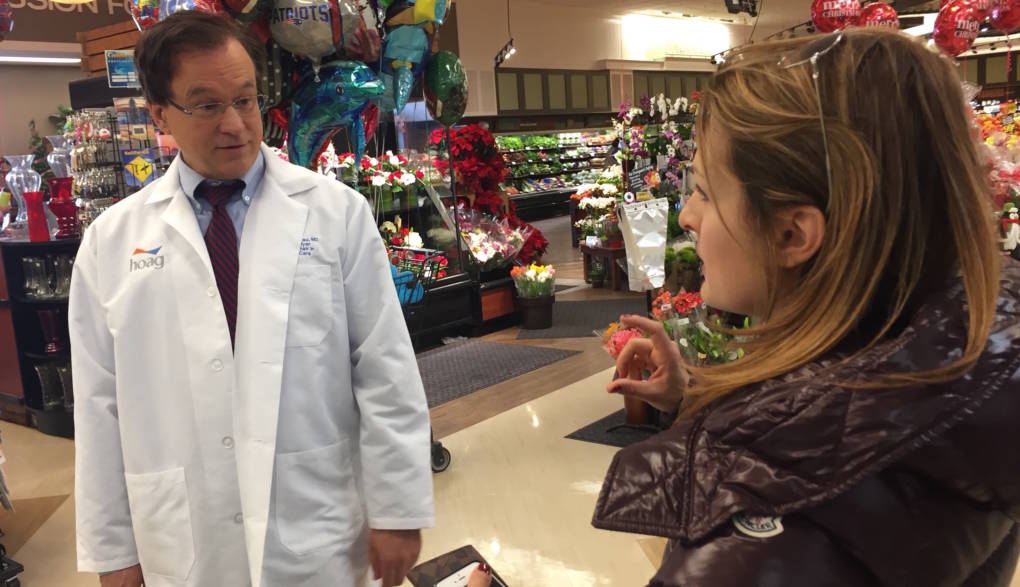
"caption": "Dr. Daniel Nadeau gives Allison Scott a few tips on getting kids to eat healthy, at Ralph's Supermarket in Huntington Beach.",
"description": "Dr. Daniel Nadeau gives Allison Scott a few tips on getting kids to eat healthy, at Ralph's Supermarket in Huntington Beach.",
"title": "shop-with-doc",
"credit": "David Gorn/KQED",
"status": "inherit",
"isLoading": false,
"fetchFailed": false
},
"futureofyou_188656": {
"type": "attachments",
"id": "futureofyou_188656",
"meta": {
"index": "attachments_1716263798",
"site": "futureofyou",
"id": "188656",
"found": true
},
"parent": 187778,
"imgSizes": {
"twentyfourteen-full-width": {
"file": "https://ww2.kqed.org/app/uploads/sites/13/2016/06/StemCells-1038x576.jpg",
"width": 1038,
"mimeType": "image/jpeg",
"height": 576
},
"thumbnail": {
"file": "https://ww2.kqed.org/app/uploads/sites/13/2016/06/StemCells-400x267.jpg",
"width": 400,
"mimeType": "image/jpeg",
"height": 267
},
"fd-sm": {
"file": "https://ww2.kqed.org/app/uploads/sites/13/2016/06/StemCells-960x641.jpg",
"width": 960,
"mimeType": "image/jpeg",
"height": 641
},
"post-thumbnail": {
"file": "https://ww2.kqed.org/app/uploads/sites/13/2016/06/StemCells-672x372.jpg",
"width": 672,
"mimeType": "image/jpeg",
"height": 372
},
"kqedFullSize": {
"file": "https://ww2.kqed.org/app/uploads/sites/13/2016/06/StemCells-e1466538458286.jpg",
"width": 1920,
"height": 1282
},
"large": {
"file": "https://ww2.kqed.org/app/uploads/sites/13/2016/06/StemCells-1180x788.jpg",
"width": 1180,
"mimeType": "image/jpeg",
"height": 788
},
"guest-author-50": {
"file": "https://ww2.kqed.org/app/uploads/sites/13/2016/06/StemCells-50x50.jpg",
"width": 50,
"mimeType": "image/jpeg",
"height": 50
},
"guest-author-96": {
"file": "https://ww2.kqed.org/app/uploads/sites/13/2016/06/StemCells-96x96.jpg",
"width": 96,
"mimeType": "image/jpeg",
"height": 96
},
"medium": {
"file": "https://ww2.kqed.org/app/uploads/sites/13/2016/06/StemCells-800x534.jpg",
"width": 800,
"mimeType": "image/jpeg",
"height": 534
},
"guest-author-64": {
"file": "https://ww2.kqed.org/app/uploads/sites/13/2016/06/StemCells-64x64.jpg",
"width": 64,
"mimeType": "image/jpeg",
"height": 64
},
"guest-author-32": {
"file": "https://ww2.kqed.org/app/uploads/sites/13/2016/06/StemCells-32x32.jpg",
"width": 32,
"mimeType": "image/jpeg",
"height": 32
},
"fd-lrg": {
"file": "https://ww2.kqed.org/app/uploads/sites/13/2016/06/StemCells-1920x1282.jpg",
"width": 1920,
"mimeType": "image/jpeg",
"height": 1282
},
"fd-med": {
"file": "https://ww2.kqed.org/app/uploads/sites/13/2016/06/StemCells-1180x788.jpg",
"width": 1180,
"mimeType": "image/jpeg",
"height": 788
},
"detail": {
"file": "https://ww2.kqed.org/app/uploads/sites/13/2016/06/StemCells-150x150.jpg",
"width": 150,
"mimeType": "image/jpeg",
"height": 150
},
"medium_large": {
"file": "https://ww2.kqed.org/app/uploads/sites/13/2016/06/StemCells-768x513.jpg",
"width": 768,
"mimeType": "image/jpeg",
"height": 513
},
"guest-author-128": {
"file": "https://ww2.kqed.org/app/uploads/sites/13/2016/06/StemCells-128x128.jpg",
"width": 128,
"mimeType": "image/jpeg",
"height": 128
}
},
"publishDate": 1466538329,
"modified": 1515539971,
"caption": "Buttons with the slogan 'Save Lives With Stem Cells,' in support of Prop. 71 at the Stem Cell Research Proposition Party at the Biltmore Hotel Nov. 2, 2004 in Los Angeles, California.",
"description": "Buttons with the slogan 'Save Lives With Stem Cells,' in support of Prop. 71 at the Stem Cell Research Proposition Party at the Biltmore Hotel Nov. 2, 2004 in Los Angeles, California.",
"title": "Stem Cell Research Proposition Party",
"credit": "Frazer Harrison/Getty Images",
"status": "inherit",
"isLoading": false,
"fetchFailed": false
},
"futureofyou_321860": {
"type": "attachments",
"id": "futureofyou_321860",
"meta": {
"index": "attachments_1716263798",
"site": "futureofyou",
"id": "321860",
"found": true
},
"parent": 321859,
"imgSizes": {
"small": {
"file": "https://ww2.kqed.org/app/uploads/sites/13/2017/01/head-img_6356-edit_custom-1a0a767a399d7b66b5d21dc079aa8a213bd88398-520x346.jpg",
"width": 520,
"mimeType": "image/jpeg",
"height": 346
},
"twentyfourteen-full-width": {
"file": "https://ww2.kqed.org/app/uploads/sites/13/2017/01/head-img_6356-edit_custom-1a0a767a399d7b66b5d21dc079aa8a213bd88398-1038x576.jpg",
"width": 1038,
"mimeType": "image/jpeg",
"height": 576
},
"thumbnail": {
"file": "https://ww2.kqed.org/app/uploads/sites/13/2017/01/head-img_6356-edit_custom-1a0a767a399d7b66b5d21dc079aa8a213bd88398-160x107.jpg",
"width": 160,
"mimeType": "image/jpeg",
"height": 107
},
"fd-sm": {
"file": "https://ww2.kqed.org/app/uploads/sites/13/2017/01/head-img_6356-edit_custom-1a0a767a399d7b66b5d21dc079aa8a213bd88398-960x639.jpg",
"width": 960,
"mimeType": "image/jpeg",
"height": 639
},
"post-thumbnail": {
"file": "https://ww2.kqed.org/app/uploads/sites/13/2017/01/head-img_6356-edit_custom-1a0a767a399d7b66b5d21dc079aa8a213bd88398-672x372.jpg",
"width": 672,
"mimeType": "image/jpeg",
"height": 372
},
"xsmall": {
"file": "https://ww2.kqed.org/app/uploads/sites/13/2017/01/head-img_6356-edit_custom-1a0a767a399d7b66b5d21dc079aa8a213bd88398-375x250.jpg",
"width": 375,
"mimeType": "image/jpeg",
"height": 250
},
"kqedFullSize": {
"file": "https://ww2.kqed.org/app/uploads/sites/13/2017/01/head-img_6356-edit_custom-1a0a767a399d7b66b5d21dc079aa8a213bd88398-e1484766060825.jpg",
"width": 1920,
"height": 1279
},
"large": {
"file": "https://ww2.kqed.org/app/uploads/sites/13/2017/01/head-img_6356-edit_custom-1a0a767a399d7b66b5d21dc079aa8a213bd88398-1020x679.jpg",
"width": 1020,
"mimeType": "image/jpeg",
"height": 679
},
"xlarge": {
"file": "https://ww2.kqed.org/app/uploads/sites/13/2017/01/head-img_6356-edit_custom-1a0a767a399d7b66b5d21dc079aa8a213bd88398-1180x786.jpg",
"width": 1180,
"mimeType": "image/jpeg",
"height": 786
},
"guest-author-50": {
"file": "https://ww2.kqed.org/app/uploads/sites/13/2017/01/head-img_6356-edit_custom-1a0a767a399d7b66b5d21dc079aa8a213bd88398-50x50.jpg",
"width": 50,
"mimeType": "image/jpeg",
"height": 50
},
"guest-author-96": {
"file": "https://ww2.kqed.org/app/uploads/sites/13/2017/01/head-img_6356-edit_custom-1a0a767a399d7b66b5d21dc079aa8a213bd88398-96x96.jpg",
"width": 96,
"mimeType": "image/jpeg",
"height": 96
},
"medium": {
"file": "https://ww2.kqed.org/app/uploads/sites/13/2017/01/head-img_6356-edit_custom-1a0a767a399d7b66b5d21dc079aa8a213bd88398-800x533.jpg",
"width": 800,
"mimeType": "image/jpeg",
"height": 533
},
"guest-author-64": {
"file": "https://ww2.kqed.org/app/uploads/sites/13/2017/01/head-img_6356-edit_custom-1a0a767a399d7b66b5d21dc079aa8a213bd88398-64x64.jpg",
"width": 64,
"mimeType": "image/jpeg",
"height": 64
},
"guest-author-32": {
"file": "https://ww2.kqed.org/app/uploads/sites/13/2017/01/head-img_6356-edit_custom-1a0a767a399d7b66b5d21dc079aa8a213bd88398-32x32.jpg",
"width": 32,
"mimeType": "image/jpeg",
"height": 32
},
"fd-lrg": {
"file": "https://ww2.kqed.org/app/uploads/sites/13/2017/01/head-img_6356-edit_custom-1a0a767a399d7b66b5d21dc079aa8a213bd88398-1920x1279.jpg",
"width": 1920,
"mimeType": "image/jpeg",
"height": 1279
},
"fd-med": {
"file": "https://ww2.kqed.org/app/uploads/sites/13/2017/01/head-img_6356-edit_custom-1a0a767a399d7b66b5d21dc079aa8a213bd88398-1180x786.jpg",
"width": 1180,
"mimeType": "image/jpeg",
"height": 786
},
"full-width": {
"file": "https://ww2.kqed.org/app/uploads/sites/13/2017/01/head-img_6356-edit_custom-1a0a767a399d7b66b5d21dc079aa8a213bd88398-1920x1279.jpg",
"width": 1920,
"mimeType": "image/jpeg",
"height": 1279
},
"detail": {
"file": "https://ww2.kqed.org/app/uploads/sites/13/2017/01/head-img_6356-edit_custom-1a0a767a399d7b66b5d21dc079aa8a213bd88398-150x150.jpg",
"width": 150,
"mimeType": "image/jpeg",
"height": 150
},
"medium_large": {
"file": "https://ww2.kqed.org/app/uploads/sites/13/2017/01/head-img_6356-edit_custom-1a0a767a399d7b66b5d21dc079aa8a213bd88398-768x511.jpg",
"width": 768,
"mimeType": "image/jpeg",
"height": 511
},
"guest-author-128": {
"file": "https://ww2.kqed.org/app/uploads/sites/13/2017/01/head-img_6356-edit_custom-1a0a767a399d7b66b5d21dc079aa8a213bd88398-128x128.jpg",
"width": 128,
"mimeType": "image/jpeg",
"height": 128
},
"xxsmall": {
"file": "https://ww2.kqed.org/app/uploads/sites/13/2017/01/head-img_6356-edit_custom-1a0a767a399d7b66b5d21dc079aa8a213bd88398-240x160.jpg",
"width": 240,
"mimeType": "image/jpeg",
"height": 160
}
},
"publishDate": 1484753819,
"modified": 1484754296,
"caption": "A user wears a tDCS device sold by an online retailer, Caputron.",
"description": null,
"title": "A user wears a tDCS device sold by an online retailer, Caputron.",
"credit": "Courtesy of Robin Azzam",
"status": "inherit",
"isLoading": false,
"fetchFailed": false
},
"futureofyou_314587": {
"type": "attachments",
"id": "futureofyou_314587",
"meta": {
"index": "attachments_1716263798",
"site": "futureofyou",
"id": "314587",
"found": true
},
"parent": 314586,
"imgSizes": {
"small": {
"file": "https://ww2.kqed.org/app/uploads/sites/13/2017/01/gettyimages-680792545_custom-a7e5b14b6778963dd61592131176ffd7f82318aa-520x353.jpg",
"width": 520,
"mimeType": "image/jpeg",
"height": 353
},
"twentyfourteen-full-width": {
"file": "https://ww2.kqed.org/app/uploads/sites/13/2017/01/gettyimages-680792545_custom-a7e5b14b6778963dd61592131176ffd7f82318aa-1038x576.jpg",
"width": 1038,
"mimeType": "image/jpeg",
"height": 576
},
"thumbnail": {
"file": "https://ww2.kqed.org/app/uploads/sites/13/2017/01/gettyimages-680792545_custom-a7e5b14b6778963dd61592131176ffd7f82318aa-160x109.jpg",
"width": 160,
"mimeType": "image/jpeg",
"height": 109
},
"fd-sm": {
"file": "https://ww2.kqed.org/app/uploads/sites/13/2017/01/gettyimages-680792545_custom-a7e5b14b6778963dd61592131176ffd7f82318aa-960x651.jpg",
"width": 960,
"mimeType": "image/jpeg",
"height": 651
},
"post-thumbnail": {
"file": "https://ww2.kqed.org/app/uploads/sites/13/2017/01/gettyimages-680792545_custom-a7e5b14b6778963dd61592131176ffd7f82318aa-672x372.jpg",
"width": 672,
"mimeType": "image/jpeg",
"height": 372
},
"xsmall": {
"file": "https://ww2.kqed.org/app/uploads/sites/13/2017/01/gettyimages-680792545_custom-a7e5b14b6778963dd61592131176ffd7f82318aa-375x254.jpg",
"width": 375,
"mimeType": "image/jpeg",
"height": 254
},
"kqedFullSize": {
"file": "https://ww2.kqed.org/app/uploads/sites/13/2017/01/gettyimages-680792545_custom-a7e5b14b6778963dd61592131176ffd7f82318aa.jpg",
"width": 2101,
"height": 1425
},
"large": {
"file": "https://ww2.kqed.org/app/uploads/sites/13/2017/01/gettyimages-680792545_custom-a7e5b14b6778963dd61592131176ffd7f82318aa-1020x692.jpg",
"width": 1020,
"mimeType": "image/jpeg",
"height": 692
},
"xlarge": {
"file": "https://ww2.kqed.org/app/uploads/sites/13/2017/01/gettyimages-680792545_custom-a7e5b14b6778963dd61592131176ffd7f82318aa-1180x800.jpg",
"width": 1180,
"mimeType": "image/jpeg",
"height": 800
},
"guest-author-50": {
"file": "https://ww2.kqed.org/app/uploads/sites/13/2017/01/gettyimages-680792545_custom-a7e5b14b6778963dd61592131176ffd7f82318aa-50x50.jpg",
"width": 50,
"mimeType": "image/jpeg",
"height": 50
},
"guest-author-96": {
"file": "https://ww2.kqed.org/app/uploads/sites/13/2017/01/gettyimages-680792545_custom-a7e5b14b6778963dd61592131176ffd7f82318aa-96x96.jpg",
"width": 96,
"mimeType": "image/jpeg",
"height": 96
},
"medium": {
"file": "https://ww2.kqed.org/app/uploads/sites/13/2017/01/gettyimages-680792545_custom-a7e5b14b6778963dd61592131176ffd7f82318aa-800x543.jpg",
"width": 800,
"mimeType": "image/jpeg",
"height": 543
},
"guest-author-64": {
"file": "https://ww2.kqed.org/app/uploads/sites/13/2017/01/gettyimages-680792545_custom-a7e5b14b6778963dd61592131176ffd7f82318aa-64x64.jpg",
"width": 64,
"mimeType": "image/jpeg",
"height": 64
},
"guest-author-32": {
"file": "https://ww2.kqed.org/app/uploads/sites/13/2017/01/gettyimages-680792545_custom-a7e5b14b6778963dd61592131176ffd7f82318aa-32x32.jpg",
"width": 32,
"mimeType": "image/jpeg",
"height": 32
},
"fd-lrg": {
"file": "https://ww2.kqed.org/app/uploads/sites/13/2017/01/gettyimages-680792545_custom-a7e5b14b6778963dd61592131176ffd7f82318aa-1920x1302.jpg",
"width": 1920,
"mimeType": "image/jpeg",
"height": 1302
},
"fd-med": {
"file": "https://ww2.kqed.org/app/uploads/sites/13/2017/01/gettyimages-680792545_custom-a7e5b14b6778963dd61592131176ffd7f82318aa-1180x800.jpg",
"width": 1180,
"mimeType": "image/jpeg",
"height": 800
},
"full-width": {
"file": "https://ww2.kqed.org/app/uploads/sites/13/2017/01/gettyimages-680792545_custom-a7e5b14b6778963dd61592131176ffd7f82318aa-1920x1302.jpg",
"width": 1920,
"mimeType": "image/jpeg",
"height": 1302
},
"detail": {
"file": "https://ww2.kqed.org/app/uploads/sites/13/2017/01/gettyimages-680792545_custom-a7e5b14b6778963dd61592131176ffd7f82318aa-150x150.jpg",
"width": 150,
"mimeType": "image/jpeg",
"height": 150
},
"medium_large": {
"file": "https://ww2.kqed.org/app/uploads/sites/13/2017/01/gettyimages-680792545_custom-a7e5b14b6778963dd61592131176ffd7f82318aa-768x521.jpg",
"width": 768,
"mimeType": "image/jpeg",
"height": 521
},
"guest-author-128": {
"file": "https://ww2.kqed.org/app/uploads/sites/13/2017/01/gettyimages-680792545_custom-a7e5b14b6778963dd61592131176ffd7f82318aa-128x128.jpg",
"width": 128,
"mimeType": "image/jpeg",
"height": 128
},
"xxsmall": {
"file": "https://ww2.kqed.org/app/uploads/sites/13/2017/01/gettyimages-680792545_custom-a7e5b14b6778963dd61592131176ffd7f82318aa-240x163.jpg",
"width": 240,
"mimeType": "image/jpeg",
"height": 163
}
},
"publishDate": 1483634019,
"modified": 1484239723,
"caption": null,
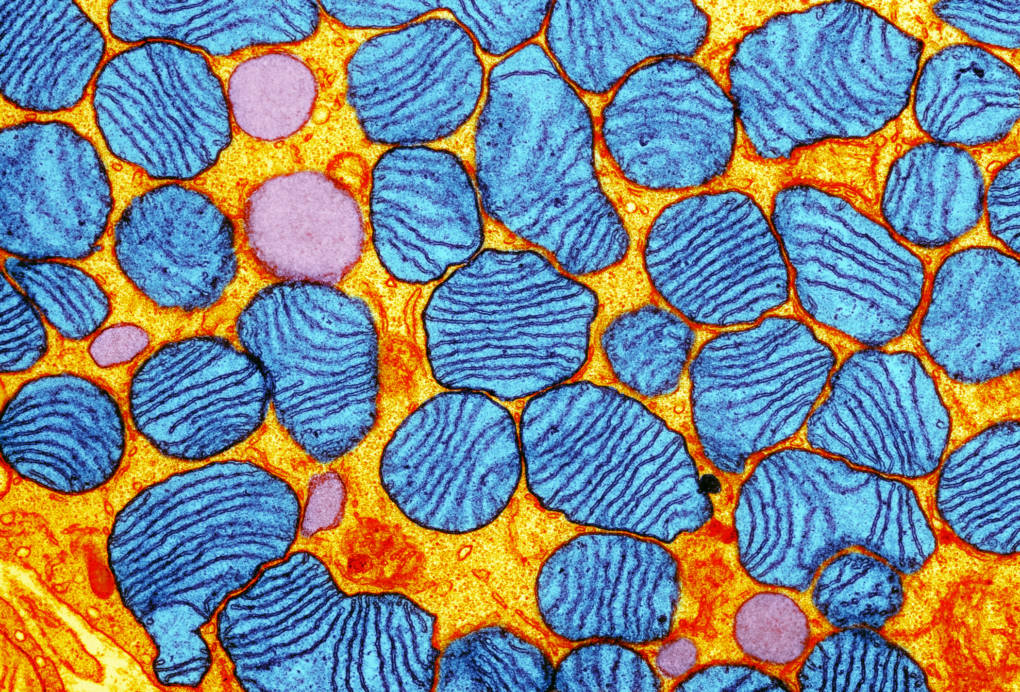
"description": "The genes in mitochondria, which are the powerhouses in human cells, can cause fatal inherited disease. But replacing the bad genes may cause other health problems.",
"title": "The genes in mitochondria, which are the powerhouses in human cells, can cause fatal inherited disease. But replacing the bad genes may cause other health problems.",
"credit": "Getty Images/Science Photo Library",
"status": "inherit",
"isLoading": false,
"fetchFailed": false
},
"futureofyou_314583": {
"type": "attachments",
"id": "futureofyou_314583",
"meta": {
"index": "attachments_1716263798",
"site": "futureofyou",
"id": "314583",
"found": true
},
"parent": 314582,
"imgSizes": {
"small": {
"file": "https://ww2.kqed.org/app/uploads/sites/13/2016/12/yoga-new_wide-638913552f36cda5d3af27012681b8ee5ed3f48e-520x292.jpg",
"width": 520,
"mimeType": "image/jpeg",
"height": 292
},
"twentyfourteen-full-width": {
"file": "https://ww2.kqed.org/app/uploads/sites/13/2016/12/yoga-new_wide-638913552f36cda5d3af27012681b8ee5ed3f48e-1038x576.jpg",
"width": 1038,
"mimeType": "image/jpeg",
"height": 576
},
"thumbnail": {
"file": "https://ww2.kqed.org/app/uploads/sites/13/2016/12/yoga-new_wide-638913552f36cda5d3af27012681b8ee5ed3f48e-160x90.jpg",
"width": 160,
"mimeType": "image/jpeg",
"height": 90
},
"fd-sm": {
"file": "https://ww2.kqed.org/app/uploads/sites/13/2016/12/yoga-new_wide-638913552f36cda5d3af27012681b8ee5ed3f48e-960x539.jpg",
"width": 960,
"mimeType": "image/jpeg",
"height": 539
},
"post-thumbnail": {
"file": "https://ww2.kqed.org/app/uploads/sites/13/2016/12/yoga-new_wide-638913552f36cda5d3af27012681b8ee5ed3f48e-672x372.jpg",
"width": 672,
"mimeType": "image/jpeg",
"height": 372
},
"xsmall": {
"file": "https://ww2.kqed.org/app/uploads/sites/13/2016/12/yoga-new_wide-638913552f36cda5d3af27012681b8ee5ed3f48e-375x211.jpg",
"width": 375,
"mimeType": "image/jpeg",
"height": 211
},
"kqedFullSize": {
"file": "https://ww2.kqed.org/app/uploads/sites/13/2016/12/yoga-new_wide-638913552f36cda5d3af27012681b8ee5ed3f48e.jpg",
"width": 1997,
"height": 1122
},
"large": {
"file": "https://ww2.kqed.org/app/uploads/sites/13/2016/12/yoga-new_wide-638913552f36cda5d3af27012681b8ee5ed3f48e-1020x573.jpg",
"width": 1020,
"mimeType": "image/jpeg",
"height": 573
},
"xlarge": {
"file": "https://ww2.kqed.org/app/uploads/sites/13/2016/12/yoga-new_wide-638913552f36cda5d3af27012681b8ee5ed3f48e-1180x663.jpg",
"width": 1180,
"mimeType": "image/jpeg",
"height": 663
},
"guest-author-50": {
"file": "https://ww2.kqed.org/app/uploads/sites/13/2016/12/yoga-new_wide-638913552f36cda5d3af27012681b8ee5ed3f48e-50x50.jpg",
"width": 50,
"mimeType": "image/jpeg",
"height": 50
},
"guest-author-96": {
"file": "https://ww2.kqed.org/app/uploads/sites/13/2016/12/yoga-new_wide-638913552f36cda5d3af27012681b8ee5ed3f48e-96x96.jpg",
"width": 96,
"mimeType": "image/jpeg",
"height": 96
},
"medium": {
"file": "https://ww2.kqed.org/app/uploads/sites/13/2016/12/yoga-new_wide-638913552f36cda5d3af27012681b8ee5ed3f48e-800x449.jpg",
"width": 800,
"mimeType": "image/jpeg",
"height": 449
},
"guest-author-64": {
"file": "https://ww2.kqed.org/app/uploads/sites/13/2016/12/yoga-new_wide-638913552f36cda5d3af27012681b8ee5ed3f48e-64x64.jpg",
"width": 64,
"mimeType": "image/jpeg",
"height": 64
},
"guest-author-32": {
"file": "https://ww2.kqed.org/app/uploads/sites/13/2016/12/yoga-new_wide-638913552f36cda5d3af27012681b8ee5ed3f48e-32x32.jpg",
"width": 32,
"mimeType": "image/jpeg",
"height": 32
},
"fd-lrg": {
"file": "https://ww2.kqed.org/app/uploads/sites/13/2016/12/yoga-new_wide-638913552f36cda5d3af27012681b8ee5ed3f48e-1920x1079.jpg",
"width": 1920,
"mimeType": "image/jpeg",
"height": 1079
},
"fd-med": {
"file": "https://ww2.kqed.org/app/uploads/sites/13/2016/12/yoga-new_wide-638913552f36cda5d3af27012681b8ee5ed3f48e-1180x663.jpg",
"width": 1180,
"mimeType": "image/jpeg",
"height": 663
},
"full-width": {
"file": "https://ww2.kqed.org/app/uploads/sites/13/2016/12/yoga-new_wide-638913552f36cda5d3af27012681b8ee5ed3f48e-1920x1079.jpg",
"width": 1920,
"mimeType": "image/jpeg",
"height": 1079
},
"detail": {
"file": "https://ww2.kqed.org/app/uploads/sites/13/2016/12/yoga-new_wide-638913552f36cda5d3af27012681b8ee5ed3f48e-150x150.jpg",
"width": 150,
"mimeType": "image/jpeg",
"height": 150
},
"medium_large": {
"file": "https://ww2.kqed.org/app/uploads/sites/13/2016/12/yoga-new_wide-638913552f36cda5d3af27012681b8ee5ed3f48e-768x431.jpg",
"width": 768,
"mimeType": "image/jpeg",
"height": 431
},
"guest-author-128": {
"file": "https://ww2.kqed.org/app/uploads/sites/13/2016/12/yoga-new_wide-638913552f36cda5d3af27012681b8ee5ed3f48e-128x128.jpg",
"width": 128,
"mimeType": "image/jpeg",
"height": 128
},
"xxsmall": {
"file": "https://ww2.kqed.org/app/uploads/sites/13/2016/12/yoga-new_wide-638913552f36cda5d3af27012681b8ee5ed3f48e-240x135.jpg",
"width": 240,
"mimeType": "image/jpeg",
"height": 135
}
},
"publishDate": 1483633959,
"modified": 1483633959,
"caption": null,
"description": "It's sometimes hard to assess the value of health claims about yoga, but if it relieves some pain, that may be enough.",
"title": "It's sometimes hard to assess the value of health claims about yoga, but if it relieves some pain, that may be enough.",
"credit": null,
"status": "inherit",
"isLoading": false,
"fetchFailed": false
},
"futureofyou_318248": {
"type": "attachments",
"id": "futureofyou_318248",
"meta": {
"index": "attachments_1716263798",
"site": "futureofyou",
"id": "318248",
"found": true
},
"parent": 318247,
"imgSizes": {
"small": {
"file": "https://ww2.kqed.org/app/uploads/sites/13/2017/01/Richard-Kogan-e1484184551660-520x346.jpg",
"width": 520,
"mimeType": "image/jpeg",
"height": 346
},
"twentyfourteen-full-width": {
"file": "https://ww2.kqed.org/app/uploads/sites/13/2017/01/Richard-Kogan-e1484184551660-1038x576.jpg",
"width": 1038,
"mimeType": "image/jpeg",
"height": 576
},
"thumbnail": {
"file": "https://ww2.kqed.org/app/uploads/sites/13/2017/01/Richard-Kogan-e1484184551660-160x106.jpg",
"width": 160,
"mimeType": "image/jpeg",
"height": 106
},
"fd-sm": {
"file": "https://ww2.kqed.org/app/uploads/sites/13/2017/01/Richard-Kogan-e1484184551660-960x639.jpg",
"width": 960,
"mimeType": "image/jpeg",
"height": 639
},
"post-thumbnail": {
"file": "https://ww2.kqed.org/app/uploads/sites/13/2017/01/Richard-Kogan-e1484184551660-672x372.jpg",
"width": 672,
"mimeType": "image/jpeg",
"height": 372
},
"xsmall": {
"file": "https://ww2.kqed.org/app/uploads/sites/13/2017/01/Richard-Kogan-e1484184551660-375x249.jpg",
"width": 375,
"mimeType": "image/jpeg",
"height": 249
},
"kqedFullSize": {
"file": "https://ww2.kqed.org/app/uploads/sites/13/2017/01/Richard-Kogan-e1484184551660.jpg",
"width": 1876,
"height": 1248
},
"large": {
"file": "https://ww2.kqed.org/app/uploads/sites/13/2017/01/Richard-Kogan-e1484184551660-1020x679.jpg",
"width": 1020,
"mimeType": "image/jpeg",
"height": 679
},
"xlarge": {
"file": "https://ww2.kqed.org/app/uploads/sites/13/2017/01/Richard-Kogan-e1484184551660-1180x785.jpg",
"width": 1180,
"mimeType": "image/jpeg",
"height": 785
},
"guest-author-50": {
"file": "https://ww2.kqed.org/app/uploads/sites/13/2017/01/Richard-Kogan-e1484184551660-50x50.jpg",
"width": 50,
"mimeType": "image/jpeg",
"height": 50
},
"guest-author-96": {
"file": "https://ww2.kqed.org/app/uploads/sites/13/2017/01/Richard-Kogan-e1484184551660-96x96.jpg",
"width": 96,
"mimeType": "image/jpeg",
"height": 96
},
"medium": {
"file": "https://ww2.kqed.org/app/uploads/sites/13/2017/01/Richard-Kogan-e1484184551660-800x532.jpg",
"width": 800,
"mimeType": "image/jpeg",
"height": 532
},
"guest-author-64": {
"file": "https://ww2.kqed.org/app/uploads/sites/13/2017/01/Richard-Kogan-e1484184551660-64x64.jpg",
"width": 64,
"mimeType": "image/jpeg",
"height": 64
},
"guest-author-32": {
"file": "https://ww2.kqed.org/app/uploads/sites/13/2017/01/Richard-Kogan-e1484184551660-32x32.jpg",
"width": 32,
"mimeType": "image/jpeg",
"height": 32
},
"fd-lrg": {
"file": "https://ww2.kqed.org/app/uploads/sites/13/2017/01/Richard-Kogan-1920x1278.jpg",
"width": 1920,
"mimeType": "image/jpeg",
"height": 1278
},
"fd-med": {
"file": "https://ww2.kqed.org/app/uploads/sites/13/2017/01/Richard-Kogan-e1484184551660-1180x785.jpg",
"width": 1180,
"mimeType": "image/jpeg",
"height": 785
},
"full-width": {
"file": "https://ww2.kqed.org/app/uploads/sites/13/2017/01/Richard-Kogan-1920x1278.jpg",
"width": 1920,
"mimeType": "image/jpeg",
"height": 1278
},
"detail": {
"file": "https://ww2.kqed.org/app/uploads/sites/13/2017/01/Richard-Kogan-e1484184551660-150x150.jpg",
"width": 150,
"mimeType": "image/jpeg",
"height": 150
},
"medium_large": {
"file": "https://ww2.kqed.org/app/uploads/sites/13/2017/01/Richard-Kogan-e1484184551660-768x511.jpg",
"width": 768,
"mimeType": "image/jpeg",
"height": 511
},
"guest-author-128": {
"file": "https://ww2.kqed.org/app/uploads/sites/13/2017/01/Richard-Kogan-e1484184551660-128x128.jpg",
"width": 128,
"mimeType": "image/jpeg",
"height": 128
},
"xxsmall": {
"file": "https://ww2.kqed.org/app/uploads/sites/13/2017/01/Richard-Kogan-e1484184551660-240x160.jpg",
"width": 240,
"mimeType": "image/jpeg",
"height": 160
}
},
"publishDate": 1484184484,
"modified": 1484184633,
"caption": "Psychiatrist Richard Kogan speaking at TEDMED in Palm Springs about using music to treat mental illness. ",
"description": null,
"title": "richard-kogan",
"credit": "TEDMED",
"status": "inherit",
"isLoading": false,
"fetchFailed": false
},
"futureofyou_314572": {
"type": "attachments",
"id": "futureofyou_314572",
"meta": {
"index": "attachments_1716263798",
"site": "futureofyou",
"id": "314572",
"found": true
},
"parent": 314571,
"imgSizes": {
"small": {
"file": "https://ww2.kqed.org/app/uploads/sites/13/2016/12/amyloid-proteins_enl-f71d0658eb2189982090f110959c84206cd65ec1-520x346.jpg",
"width": 520,
"mimeType": "image/jpeg",
"height": 346
},
"twentyfourteen-full-width": {
"file": "https://ww2.kqed.org/app/uploads/sites/13/2016/12/amyloid-proteins_enl-f71d0658eb2189982090f110959c84206cd65ec1-1038x576.jpg",
"width": 1038,
"mimeType": "image/jpeg",
"height": 576
},
"thumbnail": {
"file": "https://ww2.kqed.org/app/uploads/sites/13/2016/12/amyloid-proteins_enl-f71d0658eb2189982090f110959c84206cd65ec1-160x106.jpg",
"width": 160,
"mimeType": "image/jpeg",
"height": 106
},
"fd-sm": {
"file": "https://ww2.kqed.org/app/uploads/sites/13/2016/12/amyloid-proteins_enl-f71d0658eb2189982090f110959c84206cd65ec1-960x639.jpg",
"width": 960,
"mimeType": "image/jpeg",
"height": 639
},
"post-thumbnail": {
"file": "https://ww2.kqed.org/app/uploads/sites/13/2016/12/amyloid-proteins_enl-f71d0658eb2189982090f110959c84206cd65ec1-672x372.jpg",
"width": 672,
"mimeType": "image/jpeg",
"height": 372
},
"xsmall": {
"file": "https://ww2.kqed.org/app/uploads/sites/13/2016/12/amyloid-proteins_enl-f71d0658eb2189982090f110959c84206cd65ec1-375x249.jpg",
"width": 375,
"mimeType": "image/jpeg",
"height": 249
},
"kqedFullSize": {
"file": "https://ww2.kqed.org/app/uploads/sites/13/2016/12/amyloid-proteins_enl-f71d0658eb2189982090f110959c84206cd65ec1.jpg",
"width": 1975,
"height": 1314
},
"large": {
"file": "https://ww2.kqed.org/app/uploads/sites/13/2016/12/amyloid-proteins_enl-f71d0658eb2189982090f110959c84206cd65ec1-1020x679.jpg",
"width": 1020,
"mimeType": "image/jpeg",
"height": 679
},
"xlarge": {
"file": "https://ww2.kqed.org/app/uploads/sites/13/2016/12/amyloid-proteins_enl-f71d0658eb2189982090f110959c84206cd65ec1-1180x785.jpg",
"width": 1180,
"mimeType": "image/jpeg",
"height": 785
},
"guest-author-50": {
"file": "https://ww2.kqed.org/app/uploads/sites/13/2016/12/amyloid-proteins_enl-f71d0658eb2189982090f110959c84206cd65ec1-50x50.jpg",
"width": 50,
"mimeType": "image/jpeg",
"height": 50
},
"guest-author-96": {
"file": "https://ww2.kqed.org/app/uploads/sites/13/2016/12/amyloid-proteins_enl-f71d0658eb2189982090f110959c84206cd65ec1-96x96.jpg",
"width": 96,
"mimeType": "image/jpeg",
"height": 96
},
"medium": {
"file": "https://ww2.kqed.org/app/uploads/sites/13/2016/12/amyloid-proteins_enl-f71d0658eb2189982090f110959c84206cd65ec1-800x532.jpg",
"width": 800,
"mimeType": "image/jpeg",
"height": 532
},
"guest-author-64": {
"file": "https://ww2.kqed.org/app/uploads/sites/13/2016/12/amyloid-proteins_enl-f71d0658eb2189982090f110959c84206cd65ec1-64x64.jpg",
"width": 64,
"mimeType": "image/jpeg",
"height": 64
},
"guest-author-32": {
"file": "https://ww2.kqed.org/app/uploads/sites/13/2016/12/amyloid-proteins_enl-f71d0658eb2189982090f110959c84206cd65ec1-32x32.jpg",
"width": 32,
"mimeType": "image/jpeg",
"height": 32
},
"fd-lrg": {
"file": "https://ww2.kqed.org/app/uploads/sites/13/2016/12/amyloid-proteins_enl-f71d0658eb2189982090f110959c84206cd65ec1-1920x1277.jpg",
"width": 1920,
"mimeType": "image/jpeg",
"height": 1277
},
"fd-med": {
"file": "https://ww2.kqed.org/app/uploads/sites/13/2016/12/amyloid-proteins_enl-f71d0658eb2189982090f110959c84206cd65ec1-1180x785.jpg",
"width": 1180,
"mimeType": "image/jpeg",
"height": 785
},
"full-width": {
"file": "https://ww2.kqed.org/app/uploads/sites/13/2016/12/amyloid-proteins_enl-f71d0658eb2189982090f110959c84206cd65ec1-1920x1277.jpg",
"width": 1920,
"mimeType": "image/jpeg",
"height": 1277
},
"detail": {
"file": "https://ww2.kqed.org/app/uploads/sites/13/2016/12/amyloid-proteins_enl-f71d0658eb2189982090f110959c84206cd65ec1-150x150.jpg",
"width": 150,
"mimeType": "image/jpeg",
"height": 150
},
"medium_large": {
"file": "https://ww2.kqed.org/app/uploads/sites/13/2016/12/amyloid-proteins_enl-f71d0658eb2189982090f110959c84206cd65ec1-768x511.jpg",
"width": 768,
"mimeType": "image/jpeg",
"height": 511
},
"guest-author-128": {
"file": "https://ww2.kqed.org/app/uploads/sites/13/2016/12/amyloid-proteins_enl-f71d0658eb2189982090f110959c84206cd65ec1-128x128.jpg",
"width": 128,
"mimeType": "image/jpeg",
"height": 128
},
"xxsmall": {
"file": "https://ww2.kqed.org/app/uploads/sites/13/2016/12/amyloid-proteins_enl-f71d0658eb2189982090f110959c84206cd65ec1-240x160.jpg",
"width": 240,
"mimeType": "image/jpeg",
"height": 160
}
},
"publishDate": 1483633805,
"modified": 1484153229,
"caption": "Diseased brain tissue from an Alzheimer's patient showing amyloid plaques (in blue) located in the gray matter of the brain.",
"description": "Diseased brain tissue from an Alzheimer's patient showing amyloid plaques (in blue) located in the gray matter of the brain.",
"title": "Diseased brain tissue from an Alzheimer's patient showing amyloid plaques (in blue) located in the gray matter of the brain.",
"credit": "Dr Cecil H Fox/Science Source/Getty Images",
"status": "inherit",
"isLoading": false,
"fetchFailed": false
},
"futureofyou_106921": {
"type": "attachments",
"id": "futureofyou_106921",
"meta": {
"index": "attachments_1716263798",
"site": "futureofyou",
"id": "106921",
"found": true
},
"parent": 106919,
"imgSizes": {
"twentyfourteen-full-width": {
"file": "https://ww2.kqed.org/app/uploads/sites/13/2016/02/Biden-1038x576.jpg",
"width": 1038,
"mimeType": "image/jpeg",
"height": 576
},
"thumbnail": {
"file": "https://ww2.kqed.org/app/uploads/sites/13/2016/02/Biden-400x267.jpg",
"width": 400,
"mimeType": "image/jpeg",
"height": 267
},
"fd-sm": {
"file": "https://ww2.kqed.org/app/uploads/sites/13/2016/02/Biden-960x640.jpg",
"width": 960,
"mimeType": "image/jpeg",
"height": 640
},
"post-thumbnail": {
"file": "https://ww2.kqed.org/app/uploads/sites/13/2016/02/Biden-672x372.jpg",
"width": 672,
"mimeType": "image/jpeg",
"height": 372
},
"kqedFullSize": {
"file": "https://ww2.kqed.org/app/uploads/sites/13/2016/02/Biden.jpg",
"width": 1920,
"height": 1280
},
"large": {
"file": "https://ww2.kqed.org/app/uploads/sites/13/2016/02/Biden-1180x787.jpg",
"width": 1180,
"mimeType": "image/jpeg",
"height": 787
},
"guest-author-96": {
"file": "https://ww2.kqed.org/app/uploads/sites/13/2016/02/Biden-96x96.jpg",
"width": 96,
"mimeType": "image/jpeg",
"height": 96
},
"medium": {
"file": "https://ww2.kqed.org/app/uploads/sites/13/2016/02/Biden-800x533.jpg",
"width": 800,
"mimeType": "image/jpeg",
"height": 533
},
"guest-author-64": {
"file": "https://ww2.kqed.org/app/uploads/sites/13/2016/02/Biden-64x64.jpg",
"width": 64,
"mimeType": "image/jpeg",
"height": 64
},
"guest-author-32": {
"file": "https://ww2.kqed.org/app/uploads/sites/13/2016/02/Biden-32x32.jpg",
"width": 32,
"mimeType": "image/jpeg",
"height": 32
},
"fd-lrg": {
"file": "https://ww2.kqed.org/app/uploads/sites/13/2016/02/Biden-1920x1280.jpg",
"width": 1920,
"mimeType": "image/jpeg",
"height": 1280
},
"fd-med": {
"file": "https://ww2.kqed.org/app/uploads/sites/13/2016/02/Biden-1180x787.jpg",
"width": 1180,
"mimeType": "image/jpeg",
"height": 787
},
"detail": {
"file": "https://ww2.kqed.org/app/uploads/sites/13/2016/02/Biden-75x75.jpg",
"width": 75,
"mimeType": "image/jpeg",
"height": 75
},
"medium_large": {
"file": "https://ww2.kqed.org/app/uploads/sites/13/2016/02/Biden-768x512.jpg",
"width": 768,
"mimeType": "image/jpeg",
"height": 512
},
"guest-author-128": {
"file": "https://ww2.kqed.org/app/uploads/sites/13/2016/02/Biden-128x128.jpg",
"width": 128,
"mimeType": "image/jpeg",
"height": 128
}
},
"publishDate": 1454434183,
"modified": 1484070407,
"caption": "US Vice President Joe Biden takes part in a session on the theme \"Cancer Mooshot: A Call to action\" during the World Economic Forum annual meeting in Davos, on Jan. 19, 2016.\n",
"description": null,
"title": "SWITZERLAND-DAVOS-ECONOMY-POLITICS-MEET-WEF",
"credit": "Fabrice Coffrini/AFP/Getty Images",
"status": "inherit",
"isLoading": false,
"fetchFailed": false
},
"futureofyou_313474": {
"type": "attachments",
"id": "futureofyou_313474",
"meta": {
"index": "attachments_1716263798",
"site": "futureofyou",
"id": "313474",
"found": true
},
"parent": 304635,
"imgSizes": {
"small": {
"file": "https://ww2.kqed.org/app/uploads/sites/13/2016/12/amyloid-beta-520x275.jpg",
"width": 520,
"mimeType": "image/jpeg",
"height": 275
},
"twentyfourteen-full-width": {
"file": "https://ww2.kqed.org/app/uploads/sites/13/2016/12/amyloid-beta-1038x576.jpg",
"width": 1038,
"mimeType": "image/jpeg",
"height": 576
},
"thumbnail": {
"file": "https://ww2.kqed.org/app/uploads/sites/13/2016/12/amyloid-beta-160x85.jpg",
"width": 160,
"mimeType": "image/jpeg",
"height": 85
},
"fd-sm": {
"file": "https://ww2.kqed.org/app/uploads/sites/13/2016/12/amyloid-beta-960x508.jpg",
"width": 960,
"mimeType": "image/jpeg",
"height": 508
},
"post-thumbnail": {
"file": "https://ww2.kqed.org/app/uploads/sites/13/2016/12/amyloid-beta-672x372.jpg",
"width": 672,
"mimeType": "image/jpeg",
"height": 372
},
"xsmall": {
"file": "https://ww2.kqed.org/app/uploads/sites/13/2016/12/amyloid-beta-375x198.jpg",
"width": 375,
"mimeType": "image/jpeg",
"height": 198
},
"kqedFullSize": {
"file": "https://ww2.kqed.org/app/uploads/sites/13/2016/12/amyloid-beta.jpg",
"width": 1272,
"height": 673
},
"large": {
"file": "https://ww2.kqed.org/app/uploads/sites/13/2016/12/amyloid-beta-1020x540.jpg",
"width": 1020,
"mimeType": "image/jpeg",
"height": 540
},
"xlarge": {
"file": "https://ww2.kqed.org/app/uploads/sites/13/2016/12/amyloid-beta-1180x624.jpg",
"width": 1180,
"mimeType": "image/jpeg",
"height": 624
},
"guest-author-50": {
"file": "https://ww2.kqed.org/app/uploads/sites/13/2016/12/amyloid-beta-50x50.jpg",
"width": 50,
"mimeType": "image/jpeg",
"height": 50
},
"guest-author-96": {
"file": "https://ww2.kqed.org/app/uploads/sites/13/2016/12/amyloid-beta-96x96.jpg",
"width": 96,
"mimeType": "image/jpeg",
"height": 96
},
"medium": {
"file": "https://ww2.kqed.org/app/uploads/sites/13/2016/12/amyloid-beta-800x423.jpg",
"width": 800,
"mimeType": "image/jpeg",
"height": 423
},
"guest-author-64": {
"file": "https://ww2.kqed.org/app/uploads/sites/13/2016/12/amyloid-beta-64x64.jpg",
"width": 64,
"mimeType": "image/jpeg",
"height": 64
},
"guest-author-32": {
"file": "https://ww2.kqed.org/app/uploads/sites/13/2016/12/amyloid-beta-32x32.jpg",
"width": 32,
"mimeType": "image/jpeg",
"height": 32
},
"fd-med": {
"file": "https://ww2.kqed.org/app/uploads/sites/13/2016/12/amyloid-beta-1180x624.jpg",
"width": 1180,
"mimeType": "image/jpeg",
"height": 624
},
"detail": {
"file": "https://ww2.kqed.org/app/uploads/sites/13/2016/12/amyloid-beta-150x150.jpg",
"width": 150,
"mimeType": "image/jpeg",
"height": 150
},
"medium_large": {
"file": "https://ww2.kqed.org/app/uploads/sites/13/2016/12/amyloid-beta-768x406.jpg",
"width": 768,
"mimeType": "image/jpeg",
"height": 406
},
"guest-author-128": {
"file": "https://ww2.kqed.org/app/uploads/sites/13/2016/12/amyloid-beta-128x128.jpg",
"width": 128,
"mimeType": "image/jpeg",
"height": 128
},
"xxsmall": {
"file": "https://ww2.kqed.org/app/uploads/sites/13/2016/12/amyloid-beta-240x127.jpg",
"width": 240,
"mimeType": "image/jpeg",
"height": 127
}
},
"publishDate": 1483476545,
"modified": 1483476805,
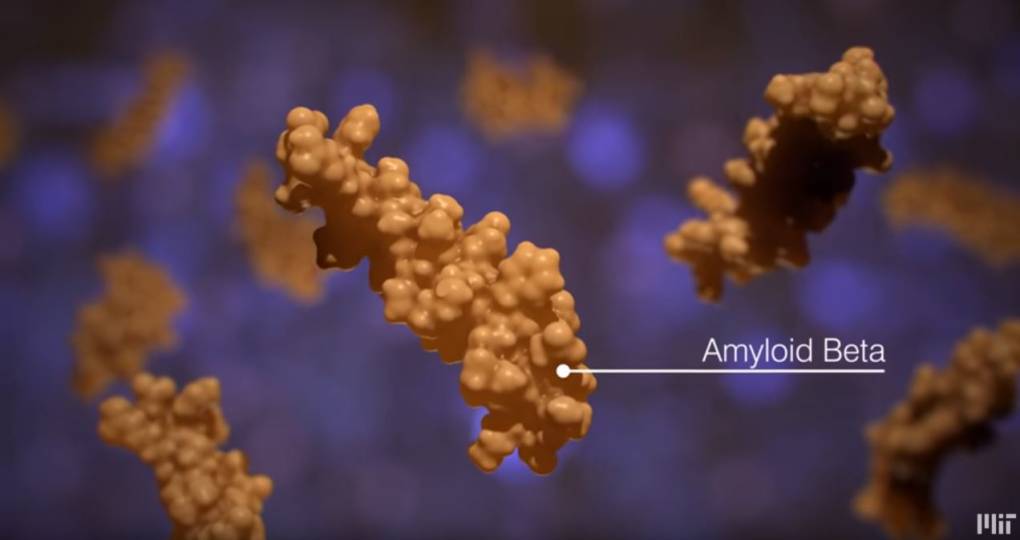
"caption": "A toxic accumulation of the protein amyloid beta, pictured in this animation, is thought to contribute to Alzheimer's disease.",
"description": null,
"title": "amyloid-beta",
"credit": "MIT",
"status": "inherit",
"isLoading": false,
"fetchFailed": false
}
},
"audioPlayerReducer": {
"postId": "stream_live",
"isPaused": true,
"isPlaying": false,
"pfsActive": false,
"pledgeModalIsOpen": true,
"playerDrawerIsOpen": false,
"liveAudioPlayStartedAt": 0,
"liveAudioPlayContext": ""
},
"authorsReducer": {
"byline_futureofyou_329802": {
"type": "authors",
"id": "byline_futureofyou_329802",
"meta": {
"override": true
},
"slug": "byline_futureofyou_329802",
"name": "Allison Aubrey\u003cbr />NPR Shots",
"isLoading": false
},
"byline_futureofyou_328828": {
"type": "authors",
"id": "byline_futureofyou_328828",
"meta": {
"override": true
},
"slug": "byline_futureofyou_328828",
"name": "Melissa Bailey\u003c/br>Kaiser Health News",
"isLoading": false
},
"byline_futureofyou_322634": {
"type": "authors",
"id": "byline_futureofyou_322634",
"meta": {
"override": true
},
"slug": "byline_futureofyou_322634",
"name": "Charles Piller\u003cbr />\u003cA HREF=\"https://www.statnews.com/\">STAT\u003c/A>",
"isLoading": false
},
"byline_futureofyou_321859": {
"type": "authors",
"id": "byline_futureofyou_321859",
"meta": {
"override": true
},
"slug": "byline_futureofyou_321859",
"name": "Riley Beggin\u003cbr />NPR All Tech Considered",
"isLoading": false
},
"byline_futureofyou_314586": {
"type": "authors",
"id": "byline_futureofyou_314586",
"meta": {
"override": true
},
"slug": "byline_futureofyou_314586",
"name": "Jill Neimark\u003cbr />NPR Shots",
"isLoading": false
},
"byline_futureofyou_314582": {
"type": "authors",
"id": "byline_futureofyou_314582",
"meta": {
"override": true
},
"slug": "byline_futureofyou_314582",
"name": "Ann Finkbeiner\u003cbr />NPR Shots",
"isLoading": false
},
"byline_futureofyou_314571": {
"type": "authors",
"id": "byline_futureofyou_314571",
"meta": {
"override": true
},
"slug": "byline_futureofyou_314571",
"name": "Bret Stetka\u003cbr />NPR Shots",
"isLoading": false
},
"byline_futureofyou_317468": {
"type": "authors",
"id": "byline_futureofyou_317468",
"meta": {
"override": true
},
"slug": "byline_futureofyou_317468",
"name": "Associated Press and KQED",
"isLoading": false
},
"jbrooks": {
"type": "authors",
"id": "80",
"meta": {
"index": "authors_1716337520",
"id": "80",
"found": true
},
"name": "Jon Brooks",
"firstName": "Jon",
"lastName": "Brooks",
"slug": "jbrooks",
"email": "jbrooks@kqed.org",
"display_author_email": true,
"staff_mastheads": [
"science"
],
"title": "Digital Editor",
"bio": "Jon Brooks is a former Digital Editor for KQED Science. He is the former editor of KQED’s daily news blog, News Fix. In 2014, he won a California Journalism Award for his coverage of ride services like Uber and Lyft and the taxi industry. A veteran blogger, he previously worked for Yahoo! in various news writing and editing roles. Jon is also a playwright whose work has been produced in San Francisco, New York, Italy, and around the U.S. He has written about film for his own blog and studied film at Boston University.",
"avatar": "https://secure.gravatar.com/avatar/98887f7ed1c876ed414d4c915e969584?s=600&d=blank&r=g",
"twitter": "jbrooksfoy",
"facebook": null,
"instagram": null,
"linkedin": null,
"sites": [
{
"site": "arts",
"roles": [
"Contributor",
"editor"
]
},
{
"site": "news",
"roles": [
"author"
]
},
{
"site": "futureofyou",
"roles": [
"administrator"
]
},
{
"site": "mindshift",
"roles": [
"editor"
]
},
{
"site": "stateofhealth",
"roles": [
"editor"
]
},
{
"site": "science",
"roles": [
"administrator"
]
},
{
"site": "quest",
"roles": [
"editor"
]
}
],
"headData": {
"title": "Jon Brooks | KQED",
"description": "Digital Editor",
"ogImgSrc": "https://secure.gravatar.com/avatar/98887f7ed1c876ed414d4c915e969584?s=600&d=blank&r=g",
"twImgSrc": "https://secure.gravatar.com/avatar/98887f7ed1c876ed414d4c915e969584?s=600&d=blank&r=g"
},
"isLoading": false,
"link": "/author/jbrooks"
},
"ecruzguevarra": {
"type": "authors",
"id": "8654",
"meta": {
"index": "authors_1716337520",
"id": "8654",
"found": true
},
"name": "Ericka Cruz Guevarra",
"firstName": "Ericka",
"lastName": "Cruz Guevarra",
"slug": "ecruzguevarra",
"email": "ecruzguevarra@kqed.org",
"display_author_email": true,
"staff_mastheads": [
"news"
],
"title": "Producer, The Bay Podcast",
"bio": "Ericka Cruz Guevarra is host of \u003ca href=\"https://www.kqed.org/podcasts/thebay\">\u003cem>The Bay\u003c/em>\u003c/a> podcast at KQED. Before host, she was the show’s producer. Her work in that capacity includes a three-part reported series on policing in Vallejo, which won a 2020 excellence in journalism award from the Society of Professional Journalists. Ericka has worked as a breaking news reporter at Oregon Public Broadcasting, helped produce the Code Switch podcast, and was KQED’s inaugural Raul Ramirez Diversity Fund intern. She’s also an alumna of NPR’s Next Generation Radio program. Send her an email if you have strong feelings about whether Fairfield and Suisun City are the Bay. Ericka is represented by SAG-AFTRA.",
"avatar": "https://secure.gravatar.com/avatar/accefc1de4bafc7e234b69bcb9b6f6536c130fd84709bc3069ef11a78787e1bb?s=600&d=blank&r=g",
"twitter": "NotoriousECG",
"bluesky": null,
"facebook": null,
"instagram": null,
"linkedin": null,
"sites": [
{
"site": "arts",
"roles": [
"subscriber"
]
},
{
"site": "news",
"roles": [
"editor",
"manage_categories"
]
},
{
"site": "futureofyou",
"roles": [
"subscriber"
]
},
{
"site": "stateofhealth",
"roles": [
"subscriber"
]
},
{
"site": "science",
"roles": [
"editor"
]
},
{
"site": "forum",
"roles": [
"subscriber"
]
}
],
"headData": {
"title": "Ericka Cruz Guevarra | KQED",
"description": "Producer, The Bay Podcast",
"ogImgSrc": "https://secure.gravatar.com/avatar/accefc1de4bafc7e234b69bcb9b6f6536c130fd84709bc3069ef11a78787e1bb?s=600&d=blank&r=g",
"twImgSrc": "https://secure.gravatar.com/avatar/accefc1de4bafc7e234b69bcb9b6f6536c130fd84709bc3069ef11a78787e1bb?s=600&d=blank&r=g"
},
"isLoading": false,
"link": "/author/ecruzguevarra"
},
"dgorn": {
"type": "authors",
"id": "8656",
"meta": {
"index": "authors_1716337520",
"id": "8656",
"found": true
},
"name": "David Gorn",
"firstName": "David",
"lastName": "Gorn",
"slug": "dgorn",
"email": "dgorn+donotmail@sbcglobal.net",
"display_author_email": false,
"staff_mastheads": [],
"title": "KQED Contributor",
"bio": "David Gorn is the former Deputy News Director of KQED Radio. His public radio pieces have appeared on NPR, the World, Marketplace and the California Report.",
"avatar": "https://secure.gravatar.com/avatar/a6ad3e1eec1712e19b986b9395614010?s=600&d=blank&r=g",
"twitter": null,
"facebook": null,
"instagram": null,
"linkedin": null,
"sites": [
{
"site": "news",
"roles": [
"subscriber"
]
},
{
"site": "futureofyou",
"roles": [
"author"
]
},
{
"site": "science",
"roles": [
"author"
]
},
{
"site": "quest",
"roles": [
"editor"
]
}
],
"headData": {
"title": "David Gorn | KQED",
"description": "KQED Contributor",
"ogImgSrc": "https://secure.gravatar.com/avatar/a6ad3e1eec1712e19b986b9395614010?s=600&d=blank&r=g",
"twImgSrc": "https://secure.gravatar.com/avatar/a6ad3e1eec1712e19b986b9395614010?s=600&d=blank&r=g"
},
"isLoading": false,
"link": "/author/dgorn"
},
"lesleymcclurg": {
"type": "authors",
"id": "11229",
"meta": {
"index": "authors_1716337520",
"id": "11229",
"found": true
},
"name": "Lesley McClurg",
"firstName": "Lesley",
"lastName": "McClurg",
"slug": "lesleymcclurg",
"email": "lmcclurg@KQED.org",
"display_author_email": false,
"staff_mastheads": [
"news",
"science"
],
"title": "KQED Health Correspondent",
"bio": "Lesley McClurg is a health correspondent and fill-in host whose work is regularly rebroadcast on NPR and PBS programs. She’s earned multiple regional Emmy awards, a national and a regional Edward R. Murrow award, and was named Best Beat Reporter by the Association of Health Care Journalists. The Society of Professional Journalists has recognized her work several times, and the Society of Environmental Journalists spotlighted her coverage of California’s historic drought.\r\n\r\nBefore joining KQED in 2016, Lesley covered food and sustainability for Capital Public Radio, environmental issues for Colorado Public Radio, and reported for KUOW and KCTS 9 in Seattle. Away from the newsroom, she loves skiing with her daughter, mountain biking with her partner, and playing with Ollie, the family’s goldendoodle. On deadline, she runs almost entirely on chocolate chips.\r\n\r\n ",
"avatar": "https://secure.gravatar.com/avatar/bab49e972ea10c774fe0f5e29dba1722b158f7c0d58a360923d1389d380b2978?s=600&d=blank&r=g",
"twitter": "lesleywmcclurg",
"bluesky": null,
"facebook": null,
"instagram": null,
"linkedin": null,
"sites": [
{
"site": "arts",
"roles": [
"author"
]
},
{
"site": "news",
"roles": [
"editor"
]
},
{
"site": "futureofyou",
"roles": [
"editor"
]
},
{
"site": "stateofhealth",
"roles": [
"author"
]
},
{
"site": "science",
"roles": [
"editor"
]
},
{
"site": "quest",
"roles": [
"subscriber"
]
},
{
"site": "forum",
"roles": [
"administrator"
]
},
{
"site": "liveblog",
"roles": [
"author"
]
}
],
"headData": {
"title": "Lesley McClurg | KQED",
"description": "KQED Health Correspondent",
"ogImgSrc": "https://secure.gravatar.com/avatar/bab49e972ea10c774fe0f5e29dba1722b158f7c0d58a360923d1389d380b2978?s=600&d=blank&r=g",
"twImgSrc": "https://secure.gravatar.com/avatar/bab49e972ea10c774fe0f5e29dba1722b158f7c0d58a360923d1389d380b2978?s=600&d=blank&r=g"
},
"isLoading": false,
"link": "/author/lesleymcclurg"
}
},
"pagesReducer": {
"futureofyou_category_hopehype": {
"type": "terms",
"id": "futureofyou_1062",
"meta": {
"index": "terms_1716263798",
"site": "futureofyou",
"id": "1062",
"score": 13.896381
},
"featImg": null,
"name": "Hope/Hype",
"description": null,
"taxonomy": "category",
"headData": {
"twImgId": null,
"twTitle": null,
"ogTitle": null,
"ogImgId": null,
"twDescription": null,
"description": null,
"title": "Hope/Hype Archives | KQED Arts",
"ogDescription": null
},
"ttid": 1062,
"slug": "hopehype",
"isLoading": false,
"title": "Hope/Hype",
"pageMeta": {
"site": "futureofyou",
"WpPageTemplate": "page-topic-editorial",
"currentPage": 14
},
"blocks": [
{
"blockName": "kqed/post-list",
"attrs": {
"layout": "cardArticle2",
"query": "posts/futureofyou?category=hopehype",
"seeMore": false,
"paginated": true,
"page": 14
}
},
{
"blockName": "kqed/ad"
}
]
}
},
"pfsSessionReducer": {},
"postsReducer": {
"stream_live": {
"type": "live",
"id": "stream_live",
"audioUrl": "https://streams.kqed.org/kqedradio",
"title": "Live Stream",
"excerpt": "Live Stream information currently unavailable.",
"link": "/radio",
"featImg": "",
"label": {
"name": "KQED Live",
"link": "/"
}
},
"stream_kqedNewscast": {
"type": "posts",
"id": "stream_kqedNewscast",
"audioUrl": "https://www.kqed.org/.stream/anon/radio/RDnews/newscast.mp3?_=1",
"title": "KQED Newscast",
"featImg": "",
"label": {
"name": "88.5 FM",
"link": "/"
}
},
"futureofyou_329802": {
"type": "posts",
"id": "futureofyou_329802",
"meta": {
"index": "posts_1716263798",
"site": "futureofyou",
"id": "329802",
"score": null,
"sort": [
1486400521000
]
},
"parent": 0,
"labelTerm": {
"site": "futureofyou"
},
"blocks": [],
"publishDate": 1486400521,
"format": "standard",
"disqusTitle": "Pinworm Medication Tested as Anti-Cancer Drug",
"title": "Pinworm Medication Tested as Anti-Cancer Drug",
"headTitle": "KQED Future of You | KQED Science",
"content": "\u003cp>Cancer researchers are testing whether a generic drug that has been used for more than 40 years to treat parasitic infections may also help fight cancer.\u003c/p>\n\u003cp>The tests of mebendazole are part of a growing effort to take a fresh look at old medicines to see if they can be repurposed for new uses.\u003c/p>\n\u003cp>I first learned about mebendazole several years back when my son came home from camp with a gross but common infection: \u003ca href=\"https://medlineplus.gov/pinworms.html\">pinworms\u003c/a>.\u003c/p>\n\u003cp>My pediatrician prescribed two doses of mebendazole, and two weeks later the infection was gone.\u003c/p>\n\u003cp>Flash-forward a couple of years, and I was surprised to find on \u003ca href=\"https://clinicaltrials.gov/ct2/results?term=mebendazole&pg=1\">clinicaltrials.gov\u003c/a>, the federal database of medical trials, that mebendazole was being investigated as a potential cancer drug.\u003c/p>\n\u003cp>[ad fullwidth]\u003c/p>\n\u003cp>Curious, I contacted \u003ca href=\"http://www.hopkinsmedicine.org/profiles/results/directory/profile/8711584/gregory-riggins\">Gregory Riggins\u003c/a>, a cancer researcher at Johns Hopkins University who is testing the safety of mebendazole as a potential cancer treatment. He invited me to his lab in Baltimore.\u003c/p>\n\u003cp>Riggins took me inside and showed me cages of cancer research mice. A few years back, he said, his idea to test mebendazole started here.\u003c/p>\n\u003cp>Some of the lab animals got infected with pinworms, the same parasite my son had. The veterinarian at Johns Hopkins treated the whole colony of mice with an animal version of mebendazole.\u003c/p>\n\u003cp>The drug staved off the parasite, but it also did something surprising. Before the mice were treated for pinworms, Riggins and his team had implanted cancer cells into the animals' brains.\u003c/p>\n\u003cp>But after the mice got the pinworm drug, the cancers never developed. \"Our medulloblastoma stopped growing,\" Riggins says. He found out that other researchers were conducting animal studies to see if the drug had effects on lung cancer and melanoma.\u003c/p>\n\u003cp>So he got funding to do two Phase 1 studies to test whether mebendazole is safe to use in brain cancer patients, one in children and another in adults. So far the drug appears to be safe and well tolerated by patients, Riggins says. That would be expected, given that it has been used for decades around the world to treat pinworms.\u003c/p>\n\u003cp>\"Based on the preclinical studies it looks like it has promise,\" says \u003ca href=\"http://www.massgeneral.org/doctors/doctor.aspx?id=17882\">Tracy Batchelor\u003c/a>, director of the division of neuro-oncology at Massachusetts General Hospital, who is not involved in the research. \"The next step is to look for a benefit in a Phase 2 trial.\" That would test whether mebendazole has any effect on cancer in people. Riggins hopes to conduct that sort of trial in adult brain cancer patients.\u003c/p>\n\u003cp>At a time when it can cost a billion dollars to develop a new drug, the idea of repurposing existing drugs is appealing, according to \u003ca href=\"http://cureswithinreach.org/about-us/staff\">Bruce Bloom\u003c/a>. He's the president and chief science officer of \u003ca href=\"http://www.cureswithinreach.org/\">Cures Within Reach\u003c/a>, which has helped to fund Riggins' research.\u003c/p>\n\u003cp>Bloom points to \u003ca href=\"https://www.cancer.gov/about-cancer/causes-prevention/research/metformin\">research on metformin\u003c/a>, a diabetes drug that's being looked at as a potential treatment for a dozen different kinds of cancer and also tuberculosis. A common blood pressure drug, \u003ca href=\"https://www.ncbi.nlm.nih.gov/pmc/articles/PMC4504645/\">propranolol\u003c/a>, is also being studied.\u003c/p>\n\u003cp>\"It's not likely that mebendazole or any other single repurposed drug is ever going to cure cancer,\" Bloom says. But he envisions the possibility that combinations of repurposed drugs might help the body to manage cancer.\u003c/p>\n\u003cp>Any use of mebendazole as a cancer drug would be years away, if it proves to work at all. Most drugs that emerge from Phase 1 trials never deliver the hoped-for benefits.\u003c/p>\n\u003cp>And in an odd twist to a complicated story, the cost of mebendazole in the U.S. has skyrocketed in recent years. Though it remains very affordable in most countries, the wholesale cost of a 100 mg tablet in the U.S. has risen from $4.50 in 2011 to $369 in 2016, according to Truven Health Analytics.\u003c/p>\n\u003cp>The dynamics that led to the price hike were in play before interest rose in the drug as a potential cancer treatment, analysts say. In 2013, \u003ca href=\"http://www.amedrapharma.com/\">Amedra Pharmaceuticals\u003c/a> bought marketing rights to mebendazole from Teva Pharmaceuticals. It already owned rights to another key generic antiparasitic drug, albendazole.\u003c/p>\n\u003cp>\"At that point, anyone who has had a high school or undergraduate economics course would be able to explain the price hike,\" says \u003ca href=\"http://faculty.rx.umaryland.edu/tmattingly/\">Joey Mattingly\u003c/a>, an assistant professor in the department of pharmacy practice and science at the University of Maryland School of Pharmacy who studies generic drug pricing.\u003c/p>\n\u003cp>That leaves people with pinworm infections with the choice of two expensive prescription medications or cheaper over-the-counter options.\u003c/p>\n\u003cp>\"Pinworms are exceedingly common,\" says \u003ca href=\"http://pediatrics.wustl.edu/Faculty/orscheln_r\">Rachel Orscheln\u003c/a>, an assistant professor of pediatric infectious diseases at Washington University and St. Louis Children's Hospital. The CDC \u003ca href=\"https://www.cdc.gov/dpdx/enterobiasis/\">estimates\u003c/a> 40 million people are infected in the U.S. annually. Orscheln says the people most likely to be infected are children and people who are living in group settings such as nursing homes.\u003c/p>\n\u003cp>\u003c/p>\n\u003cp>\"There are certain cases where we do need to prescribe this medication,\" says Orscheln. But at the higher price, she says, \"I'm very disinclined to prescribe [it].\" She says over-the-counter drugs such as \u003ca href=\"http://www.webmd.com/drugs/2/drug-10346-6119/pin-x-oral/pyrantel-suspension%E2%80%94-oral/details\">Pin-X\u003c/a> or pyrantel, can work just as well in children, so \"I'm very likely to steer people in that direction.\"\u003c/p>\n\u003cdiv class=\"fullattribution\">Copyright 2017 NPR. To see more, visit http://www.npr.org/.\u003cimg src=\"http://www.google-analytics.com/__utm.gif?utmac=UA-5828686-4&utmdt=A+Pinworm+Medication+Is+Being+Tested+As+A+Potential+Anti-Cancer+Drug&utme=8(APIKey)9(MDAxOTAwOTE4MDEyMTkxMDAzNjczZDljZA004)\">\u003c/div>\n\n",
"disqusIdentifier": "329802 https://ww2.kqed.org/futureofyou/?p=329802",
"disqusUrl": "https://ww2.kqed.org/futureofyou/2017/02/06/pinworm-medication-tested-as-anti-cancer-drug/",
"stats": {
"hasVideo": false,
"hasChartOrMap": false,
"hasAudio": false,
"hasPolis": false,
"wordCount": 873,
"hasGoogleForm": false,
"hasGallery": false,
"hasHearkenModule": false,
"iframeSrcs": [],
"paragraphCount": 24
},
"modified": 1486400521,
"excerpt": "Drugs that have been on the market for decades are being investigated for new uses. One is a medication used around the world to treat pinworm infections.",
"headData": {
"twImgId": "",
"twTitle": "",
"ogTitle": "",
"ogImgId": "",
"twDescription": "",
"description": "Drugs that have been on the market for decades are being investigated for new uses. One is a medication used around the world to treat pinworm infections.",
"title": "Pinworm Medication Tested as Anti-Cancer Drug | KQED",
"ogDescription": "",
"schema": {
"@context": "https://schema.org",
"@type": "Article",
"headline": "Pinworm Medication Tested as Anti-Cancer Drug",
"datePublished": "2017-02-06T09:02:01-08:00",
"dateModified": "2017-02-06T09:02:01-08:00",
"image": "https://cdn.kqed.org/wp-content/uploads/2020/02/KQED-OG-Image@1x.png"
}
},
"guestAuthors": [],
"slug": "pinworm-medication-tested-as-anti-cancer-drug",
"status": "publish",
"nprApiLink": "http://api.npr.org/query?id=512400204&apiKey=MDAxOTAwOTE4MDEyMTkxMDAzNjczZDljZA004",
"nprByline": "Allison Aubrey\u003cbr />NPR Shots",
"nprStoryDate": "Mon, 30 Jan 2017 04:58:00 -0500",
"nprLastModifiedDate": "Tue, 31 Jan 2017 16:17:05 -0500",
"nprHtmlLink": "http://www.npr.org/sections/health-shots/2017/01/30/512400204/a-pinworm-medication-is-being-tested-as-a-potential-anti-cancer-drug?ft=nprml&f=512400204",
"nprAudio": "https://ondemand.npr.org/anon.npr-mp3/npr/me/2017/01/20170130_me_if_an_inexpensive_anti-parasitic_drug_fights_cancer_will_it_remain_affordable.mp3?orgId=1&topicId=1128&d=382&p=3&story=512400204&t=progseg&e=512380187&seg=3&ft=nprml&f=512400204",
"nprImageAgency": " Katherine Streeter for NPR",
"nprAudioM3u": "http://api.npr.org/m3u/1512400205-7100fb.m3u?orgId=1&topicId=1128&d=382&p=3&story=512400204&t=progseg&e=512380187&seg=3&ft=nprml&f=512400204",
"nprStoryId": "512400204",
"nprRetrievedStory": "1",
"nprPubDate": "Tue, 31 Jan 2017 15:36:00 -0500",
"path": "/futureofyou/329802/pinworm-medication-tested-as-anti-cancer-drug",
"audioUrl": "https://ondemand.npr.org/anon.npr-mp3/npr/me/2017/01/20170130_me_if_an_inexpensive_anti-parasitic_drug_fights_cancer_will_it_remain_affordable.mp3?orgId=1&topicId=1128&d=382&p=3&story=512400204&t=progseg&e=512380187&seg=3&ft=nprml&f=512400204",
"audioTrackLength": null,
"parsedContent": [
{
"type": "contentString",
"content": "\u003cdiv class=\"post-body\">\u003cp>\u003cp>Cancer researchers are testing whether a generic drug that has been used for more than 40 years to treat parasitic infections may also help fight cancer.\u003c/p>\n\u003cp>The tests of mebendazole are part of a growing effort to take a fresh look at old medicines to see if they can be repurposed for new uses.\u003c/p>\n\u003cp>I first learned about mebendazole several years back when my son came home from camp with a gross but common infection: \u003ca href=\"https://medlineplus.gov/pinworms.html\">pinworms\u003c/a>.\u003c/p>\n\u003cp>My pediatrician prescribed two doses of mebendazole, and two weeks later the infection was gone.\u003c/p>\n\u003cp>Flash-forward a couple of years, and I was surprised to find on \u003ca href=\"https://clinicaltrials.gov/ct2/results?term=mebendazole&pg=1\">clinicaltrials.gov\u003c/a>, the federal database of medical trials, that mebendazole was being investigated as a potential cancer drug.\u003c/p>\n\u003cp>\u003c/p>\u003c/div>",
"attributes": {
"named": {},
"numeric": []
}
},
{
"type": "component",
"content": "",
"name": "ad",
"attributes": {
"named": {
"label": "fullwidth"
},
"numeric": [
"fullwidth"
]
}
},
{
"type": "contentString",
"content": "\u003cdiv class=\"post-body\">\u003cp>\u003c/p>\n\u003cp>Curious, I contacted \u003ca href=\"http://www.hopkinsmedicine.org/profiles/results/directory/profile/8711584/gregory-riggins\">Gregory Riggins\u003c/a>, a cancer researcher at Johns Hopkins University who is testing the safety of mebendazole as a potential cancer treatment. He invited me to his lab in Baltimore.\u003c/p>\n\u003cp>Riggins took me inside and showed me cages of cancer research mice. A few years back, he said, his idea to test mebendazole started here.\u003c/p>\n\u003cp>Some of the lab animals got infected with pinworms, the same parasite my son had. The veterinarian at Johns Hopkins treated the whole colony of mice with an animal version of mebendazole.\u003c/p>\n\u003cp>The drug staved off the parasite, but it also did something surprising. Before the mice were treated for pinworms, Riggins and his team had implanted cancer cells into the animals' brains.\u003c/p>\n\u003cp>But after the mice got the pinworm drug, the cancers never developed. \"Our medulloblastoma stopped growing,\" Riggins says. He found out that other researchers were conducting animal studies to see if the drug had effects on lung cancer and melanoma.\u003c/p>\n\u003cp>So he got funding to do two Phase 1 studies to test whether mebendazole is safe to use in brain cancer patients, one in children and another in adults. So far the drug appears to be safe and well tolerated by patients, Riggins says. That would be expected, given that it has been used for decades around the world to treat pinworms.\u003c/p>\n\u003cp>\"Based on the preclinical studies it looks like it has promise,\" says \u003ca href=\"http://www.massgeneral.org/doctors/doctor.aspx?id=17882\">Tracy Batchelor\u003c/a>, director of the division of neuro-oncology at Massachusetts General Hospital, who is not involved in the research. \"The next step is to look for a benefit in a Phase 2 trial.\" That would test whether mebendazole has any effect on cancer in people. Riggins hopes to conduct that sort of trial in adult brain cancer patients.\u003c/p>\n\u003cp>At a time when it can cost a billion dollars to develop a new drug, the idea of repurposing existing drugs is appealing, according to \u003ca href=\"http://cureswithinreach.org/about-us/staff\">Bruce Bloom\u003c/a>. He's the president and chief science officer of \u003ca href=\"http://www.cureswithinreach.org/\">Cures Within Reach\u003c/a>, which has helped to fund Riggins' research.\u003c/p>\n\u003cp>Bloom points to \u003ca href=\"https://www.cancer.gov/about-cancer/causes-prevention/research/metformin\">research on metformin\u003c/a>, a diabetes drug that's being looked at as a potential treatment for a dozen different kinds of cancer and also tuberculosis. A common blood pressure drug, \u003ca href=\"https://www.ncbi.nlm.nih.gov/pmc/articles/PMC4504645/\">propranolol\u003c/a>, is also being studied.\u003c/p>\n\u003cp>\"It's not likely that mebendazole or any other single repurposed drug is ever going to cure cancer,\" Bloom says. But he envisions the possibility that combinations of repurposed drugs might help the body to manage cancer.\u003c/p>\n\u003cp>Any use of mebendazole as a cancer drug would be years away, if it proves to work at all. Most drugs that emerge from Phase 1 trials never deliver the hoped-for benefits.\u003c/p>\n\u003cp>And in an odd twist to a complicated story, the cost of mebendazole in the U.S. has skyrocketed in recent years. Though it remains very affordable in most countries, the wholesale cost of a 100 mg tablet in the U.S. has risen from $4.50 in 2011 to $369 in 2016, according to Truven Health Analytics.\u003c/p>\n\u003cp>The dynamics that led to the price hike were in play before interest rose in the drug as a potential cancer treatment, analysts say. In 2013, \u003ca href=\"http://www.amedrapharma.com/\">Amedra Pharmaceuticals\u003c/a> bought marketing rights to mebendazole from Teva Pharmaceuticals. It already owned rights to another key generic antiparasitic drug, albendazole.\u003c/p>\n\u003cp>\"At that point, anyone who has had a high school or undergraduate economics course would be able to explain the price hike,\" says \u003ca href=\"http://faculty.rx.umaryland.edu/tmattingly/\">Joey Mattingly\u003c/a>, an assistant professor in the department of pharmacy practice and science at the University of Maryland School of Pharmacy who studies generic drug pricing.\u003c/p>\n\u003cp>That leaves people with pinworm infections with the choice of two expensive prescription medications or cheaper over-the-counter options.\u003c/p>\n\u003cp>\"Pinworms are exceedingly common,\" says \u003ca href=\"http://pediatrics.wustl.edu/Faculty/orscheln_r\">Rachel Orscheln\u003c/a>, an assistant professor of pediatric infectious diseases at Washington University and St. Louis Children's Hospital. The CDC \u003ca href=\"https://www.cdc.gov/dpdx/enterobiasis/\">estimates\u003c/a> 40 million people are infected in the U.S. annually. Orscheln says the people most likely to be infected are children and people who are living in group settings such as nursing homes.\u003c/p>\n\u003cp>\u003c/p>\n\u003cp>\"There are certain cases where we do need to prescribe this medication,\" says Orscheln. But at the higher price, she says, \"I'm very disinclined to prescribe [it].\" She says over-the-counter drugs such as \u003ca href=\"http://www.webmd.com/drugs/2/drug-10346-6119/pin-x-oral/pyrantel-suspension%E2%80%94-oral/details\">Pin-X\u003c/a> or pyrantel, can work just as well in children, so \"I'm very likely to steer people in that direction.\"\u003c/p>\n\u003cdiv class=\"fullattribution\">Copyright 2017 NPR. To see more, visit http://www.npr.org/.\u003cimg src=\"http://www.google-analytics.com/__utm.gif?utmac=UA-5828686-4&utmdt=A+Pinworm+Medication+Is+Being+Tested+As+A+Potential+Anti-Cancer+Drug&utme=8(APIKey)9(MDAxOTAwOTE4MDEyMTkxMDAzNjczZDljZA004)\">\u003c/div>\n\n\u003c/div>\u003c/p>",
"attributes": {
"named": {},
"numeric": []
}
}
],
"link": "/futureofyou/329802/pinworm-medication-tested-as-anti-cancer-drug",
"authors": [
"byline_futureofyou_329802"
],
"categories": [
"futureofyou_452",
"futureofyou_1062",
"futureofyou_1"
],
"featImg": "futureofyou_329803",
"label": "futureofyou"
},
"futureofyou_328828": {
"type": "posts",
"id": "futureofyou_328828",
"meta": {
"index": "posts_1716263798",
"site": "futureofyou",
"id": "328828",
"score": null,
"sort": [
1486081011000
]
},
"parent": 0,
"labelTerm": {
"site": "futureofyou"
},
"blocks": [],
"publishDate": 1486081011,
"format": "standard",
"disqusTitle": "Despite Disappointing Results, Alzheimer's Research Plows On",
"title": "Despite Disappointing Results, Alzheimer's Research Plows On",
"headTitle": "KQED Future of You | KQED Science",
"content": "\u003cp>Despite a 99 percent failure rate and another major setback last month, Alzheimer’s researchers are plowing ahead with hundreds of experiments — and a boost in federal money — to try to a crack a deadly disease that has flummoxed them for decades.\u003c/p>\n\u003cp>A \u003ca href=\"http://www.npr.org/sections/health-shots/2016/12/02/504139105/winners-and-losers-if-21st-century-cures-bill-becomes-law\" target=\"_blank\">law\u003c/a> passed by Congress in December and signed by President Obama sets aside $3 billion over 10 years to fund research of brain diseases and precision medicine, a shot in the arm for Alzheimer’s research. The law, called the 21st Century Cures Act, also includes prize money to encourage Alzheimer’s experiments.\u003c/p>\n\u003cp>But billions of dollars have so far made little progress in decoding the memory-robbing disease, which affects 5 million Americans. Alzheimer’s is currently the nation’s sixth leading cause of death. Decades of research have not produced a single drug that alters the disease’s course.\u003c/p>\n\u003cp>December began with another major setback: Eli Lilly shared disappointing results of a late-stage clinical trial of its experimental drug solanezumab, which failed to significantly slow Alzheimer’s progression.\u003c/p>\n\u003cp>But scientists aren’t giving up on the main hypothesis behind Eli Lilly’s trial: that Alzheimer’s can be defeated by using drugs to attack amyloid “plaques” that build up in the brain of Alzheimer’s patients. Some scientists believe these cause the disease.\u003c/p>\n\u003cfigure class=\"related\">\u003c/figure>\n\u003cp>Many observers still hold out hope for another promising anti-amyloid drug, Biogen’s aducanumab, which in an early trial \u003ca href=\"http://www.nature.com/nature/journal/v537/n7618/full/nature19323.html\" target=\"_blank\">improved cognitive decline\u003c/a> in a small number of patients.\u003c/p>\n\u003cp>[ad fullwidth]\u003c/p>\n\u003cp>Other potentially groundbreaking research aims to intervene before patients even feel any symptoms. Using PET scans, scientists can now identify amyloid plaques building up in a patient’s brain years before they develop Alzheimer’s. The \u003ca href=\"http://a4study.org/about/\" target=\"_blank\">A4 study\u003c/a>, for instance, is testing solanezumab in adults who are accumulating amyloid plaques, but showing no outward signs of Alzheimer’s, such as memory loss or cognitive decline.\u003c/p>\n\u003cp>Other scientists are targeting what they believe is the true culprit, the protein tau, which creates “tangles” in the brain, the disease’s other primary marker.\u003c/p>\n\u003cp>The experiments continue against a bleak backdrop: No new Alzheimer’s therapies have won federal approval since 2003, and Alzheimer’s clinical trials have had a \u003ca href=\"http://alzres.biomedcentral.com/articles/10.1186/alzrt269#B13\" target=\"_blank\">99 percent failure rate\u003c/a>. Patients can access only four Food and Drug Administration-approved Alzheimer’s drugs that alleviate symptoms but do not prevent, slow or reverse brain damage.\u003c/p>\n\u003cp>“The history of clinical trials results has been a history of disappointment,” said Keith Fargo, director of scientific programs and outreach at the Alzheimer’s Association.\u003c/p>\n\u003cp>Still, 77 Alzheimer’s drugs are currently being investigated or developed, according to the trade group PhRMA. And other experiments seek to repurpose FDA-approved drugs for other conditions, such as diabetes or cancer, to see if they can help Alzheimer’s patients — and cut several years from the drug development process.\u003c/p>\n\u003caside class=\"pullquote alignright\">Despite failures, 'there's still more optimism in Alzheimer's research right now than there has been for 10 years.'\u003ccite>Keith Fargo, director of scientific programs and outreach at the Alzheimer’s Association\u003c/cite>\u003c/aside>\n\u003cp>Non-pharmaceutical solutions are also being explored. Observational studies have shown that people who exercise more and have healthier diets seem to get the disease later in life. Researchers are now conducting trials to more closely measure the effects of exercise and diet. One randomized trial underway at Wake Forest University, \u003ca href=\"https://clinicaltrials.gov/ct2/show/NCT02814526\" target=\"_blank\">dubbed EXERT\u003c/a>, is testing the effects of high-intensity aerobic exercise on adults with mild cognitive impairment by enrolling them in exercise programs at a YMCA.\u003c/p>\n\u003cp>Even before last month’s passage of the 21st Century Cures Act, public funding for Alzheimer’s research has been rising. The National Institutes of Health allocated almost $1 billion to Alzheimer’s research in fiscal 2016 — a $350 million increase over the previous year, according to Laurie Ryan, chief of NIH’s Dementias of Aging Branch. There are 468 open clinical trials related to Alzheimer’s, and over a hundred more in progress, \u003ca href=\"https://clinicaltrials.gov/ct2/results?term=alzheimer%27s&Search=Search\" target=\"_blank\">listed on the\u003c/a> government database ClinicalTrials.gov.\u003c/p>\n\u003cp>Meanwhile, Alzheimer’s advocates still grapple with a basic question: Is the rate of Alzheimer’s actually going down? A \u003ca href=\"http://khn.org/news/dementia-rates-decline-sharply-among-senior-citizens/\">study\u003c/a> in JAMA in November found that even as scientists have made no progress in changing Alzheimer’s course, overall dementia rates, which include Alzheimer’s and other dementias, appear to be dramatically declining. The paper cast doubt over a major talking point of the Alzheimer’s lobby: That as baby boomers age, the number of Americans living with Alzheimer’s will explode from the current 5 million \u003ca href=\"https://www.ncbi.nlm.nih.gov/pubmed/23390181\" target=\"_blank\">to 14 million\u003c/a> in 2050. The study also suggested that lifestyle changes may make a difference.\u003c/p>\n\u003cp>While some heralded that as good news, others downplayed the finding.\u003c/p>\n\u003cp>Even if dementia rates drop, Alzheimer’s remains a major killer, and the number of afflicted people will likely still rise, because the US population is aging so rapidly, predicted Fargo. He also questioned the study’s methods, which relied largely on telephone interviews.\u003c/p>\n\u003cp>“It’s not time to let our foot up off the gas,” Fargo said.\u003c/p>\n\u003cp>Eli Lilly’s closely watched trial, dubbed Expedition 3, was the latest potential breakthrough to fall flat. In 2,100 people with mild dementia, solanezumab failed to show significant results compared to a placebo.\u003c/p>\n\u003cp>Some critics said the failure casts doubt on the hotly disputed hypothesis that Alzheimer’s is triggered by the buildup of amyloid plaques.\u003c/p>\n\u003cp>But Eli Lilly spokeswoman Nicole Hebert said more work is needed to test the hypothesis, because the trial explored just one method of removing amyloid, on one subgroup of people. She said the company is pursuing seven other lines of attack.\u003c/p>\n\u003cp>“Rumors of the death of the amyloid hypothesis have been around for many years, and they’re probably premature,” Fargo agreed.\u003c/p>\n\u003cp>Fargo noted that brain imaging has shown that amyloid plaques start to build up 15 to 20 years before signs of dementia appear. So to really test the amyloid hypothesis, he said, scientists may have to intervene earlier than they did in Expedition 3.\u003c/p>\n\u003cp>Despite the latest failure, Fargo said, “there’s still more optimism in Alzheimer’s research right now than there has been for 10 years.”\u003c/p>\n\u003cp>The answer to Alzheimer’s, Ryan said, is not going to be one “magic bullet,” but an array of solutions tailored to different patients.\u003c/p>\n\u003cp>Will scientists ever find a cure?\u003c/p>\n\u003cp>Dr. Ron Petersen, director of the Alzheimer’s Disease Research Center at the Mayo Clinic, isn’t betting on it. But there’s still “a lot going on to be hopeful about,” he said.\u003c/p>\n\u003cp>“I think slowing the progression and/or delaying the onset, are realistic goals.”\u003c/p>\n\u003cp>[ad floatright]\u003c/p>\n\u003cp>\u003cem>KHN’s coverage of end-of-life and serious illness issues is supported by \u003ca href=\"https://www.moore.org/\" target=\"_blank\">The Gordon and Betty Moore Foundation\u003c/a>.\u003c/em>\u003c/p>\n\n",
"disqusIdentifier": "328828 https://ww2.kqed.org/futureofyou/?p=328828",
"disqusUrl": "https://ww2.kqed.org/futureofyou/2017/02/02/research-plows-ahead-despite-disappointing-results-in-most-alzheimers-studies/",
"stats": {
"hasVideo": false,
"hasChartOrMap": false,
"hasAudio": false,
"hasPolis": false,
"wordCount": 1197,
"hasGoogleForm": false,
"hasGallery": false,
"hasHearkenModule": false,
"iframeSrcs": [],
"paragraphCount": 30
},
"modified": 1486167661,
"excerpt": "Continuing optimism and a boost in federal funding is helping hundreds of experiments forge ahead, despite decades of disappointing research.",
"headData": {
"twImgId": "",
"twTitle": "",
"ogTitle": "",
"ogImgId": "",
"twDescription": "",
"description": "Continuing optimism and a boost in federal funding is helping hundreds of experiments forge ahead, despite decades of disappointing research.",
"title": "Despite Disappointing Results, Alzheimer's Research Plows On | KQED",
"ogDescription": "",
"schema": {
"@context": "https://schema.org",
"@type": "Article",
"headline": "Despite Disappointing Results, Alzheimer's Research Plows On",
"datePublished": "2017-02-02T16:16:51-08:00",
"dateModified": "2017-02-03T16:21:01-08:00",
"image": "https://cdn.kqed.org/wp-content/uploads/2020/02/KQED-OG-Image@1x.png"
}
},
"guestAuthors": [],
"slug": "research-plows-ahead-despite-disappointing-results-in-most-alzheimers-studies",
"status": "publish",
"customPermalink": "2017/01/30/research-plows-ahead-despite-disappointing-results-in-most-alzheimers-studies/",
"nprByline": "Melissa Bailey\u003c/br>Kaiser Health News",
"path": "/futureofyou/328828/research-plows-ahead-despite-disappointing-results-in-most-alzheimers-studies",
"audioTrackLength": null,
"parsedContent": [
{
"type": "contentString",
"content": "\u003cdiv class=\"post-body\">\u003cp>\u003cp>Despite a 99 percent failure rate and another major setback last month, Alzheimer’s researchers are plowing ahead with hundreds of experiments — and a boost in federal money — to try to a crack a deadly disease that has flummoxed them for decades.\u003c/p>\n\u003cp>A \u003ca href=\"http://www.npr.org/sections/health-shots/2016/12/02/504139105/winners-and-losers-if-21st-century-cures-bill-becomes-law\" target=\"_blank\">law\u003c/a> passed by Congress in December and signed by President Obama sets aside $3 billion over 10 years to fund research of brain diseases and precision medicine, a shot in the arm for Alzheimer’s research. The law, called the 21st Century Cures Act, also includes prize money to encourage Alzheimer’s experiments.\u003c/p>\n\u003cp>But billions of dollars have so far made little progress in decoding the memory-robbing disease, which affects 5 million Americans. Alzheimer’s is currently the nation’s sixth leading cause of death. Decades of research have not produced a single drug that alters the disease’s course.\u003c/p>\n\u003cp>December began with another major setback: Eli Lilly shared disappointing results of a late-stage clinical trial of its experimental drug solanezumab, which failed to significantly slow Alzheimer’s progression.\u003c/p>\n\u003cp>But scientists aren’t giving up on the main hypothesis behind Eli Lilly’s trial: that Alzheimer’s can be defeated by using drugs to attack amyloid “plaques” that build up in the brain of Alzheimer’s patients. Some scientists believe these cause the disease.\u003c/p>\n\u003cfigure class=\"related\">\u003c/figure>\n\u003cp>Many observers still hold out hope for another promising anti-amyloid drug, Biogen’s aducanumab, which in an early trial \u003ca href=\"http://www.nature.com/nature/journal/v537/n7618/full/nature19323.html\" target=\"_blank\">improved cognitive decline\u003c/a> in a small number of patients.\u003c/p>\n\u003cp>\u003c/p>\u003c/div>",
"attributes": {
"named": {},
"numeric": []
}
},
{
"type": "component",
"content": "",
"name": "ad",
"attributes": {
"named": {
"label": "fullwidth"
},
"numeric": [
"fullwidth"
]
}
},
{
"type": "contentString",
"content": "\u003cdiv class=\"post-body\">\u003cp>\u003c/p>\n\u003cp>Other potentially groundbreaking research aims to intervene before patients even feel any symptoms. Using PET scans, scientists can now identify amyloid plaques building up in a patient’s brain years before they develop Alzheimer’s. The \u003ca href=\"http://a4study.org/about/\" target=\"_blank\">A4 study\u003c/a>, for instance, is testing solanezumab in adults who are accumulating amyloid plaques, but showing no outward signs of Alzheimer’s, such as memory loss or cognitive decline.\u003c/p>\n\u003cp>Other scientists are targeting what they believe is the true culprit, the protein tau, which creates “tangles” in the brain, the disease’s other primary marker.\u003c/p>\n\u003cp>The experiments continue against a bleak backdrop: No new Alzheimer’s therapies have won federal approval since 2003, and Alzheimer’s clinical trials have had a \u003ca href=\"http://alzres.biomedcentral.com/articles/10.1186/alzrt269#B13\" target=\"_blank\">99 percent failure rate\u003c/a>. Patients can access only four Food and Drug Administration-approved Alzheimer’s drugs that alleviate symptoms but do not prevent, slow or reverse brain damage.\u003c/p>\n\u003cp>“The history of clinical trials results has been a history of disappointment,” said Keith Fargo, director of scientific programs and outreach at the Alzheimer’s Association.\u003c/p>\n\u003cp>Still, 77 Alzheimer’s drugs are currently being investigated or developed, according to the trade group PhRMA. And other experiments seek to repurpose FDA-approved drugs for other conditions, such as diabetes or cancer, to see if they can help Alzheimer’s patients — and cut several years from the drug development process.\u003c/p>\n\u003caside class=\"pullquote alignright\">Despite failures, 'there's still more optimism in Alzheimer's research right now than there has been for 10 years.'\u003ccite>Keith Fargo, director of scientific programs and outreach at the Alzheimer’s Association\u003c/cite>\u003c/aside>\n\u003cp>Non-pharmaceutical solutions are also being explored. Observational studies have shown that people who exercise more and have healthier diets seem to get the disease later in life. Researchers are now conducting trials to more closely measure the effects of exercise and diet. One randomized trial underway at Wake Forest University, \u003ca href=\"https://clinicaltrials.gov/ct2/show/NCT02814526\" target=\"_blank\">dubbed EXERT\u003c/a>, is testing the effects of high-intensity aerobic exercise on adults with mild cognitive impairment by enrolling them in exercise programs at a YMCA.\u003c/p>\n\u003cp>Even before last month’s passage of the 21st Century Cures Act, public funding for Alzheimer’s research has been rising. The National Institutes of Health allocated almost $1 billion to Alzheimer’s research in fiscal 2016 — a $350 million increase over the previous year, according to Laurie Ryan, chief of NIH’s Dementias of Aging Branch. There are 468 open clinical trials related to Alzheimer’s, and over a hundred more in progress, \u003ca href=\"https://clinicaltrials.gov/ct2/results?term=alzheimer%27s&Search=Search\" target=\"_blank\">listed on the\u003c/a> government database ClinicalTrials.gov.\u003c/p>\n\u003cp>Meanwhile, Alzheimer’s advocates still grapple with a basic question: Is the rate of Alzheimer’s actually going down? A \u003ca href=\"http://khn.org/news/dementia-rates-decline-sharply-among-senior-citizens/\">study\u003c/a> in JAMA in November found that even as scientists have made no progress in changing Alzheimer’s course, overall dementia rates, which include Alzheimer’s and other dementias, appear to be dramatically declining. The paper cast doubt over a major talking point of the Alzheimer’s lobby: That as baby boomers age, the number of Americans living with Alzheimer’s will explode from the current 5 million \u003ca href=\"https://www.ncbi.nlm.nih.gov/pubmed/23390181\" target=\"_blank\">to 14 million\u003c/a> in 2050. The study also suggested that lifestyle changes may make a difference.\u003c/p>\n\u003cp>While some heralded that as good news, others downplayed the finding.\u003c/p>\n\u003cp>Even if dementia rates drop, Alzheimer’s remains a major killer, and the number of afflicted people will likely still rise, because the US population is aging so rapidly, predicted Fargo. He also questioned the study’s methods, which relied largely on telephone interviews.\u003c/p>\n\u003cp>“It’s not time to let our foot up off the gas,” Fargo said.\u003c/p>\n\u003cp>Eli Lilly’s closely watched trial, dubbed Expedition 3, was the latest potential breakthrough to fall flat. In 2,100 people with mild dementia, solanezumab failed to show significant results compared to a placebo.\u003c/p>\n\u003cp>Some critics said the failure casts doubt on the hotly disputed hypothesis that Alzheimer’s is triggered by the buildup of amyloid plaques.\u003c/p>\n\u003cp>But Eli Lilly spokeswoman Nicole Hebert said more work is needed to test the hypothesis, because the trial explored just one method of removing amyloid, on one subgroup of people. She said the company is pursuing seven other lines of attack.\u003c/p>\n\u003cp>“Rumors of the death of the amyloid hypothesis have been around for many years, and they’re probably premature,” Fargo agreed.\u003c/p>\n\u003cp>Fargo noted that brain imaging has shown that amyloid plaques start to build up 15 to 20 years before signs of dementia appear. So to really test the amyloid hypothesis, he said, scientists may have to intervene earlier than they did in Expedition 3.\u003c/p>\n\u003cp>Despite the latest failure, Fargo said, “there’s still more optimism in Alzheimer’s research right now than there has been for 10 years.”\u003c/p>\n\u003cp>The answer to Alzheimer’s, Ryan said, is not going to be one “magic bullet,” but an array of solutions tailored to different patients.\u003c/p>\n\u003cp>Will scientists ever find a cure?\u003c/p>\n\u003cp>Dr. Ron Petersen, director of the Alzheimer’s Disease Research Center at the Mayo Clinic, isn’t betting on it. But there’s still “a lot going on to be hopeful about,” he said.\u003c/p>\n\u003cp>“I think slowing the progression and/or delaying the onset, are realistic goals.”\u003c/p>\n\u003cp>\u003c/p>\u003c/div>",
"attributes": {
"named": {},
"numeric": []
}
},
{
"type": "component",
"content": "",
"name": "ad",
"attributes": {
"named": {
"label": "floatright"
},
"numeric": [
"floatright"
]
}
},
{
"type": "contentString",
"content": "\u003cdiv class=\"post-body\">\u003cp>\u003c/p>\n\u003cp>\u003cem>KHN’s coverage of end-of-life and serious illness issues is supported by \u003ca href=\"https://www.moore.org/\" target=\"_blank\">The Gordon and Betty Moore Foundation\u003c/a>.\u003c/em>\u003c/p>\n\n\u003c/div>\u003c/p>",
"attributes": {
"named": {},
"numeric": []
}
}
],
"link": "/futureofyou/328828/research-plows-ahead-despite-disappointing-results-in-most-alzheimers-studies",
"authors": [
"byline_futureofyou_328828"
],
"categories": [
"futureofyou_1062",
"futureofyou_1",
"futureofyou_73"
],
"tags": [
"futureofyou_999",
"futureofyou_23"
],
"featImg": "futureofyou_328830",
"label": "futureofyou"
},
"futureofyou_322609": {
"type": "posts",
"id": "futureofyou_322609",
"meta": {
"index": "posts_1716263798",
"site": "futureofyou",
"id": "322609",
"score": null,
"sort": [
1485371139000
]
},
"parent": 0,
"labelTerm": {},
"blocks": [],
"publishDate": 1485371139,
"format": "standard",
"disqusTitle": "Obamacare Architect Says Silicon Valley Tech Won't Steer Health Care",
"title": "Obamacare Architect Says Silicon Valley Tech Won't Steer Health Care",
"headTitle": "KQED Future of You | KQED Science",
"content": "\u003cp>Ezekiel Emanuel is one of the architects of the Affordable Care Act, aka Obamacare, aka \u003ca href=\"http://www.npr.org/sections/thetwo-way/2017/01/17/510281627/18-million-people-could-lose-insurance-in-first-year-after-partial-obamacare-rep\" target=\"_blank\" rel=\"noopener\">dead-plan-walking\u003c/a>.\u003c/p>\n\u003cp>He's also a \"techno-skeptic,\" as he called himself the other day during an \u003ca href=\"http://audio.californiareport.org/archive/R201701170850/b\" target=\"_blank\" rel=\"noopener\">interview\u003c/a> with KQED health editor Carrie Feibel. When Feibel asked him if there should be any role to play for the \"data gurus of Silicon Valley\" in whatever comes after the ACA, he literally laughed.\u003c/p>\n\u003caside class=\"pullquote alignright\">'I do think there is an important role for tech, but I think the role is probably not what many of the startup companies around here are thinking of.'\u003ccite>Ezekiel Emanuel\u003c/cite>\u003c/aside>\n\u003cp>\"I do think there is an important role for tech, but I think the role is probably not what many of the startup companies around here are thinking of,\" he said, \"around here\" meaning San Francisco and Silicon Valley. Emanuel said tech should play a support role that \"augments\" what health care providers do, providing better data about the patient and where health care funds are spent.\u003c/p>\n\u003cp>\"I am much more skeptical that the computer is going to replace a doctor,\" he said. \"That a computer is going to interface with the patient and take care of them. Not gonna happen.\" (See our posts \"\u003ca href=\"https://ww2.kqed.org/futureofyou/2016/11/07/AI-computers-diagnosis-watson/\" target=\"_blank\" rel=\"noopener\">Will Computers Ever Be as Good as Physicians at Diagnosing Patients\u003c/a>\" and \"\u003ca href=\"https://ww2.kqed.org/futureofyou/2016/02/03/virtual_care_clinic_usc/\" target=\"_blank\" rel=\"noopener\">Would You See a Holographic Doctor?\" \u003c/a>for high hopes surrounding digital docs.)\u003c/p>\n\u003cp>Emanuel said he's also not big on efforts to achieve continuous patient monitoring for health indicators like glucose level and blood pressure. He cited the \u003ca href=\"https://ww2.kqed.org/futureofyou/2016/10/10/fitbit-study/\" target=\"_blank\" rel=\"noopener\">failure of Fitbits and other wearable tech\u003c/a> to improve health outcomes in research studies.\u003c/p>\n\u003cp>[ad fullwidth]\u003c/p>\n\u003cp>\"It’s not that we don’t have information,\" he said. \"The problem is what do you do once you have the information. And there, tech is not going to be the key thing. Medicine fundamentally is about human interaction. That is really the most important challenge, and I don’t think the tech sector has locked onto that part of it.\"\u003c/p>\n\u003cp>This sort of digital contrarianism is not unheard of in the health care biz, even at events and panels where tech-oriented medicine is the focus. Last September, for instance, at the Stanford Medicine X conference, Stephen Downs, the chief technical officer at the Robert Wood Johnson Foundation, said digital health companies\u003ca href=\"https://ww2.kqed.org/futureofyou/2016/09/29/analysis-digital-health-companies-arent-solving-the-right-problems/\" target=\"_blank\" rel=\"noopener\"> weren't focused on solving the right problems\u003c/a>. From a report by KQED's Lesley McClurg:\u003c/p>\n\u003cblockquote>\u003cp>In this age of the Fitbit, Downs said, digital health companies are focused on monitoring the consequences of our \u003ca href=\"http://stateofobesity.org/physical-inactivity/\" target=\"_blank\" rel=\"noopener\">notoriously sedentary lifestyles. \u003c/a>But what is really called for from innovators is to stop treating symptoms and start remedying the roots of the problem.\u003c/p>\n\u003cp>“The system needs to be re-engineered,” said Downs. ... “We don’t need an app that counts steps, because that really just tells you that your day doesn’t naturally incorporate the time and space to walk.”\u003c/p>\u003c/blockquote>\n\u003cp>Instead of a focus on monitoring, he said, engineers and designers need to incorporate solutions --such as enabling urban farming --to core health problems like obesity and heart disease. \u003cstrong>\u003cbr>\n\u003c/strong>\u003c/p>\n\u003cp>\u003cstrong>Policy Versus Scientific Advances\u003c/strong>\u003c/p>\n\u003cp>Several times now at conferences I've witnessed one expert or another--in the midst of a coterie of big data boosters and monitoring mavens, no less--offer up a kind of indirect scolding by cautioning that the best way to improve health is not via smartphones, but smart policy.\u003c/p>\n\u003cp>That dichotomy to some degree echoes a conversation I once had with a longtime health journalist who thought even something as institutionally sanctioned and evidence-based as \u003ca href=\"https://ww2.kqed.org/futureofyou/2017/01/20/time-running-out-california-stem-cell-agency-yet-to-produce-big-results/\" target=\"_blank\" rel=\"noopener\">California's stem cell initiative\u003c/a> was a waste of money, because the funds would have been better directed toward policy prescriptions that address basic health needs.\u003c/p>\n\u003cp>I asked Emanuel to comment on this point, specifically mentioning stem cells.\u003c/p>\n\u003cp>\"Here's a thought experiment,\" he said. \"You know how many lives stem cells have saved? A tiny number compared to the 2.7 million people [in the U.S.] who die each year.\u003c/p>\n\u003cp>\"Now, how many lives have been saved by the ACA?\" he said. \"I don’t know, but it ain’t zero. I intersect with people all the time who happen to recognize me on the street and say I or a family friend got diagnosed with cancer and got therapy or got a heart transplant or something like that.\u003c/p>\n\u003cp>\"In the future, even under a rosy projection, stem cells will not save tons of people,\" he said. \"If you were to cure every single cancer in the U.S.-- no one in America ever dies again of cancer--we add three years to the average life expectancy. It’s a big improvement but it is not anything close to [gains achieved by] doing the basics.\"\u003c/p>\n\u003cp>The two most effective goals for increasing longevity, he said, would be to reduce smoking even further and to control blood pressure.\u003c/p>\n\u003cp>\"We’re not talking high tech,\" he said. \"There is nothing you can do that is going to come close to those two interventions.\"\u003c/p>\n\u003cp>Of course, medical value depends on your perspective, and Emanuel's is a public health view. Someone suffering from any number of horrendous diseases that stem cell research is targeting is not going to be thinking: \"Boy, what a waste to be chasing stem cell cures. I sure wish they'd divert that money to anti-smoking programs.\"\u003c/p>\n\u003cp>And even on the health tech front, some doctors have come around to viewing digital monitoring devices like \u003ca href=\"https://ww2.kqed.org/futureofyou/2016/03/17/mobile-ekg-on-a-watchband-is-useful-for-some-say-docs/\" target=\"_blank\" rel=\"noopener\">mobile EKGs\u003c/a> as useful.\u003c/p>\n\u003cp>\u003c/p>\n\u003cp>As for computers versus doctors, physician and author Bob Wachter, has written that radiology may be the \u003ca href=\"https://ww2.kqed.org/futureofyou/2016/10/25/technology-radiology/\" target=\"_blank\" rel=\"noopener\">canary in the coal mine\u003c/a> in terms of algorithms replacing humans.\u003c/p>\n\n",
"disqusIdentifier": "322609 https://ww2.kqed.org/futureofyou/?p=322609",
"disqusUrl": "https://ww2.kqed.org/futureofyou/2017/01/25/obamacare-architect-says-policy-not-tech-should-steer-health-care/",
"stats": {
"hasVideo": false,
"hasChartOrMap": false,
"hasAudio": false,
"hasPolis": false,
"wordCount": 993,
"hasGoogleForm": false,
"hasGallery": false,
"hasHearkenModule": false,
"iframeSrcs": [],
"paragraphCount": 24
},
"modified": 1510187555,
"excerpt": "In interviews, Ezekiel Emanuel, a former adviser on health care to President Obama, disses digital health monitoring and even stem cell research. ",
"headData": {
"twImgId": "",
"twTitle": "",
"ogTitle": "",
"ogImgId": "",
"twDescription": "",
"description": "In interviews, Ezekiel Emanuel, a former adviser on health care to President Obama, disses digital health monitoring and even stem cell research. ",
"title": "Obamacare Architect Says Silicon Valley Tech Won't Steer Health Care | KQED",
"ogDescription": "",
"schema": {
"@context": "https://schema.org",
"@type": "Article",
"headline": "Obamacare Architect Says Silicon Valley Tech Won't Steer Health Care",
"datePublished": "2017-01-25T11:05:39-08:00",
"dateModified": "2017-11-08T16:32:35-08:00",
"image": "https://cdn.kqed.org/wp-content/uploads/2020/02/KQED-OG-Image@1x.png"
}
},
"guestAuthors": [],
"slug": "obamacare-architect-says-policy-not-tech-should-steer-health-care",
"status": "publish",
"source": "KQED Future of You",
"path": "/futureofyou/322609/obamacare-architect-says-policy-not-tech-should-steer-health-care",
"audioTrackLength": null,
"parsedContent": [
{
"type": "contentString",
"content": "\u003cdiv class=\"post-body\">\u003cp>\u003cp>Ezekiel Emanuel is one of the architects of the Affordable Care Act, aka Obamacare, aka \u003ca href=\"http://www.npr.org/sections/thetwo-way/2017/01/17/510281627/18-million-people-could-lose-insurance-in-first-year-after-partial-obamacare-rep\" target=\"_blank\" rel=\"noopener\">dead-plan-walking\u003c/a>.\u003c/p>\n\u003cp>He's also a \"techno-skeptic,\" as he called himself the other day during an \u003ca href=\"http://audio.californiareport.org/archive/R201701170850/b\" target=\"_blank\" rel=\"noopener\">interview\u003c/a> with KQED health editor Carrie Feibel. When Feibel asked him if there should be any role to play for the \"data gurus of Silicon Valley\" in whatever comes after the ACA, he literally laughed.\u003c/p>\n\u003caside class=\"pullquote alignright\">'I do think there is an important role for tech, but I think the role is probably not what many of the startup companies around here are thinking of.'\u003ccite>Ezekiel Emanuel\u003c/cite>\u003c/aside>\n\u003cp>\"I do think there is an important role for tech, but I think the role is probably not what many of the startup companies around here are thinking of,\" he said, \"around here\" meaning San Francisco and Silicon Valley. Emanuel said tech should play a support role that \"augments\" what health care providers do, providing better data about the patient and where health care funds are spent.\u003c/p>\n\u003cp>\"I am much more skeptical that the computer is going to replace a doctor,\" he said. \"That a computer is going to interface with the patient and take care of them. Not gonna happen.\" (See our posts \"\u003ca href=\"https://ww2.kqed.org/futureofyou/2016/11/07/AI-computers-diagnosis-watson/\" target=\"_blank\" rel=\"noopener\">Will Computers Ever Be as Good as Physicians at Diagnosing Patients\u003c/a>\" and \"\u003ca href=\"https://ww2.kqed.org/futureofyou/2016/02/03/virtual_care_clinic_usc/\" target=\"_blank\" rel=\"noopener\">Would You See a Holographic Doctor?\" \u003c/a>for high hopes surrounding digital docs.)\u003c/p>\n\u003cp>Emanuel said he's also not big on efforts to achieve continuous patient monitoring for health indicators like glucose level and blood pressure. He cited the \u003ca href=\"https://ww2.kqed.org/futureofyou/2016/10/10/fitbit-study/\" target=\"_blank\" rel=\"noopener\">failure of Fitbits and other wearable tech\u003c/a> to improve health outcomes in research studies.\u003c/p>\n\u003cp>\u003c/p>\u003c/div>",
"attributes": {
"named": {},
"numeric": []
}
},
{
"type": "component",
"content": "",
"name": "ad",
"attributes": {
"named": {
"label": "fullwidth"
},
"numeric": [
"fullwidth"
]
}
},
{
"type": "contentString",
"content": "\u003cdiv class=\"post-body\">\u003cp>\u003c/p>\n\u003cp>\"It’s not that we don’t have information,\" he said. \"The problem is what do you do once you have the information. And there, tech is not going to be the key thing. Medicine fundamentally is about human interaction. That is really the most important challenge, and I don’t think the tech sector has locked onto that part of it.\"\u003c/p>\n\u003cp>This sort of digital contrarianism is not unheard of in the health care biz, even at events and panels where tech-oriented medicine is the focus. Last September, for instance, at the Stanford Medicine X conference, Stephen Downs, the chief technical officer at the Robert Wood Johnson Foundation, said digital health companies\u003ca href=\"https://ww2.kqed.org/futureofyou/2016/09/29/analysis-digital-health-companies-arent-solving-the-right-problems/\" target=\"_blank\" rel=\"noopener\"> weren't focused on solving the right problems\u003c/a>. From a report by KQED's Lesley McClurg:\u003c/p>\n\u003cblockquote>\u003cp>In this age of the Fitbit, Downs said, digital health companies are focused on monitoring the consequences of our \u003ca href=\"http://stateofobesity.org/physical-inactivity/\" target=\"_blank\" rel=\"noopener\">notoriously sedentary lifestyles. \u003c/a>But what is really called for from innovators is to stop treating symptoms and start remedying the roots of the problem.\u003c/p>\n\u003cp>“The system needs to be re-engineered,” said Downs. ... “We don’t need an app that counts steps, because that really just tells you that your day doesn’t naturally incorporate the time and space to walk.”\u003c/p>\u003c/blockquote>\n\u003cp>Instead of a focus on monitoring, he said, engineers and designers need to incorporate solutions --such as enabling urban farming --to core health problems like obesity and heart disease. \u003cstrong>\u003cbr>\n\u003c/strong>\u003c/p>\n\u003cp>\u003cstrong>Policy Versus Scientific Advances\u003c/strong>\u003c/p>\n\u003cp>Several times now at conferences I've witnessed one expert or another--in the midst of a coterie of big data boosters and monitoring mavens, no less--offer up a kind of indirect scolding by cautioning that the best way to improve health is not via smartphones, but smart policy.\u003c/p>\n\u003cp>That dichotomy to some degree echoes a conversation I once had with a longtime health journalist who thought even something as institutionally sanctioned and evidence-based as \u003ca href=\"https://ww2.kqed.org/futureofyou/2017/01/20/time-running-out-california-stem-cell-agency-yet-to-produce-big-results/\" target=\"_blank\" rel=\"noopener\">California's stem cell initiative\u003c/a> was a waste of money, because the funds would have been better directed toward policy prescriptions that address basic health needs.\u003c/p>\n\u003cp>I asked Emanuel to comment on this point, specifically mentioning stem cells.\u003c/p>\n\u003cp>\"Here's a thought experiment,\" he said. \"You know how many lives stem cells have saved? A tiny number compared to the 2.7 million people [in the U.S.] who die each year.\u003c/p>\n\u003cp>\"Now, how many lives have been saved by the ACA?\" he said. \"I don’t know, but it ain’t zero. I intersect with people all the time who happen to recognize me on the street and say I or a family friend got diagnosed with cancer and got therapy or got a heart transplant or something like that.\u003c/p>\n\u003cp>\"In the future, even under a rosy projection, stem cells will not save tons of people,\" he said. \"If you were to cure every single cancer in the U.S.-- no one in America ever dies again of cancer--we add three years to the average life expectancy. It’s a big improvement but it is not anything close to [gains achieved by] doing the basics.\"\u003c/p>\n\u003cp>The two most effective goals for increasing longevity, he said, would be to reduce smoking even further and to control blood pressure.\u003c/p>\n\u003cp>\"We’re not talking high tech,\" he said. \"There is nothing you can do that is going to come close to those two interventions.\"\u003c/p>\n\u003cp>Of course, medical value depends on your perspective, and Emanuel's is a public health view. Someone suffering from any number of horrendous diseases that stem cell research is targeting is not going to be thinking: \"Boy, what a waste to be chasing stem cell cures. I sure wish they'd divert that money to anti-smoking programs.\"\u003c/p>\n\u003cp>And even on the health tech front, some doctors have come around to viewing digital monitoring devices like \u003ca href=\"https://ww2.kqed.org/futureofyou/2016/03/17/mobile-ekg-on-a-watchband-is-useful-for-some-say-docs/\" target=\"_blank\" rel=\"noopener\">mobile EKGs\u003c/a> as useful.\u003c/p>\n\u003cp>\u003c/p>\n\u003cp>As for computers versus doctors, physician and author Bob Wachter, has written that radiology may be the \u003ca href=\"https://ww2.kqed.org/futureofyou/2016/10/25/technology-radiology/\" target=\"_blank\" rel=\"noopener\">canary in the coal mine\u003c/a> in terms of algorithms replacing humans.\u003c/p>\n\n\u003c/div>\u003c/p>",
"attributes": {
"named": {},
"numeric": []
}
}
],
"link": "/futureofyou/322609/obamacare-architect-says-policy-not-tech-should-steer-health-care",
"authors": [
"80"
],
"categories": [
"futureofyou_1060",
"futureofyou_452",
"futureofyou_1062",
"futureofyou_1",
"futureofyou_73"
],
"tags": [
"futureofyou_1171",
"futureofyou_1173",
"futureofyou_1172",
"futureofyou_680"
],
"featImg": "futureofyou_325331",
"label": "source_futureofyou_322609"
},
"futureofyou_310438": {
"type": "posts",
"id": "futureofyou_310438",
"meta": {
"index": "posts_1716263798",
"site": "futureofyou",
"id": "310438",
"score": null,
"sort": [
1485361839000
]
},
"parent": 0,
"labelTerm": {},
"blocks": [],
"publishDate": 1485361839,
"format": "standard",
"disqusTitle": "Food as Medicine is No Longer a Fringe Idea",
"title": "Food as Medicine is No Longer a Fringe Idea",
"headTitle": "KQED Future of You | KQED Science",
"content": "\u003cp>Several times a month, you can find a doctor in the aisles of Ralph’s market in Huntington Beach, wearing a white coat and helping people learn about food. On one recent day, this doctor was Daniel Nadeau, wandering the cereal aisle with Allison Scott, offering ideas on how to feed kids who studiously avoid anything that tastes healthy.\u003c/p>\n\u003caside class=\"pullquote alignright\">'What people eat can be medicine or poison.'\u003ccite>Dr. Brenda Rea,\u003cbr>\nLoma Linda University School of Medicine\u003c/cite>\u003c/aside>\n\u003cp>“Have you thought about trying smoothies in the morning?” he asks her. “The frozen blueberries and raspberries are a little cheaper, and berries are really good for the brain.”\u003c/p>\n\u003cp>Scott knows about smoothies, actually. She's been cooking a plant-based diet for her family for about nine months, a decision prompted by her husband being diagnosed with systemic inflammation. Scott cooks a couple of hours a day to prepare meals from whole foods. So when she saw a doctor in Ralph's, Scott says, she was delighted to find someone talking about the very thing that has been consuming her life: food as medicine.\u003c/p>\n\u003cp>Nadeau is program director of the nearby \u003ca href=\"https://www.hoag.org/specialties-services/other-programs-services/diabetes-center/\" target=\"_blank\">Mary and Dick Allen Diabetes Center\u003c/a>, part of the \u003ca href=\"http://www.stjosephhoaghealth.org/\" target=\"_blank\">St. Joseph Hoag Health\u003c/a> alliance. The Center's Shop with Your Doc program sends doctors to the grocery store to meet with any patients who sign up for the service, plus any other shoppers who happen by with questions.\u003c/p>\n\u003cp>[contextly_sidebar id=\"0Y40yWL0gmXDr7is5zaqMMREfSYlmCuR\"]“In America, over 50 percent of our food is processed food,” Nadeau says. “And only 5 percent of our food is plant-based food. I think we should try to reverse that.”\u003c/p>\n\u003cp>[ad fullwidth]\u003c/p>\n\u003cp>It can be hard work, as anyone who's tried to eat more vegetables or quit sugar knows. Part of the work is learning about nutrition and making time to cook, says Scott, who in the beginning ran all her menus past a nutritionist, and sometimes uses a service that delivers her a box of organic food and recipes to prepare it. And for her, another part is getting her two boys, 5 and 8, to make the same changes.\u003c/p>\n\u003cp>\"I always make them try a bite of every single thing I make,\" she says. \"The kids get so mad at me, still, even though they're starting to eat better.\"\u003c/p>\n\u003cp>\u003cstrong>A Small Revolution Brewing\u003c/strong>\u003c/p>\n\u003cp>Scott and Nadeau are part of a small revolution brewing across California. The food-as-medicine movement has been around for decades, but it's making new inroads as physicians and medical institutions make food a formal part of treatment, rather than relying solely on medications. By prescribing nutritional changes or launching programs such as Shop with Your Doc, they're trying to prevent, limit or even reverse disease by changing what patients eat.\u003c/p>\n\u003cp>“There’s no question people can take things a long way toward \u003ca href=\"https://www.ncbi.nlm.nih.gov/pubmed/12323113\" target=\"_blank\">reversing diabetes\u003c/a>, reversing hypertension, even \u003ca href=\"https://www.ncbi.nlm.nih.gov/pubmed/20706936\" target=\"_blank\">preventing cancer\u003c/a> by food choices,” Nadeau says.\u003c/p>\n\u003cfigure id=\"attachment_313608\" class=\"wp-caption alignright\" style=\"max-width: 800px\">\u003ca href=\"http://ww2.kqed.org/futureofyou/wp-content/uploads/sites/13/2017/01/SF-FoodPantry-63-lowres.jpg\">\u003cimg class=\"size-medium wp-image-313608\" src=\"http://ww2.kqed.org/futureofyou/wp-content/uploads/sites/13/2017/01/SF-FoodPantry-63-lowres-800x533.jpg\" alt=\"Clients in a pilot program for pregnant women with diabetes choose from an array of fresh fruits and vegetables, at the Community Wellness Program Center at Zuckerberg San Francisco General Hospital.\" width=\"800\" height=\"533\" srcset=\"https://ww2.kqed.org/app/uploads/sites/13/2017/01/SF-FoodPantry-63-lowres-800x533.jpg 800w, https://ww2.kqed.org/app/uploads/sites/13/2017/01/SF-FoodPantry-63-lowres-160x107.jpg 160w, https://ww2.kqed.org/app/uploads/sites/13/2017/01/SF-FoodPantry-63-lowres-768x512.jpg 768w, https://ww2.kqed.org/app/uploads/sites/13/2017/01/SF-FoodPantry-63-lowres-1020x680.jpg 1020w, https://ww2.kqed.org/app/uploads/sites/13/2017/01/SF-FoodPantry-63-lowres-1920x1280.jpg 1920w, https://ww2.kqed.org/app/uploads/sites/13/2017/01/SF-FoodPantry-63-lowres-1180x786.jpg 1180w, https://ww2.kqed.org/app/uploads/sites/13/2017/01/SF-FoodPantry-63-lowres-960x640.jpg 960w, https://ww2.kqed.org/app/uploads/sites/13/2017/01/SF-FoodPantry-63-lowres-240x160.jpg 240w, https://ww2.kqed.org/app/uploads/sites/13/2017/01/SF-FoodPantry-63-lowres-375x250.jpg 375w, https://ww2.kqed.org/app/uploads/sites/13/2017/01/SF-FoodPantry-63-lowres-520x347.jpg 520w, https://ww2.kqed.org/app/uploads/sites/13/2017/01/SF-FoodPantry-63-lowres.jpg 2000w\" sizes=\"(max-width: 800px) 100vw, 800px\">\u003c/a>\u003cfigcaption class=\"wp-caption-text\">A client in a pilot program for pregnant women with diabetes chooses from an array of fresh fruits and vegetables, with help from a volunteer, at the Community Wellness Program Center at Zuckerberg San Francisco General Hospital. \u003ccite>(UCSF)\u003c/cite>\u003c/figcaption>\u003c/figure>\n\u003cp>In the big picture, says Dr. Richard Afable, CEO and President of St. Joseph Hoag Health, medical institutions across the state are starting to make a philosophical switch to becoming a health organization, not just a health care organization.\u003c/p>\n\u003cp>That sentiment echoes the tenets of the Therapeutic Food Pantry program at Zuckerberg San Francisco General Hospital, which completed its pilot phase and is about to expand on an ongoing basis to five clinic sites throughout the city. The program will offer patients several bags of food prescribed for their condition, along with intensive training in how to cook it.\u003c/p>\n\u003cp>“We really want to link food and medicine, and not just give away food,\" says Dr. Rita Nguyen, the hospital's medical director of Healthy Food Initiatives. \"We want people to understand what they’re eating, how to prepare it, the role food plays in their lives.”\u003c/p>\n\u003cp>In Southern California, \u003ca href=\"https://medicine.llu.edu/\" target=\"_blank\">Loma Linda University School of Medicine \u003c/a>is offering specialized training for its resident physicians in \u003ca href=\"https://medical-center.lomalindahealth.org/health-professionals/graduate-medical-education/prospective-residents/residency-programs/education-concentrations/lifestyle-medicine\" target=\"_blank\">Lifestyle Medicine\u003c/a>—that's a formal subspecialty in using food to treat disease.\u003c/p>\n\u003cp>Research on the power of food to treat or reverse disease is beginning to accumulate, but that doesn't mean diet alone is always the solution, or that every illness can benefit substantially from dietary changes. Nonetheless, physicians say they look at the cumulative data and a clear picture emerges: that the salt, sugar, fat and processed foods in the American diet contribute to the nation’s high rates of obesity, diabetes and heart disease. According to the World Health Organization, \u003ca href=\"http://www.who.int/chp/chronic_disease_report/full_report.pdf\" target=\"_blank\">80 percent of deaths\u003c/a> from heart disease and stroke are caused by high blood pressure, tobacco use, elevated cholesterol and low consumption of fruits and vegetables.\u003c/p>\n\u003cp>“It’s a different paradigm of how to treat disease,” says Dr. Brenda Rea, who helps run the family and preventive medicine residency program at Loma Linda University School of Medicine.\u003c/p>\n\u003cp>\u003cstrong>Choosing What Foods to Prescribe\u003c/strong>\u003c/p>\n\u003cp>The lifestyle medicine subspecialty is designed to train doctors in how to prevent and treat disease, in part, by changing patients' nutritional habits. The medical center and school at Loma Linda also has a food pantry and kitchen for patients.\u003c/p>\n\u003cfigure id=\"attachment_310967\" class=\"wp-caption alignright\" style=\"max-width: 800px\">\u003ca href=\"http://ww2.kqed.org/futureofyou/wp-content/uploads/sites/13/2016/12/doc-at-Ralphs.jpg\">\u003cimg class=\"size-medium wp-image-310967\" src=\"http://ww2.kqed.org/futureofyou/wp-content/uploads/sites/13/2016/12/doc-at-Ralphs-800x600.jpg\" alt=\"St. Joseph Hoag Hospital gives out shopping bags to people who consult the doctor about food choices.\" width=\"800\" height=\"600\" srcset=\"https://ww2.kqed.org/app/uploads/sites/13/2016/12/doc-at-Ralphs-800x600.jpg 800w, https://ww2.kqed.org/app/uploads/sites/13/2016/12/doc-at-Ralphs-160x120.jpg 160w, https://ww2.kqed.org/app/uploads/sites/13/2016/12/doc-at-Ralphs-768x576.jpg 768w, https://ww2.kqed.org/app/uploads/sites/13/2016/12/doc-at-Ralphs-1020x765.jpg 1020w, https://ww2.kqed.org/app/uploads/sites/13/2016/12/doc-at-Ralphs-1920x1440.jpg 1920w, https://ww2.kqed.org/app/uploads/sites/13/2016/12/doc-at-Ralphs-1180x885.jpg 1180w, https://ww2.kqed.org/app/uploads/sites/13/2016/12/doc-at-Ralphs-960x720.jpg 960w, https://ww2.kqed.org/app/uploads/sites/13/2016/12/doc-at-Ralphs-240x180.jpg 240w, https://ww2.kqed.org/app/uploads/sites/13/2016/12/doc-at-Ralphs-375x281.jpg 375w, https://ww2.kqed.org/app/uploads/sites/13/2016/12/doc-at-Ralphs-520x390.jpg 520w\" sizes=\"(max-width: 800px) 100vw, 800px\">\u003c/a>\u003cfigcaption class=\"wp-caption-text\">St. Joseph Hoag Hospital gives out shopping bags to people who consult the doctor about food choices. \u003ccite>(David Gorn/KQED)\u003c/cite>\u003c/figcaption>\u003c/figure>\n\u003cp>Many people don’t know how to cook, Rea says; they only know how to heat things up. That means depending on packaged food with high salt and sugar content. So teaching people about which foods are nutritious and how to prepare them, she says, can actually transform a patient’s life. And beyond that, it might transform the health and lives of that patient’s family.\u003c/p>\n\u003cp>“What people eat can be medicine or poison,” Rea says. “As a physician, nutrition is one of the most powerful things you can change to \u003ca href=\"https://www.ncbi.nlm.nih.gov/pmc/articles/PMC4921549/\" target=\"_blank\">reverse\u003c/a> the effects of \u003ca href=\"https://www.ncbi.nlm.nih.gov/pubmed/12323113\" target=\"_blank\">chronic disease\u003c/a>.”\u003c/p>\n\u003cp>Studies have explored evidence that dietary changes can \u003ca href=\"https://www.ncbi.nlm.nih.gov/pubmed/20674303\" target=\"_blank\">slow inflammation\u003c/a>, for example, or make the body \u003ca href=\"https://www.ncbi.nlm.nih.gov/pubmed/21977033\" target=\"_blank\">inhospitable\u003c/a> to cancer cells.\u003c/p>\n\u003cp>In general, many lifestyle medicine physicians recommend a plant-based diet—particularly for people with diabetes or other inflammatory conditions.\u003c/p>\n\u003cp>“As what happened with tobacco, this will require a cultural shift, but that can happen,\" says Dr. Nguyen. \"In the same way physicians used to smoke, and then stopped smoking and were able to talk to patients about it, I think physicians can have a bigger voice in it.”\u003c/p>\n\u003cp>From her own experience, Allison Scott suggests that anyone making the switch to a plant-based diet have support, because \"it's a complete lifestyle change.\"\u003c/p>\n\u003cp>\"You have to stop buying what's on sale,\" she says. \"You have to go into the store knowing what you want to buy.\"\u003c/p>\n\u003cp>And if you're cooking for a family, she says, plan all your food in advance and have it already on hand.\u003c/p>\n\u003cp>[ad floatright]\u003c/p>\n\u003cp>One more tip for people who want to quit sugar: read labels. Most salad dressings, soups and breads contain sugar. Even Amy's organic tomato soup. Go figure.\u003c/p>\n\n",
"disqusIdentifier": "310438 http://ww2.kqed.org/futureofyou/?p=310438",
"disqusUrl": "https://ww2.kqed.org/futureofyou/2017/01/25/food-as-medicine-its-not-just-a-fringe-idea-anymore/",
"stats": {
"hasVideo": false,
"hasChartOrMap": false,
"hasAudio": false,
"hasPolis": false,
"wordCount": 1236,
"hasGoogleForm": false,
"hasGallery": false,
"hasHearkenModule": false,
"iframeSrcs": [],
"paragraphCount": 29
},
"modified": 1485363608,
"excerpt": "What we put in our bodies can be medicine. Literally. Food wisdom now finds its way into hospitals and even medical schools.",
"headData": {
"twImgId": "",
"twTitle": "",
"ogTitle": "",
"ogImgId": "",
"twDescription": "",
"description": "What we put in our bodies can be medicine. Literally. Food wisdom now finds its way into hospitals and even medical schools.",
"title": "Food as Medicine is No Longer a Fringe Idea | KQED",
"ogDescription": "",
"schema": {
"@context": "https://schema.org",
"@type": "Article",
"headline": "Food as Medicine is No Longer a Fringe Idea",
"datePublished": "2017-01-25T08:30:39-08:00",
"dateModified": "2017-01-25T09:00:08-08:00",
"image": "https://cdn.kqed.org/wp-content/uploads/2020/02/KQED-OG-Image@1x.png"
}
},
"guestAuthors": [],
"slug": "food-as-medicine-its-not-just-a-fringe-idea-anymore",
"status": "publish",
"customPermalink": "2017/01/09/food-as-medicine-its-not-just-a-fringe-idea-anymore/",
"source": "KQED Future of You",
"path": "/futureofyou/310438/food-as-medicine-its-not-just-a-fringe-idea-anymore",
"audioTrackLength": null,
"parsedContent": [
{
"type": "contentString",
"content": "\u003cdiv class=\"post-body\">\u003cp>\u003cp>Several times a month, you can find a doctor in the aisles of Ralph’s market in Huntington Beach, wearing a white coat and helping people learn about food. On one recent day, this doctor was Daniel Nadeau, wandering the cereal aisle with Allison Scott, offering ideas on how to feed kids who studiously avoid anything that tastes healthy.\u003c/p>\n\u003caside class=\"pullquote alignright\">'What people eat can be medicine or poison.'\u003ccite>Dr. Brenda Rea,\u003cbr>\nLoma Linda University School of Medicine\u003c/cite>\u003c/aside>\n\u003cp>“Have you thought about trying smoothies in the morning?” he asks her. “The frozen blueberries and raspberries are a little cheaper, and berries are really good for the brain.”\u003c/p>\n\u003cp>Scott knows about smoothies, actually. She's been cooking a plant-based diet for her family for about nine months, a decision prompted by her husband being diagnosed with systemic inflammation. Scott cooks a couple of hours a day to prepare meals from whole foods. So when she saw a doctor in Ralph's, Scott says, she was delighted to find someone talking about the very thing that has been consuming her life: food as medicine.\u003c/p>\n\u003cp>Nadeau is program director of the nearby \u003ca href=\"https://www.hoag.org/specialties-services/other-programs-services/diabetes-center/\" target=\"_blank\">Mary and Dick Allen Diabetes Center\u003c/a>, part of the \u003ca href=\"http://www.stjosephhoaghealth.org/\" target=\"_blank\">St. Joseph Hoag Health\u003c/a> alliance. The Center's Shop with Your Doc program sends doctors to the grocery store to meet with any patients who sign up for the service, plus any other shoppers who happen by with questions.\u003c/p>\n\u003cp>\u003c/p>\u003cp>\u003c/p>\u003cp>“In America, over 50 percent of our food is processed food,” Nadeau says. “And only 5 percent of our food is plant-based food. I think we should try to reverse that.”\u003c/p>\n\u003cp>\u003c/p>\u003c/div>",
"attributes": {
"named": {},
"numeric": []
}
},
{
"type": "component",
"content": "",
"name": "ad",
"attributes": {
"named": {
"label": "fullwidth"
},
"numeric": [
"fullwidth"
]
}
},
{
"type": "contentString",
"content": "\u003cdiv class=\"post-body\">\u003cp>\u003c/p>\n\u003cp>It can be hard work, as anyone who's tried to eat more vegetables or quit sugar knows. Part of the work is learning about nutrition and making time to cook, says Scott, who in the beginning ran all her menus past a nutritionist, and sometimes uses a service that delivers her a box of organic food and recipes to prepare it. And for her, another part is getting her two boys, 5 and 8, to make the same changes.\u003c/p>\n\u003cp>\"I always make them try a bite of every single thing I make,\" she says. \"The kids get so mad at me, still, even though they're starting to eat better.\"\u003c/p>\n\u003cp>\u003cstrong>A Small Revolution Brewing\u003c/strong>\u003c/p>\n\u003cp>Scott and Nadeau are part of a small revolution brewing across California. The food-as-medicine movement has been around for decades, but it's making new inroads as physicians and medical institutions make food a formal part of treatment, rather than relying solely on medications. By prescribing nutritional changes or launching programs such as Shop with Your Doc, they're trying to prevent, limit or even reverse disease by changing what patients eat.\u003c/p>\n\u003cp>“There’s no question people can take things a long way toward \u003ca href=\"https://www.ncbi.nlm.nih.gov/pubmed/12323113\" target=\"_blank\">reversing diabetes\u003c/a>, reversing hypertension, even \u003ca href=\"https://www.ncbi.nlm.nih.gov/pubmed/20706936\" target=\"_blank\">preventing cancer\u003c/a> by food choices,” Nadeau says.\u003c/p>\n\u003cfigure id=\"attachment_313608\" class=\"wp-caption alignright\" style=\"max-width: 800px\">\u003ca href=\"http://ww2.kqed.org/futureofyou/wp-content/uploads/sites/13/2017/01/SF-FoodPantry-63-lowres.jpg\">\u003cimg class=\"size-medium wp-image-313608\" src=\"http://ww2.kqed.org/futureofyou/wp-content/uploads/sites/13/2017/01/SF-FoodPantry-63-lowres-800x533.jpg\" alt=\"Clients in a pilot program for pregnant women with diabetes choose from an array of fresh fruits and vegetables, at the Community Wellness Program Center at Zuckerberg San Francisco General Hospital.\" width=\"800\" height=\"533\" srcset=\"https://ww2.kqed.org/app/uploads/sites/13/2017/01/SF-FoodPantry-63-lowres-800x533.jpg 800w, https://ww2.kqed.org/app/uploads/sites/13/2017/01/SF-FoodPantry-63-lowres-160x107.jpg 160w, https://ww2.kqed.org/app/uploads/sites/13/2017/01/SF-FoodPantry-63-lowres-768x512.jpg 768w, https://ww2.kqed.org/app/uploads/sites/13/2017/01/SF-FoodPantry-63-lowres-1020x680.jpg 1020w, https://ww2.kqed.org/app/uploads/sites/13/2017/01/SF-FoodPantry-63-lowres-1920x1280.jpg 1920w, https://ww2.kqed.org/app/uploads/sites/13/2017/01/SF-FoodPantry-63-lowres-1180x786.jpg 1180w, https://ww2.kqed.org/app/uploads/sites/13/2017/01/SF-FoodPantry-63-lowres-960x640.jpg 960w, https://ww2.kqed.org/app/uploads/sites/13/2017/01/SF-FoodPantry-63-lowres-240x160.jpg 240w, https://ww2.kqed.org/app/uploads/sites/13/2017/01/SF-FoodPantry-63-lowres-375x250.jpg 375w, https://ww2.kqed.org/app/uploads/sites/13/2017/01/SF-FoodPantry-63-lowres-520x347.jpg 520w, https://ww2.kqed.org/app/uploads/sites/13/2017/01/SF-FoodPantry-63-lowres.jpg 2000w\" sizes=\"(max-width: 800px) 100vw, 800px\">\u003c/a>\u003cfigcaption class=\"wp-caption-text\">A client in a pilot program for pregnant women with diabetes chooses from an array of fresh fruits and vegetables, with help from a volunteer, at the Community Wellness Program Center at Zuckerberg San Francisco General Hospital. \u003ccite>(UCSF)\u003c/cite>\u003c/figcaption>\u003c/figure>\n\u003cp>In the big picture, says Dr. Richard Afable, CEO and President of St. Joseph Hoag Health, medical institutions across the state are starting to make a philosophical switch to becoming a health organization, not just a health care organization.\u003c/p>\n\u003cp>That sentiment echoes the tenets of the Therapeutic Food Pantry program at Zuckerberg San Francisco General Hospital, which completed its pilot phase and is about to expand on an ongoing basis to five clinic sites throughout the city. The program will offer patients several bags of food prescribed for their condition, along with intensive training in how to cook it.\u003c/p>\n\u003cp>“We really want to link food and medicine, and not just give away food,\" says Dr. Rita Nguyen, the hospital's medical director of Healthy Food Initiatives. \"We want people to understand what they’re eating, how to prepare it, the role food plays in their lives.”\u003c/p>\n\u003cp>In Southern California, \u003ca href=\"https://medicine.llu.edu/\" target=\"_blank\">Loma Linda University School of Medicine \u003c/a>is offering specialized training for its resident physicians in \u003ca href=\"https://medical-center.lomalindahealth.org/health-professionals/graduate-medical-education/prospective-residents/residency-programs/education-concentrations/lifestyle-medicine\" target=\"_blank\">Lifestyle Medicine\u003c/a>—that's a formal subspecialty in using food to treat disease.\u003c/p>\n\u003cp>Research on the power of food to treat or reverse disease is beginning to accumulate, but that doesn't mean diet alone is always the solution, or that every illness can benefit substantially from dietary changes. Nonetheless, physicians say they look at the cumulative data and a clear picture emerges: that the salt, sugar, fat and processed foods in the American diet contribute to the nation’s high rates of obesity, diabetes and heart disease. According to the World Health Organization, \u003ca href=\"http://www.who.int/chp/chronic_disease_report/full_report.pdf\" target=\"_blank\">80 percent of deaths\u003c/a> from heart disease and stroke are caused by high blood pressure, tobacco use, elevated cholesterol and low consumption of fruits and vegetables.\u003c/p>\n\u003cp>“It’s a different paradigm of how to treat disease,” says Dr. Brenda Rea, who helps run the family and preventive medicine residency program at Loma Linda University School of Medicine.\u003c/p>\n\u003cp>\u003cstrong>Choosing What Foods to Prescribe\u003c/strong>\u003c/p>\n\u003cp>The lifestyle medicine subspecialty is designed to train doctors in how to prevent and treat disease, in part, by changing patients' nutritional habits. The medical center and school at Loma Linda also has a food pantry and kitchen for patients.\u003c/p>\n\u003cfigure id=\"attachment_310967\" class=\"wp-caption alignright\" style=\"max-width: 800px\">\u003ca href=\"http://ww2.kqed.org/futureofyou/wp-content/uploads/sites/13/2016/12/doc-at-Ralphs.jpg\">\u003cimg class=\"size-medium wp-image-310967\" src=\"http://ww2.kqed.org/futureofyou/wp-content/uploads/sites/13/2016/12/doc-at-Ralphs-800x600.jpg\" alt=\"St. Joseph Hoag Hospital gives out shopping bags to people who consult the doctor about food choices.\" width=\"800\" height=\"600\" srcset=\"https://ww2.kqed.org/app/uploads/sites/13/2016/12/doc-at-Ralphs-800x600.jpg 800w, https://ww2.kqed.org/app/uploads/sites/13/2016/12/doc-at-Ralphs-160x120.jpg 160w, https://ww2.kqed.org/app/uploads/sites/13/2016/12/doc-at-Ralphs-768x576.jpg 768w, https://ww2.kqed.org/app/uploads/sites/13/2016/12/doc-at-Ralphs-1020x765.jpg 1020w, https://ww2.kqed.org/app/uploads/sites/13/2016/12/doc-at-Ralphs-1920x1440.jpg 1920w, https://ww2.kqed.org/app/uploads/sites/13/2016/12/doc-at-Ralphs-1180x885.jpg 1180w, https://ww2.kqed.org/app/uploads/sites/13/2016/12/doc-at-Ralphs-960x720.jpg 960w, https://ww2.kqed.org/app/uploads/sites/13/2016/12/doc-at-Ralphs-240x180.jpg 240w, https://ww2.kqed.org/app/uploads/sites/13/2016/12/doc-at-Ralphs-375x281.jpg 375w, https://ww2.kqed.org/app/uploads/sites/13/2016/12/doc-at-Ralphs-520x390.jpg 520w\" sizes=\"(max-width: 800px) 100vw, 800px\">\u003c/a>\u003cfigcaption class=\"wp-caption-text\">St. Joseph Hoag Hospital gives out shopping bags to people who consult the doctor about food choices. \u003ccite>(David Gorn/KQED)\u003c/cite>\u003c/figcaption>\u003c/figure>\n\u003cp>Many people don’t know how to cook, Rea says; they only know how to heat things up. That means depending on packaged food with high salt and sugar content. So teaching people about which foods are nutritious and how to prepare them, she says, can actually transform a patient’s life. And beyond that, it might transform the health and lives of that patient’s family.\u003c/p>\n\u003cp>“What people eat can be medicine or poison,” Rea says. “As a physician, nutrition is one of the most powerful things you can change to \u003ca href=\"https://www.ncbi.nlm.nih.gov/pmc/articles/PMC4921549/\" target=\"_blank\">reverse\u003c/a> the effects of \u003ca href=\"https://www.ncbi.nlm.nih.gov/pubmed/12323113\" target=\"_blank\">chronic disease\u003c/a>.”\u003c/p>\n\u003cp>Studies have explored evidence that dietary changes can \u003ca href=\"https://www.ncbi.nlm.nih.gov/pubmed/20674303\" target=\"_blank\">slow inflammation\u003c/a>, for example, or make the body \u003ca href=\"https://www.ncbi.nlm.nih.gov/pubmed/21977033\" target=\"_blank\">inhospitable\u003c/a> to cancer cells.\u003c/p>\n\u003cp>In general, many lifestyle medicine physicians recommend a plant-based diet—particularly for people with diabetes or other inflammatory conditions.\u003c/p>\n\u003cp>“As what happened with tobacco, this will require a cultural shift, but that can happen,\" says Dr. Nguyen. \"In the same way physicians used to smoke, and then stopped smoking and were able to talk to patients about it, I think physicians can have a bigger voice in it.”\u003c/p>\n\u003cp>From her own experience, Allison Scott suggests that anyone making the switch to a plant-based diet have support, because \"it's a complete lifestyle change.\"\u003c/p>\n\u003cp>\"You have to stop buying what's on sale,\" she says. \"You have to go into the store knowing what you want to buy.\"\u003c/p>\n\u003cp>And if you're cooking for a family, she says, plan all your food in advance and have it already on hand.\u003c/p>\n\u003cp>\u003c/p>\u003c/div>",
"attributes": {
"named": {},
"numeric": []
}
},
{
"type": "component",
"content": "",
"name": "ad",
"attributes": {
"named": {
"label": "floatright"
},
"numeric": [
"floatright"
]
}
},
{
"type": "contentString",
"content": "\u003cdiv class=\"post-body\">\u003cp>\u003c/p>\n\u003cp>One more tip for people who want to quit sugar: read labels. Most salad dressings, soups and breads contain sugar. Even Amy's organic tomato soup. Go figure.\u003c/p>\n\n\u003c/div>\u003c/p>",
"attributes": {
"named": {},
"numeric": []
}
}
],
"link": "/futureofyou/310438/food-as-medicine-its-not-just-a-fringe-idea-anymore",
"authors": [
"8656"
],
"categories": [
"futureofyou_1060",
"futureofyou_452",
"futureofyou_1062",
"futureofyou_73"
],
"tags": [
"futureofyou_426",
"futureofyou_432"
],
"featImg": "futureofyou_310908",
"label": "source_futureofyou_310438"
},
"futureofyou_322634": {
"type": "posts",
"id": "futureofyou_322634",
"meta": {
"index": "posts_1716263798",
"site": "futureofyou",
"id": "322634",
"score": null,
"sort": [
1484930860000
]
},
"parent": 0,
"labelTerm": {},
"blocks": [],
"publishDate": 1484930860,
"format": "standard",
"disqusTitle": "Time Running Out, California Stem Cell Agency Yet to Produce Big Results",
"title": "Time Running Out, California Stem Cell Agency Yet to Produce Big Results",
"headTitle": "KQED Future of You | KQED Science",
"content": "\u003cp>It’s been more than a decade since California launched an unprecedented experiment in medical research by direct democracy, when voters created a $3 billion fund to kick-start the hunt for stem cell therapies.\u003c/p>\n\u003cp>The bold plan, a response to federal funding limits for embryonic stem cell research, was sold with a simple pitch: The money would rapidly yield cures for devastating human diseases such as Parkinson’s and ALS.\u003c/p>\n\u003cp>That hasn’t happened.\u003c/p>\n\u003cp>[contextly_sidebar id=\"wiA2OMIATARmkALimTVF9L5bJoRR3eQd\"]A major reason, a STAT examination found, is that the \u003ca href=\"https://www.cirm.ca.gov/\" target=\"_blank\">California Institute for Regenerative Medicine\u003c/a> has been slow to move promising experimental therapies into clinical trials. The National Institutes of Health has supported three and a half times as many human trials of stem cell therapies, dollar for dollar, as the California agency has funded since it started making grants in 2006. Just two of its clinical trials have been completed.\u003c/p>\n\u003cp>“I am floored by the disparity,” said Jim Lott, a health care consultant and member of the state board that monitors the agency, known as CIRM. If the numbers are correct, he told STAT, “that doesn’t settle well with me as a voter. That doesn’t settle well with me as a taxpayer. That doesn’t settle well with me as a member of the oversight committee.”\u003c/p>\n\u003cp>[ad fullwidth]\u003c/p>\n\u003cp>CIRM has used most of the $2.2 billion in grants it has distributed so far to build labs and pay for basic research at public and private universities, such as Stanford and the University of Southern California, and private companies.\u003c/p>\n\u003cp>It has given more than $300 million to 27 projects that include clinical trials — though much of that funding also supported preclinical work. Meanwhile, the agency has committed about $540 million to new labs and buildings.\u003c/p>\n\u003cp>In part, that’s because its directors chose to focus on infrastructure early on, as well as bench experiments and animal studies given that the biology of embryonic stem cells was not well-understood and there are formidable roadblocks to moving into human studies. Much more is known about the bone marrow stem cells that are the focus of many NIH-funded clinical trials.\u003c/p>\n\u003cp>But critics have noted that many top grantees come from institutions that hold seats on CIRM’s governing board. The respected Institute of Medicine, in a 2013 \u003ca href=\"https://www.nap.edu/catalog/13523/the-california-institute-for-regenerative-medicine-science-governance-and-the\" target=\"_blank\">review\u003c/a>, said institutionalized conflicts of interest have raised questions about “the integrity and independence of some of CIRM’s decisions.” CIRM later enacted reforms that barred board members from voting directly on grants for their institutions. But the changes didn’t prevent other financial \u003ca href=\"http://www.latimes.com/business/hiltzik/la-fi-hiltzik-20140720-column.html\" target=\"_blank\">conflicts\u003c/a> involving \u003ca href=\"http://californiastemcellreport.blogspot.com/2016/09/alan-trounson-former-ceo-of-california.html\" target=\"_blank\">CIRM officers and grantees\u003c/a>, and the flow of funds to board members’ institutions continued unabated.\u003c/p>\n\u003cfigure id=\"attachment_322983\" class=\"wp-caption aligncenter\" style=\"max-width: 979px\">\u003ca href=\"https://ww2.kqed.org/futureofyou/wp-content/uploads/sites/13/2017/01/CIRM.jpg\">\u003cimg class=\"wp-image-322983 size-full\" src=\"https://ww2.kqed.org/futureofyou/wp-content/uploads/sites/13/2017/01/CIRM.jpg\" alt=\"CIRM\" width=\"979\" height=\"462\" srcset=\"https://ww2.kqed.org/app/uploads/sites/13/2017/01/CIRM.jpg 979w, https://ww2.kqed.org/app/uploads/sites/13/2017/01/CIRM-160x76.jpg 160w, https://ww2.kqed.org/app/uploads/sites/13/2017/01/CIRM-800x378.jpg 800w, https://ww2.kqed.org/app/uploads/sites/13/2017/01/CIRM-768x362.jpg 768w, https://ww2.kqed.org/app/uploads/sites/13/2017/01/CIRM-960x453.jpg 960w, https://ww2.kqed.org/app/uploads/sites/13/2017/01/CIRM-240x113.jpg 240w, https://ww2.kqed.org/app/uploads/sites/13/2017/01/CIRM-375x177.jpg 375w, https://ww2.kqed.org/app/uploads/sites/13/2017/01/CIRM-520x245.jpg 520w\" sizes=\"(max-width: 979px) 100vw, 979px\">\u003c/a>\u003cfigcaption class=\"wp-caption-text\">Sources: California Institute for Regenerative Medicine, National Institutes of Health. \u003cspan class=\"media-source\">*Several CIRM trials included here were announced shortly after Sept. 30, 2016, the cut-off for the NIH data. **NIH spending for 2006 and 2007 is estimated because exact figures were unavailable.\u003c/span>NATALIA BRONSHTEIN/STAT\u003c/figcaption>\u003c/figure>\n\u003cp>“You could make an argument that California taxpayer money should go to build new facilities on state university campuses,” said Marcy Darnovsky, who directs the Berkeley-based Center for Genetics and Society, a public affairs nonprofit. “But I don’t see an argument for Stanford getting fancy new buildings from California taxpayer money.”\u003c/p>\n\u003cp>Stanford, whose endowment is among the top five nationally, and USC have received more than $70\u003cstrong> \u003c/strong>million for major building projects, and hundreds of millions more for labs and research. Stanford alone has been favored with $1 out of every $7 CIRM has approved.\u003c/p>\n\u003cp>But scientists outside California said CIRM’s record is a strong one. CIRM-funded researchers have published nearly 2,000 scholarly papers. That output has helped vault California into the top ranks of stem cell science, said Dr. George Daley, the new dean of Harvard Medical School and a leading stem cell scientist who describes himself as an informal adviser and cheerleader for CIRM. “When I look at the progress my colleagues have made in California, I am duly awed,” he said.\u003c/p>\n\u003cp>The institute announced a year ago that it would reinvent itself to emphasize clinical research until it runs out of money in 2020 — unless voters grant a new infusion of cash. CIRM plans to fund 50 new trials with its remaining $692 million, of which 10 were announced in 2016. Just 17 trials were funded in its first decade of grants.\u003c/p>\n\u003cp>C. Randal Mills, CIRM’s CEO since 2014 and architect of its new strategy, said he welcomed comparisons that help benchmark CIRM’s progress. Mills, former head of Osiris Therapeutics, the first company to commercialize an approved stem cell treatment, declined to comment on STAT’s specific findings, but defended the initial emphasis on labs and basic science as underpinning future clinical work.\u003c/p>\n\u003cp>“We’re running our own race. … What we have to do is just continually get better” to benefit patients, Mills said in an interview. “If we’re behind [NIH], we’re going to get better.”\u003c/p>\n\u003cp>Lott’s teenage daughter was paralyzed in an automobile crash and he hopes for a stem cell cure. He supports the goals of CIRM and applauds much of its work, but he now has second thoughts about the governance structure, which allows board members’ institutions to benefit from CIRM grants, as well as its financing. The ballot question that created CIRM, Proposition 71, authorized bond sales to pay for the agency’s budget, raising the total cost for taxpayers to $6 billion including interest. Financial experts, however, said that relatively low interest rates paid on long-term bonds can offer advantages over funding so large a venture directly from state coffers.\u003c/p>\n\u003cp>Asked whether he would support a similar ballot measure today, Lott said, “We were all caught up in the time, and the events were different when we first looked at this. But not today. Not at all.”\u003c/p>\n\u003cp>\u003cstrong>'Lives Will Be Saved'\u003c/strong>\u003c/p>\n\u003cp>Californians emphatically supported CIRM, creating the stem cell colossus with 59 percent of the vote in 2004. Many were upset that President George W. Bush had sharply limited federal funding for work with embryonic stem cells, which are derived from early human embryos and able to develop into any type of tissue or organ.\u003c/p>\n\u003cp>But Proposition 71 also won because it was shamelessly oversold, consumer advocates and science policy experts said. Desperate patients, Nobel laureates, and A-list celebrities such as \u003ca href=\"https://www.statnews.com/2016/08/30/parkinsons-study-fox-foundation-feud/\" target=\"_blank\">Michael J. Fox\u003c/a> — the Hollywood star and Parkinson’s sufferer — predicted “cures” that would “save millions of lives.”\u003c/p>\n\u003cp>“There are more Americans than … we can count who are sick now, or are going to be sick in the future, whose lives will be saved by Prop 71,” patient advocate Joan Samuelson said in another ad. The sponsors of the measure also predicted that CIRM-generated cures would drastically reduce health care spending. No one made specific promises for the 10-year timeframe initially planned for CIRM’s work, but miracles seemed just around the corner.\u003c/p>\n\u003cp>“You can support embryonic stem cell research, which we do and did, and still be pretty appalled by what was going down,” said Darnovsky. “The airwaves were swamped with guys in white coats who were identified with their academic affiliation even though they were principals of private companies (some of which later got CIRM grants), and basically saying, ‘We’re going to have cures by Christmas.’”\u003c/p>\n\u003cp>Mills, who was not involved at the agency’s genesis, called the idea sold to voters — impending, sweeping breakthroughs — “naïve.” Radical medical change usually takes decades from idea to cure.\u003c/p>\n\u003cp>“But here we are,” he said. “My sole mission is to create as much value for the resources we have left, for the people of California, that I can.”\u003c/p>\n\u003cp>\u003cstrong>California vs. NIH\u003c/strong>\u003c/p>\n\u003cp>Even under Bush-era restrictions — rescinded after President Barack Obama took office — the NIH continued to support substantial stem cell research.\u003c/p>\n\u003cp>Since 2006, it has spent $13.4 billion on stem cell science, six times CIRM’s budget during that period. But NIH fully or partly funded 571 clinical trials, according to STAT’s review — more than 20 times the number backed by California.\u003c/p>\n\u003cp>While NIH in that period funded 50 Phase 3 clinical trials of stem cell therapies — generally the last step before seeking approval to market a product — CIRM has supported just three.\u003c/p>\n\u003cp>One, the study of a treatment for skin cancer involving immune system cells, was terminated by Caladrius Biosciences, the grantee, when it determined that existing treatments had overtaken its approach. The others — testing altered immune cells to treat brain cancer and bioengineered veins to manage vascular problems — show promise, but are still recruiting patients and will not be completed for several years, according to the NIH website, ClinicalTrials.gov.\u003c/p>\n\u003cp>Daley called the NIH comparison “a little unfair,” because that agency emphasized hematopoietic stem cells — blood-forming cells from bone marrow, which had been studied for decades — unlike CIRM’s sharper focus on cutting-edge embryonic stem cells. A little more than half of CIRM’s awards have gone to support research on embryonic or induced pluripotent stem cells, which are created by modifying adult stem cells to act like embryonic ones. It gave about a quarter of its awards to support adult stem cell work, and the rest for other research areas.\u003c/p>\n\u003cp>“In the early days of CIRM, the feeling was that the field needed deep and direct investments in the … fundamental foundation of stem cell biology, because the translational opportunities were not yet mature, certainly not using embryonic or induced pluripotent stem cells,” Daley said.\u003c/p>\n\u003cp>\u003ca href=\"https://www.statnews.com/2016/01/30/paul-knoepfler/\" target=\"_blank\">Paul Knoepfler\u003c/a>, a University of California, Davis, researcher and CIRM grantee who writes a popular \u003ca href=\"http://www.ipscell.com/\" target=\"_blank\">stem cell blog\u003c/a>, agreed. “One almost had to invent a system for figuring out what would be a safe way to proceed with embryonic stem cell clinical trials because those cells are really much more powerful and also have different kinds of risks,” he said.\u003c/p>\n\u003cp>Knoepfler said he expected the basic science to spark clinical breakthroughs in time, citing, for example, promising early work on reversing paralysis from Asterias Biotherapeutics, located in Fremont, southeast of San Francisco. Jake Javier, a patient in a CIRM-supported Asterias trial, lost almost all use of his limbs in an accident diving into a swimming pool. He recently received an injection of a type of cell derived from embryonic stem cells that can help protect nerve cells damaged in spinal cord injuries. Javier has since regained some\u003cstrong> \u003c/strong>use of his arms — one of five patients in early trials who have shown improvement that CIRM and the researchers attribute to the treatment. The results have not yet been published in a peer-reviewed journal.\u003c/p>\n\u003cp>In addition, Mills noted that grants for new labs included provisions that required grantees to raise other funds — to “leverage” economic benefits to taxpayers — and to assist future trials. The institute, for example, gave $30 million to the contract research firm Quintiles to create facilities that will conduct preclinical research, manage regulatory issues, and provide clinical support for CIRM-supported stem cell trials, all at a steep discount.\u003c/p>\n\u003cp>“There is no iPhone 4 without an iPhone 3 or a 2 or a 1,” Mills said. But in a world where technology advances rapidly — Apple is already selling the iPhone 7, after all — voters are still waiting for the promised cures.\u003c/p>\n\u003cfigure id=\"attachment_322991\" class=\"wp-caption alignright\" style=\"max-width: 384px\">\u003ca href=\"https://ww2.kqed.org/futureofyou/wp-content/uploads/sites/13/2017/01/evangelina.jpg\">\u003cimg class=\"size-full wp-image-322991\" src=\"https://ww2.kqed.org/futureofyou/wp-content/uploads/sites/13/2017/01/evangelina.jpg\" alt=\"Evangelina Padilla Vaccaro in November 2016.\" width=\"384\" height=\"576\" srcset=\"https://ww2.kqed.org/app/uploads/sites/13/2017/01/evangelina.jpg 384w, https://ww2.kqed.org/app/uploads/sites/13/2017/01/evangelina-160x240.jpg 160w, https://ww2.kqed.org/app/uploads/sites/13/2017/01/evangelina-240x360.jpg 240w, https://ww2.kqed.org/app/uploads/sites/13/2017/01/evangelina-375x563.jpg 375w\" sizes=\"(max-width: 384px) 100vw, 384px\">\u003c/a>\u003cfigcaption class=\"wp-caption-text\">Evangelina Padilla Vaccaro in November 2016. \u003ccite>(Nancy Ramos)\u003c/cite>\u003c/figcaption>\u003c/figure>\n\u003cp>So far, CIRM has one literal poster child to show it can deliver. Four-year-old Evangelina Padilla Vaccaro, featured on the cover of CIRM’s recent \u003ca href=\"https://www.cirm.ca.gov/about-cirm/2016-annual-report\" target=\"_blank\">annual report\u003c/a>, was born with severe combined immunodeficiency. She had no operating immune system. Some such children have been kept alive in sterile isolation tents for a time — hence the term, “bubble baby” — but most have died from infections within a few years. A lucky few who received matching bone-marrow transplants survived.\u003c/p>\n\u003cp>UCLA’s Dr. Donald Kohn, supported by CIRM, cured Evangelina by extracting some of her blood stem cells, altering them to correct the genetic defect, and returning them to her body. She’s now thriving with a robust immune system.\u003c/p>\n\u003cp>That little girl, and 29 children like her, “are getting immunizations, they’re going to school, they’re swimming in public swimming pools, they’re eating dirt, they’re doing all the things that little kids are supposed to do,” said Steven Peckman, associate director of UCLA’s Broad Center of Regenerative Medicine and Stem Cell Research. “They get sick and their own bodies attack those viruses and bacteria. And they survive. If there’s going to be something that’s called a cure, this is it.”\u003c/p>\n\u003cp>That inspiring triumph was partly funded by CIRM, but Kohn’s work took three decades, was well underway long before CIRM existed, and didn’t involve embryonic stem cells — the key gap CIRM was founded to fill. Evangelina was saved by hematopoietic stem cells, the type that NIH has been more focused on.\u003c/p>\n\u003cp>\u003cstrong>Racing the Clock\u003c/strong>\u003c/p>\n\u003cp>As much as Mills defends the old CIRM, last year he announced “CIRM 2.0” — a drastic shift to speed up clinical trials before the organization’s clock runs out.\u003c/p>\n\u003cp>Asked whether Californians are getting good value for their money from CIRM, Mills cited economic gains to the state, then added: “I focus a lot more on the return in relief of human suffering. We’re just starting to lift off the ground on that. I hope in history, in time, the record shows CIRM was a great deal.”\u003c/p>\n\u003cp>To that end, CIRM has said it will focus in 2017 primarily on clinical trials and work it hopes will lay the foundation for such studies.\u003c/p>\n\u003cp>If the studies show clear results, Mills said, “I think it will be self-evident that CIRM should be continued” with new funding.\u003c/p>\n\u003cp>Lott, the state overseer, called CIRM 2.0 long overdue. “They needed to at least create something a little more tangible, more specifically measurable, for the billions of dollars that they’ve allocated,” he said. “But it may be a little too late,” he added, to convince taxpayers that CIRM should get a new infusion of funds, given its governance structure.\u003c/p>\n\u003cp>Even Daley — unbridled in his enthusiasm for CIRM’s work — hesitated when asked if it was a model to emulate, though for a different reason. “I reluctantly endorse it,” he said, “in part because I think it’s another argument that allows the federal government and the NIH to abdicate its responsibility for investments in biomedical research, which benefits us all.”\u003c/p>\n\u003cp>Yet, just as President Bush’s policy on stem cells led to CIRM’s creation, the incoming Trump administration might bail out the institute just in time. The president-elect has not weighed in on federal funding, but Representative Tom Price, his nominee for Health and Human Services secretary, has long opposed federal funding of embryonic stem cell research — a view shared by Vice President-elect Mike Pence.\u003c/p>\n\u003cp>“If the Trump administration takes a hostile mind toward embryonic stem cell research, and perhaps some kinds of important fetal research are restricted as well, it may give another source of energy to CIRM,” said Knoepfler. “I don’t think Californians like to be told what we can or cannot do, research-wise.”\u003c/p>\n\u003cp>[ad floatright]\u003c/p>\n\u003cp>\u003cem>This \u003ca href=\"https://www.statnews.com/2017/01/19/california-stem-cell-agency-cirm/\" target=\"_blank\">story\u003c/a> was originally published by STAT, an online publication of Boston Globe Media that covers health, medicine and scientific discovery.\u003c/em>\u003c/p>\n\n",
"disqusIdentifier": "322634 https://ww2.kqed.org/futureofyou/?p=322634",
"disqusUrl": "https://ww2.kqed.org/futureofyou/2017/01/20/time-running-out-california-stem-cell-agency-yet-to-produce-big-results/",
"stats": {
"hasVideo": false,
"hasChartOrMap": false,
"hasAudio": false,
"hasPolis": false,
"wordCount": 2723,
"hasGoogleForm": false,
"hasGallery": false,
"hasHearkenModule": false,
"iframeSrcs": [],
"paragraphCount": 51
},
"modified": 1484950180,
"excerpt": "California's $3 billion stem cell initiative was sold to voters with the pitch that the investment would rapidly yield cures for devastating diseases like Parkinson’s and ALS. That hasn’t happened.",
"headData": {
"twImgId": "",
"twTitle": "",
"ogTitle": "",
"ogImgId": "",
"twDescription": "",
"description": "California's $3 billion stem cell initiative was sold to voters with the pitch that the investment would rapidly yield cures for devastating diseases like Parkinson’s and ALS. That hasn’t happened.",
"title": "Time Running Out, California Stem Cell Agency Yet to Produce Big Results | KQED",
"ogDescription": "",
"schema": {
"@context": "https://schema.org",
"@type": "Article",
"headline": "Time Running Out, California Stem Cell Agency Yet to Produce Big Results",
"datePublished": "2017-01-20T08:47:40-08:00",
"dateModified": "2017-01-20T14:09:40-08:00",
"image": "https://cdn.kqed.org/wp-content/uploads/2020/02/KQED-OG-Image@1x.png"
}
},
"guestAuthors": [],
"slug": "time-running-out-california-stem-cell-agency-yet-to-produce-big-results",
"status": "publish",
"nprByline": "Charles Piller\u003cbr />\u003cA HREF=\"https://www.statnews.com/\">STAT\u003c/A>",
"source": "\u003ca href=\"https://www.statnews.com/2017/01/19/california-stem-cell-agency-cirm/\">STAT\u003c/a>",
"path": "/futureofyou/322634/time-running-out-california-stem-cell-agency-yet-to-produce-big-results",
"audioTrackLength": null,
"parsedContent": [
{
"type": "contentString",
"content": "\u003cdiv class=\"post-body\">\u003cp>\u003cp>It’s been more than a decade since California launched an unprecedented experiment in medical research by direct democracy, when voters created a $3 billion fund to kick-start the hunt for stem cell therapies.\u003c/p>\n\u003cp>The bold plan, a response to federal funding limits for embryonic stem cell research, was sold with a simple pitch: The money would rapidly yield cures for devastating human diseases such as Parkinson’s and ALS.\u003c/p>\n\u003cp>That hasn’t happened.\u003c/p>\n\u003cp>\u003c/p>\u003cp>\u003c/p>\u003cp>A major reason, a STAT examination found, is that the \u003ca href=\"https://www.cirm.ca.gov/\" target=\"_blank\">California Institute for Regenerative Medicine\u003c/a> has been slow to move promising experimental therapies into clinical trials. The National Institutes of Health has supported three and a half times as many human trials of stem cell therapies, dollar for dollar, as the California agency has funded since it started making grants in 2006. Just two of its clinical trials have been completed.\u003c/p>\n\u003cp>“I am floored by the disparity,” said Jim Lott, a health care consultant and member of the state board that monitors the agency, known as CIRM. If the numbers are correct, he told STAT, “that doesn’t settle well with me as a voter. That doesn’t settle well with me as a taxpayer. That doesn’t settle well with me as a member of the oversight committee.”\u003c/p>\n\u003cp>\u003c/p>\u003c/div>",
"attributes": {
"named": {},
"numeric": []
}
},
{
"type": "component",
"content": "",
"name": "ad",
"attributes": {
"named": {
"label": "fullwidth"
},
"numeric": [
"fullwidth"
]
}
},
{
"type": "contentString",
"content": "\u003cdiv class=\"post-body\">\u003cp>\u003c/p>\n\u003cp>CIRM has used most of the $2.2 billion in grants it has distributed so far to build labs and pay for basic research at public and private universities, such as Stanford and the University of Southern California, and private companies.\u003c/p>\n\u003cp>It has given more than $300 million to 27 projects that include clinical trials — though much of that funding also supported preclinical work. Meanwhile, the agency has committed about $540 million to new labs and buildings.\u003c/p>\n\u003cp>In part, that’s because its directors chose to focus on infrastructure early on, as well as bench experiments and animal studies given that the biology of embryonic stem cells was not well-understood and there are formidable roadblocks to moving into human studies. Much more is known about the bone marrow stem cells that are the focus of many NIH-funded clinical trials.\u003c/p>\n\u003cp>But critics have noted that many top grantees come from institutions that hold seats on CIRM’s governing board. The respected Institute of Medicine, in a 2013 \u003ca href=\"https://www.nap.edu/catalog/13523/the-california-institute-for-regenerative-medicine-science-governance-and-the\" target=\"_blank\">review\u003c/a>, said institutionalized conflicts of interest have raised questions about “the integrity and independence of some of CIRM’s decisions.” CIRM later enacted reforms that barred board members from voting directly on grants for their institutions. But the changes didn’t prevent other financial \u003ca href=\"http://www.latimes.com/business/hiltzik/la-fi-hiltzik-20140720-column.html\" target=\"_blank\">conflicts\u003c/a> involving \u003ca href=\"http://californiastemcellreport.blogspot.com/2016/09/alan-trounson-former-ceo-of-california.html\" target=\"_blank\">CIRM officers and grantees\u003c/a>, and the flow of funds to board members’ institutions continued unabated.\u003c/p>\n\u003cfigure id=\"attachment_322983\" class=\"wp-caption aligncenter\" style=\"max-width: 979px\">\u003ca href=\"https://ww2.kqed.org/futureofyou/wp-content/uploads/sites/13/2017/01/CIRM.jpg\">\u003cimg class=\"wp-image-322983 size-full\" src=\"https://ww2.kqed.org/futureofyou/wp-content/uploads/sites/13/2017/01/CIRM.jpg\" alt=\"CIRM\" width=\"979\" height=\"462\" srcset=\"https://ww2.kqed.org/app/uploads/sites/13/2017/01/CIRM.jpg 979w, https://ww2.kqed.org/app/uploads/sites/13/2017/01/CIRM-160x76.jpg 160w, https://ww2.kqed.org/app/uploads/sites/13/2017/01/CIRM-800x378.jpg 800w, https://ww2.kqed.org/app/uploads/sites/13/2017/01/CIRM-768x362.jpg 768w, https://ww2.kqed.org/app/uploads/sites/13/2017/01/CIRM-960x453.jpg 960w, https://ww2.kqed.org/app/uploads/sites/13/2017/01/CIRM-240x113.jpg 240w, https://ww2.kqed.org/app/uploads/sites/13/2017/01/CIRM-375x177.jpg 375w, https://ww2.kqed.org/app/uploads/sites/13/2017/01/CIRM-520x245.jpg 520w\" sizes=\"(max-width: 979px) 100vw, 979px\">\u003c/a>\u003cfigcaption class=\"wp-caption-text\">Sources: California Institute for Regenerative Medicine, National Institutes of Health. \u003cspan class=\"media-source\">*Several CIRM trials included here were announced shortly after Sept. 30, 2016, the cut-off for the NIH data. **NIH spending for 2006 and 2007 is estimated because exact figures were unavailable.\u003c/span>NATALIA BRONSHTEIN/STAT\u003c/figcaption>\u003c/figure>\n\u003cp>“You could make an argument that California taxpayer money should go to build new facilities on state university campuses,” said Marcy Darnovsky, who directs the Berkeley-based Center for Genetics and Society, a public affairs nonprofit. “But I don’t see an argument for Stanford getting fancy new buildings from California taxpayer money.”\u003c/p>\n\u003cp>Stanford, whose endowment is among the top five nationally, and USC have received more than $70\u003cstrong> \u003c/strong>million for major building projects, and hundreds of millions more for labs and research. Stanford alone has been favored with $1 out of every $7 CIRM has approved.\u003c/p>\n\u003cp>But scientists outside California said CIRM’s record is a strong one. CIRM-funded researchers have published nearly 2,000 scholarly papers. That output has helped vault California into the top ranks of stem cell science, said Dr. George Daley, the new dean of Harvard Medical School and a leading stem cell scientist who describes himself as an informal adviser and cheerleader for CIRM. “When I look at the progress my colleagues have made in California, I am duly awed,” he said.\u003c/p>\n\u003cp>The institute announced a year ago that it would reinvent itself to emphasize clinical research until it runs out of money in 2020 — unless voters grant a new infusion of cash. CIRM plans to fund 50 new trials with its remaining $692 million, of which 10 were announced in 2016. Just 17 trials were funded in its first decade of grants.\u003c/p>\n\u003cp>C. Randal Mills, CIRM’s CEO since 2014 and architect of its new strategy, said he welcomed comparisons that help benchmark CIRM’s progress. Mills, former head of Osiris Therapeutics, the first company to commercialize an approved stem cell treatment, declined to comment on STAT’s specific findings, but defended the initial emphasis on labs and basic science as underpinning future clinical work.\u003c/p>\n\u003cp>“We’re running our own race. … What we have to do is just continually get better” to benefit patients, Mills said in an interview. “If we’re behind [NIH], we’re going to get better.”\u003c/p>\n\u003cp>Lott’s teenage daughter was paralyzed in an automobile crash and he hopes for a stem cell cure. He supports the goals of CIRM and applauds much of its work, but he now has second thoughts about the governance structure, which allows board members’ institutions to benefit from CIRM grants, as well as its financing. The ballot question that created CIRM, Proposition 71, authorized bond sales to pay for the agency’s budget, raising the total cost for taxpayers to $6 billion including interest. Financial experts, however, said that relatively low interest rates paid on long-term bonds can offer advantages over funding so large a venture directly from state coffers.\u003c/p>\n\u003cp>Asked whether he would support a similar ballot measure today, Lott said, “We were all caught up in the time, and the events were different when we first looked at this. But not today. Not at all.”\u003c/p>\n\u003cp>\u003cstrong>'Lives Will Be Saved'\u003c/strong>\u003c/p>\n\u003cp>Californians emphatically supported CIRM, creating the stem cell colossus with 59 percent of the vote in 2004. Many were upset that President George W. Bush had sharply limited federal funding for work with embryonic stem cells, which are derived from early human embryos and able to develop into any type of tissue or organ.\u003c/p>\n\u003cp>But Proposition 71 also won because it was shamelessly oversold, consumer advocates and science policy experts said. Desperate patients, Nobel laureates, and A-list celebrities such as \u003ca href=\"https://www.statnews.com/2016/08/30/parkinsons-study-fox-foundation-feud/\" target=\"_blank\">Michael J. Fox\u003c/a> — the Hollywood star and Parkinson’s sufferer — predicted “cures” that would “save millions of lives.”\u003c/p>\n\u003cp>“There are more Americans than … we can count who are sick now, or are going to be sick in the future, whose lives will be saved by Prop 71,” patient advocate Joan Samuelson said in another ad. The sponsors of the measure also predicted that CIRM-generated cures would drastically reduce health care spending. No one made specific promises for the 10-year timeframe initially planned for CIRM’s work, but miracles seemed just around the corner.\u003c/p>\n\u003cp>“You can support embryonic stem cell research, which we do and did, and still be pretty appalled by what was going down,” said Darnovsky. “The airwaves were swamped with guys in white coats who were identified with their academic affiliation even though they were principals of private companies (some of which later got CIRM grants), and basically saying, ‘We’re going to have cures by Christmas.’”\u003c/p>\n\u003cp>Mills, who was not involved at the agency’s genesis, called the idea sold to voters — impending, sweeping breakthroughs — “naïve.” Radical medical change usually takes decades from idea to cure.\u003c/p>\n\u003cp>“But here we are,” he said. “My sole mission is to create as much value for the resources we have left, for the people of California, that I can.”\u003c/p>\n\u003cp>\u003cstrong>California vs. NIH\u003c/strong>\u003c/p>\n\u003cp>Even under Bush-era restrictions — rescinded after President Barack Obama took office — the NIH continued to support substantial stem cell research.\u003c/p>\n\u003cp>Since 2006, it has spent $13.4 billion on stem cell science, six times CIRM’s budget during that period. But NIH fully or partly funded 571 clinical trials, according to STAT’s review — more than 20 times the number backed by California.\u003c/p>\n\u003cp>While NIH in that period funded 50 Phase 3 clinical trials of stem cell therapies — generally the last step before seeking approval to market a product — CIRM has supported just three.\u003c/p>\n\u003cp>One, the study of a treatment for skin cancer involving immune system cells, was terminated by Caladrius Biosciences, the grantee, when it determined that existing treatments had overtaken its approach. The others — testing altered immune cells to treat brain cancer and bioengineered veins to manage vascular problems — show promise, but are still recruiting patients and will not be completed for several years, according to the NIH website, ClinicalTrials.gov.\u003c/p>\n\u003cp>Daley called the NIH comparison “a little unfair,” because that agency emphasized hematopoietic stem cells — blood-forming cells from bone marrow, which had been studied for decades — unlike CIRM’s sharper focus on cutting-edge embryonic stem cells. A little more than half of CIRM’s awards have gone to support research on embryonic or induced pluripotent stem cells, which are created by modifying adult stem cells to act like embryonic ones. It gave about a quarter of its awards to support adult stem cell work, and the rest for other research areas.\u003c/p>\n\u003cp>“In the early days of CIRM, the feeling was that the field needed deep and direct investments in the … fundamental foundation of stem cell biology, because the translational opportunities were not yet mature, certainly not using embryonic or induced pluripotent stem cells,” Daley said.\u003c/p>\n\u003cp>\u003ca href=\"https://www.statnews.com/2016/01/30/paul-knoepfler/\" target=\"_blank\">Paul Knoepfler\u003c/a>, a University of California, Davis, researcher and CIRM grantee who writes a popular \u003ca href=\"http://www.ipscell.com/\" target=\"_blank\">stem cell blog\u003c/a>, agreed. “One almost had to invent a system for figuring out what would be a safe way to proceed with embryonic stem cell clinical trials because those cells are really much more powerful and also have different kinds of risks,” he said.\u003c/p>\n\u003cp>Knoepfler said he expected the basic science to spark clinical breakthroughs in time, citing, for example, promising early work on reversing paralysis from Asterias Biotherapeutics, located in Fremont, southeast of San Francisco. Jake Javier, a patient in a CIRM-supported Asterias trial, lost almost all use of his limbs in an accident diving into a swimming pool. He recently received an injection of a type of cell derived from embryonic stem cells that can help protect nerve cells damaged in spinal cord injuries. Javier has since regained some\u003cstrong> \u003c/strong>use of his arms — one of five patients in early trials who have shown improvement that CIRM and the researchers attribute to the treatment. The results have not yet been published in a peer-reviewed journal.\u003c/p>\n\u003cp>In addition, Mills noted that grants for new labs included provisions that required grantees to raise other funds — to “leverage” economic benefits to taxpayers — and to assist future trials. The institute, for example, gave $30 million to the contract research firm Quintiles to create facilities that will conduct preclinical research, manage regulatory issues, and provide clinical support for CIRM-supported stem cell trials, all at a steep discount.\u003c/p>\n\u003cp>“There is no iPhone 4 without an iPhone 3 or a 2 or a 1,” Mills said. But in a world where technology advances rapidly — Apple is already selling the iPhone 7, after all — voters are still waiting for the promised cures.\u003c/p>\n\u003cfigure id=\"attachment_322991\" class=\"wp-caption alignright\" style=\"max-width: 384px\">\u003ca href=\"https://ww2.kqed.org/futureofyou/wp-content/uploads/sites/13/2017/01/evangelina.jpg\">\u003cimg class=\"size-full wp-image-322991\" src=\"https://ww2.kqed.org/futureofyou/wp-content/uploads/sites/13/2017/01/evangelina.jpg\" alt=\"Evangelina Padilla Vaccaro in November 2016.\" width=\"384\" height=\"576\" srcset=\"https://ww2.kqed.org/app/uploads/sites/13/2017/01/evangelina.jpg 384w, https://ww2.kqed.org/app/uploads/sites/13/2017/01/evangelina-160x240.jpg 160w, https://ww2.kqed.org/app/uploads/sites/13/2017/01/evangelina-240x360.jpg 240w, https://ww2.kqed.org/app/uploads/sites/13/2017/01/evangelina-375x563.jpg 375w\" sizes=\"(max-width: 384px) 100vw, 384px\">\u003c/a>\u003cfigcaption class=\"wp-caption-text\">Evangelina Padilla Vaccaro in November 2016. \u003ccite>(Nancy Ramos)\u003c/cite>\u003c/figcaption>\u003c/figure>\n\u003cp>So far, CIRM has one literal poster child to show it can deliver. Four-year-old Evangelina Padilla Vaccaro, featured on the cover of CIRM’s recent \u003ca href=\"https://www.cirm.ca.gov/about-cirm/2016-annual-report\" target=\"_blank\">annual report\u003c/a>, was born with severe combined immunodeficiency. She had no operating immune system. Some such children have been kept alive in sterile isolation tents for a time — hence the term, “bubble baby” — but most have died from infections within a few years. A lucky few who received matching bone-marrow transplants survived.\u003c/p>\n\u003cp>UCLA’s Dr. Donald Kohn, supported by CIRM, cured Evangelina by extracting some of her blood stem cells, altering them to correct the genetic defect, and returning them to her body. She’s now thriving with a robust immune system.\u003c/p>\n\u003cp>That little girl, and 29 children like her, “are getting immunizations, they’re going to school, they’re swimming in public swimming pools, they’re eating dirt, they’re doing all the things that little kids are supposed to do,” said Steven Peckman, associate director of UCLA’s Broad Center of Regenerative Medicine and Stem Cell Research. “They get sick and their own bodies attack those viruses and bacteria. And they survive. If there’s going to be something that’s called a cure, this is it.”\u003c/p>\n\u003cp>That inspiring triumph was partly funded by CIRM, but Kohn’s work took three decades, was well underway long before CIRM existed, and didn’t involve embryonic stem cells — the key gap CIRM was founded to fill. Evangelina was saved by hematopoietic stem cells, the type that NIH has been more focused on.\u003c/p>\n\u003cp>\u003cstrong>Racing the Clock\u003c/strong>\u003c/p>\n\u003cp>As much as Mills defends the old CIRM, last year he announced “CIRM 2.0” — a drastic shift to speed up clinical trials before the organization’s clock runs out.\u003c/p>\n\u003cp>Asked whether Californians are getting good value for their money from CIRM, Mills cited economic gains to the state, then added: “I focus a lot more on the return in relief of human suffering. We’re just starting to lift off the ground on that. I hope in history, in time, the record shows CIRM was a great deal.”\u003c/p>\n\u003cp>To that end, CIRM has said it will focus in 2017 primarily on clinical trials and work it hopes will lay the foundation for such studies.\u003c/p>\n\u003cp>If the studies show clear results, Mills said, “I think it will be self-evident that CIRM should be continued” with new funding.\u003c/p>\n\u003cp>Lott, the state overseer, called CIRM 2.0 long overdue. “They needed to at least create something a little more tangible, more specifically measurable, for the billions of dollars that they’ve allocated,” he said. “But it may be a little too late,” he added, to convince taxpayers that CIRM should get a new infusion of funds, given its governance structure.\u003c/p>\n\u003cp>Even Daley — unbridled in his enthusiasm for CIRM’s work — hesitated when asked if it was a model to emulate, though for a different reason. “I reluctantly endorse it,” he said, “in part because I think it’s another argument that allows the federal government and the NIH to abdicate its responsibility for investments in biomedical research, which benefits us all.”\u003c/p>\n\u003cp>Yet, just as President Bush’s policy on stem cells led to CIRM’s creation, the incoming Trump administration might bail out the institute just in time. The president-elect has not weighed in on federal funding, but Representative Tom Price, his nominee for Health and Human Services secretary, has long opposed federal funding of embryonic stem cell research — a view shared by Vice President-elect Mike Pence.\u003c/p>\n\u003cp>“If the Trump administration takes a hostile mind toward embryonic stem cell research, and perhaps some kinds of important fetal research are restricted as well, it may give another source of energy to CIRM,” said Knoepfler. “I don’t think Californians like to be told what we can or cannot do, research-wise.”\u003c/p>\n\u003cp>\u003c/p>\u003c/div>",
"attributes": {
"named": {},
"numeric": []
}
},
{
"type": "component",
"content": "",
"name": "ad",
"attributes": {
"named": {
"label": "floatright"
},
"numeric": [
"floatright"
]
}
},
{
"type": "contentString",
"content": "\u003cdiv class=\"post-body\">\u003cp>\u003c/p>\n\u003cp>\u003cem>This \u003ca href=\"https://www.statnews.com/2017/01/19/california-stem-cell-agency-cirm/\" target=\"_blank\">story\u003c/a> was originally published by STAT, an online publication of Boston Globe Media that covers health, medicine and scientific discovery.\u003c/em>\u003c/p>\n\n\u003c/div>\u003c/p>",
"attributes": {
"named": {},
"numeric": []
}
}
],
"link": "/futureofyou/322634/time-running-out-california-stem-cell-agency-yet-to-produce-big-results",
"authors": [
"byline_futureofyou_322634"
],
"categories": [
"futureofyou_1062",
"futureofyou_1",
"futureofyou_73"
],
"tags": [
"futureofyou_961",
"futureofyou_80",
"futureofyou_680"
],
"featImg": "futureofyou_188656",
"label": "source_futureofyou_322634"
},
"futureofyou_321859": {
"type": "posts",
"id": "futureofyou_321859",
"meta": {
"index": "posts_1716263798",
"site": "futureofyou",
"id": "321859",
"score": null,
"sort": [
1484754301000
]
},
"parent": 0,
"labelTerm": {},
"blocks": [],
"publishDate": 1484754301,
"format": "standard",
"disqusTitle": "Despite Warnings, There's a DIY Brain Stimulation Community",
"title": "Despite Warnings, There's a DIY Brain Stimulation Community",
"headTitle": "KQED Future of You | KQED Science",
"content": "\u003cp>Last October, Matt Herich was listening to the news while he drove door to door delivering pizzas. A story came on the radio about a technology that sends an electric current through your brain to possibly make you better at some things — moving, remembering, learning. He was fascinated.\u003c/p>\n\u003cp>The neurotechnology is called transcranial direct current stimulation, or tDCS for short. At its simplest, the method involves a device that uses little more than a 9-volt battery and some electrodes to send a low-intensity electrical current to a targeted area of the brain, \u003ca href=\"http://www.jove.com/video/2744/electrode-positioning-montage-transcranial-direct-current\">typically via a headset\u003c/a>.\u003c/p>\n\u003cp>More than a 1,000 studies have been published in peer-reviewed journals over the last decade suggesting benefits of the technique — maybe \u003ca href=\"http://www.sciencedirect.com/science/article/pii/S0014488609001290\">regulating mood\u003c/a>, possibly \u003ca href=\"http://www.sciencedirect.com/science/article/pii/S0166432809006536\">improving language skills\u003c/a> — but its effects, good \u003cem>or\u003c/em> bad, are far from clear.\u003c/p>\n\u003cp>Although researchers see possibilities for tDCS in treating diseases and boosting performance, it's still an exploratory technology, says Mark George, editor-in-chief of \u003cem>Brain Stimulation\u003c/em>, a leading journal on neuromodulation. And leading experts have \u003ca href=\"http://www.tandfonline.com/doi/pdf/10.3109/10601333.2015.980944?needAccess=true\">warned against at-home use\u003c/a> of such devices.\u003c/p>\n\u003cp>\"If we can figure out safe long-term applications, it's so inexpensive we might be able to use it to boost tons of things,\" says George, a professor at the Medical University of South Carolina. \"But I have to underline \u003cem>might \u003c/em>-- we don't know yet.\"\u003c/p>\n\u003cp>[ad fullwidth]\u003c/p>\n\u003cp>When Herich finished his shift delivering pizzas, he raced home and began googling. He found a thriving \u003ca href=\"https://www.reddit.com/r/tDCS/\">community on Reddit\u003c/a> and other online forums dedicated to discussing ways to self-administer tDCS.\u003c/p>\n\u003cp>After reading some scientific studies on neurostimulation, Herich decided to give it a try. He eventually got his hands on a rudimentary tDCS device made by a student at Northern Arizona University.\u003c/p>\n\u003cp>\"I did my research before I put the device on my head,\" Herich says. \"So it was a mix between me being confident it would be safe and me taking a leap of faith.\"\u003c/p>\n\u003cp>In his opinion, the leap of faith paid off. Herich takes online courses on machine learning, and he says that one 20-minute session of tDCS puts him in a state of intense focus that increases his productivity and helps him learn abstract math much faster than before.\u003c/p>\n\u003cp>Herich is not alone — beyond the DIY neurostimulation community, companies are cashing in on the phenomenon, offering brain stimulation kits and ready-to-wear headsets, like \u003ca href=\"http://www.wsj.com/articles/this-gadget-gives-you-a-low-voltage-pick-me-up-1437503825\">Thync\u003c/a> and \u003ca href=\"https://techcrunch.com/2016/11/16/halo-neuroscience/\">Halo\u003c/a>. While the simplest devices can be made with items found in a hardware store, the best-selling versions like \u003ca href=\"http://www.caputron.com/transcutaneous-electrical-stimulation/54-activadose-ii.html?search_query=activadose&results=3\">ActivaDose\u003c/a> or the \u003ca href=\"https://foc.us/\">Foc.us\u003c/a> can cost more than $300.\u003c/p>\n\u003cp>And sales of the devices spike at fairly regular times, says Robin Azzam, CEO of a leading tDCS retailer \u003ca href=\"http://www.caputron.com/content/11-tdcs-device-comaparison\">Caputron\u003c/a>: around college midterms and finals. Caputron also helps point customers to academic studies about tDCS. And Azzam says articles on cognitive enhancement are in particularly high demand during exam times.\u003c/p>\n\u003cp>George says he's also heard students are using tDCS to study for exams, but he doesn't recommend it: There isn't enough data to back up claims that it is effective or safe.\u003c/p>\n\u003cp>He says an updated article will be published soon detailing the experts' concerns about liberal use of tDCS by the DIY community. The main worries include the risks of mistakes in administration by amateurs and the uncertainty of long-term harmful effects of the technique.\u003c/p>\n\u003cp>Besides, George says, at-home users that attempt to study with the device may actually be doing themselves a disservice.\u003c/p>\n\u003cp>\"When we learn something, we're more likely to remember it in the same environment as when we learned it,\" he says. \"So if you study with one of these devices on and then you take your test without the device, you've violated that rule. You may be very good with it on, but unless they allow you to do that in the exam you're actually hurting yourself.\"\u003c/p>\n\u003cp>Plus, the safety of devices can vary — given that most tDCS devices aren't marketed with specific medical claims, they are not reviewed by the Food and Drug Administration.\u003c/p>\n\u003cp>\"A lot of the people that buy these think that they're safe because a company is allowed to sell them,\" says Vince Clark, director of the Psychology Clinical Neuroscience Center at the University of New Mexico. \"What they don't know is that a lot of those devices are never evaluated by the FDA. They go to market without safety studies that everybody expects must have happened. They haven't.\"\u003c/p>\n\u003cp>But like Herich, many users read the literature that supports and condemns tDCS use outside of clinical settings and choose to move forward anyway. And according to \u003ca href=\"http://jme.bmj.com/content/early/2015/08/30/medethics-2015-102704.short\">one academic review of the do-it-yourself brain stimulation community\u003c/a>, most DIYers do draw heavily on existing scientific knowledge, circulate academic journal articles and adopt the standard electrode placement used by scientists.\u003c/p>\n\u003cp>\u003c/p>\n\u003cp>\"I do understand the risks,\" Herich says. \"I know ... the nature of what it is that I'm doing, connecting a 9-volt to the forehead.\" He acknowledges that to many people it may sound crazy. \"I don't know,\" he says, \"I think I just accept that risk.\"\u003c/p>\n\u003cdiv class=\"fullattribution\">Copyright 2017 NPR. To see more, visit http://www.npr.org/.\u003cimg src=\"http://www.google-analytics.com/__utm.gif?utmac=UA-5828686-4&utmdt=Students+Zap+Their+Brains+For+a+Boost%2C+For+Better+Or+Worse&utme=8(APIKey)9(MDAxOTAwOTE4MDEyMTkxMDAzNjczZDljZA004)\">\u003c/div>\n\n",
"disqusIdentifier": "321859 http://ww2.kqed.org/futureofyou/?p=321859",
"disqusUrl": "https://ww2.kqed.org/futureofyou/2017/01/18/theres-a-diy-brain-stimulation-community-despite-warnings/",
"stats": {
"hasVideo": false,
"hasChartOrMap": false,
"hasAudio": false,
"hasPolis": false,
"wordCount": 879,
"hasGoogleForm": false,
"hasGallery": false,
"hasHearkenModule": false,
"iframeSrcs": [],
"paragraphCount": 21
},
"modified": 1484754376,
"excerpt": "Stimulating the brain with electrical currents is exploratory technology. But people are making and buying devices that do that for use at home — and interest rises around exam time.",
"headData": {
"twImgId": "",
"twTitle": "",
"ogTitle": "",
"ogImgId": "",
"twDescription": "",
"description": "Stimulating the brain with electrical currents is exploratory technology. But people are making and buying devices that do that for use at home — and interest rises around exam time.",
"title": "Despite Warnings, There's a DIY Brain Stimulation Community | KQED",
"ogDescription": "",
"schema": {
"@context": "https://schema.org",
"@type": "Article",
"headline": "Despite Warnings, There's a DIY Brain Stimulation Community",
"datePublished": "2017-01-18T07:45:01-08:00",
"dateModified": "2017-01-18T07:46:16-08:00",
"image": "https://cdn.kqed.org/wp-content/uploads/2020/02/KQED-OG-Image@1x.png"
}
},
"guestAuthors": [],
"slug": "theres-a-diy-brain-stimulation-community-despite-warnings",
"status": "publish",
"nprApiLink": "http://api.npr.org/query?id=507133313&apiKey=MDAxOTAwOTE4MDEyMTkxMDAzNjczZDljZA004",
"nprByline": "Riley Beggin\u003cbr />NPR All Tech Considered",
"nprStoryDate": "Sat, 07 Jan 2017 09:01:06 -0500",
"nprLastModifiedDate": "Sat, 07 Jan 2017 09:01:06 -0500",
"nprHtmlLink": "http://www.npr.org/sections/alltechconsidered/2017/01/07/507133313/students-zap-their-brains-for-a-boost-for-better-or-worse?ft=nprml&f=507133313",
"nprImageAgency": "Courtesy of Robin Azzam",
"source": "KQED Future of You",
"nprStoryId": "507133313",
"nprRetrievedStory": "1",
"nprPubDate": "Sat, 07 Jan 2017 09:01:00 -0500",
"path": "/futureofyou/321859/theres-a-diy-brain-stimulation-community-despite-warnings",
"audioTrackLength": null,
"parsedContent": [
{
"type": "contentString",
"content": "\u003cdiv class=\"post-body\">\u003cp>\u003cp>Last October, Matt Herich was listening to the news while he drove door to door delivering pizzas. A story came on the radio about a technology that sends an electric current through your brain to possibly make you better at some things — moving, remembering, learning. He was fascinated.\u003c/p>\n\u003cp>The neurotechnology is called transcranial direct current stimulation, or tDCS for short. At its simplest, the method involves a device that uses little more than a 9-volt battery and some electrodes to send a low-intensity electrical current to a targeted area of the brain, \u003ca href=\"http://www.jove.com/video/2744/electrode-positioning-montage-transcranial-direct-current\">typically via a headset\u003c/a>.\u003c/p>\n\u003cp>More than a 1,000 studies have been published in peer-reviewed journals over the last decade suggesting benefits of the technique — maybe \u003ca href=\"http://www.sciencedirect.com/science/article/pii/S0014488609001290\">regulating mood\u003c/a>, possibly \u003ca href=\"http://www.sciencedirect.com/science/article/pii/S0166432809006536\">improving language skills\u003c/a> — but its effects, good \u003cem>or\u003c/em> bad, are far from clear.\u003c/p>\n\u003cp>Although researchers see possibilities for tDCS in treating diseases and boosting performance, it's still an exploratory technology, says Mark George, editor-in-chief of \u003cem>Brain Stimulation\u003c/em>, a leading journal on neuromodulation. And leading experts have \u003ca href=\"http://www.tandfonline.com/doi/pdf/10.3109/10601333.2015.980944?needAccess=true\">warned against at-home use\u003c/a> of such devices.\u003c/p>\n\u003cp>\"If we can figure out safe long-term applications, it's so inexpensive we might be able to use it to boost tons of things,\" says George, a professor at the Medical University of South Carolina. \"But I have to underline \u003cem>might \u003c/em>-- we don't know yet.\"\u003c/p>\n\u003cp>\u003c/p>\u003c/div>",
"attributes": {
"named": {},
"numeric": []
}
},
{
"type": "component",
"content": "",
"name": "ad",
"attributes": {
"named": {
"label": "fullwidth"
},
"numeric": [
"fullwidth"
]
}
},
{
"type": "contentString",
"content": "\u003cdiv class=\"post-body\">\u003cp>\u003c/p>\n\u003cp>When Herich finished his shift delivering pizzas, he raced home and began googling. He found a thriving \u003ca href=\"https://www.reddit.com/r/tDCS/\">community on Reddit\u003c/a> and other online forums dedicated to discussing ways to self-administer tDCS.\u003c/p>\n\u003cp>After reading some scientific studies on neurostimulation, Herich decided to give it a try. He eventually got his hands on a rudimentary tDCS device made by a student at Northern Arizona University.\u003c/p>\n\u003cp>\"I did my research before I put the device on my head,\" Herich says. \"So it was a mix between me being confident it would be safe and me taking a leap of faith.\"\u003c/p>\n\u003cp>In his opinion, the leap of faith paid off. Herich takes online courses on machine learning, and he says that one 20-minute session of tDCS puts him in a state of intense focus that increases his productivity and helps him learn abstract math much faster than before.\u003c/p>\n\u003cp>Herich is not alone — beyond the DIY neurostimulation community, companies are cashing in on the phenomenon, offering brain stimulation kits and ready-to-wear headsets, like \u003ca href=\"http://www.wsj.com/articles/this-gadget-gives-you-a-low-voltage-pick-me-up-1437503825\">Thync\u003c/a> and \u003ca href=\"https://techcrunch.com/2016/11/16/halo-neuroscience/\">Halo\u003c/a>. While the simplest devices can be made with items found in a hardware store, the best-selling versions like \u003ca href=\"http://www.caputron.com/transcutaneous-electrical-stimulation/54-activadose-ii.html?search_query=activadose&results=3\">ActivaDose\u003c/a> or the \u003ca href=\"https://foc.us/\">Foc.us\u003c/a> can cost more than $300.\u003c/p>\n\u003cp>And sales of the devices spike at fairly regular times, says Robin Azzam, CEO of a leading tDCS retailer \u003ca href=\"http://www.caputron.com/content/11-tdcs-device-comaparison\">Caputron\u003c/a>: around college midterms and finals. Caputron also helps point customers to academic studies about tDCS. And Azzam says articles on cognitive enhancement are in particularly high demand during exam times.\u003c/p>\n\u003cp>George says he's also heard students are using tDCS to study for exams, but he doesn't recommend it: There isn't enough data to back up claims that it is effective or safe.\u003c/p>\n\u003cp>He says an updated article will be published soon detailing the experts' concerns about liberal use of tDCS by the DIY community. The main worries include the risks of mistakes in administration by amateurs and the uncertainty of long-term harmful effects of the technique.\u003c/p>\n\u003cp>Besides, George says, at-home users that attempt to study with the device may actually be doing themselves a disservice.\u003c/p>\n\u003cp>\"When we learn something, we're more likely to remember it in the same environment as when we learned it,\" he says. \"So if you study with one of these devices on and then you take your test without the device, you've violated that rule. You may be very good with it on, but unless they allow you to do that in the exam you're actually hurting yourself.\"\u003c/p>\n\u003cp>Plus, the safety of devices can vary — given that most tDCS devices aren't marketed with specific medical claims, they are not reviewed by the Food and Drug Administration.\u003c/p>\n\u003cp>\"A lot of the people that buy these think that they're safe because a company is allowed to sell them,\" says Vince Clark, director of the Psychology Clinical Neuroscience Center at the University of New Mexico. \"What they don't know is that a lot of those devices are never evaluated by the FDA. They go to market without safety studies that everybody expects must have happened. They haven't.\"\u003c/p>\n\u003cp>But like Herich, many users read the literature that supports and condemns tDCS use outside of clinical settings and choose to move forward anyway. And according to \u003ca href=\"http://jme.bmj.com/content/early/2015/08/30/medethics-2015-102704.short\">one academic review of the do-it-yourself brain stimulation community\u003c/a>, most DIYers do draw heavily on existing scientific knowledge, circulate academic journal articles and adopt the standard electrode placement used by scientists.\u003c/p>\n\u003cp>\u003c/p>\n\u003cp>\"I do understand the risks,\" Herich says. \"I know ... the nature of what it is that I'm doing, connecting a 9-volt to the forehead.\" He acknowledges that to many people it may sound crazy. \"I don't know,\" he says, \"I think I just accept that risk.\"\u003c/p>\n\u003cdiv class=\"fullattribution\">Copyright 2017 NPR. To see more, visit http://www.npr.org/.\u003cimg src=\"http://www.google-analytics.com/__utm.gif?utmac=UA-5828686-4&utmdt=Students+Zap+Their+Brains+For+a+Boost%2C+For+Better+Or+Worse&utme=8(APIKey)9(MDAxOTAwOTE4MDEyMTkxMDAzNjczZDljZA004)\">\u003c/div>\n\n\u003c/div>\u003c/p>",
"attributes": {
"named": {},
"numeric": []
}
}
],
"link": "/futureofyou/321859/theres-a-diy-brain-stimulation-community-despite-warnings",
"authors": [
"byline_futureofyou_321859"
],
"categories": [
"futureofyou_1060",
"futureofyou_452",
"futureofyou_1062",
"futureofyou_1",
"futureofyou_73"
],
"tags": [
"futureofyou_1163"
],
"featImg": "futureofyou_321860",
"label": "source_futureofyou_321859"
},
"futureofyou_314586": {
"type": "posts",
"id": "futureofyou_314586",
"meta": {
"index": "posts_1716263798",
"site": "futureofyou",
"id": "314586",
"score": null,
"sort": [
1484753753000
]
},
"parent": 0,
"labelTerm": {},
"blocks": [],
"publishDate": 1484753753,
"format": "standard",
"disqusTitle": "Unexpected Risks Found in Procedure for 3-Person Baby",
"title": "Unexpected Risks Found in Procedure for 3-Person Baby",
"headTitle": "KQED Future of You | KQED Science",
"content": "\u003cp>In September, reproductive endocrinologist John Zhang and his team at the New Hope Fertility Center in New York City captured the world's attention when they \u003ca href=\"http://www.npr.org/sections/thetwo-way/2016/09/27/495668299/new-york-fertility-doctor-says-he-created-baby-with-3-genetic-parents\">announced \u003c/a>the birth of a child to a mother carrying a fatal genetic defect.\u003c/p>\n\u003cp>Using a technique called \u003ca href=\"https://www.ncbi.nlm.nih.gov/pmc/articles/PMC4005369/\">mitochondrial replacement therapy\u003c/a>, the researchers combined DNA from two women and one man to bypass the defect and produce a healthy baby boy — one with, quite literally, three genetic parents.\u003c/p>\n\u003cp>It was heralded as a stunning technological leap for in vitro fertilization, albeit one that the team was forced to perform in Mexico, because the technique has not been approved in the United States.\u003c/p>\n\u003cp>The technique is spreading quickly, gaining official \u003ca href=\"https://www.theguardian.com/science/2016/dec/15/three-parent-embryos-regulator-gives-green-light-to-uk-clinics\">approval\u003c/a> this month from the Human Fertilization and Embryology Authority in the U.K. The move will allow clinics to apply for permission there to carry out the treatment, with the first patients expected to be seen as early as next year.\u003c/p>\n\u003cp>But for all the accolades, the method also has scientists concerned that the fatally flawed mitochondria can resurface to threaten a child's health.\u003c/p>\n\u003cp>[ad fullwidth]\u003c/p>\n\u003cp>Earlier this month, a study published in \u003ca href=\"http://www.nature.com/nature/journal/vaop/ncurrent/pdf/nature20592.pdf\">Nature\u003c/a> by \u003ca href=\"http://www.ohsu.edu/xd/research/centers-institutes/onprc/scientific-discovery/scientists/mitalipov.cfm\">Shoukhrat Mitalipov\u003c/a>, head of the Center for Embryonic Cell and Gene Therapy at the Oregon Health and Science University in Portland, suggested that in roughly 15 percent of cases, the mitochondrial replacement could fail and allow fatal defects to return, or even increase a child's vulnerability to new ailments.\u003c/p>\n\u003cp>The findings confirmed the suspicions of many researchers, and the conclusions drawn by Mitalipov and his team were unequivocal: The potential for conflicts between transplanted and original mitochondrial genomes is real, and more sophisticated matching of donor and recipient eggs — pairing mothers whose mitochondria share genetic similarities, for example — is needed to avoid potential tragedies.\u003c/p>\n\u003cp>\"This study shows the potential as well as the risks of gene therapy in the germline,\" Mitalipov says. This is especially true of mitochondria, because its genomes are so different than the genomes in the nucleus of cells. Slight variations between mitochondrial genomes, he adds, \"turn out to matter a great deal.\"\u003c/p>\n\u003cp>Mitochondria are the energy powerhouses inside our cells, and they carry their own DNA, separate from our nuclear genome.\u003c/p>\n\u003cp>The danger lies in the fact that mitochondria are in some ways like aliens inside our cells. Two billion years ago they were free-floating bacteria basking in the primordial soup. Then one such microbe merged with another free-floating bacterium, and over evolutionary time, the two formed a complete cell. The bacteria eventually evolved into mitochondria, migrating most of their genes to the cell nucleus and keeping just a few dozen, largely to help them produce energy.\u003c/p>\n\u003cp>Today, our nuclear genome contains around \u003ca href=\"https://ghr.nlm.nih.gov/primer/basics/gene\">20,000 genes,\u003c/a> while a \u003ca href=\"https://ghr.nlm.nih.gov/mitochondrial-dna\">scant 37 genes\u003c/a> reside in the mitochondria. And yet the two genomes are intensely symbiotic: 99 percent of mitochondrial proteins are incorporated from the nucleus.\u003c/p>\n\u003cp>Mitochondria also still divide and replicate like the bacteria they once were, and that constant replication means that \u003ca href=\"http://www2.le.ac.uk/departments/emfpu/genetics/explained/mitochondrial\">mutations\u003c/a> arise 10 to 30 times \u003ca href=\"https://www.ncbi.nlm.nih.gov/pubmed/15062813\">more often\u003c/a> in mitochondrial genes than in the nucleus. If too many mitochondria become dysfunctional, the entire cell suffers and serious health problems can result. Faulty mitochondria are implicated in genetic diseases, as well as many \u003ca href=\"http://www.mitoaction.org/mito-faq\">chronic conditions\u003c/a> from \u003ca href=\"https://www.ncbi.nlm.nih.gov/pmc/articles/PMC2922635/\">infertility\u003c/a> to cancer, cardiac disease and neurodegenerative diseases. That's because when mitochondria falter, the energy system of the cell itself is compromised.\u003c/p>\n\u003cp>A three-parent baby could solve the problem by overriding faulty mitochondria, but it also raises the stakes, because the procedure does not completely replace the defective mitochondria with healthy ones.\u003c/p>\n\u003cp>When the mother's nucleus is transferred, it's like a plant dug up out of ground — a bit of the original soil (in this case, the mother's mitochondria) is still clinging to the roots. That creates a situation that never happens in nature: Two different mitochondrial genomes from two different women are forced to live inside the same cell. In most cases, a \u003ca href=\"http://www.sciencemag.org/news/2016/09/unanswered-questions-surround-baby-born-three-parents\">tiny percentage\u003c/a> (usually less than 2 percent) of the diseased mitochondria remain — but that tiny percentage can really matter.\u003c/p>\n\u003cp>In his new study, Mitalipov crafted three-parent embryos from the eggs of three mothers carrying mutant mitochondrial DNA and from the eggs of 11 healthy women. The embryos were then tweaked to become embryonic stem cells that could live forever, so they could be multiplied and studied. In three cases, the original maternal mitochondrial DNA returned.\u003c/p>\n\u003cp>\"That original, maternal mitochondrial DNA took over,\" Mitalipov says, \"and it was pretty drastic. There was less than 1 percent of the original maternal mitochondrial DNA present after replacement with donor DNA and before fertilization, and yet it took over the whole cell later.\"\u003c/p>\n\u003cp>Mitalipov warns that this reversal might not only occur in the embryonic stem cells; it could also occur in the womb at some point during the development of a baby. Complicating things further, Mitalipov found that some mitochondrial DNA stimulates cells to divide more rapidly, which would mean that a cells containing the maternal mitochondrial DNA could eventually dominate as the embryo developed.\u003c/p>\n\u003cp>Some mitochondrial genomes replicate much faster than others, says University of California molecular biologist \u003ca href=\"http://cancer.ucsf.edu/people/profiles/ofarrell_patrick.3574\">Patrick O'Farrell\u003c/a>, who called Mitalipov's research both impressive and in keeping with his own thinking on the matter.\u003c/p>\n\u003cp>A diseased mitochondrial genome could behave like a super-replicating bully, O'Farrell says, re-emerging and having a large impact on the three-parent baby at any time. It could also affect that child's future offspring. \"The diseased genome might stage a sneak comeback to afflict subsequent generations,\" O'Farrell says. On the other hand, he says, the super-replicators could act as \"superheroes,\" if they carry healthy, fit DNA that is able to out-compete a mutant genome.\u003c/p>\n\u003cp>The nuclear genes donated by a father could also influence the behavior of the mitochondria in ways we cannot yet predict, O'Farrell says. For example, the father might introduce new genes that favor the replication rate of a defective bully genome. Or the father might introduce genes that help a \"wimpy\" healthy genome survive and thrive.\u003c/p>\n\u003cp>Mitalipov's proposed solution to the problem is to match the mitochondria of the mother and the donor, since not all mitochondria are alike. Human mitochondria all over the earth are in a sense a billion or more clones of their original mother, passed down in endless biblical begats from mother to child. Yet, even as clones, they have diverged over time into lineages with different characteristics. These are called haplotypes.\u003c/p>\n\u003cp>O'Farrell mentions blood types as a comparison. Just as you would not want to transfuse blood type A into someone with blood type B, you might not want to mix different lineages. And while he says he thinks the idea of matching lineages is brilliant, he suggests going a step further. \"I say let's ... try to get a match with the dominating genome so that the defective genome will ultimately be completely displaced.\"\u003c/p>\n\u003cp>In fact, he adds, the ideal would be to look for one superhero genome, the fastest replicator of all – one that could displace any diseased genome.\u003c/p>\n\u003cp>To find out which branches are super replicators, O'Farrell hopes to collaborate with other laboratories and test the competitive strength of different haplotypes. Earlier this year, O'Farrell's laboratory published \u003ca href=\"https://www.ncbi.nlm.nih.gov/pubmed/27270106\">work\u003c/a> showing that competition between closely related genomes tends to favor the most beneficial, while matchups between distantly related genomes favor super replicators with negative or even lethal consequences. There are, he says, at least 10 major lineages that would be distinct enough to be highly relevant.\u003c/p>\n\u003cp>Mitalipov says that most of the time, matching haplotypes should ensure successful mitochondrial transfers. However, he cautions that even then, tiny differences in the region of the mitochondrial genome that controls replication speed could cause an unexpected surprise. Even in mitochondria from the same haplotype, there could be a single change in a gene that could cause a conflict, he says.\u003c/p>\n\u003cp>In his study, Mitalipov zeroes in on the region that appears responsible for replication speed. In order to find out a mother's haplotype, he says, full sequencing is necessary, and this region from the donor's egg should also be looked at to be sure it matches the mother's. Today, it costs a few hundred dollars to sequence a woman's mitochondrial genome.\u003c/p>\n\u003cp>But battles between mitochondrial genomes are only one part of the emerging story. Some research suggests that nuclear genes evolve to sync well with a mitochondrial haplotype, and that when the pairing is suddenly switched, health might be compromised.\u003c/p>\n\u003cp>Research in fruit flies and in tiny sea creatures called cephalopods shows that when the \"mitonuclear\" partnership diverges too much, infertility and poor health can result. In some cases, however, the divergent pairs are above average and can actually lead to better health.\u003c/p>\n\u003cp>Swapping as little as 0.2 percent of mitochondrial DNA in laboratory animals \"can have profound effects on the function of cells, organs, and even the whole organism, and these effects manifest late in life,\" according to mitochondrial biologist \u003ca href=\"http://www.mrc-mbu.cam.ac.uk/people/patrick-chinnery\">Patrick Chinnery\u003c/a> of the University of Cambridge, \u003ca href=\"http://www.nejm.org/doi/full/10.1056/NEJMcibr1608715\">writing \u003c/a>in November in \u003cem>The New England Journal of Medicine\u003c/em>.\u003c/p>\n\u003cp>Because of all these unknowns, a \u003ca href=\"https://www.nap.edu/read/21871/chapter/1\">U.S. panel recommended last February\u003c/a> that mitochondrial replacement therapy, if approved, implant only male embryos so that the human-altered mitochondrial germline would not be passed down through the generations.\u003c/p>\n\u003cp>Most scientists approve of this advice, but biologist \u003ca href=\"http://www.damiandowlinglab.com/\">Damian Dowling\u003c/a> of Monash University in Melbourne, Australia, has reservations about even this solution.\u003c/p>\n\u003cp>His own research in fruit flies shows that males may actually be more vulnerable than females to impaired health from mitochondrial replacement. Since females pass on mitochondria, natural selection will help daughters sift out any mutations that might be harmful to them, and keep their nuclear and mitochondrial genes well matched. Males aren't so lucky: If mutations don't harm females but do harm males, the males may have to suffer impaired fertility and go to their graves earlier.\u003c/p>\n\u003cp>This is known as the \"\u003ca href=\"https://www.ncbi.nlm.nih.gov/pubmed/16701262\">mother's curse\u003c/a>\" — a term coined by geneticist \u003ca href=\"http://gemmell-lab.otago.ac.nz/\">Neil Gemmell\u003c/a> of the University of Otago in New Zealand to describe the biological baggage that mothers unwittingly pass down to their male babies.\u003c/p>\n\u003cp>The bottom line, according to biologist \u003ca href=\"http://www.davidrandlab.org/\">David Rand\u003c/a> of Brown University, who studies mitochondrial genomes, is that when you swap mitochondria, the reaction is \"highly unpredictable.\"\u003c/p>\n\u003cp>And that's why many experts are calling for caution even amid all the excitement following the three-parent Mexico trial — though there is reason to believe they aren't being heard.\u003c/p>\n\u003cp>A three-person baby has now been born in China, and two more may soon be born in Ukraine, according to \u003ca href=\"http://www.nature.com/news/reports-of-three-parent-babies-multiply-1.20849\">Nature News\u003c/a>. Zhang, meanwhile, continues to encourage potential patients in Mexico: \"We have received interest both locally and abroad,\" he says, \"and we invite people to learn more about the treatment.\"\u003c/p>\n\u003cp>Doug Wallace, head of the Center for Mitochondrial and Epigenomic Medicine at the Children's Hospital of Philadelphia, is among those calling for a more methodical approach to the technique, though he says he doesn't think there's any way to put the brakes on now. \"I think what's happened is we're going to see more and more trials and some families are going to be exceedingly fortunate — and perhaps some will be an unfortunate part of the learning set.\"\u003c/p>\n\u003cp>Research on mitochondria has to catch up, Wallace says, and while matching haplotypes is a good idea, it isn't so easy to do in practice. \"Finding women to be egg donors is going to be a major limitation,\" he says — especially when you'd first have to survey a large group to find compatible mitochondrial DNA.\u003c/p>\n\u003cp>Still, for women desperate to conceive a healthy child this may seem reasonable. Wallace adds that mitochondrial replacement therapy might find favor even outside those seeking to avoid passing on fatal genetic mutations — such as older women simply facing reduced fertility. \"There's no proof that's the case,\" he says, but if it came to pass, that could mean a therapy that might change the DNA of tens of thousands, maybe hundreds of thousands, of babies conceived by this method.\u003c/p>\n\u003cp>That would have a real impact on the long-term future of society, Wallace adds, and we don't yet fully understand all of the implications.\u003c/p>\n\u003cp>\"I think it's an exciting possibility,\" he says, \"but also a little disconcerting.\"\u003c/p>\n\u003cp>\u003cem>Jill Neimark is an award-winning science journalist and an author of adult and children's books. Her most recent book is \"\u003ca href=\"https://www.amazon.com/Hugging-Tree-Story-About-Resilience/dp/1433819074/ref=sr_1_2?s=books&ie=UTF8&qid=1482511414&sr=1-2\">The Hugging Tree: A Story About Resilience\u003c/a>.\"\u003c/em>\u003c/p>\n\u003cp>[ad floatright]\u003c/p>\n\u003cp>\u003cem>A version of this article \u003ca href=\"http://undark.org/article/three-parent-babies-battle-mitochondria/\">originally appeared at Undark\u003c/a>, a digital science magazine published by the Knight Science Journalism Fellowship Program at MIT.\u003c/em>\u003c/p>\n\u003cdiv class=\"fullattribution\">Copyright 2017 NPR. To see more, visit http://www.npr.org/.\u003cimg src=\"http://www.google-analytics.com/__utm.gif?utmac=UA-5828686-4&utmdt=Unexpected+Risks+Found+In+Replacing+DNA+To+Prevent+Inherited+Disorders&utme=8(APIKey)9(MDAxOTAwOTE4MDEyMTkxMDAzNjczZDljZA004)\">\u003c/div>\n\n",
"disqusIdentifier": "314586 http://ww2.kqed.org/futureofyou/?p=314586",
"disqusUrl": "https://ww2.kqed.org/futureofyou/2017/01/18/unexpected-risks-found-in-procedure-for-3-person-baby/",
"stats": {
"hasVideo": false,
"hasChartOrMap": false,
"hasAudio": false,
"hasPolis": false,
"wordCount": 2156,
"hasGoogleForm": false,
"hasGallery": false,
"hasHearkenModule": false,
"iframeSrcs": [],
"paragraphCount": 45
},
"modified": 1484754486,
"excerpt": "In 2016, scientists combined the genes of three people in an effort to make a baby free of an inherited disease. But the process doesn't wipe out all faulty mitochondria, and could pose new risks.",
"headData": {
"twImgId": "",
"twTitle": "",
"ogTitle": "",
"ogImgId": "",
"twDescription": "",
"description": "In 2016, scientists combined the genes of three people in an effort to make a baby free of an inherited disease. But the process doesn't wipe out all faulty mitochondria, and could pose new risks.",
"title": "Unexpected Risks Found in Procedure for 3-Person Baby | KQED",
"ogDescription": "",
"schema": {
"@context": "https://schema.org",
"@type": "Article",
"headline": "Unexpected Risks Found in Procedure for 3-Person Baby",
"datePublished": "2017-01-18T07:35:53-08:00",
"dateModified": "2017-01-18T07:48:06-08:00",
"image": "https://cdn.kqed.org/wp-content/uploads/2020/02/KQED-OG-Image@1x.png"
}
},
"guestAuthors": [],
"slug": "unexpected-risks-found-in-procedure-for-3-person-baby",
"status": "publish",
"customPermalink": "2017/01/12/unexpected-risks-found-in-procedure-for-3-person-baby/",
"nprApiLink": "http://api.npr.org/query?id=507244429&apiKey=MDAxOTAwOTE4MDEyMTkxMDAzNjczZDljZA004",
"nprByline": "Jill Neimark\u003cbr />NPR Shots",
"nprStoryDate": "Sun, 01 Jan 2017 05:00:00 -0500",
"nprLastModifiedDate": "Tue, 03 Jan 2017 15:11:10 -0500",
"nprHtmlLink": "http://www.npr.org/sections/health-shots/2017/01/01/507244429/unexpected-risks-found-in-editing-genes-to-prevent-inherited-disorders?ft=nprml&f=507244429",
"nprImageAgency": "Getty Images/Science Photo Library",
"source": "KQED Future of You",
"nprStoryId": "507244429",
"nprRetrievedStory": "1",
"nprPubDate": "Tue, 03 Jan 2017 15:11:00 -0500",
"path": "/futureofyou/314586/unexpected-risks-found-in-procedure-for-3-person-baby",
"audioTrackLength": null,
"parsedContent": [
{
"type": "contentString",
"content": "\u003cdiv class=\"post-body\">\u003cp>\u003cp>In September, reproductive endocrinologist John Zhang and his team at the New Hope Fertility Center in New York City captured the world's attention when they \u003ca href=\"http://www.npr.org/sections/thetwo-way/2016/09/27/495668299/new-york-fertility-doctor-says-he-created-baby-with-3-genetic-parents\">announced \u003c/a>the birth of a child to a mother carrying a fatal genetic defect.\u003c/p>\n\u003cp>Using a technique called \u003ca href=\"https://www.ncbi.nlm.nih.gov/pmc/articles/PMC4005369/\">mitochondrial replacement therapy\u003c/a>, the researchers combined DNA from two women and one man to bypass the defect and produce a healthy baby boy — one with, quite literally, three genetic parents.\u003c/p>\n\u003cp>It was heralded as a stunning technological leap for in vitro fertilization, albeit one that the team was forced to perform in Mexico, because the technique has not been approved in the United States.\u003c/p>\n\u003cp>The technique is spreading quickly, gaining official \u003ca href=\"https://www.theguardian.com/science/2016/dec/15/three-parent-embryos-regulator-gives-green-light-to-uk-clinics\">approval\u003c/a> this month from the Human Fertilization and Embryology Authority in the U.K. The move will allow clinics to apply for permission there to carry out the treatment, with the first patients expected to be seen as early as next year.\u003c/p>\n\u003cp>But for all the accolades, the method also has scientists concerned that the fatally flawed mitochondria can resurface to threaten a child's health.\u003c/p>\n\u003cp>\u003c/p>\u003c/div>",
"attributes": {
"named": {},
"numeric": []
}
},
{
"type": "component",
"content": "",
"name": "ad",
"attributes": {
"named": {
"label": "fullwidth"
},
"numeric": [
"fullwidth"
]
}
},
{
"type": "contentString",
"content": "\u003cdiv class=\"post-body\">\u003cp>\u003c/p>\n\u003cp>Earlier this month, a study published in \u003ca href=\"http://www.nature.com/nature/journal/vaop/ncurrent/pdf/nature20592.pdf\">Nature\u003c/a> by \u003ca href=\"http://www.ohsu.edu/xd/research/centers-institutes/onprc/scientific-discovery/scientists/mitalipov.cfm\">Shoukhrat Mitalipov\u003c/a>, head of the Center for Embryonic Cell and Gene Therapy at the Oregon Health and Science University in Portland, suggested that in roughly 15 percent of cases, the mitochondrial replacement could fail and allow fatal defects to return, or even increase a child's vulnerability to new ailments.\u003c/p>\n\u003cp>The findings confirmed the suspicions of many researchers, and the conclusions drawn by Mitalipov and his team were unequivocal: The potential for conflicts between transplanted and original mitochondrial genomes is real, and more sophisticated matching of donor and recipient eggs — pairing mothers whose mitochondria share genetic similarities, for example — is needed to avoid potential tragedies.\u003c/p>\n\u003cp>\"This study shows the potential as well as the risks of gene therapy in the germline,\" Mitalipov says. This is especially true of mitochondria, because its genomes are so different than the genomes in the nucleus of cells. Slight variations between mitochondrial genomes, he adds, \"turn out to matter a great deal.\"\u003c/p>\n\u003cp>Mitochondria are the energy powerhouses inside our cells, and they carry their own DNA, separate from our nuclear genome.\u003c/p>\n\u003cp>The danger lies in the fact that mitochondria are in some ways like aliens inside our cells. Two billion years ago they were free-floating bacteria basking in the primordial soup. Then one such microbe merged with another free-floating bacterium, and over evolutionary time, the two formed a complete cell. The bacteria eventually evolved into mitochondria, migrating most of their genes to the cell nucleus and keeping just a few dozen, largely to help them produce energy.\u003c/p>\n\u003cp>Today, our nuclear genome contains around \u003ca href=\"https://ghr.nlm.nih.gov/primer/basics/gene\">20,000 genes,\u003c/a> while a \u003ca href=\"https://ghr.nlm.nih.gov/mitochondrial-dna\">scant 37 genes\u003c/a> reside in the mitochondria. And yet the two genomes are intensely symbiotic: 99 percent of mitochondrial proteins are incorporated from the nucleus.\u003c/p>\n\u003cp>Mitochondria also still divide and replicate like the bacteria they once were, and that constant replication means that \u003ca href=\"http://www2.le.ac.uk/departments/emfpu/genetics/explained/mitochondrial\">mutations\u003c/a> arise 10 to 30 times \u003ca href=\"https://www.ncbi.nlm.nih.gov/pubmed/15062813\">more often\u003c/a> in mitochondrial genes than in the nucleus. If too many mitochondria become dysfunctional, the entire cell suffers and serious health problems can result. Faulty mitochondria are implicated in genetic diseases, as well as many \u003ca href=\"http://www.mitoaction.org/mito-faq\">chronic conditions\u003c/a> from \u003ca href=\"https://www.ncbi.nlm.nih.gov/pmc/articles/PMC2922635/\">infertility\u003c/a> to cancer, cardiac disease and neurodegenerative diseases. That's because when mitochondria falter, the energy system of the cell itself is compromised.\u003c/p>\n\u003cp>A three-parent baby could solve the problem by overriding faulty mitochondria, but it also raises the stakes, because the procedure does not completely replace the defective mitochondria with healthy ones.\u003c/p>\n\u003cp>When the mother's nucleus is transferred, it's like a plant dug up out of ground — a bit of the original soil (in this case, the mother's mitochondria) is still clinging to the roots. That creates a situation that never happens in nature: Two different mitochondrial genomes from two different women are forced to live inside the same cell. In most cases, a \u003ca href=\"http://www.sciencemag.org/news/2016/09/unanswered-questions-surround-baby-born-three-parents\">tiny percentage\u003c/a> (usually less than 2 percent) of the diseased mitochondria remain — but that tiny percentage can really matter.\u003c/p>\n\u003cp>In his new study, Mitalipov crafted three-parent embryos from the eggs of three mothers carrying mutant mitochondrial DNA and from the eggs of 11 healthy women. The embryos were then tweaked to become embryonic stem cells that could live forever, so they could be multiplied and studied. In three cases, the original maternal mitochondrial DNA returned.\u003c/p>\n\u003cp>\"That original, maternal mitochondrial DNA took over,\" Mitalipov says, \"and it was pretty drastic. There was less than 1 percent of the original maternal mitochondrial DNA present after replacement with donor DNA and before fertilization, and yet it took over the whole cell later.\"\u003c/p>\n\u003cp>Mitalipov warns that this reversal might not only occur in the embryonic stem cells; it could also occur in the womb at some point during the development of a baby. Complicating things further, Mitalipov found that some mitochondrial DNA stimulates cells to divide more rapidly, which would mean that a cells containing the maternal mitochondrial DNA could eventually dominate as the embryo developed.\u003c/p>\n\u003cp>Some mitochondrial genomes replicate much faster than others, says University of California molecular biologist \u003ca href=\"http://cancer.ucsf.edu/people/profiles/ofarrell_patrick.3574\">Patrick O'Farrell\u003c/a>, who called Mitalipov's research both impressive and in keeping with his own thinking on the matter.\u003c/p>\n\u003cp>A diseased mitochondrial genome could behave like a super-replicating bully, O'Farrell says, re-emerging and having a large impact on the three-parent baby at any time. It could also affect that child's future offspring. \"The diseased genome might stage a sneak comeback to afflict subsequent generations,\" O'Farrell says. On the other hand, he says, the super-replicators could act as \"superheroes,\" if they carry healthy, fit DNA that is able to out-compete a mutant genome.\u003c/p>\n\u003cp>The nuclear genes donated by a father could also influence the behavior of the mitochondria in ways we cannot yet predict, O'Farrell says. For example, the father might introduce new genes that favor the replication rate of a defective bully genome. Or the father might introduce genes that help a \"wimpy\" healthy genome survive and thrive.\u003c/p>\n\u003cp>Mitalipov's proposed solution to the problem is to match the mitochondria of the mother and the donor, since not all mitochondria are alike. Human mitochondria all over the earth are in a sense a billion or more clones of their original mother, passed down in endless biblical begats from mother to child. Yet, even as clones, they have diverged over time into lineages with different characteristics. These are called haplotypes.\u003c/p>\n\u003cp>O'Farrell mentions blood types as a comparison. Just as you would not want to transfuse blood type A into someone with blood type B, you might not want to mix different lineages. And while he says he thinks the idea of matching lineages is brilliant, he suggests going a step further. \"I say let's ... try to get a match with the dominating genome so that the defective genome will ultimately be completely displaced.\"\u003c/p>\n\u003cp>In fact, he adds, the ideal would be to look for one superhero genome, the fastest replicator of all – one that could displace any diseased genome.\u003c/p>\n\u003cp>To find out which branches are super replicators, O'Farrell hopes to collaborate with other laboratories and test the competitive strength of different haplotypes. Earlier this year, O'Farrell's laboratory published \u003ca href=\"https://www.ncbi.nlm.nih.gov/pubmed/27270106\">work\u003c/a> showing that competition between closely related genomes tends to favor the most beneficial, while matchups between distantly related genomes favor super replicators with negative or even lethal consequences. There are, he says, at least 10 major lineages that would be distinct enough to be highly relevant.\u003c/p>\n\u003cp>Mitalipov says that most of the time, matching haplotypes should ensure successful mitochondrial transfers. However, he cautions that even then, tiny differences in the region of the mitochondrial genome that controls replication speed could cause an unexpected surprise. Even in mitochondria from the same haplotype, there could be a single change in a gene that could cause a conflict, he says.\u003c/p>\n\u003cp>In his study, Mitalipov zeroes in on the region that appears responsible for replication speed. In order to find out a mother's haplotype, he says, full sequencing is necessary, and this region from the donor's egg should also be looked at to be sure it matches the mother's. Today, it costs a few hundred dollars to sequence a woman's mitochondrial genome.\u003c/p>\n\u003cp>But battles between mitochondrial genomes are only one part of the emerging story. Some research suggests that nuclear genes evolve to sync well with a mitochondrial haplotype, and that when the pairing is suddenly switched, health might be compromised.\u003c/p>\n\u003cp>Research in fruit flies and in tiny sea creatures called cephalopods shows that when the \"mitonuclear\" partnership diverges too much, infertility and poor health can result. In some cases, however, the divergent pairs are above average and can actually lead to better health.\u003c/p>\n\u003cp>Swapping as little as 0.2 percent of mitochondrial DNA in laboratory animals \"can have profound effects on the function of cells, organs, and even the whole organism, and these effects manifest late in life,\" according to mitochondrial biologist \u003ca href=\"http://www.mrc-mbu.cam.ac.uk/people/patrick-chinnery\">Patrick Chinnery\u003c/a> of the University of Cambridge, \u003ca href=\"http://www.nejm.org/doi/full/10.1056/NEJMcibr1608715\">writing \u003c/a>in November in \u003cem>The New England Journal of Medicine\u003c/em>.\u003c/p>\n\u003cp>Because of all these unknowns, a \u003ca href=\"https://www.nap.edu/read/21871/chapter/1\">U.S. panel recommended last February\u003c/a> that mitochondrial replacement therapy, if approved, implant only male embryos so that the human-altered mitochondrial germline would not be passed down through the generations.\u003c/p>\n\u003cp>Most scientists approve of this advice, but biologist \u003ca href=\"http://www.damiandowlinglab.com/\">Damian Dowling\u003c/a> of Monash University in Melbourne, Australia, has reservations about even this solution.\u003c/p>\n\u003cp>His own research in fruit flies shows that males may actually be more vulnerable than females to impaired health from mitochondrial replacement. Since females pass on mitochondria, natural selection will help daughters sift out any mutations that might be harmful to them, and keep their nuclear and mitochondrial genes well matched. Males aren't so lucky: If mutations don't harm females but do harm males, the males may have to suffer impaired fertility and go to their graves earlier.\u003c/p>\n\u003cp>This is known as the \"\u003ca href=\"https://www.ncbi.nlm.nih.gov/pubmed/16701262\">mother's curse\u003c/a>\" — a term coined by geneticist \u003ca href=\"http://gemmell-lab.otago.ac.nz/\">Neil Gemmell\u003c/a> of the University of Otago in New Zealand to describe the biological baggage that mothers unwittingly pass down to their male babies.\u003c/p>\n\u003cp>The bottom line, according to biologist \u003ca href=\"http://www.davidrandlab.org/\">David Rand\u003c/a> of Brown University, who studies mitochondrial genomes, is that when you swap mitochondria, the reaction is \"highly unpredictable.\"\u003c/p>\n\u003cp>And that's why many experts are calling for caution even amid all the excitement following the three-parent Mexico trial — though there is reason to believe they aren't being heard.\u003c/p>\n\u003cp>A three-person baby has now been born in China, and two more may soon be born in Ukraine, according to \u003ca href=\"http://www.nature.com/news/reports-of-three-parent-babies-multiply-1.20849\">Nature News\u003c/a>. Zhang, meanwhile, continues to encourage potential patients in Mexico: \"We have received interest both locally and abroad,\" he says, \"and we invite people to learn more about the treatment.\"\u003c/p>\n\u003cp>Doug Wallace, head of the Center for Mitochondrial and Epigenomic Medicine at the Children's Hospital of Philadelphia, is among those calling for a more methodical approach to the technique, though he says he doesn't think there's any way to put the brakes on now. \"I think what's happened is we're going to see more and more trials and some families are going to be exceedingly fortunate — and perhaps some will be an unfortunate part of the learning set.\"\u003c/p>\n\u003cp>Research on mitochondria has to catch up, Wallace says, and while matching haplotypes is a good idea, it isn't so easy to do in practice. \"Finding women to be egg donors is going to be a major limitation,\" he says — especially when you'd first have to survey a large group to find compatible mitochondrial DNA.\u003c/p>\n\u003cp>Still, for women desperate to conceive a healthy child this may seem reasonable. Wallace adds that mitochondrial replacement therapy might find favor even outside those seeking to avoid passing on fatal genetic mutations — such as older women simply facing reduced fertility. \"There's no proof that's the case,\" he says, but if it came to pass, that could mean a therapy that might change the DNA of tens of thousands, maybe hundreds of thousands, of babies conceived by this method.\u003c/p>\n\u003cp>That would have a real impact on the long-term future of society, Wallace adds, and we don't yet fully understand all of the implications.\u003c/p>\n\u003cp>\"I think it's an exciting possibility,\" he says, \"but also a little disconcerting.\"\u003c/p>\n\u003cp>\u003cem>Jill Neimark is an award-winning science journalist and an author of adult and children's books. Her most recent book is \"\u003ca href=\"https://www.amazon.com/Hugging-Tree-Story-About-Resilience/dp/1433819074/ref=sr_1_2?s=books&ie=UTF8&qid=1482511414&sr=1-2\">The Hugging Tree: A Story About Resilience\u003c/a>.\"\u003c/em>\u003c/p>\n\u003cp>\u003c/p>\u003c/div>",
"attributes": {
"named": {},
"numeric": []
}
},
{
"type": "component",
"content": "",
"name": "ad",
"attributes": {
"named": {
"label": "floatright"
},
"numeric": [
"floatright"
]
}
},
{
"type": "contentString",
"content": "\u003cdiv class=\"post-body\">\u003cp>\u003c/p>\n\u003cp>\u003cem>A version of this article \u003ca href=\"http://undark.org/article/three-parent-babies-battle-mitochondria/\">originally appeared at Undark\u003c/a>, a digital science magazine published by the Knight Science Journalism Fellowship Program at MIT.\u003c/em>\u003c/p>\n\u003cdiv class=\"fullattribution\">Copyright 2017 NPR. To see more, visit http://www.npr.org/.\u003cimg src=\"http://www.google-analytics.com/__utm.gif?utmac=UA-5828686-4&utmdt=Unexpected+Risks+Found+In+Replacing+DNA+To+Prevent+Inherited+Disorders&utme=8(APIKey)9(MDAxOTAwOTE4MDEyMTkxMDAzNjczZDljZA004)\">\u003c/div>\n\n\u003c/div>\u003c/p>",
"attributes": {
"named": {},
"numeric": []
}
}
],
"link": "/futureofyou/314586/unexpected-risks-found-in-procedure-for-3-person-baby",
"authors": [
"byline_futureofyou_314586"
],
"categories": [
"futureofyou_452",
"futureofyou_1062",
"futureofyou_1",
"futureofyou_1064"
],
"featImg": "futureofyou_314587",
"label": "source_futureofyou_314586"
},
"futureofyou_314582": {
"type": "posts",
"id": "futureofyou_314582",
"meta": {
"index": "posts_1716263798",
"site": "futureofyou",
"id": "314582",
"score": null,
"sort": [
1484585895000
]
},
"parent": 0,
"labelTerm": {
"site": "futureofyou",
"term": 1097
},
"blocks": [],
"publishDate": 1484585895,
"format": "standard",
"disqusTitle": "A Skeptic Fact-Checks Yoga's Health Claims",
"title": "A Skeptic Fact-Checks Yoga's Health Claims",
"headTitle": "KQED Future of You | KQED Science",
"content": "\u003cp>I did not want to join yoga class. I hated those soft-spoken, beatific instructors. I worried that the people in the class could fold up like origami and I'd fold up like a bread stick. I understood the need for stretchy clothes but not for total anatomical disclosure. But my hip joints hurt and so did my shoulders, and my upper back hurt even more than my lower back and my brain would. not. shut. up. I asked my doctor about medication and he said he didn't like the side effects and was pretty sure I wouldn't, either.\u003c/p>\n\u003cp>So I signed up for Gentle Mind and Body Yoga, the pre-K of yoga classes. I think the principle is that you get into some pose that has cosmic implications and then hold the pose until you are enlightened or bored silly. I like the bridge pose, where you lie flat on your back and put a rubber block under your butt. I purely hate the eagle pose, where you wind your arms around each other and then wrap your legs around each other and stand on one foot; I drop like a sprayed mosquito.\u003c/p>\n\u003cp>The teacher is forgiving: \"Yogi's choice,\" she says, meaning that I'm now a yogi and I can do what I want. She says we're not trying to get anywhere, and I deeply appreciate not trying to get anywhere.\u003c/p>\n\u003caside class=\"pullquote alignright\">'Some b.s. you don't need a protocol to detect, so I didn't even try to find out whether twisting my body wrings the toxins out of my internal organs or whether breathing through my left nostril stimulates my right brain.'\u003c/aside>\n\u003cp>I enjoy a stretchy pose where you sit with a knee crossed over a leg and the opposite arm wrapped around the knee but the point is, says the teacher, to wring the toxins out of your internal organs. I'm not going to wring out my internal organs. Sometimes she wants us to lower our shoulders and raise our chests to open up our hearts — a phrase that gives me cardiac-surgical creeps. The best is the sponge or corpse pose, which is what it sounds like. I'm fully competent at being a sponge, except you're supposed to breathe in all the way up your left side and breathe out on your right because this activates your left and right brains. I just breathe on both sides.\u003c/p>\n\u003cp>Then we sit on some folded-up locally-sourced blankets that smell like unwashed humanity, with legs crossed. The teacher says this is called \u003cem>sukhasana\u003c/em> which means easy seat, but it's no such thing. So I stretch my legs out in front of me, yogi's choice. We end in \u003cem>sukhasana\u003c/em> with our hands in prayer and say to each other \u003cem>namaste\u003c/em>, which is apparently Sanskrit for the godhead in me salutes the godhead in you, but which my brain hears as \u003cem>basta\u003c/em>, which is Italian for stop it, enough.\u003c/p>\n\u003cp>[ad fullwidth]\u003c/p>\n\u003cp>I'm OK with all this, even the pretend science which I'm free to ignore or better yet, to subject to my fellow \u003ca href=\"http://www.lastwordonnothing.com/\">Last Word on Nothing \u003c/a>blogger Michelle Nijhuis' stellar \u003ca href=\"http://www.lastwordonnothing.com/2015/01/01/holiday-redux-the-pocket-guide-to-bullshit-prevention/\">B******* Prevention Protocol \u003c/a>(BPP), which in these days of blatant disinformation if you haven't read, clipped out and taped to your computer screen, you may as well join an ant colony.\u003c/p>\n\u003cp>Some b.s. you don't need a protocol to detect, so I didn't even try to find out whether twisting my body wrings the toxins out of my internal organs or whether breathing through my left nostril stimulates my right brain.\u003c/p>\n\u003cp>But it's true that after yoga, climbing steps doesn't hurt, waiting for Greek carryout promised 15 minutes ago isn't irritating, and on the drive home my brain doesn't do anything except drive. Does yoga work? I'd answer this, but working through the full BPP takes time.\u003c/p>\n\u003cp>So I took three shortcuts. One, I searched for yoga and efficacy in \u003ca href=\"https://www.ncbi.nlm.nih.gov/pubmed/?term=yoga+efficacy\">PubMed,\u003c/a> the database of the National Library of Medicine, and skimmed the titles of review articles. No answer, or rather, too many answers: yoga for cancer, chronic low back pain, diabetes, cystitis, sleep disorders, hypertension, schizophrenia, depression, multiple sclerosis. And that was just on the first page.\u003c/p>\n\u003cp>The second shortcut was no better. I searched the website of the \u003ca href=\"https://www.nap.edu/search/?rpp=20&ft=1&term=yoga++\">National Academies Press\u003c/a>, which publishes independent scientific analyses for the government. Yoga showed up in studies on pain management, alternative medicine, improving bus operators' health and teens' sleep habits, obesity, fitness, Gulf War syndrome, astronaut care and PTSD.\u003c/p>\n\u003cp>The third shortcut was the \u003ca href=\"http://www.cochrane.org/about-us\">Cochrane Reviews\u003c/a>, independent reviews of medical information: \u003ca href=\"http://www.cochrane.org/search/site/yoga%20efficacy\">same thing\u003c/a> – yoga for asthma, cardiovascular disease, epilepsy. Bill Broad has probably answered all these questions in his book \u003cem>The Science of Yoga\u003c/em>, but I'm not going to read it.\u003c/p>\n\u003cp>My rule for any one thing that affects so many different diseases and functions is that it affects none of them and completely fails the BPP. Or else it affects something huge and general like mood or immune function that in turn affects everything else.\u003c/p>\n\u003cp>What with lots of kinds of yogas, lots of different diseases, lots of different kinds of studies and difficult-to-quantify entities like mood or immune function, I'm giving up. I haven't a clue whether yoga helps at all, let alone how. You're on your own here. For myself, I'll keep going, not because it's not b.s. but because I like occasionally painless stairs and quiet brains. Besides, I'm finally getting competent at the infant version of the sun salute and I've learned never to look at the other people in the class. But I have no plans to advance to Beginning Yoga.\u003c/p>\n\u003cp>\u003c/p>\n\u003cp>\u003cem>Ann Finkbeiner is a science writer whose books include\u003c/em> \u003cem>\u003ca href=\"http://www.amazon.com/After-Death-Child-Living-through/dp/080185914X/ref=sr_1_2?s=books&ie=UTF8&qid=1455812511&sr=1-2&keywords=finkbeiner\" target=\"_blank\">After the Death of a Child\u003c/a>\u003c/em> \u003cem>and\u003c/em> \u003cem>\u003ca href=\"http://www.amazon.com/Jasons-Secret-History-Sciences-Postwar/dp/0143038478/ref=tmm_pap_swatch_0?_encoding=UTF8&qid=1455812511&sr=1-5\" target=\"_blank\">The Jasons\u003c/a>. She is co-founder of the blog\u003c/em> \u003cem>\u003ca href=\"http://www.lastwordonnothing.com/\" target=\"_blank\">The Last Word on Nothing\u003c/a>, where this\u003c/em> \u003cem>\u003ca href=\"http://www.lastwordonnothing.com/2016/02/17/what-happened-next/\">essay \u003c/a>first appeared.\u003c/em>\u003c/p>\n\u003cdiv class=\"fullattribution\">Copyright 2017 NPR. To see more, visit http://www.npr.org/.\u003cimg src=\"http://www.google-analytics.com/__utm.gif?utmac=UA-5828686-4&utmdt=A+Skeptic+Fact-Checks+Yoga%27s+Health+Claims+And+Goes+With+The+Om&utme=8(APIKey)9(MDAxOTAwOTE4MDEyMTkxMDAzNjczZDljZA004)\">\u003c/div>\n\n",
"disqusIdentifier": "314582 http://ww2.kqed.org/futureofyou/?p=314582",
"disqusUrl": "https://ww2.kqed.org/futureofyou/2017/01/16/a-skeptic-fact-checks-yogas-health-claims-and-goes-with-the-om/",
"stats": {
"hasVideo": false,
"hasChartOrMap": false,
"hasAudio": false,
"hasPolis": false,
"wordCount": 1020,
"hasGoogleForm": false,
"hasGallery": false,
"hasHearkenModule": false,
"iframeSrcs": [],
"paragraphCount": 16
},
"modified": 1484607043,
"excerpt": "Yoga has been promoted as the cure for many ills, from diabetes to insomnia. Scientific proof is mixed. But this skeptic says if yoga makes climbing the stairs hurt less, that's good enough.",
"headData": {
"twImgId": "",
"twTitle": "",
"ogTitle": "",
"ogImgId": "",
"twDescription": "",
"description": "Yoga has been promoted as the cure for many ills, from diabetes to insomnia. Scientific proof is mixed. But this skeptic says if yoga makes climbing the stairs hurt less, that's good enough.",
"title": "A Skeptic Fact-Checks Yoga's Health Claims | KQED",
"ogDescription": "",
"schema": {
"@context": "https://schema.org",
"@type": "Article",
"headline": "A Skeptic Fact-Checks Yoga's Health Claims",
"datePublished": "2017-01-16T08:58:15-08:00",
"dateModified": "2017-01-16T14:50:43-08:00",
"image": "https://cdn.kqed.org/wp-content/uploads/2020/02/KQED-OG-Image@1x.png"
}
},
"guestAuthors": [],
"slug": "a-skeptic-fact-checks-yogas-health-claims-and-goes-with-the-om",
"status": "publish",
"nprApiLink": "http://api.npr.org/query?id=505721419&apiKey=MDAxOTAwOTE4MDEyMTkxMDAzNjczZDljZA004",
"nprByline": "Ann Finkbeiner\u003cbr />NPR Shots",
"nprStoryDate": "Sat, 31 Dec 2016 10:00:04 -0500",
"nprLastModifiedDate": "Sat, 31 Dec 2016 10:00:04 -0500",
"nprHtmlLink": "http://www.npr.org/sections/health-shots/2016/12/31/505721419/a-skeptic-fact-checks-yogas-health-claims-and-goes-with-the-om?ft=nprml&f=505721419",
"nprImageAgency": "Jenn Liv for NPR",
"nprStoryId": "505721419",
"nprRetrievedStory": "1",
"nprPubDate": "Sat, 31 Dec 2016 10:00:00 -0500",
"path": "/futureofyou/314582/a-skeptic-fact-checks-yogas-health-claims-and-goes-with-the-om",
"audioTrackLength": null,
"parsedContent": [
{
"type": "contentString",
"content": "\u003cdiv class=\"post-body\">\u003cp>\u003cp>I did not want to join yoga class. I hated those soft-spoken, beatific instructors. I worried that the people in the class could fold up like origami and I'd fold up like a bread stick. I understood the need for stretchy clothes but not for total anatomical disclosure. But my hip joints hurt and so did my shoulders, and my upper back hurt even more than my lower back and my brain would. not. shut. up. I asked my doctor about medication and he said he didn't like the side effects and was pretty sure I wouldn't, either.\u003c/p>\n\u003cp>So I signed up for Gentle Mind and Body Yoga, the pre-K of yoga classes. I think the principle is that you get into some pose that has cosmic implications and then hold the pose until you are enlightened or bored silly. I like the bridge pose, where you lie flat on your back and put a rubber block under your butt. I purely hate the eagle pose, where you wind your arms around each other and then wrap your legs around each other and stand on one foot; I drop like a sprayed mosquito.\u003c/p>\n\u003cp>The teacher is forgiving: \"Yogi's choice,\" she says, meaning that I'm now a yogi and I can do what I want. She says we're not trying to get anywhere, and I deeply appreciate not trying to get anywhere.\u003c/p>\n\u003caside class=\"pullquote alignright\">'Some b.s. you don't need a protocol to detect, so I didn't even try to find out whether twisting my body wrings the toxins out of my internal organs or whether breathing through my left nostril stimulates my right brain.'\u003c/aside>\n\u003cp>I enjoy a stretchy pose where you sit with a knee crossed over a leg and the opposite arm wrapped around the knee but the point is, says the teacher, to wring the toxins out of your internal organs. I'm not going to wring out my internal organs. Sometimes she wants us to lower our shoulders and raise our chests to open up our hearts — a phrase that gives me cardiac-surgical creeps. The best is the sponge or corpse pose, which is what it sounds like. I'm fully competent at being a sponge, except you're supposed to breathe in all the way up your left side and breathe out on your right because this activates your left and right brains. I just breathe on both sides.\u003c/p>\n\u003cp>Then we sit on some folded-up locally-sourced blankets that smell like unwashed humanity, with legs crossed. The teacher says this is called \u003cem>sukhasana\u003c/em> which means easy seat, but it's no such thing. So I stretch my legs out in front of me, yogi's choice. We end in \u003cem>sukhasana\u003c/em> with our hands in prayer and say to each other \u003cem>namaste\u003c/em>, which is apparently Sanskrit for the godhead in me salutes the godhead in you, but which my brain hears as \u003cem>basta\u003c/em>, which is Italian for stop it, enough.\u003c/p>\n\u003cp>\u003c/p>\u003c/div>",
"attributes": {
"named": {},
"numeric": []
}
},
{
"type": "component",
"content": "",
"name": "ad",
"attributes": {
"named": {
"label": "fullwidth"
},
"numeric": [
"fullwidth"
]
}
},
{
"type": "contentString",
"content": "\u003cdiv class=\"post-body\">\u003cp>\u003c/p>\n\u003cp>I'm OK with all this, even the pretend science which I'm free to ignore or better yet, to subject to my fellow \u003ca href=\"http://www.lastwordonnothing.com/\">Last Word on Nothing \u003c/a>blogger Michelle Nijhuis' stellar \u003ca href=\"http://www.lastwordonnothing.com/2015/01/01/holiday-redux-the-pocket-guide-to-bullshit-prevention/\">B******* Prevention Protocol \u003c/a>(BPP), which in these days of blatant disinformation if you haven't read, clipped out and taped to your computer screen, you may as well join an ant colony.\u003c/p>\n\u003cp>Some b.s. you don't need a protocol to detect, so I didn't even try to find out whether twisting my body wrings the toxins out of my internal organs or whether breathing through my left nostril stimulates my right brain.\u003c/p>\n\u003cp>But it's true that after yoga, climbing steps doesn't hurt, waiting for Greek carryout promised 15 minutes ago isn't irritating, and on the drive home my brain doesn't do anything except drive. Does yoga work? I'd answer this, but working through the full BPP takes time.\u003c/p>\n\u003cp>So I took three shortcuts. One, I searched for yoga and efficacy in \u003ca href=\"https://www.ncbi.nlm.nih.gov/pubmed/?term=yoga+efficacy\">PubMed,\u003c/a> the database of the National Library of Medicine, and skimmed the titles of review articles. No answer, or rather, too many answers: yoga for cancer, chronic low back pain, diabetes, cystitis, sleep disorders, hypertension, schizophrenia, depression, multiple sclerosis. And that was just on the first page.\u003c/p>\n\u003cp>The second shortcut was no better. I searched the website of the \u003ca href=\"https://www.nap.edu/search/?rpp=20&ft=1&term=yoga++\">National Academies Press\u003c/a>, which publishes independent scientific analyses for the government. Yoga showed up in studies on pain management, alternative medicine, improving bus operators' health and teens' sleep habits, obesity, fitness, Gulf War syndrome, astronaut care and PTSD.\u003c/p>\n\u003cp>The third shortcut was the \u003ca href=\"http://www.cochrane.org/about-us\">Cochrane Reviews\u003c/a>, independent reviews of medical information: \u003ca href=\"http://www.cochrane.org/search/site/yoga%20efficacy\">same thing\u003c/a> – yoga for asthma, cardiovascular disease, epilepsy. Bill Broad has probably answered all these questions in his book \u003cem>The Science of Yoga\u003c/em>, but I'm not going to read it.\u003c/p>\n\u003cp>My rule for any one thing that affects so many different diseases and functions is that it affects none of them and completely fails the BPP. Or else it affects something huge and general like mood or immune function that in turn affects everything else.\u003c/p>\n\u003cp>What with lots of kinds of yogas, lots of different diseases, lots of different kinds of studies and difficult-to-quantify entities like mood or immune function, I'm giving up. I haven't a clue whether yoga helps at all, let alone how. You're on your own here. For myself, I'll keep going, not because it's not b.s. but because I like occasionally painless stairs and quiet brains. Besides, I'm finally getting competent at the infant version of the sun salute and I've learned never to look at the other people in the class. But I have no plans to advance to Beginning Yoga.\u003c/p>\n\u003cp>\u003c/p>\n\u003cp>\u003cem>Ann Finkbeiner is a science writer whose books include\u003c/em> \u003cem>\u003ca href=\"http://www.amazon.com/After-Death-Child-Living-through/dp/080185914X/ref=sr_1_2?s=books&ie=UTF8&qid=1455812511&sr=1-2&keywords=finkbeiner\" target=\"_blank\">After the Death of a Child\u003c/a>\u003c/em> \u003cem>and\u003c/em> \u003cem>\u003ca href=\"http://www.amazon.com/Jasons-Secret-History-Sciences-Postwar/dp/0143038478/ref=tmm_pap_swatch_0?_encoding=UTF8&qid=1455812511&sr=1-5\" target=\"_blank\">The Jasons\u003c/a>. She is co-founder of the blog\u003c/em> \u003cem>\u003ca href=\"http://www.lastwordonnothing.com/\" target=\"_blank\">The Last Word on Nothing\u003c/a>, where this\u003c/em> \u003cem>\u003ca href=\"http://www.lastwordonnothing.com/2016/02/17/what-happened-next/\">essay \u003c/a>first appeared.\u003c/em>\u003c/p>\n\u003cdiv class=\"fullattribution\">Copyright 2017 NPR. To see more, visit http://www.npr.org/.\u003cimg src=\"http://www.google-analytics.com/__utm.gif?utmac=UA-5828686-4&utmdt=A+Skeptic+Fact-Checks+Yoga%27s+Health+Claims+And+Goes+With+The+Om&utme=8(APIKey)9(MDAxOTAwOTE4MDEyMTkxMDAzNjczZDljZA004)\">\u003c/div>\n\n\u003c/div>\u003c/p>",
"attributes": {
"named": {},
"numeric": []
}
}
],
"link": "/futureofyou/314582/a-skeptic-fact-checks-yogas-health-claims-and-goes-with-the-om",
"authors": [
"byline_futureofyou_314582"
],
"categories": [
"futureofyou_1062",
"futureofyou_1"
],
"tags": [
"futureofyou_1160"
],
"collections": [
"futureofyou_1097"
],
"featImg": "futureofyou_314583",
"label": "futureofyou_1097"
},
"futureofyou_318247": {
"type": "posts",
"id": "futureofyou_318247",
"meta": {
"index": "posts_1716263798",
"site": "futureofyou",
"id": "318247",
"score": null,
"sort": [
1484578858000
]
},
"parent": 0,
"labelTerm": {
"site": "futureofyou",
"term": 54
},
"blocks": [],
"publishDate": 1484578858,
"format": "audio",
"disqusTitle": "How Music Helped Heal the Great Composers",
"title": "How Music Helped Heal the Great Composers",
"headTitle": "Future of You | KQED Future of You | KQED Science",
"content": "\u003cp>Many famous composers may have fended off madness through music. Robert Schumann, Pyotr Ilyich Tchaikovsky and Ludwig van Beethoven all suffered from psychiatric illness, but they were also some of the most talented legends of all time. There is a long history of mental illness in poets, performers and artists.\u003c/p>\n\u003caside class=\"pullquote alignright\">'I’m convinced that a modern day psychiatrist examining [Gershwin] would give him a diagnosis of conduct disorder and might diagnose him with ADHD.'\u003ccite>Dr. Richard Kogan, clinical psychiatrist\u003c/cite>\u003c/aside>\n\u003cp>Dr. Richard Kogan, a clinical psychiatrist at Weill Cornell Medical Center and a renowned concert pianist, has studied the biographies of many musicians to better understand how mental instability ignited creative genius, and how their passion healed internal chaos.\u003c/p>\n\u003cp>Kogan recently spoke at the \u003ca href=\"http://tedmed.com/\" target=\"_blank\">TEDMED\u003c/a> conference in Palm Springs. He opened his talk with the story of George Gershwin as an anxious young boy.\u003c/p>\n\u003cp>\u003cstrong>Lessons From 'Rhapsody in Blue'\u003c/strong>\u003c/p>\n\u003cp>“George Gershwin exhibited enormous behavioral problems,” explains Kogan. “He was involved in fistfights and he set fires. He had trouble in school. He was inattentive. He couldn't sit still in the classroom. I'm convinced that a modern day psychiatrist examining him would give him a diagnosis of conduct disorder and might diagnose him with ADHD (attention deficit hyperactivity disorder), and might have started him on one of the psycho-stimulant medications like Adderall or Ritalin.”\u003c/p>\n\u003cp>[ad fullwidth]\u003c/p>\n\u003cp>But Gershwin was not medicated, because ADHD drugs didn't exist in the early years of the 20th century. Instead, according to Kogan, it was music that eventually taught him how to focus.\u003c/p>\n\u003cp>When Gershwin heard the sounds of a violin at the age of 10, his wild mind was utterly transfixed. On the spot, the young boy decided to devote his life to the study of music.\u003c/p>\n\u003cp>“Music provided a sense of order for Gershwin,” says Kogan. “Even though he retained the hyperactivity for the rest of his life, he no longer had impulse control problems or attention deficit problems.\"\u003c/p>\n\u003cp>Gershwin listened to the world differently from most people. Many of his masterpieces were inspired by simple chaotic sounds. On a train ride from New York to Boston, the click-clack of the train along the tracks inspired the construction of \"Rhapsody in Blue.\" The sounds of Parisian taxi horns were foundational to the rhythm of \"American in Paris.\"\u003c/p>\n\u003cp>“I think his exposure to music unlocked something that none of his early school teachers or anybody in his family saw, which was that he had extraordinary creative potential,” says Kogan. “And music was the way it was expressed.”\u003c/p>\n\u003cp>\u003cstrong>The Roots of Music and Medicine\u003c/strong>\u003c/p>\n\u003cp>\u003ca href=\"https://www.ncbi.nlm.nih.gov/pubmed/22169917\" target=\"_blank\">Research\u003c/a> highlights how music used to play a much more integral role in healing. Kogan points back to the Greek god Apollo, who was recognized as both the deity of music and medicine. In primitive cultures, shamans served as both musician\u003cem> and\u003c/em> physician. During the Middle Ages, convents within the Catholic Church offered healing through music. The \u003ca href=\"http://www.washingtontimes.com/news/2008/jun/25/chant-a-healing-art/\" target=\"_blank\">health benefits\u003c/a> of chanting in many cultures have been studied. But over time, the scientific approach to medicine has helped dissolve the relationship between music and healing. Kogan hopes that changes.\u003c/p>\n\u003cp>\"There are researchers who are doing impressive work now in demonstrating scientifically exactly what music does,\" Kogan says about groundbreaking work in neuroscience. \"And I think when the results are in I predict there's going to be an explosion in the use of music as a modality of healing.\"\u003c/p>\n\u003cp>\u003cstrong>Why Mania Ignites Inspiration \u003c/strong>\u003c/p>\n\u003cp>There are features of elevated moods associated with mental illness that are conducive to creativity. For example, when individuals with bipolar disorder are in a hypomanic state, they experience increased energy, playful imagination and a decreased need for sleep.\u003c/p>\n\u003cp>Kogan explains how music helped Beethoven fend off suicidal tendencies in the video below.\u003c/p>\n\u003cp>\u003ciframe width=\"640\" height=\"360\" src=\"https://www.youtube.com/embed/PDNhzfcNJqQ?feature=oembed\" frameborder=\"0\" allow=\"autoplay; encrypted-media\" allowfullscreen>\u003c/iframe>\u003c/p>\n\u003cp>\u003cspan class=\"st\">Frédéric François Chopin, the Polish composer and virtuoso pianist, suffered from temporal lobe epilepsy, which caused dark hallucinations of phantoms and corpses. These images likely contributed to his famed funeral march, Piano Sonata No. 2. \u003c/span>Kogan shares Chopin's story in the video below.\u003c/p>\n\u003cp>\u003ciframe width=\"640\" height=\"360\" src=\"https://www.youtube.com/embed/3XmmXKqx-Sc?feature=oembed\" frameborder=\"0\" allow=\"autoplay; encrypted-media\" allowfullscreen>\u003c/iframe>\u003c/p>\n\u003cp>However, Kogan cautions against the tendency to over-romanticize psychiatric illness.\u003c/p>\n\u003cp>“Individuals may be reluctant to comply with treatment recommendations because they don't want to give up the creative highs associated with their mania,” says Kogan. “Unfortunately, that mind state tends to be unstable and often rather destructive. Plus, most people who are depressed are too paralyzed to write a symphony. Most people who are psychotic are too disorganized to put together anything coherent. So I think the best clinicians appreciate the potential advantages of mental illness and try to work with it to ultimately enhance creativity.”\u003c/p>\n\u003cp>\u003c/p>\n\u003cp>That's what many musical legends did without the use of pharmacology. For George Gershwin the creative realm not only provided relief, it made him better than well.\u003c/p>\n\n",
"disqusIdentifier": "318247 http://ww2.kqed.org/futureofyou/?p=318247",
"disqusUrl": "https://ww2.kqed.org/futureofyou/2017/01/16/how-music-channeled-the-mad-genius-of-great-composers/",
"stats": {
"hasVideo": true,
"hasChartOrMap": false,
"hasAudio": false,
"hasPolis": false,
"wordCount": 824,
"hasGoogleForm": false,
"hasGallery": false,
"hasHearkenModule": false,
"iframeSrcs": [],
"paragraphCount": 24
},
"modified": 1484854682,
"excerpt": "A clinical psychiatrist has studied the biographies of many mentally unstable musical legends to better understand how music can help heal the mind. ",
"headData": {
"twImgId": "",
"twTitle": "",
"ogTitle": "",
"ogImgId": "",
"twDescription": "",
"description": "A clinical psychiatrist has studied the biographies of many mentally unstable musical legends to better understand how music can help heal the mind. ",
"title": "How Music Helped Heal the Great Composers | KQED",
"ogDescription": "",
"schema": {
"@context": "https://schema.org",
"@type": "Article",
"headline": "How Music Helped Heal the Great Composers",
"datePublished": "2017-01-16T07:00:58-08:00",
"dateModified": "2017-01-19T11:38:02-08:00",
"image": "https://cdn.kqed.org/wp-content/uploads/2020/02/KQED-OG-Image@1x.png"
}
},
"guestAuthors": [],
"slug": "how-music-channeled-the-mad-genius-of-great-composers",
"status": "publish",
"customPermalink": "2017/01/16/How-Music-Helped-Heal-the-Great-Composers/",
"audioUrl": "http://www.kqed.org/.stream/anon/radio/science/2017/01/WEBMusicAsMedicineMcClurg170116.mp3",
"path": "/futureofyou/318247/how-music-channeled-the-mad-genius-of-great-composers",
"audioTrackLength": null,
"parsedContent": [
{
"type": "contentString",
"content": "\u003cdiv class=\"post-body\">\u003cp>\u003cp>Many famous composers may have fended off madness through music. Robert Schumann, Pyotr Ilyich Tchaikovsky and Ludwig van Beethoven all suffered from psychiatric illness, but they were also some of the most talented legends of all time. There is a long history of mental illness in poets, performers and artists.\u003c/p>\n\u003caside class=\"pullquote alignright\">'I’m convinced that a modern day psychiatrist examining [Gershwin] would give him a diagnosis of conduct disorder and might diagnose him with ADHD.'\u003ccite>Dr. Richard Kogan, clinical psychiatrist\u003c/cite>\u003c/aside>\n\u003cp>Dr. Richard Kogan, a clinical psychiatrist at Weill Cornell Medical Center and a renowned concert pianist, has studied the biographies of many musicians to better understand how mental instability ignited creative genius, and how their passion healed internal chaos.\u003c/p>\n\u003cp>Kogan recently spoke at the \u003ca href=\"http://tedmed.com/\" target=\"_blank\">TEDMED\u003c/a> conference in Palm Springs. He opened his talk with the story of George Gershwin as an anxious young boy.\u003c/p>\n\u003cp>\u003cstrong>Lessons From 'Rhapsody in Blue'\u003c/strong>\u003c/p>\n\u003cp>“George Gershwin exhibited enormous behavioral problems,” explains Kogan. “He was involved in fistfights and he set fires. He had trouble in school. He was inattentive. He couldn't sit still in the classroom. I'm convinced that a modern day psychiatrist examining him would give him a diagnosis of conduct disorder and might diagnose him with ADHD (attention deficit hyperactivity disorder), and might have started him on one of the psycho-stimulant medications like Adderall or Ritalin.”\u003c/p>\n\u003cp>\u003c/p>\u003c/div>",
"attributes": {
"named": {},
"numeric": []
}
},
{
"type": "component",
"content": "",
"name": "ad",
"attributes": {
"named": {
"label": "fullwidth"
},
"numeric": [
"fullwidth"
]
}
},
{
"type": "contentString",
"content": "\u003cdiv class=\"post-body\">\u003cp>\u003c/p>\n\u003cp>But Gershwin was not medicated, because ADHD drugs didn't exist in the early years of the 20th century. Instead, according to Kogan, it was music that eventually taught him how to focus.\u003c/p>\n\u003cp>When Gershwin heard the sounds of a violin at the age of 10, his wild mind was utterly transfixed. On the spot, the young boy decided to devote his life to the study of music.\u003c/p>\n\u003cp>“Music provided a sense of order for Gershwin,” says Kogan. “Even though he retained the hyperactivity for the rest of his life, he no longer had impulse control problems or attention deficit problems.\"\u003c/p>\n\u003cp>Gershwin listened to the world differently from most people. Many of his masterpieces were inspired by simple chaotic sounds. On a train ride from New York to Boston, the click-clack of the train along the tracks inspired the construction of \"Rhapsody in Blue.\" The sounds of Parisian taxi horns were foundational to the rhythm of \"American in Paris.\"\u003c/p>\n\u003cp>“I think his exposure to music unlocked something that none of his early school teachers or anybody in his family saw, which was that he had extraordinary creative potential,” says Kogan. “And music was the way it was expressed.”\u003c/p>\n\u003cp>\u003cstrong>The Roots of Music and Medicine\u003c/strong>\u003c/p>\n\u003cp>\u003ca href=\"https://www.ncbi.nlm.nih.gov/pubmed/22169917\" target=\"_blank\">Research\u003c/a> highlights how music used to play a much more integral role in healing. Kogan points back to the Greek god Apollo, who was recognized as both the deity of music and medicine. In primitive cultures, shamans served as both musician\u003cem> and\u003c/em> physician. During the Middle Ages, convents within the Catholic Church offered healing through music. The \u003ca href=\"http://www.washingtontimes.com/news/2008/jun/25/chant-a-healing-art/\" target=\"_blank\">health benefits\u003c/a> of chanting in many cultures have been studied. But over time, the scientific approach to medicine has helped dissolve the relationship between music and healing. Kogan hopes that changes.\u003c/p>\n\u003cp>\"There are researchers who are doing impressive work now in demonstrating scientifically exactly what music does,\" Kogan says about groundbreaking work in neuroscience. \"And I think when the results are in I predict there's going to be an explosion in the use of music as a modality of healing.\"\u003c/p>\n\u003cp>\u003cstrong>Why Mania Ignites Inspiration \u003c/strong>\u003c/p>\n\u003cp>There are features of elevated moods associated with mental illness that are conducive to creativity. For example, when individuals with bipolar disorder are in a hypomanic state, they experience increased energy, playful imagination and a decreased need for sleep.\u003c/p>\n\u003cp>Kogan explains how music helped Beethoven fend off suicidal tendencies in the video below.\u003c/p>\n\u003cp>\u003ciframe width=\"640\" height=\"360\" src=\"https://www.youtube.com/embed/PDNhzfcNJqQ?feature=oembed\" frameborder=\"0\" allow=\"autoplay; encrypted-media\" allowfullscreen>\u003c/iframe>\u003c/p>\n\u003cp>\u003cspan class=\"st\">Frédéric François Chopin, the Polish composer and virtuoso pianist, suffered from temporal lobe epilepsy, which caused dark hallucinations of phantoms and corpses. These images likely contributed to his famed funeral march, Piano Sonata No. 2. \u003c/span>Kogan shares Chopin's story in the video below.\u003c/p>\n\u003cp>\u003ciframe width=\"640\" height=\"360\" src=\"https://www.youtube.com/embed/3XmmXKqx-Sc?feature=oembed\" frameborder=\"0\" allow=\"autoplay; encrypted-media\" allowfullscreen>\u003c/iframe>\u003c/p>\n\u003cp>However, Kogan cautions against the tendency to over-romanticize psychiatric illness.\u003c/p>\n\u003cp>“Individuals may be reluctant to comply with treatment recommendations because they don't want to give up the creative highs associated with their mania,” says Kogan. “Unfortunately, that mind state tends to be unstable and often rather destructive. Plus, most people who are depressed are too paralyzed to write a symphony. Most people who are psychotic are too disorganized to put together anything coherent. So I think the best clinicians appreciate the potential advantages of mental illness and try to work with it to ultimately enhance creativity.”\u003c/p>\n\u003cp>\u003c/p>\n\u003cp>That's what many musical legends did without the use of pharmacology. For George Gershwin the creative realm not only provided relief, it made him better than well.\u003c/p>\n\n\u003c/div>\u003c/p>",
"attributes": {
"named": {},
"numeric": []
}
}
],
"link": "/futureofyou/318247/how-music-channeled-the-mad-genius-of-great-composers",
"authors": [
"11229"
],
"programs": [
"futureofyou_54"
],
"categories": [
"futureofyou_452",
"futureofyou_1062",
"futureofyou_1"
],
"tags": [
"futureofyou_161",
"futureofyou_1146",
"futureofyou_1162",
"futureofyou_656"
],
"featImg": "futureofyou_318248",
"label": "futureofyou_54"
},
"futureofyou_314571": {
"type": "posts",
"id": "futureofyou_314571",
"meta": {
"index": "posts_1716263798",
"site": "futureofyou",
"id": "314571",
"score": null,
"sort": [
1484153727000
]
},
"parent": 0,
"labelTerm": {
"site": "futureofyou"
},
"blocks": [],
"publishDate": 1484153727,
"format": "standard",
"disqusTitle": "Failure of Alzheimer's Drug the Latest Blow to Amyloid Hypothesis",
"title": "Failure of Alzheimer's Drug the Latest Blow to Amyloid Hypothesis",
"headTitle": "KQED Future of You | KQED Science",
"content": "\u003cp>In a disappointment to Alzheimer's patients and researchers, drugmaker Eli Lilly said last November that a clinical trial of solanezumab, an experimental medication to treat the degenerative neurological condition, had failed.\u003c/p>\n\u003cp>[contextly_sidebar id=\"bkxEquaMuhkiSOe9yahNlZeRXqAVY7vi\"]The company has pressed on with tests of solanezumab, despite \u003ca href=\"http://www.npr.org/sections/health-shots/2012/08/24/159997459/failure-of-lilly-drug-is-latest-alzheimers-setback\">mixed results\u003c/a> in earlier studies. The latest test, involving more than 2,000 patients, found the drug didn't significantly slow cognitive decline in patients with mild dementia from Alzheimer's.\u003c/p>\n\u003cp>The sad refrain is a familiar one, unfortunately.\u003c/p>\n\u003cp>Solanezumab is just the latest casualty in a decades-long \u003ca href=\"http://alzres.biomedcentral.com/articles/10.1186/alzrt269#B13\">parade\u003c/a> of disappointing dementia drug trials. But the frustration brought by this particular failure could signal a shift in Alzheimer's research — a shift away from targeting accumulations of so-called amyloid protein in the brain, long considered by many in the field to be the crux of Alzheimer's pathology.\u003c/p>\n\u003cp>Ever since Dr. George G. Glenner's 1984 \u003ca href=\"https://www.ncbi.nlm.nih.gov/pubmed/6375662\">discovery\u003c/a> that amyloid is the main component of the plaques that riddle the Alzheimer's-afflicted brain, it has been assumed that the protein somehow contributes to the disorder — that it jams up cellular machinery, rendering neurons unable to effectively communicate, to form new memories, to remember where the keys are.\u003c/p>\n\u003cp>[ad fullwidth]\u003c/p>\n\u003cp>Like many other failed medications for symptomatic Alzheimer's, solanezumab works by attacking amyloid in the brain.\u003c/p>\n\u003cp>So in light of the new findings, is it finally time to let the amyloid theory go? The answer isn't clear.\u003c/p>\n\u003cp>\"The low magnitude of effects would lend support to the idea that it might be time to move on from amyloid,\" says Weill Cornell Medical College neurologist Dr. Richard Isaacson, who wasn't involved in the solanezumab study. \"Yet though the study failed overall, there were improvements in cognition and function in treated patients.\"\u003c/p>\n\u003cp>He points out that perhaps the tested dose wasn't high enough or that the patients' disease was too advanced to respond. By the time symptoms of Alzheimer's arise, the brain is already speckled with amyloid. Two other ongoing trials should confirm whether solanezumab is more effective in patients at risk for Alzheimer's, but who have not yet developed symptoms, he says.\u003c/p>\n\u003cp>Solanezumab, an antibody, works by attacking amyloid floating in cerebrospinal fluid. A different type of investigational medication, so-called BACE inhibitors, prevent amyloid formation in the first place, by neutralizing an enzyme that cuts away amyloid from a larger protein. Biogen's aducanumab, another experimental drug that's \u003ca href=\"http://www.npr.org/sections/health-shots/2016/08/31/491941518/test-of-experimental-alzheimers-drug-finds-progress-against-brain-plaques\">far along in clinical testing\u003c/a>, binds to and clears amyloid that is already ensnared in plaques.\u003c/p>\n\u003cp>Earlier this year the FDA granted aducanumab \u003ca href=\"http://media.biogen.com/press-release/neurodegenerative-diseases/biogens-investigational-alzheimers-disease-treatment-aduc-0\">fast-track status\u003c/a> after results from a small, early-stage study suggested that it reduces amyloid plaques and slows cognitive decline in people with very early stage disease. Those people did have amyloid deposits visible with positron emission tomography imaging. At the Clinical Trials on Alzheimer's Disease and Dementia meeting in San Diego in early December, follow-up data were \u003ca href=\"http://www.businesswire.com/news/home/20161208006320/en/Biogen-Presents-Data-Phase-1b-Study-Investigational\">presented\u003c/a> that confirmed cognitive improvement out to two years of treatment.\u003c/p>\n\u003cp>\"The good news is that there are a number of trials in progress with different anti-amyloid drugs in asymptomatic subjects; and that one failed drug doesn't mean that another won't have an effect,\" says Dr. James Burke, professor of medicine and psychiatry at Duke University's Alzheimer's Disease Research Center. \"These trials also suggest that the best chance for a significant effect on cognition is likely to be treating asymptomatic people with amyloid deposits on imaging.\"\u003c/p>\n\u003cp>Yet, Burke adds, if these trials don't show a significant clinical benefit, the focus on amyloid will likely end.\u003c/p>\n\u003cp>In any event, Weill's Isaacson feels that researchers should be looking to other options. \"I've never been a firm believer in the amyloid hypothesis being the be-all and end-all as to the cause of Alzheimer's,\" says Isaacson. \"I think it's much more complicated and there are probably many roads leading to the disease.\"\u003c/p>\n\u003cp>One such road might be to target the tau protein, which also accumulates in tangles inside the Alzheimer's-hindered brain. Another involves treating the inflammation that occurs with dementia, as the immune system attempts to clear clustered amyloid. Even simpler are dietary interventions. Mediterranean-like diets high in omega-3 fatty acids show particular promise in slowing cognitive decline.\u003c/p>\n\u003cp>As in so many other disorders, fully understanding Alzheimer's disease might ultimately entail figuring out how our bodies interact with the trillions of microbes living in our guts, or our \"microbiota.\" Research in animals and humans suggest that certain combinations of these organisms may rev up the immune system in ways that contribute to dementia. A \u003ca href=\"http://www.nature.com/articles/srep30028\">study published\u003c/a> in July in \u003cem>Scientific Reports\u003c/em> found that a long course of antibiotic treatment to alter gut flora in dementia-prone mice reduced the number and size of amyloid plaques in the brain.\u003c/p>\n\u003cp>Whether it's antibiotics, probiotics or vaccines, the list of potential Alzheimer's treatments being considered goes on.\u003c/p>\n\u003cp>\"The bottom line is we need to take more shots on goal,\" says Isaacson. \"The next frontier is recognizing that there probably isn't a one-size-fits-all approach, and that using targeted therapies based on a person's own biology and genetics will bring the most benefit. The future of Alzheimer's therapeutics is in precision medicine.\"\u003c/p>\n\u003cp>\u003c/p>\n\u003cp>\u003cem>Bret Stetka is a writer based in New York and an editorial director at\u003c/em> \u003ca href=\"http://www.medscape.com/public/bios/bio-bretstetka\" target=\"_blank\">Medscape\u003c/a>. \u003cem>His work has appeared in\u003c/em> Wired\u003cem>,\u003c/em> Scientific American \u003cem>and on The Atlantic.com. He graduated from University of Virginia School of Medicine in 2005. He's also on Twitter: \u003c/em>\u003ca href=\"https://twitter.com/BretStetka\" target=\"_blank\">@BretStetka\u003c/a>.\u003c/p>\n\u003cdiv class=\"fullattribution\">Copyright 2017 NPR. To see more, visit http://www.npr.org/.\u003cimg src=\"http://www.google-analytics.com/__utm.gif?utmac=UA-5828686-4&utmdt=Where+Does+Alzheimer%27s+Treatment+Go+From+Here%3F&utme=8(APIKey)9(MDAxOTAwOTE4MDEyMTkxMDAzNjczZDljZA004)\">\u003c/div>\n\n",
"disqusIdentifier": "314571 http://ww2.kqed.org/futureofyou/?p=314571",
"disqusUrl": "https://ww2.kqed.org/futureofyou/2017/01/11/failure-of-experimental-alzheimers-drug-the-latest-blow-to-amyloid-hypothesis/",
"stats": {
"hasVideo": false,
"hasChartOrMap": false,
"hasAudio": false,
"hasPolis": false,
"wordCount": 951,
"hasGoogleForm": false,
"hasGallery": false,
"hasHearkenModule": false,
"iframeSrcs": [],
"paragraphCount": 21
},
"modified": 1484153906,
"excerpt": "The failure of an experimental drug that targets clumps of protein inside the brains of Alzheimer's patients called into question one of the leading theories about the cause of the dementia.",
"headData": {
"twImgId": "",
"twTitle": "",
"ogTitle": "",
"ogImgId": "",
"twDescription": "",
"description": "The failure of an experimental drug that targets clumps of protein inside the brains of Alzheimer's patients called into question one of the leading theories about the cause of the dementia.",
"title": "Failure of Alzheimer's Drug the Latest Blow to Amyloid Hypothesis | KQED",
"ogDescription": "",
"schema": {
"@context": "https://schema.org",
"@type": "Article",
"headline": "Failure of Alzheimer's Drug the Latest Blow to Amyloid Hypothesis",
"datePublished": "2017-01-11T08:55:27-08:00",
"dateModified": "2017-01-11T08:58:26-08:00",
"image": "https://cdn.kqed.org/wp-content/uploads/2020/02/KQED-OG-Image@1x.png"
}
},
"guestAuthors": [],
"slug": "failure-of-experimental-alzheimers-drug-the-latest-blow-to-amyloid-hypothesis",
"status": "publish",
"nprApiLink": "http://api.npr.org/query?id=506592761&apiKey=MDAxOTAwOTE4MDEyMTkxMDAzNjczZDljZA004",
"nprByline": "Bret Stetka\u003cbr />NPR Shots",
"nprStoryDate": "Thu, 29 Dec 2016 11:00:00 -0500",
"nprLastModifiedDate": "Thu, 29 Dec 2016 12:44:21 -0500",
"nprHtmlLink": "http://www.npr.org/sections/health-shots/2016/12/29/506592761/where-does-alzheimer-s-treatment-go-from-here?ft=nprml&f=506592761",
"nprImageAgency": "Science Source/Getty Images",
"nprImageCredit": "Dr Cecil H Fox",
"nprStoryId": "506592761",
"nprRetrievedStory": "1",
"nprPubDate": "Thu, 29 Dec 2016 12:35:00 -0500",
"path": "/futureofyou/314571/failure-of-experimental-alzheimers-drug-the-latest-blow-to-amyloid-hypothesis",
"audioTrackLength": null,
"parsedContent": [
{
"type": "contentString",
"content": "\u003cdiv class=\"post-body\">\u003cp>\u003cp>In a disappointment to Alzheimer's patients and researchers, drugmaker Eli Lilly said last November that a clinical trial of solanezumab, an experimental medication to treat the degenerative neurological condition, had failed.\u003c/p>\n\u003cp>\u003c/p>\u003cp>\u003c/p>\u003cp>The company has pressed on with tests of solanezumab, despite \u003ca href=\"http://www.npr.org/sections/health-shots/2012/08/24/159997459/failure-of-lilly-drug-is-latest-alzheimers-setback\">mixed results\u003c/a> in earlier studies. The latest test, involving more than 2,000 patients, found the drug didn't significantly slow cognitive decline in patients with mild dementia from Alzheimer's.\u003c/p>\n\u003cp>The sad refrain is a familiar one, unfortunately.\u003c/p>\n\u003cp>Solanezumab is just the latest casualty in a decades-long \u003ca href=\"http://alzres.biomedcentral.com/articles/10.1186/alzrt269#B13\">parade\u003c/a> of disappointing dementia drug trials. But the frustration brought by this particular failure could signal a shift in Alzheimer's research — a shift away from targeting accumulations of so-called amyloid protein in the brain, long considered by many in the field to be the crux of Alzheimer's pathology.\u003c/p>\n\u003cp>Ever since Dr. George G. Glenner's 1984 \u003ca href=\"https://www.ncbi.nlm.nih.gov/pubmed/6375662\">discovery\u003c/a> that amyloid is the main component of the plaques that riddle the Alzheimer's-afflicted brain, it has been assumed that the protein somehow contributes to the disorder — that it jams up cellular machinery, rendering neurons unable to effectively communicate, to form new memories, to remember where the keys are.\u003c/p>\n\u003cp>\u003c/p>\u003c/div>",
"attributes": {
"named": {},
"numeric": []
}
},
{
"type": "component",
"content": "",
"name": "ad",
"attributes": {
"named": {
"label": "fullwidth"
},
"numeric": [
"fullwidth"
]
}
},
{
"type": "contentString",
"content": "\u003cdiv class=\"post-body\">\u003cp>\u003c/p>\n\u003cp>Like many other failed medications for symptomatic Alzheimer's, solanezumab works by attacking amyloid in the brain.\u003c/p>\n\u003cp>So in light of the new findings, is it finally time to let the amyloid theory go? The answer isn't clear.\u003c/p>\n\u003cp>\"The low magnitude of effects would lend support to the idea that it might be time to move on from amyloid,\" says Weill Cornell Medical College neurologist Dr. Richard Isaacson, who wasn't involved in the solanezumab study. \"Yet though the study failed overall, there were improvements in cognition and function in treated patients.\"\u003c/p>\n\u003cp>He points out that perhaps the tested dose wasn't high enough or that the patients' disease was too advanced to respond. By the time symptoms of Alzheimer's arise, the brain is already speckled with amyloid. Two other ongoing trials should confirm whether solanezumab is more effective in patients at risk for Alzheimer's, but who have not yet developed symptoms, he says.\u003c/p>\n\u003cp>Solanezumab, an antibody, works by attacking amyloid floating in cerebrospinal fluid. A different type of investigational medication, so-called BACE inhibitors, prevent amyloid formation in the first place, by neutralizing an enzyme that cuts away amyloid from a larger protein. Biogen's aducanumab, another experimental drug that's \u003ca href=\"http://www.npr.org/sections/health-shots/2016/08/31/491941518/test-of-experimental-alzheimers-drug-finds-progress-against-brain-plaques\">far along in clinical testing\u003c/a>, binds to and clears amyloid that is already ensnared in plaques.\u003c/p>\n\u003cp>Earlier this year the FDA granted aducanumab \u003ca href=\"http://media.biogen.com/press-release/neurodegenerative-diseases/biogens-investigational-alzheimers-disease-treatment-aduc-0\">fast-track status\u003c/a> after results from a small, early-stage study suggested that it reduces amyloid plaques and slows cognitive decline in people with very early stage disease. Those people did have amyloid deposits visible with positron emission tomography imaging. At the Clinical Trials on Alzheimer's Disease and Dementia meeting in San Diego in early December, follow-up data were \u003ca href=\"http://www.businesswire.com/news/home/20161208006320/en/Biogen-Presents-Data-Phase-1b-Study-Investigational\">presented\u003c/a> that confirmed cognitive improvement out to two years of treatment.\u003c/p>\n\u003cp>\"The good news is that there are a number of trials in progress with different anti-amyloid drugs in asymptomatic subjects; and that one failed drug doesn't mean that another won't have an effect,\" says Dr. James Burke, professor of medicine and psychiatry at Duke University's Alzheimer's Disease Research Center. \"These trials also suggest that the best chance for a significant effect on cognition is likely to be treating asymptomatic people with amyloid deposits on imaging.\"\u003c/p>\n\u003cp>Yet, Burke adds, if these trials don't show a significant clinical benefit, the focus on amyloid will likely end.\u003c/p>\n\u003cp>In any event, Weill's Isaacson feels that researchers should be looking to other options. \"I've never been a firm believer in the amyloid hypothesis being the be-all and end-all as to the cause of Alzheimer's,\" says Isaacson. \"I think it's much more complicated and there are probably many roads leading to the disease.\"\u003c/p>\n\u003cp>One such road might be to target the tau protein, which also accumulates in tangles inside the Alzheimer's-hindered brain. Another involves treating the inflammation that occurs with dementia, as the immune system attempts to clear clustered amyloid. Even simpler are dietary interventions. Mediterranean-like diets high in omega-3 fatty acids show particular promise in slowing cognitive decline.\u003c/p>\n\u003cp>As in so many other disorders, fully understanding Alzheimer's disease might ultimately entail figuring out how our bodies interact with the trillions of microbes living in our guts, or our \"microbiota.\" Research in animals and humans suggest that certain combinations of these organisms may rev up the immune system in ways that contribute to dementia. A \u003ca href=\"http://www.nature.com/articles/srep30028\">study published\u003c/a> in July in \u003cem>Scientific Reports\u003c/em> found that a long course of antibiotic treatment to alter gut flora in dementia-prone mice reduced the number and size of amyloid plaques in the brain.\u003c/p>\n\u003cp>Whether it's antibiotics, probiotics or vaccines, the list of potential Alzheimer's treatments being considered goes on.\u003c/p>\n\u003cp>\"The bottom line is we need to take more shots on goal,\" says Isaacson. \"The next frontier is recognizing that there probably isn't a one-size-fits-all approach, and that using targeted therapies based on a person's own biology and genetics will bring the most benefit. The future of Alzheimer's therapeutics is in precision medicine.\"\u003c/p>\n\u003cp>\u003c/p>\n\u003cp>\u003cem>Bret Stetka is a writer based in New York and an editorial director at\u003c/em> \u003ca href=\"http://www.medscape.com/public/bios/bio-bretstetka\" target=\"_blank\">Medscape\u003c/a>. \u003cem>His work has appeared in\u003c/em> Wired\u003cem>,\u003c/em> Scientific American \u003cem>and on The Atlantic.com. He graduated from University of Virginia School of Medicine in 2005. He's also on Twitter: \u003c/em>\u003ca href=\"https://twitter.com/BretStetka\" target=\"_blank\">@BretStetka\u003c/a>.\u003c/p>\n\u003cdiv class=\"fullattribution\">Copyright 2017 NPR. To see more, visit http://www.npr.org/.\u003cimg src=\"http://www.google-analytics.com/__utm.gif?utmac=UA-5828686-4&utmdt=Where+Does+Alzheimer%27s+Treatment+Go+From+Here%3F&utme=8(APIKey)9(MDAxOTAwOTE4MDEyMTkxMDAzNjczZDljZA004)\">\u003c/div>\n\n\u003c/div>\u003c/p>",
"attributes": {
"named": {},
"numeric": []
}
}
],
"link": "/futureofyou/314571/failure-of-experimental-alzheimers-drug-the-latest-blow-to-amyloid-hypothesis",
"authors": [
"byline_futureofyou_314571"
],
"categories": [
"futureofyou_452",
"futureofyou_1062",
"futureofyou_1"
],
"tags": [
"futureofyou_999",
"futureofyou_1033"
],
"featImg": "futureofyou_314572",
"label": "futureofyou"
},
"futureofyou_317468": {
"type": "posts",
"id": "futureofyou_317468",
"meta": {
"index": "posts_1716263798",
"site": "futureofyou",
"id": "317468",
"score": null,
"sort": [
1484070365000
]
},
"parent": 0,
"labelTerm": {},
"blocks": [],
"publishDate": 1484070365,
"format": "standard",
"disqusTitle": "Biden Says He Will Start His Own Cancer Initiative",
"title": "Biden Says He Will Start His Own Cancer Initiative",
"headTitle": "KQED Future of You | KQED Science",
"content": "\u003cp>Vice President Joe Biden is outlining how he intends to pursue his \"cancer moonshot\" agenda after he leaves office next week.\u003c/p>\n\u003cp>[contextly_sidebar id=\"fXg9Yi3NNbgCtbEglpi4NJfWUuSjRQHo\"]The vice president, speaking at the J.P. Morgan Healthcare Conference in San Francisco, Monday, said cancer is a bipartisan issue, and he offered to help the next administration carry on his mission to end the deadly disease. But he said he will also create an organization called the Biden Cancer Initiative; the primary focus will be collaboration between scientists so that research will be widely shared across specialties.\u003c/p>\n\u003cp>“Virologists, geneticists, chemical and biological engineers -- they weren’t all working in unison, but today we’ve reached an inflection point ... and the promise is enormous,\" Biden said.\u003c/p>\n\u003cp>Biden said the initiative will also concentrate on improving data standards to help researchers, work with community care organizations to improve access, and push pharmaceutical companies, insurance providers and biotech companies to make sure patients can afford treatments.\u003c/p>\n\u003cp>The subject hits home for the vice president, whose son, former Delaware Attorney General Beau Biden, died of brain cancer in May 2015.\u003c/p>\n\u003cp>[ad fullwidth]\u003c/p>\u003cp>\u003c/p>\n",
"disqusIdentifier": "317468 http://ww2.kqed.org/futureofyou/?p=317468",
"disqusUrl": "https://ww2.kqed.org/futureofyou/2017/01/10/biden-says-he-will-start-his-own-cancer-initiative/",
"stats": {
"hasVideo": false,
"hasChartOrMap": false,
"hasAudio": false,
"hasPolis": false,
"wordCount": 196,
"hasGoogleForm": false,
"hasGallery": false,
"hasHearkenModule": false,
"iframeSrcs": [],
"paragraphCount": 7
},
"modified": 1484083437,
"excerpt": "The Biden Cancer Initiative's primary focus will be collaboration between scientists so that research will be shared widely across specialties, the vice president said.",
"headData": {
"twImgId": "",
"twTitle": "",
"ogTitle": "",
"ogImgId": "",
"twDescription": "",
"description": "The Biden Cancer Initiative's primary focus will be collaboration between scientists so that research will be shared widely across specialties, the vice president said.",
"title": "Biden Says He Will Start His Own Cancer Initiative | KQED",
"ogDescription": "",
"schema": {
"@context": "https://schema.org",
"@type": "Article",
"headline": "Biden Says He Will Start His Own Cancer Initiative",
"datePublished": "2017-01-10T09:46:05-08:00",
"dateModified": "2017-01-10T13:23:57-08:00",
"image": "https://cdn.kqed.org/wp-content/uploads/2020/02/KQED-OG-Image@1x.png"
}
},
"guestAuthors": [],
"slug": "biden-says-he-will-start-his-own-cancer-initiative",
"status": "publish",
"nprByline": "Associated Press and KQED",
"source": "KQED Future of You",
"path": "/futureofyou/317468/biden-says-he-will-start-his-own-cancer-initiative",
"audioTrackLength": null,
"parsedContent": [
{
"type": "contentString",
"content": "\u003cdiv class=\"post-body\">\u003cp>\u003cp>Vice President Joe Biden is outlining how he intends to pursue his \"cancer moonshot\" agenda after he leaves office next week.\u003c/p>\n\u003cp>\u003c/p>\u003cp>\u003c/p>\u003cp>The vice president, speaking at the J.P. Morgan Healthcare Conference in San Francisco, Monday, said cancer is a bipartisan issue, and he offered to help the next administration carry on his mission to end the deadly disease. But he said he will also create an organization called the Biden Cancer Initiative; the primary focus will be collaboration between scientists so that research will be widely shared across specialties.\u003c/p>\n\u003cp>“Virologists, geneticists, chemical and biological engineers -- they weren’t all working in unison, but today we’ve reached an inflection point ... and the promise is enormous,\" Biden said.\u003c/p>\n\u003cp>Biden said the initiative will also concentrate on improving data standards to help researchers, work with community care organizations to improve access, and push pharmaceutical companies, insurance providers and biotech companies to make sure patients can afford treatments.\u003c/p>\n\u003cp>The subject hits home for the vice president, whose son, former Delaware Attorney General Beau Biden, died of brain cancer in May 2015.\u003c/p>\n\u003cp>\u003c/p>\u003c/div>",
"attributes": {
"named": {},
"numeric": []
}
},
{
"type": "component",
"content": "",
"name": "ad",
"attributes": {
"named": {
"label": "fullwidth"
},
"numeric": [
"fullwidth"
]
}
},
{
"type": "contentString",
"content": "\u003cdiv class=\"post-body\">\u003cp>\u003c/p>\u003cp>\u003c/p>\n\u003c/div>\u003c/p>",
"attributes": {
"named": {},
"numeric": []
}
}
],
"link": "/futureofyou/317468/biden-says-he-will-start-his-own-cancer-initiative",
"authors": [
"byline_futureofyou_317468"
],
"categories": [
"futureofyou_452",
"futureofyou_1062",
"futureofyou_1",
"futureofyou_73"
],
"tags": [
"futureofyou_713",
"futureofyou_712",
"futureofyou_80"
],
"featImg": "futureofyou_106921",
"label": "source_futureofyou_317468"
},
"futureofyou_304635": {
"type": "posts",
"id": "futureofyou_304635",
"meta": {
"index": "posts_1716263798",
"site": "futureofyou",
"id": "304635",
"score": null,
"sort": [
1482514537000
]
},
"parent": 0,
"labelTerm": {
"site": "futureofyou"
},
"blocks": [],
"publishDate": 1482514537,
"format": "standard",
"disqusTitle": "Alzheimer’s Plaque in Mice Cut in Half With Flashing Lights",
"title": "Alzheimer’s Plaque in Mice Cut in Half With Flashing Lights",
"headTitle": "KQED Future of You | KQED Science",
"content": "\u003cp>Radiolab, a frequent favorite among the public radio set, uncharacteristically covered a bit of breaking news on Dec. 8, \u003ca href=\"http://www.radiolab.org/story/bringing-gamma-back/\" target=\"_blank\">speaking to researchers\u003c/a> who'd just published their novel approach to treating Alzheimer's-infected lab mice.\u003c/p>\n\u003cp>They found that after a week of treatment using optogenetics, which allows researchers to switch specific neurons in the brain on and off, the amyloid plaque that's believed to contribute to Alzheimer's was \u003ca href=\"http://news.mit.edu/2016/visual-stimulation-treatment-alzheimer-1207\" target=\"_blank\">reduced by a startling 40 to 50 percent\u003c/a>.\u003cbr>\n\u003c!-- iframe plugin v.4.3 wordpress.org/plugins/iframe/ -->\u003cbr>\n\u003ciframe width=\"600\" height=\"50\" src=\"https://www.wnyc.org/widgets/ondemand_player/radiolab/#file=%2Faudio%2Fxspf%2F690533%2F\" frameborder=\"0\" scrolling=\"no\" class=\"iframe-class\">\u003c/iframe>\u003c/p>\n\u003cp>The researchers at MIT's Picower Institute for Learning and Memory inundated the brains of mice with bright flashing lights at a specific frequency, in order to trigger the nonfunctioning cells that normally clean the plaque to do their job again.\u003c/p>\n\u003cp>Li-Huei Tsai, the research laboratory's director, told Radiolab the results were exciting, but she didn't want to get ahead of the research in predicting it would translate into success in humans. The failure rate in Alzheimer's research has been notoriously \u003ca href=\"https://www.insidescience.org/news/failure-upon-failure-alzheimers-drugs\" target=\"_blank\">high\u003c/a>.\u003c/p>\n\u003cp>[contextly_sidebar id=\"EEe6W1a2ZdfW3jWfCnS5bM2vzwgDkmbv\"]\u003c/p>\n\u003cp>One of the interesting things about the technique is that it not only worked using the maximally invasive procedure of drilling holes in the mice's skulls, but also by simply flashing lights into their eyes.\u003c/p>\n\u003cp>[ad fullwidth]\u003c/p>\n\u003cp>\"Are you going to tell me you don't believe it, it's science fiction?\" Tsai giddily asks Radiolab's interviewer.\u003c/p>\n\u003cp>While the plaque only vanished if the neurons were exposed to the flashing lights every 24 hours, the group is looking at ways to make the disappearance permanent.\u003c/p>\n\u003cp>Tsai is planning to undertake human clinical trials through a medical technology startup she co-founded. The hope is to develop a non-invasive treatment that could slow the inevitable decline in Alzheimer's patients.\u003c/p>\n\u003cp>Groundbreaking research? TBD. Super-good radio? Definitely. Worth a \u003ca href=\"http://www.radiolab.org/story/bringing-gamma-back/\" target=\"_blank\">listen here\u003c/a> or above in the post.\u003c/p>\n\u003cp>\u003c/p>\n\u003cp>\u003ciframe width=\"640\" height=\"360\" src=\"https://www.youtube.com/embed/O_p4QWkE2Ls?feature=oembed\" frameborder=\"0\" allow=\"autoplay; encrypted-media\" allowfullscreen>\u003c/iframe>\u003c/p>\n\n",
"disqusIdentifier": "304635 http://ww2.kqed.org/futureofyou/?p=304635",
"disqusUrl": "https://ww2.kqed.org/futureofyou/2016/12/23/alzheimers-plaque-in-mice-cut-in-half-with-flashing-lights/",
"stats": {
"hasVideo": true,
"hasChartOrMap": false,
"hasAudio": false,
"hasPolis": false,
"wordCount": 321,
"hasGoogleForm": false,
"hasGallery": false,
"hasHearkenModule": false,
"iframeSrcs": [],
"paragraphCount": 13
},
"modified": 1483476808,
"excerpt": "Researchers inundated the brains of mice with bright lights flashing at a specific frequency, triggering a cleanup of the amyloid plaque believed to contribute to Alzheimer's.",
"headData": {
"twImgId": "",
"twTitle": "",
"ogTitle": "",
"ogImgId": "",
"twDescription": "",
"description": "Researchers inundated the brains of mice with bright lights flashing at a specific frequency, triggering a cleanup of the amyloid plaque believed to contribute to Alzheimer's.",
"title": "Alzheimer’s Plaque in Mice Cut in Half With Flashing Lights | KQED",
"ogDescription": "",
"schema": {
"@context": "https://schema.org",
"@type": "Article",
"headline": "Alzheimer’s Plaque in Mice Cut in Half With Flashing Lights",
"datePublished": "2016-12-23T09:35:37-08:00",
"dateModified": "2017-01-03T12:53:28-08:00",
"image": "https://cdn.kqed.org/wp-content/uploads/2020/02/KQED-OG-Image@1x.png"
}
},
"guestAuthors": [],
"slug": "alzheimers-plaque-in-mice-cut-in-half-with-flashing-lights",
"status": "publish",
"path": "/futureofyou/304635/alzheimers-plaque-in-mice-cut-in-half-with-flashing-lights",
"audioTrackLength": null,
"parsedContent": [
{
"type": "contentString",
"content": "\u003cdiv class=\"post-body\">\u003cp>\u003cp>Radiolab, a frequent favorite among the public radio set, uncharacteristically covered a bit of breaking news on Dec. 8, \u003ca href=\"http://www.radiolab.org/story/bringing-gamma-back/\" target=\"_blank\">speaking to researchers\u003c/a> who'd just published their novel approach to treating Alzheimer's-infected lab mice.\u003c/p>\n\u003cp>They found that after a week of treatment using optogenetics, which allows researchers to switch specific neurons in the brain on and off, the amyloid plaque that's believed to contribute to Alzheimer's was \u003ca href=\"http://news.mit.edu/2016/visual-stimulation-treatment-alzheimer-1207\" target=\"_blank\">reduced by a startling 40 to 50 percent\u003c/a>.\u003cbr>\n\u003c!-- iframe plugin v.4.3 wordpress.org/plugins/iframe/ -->\u003cbr>\n\u003ciframe width=\"600\" height=\"50\" src=\"https://www.wnyc.org/widgets/ondemand_player/radiolab/#file=%2Faudio%2Fxspf%2F690533%2F\" frameborder=\"0\" scrolling=\"no\" class=\"iframe-class\">\u003c/iframe>\u003c/p>\n\u003cp>The researchers at MIT's Picower Institute for Learning and Memory inundated the brains of mice with bright flashing lights at a specific frequency, in order to trigger the nonfunctioning cells that normally clean the plaque to do their job again.\u003c/p>\n\u003cp>Li-Huei Tsai, the research laboratory's director, told Radiolab the results were exciting, but she didn't want to get ahead of the research in predicting it would translate into success in humans. The failure rate in Alzheimer's research has been notoriously \u003ca href=\"https://www.insidescience.org/news/failure-upon-failure-alzheimers-drugs\" target=\"_blank\">high\u003c/a>.\u003c/p>\n\u003cp>\u003c/p>\u003cp>\u003c/p>\u003cp>\u003c/p>\n\u003cp>One of the interesting things about the technique is that it not only worked using the maximally invasive procedure of drilling holes in the mice's skulls, but also by simply flashing lights into their eyes.\u003c/p>\n\u003cp>\u003c/p>\u003c/div>",
"attributes": {
"named": {},
"numeric": []
}
},
{
"type": "component",
"content": "",
"name": "ad",
"attributes": {
"named": {
"label": "fullwidth"
},
"numeric": [
"fullwidth"
]
}
},
{
"type": "contentString",
"content": "\u003cdiv class=\"post-body\">\u003cp>\u003c/p>\n\u003cp>\"Are you going to tell me you don't believe it, it's science fiction?\" Tsai giddily asks Radiolab's interviewer.\u003c/p>\n\u003cp>While the plaque only vanished if the neurons were exposed to the flashing lights every 24 hours, the group is looking at ways to make the disappearance permanent.\u003c/p>\n\u003cp>Tsai is planning to undertake human clinical trials through a medical technology startup she co-founded. The hope is to develop a non-invasive treatment that could slow the inevitable decline in Alzheimer's patients.\u003c/p>\n\u003cp>Groundbreaking research? TBD. Super-good radio? Definitely. Worth a \u003ca href=\"http://www.radiolab.org/story/bringing-gamma-back/\" target=\"_blank\">listen here\u003c/a> or above in the post.\u003c/p>\n\u003cp>\u003c/p>\n\u003cp>\u003ciframe width=\"640\" height=\"360\" src=\"https://www.youtube.com/embed/O_p4QWkE2Ls?feature=oembed\" frameborder=\"0\" allow=\"autoplay; encrypted-media\" allowfullscreen>\u003c/iframe>\u003c/p>\n\n\u003c/div>\u003c/p>",
"attributes": {
"named": {},
"numeric": []
}
}
],
"link": "/futureofyou/304635/alzheimers-plaque-in-mice-cut-in-half-with-flashing-lights",
"authors": [
"8654",
"80"
],
"categories": [
"futureofyou_452",
"futureofyou_1062",
"futureofyou_1"
],
"tags": [
"futureofyou_999",
"futureofyou_1033",
"futureofyou_80",
"futureofyou_1150"
],
"featImg": "futureofyou_313474",
"label": "futureofyou"
}
},
"podcastsReducer": {
"isFetching": false,
"fetchFailed": false,
"hasFetched": false,
"podcasts": {}
},
"radioProgramsReducer": {
"isFetching": false,
"fetchFailed": false,
"hasFetched": false,
"radioPrograms": {}
},
"radioSearchSegmentsReducer": {},
"programsReducer": {
"all-things-considered": {
"id": "all-things-considered",
"title": "All Things Considered",
"info": "Every weekday, \u003cem>All Things Considered\u003c/em> hosts Robert Siegel, Audie Cornish, Ari Shapiro, and Kelly McEvers present the program's trademark mix of news, interviews, commentaries, reviews, and offbeat features. Michel Martin hosts on the weekends.",
"airtime": "MON-FRI 1pm-2pm, 4:30pm-6:30pm\u003cbr />SAT-SUN 5pm-6pm",
"imageSrc": "https://cdn.kqed.org/wp-content/uploads/2024/04/All-Things-Considered-Podcast-Tile-360x360-1.jpg",
"officialWebsiteLink": "https://www.npr.org/programs/all-things-considered/",
"meta": {
"site": "news",
"source": "npr"
},
"link": "/radio/program/all-things-considered"
},
"american-suburb-podcast": {
"id": "american-suburb-podcast",
"title": "American Suburb: The Podcast",
"tagline": "The flip side of gentrification, told through one town",
"info": "Gentrification is changing cities across America, forcing people from neighborhoods they have long called home. Call them the displaced. Now those priced out of the Bay Area are looking for a better life in an unlikely place. American Suburb follows this migration to one California town along the Delta, 45 miles from San Francisco. But is this once sleepy suburb ready for them?",
"imageSrc": "https://cdn.kqed.org/wp-content/uploads/2024/04/American-Suburb-Podcast-Tile-703x703-1.jpg",
"officialWebsiteLink": "/news/series/american-suburb-podcast",
"meta": {
"site": "news",
"source": "kqed",
"order": 19
},
"link": "/news/series/american-suburb-podcast/",
"subscribe": {
"npr": "https://rpb3r.app.goo.gl/RBrW",
"apple": "https://itunes.apple.com/WebObjects/MZStore.woa/wa/viewPodcast?mt=2&id=1287748328",
"tuneIn": "https://tunein.com/radio/American-Suburb-p1086805/",
"rss": "https://ww2.kqed.org/news/series/american-suburb-podcast/feed/podcast",
"google": "https://podcasts.google.com/feed/aHR0cHM6Ly9mZWVkcy5tZWdhcGhvbmUuZm0vS1FJTkMzMDExODgxNjA5"
}
},
"baycurious": {
"id": "baycurious",
"title": "Bay Curious",
"tagline": "Exploring the Bay Area, one question at a time",
"info": "KQED’s new podcast, Bay Curious, gets to the bottom of the mysteries — both profound and peculiar — that give the Bay Area its unique identity. And we’ll do it with your help! You ask the questions. You decide what Bay Curious investigates. And you join us on the journey to find the answers.",
"imageSrc": "https://cdn.kqed.org/wp-content/uploads/2024/04/Bay-Curious-Podcast-Tile-703x703-1.jpg",
"imageAlt": "KQED Bay Curious",
"officialWebsiteLink": "/news/series/baycurious",
"meta": {
"site": "news",
"source": "kqed",
"order": 3
},
"link": "/podcasts/baycurious",
"subscribe": {
"apple": "https://podcasts.apple.com/us/podcast/bay-curious/id1172473406",
"npr": "https://www.npr.org/podcasts/500557090/bay-curious",
"rss": "https://ww2.kqed.org/news/category/bay-curious-podcast/feed/podcast",
"amazon": "https://music.amazon.com/podcasts/9a90d476-aa04-455d-9a4c-0871ed6216d4/bay-curious",
"stitcher": "https://www.stitcher.com/podcast/kqed/bay-curious",
"spotify": "https://open.spotify.com/show/6O76IdmhixfijmhTZLIJ8k"
}
},
"bbc-world-service": {
"id": "bbc-world-service",
"title": "BBC World Service",
"info": "The day's top stories from BBC News compiled twice daily in the week, once at weekends.",
"airtime": "MON-FRI 9pm-10pm, TUE-FRI 1am-2am",
"imageSrc": "https://cdn.kqed.org/wp-content/uploads/2024/04/BBC-World-Service-Podcast-Tile-360x360-1.jpg",
"officialWebsiteLink": "https://www.bbc.co.uk/sounds/play/live:bbc_world_service",
"meta": {
"site": "news",
"source": "BBC World Service"
},
"link": "/radio/program/bbc-world-service",
"subscribe": {
"apple": "https://itunes.apple.com/us/podcast/global-news-podcast/id135067274?mt=2",
"tuneIn": "https://tunein.com/radio/BBC-World-Service-p455581/",
"rss": "https://podcasts.files.bbci.co.uk/p02nq0gn.rss"
}
},
"californiareport": {
"id": "californiareport",
"title": "The California Report",
"tagline": "California, day by day",
"info": "KQED’s statewide radio news program providing daily coverage of issues, trends and public policy decisions.",
"imageSrc": "https://cdn.kqed.org/wp-content/uploads/2024/04/The-California-Report-Podcast-Tile-703x703-1.jpg",
"imageAlt": "KQED The California Report",
"officialWebsiteLink": "/californiareport",
"meta": {
"site": "news",
"source": "kqed",
"order": 8
},
"link": "/californiareport",
"subscribe": {
"apple": "https://podcasts.apple.com/us/podcast/kqeds-the-california-report/id79681292",
"amazon": "https://music.amazon.com/podcasts/26099305-72af-4542-9dde-ac1807fe36d5/kqed-s-the-california-report",
"npr": "https://www.npr.org/podcasts/432285393/the-california-report",
"stitcher": "https://www.stitcher.com/podcast/kqedfm-kqeds-the-california-report-podcast-8838",
"rss": "https://ww2.kqed.org/news/tag/tcram/feed/podcast"
}
},
"californiareportmagazine": {
"id": "californiareportmagazine",
"title": "The California Report Magazine",
"tagline": "Your state, your stories",
"info": "Every week, The California Report Magazine takes you on a road trip for the ears: to visit the places and meet the people who make California unique. The in-depth storytelling podcast from the California Report.",
"airtime": "FRI 4:30pm-5pm, 6:30pm-7pm, 11pm-11:30pm",
"imageSrc": "https://cdn.kqed.org/wp-content/uploads/2024/04/The-California-Report-Magazine-Podcast-Tile-703x703-1.jpg",
"imageAlt": "KQED The California Report Magazine",
"officialWebsiteLink": "/californiareportmagazine",
"meta": {
"site": "news",
"source": "kqed",
"order": 10
},
"link": "/californiareportmagazine",
"subscribe": {
"apple": "https://podcasts.apple.com/us/podcast/the-california-report-magazine/id1314750545",
"google": "https://podcasts.google.com/feed/aHR0cHM6Ly9mZWVkcy5tZWdhcGhvbmUuZm0vS1FJTkM3NjkwNjk1OTAz",
"npr": "https://www.npr.org/podcasts/564733126/the-california-report-magazine",
"stitcher": "https://www.stitcher.com/podcast/kqed/the-california-report-magazine",
"rss": "https://ww2.kqed.org/news/tag/tcrmag/feed/podcast"
}
},
"city-arts": {
"id": "city-arts",
"title": "City Arts & Lectures",
"info": "A one-hour radio program to hear celebrated writers, artists and thinkers address contemporary ideas and values, often discussing the creative process. Please note: tapes or transcripts are not available",
"imageSrc": "https://ww2.kqed.org/radio/wp-content/uploads/sites/50/2018/05/cityartsandlecture-300x300.jpg",
"officialWebsiteLink": "https://www.cityarts.net/",
"airtime": "SUN 1pm-2pm, TUE 10pm, WED 1am",
"meta": {
"site": "news",
"source": "City Arts & Lectures"
},
"link": "https://www.cityarts.net",
"subscribe": {
"tuneIn": "https://tunein.com/radio/City-Arts-and-Lectures-p692/",
"rss": "https://www.cityarts.net/feed/"
}
},
"closealltabs": {
"id": "closealltabs",
"title": "Close All Tabs",
"tagline": "Your irreverent guide to the trends redefining our world",
"info": "Close All Tabs breaks down how digital culture shapes our world through thoughtful insights and irreverent humor.",
"imageSrc": "https://cdn.kqed.org/wp-content/uploads/2025/02/CAT_2_Tile-scaled.jpg",
"imageAlt": "KQED Close All Tabs",
"officialWebsiteLink": "/podcasts/closealltabs",
"meta": {
"site": "news",
"source": "kqed",
"order": 1
},
"link": "/podcasts/closealltabs",
"subscribe": {
"apple": "https://podcasts.apple.com/us/podcast/close-all-tabs/id214663465",
"rss": "https://feeds.megaphone.fm/KQINC6993880386",
"amazon": "https://music.amazon.com/podcasts/92d9d4ac-67a3-4eed-b10a-fb45d45b1ef2/close-all-tabs",
"spotify": "https://open.spotify.com/show/6LAJFHnGK1pYXYzv6SIol6?si=deb0cae19813417c"
}
},
"code-switch-life-kit": {
"id": "code-switch-life-kit",
"title": "Code Switch / Life Kit",
"info": "\u003cem>Code Switch\u003c/em>, which listeners will hear in the first part of the hour, has fearless and much-needed conversations about race. Hosted by journalists of color, the show tackles the subject of race head-on, exploring how it impacts every part of society — from politics and pop culture to history, sports and more.\u003cbr />\u003cbr />\u003cem>Life Kit\u003c/em>, which will be in the second part of the hour, guides you through spaces and feelings no one prepares you for — from finances to mental health, from workplace microaggressions to imposter syndrome, from relationships to parenting. The show features experts with real world experience and shares their knowledge. Because everyone needs a little help being human.\u003cbr />\u003cbr />\u003ca href=\"https://www.npr.org/podcasts/510312/codeswitch\">\u003cem>Code Switch\u003c/em> offical site and podcast\u003c/a>\u003cbr />\u003ca href=\"https://www.npr.org/lifekit\">\u003cem>Life Kit\u003c/em> offical site and podcast\u003c/a>\u003cbr />",
"airtime": "SUN 9pm-10pm",
"imageSrc": "https://cdn.kqed.org/wp-content/uploads/2024/04/Code-Switch-Life-Kit-Podcast-Tile-360x360-1.jpg",
"meta": {
"site": "radio",
"source": "npr"
},
"link": "/radio/program/code-switch-life-kit",
"subscribe": {
"apple": "https://podcasts.apple.com/podcast/1112190608?mt=2&at=11l79Y&ct=nprdirectory",
"google": "https://podcasts.google.com/feed/aHR0cHM6Ly93d3cubnByLm9yZy9yc3MvcG9kY2FzdC5waHA_aWQ9NTEwMzEy",
"spotify": "https://open.spotify.com/show/3bExJ9JQpkwNhoHvaIIuyV",
"rss": "https://feeds.npr.org/510312/podcast.xml"
}
},
"commonwealth-club": {
"id": "commonwealth-club",
"title": "Commonwealth Club of California Podcast",
"info": "The Commonwealth Club of California is the nation's oldest and largest public affairs forum. As a non-partisan forum, The Club brings to the public airwaves diverse viewpoints on important topics. The Club's weekly radio broadcast - the oldest in the U.S., dating back to 1924 - is carried across the nation on public radio stations and is now podcasting. Our website archive features audio of our recent programs, as well as selected speeches from our long and distinguished history. This podcast feed is usually updated twice a week and is always un-edited.",
"airtime": "THU 10pm, FRI 1am",
"imageSrc": "https://cdn.kqed.org/wp-content/uploads/2024/04/Commonwealth-Club-Podcast-Tile-360x360-1.jpg",
"officialWebsiteLink": "https://www.commonwealthclub.org/podcasts",
"meta": {
"site": "news",
"source": "Commonwealth Club of California"
},
"link": "/radio/program/commonwealth-club",
"subscribe": {
"apple": "https://itunes.apple.com/us/podcast/commonwealth-club-of-california-podcast/id976334034?mt=2",
"google": "https://podcasts.google.com/feed/aHR0cDovL3d3dy5jb21tb253ZWFsdGhjbHViLm9yZy9hdWRpby9wb2RjYXN0L3dlZWtseS54bWw",
"tuneIn": "https://tunein.com/radio/Commonwealth-Club-of-California-p1060/"
}
},
"forum": {
"id": "forum",
"title": "Forum",
"tagline": "The conversation starts here",
"info": "KQED’s live call-in program discussing local, state, national and international issues, as well as in-depth interviews.",
"airtime": "MON-FRI 9am-11am, 10pm-11pm",
"imageSrc": "https://cdn.kqed.org/wp-content/uploads/2024/04/Forum-Podcast-Tile-703x703-1.jpg",
"imageAlt": "KQED Forum with Mina Kim and Alexis Madrigal",
"officialWebsiteLink": "/forum",
"meta": {
"site": "news",
"source": "kqed",
"order": 9
},
"link": "/forum",
"subscribe": {
"apple": "https://podcasts.apple.com/us/podcast/kqeds-forum/id73329719",
"google": "https://podcasts.google.com/feed/aHR0cHM6Ly9mZWVkcy5tZWdhcGhvbmUuZm0vS1FJTkM5NTU3MzgxNjMz",
"npr": "https://www.npr.org/podcasts/432307980/forum",
"stitcher": "https://www.stitcher.com/podcast/kqedfm-kqeds-forum-podcast",
"rss": "https://feeds.megaphone.fm/KQINC9557381633"
}
},
"freakonomics-radio": {
"id": "freakonomics-radio",
"title": "Freakonomics Radio",
"info": "Freakonomics Radio is a one-hour award-winning podcast and public-radio project hosted by Stephen Dubner, with co-author Steve Levitt as a regular guest. It is produced in partnership with WNYC.",
"imageSrc": "https://ww2.kqed.org/news/wp-content/uploads/sites/10/2018/05/freakonomicsRadio.png",
"officialWebsiteLink": "http://freakonomics.com/",
"airtime": "SUN 1am-2am, SAT 3pm-4pm",
"meta": {
"site": "radio",
"source": "WNYC"
},
"link": "/radio/program/freakonomics-radio",
"subscribe": {
"npr": "https://rpb3r.app.goo.gl/4s8b",
"apple": "https://itunes.apple.com/us/podcast/freakonomics-radio/id354668519",
"tuneIn": "https://tunein.com/podcasts/WNYC-Podcasts/Freakonomics-Radio-p272293/",
"rss": "https://feeds.feedburner.com/freakonomicsradio"
}
},
"fresh-air": {
"id": "fresh-air",
"title": "Fresh Air",
"info": "Hosted by Terry Gross, \u003cem>Fresh Air from WHYY\u003c/em> is the Peabody Award-winning weekday magazine of contemporary arts and issues. One of public radio's most popular programs, Fresh Air features intimate conversations with today's biggest luminaries.",
"airtime": "MON-FRI 7pm-8pm",
"imageSrc": "https://cdn.kqed.org/wp-content/uploads/2024/04/Fresh-Air-Podcast-Tile-360x360-1.jpg",
"officialWebsiteLink": "https://www.npr.org/programs/fresh-air/",
"meta": {
"site": "radio",
"source": "npr"
},
"link": "/radio/program/fresh-air",
"subscribe": {
"npr": "https://rpb3r.app.goo.gl/4s8b",
"apple": "https://itunes.apple.com/WebObjects/MZStore.woa/wa/viewPodcast?s=143441&mt=2&id=214089682&at=11l79Y&ct=nprdirectory",
"tuneIn": "https://tunein.com/radio/Fresh-Air-p17/",
"rss": "https://feeds.npr.org/381444908/podcast.xml"
}
},
"here-and-now": {
"id": "here-and-now",
"title": "Here & Now",
"info": "A live production of NPR and WBUR Boston, in collaboration with stations across the country, Here & Now reflects the fluid world of news as it's happening in the middle of the day, with timely, in-depth news, interviews and conversation. Hosted by Robin Young, Jeremy Hobson and Tonya Mosley.",
"airtime": "MON-THU 11am-12pm",
"imageSrc": "https://cdn.kqed.org/wp-content/uploads/2024/04/Here-And-Now-Podcast-Tile-360x360-1.jpg",
"officialWebsiteLink": "http://www.wbur.org/hereandnow",
"meta": {
"site": "news",
"source": "npr"
},
"link": "/radio/program/here-and-now",
"subsdcribe": {
"apple": "https://itunes.apple.com/WebObjects/MZStore.woa/wa/viewPodcast?mt=2&id=426698661",
"tuneIn": "https://tunein.com/radio/Here--Now-p211/",
"rss": "https://feeds.npr.org/510051/podcast.xml"
}
},
"hidden-brain": {
"id": "hidden-brain",
"title": "Hidden Brain",
"info": "Shankar Vedantam uses science and storytelling to reveal the unconscious patterns that drive human behavior, shape our choices and direct our relationships.",
"imageSrc": "https://ww2.kqed.org/radio/wp-content/uploads/sites/50/2018/05/hiddenbrain.jpg",
"officialWebsiteLink": "https://www.npr.org/series/423302056/hidden-brain",
"airtime": "SUN 7pm-8pm",
"meta": {
"site": "news",
"source": "NPR"
},
"link": "/radio/program/hidden-brain",
"subscribe": {
"apple": "https://itunes.apple.com/us/podcast/hidden-brain/id1028908750?mt=2",
"tuneIn": "https://tunein.com/podcasts/Science-Podcasts/Hidden-Brain-p787503/",
"rss": "https://feeds.npr.org/510308/podcast.xml"
}
},
"how-i-built-this": {
"id": "how-i-built-this",
"title": "How I Built This with Guy Raz",
"info": "Guy Raz dives into the stories behind some of the world's best known companies. How I Built This weaves a narrative journey about innovators, entrepreneurs and idealists—and the movements they built.",
"imageSrc": "https://ww2.kqed.org/news/wp-content/uploads/sites/10/2018/05/howIBuiltThis.png",
"officialWebsiteLink": "https://www.npr.org/podcasts/510313/how-i-built-this",
"airtime": "SUN 7:30pm-8pm",
"meta": {
"site": "news",
"source": "npr"
},
"link": "/radio/program/how-i-built-this",
"subscribe": {
"npr": "https://rpb3r.app.goo.gl/3zxy",
"apple": "https://itunes.apple.com/us/podcast/how-i-built-this-with-guy-raz/id1150510297?mt=2",
"tuneIn": "https://tunein.com/podcasts/Arts--Culture-Podcasts/How-I-Built-This-p910896/",
"rss": "https://feeds.npr.org/510313/podcast.xml"
}
},
"hyphenacion": {
"id": "hyphenacion",
"title": "Hyphenación",
"tagline": "Where conversation and cultura meet",
"info": "What kind of no sabo word is Hyphenación? For us, it’s about living within a hyphenation. Like being a third-gen Mexican-American from the Texas border now living that Bay Area Chicano life. Like Xorje! Each week we bring together a couple of hyphenated Latinos to talk all about personal life choices: family, careers, relationships, belonging … everything is on the table. ",
"imageSrc": "https://cdn.kqed.org/wp-content/uploads/2025/03/Hyphenacion_FinalAssets_PodcastTile.png",
"imageAlt": "KQED Hyphenación",
"officialWebsiteLink": "/podcasts/hyphenacion",
"meta": {
"site": "news",
"source": "kqed",
"order": 15
},
"link": "/podcasts/hyphenacion",
"subscribe": {
"apple": "https://podcasts.apple.com/us/podcast/hyphenaci%C3%B3n/id1191591838",
"spotify": "https://open.spotify.com/show/2p3Fifq96nw9BPcmFdIq0o?si=39209f7b25774f38",
"youtube": "https://www.youtube.com/c/kqedarts",
"amazon": "https://music.amazon.com/podcasts/6c3dd23c-93fb-4aab-97ba-1725fa6315f1/hyphenaci%C3%B3n",
"rss": "https://feeds.megaphone.fm/KQINC2275451163"
}
},
"jerrybrown": {
"id": "jerrybrown",
"title": "The Political Mind of Jerry Brown",
"tagline": "Lessons from a lifetime in politics",
"info": "The Political Mind of Jerry Brown brings listeners the wisdom of the former Governor, Mayor, and presidential candidate. Scott Shafer interviewed Brown for more than 40 hours, covering the former governor's life and half-century in the political game – and Brown has some lessons he'd like to share. ",
"imageSrc": "https://cdn.kqed.org/wp-content/uploads/2024/04/The-Political-Mind-of-Jerry-Brown-Podcast-Tile-703x703-1.jpg",
"imageAlt": "KQED The Political Mind of Jerry Brown",
"officialWebsiteLink": "/podcasts/jerrybrown",
"meta": {
"site": "news",
"source": "kqed",
"order": 18
},
"link": "/podcasts/jerrybrown",
"subscribe": {
"npr": "https://www.npr.org/podcasts/790253322/the-political-mind-of-jerry-brown",
"apple": "https://itunes.apple.com/us/podcast/id1492194549",
"rss": "https://ww2.kqed.org/news/series/jerrybrown/feed/podcast/",
"tuneIn": "http://tun.in/pjGcK",
"stitcher": "https://www.stitcher.com/podcast/kqed/the-political-mind-of-jerry-brown",
"spotify": "https://open.spotify.com/show/54C1dmuyFyKMFttY6X2j6r?si=K8SgRCoISNK6ZbjpXrX5-w",
"amazon": "https://music.amazon.com/podcasts/44420f75-3b0e-4301-ab3b-16da6b09e543/the-political-mind-of-jerry-brown"
}
},
"latino-usa": {
"id": "latino-usa",
"title": "Latino USA",
"airtime": "MON 1am-2am, SUN 6pm-7pm",
"info": "Latino USA, the radio journal of news and culture, is the only national, English-language radio program produced from a Latino perspective.",
"imageSrc": "https://ww2.kqed.org/radio/wp-content/uploads/sites/50/2018/04/latinoUsa.jpg",
"officialWebsiteLink": "http://latinousa.org/",
"meta": {
"site": "news",
"source": "npr"
},
"link": "/radio/program/latino-usa",
"subscribe": {
"npr": "https://rpb3r.app.goo.gl/xtTd",
"apple": "https://itunes.apple.com/WebObjects/MZStore.woa/wa/viewPodcast?s=143441&mt=2&id=79681317&at=11l79Y&ct=nprdirectory",
"tuneIn": "https://tunein.com/radio/Latino-USA-p621/",
"rss": "https://feeds.npr.org/510016/podcast.xml"
}
},
"marketplace": {
"id": "marketplace",
"title": "Marketplace",
"info": "Our flagship program, helmed by Kai Ryssdal, examines what the day in money delivered, through stories, conversations, newsworthy numbers and more. Updated Monday through Friday at about 3:30 p.m. PT.",
"airtime": "MON-FRI 4pm-4:30pm, MON-WED 6:30pm-7pm",
"imageSrc": "https://cdn.kqed.org/wp-content/uploads/2024/04/Marketplace-Podcast-Tile-360x360-1.jpg",
"officialWebsiteLink": "https://www.marketplace.org/",
"meta": {
"site": "news",
"source": "American Public Media"
},
"link": "/radio/program/marketplace",
"subscribe": {
"apple": "https://itunes.apple.com/WebObjects/MZStore.woa/wa/viewPodcast?s=143441&mt=2&id=201853034&at=11l79Y&ct=nprdirectory",
"tuneIn": "https://tunein.com/radio/APM-Marketplace-p88/",
"rss": "https://feeds.publicradio.org/public_feeds/marketplace-pm/rss/rss"
}
},
"masters-of-scale": {
"id": "masters-of-scale",
"title": "Masters of Scale",
"info": "Masters of Scale is an original podcast in which LinkedIn co-founder and Greylock Partner Reid Hoffman sets out to describe and prove theories that explain how great entrepreneurs take their companies from zero to a gazillion in ingenious fashion.",
"airtime": "Every other Wednesday June 12 through October 16 at 8pm (repeats Thursdays at 2am)",
"imageSrc": "https://cdn.kqed.org/wp-content/uploads/2024/04/Masters-of-Scale-Podcast-Tile-360x360-1.jpg",
"officialWebsiteLink": "https://mastersofscale.com/",
"meta": {
"site": "radio",
"source": "WaitWhat"
},
"link": "/radio/program/masters-of-scale",
"subscribe": {
"apple": "http://mastersofscale.app.link/",
"rss": "https://rss.art19.com/masters-of-scale"
}
},
"mindshift": {
"id": "mindshift",
"title": "MindShift",
"tagline": "A podcast about the future of learning and how we raise our kids",
"info": "The MindShift podcast explores the innovations in education that are shaping how kids learn. Hosts Ki Sung and Katrina Schwartz introduce listeners to educators, researchers, parents and students who are developing effective ways to improve how kids learn. We cover topics like how fed-up administrators are developing surprising tactics to deal with classroom disruptions; how listening to podcasts are helping kids develop reading skills; the consequences of overparenting; and why interdisciplinary learning can engage students on all ends of the traditional achievement spectrum. This podcast is part of the MindShift education site, a division of KQED News. KQED is an NPR/PBS member station based in San Francisco. You can also visit the MindShift website for episodes and supplemental blog posts or tweet us \u003ca href=\"https://twitter.com/MindShiftKQED\">@MindShiftKQED\u003c/a> or visit us at \u003ca href=\"/mindshift\">MindShift.KQED.org\u003c/a>",
"imageSrc": "https://cdn.kqed.org/wp-content/uploads/2024/04/Mindshift-Podcast-Tile-703x703-1.jpg",
"imageAlt": "KQED MindShift: How We Will Learn",
"officialWebsiteLink": "/mindshift/",
"meta": {
"site": "news",
"source": "kqed",
"order": 12
},
"link": "/podcasts/mindshift",
"subscribe": {
"apple": "https://podcasts.apple.com/us/podcast/mindshift-podcast/id1078765985",
"google": "https://podcasts.google.com/feed/aHR0cHM6Ly9mZWVkcy5tZWdhcGhvbmUuZm0vS1FJTkM1NzY0NjAwNDI5",
"npr": "https://www.npr.org/podcasts/464615685/mind-shift-podcast",
"stitcher": "https://www.stitcher.com/podcast/kqed/stories-teachers-share",
"spotify": "https://open.spotify.com/show/0MxSpNYZKNprFLCl7eEtyx"
}
},
"morning-edition": {
"id": "morning-edition",
"title": "Morning Edition",
"info": "\u003cem>Morning Edition\u003c/em> takes listeners around the country and the world with multi-faceted stories and commentaries every weekday. Hosts Steve Inskeep, David Greene and Rachel Martin bring you the latest breaking news and features to prepare you for the day.",
"airtime": "MON-FRI 3am-9am",
"imageSrc": "https://cdn.kqed.org/wp-content/uploads/2024/04/Morning-Edition-Podcast-Tile-360x360-1.jpg",
"officialWebsiteLink": "https://www.npr.org/programs/morning-edition/",
"meta": {
"site": "news",
"source": "npr"
},
"link": "/radio/program/morning-edition"
},
"onourwatch": {
"id": "onourwatch",
"title": "On Our Watch",
"tagline": "Deeply-reported investigative journalism",
"info": "For decades, the process for how police police themselves has been inconsistent – if not opaque. In some states, like California, these proceedings were completely hidden. After a new police transparency law unsealed scores of internal affairs files, our reporters set out to examine these cases and the shadow world of police discipline. On Our Watch brings listeners into the rooms where officers are questioned and witnesses are interrogated to find out who this system is really protecting. Is it the officers, or the public they've sworn to serve?",
"imageSrc": "https://cdn.kqed.org/wp-content/uploads/2024/04/On-Our-Watch-Podcast-Tile-703x703-1.jpg",
"imageAlt": "On Our Watch from NPR and KQED",
"officialWebsiteLink": "/podcasts/onourwatch",
"meta": {
"site": "news",
"source": "kqed",
"order": 11
},
"link": "/podcasts/onourwatch",
"subscribe": {
"apple": "https://podcasts.apple.com/podcast/id1567098962",
"google": "https://podcasts.google.com/feed/aHR0cHM6Ly9mZWVkcy5ucHIub3JnLzUxMDM2MC9wb2RjYXN0LnhtbD9zYz1nb29nbGVwb2RjYXN0cw",
"npr": "https://rpb3r.app.goo.gl/onourwatch",
"spotify": "https://open.spotify.com/show/0OLWoyizopu6tY1XiuX70x",
"tuneIn": "https://tunein.com/radio/On-Our-Watch-p1436229/",
"stitcher": "https://www.stitcher.com/show/on-our-watch",
"rss": "https://feeds.npr.org/510360/podcast.xml"
}
},
"on-the-media": {
"id": "on-the-media",
"title": "On The Media",
"info": "Our weekly podcast explores how the media 'sausage' is made, casts an incisive eye on fluctuations in the marketplace of ideas, and examines threats to the freedom of information and expression in America and abroad. For one hour a week, the show tries to lift the veil from the process of \"making media,\" especially news media, because it's through that lens that we see the world and the world sees us",
"airtime": "SUN 2pm-3pm, MON 12am-1am",
"imageSrc": "https://ww2.kqed.org/radio/wp-content/uploads/sites/50/2018/04/onTheMedia.png",
"officialWebsiteLink": "https://www.wnycstudios.org/shows/otm",
"meta": {
"site": "news",
"source": "wnyc"
},
"link": "/radio/program/on-the-media",
"subscribe": {
"apple": "https://itunes.apple.com/us/podcast/on-the-media/id73330715?mt=2",
"tuneIn": "https://tunein.com/radio/On-the-Media-p69/",
"rss": "http://feeds.wnyc.org/onthemedia"
}
},
"pbs-newshour": {
"id": "pbs-newshour",
"title": "PBS NewsHour",
"info": "Analysis, background reports and updates from the PBS NewsHour putting today's news in context.",
"airtime": "MON-FRI 3pm-4pm",
"imageSrc": "https://cdn.kqed.org/wp-content/uploads/2024/04/PBS-News-Hour-Podcast-Tile-360x360-1.jpg",
"officialWebsiteLink": "https://www.pbs.org/newshour/",
"meta": {
"site": "news",
"source": "pbs"
},
"link": "/radio/program/pbs-newshour",
"subscribe": {
"apple": "https://itunes.apple.com/us/podcast/pbs-newshour-full-show/id394432287?mt=2",
"tuneIn": "https://tunein.com/radio/PBS-NewsHour---Full-Show-p425698/",
"rss": "https://www.pbs.org/newshour/feeds/rss/podcasts/show"
}
},
"perspectives": {
"id": "perspectives",
"title": "Perspectives",
"tagline": "KQED's series of daily listener commentaries since 1991",
"info": "KQED's series of daily listener commentaries since 1991.",
"imageSrc": "https://cdn.kqed.org/wp-content/uploads/2025/01/Perspectives_Tile_Final.jpg",
"imageAlt": "KQED Perspectives",
"officialWebsiteLink": "/perspectives/",
"meta": {
"site": "radio",
"source": "kqed",
"order": 14
},
"link": "/perspectives",
"subscribe": {
"apple": "https://podcasts.apple.com/us/podcast/id73801135",
"npr": "https://www.npr.org/podcasts/432309616/perspectives",
"rss": "https://ww2.kqed.org/perspectives/category/perspectives/feed/",
"google": "https://podcasts.google.com/feed/aHR0cHM6Ly93dzIua3FlZC5vcmcvcGVyc3BlY3RpdmVzL2NhdGVnb3J5L3BlcnNwZWN0aXZlcy9mZWVkLw"
}
},
"planet-money": {
"id": "planet-money",
"title": "Planet Money",
"info": "The economy explained. Imagine you could call up a friend and say, Meet me at the bar and tell me what's going on with the economy. Now imagine that's actually a fun evening.",
"airtime": "SUN 3pm-4pm",
"imageSrc": "https://ww2.kqed.org/radio/wp-content/uploads/sites/50/2018/04/planetmoney.jpg",
"officialWebsiteLink": "https://www.npr.org/sections/money/",
"meta": {
"site": "news",
"source": "npr"
},
"link": "/radio/program/planet-money",
"subscribe": {
"npr": "https://rpb3r.app.goo.gl/M4f5",
"apple": "https://itunes.apple.com/us/podcast/planet-money/id290783428?mt=2",
"tuneIn": "https://tunein.com/podcasts/Business--Economics-Podcasts/Planet-Money-p164680/",
"rss": "https://feeds.npr.org/510289/podcast.xml"
}
},
"politicalbreakdown": {
"id": "politicalbreakdown",
"title": "Political Breakdown",
"tagline": "Politics from a personal perspective",
"info": "Political Breakdown is a new series that explores the political intersection of California and the nation. Each week hosts Scott Shafer and Marisa Lagos are joined with a new special guest to unpack politics -- with personality — and offer an insider’s glimpse at how politics happens.",
"airtime": "THU 6:30pm-7pm",
"imageSrc": "https://cdn.kqed.org/wp-content/uploads/2024/04/Political-Breakdown-2024-Podcast-Tile-703x703-1.jpg",
"imageAlt": "KQED Political Breakdown",
"officialWebsiteLink": "/podcasts/politicalbreakdown",
"meta": {
"site": "radio",
"source": "kqed",
"order": 5
},
"link": "/podcasts/politicalbreakdown",
"subscribe": {
"apple": "https://podcasts.apple.com/us/podcast/political-breakdown/id1327641087",
"amazon": "https://music.amazon.com/podcasts/e0c2d153-ad36-4c8d-901d-f1da6a724824/political-breakdown",
"npr": "https://www.npr.org/podcasts/572155894/political-breakdown",
"stitcher": "https://www.stitcher.com/podcast/kqed/political-breakdown",
"spotify": "https://open.spotify.com/show/07RVyIjIdk2WDuVehvBMoN",
"rss": "https://ww2.kqed.org/news/tag/political-breakdown/feed/podcast"
}
},
"possible": {
"id": "possible",
"title": "Possible",
"info": "Possible is hosted by entrepreneur Reid Hoffman and writer Aria Finger. Together in Possible, Hoffman and Finger lead enlightening discussions about building a brighter collective future. The show features interviews with visionary guests like Trevor Noah, Sam Altman and Janette Sadik-Khan. Possible paints an optimistic portrait of the world we can create through science, policy, business, art and our shared humanity. It asks: What if everything goes right for once? How can we get there? Each episode also includes a short fiction story generated by advanced AI GPT-4, serving as a thought-provoking springboard to speculate how humanity could leverage technology for good.",
"airtime": "SUN 2pm",
"imageSrc": "https://cdn.kqed.org/wp-content/uploads/2024/04/Possible-Podcast-Tile-360x360-1.jpg",
"officialWebsiteLink": "https://www.possible.fm/",
"meta": {
"site": "news",
"source": "Possible"
},
"link": "/radio/program/possible",
"subscribe": {
"apple": "https://podcasts.apple.com/us/podcast/possible/id1677184070",
"spotify": "https://open.spotify.com/show/730YpdUSNlMyPQwNnyjp4k"
}
},
"pri-the-world": {
"id": "pri-the-world",
"title": "PRI's The World: Latest Edition",
"info": "Each weekday, host Marco Werman and his team of producers bring you the world's most interesting stories in an hour of radio that reminds us just how small our planet really is.",
"airtime": "MON-FRI 2pm-3pm",
"imageSrc": "https://cdn.kqed.org/wp-content/uploads/2024/04/The-World-Podcast-Tile-360x360-1.jpg",
"officialWebsiteLink": "https://www.pri.org/programs/the-world",
"meta": {
"site": "news",
"source": "PRI"
},
"link": "/radio/program/pri-the-world",
"subscribe": {
"apple": "https://itunes.apple.com/us/podcast/pris-the-world-latest-edition/id278196007?mt=2",
"tuneIn": "https://tunein.com/podcasts/News--Politics-Podcasts/PRIs-The-World-p24/",
"rss": "http://feeds.feedburner.com/pri/theworld"
}
},
"radiolab": {
"id": "radiolab",
"title": "Radiolab",
"info": "A two-time Peabody Award-winner, Radiolab is an investigation told through sounds and stories, and centered around one big idea. In the Radiolab world, information sounds like music and science and culture collide. Hosted by Jad Abumrad and Robert Krulwich, the show is designed for listeners who demand skepticism, but appreciate wonder. WNYC Studios is the producer of other leading podcasts including Freakonomics Radio, Death, Sex & Money, On the Media and many more.",
"airtime": "SUN 12am-1am, SAT 2pm-3pm",
"imageSrc": "https://ww2.kqed.org/radio/wp-content/uploads/sites/50/2018/04/radiolab1400.png",
"officialWebsiteLink": "https://www.wnycstudios.org/shows/radiolab/",
"meta": {
"site": "science",
"source": "WNYC"
},
"link": "/radio/program/radiolab",
"subscribe": {
"apple": "https://itunes.apple.com/us/podcast/radiolab/id152249110?mt=2",
"tuneIn": "https://tunein.com/radio/RadioLab-p68032/",
"rss": "https://feeds.wnyc.org/radiolab"
}
},
"reveal": {
"id": "reveal",
"title": "Reveal",
"info": "Created by The Center for Investigative Reporting and PRX, Reveal is public radios first one-hour weekly radio show and podcast dedicated to investigative reporting. Credible, fact based and without a partisan agenda, Reveal combines the power and artistry of driveway moment storytelling with data-rich reporting on critically important issues. The result is stories that inform and inspire, arming our listeners with information to right injustices, hold the powerful accountable and improve lives.Reveal is hosted by Al Letson and showcases the award-winning work of CIR and newsrooms large and small across the nation. In a radio and podcast market crowded with choices, Reveal focuses on important and often surprising stories that illuminate the world for our listeners.",
"airtime": "SAT 4pm-5pm",
"imageSrc": "https://ww2.kqed.org/radio/wp-content/uploads/sites/50/2018/04/reveal300px.png",
"officialWebsiteLink": "https://www.revealnews.org/episodes/",
"meta": {
"site": "news",
"source": "npr"
},
"link": "/radio/program/reveal",
"subscribe": {
"apple": "https://itunes.apple.com/us/podcast/reveal/id886009669",
"tuneIn": "https://tunein.com/radio/Reveal-p679597/",
"rss": "http://feeds.revealradio.org/revealpodcast"
}
},
"rightnowish": {
"id": "rightnowish",
"title": "Rightnowish",
"tagline": "Art is where you find it",
"info": "Rightnowish digs into life in the Bay Area right now… ish. Journalist Pendarvis Harshaw takes us to galleries painted on the sides of liquor stores in West Oakland. We'll dance in warehouses in the Bayview, make smoothies with kids in South Berkeley, and listen to classical music in a 1984 Cutlass Supreme in Richmond. Every week, Pen talks to movers and shakers about how the Bay Area shapes what they create, and how they shape the place we call home.",
"imageSrc": "https://cdn.kqed.org/wp-content/uploads/2024/04/Rightnowish-Podcast-Tile-500x500-1.jpg",
"imageAlt": "KQED Rightnowish with Pendarvis Harshaw",
"officialWebsiteLink": "/podcasts/rightnowish",
"meta": {
"site": "arts",
"source": "kqed",
"order": 16
},
"link": "/podcasts/rightnowish",
"subscribe": {
"npr": "https://www.npr.org/podcasts/721590300/rightnowish",
"rss": "https://ww2.kqed.org/arts/programs/rightnowish/feed/podcast",
"apple": "https://podcasts.apple.com/us/podcast/rightnowish/id1482187648",
"stitcher": "https://www.stitcher.com/podcast/kqed/rightnowish",
"google": "https://podcasts.google.com/feed/aHR0cHM6Ly9mZWVkcy5tZWdhcGhvbmUuZm0vS1FJTkMxMjU5MTY3NDc4",
"spotify": "https://open.spotify.com/show/7kEJuafTzTVan7B78ttz1I"
}
},
"science-friday": {
"id": "science-friday",
"title": "Science Friday",
"info": "Science Friday is a weekly science talk show, broadcast live over public radio stations nationwide. Each week, the show focuses on science topics that are in the news and tries to bring an educated, balanced discussion to bear on the scientific issues at hand. Panels of expert guests join host Ira Flatow, a veteran science journalist, to discuss science and to take questions from listeners during the call-in portion of the program.",
"airtime": "FRI 11am-1pm",
"imageSrc": "https://cdn.kqed.org/wp-content/uploads/2024/04/Science-Friday-Podcast-Tile-360x360-1.jpg",
"officialWebsiteLink": "https://www.wnycstudios.org/shows/science-friday",
"meta": {
"site": "news",
"source": "npr"
},
"link": "/radio/program/science-friday",
"subscribe": {
"apple": "https://itunes.apple.com/WebObjects/MZStore.woa/wa/viewPodcast?s=143441&mt=2&id=73329284&at=11l79Y&ct=nprdirectory",
"tuneIn": "https://tunein.com/radio/Science-Friday-p394/",
"rss": "http://feeds.wnyc.org/science-friday"
}
},
"snap-judgment": {
"id": "snap-judgment",
"title": "Snap Judgment",
"tagline": "Real stories with killer beats",
"info": "The Snap Judgment radio show and podcast mixes real stories with killer beats to produce cinematic, dramatic radio. Snap's musical brand of storytelling dares listeners to see the world through the eyes of another. This is storytelling... with a BEAT!! Snap first aired on public radio stations nationwide in July 2010. Today, Snap Judgment airs on over 450 public radio stations and is brought to the airwaves by KQED & PRX.",
"airtime": "SAT 1pm-2pm, 9pm-10pm",
"imageSrc": "https://cdn.kqed.org/wp-content/uploads/2024/05/Snap-Judgment-Podcast-Tile-703x703-1.jpg",
"imageAlt": "KQED Snap Judgment",
"officialWebsiteLink": "https://snapjudgment.org",
"meta": {
"site": "arts",
"source": "kqed",
"order": 4
},
"link": "https://snapjudgment.org",
"subscribe": {
"apple": "https://podcasts.apple.com/us/podcast/snap-judgment/id283657561",
"npr": "https://www.npr.org/podcasts/449018144/snap-judgment",
"stitcher": "https://www.pandora.com/podcast/snap-judgment/PC:241?source=stitcher-sunset",
"spotify": "https://open.spotify.com/show/3Cct7ZWmxHNAtLgBTqjC5v",
"rss": "https://snap.feed.snapjudgment.org/"
}
},
"soldout": {
"id": "soldout",
"title": "SOLD OUT: Rethinking Housing in America",
"tagline": "A new future for housing",
"info": "Sold Out: Rethinking Housing in America",
"imageSrc": "https://cdn.kqed.org/wp-content/uploads/2024/04/Sold-Out-Podcast-Tile-703x703-1.jpg",
"imageAlt": "KQED Sold Out: Rethinking Housing in America",
"officialWebsiteLink": "/podcasts/soldout",
"meta": {
"site": "news",
"source": "kqed",
"order": 13
},
"link": "/podcasts/soldout",
"subscribe": {
"npr": "https://www.npr.org/podcasts/911586047/s-o-l-d-o-u-t-a-new-future-for-housing",
"apple": "https://podcasts.apple.com/us/podcast/introducing-sold-out-rethinking-housing-in-america/id1531354937",
"rss": "https://feeds.megaphone.fm/soldout",
"spotify": "https://open.spotify.com/show/38dTBSk2ISFoPiyYNoKn1X",
"stitcher": "https://www.stitcher.com/podcast/kqed/sold-out-rethinking-housing-in-america",
"tunein": "https://tunein.com/radio/SOLD-OUT-Rethinking-Housing-in-America-p1365871/"
}
},
"spooked": {
"id": "spooked",
"title": "Spooked",
"tagline": "True-life supernatural stories",
"info": "",
"imageSrc": "https://cdn.kqed.org/wp-content/uploads/2024/10/Spooked-Podcast-Tile-703x703-1.jpg",
"imageAlt": "KQED Spooked",
"officialWebsiteLink": "https://spookedpodcast.org/",
"meta": {
"site": "news",
"source": "kqed",
"order": 7
},
"link": "https://spookedpodcast.org/",
"subscribe": {
"apple": "https://podcasts.apple.com/us/podcast/spooked/id1279361017",
"npr": "https://www.npr.org/podcasts/549547848/snap-judgment-presents-spooked",
"spotify": "https://open.spotify.com/show/76571Rfl3m7PLJQZKQIGCT",
"rss": "https://feeds.simplecast.com/TBotaapn"
}
},
"tech-nation": {
"id": "tech-nation",
"title": "Tech Nation Radio Podcast",
"info": "Tech Nation is a weekly public radio program, hosted by Dr. Moira Gunn. Founded in 1993, it has grown from a simple interview show to a multi-faceted production, featuring conversations with noted technology and science leaders, and a weekly science and technology-related commentary.",
"airtime": "FRI 10pm",
"imageSrc": "https://cdn.kqed.org/wp-content/uploads/2024/04/Tech-Nation-Radio-Podcast-Tile-360x360-1.jpg",
"officialWebsiteLink": "http://technation.podomatic.com/",
"meta": {
"site": "science",
"source": "Tech Nation Media"
},
"link": "/radio/program/tech-nation",
"subscribe": {
"rss": "https://technation.podomatic.com/rss2.xml"
}
},
"ted-radio-hour": {
"id": "ted-radio-hour",
"title": "TED Radio Hour",
"info": "The TED Radio Hour is a journey through fascinating ideas, astonishing inventions, fresh approaches to old problems, and new ways to think and create.",
"airtime": "SUN 3pm-4pm, SAT 10pm-11pm",
"imageSrc": "https://ww2.kqed.org/radio/wp-content/uploads/sites/50/2018/04/tedRadioHour.jpg",
"officialWebsiteLink": "https://www.npr.org/programs/ted-radio-hour/?showDate=2018-06-22",
"meta": {
"site": "news",
"source": "npr"
},
"link": "/radio/program/ted-radio-hour",
"subscribe": {
"npr": "https://rpb3r.app.goo.gl/8vsS",
"apple": "https://itunes.apple.com/WebObjects/MZStore.woa/wa/viewPodcast?s=143441&mt=2&id=523121474&at=11l79Y&ct=nprdirectory",
"tuneIn": "https://tunein.com/radio/TED-Radio-Hour-p418021/",
"rss": "https://feeds.npr.org/510298/podcast.xml"
}
},
"thebay": {
"id": "thebay",
"title": "The Bay",
"tagline": "Local news to keep you rooted",
"info": "Host Devin Katayama walks you through the biggest story of the day with reporters and newsmakers.",
"imageSrc": "https://cdn.kqed.org/wp-content/uploads/2024/04/The-Bay-Podcast-Tile-703x703-1.jpg",
"imageAlt": "KQED The Bay",
"officialWebsiteLink": "/podcasts/thebay",
"meta": {
"site": "radio",
"source": "kqed",
"order": 2
},
"link": "/podcasts/thebay",
"subscribe": {
"apple": "https://podcasts.apple.com/us/podcast/the-bay/id1350043452",
"amazon": "https://music.amazon.com/podcasts/d800ea4c-7a2c-42f2-b861-edaf78a5db0b/the-bay",
"npr": "https://www.npr.org/podcasts/586725995/the-bay",
"stitcher": "https://www.stitcher.com/podcast/kqed/the-bay",
"spotify": "https://open.spotify.com/show/4BIKBKIujizLHlIlBNaAqQ",
"rss": "https://feeds.megaphone.fm/KQINC8259786327"
}
},
"thelatest": {
"id": "thelatest",
"title": "The Latest",
"tagline": "Trusted local news in real time",
"info": "",
"imageSrc": "https://cdn.kqed.org/wp-content/uploads/2025/05/The-Latest-2025-Podcast-Tile-703x703-1.jpg",
"imageAlt": "KQED The Latest",
"officialWebsiteLink": "/thelatest",
"meta": {
"site": "news",
"source": "kqed",
"order": 6
},
"link": "/thelatest",
"subscribe": {
"apple": "https://podcasts.apple.com/us/podcast/the-latest-from-kqed/id1197721799",
"npr": "https://www.npr.org/podcasts/1257949365/the-latest-from-k-q-e-d",
"spotify": "https://open.spotify.com/show/5KIIXMgM9GTi5AepwOYvIZ?si=bd3053fec7244dba",
"rss": "https://feeds.megaphone.fm/KQINC9137121918"
}
},
"theleap": {
"id": "theleap",
"title": "The Leap",
"tagline": "What if you closed your eyes, and jumped?",
"info": "Stories about people making dramatic, risky changes, told by award-winning public radio reporter Judy Campbell.",
"imageSrc": "https://cdn.kqed.org/wp-content/uploads/2024/04/The-Leap-Podcast-Tile-703x703-1.jpg",
"imageAlt": "KQED The Leap",
"officialWebsiteLink": "/podcasts/theleap",
"meta": {
"site": "news",
"source": "kqed",
"order": 17
},
"link": "/podcasts/theleap",
"subscribe": {
"apple": "https://podcasts.apple.com/us/podcast/the-leap/id1046668171",
"npr": "https://www.npr.org/podcasts/447248267/the-leap",
"stitcher": "https://www.stitcher.com/podcast/kqed/the-leap",
"spotify": "https://open.spotify.com/show/3sSlVHHzU0ytLwuGs1SD1U",
"rss": "https://ww2.kqed.org/news/programs/the-leap/feed/podcast"
}
},
"the-moth-radio-hour": {
"id": "the-moth-radio-hour",
"title": "The Moth Radio Hour",
"info": "Since its launch in 1997, The Moth has presented thousands of true stories, told live and without notes, to standing-room-only crowds worldwide. Moth storytellers stand alone, under a spotlight, with only a microphone and a roomful of strangers. The storyteller and the audience embark on a high-wire act of shared experience which is both terrifying and exhilarating. Since 2008, The Moth podcast has featured many of our favorite stories told live on Moth stages around the country. For information on all of our programs and live events, visit themoth.org.",
"airtime": "SAT 8pm-9pm and SUN 11am-12pm",
"imageSrc": "https://ww2.kqed.org/radio/wp-content/uploads/sites/50/2018/04/theMoth.jpg",
"officialWebsiteLink": "https://themoth.org/",
"meta": {
"site": "arts",
"source": "prx"
},
"link": "/radio/program/the-moth-radio-hour",
"subscribe": {
"apple": "https://itunes.apple.com/us/podcast/the-moth-podcast/id275699983?mt=2",
"tuneIn": "https://tunein.com/radio/The-Moth-p273888/",
"rss": "http://feeds.themoth.org/themothpodcast"
}
},
"the-new-yorker-radio-hour": {
"id": "the-new-yorker-radio-hour",
"title": "The New Yorker Radio Hour",
"info": "The New Yorker Radio Hour is a weekly program presented by the magazine's editor, David Remnick, and produced by WNYC Studios and The New Yorker. Each episode features a diverse mix of interviews, profiles, storytelling, and an occasional burst of humor inspired by the magazine, and shaped by its writers, artists, and editors. This isn't a radio version of a magazine, but something all its own, reflecting the rich possibilities of audio storytelling and conversation. Theme music for the show was composed and performed by Merrill Garbus of tUnE-YArDs.",
"airtime": "SAT 10am-11am",
"imageSrc": "https://cdn.kqed.org/wp-content/uploads/2024/04/The-New-Yorker-Podcast-Tile-360x360-1.jpg",
"officialWebsiteLink": "https://www.wnycstudios.org/shows/tnyradiohour",
"meta": {
"site": "arts",
"source": "WNYC"
},
"link": "/radio/program/the-new-yorker-radio-hour",
"subscribe": {
"apple": "https://itunes.apple.com/us/podcast/id1050430296",
"tuneIn": "https://tunein.com/podcasts/WNYC-Podcasts/New-Yorker-Radio-Hour-p803804/",
"rss": "https://feeds.feedburner.com/newyorkerradiohour"
}
},
"the-sam-sanders-show": {
"id": "the-sam-sanders-show",
"title": "The Sam Sanders Show",
"info": "One of public radio's most dynamic voices, Sam Sanders helped launch The NPR Politics Podcast and hosted NPR's hit show It's Been A Minute. Now, the award-winning host returns with something brand new, The Sam Sanders Show. Every week, Sam Sanders and friends dig into the culture that shapes our lives: what's driving the biggest trends, how artists really think, and even the memes you can't stop scrolling past. Sam is beloved for his way of unpacking the world and bringing you up close to fresh currents and engaging conversations. The Sam Sanders Show is smart, funny and always a good time.",
"airtime": "FRI 12-1pm AND SAT 11am-12pm",
"imageSrc": "https://cdn.kqed.org/wp-content/uploads/2025/11/The-Sam-Sanders-Show-Podcast-Tile-400x400-1.jpg",
"officialWebsiteLink": "https://www.kcrw.com/shows/the-sam-sanders-show/latest",
"meta": {
"site": "arts",
"source": "KCRW"
},
"link": "https://www.kcrw.com/shows/the-sam-sanders-show/latest",
"subscribe": {
"rss": "https://feed.cdnstream1.com/zjb/feed/download/ac/28/59/ac28594c-e1d0-4231-8728-61865cdc80e8.xml"
}
},
"the-splendid-table": {
"id": "the-splendid-table",
"title": "The Splendid Table",
"info": "\u003cem>The Splendid Table\u003c/em> hosts our nation's conversations about cooking, sustainability and food culture.",
"imageSrc": "https://cdn.kqed.org/wp-content/uploads/2024/04/The-Splendid-Table-Podcast-Tile-360x360-1.jpg",
"officialWebsiteLink": "https://www.splendidtable.org/",
"airtime": "SUN 10-11 pm",
"meta": {
"site": "radio",
"source": "npr"
},
"link": "/radio/program/the-splendid-table"
},
"this-american-life": {
"id": "this-american-life",
"title": "This American Life",
"info": "This American Life is a weekly public radio show, heard by 2.2 million people on more than 500 stations. Another 2.5 million people download the weekly podcast. It is hosted by Ira Glass, produced in collaboration with Chicago Public Media, delivered to stations by PRX The Public Radio Exchange, and has won all of the major broadcasting awards.",
"airtime": "SAT 12pm-1pm, 7pm-8pm",
"imageSrc": "https://ww2.kqed.org/radio/wp-content/uploads/sites/50/2018/04/thisAmericanLife.png",
"officialWebsiteLink": "https://www.thisamericanlife.org/",
"meta": {
"site": "news",
"source": "wbez"
},
"link": "/radio/program/this-american-life",
"subscribe": {
"apple": "https://itunes.apple.com/WebObjects/MZStore.woa/wa/viewPodcast?s=143441&mt=2&id=201671138&at=11l79Y&ct=nprdirectory",
"rss": "https://www.thisamericanlife.org/podcast/rss.xml"
}
},
"tinydeskradio": {
"id": "tinydeskradio",
"title": "Tiny Desk Radio",
"info": "We're bringing the best of Tiny Desk to the airwaves, only on public radio.",
"airtime": "SUN 8pm and SAT 9pm",
"imageSrc": "https://cdn.kqed.org/wp-content/uploads/2025/04/300x300-For-Member-Station-Logo-Tiny-Desk-Radio-@2x.png",
"officialWebsiteLink": "https://www.npr.org/series/g-s1-52030/tiny-desk-radio",
"meta": {
"site": "news",
"source": "npr"
},
"link": "/radio/program/tinydeskradio",
"subscribe": {
"rss": "https://feeds.npr.org/g-s1-52030/rss.xml"
}
},
"wait-wait-dont-tell-me": {
"id": "wait-wait-dont-tell-me",
"title": "Wait Wait... Don't Tell Me!",
"info": "Peter Sagal and Bill Kurtis host the weekly NPR News quiz show alongside some of the best and brightest news and entertainment personalities.",
"airtime": "SUN 10am-11am, SAT 11am-12pm, SAT 6pm-7pm",
"imageSrc": "https://cdn.kqed.org/wp-content/uploads/2024/04/Wait-Wait-Podcast-Tile-300x300-1.jpg",
"officialWebsiteLink": "https://www.npr.org/programs/wait-wait-dont-tell-me/",
"meta": {
"site": "news",
"source": "npr"
},
"link": "/radio/program/wait-wait-dont-tell-me",
"subscribe": {
"npr": "https://rpb3r.app.goo.gl/Xogv",
"apple": "https://itunes.apple.com/WebObjects/MZStore.woa/wa/viewPodcast?s=143441&mt=2&id=121493804&at=11l79Y&ct=nprdirectory",
"tuneIn": "https://tunein.com/radio/Wait-Wait-Dont-Tell-Me-p46/",
"rss": "https://feeds.npr.org/344098539/podcast.xml"
}
},
"weekend-edition-saturday": {
"id": "weekend-edition-saturday",
"title": "Weekend Edition Saturday",
"info": "Weekend Edition Saturday wraps up the week's news and offers a mix of analysis and features on a wide range of topics, including arts, sports, entertainment, and human interest stories. The two-hour program is hosted by NPR's Peabody Award-winning Scott Simon.",
"airtime": "SAT 5am-10am",
"imageSrc": "https://cdn.kqed.org/wp-content/uploads/2024/04/Weekend-Edition-Podcast-Tile-360x360-1.jpg",
"officialWebsiteLink": "https://www.npr.org/programs/weekend-edition-saturday/",
"meta": {
"site": "news",
"source": "npr"
},
"link": "/radio/program/weekend-edition-saturday"
},
"weekend-edition-sunday": {
"id": "weekend-edition-sunday",
"title": "Weekend Edition Sunday",
"info": "Weekend Edition Sunday features interviews with newsmakers, artists, scientists, politicians, musicians, writers, theologians and historians. The program has covered news events from Nelson Mandela's 1990 release from a South African prison to the capture of Saddam Hussein.",
"airtime": "SUN 5am-10am",
"imageSrc": "https://cdn.kqed.org/wp-content/uploads/2024/04/Weekend-Edition-Podcast-Tile-360x360-1.jpg",
"officialWebsiteLink": "https://www.npr.org/programs/weekend-edition-sunday/",
"meta": {
"site": "news",
"source": "npr"
},
"link": "/radio/program/weekend-edition-sunday"
}
},
"racesReducer": {},
"racesGenElectionReducer": {},
"racesGenElection2026Reducer": {},
"racesGenElection2026PresidentialReducer": {},
"radioSchedulesReducer": {},
"listsReducer": {
"posts/futureofyou?category=hopehype": {
"isFetching": false,
"latestQuery": {
"from": 156,
"size": 12
},
"vitalsOnly": false,
"totalRequested": 12,
"isLoading": false,
"isLoadingMore": true,
"total": {
"value": 292,
"relation": "eq"
},
"items": [
"futureofyou_329802",
"futureofyou_328828",
"futureofyou_322609",
"futureofyou_310438",
"futureofyou_322634",
"futureofyou_321859",
"futureofyou_314586",
"futureofyou_314582",
"futureofyou_318247",
"futureofyou_314571",
"futureofyou_317468",
"futureofyou_304635"
],
"complete": true
}
},
"recallGuideReducer": {
"intros": {},
"policy": {},
"candidates": {}
},
"savedArticleReducer": {
"articles": [],
"status": {}
},
"newslettersReducer": {
"isFetching": false,
"fetchFailed": false,
"hasFetched": false,
"newsletters": {},
"isSubscribing": false,
"isUnsubscribing": false,
"subscribedNewsletters": {}
},
"termsReducer": {
"about": {
"name": "About",
"type": "terms",
"id": "about",
"slug": "about",
"link": "/about",
"taxonomy": "site"
},
"arts": {
"name": "Arts & Culture",
"grouping": [
"arts",
"pop",
"trulyca"
],
"description": "KQED Arts provides daily in-depth coverage of the Bay Area's music, art, film, performing arts, literature and arts news, as well as cultural commentary and criticism.",
"type": "terms",
"id": "arts",
"slug": "arts",
"link": "/arts",
"taxonomy": "site"
},
"artschool": {
"name": "Art School",
"parent": "arts",
"type": "terms",
"id": "artschool",
"slug": "artschool",
"link": "/artschool",
"taxonomy": "site"
},
"bayareabites": {
"name": "KQED food",
"grouping": [
"food",
"bayareabites",
"checkplease"
],
"parent": "food",
"type": "terms",
"id": "bayareabites",
"slug": "bayareabites",
"link": "/food",
"taxonomy": "site"
},
"bayareahiphop": {
"name": "Bay Area Hiphop",
"type": "terms",
"id": "bayareahiphop",
"slug": "bayareahiphop",
"link": "/bayareahiphop",
"taxonomy": "site"
},
"campaign21": {
"name": "Campaign 21",
"type": "terms",
"id": "campaign21",
"slug": "campaign21",
"link": "/campaign21",
"taxonomy": "site"
},
"careers": {
"name": "Careers",
"type": "terms",
"id": "careers",
"slug": "careers",
"link": "/careers",
"taxonomy": "site"
},
"checkplease": {
"name": "KQED food",
"grouping": [
"food",
"bayareabites",
"checkplease"
],
"parent": "food",
"type": "terms",
"id": "checkplease",
"slug": "checkplease",
"link": "/food",
"taxonomy": "site"
},
"education": {
"name": "Education",
"grouping": [
"education"
],
"type": "terms",
"id": "education",
"slug": "education",
"link": "/education",
"taxonomy": "site"
},
"elections": {
"name": "Elections",
"type": "terms",
"id": "elections",
"slug": "elections",
"link": "/elections",
"taxonomy": "site"
},
"events": {
"name": "Events",
"type": "terms",
"id": "events",
"slug": "events",
"link": "/events",
"taxonomy": "site"
},
"event": {
"name": "Event",
"alias": "events",
"type": "terms",
"id": "event",
"slug": "event",
"link": "/event",
"taxonomy": "site"
},
"filmschoolshorts": {
"name": "Film School Shorts",
"type": "terms",
"id": "filmschoolshorts",
"slug": "filmschoolshorts",
"link": "/filmschoolshorts",
"taxonomy": "site"
},
"food": {
"name": "KQED food",
"grouping": [
"food",
"bayareabites",
"checkplease"
],
"type": "terms",
"id": "food",
"slug": "food",
"link": "/food",
"taxonomy": "site"
},
"forum": {
"name": "Forum",
"relatedContentQuery": "posts/forum?",
"parent": "news",
"type": "terms",
"id": "forum",
"slug": "forum",
"link": "/forum",
"taxonomy": "site"
},
"futureofyou": {
"name": "Future of You",
"grouping": [
"science",
"futureofyou"
],
"parent": "science",
"type": "terms",
"id": "futureofyou",
"slug": "futureofyou",
"link": "/futureofyou",
"taxonomy": "site"
},
"jpepinheart": {
"name": "KQED food",
"relatedContentQuery": "posts/food,bayareabites,checkplease",
"parent": "food",
"type": "terms",
"id": "jpepinheart",
"slug": "jpepinheart",
"link": "/food",
"taxonomy": "site"
},
"liveblog": {
"name": "Live Blog",
"type": "terms",
"id": "liveblog",
"slug": "liveblog",
"link": "/liveblog",
"taxonomy": "site"
},
"livetv": {
"name": "Live TV",
"parent": "tv",
"type": "terms",
"id": "livetv",
"slug": "livetv",
"link": "/livetv",
"taxonomy": "site"
},
"lowdown": {
"name": "The Lowdown",
"relatedContentQuery": "posts/lowdown?",
"parent": "news",
"type": "terms",
"id": "lowdown",
"slug": "lowdown",
"link": "/lowdown",
"taxonomy": "site"
},
"mindshift": {
"name": "Mindshift",
"parent": "news",
"description": "MindShift explores the future of education by highlighting the innovative – and sometimes counterintuitive – ways educators and parents are helping all children succeed.",
"type": "terms",
"id": "mindshift",
"slug": "mindshift",
"link": "/mindshift",
"taxonomy": "site"
},
"news": {
"name": "News",
"grouping": [
"news",
"forum"
],
"type": "terms",
"id": "news",
"slug": "news",
"link": "/news",
"taxonomy": "site"
},
"newsletters": {
"name": "newsletters",
"type": "terms",
"id": "newsletters",
"slug": "newsletters",
"link": "/newsletters",
"taxonomy": "site"
},
"perspectives": {
"name": "Perspectives",
"parent": "radio",
"type": "terms",
"id": "perspectives",
"slug": "perspectives",
"link": "/perspectives",
"taxonomy": "site"
},
"podcasts": {
"name": "Podcasts",
"type": "terms",
"id": "podcasts",
"slug": "podcasts",
"link": "/podcasts",
"taxonomy": "site"
},
"pop": {
"name": "Pop",
"parent": "arts",
"type": "terms",
"id": "pop",
"slug": "pop",
"link": "/pop",
"taxonomy": "site"
},
"pressroom": {
"name": "Pressroom",
"type": "terms",
"id": "pressroom",
"slug": "pressroom",
"link": "/pressroom",
"taxonomy": "site"
},
"quest": {
"name": "Quest",
"parent": "science",
"type": "terms",
"id": "quest",
"slug": "quest",
"link": "/quest",
"taxonomy": "site"
},
"radio": {
"name": "Radio",
"grouping": [
"forum",
"perspectives"
],
"description": "Listen to KQED Public Radio – home of Forum and The California Report – on 88.5 FM in San Francisco, 89.3 FM in Sacramento, 88.3 FM in Santa Rosa and 88.1 FM in Martinez.",
"type": "terms",
"id": "radio",
"slug": "radio",
"link": "/radio",
"taxonomy": "site"
},
"root": {
"name": "KQED",
"image": "https://ww2.kqed.org/app/uploads/2020/02/KQED-OG-Image@1x.png",
"imageWidth": 1200,
"imageHeight": 630,
"headData": {
"title": "KQED | News, Radio, Podcasts, TV | Public Media for Northern California",
"description": "KQED provides public radio, television, and independent reporting on issues that matter to the Bay Area. We’re the NPR and PBS member station for Northern California."
},
"type": "terms",
"id": "root",
"slug": "root",
"link": "/root",
"taxonomy": "site"
},
"science": {
"name": "Science",
"grouping": [
"science",
"futureofyou"
],
"description": "KQED Science brings you award-winning science and environment coverage from the Bay Area and beyond.",
"type": "terms",
"id": "science",
"slug": "science",
"link": "/science",
"taxonomy": "site"
},
"stateofhealth": {
"name": "State of Health",
"parent": "science",
"type": "terms",
"id": "stateofhealth",
"slug": "stateofhealth",
"link": "/stateofhealth",
"taxonomy": "site"
},
"support": {
"name": "Support",
"type": "terms",
"id": "support",
"slug": "support",
"link": "/support",
"taxonomy": "site"
},
"thedolist": {
"name": "The Do List",
"parent": "arts",
"type": "terms",
"id": "thedolist",
"slug": "thedolist",
"link": "/thedolist",
"taxonomy": "site"
},
"trulyca": {
"name": "Truly CA",
"grouping": [
"arts",
"pop",
"trulyca"
],
"parent": "arts",
"type": "terms",
"id": "trulyca",
"slug": "trulyca",
"link": "/trulyca",
"taxonomy": "site"
},
"tv": {
"name": "TV",
"type": "terms",
"id": "tv",
"slug": "tv",
"link": "/tv",
"taxonomy": "site"
},
"voterguide": {
"name": "Voter Guide",
"parent": "elections",
"alias": "elections",
"type": "terms",
"id": "voterguide",
"slug": "voterguide",
"link": "/voterguide",
"taxonomy": "site"
},
"guiaelectoral": {
"name": "Guia Electoral",
"parent": "elections",
"alias": "elections",
"type": "terms",
"id": "guiaelectoral",
"slug": "guiaelectoral",
"link": "/guiaelectoral",
"taxonomy": "site"
},
"futureofyou_category_hopehype": {
"isLoading": true
},
"futureofyou_1062": {
"type": "terms",
"id": "futureofyou_1062",
"meta": {
"index": "terms_1716263798",
"site": "futureofyou",
"id": "1062",
"found": true
},
"relationships": {},
"featImg": null,
"name": "Hope/Hype",
"description": null,
"taxonomy": "category",
"headData": {
"twImgId": null,
"twTitle": null,
"ogTitle": null,
"ogImgId": null,
"twDescription": null,
"description": null,
"title": "Hope/Hype Archives | KQED Arts",
"ogDescription": null
},
"ttid": 1062,
"slug": "hopehype",
"isLoading": false,
"link": "/futureofyou/category/hopehype"
},
"source_futureofyou_322609": {
"type": "terms",
"id": "source_futureofyou_322609",
"meta": {
"override": true
},
"name": "KQED Future of You",
"isLoading": false
},
"source_futureofyou_310438": {
"type": "terms",
"id": "source_futureofyou_310438",
"meta": {
"override": true
},
"name": "KQED Future of You",
"isLoading": false
},
"source_futureofyou_322634": {
"type": "terms",
"id": "source_futureofyou_322634",
"meta": {
"override": true
},
"name": "\u003ca href=\"https://www.statnews.com/2017/01/19/california-stem-cell-agency-cirm/\">STAT\u003c/a>",
"isLoading": false
},
"source_futureofyou_321859": {
"type": "terms",
"id": "source_futureofyou_321859",
"meta": {
"override": true
},
"name": "KQED Future of You",
"isLoading": false
},
"source_futureofyou_314586": {
"type": "terms",
"id": "source_futureofyou_314586",
"meta": {
"override": true
},
"name": "KQED Future of You",
"isLoading": false
},
"source_futureofyou_317468": {
"type": "terms",
"id": "source_futureofyou_317468",
"meta": {
"override": true
},
"name": "KQED Future of You",
"isLoading": false
},
"futureofyou_452": {
"type": "terms",
"id": "futureofyou_452",
"meta": {
"index": "terms_1716263798",
"site": "futureofyou",
"id": "452",
"found": true
},
"relationships": {},
"featImg": null,
"name": "Health Policy",
"description": null,
"taxonomy": "category",
"headData": {
"twImgId": null,
"twTitle": null,
"ogTitle": null,
"ogImgId": null,
"twDescription": null,
"description": null,
"title": "Health Policy Archives | KQED Arts",
"ogDescription": null
},
"ttid": 452,
"slug": "health-policy",
"isLoading": false,
"link": "/futureofyou/category/health-policy"
},
"futureofyou_1": {
"type": "terms",
"id": "futureofyou_1",
"meta": {
"index": "terms_1716263798",
"site": "futureofyou",
"id": "1",
"found": true
},
"relationships": {},
"featImg": null,
"name": "KQED Future Of You",
"description": null,
"taxonomy": "category",
"headData": {
"twImgId": null,
"twTitle": null,
"ogTitle": null,
"ogImgId": null,
"twDescription": null,
"description": null,
"title": "KQED Future Of You Archives | KQED Arts",
"ogDescription": null
},
"ttid": 1,
"slug": "future-of-you",
"isLoading": false,
"link": "/futureofyou/category/future-of-you"
},
"futureofyou_73": {
"type": "terms",
"id": "futureofyou_73",
"meta": {
"index": "terms_1716263798",
"site": "futureofyou",
"id": "73",
"found": true
},
"relationships": {},
"featImg": null,
"name": "KQED News",
"description": null,
"taxonomy": "category",
"headData": {
"twImgId": null,
"twTitle": null,
"ogTitle": null,
"ogImgId": null,
"twDescription": null,
"description": null,
"title": "KQED News Archives | KQED Arts",
"ogDescription": null
},
"ttid": 73,
"slug": "kqed-news",
"isLoading": false,
"link": "/futureofyou/category/kqed-news"
},
"futureofyou_999": {
"type": "terms",
"id": "futureofyou_999",
"meta": {
"index": "terms_1716263798",
"site": "futureofyou",
"id": "999",
"found": true
},
"relationships": {},
"featImg": null,
"name": "Alzheimer's",
"description": null,
"taxonomy": "tag",
"headData": {
"twImgId": null,
"twTitle": null,
"ogTitle": null,
"ogImgId": null,
"twDescription": null,
"description": null,
"title": "Alzheimer's Archives | KQED Arts",
"ogDescription": null
},
"ttid": 999,
"slug": "alzheimers",
"isLoading": false,
"link": "/futureofyou/tag/alzheimers"
},
"futureofyou_23": {
"type": "terms",
"id": "futureofyou_23",
"meta": {
"index": "terms_1716263798",
"site": "futureofyou",
"id": "23",
"found": true
},
"relationships": {},
"featImg": null,
"name": "news",
"description": null,
"taxonomy": "tag",
"headData": {
"twImgId": null,
"twTitle": null,
"ogTitle": null,
"ogImgId": null,
"twDescription": null,
"description": null,
"title": "news Archives | KQED Arts",
"ogDescription": null
},
"ttid": 23,
"slug": "news",
"isLoading": false,
"link": "/futureofyou/tag/news"
},
"futureofyou_1060": {
"type": "terms",
"id": "futureofyou_1060",
"meta": {
"index": "terms_1716263798",
"site": "futureofyou",
"id": "1060",
"found": true
},
"relationships": {},
"featImg": null,
"name": "DIY Health",
"description": null,
"taxonomy": "category",
"headData": {
"twImgId": null,
"twTitle": null,
"ogTitle": null,
"ogImgId": null,
"twDescription": null,
"description": null,
"title": "DIY Health Archives | KQED Arts",
"ogDescription": null
},
"ttid": 1060,
"slug": "diy-health",
"isLoading": false,
"link": "/futureofyou/category/diy-health"
},
"futureofyou_1171": {
"type": "terms",
"id": "futureofyou_1171",
"meta": {
"index": "terms_1716263798",
"site": "futureofyou",
"id": "1171",
"found": true
},
"relationships": {},
"featImg": null,
"name": "ACA",
"description": null,
"taxonomy": "tag",
"headData": {
"twImgId": null,
"twTitle": null,
"ogTitle": null,
"ogImgId": null,
"twDescription": null,
"description": null,
"title": "ACA Archives | KQED Arts",
"ogDescription": null
},
"ttid": 1171,
"slug": "aca",
"isLoading": false,
"link": "/futureofyou/tag/aca"
},
"futureofyou_1173": {
"type": "terms",
"id": "futureofyou_1173",
"meta": {
"index": "terms_1716263798",
"site": "futureofyou",
"id": "1173",
"found": true
},
"relationships": {},
"featImg": null,
"name": "Ezekiel Emanuel",
"description": null,
"taxonomy": "tag",
"headData": {
"twImgId": null,
"twTitle": null,
"ogTitle": null,
"ogImgId": null,
"twDescription": null,
"description": null,
"title": "Ezekiel Emanuel Archives | KQED Arts",
"ogDescription": null
},
"ttid": 1173,
"slug": "ezekiel-emanuel",
"isLoading": false,
"link": "/futureofyou/tag/ezekiel-emanuel"
},
"futureofyou_1172": {
"type": "terms",
"id": "futureofyou_1172",
"meta": {
"index": "terms_1716263798",
"site": "futureofyou",
"id": "1172",
"found": true
},
"relationships": {},
"featImg": null,
"name": "Obamacare",
"description": null,
"taxonomy": "tag",
"headData": {
"twImgId": null,
"twTitle": null,
"ogTitle": null,
"ogImgId": null,
"twDescription": null,
"description": null,
"title": "Obamacare Archives | KQED Arts",
"ogDescription": null
},
"ttid": 1172,
"slug": "obamacare",
"isLoading": false,
"link": "/futureofyou/tag/obamacare"
},
"futureofyou_680": {
"type": "terms",
"id": "futureofyou_680",
"meta": {
"index": "terms_1716263798",
"site": "futureofyou",
"id": "680",
"found": true
},
"relationships": {},
"featImg": null,
"name": "stem cells",
"description": null,
"taxonomy": "tag",
"headData": {
"twImgId": null,
"twTitle": null,
"ogTitle": null,
"ogImgId": null,
"twDescription": null,
"description": null,
"title": "stem cells Archives | KQED Arts",
"ogDescription": null
},
"ttid": 680,
"slug": "stem-cells",
"isLoading": false,
"link": "/futureofyou/tag/stem-cells"
},
"futureofyou_426": {
"type": "terms",
"id": "futureofyou_426",
"meta": {
"index": "terms_1716263798",
"site": "futureofyou",
"id": "426",
"found": true
},
"relationships": {},
"featImg": null,
"name": "food",
"description": null,
"taxonomy": "tag",
"headData": {
"twImgId": null,
"twTitle": null,
"ogTitle": null,
"ogImgId": null,
"twDescription": null,
"description": null,
"title": "food Archives | KQED Arts",
"ogDescription": null
},
"ttid": 426,
"slug": "food",
"isLoading": false,
"link": "/futureofyou/tag/food"
},
"futureofyou_432": {
"type": "terms",
"id": "futureofyou_432",
"meta": {
"index": "terms_1716263798",
"site": "futureofyou",
"id": "432",
"found": true
},
"relationships": {},
"featImg": null,
"name": "food science",
"description": null,
"taxonomy": "tag",
"headData": {
"twImgId": null,
"twTitle": null,
"ogTitle": null,
"ogImgId": null,
"twDescription": null,
"description": null,
"title": "food science Archives | KQED Arts",
"ogDescription": null
},
"ttid": 432,
"slug": "food-science",
"isLoading": false,
"link": "/futureofyou/tag/food-science"
},
"futureofyou_961": {
"type": "terms",
"id": "futureofyou_961",
"meta": {
"index": "terms_1716263798",
"site": "futureofyou",
"id": "961",
"found": true
},
"relationships": {},
"featImg": null,
"name": "CIRM",
"description": null,
"taxonomy": "tag",
"headData": {
"twImgId": null,
"twTitle": null,
"ogTitle": null,
"ogImgId": null,
"twDescription": null,
"description": null,
"title": "CIRM Archives | KQED Arts",
"ogDescription": null
},
"ttid": 961,
"slug": "cirm",
"isLoading": false,
"link": "/futureofyou/tag/cirm"
},
"futureofyou_80": {
"type": "terms",
"id": "futureofyou_80",
"meta": {
"index": "terms_1716263798",
"site": "futureofyou",
"id": "80",
"found": true
},
"relationships": {},
"featImg": null,
"name": "kqedscience",
"description": null,
"taxonomy": "tag",
"headData": {
"twImgId": null,
"twTitle": null,
"ogTitle": null,
"ogImgId": null,
"twDescription": null,
"description": null,
"title": "kqedscience Archives | KQED Arts",
"ogDescription": null
},
"ttid": 80,
"slug": "kqedscience",
"isLoading": false,
"link": "/futureofyou/tag/kqedscience"
},
"futureofyou_1163": {
"type": "terms",
"id": "futureofyou_1163",
"meta": {
"index": "terms_1716263798",
"site": "futureofyou",
"id": "1163",
"found": true
},
"relationships": {},
"featImg": null,
"name": "tDCS",
"description": null,
"taxonomy": "tag",
"headData": {
"twImgId": null,
"twTitle": null,
"ogTitle": null,
"ogImgId": null,
"twDescription": null,
"description": null,
"title": "tDCS Archives | KQED Arts",
"ogDescription": null
},
"ttid": 1163,
"slug": "tdcs",
"isLoading": false,
"link": "/futureofyou/tag/tdcs"
},
"futureofyou_1064": {
"type": "terms",
"id": "futureofyou_1064",
"meta": {
"index": "terms_1716263798",
"site": "futureofyou",
"id": "1064",
"found": true
},
"relationships": {},
"featImg": null,
"name": "Your Genes",
"description": null,
"taxonomy": "category",
"headData": {
"twImgId": null,
"twTitle": null,
"ogTitle": null,
"ogImgId": null,
"twDescription": null,
"description": null,
"title": "Your Genes Archives | KQED Arts",
"ogDescription": null
},
"ttid": 1064,
"slug": "your-genes",
"isLoading": false,
"link": "/futureofyou/category/your-genes"
},
"futureofyou_1160": {
"type": "terms",
"id": "futureofyou_1160",
"meta": {
"index": "terms_1716263798",
"site": "futureofyou",
"id": "1160",
"found": true
},
"relationships": {},
"featImg": null,
"name": "yoga",
"description": null,
"taxonomy": "tag",
"headData": {
"twImgId": null,
"twTitle": null,
"ogTitle": null,
"ogImgId": null,
"twDescription": null,
"description": null,
"title": "yoga Archives | KQED Arts",
"ogDescription": null
},
"ttid": 1160,
"slug": "yoga",
"isLoading": false,
"link": "/futureofyou/tag/yoga"
},
"futureofyou_1097": {
"type": "terms",
"id": "futureofyou_1097",
"meta": {
"index": "terms_1716263798",
"site": "futureofyou",
"id": "1097",
"found": true
},
"relationships": {},
"featImg": null,
"name": "Hope/Hype",
"description": null,
"taxonomy": "collection",
"headData": {
"twImgId": null,
"twTitle": null,
"ogTitle": null,
"ogImgId": null,
"twDescription": null,
"description": null,
"title": "Hope/Hype Archives | KQED Arts",
"ogDescription": null
},
"ttid": 1097,
"slug": "hopehype",
"isLoading": false,
"link": "/futureofyou/collection/hopehype"
},
"futureofyou_54": {
"type": "terms",
"id": "futureofyou_54",
"meta": {
"index": "terms_1716263798",
"site": "futureofyou",
"id": "54",
"found": true
},
"relationships": {},
"featImg": null,
"name": "Future of You",
"description": null,
"taxonomy": "program",
"headData": {
"twImgId": null,
"twTitle": null,
"ogTitle": null,
"ogImgId": null,
"twDescription": null,
"description": null,
"title": "Future of You Archives | KQED Arts",
"ogDescription": null
},
"ttid": 54,
"slug": "future-of-you",
"isLoading": false,
"link": "/futureofyou/program/future-of-you"
},
"futureofyou_161": {
"type": "terms",
"id": "futureofyou_161",
"meta": {
"index": "terms_1716263798",
"site": "futureofyou",
"id": "161",
"found": true
},
"relationships": {},
"featImg": null,
"name": "ADHD",
"description": null,
"taxonomy": "tag",
"headData": {
"twImgId": null,
"twTitle": null,
"ogTitle": null,
"ogImgId": null,
"twDescription": null,
"description": null,
"title": "ADHD Archives | KQED Arts",
"ogDescription": null
},
"ttid": 161,
"slug": "adhd",
"isLoading": false,
"link": "/futureofyou/tag/adhd"
},
"futureofyou_1146": {
"type": "terms",
"id": "futureofyou_1146",
"meta": {
"index": "terms_1716263798",
"site": "futureofyou",
"id": "1146",
"found": true
},
"relationships": {},
"featImg": null,
"name": "mental illness",
"description": null,
"taxonomy": "tag",
"headData": {
"twImgId": null,
"twTitle": null,
"ogTitle": null,
"ogImgId": null,
"twDescription": null,
"description": null,
"title": "mental illness Archives | KQED Arts",
"ogDescription": null
},
"ttid": 1146,
"slug": "mental-illness",
"isLoading": false,
"link": "/futureofyou/tag/mental-illness"
},
"futureofyou_1162": {
"type": "terms",
"id": "futureofyou_1162",
"meta": {
"index": "terms_1716263798",
"site": "futureofyou",
"id": "1162",
"found": true
},
"relationships": {},
"featImg": null,
"name": "music",
"description": null,
"taxonomy": "tag",
"headData": {
"twImgId": null,
"twTitle": null,
"ogTitle": null,
"ogImgId": null,
"twDescription": null,
"description": null,
"title": "music Archives | KQED Arts",
"ogDescription": null
},
"ttid": 1162,
"slug": "music",
"isLoading": false,
"link": "/futureofyou/tag/music"
},
"futureofyou_656": {
"type": "terms",
"id": "futureofyou_656",
"meta": {
"index": "terms_1716263798",
"site": "futureofyou",
"id": "656",
"found": true
},
"relationships": {},
"featImg": null,
"name": "TedMed",
"description": null,
"taxonomy": "tag",
"headData": {
"twImgId": null,
"twTitle": null,
"ogTitle": null,
"ogImgId": null,
"twDescription": null,
"description": null,
"title": "TedMed Archives | KQED Arts",
"ogDescription": null
},
"ttid": 656,
"slug": "tedmed",
"isLoading": false,
"link": "/futureofyou/tag/tedmed"
},
"futureofyou_1033": {
"type": "terms",
"id": "futureofyou_1033",
"meta": {
"index": "terms_1716263798",
"site": "futureofyou",
"id": "1033",
"found": true
},
"relationships": {},
"featImg": null,
"name": "amyloid",
"description": null,
"taxonomy": "tag",
"headData": {
"twImgId": null,
"twTitle": null,
"ogTitle": null,
"ogImgId": null,
"twDescription": null,
"description": null,
"title": "amyloid Archives | KQED Arts",
"ogDescription": null
},
"ttid": 1033,
"slug": "amyloid",
"isLoading": false,
"link": "/futureofyou/tag/amyloid"
},
"futureofyou_713": {
"type": "terms",
"id": "futureofyou_713",
"meta": {
"index": "terms_1716263798",
"site": "futureofyou",
"id": "713",
"found": true
},
"relationships": {},
"featImg": null,
"name": "cancer moonshot",
"description": null,
"taxonomy": "tag",
"headData": {
"twImgId": null,
"twTitle": null,
"ogTitle": null,
"ogImgId": null,
"twDescription": null,
"description": null,
"title": "cancer moonshot Archives | KQED Arts",
"ogDescription": null
},
"ttid": 713,
"slug": "cancer-moonshot",
"isLoading": false,
"link": "/futureofyou/tag/cancer-moonshot"
},
"futureofyou_712": {
"type": "terms",
"id": "futureofyou_712",
"meta": {
"index": "terms_1716263798",
"site": "futureofyou",
"id": "712",
"found": true
},
"relationships": {},
"featImg": null,
"name": "Joe Biden",
"description": null,
"taxonomy": "tag",
"headData": {
"twImgId": null,
"twTitle": null,
"ogTitle": null,
"ogImgId": null,
"twDescription": null,
"description": null,
"title": "Joe Biden Archives | KQED Arts",
"ogDescription": null
},
"ttid": 712,
"slug": "joe-biden",
"isLoading": false,
"link": "/futureofyou/tag/joe-biden"
},
"futureofyou_1150": {
"type": "terms",
"id": "futureofyou_1150",
"meta": {
"index": "terms_1716263798",
"site": "futureofyou",
"id": "1150",
"found": true
},
"relationships": {},
"featImg": null,
"name": "optogenetics",
"description": null,
"taxonomy": "tag",
"headData": {
"twImgId": null,
"twTitle": null,
"ogTitle": null,
"ogImgId": null,
"twDescription": null,
"description": null,
"title": "optogenetics Archives | KQED Arts",
"ogDescription": null
},
"ttid": 1150,
"slug": "optogenetics",
"isLoading": false,
"link": "/futureofyou/tag/optogenetics"
}
},
"userPermissionsReducer": {
"wpLoggedIn": false
},
"eventsReducer": {},
"fssReducer": {},
"tvDailyScheduleReducer": {},
"tvWeeklyScheduleReducer": {},
"tvPrimetimeScheduleReducer": {},
"tvMonthlyScheduleReducer": {},
"userAccountReducer": {
"user": {
"email": null,
"emailStatus": "EMAIL_UNVALIDATED",
"loggedStatus": "LOGGED_OUT",
"loggingChecked": false,
"articles": [],
"firstName": null,
"lastName": null,
"phoneNumber": null,
"fetchingMembership": false,
"membershipError": false,
"memberships": [
{
"id": null,
"startDate": null,
"firstName": null,
"lastName": null,
"familyNumber": null,
"memberNumber": null,
"memberSince": null,
"expirationDate": null,
"pfsEligible": false,
"isSustaining": false,
"membershipLevel": "Prospect",
"membershipStatus": "Non Member",
"lastGiftDate": null,
"renewalDate": null,
"lastDonationAmount": null
}
]
},
"authModal": {
"isOpen": false,
"view": "LANDING_VIEW"
},
"error": null
},
"youthMediaReducer": {},
"checkPleaseReducer": {
"filterData": {
"region": {
"key": "Restaurant Region",
"filters": [
"Any Region"
]
},
"cuisine": {
"key": "Restaurant Cuisine",
"filters": [
"Any Cuisine"
]
}
},
"restaurantDataById": {},
"restaurantIdsSorted": [],
"error": null
},
"userAgentReducer": {
"userAgent": "Mozilla/5.0 AppleWebKit/537.36 (KHTML, like Gecko; compatible; ClaudeBot/1.0; +claudebot@anthropic.com)",
"isBot": true
},
"requestOutcomesReducer": {
"notFound": []
}
}