window.__IS_SSR__=true
window.__INITIAL_STATE__={
"attachmentsReducer": {
"audio_0": {
"type": "attachments",
"id": "audio_0",
"imgSizes": {
"kqedFullSize": {
"file": "https://ww2.kqed.org/news/wp-content/themes/KQED-unified/img/audio_bgs/background0.jpg"
}
}
},
"audio_1": {
"type": "attachments",
"id": "audio_1",
"imgSizes": {
"kqedFullSize": {
"file": "https://ww2.kqed.org/news/wp-content/themes/KQED-unified/img/audio_bgs/background1.jpg"
}
}
},
"audio_2": {
"type": "attachments",
"id": "audio_2",
"imgSizes": {
"kqedFullSize": {
"file": "https://ww2.kqed.org/news/wp-content/themes/KQED-unified/img/audio_bgs/background2.jpg"
}
}
},
"audio_3": {
"type": "attachments",
"id": "audio_3",
"imgSizes": {
"kqedFullSize": {
"file": "https://ww2.kqed.org/news/wp-content/themes/KQED-unified/img/audio_bgs/background3.jpg"
}
}
},
"audio_4": {
"type": "attachments",
"id": "audio_4",
"imgSizes": {
"kqedFullSize": {
"file": "https://ww2.kqed.org/news/wp-content/themes/KQED-unified/img/audio_bgs/background4.jpg"
}
}
},
"placeholder": {
"type": "attachments",
"id": "placeholder",
"imgSizes": {
"thumbnail": {
"file": "https://cdn.kqed.org/wp-content/uploads/2024/12/KQED-Default-Image-816638274-2000x1333-1-160x107.jpg",
"width": 160,
"height": 107,
"mimeType": "image/jpeg"
},
"medium": {
"file": "https://cdn.kqed.org/wp-content/uploads/2024/12/KQED-Default-Image-816638274-2000x1333-1-800x533.jpg",
"width": 800,
"height": 533,
"mimeType": "image/jpeg"
},
"medium_large": {
"file": "https://cdn.kqed.org/wp-content/uploads/2024/12/KQED-Default-Image-816638274-2000x1333-1-768x512.jpg",
"width": 768,
"height": 512,
"mimeType": "image/jpeg"
},
"large": {
"file": "https://cdn.kqed.org/wp-content/uploads/2024/12/KQED-Default-Image-816638274-2000x1333-1-1020x680.jpg",
"width": 1020,
"height": 680,
"mimeType": "image/jpeg"
},
"1536x1536": {
"file": "https://cdn.kqed.org/wp-content/uploads/2024/12/KQED-Default-Image-816638274-2000x1333-1-1536x1024.jpg",
"width": 1536,
"height": 1024,
"mimeType": "image/jpeg"
},
"fd-lrg": {
"file": "https://cdn.kqed.org/wp-content/uploads/2024/12/KQED-Default-Image-816638274-2000x1333-1-1536x1024.jpg",
"width": 1536,
"height": 1024,
"mimeType": "image/jpeg"
},
"fd-med": {
"file": "https://cdn.kqed.org/wp-content/uploads/2024/12/KQED-Default-Image-816638274-2000x1333-1-1020x680.jpg",
"width": 1020,
"height": 680,
"mimeType": "image/jpeg"
},
"fd-sm": {
"file": "https://cdn.kqed.org/wp-content/uploads/2024/12/KQED-Default-Image-816638274-2000x1333-1-800x533.jpg",
"width": 800,
"height": 533,
"mimeType": "image/jpeg"
},
"post-thumbnail": {
"file": "https://cdn.kqed.org/wp-content/uploads/2024/12/KQED-Default-Image-816638274-2000x1333-1-672x372.jpg",
"width": 672,
"height": 372,
"mimeType": "image/jpeg"
},
"twentyfourteen-full-width": {
"file": "https://cdn.kqed.org/wp-content/uploads/2024/12/KQED-Default-Image-816638274-2000x1333-1-1038x576.jpg",
"width": 1038,
"height": 576,
"mimeType": "image/jpeg"
},
"xxsmall": {
"file": "https://cdn.kqed.org/wp-content/uploads/2024/12/KQED-Default-Image-816638274-2000x1333-1-160x107.jpg",
"width": 160,
"height": 107,
"mimeType": "image/jpeg"
},
"xsmall": {
"file": "https://cdn.kqed.org/wp-content/uploads/2024/12/KQED-Default-Image-816638274-2000x1333-1-672x372.jpg",
"width": 672,
"height": 372,
"mimeType": "image/jpeg"
},
"small": {
"file": "https://cdn.kqed.org/wp-content/uploads/2024/12/KQED-Default-Image-816638274-2000x1333-1-672x372.jpg",
"width": 672,
"height": 372,
"mimeType": "image/jpeg"
},
"xlarge": {
"file": "https://cdn.kqed.org/wp-content/uploads/2024/12/KQED-Default-Image-816638274-2000x1333-1-1020x680.jpg",
"width": 1020,
"height": 680,
"mimeType": "image/jpeg"
},
"full-width": {
"file": "https://cdn.kqed.org/wp-content/uploads/2024/12/KQED-Default-Image-816638274-2000x1333-1-1920x1280.jpg",
"width": 1920,
"height": 1280,
"mimeType": "image/jpeg"
},
"guest-author-32": {
"file": "https://cdn.kqed.org/wp-content/uploads/2025/01/KQED-Default-Image-816638274-1333x1333-1-160x160.jpg",
"width": 32,
"height": 32,
"mimeType": "image/jpeg"
},
"guest-author-50": {
"file": "https://cdn.kqed.org/wp-content/uploads/2025/01/KQED-Default-Image-816638274-1333x1333-1-160x160.jpg",
"width": 50,
"height": 50,
"mimeType": "image/jpeg"
},
"guest-author-64": {
"file": "https://cdn.kqed.org/wp-content/uploads/2025/01/KQED-Default-Image-816638274-1333x1333-1-160x160.jpg",
"width": 64,
"height": 64,
"mimeType": "image/jpeg"
},
"guest-author-96": {
"file": "https://cdn.kqed.org/wp-content/uploads/2025/01/KQED-Default-Image-816638274-1333x1333-1-160x160.jpg",
"width": 96,
"height": 96,
"mimeType": "image/jpeg"
},
"guest-author-128": {
"file": "https://cdn.kqed.org/wp-content/uploads/2025/01/KQED-Default-Image-816638274-1333x1333-1-160x160.jpg",
"width": 128,
"height": 128,
"mimeType": "image/jpeg"
},
"detail": {
"file": "https://cdn.kqed.org/wp-content/uploads/2025/01/KQED-Default-Image-816638274-1333x1333-1-160x160.jpg",
"width": 160,
"height": 160,
"mimeType": "image/jpeg"
},
"kqedFullSize": {
"file": "https://cdn.kqed.org/wp-content/uploads/2024/12/KQED-Default-Image-816638274-2000x1333-1.jpg",
"width": 2000,
"height": 1333
}
}
},
"futureofyou_305359": {
"type": "attachments",
"id": "futureofyou_305359",
"meta": {
"index": "attachments_1716263798",
"site": "futureofyou",
"id": "305359",
"found": true
},
"parent": 302105,
"imgSizes": {
"small": {
"file": "https://ww2.kqed.org/app/uploads/sites/13/2016/12/cleaning-endoscope-520x334.jpg",
"width": 520,
"mimeType": "image/jpeg",
"height": 334
},
"thumbnail": {
"file": "https://ww2.kqed.org/app/uploads/sites/13/2016/12/cleaning-endoscope-160x103.jpg",
"width": 160,
"mimeType": "image/jpeg",
"height": 103
},
"post-thumbnail": {
"file": "https://ww2.kqed.org/app/uploads/sites/13/2016/12/cleaning-endoscope-672x372.jpg",
"width": 672,
"mimeType": "image/jpeg",
"height": 372
},
"xsmall": {
"file": "https://ww2.kqed.org/app/uploads/sites/13/2016/12/cleaning-endoscope-375x241.jpg",
"width": 375,
"mimeType": "image/jpeg",
"height": 241
},
"kqedFullSize": {
"file": "https://ww2.kqed.org/app/uploads/sites/13/2016/12/cleaning-endoscope.jpg",
"width": 800,
"height": 514
},
"guest-author-50": {
"file": "https://ww2.kqed.org/app/uploads/sites/13/2016/12/cleaning-endoscope-50x50.jpg",
"width": 50,
"mimeType": "image/jpeg",
"height": 50
},
"guest-author-96": {
"file": "https://ww2.kqed.org/app/uploads/sites/13/2016/12/cleaning-endoscope-96x96.jpg",
"width": 96,
"mimeType": "image/jpeg",
"height": 96
},
"medium": {
"file": "https://ww2.kqed.org/app/uploads/sites/13/2016/12/cleaning-endoscope-800x514.jpg",
"width": 800,
"mimeType": "image/jpeg",
"height": 514
},
"guest-author-64": {
"file": "https://ww2.kqed.org/app/uploads/sites/13/2016/12/cleaning-endoscope-64x64.jpg",
"width": 64,
"mimeType": "image/jpeg",
"height": 64
},
"guest-author-32": {
"file": "https://ww2.kqed.org/app/uploads/sites/13/2016/12/cleaning-endoscope-32x32.jpg",
"width": 32,
"mimeType": "image/jpeg",
"height": 32
},
"detail": {
"file": "https://ww2.kqed.org/app/uploads/sites/13/2016/12/cleaning-endoscope-150x150.jpg",
"width": 150,
"mimeType": "image/jpeg",
"height": 150
},
"medium_large": {
"file": "https://ww2.kqed.org/app/uploads/sites/13/2016/12/cleaning-endoscope-768x493.jpg",
"width": 768,
"mimeType": "image/jpeg",
"height": 493
},
"guest-author-128": {
"file": "https://ww2.kqed.org/app/uploads/sites/13/2016/12/cleaning-endoscope-128x128.jpg",
"width": 128,
"mimeType": "image/jpeg",
"height": 128
},
"xxsmall": {
"file": "https://ww2.kqed.org/app/uploads/sites/13/2016/12/cleaning-endoscope-240x154.jpg",
"width": 240,
"mimeType": "image/jpeg",
"height": 154
}
},
"publishDate": 1482348300,
"modified": 1482348350,
"caption": "A traditional endoscope being cleaned.",
"description": null,
"title": "cleaning-endoscope",
"credit": "invendo medical",
"status": "inherit",
"isLoading": false,
"fetchFailed": false
},
"futureofyou_304628": {
"type": "attachments",
"id": "futureofyou_304628",
"meta": {
"index": "attachments_1716263798",
"site": "futureofyou",
"id": "304628",
"found": true
},
"parent": 301579,
"imgSizes": {
"small": {
"file": "https://ww2.kqed.org/app/uploads/sites/13/2016/12/hydro-520x347.jpg",
"width": 520,
"mimeType": "image/jpeg",
"height": 347
},
"thumbnail": {
"file": "https://ww2.kqed.org/app/uploads/sites/13/2016/12/hydro-160x107.jpg",
"width": 160,
"mimeType": "image/jpeg",
"height": 107
},
"post-thumbnail": {
"file": "https://ww2.kqed.org/app/uploads/sites/13/2016/12/hydro-672x372.jpg",
"width": 672,
"mimeType": "image/jpeg",
"height": 372
},
"xsmall": {
"file": "https://ww2.kqed.org/app/uploads/sites/13/2016/12/hydro-375x250.jpg",
"width": 375,
"mimeType": "image/jpeg",
"height": 250
},
"kqedFullSize": {
"file": "https://ww2.kqed.org/app/uploads/sites/13/2016/12/hydro.jpg",
"width": 768,
"height": 512
},
"guest-author-50": {
"file": "https://ww2.kqed.org/app/uploads/sites/13/2016/12/hydro-50x50.jpg",
"width": 50,
"mimeType": "image/jpeg",
"height": 50
},
"guest-author-96": {
"file": "https://ww2.kqed.org/app/uploads/sites/13/2016/12/hydro-96x96.jpg",
"width": 96,
"mimeType": "image/jpeg",
"height": 96
},
"guest-author-64": {
"file": "https://ww2.kqed.org/app/uploads/sites/13/2016/12/hydro-64x64.jpg",
"width": 64,
"mimeType": "image/jpeg",
"height": 64
},
"guest-author-32": {
"file": "https://ww2.kqed.org/app/uploads/sites/13/2016/12/hydro-32x32.jpg",
"width": 32,
"mimeType": "image/jpeg",
"height": 32
},
"detail": {
"file": "https://ww2.kqed.org/app/uploads/sites/13/2016/12/hydro-150x150.jpg",
"width": 150,
"mimeType": "image/jpeg",
"height": 150
},
"medium_large": {
"file": "https://ww2.kqed.org/app/uploads/sites/13/2016/12/hydro-768x512.jpg",
"width": 768,
"mimeType": "image/jpeg",
"height": 512
},
"guest-author-128": {
"file": "https://ww2.kqed.org/app/uploads/sites/13/2016/12/hydro-128x128.jpg",
"width": 128,
"mimeType": "image/jpeg",
"height": 128
},
"xxsmall": {
"file": "https://ww2.kqed.org/app/uploads/sites/13/2016/12/hydro-240x160.jpg",
"width": 240,
"mimeType": "image/jpeg",
"height": 160
}
},
"publishDate": 1482258204,
"modified": 1482258215,
"caption": null,
"description": null,
"title": "hydro",
"credit": "iStock photo/Getty images",
"status": "inherit",
"isLoading": false,
"fetchFailed": false
},
"futureofyou_300105": {
"type": "attachments",
"id": "futureofyou_300105",
"meta": {
"index": "attachments_1716263798",
"site": "futureofyou",
"id": "300105",
"found": true
},
"parent": 297102,
"imgSizes": {
"small": {
"file": "https://ww2.kqed.org/app/uploads/sites/13/2016/12/hiv-520x347.jpg",
"width": 520,
"mimeType": "image/jpeg",
"height": 347
},
"twentyfourteen-full-width": {
"file": "https://ww2.kqed.org/app/uploads/sites/13/2016/12/hiv-1038x576.jpg",
"width": 1038,
"mimeType": "image/jpeg",
"height": 576
},
"thumbnail": {
"file": "https://ww2.kqed.org/app/uploads/sites/13/2016/12/hiv-160x107.jpg",
"width": 160,
"mimeType": "image/jpeg",
"height": 107
},
"fd-sm": {
"file": "https://ww2.kqed.org/app/uploads/sites/13/2016/12/hiv-960x640.jpg",
"width": 960,
"mimeType": "image/jpeg",
"height": 640
},
"post-thumbnail": {
"file": "https://ww2.kqed.org/app/uploads/sites/13/2016/12/hiv-672x372.jpg",
"width": 672,
"mimeType": "image/jpeg",
"height": 372
},
"xsmall": {
"file": "https://ww2.kqed.org/app/uploads/sites/13/2016/12/hiv-375x250.jpg",
"width": 375,
"mimeType": "image/jpeg",
"height": 250
},
"kqedFullSize": {
"file": "https://ww2.kqed.org/app/uploads/sites/13/2016/12/hiv-e1481650828232.jpg",
"width": 1920,
"height": 1280
},
"large": {
"file": "https://ww2.kqed.org/app/uploads/sites/13/2016/12/hiv-1020x680.jpg",
"width": 1020,
"mimeType": "image/jpeg",
"height": 680
},
"xlarge": {
"file": "https://ww2.kqed.org/app/uploads/sites/13/2016/12/hiv-1180x787.jpg",
"width": 1180,
"mimeType": "image/jpeg",
"height": 787
},
"guest-author-50": {
"file": "https://ww2.kqed.org/app/uploads/sites/13/2016/12/hiv-50x50.jpg",
"width": 50,
"mimeType": "image/jpeg",
"height": 50
},
"guest-author-96": {
"file": "https://ww2.kqed.org/app/uploads/sites/13/2016/12/hiv-96x96.jpg",
"width": 96,
"mimeType": "image/jpeg",
"height": 96
},
"medium": {
"file": "https://ww2.kqed.org/app/uploads/sites/13/2016/12/hiv-800x533.jpg",
"width": 800,
"mimeType": "image/jpeg",
"height": 533
},
"guest-author-64": {
"file": "https://ww2.kqed.org/app/uploads/sites/13/2016/12/hiv-64x64.jpg",
"width": 64,
"mimeType": "image/jpeg",
"height": 64
},
"guest-author-32": {
"file": "https://ww2.kqed.org/app/uploads/sites/13/2016/12/hiv-32x32.jpg",
"width": 32,
"mimeType": "image/jpeg",
"height": 32
},
"fd-lrg": {
"file": "https://ww2.kqed.org/app/uploads/sites/13/2016/12/hiv-1920x1280.jpg",
"width": 1920,
"mimeType": "image/jpeg",
"height": 1280
},
"fd-med": {
"file": "https://ww2.kqed.org/app/uploads/sites/13/2016/12/hiv-1180x787.jpg",
"width": 1180,
"mimeType": "image/jpeg",
"height": 787
},
"full-width": {
"file": "https://ww2.kqed.org/app/uploads/sites/13/2016/12/hiv-1920x1280.jpg",
"width": 1920,
"mimeType": "image/jpeg",
"height": 1280
},
"detail": {
"file": "https://ww2.kqed.org/app/uploads/sites/13/2016/12/hiv-150x150.jpg",
"width": 150,
"mimeType": "image/jpeg",
"height": 150
},
"medium_large": {
"file": "https://ww2.kqed.org/app/uploads/sites/13/2016/12/hiv-768x512.jpg",
"width": 768,
"mimeType": "image/jpeg",
"height": 512
},
"guest-author-128": {
"file": "https://ww2.kqed.org/app/uploads/sites/13/2016/12/hiv-128x128.jpg",
"width": 128,
"mimeType": "image/jpeg",
"height": 128
},
"xxsmall": {
"file": "https://ww2.kqed.org/app/uploads/sites/13/2016/12/hiv-240x160.jpg",
"width": 240,
"mimeType": "image/jpeg",
"height": 160
}
},
"publishDate": 1481650805,
"modified": 1481652570,
"caption": "Dr. Steve Deeks, speaking at the HIV Cure summit in San Francisco, Dec. 1, 2016.",
"description": null,
"title": "hiv",
"credit": "Getty Images",
"status": "inherit",
"isLoading": false,
"fetchFailed": false
},
"futureofyou_299591": {
"type": "attachments",
"id": "futureofyou_299591",
"meta": {
"index": "attachments_1716263798",
"site": "futureofyou",
"id": "299591",
"found": true
},
"parent": 299590,
"imgSizes": {
"small": {
"file": "https://ww2.kqed.org/app/uploads/sites/13/2016/12/coleman-and-son-bf0e6d7405337a25d19a9074f92df5c760499807-520x390.jpe",
"width": 520,
"mimeType": "image/jpeg",
"height": 390
},
"twentyfourteen-full-width": {
"file": "https://ww2.kqed.org/app/uploads/sites/13/2016/12/coleman-and-son-bf0e6d7405337a25d19a9074f92df5c760499807-1038x576.jpe",
"width": 1038,
"mimeType": "image/jpeg",
"height": 576
},
"thumbnail": {
"file": "https://ww2.kqed.org/app/uploads/sites/13/2016/12/coleman-and-son-bf0e6d7405337a25d19a9074f92df5c760499807-160x120.jpe",
"width": 160,
"mimeType": "image/jpeg",
"height": 120
},
"fd-sm": {
"file": "https://ww2.kqed.org/app/uploads/sites/13/2016/12/coleman-and-son-bf0e6d7405337a25d19a9074f92df5c760499807-960x720.jpe",
"width": 960,
"mimeType": "image/jpeg",
"height": 720
},
"post-thumbnail": {
"file": "https://ww2.kqed.org/app/uploads/sites/13/2016/12/coleman-and-son-bf0e6d7405337a25d19a9074f92df5c760499807-672x372.jpe",
"width": 672,
"mimeType": "image/jpeg",
"height": 372
},
"xsmall": {
"file": "https://ww2.kqed.org/app/uploads/sites/13/2016/12/coleman-and-son-bf0e6d7405337a25d19a9074f92df5c760499807-375x281.jpe",
"width": 375,
"mimeType": "image/jpeg",
"height": 281
},
"kqedFullSize": {
"file": "https://ww2.kqed.org/app/uploads/sites/13/2016/12/coleman-and-son-bf0e6d7405337a25d19a9074f92df5c760499807-e1481920927421.jpe",
"width": 1920,
"height": 1440
},
"large": {
"file": "https://ww2.kqed.org/app/uploads/sites/13/2016/12/coleman-and-son-bf0e6d7405337a25d19a9074f92df5c760499807-1020x765.jpe",
"width": 1020,
"mimeType": "image/jpeg",
"height": 765
},
"xlarge": {
"file": "https://ww2.kqed.org/app/uploads/sites/13/2016/12/coleman-and-son-bf0e6d7405337a25d19a9074f92df5c760499807-1180x885.jpe",
"width": 1180,
"mimeType": "image/jpeg",
"height": 885
},
"guest-author-50": {
"file": "https://ww2.kqed.org/app/uploads/sites/13/2016/12/coleman-and-son-bf0e6d7405337a25d19a9074f92df5c760499807-50x50.jpe",
"width": 50,
"mimeType": "image/jpeg",
"height": 50
},
"guest-author-96": {
"file": "https://ww2.kqed.org/app/uploads/sites/13/2016/12/coleman-and-son-bf0e6d7405337a25d19a9074f92df5c760499807-96x96.jpe",
"width": 96,
"mimeType": "image/jpeg",
"height": 96
},
"medium": {
"file": "https://ww2.kqed.org/app/uploads/sites/13/2016/12/coleman-and-son-bf0e6d7405337a25d19a9074f92df5c760499807-800x600.jpe",
"width": 800,
"mimeType": "image/jpeg",
"height": 600
},
"guest-author-64": {
"file": "https://ww2.kqed.org/app/uploads/sites/13/2016/12/coleman-and-son-bf0e6d7405337a25d19a9074f92df5c760499807-64x64.jpe",
"width": 64,
"mimeType": "image/jpeg",
"height": 64
},
"guest-author-32": {
"file": "https://ww2.kqed.org/app/uploads/sites/13/2016/12/coleman-and-son-bf0e6d7405337a25d19a9074f92df5c760499807-32x32.jpe",
"width": 32,
"mimeType": "image/jpeg",
"height": 32
},
"fd-lrg": {
"file": "https://ww2.kqed.org/app/uploads/sites/13/2016/12/coleman-and-son-bf0e6d7405337a25d19a9074f92df5c760499807-1920x1440.jpe",
"width": 1920,
"mimeType": "image/jpeg",
"height": 1440
},
"fd-med": {
"file": "https://ww2.kqed.org/app/uploads/sites/13/2016/12/coleman-and-son-bf0e6d7405337a25d19a9074f92df5c760499807-1180x885.jpe",
"width": 1180,
"mimeType": "image/jpeg",
"height": 885
},
"full-width": {
"file": "https://ww2.kqed.org/app/uploads/sites/13/2016/12/coleman-and-son-bf0e6d7405337a25d19a9074f92df5c760499807-1920x1440.jpe",
"width": 1920,
"mimeType": "image/jpeg",
"height": 1440
},
"detail": {
"file": "https://ww2.kqed.org/app/uploads/sites/13/2016/12/coleman-and-son-bf0e6d7405337a25d19a9074f92df5c760499807-150x150.jpe",
"width": 150,
"mimeType": "image/jpeg",
"height": 150
},
"medium_large": {
"file": "https://ww2.kqed.org/app/uploads/sites/13/2016/12/coleman-and-son-bf0e6d7405337a25d19a9074f92df5c760499807-768x576.jpe",
"width": 768,
"mimeType": "image/jpeg",
"height": 576
},
"guest-author-128": {
"file": "https://ww2.kqed.org/app/uploads/sites/13/2016/12/coleman-and-son-bf0e6d7405337a25d19a9074f92df5c760499807-128x128.jpe",
"width": 128,
"mimeType": "image/jpeg",
"height": 128
},
"xxsmall": {
"file": "https://ww2.kqed.org/app/uploads/sites/13/2016/12/coleman-and-son-bf0e6d7405337a25d19a9074f92df5c760499807-240x180.jpe",
"width": 240,
"mimeType": "image/jpeg",
"height": 180
}
},
"publishDate": 1481580455,
"modified": 1481920921,
"caption": "Jonathan Coleman and his son compare graphene-infused Silly Putty (left) with the unadulterated kids stuff.",
"description": "Jonathan Coleman and his son compare graphene-infused Silly Putty (left) with the unadulterated kids stuff.",
"title": "Jonathan Coleman and his son compare graphene-infused Silly Putty (left) with the unadulterated kids stuff.",
"credit": "Jonathan Coleman and his son compare graphene-infused Silly Putty (left) with the unadulterated kids stuff. Naoise Culhane/Amber Center, Trinity College Dublin",
"status": "inherit",
"isLoading": false,
"fetchFailed": false
},
"futureofyou_300972": {
"type": "attachments",
"id": "futureofyou_300972",
"meta": {
"index": "attachments_1716263798",
"site": "futureofyou",
"id": "300972",
"found": true
},
"parent": 300317,
"imgSizes": {
"kqedFullSize": {
"file": "https://ww2.kqed.org/app/uploads/sites/13/2016/12/charles-chiu-e1481765861608.jpg",
"width": 2000,
"height": 1333
}
},
"publishDate": 1481765736,
"modified": 1481766936,
"caption": "UCSF microbiologist Charles Chiu discusses how new diagnostic tools could save young lives. ",
"description": null,
"title": "charles-chiu",
"credit": "TEDMED",
"status": "inherit",
"isLoading": false,
"fetchFailed": false
},
"futureofyou_292632": {
"type": "attachments",
"id": "futureofyou_292632",
"meta": {
"index": "attachments_1716263798",
"site": "futureofyou",
"id": "292632",
"found": true
},
"parent": 292631,
"imgSizes": {
"small": {
"file": "https://ww2.kqed.org/app/uploads/sites/13/2016/11/alpha-tubulin-1tif-fec664e00cc97f2a41d287c1237eea35c1403e32-520x390.jpg",
"width": 520,
"mimeType": "image/jpeg",
"height": 390
},
"twentyfourteen-full-width": {
"file": "https://ww2.kqed.org/app/uploads/sites/13/2016/11/alpha-tubulin-1tif-fec664e00cc97f2a41d287c1237eea35c1403e32-1038x576.jpg",
"width": 1038,
"mimeType": "image/jpeg",
"height": 576
},
"thumbnail": {
"file": "https://ww2.kqed.org/app/uploads/sites/13/2016/11/alpha-tubulin-1tif-fec664e00cc97f2a41d287c1237eea35c1403e32-160x120.jpg",
"width": 160,
"mimeType": "image/jpeg",
"height": 120
},
"fd-sm": {
"file": "https://ww2.kqed.org/app/uploads/sites/13/2016/11/alpha-tubulin-1tif-fec664e00cc97f2a41d287c1237eea35c1403e32-960x720.jpg",
"width": 960,
"mimeType": "image/jpeg",
"height": 720
},
"post-thumbnail": {
"file": "https://ww2.kqed.org/app/uploads/sites/13/2016/11/alpha-tubulin-1tif-fec664e00cc97f2a41d287c1237eea35c1403e32-672x372.jpg",
"width": 672,
"mimeType": "image/jpeg",
"height": 372
},
"xsmall": {
"file": "https://ww2.kqed.org/app/uploads/sites/13/2016/11/alpha-tubulin-1tif-fec664e00cc97f2a41d287c1237eea35c1403e32-375x281.jpg",
"width": 375,
"mimeType": "image/jpeg",
"height": 281
},
"kqedFullSize": {
"file": "https://ww2.kqed.org/app/uploads/sites/13/2016/11/alpha-tubulin-1tif-fec664e00cc97f2a41d287c1237eea35c1403e32.jpg",
"width": 1992,
"height": 1494
},
"large": {
"file": "https://ww2.kqed.org/app/uploads/sites/13/2016/11/alpha-tubulin-1tif-fec664e00cc97f2a41d287c1237eea35c1403e32-1020x765.jpg",
"width": 1020,
"mimeType": "image/jpeg",
"height": 765
},
"xlarge": {
"file": "https://ww2.kqed.org/app/uploads/sites/13/2016/11/alpha-tubulin-1tif-fec664e00cc97f2a41d287c1237eea35c1403e32-1180x885.jpg",
"width": 1180,
"mimeType": "image/jpeg",
"height": 885
},
"guest-author-50": {
"file": "https://ww2.kqed.org/app/uploads/sites/13/2016/11/alpha-tubulin-1tif-fec664e00cc97f2a41d287c1237eea35c1403e32-50x50.jpg",
"width": 50,
"mimeType": "image/jpeg",
"height": 50
},
"guest-author-96": {
"file": "https://ww2.kqed.org/app/uploads/sites/13/2016/11/alpha-tubulin-1tif-fec664e00cc97f2a41d287c1237eea35c1403e32-96x96.jpg",
"width": 96,
"mimeType": "image/jpeg",
"height": 96
},
"medium": {
"file": "https://ww2.kqed.org/app/uploads/sites/13/2016/11/alpha-tubulin-1tif-fec664e00cc97f2a41d287c1237eea35c1403e32-800x600.jpg",
"width": 800,
"mimeType": "image/jpeg",
"height": 600
},
"guest-author-64": {
"file": "https://ww2.kqed.org/app/uploads/sites/13/2016/11/alpha-tubulin-1tif-fec664e00cc97f2a41d287c1237eea35c1403e32-64x64.jpg",
"width": 64,
"mimeType": "image/jpeg",
"height": 64
},
"guest-author-32": {
"file": "https://ww2.kqed.org/app/uploads/sites/13/2016/11/alpha-tubulin-1tif-fec664e00cc97f2a41d287c1237eea35c1403e32-32x32.jpg",
"width": 32,
"mimeType": "image/jpeg",
"height": 32
},
"fd-lrg": {
"file": "https://ww2.kqed.org/app/uploads/sites/13/2016/11/alpha-tubulin-1tif-fec664e00cc97f2a41d287c1237eea35c1403e32-1920x1440.jpg",
"width": 1920,
"mimeType": "image/jpeg",
"height": 1440
},
"fd-med": {
"file": "https://ww2.kqed.org/app/uploads/sites/13/2016/11/alpha-tubulin-1tif-fec664e00cc97f2a41d287c1237eea35c1403e32-1180x885.jpg",
"width": 1180,
"mimeType": "image/jpeg",
"height": 885
},
"full-width": {
"file": "https://ww2.kqed.org/app/uploads/sites/13/2016/11/alpha-tubulin-1tif-fec664e00cc97f2a41d287c1237eea35c1403e32-1920x1440.jpg",
"width": 1920,
"mimeType": "image/jpeg",
"height": 1440
},
"detail": {
"file": "https://ww2.kqed.org/app/uploads/sites/13/2016/11/alpha-tubulin-1tif-fec664e00cc97f2a41d287c1237eea35c1403e32-150x150.jpg",
"width": 150,
"mimeType": "image/jpeg",
"height": 150
},
"medium_large": {
"file": "https://ww2.kqed.org/app/uploads/sites/13/2016/11/alpha-tubulin-1tif-fec664e00cc97f2a41d287c1237eea35c1403e32-768x576.jpg",
"width": 768,
"mimeType": "image/jpeg",
"height": 576
},
"guest-author-128": {
"file": "https://ww2.kqed.org/app/uploads/sites/13/2016/11/alpha-tubulin-1tif-fec664e00cc97f2a41d287c1237eea35c1403e32-128x128.jpg",
"width": 128,
"mimeType": "image/jpeg",
"height": 128
},
"xxsmall": {
"file": "https://ww2.kqed.org/app/uploads/sites/13/2016/11/alpha-tubulin-1tif-fec664e00cc97f2a41d287c1237eea35c1403e32-240x180.jpg",
"width": 240,
"mimeType": "image/jpeg",
"height": 180
}
},
"publishDate": 1480626315,
"modified": 1504135353,
"caption": "In a cluster of glowing human stem cells, one cell divides. The cell membrane is shown in purple, while DNA in the dividing nucleus is blue. The white fibers linking the nucleus are spindles, which aid in cell division.\n",
"description": "In a cluster of glowing human stem cells, one cell divides. The cell membrane is shown in purple, while DNA in the dividing nucleus is blue. The white fibers linking the nucleus are spindles, which aid in cell division.",
"title": "In a cluster of glowing human stem cells, one cell divides. The cell membrane is shown in purple, while DNA in the dividing nucleus is blue. The white fibers linking the nucleus are spindles, which aid in cell division.",
"credit": "Allen Institute for Cell Science",
"status": "inherit",
"isLoading": false,
"fetchFailed": false
},
"futureofyou_281486": {
"type": "attachments",
"id": "futureofyou_281486",
"meta": {
"index": "attachments_1716263798",
"site": "futureofyou",
"id": "281486",
"found": true
},
"parent": 277993,
"imgSizes": {
"small": {
"file": "https://ww2.kqed.org/app/uploads/sites/13/2016/11/Cuba_high-res-520x355.jpg",
"width": 520,
"mimeType": "image/jpeg",
"height": 355
},
"twentyfourteen-full-width": {
"file": "https://ww2.kqed.org/app/uploads/sites/13/2016/11/Cuba_high-res-1024x576.jpg",
"width": 1024,
"mimeType": "image/jpeg",
"height": 576
},
"thumbnail": {
"file": "https://ww2.kqed.org/app/uploads/sites/13/2016/11/Cuba_high-res-160x109.jpg",
"width": 160,
"mimeType": "image/jpeg",
"height": 109
},
"fd-sm": {
"file": "https://ww2.kqed.org/app/uploads/sites/13/2016/11/Cuba_high-res-960x656.jpg",
"width": 960,
"mimeType": "image/jpeg",
"height": 656
},
"post-thumbnail": {
"file": "https://ww2.kqed.org/app/uploads/sites/13/2016/11/Cuba_high-res-672x372.jpg",
"width": 672,
"mimeType": "image/jpeg",
"height": 372
},
"xsmall": {
"file": "https://ww2.kqed.org/app/uploads/sites/13/2016/11/Cuba_high-res-375x256.jpg",
"width": 375,
"mimeType": "image/jpeg",
"height": 256
},
"kqedFullSize": {
"file": "https://ww2.kqed.org/app/uploads/sites/13/2016/11/Cuba_high-res.jpg",
"width": 1024,
"height": 700
},
"large": {
"file": "https://ww2.kqed.org/app/uploads/sites/13/2016/11/Cuba_high-res-1020x697.jpg",
"width": 1020,
"mimeType": "image/jpeg",
"height": 697
},
"guest-author-50": {
"file": "https://ww2.kqed.org/app/uploads/sites/13/2016/11/Cuba_high-res-50x50.jpg",
"width": 50,
"mimeType": "image/jpeg",
"height": 50
},
"guest-author-96": {
"file": "https://ww2.kqed.org/app/uploads/sites/13/2016/11/Cuba_high-res-96x96.jpg",
"width": 96,
"mimeType": "image/jpeg",
"height": 96
},
"medium": {
"file": "https://ww2.kqed.org/app/uploads/sites/13/2016/11/Cuba_high-res-800x547.jpg",
"width": 800,
"mimeType": "image/jpeg",
"height": 547
},
"guest-author-64": {
"file": "https://ww2.kqed.org/app/uploads/sites/13/2016/11/Cuba_high-res-64x64.jpg",
"width": 64,
"mimeType": "image/jpeg",
"height": 64
},
"guest-author-32": {
"file": "https://ww2.kqed.org/app/uploads/sites/13/2016/11/Cuba_high-res-32x32.jpg",
"width": 32,
"mimeType": "image/jpeg",
"height": 32
},
"detail": {
"file": "https://ww2.kqed.org/app/uploads/sites/13/2016/11/Cuba_high-res-150x150.jpg",
"width": 150,
"mimeType": "image/jpeg",
"height": 150
},
"medium_large": {
"file": "https://ww2.kqed.org/app/uploads/sites/13/2016/11/Cuba_high-res-768x525.jpg",
"width": 768,
"mimeType": "image/jpeg",
"height": 525
},
"guest-author-128": {
"file": "https://ww2.kqed.org/app/uploads/sites/13/2016/11/Cuba_high-res-128x128.jpg",
"width": 128,
"mimeType": "image/jpeg",
"height": 128
},
"xxsmall": {
"file": "https://ww2.kqed.org/app/uploads/sites/13/2016/11/Cuba_high-res-240x164.jpg",
"width": 240,
"mimeType": "image/jpeg",
"height": 164
}
},
"publishDate": 1479100138,
"modified": 1479164192,
"caption": "Cuba's capitol building in the heart of Old Havana. Though the country's infrastructure and cars are stuck in the 1950s, its healthcare system is remarkably innovative.",
"description": null,
"title": "cuba_high-res",
"credit": "\u003ca href=\"http://blog.muchoviaje.com/semana-santa-para-todos-los-gustos-y-bolsillos/\" target=\"_blank\">MuchoViaje\u003c/a>",
"status": "inherit",
"isLoading": false,
"fetchFailed": false
},
"futureofyou_284322": {
"type": "attachments",
"id": "futureofyou_284322",
"meta": {
"index": "attachments_1716263798",
"site": "futureofyou",
"id": "284322",
"found": true
},
"parent": 279800,
"imgSizes": {
"small": {
"file": "https://ww2.kqed.org/app/uploads/sites/13/2016/11/GearVR-520x345.png",
"width": 520,
"mimeType": "image/png",
"height": 345
},
"thumbnail": {
"file": "https://ww2.kqed.org/app/uploads/sites/13/2016/11/GearVR-160x106.png",
"width": 160,
"mimeType": "image/png",
"height": 106
},
"post-thumbnail": {
"file": "https://ww2.kqed.org/app/uploads/sites/13/2016/11/GearVR-672x372.png",
"width": 672,
"mimeType": "image/png",
"height": 372
},
"xsmall": {
"file": "https://ww2.kqed.org/app/uploads/sites/13/2016/11/GearVR-375x249.png",
"width": 375,
"mimeType": "image/png",
"height": 249
},
"kqedFullSize": {
"file": "https://ww2.kqed.org/app/uploads/sites/13/2016/11/GearVR.png",
"width": 719,
"height": 477
},
"guest-author-50": {
"file": "https://ww2.kqed.org/app/uploads/sites/13/2016/11/GearVR-50x50.png",
"width": 50,
"mimeType": "image/png",
"height": 50
},
"guest-author-96": {
"file": "https://ww2.kqed.org/app/uploads/sites/13/2016/11/GearVR-96x96.png",
"width": 96,
"mimeType": "image/png",
"height": 96
},
"guest-author-64": {
"file": "https://ww2.kqed.org/app/uploads/sites/13/2016/11/GearVR-64x64.png",
"width": 64,
"mimeType": "image/png",
"height": 64
},
"detail": {
"file": "https://ww2.kqed.org/app/uploads/sites/13/2016/11/GearVR-150x150.png",
"width": 150,
"mimeType": "image/png",
"height": 150
},
"guest-author-32": {
"file": "https://ww2.kqed.org/app/uploads/sites/13/2016/11/GearVR-32x32.png",
"width": 32,
"mimeType": "image/png",
"height": 32
},
"guest-author-128": {
"file": "https://ww2.kqed.org/app/uploads/sites/13/2016/11/GearVR-128x128.png",
"width": 128,
"mimeType": "image/png",
"height": 128
},
"xxsmall": {
"file": "https://ww2.kqed.org/app/uploads/sites/13/2016/11/GearVR-240x159.png",
"width": 240,
"mimeType": "image/png",
"height": 159
}
},
"publishDate": 1479490235,
"modified": 1479490431,
"caption": "IrisVision is an app that magnifies whatever the user is looking at. It can be used with a Samsung Gear VR headset, pictured.. ",
"description": null,
"title": "gearvr",
"credit": "Sarah Tew/CNET",
"status": "inherit",
"isLoading": false,
"fetchFailed": false
},
"futureofyou_274585": {
"type": "attachments",
"id": "futureofyou_274585",
"meta": {
"index": "attachments_1716263798",
"site": "futureofyou",
"id": "274585",
"found": true
},
"parent": 274583,
"imgSizes": {
"small": {
"file": "https://ww2.kqed.org/app/uploads/sites/13/2016/11/17792837452_b53985f813_k-520x347.jpg",
"width": 520,
"mimeType": "image/jpeg",
"height": 347
},
"twentyfourteen-full-width": {
"file": "https://ww2.kqed.org/app/uploads/sites/13/2016/11/17792837452_b53985f813_k-1038x576.jpg",
"width": 1038,
"mimeType": "image/jpeg",
"height": 576
},
"thumbnail": {
"file": "https://ww2.kqed.org/app/uploads/sites/13/2016/11/17792837452_b53985f813_k-160x107.jpg",
"width": 160,
"mimeType": "image/jpeg",
"height": 107
},
"fd-sm": {
"file": "https://ww2.kqed.org/app/uploads/sites/13/2016/11/17792837452_b53985f813_k-960x640.jpg",
"width": 960,
"mimeType": "image/jpeg",
"height": 640
},
"post-thumbnail": {
"file": "https://ww2.kqed.org/app/uploads/sites/13/2016/11/17792837452_b53985f813_k-672x372.jpg",
"width": 672,
"mimeType": "image/jpeg",
"height": 372
},
"xsmall": {
"file": "https://ww2.kqed.org/app/uploads/sites/13/2016/11/17792837452_b53985f813_k-375x250.jpg",
"width": 375,
"mimeType": "image/jpeg",
"height": 250
},
"kqedFullSize": {
"file": "https://ww2.kqed.org/app/uploads/sites/13/2016/11/17792837452_b53985f813_k.jpg",
"width": 2048,
"height": 1365
},
"large": {
"file": "https://ww2.kqed.org/app/uploads/sites/13/2016/11/17792837452_b53985f813_k-1020x680.jpg",
"width": 1020,
"mimeType": "image/jpeg",
"height": 680
},
"xlarge": {
"file": "https://ww2.kqed.org/app/uploads/sites/13/2016/11/17792837452_b53985f813_k-1180x786.jpg",
"width": 1180,
"mimeType": "image/jpeg",
"height": 786
},
"guest-author-50": {
"file": "https://ww2.kqed.org/app/uploads/sites/13/2016/11/17792837452_b53985f813_k-50x50.jpg",
"width": 50,
"mimeType": "image/jpeg",
"height": 50
},
"guest-author-96": {
"file": "https://ww2.kqed.org/app/uploads/sites/13/2016/11/17792837452_b53985f813_k-96x96.jpg",
"width": 96,
"mimeType": "image/jpeg",
"height": 96
},
"medium": {
"file": "https://ww2.kqed.org/app/uploads/sites/13/2016/11/17792837452_b53985f813_k-800x533.jpg",
"width": 800,
"mimeType": "image/jpeg",
"height": 533
},
"guest-author-64": {
"file": "https://ww2.kqed.org/app/uploads/sites/13/2016/11/17792837452_b53985f813_k-64x64.jpg",
"width": 64,
"mimeType": "image/jpeg",
"height": 64
},
"guest-author-32": {
"file": "https://ww2.kqed.org/app/uploads/sites/13/2016/11/17792837452_b53985f813_k-32x32.jpg",
"width": 32,
"mimeType": "image/jpeg",
"height": 32
},
"fd-lrg": {
"file": "https://ww2.kqed.org/app/uploads/sites/13/2016/11/17792837452_b53985f813_k-1920x1280.jpg",
"width": 1920,
"mimeType": "image/jpeg",
"height": 1280
},
"fd-med": {
"file": "https://ww2.kqed.org/app/uploads/sites/13/2016/11/17792837452_b53985f813_k-1180x786.jpg",
"width": 1180,
"mimeType": "image/jpeg",
"height": 786
},
"full-width": {
"file": "https://ww2.kqed.org/app/uploads/sites/13/2016/11/17792837452_b53985f813_k-1920x1280.jpg",
"width": 1920,
"mimeType": "image/jpeg",
"height": 1280
},
"detail": {
"file": "https://ww2.kqed.org/app/uploads/sites/13/2016/11/17792837452_b53985f813_k-150x150.jpg",
"width": 150,
"mimeType": "image/jpeg",
"height": 150
},
"medium_large": {
"file": "https://ww2.kqed.org/app/uploads/sites/13/2016/11/17792837452_b53985f813_k-768x512.jpg",
"width": 768,
"mimeType": "image/jpeg",
"height": 512
},
"guest-author-128": {
"file": "https://ww2.kqed.org/app/uploads/sites/13/2016/11/17792837452_b53985f813_k-128x128.jpg",
"width": 128,
"mimeType": "image/jpeg",
"height": 128
},
"xxsmall": {
"file": "https://ww2.kqed.org/app/uploads/sites/13/2016/11/17792837452_b53985f813_k-240x160.jpg",
"width": 240,
"mimeType": "image/jpeg",
"height": 160
}
},
"publishDate": 1478038288,
"modified": 1478543668,
"caption": "A microbial fuel cell on display at the 2015 Maker Faire. Microbial fuel cells convert organic matter to electricity by using bacteria. ",
"description": null,
"title": "Microbial fuel cell",
"credit": "Courtesy of BioCurious and CounterCulture Labs/Flickr user Daniel Ge ",
"status": "inherit",
"isLoading": false,
"fetchFailed": false
},
"futureofyou_279604": {
"type": "attachments",
"id": "futureofyou_279604",
"meta": {
"index": "attachments_1716263798",
"site": "futureofyou",
"id": "279604",
"found": true
},
"parent": 279603,
"imgSizes": {
"small": {
"file": "https://ww2.kqed.org/app/uploads/sites/13/2016/11/monkey-implant_enl-e4f58cf072d6583f47e6a1864ce3de57e3c395f0-520x347.jpg",
"width": 520,
"mimeType": "image/jpeg",
"height": 347
},
"twentyfourteen-full-width": {
"file": "https://ww2.kqed.org/app/uploads/sites/13/2016/11/monkey-implant_enl-e4f58cf072d6583f47e6a1864ce3de57e3c395f0-1022x576.jpg",
"width": 1022,
"mimeType": "image/jpeg",
"height": 576
},
"thumbnail": {
"file": "https://ww2.kqed.org/app/uploads/sites/13/2016/11/monkey-implant_enl-e4f58cf072d6583f47e6a1864ce3de57e3c395f0-160x107.jpg",
"width": 160,
"mimeType": "image/jpeg",
"height": 107
},
"fd-sm": {
"file": "https://ww2.kqed.org/app/uploads/sites/13/2016/11/monkey-implant_enl-e4f58cf072d6583f47e6a1864ce3de57e3c395f0-960x641.jpg",
"width": 960,
"mimeType": "image/jpeg",
"height": 641
},
"post-thumbnail": {
"file": "https://ww2.kqed.org/app/uploads/sites/13/2016/11/monkey-implant_enl-e4f58cf072d6583f47e6a1864ce3de57e3c395f0-672x372.jpg",
"width": 672,
"mimeType": "image/jpeg",
"height": 372
},
"xsmall": {
"file": "https://ww2.kqed.org/app/uploads/sites/13/2016/11/monkey-implant_enl-e4f58cf072d6583f47e6a1864ce3de57e3c395f0-375x250.jpg",
"width": 375,
"mimeType": "image/jpeg",
"height": 250
},
"kqedFullSize": {
"file": "https://ww2.kqed.org/app/uploads/sites/13/2016/11/monkey-implant_enl-e4f58cf072d6583f47e6a1864ce3de57e3c395f0.jpg",
"width": 1022,
"height": 682
},
"large": {
"file": "https://ww2.kqed.org/app/uploads/sites/13/2016/11/monkey-implant_enl-e4f58cf072d6583f47e6a1864ce3de57e3c395f0-1020x681.jpg",
"width": 1020,
"mimeType": "image/jpeg",
"height": 681
},
"guest-author-50": {
"file": "https://ww2.kqed.org/app/uploads/sites/13/2016/11/monkey-implant_enl-e4f58cf072d6583f47e6a1864ce3de57e3c395f0-50x50.jpg",
"width": 50,
"mimeType": "image/jpeg",
"height": 50
},
"guest-author-96": {
"file": "https://ww2.kqed.org/app/uploads/sites/13/2016/11/monkey-implant_enl-e4f58cf072d6583f47e6a1864ce3de57e3c395f0-96x96.jpg",
"width": 96,
"mimeType": "image/jpeg",
"height": 96
},
"medium": {
"file": "https://ww2.kqed.org/app/uploads/sites/13/2016/11/monkey-implant_enl-e4f58cf072d6583f47e6a1864ce3de57e3c395f0-800x534.jpg",
"width": 800,
"mimeType": "image/jpeg",
"height": 534
},
"guest-author-64": {
"file": "https://ww2.kqed.org/app/uploads/sites/13/2016/11/monkey-implant_enl-e4f58cf072d6583f47e6a1864ce3de57e3c395f0-64x64.jpg",
"width": 64,
"mimeType": "image/jpeg",
"height": 64
},
"guest-author-32": {
"file": "https://ww2.kqed.org/app/uploads/sites/13/2016/11/monkey-implant_enl-e4f58cf072d6583f47e6a1864ce3de57e3c395f0-32x32.jpg",
"width": 32,
"mimeType": "image/jpeg",
"height": 32
},
"detail": {
"file": "https://ww2.kqed.org/app/uploads/sites/13/2016/11/monkey-implant_enl-e4f58cf072d6583f47e6a1864ce3de57e3c395f0-150x150.jpg",
"width": 150,
"mimeType": "image/jpeg",
"height": 150
},
"medium_large": {
"file": "https://ww2.kqed.org/app/uploads/sites/13/2016/11/monkey-implant_enl-e4f58cf072d6583f47e6a1864ce3de57e3c395f0-768x513.jpg",
"width": 768,
"mimeType": "image/jpeg",
"height": 513
},
"guest-author-128": {
"file": "https://ww2.kqed.org/app/uploads/sites/13/2016/11/monkey-implant_enl-e4f58cf072d6583f47e6a1864ce3de57e3c395f0-128x128.jpg",
"width": 128,
"mimeType": "image/jpeg",
"height": 128
},
"xxsmall": {
"file": "https://ww2.kqed.org/app/uploads/sites/13/2016/11/monkey-implant_enl-e4f58cf072d6583f47e6a1864ce3de57e3c395f0-240x160.jpg",
"width": 240,
"mimeType": "image/jpeg",
"height": 160
}
},
"publishDate": 1478801152,
"modified": 1478801152,
"caption": null,
"description": "Gregoire Courtine, a neurologist at the Swiss Federal Institute of Technology, holds a silicone model of a primate's brain with an electrode array. The goal is to pick up signals from the brain and transmit them to the legs.",
"title": "Gregoire Courtine, a neurologist at the Swiss Federal Institute of Technology, holds a silicone model of a primate's brain with an electrode array. The goal is to pick up signals from the brain and transmit them to the legs.",
"credit": null,
"status": "inherit",
"isLoading": false,
"fetchFailed": false
},
"futureofyou_279634": {
"type": "attachments",
"id": "futureofyou_279634",
"meta": {
"index": "attachments_1716263798",
"site": "futureofyou",
"id": "279634",
"found": true
},
"parent": 279633,
"imgSizes": {
"small": {
"file": "https://ww2.kqed.org/app/uploads/sites/13/2016/11/suggestible-you_wide-547f73547c44d52c8d743697e7c072903c1ed586-520x292.jpg",
"width": 520,
"mimeType": "image/jpeg",
"height": 292
},
"twentyfourteen-full-width": {
"file": "https://ww2.kqed.org/app/uploads/sites/13/2016/11/suggestible-you_wide-547f73547c44d52c8d743697e7c072903c1ed586-1038x576.jpg",
"width": 1038,
"mimeType": "image/jpeg",
"height": 576
},
"thumbnail": {
"file": "https://ww2.kqed.org/app/uploads/sites/13/2016/11/suggestible-you_wide-547f73547c44d52c8d743697e7c072903c1ed586-160x90.jpg",
"width": 160,
"mimeType": "image/jpeg",
"height": 90
},
"fd-sm": {
"file": "https://ww2.kqed.org/app/uploads/sites/13/2016/11/suggestible-you_wide-547f73547c44d52c8d743697e7c072903c1ed586-960x540.jpg",
"width": 960,
"mimeType": "image/jpeg",
"height": 540
},
"post-thumbnail": {
"file": "https://ww2.kqed.org/app/uploads/sites/13/2016/11/suggestible-you_wide-547f73547c44d52c8d743697e7c072903c1ed586-672x372.jpg",
"width": 672,
"mimeType": "image/jpeg",
"height": 372
},
"xsmall": {
"file": "https://ww2.kqed.org/app/uploads/sites/13/2016/11/suggestible-you_wide-547f73547c44d52c8d743697e7c072903c1ed586-375x211.jpg",
"width": 375,
"mimeType": "image/jpeg",
"height": 211
},
"kqedFullSize": {
"file": "https://ww2.kqed.org/app/uploads/sites/13/2016/11/suggestible-you_wide-547f73547c44d52c8d743697e7c072903c1ed586.jpg",
"width": 1500,
"height": 843
},
"large": {
"file": "https://ww2.kqed.org/app/uploads/sites/13/2016/11/suggestible-you_wide-547f73547c44d52c8d743697e7c072903c1ed586-1020x573.jpg",
"width": 1020,
"mimeType": "image/jpeg",
"height": 573
},
"xlarge": {
"file": "https://ww2.kqed.org/app/uploads/sites/13/2016/11/suggestible-you_wide-547f73547c44d52c8d743697e7c072903c1ed586-1180x663.jpg",
"width": 1180,
"mimeType": "image/jpeg",
"height": 663
},
"guest-author-50": {
"file": "https://ww2.kqed.org/app/uploads/sites/13/2016/11/suggestible-you_wide-547f73547c44d52c8d743697e7c072903c1ed586-50x50.jpg",
"width": 50,
"mimeType": "image/jpeg",
"height": 50
},
"guest-author-96": {
"file": "https://ww2.kqed.org/app/uploads/sites/13/2016/11/suggestible-you_wide-547f73547c44d52c8d743697e7c072903c1ed586-96x96.jpg",
"width": 96,
"mimeType": "image/jpeg",
"height": 96
},
"medium": {
"file": "https://ww2.kqed.org/app/uploads/sites/13/2016/11/suggestible-you_wide-547f73547c44d52c8d743697e7c072903c1ed586-800x450.jpg",
"width": 800,
"mimeType": "image/jpeg",
"height": 450
},
"guest-author-64": {
"file": "https://ww2.kqed.org/app/uploads/sites/13/2016/11/suggestible-you_wide-547f73547c44d52c8d743697e7c072903c1ed586-64x64.jpg",
"width": 64,
"mimeType": "image/jpeg",
"height": 64
},
"guest-author-32": {
"file": "https://ww2.kqed.org/app/uploads/sites/13/2016/11/suggestible-you_wide-547f73547c44d52c8d743697e7c072903c1ed586-32x32.jpg",
"width": 32,
"mimeType": "image/jpeg",
"height": 32
},
"fd-med": {
"file": "https://ww2.kqed.org/app/uploads/sites/13/2016/11/suggestible-you_wide-547f73547c44d52c8d743697e7c072903c1ed586-1180x663.jpg",
"width": 1180,
"mimeType": "image/jpeg",
"height": 663
},
"detail": {
"file": "https://ww2.kqed.org/app/uploads/sites/13/2016/11/suggestible-you_wide-547f73547c44d52c8d743697e7c072903c1ed586-150x150.jpg",
"width": 150,
"mimeType": "image/jpeg",
"height": 150
},
"medium_large": {
"file": "https://ww2.kqed.org/app/uploads/sites/13/2016/11/suggestible-you_wide-547f73547c44d52c8d743697e7c072903c1ed586-768x432.jpg",
"width": 768,
"mimeType": "image/jpeg",
"height": 432
},
"guest-author-128": {
"file": "https://ww2.kqed.org/app/uploads/sites/13/2016/11/suggestible-you_wide-547f73547c44d52c8d743697e7c072903c1ed586-128x128.jpg",
"width": 128,
"mimeType": "image/jpeg",
"height": 128
},
"xxsmall": {
"file": "https://ww2.kqed.org/app/uploads/sites/13/2016/11/suggestible-you_wide-547f73547c44d52c8d743697e7c072903c1ed586-240x135.jpg",
"width": 240,
"mimeType": "image/jpeg",
"height": 135
}
},
"publishDate": 1478801718,
"modified": 1478801783,
"caption": null,
"description": "Our unconscious brains can have a big effect on pain and healing.",
"title": "Our unconscious brains can have a big effect on pain and healing.",
"credit": "Stuart Kinlough/Ikon Images/Getty Images",
"status": "inherit",
"isLoading": false,
"fetchFailed": false
},
"futureofyou_152361": {
"type": "attachments",
"id": "futureofyou_152361",
"meta": {
"index": "attachments_1716263798",
"site": "futureofyou",
"id": "152361",
"found": true
},
"parent": 152359,
"imgSizes": {
"twentyfourteen-full-width": {
"file": "https://ww2.kqed.org/app/uploads/sites/13/2016/04/theranoshome-1038x576.jpg",
"width": 1038,
"mimeType": "image/jpeg",
"height": 576
},
"thumbnail": {
"file": "https://ww2.kqed.org/app/uploads/sites/13/2016/04/theranoshome-400x346.jpg",
"width": 400,
"mimeType": "image/jpeg",
"height": 346
},
"fd-sm": {
"file": "https://ww2.kqed.org/app/uploads/sites/13/2016/04/theranoshome-960x829.jpg",
"width": 960,
"mimeType": "image/jpeg",
"height": 829
},
"post-thumbnail": {
"file": "https://ww2.kqed.org/app/uploads/sites/13/2016/04/theranoshome-672x372.jpg",
"width": 672,
"mimeType": "image/jpeg",
"height": 372
},
"kqedFullSize": {
"file": "https://ww2.kqed.org/app/uploads/sites/13/2016/04/theranoshome-e1461624309161.jpg",
"width": 1920,
"height": 1658
},
"large": {
"file": "https://ww2.kqed.org/app/uploads/sites/13/2016/04/theranoshome-1180x1019.jpg",
"width": 1180,
"mimeType": "image/jpeg",
"height": 1019
},
"guest-author-96": {
"file": "https://ww2.kqed.org/app/uploads/sites/13/2016/04/theranoshome-96x96.jpg",
"width": 96,
"mimeType": "image/jpeg",
"height": 96
},
"medium": {
"file": "https://ww2.kqed.org/app/uploads/sites/13/2016/04/theranoshome-695x600.jpg",
"width": 695,
"mimeType": "image/jpeg",
"height": 600
},
"guest-author-64": {
"file": "https://ww2.kqed.org/app/uploads/sites/13/2016/04/theranoshome-64x64.jpg",
"width": 64,
"mimeType": "image/jpeg",
"height": 64
},
"guest-author-32": {
"file": "https://ww2.kqed.org/app/uploads/sites/13/2016/04/theranoshome-32x32.jpg",
"width": 32,
"mimeType": "image/jpeg",
"height": 32
},
"fd-lrg": {
"file": "https://ww2.kqed.org/app/uploads/sites/13/2016/04/theranoshome-1920x1658.jpg",
"width": 1920,
"mimeType": "image/jpeg",
"height": 1658
},
"fd-med": {
"file": "https://ww2.kqed.org/app/uploads/sites/13/2016/04/theranoshome-1180x1019.jpg",
"width": 1180,
"mimeType": "image/jpeg",
"height": 1019
},
"detail": {
"file": "https://ww2.kqed.org/app/uploads/sites/13/2016/04/theranoshome-75x75.jpg",
"width": 75,
"mimeType": "image/jpeg",
"height": 75
},
"medium_large": {
"file": "https://ww2.kqed.org/app/uploads/sites/13/2016/04/theranoshome-768x663.jpg",
"width": 768,
"mimeType": "image/jpeg",
"height": 663
},
"guest-author-128": {
"file": "https://ww2.kqed.org/app/uploads/sites/13/2016/04/theranoshome-128x128.jpg",
"width": 128,
"mimeType": "image/jpeg",
"height": 128
}
},
"publishDate": 1461624188,
"modified": 1461625314,
"caption": null,
"description": null,
"title": "theranoshome",
"credit": "Photo by Steve Jurvetson/Flickr",
"status": "inherit",
"isLoading": false,
"fetchFailed": false
}
},
"audioPlayerReducer": {
"postId": "stream_live",
"isPaused": true,
"isPlaying": false,
"pfsActive": false,
"pledgeModalIsOpen": true,
"playerDrawerIsOpen": false,
"liveAudioPlayStartedAt": 0,
"liveAudioPlayContext": ""
},
"authorsReducer": {
"byline_futureofyou_302105": {
"type": "authors",
"id": "byline_futureofyou_302105",
"meta": {
"override": true
},
"slug": "byline_futureofyou_302105",
"name": "Chad Terhune\u003cbr />Kaiser Health News",
"isLoading": false
},
"byline_futureofyou_301579": {
"type": "authors",
"id": "byline_futureofyou_301579",
"meta": {
"override": true
},
"slug": "byline_futureofyou_301579",
"name": "Matthew Perrone\u003cbr />Geoff Mulvihill\u003cbr />Liz Essley Whyte\u003cbr />Associated Press and Center for Public Integrity",
"isLoading": false
},
"byline_futureofyou_297102": {
"type": "authors",
"id": "byline_futureofyou_297102",
"meta": {
"override": true
},
"slug": "byline_futureofyou_297102",
"name": "Anne-christine d'Adesky",
"isLoading": false
},
"byline_futureofyou_299590": {
"type": "authors",
"id": "byline_futureofyou_299590",
"meta": {
"override": true
},
"slug": "byline_futureofyou_299590",
"name": "Joe Palca\u003cbr />NPR Shots",
"isLoading": false
},
"byline_futureofyou_292631": {
"type": "authors",
"id": "byline_futureofyou_292631",
"meta": {
"override": true
},
"slug": "byline_futureofyou_292631",
"name": "Jon Hamilton\u003cbr/>NPR Shots",
"isLoading": false
},
"byline_futureofyou_279800": {
"type": "authors",
"id": "byline_futureofyou_279800",
"meta": {
"override": true
},
"slug": "byline_futureofyou_279800",
"name": "Erin Carson\u003cbr />CNET",
"isLoading": false
},
"byline_futureofyou_279603": {
"type": "authors",
"id": "byline_futureofyou_279603",
"meta": {
"override": true
},
"slug": "byline_futureofyou_279603",
"name": "Rae Ellen Bichell\u003cbr />NPR Shots",
"isLoading": false
},
"byline_futureofyou_279633": {
"type": "authors",
"id": "byline_futureofyou_279633",
"meta": {
"override": true
},
"slug": "byline_futureofyou_279633",
"name": "Nancy Shute\u003cbr />NPR Shots",
"isLoading": false
},
"byline_futureofyou_278652": {
"type": "authors",
"id": "byline_futureofyou_278652",
"meta": {
"override": true
},
"slug": "byline_futureofyou_278652",
"name": "Future of You",
"isLoading": false
},
"lindseyhoshaw": {
"type": "authors",
"id": "5432",
"meta": {
"index": "authors_1716337520",
"id": "5432",
"found": true
},
"name": "Lindsey Hoshaw",
"firstName": "Lindsey",
"lastName": "Hoshaw",
"slug": "lindseyhoshaw",
"email": "lhoshaw@kqed.org",
"display_author_email": false,
"staff_mastheads": [],
"title": "KQED Contributor",
"bio": "Lindsey Hoshaw is a former interactive producer for KQED Science. Before joining KQED, Lindsey was a science correspondent for The New York Times, The Boston Globe, Forbes and Scientific American. On Twitter @lindseyhoshaw",
"avatar": "https://secure.gravatar.com/avatar/274b07694c998eaa8f26cfabaa941186?s=600&d=mm&r=g",
"twitter": "lindseyhoshaw",
"facebook": "lindsey.hoshaw.9",
"instagram": null,
"linkedin": null,
"sites": [
{
"site": "arts",
"roles": [
"author"
]
},
{
"site": "news",
"roles": [
"subscriber"
]
},
{
"site": "futureofyou",
"roles": [
"editor"
]
},
{
"site": "bayareabites",
"roles": [
"contributor"
]
},
{
"site": "stateofhealth",
"roles": [
"author"
]
},
{
"site": "science",
"roles": [
"edit_theme_options",
"subscriber"
]
},
{
"site": "quest",
"roles": [
"edit_post_subscriptions",
"edit_usergroups",
"unfiltered_html",
"unfiltered_upload",
"leadcoordinator",
"editor"
]
},
{
"site": "food",
"roles": []
}
],
"headData": {
"title": "Lindsey Hoshaw | KQED",
"description": "KQED Contributor",
"ogImgSrc": "https://secure.gravatar.com/avatar/274b07694c998eaa8f26cfabaa941186?s=600&d=mm&r=g",
"twImgSrc": "https://secure.gravatar.com/avatar/274b07694c998eaa8f26cfabaa941186?s=600&d=mm&r=g"
},
"isLoading": false,
"link": "/author/lindseyhoshaw"
},
"dventon": {
"type": "authors",
"id": "11088",
"meta": {
"index": "authors_1716337520",
"id": "11088",
"found": true
},
"name": "Danielle Venton",
"firstName": "Danielle",
"lastName": "Venton",
"slug": "dventon",
"email": "dventon@kqed.org",
"display_author_email": true,
"staff_mastheads": [
"science"
],
"title": "Science reporter",
"bio": "Danielle Venton is a reporter for KQED Science. She covers wildfires, space and oceans (though she is prone to sea sickness).\r\n\r\nBefore joining KQED in 2015, Danielle was a staff reporter at KRCB in Sonoma County and a freelancer. She studied science communication at UC Santa Cruz and formerly worked at CERN in Geneva, Switzerland where she wrote about computing. She lives in Sonoma County and enjoys backpacking.",
"avatar": "https://secure.gravatar.com/avatar/37b292b5c40c8d93959c4f48d73b5286f41b7abd8588277e941905a3ed4c801c?s=600&d=blank&r=g",
"twitter": "DanielleVenton",
"bluesky": null,
"facebook": null,
"instagram": null,
"linkedin": null,
"sites": [
{
"site": "arts",
"roles": [
"contributor"
]
},
{
"site": "news",
"roles": [
"editor"
]
},
{
"site": "futureofyou",
"roles": [
"editor"
]
},
{
"site": "science",
"roles": [
"editor"
]
},
{
"site": "liveblog",
"roles": [
"contributor"
]
}
],
"headData": {
"title": "Danielle Venton | KQED",
"description": "Science reporter",
"ogImgSrc": "https://secure.gravatar.com/avatar/37b292b5c40c8d93959c4f48d73b5286f41b7abd8588277e941905a3ed4c801c?s=600&d=blank&r=g",
"twImgSrc": "https://secure.gravatar.com/avatar/37b292b5c40c8d93959c4f48d73b5286f41b7abd8588277e941905a3ed4c801c?s=600&d=blank&r=g"
},
"isLoading": false,
"link": "/author/dventon"
},
"lesleymcclurg": {
"type": "authors",
"id": "11229",
"meta": {
"index": "authors_1716337520",
"id": "11229",
"found": true
},
"name": "Lesley McClurg",
"firstName": "Lesley",
"lastName": "McClurg",
"slug": "lesleymcclurg",
"email": "lmcclurg@KQED.org",
"display_author_email": false,
"staff_mastheads": [
"news",
"science"
],
"title": "KQED Health Correspondent",
"bio": "Lesley McClurg is a health correspondent and fill-in host whose work is regularly rebroadcast on NPR and PBS programs. She’s earned multiple regional Emmy awards, a national and a regional Edward R. Murrow award, and was named Best Beat Reporter by the Association of Health Care Journalists. The Society of Professional Journalists has recognized her work several times, and the Society of Environmental Journalists spotlighted her coverage of California’s historic drought.\r\n\r\nBefore joining KQED in 2016, Lesley covered food and sustainability for Capital Public Radio, environmental issues for Colorado Public Radio, and reported for KUOW and KCTS 9 in Seattle. Away from the newsroom, she loves skiing with her daughter, mountain biking with her partner, and playing with Ollie, the family’s goldendoodle. On deadline, she runs almost entirely on chocolate chips.\r\n\r\n ",
"avatar": "https://secure.gravatar.com/avatar/bab49e972ea10c774fe0f5e29dba1722b158f7c0d58a360923d1389d380b2978?s=600&d=blank&r=g",
"twitter": "lesleywmcclurg",
"bluesky": null,
"facebook": null,
"instagram": null,
"linkedin": null,
"sites": [
{
"site": "arts",
"roles": [
"author"
]
},
{
"site": "news",
"roles": [
"editor"
]
},
{
"site": "futureofyou",
"roles": [
"editor"
]
},
{
"site": "stateofhealth",
"roles": [
"author"
]
},
{
"site": "science",
"roles": [
"editor"
]
},
{
"site": "quest",
"roles": [
"subscriber"
]
},
{
"site": "forum",
"roles": [
"administrator"
]
},
{
"site": "liveblog",
"roles": [
"author"
]
}
],
"headData": {
"title": "Lesley McClurg | KQED",
"description": "KQED Health Correspondent",
"ogImgSrc": "https://secure.gravatar.com/avatar/bab49e972ea10c774fe0f5e29dba1722b158f7c0d58a360923d1389d380b2978?s=600&d=blank&r=g",
"twImgSrc": "https://secure.gravatar.com/avatar/bab49e972ea10c774fe0f5e29dba1722b158f7c0d58a360923d1389d380b2978?s=600&d=blank&r=g"
},
"isLoading": false,
"link": "/author/lesleymcclurg"
}
},
"pagesReducer": {
"futureofyou_category_hopehype": {
"type": "terms",
"id": "futureofyou_1062",
"meta": {
"index": "terms_1716263798",
"site": "futureofyou",
"id": "1062",
"score": 13.896425
},
"featImg": null,
"name": "Hope/Hype",
"description": null,
"taxonomy": "category",
"headData": {
"twImgId": null,
"twTitle": null,
"ogTitle": null,
"ogImgId": null,
"twDescription": null,
"description": null,
"title": "Hope/Hype Archives | KQED Arts",
"ogDescription": null
},
"ttid": 1062,
"slug": "hopehype",
"isLoading": false,
"title": "Hope/Hype",
"pageMeta": {
"site": "futureofyou",
"WpPageTemplate": "page-topic-editorial",
"currentPage": 15
},
"blocks": [
{
"blockName": "kqed/post-list",
"attrs": {
"layout": "cardArticle2",
"query": "posts/futureofyou?category=hopehype",
"seeMore": false,
"paginated": true,
"page": 15
}
},
{
"blockName": "kqed/ad"
}
]
}
},
"pfsSessionReducer": {},
"postsReducer": {
"stream_live": {
"type": "live",
"id": "stream_live",
"audioUrl": "https://streams.kqed.org/kqedradio",
"title": "Live Stream",
"excerpt": "Live Stream information currently unavailable.",
"link": "/radio",
"featImg": "",
"label": {
"name": "KQED Live",
"link": "/"
}
},
"stream_kqedNewscast": {
"type": "posts",
"id": "stream_kqedNewscast",
"audioUrl": "https://www.kqed.org/.stream/anon/radio/RDnews/newscast.mp3?_=1",
"title": "KQED Newscast",
"featImg": "",
"label": {
"name": "88.5 FM",
"link": "/"
}
},
"futureofyou_302105": {
"type": "posts",
"id": "futureofyou_302105",
"meta": {
"index": "posts_1716263798",
"site": "futureofyou",
"id": "302105",
"score": null,
"sort": [
1482427800000
]
},
"parent": 0,
"labelTerm": {
"site": "futureofyou"
},
"blocks": [],
"publishDate": 1482427800,
"format": "aside",
"disqusTitle": "$250 Disposable Scopes Used to Combat Drug-Resistant Infection",
"title": "$250 Disposable Scopes Used to Combat Drug-Resistant Infection",
"headTitle": "KQED Future of You | KQED Science",
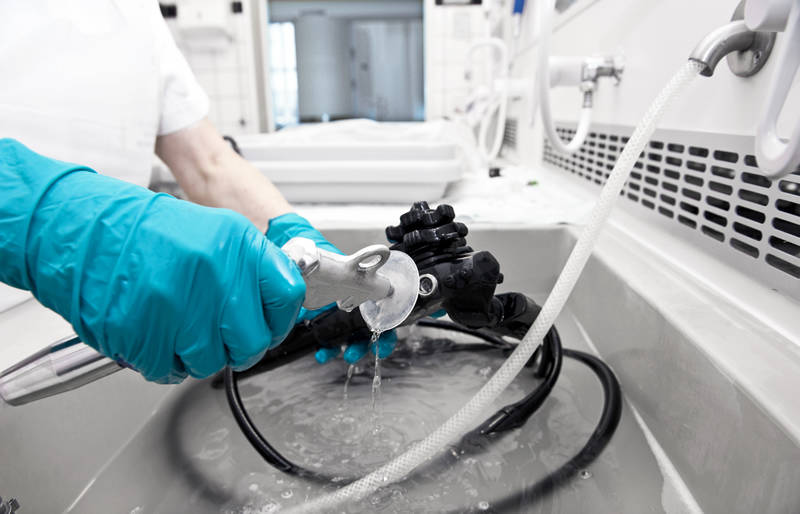
"content": "\u003cp>In response to a series of superbug outbreaks around the country, some doctors and hospitals are trying out disposable scopes to combat the spread of antibiotic-resistant bacteria.\u003c/p>\n\u003cp>U.S. regulators recently approved two new colonoscopes designed to be used just once and thrown away. They will sell for $250 or less apiece — compared to roughly $40,000 or more for a conventional scope that lasts several years but must be disinfected after each use. Other companies are promoting such devices — flexible, lighted tubes used to peer deep inside the body — for use in the lungs and kidneys.\u003c/p>\n\u003caside class=\"pullquote alignright\">'It’s almost too good to be true with it being so cheap.'\u003c/aside>\n\u003cp>The new scopes are coming primarily from smaller companies looking to challenge a handful of dominant device makers. The upstarts are seizing on growing evidence that many reusable instruments cannot be cleaned reliably, even when manufacturer’s instructions are followed.\u003c/p>\n\u003cp>“If you can tell patients we have a disposable device so there’s really no chance of infection, that has to be very appealing,” said Chris Lavanchy, engineering director at the ECRI Institute, a nonprofit organization that tests medical devices. “This could allay public fears.”\u003c/p>\n\u003cp>Scopes include a wide array of devices used on millions of patients annually. As they snake through a patient’s throat, intestines and other cavities, they pick up mucus, blood and thousands of microbes. But the delicate devices can’t be sterilized like a scalpel because intense heat would destroy crucial components.\u003c/p>\n\u003cfigure id=\"attachment_305327\" class=\"wp-caption alignright\" style=\"max-width: 270px\">\u003ca href=\"http://ww2.kqed.org/futureofyou/wp-content/uploads/sites/13/2016/12/disposable-scope-270.jpg\">\u003cimg class=\"size-full wp-image-305327\" src=\"http://ww2.kqed.org/futureofyou/wp-content/uploads/sites/13/2016/12/disposable-scope-270.jpg\" alt=\"A disposable colonoscope from German device maker Invendo Medical secured clearance from the FDA in August. \" width=\"270\" height=\"405\" srcset=\"https://ww2.kqed.org/app/uploads/sites/13/2016/12/disposable-scope-270.jpg 270w, https://ww2.kqed.org/app/uploads/sites/13/2016/12/disposable-scope-270-160x240.jpg 160w, https://ww2.kqed.org/app/uploads/sites/13/2016/12/disposable-scope-270-240x360.jpg 240w\" sizes=\"(max-width: 270px) 100vw, 270px\">\u003c/a>\u003cfigcaption class=\"wp-caption-text\">A disposable colonoscope from German device maker Invendo Medical secured clearance from the FDA in August. \u003ccite>(Courtesy of Invendo)\u003c/cite>\u003c/figcaption>\u003c/figure>\n\u003cp>Instead, the scopes are brushed and washed with disinfectants in preparation for the next patient. Despite those efforts, contamination can persist and drug-resistant bacteria can result in patient infections that are difficult or even impossible to treat.\u003c/p>\n\u003cp>[ad fullwidth]\u003c/p>\n\u003cp>The threat has led to safety alerts from the Food and Drug Administration and a recent U.S. Senate investigation into repeated failures by manufacturers and hospitals to report outbreaks.\u003c/p>\n\u003cp>Overall, as many as 350 patients at 41 medical facilities worldwide were exposed to or infected by contaminated gastrointestinal scopes from 2010 to 2015, according to the FDA. And at least 35 patients at U.S. hospitals have died since 2013 after developing infections tied to tainted scopes, according to hospitals and public health officials.\u003c/p>\n\u003cp>For now, just a handful of medical centers are experimenting with the disposable colonoscopes. Some doctors remain skeptical about whether a cheaper scope will provide the high-quality images and versatility they need to diagnose and treat patients effectively. Many doctors count on the sophisticated cameras on existing scopes as well as multiple channels inside the device to accommodate surgical instruments.\u003c/p>\n\u003cp>Dr. Simon Lo, a nationally known gastroenterologist at Cedars-Sinai Medical Center in Los Angeles, said he shares those concerns. Nonetheless, he said he’s eager to try the disposable colonoscope from German device maker Invendo Medical in the coming months. The scope secured clearance from the U.S. Food and Drug Administration in August.\u003c/p>\n\u003cp>“I’m not totally sold this will be comparable to the [conventional] scopes other companies have spent decades perfecting. It’s almost too good to be true with it being so cheap,” Lo said. “But this is a fantastic possibility and at least gives us an alternative to the current scopes.”\u003c/p>\n\u003cp>Physician groups such as the American Society for Gastrointestinal Endoscopy maintain that the overall risk of infection is very low from these reusable devices. They say the benefits of screenings and many other procedures far outweigh any potential danger.\u003c/p>\n\u003cp>But some doctors say a simpler, single-use scope could be sufficient for many routine examinations. It could also be preferred for immunosuppressed patients who are more susceptible to infection and for patients who have already tested positive for antibiotic-resistant bacteria and would be likely to spread it.\u003c/p>\n\u003cp>“For those patients, it would be great to use this and throw it away,” Lo said.\u003c/p>\n\u003cp>His hospital, Cedars-Sinai, reported four infections last year from contaminated duodenoscopes, which are inserted down a patient’s throat and used to treat problems in the digestive tract such as cancers and blockages in the bile duct.\u003c/p>\n\u003cp>Colonoscopes, which look at the inner lining of the large intestine, haven’t been linked to the recent outbreaks, but concerns about cleaning and the spread of bacteria apply to all types of reusable scopes. Last year, the FDA warned about the risk to patients posed by bronchoscopes, used to examine problems in the airway and lungs.\u003c/p>\n\u003cp>In one study, researchers found that more than 75 percent of colonoscopes and gastroscopes were still contaminated after cleaning and disinfection in accordance with manufacturer guidelines.\u003c/p>\n\u003cp>Hospitals have experimented with a wide variety of new safety measures over the past two years. Some facilities started testing scopes for contamination after cleaning and holding them in quarantine for 48 hours to check them again for bacterial growth.\u003c/p>\n\u003cp>Those steps added layers to what was already a labor-intensive process. It costs about $75 or more to clean a scope each time.\u003c/p>\n\u003cp>“There is a lot of time and money tied up in that,” said John Cifarelli, chief commercial officer for Invendo. “The best solution is a device that doesn’t have to be cleaned.”\u003c/p>\n\u003cp>The leading scope makers haven’t shown much interest thus far in single-use devices, which could affect their longstanding dominance in the business.\u003c/p>\n\u003cp>Olympus Corp., which controls 85 percent of the U.S. market for gastrointestinal scopes, didn’t respond to a request for comment. The Tokyo-based company, linked to numerous infections in the U.S. and Europe, conducted a voluntary recall of its duodenoscopes this year and made repairs designed to reduce the contamination risk.\u003c/p>\n\u003cp>In a statement, another big manufacturer, Fujifilm, said it “has no plans at this time to market single-use disposable scopes, and cannot speak to the benefits or risks associated with such products.”\u003c/p>\n\u003cp>Israeli company GI-View received FDA clearance in August for its single-use colonoscope, called Aer-O-Scope, priced at about $200. The company’s chief executive, Tal Simchony, acknowledges that his smaller company faces an uphill battle against the industry giants. But he said he’s optimistic it can address the “ick” factor some patients feel with a reusable scope.\u003c/p>\n\u003cp>Other companies see opportunity, too. Boston Scientific, a bigger device maker, promotes a disposable ureteroscope to aid in treatment of kidney stones and other procedures. Ambu A/S, based in Denmark, has sold a single-use bronchoscope for about $300 in the U.S. for the past few years.\u003c/p>\n\u003cp>In Europe, two biomedical engineers are raising money to build a prototype and manufacture what could become a full line of disposable endoscopes. Francisco Soriano, one of the engineers in Barcelona, said he learned the business from repairing scopes with his father, who was a longtime Olympus technician.\u003c/p>\n\u003cp>[ad floatright]\u003c/p>\n\u003cp>“We must reinvent the endoscope as we know it,” Soriano said. “Our vision is to eliminate cross-infection completely.”\u003c/p>\n\n",
"disqusIdentifier": "302105 http://ww2.kqed.org/futureofyou/?p=302105",
"disqusUrl": "https://ww2.kqed.org/futureofyou/2016/12/22/250-disposable-scopes-used-to-combat-drug-resistant-infection/",
"stats": {
"hasVideo": false,
"hasChartOrMap": false,
"hasAudio": false,
"hasPolis": false,
"wordCount": 1211,
"hasGoogleForm": false,
"hasGallery": false,
"hasHearkenModule": false,
"iframeSrcs": [],
"paragraphCount": 29
},
"modified": 1482348380,
"excerpt": "Smaller companies looking to challenge a handful of dominant device makers are seizing on growing evidence that many reusable instruments cannot be cleaned reliably.",
"headData": {
"twImgId": "",
"twTitle": "",
"ogTitle": "",
"ogImgId": "",
"twDescription": "",
"description": "Smaller companies looking to challenge a handful of dominant device makers are seizing on growing evidence that many reusable instruments cannot be cleaned reliably.",
"title": "$250 Disposable Scopes Used to Combat Drug-Resistant Infection | KQED",
"ogDescription": "",
"schema": {
"@context": "https://schema.org",
"@type": "Article",
"headline": "$250 Disposable Scopes Used to Combat Drug-Resistant Infection",
"datePublished": "2016-12-22T09:30:00-08:00",
"dateModified": "2016-12-21T11:26:20-08:00",
"image": "https://cdn.kqed.org/wp-content/uploads/2020/02/KQED-OG-Image@1x.png"
}
},
"guestAuthors": [],
"slug": "250-disposable-scopes-used-to-combat-drug-resistant-infection",
"status": "publish",
"nprByline": "Chad Terhune\u003cbr />Kaiser Health News",
"path": "/futureofyou/302105/250-disposable-scopes-used-to-combat-drug-resistant-infection",
"audioTrackLength": null,
"parsedContent": [
{
"type": "contentString",
"content": "\u003cdiv class=\"post-body\">\u003cp>\u003cp>In response to a series of superbug outbreaks around the country, some doctors and hospitals are trying out disposable scopes to combat the spread of antibiotic-resistant bacteria.\u003c/p>\n\u003cp>U.S. regulators recently approved two new colonoscopes designed to be used just once and thrown away. They will sell for $250 or less apiece — compared to roughly $40,000 or more for a conventional scope that lasts several years but must be disinfected after each use. Other companies are promoting such devices — flexible, lighted tubes used to peer deep inside the body — for use in the lungs and kidneys.\u003c/p>\n\u003caside class=\"pullquote alignright\">'It’s almost too good to be true with it being so cheap.'\u003c/aside>\n\u003cp>The new scopes are coming primarily from smaller companies looking to challenge a handful of dominant device makers. The upstarts are seizing on growing evidence that many reusable instruments cannot be cleaned reliably, even when manufacturer’s instructions are followed.\u003c/p>\n\u003cp>“If you can tell patients we have a disposable device so there’s really no chance of infection, that has to be very appealing,” said Chris Lavanchy, engineering director at the ECRI Institute, a nonprofit organization that tests medical devices. “This could allay public fears.”\u003c/p>\n\u003cp>Scopes include a wide array of devices used on millions of patients annually. As they snake through a patient’s throat, intestines and other cavities, they pick up mucus, blood and thousands of microbes. But the delicate devices can’t be sterilized like a scalpel because intense heat would destroy crucial components.\u003c/p>\n\u003cfigure id=\"attachment_305327\" class=\"wp-caption alignright\" style=\"max-width: 270px\">\u003ca href=\"http://ww2.kqed.org/futureofyou/wp-content/uploads/sites/13/2016/12/disposable-scope-270.jpg\">\u003cimg class=\"size-full wp-image-305327\" src=\"http://ww2.kqed.org/futureofyou/wp-content/uploads/sites/13/2016/12/disposable-scope-270.jpg\" alt=\"A disposable colonoscope from German device maker Invendo Medical secured clearance from the FDA in August. \" width=\"270\" height=\"405\" srcset=\"https://ww2.kqed.org/app/uploads/sites/13/2016/12/disposable-scope-270.jpg 270w, https://ww2.kqed.org/app/uploads/sites/13/2016/12/disposable-scope-270-160x240.jpg 160w, https://ww2.kqed.org/app/uploads/sites/13/2016/12/disposable-scope-270-240x360.jpg 240w\" sizes=\"(max-width: 270px) 100vw, 270px\">\u003c/a>\u003cfigcaption class=\"wp-caption-text\">A disposable colonoscope from German device maker Invendo Medical secured clearance from the FDA in August. \u003ccite>(Courtesy of Invendo)\u003c/cite>\u003c/figcaption>\u003c/figure>\n\u003cp>Instead, the scopes are brushed and washed with disinfectants in preparation for the next patient. Despite those efforts, contamination can persist and drug-resistant bacteria can result in patient infections that are difficult or even impossible to treat.\u003c/p>\n\u003cp>\u003c/p>\u003c/div>",
"attributes": {
"named": {},
"numeric": []
}
},
{
"type": "component",
"content": "",
"name": "ad",
"attributes": {
"named": {
"label": "fullwidth"
},
"numeric": [
"fullwidth"
]
}
},
{
"type": "contentString",
"content": "\u003cdiv class=\"post-body\">\u003cp>\u003c/p>\n\u003cp>The threat has led to safety alerts from the Food and Drug Administration and a recent U.S. Senate investigation into repeated failures by manufacturers and hospitals to report outbreaks.\u003c/p>\n\u003cp>Overall, as many as 350 patients at 41 medical facilities worldwide were exposed to or infected by contaminated gastrointestinal scopes from 2010 to 2015, according to the FDA. And at least 35 patients at U.S. hospitals have died since 2013 after developing infections tied to tainted scopes, according to hospitals and public health officials.\u003c/p>\n\u003cp>For now, just a handful of medical centers are experimenting with the disposable colonoscopes. Some doctors remain skeptical about whether a cheaper scope will provide the high-quality images and versatility they need to diagnose and treat patients effectively. Many doctors count on the sophisticated cameras on existing scopes as well as multiple channels inside the device to accommodate surgical instruments.\u003c/p>\n\u003cp>Dr. Simon Lo, a nationally known gastroenterologist at Cedars-Sinai Medical Center in Los Angeles, said he shares those concerns. Nonetheless, he said he’s eager to try the disposable colonoscope from German device maker Invendo Medical in the coming months. The scope secured clearance from the U.S. Food and Drug Administration in August.\u003c/p>\n\u003cp>“I’m not totally sold this will be comparable to the [conventional] scopes other companies have spent decades perfecting. It’s almost too good to be true with it being so cheap,” Lo said. “But this is a fantastic possibility and at least gives us an alternative to the current scopes.”\u003c/p>\n\u003cp>Physician groups such as the American Society for Gastrointestinal Endoscopy maintain that the overall risk of infection is very low from these reusable devices. They say the benefits of screenings and many other procedures far outweigh any potential danger.\u003c/p>\n\u003cp>But some doctors say a simpler, single-use scope could be sufficient for many routine examinations. It could also be preferred for immunosuppressed patients who are more susceptible to infection and for patients who have already tested positive for antibiotic-resistant bacteria and would be likely to spread it.\u003c/p>\n\u003cp>“For those patients, it would be great to use this and throw it away,” Lo said.\u003c/p>\n\u003cp>His hospital, Cedars-Sinai, reported four infections last year from contaminated duodenoscopes, which are inserted down a patient’s throat and used to treat problems in the digestive tract such as cancers and blockages in the bile duct.\u003c/p>\n\u003cp>Colonoscopes, which look at the inner lining of the large intestine, haven’t been linked to the recent outbreaks, but concerns about cleaning and the spread of bacteria apply to all types of reusable scopes. Last year, the FDA warned about the risk to patients posed by bronchoscopes, used to examine problems in the airway and lungs.\u003c/p>\n\u003cp>In one study, researchers found that more than 75 percent of colonoscopes and gastroscopes were still contaminated after cleaning and disinfection in accordance with manufacturer guidelines.\u003c/p>\n\u003cp>Hospitals have experimented with a wide variety of new safety measures over the past two years. Some facilities started testing scopes for contamination after cleaning and holding them in quarantine for 48 hours to check them again for bacterial growth.\u003c/p>\n\u003cp>Those steps added layers to what was already a labor-intensive process. It costs about $75 or more to clean a scope each time.\u003c/p>\n\u003cp>“There is a lot of time and money tied up in that,” said John Cifarelli, chief commercial officer for Invendo. “The best solution is a device that doesn’t have to be cleaned.”\u003c/p>\n\u003cp>The leading scope makers haven’t shown much interest thus far in single-use devices, which could affect their longstanding dominance in the business.\u003c/p>\n\u003cp>Olympus Corp., which controls 85 percent of the U.S. market for gastrointestinal scopes, didn’t respond to a request for comment. The Tokyo-based company, linked to numerous infections in the U.S. and Europe, conducted a voluntary recall of its duodenoscopes this year and made repairs designed to reduce the contamination risk.\u003c/p>\n\u003cp>In a statement, another big manufacturer, Fujifilm, said it “has no plans at this time to market single-use disposable scopes, and cannot speak to the benefits or risks associated with such products.”\u003c/p>\n\u003cp>Israeli company GI-View received FDA clearance in August for its single-use colonoscope, called Aer-O-Scope, priced at about $200. The company’s chief executive, Tal Simchony, acknowledges that his smaller company faces an uphill battle against the industry giants. But he said he’s optimistic it can address the “ick” factor some patients feel with a reusable scope.\u003c/p>\n\u003cp>Other companies see opportunity, too. Boston Scientific, a bigger device maker, promotes a disposable ureteroscope to aid in treatment of kidney stones and other procedures. Ambu A/S, based in Denmark, has sold a single-use bronchoscope for about $300 in the U.S. for the past few years.\u003c/p>\n\u003cp>In Europe, two biomedical engineers are raising money to build a prototype and manufacture what could become a full line of disposable endoscopes. Francisco Soriano, one of the engineers in Barcelona, said he learned the business from repairing scopes with his father, who was a longtime Olympus technician.\u003c/p>\n\u003cp>\u003c/p>\u003c/div>",
"attributes": {
"named": {},
"numeric": []
}
},
{
"type": "component",
"content": "",
"name": "ad",
"attributes": {
"named": {
"label": "floatright"
},
"numeric": [
"floatright"
]
}
},
{
"type": "contentString",
"content": "\u003cdiv class=\"post-body\">\u003cp>\u003c/p>\n\u003cp>“We must reinvent the endoscope as we know it,” Soriano said. “Our vision is to eliminate cross-infection completely.”\u003c/p>\n\n\u003c/div>\u003c/p>",
"attributes": {
"named": {},
"numeric": []
}
}
],
"link": "/futureofyou/302105/250-disposable-scopes-used-to-combat-drug-resistant-infection",
"authors": [
"byline_futureofyou_302105"
],
"categories": [
"futureofyou_1062",
"futureofyou_1",
"futureofyou_73"
],
"tags": [
"futureofyou_697",
"futureofyou_1151"
],
"featImg": "futureofyou_305359",
"label": "futureofyou"
},
"futureofyou_301579": {
"type": "posts",
"id": "futureofyou_301579",
"meta": {
"index": "posts_1716263798",
"site": "futureofyou",
"id": "301579",
"score": null,
"sort": [
1482258359000
]
},
"parent": 0,
"labelTerm": {},
"blocks": [],
"publishDate": 1482258359,
"format": "standard",
"disqusTitle": "Drugmakers Push Unproven Solution to Opioid Epidemic They Helped Create",
"title": "Drugmakers Push Unproven Solution to Opioid Epidemic They Helped Create",
"headTitle": "KQED Future of You | KQED Science",
"content": "\u003cp>Pilloried for their role in the epidemic of prescription painkiller abuse, drugmakers are aggressively pushing their remedy to the problem: a new generation of harder-to-manipulate opioids that have racked up billions in sales, even though there's little proof they reduce rates of overdoses or deaths.\u003c/p>\n\u003caside class=\"pullquote alignright\">Harder-to-manipulate opioids have racked up billions in sales, despite a lack of proof that they reduce overdoses.\u003c/aside>\n\u003cp>More than prescriptions are at stake. Critics worry the drugmakers' nationwide lobbying campaign is distracting from more productive solutions and delaying crucial efforts to steer physicians away from prescription opioids — addictive pain medications involved in the deaths of more than 165,000 Americans since 2000.\u003c/p>\n\u003cp>\"If we've learned one lesson from the last 20 years on opioids it's that these products have very, very high inherent risks,\" said Dr. Caleb Alexander, co-director of Johns Hopkins University's Center for Drug Safety and Effectiveness. \"My concern is that they'll contribute to a perception that there is a safe opioid, and there's no such thing as a fully safe opioid.\"\u003c/p>\n\u003cp>The latest drugs — known as abuse-deterrent formulations, or ADFs — are generally harder to crush or dissolve, which the drugmakers tout as making them difficult to snort or inject. But they still are vulnerable to manipulation and potentially addictive when simply swallowed. National data from an industry-sponsored tracking system also show drug abusers quickly drop the reformulated drugs in favor of older painkillers or heroin.\u003c/p>\n\u003cp>In the last two years, pharmaceutical companies have made a concerted under-the-radar push for bills benefiting the anti-abuse opioids in statehouses and in Congress, where proposed legislation would require the Food and Drug Administration to replace older opioids with the new drugs.\u003c/p>\n\u003cp>[ad fullwidth]\u003c/p>\n\u003cp>The lobbying push features industry-funded advocacy groups and physicians, along with grieving family members, who rarely disclosed the drugmakers' ties during their testimony in support of the drugs.\u003c/p>\n\u003cp>Besides the tamper-resistant pills, ADF opioids are being rolled out in other forms, including injectable drugs and pills that irritate users when they're snorted or contain substances that counteract highs.\u003c/p>\n\u003cp>\u003cstrong>Sales Opportunity\u003c/strong>\u003c/p>\n\u003cp>Making painkillers harder to abuse is a common-sense step. But it's also a multibillion-dollar sales opportunity, offering drugmakers the potential to wipe out lower-cost generic competitors and lock in sales of their higher-priced versions, which cost many times more than conventional pills. The big companies hold multiple patents on the reformulated drugs, shielding them from competition for years — in some cases decades.\u003c/p>\n\u003cp>Though abuse-deterrent painkillers represented less than 5 percent of all opioids prescribed last year, they generated more than $2.4 billion in sales, or roughly a quarter of the nearly $10 billion U.S. market for the drugs, according to IMS Health. The field is dominated by Purdue Pharma's OxyContin, patent-protected until 2030.\u003c/p>\n\u003cp>\"We at Purdue make certain that prescribers and other stakeholders understand that opioids with abuse-deterrent properties won't stop all prescription drug abuse, but they are an important part of the comprehensive approach needed to address this public health issue,\" Purdue spokesman Robert Josephson said in a statement.\u003c/p>\n\u003cp>Like a spokeswoman for Pfizer Inc., Josephson also noted that some public health officials, including the Food and Drug Administration, have endorsed using ADFs.\u003c/p>\n\u003cp>\"We need every tool that we can have in our toolbox,\" said Kentucky state Rep. Addia Wuchner, a Republican who has worked on several bills to benefit reformulated opioids. \"The extra steps are worth the effort in order to prevent this escalation of more addiction.\"\u003c/p>\n\u003cp>\u003cstrong>Massive Lobbying Effort\u003c/strong>\u003c/p>\n\u003cp>The current industry campaign draws on the same 50-state strategy that painkiller manufacturers successfully deployed to help kill or weaken measures aimed at stemming the tide of prescription opioids, a playbook The Associated Press and Center for Public Integrity exposed in September.\u003c/p>\n\u003cp>The \u003ca href=\"https://ww2.kqed.org/stateofhealth/2016/09/19/how-drugmakers-used-money-and-influence-to-shape-the-national-response-to-opioid-abuse/\" target=\"_blank\">reporting \u003c/a>detailed how opioid drugmakers and the nonprofits they help fund spent more than $880 million on lobbying and political contributions at the state and federal level over the past decade, eight times what the gun lobby reported for the same period. The money represents the drugmakers' spending on all their legislative interests, including opioids.\u003c/p>\n\u003cp>The FDA has approved a handful of the reformulated drugs but has not yet concluded that any reduce rates of addiction, abuse or death, and the evidence gap has led to diverging views among health authorities.\u003c/p>\n\u003cp>\u003cstrong>'No less addictive'\u003c/strong>\u003c/p>\n\u003cp>Whereas FDA regulators emphasize the potential promise of reformulated painkillers, other government officials stress that they contain the same heroin-like ingredients as traditional opioids. An estimated 78 Americans die from heroin and prescription opioid overdoses every day.\u003c/p>\n\u003cp>\"'Abuse-deterrent' sounds to people sometimes like 'Oh, maybe it's not addictive.' But it's no less addictive,\" said Dr. Tom Frieden, head of the Centers for Disease Control and Prevention.\u003c/p>\n\u003cp>Survey results published this year in the Clinical Journal of Pain showed nearly half of U.S. physicians incorrectly believed that reformulated opioids are less addictive than their predecessors.\u003c/p>\n\u003cp>Many experts see a key role for ADFs in reducing the number of people who first begin abusing opioids, and some say the abuse-deterrent formulations should be the default painkiller for patients with histories of drug use, anxiety or depression. But even they worry that some drugmakers are overselling the technology. They stress that separate measures are needed for the majority of opioid abusers who ingest the pills orally.\u003c/p>\n\u003cp>\"The way they're handling the ADF is that this is the answer. And it's not the answer — it's part of the bigger puzzle,\" said Theodore Cicero, a psychiatry professor at Washington University in St. Louis, who has authored several studies on the drugs.\u003c/p>\n\u003cp>\u003cstrong>'You can't put a price tag on anybody's life'\u003c/strong>\u003c/p>\n\u003cp>Two years after the overdose that killed her 21-year-old son, Terri Bartlett traveled to Illinois' state capital to champion an unlikely cause: revamped painkillers.\u003c/p>\n\u003cp>Bartlett's son Michael became hooked on Vicodin and later graduated to heroin. In emotional testimony last year, she urged lawmakers to support a bill that would prioritize the new harder-to-crush pills, saying she believed her son would still be alive if abuse-deterrent formulations had been on the market then.\u003c/p>\n\u003cp>\"You can't put a price tag on anybody's life,\" she said.\u003c/p>\n\u003cp>Bartlett didn't know then that she had been recruited into a wide-ranging lobbying campaign. A public relations firm hired by OxyContin-maker Purdue had helped recruit her to support the bill, along with local sheriffs and fire chiefs.\u003c/p>\n\u003cp>Her words, and similar testimony from parents of drug abusers elsewhere, reflect a tactic used by the drugmakers across the country. For instance, Purdue paid nearly $95,000 for similar lobbying efforts in New York, state records show.\u003c/p>\n\u003cp>And the industry's fingerprints are easy to spot in other areas. Of more than 100 bills dealing with the drugs introduced in 35 states in 2015 and 2016, at least 49 featured nearly identical language requiring insurers to cover abuse-deterrent drugs, according to an analysis of data from Quorum, a legislative tracking service. Several of the bill sponsors said they received the wording from pharmaceutical lobbyists.\u003c/p>\n\u003cp>Since 2012, at least 21 bills related to the drugs have become law, including five that require insurers to pay for the more expensive drugs in Maine, Maryland, Massachusetts, Florida and West Virginia.\u003c/p>\n\u003cp>Wins in such states will give drugmakers momentum to successfully push for copycat laws elsewhere, noted Paul Kelly, a federal lobbyist who has worked on multistate lobbying campaigns for drugstores and major retailers.\u003c/p>\n\u003cp>\"It's like a foot in the door,\" he said.\u003c/p>\n\u003cp>\u003cstrong>Fierce Opposition\u003c/strong>\u003c/p>\n\u003cp>Drugmakers have found fierce opposition to their ADF legislation from insurers and employers who would be on the hook for the far pricier opioid variations.\u003c/p>\n\u003cp>The Illinois bill — and the 48 strikingly similar measures in other states — would require insurers to cover the drugs in the same way as other opioids, which the insurance companies argue would allow drugmakers to charge whatever they want for them.\u003c/p>\n\u003cp>\"That is not the best use of our medical care resources,\" Vernon Rowen, vice president of state government affairs for the insurance company Aetna, told Illinois lawmakers after Bartlett testified. \"It totally eliminates our ability to negotiate discounts with manufacturers.\"\u003c/p>\n\u003cp>New York Gov. Andrew Cuomo and New Jersey Gov. Chris Christie both vetoed such insurance mandates in the past year, citing the high costs and lack of evidence that the drugs help.\u003c/p>\n\u003cp>Federal health officials also have pushed back against requirements to cover the drugs, citing the \"staggering\" costs. For example, a 30-day supply of Pfizer's abuse-deterrent Embeda, a combination drug containing morphine, costs $268, while a 30-day supply of a generic morphine costs roughly $38, according to data compiled by Truven Health Analytics, a company that tracks drug prices set by manufacturers.\u003c/p>\n\u003cp>The Department of Veterans Affairs' Dr. Bernie Good estimated that converting the 8.8 million patient system exclusively to the new reformulations would increase opioid spending more than tenfold, to over $1.6 billion annually. Good, who co-directs the VA's program for medication safety, said the vast majority of veterans are not at risk for snorting or injecting their medications.\u003c/p>\n\u003cp>\"Would the excess money to pay for abuse-deterrent products — mostly to pay for it in cases where it wouldn't be necessary — be better spent for drug treatment centers?\" he asked at a recent federal meeting on the drugs.\u003c/p>\n\u003cp>Federal estimates say at least 2.2 million Americans are addicted to prescription opioids or heroin, yet only one in five actually receives treatment, according to a Surgeon General's report published last month. That's despite some $35 billion already spent annually on substance abuse programs by private and public health providers.\u003c/p>\n\u003cp>State lawmakers who support the abuse-deterrent bills often defend them as an important piece of solving the opioid puzzle, preventing more costly overdoses and hospitalizations.\u003c/p>\n\u003cp>And Fred Brason, executive director of Project Lazarus, a North Carolina-based group that promotes anti-addiction policies in several states, called the focus on the drugs' cost too narrow.\u003c/p>\n\u003cp>\"You're already spending that money at the back end,\" he said. \"You're spending it at the emergency department.\" He also noted the costs of addiction treatment.\u003c/p>\n\u003cp>\u003cstrong>Industry-Supported Groups and Physicians\u003c/strong>\u003c/p>\n\u003cp>When critics raise alarms about higher costs and limited evidence, drugmakers can rely on groups they support financially to argue their side, including the National Association of Drug Diversion Investigators, the Academy of Integrative Pain Management and the Partnership for Drug-Free Kids. Representatives from those groups have testified in favor of abuse-deterrent legislation in at least seven states.\u003c/p>\n\u003cp>NADDI president Charlie Cichon acknowledged his group receives funds from several ADF-makers, but said it views the drugs as a proven part of the solution to the opioid crisis. \"We're not testifying for Purdue Pharma's product or Endo's product,\" he said.\u003c/p>\n\u003cp>And Bob Twillman, executive director of the Academy, said, \"Increased use of abuse-deterrent opioids makes it more likely that those patients who need opiates to treat their pain will be able to get them.\"\u003c/p>\n\u003cp>The Partnership for Drug-Free Kids did not respond to multiple requests for comment.\u003c/p>\n\u003cp>Physicians with financial ties to drugmakers play similar roles. Dr. Gareth Shemesh, a pain specialist, testified in support of a Colorado bill last year brought to the sponsoring legislator by Pfizer. Shemesh had received more than $13,500 from Pfizer that year in speaking fees, travel and meals, and more than $5,000 from Purdue the year before. He did not respond to repeated calls for comment, but Pfizer said he was not paid to testify and did not speak on behalf of any specific product.\u003c/p>\n\u003cp>\u003cstrong>Political Contributions Ramped Up\u003c/strong>\u003c/p>\n\u003cp>Purdue and Pfizer also have ramped up contributions to the Republican and Democratic attorneys general associations, which raise unlimited funds to help elect AGs across the country. In 2015 and 2016, they gave a total of $950,000 — more than in the previous four years combined.\u003c/p>\n\u003cp>To date, 51 attorneys general from U.S. states and territories have signed at least one of two National Association of Attorneys General letters to the FDA, urging the agency to favor abuse-deterrent drugs.\u003c/p>\n\u003cp>The pro-ADF playbook even includes a bit of political theater. In at least seven states, lawmakers or advocates have pounded the reformulated pills with hammers to demonstrate how difficult they are to smash.\u003c/p>\n\u003cp>In Illinois, it was Democratic Rep. Sara Feigenholtz wielding the hammer on the same committee that heard Terri Bartlett's testimony. The main sponsor of the bill prioritizing ADFs, Feigenholtz ranked second-highest among legislative recipients of money from Pfizer since the start of 2010, according to an analysis of data from the National Institute on Money in State Politics. The $6,200 she received during that period was more than she had received in the 14 previous years combined. Her bill passed the committee but later stalled in the Legislature and remains pending.\u003c/p>\n\u003cp>She did not return multiple requests for comment. Pfizer said its contributions to Feigenholtz go back 20 years and it would be \"inaccurate and misleading\" to suggest a tie to any one piece of legislation.\u003c/p>\n\u003cp>Bartlett said she doesn't mind that Purdue was ultimately responsible for her invitation to testify, even though she didn't know that at the time. She still supports the bill.\u003c/p>\n\u003cp>\"I want to believe that in every pharmaceutical company there still remains some sort of humanity,\" she said. \"Saving life is expensive.\"\u003c/p>\n\u003cp>\u003cstrong>'An addict can find a way'\u003c/strong>\u003c/p>\n\u003cp>The FDA has walked a careful line on the new drugs, promoting them as a promising approach to discouraging abuse while acknowledging their real-world benefits remain largely theoretical.\u003c/p>\n\u003cp>Earlier this year, the agency highlighted the drugs in its \"opioids action plan,\" issued after scathing criticism from some members of Congress that the FDA wasn't doing enough to combat the epidemic.\u003c/p>\n\u003cp>Thus far, the agency has approved seven drugs with labeling suggesting they are \"expected to\" discourage abuse, based on studies conducted by pharmaceutical companies.\u003c/p>\n\u003cp>But the FDA has not yet concluded that any of the products have a \"real-world impact\" on measures like overdose or death, according to Dr. Douglas Throckmorton, an agency deputy director. He and other regulators predict, however, that the reformulations will eventually translate into public health results.\u003c/p>\n\u003cp>\"We stand by those predictions,\" Throckmorton said at a recent public meeting on the drugs. \"We're confident in the science, we're confident in the assessments we conducted.\"\u003c/p>\n\u003cp>Even some former FDA advisers who support expanded use of the drugs say they are only part of the solution. Dr. Lewis Nelson, who previously chaired an FDA panel on drug safety, notes that the drugs don't deter the most common form of abuse: swallowing pills whole.\u003c/p>\n\u003cp>\"Certainly, you might not eat one and get high,\" he said. \"You eat three and get high.\"\u003c/p>\n\u003cp>At least one study found that while OxyContin's reformulation coincided with many abusers switching to other drugs, other users still were able to defeat the pills' technology and snort or inject the contents.\u003c/p>\n\u003cp>David Rook, a 40-year-old Henrico, Virginia, resident who now operates a recovery facility, was among them. Before entering treatment, he said, he would break down abuse-deterrent OxyContins and crush-resistant Opanas using water, lemon juice and a microwave.\u003c/p>\n\u003cp>\"The truth is an addict can find a way to abuse a medication one way or the other,\" he said.\u003c/p>\n\u003cp>\u003cstrong>Unpredictable Effects\u003c/strong>\u003c/p>\n\u003cp>A recent HIV outbreak in rural Indiana illustrates the sometimes unpredictable effect of ADFs on abusers' behavior.\u003c/p>\n\u003cp>Approximately 210 people have tested positive for the virus in Scott County since 2014, a public health crisis linked to needle-sharing among abusers of Opana. Endo Pharmaceuticals received approval for a reformulated version of the drug in 2011, making it harder to crush. As a result, many abusers switched from snorting the drug to injecting it with syringes, leading to the spread of the blood-borne HIV virus, according to the state health commissioner and other officials.\u003c/p>\n\u003cp>Endo spokeswoman Heather Zoumas Lubeski declined to comment on the outbreak, but issued a statement saying, \"Patient safety has always been a top priority for Endo and we are committed to providing patients with approved products that are safe and effective when used as prescribed.\"\u003c/p>\n\u003cp>The FDA declined to approve labeling claims for Opana's anti-abuse features, noting that the drug still can easily be cooked and injected.\u003c/p>\n\u003cp>Pfizer, Purdue, Endo and Teva Pharmaceuticals Industries Ltd. spent more than $20 million between 2012 and 2015 on federal lobbying efforts that included support of a bill that would require the FDA to gradually replace current opioids with harder-to-abuse versions that become available. Teva declined comment.\u003c/p>\n\u003cp>Rep. William Keating, D-Mass., first introduced the bill in 2012 and tried again in 2013 and 2015. Like his colleagues at the state level, he employed the hammer-smashing routine to illustrate the medications' crush-resistant properties.\u003c/p>\n\u003cp>Keating said the industry played no part in spurring the bill, even though the head of a nonprofit association funded by abuse-deterrent drugmakers spoke at the press conference introducing his legislation. He also received $2,500 in political contributions from makers of reformulated opioids in 2011 and 2012, a small fraction of his overall fundraising haul.\u003c/p>\n\u003cp>\"My interest in this stems from when I was a district attorney and I got to see the lives that were lost,\" Keating said in an interview.\u003c/p>\n\u003cp>While Keating's bill has not received a vote in Congress, the FDA already has begun moving in the direction suggested by companies, mapping out a process for removing older opioids from the market when newer versions are shown to be more effective at thwarting abuse.\u003c/p>\n\u003cp>\"You don't have to pass a bill, necessarily, to change policy,\" said Dan Cohen of the Abuse Deterrent Coalition, which represents smaller abuse-deterrent manufacturers.\u003c/p>\n\u003cp>The lack of real-world data on reformulated opioids is the main reason some federal officials haven't embraced them.\u003c/p>\n\u003cp>The CDC did not recommend ADFs in its landmark opioid guidelines this year, the first-ever federal recommendations for doctors prescribing the drugs. Why? Frieden, the agency's director, said his staff could not find any evidence showing the updated opioids actually reduce rates of addiction, overdoses or deaths.\u003c/p>\n\u003cp>[ad floatright]\u003c/p>\n\u003cp>\u003cem>Center for Public Integrity data reporter Ben Wieder contributed to this article.\u003c/em>\u003c/p>\n\n",
"disqusIdentifier": "301579 http://ww2.kqed.org/futureofyou/?p=301579",
"disqusUrl": "https://ww2.kqed.org/futureofyou/2016/12/20/with-little-proof-drugmakers-push-solution-to-opioid-epidemic-they-helped-create/",
"stats": {
"hasVideo": false,
"hasChartOrMap": false,
"hasAudio": false,
"hasPolis": false,
"wordCount": 3099,
"hasGoogleForm": false,
"hasGallery": false,
"hasHearkenModule": false,
"iframeSrcs": [],
"paragraphCount": 86
},
"modified": 1482340552,
"excerpt": "Drugmakers aggressively push new generation of harder-to-manipulate opioids that have racked up billions in sales, even though there's little proof they reduce rates of overdoses or deaths.",
"headData": {
"twImgId": "",
"twTitle": "",
"ogTitle": "",
"ogImgId": "",
"twDescription": "",
"description": "Drugmakers aggressively push new generation of harder-to-manipulate opioids that have racked up billions in sales, even though there's little proof they reduce rates of overdoses or deaths.",
"title": "Drugmakers Push Unproven Solution to Opioid Epidemic They Helped Create | KQED",
"ogDescription": "",
"schema": {
"@context": "https://schema.org",
"@type": "Article",
"headline": "Drugmakers Push Unproven Solution to Opioid Epidemic They Helped Create",
"datePublished": "2016-12-20T10:25:59-08:00",
"dateModified": "2016-12-21T09:15:52-08:00",
"image": "https://cdn.kqed.org/wp-content/uploads/2020/02/KQED-OG-Image@1x.png"
}
},
"guestAuthors": [],
"slug": "with-little-proof-drugmakers-push-solution-to-opioid-epidemic-they-helped-create",
"status": "publish",
"nprByline": "Matthew Perrone\u003cbr />Geoff Mulvihill\u003cbr />Liz Essley Whyte\u003cbr />Associated Press and Center for Public Integrity",
"source": "KQED Future of You",
"path": "/futureofyou/301579/with-little-proof-drugmakers-push-solution-to-opioid-epidemic-they-helped-create",
"audioTrackLength": null,
"parsedContent": [
{
"type": "contentString",
"content": "\u003cdiv class=\"post-body\">\u003cp>\u003cp>Pilloried for their role in the epidemic of prescription painkiller abuse, drugmakers are aggressively pushing their remedy to the problem: a new generation of harder-to-manipulate opioids that have racked up billions in sales, even though there's little proof they reduce rates of overdoses or deaths.\u003c/p>\n\u003caside class=\"pullquote alignright\">Harder-to-manipulate opioids have racked up billions in sales, despite a lack of proof that they reduce overdoses.\u003c/aside>\n\u003cp>More than prescriptions are at stake. Critics worry the drugmakers' nationwide lobbying campaign is distracting from more productive solutions and delaying crucial efforts to steer physicians away from prescription opioids — addictive pain medications involved in the deaths of more than 165,000 Americans since 2000.\u003c/p>\n\u003cp>\"If we've learned one lesson from the last 20 years on opioids it's that these products have very, very high inherent risks,\" said Dr. Caleb Alexander, co-director of Johns Hopkins University's Center for Drug Safety and Effectiveness. \"My concern is that they'll contribute to a perception that there is a safe opioid, and there's no such thing as a fully safe opioid.\"\u003c/p>\n\u003cp>The latest drugs — known as abuse-deterrent formulations, or ADFs — are generally harder to crush or dissolve, which the drugmakers tout as making them difficult to snort or inject. But they still are vulnerable to manipulation and potentially addictive when simply swallowed. National data from an industry-sponsored tracking system also show drug abusers quickly drop the reformulated drugs in favor of older painkillers or heroin.\u003c/p>\n\u003cp>In the last two years, pharmaceutical companies have made a concerted under-the-radar push for bills benefiting the anti-abuse opioids in statehouses and in Congress, where proposed legislation would require the Food and Drug Administration to replace older opioids with the new drugs.\u003c/p>\n\u003cp>\u003c/p>\u003c/div>",
"attributes": {
"named": {},
"numeric": []
}
},
{
"type": "component",
"content": "",
"name": "ad",
"attributes": {
"named": {
"label": "fullwidth"
},
"numeric": [
"fullwidth"
]
}
},
{
"type": "contentString",
"content": "\u003cdiv class=\"post-body\">\u003cp>\u003c/p>\n\u003cp>The lobbying push features industry-funded advocacy groups and physicians, along with grieving family members, who rarely disclosed the drugmakers' ties during their testimony in support of the drugs.\u003c/p>\n\u003cp>Besides the tamper-resistant pills, ADF opioids are being rolled out in other forms, including injectable drugs and pills that irritate users when they're snorted or contain substances that counteract highs.\u003c/p>\n\u003cp>\u003cstrong>Sales Opportunity\u003c/strong>\u003c/p>\n\u003cp>Making painkillers harder to abuse is a common-sense step. But it's also a multibillion-dollar sales opportunity, offering drugmakers the potential to wipe out lower-cost generic competitors and lock in sales of their higher-priced versions, which cost many times more than conventional pills. The big companies hold multiple patents on the reformulated drugs, shielding them from competition for years — in some cases decades.\u003c/p>\n\u003cp>Though abuse-deterrent painkillers represented less than 5 percent of all opioids prescribed last year, they generated more than $2.4 billion in sales, or roughly a quarter of the nearly $10 billion U.S. market for the drugs, according to IMS Health. The field is dominated by Purdue Pharma's OxyContin, patent-protected until 2030.\u003c/p>\n\u003cp>\"We at Purdue make certain that prescribers and other stakeholders understand that opioids with abuse-deterrent properties won't stop all prescription drug abuse, but they are an important part of the comprehensive approach needed to address this public health issue,\" Purdue spokesman Robert Josephson said in a statement.\u003c/p>\n\u003cp>Like a spokeswoman for Pfizer Inc., Josephson also noted that some public health officials, including the Food and Drug Administration, have endorsed using ADFs.\u003c/p>\n\u003cp>\"We need every tool that we can have in our toolbox,\" said Kentucky state Rep. Addia Wuchner, a Republican who has worked on several bills to benefit reformulated opioids. \"The extra steps are worth the effort in order to prevent this escalation of more addiction.\"\u003c/p>\n\u003cp>\u003cstrong>Massive Lobbying Effort\u003c/strong>\u003c/p>\n\u003cp>The current industry campaign draws on the same 50-state strategy that painkiller manufacturers successfully deployed to help kill or weaken measures aimed at stemming the tide of prescription opioids, a playbook The Associated Press and Center for Public Integrity exposed in September.\u003c/p>\n\u003cp>The \u003ca href=\"https://ww2.kqed.org/stateofhealth/2016/09/19/how-drugmakers-used-money-and-influence-to-shape-the-national-response-to-opioid-abuse/\" target=\"_blank\">reporting \u003c/a>detailed how opioid drugmakers and the nonprofits they help fund spent more than $880 million on lobbying and political contributions at the state and federal level over the past decade, eight times what the gun lobby reported for the same period. The money represents the drugmakers' spending on all their legislative interests, including opioids.\u003c/p>\n\u003cp>The FDA has approved a handful of the reformulated drugs but has not yet concluded that any reduce rates of addiction, abuse or death, and the evidence gap has led to diverging views among health authorities.\u003c/p>\n\u003cp>\u003cstrong>'No less addictive'\u003c/strong>\u003c/p>\n\u003cp>Whereas FDA regulators emphasize the potential promise of reformulated painkillers, other government officials stress that they contain the same heroin-like ingredients as traditional opioids. An estimated 78 Americans die from heroin and prescription opioid overdoses every day.\u003c/p>\n\u003cp>\"'Abuse-deterrent' sounds to people sometimes like 'Oh, maybe it's not addictive.' But it's no less addictive,\" said Dr. Tom Frieden, head of the Centers for Disease Control and Prevention.\u003c/p>\n\u003cp>Survey results published this year in the Clinical Journal of Pain showed nearly half of U.S. physicians incorrectly believed that reformulated opioids are less addictive than their predecessors.\u003c/p>\n\u003cp>Many experts see a key role for ADFs in reducing the number of people who first begin abusing opioids, and some say the abuse-deterrent formulations should be the default painkiller for patients with histories of drug use, anxiety or depression. But even they worry that some drugmakers are overselling the technology. They stress that separate measures are needed for the majority of opioid abusers who ingest the pills orally.\u003c/p>\n\u003cp>\"The way they're handling the ADF is that this is the answer. And it's not the answer — it's part of the bigger puzzle,\" said Theodore Cicero, a psychiatry professor at Washington University in St. Louis, who has authored several studies on the drugs.\u003c/p>\n\u003cp>\u003cstrong>'You can't put a price tag on anybody's life'\u003c/strong>\u003c/p>\n\u003cp>Two years after the overdose that killed her 21-year-old son, Terri Bartlett traveled to Illinois' state capital to champion an unlikely cause: revamped painkillers.\u003c/p>\n\u003cp>Bartlett's son Michael became hooked on Vicodin and later graduated to heroin. In emotional testimony last year, she urged lawmakers to support a bill that would prioritize the new harder-to-crush pills, saying she believed her son would still be alive if abuse-deterrent formulations had been on the market then.\u003c/p>\n\u003cp>\"You can't put a price tag on anybody's life,\" she said.\u003c/p>\n\u003cp>Bartlett didn't know then that she had been recruited into a wide-ranging lobbying campaign. A public relations firm hired by OxyContin-maker Purdue had helped recruit her to support the bill, along with local sheriffs and fire chiefs.\u003c/p>\n\u003cp>Her words, and similar testimony from parents of drug abusers elsewhere, reflect a tactic used by the drugmakers across the country. For instance, Purdue paid nearly $95,000 for similar lobbying efforts in New York, state records show.\u003c/p>\n\u003cp>And the industry's fingerprints are easy to spot in other areas. Of more than 100 bills dealing with the drugs introduced in 35 states in 2015 and 2016, at least 49 featured nearly identical language requiring insurers to cover abuse-deterrent drugs, according to an analysis of data from Quorum, a legislative tracking service. Several of the bill sponsors said they received the wording from pharmaceutical lobbyists.\u003c/p>\n\u003cp>Since 2012, at least 21 bills related to the drugs have become law, including five that require insurers to pay for the more expensive drugs in Maine, Maryland, Massachusetts, Florida and West Virginia.\u003c/p>\n\u003cp>Wins in such states will give drugmakers momentum to successfully push for copycat laws elsewhere, noted Paul Kelly, a federal lobbyist who has worked on multistate lobbying campaigns for drugstores and major retailers.\u003c/p>\n\u003cp>\"It's like a foot in the door,\" he said.\u003c/p>\n\u003cp>\u003cstrong>Fierce Opposition\u003c/strong>\u003c/p>\n\u003cp>Drugmakers have found fierce opposition to their ADF legislation from insurers and employers who would be on the hook for the far pricier opioid variations.\u003c/p>\n\u003cp>The Illinois bill — and the 48 strikingly similar measures in other states — would require insurers to cover the drugs in the same way as other opioids, which the insurance companies argue would allow drugmakers to charge whatever they want for them.\u003c/p>\n\u003cp>\"That is not the best use of our medical care resources,\" Vernon Rowen, vice president of state government affairs for the insurance company Aetna, told Illinois lawmakers after Bartlett testified. \"It totally eliminates our ability to negotiate discounts with manufacturers.\"\u003c/p>\n\u003cp>New York Gov. Andrew Cuomo and New Jersey Gov. Chris Christie both vetoed such insurance mandates in the past year, citing the high costs and lack of evidence that the drugs help.\u003c/p>\n\u003cp>Federal health officials also have pushed back against requirements to cover the drugs, citing the \"staggering\" costs. For example, a 30-day supply of Pfizer's abuse-deterrent Embeda, a combination drug containing morphine, costs $268, while a 30-day supply of a generic morphine costs roughly $38, according to data compiled by Truven Health Analytics, a company that tracks drug prices set by manufacturers.\u003c/p>\n\u003cp>The Department of Veterans Affairs' Dr. Bernie Good estimated that converting the 8.8 million patient system exclusively to the new reformulations would increase opioid spending more than tenfold, to over $1.6 billion annually. Good, who co-directs the VA's program for medication safety, said the vast majority of veterans are not at risk for snorting or injecting their medications.\u003c/p>\n\u003cp>\"Would the excess money to pay for abuse-deterrent products — mostly to pay for it in cases where it wouldn't be necessary — be better spent for drug treatment centers?\" he asked at a recent federal meeting on the drugs.\u003c/p>\n\u003cp>Federal estimates say at least 2.2 million Americans are addicted to prescription opioids or heroin, yet only one in five actually receives treatment, according to a Surgeon General's report published last month. That's despite some $35 billion already spent annually on substance abuse programs by private and public health providers.\u003c/p>\n\u003cp>State lawmakers who support the abuse-deterrent bills often defend them as an important piece of solving the opioid puzzle, preventing more costly overdoses and hospitalizations.\u003c/p>\n\u003cp>And Fred Brason, executive director of Project Lazarus, a North Carolina-based group that promotes anti-addiction policies in several states, called the focus on the drugs' cost too narrow.\u003c/p>\n\u003cp>\"You're already spending that money at the back end,\" he said. \"You're spending it at the emergency department.\" He also noted the costs of addiction treatment.\u003c/p>\n\u003cp>\u003cstrong>Industry-Supported Groups and Physicians\u003c/strong>\u003c/p>\n\u003cp>When critics raise alarms about higher costs and limited evidence, drugmakers can rely on groups they support financially to argue their side, including the National Association of Drug Diversion Investigators, the Academy of Integrative Pain Management and the Partnership for Drug-Free Kids. Representatives from those groups have testified in favor of abuse-deterrent legislation in at least seven states.\u003c/p>\n\u003cp>NADDI president Charlie Cichon acknowledged his group receives funds from several ADF-makers, but said it views the drugs as a proven part of the solution to the opioid crisis. \"We're not testifying for Purdue Pharma's product or Endo's product,\" he said.\u003c/p>\n\u003cp>And Bob Twillman, executive director of the Academy, said, \"Increased use of abuse-deterrent opioids makes it more likely that those patients who need opiates to treat their pain will be able to get them.\"\u003c/p>\n\u003cp>The Partnership for Drug-Free Kids did not respond to multiple requests for comment.\u003c/p>\n\u003cp>Physicians with financial ties to drugmakers play similar roles. Dr. Gareth Shemesh, a pain specialist, testified in support of a Colorado bill last year brought to the sponsoring legislator by Pfizer. Shemesh had received more than $13,500 from Pfizer that year in speaking fees, travel and meals, and more than $5,000 from Purdue the year before. He did not respond to repeated calls for comment, but Pfizer said he was not paid to testify and did not speak on behalf of any specific product.\u003c/p>\n\u003cp>\u003cstrong>Political Contributions Ramped Up\u003c/strong>\u003c/p>\n\u003cp>Purdue and Pfizer also have ramped up contributions to the Republican and Democratic attorneys general associations, which raise unlimited funds to help elect AGs across the country. In 2015 and 2016, they gave a total of $950,000 — more than in the previous four years combined.\u003c/p>\n\u003cp>To date, 51 attorneys general from U.S. states and territories have signed at least one of two National Association of Attorneys General letters to the FDA, urging the agency to favor abuse-deterrent drugs.\u003c/p>\n\u003cp>The pro-ADF playbook even includes a bit of political theater. In at least seven states, lawmakers or advocates have pounded the reformulated pills with hammers to demonstrate how difficult they are to smash.\u003c/p>\n\u003cp>In Illinois, it was Democratic Rep. Sara Feigenholtz wielding the hammer on the same committee that heard Terri Bartlett's testimony. The main sponsor of the bill prioritizing ADFs, Feigenholtz ranked second-highest among legislative recipients of money from Pfizer since the start of 2010, according to an analysis of data from the National Institute on Money in State Politics. The $6,200 she received during that period was more than she had received in the 14 previous years combined. Her bill passed the committee but later stalled in the Legislature and remains pending.\u003c/p>\n\u003cp>She did not return multiple requests for comment. Pfizer said its contributions to Feigenholtz go back 20 years and it would be \"inaccurate and misleading\" to suggest a tie to any one piece of legislation.\u003c/p>\n\u003cp>Bartlett said she doesn't mind that Purdue was ultimately responsible for her invitation to testify, even though she didn't know that at the time. She still supports the bill.\u003c/p>\n\u003cp>\"I want to believe that in every pharmaceutical company there still remains some sort of humanity,\" she said. \"Saving life is expensive.\"\u003c/p>\n\u003cp>\u003cstrong>'An addict can find a way'\u003c/strong>\u003c/p>\n\u003cp>The FDA has walked a careful line on the new drugs, promoting them as a promising approach to discouraging abuse while acknowledging their real-world benefits remain largely theoretical.\u003c/p>\n\u003cp>Earlier this year, the agency highlighted the drugs in its \"opioids action plan,\" issued after scathing criticism from some members of Congress that the FDA wasn't doing enough to combat the epidemic.\u003c/p>\n\u003cp>Thus far, the agency has approved seven drugs with labeling suggesting they are \"expected to\" discourage abuse, based on studies conducted by pharmaceutical companies.\u003c/p>\n\u003cp>But the FDA has not yet concluded that any of the products have a \"real-world impact\" on measures like overdose or death, according to Dr. Douglas Throckmorton, an agency deputy director. He and other regulators predict, however, that the reformulations will eventually translate into public health results.\u003c/p>\n\u003cp>\"We stand by those predictions,\" Throckmorton said at a recent public meeting on the drugs. \"We're confident in the science, we're confident in the assessments we conducted.\"\u003c/p>\n\u003cp>Even some former FDA advisers who support expanded use of the drugs say they are only part of the solution. Dr. Lewis Nelson, who previously chaired an FDA panel on drug safety, notes that the drugs don't deter the most common form of abuse: swallowing pills whole.\u003c/p>\n\u003cp>\"Certainly, you might not eat one and get high,\" he said. \"You eat three and get high.\"\u003c/p>\n\u003cp>At least one study found that while OxyContin's reformulation coincided with many abusers switching to other drugs, other users still were able to defeat the pills' technology and snort or inject the contents.\u003c/p>\n\u003cp>David Rook, a 40-year-old Henrico, Virginia, resident who now operates a recovery facility, was among them. Before entering treatment, he said, he would break down abuse-deterrent OxyContins and crush-resistant Opanas using water, lemon juice and a microwave.\u003c/p>\n\u003cp>\"The truth is an addict can find a way to abuse a medication one way or the other,\" he said.\u003c/p>\n\u003cp>\u003cstrong>Unpredictable Effects\u003c/strong>\u003c/p>\n\u003cp>A recent HIV outbreak in rural Indiana illustrates the sometimes unpredictable effect of ADFs on abusers' behavior.\u003c/p>\n\u003cp>Approximately 210 people have tested positive for the virus in Scott County since 2014, a public health crisis linked to needle-sharing among abusers of Opana. Endo Pharmaceuticals received approval for a reformulated version of the drug in 2011, making it harder to crush. As a result, many abusers switched from snorting the drug to injecting it with syringes, leading to the spread of the blood-borne HIV virus, according to the state health commissioner and other officials.\u003c/p>\n\u003cp>Endo spokeswoman Heather Zoumas Lubeski declined to comment on the outbreak, but issued a statement saying, \"Patient safety has always been a top priority for Endo and we are committed to providing patients with approved products that are safe and effective when used as prescribed.\"\u003c/p>\n\u003cp>The FDA declined to approve labeling claims for Opana's anti-abuse features, noting that the drug still can easily be cooked and injected.\u003c/p>\n\u003cp>Pfizer, Purdue, Endo and Teva Pharmaceuticals Industries Ltd. spent more than $20 million between 2012 and 2015 on federal lobbying efforts that included support of a bill that would require the FDA to gradually replace current opioids with harder-to-abuse versions that become available. Teva declined comment.\u003c/p>\n\u003cp>Rep. William Keating, D-Mass., first introduced the bill in 2012 and tried again in 2013 and 2015. Like his colleagues at the state level, he employed the hammer-smashing routine to illustrate the medications' crush-resistant properties.\u003c/p>\n\u003cp>Keating said the industry played no part in spurring the bill, even though the head of a nonprofit association funded by abuse-deterrent drugmakers spoke at the press conference introducing his legislation. He also received $2,500 in political contributions from makers of reformulated opioids in 2011 and 2012, a small fraction of his overall fundraising haul.\u003c/p>\n\u003cp>\"My interest in this stems from when I was a district attorney and I got to see the lives that were lost,\" Keating said in an interview.\u003c/p>\n\u003cp>While Keating's bill has not received a vote in Congress, the FDA already has begun moving in the direction suggested by companies, mapping out a process for removing older opioids from the market when newer versions are shown to be more effective at thwarting abuse.\u003c/p>\n\u003cp>\"You don't have to pass a bill, necessarily, to change policy,\" said Dan Cohen of the Abuse Deterrent Coalition, which represents smaller abuse-deterrent manufacturers.\u003c/p>\n\u003cp>The lack of real-world data on reformulated opioids is the main reason some federal officials haven't embraced them.\u003c/p>\n\u003cp>The CDC did not recommend ADFs in its landmark opioid guidelines this year, the first-ever federal recommendations for doctors prescribing the drugs. Why? Frieden, the agency's director, said his staff could not find any evidence showing the updated opioids actually reduce rates of addiction, overdoses or deaths.\u003c/p>\n\u003cp>\u003c/p>\u003c/div>",
"attributes": {
"named": {},
"numeric": []
}
},
{
"type": "component",
"content": "",
"name": "ad",
"attributes": {
"named": {
"label": "floatright"
},
"numeric": [
"floatright"
]
}
},
{
"type": "contentString",
"content": "\u003cdiv class=\"post-body\">\u003cp>\u003c/p>\n\u003cp>\u003cem>Center for Public Integrity data reporter Ben Wieder contributed to this article.\u003c/em>\u003c/p>\n\n\u003c/div>\u003c/p>",
"attributes": {
"named": {},
"numeric": []
}
}
],
"link": "/futureofyou/301579/with-little-proof-drugmakers-push-solution-to-opioid-epidemic-they-helped-create",
"authors": [
"byline_futureofyou_301579"
],
"categories": [
"futureofyou_452",
"futureofyou_1062",
"futureofyou_1",
"futureofyou_73"
],
"tags": [
"futureofyou_938",
"futureofyou_931"
],
"featImg": "futureofyou_304628",
"label": "source_futureofyou_301579"
},
"futureofyou_297102": {
"type": "posts",
"id": "futureofyou_297102",
"meta": {
"index": "posts_1716263798",
"site": "futureofyou",
"id": "297102",
"score": null,
"sort": [
1481999228000
]
},
"parent": 0,
"labelTerm": {},
"blocks": [],
"publishDate": 1481999228,
"format": "standard",
"disqusTitle": "New HIV Studies Offer Fresh Hope for a Cure",
"title": "New HIV Studies Offer Fresh Hope for a Cure",
"headTitle": "KQED Future of You | KQED Science",
"content": "\u003cp>The HIV research community is increasingly optimistic about the promising \"shock and kill\" approach to eradicating HIV from infected patients. Such removal of all traces of the virus from an individual's body would represent an actual cure for AIDS.\u003c/p>\n\u003caside class=\"pullquote alignright\">'We know from the science that a cure can happen.'\u003c/aside>\n\u003cp>A new small-scale human trial of the treatment is starting this week in New York and two sister sites, in Germany and Denmark. The trial will combine an anticancer drug, romidepsin, with antiretroviral drugs, also known as ARVs.\u003c/p>\n\u003cp>Another small human study will start in January, followed by a larger human shock and kill trial in June.\u003c/p>\n\u003cp>Shock and kill combines standard ARVs with an immune booster, a combo that’s been effective in test tube, animal and now human trials. The treatment flushes out and eradicates pockets of HIV, which lie inactive inside dormant immune cells even as antiretroviral drugs reduce the actively reproducing virus to undetectable levels in the blood.\u003c/p>\n\u003cp>The new trials follow validating shock and kill data from University of California, San Francisco researchers, shared at the HIV Cure Summit, held on Dec. 1 at UCSF.\u003c/p>\n\u003cp>[ad fullwidth]\u003c/p>\n\u003cp class=\"p1\">\u003cspan class=\"s1\">[contextly_sidebar id=\"mMgRCnE0h9dNvCoKR8ZADxCU0RnaFUGQ\"]\"I feel a very real sense of optimism based on the evidence that we know a cure can be achieved,” said Dr. Rowena Johnston, vice-president for amfAR, in a post-summit interview with KQED. “There is a fundamental understanding we have now of the barriers between us and a cure, and how we go about to solving the problems.\"\u003c/span>\u003c/p>\n\u003cp class=\"p1\">In a related upcoming trial, a \u003cspan class=\"s1\">UCSF team will study whether an oral pill or IV drip is more effective in delivering drugs to tissue reservoirs where HIV hides. A separate observational study designed to serve as a reference for all HIV cure trials will monitor people who stop taking ARVs.\u003c/span>\u003c/p>\n\u003cp class=\"p1\">\u003cstrong>Building on a Breakthrough\u003c/strong>\u003c/p>\n\u003cp class=\"p1\">\u003cspan class=\"s1\">The mood at the HIV Cure Summit was one of cautious optimism, in part fueled by reports from the first human shock and kill trial in Britain. In October, UK scientists conducting a 50-person study announced that the first patient to complete the treatment, a 44-year-old man given Vorinostat, ARVs and vaccines to prod the immune system, \u003c/span>showed no detectable signs of the virus in his blood.\u003c/p>\n\u003cp class=\"p1\">\u003cspan class=\"s1\">In short, he appeared cured. But \u003c/span>\u003cspan class=\"s1\">HIV scientists worldwide quickly deemed any declaration of victory premature, cautioning that more time, as well as tissue samples, are needed to judge the treatment's efficacy. The UK trial will wrap up in 2018, and no results are expected until then.\u003c/span>\u003c/p>\n\u003cp class=\"p1\">\u003cspan class=\"s1\">\u003cb>Animal Studies Offer Hope – And a Warning \u003c/b>\u003c/span>\u003c/p>\n\u003cp class=\"p1\">\u003cspan class=\"s1\">The early human findings mirror promising results from numerous lab and \u003cspan class=\"s2\">\u003ca href=\"http://www.iflscience.com/health-and-medicine/shock-and-kill-approach-cures-mice-hiv-world-first/\">animal studies\u003c/a> \u003c/span>employing shock and kill and related therapies. In October, researchers reported that several of eight monkeys given an immune therapy plus ARVs to flush out SIV, the simian cousin to HIV, now remain\u003ca href=\"http://www.reuters.com/article/us-aids-day-cure-analysis-idUSKBN13Q3BM\">\u003cspan class=\"s2\"> free\u003c/span>\u003c/a> of the virus after two years. The animals continue to be monitored. \u003c/span>\u003c/p>\n\u003cp class=\"p2\">\u003cspan class=\"s1\">But another group has just issued a cautionary note. It may be that not all approaches to boosting the immune system will prove safe, even if effective. On Dec. 12, scientists reported \u003ca href=\"http://www.pharmpro.com/news/2016/12/hiv-shock-and-kill-strategy-may-harm-patient-brains\" target=\"_blank\">brain inflammation\u003c/a> in a study of three SIV-infected macaques given a year’s course of Vorinostat; Ingenol-B, another latency-reversing agent; and ARVs. While Vorinostat has passed human safety studies, Ingenol-B has not, said Johnston.\u003c/span>\u003c/p>\n\u003cp class=\"p3\">\u003cspan class=\"s1\">\"Our study sounds a major cautionary note about the potential for unintended consequences of the shock-and-kill treatment strategy,\" stated Janice Clements, a veteran AIDS researchers at the Johns Hopkins University School of Medicine.\u003c/span>\u003c/p>\n\u003cp class=\"p1\">\u003cspan class=\"s1\">\u003cb>The Berlin Patient\u003c/b>\u003c/span>\u003c/p>\n\u003cp class=\"p1\">\u003cspan class=\"s1\">At the UCSF summit, researchers stressed the difference between a full or sterilizing cure, which would constitute eradication of every last particle of HIV, and a functional cure, meaning remission. In the latter, the immune system prevents HIV from ever emerging out of dormancy.\u003c/span>\u003c/p>\n\u003cp class=\"p1\">\u003cspan class=\"s1\">A total cure has only been achieved in one person to date: Timothy Ray Brown, also known as \u003ca href=\"http://www.sciencemag.org/news/2014/09/how-did-berlin-patient-rid-himself-hiv\" target=\"_blank\">The Berlin Patient\u003c/a>. Brown was initially infected with HIV in 1995. After years of antiretroviral drugs, Brown, who also suffers from acute myeloid leukemia, underwent chemotherapy followed by two stem cell transplants from a donor whose immune cells were genetically resistant to HIV. Today, nine years later, Brown remains free of any trace of the virus in not only his bloodstream but in myriad tissue samples. He recently relocated to participate in studies in San Francisco. \u003c/span>\u003c/p>\n\u003cp class=\"p1\">\u003cspan class=\"s1\">“The Berlin Patient gave us the proof of concept” for an HIV cure, said Kevin Frost, amfAR CEO and the summit spokesperson. Referring to the number of people with HIV globally, he said, “Now we have to go from N-1 to N-37 million.”\u003c/span>\u003c/p>\n\u003cp class=\"p1\">The Berlin Patient's case was unique and his treatment prohibitively expensive, out of reach to millions with HIV. In the short term, a more realistic remedy than eradication of the virus is remission without antiretroviral drugs. A small minority of long-term HIV survivors, called \"\u003ca href=\"http://www.sfchronicle.com/health/article/Protected-from-HIV-elite-controllers-still-10420068.php\">\u003cspan class=\"s2\">elite controllers\u003c/span>\u003c/a>,\" already can manage without the drugs due to their own immune systems.\u003c/p>\n\u003cp class=\"p1\">\u003cspan class=\"s1\">If shock and kill therapies prove effective and durable, they will also prove a boon for HIV prevention. Two major \u003ca href=\"https://hptn.org/research/studies/33\">\u003cspan class=\"s2\">studies\u003c/span>\u003c/a> over the last five years in thousands of couples showed that individuals on ARVs with undetectable levels of HIV were \u003cspan class=\"s2\">\u003ca href=\"http://i-base.info/htb/30108\">not infectious. \u003c/a>\u003c/span>\u003c/span>\u003c/p>\n\u003cp class=\"p1\">\u003cspan class=\"s1\">A number of preventive shock and kill vaccines are now being evaluated in new laboratory studies.\u003c/span>\u003c/p>\n\u003cp class=\"p1\">\u003cspan class=\"s1\">\u003cb>Needed: R&D for New Tools\u003c/b>\u003c/span>\u003c/p>\n\u003cp class=\"p1\">\u003cspan class=\"s1\">Some of the buzz at the HIV Cure Summit focused on progress made with new tools to find, measure, and map latent HIV. UCSF's Peter Hunt introduced results of a new RNA-DNA probe that can simultaneously measure dormant and replicating HIV in tissue cells, as well as pinpoint the cell type. \u003c/span>\u003c/p>\n\u003cp class=\"p1\">\u003cspan class=\"s1\">That allows for mapping of not only the regions where reservoirs of HIV are lurking but the individual cells, explained Johnston. \u003c/span>\u003c/p>\n\u003cp class=\"p1\">\u003cspan class=\"s1\">“It’s an incredible advance,\" Johnston said. \"There’s not a single group in the world who has done that.” \u003c/span>\u003c/p>\n\u003cp class=\"p1\">\u003cspan class=\"s1\">Another UCSF researcher, Satish Pillai, presented a novel digital-drop technology and multifluid chip test that can analyze many cells at once. Such tools are critical to assess if patients off medicines will remain HIV-free.\u003c/span>\u003c/p>\n\u003cp class=\"p1\">\u003cspan class=\"s1\">Looking ahead, Frost of amfAR thought a barrier to more rapid progress is a lack of pharma investment in research and diagnostics. \u003c/span>\u003c/p>\n\u003cp class=\"p1\">\u003cspan class=\"s1\">“In the development of antiretrovirals, the pace of research accelerated at a speed commensurate with the revenue generated,\" he said. \"With only a few exceptions, pharma hasn’t even come to the table on cure research yet.” \u003c/span>\u003c/p>\n\u003cp class=\"p1\">\u003cspan class=\"s1\">HIV cure proponents also worry about possible cuts in research dollars under incoming President Donald Trump.\u003c/span>\u003c/p>\n\u003cp class=\"p1\">\u003cspan class=\"s1\">But such hurdles haven’t dampened their growing faith in a cure. \u003c/span>\u003c/p>\n\u003cp>[ad floatright]\u003c/p>\n\u003cp class=\"p1\">\u003cspan class=\"s1\">“We know from the science that a cure can happen,” said Pillai. “That’s definitely a reason to be hopeful. We just need more resources and more people involved to move us along faster.”\u003c/span>\u003c/p>\n\n",
"disqusIdentifier": "297102 http://ww2.kqed.org/futureofyou/?p=297102",
"disqusUrl": "https://ww2.kqed.org/futureofyou/2016/12/17/new-hiv-studies-offer-fresh-hope-for-a-cure/",
"stats": {
"hasVideo": false,
"hasChartOrMap": false,
"hasAudio": false,
"hasPolis": false,
"wordCount": 1232,
"hasGoogleForm": false,
"hasGallery": false,
"hasHearkenModule": false,
"iframeSrcs": [],
"paragraphCount": 7
},
"modified": 1482125312,
"excerpt": "Scientists are increasingly optimistic about the promising 'shock and kill' approach to eradicating HIV from infected patients. ",
"headData": {
"twImgId": "",
"twTitle": "",
"ogTitle": "",
"ogImgId": "",
"twDescription": "",
"description": "Scientists are increasingly optimistic about the promising 'shock and kill' approach to eradicating HIV from infected patients. ",
"title": "New HIV Studies Offer Fresh Hope for a Cure | KQED",
"ogDescription": "",
"schema": {
"@context": "https://schema.org",
"@type": "Article",
"headline": "New HIV Studies Offer Fresh Hope for a Cure",
"datePublished": "2016-12-17T10:27:08-08:00",
"dateModified": "2016-12-18T21:28:32-08:00",
"image": "https://cdn.kqed.org/wp-content/uploads/2020/02/KQED-OG-Image@1x.png"
}
},
"guestAuthors": [],
"slug": "new-hiv-studies-offer-fresh-hope-for-a-cure",
"status": "publish",
"customPermalink": "2016/12/13/hiv-cure/",
"nprByline": "Anne-christine d'Adesky",
"source": "KQED Future of You",
"path": "/futureofyou/297102/new-hiv-studies-offer-fresh-hope-for-a-cure",
"audioTrackLength": null,
"parsedContent": [
{
"type": "contentString",
"content": "\u003cdiv class=\"post-body\">\u003cp>\u003cp>The HIV research community is increasingly optimistic about the promising \"shock and kill\" approach to eradicating HIV from infected patients. Such removal of all traces of the virus from an individual's body would represent an actual cure for AIDS.\u003c/p>\n\u003caside class=\"pullquote alignright\">'We know from the science that a cure can happen.'\u003c/aside>\n\u003cp>A new small-scale human trial of the treatment is starting this week in New York and two sister sites, in Germany and Denmark. The trial will combine an anticancer drug, romidepsin, with antiretroviral drugs, also known as ARVs.\u003c/p>\n\u003cp>Another small human study will start in January, followed by a larger human shock and kill trial in June.\u003c/p>\n\u003cp>Shock and kill combines standard ARVs with an immune booster, a combo that’s been effective in test tube, animal and now human trials. The treatment flushes out and eradicates pockets of HIV, which lie inactive inside dormant immune cells even as antiretroviral drugs reduce the actively reproducing virus to undetectable levels in the blood.\u003c/p>\n\u003cp>The new trials follow validating shock and kill data from University of California, San Francisco researchers, shared at the HIV Cure Summit, held on Dec. 1 at UCSF.\u003c/p>\n\u003cp>\u003c/p>\u003c/div>",
"attributes": {
"named": {},
"numeric": []
}
},
{
"type": "component",
"content": "",
"name": "ad",
"attributes": {
"named": {
"label": "fullwidth"
},
"numeric": [
"fullwidth"
]
}
},
{
"type": "contentString",
"content": "\u003cdiv class=\"post-body\">\u003cp>\u003c/p>\n\u003cp class=\"p1\">\u003cspan class=\"s1\">\u003c/p>\u003cp>\u003c/p>\u003cp>\"I feel a very real sense of optimism based on the evidence that we know a cure can be achieved,” said Dr. Rowena Johnston, vice-president for amfAR, in a post-summit interview with KQED. “There is a fundamental understanding we have now of the barriers between us and a cure, and how we go about to solving the problems.\"\u003c/span>\u003c/p>\n\u003cp class=\"p1\">In a related upcoming trial, a \u003cspan class=\"s1\">UCSF team will study whether an oral pill or IV drip is more effective in delivering drugs to tissue reservoirs where HIV hides. A separate observational study designed to serve as a reference for all HIV cure trials will monitor people who stop taking ARVs.\u003c/span>\u003c/p>\n\u003cp class=\"p1\">\u003cstrong>Building on a Breakthrough\u003c/strong>\u003c/p>\n\u003cp class=\"p1\">\u003cspan class=\"s1\">The mood at the HIV Cure Summit was one of cautious optimism, in part fueled by reports from the first human shock and kill trial in Britain. In October, UK scientists conducting a 50-person study announced that the first patient to complete the treatment, a 44-year-old man given Vorinostat, ARVs and vaccines to prod the immune system, \u003c/span>showed no detectable signs of the virus in his blood.\u003c/p>\n\u003cp class=\"p1\">\u003cspan class=\"s1\">In short, he appeared cured. But \u003c/span>\u003cspan class=\"s1\">HIV scientists worldwide quickly deemed any declaration of victory premature, cautioning that more time, as well as tissue samples, are needed to judge the treatment's efficacy. The UK trial will wrap up in 2018, and no results are expected until then.\u003c/span>\u003c/p>\n\u003cp class=\"p1\">\u003cspan class=\"s1\">\u003cb>Animal Studies Offer Hope – And a Warning \u003c/b>\u003c/span>\u003c/p>\n\u003cp class=\"p1\">\u003cspan class=\"s1\">The early human findings mirror promising results from numerous lab and \u003cspan class=\"s2\">\u003ca href=\"http://www.iflscience.com/health-and-medicine/shock-and-kill-approach-cures-mice-hiv-world-first/\">animal studies\u003c/a> \u003c/span>employing shock and kill and related therapies. In October, researchers reported that several of eight monkeys given an immune therapy plus ARVs to flush out SIV, the simian cousin to HIV, now remain\u003ca href=\"http://www.reuters.com/article/us-aids-day-cure-analysis-idUSKBN13Q3BM\">\u003cspan class=\"s2\"> free\u003c/span>\u003c/a> of the virus after two years. The animals continue to be monitored. \u003c/span>\u003c/p>\n\u003cp class=\"p2\">\u003cspan class=\"s1\">But another group has just issued a cautionary note. It may be that not all approaches to boosting the immune system will prove safe, even if effective. On Dec. 12, scientists reported \u003ca href=\"http://www.pharmpro.com/news/2016/12/hiv-shock-and-kill-strategy-may-harm-patient-brains\" target=\"_blank\">brain inflammation\u003c/a> in a study of three SIV-infected macaques given a year’s course of Vorinostat; Ingenol-B, another latency-reversing agent; and ARVs. While Vorinostat has passed human safety studies, Ingenol-B has not, said Johnston.\u003c/span>\u003c/p>\n\u003cp class=\"p3\">\u003cspan class=\"s1\">\"Our study sounds a major cautionary note about the potential for unintended consequences of the shock-and-kill treatment strategy,\" stated Janice Clements, a veteran AIDS researchers at the Johns Hopkins University School of Medicine.\u003c/span>\u003c/p>\n\u003cp class=\"p1\">\u003cspan class=\"s1\">\u003cb>The Berlin Patient\u003c/b>\u003c/span>\u003c/p>\n\u003cp class=\"p1\">\u003cspan class=\"s1\">At the UCSF summit, researchers stressed the difference between a full or sterilizing cure, which would constitute eradication of every last particle of HIV, and a functional cure, meaning remission. In the latter, the immune system prevents HIV from ever emerging out of dormancy.\u003c/span>\u003c/p>\n\u003cp class=\"p1\">\u003cspan class=\"s1\">A total cure has only been achieved in one person to date: Timothy Ray Brown, also known as \u003ca href=\"http://www.sciencemag.org/news/2014/09/how-did-berlin-patient-rid-himself-hiv\" target=\"_blank\">The Berlin Patient\u003c/a>. Brown was initially infected with HIV in 1995. After years of antiretroviral drugs, Brown, who also suffers from acute myeloid leukemia, underwent chemotherapy followed by two stem cell transplants from a donor whose immune cells were genetically resistant to HIV. Today, nine years later, Brown remains free of any trace of the virus in not only his bloodstream but in myriad tissue samples. He recently relocated to participate in studies in San Francisco. \u003c/span>\u003c/p>\n\u003cp class=\"p1\">\u003cspan class=\"s1\">“The Berlin Patient gave us the proof of concept” for an HIV cure, said Kevin Frost, amfAR CEO and the summit spokesperson. Referring to the number of people with HIV globally, he said, “Now we have to go from N-1 to N-37 million.”\u003c/span>\u003c/p>\n\u003cp class=\"p1\">The Berlin Patient's case was unique and his treatment prohibitively expensive, out of reach to millions with HIV. In the short term, a more realistic remedy than eradication of the virus is remission without antiretroviral drugs. A small minority of long-term HIV survivors, called \"\u003ca href=\"http://www.sfchronicle.com/health/article/Protected-from-HIV-elite-controllers-still-10420068.php\">\u003cspan class=\"s2\">elite controllers\u003c/span>\u003c/a>,\" already can manage without the drugs due to their own immune systems.\u003c/p>\n\u003cp class=\"p1\">\u003cspan class=\"s1\">If shock and kill therapies prove effective and durable, they will also prove a boon for HIV prevention. Two major \u003ca href=\"https://hptn.org/research/studies/33\">\u003cspan class=\"s2\">studies\u003c/span>\u003c/a> over the last five years in thousands of couples showed that individuals on ARVs with undetectable levels of HIV were \u003cspan class=\"s2\">\u003ca href=\"http://i-base.info/htb/30108\">not infectious. \u003c/a>\u003c/span>\u003c/span>\u003c/p>\n\u003cp class=\"p1\">\u003cspan class=\"s1\">A number of preventive shock and kill vaccines are now being evaluated in new laboratory studies.\u003c/span>\u003c/p>\n\u003cp class=\"p1\">\u003cspan class=\"s1\">\u003cb>Needed: R&D for New Tools\u003c/b>\u003c/span>\u003c/p>\n\u003cp class=\"p1\">\u003cspan class=\"s1\">Some of the buzz at the HIV Cure Summit focused on progress made with new tools to find, measure, and map latent HIV. UCSF's Peter Hunt introduced results of a new RNA-DNA probe that can simultaneously measure dormant and replicating HIV in tissue cells, as well as pinpoint the cell type. \u003c/span>\u003c/p>\n\u003cp class=\"p1\">\u003cspan class=\"s1\">That allows for mapping of not only the regions where reservoirs of HIV are lurking but the individual cells, explained Johnston. \u003c/span>\u003c/p>\n\u003cp class=\"p1\">\u003cspan class=\"s1\">“It’s an incredible advance,\" Johnston said. \"There’s not a single group in the world who has done that.” \u003c/span>\u003c/p>\n\u003cp class=\"p1\">\u003cspan class=\"s1\">Another UCSF researcher, Satish Pillai, presented a novel digital-drop technology and multifluid chip test that can analyze many cells at once. Such tools are critical to assess if patients off medicines will remain HIV-free.\u003c/span>\u003c/p>\n\u003cp class=\"p1\">\u003cspan class=\"s1\">Looking ahead, Frost of amfAR thought a barrier to more rapid progress is a lack of pharma investment in research and diagnostics. \u003c/span>\u003c/p>\n\u003cp class=\"p1\">\u003cspan class=\"s1\">“In the development of antiretrovirals, the pace of research accelerated at a speed commensurate with the revenue generated,\" he said. \"With only a few exceptions, pharma hasn’t even come to the table on cure research yet.” \u003c/span>\u003c/p>\n\u003cp class=\"p1\">\u003cspan class=\"s1\">HIV cure proponents also worry about possible cuts in research dollars under incoming President Donald Trump.\u003c/span>\u003c/p>\n\u003cp class=\"p1\">\u003cspan class=\"s1\">But such hurdles haven’t dampened their growing faith in a cure. \u003c/span>\u003c/p>\n\u003cp>\u003c/p>\u003c/div>",
"attributes": {
"named": {},
"numeric": []
}
},
{
"type": "component",
"content": "",
"name": "ad",
"attributes": {
"named": {
"label": "floatright"
},
"numeric": [
"floatright"
]
}
},
{
"type": "contentString",
"content": "\u003cdiv class=\"post-body\">\u003cp>\u003c/p>\n\u003cp class=\"p1\">\u003cspan class=\"s1\">“We know from the science that a cure can happen,” said Pillai. “That’s definitely a reason to be hopeful. We just need more resources and more people involved to move us along faster.”\u003c/span>\u003c/p>\n\n\u003c/div>\u003c/p>",
"attributes": {
"named": {},
"numeric": []
}
}
],
"link": "/futureofyou/297102/new-hiv-studies-offer-fresh-hope-for-a-cure",
"authors": [
"byline_futureofyou_297102"
],
"categories": [
"futureofyou_452",
"futureofyou_1062",
"futureofyou_1",
"futureofyou_73"
],
"tags": [
"futureofyou_650",
"futureofyou_651",
"futureofyou_80",
"futureofyou_1145"
],
"featImg": "futureofyou_300105",
"label": "source_futureofyou_297102"
},
"futureofyou_299590": {
"type": "posts",
"id": "futureofyou_299590",
"meta": {
"index": "posts_1716263798",
"site": "futureofyou",
"id": "299590",
"score": null,
"sort": [
1481920802000
]
},
"parent": 0,
"labelTerm": {},
"blocks": [],
"publishDate": 1481920802,
"format": "standard",
"disqusTitle": "Scientists Find Another Use For Silly Putty Other Than Messing Up Your Sofa",
"title": "Scientists Find Another Use For Silly Putty Other Than Messing Up Your Sofa",
"headTitle": "KQED Future of You | KQED Science",
"content": "\u003cp>Scientists in Ireland are using a rather unexpected material to make an extremely sensitive pressure detector: Silly Putty.\u003c/p>\n\u003cp>The Irish researchers combined the kids' plaything with a special form of carbon, and came up with a remarkable new material — one they think could someday be useful in making medical devices.\u003c/p>\n\u003cp>Physicist \u003ca href=\"http://www.crann.tcd.ie/research/investigators/school-of-physics/prof-jonathon-coleman.aspx\">Jonathan Coleman\u003c/a>, at Trinity College, Dublin, says Silly Putty has some extraordinary properties. If you roll the stuff into a tight ball and throw it on the ground, it'll bounce. \"But if you pull it very, very slowly, it will flow as if it's a liquid, a viscous liquid,\" he says.\u003c/p>\n\u003cp>That's why you have to put Silly Putty back in its plastic egg when you're done playing with it. If you don't, it'll flow into the carpet and you'll never get it out, as many frustrated parents have discovered.\u003c/p>\n\u003cp>Industrial scientists came up with the \u003ca href=\"http://www.kidsdiscover.com/quick-reads/weird-science-the-accidental-invention-of-silly-putty/\">formula for Silly Putty\u003c/a> about 70 years ago. They were looking for synthetic substitutes for rubber. It's basically a mixture of boric acid and silicone oil. But apart from turning it into a \u003ca href=\"http://shop.crayola.com/shop-by-brand/silly-putty\">toy\u003c/a>, nobody could really figure out what to do with it.\u003c/p>\n\u003cp>[ad fullwidth]\u003c/p>\n\u003cp>\"It's got these strange properties but it never really found an application. So we thought, if we could make it do something, that would be cool,\" says Coleman.\u003c/p>\n\u003cp>Coleman mainly works with another unusual material, a remarkable form of carbon called \u003ca href=\"http://www.graphene.manchester.ac.uk/explore/what-can-graphene-do/\">graphene\u003c/a>. Graphene comes in sheets barely an atom thick and is extremely good at conducting electricity.\u003c/p>\n\u003cp>One of his students had this funny idea: What if we mix graphene, with its electrical properties, with the Silly Putty and its strange bouncy, runny properties.\u003c/p>\n\u003cp>Turns out making a composite material using graphene and Silly Putty gives you a new material that is still runny and bouncy, but now conducts electricity and is extremely sensitive to pressure. Press on it just the tiniest amount, and you change its electrical resistance.\u003c/p>\n\u003cp>Coleman thinks there will be many applications for his new material. For example, he has shown that if you press a small blob of it against someone's carotid artery, you can measure not only the pulse but also blood pressure.\u003c/p>\n\u003cp>\u003c/p>\n\u003cp>The \u003ca href=\"http://science.sciencemag.org/cgi/doi/10.1126/science.aag2879\">research findings were\u003c/a> published online last week by the journal \u003cem>Science\u003c/em>.\u003c/p>\n\u003cdiv class=\"fullattribution\">Copyright 2016 NPR. To see more, visit http://www.npr.org/.\u003cimg src=\"http://www.google-analytics.com/__utm.gif?utmac=UA-5828686-4&utmdt=Adding+A+Funny+Form+Of+Carbon+To+Silly+Putty+Creates+A+Heart+Monitor&utme=8(APIKey)9(MDAxOTAwOTE4MDEyMTkxMDAzNjczZDljZA004)\">\u003c/div>\n\n",
"disqusIdentifier": "299590 http://ww2.kqed.org/futureofyou/?p=299590",
"disqusUrl": "https://ww2.kqed.org/futureofyou/2016/12/16/scientists-find-another-use-for-silly-putty-other-than-messing-up-your-sofa/",
"stats": {
"hasVideo": false,
"hasChartOrMap": false,
"hasAudio": false,
"hasPolis": false,
"wordCount": 397,
"hasGoogleForm": false,
"hasGallery": false,
"hasHearkenModule": false,
"iframeSrcs": [],
"paragraphCount": 13
},
"modified": 1481920802,
"excerpt": "Graphene comes in sheets barely an atom thick and is extremely good at conducting electricity. By adding the unusual form of carbon to Silly Putty, scientists created flexible sensors.",
"headData": {
"twImgId": "",
"twTitle": "",
"ogTitle": "",
"ogImgId": "",
"twDescription": "",
"description": "Graphene comes in sheets barely an atom thick and is extremely good at conducting electricity. By adding the unusual form of carbon to Silly Putty, scientists created flexible sensors.",
"title": "Scientists Find Another Use For Silly Putty Other Than Messing Up Your Sofa | KQED",
"ogDescription": "",
"schema": {
"@context": "https://schema.org",
"@type": "Article",
"headline": "Scientists Find Another Use For Silly Putty Other Than Messing Up Your Sofa",
"datePublished": "2016-12-16T12:40:02-08:00",
"dateModified": "2016-12-16T12:40:02-08:00",
"image": "https://cdn.kqed.org/wp-content/uploads/2020/02/KQED-OG-Image@1x.png"
}
},
"guestAuthors": [],
"slug": "scientists-find-another-use-for-silly-putty-other-than-messing-up-your-sofa",
"status": "publish",
"nprApiLink": "http://api.npr.org/query?id=504823222&apiKey=MDAxOTAwOTE4MDEyMTkxMDAzNjczZDljZA004",
"nprStoryDate": "Fri, 09 Dec 2016 08:36:00 -0500",
"nprLastModifiedDate": "Mon, 12 Dec 2016 15:24:07 -0500",
"nprHtmlLink": "http://www.npr.org/sections/health-shots/2016/12/09/504823222/adding-a-funny-form-of-carbon-to-silly-putty-creates-a-heart-monitor?ft=nprml&f=504823222",
"nprAudio": "https://ondemand.npr.org/anon.npr-mp3/npr/me/2016/12/20161212_me_adding_a_funny_form_of_carbon_to_silly_putty_creates_a_heart_monitor.mp3?orgId=1&topicId=1007&aggIds=156490415&d=165&p=3&story=504823222&t=progseg&e=505227770&seg=16&ft=nprml&f=504823222",
"nprImageAgency": "Amber Center, Trinity College Dublin",
"source": "KQED Future of You",
"nprAudioM3u": "http://api.npr.org/m3u/1505227878-32e345.m3u?orgId=1&topicId=1007&aggIds=156490415&d=165&p=3&story=504823222&t=progseg&e=505227770&seg=16&ft=nprml&f=504823222",
"nprStoryId": "504823222",
"nprByline": "Joe Palca\u003cbr />NPR Shots",
"nprImageCredit": "Naoise Culhane",
"nprRetrievedStory": "1",
"nprPubDate": "Mon, 12 Dec 2016 15:01:00 -0500",
"path": "/futureofyou/299590/scientists-find-another-use-for-silly-putty-other-than-messing-up-your-sofa",
"audioUrl": "https://ondemand.npr.org/anon.npr-mp3/npr/me/2016/12/20161212_me_adding_a_funny_form_of_carbon_to_silly_putty_creates_a_heart_monitor.mp3?orgId=1&topicId=1007&aggIds=156490415&d=165&p=3&story=504823222&t=progseg&e=505227770&seg=16&ft=nprml&f=504823222",
"audioTrackLength": null,
"parsedContent": [
{
"type": "contentString",
"content": "\u003cdiv class=\"post-body\">\u003cp>\u003cp>Scientists in Ireland are using a rather unexpected material to make an extremely sensitive pressure detector: Silly Putty.\u003c/p>\n\u003cp>The Irish researchers combined the kids' plaything with a special form of carbon, and came up with a remarkable new material — one they think could someday be useful in making medical devices.\u003c/p>\n\u003cp>Physicist \u003ca href=\"http://www.crann.tcd.ie/research/investigators/school-of-physics/prof-jonathon-coleman.aspx\">Jonathan Coleman\u003c/a>, at Trinity College, Dublin, says Silly Putty has some extraordinary properties. If you roll the stuff into a tight ball and throw it on the ground, it'll bounce. \"But if you pull it very, very slowly, it will flow as if it's a liquid, a viscous liquid,\" he says.\u003c/p>\n\u003cp>That's why you have to put Silly Putty back in its plastic egg when you're done playing with it. If you don't, it'll flow into the carpet and you'll never get it out, as many frustrated parents have discovered.\u003c/p>\n\u003cp>Industrial scientists came up with the \u003ca href=\"http://www.kidsdiscover.com/quick-reads/weird-science-the-accidental-invention-of-silly-putty/\">formula for Silly Putty\u003c/a> about 70 years ago. They were looking for synthetic substitutes for rubber. It's basically a mixture of boric acid and silicone oil. But apart from turning it into a \u003ca href=\"http://shop.crayola.com/shop-by-brand/silly-putty\">toy\u003c/a>, nobody could really figure out what to do with it.\u003c/p>\n\u003cp>\u003c/p>\u003c/div>",
"attributes": {
"named": {},
"numeric": []
}
},
{
"type": "component",
"content": "",
"name": "ad",
"attributes": {
"named": {
"label": "fullwidth"
},
"numeric": [
"fullwidth"
]
}
},
{
"type": "contentString",
"content": "\u003cdiv class=\"post-body\">\u003cp>\u003c/p>\n\u003cp>\"It's got these strange properties but it never really found an application. So we thought, if we could make it do something, that would be cool,\" says Coleman.\u003c/p>\n\u003cp>Coleman mainly works with another unusual material, a remarkable form of carbon called \u003ca href=\"http://www.graphene.manchester.ac.uk/explore/what-can-graphene-do/\">graphene\u003c/a>. Graphene comes in sheets barely an atom thick and is extremely good at conducting electricity.\u003c/p>\n\u003cp>One of his students had this funny idea: What if we mix graphene, with its electrical properties, with the Silly Putty and its strange bouncy, runny properties.\u003c/p>\n\u003cp>Turns out making a composite material using graphene and Silly Putty gives you a new material that is still runny and bouncy, but now conducts electricity and is extremely sensitive to pressure. Press on it just the tiniest amount, and you change its electrical resistance.\u003c/p>\n\u003cp>Coleman thinks there will be many applications for his new material. For example, he has shown that if you press a small blob of it against someone's carotid artery, you can measure not only the pulse but also blood pressure.\u003c/p>\n\u003cp>\u003c/p>\n\u003cp>The \u003ca href=\"http://science.sciencemag.org/cgi/doi/10.1126/science.aag2879\">research findings were\u003c/a> published online last week by the journal \u003cem>Science\u003c/em>.\u003c/p>\n\u003cdiv class=\"fullattribution\">Copyright 2016 NPR. To see more, visit http://www.npr.org/.\u003cimg src=\"http://www.google-analytics.com/__utm.gif?utmac=UA-5828686-4&utmdt=Adding+A+Funny+Form+Of+Carbon+To+Silly+Putty+Creates+A+Heart+Monitor&utme=8(APIKey)9(MDAxOTAwOTE4MDEyMTkxMDAzNjczZDljZA004)\">\u003c/div>\n\n\u003c/div>\u003c/p>",
"attributes": {
"named": {},
"numeric": []
}
}
],
"link": "/futureofyou/299590/scientists-find-another-use-for-silly-putty-other-than-messing-up-your-sofa",
"authors": [
"byline_futureofyou_299590"
],
"categories": [
"futureofyou_1062",
"futureofyou_1"
],
"featImg": "futureofyou_299591",
"label": "source_futureofyou_299590"
},
"futureofyou_300317": {
"type": "posts",
"id": "futureofyou_300317",
"meta": {
"index": "posts_1716263798",
"site": "futureofyou",
"id": "300317",
"score": null,
"sort": [
1481833181000
]
},
"parent": 0,
"labelTerm": {
"site": "futureofyou"
},
"blocks": [],
"publishDate": 1481833181,
"format": "standard",
"disqusTitle": "At TEDMED, Human Drama Comes First. And That’s a Good Thing",
"title": "At TEDMED, Human Drama Comes First. And That’s a Good Thing",
"headTitle": "KQED Future of You | KQED Science",
"content": "\u003cp>Is it any surprise that Oxford Dictionaries has named \u003ca href=\"https://en.oxforddictionaries.com/word-of-the-year/word-of-the-year-2016\">post-truth\u003c/a> the 2016 word of the year?\u003c/p>\n\u003cp>Oxford says the word gained momentum after the Brexit vote and the American presidential election. It defines the adjective as \"relating to or denoting circumstances in which objective facts are less influential in shaping public opinion than appeals to emotion and personal belief.”\u003c/p>\n\u003cp>A widely cited post-election Buzzfeed \u003ca href=\"https://www.buzzfeed.com/craigsilverman/viral-fake-election-news-outperformed-real-news-on-facebook?utm_term=.is5qzqZ2ny#.exbMLMeNA7\">analysis\u003c/a> would seem to buttress the validity of that idea, by showing the wild social media success of fake news stories as compared to real ones.\u003c/p>\n\u003cp>So how does a science reporter like myself successfully relay information if so many people don’t care, necessarily, about its accuracy? (Or even if it's \u003ca href=\"https://en.wikipedia.org/wiki/Pizzagate_(conspiracy_theory)\">made up out of whole cloth\u003c/a>.) How do we get readers to pay attention to news that confronts erroneous but entrenched \u003ca href=\"http://www.pewinternet.org/2016/10/04/the-politics-of-climate/ps_2016-10-04_politics-of-climate_0-01/\" target=\"_blank\">beliefs\u003c/a>, when the \u003ca href=\"http://www.nytimes.com/2016/12/07/us/politics/scott-pruitt-epa-trump.html\" target=\"_blank\">people\u003c/a> filling the country's\u003ca href=\"http://www.politifact.com/truth-o-meter/statements/2016/jun/03/hillary-clinton/yes-donald-trump-did-call-climate-change-chinese-h/\" target=\"_blank\"> highest offices\u003c/a> ignore \u003ca href=\"http://climate.nasa.gov/scientific-consensus/\" target=\"_blank\">overwhelming evidence\u003c/a> to the contrary?\u003c/p>\n\u003cp>As you may imagine, these questions have fueled many conversations, not to mention entire meetings, in our newsroom of late.\u003c/p>\n\u003cp>[ad fullwidth]\u003c/p>\n\u003cp>\u003cb>Stirring Hearts\u003cbr>\n\u003c/b>\u003c/p>\n\u003cp>And that's where TEDMED comes in. \u003ca href=\"http://tedmed.com/\">TEDMED's\u003c/a> approach to its annual conference reminded me that part of the answer is to continue to tell true stories based on good science, but with a focus on \u003ci>people\u003c/i>. (\u003ca href=\"https://ww2.kqed.org/stateofhealth/2015/01/26/not-vaccinated-stay-home-from-school-says-marin-dad-of-leukemia-patient/\" target=\"_blank\">See here\u003c/a> for a good example from KQED's State of Health.)\u003c/p>\n\u003cp>A three-day event, TEDMED attracts a who’s who in medical innovation. When videos of the presentations go online, they typically receive between 500,000 to 1 million views. Last year’s \u003ca href=\"https://www.ted.com/talks/judson_brewer_a_simple_way_to_break_a_bad_habit\">talk\u003c/a> by psychiatrist Judson Brewer about a simple way to break a bad habit has drawn 5.6 million views and counting.\u003c/p>\n\u003cp>This year, when I wandered into a massive, dimly lit Palm Springs ballroom, decked out in plush couches and brightly colored velvet arm chairs, I thought I was cozying in for three days of speeches about gadgets and medical breakthroughs.\u003c/p>\n\u003cp>But that wasn’t the case. The speakers rarely discussed data, instead focusing on what was inspiring, memorable, and most importantly, personal. All of which is key if what you're communicating confronts entrenched beliefs that are unlikely to shift without engaging the heart as well as the brain.\u003c/p>\n\u003cp>\u003cb>Memorable Talks\u003c/b>\u003c/p>\n\u003cfigure id=\"attachment_300967\" class=\"wp-caption alignleft\" style=\"max-width: 315px\">\u003cimg class=\"wp-image-300967 \" src=\"http://ww2.kqed.org/futureofyou/wp-content/uploads/sites/13/2016/12/emi.jpb_-800x532.jpg\" alt=\"Spoken word poet Emtithal “Emi” Mahmoud on stage at TEDMED at the La Quinta Resort in Palm Springs. \" width=\"315\" height=\"209\">\u003cfigcaption class=\"wp-caption-text\">Spoken word poet Emtithal “Emi” Mahmoud on stage at TEDMED at the La Quinta Resort in Palm Springs. \u003ccite>(TEDMED)\u003c/cite>\u003c/figcaption>\u003c/figure>\n\u003cp>The theme of the opening session was \u003ci>Invisible Threats\u003c/i>. I assumed that meant speeches about airborne viruses like Ebola or Zika. But instead, Emitithal “Emi” Mahmoud, a spoken word poet from Sudan, took the stage. She performed an intimate piece about the emotional toll of violence in her country. Yes there were plenty of audience tears.\u003c/p>\n\u003cp>“The invisible threats that we grapple with on a personal level, such as the biases that we hold or the traumas that we have gone through, but have not processed completely, affect how we influence and interact with other human beings,” Mahmoud told me after her performance. “Because in the long run, if you’re standing across from someone who needs help, and invisible barriers make you see them through a lens that makes you think they are not like you or they are an ‘other,’ chances are you are not going to help them. That’s incredibly dangerous.”\u003c/p>\n\u003cp>Over the course of the next few days, the speakers continued to share human stories that took the audience on surprising journeys all over the world.\u003c/p>\n\u003cfigure id=\"attachment_300975\" class=\"wp-caption alignleft\" style=\"max-width: 314px\">\u003cimg class=\" wp-image-300975\" src=\"http://ww2.kqed.org/futureofyou/wp-content/uploads/sites/13/2016/12/DSC_8921-900x600-800x533.jpg\" alt=\"Documentary filmmaker Carolyn Jones shared the story of Sister Stephens, a Wisconsin nurse who helps dying patients in their final days. \" width=\"314\" height=\"209\" srcset=\"https://ww2.kqed.org/app/uploads/sites/13/2016/12/DSC_8921-900x600-800x533.jpg 800w, https://ww2.kqed.org/app/uploads/sites/13/2016/12/DSC_8921-900x600-160x107.jpg 160w, https://ww2.kqed.org/app/uploads/sites/13/2016/12/DSC_8921-900x600-768x512.jpg 768w, https://ww2.kqed.org/app/uploads/sites/13/2016/12/DSC_8921-900x600-240x160.jpg 240w, https://ww2.kqed.org/app/uploads/sites/13/2016/12/DSC_8921-900x600-375x250.jpg 375w, https://ww2.kqed.org/app/uploads/sites/13/2016/12/DSC_8921-900x600-520x347.jpg 520w, https://ww2.kqed.org/app/uploads/sites/13/2016/12/DSC_8921-900x600.jpg 900w\" sizes=\"(max-width: 314px) 100vw, 314px\">\u003cfigcaption class=\"wp-caption-text\">Documentary filmmaker Carolyn Jones shared the story of Sister Stephens, a Wisconsin nurse who helps dying patients in their final days. \u003ccite>(TEDMED)\u003c/cite>\u003c/figcaption>\u003c/figure>\n\u003cp>Documentary filmmaker Carolyn Jones highlighted the undervalued role nurses play in the health care industry. She shared the story of Sister Stephens, a Wisconsin nurse who runs an unusual nursing home. \"She uses ducks, goats and lambs for animal therapy with the residents who might not be able to remember their own name, but can rejoice in holding a baby lamb,\" Jones reported.\u003c/p>\n\u003cfigure id=\"attachment_300973\" class=\"wp-caption alignleft\" style=\"max-width: 314px\">\u003cimg class=\"wp-image-300973\" src=\"http://ww2.kqed.org/futureofyou/wp-content/uploads/sites/13/2016/12/cheryl-800x533.jpg\" alt=\"Prison psychologist Cheryl Steed shares inmate Mr. Burdick's story to illustrate how helping others can rehabilitate hardened criminals. \" width=\"314\" height=\"210\" srcset=\"https://ww2.kqed.org/app/uploads/sites/13/2016/12/cheryl-800x533.jpg 800w, https://ww2.kqed.org/app/uploads/sites/13/2016/12/cheryl-160x107.jpg 160w, https://ww2.kqed.org/app/uploads/sites/13/2016/12/cheryl-768x512.jpg 768w, https://ww2.kqed.org/app/uploads/sites/13/2016/12/cheryl-1020x680.jpg 1020w, https://ww2.kqed.org/app/uploads/sites/13/2016/12/cheryl-1920x1280.jpg 1920w, https://ww2.kqed.org/app/uploads/sites/13/2016/12/cheryl-1180x787.jpg 1180w, https://ww2.kqed.org/app/uploads/sites/13/2016/12/cheryl-960x640.jpg 960w, https://ww2.kqed.org/app/uploads/sites/13/2016/12/cheryl-240x160.jpg 240w, https://ww2.kqed.org/app/uploads/sites/13/2016/12/cheryl-375x250.jpg 375w, https://ww2.kqed.org/app/uploads/sites/13/2016/12/cheryl-520x347.jpg 520w\" sizes=\"(max-width: 314px) 100vw, 314px\">\u003cfigcaption class=\"wp-caption-text\">Prison psychologist Cheryl Steed shares inmate Mr. Burdick's story to illustrate how helping others can rehabilitate hardened criminals. \u003ccite>(TEDMED)\u003c/cite>\u003c/figcaption>\u003c/figure>\n\u003cp>Prison psychologist Cheryl Steed revealed a unique rehabilitation program called the Gold Coats. Physically able inmates, wearing gold jackets, take care of older convicts who are struggling with dementia. She told the story of Mr. Burdick, incarcerated for 40 years, who helps elderly inmates shower, dress and eat daily. \"Society at large tends to reduce people to labels – criminal, thief, killer...\" Steed said. \"How do you explain the fact that a man who once took a life is now a caregiver? Which version of that person is the truth? The beautiful complexity of human nature is that \u003ci>both\u003c/i> are true. And by shouldering responsibility for someone who needs them, these men have begun to discover another way of life and a healthier, happier version of themselves.\"\u003c/p>\n\u003cfigure id=\"attachment_300974\" class=\"wp-caption alignleft\" style=\"max-width: 314px\">\u003cimg class=\" wp-image-300974\" src=\"http://ww2.kqed.org/futureofyou/wp-content/uploads/sites/13/2016/12/lauren-800x533.jpg\" alt=\"New Yorker writer Larissa MacFarquhar explores the lives of extreme altruists. \" width=\"314\" height=\"209\" srcset=\"https://ww2.kqed.org/app/uploads/sites/13/2016/12/lauren-800x533.jpg 800w, https://ww2.kqed.org/app/uploads/sites/13/2016/12/lauren-160x107.jpg 160w, https://ww2.kqed.org/app/uploads/sites/13/2016/12/lauren-768x512.jpg 768w, https://ww2.kqed.org/app/uploads/sites/13/2016/12/lauren-240x160.jpg 240w, https://ww2.kqed.org/app/uploads/sites/13/2016/12/lauren-375x250.jpg 375w, https://ww2.kqed.org/app/uploads/sites/13/2016/12/lauren-520x347.jpg 520w, https://ww2.kqed.org/app/uploads/sites/13/2016/12/lauren.jpg 900w\" sizes=\"(max-width: 314px) 100vw, 314px\">\u003cfigcaption class=\"wp-caption-text\">New Yorker writer Larissa MacFarquhar explores the lives of extreme altruists. \u003ccite>(TEDMED)\u003c/cite>\u003c/figcaption>\u003c/figure>\n\u003cp>New Yorker writer Larissa MacFarquhar shared her research on the motivations behind altruism. She told the heroic tale of the Badeau family, a couple who kept adopting foster care children until they were housing 20 special needs kids. \"The thing about people like Sue and Hector is that they have a deep and happy sense of purpose,\" said MacFarquhar. \"Yes, they sacrifice a lot of comforts. But in exchange they know that they’ve changed many lives for the better, and they believe that they are living their own lives as they ought to. And how many of us can say that?\"\u003c/p>\n\u003cp>Even more traditional talks like psychiatrist Kafui Dzirasa’s use of neuroelectrical stimulation to treat mental illness, or Israeli internist Nir Barzilai’s research on extending life revolved around personal narratives that tugged at the audience’s emotions.\u003c/p>\n\u003cp>[ad floatright]\u003c/p>\n\u003cp>Data and good research is a prerequisite for any science reporting. But TEDMED's speakers reminded me that communicating science, in an era where accurate information must compete with agenda- or profit-driven \"news,\" is not necessarily about driving home the numbers that scientists prize. Translating those numbers into stories of people who are actually affected by what they represent is what ultimately will move people to take science seriously.\u003c/p>\n\n",
"disqusIdentifier": "300317 http://ww2.kqed.org/futureofyou/?p=300317",
"disqusUrl": "https://ww2.kqed.org/futureofyou/2016/12/15/at-tedmed-human-drama-comes-first-and-thats-a-good-thing/",
"stats": {
"hasVideo": false,
"hasChartOrMap": false,
"hasAudio": false,
"hasPolis": false,
"wordCount": 1074,
"hasGoogleForm": false,
"hasGallery": false,
"hasHearkenModule": false,
"iframeSrcs": [],
"paragraphCount": 21
},
"modified": 1484175438,
"excerpt": "At the annual gathering of medical innovators, presenters focus more on emotional narratives than data. But that can be an effective way to get scientific ideas across.",
"headData": {
"twImgId": "",
"twTitle": "",
"ogTitle": "",
"ogImgId": "",
"twDescription": "",
"description": "At the annual gathering of medical innovators, presenters focus more on emotional narratives than data. But that can be an effective way to get scientific ideas across.",
"title": "At TEDMED, Human Drama Comes First. And That’s a Good Thing | KQED",
"ogDescription": "",
"schema": {
"@context": "https://schema.org",
"@type": "Article",
"headline": "At TEDMED, Human Drama Comes First. And That’s a Good Thing",
"datePublished": "2016-12-15T12:19:41-08:00",
"dateModified": "2017-01-11T14:57:18-08:00",
"image": "https://cdn.kqed.org/wp-content/uploads/2020/02/KQED-OG-Image@1x.png"
}
},
"guestAuthors": [],
"slug": "at-tedmed-human-drama-comes-first-and-thats-a-good-thing",
"status": "publish",
"path": "/futureofyou/300317/at-tedmed-human-drama-comes-first-and-thats-a-good-thing",
"audioTrackLength": null,
"parsedContent": [
{
"type": "contentString",
"content": "\u003cdiv class=\"post-body\">\u003cp>\u003cp>Is it any surprise that Oxford Dictionaries has named \u003ca href=\"https://en.oxforddictionaries.com/word-of-the-year/word-of-the-year-2016\">post-truth\u003c/a> the 2016 word of the year?\u003c/p>\n\u003cp>Oxford says the word gained momentum after the Brexit vote and the American presidential election. It defines the adjective as \"relating to or denoting circumstances in which objective facts are less influential in shaping public opinion than appeals to emotion and personal belief.”\u003c/p>\n\u003cp>A widely cited post-election Buzzfeed \u003ca href=\"https://www.buzzfeed.com/craigsilverman/viral-fake-election-news-outperformed-real-news-on-facebook?utm_term=.is5qzqZ2ny#.exbMLMeNA7\">analysis\u003c/a> would seem to buttress the validity of that idea, by showing the wild social media success of fake news stories as compared to real ones.\u003c/p>\n\u003cp>So how does a science reporter like myself successfully relay information if so many people don’t care, necessarily, about its accuracy? (Or even if it's \u003ca href=\"https://en.wikipedia.org/wiki/Pizzagate_(conspiracy_theory)\">made up out of whole cloth\u003c/a>.) How do we get readers to pay attention to news that confronts erroneous but entrenched \u003ca href=\"http://www.pewinternet.org/2016/10/04/the-politics-of-climate/ps_2016-10-04_politics-of-climate_0-01/\" target=\"_blank\">beliefs\u003c/a>, when the \u003ca href=\"http://www.nytimes.com/2016/12/07/us/politics/scott-pruitt-epa-trump.html\" target=\"_blank\">people\u003c/a> filling the country's\u003ca href=\"http://www.politifact.com/truth-o-meter/statements/2016/jun/03/hillary-clinton/yes-donald-trump-did-call-climate-change-chinese-h/\" target=\"_blank\"> highest offices\u003c/a> ignore \u003ca href=\"http://climate.nasa.gov/scientific-consensus/\" target=\"_blank\">overwhelming evidence\u003c/a> to the contrary?\u003c/p>\n\u003cp>As you may imagine, these questions have fueled many conversations, not to mention entire meetings, in our newsroom of late.\u003c/p>\n\u003cp>\u003c/p>\u003c/div>",
"attributes": {
"named": {},
"numeric": []
}
},
{
"type": "component",
"content": "",
"name": "ad",
"attributes": {
"named": {
"label": "fullwidth"
},
"numeric": [
"fullwidth"
]
}
},
{
"type": "contentString",
"content": "\u003cdiv class=\"post-body\">\u003cp>\u003c/p>\n\u003cp>\u003cb>Stirring Hearts\u003cbr>\n\u003c/b>\u003c/p>\n\u003cp>And that's where TEDMED comes in. \u003ca href=\"http://tedmed.com/\">TEDMED's\u003c/a> approach to its annual conference reminded me that part of the answer is to continue to tell true stories based on good science, but with a focus on \u003ci>people\u003c/i>. (\u003ca href=\"https://ww2.kqed.org/stateofhealth/2015/01/26/not-vaccinated-stay-home-from-school-says-marin-dad-of-leukemia-patient/\" target=\"_blank\">See here\u003c/a> for a good example from KQED's State of Health.)\u003c/p>\n\u003cp>A three-day event, TEDMED attracts a who’s who in medical innovation. When videos of the presentations go online, they typically receive between 500,000 to 1 million views. Last year’s \u003ca href=\"https://www.ted.com/talks/judson_brewer_a_simple_way_to_break_a_bad_habit\">talk\u003c/a> by psychiatrist Judson Brewer about a simple way to break a bad habit has drawn 5.6 million views and counting.\u003c/p>\n\u003cp>This year, when I wandered into a massive, dimly lit Palm Springs ballroom, decked out in plush couches and brightly colored velvet arm chairs, I thought I was cozying in for three days of speeches about gadgets and medical breakthroughs.\u003c/p>\n\u003cp>But that wasn’t the case. The speakers rarely discussed data, instead focusing on what was inspiring, memorable, and most importantly, personal. All of which is key if what you're communicating confronts entrenched beliefs that are unlikely to shift without engaging the heart as well as the brain.\u003c/p>\n\u003cp>\u003cb>Memorable Talks\u003c/b>\u003c/p>\n\u003cfigure id=\"attachment_300967\" class=\"wp-caption alignleft\" style=\"max-width: 315px\">\u003cimg class=\"wp-image-300967 \" src=\"http://ww2.kqed.org/futureofyou/wp-content/uploads/sites/13/2016/12/emi.jpb_-800x532.jpg\" alt=\"Spoken word poet Emtithal “Emi” Mahmoud on stage at TEDMED at the La Quinta Resort in Palm Springs. \" width=\"315\" height=\"209\">\u003cfigcaption class=\"wp-caption-text\">Spoken word poet Emtithal “Emi” Mahmoud on stage at TEDMED at the La Quinta Resort in Palm Springs. \u003ccite>(TEDMED)\u003c/cite>\u003c/figcaption>\u003c/figure>\n\u003cp>The theme of the opening session was \u003ci>Invisible Threats\u003c/i>. I assumed that meant speeches about airborne viruses like Ebola or Zika. But instead, Emitithal “Emi” Mahmoud, a spoken word poet from Sudan, took the stage. She performed an intimate piece about the emotional toll of violence in her country. Yes there were plenty of audience tears.\u003c/p>\n\u003cp>“The invisible threats that we grapple with on a personal level, such as the biases that we hold or the traumas that we have gone through, but have not processed completely, affect how we influence and interact with other human beings,” Mahmoud told me after her performance. “Because in the long run, if you’re standing across from someone who needs help, and invisible barriers make you see them through a lens that makes you think they are not like you or they are an ‘other,’ chances are you are not going to help them. That’s incredibly dangerous.”\u003c/p>\n\u003cp>Over the course of the next few days, the speakers continued to share human stories that took the audience on surprising journeys all over the world.\u003c/p>\n\u003cfigure id=\"attachment_300975\" class=\"wp-caption alignleft\" style=\"max-width: 314px\">\u003cimg class=\" wp-image-300975\" src=\"http://ww2.kqed.org/futureofyou/wp-content/uploads/sites/13/2016/12/DSC_8921-900x600-800x533.jpg\" alt=\"Documentary filmmaker Carolyn Jones shared the story of Sister Stephens, a Wisconsin nurse who helps dying patients in their final days. \" width=\"314\" height=\"209\" srcset=\"https://ww2.kqed.org/app/uploads/sites/13/2016/12/DSC_8921-900x600-800x533.jpg 800w, https://ww2.kqed.org/app/uploads/sites/13/2016/12/DSC_8921-900x600-160x107.jpg 160w, https://ww2.kqed.org/app/uploads/sites/13/2016/12/DSC_8921-900x600-768x512.jpg 768w, https://ww2.kqed.org/app/uploads/sites/13/2016/12/DSC_8921-900x600-240x160.jpg 240w, https://ww2.kqed.org/app/uploads/sites/13/2016/12/DSC_8921-900x600-375x250.jpg 375w, https://ww2.kqed.org/app/uploads/sites/13/2016/12/DSC_8921-900x600-520x347.jpg 520w, https://ww2.kqed.org/app/uploads/sites/13/2016/12/DSC_8921-900x600.jpg 900w\" sizes=\"(max-width: 314px) 100vw, 314px\">\u003cfigcaption class=\"wp-caption-text\">Documentary filmmaker Carolyn Jones shared the story of Sister Stephens, a Wisconsin nurse who helps dying patients in their final days. \u003ccite>(TEDMED)\u003c/cite>\u003c/figcaption>\u003c/figure>\n\u003cp>Documentary filmmaker Carolyn Jones highlighted the undervalued role nurses play in the health care industry. She shared the story of Sister Stephens, a Wisconsin nurse who runs an unusual nursing home. \"She uses ducks, goats and lambs for animal therapy with the residents who might not be able to remember their own name, but can rejoice in holding a baby lamb,\" Jones reported.\u003c/p>\n\u003cfigure id=\"attachment_300973\" class=\"wp-caption alignleft\" style=\"max-width: 314px\">\u003cimg class=\"wp-image-300973\" src=\"http://ww2.kqed.org/futureofyou/wp-content/uploads/sites/13/2016/12/cheryl-800x533.jpg\" alt=\"Prison psychologist Cheryl Steed shares inmate Mr. Burdick's story to illustrate how helping others can rehabilitate hardened criminals. \" width=\"314\" height=\"210\" srcset=\"https://ww2.kqed.org/app/uploads/sites/13/2016/12/cheryl-800x533.jpg 800w, https://ww2.kqed.org/app/uploads/sites/13/2016/12/cheryl-160x107.jpg 160w, https://ww2.kqed.org/app/uploads/sites/13/2016/12/cheryl-768x512.jpg 768w, https://ww2.kqed.org/app/uploads/sites/13/2016/12/cheryl-1020x680.jpg 1020w, https://ww2.kqed.org/app/uploads/sites/13/2016/12/cheryl-1920x1280.jpg 1920w, https://ww2.kqed.org/app/uploads/sites/13/2016/12/cheryl-1180x787.jpg 1180w, https://ww2.kqed.org/app/uploads/sites/13/2016/12/cheryl-960x640.jpg 960w, https://ww2.kqed.org/app/uploads/sites/13/2016/12/cheryl-240x160.jpg 240w, https://ww2.kqed.org/app/uploads/sites/13/2016/12/cheryl-375x250.jpg 375w, https://ww2.kqed.org/app/uploads/sites/13/2016/12/cheryl-520x347.jpg 520w\" sizes=\"(max-width: 314px) 100vw, 314px\">\u003cfigcaption class=\"wp-caption-text\">Prison psychologist Cheryl Steed shares inmate Mr. Burdick's story to illustrate how helping others can rehabilitate hardened criminals. \u003ccite>(TEDMED)\u003c/cite>\u003c/figcaption>\u003c/figure>\n\u003cp>Prison psychologist Cheryl Steed revealed a unique rehabilitation program called the Gold Coats. Physically able inmates, wearing gold jackets, take care of older convicts who are struggling with dementia. She told the story of Mr. Burdick, incarcerated for 40 years, who helps elderly inmates shower, dress and eat daily. \"Society at large tends to reduce people to labels – criminal, thief, killer...\" Steed said. \"How do you explain the fact that a man who once took a life is now a caregiver? Which version of that person is the truth? The beautiful complexity of human nature is that \u003ci>both\u003c/i> are true. And by shouldering responsibility for someone who needs them, these men have begun to discover another way of life and a healthier, happier version of themselves.\"\u003c/p>\n\u003cfigure id=\"attachment_300974\" class=\"wp-caption alignleft\" style=\"max-width: 314px\">\u003cimg class=\" wp-image-300974\" src=\"http://ww2.kqed.org/futureofyou/wp-content/uploads/sites/13/2016/12/lauren-800x533.jpg\" alt=\"New Yorker writer Larissa MacFarquhar explores the lives of extreme altruists. \" width=\"314\" height=\"209\" srcset=\"https://ww2.kqed.org/app/uploads/sites/13/2016/12/lauren-800x533.jpg 800w, https://ww2.kqed.org/app/uploads/sites/13/2016/12/lauren-160x107.jpg 160w, https://ww2.kqed.org/app/uploads/sites/13/2016/12/lauren-768x512.jpg 768w, https://ww2.kqed.org/app/uploads/sites/13/2016/12/lauren-240x160.jpg 240w, https://ww2.kqed.org/app/uploads/sites/13/2016/12/lauren-375x250.jpg 375w, https://ww2.kqed.org/app/uploads/sites/13/2016/12/lauren-520x347.jpg 520w, https://ww2.kqed.org/app/uploads/sites/13/2016/12/lauren.jpg 900w\" sizes=\"(max-width: 314px) 100vw, 314px\">\u003cfigcaption class=\"wp-caption-text\">New Yorker writer Larissa MacFarquhar explores the lives of extreme altruists. \u003ccite>(TEDMED)\u003c/cite>\u003c/figcaption>\u003c/figure>\n\u003cp>New Yorker writer Larissa MacFarquhar shared her research on the motivations behind altruism. She told the heroic tale of the Badeau family, a couple who kept adopting foster care children until they were housing 20 special needs kids. \"The thing about people like Sue and Hector is that they have a deep and happy sense of purpose,\" said MacFarquhar. \"Yes, they sacrifice a lot of comforts. But in exchange they know that they’ve changed many lives for the better, and they believe that they are living their own lives as they ought to. And how many of us can say that?\"\u003c/p>\n\u003cp>Even more traditional talks like psychiatrist Kafui Dzirasa’s use of neuroelectrical stimulation to treat mental illness, or Israeli internist Nir Barzilai’s research on extending life revolved around personal narratives that tugged at the audience’s emotions.\u003c/p>\n\u003cp>\u003c/p>\u003c/div>",
"attributes": {
"named": {},
"numeric": []
}
},
{
"type": "component",
"content": "",
"name": "ad",
"attributes": {
"named": {
"label": "floatright"
},
"numeric": [
"floatright"
]
}
},
{
"type": "contentString",
"content": "\u003cdiv class=\"post-body\">\u003cp>\u003c/p>\n\u003cp>Data and good research is a prerequisite for any science reporting. But TEDMED's speakers reminded me that communicating science, in an era where accurate information must compete with agenda- or profit-driven \"news,\" is not necessarily about driving home the numbers that scientists prize. Translating those numbers into stories of people who are actually affected by what they represent is what ultimately will move people to take science seriously.\u003c/p>\n\n\u003c/div>\u003c/p>",
"attributes": {
"named": {},
"numeric": []
}
}
],
"link": "/futureofyou/300317/at-tedmed-human-drama-comes-first-and-thats-a-good-thing",
"authors": [
"11229"
],
"categories": [
"futureofyou_452",
"futureofyou_1062",
"futureofyou_1",
"futureofyou_73",
"futureofyou_1061"
],
"tags": [
"futureofyou_459",
"futureofyou_80",
"futureofyou_294",
"futureofyou_656"
],
"featImg": "futureofyou_300972",
"label": "futureofyou"
},
"futureofyou_292631": {
"type": "posts",
"id": "futureofyou_292631",
"meta": {
"index": "posts_1716263798",
"site": "futureofyou",
"id": "292631",
"score": null,
"sort": [
1480702398000
]
},
"parent": 0,
"labelTerm": {
"site": "futureofyou"
},
"blocks": [],
"publishDate": 1480702398,
"format": "standard",
"disqusTitle": "New Way to Study Secret Lives of Human Cells: Make Them Glow",
"title": "New Way to Study Secret Lives of Human Cells: Make Them Glow",
"headTitle": "KQED Future of You | KQED Science",
"content": "\u003cp>A nonprofit research group is giving scientists a new way to study the secret lives of human cells.\u003c/p>\n\u003cp>On Wednesday, the \u003ca href=\"https://www.alleninstitute.org/what-we-do/cell-science/\">Allen Institute for Cell Science\u003c/a> provided access to a collection of living stem cells that have been genetically altered to make internal structures like the nucleus and mitochondria glow.\u003c/p>\n\u003cp>\"What makes these cells special is that they are normal, healthy cells that we can spy on and see what the cell does when it's left alone,\" says Susanne Rafelski, director of assay development at the institute. Under a microscope, \"they are a wonder to behold,\" she says.\u003c/p>\n\u003cp>The cells originally came from skin. But they have the potential to become many different types of cells, including those found in the heart and brain.\u003c/p>\n\u003cp>And they could help scientists answer basic questions about how cells specialize as they develop, how disease changes a cell and how experimental drugs affect certain types of cells.\u003c/p>\n\u003cp>[ad fullwidth]\u003c/p>\n\u003cp>\"We're creating a powerful resource and a tool that any biologist can use,\" says Ruwanthi Gunawardane, director of stem cells and gene editing at the Allen institute.\u003c/p>\n\u003cp>Initially, the institute is releasing five cell lines through the \u003ca href=\"https://www.coriell.org/about/overview\">Coriell Institute for Medical Research\u003c/a>. Each line has a different internal structure that glows, allowing researchers to see how that structure moves and changes during a cell's life.\u003c/p>\n\u003cp>\"What's really cool about this is that we can watch the cell as it divides,\" Gunawardane says.\u003c/p>\n\u003cp>Any scientist can order the cells online for a price that reflects only the distribution cost. \"Our goal was to make this absolutely accessible to any person working on stem cells,\" Gunawardane says.\u003c/p>\n\u003cp>Until now, many scientists have had to rely on cells that grow abnormally or have mutations, Gunawardane says. And there has been no good way to see a living cell's internal structures without disrupting its normal operation.\u003c/p>\n\u003cp>\u003c/p>\n\u003cp>The new cell lines are the product of cutting-edge technology found in just a few labs, Gunawardane says. \"We would not have been able to do this two years ago,\" she says.\u003c/p>\n\u003cdiv class=\"fullattribution\">Copyright 2016 NPR. To see more, visit http://www.npr.org/.\u003cimg src=\"http://www.google-analytics.com/__utm.gif?utmac=UA-5828686-4&utmdt=Glowing+Human+Cells+May+Shed+Light+On+Sickness+And+Health&utme=8(APIKey)9(MDAxOTAwOTE4MDEyMTkxMDAzNjczZDljZA004)\">\u003c/div>\n\n",
"disqusIdentifier": "292631 http://ww2.kqed.org/futureofyou/?p=292631",
"disqusUrl": "https://ww2.kqed.org/futureofyou/2016/12/02/new-way-to-study-secret-lives-of-human-cells-make-them-glow/",
"stats": {
"hasVideo": false,
"hasChartOrMap": false,
"hasAudio": false,
"hasPolis": false,
"wordCount": 356,
"hasGoogleForm": false,
"hasGallery": false,
"hasHearkenModule": false,
"iframeSrcs": [],
"paragraphCount": 13
},
"modified": 1480702545,
"excerpt": "Researchers who developed a collection of human stem cells with glowing internal structures have begun sharing them with colleagues. The glow reveals the secret workings of cells.",
"headData": {
"twImgId": "",
"twTitle": "",
"ogTitle": "",
"ogImgId": "",
"twDescription": "",
"description": "Researchers who developed a collection of human stem cells with glowing internal structures have begun sharing them with colleagues. The glow reveals the secret workings of cells.",
"title": "New Way to Study Secret Lives of Human Cells: Make Them Glow | KQED",
"ogDescription": "",
"schema": {
"@context": "https://schema.org",
"@type": "Article",
"headline": "New Way to Study Secret Lives of Human Cells: Make Them Glow",
"datePublished": "2016-12-02T10:13:18-08:00",
"dateModified": "2016-12-02T10:15:45-08:00",
"image": "https://cdn.kqed.org/wp-content/uploads/2020/02/KQED-OG-Image@1x.png"
}
},
"guestAuthors": [],
"slug": "new-way-to-study-secret-lives-of-human-cells-make-them-glow",
"status": "publish",
"nprApiLink": "http://api.npr.org/query?id=503776073&apiKey=MDAxOTAwOTE4MDEyMTkxMDAzNjczZDljZA004",
"nprByline": "Jon Hamilton\u003cbr/>NPR Shots",
"nprStoryDate": "Wed, 30 Nov 2016 09:08:00 -0500",
"nprLastModifiedDate": "Wed, 30 Nov 2016 15:24:17 -0500",
"nprHtmlLink": "http://www.npr.org/sections/health-shots/2016/11/30/503776073/glowing-human-cells-may-shed-light-on-sickness-and-health?ft=nprml&f=503776073",
"nprImageAgency": "Allen Institute for Cell Science",
"nprStoryId": "503776073",
"nprRetrievedStory": "1",
"nprPubDate": "Wed, 30 Nov 2016 15:24:00 -0500",
"path": "/futureofyou/292631/new-way-to-study-secret-lives-of-human-cells-make-them-glow",
"audioTrackLength": null,
"parsedContent": [
{
"type": "contentString",
"content": "\u003cdiv class=\"post-body\">\u003cp>\u003cp>A nonprofit research group is giving scientists a new way to study the secret lives of human cells.\u003c/p>\n\u003cp>On Wednesday, the \u003ca href=\"https://www.alleninstitute.org/what-we-do/cell-science/\">Allen Institute for Cell Science\u003c/a> provided access to a collection of living stem cells that have been genetically altered to make internal structures like the nucleus and mitochondria glow.\u003c/p>\n\u003cp>\"What makes these cells special is that they are normal, healthy cells that we can spy on and see what the cell does when it's left alone,\" says Susanne Rafelski, director of assay development at the institute. Under a microscope, \"they are a wonder to behold,\" she says.\u003c/p>\n\u003cp>The cells originally came from skin. But they have the potential to become many different types of cells, including those found in the heart and brain.\u003c/p>\n\u003cp>And they could help scientists answer basic questions about how cells specialize as they develop, how disease changes a cell and how experimental drugs affect certain types of cells.\u003c/p>\n\u003cp>\u003c/p>\u003c/div>",
"attributes": {
"named": {},
"numeric": []
}
},
{
"type": "component",
"content": "",
"name": "ad",
"attributes": {
"named": {
"label": "fullwidth"
},
"numeric": [
"fullwidth"
]
}
},
{
"type": "contentString",
"content": "\u003cdiv class=\"post-body\">\u003cp>\u003c/p>\n\u003cp>\"We're creating a powerful resource and a tool that any biologist can use,\" says Ruwanthi Gunawardane, director of stem cells and gene editing at the Allen institute.\u003c/p>\n\u003cp>Initially, the institute is releasing five cell lines through the \u003ca href=\"https://www.coriell.org/about/overview\">Coriell Institute for Medical Research\u003c/a>. Each line has a different internal structure that glows, allowing researchers to see how that structure moves and changes during a cell's life.\u003c/p>\n\u003cp>\"What's really cool about this is that we can watch the cell as it divides,\" Gunawardane says.\u003c/p>\n\u003cp>Any scientist can order the cells online for a price that reflects only the distribution cost. \"Our goal was to make this absolutely accessible to any person working on stem cells,\" Gunawardane says.\u003c/p>\n\u003cp>Until now, many scientists have had to rely on cells that grow abnormally or have mutations, Gunawardane says. And there has been no good way to see a living cell's internal structures without disrupting its normal operation.\u003c/p>\n\u003cp>\u003c/p>\n\u003cp>The new cell lines are the product of cutting-edge technology found in just a few labs, Gunawardane says. \"We would not have been able to do this two years ago,\" she says.\u003c/p>\n\u003cdiv class=\"fullattribution\">Copyright 2016 NPR. To see more, visit http://www.npr.org/.\u003cimg src=\"http://www.google-analytics.com/__utm.gif?utmac=UA-5828686-4&utmdt=Glowing+Human+Cells+May+Shed+Light+On+Sickness+And+Health&utme=8(APIKey)9(MDAxOTAwOTE4MDEyMTkxMDAzNjczZDljZA004)\">\u003c/div>\n\n\u003c/div>\u003c/p>",
"attributes": {
"named": {},
"numeric": []
}
}
],
"link": "/futureofyou/292631/new-way-to-study-secret-lives-of-human-cells-make-them-glow",
"authors": [
"byline_futureofyou_292631"
],
"categories": [
"futureofyou_452",
"futureofyou_1062",
"futureofyou_1"
],
"tags": [
"futureofyou_680"
],
"featImg": "futureofyou_292632",
"label": "futureofyou"
},
"futureofyou_277993": {
"type": "posts",
"id": "futureofyou_277993",
"meta": {
"index": "posts_1716263798",
"site": "futureofyou",
"id": "277993",
"score": null,
"sort": [
1480696267000
]
},
"parent": 0,
"labelTerm": {},
"blocks": [],
"publishDate": 1480696267,
"format": "standard",
"disqusTitle": "Cuba Has a Lung Cancer Vaccine; Now U.S. Patients Will Test It",
"title": "Cuba Has a Lung Cancer Vaccine; Now U.S. Patients Will Test It",
"headTitle": "KQED Future of You | KQED Science",
"content": "\u003cp>Mick Phillips' doctor is surprised he's still alive.\u003c/p>\n\u003cp>The 69-year-old Wisconsin man was diagnosed with late-stage lung cancer in 2010 and his doctor said he had less than a year to live.\u003c/p>\n\u003cp>That was six years ago.\u003c/p>\n\u003cp>\"For all intents and purposes he shouldn’t be here,\" says Phillips' oncologist, \u003ca href=\"http://www.fvho.org/providers/timothy-goggins-md/\" target=\"_blank\">Timothy Goggins\u003c/a>.\u003c/p>\n\u003cp>Dr. Goggins and Phillips both credit his survival to a lung cancer drug that isn't available in the U.S. and that Phillips has had to purchase illegally in Cuba.\u003c/p>\n\u003caside class=\"pullquote alignright\">'Cancer won’t be cured, it will be turned into a chronic condition.’\u003ccite>Agustin Lage,Cuba’s Center of Molecular Immunology\u003c/cite>\u003c/aside>\n\u003cp>U.S. researchers think if the treatment works it could be used to prevent lung cancer in patients that are high risk. \u003ca href=\"https://www.roswellpark.org/\" target=\"_blank\">Roswell Park Cancer Institute\u003c/a> in Buffalo, New York has begun testing CIMAvax, the Cuban-developed immunotherapy for lung cancer. If successful, the trial will pave the way for potential FDA approval, after which the drug could become commercially available in the U.S.\u003c/p>\n\u003cp>[ad fullwidth]\u003c/p>\n\u003cp>The medicine has relatively minor side effects and appears to have \u003ca href=\"http://clincancerres.aacrjournals.org/content/early/2016/02/27/1078-0432.CCR-15-0855\" target=\"_blank\">prolonged the lives of patients\u003c/a> who have stage four lung cancer.\u003c/p>\n\u003cp>CIMAvax stimulates the body's immune system to fight the lung cancer. In this way it's a vaccine, but one that you take to stop the spread of late-stage cancer rather than prevent it in the first place.\u003c/p>\n\u003cp>“It’s like a flu vaccine,\" says \u003ca href=\"https://www.roswellpark.org/grace-dy\" target=\"_blank\">Dr. Grace Dy\u003c/a>, principal investigator for the trial. \"It’s the same concept. You give a drug so the body develops an antibody to the drug;\u003cb> \u003c/b>you’re using your body’s own natural systems to develop a therapy.\"\u003c/p>\n\u003cp>\u003cspan style=\"font-weight: 400\">Lung cancer kills \u003ca href=\"http://www.lung.org/lung-health-and-diseases/lung-disease-lookup/lung-cancer/learn-about-lung-cancer/lung-cancer-fact-sheet.html?referrer=https://www.google.com/\" target=\"_blank\">nearly 160,000 Americans\u003c/a> annually. \u003c/span>Most people are diagnosed at a late stage and more than half die within a year.\u003c/p>\n\u003cp>This is likely the first time the \u003ca href=\"https://clinicaltrials.gov/ct2/show/NCT02955290\" target=\"_blank\">FDA has allowed\u003c/a> a clinical trial of a Cuban-made therapy in a U.S. health care facility. It's not uncommon for the\u003cstrong> \u003c/strong>FDA to allow U.S. clinical trials in order to study therapies from other countries. It is extremely rare, however, for that therapy to come from Cuba.\u003c/p>\n\u003cp>And it's popular\u003cstrong>.\u003c/strong>\u003c/p>\n\u003cp>\u003cspan style=\"font-weight: 400\">As of mid-November, nearly 200 people had \u003ca href=\"https://www.roswellpark.org/cimavax-form/?utm_source=page&utm_medium=button&utm_term=form1&utm_content=cimavax\" target=\"_blank\">applied online\u003c/a> to participate in the 60-90 person Phase II and Phase III studies.\u003c/span>\u003c/p>\n\u003cp>\"I’m not surprised that there’s interest,” says Dr. Dy. \u003cspan style=\"font-weight: 400\">“When you have cancer and it’s potentially life-threatening you want to explore all the options.\"\u003c/span>\u003c/p>\n\u003cfigure id=\"attachment_281617\" class=\"wp-caption aligncenter\" style=\"max-width: 960px\">\u003cimg class=\"size-full wp-image-281617\" src=\"http://ww2.kqed.org/futureofyou/wp-content/uploads/sites/13/2016/11/DrAgustinLage.jpg\" alt=\"Dr. Augustin Lage (left) in Havana with Mick Phillips, researcher Gisela Gonzalez, and Maya Phillips.\" width=\"960\" height=\"720\" srcset=\"https://ww2.kqed.org/app/uploads/sites/13/2016/11/DrAgustinLage.jpg 960w, https://ww2.kqed.org/app/uploads/sites/13/2016/11/DrAgustinLage-160x120.jpg 160w, https://ww2.kqed.org/app/uploads/sites/13/2016/11/DrAgustinLage-800x600.jpg 800w, https://ww2.kqed.org/app/uploads/sites/13/2016/11/DrAgustinLage-768x576.jpg 768w, https://ww2.kqed.org/app/uploads/sites/13/2016/11/DrAgustinLage-240x180.jpg 240w, https://ww2.kqed.org/app/uploads/sites/13/2016/11/DrAgustinLage-375x281.jpg 375w, https://ww2.kqed.org/app/uploads/sites/13/2016/11/DrAgustinLage-520x390.jpg 520w\" sizes=\"(max-width: 960px) 100vw, 960px\">\u003cfigcaption class=\"wp-caption-text\">Dr. Augustin Lage (left) in Havana with Mick Phillips, researcher Gisela Gonzalez, and Maya Phillips. \u003ccite>(Courtesy Maya Phillips)\u003c/cite>\u003c/figcaption>\u003c/figure>\n\u003cp>Mick Phillips didn't think he had much longer to live when he brought back CIMAvax from Cuba in 2011 and asked a nurse friend to give him the injections.\u003c/p>\n\u003cp>\"He had a 5 percent chance of living five years,\" says Dr. Goggins who practices at \u003ca href=\"http://www.fvho.org/\" target=\"_blank\">Fox Valley Hemotology & Oncology\u003c/a> in Appleton, Wisconsin.\u003c/p>\n\u003cp>Today, Phillips is in remission from stage 4 lung cancer.\u003c/p>\n\u003cp>\"I keep telling people, if you believe in God, it’s God,\" says Dr. Goggins. \"If you believe in science, it’s CIMAvax.”\u003c/p>\n\u003cp>\u003cstrong>How\u003c/strong> \u003cstrong>the Cancer Vaccine Works\u003c/strong>\u003c/p>\n\u003cp>Lung cancer cells feed off a protein called epidermal growth factor or EGF. The protein supports normal cell growth but also fuels cancer cells.\u003c/p>\n\u003cp>The vaccine triggers the immune system to create antibodies that bind to and remove\u003cb> \u003c/b>EGF, thereby starving the cancer of its \"food.\"\u003c/p>\n\u003cp>\u003c!-- iframe plugin v.4.3 wordpress.org/plugins/iframe/ -->\u003cbr>\n\u003ciframe width=\"100%\" src=\"https://www.youtube.com/embed/RaP4TsslJGw?rel=0\" frameborder=\"0\" height=\"500\" scrolling=\"yes\" class=\"iframe-class\">\u003c/iframe>\u003c/p>\n\u003cp>Normal cells can live without EGF and use other growth-promoting proteins instead. But the cancer cells can't, and without EGF they're unable to multiply and spread.\u003c/p>\n\u003cp>CIMAvax has relatively few side effects when compared to chemotherapy, the traditional standard of care for late stage lung cancer. Chemo is hard on the body because it kills healthy cells (in addition to cancer cells) and causes side effects like hair loss, vomiting, loss of appetite and exhaustion.\u003c/p>\n\u003cp>Because CIMAvax doesn't kill cells, its side effects are relatively minor, such as chills or a fever that can be treated with over-the-counter medications.\u003c/p>\n\u003cp>Cuban patients that responded to CIMAvax had high levels of EGF, and t\u003cspan style=\"font-weight: 400\">heir bodies produced high levels of antibodies to combat the protein after they received the vaccine.\u003cstrong> \u003c/strong>\u003c/span>\u003c/p>\n\u003cp>Roswell Park will be looking to see if the same response emerges in its clinical trial— whether the most significant improvement is in patients with high EGF and antibody levels.\u003c/p>\n\u003cp>If the study shows promise it could be good news for other types of cancer that also rely on EGF, such as prostate, breast and colon cancer.\u003c/p>\n\u003cp>The most recent \u003ca href=\"http://clincancerres.aacrjournals.org/content/early/2016/06/24/1078-0432.CCR-15-0855\" target=\"_blank\">Cuban clinical trial \u003c/a>of CIMAvax is comparatively small at about 400 patients, which raises questions about how reliable the findings are.\u003c/p>\n\u003cp>UCSF oncologist \u003ca href=\"http://www.bivonalab.net/people/\" target=\"_blank\">Trever Bivona\u003c/a> says the study isn't large enough to determine whether the findings are statistically significant.\u003c/p>\n\u003cfigure id=\"attachment_278549\" class=\"wp-caption alignright\" style=\"max-width: 1920px\">\u003cimg class=\"size-full wp-image-278549\" src=\"http://ww2.kqed.org/futureofyou/wp-content/uploads/sites/13/2016/11/CIMAvax-EGF-3.jpeg\" alt=\"The lung cancer vaccine is currently available in Cuba, Peru, Venezuela, Paraguay, Colombia and Bosnia and Herzegovina. U.S. researchers start clinical trials this month.\" width=\"1920\" height=\"1240\" srcset=\"https://ww2.kqed.org/app/uploads/sites/13/2016/11/CIMAvax-EGF-3.jpeg 1920w, https://ww2.kqed.org/app/uploads/sites/13/2016/11/CIMAvax-EGF-3-160x103.jpeg 160w, https://ww2.kqed.org/app/uploads/sites/13/2016/11/CIMAvax-EGF-3-800x517.jpeg 800w, https://ww2.kqed.org/app/uploads/sites/13/2016/11/CIMAvax-EGF-3-768x496.jpeg 768w, https://ww2.kqed.org/app/uploads/sites/13/2016/11/CIMAvax-EGF-3-1020x659.jpeg 1020w, https://ww2.kqed.org/app/uploads/sites/13/2016/11/CIMAvax-EGF-3-1180x762.jpeg 1180w, https://ww2.kqed.org/app/uploads/sites/13/2016/11/CIMAvax-EGF-3-960x620.jpeg 960w, https://ww2.kqed.org/app/uploads/sites/13/2016/11/CIMAvax-EGF-3-240x155.jpeg 240w, https://ww2.kqed.org/app/uploads/sites/13/2016/11/CIMAvax-EGF-3-375x242.jpeg 375w, https://ww2.kqed.org/app/uploads/sites/13/2016/11/CIMAvax-EGF-3-520x336.jpeg 520w\" sizes=\"(max-width: 1920px) 100vw, 1920px\">\u003cfigcaption class=\"wp-caption-text\">The lung cancer vaccine is currently available in Cuba, Peru, Venezuela, Paraguay, Colombia and Bosnia and Herzegovina. U.S. researchers start clinical trials this month. \u003ccite>(Centro de Inmunología Molecular)\u003c/cite>\u003c/figcaption>\u003c/figure>\n\u003cp>\"I think we need a bigger more controlled study before making any conclusions,\" Bivona says.\u003c/p>\n\u003cp>The other problem with the Cuba study is that it had no control group. It compared patients getting CIMAvax to patients getting palliative care.\u003c/p>\n\u003cp>\"There may be preliminary findings here,\" Bivona says, \"but it’s certainly not a slam dunk.\"\u003c/p>\n\u003cp>\u003cstrong>Will Cuban Drugs Be Approved Under Trump?\u003c/strong>\u003c/p>\n\u003cp>If you're contemplating a flight to Havana, it's important to note that most U.S. travel to Cuba is still restricted.\u003c/p>\n\u003cp>The \u003cspan style=\"font-weight: 400\">U.S. Treasury Office of Foreign Assets Control says people and companies can \u003ca href=\"https://www.treasury.gov/resource-center/sanctions/Pages/licensing.aspx\" target=\"_blank\">apply for a specific license\u003c/a> to visit Cuba and purchase pharmaceuticals like CIMAvax. \u003c/span>\u003c/p>\n\u003cp>\u003cspan style=\"font-weight: 400\">Because the relationship between\u003c/span>\u003cspan style=\"font-weight: 400\"> Cuba and America has warmed, federal officials could potentially approve an application due to this change in \"foreign relations.\"\u003c/span>\u003c/p>\n\u003cp>However, President-elect Donald Trump has vowed to overturn all of President Obama's executive orders. Though it's unclear what that means, Obama's \u003ca href=\"https://www.whitehouse.gov/the-press-office/2014/12/17/fact-sheet-charting-new-course-cuba\" target=\"_blank\">2014 executive order\u003c/a> on Cuba expanded opportunities for Americans to legally visit Cuba.\u003c/p>\n\u003cp>And Vice President-elect Mike Pence has specifically said he will \"\u003ca href=\"http://www.politico.com/story/2016/10/mike-pence-cuba-executive-orders-229827\" target=\"_blank\">reverse Barack Obama’s executive orders on Cuba\u003c/a>.\"\u003c/p>\n\u003cp>[ad floatright]\u003c/p>\n\u003cp>Regardless, Dr. Dy says CIMAvax won't be available in pharmacies anytime soon. Roswell Park will start phase I of the clinical trial this month and it'll be months before it can start phase II and then phase III. She says an ambitious goal would be to have the medicine available by 2021.\u003c/p>\n\n",
"disqusIdentifier": "277993 http://ww2.kqed.org/futureofyou/?p=277993",
"disqusUrl": "https://ww2.kqed.org/futureofyou/2016/12/02/cuba-has-a-lung-cancer-vaccine-now-u-s-patients-will-test-it/",
"stats": {
"hasVideo": true,
"hasChartOrMap": false,
"hasAudio": false,
"hasPolis": false,
"wordCount": 1167,
"hasGoogleForm": false,
"hasGallery": false,
"hasHearkenModule": false,
"iframeSrcs": [],
"paragraphCount": 42
},
"modified": 1480705549,
"excerpt": "A New York hospital is the nation's first to test a Cuban-developed lung cancer vaccine.",
"headData": {
"twImgId": "",
"twTitle": "",
"ogTitle": "",
"ogImgId": "",
"twDescription": "",
"description": "A New York hospital is the nation's first to test a Cuban-developed lung cancer vaccine.",
"title": "Cuba Has a Lung Cancer Vaccine; Now U.S. Patients Will Test It | KQED",
"ogDescription": "",
"schema": {
"@context": "https://schema.org",
"@type": "Article",
"headline": "Cuba Has a Lung Cancer Vaccine; Now U.S. Patients Will Test It",
"datePublished": "2016-12-02T08:31:07-08:00",
"dateModified": "2016-12-02T11:05:49-08:00",
"image": "https://cdn.kqed.org/wp-content/uploads/2020/02/KQED-OG-Image@1x.png"
}
},
"guestAuthors": [],
"slug": "cuba-has-a-lung-cancer-vaccine-now-u-s-patients-will-test-it",
"status": "publish",
"customPermalink": "2016/11/16/cuba-has-a-lung-cancer-vaccine-now-u-s-patients-will-test-it/",
"source": "Future of You",
"path": "/futureofyou/277993/cuba-has-a-lung-cancer-vaccine-now-u-s-patients-will-test-it",
"audioTrackLength": null,
"parsedContent": [
{
"type": "contentString",
"content": "\u003cdiv class=\"post-body\">\u003cp>\u003cp>Mick Phillips' doctor is surprised he's still alive.\u003c/p>\n\u003cp>The 69-year-old Wisconsin man was diagnosed with late-stage lung cancer in 2010 and his doctor said he had less than a year to live.\u003c/p>\n\u003cp>That was six years ago.\u003c/p>\n\u003cp>\"For all intents and purposes he shouldn’t be here,\" says Phillips' oncologist, \u003ca href=\"http://www.fvho.org/providers/timothy-goggins-md/\" target=\"_blank\">Timothy Goggins\u003c/a>.\u003c/p>\n\u003cp>Dr. Goggins and Phillips both credit his survival to a lung cancer drug that isn't available in the U.S. and that Phillips has had to purchase illegally in Cuba.\u003c/p>\n\u003caside class=\"pullquote alignright\">'Cancer won’t be cured, it will be turned into a chronic condition.’\u003ccite>Agustin Lage,Cuba’s Center of Molecular Immunology\u003c/cite>\u003c/aside>\n\u003cp>U.S. researchers think if the treatment works it could be used to prevent lung cancer in patients that are high risk. \u003ca href=\"https://www.roswellpark.org/\" target=\"_blank\">Roswell Park Cancer Institute\u003c/a> in Buffalo, New York has begun testing CIMAvax, the Cuban-developed immunotherapy for lung cancer. If successful, the trial will pave the way for potential FDA approval, after which the drug could become commercially available in the U.S.\u003c/p>\n\u003cp>\u003c/p>\u003c/div>",
"attributes": {
"named": {},
"numeric": []
}
},
{
"type": "component",
"content": "",
"name": "ad",
"attributes": {
"named": {
"label": "fullwidth"
},
"numeric": [
"fullwidth"
]
}
},
{
"type": "contentString",
"content": "\u003cdiv class=\"post-body\">\u003cp>\u003c/p>\n\u003cp>The medicine has relatively minor side effects and appears to have \u003ca href=\"http://clincancerres.aacrjournals.org/content/early/2016/02/27/1078-0432.CCR-15-0855\" target=\"_blank\">prolonged the lives of patients\u003c/a> who have stage four lung cancer.\u003c/p>\n\u003cp>CIMAvax stimulates the body's immune system to fight the lung cancer. In this way it's a vaccine, but one that you take to stop the spread of late-stage cancer rather than prevent it in the first place.\u003c/p>\n\u003cp>“It’s like a flu vaccine,\" says \u003ca href=\"https://www.roswellpark.org/grace-dy\" target=\"_blank\">Dr. Grace Dy\u003c/a>, principal investigator for the trial. \"It’s the same concept. You give a drug so the body develops an antibody to the drug;\u003cb> \u003c/b>you’re using your body’s own natural systems to develop a therapy.\"\u003c/p>\n\u003cp>\u003cspan style=\"font-weight: 400\">Lung cancer kills \u003ca href=\"http://www.lung.org/lung-health-and-diseases/lung-disease-lookup/lung-cancer/learn-about-lung-cancer/lung-cancer-fact-sheet.html?referrer=https://www.google.com/\" target=\"_blank\">nearly 160,000 Americans\u003c/a> annually. \u003c/span>Most people are diagnosed at a late stage and more than half die within a year.\u003c/p>\n\u003cp>This is likely the first time the \u003ca href=\"https://clinicaltrials.gov/ct2/show/NCT02955290\" target=\"_blank\">FDA has allowed\u003c/a> a clinical trial of a Cuban-made therapy in a U.S. health care facility. It's not uncommon for the\u003cstrong> \u003c/strong>FDA to allow U.S. clinical trials in order to study therapies from other countries. It is extremely rare, however, for that therapy to come from Cuba.\u003c/p>\n\u003cp>And it's popular\u003cstrong>.\u003c/strong>\u003c/p>\n\u003cp>\u003cspan style=\"font-weight: 400\">As of mid-November, nearly 200 people had \u003ca href=\"https://www.roswellpark.org/cimavax-form/?utm_source=page&utm_medium=button&utm_term=form1&utm_content=cimavax\" target=\"_blank\">applied online\u003c/a> to participate in the 60-90 person Phase II and Phase III studies.\u003c/span>\u003c/p>\n\u003cp>\"I’m not surprised that there’s interest,” says Dr. Dy. \u003cspan style=\"font-weight: 400\">“When you have cancer and it’s potentially life-threatening you want to explore all the options.\"\u003c/span>\u003c/p>\n\u003cfigure id=\"attachment_281617\" class=\"wp-caption aligncenter\" style=\"max-width: 960px\">\u003cimg class=\"size-full wp-image-281617\" src=\"http://ww2.kqed.org/futureofyou/wp-content/uploads/sites/13/2016/11/DrAgustinLage.jpg\" alt=\"Dr. Augustin Lage (left) in Havana with Mick Phillips, researcher Gisela Gonzalez, and Maya Phillips.\" width=\"960\" height=\"720\" srcset=\"https://ww2.kqed.org/app/uploads/sites/13/2016/11/DrAgustinLage.jpg 960w, https://ww2.kqed.org/app/uploads/sites/13/2016/11/DrAgustinLage-160x120.jpg 160w, https://ww2.kqed.org/app/uploads/sites/13/2016/11/DrAgustinLage-800x600.jpg 800w, https://ww2.kqed.org/app/uploads/sites/13/2016/11/DrAgustinLage-768x576.jpg 768w, https://ww2.kqed.org/app/uploads/sites/13/2016/11/DrAgustinLage-240x180.jpg 240w, https://ww2.kqed.org/app/uploads/sites/13/2016/11/DrAgustinLage-375x281.jpg 375w, https://ww2.kqed.org/app/uploads/sites/13/2016/11/DrAgustinLage-520x390.jpg 520w\" sizes=\"(max-width: 960px) 100vw, 960px\">\u003cfigcaption class=\"wp-caption-text\">Dr. Augustin Lage (left) in Havana with Mick Phillips, researcher Gisela Gonzalez, and Maya Phillips. \u003ccite>(Courtesy Maya Phillips)\u003c/cite>\u003c/figcaption>\u003c/figure>\n\u003cp>Mick Phillips didn't think he had much longer to live when he brought back CIMAvax from Cuba in 2011 and asked a nurse friend to give him the injections.\u003c/p>\n\u003cp>\"He had a 5 percent chance of living five years,\" says Dr. Goggins who practices at \u003ca href=\"http://www.fvho.org/\" target=\"_blank\">Fox Valley Hemotology & Oncology\u003c/a> in Appleton, Wisconsin.\u003c/p>\n\u003cp>Today, Phillips is in remission from stage 4 lung cancer.\u003c/p>\n\u003cp>\"I keep telling people, if you believe in God, it’s God,\" says Dr. Goggins. \"If you believe in science, it’s CIMAvax.”\u003c/p>\n\u003cp>\u003cstrong>How\u003c/strong> \u003cstrong>the Cancer Vaccine Works\u003c/strong>\u003c/p>\n\u003cp>Lung cancer cells feed off a protein called epidermal growth factor or EGF. The protein supports normal cell growth but also fuels cancer cells.\u003c/p>\n\u003cp>The vaccine triggers the immune system to create antibodies that bind to and remove\u003cb> \u003c/b>EGF, thereby starving the cancer of its \"food.\"\u003c/p>\n\u003cp>\u003c!-- iframe plugin v.4.3 wordpress.org/plugins/iframe/ -->\u003cbr>\n\u003ciframe width=\"100%\" src=\"https://www.youtube.com/embed/RaP4TsslJGw?rel=0\" frameborder=\"0\" height=\"500\" scrolling=\"yes\" class=\"iframe-class\">\u003c/iframe>\u003c/p>\n\u003cp>Normal cells can live without EGF and use other growth-promoting proteins instead. But the cancer cells can't, and without EGF they're unable to multiply and spread.\u003c/p>\n\u003cp>CIMAvax has relatively few side effects when compared to chemotherapy, the traditional standard of care for late stage lung cancer. Chemo is hard on the body because it kills healthy cells (in addition to cancer cells) and causes side effects like hair loss, vomiting, loss of appetite and exhaustion.\u003c/p>\n\u003cp>Because CIMAvax doesn't kill cells, its side effects are relatively minor, such as chills or a fever that can be treated with over-the-counter medications.\u003c/p>\n\u003cp>Cuban patients that responded to CIMAvax had high levels of EGF, and t\u003cspan style=\"font-weight: 400\">heir bodies produced high levels of antibodies to combat the protein after they received the vaccine.\u003cstrong> \u003c/strong>\u003c/span>\u003c/p>\n\u003cp>Roswell Park will be looking to see if the same response emerges in its clinical trial— whether the most significant improvement is in patients with high EGF and antibody levels.\u003c/p>\n\u003cp>If the study shows promise it could be good news for other types of cancer that also rely on EGF, such as prostate, breast and colon cancer.\u003c/p>\n\u003cp>The most recent \u003ca href=\"http://clincancerres.aacrjournals.org/content/early/2016/06/24/1078-0432.CCR-15-0855\" target=\"_blank\">Cuban clinical trial \u003c/a>of CIMAvax is comparatively small at about 400 patients, which raises questions about how reliable the findings are.\u003c/p>\n\u003cp>UCSF oncologist \u003ca href=\"http://www.bivonalab.net/people/\" target=\"_blank\">Trever Bivona\u003c/a> says the study isn't large enough to determine whether the findings are statistically significant.\u003c/p>\n\u003cfigure id=\"attachment_278549\" class=\"wp-caption alignright\" style=\"max-width: 1920px\">\u003cimg class=\"size-full wp-image-278549\" src=\"http://ww2.kqed.org/futureofyou/wp-content/uploads/sites/13/2016/11/CIMAvax-EGF-3.jpeg\" alt=\"The lung cancer vaccine is currently available in Cuba, Peru, Venezuela, Paraguay, Colombia and Bosnia and Herzegovina. U.S. researchers start clinical trials this month.\" width=\"1920\" height=\"1240\" srcset=\"https://ww2.kqed.org/app/uploads/sites/13/2016/11/CIMAvax-EGF-3.jpeg 1920w, https://ww2.kqed.org/app/uploads/sites/13/2016/11/CIMAvax-EGF-3-160x103.jpeg 160w, https://ww2.kqed.org/app/uploads/sites/13/2016/11/CIMAvax-EGF-3-800x517.jpeg 800w, https://ww2.kqed.org/app/uploads/sites/13/2016/11/CIMAvax-EGF-3-768x496.jpeg 768w, https://ww2.kqed.org/app/uploads/sites/13/2016/11/CIMAvax-EGF-3-1020x659.jpeg 1020w, https://ww2.kqed.org/app/uploads/sites/13/2016/11/CIMAvax-EGF-3-1180x762.jpeg 1180w, https://ww2.kqed.org/app/uploads/sites/13/2016/11/CIMAvax-EGF-3-960x620.jpeg 960w, https://ww2.kqed.org/app/uploads/sites/13/2016/11/CIMAvax-EGF-3-240x155.jpeg 240w, https://ww2.kqed.org/app/uploads/sites/13/2016/11/CIMAvax-EGF-3-375x242.jpeg 375w, https://ww2.kqed.org/app/uploads/sites/13/2016/11/CIMAvax-EGF-3-520x336.jpeg 520w\" sizes=\"(max-width: 1920px) 100vw, 1920px\">\u003cfigcaption class=\"wp-caption-text\">The lung cancer vaccine is currently available in Cuba, Peru, Venezuela, Paraguay, Colombia and Bosnia and Herzegovina. U.S. researchers start clinical trials this month. \u003ccite>(Centro de Inmunología Molecular)\u003c/cite>\u003c/figcaption>\u003c/figure>\n\u003cp>\"I think we need a bigger more controlled study before making any conclusions,\" Bivona says.\u003c/p>\n\u003cp>The other problem with the Cuba study is that it had no control group. It compared patients getting CIMAvax to patients getting palliative care.\u003c/p>\n\u003cp>\"There may be preliminary findings here,\" Bivona says, \"but it’s certainly not a slam dunk.\"\u003c/p>\n\u003cp>\u003cstrong>Will Cuban Drugs Be Approved Under Trump?\u003c/strong>\u003c/p>\n\u003cp>If you're contemplating a flight to Havana, it's important to note that most U.S. travel to Cuba is still restricted.\u003c/p>\n\u003cp>The \u003cspan style=\"font-weight: 400\">U.S. Treasury Office of Foreign Assets Control says people and companies can \u003ca href=\"https://www.treasury.gov/resource-center/sanctions/Pages/licensing.aspx\" target=\"_blank\">apply for a specific license\u003c/a> to visit Cuba and purchase pharmaceuticals like CIMAvax. \u003c/span>\u003c/p>\n\u003cp>\u003cspan style=\"font-weight: 400\">Because the relationship between\u003c/span>\u003cspan style=\"font-weight: 400\"> Cuba and America has warmed, federal officials could potentially approve an application due to this change in \"foreign relations.\"\u003c/span>\u003c/p>\n\u003cp>However, President-elect Donald Trump has vowed to overturn all of President Obama's executive orders. Though it's unclear what that means, Obama's \u003ca href=\"https://www.whitehouse.gov/the-press-office/2014/12/17/fact-sheet-charting-new-course-cuba\" target=\"_blank\">2014 executive order\u003c/a> on Cuba expanded opportunities for Americans to legally visit Cuba.\u003c/p>\n\u003cp>And Vice President-elect Mike Pence has specifically said he will \"\u003ca href=\"http://www.politico.com/story/2016/10/mike-pence-cuba-executive-orders-229827\" target=\"_blank\">reverse Barack Obama’s executive orders on Cuba\u003c/a>.\"\u003c/p>\n\u003cp>\u003c/p>\u003c/div>",
"attributes": {
"named": {},
"numeric": []
}
},
{
"type": "component",
"content": "",
"name": "ad",
"attributes": {
"named": {
"label": "floatright"
},
"numeric": [
"floatright"
]
}
},
{
"type": "contentString",
"content": "\u003cdiv class=\"post-body\">\u003cp>\u003c/p>\n\u003cp>Regardless, Dr. Dy says CIMAvax won't be available in pharmacies anytime soon. Roswell Park will start phase I of the clinical trial this month and it'll be months before it can start phase II and then phase III. She says an ambitious goal would be to have the medicine available by 2021.\u003c/p>\n\n\u003c/div>\u003c/p>",
"attributes": {
"named": {},
"numeric": []
}
}
],
"link": "/futureofyou/277993/cuba-has-a-lung-cancer-vaccine-now-u-s-patients-will-test-it",
"authors": [
"5432"
],
"categories": [
"futureofyou_452",
"futureofyou_1062",
"futureofyou_1",
"futureofyou_73"
],
"tags": [
"futureofyou_686"
],
"featImg": "futureofyou_281486",
"label": "source_futureofyou_277993"
},
"futureofyou_279800": {
"type": "posts",
"id": "futureofyou_279800",
"meta": {
"index": "posts_1716263798",
"site": "futureofyou",
"id": "279800",
"score": null,
"sort": [
1479862074000
]
},
"parent": 0,
"labelTerm": {
"site": "futureofyou"
},
"blocks": [],
"publishDate": 1479862074,
"format": "aside",
"disqusTitle": "Virtual and Augmented Reality That Helps the Visually Impaired",
"title": "Virtual and Augmented Reality That Helps the Visually Impaired",
"headTitle": "KQED Future of You | KQED Science",
"content": "\u003cp>\u003cem>This story is part of CNET's \"\u003ca href=\"https://www.cnet.com/tech-enabled/\" target=\"_blank\">Tech Enabled\u003c/a>\" series about the role technology plays in helping the disability community.\u003c/em>\u003c/p>\n\u003cp>Virtual reality and augmented reality are often associated with gaming. For many people, the allure has to do with the ability to visit an alien world or an exotic location -- to go someplace or do something they couldn't do otherwise. Bridging worlds seems to be a sweet spot for these technologies.\u003c/p>\n\u003cp>But VR and AR don't necessarily have to take users to far-off or fictional places. They also can better connect people with vision issues to the everyday world. Most take for granted the ability to sit at a computer at work and read the text on the screen, or freely and confidently walk around their home or office. These technologies aim to help people reclaim some of the vision they may have lost and to make it easier to function in the world.\u003c/p>\n\u003cp>The World Health Organization estimates that 246 million people have low vision, which includes blurry vision, tunnel vision or blind spots that can't be corrected. The WHO also estimates that 90 percent of those who have vision problems, not just low vision, tend to have low incomes.\u003c/p>\n\u003cp>Frank Werblin, professor of neuroscience at the University of California, Berkeley, is working to bring a lower-cost vision aid to the low-vision community. About a year and a half ago, he realized he could do this by piggybacking on virtual-reality technology.\u003c/p>\n\u003cfigure id=\"attachment_284322\" class=\"wp-caption aligncenter\" style=\"max-width: 719px\">\u003ca href=\"http://ww2.kqed.org/futureofyou/wp-content/uploads/sites/13/2016/11/GearVR.png\">\u003cimg class=\"size-full wp-image-284322\" src=\"http://ww2.kqed.org/futureofyou/wp-content/uploads/sites/13/2016/11/GearVR.png\" alt=\"IrisVision is an app that magnifies whatever the user is looking at. It can be used with a Samsung Gear VR headset, pictured.. \" width=\"719\" height=\"477\" srcset=\"https://ww2.kqed.org/app/uploads/sites/13/2016/11/GearVR.png 719w, https://ww2.kqed.org/app/uploads/sites/13/2016/11/GearVR-160x106.png 160w, https://ww2.kqed.org/app/uploads/sites/13/2016/11/GearVR-240x159.png 240w, https://ww2.kqed.org/app/uploads/sites/13/2016/11/GearVR-375x249.png 375w, https://ww2.kqed.org/app/uploads/sites/13/2016/11/GearVR-520x345.png 520w\" sizes=\"(max-width: 719px) 100vw, 719px\">\u003c/a>\u003cfigcaption class=\"wp-caption-text\">IrisVision is an app that magnifies whatever the user is looking at. It can be used with a Samsung Gear VR headset, pictured.. \u003ccite>(Sarah Tew/CNET)\u003c/cite>\u003c/figcaption>\u003c/figure>\n\u003cp>IrisVision is an app that uses a Samsung Gear VR headset. It's responsive to the wearer's head movements and will magnify whatever they're directly looking at, while still providing a wide field of view. It's meant to help users better see the world, even read on a computer.\u003c/p>\n\u003cp>[ad fullwidth]\u003c/p>\n\u003cp>One of the biggest challenges he's trying to address is cost. Wearable vision aids can go as high as $15,000.\u003c/p>\n\u003cp>\"There's a huge price gap between a magnifying glass, which you could buy for $25 or $50, and what these people could really use, which is a wearable portable device, which is many thousands of dollars,\" he said.\u003c/p>\n\u003cp>IrisVision is available online for $2,500, and in certain clinics around the country on an experimental basis. The price includes the software, headset and phone needed to power the Gear VR. Werblin, who for 44 years has been studying the way the retina functions, even took it to the California School for the Blind in Fremont, California.\u003c/p>\n\u003cp>\u003cstrong>Lazy Eye No More\u003c/strong>\u003c/p>\n\u003cp>Werblin's not the first to use virtual-reality hardware. James Blaha had dealt with amblyopia, or lazy eye, his whole life. In the process of researching the condition and tinkering with an early Oculus Rift VR headset, the now-founder and CEO of Vivid Vision, a company that makes therapy solutions for the condition, discovered he could strengthen his weaker eye using virtual reality.\u003c/p>\n\u003cp>Amblyopia occurs when one eye is far less effective than the other, and the brain tries to suppress it. This creates problems with depth perception that can make it hard to cross a busy street or drive, among other things. Conventional wisdom in the medical field has held that if the problem isn't fixed by the age of 8, it won't be fixed at all.\u003c/p>\n\u003cp>Blaha is proving that idea wrong. By cranking up the brightness in the goggles for just his weaker eye, he essentially forced his brain to stop suppressing the eye. He started seeing in 3D for the first time in his life, including seeing the keys on his keyboard in relief. These days, he has 90 percent normal depth perception.\u003c/p>\n\u003cp>\"We're sort of outside the context of VR, particularly for the patients who use it, and definitely for the doctors who are not playing any of the VR games, typically,\" Blaha said of his company, which now has ties to about 50 clinics in the US and Canada, plus a few in Europe and Australia.\u003c/p>\n\u003cp>Vivid Vision is also working with UC Berkeley on improving depth perception in adults.\u003c/p>\n\u003cp>\u003cstrong>Finding Your Way\u003c/strong>\u003c/p>\n\u003cp>Then there are the people who have difficulty seeing at all.\u003c/p>\n\u003cp>OxSight, formerly known as VA-ST, is a startup out of the University of Oxford that makes applications for those with vision problems. Its SmartSpecs headset is built as a portable device for those who are legally blind or partially sighted.\u003c/p>\n\u003cp>SmartSpecs, which don't have a price just yet, boost the visibility of objects and faces by accentuating those objects and their edges against a darkened background. They even work in darkness, helping users find doorways or navigate around furniture. SmartSpecs' algorithms look for things like faces, including facial expressions, and text in real time.\u003c/p>\n\u003cp>\"I think the real trick is coming up with ways of delivering relevant information to the user without bombarding them with irrelevant info,\" said co-founder Stephen Hicks, who is also a university research lecturer and Royal Academy of Engineering enterprise fellow at Oxford.\u003c/p>\n\u003cp>SmartSpecs wants to give users more confidence and independence. It's set to launch mid 2017.\u003c/p>\n\u003cp>\u003c/p>\n\u003cp>\"We have the potential,\" he said, \"to make a dent in this feeling of isolation and helplessness that many visually impaired individuals experience.\"\u003c/p>\n\n",
"disqusIdentifier": "279800 http://ww2.kqed.org/futureofyou/?p=279800",
"disqusUrl": "https://ww2.kqed.org/futureofyou/2016/11/22/virtual-and-augmented-reality-gear-can-help-the-visually-impaired/",
"stats": {
"hasVideo": false,
"hasChartOrMap": false,
"hasAudio": false,
"hasPolis": false,
"wordCount": 906,
"hasGoogleForm": false,
"hasGallery": false,
"hasHearkenModule": false,
"iframeSrcs": [],
"paragraphCount": 24
},
"modified": 1479866409,
"excerpt": "Often associated with gaming, VR and AR don't necessarily have to take users to far-off or fictional places. They can also better connect people who have vision issues to the everyday world.",
"headData": {
"twImgId": "",
"twTitle": "",
"ogTitle": "",
"ogImgId": "",
"twDescription": "",
"description": "Often associated with gaming, VR and AR don't necessarily have to take users to far-off or fictional places. They can also better connect people who have vision issues to the everyday world.",
"title": "Virtual and Augmented Reality That Helps the Visually Impaired | KQED",
"ogDescription": "",
"schema": {
"@context": "https://schema.org",
"@type": "Article",
"headline": "Virtual and Augmented Reality That Helps the Visually Impaired",
"datePublished": "2016-11-22T16:47:54-08:00",
"dateModified": "2016-11-22T18:00:09-08:00",
"image": "https://cdn.kqed.org/wp-content/uploads/2020/02/KQED-OG-Image@1x.png"
}
},
"guestAuthors": [],
"slug": "virtual-and-augmented-reality-gear-can-help-the-visually-impaired",
"status": "publish",
"customPermalink": "2016/11/18/virtual-and-augmented-reality-gear-can-help-the-visually-impaired/",
"nprByline": "Erin Carson\u003cbr />CNET",
"path": "/futureofyou/279800/virtual-and-augmented-reality-gear-can-help-the-visually-impaired",
"audioTrackLength": null,
"parsedContent": [
{
"type": "contentString",
"content": "\u003cdiv class=\"post-body\">\u003cp>\u003cp>\u003cem>This story is part of CNET's \"\u003ca href=\"https://www.cnet.com/tech-enabled/\" target=\"_blank\">Tech Enabled\u003c/a>\" series about the role technology plays in helping the disability community.\u003c/em>\u003c/p>\n\u003cp>Virtual reality and augmented reality are often associated with gaming. For many people, the allure has to do with the ability to visit an alien world or an exotic location -- to go someplace or do something they couldn't do otherwise. Bridging worlds seems to be a sweet spot for these technologies.\u003c/p>\n\u003cp>But VR and AR don't necessarily have to take users to far-off or fictional places. They also can better connect people with vision issues to the everyday world. Most take for granted the ability to sit at a computer at work and read the text on the screen, or freely and confidently walk around their home or office. These technologies aim to help people reclaim some of the vision they may have lost and to make it easier to function in the world.\u003c/p>\n\u003cp>The World Health Organization estimates that 246 million people have low vision, which includes blurry vision, tunnel vision or blind spots that can't be corrected. The WHO also estimates that 90 percent of those who have vision problems, not just low vision, tend to have low incomes.\u003c/p>\n\u003cp>Frank Werblin, professor of neuroscience at the University of California, Berkeley, is working to bring a lower-cost vision aid to the low-vision community. About a year and a half ago, he realized he could do this by piggybacking on virtual-reality technology.\u003c/p>\n\u003cfigure id=\"attachment_284322\" class=\"wp-caption aligncenter\" style=\"max-width: 719px\">\u003ca href=\"http://ww2.kqed.org/futureofyou/wp-content/uploads/sites/13/2016/11/GearVR.png\">\u003cimg class=\"size-full wp-image-284322\" src=\"http://ww2.kqed.org/futureofyou/wp-content/uploads/sites/13/2016/11/GearVR.png\" alt=\"IrisVision is an app that magnifies whatever the user is looking at. It can be used with a Samsung Gear VR headset, pictured.. \" width=\"719\" height=\"477\" srcset=\"https://ww2.kqed.org/app/uploads/sites/13/2016/11/GearVR.png 719w, https://ww2.kqed.org/app/uploads/sites/13/2016/11/GearVR-160x106.png 160w, https://ww2.kqed.org/app/uploads/sites/13/2016/11/GearVR-240x159.png 240w, https://ww2.kqed.org/app/uploads/sites/13/2016/11/GearVR-375x249.png 375w, https://ww2.kqed.org/app/uploads/sites/13/2016/11/GearVR-520x345.png 520w\" sizes=\"(max-width: 719px) 100vw, 719px\">\u003c/a>\u003cfigcaption class=\"wp-caption-text\">IrisVision is an app that magnifies whatever the user is looking at. It can be used with a Samsung Gear VR headset, pictured.. \u003ccite>(Sarah Tew/CNET)\u003c/cite>\u003c/figcaption>\u003c/figure>\n\u003cp>IrisVision is an app that uses a Samsung Gear VR headset. It's responsive to the wearer's head movements and will magnify whatever they're directly looking at, while still providing a wide field of view. It's meant to help users better see the world, even read on a computer.\u003c/p>\n\u003cp>\u003c/p>\u003c/div>",
"attributes": {
"named": {},
"numeric": []
}
},
{
"type": "component",
"content": "",
"name": "ad",
"attributes": {
"named": {
"label": "fullwidth"
},
"numeric": [
"fullwidth"
]
}
},
{
"type": "contentString",
"content": "\u003cdiv class=\"post-body\">\u003cp>\u003c/p>\n\u003cp>One of the biggest challenges he's trying to address is cost. Wearable vision aids can go as high as $15,000.\u003c/p>\n\u003cp>\"There's a huge price gap between a magnifying glass, which you could buy for $25 or $50, and what these people could really use, which is a wearable portable device, which is many thousands of dollars,\" he said.\u003c/p>\n\u003cp>IrisVision is available online for $2,500, and in certain clinics around the country on an experimental basis. The price includes the software, headset and phone needed to power the Gear VR. Werblin, who for 44 years has been studying the way the retina functions, even took it to the California School for the Blind in Fremont, California.\u003c/p>\n\u003cp>\u003cstrong>Lazy Eye No More\u003c/strong>\u003c/p>\n\u003cp>Werblin's not the first to use virtual-reality hardware. James Blaha had dealt with amblyopia, or lazy eye, his whole life. In the process of researching the condition and tinkering with an early Oculus Rift VR headset, the now-founder and CEO of Vivid Vision, a company that makes therapy solutions for the condition, discovered he could strengthen his weaker eye using virtual reality.\u003c/p>\n\u003cp>Amblyopia occurs when one eye is far less effective than the other, and the brain tries to suppress it. This creates problems with depth perception that can make it hard to cross a busy street or drive, among other things. Conventional wisdom in the medical field has held that if the problem isn't fixed by the age of 8, it won't be fixed at all.\u003c/p>\n\u003cp>Blaha is proving that idea wrong. By cranking up the brightness in the goggles for just his weaker eye, he essentially forced his brain to stop suppressing the eye. He started seeing in 3D for the first time in his life, including seeing the keys on his keyboard in relief. These days, he has 90 percent normal depth perception.\u003c/p>\n\u003cp>\"We're sort of outside the context of VR, particularly for the patients who use it, and definitely for the doctors who are not playing any of the VR games, typically,\" Blaha said of his company, which now has ties to about 50 clinics in the US and Canada, plus a few in Europe and Australia.\u003c/p>\n\u003cp>Vivid Vision is also working with UC Berkeley on improving depth perception in adults.\u003c/p>\n\u003cp>\u003cstrong>Finding Your Way\u003c/strong>\u003c/p>\n\u003cp>Then there are the people who have difficulty seeing at all.\u003c/p>\n\u003cp>OxSight, formerly known as VA-ST, is a startup out of the University of Oxford that makes applications for those with vision problems. Its SmartSpecs headset is built as a portable device for those who are legally blind or partially sighted.\u003c/p>\n\u003cp>SmartSpecs, which don't have a price just yet, boost the visibility of objects and faces by accentuating those objects and their edges against a darkened background. They even work in darkness, helping users find doorways or navigate around furniture. SmartSpecs' algorithms look for things like faces, including facial expressions, and text in real time.\u003c/p>\n\u003cp>\"I think the real trick is coming up with ways of delivering relevant information to the user without bombarding them with irrelevant info,\" said co-founder Stephen Hicks, who is also a university research lecturer and Royal Academy of Engineering enterprise fellow at Oxford.\u003c/p>\n\u003cp>SmartSpecs wants to give users more confidence and independence. It's set to launch mid 2017.\u003c/p>\n\u003cp>\u003c/p>\n\u003cp>\"We have the potential,\" he said, \"to make a dent in this feeling of isolation and helplessness that many visually impaired individuals experience.\"\u003c/p>\n\n\u003c/div>\u003c/p>",
"attributes": {
"named": {},
"numeric": []
}
}
],
"link": "/futureofyou/279800/virtual-and-augmented-reality-gear-can-help-the-visually-impaired",
"authors": [
"byline_futureofyou_279800"
],
"categories": [
"futureofyou_1062",
"futureofyou_1",
"futureofyou_73",
"futureofyou_1063"
],
"tags": [
"futureofyou_627",
"futureofyou_1130",
"futureofyou_587",
"futureofyou_380"
],
"featImg": "futureofyou_284322",
"label": "futureofyou"
},
"futureofyou_274583": {
"type": "posts",
"id": "futureofyou_274583",
"meta": {
"index": "posts_1716263798",
"site": "futureofyou",
"id": "274583",
"score": null,
"sort": [
1479151910000
]
},
"parent": 0,
"labelTerm": {
"site": "futureofyou"
},
"blocks": [],
"publishDate": 1479151910,
"format": "standard",
"disqusTitle": "The Truth About DIY Bio Labs",
"title": "The Truth About DIY Bio Labs",
"headTitle": "KQED Future of You | KQED Science",
"content": "\u003cp>It's a truism that we distrust what we don't understand. Let me confide something.\u003c/p>\n\u003cp>I grew a lot of yeast and bacteria in my college lab. Between raising and killing these living organisms, I explored and shaped them, tinkering with their DNA to make them glow, resist an antibiotic or digest a new nutrient.\u003c/p>\n\u003cp>Yet when the \u003ca href=\"http://blogs.sciencemag.org/pipeline/archives/2010/10/07/more_on_garage_biotech\" target=\"_blank\">DIY bio\u003c/a> phenomenon \u003ca href=\"https://www.wired.com/2011/08/mf_diylab/\" target=\"_blank\">burst\u003c/a> into the \u003ca href=\"http://www.nature.com/news/2010/101006/full/467650a.html\" target=\"_blank\">popular \u003c/a>science \u003ca href=\"http://www.nytimes.com/2012/01/17/science/for-bio-hackers-lab-work-often-begins-at-home.html\" target=\"_blank\">press\u003c/a> a couple of years ago, my first thought was: Should they be \u003cem>allowed \u003c/em>to do this? What if they create a dangerous pathogen and launch a deadly epidemic? Pretty much what all the media started imagining. In 2009 the Wall Street Journal ran the hair-raising headline \"\u003ca href=\"http://www.wsj.com/news/articles/SB124207326903607931\" target=\"_blank\">In Attics and Closets, 'Biohackers' Discover Their Inner Frankenstein\u003c/a>.\"\u003c/p>\n\u003cp>Offerings from just this year include:\u003c/p>\n\u003cul>\n\u003cli>\u003ca href=\"http://fusion.net/story/285454/diy-crispr-biohackers-garage-labs/\" target=\"_blank\">Inside the Garage Labs of DIY Gene Hackers, Whose Hobby May Terrify You\u003c/a> (Fusion)\u003c/li>\n\u003cli>\u003ca href=\"https://motherboard.vice.com/read/accessible-synthetic-biology-raises-new-concerns-for-diy-biological-warfare\" target=\"_blank\">Accessible Synthetic Biology Raises New Concerns for DIY Biological Warfare\u003c/a> (Motherboard)\u003c/li>\n\u003c/ul>\n\u003cp>\"People seem to think that we're not concerned about safety,\" says \u003ca href=\"https://www.linkedin.com/in/eharness\" target=\"_blank\">Eric Harness\u003c/a>, director of lab operations and safety at \u003ca href=\"http://biocurious.org/about/\" target=\"_blank\">BioCurious\u003c/a>, a community lab in Sunnyvale.\u003c/p>\n\u003cp>[ad fullwidth]\u003c/p>\n\u003cp>I'd found Harness at a conference in Oakland billed as \u003ca href=\"http://biohacktheplanet.com/\" target=\"_blank\">BioHACK THE PLANET\u003c/a>, and told him my editor and I were particularly intrigued by a portion of Sunday's \u003ca href=\"http://biohacktheplanet.com/schedule/\" target=\"_blank\">program\u003c/a> titled \"Bad things happen - are you prepared?\"\u003c/p>\n\u003cp>Harness was unsurprised. That's what every member of the press wants to talk about, he said.\u003c/p>\n\u003cp>As it turns out, the subject is far less juicy than you might expect.\u003c/p>\n\u003cp>According to a 2013 survey titled \"\u003ca href=\"http://www.synbioproject.org/publications/6676/\" target=\"_blank\">Seven Myths and Realities about Do-It-Yourself Biology\u003c/a>\" by the \u003ca href=\"http://www.synbioproject.org/events/archive/6673/\" target=\"_blank\">Woodrow Wilson International Center for Scholars\u003c/a> in Washington, D. C., the vast majority of DIYers work with non-toxic, non-harmful organisms approved for biosafety level 1 research. Just like a high school lab.\u003c/p>\n\u003cp>Rather than working anonymously and solitarily, the report finds, DIYers overwhelmingly use group lab space. Many are still learning the basics of biology and don't have knowledge or tools of an advanced virologist. More importantly, lab directors keep an eye on all materials purchased, brought in, and removed from the lab, providing an obstacle to anyone trying to do secret nefarious \"\u003cspan class=\"s1\">Frankensteinian\" \u003c/span>work.\u003c/p>\n\u003cp>Granted, it would be naive to suggest something \u003cem>couldn't\u003c/em> go wrong. A workshop in August held by the \u003ca href=\"https://cgsr.llnl.gov/\" target=\"_blank\">Center for Global Security Research\u003c/a> concluded that self regulation of community labs is working well so far, while also acknowledging that probability of an \"unfortunate incident\" increases as the DIY bio community continues to grow. (\u003ca href=\"https://cgsr.llnl.gov/content/assets/docs/Independent_Biotechnology_Workshop_SummaryNOV2016.pdf\" target=\"_blank\">Read the workshop report.\u003c/a>)\u003c/p>\n\u003cp>One idea under consideration is the creation of a \"soft\" safety licensing program for unaffiliated researchers, similar to amateur radio FCC licensing. Another recommendation from the workshop is that DIY labs create a code of conduct and establish relationships with local fire departments, public health officials and law enforcement.\u003c/p>\n\u003cp>Independent experimenters, working in their garages and kitchens, seem to trigger the greatest fears. And while these DIY-ers may fly under the radar (no one can control what you do in you garage after all), the report suggests we're probably more fearful that we need to be.\u003c/p>\n\u003cp>\"Early narratives created by some writers and opinion-makers presented the notion of a lone 'biohacker' in a garage laboratory surreptitiously working with—or creating—dangerous pathogens,\" says the CGSR report. This is likely a \"greatly exaggerated threat\" the authors conclude, as it generally assumes amateurs in home labs can do what cannot yet be done by professional biologists in institutional settings.\u003c/p>\n\u003cp>\u003cstrong>Creativity, Unleashed \u003c/strong>\u003c/p>\n\u003cp>Patrik D'haeseleer, self-described \"cat herder\" at \u003ca href=\"https://counterculturelabs.org/\" target=\"_blank\">Counter Culture Labs\u003c/a>, works a day job as a computational scientist at Lawrence Livermore National Laboratory.\u003c/p>\n\u003cp>\"I've worked my whole career side by side with experimental biologists and I've always regretted not having the chance to build up that side of the skills as well,\" he told me. \"So when I first heard about DIY bio I jumped on that. It's liberating. It's really energized my own career, because it opens up a field of creativity where I can just play around with things and try things out in the lab.\"\u003c/p>\n\u003cp>If he gets a cool idea on Saturday he might be working on it come Monday. In his professional career, he says by contrast, \"at a very minimum it would be at least a year before we can actually work on it.\"\u003c/p>\n\u003cp>DIY biologists are currently working on such cool ideas as \u003ca href=\"https://wiki.realvegancheese.org/index.php/Real_Vegan_Cheese\" target=\"_blank\">'real vegan cheese'\u003c/a> by coaxing baker's yeast into expressing milk protein. Someone is at work on an \u003ca href=\"https://techcrunch.com/2016/09/21/pharma-hackers-create-a-diy-epipen-the-epipencil/\" target=\"_blank\">EpiPencil\u003c/a>, which would cost $30, instead of the hundreds charged for an EpiPen. Others are working to develop more affordable generic medical treatments, such as \u003ca href=\"https://experiment.com/projects/open-insulin\" target=\"_blank\">insulin\u003c/a> for diabetics, or \u003ca href=\"http://maggic.ooo/Open-Source-Estrogen-2015\" target=\"_blank\">estrogen\u003c/a> for trans women. (Before reaching the market, these products would require normal regulatory approval.)\u003c/p>\n\u003cp>Eri Gentry, co-founder and president of \u003ca href=\"http://biocurious.org/about/\" target=\"_blank\">BioCurious\u003c/a> (she works a day job at \u003ca href=\"http://www.iftf.org/erigentry/\" target=\"_blank\">Institute for the Future\u003c/a> too), says she sees a current lack of investment in basic research and development. Her hope is \u003cspan class=\"s1\">to make biological research accessible to more people, broaden the playing field and spur more innovation.\u003c/span>\u003c/p>\n\u003cp>\"I'm hoping that we'll see more solutions for mankind,\" Gentry says.\u003c/p>\n\u003cp>[youtube https://www.youtube.com/watch?v=eh6I7IXiEVM]\u003c/p>\n\u003cp>Biotech will be the technology of this century D'haeseleer says. \"It's going to affect our lives just as much or more as computers have.\"\u003c/p>\n\u003cp>D'haeseleer points to \u003ca href=\"http://ww2.kqed.org/futureofyou/2016/04/29/how-a-new-crisprcas9-technique-may-get-us-closer-to-curing-genetic-diseases/\">CRISPR, a gene-editing technique\u003c/a> which has raised both widespread hope and alarms.\u003c/p>\n\u003cp>\u003c/p>\n\u003cp>\"To me, it's just a better screwdriver,\" D'haeseleer says. \"There's lots of [good or bad] stuff you could do with a better screwdriver and it's probably those things you should be worried about and not the screwdriver.\"\u003c/p>\n\n",
"disqusIdentifier": "274583 http://ww2.kqed.org/futureofyou/?p=274583",
"disqusUrl": "https://ww2.kqed.org/futureofyou/2016/11/14/there-are-lots-of-scary-things-in-the-world-but-diy-bio-labs-arent-one-of-them/",
"stats": {
"hasVideo": true,
"hasChartOrMap": false,
"hasAudio": false,
"hasPolis": false,
"wordCount": 1002,
"hasGoogleForm": false,
"hasGallery": false,
"hasHearkenModule": false,
"iframeSrcs": [],
"paragraphCount": 27
},
"modified": 1480986703,
"excerpt": "Frightening headlines about biohacking have become the norm, but those who have investigated the do-it-yourself biology movement have found a much less dangerous culture of experimentation than some have imagined.",
"headData": {
"twImgId": "",
"twTitle": "",
"ogTitle": "",
"ogImgId": "",
"twDescription": "",
"description": "Frightening headlines about biohacking have become the norm, but those who have investigated the do-it-yourself biology movement have found a much less dangerous culture of experimentation than some have imagined.",
"title": "The Truth About DIY Bio Labs | KQED",
"ogDescription": "",
"schema": {
"@context": "https://schema.org",
"@type": "Article",
"headline": "The Truth About DIY Bio Labs",
"datePublished": "2016-11-14T11:31:50-08:00",
"dateModified": "2016-12-05T17:11:43-08:00",
"image": "https://cdn.kqed.org/wp-content/uploads/2020/02/KQED-OG-Image@1x.png"
}
},
"guestAuthors": [],
"slug": "there-are-lots-of-scary-things-in-the-world-but-diy-bio-labs-arent-one-of-them",
"status": "publish",
"customPermalink": "2016/11/14/if-you%E2%80%99re-scared-about-diy-bio-labs-read-this-story/",
"path": "/futureofyou/274583/there-are-lots-of-scary-things-in-the-world-but-diy-bio-labs-arent-one-of-them",
"audioTrackLength": null,
"parsedContent": [
{
"type": "contentString",
"content": "\u003cdiv class=\"post-body\">\u003cp>\u003cp>It's a truism that we distrust what we don't understand. Let me confide something.\u003c/p>\n\u003cp>I grew a lot of yeast and bacteria in my college lab. Between raising and killing these living organisms, I explored and shaped them, tinkering with their DNA to make them glow, resist an antibiotic or digest a new nutrient.\u003c/p>\n\u003cp>Yet when the \u003ca href=\"http://blogs.sciencemag.org/pipeline/archives/2010/10/07/more_on_garage_biotech\" target=\"_blank\">DIY bio\u003c/a> phenomenon \u003ca href=\"https://www.wired.com/2011/08/mf_diylab/\" target=\"_blank\">burst\u003c/a> into the \u003ca href=\"http://www.nature.com/news/2010/101006/full/467650a.html\" target=\"_blank\">popular \u003c/a>science \u003ca href=\"http://www.nytimes.com/2012/01/17/science/for-bio-hackers-lab-work-often-begins-at-home.html\" target=\"_blank\">press\u003c/a> a couple of years ago, my first thought was: Should they be \u003cem>allowed \u003c/em>to do this? What if they create a dangerous pathogen and launch a deadly epidemic? Pretty much what all the media started imagining. In 2009 the Wall Street Journal ran the hair-raising headline \"\u003ca href=\"http://www.wsj.com/news/articles/SB124207326903607931\" target=\"_blank\">In Attics and Closets, 'Biohackers' Discover Their Inner Frankenstein\u003c/a>.\"\u003c/p>\n\u003cp>Offerings from just this year include:\u003c/p>\n\u003cul>\n\u003cli>\u003ca href=\"http://fusion.net/story/285454/diy-crispr-biohackers-garage-labs/\" target=\"_blank\">Inside the Garage Labs of DIY Gene Hackers, Whose Hobby May Terrify You\u003c/a> (Fusion)\u003c/li>\n\u003cli>\u003ca href=\"https://motherboard.vice.com/read/accessible-synthetic-biology-raises-new-concerns-for-diy-biological-warfare\" target=\"_blank\">Accessible Synthetic Biology Raises New Concerns for DIY Biological Warfare\u003c/a> (Motherboard)\u003c/li>\n\u003c/ul>\n\u003cp>\"People seem to think that we're not concerned about safety,\" says \u003ca href=\"https://www.linkedin.com/in/eharness\" target=\"_blank\">Eric Harness\u003c/a>, director of lab operations and safety at \u003ca href=\"http://biocurious.org/about/\" target=\"_blank\">BioCurious\u003c/a>, a community lab in Sunnyvale.\u003c/p>\n\u003cp>\u003c/p>\u003c/div>",
"attributes": {
"named": {},
"numeric": []
}
},
{
"type": "component",
"content": "",
"name": "ad",
"attributes": {
"named": {
"label": "fullwidth"
},
"numeric": [
"fullwidth"
]
}
},
{
"type": "contentString",
"content": "\u003cdiv class=\"post-body\">\u003cp>\u003c/p>\n\u003cp>I'd found Harness at a conference in Oakland billed as \u003ca href=\"http://biohacktheplanet.com/\" target=\"_blank\">BioHACK THE PLANET\u003c/a>, and told him my editor and I were particularly intrigued by a portion of Sunday's \u003ca href=\"http://biohacktheplanet.com/schedule/\" target=\"_blank\">program\u003c/a> titled \"Bad things happen - are you prepared?\"\u003c/p>\n\u003cp>Harness was unsurprised. That's what every member of the press wants to talk about, he said.\u003c/p>\n\u003cp>As it turns out, the subject is far less juicy than you might expect.\u003c/p>\n\u003cp>According to a 2013 survey titled \"\u003ca href=\"http://www.synbioproject.org/publications/6676/\" target=\"_blank\">Seven Myths and Realities about Do-It-Yourself Biology\u003c/a>\" by the \u003ca href=\"http://www.synbioproject.org/events/archive/6673/\" target=\"_blank\">Woodrow Wilson International Center for Scholars\u003c/a> in Washington, D. C., the vast majority of DIYers work with non-toxic, non-harmful organisms approved for biosafety level 1 research. Just like a high school lab.\u003c/p>\n\u003cp>Rather than working anonymously and solitarily, the report finds, DIYers overwhelmingly use group lab space. Many are still learning the basics of biology and don't have knowledge or tools of an advanced virologist. More importantly, lab directors keep an eye on all materials purchased, brought in, and removed from the lab, providing an obstacle to anyone trying to do secret nefarious \"\u003cspan class=\"s1\">Frankensteinian\" \u003c/span>work.\u003c/p>\n\u003cp>Granted, it would be naive to suggest something \u003cem>couldn't\u003c/em> go wrong. A workshop in August held by the \u003ca href=\"https://cgsr.llnl.gov/\" target=\"_blank\">Center for Global Security Research\u003c/a> concluded that self regulation of community labs is working well so far, while also acknowledging that probability of an \"unfortunate incident\" increases as the DIY bio community continues to grow. (\u003ca href=\"https://cgsr.llnl.gov/content/assets/docs/Independent_Biotechnology_Workshop_SummaryNOV2016.pdf\" target=\"_blank\">Read the workshop report.\u003c/a>)\u003c/p>\n\u003cp>One idea under consideration is the creation of a \"soft\" safety licensing program for unaffiliated researchers, similar to amateur radio FCC licensing. Another recommendation from the workshop is that DIY labs create a code of conduct and establish relationships with local fire departments, public health officials and law enforcement.\u003c/p>\n\u003cp>Independent experimenters, working in their garages and kitchens, seem to trigger the greatest fears. And while these DIY-ers may fly under the radar (no one can control what you do in you garage after all), the report suggests we're probably more fearful that we need to be.\u003c/p>\n\u003cp>\"Early narratives created by some writers and opinion-makers presented the notion of a lone 'biohacker' in a garage laboratory surreptitiously working with—or creating—dangerous pathogens,\" says the CGSR report. This is likely a \"greatly exaggerated threat\" the authors conclude, as it generally assumes amateurs in home labs can do what cannot yet be done by professional biologists in institutional settings.\u003c/p>\n\u003cp>\u003cstrong>Creativity, Unleashed \u003c/strong>\u003c/p>\n\u003cp>Patrik D'haeseleer, self-described \"cat herder\" at \u003ca href=\"https://counterculturelabs.org/\" target=\"_blank\">Counter Culture Labs\u003c/a>, works a day job as a computational scientist at Lawrence Livermore National Laboratory.\u003c/p>\n\u003cp>\"I've worked my whole career side by side with experimental biologists and I've always regretted not having the chance to build up that side of the skills as well,\" he told me. \"So when I first heard about DIY bio I jumped on that. It's liberating. It's really energized my own career, because it opens up a field of creativity where I can just play around with things and try things out in the lab.\"\u003c/p>\n\u003cp>If he gets a cool idea on Saturday he might be working on it come Monday. In his professional career, he says by contrast, \"at a very minimum it would be at least a year before we can actually work on it.\"\u003c/p>\n\u003cp>DIY biologists are currently working on such cool ideas as \u003ca href=\"https://wiki.realvegancheese.org/index.php/Real_Vegan_Cheese\" target=\"_blank\">'real vegan cheese'\u003c/a> by coaxing baker's yeast into expressing milk protein. Someone is at work on an \u003ca href=\"https://techcrunch.com/2016/09/21/pharma-hackers-create-a-diy-epipen-the-epipencil/\" target=\"_blank\">EpiPencil\u003c/a>, which would cost $30, instead of the hundreds charged for an EpiPen. Others are working to develop more affordable generic medical treatments, such as \u003ca href=\"https://experiment.com/projects/open-insulin\" target=\"_blank\">insulin\u003c/a> for diabetics, or \u003ca href=\"http://maggic.ooo/Open-Source-Estrogen-2015\" target=\"_blank\">estrogen\u003c/a> for trans women. (Before reaching the market, these products would require normal regulatory approval.)\u003c/p>\n\u003cp>Eri Gentry, co-founder and president of \u003ca href=\"http://biocurious.org/about/\" target=\"_blank\">BioCurious\u003c/a> (she works a day job at \u003ca href=\"http://www.iftf.org/erigentry/\" target=\"_blank\">Institute for the Future\u003c/a> too), says she sees a current lack of investment in basic research and development. Her hope is \u003cspan class=\"s1\">to make biological research accessible to more people, broaden the playing field and spur more innovation.\u003c/span>\u003c/p>\n\u003cp>\"I'm hoping that we'll see more solutions for mankind,\" Gentry says.\u003c/p>\n\u003cp>\u003c/p>\u003cp>\u003cspan class='utils-parseShortcode-shortcodes-__youtubeShortcode__embedYoutube'>\n \u003cspan class='utils-parseShortcode-shortcodes-__youtubeShortcode__embedYoutubeInside'>\n \u003ciframe\n loading='lazy'\n class='utils-parseShortcode-shortcodes-__youtubeShortcode__youtubePlayer'\n type='text/html'\n src='//www.youtube.com/embed/eh6I7IXiEVM'\n title='//www.youtube.com/embed/eh6I7IXiEVM'\n allowfullscreen='true'\n style='border:0;'>\u003c/iframe>\n \u003c/span>\n \u003c/span>\u003c/p>\u003cp>\u003c/p>\n\u003cp>Biotech will be the technology of this century D'haeseleer says. \"It's going to affect our lives just as much or more as computers have.\"\u003c/p>\n\u003cp>D'haeseleer points to \u003ca href=\"http://ww2.kqed.org/futureofyou/2016/04/29/how-a-new-crisprcas9-technique-may-get-us-closer-to-curing-genetic-diseases/\">CRISPR, a gene-editing technique\u003c/a> which has raised both widespread hope and alarms.\u003c/p>\n\u003cp>\u003c/p>\n\u003cp>\"To me, it's just a better screwdriver,\" D'haeseleer says. \"There's lots of [good or bad] stuff you could do with a better screwdriver and it's probably those things you should be worried about and not the screwdriver.\"\u003c/p>\n\n\u003c/div>\u003c/p>",
"attributes": {
"named": {},
"numeric": []
}
}
],
"link": "/futureofyou/274583/there-are-lots-of-scary-things-in-the-world-but-diy-bio-labs-arent-one-of-them",
"authors": [
"11088"
],
"categories": [
"futureofyou_1060",
"futureofyou_452",
"futureofyou_1062",
"futureofyou_73"
],
"tags": [
"futureofyou_1125",
"futureofyou_80"
],
"featImg": "futureofyou_274585",
"label": "futureofyou"
},
"futureofyou_279603": {
"type": "posts",
"id": "futureofyou_279603",
"meta": {
"index": "posts_1716263798",
"site": "futureofyou",
"id": "279603",
"score": null,
"sort": [
1479151436000
]
},
"parent": 0,
"labelTerm": {
"site": "futureofyou"
},
"blocks": [],
"publishDate": 1479151436,
"format": "aside",
"disqusTitle": "Monkeys Regain Control Of Paralyzed Legs With Help Of An Implant (Video)",
"title": "Monkeys Regain Control Of Paralyzed Legs With Help Of An Implant (Video)",
"headTitle": "KQED Future of You | KQED Science",
"content": "\u003cp>[http_redir]\u003c/p>\n\u003cp>\u003c!-- iframe plugin v.4.3 wordpress.org/plugins/iframe/ -->\u003cbr>\n\u003ciframe width=\"600\" height=\"338\" src=\"http://www.npr.org/templates/event/embeddedVideo.php?storyId=501029887&mediaId=501203372\" frameborder=\"0\" scrolling=\"no\" class=\"iframe-class\">\u003c/iframe>\u003c/p>\n\u003cp>A few months ago, neurosurgeon Jocelyne Bloch emerged from a 10-hour surgery that she hadn't done before.\u003c/p>\n\u003cp>\"Most of my patients are humans,\" says Bloch, who works at the Lausanne University Hospital in Switzerland.\u003c/p>\n\u003cp>This patient was a rhesus macaque.\u003c/p>\n\u003cp>[ad fullwidth]\u003c/p>\n\u003cp>The monkey's spinal cord had been partially cut. So while his brain was fine and his legs were fine, the two couldn't communicate.\u003c/p>\n\u003cp>\"Normally, the brain is giving commands, and the legs are responding to the commands through the spinal cord. When you have a spinal cord lesion, then this command is interrupted,\" says \u003ca href=\"http://www.chuv.ch/neurochirurgie/nch_home/nch-le-service-en-bref/nch-notre-equipe/nch-nos-medecins/nch-notre-equipe-nos-medecins-bio-jocelyne-bloch.htm\">Bloch\u003c/a>.\u003c/p>\n\u003cp>Bloch and her colleagues were testing a device that might circumvent the injured nerves and help the brain talk to the legs another way.\u003c/p>\n\u003cp>She placed electrodes in the part of the monkey's brain that controls leg movement, and docked a wireless transmitter on the outside of his skull. Then, she put another set of electrodes along the spinal cord, below the injury. She also implanted an instrument in one leg so they could record muscle activity there.\u003c/p>\n\u003cp>Six days later, Bloch and her colleagues switched on a device to pick up signals from the electrodes in the monkey's brain, pass them through a computer, and then send them to the electrodes in the spine.\u003c/p>\n\u003cp>\"In a few seconds you saw the leg moving, and that's something that would not have happened naturally,\" she says. Without the procedure, it would've likely taken months before the leg was able to move at all, Bloch says. Within a few days, the monkey was back on its feet.\u003c/p>\n\u003cp>\u003c!-- iframe plugin v.4.3 wordpress.org/plugins/iframe/ -->\u003cbr>\n\u003ciframe width=\"600\" height=\"338\" src=\"http://www.npr.org/templates/event/embeddedVideo.%20php?storyId=501029887&mediaId=501203372\" frameborder=\"0\" scrolling=\"no\" class=\"iframe-class\">\u003c/iframe>\u003c/p>\n\u003cp>Its balance wasn't so good, but its brain and leg were communicating enough for the monkey to walk on a treadmill. Bloch did the same surgery in a second monkey, with similar results after two weeks.\u003c/p>\n\u003cp>The findings were \u003ca href=\"http://nature.com/articles/doi:10.1038/nature20118\">published\u003c/a> Wednesday in the journal \u003cem>Nature\u003c/em>.\u003c/p>\n\u003cp>In the past, researchers have focused on getting brain signals to control machines, \u003ca href=\"http://www.nature.com/news/mind-controlled-robot-arms-show-promise-1.10652\">like a robotic arm\u003c/a>, but this experiment was about re-establishing control over the body itself.\u003c/p>\n\u003cp>The group worked with rodents for 10 years before moving to experiments in monkeys for another seven years.\u003c/p>\n\u003cp>\"Here they're kind of closing the loop, where they're driving that stimulation based on activity decoded from the brain,\" says \u003ca href=\"http://www.rehabmedicine.pitt.edu/people/bios/collinger_2016.html\">Jen Collinger\u003c/a>, a bioengineer at the University of Pittsburgh whose work focuses on getting paralyzed patients to operate robotic arms.\u003c/p>\n\u003cp>\"It seems the principles learned in rats are now translating into primates,\" says Collinger, who was not involved in the study. \"And that gives more confidence that it might also translate into humans.\" But, she says, there are still some major hoops to jump through. For example, it's unclear if the technology would work long-term, or if it would support the balance and weight-bearing required with walking on two feet.\u003c/p>\n\u003cp>Researchers in the Swiss study agree.\u003c/p>\n\u003cp>\"It will take at least another decade in order to achieve the full translation in humans, with no guarantee whatsoever that it will be a successful endeavor,\" says \u003ca href=\"http://courtine-lab.epfl.ch/\">Gregoire Courtine\u003c/a>, a neuroscientist at the Swiss Federal Institute of Technology and a co-author of the study.\u003c/p>\n\u003cp>In an accompanying commentary\u003cem>,\u003c/em> \u003ca href=\"http://www.ncl.ac.uk/ion/staff/profile/andrewjackson.html#research\">Andrew Jackson \u003c/a>of the Institute of Neuroscience at Newcastle University in the U.K. pointed out that researchers have recently come up with some pretty incredible devices — like those allowing people to control computers and robots with their thoughts — but have not been able to create a self-contained, wireless connection between human brain and limb.\u003c/p>\n\u003cp>Still, Jackson points out, the pace of translating technology like this from primates to humans has been remarkably quick.\u003c/p>\n\u003cp>\"It is therefore not unreasonable to speculate that we could see the first clinical demonstrations of interfaces between the brain and spinal cord by the end of the decade,\" Jackson wrote, especially because the components described in the study already are approved for human use in Switzerland.\u003c/p>\n\u003cp>\u003c/p>\n\u003cp>The Swiss group has started a clinical trial in eight people with partial leg paralysis. Two participants are now recovering from surgery where, like the monkeys, they received electrode implants in the spinal cord. Researchers want to know if the electrodes could help speed up or augment natural recovery in people with partially damaged nerve connections.\u003c/p>\n\u003cdiv class=\"fullattribution\">Copyright 2016 NPR. To see more, visit http://www.npr.org/.\u003cimg src=\"http://www.google-analytics.com/__utm.gif?utmac=UA-5828686-4&utmdt=Monkeys+Regain+Control+Of+Paralyzed+Legs+With+Help+Of+An+Implant&utme=8(APIKey)9(MDAxOTAwOTE4MDEyMTkxMDAzNjczZDljZA004)\">\u003c/div>\n\n",
"disqusIdentifier": "279603 http://ww2.kqed.org/futureofyou/?p=279603",
"disqusUrl": "https://ww2.kqed.org/futureofyou/2016/11/14/monkeys-regain-control-of-paralyzed-legs-with-help-of-an-implant-video/",
"stats": {
"hasVideo": false,
"hasChartOrMap": false,
"hasAudio": false,
"hasPolis": false,
"wordCount": 726,
"hasGoogleForm": false,
"hasGallery": false,
"hasHearkenModule": false,
"iframeSrcs": [],
"paragraphCount": 26
},
"modified": 1479423575,
"excerpt": "Two monkeys with spinal cord injuries were able to move after a wireless implant restored the connection between brain and legs. But any help for people will be years away, researchers say.",
"headData": {
"twImgId": "",
"twTitle": "",
"ogTitle": "",
"ogImgId": "",
"twDescription": "",
"description": "Two monkeys with spinal cord injuries were able to move after a wireless implant restored the connection between brain and legs. But any help for people will be years away, researchers say.",
"title": "Monkeys Regain Control Of Paralyzed Legs With Help Of An Implant (Video) | KQED",
"ogDescription": "",
"schema": {
"@context": "https://schema.org",
"@type": "Article",
"headline": "Monkeys Regain Control Of Paralyzed Legs With Help Of An Implant (Video)",
"datePublished": "2016-11-14T11:23:56-08:00",
"dateModified": "2016-11-17T14:59:35-08:00",
"image": "https://cdn.kqed.org/wp-content/uploads/2020/02/KQED-OG-Image@1x.png"
}
},
"guestAuthors": [],
"slug": "monkeys-regain-control-of-paralyzed-legs-with-help-of-an-implant-video",
"status": "publish",
"nprApiLink": "http://api.npr.org/query?id=501029887&apiKey=MDAxOTAwOTE4MDEyMTkxMDAzNjczZDljZA004",
"nprByline": "Rae Ellen Bichell\u003cbr />NPR Shots",
"nprStoryDate": "Wed, 09 Nov 2016 13:03:00 -0500",
"nprLastModifiedDate": "Wed, 09 Nov 2016 14:08:38 -0500",
"nprHtmlLink": "http://www.npr.org/sections/health-shots/2016/11/09/501029887/monkeys-regain-control-of-paralyzed-legs-with-help-of-an-implant?ft=nprml&f=501029887",
"nprImageAgency": "Alain Herzog/EPFL",
"nprStoryId": "501029887",
"nprRetrievedStory": "1",
"nprPubDate": "Wed, 09 Nov 2016 14:08:00 -0500",
"path": "/futureofyou/279603/monkeys-regain-control-of-paralyzed-legs-with-help-of-an-implant-video",
"audioTrackLength": null,
"parsedContent": [
{
"type": "contentString",
"content": "\u003cdiv class=\"post-body\">\u003cp>\u003cp>[http_redir]\u003c/p>\n\u003cp>\u003c!-- iframe plugin v.4.3 wordpress.org/plugins/iframe/ -->\u003cbr>\n\u003ciframe width=\"600\" height=\"338\" src=\"http://www.npr.org/templates/event/embeddedVideo.php?storyId=501029887&mediaId=501203372\" frameborder=\"0\" scrolling=\"no\" class=\"iframe-class\">\u003c/iframe>\u003c/p>\n\u003cp>A few months ago, neurosurgeon Jocelyne Bloch emerged from a 10-hour surgery that she hadn't done before.\u003c/p>\n\u003cp>\"Most of my patients are humans,\" says Bloch, who works at the Lausanne University Hospital in Switzerland.\u003c/p>\n\u003cp>This patient was a rhesus macaque.\u003c/p>\n\u003cp>\u003c/p>\u003c/div>",
"attributes": {
"named": {},
"numeric": []
}
},
{
"type": "component",
"content": "",
"name": "ad",
"attributes": {
"named": {
"label": "fullwidth"
},
"numeric": [
"fullwidth"
]
}
},
{
"type": "contentString",
"content": "\u003cdiv class=\"post-body\">\u003cp>\u003c/p>\n\u003cp>The monkey's spinal cord had been partially cut. So while his brain was fine and his legs were fine, the two couldn't communicate.\u003c/p>\n\u003cp>\"Normally, the brain is giving commands, and the legs are responding to the commands through the spinal cord. When you have a spinal cord lesion, then this command is interrupted,\" says \u003ca href=\"http://www.chuv.ch/neurochirurgie/nch_home/nch-le-service-en-bref/nch-notre-equipe/nch-nos-medecins/nch-notre-equipe-nos-medecins-bio-jocelyne-bloch.htm\">Bloch\u003c/a>.\u003c/p>\n\u003cp>Bloch and her colleagues were testing a device that might circumvent the injured nerves and help the brain talk to the legs another way.\u003c/p>\n\u003cp>She placed electrodes in the part of the monkey's brain that controls leg movement, and docked a wireless transmitter on the outside of his skull. Then, she put another set of electrodes along the spinal cord, below the injury. She also implanted an instrument in one leg so they could record muscle activity there.\u003c/p>\n\u003cp>Six days later, Bloch and her colleagues switched on a device to pick up signals from the electrodes in the monkey's brain, pass them through a computer, and then send them to the electrodes in the spine.\u003c/p>\n\u003cp>\"In a few seconds you saw the leg moving, and that's something that would not have happened naturally,\" she says. Without the procedure, it would've likely taken months before the leg was able to move at all, Bloch says. Within a few days, the monkey was back on its feet.\u003c/p>\n\u003cp>\u003c!-- iframe plugin v.4.3 wordpress.org/plugins/iframe/ -->\u003cbr>\n\u003ciframe width=\"600\" height=\"338\" src=\"http://www.npr.org/templates/event/embeddedVideo.%20php?storyId=501029887&mediaId=501203372\" frameborder=\"0\" scrolling=\"no\" class=\"iframe-class\">\u003c/iframe>\u003c/p>\n\u003cp>Its balance wasn't so good, but its brain and leg were communicating enough for the monkey to walk on a treadmill. Bloch did the same surgery in a second monkey, with similar results after two weeks.\u003c/p>\n\u003cp>The findings were \u003ca href=\"http://nature.com/articles/doi:10.1038/nature20118\">published\u003c/a> Wednesday in the journal \u003cem>Nature\u003c/em>.\u003c/p>\n\u003cp>In the past, researchers have focused on getting brain signals to control machines, \u003ca href=\"http://www.nature.com/news/mind-controlled-robot-arms-show-promise-1.10652\">like a robotic arm\u003c/a>, but this experiment was about re-establishing control over the body itself.\u003c/p>\n\u003cp>The group worked with rodents for 10 years before moving to experiments in monkeys for another seven years.\u003c/p>\n\u003cp>\"Here they're kind of closing the loop, where they're driving that stimulation based on activity decoded from the brain,\" says \u003ca href=\"http://www.rehabmedicine.pitt.edu/people/bios/collinger_2016.html\">Jen Collinger\u003c/a>, a bioengineer at the University of Pittsburgh whose work focuses on getting paralyzed patients to operate robotic arms.\u003c/p>\n\u003cp>\"It seems the principles learned in rats are now translating into primates,\" says Collinger, who was not involved in the study. \"And that gives more confidence that it might also translate into humans.\" But, she says, there are still some major hoops to jump through. For example, it's unclear if the technology would work long-term, or if it would support the balance and weight-bearing required with walking on two feet.\u003c/p>\n\u003cp>Researchers in the Swiss study agree.\u003c/p>\n\u003cp>\"It will take at least another decade in order to achieve the full translation in humans, with no guarantee whatsoever that it will be a successful endeavor,\" says \u003ca href=\"http://courtine-lab.epfl.ch/\">Gregoire Courtine\u003c/a>, a neuroscientist at the Swiss Federal Institute of Technology and a co-author of the study.\u003c/p>\n\u003cp>In an accompanying commentary\u003cem>,\u003c/em> \u003ca href=\"http://www.ncl.ac.uk/ion/staff/profile/andrewjackson.html#research\">Andrew Jackson \u003c/a>of the Institute of Neuroscience at Newcastle University in the U.K. pointed out that researchers have recently come up with some pretty incredible devices — like those allowing people to control computers and robots with their thoughts — but have not been able to create a self-contained, wireless connection between human brain and limb.\u003c/p>\n\u003cp>Still, Jackson points out, the pace of translating technology like this from primates to humans has been remarkably quick.\u003c/p>\n\u003cp>\"It is therefore not unreasonable to speculate that we could see the first clinical demonstrations of interfaces between the brain and spinal cord by the end of the decade,\" Jackson wrote, especially because the components described in the study already are approved for human use in Switzerland.\u003c/p>\n\u003cp>\u003c/p>\n\u003cp>The Swiss group has started a clinical trial in eight people with partial leg paralysis. Two participants are now recovering from surgery where, like the monkeys, they received electrode implants in the spinal cord. Researchers want to know if the electrodes could help speed up or augment natural recovery in people with partially damaged nerve connections.\u003c/p>\n\u003cdiv class=\"fullattribution\">Copyright 2016 NPR. To see more, visit http://www.npr.org/.\u003cimg src=\"http://www.google-analytics.com/__utm.gif?utmac=UA-5828686-4&utmdt=Monkeys+Regain+Control+Of+Paralyzed+Legs+With+Help+Of+An+Implant&utme=8(APIKey)9(MDAxOTAwOTE4MDEyMTkxMDAzNjczZDljZA004)\">\u003c/div>\n\n\u003c/div>\u003c/p>",
"attributes": {
"named": {},
"numeric": []
}
}
],
"link": "/futureofyou/279603/monkeys-regain-control-of-paralyzed-legs-with-help-of-an-implant-video",
"authors": [
"byline_futureofyou_279603"
],
"categories": [
"futureofyou_452",
"futureofyou_1062",
"futureofyou_1"
],
"tags": [
"futureofyou_587",
"futureofyou_1124"
],
"featImg": "futureofyou_279604",
"label": "futureofyou"
},
"futureofyou_279633": {
"type": "posts",
"id": "futureofyou_279633",
"meta": {
"index": "posts_1716263798",
"site": "futureofyou",
"id": "279633",
"score": null,
"sort": [
1478812181000
]
},
"parent": 0,
"labelTerm": {},
"blocks": [],
"publishDate": 1478812181,
"format": "standard",
"disqusTitle": "When Placebos Can Actually Help You and When They Can't",
"title": "When Placebos Can Actually Help You and When They Can't",
"headTitle": "KQED Future of You | KQED Science",
"content": "\u003cp>Erik Vance didn't go to a doctor until he was 18; he grew up in California in a family that practiced Christian Science. \"For the first half of my life, I never questioned the power of God to heal me,\" Vance writes in his new book, \u003ca href=\"http://suggestibleyou.com/\">Suggestible You\u003c/a>\u003cem>: Placebos, False Memories, Hypnosis, and the Power of Your Astonishing Brain\u003c/em>.\u003c/p>\n\u003cp>As a young man, Vance left the faith behind, but as he became a science journalist he didn't stop thinking about how people's beliefs and expectations affect their health, whether it's with placebo pills, mystical practices or treatments like acupuncture. The answer, he found, is in our brains.\u003c/p>\n\u003cp>Erik and I chatted about the book while attending a recent meeting of the National Association of Science Writers. Here are highlights of our conversation, edited for length and clarity.\u003c/p>\n\u003chr>\n\u003ch3>\u003cstrong>Interview Highlights\u003c/strong>\u003c/h3>\n\u003cp>\u003cstrong>You point out that even though most of us didn't grow up Christian Scientist, we often use belief to manage our health. \u003c/strong>\u003c/p>\n\u003cp>I've learned from writing this book that there are a lot of people around the world who really rely on expectation and placebos. And I grew up in the most extreme possible group, but it's not that different from seeing a homeopath. You're using faith to manage your body; what a psychologist would call expectation. Having had that experience really prepared me to ask some of these questions.\u003c/p>\n\u003cp>[ad fullwidth]\u003c/p>\n\u003cp>\u003cstrong>How would your mom take care of you when you were sick?\u003c/strong>\u003c/p>\n\u003cp>As a kid we might have 7UP with orange juice; we might go that far because it made you feel better. But the treatment was to call a practitioner, to call a healer. Mine was named Lameice; she had the most amazing comforting voice ever. You'd call her up and this voice would say, \"How you doing honey, how you feeling?\" And everything would feel OK. You'd talk about the Bible and you'd talk about the writings of Mary Baker Eddy. The key in all this is the belief that you're actually healthy, and once you're able to see that, it will be manifest. And that in psychological terms is actually more powerful — hoping or asking doesn't have as much power in your brain as thinking it's already happened. It's certainty. And that has a big effect on brain chemicals and how your body responds to those chemicals.\u003c/p>\n\u003cp>\u003cstrong>The idea that the mind affects the body isn't new. How has the science changed to help us understand what's going on? \u003c/strong>\u003c/p>\n\u003cp>Saying that going to church will lower your blood pressure or lengthen your life a little bit; that's been known. But my question is, what's the mechanism? I actually didn't clue into this until I was at a conference for brain mapping and I saw a name on the speakers list talking about placebos and I recognized him as a Christian Scientist. I thought, wow, what's a Christian Scientist doing talking at a brain conference? Talking about placebos, which I think of as a very medical thing.\u003c/p>\n\u003cp>Placebo is a connection between the mind and body that can be measured, that can be seen in a brain scan; for the first time we have a tool that we can actually see working.\u003c/p>\n\u003cp>\u003cstrong>We just covered a \u003ca href=\"http://www.npr.org/sections/health-shots/2016/10/27/499475288/is-it-still-a-placebo-when-it-works-and-you-know-its-a-placebo\">study \u003c/a>by Ted Kaptchuk, a professor of medicine at Harvard, that found that even if people know that a placebo was a fake pill, their back pain got better. Is that what you're talking about?\u003c/strong>\u003c/p>\n\u003cp>Yeah, it's called open label. With an earlier, famous study by Kaptchuk, I kind of assumed that they just gave them a form that said placebo somewhere. But then I talked to Ted, and it turns out that the subjects had to tell the researchers they knew it was a placebo. They weren't subtle about it; they were very explicit.\u003c/p>\n\u003cp>But we're also learning now that people can have a placebo response even if they're unaware of any suggestion that they'll get better or worse; it's part of the unconscious brain. It may be a totally different pathway, but it's a very important part of the whole mix.\u003c/p>\n\u003cp>People say, \"I'm not gullible, I don't fall for these things, but echinacea really works.\" The first thing is not true; we're all gullible. And the second thing is, that person probably experienced an unconscious placebo. They think they're way too smart to be fooled. We should just all accept that this is what we do and embrace it. It gives us an honorable way to say, \"This is how it works.\"\u003c/p>\n\u003cp>\u003cstrong>But placebos don't work for everything. When do they help? \u003c/strong>\u003c/p>\n\u003cp>Cancer is one good example. Pain, nausea and the symptoms of chemotherapy respond really well to placebo. Tumors do not respond to placebos, as far as we know. So you can endanger your life very easily by taking a placebo when you have a serious disease and don't seek an active treatment.\u003c/p>\n\u003cp>The actual rules are according to the brain chemical involved, like dopamine, or endogenous opioids. These are internal endorphins that act like morphine, or serotonin, or a bunch of other ones that I don't want to bore you with. Parkinson's disease involves dopamine, so Parkinson's symptoms respond very well to placebos.\u003c/p>\n\u003cp>A lot of these chemicals do double duty; dopamine has like 50 different roles in the body, and some of these chemicals respond to each other, they interact with each other, and they respond differently to drugs. That's one reason why it's been so hard to pin down these effects for so long.\u003c/p>\n\u003cp>\u003cstrong>How do the stories we tell factor into healing? \u003c/strong>\u003c/p>\n\u003cp>Your brain on a very basic level doesn't want to be wrong. It will shift the chemicals involved so it will be right. And we're not scientific creatures; we believe what we believe. The narratives shift to fit the story we want. I think that makes expectation more powerful. When you remember the time you did the acupuncture and immediately everything got better — that can prime your expectation for the next time you go get acupuncture.\u003c/p>\n\u003cp>\u003cstrong>How did you shift your narrative?\u003c/strong>\u003c/p>\n\u003cp>[ad floatright]\u003c/p>\n\u003cp>Part of it was probably just juvenile rebellion: I'm a rebel — I'm going to have an Advil. I've literally said that. Then fell in love with biology. And that leads you down the path where you have to get into these medical questions. Rather than being mysterious and scary, I found it to be really fascinating, almost as exciting as God's loving hand cradling you from disease. It didn't feel like a really big shift. It's not like I'm rebelling against anything anymore; it's just that the other thing is pretty cool, and the idea of proving things with logic, it just sort of works. I like my new narrative. And my new narrative is in line with evidence.\u003c/p>\n\u003cdiv class=\"fullattribution\">Copyright 2016 NPR. To see more, visit http://www.npr.org/.\u003cimg src=\"http://www.google-analytics.com/__utm.gif?utmac=UA-5828686-4&utmdt=How+The+Brain+Powers+Placebos%2C+False+Memories+And+Healing&utme=8(APIKey)9(MDAxOTAwOTE4MDEyMTkxMDAzNjczZDljZA004)\">\u003c/div>\n\n",
"disqusIdentifier": "279633 http://ww2.kqed.org/futureofyou/?p=279633",
"disqusUrl": "https://ww2.kqed.org/futureofyou/2016/11/10/when-placebos-can-actually-help-you-and-when-they-cant/",
"stats": {
"hasVideo": false,
"hasChartOrMap": false,
"hasAudio": false,
"hasPolis": false,
"wordCount": 1197,
"hasGoogleForm": false,
"hasGallery": false,
"hasHearkenModule": false,
"iframeSrcs": [],
"paragraphCount": 24
},
"modified": 1478812320,
"excerpt": "Erik Vance didn't see a doctor until he was 18 years old; he grew up in a Christian Science family. As a science journalist, he explores how the mind affects the body's response to pain and disease.",
"headData": {
"twImgId": "",
"twTitle": "",
"ogTitle": "",
"ogImgId": "",
"twDescription": "",
"description": "Erik Vance didn't see a doctor until he was 18 years old; he grew up in a Christian Science family. As a science journalist, he explores how the mind affects the body's response to pain and disease.",
"title": "When Placebos Can Actually Help You and When They Can't | KQED",
"ogDescription": "",
"schema": {
"@context": "https://schema.org",
"@type": "Article",
"headline": "When Placebos Can Actually Help You and When They Can't",
"datePublished": "2016-11-10T13:09:41-08:00",
"dateModified": "2016-11-10T13:12:00-08:00",
"image": "https://cdn.kqed.org/wp-content/uploads/2020/02/KQED-OG-Image@1x.png"
}
},
"guestAuthors": [],
"slug": "when-placebos-can-actually-help-you-and-when-they-cant",
"status": "publish",
"nprApiLink": "http://api.npr.org/query?id=501035923&apiKey=MDAxOTAwOTE4MDEyMTkxMDAzNjczZDljZA004",
"nprByline": "Nancy Shute\u003cbr />NPR Shots",
"nprStoryDate": "Tue, 08 Nov 2016 14:59:00 -0500",
"nprLastModifiedDate": "Wed, 09 Nov 2016 01:04:21 -0500",
"nprHtmlLink": "http://www.npr.org/sections/health-shots/2016/11/08/501035923/how-the-brain-powers-placebos-false-memories-and-healing?ft=nprml&f=501035923",
"nprImageAgency": "Ikon Images/Getty Images",
"nprImageCredit": "Stuart Kinlough",
"source": "Future of You",
"nprStoryId": "501035923",
"nprRetrievedStory": "1",
"nprPubDate": "Wed, 09 Nov 2016 01:04:00 -0500",
"path": "/futureofyou/279633/when-placebos-can-actually-help-you-and-when-they-cant",
"audioTrackLength": null,
"parsedContent": [
{
"type": "contentString",
"content": "\u003cdiv class=\"post-body\">\u003cp>\u003cp>Erik Vance didn't go to a doctor until he was 18; he grew up in California in a family that practiced Christian Science. \"For the first half of my life, I never questioned the power of God to heal me,\" Vance writes in his new book, \u003ca href=\"http://suggestibleyou.com/\">Suggestible You\u003c/a>\u003cem>: Placebos, False Memories, Hypnosis, and the Power of Your Astonishing Brain\u003c/em>.\u003c/p>\n\u003cp>As a young man, Vance left the faith behind, but as he became a science journalist he didn't stop thinking about how people's beliefs and expectations affect their health, whether it's with placebo pills, mystical practices or treatments like acupuncture. The answer, he found, is in our brains.\u003c/p>\n\u003cp>Erik and I chatted about the book while attending a recent meeting of the National Association of Science Writers. Here are highlights of our conversation, edited for length and clarity.\u003c/p>\n\u003chr>\n\u003ch3>\u003cstrong>Interview Highlights\u003c/strong>\u003c/h3>\n\u003cp>\u003cstrong>You point out that even though most of us didn't grow up Christian Scientist, we often use belief to manage our health. \u003c/strong>\u003c/p>\n\u003cp>I've learned from writing this book that there are a lot of people around the world who really rely on expectation and placebos. And I grew up in the most extreme possible group, but it's not that different from seeing a homeopath. You're using faith to manage your body; what a psychologist would call expectation. Having had that experience really prepared me to ask some of these questions.\u003c/p>\n\u003cp>\u003c/p>\u003c/div>",
"attributes": {
"named": {},
"numeric": []
}
},
{
"type": "component",
"content": "",
"name": "ad",
"attributes": {
"named": {
"label": "fullwidth"
},
"numeric": [
"fullwidth"
]
}
},
{
"type": "contentString",
"content": "\u003cdiv class=\"post-body\">\u003cp>\u003c/p>\n\u003cp>\u003cstrong>How would your mom take care of you when you were sick?\u003c/strong>\u003c/p>\n\u003cp>As a kid we might have 7UP with orange juice; we might go that far because it made you feel better. But the treatment was to call a practitioner, to call a healer. Mine was named Lameice; she had the most amazing comforting voice ever. You'd call her up and this voice would say, \"How you doing honey, how you feeling?\" And everything would feel OK. You'd talk about the Bible and you'd talk about the writings of Mary Baker Eddy. The key in all this is the belief that you're actually healthy, and once you're able to see that, it will be manifest. And that in psychological terms is actually more powerful — hoping or asking doesn't have as much power in your brain as thinking it's already happened. It's certainty. And that has a big effect on brain chemicals and how your body responds to those chemicals.\u003c/p>\n\u003cp>\u003cstrong>The idea that the mind affects the body isn't new. How has the science changed to help us understand what's going on? \u003c/strong>\u003c/p>\n\u003cp>Saying that going to church will lower your blood pressure or lengthen your life a little bit; that's been known. But my question is, what's the mechanism? I actually didn't clue into this until I was at a conference for brain mapping and I saw a name on the speakers list talking about placebos and I recognized him as a Christian Scientist. I thought, wow, what's a Christian Scientist doing talking at a brain conference? Talking about placebos, which I think of as a very medical thing.\u003c/p>\n\u003cp>Placebo is a connection between the mind and body that can be measured, that can be seen in a brain scan; for the first time we have a tool that we can actually see working.\u003c/p>\n\u003cp>\u003cstrong>We just covered a \u003ca href=\"http://www.npr.org/sections/health-shots/2016/10/27/499475288/is-it-still-a-placebo-when-it-works-and-you-know-its-a-placebo\">study \u003c/a>by Ted Kaptchuk, a professor of medicine at Harvard, that found that even if people know that a placebo was a fake pill, their back pain got better. Is that what you're talking about?\u003c/strong>\u003c/p>\n\u003cp>Yeah, it's called open label. With an earlier, famous study by Kaptchuk, I kind of assumed that they just gave them a form that said placebo somewhere. But then I talked to Ted, and it turns out that the subjects had to tell the researchers they knew it was a placebo. They weren't subtle about it; they were very explicit.\u003c/p>\n\u003cp>But we're also learning now that people can have a placebo response even if they're unaware of any suggestion that they'll get better or worse; it's part of the unconscious brain. It may be a totally different pathway, but it's a very important part of the whole mix.\u003c/p>\n\u003cp>People say, \"I'm not gullible, I don't fall for these things, but echinacea really works.\" The first thing is not true; we're all gullible. And the second thing is, that person probably experienced an unconscious placebo. They think they're way too smart to be fooled. We should just all accept that this is what we do and embrace it. It gives us an honorable way to say, \"This is how it works.\"\u003c/p>\n\u003cp>\u003cstrong>But placebos don't work for everything. When do they help? \u003c/strong>\u003c/p>\n\u003cp>Cancer is one good example. Pain, nausea and the symptoms of chemotherapy respond really well to placebo. Tumors do not respond to placebos, as far as we know. So you can endanger your life very easily by taking a placebo when you have a serious disease and don't seek an active treatment.\u003c/p>\n\u003cp>The actual rules are according to the brain chemical involved, like dopamine, or endogenous opioids. These are internal endorphins that act like morphine, or serotonin, or a bunch of other ones that I don't want to bore you with. Parkinson's disease involves dopamine, so Parkinson's symptoms respond very well to placebos.\u003c/p>\n\u003cp>A lot of these chemicals do double duty; dopamine has like 50 different roles in the body, and some of these chemicals respond to each other, they interact with each other, and they respond differently to drugs. That's one reason why it's been so hard to pin down these effects for so long.\u003c/p>\n\u003cp>\u003cstrong>How do the stories we tell factor into healing? \u003c/strong>\u003c/p>\n\u003cp>Your brain on a very basic level doesn't want to be wrong. It will shift the chemicals involved so it will be right. And we're not scientific creatures; we believe what we believe. The narratives shift to fit the story we want. I think that makes expectation more powerful. When you remember the time you did the acupuncture and immediately everything got better — that can prime your expectation for the next time you go get acupuncture.\u003c/p>\n\u003cp>\u003cstrong>How did you shift your narrative?\u003c/strong>\u003c/p>\n\u003cp>\u003c/p>\u003c/div>",
"attributes": {
"named": {},
"numeric": []
}
},
{
"type": "component",
"content": "",
"name": "ad",
"attributes": {
"named": {
"label": "floatright"
},
"numeric": [
"floatright"
]
}
},
{
"type": "contentString",
"content": "\u003cdiv class=\"post-body\">\u003cp>\u003c/p>\n\u003cp>Part of it was probably just juvenile rebellion: I'm a rebel — I'm going to have an Advil. I've literally said that. Then fell in love with biology. And that leads you down the path where you have to get into these medical questions. Rather than being mysterious and scary, I found it to be really fascinating, almost as exciting as God's loving hand cradling you from disease. It didn't feel like a really big shift. It's not like I'm rebelling against anything anymore; it's just that the other thing is pretty cool, and the idea of proving things with logic, it just sort of works. I like my new narrative. And my new narrative is in line with evidence.\u003c/p>\n\u003cdiv class=\"fullattribution\">Copyright 2016 NPR. To see more, visit http://www.npr.org/.\u003cimg src=\"http://www.google-analytics.com/__utm.gif?utmac=UA-5828686-4&utmdt=How+The+Brain+Powers+Placebos%2C+False+Memories+And+Healing&utme=8(APIKey)9(MDAxOTAwOTE4MDEyMTkxMDAzNjczZDljZA004)\">\u003c/div>\n\n\u003c/div>\u003c/p>",
"attributes": {
"named": {},
"numeric": []
}
}
],
"link": "/futureofyou/279633/when-placebos-can-actually-help-you-and-when-they-cant",
"authors": [
"byline_futureofyou_279633"
],
"categories": [
"futureofyou_1060",
"futureofyou_452",
"futureofyou_1062",
"futureofyou_1",
"futureofyou_73"
],
"tags": [
"futureofyou_1122",
"futureofyou_1123",
"futureofyou_1121"
],
"featImg": "futureofyou_279634",
"label": "source_futureofyou_279633"
},
"futureofyou_278652": {
"type": "posts",
"id": "futureofyou_278652",
"meta": {
"index": "posts_1716263798",
"site": "futureofyou",
"id": "278652",
"score": null,
"sort": [
1478651110000
]
},
"parent": 0,
"labelTerm": {},
"blocks": [],
"publishDate": 1478651110,
"format": "aside",
"disqusTitle": "Walgreens Sues Theranos: WSJ",
"title": "Walgreens Sues Theranos: WSJ",
"headTitle": "KQED Future of You | KQED Science",
"content": "\u003cp>http://www.wsj.com/articles/walgreens-seeks-to-recover-140-million-investment-from-theranos-1478642410\u003c/p>\n\u003cp>[ad fullwidth]\u003c/p>\u003cp>\u003c/p>\n",
"disqusIdentifier": "278652 http://ww2.kqed.org/futureofyou/?p=278652",
"disqusUrl": "https://ww2.kqed.org/futureofyou/2016/11/08/walgreens-sues-theranos-wsj/",
"stats": {
"hasVideo": false,
"hasChartOrMap": false,
"hasAudio": false,
"hasPolis": false,
"wordCount": 17,
"hasGoogleForm": false,
"hasGallery": false,
"hasHearkenModule": false,
"iframeSrcs": [],
"paragraphCount": 2
},
"modified": 1478651158,
"excerpt": "The newspaper says the drugstore chain is claiming it was misled by the troubled blood-testing company about the state of its technology. ",
"headData": {
"twImgId": "",
"twTitle": "",
"ogTitle": "",
"ogImgId": "",
"twDescription": "",
"description": "The newspaper says the drugstore chain is claiming it was misled by the troubled blood-testing company about the state of its technology. ",
"title": "Walgreens Sues Theranos: WSJ | KQED",
"ogDescription": "",
"schema": {
"@context": "https://schema.org",
"@type": "Article",
"headline": "Walgreens Sues Theranos: WSJ",
"datePublished": "2016-11-08T16:25:10-08:00",
"dateModified": "2016-11-08T16:25:58-08:00",
"image": "https://cdn.kqed.org/wp-content/uploads/2020/02/KQED-OG-Image@1x.png"
}
},
"guestAuthors": [],
"slug": "walgreens-sues-theranos-wsj",
"status": "publish",
"nprByline": "Future of You",
"source": "Future of You",
"path": "/futureofyou/278652/walgreens-sues-theranos-wsj",
"audioTrackLength": null,
"parsedContent": [
{
"type": "contentString",
"content": "\u003cdiv class=\"post-body\">\u003cp>\u003cp>http://www.wsj.com/articles/walgreens-seeks-to-recover-140-million-investment-from-theranos-1478642410\u003c/p>\n\u003cp>\u003c/p>\u003c/div>",
"attributes": {
"named": {},
"numeric": []
}
},
{
"type": "component",
"content": "",
"name": "ad",
"attributes": {
"named": {
"label": "fullwidth"
},
"numeric": [
"fullwidth"
]
}
},
{
"type": "contentString",
"content": "\u003cdiv class=\"post-body\">\u003cp>\u003c/p>\u003cp>\u003c/p>\n\u003c/div>\u003c/p>",
"attributes": {
"named": {},
"numeric": []
}
}
],
"link": "/futureofyou/278652/walgreens-sues-theranos-wsj",
"authors": [
"byline_futureofyou_278652"
],
"categories": [
"futureofyou_1060",
"futureofyou_452",
"futureofyou_1062",
"futureofyou_1",
"futureofyou_73"
],
"tags": [
"futureofyou_617",
"futureofyou_245"
],
"featImg": "futureofyou_152361",
"label": "source_futureofyou_278652"
}
},
"podcastsReducer": {
"isFetching": false,
"fetchFailed": false,
"hasFetched": false,
"podcasts": {}
},
"radioProgramsReducer": {
"isFetching": false,
"fetchFailed": false,
"hasFetched": false,
"radioPrograms": {}
},
"radioSearchSegmentsReducer": {},
"programsReducer": {
"all-things-considered": {
"id": "all-things-considered",
"title": "All Things Considered",
"info": "Every weekday, \u003cem>All Things Considered\u003c/em> hosts Robert Siegel, Audie Cornish, Ari Shapiro, and Kelly McEvers present the program's trademark mix of news, interviews, commentaries, reviews, and offbeat features. Michel Martin hosts on the weekends.",
"airtime": "MON-FRI 1pm-2pm, 4:30pm-6:30pm\u003cbr />SAT-SUN 5pm-6pm",
"imageSrc": "https://cdn.kqed.org/wp-content/uploads/2024/04/All-Things-Considered-Podcast-Tile-360x360-1.jpg",
"officialWebsiteLink": "https://www.npr.org/programs/all-things-considered/",
"meta": {
"site": "news",
"source": "npr"
},
"link": "/radio/program/all-things-considered"
},
"american-suburb-podcast": {
"id": "american-suburb-podcast",
"title": "American Suburb: The Podcast",
"tagline": "The flip side of gentrification, told through one town",
"info": "Gentrification is changing cities across America, forcing people from neighborhoods they have long called home. Call them the displaced. Now those priced out of the Bay Area are looking for a better life in an unlikely place. American Suburb follows this migration to one California town along the Delta, 45 miles from San Francisco. But is this once sleepy suburb ready for them?",
"imageSrc": "https://cdn.kqed.org/wp-content/uploads/2024/04/American-Suburb-Podcast-Tile-703x703-1.jpg",
"officialWebsiteLink": "/news/series/american-suburb-podcast",
"meta": {
"site": "news",
"source": "kqed",
"order": 19
},
"link": "/news/series/american-suburb-podcast/",
"subscribe": {
"npr": "https://rpb3r.app.goo.gl/RBrW",
"apple": "https://itunes.apple.com/WebObjects/MZStore.woa/wa/viewPodcast?mt=2&id=1287748328",
"tuneIn": "https://tunein.com/radio/American-Suburb-p1086805/",
"rss": "https://ww2.kqed.org/news/series/american-suburb-podcast/feed/podcast",
"google": "https://podcasts.google.com/feed/aHR0cHM6Ly9mZWVkcy5tZWdhcGhvbmUuZm0vS1FJTkMzMDExODgxNjA5"
}
},
"baycurious": {
"id": "baycurious",
"title": "Bay Curious",
"tagline": "Exploring the Bay Area, one question at a time",
"info": "KQED’s new podcast, Bay Curious, gets to the bottom of the mysteries — both profound and peculiar — that give the Bay Area its unique identity. And we’ll do it with your help! You ask the questions. You decide what Bay Curious investigates. And you join us on the journey to find the answers.",
"imageSrc": "https://cdn.kqed.org/wp-content/uploads/2024/04/Bay-Curious-Podcast-Tile-703x703-1.jpg",
"imageAlt": "KQED Bay Curious",
"officialWebsiteLink": "/news/series/baycurious",
"meta": {
"site": "news",
"source": "kqed",
"order": 3
},
"link": "/podcasts/baycurious",
"subscribe": {
"apple": "https://podcasts.apple.com/us/podcast/bay-curious/id1172473406",
"npr": "https://www.npr.org/podcasts/500557090/bay-curious",
"rss": "https://ww2.kqed.org/news/category/bay-curious-podcast/feed/podcast",
"amazon": "https://music.amazon.com/podcasts/9a90d476-aa04-455d-9a4c-0871ed6216d4/bay-curious",
"stitcher": "https://www.stitcher.com/podcast/kqed/bay-curious",
"spotify": "https://open.spotify.com/show/6O76IdmhixfijmhTZLIJ8k"
}
},
"bbc-world-service": {
"id": "bbc-world-service",
"title": "BBC World Service",
"info": "The day's top stories from BBC News compiled twice daily in the week, once at weekends.",
"airtime": "MON-FRI 9pm-10pm, TUE-FRI 1am-2am",
"imageSrc": "https://cdn.kqed.org/wp-content/uploads/2024/04/BBC-World-Service-Podcast-Tile-360x360-1.jpg",
"officialWebsiteLink": "https://www.bbc.co.uk/sounds/play/live:bbc_world_service",
"meta": {
"site": "news",
"source": "BBC World Service"
},
"link": "/radio/program/bbc-world-service",
"subscribe": {
"apple": "https://itunes.apple.com/us/podcast/global-news-podcast/id135067274?mt=2",
"tuneIn": "https://tunein.com/radio/BBC-World-Service-p455581/",
"rss": "https://podcasts.files.bbci.co.uk/p02nq0gn.rss"
}
},
"californiareport": {
"id": "californiareport",
"title": "The California Report",
"tagline": "California, day by day",
"info": "KQED’s statewide radio news program providing daily coverage of issues, trends and public policy decisions.",
"imageSrc": "https://cdn.kqed.org/wp-content/uploads/2024/04/The-California-Report-Podcast-Tile-703x703-1.jpg",
"imageAlt": "KQED The California Report",
"officialWebsiteLink": "/californiareport",
"meta": {
"site": "news",
"source": "kqed",
"order": 8
},
"link": "/californiareport",
"subscribe": {
"apple": "https://podcasts.apple.com/us/podcast/kqeds-the-california-report/id79681292",
"amazon": "https://music.amazon.com/podcasts/26099305-72af-4542-9dde-ac1807fe36d5/kqed-s-the-california-report",
"npr": "https://www.npr.org/podcasts/432285393/the-california-report",
"stitcher": "https://www.stitcher.com/podcast/kqedfm-kqeds-the-california-report-podcast-8838",
"rss": "https://ww2.kqed.org/news/tag/tcram/feed/podcast"
}
},
"californiareportmagazine": {
"id": "californiareportmagazine",
"title": "The California Report Magazine",
"tagline": "Your state, your stories",
"info": "Every week, The California Report Magazine takes you on a road trip for the ears: to visit the places and meet the people who make California unique. The in-depth storytelling podcast from the California Report.",
"airtime": "FRI 4:30pm-5pm, 6:30pm-7pm, 11pm-11:30pm",
"imageSrc": "https://cdn.kqed.org/wp-content/uploads/2024/04/The-California-Report-Magazine-Podcast-Tile-703x703-1.jpg",
"imageAlt": "KQED The California Report Magazine",
"officialWebsiteLink": "/californiareportmagazine",
"meta": {
"site": "news",
"source": "kqed",
"order": 10
},
"link": "/californiareportmagazine",
"subscribe": {
"apple": "https://podcasts.apple.com/us/podcast/the-california-report-magazine/id1314750545",
"google": "https://podcasts.google.com/feed/aHR0cHM6Ly9mZWVkcy5tZWdhcGhvbmUuZm0vS1FJTkM3NjkwNjk1OTAz",
"npr": "https://www.npr.org/podcasts/564733126/the-california-report-magazine",
"stitcher": "https://www.stitcher.com/podcast/kqed/the-california-report-magazine",
"rss": "https://ww2.kqed.org/news/tag/tcrmag/feed/podcast"
}
},
"city-arts": {
"id": "city-arts",
"title": "City Arts & Lectures",
"info": "A one-hour radio program to hear celebrated writers, artists and thinkers address contemporary ideas and values, often discussing the creative process. Please note: tapes or transcripts are not available",
"imageSrc": "https://ww2.kqed.org/radio/wp-content/uploads/sites/50/2018/05/cityartsandlecture-300x300.jpg",
"officialWebsiteLink": "https://www.cityarts.net/",
"airtime": "SUN 1pm-2pm, TUE 10pm, WED 1am",
"meta": {
"site": "news",
"source": "City Arts & Lectures"
},
"link": "https://www.cityarts.net",
"subscribe": {
"tuneIn": "https://tunein.com/radio/City-Arts-and-Lectures-p692/",
"rss": "https://www.cityarts.net/feed/"
}
},
"closealltabs": {
"id": "closealltabs",
"title": "Close All Tabs",
"tagline": "Your irreverent guide to the trends redefining our world",
"info": "Close All Tabs breaks down how digital culture shapes our world through thoughtful insights and irreverent humor.",
"imageSrc": "https://cdn.kqed.org/wp-content/uploads/2025/02/CAT_2_Tile-scaled.jpg",
"imageAlt": "KQED Close All Tabs",
"officialWebsiteLink": "/podcasts/closealltabs",
"meta": {
"site": "news",
"source": "kqed",
"order": 1
},
"link": "/podcasts/closealltabs",
"subscribe": {
"apple": "https://podcasts.apple.com/us/podcast/close-all-tabs/id214663465",
"rss": "https://feeds.megaphone.fm/KQINC6993880386",
"amazon": "https://music.amazon.com/podcasts/92d9d4ac-67a3-4eed-b10a-fb45d45b1ef2/close-all-tabs",
"spotify": "https://open.spotify.com/show/6LAJFHnGK1pYXYzv6SIol6?si=deb0cae19813417c"
}
},
"code-switch-life-kit": {
"id": "code-switch-life-kit",
"title": "Code Switch / Life Kit",
"info": "\u003cem>Code Switch\u003c/em>, which listeners will hear in the first part of the hour, has fearless and much-needed conversations about race. Hosted by journalists of color, the show tackles the subject of race head-on, exploring how it impacts every part of society — from politics and pop culture to history, sports and more.\u003cbr />\u003cbr />\u003cem>Life Kit\u003c/em>, which will be in the second part of the hour, guides you through spaces and feelings no one prepares you for — from finances to mental health, from workplace microaggressions to imposter syndrome, from relationships to parenting. The show features experts with real world experience and shares their knowledge. Because everyone needs a little help being human.\u003cbr />\u003cbr />\u003ca href=\"https://www.npr.org/podcasts/510312/codeswitch\">\u003cem>Code Switch\u003c/em> offical site and podcast\u003c/a>\u003cbr />\u003ca href=\"https://www.npr.org/lifekit\">\u003cem>Life Kit\u003c/em> offical site and podcast\u003c/a>\u003cbr />",
"airtime": "SUN 9pm-10pm",
"imageSrc": "https://cdn.kqed.org/wp-content/uploads/2024/04/Code-Switch-Life-Kit-Podcast-Tile-360x360-1.jpg",
"meta": {
"site": "radio",
"source": "npr"
},
"link": "/radio/program/code-switch-life-kit",
"subscribe": {
"apple": "https://podcasts.apple.com/podcast/1112190608?mt=2&at=11l79Y&ct=nprdirectory",
"google": "https://podcasts.google.com/feed/aHR0cHM6Ly93d3cubnByLm9yZy9yc3MvcG9kY2FzdC5waHA_aWQ9NTEwMzEy",
"spotify": "https://open.spotify.com/show/3bExJ9JQpkwNhoHvaIIuyV",
"rss": "https://feeds.npr.org/510312/podcast.xml"
}
},
"commonwealth-club": {
"id": "commonwealth-club",
"title": "Commonwealth Club of California Podcast",
"info": "The Commonwealth Club of California is the nation's oldest and largest public affairs forum. As a non-partisan forum, The Club brings to the public airwaves diverse viewpoints on important topics. The Club's weekly radio broadcast - the oldest in the U.S., dating back to 1924 - is carried across the nation on public radio stations and is now podcasting. Our website archive features audio of our recent programs, as well as selected speeches from our long and distinguished history. This podcast feed is usually updated twice a week and is always un-edited.",
"airtime": "THU 10pm, FRI 1am",
"imageSrc": "https://cdn.kqed.org/wp-content/uploads/2024/04/Commonwealth-Club-Podcast-Tile-360x360-1.jpg",
"officialWebsiteLink": "https://www.commonwealthclub.org/podcasts",
"meta": {
"site": "news",
"source": "Commonwealth Club of California"
},
"link": "/radio/program/commonwealth-club",
"subscribe": {
"apple": "https://itunes.apple.com/us/podcast/commonwealth-club-of-california-podcast/id976334034?mt=2",
"google": "https://podcasts.google.com/feed/aHR0cDovL3d3dy5jb21tb253ZWFsdGhjbHViLm9yZy9hdWRpby9wb2RjYXN0L3dlZWtseS54bWw",
"tuneIn": "https://tunein.com/radio/Commonwealth-Club-of-California-p1060/"
}
},
"forum": {
"id": "forum",
"title": "Forum",
"tagline": "The conversation starts here",
"info": "KQED’s live call-in program discussing local, state, national and international issues, as well as in-depth interviews.",
"airtime": "MON-FRI 9am-11am, 10pm-11pm",
"imageSrc": "https://cdn.kqed.org/wp-content/uploads/2024/04/Forum-Podcast-Tile-703x703-1.jpg",
"imageAlt": "KQED Forum with Mina Kim and Alexis Madrigal",
"officialWebsiteLink": "/forum",
"meta": {
"site": "news",
"source": "kqed",
"order": 9
},
"link": "/forum",
"subscribe": {
"apple": "https://podcasts.apple.com/us/podcast/kqeds-forum/id73329719",
"google": "https://podcasts.google.com/feed/aHR0cHM6Ly9mZWVkcy5tZWdhcGhvbmUuZm0vS1FJTkM5NTU3MzgxNjMz",
"npr": "https://www.npr.org/podcasts/432307980/forum",
"stitcher": "https://www.stitcher.com/podcast/kqedfm-kqeds-forum-podcast",
"rss": "https://feeds.megaphone.fm/KQINC9557381633"
}
},
"freakonomics-radio": {
"id": "freakonomics-radio",
"title": "Freakonomics Radio",
"info": "Freakonomics Radio is a one-hour award-winning podcast and public-radio project hosted by Stephen Dubner, with co-author Steve Levitt as a regular guest. It is produced in partnership with WNYC.",
"imageSrc": "https://ww2.kqed.org/news/wp-content/uploads/sites/10/2018/05/freakonomicsRadio.png",
"officialWebsiteLink": "http://freakonomics.com/",
"airtime": "SUN 1am-2am, SAT 3pm-4pm",
"meta": {
"site": "radio",
"source": "WNYC"
},
"link": "/radio/program/freakonomics-radio",
"subscribe": {
"npr": "https://rpb3r.app.goo.gl/4s8b",
"apple": "https://itunes.apple.com/us/podcast/freakonomics-radio/id354668519",
"tuneIn": "https://tunein.com/podcasts/WNYC-Podcasts/Freakonomics-Radio-p272293/",
"rss": "https://feeds.feedburner.com/freakonomicsradio"
}
},
"fresh-air": {
"id": "fresh-air",
"title": "Fresh Air",
"info": "Hosted by Terry Gross, \u003cem>Fresh Air from WHYY\u003c/em> is the Peabody Award-winning weekday magazine of contemporary arts and issues. One of public radio's most popular programs, Fresh Air features intimate conversations with today's biggest luminaries.",
"airtime": "MON-FRI 7pm-8pm",
"imageSrc": "https://cdn.kqed.org/wp-content/uploads/2024/04/Fresh-Air-Podcast-Tile-360x360-1.jpg",
"officialWebsiteLink": "https://www.npr.org/programs/fresh-air/",
"meta": {
"site": "radio",
"source": "npr"
},
"link": "/radio/program/fresh-air",
"subscribe": {
"npr": "https://rpb3r.app.goo.gl/4s8b",
"apple": "https://itunes.apple.com/WebObjects/MZStore.woa/wa/viewPodcast?s=143441&mt=2&id=214089682&at=11l79Y&ct=nprdirectory",
"tuneIn": "https://tunein.com/radio/Fresh-Air-p17/",
"rss": "https://feeds.npr.org/381444908/podcast.xml"
}
},
"here-and-now": {
"id": "here-and-now",
"title": "Here & Now",
"info": "A live production of NPR and WBUR Boston, in collaboration with stations across the country, Here & Now reflects the fluid world of news as it's happening in the middle of the day, with timely, in-depth news, interviews and conversation. Hosted by Robin Young, Jeremy Hobson and Tonya Mosley.",
"airtime": "MON-THU 11am-12pm",
"imageSrc": "https://cdn.kqed.org/wp-content/uploads/2024/04/Here-And-Now-Podcast-Tile-360x360-1.jpg",
"officialWebsiteLink": "http://www.wbur.org/hereandnow",
"meta": {
"site": "news",
"source": "npr"
},
"link": "/radio/program/here-and-now",
"subsdcribe": {
"apple": "https://itunes.apple.com/WebObjects/MZStore.woa/wa/viewPodcast?mt=2&id=426698661",
"tuneIn": "https://tunein.com/radio/Here--Now-p211/",
"rss": "https://feeds.npr.org/510051/podcast.xml"
}
},
"hidden-brain": {
"id": "hidden-brain",
"title": "Hidden Brain",
"info": "Shankar Vedantam uses science and storytelling to reveal the unconscious patterns that drive human behavior, shape our choices and direct our relationships.",
"imageSrc": "https://ww2.kqed.org/radio/wp-content/uploads/sites/50/2018/05/hiddenbrain.jpg",
"officialWebsiteLink": "https://www.npr.org/series/423302056/hidden-brain",
"airtime": "SUN 7pm-8pm",
"meta": {
"site": "news",
"source": "NPR"
},
"link": "/radio/program/hidden-brain",
"subscribe": {
"apple": "https://itunes.apple.com/us/podcast/hidden-brain/id1028908750?mt=2",
"tuneIn": "https://tunein.com/podcasts/Science-Podcasts/Hidden-Brain-p787503/",
"rss": "https://feeds.npr.org/510308/podcast.xml"
}
},
"how-i-built-this": {
"id": "how-i-built-this",
"title": "How I Built This with Guy Raz",
"info": "Guy Raz dives into the stories behind some of the world's best known companies. How I Built This weaves a narrative journey about innovators, entrepreneurs and idealists—and the movements they built.",
"imageSrc": "https://ww2.kqed.org/news/wp-content/uploads/sites/10/2018/05/howIBuiltThis.png",
"officialWebsiteLink": "https://www.npr.org/podcasts/510313/how-i-built-this",
"airtime": "SUN 7:30pm-8pm",
"meta": {
"site": "news",
"source": "npr"
},
"link": "/radio/program/how-i-built-this",
"subscribe": {
"npr": "https://rpb3r.app.goo.gl/3zxy",
"apple": "https://itunes.apple.com/us/podcast/how-i-built-this-with-guy-raz/id1150510297?mt=2",
"tuneIn": "https://tunein.com/podcasts/Arts--Culture-Podcasts/How-I-Built-This-p910896/",
"rss": "https://feeds.npr.org/510313/podcast.xml"
}
},
"hyphenacion": {
"id": "hyphenacion",
"title": "Hyphenación",
"tagline": "Where conversation and cultura meet",
"info": "What kind of no sabo word is Hyphenación? For us, it’s about living within a hyphenation. Like being a third-gen Mexican-American from the Texas border now living that Bay Area Chicano life. Like Xorje! Each week we bring together a couple of hyphenated Latinos to talk all about personal life choices: family, careers, relationships, belonging … everything is on the table. ",
"imageSrc": "https://cdn.kqed.org/wp-content/uploads/2025/03/Hyphenacion_FinalAssets_PodcastTile.png",
"imageAlt": "KQED Hyphenación",
"officialWebsiteLink": "/podcasts/hyphenacion",
"meta": {
"site": "news",
"source": "kqed",
"order": 15
},
"link": "/podcasts/hyphenacion",
"subscribe": {
"apple": "https://podcasts.apple.com/us/podcast/hyphenaci%C3%B3n/id1191591838",
"spotify": "https://open.spotify.com/show/2p3Fifq96nw9BPcmFdIq0o?si=39209f7b25774f38",
"youtube": "https://www.youtube.com/c/kqedarts",
"amazon": "https://music.amazon.com/podcasts/6c3dd23c-93fb-4aab-97ba-1725fa6315f1/hyphenaci%C3%B3n",
"rss": "https://feeds.megaphone.fm/KQINC2275451163"
}
},
"jerrybrown": {
"id": "jerrybrown",
"title": "The Political Mind of Jerry Brown",
"tagline": "Lessons from a lifetime in politics",
"info": "The Political Mind of Jerry Brown brings listeners the wisdom of the former Governor, Mayor, and presidential candidate. Scott Shafer interviewed Brown for more than 40 hours, covering the former governor's life and half-century in the political game – and Brown has some lessons he'd like to share. ",
"imageSrc": "https://cdn.kqed.org/wp-content/uploads/2024/04/The-Political-Mind-of-Jerry-Brown-Podcast-Tile-703x703-1.jpg",
"imageAlt": "KQED The Political Mind of Jerry Brown",
"officialWebsiteLink": "/podcasts/jerrybrown",
"meta": {
"site": "news",
"source": "kqed",
"order": 18
},
"link": "/podcasts/jerrybrown",
"subscribe": {
"npr": "https://www.npr.org/podcasts/790253322/the-political-mind-of-jerry-brown",
"apple": "https://itunes.apple.com/us/podcast/id1492194549",
"rss": "https://ww2.kqed.org/news/series/jerrybrown/feed/podcast/",
"tuneIn": "http://tun.in/pjGcK",
"stitcher": "https://www.stitcher.com/podcast/kqed/the-political-mind-of-jerry-brown",
"spotify": "https://open.spotify.com/show/54C1dmuyFyKMFttY6X2j6r?si=K8SgRCoISNK6ZbjpXrX5-w",
"amazon": "https://music.amazon.com/podcasts/44420f75-3b0e-4301-ab3b-16da6b09e543/the-political-mind-of-jerry-brown"
}
},
"latino-usa": {
"id": "latino-usa",
"title": "Latino USA",
"airtime": "MON 1am-2am, SUN 6pm-7pm",
"info": "Latino USA, the radio journal of news and culture, is the only national, English-language radio program produced from a Latino perspective.",
"imageSrc": "https://ww2.kqed.org/radio/wp-content/uploads/sites/50/2018/04/latinoUsa.jpg",
"officialWebsiteLink": "http://latinousa.org/",
"meta": {
"site": "news",
"source": "npr"
},
"link": "/radio/program/latino-usa",
"subscribe": {
"npr": "https://rpb3r.app.goo.gl/xtTd",
"apple": "https://itunes.apple.com/WebObjects/MZStore.woa/wa/viewPodcast?s=143441&mt=2&id=79681317&at=11l79Y&ct=nprdirectory",
"tuneIn": "https://tunein.com/radio/Latino-USA-p621/",
"rss": "https://feeds.npr.org/510016/podcast.xml"
}
},
"marketplace": {
"id": "marketplace",
"title": "Marketplace",
"info": "Our flagship program, helmed by Kai Ryssdal, examines what the day in money delivered, through stories, conversations, newsworthy numbers and more. Updated Monday through Friday at about 3:30 p.m. PT.",
"airtime": "MON-FRI 4pm-4:30pm, MON-WED 6:30pm-7pm",
"imageSrc": "https://cdn.kqed.org/wp-content/uploads/2024/04/Marketplace-Podcast-Tile-360x360-1.jpg",
"officialWebsiteLink": "https://www.marketplace.org/",
"meta": {
"site": "news",
"source": "American Public Media"
},
"link": "/radio/program/marketplace",
"subscribe": {
"apple": "https://itunes.apple.com/WebObjects/MZStore.woa/wa/viewPodcast?s=143441&mt=2&id=201853034&at=11l79Y&ct=nprdirectory",
"tuneIn": "https://tunein.com/radio/APM-Marketplace-p88/",
"rss": "https://feeds.publicradio.org/public_feeds/marketplace-pm/rss/rss"
}
},
"masters-of-scale": {
"id": "masters-of-scale",
"title": "Masters of Scale",
"info": "Masters of Scale is an original podcast in which LinkedIn co-founder and Greylock Partner Reid Hoffman sets out to describe and prove theories that explain how great entrepreneurs take their companies from zero to a gazillion in ingenious fashion.",
"airtime": "Every other Wednesday June 12 through October 16 at 8pm (repeats Thursdays at 2am)",
"imageSrc": "https://cdn.kqed.org/wp-content/uploads/2024/04/Masters-of-Scale-Podcast-Tile-360x360-1.jpg",
"officialWebsiteLink": "https://mastersofscale.com/",
"meta": {
"site": "radio",
"source": "WaitWhat"
},
"link": "/radio/program/masters-of-scale",
"subscribe": {
"apple": "http://mastersofscale.app.link/",
"rss": "https://rss.art19.com/masters-of-scale"
}
},
"mindshift": {
"id": "mindshift",
"title": "MindShift",
"tagline": "A podcast about the future of learning and how we raise our kids",
"info": "The MindShift podcast explores the innovations in education that are shaping how kids learn. Hosts Ki Sung and Katrina Schwartz introduce listeners to educators, researchers, parents and students who are developing effective ways to improve how kids learn. We cover topics like how fed-up administrators are developing surprising tactics to deal with classroom disruptions; how listening to podcasts are helping kids develop reading skills; the consequences of overparenting; and why interdisciplinary learning can engage students on all ends of the traditional achievement spectrum. This podcast is part of the MindShift education site, a division of KQED News. KQED is an NPR/PBS member station based in San Francisco. You can also visit the MindShift website for episodes and supplemental blog posts or tweet us \u003ca href=\"https://twitter.com/MindShiftKQED\">@MindShiftKQED\u003c/a> or visit us at \u003ca href=\"/mindshift\">MindShift.KQED.org\u003c/a>",
"imageSrc": "https://cdn.kqed.org/wp-content/uploads/2024/04/Mindshift-Podcast-Tile-703x703-1.jpg",
"imageAlt": "KQED MindShift: How We Will Learn",
"officialWebsiteLink": "/mindshift/",
"meta": {
"site": "news",
"source": "kqed",
"order": 12
},
"link": "/podcasts/mindshift",
"subscribe": {
"apple": "https://podcasts.apple.com/us/podcast/mindshift-podcast/id1078765985",
"google": "https://podcasts.google.com/feed/aHR0cHM6Ly9mZWVkcy5tZWdhcGhvbmUuZm0vS1FJTkM1NzY0NjAwNDI5",
"npr": "https://www.npr.org/podcasts/464615685/mind-shift-podcast",
"stitcher": "https://www.stitcher.com/podcast/kqed/stories-teachers-share",
"spotify": "https://open.spotify.com/show/0MxSpNYZKNprFLCl7eEtyx"
}
},
"morning-edition": {
"id": "morning-edition",
"title": "Morning Edition",
"info": "\u003cem>Morning Edition\u003c/em> takes listeners around the country and the world with multi-faceted stories and commentaries every weekday. Hosts Steve Inskeep, David Greene and Rachel Martin bring you the latest breaking news and features to prepare you for the day.",
"airtime": "MON-FRI 3am-9am",
"imageSrc": "https://cdn.kqed.org/wp-content/uploads/2024/04/Morning-Edition-Podcast-Tile-360x360-1.jpg",
"officialWebsiteLink": "https://www.npr.org/programs/morning-edition/",
"meta": {
"site": "news",
"source": "npr"
},
"link": "/radio/program/morning-edition"
},
"onourwatch": {
"id": "onourwatch",
"title": "On Our Watch",
"tagline": "Deeply-reported investigative journalism",
"info": "For decades, the process for how police police themselves has been inconsistent – if not opaque. In some states, like California, these proceedings were completely hidden. After a new police transparency law unsealed scores of internal affairs files, our reporters set out to examine these cases and the shadow world of police discipline. On Our Watch brings listeners into the rooms where officers are questioned and witnesses are interrogated to find out who this system is really protecting. Is it the officers, or the public they've sworn to serve?",
"imageSrc": "https://cdn.kqed.org/wp-content/uploads/2024/04/On-Our-Watch-Podcast-Tile-703x703-1.jpg",
"imageAlt": "On Our Watch from NPR and KQED",
"officialWebsiteLink": "/podcasts/onourwatch",
"meta": {
"site": "news",
"source": "kqed",
"order": 11
},
"link": "/podcasts/onourwatch",
"subscribe": {
"apple": "https://podcasts.apple.com/podcast/id1567098962",
"google": "https://podcasts.google.com/feed/aHR0cHM6Ly9mZWVkcy5ucHIub3JnLzUxMDM2MC9wb2RjYXN0LnhtbD9zYz1nb29nbGVwb2RjYXN0cw",
"npr": "https://rpb3r.app.goo.gl/onourwatch",
"spotify": "https://open.spotify.com/show/0OLWoyizopu6tY1XiuX70x",
"tuneIn": "https://tunein.com/radio/On-Our-Watch-p1436229/",
"stitcher": "https://www.stitcher.com/show/on-our-watch",
"rss": "https://feeds.npr.org/510360/podcast.xml"
}
},
"on-the-media": {
"id": "on-the-media",
"title": "On The Media",
"info": "Our weekly podcast explores how the media 'sausage' is made, casts an incisive eye on fluctuations in the marketplace of ideas, and examines threats to the freedom of information and expression in America and abroad. For one hour a week, the show tries to lift the veil from the process of \"making media,\" especially news media, because it's through that lens that we see the world and the world sees us",
"airtime": "SUN 2pm-3pm, MON 12am-1am",
"imageSrc": "https://ww2.kqed.org/radio/wp-content/uploads/sites/50/2018/04/onTheMedia.png",
"officialWebsiteLink": "https://www.wnycstudios.org/shows/otm",
"meta": {
"site": "news",
"source": "wnyc"
},
"link": "/radio/program/on-the-media",
"subscribe": {
"apple": "https://itunes.apple.com/us/podcast/on-the-media/id73330715?mt=2",
"tuneIn": "https://tunein.com/radio/On-the-Media-p69/",
"rss": "http://feeds.wnyc.org/onthemedia"
}
},
"pbs-newshour": {
"id": "pbs-newshour",
"title": "PBS NewsHour",
"info": "Analysis, background reports and updates from the PBS NewsHour putting today's news in context.",
"airtime": "MON-FRI 3pm-4pm",
"imageSrc": "https://cdn.kqed.org/wp-content/uploads/2024/04/PBS-News-Hour-Podcast-Tile-360x360-1.jpg",
"officialWebsiteLink": "https://www.pbs.org/newshour/",
"meta": {
"site": "news",
"source": "pbs"
},
"link": "/radio/program/pbs-newshour",
"subscribe": {
"apple": "https://itunes.apple.com/us/podcast/pbs-newshour-full-show/id394432287?mt=2",
"tuneIn": "https://tunein.com/radio/PBS-NewsHour---Full-Show-p425698/",
"rss": "https://www.pbs.org/newshour/feeds/rss/podcasts/show"
}
},
"perspectives": {
"id": "perspectives",
"title": "Perspectives",
"tagline": "KQED's series of daily listener commentaries since 1991",
"info": "KQED's series of daily listener commentaries since 1991.",
"imageSrc": "https://cdn.kqed.org/wp-content/uploads/2025/01/Perspectives_Tile_Final.jpg",
"imageAlt": "KQED Perspectives",
"officialWebsiteLink": "/perspectives/",
"meta": {
"site": "radio",
"source": "kqed",
"order": 14
},
"link": "/perspectives",
"subscribe": {
"apple": "https://podcasts.apple.com/us/podcast/id73801135",
"npr": "https://www.npr.org/podcasts/432309616/perspectives",
"rss": "https://ww2.kqed.org/perspectives/category/perspectives/feed/",
"google": "https://podcasts.google.com/feed/aHR0cHM6Ly93dzIua3FlZC5vcmcvcGVyc3BlY3RpdmVzL2NhdGVnb3J5L3BlcnNwZWN0aXZlcy9mZWVkLw"
}
},
"planet-money": {
"id": "planet-money",
"title": "Planet Money",
"info": "The economy explained. Imagine you could call up a friend and say, Meet me at the bar and tell me what's going on with the economy. Now imagine that's actually a fun evening.",
"airtime": "SUN 3pm-4pm",
"imageSrc": "https://ww2.kqed.org/radio/wp-content/uploads/sites/50/2018/04/planetmoney.jpg",
"officialWebsiteLink": "https://www.npr.org/sections/money/",
"meta": {
"site": "news",
"source": "npr"
},
"link": "/radio/program/planet-money",
"subscribe": {
"npr": "https://rpb3r.app.goo.gl/M4f5",
"apple": "https://itunes.apple.com/us/podcast/planet-money/id290783428?mt=2",
"tuneIn": "https://tunein.com/podcasts/Business--Economics-Podcasts/Planet-Money-p164680/",
"rss": "https://feeds.npr.org/510289/podcast.xml"
}
},
"politicalbreakdown": {
"id": "politicalbreakdown",
"title": "Political Breakdown",
"tagline": "Politics from a personal perspective",
"info": "Political Breakdown is a new series that explores the political intersection of California and the nation. Each week hosts Scott Shafer and Marisa Lagos are joined with a new special guest to unpack politics -- with personality — and offer an insider’s glimpse at how politics happens.",
"airtime": "THU 6:30pm-7pm",
"imageSrc": "https://cdn.kqed.org/wp-content/uploads/2024/04/Political-Breakdown-2024-Podcast-Tile-703x703-1.jpg",
"imageAlt": "KQED Political Breakdown",
"officialWebsiteLink": "/podcasts/politicalbreakdown",
"meta": {
"site": "radio",
"source": "kqed",
"order": 5
},
"link": "/podcasts/politicalbreakdown",
"subscribe": {
"apple": "https://podcasts.apple.com/us/podcast/political-breakdown/id1327641087",
"amazon": "https://music.amazon.com/podcasts/e0c2d153-ad36-4c8d-901d-f1da6a724824/political-breakdown",
"npr": "https://www.npr.org/podcasts/572155894/political-breakdown",
"stitcher": "https://www.stitcher.com/podcast/kqed/political-breakdown",
"spotify": "https://open.spotify.com/show/07RVyIjIdk2WDuVehvBMoN",
"rss": "https://ww2.kqed.org/news/tag/political-breakdown/feed/podcast"
}
},
"possible": {
"id": "possible",
"title": "Possible",
"info": "Possible is hosted by entrepreneur Reid Hoffman and writer Aria Finger. Together in Possible, Hoffman and Finger lead enlightening discussions about building a brighter collective future. The show features interviews with visionary guests like Trevor Noah, Sam Altman and Janette Sadik-Khan. Possible paints an optimistic portrait of the world we can create through science, policy, business, art and our shared humanity. It asks: What if everything goes right for once? How can we get there? Each episode also includes a short fiction story generated by advanced AI GPT-4, serving as a thought-provoking springboard to speculate how humanity could leverage technology for good.",
"airtime": "SUN 2pm",
"imageSrc": "https://cdn.kqed.org/wp-content/uploads/2024/04/Possible-Podcast-Tile-360x360-1.jpg",
"officialWebsiteLink": "https://www.possible.fm/",
"meta": {
"site": "news",
"source": "Possible"
},
"link": "/radio/program/possible",
"subscribe": {
"apple": "https://podcasts.apple.com/us/podcast/possible/id1677184070",
"spotify": "https://open.spotify.com/show/730YpdUSNlMyPQwNnyjp4k"
}
},
"pri-the-world": {
"id": "pri-the-world",
"title": "PRI's The World: Latest Edition",
"info": "Each weekday, host Marco Werman and his team of producers bring you the world's most interesting stories in an hour of radio that reminds us just how small our planet really is.",
"airtime": "MON-FRI 2pm-3pm",
"imageSrc": "https://cdn.kqed.org/wp-content/uploads/2024/04/The-World-Podcast-Tile-360x360-1.jpg",
"officialWebsiteLink": "https://www.pri.org/programs/the-world",
"meta": {
"site": "news",
"source": "PRI"
},
"link": "/radio/program/pri-the-world",
"subscribe": {
"apple": "https://itunes.apple.com/us/podcast/pris-the-world-latest-edition/id278196007?mt=2",
"tuneIn": "https://tunein.com/podcasts/News--Politics-Podcasts/PRIs-The-World-p24/",
"rss": "http://feeds.feedburner.com/pri/theworld"
}
},
"radiolab": {
"id": "radiolab",
"title": "Radiolab",
"info": "A two-time Peabody Award-winner, Radiolab is an investigation told through sounds and stories, and centered around one big idea. In the Radiolab world, information sounds like music and science and culture collide. Hosted by Jad Abumrad and Robert Krulwich, the show is designed for listeners who demand skepticism, but appreciate wonder. WNYC Studios is the producer of other leading podcasts including Freakonomics Radio, Death, Sex & Money, On the Media and many more.",
"airtime": "SUN 12am-1am, SAT 2pm-3pm",
"imageSrc": "https://ww2.kqed.org/radio/wp-content/uploads/sites/50/2018/04/radiolab1400.png",
"officialWebsiteLink": "https://www.wnycstudios.org/shows/radiolab/",
"meta": {
"site": "science",
"source": "WNYC"
},
"link": "/radio/program/radiolab",
"subscribe": {
"apple": "https://itunes.apple.com/us/podcast/radiolab/id152249110?mt=2",
"tuneIn": "https://tunein.com/radio/RadioLab-p68032/",
"rss": "https://feeds.wnyc.org/radiolab"
}
},
"reveal": {
"id": "reveal",
"title": "Reveal",
"info": "Created by The Center for Investigative Reporting and PRX, Reveal is public radios first one-hour weekly radio show and podcast dedicated to investigative reporting. Credible, fact based and without a partisan agenda, Reveal combines the power and artistry of driveway moment storytelling with data-rich reporting on critically important issues. The result is stories that inform and inspire, arming our listeners with information to right injustices, hold the powerful accountable and improve lives.Reveal is hosted by Al Letson and showcases the award-winning work of CIR and newsrooms large and small across the nation. In a radio and podcast market crowded with choices, Reveal focuses on important and often surprising stories that illuminate the world for our listeners.",
"airtime": "SAT 4pm-5pm",
"imageSrc": "https://ww2.kqed.org/radio/wp-content/uploads/sites/50/2018/04/reveal300px.png",
"officialWebsiteLink": "https://www.revealnews.org/episodes/",
"meta": {
"site": "news",
"source": "npr"
},
"link": "/radio/program/reveal",
"subscribe": {
"apple": "https://itunes.apple.com/us/podcast/reveal/id886009669",
"tuneIn": "https://tunein.com/radio/Reveal-p679597/",
"rss": "http://feeds.revealradio.org/revealpodcast"
}
},
"rightnowish": {
"id": "rightnowish",
"title": "Rightnowish",
"tagline": "Art is where you find it",
"info": "Rightnowish digs into life in the Bay Area right now… ish. Journalist Pendarvis Harshaw takes us to galleries painted on the sides of liquor stores in West Oakland. We'll dance in warehouses in the Bayview, make smoothies with kids in South Berkeley, and listen to classical music in a 1984 Cutlass Supreme in Richmond. Every week, Pen talks to movers and shakers about how the Bay Area shapes what they create, and how they shape the place we call home.",
"imageSrc": "https://cdn.kqed.org/wp-content/uploads/2024/04/Rightnowish-Podcast-Tile-500x500-1.jpg",
"imageAlt": "KQED Rightnowish with Pendarvis Harshaw",
"officialWebsiteLink": "/podcasts/rightnowish",
"meta": {
"site": "arts",
"source": "kqed",
"order": 16
},
"link": "/podcasts/rightnowish",
"subscribe": {
"npr": "https://www.npr.org/podcasts/721590300/rightnowish",
"rss": "https://ww2.kqed.org/arts/programs/rightnowish/feed/podcast",
"apple": "https://podcasts.apple.com/us/podcast/rightnowish/id1482187648",
"stitcher": "https://www.stitcher.com/podcast/kqed/rightnowish",
"google": "https://podcasts.google.com/feed/aHR0cHM6Ly9mZWVkcy5tZWdhcGhvbmUuZm0vS1FJTkMxMjU5MTY3NDc4",
"spotify": "https://open.spotify.com/show/7kEJuafTzTVan7B78ttz1I"
}
},
"science-friday": {
"id": "science-friday",
"title": "Science Friday",
"info": "Science Friday is a weekly science talk show, broadcast live over public radio stations nationwide. Each week, the show focuses on science topics that are in the news and tries to bring an educated, balanced discussion to bear on the scientific issues at hand. Panels of expert guests join host Ira Flatow, a veteran science journalist, to discuss science and to take questions from listeners during the call-in portion of the program.",
"airtime": "FRI 11am-1pm",
"imageSrc": "https://cdn.kqed.org/wp-content/uploads/2024/04/Science-Friday-Podcast-Tile-360x360-1.jpg",
"officialWebsiteLink": "https://www.wnycstudios.org/shows/science-friday",
"meta": {
"site": "news",
"source": "npr"
},
"link": "/radio/program/science-friday",
"subscribe": {
"apple": "https://itunes.apple.com/WebObjects/MZStore.woa/wa/viewPodcast?s=143441&mt=2&id=73329284&at=11l79Y&ct=nprdirectory",
"tuneIn": "https://tunein.com/radio/Science-Friday-p394/",
"rss": "http://feeds.wnyc.org/science-friday"
}
},
"snap-judgment": {
"id": "snap-judgment",
"title": "Snap Judgment",
"tagline": "Real stories with killer beats",
"info": "The Snap Judgment radio show and podcast mixes real stories with killer beats to produce cinematic, dramatic radio. Snap's musical brand of storytelling dares listeners to see the world through the eyes of another. This is storytelling... with a BEAT!! Snap first aired on public radio stations nationwide in July 2010. Today, Snap Judgment airs on over 450 public radio stations and is brought to the airwaves by KQED & PRX.",
"airtime": "SAT 1pm-2pm, 9pm-10pm",
"imageSrc": "https://cdn.kqed.org/wp-content/uploads/2024/05/Snap-Judgment-Podcast-Tile-703x703-1.jpg",
"imageAlt": "KQED Snap Judgment",
"officialWebsiteLink": "https://snapjudgment.org",
"meta": {
"site": "arts",
"source": "kqed",
"order": 4
},
"link": "https://snapjudgment.org",
"subscribe": {
"apple": "https://podcasts.apple.com/us/podcast/snap-judgment/id283657561",
"npr": "https://www.npr.org/podcasts/449018144/snap-judgment",
"stitcher": "https://www.pandora.com/podcast/snap-judgment/PC:241?source=stitcher-sunset",
"spotify": "https://open.spotify.com/show/3Cct7ZWmxHNAtLgBTqjC5v",
"rss": "https://snap.feed.snapjudgment.org/"
}
},
"soldout": {
"id": "soldout",
"title": "SOLD OUT: Rethinking Housing in America",
"tagline": "A new future for housing",
"info": "Sold Out: Rethinking Housing in America",
"imageSrc": "https://cdn.kqed.org/wp-content/uploads/2024/04/Sold-Out-Podcast-Tile-703x703-1.jpg",
"imageAlt": "KQED Sold Out: Rethinking Housing in America",
"officialWebsiteLink": "/podcasts/soldout",
"meta": {
"site": "news",
"source": "kqed",
"order": 13
},
"link": "/podcasts/soldout",
"subscribe": {
"npr": "https://www.npr.org/podcasts/911586047/s-o-l-d-o-u-t-a-new-future-for-housing",
"apple": "https://podcasts.apple.com/us/podcast/introducing-sold-out-rethinking-housing-in-america/id1531354937",
"rss": "https://feeds.megaphone.fm/soldout",
"spotify": "https://open.spotify.com/show/38dTBSk2ISFoPiyYNoKn1X",
"stitcher": "https://www.stitcher.com/podcast/kqed/sold-out-rethinking-housing-in-america",
"tunein": "https://tunein.com/radio/SOLD-OUT-Rethinking-Housing-in-America-p1365871/"
}
},
"spooked": {
"id": "spooked",
"title": "Spooked",
"tagline": "True-life supernatural stories",
"info": "",
"imageSrc": "https://cdn.kqed.org/wp-content/uploads/2024/10/Spooked-Podcast-Tile-703x703-1.jpg",
"imageAlt": "KQED Spooked",
"officialWebsiteLink": "https://spookedpodcast.org/",
"meta": {
"site": "news",
"source": "kqed",
"order": 7
},
"link": "https://spookedpodcast.org/",
"subscribe": {
"apple": "https://podcasts.apple.com/us/podcast/spooked/id1279361017",
"npr": "https://www.npr.org/podcasts/549547848/snap-judgment-presents-spooked",
"spotify": "https://open.spotify.com/show/76571Rfl3m7PLJQZKQIGCT",
"rss": "https://feeds.simplecast.com/TBotaapn"
}
},
"tech-nation": {
"id": "tech-nation",
"title": "Tech Nation Radio Podcast",
"info": "Tech Nation is a weekly public radio program, hosted by Dr. Moira Gunn. Founded in 1993, it has grown from a simple interview show to a multi-faceted production, featuring conversations with noted technology and science leaders, and a weekly science and technology-related commentary.",
"airtime": "FRI 10pm",
"imageSrc": "https://cdn.kqed.org/wp-content/uploads/2024/04/Tech-Nation-Radio-Podcast-Tile-360x360-1.jpg",
"officialWebsiteLink": "http://technation.podomatic.com/",
"meta": {
"site": "science",
"source": "Tech Nation Media"
},
"link": "/radio/program/tech-nation",
"subscribe": {
"rss": "https://technation.podomatic.com/rss2.xml"
}
},
"ted-radio-hour": {
"id": "ted-radio-hour",
"title": "TED Radio Hour",
"info": "The TED Radio Hour is a journey through fascinating ideas, astonishing inventions, fresh approaches to old problems, and new ways to think and create.",
"airtime": "SUN 3pm-4pm, SAT 10pm-11pm",
"imageSrc": "https://ww2.kqed.org/radio/wp-content/uploads/sites/50/2018/04/tedRadioHour.jpg",
"officialWebsiteLink": "https://www.npr.org/programs/ted-radio-hour/?showDate=2018-06-22",
"meta": {
"site": "news",
"source": "npr"
},
"link": "/radio/program/ted-radio-hour",
"subscribe": {
"npr": "https://rpb3r.app.goo.gl/8vsS",
"apple": "https://itunes.apple.com/WebObjects/MZStore.woa/wa/viewPodcast?s=143441&mt=2&id=523121474&at=11l79Y&ct=nprdirectory",
"tuneIn": "https://tunein.com/radio/TED-Radio-Hour-p418021/",
"rss": "https://feeds.npr.org/510298/podcast.xml"
}
},
"thebay": {
"id": "thebay",
"title": "The Bay",
"tagline": "Local news to keep you rooted",
"info": "Host Devin Katayama walks you through the biggest story of the day with reporters and newsmakers.",
"imageSrc": "https://cdn.kqed.org/wp-content/uploads/2024/04/The-Bay-Podcast-Tile-703x703-1.jpg",
"imageAlt": "KQED The Bay",
"officialWebsiteLink": "/podcasts/thebay",
"meta": {
"site": "radio",
"source": "kqed",
"order": 2
},
"link": "/podcasts/thebay",
"subscribe": {
"apple": "https://podcasts.apple.com/us/podcast/the-bay/id1350043452",
"amazon": "https://music.amazon.com/podcasts/d800ea4c-7a2c-42f2-b861-edaf78a5db0b/the-bay",
"npr": "https://www.npr.org/podcasts/586725995/the-bay",
"stitcher": "https://www.stitcher.com/podcast/kqed/the-bay",
"spotify": "https://open.spotify.com/show/4BIKBKIujizLHlIlBNaAqQ",
"rss": "https://feeds.megaphone.fm/KQINC8259786327"
}
},
"thelatest": {
"id": "thelatest",
"title": "The Latest",
"tagline": "Trusted local news in real time",
"info": "",
"imageSrc": "https://cdn.kqed.org/wp-content/uploads/2025/05/The-Latest-2025-Podcast-Tile-703x703-1.jpg",
"imageAlt": "KQED The Latest",
"officialWebsiteLink": "/thelatest",
"meta": {
"site": "news",
"source": "kqed",
"order": 6
},
"link": "/thelatest",
"subscribe": {
"apple": "https://podcasts.apple.com/us/podcast/the-latest-from-kqed/id1197721799",
"npr": "https://www.npr.org/podcasts/1257949365/the-latest-from-k-q-e-d",
"spotify": "https://open.spotify.com/show/5KIIXMgM9GTi5AepwOYvIZ?si=bd3053fec7244dba",
"rss": "https://feeds.megaphone.fm/KQINC9137121918"
}
},
"theleap": {
"id": "theleap",
"title": "The Leap",
"tagline": "What if you closed your eyes, and jumped?",
"info": "Stories about people making dramatic, risky changes, told by award-winning public radio reporter Judy Campbell.",
"imageSrc": "https://cdn.kqed.org/wp-content/uploads/2024/04/The-Leap-Podcast-Tile-703x703-1.jpg",
"imageAlt": "KQED The Leap",
"officialWebsiteLink": "/podcasts/theleap",
"meta": {
"site": "news",
"source": "kqed",
"order": 17
},
"link": "/podcasts/theleap",
"subscribe": {
"apple": "https://podcasts.apple.com/us/podcast/the-leap/id1046668171",
"npr": "https://www.npr.org/podcasts/447248267/the-leap",
"stitcher": "https://www.stitcher.com/podcast/kqed/the-leap",
"spotify": "https://open.spotify.com/show/3sSlVHHzU0ytLwuGs1SD1U",
"rss": "https://ww2.kqed.org/news/programs/the-leap/feed/podcast"
}
},
"the-moth-radio-hour": {
"id": "the-moth-radio-hour",
"title": "The Moth Radio Hour",
"info": "Since its launch in 1997, The Moth has presented thousands of true stories, told live and without notes, to standing-room-only crowds worldwide. Moth storytellers stand alone, under a spotlight, with only a microphone and a roomful of strangers. The storyteller and the audience embark on a high-wire act of shared experience which is both terrifying and exhilarating. Since 2008, The Moth podcast has featured many of our favorite stories told live on Moth stages around the country. For information on all of our programs and live events, visit themoth.org.",
"airtime": "SAT 8pm-9pm and SUN 11am-12pm",
"imageSrc": "https://ww2.kqed.org/radio/wp-content/uploads/sites/50/2018/04/theMoth.jpg",
"officialWebsiteLink": "https://themoth.org/",
"meta": {
"site": "arts",
"source": "prx"
},
"link": "/radio/program/the-moth-radio-hour",
"subscribe": {
"apple": "https://itunes.apple.com/us/podcast/the-moth-podcast/id275699983?mt=2",
"tuneIn": "https://tunein.com/radio/The-Moth-p273888/",
"rss": "http://feeds.themoth.org/themothpodcast"
}
},
"the-new-yorker-radio-hour": {
"id": "the-new-yorker-radio-hour",
"title": "The New Yorker Radio Hour",
"info": "The New Yorker Radio Hour is a weekly program presented by the magazine's editor, David Remnick, and produced by WNYC Studios and The New Yorker. Each episode features a diverse mix of interviews, profiles, storytelling, and an occasional burst of humor inspired by the magazine, and shaped by its writers, artists, and editors. This isn't a radio version of a magazine, but something all its own, reflecting the rich possibilities of audio storytelling and conversation. Theme music for the show was composed and performed by Merrill Garbus of tUnE-YArDs.",
"airtime": "SAT 10am-11am",
"imageSrc": "https://cdn.kqed.org/wp-content/uploads/2024/04/The-New-Yorker-Podcast-Tile-360x360-1.jpg",
"officialWebsiteLink": "https://www.wnycstudios.org/shows/tnyradiohour",
"meta": {
"site": "arts",
"source": "WNYC"
},
"link": "/radio/program/the-new-yorker-radio-hour",
"subscribe": {
"apple": "https://itunes.apple.com/us/podcast/id1050430296",
"tuneIn": "https://tunein.com/podcasts/WNYC-Podcasts/New-Yorker-Radio-Hour-p803804/",
"rss": "https://feeds.feedburner.com/newyorkerradiohour"
}
},
"the-sam-sanders-show": {
"id": "the-sam-sanders-show",
"title": "The Sam Sanders Show",
"info": "One of public radio's most dynamic voices, Sam Sanders helped launch The NPR Politics Podcast and hosted NPR's hit show It's Been A Minute. Now, the award-winning host returns with something brand new, The Sam Sanders Show. Every week, Sam Sanders and friends dig into the culture that shapes our lives: what's driving the biggest trends, how artists really think, and even the memes you can't stop scrolling past. Sam is beloved for his way of unpacking the world and bringing you up close to fresh currents and engaging conversations. The Sam Sanders Show is smart, funny and always a good time.",
"airtime": "FRI 12-1pm AND SAT 11am-12pm",
"imageSrc": "https://cdn.kqed.org/wp-content/uploads/2025/11/The-Sam-Sanders-Show-Podcast-Tile-400x400-1.jpg",
"officialWebsiteLink": "https://www.kcrw.com/shows/the-sam-sanders-show/latest",
"meta": {
"site": "arts",
"source": "KCRW"
},
"link": "https://www.kcrw.com/shows/the-sam-sanders-show/latest",
"subscribe": {
"rss": "https://feed.cdnstream1.com/zjb/feed/download/ac/28/59/ac28594c-e1d0-4231-8728-61865cdc80e8.xml"
}
},
"the-splendid-table": {
"id": "the-splendid-table",
"title": "The Splendid Table",
"info": "\u003cem>The Splendid Table\u003c/em> hosts our nation's conversations about cooking, sustainability and food culture.",
"imageSrc": "https://cdn.kqed.org/wp-content/uploads/2024/04/The-Splendid-Table-Podcast-Tile-360x360-1.jpg",
"officialWebsiteLink": "https://www.splendidtable.org/",
"airtime": "SUN 10-11 pm",
"meta": {
"site": "radio",
"source": "npr"
},
"link": "/radio/program/the-splendid-table"
},
"this-american-life": {
"id": "this-american-life",
"title": "This American Life",
"info": "This American Life is a weekly public radio show, heard by 2.2 million people on more than 500 stations. Another 2.5 million people download the weekly podcast. It is hosted by Ira Glass, produced in collaboration with Chicago Public Media, delivered to stations by PRX The Public Radio Exchange, and has won all of the major broadcasting awards.",
"airtime": "SAT 12pm-1pm, 7pm-8pm",
"imageSrc": "https://ww2.kqed.org/radio/wp-content/uploads/sites/50/2018/04/thisAmericanLife.png",
"officialWebsiteLink": "https://www.thisamericanlife.org/",
"meta": {
"site": "news",
"source": "wbez"
},
"link": "/radio/program/this-american-life",
"subscribe": {
"apple": "https://itunes.apple.com/WebObjects/MZStore.woa/wa/viewPodcast?s=143441&mt=2&id=201671138&at=11l79Y&ct=nprdirectory",
"rss": "https://www.thisamericanlife.org/podcast/rss.xml"
}
},
"tinydeskradio": {
"id": "tinydeskradio",
"title": "Tiny Desk Radio",
"info": "We're bringing the best of Tiny Desk to the airwaves, only on public radio.",
"airtime": "SUN 8pm and SAT 9pm",
"imageSrc": "https://cdn.kqed.org/wp-content/uploads/2025/04/300x300-For-Member-Station-Logo-Tiny-Desk-Radio-@2x.png",
"officialWebsiteLink": "https://www.npr.org/series/g-s1-52030/tiny-desk-radio",
"meta": {
"site": "news",
"source": "npr"
},
"link": "/radio/program/tinydeskradio",
"subscribe": {
"rss": "https://feeds.npr.org/g-s1-52030/rss.xml"
}
},
"wait-wait-dont-tell-me": {
"id": "wait-wait-dont-tell-me",
"title": "Wait Wait... Don't Tell Me!",
"info": "Peter Sagal and Bill Kurtis host the weekly NPR News quiz show alongside some of the best and brightest news and entertainment personalities.",
"airtime": "SUN 10am-11am, SAT 11am-12pm, SAT 6pm-7pm",
"imageSrc": "https://cdn.kqed.org/wp-content/uploads/2024/04/Wait-Wait-Podcast-Tile-300x300-1.jpg",
"officialWebsiteLink": "https://www.npr.org/programs/wait-wait-dont-tell-me/",
"meta": {
"site": "news",
"source": "npr"
},
"link": "/radio/program/wait-wait-dont-tell-me",
"subscribe": {
"npr": "https://rpb3r.app.goo.gl/Xogv",
"apple": "https://itunes.apple.com/WebObjects/MZStore.woa/wa/viewPodcast?s=143441&mt=2&id=121493804&at=11l79Y&ct=nprdirectory",
"tuneIn": "https://tunein.com/radio/Wait-Wait-Dont-Tell-Me-p46/",
"rss": "https://feeds.npr.org/344098539/podcast.xml"
}
},
"weekend-edition-saturday": {
"id": "weekend-edition-saturday",
"title": "Weekend Edition Saturday",
"info": "Weekend Edition Saturday wraps up the week's news and offers a mix of analysis and features on a wide range of topics, including arts, sports, entertainment, and human interest stories. The two-hour program is hosted by NPR's Peabody Award-winning Scott Simon.",
"airtime": "SAT 5am-10am",
"imageSrc": "https://cdn.kqed.org/wp-content/uploads/2024/04/Weekend-Edition-Podcast-Tile-360x360-1.jpg",
"officialWebsiteLink": "https://www.npr.org/programs/weekend-edition-saturday/",
"meta": {
"site": "news",
"source": "npr"
},
"link": "/radio/program/weekend-edition-saturday"
},
"weekend-edition-sunday": {
"id": "weekend-edition-sunday",
"title": "Weekend Edition Sunday",
"info": "Weekend Edition Sunday features interviews with newsmakers, artists, scientists, politicians, musicians, writers, theologians and historians. The program has covered news events from Nelson Mandela's 1990 release from a South African prison to the capture of Saddam Hussein.",
"airtime": "SUN 5am-10am",
"imageSrc": "https://cdn.kqed.org/wp-content/uploads/2024/04/Weekend-Edition-Podcast-Tile-360x360-1.jpg",
"officialWebsiteLink": "https://www.npr.org/programs/weekend-edition-sunday/",
"meta": {
"site": "news",
"source": "npr"
},
"link": "/radio/program/weekend-edition-sunday"
}
},
"racesReducer": {},
"racesGenElectionReducer": {},
"racesGenElection2026Reducer": {},
"racesGenElection2026PresidentialReducer": {},
"radioSchedulesReducer": {},
"listsReducer": {
"posts/futureofyou?category=hopehype": {
"isFetching": false,
"latestQuery": {
"from": 168,
"size": 12
},
"vitalsOnly": false,
"totalRequested": 12,
"isLoading": false,
"isLoadingMore": true,
"total": {
"value": 292,
"relation": "eq"
},
"items": [
"futureofyou_302105",
"futureofyou_301579",
"futureofyou_297102",
"futureofyou_299590",
"futureofyou_300317",
"futureofyou_292631",
"futureofyou_277993",
"futureofyou_279800",
"futureofyou_274583",
"futureofyou_279603",
"futureofyou_279633",
"futureofyou_278652"
],
"complete": true
}
},
"recallGuideReducer": {
"intros": {},
"policy": {},
"candidates": {}
},
"savedArticleReducer": {
"articles": [],
"status": {}
},
"newslettersReducer": {
"isFetching": false,
"fetchFailed": false,
"hasFetched": false,
"newsletters": {},
"isSubscribing": false,
"isUnsubscribing": false,
"subscribedNewsletters": {}
},
"termsReducer": {
"about": {
"name": "About",
"type": "terms",
"id": "about",
"slug": "about",
"link": "/about",
"taxonomy": "site"
},
"arts": {
"name": "Arts & Culture",
"grouping": [
"arts",
"pop",
"trulyca"
],
"description": "KQED Arts provides daily in-depth coverage of the Bay Area's music, art, film, performing arts, literature and arts news, as well as cultural commentary and criticism.",
"type": "terms",
"id": "arts",
"slug": "arts",
"link": "/arts",
"taxonomy": "site"
},
"artschool": {
"name": "Art School",
"parent": "arts",
"type": "terms",
"id": "artschool",
"slug": "artschool",
"link": "/artschool",
"taxonomy": "site"
},
"bayareabites": {
"name": "KQED food",
"grouping": [
"food",
"bayareabites",
"checkplease"
],
"parent": "food",
"type": "terms",
"id": "bayareabites",
"slug": "bayareabites",
"link": "/food",
"taxonomy": "site"
},
"bayareahiphop": {
"name": "Bay Area Hiphop",
"type": "terms",
"id": "bayareahiphop",
"slug": "bayareahiphop",
"link": "/bayareahiphop",
"taxonomy": "site"
},
"campaign21": {
"name": "Campaign 21",
"type": "terms",
"id": "campaign21",
"slug": "campaign21",
"link": "/campaign21",
"taxonomy": "site"
},
"careers": {
"name": "Careers",
"type": "terms",
"id": "careers",
"slug": "careers",
"link": "/careers",
"taxonomy": "site"
},
"checkplease": {
"name": "KQED food",
"grouping": [
"food",
"bayareabites",
"checkplease"
],
"parent": "food",
"type": "terms",
"id": "checkplease",
"slug": "checkplease",
"link": "/food",
"taxonomy": "site"
},
"education": {
"name": "Education",
"grouping": [
"education"
],
"type": "terms",
"id": "education",
"slug": "education",
"link": "/education",
"taxonomy": "site"
},
"elections": {
"name": "Elections",
"type": "terms",
"id": "elections",
"slug": "elections",
"link": "/elections",
"taxonomy": "site"
},
"events": {
"name": "Events",
"type": "terms",
"id": "events",
"slug": "events",
"link": "/events",
"taxonomy": "site"
},
"event": {
"name": "Event",
"alias": "events",
"type": "terms",
"id": "event",
"slug": "event",
"link": "/event",
"taxonomy": "site"
},
"filmschoolshorts": {
"name": "Film School Shorts",
"type": "terms",
"id": "filmschoolshorts",
"slug": "filmschoolshorts",
"link": "/filmschoolshorts",
"taxonomy": "site"
},
"food": {
"name": "KQED food",
"grouping": [
"food",
"bayareabites",
"checkplease"
],
"type": "terms",
"id": "food",
"slug": "food",
"link": "/food",
"taxonomy": "site"
},
"forum": {
"name": "Forum",
"relatedContentQuery": "posts/forum?",
"parent": "news",
"type": "terms",
"id": "forum",
"slug": "forum",
"link": "/forum",
"taxonomy": "site"
},
"futureofyou": {
"name": "Future of You",
"grouping": [
"science",
"futureofyou"
],
"parent": "science",
"type": "terms",
"id": "futureofyou",
"slug": "futureofyou",
"link": "/futureofyou",
"taxonomy": "site"
},
"jpepinheart": {
"name": "KQED food",
"relatedContentQuery": "posts/food,bayareabites,checkplease",
"parent": "food",
"type": "terms",
"id": "jpepinheart",
"slug": "jpepinheart",
"link": "/food",
"taxonomy": "site"
},
"liveblog": {
"name": "Live Blog",
"type": "terms",
"id": "liveblog",
"slug": "liveblog",
"link": "/liveblog",
"taxonomy": "site"
},
"livetv": {
"name": "Live TV",
"parent": "tv",
"type": "terms",
"id": "livetv",
"slug": "livetv",
"link": "/livetv",
"taxonomy": "site"
},
"lowdown": {
"name": "The Lowdown",
"relatedContentQuery": "posts/lowdown?",
"parent": "news",
"type": "terms",
"id": "lowdown",
"slug": "lowdown",
"link": "/lowdown",
"taxonomy": "site"
},
"mindshift": {
"name": "Mindshift",
"parent": "news",
"description": "MindShift explores the future of education by highlighting the innovative – and sometimes counterintuitive – ways educators and parents are helping all children succeed.",
"type": "terms",
"id": "mindshift",
"slug": "mindshift",
"link": "/mindshift",
"taxonomy": "site"
},
"news": {
"name": "News",
"grouping": [
"news",
"forum"
],
"type": "terms",
"id": "news",
"slug": "news",
"link": "/news",
"taxonomy": "site"
},
"newsletters": {
"name": "newsletters",
"type": "terms",
"id": "newsletters",
"slug": "newsletters",
"link": "/newsletters",
"taxonomy": "site"
},
"perspectives": {
"name": "Perspectives",
"parent": "radio",
"type": "terms",
"id": "perspectives",
"slug": "perspectives",
"link": "/perspectives",
"taxonomy": "site"
},
"podcasts": {
"name": "Podcasts",
"type": "terms",
"id": "podcasts",
"slug": "podcasts",
"link": "/podcasts",
"taxonomy": "site"
},
"pop": {
"name": "Pop",
"parent": "arts",
"type": "terms",
"id": "pop",
"slug": "pop",
"link": "/pop",
"taxonomy": "site"
},
"pressroom": {
"name": "Pressroom",
"type": "terms",
"id": "pressroom",
"slug": "pressroom",
"link": "/pressroom",
"taxonomy": "site"
},
"quest": {
"name": "Quest",
"parent": "science",
"type": "terms",
"id": "quest",
"slug": "quest",
"link": "/quest",
"taxonomy": "site"
},
"radio": {
"name": "Radio",
"grouping": [
"forum",
"perspectives"
],
"description": "Listen to KQED Public Radio – home of Forum and The California Report – on 88.5 FM in San Francisco, 89.3 FM in Sacramento, 88.3 FM in Santa Rosa and 88.1 FM in Martinez.",
"type": "terms",
"id": "radio",
"slug": "radio",
"link": "/radio",
"taxonomy": "site"
},
"root": {
"name": "KQED",
"image": "https://ww2.kqed.org/app/uploads/2020/02/KQED-OG-Image@1x.png",
"imageWidth": 1200,
"imageHeight": 630,
"headData": {
"title": "KQED | News, Radio, Podcasts, TV | Public Media for Northern California",
"description": "KQED provides public radio, television, and independent reporting on issues that matter to the Bay Area. We’re the NPR and PBS member station for Northern California."
},
"type": "terms",
"id": "root",
"slug": "root",
"link": "/root",
"taxonomy": "site"
},
"science": {
"name": "Science",
"grouping": [
"science",
"futureofyou"
],
"description": "KQED Science brings you award-winning science and environment coverage from the Bay Area and beyond.",
"type": "terms",
"id": "science",
"slug": "science",
"link": "/science",
"taxonomy": "site"
},
"stateofhealth": {
"name": "State of Health",
"parent": "science",
"type": "terms",
"id": "stateofhealth",
"slug": "stateofhealth",
"link": "/stateofhealth",
"taxonomy": "site"
},
"support": {
"name": "Support",
"type": "terms",
"id": "support",
"slug": "support",
"link": "/support",
"taxonomy": "site"
},
"thedolist": {
"name": "The Do List",
"parent": "arts",
"type": "terms",
"id": "thedolist",
"slug": "thedolist",
"link": "/thedolist",
"taxonomy": "site"
},
"trulyca": {
"name": "Truly CA",
"grouping": [
"arts",
"pop",
"trulyca"
],
"parent": "arts",
"type": "terms",
"id": "trulyca",
"slug": "trulyca",
"link": "/trulyca",
"taxonomy": "site"
},
"tv": {
"name": "TV",
"type": "terms",
"id": "tv",
"slug": "tv",
"link": "/tv",
"taxonomy": "site"
},
"voterguide": {
"name": "Voter Guide",
"parent": "elections",
"alias": "elections",
"type": "terms",
"id": "voterguide",
"slug": "voterguide",
"link": "/voterguide",
"taxonomy": "site"
},
"guiaelectoral": {
"name": "Guia Electoral",
"parent": "elections",
"alias": "elections",
"type": "terms",
"id": "guiaelectoral",
"slug": "guiaelectoral",
"link": "/guiaelectoral",
"taxonomy": "site"
},
"futureofyou_category_hopehype": {
"isLoading": true
},
"futureofyou_1062": {
"type": "terms",
"id": "futureofyou_1062",
"meta": {
"index": "terms_1716263798",
"site": "futureofyou",
"id": "1062",
"found": true
},
"relationships": {},
"featImg": null,
"name": "Hope/Hype",
"description": null,
"taxonomy": "category",
"headData": {
"twImgId": null,
"twTitle": null,
"ogTitle": null,
"ogImgId": null,
"twDescription": null,
"description": null,
"title": "Hope/Hype Archives | KQED Arts",
"ogDescription": null
},
"ttid": 1062,
"slug": "hopehype",
"isLoading": false,
"link": "/futureofyou/category/hopehype"
},
"source_futureofyou_301579": {
"type": "terms",
"id": "source_futureofyou_301579",
"meta": {
"override": true
},
"name": "KQED Future of You",
"isLoading": false
},
"source_futureofyou_297102": {
"type": "terms",
"id": "source_futureofyou_297102",
"meta": {
"override": true
},
"name": "KQED Future of You",
"isLoading": false
},
"source_futureofyou_299590": {
"type": "terms",
"id": "source_futureofyou_299590",
"meta": {
"override": true
},
"name": "KQED Future of You",
"isLoading": false
},
"source_futureofyou_277993": {
"type": "terms",
"id": "source_futureofyou_277993",
"meta": {
"override": true
},
"name": "Future of You",
"isLoading": false
},
"source_futureofyou_279633": {
"type": "terms",
"id": "source_futureofyou_279633",
"meta": {
"override": true
},
"name": "Future of You",
"isLoading": false
},
"source_futureofyou_278652": {
"type": "terms",
"id": "source_futureofyou_278652",
"meta": {
"override": true
},
"name": "Future of You",
"isLoading": false
},
"futureofyou_1": {
"type": "terms",
"id": "futureofyou_1",
"meta": {
"index": "terms_1716263798",
"site": "futureofyou",
"id": "1",
"found": true
},
"relationships": {},
"featImg": null,
"name": "KQED Future Of You",
"description": null,
"taxonomy": "category",
"headData": {
"twImgId": null,
"twTitle": null,
"ogTitle": null,
"ogImgId": null,
"twDescription": null,
"description": null,
"title": "KQED Future Of You Archives | KQED Arts",
"ogDescription": null
},
"ttid": 1,
"slug": "future-of-you",
"isLoading": false,
"link": "/futureofyou/category/future-of-you"
},
"futureofyou_73": {
"type": "terms",
"id": "futureofyou_73",
"meta": {
"index": "terms_1716263798",
"site": "futureofyou",
"id": "73",
"found": true
},
"relationships": {},
"featImg": null,
"name": "KQED News",
"description": null,
"taxonomy": "category",
"headData": {
"twImgId": null,
"twTitle": null,
"ogTitle": null,
"ogImgId": null,
"twDescription": null,
"description": null,
"title": "KQED News Archives | KQED Arts",
"ogDescription": null
},
"ttid": 73,
"slug": "kqed-news",
"isLoading": false,
"link": "/futureofyou/category/kqed-news"
},
"futureofyou_697": {
"type": "terms",
"id": "futureofyou_697",
"meta": {
"index": "terms_1716263798",
"site": "futureofyou",
"id": "697",
"found": true
},
"relationships": {},
"featImg": null,
"name": "antibiotics",
"description": null,
"taxonomy": "tag",
"headData": {
"twImgId": null,
"twTitle": null,
"ogTitle": null,
"ogImgId": null,
"twDescription": null,
"description": null,
"title": "antibiotics Archives | KQED Arts",
"ogDescription": null
},
"ttid": 697,
"slug": "antibiotics",
"isLoading": false,
"link": "/futureofyou/tag/antibiotics"
},
"futureofyou_1151": {
"type": "terms",
"id": "futureofyou_1151",
"meta": {
"index": "terms_1716263798",
"site": "futureofyou",
"id": "1151",
"found": true
},
"relationships": {},
"featImg": null,
"name": "scopes",
"description": null,
"taxonomy": "tag",
"headData": {
"twImgId": null,
"twTitle": null,
"ogTitle": null,
"ogImgId": null,
"twDescription": null,
"description": null,
"title": "scopes Archives | KQED Arts",
"ogDescription": null
},
"ttid": 1151,
"slug": "scopes",
"isLoading": false,
"link": "/futureofyou/tag/scopes"
},
"futureofyou_452": {
"type": "terms",
"id": "futureofyou_452",
"meta": {
"index": "terms_1716263798",
"site": "futureofyou",
"id": "452",
"found": true
},
"relationships": {},
"featImg": null,
"name": "Health Policy",
"description": null,
"taxonomy": "category",
"headData": {
"twImgId": null,
"twTitle": null,
"ogTitle": null,
"ogImgId": null,
"twDescription": null,
"description": null,
"title": "Health Policy Archives | KQED Arts",
"ogDescription": null
},
"ttid": 452,
"slug": "health-policy",
"isLoading": false,
"link": "/futureofyou/category/health-policy"
},
"futureofyou_938": {
"type": "terms",
"id": "futureofyou_938",
"meta": {
"index": "terms_1716263798",
"site": "futureofyou",
"id": "938",
"found": true
},
"relationships": {},
"featImg": null,
"name": "opioids",
"description": null,
"taxonomy": "tag",
"headData": {
"twImgId": null,
"twTitle": null,
"ogTitle": null,
"ogImgId": null,
"twDescription": null,
"description": null,
"title": "opioids Archives | KQED Arts",
"ogDescription": null
},
"ttid": 938,
"slug": "opioids",
"isLoading": false,
"link": "/futureofyou/tag/opioids"
},
"futureofyou_931": {
"type": "terms",
"id": "futureofyou_931",
"meta": {
"index": "terms_1716263798",
"site": "futureofyou",
"id": "931",
"found": true
},
"relationships": {},
"featImg": null,
"name": "pharmaceuticals",
"description": null,
"taxonomy": "tag",
"headData": {
"twImgId": null,
"twTitle": null,
"ogTitle": null,
"ogImgId": null,
"twDescription": null,
"description": null,
"title": "pharmaceuticals Archives | KQED Arts",
"ogDescription": null
},
"ttid": 931,
"slug": "pharmaceuticals",
"isLoading": false,
"link": "/futureofyou/tag/pharmaceuticals"
},
"futureofyou_650": {
"type": "terms",
"id": "futureofyou_650",
"meta": {
"index": "terms_1716263798",
"site": "futureofyou",
"id": "650",
"found": true
},
"relationships": {},
"featImg": null,
"name": "AIDS",
"description": null,
"taxonomy": "tag",
"headData": {
"twImgId": null,
"twTitle": null,
"ogTitle": null,
"ogImgId": null,
"twDescription": null,
"description": null,
"title": "AIDS Archives | KQED Arts",
"ogDescription": null
},
"ttid": 650,
"slug": "aids",
"isLoading": false,
"link": "/futureofyou/tag/aids"
},
"futureofyou_651": {
"type": "terms",
"id": "futureofyou_651",
"meta": {
"index": "terms_1716263798",
"site": "futureofyou",
"id": "651",
"found": true
},
"relationships": {},
"featImg": null,
"name": "HIV",
"description": null,
"taxonomy": "tag",
"headData": {
"twImgId": null,
"twTitle": null,
"ogTitle": null,
"ogImgId": null,
"twDescription": null,
"description": null,
"title": "HIV Archives | KQED Arts",
"ogDescription": null
},
"ttid": 651,
"slug": "hiv",
"isLoading": false,
"link": "/futureofyou/tag/hiv"
},
"futureofyou_80": {
"type": "terms",
"id": "futureofyou_80",
"meta": {
"index": "terms_1716263798",
"site": "futureofyou",
"id": "80",
"found": true
},
"relationships": {},
"featImg": null,
"name": "kqedscience",
"description": null,
"taxonomy": "tag",
"headData": {
"twImgId": null,
"twTitle": null,
"ogTitle": null,
"ogImgId": null,
"twDescription": null,
"description": null,
"title": "kqedscience Archives | KQED Arts",
"ogDescription": null
},
"ttid": 80,
"slug": "kqedscience",
"isLoading": false,
"link": "/futureofyou/tag/kqedscience"
},
"futureofyou_1145": {
"type": "terms",
"id": "futureofyou_1145",
"meta": {
"index": "terms_1716263798",
"site": "futureofyou",
"id": "1145",
"found": true
},
"relationships": {},
"featImg": null,
"name": "shock and kill",
"description": null,
"taxonomy": "tag",
"headData": {
"twImgId": null,
"twTitle": null,
"ogTitle": null,
"ogImgId": null,
"twDescription": null,
"description": null,
"title": "shock and kill Archives | KQED Arts",
"ogDescription": null
},
"ttid": 1145,
"slug": "shock-and-kill",
"isLoading": false,
"link": "/futureofyou/tag/shock-and-kill"
},
"futureofyou_1061": {
"type": "terms",
"id": "futureofyou_1061",
"meta": {
"index": "terms_1716263798",
"site": "futureofyou",
"id": "1061",
"found": true
},
"relationships": {},
"featImg": null,
"name": "Your Brain on Tech",
"description": null,
"taxonomy": "category",
"headData": {
"twImgId": null,
"twTitle": null,
"ogTitle": null,
"ogImgId": null,
"twDescription": null,
"description": null,
"title": "Your Brain on Tech Archives | KQED Arts",
"ogDescription": null
},
"ttid": 1061,
"slug": "your-brain-on-tech",
"isLoading": false,
"link": "/futureofyou/category/your-brain-on-tech"
},
"futureofyou_459": {
"type": "terms",
"id": "futureofyou_459",
"meta": {
"index": "terms_1716263798",
"site": "futureofyou",
"id": "459",
"found": true
},
"relationships": {},
"featImg": null,
"name": "conference",
"description": null,
"taxonomy": "tag",
"headData": {
"twImgId": null,
"twTitle": null,
"ogTitle": null,
"ogImgId": null,
"twDescription": null,
"description": null,
"title": "conference Archives | KQED Arts",
"ogDescription": null
},
"ttid": 459,
"slug": "conference",
"isLoading": false,
"link": "/futureofyou/tag/conference"
},
"futureofyou_294": {
"type": "terms",
"id": "futureofyou_294",
"meta": {
"index": "terms_1716263798",
"site": "futureofyou",
"id": "294",
"found": true
},
"relationships": {},
"featImg": null,
"name": "research",
"description": null,
"taxonomy": "tag",
"headData": {
"twImgId": null,
"twTitle": null,
"ogTitle": null,
"ogImgId": null,
"twDescription": null,
"description": null,
"title": "research Archives | KQED Arts",
"ogDescription": null
},
"ttid": 294,
"slug": "research",
"isLoading": false,
"link": "/futureofyou/tag/research"
},
"futureofyou_656": {
"type": "terms",
"id": "futureofyou_656",
"meta": {
"index": "terms_1716263798",
"site": "futureofyou",
"id": "656",
"found": true
},
"relationships": {},
"featImg": null,
"name": "TedMed",
"description": null,
"taxonomy": "tag",
"headData": {
"twImgId": null,
"twTitle": null,
"ogTitle": null,
"ogImgId": null,
"twDescription": null,
"description": null,
"title": "TedMed Archives | KQED Arts",
"ogDescription": null
},
"ttid": 656,
"slug": "tedmed",
"isLoading": false,
"link": "/futureofyou/tag/tedmed"
},
"futureofyou_680": {
"type": "terms",
"id": "futureofyou_680",
"meta": {
"index": "terms_1716263798",
"site": "futureofyou",
"id": "680",
"found": true
},
"relationships": {},
"featImg": null,
"name": "stem cells",
"description": null,
"taxonomy": "tag",
"headData": {
"twImgId": null,
"twTitle": null,
"ogTitle": null,
"ogImgId": null,
"twDescription": null,
"description": null,
"title": "stem cells Archives | KQED Arts",
"ogDescription": null
},
"ttid": 680,
"slug": "stem-cells",
"isLoading": false,
"link": "/futureofyou/tag/stem-cells"
},
"futureofyou_686": {
"type": "terms",
"id": "futureofyou_686",
"meta": {
"index": "terms_1716263798",
"site": "futureofyou",
"id": "686",
"found": true
},
"relationships": {},
"featImg": null,
"name": "immunotherapy",
"description": null,
"taxonomy": "tag",
"headData": {
"twImgId": null,
"twTitle": null,
"ogTitle": null,
"ogImgId": null,
"twDescription": null,
"description": null,
"title": "immunotherapy Archives | KQED Arts",
"ogDescription": null
},
"ttid": 686,
"slug": "immunotherapy",
"isLoading": false,
"link": "/futureofyou/tag/immunotherapy"
},
"futureofyou_1063": {
"type": "terms",
"id": "futureofyou_1063",
"meta": {
"index": "terms_1716263798",
"site": "futureofyou",
"id": "1063",
"found": true
},
"relationships": {},
"featImg": null,
"name": "Virtual Reality",
"description": null,
"taxonomy": "category",
"headData": {
"twImgId": null,
"twTitle": null,
"ogTitle": null,
"ogImgId": null,
"twDescription": null,
"description": null,
"title": "Virtual Reality Archives | KQED Arts",
"ogDescription": null
},
"ttid": 1063,
"slug": "virtual-reality",
"isLoading": false,
"link": "/futureofyou/category/virtual-reality"
},
"futureofyou_627": {
"type": "terms",
"id": "futureofyou_627",
"meta": {
"index": "terms_1716263798",
"site": "futureofyou",
"id": "627",
"found": true
},
"relationships": {},
"featImg": null,
"name": "augmented reality",
"description": null,
"taxonomy": "tag",
"headData": {
"twImgId": null,
"twTitle": null,
"ogTitle": null,
"ogImgId": null,
"twDescription": null,
"description": null,
"title": "augmented reality Archives | KQED Arts",
"ogDescription": null
},
"ttid": 627,
"slug": "augmented-reality",
"isLoading": false,
"link": "/futureofyou/tag/augmented-reality"
},
"futureofyou_1130": {
"type": "terms",
"id": "futureofyou_1130",
"meta": {
"index": "terms_1716263798",
"site": "futureofyou",
"id": "1130",
"found": true
},
"relationships": {},
"featImg": null,
"name": "blindness",
"description": null,
"taxonomy": "tag",
"headData": {
"twImgId": null,
"twTitle": null,
"ogTitle": null,
"ogImgId": null,
"twDescription": null,
"description": null,
"title": "blindness Archives | KQED Arts",
"ogDescription": null
},
"ttid": 1130,
"slug": "blindness",
"isLoading": false,
"link": "/futureofyou/tag/blindness"
},
"futureofyou_587": {
"type": "terms",
"id": "futureofyou_587",
"meta": {
"index": "terms_1716263798",
"site": "futureofyou",
"id": "587",
"found": true
},
"relationships": {},
"featImg": null,
"name": "disabilities",
"description": null,
"taxonomy": "tag",
"headData": {
"twImgId": null,
"twTitle": null,
"ogTitle": null,
"ogImgId": null,
"twDescription": null,
"description": null,
"title": "disabilities Archives | KQED Arts",
"ogDescription": null
},
"ttid": 587,
"slug": "disabilities",
"isLoading": false,
"link": "/futureofyou/tag/disabilities"
},
"futureofyou_380": {
"type": "terms",
"id": "futureofyou_380",
"meta": {
"index": "terms_1716263798",
"site": "futureofyou",
"id": "380",
"found": true
},
"relationships": {},
"featImg": null,
"name": "virtual reality",
"description": null,
"taxonomy": "tag",
"headData": {
"twImgId": null,
"twTitle": null,
"ogTitle": null,
"ogImgId": null,
"twDescription": null,
"description": null,
"title": "virtual reality Archives | KQED Arts",
"ogDescription": null
},
"ttid": 380,
"slug": "virtual-reality",
"isLoading": false,
"link": "/futureofyou/tag/virtual-reality"
},
"futureofyou_1060": {
"type": "terms",
"id": "futureofyou_1060",
"meta": {
"index": "terms_1716263798",
"site": "futureofyou",
"id": "1060",
"found": true
},
"relationships": {},
"featImg": null,
"name": "DIY Health",
"description": null,
"taxonomy": "category",
"headData": {
"twImgId": null,
"twTitle": null,
"ogTitle": null,
"ogImgId": null,
"twDescription": null,
"description": null,
"title": "DIY Health Archives | KQED Arts",
"ogDescription": null
},
"ttid": 1060,
"slug": "diy-health",
"isLoading": false,
"link": "/futureofyou/category/diy-health"
},
"futureofyou_1125": {
"type": "terms",
"id": "futureofyou_1125",
"meta": {
"index": "terms_1716263798",
"site": "futureofyou",
"id": "1125",
"found": true
},
"relationships": {},
"featImg": null,
"name": "DIY bio",
"description": null,
"taxonomy": "tag",
"headData": {
"twImgId": null,
"twTitle": null,
"ogTitle": null,
"ogImgId": null,
"twDescription": null,
"description": null,
"title": "DIY bio Archives | KQED Arts",
"ogDescription": null
},
"ttid": 1125,
"slug": "diy-bio",
"isLoading": false,
"link": "/futureofyou/tag/diy-bio"
},
"futureofyou_1124": {
"type": "terms",
"id": "futureofyou_1124",
"meta": {
"index": "terms_1716263798",
"site": "futureofyou",
"id": "1124",
"found": true
},
"relationships": {},
"featImg": null,
"name": "monkeys",
"description": null,
"taxonomy": "tag",
"headData": {
"twImgId": null,
"twTitle": null,
"ogTitle": null,
"ogImgId": null,
"twDescription": null,
"description": null,
"title": "monkeys Archives | KQED Arts",
"ogDescription": null
},
"ttid": 1124,
"slug": "monkeys",
"isLoading": false,
"link": "/futureofyou/tag/monkeys"
},
"futureofyou_1122": {
"type": "terms",
"id": "futureofyou_1122",
"meta": {
"index": "terms_1716263798",
"site": "futureofyou",
"id": "1122",
"found": true
},
"relationships": {},
"featImg": null,
"name": "Christian Science",
"description": null,
"taxonomy": "tag",
"headData": {
"twImgId": null,
"twTitle": null,
"ogTitle": null,
"ogImgId": null,
"twDescription": null,
"description": null,
"title": "Christian Science Archives | KQED Arts",
"ogDescription": null
},
"ttid": 1122,
"slug": "christian-science",
"isLoading": false,
"link": "/futureofyou/tag/christian-science"
},
"futureofyou_1123": {
"type": "terms",
"id": "futureofyou_1123",
"meta": {
"index": "terms_1716263798",
"site": "futureofyou",
"id": "1123",
"found": true
},
"relationships": {},
"featImg": null,
"name": "mind-body connection",
"description": null,
"taxonomy": "tag",
"headData": {
"twImgId": null,
"twTitle": null,
"ogTitle": null,
"ogImgId": null,
"twDescription": null,
"description": null,
"title": "mind-body connection Archives | KQED Arts",
"ogDescription": null
},
"ttid": 1123,
"slug": "mind-body-connection",
"isLoading": false,
"link": "/futureofyou/tag/mind-body-connection"
},
"futureofyou_1121": {
"type": "terms",
"id": "futureofyou_1121",
"meta": {
"index": "terms_1716263798",
"site": "futureofyou",
"id": "1121",
"found": true
},
"relationships": {},
"featImg": null,
"name": "placebos",
"description": null,
"taxonomy": "tag",
"headData": {
"twImgId": null,
"twTitle": null,
"ogTitle": null,
"ogImgId": null,
"twDescription": null,
"description": null,
"title": "placebos Archives | KQED Arts",
"ogDescription": null
},
"ttid": 1121,
"slug": "placebos",
"isLoading": false,
"link": "/futureofyou/tag/placebos"
},
"futureofyou_617": {
"type": "terms",
"id": "futureofyou_617",
"meta": {
"index": "terms_1716263798",
"site": "futureofyou",
"id": "617",
"found": true
},
"relationships": {},
"featImg": null,
"name": "theranos",
"description": null,
"taxonomy": "tag",
"headData": {
"twImgId": null,
"twTitle": null,
"ogTitle": null,
"ogImgId": null,
"twDescription": null,
"description": null,
"title": "theranos Archives | KQED Arts",
"ogDescription": null
},
"ttid": 617,
"slug": "theranos",
"isLoading": false,
"link": "/futureofyou/tag/theranos"
},
"futureofyou_245": {
"type": "terms",
"id": "futureofyou_245",
"meta": {
"index": "terms_1716263798",
"site": "futureofyou",
"id": "245",
"found": true
},
"relationships": {},
"featImg": null,
"name": "walgreens",
"description": null,
"taxonomy": "tag",
"headData": {
"twImgId": null,
"twTitle": null,
"ogTitle": null,
"ogImgId": null,
"twDescription": null,
"description": null,
"title": "walgreens Archives | KQED Arts",
"ogDescription": null
},
"ttid": 245,
"slug": "walgreens",
"isLoading": false,
"link": "/futureofyou/tag/walgreens"
}
},
"userPermissionsReducer": {
"wpLoggedIn": false
},
"eventsReducer": {},
"fssReducer": {},
"tvDailyScheduleReducer": {},
"tvWeeklyScheduleReducer": {},
"tvPrimetimeScheduleReducer": {},
"tvMonthlyScheduleReducer": {},
"userAccountReducer": {
"user": {
"email": null,
"emailStatus": "EMAIL_UNVALIDATED",
"loggedStatus": "LOGGED_OUT",
"loggingChecked": false,
"articles": [],
"firstName": null,
"lastName": null,
"phoneNumber": null,
"fetchingMembership": false,
"membershipError": false,
"memberships": [
{
"id": null,
"startDate": null,
"firstName": null,
"lastName": null,
"familyNumber": null,
"memberNumber": null,
"memberSince": null,
"expirationDate": null,
"pfsEligible": false,
"isSustaining": false,
"membershipLevel": "Prospect",
"membershipStatus": "Non Member",
"lastGiftDate": null,
"renewalDate": null,
"lastDonationAmount": null
}
]
},
"authModal": {
"isOpen": false,
"view": "LANDING_VIEW"
},
"error": null
},
"youthMediaReducer": {},
"checkPleaseReducer": {
"filterData": {
"region": {
"key": "Restaurant Region",
"filters": [
"Any Region"
]
},
"cuisine": {
"key": "Restaurant Cuisine",
"filters": [
"Any Cuisine"
]
}
},
"restaurantDataById": {},
"restaurantIdsSorted": [],
"error": null
},
"userAgentReducer": {
"userAgent": "Mozilla/5.0 AppleWebKit/537.36 (KHTML, like Gecko; compatible; ClaudeBot/1.0; +claudebot@anthropic.com)",
"isBot": true
},
"requestOutcomesReducer": {
"notFound": []
}
}