window.__IS_SSR__=true
window.__INITIAL_STATE__={
"attachmentsReducer": {
"audio_0": {
"type": "attachments",
"id": "audio_0",
"imgSizes": {
"kqedFullSize": {
"file": "https://ww2.kqed.org/news/wp-content/themes/KQED-unified/img/audio_bgs/background0.jpg"
}
}
},
"audio_1": {
"type": "attachments",
"id": "audio_1",
"imgSizes": {
"kqedFullSize": {
"file": "https://ww2.kqed.org/news/wp-content/themes/KQED-unified/img/audio_bgs/background1.jpg"
}
}
},
"audio_2": {
"type": "attachments",
"id": "audio_2",
"imgSizes": {
"kqedFullSize": {
"file": "https://ww2.kqed.org/news/wp-content/themes/KQED-unified/img/audio_bgs/background2.jpg"
}
}
},
"audio_3": {
"type": "attachments",
"id": "audio_3",
"imgSizes": {
"kqedFullSize": {
"file": "https://ww2.kqed.org/news/wp-content/themes/KQED-unified/img/audio_bgs/background3.jpg"
}
}
},
"audio_4": {
"type": "attachments",
"id": "audio_4",
"imgSizes": {
"kqedFullSize": {
"file": "https://ww2.kqed.org/news/wp-content/themes/KQED-unified/img/audio_bgs/background4.jpg"
}
}
},
"placeholder": {
"type": "attachments",
"id": "placeholder",
"imgSizes": {
"thumbnail": {
"file": "https://cdn.kqed.org/wp-content/uploads/2024/12/KQED-Default-Image-816638274-2000x1333-1-160x107.jpg",
"width": 160,
"height": 107,
"mimeType": "image/jpeg"
},
"medium": {
"file": "https://cdn.kqed.org/wp-content/uploads/2024/12/KQED-Default-Image-816638274-2000x1333-1-800x533.jpg",
"width": 800,
"height": 533,
"mimeType": "image/jpeg"
},
"medium_large": {
"file": "https://cdn.kqed.org/wp-content/uploads/2024/12/KQED-Default-Image-816638274-2000x1333-1-768x512.jpg",
"width": 768,
"height": 512,
"mimeType": "image/jpeg"
},
"large": {
"file": "https://cdn.kqed.org/wp-content/uploads/2024/12/KQED-Default-Image-816638274-2000x1333-1-1020x680.jpg",
"width": 1020,
"height": 680,
"mimeType": "image/jpeg"
},
"1536x1536": {
"file": "https://cdn.kqed.org/wp-content/uploads/2024/12/KQED-Default-Image-816638274-2000x1333-1-1536x1024.jpg",
"width": 1536,
"height": 1024,
"mimeType": "image/jpeg"
},
"fd-lrg": {
"file": "https://cdn.kqed.org/wp-content/uploads/2024/12/KQED-Default-Image-816638274-2000x1333-1-1536x1024.jpg",
"width": 1536,
"height": 1024,
"mimeType": "image/jpeg"
},
"fd-med": {
"file": "https://cdn.kqed.org/wp-content/uploads/2024/12/KQED-Default-Image-816638274-2000x1333-1-1020x680.jpg",
"width": 1020,
"height": 680,
"mimeType": "image/jpeg"
},
"fd-sm": {
"file": "https://cdn.kqed.org/wp-content/uploads/2024/12/KQED-Default-Image-816638274-2000x1333-1-800x533.jpg",
"width": 800,
"height": 533,
"mimeType": "image/jpeg"
},
"post-thumbnail": {
"file": "https://cdn.kqed.org/wp-content/uploads/2024/12/KQED-Default-Image-816638274-2000x1333-1-672x372.jpg",
"width": 672,
"height": 372,
"mimeType": "image/jpeg"
},
"twentyfourteen-full-width": {
"file": "https://cdn.kqed.org/wp-content/uploads/2024/12/KQED-Default-Image-816638274-2000x1333-1-1038x576.jpg",
"width": 1038,
"height": 576,
"mimeType": "image/jpeg"
},
"xxsmall": {
"file": "https://cdn.kqed.org/wp-content/uploads/2024/12/KQED-Default-Image-816638274-2000x1333-1-160x107.jpg",
"width": 160,
"height": 107,
"mimeType": "image/jpeg"
},
"xsmall": {
"file": "https://cdn.kqed.org/wp-content/uploads/2024/12/KQED-Default-Image-816638274-2000x1333-1-672x372.jpg",
"width": 672,
"height": 372,
"mimeType": "image/jpeg"
},
"small": {
"file": "https://cdn.kqed.org/wp-content/uploads/2024/12/KQED-Default-Image-816638274-2000x1333-1-672x372.jpg",
"width": 672,
"height": 372,
"mimeType": "image/jpeg"
},
"xlarge": {
"file": "https://cdn.kqed.org/wp-content/uploads/2024/12/KQED-Default-Image-816638274-2000x1333-1-1020x680.jpg",
"width": 1020,
"height": 680,
"mimeType": "image/jpeg"
},
"full-width": {
"file": "https://cdn.kqed.org/wp-content/uploads/2024/12/KQED-Default-Image-816638274-2000x1333-1-1920x1280.jpg",
"width": 1920,
"height": 1280,
"mimeType": "image/jpeg"
},
"guest-author-32": {
"file": "https://cdn.kqed.org/wp-content/uploads/2025/01/KQED-Default-Image-816638274-1333x1333-1-160x160.jpg",
"width": 32,
"height": 32,
"mimeType": "image/jpeg"
},
"guest-author-50": {
"file": "https://cdn.kqed.org/wp-content/uploads/2025/01/KQED-Default-Image-816638274-1333x1333-1-160x160.jpg",
"width": 50,
"height": 50,
"mimeType": "image/jpeg"
},
"guest-author-64": {
"file": "https://cdn.kqed.org/wp-content/uploads/2025/01/KQED-Default-Image-816638274-1333x1333-1-160x160.jpg",
"width": 64,
"height": 64,
"mimeType": "image/jpeg"
},
"guest-author-96": {
"file": "https://cdn.kqed.org/wp-content/uploads/2025/01/KQED-Default-Image-816638274-1333x1333-1-160x160.jpg",
"width": 96,
"height": 96,
"mimeType": "image/jpeg"
},
"guest-author-128": {
"file": "https://cdn.kqed.org/wp-content/uploads/2025/01/KQED-Default-Image-816638274-1333x1333-1-160x160.jpg",
"width": 128,
"height": 128,
"mimeType": "image/jpeg"
},
"detail": {
"file": "https://cdn.kqed.org/wp-content/uploads/2025/01/KQED-Default-Image-816638274-1333x1333-1-160x160.jpg",
"width": 160,
"height": 160,
"mimeType": "image/jpeg"
},
"kqedFullSize": {
"file": "https://cdn.kqed.org/wp-content/uploads/2024/12/KQED-Default-Image-816638274-2000x1333-1.jpg",
"width": 2000,
"height": 1333
}
}
},
"futureofyou_351128": {
"type": "attachments",
"id": "futureofyou_351128",
"meta": {
"index": "attachments_1716263798",
"site": "futureofyou",
"id": "351128",
"found": true
},
"parent": 350496,
"imgSizes": {
"small": {
"file": "https://ww2.kqed.org/app/uploads/sites/13/2017/03/reiki-520x347.jpg",
"width": 520,
"mimeType": "image/jpeg",
"height": 347
},
"twentyfourteen-full-width": {
"file": "https://ww2.kqed.org/app/uploads/sites/13/2017/03/reiki-1038x576.jpg",
"width": 1038,
"mimeType": "image/jpeg",
"height": 576
},
"thumbnail": {
"file": "https://ww2.kqed.org/app/uploads/sites/13/2017/03/reiki-160x107.jpg",
"width": 160,
"mimeType": "image/jpeg",
"height": 107
},
"fd-sm": {
"file": "https://ww2.kqed.org/app/uploads/sites/13/2017/03/reiki-960x641.jpg",
"width": 960,
"mimeType": "image/jpeg",
"height": 641
},
"post-thumbnail": {
"file": "https://ww2.kqed.org/app/uploads/sites/13/2017/03/reiki-672x372.jpg",
"width": 672,
"mimeType": "image/jpeg",
"height": 372
},
"xsmall": {
"file": "https://ww2.kqed.org/app/uploads/sites/13/2017/03/reiki-375x250.jpg",
"width": 375,
"mimeType": "image/jpeg",
"height": 250
},
"kqedFullSize": {
"file": "https://ww2.kqed.org/app/uploads/sites/13/2017/03/reiki-e1489008654844.jpg",
"width": 1920,
"height": 1281
},
"large": {
"file": "https://ww2.kqed.org/app/uploads/sites/13/2017/03/reiki-1020x681.jpg",
"width": 1020,
"mimeType": "image/jpeg",
"height": 681
},
"xlarge": {
"file": "https://ww2.kqed.org/app/uploads/sites/13/2017/03/reiki-1180x788.jpg",
"width": 1180,
"mimeType": "image/jpeg",
"height": 788
},
"guest-author-50": {
"file": "https://ww2.kqed.org/app/uploads/sites/13/2017/03/reiki-50x50.jpg",
"width": 50,
"mimeType": "image/jpeg",
"height": 50
},
"guest-author-96": {
"file": "https://ww2.kqed.org/app/uploads/sites/13/2017/03/reiki-96x96.jpg",
"width": 96,
"mimeType": "image/jpeg",
"height": 96
},
"medium": {
"file": "https://ww2.kqed.org/app/uploads/sites/13/2017/03/reiki-800x534.jpg",
"width": 800,
"mimeType": "image/jpeg",
"height": 534
},
"guest-author-64": {
"file": "https://ww2.kqed.org/app/uploads/sites/13/2017/03/reiki-64x64.jpg",
"width": 64,
"mimeType": "image/jpeg",
"height": 64
},
"guest-author-32": {
"file": "https://ww2.kqed.org/app/uploads/sites/13/2017/03/reiki-32x32.jpg",
"width": 32,
"mimeType": "image/jpeg",
"height": 32
},
"fd-lrg": {
"file": "https://ww2.kqed.org/app/uploads/sites/13/2017/03/reiki-1920x1281.jpg",
"width": 1920,
"mimeType": "image/jpeg",
"height": 1281
},
"fd-med": {
"file": "https://ww2.kqed.org/app/uploads/sites/13/2017/03/reiki-1180x788.jpg",
"width": 1180,
"mimeType": "image/jpeg",
"height": 788
},
"full-width": {
"file": "https://ww2.kqed.org/app/uploads/sites/13/2017/03/reiki-1920x1281.jpg",
"width": 1920,
"mimeType": "image/jpeg",
"height": 1281
},
"detail": {
"file": "https://ww2.kqed.org/app/uploads/sites/13/2017/03/reiki-150x150.jpg",
"width": 150,
"mimeType": "image/jpeg",
"height": 150
},
"medium_large": {
"file": "https://ww2.kqed.org/app/uploads/sites/13/2017/03/reiki-768x513.jpg",
"width": 768,
"mimeType": "image/jpeg",
"height": 513
},
"guest-author-128": {
"file": "https://ww2.kqed.org/app/uploads/sites/13/2017/03/reiki-128x128.jpg",
"width": 128,
"mimeType": "image/jpeg",
"height": 128
},
"xxsmall": {
"file": "https://ww2.kqed.org/app/uploads/sites/13/2017/03/reiki-240x160.jpg",
"width": 240,
"mimeType": "image/jpeg",
"height": 160
}
},
"publishDate": 1489008614,
"modified": 1489099604,
"caption": "MedStar Georgetown quietly edited its website, citing changes to its clinical offerings, after a reporter asked why it listed the energy healing practice of \u003ca href=\"https://en.wikipedia.org/wiki/Reiki\">reiki\u003c/a> as a therapy for blood cancer. ",
"description": null,
"title": "Palm healing",
"credit": "DragonImages/iStock",
"status": "inherit",
"isLoading": false,
"fetchFailed": false
},
"futureofyou_351018": {
"type": "attachments",
"id": "futureofyou_351018",
"meta": {
"index": "attachments_1716263798",
"site": "futureofyou",
"id": "351018",
"found": true
},
"parent": 345830,
"imgSizes": {
"small": {
"file": "https://ww2.kqed.org/app/uploads/sites/13/2017/03/eyechart-520x390.jpg",
"width": 520,
"mimeType": "image/jpeg",
"height": 390
},
"twentyfourteen-full-width": {
"file": "https://ww2.kqed.org/app/uploads/sites/13/2017/03/eyechart-1038x576.jpg",
"width": 1038,
"mimeType": "image/jpeg",
"height": 576
},
"thumbnail": {
"file": "https://ww2.kqed.org/app/uploads/sites/13/2017/03/eyechart-160x120.jpg",
"width": 160,
"mimeType": "image/jpeg",
"height": 120
},
"fd-sm": {
"file": "https://ww2.kqed.org/app/uploads/sites/13/2017/03/eyechart-960x720.jpg",
"width": 960,
"mimeType": "image/jpeg",
"height": 720
},
"post-thumbnail": {
"file": "https://ww2.kqed.org/app/uploads/sites/13/2017/03/eyechart-672x372.jpg",
"width": 672,
"mimeType": "image/jpeg",
"height": 372
},
"xsmall": {
"file": "https://ww2.kqed.org/app/uploads/sites/13/2017/03/eyechart-375x281.jpg",
"width": 375,
"mimeType": "image/jpeg",
"height": 281
},
"kqedFullSize": {
"file": "https://ww2.kqed.org/app/uploads/sites/13/2017/03/eyechart.jpg",
"width": 1280,
"height": 960
},
"large": {
"file": "https://ww2.kqed.org/app/uploads/sites/13/2017/03/eyechart-1020x765.jpg",
"width": 1020,
"mimeType": "image/jpeg",
"height": 765
},
"xlarge": {
"file": "https://ww2.kqed.org/app/uploads/sites/13/2017/03/eyechart-1180x885.jpg",
"width": 1180,
"mimeType": "image/jpeg",
"height": 885
},
"guest-author-50": {
"file": "https://ww2.kqed.org/app/uploads/sites/13/2017/03/eyechart-50x50.jpg",
"width": 50,
"mimeType": "image/jpeg",
"height": 50
},
"guest-author-96": {
"file": "https://ww2.kqed.org/app/uploads/sites/13/2017/03/eyechart-96x96.jpg",
"width": 96,
"mimeType": "image/jpeg",
"height": 96
},
"medium": {
"file": "https://ww2.kqed.org/app/uploads/sites/13/2017/03/eyechart-800x600.jpg",
"width": 800,
"mimeType": "image/jpeg",
"height": 600
},
"guest-author-64": {
"file": "https://ww2.kqed.org/app/uploads/sites/13/2017/03/eyechart-64x64.jpg",
"width": 64,
"mimeType": "image/jpeg",
"height": 64
},
"guest-author-32": {
"file": "https://ww2.kqed.org/app/uploads/sites/13/2017/03/eyechart-32x32.jpg",
"width": 32,
"mimeType": "image/jpeg",
"height": 32
},
"fd-med": {
"file": "https://ww2.kqed.org/app/uploads/sites/13/2017/03/eyechart-1180x885.jpg",
"width": 1180,
"mimeType": "image/jpeg",
"height": 885
},
"detail": {
"file": "https://ww2.kqed.org/app/uploads/sites/13/2017/03/eyechart-150x150.jpg",
"width": 150,
"mimeType": "image/jpeg",
"height": 150
},
"medium_large": {
"file": "https://ww2.kqed.org/app/uploads/sites/13/2017/03/eyechart-768x576.jpg",
"width": 768,
"mimeType": "image/jpeg",
"height": 576
},
"guest-author-128": {
"file": "https://ww2.kqed.org/app/uploads/sites/13/2017/03/eyechart-128x128.jpg",
"width": 128,
"mimeType": "image/jpeg",
"height": 128
},
"xxsmall": {
"file": "https://ww2.kqed.org/app/uploads/sites/13/2017/03/eyechart-240x180.jpg",
"width": 240,
"mimeType": "image/jpeg",
"height": 180
}
},
"publishDate": 1488994757,
"modified": 1488994789,
"caption": null,
"description": null,
"title": "eyechart",
"credit": "\u003ca href=\"https://www.flickr.com/photos/telstar/108481750/in/photolist-azZR1-5LztEk-i7hvxt-5So6ss-2vVkpu-8vEXcj-nL9NXx-9sbboc-ecRPNC-coQsZs-hjcHM2-ecRPsd-4KuXPc-3DaCG1-7KTLja-4U4ome-4cCSVW-7EmThQ-b9fHwg-5uKskB-4bu3y9-bDKWik-nyPxPY-7Dj2gC-fuyYgX-wHeKNR-avsLeh-9G9Bpi-ecRPrE-8Y9HVt-8E715f-342jhx-ecRPjy-dpzQdr-8YcJTb-ecLbiM-pa8bDW-atvnG7-5QSpUK-4NG4LD-eXyQcA-cirkTC-hYvzg3-eikjF-7KFXYJ-s2usZf-cuGky9-iokdgF-8EqiSM-akU4Cj\">Todd Lapin/Flickr\u003c/a>",
"status": "inherit",
"isLoading": false,
"fetchFailed": false
},
"futureofyou_341841": {
"type": "attachments",
"id": "futureofyou_341841",
"meta": {
"index": "attachments_1716263798",
"site": "futureofyou",
"id": "341841",
"found": true
},
"parent": 341839,
"imgSizes": {
"small": {
"file": "https://ww2.kqed.org/app/uploads/sites/13/2017/02/heart-health_wide-0fa361079eb45d51ec02f0d7448db4e125b1bd9b-1-520x293.jpg",
"width": 520,
"mimeType": "image/jpeg",
"height": 293
},
"twentyfourteen-full-width": {
"file": "https://ww2.kqed.org/app/uploads/sites/13/2017/02/heart-health_wide-0fa361079eb45d51ec02f0d7448db4e125b1bd9b-1-1038x576.jpg",
"width": 1038,
"mimeType": "image/jpeg",
"height": 576
},
"thumbnail": {
"file": "https://ww2.kqed.org/app/uploads/sites/13/2017/02/heart-health_wide-0fa361079eb45d51ec02f0d7448db4e125b1bd9b-1-160x90.jpg",
"width": 160,
"mimeType": "image/jpeg",
"height": 90
},
"fd-sm": {
"file": "https://ww2.kqed.org/app/uploads/sites/13/2017/02/heart-health_wide-0fa361079eb45d51ec02f0d7448db4e125b1bd9b-1-960x540.jpg",
"width": 960,
"mimeType": "image/jpeg",
"height": 540
},
"post-thumbnail": {
"file": "https://ww2.kqed.org/app/uploads/sites/13/2017/02/heart-health_wide-0fa361079eb45d51ec02f0d7448db4e125b1bd9b-1-672x372.jpg",
"width": 672,
"mimeType": "image/jpeg",
"height": 372
},
"xsmall": {
"file": "https://ww2.kqed.org/app/uploads/sites/13/2017/02/heart-health_wide-0fa361079eb45d51ec02f0d7448db4e125b1bd9b-1-375x211.jpg",
"width": 375,
"mimeType": "image/jpeg",
"height": 211
},
"kqedFullSize": {
"file": "https://ww2.kqed.org/app/uploads/sites/13/2017/02/heart-health_wide-0fa361079eb45d51ec02f0d7448db4e125b1bd9b-1.jpg",
"width": 2279,
"height": 1282
},
"large": {
"file": "https://ww2.kqed.org/app/uploads/sites/13/2017/02/heart-health_wide-0fa361079eb45d51ec02f0d7448db4e125b1bd9b-1-1020x574.jpg",
"width": 1020,
"mimeType": "image/jpeg",
"height": 574
},
"xlarge": {
"file": "https://ww2.kqed.org/app/uploads/sites/13/2017/02/heart-health_wide-0fa361079eb45d51ec02f0d7448db4e125b1bd9b-1-1180x664.jpg",
"width": 1180,
"mimeType": "image/jpeg",
"height": 664
},
"guest-author-50": {
"file": "https://ww2.kqed.org/app/uploads/sites/13/2017/02/heart-health_wide-0fa361079eb45d51ec02f0d7448db4e125b1bd9b-1-50x50.jpg",
"width": 50,
"mimeType": "image/jpeg",
"height": 50
},
"guest-author-96": {
"file": "https://ww2.kqed.org/app/uploads/sites/13/2017/02/heart-health_wide-0fa361079eb45d51ec02f0d7448db4e125b1bd9b-1-96x96.jpg",
"width": 96,
"mimeType": "image/jpeg",
"height": 96
},
"medium": {
"file": "https://ww2.kqed.org/app/uploads/sites/13/2017/02/heart-health_wide-0fa361079eb45d51ec02f0d7448db4e125b1bd9b-1-800x450.jpg",
"width": 800,
"mimeType": "image/jpeg",
"height": 450
},
"guest-author-64": {
"file": "https://ww2.kqed.org/app/uploads/sites/13/2017/02/heart-health_wide-0fa361079eb45d51ec02f0d7448db4e125b1bd9b-1-64x64.jpg",
"width": 64,
"mimeType": "image/jpeg",
"height": 64
},
"guest-author-32": {
"file": "https://ww2.kqed.org/app/uploads/sites/13/2017/02/heart-health_wide-0fa361079eb45d51ec02f0d7448db4e125b1bd9b-1-32x32.jpg",
"width": 32,
"mimeType": "image/jpeg",
"height": 32
},
"fd-lrg": {
"file": "https://ww2.kqed.org/app/uploads/sites/13/2017/02/heart-health_wide-0fa361079eb45d51ec02f0d7448db4e125b1bd9b-1-1920x1080.jpg",
"width": 1920,
"mimeType": "image/jpeg",
"height": 1080
},
"fd-med": {
"file": "https://ww2.kqed.org/app/uploads/sites/13/2017/02/heart-health_wide-0fa361079eb45d51ec02f0d7448db4e125b1bd9b-1-1180x664.jpg",
"width": 1180,
"mimeType": "image/jpeg",
"height": 664
},
"full-width": {
"file": "https://ww2.kqed.org/app/uploads/sites/13/2017/02/heart-health_wide-0fa361079eb45d51ec02f0d7448db4e125b1bd9b-1-1920x1080.jpg",
"width": 1920,
"mimeType": "image/jpeg",
"height": 1080
},
"detail": {
"file": "https://ww2.kqed.org/app/uploads/sites/13/2017/02/heart-health_wide-0fa361079eb45d51ec02f0d7448db4e125b1bd9b-1-150x150.jpg",
"width": 150,
"mimeType": "image/jpeg",
"height": 150
},
"medium_large": {
"file": "https://ww2.kqed.org/app/uploads/sites/13/2017/02/heart-health_wide-0fa361079eb45d51ec02f0d7448db4e125b1bd9b-1-768x432.jpg",
"width": 768,
"mimeType": "image/jpeg",
"height": 432
},
"guest-author-128": {
"file": "https://ww2.kqed.org/app/uploads/sites/13/2017/02/heart-health_wide-0fa361079eb45d51ec02f0d7448db4e125b1bd9b-1-128x128.jpg",
"width": 128,
"mimeType": "image/jpeg",
"height": 128
},
"xxsmall": {
"file": "https://ww2.kqed.org/app/uploads/sites/13/2017/02/heart-health_wide-0fa361079eb45d51ec02f0d7448db4e125b1bd9b-1-240x135.jpg",
"width": 240,
"mimeType": "image/jpeg",
"height": 135
}
},
"publishDate": 1487785112,
"modified": 1520899601,
"caption": null,
"description": null,
"title": "There's no evidence that heart screenings for teens prevent deaths.",
"credit": null,
"status": "inherit",
"isLoading": false,
"fetchFailed": false
},
"futureofyou_341834": {
"type": "attachments",
"id": "futureofyou_341834",
"meta": {
"index": "attachments_1716263798",
"site": "futureofyou",
"id": "341834",
"found": true
},
"parent": 341833,
"imgSizes": {
"small": {
"file": "https://ww2.kqed.org/app/uploads/sites/13/2017/02/brandie-2_wide-39713c851ff780a0a920728ee193ef46cf957d59-520x293.jpg",
"width": 520,
"mimeType": "image/jpeg",
"height": 293
},
"thumbnail": {
"file": "https://ww2.kqed.org/app/uploads/sites/13/2017/02/brandie-2_wide-39713c851ff780a0a920728ee193ef46cf957d59-160x90.jpg",
"width": 160,
"mimeType": "image/jpeg",
"height": 90
},
"post-thumbnail": {
"file": "https://ww2.kqed.org/app/uploads/sites/13/2017/02/brandie-2_wide-39713c851ff780a0a920728ee193ef46cf957d59-672x372.jpg",
"width": 672,
"mimeType": "image/jpeg",
"height": 372
},
"xsmall": {
"file": "https://ww2.kqed.org/app/uploads/sites/13/2017/02/brandie-2_wide-39713c851ff780a0a920728ee193ef46cf957d59-375x211.jpg",
"width": 375,
"mimeType": "image/jpeg",
"height": 211
},
"kqedFullSize": {
"file": "https://ww2.kqed.org/app/uploads/sites/13/2017/02/brandie-2_wide-39713c851ff780a0a920728ee193ef46cf957d59.jpg",
"width": 958,
"height": 539
},
"guest-author-50": {
"file": "https://ww2.kqed.org/app/uploads/sites/13/2017/02/brandie-2_wide-39713c851ff780a0a920728ee193ef46cf957d59-50x50.jpg",
"width": 50,
"mimeType": "image/jpeg",
"height": 50
},
"guest-author-96": {
"file": "https://ww2.kqed.org/app/uploads/sites/13/2017/02/brandie-2_wide-39713c851ff780a0a920728ee193ef46cf957d59-96x96.jpg",
"width": 96,
"mimeType": "image/jpeg",
"height": 96
},
"medium": {
"file": "https://ww2.kqed.org/app/uploads/sites/13/2017/02/brandie-2_wide-39713c851ff780a0a920728ee193ef46cf957d59-800x450.jpg",
"width": 800,
"mimeType": "image/jpeg",
"height": 450
},
"guest-author-64": {
"file": "https://ww2.kqed.org/app/uploads/sites/13/2017/02/brandie-2_wide-39713c851ff780a0a920728ee193ef46cf957d59-64x64.jpg",
"width": 64,
"mimeType": "image/jpeg",
"height": 64
},
"guest-author-32": {
"file": "https://ww2.kqed.org/app/uploads/sites/13/2017/02/brandie-2_wide-39713c851ff780a0a920728ee193ef46cf957d59-32x32.jpg",
"width": 32,
"mimeType": "image/jpeg",
"height": 32
},
"detail": {
"file": "https://ww2.kqed.org/app/uploads/sites/13/2017/02/brandie-2_wide-39713c851ff780a0a920728ee193ef46cf957d59-150x150.jpg",
"width": 150,
"mimeType": "image/jpeg",
"height": 150
},
"medium_large": {
"file": "https://ww2.kqed.org/app/uploads/sites/13/2017/02/brandie-2_wide-39713c851ff780a0a920728ee193ef46cf957d59-768x432.jpg",
"width": 768,
"mimeType": "image/jpeg",
"height": 432
},
"guest-author-128": {
"file": "https://ww2.kqed.org/app/uploads/sites/13/2017/02/brandie-2_wide-39713c851ff780a0a920728ee193ef46cf957d59-128x128.jpg",
"width": 128,
"mimeType": "image/jpeg",
"height": 128
},
"xxsmall": {
"file": "https://ww2.kqed.org/app/uploads/sites/13/2017/02/brandie-2_wide-39713c851ff780a0a920728ee193ef46cf957d59-240x135.jpg",
"width": 240,
"mimeType": "image/jpeg",
"height": 135
}
},
"publishDate": 1487785023,
"modified": 1488823285,
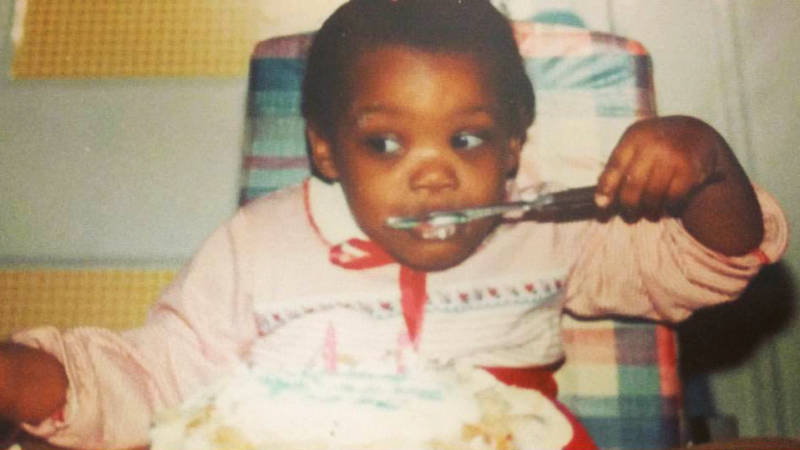
"caption": "Brandie Jefferson is taking part in a study on the effects of intermittent fasting on the microbiome and inflammation in people with multiple sclerosis, though eating is 'what I was born to do apparently.' ",
"description": "Eating: it's what I was born to do apparently!",
"title": "Eating: it's what I was born to do apparently!",
"credit": "Brandie Jefferson/Instagram",
"status": "inherit",
"isLoading": false,
"fetchFailed": false
},
"futureofyou_345325": {
"type": "attachments",
"id": "futureofyou_345325",
"meta": {
"index": "attachments_1716263798",
"site": "futureofyou",
"id": "345325",
"found": true
},
"parent": 341826,
"imgSizes": {
"small": {
"file": "https://ww2.kqed.org/app/uploads/sites/13/2017/02/DollySideView-520x347.jpg",
"width": 520,
"mimeType": "image/jpeg",
"height": 347
},
"twentyfourteen-full-width": {
"file": "https://ww2.kqed.org/app/uploads/sites/13/2017/02/DollySideView-1038x576.jpg",
"width": 1038,
"mimeType": "image/jpeg",
"height": 576
},
"thumbnail": {
"file": "https://ww2.kqed.org/app/uploads/sites/13/2017/02/DollySideView-160x107.jpg",
"width": 160,
"mimeType": "image/jpeg",
"height": 107
},
"fd-sm": {
"file": "https://ww2.kqed.org/app/uploads/sites/13/2017/02/DollySideView-960x640.jpg",
"width": 960,
"mimeType": "image/jpeg",
"height": 640
},
"post-thumbnail": {
"file": "https://ww2.kqed.org/app/uploads/sites/13/2017/02/DollySideView-672x372.jpg",
"width": 672,
"mimeType": "image/jpeg",
"height": 372
},
"xsmall": {
"file": "https://ww2.kqed.org/app/uploads/sites/13/2017/02/DollySideView-375x250.jpg",
"width": 375,
"mimeType": "image/jpeg",
"height": 250
},
"kqedFullSize": {
"file": "https://ww2.kqed.org/app/uploads/sites/13/2017/02/DollySideView.jpg",
"width": 1400,
"height": 933
},
"large": {
"file": "https://ww2.kqed.org/app/uploads/sites/13/2017/02/DollySideView-1020x680.jpg",
"width": 1020,
"mimeType": "image/jpeg",
"height": 680
},
"xlarge": {
"file": "https://ww2.kqed.org/app/uploads/sites/13/2017/02/DollySideView-1180x786.jpg",
"width": 1180,
"mimeType": "image/jpeg",
"height": 786
},
"guest-author-50": {
"file": "https://ww2.kqed.org/app/uploads/sites/13/2017/02/DollySideView-50x50.jpg",
"width": 50,
"mimeType": "image/jpeg",
"height": 50
},
"guest-author-96": {
"file": "https://ww2.kqed.org/app/uploads/sites/13/2017/02/DollySideView-96x96.jpg",
"width": 96,
"mimeType": "image/jpeg",
"height": 96
},
"medium": {
"file": "https://ww2.kqed.org/app/uploads/sites/13/2017/02/DollySideView-800x533.jpg",
"width": 800,
"mimeType": "image/jpeg",
"height": 533
},
"guest-author-64": {
"file": "https://ww2.kqed.org/app/uploads/sites/13/2017/02/DollySideView-64x64.jpg",
"width": 64,
"mimeType": "image/jpeg",
"height": 64
},
"guest-author-32": {
"file": "https://ww2.kqed.org/app/uploads/sites/13/2017/02/DollySideView-32x32.jpg",
"width": 32,
"mimeType": "image/jpeg",
"height": 32
},
"fd-med": {
"file": "https://ww2.kqed.org/app/uploads/sites/13/2017/02/DollySideView-1180x786.jpg",
"width": 1180,
"mimeType": "image/jpeg",
"height": 786
},
"detail": {
"file": "https://ww2.kqed.org/app/uploads/sites/13/2017/02/DollySideView-150x150.jpg",
"width": 150,
"mimeType": "image/jpeg",
"height": 150
},
"medium_large": {
"file": "https://ww2.kqed.org/app/uploads/sites/13/2017/02/DollySideView-768x512.jpg",
"width": 768,
"mimeType": "image/jpeg",
"height": 512
},
"guest-author-128": {
"file": "https://ww2.kqed.org/app/uploads/sites/13/2017/02/DollySideView-128x128.jpg",
"width": 128,
"mimeType": "image/jpeg",
"height": 128
},
"xxsmall": {
"file": "https://ww2.kqed.org/app/uploads/sites/13/2017/02/DollySideView-240x160.jpg",
"width": 240,
"mimeType": "image/jpeg",
"height": 160
}
},
"publishDate": 1488235675,
"modified": 1488235722,
"caption": "Dolly the Sheep in a field at The Roslin Institute.",
"description": "Dolly the Sheep in a field at The Roslin Institute.",
"title": "Dolly the Sheep",
"credit": "The Roslin Institute, The University of Edinburgh, UK",
"status": "inherit",
"isLoading": false,
"fetchFailed": false
},
"futureofyou_341968": {
"type": "attachments",
"id": "futureofyou_341968",
"meta": {
"index": "attachments_1716263798",
"site": "futureofyou",
"id": "341968",
"found": true
},
"parent": 338935,
"imgSizes": {
"small": {
"file": "https://ww2.kqed.org/app/uploads/sites/13/2017/02/homeopathic-520x520.jpg",
"width": 520,
"mimeType": "image/jpeg",
"height": 520
},
"twentyfourteen-full-width": {
"file": "https://ww2.kqed.org/app/uploads/sites/13/2017/02/homeopathic-1038x576.jpg",
"width": 1038,
"mimeType": "image/jpeg",
"height": 576
},
"thumbnail": {
"file": "https://ww2.kqed.org/app/uploads/sites/13/2017/02/homeopathic-160x160.jpg",
"width": 160,
"mimeType": "image/jpeg",
"height": 160
},
"fd-sm": {
"file": "https://ww2.kqed.org/app/uploads/sites/13/2017/02/homeopathic-960x960.jpg",
"width": 960,
"mimeType": "image/jpeg",
"height": 960
},
"post-thumbnail": {
"file": "https://ww2.kqed.org/app/uploads/sites/13/2017/02/homeopathic-672x372.jpg",
"width": 672,
"mimeType": "image/jpeg",
"height": 372
},
"xsmall": {
"file": "https://ww2.kqed.org/app/uploads/sites/13/2017/02/homeopathic-375x375.jpg",
"width": 375,
"mimeType": "image/jpeg",
"height": 375
},
"kqedFullSize": {
"file": "https://ww2.kqed.org/app/uploads/sites/13/2017/02/homeopathic.jpg",
"width": 1600,
"height": 1600
},
"large": {
"file": "https://ww2.kqed.org/app/uploads/sites/13/2017/02/homeopathic-1020x1020.jpg",
"width": 1020,
"mimeType": "image/jpeg",
"height": 1020
},
"xlarge": {
"file": "https://ww2.kqed.org/app/uploads/sites/13/2017/02/homeopathic-1180x1180.jpg",
"width": 1180,
"mimeType": "image/jpeg",
"height": 1180
},
"guest-author-50": {
"file": "https://ww2.kqed.org/app/uploads/sites/13/2017/02/homeopathic-50x50.jpg",
"width": 50,
"mimeType": "image/jpeg",
"height": 50
},
"guest-author-96": {
"file": "https://ww2.kqed.org/app/uploads/sites/13/2017/02/homeopathic-96x96.jpg",
"width": 96,
"mimeType": "image/jpeg",
"height": 96
},
"medium": {
"file": "https://ww2.kqed.org/app/uploads/sites/13/2017/02/homeopathic-800x800.jpg",
"width": 800,
"mimeType": "image/jpeg",
"height": 800
},
"guest-author-64": {
"file": "https://ww2.kqed.org/app/uploads/sites/13/2017/02/homeopathic-64x64.jpg",
"width": 64,
"mimeType": "image/jpeg",
"height": 64
},
"guest-author-32": {
"file": "https://ww2.kqed.org/app/uploads/sites/13/2017/02/homeopathic-32x32.jpg",
"width": 32,
"mimeType": "image/jpeg",
"height": 32
},
"fd-med": {
"file": "https://ww2.kqed.org/app/uploads/sites/13/2017/02/homeopathic-1180x1180.jpg",
"width": 1180,
"mimeType": "image/jpeg",
"height": 1180
},
"detail": {
"file": "https://ww2.kqed.org/app/uploads/sites/13/2017/02/homeopathic-150x150.jpg",
"width": 150,
"mimeType": "image/jpeg",
"height": 150
},
"medium_large": {
"file": "https://ww2.kqed.org/app/uploads/sites/13/2017/02/homeopathic-768x768.jpg",
"width": 768,
"mimeType": "image/jpeg",
"height": 768
},
"guest-author-128": {
"file": "https://ww2.kqed.org/app/uploads/sites/13/2017/02/homeopathic-128x128.jpg",
"width": 128,
"mimeType": "image/jpeg",
"height": 128
},
"xxsmall": {
"file": "https://ww2.kqed.org/app/uploads/sites/13/2017/02/homeopathic-240x240.jpg",
"width": 240,
"mimeType": "image/jpeg",
"height": 240
}
},
"publishDate": 1487801359,
"modified": 1487801507,
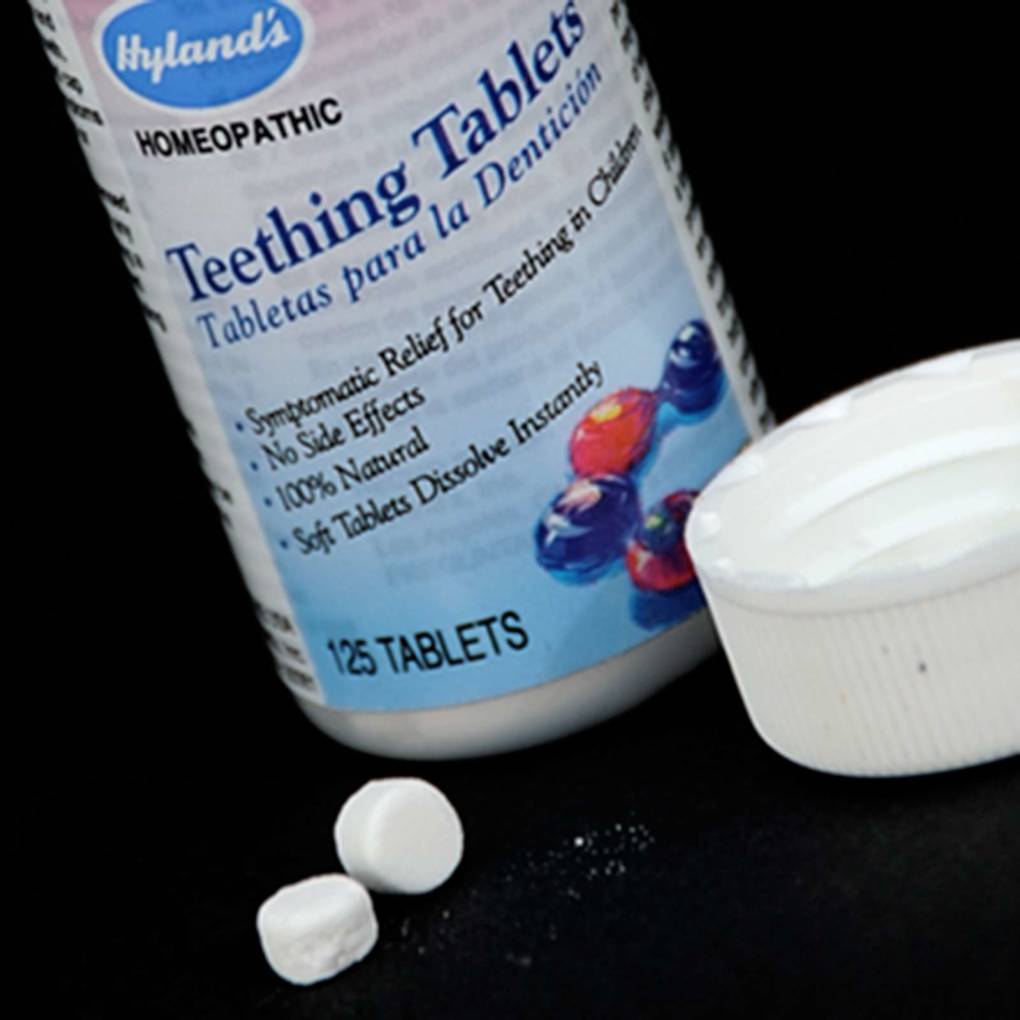
"caption": "A review of FDA records shows that some babies who were given Hyland’s teething products had repeated seizures, became delirious or turned blue and died. ",
"description": null,
"title": "homeopathic",
"credit": "Photo from FDA",
"status": "inherit",
"isLoading": false,
"fetchFailed": false
},
"futureofyou_341963": {
"type": "attachments",
"id": "futureofyou_341963",
"meta": {
"index": "attachments_1716263798",
"site": "futureofyou",
"id": "341963",
"found": true
},
"parent": 341847,
"imgSizes": {
"small": {
"file": "https://ww2.kqed.org/app/uploads/sites/13/2017/02/Jennifer-Doudna5-520x348.jpg",
"width": 520,
"mimeType": "image/jpeg",
"height": 348
},
"twentyfourteen-full-width": {
"file": "https://ww2.kqed.org/app/uploads/sites/13/2017/02/Jennifer-Doudna5-1038x576.jpg",
"width": 1038,
"mimeType": "image/jpeg",
"height": 576
},
"thumbnail": {
"file": "https://ww2.kqed.org/app/uploads/sites/13/2017/02/Jennifer-Doudna5-160x107.jpg",
"width": 160,
"mimeType": "image/jpeg",
"height": 107
},
"fd-sm": {
"file": "https://ww2.kqed.org/app/uploads/sites/13/2017/02/Jennifer-Doudna5-960x643.jpg",
"width": 960,
"mimeType": "image/jpeg",
"height": 643
},
"post-thumbnail": {
"file": "https://ww2.kqed.org/app/uploads/sites/13/2017/02/Jennifer-Doudna5-672x372.jpg",
"width": 672,
"mimeType": "image/jpeg",
"height": 372
},
"xsmall": {
"file": "https://ww2.kqed.org/app/uploads/sites/13/2017/02/Jennifer-Doudna5-375x251.jpg",
"width": 375,
"mimeType": "image/jpeg",
"height": 251
},
"kqedFullSize": {
"file": "https://ww2.kqed.org/app/uploads/sites/13/2017/02/Jennifer-Doudna5.jpg",
"width": 1800,
"height": 1206
},
"large": {
"file": "https://ww2.kqed.org/app/uploads/sites/13/2017/02/Jennifer-Doudna5-1020x683.jpg",
"width": 1020,
"mimeType": "image/jpeg",
"height": 683
},
"xlarge": {
"file": "https://ww2.kqed.org/app/uploads/sites/13/2017/02/Jennifer-Doudna5-1180x791.jpg",
"width": 1180,
"mimeType": "image/jpeg",
"height": 791
},
"guest-author-50": {
"file": "https://ww2.kqed.org/app/uploads/sites/13/2017/02/Jennifer-Doudna5-50x50.jpg",
"width": 50,
"mimeType": "image/jpeg",
"height": 50
},
"guest-author-96": {
"file": "https://ww2.kqed.org/app/uploads/sites/13/2017/02/Jennifer-Doudna5-96x96.jpg",
"width": 96,
"mimeType": "image/jpeg",
"height": 96
},
"medium": {
"file": "https://ww2.kqed.org/app/uploads/sites/13/2017/02/Jennifer-Doudna5-800x536.jpg",
"width": 800,
"mimeType": "image/jpeg",
"height": 536
},
"guest-author-64": {
"file": "https://ww2.kqed.org/app/uploads/sites/13/2017/02/Jennifer-Doudna5-64x64.jpg",
"width": 64,
"mimeType": "image/jpeg",
"height": 64
},
"guest-author-32": {
"file": "https://ww2.kqed.org/app/uploads/sites/13/2017/02/Jennifer-Doudna5-32x32.jpg",
"width": 32,
"mimeType": "image/jpeg",
"height": 32
},
"fd-med": {
"file": "https://ww2.kqed.org/app/uploads/sites/13/2017/02/Jennifer-Doudna5-1180x791.jpg",
"width": 1180,
"mimeType": "image/jpeg",
"height": 791
},
"detail": {
"file": "https://ww2.kqed.org/app/uploads/sites/13/2017/02/Jennifer-Doudna5-150x150.jpg",
"width": 150,
"mimeType": "image/jpeg",
"height": 150
},
"medium_large": {
"file": "https://ww2.kqed.org/app/uploads/sites/13/2017/02/Jennifer-Doudna5-768x515.jpg",
"width": 768,
"mimeType": "image/jpeg",
"height": 515
},
"guest-author-128": {
"file": "https://ww2.kqed.org/app/uploads/sites/13/2017/02/Jennifer-Doudna5-128x128.jpg",
"width": 128,
"mimeType": "image/jpeg",
"height": 128
},
"xxsmall": {
"file": "https://ww2.kqed.org/app/uploads/sites/13/2017/02/Jennifer-Doudna5-240x161.jpg",
"width": 240,
"mimeType": "image/jpeg",
"height": 161
}
},
"publishDate": 1487798806,
"modified": 1550272514,
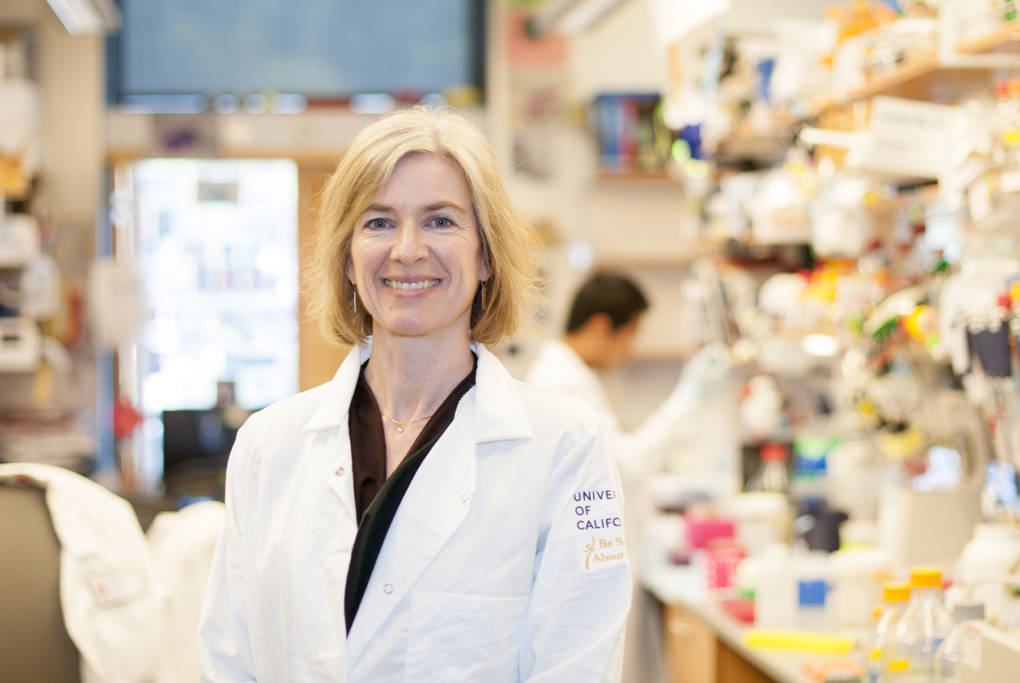
"caption": "Jennifer Doudna, UC Berkeley professor of Biochemistry and Molecular Biology who co-invented CRISPR, a groundbreaking gene-editing technology. ",
"description": "Jennifer Doudna, UC Berkeley professor of Biochemistry and Molecular Biology who co-invented CRISPR, a groundbreaking gene-editing technology. ",
"title": "Doudna, Jennifer",
"credit": "Keegan Houser/UC Berkeley",
"status": "inherit",
"isLoading": false,
"fetchFailed": false
},
"futureofyou_342579": {
"type": "attachments",
"id": "futureofyou_342579",
"meta": {
"index": "attachments_1716263798",
"site": "futureofyou",
"id": "342579",
"found": true
},
"parent": 341790,
"imgSizes": {
"small": {
"file": "https://ww2.kqed.org/app/uploads/sites/13/2017/02/active-man-520x347.jpg",
"width": 520,
"mimeType": "image/jpeg",
"height": 347
},
"twentyfourteen-full-width": {
"file": "https://ww2.kqed.org/app/uploads/sites/13/2017/02/active-man-1038x576.jpg",
"width": 1038,
"mimeType": "image/jpeg",
"height": 576
},
"thumbnail": {
"file": "https://ww2.kqed.org/app/uploads/sites/13/2017/02/active-man-160x107.jpg",
"width": 160,
"mimeType": "image/jpeg",
"height": 107
},
"fd-sm": {
"file": "https://ww2.kqed.org/app/uploads/sites/13/2017/02/active-man-960x640.jpg",
"width": 960,
"mimeType": "image/jpeg",
"height": 640
},
"post-thumbnail": {
"file": "https://ww2.kqed.org/app/uploads/sites/13/2017/02/active-man-672x372.jpg",
"width": 672,
"mimeType": "image/jpeg",
"height": 372
},
"xsmall": {
"file": "https://ww2.kqed.org/app/uploads/sites/13/2017/02/active-man-375x250.jpg",
"width": 375,
"mimeType": "image/jpeg",
"height": 250
},
"kqedFullSize": {
"file": "https://ww2.kqed.org/app/uploads/sites/13/2017/02/active-man-e1487876271850.jpg",
"width": 1920,
"height": 1280
},
"large": {
"file": "https://ww2.kqed.org/app/uploads/sites/13/2017/02/active-man-1020x680.jpg",
"width": 1020,
"mimeType": "image/jpeg",
"height": 680
},
"xlarge": {
"file": "https://ww2.kqed.org/app/uploads/sites/13/2017/02/active-man-1180x787.jpg",
"width": 1180,
"mimeType": "image/jpeg",
"height": 787
},
"guest-author-50": {
"file": "https://ww2.kqed.org/app/uploads/sites/13/2017/02/active-man-50x50.jpg",
"width": 50,
"mimeType": "image/jpeg",
"height": 50
},
"guest-author-96": {
"file": "https://ww2.kqed.org/app/uploads/sites/13/2017/02/active-man-96x96.jpg",
"width": 96,
"mimeType": "image/jpeg",
"height": 96
},
"medium": {
"file": "https://ww2.kqed.org/app/uploads/sites/13/2017/02/active-man-800x533.jpg",
"width": 800,
"mimeType": "image/jpeg",
"height": 533
},
"guest-author-64": {
"file": "https://ww2.kqed.org/app/uploads/sites/13/2017/02/active-man-64x64.jpg",
"width": 64,
"mimeType": "image/jpeg",
"height": 64
},
"guest-author-32": {
"file": "https://ww2.kqed.org/app/uploads/sites/13/2017/02/active-man-32x32.jpg",
"width": 32,
"mimeType": "image/jpeg",
"height": 32
},
"fd-lrg": {
"file": "https://ww2.kqed.org/app/uploads/sites/13/2017/02/active-man-1920x1280.jpg",
"width": 1920,
"mimeType": "image/jpeg",
"height": 1280
},
"fd-med": {
"file": "https://ww2.kqed.org/app/uploads/sites/13/2017/02/active-man-1180x787.jpg",
"width": 1180,
"mimeType": "image/jpeg",
"height": 787
},
"full-width": {
"file": "https://ww2.kqed.org/app/uploads/sites/13/2017/02/active-man-1920x1280.jpg",
"width": 1920,
"mimeType": "image/jpeg",
"height": 1280
},
"detail": {
"file": "https://ww2.kqed.org/app/uploads/sites/13/2017/02/active-man-150x150.jpg",
"width": 150,
"mimeType": "image/jpeg",
"height": 150
},
"medium_large": {
"file": "https://ww2.kqed.org/app/uploads/sites/13/2017/02/active-man-768x512.jpg",
"width": 768,
"mimeType": "image/jpeg",
"height": 512
},
"guest-author-128": {
"file": "https://ww2.kqed.org/app/uploads/sites/13/2017/02/active-man-128x128.jpg",
"width": 128,
"mimeType": "image/jpeg",
"height": 128
},
"xxsmall": {
"file": "https://ww2.kqed.org/app/uploads/sites/13/2017/02/active-man-240x160.jpg",
"width": 240,
"mimeType": "image/jpeg",
"height": 160
}
},
"publishDate": 1487872397,
"modified": 1488319536,
"caption": null,
"description": "Government studies show positive and negative effects from taking testosterone for one year. Researchers said more studies are needed to determine long-term effects",
"title": "Active senior man",
"credit": "Photodjo/iStock",
"status": "inherit",
"isLoading": false,
"fetchFailed": false
},
"futureofyou_338927": {
"type": "attachments",
"id": "futureofyou_338927",
"meta": {
"index": "attachments_1716263798",
"site": "futureofyou",
"id": "338927",
"found": true
},
"parent": 338926,
"imgSizes": {
"small": {
"file": "https://ww2.kqed.org/app/uploads/sites/13/2017/02/scalpcooling1_custom-8715d12ed1c2f19fb09467cb3996e7f8b6a39030-520x342.jpg",
"width": 520,
"mimeType": "image/jpeg",
"height": 342
},
"twentyfourteen-full-width": {
"file": "https://ww2.kqed.org/app/uploads/sites/13/2017/02/scalpcooling1_custom-8715d12ed1c2f19fb09467cb3996e7f8b6a39030-1038x576.jpg",
"width": 1038,
"mimeType": "image/jpeg",
"height": 576
},
"thumbnail": {
"file": "https://ww2.kqed.org/app/uploads/sites/13/2017/02/scalpcooling1_custom-8715d12ed1c2f19fb09467cb3996e7f8b6a39030-160x105.jpg",
"width": 160,
"mimeType": "image/jpeg",
"height": 105
},
"fd-sm": {
"file": "https://ww2.kqed.org/app/uploads/sites/13/2017/02/scalpcooling1_custom-8715d12ed1c2f19fb09467cb3996e7f8b6a39030-960x631.jpg",
"width": 960,
"mimeType": "image/jpeg",
"height": 631
},
"post-thumbnail": {
"file": "https://ww2.kqed.org/app/uploads/sites/13/2017/02/scalpcooling1_custom-8715d12ed1c2f19fb09467cb3996e7f8b6a39030-672x372.jpg",
"width": 672,
"mimeType": "image/jpeg",
"height": 372
},
"xsmall": {
"file": "https://ww2.kqed.org/app/uploads/sites/13/2017/02/scalpcooling1_custom-8715d12ed1c2f19fb09467cb3996e7f8b6a39030-375x247.jpg",
"width": 375,
"mimeType": "image/jpeg",
"height": 247
},
"kqedFullSize": {
"file": "https://ww2.kqed.org/app/uploads/sites/13/2017/02/scalpcooling1_custom-8715d12ed1c2f19fb09467cb3996e7f8b6a39030.jpg",
"width": 1819,
"height": 1196
},
"large": {
"file": "https://ww2.kqed.org/app/uploads/sites/13/2017/02/scalpcooling1_custom-8715d12ed1c2f19fb09467cb3996e7f8b6a39030-1020x671.jpg",
"width": 1020,
"mimeType": "image/jpeg",
"height": 671
},
"xlarge": {
"file": "https://ww2.kqed.org/app/uploads/sites/13/2017/02/scalpcooling1_custom-8715d12ed1c2f19fb09467cb3996e7f8b6a39030-1180x776.jpg",
"width": 1180,
"mimeType": "image/jpeg",
"height": 776
},
"guest-author-50": {
"file": "https://ww2.kqed.org/app/uploads/sites/13/2017/02/scalpcooling1_custom-8715d12ed1c2f19fb09467cb3996e7f8b6a39030-50x50.jpg",
"width": 50,
"mimeType": "image/jpeg",
"height": 50
},
"guest-author-96": {
"file": "https://ww2.kqed.org/app/uploads/sites/13/2017/02/scalpcooling1_custom-8715d12ed1c2f19fb09467cb3996e7f8b6a39030-96x96.jpg",
"width": 96,
"mimeType": "image/jpeg",
"height": 96
},
"medium": {
"file": "https://ww2.kqed.org/app/uploads/sites/13/2017/02/scalpcooling1_custom-8715d12ed1c2f19fb09467cb3996e7f8b6a39030-800x526.jpg",
"width": 800,
"mimeType": "image/jpeg",
"height": 526
},
"guest-author-64": {
"file": "https://ww2.kqed.org/app/uploads/sites/13/2017/02/scalpcooling1_custom-8715d12ed1c2f19fb09467cb3996e7f8b6a39030-64x64.jpg",
"width": 64,
"mimeType": "image/jpeg",
"height": 64
},
"guest-author-32": {
"file": "https://ww2.kqed.org/app/uploads/sites/13/2017/02/scalpcooling1_custom-8715d12ed1c2f19fb09467cb3996e7f8b6a39030-32x32.jpg",
"width": 32,
"mimeType": "image/jpeg",
"height": 32
},
"fd-med": {
"file": "https://ww2.kqed.org/app/uploads/sites/13/2017/02/scalpcooling1_custom-8715d12ed1c2f19fb09467cb3996e7f8b6a39030-1180x776.jpg",
"width": 1180,
"mimeType": "image/jpeg",
"height": 776
},
"detail": {
"file": "https://ww2.kqed.org/app/uploads/sites/13/2017/02/scalpcooling1_custom-8715d12ed1c2f19fb09467cb3996e7f8b6a39030-150x150.jpg",
"width": 150,
"mimeType": "image/jpeg",
"height": 150
},
"medium_large": {
"file": "https://ww2.kqed.org/app/uploads/sites/13/2017/02/scalpcooling1_custom-8715d12ed1c2f19fb09467cb3996e7f8b6a39030-768x505.jpg",
"width": 768,
"mimeType": "image/jpeg",
"height": 505
},
"guest-author-128": {
"file": "https://ww2.kqed.org/app/uploads/sites/13/2017/02/scalpcooling1_custom-8715d12ed1c2f19fb09467cb3996e7f8b6a39030-128x128.jpg",
"width": 128,
"mimeType": "image/jpeg",
"height": 128
},
"xxsmall": {
"file": "https://ww2.kqed.org/app/uploads/sites/13/2017/02/scalpcooling1_custom-8715d12ed1c2f19fb09467cb3996e7f8b6a39030-240x158.jpg",
"width": 240,
"mimeType": "image/jpeg",
"height": 158
}
},
"publishDate": 1487384193,
"modified": 1487788137,
"caption": null,
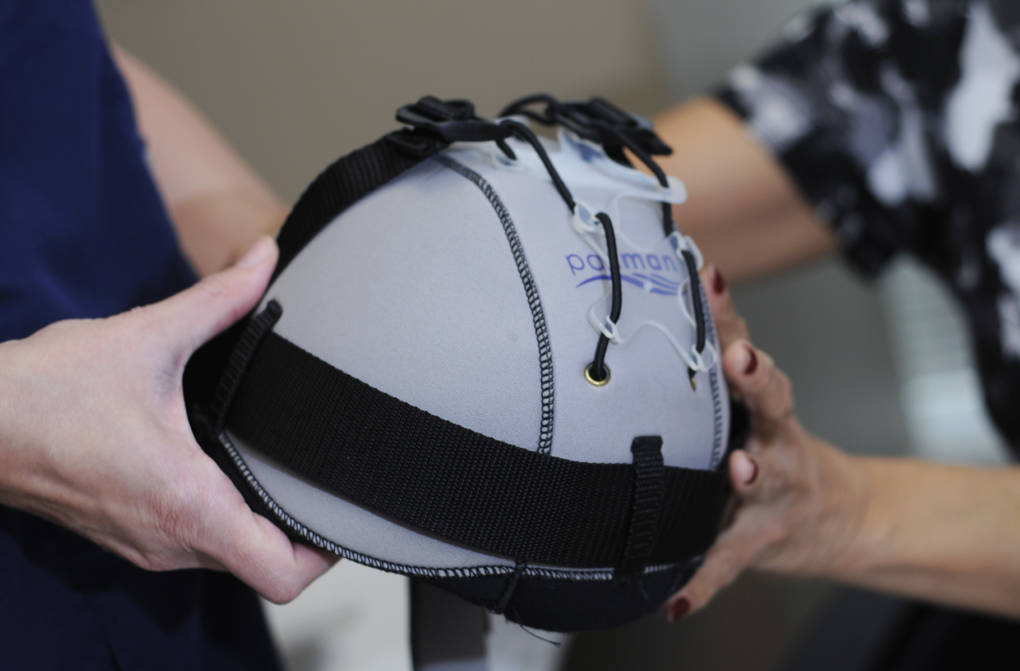
"description": "Sixty-three percent of women who used the Paxman cooling device said they used wigs or head wraps to cover up hair loss, compared to 100 percent of women who didn't try cooling.",
"title": "Sixty-three percent of women who used the Paxman cooling device said they used wigs or head wraps to cover up hair loss, compared to 100 percent of women who didn't try cooling.",
"credit": "Courtesy of Baylor College of Medicine",
"status": "inherit",
"isLoading": false,
"fetchFailed": false
},
"futureofyou_338765": {
"type": "attachments",
"id": "futureofyou_338765",
"meta": {
"index": "attachments_1716263798",
"site": "futureofyou",
"id": "338765",
"found": true
},
"parent": 338682,
"imgSizes": {
"small": {
"file": "https://ww2.kqed.org/app/uploads/sites/13/2017/02/facemayo-520x347.jpg",
"width": 520,
"mimeType": "image/jpeg",
"height": 347
},
"twentyfourteen-full-width": {
"file": "https://ww2.kqed.org/app/uploads/sites/13/2017/02/facemayo-1038x576.jpg",
"width": 1038,
"mimeType": "image/jpeg",
"height": 576
},
"thumbnail": {
"file": "https://ww2.kqed.org/app/uploads/sites/13/2017/02/facemayo-160x107.jpg",
"width": 160,
"mimeType": "image/jpeg",
"height": 107
},
"fd-sm": {
"file": "https://ww2.kqed.org/app/uploads/sites/13/2017/02/facemayo-960x640.jpg",
"width": 960,
"mimeType": "image/jpeg",
"height": 640
},
"post-thumbnail": {
"file": "https://ww2.kqed.org/app/uploads/sites/13/2017/02/facemayo-672x372.jpg",
"width": 672,
"mimeType": "image/jpeg",
"height": 372
},
"xsmall": {
"file": "https://ww2.kqed.org/app/uploads/sites/13/2017/02/facemayo-375x250.jpg",
"width": 375,
"mimeType": "image/jpeg",
"height": 250
},
"kqedFullSize": {
"file": "https://ww2.kqed.org/app/uploads/sites/13/2017/02/facemayo-e1487365472806.jpg",
"width": 1920,
"height": 1280
},
"large": {
"file": "https://ww2.kqed.org/app/uploads/sites/13/2017/02/facemayo-1020x680.jpg",
"width": 1020,
"mimeType": "image/jpeg",
"height": 680
},
"xlarge": {
"file": "https://ww2.kqed.org/app/uploads/sites/13/2017/02/facemayo-1180x786.jpg",
"width": 1180,
"mimeType": "image/jpeg",
"height": 786
},
"guest-author-50": {
"file": "https://ww2.kqed.org/app/uploads/sites/13/2017/02/facemayo-50x50.jpg",
"width": 50,
"mimeType": "image/jpeg",
"height": 50
},
"guest-author-96": {
"file": "https://ww2.kqed.org/app/uploads/sites/13/2017/02/facemayo-96x96.jpg",
"width": 96,
"mimeType": "image/jpeg",
"height": 96
},
"medium": {
"file": "https://ww2.kqed.org/app/uploads/sites/13/2017/02/facemayo-800x533.jpg",
"width": 800,
"mimeType": "image/jpeg",
"height": 533
},
"guest-author-64": {
"file": "https://ww2.kqed.org/app/uploads/sites/13/2017/02/facemayo-64x64.jpg",
"width": 64,
"mimeType": "image/jpeg",
"height": 64
},
"guest-author-32": {
"file": "https://ww2.kqed.org/app/uploads/sites/13/2017/02/facemayo-32x32.jpg",
"width": 32,
"mimeType": "image/jpeg",
"height": 32
},
"fd-lrg": {
"file": "https://ww2.kqed.org/app/uploads/sites/13/2017/02/facemayo-1920x1280.jpg",
"width": 1920,
"mimeType": "image/jpeg",
"height": 1280
},
"fd-med": {
"file": "https://ww2.kqed.org/app/uploads/sites/13/2017/02/facemayo-1180x786.jpg",
"width": 1180,
"mimeType": "image/jpeg",
"height": 786
},
"full-width": {
"file": "https://ww2.kqed.org/app/uploads/sites/13/2017/02/facemayo-1920x1280.jpg",
"width": 1920,
"mimeType": "image/jpeg",
"height": 1280
},
"detail": {
"file": "https://ww2.kqed.org/app/uploads/sites/13/2017/02/facemayo-150x150.jpg",
"width": 150,
"mimeType": "image/jpeg",
"height": 150
},
"medium_large": {
"file": "https://ww2.kqed.org/app/uploads/sites/13/2017/02/facemayo-768x512.jpg",
"width": 768,
"mimeType": "image/jpeg",
"height": 512
},
"guest-author-128": {
"file": "https://ww2.kqed.org/app/uploads/sites/13/2017/02/facemayo-128x128.jpg",
"width": 128,
"mimeType": "image/jpeg",
"height": 128
},
"xxsmall": {
"file": "https://ww2.kqed.org/app/uploads/sites/13/2017/02/facemayo-240x160.jpg",
"width": 240,
"mimeType": "image/jpeg",
"height": 160
}
},
"publishDate": 1487365455,
"modified": 1487365540,
"caption": "Andy Sandness, recipient of the Mayo Clinic's first face transplant.",
"description": null,
"title": "facemayo",
"credit": "Mayo Clinic",
"status": "inherit",
"isLoading": false,
"fetchFailed": false
},
"futureofyou_274615": {
"type": "attachments",
"id": "futureofyou_274615",
"meta": {
"index": "attachments_1716263798",
"site": "futureofyou",
"id": "274615",
"found": true
},
"parent": 274449,
"imgSizes": {
"small": {
"file": "https://ww2.kqed.org/app/uploads/sites/13/2016/11/computerdoc-520x347.png",
"width": 520,
"mimeType": "image/png",
"height": 347
},
"twentyfourteen-full-width": {
"file": "https://ww2.kqed.org/app/uploads/sites/13/2016/11/computerdoc-1038x576.png",
"width": 1038,
"mimeType": "image/png",
"height": 576
},
"thumbnail": {
"file": "https://ww2.kqed.org/app/uploads/sites/13/2016/11/computerdoc-160x107.png",
"width": 160,
"mimeType": "image/png",
"height": 107
},
"fd-sm": {
"file": "https://ww2.kqed.org/app/uploads/sites/13/2016/11/computerdoc-960x640.png",
"width": 960,
"mimeType": "image/png",
"height": 640
},
"post-thumbnail": {
"file": "https://ww2.kqed.org/app/uploads/sites/13/2016/11/computerdoc-672x372.png",
"width": 672,
"mimeType": "image/png",
"height": 372
},
"xsmall": {
"file": "https://ww2.kqed.org/app/uploads/sites/13/2016/11/computerdoc-375x250.png",
"width": 375,
"mimeType": "image/png",
"height": 250
},
"kqedFullSize": {
"file": "https://ww2.kqed.org/app/uploads/sites/13/2016/11/computerdoc.png",
"width": 1920,
"height": 1280
},
"large": {
"file": "https://ww2.kqed.org/app/uploads/sites/13/2016/11/computerdoc-1020x680.png",
"width": 1020,
"mimeType": "image/png",
"height": 680
},
"xlarge": {
"file": "https://ww2.kqed.org/app/uploads/sites/13/2016/11/computerdoc-1180x787.png",
"width": 1180,
"mimeType": "image/png",
"height": 787
},
"guest-author-50": {
"file": "https://ww2.kqed.org/app/uploads/sites/13/2016/11/computerdoc-50x50.png",
"width": 50,
"mimeType": "image/png",
"height": 50
},
"guest-author-96": {
"file": "https://ww2.kqed.org/app/uploads/sites/13/2016/11/computerdoc-96x96.png",
"width": 96,
"mimeType": "image/png",
"height": 96
},
"medium": {
"file": "https://ww2.kqed.org/app/uploads/sites/13/2016/11/computerdoc-800x533.png",
"width": 800,
"mimeType": "image/png",
"height": 533
},
"guest-author-64": {
"file": "https://ww2.kqed.org/app/uploads/sites/13/2016/11/computerdoc-64x64.png",
"width": 64,
"mimeType": "image/png",
"height": 64
},
"guest-author-32": {
"file": "https://ww2.kqed.org/app/uploads/sites/13/2016/11/computerdoc-32x32.png",
"width": 32,
"mimeType": "image/png",
"height": 32
},
"fd-lrg": {
"file": "https://ww2.kqed.org/app/uploads/sites/13/2016/11/computerdoc-1920x1280.png",
"width": 1920,
"mimeType": "image/png",
"height": 1280
},
"fd-med": {
"file": "https://ww2.kqed.org/app/uploads/sites/13/2016/11/computerdoc-1180x787.png",
"width": 1180,
"mimeType": "image/png",
"height": 787
},
"full-width": {
"file": "https://ww2.kqed.org/app/uploads/sites/13/2016/11/computerdoc-1920x1280.png",
"width": 1920,
"mimeType": "image/png",
"height": 1280
},
"detail": {
"file": "https://ww2.kqed.org/app/uploads/sites/13/2016/11/computerdoc-150x150.png",
"width": 150,
"mimeType": "image/png",
"height": 150
},
"medium_large": {
"file": "https://ww2.kqed.org/app/uploads/sites/13/2016/11/computerdoc-768x512.png",
"width": 768,
"mimeType": "image/png",
"height": 512
},
"guest-author-128": {
"file": "https://ww2.kqed.org/app/uploads/sites/13/2016/11/computerdoc-128x128.png",
"width": 128,
"mimeType": "image/png",
"height": 128
},
"xxsmall": {
"file": "https://ww2.kqed.org/app/uploads/sites/13/2016/11/computerdoc-240x160.png",
"width": 240,
"mimeType": "image/png",
"height": 160
}
},
"publishDate": 1478041895,
"modified": 1517014076,
"caption": null,
"description": null,
"title": "computerdoc",
"credit": "Illustration by Teodros Hailye/KQED",
"status": "inherit",
"isLoading": false,
"fetchFailed": false
}
},
"audioPlayerReducer": {
"postId": "stream_live",
"isPaused": true,
"isPlaying": false,
"pfsActive": false,
"pledgeModalIsOpen": true,
"playerDrawerIsOpen": false,
"liveAudioPlayStartedAt": 0,
"liveAudioPlayContext": ""
},
"authorsReducer": {
"byline_futureofyou_350496": {
"type": "authors",
"id": "byline_futureofyou_350496",
"meta": {
"override": true
},
"slug": "byline_futureofyou_350496",
"name": "Casey Ross, Max Blau and Kate Sheridan\u003cbr />\u003ca href=\"https://www.statnews.com/\">STAT\u003c/a>",
"isLoading": false
},
"byline_futureofyou_345830": {
"type": "authors",
"id": "byline_futureofyou_345830",
"meta": {
"override": true
},
"slug": "byline_futureofyou_345830",
"name": "Lauran Neergard\u003cbr />Associated Press",
"isLoading": false
},
"byline_futureofyou_341839": {
"type": "authors",
"id": "byline_futureofyou_341839",
"meta": {
"override": true
},
"slug": "byline_futureofyou_341839",
"name": "Mary Chris Jaklevic\u003cbr />Kaiser Health News",
"isLoading": false
},
"byline_futureofyou_341833": {
"type": "authors",
"id": "byline_futureofyou_341833",
"meta": {
"override": true
},
"slug": "byline_futureofyou_341833",
"name": "Brandie Jefferson\u003cbr />NPR Shots",
"isLoading": false
},
"byline_futureofyou_341826": {
"type": "authors",
"id": "byline_futureofyou_341826",
"meta": {
"override": true
},
"slug": "byline_futureofyou_341826",
"name": "George Seidel\u003cbr/>The Conversation",
"isLoading": false
},
"byline_futureofyou_338935": {
"type": "authors",
"id": "byline_futureofyou_338935",
"meta": {
"override": true
},
"slug": "byline_futureofyou_338935",
"name": "Sheila Kaplan\u003cbr />\u003ca href=\"https://www.statnews.com/\">STAT\u003c/a>",
"isLoading": false
},
"byline_futureofyou_341790": {
"type": "authors",
"id": "byline_futureofyou_341790",
"meta": {
"override": true
},
"slug": "byline_futureofyou_341790",
"name": "Lindsey Tanner\u003cbr />Associated Press",
"isLoading": false
},
"byline_futureofyou_338926": {
"type": "authors",
"id": "byline_futureofyou_338926",
"meta": {
"override": true
},
"slug": "byline_futureofyou_338926",
"name": "Patti Neighmond\u003cbr />NPR Shots",
"isLoading": false
},
"byline_futureofyou_338682": {
"type": "authors",
"id": "byline_futureofyou_338682",
"meta": {
"override": true
},
"slug": "byline_futureofyou_338682",
"name": "Sharon Cohen\u003cbr />Associated Press",
"isLoading": false
},
"byline_futureofyou_338066": {
"type": "authors",
"id": "byline_futureofyou_338066",
"meta": {
"override": true
},
"slug": "byline_futureofyou_338066",
"name": "Richard Harris\u003cbr />NPR Shots",
"isLoading": false
},
"jbrooks": {
"type": "authors",
"id": "80",
"meta": {
"index": "authors_1716337520",
"id": "80",
"found": true
},
"name": "Jon Brooks",
"firstName": "Jon",
"lastName": "Brooks",
"slug": "jbrooks",
"email": "jbrooks@kqed.org",
"display_author_email": true,
"staff_mastheads": [
"science"
],
"title": "Digital Editor",
"bio": "Jon Brooks is a former Digital Editor for KQED Science. He is the former editor of KQED’s daily news blog, News Fix. In 2014, he won a California Journalism Award for his coverage of ride services like Uber and Lyft and the taxi industry. A veteran blogger, he previously worked for Yahoo! in various news writing and editing roles. Jon is also a playwright whose work has been produced in San Francisco, New York, Italy, and around the U.S. He has written about film for his own blog and studied film at Boston University.",
"avatar": "https://secure.gravatar.com/avatar/98887f7ed1c876ed414d4c915e969584?s=600&d=blank&r=g",
"twitter": "jbrooksfoy",
"facebook": null,
"instagram": null,
"linkedin": null,
"sites": [
{
"site": "arts",
"roles": [
"Contributor",
"editor"
]
},
{
"site": "news",
"roles": [
"author"
]
},
{
"site": "futureofyou",
"roles": [
"administrator"
]
},
{
"site": "mindshift",
"roles": [
"editor"
]
},
{
"site": "stateofhealth",
"roles": [
"editor"
]
},
{
"site": "science",
"roles": [
"administrator"
]
},
{
"site": "quest",
"roles": [
"editor"
]
}
],
"headData": {
"title": "Jon Brooks | KQED",
"description": "Digital Editor",
"ogImgSrc": "https://secure.gravatar.com/avatar/98887f7ed1c876ed414d4c915e969584?s=600&d=blank&r=g",
"twImgSrc": "https://secure.gravatar.com/avatar/98887f7ed1c876ed414d4c915e969584?s=600&d=blank&r=g"
},
"isLoading": false,
"link": "/author/jbrooks"
},
"lindseyhoshaw": {
"type": "authors",
"id": "5432",
"meta": {
"index": "authors_1716337520",
"id": "5432",
"found": true
},
"name": "Lindsey Hoshaw",
"firstName": "Lindsey",
"lastName": "Hoshaw",
"slug": "lindseyhoshaw",
"email": "lhoshaw@kqed.org",
"display_author_email": false,
"staff_mastheads": [],
"title": "KQED Contributor",
"bio": "Lindsey Hoshaw is a former interactive producer for KQED Science. Before joining KQED, Lindsey was a science correspondent for The New York Times, The Boston Globe, Forbes and Scientific American. On Twitter @lindseyhoshaw",
"avatar": "https://secure.gravatar.com/avatar/274b07694c998eaa8f26cfabaa941186?s=600&d=mm&r=g",
"twitter": "lindseyhoshaw",
"facebook": "lindsey.hoshaw.9",
"instagram": null,
"linkedin": null,
"sites": [
{
"site": "arts",
"roles": [
"author"
]
},
{
"site": "news",
"roles": [
"subscriber"
]
},
{
"site": "futureofyou",
"roles": [
"editor"
]
},
{
"site": "bayareabites",
"roles": [
"contributor"
]
},
{
"site": "stateofhealth",
"roles": [
"author"
]
},
{
"site": "science",
"roles": [
"edit_theme_options",
"subscriber"
]
},
{
"site": "quest",
"roles": [
"edit_post_subscriptions",
"edit_usergroups",
"unfiltered_html",
"unfiltered_upload",
"leadcoordinator",
"editor"
]
},
{
"site": "food",
"roles": []
}
],
"headData": {
"title": "Lindsey Hoshaw | KQED",
"description": "KQED Contributor",
"ogImgSrc": "https://secure.gravatar.com/avatar/274b07694c998eaa8f26cfabaa941186?s=600&d=mm&r=g",
"twImgSrc": "https://secure.gravatar.com/avatar/274b07694c998eaa8f26cfabaa941186?s=600&d=mm&r=g"
},
"isLoading": false,
"link": "/author/lindseyhoshaw"
}
},
"pagesReducer": {
"futureofyou_category_hopehype": {
"type": "terms",
"id": "futureofyou_1062",
"meta": {
"index": "terms_1716263798",
"site": "futureofyou",
"id": "1062",
"score": 13.896381
},
"featImg": null,
"name": "Hope/Hype",
"description": null,
"taxonomy": "category",
"headData": {
"twImgId": null,
"twTitle": null,
"ogTitle": null,
"ogImgId": null,
"twDescription": null,
"description": null,
"title": "Hope/Hype Archives | KQED Arts",
"ogDescription": null
},
"ttid": 1062,
"slug": "hopehype",
"isLoading": false,
"title": "Hope/Hype",
"pageMeta": {
"site": "futureofyou",
"WpPageTemplate": "page-topic-editorial",
"currentPage": 13
},
"blocks": [
{
"blockName": "kqed/post-list",
"attrs": {
"layout": "cardArticle2",
"query": "posts/futureofyou?category=hopehype",
"seeMore": false,
"paginated": true,
"page": 13
}
},
{
"blockName": "kqed/ad"
}
]
}
},
"pfsSessionReducer": {},
"postsReducer": {
"stream_live": {
"type": "live",
"id": "stream_live",
"audioUrl": "https://streams.kqed.org/kqedradio",
"title": "Live Stream",
"excerpt": "Live Stream information currently unavailable.",
"link": "/radio",
"featImg": "",
"label": {
"name": "KQED Live",
"link": "/"
}
},
"stream_kqedNewscast": {
"type": "posts",
"id": "stream_kqedNewscast",
"audioUrl": "https://www.kqed.org/.stream/anon/radio/RDnews/newscast.mp3?_=1",
"title": "KQED Newscast",
"featImg": "",
"label": {
"name": "88.5 FM",
"link": "/"
}
},
"futureofyou_350496": {
"type": "posts",
"id": "futureofyou_350496",
"meta": {
"index": "posts_1716263798",
"site": "futureofyou",
"id": "350496",
"score": null,
"sort": [
1489103007000
]
},
"parent": 0,
"labelTerm": {},
"blocks": [],
"publishDate": 1489103007,
"format": "standard",
"disqusTitle": "Premier U.S. Hospitals Are Selling Unproven Alternative Therapies",
"title": "Premier U.S. Hospitals Are Selling Unproven Alternative Therapies",
"headTitle": "KQED Future of You | KQED Science",
"content": "\u003cp>They’re among the nation’s premier medical centers, at the leading edge of scientific research.\u003c/p>\n\u003cp>Yet hospitals affiliated with Yale, Duke, Johns Hopkins, and other top medical research centers also aggressively promote alternative therapies with little or no scientific backing. They offer “energy healing” to help treat multiple sclerosis, acupuncture for infertility, and homeopathic bee venom for fibromyalgia. A public forum hosted by the University of Florida’s hospital even promises to explain how herbal therapy can reverse Alzheimer’s. (It can’t.)\u003c/p>\n\u003cp>This embrace of alternative medicine has been building for years. But a STAT examination of 15 academic research centers across the U.S. underscores just how deeply these therapies have become embedded in prestigious hospitals and medical schools.\u003c/p>\n\u003caside class=\"pullquote alignright\">'We've become witch doctors ... [forfeiting] any claim that we had to be a science-based profession.'\u003ccite>Dr. Steven Novella, Yale School of Medicine \u003c/cite>\u003c/aside>\n\u003cp>Some hospitals have built luxurious, spa-like wellness centers to draw patients for spiritual healing, homeopathy and more. And they’re promoting such treatments for a wide array of conditions, including depression, heart disease, cancer, and chronic pain. Duke even markets a pediatric program that suggests on its website that alternative medicine, including “detoxification programs” and “botanical medicines,” can help children with conditions ranging from autism to asthma to ADHD.\u003c/p>\n\u003cp>“We’ve become witch doctors,” said Dr. Steven Novella, a professor of neurology at the Yale School of Medicine and a longtime critic of alternative medicine.\u003c/p>\n\u003cp>[ad fullwidth]\u003c/p>\n\u003cp>STAT’s examination found a booming market for such therapies: The clinic at the University of California, San Francisco, is growing so fast, it’s bursting out of its space.\u003c/p>\n\u003cp>Just in the past year, the teaching hospital connected to the University of Florida began offering cancer patients consultations in homeopathy and traditional Chinese herbal medicine. Thomas Jefferson University in Philadelphia launched an institute whose offerings include \u003ca href=\"https://www.statnews.com/2017/02/23/vitamin-iv-infusion/\" target=\"_blank\">intravenous vitamin and mineral therapies\u003c/a>. And the University of Arizona, a pioneer in the field, received a $1 million gift to boost practitioner training in natural and spiritual healing techniques.\u003c/p>\n\u003cp>Even as they count on these programs to bring in patients and revenue, several hospitals were reluctant to talk to STAT about why they’re lending their distinguished names to unproven therapies.\u003c/p>\n\u003cp>Duke Health declined repeated requests for interviews about its rapidly growing integrative medicine center, which \u003ca href=\"https://www.dukeintegrativemedicine.org/wp-content/uploads/2016/02/primarycare-brochure-web.pdf\" target=\"_blank\">charges patients $1,800 a year\u003c/a> just for a basic membership, with acupuncture and other treatments billed separately.\u003c/p>\n\u003cp>MedStar Georgetown quietly edited its website, citing changes to its clinical offerings, after a reporter asked why it listed the energy healing practice of reiki as a therapy for blood cancer. Cleveland Clinic struggled to find anyone on its staff to defend the hospital’s energy medicine program, ultimately issuing a statement that it’s “responding to the needs of our patients and patient demand.”\u003c/p>\n\u003cp>And the director of an alternative medicine program at another prestigious hospital declined to speak on the record — out of fear, he said, that his remarks would be construed as “fake news” and stir a backlash.\u003c/p>\n\u003cp>The rise of alternative therapies has sparked tension in some hospitals, with doctors openly accusing their peers of peddling snake oil and undermining the credibility of their institutions.\u003c/p>\n\u003cp>By promoting such therapies, Novella said, physicians are forfeiting “any claim that we had to being a science-based profession.”\u003c/p>\n\u003cp>As for patients? They’re “being snookered,” he said.\u003c/p>\n\u003caside class=\"pullquote alignright\">'Yes, as scientists, we want to be rigid. But me, as a physician, I want to find what's best for a patient. Who am I to say that's hogwash?' \u003ccite>Dr. Linda Lee, Johns Hopkins gastroenterologist\u003c/cite>\u003c/aside>\n\u003cp>The counterargument: Modern medicine clearly can’t cure everyone. It fails a great many patients. So why not encourage them to try an ancient Indian remedy or a spiritual healing technique that’s unlikely to cause harm — and may provide some relief, if only from the placebo effect?\u003c/p>\n\u003cp>“Yes, as scientists, we want to be rigid. But me, as a physician, I want to find what’s best for a patient. Who am I to say that’s hogwash?” said Dr. Linda Lee.\u003c/p>\n\u003cp>A gastroenterologist, Lee runs the Johns Hopkins Integrative Medicine and Digestive Center, which offers acupuncture, massage therapy, and reiki — a therapy that the center’s website describes as laying on hands \u003ca href=\"http://www.hopkinsmedicine.org/integrative_medicine_digestive_center/services/reiki.html\" target=\"_blank\">“to transmit Universal Life Energy”\u003c/a> to the patient.\u003c/p>\n\u003cp>Lee and others who promote alternative therapies are careful to say that they can supplement — but can’t replace — conventional treatments. And they make a point of coordinating care with other doctors so that, for instance, patients don’t get prescribed herbal supplements that might interact badly with their chemotherapy.\u003c/p>\n\u003cp>“Here at UF, we do not have alternative medicine. We do not have complementary medicine. We have integrative medicine,” said Dr. Irene Estores, medical director of the integrative medicine program at the University of Florida Shands Hospital in Gainesville, Fla.\u003c/p>\n\u003cp>\u003cstrong>Online Promotions Offer Scant Evidence\u003c/strong>\u003c/p>\n\u003cp>But while those cautions may come through in the clinic, the hospitals also promote alternative medicine online — often, without any nuance.\u003c/p>\n\u003cp>Duke’s Integrative Medicine store, for instance, sells \u003ca href=\"https://shopprovisions.dukestores.duke.edu/index.php?main_page=product_info&cPath=37_1&products_id=196\" target=\"_blank\">“Po Chai Pills”\u003c/a> that are touted on the hospital’s website as a cure for everything from belching to hangovers to headaches. The site explains that taking a pill “harmonizes the stomach, stems counterflow ascent of stomach qi, dispels damp, dispels pathogenic factors, subdues yang, relieves pain.” None of that makes sense in modern biomedical terms.\u003c/p>\n\u003cp>Thomas Jefferson University Hospital’s website touts \u003ca href=\"http://hospitals.jefferson.edu/tests-and-treatments/homeopathic-medicine.html\" target=\"_blank\">homeopathic bee venom\u003c/a> as useful to relieve symptoms for arthritis, nerve pain, and other conditions. The site does tell patients that the biological mechanism for the treatment is “unexplained” but asserts that studies “have been published in medical journals showing homeopathic medicines may provide clinical benefit.”\u003c/p>\n\u003cp>Asked about the therapy, Dr. Daniel Monti, who directs the integrative health center, acknowledged that the data is “largely anecdotal,” and said the hospital offers the treatment only rarely, “when there are few other options.” But those caveats don’t come through on the website.\u003c/p>\n\u003cp>Novella gets alarmed when he sees top-tier hospitals backing therapies with scant evidence behind them. “Patients only want [alternative medicine] because they’re being told they should want it. They see a prestigious hospital is offering it, so they think it’s legitimate,” said Novella.\u003c/p>\n\u003cp>“The perpetuation of these practices is a victory of marketing over truth,” said Steven Salzberg, a biomedical engineer at Johns Hopkins who lectures in the medical school. If a hospital is “offering treatment that’s based on fantasy, it undermines the credibility of the institution.”\u003c/p>\n\u003cp>The debate burst into the public view earlier this year when the medical director of the Cleveland Clinic’s Wellness Institute — which markets a variety of alternative therapies — \u003ca href=\"https://www.statnews.com/2017/01/07/anti-vaccine-claims-cleveland-clinic/\" target=\"_blank\">published an article\u003c/a> raising discredited theories linking vaccines to autism.\u003c/p>\n\u003cp>Cleveland Clinic’s chief executive, Dr. Toby Cosgrove, disavowed the article. And the clinic told STAT last week that it will take down its online wellness store and stop selling homeopathy kits.\u003c/p>\n\u003cp>But Cosgrove has stood up for the general principle of offering alternative treatments.\u003c/p>\n\u003cp>“The old way of combating chronic disease hasn’t worked,” Cosgrove wrote in a column posted on the hospital’s website. “… We have heard from our patients that they want more than conventional medicine can offer.”\u003c/p>\n\u003cfigure id=\"attachment_351821\" class=\"wp-caption aligncenter\" style=\"max-width: 800px\">\u003cimg src=\"https://ww2.kqed.org/futureofyou/wp-content/uploads/sites/13/2017/03/bee-venom-800x530.jpg\">\u003cfigcaption class=\"wp-caption-text\">Thomas Jefferson University Hospital’s website touts homeopathic bee venom as useful to relieve symptoms for arthritis, nerve pain, and other conditions. The site tells patients that the biological mechanism for the treatment is “unexplained.” \u003ccite>(erierika/iStock)\u003c/cite>\u003c/figcaption>\u003c/figure>\n\u003cp>\u003cstrong>A Booming Market for ‘Natural’ Therapies\u003c/strong>\u003c/p>\n\u003cp>There’s no question that patients want alternative medicine. It’s a $37 billion-a-year business.\u003c/p>\n\u003cp>The typical American adult spent about $800 out of pocket in 2012 on dietary supplements and visits to alternative providers, such as naturopaths and acupuncturists, according to the federal Centers for Disease Control and Prevention.\u003c/p>\n\u003cp>Hospitals have taken note. A national consortium to promote integrative health now counts more than 70 academic centers and health systems as members, up from eight in 1999. Each year, four or five new programs join, said Dr. Leslie Mendoza Temple, the chair of the consortium’s policy working group.\u003c/p>\n\u003cp>In most cases, insurers won’t cover alternative therapies — there’s simply not enough evidence that they actually work — so patients pay out of pocket: $85 for acupuncture, $100 for reiki, $38 for pills made from thyme and oregano oils that promise to “harmonize digestive and respiratory function.”\u003c/p>\n\u003caside class=\"pullquote alignright\">'The people running the hospitals are doctors, but they also have MBAs. They talk of patients as customers. ... Your job is to sell them what they want.' \u003ccite>Arthur Caplan, New York University bioethicist\u003c/cite>\u003c/aside>\n\u003cp>To be sure, not all such integrative medicine clinics are big profit centers. Many are funded by philanthropists, and some hospitals say their programs operate at a loss — but are nonetheless essential to woo patients in a highly competitive marketplace. If they failed to offer “natural” therapies, some hospital executives fear they would lose a chance to attract patients who need more lucrative care, such as orthopedic surgeries or cancer treatments.\u003c/p>\n\u003cp>The integrative medicine center at Thomas Jefferson, for instance, is part of an “enterprise strategy for growth and development,” Monti said.\u003c/p>\n\u003cp>“The people running the hospitals are doctors, but they also have MBAs. They talk of patients as customers. Customers have demands. Your job is to sell them what they want,” said Arthur Caplan, a bioethicist at New York University’s medical school. Too often, he said, the attitude is, “We’re damn well going to do it if the guys down the street are doing it.”\u003c/p>\n\u003cp>While most hospitals declined to give specific revenue figures, STAT found indications of rapid growth.\u003c/p>\n\u003cp>“We’re literally bursting. We have to convert office space to clinic exam rooms,” said Shelley Adler, who runs the Osher Center for Integrative Medicine at the University of California, San Francisco. It offers a wide range of services, including Chinese herbal medicine, massage therapy, and Ayurveda, an ancient healing system from India based on the belief that health results from a balance between the mind, body, and spirit.\u003c/p>\n\u003cp>The center is on pace to get more than 10,300 patient visits this fiscal year, up 37 percent from 2012. It’s expanding its clinical staff by a third.\u003c/p>\n\u003cp>Duke University’s integrative medicine clinic, a stunning space with arching wood ceilings and an indoor garden, has seen strong growth: Total visits jumped 50 percent in 2015, to more than 14,000, Dr. Adam Perlman, the executive director, told IntegrativePractitioner.com. (He declined to talk to STAT.)\u003c/p>\n\u003cp>The center’s membership count also jumped, up 25 percent to 885, Perlman said. If all members paid the list price, that would bring in more than $1 million a year just for primary care.\u003c/p>\n\u003cp>At the University of Pittsburgh’s Center for Integrative Medicine, meanwhile, “our volume pretty much has increased steadily, even when we’ve had recessions and financial downturns,” said Dr. Ronald Glick, the medical director. The center now treats about 8,000 patients a year.\u003c/p>\n\u003cp>Many hospitals have also expanded into more general “wellness” offerings, with classes in healthy cooking, tai chi, meditation, and art therapy. UCSF offers a $375 class on “cultivating emotional balance” (and a free class on “laughter yoga”). Mayo Clinic sells a $2,900 “signature experience,” which includes consultations with a wellness coach.\u003c/p>\n\u003cp>And the Benson-Henry Institute for Mind Body Medicine at Massachusetts General Hospital offers specialized stress management services to help patients deal with conditions including cancer, infertility, and menopause. John Henry, the owner of STAT, has contributed funding to the Benson-Henry Institute.\u003c/p>\n\u003cp>Wellness programs — which are designed to ease stress and encourage healthy behaviors — are seen by many clinicians and hospitals as key to slowing America’s epidemic of chronic disease. They don’t tend to draw sharp criticism, except for their cost.\u003c/p>\n\u003cp>It’s the alternative therapies promoted as a way to treat disease that raise eyebrows.\u003c/p>\n\u003cp>\u003cstrong>‘Energy Healing’ Takes Root\u003c/strong>\u003c/p>\n\u003cp>Despite their deep wells of medical expertise, many top hospitals are offering to help treat serious medical problems with reiki — a practice based on the belief that lightly touching patients can unleash a cosmic energy flow that will heal them naturally.\u003c/p>\n\u003cp>STAT found that it is widely used by academic medical centers, including Johns Hopkins, Yale, the University of Pennsylvania, and Spaulding Rehabilitation Hospital, part of Partners HealthCare in Boston.\u003c/p>\n\u003cp>So, where’s the evidence supporting it?\u003c/p>\n\u003caside class=\"pullquote alignright\">'If it doesn't work, I don't know that you've lost anything. If it does, you do get to a better place.' \u003ccite>Dr. Richard Lang, Cleveland Clinic\u003c/cite>\u003c/aside>\n\u003cp>There is none, according to a division of the National Institutes of Health that funds research into alternative medicines. It says the practice has not been shown to be useful for “any health-related purpose” — and adds that there is no scientific evidence that the “natural healing energy” it’s based on even exists.\u003c/p>\n\u003cp>Asked about the Cleveland Clinic’s promotion of reiki, Dr. Richard Lang, the recently named interim director of the clinic’s Wellness Institute, said he hadn’t had a chance to think about it. “I don’t know that I could give you a plus or minus on that,” he said. Lang served as a vice chair of the Wellness Institute for nearly a decade before taking the top post.\u003c/p>\n\u003cp>Pressed for a more substantive answer, the clinic sent a statement saying it offers energy medicine as a complementary therapy, not as a replacement solution. But its website only briefly alludes to a patient’s broader “care team” in describing a “full range of emotional and physical issues” that can be treated with energy therapies, including autoimmune diseases, migraines, hormonal imbalances, and “cancer treatment support and recovery.”\u003c/p>\n\u003cp>Academic medical centers often boast that they’re more rigorous in evaluating alternative therapies — and weeding out scams — than a for-profit wellness center might be.\u003c/p>\n\u003cp>“The important thing about practicing in an academic center is that we must hold ourselves to certain standards,” said Estores, the medical director at the University of Florida’s integrative medicine clinic.\u003c/p>\n\u003cp>At the University of Pittsburgh, Glick echoed that sentiment: “We’re an academic institution … [so] we’re offering services that have greater evidence basis [and] scientific explanation.”\u003c/p>\n\u003cp>But that evidence isn’t always rigorous.\u003c/p>\n\u003cp>The University of Florida, for instance, is using Facebook to advertise an herbal medicine workshop for providers and the public that promises to answer questions including, “How can we stabilize or reverse Alzheimer’s disease?”\u003c/p>\n\u003cp>Asked about the evidence for that statement, Susan Marynowski, the herbalist presenting the workshop, cited several papers and a book chapter that she said showed herbs, in conjunction with lifestyle adjustments, could reverse Alzheimer’s-associated memory loss. However, at least two of those papers were small collections of case studies published in a journal with a reputation for less-than-rigorous review. (Marynowski said she knew the studies’ size and design limited the strength of their conclusions, but that she was not aware of the journal’s reputation.)\u003c/p>\n\u003cp>At Pittsburgh, the integrative medical center does take care to note on its website that alternative therapies “generally have not been subjected to the same level of research as standard medical approaches.”\u003c/p>\n\u003cp>But the site then goes on to promote dozens of treatments for everything from ADHD to whiplash, saying they have “appeared to be beneficial in this and other complementary medicine clinics.” (Glick noted that the body of research had grown since he wrote the caveat on the website in 2003.)\u003c/p>\n\u003cp>\u003cstrong>‘It’s not Black and White’\u003c/strong>\u003c/p>\n\u003cp>Perhaps the most prevalent alternative treatment STAT found on offer is acupuncture. It’s promoted for more than a dozen conditions, including high blood pressure, sinus problems, infertility, migraines, and digestive irregularities.\u003c/p>\n\u003cp>A 3,000-year-old Chinese therapy, acupuncture is based on the belief that by stimulating certain points on the body, most often with needles, practitioners can unlock a natural healing energy that flows through the body’s “meridians.” Research suggests it helps with certain pain conditions and might help prevent migraine headaches — but it also suggests that the placebo effect may play an important role.\u003c/p>\n\u003cp>Its value in treating other conditions is uncertain, according to the NIH’s center on integrative medicine.\u003c/p>\n\u003cp>Several major insurers, including Aetna, Anthem, and regional Blue Cross Blue Shield affiliates, cover acupuncture as a treatment for chronic pain and nausea. But the Centers for Medicare and Medicaid Services won’t pay for acupuncture, dismissing the scientific evidence as insufficient.\u003c/p>\n\u003cp>Still, it’s important for physicians to keep an open mind, said Lang, the interim director of the Cleveland Clinic Wellness Institute.\u003c/p>\n\u003cp>He said, for example, that he used to avoid referring patients for acupuncture, until he saw the benefit it provided to some of them. “I have seen it work in some chronic pain situations,” said Lang. “It can be very helpful. If it doesn’t work, I don’t know that you’ve lost anything. If it does, you do get to a better place.”\u003c/p>\n\u003cp>And while the evidence of its efficacy is not ironclad, neither is the evidence for various pharmaceutical therapies that are routinely provided by hospitals and covered by insurance. Some of those solutions, such as opioids to treat pain, have resulted in addiction and harm to patients.\u003c/p>\n\u003cp>Advocates of alternative medicine say it’s difficult to test some alternative therapies through rigorous clinical trials, primarily because treatment techniques vary from patient to patient. (The federal government does, however, spend roughly $120 million a year to fund research through the NIH National Center for Complementary and Integrative Health.)\u003c/p>\n\u003cp>They note, too, that traditional doctors sometimes stray from proven treatments, for instance when they prescribe medicines off-label for conditions the drugs have not been approved to treat.\u003c/p>\n\u003cp>“We do use things that aren’t necessarily 100 percent evidence-based, but I would argue that’s also true within all of medicine,” said Dr. Jill Schneiderhan, co-director of the University of Michigan’s integrative family medicine program. “I feel like it’s not black and white.”\u003c/p>\n\u003cp>[ad floatright]\u003c/p>\n\u003cp>\u003cem>\u003cspan style=\"font-weight: 400\">This \u003ca href=\"https://www.statnews.com/2017/03/07/alternative-medicine-hospitals-promote/\" target=\"_blank\">story\u003c/a> was originally published by STAT, an online publication of Boston Globe Media that covers health, medicine, and scientific discovery. \u003c/span>\u003c/em>\u003c/p>\n\n",
"disqusIdentifier": "350496 https://ww2.kqed.org/futureofyou/?p=350496",
"disqusUrl": "https://ww2.kqed.org/futureofyou/2017/03/09/premier-hospitals-are-promoting-unproven-alternative-therapies/",
"stats": {
"hasVideo": false,
"hasChartOrMap": false,
"hasAudio": false,
"hasPolis": false,
"wordCount": 3238,
"hasGoogleForm": false,
"hasGallery": false,
"hasHearkenModule": false,
"iframeSrcs": [],
"paragraphCount": 77
},
"modified": 1489106464,
"excerpt": "Some of the country's top hospitals are promoting dubious therapies and products like reiki and homeopathic bee venom.",
"headData": {
"twImgId": "",
"twTitle": "",
"ogTitle": "",
"ogImgId": "",
"twDescription": "",
"description": "Some of the country's top hospitals are promoting dubious therapies and products like reiki and homeopathic bee venom.",
"title": "Premier U.S. Hospitals Are Selling Unproven Alternative Therapies | KQED",
"ogDescription": "",
"schema": {
"@context": "https://schema.org",
"@type": "Article",
"headline": "Premier U.S. Hospitals Are Selling Unproven Alternative Therapies",
"datePublished": "2017-03-09T15:43:27-08:00",
"dateModified": "2017-03-09T16:41:04-08:00",
"image": "https://cdn.kqed.org/wp-content/uploads/2020/02/KQED-OG-Image@1x.png"
}
},
"guestAuthors": [],
"slug": "premier-hospitals-are-promoting-unproven-alternative-therapies",
"status": "publish",
"nprByline": "Casey Ross, Max Blau and Kate Sheridan\u003cbr />\u003ca href=\"https://www.statnews.com/\">STAT\u003c/a>",
"source": "KQED Future of You",
"path": "/futureofyou/350496/premier-hospitals-are-promoting-unproven-alternative-therapies",
"audioTrackLength": null,
"parsedContent": [
{
"type": "contentString",
"content": "\u003cdiv class=\"post-body\">\u003cp>\u003cp>They’re among the nation’s premier medical centers, at the leading edge of scientific research.\u003c/p>\n\u003cp>Yet hospitals affiliated with Yale, Duke, Johns Hopkins, and other top medical research centers also aggressively promote alternative therapies with little or no scientific backing. They offer “energy healing” to help treat multiple sclerosis, acupuncture for infertility, and homeopathic bee venom for fibromyalgia. A public forum hosted by the University of Florida’s hospital even promises to explain how herbal therapy can reverse Alzheimer’s. (It can’t.)\u003c/p>\n\u003cp>This embrace of alternative medicine has been building for years. But a STAT examination of 15 academic research centers across the U.S. underscores just how deeply these therapies have become embedded in prestigious hospitals and medical schools.\u003c/p>\n\u003caside class=\"pullquote alignright\">'We've become witch doctors ... [forfeiting] any claim that we had to be a science-based profession.'\u003ccite>Dr. Steven Novella, Yale School of Medicine \u003c/cite>\u003c/aside>\n\u003cp>Some hospitals have built luxurious, spa-like wellness centers to draw patients for spiritual healing, homeopathy and more. And they’re promoting such treatments for a wide array of conditions, including depression, heart disease, cancer, and chronic pain. Duke even markets a pediatric program that suggests on its website that alternative medicine, including “detoxification programs” and “botanical medicines,” can help children with conditions ranging from autism to asthma to ADHD.\u003c/p>\n\u003cp>“We’ve become witch doctors,” said Dr. Steven Novella, a professor of neurology at the Yale School of Medicine and a longtime critic of alternative medicine.\u003c/p>\n\u003cp>\u003c/p>\u003c/div>",
"attributes": {
"named": {},
"numeric": []
}
},
{
"type": "component",
"content": "",
"name": "ad",
"attributes": {
"named": {
"label": "fullwidth"
},
"numeric": [
"fullwidth"
]
}
},
{
"type": "contentString",
"content": "\u003cdiv class=\"post-body\">\u003cp>\u003c/p>\n\u003cp>STAT’s examination found a booming market for such therapies: The clinic at the University of California, San Francisco, is growing so fast, it’s bursting out of its space.\u003c/p>\n\u003cp>Just in the past year, the teaching hospital connected to the University of Florida began offering cancer patients consultations in homeopathy and traditional Chinese herbal medicine. Thomas Jefferson University in Philadelphia launched an institute whose offerings include \u003ca href=\"https://www.statnews.com/2017/02/23/vitamin-iv-infusion/\" target=\"_blank\">intravenous vitamin and mineral therapies\u003c/a>. And the University of Arizona, a pioneer in the field, received a $1 million gift to boost practitioner training in natural and spiritual healing techniques.\u003c/p>\n\u003cp>Even as they count on these programs to bring in patients and revenue, several hospitals were reluctant to talk to STAT about why they’re lending their distinguished names to unproven therapies.\u003c/p>\n\u003cp>Duke Health declined repeated requests for interviews about its rapidly growing integrative medicine center, which \u003ca href=\"https://www.dukeintegrativemedicine.org/wp-content/uploads/2016/02/primarycare-brochure-web.pdf\" target=\"_blank\">charges patients $1,800 a year\u003c/a> just for a basic membership, with acupuncture and other treatments billed separately.\u003c/p>\n\u003cp>MedStar Georgetown quietly edited its website, citing changes to its clinical offerings, after a reporter asked why it listed the energy healing practice of reiki as a therapy for blood cancer. Cleveland Clinic struggled to find anyone on its staff to defend the hospital’s energy medicine program, ultimately issuing a statement that it’s “responding to the needs of our patients and patient demand.”\u003c/p>\n\u003cp>And the director of an alternative medicine program at another prestigious hospital declined to speak on the record — out of fear, he said, that his remarks would be construed as “fake news” and stir a backlash.\u003c/p>\n\u003cp>The rise of alternative therapies has sparked tension in some hospitals, with doctors openly accusing their peers of peddling snake oil and undermining the credibility of their institutions.\u003c/p>\n\u003cp>By promoting such therapies, Novella said, physicians are forfeiting “any claim that we had to being a science-based profession.”\u003c/p>\n\u003cp>As for patients? They’re “being snookered,” he said.\u003c/p>\n\u003caside class=\"pullquote alignright\">'Yes, as scientists, we want to be rigid. But me, as a physician, I want to find what's best for a patient. Who am I to say that's hogwash?' \u003ccite>Dr. Linda Lee, Johns Hopkins gastroenterologist\u003c/cite>\u003c/aside>\n\u003cp>The counterargument: Modern medicine clearly can’t cure everyone. It fails a great many patients. So why not encourage them to try an ancient Indian remedy or a spiritual healing technique that’s unlikely to cause harm — and may provide some relief, if only from the placebo effect?\u003c/p>\n\u003cp>“Yes, as scientists, we want to be rigid. But me, as a physician, I want to find what’s best for a patient. Who am I to say that’s hogwash?” said Dr. Linda Lee.\u003c/p>\n\u003cp>A gastroenterologist, Lee runs the Johns Hopkins Integrative Medicine and Digestive Center, which offers acupuncture, massage therapy, and reiki — a therapy that the center’s website describes as laying on hands \u003ca href=\"http://www.hopkinsmedicine.org/integrative_medicine_digestive_center/services/reiki.html\" target=\"_blank\">“to transmit Universal Life Energy”\u003c/a> to the patient.\u003c/p>\n\u003cp>Lee and others who promote alternative therapies are careful to say that they can supplement — but can’t replace — conventional treatments. And they make a point of coordinating care with other doctors so that, for instance, patients don’t get prescribed herbal supplements that might interact badly with their chemotherapy.\u003c/p>\n\u003cp>“Here at UF, we do not have alternative medicine. We do not have complementary medicine. We have integrative medicine,” said Dr. Irene Estores, medical director of the integrative medicine program at the University of Florida Shands Hospital in Gainesville, Fla.\u003c/p>\n\u003cp>\u003cstrong>Online Promotions Offer Scant Evidence\u003c/strong>\u003c/p>\n\u003cp>But while those cautions may come through in the clinic, the hospitals also promote alternative medicine online — often, without any nuance.\u003c/p>\n\u003cp>Duke’s Integrative Medicine store, for instance, sells \u003ca href=\"https://shopprovisions.dukestores.duke.edu/index.php?main_page=product_info&cPath=37_1&products_id=196\" target=\"_blank\">“Po Chai Pills”\u003c/a> that are touted on the hospital’s website as a cure for everything from belching to hangovers to headaches. The site explains that taking a pill “harmonizes the stomach, stems counterflow ascent of stomach qi, dispels damp, dispels pathogenic factors, subdues yang, relieves pain.” None of that makes sense in modern biomedical terms.\u003c/p>\n\u003cp>Thomas Jefferson University Hospital’s website touts \u003ca href=\"http://hospitals.jefferson.edu/tests-and-treatments/homeopathic-medicine.html\" target=\"_blank\">homeopathic bee venom\u003c/a> as useful to relieve symptoms for arthritis, nerve pain, and other conditions. The site does tell patients that the biological mechanism for the treatment is “unexplained” but asserts that studies “have been published in medical journals showing homeopathic medicines may provide clinical benefit.”\u003c/p>\n\u003cp>Asked about the therapy, Dr. Daniel Monti, who directs the integrative health center, acknowledged that the data is “largely anecdotal,” and said the hospital offers the treatment only rarely, “when there are few other options.” But those caveats don’t come through on the website.\u003c/p>\n\u003cp>Novella gets alarmed when he sees top-tier hospitals backing therapies with scant evidence behind them. “Patients only want [alternative medicine] because they’re being told they should want it. They see a prestigious hospital is offering it, so they think it’s legitimate,” said Novella.\u003c/p>\n\u003cp>“The perpetuation of these practices is a victory of marketing over truth,” said Steven Salzberg, a biomedical engineer at Johns Hopkins who lectures in the medical school. If a hospital is “offering treatment that’s based on fantasy, it undermines the credibility of the institution.”\u003c/p>\n\u003cp>The debate burst into the public view earlier this year when the medical director of the Cleveland Clinic’s Wellness Institute — which markets a variety of alternative therapies — \u003ca href=\"https://www.statnews.com/2017/01/07/anti-vaccine-claims-cleveland-clinic/\" target=\"_blank\">published an article\u003c/a> raising discredited theories linking vaccines to autism.\u003c/p>\n\u003cp>Cleveland Clinic’s chief executive, Dr. Toby Cosgrove, disavowed the article. And the clinic told STAT last week that it will take down its online wellness store and stop selling homeopathy kits.\u003c/p>\n\u003cp>But Cosgrove has stood up for the general principle of offering alternative treatments.\u003c/p>\n\u003cp>“The old way of combating chronic disease hasn’t worked,” Cosgrove wrote in a column posted on the hospital’s website. “… We have heard from our patients that they want more than conventional medicine can offer.”\u003c/p>\n\u003cfigure id=\"attachment_351821\" class=\"wp-caption aligncenter\" style=\"max-width: 800px\">\u003cimg src=\"https://ww2.kqed.org/futureofyou/wp-content/uploads/sites/13/2017/03/bee-venom-800x530.jpg\">\u003cfigcaption class=\"wp-caption-text\">Thomas Jefferson University Hospital’s website touts homeopathic bee venom as useful to relieve symptoms for arthritis, nerve pain, and other conditions. The site tells patients that the biological mechanism for the treatment is “unexplained.” \u003ccite>(erierika/iStock)\u003c/cite>\u003c/figcaption>\u003c/figure>\n\u003cp>\u003cstrong>A Booming Market for ‘Natural’ Therapies\u003c/strong>\u003c/p>\n\u003cp>There’s no question that patients want alternative medicine. It’s a $37 billion-a-year business.\u003c/p>\n\u003cp>The typical American adult spent about $800 out of pocket in 2012 on dietary supplements and visits to alternative providers, such as naturopaths and acupuncturists, according to the federal Centers for Disease Control and Prevention.\u003c/p>\n\u003cp>Hospitals have taken note. A national consortium to promote integrative health now counts more than 70 academic centers and health systems as members, up from eight in 1999. Each year, four or five new programs join, said Dr. Leslie Mendoza Temple, the chair of the consortium’s policy working group.\u003c/p>\n\u003cp>In most cases, insurers won’t cover alternative therapies — there’s simply not enough evidence that they actually work — so patients pay out of pocket: $85 for acupuncture, $100 for reiki, $38 for pills made from thyme and oregano oils that promise to “harmonize digestive and respiratory function.”\u003c/p>\n\u003caside class=\"pullquote alignright\">'The people running the hospitals are doctors, but they also have MBAs. They talk of patients as customers. ... Your job is to sell them what they want.' \u003ccite>Arthur Caplan, New York University bioethicist\u003c/cite>\u003c/aside>\n\u003cp>To be sure, not all such integrative medicine clinics are big profit centers. Many are funded by philanthropists, and some hospitals say their programs operate at a loss — but are nonetheless essential to woo patients in a highly competitive marketplace. If they failed to offer “natural” therapies, some hospital executives fear they would lose a chance to attract patients who need more lucrative care, such as orthopedic surgeries or cancer treatments.\u003c/p>\n\u003cp>The integrative medicine center at Thomas Jefferson, for instance, is part of an “enterprise strategy for growth and development,” Monti said.\u003c/p>\n\u003cp>“The people running the hospitals are doctors, but they also have MBAs. They talk of patients as customers. Customers have demands. Your job is to sell them what they want,” said Arthur Caplan, a bioethicist at New York University’s medical school. Too often, he said, the attitude is, “We’re damn well going to do it if the guys down the street are doing it.”\u003c/p>\n\u003cp>While most hospitals declined to give specific revenue figures, STAT found indications of rapid growth.\u003c/p>\n\u003cp>“We’re literally bursting. We have to convert office space to clinic exam rooms,” said Shelley Adler, who runs the Osher Center for Integrative Medicine at the University of California, San Francisco. It offers a wide range of services, including Chinese herbal medicine, massage therapy, and Ayurveda, an ancient healing system from India based on the belief that health results from a balance between the mind, body, and spirit.\u003c/p>\n\u003cp>The center is on pace to get more than 10,300 patient visits this fiscal year, up 37 percent from 2012. It’s expanding its clinical staff by a third.\u003c/p>\n\u003cp>Duke University’s integrative medicine clinic, a stunning space with arching wood ceilings and an indoor garden, has seen strong growth: Total visits jumped 50 percent in 2015, to more than 14,000, Dr. Adam Perlman, the executive director, told IntegrativePractitioner.com. (He declined to talk to STAT.)\u003c/p>\n\u003cp>The center’s membership count also jumped, up 25 percent to 885, Perlman said. If all members paid the list price, that would bring in more than $1 million a year just for primary care.\u003c/p>\n\u003cp>At the University of Pittsburgh’s Center for Integrative Medicine, meanwhile, “our volume pretty much has increased steadily, even when we’ve had recessions and financial downturns,” said Dr. Ronald Glick, the medical director. The center now treats about 8,000 patients a year.\u003c/p>\n\u003cp>Many hospitals have also expanded into more general “wellness” offerings, with classes in healthy cooking, tai chi, meditation, and art therapy. UCSF offers a $375 class on “cultivating emotional balance” (and a free class on “laughter yoga”). Mayo Clinic sells a $2,900 “signature experience,” which includes consultations with a wellness coach.\u003c/p>\n\u003cp>And the Benson-Henry Institute for Mind Body Medicine at Massachusetts General Hospital offers specialized stress management services to help patients deal with conditions including cancer, infertility, and menopause. John Henry, the owner of STAT, has contributed funding to the Benson-Henry Institute.\u003c/p>\n\u003cp>Wellness programs — which are designed to ease stress and encourage healthy behaviors — are seen by many clinicians and hospitals as key to slowing America’s epidemic of chronic disease. They don’t tend to draw sharp criticism, except for their cost.\u003c/p>\n\u003cp>It’s the alternative therapies promoted as a way to treat disease that raise eyebrows.\u003c/p>\n\u003cp>\u003cstrong>‘Energy Healing’ Takes Root\u003c/strong>\u003c/p>\n\u003cp>Despite their deep wells of medical expertise, many top hospitals are offering to help treat serious medical problems with reiki — a practice based on the belief that lightly touching patients can unleash a cosmic energy flow that will heal them naturally.\u003c/p>\n\u003cp>STAT found that it is widely used by academic medical centers, including Johns Hopkins, Yale, the University of Pennsylvania, and Spaulding Rehabilitation Hospital, part of Partners HealthCare in Boston.\u003c/p>\n\u003cp>So, where’s the evidence supporting it?\u003c/p>\n\u003caside class=\"pullquote alignright\">'If it doesn't work, I don't know that you've lost anything. If it does, you do get to a better place.' \u003ccite>Dr. Richard Lang, Cleveland Clinic\u003c/cite>\u003c/aside>\n\u003cp>There is none, according to a division of the National Institutes of Health that funds research into alternative medicines. It says the practice has not been shown to be useful for “any health-related purpose” — and adds that there is no scientific evidence that the “natural healing energy” it’s based on even exists.\u003c/p>\n\u003cp>Asked about the Cleveland Clinic’s promotion of reiki, Dr. Richard Lang, the recently named interim director of the clinic’s Wellness Institute, said he hadn’t had a chance to think about it. “I don’t know that I could give you a plus or minus on that,” he said. Lang served as a vice chair of the Wellness Institute for nearly a decade before taking the top post.\u003c/p>\n\u003cp>Pressed for a more substantive answer, the clinic sent a statement saying it offers energy medicine as a complementary therapy, not as a replacement solution. But its website only briefly alludes to a patient’s broader “care team” in describing a “full range of emotional and physical issues” that can be treated with energy therapies, including autoimmune diseases, migraines, hormonal imbalances, and “cancer treatment support and recovery.”\u003c/p>\n\u003cp>Academic medical centers often boast that they’re more rigorous in evaluating alternative therapies — and weeding out scams — than a for-profit wellness center might be.\u003c/p>\n\u003cp>“The important thing about practicing in an academic center is that we must hold ourselves to certain standards,” said Estores, the medical director at the University of Florida’s integrative medicine clinic.\u003c/p>\n\u003cp>At the University of Pittsburgh, Glick echoed that sentiment: “We’re an academic institution … [so] we’re offering services that have greater evidence basis [and] scientific explanation.”\u003c/p>\n\u003cp>But that evidence isn’t always rigorous.\u003c/p>\n\u003cp>The University of Florida, for instance, is using Facebook to advertise an herbal medicine workshop for providers and the public that promises to answer questions including, “How can we stabilize or reverse Alzheimer’s disease?”\u003c/p>\n\u003cp>Asked about the evidence for that statement, Susan Marynowski, the herbalist presenting the workshop, cited several papers and a book chapter that she said showed herbs, in conjunction with lifestyle adjustments, could reverse Alzheimer’s-associated memory loss. However, at least two of those papers were small collections of case studies published in a journal with a reputation for less-than-rigorous review. (Marynowski said she knew the studies’ size and design limited the strength of their conclusions, but that she was not aware of the journal’s reputation.)\u003c/p>\n\u003cp>At Pittsburgh, the integrative medical center does take care to note on its website that alternative therapies “generally have not been subjected to the same level of research as standard medical approaches.”\u003c/p>\n\u003cp>But the site then goes on to promote dozens of treatments for everything from ADHD to whiplash, saying they have “appeared to be beneficial in this and other complementary medicine clinics.” (Glick noted that the body of research had grown since he wrote the caveat on the website in 2003.)\u003c/p>\n\u003cp>\u003cstrong>‘It’s not Black and White’\u003c/strong>\u003c/p>\n\u003cp>Perhaps the most prevalent alternative treatment STAT found on offer is acupuncture. It’s promoted for more than a dozen conditions, including high blood pressure, sinus problems, infertility, migraines, and digestive irregularities.\u003c/p>\n\u003cp>A 3,000-year-old Chinese therapy, acupuncture is based on the belief that by stimulating certain points on the body, most often with needles, practitioners can unlock a natural healing energy that flows through the body’s “meridians.” Research suggests it helps with certain pain conditions and might help prevent migraine headaches — but it also suggests that the placebo effect may play an important role.\u003c/p>\n\u003cp>Its value in treating other conditions is uncertain, according to the NIH’s center on integrative medicine.\u003c/p>\n\u003cp>Several major insurers, including Aetna, Anthem, and regional Blue Cross Blue Shield affiliates, cover acupuncture as a treatment for chronic pain and nausea. But the Centers for Medicare and Medicaid Services won’t pay for acupuncture, dismissing the scientific evidence as insufficient.\u003c/p>\n\u003cp>Still, it’s important for physicians to keep an open mind, said Lang, the interim director of the Cleveland Clinic Wellness Institute.\u003c/p>\n\u003cp>He said, for example, that he used to avoid referring patients for acupuncture, until he saw the benefit it provided to some of them. “I have seen it work in some chronic pain situations,” said Lang. “It can be very helpful. If it doesn’t work, I don’t know that you’ve lost anything. If it does, you do get to a better place.”\u003c/p>\n\u003cp>And while the evidence of its efficacy is not ironclad, neither is the evidence for various pharmaceutical therapies that are routinely provided by hospitals and covered by insurance. Some of those solutions, such as opioids to treat pain, have resulted in addiction and harm to patients.\u003c/p>\n\u003cp>Advocates of alternative medicine say it’s difficult to test some alternative therapies through rigorous clinical trials, primarily because treatment techniques vary from patient to patient. (The federal government does, however, spend roughly $120 million a year to fund research through the NIH National Center for Complementary and Integrative Health.)\u003c/p>\n\u003cp>They note, too, that traditional doctors sometimes stray from proven treatments, for instance when they prescribe medicines off-label for conditions the drugs have not been approved to treat.\u003c/p>\n\u003cp>“We do use things that aren’t necessarily 100 percent evidence-based, but I would argue that’s also true within all of medicine,” said Dr. Jill Schneiderhan, co-director of the University of Michigan’s integrative family medicine program. “I feel like it’s not black and white.”\u003c/p>\n\u003cp>\u003c/p>\u003c/div>",
"attributes": {
"named": {},
"numeric": []
}
},
{
"type": "component",
"content": "",
"name": "ad",
"attributes": {
"named": {
"label": "floatright"
},
"numeric": [
"floatright"
]
}
},
{
"type": "contentString",
"content": "\u003cdiv class=\"post-body\">\u003cp>\u003c/p>\n\u003cp>\u003cem>\u003cspan style=\"font-weight: 400\">This \u003ca href=\"https://www.statnews.com/2017/03/07/alternative-medicine-hospitals-promote/\" target=\"_blank\">story\u003c/a> was originally published by STAT, an online publication of Boston Globe Media that covers health, medicine, and scientific discovery. \u003c/span>\u003c/em>\u003c/p>\n\n\u003c/div>\u003c/p>",
"attributes": {
"named": {},
"numeric": []
}
}
],
"link": "/futureofyou/350496/premier-hospitals-are-promoting-unproven-alternative-therapies",
"authors": [
"byline_futureofyou_350496"
],
"categories": [
"futureofyou_452",
"futureofyou_1062",
"futureofyou_1",
"futureofyou_73"
],
"tags": [
"futureofyou_1203",
"futureofyou_972",
"futureofyou_177",
"futureofyou_1202"
],
"featImg": "futureofyou_351128",
"label": "source_futureofyou_350496"
},
"futureofyou_345830": {
"type": "posts",
"id": "futureofyou_345830",
"meta": {
"index": "posts_1716263798",
"site": "futureofyou",
"id": "345830",
"score": null,
"sort": [
1488995213000
]
},
"parent": 0,
"labelTerm": {},
"blocks": [],
"publishDate": 1488995213,
"format": "standard",
"disqusTitle": "Quickly Inserted Eye Implant Repairs Blurry Close-Up Vision",
"title": "Quickly Inserted Eye Implant Repairs Blurry Close-Up Vision",
"headTitle": "KQED Future of You | KQED Science",
"content": "\u003cp>Squinting while texting? Always losing your reading glasses? An eye implant that takes about 10 minutes to put in place is the newest in a list of surgical repairs for the blurry close-up vision that is a bane of middle age. But who's really a good candidate to toss their specs?\u003c/p>\n\u003cp>\"It's not bringing anybody back to being 20 again,\" cautioned Dr. Shilpa Rose, a Washington ophthalmologist who tests whether patients' eyes are healthy enough to qualify. \"But it decreases the need to rush to get that pair of reading glasses every time you want to send a text or read an email.\"\u003c/p>\n\u003cp>Nearly everybody will experience presbyopia at some point, usually starting in the mid-40s. At first you may notice yourself holding restaurant menus at arm's length. Eventually, even in good light, reading becomes a blur.\u003c/p>\n\u003cp>How well you see has to do with how light is directed through the natural lens to the back of the eye. That lens stiffens with age, losing its ability to shift and bend light so that it becomes more difficult to focus close-up.\u003c/p>\n\u003cp>The usual options are magnifying drugstore reading glasses or, for people with other vision problems, bifocals, multifocal contact lenses or what's called monovision, correcting for distance vision in one eye and near vision in the other.\u003c/p>\n\u003cp>[ad fullwidth]\u003c/p>\n\u003cp>\"I have glasses everywhere — the bedroom, the office, the kitchen,\" said Christianne Krupinsky, 51, of Marriottsville, Maryland, who'd never needed them until presbyopia struck. \"Getting ready in the morning, even to put on jewelry I can't see the clasp. It's so frustrating.\"\u003c/p>\n\u003cp>And while surgery always carries some risk, corneal inlays that are implanted into the eye's clear front surface are getting attention because they're removable if necessary.\u003c/p>\n\u003cp>\"It's not magic. It's surgery. People have to remember this is not one and done,\" but requires post-surgical exams and care, said Dr. Deepinder K. Dhaliwal of the University of Pittsburgh Medical Center, a corneal specialist who is watching studies of the inlays.\u003c/p>\n\u003cp>Krupinsky was a little nervous while lying on the operating table to receive the new Raindrop near vision inlay.\u003c/p>\n\u003cp>\"The most you're going to feel is pressure,\" promised Washington refractive surgeon Dr. Mark Whitten, applying numbing drops to her left eye.\u003c/p>\n\u003cp>A gel-like device that looks like a miniature contact lens, the Raindrop is smaller than the eye of a needle. It's the first implant to treat presbyopia by changing the cornea's shape, making it steeper to alter how light passes through.\u003c/p>\n\u003cp>It's placed in only one eye; both eyes still see at a distance. Patients can test-wear a single contact lens to be sure they'll like the effect before choosing surgery.\u003c/p>\n\u003cp>Rose, the ophthalmologist, checked for dry eye, underlying diseases like glaucoma, and whether the corneas were thick and healthy enough to implant before turning Krupinsky over to her surgical partner.\u003c/p>\n\u003cp>\"Just look straight up,\" Whitten said as he used a laser to slice a flap in Krupinsky's cornea. He centered the Raindrop inlay over her pupil and lowered the flap to seal it in place.\u003c/p>\n\u003cp>Minutes later, Krupinsky read lines on an eye chart she previously couldn't make out without glasses, albeit still a little blurry. She'll need eye drops for several months as her cornea heals so vision can sharpen.\u003c/p>\n\u003cp>Maker ReVision Optics Inc. is gradually training eye surgeons to use the Raindrop properly, after the Food and Drug Administration approved it last summer based on a study of 373 people whose only vision problem was moderate presbyopia. Two years later, 92 percent had good near vision, 20/40 or better without glasses, in the implanted eye.\u003c/p>\n\u003cp>Potential side effects include infection, dry eye, glare, or corneal problems such as scarring. About 7 percent of study participants had the implant removed, mostly because they weren't satisfied with their vision or experienced a haze or clouding of the cornea. Most returned to their pre-surgical vision, although one had lingering haze.\u003c/p>\n\u003cp>Other surgical options:\u003c/p>\n\u003cp>—Another FDA-approved corneal inlay, the Kamra, is a doughnut-shaped device, also used in one eye and removable. It works like a pinhole camera, improving vision by focusing light through the center of the pupil.\u003cbr>\n—A more invasive operation replaces the natural lens in each eye with an artificial one, named Symfony, that can focus both near and far. Approved for cataract surgery, it also is being offered as a presbyopia fix for the middle-aged who don't yet have cataracts.\u003c/p>\n\u003cp>Unlike inlays, artificial lenses can't simply be removed.\u003c/p>\n\u003cp>Insurance doesn't cover elective presbyopia surgery. Rose said the inlays average about $4,000 to $5,000, while the artificial lens in both eyes can cost twice as much.\u003c/p>\n\u003cp>Patients should consult a surgeon experienced with all the options who can determine which best suits their eyes, advised Pittsburgh's Dhaliwal.\u003c/p>\n\u003cp>Each has pros, cons and unknowns. For example, elective lens replacement isn't for the very nearsighted because they're at higher risk for a vision-threatening complication, Dhaliwal said.\u003c/p>\n\u003cp>And the Raindrop hasn't been studied in people who years ago underwent LASIK surgery to correct nearsightedness. That didn't deter Mike Gray, 52, of Haymarket, Virginia, who lost his reading glasses so often that he bought bulk packs. To implant the inlay, Whitten had to avoid cutting the cornea in the same place as Gray's long-ago LASIK, and advises such patients to pick a surgeon experienced in both procedures.\u003c/p>\n\u003cp>\u003c/p>\n\u003cp>\"Everything is very clear and getting better every day,\" Gray said about a month later.\u003c/p>\n\n",
"disqusIdentifier": "345830 https://ww2.kqed.org/futureofyou/?p=345830",
"disqusUrl": "https://ww2.kqed.org/futureofyou/2017/03/08/quickly-inserted-eye-implant-repairs-blurry-close-up-vision/",
"stats": {
"hasVideo": false,
"hasChartOrMap": false,
"hasAudio": false,
"hasPolis": false,
"wordCount": 947,
"hasGoogleForm": false,
"hasGallery": false,
"hasHearkenModule": false,
"iframeSrcs": [],
"paragraphCount": 27
},
"modified": 1489078208,
"excerpt": " An eye implant that takes about 10 minutes to insert is the newest in a list of surgical repairs for blurry close-up vision that is a bane of middle age. But who’s a good candidate to toss their specs?\r\n",
"headData": {
"twImgId": "",
"twTitle": "",
"ogTitle": "",
"ogImgId": "",
"twDescription": "",
"description": " An eye implant that takes about 10 minutes to insert is the newest in a list of surgical repairs for blurry close-up vision that is a bane of middle age. But who’s a good candidate to toss their specs?\r\n",
"title": "Quickly Inserted Eye Implant Repairs Blurry Close-Up Vision | KQED",
"ogDescription": "",
"schema": {
"@context": "https://schema.org",
"@type": "Article",
"headline": "Quickly Inserted Eye Implant Repairs Blurry Close-Up Vision",
"datePublished": "2017-03-08T09:46:53-08:00",
"dateModified": "2017-03-09T08:50:08-08:00",
"image": "https://cdn.kqed.org/wp-content/uploads/2020/02/KQED-OG-Image@1x.png"
}
},
"guestAuthors": [],
"slug": "quickly-inserted-eye-implant-repairs-blurry-close-up-vision",
"status": "publish",
"nprByline": "Lauran Neergard\u003cbr />Associated Press",
"source": "KQED Future of You",
"path": "/futureofyou/345830/quickly-inserted-eye-implant-repairs-blurry-close-up-vision",
"audioTrackLength": null,
"parsedContent": [
{
"type": "contentString",
"content": "\u003cdiv class=\"post-body\">\u003cp>\u003cp>Squinting while texting? Always losing your reading glasses? An eye implant that takes about 10 minutes to put in place is the newest in a list of surgical repairs for the blurry close-up vision that is a bane of middle age. But who's really a good candidate to toss their specs?\u003c/p>\n\u003cp>\"It's not bringing anybody back to being 20 again,\" cautioned Dr. Shilpa Rose, a Washington ophthalmologist who tests whether patients' eyes are healthy enough to qualify. \"But it decreases the need to rush to get that pair of reading glasses every time you want to send a text or read an email.\"\u003c/p>\n\u003cp>Nearly everybody will experience presbyopia at some point, usually starting in the mid-40s. At first you may notice yourself holding restaurant menus at arm's length. Eventually, even in good light, reading becomes a blur.\u003c/p>\n\u003cp>How well you see has to do with how light is directed through the natural lens to the back of the eye. That lens stiffens with age, losing its ability to shift and bend light so that it becomes more difficult to focus close-up.\u003c/p>\n\u003cp>The usual options are magnifying drugstore reading glasses or, for people with other vision problems, bifocals, multifocal contact lenses or what's called monovision, correcting for distance vision in one eye and near vision in the other.\u003c/p>\n\u003cp>\u003c/p>\u003c/div>",
"attributes": {
"named": {},
"numeric": []
}
},
{
"type": "component",
"content": "",
"name": "ad",
"attributes": {
"named": {
"label": "fullwidth"
},
"numeric": [
"fullwidth"
]
}
},
{
"type": "contentString",
"content": "\u003cdiv class=\"post-body\">\u003cp>\u003c/p>\n\u003cp>\"I have glasses everywhere — the bedroom, the office, the kitchen,\" said Christianne Krupinsky, 51, of Marriottsville, Maryland, who'd never needed them until presbyopia struck. \"Getting ready in the morning, even to put on jewelry I can't see the clasp. It's so frustrating.\"\u003c/p>\n\u003cp>And while surgery always carries some risk, corneal inlays that are implanted into the eye's clear front surface are getting attention because they're removable if necessary.\u003c/p>\n\u003cp>\"It's not magic. It's surgery. People have to remember this is not one and done,\" but requires post-surgical exams and care, said Dr. Deepinder K. Dhaliwal of the University of Pittsburgh Medical Center, a corneal specialist who is watching studies of the inlays.\u003c/p>\n\u003cp>Krupinsky was a little nervous while lying on the operating table to receive the new Raindrop near vision inlay.\u003c/p>\n\u003cp>\"The most you're going to feel is pressure,\" promised Washington refractive surgeon Dr. Mark Whitten, applying numbing drops to her left eye.\u003c/p>\n\u003cp>A gel-like device that looks like a miniature contact lens, the Raindrop is smaller than the eye of a needle. It's the first implant to treat presbyopia by changing the cornea's shape, making it steeper to alter how light passes through.\u003c/p>\n\u003cp>It's placed in only one eye; both eyes still see at a distance. Patients can test-wear a single contact lens to be sure they'll like the effect before choosing surgery.\u003c/p>\n\u003cp>Rose, the ophthalmologist, checked for dry eye, underlying diseases like glaucoma, and whether the corneas were thick and healthy enough to implant before turning Krupinsky over to her surgical partner.\u003c/p>\n\u003cp>\"Just look straight up,\" Whitten said as he used a laser to slice a flap in Krupinsky's cornea. He centered the Raindrop inlay over her pupil and lowered the flap to seal it in place.\u003c/p>\n\u003cp>Minutes later, Krupinsky read lines on an eye chart she previously couldn't make out without glasses, albeit still a little blurry. She'll need eye drops for several months as her cornea heals so vision can sharpen.\u003c/p>\n\u003cp>Maker ReVision Optics Inc. is gradually training eye surgeons to use the Raindrop properly, after the Food and Drug Administration approved it last summer based on a study of 373 people whose only vision problem was moderate presbyopia. Two years later, 92 percent had good near vision, 20/40 or better without glasses, in the implanted eye.\u003c/p>\n\u003cp>Potential side effects include infection, dry eye, glare, or corneal problems such as scarring. About 7 percent of study participants had the implant removed, mostly because they weren't satisfied with their vision or experienced a haze or clouding of the cornea. Most returned to their pre-surgical vision, although one had lingering haze.\u003c/p>\n\u003cp>Other surgical options:\u003c/p>\n\u003cp>—Another FDA-approved corneal inlay, the Kamra, is a doughnut-shaped device, also used in one eye and removable. It works like a pinhole camera, improving vision by focusing light through the center of the pupil.\u003cbr>\n—A more invasive operation replaces the natural lens in each eye with an artificial one, named Symfony, that can focus both near and far. Approved for cataract surgery, it also is being offered as a presbyopia fix for the middle-aged who don't yet have cataracts.\u003c/p>\n\u003cp>Unlike inlays, artificial lenses can't simply be removed.\u003c/p>\n\u003cp>Insurance doesn't cover elective presbyopia surgery. Rose said the inlays average about $4,000 to $5,000, while the artificial lens in both eyes can cost twice as much.\u003c/p>\n\u003cp>Patients should consult a surgeon experienced with all the options who can determine which best suits their eyes, advised Pittsburgh's Dhaliwal.\u003c/p>\n\u003cp>Each has pros, cons and unknowns. For example, elective lens replacement isn't for the very nearsighted because they're at higher risk for a vision-threatening complication, Dhaliwal said.\u003c/p>\n\u003cp>And the Raindrop hasn't been studied in people who years ago underwent LASIK surgery to correct nearsightedness. That didn't deter Mike Gray, 52, of Haymarket, Virginia, who lost his reading glasses so often that he bought bulk packs. To implant the inlay, Whitten had to avoid cutting the cornea in the same place as Gray's long-ago LASIK, and advises such patients to pick a surgeon experienced in both procedures.\u003c/p>\n\u003cp>\u003c/p>\n\u003cp>\"Everything is very clear and getting better every day,\" Gray said about a month later.\u003c/p>\n\n\u003c/div>\u003c/p>",
"attributes": {
"named": {},
"numeric": []
}
}
],
"link": "/futureofyou/345830/quickly-inserted-eye-implant-repairs-blurry-close-up-vision",
"authors": [
"byline_futureofyou_345830"
],
"categories": [
"futureofyou_1062",
"futureofyou_1",
"futureofyou_73"
],
"tags": [
"futureofyou_1201",
"futureofyou_565"
],
"featImg": "futureofyou_351018",
"label": "source_futureofyou_345830"
},
"futureofyou_341839": {
"type": "posts",
"id": "futureofyou_341839",
"meta": {
"index": "posts_1716263798",
"site": "futureofyou",
"id": "341839",
"score": null,
"sort": [
1488925852000
]
},
"parent": 0,
"labelTerm": {},
"blocks": [],
"publishDate": 1488925852,
"format": "standard",
"disqusTitle": "Don't Get EKG-Happy, Say Docs, as Heart Screening For Teens Questioned",
"title": "Don't Get EKG-Happy, Say Docs, as Heart Screening For Teens Questioned",
"headTitle": "KQED Future of You | KQED Science",
"content": "\u003cp>Dozens of not-for-profit organizations have formed in the past decade to promote free or low-cost heart screenings for teens. The groups often claim such tests save lives by finding abnormalities that might pose a risk of sudden cardiac death.\u003c/p>\n\u003cp>But the efforts are raising concerns. There's no evidence that screening adolescents with \u003ca href=\"http://www.heart.org/HEARTORG/Conditions/HeartAttack/DiagnosingaHeartAttack/Electrocardiogram-ECG-or-EKG_UCM_309050_Article.jsp#.WKc4HTsrKUk\" target=\"_blank\">electrocardiograms\u003c/a> prevents deaths. Sudden cardiac death is rare in young people, and some physicians worry screening kids with no symptoms or family history of disease could do more harm than good. The tests can set off false alarms that can lead to follow-up tests and risky interventions or force some kids to quit sports unnecessarily.\u003c/p>\n\u003cp>\"There are harms that I don't think a lot of people realize,\" said Dr. Kristin Burns, who oversees a two-year-old \u003ca href=\"https://www.nhlbi.nih.gov/news/spotlight/fact-sheet/frequently-asked-questions-about-sudden-death-young-case-registry\">registry\u003c/a> at the National Institute of Health of sudden deaths in people under 20. It's one of several efforts aimed at gathering better data about cardiac abnormalities in kids.\u003c/p>\n\u003cp>Studies using limited data have found between \u003ca href=\"http://heartsmartekg.org/sites/ekgyourteen/files/SCD%20in%20the%20Young%20article.pdf\" target=\"_blank\">one and four sudden cardiac deaths\u003c/a> occur annually per 100,000 kids between ages 1 and 18. By comparison, 22 in 100,000 U.S. teens are killed each year in accidents, including those involving motor vehicles; 9 in 100,000 commit suicide, according to the Centers for Disease Control and Prevention.\u003c/p>\n\u003cp>Some screening advocates believe sudden cardiac deaths are underreported and that not enough is being done to spare families from the fate of losing a child. \"We have to acknowledge that every kid who drops dead, they've been failed by the current system,\" said Darren Sudman, who founded \u003ca href=\"http://www.simonsfund.org/\" target=\"_blank\">Simon's Fund\u003c/a>, a screening effort in greater Philadelphia in memory of his infant son, who died of an arrhythmia.\u003c/p>\n\u003cp>[ad fullwidth]\u003c/p>\n\u003cp>Screening programs say they're educating parents about the risks. \"What we want to emphasize is, make sure your kid is heart-safe,\" said Dr. Jonathan Drezner, a sports and family medicine specialist at \u003ca href=\"http://www.uwmedicine.org/bios/jonathan-drezner\">UW Medicine\u003c/a> and medical director of the Seattle-area \u003ca href=\"http://nickoftimefoundation.org/\">Nick of Time Foundation\u003c/a>.\u003c/p>\n\u003cp>Enthusiasm for EKGs, which measure the electrical activity in the heart to detect abnormalities, grew after a 2006 \u003ca href=\"https://www.ncbi.nlm.nih.gov/pubmed/17018804\">study\u003c/a> showed they lowered death rates among athletes in Italy. But research in other countries hasn't yielded similar results, and the Italian researchers recently \u003ca href=\"http://www.bmj.com/content/353/bmj.i2208\" target=\"_blank\">were accused of\u003c/a> refusing to share their data so it could be evaluated independently.\u003c/p>\n\u003cp>Some 60,000 to 70,000 U.S. teens were screened with EKGs in 2016, most by foundations created by families who lost a child to sudden cardiac death, said Sudman, who runs the online directory \u003ca href=\"http://www.screenacrossamerica.org/\" target=\"_blank\">Screen Across America\u003c/a>. It's unclear whether high school athletes face higher risk than nonathletes, so screening programs usually invite everybody.\u003c/p>\n\u003cp>Screenings typically are held in high schools and overseen by volunteer cardiologists, with funding from individuals and businesses including hospitals. A handful of hospitals and for-profit companies also run screenings.\u003c/p>\n\u003cp>It may be presumptuous to claim EKGs save lives, but parents often believe they do, said Sudman. \"If I find a heart condition, I promise you there are parents who are thanking me for savings their kid's life,\" he said.\u003c/p>\n\u003cp>That perception is stoked by tragic stories in the media of children who died suddenly after never reporting a symptom.\u003c/p>\n\u003cp>Meanwhile, the drawbacks of EKGs are seldom depicted. As many as 1 in 10 EKGs detects a potential abnormality, and the emotional and financial toll of such a finding can be significant — especially when they turn out to be wrong.\u003c/p>\n\u003cp>Following a screening EKG and echocardiogram last fall, Daniel Garza, 16, a talented sophomore basketball player in San Antonio, was told he had \u003ca href=\"https://medlineplus.gov/ency/article/000192.htm\">hypertrophic cardiomyopathy\u003c/a>, a thickening of the heart muscle and the most common cause of sudden cardiac death in young people. He was advised to quit all exercise, at least temporarily.\u003c/p>\n\u003cp>\"We were shocked, just shocked,\" said his mother, Denise. She said her son became depressed when he couldn't play the sport he enjoyed and excelled at. \"He came home and cried himself to sleep. He said, 'Mom, why did God give me this gift to take it away?' \"\u003c/p>\n\u003cp>The Garzas traveled to the Mayo Clinic in Rochester, Minn., where further tests indicated his enlarged heart was a benign condition known as athletic heart, a result of intense training. His mother estimates that correcting the misdiagnosis cost more than $20,000, including medical costs, travel and lost work.\u003c/p>\n\u003cp>Daniel has returned to the basketball court. Still, Denise Garza said the emotional toll was rough: \"It was one of the hardest things my family has ever endured.\"\u003c/p>\n\u003cp>Several cardiologists said they often see cases like this — or worse. Even after follow-up testing, it can be unclear which cases are life-threatening, so kids with low risk could be restricted from exercise or given life-altering interventions such as implantable defibrillators, surgery or anti-arrhythmic medications.\u003c/p>\n\u003cp>Medical groups have wrestled with the issue. The American Heart Association and the American College of Cardiology \u003ca href=\"http://circ.ahajournals.org/content/130/15/1303\" target=\"_blank\">recommended\u003c/a> in 2014 against mass ECG screening, noting that sudden cardiac death is rare in teens and false positives generate \"excessive and costly second-tier testing.\" ECGs also miss at least 1 in 10 cases of hypertrophic cardiomyopathy and more than 9 in 10 cases of congenital anomalies, the second-most-common cause.\u003c/p>\n\u003cp>But the medical panel accepted voluntary screening \"in relatively small cohorts,\" if there's physician involvement, quality control and a recognition of unreliable results and ancillary costs.\u003c/p>\n\u003cp>Efforts are underway to improve the accuracy of the screening programs. Some are adding \u003ca href=\"http://www.heart.org/HEARTORG/Conditions/HeartAttack/DiagnosingaHeartAttack/Echocardiogram%E2%80%94-Echo_UCM_451485_Article.jsp#.WKc5rjsrKUk\" target=\"_blank\">echocardiograms\u003c/a>, which use ultrasound to produce images of the heart, to assess potential abnormalities. Advocates say false positives have dropped as a result of better interpretation guidelines, known as the \u003ca href=\"https://www.amssm.org/BMJ_ECGModules.php\" target=\"_blank\">Seattle Criteria\u003c/a>, which are expected to soon be endorsed by cardiology societies in revised form.\u003c/p>\n\u003cp>But the criteria aren't perfect, and there's a \"giant gap\" in training cardiologists to use them, said Drezner, one of the developers. He's also a medical adviser for \u003ca href=\"https://parentheartwatch.org/\" target=\"_blank\">Parent Heart Watch\u003c/a>, a consortium of foundations. \"If I was a parent, I'd want to know about the experience of the (cardiologists) and what they're going to do to help my kid if they have a positive screen.\"\u003c/p>\n\u003cp>One problem with EKGs is a lack of good data.\u003c/p>\n\u003cp>\"There's no evidence we have that [EKG] screening saves lives,\" said Dr. Jonathan Kaltman of the National Heart, Lung, and Blood Institute. \"There's never been a controlled clinical trial, which is the only way to answer that question.\"\u003c/p>\n\u003cp>At the urging of screening advocates, the NIH partnered with the Centers for Disease Control and Prevention to rigorously track cardiac deaths as part of a Sudden Death in the Young Case Registry. So far a handful of states and counties have joined the effort, which helps local health departments collect better data. The goal is to standardize death investigations and get a firm handle on how often kids die from heart abnormalities as well as the role of factors such as genetics. Initial findings are expected to be available in about two years. The NIH is also funding three university-based research groups to answer key questions about sudden cardiac death in the young.\u003c/p>\n\u003cp>Some screening organizations are getting behind a nascent initiative with the \u003ca href=\"http://cardiac-safety.org/\" target=\"_blank\">Cardiac Safety Research Consortium\u003c/a> to harness their own screening data for research. It would require standardizing their practices and tracking outcomes, which organizations aren't now equipped to do.\u003c/p>\n\u003cp>\"Screening is happening. We can't avoid that,\" said Dr. Salim Idriss, director of pediatric electrophysiology at Duke University and co-chair of the initiative. \"We have a really good opportunity to get the data we need to make it better.\"\u003c/p>\n\u003cp>Separately, the UT Southwestern Medical Center in Dallas recently began a \u003ca href=\"http://www.utsouthwestern.edu/newsroom/news-releases/year-2016/september/ecg-athletes-levine.html\" target=\"_blank\">four-year pilot study \u003c/a>involving athletes and band members at eight high schools to determine the feasibility of a full-scale randomized controlled trial.\u003c/p>\n\u003cp>A valid finding on the overarching question of whether EKG screening saves lives could require at least 800,000 participants and a cost of $15 million, said Dr. Benjamin Levine, a cardiologist and the lead researcher.\u003c/p>\n\u003cp>The pilot is partly a response to legislation that would mandate EKGs for student athletes in Texas. A similar bill was also introduced in South Carolina. Both bills failed, but it's expected there will be more attempts to mandate EKGs, leaving state legislators looking for better guidance.\u003c/p>\n\u003cp>\"We're not going to solve this by having more debates, but by having more data,\" Levine said.\u003c/p>\n\u003cp>[ad floatright]\u003c/p>\n\u003cp>\u003cem>Kaiser Health News is an editorially independent news service that is part of the nonpartisan Henry J. Kaiser Family Foundation.\u003c/em> \u003cem>Mary Chris Jaklevic is a freelance health and environment writer based in Chicago. She's on Twitter: \u003c/em>\u003ca href=\"https://twitter.com/mcjaklevic\">@mcjaklevic\u003c/a>.\u003c/p>\n\u003cdiv class=\"fullattribution\">Copyright 2017 Kaiser Health News. To see more, visit \u003ca href=\"http://www.kaiserhealthnews.org/\">Kaiser Health News\u003c/a>.\u003cimg src=\"http://www.google-analytics.com/__utm.gif?utmac=UA-5828686-4&utmdt=Heart+Screening+For+Teens+May+Cause+More+Problems+Than+It+Solves&utme=8(APIKey)9(MDAxOTAwOTE4MDEyMTkxMDAzNjczZDljZA004)\">\u003c/div>\n\n",
"disqusIdentifier": "341839 https://ww2.kqed.org/futureofyou/?p=341839",
"disqusUrl": "https://ww2.kqed.org/futureofyou/2017/03/07/dont-get-ekg-happy-say-docs-as-heart-screening-for-teens-questioned/",
"stats": {
"hasVideo": false,
"hasChartOrMap": false,
"hasAudio": false,
"hasPolis": false,
"wordCount": 1480,
"hasGoogleForm": false,
"hasGallery": false,
"hasHearkenModule": false,
"iframeSrcs": [],
"paragraphCount": 33
},
"modified": 1488925890,
"excerpt": "There's no evidence that screening adolescents with electrocardiograms prevents deaths, yet the heart tests have become widespread despite the false alarms they often cause.",
"headData": {
"twImgId": "",
"twTitle": "",
"ogTitle": "",
"ogImgId": "",
"twDescription": "",
"description": "There's no evidence that screening adolescents with electrocardiograms prevents deaths, yet the heart tests have become widespread despite the false alarms they often cause.",
"title": "Don't Get EKG-Happy, Say Docs, as Heart Screening For Teens Questioned | KQED",
"ogDescription": "",
"schema": {
"@context": "https://schema.org",
"@type": "Article",
"headline": "Don't Get EKG-Happy, Say Docs, as Heart Screening For Teens Questioned",
"datePublished": "2017-03-07T14:30:52-08:00",
"dateModified": "2017-03-07T14:31:30-08:00",
"image": "https://cdn.kqed.org/wp-content/uploads/2020/02/KQED-OG-Image@1x.png"
}
},
"guestAuthors": [],
"slug": "dont-get-ekg-happy-say-docs-as-heart-screening-for-teens-questioned",
"status": "publish",
"nprApiLink": "http://api.npr.org/query?id=516406346&apiKey=MDAxOTAwOTE4MDEyMTkxMDAzNjczZDljZA004",
"nprByline": "Mary Chris Jaklevic\u003cbr />Kaiser Health News",
"nprStoryDate": "Wed, 22 Feb 2017 10:30:00 -0500",
"nprLastModifiedDate": "Wed, 22 Feb 2017 11:27:16 -0500",
"nprHtmlLink": "http://www.npr.org/sections/health-shots/2017/02/22/516406346/heart-screening-for-teens-may-cause-more-problems-than-it-solves?ft=nprml&f=516406346",
"nprImageAgency": "Ikon Images/Getty Images",
"nprImageCredit": "Robert Hanson",
"source": "KQED Future of You",
"nprStoryId": "516406346",
"nprRetrievedStory": "1",
"nprPubDate": "Wed, 22 Feb 2017 11:27:00 -0500",
"path": "/futureofyou/341839/dont-get-ekg-happy-say-docs-as-heart-screening-for-teens-questioned",
"audioTrackLength": null,
"parsedContent": [
{
"type": "contentString",
"content": "\u003cdiv class=\"post-body\">\u003cp>\u003cp>Dozens of not-for-profit organizations have formed in the past decade to promote free or low-cost heart screenings for teens. The groups often claim such tests save lives by finding abnormalities that might pose a risk of sudden cardiac death.\u003c/p>\n\u003cp>But the efforts are raising concerns. There's no evidence that screening adolescents with \u003ca href=\"http://www.heart.org/HEARTORG/Conditions/HeartAttack/DiagnosingaHeartAttack/Electrocardiogram-ECG-or-EKG_UCM_309050_Article.jsp#.WKc4HTsrKUk\" target=\"_blank\">electrocardiograms\u003c/a> prevents deaths. Sudden cardiac death is rare in young people, and some physicians worry screening kids with no symptoms or family history of disease could do more harm than good. The tests can set off false alarms that can lead to follow-up tests and risky interventions or force some kids to quit sports unnecessarily.\u003c/p>\n\u003cp>\"There are harms that I don't think a lot of people realize,\" said Dr. Kristin Burns, who oversees a two-year-old \u003ca href=\"https://www.nhlbi.nih.gov/news/spotlight/fact-sheet/frequently-asked-questions-about-sudden-death-young-case-registry\">registry\u003c/a> at the National Institute of Health of sudden deaths in people under 20. It's one of several efforts aimed at gathering better data about cardiac abnormalities in kids.\u003c/p>\n\u003cp>Studies using limited data have found between \u003ca href=\"http://heartsmartekg.org/sites/ekgyourteen/files/SCD%20in%20the%20Young%20article.pdf\" target=\"_blank\">one and four sudden cardiac deaths\u003c/a> occur annually per 100,000 kids between ages 1 and 18. By comparison, 22 in 100,000 U.S. teens are killed each year in accidents, including those involving motor vehicles; 9 in 100,000 commit suicide, according to the Centers for Disease Control and Prevention.\u003c/p>\n\u003cp>Some screening advocates believe sudden cardiac deaths are underreported and that not enough is being done to spare families from the fate of losing a child. \"We have to acknowledge that every kid who drops dead, they've been failed by the current system,\" said Darren Sudman, who founded \u003ca href=\"http://www.simonsfund.org/\" target=\"_blank\">Simon's Fund\u003c/a>, a screening effort in greater Philadelphia in memory of his infant son, who died of an arrhythmia.\u003c/p>\n\u003cp>\u003c/p>\u003c/div>",
"attributes": {
"named": {},
"numeric": []
}
},
{
"type": "component",
"content": "",
"name": "ad",
"attributes": {
"named": {
"label": "fullwidth"
},
"numeric": [
"fullwidth"
]
}
},
{
"type": "contentString",
"content": "\u003cdiv class=\"post-body\">\u003cp>\u003c/p>\n\u003cp>Screening programs say they're educating parents about the risks. \"What we want to emphasize is, make sure your kid is heart-safe,\" said Dr. Jonathan Drezner, a sports and family medicine specialist at \u003ca href=\"http://www.uwmedicine.org/bios/jonathan-drezner\">UW Medicine\u003c/a> and medical director of the Seattle-area \u003ca href=\"http://nickoftimefoundation.org/\">Nick of Time Foundation\u003c/a>.\u003c/p>\n\u003cp>Enthusiasm for EKGs, which measure the electrical activity in the heart to detect abnormalities, grew after a 2006 \u003ca href=\"https://www.ncbi.nlm.nih.gov/pubmed/17018804\">study\u003c/a> showed they lowered death rates among athletes in Italy. But research in other countries hasn't yielded similar results, and the Italian researchers recently \u003ca href=\"http://www.bmj.com/content/353/bmj.i2208\" target=\"_blank\">were accused of\u003c/a> refusing to share their data so it could be evaluated independently.\u003c/p>\n\u003cp>Some 60,000 to 70,000 U.S. teens were screened with EKGs in 2016, most by foundations created by families who lost a child to sudden cardiac death, said Sudman, who runs the online directory \u003ca href=\"http://www.screenacrossamerica.org/\" target=\"_blank\">Screen Across America\u003c/a>. It's unclear whether high school athletes face higher risk than nonathletes, so screening programs usually invite everybody.\u003c/p>\n\u003cp>Screenings typically are held in high schools and overseen by volunteer cardiologists, with funding from individuals and businesses including hospitals. A handful of hospitals and for-profit companies also run screenings.\u003c/p>\n\u003cp>It may be presumptuous to claim EKGs save lives, but parents often believe they do, said Sudman. \"If I find a heart condition, I promise you there are parents who are thanking me for savings their kid's life,\" he said.\u003c/p>\n\u003cp>That perception is stoked by tragic stories in the media of children who died suddenly after never reporting a symptom.\u003c/p>\n\u003cp>Meanwhile, the drawbacks of EKGs are seldom depicted. As many as 1 in 10 EKGs detects a potential abnormality, and the emotional and financial toll of such a finding can be significant — especially when they turn out to be wrong.\u003c/p>\n\u003cp>Following a screening EKG and echocardiogram last fall, Daniel Garza, 16, a talented sophomore basketball player in San Antonio, was told he had \u003ca href=\"https://medlineplus.gov/ency/article/000192.htm\">hypertrophic cardiomyopathy\u003c/a>, a thickening of the heart muscle and the most common cause of sudden cardiac death in young people. He was advised to quit all exercise, at least temporarily.\u003c/p>\n\u003cp>\"We were shocked, just shocked,\" said his mother, Denise. She said her son became depressed when he couldn't play the sport he enjoyed and excelled at. \"He came home and cried himself to sleep. He said, 'Mom, why did God give me this gift to take it away?' \"\u003c/p>\n\u003cp>The Garzas traveled to the Mayo Clinic in Rochester, Minn., where further tests indicated his enlarged heart was a benign condition known as athletic heart, a result of intense training. His mother estimates that correcting the misdiagnosis cost more than $20,000, including medical costs, travel and lost work.\u003c/p>\n\u003cp>Daniel has returned to the basketball court. Still, Denise Garza said the emotional toll was rough: \"It was one of the hardest things my family has ever endured.\"\u003c/p>\n\u003cp>Several cardiologists said they often see cases like this — or worse. Even after follow-up testing, it can be unclear which cases are life-threatening, so kids with low risk could be restricted from exercise or given life-altering interventions such as implantable defibrillators, surgery or anti-arrhythmic medications.\u003c/p>\n\u003cp>Medical groups have wrestled with the issue. The American Heart Association and the American College of Cardiology \u003ca href=\"http://circ.ahajournals.org/content/130/15/1303\" target=\"_blank\">recommended\u003c/a> in 2014 against mass ECG screening, noting that sudden cardiac death is rare in teens and false positives generate \"excessive and costly second-tier testing.\" ECGs also miss at least 1 in 10 cases of hypertrophic cardiomyopathy and more than 9 in 10 cases of congenital anomalies, the second-most-common cause.\u003c/p>\n\u003cp>But the medical panel accepted voluntary screening \"in relatively small cohorts,\" if there's physician involvement, quality control and a recognition of unreliable results and ancillary costs.\u003c/p>\n\u003cp>Efforts are underway to improve the accuracy of the screening programs. Some are adding \u003ca href=\"http://www.heart.org/HEARTORG/Conditions/HeartAttack/DiagnosingaHeartAttack/Echocardiogram%E2%80%94-Echo_UCM_451485_Article.jsp#.WKc5rjsrKUk\" target=\"_blank\">echocardiograms\u003c/a>, which use ultrasound to produce images of the heart, to assess potential abnormalities. Advocates say false positives have dropped as a result of better interpretation guidelines, known as the \u003ca href=\"https://www.amssm.org/BMJ_ECGModules.php\" target=\"_blank\">Seattle Criteria\u003c/a>, which are expected to soon be endorsed by cardiology societies in revised form.\u003c/p>\n\u003cp>But the criteria aren't perfect, and there's a \"giant gap\" in training cardiologists to use them, said Drezner, one of the developers. He's also a medical adviser for \u003ca href=\"https://parentheartwatch.org/\" target=\"_blank\">Parent Heart Watch\u003c/a>, a consortium of foundations. \"If I was a parent, I'd want to know about the experience of the (cardiologists) and what they're going to do to help my kid if they have a positive screen.\"\u003c/p>\n\u003cp>One problem with EKGs is a lack of good data.\u003c/p>\n\u003cp>\"There's no evidence we have that [EKG] screening saves lives,\" said Dr. Jonathan Kaltman of the National Heart, Lung, and Blood Institute. \"There's never been a controlled clinical trial, which is the only way to answer that question.\"\u003c/p>\n\u003cp>At the urging of screening advocates, the NIH partnered with the Centers for Disease Control and Prevention to rigorously track cardiac deaths as part of a Sudden Death in the Young Case Registry. So far a handful of states and counties have joined the effort, which helps local health departments collect better data. The goal is to standardize death investigations and get a firm handle on how often kids die from heart abnormalities as well as the role of factors such as genetics. Initial findings are expected to be available in about two years. The NIH is also funding three university-based research groups to answer key questions about sudden cardiac death in the young.\u003c/p>\n\u003cp>Some screening organizations are getting behind a nascent initiative with the \u003ca href=\"http://cardiac-safety.org/\" target=\"_blank\">Cardiac Safety Research Consortium\u003c/a> to harness their own screening data for research. It would require standardizing their practices and tracking outcomes, which organizations aren't now equipped to do.\u003c/p>\n\u003cp>\"Screening is happening. We can't avoid that,\" said Dr. Salim Idriss, director of pediatric electrophysiology at Duke University and co-chair of the initiative. \"We have a really good opportunity to get the data we need to make it better.\"\u003c/p>\n\u003cp>Separately, the UT Southwestern Medical Center in Dallas recently began a \u003ca href=\"http://www.utsouthwestern.edu/newsroom/news-releases/year-2016/september/ecg-athletes-levine.html\" target=\"_blank\">four-year pilot study \u003c/a>involving athletes and band members at eight high schools to determine the feasibility of a full-scale randomized controlled trial.\u003c/p>\n\u003cp>A valid finding on the overarching question of whether EKG screening saves lives could require at least 800,000 participants and a cost of $15 million, said Dr. Benjamin Levine, a cardiologist and the lead researcher.\u003c/p>\n\u003cp>The pilot is partly a response to legislation that would mandate EKGs for student athletes in Texas. A similar bill was also introduced in South Carolina. Both bills failed, but it's expected there will be more attempts to mandate EKGs, leaving state legislators looking for better guidance.\u003c/p>\n\u003cp>\"We're not going to solve this by having more debates, but by having more data,\" Levine said.\u003c/p>\n\u003cp>\u003c/p>\u003c/div>",
"attributes": {
"named": {},
"numeric": []
}
},
{
"type": "component",
"content": "",
"name": "ad",
"attributes": {
"named": {
"label": "floatright"
},
"numeric": [
"floatright"
]
}
},
{
"type": "contentString",
"content": "\u003cdiv class=\"post-body\">\u003cp>\u003c/p>\n\u003cp>\u003cem>Kaiser Health News is an editorially independent news service that is part of the nonpartisan Henry J. Kaiser Family Foundation.\u003c/em> \u003cem>Mary Chris Jaklevic is a freelance health and environment writer based in Chicago. She's on Twitter: \u003c/em>\u003ca href=\"https://twitter.com/mcjaklevic\">@mcjaklevic\u003c/a>.\u003c/p>\n\u003cdiv class=\"fullattribution\">Copyright 2017 Kaiser Health News. To see more, visit \u003ca href=\"http://www.kaiserhealthnews.org/\">Kaiser Health News\u003c/a>.\u003cimg src=\"http://www.google-analytics.com/__utm.gif?utmac=UA-5828686-4&utmdt=Heart+Screening+For+Teens+May+Cause+More+Problems+Than+It+Solves&utme=8(APIKey)9(MDAxOTAwOTE4MDEyMTkxMDAzNjczZDljZA004)\">\u003c/div>\n\n\u003c/div>\u003c/p>",
"attributes": {
"named": {},
"numeric": []
}
}
],
"link": "/futureofyou/341839/dont-get-ekg-happy-say-docs-as-heart-screening-for-teens-questioned",
"authors": [
"byline_futureofyou_341839"
],
"categories": [
"futureofyou_452",
"futureofyou_1062",
"futureofyou_1",
"futureofyou_73"
],
"tags": [
"futureofyou_819",
"futureofyou_742",
"futureofyou_872"
],
"featImg": "futureofyou_341841",
"label": "source_futureofyou_341839"
},
"futureofyou_341833": {
"type": "posts",
"id": "futureofyou_341833",
"meta": {
"index": "posts_1716263798",
"site": "futureofyou",
"id": "341833",
"score": null,
"sort": [
1488822921000
]
},
"parent": 0,
"labelTerm": {
"site": "futureofyou"
},
"blocks": [],
"publishDate": 1488822921,
"format": "standard",
"disqusTitle": "Research Looks at Autoimmune Diseases and the Microbiome",
"title": "Research Looks at Autoimmune Diseases and the Microbiome",
"headTitle": "KQED Future of You | KQED Science",
"content": "\u003cp>I was worried that I might not be able to stick to an intermittent fasting schedule during my vacation in Mexico. It turns out, it was a breeze.\u003c/p>\n\u003cp>Because I was sick.\u003c/p>\n\u003cp>It started on the plane ride to Cozumel, a tingle in my throat and then the telltale sign that illness was imminent: three sneezes in a row. A clogged nose, a slight fever and a general feeling of malaise came over me after my third dive into the electric blue waters of the Caribbean.\u003c/p>\n\u003cp>I'm participating in a preliminary study at Johns Hopkins Medicine on the effects of intermittent fasting on the microbiome and inflammation in people with multiple sclerosis. For the six-month study, I'm restricted to eating during an eight-hour period, usually from noon until 8 p.m. That meant that the first day of vacation, my first meal was pretzels on a plane, my second was ceviche and nachos in the late afternoon.\u003c/p>\n\u003cp>It wasn't a great combination, but I had a feeling that as my nose continued to clog, I wouldn't be able to taste much, so I went for variety. As the week went on, I tried not to let my inability to taste hamper the experience, but it was hard. Tacos tasted like rubber, plantains like Elmer's glue. And though I squealed in delight when I saw a churros cart, the deep-fried, buttery, cinnamon-sugary treats tasted more like cardboard covered in sawdust.\u003c/p>\n\u003cp>[ad fullwidth]\u003c/p>\n\u003cp>My vacation was headed toward gastronomic disaster, but at least the study data would not be compromised.\u003c/p>\n\u003cp>At the end of the six months, researchers will be looking at the state of my microbiome, via a stool sample, to determine how it may have changed. Or to be precise, my microbiota, according to Jorge Cervantes, an assistant professor of microbiology at the Texas Tech University Health Sciences Center, El Paso who has studied the microbiome in relation to several diseases, including MS. I called him to get up to speed on my microbiota.\u003c/p>\n\u003cp>\"The microbiota is all the microorganisms living in a specific niche,\" he says. That niche being my gut. \"We talk about bacteria, mainly, but there are also viruses and fungi.\"\u003c/p>\n\u003cp>The microbiome is the whole ecosystem — the bacteria, viruses, fungi, as well as the environmental conditions they inhabit.\u003c/p>\n\u003cp>Our resident bacteria serve us in three basic ways, says Cervantes, who is not involved in the study I'm doing. They occupy space and help restrict the overgrowth of bad bacteria. And they can help our metabolism by facilitating the breakdown of certain molecules.\u003c/p>\n\u003cp>Gut bacteria are of special interest to people with autoimmune diseases, including multiple sclerosis, \u003ca href=\"https://medlineplus.gov/irritablebowelsyndrome.html\">irritable bowel syndrome\u003c/a> and \u003ca href=\"https://medlineplus.gov/crohnsdisease.html\">Crohn's disease\u003c/a>, because they help in the training and development of our immune systems.\u003c/p>\n\u003cp>That's so that your immune system can sample a molecule and tell, \" 'Oh this is bacteria,' or 'Oh, this is a virus,' \" Cervantes explains. If the molecule might cause harm, an immune response is triggered.\u003c/p>\n\u003cp>Once an immune cell locates a potentially harmful molecule — say, from the bacteria \u003cem>Streptococcus\u003c/em>, or whatever I caught on the plane to Mexico — it sends out a call to other immune cells so they can help control the invasion, Cervantes says. That process creates inflammation, which can involve pain, stinging, swelling or a host of other unpleasant symptoms that ordinarily mean your body is fighting the good fight to help you heal.\u003c/p>\n\u003cp>\"Sometimes,\" Cervantes said, \"the immune cells get confused.\" And here's where our microbes can affect autoimmune diseases such as MS, in which the body's immune system fires up at the wrong times: Bacteria can be the trigger for this confusion. An immune cell can mistake good bacteria for bad bacteria, and that confusion can lead to an immune response when there's no real threat to a person's health.\u003c/p>\n\u003cp>Scientists are not only studying microbiota and their relationship to autoimmune diseases; they're studying their roles in \u003ca href=\"https://microbiomejournal.biomedcentral.com/articles/10.1186/s40168-016-0222-x\">hypertension\u003c/a>, \u003ca href=\"http://cancerpreventionresearch.aacrjournals.org/content/early/2017/01/16/1940-6207.CAPR-16-0249\">cancer\u003c/a>, even \u003ca href=\"https://www.ncbi.nlm.nih.gov/pubmed/27793225\">mental health disorders\u003c/a>.\u003c/p>\n\u003cp>Research in many of these areas is new and exciting and full of potential — and faces challenges, one being the difficulty of teasing out cause and effect. Does a change in the volume and/or variety of a microbiota lead to disease? Does the disease change the microbiota, leading to other health changes?\u003c/p>\n\u003cp>\"The thing is, no one knows what is first, the egg or the chicken,\" Cervantes says.\u003c/p>\n\u003cp>To answer that question, scientists have been turning to mice. Not just any mice, these rodents are squeaky-clean, entirely germ-free. According to a \u003ca href=\"http://www.microbecolhealthdis.net/index.php/mehd/article/view/26191\">review\u003c/a> published in 2015 in \u003cem>Microbial Ecology in Health and Disease,\u003c/em> germ-free mice are less likely to have inflammatory bowel disease, autoimmune arthritis, Type 1 diabetes and other autoimmune diseases. And when they do have them, the symptoms are less severe.\u003c/p>\n\u003cp>This, the authors say, is consistent with the idea that the microbiota could be a trigger for these diseases. Good news, right? But they go on to say that attempts to identify exactly which organisms could be causing these diseases have failed.\u003c/p>\n\u003cp>And even if we can agree that we want a \"healthy\" gut microbiome, what does that mean? \"There is no ideal,\" Cervantes says. \"The point is that the microbiome is not a fixed entity.\" It changes over time and is different from person to person.\u003c/p>\n\u003cp>And so it seems we've added a third variable to the already complex interplay of genetics and the environment when considering health and disease.\u003c/p>\n\u003cp>I'm pleased to report that my immune system, while it may be overactive, also does its job once in a while, fighting back the infection as I hunkered down in my hotel room in Mexico.\u003c/p>\n\u003cp>While I recuperated, I read through comments on the \u003ca href=\"http://www.npr.org/sections/health-shots/2017/01/08/508037481/im-fasting-for-science-will-it-help-tame-my-multiple-sclerosis\">first article I wrote\u003c/a> about my experiences with this study. People shared their own attempts to tweak their diets as means to ease suffering from a host of diseases. I also read a lot of criticism about my diet:\u003c/p>\n\u003cblockquote>\u003cp>\u003cem>However, what she is eating are not anti-inflammatory foods at all! Why not start there and give the body more of a fighting chance than to eat the SAD (standard American diet)\u003c/em>\u003c/p>\n\u003cp>\u003cem>less ice cream & tacos, more #fruit, #veg, #wholegrains, #beans etc & this could be a real winner for #multiplesclerosis\u003c/em>\u003c/p>\n\u003cp>\u003cem>Darlin try cannabis its amazing for MS\u003c/em>\u003c/p>\u003c/blockquote>\n\u003cp>\"Who do these people think they are?\" I thought. I mean, ramen is delicious, tacos are a mainstay of my diet, and ice cream is pretty much perfect.\u003c/p>\n\u003cp>Many people with MS do have foods that they know don't sit well with them; for me, one is pizza. Delicious pizza. After a few slices my hands and feet burn and I typically fall asleep within the hour. To be honest, my body isn't a fan of ice cream, either. And I can't say I felt great after that ramen.\u003c/p>\n\u003cp>Halfway into the study, and I haven't felt much better overall. The first thing I do when I get home from work every day is still nap. I still grab my trusty ice pack from the freezer about once a week and clutch it for the soothing effect it has on my hands, and occasionally my feet. Don't worry; I wash it!\u003c/p>\n\u003cp>So OK, maybe the commenters are on to something. It stands to reason that if \u003cem>when\u003c/em> you eat can have a drastic impact on the microorganisms in your gut, then certainly \u003cem>what\u003c/em> you eat must be important, too, right?\u003c/p>\n\u003cp>\"By all means,\" Cervantes said.\u003c/p>\n\u003cp>My study isn't looking at the effect of particular foods on MS symptoms. But I must admit I've been eating much worse since the study began. Come noon, I am so focused on food that I inhale everything in sight, then forage for more.\u003c/p>\n\u003cp>One co-worker frequently reminds us via email that he has Hershey's Kisses in his office. Another introduced me to Peanut Chews — she kindly always has a pack waiting for me in her desk drawer. The convenience store downstairs has granola bars for 75 cents! (And french fries for $1.50.)\u003c/p>\n\u003cp>Most days I eat my typically healthy lunch (some haphazard mix of vegetables topped with last night's dinner protein) and before I've finished chewing the last bite, before I can rationally asses the state of my hunger, I'm out of my office looking for another food fix.\u003c/p>\n\u003cp>There's another reason I've continued to eat like a madwoman during these past three months. Over the past year, I've deliberately lost a good amount of weight. Let's call it 35 pounds. Despite my unhealthy recent eating habits, believe it or not, I did it through an overhaul in my diet, cutting out most simple carbs and eating more vegetables and trading fat for muscle mass.\u003c/p>\n\u003cp>And like so many women, I do still reflexively judge how healthy I am in part by how much I weigh. I lost a few pounds when I began the study, and no matter how much ice cream I shovel into my face, I haven't gained any of it back.\u003c/p>\n\u003cp>I'm no doctor, but I'm fairly certain that just because my weight is stable, that doesn't mean I'm on a path to perfect health or a flourishing microbiome.\u003c/p>\n\u003cp>And so for the second half of the study, I have resigned myself to a crazy idea, getting back to eating like a responsible human being. A person who cares about the well-being of the ecosystem I'm hosting: the bacteria, viruses and other little guys who call my gut home.\u003c/p>\n\u003cp>Farewell, Peanut Chews. 🙂\u003c/p>\n\u003chr>\n\u003cp>[ad floatright]\u003c/p>\n\u003cp>\u003cem>Brandie Michelle Jefferson is a communications manager and freelance reporter who loves a good science story. She's on Twitter, too: @b_m_jefferson\u003c/em>\u003c/p>\n\u003cdiv class=\"fullattribution\">Copyright 2017 NPR. To see more, visit http://www.npr.org/.\u003cimg src=\"http://www.google-analytics.com/__utm.gif?utmac=UA-5828686-4&utmdt=Can+Changing+When+And+What+We+Eat+Help+Outwit+Disease%3F&utme=8(APIKey)9(MDAxOTAwOTE4MDEyMTkxMDAzNjczZDljZA004)\">\u003c/div>\n\n",
"disqusIdentifier": "341833 https://ww2.kqed.org/futureofyou/?p=341833",
"disqusUrl": "https://ww2.kqed.org/futureofyou/2017/03/06/reseach-looks-at-autoimmune-diseases-and-the-microbiome/",
"stats": {
"hasVideo": false,
"hasChartOrMap": false,
"hasAudio": false,
"hasPolis": false,
"wordCount": 1662,
"hasGoogleForm": false,
"hasGallery": false,
"hasHearkenModule": false,
"iframeSrcs": [],
"paragraphCount": 42
},
"modified": 1488827140,
"excerpt": "I'm fasting intermittently as part of a research study, to see if changing my gut microbiome affects my multiple sclerosis. But maybe living on Peanut Chews isn't the best strategy.",
"headData": {
"twImgId": "",
"twTitle": "",
"ogTitle": "",
"ogImgId": "",
"twDescription": "",
"description": "I'm fasting intermittently as part of a research study, to see if changing my gut microbiome affects my multiple sclerosis. But maybe living on Peanut Chews isn't the best strategy.",
"title": "Research Looks at Autoimmune Diseases and the Microbiome | KQED",
"ogDescription": "",
"schema": {
"@context": "https://schema.org",
"@type": "Article",
"headline": "Research Looks at Autoimmune Diseases and the Microbiome",
"datePublished": "2017-03-06T09:55:21-08:00",
"dateModified": "2017-03-06T11:05:40-08:00",
"image": "https://cdn.kqed.org/wp-content/uploads/2020/02/KQED-OG-Image@1x.png"
}
},
"guestAuthors": [],
"slug": "reseach-looks-at-autoimmune-diseases-and-the-microbiome",
"status": "publish",
"nprApiLink": "http://api.npr.org/query?id=514179856&apiKey=MDAxOTAwOTE4MDEyMTkxMDAzNjczZDljZA004",
"nprByline": "Brandie Jefferson\u003cbr />NPR Shots",
"nprStoryDate": "Sun, 19 Feb 2017 05:00:00 -0500",
"nprLastModifiedDate": "Tue, 21 Feb 2017 14:14:59 -0500",
"nprHtmlLink": "http://www.npr.org/sections/health-shots/2017/02/19/514179856/can-changing-when-and-what-we-eat-help-outwit-disease?ft=nprml&f=514179856",
"nprImageAgency": "Courtesy of Brandie Jefferson",
"nprStoryId": "514179856",
"nprRetrievedStory": "1",
"nprPubDate": "Tue, 21 Feb 2017 14:15:00 -0500",
"path": "/futureofyou/341833/reseach-looks-at-autoimmune-diseases-and-the-microbiome",
"audioTrackLength": null,
"parsedContent": [
{
"type": "contentString",
"content": "\u003cdiv class=\"post-body\">\u003cp>\u003cp>I was worried that I might not be able to stick to an intermittent fasting schedule during my vacation in Mexico. It turns out, it was a breeze.\u003c/p>\n\u003cp>Because I was sick.\u003c/p>\n\u003cp>It started on the plane ride to Cozumel, a tingle in my throat and then the telltale sign that illness was imminent: three sneezes in a row. A clogged nose, a slight fever and a general feeling of malaise came over me after my third dive into the electric blue waters of the Caribbean.\u003c/p>\n\u003cp>I'm participating in a preliminary study at Johns Hopkins Medicine on the effects of intermittent fasting on the microbiome and inflammation in people with multiple sclerosis. For the six-month study, I'm restricted to eating during an eight-hour period, usually from noon until 8 p.m. That meant that the first day of vacation, my first meal was pretzels on a plane, my second was ceviche and nachos in the late afternoon.\u003c/p>\n\u003cp>It wasn't a great combination, but I had a feeling that as my nose continued to clog, I wouldn't be able to taste much, so I went for variety. As the week went on, I tried not to let my inability to taste hamper the experience, but it was hard. Tacos tasted like rubber, plantains like Elmer's glue. And though I squealed in delight when I saw a churros cart, the deep-fried, buttery, cinnamon-sugary treats tasted more like cardboard covered in sawdust.\u003c/p>\n\u003cp>\u003c/p>\u003c/div>",
"attributes": {
"named": {},
"numeric": []
}
},
{
"type": "component",
"content": "",
"name": "ad",
"attributes": {
"named": {
"label": "fullwidth"
},
"numeric": [
"fullwidth"
]
}
},
{
"type": "contentString",
"content": "\u003cdiv class=\"post-body\">\u003cp>\u003c/p>\n\u003cp>My vacation was headed toward gastronomic disaster, but at least the study data would not be compromised.\u003c/p>\n\u003cp>At the end of the six months, researchers will be looking at the state of my microbiome, via a stool sample, to determine how it may have changed. Or to be precise, my microbiota, according to Jorge Cervantes, an assistant professor of microbiology at the Texas Tech University Health Sciences Center, El Paso who has studied the microbiome in relation to several diseases, including MS. I called him to get up to speed on my microbiota.\u003c/p>\n\u003cp>\"The microbiota is all the microorganisms living in a specific niche,\" he says. That niche being my gut. \"We talk about bacteria, mainly, but there are also viruses and fungi.\"\u003c/p>\n\u003cp>The microbiome is the whole ecosystem — the bacteria, viruses, fungi, as well as the environmental conditions they inhabit.\u003c/p>\n\u003cp>Our resident bacteria serve us in three basic ways, says Cervantes, who is not involved in the study I'm doing. They occupy space and help restrict the overgrowth of bad bacteria. And they can help our metabolism by facilitating the breakdown of certain molecules.\u003c/p>\n\u003cp>Gut bacteria are of special interest to people with autoimmune diseases, including multiple sclerosis, \u003ca href=\"https://medlineplus.gov/irritablebowelsyndrome.html\">irritable bowel syndrome\u003c/a> and \u003ca href=\"https://medlineplus.gov/crohnsdisease.html\">Crohn's disease\u003c/a>, because they help in the training and development of our immune systems.\u003c/p>\n\u003cp>That's so that your immune system can sample a molecule and tell, \" 'Oh this is bacteria,' or 'Oh, this is a virus,' \" Cervantes explains. If the molecule might cause harm, an immune response is triggered.\u003c/p>\n\u003cp>Once an immune cell locates a potentially harmful molecule — say, from the bacteria \u003cem>Streptococcus\u003c/em>, or whatever I caught on the plane to Mexico — it sends out a call to other immune cells so they can help control the invasion, Cervantes says. That process creates inflammation, which can involve pain, stinging, swelling or a host of other unpleasant symptoms that ordinarily mean your body is fighting the good fight to help you heal.\u003c/p>\n\u003cp>\"Sometimes,\" Cervantes said, \"the immune cells get confused.\" And here's where our microbes can affect autoimmune diseases such as MS, in which the body's immune system fires up at the wrong times: Bacteria can be the trigger for this confusion. An immune cell can mistake good bacteria for bad bacteria, and that confusion can lead to an immune response when there's no real threat to a person's health.\u003c/p>\n\u003cp>Scientists are not only studying microbiota and their relationship to autoimmune diseases; they're studying their roles in \u003ca href=\"https://microbiomejournal.biomedcentral.com/articles/10.1186/s40168-016-0222-x\">hypertension\u003c/a>, \u003ca href=\"http://cancerpreventionresearch.aacrjournals.org/content/early/2017/01/16/1940-6207.CAPR-16-0249\">cancer\u003c/a>, even \u003ca href=\"https://www.ncbi.nlm.nih.gov/pubmed/27793225\">mental health disorders\u003c/a>.\u003c/p>\n\u003cp>Research in many of these areas is new and exciting and full of potential — and faces challenges, one being the difficulty of teasing out cause and effect. Does a change in the volume and/or variety of a microbiota lead to disease? Does the disease change the microbiota, leading to other health changes?\u003c/p>\n\u003cp>\"The thing is, no one knows what is first, the egg or the chicken,\" Cervantes says.\u003c/p>\n\u003cp>To answer that question, scientists have been turning to mice. Not just any mice, these rodents are squeaky-clean, entirely germ-free. According to a \u003ca href=\"http://www.microbecolhealthdis.net/index.php/mehd/article/view/26191\">review\u003c/a> published in 2015 in \u003cem>Microbial Ecology in Health and Disease,\u003c/em> germ-free mice are less likely to have inflammatory bowel disease, autoimmune arthritis, Type 1 diabetes and other autoimmune diseases. And when they do have them, the symptoms are less severe.\u003c/p>\n\u003cp>This, the authors say, is consistent with the idea that the microbiota could be a trigger for these diseases. Good news, right? But they go on to say that attempts to identify exactly which organisms could be causing these diseases have failed.\u003c/p>\n\u003cp>And even if we can agree that we want a \"healthy\" gut microbiome, what does that mean? \"There is no ideal,\" Cervantes says. \"The point is that the microbiome is not a fixed entity.\" It changes over time and is different from person to person.\u003c/p>\n\u003cp>And so it seems we've added a third variable to the already complex interplay of genetics and the environment when considering health and disease.\u003c/p>\n\u003cp>I'm pleased to report that my immune system, while it may be overactive, also does its job once in a while, fighting back the infection as I hunkered down in my hotel room in Mexico.\u003c/p>\n\u003cp>While I recuperated, I read through comments on the \u003ca href=\"http://www.npr.org/sections/health-shots/2017/01/08/508037481/im-fasting-for-science-will-it-help-tame-my-multiple-sclerosis\">first article I wrote\u003c/a> about my experiences with this study. People shared their own attempts to tweak their diets as means to ease suffering from a host of diseases. I also read a lot of criticism about my diet:\u003c/p>\n\u003cblockquote>\u003cp>\u003cem>However, what she is eating are not anti-inflammatory foods at all! Why not start there and give the body more of a fighting chance than to eat the SAD (standard American diet)\u003c/em>\u003c/p>\n\u003cp>\u003cem>less ice cream & tacos, more #fruit, #veg, #wholegrains, #beans etc & this could be a real winner for #multiplesclerosis\u003c/em>\u003c/p>\n\u003cp>\u003cem>Darlin try cannabis its amazing for MS\u003c/em>\u003c/p>\u003c/blockquote>\n\u003cp>\"Who do these people think they are?\" I thought. I mean, ramen is delicious, tacos are a mainstay of my diet, and ice cream is pretty much perfect.\u003c/p>\n\u003cp>Many people with MS do have foods that they know don't sit well with them; for me, one is pizza. Delicious pizza. After a few slices my hands and feet burn and I typically fall asleep within the hour. To be honest, my body isn't a fan of ice cream, either. And I can't say I felt great after that ramen.\u003c/p>\n\u003cp>Halfway into the study, and I haven't felt much better overall. The first thing I do when I get home from work every day is still nap. I still grab my trusty ice pack from the freezer about once a week and clutch it for the soothing effect it has on my hands, and occasionally my feet. Don't worry; I wash it!\u003c/p>\n\u003cp>So OK, maybe the commenters are on to something. It stands to reason that if \u003cem>when\u003c/em> you eat can have a drastic impact on the microorganisms in your gut, then certainly \u003cem>what\u003c/em> you eat must be important, too, right?\u003c/p>\n\u003cp>\"By all means,\" Cervantes said.\u003c/p>\n\u003cp>My study isn't looking at the effect of particular foods on MS symptoms. But I must admit I've been eating much worse since the study began. Come noon, I am so focused on food that I inhale everything in sight, then forage for more.\u003c/p>\n\u003cp>One co-worker frequently reminds us via email that he has Hershey's Kisses in his office. Another introduced me to Peanut Chews — she kindly always has a pack waiting for me in her desk drawer. The convenience store downstairs has granola bars for 75 cents! (And french fries for $1.50.)\u003c/p>\n\u003cp>Most days I eat my typically healthy lunch (some haphazard mix of vegetables topped with last night's dinner protein) and before I've finished chewing the last bite, before I can rationally asses the state of my hunger, I'm out of my office looking for another food fix.\u003c/p>\n\u003cp>There's another reason I've continued to eat like a madwoman during these past three months. Over the past year, I've deliberately lost a good amount of weight. Let's call it 35 pounds. Despite my unhealthy recent eating habits, believe it or not, I did it through an overhaul in my diet, cutting out most simple carbs and eating more vegetables and trading fat for muscle mass.\u003c/p>\n\u003cp>And like so many women, I do still reflexively judge how healthy I am in part by how much I weigh. I lost a few pounds when I began the study, and no matter how much ice cream I shovel into my face, I haven't gained any of it back.\u003c/p>\n\u003cp>I'm no doctor, but I'm fairly certain that just because my weight is stable, that doesn't mean I'm on a path to perfect health or a flourishing microbiome.\u003c/p>\n\u003cp>And so for the second half of the study, I have resigned myself to a crazy idea, getting back to eating like a responsible human being. A person who cares about the well-being of the ecosystem I'm hosting: the bacteria, viruses and other little guys who call my gut home.\u003c/p>\n\u003cp>Farewell, Peanut Chews. 🙂\u003c/p>\n\u003chr>\n\u003cp>\u003c/p>\u003c/div>",
"attributes": {
"named": {},
"numeric": []
}
},
{
"type": "component",
"content": "",
"name": "ad",
"attributes": {
"named": {
"label": "floatright"
},
"numeric": [
"floatright"
]
}
},
{
"type": "contentString",
"content": "\u003cdiv class=\"post-body\">\u003cp>\u003c/p>\n\u003cp>\u003cem>Brandie Michelle Jefferson is a communications manager and freelance reporter who loves a good science story. She's on Twitter, too: @b_m_jefferson\u003c/em>\u003c/p>\n\u003cdiv class=\"fullattribution\">Copyright 2017 NPR. To see more, visit http://www.npr.org/.\u003cimg src=\"http://www.google-analytics.com/__utm.gif?utmac=UA-5828686-4&utmdt=Can+Changing+When+And+What+We+Eat+Help+Outwit+Disease%3F&utme=8(APIKey)9(MDAxOTAwOTE4MDEyMTkxMDAzNjczZDljZA004)\">\u003c/div>\n\n\u003c/div>\u003c/p>",
"attributes": {
"named": {},
"numeric": []
}
}
],
"link": "/futureofyou/341833/reseach-looks-at-autoimmune-diseases-and-the-microbiome",
"authors": [
"byline_futureofyou_341833"
],
"categories": [
"futureofyou_1062",
"futureofyou_1"
],
"tags": [
"futureofyou_1198",
"futureofyou_68",
"futureofyou_949"
],
"featImg": "futureofyou_341834",
"label": "futureofyou"
},
"futureofyou_341826": {
"type": "posts",
"id": "futureofyou_341826",
"meta": {
"index": "posts_1716263798",
"site": "futureofyou",
"id": "341826",
"score": null,
"sort": [
1488302741000
]
},
"parent": 0,
"labelTerm": {},
"blocks": [],
"publishDate": 1488302741,
"format": "standard",
"disqusTitle": "20 Years After Dolly: Cloning Past, Present and Future",
"title": "20 Years After Dolly: Cloning Past, Present and Future",
"headTitle": "KQED Future of You | KQED Science",
"content": "\u003cp>It’s been 20 years since scientists in Scotland told the world about \u003ca href=\"http://dolly.roslin.ed.ac.uk/facts/the-life-of-dolly/\">Dolly the sheep\u003c/a>, the first mammal successfully \u003ca href=\"http://dx.doi.org/10.1038/385810a0\">cloned from an adult body cell\u003c/a>. What was special about Dolly is that her “parents” were actually a single cell originating from mammary tissue of an adult ewe. Dolly was an exact genetic copy of that sheep – a clone.\u003c/p>\n\u003cp>Dolly captured people’s imaginations, but those of us in the field had seen her coming through \u003ca href=\"http://doi.org/10.1038/380064a0\">previous research\u003c/a>. I’ve been working with \u003ca href=\"http://doi.org/10.1002/jez.1402280217\">mammalian embryos for over 40 years\u003c/a>, with some work in my lab specifically focusing on various methods of cloning cattle and other livestock species. In fact, one of the coauthors of the paper announcing Dolly worked in our laboratory for three years prior to going to Scotland to help create the famous clone.\u003c/p>\n\u003caside class=\"pullquote alignright\">The endgame was never meant to be armies of genetically identical livestock.\u003c/aside>\n\u003cp>Dolly was an important milestone, inspiring scientists to continue improving cloning technology as well as to pursue new concepts in stem cell research. The endgame was never meant to be armies of genetically identical livestock: Rather, researchers continue to refine the techniques and combine them with other methods to turbocharge traditional animal breeding methods as well as gain insights into aging and disease.\u003c/p>\n\u003cp>\u003cstrong>Not the Usual Sperm + Egg\u003c/strong>\u003c/p>\n\u003cp>Dolly was a perfectly normal sheep who became the mother of numerous normal lambs. She lived to six and a half years, when she \u003ca href=\"http://www.nature.com/news/1998/030217/full/news030217-6.html\">was eventually put down\u003c/a> after a contagious disease spread through her flock, infecting cloned and normally reproduced sheep alike. Her life wasn’t unusual; it’s her origin that made her unique.\u003c/p>\n\u003cp>[ad fullwidth]\u003c/p>\n\u003cp>Before the decades of experiments that led to Dolly, it was thought that normal animals could be produced only by fertilization of an egg by a sperm. That’s how things naturally work. These germ cells are the only ones in the body that have their genetic material all jumbled up and in half the quantity of every other kind of cell. That way when these so-called haploid cells come together at fertilization, they produce one cell with the full complement of DNA. Joined together, the cell is termed diploid, for twice, or double. Two halves make a whole.\u003c/p>\n\u003cp>From that moment forward, nearly all cells in that body have the same genetic makeup. When the one-cell embryo duplicates its genetic material, both cells of the now two-cell embryo are genetically identical. When they in turn duplicate their genetic material, each cell at the four-cell stage is genetically identical. This pattern goes on so that each of the trillions of cells in an adult is genetically exactly the same – whether it’s in a lung or a bone or the blood.\u003c/p>\n\u003cfigure id=\"attachment_345327\" class=\"wp-caption aligncenter\" style=\"max-width: 760px\">\u003cimg class=\"wp-image-345327 size-full\" src=\"https://ww2.kqed.org/futureofyou/wp-content/uploads/sites/13/2017/02/scnt.gif\" alt=\"Somatic cell nuclear transfer\" width=\"760\" height=\"420\">\u003cfigcaption class=\"wp-caption-text\">Somatic cell nuclear transfer uses genetic material from a body cell. \u003ccite>(Australian Department of Industry)\u003c/cite>\u003c/figcaption>\u003c/figure>\n\u003cp>In contrast, Dolly was produced by what’s called \u003ca href=\"http://doi.org/10.1146/annurev-animal-031412-103709\">somatic cell nuclear transfer\u003c/a>. In this process, researchers remove the genetic material from an egg and replace it with the nucleus of some other body cell. The resulting egg becomes a factory to produce an embryo that develops into an offspring. No sperm is in the picture; instead of half the genetic material coming from a sperm and half from an egg, it all comes from a single cell. It’s diploid from the start.\u003c/p>\n\u003cp>\u003cstrong>Long Research Path Led to Dolly\u003c/strong>\u003c/p>\n\u003cp>Dolly was the culmination of hundreds of cloning experiments that, for example, showed diploid embryonic and fetal cells could be parents of offspring. But there was no way to easily know all the characteristics of the animal that would result from a cloned embryo or fetus. Researchers could freeze a few of the cells of a 16-cell embryo, while going on to produce clones from the other cells; if a desirable animal was produced, they could thaw the frozen cells and make more copies. But this was impractical because of low success rates.\u003c/p>\n\u003cp>Dolly demonstrated that adult somatic cells also could be used as parents. Thus, one could know the characteristics of the animal being cloned.\u003c/p>\n\u003cp>By my calculations, Dolly was the single success from 277 tries at somatic cell nuclear transfer. Sometimes the process of cloning by somatic cell nuclear transfer still produces abnormal embryos, most of which die. But the process has greatly improved so success rates \u003ca href=\"http://www.fda.gov/AnimalVeterinary/SafetyHealth/AnimalCloning/ucm124840.htm\">now are more like 10 percent\u003c/a>; it’s highly variable, though, depending on the cell type used and the species.\u003c/p>\n\u003cp>More than 10 different cell types have been used successfully as “parents” for cloning. These days most cloning is done using cells obtained by \u003ca href=\"http://assets.redangus.org/media/Documents/ARA_Magazine/Archived_Issues/2006/11-November/An_Update_On_The_Science_And_Commercialization_Of_Cloning_Cattle.pdf\">biopsying skin\u003c/a>.\u003c/p>\n\u003cp>\u003cstrong>More Than Genes Can Affect a Clone\u003c/strong>\u003c/p>\n\u003cp>Genetics is only part of the story. Even while clones are genetically identical, their phenotypes – the characteristics they express – will be different. It’s like naturally occurring identical twins: They share all their genes \u003ca href=\"http://doi.org/10.1016/b978-012174597-4.50012-0\">but they’re not really exactly alike\u003c/a>, especially if reared in different settings.\u003c/p>\n\u003cp>Environment plays a huge role for some characteristics. Food availability can influence weight. Diseases can stunt growth. These kinds of lifestyle, nutrition or disease effects can influence which genes are turned on or off in an individual; these are called \u003ca href=\"http://learn.genetics.utah.edu/content/epigenetics/\">epigenetic effects\u003c/a>. Even though all the genetic material may be the same in two identical clones, they might not be expressing all the same genes.\u003c/p>\n\u003caside class=\"pullquote alignright\">In racehorses, good genes don't guarantee a winner.\u003c/aside>\n\u003cp>Consider the \u003ca href=\"http://doi.org/10.1530/REP-07-0069\">practice of cloning winning racehorses\u003c/a>. Clones of winners sometimes also will be winners – but most of the time they’re not. This is because winners are outliers; they need to have the right genetics, but also the right epigenetics and the right environment to reach that winning potential. For example, one can never exactly duplicate the uterine conditions a winning racehorse experienced when it was a developing fetus. Thus, cloning champions usually leads to disappointment. On the other hand, \u003ca href=\"http://www.wiley.com/WileyCDA/WileyTitle/productCd-0813819717.html\">cloning a stallion\u003c/a> that sires a high proportion of race-winning horses will result very reliably in a clone that similarly sires winners. This is a genetic rather than a phenotypic situation.\u003c/p>\n\u003cfigure id=\"attachment_345354\" class=\"wp-caption alignleft\" style=\"max-width: 800px\">\u003cimg class=\"size-medium wp-image-345354\" src=\"https://ww2.kqed.org/futureofyou/wp-content/uploads/sites/13/2017/02/horses-430439_960_720-800x626.jpg\" alt=\"Racehorses\" width=\"800\" height=\"626\" srcset=\"https://ww2.kqed.org/app/uploads/sites/13/2017/02/horses-430439_960_720-800x626.jpg 800w, https://ww2.kqed.org/app/uploads/sites/13/2017/02/horses-430439_960_720-160x125.jpg 160w, https://ww2.kqed.org/app/uploads/sites/13/2017/02/horses-430439_960_720-768x601.jpg 768w, https://ww2.kqed.org/app/uploads/sites/13/2017/02/horses-430439_960_720-240x188.jpg 240w, https://ww2.kqed.org/app/uploads/sites/13/2017/02/horses-430439_960_720-375x293.jpg 375w, https://ww2.kqed.org/app/uploads/sites/13/2017/02/horses-430439_960_720-520x407.jpg 520w, https://ww2.kqed.org/app/uploads/sites/13/2017/02/horses-430439_960_720.jpg 920w\" sizes=\"(max-width: 800px) 100vw, 800px\">\u003cfigcaption class=\"wp-caption-text\">Cloning a winning racehorse is usually leads to disappointment. There is much more than genetics at work. \u003ccite>(Pixabay user Bhakti2)\u003c/cite>\u003c/figcaption>\u003c/figure>\n\u003cp>Even though the genetics are reliable, there are aspects of the cloning procedure that mean the epigenetics and environment are suboptimal. For example, sperm have \u003ca href=\"http://doi.org/10.1016/j.rbmo.2010.02.015\">elegant ways of activating the eggs they fertilize\u003c/a>, which will die unless activated properly; with cloning, activation usually is accomplished by a strong electric shock. Many of the steps of cloning and subsequent embryonic development are done in test tubes in incubators. These conditions are not perfect substitutes for the female reproductive tract where fertilization and early embryonic development normally occur.\u003c/p>\n\u003cp>\u003ca href=\"http://doi.org/10.1038/nbt0102-13\">Sometimes abnormal fetuses develop to term\u003c/a>, resulting in \u003ca href=\"http://doi.org/10.1530/REP-07-0069\">abnormalities at birth\u003c/a>. The most striking abnormal phenotype of some clones is termed “\u003ca href=\"http://doi.org/10.1530/ror.0.0030155\">large offspring syndrome\u003c/a>,” in which calves or lambs are 30 or 40 percent larger than normal, resulting in difficult birth. The problems stem from \u003ca href=\"http://dx.doi.org/10.1016/j.theriogenology.2016.05.017\">an abnormal placenta\u003c/a>. At birth, these clones are genetically normal, but are overly large, and tend to be hyperinsulinemic and hypoglycemic. (The conditions normalize over time once the offspring is no longer influenced by the abnormal placenta.)\u003c/p>\n\u003cp>Recent improvements in cloning procedures have greatly reduced these abnormalities, which also occur with natural reproduction, but at a much lower incidence.\u003c/p>\n\u003cp>\u003cstrong>Continuing Onward With Cloning\u003c/strong>\u003c/p>\n\u003cp>Many thousands of cloned mammals have been produced in nearly two dozen species. Very few of these concern practical applications, such as cloning a famous Angus bull named Final Answer (who recently died at an old age) in order to produce more high-quality cattle via his clone’s sperm.\u003c/p>\n\u003cp>But the cloning research landscape is changing fast. The driving force for producing Dolly was not to \u003ca href=\"http://doi.org/10.1126/science.280.5368.1400\">produce genetically identical animals\u003c/a>. Rather researchers want to combine cloning techniques with other methods in order to efficiently change animals genetically – much quicker than traditional animal breeding methods that take decades to make changes in populations of species such as cattle.\u003c/p>\n\u003cp>One recent example is \u003ca href=\"http://doi.org/10.1038/nbt.3560\">introducing the polled (no horns) gene into dairy cattle\u003c/a>, thus eliminating the need for the painful process of dehorning. An even more striking application has been to produce a strain of pigs that is \u003ca href=\"http://doi.org/10.1038/nbt.3434\">incapable of being infected\u003c/a> by the very contagious and debilitating PRRS virus. Researchers have even made cattle that \u003ca href=\"http://doi.org/10.1038/nbt1271\">cannot develop Mad Cow Disease\u003c/a>. For each of these procedures, somatic cell nuclear transplantation is an essential part of the process.\u003c/p>\n\u003cp>To date, the most valuable contribution of these somatic cell nuclear transplantation experiments has been the scientific information and insights gained. They’ve enhanced our understanding of normal and abnormal embryonic development, including aspects of aging, and more. \u003ca href=\"http://doi.org/10.17226/24623\">This information is already helping\u003c/a> reduce birth defects, improve methods of circumventing infertility, develop tools to fight certain cancers and even decrease some of the negative consequences of aging – in livestock and even in people. Two decades since Dolly, important applications are still evolving.\u003cimg src=\"https://counter.theconversation.edu.au/content/72655/count.gif?distributor=republish-lightbox-basic\" alt=\"The Conversation\" width=\"1\" height=\"1\">\u003c/p>\n\u003cp>\u003cem>\u003ca href=\"https://theconversation.com/profiles/george-seidel-336737\">George Seidel\u003c/a> is a professor of biomedical science at \u003ca href=\"http://theconversation.com/institutions/colorado-state-university-1267\">Colorado State University\u003c/a>.\u003c/em>\u003c/p>\n\u003cp>[ad floatright]\u003c/p>\n\u003cp>\u003cem>This article was originally published on \u003ca href=\"http://theconversation.com\">The Conversation\u003c/a>. Read the \u003ca href=\"https://theconversation.com/20-years-after-dolly-everything-you-always-wanted-to-know-about-the-cloned-sheep-and-what-came-next-72655\">original article\u003c/a>.\u003c/em>\u003c/p>\n\n",
"disqusIdentifier": "341826 https://ww2.kqed.org/futureofyou/?p=341826",
"disqusUrl": "https://ww2.kqed.org/futureofyou/2017/02/28/20-years-after-dolly-what-cloning-taught-us-and-where-research-is-heading-next/",
"stats": {
"hasVideo": false,
"hasChartOrMap": false,
"hasAudio": false,
"hasPolis": false,
"wordCount": 1549,
"hasGoogleForm": false,
"hasGallery": false,
"hasHearkenModule": false,
"iframeSrcs": [],
"paragraphCount": 29
},
"modified": 1488302738,
"excerpt": "In 1997, Scottish scientists captured the world's attention by announcing the first successful cloning of a mammal, Dolly the sheep. Here, a look back at the insights Dolly gave researchers.",
"headData": {
"twImgId": "",
"twTitle": "",
"ogTitle": "",
"ogImgId": "",
"twDescription": "",
"description": "In 1997, Scottish scientists captured the world's attention by announcing the first successful cloning of a mammal, Dolly the sheep. Here, a look back at the insights Dolly gave researchers.",
"title": "20 Years After Dolly: Cloning Past, Present and Future | KQED",
"ogDescription": "",
"schema": {
"@context": "https://schema.org",
"@type": "Article",
"headline": "20 Years After Dolly: Cloning Past, Present and Future",
"datePublished": "2017-02-28T09:25:41-08:00",
"dateModified": "2017-02-28T09:25:38-08:00",
"image": "https://cdn.kqed.org/wp-content/uploads/2020/02/KQED-OG-Image@1x.png"
}
},
"guestAuthors": [],
"slug": "20-years-after-dolly-what-cloning-taught-us-and-where-research-is-heading-next",
"status": "publish",
"nprByline": "George Seidel\u003cbr/>The Conversation",
"source": "KQED Future of You",
"path": "/futureofyou/341826/20-years-after-dolly-what-cloning-taught-us-and-where-research-is-heading-next",
"audioTrackLength": null,
"parsedContent": [
{
"type": "contentString",
"content": "\u003cdiv class=\"post-body\">\u003cp>\u003cp>It’s been 20 years since scientists in Scotland told the world about \u003ca href=\"http://dolly.roslin.ed.ac.uk/facts/the-life-of-dolly/\">Dolly the sheep\u003c/a>, the first mammal successfully \u003ca href=\"http://dx.doi.org/10.1038/385810a0\">cloned from an adult body cell\u003c/a>. What was special about Dolly is that her “parents” were actually a single cell originating from mammary tissue of an adult ewe. Dolly was an exact genetic copy of that sheep – a clone.\u003c/p>\n\u003cp>Dolly captured people’s imaginations, but those of us in the field had seen her coming through \u003ca href=\"http://doi.org/10.1038/380064a0\">previous research\u003c/a>. I’ve been working with \u003ca href=\"http://doi.org/10.1002/jez.1402280217\">mammalian embryos for over 40 years\u003c/a>, with some work in my lab specifically focusing on various methods of cloning cattle and other livestock species. In fact, one of the coauthors of the paper announcing Dolly worked in our laboratory for three years prior to going to Scotland to help create the famous clone.\u003c/p>\n\u003caside class=\"pullquote alignright\">The endgame was never meant to be armies of genetically identical livestock.\u003c/aside>\n\u003cp>Dolly was an important milestone, inspiring scientists to continue improving cloning technology as well as to pursue new concepts in stem cell research. The endgame was never meant to be armies of genetically identical livestock: Rather, researchers continue to refine the techniques and combine them with other methods to turbocharge traditional animal breeding methods as well as gain insights into aging and disease.\u003c/p>\n\u003cp>\u003cstrong>Not the Usual Sperm + Egg\u003c/strong>\u003c/p>\n\u003cp>Dolly was a perfectly normal sheep who became the mother of numerous normal lambs. She lived to six and a half years, when she \u003ca href=\"http://www.nature.com/news/1998/030217/full/news030217-6.html\">was eventually put down\u003c/a> after a contagious disease spread through her flock, infecting cloned and normally reproduced sheep alike. Her life wasn’t unusual; it’s her origin that made her unique.\u003c/p>\n\u003cp>\u003c/p>\u003c/div>",
"attributes": {
"named": {},
"numeric": []
}
},
{
"type": "component",
"content": "",
"name": "ad",
"attributes": {
"named": {
"label": "fullwidth"
},
"numeric": [
"fullwidth"
]
}
},
{
"type": "contentString",
"content": "\u003cdiv class=\"post-body\">\u003cp>\u003c/p>\n\u003cp>Before the decades of experiments that led to Dolly, it was thought that normal animals could be produced only by fertilization of an egg by a sperm. That’s how things naturally work. These germ cells are the only ones in the body that have their genetic material all jumbled up and in half the quantity of every other kind of cell. That way when these so-called haploid cells come together at fertilization, they produce one cell with the full complement of DNA. Joined together, the cell is termed diploid, for twice, or double. Two halves make a whole.\u003c/p>\n\u003cp>From that moment forward, nearly all cells in that body have the same genetic makeup. When the one-cell embryo duplicates its genetic material, both cells of the now two-cell embryo are genetically identical. When they in turn duplicate their genetic material, each cell at the four-cell stage is genetically identical. This pattern goes on so that each of the trillions of cells in an adult is genetically exactly the same – whether it’s in a lung or a bone or the blood.\u003c/p>\n\u003cfigure id=\"attachment_345327\" class=\"wp-caption aligncenter\" style=\"max-width: 760px\">\u003cimg class=\"wp-image-345327 size-full\" src=\"https://ww2.kqed.org/futureofyou/wp-content/uploads/sites/13/2017/02/scnt.gif\" alt=\"Somatic cell nuclear transfer\" width=\"760\" height=\"420\">\u003cfigcaption class=\"wp-caption-text\">Somatic cell nuclear transfer uses genetic material from a body cell. \u003ccite>(Australian Department of Industry)\u003c/cite>\u003c/figcaption>\u003c/figure>\n\u003cp>In contrast, Dolly was produced by what’s called \u003ca href=\"http://doi.org/10.1146/annurev-animal-031412-103709\">somatic cell nuclear transfer\u003c/a>. In this process, researchers remove the genetic material from an egg and replace it with the nucleus of some other body cell. The resulting egg becomes a factory to produce an embryo that develops into an offspring. No sperm is in the picture; instead of half the genetic material coming from a sperm and half from an egg, it all comes from a single cell. It’s diploid from the start.\u003c/p>\n\u003cp>\u003cstrong>Long Research Path Led to Dolly\u003c/strong>\u003c/p>\n\u003cp>Dolly was the culmination of hundreds of cloning experiments that, for example, showed diploid embryonic and fetal cells could be parents of offspring. But there was no way to easily know all the characteristics of the animal that would result from a cloned embryo or fetus. Researchers could freeze a few of the cells of a 16-cell embryo, while going on to produce clones from the other cells; if a desirable animal was produced, they could thaw the frozen cells and make more copies. But this was impractical because of low success rates.\u003c/p>\n\u003cp>Dolly demonstrated that adult somatic cells also could be used as parents. Thus, one could know the characteristics of the animal being cloned.\u003c/p>\n\u003cp>By my calculations, Dolly was the single success from 277 tries at somatic cell nuclear transfer. Sometimes the process of cloning by somatic cell nuclear transfer still produces abnormal embryos, most of which die. But the process has greatly improved so success rates \u003ca href=\"http://www.fda.gov/AnimalVeterinary/SafetyHealth/AnimalCloning/ucm124840.htm\">now are more like 10 percent\u003c/a>; it’s highly variable, though, depending on the cell type used and the species.\u003c/p>\n\u003cp>More than 10 different cell types have been used successfully as “parents” for cloning. These days most cloning is done using cells obtained by \u003ca href=\"http://assets.redangus.org/media/Documents/ARA_Magazine/Archived_Issues/2006/11-November/An_Update_On_The_Science_And_Commercialization_Of_Cloning_Cattle.pdf\">biopsying skin\u003c/a>.\u003c/p>\n\u003cp>\u003cstrong>More Than Genes Can Affect a Clone\u003c/strong>\u003c/p>\n\u003cp>Genetics is only part of the story. Even while clones are genetically identical, their phenotypes – the characteristics they express – will be different. It’s like naturally occurring identical twins: They share all their genes \u003ca href=\"http://doi.org/10.1016/b978-012174597-4.50012-0\">but they’re not really exactly alike\u003c/a>, especially if reared in different settings.\u003c/p>\n\u003cp>Environment plays a huge role for some characteristics. Food availability can influence weight. Diseases can stunt growth. These kinds of lifestyle, nutrition or disease effects can influence which genes are turned on or off in an individual; these are called \u003ca href=\"http://learn.genetics.utah.edu/content/epigenetics/\">epigenetic effects\u003c/a>. Even though all the genetic material may be the same in two identical clones, they might not be expressing all the same genes.\u003c/p>\n\u003caside class=\"pullquote alignright\">In racehorses, good genes don't guarantee a winner.\u003c/aside>\n\u003cp>Consider the \u003ca href=\"http://doi.org/10.1530/REP-07-0069\">practice of cloning winning racehorses\u003c/a>. Clones of winners sometimes also will be winners – but most of the time they’re not. This is because winners are outliers; they need to have the right genetics, but also the right epigenetics and the right environment to reach that winning potential. For example, one can never exactly duplicate the uterine conditions a winning racehorse experienced when it was a developing fetus. Thus, cloning champions usually leads to disappointment. On the other hand, \u003ca href=\"http://www.wiley.com/WileyCDA/WileyTitle/productCd-0813819717.html\">cloning a stallion\u003c/a> that sires a high proportion of race-winning horses will result very reliably in a clone that similarly sires winners. This is a genetic rather than a phenotypic situation.\u003c/p>\n\u003cfigure id=\"attachment_345354\" class=\"wp-caption alignleft\" style=\"max-width: 800px\">\u003cimg class=\"size-medium wp-image-345354\" src=\"https://ww2.kqed.org/futureofyou/wp-content/uploads/sites/13/2017/02/horses-430439_960_720-800x626.jpg\" alt=\"Racehorses\" width=\"800\" height=\"626\" srcset=\"https://ww2.kqed.org/app/uploads/sites/13/2017/02/horses-430439_960_720-800x626.jpg 800w, https://ww2.kqed.org/app/uploads/sites/13/2017/02/horses-430439_960_720-160x125.jpg 160w, https://ww2.kqed.org/app/uploads/sites/13/2017/02/horses-430439_960_720-768x601.jpg 768w, https://ww2.kqed.org/app/uploads/sites/13/2017/02/horses-430439_960_720-240x188.jpg 240w, https://ww2.kqed.org/app/uploads/sites/13/2017/02/horses-430439_960_720-375x293.jpg 375w, https://ww2.kqed.org/app/uploads/sites/13/2017/02/horses-430439_960_720-520x407.jpg 520w, https://ww2.kqed.org/app/uploads/sites/13/2017/02/horses-430439_960_720.jpg 920w\" sizes=\"(max-width: 800px) 100vw, 800px\">\u003cfigcaption class=\"wp-caption-text\">Cloning a winning racehorse is usually leads to disappointment. There is much more than genetics at work. \u003ccite>(Pixabay user Bhakti2)\u003c/cite>\u003c/figcaption>\u003c/figure>\n\u003cp>Even though the genetics are reliable, there are aspects of the cloning procedure that mean the epigenetics and environment are suboptimal. For example, sperm have \u003ca href=\"http://doi.org/10.1016/j.rbmo.2010.02.015\">elegant ways of activating the eggs they fertilize\u003c/a>, which will die unless activated properly; with cloning, activation usually is accomplished by a strong electric shock. Many of the steps of cloning and subsequent embryonic development are done in test tubes in incubators. These conditions are not perfect substitutes for the female reproductive tract where fertilization and early embryonic development normally occur.\u003c/p>\n\u003cp>\u003ca href=\"http://doi.org/10.1038/nbt0102-13\">Sometimes abnormal fetuses develop to term\u003c/a>, resulting in \u003ca href=\"http://doi.org/10.1530/REP-07-0069\">abnormalities at birth\u003c/a>. The most striking abnormal phenotype of some clones is termed “\u003ca href=\"http://doi.org/10.1530/ror.0.0030155\">large offspring syndrome\u003c/a>,” in which calves or lambs are 30 or 40 percent larger than normal, resulting in difficult birth. The problems stem from \u003ca href=\"http://dx.doi.org/10.1016/j.theriogenology.2016.05.017\">an abnormal placenta\u003c/a>. At birth, these clones are genetically normal, but are overly large, and tend to be hyperinsulinemic and hypoglycemic. (The conditions normalize over time once the offspring is no longer influenced by the abnormal placenta.)\u003c/p>\n\u003cp>Recent improvements in cloning procedures have greatly reduced these abnormalities, which also occur with natural reproduction, but at a much lower incidence.\u003c/p>\n\u003cp>\u003cstrong>Continuing Onward With Cloning\u003c/strong>\u003c/p>\n\u003cp>Many thousands of cloned mammals have been produced in nearly two dozen species. Very few of these concern practical applications, such as cloning a famous Angus bull named Final Answer (who recently died at an old age) in order to produce more high-quality cattle via his clone’s sperm.\u003c/p>\n\u003cp>But the cloning research landscape is changing fast. The driving force for producing Dolly was not to \u003ca href=\"http://doi.org/10.1126/science.280.5368.1400\">produce genetically identical animals\u003c/a>. Rather researchers want to combine cloning techniques with other methods in order to efficiently change animals genetically – much quicker than traditional animal breeding methods that take decades to make changes in populations of species such as cattle.\u003c/p>\n\u003cp>One recent example is \u003ca href=\"http://doi.org/10.1038/nbt.3560\">introducing the polled (no horns) gene into dairy cattle\u003c/a>, thus eliminating the need for the painful process of dehorning. An even more striking application has been to produce a strain of pigs that is \u003ca href=\"http://doi.org/10.1038/nbt.3434\">incapable of being infected\u003c/a> by the very contagious and debilitating PRRS virus. Researchers have even made cattle that \u003ca href=\"http://doi.org/10.1038/nbt1271\">cannot develop Mad Cow Disease\u003c/a>. For each of these procedures, somatic cell nuclear transplantation is an essential part of the process.\u003c/p>\n\u003cp>To date, the most valuable contribution of these somatic cell nuclear transplantation experiments has been the scientific information and insights gained. They’ve enhanced our understanding of normal and abnormal embryonic development, including aspects of aging, and more. \u003ca href=\"http://doi.org/10.17226/24623\">This information is already helping\u003c/a> reduce birth defects, improve methods of circumventing infertility, develop tools to fight certain cancers and even decrease some of the negative consequences of aging – in livestock and even in people. Two decades since Dolly, important applications are still evolving.\u003cimg src=\"https://counter.theconversation.edu.au/content/72655/count.gif?distributor=republish-lightbox-basic\" alt=\"The Conversation\" width=\"1\" height=\"1\">\u003c/p>\n\u003cp>\u003cem>\u003ca href=\"https://theconversation.com/profiles/george-seidel-336737\">George Seidel\u003c/a> is a professor of biomedical science at \u003ca href=\"http://theconversation.com/institutions/colorado-state-university-1267\">Colorado State University\u003c/a>.\u003c/em>\u003c/p>\n\u003cp>\u003c/p>\u003c/div>",
"attributes": {
"named": {},
"numeric": []
}
},
{
"type": "component",
"content": "",
"name": "ad",
"attributes": {
"named": {
"label": "floatright"
},
"numeric": [
"floatright"
]
}
},
{
"type": "contentString",
"content": "\u003cdiv class=\"post-body\">\u003cp>\u003c/p>\n\u003cp>\u003cem>This article was originally published on \u003ca href=\"http://theconversation.com\">The Conversation\u003c/a>. Read the \u003ca href=\"https://theconversation.com/20-years-after-dolly-everything-you-always-wanted-to-know-about-the-cloned-sheep-and-what-came-next-72655\">original article\u003c/a>.\u003c/em>\u003c/p>\n\n\u003c/div>\u003c/p>",
"attributes": {
"named": {},
"numeric": []
}
}
],
"link": "/futureofyou/341826/20-years-after-dolly-what-cloning-taught-us-and-where-research-is-heading-next",
"authors": [
"byline_futureofyou_341826"
],
"categories": [
"futureofyou_452",
"futureofyou_1062",
"futureofyou_73"
],
"tags": [
"futureofyou_1187"
],
"featImg": "futureofyou_345325",
"label": "source_futureofyou_341826"
},
"futureofyou_338935": {
"type": "posts",
"id": "futureofyou_338935",
"meta": {
"index": "posts_1716263798",
"site": "futureofyou",
"id": "338935",
"score": null,
"sort": [
1487961866000
]
},
"parent": 0,
"labelTerm": {},
"blocks": [],
"publishDate": 1487961866,
"format": "aside",
"disqusTitle": "Hundreds of Babies Reported Harmed by Homeopathic Product",
"title": "Hundreds of Babies Reported Harmed by Homeopathic Product",
"headTitle": "KQED Future of You | KQED Science",
"content": "\u003cp>Case 7682299: Aug. 1, 2010. A mother gives her toddler three homeopathic pills to relieve her teething pain. Within minutes, the baby stops breathing.\u003c/p>\n\u003cp>“My daughter had a seizure, lost consciousness, and stopped breathing about 30 minutes after I gave her three Hyland’s Teething Tablets,” the mother later told the Food and Drug Administration. “She had to receive mouth-to-mouth CPR to resume breathing and was brought to the hospital.”\u003c/p>\n\u003cp>The company, \u003ca href=\"https://www.hylands.com/\" target=\"_blank\">Hyland’s\u003c/a>, promotes “safe, effective, and natural health solutions” that appeal to parents seeking alternative treatments. But the agency would soon hear much more about Hyland’s teething products. Staff at the FDA would come to consider Case 7682299 one of the luckier outcomes.\u003c/p>\n\u003cfigure id=\"attachment_341968\" class=\"wp-caption alignright\" style=\"max-width: 800px\">\u003cimg class=\"wp-image-341968 size-medium\" src=\"https://ww2.kqed.org/futureofyou/wp-content/uploads/sites/13/2017/02/homeopathic-800x800.jpg\" alt=\"A review of FDA records shows that some babies who were given Hyland’s teething products had repeated seizures, became delirious or turned blue and died. \" width=\"800\" height=\"800\" srcset=\"https://ww2.kqed.org/app/uploads/sites/13/2017/02/homeopathic-800x800.jpg 800w, https://ww2.kqed.org/app/uploads/sites/13/2017/02/homeopathic-160x160.jpg 160w, https://ww2.kqed.org/app/uploads/sites/13/2017/02/homeopathic-768x768.jpg 768w, https://ww2.kqed.org/app/uploads/sites/13/2017/02/homeopathic-1020x1020.jpg 1020w, https://ww2.kqed.org/app/uploads/sites/13/2017/02/homeopathic-1180x1180.jpg 1180w, https://ww2.kqed.org/app/uploads/sites/13/2017/02/homeopathic-960x960.jpg 960w, https://ww2.kqed.org/app/uploads/sites/13/2017/02/homeopathic-240x240.jpg 240w, https://ww2.kqed.org/app/uploads/sites/13/2017/02/homeopathic-375x375.jpg 375w, https://ww2.kqed.org/app/uploads/sites/13/2017/02/homeopathic-520x520.jpg 520w, https://ww2.kqed.org/app/uploads/sites/13/2017/02/homeopathic-32x32.jpg 32w, https://ww2.kqed.org/app/uploads/sites/13/2017/02/homeopathic-50x50.jpg 50w, https://ww2.kqed.org/app/uploads/sites/13/2017/02/homeopathic-64x64.jpg 64w, https://ww2.kqed.org/app/uploads/sites/13/2017/02/homeopathic-96x96.jpg 96w, https://ww2.kqed.org/app/uploads/sites/13/2017/02/homeopathic-128x128.jpg 128w, https://ww2.kqed.org/app/uploads/sites/13/2017/02/homeopathic-150x150.jpg 150w, https://ww2.kqed.org/app/uploads/sites/13/2017/02/homeopathic.jpg 1600w\" sizes=\"(max-width: 800px) 100vw, 800px\">\u003cfigcaption class=\"wp-caption-text\">A review of FDA records shows that some babies who were given Hyland’s teething products had repeated seizures, became delirious or turned blue and died. \u003ccite>(Photo from FDA)\u003c/cite>\u003c/figcaption>\u003c/figure>\n\u003cp>A review of FDA records obtained by STAT under the Freedom of Information Act paints a far grimmer picture: Babies who were given Hyland’s teething products turned blue and died. Babies had repeated seizures. Babies became delirious. Babies were airlifted to the hospital, where emergency room staff tried to figure out what had caused their legs and arms to start twitching.\u003cstrong> \u003c/strong>\u003c/p>\n\u003cp>Over a 10-year period, from 2006 to 2016, the FDA collected reports of “adverse events” in more than 370 children who had used Hyland’s homeopathic teething tablets or gel, a similar product that is applied directly to a baby’s gums. Agency records show eight cases in which babies were reported to have died after taking Hyland’s products, though the FDA says the question of whether those products caused the deaths is still under review.\u003c/p>\n\u003cp>[ad fullwidth]\u003c/p>\n\u003cp>(The agency is also investigating two other deaths tied to teething remedies but declined to confirm the manufacturer of the products or provide the case reports.)\u003c/p>\n\u003cp>Following an \u003ca href=\"http://www.fda.gov/NewsEvents/Newsroom/PressAnnouncements/ucm523468.htm\" target=\"_blank\">FDA warning in September\u003c/a>, Hyland’s said that it \u003ca href=\"https://www.hylands.com/hylands-discontinues-teething-tablets-and-gels\" target=\"_blank\">would no longer manufacture\u003c/a> the teething products. But they remained on some store shelves for months, and are still available on the internet. They likely continue to be used in homes nationwide.\u003c/p>\n\u003cp>Hyland’s, a 114-year-old private company based in Los Angeles, is the nation’s largest homeopathic business. It insists its products are safe and says the FDA has failed to show there is a scientific link between them and infant seizures or other complications.\u003c/p>\n\u003cp>“That doesn’t mean that children don’t have a sensitivity to a product. There is a lot of sensitivity on kids’ parts and we have to watch carefully,” said a spokeswoman, Mary Borneman. “It’s not something that condemns the entire product line.”\u003c/p>\n\u003cp>Behind each of the FDA case numbers are angry and, in some cases, heartbroken parents. But a STAT examination — and the first detailed look at the case reports — also raises questions over the response of regulators.\u003c/p>\n\u003cp>It took four years until the FDA pushed Hyland’s to reformulate its remedies, in 2010. In the seven years since then, there has been a steady stream of reports of adverse events tied to Hyland’s homeopathic teething products.\u003c/p>\n\u003cp>“The FDA could bring the hammer down on them,” said Sarah Sorscher, an attorney for the nonprofit Public Citizen Health Research Group. “But it doesn’t. At the point where you have infants being hospitalized and deaths reported, it’s simply not acceptable for the agency to delay in taking action.”\u003c/p>\n\u003cp>An FDA spokeswoman defended the agency’s handling of the matter.\u003c/p>\n\u003cp>“It is important to note that while adverse event reports give us some information about a product and serious injuries or deaths related to use of a particular product, they often indicate situations that require additional analysis and do not constitute conclusive evidence of a problem with the product,” the spokeswoman, Lyndsay Meyer, said in a statement.\u003c/p>\n\u003cp>Despite the FDA’s difficulty in proving Hyland’s products harmed children, some doctors had no doubt.\u003c/p>\n\u003cp>In case 462749, dated Sept. 15, 2011, a physician sent Hyland’s a handwritten note, stating his patient, a 5-month-old girl, was unresponsive for 45 minutes after taking its teething tablets.\u003c/p>\n\u003cp>“I am sure this was not an allergic reaction,” he wrote. “I would like you to report it, find a contact at the FDA, so we can start an investigation and pull this dangerous, unregulated product from the shelves.”\u003c/p>\n\u003cp>One mother wrote the company to say her son’s pupils dilated “like marbles with big black eyes.” Another described seizures her daughter continued to have after taking the tablets and told the company, “I hate hate hate u for this.”\u003c/p>\n\u003cfigure id=\"attachment_342003\" class=\"wp-caption aligncenter\" style=\"max-width: 800px\">\u003cimg class=\"wp-image-342003 size-medium\" src=\"https://ww2.kqed.org/futureofyou/wp-content/uploads/sites/13/2017/02/homeophathadverse-800x450.jpg\" alt=\"homeophathadverse\" width=\"800\" height=\"450\" srcset=\"https://ww2.kqed.org/app/uploads/sites/13/2017/02/homeophathadverse-800x450.jpg 800w, https://ww2.kqed.org/app/uploads/sites/13/2017/02/homeophathadverse-160x90.jpg 160w, https://ww2.kqed.org/app/uploads/sites/13/2017/02/homeophathadverse-768x432.jpg 768w, https://ww2.kqed.org/app/uploads/sites/13/2017/02/homeophathadverse-1020x574.jpg 1020w, https://ww2.kqed.org/app/uploads/sites/13/2017/02/homeophathadverse.jpg 1920w, https://ww2.kqed.org/app/uploads/sites/13/2017/02/homeophathadverse-1180x664.jpg 1180w, https://ww2.kqed.org/app/uploads/sites/13/2017/02/homeophathadverse-960x540.jpg 960w, https://ww2.kqed.org/app/uploads/sites/13/2017/02/homeophathadverse-240x135.jpg 240w, https://ww2.kqed.org/app/uploads/sites/13/2017/02/homeophathadverse-375x211.jpg 375w, https://ww2.kqed.org/app/uploads/sites/13/2017/02/homeophathadverse-520x293.jpg 520w\" sizes=\"(max-width: 800px) 100vw, 800px\">\u003cfigcaption class=\"wp-caption-text\">Adverse event report on Hyland' teething tablets, sent to FDA. \u003ccite>(Photo by STAT)\u003c/cite>\u003c/figcaption>\u003c/figure>\n\u003cp>\u003cstrong>An Industry Giant in a Giant Industry\u003c/strong>\u003c/p>\n\u003cp>Hyland’s and its parent company, Standard Homeopathy Co., are considered major players in the homeopathic market. CEO \u003ca href=\"https://www.hylands.com/meet-the-team/jay-borneman\" target=\"_blank\">John P. Borneman\u003c/a> comes from a family that has been in the business for generations, and is president of the industry group that publishes the Homeopathic Pharmacopeia, a compendium that serves as the bible of the industry.\u003c/p>\n\u003cp>The company sells dozens of products for pain relief, stress, sleep problems, allergies, flu, and other maladies.\u003c/p>\n\u003cp>As with all homeopathic treatments, Hyland’s products are based on a theory that patients can benefit from highly diluted natural substances that, in their original form, might make people sick.\u003c/p>\n\u003cp>Despite a lack of scientific evidence that homeopathic remedies work, they are ubiquitous.\u003c/p>\n\u003cp>Homeopathy has become a multibillion-dollar industry. Its products are big sellers around the world, and popular with adherents from Cher to Prince Charles. The industry also has political clout: It has been able to exempt itself from many rules proposed by Congress and the FDA over the years.\u003c/p>\n\u003cp>Unlike pharmaceutical company-produced drugs, homeopathic products don’t have to prove that they are effective at treating anything in particular before going on the market. It is left to the FDA’s drug division to determine whether they are unsafe after they are on the market — a difficult task since the adverse event reports are generally considered to represent only a fraction of the actual incidents and may lack sufficient information to allow for thorough investigations.\u003c/p>\n\u003cp>“If I’m working in the emergency room and I have a family that comes in with a seizing infant, I may not have the wherewithal to get the history of homeopathic use,” said Dr. Edward W. Boyer, a toxicologist in Harvard Medical School’s emergency medicine department.\u003c/p>\n\u003cp>In some cases, parents assume that products described as natural remedies, as is the case with Hyland’s tablets and gels, could not possibly result in complications, and never mention their use to a doctor. Without sufficient evidence of a problem, the FDA lacks what it needs to use the enforcement tools it does have.\u003c/p>\n\u003cp>For Karinna Talbott, a 26-year-old mother in Colorado Springs, the fact that Hyland’s teething products were labeled “natural” made her lower her guard.\u003c/p>\n\u003cp>“When our fourth kiddo comes around and starts teething at three months, we were like, ‘OK, what can we do to give him some relief?’” Talbott said. “Someone told us about the teething tablets and we thought, ‘give them a try.' ’’\u003c/p>\n\u003cp>Shortly after her son began taking the tablets, she said, his hands began twitching.\u003c/p>\n\u003cp>“We didn’t correlate it to the teething tablets,” Talbott said. “And his symptoms got worse, went to his arms and his feet. Sometimes they all happened together.”\u003c/p>\n\u003cp>Talbott said her doctor was at first uncertain as to the cause. But when they stopped giving him the tablets, the seizures also stopped.\u003c/p>\n\u003cp>“The neurologist said, maybe he was a little sensitive to the products in the teething tablet.”\u003c/p>\n\u003cp>\u003cstrong>‘Deadly nightshade’\u003c/strong>\u003c/p>\n\u003cp>In investigating Hyland’s teething products, the FDA focused on an ingredient known as atropa belladonna, an herb known colloquially as “deadly nightshade.”\u003c/p>\n\u003cp>In diluted form, the substance is not expected to pose any health risk. In 2010, however, FDA inspectors who examined Hyland’s facilities criticized the company for substandard manufacturing practices and found inconsistent levels of atropa belladonna in its products.\u003c/p>\n\u003cp>The agency issued a public warning, noting “reports of serious adverse events in children taking this product that are consistent with belladonna toxicity.”\u003c/p>\n\u003cp>It also noted that “infants are very susceptible to the neurotoxicity of drugs” because of how the body distributes and responds to drugs, and noted that “absorption of belladonna from the skin and mouth was fairly rapid.”\u003c/p>\n\u003cp>The company voluntarily took the products off shelves and agreed to reformulate them, although it insisted they were safe.\u003c/p>\n\u003cp>“We felt it was the right thing to do so that parents didn’t have to be concerned about the product,” said Borneman, the spokeswoman.\u003c/p>\n\u003cp>But the number of serious adverse events tied by the FDA to the products kept climbing. Some pediatricians and neurologists concluded the tablets and gels were the cause. Many parents wrote to the FDA, accusingly, asking why the pills were still on the market.\u003c/p>\n\u003cp>“My son had 3 of Hyland’s Teething Tablets,” a mother told FDA on Feb. 13, 2012, noting that the product appeared to have caused several seizures. “I am shocked at the popularity of this product, which is growing, and the lack of knowledge among parents, as well as the lack of warnings on the labels. Parents desperately need to be warned about this product if it is going to stay on the shelves!!!! Please do something!”\u003c/p>\n\u003cp>In September 2016, the \u003ca href=\"http://www.fda.gov/NewsEvents/Newsroom/PressAnnouncements/ucm523468.htm\" target=\"_blank\">FDA announced\u003c/a> that it was investigating more adverse events reports and recommended that consumers stop using Hyland’s and other homeopathic teething products and dispose of any in their possession. Some stores, including Target and CVS, which sold Hyland’s and other homeopathic teething products, pulled them in response.\u003c/p>\n\u003cp>The FDA also asked Hyland’s to recall its products again. But this time Hyland’s stood its ground, and the agency has no authority to enforce a recall of homeopathic products.\u003c/p>\n\u003cp>Borneman said the company’s “pharmacovigilance program,” a product safety review system launched after 2010, offers proof that the treatments are safe.\u003c/p>\n\u003cp>“Homeopathic medicine has a very large margin of safety,” she said. “Our testing ensures there’s not too much belladonna in any bottle” of tablets.\u003c/p>\n\u003cp>At the same time, the company decided to stop manufacturing the teething tablets. In an \u003ca href=\"https://www.hylands.com/hylands-discontinues-teething-tablets-and-gels\" target=\"_blank\">open letter to customers\u003c/a>, Hyland’s said the FDA warning had “created confusion among parents.”\u003c/p>\n\u003cp>“Putting you in a position of having to choose who to trust in the face of contradictory information is burdensome and undermines the FDA,” the company said, while insisting Hyland’s products, “including those you already have, are safe for use.”\u003c/p>\n\u003cp>Several weeks ago, on Jan. 27, the FDA \u003ca href=\"http://www.fda.gov/NewsEvents/Newsroom/PressAnnouncements/ucm538684.htm\" target=\"_blank\">issued another warning\u003c/a>, saying that laboratory analysis of Hyland’s teething tablets found levels of belladonna “sometimes far exceeding the amount claimed on the label.” The agency warned consumers not to use the products and to seek medical care immediately if their child has seizures, difficulty breathing, lethargy, muscle weakness, or other problems after using homeopathic teething products.\u003c/p>\n\u003cp>The FDA also said there was no evidence that they actually worked.\u003c/p>\n\u003cfigure id=\"attachment_342006\" class=\"wp-caption aligncenter\" style=\"max-width: 768px\">\u003cimg class=\"wp-image-342006 size-full\" src=\"https://ww2.kqed.org/futureofyou/wp-content/uploads/sites/13/2017/02/homeopathicevent.jpg\" alt=\"homeopathicevent\" width=\"768\" height=\"432\" srcset=\"https://ww2.kqed.org/app/uploads/sites/13/2017/02/homeopathicevent.jpg 768w, https://ww2.kqed.org/app/uploads/sites/13/2017/02/homeopathicevent-160x90.jpg 160w, https://ww2.kqed.org/app/uploads/sites/13/2017/02/homeopathicevent-240x135.jpg 240w, https://ww2.kqed.org/app/uploads/sites/13/2017/02/homeopathicevent-375x211.jpg 375w, https://ww2.kqed.org/app/uploads/sites/13/2017/02/homeopathicevent-520x293.jpg 520w\" sizes=\"(max-width: 768px) 100vw, 768px\">\u003cfigcaption class=\"wp-caption-text\">Report sent to FDA by a physician. \u003ccite>(Photo by STAT)\u003c/cite>\u003c/figcaption>\u003c/figure>\n\u003cp>\u003cstrong>Cracks in the FDA’s Authority\u003c/strong>\u003c/p>\n\u003cp>With concerns about toxic levels of belladonna, and the sheer number of cases of adverse events, some critics — and parents — say the FDA should have moved faster in the case of Hyland’s.\u003c/p>\n\u003cp>But they also acknowledge that the episode underlines the cracks in the agency’s regulatory power when it comes to homeopathic products. There is no set mathematical formula or official standard that spells out how many sick or deceased children must be reported before the FDA seizes a company’s inventory or levies fines or shuts it down.\u003c/p>\n\u003cp>Critics say the fact that homeopathic products are generally highly diluted has kept them on the FDA’s back burner.\u003c/p>\n\u003cp>“It’s low on their priority list,” said Dr. Aaron S. Kesselheim, who \u003ca href=\"http://www.nejm.org/doi/full/10.1056/NEJMp1513393#t=article\" target=\"_blank\">coauthored a paper\u003c/a> in the New England Journal of Medicine last year on the subject. “FDA for a long time just kind of deferred on homeopathic products because they are mostly inert and so diluted. The harm comes from people wasting their money, or diverting them from things that do work.”\u003c/p>\n\u003cp>In the case of some of Hyland’s products, however, Kesselheim believes that the toxic levels of belladonna show a substantial safety problem, putting a responsibility on FDA to respond.\u003c/p>\n\u003cp>One problem the FDA has in doing so is a matter of staffing: The agency has a medical officer review each report from manufacturers, but it doesn’t have someone who can routinely follow up with the patient, the patient’s family, or physician for missing records necessary to take a serious enforcement action.\u003c/p>\n\u003cp>“Is it fair to criticize FDA for the time lag between 2010 and now?” says Patricia Zettler, a former FDA counsel and associate law professor at Georgia State University. “I think the agency is in a tough position, with these kinds of products and with adverse event reports in general. They are not necessarily a perfect indication of something happening with a drug.”\u003c/p>\n\u003cp>“That said,” Zettler added, “it does sound like this is a product the agency was concerned about. It’s tough to parse out whether two reports of seizures should have been enough, or three or 10. There’s a balance the agency has to strike between acting quickly on safety information and not overreacting to something that may not actually be caused by the product.”\u003c/p>\n\u003cp>Public Citizen’s Sorscher said criminal cases take years to pursue, so the FDA would much prefer voluntary compliance.\u003c/p>\n\u003cp>“They don’t have a mechanism to say, ‘this ingredient is unsafe, nobody should sell it,’” she said. “It might be time for Congress to give FDA a standard and say, you can issue a regulation saying no one can make it anymore.”\u003c/p>\n\u003cp>Outraged by the standoff between FDA and Hyland’s, Connecticut Democratic Representative Rosa DeLauro \u003ca href=\"https://delauro.house.gov/media-center/press-releases/delauro-introduces-bill-give-fda-mandatory-recall-authority-over-drugs\" target=\"_blank\">introduced a bill last week\u003c/a> called the Recall Unsafe Drugs Act. The proposal would give the FDA mandatory recall authority over homeopathic products and drugs.\u003c/p>\n\u003cp>“Hyland’s refusal to recall its teething tablets, despite numerous health and safety warnings from the FDA, is downright shameful,” DeLauro said, adding that the company “is choosing instead to prioritize the company’s profits and reputation before the safety of our children.”\u003c/p>\n\u003cp>“As it stands the FDA would have to go through an arduous legal process to take action against manufacturers such as Hyland’s. This is unacceptable and threatens the health and safety of American families.’’\u003c/p>\n\u003cp>For the parents of Case 10723317, any action would come too late. A mother reported that on July 9, 2014, her 9-month-old daughter died after being given two teething tablets, crushed, for the first time. She gave her infant the tablets, then a bottle, and then left her to sleep. When she checked on her 45 minutes later, she was dead in her crib, beside a puddle of vomit.\u003c/p>\n\u003cp>Five months later, after reading online reports suggesting babies may experience seizures after taking belladonna, she contacted Hyland’s.\u003c/p>\n\u003cp>“Customer did not request a refund or replacement,” noted the Hyland’s staffer who filed the report with the FDA. Hyland’s also noted that it was not able to test the bottle, because the customer threw it away.\u003c/p>\n\u003cp>“Due to the limited information provided by the reporter no further investigation is possible at this time of this incident,” the company concluded.\u003c/p>\n\u003cp>\u003cem>Ike Swetlitz contributed reporting.\u003c/em>\u003c/p>\n\u003cp>[ad floatright]\u003c/p>\n\u003cp>\u003cem>This \u003ca href=\"https://www.statnews.com/2017/02/21/hylands-homeopathic-teething-fda/\" target=\"_blank\">story\u003c/a> was originally published by STAT, an online publication of Boston Globe Media that covers health, medicine, and scientific discovery.\u003c/em>\u003c/p>\n\n",
"disqusIdentifier": "338935 https://ww2.kqed.org/futureofyou/?p=338935",
"disqusUrl": "https://ww2.kqed.org/futureofyou/2017/02/24/hundreds-of-babies-reported-harmed-by-homeopathic-product/",
"stats": {
"hasVideo": false,
"hasChartOrMap": false,
"hasAudio": false,
"hasPolis": false,
"wordCount": 2799,
"hasGoogleForm": false,
"hasGallery": false,
"hasHearkenModule": false,
"iframeSrcs": [],
"paragraphCount": 72
},
"modified": 1488214874,
"excerpt": "The FDA has collected reports of 'adverse events' in over 370 children who used Hyland’s homeopathic teething products, and the agency is investigating whether the products caused the deaths of eight babies. ",
"headData": {
"twImgId": "",
"twTitle": "",
"ogTitle": "",
"ogImgId": "",
"twDescription": "",
"description": "The FDA has collected reports of 'adverse events' in over 370 children who used Hyland’s homeopathic teething products, and the agency is investigating whether the products caused the deaths of eight babies. ",
"title": "Hundreds of Babies Reported Harmed by Homeopathic Product | KQED",
"ogDescription": "",
"schema": {
"@context": "https://schema.org",
"@type": "Article",
"headline": "Hundreds of Babies Reported Harmed by Homeopathic Product",
"datePublished": "2017-02-24T10:44:26-08:00",
"dateModified": "2017-02-27T09:01:14-08:00",
"image": "https://cdn.kqed.org/wp-content/uploads/2020/02/KQED-OG-Image@1x.png"
}
},
"guestAuthors": [],
"slug": "hundreds-of-babies-reported-harmed-by-homeopathic-product",
"status": "publish",
"nprByline": "Sheila Kaplan\u003cbr />\u003ca href=\"https://www.statnews.com/\">STAT\u003c/a>",
"source": "STAT",
"path": "/futureofyou/338935/hundreds-of-babies-reported-harmed-by-homeopathic-product",
"audioTrackLength": null,
"parsedContent": [
{
"type": "contentString",
"content": "\u003cdiv class=\"post-body\">\u003cp>\u003cp>Case 7682299: Aug. 1, 2010. A mother gives her toddler three homeopathic pills to relieve her teething pain. Within minutes, the baby stops breathing.\u003c/p>\n\u003cp>“My daughter had a seizure, lost consciousness, and stopped breathing about 30 minutes after I gave her three Hyland’s Teething Tablets,” the mother later told the Food and Drug Administration. “She had to receive mouth-to-mouth CPR to resume breathing and was brought to the hospital.”\u003c/p>\n\u003cp>The company, \u003ca href=\"https://www.hylands.com/\" target=\"_blank\">Hyland’s\u003c/a>, promotes “safe, effective, and natural health solutions” that appeal to parents seeking alternative treatments. But the agency would soon hear much more about Hyland’s teething products. Staff at the FDA would come to consider Case 7682299 one of the luckier outcomes.\u003c/p>\n\u003cfigure id=\"attachment_341968\" class=\"wp-caption alignright\" style=\"max-width: 800px\">\u003cimg class=\"wp-image-341968 size-medium\" src=\"https://ww2.kqed.org/futureofyou/wp-content/uploads/sites/13/2017/02/homeopathic-800x800.jpg\" alt=\"A review of FDA records shows that some babies who were given Hyland’s teething products had repeated seizures, became delirious or turned blue and died. \" width=\"800\" height=\"800\" srcset=\"https://ww2.kqed.org/app/uploads/sites/13/2017/02/homeopathic-800x800.jpg 800w, https://ww2.kqed.org/app/uploads/sites/13/2017/02/homeopathic-160x160.jpg 160w, https://ww2.kqed.org/app/uploads/sites/13/2017/02/homeopathic-768x768.jpg 768w, https://ww2.kqed.org/app/uploads/sites/13/2017/02/homeopathic-1020x1020.jpg 1020w, https://ww2.kqed.org/app/uploads/sites/13/2017/02/homeopathic-1180x1180.jpg 1180w, https://ww2.kqed.org/app/uploads/sites/13/2017/02/homeopathic-960x960.jpg 960w, https://ww2.kqed.org/app/uploads/sites/13/2017/02/homeopathic-240x240.jpg 240w, https://ww2.kqed.org/app/uploads/sites/13/2017/02/homeopathic-375x375.jpg 375w, https://ww2.kqed.org/app/uploads/sites/13/2017/02/homeopathic-520x520.jpg 520w, https://ww2.kqed.org/app/uploads/sites/13/2017/02/homeopathic-32x32.jpg 32w, https://ww2.kqed.org/app/uploads/sites/13/2017/02/homeopathic-50x50.jpg 50w, https://ww2.kqed.org/app/uploads/sites/13/2017/02/homeopathic-64x64.jpg 64w, https://ww2.kqed.org/app/uploads/sites/13/2017/02/homeopathic-96x96.jpg 96w, https://ww2.kqed.org/app/uploads/sites/13/2017/02/homeopathic-128x128.jpg 128w, https://ww2.kqed.org/app/uploads/sites/13/2017/02/homeopathic-150x150.jpg 150w, https://ww2.kqed.org/app/uploads/sites/13/2017/02/homeopathic.jpg 1600w\" sizes=\"(max-width: 800px) 100vw, 800px\">\u003cfigcaption class=\"wp-caption-text\">A review of FDA records shows that some babies who were given Hyland’s teething products had repeated seizures, became delirious or turned blue and died. \u003ccite>(Photo from FDA)\u003c/cite>\u003c/figcaption>\u003c/figure>\n\u003cp>A review of FDA records obtained by STAT under the Freedom of Information Act paints a far grimmer picture: Babies who were given Hyland’s teething products turned blue and died. Babies had repeated seizures. Babies became delirious. Babies were airlifted to the hospital, where emergency room staff tried to figure out what had caused their legs and arms to start twitching.\u003cstrong> \u003c/strong>\u003c/p>\n\u003cp>Over a 10-year period, from 2006 to 2016, the FDA collected reports of “adverse events” in more than 370 children who had used Hyland’s homeopathic teething tablets or gel, a similar product that is applied directly to a baby’s gums. Agency records show eight cases in which babies were reported to have died after taking Hyland’s products, though the FDA says the question of whether those products caused the deaths is still under review.\u003c/p>\n\u003cp>\u003c/p>\u003c/div>",
"attributes": {
"named": {},
"numeric": []
}
},
{
"type": "component",
"content": "",
"name": "ad",
"attributes": {
"named": {
"label": "fullwidth"
},
"numeric": [
"fullwidth"
]
}
},
{
"type": "contentString",
"content": "\u003cdiv class=\"post-body\">\u003cp>\u003c/p>\n\u003cp>(The agency is also investigating two other deaths tied to teething remedies but declined to confirm the manufacturer of the products or provide the case reports.)\u003c/p>\n\u003cp>Following an \u003ca href=\"http://www.fda.gov/NewsEvents/Newsroom/PressAnnouncements/ucm523468.htm\" target=\"_blank\">FDA warning in September\u003c/a>, Hyland’s said that it \u003ca href=\"https://www.hylands.com/hylands-discontinues-teething-tablets-and-gels\" target=\"_blank\">would no longer manufacture\u003c/a> the teething products. But they remained on some store shelves for months, and are still available on the internet. They likely continue to be used in homes nationwide.\u003c/p>\n\u003cp>Hyland’s, a 114-year-old private company based in Los Angeles, is the nation’s largest homeopathic business. It insists its products are safe and says the FDA has failed to show there is a scientific link between them and infant seizures or other complications.\u003c/p>\n\u003cp>“That doesn’t mean that children don’t have a sensitivity to a product. There is a lot of sensitivity on kids’ parts and we have to watch carefully,” said a spokeswoman, Mary Borneman. “It’s not something that condemns the entire product line.”\u003c/p>\n\u003cp>Behind each of the FDA case numbers are angry and, in some cases, heartbroken parents. But a STAT examination — and the first detailed look at the case reports — also raises questions over the response of regulators.\u003c/p>\n\u003cp>It took four years until the FDA pushed Hyland’s to reformulate its remedies, in 2010. In the seven years since then, there has been a steady stream of reports of adverse events tied to Hyland’s homeopathic teething products.\u003c/p>\n\u003cp>“The FDA could bring the hammer down on them,” said Sarah Sorscher, an attorney for the nonprofit Public Citizen Health Research Group. “But it doesn’t. At the point where you have infants being hospitalized and deaths reported, it’s simply not acceptable for the agency to delay in taking action.”\u003c/p>\n\u003cp>An FDA spokeswoman defended the agency’s handling of the matter.\u003c/p>\n\u003cp>“It is important to note that while adverse event reports give us some information about a product and serious injuries or deaths related to use of a particular product, they often indicate situations that require additional analysis and do not constitute conclusive evidence of a problem with the product,” the spokeswoman, Lyndsay Meyer, said in a statement.\u003c/p>\n\u003cp>Despite the FDA’s difficulty in proving Hyland’s products harmed children, some doctors had no doubt.\u003c/p>\n\u003cp>In case 462749, dated Sept. 15, 2011, a physician sent Hyland’s a handwritten note, stating his patient, a 5-month-old girl, was unresponsive for 45 minutes after taking its teething tablets.\u003c/p>\n\u003cp>“I am sure this was not an allergic reaction,” he wrote. “I would like you to report it, find a contact at the FDA, so we can start an investigation and pull this dangerous, unregulated product from the shelves.”\u003c/p>\n\u003cp>One mother wrote the company to say her son’s pupils dilated “like marbles with big black eyes.” Another described seizures her daughter continued to have after taking the tablets and told the company, “I hate hate hate u for this.”\u003c/p>\n\u003cfigure id=\"attachment_342003\" class=\"wp-caption aligncenter\" style=\"max-width: 800px\">\u003cimg class=\"wp-image-342003 size-medium\" src=\"https://ww2.kqed.org/futureofyou/wp-content/uploads/sites/13/2017/02/homeophathadverse-800x450.jpg\" alt=\"homeophathadverse\" width=\"800\" height=\"450\" srcset=\"https://ww2.kqed.org/app/uploads/sites/13/2017/02/homeophathadverse-800x450.jpg 800w, https://ww2.kqed.org/app/uploads/sites/13/2017/02/homeophathadverse-160x90.jpg 160w, https://ww2.kqed.org/app/uploads/sites/13/2017/02/homeophathadverse-768x432.jpg 768w, https://ww2.kqed.org/app/uploads/sites/13/2017/02/homeophathadverse-1020x574.jpg 1020w, https://ww2.kqed.org/app/uploads/sites/13/2017/02/homeophathadverse.jpg 1920w, https://ww2.kqed.org/app/uploads/sites/13/2017/02/homeophathadverse-1180x664.jpg 1180w, https://ww2.kqed.org/app/uploads/sites/13/2017/02/homeophathadverse-960x540.jpg 960w, https://ww2.kqed.org/app/uploads/sites/13/2017/02/homeophathadverse-240x135.jpg 240w, https://ww2.kqed.org/app/uploads/sites/13/2017/02/homeophathadverse-375x211.jpg 375w, https://ww2.kqed.org/app/uploads/sites/13/2017/02/homeophathadverse-520x293.jpg 520w\" sizes=\"(max-width: 800px) 100vw, 800px\">\u003cfigcaption class=\"wp-caption-text\">Adverse event report on Hyland' teething tablets, sent to FDA. \u003ccite>(Photo by STAT)\u003c/cite>\u003c/figcaption>\u003c/figure>\n\u003cp>\u003cstrong>An Industry Giant in a Giant Industry\u003c/strong>\u003c/p>\n\u003cp>Hyland’s and its parent company, Standard Homeopathy Co., are considered major players in the homeopathic market. CEO \u003ca href=\"https://www.hylands.com/meet-the-team/jay-borneman\" target=\"_blank\">John P. Borneman\u003c/a> comes from a family that has been in the business for generations, and is president of the industry group that publishes the Homeopathic Pharmacopeia, a compendium that serves as the bible of the industry.\u003c/p>\n\u003cp>The company sells dozens of products for pain relief, stress, sleep problems, allergies, flu, and other maladies.\u003c/p>\n\u003cp>As with all homeopathic treatments, Hyland’s products are based on a theory that patients can benefit from highly diluted natural substances that, in their original form, might make people sick.\u003c/p>\n\u003cp>Despite a lack of scientific evidence that homeopathic remedies work, they are ubiquitous.\u003c/p>\n\u003cp>Homeopathy has become a multibillion-dollar industry. Its products are big sellers around the world, and popular with adherents from Cher to Prince Charles. The industry also has political clout: It has been able to exempt itself from many rules proposed by Congress and the FDA over the years.\u003c/p>\n\u003cp>Unlike pharmaceutical company-produced drugs, homeopathic products don’t have to prove that they are effective at treating anything in particular before going on the market. It is left to the FDA’s drug division to determine whether they are unsafe after they are on the market — a difficult task since the adverse event reports are generally considered to represent only a fraction of the actual incidents and may lack sufficient information to allow for thorough investigations.\u003c/p>\n\u003cp>“If I’m working in the emergency room and I have a family that comes in with a seizing infant, I may not have the wherewithal to get the history of homeopathic use,” said Dr. Edward W. Boyer, a toxicologist in Harvard Medical School’s emergency medicine department.\u003c/p>\n\u003cp>In some cases, parents assume that products described as natural remedies, as is the case with Hyland’s tablets and gels, could not possibly result in complications, and never mention their use to a doctor. Without sufficient evidence of a problem, the FDA lacks what it needs to use the enforcement tools it does have.\u003c/p>\n\u003cp>For Karinna Talbott, a 26-year-old mother in Colorado Springs, the fact that Hyland’s teething products were labeled “natural” made her lower her guard.\u003c/p>\n\u003cp>“When our fourth kiddo comes around and starts teething at three months, we were like, ‘OK, what can we do to give him some relief?’” Talbott said. “Someone told us about the teething tablets and we thought, ‘give them a try.' ’’\u003c/p>\n\u003cp>Shortly after her son began taking the tablets, she said, his hands began twitching.\u003c/p>\n\u003cp>“We didn’t correlate it to the teething tablets,” Talbott said. “And his symptoms got worse, went to his arms and his feet. Sometimes they all happened together.”\u003c/p>\n\u003cp>Talbott said her doctor was at first uncertain as to the cause. But when they stopped giving him the tablets, the seizures also stopped.\u003c/p>\n\u003cp>“The neurologist said, maybe he was a little sensitive to the products in the teething tablet.”\u003c/p>\n\u003cp>\u003cstrong>‘Deadly nightshade’\u003c/strong>\u003c/p>\n\u003cp>In investigating Hyland’s teething products, the FDA focused on an ingredient known as atropa belladonna, an herb known colloquially as “deadly nightshade.”\u003c/p>\n\u003cp>In diluted form, the substance is not expected to pose any health risk. In 2010, however, FDA inspectors who examined Hyland’s facilities criticized the company for substandard manufacturing practices and found inconsistent levels of atropa belladonna in its products.\u003c/p>\n\u003cp>The agency issued a public warning, noting “reports of serious adverse events in children taking this product that are consistent with belladonna toxicity.”\u003c/p>\n\u003cp>It also noted that “infants are very susceptible to the neurotoxicity of drugs” because of how the body distributes and responds to drugs, and noted that “absorption of belladonna from the skin and mouth was fairly rapid.”\u003c/p>\n\u003cp>The company voluntarily took the products off shelves and agreed to reformulate them, although it insisted they were safe.\u003c/p>\n\u003cp>“We felt it was the right thing to do so that parents didn’t have to be concerned about the product,” said Borneman, the spokeswoman.\u003c/p>\n\u003cp>But the number of serious adverse events tied by the FDA to the products kept climbing. Some pediatricians and neurologists concluded the tablets and gels were the cause. Many parents wrote to the FDA, accusingly, asking why the pills were still on the market.\u003c/p>\n\u003cp>“My son had 3 of Hyland’s Teething Tablets,” a mother told FDA on Feb. 13, 2012, noting that the product appeared to have caused several seizures. “I am shocked at the popularity of this product, which is growing, and the lack of knowledge among parents, as well as the lack of warnings on the labels. Parents desperately need to be warned about this product if it is going to stay on the shelves!!!! Please do something!”\u003c/p>\n\u003cp>In September 2016, the \u003ca href=\"http://www.fda.gov/NewsEvents/Newsroom/PressAnnouncements/ucm523468.htm\" target=\"_blank\">FDA announced\u003c/a> that it was investigating more adverse events reports and recommended that consumers stop using Hyland’s and other homeopathic teething products and dispose of any in their possession. Some stores, including Target and CVS, which sold Hyland’s and other homeopathic teething products, pulled them in response.\u003c/p>\n\u003cp>The FDA also asked Hyland’s to recall its products again. But this time Hyland’s stood its ground, and the agency has no authority to enforce a recall of homeopathic products.\u003c/p>\n\u003cp>Borneman said the company’s “pharmacovigilance program,” a product safety review system launched after 2010, offers proof that the treatments are safe.\u003c/p>\n\u003cp>“Homeopathic medicine has a very large margin of safety,” she said. “Our testing ensures there’s not too much belladonna in any bottle” of tablets.\u003c/p>\n\u003cp>At the same time, the company decided to stop manufacturing the teething tablets. In an \u003ca href=\"https://www.hylands.com/hylands-discontinues-teething-tablets-and-gels\" target=\"_blank\">open letter to customers\u003c/a>, Hyland’s said the FDA warning had “created confusion among parents.”\u003c/p>\n\u003cp>“Putting you in a position of having to choose who to trust in the face of contradictory information is burdensome and undermines the FDA,” the company said, while insisting Hyland’s products, “including those you already have, are safe for use.”\u003c/p>\n\u003cp>Several weeks ago, on Jan. 27, the FDA \u003ca href=\"http://www.fda.gov/NewsEvents/Newsroom/PressAnnouncements/ucm538684.htm\" target=\"_blank\">issued another warning\u003c/a>, saying that laboratory analysis of Hyland’s teething tablets found levels of belladonna “sometimes far exceeding the amount claimed on the label.” The agency warned consumers not to use the products and to seek medical care immediately if their child has seizures, difficulty breathing, lethargy, muscle weakness, or other problems after using homeopathic teething products.\u003c/p>\n\u003cp>The FDA also said there was no evidence that they actually worked.\u003c/p>\n\u003cfigure id=\"attachment_342006\" class=\"wp-caption aligncenter\" style=\"max-width: 768px\">\u003cimg class=\"wp-image-342006 size-full\" src=\"https://ww2.kqed.org/futureofyou/wp-content/uploads/sites/13/2017/02/homeopathicevent.jpg\" alt=\"homeopathicevent\" width=\"768\" height=\"432\" srcset=\"https://ww2.kqed.org/app/uploads/sites/13/2017/02/homeopathicevent.jpg 768w, https://ww2.kqed.org/app/uploads/sites/13/2017/02/homeopathicevent-160x90.jpg 160w, https://ww2.kqed.org/app/uploads/sites/13/2017/02/homeopathicevent-240x135.jpg 240w, https://ww2.kqed.org/app/uploads/sites/13/2017/02/homeopathicevent-375x211.jpg 375w, https://ww2.kqed.org/app/uploads/sites/13/2017/02/homeopathicevent-520x293.jpg 520w\" sizes=\"(max-width: 768px) 100vw, 768px\">\u003cfigcaption class=\"wp-caption-text\">Report sent to FDA by a physician. \u003ccite>(Photo by STAT)\u003c/cite>\u003c/figcaption>\u003c/figure>\n\u003cp>\u003cstrong>Cracks in the FDA’s Authority\u003c/strong>\u003c/p>\n\u003cp>With concerns about toxic levels of belladonna, and the sheer number of cases of adverse events, some critics — and parents — say the FDA should have moved faster in the case of Hyland’s.\u003c/p>\n\u003cp>But they also acknowledge that the episode underlines the cracks in the agency’s regulatory power when it comes to homeopathic products. There is no set mathematical formula or official standard that spells out how many sick or deceased children must be reported before the FDA seizes a company’s inventory or levies fines or shuts it down.\u003c/p>\n\u003cp>Critics say the fact that homeopathic products are generally highly diluted has kept them on the FDA’s back burner.\u003c/p>\n\u003cp>“It’s low on their priority list,” said Dr. Aaron S. Kesselheim, who \u003ca href=\"http://www.nejm.org/doi/full/10.1056/NEJMp1513393#t=article\" target=\"_blank\">coauthored a paper\u003c/a> in the New England Journal of Medicine last year on the subject. “FDA for a long time just kind of deferred on homeopathic products because they are mostly inert and so diluted. The harm comes from people wasting their money, or diverting them from things that do work.”\u003c/p>\n\u003cp>In the case of some of Hyland’s products, however, Kesselheim believes that the toxic levels of belladonna show a substantial safety problem, putting a responsibility on FDA to respond.\u003c/p>\n\u003cp>One problem the FDA has in doing so is a matter of staffing: The agency has a medical officer review each report from manufacturers, but it doesn’t have someone who can routinely follow up with the patient, the patient’s family, or physician for missing records necessary to take a serious enforcement action.\u003c/p>\n\u003cp>“Is it fair to criticize FDA for the time lag between 2010 and now?” says Patricia Zettler, a former FDA counsel and associate law professor at Georgia State University. “I think the agency is in a tough position, with these kinds of products and with adverse event reports in general. They are not necessarily a perfect indication of something happening with a drug.”\u003c/p>\n\u003cp>“That said,” Zettler added, “it does sound like this is a product the agency was concerned about. It’s tough to parse out whether two reports of seizures should have been enough, or three or 10. There’s a balance the agency has to strike between acting quickly on safety information and not overreacting to something that may not actually be caused by the product.”\u003c/p>\n\u003cp>Public Citizen’s Sorscher said criminal cases take years to pursue, so the FDA would much prefer voluntary compliance.\u003c/p>\n\u003cp>“They don’t have a mechanism to say, ‘this ingredient is unsafe, nobody should sell it,’” she said. “It might be time for Congress to give FDA a standard and say, you can issue a regulation saying no one can make it anymore.”\u003c/p>\n\u003cp>Outraged by the standoff between FDA and Hyland’s, Connecticut Democratic Representative Rosa DeLauro \u003ca href=\"https://delauro.house.gov/media-center/press-releases/delauro-introduces-bill-give-fda-mandatory-recall-authority-over-drugs\" target=\"_blank\">introduced a bill last week\u003c/a> called the Recall Unsafe Drugs Act. The proposal would give the FDA mandatory recall authority over homeopathic products and drugs.\u003c/p>\n\u003cp>“Hyland’s refusal to recall its teething tablets, despite numerous health and safety warnings from the FDA, is downright shameful,” DeLauro said, adding that the company “is choosing instead to prioritize the company’s profits and reputation before the safety of our children.”\u003c/p>\n\u003cp>“As it stands the FDA would have to go through an arduous legal process to take action against manufacturers such as Hyland’s. This is unacceptable and threatens the health and safety of American families.’’\u003c/p>\n\u003cp>For the parents of Case 10723317, any action would come too late. A mother reported that on July 9, 2014, her 9-month-old daughter died after being given two teething tablets, crushed, for the first time. She gave her infant the tablets, then a bottle, and then left her to sleep. When she checked on her 45 minutes later, she was dead in her crib, beside a puddle of vomit.\u003c/p>\n\u003cp>Five months later, after reading online reports suggesting babies may experience seizures after taking belladonna, she contacted Hyland’s.\u003c/p>\n\u003cp>“Customer did not request a refund or replacement,” noted the Hyland’s staffer who filed the report with the FDA. Hyland’s also noted that it was not able to test the bottle, because the customer threw it away.\u003c/p>\n\u003cp>“Due to the limited information provided by the reporter no further investigation is possible at this time of this incident,” the company concluded.\u003c/p>\n\u003cp>\u003cem>Ike Swetlitz contributed reporting.\u003c/em>\u003c/p>\n\u003cp>\u003c/p>\u003c/div>",
"attributes": {
"named": {},
"numeric": []
}
},
{
"type": "component",
"content": "",
"name": "ad",
"attributes": {
"named": {
"label": "floatright"
},
"numeric": [
"floatright"
]
}
},
{
"type": "contentString",
"content": "\u003cdiv class=\"post-body\">\u003cp>\u003c/p>\n\u003cp>\u003cem>This \u003ca href=\"https://www.statnews.com/2017/02/21/hylands-homeopathic-teething-fda/\" target=\"_blank\">story\u003c/a> was originally published by STAT, an online publication of Boston Globe Media that covers health, medicine, and scientific discovery.\u003c/em>\u003c/p>\n\n\u003c/div>\u003c/p>",
"attributes": {
"named": {},
"numeric": []
}
}
],
"link": "/futureofyou/338935/hundreds-of-babies-reported-harmed-by-homeopathic-product",
"authors": [
"byline_futureofyou_338935"
],
"categories": [
"futureofyou_452",
"futureofyou_1062",
"futureofyou_1",
"futureofyou_73"
],
"tags": [
"futureofyou_972",
"futureofyou_1193",
"futureofyou_38",
"futureofyou_1192",
"futureofyou_1191"
],
"featImg": "futureofyou_341968",
"label": "source_futureofyou_338935"
},
"futureofyou_341847": {
"type": "posts",
"id": "futureofyou_341847",
"meta": {
"index": "posts_1716263798",
"site": "futureofyou",
"id": "341847",
"score": null,
"sort": [
1487895419000
]
},
"parent": 0,
"labelTerm": {},
"blocks": [],
"publishDate": 1487895419,
"format": "standard",
"disqusTitle": "CRISPR Patent Ruling: 3 Different Takes",
"title": "CRISPR Patent Ruling: 3 Different Takes",
"headTitle": "KQED Future of You | KQED Science",
"content": "\u003cp>\u003ca href=\"https://ww2.kqed.org/futureofyou/2017/02/16/broad-institute-wins-decision-over-uc-berkeley-in-crispr-patent-battle/\" target=\"_blank\">Last week\u003c/a> the feds may have dashed \u003ca href=\"http://www.berkeley.edu/\" target=\"_blank\">UC Berkeley's\u003c/a> billion-dollar dreams when it decided not to give the university patent rights over CRISPR-Cas9, a revolutionary gene-editing technology.\u003c/p>\n\u003cp>The Feb. 15 ruling from the U.S. Patent and Trademark Office let Berkeley's rival--the \u003ca href=\"https://www.broadinstitute.org/\" target=\"_blank\">Broad Institute\u003c/a> jointly owned by Harvard and MIT--keep its existing patents issued in 2014. UC Berkeley has yet to say whether or not it will appeal.\u003c/p>\n\u003cp>[contextly_sidebar id=\"6PeUNVfkMeIqGUVoQhOEw9qi7r38vVhJ\"] Berkeley was seeking to have some of those patents repealed because the university says they conflict with its pending patent application for CRISPR.\u003c/p>\n\u003cp>The judges reasoned that Berkeley's patent request doesn't affect Broad's existing patents because the two are based on different gene editing techniques.\u003c/p>\n\u003cp>Berkeley's patent request is for editing genes in bacteria, whereas Broad's existing patents are for editing genes in eukaryotic cells, i.e. cells found in plants and animals, including humans.\u003c/p>\n\u003cp>[ad fullwidth]\u003c/p>\n\u003cp>But Berkeley argues that its research tool can easily be extended to use in non-bacterial cells.\u003c/p>\n\u003cp>That distinction is key since potentially lucrative applications of gene editing in medicine and health will involve eukaryotic cells found in humans.\u003c/p>\n\u003cp>UC Berkeley biologist Jennifer Doudna, who is credited with co-inventing CRISPR-Cas9 now has two options:\u003c/p>\n\u003cp>1) Appeal to the \u003ca href=\"http://www.cafc.uscourts.gov/\" target=\"_blank\">U.S. Court of Appeals for the Federal Circuit\u003c/a>\u003cbr>\n2) Go back to the \u003ca href=\"https://www.uspto.gov/\" target=\"_blank\">U.S. Patent and Trademark Office\u003c/a>\u003c/p>\n\u003cp>If Berkeley appeals, the court could overrule the patent office decision in favor of Berkeley.\u003c/p>\n\u003cp>If Berkeley loses, it could go back to the patent office, where it could be required to narrow its claims, i.e., specifying that its technique is only intended to be used in bacteria.\u003c/p>\n\u003cp>Or it could get a broad patent that still doesn't specify how to use CRISPR in eukaryotic cells. But according to \u003ca href=\"http://www.nyls.edu/faculty/faculty-profiles/faculty_profiles/jacob-s-sherkow/\" target=\"_blank\">Jacob Sherkow\u003c/a>, a law professor at \u003ca href=\"http://www.nyls.edu/\" target=\"_blank\">New York Law School\u003c/a>, that could lead to future legal challenges.\u003c/p>\n\u003cp>\"It’s not going to be that strong because anyone who wants to challenge it later can say, 'that patent doesn't disclose how to use the tool in eukaryotic cells,'\" says Sherkow.\u003c/p>\n\u003cp>And the money is in altering those specific cells.\u003c/p>\n\u003cp>So what's next? Only Berkeley knows; the university has said it will \"\u003ca href=\"http://news.berkeley.edu/2017/02/15/berkeley-statement-regarding-patent-boards-decision-on-crispr-cas9-gene-editing-technology/\" target=\"_blank\">carefully consider all options\u003c/a>.\"\u003c/p>\n\u003cp>Science journalists are abuzz about what this means for biotech. Here's a sampling of what they're saying:\u003c/p>\n\u003cp>\u003cstrong>1. \u003c/strong>\u003cstrong>Berkeley + Broad = Virtual Monopoly on CRISPR-Cas9\u003c/strong> (\u003ca href=\"http://gizmodo.com/should-anyone-really-control-who-gets-to-use-crispr-1792659635\" target=\"_blank\">Gizmodo\u003c/a>)\u003c/p>\n\u003cblockquote>\u003cp>Why does this matter? While academic researchers can still use CRISPR for free, companies hoping to harness the gene editing tool to fight disease, solve agricultural problems, or for myriad other potential applications, may have to pay not one, but both institutions, a hefty fee. It’s a decision that has caused some to wonder whether the rights to such revolutionary technology don’t really belong to a third party: the people.\u003c/p>\u003c/blockquote>\n\u003cp>\u003cstrong>2. Could the Case Encourage Scientists to Be Less Honest?\u003c/strong> (\u003ca href=\"https://www.statnews.com/2017/02/16/crispr-patent-decision-six-takeaways/\" target=\"_blank\">STAT\u003c/a>)\u003c/p>\n\u003cblockquote>\u003cp>The patent judges concluded that “the inventors themselves were uncertain” about making CRISPR work in human cells.\u003c/p>\n\u003cp>That could send a terrible message to scientists, said \u003ca href=\"https://isearch.asu.edu/profile/2783639\" target=\"_blank\">Dr. Robert Cook-Deegan\u003c/a> of \u003ca href=\"https://www.asu.edu/\" target=\"_blank\">Arizona State University\u003c/a>, an expert on legal and ethical issues surrounding biotechnology. “I hope this does not become the poster child that patent offices use to coach scientists not to be honest about uncertainties about their discoveries,” he said. “The fact that Doudna’s quotes were used by the judges mainly tells me Doudna was being honest. I hope scientists will continue to be honest and not succumb to being told they can’t say things that might undermine a broad patenting strategy.”\u003c/p>\u003c/blockquote>\n\u003cp>\u003cstrong>3. Fogettaboutit, Companies Can Sidestep Berkeley and Broad\u003c/strong> (\u003ca href=\"http://www.nature.com/news/why-the-crispr-patent-verdict-isn-t-the-end-of-the-story-1.21510\" target=\"_blank\">Nature\u003c/a>)\u003c/p>\n\u003cblockquote>\u003cp>Researchers in academia and industry have been pushing CRISPR gene editing beyond the scope of the Broad and Berkeley patents.\u003c/p>\n\u003cp>Both patent families cover the use of CRISPR–Cas9, which relies on the Cas9 enzyme to cut DNA. But there are alternatives to Cas9 that provide other functions, and a way to sidestep the Berkeley–Broad patent fight.\u003c/p>\n\u003cp>One attractive alternative is Cpf1, an enzyme that \u003ca href=\"http://www.nature.com/news/alternative-crispr-system-could-improve-genome-editing-1.18432\" target=\"_blank\">may be simpler to use\u003c/a> and more accurate than Cas9 in some cases. The Broad has already filed patents on applications of Cpf1 in gene editing, and has licensed them to biotech company Editas Medicine in Cambridge, Massachusetts.\u003c/p>\u003c/blockquote>\n\u003cp>\u003c/p>\n\u003cp>Remember, my friends, if UC Berkeley appeals, this whole process could last through 2020. Or longer.\u003c/p>\n\n",
"disqusIdentifier": "341847 https://ww2.kqed.org/futureofyou/?p=341847",
"disqusUrl": "https://ww2.kqed.org/futureofyou/2017/02/23/crispr-patent-ruling-3-different-takes/",
"stats": {
"hasVideo": false,
"hasChartOrMap": false,
"hasAudio": false,
"hasPolis": false,
"wordCount": 781,
"hasGoogleForm": false,
"hasGallery": false,
"hasHearkenModule": false,
"iframeSrcs": [],
"paragraphCount": 28
},
"modified": 1512957859,
"excerpt": "Here's what UC Berkeley's CRISPR patent loss means for the university's claim over a lucrative gene-editing technology.",
"headData": {
"twImgId": "",
"twTitle": "",
"ogTitle": "",
"ogImgId": "",
"twDescription": "",
"description": "Here's what UC Berkeley's CRISPR patent loss means for the university's claim over a lucrative gene-editing technology.",
"title": "CRISPR Patent Ruling: 3 Different Takes | KQED",
"ogDescription": "",
"schema": {
"@context": "https://schema.org",
"@type": "Article",
"headline": "CRISPR Patent Ruling: 3 Different Takes",
"datePublished": "2017-02-23T16:16:59-08:00",
"dateModified": "2017-12-10T18:04:19-08:00",
"image": "https://cdn.kqed.org/wp-content/uploads/2020/02/KQED-OG-Image@1x.png"
}
},
"guestAuthors": [],
"slug": "crispr-patent-ruling-3-different-takes",
"status": "publish",
"source": "KQED Future of You",
"path": "/futureofyou/341847/crispr-patent-ruling-3-different-takes",
"audioTrackLength": null,
"parsedContent": [
{
"type": "contentString",
"content": "\u003cdiv class=\"post-body\">\u003cp>\u003cp>\u003ca href=\"https://ww2.kqed.org/futureofyou/2017/02/16/broad-institute-wins-decision-over-uc-berkeley-in-crispr-patent-battle/\" target=\"_blank\">Last week\u003c/a> the feds may have dashed \u003ca href=\"http://www.berkeley.edu/\" target=\"_blank\">UC Berkeley's\u003c/a> billion-dollar dreams when it decided not to give the university patent rights over CRISPR-Cas9, a revolutionary gene-editing technology.\u003c/p>\n\u003cp>The Feb. 15 ruling from the U.S. Patent and Trademark Office let Berkeley's rival--the \u003ca href=\"https://www.broadinstitute.org/\" target=\"_blank\">Broad Institute\u003c/a> jointly owned by Harvard and MIT--keep its existing patents issued in 2014. UC Berkeley has yet to say whether or not it will appeal.\u003c/p>\n\u003cp>\u003c/p>\u003cp>\u003c/p>\u003cp> Berkeley was seeking to have some of those patents repealed because the university says they conflict with its pending patent application for CRISPR.\u003c/p>\n\u003cp>The judges reasoned that Berkeley's patent request doesn't affect Broad's existing patents because the two are based on different gene editing techniques.\u003c/p>\n\u003cp>Berkeley's patent request is for editing genes in bacteria, whereas Broad's existing patents are for editing genes in eukaryotic cells, i.e. cells found in plants and animals, including humans.\u003c/p>\n\u003cp>\u003c/p>\u003c/div>",
"attributes": {
"named": {},
"numeric": []
}
},
{
"type": "component",
"content": "",
"name": "ad",
"attributes": {
"named": {
"label": "fullwidth"
},
"numeric": [
"fullwidth"
]
}
},
{
"type": "contentString",
"content": "\u003cdiv class=\"post-body\">\u003cp>\u003c/p>\n\u003cp>But Berkeley argues that its research tool can easily be extended to use in non-bacterial cells.\u003c/p>\n\u003cp>That distinction is key since potentially lucrative applications of gene editing in medicine and health will involve eukaryotic cells found in humans.\u003c/p>\n\u003cp>UC Berkeley biologist Jennifer Doudna, who is credited with co-inventing CRISPR-Cas9 now has two options:\u003c/p>\n\u003cp>1) Appeal to the \u003ca href=\"http://www.cafc.uscourts.gov/\" target=\"_blank\">U.S. Court of Appeals for the Federal Circuit\u003c/a>\u003cbr>\n2) Go back to the \u003ca href=\"https://www.uspto.gov/\" target=\"_blank\">U.S. Patent and Trademark Office\u003c/a>\u003c/p>\n\u003cp>If Berkeley appeals, the court could overrule the patent office decision in favor of Berkeley.\u003c/p>\n\u003cp>If Berkeley loses, it could go back to the patent office, where it could be required to narrow its claims, i.e., specifying that its technique is only intended to be used in bacteria.\u003c/p>\n\u003cp>Or it could get a broad patent that still doesn't specify how to use CRISPR in eukaryotic cells. But according to \u003ca href=\"http://www.nyls.edu/faculty/faculty-profiles/faculty_profiles/jacob-s-sherkow/\" target=\"_blank\">Jacob Sherkow\u003c/a>, a law professor at \u003ca href=\"http://www.nyls.edu/\" target=\"_blank\">New York Law School\u003c/a>, that could lead to future legal challenges.\u003c/p>\n\u003cp>\"It’s not going to be that strong because anyone who wants to challenge it later can say, 'that patent doesn't disclose how to use the tool in eukaryotic cells,'\" says Sherkow.\u003c/p>\n\u003cp>And the money is in altering those specific cells.\u003c/p>\n\u003cp>So what's next? Only Berkeley knows; the university has said it will \"\u003ca href=\"http://news.berkeley.edu/2017/02/15/berkeley-statement-regarding-patent-boards-decision-on-crispr-cas9-gene-editing-technology/\" target=\"_blank\">carefully consider all options\u003c/a>.\"\u003c/p>\n\u003cp>Science journalists are abuzz about what this means for biotech. Here's a sampling of what they're saying:\u003c/p>\n\u003cp>\u003cstrong>1. \u003c/strong>\u003cstrong>Berkeley + Broad = Virtual Monopoly on CRISPR-Cas9\u003c/strong> (\u003ca href=\"http://gizmodo.com/should-anyone-really-control-who-gets-to-use-crispr-1792659635\" target=\"_blank\">Gizmodo\u003c/a>)\u003c/p>\n\u003cblockquote>\u003cp>Why does this matter? While academic researchers can still use CRISPR for free, companies hoping to harness the gene editing tool to fight disease, solve agricultural problems, or for myriad other potential applications, may have to pay not one, but both institutions, a hefty fee. It’s a decision that has caused some to wonder whether the rights to such revolutionary technology don’t really belong to a third party: the people.\u003c/p>\u003c/blockquote>\n\u003cp>\u003cstrong>2. Could the Case Encourage Scientists to Be Less Honest?\u003c/strong> (\u003ca href=\"https://www.statnews.com/2017/02/16/crispr-patent-decision-six-takeaways/\" target=\"_blank\">STAT\u003c/a>)\u003c/p>\n\u003cblockquote>\u003cp>The patent judges concluded that “the inventors themselves were uncertain” about making CRISPR work in human cells.\u003c/p>\n\u003cp>That could send a terrible message to scientists, said \u003ca href=\"https://isearch.asu.edu/profile/2783639\" target=\"_blank\">Dr. Robert Cook-Deegan\u003c/a> of \u003ca href=\"https://www.asu.edu/\" target=\"_blank\">Arizona State University\u003c/a>, an expert on legal and ethical issues surrounding biotechnology. “I hope this does not become the poster child that patent offices use to coach scientists not to be honest about uncertainties about their discoveries,” he said. “The fact that Doudna’s quotes were used by the judges mainly tells me Doudna was being honest. I hope scientists will continue to be honest and not succumb to being told they can’t say things that might undermine a broad patenting strategy.”\u003c/p>\u003c/blockquote>\n\u003cp>\u003cstrong>3. Fogettaboutit, Companies Can Sidestep Berkeley and Broad\u003c/strong> (\u003ca href=\"http://www.nature.com/news/why-the-crispr-patent-verdict-isn-t-the-end-of-the-story-1.21510\" target=\"_blank\">Nature\u003c/a>)\u003c/p>\n\u003cblockquote>\u003cp>Researchers in academia and industry have been pushing CRISPR gene editing beyond the scope of the Broad and Berkeley patents.\u003c/p>\n\u003cp>Both patent families cover the use of CRISPR–Cas9, which relies on the Cas9 enzyme to cut DNA. But there are alternatives to Cas9 that provide other functions, and a way to sidestep the Berkeley–Broad patent fight.\u003c/p>\n\u003cp>One attractive alternative is Cpf1, an enzyme that \u003ca href=\"http://www.nature.com/news/alternative-crispr-system-could-improve-genome-editing-1.18432\" target=\"_blank\">may be simpler to use\u003c/a> and more accurate than Cas9 in some cases. The Broad has already filed patents on applications of Cpf1 in gene editing, and has licensed them to biotech company Editas Medicine in Cambridge, Massachusetts.\u003c/p>\u003c/blockquote>\n\u003cp>\u003c/p>\n\u003cp>Remember, my friends, if UC Berkeley appeals, this whole process could last through 2020. Or longer.\u003c/p>\n\n\u003c/div>\u003c/p>",
"attributes": {
"named": {},
"numeric": []
}
}
],
"link": "/futureofyou/341847/crispr-patent-ruling-3-different-takes",
"authors": [
"5432"
],
"categories": [
"futureofyou_452",
"futureofyou_1062",
"futureofyou_1",
"futureofyou_73"
],
"featImg": "futureofyou_341963",
"label": "source_futureofyou_341847"
},
"futureofyou_341790": {
"type": "posts",
"id": "futureofyou_341790",
"meta": {
"index": "posts_1716263798",
"site": "futureofyou",
"id": "341790",
"score": null,
"sort": [
1487872796000
]
},
"parent": 0,
"labelTerm": {},
"blocks": [],
"publishDate": 1487872796,
"format": "standard",
"disqusTitle": "Testosterone Anti-Aging Studies: Some Benefits, But None to Mental Function",
"title": "Testosterone Anti-Aging Studies: Some Benefits, But None to Mental Function",
"headTitle": "KQED Future of You | KQED Science",
"content": "\u003cp>Testosterone treatment did not improve older men's memory or mental function in the latest results from landmark government research that challenges the anti-aging claims of popular supplements.\u003c/p>\n\u003caside class=\"pullquote alignright\">\"I don't think anybody would interpret these results as saying, 'Wow, this is a fountain of youth, this is a magical anti-aging potion.'\"\u003c/aside>\n\u003cp>While testosterone use for one year appeared to strengthen bones and reduce anemia, it also showed signs of worsening artery disease. Questions also remain about other potential risks. The researchers said more studies are needed to determine long-term effects — the kind of research the U.S. Food and Drug Administration has already asked supplement makers to conduct.\u003c/p>\n\u003cp>\"I don't think anybody would interpret these results as saying, 'Wow, this is a fountain of youth, this is a magical anti-aging potion,'\" said study co-author Susan Ellenberg, a University of Pennsylvania researcher.\u003c/p>\n\u003cp>[contextly_sidebar id=\"vGIx3CEh4RE10Omd9HBu0aZMjktQ5IJ6\"]The results are from the final four studies in a seven-part project mostly funded by the National Institute on Aging, involving nearly 800 U.S. men aged 65 and older with low testosterone levels. The goal was to see if rubbing testosterone gel on the skin daily for a year could treat problems linked with low levels of the male hormone, which declines with age. Half the men in each group used the real thing and half used fake gel.\u003c/p>\n\u003cp>Results published a year ago from the same research linked testosterone with mostly modest improvement in sexual performance, walking strength and mood.\u003c/p>\n\u003cp>[ad fullwidth]\u003c/p>\n\u003cp>The key new findings:\u003c/p>\n\u003cul>\n\u003cli>Testosterone had no effect on memory or mental function, based on tests given before, halfway and at the end of treatment to nearly 500 men with age-related memory decline.\u003c/li>\n\u003cli>Among almost 140 men who underwent heart artery imaging tests to see if the hormone slowed progression of plaque, those who used testosterone had more plaque buildup and narrower arteries after a year than the fake gel group. Those changes could signal increased chances for heart attacks although none occurred in the study. Men in this sub-study were already more vulnerable for heart problems because of conditions including artery disease, obesity and high blood pressure.\u003c/li>\n\u003cli>Among about 200 men given bone imaging tests before and at the end of treatment, those on testosterone showed increases in bone density and strength, especially in the spine, while minimal changes were found in the group that used fake gel. The improvement was similar to bone changes seen with treatment for osteoporosis, although most men studied did not have that bone-thinning condition, which can lead to fractures.\u003c/li>\n\u003cli>Among 126 men with anemia — a fatigue-linked condition involving inadequate red blood cells — those on testosterone showed substantial improvement. By the study's end, anemia had vanished in almost 60 percent of men on testosterone compared with 22 percent of the fake gel group. The hormone group also reported having more energy.\u003c/li>\n\u003c/ul>\n\u003cp>\"The overall health benefits, however, remain to be determined,\" the researchers said.\u003c/p>\n\u003cp>The studies were published Tuesday in the Journal of the American Medical Association and JAMA Internal Medicine. AbbVie Pharmaceuticals provided its gel for the study and helped pay for the research but had no other role in the study.\u003c/p>\n\u003cp>The research was not designed to look at risks and does not apply to younger men or those with normal levels of testosterone, said study leader Dr. Peter Snyder, a University of Pennsylvania hormone specialist. It's also not known if other forms of testosterone supplements would have similar effects in older men with low levels.\u003c/p>\n\u003cp>Prescription testosterone products, including gel, are approved only for men with low levels of the hormones caused by various medical conditions. Benefits and risks are unknown in men whose levels are low due only to aging, the FDA says. The agency requires testosterone labels to include possible risks for heart attacks and strokes, based on some previous studies.\u003c/p>\n\u003cp>A separate study published Tuesday in JAMA Internal Medicine found that men using prescription testosterone gel, patches or injections had fewer heart attacks and strokes than non-users during about three years of follow-up. But this was only observational data in men aged 40 and up, not rigorous research testing the hormone against a placebo.\u003c/p>\n\u003cp>\u003c/p>\n\u003cp>Clarifying testosterone's effects on heart problems, fractures and age-related disability will require larger, longer studies, said Dr. Evan Hadley of the National Institute on Aging. He said decisions about whether to use testosterone should take into account men's individual risks for conditions the hormone could affect.\u003c/p>\n\n",
"disqusIdentifier": "341790 https://ww2.kqed.org/futureofyou/?p=341790",
"disqusUrl": "https://ww2.kqed.org/futureofyou/2017/02/23/testosterone-anti-aging-studies-some-benefits-and-some-bogus-claims/",
"stats": {
"hasVideo": false,
"hasChartOrMap": false,
"hasAudio": false,
"hasPolis": false,
"wordCount": 761,
"hasGoogleForm": false,
"hasGallery": false,
"hasHearkenModule": false,
"iframeSrcs": [],
"paragraphCount": 14
},
"modified": 1487876297,
"excerpt": "Testosterone treatment did not improve older men's memory or mental function in the latest results from landmark government research that challenges the anti-aging claims of popular supplements.",
"headData": {
"twImgId": "",
"twTitle": "",
"ogTitle": "",
"ogImgId": "",
"twDescription": "",
"description": "Testosterone treatment did not improve older men's memory or mental function in the latest results from landmark government research that challenges the anti-aging claims of popular supplements.",
"title": "Testosterone Anti-Aging Studies: Some Benefits, But None to Mental Function | KQED",
"ogDescription": "",
"schema": {
"@context": "https://schema.org",
"@type": "Article",
"headline": "Testosterone Anti-Aging Studies: Some Benefits, But None to Mental Function",
"datePublished": "2017-02-23T09:59:56-08:00",
"dateModified": "2017-02-23T10:58:17-08:00",
"image": "https://cdn.kqed.org/wp-content/uploads/2020/02/KQED-OG-Image@1x.png"
}
},
"guestAuthors": [],
"slug": "testosterone-anti-aging-studies-some-benefits-and-some-bogus-claims",
"status": "publish",
"customPermalink": "2017/02/23/testosterone-anti-aging-studies/",
"nprByline": "Lindsey Tanner\u003cbr />Associated Press",
"source": "KQED Future of You",
"path": "/futureofyou/341790/testosterone-anti-aging-studies-some-benefits-and-some-bogus-claims",
"audioTrackLength": null,
"parsedContent": [
{
"type": "contentString",
"content": "\u003cdiv class=\"post-body\">\u003cp>\u003cp>Testosterone treatment did not improve older men's memory or mental function in the latest results from landmark government research that challenges the anti-aging claims of popular supplements.\u003c/p>\n\u003caside class=\"pullquote alignright\">\"I don't think anybody would interpret these results as saying, 'Wow, this is a fountain of youth, this is a magical anti-aging potion.'\"\u003c/aside>\n\u003cp>While testosterone use for one year appeared to strengthen bones and reduce anemia, it also showed signs of worsening artery disease. Questions also remain about other potential risks. The researchers said more studies are needed to determine long-term effects — the kind of research the U.S. Food and Drug Administration has already asked supplement makers to conduct.\u003c/p>\n\u003cp>\"I don't think anybody would interpret these results as saying, 'Wow, this is a fountain of youth, this is a magical anti-aging potion,'\" said study co-author Susan Ellenberg, a University of Pennsylvania researcher.\u003c/p>\n\u003cp>\u003c/p>\u003cp>\u003c/p>\u003cp>The results are from the final four studies in a seven-part project mostly funded by the National Institute on Aging, involving nearly 800 U.S. men aged 65 and older with low testosterone levels. The goal was to see if rubbing testosterone gel on the skin daily for a year could treat problems linked with low levels of the male hormone, which declines with age. Half the men in each group used the real thing and half used fake gel.\u003c/p>\n\u003cp>Results published a year ago from the same research linked testosterone with mostly modest improvement in sexual performance, walking strength and mood.\u003c/p>\n\u003cp>\u003c/p>\u003c/div>",
"attributes": {
"named": {},
"numeric": []
}
},
{
"type": "component",
"content": "",
"name": "ad",
"attributes": {
"named": {
"label": "fullwidth"
},
"numeric": [
"fullwidth"
]
}
},
{
"type": "contentString",
"content": "\u003cdiv class=\"post-body\">\u003cp>\u003c/p>\n\u003cp>The key new findings:\u003c/p>\n\u003cul>\n\u003cli>Testosterone had no effect on memory or mental function, based on tests given before, halfway and at the end of treatment to nearly 500 men with age-related memory decline.\u003c/li>\n\u003cli>Among almost 140 men who underwent heart artery imaging tests to see if the hormone slowed progression of plaque, those who used testosterone had more plaque buildup and narrower arteries after a year than the fake gel group. Those changes could signal increased chances for heart attacks although none occurred in the study. Men in this sub-study were already more vulnerable for heart problems because of conditions including artery disease, obesity and high blood pressure.\u003c/li>\n\u003cli>Among about 200 men given bone imaging tests before and at the end of treatment, those on testosterone showed increases in bone density and strength, especially in the spine, while minimal changes were found in the group that used fake gel. The improvement was similar to bone changes seen with treatment for osteoporosis, although most men studied did not have that bone-thinning condition, which can lead to fractures.\u003c/li>\n\u003cli>Among 126 men with anemia — a fatigue-linked condition involving inadequate red blood cells — those on testosterone showed substantial improvement. By the study's end, anemia had vanished in almost 60 percent of men on testosterone compared with 22 percent of the fake gel group. The hormone group also reported having more energy.\u003c/li>\n\u003c/ul>\n\u003cp>\"The overall health benefits, however, remain to be determined,\" the researchers said.\u003c/p>\n\u003cp>The studies were published Tuesday in the Journal of the American Medical Association and JAMA Internal Medicine. AbbVie Pharmaceuticals provided its gel for the study and helped pay for the research but had no other role in the study.\u003c/p>\n\u003cp>The research was not designed to look at risks and does not apply to younger men or those with normal levels of testosterone, said study leader Dr. Peter Snyder, a University of Pennsylvania hormone specialist. It's also not known if other forms of testosterone supplements would have similar effects in older men with low levels.\u003c/p>\n\u003cp>Prescription testosterone products, including gel, are approved only for men with low levels of the hormones caused by various medical conditions. Benefits and risks are unknown in men whose levels are low due only to aging, the FDA says. The agency requires testosterone labels to include possible risks for heart attacks and strokes, based on some previous studies.\u003c/p>\n\u003cp>A separate study published Tuesday in JAMA Internal Medicine found that men using prescription testosterone gel, patches or injections had fewer heart attacks and strokes than non-users during about three years of follow-up. But this was only observational data in men aged 40 and up, not rigorous research testing the hormone against a placebo.\u003c/p>\n\u003cp>\u003c/p>\n\u003cp>Clarifying testosterone's effects on heart problems, fractures and age-related disability will require larger, longer studies, said Dr. Evan Hadley of the National Institute on Aging. He said decisions about whether to use testosterone should take into account men's individual risks for conditions the hormone could affect.\u003c/p>\n\n\u003c/div>\u003c/p>",
"attributes": {
"named": {},
"numeric": []
}
}
],
"link": "/futureofyou/341790/testosterone-anti-aging-studies-some-benefits-and-some-bogus-claims",
"authors": [
"byline_futureofyou_341790"
],
"categories": [
"futureofyou_452",
"futureofyou_1062",
"futureofyou_73"
],
"tags": [
"futureofyou_532",
"futureofyou_1047",
"futureofyou_765"
],
"featImg": "futureofyou_342579",
"label": "source_futureofyou_341790"
},
"futureofyou_338926": {
"type": "posts",
"id": "futureofyou_338926",
"meta": {
"index": "posts_1716263798",
"site": "futureofyou",
"id": "338926",
"score": null,
"sort": [
1487788153000
]
},
"parent": 0,
"labelTerm": {},
"blocks": [],
"publishDate": 1487788153,
"format": "standard",
"disqusTitle": "Cooling Caps Shown to Limit Hair Loss in Breast Patients on Chemo",
"title": "Cooling Caps Shown to Limit Hair Loss in Breast Patients on Chemo",
"headTitle": "KQED Future of You | KQED Science",
"content": "\u003cp>It's no surprise that most women with breast cancer consider hair loss one of the most traumatic aspects of chemotherapy. That has led to a big market for cooling caps, which are purported to limit hair loss.\u003c/p>\n\u003cp>But cooling caps haven't been extensively studied in the U.S., and womens' experiences with the caps have been hit or miss. And just one cooling cap, the \u003ca href=\"http://www.fda.gov/newsevents/newsroom/pressannouncements/ucm476216.htm\">DigniCap\u003c/a>, is approved by the Food and Drug Administration.\u003c/p>\n\u003cp>Two studies released recently show that at least half the women who used either the DigniCap or another scalp cooling system, the \u003ca href=\"http://paxmanscalpcooling.com/the-system\">Paxman\u003c/a>, lost less than 50 percent of their hair.\u003c/p>\n\u003cp>\"These findings appear to represent a major step forward in improving the quality of life of individuals with cancer,\" says Dr. Dawn Hershman, who studies the effects of cancer treatments at the Columbia University School of Medicine in New York. She wrote an \u003ca href=\"http://jamanetwork.com/journals/jama/article-abstract/2601483\">editorial\u003c/a> accompanying the studies in \u003cem>JAMA,\u003c/em> the journal of the American Medical Association.\u003c/p>\n\u003cp>But Hershman cautions that more study is needed to determine whether there is psychological benefit in using the caps to prevent hair loss.\u003c/p>\n\u003cp>[ad fullwidth]\u003c/p>\n\u003cp>And the cost and who will pay for the treatment are also issues, she says. The average cost is $1,500 to $3,000, depending on the number of chemotherapy cycles.\u003c/p>\n\u003cp>In the DigniCap \u003ca href=\"http://jamanetwork.com/journals/jama/fullarticle/10.1001/jama.2016.21038\">study\u003c/a>, 67 of 106 women (66.3 percent) lost less than half their hair after four rounds of taxane chemotherapy. The women had either stage I or II breast cancer.\u003c/p>\n\u003cp>In contrast, all of the 16 women who did not use the cap lost all of their hair during chemotherapy.\u003c/p>\n\u003cp>The DigniCap system uses a double cap fitted to the scalp 30 minutes before an infusion, which keeps the scalp at 37 degrees Fahrenheit, plus or minus 2 degrees, during the session. The system was approved by the FDA in 2015 and is available at infusion centers in \u003ca href=\"https://dignicap.com/availability/\">17 states\u003c/a>.\u003c/p>\n\u003cp>The other \u003ca href=\"http://jamanetwork.com/journals/jama/fullarticle/10.1001/jama.2016.20939\">study\u003c/a> found similar results using the Paxman system. It was led by oncologist Julie Nangia of the Baylor College of Medicine in Houston.\u003c/p>\n\u003cp>Half of the 95 women (50.5 percent) using the Paxman system lost less than half their hair after four rounds of anthracycline and taxane chemotherapy, including five women who had no significant hair loss, as judged by independent observers from photographs.\u003c/p>\n\u003cp>Among the 47 who did not use the cooling system, all lost all of their hair.\u003c/p>\n\u003cp>The Paxman study was stopped earlier than planned, after four cycles of chemotherapy, because findings showed the cooling cap was highly effective at preventing hair loss. That cooling system is not yet available commercially in the U.S. and is under review at the FDA.\u003c/p>\n\u003cp>\"It's nice now to have two good studies focusing on the quality of life to make the cancer journey easier for women,\" Nangia tells NPR.\u003c/p>\n\u003cp>There were no serious side effects related to either cooler. A few people reported headaches, and some stopped using the device because they got too cold. Nangia says most patients described the device as \"reasonably comfortable.\"\u003c/p>\n\u003cp>The studies were funded and designed, in part, by their respective manufacturers, with varying levels of company input to the university investigators. In both cases, the researchers were free to publish results they deemed appropriate.\u003c/p>\n\u003cp>Researchers don't know exactly how the cooling caps work. One theory is that cooling constricts the blood vessels in the scalp, slowing the circulation and thereby reducing the amount of toxins to which hair follicles are exposed.\u003c/p>\n\u003cp>Or it may be that cold slows the growth of hair follicles, making them less susceptible to damage from chemotherapy, which targets rapidly dividing cells.\u003c/p>\n\u003cp>\u003ca href=\"http://pressroom.cancer.org/lenlichtenfeld\">Dr. Len Lichtenfeld\u003c/a>, deputy chief medical officer of the American Cancer Society, says it could be that \"by slowing down those cells whatever mechanism it may be — either starving their blood flow or slowing them down straightforwardly — the net effect is beneficial, causing hair not to fall out.\"\u003c/p>\n\u003cp>While chilling the scalp may seem to carry few risks, Lichtenfeld says there is a theoretical risk that inhibiting the effect of chemotherapy in the scalp could allow metastases to take hold there.\u003c/p>\n\u003cp>\"These techniques are relatively new,\" he says, and \"breast cancer is a disease that can take a long time before it comes back and if one is to be 100 percent certain then you need a long period of time to answer the question.\"\u003c/p>\n\u003cp>\u003c/p>\n\u003cp>So far, cancer recurrence on the scalp has not been seen in the U.S. studies, but authors of both \u003cem>JAMA\u003c/em> papers say longer follow-up is needed to be sure that this is not a risk.\u003c/p>\n\u003cdiv class=\"fullattribution\">Copyright 2017 NPR. To see more, visit http://www.npr.org/.\u003cimg src=\"http://www.google-analytics.com/__utm.gif?utmac=UA-5828686-4&utmdt=Cooling+Cap+May+Limit+Chemo+Hair+Loss+In+Women+With+Breast+Cancer&utme=8(APIKey)9(MDAxOTAwOTE4MDEyMTkxMDAzNjczZDljZA004)\">\u003c/div>\n\n",
"disqusIdentifier": "338926 https://ww2.kqed.org/futureofyou/?p=338926",
"disqusUrl": "https://ww2.kqed.org/futureofyou/2017/02/22/cooling-caps-shown-to-limit-hair-loss-in-breast-patients-on-chemo/",
"stats": {
"hasVideo": false,
"hasChartOrMap": false,
"hasAudio": false,
"hasPolis": false,
"wordCount": 786,
"hasGoogleForm": false,
"hasGallery": false,
"hasHearkenModule": false,
"iframeSrcs": [],
"paragraphCount": 24
},
"modified": 1487788185,
"excerpt": "Cooling caps haven't been studied much in the U.S., and only one is approved by the FDA. Studies of two different caps show they can reduce hair loss by half in many women undergoing chemo.",
"headData": {
"twImgId": "",
"twTitle": "",
"ogTitle": "",
"ogImgId": "",
"twDescription": "",
"description": "Cooling caps haven't been studied much in the U.S., and only one is approved by the FDA. Studies of two different caps show they can reduce hair loss by half in many women undergoing chemo.",
"title": "Cooling Caps Shown to Limit Hair Loss in Breast Patients on Chemo | KQED",
"ogDescription": "",
"schema": {
"@context": "https://schema.org",
"@type": "Article",
"headline": "Cooling Caps Shown to Limit Hair Loss in Breast Patients on Chemo",
"datePublished": "2017-02-22T10:29:13-08:00",
"dateModified": "2017-02-22T10:29:45-08:00",
"image": "https://cdn.kqed.org/wp-content/uploads/2020/02/KQED-OG-Image@1x.png"
}
},
"guestAuthors": [],
"slug": "cooling-caps-shown-to-limit-hair-loss-in-breast-patients-on-chemo",
"status": "publish",
"nprApiLink": "http://api.npr.org/query?id=515164003&apiKey=MDAxOTAwOTE4MDEyMTkxMDAzNjczZDljZA004",
"nprByline": "Patti Neighmond\u003cbr />NPR Shots",
"nprStoryDate": "Tue, 14 Feb 2017 11:05:00 -0500",
"nprLastModifiedDate": "Wed, 15 Feb 2017 16:16:09 -0500",
"nprHtmlLink": "http://www.npr.org/sections/health-shots/2017/02/14/515164003/cooling-cap-may-limit-chemo-hair-loss-in-women-with-breast-cancer?ft=nprml&f=515164003",
"nprAudio": "https://ondemand.npr.org/anon.npr-mp3/npr/atc/2017/02/20170214_atc_cooling_cap_may_limit_chemo_hair_loss_in_women_with_breast_cancer.mp3?orgId=1&topicId=1128&d=234&p=2&story=515164003&t=progseg&e=515153847&seg=7&ft=nprml&f=515164003",
"nprImageAgency": "Courtesy of Baylor College of Medicine",
"source": "KQED Future of You",
"nprAudioM3u": "http://api.npr.org/m3u/1515242394-5612bc.m3u?orgId=1&topicId=1128&d=234&p=2&story=515164003&t=progseg&e=515153847&seg=7&ft=nprml&f=515164003",
"nprStoryId": "515164003",
"nprRetrievedStory": "1",
"nprPubDate": "Tue, 14 Feb 2017 22:21:00 -0500",
"path": "/futureofyou/338926/cooling-caps-shown-to-limit-hair-loss-in-breast-patients-on-chemo",
"audioUrl": "https://ondemand.npr.org/anon.npr-mp3/npr/atc/2017/02/20170214_atc_cooling_cap_may_limit_chemo_hair_loss_in_women_with_breast_cancer.mp3?orgId=1&topicId=1128&d=234&p=2&story=515164003&t=progseg&e=515153847&seg=7&ft=nprml&f=515164003",
"audioTrackLength": null,
"parsedContent": [
{
"type": "contentString",
"content": "\u003cdiv class=\"post-body\">\u003cp>\u003cp>It's no surprise that most women with breast cancer consider hair loss one of the most traumatic aspects of chemotherapy. That has led to a big market for cooling caps, which are purported to limit hair loss.\u003c/p>\n\u003cp>But cooling caps haven't been extensively studied in the U.S., and womens' experiences with the caps have been hit or miss. And just one cooling cap, the \u003ca href=\"http://www.fda.gov/newsevents/newsroom/pressannouncements/ucm476216.htm\">DigniCap\u003c/a>, is approved by the Food and Drug Administration.\u003c/p>\n\u003cp>Two studies released recently show that at least half the women who used either the DigniCap or another scalp cooling system, the \u003ca href=\"http://paxmanscalpcooling.com/the-system\">Paxman\u003c/a>, lost less than 50 percent of their hair.\u003c/p>\n\u003cp>\"These findings appear to represent a major step forward in improving the quality of life of individuals with cancer,\" says Dr. Dawn Hershman, who studies the effects of cancer treatments at the Columbia University School of Medicine in New York. She wrote an \u003ca href=\"http://jamanetwork.com/journals/jama/article-abstract/2601483\">editorial\u003c/a> accompanying the studies in \u003cem>JAMA,\u003c/em> the journal of the American Medical Association.\u003c/p>\n\u003cp>But Hershman cautions that more study is needed to determine whether there is psychological benefit in using the caps to prevent hair loss.\u003c/p>\n\u003cp>\u003c/p>\u003c/div>",
"attributes": {
"named": {},
"numeric": []
}
},
{
"type": "component",
"content": "",
"name": "ad",
"attributes": {
"named": {
"label": "fullwidth"
},
"numeric": [
"fullwidth"
]
}
},
{
"type": "contentString",
"content": "\u003cdiv class=\"post-body\">\u003cp>\u003c/p>\n\u003cp>And the cost and who will pay for the treatment are also issues, she says. The average cost is $1,500 to $3,000, depending on the number of chemotherapy cycles.\u003c/p>\n\u003cp>In the DigniCap \u003ca href=\"http://jamanetwork.com/journals/jama/fullarticle/10.1001/jama.2016.21038\">study\u003c/a>, 67 of 106 women (66.3 percent) lost less than half their hair after four rounds of taxane chemotherapy. The women had either stage I or II breast cancer.\u003c/p>\n\u003cp>In contrast, all of the 16 women who did not use the cap lost all of their hair during chemotherapy.\u003c/p>\n\u003cp>The DigniCap system uses a double cap fitted to the scalp 30 minutes before an infusion, which keeps the scalp at 37 degrees Fahrenheit, plus or minus 2 degrees, during the session. The system was approved by the FDA in 2015 and is available at infusion centers in \u003ca href=\"https://dignicap.com/availability/\">17 states\u003c/a>.\u003c/p>\n\u003cp>The other \u003ca href=\"http://jamanetwork.com/journals/jama/fullarticle/10.1001/jama.2016.20939\">study\u003c/a> found similar results using the Paxman system. It was led by oncologist Julie Nangia of the Baylor College of Medicine in Houston.\u003c/p>\n\u003cp>Half of the 95 women (50.5 percent) using the Paxman system lost less than half their hair after four rounds of anthracycline and taxane chemotherapy, including five women who had no significant hair loss, as judged by independent observers from photographs.\u003c/p>\n\u003cp>Among the 47 who did not use the cooling system, all lost all of their hair.\u003c/p>\n\u003cp>The Paxman study was stopped earlier than planned, after four cycles of chemotherapy, because findings showed the cooling cap was highly effective at preventing hair loss. That cooling system is not yet available commercially in the U.S. and is under review at the FDA.\u003c/p>\n\u003cp>\"It's nice now to have two good studies focusing on the quality of life to make the cancer journey easier for women,\" Nangia tells NPR.\u003c/p>\n\u003cp>There were no serious side effects related to either cooler. A few people reported headaches, and some stopped using the device because they got too cold. Nangia says most patients described the device as \"reasonably comfortable.\"\u003c/p>\n\u003cp>The studies were funded and designed, in part, by their respective manufacturers, with varying levels of company input to the university investigators. In both cases, the researchers were free to publish results they deemed appropriate.\u003c/p>\n\u003cp>Researchers don't know exactly how the cooling caps work. One theory is that cooling constricts the blood vessels in the scalp, slowing the circulation and thereby reducing the amount of toxins to which hair follicles are exposed.\u003c/p>\n\u003cp>Or it may be that cold slows the growth of hair follicles, making them less susceptible to damage from chemotherapy, which targets rapidly dividing cells.\u003c/p>\n\u003cp>\u003ca href=\"http://pressroom.cancer.org/lenlichtenfeld\">Dr. Len Lichtenfeld\u003c/a>, deputy chief medical officer of the American Cancer Society, says it could be that \"by slowing down those cells whatever mechanism it may be — either starving their blood flow or slowing them down straightforwardly — the net effect is beneficial, causing hair not to fall out.\"\u003c/p>\n\u003cp>While chilling the scalp may seem to carry few risks, Lichtenfeld says there is a theoretical risk that inhibiting the effect of chemotherapy in the scalp could allow metastases to take hold there.\u003c/p>\n\u003cp>\"These techniques are relatively new,\" he says, and \"breast cancer is a disease that can take a long time before it comes back and if one is to be 100 percent certain then you need a long period of time to answer the question.\"\u003c/p>\n\u003cp>\u003c/p>\n\u003cp>So far, cancer recurrence on the scalp has not been seen in the U.S. studies, but authors of both \u003cem>JAMA\u003c/em> papers say longer follow-up is needed to be sure that this is not a risk.\u003c/p>\n\u003cdiv class=\"fullattribution\">Copyright 2017 NPR. To see more, visit http://www.npr.org/.\u003cimg src=\"http://www.google-analytics.com/__utm.gif?utmac=UA-5828686-4&utmdt=Cooling+Cap+May+Limit+Chemo+Hair+Loss+In+Women+With+Breast+Cancer&utme=8(APIKey)9(MDAxOTAwOTE4MDEyMTkxMDAzNjczZDljZA004)\">\u003c/div>\n\n\u003c/div>\u003c/p>",
"attributes": {
"named": {},
"numeric": []
}
}
],
"link": "/futureofyou/338926/cooling-caps-shown-to-limit-hair-loss-in-breast-patients-on-chemo",
"authors": [
"byline_futureofyou_338926"
],
"categories": [
"futureofyou_452",
"futureofyou_1062",
"futureofyou_1"
],
"tags": [
"futureofyou_264",
"futureofyou_1189",
"futureofyou_1190"
],
"featImg": "futureofyou_338927",
"label": "source_futureofyou_338926"
},
"futureofyou_338682": {
"type": "posts",
"id": "futureofyou_338682",
"meta": {
"index": "posts_1716263798",
"site": "futureofyou",
"id": "338682",
"score": null,
"sort": [
1487364207000
]
},
"parent": 0,
"labelTerm": {
"site": "futureofyou"
},
"blocks": [],
"publishDate": 1487364207,
"format": "aside",
"disqusTitle": "After Suicide Attempt, Face Transplant Restores Hope (Video)",
"title": "After Suicide Attempt, Face Transplant Restores Hope (Video)",
"headTitle": "KQED Future of You | KQED Science",
"content": "\u003cp>https://www.youtube.com/watch?v=LcgdNDmidho\u003c/p>\n\u003cp>He'd been waiting for this day, and when his doctor handed him the mirror, Andy Sandness stared at his image and absorbed the enormity of the moment: He had a new face, one that had belonged to another man.\u003c/p>\n\u003cp>His father and his brother, joined by several doctors and nurses at Mayo Clinic, watched as he studied his swollen features. He was just starting to heal from one of the rarest surgeries in the world — a face transplant, the first at the medical center. He had the nose, cheeks, mouth, lips, jaw, chin, even the teeth of his donor. Resting in his hospital bed, he still couldn't speak clearly, but he had something to say.\u003c/p>\n\u003cp>He scrawled four words in a spiral notebook:\u003c/p>\n\u003cp>\"Far exceeded my expectations,\" he wrote, handing it to Dr. Samir Mardini, who read the message to the group.\u003c/p>\n\u003cp>[ad fullwidth]\u003c/p>\n\u003cp>\"You don't know how happy that makes us feel,\" Mardini said, his voice husky with emotion as he looked at the patient-turned-friend he had first met nearly a decade earlier.\u003c/p>\n\u003cp>The exchange came near the end of an extraordinary medical journey that revolved around two young men. Both were rugged outdoorsmen and both just 21 when, overcome by demons, they decided to kill themselves: One, Sandness, survived but with a face almost destroyed by a gunshot; the other man died.\u003c/p>\n\u003cp>Their paths wouldn't converge for years, but when they did — in side-by-side operating rooms — one man's tragedy offered hope that the other would have a second chance at a normal life.\u003c/p>\n\u003chr>\n\u003cp>It was two days before Christmas in 2006 when Andy Sandness reached a breaking point.\u003c/p>\n\u003cp>He'd been sad and drinking too much lately. That night after work while \"super, super depressed,\" he grabbed a rifle from a closet. He stared at it for a while, then put a round in the chamber. He positioned the barrel beneath his chin, took a deep breath and pulled the trigger.\u003c/p>\n\u003cp>Instantly, he knew he'd made a terrible mistake. When the police arrived, an officer who was a friend cradled him in his arms as Sandness begged, \"Please, please don't let me die! I don't want to die!\"\u003c/p>\n\u003cp>He was rushed from his home in eastern Wyoming, treated at two hospitals, then transferred to Mayo Clinic. When he woke, his mother was holding his hand. She'd always been a strong woman but that day, her face was a portrait of unfathomable pain. The bullet had obliterated his mouth, so he motioned for a pen and paper.\u003c/p>\n\u003cp>\"I'm sorry,\" he wrote.\u003c/p>\n\u003cp>\"I love you,\" she replied. \"It's OK.\" But all Sandness could think about was how he'd hurt his family — and just wonder what was next.\u003c/p>\n\u003cp>The answer came quickly when he met Mardini, a plastic surgeon whose specialty is facial reconstruction. As a newcomer at Mayo, the doctor was on call Christmas Eve. Over the next few days, he reassured Sandness that he'd fix his face as best he could.\u003c/p>\n\u003cp>\"I just need you to be strong and patient,\" he said.\u003c/p>\n\u003cp>It would take time and much surgery. And despite their skills, the doctors couldn't miraculously turn him back into that guy with the orthodontist-perfected smile\u003c/p>\n\u003cp>Sandness couldn't bear to see himself, so he covered his hospital room mirror with a towel. He had no nose and no jaw. He'd shot out all but two teeth. His mouth was shattered, his lips almost non-existent. He'd lost some vision in his left eye. He needed breathing and feeding tubes at first.\u003c/p>\n\u003cp>Mardini and his team removed dead tissue and shattered bones, then connected facial bones with titanium plates and screws. They reconstructed his upper jaw with bone and muscle from the hip; they transferred bone and skin from a leg to fashion the lower jaw. They used wires and sutures to bring together his eyelids, which had been spread apart because of the powerful blast.\u003c/p>\n\u003cp>They made progress, even if it didn't always look that way.\u003c/p>\n\u003cp>After about eight surgeries over 4½ months, Sandness returned home to Newcastle, Wyoming, a hamlet of 3,200, where friends and family embraced him. He worked at a lodge, in the oil fields and as an electrician's apprentice.\u003c/p>\n\u003cp>But his world had shrunk. When he ventured to the grocery store, he avoided eye contact with children so he wouldn't scare them. Occasionally, he heard them ask their mothers why he looked that way.\u003c/p>\n\u003cp>He sometimes lied when folks asked what had happened. \"I would tell them it was a hunting accident,\" he says. \"I felt like they didn't need to know.\"\u003c/p>\n\u003cp>He had almost no social life; on a rare night out to shoot pool, a guy taunted him about his appearance. He retreated to the hills, where he could hunt elk and fish walleye, unseen.\u003c/p>\n\u003cp>\"Those were real tough times for him,' says his father, Reed. \"He was insecure. Who wouldn't be?\"\u003c/p>\n\u003cp>Sandness learned to adapt. His mouth was about an inch wide — too small for a spoon — so he tore food into bits, then sucked on them until he could swallow the pieces. He wore a prosthetic nose but it constantly fell off outdoors; he carried glue to reattach it. It discolored often, so he had to paint it to match his skin.\u003c/p>\n\u003cp>\"You never fully accept it,\" he says. \"You eventually say, 'OK, is there something else we can do?'\"\u003c/p>\n\u003cp>There was, but the prospect of 15 more surgeries Mardini had mapped out scared him. He didn't want more skin grafts, more scars or dental implants Even then, he'd still look deformed.\u003c/p>\n\u003cp>Over the next five years, Sandness made yearly visits to Mayo. Then in spring of 2012, he received a life-changing call.\u003c/p>\n\u003cp>Mardini told him it looked like Mayo was going to launch a face transplant program and Sandness might be an ideal patient. The doctor had already begun traveling to France, Boston and Cleveland to meet doctors who'd done face transplants.\u003c/p>\n\u003cp>Mardini tried to temper his patient's enthusiasm. \"Think very hard about this,\" he said. Only about two dozen transplants have been done around the world, and he wanted Sandness to understand the risks and the aftermath: a lifelong regimen of anti-rejection drugs.\u003c/p>\n\u003cp>But Sandness could hardly contain himself. \"How long until I can do this?\" he asked.\u003c/p>\n\u003cp>He followed Mardini's advice to research the surgery. It was far more complicated than he'd imagined, but he was undeterred.\u003c/p>\n\u003cp>\"When you look like I looked and you function like I functioned, every little bit of hope that you have, you just jump on it,\" he says, \"and this was the surgery that was going to take me back to normal.\"\u003c/p>\n\u003chr>\n\u003cp>Three more years passed as Sandness waited.\u003c/p>\n\u003cp>By then, Mayo Clinic had completed a long internal review to get the face transplant program approved. Sandness had to undergo a rigorous psychiatric and social work evaluation to address, among other things, a key question: Should this surgery be performed on someone who'd attempted suicide?\u003c/p>\n\u003cp>Several factors were in his favor: His resilience and motivation, a strong support network of family and friends, a long-standing rapport with Mardini and a gap of several years since the shooting. Doctors also noted others with self-inflicted injuries, such as excessive drinkers, have received liver transplants.\u003c/p>\n\u003cp>\"I don't think there's anybody who doesn't deserve a second chance,\" Mardini says.\u003c/p>\n\u003cp>Asked by the doctors what he expected from the transplant, to make sure he had realistic goals, Sandness said he wanted a working nose, the ability to bite, swallow, chew, and to \"get good stares as opposed to bad stares.\"\u003c/p>\n\u003cp>These incremental steps benefited everyone, says Dr. Hatem Amer, Mayo's medical director of reconstructive transplantation.\u003c/p>\n\u003cp>\"He wasn't rushing us, and we weren't rushing him,\" he says. \"He really understood what he was embarking upon.\"\u003c/p>\n\u003cp>Sandness says he was concerned both about the possibility of rejection and potential side effects of anti-rejection drugs, including skin cancer, infection, diabetes and weakening of the bones.\u003c/p>\n\u003cp>Mardini and his team devoted more than 50 Saturdays over 3½ years to rehearsing the surgery, using sets of cadaver heads to transplant the face of one to another. They used 3-D imaging and virtual surgery to plot out the bony cuts so the donor's face would fit perfectly on Sandness.\u003c/p>\n\u003cp>In January 2016, Sandness' name was added to the waiting list of the United Network for Organ Sharing.\u003c/p>\n\u003cp>Mardini figured it would take up to five years to find the right donor: a man with matching blood and tissue types, roughly the same size as Sandness, within a 10-year age range and a close skin tone.\u003c/p>\n\u003cp>But just five months later, Mardini got a call: There might be a donor. He phoned Sandness, cautioning it was just a possibility.\u003c/p>\n\u003cp>The next day, Mardini got the final word: The donor's family had said OK.\u003c/p>\n\u003chr>\n\u003cp>The decision came from a 19-year-old newlywed mourning the sudden loss of her husband.\u003c/p>\n\u003cp>In early June, Calen \"Rudy\" Ross fatally shot himself in the head. His devastated widow, Lilly, was eight months pregnant.\u003c/p>\n\u003cp>Despite her grief, she was committed to carrying out her husband's wishes: On his driver's license, Ross, who lived in Fulda, Minnesota, had designated he wanted to be an organ donor. Lilly met with a coordinator from LifeSource, a nonprofit group that works with families in the upper Midwest to facilitate organ and tissue donation.\u003c/p>\n\u003cp>Since Ross had been healthy and just 21, his heart, lungs, liver and kidneys could be donated. But additional screening determined he could do even more: He was a good match for a man awaiting a face transplant at Mayo Clinic.\u003c/p>\n\u003cp>In a second conversation, LifeSource broached the idea to Lilly.\u003c/p>\n\u003cp>\"I was skeptical at first,\" she says. \"I didn't want to walk around and all of a sudden see Calen.\" She was reassured the donor had his own eyes and forehead and would not be recognizable as her husband. After consulting with her husband's best friend, she gave her consent.\u003c/p>\n\u003cp>A CT scan, other tests and a photo sent to Mardini by LifeSource confirmed the two men were a good match. Mardini said when the doctors studied Ross' photo, \"we got chills when we actually saw how close they were in hair color, skin — just the overall look. It could be his cousin.\"\u003c/p>\n\u003cp>Late on June 16, Sandness was wheeled into surgery, accompanied by Mardini, who was showing him photos of his two small children. Over the years, the two say they've become as close as brothers.\u003c/p>\n\u003cp>\"There was not a second of doubt that everything was going to go well,\" Sandness says.\u003c/p>\n\u003cp>\"Everybody went into this totally knowing their role, knowing what to expect,\" Mardini recalls. \"Every step has been thought out 1,000 times.\"\u003c/p>\n\u003cp>Mardini had a parting message: \"We're looking forward to seeing you with a new face.\"\u003c/p>\n\u003cp>In adjoining operating rooms, some 60 surgeons, nurses, anesthesiologists and others had gathered for what would be a 56-hour marathon.\u003c/p>\n\u003chr>\n\u003cp>The surgery that started shortly before midnight Friday was over early Monday morning.\u003c/p>\n\u003cp>It took about 24 hours to procure the donor's face, which involved taking bone, muscle, skin and nerves, and almost the same time to prepare Sandness. His entire face was rebuilt below his eyes, taking an additional 32 hours. The medical team rotated, many taking four-hour breaks through the weekend.\u003c/p>\n\u003cp>One of the most intricate parts of the surgery was identifying facial nerve branches on both men and stimulating them with an electric current to determine their function. That allowed doctors to make the correct transfers, so when Sandness thinks about smiling or closing his eyes, for example, those movements actually happen.\u003c/p>\n\u003cp>After the surgery ended, Mardini proclaimed it \"a miracle.\"\u003c/p>\n\u003cp>Sandness, who was sedated for several days, wasn't allowed to see himself immediately. His room mirror and cell phone were removed. His father, Reed, served as his eyes.\u003c/p>\n\u003cp>\"I said, 'Andy, I've never lied to you. I'm telling you you're going to be happy with what you see,'\" he recalls. \"He was quizzing me and the nurses all the time.\"\u003c/p>\n\u003cp>Three weeks later, when he finally did see his face — a scene captured on a Mayo video — his father says it \"was just a real tearful, hard-to-hold-back time ... beyond our wildest dreams.\".\u003c/p>\n\u003cp>Sandness was overwhelmed. \"Once you lose something that you've had forever, you know what it's like not to have it,\" he says. \"And once you get a second chance to have it back, you never forget it.\"\u003c/p>\n\u003cp>Just having a nose and mouth are blessings, he says. \"The looks are a bonus.\"\u003c/p>\n\u003cp>Months earlier, both he and Lilly Ross had expressed interest in learning about each other. She particularly wanted him to know about her husband, an adventurous, spontaneous guy.\u003c/p>\n\u003cp>Last fall, she wrote to Sandness and the five others who received her husband's organs. She described Ross, her high school sweetheart, as a \"giving person\" who loved hunting, trapping and being with his dog, Grit. \"I am filled with great joy knowing that he was able to give a little of himself to ensure a better quality of life for someone else,\" she wrote.\u003c/p>\n\u003cp>As for the face transplant, she thought of her baby son when she agreed to it. \"The reason that I decided to ... go through with it was so that I can later down the road show Leonard what his dad had done to help somebody,\" she said in a video produced by LifeSource.\u003c/p>\n\u003cp>Lilly was given photos of Sandness before and after the transplant. That's when she learned of uncanny similarities between the two men — not just their passion for the outdoors, but the way they stood in their hunting photos. \"It was amazing how good he looked and how well he's doing,'\" she says of Sandness. \"I'm excited for him that he's getting his life back.\"\u003c/p>\n\u003cp>She also noticed one small detail — a small bare patch in the middle of his bearded chin, just as on her husband's face.\u003c/p>\n\u003cp>Both she and Sandness hope to meet one day. For now, he wrote her a letter of appreciation. Referring to her husband's favorite things, he said: \"He's still going to continue to love hunting and fishing and dogs — through me.\"\u003c/p>\n\u003chr>\n\u003cp>Andy Sandness can pinpoint the day he looked normal.\u003c/p>\n\u003cp>About three months after the transplant, he was in an elevator when a little boy glanced at him, then turned to his mother without appearing scared or saying anything. \"I knew then,\" he says, \"that the surgery was a success.\"\u003c/p>\n\u003cp>Last December, he had follow-up surgery to tighten skin on his face and neck and build up bone around his eyes so they're not so recessed.\u003c/p>\n\u003cp>His facial muscles are growing stronger. He received speech therapy to learn to use his tongue in a new mouth and jaw, and enunciate clearly.\u003c/p>\n\u003cp>He's thrilled to smell again, breathe normally and be eating foods that were off-limits for a decade: apples, steak and pizza that he shared with his doctors.\u003c/p>\n\u003cp>His transformation isn't just visible. After the shooting, he says, when he dreamed, he still had his old face. Now, his new face appears in his dreams.\u003c/p>\n\u003cp>Sandness, now 31, plans to return to Wyoming, work as an electrician and, he hopes, marry and have a family someday.\u003c/p>\n\u003cp>For now, he savors his anonymity. Recently, he attended a Minnesota Wild game. He bought some popcorn. He watched some hockey. He didn't see any stares or hear any whispers.\u003c/p>\n\u003cp>[ad floatright]\u003c/p>\n\u003cp>He was, as he says, \"just another face in the crowd.\" Just thinking about that makes him smile.\u003c/p>\n\n",
"disqusIdentifier": "338682 https://ww2.kqed.org/futureofyou/?p=338682",
"disqusUrl": "https://ww2.kqed.org/futureofyou/2017/02/17/after-suicide-attempt-face-transplant-restores-hope-video/",
"stats": {
"hasVideo": true,
"hasChartOrMap": false,
"hasAudio": false,
"hasPolis": false,
"wordCount": 2682,
"hasGoogleForm": false,
"hasGallery": false,
"hasHearkenModule": false,
"iframeSrcs": [],
"paragraphCount": 84
},
"modified": 1487379348,
"excerpt": "When his doctor handed him the mirror, Andy Sandness stared at his image and absorbed the enormity of the moment: He had a new face, one that had belonged to another man.",
"headData": {
"twImgId": "",
"twTitle": "",
"ogTitle": "",
"ogImgId": "",
"twDescription": "",
"description": "When his doctor handed him the mirror, Andy Sandness stared at his image and absorbed the enormity of the moment: He had a new face, one that had belonged to another man.",
"title": "After Suicide Attempt, Face Transplant Restores Hope (Video) | KQED",
"ogDescription": "",
"schema": {
"@context": "https://schema.org",
"@type": "Article",
"headline": "After Suicide Attempt, Face Transplant Restores Hope (Video)",
"datePublished": "2017-02-17T12:43:27-08:00",
"dateModified": "2017-02-17T16:55:48-08:00",
"image": "https://cdn.kqed.org/wp-content/uploads/2020/02/KQED-OG-Image@1x.png"
}
},
"guestAuthors": [],
"slug": "after-suicide-attempt-face-transplant-restores-hope-video",
"status": "publish",
"nprByline": "Sharon Cohen\u003cbr />Associated Press",
"path": "/futureofyou/338682/after-suicide-attempt-face-transplant-restores-hope-video",
"audioTrackLength": null,
"parsedContent": [
{
"type": "contentString",
"content": "\u003cdiv class=\"post-body\">\u003cp>\u003c/p>\u003cp>\u003cspan class='utils-parseShortcode-shortcodes-__youtubeShortcode__embedYoutube'>\n \u003cspan class='utils-parseShortcode-shortcodes-__youtubeShortcode__embedYoutubeInside'>\n \u003ciframe\n loading='lazy'\n class='utils-parseShortcode-shortcodes-__youtubeShortcode__youtubePlayer'\n type='text/html'\n src='//www.youtube.com/embed/LcgdNDmidho'\n title='//www.youtube.com/embed/LcgdNDmidho'\n allowfullscreen='true'\n style='border:0;'>\u003c/iframe>\n \u003c/span>\n \u003c/span>\u003c/p>\u003cp>\u003cp>He'd been waiting for this day, and when his doctor handed him the mirror, Andy Sandness stared at his image and absorbed the enormity of the moment: He had a new face, one that had belonged to another man.\u003c/p>\n\u003cp>His father and his brother, joined by several doctors and nurses at Mayo Clinic, watched as he studied his swollen features. He was just starting to heal from one of the rarest surgeries in the world — a face transplant, the first at the medical center. He had the nose, cheeks, mouth, lips, jaw, chin, even the teeth of his donor. Resting in his hospital bed, he still couldn't speak clearly, but he had something to say.\u003c/p>\n\u003cp>He scrawled four words in a spiral notebook:\u003c/p>\n\u003cp>\"Far exceeded my expectations,\" he wrote, handing it to Dr. Samir Mardini, who read the message to the group.\u003c/p>\n\u003cp>\u003c/p>\u003c/div>",
"attributes": {
"named": {},
"numeric": []
}
},
{
"type": "component",
"content": "",
"name": "ad",
"attributes": {
"named": {
"label": "fullwidth"
},
"numeric": [
"fullwidth"
]
}
},
{
"type": "contentString",
"content": "\u003cdiv class=\"post-body\">\u003cp>\u003c/p>\n\u003cp>\"You don't know how happy that makes us feel,\" Mardini said, his voice husky with emotion as he looked at the patient-turned-friend he had first met nearly a decade earlier.\u003c/p>\n\u003cp>The exchange came near the end of an extraordinary medical journey that revolved around two young men. Both were rugged outdoorsmen and both just 21 when, overcome by demons, they decided to kill themselves: One, Sandness, survived but with a face almost destroyed by a gunshot; the other man died.\u003c/p>\n\u003cp>Their paths wouldn't converge for years, but when they did — in side-by-side operating rooms — one man's tragedy offered hope that the other would have a second chance at a normal life.\u003c/p>\n\u003chr>\n\u003cp>It was two days before Christmas in 2006 when Andy Sandness reached a breaking point.\u003c/p>\n\u003cp>He'd been sad and drinking too much lately. That night after work while \"super, super depressed,\" he grabbed a rifle from a closet. He stared at it for a while, then put a round in the chamber. He positioned the barrel beneath his chin, took a deep breath and pulled the trigger.\u003c/p>\n\u003cp>Instantly, he knew he'd made a terrible mistake. When the police arrived, an officer who was a friend cradled him in his arms as Sandness begged, \"Please, please don't let me die! I don't want to die!\"\u003c/p>\n\u003cp>He was rushed from his home in eastern Wyoming, treated at two hospitals, then transferred to Mayo Clinic. When he woke, his mother was holding his hand. She'd always been a strong woman but that day, her face was a portrait of unfathomable pain. The bullet had obliterated his mouth, so he motioned for a pen and paper.\u003c/p>\n\u003cp>\"I'm sorry,\" he wrote.\u003c/p>\n\u003cp>\"I love you,\" she replied. \"It's OK.\" But all Sandness could think about was how he'd hurt his family — and just wonder what was next.\u003c/p>\n\u003cp>The answer came quickly when he met Mardini, a plastic surgeon whose specialty is facial reconstruction. As a newcomer at Mayo, the doctor was on call Christmas Eve. Over the next few days, he reassured Sandness that he'd fix his face as best he could.\u003c/p>\n\u003cp>\"I just need you to be strong and patient,\" he said.\u003c/p>\n\u003cp>It would take time and much surgery. And despite their skills, the doctors couldn't miraculously turn him back into that guy with the orthodontist-perfected smile\u003c/p>\n\u003cp>Sandness couldn't bear to see himself, so he covered his hospital room mirror with a towel. He had no nose and no jaw. He'd shot out all but two teeth. His mouth was shattered, his lips almost non-existent. He'd lost some vision in his left eye. He needed breathing and feeding tubes at first.\u003c/p>\n\u003cp>Mardini and his team removed dead tissue and shattered bones, then connected facial bones with titanium plates and screws. They reconstructed his upper jaw with bone and muscle from the hip; they transferred bone and skin from a leg to fashion the lower jaw. They used wires and sutures to bring together his eyelids, which had been spread apart because of the powerful blast.\u003c/p>\n\u003cp>They made progress, even if it didn't always look that way.\u003c/p>\n\u003cp>After about eight surgeries over 4½ months, Sandness returned home to Newcastle, Wyoming, a hamlet of 3,200, where friends and family embraced him. He worked at a lodge, in the oil fields and as an electrician's apprentice.\u003c/p>\n\u003cp>But his world had shrunk. When he ventured to the grocery store, he avoided eye contact with children so he wouldn't scare them. Occasionally, he heard them ask their mothers why he looked that way.\u003c/p>\n\u003cp>He sometimes lied when folks asked what had happened. \"I would tell them it was a hunting accident,\" he says. \"I felt like they didn't need to know.\"\u003c/p>\n\u003cp>He had almost no social life; on a rare night out to shoot pool, a guy taunted him about his appearance. He retreated to the hills, where he could hunt elk and fish walleye, unseen.\u003c/p>\n\u003cp>\"Those were real tough times for him,' says his father, Reed. \"He was insecure. Who wouldn't be?\"\u003c/p>\n\u003cp>Sandness learned to adapt. His mouth was about an inch wide — too small for a spoon — so he tore food into bits, then sucked on them until he could swallow the pieces. He wore a prosthetic nose but it constantly fell off outdoors; he carried glue to reattach it. It discolored often, so he had to paint it to match his skin.\u003c/p>\n\u003cp>\"You never fully accept it,\" he says. \"You eventually say, 'OK, is there something else we can do?'\"\u003c/p>\n\u003cp>There was, but the prospect of 15 more surgeries Mardini had mapped out scared him. He didn't want more skin grafts, more scars or dental implants Even then, he'd still look deformed.\u003c/p>\n\u003cp>Over the next five years, Sandness made yearly visits to Mayo. Then in spring of 2012, he received a life-changing call.\u003c/p>\n\u003cp>Mardini told him it looked like Mayo was going to launch a face transplant program and Sandness might be an ideal patient. The doctor had already begun traveling to France, Boston and Cleveland to meet doctors who'd done face transplants.\u003c/p>\n\u003cp>Mardini tried to temper his patient's enthusiasm. \"Think very hard about this,\" he said. Only about two dozen transplants have been done around the world, and he wanted Sandness to understand the risks and the aftermath: a lifelong regimen of anti-rejection drugs.\u003c/p>\n\u003cp>But Sandness could hardly contain himself. \"How long until I can do this?\" he asked.\u003c/p>\n\u003cp>He followed Mardini's advice to research the surgery. It was far more complicated than he'd imagined, but he was undeterred.\u003c/p>\n\u003cp>\"When you look like I looked and you function like I functioned, every little bit of hope that you have, you just jump on it,\" he says, \"and this was the surgery that was going to take me back to normal.\"\u003c/p>\n\u003chr>\n\u003cp>Three more years passed as Sandness waited.\u003c/p>\n\u003cp>By then, Mayo Clinic had completed a long internal review to get the face transplant program approved. Sandness had to undergo a rigorous psychiatric and social work evaluation to address, among other things, a key question: Should this surgery be performed on someone who'd attempted suicide?\u003c/p>\n\u003cp>Several factors were in his favor: His resilience and motivation, a strong support network of family and friends, a long-standing rapport with Mardini and a gap of several years since the shooting. Doctors also noted others with self-inflicted injuries, such as excessive drinkers, have received liver transplants.\u003c/p>\n\u003cp>\"I don't think there's anybody who doesn't deserve a second chance,\" Mardini says.\u003c/p>\n\u003cp>Asked by the doctors what he expected from the transplant, to make sure he had realistic goals, Sandness said he wanted a working nose, the ability to bite, swallow, chew, and to \"get good stares as opposed to bad stares.\"\u003c/p>\n\u003cp>These incremental steps benefited everyone, says Dr. Hatem Amer, Mayo's medical director of reconstructive transplantation.\u003c/p>\n\u003cp>\"He wasn't rushing us, and we weren't rushing him,\" he says. \"He really understood what he was embarking upon.\"\u003c/p>\n\u003cp>Sandness says he was concerned both about the possibility of rejection and potential side effects of anti-rejection drugs, including skin cancer, infection, diabetes and weakening of the bones.\u003c/p>\n\u003cp>Mardini and his team devoted more than 50 Saturdays over 3½ years to rehearsing the surgery, using sets of cadaver heads to transplant the face of one to another. They used 3-D imaging and virtual surgery to plot out the bony cuts so the donor's face would fit perfectly on Sandness.\u003c/p>\n\u003cp>In January 2016, Sandness' name was added to the waiting list of the United Network for Organ Sharing.\u003c/p>\n\u003cp>Mardini figured it would take up to five years to find the right donor: a man with matching blood and tissue types, roughly the same size as Sandness, within a 10-year age range and a close skin tone.\u003c/p>\n\u003cp>But just five months later, Mardini got a call: There might be a donor. He phoned Sandness, cautioning it was just a possibility.\u003c/p>\n\u003cp>The next day, Mardini got the final word: The donor's family had said OK.\u003c/p>\n\u003chr>\n\u003cp>The decision came from a 19-year-old newlywed mourning the sudden loss of her husband.\u003c/p>\n\u003cp>In early June, Calen \"Rudy\" Ross fatally shot himself in the head. His devastated widow, Lilly, was eight months pregnant.\u003c/p>\n\u003cp>Despite her grief, she was committed to carrying out her husband's wishes: On his driver's license, Ross, who lived in Fulda, Minnesota, had designated he wanted to be an organ donor. Lilly met with a coordinator from LifeSource, a nonprofit group that works with families in the upper Midwest to facilitate organ and tissue donation.\u003c/p>\n\u003cp>Since Ross had been healthy and just 21, his heart, lungs, liver and kidneys could be donated. But additional screening determined he could do even more: He was a good match for a man awaiting a face transplant at Mayo Clinic.\u003c/p>\n\u003cp>In a second conversation, LifeSource broached the idea to Lilly.\u003c/p>\n\u003cp>\"I was skeptical at first,\" she says. \"I didn't want to walk around and all of a sudden see Calen.\" She was reassured the donor had his own eyes and forehead and would not be recognizable as her husband. After consulting with her husband's best friend, she gave her consent.\u003c/p>\n\u003cp>A CT scan, other tests and a photo sent to Mardini by LifeSource confirmed the two men were a good match. Mardini said when the doctors studied Ross' photo, \"we got chills when we actually saw how close they were in hair color, skin — just the overall look. It could be his cousin.\"\u003c/p>\n\u003cp>Late on June 16, Sandness was wheeled into surgery, accompanied by Mardini, who was showing him photos of his two small children. Over the years, the two say they've become as close as brothers.\u003c/p>\n\u003cp>\"There was not a second of doubt that everything was going to go well,\" Sandness says.\u003c/p>\n\u003cp>\"Everybody went into this totally knowing their role, knowing what to expect,\" Mardini recalls. \"Every step has been thought out 1,000 times.\"\u003c/p>\n\u003cp>Mardini had a parting message: \"We're looking forward to seeing you with a new face.\"\u003c/p>\n\u003cp>In adjoining operating rooms, some 60 surgeons, nurses, anesthesiologists and others had gathered for what would be a 56-hour marathon.\u003c/p>\n\u003chr>\n\u003cp>The surgery that started shortly before midnight Friday was over early Monday morning.\u003c/p>\n\u003cp>It took about 24 hours to procure the donor's face, which involved taking bone, muscle, skin and nerves, and almost the same time to prepare Sandness. His entire face was rebuilt below his eyes, taking an additional 32 hours. The medical team rotated, many taking four-hour breaks through the weekend.\u003c/p>\n\u003cp>One of the most intricate parts of the surgery was identifying facial nerve branches on both men and stimulating them with an electric current to determine their function. That allowed doctors to make the correct transfers, so when Sandness thinks about smiling or closing his eyes, for example, those movements actually happen.\u003c/p>\n\u003cp>After the surgery ended, Mardini proclaimed it \"a miracle.\"\u003c/p>\n\u003cp>Sandness, who was sedated for several days, wasn't allowed to see himself immediately. His room mirror and cell phone were removed. His father, Reed, served as his eyes.\u003c/p>\n\u003cp>\"I said, 'Andy, I've never lied to you. I'm telling you you're going to be happy with what you see,'\" he recalls. \"He was quizzing me and the nurses all the time.\"\u003c/p>\n\u003cp>Three weeks later, when he finally did see his face — a scene captured on a Mayo video — his father says it \"was just a real tearful, hard-to-hold-back time ... beyond our wildest dreams.\".\u003c/p>\n\u003cp>Sandness was overwhelmed. \"Once you lose something that you've had forever, you know what it's like not to have it,\" he says. \"And once you get a second chance to have it back, you never forget it.\"\u003c/p>\n\u003cp>Just having a nose and mouth are blessings, he says. \"The looks are a bonus.\"\u003c/p>\n\u003cp>Months earlier, both he and Lilly Ross had expressed interest in learning about each other. She particularly wanted him to know about her husband, an adventurous, spontaneous guy.\u003c/p>\n\u003cp>Last fall, she wrote to Sandness and the five others who received her husband's organs. She described Ross, her high school sweetheart, as a \"giving person\" who loved hunting, trapping and being with his dog, Grit. \"I am filled with great joy knowing that he was able to give a little of himself to ensure a better quality of life for someone else,\" she wrote.\u003c/p>\n\u003cp>As for the face transplant, she thought of her baby son when she agreed to it. \"The reason that I decided to ... go through with it was so that I can later down the road show Leonard what his dad had done to help somebody,\" she said in a video produced by LifeSource.\u003c/p>\n\u003cp>Lilly was given photos of Sandness before and after the transplant. That's when she learned of uncanny similarities between the two men — not just their passion for the outdoors, but the way they stood in their hunting photos. \"It was amazing how good he looked and how well he's doing,'\" she says of Sandness. \"I'm excited for him that he's getting his life back.\"\u003c/p>\n\u003cp>She also noticed one small detail — a small bare patch in the middle of his bearded chin, just as on her husband's face.\u003c/p>\n\u003cp>Both she and Sandness hope to meet one day. For now, he wrote her a letter of appreciation. Referring to her husband's favorite things, he said: \"He's still going to continue to love hunting and fishing and dogs — through me.\"\u003c/p>\n\u003chr>\n\u003cp>Andy Sandness can pinpoint the day he looked normal.\u003c/p>\n\u003cp>About three months after the transplant, he was in an elevator when a little boy glanced at him, then turned to his mother without appearing scared or saying anything. \"I knew then,\" he says, \"that the surgery was a success.\"\u003c/p>\n\u003cp>Last December, he had follow-up surgery to tighten skin on his face and neck and build up bone around his eyes so they're not so recessed.\u003c/p>\n\u003cp>His facial muscles are growing stronger. He received speech therapy to learn to use his tongue in a new mouth and jaw, and enunciate clearly.\u003c/p>\n\u003cp>He's thrilled to smell again, breathe normally and be eating foods that were off-limits for a decade: apples, steak and pizza that he shared with his doctors.\u003c/p>\n\u003cp>His transformation isn't just visible. After the shooting, he says, when he dreamed, he still had his old face. Now, his new face appears in his dreams.\u003c/p>\n\u003cp>Sandness, now 31, plans to return to Wyoming, work as an electrician and, he hopes, marry and have a family someday.\u003c/p>\n\u003cp>For now, he savors his anonymity. Recently, he attended a Minnesota Wild game. He bought some popcorn. He watched some hockey. He didn't see any stares or hear any whispers.\u003c/p>\n\u003cp>\u003c/p>\u003c/div>",
"attributes": {
"named": {},
"numeric": []
}
},
{
"type": "component",
"content": "",
"name": "ad",
"attributes": {
"named": {
"label": "floatright"
},
"numeric": [
"floatright"
]
}
},
{
"type": "contentString",
"content": "\u003cdiv class=\"post-body\">\u003cp>\u003c/p>\n\u003cp>He was, as he says, \"just another face in the crowd.\" Just thinking about that makes him smile.\u003c/p>\n\n\u003c/div>\u003c/p>",
"attributes": {
"named": {},
"numeric": []
}
}
],
"link": "/futureofyou/338682/after-suicide-attempt-face-transplant-restores-hope-video",
"authors": [
"byline_futureofyou_338682"
],
"categories": [
"futureofyou_1062",
"futureofyou_1"
],
"tags": [
"futureofyou_1186",
"futureofyou_1185"
],
"featImg": "futureofyou_338765",
"label": "futureofyou"
},
"futureofyou_338066": {
"type": "posts",
"id": "futureofyou_338066",
"meta": {
"index": "posts_1716263798",
"site": "futureofyou",
"id": "338066",
"score": null,
"sort": [
1487263047000
]
},
"parent": 0,
"labelTerm": {},
"blocks": [],
"publishDate": 1487263047,
"format": "standard",
"disqusTitle": "Broad Institute Wins Decision Over UC Berkeley in CRISPR Patent Battle",
"title": "Broad Institute Wins Decision Over UC Berkeley in CRISPR Patent Battle",
"headTitle": "KQED Future of You | KQED Science",
"content": "\u003cp>The U.S. patent office has delivered a potentially lucrative victory to bioengineer \u003ca href=\"https://www.broadinstitute.org/zhang-lab\">Feng Zhang\u003c/a> of the Broad Institute in Massachusetts, regarding patents for an extraordinarily useful gene-editing tool.\u003c/p>\n\u003cp>\u003ca href=\"http://www.npr.org/tags/419142387/crispr\">CRISPR\u003c/a>, a technology that's already worth billions of dollars, is shaping up to play a big role in medicine and medical research because it can edit DNA with unprecedented accuracy. But exactly who has the right to profit from the technology has been up for debate.\u003c/p>\n\u003cp>Wednesday the U.S. Patent and Trademark Office said patents issued to the Broad Institute in 2014, and then challenged by the University of California, Berkeley, are in fact valid.\u003c/p>\n\u003cp>\"It's a pretty monumental decision here,\" said \u003ca href=\"http://www.nyls.edu/faculty/faculty-profiles/faculty_profiles/jacob-s-sherkow/\">Jacob Sherkow\u003c/a>, an associate professor at the New York Law School, who has been tracking the dispute closely.\u003c/p>\n\u003cp>\"It seems to reward the most valuable aspect of CRISPR to the Broad Institute,\" Sherkow told Shots.\u003c/p>\n\u003cp>[ad fullwidth]\u003c/p>\n\u003cp>The proceedings aren't entirely settled, but as Sherkow sees the situation, the Broad Institute — a joint venture of Harvard University and MIT — will hold the patent for using CRISPR in human beings, other animals, and plants. Sherkow told Shots he believes Cal's patent, which has not yet been issued, could be limited to bacteria.\u003c/p>\n\u003cp>\"Obviously the patents covering the application of this technology in human cells ... are going to be much more financially valuable than using the same technology in bacteria,\" Sherkow says, \"because one can develop drugs and other therapies from them.\"\u003c/p>\n\u003cp>Investors Wednesday seemed to agree with this assessment. The value of companies that were spun off to license the Broad patents rose sharply, while the company based on the Berkeley patent lost value.\u003c/p>\n\u003cp>Potentially, tens of billions of dollars are at stake here, both for the companies and for the universities.\u003c/p>\n\u003cp>Biochemist \u003ca href=\"https://www.hhmi.org/scientists/jennifer-doudna\">Jennifer Doudna\u003c/a>, of U.C. Berkeley and the Howard Hughes Medical Institute, discovered the biology that underlies this technology along with a European colleague, \u003ca href=\"https://www.mpg.de/9343753/infektionsbiologie-charpentier\">Emmanuelle Charpentier\u003c/a>, who is now director of the Institute for Infection Biology at the Max Planck Institute in Berlin.\u003c/p>\n\u003cp>Doudna told Shots she isn't convinced that Berkeley is the big loser here. She said the ruling paves the way for her patent application to move forward.\u003c/p>\n\u003cp>\"We're looking forward to having our patent issued,\" she said. \"And our patent is a very broad patent that covers the composition and the use of this technology in all cell types.\"\u003c/p>\n\u003cp>If the patent office rules the way Doudna hopes it will, people wanting to use CRISPR in higher organisms will have get licenses from both Berkeley and the Broad Institute.\u003c/p>\n\u003cp>\"That's the thing that I think is a bit crazy about the way the decision comes down,\" Doudna said. \"It leaves the field — the situation — where a license would be necessary from both parties. There's not further clarity at this stage.\"\u003c/p>\n\u003cp>\u003c/p>\n\u003cp>There's yet another possibility: Berkeley could appeal Wednesday's ruling, and once again challenge the Broad Institute's patents. Doudna said the university hasn't decided what to do just yet.\u003c/p>\n\u003cdiv class=\"fullattribution\">Copyright 2017 NPR. To see more, visit http://www.npr.org/.\u003cimg src=\"http://www.google-analytics.com/__utm.gif?utmac=UA-5828686-4&utmdt=Broad+Institute+Wins+Big+Battle+Over+CRISPR+Gene-Editing+Patent&utme=8(APIKey)9(MDAxOTAwOTE4MDEyMTkxMDAzNjczZDljZA004)\">\u003c/div>\n\n",
"disqusIdentifier": "338066 https://ww2.kqed.org/futureofyou/?p=338066",
"disqusUrl": "https://ww2.kqed.org/futureofyou/2017/02/16/broad-institute-wins-decision-over-uc-berkeley-in-crispr-patent-battle/",
"stats": {
"hasVideo": false,
"hasChartOrMap": false,
"hasAudio": false,
"hasPolis": false,
"wordCount": 523,
"hasGoogleForm": false,
"hasGallery": false,
"hasHearkenModule": false,
"iframeSrcs": [],
"paragraphCount": 17
},
"modified": 1487263912,
"excerpt": "CRISPR technology is already worth billions of dollars, investors say. This ruling seems to affirm the biggest piece of the pie goes to the Broad, over patent rival University of California, Berkeley.",
"headData": {
"twImgId": "",
"twTitle": "",
"ogTitle": "",
"ogImgId": "",
"twDescription": "",
"description": "CRISPR technology is already worth billions of dollars, investors say. This ruling seems to affirm the biggest piece of the pie goes to the Broad, over patent rival University of California, Berkeley.",
"title": "Broad Institute Wins Decision Over UC Berkeley in CRISPR Patent Battle | KQED",
"ogDescription": "",
"schema": {
"@context": "https://schema.org",
"@type": "Article",
"headline": "Broad Institute Wins Decision Over UC Berkeley in CRISPR Patent Battle",
"datePublished": "2017-02-16T08:37:27-08:00",
"dateModified": "2017-02-16T08:51:52-08:00",
"image": "https://cdn.kqed.org/wp-content/uploads/2020/02/KQED-OG-Image@1x.png"
}
},
"guestAuthors": [],
"slug": "broad-institute-wins-decision-over-uc-berkeley-in-crispr-patent-battle",
"status": "publish",
"nprApiLink": "http://api.npr.org/query?id=515459773&apiKey=MDAxOTAwOTE4MDEyMTkxMDAzNjczZDljZA004",
"nprByline": "Richard Harris\u003cbr />NPR Shots",
"nprStoryDate": "Wed, 15 Feb 2017 19:31:00 -0500",
"nprLastModifiedDate": "Thu, 16 Feb 2017 09:05:42 -0500",
"nprHtmlLink": "http://www.npr.org/sections/health-shots/2017/02/15/515459773/broad-institute-wins-big-battle-over-crispr-gene-editing-patent?ft=nprml&f=515459773",
"nprAudio": "https://ondemand.npr.org/anon.npr-mp3/npr/me/2017/02/20170216_me_broad_institute_wins_big_battle_over_crispr_gene-editing_patent.mp3?orgId=1&topicId=1128&d=190&p=3&story=515459773&t=progseg&e=515529274&seg=16&ft=nprml&f=515459773",
"source": "KQED Future of You",
"nprAudioM3u": "http://api.npr.org/m3u/1515529417-49b234.m3u?orgId=1&topicId=1128&d=190&p=3&story=515459773&t=progseg&e=515529274&seg=16&ft=nprml&f=515459773",
"nprStoryId": "515459773",
"nprRetrievedStory": "1",
"nprPubDate": "Thu, 16 Feb 2017 09:22:00 -0500",
"path": "/futureofyou/338066/broad-institute-wins-decision-over-uc-berkeley-in-crispr-patent-battle",
"audioUrl": "https://ondemand.npr.org/anon.npr-mp3/npr/me/2017/02/20170216_me_broad_institute_wins_big_battle_over_crispr_gene-editing_patent.mp3?orgId=1&topicId=1128&d=190&p=3&story=515459773&t=progseg&e=515529274&seg=16&ft=nprml&f=515459773",
"audioTrackLength": null,
"parsedContent": [
{
"type": "contentString",
"content": "\u003cdiv class=\"post-body\">\u003cp>\u003cp>The U.S. patent office has delivered a potentially lucrative victory to bioengineer \u003ca href=\"https://www.broadinstitute.org/zhang-lab\">Feng Zhang\u003c/a> of the Broad Institute in Massachusetts, regarding patents for an extraordinarily useful gene-editing tool.\u003c/p>\n\u003cp>\u003ca href=\"http://www.npr.org/tags/419142387/crispr\">CRISPR\u003c/a>, a technology that's already worth billions of dollars, is shaping up to play a big role in medicine and medical research because it can edit DNA with unprecedented accuracy. But exactly who has the right to profit from the technology has been up for debate.\u003c/p>\n\u003cp>Wednesday the U.S. Patent and Trademark Office said patents issued to the Broad Institute in 2014, and then challenged by the University of California, Berkeley, are in fact valid.\u003c/p>\n\u003cp>\"It's a pretty monumental decision here,\" said \u003ca href=\"http://www.nyls.edu/faculty/faculty-profiles/faculty_profiles/jacob-s-sherkow/\">Jacob Sherkow\u003c/a>, an associate professor at the New York Law School, who has been tracking the dispute closely.\u003c/p>\n\u003cp>\"It seems to reward the most valuable aspect of CRISPR to the Broad Institute,\" Sherkow told Shots.\u003c/p>\n\u003cp>\u003c/p>\u003c/div>",
"attributes": {
"named": {},
"numeric": []
}
},
{
"type": "component",
"content": "",
"name": "ad",
"attributes": {
"named": {
"label": "fullwidth"
},
"numeric": [
"fullwidth"
]
}
},
{
"type": "contentString",
"content": "\u003cdiv class=\"post-body\">\u003cp>\u003c/p>\n\u003cp>The proceedings aren't entirely settled, but as Sherkow sees the situation, the Broad Institute — a joint venture of Harvard University and MIT — will hold the patent for using CRISPR in human beings, other animals, and plants. Sherkow told Shots he believes Cal's patent, which has not yet been issued, could be limited to bacteria.\u003c/p>\n\u003cp>\"Obviously the patents covering the application of this technology in human cells ... are going to be much more financially valuable than using the same technology in bacteria,\" Sherkow says, \"because one can develop drugs and other therapies from them.\"\u003c/p>\n\u003cp>Investors Wednesday seemed to agree with this assessment. The value of companies that were spun off to license the Broad patents rose sharply, while the company based on the Berkeley patent lost value.\u003c/p>\n\u003cp>Potentially, tens of billions of dollars are at stake here, both for the companies and for the universities.\u003c/p>\n\u003cp>Biochemist \u003ca href=\"https://www.hhmi.org/scientists/jennifer-doudna\">Jennifer Doudna\u003c/a>, of U.C. Berkeley and the Howard Hughes Medical Institute, discovered the biology that underlies this technology along with a European colleague, \u003ca href=\"https://www.mpg.de/9343753/infektionsbiologie-charpentier\">Emmanuelle Charpentier\u003c/a>, who is now director of the Institute for Infection Biology at the Max Planck Institute in Berlin.\u003c/p>\n\u003cp>Doudna told Shots she isn't convinced that Berkeley is the big loser here. She said the ruling paves the way for her patent application to move forward.\u003c/p>\n\u003cp>\"We're looking forward to having our patent issued,\" she said. \"And our patent is a very broad patent that covers the composition and the use of this technology in all cell types.\"\u003c/p>\n\u003cp>If the patent office rules the way Doudna hopes it will, people wanting to use CRISPR in higher organisms will have get licenses from both Berkeley and the Broad Institute.\u003c/p>\n\u003cp>\"That's the thing that I think is a bit crazy about the way the decision comes down,\" Doudna said. \"It leaves the field — the situation — where a license would be necessary from both parties. There's not further clarity at this stage.\"\u003c/p>\n\u003cp>\u003c/p>\n\u003cp>There's yet another possibility: Berkeley could appeal Wednesday's ruling, and once again challenge the Broad Institute's patents. Doudna said the university hasn't decided what to do just yet.\u003c/p>\n\u003cdiv class=\"fullattribution\">Copyright 2017 NPR. To see more, visit http://www.npr.org/.\u003cimg src=\"http://www.google-analytics.com/__utm.gif?utmac=UA-5828686-4&utmdt=Broad+Institute+Wins+Big+Battle+Over+CRISPR+Gene-Editing+Patent&utme=8(APIKey)9(MDAxOTAwOTE4MDEyMTkxMDAzNjczZDljZA004)\">\u003c/div>\n\n\u003c/div>\u003c/p>",
"attributes": {
"named": {},
"numeric": []
}
}
],
"link": "/futureofyou/338066/broad-institute-wins-decision-over-uc-berkeley-in-crispr-patent-battle",
"authors": [
"byline_futureofyou_338066"
],
"categories": [
"futureofyou_452",
"futureofyou_1062",
"futureofyou_1",
"futureofyou_73"
],
"tags": [
"futureofyou_91",
"futureofyou_94",
"futureofyou_790",
"futureofyou_80",
"futureofyou_89"
],
"label": "source_futureofyou_338066"
},
"futureofyou_329795": {
"type": "posts",
"id": "futureofyou_329795",
"meta": {
"index": "posts_1716263798",
"site": "futureofyou",
"id": "329795",
"score": null,
"sort": [
1486584449000
]
},
"parent": 0,
"labelTerm": {},
"blocks": [],
"publishDate": 1486584449,
"format": "standard",
"disqusTitle": "What Will Next-Stage Digital Medicine Look Like?",
"title": "What Will Next-Stage Digital Medicine Look Like?",
"headTitle": "KQED Future of You | KQED Science",
"content": "\u003cp>On the health tech beat, you often meet, broadly, two types of people. First, there are lots of very smart people who think we have the know-how to achieve a kind of big-data, perpetual-monitoring, digital-health paradise -- or at least something better than we have now.\u003c/p>\n\u003cp>Then there are some other, equally smart folks who think that particular vision is fueled by too much Silicon Valley dreamin' and too little attention to the basics of health care access and smart policy.\u003c/p>\n\u003cp>Dr. Daniel Kraft is closer to the former category. Dr. Kraft put in an \u003ca href=\"https://ww2.kqed.org/forum/2017/01/24/first-person-daniel-kraft-on-the-next-stage-of-medical-technology/\" target=\"_blank\">appearance\u003c/a> on KQED's Forum radio program recently to discuss cutting edge health tech. Kraft is the chair of medicine at Singularity University, a technology think tank, \u003ca href=\"https://techcrunch.com/2015/09/30/singularity-university-launches-accelerator/\" target=\"_blank\">startup accelerator\u003c/a> and educational organization that looks to \"leverage rapidly accelerating technologies\" to find solutions on a global scale.\u003c/p>\n\u003cp>Kraft and Forum host Michael Krasny talked about the effects of new and prospective technologies, from virtual reality's impact on medical education to the \"Uberization\" of health care. Below are excerpts of Kraft's answers, edited for length and clarity.\u003c/p>\n\u003cp>\u003cstrong>The Uberization of Health Care\u003c/strong>\u003c/p>\n\u003cp>[ad fullwidth]\u003c/p>\n\u003cp>Everyone is familiar with \u003ca href=\"https://ww2.kqed.org/news/tag/uber/\" target=\"_blank\">Uber as disruptive\u003c/a>. But they couldn’t have existed 10-plus years ago, without smartphones, GPS, online payments--they connected the dots.\u003c/p>\n\u003cp>We all want that ease and transparency of use that we’re used to with Uber. And we’re seeing that kind of mindset come not just to millennials but to \u003ca href=\"https://www.google.com/search?q=senior+citizens+digital+health+care\" target=\"_blank\">older folks\u003c/a> who want access to their clinical data and doctor. There are several companies that have launched apps where you press a button and a doctor will come to you within three hours. Uber itself did a pilot in New York where you press a button and a nurse will come and \u003ca href=\"http://fortune.com/2016/10/25/uber-free-flu-shots/\" target=\"_blank\">give you\u003c/a> a flu shot. This ease-of-access mindset is coming across in many parts of health care, including \u003ca href=\"http://www.cnbc.com/2016/05/16/digital-focused-pharmacy-capsule-opens-in-new-york.html\" target=\"_blank\">delivering your drugs\u003c/a>, whether it's by Uber, Lyft or drone.\u003c/p>\n\u003cp>\u003cstrong>The Potential of Digital Health Data\u003c/strong>\u003c/p>\n\u003cp>We’re in this age of exponential data, but how do you make it useful to you as a consumer, patient and physician? A lot of digital devices get \u003ca href=\"https://ww2.kqed.org/futureofyou/2016/10/10/fitbit-study/\" target=\"_blank\">left in a drawer\u003c/a> after a month or so; the trick is to make them engaging.\u003c/p>\n\u003cp>We practice sick care today, spending most of our time and money on folks who already have disease. But we can really move to more proactive, continuous health care using some of these tools.\u003c/p>\n\u003cp>In the future we’ll have individualized check engine lights. Your information will be synthesized so that a warning light can say, \"Hey, time to come in for a checkup before you blow a gasket.\"\u003c/p>\n\u003cp>\u003cstrong>Digital Mental Health Tools\u003c/strong>\u003c/p>\n\u003cp>With some wearables and other technologies we can now get a pulse on our behaviors. Right now I’m wearing a couple of devices that \u003ca href=\"http://sleepjunkies.com/features/the-ultimate-guide-to-sleep-tracking/\" target=\"_blank\">track my sleep\u003c/a>. I have a ring that can do this; I have a sensor on my mattress. Just getting insight into how you sleep can have a huge impact on health and wellness over the long term.\u003c/p>\n\u003cp>It’s the same thing for depression and anxiety. We’re seeing companies that can be a platform for mental health progression. For example, for bipolar patients, if you’re depressed and not moving much and staying in the house, some of these \u003ca href=\"http://www.nature.com/news/mental-health-there-s-an-app-for-that-1.19694\">new platforms\u003c/a> allow you to access your care team and your family, so you can get a digital hug when you might need one.\u003c/p>\n\u003cp>\u003cstrong>Virtual and Augmented Reality\u003c/strong>\u003c/p>\n\u003cp>Physicians today spend twice as much time typing in their medical records than they do with patients. So one of the best applications is using Google Glass or a similar product so physicians can see their patients and view data but have someone else act as a virtual \u003ca href=\"http://www.healthcare-informatics.com/article/ehr/how-virtual-scribe-enhancing-doctor-patient-relationship\" target=\"_blank\">scribe\u003c/a>.\u003c/p>\n\u003cp>We’re seeing now how Oculus Rift can help medical students \u003ca href=\"http://www.roadtovr.com/vr-human-anatomy-to-give-medical-students-a-hands-on-using-oculus-touch/\" target=\"_blank\">learn anatomy\u003c/a>, allowing them to fly through the heart or the brain. We’re seeing ways to use VR to \u003ca href=\"https://ww2.kqed.org/futureofyou/2015/05/28/how-virtual-reality-worlds-can-help-reduce-pain/\" target=\"_blank\">treat burn patients\u003c/a> who have undergone painful surgeries; they're put into a cold environment where they get to throw snowballs, and it diminishes their pain and their need for opiates. And kids with autism can now \u003ca href=\"https://ww2.kqed.org/futureofyou/2016/04/08/google-glass-flopped-but-kids-with-autism-are-using-it-to-learn-emotions/\" target=\"_blank\">put on Google Glass\u003c/a> and learn to recognize facial emotions.\u003c/p>\n\u003cp>\u003cstrong>Health Screening Tools\u003c/strong>\u003c/p>\n\u003cp>Part of the future will be to use new screening tools: app-based eye-tracking devices, blood-based diagnostics, brain scans that might pick up dementia 10 or 15 years early. There are drugs in development that might stop or reverse plaques when you’re at stage 0, before you have symptoms.\u003c/p>\n\u003cp>Even with your 23andme data, primary care doctors could gain some insights--when to screen you or \u003ca href=\"http://www.npr.org/sections/health-shots/2015/09/01/436584534/are-statins-bad-for-me-personalized-medicine-cant-yet-say\" target=\"_blank\">what statin drugs\u003c/a> may work best for you, based on your \u003ca href=\"https://ghr.nlm.nih.gov/primer/genomicresearch/pharmacogenomics\" target=\"_blank\">pharmacogenomics\u003c/a>. The challenge is a lot of this information doesn’t flow to your physicians; they’re not incentivized to use it, and in some cases they're dis-incentivized.\u003c/p>\n\u003cp>\u003cstrong>Health Care vs. Technology Care\u003c/strong>\u003c/p>\n\u003cp>Folks talk about robot physicians or the app \u003ca href=\"https://ww2.kqed.org/futureofyou/2016/11/07/AI-computers-diagnosis-watson/\" target=\"_blank\">taking over\u003c/a> your medical care. I think it’s going to be more of a blend, not just AI but IA, intelligence augmentation. So in fields like \u003ca href=\"https://ww2.kqed.org/futureofyou/2016/10/25/technology-radiology/\" target=\"_blank\">radiology\u003c/a> or dermatology or pathology, where clinicians are trained to see patterns, now machine learning can arguably do that faster and better, and that can augment a primary care doctor in screening you for melanoma, for example.\u003c/p>\n\u003cp>We’re seeing the ability to do triage with \u003ca href=\"http://www.theverge.com/2016/10/11/13240434/baidu-medical-chatbot-china-melody\" target=\"_blank\">chatbots\u003c/a>, which you might access from your phone and help you do the first steps. I’ve got a few \u003ca href=\"http://tricorder.xprize.org/teams/final-frontier-medical-devices\" target=\"_blank\">medical tricorders\u003c/a>, inspired by \"Star Trek,\" with me. So at home or in your pocket you can literally pull down advanced vital signs that synch up with your phone and connect to your clinicians, and AI agents can help you understand where you are in your baseline and the way things are moving.\u003c/p>\n\u003cp>We don’t need to replace doctors, but maybe every visit \u003ca href=\"https://ww2.kqed.org/futureofyou/2016/02/03/virtual_care_clinic_usc/\" target=\"_blank\">doesn’t need\u003c/a> to require you to take off half a day of work, sit in the waiting room and fill out the same form. You might use your smartphone for a follow-up appointment to look at a wound from surgery, or to check on a suspicious skin lesion. As cost pressures go, we’ll be seeing more and more payment for some of these \u003ca href=\"http://www.huffingtonpost.ca/jacki-andre/health-care-telemedicine_b_14632688.html\" target=\"_blank\">telehealth\u003c/a> platforms.\u003c/p>\n\u003cp>\u003cstrong>Pediatrics and Technology \u003c/strong>\u003c/p>\n\u003cp>There's a lot of new tech coming for pregnant women and children. A connected otoscope can enable you to track kids with ear infections at home, so you don't have to drag them back to the doctor. We’re seeing sensored cribs or infant ankle bracelets, sort of a Fitbit for babies, which can help reassure worried parents or enable a physician to send a child home earlier when they're at risk of SIDS or asthma.\u003c/p>\n\u003cp>[ad floatright]\u003c/p>\n\u003cp>\u003cem>More on \u003ca href=\"https://su.org/\" target=\"_blank\">Singularity University\u003c/a> and what it calls \u003ca href=\"https://exponential.singularityu.org/medicine/\" target=\"_blank\">exponential medicine here\u003c/a>.\u003c/em>\u003c/p>\n\n",
"disqusIdentifier": "329795 https://ww2.kqed.org/futureofyou/?p=329795",
"disqusUrl": "https://ww2.kqed.org/futureofyou/2017/02/08/what-will-the-next-stage-in-digital-medicine-look-like/",
"stats": {
"hasVideo": false,
"hasChartOrMap": false,
"hasAudio": false,
"hasPolis": false,
"wordCount": 1219,
"hasGoogleForm": false,
"hasGallery": false,
"hasHearkenModule": false,
"iframeSrcs": [],
"paragraphCount": 29
},
"modified": 1486660819,
"excerpt": "New and future digital health trends and tools, from Dr. Daniel Kraft of Singularity University.",
"headData": {
"twImgId": "",
"twTitle": "",
"ogTitle": "",
"ogImgId": "",
"twDescription": "",
"description": "New and future digital health trends and tools, from Dr. Daniel Kraft of Singularity University.",
"title": "What Will Next-Stage Digital Medicine Look Like? | KQED",
"ogDescription": "",
"schema": {
"@context": "https://schema.org",
"@type": "Article",
"headline": "What Will Next-Stage Digital Medicine Look Like?",
"datePublished": "2017-02-08T12:07:29-08:00",
"dateModified": "2017-02-09T09:20:19-08:00",
"image": "https://cdn.kqed.org/wp-content/uploads/2020/02/KQED-OG-Image@1x.png"
}
},
"guestAuthors": [],
"slug": "what-will-the-next-stage-in-digital-medicine-look-like",
"status": "publish",
"source": "KQED Future of You",
"path": "/futureofyou/329795/what-will-the-next-stage-in-digital-medicine-look-like",
"audioTrackLength": null,
"parsedContent": [
{
"type": "contentString",
"content": "\u003cdiv class=\"post-body\">\u003cp>\u003cp>On the health tech beat, you often meet, broadly, two types of people. First, there are lots of very smart people who think we have the know-how to achieve a kind of big-data, perpetual-monitoring, digital-health paradise -- or at least something better than we have now.\u003c/p>\n\u003cp>Then there are some other, equally smart folks who think that particular vision is fueled by too much Silicon Valley dreamin' and too little attention to the basics of health care access and smart policy.\u003c/p>\n\u003cp>Dr. Daniel Kraft is closer to the former category. Dr. Kraft put in an \u003ca href=\"https://ww2.kqed.org/forum/2017/01/24/first-person-daniel-kraft-on-the-next-stage-of-medical-technology/\" target=\"_blank\">appearance\u003c/a> on KQED's Forum radio program recently to discuss cutting edge health tech. Kraft is the chair of medicine at Singularity University, a technology think tank, \u003ca href=\"https://techcrunch.com/2015/09/30/singularity-university-launches-accelerator/\" target=\"_blank\">startup accelerator\u003c/a> and educational organization that looks to \"leverage rapidly accelerating technologies\" to find solutions on a global scale.\u003c/p>\n\u003cp>Kraft and Forum host Michael Krasny talked about the effects of new and prospective technologies, from virtual reality's impact on medical education to the \"Uberization\" of health care. Below are excerpts of Kraft's answers, edited for length and clarity.\u003c/p>\n\u003cp>\u003cstrong>The Uberization of Health Care\u003c/strong>\u003c/p>\n\u003cp>\u003c/p>\u003c/div>",
"attributes": {
"named": {},
"numeric": []
}
},
{
"type": "component",
"content": "",
"name": "ad",
"attributes": {
"named": {
"label": "fullwidth"
},
"numeric": [
"fullwidth"
]
}
},
{
"type": "contentString",
"content": "\u003cdiv class=\"post-body\">\u003cp>\u003c/p>\n\u003cp>Everyone is familiar with \u003ca href=\"https://ww2.kqed.org/news/tag/uber/\" target=\"_blank\">Uber as disruptive\u003c/a>. But they couldn’t have existed 10-plus years ago, without smartphones, GPS, online payments--they connected the dots.\u003c/p>\n\u003cp>We all want that ease and transparency of use that we’re used to with Uber. And we’re seeing that kind of mindset come not just to millennials but to \u003ca href=\"https://www.google.com/search?q=senior+citizens+digital+health+care\" target=\"_blank\">older folks\u003c/a> who want access to their clinical data and doctor. There are several companies that have launched apps where you press a button and a doctor will come to you within three hours. Uber itself did a pilot in New York where you press a button and a nurse will come and \u003ca href=\"http://fortune.com/2016/10/25/uber-free-flu-shots/\" target=\"_blank\">give you\u003c/a> a flu shot. This ease-of-access mindset is coming across in many parts of health care, including \u003ca href=\"http://www.cnbc.com/2016/05/16/digital-focused-pharmacy-capsule-opens-in-new-york.html\" target=\"_blank\">delivering your drugs\u003c/a>, whether it's by Uber, Lyft or drone.\u003c/p>\n\u003cp>\u003cstrong>The Potential of Digital Health Data\u003c/strong>\u003c/p>\n\u003cp>We’re in this age of exponential data, but how do you make it useful to you as a consumer, patient and physician? A lot of digital devices get \u003ca href=\"https://ww2.kqed.org/futureofyou/2016/10/10/fitbit-study/\" target=\"_blank\">left in a drawer\u003c/a> after a month or so; the trick is to make them engaging.\u003c/p>\n\u003cp>We practice sick care today, spending most of our time and money on folks who already have disease. But we can really move to more proactive, continuous health care using some of these tools.\u003c/p>\n\u003cp>In the future we’ll have individualized check engine lights. Your information will be synthesized so that a warning light can say, \"Hey, time to come in for a checkup before you blow a gasket.\"\u003c/p>\n\u003cp>\u003cstrong>Digital Mental Health Tools\u003c/strong>\u003c/p>\n\u003cp>With some wearables and other technologies we can now get a pulse on our behaviors. Right now I’m wearing a couple of devices that \u003ca href=\"http://sleepjunkies.com/features/the-ultimate-guide-to-sleep-tracking/\" target=\"_blank\">track my sleep\u003c/a>. I have a ring that can do this; I have a sensor on my mattress. Just getting insight into how you sleep can have a huge impact on health and wellness over the long term.\u003c/p>\n\u003cp>It’s the same thing for depression and anxiety. We’re seeing companies that can be a platform for mental health progression. For example, for bipolar patients, if you’re depressed and not moving much and staying in the house, some of these \u003ca href=\"http://www.nature.com/news/mental-health-there-s-an-app-for-that-1.19694\">new platforms\u003c/a> allow you to access your care team and your family, so you can get a digital hug when you might need one.\u003c/p>\n\u003cp>\u003cstrong>Virtual and Augmented Reality\u003c/strong>\u003c/p>\n\u003cp>Physicians today spend twice as much time typing in their medical records than they do with patients. So one of the best applications is using Google Glass or a similar product so physicians can see their patients and view data but have someone else act as a virtual \u003ca href=\"http://www.healthcare-informatics.com/article/ehr/how-virtual-scribe-enhancing-doctor-patient-relationship\" target=\"_blank\">scribe\u003c/a>.\u003c/p>\n\u003cp>We’re seeing now how Oculus Rift can help medical students \u003ca href=\"http://www.roadtovr.com/vr-human-anatomy-to-give-medical-students-a-hands-on-using-oculus-touch/\" target=\"_blank\">learn anatomy\u003c/a>, allowing them to fly through the heart or the brain. We’re seeing ways to use VR to \u003ca href=\"https://ww2.kqed.org/futureofyou/2015/05/28/how-virtual-reality-worlds-can-help-reduce-pain/\" target=\"_blank\">treat burn patients\u003c/a> who have undergone painful surgeries; they're put into a cold environment where they get to throw snowballs, and it diminishes their pain and their need for opiates. And kids with autism can now \u003ca href=\"https://ww2.kqed.org/futureofyou/2016/04/08/google-glass-flopped-but-kids-with-autism-are-using-it-to-learn-emotions/\" target=\"_blank\">put on Google Glass\u003c/a> and learn to recognize facial emotions.\u003c/p>\n\u003cp>\u003cstrong>Health Screening Tools\u003c/strong>\u003c/p>\n\u003cp>Part of the future will be to use new screening tools: app-based eye-tracking devices, blood-based diagnostics, brain scans that might pick up dementia 10 or 15 years early. There are drugs in development that might stop or reverse plaques when you’re at stage 0, before you have symptoms.\u003c/p>\n\u003cp>Even with your 23andme data, primary care doctors could gain some insights--when to screen you or \u003ca href=\"http://www.npr.org/sections/health-shots/2015/09/01/436584534/are-statins-bad-for-me-personalized-medicine-cant-yet-say\" target=\"_blank\">what statin drugs\u003c/a> may work best for you, based on your \u003ca href=\"https://ghr.nlm.nih.gov/primer/genomicresearch/pharmacogenomics\" target=\"_blank\">pharmacogenomics\u003c/a>. The challenge is a lot of this information doesn’t flow to your physicians; they’re not incentivized to use it, and in some cases they're dis-incentivized.\u003c/p>\n\u003cp>\u003cstrong>Health Care vs. Technology Care\u003c/strong>\u003c/p>\n\u003cp>Folks talk about robot physicians or the app \u003ca href=\"https://ww2.kqed.org/futureofyou/2016/11/07/AI-computers-diagnosis-watson/\" target=\"_blank\">taking over\u003c/a> your medical care. I think it’s going to be more of a blend, not just AI but IA, intelligence augmentation. So in fields like \u003ca href=\"https://ww2.kqed.org/futureofyou/2016/10/25/technology-radiology/\" target=\"_blank\">radiology\u003c/a> or dermatology or pathology, where clinicians are trained to see patterns, now machine learning can arguably do that faster and better, and that can augment a primary care doctor in screening you for melanoma, for example.\u003c/p>\n\u003cp>We’re seeing the ability to do triage with \u003ca href=\"http://www.theverge.com/2016/10/11/13240434/baidu-medical-chatbot-china-melody\" target=\"_blank\">chatbots\u003c/a>, which you might access from your phone and help you do the first steps. I’ve got a few \u003ca href=\"http://tricorder.xprize.org/teams/final-frontier-medical-devices\" target=\"_blank\">medical tricorders\u003c/a>, inspired by \"Star Trek,\" with me. So at home or in your pocket you can literally pull down advanced vital signs that synch up with your phone and connect to your clinicians, and AI agents can help you understand where you are in your baseline and the way things are moving.\u003c/p>\n\u003cp>We don’t need to replace doctors, but maybe every visit \u003ca href=\"https://ww2.kqed.org/futureofyou/2016/02/03/virtual_care_clinic_usc/\" target=\"_blank\">doesn’t need\u003c/a> to require you to take off half a day of work, sit in the waiting room and fill out the same form. You might use your smartphone for a follow-up appointment to look at a wound from surgery, or to check on a suspicious skin lesion. As cost pressures go, we’ll be seeing more and more payment for some of these \u003ca href=\"http://www.huffingtonpost.ca/jacki-andre/health-care-telemedicine_b_14632688.html\" target=\"_blank\">telehealth\u003c/a> platforms.\u003c/p>\n\u003cp>\u003cstrong>Pediatrics and Technology \u003c/strong>\u003c/p>\n\u003cp>There's a lot of new tech coming for pregnant women and children. A connected otoscope can enable you to track kids with ear infections at home, so you don't have to drag them back to the doctor. We’re seeing sensored cribs or infant ankle bracelets, sort of a Fitbit for babies, which can help reassure worried parents or enable a physician to send a child home earlier when they're at risk of SIDS or asthma.\u003c/p>\n\u003cp>\u003c/p>\u003c/div>",
"attributes": {
"named": {},
"numeric": []
}
},
{
"type": "component",
"content": "",
"name": "ad",
"attributes": {
"named": {
"label": "floatright"
},
"numeric": [
"floatright"
]
}
},
{
"type": "contentString",
"content": "\u003cdiv class=\"post-body\">\u003cp>\u003c/p>\n\u003cp>\u003cem>More on \u003ca href=\"https://su.org/\" target=\"_blank\">Singularity University\u003c/a> and what it calls \u003ca href=\"https://exponential.singularityu.org/medicine/\" target=\"_blank\">exponential medicine here\u003c/a>.\u003c/em>\u003c/p>\n\n\u003c/div>\u003c/p>",
"attributes": {
"named": {},
"numeric": []
}
}
],
"link": "/futureofyou/329795/what-will-the-next-stage-in-digital-medicine-look-like",
"authors": [
"80"
],
"categories": [
"futureofyou_452",
"futureofyou_1062",
"futureofyou_1",
"futureofyou_73"
],
"tags": [
"futureofyou_26"
],
"featImg": "futureofyou_274615",
"label": "source_futureofyou_329795"
}
},
"podcastsReducer": {
"isFetching": false,
"fetchFailed": false,
"hasFetched": false,
"podcasts": {}
},
"radioProgramsReducer": {
"isFetching": false,
"fetchFailed": false,
"hasFetched": false,
"radioPrograms": {}
},
"radioSearchSegmentsReducer": {},
"programsReducer": {
"all-things-considered": {
"id": "all-things-considered",
"title": "All Things Considered",
"info": "Every weekday, \u003cem>All Things Considered\u003c/em> hosts Robert Siegel, Audie Cornish, Ari Shapiro, and Kelly McEvers present the program's trademark mix of news, interviews, commentaries, reviews, and offbeat features. Michel Martin hosts on the weekends.",
"airtime": "MON-FRI 1pm-2pm, 4:30pm-6:30pm\u003cbr />SAT-SUN 5pm-6pm",
"imageSrc": "https://cdn.kqed.org/wp-content/uploads/2024/04/All-Things-Considered-Podcast-Tile-360x360-1.jpg",
"officialWebsiteLink": "https://www.npr.org/programs/all-things-considered/",
"meta": {
"site": "news",
"source": "npr"
},
"link": "/radio/program/all-things-considered"
},
"american-suburb-podcast": {
"id": "american-suburb-podcast",
"title": "American Suburb: The Podcast",
"tagline": "The flip side of gentrification, told through one town",
"info": "Gentrification is changing cities across America, forcing people from neighborhoods they have long called home. Call them the displaced. Now those priced out of the Bay Area are looking for a better life in an unlikely place. American Suburb follows this migration to one California town along the Delta, 45 miles from San Francisco. But is this once sleepy suburb ready for them?",
"imageSrc": "https://cdn.kqed.org/wp-content/uploads/2024/04/American-Suburb-Podcast-Tile-703x703-1.jpg",
"officialWebsiteLink": "/news/series/american-suburb-podcast",
"meta": {
"site": "news",
"source": "kqed",
"order": 19
},
"link": "/news/series/american-suburb-podcast/",
"subscribe": {
"npr": "https://rpb3r.app.goo.gl/RBrW",
"apple": "https://itunes.apple.com/WebObjects/MZStore.woa/wa/viewPodcast?mt=2&id=1287748328",
"tuneIn": "https://tunein.com/radio/American-Suburb-p1086805/",
"rss": "https://ww2.kqed.org/news/series/american-suburb-podcast/feed/podcast",
"google": "https://podcasts.google.com/feed/aHR0cHM6Ly9mZWVkcy5tZWdhcGhvbmUuZm0vS1FJTkMzMDExODgxNjA5"
}
},
"baycurious": {
"id": "baycurious",
"title": "Bay Curious",
"tagline": "Exploring the Bay Area, one question at a time",
"info": "KQED’s new podcast, Bay Curious, gets to the bottom of the mysteries — both profound and peculiar — that give the Bay Area its unique identity. And we’ll do it with your help! You ask the questions. You decide what Bay Curious investigates. And you join us on the journey to find the answers.",
"imageSrc": "https://cdn.kqed.org/wp-content/uploads/2024/04/Bay-Curious-Podcast-Tile-703x703-1.jpg",
"imageAlt": "KQED Bay Curious",
"officialWebsiteLink": "/news/series/baycurious",
"meta": {
"site": "news",
"source": "kqed",
"order": 3
},
"link": "/podcasts/baycurious",
"subscribe": {
"apple": "https://podcasts.apple.com/us/podcast/bay-curious/id1172473406",
"npr": "https://www.npr.org/podcasts/500557090/bay-curious",
"rss": "https://ww2.kqed.org/news/category/bay-curious-podcast/feed/podcast",
"amazon": "https://music.amazon.com/podcasts/9a90d476-aa04-455d-9a4c-0871ed6216d4/bay-curious",
"stitcher": "https://www.stitcher.com/podcast/kqed/bay-curious",
"spotify": "https://open.spotify.com/show/6O76IdmhixfijmhTZLIJ8k"
}
},
"bbc-world-service": {
"id": "bbc-world-service",
"title": "BBC World Service",
"info": "The day's top stories from BBC News compiled twice daily in the week, once at weekends.",
"airtime": "MON-FRI 9pm-10pm, TUE-FRI 1am-2am",
"imageSrc": "https://cdn.kqed.org/wp-content/uploads/2024/04/BBC-World-Service-Podcast-Tile-360x360-1.jpg",
"officialWebsiteLink": "https://www.bbc.co.uk/sounds/play/live:bbc_world_service",
"meta": {
"site": "news",
"source": "BBC World Service"
},
"link": "/radio/program/bbc-world-service",
"subscribe": {
"apple": "https://itunes.apple.com/us/podcast/global-news-podcast/id135067274?mt=2",
"tuneIn": "https://tunein.com/radio/BBC-World-Service-p455581/",
"rss": "https://podcasts.files.bbci.co.uk/p02nq0gn.rss"
}
},
"californiareport": {
"id": "californiareport",
"title": "The California Report",
"tagline": "California, day by day",
"info": "KQED’s statewide radio news program providing daily coverage of issues, trends and public policy decisions.",
"imageSrc": "https://cdn.kqed.org/wp-content/uploads/2024/04/The-California-Report-Podcast-Tile-703x703-1.jpg",
"imageAlt": "KQED The California Report",
"officialWebsiteLink": "/californiareport",
"meta": {
"site": "news",
"source": "kqed",
"order": 8
},
"link": "/californiareport",
"subscribe": {
"apple": "https://podcasts.apple.com/us/podcast/kqeds-the-california-report/id79681292",
"amazon": "https://music.amazon.com/podcasts/26099305-72af-4542-9dde-ac1807fe36d5/kqed-s-the-california-report",
"npr": "https://www.npr.org/podcasts/432285393/the-california-report",
"stitcher": "https://www.stitcher.com/podcast/kqedfm-kqeds-the-california-report-podcast-8838",
"rss": "https://ww2.kqed.org/news/tag/tcram/feed/podcast"
}
},
"californiareportmagazine": {
"id": "californiareportmagazine",
"title": "The California Report Magazine",
"tagline": "Your state, your stories",
"info": "Every week, The California Report Magazine takes you on a road trip for the ears: to visit the places and meet the people who make California unique. The in-depth storytelling podcast from the California Report.",
"airtime": "FRI 4:30pm-5pm, 6:30pm-7pm, 11pm-11:30pm",
"imageSrc": "https://cdn.kqed.org/wp-content/uploads/2024/04/The-California-Report-Magazine-Podcast-Tile-703x703-1.jpg",
"imageAlt": "KQED The California Report Magazine",
"officialWebsiteLink": "/californiareportmagazine",
"meta": {
"site": "news",
"source": "kqed",
"order": 10
},
"link": "/californiareportmagazine",
"subscribe": {
"apple": "https://podcasts.apple.com/us/podcast/the-california-report-magazine/id1314750545",
"google": "https://podcasts.google.com/feed/aHR0cHM6Ly9mZWVkcy5tZWdhcGhvbmUuZm0vS1FJTkM3NjkwNjk1OTAz",
"npr": "https://www.npr.org/podcasts/564733126/the-california-report-magazine",
"stitcher": "https://www.stitcher.com/podcast/kqed/the-california-report-magazine",
"rss": "https://ww2.kqed.org/news/tag/tcrmag/feed/podcast"
}
},
"city-arts": {
"id": "city-arts",
"title": "City Arts & Lectures",
"info": "A one-hour radio program to hear celebrated writers, artists and thinkers address contemporary ideas and values, often discussing the creative process. Please note: tapes or transcripts are not available",
"imageSrc": "https://ww2.kqed.org/radio/wp-content/uploads/sites/50/2018/05/cityartsandlecture-300x300.jpg",
"officialWebsiteLink": "https://www.cityarts.net/",
"airtime": "SUN 1pm-2pm, TUE 10pm, WED 1am",
"meta": {
"site": "news",
"source": "City Arts & Lectures"
},
"link": "https://www.cityarts.net",
"subscribe": {
"tuneIn": "https://tunein.com/radio/City-Arts-and-Lectures-p692/",
"rss": "https://www.cityarts.net/feed/"
}
},
"closealltabs": {
"id": "closealltabs",
"title": "Close All Tabs",
"tagline": "Your irreverent guide to the trends redefining our world",
"info": "Close All Tabs breaks down how digital culture shapes our world through thoughtful insights and irreverent humor.",
"imageSrc": "https://cdn.kqed.org/wp-content/uploads/2025/02/CAT_2_Tile-scaled.jpg",
"imageAlt": "KQED Close All Tabs",
"officialWebsiteLink": "/podcasts/closealltabs",
"meta": {
"site": "news",
"source": "kqed",
"order": 1
},
"link": "/podcasts/closealltabs",
"subscribe": {
"apple": "https://podcasts.apple.com/us/podcast/close-all-tabs/id214663465",
"rss": "https://feeds.megaphone.fm/KQINC6993880386",
"amazon": "https://music.amazon.com/podcasts/92d9d4ac-67a3-4eed-b10a-fb45d45b1ef2/close-all-tabs",
"spotify": "https://open.spotify.com/show/6LAJFHnGK1pYXYzv6SIol6?si=deb0cae19813417c"
}
},
"code-switch-life-kit": {
"id": "code-switch-life-kit",
"title": "Code Switch / Life Kit",
"info": "\u003cem>Code Switch\u003c/em>, which listeners will hear in the first part of the hour, has fearless and much-needed conversations about race. Hosted by journalists of color, the show tackles the subject of race head-on, exploring how it impacts every part of society — from politics and pop culture to history, sports and more.\u003cbr />\u003cbr />\u003cem>Life Kit\u003c/em>, which will be in the second part of the hour, guides you through spaces and feelings no one prepares you for — from finances to mental health, from workplace microaggressions to imposter syndrome, from relationships to parenting. The show features experts with real world experience and shares their knowledge. Because everyone needs a little help being human.\u003cbr />\u003cbr />\u003ca href=\"https://www.npr.org/podcasts/510312/codeswitch\">\u003cem>Code Switch\u003c/em> offical site and podcast\u003c/a>\u003cbr />\u003ca href=\"https://www.npr.org/lifekit\">\u003cem>Life Kit\u003c/em> offical site and podcast\u003c/a>\u003cbr />",
"airtime": "SUN 9pm-10pm",
"imageSrc": "https://cdn.kqed.org/wp-content/uploads/2024/04/Code-Switch-Life-Kit-Podcast-Tile-360x360-1.jpg",
"meta": {
"site": "radio",
"source": "npr"
},
"link": "/radio/program/code-switch-life-kit",
"subscribe": {
"apple": "https://podcasts.apple.com/podcast/1112190608?mt=2&at=11l79Y&ct=nprdirectory",
"google": "https://podcasts.google.com/feed/aHR0cHM6Ly93d3cubnByLm9yZy9yc3MvcG9kY2FzdC5waHA_aWQ9NTEwMzEy",
"spotify": "https://open.spotify.com/show/3bExJ9JQpkwNhoHvaIIuyV",
"rss": "https://feeds.npr.org/510312/podcast.xml"
}
},
"commonwealth-club": {
"id": "commonwealth-club",
"title": "Commonwealth Club of California Podcast",
"info": "The Commonwealth Club of California is the nation's oldest and largest public affairs forum. As a non-partisan forum, The Club brings to the public airwaves diverse viewpoints on important topics. The Club's weekly radio broadcast - the oldest in the U.S., dating back to 1924 - is carried across the nation on public radio stations and is now podcasting. Our website archive features audio of our recent programs, as well as selected speeches from our long and distinguished history. This podcast feed is usually updated twice a week and is always un-edited.",
"airtime": "THU 10pm, FRI 1am",
"imageSrc": "https://cdn.kqed.org/wp-content/uploads/2024/04/Commonwealth-Club-Podcast-Tile-360x360-1.jpg",
"officialWebsiteLink": "https://www.commonwealthclub.org/podcasts",
"meta": {
"site": "news",
"source": "Commonwealth Club of California"
},
"link": "/radio/program/commonwealth-club",
"subscribe": {
"apple": "https://itunes.apple.com/us/podcast/commonwealth-club-of-california-podcast/id976334034?mt=2",
"google": "https://podcasts.google.com/feed/aHR0cDovL3d3dy5jb21tb253ZWFsdGhjbHViLm9yZy9hdWRpby9wb2RjYXN0L3dlZWtseS54bWw",
"tuneIn": "https://tunein.com/radio/Commonwealth-Club-of-California-p1060/"
}
},
"forum": {
"id": "forum",
"title": "Forum",
"tagline": "The conversation starts here",
"info": "KQED’s live call-in program discussing local, state, national and international issues, as well as in-depth interviews.",
"airtime": "MON-FRI 9am-11am, 10pm-11pm",
"imageSrc": "https://cdn.kqed.org/wp-content/uploads/2024/04/Forum-Podcast-Tile-703x703-1.jpg",
"imageAlt": "KQED Forum with Mina Kim and Alexis Madrigal",
"officialWebsiteLink": "/forum",
"meta": {
"site": "news",
"source": "kqed",
"order": 9
},
"link": "/forum",
"subscribe": {
"apple": "https://podcasts.apple.com/us/podcast/kqeds-forum/id73329719",
"google": "https://podcasts.google.com/feed/aHR0cHM6Ly9mZWVkcy5tZWdhcGhvbmUuZm0vS1FJTkM5NTU3MzgxNjMz",
"npr": "https://www.npr.org/podcasts/432307980/forum",
"stitcher": "https://www.stitcher.com/podcast/kqedfm-kqeds-forum-podcast",
"rss": "https://feeds.megaphone.fm/KQINC9557381633"
}
},
"freakonomics-radio": {
"id": "freakonomics-radio",
"title": "Freakonomics Radio",
"info": "Freakonomics Radio is a one-hour award-winning podcast and public-radio project hosted by Stephen Dubner, with co-author Steve Levitt as a regular guest. It is produced in partnership with WNYC.",
"imageSrc": "https://ww2.kqed.org/news/wp-content/uploads/sites/10/2018/05/freakonomicsRadio.png",
"officialWebsiteLink": "http://freakonomics.com/",
"airtime": "SUN 1am-2am, SAT 3pm-4pm",
"meta": {
"site": "radio",
"source": "WNYC"
},
"link": "/radio/program/freakonomics-radio",
"subscribe": {
"npr": "https://rpb3r.app.goo.gl/4s8b",
"apple": "https://itunes.apple.com/us/podcast/freakonomics-radio/id354668519",
"tuneIn": "https://tunein.com/podcasts/WNYC-Podcasts/Freakonomics-Radio-p272293/",
"rss": "https://feeds.feedburner.com/freakonomicsradio"
}
},
"fresh-air": {
"id": "fresh-air",
"title": "Fresh Air",
"info": "Hosted by Terry Gross, \u003cem>Fresh Air from WHYY\u003c/em> is the Peabody Award-winning weekday magazine of contemporary arts and issues. One of public radio's most popular programs, Fresh Air features intimate conversations with today's biggest luminaries.",
"airtime": "MON-FRI 7pm-8pm",
"imageSrc": "https://cdn.kqed.org/wp-content/uploads/2024/04/Fresh-Air-Podcast-Tile-360x360-1.jpg",
"officialWebsiteLink": "https://www.npr.org/programs/fresh-air/",
"meta": {
"site": "radio",
"source": "npr"
},
"link": "/radio/program/fresh-air",
"subscribe": {
"npr": "https://rpb3r.app.goo.gl/4s8b",
"apple": "https://itunes.apple.com/WebObjects/MZStore.woa/wa/viewPodcast?s=143441&mt=2&id=214089682&at=11l79Y&ct=nprdirectory",
"tuneIn": "https://tunein.com/radio/Fresh-Air-p17/",
"rss": "https://feeds.npr.org/381444908/podcast.xml"
}
},
"here-and-now": {
"id": "here-and-now",
"title": "Here & Now",
"info": "A live production of NPR and WBUR Boston, in collaboration with stations across the country, Here & Now reflects the fluid world of news as it's happening in the middle of the day, with timely, in-depth news, interviews and conversation. Hosted by Robin Young, Jeremy Hobson and Tonya Mosley.",
"airtime": "MON-THU 11am-12pm",
"imageSrc": "https://cdn.kqed.org/wp-content/uploads/2024/04/Here-And-Now-Podcast-Tile-360x360-1.jpg",
"officialWebsiteLink": "http://www.wbur.org/hereandnow",
"meta": {
"site": "news",
"source": "npr"
},
"link": "/radio/program/here-and-now",
"subsdcribe": {
"apple": "https://itunes.apple.com/WebObjects/MZStore.woa/wa/viewPodcast?mt=2&id=426698661",
"tuneIn": "https://tunein.com/radio/Here--Now-p211/",
"rss": "https://feeds.npr.org/510051/podcast.xml"
}
},
"hidden-brain": {
"id": "hidden-brain",
"title": "Hidden Brain",
"info": "Shankar Vedantam uses science and storytelling to reveal the unconscious patterns that drive human behavior, shape our choices and direct our relationships.",
"imageSrc": "https://ww2.kqed.org/radio/wp-content/uploads/sites/50/2018/05/hiddenbrain.jpg",
"officialWebsiteLink": "https://www.npr.org/series/423302056/hidden-brain",
"airtime": "SUN 7pm-8pm",
"meta": {
"site": "news",
"source": "NPR"
},
"link": "/radio/program/hidden-brain",
"subscribe": {
"apple": "https://itunes.apple.com/us/podcast/hidden-brain/id1028908750?mt=2",
"tuneIn": "https://tunein.com/podcasts/Science-Podcasts/Hidden-Brain-p787503/",
"rss": "https://feeds.npr.org/510308/podcast.xml"
}
},
"how-i-built-this": {
"id": "how-i-built-this",
"title": "How I Built This with Guy Raz",
"info": "Guy Raz dives into the stories behind some of the world's best known companies. How I Built This weaves a narrative journey about innovators, entrepreneurs and idealists—and the movements they built.",
"imageSrc": "https://ww2.kqed.org/news/wp-content/uploads/sites/10/2018/05/howIBuiltThis.png",
"officialWebsiteLink": "https://www.npr.org/podcasts/510313/how-i-built-this",
"airtime": "SUN 7:30pm-8pm",
"meta": {
"site": "news",
"source": "npr"
},
"link": "/radio/program/how-i-built-this",
"subscribe": {
"npr": "https://rpb3r.app.goo.gl/3zxy",
"apple": "https://itunes.apple.com/us/podcast/how-i-built-this-with-guy-raz/id1150510297?mt=2",
"tuneIn": "https://tunein.com/podcasts/Arts--Culture-Podcasts/How-I-Built-This-p910896/",
"rss": "https://feeds.npr.org/510313/podcast.xml"
}
},
"hyphenacion": {
"id": "hyphenacion",
"title": "Hyphenación",
"tagline": "Where conversation and cultura meet",
"info": "What kind of no sabo word is Hyphenación? For us, it’s about living within a hyphenation. Like being a third-gen Mexican-American from the Texas border now living that Bay Area Chicano life. Like Xorje! Each week we bring together a couple of hyphenated Latinos to talk all about personal life choices: family, careers, relationships, belonging … everything is on the table. ",
"imageSrc": "https://cdn.kqed.org/wp-content/uploads/2025/03/Hyphenacion_FinalAssets_PodcastTile.png",
"imageAlt": "KQED Hyphenación",
"officialWebsiteLink": "/podcasts/hyphenacion",
"meta": {
"site": "news",
"source": "kqed",
"order": 15
},
"link": "/podcasts/hyphenacion",
"subscribe": {
"apple": "https://podcasts.apple.com/us/podcast/hyphenaci%C3%B3n/id1191591838",
"spotify": "https://open.spotify.com/show/2p3Fifq96nw9BPcmFdIq0o?si=39209f7b25774f38",
"youtube": "https://www.youtube.com/c/kqedarts",
"amazon": "https://music.amazon.com/podcasts/6c3dd23c-93fb-4aab-97ba-1725fa6315f1/hyphenaci%C3%B3n",
"rss": "https://feeds.megaphone.fm/KQINC2275451163"
}
},
"jerrybrown": {
"id": "jerrybrown",
"title": "The Political Mind of Jerry Brown",
"tagline": "Lessons from a lifetime in politics",
"info": "The Political Mind of Jerry Brown brings listeners the wisdom of the former Governor, Mayor, and presidential candidate. Scott Shafer interviewed Brown for more than 40 hours, covering the former governor's life and half-century in the political game – and Brown has some lessons he'd like to share. ",
"imageSrc": "https://cdn.kqed.org/wp-content/uploads/2024/04/The-Political-Mind-of-Jerry-Brown-Podcast-Tile-703x703-1.jpg",
"imageAlt": "KQED The Political Mind of Jerry Brown",
"officialWebsiteLink": "/podcasts/jerrybrown",
"meta": {
"site": "news",
"source": "kqed",
"order": 18
},
"link": "/podcasts/jerrybrown",
"subscribe": {
"npr": "https://www.npr.org/podcasts/790253322/the-political-mind-of-jerry-brown",
"apple": "https://itunes.apple.com/us/podcast/id1492194549",
"rss": "https://ww2.kqed.org/news/series/jerrybrown/feed/podcast/",
"tuneIn": "http://tun.in/pjGcK",
"stitcher": "https://www.stitcher.com/podcast/kqed/the-political-mind-of-jerry-brown",
"spotify": "https://open.spotify.com/show/54C1dmuyFyKMFttY6X2j6r?si=K8SgRCoISNK6ZbjpXrX5-w",
"amazon": "https://music.amazon.com/podcasts/44420f75-3b0e-4301-ab3b-16da6b09e543/the-political-mind-of-jerry-brown"
}
},
"latino-usa": {
"id": "latino-usa",
"title": "Latino USA",
"airtime": "MON 1am-2am, SUN 6pm-7pm",
"info": "Latino USA, the radio journal of news and culture, is the only national, English-language radio program produced from a Latino perspective.",
"imageSrc": "https://ww2.kqed.org/radio/wp-content/uploads/sites/50/2018/04/latinoUsa.jpg",
"officialWebsiteLink": "http://latinousa.org/",
"meta": {
"site": "news",
"source": "npr"
},
"link": "/radio/program/latino-usa",
"subscribe": {
"npr": "https://rpb3r.app.goo.gl/xtTd",
"apple": "https://itunes.apple.com/WebObjects/MZStore.woa/wa/viewPodcast?s=143441&mt=2&id=79681317&at=11l79Y&ct=nprdirectory",
"tuneIn": "https://tunein.com/radio/Latino-USA-p621/",
"rss": "https://feeds.npr.org/510016/podcast.xml"
}
},
"marketplace": {
"id": "marketplace",
"title": "Marketplace",
"info": "Our flagship program, helmed by Kai Ryssdal, examines what the day in money delivered, through stories, conversations, newsworthy numbers and more. Updated Monday through Friday at about 3:30 p.m. PT.",
"airtime": "MON-FRI 4pm-4:30pm, MON-WED 6:30pm-7pm",
"imageSrc": "https://cdn.kqed.org/wp-content/uploads/2024/04/Marketplace-Podcast-Tile-360x360-1.jpg",
"officialWebsiteLink": "https://www.marketplace.org/",
"meta": {
"site": "news",
"source": "American Public Media"
},
"link": "/radio/program/marketplace",
"subscribe": {
"apple": "https://itunes.apple.com/WebObjects/MZStore.woa/wa/viewPodcast?s=143441&mt=2&id=201853034&at=11l79Y&ct=nprdirectory",
"tuneIn": "https://tunein.com/radio/APM-Marketplace-p88/",
"rss": "https://feeds.publicradio.org/public_feeds/marketplace-pm/rss/rss"
}
},
"masters-of-scale": {
"id": "masters-of-scale",
"title": "Masters of Scale",
"info": "Masters of Scale is an original podcast in which LinkedIn co-founder and Greylock Partner Reid Hoffman sets out to describe and prove theories that explain how great entrepreneurs take their companies from zero to a gazillion in ingenious fashion.",
"airtime": "Every other Wednesday June 12 through October 16 at 8pm (repeats Thursdays at 2am)",
"imageSrc": "https://cdn.kqed.org/wp-content/uploads/2024/04/Masters-of-Scale-Podcast-Tile-360x360-1.jpg",
"officialWebsiteLink": "https://mastersofscale.com/",
"meta": {
"site": "radio",
"source": "WaitWhat"
},
"link": "/radio/program/masters-of-scale",
"subscribe": {
"apple": "http://mastersofscale.app.link/",
"rss": "https://rss.art19.com/masters-of-scale"
}
},
"mindshift": {
"id": "mindshift",
"title": "MindShift",
"tagline": "A podcast about the future of learning and how we raise our kids",
"info": "The MindShift podcast explores the innovations in education that are shaping how kids learn. Hosts Ki Sung and Katrina Schwartz introduce listeners to educators, researchers, parents and students who are developing effective ways to improve how kids learn. We cover topics like how fed-up administrators are developing surprising tactics to deal with classroom disruptions; how listening to podcasts are helping kids develop reading skills; the consequences of overparenting; and why interdisciplinary learning can engage students on all ends of the traditional achievement spectrum. This podcast is part of the MindShift education site, a division of KQED News. KQED is an NPR/PBS member station based in San Francisco. You can also visit the MindShift website for episodes and supplemental blog posts or tweet us \u003ca href=\"https://twitter.com/MindShiftKQED\">@MindShiftKQED\u003c/a> or visit us at \u003ca href=\"/mindshift\">MindShift.KQED.org\u003c/a>",
"imageSrc": "https://cdn.kqed.org/wp-content/uploads/2024/04/Mindshift-Podcast-Tile-703x703-1.jpg",
"imageAlt": "KQED MindShift: How We Will Learn",
"officialWebsiteLink": "/mindshift/",
"meta": {
"site": "news",
"source": "kqed",
"order": 12
},
"link": "/podcasts/mindshift",
"subscribe": {
"apple": "https://podcasts.apple.com/us/podcast/mindshift-podcast/id1078765985",
"google": "https://podcasts.google.com/feed/aHR0cHM6Ly9mZWVkcy5tZWdhcGhvbmUuZm0vS1FJTkM1NzY0NjAwNDI5",
"npr": "https://www.npr.org/podcasts/464615685/mind-shift-podcast",
"stitcher": "https://www.stitcher.com/podcast/kqed/stories-teachers-share",
"spotify": "https://open.spotify.com/show/0MxSpNYZKNprFLCl7eEtyx"
}
},
"morning-edition": {
"id": "morning-edition",
"title": "Morning Edition",
"info": "\u003cem>Morning Edition\u003c/em> takes listeners around the country and the world with multi-faceted stories and commentaries every weekday. Hosts Steve Inskeep, David Greene and Rachel Martin bring you the latest breaking news and features to prepare you for the day.",
"airtime": "MON-FRI 3am-9am",
"imageSrc": "https://cdn.kqed.org/wp-content/uploads/2024/04/Morning-Edition-Podcast-Tile-360x360-1.jpg",
"officialWebsiteLink": "https://www.npr.org/programs/morning-edition/",
"meta": {
"site": "news",
"source": "npr"
},
"link": "/radio/program/morning-edition"
},
"onourwatch": {
"id": "onourwatch",
"title": "On Our Watch",
"tagline": "Deeply-reported investigative journalism",
"info": "For decades, the process for how police police themselves has been inconsistent – if not opaque. In some states, like California, these proceedings were completely hidden. After a new police transparency law unsealed scores of internal affairs files, our reporters set out to examine these cases and the shadow world of police discipline. On Our Watch brings listeners into the rooms where officers are questioned and witnesses are interrogated to find out who this system is really protecting. Is it the officers, or the public they've sworn to serve?",
"imageSrc": "https://cdn.kqed.org/wp-content/uploads/2024/04/On-Our-Watch-Podcast-Tile-703x703-1.jpg",
"imageAlt": "On Our Watch from NPR and KQED",
"officialWebsiteLink": "/podcasts/onourwatch",
"meta": {
"site": "news",
"source": "kqed",
"order": 11
},
"link": "/podcasts/onourwatch",
"subscribe": {
"apple": "https://podcasts.apple.com/podcast/id1567098962",
"google": "https://podcasts.google.com/feed/aHR0cHM6Ly9mZWVkcy5ucHIub3JnLzUxMDM2MC9wb2RjYXN0LnhtbD9zYz1nb29nbGVwb2RjYXN0cw",
"npr": "https://rpb3r.app.goo.gl/onourwatch",
"spotify": "https://open.spotify.com/show/0OLWoyizopu6tY1XiuX70x",
"tuneIn": "https://tunein.com/radio/On-Our-Watch-p1436229/",
"stitcher": "https://www.stitcher.com/show/on-our-watch",
"rss": "https://feeds.npr.org/510360/podcast.xml"
}
},
"on-the-media": {
"id": "on-the-media",
"title": "On The Media",
"info": "Our weekly podcast explores how the media 'sausage' is made, casts an incisive eye on fluctuations in the marketplace of ideas, and examines threats to the freedom of information and expression in America and abroad. For one hour a week, the show tries to lift the veil from the process of \"making media,\" especially news media, because it's through that lens that we see the world and the world sees us",
"airtime": "SUN 2pm-3pm, MON 12am-1am",
"imageSrc": "https://ww2.kqed.org/radio/wp-content/uploads/sites/50/2018/04/onTheMedia.png",
"officialWebsiteLink": "https://www.wnycstudios.org/shows/otm",
"meta": {
"site": "news",
"source": "wnyc"
},
"link": "/radio/program/on-the-media",
"subscribe": {
"apple": "https://itunes.apple.com/us/podcast/on-the-media/id73330715?mt=2",
"tuneIn": "https://tunein.com/radio/On-the-Media-p69/",
"rss": "http://feeds.wnyc.org/onthemedia"
}
},
"pbs-newshour": {
"id": "pbs-newshour",
"title": "PBS NewsHour",
"info": "Analysis, background reports and updates from the PBS NewsHour putting today's news in context.",
"airtime": "MON-FRI 3pm-4pm",
"imageSrc": "https://cdn.kqed.org/wp-content/uploads/2024/04/PBS-News-Hour-Podcast-Tile-360x360-1.jpg",
"officialWebsiteLink": "https://www.pbs.org/newshour/",
"meta": {
"site": "news",
"source": "pbs"
},
"link": "/radio/program/pbs-newshour",
"subscribe": {
"apple": "https://itunes.apple.com/us/podcast/pbs-newshour-full-show/id394432287?mt=2",
"tuneIn": "https://tunein.com/radio/PBS-NewsHour---Full-Show-p425698/",
"rss": "https://www.pbs.org/newshour/feeds/rss/podcasts/show"
}
},
"perspectives": {
"id": "perspectives",
"title": "Perspectives",
"tagline": "KQED's series of daily listener commentaries since 1991",
"info": "KQED's series of daily listener commentaries since 1991.",
"imageSrc": "https://cdn.kqed.org/wp-content/uploads/2025/01/Perspectives_Tile_Final.jpg",
"imageAlt": "KQED Perspectives",
"officialWebsiteLink": "/perspectives/",
"meta": {
"site": "radio",
"source": "kqed",
"order": 14
},
"link": "/perspectives",
"subscribe": {
"apple": "https://podcasts.apple.com/us/podcast/id73801135",
"npr": "https://www.npr.org/podcasts/432309616/perspectives",
"rss": "https://ww2.kqed.org/perspectives/category/perspectives/feed/",
"google": "https://podcasts.google.com/feed/aHR0cHM6Ly93dzIua3FlZC5vcmcvcGVyc3BlY3RpdmVzL2NhdGVnb3J5L3BlcnNwZWN0aXZlcy9mZWVkLw"
}
},
"planet-money": {
"id": "planet-money",
"title": "Planet Money",
"info": "The economy explained. Imagine you could call up a friend and say, Meet me at the bar and tell me what's going on with the economy. Now imagine that's actually a fun evening.",
"airtime": "SUN 3pm-4pm",
"imageSrc": "https://ww2.kqed.org/radio/wp-content/uploads/sites/50/2018/04/planetmoney.jpg",
"officialWebsiteLink": "https://www.npr.org/sections/money/",
"meta": {
"site": "news",
"source": "npr"
},
"link": "/radio/program/planet-money",
"subscribe": {
"npr": "https://rpb3r.app.goo.gl/M4f5",
"apple": "https://itunes.apple.com/us/podcast/planet-money/id290783428?mt=2",
"tuneIn": "https://tunein.com/podcasts/Business--Economics-Podcasts/Planet-Money-p164680/",
"rss": "https://feeds.npr.org/510289/podcast.xml"
}
},
"politicalbreakdown": {
"id": "politicalbreakdown",
"title": "Political Breakdown",
"tagline": "Politics from a personal perspective",
"info": "Political Breakdown is a new series that explores the political intersection of California and the nation. Each week hosts Scott Shafer and Marisa Lagos are joined with a new special guest to unpack politics -- with personality — and offer an insider’s glimpse at how politics happens.",
"airtime": "THU 6:30pm-7pm",
"imageSrc": "https://cdn.kqed.org/wp-content/uploads/2024/04/Political-Breakdown-2024-Podcast-Tile-703x703-1.jpg",
"imageAlt": "KQED Political Breakdown",
"officialWebsiteLink": "/podcasts/politicalbreakdown",
"meta": {
"site": "radio",
"source": "kqed",
"order": 5
},
"link": "/podcasts/politicalbreakdown",
"subscribe": {
"apple": "https://podcasts.apple.com/us/podcast/political-breakdown/id1327641087",
"amazon": "https://music.amazon.com/podcasts/e0c2d153-ad36-4c8d-901d-f1da6a724824/political-breakdown",
"npr": "https://www.npr.org/podcasts/572155894/political-breakdown",
"stitcher": "https://www.stitcher.com/podcast/kqed/political-breakdown",
"spotify": "https://open.spotify.com/show/07RVyIjIdk2WDuVehvBMoN",
"rss": "https://ww2.kqed.org/news/tag/political-breakdown/feed/podcast"
}
},
"possible": {
"id": "possible",
"title": "Possible",
"info": "Possible is hosted by entrepreneur Reid Hoffman and writer Aria Finger. Together in Possible, Hoffman and Finger lead enlightening discussions about building a brighter collective future. The show features interviews with visionary guests like Trevor Noah, Sam Altman and Janette Sadik-Khan. Possible paints an optimistic portrait of the world we can create through science, policy, business, art and our shared humanity. It asks: What if everything goes right for once? How can we get there? Each episode also includes a short fiction story generated by advanced AI GPT-4, serving as a thought-provoking springboard to speculate how humanity could leverage technology for good.",
"airtime": "SUN 2pm",
"imageSrc": "https://cdn.kqed.org/wp-content/uploads/2024/04/Possible-Podcast-Tile-360x360-1.jpg",
"officialWebsiteLink": "https://www.possible.fm/",
"meta": {
"site": "news",
"source": "Possible"
},
"link": "/radio/program/possible",
"subscribe": {
"apple": "https://podcasts.apple.com/us/podcast/possible/id1677184070",
"spotify": "https://open.spotify.com/show/730YpdUSNlMyPQwNnyjp4k"
}
},
"pri-the-world": {
"id": "pri-the-world",
"title": "PRI's The World: Latest Edition",
"info": "Each weekday, host Marco Werman and his team of producers bring you the world's most interesting stories in an hour of radio that reminds us just how small our planet really is.",
"airtime": "MON-FRI 2pm-3pm",
"imageSrc": "https://cdn.kqed.org/wp-content/uploads/2024/04/The-World-Podcast-Tile-360x360-1.jpg",
"officialWebsiteLink": "https://www.pri.org/programs/the-world",
"meta": {
"site": "news",
"source": "PRI"
},
"link": "/radio/program/pri-the-world",
"subscribe": {
"apple": "https://itunes.apple.com/us/podcast/pris-the-world-latest-edition/id278196007?mt=2",
"tuneIn": "https://tunein.com/podcasts/News--Politics-Podcasts/PRIs-The-World-p24/",
"rss": "http://feeds.feedburner.com/pri/theworld"
}
},
"radiolab": {
"id": "radiolab",
"title": "Radiolab",
"info": "A two-time Peabody Award-winner, Radiolab is an investigation told through sounds and stories, and centered around one big idea. In the Radiolab world, information sounds like music and science and culture collide. Hosted by Jad Abumrad and Robert Krulwich, the show is designed for listeners who demand skepticism, but appreciate wonder. WNYC Studios is the producer of other leading podcasts including Freakonomics Radio, Death, Sex & Money, On the Media and many more.",
"airtime": "SUN 12am-1am, SAT 2pm-3pm",
"imageSrc": "https://ww2.kqed.org/radio/wp-content/uploads/sites/50/2018/04/radiolab1400.png",
"officialWebsiteLink": "https://www.wnycstudios.org/shows/radiolab/",
"meta": {
"site": "science",
"source": "WNYC"
},
"link": "/radio/program/radiolab",
"subscribe": {
"apple": "https://itunes.apple.com/us/podcast/radiolab/id152249110?mt=2",
"tuneIn": "https://tunein.com/radio/RadioLab-p68032/",
"rss": "https://feeds.wnyc.org/radiolab"
}
},
"reveal": {
"id": "reveal",
"title": "Reveal",
"info": "Created by The Center for Investigative Reporting and PRX, Reveal is public radios first one-hour weekly radio show and podcast dedicated to investigative reporting. Credible, fact based and without a partisan agenda, Reveal combines the power and artistry of driveway moment storytelling with data-rich reporting on critically important issues. The result is stories that inform and inspire, arming our listeners with information to right injustices, hold the powerful accountable and improve lives.Reveal is hosted by Al Letson and showcases the award-winning work of CIR and newsrooms large and small across the nation. In a radio and podcast market crowded with choices, Reveal focuses on important and often surprising stories that illuminate the world for our listeners.",
"airtime": "SAT 4pm-5pm",
"imageSrc": "https://ww2.kqed.org/radio/wp-content/uploads/sites/50/2018/04/reveal300px.png",
"officialWebsiteLink": "https://www.revealnews.org/episodes/",
"meta": {
"site": "news",
"source": "npr"
},
"link": "/radio/program/reveal",
"subscribe": {
"apple": "https://itunes.apple.com/us/podcast/reveal/id886009669",
"tuneIn": "https://tunein.com/radio/Reveal-p679597/",
"rss": "http://feeds.revealradio.org/revealpodcast"
}
},
"rightnowish": {
"id": "rightnowish",
"title": "Rightnowish",
"tagline": "Art is where you find it",
"info": "Rightnowish digs into life in the Bay Area right now… ish. Journalist Pendarvis Harshaw takes us to galleries painted on the sides of liquor stores in West Oakland. We'll dance in warehouses in the Bayview, make smoothies with kids in South Berkeley, and listen to classical music in a 1984 Cutlass Supreme in Richmond. Every week, Pen talks to movers and shakers about how the Bay Area shapes what they create, and how they shape the place we call home.",
"imageSrc": "https://cdn.kqed.org/wp-content/uploads/2024/04/Rightnowish-Podcast-Tile-500x500-1.jpg",
"imageAlt": "KQED Rightnowish with Pendarvis Harshaw",
"officialWebsiteLink": "/podcasts/rightnowish",
"meta": {
"site": "arts",
"source": "kqed",
"order": 16
},
"link": "/podcasts/rightnowish",
"subscribe": {
"npr": "https://www.npr.org/podcasts/721590300/rightnowish",
"rss": "https://ww2.kqed.org/arts/programs/rightnowish/feed/podcast",
"apple": "https://podcasts.apple.com/us/podcast/rightnowish/id1482187648",
"stitcher": "https://www.stitcher.com/podcast/kqed/rightnowish",
"google": "https://podcasts.google.com/feed/aHR0cHM6Ly9mZWVkcy5tZWdhcGhvbmUuZm0vS1FJTkMxMjU5MTY3NDc4",
"spotify": "https://open.spotify.com/show/7kEJuafTzTVan7B78ttz1I"
}
},
"science-friday": {
"id": "science-friday",
"title": "Science Friday",
"info": "Science Friday is a weekly science talk show, broadcast live over public radio stations nationwide. Each week, the show focuses on science topics that are in the news and tries to bring an educated, balanced discussion to bear on the scientific issues at hand. Panels of expert guests join host Ira Flatow, a veteran science journalist, to discuss science and to take questions from listeners during the call-in portion of the program.",
"airtime": "FRI 11am-1pm",
"imageSrc": "https://cdn.kqed.org/wp-content/uploads/2024/04/Science-Friday-Podcast-Tile-360x360-1.jpg",
"officialWebsiteLink": "https://www.wnycstudios.org/shows/science-friday",
"meta": {
"site": "news",
"source": "npr"
},
"link": "/radio/program/science-friday",
"subscribe": {
"apple": "https://itunes.apple.com/WebObjects/MZStore.woa/wa/viewPodcast?s=143441&mt=2&id=73329284&at=11l79Y&ct=nprdirectory",
"tuneIn": "https://tunein.com/radio/Science-Friday-p394/",
"rss": "http://feeds.wnyc.org/science-friday"
}
},
"snap-judgment": {
"id": "snap-judgment",
"title": "Snap Judgment",
"tagline": "Real stories with killer beats",
"info": "The Snap Judgment radio show and podcast mixes real stories with killer beats to produce cinematic, dramatic radio. Snap's musical brand of storytelling dares listeners to see the world through the eyes of another. This is storytelling... with a BEAT!! Snap first aired on public radio stations nationwide in July 2010. Today, Snap Judgment airs on over 450 public radio stations and is brought to the airwaves by KQED & PRX.",
"airtime": "SAT 1pm-2pm, 9pm-10pm",
"imageSrc": "https://cdn.kqed.org/wp-content/uploads/2024/05/Snap-Judgment-Podcast-Tile-703x703-1.jpg",
"imageAlt": "KQED Snap Judgment",
"officialWebsiteLink": "https://snapjudgment.org",
"meta": {
"site": "arts",
"source": "kqed",
"order": 4
},
"link": "https://snapjudgment.org",
"subscribe": {
"apple": "https://podcasts.apple.com/us/podcast/snap-judgment/id283657561",
"npr": "https://www.npr.org/podcasts/449018144/snap-judgment",
"stitcher": "https://www.pandora.com/podcast/snap-judgment/PC:241?source=stitcher-sunset",
"spotify": "https://open.spotify.com/show/3Cct7ZWmxHNAtLgBTqjC5v",
"rss": "https://snap.feed.snapjudgment.org/"
}
},
"soldout": {
"id": "soldout",
"title": "SOLD OUT: Rethinking Housing in America",
"tagline": "A new future for housing",
"info": "Sold Out: Rethinking Housing in America",
"imageSrc": "https://cdn.kqed.org/wp-content/uploads/2024/04/Sold-Out-Podcast-Tile-703x703-1.jpg",
"imageAlt": "KQED Sold Out: Rethinking Housing in America",
"officialWebsiteLink": "/podcasts/soldout",
"meta": {
"site": "news",
"source": "kqed",
"order": 13
},
"link": "/podcasts/soldout",
"subscribe": {
"npr": "https://www.npr.org/podcasts/911586047/s-o-l-d-o-u-t-a-new-future-for-housing",
"apple": "https://podcasts.apple.com/us/podcast/introducing-sold-out-rethinking-housing-in-america/id1531354937",
"rss": "https://feeds.megaphone.fm/soldout",
"spotify": "https://open.spotify.com/show/38dTBSk2ISFoPiyYNoKn1X",
"stitcher": "https://www.stitcher.com/podcast/kqed/sold-out-rethinking-housing-in-america",
"tunein": "https://tunein.com/radio/SOLD-OUT-Rethinking-Housing-in-America-p1365871/"
}
},
"spooked": {
"id": "spooked",
"title": "Spooked",
"tagline": "True-life supernatural stories",
"info": "",
"imageSrc": "https://cdn.kqed.org/wp-content/uploads/2024/10/Spooked-Podcast-Tile-703x703-1.jpg",
"imageAlt": "KQED Spooked",
"officialWebsiteLink": "https://spookedpodcast.org/",
"meta": {
"site": "news",
"source": "kqed",
"order": 7
},
"link": "https://spookedpodcast.org/",
"subscribe": {
"apple": "https://podcasts.apple.com/us/podcast/spooked/id1279361017",
"npr": "https://www.npr.org/podcasts/549547848/snap-judgment-presents-spooked",
"spotify": "https://open.spotify.com/show/76571Rfl3m7PLJQZKQIGCT",
"rss": "https://feeds.simplecast.com/TBotaapn"
}
},
"tech-nation": {
"id": "tech-nation",
"title": "Tech Nation Radio Podcast",
"info": "Tech Nation is a weekly public radio program, hosted by Dr. Moira Gunn. Founded in 1993, it has grown from a simple interview show to a multi-faceted production, featuring conversations with noted technology and science leaders, and a weekly science and technology-related commentary.",
"airtime": "FRI 10pm",
"imageSrc": "https://cdn.kqed.org/wp-content/uploads/2024/04/Tech-Nation-Radio-Podcast-Tile-360x360-1.jpg",
"officialWebsiteLink": "http://technation.podomatic.com/",
"meta": {
"site": "science",
"source": "Tech Nation Media"
},
"link": "/radio/program/tech-nation",
"subscribe": {
"rss": "https://technation.podomatic.com/rss2.xml"
}
},
"ted-radio-hour": {
"id": "ted-radio-hour",
"title": "TED Radio Hour",
"info": "The TED Radio Hour is a journey through fascinating ideas, astonishing inventions, fresh approaches to old problems, and new ways to think and create.",
"airtime": "SUN 3pm-4pm, SAT 10pm-11pm",
"imageSrc": "https://ww2.kqed.org/radio/wp-content/uploads/sites/50/2018/04/tedRadioHour.jpg",
"officialWebsiteLink": "https://www.npr.org/programs/ted-radio-hour/?showDate=2018-06-22",
"meta": {
"site": "news",
"source": "npr"
},
"link": "/radio/program/ted-radio-hour",
"subscribe": {
"npr": "https://rpb3r.app.goo.gl/8vsS",
"apple": "https://itunes.apple.com/WebObjects/MZStore.woa/wa/viewPodcast?s=143441&mt=2&id=523121474&at=11l79Y&ct=nprdirectory",
"tuneIn": "https://tunein.com/radio/TED-Radio-Hour-p418021/",
"rss": "https://feeds.npr.org/510298/podcast.xml"
}
},
"thebay": {
"id": "thebay",
"title": "The Bay",
"tagline": "Local news to keep you rooted",
"info": "Host Devin Katayama walks you through the biggest story of the day with reporters and newsmakers.",
"imageSrc": "https://cdn.kqed.org/wp-content/uploads/2024/04/The-Bay-Podcast-Tile-703x703-1.jpg",
"imageAlt": "KQED The Bay",
"officialWebsiteLink": "/podcasts/thebay",
"meta": {
"site": "radio",
"source": "kqed",
"order": 2
},
"link": "/podcasts/thebay",
"subscribe": {
"apple": "https://podcasts.apple.com/us/podcast/the-bay/id1350043452",
"amazon": "https://music.amazon.com/podcasts/d800ea4c-7a2c-42f2-b861-edaf78a5db0b/the-bay",
"npr": "https://www.npr.org/podcasts/586725995/the-bay",
"stitcher": "https://www.stitcher.com/podcast/kqed/the-bay",
"spotify": "https://open.spotify.com/show/4BIKBKIujizLHlIlBNaAqQ",
"rss": "https://feeds.megaphone.fm/KQINC8259786327"
}
},
"thelatest": {
"id": "thelatest",
"title": "The Latest",
"tagline": "Trusted local news in real time",
"info": "",
"imageSrc": "https://cdn.kqed.org/wp-content/uploads/2025/05/The-Latest-2025-Podcast-Tile-703x703-1.jpg",
"imageAlt": "KQED The Latest",
"officialWebsiteLink": "/thelatest",
"meta": {
"site": "news",
"source": "kqed",
"order": 6
},
"link": "/thelatest",
"subscribe": {
"apple": "https://podcasts.apple.com/us/podcast/the-latest-from-kqed/id1197721799",
"npr": "https://www.npr.org/podcasts/1257949365/the-latest-from-k-q-e-d",
"spotify": "https://open.spotify.com/show/5KIIXMgM9GTi5AepwOYvIZ?si=bd3053fec7244dba",
"rss": "https://feeds.megaphone.fm/KQINC9137121918"
}
},
"theleap": {
"id": "theleap",
"title": "The Leap",
"tagline": "What if you closed your eyes, and jumped?",
"info": "Stories about people making dramatic, risky changes, told by award-winning public radio reporter Judy Campbell.",
"imageSrc": "https://cdn.kqed.org/wp-content/uploads/2024/04/The-Leap-Podcast-Tile-703x703-1.jpg",
"imageAlt": "KQED The Leap",
"officialWebsiteLink": "/podcasts/theleap",
"meta": {
"site": "news",
"source": "kqed",
"order": 17
},
"link": "/podcasts/theleap",
"subscribe": {
"apple": "https://podcasts.apple.com/us/podcast/the-leap/id1046668171",
"npr": "https://www.npr.org/podcasts/447248267/the-leap",
"stitcher": "https://www.stitcher.com/podcast/kqed/the-leap",
"spotify": "https://open.spotify.com/show/3sSlVHHzU0ytLwuGs1SD1U",
"rss": "https://ww2.kqed.org/news/programs/the-leap/feed/podcast"
}
},
"the-moth-radio-hour": {
"id": "the-moth-radio-hour",
"title": "The Moth Radio Hour",
"info": "Since its launch in 1997, The Moth has presented thousands of true stories, told live and without notes, to standing-room-only crowds worldwide. Moth storytellers stand alone, under a spotlight, with only a microphone and a roomful of strangers. The storyteller and the audience embark on a high-wire act of shared experience which is both terrifying and exhilarating. Since 2008, The Moth podcast has featured many of our favorite stories told live on Moth stages around the country. For information on all of our programs and live events, visit themoth.org.",
"airtime": "SAT 8pm-9pm and SUN 11am-12pm",
"imageSrc": "https://ww2.kqed.org/radio/wp-content/uploads/sites/50/2018/04/theMoth.jpg",
"officialWebsiteLink": "https://themoth.org/",
"meta": {
"site": "arts",
"source": "prx"
},
"link": "/radio/program/the-moth-radio-hour",
"subscribe": {
"apple": "https://itunes.apple.com/us/podcast/the-moth-podcast/id275699983?mt=2",
"tuneIn": "https://tunein.com/radio/The-Moth-p273888/",
"rss": "http://feeds.themoth.org/themothpodcast"
}
},
"the-new-yorker-radio-hour": {
"id": "the-new-yorker-radio-hour",
"title": "The New Yorker Radio Hour",
"info": "The New Yorker Radio Hour is a weekly program presented by the magazine's editor, David Remnick, and produced by WNYC Studios and The New Yorker. Each episode features a diverse mix of interviews, profiles, storytelling, and an occasional burst of humor inspired by the magazine, and shaped by its writers, artists, and editors. This isn't a radio version of a magazine, but something all its own, reflecting the rich possibilities of audio storytelling and conversation. Theme music for the show was composed and performed by Merrill Garbus of tUnE-YArDs.",
"airtime": "SAT 10am-11am",
"imageSrc": "https://cdn.kqed.org/wp-content/uploads/2024/04/The-New-Yorker-Podcast-Tile-360x360-1.jpg",
"officialWebsiteLink": "https://www.wnycstudios.org/shows/tnyradiohour",
"meta": {
"site": "arts",
"source": "WNYC"
},
"link": "/radio/program/the-new-yorker-radio-hour",
"subscribe": {
"apple": "https://itunes.apple.com/us/podcast/id1050430296",
"tuneIn": "https://tunein.com/podcasts/WNYC-Podcasts/New-Yorker-Radio-Hour-p803804/",
"rss": "https://feeds.feedburner.com/newyorkerradiohour"
}
},
"the-sam-sanders-show": {
"id": "the-sam-sanders-show",
"title": "The Sam Sanders Show",
"info": "One of public radio's most dynamic voices, Sam Sanders helped launch The NPR Politics Podcast and hosted NPR's hit show It's Been A Minute. Now, the award-winning host returns with something brand new, The Sam Sanders Show. Every week, Sam Sanders and friends dig into the culture that shapes our lives: what's driving the biggest trends, how artists really think, and even the memes you can't stop scrolling past. Sam is beloved for his way of unpacking the world and bringing you up close to fresh currents and engaging conversations. The Sam Sanders Show is smart, funny and always a good time.",
"airtime": "FRI 12-1pm AND SAT 11am-12pm",
"imageSrc": "https://cdn.kqed.org/wp-content/uploads/2025/11/The-Sam-Sanders-Show-Podcast-Tile-400x400-1.jpg",
"officialWebsiteLink": "https://www.kcrw.com/shows/the-sam-sanders-show/latest",
"meta": {
"site": "arts",
"source": "KCRW"
},
"link": "https://www.kcrw.com/shows/the-sam-sanders-show/latest",
"subscribe": {
"rss": "https://feed.cdnstream1.com/zjb/feed/download/ac/28/59/ac28594c-e1d0-4231-8728-61865cdc80e8.xml"
}
},
"the-splendid-table": {
"id": "the-splendid-table",
"title": "The Splendid Table",
"info": "\u003cem>The Splendid Table\u003c/em> hosts our nation's conversations about cooking, sustainability and food culture.",
"imageSrc": "https://cdn.kqed.org/wp-content/uploads/2024/04/The-Splendid-Table-Podcast-Tile-360x360-1.jpg",
"officialWebsiteLink": "https://www.splendidtable.org/",
"airtime": "SUN 10-11 pm",
"meta": {
"site": "radio",
"source": "npr"
},
"link": "/radio/program/the-splendid-table"
},
"this-american-life": {
"id": "this-american-life",
"title": "This American Life",
"info": "This American Life is a weekly public radio show, heard by 2.2 million people on more than 500 stations. Another 2.5 million people download the weekly podcast. It is hosted by Ira Glass, produced in collaboration with Chicago Public Media, delivered to stations by PRX The Public Radio Exchange, and has won all of the major broadcasting awards.",
"airtime": "SAT 12pm-1pm, 7pm-8pm",
"imageSrc": "https://ww2.kqed.org/radio/wp-content/uploads/sites/50/2018/04/thisAmericanLife.png",
"officialWebsiteLink": "https://www.thisamericanlife.org/",
"meta": {
"site": "news",
"source": "wbez"
},
"link": "/radio/program/this-american-life",
"subscribe": {
"apple": "https://itunes.apple.com/WebObjects/MZStore.woa/wa/viewPodcast?s=143441&mt=2&id=201671138&at=11l79Y&ct=nprdirectory",
"rss": "https://www.thisamericanlife.org/podcast/rss.xml"
}
},
"tinydeskradio": {
"id": "tinydeskradio",
"title": "Tiny Desk Radio",
"info": "We're bringing the best of Tiny Desk to the airwaves, only on public radio.",
"airtime": "SUN 8pm and SAT 9pm",
"imageSrc": "https://cdn.kqed.org/wp-content/uploads/2025/04/300x300-For-Member-Station-Logo-Tiny-Desk-Radio-@2x.png",
"officialWebsiteLink": "https://www.npr.org/series/g-s1-52030/tiny-desk-radio",
"meta": {
"site": "news",
"source": "npr"
},
"link": "/radio/program/tinydeskradio",
"subscribe": {
"rss": "https://feeds.npr.org/g-s1-52030/rss.xml"
}
},
"wait-wait-dont-tell-me": {
"id": "wait-wait-dont-tell-me",
"title": "Wait Wait... Don't Tell Me!",
"info": "Peter Sagal and Bill Kurtis host the weekly NPR News quiz show alongside some of the best and brightest news and entertainment personalities.",
"airtime": "SUN 10am-11am, SAT 11am-12pm, SAT 6pm-7pm",
"imageSrc": "https://cdn.kqed.org/wp-content/uploads/2024/04/Wait-Wait-Podcast-Tile-300x300-1.jpg",
"officialWebsiteLink": "https://www.npr.org/programs/wait-wait-dont-tell-me/",
"meta": {
"site": "news",
"source": "npr"
},
"link": "/radio/program/wait-wait-dont-tell-me",
"subscribe": {
"npr": "https://rpb3r.app.goo.gl/Xogv",
"apple": "https://itunes.apple.com/WebObjects/MZStore.woa/wa/viewPodcast?s=143441&mt=2&id=121493804&at=11l79Y&ct=nprdirectory",
"tuneIn": "https://tunein.com/radio/Wait-Wait-Dont-Tell-Me-p46/",
"rss": "https://feeds.npr.org/344098539/podcast.xml"
}
},
"weekend-edition-saturday": {
"id": "weekend-edition-saturday",
"title": "Weekend Edition Saturday",
"info": "Weekend Edition Saturday wraps up the week's news and offers a mix of analysis and features on a wide range of topics, including arts, sports, entertainment, and human interest stories. The two-hour program is hosted by NPR's Peabody Award-winning Scott Simon.",
"airtime": "SAT 5am-10am",
"imageSrc": "https://cdn.kqed.org/wp-content/uploads/2024/04/Weekend-Edition-Podcast-Tile-360x360-1.jpg",
"officialWebsiteLink": "https://www.npr.org/programs/weekend-edition-saturday/",
"meta": {
"site": "news",
"source": "npr"
},
"link": "/radio/program/weekend-edition-saturday"
},
"weekend-edition-sunday": {
"id": "weekend-edition-sunday",
"title": "Weekend Edition Sunday",
"info": "Weekend Edition Sunday features interviews with newsmakers, artists, scientists, politicians, musicians, writers, theologians and historians. The program has covered news events from Nelson Mandela's 1990 release from a South African prison to the capture of Saddam Hussein.",
"airtime": "SUN 5am-10am",
"imageSrc": "https://cdn.kqed.org/wp-content/uploads/2024/04/Weekend-Edition-Podcast-Tile-360x360-1.jpg",
"officialWebsiteLink": "https://www.npr.org/programs/weekend-edition-sunday/",
"meta": {
"site": "news",
"source": "npr"
},
"link": "/radio/program/weekend-edition-sunday"
}
},
"racesReducer": {},
"racesGenElectionReducer": {},
"racesGenElection2026Reducer": {},
"racesGenElection2026PresidentialReducer": {},
"radioSchedulesReducer": {},
"listsReducer": {
"posts/futureofyou?category=hopehype": {
"isFetching": false,
"latestQuery": {
"from": 144,
"size": 12
},
"vitalsOnly": false,
"totalRequested": 12,
"isLoading": false,
"isLoadingMore": true,
"total": {
"value": 292,
"relation": "eq"
},
"items": [
"futureofyou_350496",
"futureofyou_345830",
"futureofyou_341839",
"futureofyou_341833",
"futureofyou_341826",
"futureofyou_338935",
"futureofyou_341847",
"futureofyou_341790",
"futureofyou_338926",
"futureofyou_338682",
"futureofyou_338066",
"futureofyou_329795"
],
"complete": true
}
},
"recallGuideReducer": {
"intros": {},
"policy": {},
"candidates": {}
},
"savedArticleReducer": {
"articles": [],
"status": {}
},
"newslettersReducer": {
"isFetching": false,
"fetchFailed": false,
"hasFetched": false,
"newsletters": {},
"isSubscribing": false,
"isUnsubscribing": false,
"subscribedNewsletters": {}
},
"termsReducer": {
"about": {
"name": "About",
"type": "terms",
"id": "about",
"slug": "about",
"link": "/about",
"taxonomy": "site"
},
"arts": {
"name": "Arts & Culture",
"grouping": [
"arts",
"pop",
"trulyca"
],
"description": "KQED Arts provides daily in-depth coverage of the Bay Area's music, art, film, performing arts, literature and arts news, as well as cultural commentary and criticism.",
"type": "terms",
"id": "arts",
"slug": "arts",
"link": "/arts",
"taxonomy": "site"
},
"artschool": {
"name": "Art School",
"parent": "arts",
"type": "terms",
"id": "artschool",
"slug": "artschool",
"link": "/artschool",
"taxonomy": "site"
},
"bayareabites": {
"name": "KQED food",
"grouping": [
"food",
"bayareabites",
"checkplease"
],
"parent": "food",
"type": "terms",
"id": "bayareabites",
"slug": "bayareabites",
"link": "/food",
"taxonomy": "site"
},
"bayareahiphop": {
"name": "Bay Area Hiphop",
"type": "terms",
"id": "bayareahiphop",
"slug": "bayareahiphop",
"link": "/bayareahiphop",
"taxonomy": "site"
},
"campaign21": {
"name": "Campaign 21",
"type": "terms",
"id": "campaign21",
"slug": "campaign21",
"link": "/campaign21",
"taxonomy": "site"
},
"careers": {
"name": "Careers",
"type": "terms",
"id": "careers",
"slug": "careers",
"link": "/careers",
"taxonomy": "site"
},
"checkplease": {
"name": "KQED food",
"grouping": [
"food",
"bayareabites",
"checkplease"
],
"parent": "food",
"type": "terms",
"id": "checkplease",
"slug": "checkplease",
"link": "/food",
"taxonomy": "site"
},
"education": {
"name": "Education",
"grouping": [
"education"
],
"type": "terms",
"id": "education",
"slug": "education",
"link": "/education",
"taxonomy": "site"
},
"elections": {
"name": "Elections",
"type": "terms",
"id": "elections",
"slug": "elections",
"link": "/elections",
"taxonomy": "site"
},
"events": {
"name": "Events",
"type": "terms",
"id": "events",
"slug": "events",
"link": "/events",
"taxonomy": "site"
},
"event": {
"name": "Event",
"alias": "events",
"type": "terms",
"id": "event",
"slug": "event",
"link": "/event",
"taxonomy": "site"
},
"filmschoolshorts": {
"name": "Film School Shorts",
"type": "terms",
"id": "filmschoolshorts",
"slug": "filmschoolshorts",
"link": "/filmschoolshorts",
"taxonomy": "site"
},
"food": {
"name": "KQED food",
"grouping": [
"food",
"bayareabites",
"checkplease"
],
"type": "terms",
"id": "food",
"slug": "food",
"link": "/food",
"taxonomy": "site"
},
"forum": {
"name": "Forum",
"relatedContentQuery": "posts/forum?",
"parent": "news",
"type": "terms",
"id": "forum",
"slug": "forum",
"link": "/forum",
"taxonomy": "site"
},
"futureofyou": {
"name": "Future of You",
"grouping": [
"science",
"futureofyou"
],
"parent": "science",
"type": "terms",
"id": "futureofyou",
"slug": "futureofyou",
"link": "/futureofyou",
"taxonomy": "site"
},
"jpepinheart": {
"name": "KQED food",
"relatedContentQuery": "posts/food,bayareabites,checkplease",
"parent": "food",
"type": "terms",
"id": "jpepinheart",
"slug": "jpepinheart",
"link": "/food",
"taxonomy": "site"
},
"liveblog": {
"name": "Live Blog",
"type": "terms",
"id": "liveblog",
"slug": "liveblog",
"link": "/liveblog",
"taxonomy": "site"
},
"livetv": {
"name": "Live TV",
"parent": "tv",
"type": "terms",
"id": "livetv",
"slug": "livetv",
"link": "/livetv",
"taxonomy": "site"
},
"lowdown": {
"name": "The Lowdown",
"relatedContentQuery": "posts/lowdown?",
"parent": "news",
"type": "terms",
"id": "lowdown",
"slug": "lowdown",
"link": "/lowdown",
"taxonomy": "site"
},
"mindshift": {
"name": "Mindshift",
"parent": "news",
"description": "MindShift explores the future of education by highlighting the innovative – and sometimes counterintuitive – ways educators and parents are helping all children succeed.",
"type": "terms",
"id": "mindshift",
"slug": "mindshift",
"link": "/mindshift",
"taxonomy": "site"
},
"news": {
"name": "News",
"grouping": [
"news",
"forum"
],
"type": "terms",
"id": "news",
"slug": "news",
"link": "/news",
"taxonomy": "site"
},
"newsletters": {
"name": "newsletters",
"type": "terms",
"id": "newsletters",
"slug": "newsletters",
"link": "/newsletters",
"taxonomy": "site"
},
"perspectives": {
"name": "Perspectives",
"parent": "radio",
"type": "terms",
"id": "perspectives",
"slug": "perspectives",
"link": "/perspectives",
"taxonomy": "site"
},
"podcasts": {
"name": "Podcasts",
"type": "terms",
"id": "podcasts",
"slug": "podcasts",
"link": "/podcasts",
"taxonomy": "site"
},
"pop": {
"name": "Pop",
"parent": "arts",
"type": "terms",
"id": "pop",
"slug": "pop",
"link": "/pop",
"taxonomy": "site"
},
"pressroom": {
"name": "Pressroom",
"type": "terms",
"id": "pressroom",
"slug": "pressroom",
"link": "/pressroom",
"taxonomy": "site"
},
"quest": {
"name": "Quest",
"parent": "science",
"type": "terms",
"id": "quest",
"slug": "quest",
"link": "/quest",
"taxonomy": "site"
},
"radio": {
"name": "Radio",
"grouping": [
"forum",
"perspectives"
],
"description": "Listen to KQED Public Radio – home of Forum and The California Report – on 88.5 FM in San Francisco, 89.3 FM in Sacramento, 88.3 FM in Santa Rosa and 88.1 FM in Martinez.",
"type": "terms",
"id": "radio",
"slug": "radio",
"link": "/radio",
"taxonomy": "site"
},
"root": {
"name": "KQED",
"image": "https://ww2.kqed.org/app/uploads/2020/02/KQED-OG-Image@1x.png",
"imageWidth": 1200,
"imageHeight": 630,
"headData": {
"title": "KQED | News, Radio, Podcasts, TV | Public Media for Northern California",
"description": "KQED provides public radio, television, and independent reporting on issues that matter to the Bay Area. We’re the NPR and PBS member station for Northern California."
},
"type": "terms",
"id": "root",
"slug": "root",
"link": "/root",
"taxonomy": "site"
},
"science": {
"name": "Science",
"grouping": [
"science",
"futureofyou"
],
"description": "KQED Science brings you award-winning science and environment coverage from the Bay Area and beyond.",
"type": "terms",
"id": "science",
"slug": "science",
"link": "/science",
"taxonomy": "site"
},
"stateofhealth": {
"name": "State of Health",
"parent": "science",
"type": "terms",
"id": "stateofhealth",
"slug": "stateofhealth",
"link": "/stateofhealth",
"taxonomy": "site"
},
"support": {
"name": "Support",
"type": "terms",
"id": "support",
"slug": "support",
"link": "/support",
"taxonomy": "site"
},
"thedolist": {
"name": "The Do List",
"parent": "arts",
"type": "terms",
"id": "thedolist",
"slug": "thedolist",
"link": "/thedolist",
"taxonomy": "site"
},
"trulyca": {
"name": "Truly CA",
"grouping": [
"arts",
"pop",
"trulyca"
],
"parent": "arts",
"type": "terms",
"id": "trulyca",
"slug": "trulyca",
"link": "/trulyca",
"taxonomy": "site"
},
"tv": {
"name": "TV",
"type": "terms",
"id": "tv",
"slug": "tv",
"link": "/tv",
"taxonomy": "site"
},
"voterguide": {
"name": "Voter Guide",
"parent": "elections",
"alias": "elections",
"type": "terms",
"id": "voterguide",
"slug": "voterguide",
"link": "/voterguide",
"taxonomy": "site"
},
"guiaelectoral": {
"name": "Guia Electoral",
"parent": "elections",
"alias": "elections",
"type": "terms",
"id": "guiaelectoral",
"slug": "guiaelectoral",
"link": "/guiaelectoral",
"taxonomy": "site"
},
"futureofyou_category_hopehype": {
"isLoading": true
},
"futureofyou_1062": {
"type": "terms",
"id": "futureofyou_1062",
"meta": {
"index": "terms_1716263798",
"site": "futureofyou",
"id": "1062",
"found": true
},
"relationships": {},
"featImg": null,
"name": "Hope/Hype",
"description": null,
"taxonomy": "category",
"headData": {
"twImgId": null,
"twTitle": null,
"ogTitle": null,
"ogImgId": null,
"twDescription": null,
"description": null,
"title": "Hope/Hype Archives | KQED Arts",
"ogDescription": null
},
"ttid": 1062,
"slug": "hopehype",
"isLoading": false,
"link": "/futureofyou/category/hopehype"
},
"source_futureofyou_350496": {
"type": "terms",
"id": "source_futureofyou_350496",
"meta": {
"override": true
},
"name": "KQED Future of You",
"isLoading": false
},
"source_futureofyou_345830": {
"type": "terms",
"id": "source_futureofyou_345830",
"meta": {
"override": true
},
"name": "KQED Future of You",
"isLoading": false
},
"source_futureofyou_341839": {
"type": "terms",
"id": "source_futureofyou_341839",
"meta": {
"override": true
},
"name": "KQED Future of You",
"isLoading": false
},
"source_futureofyou_341826": {
"type": "terms",
"id": "source_futureofyou_341826",
"meta": {
"override": true
},
"name": "KQED Future of You",
"isLoading": false
},
"source_futureofyou_338935": {
"type": "terms",
"id": "source_futureofyou_338935",
"meta": {
"override": true
},
"name": "STAT",
"isLoading": false
},
"source_futureofyou_341847": {
"type": "terms",
"id": "source_futureofyou_341847",
"meta": {
"override": true
},
"name": "KQED Future of You",
"isLoading": false
},
"source_futureofyou_341790": {
"type": "terms",
"id": "source_futureofyou_341790",
"meta": {
"override": true
},
"name": "KQED Future of You",
"isLoading": false
},
"source_futureofyou_338926": {
"type": "terms",
"id": "source_futureofyou_338926",
"meta": {
"override": true
},
"name": "KQED Future of You",
"isLoading": false
},
"source_futureofyou_338066": {
"type": "terms",
"id": "source_futureofyou_338066",
"meta": {
"override": true
},
"name": "KQED Future of You",
"isLoading": false
},
"source_futureofyou_329795": {
"type": "terms",
"id": "source_futureofyou_329795",
"meta": {
"override": true
},
"name": "KQED Future of You",
"isLoading": false
},
"futureofyou_452": {
"type": "terms",
"id": "futureofyou_452",
"meta": {
"index": "terms_1716263798",
"site": "futureofyou",
"id": "452",
"found": true
},
"relationships": {},
"featImg": null,
"name": "Health Policy",
"description": null,
"taxonomy": "category",
"headData": {
"twImgId": null,
"twTitle": null,
"ogTitle": null,
"ogImgId": null,
"twDescription": null,
"description": null,
"title": "Health Policy Archives | KQED Arts",
"ogDescription": null
},
"ttid": 452,
"slug": "health-policy",
"isLoading": false,
"link": "/futureofyou/category/health-policy"
},
"futureofyou_1": {
"type": "terms",
"id": "futureofyou_1",
"meta": {
"index": "terms_1716263798",
"site": "futureofyou",
"id": "1",
"found": true
},
"relationships": {},
"featImg": null,
"name": "KQED Future Of You",
"description": null,
"taxonomy": "category",
"headData": {
"twImgId": null,
"twTitle": null,
"ogTitle": null,
"ogImgId": null,
"twDescription": null,
"description": null,
"title": "KQED Future Of You Archives | KQED Arts",
"ogDescription": null
},
"ttid": 1,
"slug": "future-of-you",
"isLoading": false,
"link": "/futureofyou/category/future-of-you"
},
"futureofyou_73": {
"type": "terms",
"id": "futureofyou_73",
"meta": {
"index": "terms_1716263798",
"site": "futureofyou",
"id": "73",
"found": true
},
"relationships": {},
"featImg": null,
"name": "KQED News",
"description": null,
"taxonomy": "category",
"headData": {
"twImgId": null,
"twTitle": null,
"ogTitle": null,
"ogImgId": null,
"twDescription": null,
"description": null,
"title": "KQED News Archives | KQED Arts",
"ogDescription": null
},
"ttid": 73,
"slug": "kqed-news",
"isLoading": false,
"link": "/futureofyou/category/kqed-news"
},
"futureofyou_1203": {
"type": "terms",
"id": "futureofyou_1203",
"meta": {
"index": "terms_1716263798",
"site": "futureofyou",
"id": "1203",
"found": true
},
"relationships": {},
"featImg": null,
"name": "acupuncture",
"description": null,
"taxonomy": "tag",
"headData": {
"twImgId": null,
"twTitle": null,
"ogTitle": null,
"ogImgId": null,
"twDescription": null,
"description": null,
"title": "acupuncture Archives | KQED Arts",
"ogDescription": null
},
"ttid": 1203,
"slug": "acupuncture",
"isLoading": false,
"link": "/futureofyou/tag/acupuncture"
},
"futureofyou_972": {
"type": "terms",
"id": "futureofyou_972",
"meta": {
"index": "terms_1716263798",
"site": "futureofyou",
"id": "972",
"found": true
},
"relationships": {},
"featImg": null,
"name": "alternative medicine",
"description": null,
"taxonomy": "tag",
"headData": {
"twImgId": null,
"twTitle": null,
"ogTitle": null,
"ogImgId": null,
"twDescription": null,
"description": null,
"title": "alternative medicine Archives | KQED Arts",
"ogDescription": null
},
"ttid": 972,
"slug": "alternative-medicine",
"isLoading": false,
"link": "/futureofyou/tag/alternative-medicine"
},
"futureofyou_177": {
"type": "terms",
"id": "futureofyou_177",
"meta": {
"index": "terms_1716263798",
"site": "futureofyou",
"id": "177",
"found": true
},
"relationships": {},
"featImg": null,
"name": "hospitals",
"description": null,
"taxonomy": "tag",
"headData": {
"twImgId": null,
"twTitle": null,
"ogTitle": null,
"ogImgId": null,
"twDescription": null,
"description": null,
"title": "hospitals Archives | KQED Arts",
"ogDescription": null
},
"ttid": 177,
"slug": "hospitals",
"isLoading": false,
"link": "/futureofyou/tag/hospitals"
},
"futureofyou_1202": {
"type": "terms",
"id": "futureofyou_1202",
"meta": {
"index": "terms_1716263798",
"site": "futureofyou",
"id": "1202",
"found": true
},
"relationships": {},
"featImg": null,
"name": "reike",
"description": null,
"taxonomy": "tag",
"headData": {
"twImgId": null,
"twTitle": null,
"ogTitle": null,
"ogImgId": null,
"twDescription": null,
"description": null,
"title": "reike Archives | KQED Arts",
"ogDescription": null
},
"ttid": 1202,
"slug": "reike",
"isLoading": false,
"link": "/futureofyou/tag/reike"
},
"futureofyou_1201": {
"type": "terms",
"id": "futureofyou_1201",
"meta": {
"index": "terms_1716263798",
"site": "futureofyou",
"id": "1201",
"found": true
},
"relationships": {},
"featImg": null,
"name": "corneal inlay",
"description": null,
"taxonomy": "tag",
"headData": {
"twImgId": null,
"twTitle": null,
"ogTitle": null,
"ogImgId": null,
"twDescription": null,
"description": null,
"title": "corneal inlay Archives | KQED Arts",
"ogDescription": null
},
"ttid": 1201,
"slug": "corneal-inlay",
"isLoading": false,
"link": "/futureofyou/tag/corneal-inlay"
},
"futureofyou_565": {
"type": "terms",
"id": "futureofyou_565",
"meta": {
"index": "terms_1716263798",
"site": "futureofyou",
"id": "565",
"found": true
},
"relationships": {},
"featImg": null,
"name": "vision",
"description": null,
"taxonomy": "tag",
"headData": {
"twImgId": null,
"twTitle": null,
"ogTitle": null,
"ogImgId": null,
"twDescription": null,
"description": null,
"title": "vision Archives | KQED Arts",
"ogDescription": null
},
"ttid": 565,
"slug": "vision",
"isLoading": false,
"link": "/futureofyou/tag/vision"
},
"futureofyou_819": {
"type": "terms",
"id": "futureofyou_819",
"meta": {
"index": "terms_1716263798",
"site": "futureofyou",
"id": "819",
"found": true
},
"relationships": {},
"featImg": null,
"name": "EKG",
"description": null,
"taxonomy": "tag",
"headData": {
"twImgId": null,
"twTitle": null,
"ogTitle": null,
"ogImgId": null,
"twDescription": null,
"description": null,
"title": "EKG Archives | KQED Arts",
"ogDescription": null
},
"ttid": 819,
"slug": "ekg",
"isLoading": false,
"link": "/futureofyou/tag/ekg"
},
"futureofyou_742": {
"type": "terms",
"id": "futureofyou_742",
"meta": {
"index": "terms_1716263798",
"site": "futureofyou",
"id": "742",
"found": true
},
"relationships": {},
"featImg": null,
"name": "heart health",
"description": null,
"taxonomy": "tag",
"headData": {
"twImgId": null,
"twTitle": null,
"ogTitle": null,
"ogImgId": null,
"twDescription": null,
"description": null,
"title": "heart health Archives | KQED Arts",
"ogDescription": null
},
"ttid": 742,
"slug": "heart-health",
"isLoading": false,
"link": "/futureofyou/tag/heart-health"
},
"futureofyou_872": {
"type": "terms",
"id": "futureofyou_872",
"meta": {
"index": "terms_1716263798",
"site": "futureofyou",
"id": "872",
"found": true
},
"relationships": {},
"featImg": null,
"name": "teens",
"description": null,
"taxonomy": "tag",
"headData": {
"twImgId": null,
"twTitle": null,
"ogTitle": null,
"ogImgId": null,
"twDescription": null,
"description": null,
"title": "teens Archives | KQED Arts",
"ogDescription": null
},
"ttid": 872,
"slug": "teens",
"isLoading": false,
"link": "/futureofyou/tag/teens"
},
"futureofyou_1198": {
"type": "terms",
"id": "futureofyou_1198",
"meta": {
"index": "terms_1716263798",
"site": "futureofyou",
"id": "1198",
"found": true
},
"relationships": {},
"featImg": null,
"name": "autoimmune disease",
"description": null,
"taxonomy": "tag",
"headData": {
"twImgId": null,
"twTitle": null,
"ogTitle": null,
"ogImgId": null,
"twDescription": null,
"description": null,
"title": "autoimmune disease Archives | KQED Arts",
"ogDescription": null
},
"ttid": 1198,
"slug": "autoimmune-disease",
"isLoading": false,
"link": "/futureofyou/tag/autoimmune-disease"
},
"futureofyou_68": {
"type": "terms",
"id": "futureofyou_68",
"meta": {
"index": "terms_1716263798",
"site": "futureofyou",
"id": "68",
"found": true
},
"relationships": {},
"featImg": null,
"name": "microbiome",
"description": null,
"taxonomy": "tag",
"headData": {
"twImgId": null,
"twTitle": null,
"ogTitle": null,
"ogImgId": null,
"twDescription": null,
"description": null,
"title": "microbiome Archives | KQED Arts",
"ogDescription": null
},
"ttid": 68,
"slug": "microbiome",
"isLoading": false,
"link": "/futureofyou/tag/microbiome"
},
"futureofyou_949": {
"type": "terms",
"id": "futureofyou_949",
"meta": {
"index": "terms_1716263798",
"site": "futureofyou",
"id": "949",
"found": true
},
"relationships": {},
"featImg": null,
"name": "multiple sclerosis",
"description": null,
"taxonomy": "tag",
"headData": {
"twImgId": null,
"twTitle": null,
"ogTitle": null,
"ogImgId": null,
"twDescription": null,
"description": null,
"title": "multiple sclerosis Archives | KQED Arts",
"ogDescription": null
},
"ttid": 949,
"slug": "multiple-sclerosis",
"isLoading": false,
"link": "/futureofyou/tag/multiple-sclerosis"
},
"futureofyou_1187": {
"type": "terms",
"id": "futureofyou_1187",
"meta": {
"index": "terms_1716263798",
"site": "futureofyou",
"id": "1187",
"found": true
},
"relationships": {},
"featImg": null,
"name": "cloning",
"description": null,
"taxonomy": "tag",
"headData": {
"twImgId": null,
"twTitle": null,
"ogTitle": null,
"ogImgId": null,
"twDescription": null,
"description": null,
"title": "cloning Archives | KQED Arts",
"ogDescription": null
},
"ttid": 1187,
"slug": "cloning",
"isLoading": false,
"link": "/futureofyou/tag/cloning"
},
"futureofyou_1193": {
"type": "terms",
"id": "futureofyou_1193",
"meta": {
"index": "terms_1716263798",
"site": "futureofyou",
"id": "1193",
"found": true
},
"relationships": {},
"featImg": null,
"name": "atropa belladonna",
"description": null,
"taxonomy": "tag",
"headData": {
"twImgId": null,
"twTitle": null,
"ogTitle": null,
"ogImgId": null,
"twDescription": null,
"description": null,
"title": "atropa belladonna Archives | KQED Arts",
"ogDescription": null
},
"ttid": 1193,
"slug": "atropa-belladonna",
"isLoading": false,
"link": "/futureofyou/tag/atropa-belladonna"
},
"futureofyou_38": {
"type": "terms",
"id": "futureofyou_38",
"meta": {
"index": "terms_1716263798",
"site": "futureofyou",
"id": "38",
"found": true
},
"relationships": {},
"featImg": null,
"name": "FDA",
"description": null,
"taxonomy": "tag",
"headData": {
"twImgId": null,
"twTitle": null,
"ogTitle": null,
"ogImgId": null,
"twDescription": null,
"description": null,
"title": "FDA Archives | KQED Arts",
"ogDescription": null
},
"ttid": 38,
"slug": "fda",
"isLoading": false,
"link": "/futureofyou/tag/fda"
},
"futureofyou_1192": {
"type": "terms",
"id": "futureofyou_1192",
"meta": {
"index": "terms_1716263798",
"site": "futureofyou",
"id": "1192",
"found": true
},
"relationships": {},
"featImg": null,
"name": "homeopathy",
"description": null,
"taxonomy": "tag",
"headData": {
"twImgId": null,
"twTitle": null,
"ogTitle": null,
"ogImgId": null,
"twDescription": null,
"description": null,
"title": "homeopathy Archives | KQED Arts",
"ogDescription": null
},
"ttid": 1192,
"slug": "homeopathy",
"isLoading": false,
"link": "/futureofyou/tag/homeopathy"
},
"futureofyou_1191": {
"type": "terms",
"id": "futureofyou_1191",
"meta": {
"index": "terms_1716263798",
"site": "futureofyou",
"id": "1191",
"found": true
},
"relationships": {},
"featImg": null,
"name": "Hyland's",
"description": null,
"taxonomy": "tag",
"headData": {
"twImgId": null,
"twTitle": null,
"ogTitle": null,
"ogImgId": null,
"twDescription": null,
"description": null,
"title": "Hyland's Archives | KQED Arts",
"ogDescription": null
},
"ttid": 1191,
"slug": "hylands",
"isLoading": false,
"link": "/futureofyou/tag/hylands"
},
"futureofyou_532": {
"type": "terms",
"id": "futureofyou_532",
"meta": {
"index": "terms_1716263798",
"site": "futureofyou",
"id": "532",
"found": true
},
"relationships": {},
"featImg": null,
"name": "Aging",
"description": null,
"taxonomy": "tag",
"headData": {
"twImgId": null,
"twTitle": null,
"ogTitle": null,
"ogImgId": null,
"twDescription": null,
"description": null,
"title": "Aging Archives | KQED Arts",
"ogDescription": null
},
"ttid": 532,
"slug": "aging",
"isLoading": false,
"link": "/futureofyou/tag/aging"
},
"futureofyou_1047": {
"type": "terms",
"id": "futureofyou_1047",
"meta": {
"index": "terms_1716263798",
"site": "futureofyou",
"id": "1047",
"found": true
},
"relationships": {},
"featImg": null,
"name": "memory",
"description": null,
"taxonomy": "tag",
"headData": {
"twImgId": null,
"twTitle": null,
"ogTitle": null,
"ogImgId": null,
"twDescription": null,
"description": null,
"title": "memory Archives | KQED Arts",
"ogDescription": null
},
"ttid": 1047,
"slug": "memory",
"isLoading": false,
"link": "/futureofyou/tag/memory"
},
"futureofyou_765": {
"type": "terms",
"id": "futureofyou_765",
"meta": {
"index": "terms_1716263798",
"site": "futureofyou",
"id": "765",
"found": true
},
"relationships": {},
"featImg": null,
"name": "testosterone",
"description": null,
"taxonomy": "tag",
"headData": {
"twImgId": null,
"twTitle": null,
"ogTitle": null,
"ogImgId": null,
"twDescription": null,
"description": null,
"title": "testosterone Archives | KQED Arts",
"ogDescription": null
},
"ttid": 765,
"slug": "testosterone",
"isLoading": false,
"link": "/futureofyou/tag/testosterone"
},
"futureofyou_264": {
"type": "terms",
"id": "futureofyou_264",
"meta": {
"index": "terms_1716263798",
"site": "futureofyou",
"id": "264",
"found": true
},
"relationships": {},
"featImg": null,
"name": "breast cancer",
"description": null,
"taxonomy": "tag",
"headData": {
"twImgId": null,
"twTitle": null,
"ogTitle": null,
"ogImgId": null,
"twDescription": null,
"description": null,
"title": "breast cancer Archives | KQED Arts",
"ogDescription": null
},
"ttid": 264,
"slug": "breast-cancer",
"isLoading": false,
"link": "/futureofyou/tag/breast-cancer"
},
"futureofyou_1189": {
"type": "terms",
"id": "futureofyou_1189",
"meta": {
"index": "terms_1716263798",
"site": "futureofyou",
"id": "1189",
"found": true
},
"relationships": {},
"featImg": null,
"name": "chemotherapy",
"description": null,
"taxonomy": "tag",
"headData": {
"twImgId": null,
"twTitle": null,
"ogTitle": null,
"ogImgId": null,
"twDescription": null,
"description": null,
"title": "chemotherapy Archives | KQED Arts",
"ogDescription": null
},
"ttid": 1189,
"slug": "chemotherapy",
"isLoading": false,
"link": "/futureofyou/tag/chemotherapy"
},
"futureofyou_1190": {
"type": "terms",
"id": "futureofyou_1190",
"meta": {
"index": "terms_1716263798",
"site": "futureofyou",
"id": "1190",
"found": true
},
"relationships": {},
"featImg": null,
"name": "cooling caps",
"description": null,
"taxonomy": "tag",
"headData": {
"twImgId": null,
"twTitle": null,
"ogTitle": null,
"ogImgId": null,
"twDescription": null,
"description": null,
"title": "cooling caps Archives | KQED Arts",
"ogDescription": null
},
"ttid": 1190,
"slug": "cooling-caps",
"isLoading": false,
"link": "/futureofyou/tag/cooling-caps"
},
"futureofyou_1186": {
"type": "terms",
"id": "futureofyou_1186",
"meta": {
"index": "terms_1716263798",
"site": "futureofyou",
"id": "1186",
"found": true
},
"relationships": {},
"featImg": null,
"name": "face transplant",
"description": null,
"taxonomy": "tag",
"headData": {
"twImgId": null,
"twTitle": null,
"ogTitle": null,
"ogImgId": null,
"twDescription": null,
"description": null,
"title": "face transplant Archives | KQED Arts",
"ogDescription": null
},
"ttid": 1186,
"slug": "face-transplant",
"isLoading": false,
"link": "/futureofyou/tag/face-transplant"
},
"futureofyou_1185": {
"type": "terms",
"id": "futureofyou_1185",
"meta": {
"index": "terms_1716263798",
"site": "futureofyou",
"id": "1185",
"found": true
},
"relationships": {},
"featImg": null,
"name": "Mayo Clinic",
"description": null,
"taxonomy": "tag",
"headData": {
"twImgId": null,
"twTitle": null,
"ogTitle": null,
"ogImgId": null,
"twDescription": null,
"description": null,
"title": "Mayo Clinic Archives | KQED Arts",
"ogDescription": null
},
"ttid": 1185,
"slug": "mayo-clinic",
"isLoading": false,
"link": "/futureofyou/tag/mayo-clinic"
},
"futureofyou_91": {
"type": "terms",
"id": "futureofyou_91",
"meta": {
"index": "terms_1716263798",
"site": "futureofyou",
"id": "91",
"found": true
},
"relationships": {},
"featImg": null,
"name": "Broad Institute",
"description": null,
"taxonomy": "tag",
"headData": {
"twImgId": null,
"twTitle": null,
"ogTitle": null,
"ogImgId": null,
"twDescription": null,
"description": null,
"title": "Broad Institute Archives | KQED Arts",
"ogDescription": null
},
"ttid": 91,
"slug": "broad-institute",
"isLoading": false,
"link": "/futureofyou/tag/broad-institute"
},
"futureofyou_94": {
"type": "terms",
"id": "futureofyou_94",
"meta": {
"index": "terms_1716263798",
"site": "futureofyou",
"id": "94",
"found": true
},
"relationships": {},
"featImg": null,
"name": "CRISPR",
"description": null,
"taxonomy": "tag",
"headData": {
"twImgId": null,
"twTitle": null,
"ogTitle": null,
"ogImgId": null,
"twDescription": null,
"description": null,
"title": "CRISPR Archives | KQED Arts",
"ogDescription": null
},
"ttid": 94,
"slug": "crispr",
"isLoading": false,
"link": "/futureofyou/tag/crispr"
},
"futureofyou_790": {
"type": "terms",
"id": "futureofyou_790",
"meta": {
"index": "terms_1716263798",
"site": "futureofyou",
"id": "790",
"found": true
},
"relationships": {},
"featImg": null,
"name": "Jennifer Doudna",
"description": null,
"taxonomy": "tag",
"headData": {
"twImgId": null,
"twTitle": null,
"ogTitle": null,
"ogImgId": null,
"twDescription": null,
"description": null,
"title": "Jennifer Doudna Archives | KQED Arts",
"ogDescription": null
},
"ttid": 790,
"slug": "jennifer-doudna",
"isLoading": false,
"link": "/futureofyou/tag/jennifer-doudna"
},
"futureofyou_80": {
"type": "terms",
"id": "futureofyou_80",
"meta": {
"index": "terms_1716263798",
"site": "futureofyou",
"id": "80",
"found": true
},
"relationships": {},
"featImg": null,
"name": "kqedscience",
"description": null,
"taxonomy": "tag",
"headData": {
"twImgId": null,
"twTitle": null,
"ogTitle": null,
"ogImgId": null,
"twDescription": null,
"description": null,
"title": "kqedscience Archives | KQED Arts",
"ogDescription": null
},
"ttid": 80,
"slug": "kqedscience",
"isLoading": false,
"link": "/futureofyou/tag/kqedscience"
},
"futureofyou_89": {
"type": "terms",
"id": "futureofyou_89",
"meta": {
"index": "terms_1716263798",
"site": "futureofyou",
"id": "89",
"found": true
},
"relationships": {},
"featImg": null,
"name": "UC Berkeley",
"description": null,
"taxonomy": "tag",
"headData": {
"twImgId": null,
"twTitle": null,
"ogTitle": null,
"ogImgId": null,
"twDescription": null,
"description": null,
"title": "UC Berkeley Archives | KQED Arts",
"ogDescription": null
},
"ttid": 89,
"slug": "uc-berkeley",
"isLoading": false,
"link": "/futureofyou/tag/uc-berkeley"
},
"futureofyou_26": {
"type": "terms",
"id": "futureofyou_26",
"meta": {
"index": "terms_1716263798",
"site": "futureofyou",
"id": "26",
"found": true
},
"relationships": {},
"featImg": null,
"name": "digital health",
"description": null,
"taxonomy": "tag",
"headData": {
"twImgId": null,
"twTitle": null,
"ogTitle": null,
"ogImgId": null,
"twDescription": null,
"description": null,
"title": "digital health Archives | KQED Arts",
"ogDescription": null
},
"ttid": 26,
"slug": "digital-health",
"isLoading": false,
"link": "/futureofyou/tag/digital-health"
}
},
"userPermissionsReducer": {
"wpLoggedIn": false
},
"eventsReducer": {},
"fssReducer": {},
"tvDailyScheduleReducer": {},
"tvWeeklyScheduleReducer": {},
"tvPrimetimeScheduleReducer": {},
"tvMonthlyScheduleReducer": {},
"userAccountReducer": {
"user": {
"email": null,
"emailStatus": "EMAIL_UNVALIDATED",
"loggedStatus": "LOGGED_OUT",
"loggingChecked": false,
"articles": [],
"firstName": null,
"lastName": null,
"phoneNumber": null,
"fetchingMembership": false,
"membershipError": false,
"memberships": [
{
"id": null,
"startDate": null,
"firstName": null,
"lastName": null,
"familyNumber": null,
"memberNumber": null,
"memberSince": null,
"expirationDate": null,
"pfsEligible": false,
"isSustaining": false,
"membershipLevel": "Prospect",
"membershipStatus": "Non Member",
"lastGiftDate": null,
"renewalDate": null,
"lastDonationAmount": null
}
]
},
"authModal": {
"isOpen": false,
"view": "LANDING_VIEW"
},
"error": null
},
"youthMediaReducer": {},
"checkPleaseReducer": {
"filterData": {
"region": {
"key": "Restaurant Region",
"filters": [
"Any Region"
]
},
"cuisine": {
"key": "Restaurant Cuisine",
"filters": [
"Any Cuisine"
]
}
},
"restaurantDataById": {},
"restaurantIdsSorted": [],
"error": null
},
"userAgentReducer": {
"userAgent": "Mozilla/5.0 AppleWebKit/537.36 (KHTML, like Gecko; compatible; ClaudeBot/1.0; +claudebot@anthropic.com)",
"isBot": true
},
"requestOutcomesReducer": {
"notFound": []
}
}